







SPRING / SUMMER 2023


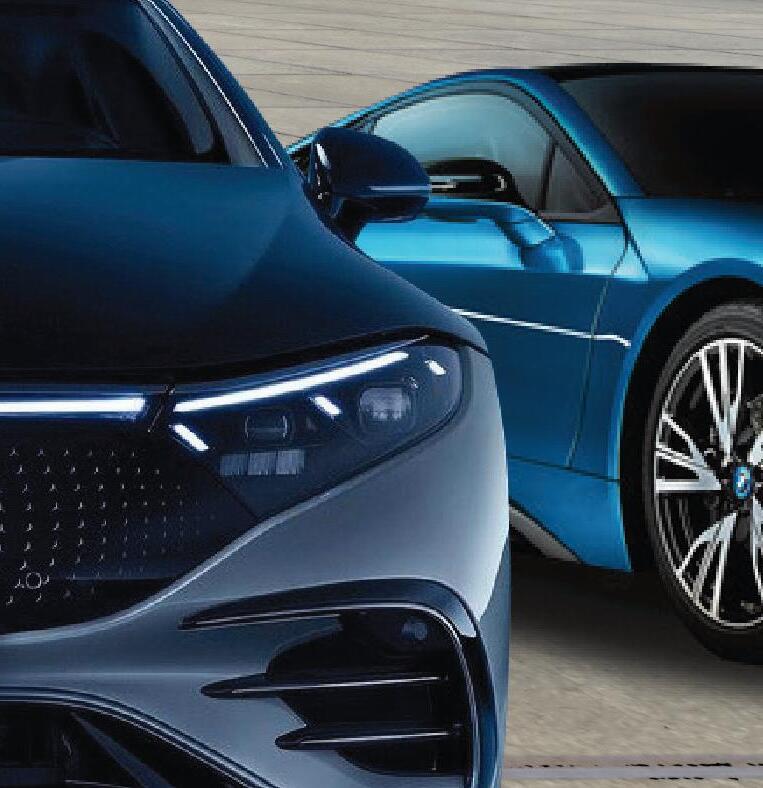
Ray Catena.com ALL ELECTRIC. A NEW EXPRESSION OF LUXURY ElectrifiedLuxury.com




1-800-New-Auto




























Go to the go-to. SERVING TOWN SINCE 1979. LAKEWOOD 732-364-5195 10 S CLIFTON AVE. LAKEWOOD, NJ 08701 WWW. TOWNAPPLIANCE .COM Welcome to our Town! ALL BRANDS ALL MODELS ALL BUDGETS For 1000’s of customers. For nearly 50 years. Go to the go-to. SERVING TOWN SINCE 1979. LAKEWOOD 732-364-5195 10 S AVE. NJ WWW. TOWNAPPLIANCE .COM Welcome to our ALL BRANDS MODELS BUDGETS For of 50 years.
























CEDARHURST 516-303-8338 EXT 6010 431 CENTRAL AVE. CEDARHURST, NY 11516 BALTIMORE 410-364-4400 EXT 2205 9616 REISTERSTOWN RD. OWINGS MILLS, MD 21117 SALES @TOWNAPPLIANCE.COM CEDARHURST EXT 6010 431 AVE. CEDARHURST, 11516 BALTIMORE 410-364-4400 2205 9616 REISTERSTOWN MILLS, 21117 SALES @TOWNAPPLIANCE.COM
87 YEARS IN BUSINESS!
FULFILLING ALL YOUR LANDSCAPE, HARDSCAPE AND NATURAL STONE NEEDS!


CUSTOM STONE FABRICATION/ BULK MATERIALS / BUILDING & LANDSCAPE STONE / PAVERS / CRUSHED SEA SHELLS


1661 Hwy 34 South, Wall, NJ 07719 732.938.5252 njgravelsand.com Fulfilling all your landscape, hardscape and natural stone needs! Custom Stone Fabrication/ Bulk Materials / Building & Landscape Stone / Pavers / Crushed Sea Shells Designed and Installed by Landesign, Inc.






The Taste You’ll Always Remember in a Place You’ll Never Forget! Our guests can now enjoy seasonally local sourced seafood with Raw Bar! Serving steaks, chops and fresh pasta. Featuring our fabulous 100 bottle wine list. Dine in a beautiful setting with exceptional views of the Atlantic Ocean. Visit www.drifthousedb.com or call 732.530.9760 For full menus, weekly specials and reservations. Driftwood Cabana Club 1485 Ocean Avenue, Seabright, NJ 07760 @chefdavidburke @drifthousedb


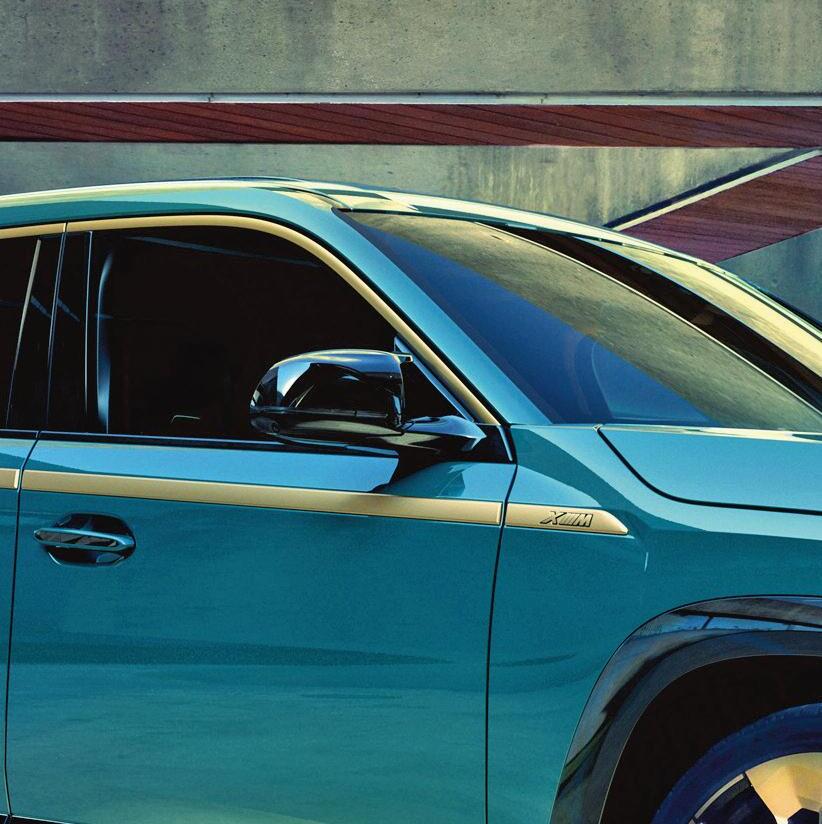



The first-ever electrified BWM M model. Circle BMW 500 Route 36 East Eatontown, NJ 07724 732.440.1200 CircleBMW.com Your BMW Store at the Jersey Shore Dedicated to Excellence Since 1980 ©2023 BMW of North America, LLC. The BMW name, model names and logo are registered trademarks. SPRING FOR LUXURY AND PERFORMANCE. EXPERIENCE THE BMW XM.
CONTENTSspring/summer





spring/summer 2023
FEATURES
32 BEACHY KEEN
These outfits will make you look and feel your best— whether you’re heading to brunch or a night on the town.
48 HEY, MR. SANDMAN
There’s nothing sleepy about these summertime essentials—shirts, pants, polos, sneakers and more— from Garmany.
62 KEEP YOUR SHIRT ON
Shirt shopping shouldn’t be a guessing game. Here are 7 ways to know you’re wearing a high-quality garment.
68 BIG SHOT
Stunning macro photography by Los Angeles native Danny Perez makes nature’s tiniest citizens look larger than life.
LET’S HAVE SOME FUN
Poolside, barside or on the fairway, Garmany has everything you need to kick back. Enjoy! p. 74
 On the cover:
Dress by Retrofête, shoes by Christian Louboutin. Shot at The St. Laurent, Red Bank, by Michael Cogliantry.
On the cover:
Dress by Retrofête, shoes by Christian Louboutin. Shot at The St. Laurent, Red Bank, by Michael Cogliantry.
12 GARMANY SPRING/SUMMER 2023

CONTENTS DEPARTMENTS
16 Memo
Garmany is excited to celebrate all things spring with you.

19 The Garmany Guide

Isaia’s high standards...meet the mayor...shady business…and more.
26 Elements of Style
Johnell Garmany solves your sartorial dilemmas.
28 Women’s Trends

Get flirty and fashionable this season in bright colors, fun patterns—and styles from yesteryear.
44 The Muse
Superstar singer Taylor Swift keeps rapidly evolving but, to borrow from her own lyrics, never goes out of style.

60 Leading Man
Are you man enough to rock a pussy-bow blouse? Actor Chris Pine is—to wide applause.
64 Automotive
The limited-edition Batur packages Bentley’s finest with hints of what’s to come.
90 Fitness
In half-dozen places, Mother
90 spring/summer 2023
68
14 GARMANY SPRING/SUMMER 2023
44 28

theMEMO GARMANY
121 BROAD STREET RED BANK, NJ
TELEPHONE: 732.576.8500

WWW.GARMANY.COM
STORE HOURS
MONDAY TO SATURDAY: 9:30 A.M. TO 7 P.M.
Editorial Director JOHNELL GARMANY
Editor In Chief RITA GUARNA
Creative Director STEPHEN M. VITARBO
Senior Associate Editor DARIUS AMOS
Lifestyle Editor HALEY LONGMAN
Contributing Editors EVERETT POTTER, DONNA ROLANDO
Contributing Photographers MICHAEL COGLIANTRY, DANNY SANCHEZ
Marketing Director SHAE MARCUS
Group Publisher LIZETTE CHIN
Associate Publishers JODI BRUKER, CHARLES GARONE
Production Manager FERN MESHULAM
Director of Ad Services JACQUELYNN FISCHER
Director of Operations CATHERINE ROSARIO
Production Artist CHRIS FERRANTE
We Can’t Contain Our Excitement
Not only is Garmany family-owned and -operated, but it’s also a business where everyone feels like a beloved brother or sister. From our management staff to our style experts and tailors to our customers, all who come through the doors are treated to feel at home. And like all families, we share emotions both when times get tough and when there’s an occasion to celebrate.

Gratefully, we’ve had plenty of reasons to be excited at Garmany, including the recent additions of style pros Steve and Jeff to our team (and Steve’s elevation to men’s floor manager). Our exciting new team has made an immediate impact with loyal and first-time customers, making the already first-class shopping experience at Garmany even more memorable.
While change is always welcome, we know when things should remain the same—specifically the unwavering dedication to offer you, our customers, the world’s finest clothing. This spring, you’ll find all the designers you love: Isaia and Canali, Brunello Cucinelli and Kiton, Jonathan Simkhai and Veronica Beard… and the list goes on and on. Sure, these are names you’re familiar with, but at Garmany, it’s hardly a case of same old, same old.
Just like we are with our latest staff additions, we’re
excited to offer the latest from all our fashion partners. We’ve worked countless of hours to find and select the very best and incomparable garments: knitted tees by Ferrante, swimwear and polos by Fedeli, sport shirts by Eton and Tintoria Mattei, elevated sportswear from Maurizio Baldassari and Fradi, dresses and skirts by Zimmermann and Rococo Sand, shoes and sneakers by Golden Goose and Christian Louboutin. You’ll see many examples of these fun and sophisticated fashions in this issue of Garmany
Throughout the pages of this magazine, you’ll also find articles we handpicked for you and styles we believe you will look good in, feel good in and be able to wear many springs and summers to come. Garmany is always carefully curated with you in mind. We could parade looks simply to make your jaw drop, but instead we offer our favorite seasonal items hoping you can truly imagine putting them on.
So peruse the pages, get some ideas and visit us so we can put outfits together that will enhance the errands you run, make date night even more magical and create memories in all the photos you take (whether it’s with the Garmany family or your own) at all your cherished events.
Happy spring, and see you all soon!
JOHNELL GARMANY
Accounting KASIE CARLETON, URSZULA JANECZKO, BRUCE LIEBERMAN, STEVEN RESNICK
Published By
Chairman CARROLL V. DOWDEN
President & CEO MARK DOWDEN
Senior Vice President RITA GUARNA
Vice Presidents LIZETTE CHIN, NIGEL EDELSHAIN, THOMAS FLANNERY, COLEMAN MCCARTAN, BELINDA PINA, MARIA REGAN, STEVEN RESNICK, DIANE VOJCANIN
GARMANY Magazine is published by Wainscot Media, 1 Maynard Drive, Park Ridge, NJ 07656, in association with Garmany. Copyright © 2023 by Wainscot Media, LLC. All rights reserved.
Editorial Contributions: Write to Editor, GARMANY, 1 Maynard Drive, Park Ridge, NJ 07656; telephone 201.782.5730; email rita.guarna@wainscotmedia.com. The magazine is not responsible for the return or loss of

16 GARMANY SPRING/SUMMER 2023
unsolicited submissions.
Services: To change an address or request a subscription, write to Subscriptions, GARMANY, 121 Broad Street, Red Bank, NJ 07701; telephone 732.576.8500.
Inquiries: Email Lizette Chin at lizette.chin@wainscotmedia.com.
Subscription
Advertising
garmany


NN07.COM
theGUIDE GARMANY
Setting the HIGHEST STANDARDS
Founded in Naples during the 1920s, Isaia is a luxury lifestyle brand for men with personality and taste. Its artisan tailors still handcraft each garment in the Neapolitan sartorial tradition, though now it’s reinterpreted in a contemporary way. The combination ensures each suit, sportcoat and shirt meets the highest standards of quality and style that not only they set, but you will set as well. We at Garmany embrace the same philosophy, the very reason why we are proud to feature Isaia in our store. Stop by and let one of our style pros show you the very best of the season from Isaia.

Show your style AND SOPHISTICATION
If you’ve shopped the second floor of Garmany in recent seasons, you’re probably already familiar with the Dorothee Schumacher label. When you wear a dress, a skirt, a blouse or pants from the spring collection, you’ll be a showcase for extraordinary color sense, natural confidence and feminine sophistication. That’s exactly what Dorothee Schumacher herself wanted when she launched the line in 1989, a business move made after (and inspired by) years spent working in the Italian knitwear industry and several visits to fashion-forward France. Show off your Dorothee Schumacher style today: Visit the store and let us help you find your next piece.

SATISFY YOUR SWEET TOOTH
There’s no shortage of dessert shops here in Red Bank, but make sure your next “treat yourself” day includes a stop at Once Bitten Donuts. This specialty donut shop opened on Broad Street last summer, with a menu of unique treats with the names to match: Glazed and Confused, Gimme Sum of that Cinnabun and Snow Much Fun, to name a few of our favorites. If you’re more in the mood for ice cream this season, they have that too—top your donut with a scoop of vanilla or opt for a donut ice cream sandwich or milkshake. And we especially love that Once Bitten Donuts is a family-owned business—just like we are. Stop in and tell them Garmany says hi! Once Bitten Donuts, 86 Broad St., Red Bank, 848.308.2411; oncebittendonuts.com

19 GARMANY SPRING/SUMMER 2023
The A–Z list
Garmany is proud to feature more than 75 designer brands! Visit us to find your favorites and discover new collections.
AG JEANS/ADRIANO GOLDSCHMIED


ALEXANDER MCQUEEN EYEWEAR
ALEXIS
ATM
AUTUMN CASHMERE
BELSTAFF
BOGNER
BOTTEGA VENETA EYEWEAR
BRUNELLO CUCINELLI
CANALI
CHARO RUIZ
CHERVO
CHRISTIAN LOUBOUTIN
COMMON PROJECTS
COPPLEY
DI BIANCO
DOROTHEE SCHUMACHER
EISBÄR
ENZA COSTA
ETON
Making the WORLD GO ROUND
ETRO
FEDELI FERRANTE
FRADI
GARDEUR
G. BROWN
GIANVITO ROSSI
GIMO’S
GOLDEN GOOSE
GOOD MAN BRAND
GUCCI EYEWEAR
HEMANT AND NANDITA
HERNO
HUDSON
IRO

ISAIA
JACOB COHEN
JANESSA LEONE
JIMMY CHOO
JONATHAN SIMKHAI
KIRED
KITON
KJUS
L’AGENCE
LUIGI BORRELLI
MANOLO BLAHNIK
MARCOLIANI
MARCO PESCAROLO
MARISSA WEBB
MATINIQUE
MAURIZIO BALDASSARI
MONFRÈRE
MOORER
MOUSSY VINTAGE
MZ WALLACE
NILI LOTAN
NN07
PAL ZILERI
PAOLO ALBIZZATI
PATRICK ASSARAF
PRADA EYEWEAR
PRESIDENT’S
PT TORINO
RAG & BONE

RAVAZZOLO
RETROFÊTE
ROCOCO SAND
SAINT LAURENT
EYEWEAR
SARTORIO
SER.O.YA
SIMONNOT-GODARD
TIKI
TINTORIA MATTEI
TOM FORD EYEWEAR
ULLA JOHNSON
VERONICA BEARD
VUORI
WHITE SAND
ZANELLA
ZEGNA
ZIMMERMANN
What makes a family-owned and -operated fashion company an international icon? Ask the folks at Zegna. The 113-year-old Italian brand is known for much more than its elegant clothing and top-of-the-class footwear. It’s also one of the planet’s largest fabric producers, it’s active in promoting improvements in wool production, and it’s a philanthropic titan (beginning with reforestation projects in the 1930s to supporting the arts, environmental education and conservation today). This season, we’re excited to offer Zegna’s iconic triple-stitch sneaker, a slip-on style shoe made of fine leather and suede that pairs perfectly with trousers, five-pocket pants or denim. Visit us today and be sure to ask us to try on this highly celebrated sneaker—and experience the brand that has the world buzzing.
Will Travel TO RUN
There’s glory in completing a full marathon, but you’ll have your fair share (and then some) of aches and pains after you cross the finish line. For that reason alone, many novice and experienced runners’ race of choice is the half marathon; there’s plenty to be proud of after 13.1 miles—and you’ll still be able to walk around normally afterward. Below are five great American half marathons, each of which are held in areas where there’s plenty more to do and steps to take after the race. Make your plans and start training!
• Napa to Sonoma Wine Country Half Marathon, California, July 16. This scenic course winds through wine country, past vineyards and farms before ending at Sonoma Plaza. The post-race party includes plenty of swag and, of course, admission to a wine-tasting festival.
• Kauai Half Marathon, Hawaii, Sept. 3. With lush beaches, volcanic peaks, tropical rainforests and more, this course is perhaps the most scenic in America. One of the highlights of the run is through the Tunnel of

Trees, a shaded portion that eventually opens up to spectacular views of the Pacific Ocean.
• Bar Harbor Bank & Trust Half Marathon, Maine, Sept. 16. More than half of this race takes place on the hard-packed carriage roads of picturesque Acadia National Park. Beyond the park’s varied landscape, participants also run through the charming fishing town of Bar Harbor and cross historic granite bridges.
• Chicago Half Marathon, Illinois, Sept. 24. Though the field isn’t as crowded as the full marathon, the half is just as popular. The course is flat and fast, taking runners on a tour of the Windy City with views of Lake Michigan and a stress-free stretch down Lake Shore Drive, which is completely shut down to the public during the event.
• Block Island Half Marathon, Rhode Island, Oct. 8. Does it get any better than New England in fall? Enjoy the temperate weather and a course that takes runners past Great Salt Pond, beach dunes, lighthouses, rolling pastures and more.
20 GARMANY SPRING/SUMMER 2023
PAL ZILERI
theGUIDE GARMANY

Shady BUSINESS
You wouldn’t buy sunglasses from your neighborhood pharmacy, but you also shouldn’t pick up any old pair from a boutique either. Quality counts, but size and shape matter too. That said, consider the form of your face before you select your next pair of shades. If you need help, your favorite Garmany associate can offer advice or you can follow this easy guide for assistance.
A round face means your mug is generally curved with no defined features, such as a jawline and cheekbones. Create an elongated appearance with rectangular- or square-shaped rims, or even wrap-style sunglasses. You’ll want to play up angles, so avoid frames with too many curves.
A square face is defined by a strong jawline and broad forehead. To soften these sharp angles, go for a pair of sunnies with round or oval-shaped frames. Classic aviators will work well, as they help round your face’s edges. An oval face is round but with facial features that are present but not very pronounced. In essence, this is the ideal shape as most frames will look good: Round, square, heart-shaped, aviators—anything but oversized rims will do. A pair that extends from the eyebrows to the cheekbones is ideal. A heart-shaped face means your appearance is wide at the temples and gradually narrows toward the chin. You’ll want a pair of sunglasses that gives balance to your unique look, and rounded styles are the solution. Rimless, shield or aviators work best.


Ask MR. ETIQUETTE
Johnell Garmany explains how to sail through life without giving offense.
I’ve always been told that the belt you wear should match your shoes. Does this still hold true?
Fire Up NEW FLAVORS
Few things beat entertaining and cooking for friends at home, especially during backyard barbecue season. Of course, your marinated kebabs and Pat LaFrieda tomahawks are great on the grill, but you’ll want The BBQ Companion (Rizzoli New York, 2023) by your side when you fire up the barbie in the coming weeks. The piece by Australian food writer and photographer Oscar Smith will elevate any menu, providing unique recipes for lamb loin with anchovy and garlic butter, lemongrass wings, bulgogi tofu, rum-spiked barbecued banana boats and more. There are 50 step-by-step recipes in all, and what’s best is the collection is printed on portable recipe cards—you need not balance and stand a heavy cookbook on the counter. Ease of use, unique recipes, meals for every taste: Here’s a chef’s kiss for The BBQ Companion!

Style By DESIGN
Don’t miss the following special events and trunk shows happening at Garmany. Trunk shows are an opportunity to meet representatives of your favorite brands and have clothing, shoes and other items custom-made.
MARCH
March 11: Swims
March 18: Private Label – Italia
March 24–25: Kiton and Monfrère
—Confused in Colts Neck
Generally speaking the dressier the outfit, the closer the shoes and the belt should match. When wearing a suit, the belt should match the shoes in color. Dress shoes also require a belt that has a dress buckle. The more casual the outfit, the more freedom you have in matching the belt. If you’re wearing jeans, corduroys or cotton pants, have a little fun! But don’t get too crazy. Keep it chic and tonal so that the colors complement the overall outfit rather than the shoe.
March 29: L’Agence (women’s)
APRIL
April 1: Ravazzolo, PT Torino and Bogner (men’s and women’s)
April 15: Chervo and Royal Albartross
April 19: A.L.C. (women’s)
April 22: Tiki, Patrick Assaraf and Hudson
April 29: Isaia
MAY
May 6: NN07, Fedeli, Pescarolo and Baldassari
May 13: Greyson (men’s and women’s)
May 20: Wood Underwear and 06451/Trip in a Bag
May 27: Memorial Day Weekend

22 GARMANY SPRING/SUMMER 2023
theGUIDE GARMANY

Pretty, playful AND PERFECT
Prints and patterns, bright colors and dynamic silhouettes define Ulla Johnson’s collection of womenswear this season—though it’s safe to say the New York-based brand has followed a similar M.O. each year since debuting in 1998. Her collection of trendy and timeless dresses, shirts, pants and shorts are perfect for any occasion or setting, from a day in the office or at an outdoor event to evening date night or happy hour with the rest of the crew. Shop Ulla Johnson’s ready to wear collection just in time for spring right here at Garmany.

Experience THE GOOD LIFE
Visiting Garmany means much more than shopping for great clothing—it’s all about a full, first-class customer experience. There’s a similar philosophy at Le Malt Royale, an exclusive social club that offers the finer things in life all in one lush space, from private dining and premium spirits to hand-rolled cigars and, of course, all things sartorial. The 5-year-old club’s diverse membership (25+) is made up of both ladies and gentlemen, and membership, indeed, has its privileges. Platinum members receive full access to the fully ventilated cigar room, the exclusive dining room, the exotic sushi bar, use of private and humified lockers, bottle service, complimentary daily hors d’oeuvres, live jazz entertainment and much, much more. Consider it your favorite restaurant, cigar bar, country club and nightclub rolled into one. Thinking about joining and living the good life? Visit them now and let them know Johnell sent you! Le Malt Royale, 22 W. Front St., Red Bank, 732.852.4220; lemaltroyale.com

MEET THE MAYOR
Good people make the world go round, and we’re excited that our new mayor, Billy Portman, will be doing his part to make Red Bank an even greater community. One way is by having an open-door policy at his office—literally—every Monday at Borough Hall from 4 to 6 p.m., when he lets residents, business owners and more come in to chat about anything. It’s a great way to have facetime with our new guy in charge, and we love that he’s talking to neighbors directly! What else should you know about Mayor Portman? Here are six fast facts about our new mayor:
• Portman is 53 years old and grew up in Wayside, a community within Ocean Township.
• Portman has been married to his wife, Emily, for 29 years, and they have three kids, ages 15, 22 and 27.
• Portman is the owner of Advantage Construction, a commercial construction company, and Elegant Mist, which offers mist cooling to help businesses save money on their AC bills.

• Portman became a Formula E Grand Prix
driver in summer ’22.
• Portman served as comayor at West Copake Resort camp when he was 11 years old.
• Portman voiced an animated character in a short film directed by his cousin.
24 GARMANY SPRING/SUMMER 2023 theGUIDE GARMANY


MONFREREFASHION.COM
...made to live in
Elements of MEN’S STYLE
which Johnell Garmany solves your sartorial dilemmas.
room in their pieces should they save?
is if you haven’t in the past time to toss it. tailored, you how it fits. We all on a few pounds, can’t alter a might be time to let other hand, things to do something they show them how
ties these go? many days, the changed incorporate them with a jeans. longer guys can add or sweater makes a lightperfect—it’s jacket. Pair cotton dress clean hemsagging. guy who looks isn’t comsportswear: How him?

thing to re-
member is to pick out sportswear for your body type. For example, if you have a little extra in the belly, you don’t want anything too tight. Then consider wearing something over the base to cover up. Maurizio Baldassari makes stylish sweater jackets that work well. A cardigan by Fedeli or a sportcoat or a vest can also do the trick.
Which denim styles and fits are in this season?
Our Jacob Cohen slim fit jeans are our No. 1 seller—we can’t keep them on the shelves, especially in white. Other cool colors for spring are sky blue, Nantucket red and green. As far as fit, slim is still big this season, but styles are loosening up. Cucinelli makes great jeans that are a more relaxed fit.
Denim in different colors is in, what about tailored clothing?
Canali has an awesome green sportcoat, and Atelier Garmany has a great Piacenza jacket in eggplant as well as a cool teal.
It’s the season for weddings and galas. How should guys for formal occasions?
Check the invitation. If it’s black-tie, always play it safe in a tuxedo jacket. If you choose a dinner choose one that’s not flashy—you want to look like you’re wearing costume. For less formal events, go wrong with a dark navy suit. For some occasions, you a sportcoat with a white or with a tie.
Sneakers are all the rage these What are the must-have pairs?
This season’s collection from Common Projects is awesome, and so are Christian Louboutin’s and Santoni’s sneakers. We just brought in the Triple Stitch by Zegna, and sales have exploded. Other pairs to check out include Cucinelli sneaker moccasins, which are extremely comfortable, and the selection from G. Brown, which hits all price points.

Weather can be unpredictable in spring. What’s the perfect outerwear? We have wonderful jackets this season from Gimo’s and Moorer that are perfect to wear on a rainy day or just to have on like an accessory.
Guys have their suits, shirts, pants and shoes. What are some good accessories to finish the look? Garmany has a great collection of bracelets and sunglasses, but always remember the basics like socks. Marcoliani has really comfortable, fun and funky pairs as well


Open 7 days a week for dinner,Wednesday—Saturday for lunch Open Sundays for Brunch 700 NEWMAN SPRINGS ROAD | LINCROFT, NJ 07738 | (732)812.4500 www.CharliesofLincroft.com
WOMEN’S
TRENDS:
Fashion REFRESHER
Get flirty and fashionable this season in bright colors, fun patterns—and styles from yesteryear.
Precious CARGO
While the cargo pants of the ’90s and early aughts were the perfect look for a concert or hanging out at the skatepark, the modern interpretation of this military style is fit for client meetings or a night out.
Patch-pocketed pants were originally resurrected a few years ago for streetwear and athleisure pieces. But in 2023, cargo details on pleated-front trousers, wide-leg pants, high-waisted and belted slacks or tapered twill pairs are sharp and very office-appropriate.
For evening, pair cream or white cargos with one of this seasons’ other trends—a metallic or sheer top. If you prefer to keep the trend casual, there are a lot of great denim cargo options this season. Many premium designers doubled down on denim on the runways by pairing relaxed button-front denim or jackets with cargo jeans.

This is one Y2K style that has grown up and glammed up.
Poplin FRESH
As the cotton comeback continues, look for poplin pieces to go beyond the basic button-up. While suiting and blazers continue to rule the runways, it’s time for shirts, dresses and other cotton garments to come front and center.

Think poplin is too preppy for your personal style? Think again. Introduce edge by pairing a button-up with voluminous A-line skirts or leather trousers. Or, keep it business on the top and party on the bottom with an oversized poplin top and sophisticated sequin skirt or satin pants. Shirtdresses get a glam up when accessorized with a bustier or corset— corseted tops are very popular this spring.
Designer Jonathan Simkhai gave the midi shirtdress a boho makeover by adding cutouts covered by crochet panels at the waist. If your style leans toward minimalism, Rag & Bone’s cropped poplin white button-front worn with Bermuda shorts or white denim is a no-brainer.
Bonus: Poplin pieces have longevity and look great in any season. The same shirtdress that keeps you cool on steamy summer afternoons will still look fab on a chilly fall morning when worn with your favorite cashmere cardigan and lug sole booties.
PURRRFECT PAIR
With all the ’90s revivals happening in fashion, a throwback to the 1950s feels downright refreshing. Channeling Ms. Hepburn, the kitten heel has returned to our fashion consciousness.
While kitten heels are usually around 2 inches in height, they offer big style and comfort. Today’s funky kitten designs work with everything from streetwear to formalwear and can be the perfect finishing touch to pair with cropped jeans, a suit or a slip dress.
Just because they are short doesn’t mean kitten heels can’t make a big statement. For those whose sense of style can be described as “24/7 glamour,” Jimmy Choo has created super versatile denim and crystal slip-ons with a 2-and-a-half-inch heel for the brand’s spring 2023 collection.
For evening, try a pair of kitten heels in patent leather or with metallic or gem accents. Christian Louboutin’s black patent leather sandals with delicate ankle strap and sculpted gold kitten heels are perfect for dancing the night away.
Whether you sport the trend in a slingback, sandal or mule, this heel works morning through midnight, dressed up or down—love the practicality!
From top left, Retrofete, Rag & Bone, Jimmy Choo
28 GARMANY SPRING/SUMMER 2023




WWW.THEOYSTERPOINTHOTEL.COM 732.530.8200 The Oyster Point Hotel @theoysterpoint_hotel WWW.THEMOLLYPITCHER.COM 732.747.2500 Molly Pitcher Inn @mollypitcherinn Your Waterfront Escape Restaurant | Guest Rooms | Weekday and Weekend Packages | Corporate Meetings | Weddings | Social Events Outdoor Dining Make your reservations today!
Women’s Trends
Afternoon DELIGHTS
For ladies who lunch—and for ladies who work straight through the afternoon—“the lunch dress” is a wardrobe must-have for this season. Sure, your reliable, monochromatic shift dress has always been a go-to for taking you from day to night. But this summer, large scale florals—we’re talking big blooms—can go from playful yet professional to edgy evening wear with just a few accessory swaps. Look to brands like Zimmermann for super modern, garden-inspired patterns.
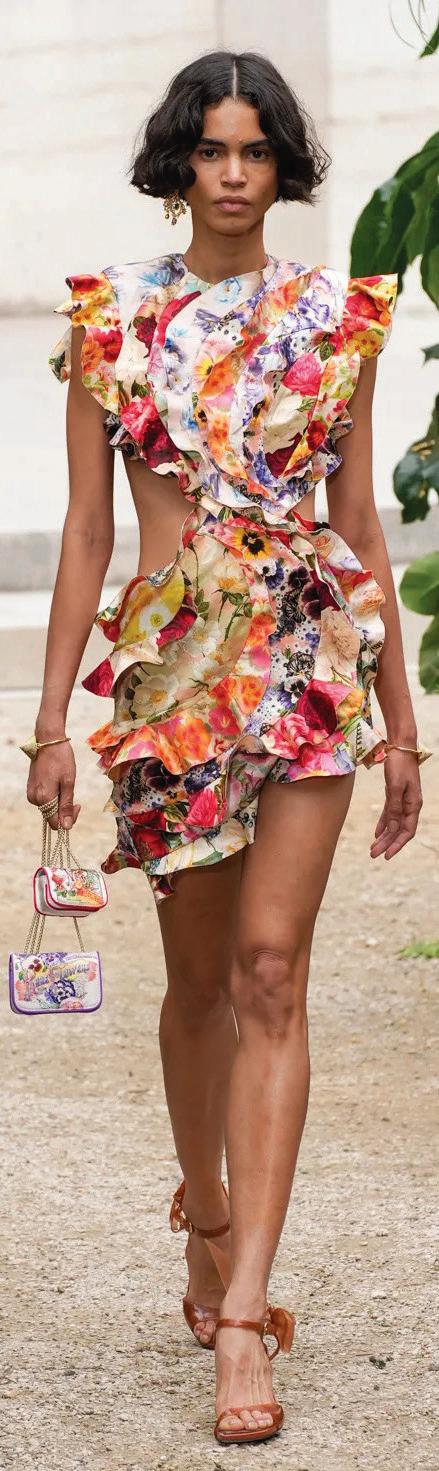
When you think of a day dress, minis and midis come to mind. But this season, slinky slip dresses in bold patterns are a cool alternative. A graphic cheetah print option from L’Agence can really
Big
BRITCHES
It’s official—trousers have taken over our wardrobes. In seasons past, the wide-leg pants dominated workwear, but for spring and summer, more casual styles are catching our eyes. While tweed, velvet and corduroy dominated the look in colder months, trousers in bright colors and fun prints are a fresh way to keep the trend going in the warmer weather.
Why are we so in love with this popular pants trend? For starters, wide-leg cuts can elongate any body type, especially when worn with another of the season’s style stars—platform shoes. What’s more is that this style of slacks elevates even the most carefree look. Throw on a roomy pair of flat-front cotton trousers with a classic white T-shirt or muscle tee and a pair of Golden Goose sneakers to achieve maximum comfort and sophistication while running around town. Silk pants with a generous silhouette topped with a monochromatic cropped T-shirt create an effortlessly cool date night option. One more style tip: While white denim in summer never goes out of style, try swapping in a pair of white wide-leg pants to energize your favorite looks.

SET FOR SUMMER
’Tis the season to simplify. In the spirit of keeping things easy, matching short sets are effortless and can be worn anywhere.
The pajamas-as-daywear trend continues but with some boudoir details added. Monochromatic satin button-front and drawstring boy shorts with feathered cuffs or lace accents take the look from lazy to luxe.
If you are headed to a pool party or backyard BBQ on a sweltering, summer afternoon, don’t sweat it! Keep cool and look cute in a cotton crop top with smocking or puff sleeves and coordinated boy shorts. Or consider a throwback to a midcentury men’s summer look with matching toweling top and shorts, but in a bold, geometric print.
Bring out your inner boss babe with a matching plaid blazer and shorts in bright colors from Veronica Beard. Need to dress it up? L’Agence’s white lace blazer and short set is perfect for a summer event. And while we are on the subject of white-hot looks, a billowy embroidered macramé cotton blouse and matching shorts from Dorothee Schumacher create the perfect breezy look to pack for any summer getaway.
For cocktails after a long day at the shore or a cozy evening around the fire pit, a knit short set is as stylish as it is comfy.

30 GARMANY SPRING/SUMMER
From top left, Zimmermann, A.L.C., Veronica Beard

BEACHY KEEN


32 GARMANY SPRING/SUMMER 2023
These outfits will make you look and feel your best—whether you’re heading to brunch or a night on the town.
Dress by Zimmermann, shoes by Jimmy Choo


34 GARMANY SPRING/SUMMER 2023
Essentials
Jacket by Veronica Beard, pants by L’Agence, mules by Gianvito Rossi

Essentials


36 GARMANY SPRING/SUMMER 2023
Shirt by Enza Costa, jeans by Moussy, shoes and bag by Jimmy Choo


Essentials


38 GARMANY SPRING/SUMMER 2023
Jacket and dress by Dorothee Schumacher, shoes by Jimmy Choo

Essentials


40 GARMANY SPRING/SUMMER 2023
Dress by Retrofête, shoes Jimmy Choo, bag by Christian Louboutin

windsor.eu


42 GARMANY SPRING/SUMMER 2023
Essentials
Blue shirt and shorts by Zimmermann, white shirt by Iro, espadrille loafers by Gianvito Rossi
Marble


Phone: SETTING
Stone
Porcelain - Quartz SETTING THE HIGHEST STANDARD OF QUALITY IN STONE 450 Oberlin Avenue South Lakewood NJ 08701 Phone: (732) 987-6944 | www.oceanadesignsnj.com
Natural
-
THE HIGHEST STANDARD OF QUALITY IN STONE 450 Oberlin Avenue South Lakewood NJ 08701 Phone: (732) 987-6944 | www.oceanadesignsnj.com
Marble - Quartz - Porcelain - Granite SETTING
STONE
- Quartz - Porcelain - Granite SETTING THE HIGHEST STANDARD OF QUALITY IN
The Muse

44 GARMANY SPRING/SUMMER 2023
Change is SWIFT
Superstar
As you read this, singer-songwriter Taylor Swift is on the road with her “Eras Tour,” the stadium tour that essentially broke Ticketmaster in late 2022 as 14 million fans attempted to book their seats. The show has promised to mark an evolution of Swift’s discography, chronicling bits and pieces of each album spanning her 16-year career. But each new stage of Swift’s journey proves once again that she’s a chameleon, in what and how she sings and in how she expresses herself through fashion.
The 33-year-old started out as a country darling—her parents uprooted their Pennsylvania lives to move to Nashville when she
was a teenager so that she could pursue a career in music. Back then, circa 2006 and 2007, Swift’s red-carpet and concert styles matched her debut, self-titled album—that’s cowboy boots, flowy dresses, headbands and other teen-appropriate garb. As her fandom grew and her lyricism expanded, so did her sartorial choices—by Fearless in 2009, sparkly dresses, signature curls and ruby red lips became her trademarks. We’ll never forget the floor-length, one-shoulder glittery Kaufman Franco gown she wore to the 2009 MTV VMAs (partly because of the infamous Kanye West moment that happened then).
In 2011 came Speak Now and in 2012 Red, and the latter album title became her color of choice. And in 2013 and 2014, Swift took her style in a more mature direction to correspond to 1989, a record named for the year she was born and her first in the pop genre. She opted for sexier silhouettes and old-Hollywood-inspired glamour, as in the custom Oscar de la Renta she wore to the 2014 Met Gala. Another iconic look of this time was the neon two-piece set by Versace at the 2015
By Haley Longman
Grammys, where she won (her second) Album of the Year award.
The Reputation period in 2017 and 2018 introduced a darker, angstier Taylor. She dressed in black leather and studs on stage and on the carpet to represent an album that wasn’t written, for once, about her former romances, but about the misrepresentations of her in the press and her spats with other celebrities such as Kim Kardashian and Katy Perry. The COVID era, when she released surprise folky-pop sister albums Folklore and Evermore, brought cottage core to the forefront, and Swift wore lots of braids, cozy knits and oversized sweaters. (But wasn’t that everyone’s uniform in 2020 and 2021?) In 2021, she won another Album of the Year at the Grammys for Folklore and picked it up wearing an iconic, floral-embossed Oscar de la Renta mini dress and a braided updo.
And now, in 2023, we embark on Tay’s Midnights, in which she reintroduces herself through ’70s nostalgia outfits and lyrics that give fans a glimpse into the thoughts that keep her up at night. Odds are you’re not one of the lucky ones who snagged tickets to the sold-out-everywhere “Eras Tour.” But take heart—the rest of us at least have her discography, her red carpet photos and social media to keep us making informed guesses about how this A-lister will evolve next.

singer Taylor Swift keeps rapidly evolving but, to borrow from her own lyrics, never goes out of style.
45 GARMANY SPRING/SUMMER 2023


HEY, MR. SANDMAN


There’s nothing sleepy about these summertime essentials—shirts, pants, polos, sneakers and more—from Garmany.

There’s about these summertime

48 GARMANY SPRING/SUMMER 2023
Jacket by Gimo’s, shirt by Eton, jeans by AG, shoes by Santoni
cotton by autumn cashmere


Essentials


50 GARMANY SPRING/SUMMER 2023
Sportcoat and shirt by Isaia, pants by Jacob Cohen, belt by Brunello Cucinelli, shoes by Gianvito Rossi



732-530-6865 www.eyedesignnj.com 90 Broad Street . Red Bank, NJ 07701
Essentials


52 GARMANY SPRING/SUMMER 2023
Polo by 04561/Trip in a Bag, swim trunks by Fedeli, hat by Black Clover, sandals by Christian Louboutin, bag by Pineider, sunglasses by Gucci
Why not see a specialist when it comes to your teeth?


When it comes to having your teeth replaced with dental implants, consider specialists who have the expertise. Drs. Anthony Sallustio and Ashley Azizian have completed a combined 6 post graduate accredited specialty programs, have 25 years of experience and continually educate dentists on implant dentistry. Dr. Sallustio is one of the first specialists in central NJ to perform the All-on-4 procedure, completing hundreds of cases over the past 10 years. This treatment allows patients to replace teeth with dental implants in one visit.

Drs. Sallustio and Azizian practice a full scope of prosthetic and cosmetic dentistry. They are highly skilled in ceramic veneers, crowns, bridges, and dental implants. They use digital technology and premier technicians to plan a patient’s new smile. Consider a consultation with Drs. Sallustio and Azizian to analyze your smile.

• Please visit us online at Drasallustio.com


ANTHONY SALLUSTIO, D.D.S. & ASHLEY AZIZIAN, D.D.S. 1300 ALLENHURST AVE., OCEAN, NJ 07712 | 732.531.4046 | DRASALLUSTIO.COM | SPECIAL PROMOTION
Essentials


54 GARMANY SPRING/SUMMER 2023
Sportcoat, pants, pocket square and shoes by Kiton, shirt by Maurizio Baldassari


Ranka Vucetic Realtor Associate C: 732:610.7010 E: Ranka@comcast.net NJAR® Circle of Excellence Sales Award® 2000, 2021 (GOLD), 2001, 2018, 2020 (SILVER), 2003-2005, 2011-2012, 2014 2016-2017, 2022 (BRONZE) Holmdel Office 31 W Main St., Holmdel, NJ 07733 O: 732.252.2460 Rumson Office 20 Bingham Ave., Suite A, Rumson, NJ 07760 O: 732.530.6300 Manasquan Office 21 South St., Manasquan, NJ 08736 O: 732.301.5050 BESPOKE: Real Estate Tailored to Your Individual Needs
Essentials

56 GARMANY SPRING/SUMMER 2023
Shirt by Etro, shorts by PT Torino, belt by Garmany, shoes by Common Projects, sunglasses by Alexander McQueen

Essentials


58 GARMANY SPRING/SUMMER 2023
Sportcoat, shirt, pocket square, pants and shoes by Brunello Cucinelli, sunglasses by Gucci


 Evan
Evan
Leading Man


60 GARMANY SPRING/SUMMER 2023
a sturdy PINE
Are you man enough to rock a pussy-bow blouse?
Actor Chris Pine is—to wide applause.
People who live breathlessly on the internet were buzzing last year over whether actor Chris Pine was actually spat upon by singer and Don’t Worry Darling co-star Harry Styles at the Venice International Film Festival, as some thought a video subtly showed. (Pine’s people insist he wasn’t.) But apparently no one flinched when the suave, 42-year-old Pine, who’s been linked with some of Hollywood’s top female names, referred casually to his lovemaking history. The Late Late Show host James Corden asked Pine what it had been like to have a professional “intimacy coordinator” on the set—a first-time experience the actor had while filming a steamy scene in 2022’s Amazon spy whodunit All the Old Knives. Pine confessed that it was “very strange” to have someone “giving you notes about how to have sex, essentially.”
“I’ve been doing it for a bit,” he deadpanned. “I think I can find my way around there.”
Still, the actor took the “coordinator’s” counsel—intended, in this touchy era, to make sure everyone on the set felt comfortable and all looked right—with his characteristic laid-back grace. “It’s like having a referee and a choreographer all at the same time,” he quipped.
These days the unflappable Pine doesn’t seem to need much instruction. He shows the equanimity of a practiced star, versatility on the screen, a high fashion profile and even the manly confidence to unisex garments that haven’t been unisexed before.
Pine was essentially destined for fame. Born
in Los Angeles to two actor parents, he was involved in theater at University of California–Berkeley and studied post-grad at the American Conservatory Theater in San Francisco. After appearing in an ER episode in 2003 he had his first major film role in 2004, playing Anne Hathaway’s royal love interest in Princess Diaries 2. But Pine wasn’t pigeonholed as a rom-com leading man. By 2009 he’d landed his most famous role as James Kirk in the Star Trek series, which then led to his casting as Steve Trevor in DC Comics’ Wonder Woman flicks opposite Gal Gadot. Handsome? Obviously, but the dude’s got some serious range too.
Range is a good word to describe his fashion aesthetic as well. Last year he experimented with a sartorial vibe that Gen Z social-media users called “wine aunt phase,” meaning he dressed like your old-lady aunt.
Kaftans, hats with large brims, sandals, feminine tops and flowy robes became his signature style for press appearances. He’s layered a pussy-bow blouse under a red velvet blazer, a floral-embroidered, button-up top by Bode paired with striped trousers and Gucci loafers. Wear that stuff in middle school if you’re not the toughest boy in class and you’ll come home bleeding, but on Pine, it works.
At an All the Old Knives screening in Los Angeles, it was time for long hair, a long beard and a breezy suit by Sandro—a look he likened to that of the late Gregg Allman. As for his hirsute extravagance, he told
Entertainment Tonight it reflected equal parts laziness and “something I may do in the future”—a hint at an upcoming role.
He’s also experimented with what some fashion critics have called his “country club” style, walking around looking like a collegiate trust-fund baby in Giuliva Vintage red trousers, a silk shirt, a navy blazer and Magnanni loafers. Essentially, Pine’s aesthetic, like that of co-star Styles, is all about versatility. He marches to his own fashion drum, following some rules of menswear and paving the way for others.
Still, play around as he may with boho-chic ’70s trends and effeminate silhouettes, the guy also knows how to wear a good ol’ classic suit. With the help of his stylists, sister duo Wendi and Nicole Ferreira, Pine looks dapper in formal attire from the likes of Brunello Cucinelli and Etro. “Spitgate” aside, we’ll never forgot one shining sartorial moment of the festival in Venice: Pine’s sockless loafers look, paired with a brown tuxedo jacket and white breezy pants from Ralph Lauren.
The star will be on the red carpet again in the first half of 2023 for a promotional run supporting the March release of Dungeon & Dragons: Honor Amongst Thieves, based on the fantasy role-playing game of the same name. Whether he opts for the rugged ’70s badboy look or that of a suited-up heartthrob, whether he goes scruffy or bare-faced, we’re betting he’ll continue, on and off the screen, to be someone we pine for.
61 GARMANY SPRING/SUMMER 2023
Keep Your SHIRT ON
Whether you’re meeting with an important client or celebrating at a black-tie event, rest assured that your Garmany dress shirt is among the very best pieces in the world. That’s because we seek brands, such as Eton and Tintoria Mattei, that source fine materials from the leading mills around the globe and employ artisans who are dedicated to time-honored tailoring traditions. Here is a checklist of elements that make up a great shirt—be sure yours check all the boxes before you put it on your back.
COLLAR
From button-down to spread styles, there are several collar options from which to choose when planning a made-to-measure shirt or selecting from off the rack. But there’s no compromise when it comes to construction. A stiff interlining—the fabric between the top and under collar—gives the collar its shape and should be sewn into the shirt (instead of using more cost-effective glue, which over time can fail or “bubble”). The top edge of a great collar should always roll over the collar stand, not appear creased or pressed.

STITCHING
Fine stitching is one of the standards for a great shirt. The best shirts include high stitch-per-inch count and stitch tension; both these elements reduce the chances that yarn will catch or snag on sharp objects. Hand-stitching also gives high-quality garments tighter seams on both the outside and inside of a shirt.
BUTTONS

An easy way to distinguish between a high-quality and a subpar shirt is to look at the buttons. Plastic buttons are a clear red flag: They’re typically low-quality and have the tendency to break. A well-made shirt features hard, durable buttons made of either mother of pearl, horn, wood or metal. Unlike plastic, these materials will resist heat and offer a unique look to the garment.
BUTTONHOLES
It’s easy to overlook this element of a shirt, but a cleanly finished buttonhole is a mark of quality manufacturing. Machine-made holes often appear rough with imperfections, such as a hanging piece of thread. Hand-sewn buttonholes are smooth because the fabric is cut before assembly and measured to fit.
FIT
While off-the-rack has its benefits (immediacy and affordability), it’s not always a one-size-fits-all option. A well-fitting shirt is tailored and hangs off one’s body perfectly: For instance, shoulder points should not extend past the shoulders; sleeves should be long enough that the cuffs don’t pull when you raise your arms overhead; two fingers should fit between your neck and a buttoned collar.
HEM
A fine rolled hem at the bottom of the shirt is a small but important detail. The hem should always lay flat without extra bulk or thickness. This safeguards against any unsightly beads, which can appear through the pants when a shirt is tucked in.
CUFFS
Like collars, there are several cuff varieties from which to choose that best suit your style and needs. Whether your made-to-measure shirt is designed with French or barrel cuffs, the best tailors will always construct them by hand. This attention to detail ensures the interlining—the middle of the three layers of fabric that make up a cuff—is cut and sewn into place properly so it adds ideal stiffness while remaining soft and flexible.
Shirt shopping shouldn’t be a guessing game.
Here are 7 ways to know you’re wearing a highquality garment.
62 GARMANY SPRING/SUMMER 2023
Details Matter











Doreen DeMarco Broker Sales Associate Berkshire Hathaway HomeServices Fox & Roach, REALTORS® Bell Works Office | 101 Crawfords Corner Road, Holmdel, NJ 07733 Holmdel Office | 963 Holmdel Road, Holmdel NJ 07733 Cell: 732-241-5015 | Office: 732.946.3200
A ride into the THE FUTURE




The limited-edition Batur packages Bentley’s finest with hints of what’s to come.
Owning a Bentley already puts you in a special fraternity of car owners. But with a bit of luck, you can step into a club even more exclusive. By mid-year, the historic British luxury automaker will release the Batur, a limited-edition coupe constructed by the company’s bespoke Mulliner division. Named after an idyllic volcanic lake in Bali, it’s the successor to the outgoing Bacalar and closely resembles the iconic Continental, Bentley’s other two-door model. In fact, the Batur is outfitted with the same 6.0-liter W-12 engine as the Continental—but there are important differences too.
Engineers equipped the new grand tourer with an upgraded intake system and improved turbochargers, giving the engine a maximum output of 729 horsepower—79 more ponies than its predecessor. It’s the most powerful W-12 combustion engine in the lineup, and perhaps Bentley’s last. A series of changes are on the horizon as Bentley further ventures into its Beyond100 initiative to develop a line of electric vehicles. And representatives, including new design director Andreas Mindt, say the Batur is a peek into the EV future. Changes are evident inside and out. From the front, familiar circular

headlights were dropped in favor of teardrop-shaped lamps with a trio of efficient LED projectors. The profile resembles a modern muscle car, but the rounded tail softens the look and improves aerodynamics— a departure from the angled lines of other Bentley models. Though technically not an EV, the Batur is as eco-friendly as any non-electric can get. Instead of carbon fiber, manufacturers use high-performance composite material made from flax in body and trimwork to lower their environmental footprint. Leather found in the Batur is processed using methods that involve less water and aldehyde than traditional tanning. And the list will continue to grow.

One thing Bentley hasn’t changed is its commitment to making luxury the standard. Every Batur driver can enjoy bespoke 22-inch wheels, carbon ceramic brakes and rear steering. Owners can also make their car one-of-a-kind with options such as the bespoke titanium exhaust system and the 18-carat gold interior detailing. What’s next for Bentley? One can hardly wait to see.
The estimated starting price for the Bentley Batur is $2 million.
64 GARMANY SPRING/SUMMER 2023
Auto
NAVIGATING A CLEAR PATH FOR OUR CLIENTS NAVIGATING A CLEAR PATH FOR OUR CLIENTS FOR MORE THAN 90 YEARS





ANSELLGRIMM.COM PRINCETON, NJ | WOODLAND PARK, NJ | OCEAN TOWNSHIP, NJ | NEWTOWN, PA | WHITE PLAINS, NY


33 Broad Street Red Bank, NJ 732.450.2427 777 US 202 North Raritan, NJ 908.707.1777 charsteakhouse.com Our innovative cuisine features the finest cuts of dry-aged beef and fish delivered fresh daily. Mahogany walls and fireplaces create a truly authentic steakhouse environment in the heart of central Jersey. It’s Rare To Find Something This Well Done Group rates are available for corporate and holiday functions. Contact our event planning department at 908.809.9081 or events@charsteakhouse.com READERS’ CHOICE AWARDS 2022 Monmouth HEALTH & LIFE





Big SHOT




It takes a special pro—a macro photographer, they call him—to capture the enormous visual complexity of a hummingbird or a bumblebee.

All good photography takes skill, but macro photography? That’s for the big guns. This type of camera work involves getting “up close and personal” with small subjects, often tiny creatures or plants found in nature—bugs, butterflies, flora, fauna. Such photos capture every antenna, every petal, every minute detail, as if these mini-subjects were human-sized or larger.
A macro photographer uses a “macro” camera lens, which employs varying focal lengths to get close to the action. And Los Angeles-based Danny Perez is one of them. He’s a versatile artist—besides his photography he’s a musician and a filmmaker. His life work, he says, is “capturing the vibrant colors of life.”
A few years after purchasing his first camera, a Nikon F4, the Venezuela-born Perez bought his first and only macro lens. “I discovered this amazing dimension in nature that so few have ever captured and that is rarely explored,” his Fstoppers photography profile page declares. The lens, he explains, “allowed me to discover a complex world of fascinating creatures and the incredible colors of their natural habitat.”
The next few pages showcase Perez’s pictures—and there’s more on Instagram @dannyperezphotography. Each image testifies to the wonderland of visual detail present in tiny creatures—if only we take time to look closely enough.
68 GARMANY SPRING/SUMMER 2023
Art

69 GARMANY SPRING/SUMMER 2023

70 GARMANY SPRING/SUMMER 2023
This page: A lovely ladybug perches on a summer bloom. Opposite: The hummingbird is the photographer’s favorite creature to capture. His tribute: “Hummingbirds are magical, with their incredible speed, size, colors and aerodynamically impossible behavior, which is unlike any other creature in the world.” Previous page: Perez shot this bumblebee on lavender with a Nikon D700 camera.

71 GARMANY SPRING/SUMMER 2023
page: The red-backed jumping spider is a species commonly found in North America. This one got his 15 minutes of fame on a yellow petal. Opposite: Perez nailed the true essence of this damselfly, an insect in the dragonfly family. These bugs hold their wings vertically and together, rather than horizontally and spread apart.

72 GARMANY SPRING/SUMMER 2023
This

73 GARMANY SPRING/SUMMER 2023
Let’s Have SOME FUN
Poolside, barside, on the green, Garmany has everything you need to kick back. Enjoy!


74 GARMANY SPRING/SUMMER 2023
Photography by MICHAEL COGLIANTRY Shot on location at ST. LAURENT, ASBURY PARK

75 GARMANY SPRING/SUMMER 2023
Dress by Zimmermann, sandals by Gianvito Rossi.
76 GARMANY SPRING/SUMMER 2023
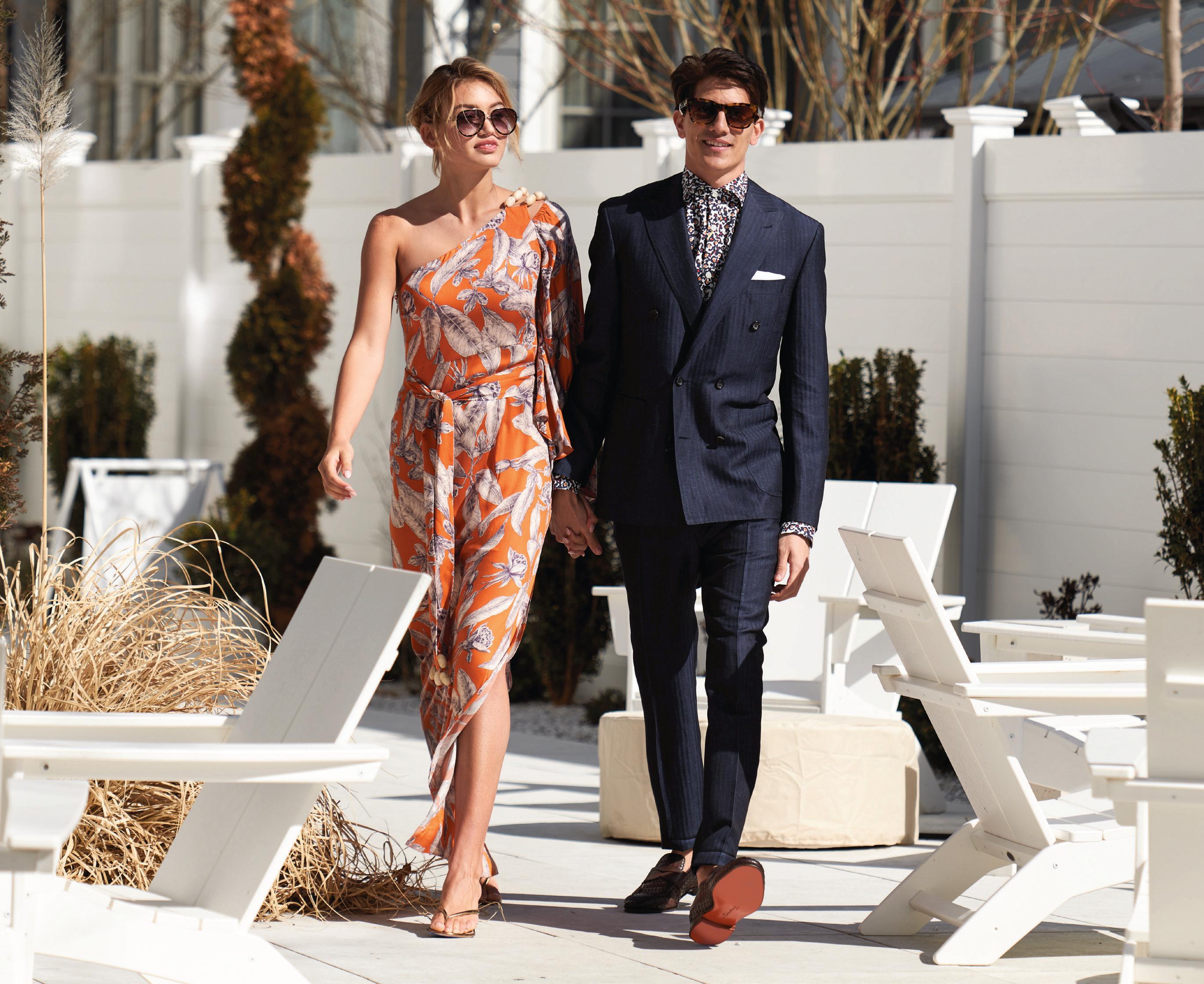
This page, on her, dress by Alexis, sunglasses by Gucci, sandals by Gianvito Rossi. On him, suit and shirt by Canali, shoes by Santoni. Opposite page, on her, denim set by SER.O.YA, sandals by Gianvito Rossi.



77 GARMANY SPRING/SUMMER 2023

78 GARMANY SPRING/SUMMER 2023
This page, sweater, tank and pants by Rag & Bone, sneakers by Golden Goose. Opposite page, sweater, pants and hat by Greyson, shirt by J. Lindeberg.


79 GARMANY SPRING/SUMMER 2023

80 GARMANY SPRING/SUMMER 2023
This page, dress by Retrofête, shoes by Christian Louboutin.

81 GARMANY SPRING/SUMMER 2023

82 GARMANY SPRING/SUMMER 2023
This page, jacket and pants by Fradi, shirt by Maurizio Baldassari, loafers by Christian Louboutin. Opposite, jacket, shorts and tank by Iro, sneakers by Golden Goose.

83 GARMANY SPRING/SUMMER 2023

84 GARMANY SPRING/SUMMER 2023
This page, hoodie by Harden, shorts by PT01. Opposite, on her, dress by Dorothee Schumacher, shoes by Manolo Blahnik; on him, blazer and shirt by Isaia, jeans by Jacob Cohen, loafers by Santoni.

85 GARMANY SPRING/SUMMER 2023

86 GARMANY SPRING/SUMMER 2023
This page, on her, dress by Rococo Sand, shoes by Gianvito Rossi; on him, jacket by Sartorio, shirt by Eton, pants by PT Torino, shoes by Brunello Cucinelli. Opposite, shirt and shorts by President’s, sunglasses by Bottega Veneta, watch by Leonardo Jewelers, sneakers by Common Projects.

87 GARMANY SPRING/SUMMER 2023

88 GARMANY SPRING/SUMMER 2023
This page, set by Charo Ruiz, flip-flops by Christian Louboutin. Opposite, on her, dress by Zimmermann, shoes by Manolo Blahnik; on him, suit, shirt, shoes and bag by Brunello Cucinelli.


89 GARMANY SPRING/SUMMER 2023
Yikes! 6 HIKES

In a half-dozen places, Mother Nature is apt to lure you onto the trail—even if you usually avoid exercise.
Hiking is having a moment. Whether it’s the beneficial exercise or the beautiful countryside folks crave—or simply a brief, scenic escape from routine—record numbers are enjoying this outdoor activity, from Snow Lake Trail near Seattle to the end of the Appalachian Trail at Mount Katahdin in Maine.

Hiking can be a strenuous challenge. But even at its most leisurely it’s an activity you can feel good about. Taking a hike requires stability, mobility, endurance and strength, and yields many fitness benefits. Just one hour of trekking can burn up to 500 calories, depending on the incline level and the load being carried. While hiking is a powerful cardio workout, many trails are also less taxing on your joints than asphalt or concrete, making a walk in the woods (or on the beach or through the desert) more forgiving on ankles and knees than a sidewalk ramble.
The sport builds strength in your glutes, quads, hamstrings, hips, lower legs and core while boosting bone density and improving blood pressure. It may even be a cancer fighter. According to a study published in the International Journal of Sports Medicine, long-distance hiking trips may improve antioxidative capacity, which helps fight off disease.


Being out in the wild, away from the screens and keyboards and beeping noises that signal your everyday stressors, can get your mind and spirit in better shape too. It can increase attention span and boost creative problem-solving. Hiking is a proven meditative activity because the repetitive motion of strides is calming; it decreases stress response and lowers the body’s cortisol levels. Studies show that people regularly exposed to natural surroundings have decreased depression, anxiety, cognitive decline, headaches and inflammation. Some fitness experts predict that hiking will become more popular than yoga as a stress-busting workout.
Whether you are a beginner or a seasoned hiker, there are magnificent trails from coast to coast that will get your heart pumping vigorously while you enjoy spectacular views. Check out the following half-dozen; some of them are hard to resist even if you’re trying to:
90 GARMANY SPRING/SUMMER 2023
Fitness
McWay Falls Overlook Trail, Julia Pfeiffer Burns State Park
Big Sur, California

Difficulty level: Easy
Along the storied California coast between Los Angeles and San Francisco lies Big Sur, a jewel of the Pacific Coast. This trail offers a nearly flat stroll that ends with flawless views of the iconic McWay Falls. Here water drops 80 feet from a granite cliff into a sandy cove below and flows into the mighty Pacific Ocean. And check out the one-mile Partington Cove Trail, also in the park. This steep but short hike will take you across a rustic wooden bridge, then down a 60-foot tunnel where you emerge onto the park’s only beach access. Confirm that the trails are open before heading to Julia Pfeiffer Burns State Park, as recent wildfires may have closed some of them.
Hoh River Trail, Olympic National Park

Forks, Washington
Difficulty level: Easy to moderate
The scenery along this route can best be described as an enchanted forest. Winding through one of the few true rainforests left on the planet, the Hoh River Trail features moss-covered stones along the picturesque river, ancient trees towering over beds of ferns and Roosevelt elk feeding in meadows with sweeping mountain views. Most of the trail is flat and appropriate for all fitness levels. However, the last five miles become more strenuous, so beginners may want to plan to end their hike near Five Mile Island or Lewis Meadow. For more seasoned hikers looking to push through, the payoff is huge. From here it’s nine more miles to the Blue Glacier Overlook, where visitors see an impressive slab of a glacier along the side of Mount Olympus.
North Country Trail, Pictured Rocks National Lakeshore

Munising, Michigan
Difficulty level: Moderate
Located on Michigan’s Upper Peninsula on the southern shore of Lake Superior, Pictured Rocks National Lakeshore offers raw coastal beauty and a variety of habitats. The North Country Trail loop begins in a serene forest on a relatively flat and well-traveled path. The trail takes you past Pictured Rocks, named for the colors created by mineral deposits, with opportunities to see Miner’s Castle Overlook, Chapel Rock and several picturesque waterfalls. The granddaddy of them all is 60-foot Chapel Falls, located along a remote offshoot of the main trail. Along the North Country Trail, you’ll be tempted to take in the lakeside view. Just remember that there are no guardrails on the rocky cliffs, which are some 200 feet above Lake Superior. But once you’re there, the panoramas are incredible.
91 GARMANY SPRING/SUMMER 2023
Maze Overlook Trail, Canyonlands National Park
Moab, Utah
Difficulty level: Moderate to difficult
Though it’s the least visited of Utah’s “Mighty 5” national parks, Canyonlands is nothing short of spectacular. Hiking the terrain is the best way to see the area— which spans more than 520 miles and features canyons, mesas, cliffs and spires—but prior experience (along with a long rope and a map) is a plus for the remote, outand-back Maze Overlook Trail. It’s a oneof-a-kind, 8-mile adventure, starting with picturesque desert landscape before turning into a natural labyrinth of colorful rocks, sandstone walls and the unique Chocolate Drops formation. But the trail is not for the faint of heart, as it will test physical and mental endurance. Getting to and from the majestic Maze Overlook requires brief class 4 rock scrambling, tip-toeing on narrow ledges and navigating tight squeezes and steep cliffs. Pro tip: Instead of carrying a backpack through a tight incline/decline, use a 25-foot rope to lift or lower it.

Maryland Heights Loop, Harpers Ferry National Historic Park

Harpers Ferry, West Virginia
Difficulty level: Difficult
History buffs will especially love this mid-Atlantic hiking trail. The loop starts and finishes in the quaint West Virginia village of Harpers Ferry. The town itself is a National Historic Park, brimming with 19th-century architecture, museums, exhibits, trades workshops and living history events. The hiking trail passes the remains of a naval artillery battery built in 1862 and a Union Army fort built in 1863. Other Civil War remnants seen along the way include ammunition pits and breastworks. The path gets more intense as you climb cliffs that overlook Harpers Ferry with stunning views of the Potomac and Shenandoah rivers. After a strenuous hike, visitors can reward themselves at True Treats Historic Candy, a store near the trail’s end in downtown Harpers Ferry that specializes in sweets from the 1500s through the mid-1900s.
Sam’s Point and Verkeerderkill
Falls Trail, Minnewaska State Park Preserve Cragsmoor, New York

Difficulty level: Difficult
The star of this hike is the Verkeerderkill Falls, where a 180-foot waterfall drops to the bottom of an isolated canyon. Access to cliffs around the canyon is unfettered, and hikers feel as though they are the first humans to discover the scene. Spring and summer are the best times of year to see the falls in full, rushing glory. Hikers also can climb down steep rock and a series of ladders for a third of a mile into ice caves cold enough to hold snow through July. The trail winds through an endangered dwarf pitch pine barren and abandoned berry-picker shacks, remnants of a time when the area was known for wild blueberry gathering. Hikers mount several cliffs—including Sam’s Point—for views of High Point Monument in New Jersey, the Hudson Valley and the Catskill Mountains.
92 GARMANY SPRING/SUMMER 2023 Fitness


Full service, old fashioned butcher shop and meat market located in the heart of downtown Red Bank. 112 Monmouth Street • Red Bank, NJ 732.741.5292 MonmouthMeats.com SERVING THE COMMUNITY FOR OVER 50 YEARS #MONMOUTHMEATS READERS’ CHOICE AWARDS 2022 Monmouth HEALTH & LIFE HOME OF THE TOMAHAWK STEAKS, WAGYU AND A-5 JAPANESE KOBE













SPRING 2023 • COPPLEY.COM QUALITY CRAFTSMANSHIP Gimos_1-2H_SS23_final.indd 1 3/2/23 3:46 PM


SERVICE DIRECTORY
MORE THAN JUST A STORE
Just as our designers take great pride in the clothing that bears their name, we are extremely proud of the amenities and services that make shopping at Garmany a safe and pleasurable experience. Our philosophy is that first-class customers deserve first-class care from the moment they walk through our doors. We aim to transcend the traditional retail customer relationship, creating instead a bond that exceeds expectations. Please take advantage of any and all of the services described here as part of your Garmany experience. Visit us at 121 Broad Street, Red Bank, NJ, or call us at 732.576.8500.
Safety First
At Garmany, we always put the safety of our customers and staff first. We know you’ve been careful over the past two years, and rest assured your health is our priority. Hand sanitizer and social-distancing reminders are posted throughout the store.
Private Shopping Service
You don’t have to be an A-list celebrity to get the redcarpet treatment at Garmany. Our private shopping service—as well as FaceTime appointments for those who prefer a socially distant experience—will enable you to sample your favorite designer collections at leisure with a knowledgeable member of our staff.
Abundant Parking
The Garmany parking lot is large, free and secure. And it puts you just steps from the welcoming red awning at our back door.
That’s A Wrap!
After choosing the perfect present, our complimentary gift wrap makes your Garmany gift extra special. For birthdays, holidays or milestone events, any day is a good day to take advantage of our professionally prepared gift presentations.
Pets Welcome
We’re just as pet friendly as we are kid friendly. A pet is a member of the family, and we want to make all your family members feel at home.
Refunds Happen
While most stores dread discussing their return policy, we can sum up ours in three words: No questions asked. All we do request is that you bring your purchase back within 31 days.
Garmany Gift Cards: A Flattering Fit
A Garmany Gift Card guarantees your gift will be the perfect style, size and color. Purchase a gift card in the store or online in any denomination you choose for a remembrance that will dazzle any lucky recipient.
Made-To-Measure Service
As talented as a local tailor may be, he can only provide the limited patterns and materials on hand. At Garmany, our Made-to-Measure service takes advantage of the relationships we have established with Italian manufacturers to deliver a suit that is smart and sexy— and a good value—in as little as one week. You won’t find a better short-term plan to look your best.
Expertise
A central part of the Garmany Experience is superlative service in a relaxed atmosphere. If you want to browse in private, you’re more than welcome. When you need expert, individual attention, you’ll get it—instantly and for as long as you want. Our knowledgeable staff is well versed in all of the brands we carry, the trends of the season and how to fit every body type. They stand ready to advise you on all matters of wardrobe and accessories.
Old-Fashioned Shoeshine
Garmany is one of the few places left where you can still get a meticulous hand shine. In just a few minutes, we’ll have your shoes looking lustrous, and you’ll feel ready to take on the world.
49 Private Changing Rooms
No matter where you are in Garmany, you’re only a few paces away from a clean, comfortable changing room. We never planned on 49, but after we located them in the places we knew would be most convenient, that’s how it worked out.
Tailor Shop
Our on-site tailor shop is at your disposal for alterations to your Garmany purchases. We provide same-day service as a rule and can usually handle minor alterations while you wait. The same goes for emergency repairs and routine wardrobe maintenance, such as tightening loose buttons: Bring the garment in, and we’ll fix that button on the spot.
Shopping By Appointment
If you’re not ready for in-person shopping—or if our store hours don’t fit your schedule, call us. If you’re a morning person who finds 7 a.m. the ideal time for your Garmany Experience, we will arrange to be here. Does the commute put you on the platform at 9 p.m.? No problem. Shopping by appointment allows us to give you the personal attention and shopping time you need, when your schedule permits.

Lounge And Bar
Like any gracious host, we always offer our guests something to drink. Whether you’re shopping in first-floor menswear or browsing the women’s collections upstairs, you’ll find a spot to relax, reflect and enjoy coffee, espresso, cappuccino or a cool drink. If the notion strikes you for something more bracing, we have wine, beer and a full bar.
Movie Theater
We encourage you to bring the younger set to Garmany, and we attend to them as we would any other family members. Our second-floor movie theater is a particular hit with kids. With our theater seating, a massive screen, high-def picture and awesome sound system, your kids can enjoy a variety of titles from our film library.
96 GARMANY SPRING/SUMMER 2023


