AQUA MIAMI
WRITING WHAT HE KNOWS
FORREST JONES’S NEW GEOPOLITICAL THRILLER OUTSIDE THE LINES MIAMI ARTIST COURTNEY EINHORN
Practical Magic ORGANIZE YOUR CLOSET LIKE A PRO
WRITING WHAT HE KNOWS
FORREST JONES’S NEW GEOPOLITICAL THRILLER OUTSIDE THE LINES MIAMI ARTIST COURTNEY EINHORN
Practical Magic ORGANIZE YOUR CLOSET LIKE A PRO




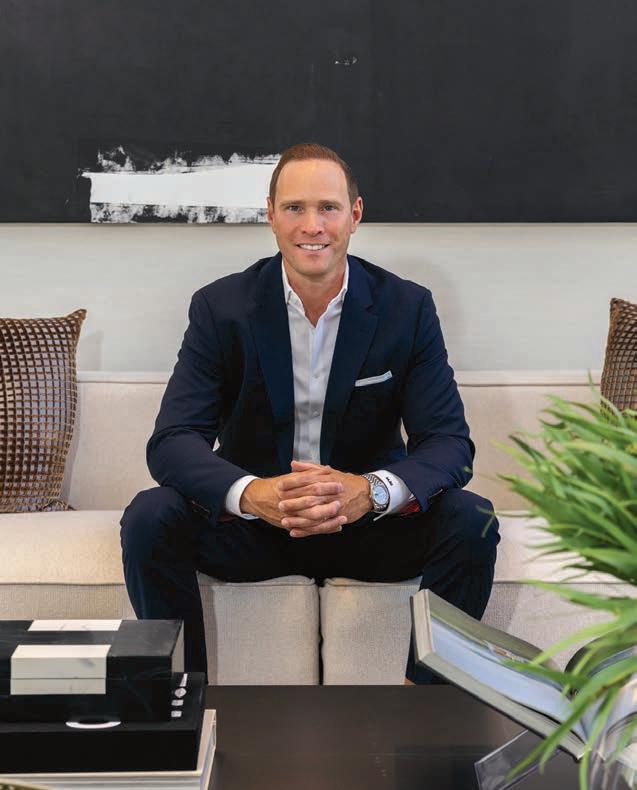
Nestled along the tree-lined streets of Coral Gables, Ponce Park presents an intimate collection of 58 residences, ranging from two to ve bedrooms. Each home is curated by the acclaimed Meyer Davis, blending contemporary luxury with classic charm to create a re ned sense of place.
Project Address: 3000 Ponce de Leon Blvd, Coral Gables, FL 33134
Sales Gallery: 203 University Drive, Coral Gables, FL 33134







•
•
•
• White-Glove Luxury Representation
• Strategic Pricing & Market Positioning
• Cinematic Photography & Video Production
• High-Impact Social Media Campaigns
• Precision Digital Advertising Targeting
• Direct Access to Quali ed Buyers







California Closets Miami, Julie Shvedyuk is channeling a lifelong love of design and organization to help clients live calmer, smoother, more productive lives.
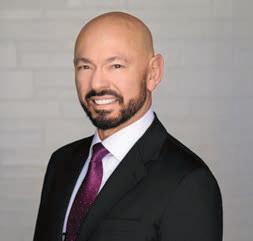
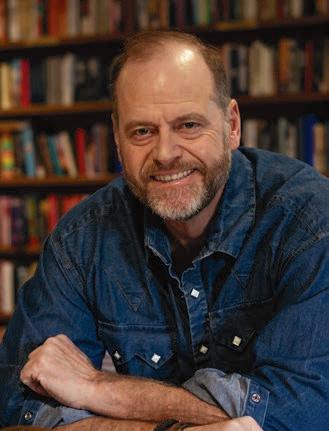
Seasoned Miami reporter Forrest Jones spins his late 1990s years covering Venezuela into the gripping (and prescient) geopolitical thriller, The Placebo Agenda




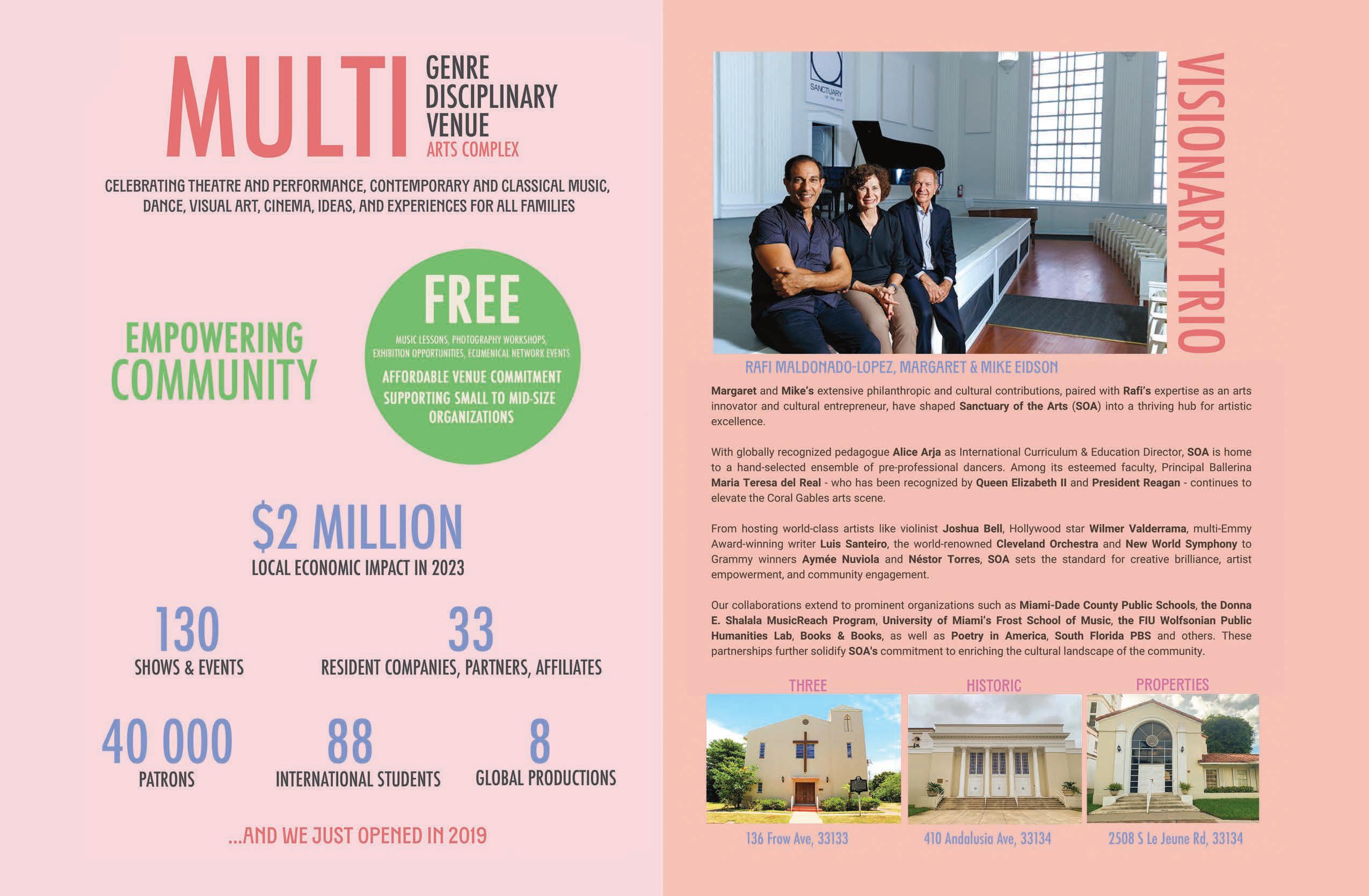
www.sanctuaryofthearts.org



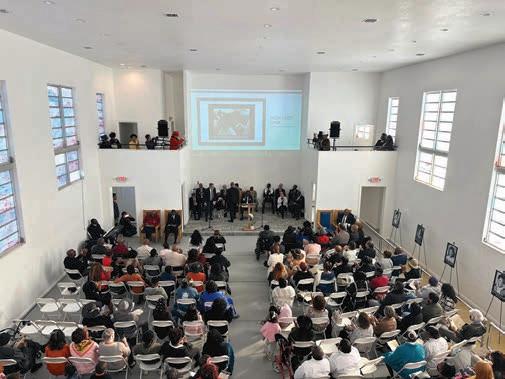
Undeterred by the challenges the arts community has been facing, our season unfolds across a spectrum of experiences ~ productions for all ages, groundbreaking dance, powerful music, thought-provoking conversations, and site-specific works that close the gap between art and audiences.
From global collaborations to intimate gatherings, our stages and spaces celebrate creativity in its many forms ~ led by artists, inspired by community, and driven by innovation.
Sanctuary of the Arts is your "go-to” place for the best in entertainment! Come and enjoy global, national, and local renowned and award-winning artists!
DOWNTOWN CAMPUS ST. MARY CAMPUS 410 ANDALUSIA AVENUE, CORAL GABLES, FL 33134 136 FROW AVENUE, CORAL GABLES, FL 33133 @sanctuaryofthearts





“APRIL PREPARES HER green traffic light,” the late journalist and novelist Christopher Morley once wrote, “and the world thinks, ‘Go.’”
I can’t be the only one who would like the yellow and red lights to linger at least a little bit longer. I mean, it feels like I was writing the New Years message for this space about 12 hours ago, and I woke up today realizing the clocks have already sprung forward, we’re already a third of the way through the year, and, yes, whatever physics and cosmology may say our parents and grandparents were right
to warn us these trips around the sun accelerate every year.
The good news? If I’ve learned anything editing this magazine the last six months, it’s that we in Miami are blessed with an unusual amount of inspiration. So many of our friends, neighbors, and local organizations are doing incredible, beautiful, important things. I am never desperate for material—the challenge is always in choosing what to spotlight amongst an embarrassment of riches. I hope you’ve been as inspired by the lives and stories we explore here as I have been. And this issue, in my opinion, is no exception.
Back in January, my 9-year-old son asked me what my New Years revolutions for 2026 would be, and I didn’t correct him, because that to me is such a more interesting proposition than resolutions, which sounds like something I’d introduce at a colonial statehouse—and I don’t need to feel any older than I already do. And if your revolutions—like mine—haven’t quite gotten off the ground yet…well, here’s your green light.

Shawn Macomber Editor

Advertising Director
Daisy Abreu daisy.abreu@wainscotmedia.com
Creative Director
Kijoo Kim
Editor
Shawn Macomber
shawn.macomber@wainscotmedia.com
Columnist
Gerry Barker
Photographer Carlos F. Mendez
WAINSCOT MEDIA
Chairman Carroll V. Dowden
President and CEO
Mark Dowden
SVP, Group Publisher
Thomas Flannery
VP, Content Strategy
Maria Regan
Associate Editor
Sophia Carlisle
Art Director
Rosemary O’Connell
Advertising Services Director
Jacquelynn Fischer
Operations Director Catherine Rosario
Production Designer Chris Ferrante
Print Production Manager Fern Meshulam
Advertising Production Associate Griff Dowden
AQUA Pinecrest magazine is published by Wainscot Media. Serving residents of Pinecrest and surrounding areas of South Florida, the magazine is distributed monthly via U.S. mail. Articles and advertisements contained herein do not necessarily reflect the opinions of the publishers. Copyright 2026 by Wainscot Media LLC. No portion of this magazine may be reproduced in any form without written consent.

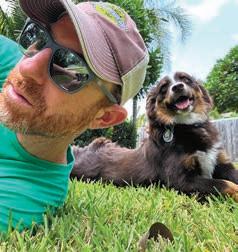
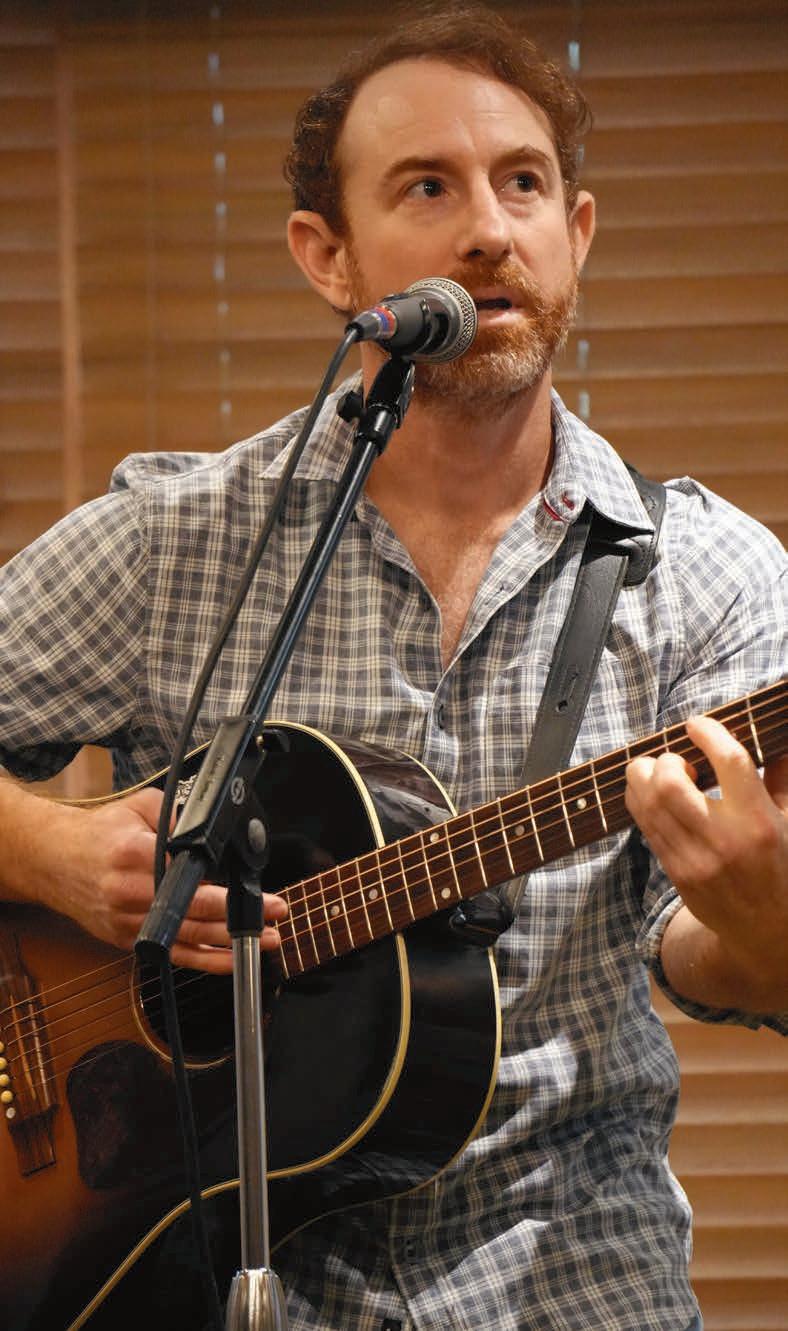
On his new Miamicentered album The Cost of Living, singersongwriter Dave Daniels explores love for his multifarious hometown— and his Australian Shepherd.
BY SHAWN MACOMBER
DAVE DANIEL’S EXCELLENT new album The Cost of Living is more than a semi-autobiographical collection of soulful, smart earworms. It’s an epic ode to Florida.
The splendor, the quirkiness, the mysterious, and yeah...darkness,” as Daniels tells AQUA Miami. “It is easily the most meaningful album I have made to date in my 25 years of recording music,” the singersongwriter adds. “This feels like a return for me. Finally, at 42 years old, I find myself happily living in my hometown, doing what I do best: fish and play original music.”
Between casting lures and strumming chords, Daniels generously agreed to give AQUA Miami a track-by-track breakdown of The Cost of Living
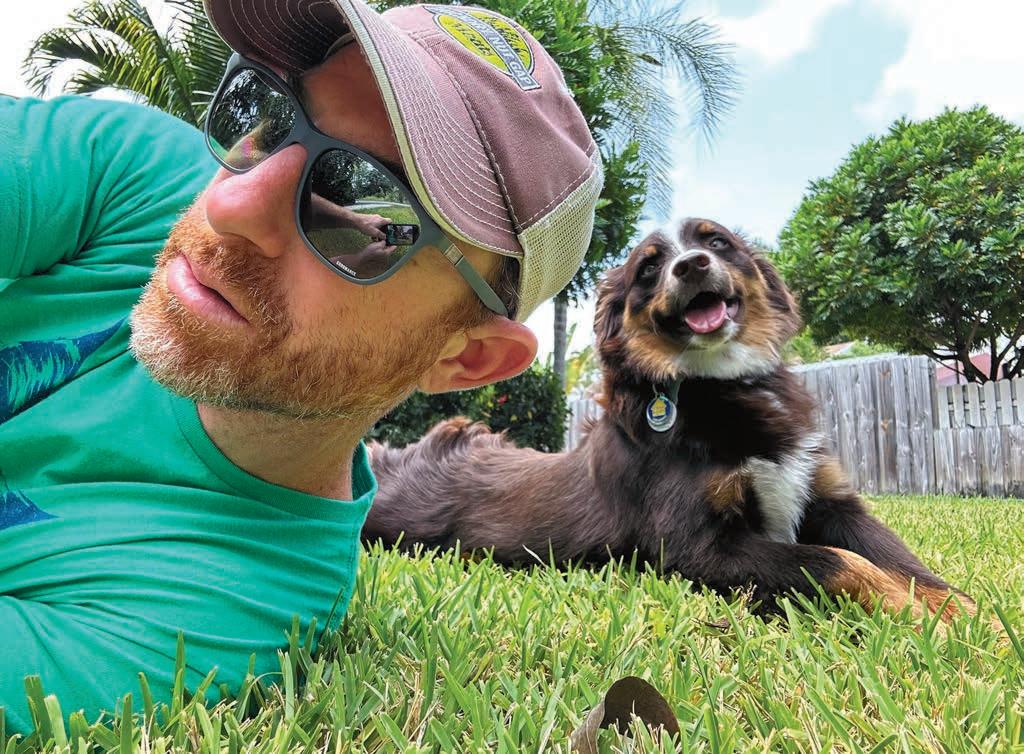
• Willy “I’ve learned the most about loving myself and others from my Australian Shepherd. She rescued me in a time I needed it the most. Dogs—pets, in general, really—seem to come to us when the universe knows we need them, and they need us. My dog, the real Willy, is much more timid in real life than the song. I can relate!”
• Some Light “There are always two constants for me: The ocean and The Beatles. They have been my refuge, where I go for understanding, healing, and to be in absolute awe. Both are mentioned in this song. It is a story about learning how to let go with grace. And also a prayer and a reminder that love and mercy is always on its way—like the breaking of dawn every time I go fishing. New hope.”
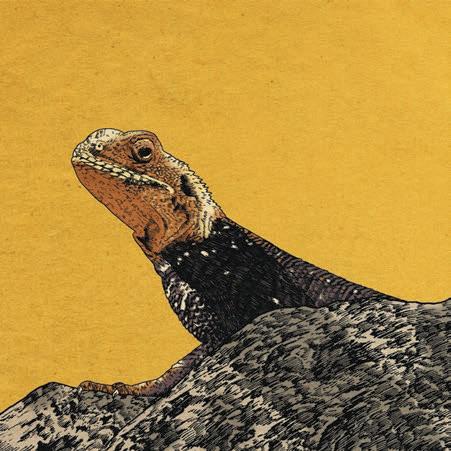
• Mayaimi “This song means a lot to me. A tribute to three waves of Miami migration. I am not a history expert, but I’ve learned a lot about it from my dad and Dr. Paul George at HistoryMiami. There are endless patchworks that make this city what it is. There is no “true” Miamian. And no one group was really here first—maybe the Tequestas?—and no one will be last. Except the gators and the lizards.”
• Cost of Living “There is no geographical cure for a spir itual longing. But a place can haunt you and heal you simultaneously. And sure, I’ve done my share of time outside of South Florida. And all of that’s fine and good. Still, there is absolutely nothing like this city. Not New York, not Nashville. There’s a line in this song: ‘When you’re gone,
you’ll return to limestone.’ It means you can’t take it with you when you go—and that my roots are in this city, no matter what I do. I can’t escape. And that’s a good thing! Who would want to? Sure, Miami is not for the faint of heart, but if you really look around, there is beauty and mystery here like nowhere else. You just have to go find the places that call to you.
• Good Kids “I was raised in Kendall back when there were more pine trees, and we could just ramble around like kids from Lord of The Flies ! I had a wonderful childhood and had amazing parents and a loving community to raise me. I had great teachers, baseball coaches, and all kinds of amazing opportunities to excel in school sports and the arts. Yet…I was a true menace. So
were my friends. We’re older now and we’re “slightly” more grown up. A lot of us have kids. And just like our parents we thought: I’m going to raise them to do better than me. And they did a damn good job—and so are we. Now I have the privilege of working with a lot of teenagers in Miami, and I see them evolving year after year. They are kinder, more thoughtful, and open-minded. They give me hope.”
• The Spill “This is a Gulf Coast folk dirge; a lament from the perspective of a charter fishing guide I knew in 2010. He was hired, like other guides, by the government and the big gas companies to go out to the Gulf of Mexico and clean the terribly spilled oil that had occurred because of the Deepwater Horizon catastrophe. I found it
very troubling to know that fishing guides— people who work harder than anyone I’ve ever met—were out of work for a long time and could only find work to feed their families by cleaning up the very same ocean from where they make their living. If you think there’s not a song in that, you’re just not paying attention.”
• Florida Man “I am not a political singer. But I think we need to protect our water and our animals and our lands. If we do not, all parts of Florida life will crumble— our drinking water, our beaches, our tourism, our ability to enjoy the outdoors, our small farmers, and our way of life. This is the one bipartisan issue we seem to still agree on, so let’s not let it slip away! Folks should check out Captains for Clean
Water and MANG and watch Path of the Panther today!”
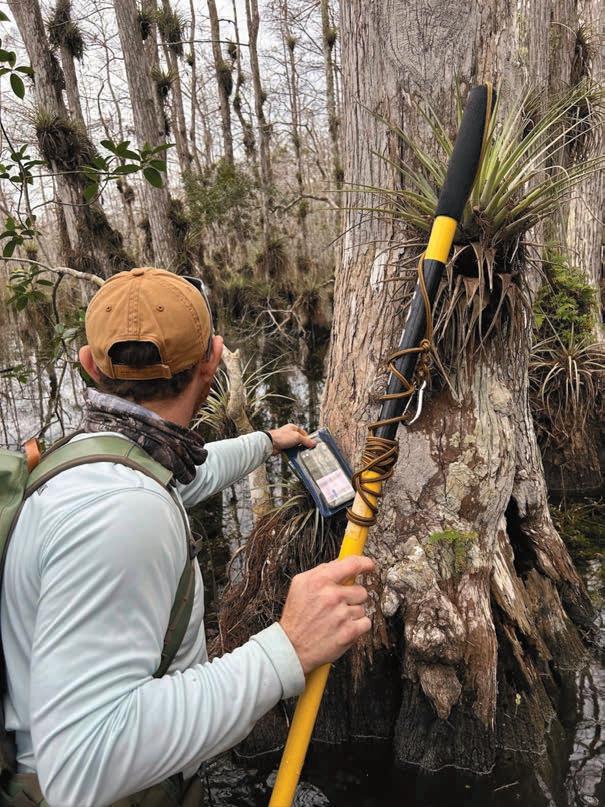
• Back to the Island “Ukuleles can be a powerful instrument. This is a song I wrote years ago when I was living in Atlanta and Nashville and was homesick to the point where I was not in a good place. Your home is where your center is. Some folks don’t feel that about their birth city. Between fishing and diving, the Everglades and the Bay—there’s nowhere else in the world I know makes me feel more at peace. Everglades National Park, Big Cypress, Biscayne National Park…these are holy places to me.”
Follow Dave Daniels on Instagram at @davedanielsmusic.


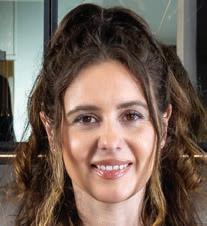
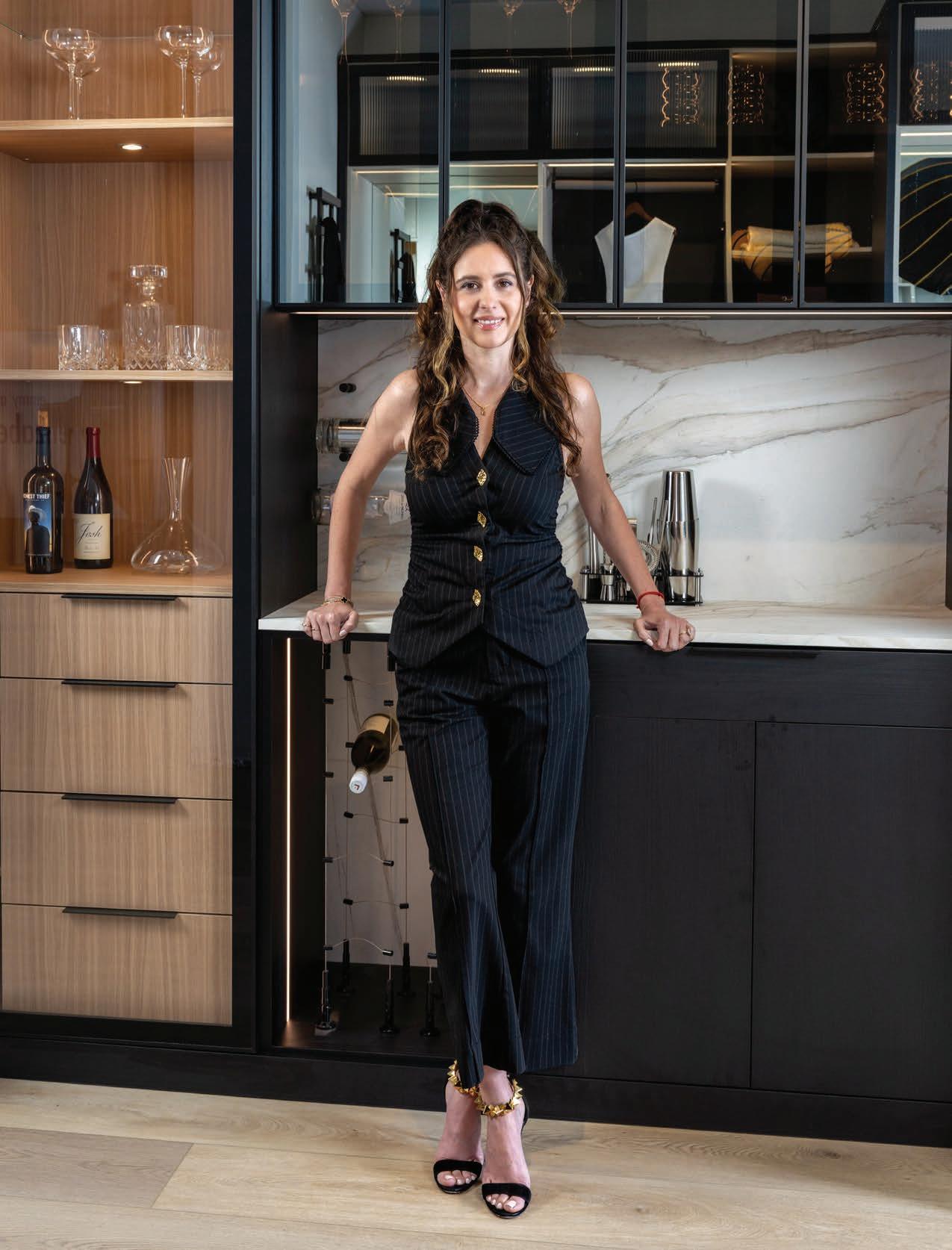
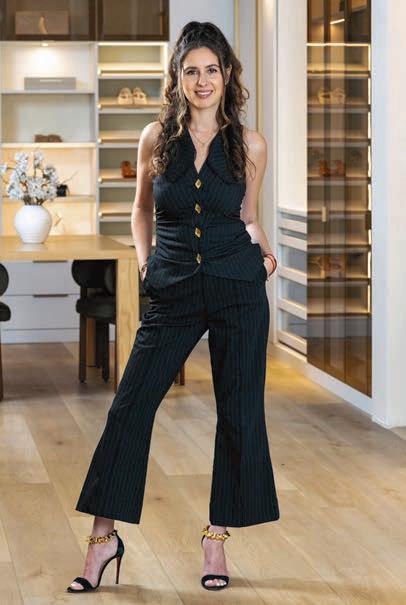
At California Closets Miami, Julie Shvedyuk is channeling a lifelong love of design and organization to help clients live calmer, smoother, more productive lives.
BY SHAWN MACOMBER
“IF YOU WANT to improve your life immediately, clean out a closet,” Cheryl Richardson—the Oprah-endorsed life coach and bestselling author of The Art of Extreme Self-Care and Life Makeovers, among many others—once said. “Often what we hold onto holds us back.”
Of course, in our hustle, bustle age, accomplishing this can be easier said than done—that is, unless you have a visionary ally like Julie Shvedyuk on your side.
“A lot of people don’t realize how much a well-designed space can change their daily routine,” Shvedyuk, the California Closets Miami vice president of operations, tells AQUA Miami. “When something as simple as your closet works better, your mornings
start smoother, your home feels calmer, and everything just flows a little easier.”
And from custom closets, Murphy beds, and bookshelves to pantries and smaller spaces, Shvedyuk and California Closets—which launched nearly 50 years ago in its namesake state but now has a (calming, streamlining) presence in locations throughout the United States, Canada, Mexico, and the Caribbean—is devoted to making that organizational flow state accessible. “We believe home is more than just a place—it should be a meaningful source of creativity, comfort, and connection,” the company’s official website reads.
“California Closets creates highly personalized organizational solutions for the whole home. We call it ‘Practical Magic’,” Shvedyuk says.
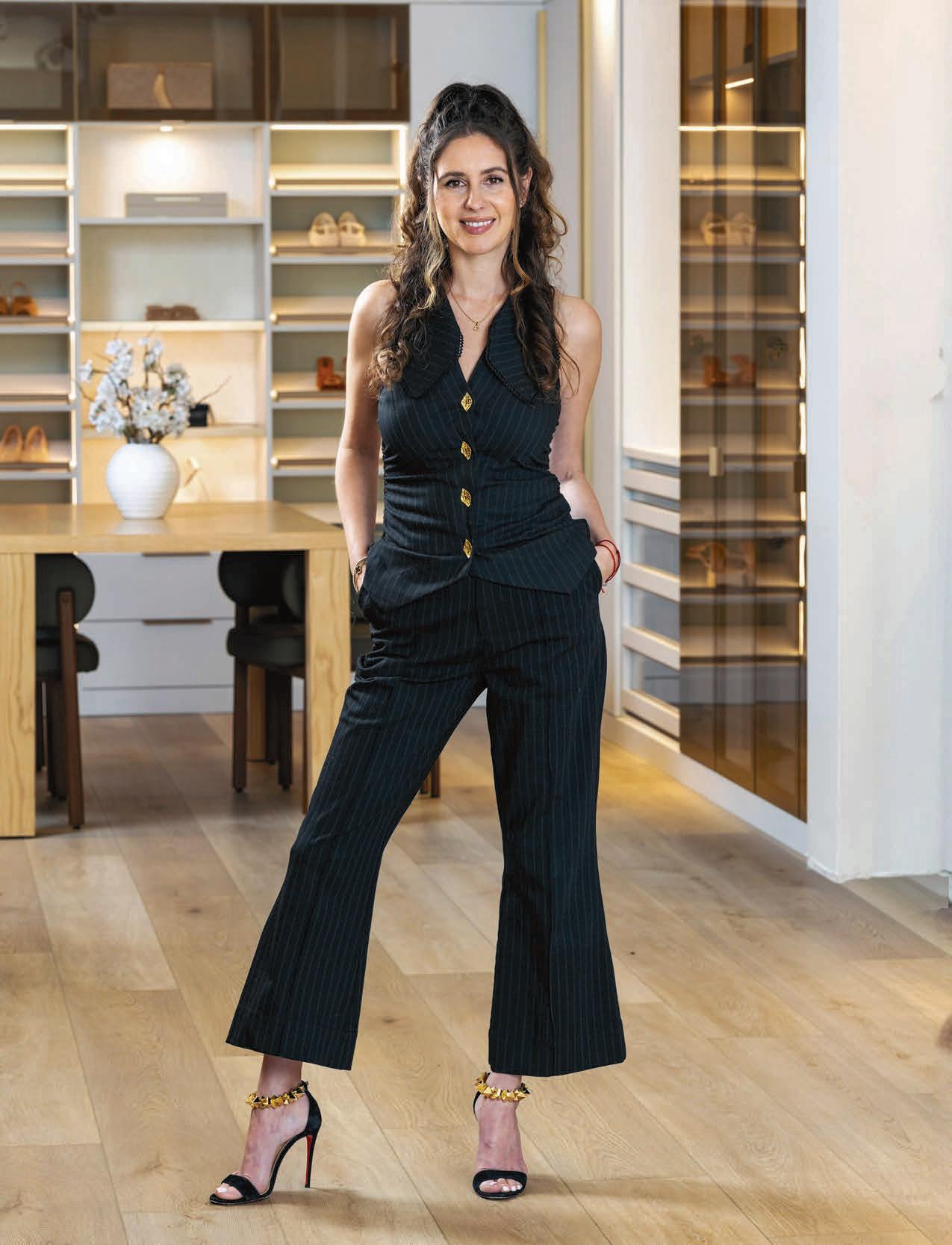
Originally from Ukraine, Shvedyuk immigrated to the United States as a child and grew up in New York. In many ways, the writing was already on the wall.
“I’ve always been drawn to design and the idea of making spaces feel better and more functional,” Shvedyuk says. “Even as a child, I loved rearranging rooms, organizing things, helping my friends with their renovations, and paying attention to the little details that make a home feel calm and beautiful.” She adds: “I’m not sure my parents would have predicted this exact career path, but they always encouraged hard work and creativity. In many ways, what I do today reflects both—building something, solving problems, and helping people improve their homes and daily lives.”
Here’s how she got from here to there: Shvedyuk moved to Florida after college to build a career—fell in love with South Florida living, and never left. Nearly eight years ago, she joined forces with California Closets, where, in addition to her duties as vice president of operations, she also oversees marketing and trade development. “What initially drew me [to California Closets] was the design aspect and the reputation the brand has for quality,” she says. “But what kept me here for almost eight years is the impact we’re able to have on people’s homes. In other words, the job allows her to channel the same passions she has pursued since childhood every single day. “We’re not just designing closets,” she says. “We’re helping people rethink how their homes function and creating spaces that make their lives easier…Life is busy, and our homes should make things easier—not more stressful. When spaces are disorganized or poorly designed, it adds unnecessary friction to everyday routines.”
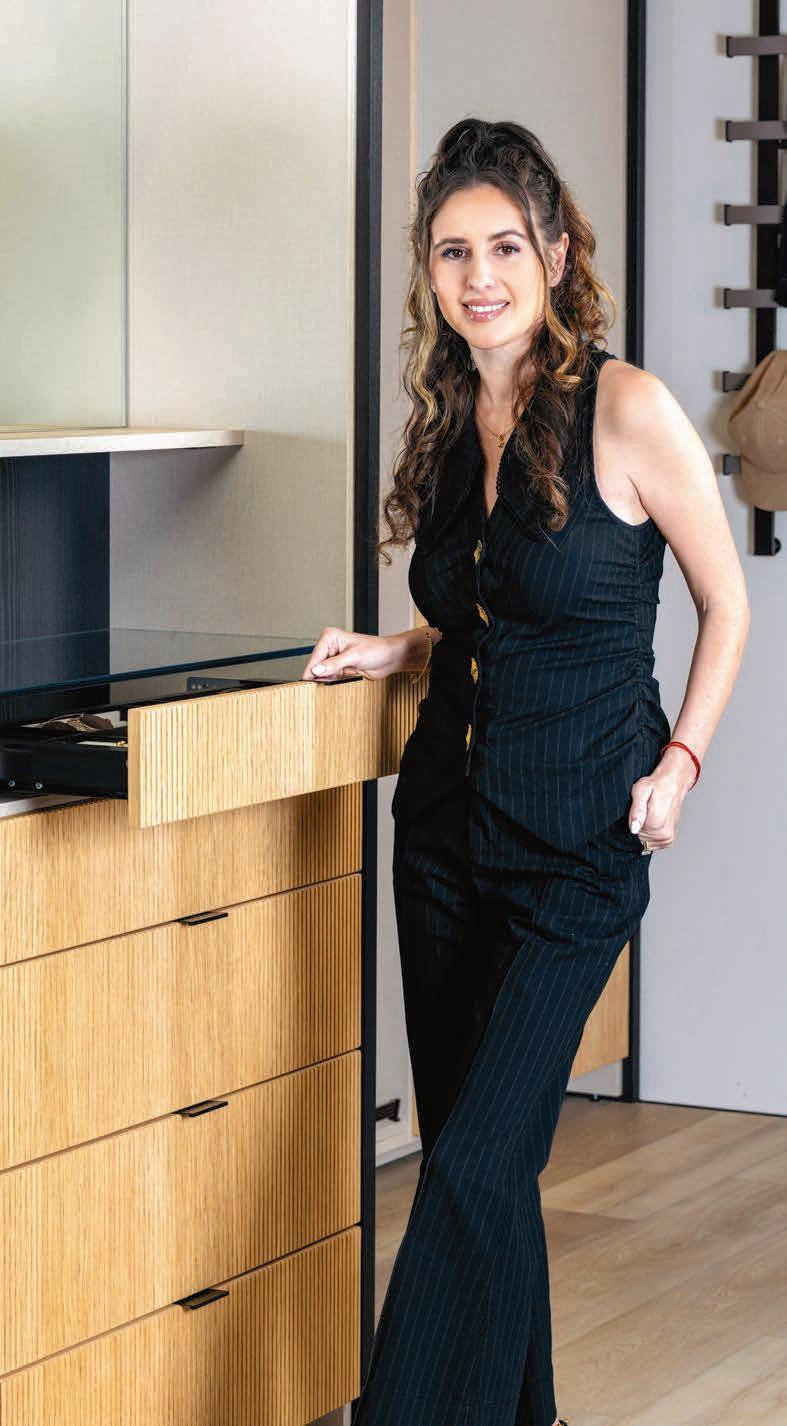

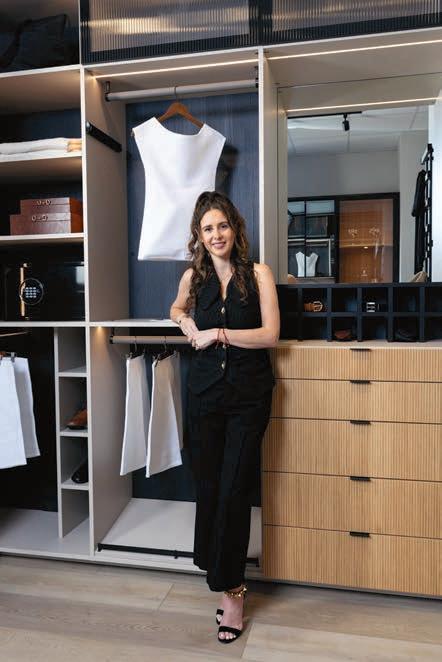
“At its core, a great closet is designed around the person using it,” Shvedyuk says. “It should feel intuitive, efficient, and visually calming. Everything should have a place, and the layout should make daily routines easier rather than more complicated.”
There are a few factors that go into achieving this. First, be here, now: “[In this career] I’ve learned the importance of listening,” Shvedyuk says. “Every client, every home, and every lifestyle is different, and the best designs always come from truly understanding how people live.” Second, state of the art technology, beginning with proprietary 3D software that helps clients create a detailed, kinetic virtual model of their custom solution to premium materials—
“Our thoughtfully sourced and composed palette of fine finishes and saturated colors expresses our design sensibility and deep commitment to exceptional quality,” the official website notes—to screen-to-machine technology and German machinery that ensures each unique design is meticulously crafted to a “T.”
For Miami residents, it certainly doesn’t hurt that California Closets
“My own closet is actually pretty simple and very functional,” she says. “I like things to feel clean, organized, and easy to maintain. With a busy schedule, having a system where everything has its place makes getting ready much easier.
“I’ve seen firsthand how much lighter people feel when their spaces are organized and intentional,” she continues. When everything has a place, it removes a lot of the small daily frustrations we don’t always realize are there. Personally, it’s made me appreciate simplicity more in my own home, especially now as a mom. Having systems that keep things organized makes life with a busy schedule—and a toddler—a lot easier.”
operates a fully functional, spacious luxury showroom on Biscayne Boulevard in Miami Shores.
“Our process starts with really understanding how someone lives: their habits, their routines, what frustrates them about their current space,” Shvedyuk says. “Then we design solutions that support their lifestyle. It’s a mix of functionality, organization, and design that ultimately helps simplify their day-to-day life.”
Of course, creating a great closet is, ultimately, not solely about process, but also philosophy.
“Customization is important, but the real foundation is understanding someone’s lifestyle and designing a space that supports it,” Shvedyuk says. That’s the beauty of a California closets system: it caters to every individual and every space.”
California Closets is continuing to grow and expand in South Florida. “Which is really exciting,” Shvedyuk says. “Our Miami franchise just took over Broward County, so we will be expanding our service from Monroe County through Broward with our sister company in Palm Beach.”
As Victor Hugo wrote, “Nothing is more powerful than an idea whose time has come.”
“The way people think about storage has evolved—it’s no longer just closets,” Shvedyuk says. “We’re designing full-home solutions like pantries, home offices, bars, playrooms, media rooms, and multifunctional spaces. It’s been really exciting to be part of that growth and help shape how people think about organization and design in their homes…One of the biggest things I’ve learned is how much our environments affect how we feel and function every day. A well-designed space can genuinely change how someone experiences their home.
Like her products, Shvedyuk strives to maintain balance in her life off the clock. “Outside of work, my biggest focus is my family,” she says.
“I’m married and have a one-and-ahalf-year-old daughter, so a lot of my time is spent enjoying those moments together. Living in South Florida also makes it easy to spend time outdoors and enjoy the sunshine. I’ve always enjoyed staying active and, of course, I still naturally gravitate toward design and home projects whenever I can.”
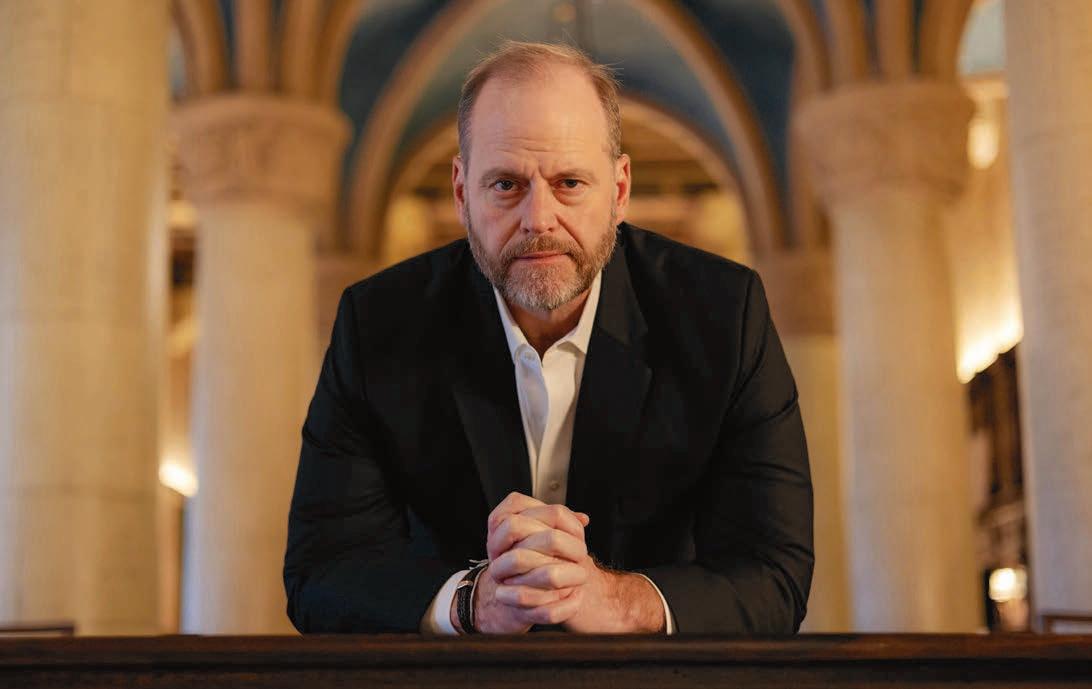
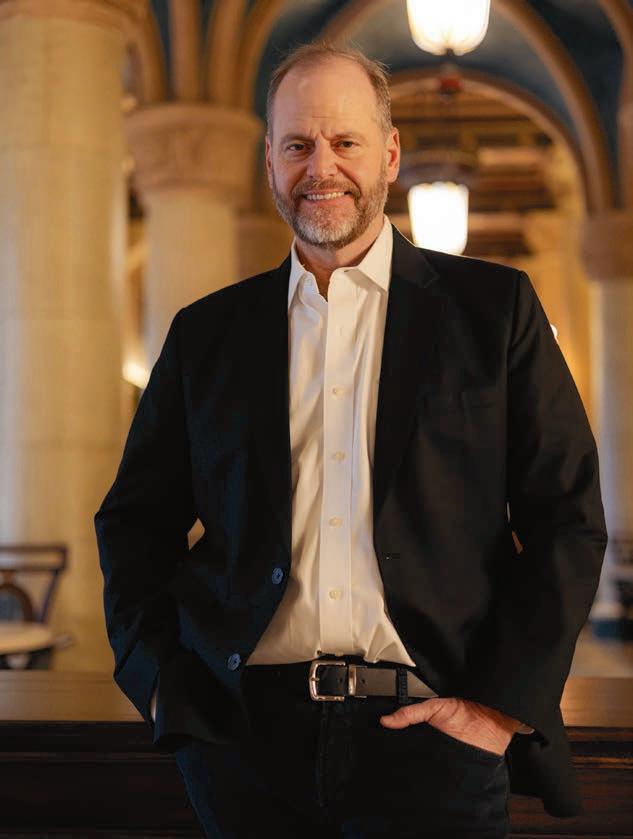
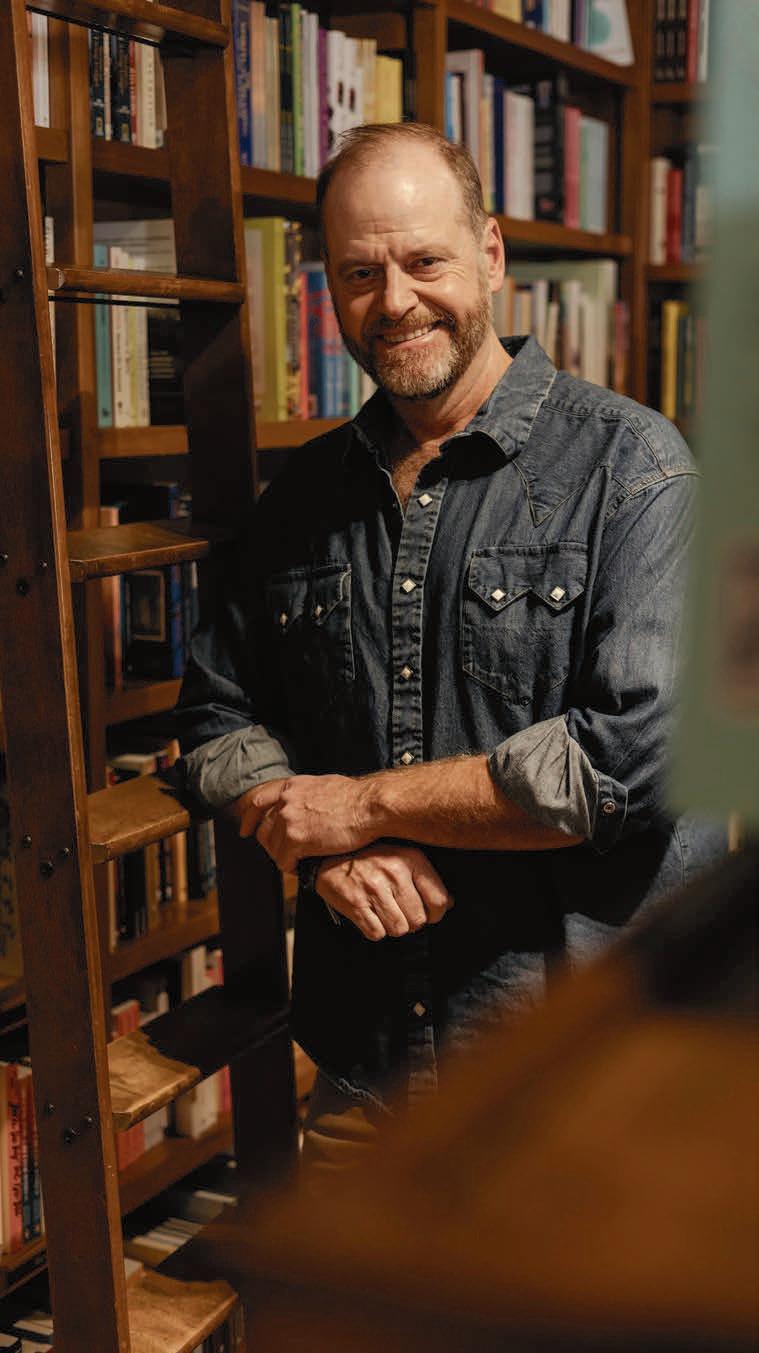
Seasoned Miami reporter Forrest Jones spins his late 1990s years covering Venezuela into the gripping (and prescient) geopolitical thriller, The Placebo Agenda.
BY SHAWN MACOMBER
iIN THE MID-1990s, Forrest Jones moved to Venezuela to teach English and hone his Spanish. “Things were good, but I wanted more from my time abroad,” he tells AQUA Miami. And boy did he ever get it: After cold calling an Englishlanguage daily newspaper called The Daily Journal, he landed a primo gig as International Editor, “letting expats across the country know what was going on around the world.” And this was how one afternoon in 1997, Jones found himself seated across from a long-shot presidential candidate detailing what he would deliver “to a population that had grown weary of the economic fallout from a banking crisis a couple of years earlier.”
His host—one Hugo Chavez—would win a shocking electoral victory on Dec. 6, 1998.

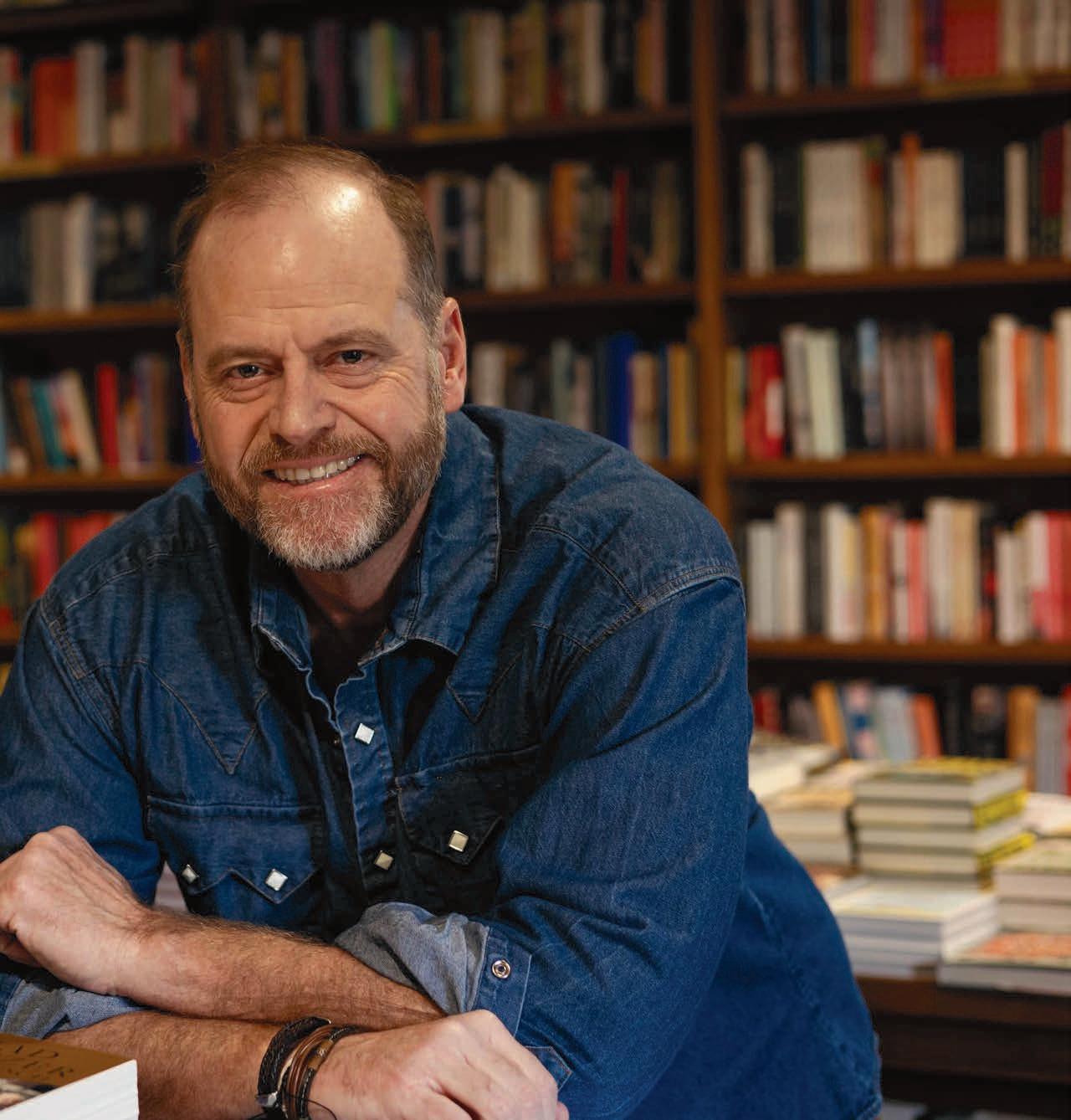
Jones continued to work as a reporter for the next few years in Chile and Colombia, before returning to the United States one month before the Sept. 11, 2001, terrorist attacks. He earned his MBA in International Business from the Thunderbird School of Global Management. (“Though grinding through debits, credits and financial engineering on Excel sheets was new,” he says, “coursework on the IMF and political players was not.”) Eventually, he landed at Latin Trade magazine in Coral Gables. To scratch an increasingly insistent itch to write fiction, he also joined a writing group at FIU run by the award-winning author John Dufresne.
The camaraderie and craft paid off. Suddenly, the many seemingly disparate strands of his professional life and personal passions wove together, and Jones’ debut novel—a pulse-pounding, keep-youguessing-till-the-final-page geopolitical thriller, The Placebo Agenda—took form.
“The idea came from a news item I saw in which a U.S. diplomat in Bolivia asked a Fulbright Scholar and Peace Corps volunteers to keep tabs on Venezuelans and
Cubans in the country, which violated U.S. policy,” Jones explains. “I won’t give it away, but things are happening in real life that reflect what went on in my book—such as major powers quietly maneuvering around Venezuela’s instability and trying to turn that chaos to their advantage.” Almost spooky prescient and timely, no?
The protagonist—a Miami reporter named Street Brewer who takes on powerful corporate and political interests armed with little more than his wits and an old school newspaperman’s tenacity—is, as you will see, at least in part born of the foundational maxim write what you know.
So, what did Jones learn about Venezuela during his time there? Well, first and foremost, Venezuela is extraordinarily rich in resources—both natural and human.
“Most people know [Venezuela] has oil, but few realize it holds the largest proven reserves on earth—more than any other country,” he explains. “Much of it is heavy crude, but for years it flowed to U.S. refineries designed to handle it.” Beyond oil, there are
vast reserves of not only natural gas, but also gold, copper, nickel, zinc, iron ore, bauxite, diamonds, coal, forests as well as immense rivers capable of generating enormous hydroelectric power. “Of course, there’s also the famous Miss Venezuela contestants and a string of top-tier baseball players,” Jones adds.
And while crime, corruption, and poverty remain persistent, real problems— alongside “the centuries of very strong presidents, caudillos, a few dictators and Simón Bolivar, the man who liberated Venezuela, Colombia, Ecuador, and Peru from Spain, then declared himself president for life,” Jones notes—the people are an amazing untapped resource in their own right. “What most people don’t know is how resourceful the Venezuelan people can be,” Jones says. “I worked with them for almost four years. Their ingenuity and problemsolving capacities are second to none. They are extremely tech-savvy and clever. In the face of crisis, they remain calm. In the face of opportunity, they find new and innovative ways to seize it. They are open, warm, and inviting. I’m looking forward to going back one day for a long visit.”
Jones will never forget that day. Chávez was living in a nice apartment with several bedrooms and a balcony with a decent view just outside of Caracas. An assistant showed Jones in, Chavez arrived soon after. The two men shook hands and got down to business.
“I was kind of new at the newspaper,” Jones says. “While I was learning journalism and the art of interviewing someone important and drilling for the truth behind every word, he was learning governance and the art of politics, the art of spinning every word for his agenda…I remember him during the campaign as a firebrand at times, but not mentally unstable or anything like that, while I was in Venezuela. Everyone remembers his bombastic antics at the U.N. General Assembly and his unnerving comments and actions years later, but he was very friendly that day. His daughter
came in afterwards and gave him a big hug.”
In normal times, Chavez would likely not have stood a chance. But 1998 was perfect storm territory. “Basically, the two established political parties at the time, Copei and Acción Democrática, were very unpopular due to economic mismanagement and a corruption case behind former President Carlos Andrés Pérez, who Chávez sought to oust in a coup five years earlier,” Jones says. “Irene Saez, a former Miss Universe, led in the polls. Though she aligned with Copei during her race to Miraflores, she maintained her position as an outsider. Henrique Salas Römer, also an outsider, would be the one to challenge Chávez from his own homegrown political organization, Proyecto Carabobo. Chávez launched his own political party— the Movement of the Fifth Republic—and branded himself as the quintessential
outsider, the champion of the poor and crusader against corruption and savage neoliberalism.” Jones asked Chavez how, in a lineup of outsider candidates, what could he and only he deliver to the people? “I’ll never forget his answer: un país distinto,” Jones says. “A completely different country.”
Chavez even got comfortable enough with Jones—despite their very different economic and political philosophies—to discuss his failed coup.
“He pulled out a map and told me what went down that night in a much softer voice than his usual tone,” Jones recalls. “The president was flying back into Venezuela from Switzerland. His men were in position, but a leak foiled the plot. I’m from the U.S., I hold an M.B.A., and I espouse neoliberal economic policies. But that day, I asked about a coup attempt from the man who led it. He was sitting right next to me, in his home, telling me what went down on that fateful night. That’s a memory I’ll take with me forever.”
The economic and political turmoil of the last decade didn’t surprise Jones. “Chávez knew how to play the game at first,” Jones says. “My bureau chief at the time caught him meeting secretly with Wall Street bondholders to assure them he would pay Venezuela’s debt just after he was elected. But eventually, he started going downhill. Maduro took the country’s reins and amped up extrajudicial jailings and disastrous economic policies. And documented stories of the country acting as a springboard for drug smugglers go back for years.”
One thing that did surprise Jones?
The recent capture of Maduro by U.S. military forces. “While he won’t be missed, what’s next?” he says. “Now that the world is focusing on Iran, will Maduro’s team continue running the show? There are still lots of questions out there.”
For Jones, what the future holds for Venezuela and its expat community here and elsewhere all comes down to what lessons are taken from the past. For example, when Jones tells Venezuelan expats he lived incountry from 1995 to early 1999, they always say he was there during the good years.
“They were not good times at all, though,” he says. “It was the biggest Black Swan
event I’ve ever seen. Chavismo is arguably the product of reckless capitalism. In 1994, Banco Latino collapsed after reckless lending amid weak oversight, sparking a banking crisis. The country was then forced to go to the International Monetary Fund (IMF) for assistance, and the multilateral lending institution bailed out the country in exchange for austerity measures needed to right the economy. As a result of letting the currency float and other measures, inflation shot up and the nation suffered.
“When I lived there in 1996, I was earning local currency—and very little of it—when inflation hit 103 percent,” he continues. “I felt the pain firsthand. By 1997, economic indicators pointed to a country on the mend, but by 1998, the Asian financial crisis sent global crude prices tumbling, with a Venezuelan barrel dipping to a paltry $8 a barrel at one point. By then, the people had had enough of feeling all the effects of recessions but none of the fruits of expansion. They had enough of crime, enough of corruption and overwhelmingly voted in Chávez, who ultimately sent the country careening in the wrong direction. The lesson here is a return to pre-1998 Venezuela is not the way to go. A new framework that doesn’t rely on a superstrong president might be in order. Setting up new cities outside of Caracas, developing non-oil sectors like manufacturing followed by services and technology, should be under review as well I don’t know. I am not an economist. I do know that dreaming of a past that never existed may doom the country to repeat one that did.”
As for Jones, he’s moving forward as well: He just finished my second novel, Uncovered.
“It features my same protagonist from The Placebo Agenda, Street Brewer, who travels to a land where I also lived—Saudi Arabia,” he says. “I worked for Saudi Aramco as a writer/editor in the environmental protection unit from 2015 to 2019. In my new novel, Street must track down a renegade Saudi prince who’s launching a string of cyberattacks against the U.S.” Never a dull moment in the world of fictional intrigue.
For more information, visit contentbyforrest.com.

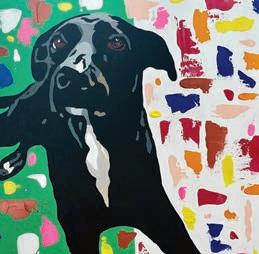
By finding success on her own exuberant and colorful terms, Miami artist Courtney Einhorn is making her city and world a more beautiful place.

BY SHAWN MACOMBER
FOR AS LONG as she can remember, Courtney Einhorn has loved art. It was her favorite subject in school—Romero Britto even came to her elementary class to talk about his artistic journey, a visit that left a lasting impression—and she counts herself lucky to have been exposed to other working artists early on.
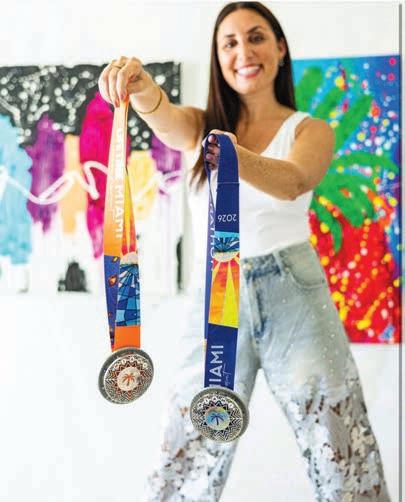
“I remember visiting New York City as a kid and being completely mesmerized by street artists’ drawing,” she tells AQUA Miami. “I could have stood there all day watching them work.” Einhorn still has the letter an art teacher wrote to her praising her talent, encouraging her to apply to a magnet art program, and suggesting that Einhorn might one day be a professional artist. “It’s pretty amazing,” Einhorn—whose whimsical, imaginative work as a painter, muralist, portraitist, and designer of the 2026 Miami Marathon medals and ribbons has garnered coverage from NBC, CBS, E! Bravo, and more—says, “to see that prediction come full circle.”
Yet it was not a straight line from there to here: “Although I always created art for fun and often gave pieces to friends and family, the actual career shift happened in 2013,” Einhorn explains. “At the time, I was working as a speech-language pathologist
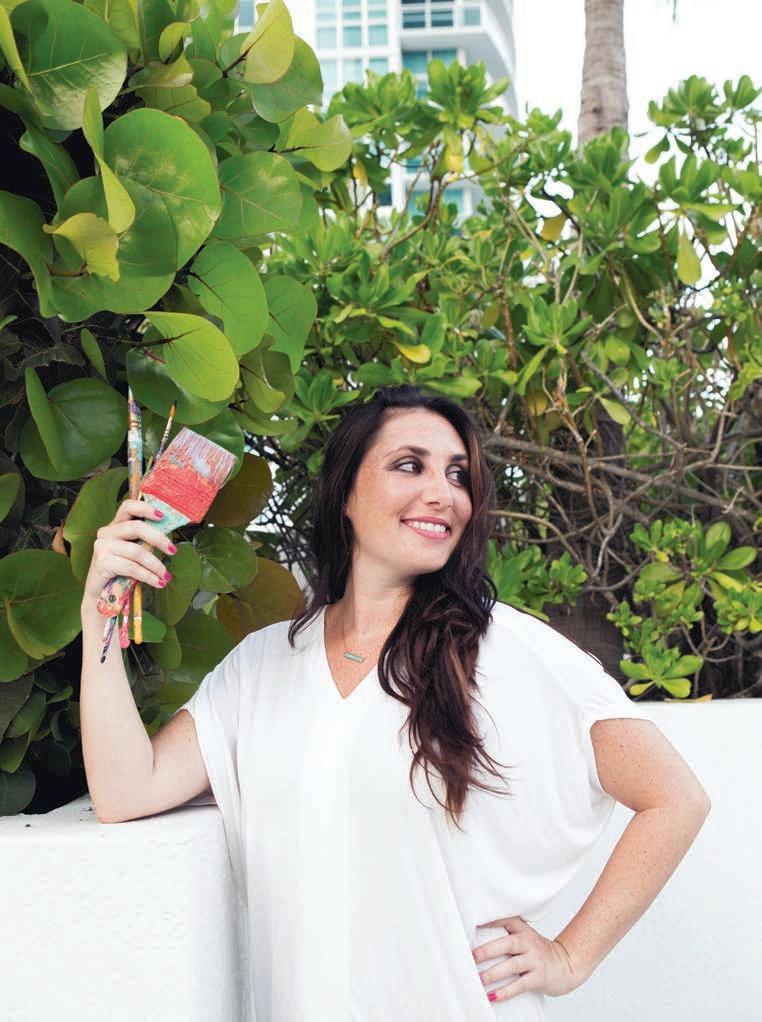
and had put art aside. I ended up leaving my job without another plan and during that time I started painting once again. It quickly became clear that this was what I truly wanted to pursue full-time.”
One look at Einhorn’s work will tell you she definitely made the right choice— both for her own artist’s soul and the communities she chronicles.
You have such a unique, distinctive style across mediums. How did it evolve?
And when Medwin speaks of scars through experimentation and curiosity. I started out creating abstract art and then added in figurative pieces as well. I’ve always loved incorporating texture and unexpected
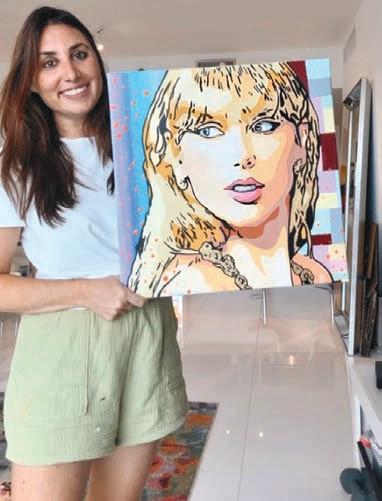
materials, so my process has been a lot of trying things, seeing what resonates, and building from there. Over the years, I’ve often been told that artists should stick to one signature style; that it’s the formula for becoming “successful.” But I’ve naturally gone in the opposite direction. I have so many ideas and creative visions that it feels limiting to confine myself to just one look or approach. My brain is always jumping to different ideas, and I’ve learned to embrace that instead of trying to narrow it down. While the styles may shift, the one constant in my work is vibrant color. I’m always drawn to bold, joyful palettes, and I love creating pieces that make people feel happy. In a way, that feeling of joy is my real signature style.
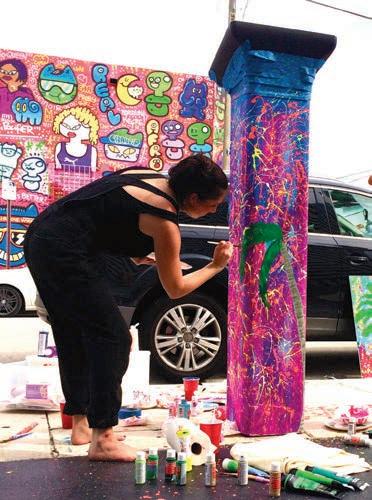
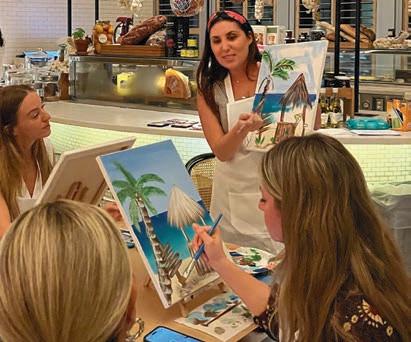
The Miami art scene is vibrant these days. Are you happy to be here?
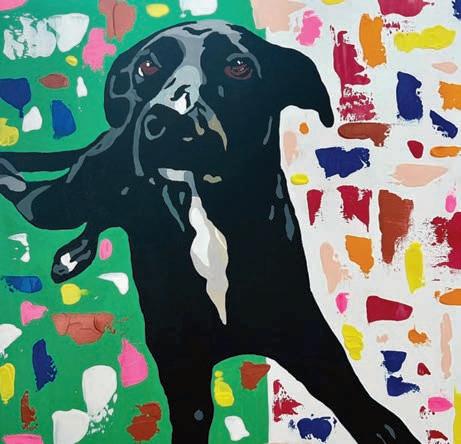
Absolutely! Miami’s energy plays a huge role in my artwork. The city’s vibrancy and boldness naturally show up in my pieces— the colors and the movement all reflect the city itself. Miami isn’t just vibrant; it truly embraces art in every form. Whether I’m exhibiting at a weekend art festival, painting a storefront mural, doing a live painting at a major event, or someone commissioning a pet portrait, people really gravitate toward creativity here.
I also love seeing it firsthand through the paint parties I host. People often arrive saying they “can’t even draw a stick figure.” By the end of the class, they’re surprised at what they’ve created. That kind of enthusiasm, both for making and experiencing art, is what makes Miami so inspiring.
You do seem to have a lot of momentum. Are you just going with the flow or do you have a planned set of goals?
Honestly, it’s a bit of both. I have goals and projects I’m actively working toward, but I also look forward to opportunities that come up unexpectedly. I am a go-getter and I really hustle everyday! I also feel incredibly lucky that doors keep opening. Often, I’ll finish a major project and
open my email the next morning to find multiple inquiries from people interested in collaborating or commissioning a piece. I genuinely look forward to opening up my emails and seeing what pops up each day. For me, momentum comes from staying curious, committed, and consistent, not just in creating, but in sharing and promoting my work. It’s a balance between planning and taking risks.
Tell me about the artwork you created for the 2026 Miami Marathon medals.
My designs appeared on 18,500 medals and ribbons, which was truly a once-in-alifetime experience. I wanted the ribbon to feel unmistakably Miami: vibrant and full of energy. Each ribbon features multiple paintings, with each one representing something runners experience along the course: the rising sun over the MacArthur Causeway, the palm trees lining Ocean Drive, the skyline and buildings throughout Downtown, and the sailboats passing through Coconut Grove.
Miami is colorful, bold, and full of life, and I wanted the ribbon to capture that spirit. After the race, so many runners reached out to thank me, telling me it was the favorite medal they had ever received. That made me feel incredible! I hope the
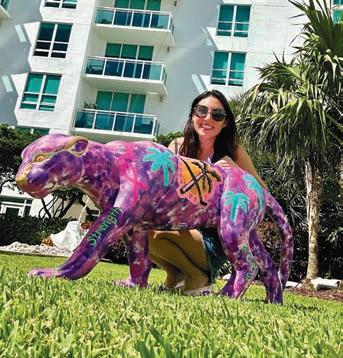

runners will always feel a sense of pride and accomplishment when they look at the medal; a celebration of all the hard work, dedication, and joy that goes into crossing that finish line.
For more information or to commission a piece, visit @courtneyeinhorn on Instagram





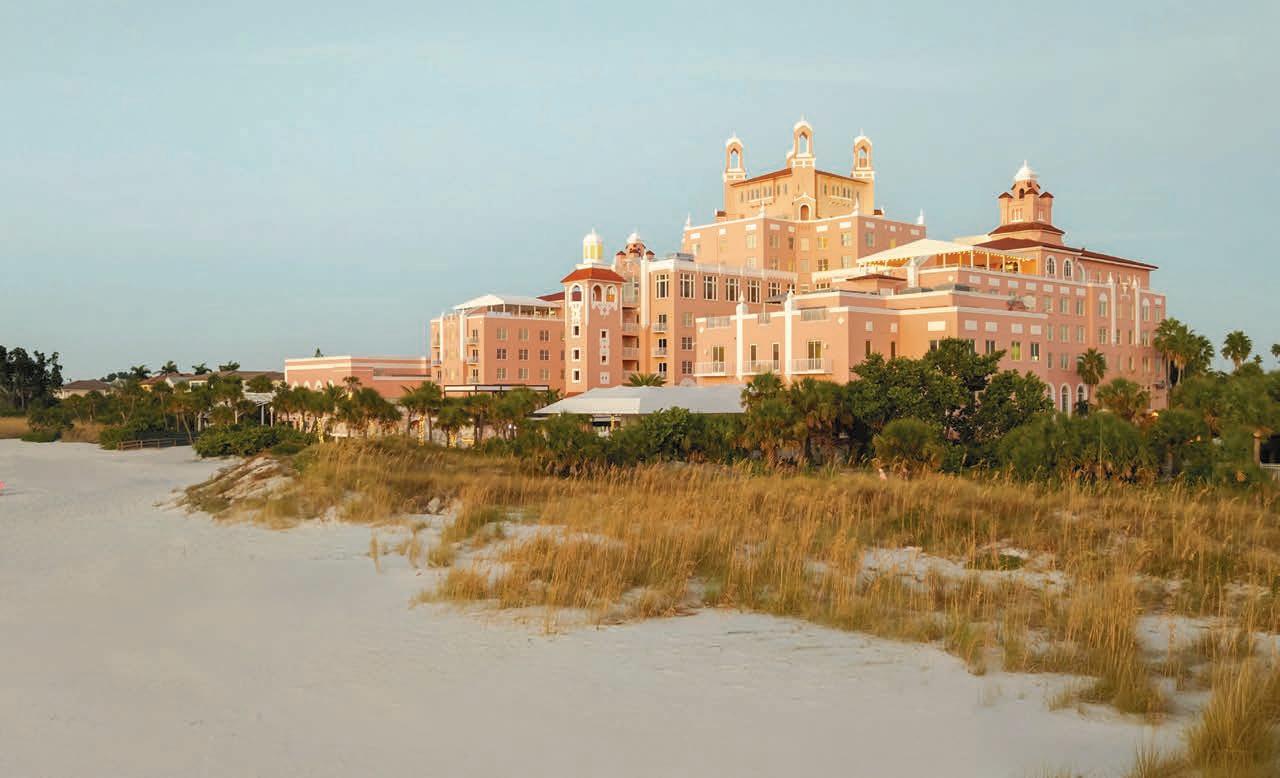
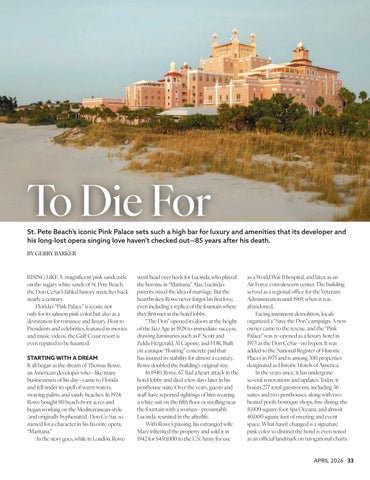
St. Pete Beach’s iconic Pink Palace sets such a high bar for luxury and amenities that its developer and his long-lost opera singing love haven’t checked out—85 years after his death.
BY GERRY BARKER
RISING LIKE A magnificent pink sandcastle on the sugary white sands of St. Pete Beach, the Don CeSar’s fabled history stretches back nearly a century.
Florida’s “Pink Palace” is iconic not only for its salmon pink color but also as a destination for romance and luxury. Host to Presidents and celebrities, featured in movies and music videos, the Gulf Coast resort is even reputed to be haunted.
It all began as the dream of Thomas Rowe, an American developer who—like many businessmen of his day—came to Florida and fell under its spell of warm waters, swaying palms, and sandy beaches. In 1924, Rowe bought 80 beach-front acres and began working on the Mediterranean-style (and originally hyphenated) Don Ce-Sar, so named for a character in his favorite opera, “Maritana.”
As the story goes, while in London, Rowe
went head over heels for Lucinda, who played the heroine in “Maritana.” Alas, Lucinda’s parents, nixed the idea of marriage. But the heartbroken Rowe never forgot his first love, even including a replica of the fountain where they first met in the hotel lobby.
“The Don” opened its doors at the height of the Jazz Age in 1928 to immediate success, drawing luminaries such as F. Scott and Zelda Fitzgerald, Al Capone, and FDR. Built on a unique “floating” concrete pad that has insured its stability for almost a century, Rowe doubled the building’s original size.
In 1940, Rowe, 67, had a heart attack in the hotel lobby and died a few days later in his penthouse suite. Over the years, guests and staff have reported sightings of him wearing a white suit on the fifth floor or strolling near the fountain with a woman—presumably Lucinda, reunited in the afterlife.
With Rowe’s passing, his estranged wife Mary inherited the property and sold it in 1942 for $450,000 to the U.S. Army for use
as a World War II hospital, and later, as an Air Force convalescent center. The building served as a regional office for the Veterans Administration until 1969, when it was abandoned.
Facing imminent demolition, locals organized a “Save the Don” campaign. A new owner came to the rescue, and the “Pink Palace” was re-opened as a luxury hotel in 1973 as the Don CeSar—no hypen. It was added to the National Register of Historic Places in 1975 and is among 300 properties designated as Historic Hotels of America.
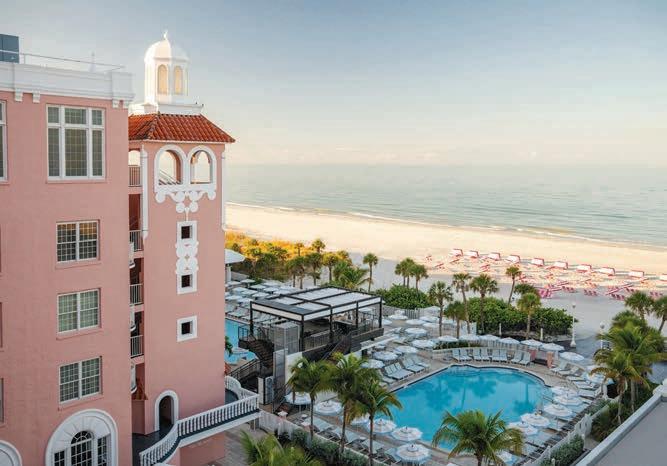
In the years since, it has undergone several renovations and updates. Today, it boasts 277 total guestrooms, including 36 suites and two penthouses, along with two heated pools, boutique shops, fine dining, the 11,000-square-foot Spa Oceana, and almost 40,000 square feet of meeting and event space. What hasn’t changed is a signature pink color so distinct the hotel is even noted as an official landmark on navigational charts.
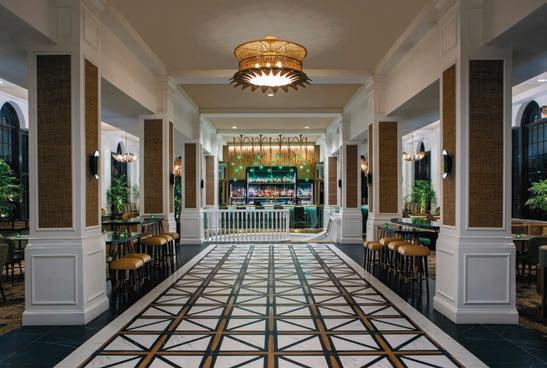
• The Don CeSar is a cashless hotel and only accepts credit card payments.
• You operate the elevators by selecting your floor on a digital panel, where you’ll be instructed what car to take. Inside the cars, there are no buttons to push.
• Pets are welcome. There is a $75 per night fee, and a maximum of two pets per room on first floor rooms only.
Finally, if during your stay, you do see a ghostly man in a white suit, thank him for sharing his dream of a Pink Palace with the rest of us. His hotel has never looked better…or more pink.

Mother Nature dealt the hotel a staggering blow in the fall of 2024 via back-to-back hurricanes Helene and Milton, forcing it to close for six months to repair damage caused by high winds and a six-foot storm surge. It has since not only made a full recovery, but also continues to announce new additions, including the 7,400-square-foot Royal Ballroom, unveiled in late February that offers stunning views of the Gulf.
“The spectacular views make this space one of a kind,” Don CeSar General Manager Barbara Readey says. “Kicking off 2026 with the unveiling of our renovated public spaces and the new Royal Ballroom marks a defining moment for The Don CeSar.”
Also included in the latest update was a refresh of dining venues, boutiques, the pools, and outdoor areas.
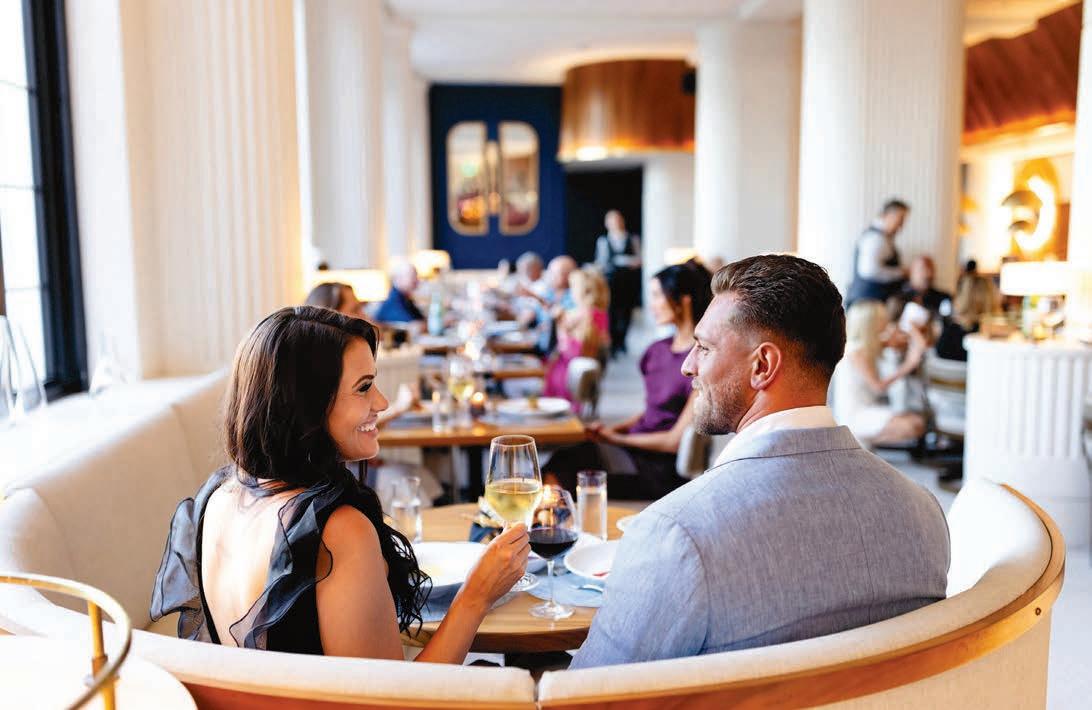
Near the hotel’s grand entrance is Maritana, named for Rowe’s favorite opera, their fine dining restaurant “where culinary artistry meets theatrical elegance.” The menu
is divided into three “acts,” and features Spanish-inspired dishes like Blue Crab, a delicate combination of roasted lemon puree, fresh pasta and crab froth, and Composed Oysters, bringing together caviar, champagne gel, and roasted lemon puree, beautifully presented.
For more casual fare, there’s Society Table, open for breakfast, lunch, and dinner and offering both indoor and outdoor seating. The hotel’s Lobby Bar promises “the tropics of the 1920s,” a popular place to enjoy cocktails and live music, while the Rowe Bar caters to sports fans. Coming soon is the Rowe Pavilion, with outdoor seating, where you can choose to relax by a fire pit and take in the water views. Uncle Andy’s Market is their 1950s-style café and convenience shop with fun merchandise and with grab-and-go food.
The Spa Oceana features 16 private treatment rooms, a rooftop terrace, The Whisper Lounge for quiet meditation and his and her whirlpools and steam rooms. Or,
you could opt to grab a lounge chair by one of the pools or under a large white and pink umbrella on their private beach.
“A day at The Don CeSar often starts on our private stretch of St. Pete Beach or by the pool and ends with dinner at Maritana, where guests come specifically for Gulf-fresh seafood and our signature Wagyu tomahawk served in a dramatic, theatrical setting,” Don CeSar Area Director of Marketing Connie Marlow says. “Sunset cocktails at Rowe Bar, live music in the Lobby Bar, and restorative treatments at Spa Oceana round out the experience, creating the perfect itinerary for locals and visitors alike.”
Our room was stylishly decorated in “tropical contemporary,” characterizing the resort’s overall look and feel, with all the comforts of home—and then some. Overall, there’s a sign on a wall near one of the pools that sums it up nicely: “I Love This Moment.”
For more information, visit doncesar. com/the-don-cesar.

Probate is the court process that quietly consumes time, money, and privacy. Here’s how to ensure your family never has to endure it.
BY ALINA F. NUÑEZ, ESQ., ESTATE PLANNING AND PROBATE ATTORNEY
YOU HAVE BUILT a remarkable life. A business, perhaps, and a family you would do anything to protect. But many high-net-worth families in South Florida never think to ask: What happens to all of it when you are gone? If the answer involves probate court, your family is in for a difficult journey.
Probate is the legal process by which a court validates your will and supervises the distribution of your estate. On the surface, it sounds routine. In practice, it is an ordeal. For estates of meaningful size, probate can drag on for one to three years, sometimes longer. During that time, your family cannot access frozen assets, your home cannot be sold or transferred, and investment accounts sit locked while lawyers and courts work through mountains of paperwork.
And the costs? Attorney fees, executor fees, court costs, and appraisals can consume anywhere from three to eight percent of your gross estate value. On a $10 million estate, probate costs alone can reach $800,000—paid to courts and attorneys, not your family. Many families assume that having a will is enough. A will does not avoid probate; it simply provides instructions for what happens inside of it. Every asset solely titled in your name, every account without a named beneficiary, flows through probate court regardless of what your will says.
Beyond cost and delay, probate is devastatingly public. In Florida, probate records are open to anyone, meaning creditors, estranged relatives, and the
curious can examine exactly what you owned, who gets it, and how much it is worth. For families who value discretion, this alone is reason enough to act.
For those with blended families, young children, or parents requiring care, the risks compound. Courts may appoint guardians over minor children’s inheritances, dictating how and when funds are used, potentially overriding your own intentions. A parent’s estate can be tied up in proceedings just as an adult child faces the simultaneous cost of eldercare.
The good news is that probate is entirely preventable. A comprehensive estate plan built around a revocable living trust is the cornerstone of probate avoidance. Assets held in trust transfer directly to your beneficiaries upon death, bypassing the court system entirely. Equally important is ensuring all assets are properly titled and that beneficiary designations on retirement accounts, life insurance policies, and financial accounts are current and coordinated with your overall plan. Many estates unravel from outdated paperwork.
For families with minor children, a well-drafted trust allows you to specify exactly how and when assets are distributed, whether that means funding a college education, supporting a child with special needs, or ensuring a young heir does not receive a multimillion-dollar inheritance at 18. For those navigating the care of aging parents, the
right plan can integrate Medicaid considerations, healthcare directives, and durable powers of attorney to protect both generations.
Estate planning is one of the few areas in life where procrastination has a guaranteed price. Every day without a proper plan is a day your family’s financial security rests on the assumption that nothing will change. Markets shift. Health is unpredictable. Families evolve.
The families who emerge from loss with their wealth, relationships, and privacy intact are not those who had the most, they are those who planned ahead. Engaging a qualified estate planning attorney now, before a crisis forces your hand, is the single most powerful act of generosity you can offer the people you love most.
The best time to protect your family was yesterday. The second-best time is today.
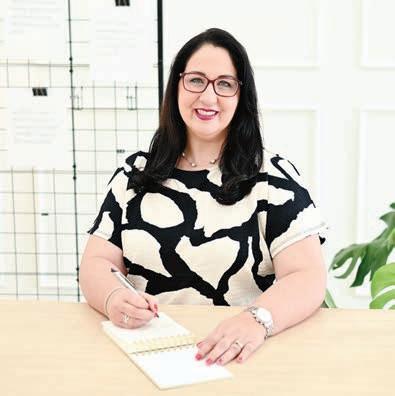
Alina F. Nuñez, Esq. is the principal attorney at Nunez Estate Law & Title, a Miami-based law firm devoted to helping families safeguard their wealth and smoothly transfer it to the next generation.
Schedule Your Consultation – “Protect your family today—your legacy depends on it” | 305-962-5929 | nunezlawfl.com

In this excerpt from Chilen Moya’s affecting, inspiring memoir, she reminds us that it takes courage to walk through doors of unexpected opportunity.
BY SHAWN MACOMBER
“I WROTE THIS book to honor the little girl I once was,” Chilen Moya tells AQUA Miami. “There came a point in my life when I understood that healing doesn’t mean forgetting. It means acknowledging what happened, making peace with it, and consciously choosing who you become. Writing this book was my way of doing that—not to relive the pain, but to give meaning to it.”
And I Was an Unwanted Child, But I Always Loved Myself is a powerful and beautifully crafted memoir—one that not only serves as a testimony to the Edgewater-based author’s strength but also carries a message of triumph over tribulation, resilience, and selfactualization that will no doubt touch, empower, and uplift many, many readers.
“I was aware that parts of my story might resonate, but my intention wasn’t to position myself as someone with answers,” Moya says. “It was simply to be honest…If anything, I hope readers feel less alone in their own experiences. I didn’t write this book to lead from the front; I wrote it to walk beside whoever finds themselves in these pages.

“What I hope readers take from it is permission—permission to feel what they’ve buried, permission to accept that some things, and some people, belong in the past, and permission to stop defining themselves by what happened to them,” she continues. “This book isn’t about blame or victimhood. It’s about self-recognition, resilience, and learning how to live fully in the present without being ruled by the past.”
AQUA Miami is pleased to share the following excerpt from I Was an Unwanted Child, But I Always Loved Myself, entitled “Game Changer.”
As I progressed in my career as a watch and jewelry consultant, professional jealousy began to surface. One colleague grew increasingly uncomfortable with the fact that I communicated fluently in two languages and consistently exceeded my goals. My manager, on the other hand, seemed threatened by my knowledge of complicated timepieces. Rather than address it directly, she began criticizing the length of my skirts, creating an uncomfortable work environment. Still, I kept my head down and focused on my work without missing a beat.
One afternoon, during a store event, corporate approved the hire of a model to walk through the mall showcasing our timeless pieces. To my surprise, the model was someone I had met before and shared an easy rapport with. As I selected pieces for her to wear, I jokingly suggested that she bring people into the store. She laughed and said she would, but to my astonishment, she actually returned with a gentleman and his girlfriend.
They were in a celebratory mood, perhaps a little tipsy. I greeted them warmly and offered water and coffee, which they gladly accepted. They admired several pieces, but the gentleman was especially intrigued by a traditional watch, one rich with history and craftsmanship. I seized the opportunity to share everything I had learned about its legacy. I encouraged him to try it on, with no pressure to buy.
He didn’t purchase the watch that day, but he did select a beautiful love necklace for his girlfriend. Before leaving, he handed me his business card. I asked if I could follow up to ensure they returned safely to Tennessee. He agreed.
The next day, I sent an email expressing how much I had enjoyed meeting them. He replied kindly, confirming they had arrived safely and mentioning they planned to return during their next visit to Miami.
A week later, I followed up again, this time with detailed information about the watch he had admired. I shared notable figures who had worn the model, including royalty, allowing him to see that he wouldn’t simply be purchasing a watch—he would be investing in a legacy.
its language, mastered its rhythm. Walking away meant stepping into uncertainty without guarantees.
That night, I replayed the conversation in my mind. Was I ready to leave behind what was familiar? Could I succeed in an industry I knew nothing about? Yet beneath the doubt, there was a quiet certainty, a feeling I had learned to trust over time. Every major shift in my life had begun this way: uncomfortable, unexpected, and slightly irrational.
I realized the opportunity wasn’t simply about a new job. It was an invitation to reimagine my future. For the first time in a long while, I felt stability and real growth existing together, not as distant goals but as something finally within reach. Sometimes courage isn’t loud; sometimes it appears as a small decision made quietly, choosing change despite uncertainty.
His confidence stirred something I hadn’t felt in a long time, a sense of being seen, heard, and understood. The opportunity promised autonomy, stability, and the chance to design a different future. After careful consideration, I gave my two weeks’ notice and prepared to begin again.

A few days later, he made the decision to purchase the $100,000 piece. After confirming he had received the watch along with an exclusive gift, he reached out again, not only to thank me, but to say how much he appreciated my approach. Then he asked if I would consider working for him. He was the head of one of the top underwriting organizations in the country.
Flattered but hesitant, I admitted I had no experience in the insurance industry. He responded without hesitation: “Selling me that watch is all the experience you need.”
His words stayed with me long after the conversation ended. For years, I had worked tirelessly to prove my value in environments that measured success narrowly, often overlooking dedication and intuition. Now, someone saw potential in me beyond the role I occupied. The idea of starting over felt both thrilling and terrifying. I had built expertise in one world, learned
My journey to Tennessee began on one of the coldest days I had ever experienced. Upon landing, I followed minimal instructions: pick up a rental car and drive forty minutes to the hotel. The foggy, dark roads tested my resolve. For a moment, uncertainty crept in, but I reminded myself that I had faced harsher conditions before, ice fishing in Alaska, freezing nights in Spain. Once again, I embraced courage. A dreary winter would not stop me now.
The next morning, I arrived early at headquarters, eager and determined. I had two weeks to absorb everything before returning to Florida to build my own book of business and meet ambitious goals.
The transition wasn’t seamless. The sharp contrast between Florida’s humidity and Tennessee’s winter overwhelmed my immune system, and I came down with a severe cold, cutting my training short. But setbacks had never defined me. Resilience had.
I returned to Florida with limited formal instruction but a clear conviction: I would make this work. That decision—to trust someone else’s belief in me and to take a risk—changed the trajectory of my life.
Sometimes opportunity doesn’t arrive wrapped in certainty. Sometimes it appears disguised as a conversation, a follow-up email, or a door you didn’t expect to open. What matters is the courage to step through it.
As I drove back to the airport at the end of my training, winter still hanging in the air, I understood something deeply: I was no longer running from discomfort. I was running toward a better future, the kind of stability no one else could give me—only I could build.
And this time, I did it with determination. I never once looked back.
Follow Chilen Moya on Instagram at @chiquitamoya.