new maritime transPort comPany is born
Antonio Luis Negrón – CyberNews

AN JUAN – With an investment of more than $20 million, International Public Terminal (IPT), began its operations dedicated to domestic and international cargo services in the port of San Juan.
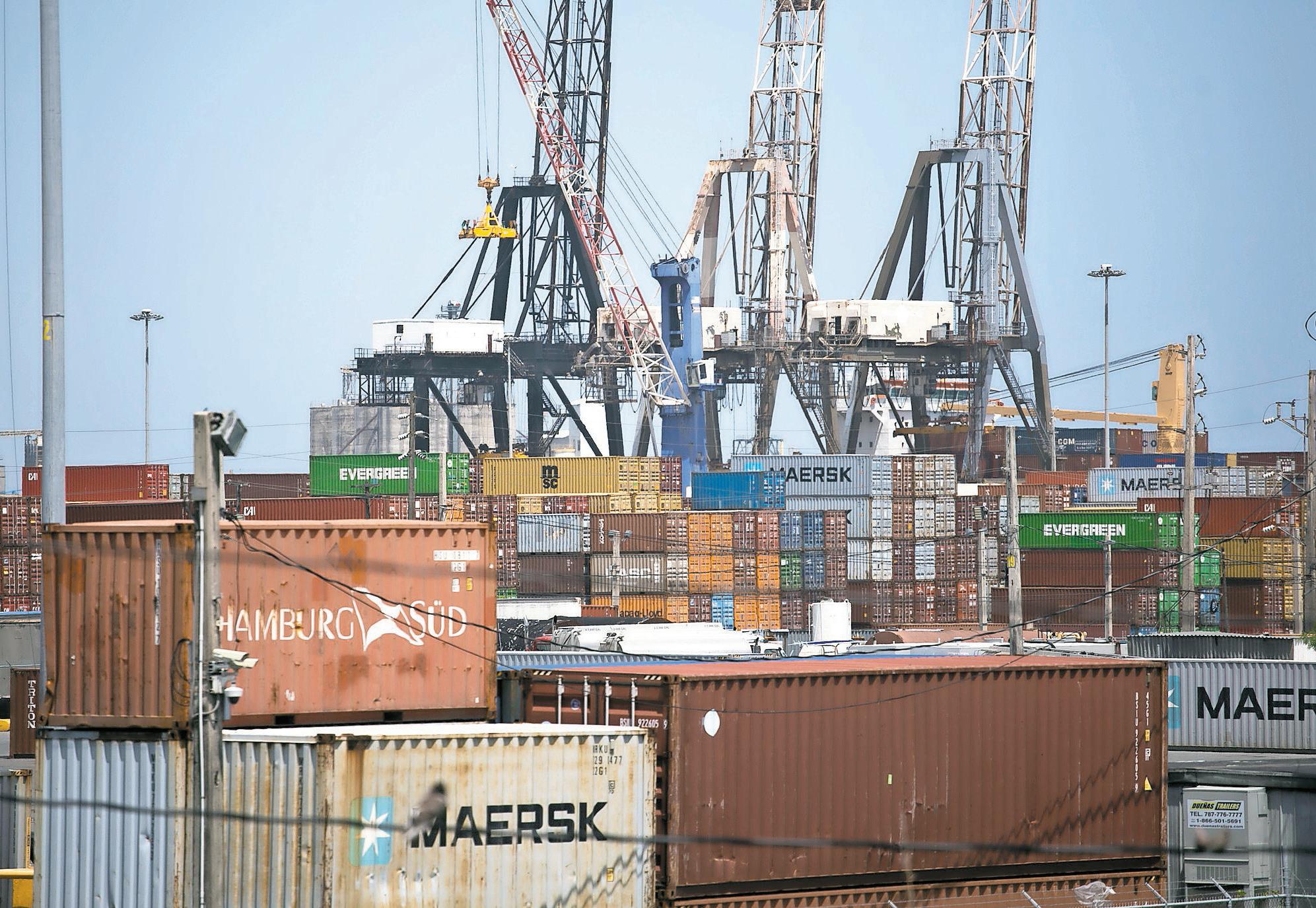
The operations of International Public Terminal at Puerto Rico’s main port is the result of an alliance between two Puerto Rican companies with vast experience in the shipping business: International Shipping Agency (Intership), and Priority RO-RO Services, Inc.
According to María Caraballo, president and CFO of Intership, the closing of the port of San Juan in the summer of 2021 was decisive in their search for options to that could contribute to the Puerto Rico, beyond just establishing a business.
“As Puerto Rican companies, we understood that it [the closing of the port] cannot happen again causing all of us to be at risk and suffering the uncertainty of not having supplies of food, fuel, or medical equipment. We got to work immediately to achieve what we announced today,” Caraballo said in written statement published this week.

Wednesday, December 21-27, 2022 // no. 190 www.theweeklyjournal.com Puerto Rico and the Caribbean GO TO PAGE 4 Parallel 18’s thriving start-uPs P6/7 growing fear of a recession in the u.s. P8 inflation reduction act to Promote friendly future P10 last minute gifts for those who have it all P15
The new operations will put an end to the monopoly that had existed in the port of San Juan
S































































2 The Weekly Journal > Wednesday, December 21, 2022 >
a week in review
A
Iconic chocolate maker Ferrero has open shop in Plaza Las Américas taking advantage of the Christmas season. Ferrero Chocolatier provides the consumer an experience for the whole family, in addition to selling its several brands of the ideal chocolate for Christmas gift details. “It is the first time in Puerto Rico that we have recreated an Italianstyle store with a modern touch, where we can present all the variety of products and also bring joy to all the families that visit us,” said Betsy Rosario, marketing manager for Ferrero in Puerto Rico.
Ferrero Chocolatier is located on the second level of Plaza Las Américas, in the corridor between Macy’s and JC Penney.

Again residents and visitors on the island will have the chance to see the iconic “Dick Clark’s New Year’s Rockin’ Eve” at the Puerto Rico Convention Center and Distrito T-Mobile. If you missed last year’s event, don’t miss it again! Ryan Seacrest will be back in Puerto Rico to ring in the New Year 2023, while ABC’s and Dick Clark Productions’ announcement places the island on the global stage once again. 2022 marked a historic moment, with the first-ever Spanish language countdown to welcome the year. Puerto Rican stars such as Roselyn Sanchez and Farruko will join Seacrest for 2023’s countdown, with another Spanish-language program.

Powered BY El Vocero de Puerto Rico, 1064 Ave Ponce de León 2nd floor San Juan, PR
Postal Address: PO Box 15074, San Juan, PR 00902
DocumeNtAry highlightiNg Puerto rico’s rum ProDuctioN wiNs emmy

At the Suncoast Regional Emmy Awards, the documentary “Sounds of the Rum Capital”, produced by the Rums of Puerto Rico Program (ROPR), part of the Department of Economic Development and Commerce won the “Documentary Topical” award. “Sounds of the Rum Capital”, a musical celebration of two of Puerto Rico’s greatest strengths —music and rum— was directed by renowned Puerto Rican filmmaker Arí Maniel Cruz. “Sounds of the Rum Capital” offers a tour of the process of making a world-class rum, through images of the 10 distilleries on the island, accompanied by songs from some of the most iconic figures of Puerto Rican music.
Phone: 787-622-2300, 787-721-2300 Customer Service: 787-622-7480
/ Wednesday, December 21, 2022 3
Human Resources Director
VP
Editorial Content
Multi-Platform Graphic and Technology Director Héctor
Vázquez
Multi-Plataform Digital Director Rafelli González Cotto
President Salvador Hasbún shasbun@elvocero.com Vp of Marketing and Business Operations Michelle Pérez Miperez@elvocero.com VP of Accounting Félix A. Rosa frosa@elvocero.com VP of Production Eligio Dekony edekony@elvocero.com
Arlene Rolón, PHR arolon@elvocero.com
of
Juan Miguel Muñiz Guzmán jmuniz@elvocero.com
L.
hvazquez@elvocero.com
rgonzalez@elvocero.com
chocolAty christmAs
“Dick clArk’s New yeAr’s rockiN’ eve” couNtDowN iN Puerto rico
Néstor González, Jr., president of Priority RO-RO, a company dedicated to maritime transport and cargo movement services between the Dominican Republic, Puerto Rico and the Virgin Islands, highlighted that the opening of the new terminal represents a new option at the docks with a “tailormade services to meet the needs of each client, a service that currently does not exists in Puerto Rico. IPT will openly provide stevedoring services to cargo liners in need of stevedoring services, regardless of their volume or frequency.”
For his part, Governor Pedro Pierluisi highlighted the importance of this new business alliance because Puerto Rico, as a Caribbean island, imports a significant amount of the products and goods it consumes. “It is essential for our people to have an efficient, sustainable port system with diverse options to guarantee that we meet the needs of the Puerto Rican people,” he said.
“Today we celebrate this inauguration that provides an additional option for receiving international cargo through the San Juan Bay, thus eliminating the possibility of paralyzing pier operations, as it happened last year, should a dock be closed. This is great news for Puerto Rico as we
continue to make progress in creating favorable conditions for doing business in the island, expanding opportunities to obtain the services that
our companies need, and helping our economy grow,” Pierluisi added.
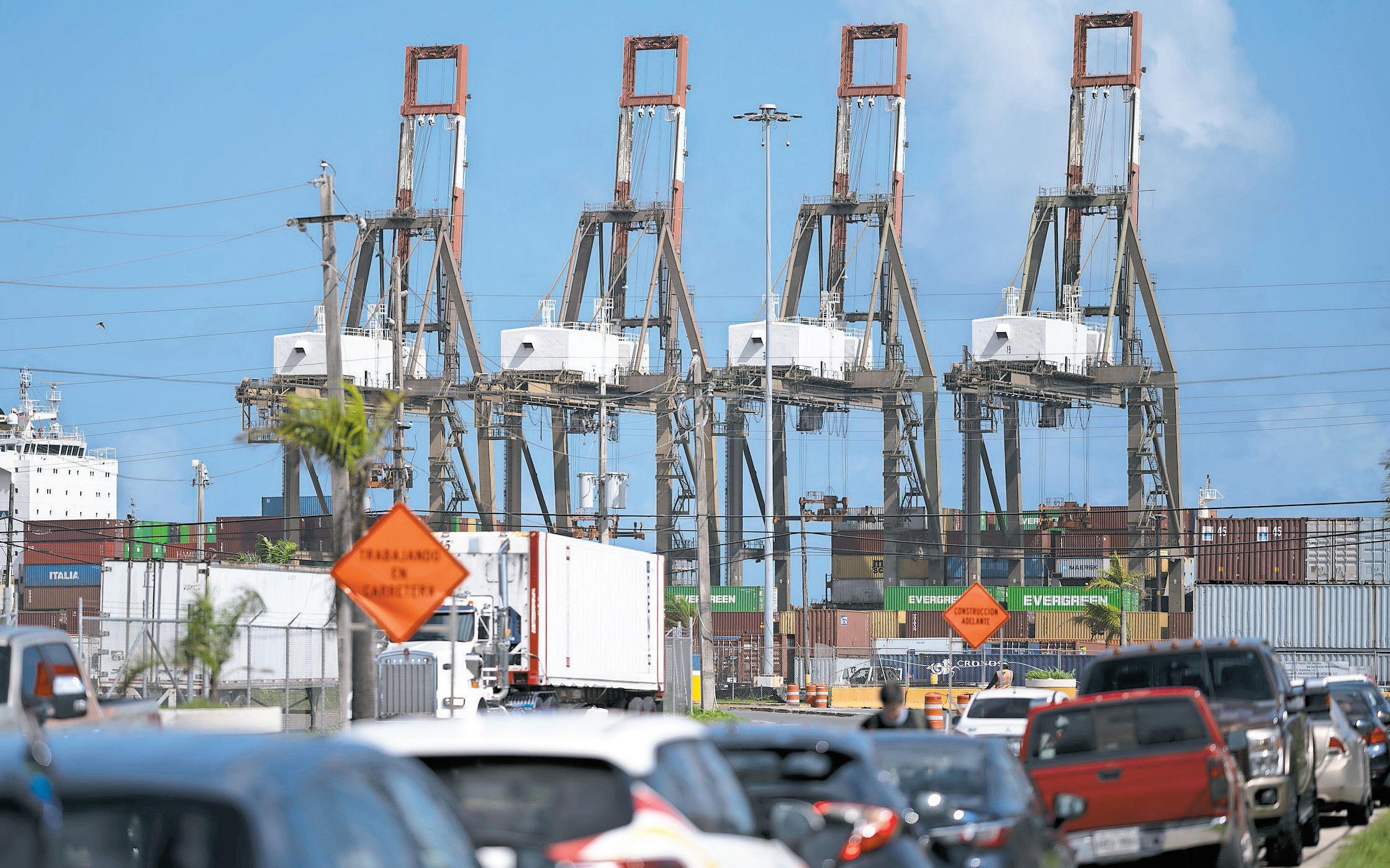
The new terminal will offer services on piers M, N and O of the San Juan Bay, the facilities with the deepest draft in the area, which facilitate the arrival of ships, and has ample storage space in Puerto Rico’s epicenter of economic traffic.
/ Wednesday, December 21, 2022 4
>Archive / The Weekly Journal CONTINUED FROM PAGE 1
As Puerto Rican companies, we understood that it [the closing of the port] cannot happen again causing all of us to be at risk and suffering the uncertainty of not having supplies of food, fuel, or medical equipment.
María Caraballo, president and CFO of International Shipping Agency
>Josian E. Bruno Gómez / The Weekly Journal
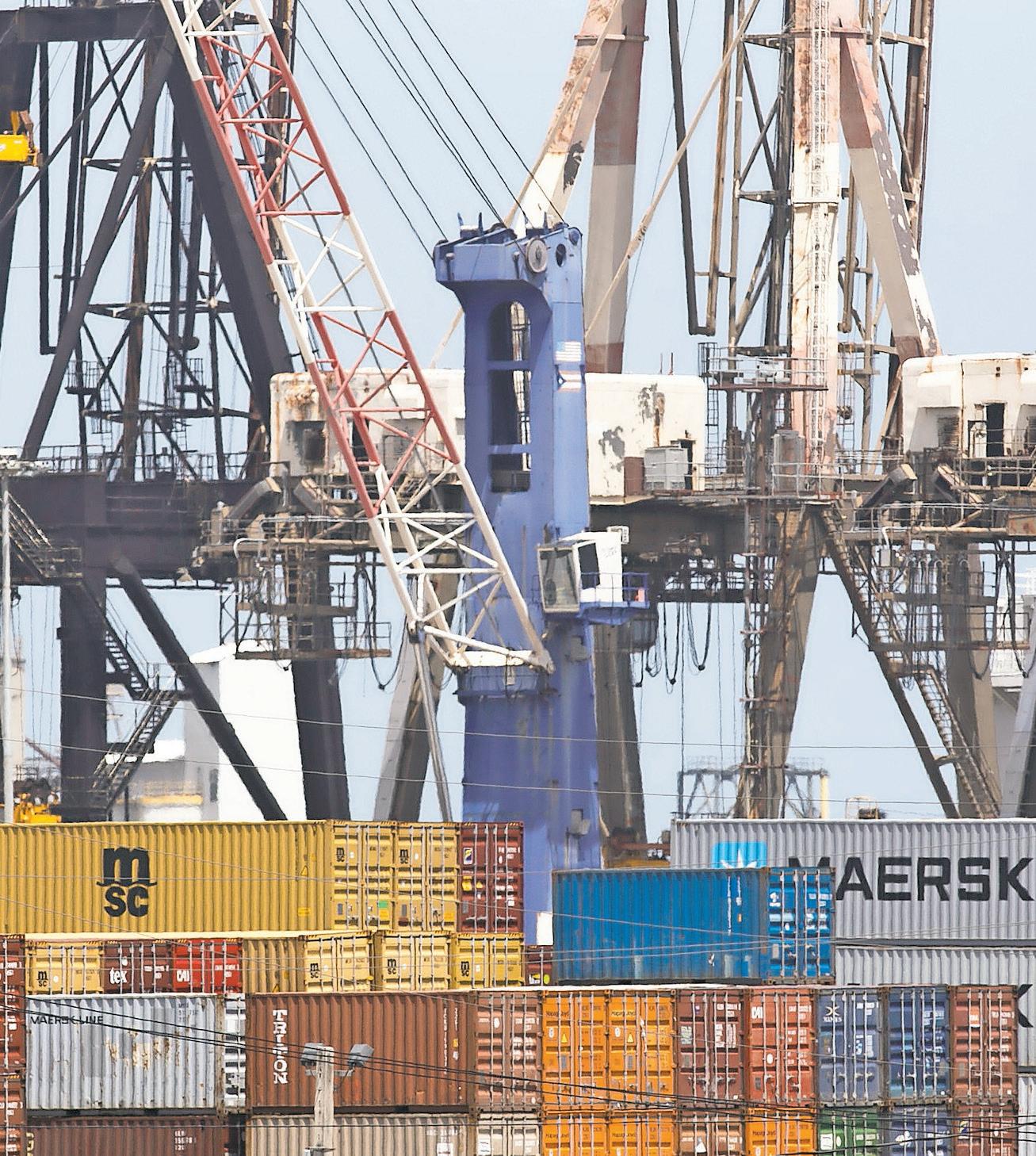
The new operation, which will create 500 direct and indirect jobs, has two PACECO gantry cranes and one Liebherr mobile crane, as well as a 40-acre area lot for storage of containers, cars and other cargo.
Aside from the estimated 500 jobs to be created, a total of $20 million were invested for improvements to the terminal and the purchase of new equipment. In addition, the administration approved a tax exemption decree at a four percent tax rate, with a 50% exemption on patents and 75% exemption in property taxes.
The announcement of International Public Terminal starting its operations puts an end to the monopoly that had existed in the port of San Juan, thus preventing the interruption on the arrival and unloading of cargo, as it happened in 2021 during the labor-management conflict between the only company then operating the docks and the workers’ union.
Last year, Luis Ayala Colón Company, the exclusive operator of the port of San Juan and the International Longshoremen Association (ILA) entered into a labormanagement conflict that kept the San Juan docks closed for several months.

In fact,
The monopoly in cargo handling at the San Juan docks by the Luis Ayala Colón Company will effectively come to an end on January 2023 when IPT formally starts operating piers M, N and O.
The companies have decided to invest their 100% Puerto Rican and family based capital, in supporting a vital industry for Puerto Rico’s economy. The island imports more than 80 percent
of the goods it consumes in all areas; from food to vehicles.
“We are very pleased to welcome International Public Terminal (IPT) to the San Juan Bay as an additional marine stevedoring company. Completing this great feat is the granting by the Puerto Rico Ports Authority
This inauguration provides an additional option for receiving international cargo through the San Juan Bay, thus eliminating the possibility of paralyzing pier operations.
Pedro Pierluisi, Governor of Puerto Rico
of a 20-year lease contract with IPT for stevedoring services,” announced Joel Pizza Batiz, the agency’s executive director.
A Monopoly Comes To An End
The monopoly in cargo handling at the San Juan docks by the Luis Ayala Colón Company will effectively come to an end on January 2023 when IPT formally starts operating piers M, N and O.
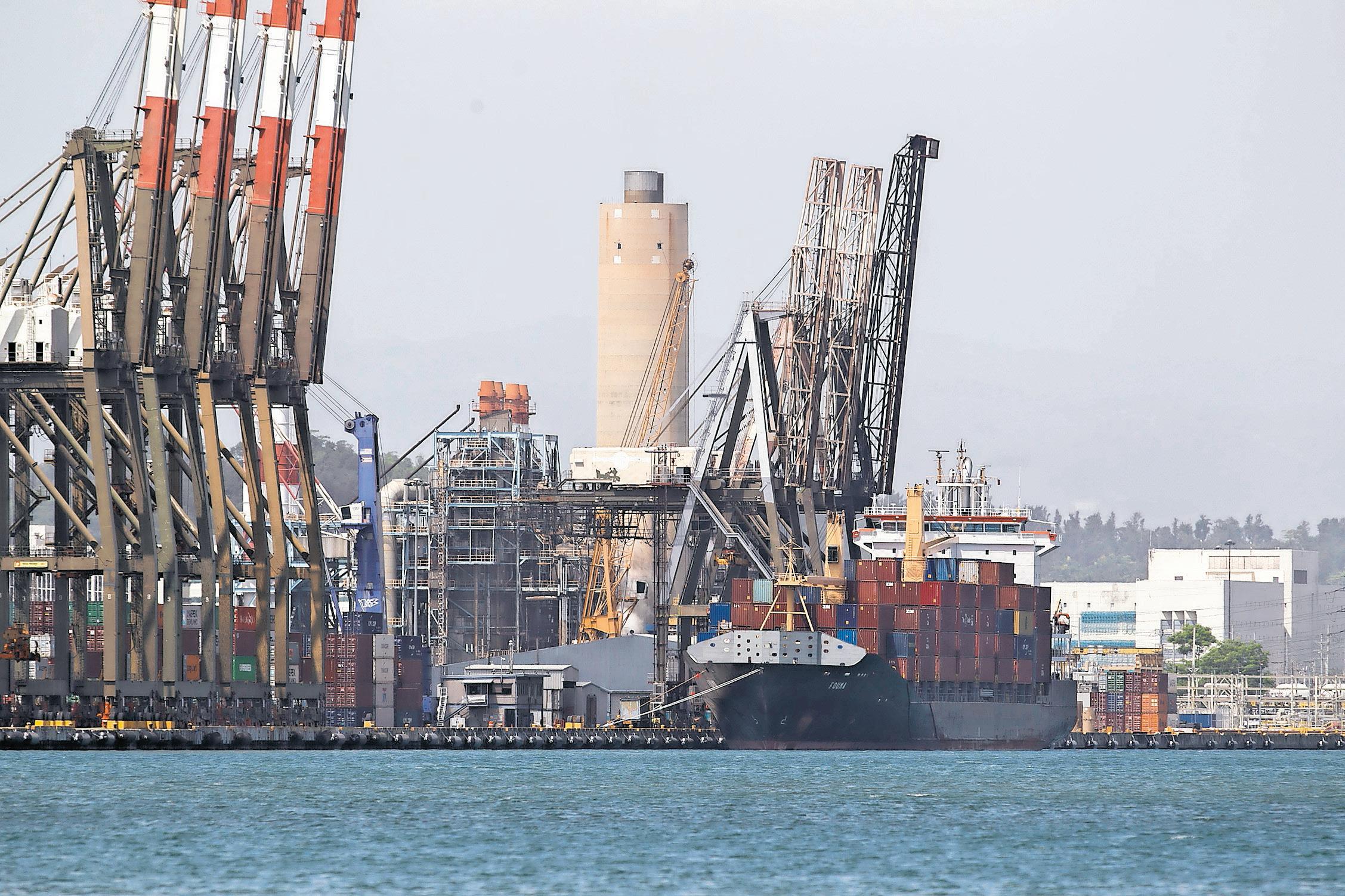
“Yes, the monopoly is over. There will be an alternative,” said Caraballo, during a press conference.
Caraballo announced that her plans include taking her operations to the Rafael “Churumba” Cordero Santiago Port in the southern city of Ponce.
It must be noted that the workers of this new company also belong to the ILA, whose president, Carlos Sánchez Ortiz, was accused last August in federal court for allegedly being part of a criminal enterprise dedicated to extorting owners of cargo that arrived at docks 9, 10 and 11 in San Juan in route to the Virgin Islands.
/ Wednesday, December 21, 2022 5
>Archive / The Weekly Journal
>Josian E. Bruno Gómez / The Weekly Journal
Parallel 18: Where Startups Come to Thrive

success. In its six years of operations, from Generation 1 through Generation 9, P18 has received over 4,500 applications. 248 companies have graduated from the program. Of the last generation –Generation 9– 22 of the 35 participants were local companies.
Landi Fontana, The Weekly Journal
FinTech, PropTech, AgroTech. Combine any industry with “tech” and you’ve got yourself a startup. The combination of traditional industries with developing internet and Web3 technology has indeed created a plethora of business ideas.
Supporting this growth on the island is Parallel 18 (P18), a nonprofit program affiliated with the Puerto Rico Science, Technology, and Research Trust (PRSTRT).
The most striking number is P18 alumni’s survival rate — 97%. “We are very conservative when we are calculating the survival rate,” assured Héctor Jirau, Operations and Investments Director at Parallel 18 in an interview with THE WEEKLY JOURNAL. The survival rate takes into consideration live companies that remain active in some way, a distinction that also includes those that have been acquired or pivoted into another area.
Over the past nine generations of P18 cohorts, they have raised approximately $212 million in global revenue, with $73 million in Puerto Rico alone.
P18 has an impressive track record in startup
“Survivability” is an unusual metric for investors or other stakeholders to focus on, since it doesn’t necessarily highlight the startup’s ability to raise capital. “Since we are a non-profit, the survivability rate is very important to us as well as other ‘impact metrics’, such as jobs created, global
Héctor Jirau, Operations and Investments Director at Parallel 18
sales, capital raised, etc.,” Jirau explained.
Over the past nine generations of P18 cohorts, they have raised approximately $212 million in global revenue, with $73 million in Puerto Rico alone. The startups received a total investment of $189 million — $21.6 million coming from the island.
Growing Startup Ecosystem
Parallel 18 has been in business for around
/ Wednesday, December 21, 2022 6
Zoe
Since we are a non-profit, the survivability rate is very important to us as well as other ‘impact metrics’, such as jobs created, global sales, capital raised, etc.
In fact,
The island has become an incubator for promising companies
seven years. For a startup acceleration program, this is an interesting point to be at. It’s a challenge for startups to make it to three years, and those that do rarely make it to seven. “We’re still waiting for that second wave of companies that won’t be able to make it,” admitted Jirau.
Nevertheless, the startup ecosystem on the island has developed in that time thanks to various stakeholders who have pushed and dedicated solely to the entrepreneurial ecosystem. Recently, thanks to Community Development Block Grant (CDBG) funds from the Housing and Urban Development (HUD) program, incubators and resource programs for entrepreneurs have increased.
This growth has made the P18 program even more competitive. Jirau explained that they have been seeing more growth in terms of offerings and innovation brought by entrepreneurs. “You could compare it to anywhere in the world… say Silicon Valley. That’s the type of quality we’re getting here,” he said.
To avoid subjectivity, a panel of judges from all over the world identify, evaluate, and determine each applying company’s level of innovation and effectiveness of processes. After passing these 30 judges — made up of investors, stakeholders, P18 alumni, and corporate partners — applicants will take part in a call with the P18 team as the last step.
Startups come from all industries, but some of the most promising are those developing E-commerce, SaaS platforms, AI services, Property Tech (PropTech), and AgroTech. There is also growing interest in sustainability and

environmental friendly technologies
The Island as a Point of Entry
Parallel 18, a program of the Puerto Rico Science, Technology, and Research Trust, is open to startups around the world. Their goal is to maximize the island’s participation and creation of jobs in the global knowledge economy.
“They see Puerto Rico as a point of entry into the US. We have a completely bilingual workforce. They can enter the US market in an orderly fashion with the necessary resources provided by programs like ours” said Jirau. “They see Puerto Rico as a window of opportunity for market expansion. Puerto Rico is among the few that can provide that.”
The same is true for US based companies that want to enter the Latin American market — they see the island as the first step. This is especially important for startups with limited capital that need to maximize their resources.
While many US startup accelerators provide capital in exchange for a stake in the company, Parallel 18 doesn’t do that. “In our case, we don’t want startups to feel taken advantage of. We actually just give them a grant. Their success translates to success on our island and that’s the impact we are trying to achieve,” Jirau emphasized.
Partnerships
Strategic partnerships are another benefit for P18 participants. Mastercard, a global leader in payments and fintech businesses, is in collaborative agreement with P18 and the PRSTRT to bring technical support and
mentorship opportunities.
Through this partnership, the startups get access to one of the biggest international corporate partners, one who also helps lead innovation in digital payments and digitization of classical financial processes.
Furthering their support of startups past the initial stages, a partnership with Banco Popular called “Expand”. “Expand” is a program to support startups past the initial phases — it’s open to P18 alumni as well as companies that didn’t participate in P18’s other programs.
It’s an ideal next step after graduating from the acceleration program. “Expand” provides support for exporting, corporate partnerships, and raising capital “the three main things for entrepreneurs to have a grasp on when doing business in Puerto Rico,” as described by Jirau.
Last year, around 18 startups participated locally. The focus is to close the gap in lack of resources that “late stage” require, but rarely receive in comparison to startups in their early stages.
/ Wednesday, December 21, 2022 7
Mastercard, a global leader in payments and fintech businesses, is in collaborative agreement with P18 and the PRSTRT to bring technical support and mentorship opportunities.
In fact,
…we don’t want startups to feel taken advantage of. We actually just give them a grant. Their success translates to success on our island and that’s the impact we are trying to achieve.”
Héctor Jirau, Operations and Investments Director at Parallel 18
U.S. recession: a growing fear as Fed plans to keep rates high
Fed’s policymakers forecast key rate could climb up to a hefty 5% to 5.25%
WASHINGTON — After scaling 40-year highs, inflation in the United States has been slowly easing since summer. Yet the Federal Reserve seems decidedly unimpressed — and unconvinced that its fight against accelerating prices is anywhere near over.
Last Thursday, stock markets buckled on the growing realization that the Fed may be willing to let the economy slide into recession if it decides that’s what’s needed to drive inflation back down to its 2% annual target.
The S&P 500 stock index lost roughly 100 points — 2.5% — in its worst day since early November. The losses came a day after the Fed raised its benchmark interest rate for the seventh time this year. The half-point hike the Fed announced — to a range of 4.25% to 4.5% — had been widely expected.
What spooked investors was Wall Street’s growing understanding of how much further the Fed seems willing to go to defeat high inflation. In updated projections they issued last Wednesday, the Fed’s policymakers forecast that they will ratchet up their key rate by an additional threequarters of a point — to a hefty 5% to 5.25% — and keep it there through 2023. Some Fed watchers had expected only an additional half-point in rate hikes.
Those higher rates will mean costlier borrowing costs for consumers and companies, ranging from mortgages to auto and business loans.
The policymakers also downgraded their outlook for economic growth in 2023 from the 1.2% they had forecast in September to a puny 0.5% — as near to a recession forecast as they were likely to make. What’s more, they raised their expectation for the unemployment rate next year to 4.6% from
3.7% now.
All of which suggested that the officials expect — or at least would accept — an economic downturn as the price of taming inflation.
The message the Fed was sending, said Ryan Sweet, chief U.S. economist at Oxford Economics, was blunt: “We’re going to break something. We’re going to break inflation or we’re going to break the economy.’’
Many investors had convinced themselves that with inflation pressures gradually easing, the Fed might soon declare some progress in their fight and perhaps even reverse course and cut rates sometime in 2023.
There was seemingly reason for optimism: Consumer prices rose 7.1% last month from a year earlier, down from 9.1% in June and the fifth straight drop. Even more encouragingly, on a month to month basis, prices
inched up just 0.1%. And core inflation, which excludes volatile food and energy costs and which the Fed tracks closely, rose just 0.2% from October to November, the mildest rise since August 2021.
A slowing economy has eased pressure on supply chains, which had previously been overwhelmed with customer orders, causing shortages, delays and higher prices. Oil prices, too, have plunged, easing prices at the pump. A gallon of unleaded gasoline cost an average $3.19 on Thursday, down from $5.02 in mid-June, according to AAA.
Yet Fed Chair Jerome Powell, who had been slow to recognize the inflation threat when it emerged in the spring of 2021, was in no mood to celebrate. Powell essentially shrugged off the signs of incremental progress.

“Two good monthly reports are very welcome,’’ he told reporters Wednesday. “But we need to be honest with ourselves... 12-month core inflation is 6%’’ — three times the Fed’s target. “It’s good to see progress but let’s just understand we have a long way to go to get back to price stability.’’
Powell seemed to bat down hopes that the Fed might end up cutting rates by late next year — a move that typically acts like steroids for markets and the economy — unless inflation had dropped significantly by then, which he does not appear to expect.
The policymakers increased their inflation forecast for next year above what they were expecting back in September. It suggested that they feel their anti-inflation fight isn’t having as much impact as they had hoped.
Many economists were caught off-guard by that change. For next year, the Fed is projecting more rate hikes, a slower economy and higher unemployment than it did three months ago.
All those things typically help tame inflation. Yet the Fed’s officials predict that their preferred inflation gauge will be 3.1% at the end of 2023, up from their 2.8% forecast in September. That’s above their 2% target and likely too high for them to feel they can cut rates.
/ Wednesday, December 21, 2022 8
Federal Reserve Chair Jerome Powell. >AP Photo/Jacquelyn Martin
Paul Wiseman and Stan Choe – The Associated Press
It’s good to see progress but let’s just understand we have a long way to go to get back to price stability.
Jerome Powell, FED Chairman
Many investors had convinced themselves that the Fed might soon declare some progress in their fight against inflation and perhaps even reverse course and cut rates sometime in 2023.
In fact,
In fact,
Croatia’s
>AP
EU member countries reach compromise on gas price cap
The deal was sealed after previous emergency meetings had failed
Samuel Petrequin – The Associated Press
BRUSSELS — European Union ministers on Monday finalized a long-awaited deal to implement a natural gas price cap they hope will help households and businesses better weather excessive price surges.

EU member countries failed to overcome their differences at previous emergency meetings, but several EU leaders said last week that fixing a maximum ceiling to pay for gas was likely to be achieved this time. After talks in Brussels on Monday, the Czech presidency of the European Council, which represents member countries, said a deal had been reached.
“We have succeeded in finding an important agreement that will shield citizens from skyrocketing energy prices,” said Jozef Sikela, the Czech minister of Industry and Trade, adding that the mechanism will steer the 27-nation clear “from risks to security of supply and financial markets stability.”
Since it could not find a consensus on the divisive topic, the Czech presidency opted for a “qualified majority” as the voting rule to reach the political agreement. Under EU rules, a qualified
majority requires that 55% of member countries, or 15 out of the 27, vote in favor of a proposal. Such a vote also requires that those nations represent at least 65% of the bloc’s population.
Under the agreement, the mechanism will kick off if prices exceed 180 euros ($190) per megawatt hour for three days and if it is 35 euros higher than a reference price for LNG on global markets for the same period. Once triggered, the mechanism will remain active for at least 20 days.
month a “safety price ceiling” to kick in if natural gas exceeded 275 euros ($290) per megawatt hour for two weeks and if it is 58 euros higher than the price of liquefied natural gas on world markets.
Such a system might not have averted hikes as high as in August — when prices hit nearly 350 euros per megawatt hour on Europe’s TTF benchmark but fell below 275 euros within days — and was met with derision by many countries including Spain, Belgium and Greece, and Poland, pushing for a lower trigger.
The 27 EU nations have stuck together through nine rounds of sanctions against Russia over the war in Ukraine and energy-saving measures to avoid shortages of the fuel used to generate electricity, heat homes and power factories.
But they were unable until Monday to close a deal on setting the complicated price cap for natural gas. The cap was promised in October as a way to reduce energy bills that have soared during Russia’s invasion of Ukraine.
“We have proved that the EU is united and will not let anybody use energy as a weapon,” Sikela added.
Sikela said the 180 euros limit “is not a cap as such” and that prices can still go above this level if prices on the LNG markets are higher than 145 euros per megawatt hour.
“In other words, this is not a fixed cap, but rather a dynamic one,” he said.
The measure will apply from Feb. 15 next year once formally approved by written procedure.
The EU’s executive Commission proposed last
The gas cap issue is a divisive one because of fears that global suppliers would bypass Europe when other buyers offer more money.
Member countries also agreed on a proposal to reduce methane emissions, one of the biggest causes of climate change, second only to carbon dioxide. The gas also causes serious health problems.
“This will help us meet our commitments under the Global Methane Pledge to cut methane emissions by 30% by 2030,” Sikela said.
/ Wednesday, December 21, 2022 9
Energy Minister Davor Filipovic.
Photo/Olivier Matthys
The Czech presidency opted for a “qualified majority” as the voting rule to reach the political agreement.
We have succeeded in finding an important agreement that will shield citizens from skyrocketing energy prices.
Jozef Sikela, Czech minister of Industry and Trade
Ricardo Álvarez-Díaz,

FAIA – Licensed architect and entrepreneur www.advfirm.com
The Inflation Reduction Act Promotes Sustainable Design
The Inflation Reduction Act marks a monumental moment in the fight against climate change and its effects on human health and well-being.
The Inflation Reduction Act (IRA) of 2022 is a recently approved bill designed to deliver the largest investment in climate action in U.S. history.

Congress has directed nearly $370 billion over the next decade to quickly scale up renewable energy production and drive reductions in greenhouse gas emissions.
The historic legislation makes urgent investments to lower healthcare and prescription drug costs, incentivize affordable clean technology energy monitoring and electric vehicle (EVs), to create more opportunities for working families, small businesses, and innovative startups. The IRA will ultimately steer design toward a more environmentally friendly future.
The Act has a loan program called the Energy Infrastructure Reinvestment (EIR) Program to help retool, repower, repurpose, or replace nonoperating and operating energy infrastructures to improve energy efficiency.
Eligible projects will require controls or technologies to avoid, reduce, utilize, or sequester air pollutants and greenhouse gas emissions. This loan incentivizes designers to implement sustainable and efficient solutions in their projects.
IRA’s Greenhouse Gas Reduction Fund will help finance clean energy technologies and emission-cutting infrastructure, such as rooftop solar panels. Not only do solar panels reduce our carbon footprint, but they also provide people with reliable energy at a lower cost. This incentive fund encourages designers to include solar panels and other clean energy technologies in their designs.
Another way the IRA promotes sustainable design is by creating additional funding for consumer programs. This includes energy-saving systems that help regulate indoor temperatures and improve energy efficiency.
This incentivizes designers to add temperatureregulating measures to their projects, such as window films to reduce solar heat from the outside, reduce hot and cold spots inside, and help prevent energy from escaping.
Since the Inflation Reduction Act provides incentives to scale up renewable energy production and drives substantial reductions in
greenhouse gas emissions, the demand for smart, clean technology will become more prevalent and connected living will become more affordable.
Investing in intelligent daylight harvesting systems, water filtration systems, and air purifying technology will allow residents and workers to monitor and save energy. Designers are already interacting more with intelligent technology and identifying new ways to integrate these energy-efficient systems into their designs.
The IRA has promoted intelligent, sustainable design with fully connected energy management ecosystems to drive efficiency. People are already beginning to include smart, sustainable technologies as a standard. As a result, the work of design professionals is transforming to meet the growing demand for greener and more connected homes and businesses.
The Inflation Reduction Act is a historic step toward a greener future. Its energy-related funding for high-tech solutions incentivizes sustainable practices to fight against climate
change. By making clean technology more affordable, people will be able to prioritize residential energy efficiency while designers deliver well-planned, quality projects that integrate smart and sustainable innovations.
/ Wednesday, December 21, 2022 10
The Inflation Reduction Act (IRA) of 2022 is a recently approved bill designed to deliver the largest investment in climate action in U.S. history.


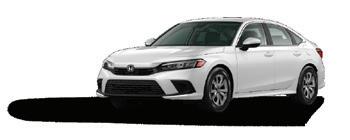









SER honda civic LX 2022 y podrás ganar un Color del auto no necesariamente igual al ilustrado. Honda Civic LX 2022 Modelo FE2F2. DONATIVO $2.00 a beneficio de SER de PR ¡ADQUIÉRE TU BOLETO y escanea el QR-Code para que vivas la experiencia SER! Para más información: 787.767.6710 /SERdePuertoRico Tiendas participantes: 11 < The Weekly Journal > Wednesday, December 21, 2022
Cuban artists blocked from once-promising NFT trading sites
NFTs help artists profit from their art on an international stage
Megan Janetsky – The Associated Press
HAVANA — When everything seemed to be going wrong, Cuban multimedia artist
Alejandro Pablo García Alarcón found a solution in what some might consider an unusual place: NFTs.
Artists like him have been dealt multiple blows in recent years: The pandemic wreaked havoc on Cuba’s tourism sector, sending art sales plummeting. American sanctions, while not explicitly applying to art, made it harder for Cubans to sell their works. And for artists whose work can veer into political commentary, like García Alarcón’s, it can be hard to get featured in Cuban galleries.
NFTs, or nonfungible tokens, are digital images registered on a blockchain and generally purchased with cryptocurrencies. They offer artists such as García Alarcón a rare loophole because they can profit from their art on an international stage with few speech restrictions due to the medium’s decentralized nature.
“The first thing that drew me to it was the freedom,” said García Alarcón, known best by his artist name, Paolo De. “You can commercialize your work without intermediaries, without having to pass through a filter.”
But this year, doors have begun to close for artists from Cuba and other countries facing U.S. sanctions because key NFT trading sites have gradually blocked them from doing business on their platforms, often with little or no explanation.
García Alarcón is among at least 30 Cuban artists whose profiles have been delisted from at least two American-owned NFT trading sites, including the largest one, OpenSea, and KnownOrigin, according to Cuban NFT artist collectives.
Neither site responded to an Associated Press email seeking comment.
The delistings have extended to some of the biggest names in the Cuban digital art scene, including Havana’s most popular interactive art space, Fábrica de Arte Cubano, and photographer Gabriel Guerra Bianchini, the first Cuba resident to
auction off a piece as an NFT.
In March 2021, his work “Hotel Habana 3/10,” which features a mix of photos of Havana’s old, classic buildings stacked on top of each other, made a splash in the local art scene. His OpenSea page now reads “404. This page is lost.”

On its website, OpenSea boasts that it is “building an open digital economy” and that users can “trade their items freely.”
García Alarcón began trading NFTs on OpenSea in April 2021, using his first work as a political commentary on the controversial detention of protesting Cuban artists in January of that year. He earned $200 from it and proceeded to sell around 20 more NFTs through the website.
At one point, OpenSea promoted García Alarcón as an artist to watch. But last March, he was suddenly locked out of his account without explanation.
“They sell you the idea of freedom, that you can show your work, that there’s no censorship,” García Alarcón said. “You use the platform to show what you can’t show in your own country, and then this happens.”
When an artist is taken off of a platform, the art they sold is also removed from the site. Although the NFT continues to exist on the blockchain and is available to view on other NFT trading sites, artists
say it’s often viewed as a loss by collectors who are confused or want to display the art on more popular platforms.
Although OpenSea hasn’t said why it removed the work of the Cuban artists, it likely has to do with the perceived risks of running afoul of U.S. sanctions. Amid criticism for delisting Iranian artists earlier this year, OpenSea told the crytocurrency news site Decrypt in March: “We have a zero tolerance policy for the use of our services by sanctioned individuals or entities and people located in sanctioned countries.”
The costs of violating the sanctions can be steep, as the U.S. Treasury Department fined the cryptocurrency exchange Bittrex $24 million in October for allowing traders to evade American sanctions in places such as Cuba, Syria, Iran and Sudan.
/ Wednesday, December 21, 2022 12
The first thing that drew me to it was the freedom. You can commercialize your work without intermediaries, without having to pass through a filter.
Alejandro Pablo García Alarcón, Cuban artist
Key NFT trading sites have gradually blocked Cuban artists from doing business on their platforms, often with little or no explanation.
In fact,
>AP
Photo/Ramon Espinosa, File
> AP Photo/Thomas Peipert
Racers, mechanics, tinkerers converting classic cars to EVs
Electric powertrain conversions are becoming more mainstream as technology
DENVER — When Kevin Erickson fires up his 1972 Plymouth Satellite, a faint hum replaces what is normally the sound of pistons pumping, gas coursing through the carburetor and the low thrum of the exhaust.

Even though it’s nearly silent, the classic American muscle car isn’t broken. It’s electric.
Erickson is among a small but expanding group of tinkerers, racers, engineers and entrepreneurs across the country who are converting vintage cars and trucks into greener, and often much faster, electric vehicles.
Despite derision from some purists about the converted cars resembling golf carts or remotecontrolled cars, electric powertrain conversions are becoming more mainstream as battery technology advances and the world turns toward cleaner energy to combat climate change.
“RC cars are fast, so that’s kind of a compliment really,” said Erickson, whose renamed “Electrollite” accelerates to 0-60 mph (0-97 kph) in three seconds and tops out at about 155 mph (249 kph). It also invites curious stares at public charging stations, which are becoming increasingly common across the country.
At the end of 2019, Erickson, a cargo pilot who lives in suburban Denver, bought the car for $6,500. He then embarked on a year-and-
a-half-long project to convert the car into a 636-horsepower electric vehicle (475 kW), using battery packs, a motor and the entire rear subframe from a crashed Tesla Model S.
“This was my way of taking the car that I like — my favorite body — and then taking the modern technology and performance, and mixing them together,” said Erickson, who has put about $60,000 into the project.
Jonathan Klinger, vice president of car culture for Hagerty Insurance, which specializes in collector vehicles, said converting classic cars into EVs is “definitely a trend,” although research on the practice is limited.
In May, the Michigan-based company conducted a web-based survey of about 25,000 self-identified automobile enthusiasts in the United States, Canada and the United Kingdom. About 1% had either partially or fully converted their classic to run on some sort of electrified drivetrain.
The respondents’ top three reasons for converting their vehicles were for faster acceleration and improved performance, for a fun and challenging project, and because of environmental and emissions concerns. About 25% of respondents said they approve of classic vehicles being partially or fully converted to EVs.
“Electric vehicles deliver some pretty astonishing performance just by the nature of the mechanics of how they work,” Klinger said. So it’s not surprising to him that a small percentage of people converting classic cars to EVs are interested in improving performance. He compared the current trend to the hot-rod movement of the 1950s.
But Klinger, who owns several vintage vehicles, said he doesn’t think electric motors will replace all internal combustion engines — especially when considering historically significant vehicles.
“There’s something satisfying about having a vintage car that has a carburetor,” he said,
because it’s the same as when the car was new. Some enthusiasts want to preserve the sound and rumble of older cars’ original engines.
Other barriers to converting cars include the knowledge it takes to delve into such a complicated project, as well as safety concerns about tinkering with high-voltage components, the availability of parts, and the time it takes to realize a positive, environmental impact. Because classic vehicles are driven for fewer than 1,500 miles (2,414 kilometers) a year on average, it takes longer to offset the initial carbon footprint of manufacturing the batteries, Klinger said.
And then there’s the price.
Although Ford and General Motors have or are planning to produce standalone electric “crate” motors that are marketed to classic vehicle owners, Moudry says it’s still not realistic for a casual car tinkerer to have the resources to take on such a complicated project. Because of this, he thinks it will take a while for EV conversions to become mainstream.
“I think it’s going to be 20 years,” he said. “It’s going to be a 20-year run before you go to a car show and 50 to 60% of the cars are running some variant of an electric motor in it.”
/ Wednesday, December 21, 2022 13
Kevin Erickson walks around his electrified 1972 Plymouth Satellite.
Thomas Peipert – The Associated Press
This was my way of taking the car that I like — my favorite body — and then taking the modern technology and performance, and mixing them together.”
-Kevin Erickson, classic car owner
Top three reasons for converting vehicles were: faster acceleration and improved performance, a fun and challenging project, and because of environmental and emissions concerns.
In fact,
Holiday advice for home bartenders, plus 3 festive cocktails
The glass is like the canvas of the drink and ice is like the heat for cooking
Louise Dixon – The Associated Press
LONDON (AP) — Looking to create a bit of winter luxury when tending bar at home this holiday season?
London’s top cocktail-makers have some tips.
“Christmas is a special time when you want to join with friends and family. And sometimes, the centerpiece of any happiness is to have a good drink,” says Salvatore Calabrese, an Italian-born drinks expert and author who has been making cocktails at top hotels, bars and private clubs for over 40 years.
Currently at the cocktail bar Velvet, at London’s five-star Corinthia hotel, Calabrese goes by the nickname “The Maestro.”
And The Maestro’s advice?
First, choose the right glassware.
“The glass is the star. It’s the canvas of the drink,” he says. So if it looks elegant, things already feel festive.
Next, think about the quality of the ice and how it dilutes the drink.
“Remember, ice is like the heat for the chef when he is cooking,” Calabrese says.
Cracked ice cubes that disintegrate in your palm are a no-go, as is crushed ice for Christmas. “It’s not a Tiki night,” he jokes. “It is about an elegant night, so make the effort and maybe you can make your own homemade ice.”
Also, he advises, plan. Even prepare your cocktail in advance. Especially when a drink is a little complicated.
“Put it in the freezer or in the fridge, so it’s nice and cold, so the only thing you have to do is to put it in a mixing glass or, to show off, put it in the shaker and shake,” Calabrese says.
Jake Burger, co-owner of The Distillery, a 19th century pub and gin distillery in London’s Notting Hill neighborhood, says that knowing when to shake and when to stir is something a lot of home mixologists get wrong.
“It’s fun using a cocktail shaker, so people think we should shake everything,” he jokes. But it’s only really needed when using fruit juices, egg whites or cream, he says. Otherwise, stirring is best.
“As a general rule, if all the ingredients are alcoholic, you probably don’t need to shake it,” says Burger. “So as an Englishman, it pains me to say it, but James Bond got it wrong. A martini should definitely be stirred, not shaken.”
Liana Oster, bar director at The NoMad Hotel London, suggests adding some seasonal luxury by decorating your glasses. She creates a peppermintbark paint by melting equal parts cacao butter and white chocolate, with a few drops of peppermint essence added in. She then paints a swirl on one side of a cold glass, sprinkles some crushed-up candy cane on it, and then places it in the fridge until needed.
“Just make a little effort,” Calabrese sums up, “because really, a great cocktail is a great journey from the beginning.
“And when you taste something nice and delicious, the world seems to be a better place.”
Three cocktail recipes:
WINTERTIME NEGRONI, from The Distillery

1 ounce London Dry Gin
1 ounce Campari
0.5 ounces sweet vermouth
0.5 ounces sloe gin
Mix ingredients together over ice and stir. Serve over fresh ice and garnish with an orange wedge studded with cloves.
SCROOGE SOUR, from Common Decency, at The NoMad Hotel London
1 egg white
The glass is the star. It’s the canvas of the drink. So if it looks elegant, things already feel festive.
Salvatore Calabrese, drinks expert at Velvet cocktail bar, at London’s
0.75 ounces simple syrup
0.75 ounces lemon juice
2 ounces Irish whiskey
Pour the egg white into the larger tin of your shaker, and the simple syrup and lemon juice into the smaller tin. Dry shake together in the shaker to emulsify the egg and the alcohol.
Then hard shake with ice and pour over a strainer into your glass.
Add 0.75 ounces mulled wine slowly into the corner of the glass, and then sprinkle edible gold dust over the half of the surface to cover and garnish.
TRUFFLE SAZERAC, from Velvet, at Corinthia London
0.8 ounces Bourbon
1 ounce Cognac
Homemade truffle syrup (you can make your own by heating a few drops of truffle oil with a teaspoon of sugar)
A few drops of orange bitters
Mix ingredients together over ice and stir. Serve over fresh ice and garnish with a slice of fresh truffle.
/ Wednesday, December 21, 2022 14
Last minute gifts for those who have it all
The Weekly Journal
It’s always the same, year in and year out. Nevertheless, you decided this year was going to be different. So, on Thanksgiving week you decided you would brave Black Friday crowds to start your Christmas shopping as early as possible so no one be left without a gift. But, guess what? You never got to the mall after Thanksgiving, nor the week after, or the following. Now, a few days before Christmas you are scrambling to get the last gifts for those “who have everything.” Don’t despair, here are our last minute suggestions.
Return to Tiffany
For nearly half a century, the Return to Tiffany® collection left its mark on the world as an icon that represents the luxury house’s New York City heritage and its legacy of craftsmanship. In 1966, a Tiffany advertisement showcased a heart-shaped Return to Tiffany® tag in 14k yellow gold, priced at $11 and hailed as the perfect Valentine’s Day present. In its current iteration the heart-shaped pendant includes a diamond at its center and is accompanied by another silver heart-shaped pendant with Tiffany’s characteristic turquoise laminate. ($550 at Tiffany, The Mall of San Juan)

Creality Ender 5-Pro 3D Printer

The Ender 5 Pro comes packed with a set of useful accessories and functionalities that probably make it both the best 3D printer of the Ender 5 series and the best 3D printer under $500. The Ender 5 Pro can be used both by beginners and expert users. Its opensource nature gives you the possibility to upgrade its features over time. Also, it allows replacing fault parts and fixing almost any printing issue by yourself. ($450 at Dr. Tech, The Mall of San Juan)
Bvlgari Serpenti Forever Wallet and Sunglasses

Designed to perfection and crafted from karung leather this wallet can be your go to accessory. This wallet is a handy creation from the house of Bvlgari. It features the iconic Serpenti head, a recurring design of the label, which adds to the overall appeal of the creation. ($900 at Bvlgari, The Mall of San Juan)
Brown round-framed sunglasses by Cettire for Bvlgari. ($450 at Bvlgari, The Mall of San Juan)
Breville Barista Express/Impress Espresso Machine

This expertly designed, innovative machine will transform how you make espresso at home. Equipped with the Impress™ Puck System to automatically dose and tamp each shot with minimal mess, it helps you create barista-quality espresso in less than a minute. The machine features Intelligent Dosing, Precision Measurement and Assisted Tamping to make the process even easier. State-of-the-art components include a precision conical burr grinder with 25 settings, a digitally controlled thermocoil heating system and a steam wand that allows you to turn microfoam into an artistic finishing touch. ($899.00 at Williams Sonoma, The Mall of San Juan)
TUMI Carryall tote
Made of durable FXT® ballistic nylon design will keep this tote in constant rotation. Get out and explore with the peace of mind that you’re equipped for adventures of any magnitude, from the shore to the city. ($450 at TUMI, The Mall of San Juan)

/ Wednesday, December 21, 2022 15

WeeklyJournal The Constant updates online 24/7. TheWeeklyJournal.com Visit us for updated content on our 24/7 platform.
