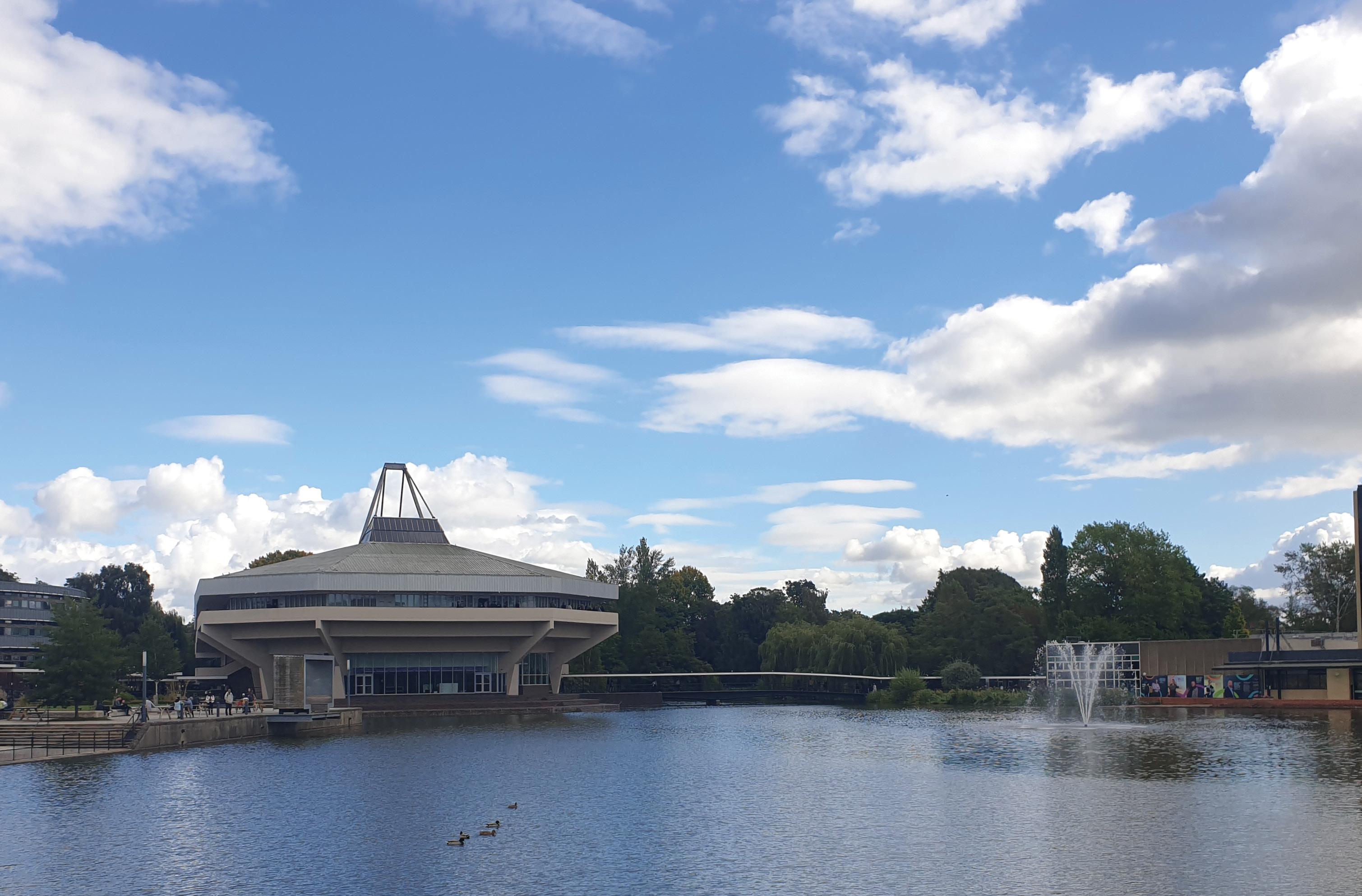
The Student Television Society celebrated last weekend


The Student Television Society celebrated last weekend
Vision Interviews Halifax College President Isabel Davis on her online sexual harassment
BY KATIE PRESTONWITH ONLINE BULLYING skyrocketing in the last few decades, harassment of young adults is rarely discussed, especially involving an anonymous perpetrator.
Occurring during the last academic year, Halifax’s President Isabel Davies was the victim of online sexual harassment after an anonymous pornographic confession was submitted and posted to an Instagram page.
A year on, Vision exclusively interviews Issy about her experiences, the impact on her mental health and the lack of support she felt she received from the University.

FULL STORY ON PAGE 5
“IT SHOULDN’T BE MY RESPONSIBILITY TO BRING THIS TO A CLOSE”
News 2
Editor Vacant
Deputy Editor Vacant
Opinion 6
Editor Laura Rowe
Deputy Editor Emilia Vulliamy
Features 24
Editor Kaitlyn Beattie-Zarb
Deputy Editor Vacant
Lifestyle 26
Editor Amber Handley
Deputy Editor Vacant
Science & Tech 27
Editor Oliver Fisher
Deputy Editor Vacant
Climate 28
Editor Joe Lee
Deputy Editor Vacant
Sport 30
Editor Jacob Bassford
Deputy Editor Vacant
Stage S3
Editor Kayleigh Wittenbrink

Deputy Editor Vacant
Screen S4
Editor Jed Wagman
Deputy Editor Vacant
Music S5
Editor Alicia Ward
Deputy Editor Vacant
Food S6
Editor Navya Verma
Deputy Editor Vacant
Relationships S7
Editor Otty Allum
Deputy Editor Vacant
Tech S8
Editor Dan Gordon-Potts
Deputy Editor Vacant
Books S10
Editor Kate Shelton
Deputy Editor Vacant
Travel S11
Editor Lizzy MacKay
Deputy Editor Vacant
Editor Katie Preston

Editor Marti Stelling
Deputy Editor Dan Bennett
SCENE Editor Emily Sinclair
Chief Subeditor Megan Bartley
Subeditor Philippa Salmon
Subeditor Caro Sherlock
Subeditor Miri Huntley
Subeditor Jacob Bassford
Subeditor Alexis Casas
Illustrator Niall McGenity,
Illustrator Ottty Allum
Managing Director
Matt Davis
Deputy Managing Director Ellie Defries
Social Media Director
Alicia Ward
Technical Director
Marks Polakovs
Head of Multimedia Vacant
Opinions expressed in York Vision are not necessarily those of the Editors, Editorial Team, membership, or advertisers.

PRIOR TO THE current cost of living crisis, rent statistics across the country were already demonstrating the impacts of Brexit, COVID-19 and a failing economy.
Now due to increasing energy rates, anxiety amongst students for affording rent in the private sector has greatly increased.
Recorded between October 2020 and September 2021, median monthly rent was £755 for England, the highest ever recorded at the time.
According to Save the Student, the average amount students pay for rent in the UK is £148, around £641 per month, despite the average maintenance loan being just £470.
Currently, approximately 56% of students have to borrow money from parents, banks and friends to help pay rent, with the continuing cost of living crisis worsening the financial impact on students.
In 2022, the National Union of
Students found that one in three students are left with less than £50 after paying rent and bills. A further 96% are also having to cut back on general spending due to the cost of living.
Katie, Vision’s Editor and President, expressed anger at her already high rent increasing:
“My rent is already around £181 per week with bills included. Paying rent quarterly, we each have to fork out over £2.1k every three months, with our upcoming January rent being quite a concern for us both due to cost of living over Christmas”.
According to a survey by Save the Student, the average student falls £439 a month short of covering average living costs (approximately £924 a month), with 66% of students believing that the Maintenance Loan is not enough to cover basic living essentials.
In order to be be a student, you fundamentally need somewhere to live - with prices sky rocketing, it is no surprise that

people are choosing to live at home to study or having to rule out university all together.
In 2020-21, 2.66 million students were studying at UK higher education providers according to UniversitiesUK. With such a high amount of students, universities and cities across the country are now feeling the pressure as record numbers fight to secure places to live.
For students, the uncertainty is a main part of the worry. In York, Adam Bennet, one of the major property companies, has already released their 2023/24 rentals, yet other big companies such as Sinclair Properties, and IG Properties have yet to do so.
This means that current second and third years are unsure on whether to jump and secure a new house, and freshers are stuck not knowing the best course of action. It’s a perfect storm.
Landlords have no easy task. With the government promising help despite not outlining what
and the appointment of our new Chancellor.
In other exciting events, our Screen team attended the Aesthetica Film Festival, which you can read all about on our website!
We’ve grown as a society this term, putting a real emphasis on socials. Alongside our weekly post-meeting trips to The Courtyard, we’ve teamed up with other media groups to get to know each other better and build stronger relationships between the groups!
We’ve had our joint Halloween social at York Student Cinema with The Lemon Press, where we dressed up to watch The Rocky Horror Picture Show.
IT MAY ONLY be November, but I am calling this print our festive edition.
That’s right, you are now legally required to read this edition while listening to Michael Bublé’s Christmas album and baking a gingerbread house.
For me, this time of year means birth-


days, Christmas markets, cosy knitwear, and cheesy Hallmark films.
My plans postprint are to finish Lindsay Lohan’s new Christmas film, go ice skating at the Designer Outlet, and walk around York Christmas Market with a very expensive Baileys hot chocolate in hand.
I like to use this space to share a bit about what we have been up to as a paper.
We’ve met weekly as an editorial team to catch up on what’s going on at the University, and to discuss ideas for print and online.
We have provided online coverage of the Royal Visit, strike dates, cost of living,
In our last edition, we implemented the addition of pronouns to our bylines. As a paper, we are fully trans-inclusive and want to normalise asking people for their preferred pronouns.
One of our core values is to make sure every student is represented in student media, and we are proud to give a platform to any student who has a topic they want to share.
Our current editorial team is the most diverse yet, and we are committed to making York Vision an environment where everybody
that may be, it is a challenge to produce a reasonable yet realistic figure.
The average rent for properties in York at the moment is £1,580 pcm and with Nimble Fins predicting an average UK houshold to spend £671 on living expenses, prices are regularly increasing at drastic rates
On those figures, the average weekly rent per person for a 6 person house should be £177.50, not taking into account council tax or considering that houses of upwards of six tennants are likely to use more energy.
On top of this, landlords want to make profit, especially as many of them have lost out on money this year due to pre-agreed contracts coupled with ever-increasing energy bills.
With the cost of living crisis likely to worsen over the festive period, students anxiety is at an all time high when it comes to financial woes.
feels included and welcome.
In this print, you can read about College Presidents’ mental health being sidelined, and our main story is an interview with Halifax President Issy Davis’ on her horrific experiences with online sexual harassment, a story I am very privileged to have written.
In Opinion, we have a variety of articles ranging from the positives of Open Door, the inability to access prescriptions and the damaging rhetoric of “heroin chic” on women’s body image.
We also have numerous interesting articles such as an interview with Goodricke’s Cost of Living Representative in Features, where the “red nails” TikTok theory is a myth in Lifestyle, and whether the University’s Sustainability grant is enough. Why not make getting involved with campus news your new years resolution?
If you would like to join our growing team, please don’t hesitate to get in touch by emailing vision@yusu.org.
Holiday greetings and gay happy meetings, Marti and Katie
NOT COMMON
amongst the student body, the University of York only owns four of the eleven colleges available for student accommodation.
Referring to companies providing accommodation, such as StudentFirst, contracts are drawn up entitling the private company who builds the accommodation to run the accommodation for a short period of time. As such, the University collects rent from these privately provided rooms, with this going straight to the accommodation provider.
As of 2022, colleges with complete ownership by the University include Constantine, founded in 2014 on East Campus. Originally owned in equal shares by Evans Property Group and the University, UoY purchased Evans’ stake for £9.8 million in 2018.
One of the most expensive colleges, with the cheapest accommodation starting at around £166 per week, Constantine was listed as the least popular of the colleges on Hes East in 2021.


One of multiple colleges on Campus East financed through third-party backing with the Evans Property Group, the University’s finance director said at the time of the acquiring of Constantine that “the University will continue to work with Evans in its plan to transfer its 50% share of the two other Colleges on Campus East, namely Langwith and Goodricke.”
Another university-owned college is Derwent, one of the founding colleges of the University in 1965. James College is also under full ownership by the University, transitioning from a post-graduate only college in 1993.
Colleges currently under complete third-party ownership include the newly constructed Anne Lister and David Kato colleges, both created on campus East in 2021.
Wentworth, the post-graduate only college, is also not fully owned by the University.
INTERVIEWING
COLLEGELex Hoffmann, Seraphina
PRESIDENTS
Goodbody and Isabel Davies at the end of their year, Vision looks at the negative impacts on their mental health, the sacrifices they have made during their run, and the weight of deadlines and expectations.
In the official University “Guidelines for Student Representatives on University Committees” document, the time-consuming commitment to holding representative positions is promised to be worthwhile, with guidance stating that “although committee agendas take some time to read thoroughly and meetings can occasionally be protracted (not to mention disputatious!), the time you invest will ultimately be rewarded.”
Somewhat dismissively, the online guidelines published on the University website entitles the aforementioned section as “no pain, no gain!”, however Lex, Seraphina and Issy demonstrate a starkly different outlook to the stress and expectations of being a college president.
Representing Goodricke college, Vision first asked Seraphina about the lack of support they have received from the University:
“I think the main thing is that we really care and it feels like we are doing so much and it’s not appreciated. It’s getting to the point of where I have to put [my college] above my degree and my mental health because I know that if I’m not there, no one is going to do it.
“Freshers don’t understand. They don’t know who we are and they don’t know we’re volunteers. The whole of Freshers Week I was being asked “how much do you get paid?” because they cannot comprehend that someone would give up their time and do that much for no pay. It’s insane.”
With discussions on mental health and potential burnouts often focused on university Sabbatical and Part-Time Officers, Lex reiterated the same feeling of being overworked and under-supported during his year as Vanbrugh College Chair:
“I was asked why I think that people aren’t running in the College elections, and it’s because the perks do not outweigh the disadvantages of the role. The only thing this role has brought me is a good CV. I can’t think of anything I’ve enjoyed outside of helping students.”
Due to a lack of student engagement with elections in general, with only 4,408 students voting in last year’s YUSU elections, many committee positions remain unfilled, with Lex voicing his anger at the added workload of a smaller committee:
“It’s worse if you’re a President without an executive committee. I’ve been told that before COVID-19, committees could have up to 40 actively involved people, whereas now we have
around ten. The President takes over every role that isn’t filled or delegates. But if there’s no one to delegate to, it falls back on us.”
Seraphina explained to Vision the limited platform that the college presidents are given despite their role promoted as one of privilege:
“I feel like a figurehead that’s asked to do things but can’t actually make a difference because we aren’t given the resources. Everything is done way above our heads but the fallout always comes on us.”
“It takes such a toll on you. Everyday you see students in poverty; students in a mental health crisis; students being assaulted and nothing being done; students not being able to afford housing and being homeless, and what can you do?”
Having previously been told that it is “limited what the University can do” following online harassment, Halifax’s President Issy also reiterated the negative impact of holding the role and the weight of expectations:
“They make us the villains of the situation. We get the backlash, the damage and the mental health problems. I’ve finished meetings and started crying and drinking in excess because I needed something to help me calm down.
“I was literally in a hospital bed at one point answering emails. My mental health was so disgustingly bad that I needed medical intervention. It got to the point where I wasn’t eating or sleeping. I was stressing myself out so much.”
After asking if the loan for the controversial Student Centre could have been put towards student welfare and speaking of her own financial struggles, Issy told Vision that a University representative informed her that her circumstances would be “taken forward as a case study for response for relevant Student Life and Welfare staff”, something she did not ask for and feels is not an appropriate response to the cost of living crisis:
“The University wanted to make me a case study but it was never followed up. It was strange as I was made to feel like a guinea pig”
In 2016 at Cardiff University, two student Sabbatical officers resigned from their roles after experiencing mental health issues and emotional burnout, sentiment that Seraphina strongly relates to with little to no support or recognition:
“I’m so burnt out. It consumes your life. The worst thing is, it’s on your phone. I was away over the summer and it was results day, and I was getting emails from the College asking about a lack of posts for Freshers when I was in Austria!”
Reiterated by a 2017 study, it was found that excessive “communication load” is directly related to stress, depression and anxiety, with Lex also describing the necessity to prioritise his position as College President over his own life and mental health, and the negative impact
of being constantly accessible:
“I was having one of the worst times of my life. My friend had just passed away and I was getting phone calls and emails from YorkParties after the funeral.”
“On the day I got engaged I had to make a post for Vanbrugh social media. We had hired someone who was on holiday and my secretary was busy, so I had to make a social media post whilst in the bathroom at my engagement dinner. I keep getting misgendered by college staff too when they’ve known me for so long.”
Issy also reiterated her anger at not being able to create proper changes within her college:
“I feel like I’ve failed my entire community. I feel like I should apologise to the entirety of Halifax because I feel like I’ve tried to give them so much and do so much for them, but at the end of the day it gets spun way against us. If there’s anything, it’s awful to have these people who you do so much for and who you’ve grown to love, and for them to say to them “why haven’t you done anything?”
Despite the toll on his mental health, Lex told Vision that he has reaped some benefits from taking on such a large workload:
“I’ve met fabulous people that I wouldn’t have otherwise. Being college president opened the doors to see behind the scenes and whilst it is often very frustrating, it has definitely also shaped my leadership skills and given me insight into how universities actually run.”
A University of York spokesperson said: “We are sorry to hear that some College Presidents feel unsupported. College and YUSU staff are here to work with student leaders to assist if they are facing difficulties in their role, and we would encourage anyone experiencing issues to come and talk to us.
“In the University’s annual review of Welcome Week, which includes a debrief with Chairs and Presidents, we all agreed that changes were needed on how we run some College activities in order to reduce workload on student leaders and College staff.
“An action plan is currently being developed, which will be shared at the Student Experience and Opportunities Group in December, and consulted on with the new College Committee Chairs and Presidents in January.”
Ultimately, the bottom line came from Seraphina:
“We get given so much shit for not making a difference but students don’t realise how little student reps can do for the University. There’s no transparency at all over how much the University controls student life.”
“The University is so backwards and we try to change it but we can’t. It’s intimidating how much is wrong with this university.”
THE BOAR REPORTS that a brand new Crop Research Centre has opened at the University of Warwick.
Part of Warwick University’s contribution to fighting climate change, the new centre aims to “encourage research concerning gene editing technology to improve the quality, resilience, and sustainability of vegetable crops”.
Miriam Gifford, head of the School of Life Sciences, stated that the centre “will accelerate the translation of mankind’s understanding of plant productivity and responses to stress”.
PALATINATE HAS REPORTED that Durham SU has issued an apology over an ASMR reel of a SU staff member packing food parcels.
After facing criticism for “trivialising the actual issue of student poverty”, the video was deleted, with Durham SU stating “the video was intended to visually promote the Foodbank in a way to try and destigmatise any unecessary shame or worry about having to use one.”
Students heavily criticised the video, stating “this isn’t an aesthetic? Why are you making it cute that students are starving.”
Durham SU “recognise[s] how this can undermine the significane of the problems currently facing students, and for that we apologise.”

FORGE PRESS REPORTS that the University of Sheffield is commiting up to £3 million to support students facing financial difficulties due to the cost of living crisis.
Eligible students can apply for financial support to help with unpaid placement costs, employability-related costs, graduation costs, IT equipment, living costs, energy costs, and house-hunting costs for students with dependents.
The new cost of living hub aims to “bring together information about all of the help avaliable from the University and Students’ Union.”
The University is also freezing all 2021/22 pricing in their cafes and bars across campus and in the residences until end of July 2023.
The SU also has a range of offers and discounts across its food and drink outlets to help students through the cost of living crisis.
SCAN REPORTS THAT as of Monday 7th November, the fare for an Under-19s Day Rider will increase from £2.80 to £3.10. In a recent survey, 74% of students claim that they are unhappy with the services, with many stating that the prices are already too high prior to the fare increase.
Many students are also unhappy with the tempermental timings of the buses, with the incompentent nature of transport sparking backlash.
FOUNDED IN 1967 as England’s oldest running student television station, YSTV celebrated it’s 55th anniversary last weekend.
Three days of celebrations featuring a 48 hour livestream, a Timewarp X YSTV social and a celebratory meal, alumni and new students alike were all encouraged to attend the event. On the eve of the anniversary, Vision interviewed current station directors Meg Maguire and Liv Woodward on the history of YSTV, their excitement for the 55th anniversary, and what they are looking forward to in the coming year.
Having been involved with YSTV since 2020, now thirdyear Meg and Liv respectively discussed the evolution of YSTV since the Covid-19 pandemic:
“It’s grown a lot. When we started out it was during Covid-19 so the society was completely different to how it is now. It was very much in a state of not knowing how it was going to function. The previous committee did a very good job of getting us integrated and involved, but we only really knew YSTV as a Zoom meeting each week.
“I remember when we went to our first in person meeting! We’d never done an in person meeting so our first memories of YSTV is completely different to how it is now, it’s completely evolved. Even last year it was a question of “how do we come back from Covid” and it was building the society back up.”
“Last year over Xmas it was still a question of ‘are we going to get shut down again?’ I think looking back as we head towards the 55th, we wanted very much to adapt YSTV with how the industry is going. It’s an industry that’s constantly adapting and changing what’s happening in the world.
“We recognised that our generation of filmmakers and writers are the ones that are going to change the film industry going into it. It was recognising that as a student television and society, that we can do that too: that’s what we are aiming for with the 55th, everyone coming back, see-
ing where everyone is now.”
Continuing successfully for fifty five years, Vision asked Meg and Liv about what makes YSTV so successful and what about the society has caused it to experience such a longevity:

“When you become station director it’s all about “how can you affect the people after you?”. My favourite thing about YSTV is it doesn’t matter what year you’re in, what you study or your background, we all are one big happy family. One big team. And that’s important in getting people to continue the society onwards.
“I think at the end of the day it’s the unique aspect that YSTV has. YSTV is the only place that I can do what I want and be creative outside of my curriculum, and that’s always going to be appealing to someone”
“I think the best thing about it is the people and the connections. It is also the only time, especially if you go into the industry, that you have complete creative control over something. You can pitch something completely bonkers, within reason, and you can make it and it’ll go on Youtube and you can be like ‘you know what, I’ve made that.’ And you’ve made it with a group of people that you like.
“With Roses too it’s when everyone comes together again, we had about 100 people going to Roses who wanted to help even if they weren’t a part of the society. I think that it’s something that is underestimated.”
Discussing the 55th anniversary itself, Liv and Meg explained the work behind the event and the historic 48 hour livestream:
“Since we started in first year, there’s always been this discussion of a 48 hour livestream and “Breaker 88.” In 1988, we broke the world record for longest livestream under a single director. Unfortunately, that record was then broken and is now obsolete due to technology advances.
“However, we’ve had this discussion of hypothetically rebreaking and reclaiming our honorary record back by doing a 48 hour livestream. We decided there was no better time to do it than the 55th so we wanted to go out with
a bang - I’ve heard people talk about it since my first year, so of course I wanted to get it done!”
“In terms of going back in time, we’ve got a Timewarp X YSTV 55th special! A very popular event amongst YSTV members, our station actually used to be near Courtyard and one of our first broadcasts was near Courtyard.”
“We are doing an Outside Broadcast near the Chemistry department, which was where our first inaugural broadcast was. We are having a lovely meal and drinks reception with some alumni coming back, so it’ll be great to catch up with alumni and encourage new members to look forward to the future.”
Nostalgic, Vision asked Liv and Meg about their favourite memories of YSTV, a society that they’ve both contributed so much to in their time at York:

“Working with Meg. We did our first YSTV project together which was lovely. Obviously the Anne Lister documentary was a highlight and getting to screen it at Halifax was a great night: we got to showcase our talent to a bunch of people who are professionals, showing that our work isn’t a joke, is actually serious and very high quality.
“Just working together and alongside the rest of the committee, getting to know people and making things - every aspect of it all. Also after NASTAs when we had a Timewarp and Meg was plastered, I found her asleep on the doorstep.”
“Just going for a drink in Courtyard afterwards, and sometimes I wouldn’t come back till 5am. Some very drunken nights, good socials. I also loved last year’s Roses. I was in charge of crewing, welfare and training and it meant that I got to speak to every single person involved and considering we had a very big crew, it was very stressful!
“It was a lot of responsibility but I just loved it. The weekend itself was so good, being able to speak and work with everyone was amazing.
“I’m looking forward to seeing the upcoming talent we’ve got and being able to pass it on.”
TW: Sexual Harassment, Suicide WITH ONLINE BULLYING skyrocketing in the last few decades, harassment of young adults is rarely discussed, especially involving an anonymous perpetrator.
Occurring during the last academic year, Halifax’s President Isabel Davies was the victim of online sexual harassment after an anonymous pornographic confession was submitted and posted to an Instagram page.
A year on, Vision exclusively interviews Issy about her experiences, the impact on her mental health and the lack of support she felt she received from the University.
Issy began by reiterating that “this is no way a bash at my college team or the current Sabbatical Officers. They have no part in this - everything was out of their control and they were not elected yet.”

A 2011 study found that 15.6% of respondents received harassing online communications from someone they didn’t know, causing higher fear and anxiety in online harassment victims.
Emotions relatable to Issy, the Halifax President described the moment she found out about the anonymous Instagram submission, with the post including pornographic phrases such as “penetration” and “held-down”:
“I saw loads of notifications, most of them from Instagram, saying people have shared something with me. I saw the post and it had my initials, accommodation name and number on it so everyone knew it was me. It also included a brief description that matched me perfectly.
“I felt so ashamed and embarrassed that so many of the people I knew had seen it and sent it to me asking me if I was okay. I felt sick to my stomach and I excused myself from the room and burst into tears. I started to go into one of the worst panic attacks I’ve had in my life. I think that was a good marker of where my mental health declined rapidly.”
Currently, students can access support on the YUSU website. In cases of online harassment, students are encouraged to be “resilient”, “spend less time online” and “spend time on activities that can take your mind off it such as sports or music” something that Issy was unable to do because of the impacts on her mental health.
Issy then described how she attempted to receive help from the University, but was unable:
“I instantly emailed the University asking for help since I was now a part of their higher division [as Halifax President] and I was greeted with “we can’t do anything since it’s on the Internet and from an anonymous account.
“I felt really betrayed by the University as a whole, and very alone. At that point, I felt like it didn’t matter. For a few days I pleaded with the account to take the post down but until they did I just sat and watched the likes go up. It was so humiliating to be in a position of power over something and for it to be flipped.”
Current guidance promoted by the “Staying
Safe Online - Social Media Tips for Students” document from the YUSU website also mentions blocking and muting as a possible method of avoiding continued harassment, however due to the nature of Issy’s online hate she was unable to avoid public attention.
A University of York spokesperson said: “We are sorry to hear about this experience and recognise the significant and distressing impact that online sexual harassment can have.

“The University’s Sexual Violence Lision Officers (SVLOs) provide specialist advice and guidance to those who have experienced Sexual Violence or Harassment, and students can also speak to welfare support staff who are based in each College, as well as the Open Door Team who provide confidential emotional support.”
Speaking vulnerably to Vision, Issy described the immediate impact the post, and alleged lack of University support, had on her mental health:
“People would come up to me, recognise me, and put two and two together. I would get sexually harassed over a post that wasn’t even in existance anymore. Some people saw it as a green light to say the most disgusting things to me or even in one or two cases grope me. They saw something I had no control over or part in as consent. This destroyed me and triggered my PTSD from a previous trauma.
“Something that isn’t talked about enough is when something like this happens you start sexualising yourself since it warps your perception of self. It took me a really long time to get out of that mindset.”
In higher education in the UK, it has been found that 71.9% of online harassment victims were female, with 87% of victims being undergraduates, with Issy’s experience of online harassment in her first year becoming an all too regular occurrence at university.
Issy also spoke to Vision about the impact of her experiences on her university studies:
“I started skipping lectures and seminars not wanting to leave the accommodation to avoid panic attacks, and sleeping all day just to avoid having to deal with my emotions. I debated transferring to another university where nobody knows what happened and nobody will harass me. My confidence was destroyed. I would feel so self conscious and embarrassed when I left my accommodation that I would have a panic attack or start to be visibly upset. Eventually, I decided I couldn’t take care of myself and went home.”
A study by Ditch the Label found that 37% of online harassment victims develop some form of social anxiety, with Issy’s reluctance to attend university a common occurrence for students experiencing online harassment.
In an email received by Issy at the time, Issy was told by a University representative that “as it’s run anonymously and not as an official University site”, there are “limited options”. Issy was informed that “it’s very limited what the University can do, as we have no way of knowing who is responsible”.
A University spokesperson said: “While the University does not have the powers to remove offensive material from anonymous or
independent social media accounts, we speak to students and advise on actions that could be taken - this may include reporting online harassment to the platform itself, and using our Report and Support tool to access information about the options that a student has in cases such as these.”
Issy also stated that her Mum stuck by her side throughout:
“One of the worst moments of my entire life was having to explain to my Mum why I was so upset and why I wasn’t getting any work done and why I was having these suicidal and self harm thoughts that I haven’t had since I was fourteen or fifteen. I had to explain to my Mum that somebody wrote a disgusting, filthy thing, published it and that around 400 people saw it. “
According to a 2020 study, 51% of victims of online harassment believe that permanently suspending harmful users and social media accounts would reduce harassment on social media, with a further 48% stating that disclosing the account’s real identities would be very effective - two solutions that were not made available to Issy.
Now nearly a year on, Issy explained the desensitisation she still feels surrounding the experience:
“I still get comments made in bars and clubs but not as often. The account changed admins and somehow I managed to obtain the name of the admins. However, I’m still powerless against them because the University isn’t willing to investigate these accounts and stop the hate. The Instagram admins still run the account, harass students, shame them and post content.”
A University spokesperson said: “No matter how long ago the incident occurred, support and advice can still be sought by reporting any concerns through our Report and Support tool, where specialist advisors are available to discuss and help further.”
Despite being turned towards the Conduct and Respect team at the time of the harassment, Issy felt she was not offered much well-being support by the University. Instead, she was told to report the post as inappropriate to Instagram: a 2017 study found that Instagram has the highest rate of online harassment, with 42% experiencing bullying out of the 78% of young adults who use the social media.
“The University just didn’t give a fuck: they said there wasn’t anything that they can do and that I’d have to do it myself. So I had to go through things, contact these people, bargain with them, plead with them to take it downit was the most demoralising and humiliating thing.”
“People can argue it’s unrealistic to expect the University to help, however the Presidents of Colleges are one of the first impressions on the University a fresher will get. We receive all backlash from a higher up decision, we are a critical part of the University’s image yet we are the most neglected mental health and wellbeing wise.
“It shouldn’t be my responsibility to go after these people and bring this to a close.”
DEBATING WHETHER TO leave or remain in the National Union of Students, YUSU has announced that the quota for voting was not met after tweeting yesterday that 1000 more students was required to cross the threshold.
As a result of a lack of student interaction, the referendum vote closed at 5pm on Monday 21st November, with only 375 votes cast.
72% of voters opted to remain in the NUS, with 25% against and 3% abstaining.
In line with the Education Act, around 1244 students needed to vote for the referendum to be valid.
Prior to the vote, an NUS Referendum debate took place on Wednesday 16th November, with Freddie Newell leading the Leave team whilst Hugh Baker-Lomas and Sam Kite chaired the Remain.
Due to a lack of student engagement, the University will remain in the NUS.
The University has appointed Heather Melville OBE as their next Chancellor.
The Chancellor’s role is to promote the University for Public Good in the UK and internationally, serving as a ceremonial and honorary figurehead of the University.
Melville is renowned for her entrepreneurial vision and work promoting inclusion in the workplace, particularly among women and ethic minorities.
Her 40 year career has established her in a number of senior positions, from international banking, technology, and professional services.
She will become the University’s seventh Chancellor, succeeding Sir Malcolm Grant, who has held the role since 2015.
WITH THE WEATHER getting colder and festive decorations put up across York, the excitement for the holiday season is definitely growing.
Whichever holiday you celebrate, the festive season is a welcomed break from university for many students, however with the current cost of living crisis, many of us are more concerned about our festive finances than ever.
International students are unable to get home, students are having to stay up in York to work to afford rent for the next academic term and gift-giving is even more anxiety-inducing than usual.
Despite the cost of living crisis, the holiday season is usually a time for family and friends, so Vision hopes that this winter break is as amazing, and as cost-free, as possible.
ALMOST LIKE A broken record at this point, news on Eric Milner still remains to be found as we reach the end of term one.
An ever-pressing worry for the Vision team, especially since our water in the office has now been shut off, Eric Milner seems to evade us all as we trek across campus each day.
Thankfully, the heating in the Vision office has now been restored, so our lay-up experience is much more positive amidst the freezing Yorkshire weather.
Eric Milner may not be the home of Vision much longer, especially with the student centre looming ahead, so the Vision team has elected to enjoy our hectic office for as long as we still can.
AS THIRD YEAR students are approaching the end of term one, dissertation deadlines are fast approaching and very anxiety inducing.
As a joint honours English and History student, I get to experience the woes of having a higher word count, more research yet less time than my English only counterparts.
I didn’t get to do any work on my dreaded dissertation over the summer due to a demanding part time job and family commitments, with the term-time workload piling up meaning it’s now Week Nine and I have barely started my intense year long project.
My advice to any second years who are yet to do their dissertation is simple: if you can, start early, but if you can’t then that’s completely fine. Whilst my dissertation supervisor shouting at me for not starting over the summer almost made me cry, listening to fellow Eng/His students lament about a lack of help and guidance made me realise that no one starts the dissertation early. And if they do, they’re a liar.
I have found that, whilst the dissertation is important, enjoying what may be your final summer in York is way more crucial, so don’t worry too much.
EDITORS MARTI AND EMILY discuss the challenges of accessing prescription medication at university.

Marti: Writing my opinion about healthcare is a difficult one for me. I recognize my immense privilege in being able to access basic healthcare, which is more than a lot of people have. I also recognise the incredible work that healthcare professionals do, whether that be working at a pharmacy, working on the frontline answering calls, or performing life saving operations. However, people are being failed by how overrun the healthcare system is.
Every month, ordering my repeat prescription is a stressful event, and it is consistently the same issues that arise. My time is split between my parent’s home address, and my university address, much like the majority of students. This means that when I am home for the holidays, I get my prescription sent to my local pharmacy. At university, which is where I live during term time, I use an app to order my prescription from my nearest pharmacy.
The problem that arises is the amount of time it takes to get this repeat prescription approved. I regularly notice that I am less than halfway through my prescription and put an order in for another, as I know that it is likely to take this long to process. Not knowing whether I am going to have enough medication to last until I pick up my next prescription is really scary.
My perscription has also been sent to the wrong pharmacy twice. I will wait weeks for my prescription to be approved, only to contact my GP to find out that despite updating

my address on the app, the GP sends my prescription to my home address. I then have to phone up this pharmacy, which is very small and often takes a while to answer the phone, to ask them to return it to the ‘spine’. At this point, I am usually very stressed and wondering why on earth it has happened again.
Similarly, the other day, I received multiple missed calls and a voicemail from my doctor’s surgery telling me that I must book a prescription review as I was overdue. After waiting in a long queue over the phone, I was told that there are not any prescription review slots available at the moment. It doesn’t make sense!
Emily: Don’t even get me started on the frustration of having to pay for prescriptions whilst in full-time university education. Again, I notice my privilege of having access to worldclass medication and I understand that it’s not cheap however I just think they’ve slightly got the cut-off for having to pay for prescriptions wrong.
In the UK, prescriptions are free up until the age of 16 and then between 16-18 if you’re in full-time education. They are also free if you’re on income-based benefits, on an annual family income tax credit of under £15,276, pregnant, or exempt for certified medical reasons. Now, this sounds like a lot of people are benefiting from free NHS prescriptions, and yes they probably are, but within the student population, only a small minority of people fit into any of these categories.

It is worth noting here that for all age groups, contraception is free on the NHS.
The NHS low-income scheme is an application that could help pay for prescriptions yet you’re only eligible if you do not have capital or savings of over £6,000. If this applies to you,
I’d very much recommend looking into it but for most students with a student loan, and perhaps a parttime job, this doesn’t cover us. So, I suppose the £9.35 per item is just the norm.
A few weeks ago I was suffering from a pretty nasty sinus infection as a result of the flu. After a long call to 111, I was prescribed antibiotics that night and told to immediately go and pick them up. When faced with the £9.35 bill, I had no real choice but to pay it. If I wanted to get better I needed the medication, this was something made clear to me by the doctor I’d spoken to. Without the antibiotics, there was a chance my infection could get worse and develop into something more serious. I was stuck. I had to pay.
Now, I’m lucky that (although it was slightly annoying) I was able to pay for my prescription straight away and get the medication I needed. For many students, this isn’t the case. It just doesn’t quite make sense to me that when living with my parents, during GCSEs and A-levels I was able to get free prescriptions yet now I’m living effectively by myself but still studying full-time I’m not able to. This disconnect in eligibility is something that really needs to change.
Line: Students should never be put in a situation where they cannot access medication that they require.
THE RETURN OF ‘heroin chic’ signifies a return to eating disorders and oppression.
This article will discuss eating disorders and addiction- please read with discretion.

Heroin chic was popularised in the 1990s, characterised by pale skin, dark under eyes and emancipated features. The style encouraged substance abuse to achieve a skeletal body.

Unsurprisingly, many of the models struggled with addiction and eating disorders due to the pressured enforced upon them. And the perpetuation of their images to the general public led to an increase in bulimia and anorexia among the public as well.
The style served to control women. The pressure to lose weight through any means possible led to extreme methods like substance
abuse. Women were exhausted and took up less physical space meaning that men were allocated yet more political and social space. This style is now being brought back. The New York Post featured a celebratory tweet welcoming heroin chic back completely ignoring the havoc it wreaked last time. This is absolutely terrifying. Actor Jameela Jamil has spoken out
fashion against the body positivity movement, serving to silence feminist movements. The introduction of heroin chic seems timely: following the recent horrors of Roe v. Wade and the terrifying events occurring in Iran the trend seems to be removing yet more power from women.
The female body has been treated as a fashion trend for hundreds of years: from the desired androgynous look in the 1920s, to the Brazilian butt lift trends of the 2010s. The female body has been cycled through every possible look. Enough is enough.
about it, stating that “They’re not even interested in you looking like a naturally skinny or athletic person. They want you to look like you have dark circles under your eyes, like you’re dying.” It seems to be a backlash from those that control
With every ‘new’ look, women are expected to change their bodies to how it has been decided they should look each season. The constant changing of expectations means that even within one’s own body there is no stability, no safety. Your body might be socially perfect one day and then the opposite of beauty the next. To try to remain socially acceptable is a never-end-
ing cycle of torture.
Beauty is very much created by society – there is no one standard of beauty. ‘Beauty’ can change at the will of advertising meaning there is no pre-conceived idea of what is beautiful. We can look for the positives in the cycle of body trends. We can see it as a signifier that your body is beautiful just how it is, because I can guarantee that at some point it will have been the pinnacle of beauty. Let’s stop letting a few rich people decide what beauty is.
Bottom Line: Let’s get off the hamster wheel of
A THIRTY MINUTE commmute to unigreat. That same walk twice a day, everyday, when its raining, dark and gloomy is miserable. Being on Campus East for my First year meant I was a 20 minute walk away with the choice of the 66 bus. In second year, this is not an option. How would I have the time and energy to do my course in the day and then go to a society in the evening? Dedicating so much time to travelling was concern enough, but the thought of walking in the dark was terrifying. All of this was something I had never considered last year, and it forms part of a massive readjustment. Now, however, I look forward to my walks to campus; it’s a great way to get my head in the right zone, take some time to myself and get some fresh air. I’m shocked to say that the distance has allowed me to learn to love walking.
OPEN DOOR IS a free support service available to University of York students who want to speak with a Mental Health Practitioner or Student Wellbeing Officer about mental health or psychological difficulties. If you are not in an urgent crisis but feel as though you need some kind of support, Open Door can offer you a series of sessions. Some people have found this service very helpful and praised it for getting through a tough time, but other people have had a more mixed experience. I am in the second camp.
The last summer term was very difficult for me, for a multitude of reasons, so on the advice of friends, I referred myself to Open Door. I had my first hour-long session
where I genuinely felt listened to and had a safe space to verbally go through some stuff in the name of establishing a plan of action for future sessions. My next session was a month later, during which time my mental health got measurably worse, and my hour long session was ended after about 28 minutes. While I can’t remember the exact words used, I felt that my practitioner thought I was doing ‘fine enough’.
I just had the impression the whole session that my mental health issues were not severe enough for the service, that I ranked a six on a service that only had room to take nine-10s, that because the only practitioning service I had available to me had judged me as not requiring their help then it was up to me alone to resolve these issues with abilities that I simply didn’t have, leading into one of the lowest and unhealthiest
period of my life. And I don’t blame Open Door for this one bit. With the current state of nationwide mental health services, I believe Open Door is doing the best it can under almost impossible circumstances.
Mental health support services in this country are fucked, and the Tory sychophants responsible for unsustainable spending cuts to vital services should be treated like murderers. As per The Royal College of Psychiatrists, 23% of adults have to wait over three months to start treatment, and I, like many others, viewed the waiting times as so large that the NHS route wasn’t even worth bothering with as ‘one way or another, the issue will be resolved by the time I even get an initial assessment’.
That leaves paying for private practitioning. This year I am in an incredibly privileged position where I can afford the £40-£80
costs of an average session and have been able to progress my mental health journey that way, but how many students this year can afford that when those most at need are struggling to pay for food and heating?
Being the only option for so many students, at a time when so many students are suffering mental health difficulties, must place enormous pressure on everyone at Open Door, so of course the quality of the service varies and has to vary so that it can at least attempt to meet some of the needs of peo-




Bottom Line: Open Door
TRANS WOMAN AND influencer, Nikita Dragun, was put into a men’s holding unit after being arrested and charged with misdemeanour, disorderly conduct, and felony battery of a law enforcement officer. The placing of a trans woman into a men’s prison highlights that the American criminal justice system leaves almost no room for gender variance. There is no care or thought for the fact that trans inmates’ lives are being carelessly put in danger. The fact that transgender inmates are 13 times more likely to experience sexual violence whilst incarcerated should be a massive cause for concern for everyone- yet nothing has changed.
Equally, the physical danger to trans inmates forms only one part of the problem. The fact that Dragun was seen by the court as male is horrifying. Facing both fear of physical violence and misgendering, the already difficult experience for Dragun was exemplified by the court’s cruel treatment of her. By placing her in the male quarter, the court has signalled to all trans people that the law does not recognise or respect who they are.
is curently a serviceable point of call for those who need it. I just wish the country was in a better place to allow it to be so
DAN BENNETT DEPUTY EDITOR (HE/HIM)
‘body trends’ and embrace the beauty of ourselves exactly as we are.
“Women were exhausted and took up less physical space meaning that men were allocated more political and social space.”
THE DEATH OF Queen Elizabeth II began an extraordinary and historic couple of weeks in which mourning took place locally, nationally, and internationally from 8th September until after the funeral on the 19th.

Even though that period of time demanded an official sense of grief, it also constituted a significant moment where a range of strong views about the British monarchy and its benefits or pitfalls got expressed. However, only one type of opinion was allowed at the public surface, and alternative perspectives failed to be acknowledged amidst extensive media coverage. I will therefore briefly reflect on how myself and probably many others were feeling in relation to this issue, and what the circumstances meant for free speech.
There were at least two sides in terms of reactions to the Queen’s death. Loads of people experienced sadness at losing a figure who they perceived typified positive things like national pride, stability, female empowerment, and leadership. Conversely, a notable portion of the population vocalised thoughts including that the royal family doesn’t affect their life, disrupts the concept of democracy, unnecessarily receives taxpayers’ money, and fails to alleviate damages associated with colonialism.
Personally, I have never liked
the monarchy, mainly since I can’t comprehend individuals being given such a high level of (albeit mostly ceremonial) authority over, and wealth from, an entire nation just because they were born into a certain family. I also believe that the royal family could take simple steps to address their chequered past and repair negative implications of empire still existing in their traditions, but are content not to.
Nonetheless, I’m not writing this specific article to argue for monarchy abolition; seeing people disagree with my viewpoint wasn’t a problem around the Queen’s death as I can understand various bits of reasoning, so let’s now consider the conduct that actually caused frustration.
The weeks following the death created disillusionment for many people, who didn’t feel represented by the royal family and wished to express their stance while responding to the heavy outpouring of emotions in favour of the monarchy that the news showed. I make reference here to those who shared remarks that genuinely imagined that this event could be a catalyst for change and/or criticised the royal regime, which are valid reactions, and I don’t condone actively celebrating someone’s death.
Social media was as polarised as ever, with comments sections demonstrating opposing forms of upsetness, although most of
YORK IS UNDOUBTEDLY a very aesthetically pleasing city and most parts of our campus look beautiful.
However, many of the town centre’s streets and the bridges as well as certain paths within the University share a common vice: narrowness.

I’m always a pretty busy person, so I often tend to travel in a rush. On a few occasions, I have
admittedly even cycled from the YUSU offices located within James college to a meeting in Vanburgh or Derwent, purely for the purposes of saving whatever time I can.
If I could choose to harness a superpower, it would be teleportation, as travelling usually feels inconvenient.
Therefore, while I’m rushing around in town or on campus, one thing that (perhaps irrationally)
the posts and stories on my feed portrayed sorrow about the news. The media coverage from outlets like the BBC produced the biggest issue. Their ceaseless broadcasting of the Queen and the royal mourning protocol was continuously prioritised over everything else happening. Incredibly, 79 of BBC News’ 81 posts on Instagram between 8th and 19th September concentrated on the topic of the Queen’s death.
responsibility to at least acknowledge a variety of outlooks and relay what a significant number of people think in an informative manner; even during a historical moment. A true commitment to neutrality and indeed free speech would not constantly ignore alternative widespread views and emotions that existed alongside the apparently dominant ones.
tum alongside returning students and social media posts inevitably formed a key part of that.
Purportedly impartial media channels such as the BBC should always report on the full picture of current affairs, yet the coverage only catered for a specific (albeit justifiable) agenda. I’m not saying that the media ought to have promulgated the more anti-royalist sentiments completely equally, but a larger sense of balance was needed instead of leaving out different news stories and selectively picking opinions from the supposedly represented population.
Mainstream media carry a
The sheer strength and extent of the extremely public mourning protocols across social media and broadcasts ensured that they were unavoidable. It’s fair to say that the Queen’s death didn’t directly affect my job within a Students’ Union while preparing for the start of term, but external networks warned us to not post stuff relating to the Queen that expressed anything apart from solidarity and the University sent advice about restricting our communications (whatever the topic) across the mourning period.
I felt quite conflicted; in a personal capacity, I resisted the slight temptation to (respectfully) air my Republican-orientated thoughts because I was told that I would potentially be targeted by the media, which admittedly scared me slightly.
Professionally, the notion that we could not proceed with our lives as normal due to the passing away of one person caused annoyance, as I was building up momen-

A lot of the cohort we are employed to represent don’t actively support or identify with the monarchy, so the question I pondered before begrudgingly reducing my public communications was: would I have still been helping people and performing my job properly by doing that?
Whilst the University’s communications guidance risked infringing on my autonomy with free speech, I observed a clear example of repression when the University decided to delete comments on their post regarding Queen Elizebeth II’s death, which violated students’ freedom of expression and ultimately illustrated the enforcement of a dominant narrative that various organisations tried to ensure everyone was (at least publicly) on board with.
The royal family debate exemplified that we live in a nation divided on many subjects, but I ask you: if the impartial media ignore particular aspects of a situation and refuse to educate the population in a universal way, then how can culture wars ever stop and people increasingly accept divergent views?
annoys me the most is slow walkers! I speak here about deliberately slow walkers, where they have control over their own speed. For example this might include people in groups, on their phone, taking in the sights, lost in their thoughts, attempting some swagger - all justifiable, but fairly frustrating. I consequently would like to share one simple request, which is please move to or stay at the side!
Some streets, paths and bridges are just too narrow for you to be walking leisurely next to others in a horizontal line, especially during peak hours, so single file is the way to go. I doubt anyone will change the essential architecture of the city or campus soon, meaning that your placement while walking is of more importance than you imagine! Perhaps I should leave an increased amount of time for get-
ting from place to place.
I accept that, though my schedule can make this tough, and the main issue is even when I’m not in a rush, I don’t like travelling slowly. My suggestion here is let’s find a compromise, and help each other out - I calm down when possible, you move, everybody becomes happier in York!



INSIDE:
Heartbreak and Meaningless Club Snogs
Should you ditch your AirPods?
Quest for the Perfect Bubble Tea Songs stuck in Vision’s Heads
IMAGE: ALEX HOLLAND

line season and stressful term.
there. I give some important information about local foodbanks for anyone who needs it.
In Relationships, Jacob talks about minimising the pressure of being in a couple.
SCENE Editor Emily Sinclair
Illustrator Otty Allum

Chief Subeditor Megan Bartley
Subeditors

Alexis Casas Philippa Salmon
Miri Huntley Jacob Bassford Caro Sherlock
Isobel Williams

How are we all?

It is that time of year again when the leaves begin to fall, the shops start selling huge tubs of Celebrations (although without the Bounty- outrage if you ask me!) and York Christmas Market makes the city a maze of sugar-filled children and overly-happy couples. Ah, you’ve got to love it!
Sitting here listening to Wham and Chris Rea I think a little bit of Christmas joy and a time to forget about what has been another chaotic and difficult year is what everyone needs. I hope that whatever you do over the holiday is relaxing and you’re able to find a little bit of happiness.
Within campus life, the library starts to become choka-block, Nisa runs out of its snacks and coffee mixed with RedBull becomes a staple part of everyone’s diet. Give it a few weeks and I promise we’ll have all made it through another dead-
The theme for this issue is Trends. What are some current patterns and fads that are floating around?
First up, in Stage, Miri discusses some of the benefiits that theatre training can give, Kayleigh reviews Guy Fawkes Comedy and there is information on CHMS’ Autumn showcase - the popularity of musical soundtracks at the moment is incredible!

In Screen, Jed discusses whether the Superhero movie will ever die out, whilst Rosie expresses the importance of student cinemas on campus. As well as a few live reviews, Music reveals the songs stuck in Vision’s head at the moment and Lis provides the soundtrack to University life. We can all agree one of the most frustrating things is when a song just won’t leave your head- the power of music I guess!
Navya is on the quest for the perfect Bubble Tea - opinions? Personally it’s not for me but I know I’m in the minority
I have been doing art for most of my life and a lot of my art is influenced by films.
I love the way that they are so visually captivating; there are always moments or frames in films that I think could be a painting. I find making art a really meditative process and it feels as if I am releasing emotions as I watch the artwork slowly come together.
I’m heavily influenced by outsider art, which is art made by those who either haven’t had any formal art training or do not follow any of the traditions of the Western art world. I find their artwork very uninhibited and it expresses an innate sense of emotion - Madge Gill and Minnie Evans are two of my favourites.
Another artist who somewhat comes under the umbrella of
Games & Tech is our double page this issue with Dan raising some important questions on who powers the internet and whether we should all ditch our Airpods?

Kate offers a three-part help guide on how to bag bargain books (English students take note, I know that the week 10 reading lists for next term always come as as shock) and over in Travel, Lizzy talks Gap Years.
Stage
Editor Kayleigh Wittenbrink Deputy Editor Vacant

IMAGE: IMDB
Screen
Editor Jed Wagman Deputy Editor Vacant
Music
Editor Alicia Ward Deputy Editor Vacant
Tech
Editor Daniel Gordon-Potts Deputy Editor Vacant
Food & Drink
Editor Navya Verma Deputy Editor Vacant
Relationships
Editor Otty Allum Deputy Editor Vacant
Travel
Editor Lizzy Mackay Deputy Editor Vacant
outsider artist is Hilma af Klint, who was instructed to create artworks by a spirit guide. Her artwork to me is so enigmatic and I am heavily influenced by her work. I am really drawn to art that is immersive and takes you out of the present moment. I don’t necessarily feel that my art has any specific meaning and at the end of the day, I just like to make things that are fun to look at.
Books
Editor Kate Shelton Deputy Editor Vacant
University is often described as a place where people can discover new passions and expose yourself (hopefully not literally) to new frontiers. This often is interpreted to mean going out drinking, late-night studying without any curfew or taking up a completely random sport on a whim without any idea of what you’ve got yourself in for.
This does not, however, often translate itself to the stage. For some reason (that reason probably being the compulsary school productions where no one comes out looking like they’re set to win an Oscar any time soon) it seems to be the general consensus that actors are not made with practice or experimentation, but instead are born naturally sprouting Shakespeare and calling everyone ‘dahhhhling.’ That is simply not the case.
I went to a fairly crappy school on the fairly rural end of the Nottingham/ Derby border, not somewhere like the BRITS or anywhere anyone has heard of, and have more than my fair share of horrible school stories. This school, however, was a Performing Arts specialist school. There were school shows, musical performances and dance recitals near constantly - not because it was understood that everyone at the school was an outstanding performer or an up-and-coming musician, but because there was an encouragement to do something that wasn’t like the rest of your subjects.
All of the classes were encouraged to make a performance-based assembly every term and participate in the dances at the end of the school year. It got to the point that these things weren’t even weird. You quickly got over having to touch boys or act out a scene from a 2007 anti-bullyuing information video because everyone else was doing it. It was what was expected of you. The ones who really wanted to act or sing would join the choir or the school production, but everyone else became incredibly accepting of mediocraty in our performances, we got the job done. I do think that this has allowed everyone in my school cohort to be more confident, and wiling to
Miri Huntleybe vulnerable- even in the face of 200 other greasy teenagers. I truly believe that once you have done that, you can do anything!

This same standard, however helpful or encouraging to have as a teenager, does not translate into university. Whilst getting your degree, it often seems like there is a mindset of ‘if I’m not perfect right away, give up’ - this is definitely founded in the mindset of academia, but also bleeds into the more recreational sides of higher education too. Being a standard actor is not enough, you must be spectacular- being on the second football team will not do, only the best of the best can try! This is such a damaging idea to have - we need to remind ourselves we must be okay with being ‘just okay’ at things. If you want to be a different person for an hour or two in a performance, go for it - it doesn’t matter how many of your friends show up, or if you get a main role. Whilst it is true that there are many, many talented performers at universities up and down the country, that doesn’t mean there isn’t space for average!
It has been amazing to see so many people performing in plays on campus this term. The shows have been spectacular and opened up interesting discussions - but those didn’t magically happen. The students have worked hard to create something together, whilst hopefully being given the opportunity to recognise their restrictions and practice a difficult skill. It is never a bad thing to let out your inner Troy Bolton, even if you don’t have the seemingly natural talent of Zac Efron.
What I’m trying to say is that productions put on by groups who have the goal of doing something new, and not necessarily being good at it on the first try, are amazing. They represent what university is on a fundamental level - pushing boundaries and understanding that not succeeding is not
Musicals have reared their head again as a popular, feel-good watch.
An extravaganza of movie musicals are coming to Central Hall between the 23rd and 25th of November as Central Hall Music Society hold their Autumn Showcase.
As a celebration of cinema’s greatest hits you can be sure to recognise many of the performances. Good vibes all around!
The Showcase is produced by Yasmine Savage and Jamie Williams.
With nine directors, five musical directors, three stage managers and three runners this promises to be a whirlwind of a show demonstrating some of the best talent the society has to offer.
Tickets are live and can be found on the YUSU website under ‘events’. Tickets are £6.00 and all money made from ticket sales goes towards the Movember charity.
Doors open at 7:00pm for a 7:30pm start.
 Kayleigh Wittenbrink
David Reeds’ play Guy Fawkes relives the historical event of the weeks leading up to the night of November 5th in 1605 through a comical yet thrilling perspective.
The play entices the audience as it focuses the event through a dramatic storyline conveying the behaviours and actions of the protagonist, Guy Fawkes, whilst highlighting the lifestyle between men in the workforce and their stay-athome wives.

Through a dark and ominous atmosphere, the play begins with the character’s demand for revenge against the King and the Parliament with the aim to alter the course of history. Guy Fawkes desired revenge as a result of King James I’s mistreatment towards the English Catholic religion.
Throughout the play, Reed incorporates a range of props including a turning table stage in order to symbolise the movement of events which eventually lead up to the night of the plot. As the characters devise a plan to dig a
tunnel towards Parliament, they begin to doubt and think about what would potentially happen if the plan failed. As the characters begin to rethink their plans, they receive news that the cellar underneath Parliament is rented.
Fawkes constructs a new plan which would involve storing gunpowder in the cellar which would eventually be used to blow up Parliament and kill King James I. While the mission is making progress, Fawkes discovers that Robert Catesby collected 36 barrels of gunpowder after Fawkes explicitly told him three to six barrels would be more than enough to destroy Westminster.
This scene highlights the ruthless effects of their plot. After watching the suspenseful plot taking place, I was fascinated with the ending as Reed used a dramatic twist which leaves the audience wondering what happens next as the Gunpowder Plot doesn’t actually catch fire.

Trends. he/him

Superhero films have been around for a very long time. Even before Marvel’s X-Men really kick-started the genre in 2000, the superhero film dates back a long time, with one of the earliest examples being 1920’s The Mark of Zorro. But even if the MCU only made it cool a little more than a decade ago in 2008, and with every major studio trying to latch onto this trend, surely, it’s got to die at some point. Or is it invincible?
Over the past few years, we’ve already been seeing a slight shift in the type of superhero shenanigans we’re seeing. We’re seeing darker, more adult takes on superheroes in programmes like Invincible and Peacemaker and Marvel’s recent Halloween
special Werewolf by Night, which is rated 16+ on Disney+. It’s a nice change of pace from the lighthearted quipping of the standard Marvel fare and it’s something a bit more refreshing than what we’re used to seeing.
Additionally, Marvel are branching out into hour-long specials including the previously mentioned Werewolf by Night and the Guardians of the Galaxy Holiday Special alongside their Disney+ series like She-Hulk: Attorney at Law and Ms Marvel. It’s no longer just superhero films that we’re getting: shows and specials are now being thrown into the mix. And with tonal differences and darker versions also available, there’s such a broad range of super shows for us to watch.
But is this enough to keep the genre alive? With so many different shows on every single streaming service and specials, as well as all the films, to keep up with, it’s no longer so easy to keep on top of the MCU lore. If it’s now expected that you’ve seen 20+ films, as well as a bunch of TV shows that are only available on one specific streaming service, just to keep up with the latest movie and to understand what’s going on, it’s becoming hard work to keep up.
It shouldn’t have to feel like homework that you need to watch all the latest shows just so you can enjoy the films. Is this oversaturation from Marvel going to ruin it?
The level of connection that the MCU has is something that’s always been one of its strongest points, that any character from any film can just turn up, but when there’s so much new Marvel content being re leased, almost more than we can physically watch, is it becoming too much to the point that we just can’t keep up?
We’ve seen genres that have defined an era and taken over our screens for a number of years only to then die out and for us to see very little of them go ing forward into the future. We only have to look at the Western films of the 50s and 60s, the epics of the 50s or the disaster movies of the 70s to see that a genre can very easily die out and disappear. It’s only a matter of time before this happens to the superhero film.
Importance of Student Cinemas on Campus

It isn’t just Scotland that is taking a hit though. Just recently the Lighthouse Cinema in Wolverhampton and Hampshire’s Palace Cinema have also confirmed they are heading for closure. While festivals can be important spaces for the independent spheres, the Lighthouse cinema was known for celebrating local LGBTQ+ filmmaking and hosting the biannual Deaffest, the UK’s only deaf-led film festival. The accessibility and representation that independent cinemas have built reflects how cinemas mould their programming opportunities around their communities, seeking to become more fluid representations of them. When a cinema is lost, a chunk of the community goes with it too. But cinemas are not just micro-communities, they are safe spaces, an escapism. Especially in the current economic landscape, people are deserving of
venues in which they can find themselves both represented and accounted for.
There is a trend emerging amongst UK-based film festivals and cinemas alike in which venues are being forced to close due to a lack of sustainable funding and audience development. With the continued rise of streaming platforms, and more upcoming features being set for digital releases, the 16-30-year-old age bracket is not going to the cinema as often and are far less likely to take ‘risks’ on the kinds of films they end up buying a ticket for.

This is where student cinemas come in. They encourage youth engagement with film and are run entirely by students for students, staff and members of the public. They are microcosms for the wider exhibition industry, enabling students to both experience and get involved with supporting independent cinemas. Like any other cinema, they’re important community and cultural spaces for each campus and the programming choices seek to reflect each campus’ audience with a mixture of recent releases and cult classics that students may be watching on the big screen for the first time.
Student cinemas tend to show their films about six weeks after their initial
release in mainstream cinemas, and can therefore sell their tickets below the typical price of ten pounds. Most also have membership schemes that enable even cheaper prices for those who buy into it. There are challenges of course, as most of these cinemas, York included, only have one screen, which means they are limited to what they can show and when. The average number of screens for larger independent cinemas tends to be about three screens, which obviously means there is more freedom in what to screen and when.
In the North and Midlands, there are three notable student cinemas: York, Warwick and Sheffield. It’s interesting how differently they approach their programming and events management. York Student Cinema has introduced ‘Interactive Screenings’ to their schedules, in which active audience participation is encouraged at screenings. These screenings tend to be popular films that are considered ‘so bad they’re good’ or cult classics such as the annual interactive screening of Rocky Horror Picture Show on Halloween. Sheffield’s cinema, known as Film Unit, recently introduced a ‘Culture Shock’ section to their schedule which seeks to introduce students to classics and lesser-known titles from world cinema, similar to the aims of their neighbouring cinema Showroom. Whereas Warwick student
Whether it’s because we get bored of seeing the same characters on our screens countless times, or if it’s the fact that the stakes can’t get any bigger than a purple alien collecting colourful MacGuffins, or just that we lose interest with the copious amounts of superheroes flying our way, one thing’s for sure, this trend of superhero movies and TV shows filling out screens will fade away at some point. Much like Iron
cinema are committed to projecting 35mm screenings of films almost every Tuesday alongside their other digital offerings.
Student cinemas are funded by their students’ unions, but will often seek for supplemental funding elsewhere. In fact, York Student Cinema acquired their digital projector in 2014 after an extensive fundraising effort.
But the question is, will this funding be there forever? Almost everything to do with cinema exhibition is supported by funding and grants and the British Film Institute is mindful of this aspect. The newly appointed Executive Director of Public Programmes and Audiences, Jason Wood, spoke recently about how the BFI has had to learn how to operate on a basis that assumes that the vital funding they receive will not always be there, and it’s the same for most cinemas too.
Vienna - Billy Joel. “Slow down you crazy child, you’re so ambitious for a juvenile.” A carpe-diem song about embracing transitional growing periods and the process of coming of age.
Give Yourself A Try - The 1975. “And what would you say to your younger self?” With an electrifying guitar backing and exuding dancepop joy, The 1975 discuss the importance of embracing yourself and the time you have now.
Work, B*tch - Britney Spears. “You better work, b*tch.” Because at some point, every student has to do some work and it may feel as urgent as this song, depending on how much you procrastinated before the deadline.
Ribs - Lorde. “You’re the only friend I need, sharing beds like little kids, laughing ‘til our ribs get tough.” Light, upbeat and uplifting while lamenting the anxieties and joys of aging, party culture and friendships.
Peach - Oscar Scheller. “I’m feeling myself kinda pretty like a peach.” No bad thoughts, no insecurities, just lots of hyping yourself up and good vibes.
Garden Song - Phoebe Bridgers. “I don’t know how, but I’m taller, it must be something in the water.” All about manifesting your dreams and creating your own reality by deconstructing your fears and obstacles.
Lost - Frank Ocean. “Now you’re lost, lost in the thrill of it all.” At some point, everyone gets lost on campus and can’t seem to find their seminar room.
New Romantics - Taylor Swift. “Every day is like a battle but every night with us is like a dream.” A fun, whimsical and nonchalant pop song focused on the dynamics of young relationships, whether that be platonic or romantic.
Tilly: ‘Unholy’ - Sam Smith
Joe: ‘Everlasting’ - Polock

Will: ‘Bloomsday’ - Samantha Crain & The Sun
Dan: ‘God Is A Freak’ - Peach PRC
Matt: ‘Holy Branches’ - Radical Face
Katie: ‘Bejewelled’ - Taylor Swift, ‘Hot Girl’ - Charli XCX
Emily: ‘Inner Smile’ - Texas
Emilia: ‘Endlessly’ - Omar Apollo

Otty: ‘Bled White’ - Elliot Smith
Alicia: ‘About You’ - The 1975
Marti: ‘Candy Cane Lane’ - Sia
Jed: ‘What Could Have Been’ - Sting
Dublin’s infamous post-punk, five-piece band Fontaines DC brought all the angst of their introspective sound to Manchester’s Victoria Warehouse this weekend, showcasing tracks from their recent and third album, Skinty Fia. Debuting earlier this year, the album has secured the band a spot at the top of the indie music charts after being on the scene since 2017, with critics comparing them to past punk bands such as Joy Division and Oasis. The band’s sound remains true to themselves, however, pairing heavy guitars with frontman Grian Chatten’s passionate, poetic lyrics detailing Irish rage, vehemence and grit.
In their hit ‘Roman Holiday’, the band sing “don’t forget who you are”, and this is certainly apt to their stage presence, presenting as aloof, slouched and humbly everyday, yet lighting up the Manchester stage and commanding the audience. Chatten is instantly capivating, drawing attention with his magnetic, trance-like voice. I didn’t see anyone not singing, dancing or throwing themselves as far into the pit as humanly possible. With such a simple stage set (minimal graphics and lighting, merely the band’s name in lights as pictured), the performance speaks for itself. It seems the stage is where Fontaines DC thrive most in their natural state, as all the ambivalence of their music renders into absolutes: intense songs delivered with commitment and laidback confidence.
Fontaines DC stunned the crowd with an impeccable setlist, including their hit ‘Jackie Down The Line’ and a touching rendition of ‘I Love You’ that closed the set with emotion and self-assurance. The new songs were paired with some of their classics from the last five years, including a particularly electrifying performance of ‘Televised Mind’ that threw the crowd into a mayhem that only an elite few punk bands could produce.
To me, the highlight of the night came with their song ‘Boys In The Better Land’. With all of its charming ire, it blew the roof off the intimate venue. Judging by the audience’s response, this was a song that was wished for from the instant Fontaines DC took to the stage.
The show exuded passion and electricity. Despite already smashing charts and releasing three incredible post-punk albums, it seems Fontaines DC are only on the way up and are not a band to be ignored.

For me, 2022 was mostly characterised by going to concerts. I historically only attended one concert a year and, especially since Covid-19, my concert-going experiences have decreased to essentially zero over the past few years.However, with lockdown restrictions easing at the end of 2021, I got to look forward to four gigs in 2022.
Beginning with Marina and the Diamonds, newly releasing music as the eponymous “Marina”, I was incredibly excited to go to my first concert in Manchester. An incredibly talented live vocalist, Marina was an amazing stage presence, playing lots of her iconic hit songs from her hugely successful Electra Heart album.
I was more than satisfied with Marina’s performance. My first time seeing Marina was amazingand hopefully won’t be my last.
The day after seeing Marina in Manchester, I voyaged down to Milton Keynes with my friend to see a band that we had been waiting almost four years for: My Chemical Romance. A band I was majorly into during my teenage years, the impact of Covid-19 had pushed the band’s UK tour back quite significantly, meaning I was far less into them in 2022 than I was in the end of the 2010s. The concert itself was great. MCR played many hits including ‘Na Na Na!’, ‘Dead!’ and, of course, ‘Welcome to the Black Parade’. The show itself was definitely a highlight of the year for me. However, the night was greatly let down by the incompetence of the venue. As we had travelled down from Manchester the night before, we had to leave our rucksacks in baggage hold before the concert.We were in the baggage queue for two hours after the concert, meaning we did not
get home to Northamptonshire until at least 2.30am when the show had finished at 11pm - me and my friend were not happy!
Later in the year, however, another concert took us back to Manchester, and this time we saw someone with a much more fun vibe: Harry Styles.
Joining some friends at Emirates Old Trafford, an incredible venue, Harry was an incredible showman, interacting with his fans and even showcasing his primary school teacher who had attended the concert in support. Opening with the incredibly catchy ‘Music for a Sushi Restaurant’, a song that has recently had a music video released that haunts me to this day, the highlight of the set was definitely when Harry surprised fans by playing ‘What Makes You Beautiful’, an iconic song from his One Direction days. As an ex-1D fan, I was incredibly excited.
I was overjoyed to witness the marvel that is Harry’s House
My final concert of the year was one that I had anxiously awaited for months. I was going to London to see ABBA. Bringing along my mum, who had never been to a concert, my auntie and my grandma, who hadn’t been to a gig in decades, it was a great pre-show day walking around London and seeing the sights. . Completely made up of holograms and light shows, the concert was amazing from start to finish. Playing some of my favourite underrated songs such as ‘Summer Night City’ and ‘The Visitors’, everyone in my family had an amazing time and got to marvel at the holograms - with me having to explain the difference between the real-life supporting band and the holograms of Agnetha, Björn, Benny and Anni-Frid.

From Dalgona coffee to meatless meats, the ‘trendy’ food industry has undoubtedly come a long way in establishing its permanence in our lives through social media. Even the most inactive social media members would be lying if they said they didn’t attempt the pancake cereal or avocado toast in 2020, which has now inadvertently hustled itself into the daily routines of some of us. The idea of popular culture with respect to gastronomy has lately only brought one item to my mind that everyone seems to have tried but me - Bubble Tea, aka boba. As jarring as it has been for me to live a uni student life without having tried Bubble tea, the more surprising news was the uncountable amount of Bubble tea stores in York alone.

The curiosity (and willingness to squander money) in me urged me to be immersed in boba deliciousness as I decided to swap my weekly coffee expenditure for bubble tea for 5 days of the week, as I took on the quest to find the best boba in town.

Day 1: On the first day, I tried to go
with the most visited choice and made my way to Chatime in the city centre. On my first visit to an exclusive bubble tea outlet, I was already overwhelmed by the queue of bubble tea drinkers, which was shortly overpowered by the extravagant menu I was given to ogle at. Despite the endless choices, I decided to play it safe with the ‘brown sugar pearls milk tea’. I was super happy with the freshness of the beverage, the kind of experience I only have with a red bull. Overall, my experience was fruitful in shaking things up.
Day 2: On the second day, I decided to try out another bubble tea hotspot, not too far away from Chatime and stopped at T4. The place’s name instantly intrigued me and drew my attention to their website, which explained their concept: ‘A cup of TEA FOR you’, which already made me keen on them. The store was comparatively more spacious, and the interior minimalistic but chic. Feeling more confident from yesterday’s experience, I felt brave enough to order the Oreo potted milk tea because, to be fair, everything Oreo is outright delicious, which in this experience remained
true to each sip.
Day 3: On the third day, I decided to take bubble tea to accompany my evening meal at Zaap, an excellent Thai restaurant, and my favourite. Despite not being an exclusive bubble tea store, the choices at Zaap were numerous, with soda flavours as well. They also had the unique option of bubble teas with booze, and I ordered the Salted Caramel bubble, which had vodka, caramel, Kahlua and milk with pearls. Despite my opinion that vodka would irritate the flavours, the taste was great; however, I still prefer the alcohol-free boba.
Day 4: On the fourth day, I decided to visit the closest place to me called Sucre, which serves not only bubble tea but also quaint little desserts. The ambience was cosy, and I was grateful for the less crowd after the past three days. To switch up the texture of the drink a little, I ordered a fruit tea instead of a milk base this time. I went for the lychee and lemon tea which had a sweet smell, and a crisp aftertaste.
Every year on Christmas day, I have always looked forward to eating a family favourite dessert: six cup pudding.
Passed down from my Great Nan from wartime, six cup pudding is quite similar to the traditional christmas pudding, however everyone in my family, including me, insists that it is NOT christmas pudding.
As of right this second, I am yet to attempt to make my Great Nan’s heralded six cup pudding. After receiving a recipe and ingredients list from my Grandma, as well as a “good luck”, I’m now doubting myself as to whether I have been eating a christmas pudding my
entire life without realising.
With advice including “make breadcrumbs with stale bread” and “buy suet in a packet”, whatever suet is, I feel like I’m about to embark on the showstopper section of Bake Off.
For those interested, here is the recipe, courtesy of my Great Nan:
1 cup self raising flour, 1 cup breadcrumbs, 2/3 cup of sugar, 2/3 cup of suet, 1 cup of fruit
1 beaten egg made up to 1 cup of milk, Tsp of bicarbonate of soda, Tsp mixed spice.
Mix all dry ingredients, stir in liquid ingredients. Steam in a greased basin for a minimum of
three hours.
Another suspicion I have that I have in fact been eating christmas pudding all these years is that it literally looks exactly the same. Whilst my Great Nan’s six cup pudding is much lighter in colour than your traditional xmas pud, and much less alcoholic tasting, it basically is made with exactly the same method.
My yearly contribution to the phenomenon of six cup pudding is making the custard, which I always seem to ruin. I remember one Christmas putting too much milk in so that when it was microwaved, it went literally everywhere - I still ate it all, of course.
Day 5: On the fifth day, I decided to go to an apparent student favourite called Mooboo. Since it was the last day, I was mentally prepared to order one of their specials to end this exploration with a bang. Even though all places had an extensive menu, I was almost shocked when I saw something called Savoury Tea, the options of which included cheese in their recipe. Nonetheless, I decided to go with the special Strawberry Brûlée milk tea. This was the most expensive boba I had purchased over the last few days, and it tasted like absolute luxury.
The five bubble tea-filled days undisputedly gave me room to explore and expand my palate in the beverage department. My little exploration journey made me feel an out-of-ordinary experience that bubble teas offer as they challenge the status quo of standard soft drinks and milkshakes by embodying a modernised version of them all. Though I set out to pick my favourite place, it is only fair if you try them yourself. That said, I would truly recommend trying bubble tea if you haven’t before (like me) and finding your boba gem.
With the winter ahead of us and costs increasing by the day, I’ve made this handy list of our local foodbanks for anyone who needs them. Don’t be afraid or embarrassed to use them if you’re struggling, it is what they’re there for.
In order to get access to a foodbank you will need a voucher. These are issued through local agencies and all the information can be found at https://york.foodbank.org.uk/get-help/foodbank-vouchers/
Gateway Centre. YO24 3BZ. Monday 11:00-13:00
Vineyard Church (Fishergate). YO10 4AH. Tuesday 10:00-12:00
Living World Church (Huntington Road). YO31 9BP. Wednesday 13:00-15:00
St Joseph’s Church Hall. YO30 6JX. Thursday 14:00-16:00
Cornerstone (Tang Hall). YO10 3AP. Friday 10:30-12:30.
There are always trends floating around, and these often originate on the internet. The trends can be with anything - fashion, music, books, but recently I’ve noticed certain words and phrases being overused and oftentimes I feel that these words have lost or become disconnected from their original meaning.
Words and phrases related to mental health and abuse have always been misused and overused, words like ‘narcissistic’, ‘sociopathic’, ‘bipolar’ etc., the list is literally endless. Gaslighting, by definition, is a form of abuse, described as a victim being manipulated into doubting their perception of reality. The term is often used by people when another person disagrees with them, or when someone is being insensitive or ignorant towards them, obviously these are not nice things to experience, but they aren’t gaslighting or abuse. Gaslighting is something that happens gradually over a long period of time, often in very close or intimate relationships. Terms related to mental health and abuse need to be treated very carefully - when used in the right context they can be so useful to a victim in claiming a sense of authority by putting a name to their experience. But when these words are thrown around and used incorrectly, it can cheapen the word and make it harder for victims to make sense of their experiences.
The term ‘pick-me’ has gained traction in the last year, particularly on TikTok, where users act out the common traits of a pick-me girl or call out female celebrities for being pick-mes. I first heard the term a few years ago in feminist commentary YouTube videos - the idea is very similar to ‘Not Like Other Girls’, and it is used to describe a woman who acts unpleasantly towards other women to appear more desirable to male partners. I’ve noticed people on TikTok, and in real life, throw around this word, using it as a name to call women they deem overly annoying or ‘quirky’. It’s often used in situations where men are not even involved so it has nothing to do with gaining their approval, making the phrase basically redundant in this context. Identifying a woman’s actions as harmful to other women is valid, at the same time I’ve seen people mocking and ridiculing these same ‘pick me’ women and
citing harmful patriarchal stereotypes. Both people in this situation are reflecting their internalised misogyny and are just as bad as each other. I’ve seen people calling girls ‘pick me’ for eating a salad, suggesting the belief that anything a woman does is for the approval of men; a classic misogynistic trope, these ideas are harmful and perpetuate the already high standards that women must live up to. Policing women’s behaviour in this way is reductive and helps no one. I believe that we need to look at the pick-me within all of us and have open discussions about the topic of internalised misogyny; we are all victims of misogynist rhetoric because it is so deeply ingrained in our culture.
The psychoanalyst Sigmund Freud developed a theory called the Oedipus Complex, where a young boy will unconsciously desire to have sex with his mother and envy his father for his sexual relationship with the mother. Carl Jung built on this idea with his theory of the Electra Complex. Sometimes these complexes are unresolved for whatever reason, in the case of the Electra Complex, it results in a woman being submissive and hyper-sexual, in other words ‘daddy issues’. These ideas are highly contentious and rooted in heteronormativity and gender roles. Unfortunately, the narratives around the concept of ‘daddy issues’ still seem so intertwined with the theory of the Electra Complex. There are now whole subcultures dedicated to the romanticism of daddy issues, it seems that this may be because men fetishize women with daddy issues, they assume a woman will be more sexually promiscuous and more eager to please. At the same time, women with ‘daddy issues’ are seen as untrusting, jealous, insecure, and needy. Throughout all of this, ‘daddy issues’ are constantly framed as a woman’s problem that should be dealt with by women, yet it fails to acknowledge the cause; a neglectful, emotionally distant or even abusive father figure. Not to mention that anyone, regardless of gender, can experience the trauma associated with a neglectful parent of any gender. ‘Daddy issues’ is a catchall term that fails to identify the nuances of dysfunctional parent-child relationships, where a child re-enacts the same unhealthy attachment in their adult life.
I find that the way TikTok functions inherently perpetuates the spread of misinformation and the overuse of these mentioned phrases, on every level, not only when it comes to things like mental health, abuse and misogyny. We can see this, for example, in the alarming turnover rate of fashion trends, or the absurd virality of songs, I’ve seen people constantly complain when something they like becomes popular as they fear it will be ‘ruined’. On one hand I think that sharing ideas, art, information etc. is a good thing, however, the problem with TikTok is that the platform becomes saturated, the production of content becomes less about sharing and more about getting views and money by using the algorithm. There’s so much misinformation present on the platform being viewed by teenagers and preteens, who make up the largest percentage of TikTok users, they may struggle to think critically and sensibly about information offered to them. These phrases like ‘gaslight’ and ‘daddy issues’ are tied to negative situations and sometimes even trauma - they are words that should not be thrown around so flippantly. It is cathartic to apply a name to an experience, particularly a negative one, however, people need to proceed with caution.
Often these words are associated with the negative experiences of women and feminine people carried out by men. I find it interesting, firstly, that we use such general and catch-all terms to describe actual abuse, not only that, but it identifies the way in which we frame male violence against women as a women’s problem.

The title of this article could be the name of the latest ‘The 1975 Album’ or, as my mum amusingly said, the title of a trashy novel based on my experiences (thanks Mum).
I arrived at the University of York last year believing I had already met the love of my life in a Freshers group chat, it turned out very quickly as first term went on that was not the case. Since then, I have been trying to find what I thought was missing - it has not gone well, and as the title suggests, has led to a lot of heartbreak and meaningless club snogs.

I found university to be such a minefield when it comes to relationships. There are those who find a serious relationship, then of course there are the oft-disastrous consequences of ‘flatcest’, there are people who have what I call a fairly libertine attitude to sex and relationships, and there are people who
are trying to manage long-distance, just to give a few examples. Trying to navigate this whilst staying true to myself was a very hard task, not helped by instances of my own naivety and stupidity admittedly. My advice to the reader would be to absolutely prioritise yourself, don’t do anything for the sake of getting into a relationship or even just getting some ‘action’, it will save you a lot of hurt for something which is not worth it even if you do get a cheeky kiss in Salvos.
My final piece of advice would be that it really doesn’t matter if you don’t find a serious relationship whilst at university. Whilst I portion a lot of the blame on myself for simple boyish stupidity, I do think social media creates unrealistic expectations, splitting university into an unrealistic binary between endgame relationships or sleeping around every club night, when in reality it is a complex, diverse stratum. Relationships do not automatically equate
happiness. For some, true love can be something that evades one for a long time - if that’s the case with me, I am completely okay with that.
Some find their soulmate at 18, some at 50. Sometimes the pain can be worth it, but sometimes it is not. I have had an amazing experience thus far at university regardless of my shambolic love life, I am enjoying my degree, I live in a good house and I have a really good group of friends for life that I have found whilst here at York, and I will always have that, regardless of my relationship status when I graduate.
IMAGE: FLICKR Daniel Gordon-Potts
A Brooklyn-bases startup have made a phone designed to stop you going on your phone. Its’ screen is completely greyscale, it has no social media and it is designed to be “an alternative to the tech monopolies that are fighting ever more aggressively for our time and attention.”

The Light Phone II has the ability to receive phones and SMS messages, set alarms and listen to music and podcasts. It also has a calculator and a directions app. There is no social media, news, or email app. This is intentional. Co-founder Joe Hollier tells Vision this is because these things “tend to be the larg-
est factors of users checking and re-checking their phones.”
It may seem slightly counterintuitive for a phone manufacturer, but, as Joe says, with most smartphones today, “as a user you are not the customer, but the product.” He says that smartphones are inherently addictive and he’s hoping that his phone can give you peace of mind and help stop the “habitual overstimulation” many of us seem to suffer with today.
The Light Phone is available to buy for $299 in either Black or Light Grey models.
in the 2022 Young People and Gambling Survey, conducted by the Gambling Commission, three in 10 children aged 11-16 said they had seen family members they live with participate in gambling.
This means that for many, from the age of 11, gambling and its addictive nature is prevalent in their lives.

With social media now so accessible, the legal age restriction on gambling is impossible to stick to. Under-18s are being exposed to all sorts of websites, YouTube videos and direct messages with a route to gambling. It’s becoming a problem.
Even on television, adverts to do with gambling dominate the screen. For example, the household favourite I’m A Celebrity Get Me Out of Here is sponsored by Tombola Arcade.
What this encourages young and impressionable children is to believe that it is sensible to take a risk with money in order for the potential to win a greater output than the original input.
On an arguably more serious note, the encouragement of such an addictive hobby is dangerous. According to Providence Projects, it is estimated that, in the UK, approximately 430,000 people are suffering from compulsive gambling.

If children continue to have easy access to gambling and grow up surrounded by it, this number is likely to only keep rising.
TECH that probably won’t last you long. Are your AirPods just a damaging trend?
I can’t lie, ever since I first saw people wearing AirPods, I wanted a pair for myself. They were sleek, white, wireless, and always seemed alluring and mysterious. I also often wondered whether or not the lack of wire was down to witchcraft or something - after all, how could sound travel wirelessly between a phone and two tiny earbuds that were so small? Was there risk of some kind of radiation poisoning? Nevertheless, I was enchanted by them. Perhaps these very mysteries were the reason why, or perhaps it was their tiny snappy shiny curved case with their green light?
Now of course, there are tons of them. It is the trendiest thing to have a pair… and not just Airpods. You can get Samsung ones, Google ones, Sony ones, and, I think, even Microsoft ones - circular ones that are act as touchpads in your ears (you can apparently use these to edit your PowerPoints or something).
Everyone wants a slice of the wireless earbud pie, including, of course, those obscure ‘brands’ you find on Amazon for £20. It also seems that everyone is actu-
ally getting a slice of the pie - the issue is, it might not be the nicest tasting pie. Despite experts estimating it to reach 1 billion sales a year by 2030, the wireless earphone market has one key problem...
Wireless earbuds usually can’t be repaired - they are pieces of tech just waiting to be made obsolete.
The main problem with wireless earbuds is their abysmal repairability rating. Consumer repair manual iFixit gives Apple’s Airpod Pros a 0/10 for repairability. In contrast, Samsung’s Galaxy Buds 2 are rated a 5 - still not great, despite being better than any of Apple’s wireless earbud offerings.
The poor repairability of wireless earbuds is partly due to their size - packing all that wireless technology into two tiny earbuds and a charging case automatically makes things harder to disassemble when something breaks and needs fixing. However, size is not the only issue - glue, it seems, is more the problem.
Airpods, and most other wireless earbuds, have a dirty little secret - in Airpods, it’s actually green I think, with rather clashes with the white look Apple are going for, but I guess it’s all snuggly inside and never to be seen. That thing is
glue - or ‘adhesive’ - the stuff that packs all the technology inside the gorgeous pearly plastic casing of the earbuds and their flippy charging case.
Turns out, Apple (and again, most wireless earbud making companies) use a lot of adhesive to stick their tiny little earbuds together. So much of it, in fact, that it makes them impossible to even get into in the first place, without having to physically chop the plastic apart with a knife.
The issue is not just repairability, it’s durability...and material sourcing too.
There are other problems with wireless earbuds - notably, their all-too-short life. Running on lithium iron battery power - which, like all batteries, gradually loses charge over time (no matter how much you charge it up), these things only have a few years’ lifespan before losing all charge completely. This is not particularly sustainable. Also, there are the heaps of ethical and environmental issues surrounding lithium iron sourcing - including child labour and incredibly unsafe working conditions, plus all the issues surrounding mining of finite resources.
Trying to replace the battery in wireless earbuds is also generally quite difficult as
Google may be the one of the most familiar faces of the internet, but who really powers the internet underneath it all?
Google is the world’s biggest search engine. It is also one of the largest internet browsing providers, with over 60% of global internet users using its Chrome browser.
Windows is also big in the game, having launched bing.com, its own search engine, and of course, Internet Explorer, and now Microsoft Edge as internet browsers preinstalled on every Windows PC or laptop.
Apple, one of the world’s most valuable companies, is also a long contender in the internet browser game, with its Safari preinstalled on all of its iPhones (and there are a whole lot of these) and its Mac PCs. It seems, though, that it was too late to the party in trying to launch its own search engine.
However, whilst all of these companies have some part in delivering on the experience of our internet use, it is Jeff Bezos’ Amazon which, underneath, actually powers most of the internet.
But I thought Amazon sells stuff in those cardboard boxes that get thrown on my doorstep?
Amazon is not just that place you go to
buy last-minute Christmas presents with its famous Prime one-day delivery. Nor is it just the place to stream your favourite TV shows and films, such as the newest spin-off of Lord of the Rings,The Rings of Power, with its eye-watering $700+ million budget.
All of these things make up its retail business (Amazon.com) and this is only one (actually relatively small) part of its overarching business, aptly and confusingly also named Amazon.
‘Amazon powers nearly one third of the internet’
Jeff Bezos actually made most of his money through another subsidiary to his Amazon group, AWS (Amazon Web Services) – this is the subsidiary company that powers nearly one third of the entire internet. Powering the internet is big business (unsurprisingly), and therefore AWS accounts for over 60% of Amazon’s total profits. Its retail business meanwhile brings in only around 30%.
So what is AWS?
AWS is a cloud service, meaning it runs hundreds of thousands of servers (large computers that are operating systems for the internet). These servers it then sells (or
rather rents) to other companies.
For instance, Netflix pays Amazon to store and allow you to stream its shows on the internet. Not only this, it also uses AWS for its machine learning capabilities – machine learning is the stuff that allows Netflix to ‘learn’ what you like and recommend shows based on what you just watched.
Its not just Netflix though: companies like Facebook, Twitch, LinkedIn, the BBC, Twitter, and even NASA and the US Department of Health all pay Amazon for use of its web services.
Currently, Amazon have something of a monopoly on this sector – this is all because they were quite simply there first.
The simple answer to this is no. Whilst Amazon may power a lot of the internet, it is not the only cloud service company in the mix competing for customers. Google and Microsoft are also in the running, along with many others trying to gain a bigger share of the cloud computing market.
Cloud web services are also only one part of the internet. The internet existed well
there is a lot of glue. The problem is, they aren’t designed to be opened. Like much technology today, they are designed not to be repaired. Yes, it’s stupid, and yes, it needs to change.
So, beneath my AirPods and their shiny white allure, is there just a ton of glue and some shoddy design?
Of course, this is not just a problem in the world of earbuds, it is a wider problem in the world of tech as a whole. You could argue your alternative-indie old-school wired-earphone wearer is still a victim, after all, how do you repair or recycle wired earbuds either? The issue of planned obsolescence and electronic waste spans almost all electronics sold today. It is one of the most pressing issues of our time and it’s tiring to see how companies get away with still manufacturing these products for mass market, alongside some dodgy ethical practices and, quite simply, lack of creative ambition to create tech that can be disassembled and recycled. There is a need for a new generation to see beyond the goal of increasing profit margins, establishing trends, and forcing everyday people like you and me to keep buying gluey products with falsely clean, sleek branding. We need tech entrepreneurs who will truly make something new – everyday technology that is designed with strong ethics and erasure of waste at its core.
Daniel Gordon-Potts
before Amazon started its web services in the 2000s. The internet is also crucially comprised of that ‘world wide web’ of physical infrastructure – cables making up astonishingly complex physical networks, crossing boarders under oceans and bouncing from satellites.
As well as this, the makers of your devices that allow you to access the internet in the first place also have a share in owning the internet – after all, without them building the hardware such as your phones and laptops, you wouldn’t be able to access the internet.
Arguably, your web browser and search engine providers are just as much ‘owners’ of the internet as a company like Amazon too. Any site that allows you to ‘create’ data on it also arguably own the data you make on their sites (e.g. Instagram owns your data and sells it to other companies for targeted advertising services). Therefore there is, embedded within the internet, a sort of decentralised-ness that is impossible to completely dismantle. Nobody can own the internet.
However, this doesn’t stop it from being fascinating that one company has such a big role in powering the internet we use today, and that company can also sell you groceries and deliver a last-minute present to your doorstep within 24 hours.

If you’ve done all three on the following checklist, congratulations, you’ve achieved full bookworm status:

1. Spent a fortune on that pristine copy of the book you really want?
2. Bought that gazillionth book that hasn’t even been added to your never-ending reading list… yet you’ve somehow become instantly emotionally attached to it?
3. I shouldn’t judge a book by its cover - that would make me so shallow, but that front cover’s immaculate. I need it. Why? Don’t ask.

You might be a bookworm, but it’s a financial investment, so chances are you’re a broke bookworm if, like me, you’re a student. Rising prices are defining our lives, so I want to dedicate this guide to those who need tips for saving money on book-buying. It’s an area that may not be obvious - like those sneaky Nisa trips, where £2 a day surely can’t hurt the old bank account. Though when you buy often enough, learning how to bag a bargain is vital.
I. Romanticism in a bookstore: the wicked ‘W’ word

Think of the best crime novel you’ve ever read, remember how you couldn’t put it down, remember the twists and turns and then forget all about it and pick up this book.
Somehow Paula Hawkins has managed to once again create the perfect balance of mystery, relationships and cliffhangers in her latest page-turner of a novel. I just couldn’t put it down.
Following a murder of a young man who lived on a houseboat, the plot is cleverly crafted around three women in his life. Through jumps in time, setting and characters, Hawkins lets the plot play out so that everything is revealed slowly yet still with not quite enough time for you to catch up to the ending.
Things just got personal. Why? I spent £120 here in my first term at Uni. This term, £35.
The ‘W’ word – Waterstones – is a haven for students. In York, it’s that grab-a-drink, buy-a-book, job-done sort of place. Problem? A bit pricy if you don’t have a stash of gift cards from Christmas. Nonetheless, it must be your enemy if you’re using it for term books - even if you get 10% off with UNiDays.
Above, I did say that you can only be a bookworm if you make those three mistakes, but you can’t afford to be one when you buy up to 18 texts a term. Some, where you only use 20 pages in a 500-page book (yes, I mean you Dante’s Inferno). Forget the spotless front covers and that new-book smell. First years especially, you need to think creased pages, random annotations, old books: second-hand is your money-saving saviour.
Nothing says Christmas like irresistible bargains: Black Friday, Boxing
Day sales… My point is you’re not given a deal on a silver platter; nowadays, you’ve got to find one. That’s why, since term two, my principle has been the same as that applied to the clothes haul we’re all guilty of committing.
The keyword is comparison. That is why several tabs are open on my laptop (World of Books and AbeBooks being my favourite) when buying books for the term. Believe it or not, saving 20p on a book counts when buying lots of them, trust me. Hunting around online does save you money because, true story, it reduced my book spending from £45 to £37 – think of what that could get you.
I thought I would add this last section when considering books read for pleasure, less so in term (though if you find a book on your reading list in one I commend you). Exploring the bookshops in York means seeking out local history and deals. One that encapsulates this is The Minster Gate Bookshop, as one review declares: ‘I
Unlike some crime novels that use stock characters, Hawkins is brilliant at developing her characters and relationships so you end up feeling connected to everyone involved. Whether that be a strong hatred kind of connection or a sense of empathy, you can’t help but feel invested with the individual characters as well as the plot.
I would recommended this novel to anyone who likes the crime/ murder genre yet also likes some gritty emotions and backstories. It is a novel that you find yourself lost in and therefore a quick and easy read. It is the type of book that has something for everyone and therefore I would strongly recommend it as an enjoyable and relatively cheap Christmas present.
can find literally every book here, and they come with great price’.
I may have hit my head countless times on those beams, but it’s worth it for the bargains I’ve found in that cramped maze of a building.
The takeaway message: don’t let book prices eat away at your bank account, whether they’re for Uni or pleasure. At the end of the day, it’s not about the condition but the words.

For almost as long as gap years have existed, so have the gap year stereotypes. One stereotype in particular that has always stuck with me is the stereotype of “finding yourself”.
Over the years after I went travelling by myself on my year out, I’ve spoken to many people about this phenomenon, and why it exists in the first place.
First, a little about my gap year experience (for good measure): I took a gap year from July 2019 to September 2020. I began working in a restaurant in the summer, and started saving for my travels. I then flew to Australia in late December, and stayed with family friends until early January. After this, I moved to a hostel in central Sydney, and stayed there for a week and a half, going out clubbing every evening. A formative experience for my little 19 year-old self at the time! One night, a friend and I put on our washing, went down to the hostel bar for an hour while our clothes washed, then came back upstairs and put it in the dryer. Then went straight back to the bar.
After Sydney, I travelled up the East Coast for a month (the typical backpacker route), staying in hostels and partying along the way, as well as slowly learning how to surf. Eventually, I decided to move back to Sydney with my working holiday visa and look for a more permanent place to stay, and a job or two. However, it was on the bus journey from Brisbane to Sydney that I stopped in a tiny beach town called Yamba. The hostel was so small and was such a close-knit community that I was persuaded to stay and work there long-term instead of back in the big city.
In Yamba, I worked two jobs: one, as a hostel cleaner, for free accommodation, and the other as a waitress at a local tapas bar. So, for two months, I cleaned the hostel, served seafood tapas and learned how to surf. It became the perfect excuse to escape reality and live in a dream for a while. It let me realise that there is so much more to life than working, studying and people pleasing. Instead, I could surf, learn to cook for cheap, and spend lazy days off on the beach.
Eventually, I was driven home by Covid, but after three months of traversing around Australian beaches, drinking too much goon (if you know, you know!) and making lifelong friends from around the world.
This summer, I travelled to America to stay with family friends and to intern at a local company based in Connecticut. I was barely an hour away from New York, and thought I’d share some opinions on the famous landmarks of the Big Apple. So, here are some (unsolicited) opinions of what’s hot and what’s not in NYC.
First off, the classic Empire State Building. Situated right in the centre of Manhattan, it’s impossible to miss, and it is definitely worth seeing - it’s a very impressive skyscraper. Although, I would avoid going to the top - the queues are very long and it is very expensive, and once at the top, you see the Manhattan skyline without this iconic skyscraper. Instead, I went to the top of the Rockefeller Center. It was much less expensive, and you can see both the Empire State Building and all of Central Park. Secondly, let’s talk about Times Square. The answer is no. Avoid at all
costs. It is permanently heaving with other tourists, but if Times Square is on your bucket list, it’s best in the eveningthe lights are so much more bearable at night.

Now, let’s talk about Lady Liberty herself. ‘The Statue of Liberty’ is definitely worth seeing - such a symbol of America should not be left unvisited. Now, my suggestion is to avoid visiting Ellis Island itself, unless you are passionate about seeing her up-close. Like everything in New York, it is very expensive and there are definitely other cheaper options. Like taking the Staten Island Ferry, arguably an attraction on its own. It is free, and runs frequently, taking a direct route directly past Lady Liberty.
On to one of my favourites: Central Park. This huge green space is one of the only places in the city that could give me any sense of calmness and serenity. It is so large and expansive, full of hidden
Typically on a gap year, travelling is often done in combination with working abroad - with the availability of working holiday visas for many countries reasonably cheap and accessible, such as Australia, New Zealand and Canada, working abroad ensures stability and invaluable experience for backpackers everywhere. Another option is a tourist visa, for Southeast Asia and European interrailing trips. The Southeast Asia backpackers are easy to spot: they’re the ones with the harem pants. Countries such as Vietnam, Thailand, Cambodia, Malaysia and Indonesia are affordable to travel around without having to take a job while travelling. This is similar to the interrailing route, although with Brexit, it is no longer as simple as it has been in the past to travel around Europe.
So why do so many people say that they’ve “found themselves” while travelling? Like I mentioned earlier, I’ve spoken to a lot of other travellers about this experience. We’ve all concluded that however cliché it is, there is so much more to this statement. Travelling to a different country alone without parents or family is such an uncomfortable experience for most of us, yet being surrounded by strangers in hostel rooms and constantly physically surrounded by so many different opinions and cultures really opens your eyes to other perspectives. Not only this, but learning the skill of independence is crucial to backpacking. Everyday, it is essential to wake up and plan your own day, your own meals and your own activities. It is not always as easy as it sounds. Therefore, “finding yourself” becomes about finding your own voice and sense of identity within a completely different context (and often continent).
So, if I haven’t persuaded you yet, why should you take a gap year? Gap years provide invaluable life experiences and help you develop key life skills, such as independence, confidence, and most significantly, a sense of your own voice. Although my own travels were cut short by Covid, those three months in Australia taught me so much about myself, and gave me a sense of reassurance and confidence that I’m not sure I could’ve found any other way. Oh, and the elephant harem pants are cute, too.
lakes, ice rinks, carousels, statues and, of course, the Central Park Zoo, made most famous by the Madagascar film franchise. But mainly, the park is so great, because it provides a beautiful green escape from the rush and craziness of New York itself.
An alternative to Central Park is Washington Square Park. Situated in downtown Manhattan, this much smaller park is also very recognisable from many films and TikToks of people interviewing strangers with a microphone. It is also a park filled with creativity, and there is always a musician or an artist creating something beautiful somewhere in the Square.
Moving from Manhattan to Brooklyn, we have the Brooklyn Bridge. The architecture is breathtaking, and it offers impressive views of Manhattan and of the huge ‘Welcome’ sign in glowing red neon.
Next, is The Met. Iconic for many reasons, the Metropolitan Museum of Art is not just famous for being where the Met Gala is hosted. Inside, it contains a massive collection of ancient and often rare artefacts, along with reconstructions of regal British country house rooms, and an Ancient Egyptian temple. Although it is very pricey, it is definitely worth the money to spend a day roaming around such a massive and fascinating museum. It has become so recognisable from TV shows
and movies, that the price is (almost) worth it just for sightseeing purposes. Grand Central Station was my train station when I would go into the city. It is so beautiful and especially breathtaking, and probably my favourite train station that I have ever visited. Definitely a smash, for the beautiful starry ceiling alone.
I won’t lie, Radio City Music Hall is a pass. Sure, it’s a pretty amazing place, but not worth visiting unless there is a concert happening there. However, I love the sign - definitely one of my favourite neon signs in New York City.
Finally, I have to talk about the Subway. This was equally the bane of my existence and the joy of my time in New York. I had some of the scariest moments of my time in America occur in the subway cars, but equally all of my favourite and most “that’s so New York” stories come from these trains. I once heard someone describe the Subway as a rare opportunity for various people of New York to be together and to share this experience of moving around the city by train. I think that captures the essence of not just the Subway, but of New York as a whole: a place of shared love and experience for such a unique city.

WORDS ARE EVERYWHERE, literally, and it can be difficult sometimes to realise their impact because we hear them so much in a day, week, month, and year.

And slipping up is normalsometimes, if you’ve never come across a word used in a certain context before, it can be a surprise to know that word has a damaging effect on certain people.
Being in the public eye, however, means that sometimes you face some backlash for using a word - is it always warranted? Luckily for me, two celebrities have recently fallen into a debate about this, so I’m going to compare the two and see when it’s warranted backlash, and when it’s maybe not so warranted.
Taylor Swift recently released Midnights, her 10th studio album, and released the single ‘Anti-Hero’ alongside the album, which revolves around the idea of having an alter ego focused on being self-deprecating and supporting her own downfall - Taylor’s alter ego is shown encouraging


binge drinking, cutting her phone line to seclude her from help, and most surprisingly, body shaming Taylor.
In the original cut of the music video, the word ‘FAT’ is displayed on a scale, while Taylor’s anti hero character shakes her head and smirks - this is where people started to struggle with the message portrayed in the video and called for Swift to remove this part (which she later did), but was this backlash fair?
Swift has openly discussed her struggles with disordered eating before, in her Netflix documentary Miss Americana, and therefore including the ‘fat’ comment in her discussion surrounding her negative self talk was arguably simply a further solidification of her experience with eating disorders.
On the other hand, in the same week, Kanye West made various comments surrounding the Jewish community, tweeting that he was going to go “death con 3 On JEWISH PEOPLE”.
This lead to his empire seemingly disintegrating around him,
with Adidas, the primary YEEZY retailer, cutting ties with him, Apple Music removing some of his songs from their ‘Essentials’ playlists, and various other companies and celebrities unfollowing Ye on social media.
Both very different issues that faced similar levels of backlashthis is where it begins to become an issue of deserved backlashdoes Swift deserve the same level of backlash for making an argua-
into head first on his infamous social media rampages. Why was the reaction so similar?
Easy - sexism. Swift has been at the eye of a sexist storm for as long as I can remember, starting very early on in her career when she was dismissed by none other than Kanye West at a music awards show in 2009 - since then, and throughout history, women’s public blunders have been blown out of proportion, especially
to Amber Heard, Taylor Swift, Kim Kardashian, Britney Spears, Hillary Clinton - yes, these women did some things very wrong, unluckily for them, they were watched by millions as they did it. But they were definitely held to significantly higher standards than their male counterparts, who arguably did worse things in many situations (i.e. Kim Kardashian’s sex tape vs. Kanye West’s antisemitic hate speech).
In the grand scheme of things, Taylor Swift’s fat shaming ‘Anti-Hero’ character shown in her music video has definitely done more harm than good - but she responded, made changes where necessary, and now this small two second clip can do significantly less damage than if it was left in the official music video.
bly fatphobic comment that West got for making a highly antisemitic comment? Bottom line - no.
Swift’s nod to the word ‘FAT’ in her music video may have been tasteless to some (myself included) but it’s a drop in the ocean that West has repeatedly jumped
NON-BINARY REPRESENTATION
when compared to men’s public blunders. Think about Kanye West in various situations, Donald Trump, Boris Johnson, Liam Gallagher, Chris Brown, Johnny Depp, Travis Scott, the list goes on and on and on.
Now compare these men
However, West’s comments, paired with his inability to apologise publicly and change his ways, will continue to cause damage if left without consequence - though it seems consequence is finding him relatively easy this time around.
It has always been a beautiful reminder of the amazing types of people in the world, and for me, was a nod to the complexities that come with gender expression and exploration. In recent years, the representation of trans, non-binary, and gender non-conforming queens has definitely increased, and noticeably - from the fabulous UK queen Bimini Bon Boulash (my personal favourite to the point my dog is named after them), the drop dead gorgeous US queen Gigi Goode, and the cur-
rent queen on screen in the UK, Dakota Schiffer. Seeing so many beautiful gender bending icons is a normal phenomenon for myself and the queer community as a whole, but it begs the question - is representation in mainstream media increasing as fast as it is on this staple queer franchise?
Short answer, no, not really. Outside of Drag Race, I can’t remember the last time I saw an openly trans or non-binary character in a form of media which wasn’t pre-labelled as ‘queer TV’.
Recently, Heartstopper took the hearts of millions, and a trans woman was portrayed in that in the form of Elle, played by the wonderful Yasmin Finney, and it was a refreshing move because
Elle’s entire personality wasn’t centred around her trans-ness. However, where there is a step forward in queer media, like the lovely character of Elle, there is an arguable step back in the mainstream - where was the non-binary copper in Line of Duty? Or the trans heart surgeon in Grey’s Anatomy?
Simply including these characters in BBC 1 or ITV shows without centring their whole existence around being trans, or focusing their whole identity on their non-conformist ways, will be a massive step in the right direction - for both the youth of today, by normalising the sheer existence of different gender identities, and the older generations,
by showcasing the major variety of different people who exist in the world today in the franchises they love.
I’m sure my grandma would have had significantly less questions about my non binary-ness or my sisters trans-ness if Kate Fleming and Steve Arnot were a crime fighting pair of trans coppers, headed by the gender non-conforming Ted Hastings, but that’s also because she was addicted to Line of Duty (if you can’t tell, I really miss Line of Duty for some reason).
All in all, Drag Race is obviously going to attract a more diverse range of genders, in both their audience and their contestants, simply because of the
community that surrounds the franchise. But I am determined to see a character in a popular mainstream series who just so happens to be transgender, not just a transgender character who is there to check a box.
And hopefully it’ll be in Line of Duty, but that’s just wishful thinking from me.
THIS TERM THE University of York introduced Cost of Living Ambassadors (known as COLAs) to help highlight important information and offer student support during cost-of-living difficulties. York Vision talked with Goodricke’s COLA, 2nd year Law student Joseph Plant, about the new role, the struggles of university life, and how UoY students can reach out to their colleges’ COLA.
We started by learning a little about the role itself, and Joseph’s ambitions for it.
“Our role is essentially to act as an ambassador for the support that the University is providing, and signpost to different kinds of use of support.”
While the COLAs don’t offer specific advice, they can connect students to useful resources and specialist support, with a primary aim of connecting with their colleges and feeding back issues to the University.
“The whole idea is that students have a particular talent in connecting with other students… and having us on the ground is very important to help tailor the University’s support.”
A primary job of the COLAs is to hold drop-in sessions, something Joseph does in collaboration with other East Campus colleges, Langwith and Constantine. This session occurs each Monday 4pm to 5pm in the Clarbour Room, and provides the opportunity for students to learn more about university resources or reach out for specific support.
Another important college activity is the free food events, of which every college hosts at least two per week. From brunch to jacket potatoes, the COLAs are proud to be supporting and attending these collegiate offerings as well as general meal times. The East-based COLAs, for instance, have been attempting to attend their college’s one catered meal a week because, as Joseph highlights, “that’s where you’re gonna meet your entire college there at once.”
This college based foundation for the COLA’s was particularly important in reaching students, and for Joseph highlights the vast community blossoming on East. He noted how “it feels a lot more busy and I’ve been able to see the transformation that’s happened at the uni, particularly East Campus. It’s been really positive.”
Of course college outreach is easier said than done, with colleges often struggling to reach students living off-campus, something Joseph is keen to help combat.
“The college system and the collegiate system as a whole is structured to be very integral to York as a whole. But in practice, I think it tends to be a very much first-years, which obviously I personally would not like to be the case.”
Joseph is optimistic, pointing towards the COLA columns occurring in each college newsletter now. Going forward, they also hope to adapt their program to address such off-campus distinctions, “so we can see what’s working and see what we can do to reach more students.”
In this area, the COLA’s are attempting to cycle through a range of different topics. One week they focused specifically on food and grocery shopping, as prices rise and students struggle to plan their budgets accordingly. The next week they developed discussions around ‘Talk Money Week, a national event helping people open up conversations around money. Some specific initiatives Joseph is keen to highlight are the non-profit food shop Scoop in Wentworth, saver supermarket delivery slots, and cashbackwebsites such as TopCashback and Quidco.
Talk to your College COLA for a range of tips like these, because, as Joseph suggested, “I’ve become somewhat a connoisseur of saving as much money as possible.” Two specific sites Joseph also encouraged students access were Blackbullion, “it’s got an absolute mammoth of, say, little short informational videos, informational texts”, and the University’s Student Hub, which provides one on one support for students struggling with finances, pointing a range of discretionary offerings such as food vouchers and emergency funds.
The COLAs additionally understand the need for wider university discussions such as housing and buses, recognising the difficulties these can pose to students and helping facilitate an open dialogue between student concerns and University efforts.
Joseph noted this, “the issues that we are seeing quite a lot at the moment are things like rising food prices, difficulties obtaining affordable private rented accommodation for next year.”
On the topic of transport he highlighted a tip for students to get First Bus ticket books of 10 or 20, rather than paying full price, and advertised the upcoming Bike Doctors events where students can “book into a session and he’ll essentially service your bike in any sort of repairs that needs doing.”
And in terms of housing, Joseph highlighted that while “there is no particular technique”, there are a range of tips for student house hunting. Be aware of your rights as a tenant, don’t get yourself into dealings with unscrupulous landlords, make sure your deposits are protected by a deposit protection scheme, things like that.”
Most specifically though, Joseph is there to support Goodricke and is proud to be a voice for his college through the cost of living crisis.
“It’s difficult to kind of identify any sort of systemic problems, because every kind of year cohort tends to be a bit different. I think a lot of the problems that we are seeing across the Uni tend to be very universal.”
As these universal problems develop, your college COLAs are there to highlight support and take note of the problems.
“We can then communicate back any issues people are having, particularly with the cost of living crisis, to help tailor the support that we provide at the university.”
Cost of Living Ambassadors can be reached at their drop-in sessions or via their Colleges, with more information and tips from each ambassador available in college newsletters.
LABELLED CATEGORICALLY AS the ugliest building on campus, Derwent College may actually have more beauty than you might think.
Derwent College was one of these ‘new’ colleges. It is an ode to concrete - grey, rectangular, block-ey, and unignorably imposing. It is understandable why the late Queen was not a fan. Ask most students at the University of York, and they will say it is probably the ugliest building on campus. Ironically, it is also a listed building, like its neighbour Heslington Hall – an old manor house with its accompanying impressive sculpted yew-tree garden.
The questions we all at some point ask are Why is Derwent a grade II listed building? What on earth merits such a title for such an asbestos infested mess? And why does this mean we can’t tear it down?
The answer lies in its quiet architectural genius, and, with it, its secret beauty.
York University was built in the 60s, with a wave of other new universities, many of which are now part of the prestigious ‘Russell Group’ of research intensive public institutions.
It was the first large-scale use of the Consortium of Local Authorities Special Programme (CLASP) system, a prefabricated building technique that proudly originated in welfare state architecture. Hertfordshire architect Charles Herbert Aslin came up with the idea to help meet demand for urgent construction of new schools in the county.
CLASP changed how Britain made its buildings by proving that it was possible to construct on a large scale economically, quickly, and flexibly. It helped pave the way for modular building methods, which have revolutionised modern architecture.
CLASP involves using cold-rolled steel frames and precast concrete panels. This allows for rapid construction on site as the materials can be set in a factory and slotted together at the building site. This solved a crucial issue in the mid 20th century – a rapidly growing population and desperate need for more housing, schools, libraries and other public buildings.
The original University of York (including Derwent) was built by RMJM, an architectural firm that is now one of the most


IT’S NO SECRET that the cost of living crisis is having a profound impact on students. They are cutting back on expenditure across all aspects of their life - doing food shopping less frequently, turning their heating off more and cutting back on spending on social activities, just to name a few.
Naturally, being restrictive in such a way, with no governmental direction indicating that this situation will improve for students, is going to take a huge toll on students’ wellbeing across the country. As your Community and Wellbeing Officer here in York, this is a huge concern to me.
Data published by the National Union of Students (NUS) in November 2022 has indicated that 90% of students say that the current cost of living crisis is having an impact on their mental health, with a quarter reporting a major impact. This includes being unable to sleep for worry of how they will manage to feed themselves, feeling anxious and depressed about their current financial state, and how this might change in the future.
Scottish Parliament, Heathrow Terminal 5, The Gate to the East in China and Moscow’City Palace Tower.
Moscow’s City Palace Tower, their portfolio is anything but modest. The biggest problem with CLASP buildings is, you can probably guess, asbestos. Rife in post-war construction was the use of asbestos insulation boards.
Asbestos is a mineral that is highly heat resistant. However, its fibres, when released into the air, can cause severe lung damage when inhaled. This is because of their jagged, needle-like shape.
Awareness about asbestos only came about in the mid-late 80s, where a national ban was placed on Blue and Brown Asbestos. However, for the University of York, and the multitude of other buildings and institutions all over the country, this was of no use – asbestos was lodged in between the walls of all their buildings and there was little that they could do.
Asbestos is harmless if it is contained and its deadly fibres are not disturbed. However, the problem with CLASP buildings is their biggest asset, modularity. In modular, slotted-together buildings, there can be many gaps through which cheeky asbestos can escape and become air bound.
Asbestos removal is incredibly costly, particularly if you are not demolishing buildings, as trying to remove it from walls while maintaining the wall structure is incredibly difficult.
For this reason, CLASP constructions are now basically extinct; the last CLASP building was a school in Manchester, constructed in 2005. However, the legacy of CLASP remains – and it is inspiring. Derwent College, and its many concrete panelled siblings around the university and the UK, are a reminder of human ingenuity, postwar problem solving, and an emerging mindset in the architectural community; buildings didn’t need to be just red brick and mortar, they could be dynamic, modular, flexible, affordable and quickly assembled.
CLASP was an adventurous project that shaped modern architecture, founded in a wholly decent desire to construct buildings for the public good. It’s because of CLASP that Derwent College stands today, and will remain standing for some time to come.
Those who were most likely to report major wellbeing impacts were, perhaps unsurprisingly, from under-represented student groups - including mature students, student parents and carers, disabled students, care leavers and estranged students, and those from the lowest socioeconomic groups. Worries from students encompass their family, support systems, and local communities too, whereby they are worried about how everyone will get through this crisis, not just themselves. Interestingly, those who reported major wellbeing impacts in the NUS research were also more likely to be renting private housing.
With how much the price of renting houses has increased, especially those in bills-included contracts, is
Students come to university first and foremost to study, but more students than ever before are having to take up part-time employment, multiple jobs and are applying for emergency financial aid and bank loans in order to make ends meet. This means that students have less time to prepare for teaching and also complete assignments.
As students, their first priorities and concerns should be about their academia and not about paying their rent or affording their grocery shopping. They shouldn’t be cutting financial corners and having to go without essential items. It is important that institutions and Government alike take notice of this and do all that they can to support students. At York, your Sabbatical Officers are committed to ensuring that the University provides adequate support for students at this challenging time, and are continuing to lobby for better conditions and financial support.
The strain on students’ wellbeing is likely to continue as the crisis continues, and this is concerning for me. YUSU has its Cost of Living Resource page for practical information and guides on cost of living issues, but please use our signposting guide (yusu.org/signposting) for information on how to access a range of wellbeing support.
If you are struggling with the crisis right now, please know you are not alone and that support is available for you. If you’d like to talk to someone, my inbox is always open - h.nimmo@yusu.org. No one should suffer in silence, but especially at this additionally challenging time for all students. I am here to fight for you and help you to reach support to succeed in your academic journey, so please reach out!
WHEN WE WERE all told that school would be closing for two weeks in March 2020, I don’t think anybody expected the predicament we find now.
Just two and a half years ago, it was not only normal, but expected, that part of your school life would involve sitting in a hall with your peers; silent, timed and tested on the year’s content. Now I find myself amongst disgruntled students who feel it unreasonable that open exam periods across departments are being cut down.
Pre-COVID, open exams were seen as an ‘easy way out’ that defeated the entire purpose of an exam. Post-COVID, we find ourselves not only hearing, but telling, a different story; open exams are a more conclusive way to demonstrate your academic ability.
I am a History and Politics student and, last year, like many others, my course involved 24-hour online, open exams as part of the summative assignments.
Having a 24-hour window in which I could research, write, and edit essays meant that I could have multiple drafts, each one better than the last, and take breaks to ensure that I could continue to eat, sleep and rest as if it was a normal day which alleviated unimaginable amounts of pressure.
This year, however, the Politics department have reduced the exam periods from 24-hours to just four. Despite the twenty hour decrease in the time we have to complete our exams, the exam requirements remain the same; two essays, complete with referencing and
In articles written by students themselves, along with reports on online exams (the one by Kerryn Butler-Henderson and Joseph Crawford is very interesting), online examinations where students are given ample time to submit the best work they are capable of producing are favoured far more. Longer online exam periods not only allow students to submit work that is of a much higher quality, but also reportedly come with less assessment anxiety - two hugely positive side effects of a forced and unexpected move away from traditional exams.
Within the Politics department, we have not been given a definitive answer as to why our exams have been reduced so drastically in such a short period of time. After speaking to many students within the department, the general consensus is that four hours simply is not enough time to produce and submit work that we are proud of, especially considering that our academic careers have been devoid of traditional exams for over two years.
Has COVID ruined our ability to take ‘normal’ exams? Perhaps it has. The solution to this, however, is not to throw us back into exams that look more traditional for the sake of moving back to what used to be the norm. I pose the question of whether or not we need a solution. For me, and many others, the 24-hour online exams are the most fair way we have been assessed in our lives. Just because it took a pandemic to get us here, does this mean we need to go back?
SO FAR, SECOND year has been extremely hectic and fast paced.
Despite moving closer to graduating and being forced to actually become an adult and decide what I want to do with my life, I rather worryingly, still struggle to figure out the correct setting to use on the washing machine.
Apart from dealing with the daily tasks which accompanies living in an actual house like a proper adult, such as what goes in what bin, making sure you don’t exponentially exceed your houses monthly bill cap, and as I have already mentioned, the pressure which comes from doing your washing, second year has evoked the resounding fear in me which accompanies the little phrase, ‘this year counts’.
Despite the pressure of assessments and the struggle to balance work and social life, second year has been full of amazing moments and that’s largely due
to some of the amazing things I have experienced in York.
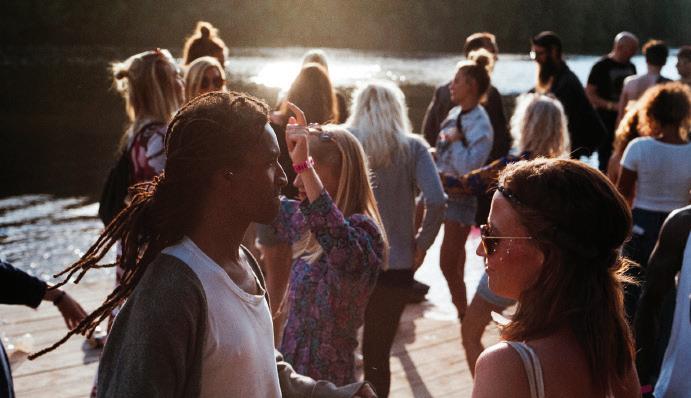
Compiling everything I have experienced and learnt so far, I will impart some knowledge on some of my favourite places and personal experiences, from living and working in this amazing city.
Firstly, for any first years I cannot stress enough that first year doesn’t count! I’d encourage you to go out as much as you can, do enough work to pass the year, but don’t miss out on the social side of first year.
My favourite places for a night out would be Salvation and Kuda, although if you go to Kuda be warned in advance about their stairs. Last year I queued for an hour to get in and within ten minutes of being in the building, I
slipped down the stairs, tore the ligaments in my foot and ended up in the hospital. Worst of all, I was embarrassingly sober.
At least I can say I had the full first year experience. On another note, Turtle Bay and Las Iguanas are both good places to pre. They do some fantastic two for one cocktails.
Some of my favourite places to go in the city include Brew
own places in the city.
The many bookshops hidden amongst the city, walks along the river and the minster gardens, along with the small, unassuming cafes, are just a few places which feel like home to me.
It is important to find your place in the city, as this time in life can often feel very lonely and isolating. Your concept of home will probably change, just as mine has. Living in a different place each year, then going back to your childhood house, despite no longer being a child, evokes something I can’t quite describe, although I will try.
I myself, feel like I’m mourning a time in my life which has gone forever, although it is not an overwhelmingly sad process.

The experience of learning more about myself is exciting and admittedly rather frightening. But so far, I am loving it. As far as advice goes, third years I wish you all the best with your dissertations and please give me advice, as I am utterly terrified.
First years, enjoy every second, as it goes way too fast. To the rest of us, don’t feel too pressured to find yourself or expect some great epiphany to tell you what you are going to do with the rest of your life.
I am beginning to discover that no one ever really knows what they’re doing with their lives. I think they just smile and hope for the best.
 BY AMBER HANDLEY
WITH WINTER HOLIDAYS looming ever so closer, this time of year has a special way of reminding those who are single, just how single you really are.

The thought of not being able to walk down the street without seeing smug couples kissing under festive lights, kissing on ice skating rings and well, just performing any sort of public affection, can fuel an infuriatingly nauseous feeling in any solo on-looker. If you are however, quite content with remaining single this holiday season, it being a conscious choice - one which you don’t feel the need to remind yourself of (or your family members who continually drop not so subtle hints about how you never bring anyone home for the holidays) well, good for you. But if in fact you have exhausted the tangled web of
dating apps, been traumatised by blind dates and just come to the conclusion that a life of solitary with many, many cats may be for you, I offer one last hope which might just find you the love of your life. Or at least someone to warm you for the winter months.
As TikTok has gained such control and influence over our lives with its never-ending ideas, beauty hacks and general life advice, one of its latest and spiralling trends comes in the form of red nails.
First capturing the attention of over a million people, the trend began back in January, but didn’t gain much momentum until it resurfaced and catapulted this October. For those of you unfamiliar with the Red Nails Theory, let me fill you in. The theory elucidates that whenever
women wear red nails, they will receive an increased number of compliments from both men and women, but especially from men. This is apparently due to the fact that growing up, men were familiar with seeing red nails on female figures, such as their first celebrity crushes and teachers, but especially on their mothers. Therefore, men associate red nails with being comforted and cared for. While this sentiment may indicate a questionable mother complex, the Red Nails Theory took off, with those con tributing to it remarking on how powerful red nails made them feel.
In addition to an influx of compliments, TikTok users testing out the Red Nails Theory claimed they got
asked out on more dates; praising the power of the red nails.
What happened on those dates they never say. I, however, am an optimist and believe they went wonderfully. They are all now happily in love.
The TikTok accounts praising the Red Nails Theory are endless. Whether those reports are true
is known to make people more attracted to you: it is the colour of passion and sexual desire. The possibilities which could arise from wearing red nails have left me curious. The hope that somewhere out there a kind, respectable man who is decent enough looking, over 6ft, of an athletic build, and will approach red nails like a moth to a flame, has me pondering whether I myself should give in to the trend.
Instead of trusting some sketchy algorithm to find love, why not just trust your nail tech?

ROBOTS WILL SOON be roaming the gleaming hallways of the £35 million Institute for Safe Autonomy (ISA) on University of York’s Campus East.
ISA department director Miles Elsden tells me this as he generously gives me a tour of the impressive new setup ahead of its official opening set for spring next year. Designed and purpose built to be a ‘living lab’ for Robots, Artificial Intelligence, Quantum Communication and more (as well as a few human researchers), this exciting development is set to be the UK’s first dedicated safe autonomy research centre.
From the moment you walk through the door, the space is smart, professional, glassy and
spacious, and soon going to be a thriving hub full of researchers, industry experts, and global leaders – all focused on one of the most important issues of our time: ensuring that the technology we make is safe, and works for the good of society.

meeting rooms and offices on one side of the building, then labs and active collaborative research spac es on the other, this impressive new structure is far bigger than it looks from
be used as a landing pad for drone testing), this place promises to be a dynamic and exciting new place on campus.

Miles tells Vision that most of the doors are automatic – “so they can be opened by robots.” He then proceeds to introduce us to the
only just moved in since the space was completed over the summer. The testing pool, he tells Vision, still hasn’t had its acoustic tiles put on yet – he shows me the empty pool, a few meters square in width and depth. It will soon be used for underwater communication and underwater robotics research.
Intelligence, to solve real world challenges.
pool, and even a telescope on the roof (the same roof that will also
able, most of the researchers have
I’m shown into another room, where remarkable self-program ming, self-building, ‘evolving’ robots are being made, or rather, making themselves through Artificial

AS UNI STUDENTS we all know there’s a universal priority ranking of going out > sleeping > lectures.
Although sleeping has the middle ranking, it still tends to be sacrificed for the last-minute cram sessions, making us all walk around like zombies. We often justify this lifestyle by saying we’re young and our bodies can handle it, but how true is that?
The way we sleep can be split into two separate cycles, the REM cycle and the non-REM cycle. REM stands for random eye movement; this is where your eyes move randomly while you’re asleep but they do not transmit any visual information to the brain. This is typically the point at which dreams occur. We start in the Non-REM stage and then change to the REM stage for a short amount of
timebefore the cycle starts again.
The Non-REM cycle starts in a phase where you can easily be woken up, this is relatively short, only lasting 5-10 minutes. After this, your heart rate starts to slow down and your body temperature drops.
This is a deeper sleep but you can still be easily woken up, lasting for about 15-25 minutes. The final phase is a deep sleep in which it’s harder for you to wake up. If you were woken up during this phase you’d be disorientated for a while. In this phase the body undergoes maintenance.
You will have several REM cycles throughout the night. The first period generally lasts around ten minutes and with each further phase the time increases, with it sometimes lasting for an hour. REM is important for development as it stimulates areas of the brain related to learning and some research shows it is
linked to protein production.
The idea that we need less sleep when we’re young is some-

In the short term, it can cause “increased stress responsivity; somatic problems; reduced quality of life (QoL); emotional distress; mood disorders and other mental health problems; cognition, memory, and performance deficits; and behaviour problems in otherwise healthy individuals. Long-term consequences can include “hypertension, dyslipidaemia, CVD, weight-related issues, metabolic syndrome, and T2DM.”
what true. Everyone needs a set amount of deep sleep to function healthily. As we get older, we find it much harder to enter deep sleep and often have longer periods of light sleep.
So how bad is it if we don’t get the proper amount of sleep?


There are both short-term and long-term consequences of
In another room, I see a long mirror glass window separating the space, providing an observa tion area for researchers to look through unseen. This will be an important room, where new technology will undergo trials with humans, and will be measured on how well they perform and if they deliver as technology to improve people’s lives. From this room could come robots that revolutionise many areas of society.
a reason why you always feel more tired than you may think. Another factor that affects your sleep is alcohol. Alcohol can suppress the REM cycle in your sleep. During the first couple of cycles the non-REM deep sleep should be dominant and in the later cycles REM sleep is meant to be dominant.
The sedative nature of alcohol can cause you to fall into deep sleep quicker. This causes less REM sleep and more deep sleep leading to a lower quality of sleep, including shorter periods of sleep with more disruptions.
“As we get older, we find it much harder to enter deep sleep and often have longer periods of light sleep.”
“Alcohol can suppress the REM cycle in your sleep.”

IN JULY 2020, to reduce overcrowding of public transport, the UK began 31 trials of E-Scooters. The E-Scooter hire company ‘Tier’ was selected to head this trial as scooters were placed all around the country, one hundred of which were placed at the University of York. But how was this form of public transport popularised and how safe can it be?
E-Scooters first came to fame in America, and not for the best reasons. In an almost overnight littering, E-Scooters appeared throughout major cities like San Francisco as companies like ‘BIRD’ and ‘Lime’ put their products on the streets without licenses or permission from city officials. The city was then flooded with these scooters, leading to public fears for safety when
traversing their city on foot and by car. With no safety regulation, the use of these scooters without helmets was extremely common and, as these E-Scooters could reach up to 17 mph on the sidewalk, users often crashed into pedestrians, causing harm to themselves, others and damaging public property. When the co-founder of ‘Spin’, another one of the companies in the E-Scooter space, was asked about his company’s work he said they were “innovating on the regulatory side,” in other words, acting illegally.
Soon, the city attorney of San Francisco issued cease and desist letters to these companies to minimise the rapidly growing safety concerns. The letter mentioned the lack of helmet use and the fact that no driver’s license was needed could mean that almost anyone could come and drive them unchallenged. It also claimed that
the scooters were breaking the law by ‘blocking sidewalks and access ramps.’
Despite these initial problems in America, the issues raised presented a nice case study for the UK trials. E-Scooter implementation here has taken onboard the mistakes of San Francisco’s scooter nightmare. Using E-Scooters in the UK is generally quite safe due to the incorporation of warnings, automatic speed adjusters and a ‘wide range of safety resources designed to educate riders on safe e-scooter and e-bike use’ according to Tier. Attached to the scooter is a little box labelled with the advice: ‘Respect Local Traffic Laws’ and ‘Park Responsibly.’
Next to the collection of scooters is a sign stating the rules of usage:
- Don’t Drink and Ride
- Stay on Road and Cycleways
- Wearing a Helmet is Advised
- Over 18’s only
All users must have their driver’s license (or provisional driver’s license) verified before use to enforce the age limit usage. With these safety measures in place, the E-Scooter trials have seamlessly integrated into everyday life, providing many social benefits for people who before were reliant on public transport to travel short distances in and out of town.
The term E-Scooter sets the pretence of an environmentally friendly product, as electricity isknown as a better alternative to emission creating fossil fuels such as petrol or diesel.
In the UK, the average car journey is 8.3 miles in distance. The average journey time is about 21 minutes and 30 seconds. With proper distribution across the country making scooters more accessible, the average car trip could be replaced by Tiers’ electric
scooter, whose total travel distance ranges 10-80 miles long. With a £1 unlock and 18p per minute usage charge in comparison to the skyrocketing costs of fuel needed to power a car; the opportunity cost of using a car or bus grows larger, and with it the intended effect of reducing overpopulation on other public transport systems.
From January 2020, Tier became the first company in the electric scooter space to becomefully carbon neutral, a factor which was most likely taken into consideration by the government when picking which company should spearhead the trial. With swappable and recyclable batteries inside their E-Scooters it seems that the trials in the UK are unquestionably socially and environmentally favourable and that they definitely make progress for a more sustainable way of life.
BY JOE LEE
THE UNIVERSITY OF York has recently been ranked 8th in the UK (36th globally) regarding its ‘social and environmental sustainability performance’ by QS Top Universities.
Over the past few years, the University has invested in many projects in order to create a campus for the future, ranging from the Environment Building, a place for ‘collaborative research between environmental, ecological and social scientists’ to the Chemistry F Block whose upper floors hold the Green Chemistry Centre of Excellence, promoting chemistry that is sustainable and kind to the Earth. All of UOY’s current development plans consider sustainability, efficiency, social impact and carbon footprint (or more simply being green). The University has an extensive 10-year (21-30) plan with five key goals to maximise its sustainability from 17 set by the UN, but how achievable are all these goals and are they enough?
One of the biggest problems
concerning students nowadays is the mental health crisis and COVID. With people being house ridden for over a year, mental health saw a rapid deterioration as regular everyday life began to dissipate. To combat this problem post-lockdown the ‘Strategic Goal’ of the UOY is to bring the whole university community together to ‘deliver the aims of the Student Mental Health and Wellbeing Strategy.’ On its own this may not be achievable but paired with the target of incorporating Student Wellbeing officers within departments so everyone studying has someone to talk to about their problems, the departments can now come together as a whole to discuss and find ways to improve student mental wellbeing. As for helping overcome COVID there are hand sanitiser stations spread throughout both campuses and there is a walk through Covid testing site in the Wentworth Way car park should students start to fear the worst. As for quality education the University of York is a
Russell Group university as it has excellent education methods and students looking to develop their skills can attend seminars or look to the skill guides on the VLE; this idea of being able to attain the information to improve online or in-person will hopefully continue for the university in the years to come.
The University colleges and societies regularly hold social events for inclusivity and have their own security team to make sure everyone is safe. The University also promotes recycling, even starting up a YORCUP scheme which has ‘saved over one million single use plastic cups from being thrown away’ therefore sustainability and environmental ethics are quite notable for the University. Plus, the University aims for the ‘Creation of inclusive facilities and shared spaces (both real and virtual) on campus and beyond, to stimulate creative and innovative interactions, skill sharing and partnerships’, which is a wonderful idea
for bringing the city together for the better.
The University has targeted becoming entirely carbon neutral by 2050 and with its constant actions to create a greener environment this is an entirely achievable and realistic goal, but this is still a long way away and in the meantime a lot of damage may be done to the climate. Moreover, the University aims to be a leader in ‘ecological management, demonstrably improving biodiversity on campus. Becoming a leader would put some responsibility on the University as smaller operations may look to them for ideas, but the University must worry about what other companies do, e.g., where they buy food, electronic and other items from as they may be unknowingly supporting unethical practises if they didn’t take on the responsibility of researching their suppliers. With the packaging for the products bought by the University, there’s an air of responsibility as with poor waste management becoming a grow-
ing problem globally, in order to be green the University would have to ensure it’s recyclable and as minimal as necessary, and as it aims to reduce waste by 33% for 2030, this goal is one well suited and achievable in modern times with consumer patterns changing toward more environmentally friendly packaging.
How is this performance overall?
In the University’s five key goals for sustainable development, they are excelling majorly, being notably environmentally positive in comparison to other similar institutions around the globe. But what about the other goals? Well, it seems the University is still working very hard to be ethical and green regarding almost all of the other targets. The University should be an example to most other universities on what to strive for, and how to be the best you can be environmentally, socially and educationally.

ON THE 15TH of June of this year, former British and Irish Lion and current Pundit, Ugo Monye, wrote an article in the Daily Telegraph with the headline, “Rugby union must tackle ‘heavy drinking culture’ and ‘laddish behaviour’” sparking a debate amongst the rugby circles of Twittersphere.
This fed into current discourse on the current place of rugby, its image and the general health of the sport whilst the world continues to grasp with COVID-19’s consequences and the cost-of-living crisis.
For me, someone who has stopped playing rugby twice because of being uncomfortable
with teams’ infamous off-field behaviour, that article by Monye, who as a current Question of Sport captain remains an influential figure within the game, in a big broadsheet paper is a welcome move, albeit it does still make me question as to whether enough is being done both at the highest levels and at local ones too.

Nonetheless, his article made me reflect on my own experiences of collegiate rugby at the University of York as I entered into my second year.
In my first year, I signed up to play for Heslington East RFC (otherwise known as HesEast), the rugby team which represents the East Campus colleges of Constantine, Goodricke and Langwith.

On the pitch in 2021-22, the team enjoyed another unbeaten season and a pretty remarkable Varsity Cup win.
Yet off the field, the team had been embroiled in controversy which had failed to have been addressed by university authorities or been reported properly by the media.
I first quit rugby in January 2020 because the team I played for were too focused on the night out rather than the game beforehand. Then obviously the pandemic came along, which meant although I did take up rugby again, restrictions meant I wasn’t able to take to the field till August 2021, just before I started studying at York.

In short, I had really hoped that I could get back into playing the sport I love again while at university.
However, last year I only played four games, three for HesEast and one for the Uni 2nds. Not only was getting to the ‘22 pitches an absolute pain from Constantine College,
and the usual dosage of third year favouritism (that admittedly plagues most university societies) preventing freshers from game time, but because I had been to barely any socials, I hardly knew the players on the rugby team.
I didn’t go on socials because getting myself drunk to the point of vomiting and doing frankly disgusting dares and challenges is not my idea of fun.
And because I didn’t go on socials I didn’t know the players (specifically the seniors) well enough, therefore I hardly played any games of rugby last year. Rugby, like any collegiate sport, requires a lot of effort, and I wasn’t enjoying it enough or even feeling comfortable enough to attend again this year.
Mix the toxic culture, the favouritism that’s based on who is the most ‘fun’ on nights out
rather than playing ability, the lack of communication, the welfare support system in place at HesEast that was there in name last season, and you have the reasons for why so few freshers are actually bothering to turn up to socials and training in the first place.
University rugby culture already has a bad reputation as it is nationally and within the rugby circles of the media, and at the University of York absolutely nothing substantial is being done to fix this.

Thus, leaving players like me
THE UNIVERSITY OF York
Movember challenge is back this year and one of the forms it is taking is a charity football match on Saturday 26th of November.

The Movember movement is the leading charity changing the face of men’s mental health. Since 2003, Movember has funded more than 1,250 men’s health projects.
Movermber are the leading charity changing the face
of men’s mental health. Raising awareness and funds for prostate cancer, testicular cancer and suicide prevention, Movember is honoured throughout the whole of November.


Promoted on the York Sport Union Instagram page, on average one in eight men in the UK will be diagnosed with prostate cancer. The Sports Union promoted ways to “join the movement” including “move for Movember” and growing a moustache, helping to raise funds and awareness for Movem-
ber.
Will Kilgannon and Ludo are the University of York’s student ambassadors this year who are aiming to continue to raise money for this important cause. On the 14th of November, they held the men’s mental health panel in association with the University of York’s Mental Health Society.
Within the first week of the challenge, the University of York raised £7,000 and currently the total is just over £18,000.
As a group, many events
have been organised to raise more money from the Sports matches, Panels and even a classic Sunday Revs!
The University of York’s Netball Club raised £524 through running a total of 115 miles.
Currently, the University of York Boat Club is top of the team leaderboard having raised £3,724.30.
In total, 36 teams are involved in the University’s efforts ranging from sports clubs to societies. On top of this, 478 individual members have registered under
the University of York’s challenge to do their bit.
The charity football match to round off the month of fundraising will be between East Campus XII and West Campus XII. East and West finally go head to head!
It will be taking place at the Athletics track pitch near James College.
Tickets are on sale on YUSU website for only £2.00. It’s a game you don’t want to miss.

World Cup saw teams from Australia, New Zealand, France and the Cook Islands touch down in York for a series of head to head games at the LNER Community Centre Stadium.
York Vision attended a number of these games and followed the New Zealand Women’s team on their journey to the RLWC final. (Purely by chance of course and certainly not because this particular writer is from New Zealand. -wink wink- ) But in all seriousness, New Zealand had a fascinating journey to reach the Women’s World Cup final this year, facing off against neighbours the Cook Islands and Australia, before entering a dramatic semi-final against England.
Australia. And what a showdown it was. Equally paired in rugby prowess, the teams were neck and neck for most of the match. Australia showed excellent offence against New Zealand’s always sturdy defence, with vicious tackling from both sides.
The Kiwis quickly pounced on the dodging Aussies, with some tough team tackles and stunning push backs from powerhouses Hufanga and Hall. Slick tries from Apii Nicholls, Page McGregor and Annette-Claudia Nu’uausala seemed to suggest a narrow NZ win, as did an impressive sprint up the pitch from Hufanga tailed by two Aussies.
nal was not the spectacular comeback than the kiwis had hoped for. The Manchester game was less of a battle between old rivals and more so a gradual loss of energy from a long fighting team. Despite general support from the English crowd, the Kiwis failed to continue the momentum of their tournament so far, with the Aussies snatching a 54 - 4 win.
Of course rugby is about more than just points on the pitch, with team’s culture, players’ inspiration and crowd’s engagement also key aspects of the World Cup excitement.
er noted the vast array of history in York whilst New Zealand’s Brianna Clark had fun exploring the labyrinth of streets and cute coffee shops - “I’ve just loved it.” The greatest significance of the tournament seems to be the vast impact Women’s rugby made on the small York Stadium. Welcoming a green, gold and black sea of over 3,000 Aussie and Kiwi fans to the team’s Thursday night showdown, this Kiwi writer was particularly proud to hear so many southern hemisphere accents in one place.
SINCE THE LIONESSES smashed the Euros over the summer, a whole new spotlight has been shone onto Women’s football.
Coming into my second year of university, I was excited to volunteer as the Captain of my college team and rise to the challenge of planning training sessions.

We had 30 sign ups from the Sports Fair, a record amount for our college.
Right from the get go the New Zealand girlies were a team to watch Unfortunately I was unable to watch this match, but it was a powerful opening. Starting the tournament with a dashing victory over France, the team snatched the match with an overwhelming 46 points to France’s 0, a confident first step along the road to the final. Heading into the second round against the Cook Islands, NZ were playing strong. Despite tough defence from their island neighbours, the Kiwis pushed back with a slew of tries from Raecene McGregor, Krystal Rota and Amber Hall. In an impressive debut Mele Hufanga snatched a race up the pitch before quick fire passing from the Kiwis secured a 22-0 lead.
It was the Cook Islands however who achieved the moment of the match when Mackenzie Wiki found an opening on the corner and scored the team’s first ever World Cup points against New Zealand. The drums played, the crowd cheered and regardless of nationality, everyone was on their feet. However, unrelenting work from the Kiwis inevitably clinched their 34-4 victory, displaying powerful teamwork ahead of their much anticipated showdown with
However it wasn’t meant to be as a swift tackle knocked the wind out of Hufanga and the momentum out of the team, before a nail biting fight to the end left them with a 10-8 loss. But this set up New Zealand for a most intriguing battle against host nation England, just days after New Zealand’s Black Ferns stole the cup from England’s Lionesses in the Rugby Union World final in Auckland’s Eden Park.
Determination seemed to overtake the Kiwis as they stepped out into the sea of England’s fans last Monday. Overcoming a brief spattering of nerves, an early England try and uneven defence, the team quickly turned the match around. Two brisk tries from Hufunga and McGregor edged them into the lead for half time, despite multiple close calls from video refs. But it was the second half which really cemented their finale spot. As Player of the Match Hufunga cleared a path, Otesa Pule smashed a stunning dive for the tryline.
The relentless offence continued as Brianna Clark slid across the line to seal their unbeatable lead. Amongst various captains challengers and strong defence, England fought to the end, and came close to scoring a last minute Hail Mary try - but by then it was much too late.
New Zealand had smashed England 20-6 and were already packing their bags for Saturday’s Grand Final against Australia.
Unfortunately the long awaited fi-
The New Zealanders brought more than just excellent rugby skills with them to York. Opening the match with their much beloved Haka, the country also ensures Maori heritage shone in the national anthem, which plays first in Maori and then in English much to the unanticipated surprise of prematurely clapping English fans. This Pacific culture also shone amongst the crowd, with some audience members swinging Maori Poi and the Cook Island supporters creating thunderous support with pa’u drums, before hanging around to support New Zealand too.
This close Pacific relationship was particularly special as the teams also share somewhat of a family rivalry with New Zealand captain Krystal Rota having two nieces playing with the Cook Islands team. This certainly makes their battle of Hakas intense. Despite some starkly competitive matches, the players were keen to highlight the joy shared between the teams off the pitch. Cook Islands try scorer Mackenzie Wiki described the vibes as “all positive”, whilst New Zealand’s Krystal Rota joked “there’s no mates on field”, but “it’s always a good battle against people you know.”
Outside the stadium, the teams seemed to enjoy their time in York, hosted by the University of York and York St John. The Cook Islands coach, Rusty Matua, described the LNER Stadium pitch as “like carpet out there” and called their experience playing in York as #grateful.

Australian player Sammy Bremn-
But it was Monday’s semifinal that reached near capacity, with over 7,000 England and New Zealand fans packing out the stands. Amongst these vast turn outs was a huge roar of energy, passion and occasionally English booing (all in good fun I hope), before crowds descended to the sidelines ladened with balls and posters, hoping to score signatures and selfies with their favourite Women’s rugby player.
The fandom behind Women’s rugby was ripe in York, and certainly says alot about the future of women’s sport. Fans young and old braved the cold winter evenings to cheer on Women’s Rugby League, for the sheer reason that they love the game. English fans filled the seats of games long before the English team ever made it to York. The support was immense. I even witnessed one young girl cheering for her favourite player (Emily Rudge) from the other side of the pitch, begging her to come over and say hi.
And eventually, despite the noise, Emily did. Kiwi Captain Krystal Rota described this vast support of fans as deeply encouraging “There was awhole bunch of kids coming up wanting things signed. So it was really lovely that we have some support over here because we are far away from home.”
And that is the true power of seeing New Zealand’s journey to the World Cup final. Not the tackles or the wins or the tries. But the power of their character and the crowds inspired by their presence, a team impassioned by their past, encouraged by their heritage and blazing a bright future for women’s sport.
Fast forward to the end of term. We have four consistent players and four others who try to make it whenever they can. I’m so grateful for the players we have, but I can’t help but wonder what happened to the 22 others.
Having few numbers for a seven-aside team brings its own challenges. From no subs, to forfeiting matches and cancelling training sessions, it does sometimes feel like the euphoria of the Euros was a long time ago.
Sometimes, our matches are cut short from Men’s collegiate football running over time, or there’s no one to referee our games.
Despite this, I’ve loved my role and really feel the positive presence of Women’s football at the university.
The Captains all support each other, are competitive and many people work hard behind the scenes to ensure we do have matches each week.
I just hope more girls decide to give football a go, as more numbers bring more opportunities.
GIRLS, COME PLAY FOOTBALL!
Thursday November 24, 2022
THIS YEAR’S RUGBY League World Cup saw teams from Australia, New Zealand, France and the Cook Islands touch down in York for a series of head to head games at the LNER Community Centre Stadium.

York Vision attended a number of these games, and followed the New Zealand Women’s team
on their journey to the RLWC final. (Purely by chance of course and certainly not because this particular writer is from New Zealand. -wink wink- ). But in all seriousness, New Zealand had a fascinating journey to reach the Women’s World Cup finals this year, facing off against neighbours the Cook Islands and Australia, before entering a dramatic semi-final against England.