

ENGINEER Villanova
GAME CHANGERS
Strengthening bodies and minds, on and off the field, through Sports & Performance Engineering
SPRING 2024
DEPARTMENTS
Developments 2
Features 16 Student

5
CAREER-MAKER
Associate Professor Mojtaba Vaezi receives prestigious NSF award.

IMPROVING HEALTH CARE THROUGH TECHNOLOGY
New campus group shines light on the field of biomedical engineering.
Villanova Engineer is published by Villanova University College of Engineering, Villanova, PA 19085
Drosdick Endowed Dean
Michele Marcolongo, PhD, PE
Associate Deans
Garrett M. Clayton, PhD, Graduate Studies
Noelle Comolli, PhD, Faculty Affairs
David Jamison IV, PhD, Undergraduate Affairs
Stephen Jones, PhD, Student Success and Diversity, Equity and Inclusion

PROMOTING INCLUSIVE EXCELLENCE
Robert Courey ’83 EE is named a co-recipient of Villanova’s Nance Award.

THINKING GREEN
Contributors
Keith Argue
Kiera Daly Soltis
Alyson Hersker
Queen Muse
Photo Credits
Principal photography by:
Paul Crane Photography
John Shetron Photography
Additional photographs provided by:
George Simmons
Will Stoval
Instagram: @VillanovaEngineering VILLANOVA ENGINEER

RACING THROUGH ADVERSITY
NovaRacing’s journey from setbacks to comebacks in the world of Formula SAE.
NEVER STOP SHOOTING
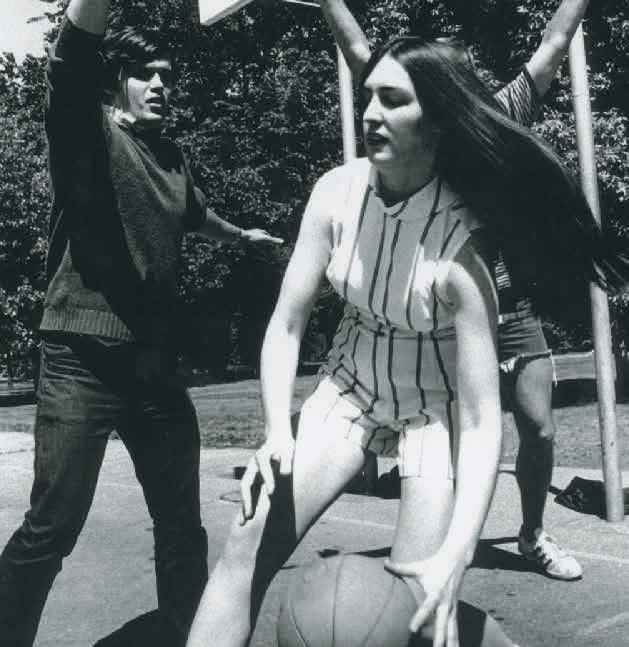
How Marie Maguire ’69 EE helped launch VU’s Women’s Basketball team.
Questions, Comments, Letters to the Editor
Send to elizabeth.slocum@villanova.edu
Address Updates
villanova.edu/updatemyinfo
Stay Connected on Social Media
Facebook: facebook.com/ VillanovaEngineering
LinkedIn: linkedin.com/company/ villanovaengineering
Twitter: @NovaEngineer
Sylvie Lorente, PhD, Research and Innovation
Keith Argue, External Relations
Director of Communication & Marketing/Editor
Elizabeth Slocum
Design
Suzanne Guelli
Profile
Profile
to Know
30 Alumni
31 Get
32 In This Issue
31 26 10
highlights her
as the next director
Engineering. 12 15
Dr. Bridget Wadzuk
vision
of Sustainable
Message from the Dean
Dear Friends,
In Villanova’s College of Engineering, our mission is to educate society’s future innovators and technical leaders—those committed to serving the greater good and solving complex challenges by following the habits of the heart and mind.
A new initiative launched by the College epitomizes this mission. Through Sports & Performance Engineering, our faculty and students are advancing research that improves the human condition, from the achievements of youth, student or professional athletes to the performance of neurodivergent populations. Working as part of multidisciplinary teams with doctors and nurses, coaches and trainers, Villanova Engineers are designing innovations that prevent injury and optimize overall well-being—demonstrating that Caritas and cutting-edge technology can go hand in hand.
To further educational opportunities, the College has launched a master’s degree in Biomedical Engineering (BME). This cross-disciplinary program includes courses from Mechanical, Chemical and Biological, and Electrical and Computer Engineering—creating a crossroads for innovation in master’slevel education.
You’ll find examples of our BME-related work throughout this issue of Villanova Engineer, including undergraduate activities. A new campus group, Villanova University’s Engineering in Medicine and Biology, is expanding on the classroom experience with guest speakers, student talks and industry field trips. Lauren Iskander ’25 ChE, meanwhile, turned her research in a Villanova neuroscience lab into a prestigious fellowship through the Fulbright Canada–Mitacs Globalink Program. Her goal, she says, is “to do research in a field that will help as many people as possible.”
Both the master’s degree in Biomedical Engineering and our research initiatives in Sports & Performance Engineering are supported by the College’s 2023–2033 Strategic Plan, a roadmap that will help guide our decision making and investments for the next decade. And, of course, these initiatives and others will only be enhanced by our new building, Drosdick Hall, which was named this semester to honor the generosity of John G. Drosdick ’65 ChE.
Read on to see how Villanova Engineers are solving complex challenges while serving the greater good.
Michele Marcolongo, PhD, PE Drosdick Endowed Dean of Engineering Professor of Mechanical Engineering

A Roadmap for Our Future
College of Engineering announces 10-year strategic plan
Last summer, the College of Engineering announced a new strategic plan to help guide the College’s trajectory for the next decade.
Developed with input from across the Villanova Engineering community, the College’s 2023–2033 Strategic Plan identifies areas of strength and opportunities for growth as the College furthers its commitment to igniting change for the greater good.
“The Strategic Plan belongs to our whole community— students, parents, faculty and staff members, alumni, new friends and longtime supporters,” says Michele Marcolongo, PhD, PE, Drosdick Endowed Dean of Engineering. “The entire Villanova Engineering community will play a role in achieving our goals, enabling us to write the next chapter of the College of Engineering together.”
After a year’s worth of discussions with more than 140 individuals, including faculty, staff, administrators, undergraduate and graduate students, and alumni, three themes emerged as key areas of focus: Teaching & Learning; Research & Innovation; and Lifelong Learning & Professional Development. At the heart of these areas was one overarching theme: Culture & Climate.
Throughout the plan’s development process, the College remained guided by Villanova’s Augustinian Catholic values of Veritas, Unitas and Caritas, as well as by the goals and ideals identified in the University’s Strategic Plan, Rooted. Restless.
The COE Strategic Plan will serve as a launching point for the College to focus on its objectives, but it is likely to grow and change over time. Details about the plan, as well as regular status updates, can be found at villanova.edu/COEstrategicplan.
“St. Augustine encouraged us to ‘always add some more, always keep on walking, always forge ahead,’” Dean Marcolongo says. “I look forward to working with our community as we shape the future of the College.”
STRATEGIC THEMES
Teaching & Learning
Support world-class engineering education that trains sustainability-driven engineers, equipped to create opportunities and solve complex global challenges for the greater good.
Research & Innovation
Become a leader among engineering schools at R2 institutions known for driving innovation and growth in engineering for the common good.
Lifelong Learning & Professional Development
Create an ethos of learning that prepares all students, faculty and staff for their careers, and continue to serve as a lifelong resource for professional and educational growth.
Culture & Climate
Strengthen and sustain a diverse and inclusive community of learners, educators and staff grounded in Villanova’s Augustinian Catholic values, the foundation that all pillars of the Strategic Plan are built upon.
DEVELOPMENTS | COLLEGE 2 CULTURE & CLIMATE Strengthen and sustain a diverse and inclusive community of learners, educators and sta grounded in Villanova's Augustinian values, which serves as the foundation that all pillars of the strategic plan are built upon. TEACHING & LEARNING RESEARCH & INNOVATION LIFELONG LEARNING & PROFESSIONAL DEVELOPMENT Become a leader among engineering schools at R2 institutions known for driving innovation and growth in engineering for the common good. Create an ethos of learning that prepares all students, faculty and sta for their careers and continue to serve as a lifelong resource for professional and educational growth. Support world-class engineering education that trains sustainability-driven engineers equipped to create opportunities and solve complex global challenges for the greater good
CULTURE & CLIMATE
Strategic Themes
CULTURE & CLIMATE and sta g unded in Villano a's Augustinian alues, which serves as the foundation CULTURE & CLIMATE

Introducing Drosdick Hall
Villanova University President the Rev. Peter M. Donohue, OSA, PhD, announced in March that in recognition of $20 million in support of the College of Engineering building expansion project by John G. Drosdick ’65 ChE, retired CEO and president of Sunoco Inc., the College’s soon-to-be-completed new building will be named Drosdick Hall.
“I cannot thank John enough for his unwavering support of Villanova and the College of Engineering,” Father Peter said. “This is a momentous time for the College of Engineering and the entire Villanova University community. Drosdick Hall will enhance the Villanova Engineering experience for generations.”
This most recent commitment by Drosdick continues his longstanding support of Villanova Engineering and will go toward the Engineering building capital project and to creating an endowment to support Drosdick Hall and the College. Drosdick was an early supporter of the Engineering building expansion, including an investment in the Drosdick Innovation Lab, which will provide students with increased opportunities for hands-on, experiential and collaborative learning in a space that supports scalable real-world engineering projects. Previously, he also endowed the College’s deanship through the Drosdick Endowed Dean’s Fund, which supports the ongoing strategic priorities of Villanova Engineering, as well as the John G. Drosdick Endowed University Scholarship, which supports Engineering students with demonstrated financial need.
“I have seen how a Villanova education can have a profound impact on the path a person chooses to take. It is for that reason that I wanted to give back,” Drosdick said. “I am extremely grateful to Villanova for the Engineering education it provided me and how it helped me to grow both personally and professionally. I want to make sure that tomorrow’s engineering students have the same transformative experience I had at Villanova. This new building will create these opportunities for our future engineers.”
Villanova began construction on the 150,000-squarefoot addition to the College’s primary academic building in 2022. Scheduled to open this fall, the expansion will provide a new home for the College of Engineering and elevate the College’s academic and student experience by offering improved and expanded research facilities that focus on interdisciplinary connections, as well as state-ofthe-art instruction spaces for hands-on, problem-oriented and team-based learning.
“Drosdick Hall will serve as a crossroads for innovation for Villanova Engineering students, faculty and staff, and transform the educational experience for the mid-century and beyond,” said Michele Marcolongo, PhD, PE, Drosdick Endowed Dean of the College of Engineering. “We are so thankful for the generous support of John Drosdick to the College of Engineering.”
Villanova names College of Engineering’s new home in honor of John G. Drosdick ’65 ChECollege Launches Master’s in Biomedical Engineering

The College of Engineering announced a new master of science degree in Biomedical Engineering (MSBME) that will launch in Fall 2024. The interdisciplinary program involves the application of engineering to address challenges in medicine and health care for societal needs.
“Our faculty and students are already working in the biomedical space, but there was no structured program around it,” says Director of the MSBME Program and Associate Professor of Electrical and Computer Engineering Meltem Izzetoglu, PhD. “A College-level program that combines all the department programs and courses will be very beneficial. There’s this whole wealth of research and knowledge at Villanova. Now, it is under one umbrella where we can all gather and collaborate better with each other in master’s degree education.”
The MSBME program will offer three specializations: Cell & Tissue Engineering, Biomechanics & Biomaterials, and Biomedical Signals, Sensors & Imaging. Each track will offer students thesis and nonthesis options for degree completion.
MSBME students will be required to take two new courses: Medical Sciences for Engineers, covering relevant topics in anatomy and physiology; and Foundations of Biomedical Engineering, providing an introduction to the different concentrations within the field. Students will also have the opportunity to take electives outside of
Engineering classes through collaborations with the M. Louise Fitzpatrick College of Nursing and the College of Liberal Arts and Sciences.
As with all other master’s programs offered by Villanova Engineering, the MSBME will require 30 credits: 10 courses of 3 credits each and one zero-credit seminar course. The degree can be completed part time or full time, as well as in person, online or in a hybrid format. Students currently enrolled in a Villanova Engineering master’s program will have the option of transferring into Biomedical Engineering starting this fall.
The College’s MSBME was created in consultation with an advisory board featuring members from both academia and industry, with expertise spanning the field’s various disciplines. Biomedical engineering is a fast-growing, high-paying field with strong career prospects and a low unemployment rate. U.S. News and World Report ranks biomedical engineering as the No. 3 “Best Engineering Job” and the No. 17 “Best STEM Job” for 2024, with an annual median salary of nearly $100,000. Employment is expected to grow at 5% per year (2022–2032), according to the US Bureau of Labor Statistics.
“Biomedical engineers develop lifesaving treatments and devices as well as those that help alleviate pain and restore activity,” says Michele Marcolongo, PhD, PE, Drosdick Endowed Dean of the College of Engineering.
“The MSBME program will provide graduate education to advance biomedical engineering and further Villanova’s mission to engineer for the greater good.”
“There’s this whole wealth of research and knowledge at Villanova. Now, it is under one umbrella where we can all gather and collaborate better with each other in master’s degree education.”
—Meltem Izzetoglu, PhD (above right), director of the MSBME program
4
| COLLEGE
DEVELOPMENTS

CAREER-Maker
The National Science Foundation (NSF) named Mojtaba Vaezi, PhD, associate professor of Electrical and Computer Engineering, a recipient of the Early Career Development (CAREER) Award. His project, “Harnessing Interference with Deep Learning: Algorithms and Large-Scale Experiments,” received a five-year, $600,000 grant, which will allow Dr. Vaezi to advance research in managing interference in cellular networks.
The CAREER Award is the most prestigious grant supporting career development activities for teacher-scholars who most effectively integrate research and education within the context of their organization’s mission.
Dr. Vaezi is the 10th Villanova faculty member to receive an NSF CAREER Award since 2017 and the fifth from the College of Engineering. He is the first recipient from the Department of Electrical and Computer Engineering.
“Interference is a ubiquitous concern in wireless communication,” says Dr. Vaezi, director of the Wireless Networking Laboratory (WIN LAB) at Villanova. “As the number of users increases, the number of transmission sites increases, causing more interference. The rising deployment of drones and aerial transmitters intensifies interference and its challenges. The goal of this CAREER Award is to address this issue and increase data rates in wireless networks around the globe.”
This project will involve the development of a theoretical foundation and the implementation of large-scale experimental settings for interference management in 5G networks. The research will be conducted at Villanova and at larger test sites around the country. Dr. Vaezi will train and educate two PhD students and eight undergraduates through this award.
As part of this grant, Dr. Vaezi is also designing a summer program for underrepresented high school students in Philadelphia aimed at providing education about wireless communications. The program will run through the Villanova Engineering, Science and Technology Enrichment and Development (VESTED) Academy. It will introduce science, technology, engineering and mathematics (STEM) fields to students from all backgrounds to help them discover their passion for engineering and to expand our regional and national pools of engineers.
“We will incorporate the use of drones to create a hands-on experience and make this field more appealing to the next generation of learners,” Dr. Vaezi says.
An expert in machine learning, communications and signal processing, Dr. Vaezi has collaborated with leading companies on projects involving large-scale wireless systems to design and optimize real-world complex systems for 5G and Beyond 5G networks. Besides the CAREER Award, he secured two additional NSF grants in 2023 related to advancing wireless communications technologies.
Associate Professor Mojtaba Vaezi receives prestigious NSF award
“We are looking forward to working with like-minded partners to make such critical, life-saving technology affordable to all people.”
Helping the World Breathe Easier
NOVAMED team receives patent for low-cost emergency ventilator
Mechanical Engineering Professors C. Nataraj, PhD, Alfonso Ortega, PhD, and Garrett Clayton, PhD, along with Chris Townend, facilities manager for the College of Engineering, were awarded a patent in the fall for the development of a novel type of mechanical ventilator. Initially manufactured as an emergency alternative during the COVID-19 pandemic, this machine, called NovaVent, will now serve as a high-efficiency, low-cost device suitable for mitigating the global need for medical equipment.
“The need for this equipment goes beyond COVID-19,” Dr. Nataraj says. “Ventilators like NovaVent are critical parts of the medical infrastructure that are also needed to help the treatment of lung disease, cardiac arrest, strokes, brain injuries and more.”
Developed in collaboration with the M. Louise Fitzpatrick College of Nursing, NovaVent is made from widely accessible components to provide continuous mandatory ventilation (CMV) intended for patients incapable of breathing on their own. The patented design also controls tidal volume, a vital component to providing enough ventilation to a patient while preventing lung trauma. Settings can be adjusted through the control panel, and alarms will sound if the correct conditions are not met. The NovaVent supplies CMV at a rate of roughly 90% of expensive high-end ventilators, while saving tens of thousands of dollars in production costs, Dr. Nataraj says.
NovaVent is the first patented technology to come from NOVAMED, an interdisciplinary lab dedicated to developing open-source, affordable and globally available medical technologies.
Advancing Hydrology Research
VCRWS team receives $1.4 million NSF Major Research Instrumentation grant
Faculty members from the Villanova Center for Resilient Water Systems (VCRWS) were awarded a three-year, $1.4 million Major Research Instrumentation grant by the National Science Foundation (NSF) for the installation and upkeep of a unidirectional sediment-feed tilting flume. The device will serve a wide scope of hydrology research projects and experiments for Villanova researchers as well as national and international partners in academia, water utilities and engineering firms.
With the ability to mimic numerous real-world variables, the flume can be used to research diverse topics, such as urban hydrology, sediment deposits, soil liquefaction, fluvial processes and sediment capping technologies. It can tilt on an incline, weigh and recirculate sediment, create waves and control water flow and height, among other features.
“To be able to research on a unique piece of equipment like this is very auspicious for us,” says Virginia Smith, PhD, associate professor of Civil and Environmental Engineering, who was the principal investigator on the grant.
“Over the past 20 years, we have been able to gain great insight into how stormwater infrastructure works and how green stormwater solutions can be powerful,” Dr. Smith says. “But the real world is messy and complicated. Being able to pair the existing datasets with laboratory experiments on the flume and isolate single variables will allow us to understand the drivers and causes of why different types of infrastructure succeed or underperform under various conditions and will advance the science around stormwater engineering.”
GOING GLOBAL
The Major Research Instrumentation grant was one of two NSF grants awarded to VCRWS in the fall. The other was a two-year, $250,000 planning grant to set up a global engineering research center for urban hydrology.
6 DEVELOPMENTS | COLLEGE
—C. Nataraj, PhD (above, left), Moritz Endowed Professor of Engineered Systems


Students Tackle Water and Sanitation Challenges in Uganda
Agroup of nine Civil and Environmental Engineering students traveled to Uganda in January to work on senior capstone projects addressing critical water and sanitation concerns.
Led by Assistant Professor Kelly Good, PhD, PE, ’09 CE, Associate Professor Virginia Smith, PhD, and Professor Rob Traver, PhD, PE, ’82 MSCE, the group met with residents and visited project sites in pursuit of developing a solar-powered well-pump system to expand water access and designing safer latrines at a local school. The seven-day trip was coordinated in collaboration with the Kibo Group, a Uganda-based nonprofit, and Divine Water, an organization founded by Jim Mynaugh ’80 ChE.
Although the Divine Water capstone course has been held for three years, this was the first year in which students had the opportunity to visit Uganda for their projects. In previous years, students relied on Google Maps, videoconferencing and other virtual tools to learn about the location’s infrastructure and the problems they were attempting to solve. This year’s seniors were able to connect in person with the village’s residents, teachers and parents to hear their concerns about current conditions and gather critical information to refine their designs.
“At its core, engineering is about people,” Dr. Good says. “As engineers, we often get caught up in the numbers and practical things, like ‘How will the pump run?’ This gave us an opportunity to focus on the relationship piece.”
Despite the distance, last year’s students successfully designed a solar-powered system that distributes water to six taps throughout a village that previously had only one wateraccess point. As a thank-you, residents invited this year’s team to a festive celebration with local food, music and dancing. The revelry drove home the importance of the teams’ projects.
“As engineers, we often get caught up in the numbers and practical things, like ‘How will the pump run?’ This gave us an opportunity to focus on the relationship piece.”
—Kelly Good, PhD, PE, assistant professor of Civil and Environmental Engineering“For the students to see this big celebration one day, and the next to sit in tough conversations with residents and parents about their needs, it helped them understand why the residents were celebrating,” Dr. Smith says. “This is a bridge to a safer lifestyle for the next generation, and that’s what’s driving this work.”
The capstone projects focus on enhancing water accessibility and addressing sanitation issues in the village of Bupaluka, about 100 miles northeast of Uganda’s capital, Kampala. One group of seniors aims to develop a solarpowered well-pump system to replace the existing hand-pump well in the town, ensuring equitable distribution of water to thousands of residents. A second is working with a primary school that has only two functioning latrine stalls for more than 800 students. The group aims to design safer, more efficient latrines, as well as a rainwater harvesting system for handwashing to address a sanitation issue that, in some cases, has prevented students from attending school.
Emma Olson ’24 CE says she was inspired by the opportunity to hear from residents and visit the site where their project will be implemented. Seeing in person the designs of previous Villanova students “made us consider limitations we may not have thought of before,” she adds.
By the end of the spring semester, both groups will hand over completed design plans to the Kibo Group, which will work with the village’s residents to have their projects constructed. If all goes well, another group of Villanova students will be able to visit next year to see these creations completed and prepare for the next collaborative assignment.
‘Authenticity, Relevance and Compassion’
Funding supports humanitarian engineering projects within Navajo Nation
Villanova’s Center for Humanitarian Engineering and International Development (C4HE) is recognized for its international service-learning programs, which are active in 12 countries. Thanks to the ongoing support of Northrop Grumman, C4HE established its first domestic program with partners from the Four Corners region of the Navajo Nation.
Since 2021, C4HE has worked with the Buell Ranch community to explore potential solutions to water scarcity issues. More than two dozen Villanova Engineering students and faculty members have contributed their expertise to projects, including the design of an elevated water-intake system, a surface reservoir for storing water and a high-efficiency drip irrigation system.
The partnership with the Buell Ranch and the nonprofit Horses for Heroes–New Mexico Inc. seeks to address water shortages through educational workshops, technical assistance and materials to construct sustainable water systems. Owned and operated by Alroy Billiman and his extended family, the Buell Ranch is home to 250 members of the Navajo Nation. Billiman, a veteran of the Iraq War, graduated from Horses for Heroes–NM, which supports veterans working toward post-traumatic growth.
“Working with the students from Villanova reminds me of being a squad leader in Iraq,” Billiman says. “When you work on a project together, the relationships and camaraderie that get developed are very authentic.”
The underlying objective is to engage the communities in Sawmill, Navajo Red Lake and Crystal, on the borders of New Mexico and Arizona, in sustainable agricultural practices, specifically the production of indigenous livestock and crops. This sustainable agricultural initiative is strongly aligned with the funding priorities of Northrop Grumman, which include military and veterans, the environment and STEM education.
In 2021, Northrop Grumman provided seed funding to launch the partnership, augmenting its support with an additional grant in 2022. After C4HE was invited to submit a follow-up proposal in 2023, Northrop Grumman tripled the size of its initial grant award, allowing for growth in the program’s scope and impact.

Over the Fall 2023 semester, Bridget LaSala ’21 CE, ’22 MSCE volunteered to serve as an on-site project lead for the initiative. LaSala led a team of Engineering students and community members who optimized the inlet system and assessed the potential of four wells on the ranch—two of which were deemed viable for agricultural use. Next steps include the installation of solar panels and solarpowered pumps at these two wells. The team believes the wells and inlet system will be sufficient to support the planned alfalfa fields and 60 head of cattle.
“Operation Wildcat—the team from Villanova—is like family,” says the Rev. Rick Iannucci, OCF, former Green Beret and founding executive director of Horses for Heroes–NM. “They have all the elements of success: authenticity, relevance and compassion. When you start with the heart and trust your gut, then you are on the right path and have the courage to act. Only then can you use your intellectual ability to make a difference.”
LaSala, who participated in similar international immersion projects in Ghana and Ecuador as an undergraduate, says this domestic service-learning initiative was truly a unique experience.
“There are communities closer to home, like the Navajo Nation, that face similar resource constraints as our international partners,” she says. “Working with Alroy and his clan, with Rick and other community members was incredible and eye-opening. The entire experience allowed me to apply what I’ve learned in engineering courses and have greater, lasting impact.”
DEVELOPMENTS | COLLEGE 8 INDUSTRY PARTNERSHIP: NORTHROP GRUMMAN
Improving CPR
Postdoc receives Early Career Investigator Award from the American Heart Association
Dieter Bender ’12 MSEE, ’21 PhD, a postdoctoral fellow in the College of Engineering, was named a 2023 recipient of the American Heart Association’s Resuscitation Science Symposium Early Career Investigator Award.
Presented in November during the organization’s international symposium in Philadelphia, the award recognizes the conference’s top-scoring abstracts related to cardiac and trauma resuscitation science. Dr. Bender’s paper, “Photoplethysmogram Signal Characteristics as a Non-Invasive Surrogate of Diastolic Blood Pressure During Cardiopulmonary Resuscitation,” investigates data from the pulse oximeter, commonly used in hospitals, to determine whether the device could indicate the effectiveness of CPR, specifically in children.
Working alongside director C. Nataraj, PhD, the Moritz Endowed Professor of Engineered Systems, Dr. Bender is a researcher in the Villanova Center for Analytics of Dynamic Systems, focusing on explainable artificial intelligence and interactive machine learning for pediatric critical care medicine. He calls the award not only an affirmation of his work, but also a motivation to continue building bridges between engineering and medicine.

“Coming from an engineering background and diving into a realm largely led by health care and medical professionals, this recognition is particularly poignant for me,” Dr. Bender says. “It’s more than just a recognition of personal achievement; it’s a reflection of the dynamic shift in medical research today, where traditional silos are blurring. Being acknowledged by an authoritative body like the American Heart Association reinforces the significant role that diverse expertise, like engineering, plays in progressing the field of resuscitation science.”

Golden Opportunities
More than 300 students turned out in the fall for the College’s Engineering Opportunities Fair. Held at the Connelly Center, the event featured more than 50 tables showcasing the array of academic minors, enrichment programs, student organizations and research opportunities available within the College of Engineering.
Thinking Green

This past fall, Bridget Wadzuk, PhD, ’00 CE, the Edward A. Daylor Chair Professor in Civil Engineering, assumed the role of director of Sustainable Engineering, taking the baton from the program’s founder, Bill Lorenz ’68 ChE. As associate director of the Villanova Center for Resilient Water Systems (VCRWS), Dr. Wadzuk brings to the position a deep background in research and interdisciplinary partnerships with expertise on the water resources side of Sustainable Engineering—a background that earned her Villanova’s Outstanding Faculty Research Award for 2024.
Q: What are you looking forward to in your new role?
A: I’m excited to work with students, faculty and staff from different academic backgrounds, and to build on the success of programs like the RISE Forum [Resilient Innovation through Sustainable Engineering] and SEED [Sustainable Enterprise Executive Education and Development]. Those types of programs are very effective—the industry partners love them, the students enjoy the educational experience, and they’re a model that could be used in other departments as well. I’m interested in seeing how we can continue to expand them and, in general, generate more momentum around sustainability education.
I’m also considering how in this role I can be a connector across the University on the research side— bringing more people together under the Sustainable Engineering umbrella to go for bigger, bolder, more audacious grants. The National Science Foundation
has a lot of cross-cutting programs that are geared toward sustainability but require interdisciplinary work. My hope is to provide a home for some of these programs. For example, in grant proposals, faculty can say they will partner with Sustainable Engineering on educational efforts. This will be helpful in demonstrating that the College of Engineering is a leader in sustainability-aligned engineering research.
Q: How will your experience with VCRWS benefit you in Sustainable Engineering?
A: We’ve really grown the Villanova Center for Resilient Water Systems as an interdisciplinary research center, which is what we aim to do with Sustainable Engineering, too—expand not just the research side, but also the interdisciplinary aspect of the program. Both VCRWS and Sustainable Engineering are also quite aligned in their missions, and so having a role in both entities will further strengthen that tie.
Q: What goals do you have for Sustainable Engineering?
A: One of my hopes is to have Sustainable Engineering be more integrated with our other departments. The College believes that sustainability should not be this separate idea, but rather that every Villanova Engineer should be a sustainable engineer. Our previous project with the Lemelson Foundation and Engineering for One Planet worked with 16 faculty members to add a sustainability component into one of their courses. I’d like to build on this framework to incorporate these concepts into the whole undergraduate curriculum. For example, even if a project you’re working on isn’t environmentally focused, you can still choose products that are sustainable. It’s really about thinking of sustainability as a foundational design principle.
DEVELOPMEN TS | FACULTY 10
FACULTY Q&A
Dr. Bridget Wadzuk highlights her vision as the next director of Sustainable Engineering
Faculty Briefs
BMES FELLOW
David Jamison, PhD, associate dean of Undergraduate Affairs for the College of Engineering and a teaching professor of Mechanical Engineering, was inducted in the fall as a Fellow of the Biomedical Engineering Society (BMES).
The professional organization’s Fellow grade honors members who have made significant contributions to the field of biomedical engineering (BME). Dr. Jamison was recognized for “his record of research and teaching excellence in biomedical engineering, and development of a BME minor program at his institution,” according to BMES.
“I am honored to have been named a BMES Fellow,” says Dr. Jamison, who also serves on the BMES board of directors. “It’s a distinction I now share with some of the great pioneers and luminaries of our field. I look forward to continuing the important work of advancing BME education.”

NECZA PRESIDENT
Michael A. Smith, PhD, ’99 MSChE, associate professor of Chemical and Biological Engineering, was elected president of the Northeast Corridor Zeolite Association; he will serve a three-year term. The professional organization unites experts from academia and industry who specialize in the use of zeolites, or minerals composed of silicon and aluminum atoms linked by oxygen bridges in a relatively open, 3D framework. An expert in nanostructured materials, Dr. Smith is director of the Catalytic Reaction and Catalyst Characterization Laboratory at Villanova.


CLASSROOM EXPEDITION
Deeksha Seth, PhD, assistant teaching professor of Mechanical Engineering, received a $268,000 grant from the National Science Foundation to develop an immersive Virtual Field Trip (VFT). The project aims to increase students’ exposure to geosciences by providing educators with freely available resources to incorporate into their classes. Tapping into the broad appeal of dinosaurs, the VFT will take students on a virtual paleontology expedition, covering core principles of geography, math, biology and physics in the process. The VFT will be hosted on the American Geosciences Institute’s platform and assessed for its impact on student engagement, academic progress and attitudes toward STEM.
SPARSE ARRAYS
Moeness Amin, PhD, professor of Electrical and Computer Engineering, is the editor of a new book, Sparse Arrays for Radar, Sonar, and Communications (Wiley-IEEE Press, 2024). Covering an emerging area of research and technology, the text was developed for graduate students and engineers pursuing research and applications in the broad areas of active/passive sensing and communications. Dr. Amin is an internationally recognized expert on signal and array processing and is director of Villanova’s Center for Advanced Communications.

Improving Health Care Through Technology
New campus group shines light on the field of biomedical engineering
By Jenna Fazio ’24 CpEIn Fall 2022, I spoke with a graduate student about his research on brain monitoring with functional near-infrared spectroscopy (fNIRS). Through this noninvasive optical imaging technology, researchers can gain insights into a person’s cognitive functioning, demonstrating one of the many ways that biomedical engineering can positively affect society. The grad student and I saw an opportunity to bring students together to share our passion for biomedical engineering. As a result, Villanova University’s Engineering in Medicine and Biology (VU EMB) group was born.
Officially recognized as a student organization last spring, VU EMB is open to all individuals interested in the rising field of biomedical engineering. Though the group is an offshoot of the Institute of Electrical and Electronics Engineers (IEEE), its impact spans a wide variety of majors outside engineering because of its focus on the medical field. VU EMB’s mission is to facilitate learning and increase medical or technical engineering knowledge beyond the classroom. As acting president, I am helping to create new and unique experiences for our members as we prepare for our professional careers.
One way VU EMB is enhancing the academic experience is through industry field trips. In the fall, we visited Tyber Medical, a manufacturer of orthopedic devices focused on implants in the spine and extremities. During visits like this, students get to tour labs and manufacturing facilities while networking with company employees and executives. Two more industry trips are planned this spring.
VU EMB also plans to introduce students to areas of biomedical engineering through professor and student

talks. Faculty members who have worked professionally in the industry will speak about their experiences and how they’ve continued to pursue their passion through teaching and research. Meanwhile, graduate students with a research focus on biomedical engineering will discuss what led them into the field. The goal is to show students the different paths they can take with their interest in biomedical engineering.
One final way we engage students is by discussing news headlines related to biomedical engineering at the end of every meeting. A hot topic in the fall was the debate over undergoing surgery after tearing an Achilles tendon, which came right after New York Jets quarterback Aaron Rodgers injured his Achilles during a game against the Buffalo Bills. This headline led to a rich conversation about the benefits and disadvantages of surgery.
Biomedical engineering—and VU EMB in particular—has helped me realize how much I want to use engineering for good, to better the health and well-being of those directly impacted by harm or illness. Through advancements in medicine with technology, we can improve medical treatments and enhance the healing process for everyone. I am grateful to have such a wonderful community where I can share my passion for biomedical engineering for the betterment of future societies.
Jenna Fazio is a senior from Hemlock, N.Y., majoring in Computer Engineering and minoring in Biomedical Engineering. She is president of Villanova’s student chapter of IEEE and acting president of VU EMB.
12 DEVELOPMENTS | STUDENTS
STUDENT GROUP SPOTLIGHT
From left: Jenna Fazio ’24 CpE, Isabel Lima ’25 CLAS, Daniella Tagliaferri ’23 ME, ’24 MSME and Duru Izzetoglu ’26 ChE represented Villanova University’s Engineering in Medicine and Biology in the fall at the College’s Engineering Opportunities Fair.
Student Briefs

ON A ROLL
The annual St. Thomas of Villanova Day of Service in October drew numerous volunteers from the College of Engineering. Among the participants were NovaRacing members and team alum Louis Hamilton ’21 ME, who assisted in a stream cleanup with the Chester-Ridley-Crum Watersheds Association. The group pulled more than 100 tires out of Chester Creek near its terminus in Chester, Pa.
Putters, Personalized
OneENGINEERING WITH STLE
Two Mechanical Engineering students received scholarships in the fall from the Philadelphia chapter of the Society of Tribologists and Lubrication Engineers (STLE). Bobby Stevens ’25 ME, a Mechanical Engineering Junior Research Scholar mentored by Hashem Ashrafiuon, PhD, is performing research that delves into LiDAR-based navigation of an autonomous surface vessel. Siyu Chen, a PhD student working under the guidance of Qianhong Wu, PhD, is researching the nuanced application of nanoparticles on soft substrates, paving a path for advancements in super lubrication.
Mechanical Engineering senior is taking a swing at entrepreneurship by combining his two passions: engineering and golf.
Inspired by boutique companies marketing to younger golfers on social media, Jimmy McCullough ’24 ME set out to create a company of his own. He tapped into his manufacturing know-how developed as a Mechanical Engineering student while drawing on business skills instilled through his Engineering Entrepreneurship minor. The result is Albatross, a line of handcrafted golf putters personalized to each order. The stainless-steel putters, which can be customized with hand-stamped lettering or branded with logo inserts, are largely produced by McCullough in the Villanova Engineering Machine Shop.
“I knew I wanted to go into engineering, but I’ve always been interested in business as well,” says McCullough, who grew up in King of Prussia, Pa., with two parents who are business owners. “I was happy Villanova offered the Engineering Entrepreneurship minor—a lot of colleges actually don’t let you mix business and engineering together.”
To start the venture, McCullough reached out to the Innovation Fund through Villanova’s Institute for Innovation and Entrepreneurship. He received two rounds of funding—first $250, then $2,000—to help in buying materials and building a prototype. Now, with the putter’s design solidified, he is focusing on the business side of Albatross, both through his Engineering Entrepreneurship courses and in his free time. The hope is to partner with an established golf brand to create a putter that meets their aesthetic.
“I’m learning so much from this experience, like marketing, finance, accounting and, obviously, manufacturing issues, like the supply chain,” McCullough says. “One of the goals in business is to make it look simple to the customer. In reality, there’s so much going on.”

Jimmy McCullough ’24 ME designed a custom putter that he presented to former Villanova Men’s Head Basketball Coach Jay Wright in September.
Alumni Briefs
FORBES 30 UNDER 30
Two Villanova Engineering alumni were included in the 2024 Forbes 30 Under 30 list for North America.
Shannon Rhodes ’16 CpE was named to Forbes’ Sports list. As senior director of connected devices for the NBA, Rhodes and her teams have developed nine global apps for the league, as well as a new streaming app for the Los Angeles Clippers. Rhodes was previously a software engineer at ESPN—a position she says she landed in part because of her senior capstone project at Villanova, which used a $10 camera to automate the 1st-and-10 line for high school football teams.


A SALUTE TO HER SUCCESS
Adam Butchy, PhD, ’16 ChE was included on Forbes’ Healthcare list as a co-founder of HEARTio, a biotechnology startup that uses artificial intelligence to detect cardiovascular issues more quickly and accurately. As chief strategy officer, Butchy is responsible for HEARTio’s short- and long-term vision, overseeing regulatory submissions, HIPAA compliance and talent acquisition, among other duties.
Forbes’ annual 30 Under 30 list includes 600 standout individuals from across 20 industries who were selected for their social impact, inventiveness, potential and scale, among other factors.

Liz Porter ’93 EE, an executive vice president at Leidos, was featured in the Winter 2024 cover story of Military Spouse magazine. In the article, Porter discusses how she built her successful engineering career while navigating military moves in support of her husband, US Navy officer Adam Porter ’94 CLAS—a challenging feat considering military spouses have an unemployment rate of more than seven times the national average, the magazine notes. “When I think about some of the most successful people that I have working for me, there’s a level of independence and there’s a level of ‘can do,’” says Porter, a member of the College’s Engineering Advisory Board. “I think military spouses really bring that no matter what their background is.”
TECHNOLOGICAL EVOLUTION
The College of Engineering hosted Robert Csongor ’83 EE in November for the presentation “My Journey in Silicon Valley: The Rise of AI, Self-Driving Cars and NVIDIA.” Speaking to a packed audience in Tolentine Hall, Csongor reflected on his career starting as one of the first 20 employees of NVIDIA in 1995, to current-day NVIDIA, one of the five most valuable companies in the world powering the revolution in artificial intelligence. Csongor emphasized the value of agility, intellectual honesty and culture, noting that failure of ideas and learning from them is fundamental to engineering success. “Give yourself a mission that solves a real problem in the world. Find smart, hardworking people, be passionate about it, and don’t have too much ego,” he said. “If you do what you love, work hard. Good things will follow.”
14
DEVELOPMENTS | ALUMNI
Promoting Inclusive Excellence
Robert Courey ’83 EE and Thomas Keebler ’84 VSB are named co-recipients of Villanova’s Nance Award

“If everyone could help people with time, talent or treasure, the world would be a better place,” says Robert
The Villanova University Alumni Association named Robert Courey ’83 EE and husband Thomas Keebler ’84 VSB as co-recipients of its 2023 Dr. Terry Nance Award for Inclusive Excellence. The award honors alumni who have created an inclusive culture and have gone above and beyond in welcoming all Villanovans. Courey and Keebler were presented with the award during a ceremony at Villanova’s Homecoming Weekend in October.
“I can’t think of two more deserving people to receive this award,” says Kevin Noller ’04 CLAS, ’09 MBA, vice president for University Advancement. “Their love for Villanova shows with their active engagement in making the University a more inclusive place for all Villanovans.”
Courey earned his master’s in Electrical Engineering at Rensselaer Polytechnic Institute and held an engineering position with General Electric before spending two years teaching in the Peace Corps in Central Africa—an experience that turned his focus toward education. After working for Lockheed Martin, he went on to earn his master’s in Education at Drexel University and taught math for many years before retiring from Friends Select School in Philadelphia in 2018.
Together, Courey and Keebler have worked tirelessly to create academic opportunities for students.
“We wanted to do something for Villanova, but we wanted it to benefit kids like us,” says Courey. “As far as I knew, when I was a student at Villanova in the 1980s, gays didn’t exist. I remember feeling isolated and closeted, like I was the only person in my situation. Tom and I didn’t want anyone to have the same experience we did.”
In 2013, they established Villanova’s first-ever LGBTQ+ scholarship. So far, the scholarship has supported five students whom Courey and Keebler connect with regularly and remain in touch with after graduation. “It’s been a blessing to see them learn, grow and then graduate and become great people,” says Courey. The couple’s support has inspired fellow donors to also support LGBTQ+ students.
Courey and Keebler have also worked extensively with Heights Philadelphia (formerly Philadelphia Futures), a nonprofit organization that supports the city’s low-income, first-generation students with opportunities for admission to and success in college. “We knew part of Villanova’s mission is to support disadvantaged students, so we approached them to see if they would become a partner school,” says Courey. Thanks to Courey and Keebler’s efforts, in 2019, Villanova became an official college partner of Heights Philadelphia, providing three incoming students each year with a full Villanova scholarship.
Courey and Keebler didn’t stop there. To support Heights Philadelphia scholars and other students with financial needs while they were at Villanova, they provided funding to the University’s Center for Access, Success and Achievement (CASA), an office that supports underrepresented, first-generation and Pell-eligible students on campus. They also recently funded a study abroad scholarship for Heights Philadelphia students and others with financial need.
“We try to support people as much as we can,” says Courey. “If everyone could help people with time, talent or treasure, the world would be a better place. That’s all we’re trying to do—improve what we can.”
Courey ’83 EE (right), with Thomas Keebler ’84 VSB and newly retired Vice President for Diversity, Equity and Inclusion and Chief Diversity Officer Terry Nance, PhD.Game Changers
Strengthening bodies and minds, on and off the field, through Sports & Performance Engineering

Villanova Engineering researchers have partnered with Villanova’s Field Hockey, Golf, Baseball, and Men’s and Women’s Soccer teams on projects aimed at improving performance, with the goal of working with additional teams in the future. See page 22 to read more.
Insights into concussions and other brain injuries
Sensors for recording strike and force

Broadly defined, human performance is governed by a complex biological system— chemical, electrical, physical and mental. Engineers are trained to understand such levels of complexity, often in man-made systems.
To be a Villanova Engineer is to pursue solutions to help others. So how might we leverage technology to enable people to live their best lives?
The College of Engineering is addressing this question through the Sports & Performance Engineering Initiative (S&PE). Launched in Spring 2022, and supported by the College’s 2023–2033 Strategic Plan, this forward-thinking initiative aims to use engineering principles to solve problems in sports and performance, creating new opportunities for teams and individuals, athletes and nonathletes alike. Whether it’s through novel devices to augment brain health, or through our new seed grant program in partnership with Villanova Athletics, the goal is to enhance human performance—from the playing field to the classroom to the boardroom and beyond.
“Consistent with Villanova’s mission, the S&PE Initiative advances research that improves the human condition for all individuals, strengthening our commitment to using engineering for the betterment of society,” says Michele Marcolongo, PhD, PE, Drosdick Endowed Dean of the College of Engineering.
Models to predict ACL injuries and stress fractures Virtual training for baseball players Brain imaging to monitor cognitive functioning
INSIGHTS
The Smart Brain can accommodate patient-specific anatomical data to develop personalized treatments.
Dr. Wu’s Smart Brain research is supported by a two-year, $300,000 NSF/EAGER grant and backed by two patents.

Smart Brain
A biomimetic model of the human skull and brain that provides insight into how concussions and TBI affect brain structure and function
According to the Brain Injury Association, one in 60 adults is living with some form of disability related to traumatic brain injury (TBI). To develop more effective interventions for workers and athletes against concussions and TBI requires in-depth knowledge of how brain matter moves within the skull and how these injuries affect its structure and function.
The Smart Brain is a highly advanced research tool for understanding the link between impact and injury. It is the result of a novel synthesis of fluid mechanics, materials, instrumentation and manufacturing processes. Developed by Qianhong Wu, PhD, professor of Mechanical Engineering and director of the Cellular Biomechanics and Sports Science Laboratory, the 3D-printed hydrogel brain sits within a transparent skull and mimics the geometry
and mechanical properties of the human brain. The model provides insights into injury mechanics by determining how and why a brain injury occurred, measuring cerebrospinal fluid pressurization and recording the acceleration and surface deformation data resulting from the impact.
Dr. Wu’s Smart Brain technology will have broad impacts on both brain biomechanics and the next generation of helmet design, not only for athletes but also for soldiers, construction workers and others at risk for head injuries.
“The problem itself is very complex and challenging, and our work is the first to attempt to uncover a longstanding mystery in brain biomechanics,” Dr. Wu says. “We hope this work will fill in a significant knowledge gap in the study of traumatic brain injuries.”
FEATURE | SPORTS & PERFORMANCE 18
PITCHvr
Training batters to track pitched baseballs in the virtual realm
PITCHvr, the patented Perceptual Image Trainer for the Complete Hitter in the virtual realm, is a virtual batting practice system developed by Mark A. Jupina, PhD, assistant professor of Electrical and Computer Engineering. Commercially available through Novation Tech LLC, the virtual reality headset-based system supplements on-field training for serious baseball players to develop and hone such vital batter skills as pitch-type recognition, strike zone location recognition and pitch trajectory.
PITCHvr Vision, the latest version of the technology, uses staircase adaptive training to optimally advance a player’s skill level, tracking and assessing their hitting performance over time. Players can choose between training or evaluation modes and set the pitching difficulty at the high school, college or professional level. A realistic
avatar throws in various styles (overhead, ¾ release, sidearm, submarine) and includes multiple pitches, such as fastballs, changeups, curveballs and sliders.
The system, which is available on Steam in a variety of hardware platforms, including Meta, HTC, Valve and HP, also generates detailed reports for each session, assessing a player’s performance metrics in each area. These can be used by coaches and trainers to show a player’s progress over time and set goals for real-world training activities.
“PITCHvr Vision has allowed batters to see more pitches and hone their pitch recognition abilities,” Dr. Jupina says, “but through our current development of PITCHvr Hitter, batters will be able to see their actual swing path along with the metrics of the swing—leading to new ways of visualization and training.”

INSIGHTS
A laptop/tablet version of PITCHvr Vision is in development with hitting coach Rick Strickland of the Tennessee Smokies, a Chicago Cubs Double-A affiliate. This version could be used by players while traveling, in the locker room or in the dugout during a game.
PITCHvr Hitter, a swing-capture system, is now in development in consultation with Dan Hennigan, a professional hitting analyst from Brain & Barrel Hitting, and John Cowell, head baseball coach at Devon Preparatory School in Pennsylvania.


INSIGHTS
The cell pack platform technology has broad applications in rehabilitation, strength and conditioning.
The team envisions the creation of “full body” smart suits that can deliver precise and targeted stimulation to select muscle groups via the power of human movement.
Smart Sleeve
A novel, wireless physical therapy device to enhance conditioning and recovery
The Smart Sleeve is designed to augment training in all forms, from strength and conditioning to recovery and physical therapy. Developed by Mechanical Engineering Professor Qianhong Wu, PhD (below, right), and Associate Professor Bo Li, PhD (below, left), with support from Square Root Brands, the device is fully wireless and is instead powered by the wearer’s limb motion, which delivers targeted compression and stimulation via a fluid-filled cell pack network. The idea is to deliver all the benefits of a physical therapy session with the convenience of a weighted sleeve garment.
The first generation of the Smart Sleeve system was designed to help stroke survivors regain use of their affected left arms, using targeted compression to accelerate muscle and nerve recovery. Because the system is both low-profile and wireless, it can be worn in nearly any setting, thus delivering continuous stimulation.
The true innovation behind the Smart Sleeve is its cell pack platform, modeled after the human circulatory system. The self-driven mechanism uses the body’s own muscle contractions as its input signal, serving as the driving force to build up pressure propagation along the area requiring treatment. As such, the Smart Sleeve requires no external energy input.
“This system represents an integration of biomechanics, fluid mechanics, data analysis and advanced manufacturing techniques, resulting in a novel rehabilitation device with myriad applications,” Dr. Wu says.

FEATURE | SPORTS & PERFORMANCE 20
fNIRS Brain Imaging to Assess Cognitive Function
A wireless, easy-to-use brain-monitoring device for the playing field and beyond

INSIGHTS
Coaches and trainers can use Dr. Izzetoglu’s fNIRS system to collect baseline cognitive data for a team’s players. If a player were to suffer a collision or concussion during a match or practice, a new reading can be taken on the field to assess whether it’s safe for the player to return to competition.
Dr. Izzetoglu and Infrascan Inc. received a manufacturing innovation grant from Pennsylvania’s Department of Community and Economic Development to design and develop the first proof-of-concept prototype of this modular, wireless fNIRS sensor.
Functional near-infrared spectroscopy (fNIRS) is a noninvasive brain-imaging technology that uses light to measure changes in oxygenation levels in the pre-frontal cortex. Associate Professor of Electrical and Computer Engineering Meltem Izzetoglu, PhD (above, left), developed a wireless fNIRS device that can be applied to the forehead to monitor changes in oxygenated and deoxygenated blood. These readings, when paired with a tablet or laptop, provide insights into a player’s cognitive function, from memory to decision-making to attention and motor functions.
Dr. Izzetoglu’s fNIRS monitoring system is a field-ready modality for assessing an athlete’s cognitive functioning in real time. And since the system uses light to make its readings, it’s more immune to motion effects, meaning an athlete can be in any position for a reading to be made. Beyond the athletic field, Dr. Izzetoglu sees myriad applications for the field of personalized brain monitoring, such as for workers in heavy industry or new drivers where vigilance for safety or attention to detail is required. Dr. Izzetoglu has also received numerous government grants to explore the use of her fNIRS system in assessing cognitive function or decline in the elderly and as a point-of-care monitoring device for the US Department of Defense.
“Our affordable, miniaturized modular device, which is wireless and app-operable, brings us one step closer to personalized cognitive activity monitoring in everyday settings,” Dr. Izzetoglu says.
Getting Ahead of
Engineering partners with Athletics on performance-related projects
In 2022, the College of Engineering established a seed grant program to initiate collaborative research and development projects with Villanova Athletics. The seed grants enable the application of engineering principles to address problems in sports and performance. Projects supported through this program pair Villanova Engineering faculty, graduate and undergraduate students with coaches, trainers, medical staff and student-athletes to address an issue (or opportunity) confronting their sports team. After conducting background research, the project team will design and build a prototype or system to resolve the issue. The intent is not only for some of these projects to mature into commercial products, but also to give Villanova’s student-athletes and student-researchers a competitive advantage in their respective fields.
SENSORS FOR FORCE RECORDING
Associate Professors of Mechanical Engineering Gang Feng, PhD, and Bo Li, PhD—two experts in advanced functional materials and manufacturing at the nanoscale— partnered with Villanova’s Baseball and Golf teams to design and manufacture a low-cost device to record striking locations and forces. Specifically, the coaches were looking for a low-profile device to be affixed to the head of a golf club or the barrel of a baseball bat.

During the first phase of the project, the team created a proof-of-concept demonstration of a lightweight, power-free sensor that indicates magnitude and rate of the applied force. For the second phase, the team will further explore the utility of two novel sensors still under development.

FEATURE | SPORTS & PERFORMANCE 22
the Game

A COMPUTATIONAL MODEL FOR ACL INJURIES IN FEMALE SOCCER PLAYERS
When compared with their male counterparts, female soccer players are 2–8 times more likely to suffer ACL injuries, after which they will undergo 6–8 months of recovery before returning to practice, let alone competition. After a rise in ACL injuries among Villanova Women’s Soccer team players, Coach Samar Azem approached Villanova Engineering with a complex problem to address: How can we best enhance player and team performance, while minimizing—if not eliminating—player injuries?
While the question is straightforward, huge knowledge gaps remain in the field of injury mechanics. For Professor C. Nataraj, PhD, an expert in dynamic systems and machine learning, the solution may be found in the data collected from the soccer players themselves. During the 2023–2024 season, Dr. Nataraj and his collaborators are collecting biometric data for all 27 players on the Villanova Women’s Soccer team, during both practices and game play, in hopes of identifying relevant data points for predicting injury. The eventual goal is to create a tool coaches can use to monitor individual player and team performance, while predicting the incidence of injury before it happens.
VIRTUAL REALITY PENALTY SHOT SIMULATION FOR GOALIES
Branching out from his work on the PITCHvr platform, Assistant Professor of Electrical and Computer Engineering Mark Jupina, PhD, is working with Villanova students on a similar training simulator for soccer goalkeepers. The project is motivated by the low penalty kick save rate across all levels of soccer, and the intent is to increase both the confidence and reaction time of goalkeepers using the VR training environment. Dr. Jupina worked with an Electrical and Computer Engineering senior capstone design team to build the digital platform, where they replicated the complex physics of a kicked soccer ball by calculating the trajectory of its motion.
In the first phase of the project, the capstone team integrated the virtual assets, kicker animations, ball physics and user interactions using the Unreal Engine (UE) 5 Platform. The beta version of the system recognizes saves vs. misses for physics-accurate shots in real time. A second senior capstone team has continued the project.
Getting Ahead of the Game
DETECTION AND MONITORING OF STUDENT-ATHLETES’ COGNITIVE STATE AND PERFORMANCE METRICS
Over the past two years, Associate Professor Meltem Izzetoglu, PhD, and Assistant Professor Xun Jiao, PhD, of Electrical and Computer Engineering have collaborated to advance the wireless capability of functional near-infrared spectroscopy (fNIRS) to detect and monitor an individual’s cognitive, emotional and physical state. The result is a novel synthesis of wearable technologies, machine learning models and a series of standardized neurocognitive tasks.
Partnering with Field Hockey, and working with student-athletes across multiple intramural and club sports, the team used fNIRS to assess cognitive activity, a wireless wristband to monitor heart rate and electrodermal activity for stress, and a force plate to monitor balance and postural stability. The data was then used by Dr. Jiao to construct machine learning models, refining the platform’s detection and monitoring capabilities. Dr. Izzetoglu’s primary motivation is to determine whether it’s possible to positively influence a student-athlete’s mental wellness through mechanisms like meditation and thereby boost their overall performance.


24 FEATURE | SPORTS & PERFORMANCE
Work Hard, Play Hard In their sport and in the classroom, student-athletes excel at Villanova Engineering BREAKDOWN BY CLASS YEAR 8 first-years 10 sophomores 7 juniors 7 seniors 3 grad students GENDER BREAKDOWN 18 men 17 women BREAKDOWN BY DEPARTMENT 2 Chemical & Biological 8 Civil & Environmental 8 Electrical & Computer 17 Mechanical TEAMS THAT INCLUDE COE ATHLETES 12 35 STUDENT-ATHLETES IN THE COLLEGE OF ENGINEERING
Meet the Athletes


The athletes featured in this spread are also Villanova Engineering students, representing each of the College’s four departments, all four undergraduate class years and graduate studies.


Hometown: Schwenksville, Pa.
“As someone who has faced an ACL injury while playing my sport, this research gives me hope for better prevention and knowledge around sports-related injuries. It makes me so happy to see initiative taken to mitigate these injuries, as they are way more common than many think.”
Hometown: Frontenac, Mo.
“For me, engineering and golf go hand in hand. Having the fundamental knowledge of essential engineering concepts has helped me greatly on the golf course with understanding why certain shots happen and how to fix them.”
Hometown: Evergreen, Colo.
“I see engineering playing a pivotal role in advancing sports and performance. By incorporating biomechanics to measure movement patterns, these technologies will be helpful for athletes to monitor and improve their training. I’m excited to see what the future holds within athletics with the ever-advancing engineering technology.”
Hometown: Fallbrook, Calif.
“I am most excited about a program that combines my passion for the athletic world with cutting-edge engineering principles. This collaboration to enhance athletic performance, injury prevention and overall well-being is a unique chance to merge my interests and make a meaningful impact in the sports community.”
Hometown: Lombard, Ill.
“I chose Villanova for my graduate studies for the opportunity to get a word-class education while competing in a great baseball conference. Being in the Cybersecurity program has helped me open my thoughts to ways that companies can defend against cyberattacks and keep their assets safe.”
Susanna Soderman Soccer, Midfield Junior, Chemical Engineering Peter Weaver Golf Senior, Mechanical Engineering Ryan Mintz Baseball, Pitcher Graduate Student, Cybersecurity Barrett Trigg Field Hockey, Forward Sophomore, Civil Engineering Alex Little Soccer, Forward First-year student, Mechanical EngineeringWITH MOST COE STUDENTS Men’s Track 10 COE STUDENT-ATHLETES’ CUMULATIVE GPA 3.56
STUDENTS ON FALL 2023 DEAN’S LIST 24
TEAM
COE

Racing AdversityThrough
NovaRacing’s journey from setbacks to comebacks in the world of Formula SAE
As a first-year student, Will Stoval ’24 ME had a moment he’ll never forget. During his first competition with NovaRacing, Villanova’s Formula SAE team, Stoval had been placed in charge of building the car’s muffler. Any sound emitting from the muffler had to register under 110 decibels; any louder, and the team wouldn’t be able to enter the car into the race. At the time, Stoval knew little to nothing about mufflers, or engineering for that matter. He asked questions incessantly of the upperclassmen on the team, one of whom encouraged Stoval to learn from experience by taking responsibility for building the muffler all by himself. He had two weeks to build a muffler that would be compliant for competition. Stoval spent those weeks learning from trial and error. The first four mufflers he built exploded, sheared or failed in some other spectacular fashion. His fifth iteration would need to work perfectly.

26
FEATURE | RACING THROUGH ADVERSITY
In 2022, NovaRacing celebrated its best-ever finish at the annual Formula SAE competition at Michigan International Speedway, placing second overall in a field of 99 collegiate teams from around the world.

“The entire competition for NovaRacing was riding on whether I had actually built the muffler correctly,” Stoval recalls. “That was very stressful and a ton of pressure to be under as a freshman.”
Stoval and his teammates rolled the car out onto the tarmac. The stewards came out with their decibel reader, and the team waited anxiously as they started the engine and held the meter to the muffler. A few minutes passed before the person measuring the sound looked up at Stoval and indicated with a thumbs-up that the car’s muffler had passed the test.
“That was one of the greatest feelings that I’ve had on this team,” says Stoval, who now serves as the team’s captain. He has since become the go-to for designing engines and engine-adjacent parts.
“It’s all because an older team member encouraged a younger version of me to learn from experience. Now, when team members ask questions, I answer them to the best of my ability, but I also encourage them to get their hands dirty and learn from trial and error.”
Over the past three years, Stoval and his NovaRacing teammates have seen it all: from devastating losses to triumphant victories, including the team’s hard-fought second-place win at Michigan International Speedway in 2022, the team’s best-ever finish in its 15-year history. But success for the NovaRacing team is about much more than winning trophies. It’s about the process, the lessons learned from failures and the camaraderie that has bound the team together for nearly two decades.

HUMBLE BEGINNINGS
Before coming to Villanova in 2006, Tom Gacka ’10 ME, ’12 MSME had become enamored with the idea of getting involved in a Formula SAE program. He was inspired by his older brother’s participation on the FSAE team at the University of Michigan, which he had the opportunity to shadow at a competition.
When Gacka came to Villanova, Jonathan Zacharkiw ’07 ME and a group of seniors had already begun taking steps toward developing a racing team. The unofficial team members were working on components for what would be the team’s first car as part of their senior design projects, a standard component of Villanova’s Engineering curriculum. When Zacharkiw and his fellow senior teammates graduated, Gacka took over as captain, recruited new members and worked diligently to continue building the team’s foundation. His next priority was to secure funding.
The team took their plans to Gerard F. “Jerry” Jones, PhD, then the chair of the Mechanical Engineering Department, who—while he loved the idea—was unable to supply the amount of money the team needed to get started.
“It was about $50,000, as I recall, which was about half of the annual Mechanical Engineering Department operating budget at the time,” says Jones, now a professor and adviser to the NovaRacing team. “I was aghast.”
But Gacka and his teammates didn’t give up there. They turned their efforts toward external fundraising, sending letters to local businesses that might be
 “Failure is the best teacher,” captain Will Stoval ’24 ME says of the team’s disappointing DNF last year.
interested in sponsoring the team’s car in exchange for advertising. Slowly but surely, their outreach rendered results, and the team raised enough funding to get started.
“These were the team’s scrappy days, with little funding, not many members and very little experience,” says Gacka, “but we worked really hard and had some important early success to gain momentum.”
Over the next two years, eight or nine more Engineering students joined the team with the goal of building a car model strong enough to compete at the annual Formula SAE competition.
In Formula SAE—a program sponsored by SAE International (formerly the Society of Automotive Engineers)—students are challenged to conceive, design, construct, refine and ultimately race a small Formula One-style vehicle. Teams showcase their vehicle’s performance through a series of timed events, both on and off the track. It’s an opportunity for teams from universities around the world to exhibit their ingenuity and engineering prowess. Every decision, every component and every second counts.
NovaRacing took its first shot at the Formula SAE competition in 2008 but wound up forfeiting because their car wasn’t completed in time. In 2009, NovaRacing placed 62nd out of 120 registered teams. A year later, the team earned first place in the fuel economy event and made it into the top 30 overall, placing 28th out of 117 registered teams. They’ve been on a steady climb to the top ever since.
Gacka, who also completed his graduate studies at Villanova, stayed on as a team adviser, helping usher the team to its first major wins.
But the path to victory hasn’t always been easy.
LESSONS LEARNED
Life on the NovaRacing team means learning from mistakes and constantly striving to improve.
In fact, Stoval says, “failure is the best teacher.” It’s an adage he’s come to embrace since joining the team, which has seen its fair share of challenges.
Last May, NovaRacing heard what Stoval describes as “the worst three words you could ever hear in motorsport”: Did Not Finish (DNF). The team’s car, dubbed VU14, had done well in every category of the annual Formula SAE competition at Michigan International Speedway, with strong scores in the categories of design, cost and presentation, acceleration, autocross and skid pad. Then came the very last event of the day: endurance. To pass the test, their car would have to run for roughly 13 miles. Toward the end of the run, the battery failed, and the car couldn’t make it across the finish line.
“The car wasn’t able to keep going, which was really, really devastating,” says Stoval. “The highs are high, and the lows are low.”
Jones says mishaps like the one NovaRacing experienced are simply inevitable in motorsport, even at elite levels. “There are so many things—components, accidents, human error and misjudgments, rule interpretations, etc.—in racing at this competitive level that will result in failure,” he says. “This even happens at the highest competitive levels,” such as in IndyCar and NASCAR in the US and in Formula 1 worldwide.
The important thing, Stoval says, is that team members learn from their mistakes as they move forward. “That DNF was a phenomenal lesson to learn,” he says. “It taught us to accept failures as learning experiences instead of retreating into a shell and thinking our chances are over.”
GOING ELECTRIC
NovaRacing is preparing to go electric. The team has begun recruiting a special group of students who will spend the next two to four years conducting research, fundraising and building the foundational components of the team’s first electric vehicle (EV) racecar. Students who apply will be asked to complete four projects of increasing difficulty to earn a place on the team. No prior experience is required, and recruitment is open to all majors.
Beginning next year, new recruits to NovaRacing will have the option to choose a focus on internal combustion (IC) or EV design. Team members with an EV focus will also help manufacture the IC car so they get the fabrication experience required to produce a functioning car. The team is also working on securing sponsorships from local and international companies to evolve NovaRacing into this new class of vehicle.
“I would like to see two cars built at once, one EV and one IC, because wherever there are races to be won, we want to be on the track fighting for a place on the podium,” says team captain Will Stoval ’24 ME. “We are several years from having a functioning EV car, but we are taking the first steps.”
28
FEATURE | RACING THROUGH ADVERSITY


Taylor McDermott ’23 CpE, one of the captains of last year’s team, agrees with Stoval’s sentiment. “Though experiencing a DNF is heartbreaking,” she says, “I’m so proud of the growth and resilience the team has shown coming into the new year. They have the approach and dedication to go far.”
FULL SPEED AHEAD
Since the disappointing DNF last year, the NovaRacing team has been hard at work. Their sights are set on building, as Stoval calls it, “the leanest, meanest, most aggressive winning machine that Villanova has ever seen.”
To do so, the team’s 30 members are bringing all their skills to bear, juggling between their time in the classroom and their responsibilities in the machine shop, and even putting in extra hours during academic breaks. Over last summer, several team members committed time to working on the car. The team even hosted an early testing day for the car (VU15) so they could start training their driver early and continue improving the car’s build.
In September, NovaRacing participated in the Pittsburgh Shootout, a small Formula SAE competition at the University of Pittsburgh. The team won second place in the autocross event and finished in the top 20 overall.
“We put in the hours as a team this summer and started this year off right by bringing a trophy home to Villanova,” Stoval says.
The team is now focused on making as many improvements as possible before returning to Michigan International Speedway in May. Having gone from a second-place win to a DNF, the team is determined to come back strong. Their dedication and unity remain unwavering. And their ethos of embracing setbacks as stepping stones toward growth is their fuel.
“I’m not necessarily thinking about how great it would be to win first place. I’d love to do that, but we’ve all just got our noses to the grindstone and we’re truly trying to build a winning machine,” Stoval says. “We’re spending this whole year pouring our hearts and souls into this car, and we’ll see how that turns out.”
Adds Gacka: “I am honored to have been a part of this program, and the new members continue to make the old alumni proud. I can’t wait to see what they do from here.”

HANDS-ON LEARNING
The NovaRacing experience isn’t solely about competing. Team members get to participate in hands-on fabrication and design in the workshop, while also learning the formulas and theories that make mechanical engineering possible in the classroom. It’s a combination that produces graduates who are not just theoretical engineers, but also practical problem solvers ready to tackle the challenges of the professional world. It’s also what team captain Will Stoval ’24 ME and Associate Director of Undergraduate Student Services and Program Operations Gayle Doyle say helps students to thrive in their careers once they graduate.
“No amount of theory is going to be able to help you build a part if you don’t actually know how the machine works,” says Stoval. “What’s great about NovaRacing is that, when we leave the classroom, we’ve got a machine shop where we fabricate all of our parts and do our own welding.”
“The students gain hands-on, real-world experience from designing and building the cars,” adds Doyle. “Many have secured internships and job offers from participating in the competition as well.”
The NovaRacing team has built a foundation for “the leanest, meanest, most aggressive winning machine that Villanova has ever seen,” Stoval says.Global Impact
Lauren Iskander ’25 ChE pursues research abroad through Fulbright–Mitacs Globalink Fellowship

Lauren Iskander ’25 ChE has long recognized her passion for science. But a research opportunity through Villanova led her to discover her love for the lab—and to secure a prestigious fellowship through the Fulbright Canada–Mitacs Globalink Program.
During her first spring on campus, Iskander took part in the Villanova Match Research Program for First Year Students, in which undergraduates conduct research while participating in professional development seminars. She was paired with Benjamin Sachs, PhD, in the Department of Psychological and Brain Sciences. For 10 weeks, she engaged in a project investigating the influence of serotonin deficiency on the generation of new neurons in mice after heightened exercise. “Working in Dr. Sachs’ lab showed me how much I liked working in research,” she says. “I love the discovery phase and the trial and error that it involves.”
It was this spark of excitement that ultimately led Iskander to apply for the Fulbright Canada–Mitacs Globalink Fellowship. The summer cultural exchange program offers undergraduates an opportunity to spend 12 weeks at Canadian universities conducting advanced research. Iskander, of West Orange, N.J., was one of 2,220 students from 15 countries—and, with Sophia Pellechia ’24 CLAS, one of two from Villanova—selected to participate in a Mitacs Globalink program.
Working at Polytechnique Montréal under the tutelage of Marco Bonizzato, PhD, an authority on electrical engineering and neuroscience, Iskander assisted with a pilot study aimed at developing implantable neuromodulation devices that improve hand movements after paralysis. Iskander says she was likely paired with Dr. Bonizzato because of her experience in both chemical engineering and neuroscience research, a combination that is not very common but a perfect fit for this lab.
Iskander assisted with research investigating the impact of electrical stimulation on rats with spinal cord injuries. For months, she and fellow researchers observed how uninjured rats execute motor tasks, using advanced motion-tracking software to construct intricate 3D models from video recordings. They then observed and compared the rats’ performance before and after the application of neuromodulation. The last week of the program, “we got beautiful results from one of our rats,” Iskander says. “Her limb motion was so much higher with the neuromodulation than it was when she was walking spontaneously without it. It felt great to see that progress.”
Iskander still contributes to Dr. Bonizzato’s pilot study, conducting data analysis remotely. She’s also involved in Dr. Sachs’ lab at Villanova and presented her research results in November at the Society for Neuroscience Conference in Washington, D.C. Long term, she plans to continue her research pursuits, either in academia or medicine. “I enjoy working on something that I know has a benefit for people,” she says. “I want to do research in a field that will help as many people as possible.”
PROFILES 30
STUDENT PROFILE
Never ShootingStop
How Marie Maguire ’69 EE helped launch Villanova’s first Women’s Basketball team
Growing up in an athletic family in the Olney section of Philadelphia, Marie Maguire ’69 EE started playing basketball in 1957 at age 10—in an era when that was a rarity.
“My father, a Villanova alum, bought me a basketball,” says Maguire. “It was unusual at the time for a girl to play basketball, but I fell in love with the sport and never stopped shooting.”
Maguire’s passion for the game and courageous spirit eventually laid the foundation for what would become Villanova’s Women’s Basketball program.
A math standout in high school, Maguire wanted to pursue math in college, but that wasn’t an option for women at Villanova in 1965. Instead, she chose engineering and joined just three other women in her class.
No stranger to being surrounded by male classmates, Maguire and her friend Rosemarie Greyson-Fleg ’69 CLAS began shooting hoops in Alumni Hall. “It was tough for us to get time on the court, but we were persistent and got some playing time in a pickup environment with the guys,” says Maguire.
The only other women’s athletic team on campus at the time was tennis, but Maguire and Greyson-Fleg decided to form an official basketball team. They distributed signs around campus, held tryouts and practices, and played their first games in a benefit tournament. “As the team’s first captain, I signed us up for the equivalent of the NCAA,” says Maguire. “We approached Eastern to ask them to add us to their schedule, along with Holy Family, Cabrini, Rosemont, Immaculata and Gwynedd Mercy.”
The women found their own rides to the games and paid for the refs themselves, collecting quarters in the locker room to cover the fee. Before the start of the 1968–69 season, Maguire’s senior year, the University had hired a coach and supplied the team with a budget of $108, which they used to buy uniforms. “When I put that uniform on, it was an incredible feeling,” says Maguire. “I was so proud to represent Villanova.”
Maguire played rover and was one of only two players to cross the midline during the game, which was not played full court until 1971. “At the end of my senior season, we had a party in my dorm room in Good Counsel Hall to celebrate,” says Maguire. “It was the first year women were allowed to live in dorms at Villanova.”


After she graduated, Maguire earned a master’s degree in Electrical Engineering at the University of Notre Dame, where she also played basketball on an all-male intramural team. She went on to earn her Master of Social Service from Bryn Mawr College, and in 1986, along with her husband, Daniel Caramanico ’69 CE, she founded Caramanico Maguire Associates Inc., which for 37 years has helped companies develop their sales forces. Maguire is also a member of the College’s Engineering Advisory Board.
Today, 55 years after her senior basketball season, Maguire still dreams of her days playing for Villanova. “Basketball has been a thread my entire life,” she says, “and I’m so incredibly proud to have been a part of history at Villanova.”
ALUMNI PROFILE

32
As the College of Engineering’s manager of Academic Policies and Procedures, Laura Matthews works closely with undergraduates behind the scenes, ensuring first-years are enrolled in the right classes and seniors are certified for graduation. But her devotion to students is perhaps best seen through her involvement in the Engineering WellBeing Committee, which she helped to found in 2020. For her commitment, Matthews was recognized last spring with the College’s Rev. William Farrell Award, given annually to a faculty or staff member who demonstrates exceptional care and concern for students.
ACTIVE LISTENER
Empathy is one of Matthews’ Clifton Strengths, and she employs her gift by lending an ear. When the idea for a well-being committee was proposed, Matthews was eager to participate. “If I could somehow help to foster a community that would help students feel more connected, I wanted to be able to do that,” she says. “What could I do knowing that college is often the time when mental health
Get to Know … Laura Matthews
issues arise? What could I do to ease our students’ journey and point them in a positive direction?”
THE WRITE STUFF
A journal-keeper since second grade, Matthews says it’s amazing to look back at past entries and see her growth. “Writing out my thoughts and feelings on a blank piece of paper is very helpful and cathartic,” she says. “I’ve often gifted notebooks to people, saying, ‘This has helped me; maybe it’ll help you. Give it a try!’”
DOG’S BEST FRIEND
Matthews has trained five Seeing Eye dogs since Fall 2010, when she learned about the program at Villanova’s Special Olympics Fall Festival. She loves puppy training, but it’s not for everyone, she notes, as you must open your heart to a pup for an entire year before saying goodbye forever. “Service to others is a big part of who I am,” she says. “If there is something I can do to better someone else’s life, such as raising a dog that will provide them with independence and dignity, sign me up. It is my way of giving back and making a difference.”
PROFILESSkin in the Game


John A. Rogers, PhD, a pioneer in bioelectronics, visited campus in October to deliver the College of Engineering’s annual Patrick J. Cunningham Jr. and Susan Ward ’80 Endowed Lecture in Engineering. Dr. Rogers’ talk, “Skin-Like Electronics for the Human Body,” addressed key advances in the field of biocompatible electronics, including two devices that recently launched from his lab: wireless, battery-free electronic “tattoos” for continuous vital sign monitoring in neonatal and pediatric intensive care settings, and microfluidic platforms that capture and analyze biomarkers using microliter volumes of sweat.
Dr. Rogers’ work focuses on science that brings solutions to society, most notably through health care innovations that better integrate with the human body. He is the Louis Simpson and Kimberly Querrey Professor of Materials Science and Engineering, Biomedical Engineering and Neurological Surgery at Northwestern University.
 800 E. Lancaster Ave. Villanova, PA 19085