Non-Compete Clauses: The Changing Landscape of Managing Competitive Risk p 4
Landlord Considerations When Navigating Personal Guaranties in Bankruptcy p 12
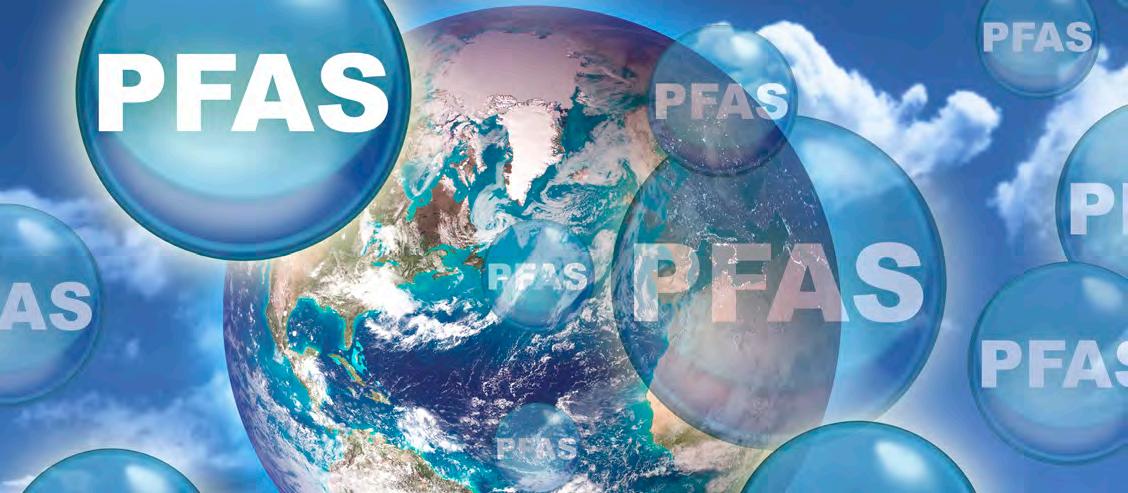
PFAS: The Coming Maelstrom of Regulatory Compliance, Risk Management, and Litigation Over the Hot-Button Toxic Chemicals
P 2
Warning Triangles, Freight Lines, and Blind Curves—Uncovering the Asymmetry of FMCSR § 392.22 Interpretive Case Law p 14
Georgia’s New Time-Limited Demand Statute: Is the Third Time the Charm? p8
We erase the speculation. We
We investigate the maybes.
To
PFAS: The Coming Maelstrom of Regulatory Compliance, Risk Management, and Litigation Over the Hot-Button Toxic Chemicals
By Jack Sanker and Dennis Cotter • Amundsen Davis LLC page 2
Non-Compete Clauses: The Changing Landscape of Managing Competitive Risk
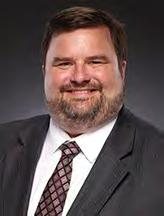
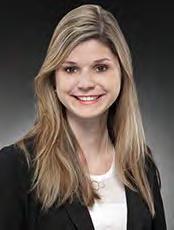
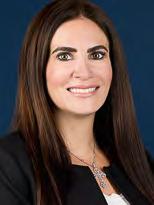
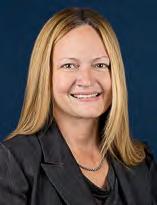
By Andrea Contreras and Kathy Schill • Laffey, Leitner & Goode, LLC page 4
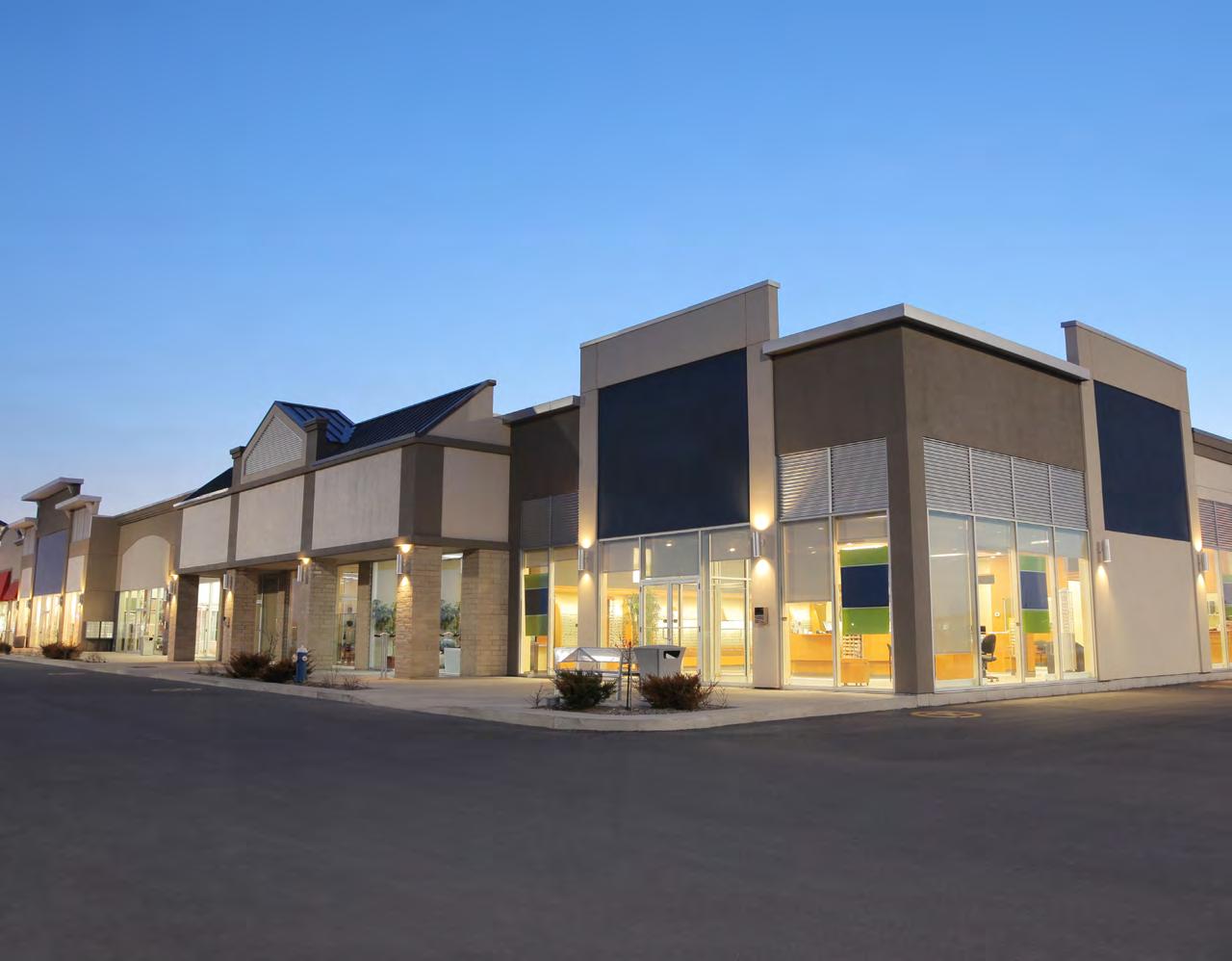
The Retail Pivot:
Land Use Considerations Amidst Industry Transformation
By Andrea Gomes and Andrew R. Morin • Hinckley Allen page 6
Georgia’s New Time-Limited Demand Statute: Is the Third Time the Charm?
By Kim M. Jackson, Zachary S. Lewis and D. Garrett Anderson Bovis, Kyle, Burch & Medlin, LLC page 8
Is It Time to Plan Your Estate?
By Kate Thorne • MehaffyWeber page 10
Landlord Considerations When Navigating Personal Guaranties in Bankruptcy
By Stuart I. Gordon, Matthew V. Spero and Alexandria E. Vath • Rivkin Radler LLP page 12
Warning Triangles, Freight Lines, and Blind Curves— Uncovering the Asymmetry of FMCSR § 392.22 Interpretive Case Law
By Bryan N. Price and Michaela L. Cloutier Flaherty Sensabaugh Bonasso PLLC page 14
DEPARTMENTS:
Defense, Indemnity, and Redefining Success
An Attorney and Client Perspective
By Brian M. Dib • Sweeney & Sheehan and Virginia A. Murphy, Sunoco LP/Energy Transfer page 16
Litigating as U.S. party in Germany
By Dr René-Alexander Hirth • BUSE. page 18
Address Workplace Violence Proactively: California’s New Requirement began July 1, 2024
By Phillip E. Stephan • Klinedinst PC page 20
Creative ways to settle employment litigation cases
By Iliana I. Valtchanova and John McCulloch • Arcadia Settlements Group page 23
How to legally terminate employees for companies in China in the context of economic downturn and business restructuring
By George Wang Duan & Duan page 24
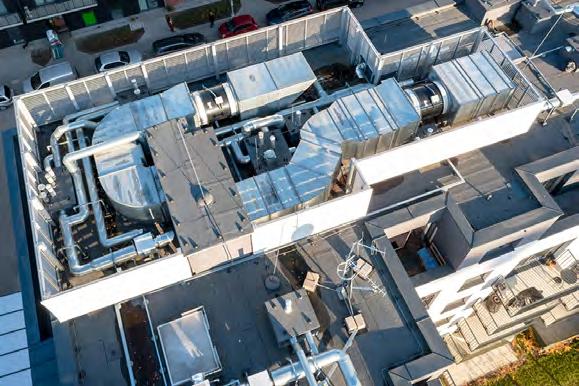
Breathing Easy: Mitigating HVAC System losses in Healthcare Facilities
By Ryan Yarborough, P.E., HBDP, S-E-A, Ltd. page 26
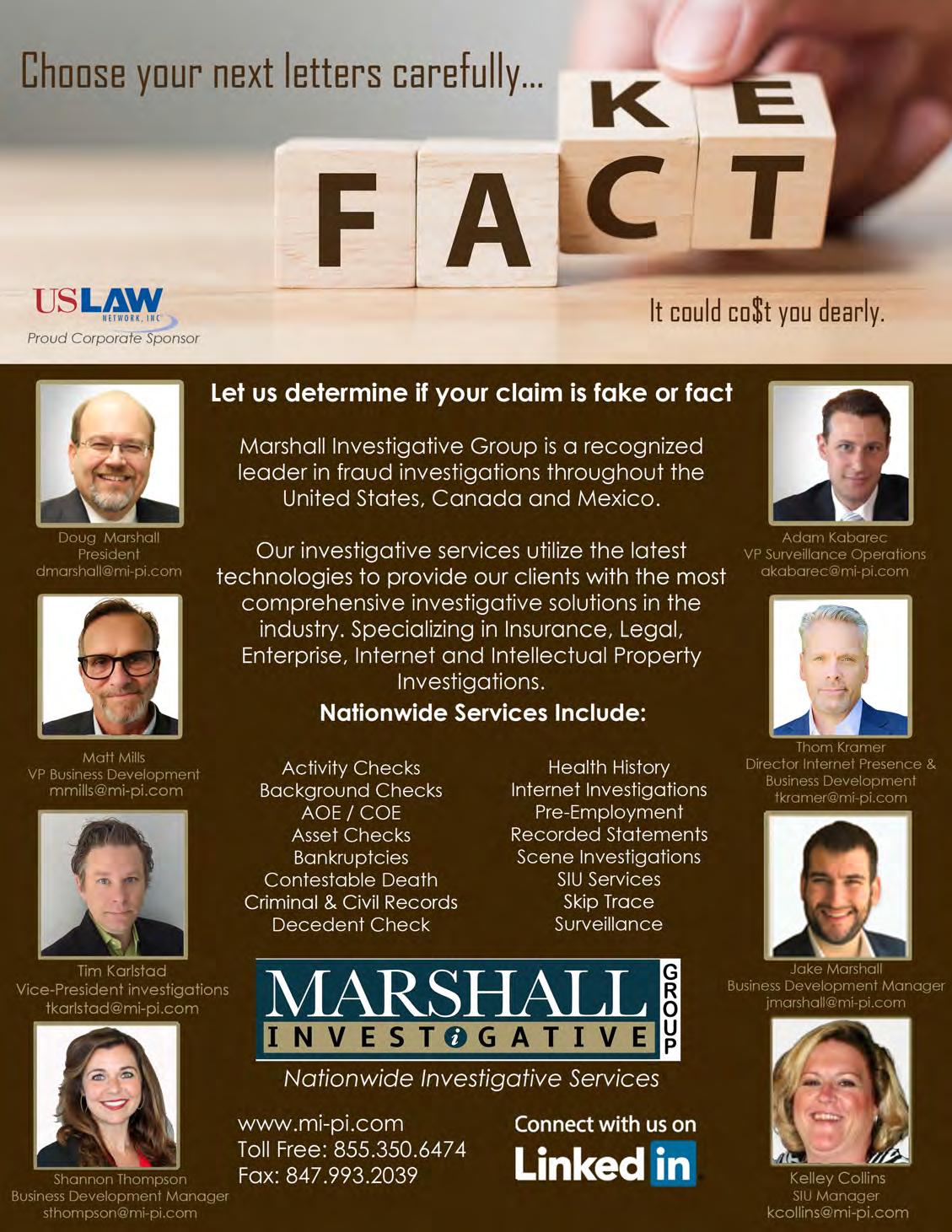
The Critical Alliance: Leveraging PI Companies to Strengthen SIU and Combat Insurance Fraud
By Kelley Collins • Marshall Investigative Group page 28
Choosing the Right Corporate Representative
By Alexa Hiley, MA, & Merrie Jo Pitera, PhD • IMS Legal Strategies page 30
Adding Value Far Beyond the Hot Seat
from the Incoming Chair’s Desk
Client service is a hallmark of USLAW NETWORK. As you create and extend your connections with USLAW, you will see that USLAW provides a turnkey solution for all of your company’s legal needs. When you use one highly knowledgeable and skilled USLAW firm, you gain the power of nearly 60 more in the United States and 100 worldwide to support you.
As the incoming chair of USLAW NETWORK, one of my first duties is sharing with you the fall 2024 issue of USLAW Magazine. This is one of the many complimentary client resources USLAW delivers throughout the year. Each issue offers insightful content that updates, informs, and maybe even sparks conversation among your friends, colleagues and legal counsel.
Being a member of USLAW NETWORK means working collaboratively with my fellow members to support our clients with their legal needs. It also means getting to know legal decision-makers across industries, creating programming that informs and engages, and producing resources to help you wherever legal matters arise.
I am excited to serve as USLAW NETWORK Chair for the coming year. As we continue to grow business development opportunities, expand the NETWORK and remain focused on delivering excellent client service, please contact us if we can help you with a USLAW connection. Thanks for your continued support of our members and the NETWORK.
Sincerely,
Kenneth B. Wingate Incoming Chair, USLAW NETWORK Sweeny, Wingate
JennifeR d tRiCKeR, seCRetaRY/tReasuReR Baird Holm LLP, Omaha, NE
douglas W. ClaRKe, assistant tReasuReR Therrien Couture Joli-Coeur, Montreal, Quebec, Canada
KeelY e. duKe, assistant PRaCtiCe gRouP diReCtoR Duke Evett, PLLC, Boise, ID
taMaRa b. gooReVitz, MeMbeRshiP ManageMent diReCtoR Franklin & Prokopik, P.C., Baltimore, MD thoMas s thoRnton, iii, Client liaison diReCtoR Carr Allison, Birmingham AL
aManda Pennington KetChuM, iMMediate Past ChaiR Dysart Taylor, Kansas City, MO
RodneY l uMbeRgeR, ChaiR eMeRitus Williams Kastner, Seattle, WA dan l longo, ChaiR eMeRitus Murchison & Cumming LLP, Los Angeles, CA
baRbaRa baRRon MehaffyWeber, Houston, TX
thoMas W. fee Fee, Smith, Sharp, L.L.P, Dallas, TX
fRedeRiCK M. heiseR Klinedinst PC, Irvine, CA
eaRl W. houston, ii Martin, Tate, Morrow & Marston, P.C. Memphis, TN
MiChael a ludWig Jones, Skelton & Hochuli, P.L.C. Phoenix, AZ
RobYn f. MCgRath Sweeney & Sheehan, P.C. Philadelphia, PA
RiChaRd C. MoReno Murchison & Cumming, LLP Los Angeles, CA
MoiRa h. PietRoWsKi Roetzel & Andress, Cleveland, OH
Julie a. PRosCia Amundsen Davis LLC, Chicago, IL
tiMothY R. sMith Pion, Nerone, Girman & Smith, PC Pittsburgh, PA
Renato MaRtinez Quezada EC Rubio, Mexico City, Mexico International Director
leW R. C. bRiCKeR, Chair eMerituS Amundsen Davis LLC, Chicago, IL
John d. CRoMie, Chair eMerituS Connell Foley LLP, Roseland, NJ
KeVin l fRitz, Chair eMerituS Lashly & Baer, P.C., St. Louis, MO
The Coming Maelstrom of Regulatory Compliance, Risk Management, and Litigation Over the Hot-Button Toxic Chemicals
You may not recognize the term now, but you will be hearing a lot more about something called PFAS (pronounced “PEAfass”) and its longer name, polyfluoroalkyl and polyfluoroalkyl substances. PFAS is the general name for a large family of synthetic chemical substances of about 8,000-15,000 fluorinated chemicals and include other chemical compounds with similar abbreviations such as perfluorooctanoic acid (PFOA) and perfluorooctane sulfonate (PFOS).
WHAT ARE PFAS AND WHY SHOULD I CARE ABOUT THEM
PFAS are often referred to as “forever chemicals” because of their inability to break down in the natural environment. For over the last 80 years, PFAS have been
used in food packaging, non-stick cookware, waterproofing chemicals, firefighting foam, insulation, leather goods, personal care products, and hundreds of other products. As a result, PFAS are omnipresent in many manufactured goods, clothing, packaging, industrial chemicals, and drinking water, and have leached into the overall environment.
In fact, PFAS are so common in the environment that they are also commonplace in the human bloodstream. Blood tests show that PFAS are present in human samples going back to the 1950s, and a report by the Centers for Disease Control and Prevention National Health and Nutrition Examination Survey states that an estimated 97% of Americans already have PFAS
in their bloodstream today.
Broadly speaking, there are many health concerns that are strongly correlated to PFAS exposure. The current epidemiological evidence suggests associations between PFAS exposure and health effects such as increases in cholesterol, lower antibody responses to vaccines, kidney and testicular cancer, decreases in birth weight and other infant complications, liver and kidney complications, among others. While PFAS has not yet specifically been proven to be the cause of these health concerns yet, they are closely linked.
REGULATORY CHANGES
The prevalence of PFAS and their negative effects have garnered media attention
Jack Sanker and Dennis Cotter Amundsen Davis LLC
and increased regulatory involvement. In 2021, the Environmental Protection Agency (“EPA”) rolled out a “Strategic Roadmap” that set future timelines for additional regulations on PFAS in drinking water and reporting requirements on PFAS. On a state level, legislatures are passing laws regarding PFAS use, resulting in state attorneys general bringing lawsuits against PFAS manufacturers to protect the public from PFAS exposure.
Recently, the EPA finalized a rule (40 C.F.R. Part 705) requiring companies that manufactured, produced or imported PFAS chemicals to report several key data points, including:
• Whether the PFAS were used as a chemical substance or in a mixture or separate item;
• The specific type(s) of PFAS chemical(s);
• Molecular structure of PFAS;
• The volume/amount of PFAS;
• Intended uses (commercial, industrial and consumer);
• Description of the byproducts resulting from the manufacture, processing, use or disposal of PFAS chemicals, including information on releases into the environment;
• “All existing information concerning the environmental and health effects” of the relevant PFAS chemical in the company’s possession or control;
• Information regarding worker exposure, including the number of individuals exposed, activities performed by the workers, and exposure scenarios and duration;
• Disposal information; and
• Information on environmental and health effects.
Most importantly, the regulations apply retroactively, requiring reporting on these items going all the way back to 2011. State-level regulations vary by state and are often more advanced than federal regulations. States are using different approaches to manage PFAS, including banning the sales of certain items containing PFAS and establishing guidance on PFAS in potable water.
Eleven states (ME, MA, MI, NH, NJ, NY, PA, RI, VT, WA, and WI) have hard caps on the amount of certain PFAS allowed in drinking water. Maine, Delaware, and Virginia have also begun the process of establishing standards for certain PFAS. Twelve additional states (AK, CA, CT, CO, HI, IL, MD, MN, NC, NM, OH and OR) have adopted guidance, health advisory, or notification levels for certain PFAS chemicals.
A total of 30 state attorneys general have already filed lawsuits against PFAS manufacturers for contaminating the water supply and many states are adopting piecemeal regulations for food packing, apparel, personal care products, retailers, and firefighting materials.
PFAS ARE THE NEW ASBESTOS
The increased risk of litigation and enforcement actions, along with the prevalence of PFAS up and down supply chains, could take the form of litigation and exposure similar to another well-known toxic chemical: asbestos.
Early PFAS litigation was focused on contamination of the environment surrounding major PFAS manufacturing locations. Major manufacturers faced thousands of lawsuits over the past several decades related to their products contaminating the water supply and allegedly harming residents in the surrounding areas.
One extreme example is the recent $12.5B settlement between chemical giant 3M and a class of municipalities that sued over PFAS water contamination. Partially as a result of this settlement, 3M has ceased manufacturing PFAS altogether.
Similarly, Kimberly-Clark has been the target of a proposed class action PFAS lawsuit. That suit, filed in Connecticut federal court, accuses Kimberly-Clark of negligence for failing to warn residents near its Kleenex facility that the facility’s smokestacks were emitting PFAS. Kimberly-Clark has denied that it uses PFAS in its U.S. consumer products.
Downstream of that, retailers of goods are being targeted over claims that their products falsely advertise being “all natural” or “organic” when they contain trace amounts of PFAS. Advertising-related claims are likely to grow over the next few years.
Merging businesses, companies contracting with suppliers, and retailers need to be aware of the risks associated with conducting business with other companies who themselves may not be in compliance with the new regulations. These businesses need to be prepared to include protections in their service agreements, purchase orders, and other contract documents to protect and indemnify themselves from potential non-compliant (and therefore risky) business partners.
TAKING DEFENSIVE MEASURES
Businesses, suppliers, retailers, manufacturers, and anyone adjacent to those industries should take defensive action to limit their exposure to claims and enforce-
ment actions now. Specifically, businesses should be seeking to include indemnification provisions and other limitations on liability in their contracts with downstream suppliers and contractors, specifically carving out liability for PFAS-related civil claims and regulatory enforcement actions. Since the federal regulations are retroactive back to 2011, businesses will need to identify their prior potentially risky business relationships.
By and large, most major insurance carriers have already begun to write coverage for PFAS out of their commercial and general liability policies (another similarity to asbestos), so losses associated with PFAS tort actions will mostly be uncovered. Concerned businesses should reach out to their brokers to discuss what coverages may be available, if any.
In anticipation of new regulations and potential litigation, prudent businesses will want to consult counsel regarding new laws and regulations unique to their business and state to ensure their compliance, and they may consider hiring outside consultants (in addition and separate from legal representation) to audit their business to determine whether PFAS are used in their manufacturing process and/or the materials received from suppliers.
Ready or not, the presence of and regulation of PFAS will become a serious concern for businesses over the coming years, and as the EPA reporting deadline approaches, businesses and their counsel will be busy.
Jack Sanker is a seasoned litigator who also advises clients on risk mitigation and dispute avoidance through smart contract drafting, company policy formations, and regulatory compliance. Jack is the creator and host of Litigation Nation, Amundsen Davis’s flagship podcast that breaks down important stories in the law, policy, legislation, and litigation.
Dennis Cotter provides comprehensive litigation and transactional services to his clients. The lessons learned litigating complex disputes have provided him with real-life education about how to avoid those litigated issues in the future. He delivers general legal consulting to his clients and develops strategies to protect their businesses from risk.
The Changing Landscape of Managing Competitive Risk Non-Compete Clauses
Non-compete agreements have long played a role in companies’ efforts to manage the risk of competitive harm caused by departing employees. The FTC’s rule banning non-compete clauses as unfair methods of competition threatened to upend the use of this tool. The United States District Court for the Northern District of Texas recently issued a nationwide injunction setting aside the rule and barring its enforcement. Nonetheless, employers should both prepare for the legal landscape the rule created and revisit alternate ways to protect their legitimate interests. This article examines the FTC’s rule, the legal challenges to it, and the opportunity businesses have to consider different ways to protect their competitive interests.
SCOPE OF THE FTC RULE ON NON-COMPETE CLAUSES
(16 C.F.R. PART 910)
T he FTC rule as written prohibits non-compete agreements with “workers,”
declares current non-competes unenforceable except in limited circumstances, and mandates notice to workers of that unenforceability. (16 C.F.R. § 910.2.) It does not apply to non-profit entities (which are not subject to FTC authority), banks and savings and loan institutions, certain common carriers, or non-competes in franchise agreements.
For businesses subject to the FTC’s jurisdiction, the new rule was to take effect on September 4, 2024. It would have prohibited employers from entering into new non-compete agreements with “workers,” which includes not only employees but also independent contractors, interns, externs, and volunteers. (Id.) Notably, the rule defines “non-compete clause” as “a term or condition of employment that prohibits a worker from, penalizes a worker for, or functions to prevent a worker from” working for another person or operating a business after conclusion of the employment. (Id. (emphasis added).) Thus, the rule could reach
not only explicit non-compete clauses but also overly broad non-disclosure or non-solicitation agreements that operate as de facto non-competes.
In addition, the rule would have prevented employers of workers with existing non-compete agreements from enforcing them, except against “senior executives,” and required employers to give notice to those workers that such agreements would not be enforced. The rule did not affect litigation regarding non-compete clauses in employment agreements pending prior to the effective date, or cases brought after that date alleging claims that arose before it.
The FTC car ved out a few exceptions to the rule. First, the rule’s retroactivity would not apply to senior executives, defined as those who earn at least $151,164 in annual compensation and hold a policy-making position. Policy-making positions include presidents, CEOs, and others with final authority to make policy decisions for the business. Second, the rule would not
Andrea Contreras and Kathy Schill Laffey, Leitner & Goode, LLC
apply to non-compete agreements relating to the bona fide sale of a business entity, a person’s ownership interest therein, or of all or substantially all of a business entity’s operating assets. Third, if an employer had a good faith basis for believing that the FTC’s new rule does not apply, then that employer’s enforcement, or attempted enforcement, of a non-compete clause would not violate the new rule. The circumstances under which the good faith basis exception would apply are unclear. The FTC’s guidance, however, makes clear that an employer would not have a good faith basis for non-compliance simply due to the absence of a judicial ruling on the rule’s validity. If the rule had taken effect, then, employers could not have relied on pending legal challenges to contend they had a good faith basis for non-compliance.
LEGAL CHALLENGES TO THE FTC’S NON-COMPETE RULE
Employers quickly challenged the FTC rule. The plaintiffs in Ryan LLC, et al. v. FTC, No. 3:24-CV-00986 (N.D. Tex.), U.S. Chamber of Commerce v. FTC, No. 6:24-CV-00148 (E.D. Tex.), ATS Tree Services, LLC v. FTC, No. 2:24CV-01743 (E.D. Penn.), and Properties of the Villages, Inc. v. FTC, No. 5:24-CV-00316 (M.D. Fla.) all filed suit to strike the rule on multiple grounds, including that the FTC lacked authority to promulgate it and that the rule is arbitrary and capricious.1 The plaintiffs in each case argued that the FTC does not have substantive rulemaking authority under 15 U.S.C. §§ 45, 46. The FTC, on the other hand, contended that the statutes confer the power not only to investigate and adjudicate specific cases of unfair competition but also to make substantive rules preventing such conduct.
The Ryan court enjoined enforcement against the plaintiffs in that case pending a decision on the merits, and recently issued a nationwide injunction barring the rule from taking effect.2 The court held that “the FTC exceeded its statutory authority in implementing the Rule, and the Rule is arbitrary and capricious.” (August 20, 2024 Memorandum Opinion and Order, p. 14.)
While “the FTC has some authority to promulgate rules to preclude unfair methods of competition,” the court concluded that “the FTC lacks the authority to create sub-
stantive rules through this method.” (Id., p. 17.) Based on its review of the history and structure of the enabling statute, the Ryan court held that “the text and the structure of the FTC Act reveal the FTC lacks substantive rulemaking authority with respect to unfair methods of competition” and, therefore, that the FTC “exceeded its statutory authority in promulgating the NonCompete Rule.” (Id. p. 22.)
Further, the Court found the rule to be arbitrary and capricious because (1) it is overbroad, imposing “a one-size-fits-all approach with no end date” without adequate factual support; and (2) it fails to consider less disruptive alternatives. (Id., pp. 23-25.) In particular, “[t]he Commission’s lack of evidence as to why they chose to impose such a sweeping prohibition—that prohibits entering or enforcing virtually all non-competes—instead of targeting specific, harmful non-competes, renders the Rule arbitrary and capricious.” (Id., p. 24.) Because the FTC lacked authority to promulgate substantive rules regarding unfair methods of competition, and because the rule was arbitrary and capricious, the Court held that it “must ‘hold unlawful’ and ‘set aside’ the FTC’s Rule as required under [5 U.S.C.] § 706(2).” (Id., p. 26.) The Court rejected the FTC’s argument that any relief should apply only to the Plaintiffs in the case. (Id.) Thus, employers need not comply with the FTC rule now, and it seems unlikely that either the Court of Appeals for the Fifth Circuit or the United States Supreme Court will overturn the injunction if the FTC appeals.3 However, the rule’s issuance unquestionably raised awareness of issues implicated by non-competes and employers ignore those issues at their peril. The FTC’s lengthy commentary explaining its view of non-competes and the competitive harms they create provides a roadmap for future challenges. Employees will surely use the information provided by the FTC about the alleged anticompetitive harms caused by non-competes to support claims that their particular non-compete clauses are overbroad, unreasonable, and, therefore, unlawful. State courts and legislatures may increase efforts to curb the use of non-competes, and the FTC still has authority to investigate and adjudicate their use on a case-by-case basis.
1 The Chamber of Commerce ultimately joined the first-filed Ryan, LLC case, causing the court to dismiss the Chamber’s separate action without prejudice.
2 In Properties of the Villages, the court entered a preliminary injunction barring enforcement of the rule against the plaintiffs. No. 5:24-CV-00316, at *1 (M.D. Fla. Aug. 15, 2024). While the court in ATS Tree Services denied the plaintiffs’ motion for preliminary injunction and to stay the effective date, that decision appears to have been mooted by the nationwide injunction entered by the Ryan court
3 The Ryan court notably (and unsurprisingly) relied on Loper Bright Enterprises v. Raimondo, 144 S. Ct. 2244 (2024), which overturned Chevron U.S.A. v. Natural Res. Def. Council, Inc., et al., 467 U.S. 837 (1984) – making it unlikely that the U.S. Supreme Court would reverse the Ryan decision should the case get that far.
WHAT SHOULD EMPLOYERS DO?
Non-competes can protect businesses’interests in encouraging collaboration, promoting investment and innovation, and minimizing the risks associated with employees leaving to work for a competitor. While this tool remains available as a matter of federal law, challenges to non-competes will not disappear. States may become more active in policing, if not prohibiting, their use and enforcement. Employers have an opportunity to thoughtfully evaluate their businesses’ risk management strategies and implement agreements reasonably tailored to accomplish their goals. For example, non-solicitation agreements, non-disclosure agreements, and confidentiality agreements all provide excellent protections and – provided they are not overbroad – can avoid the anticompetitive concerns raised by non-competes. Additionally, companies could implement incentives for workers to continue their employment, such as retention bonuses, training repayment policies, or deferred compensation agreements. The creation of a trade secret protection program will also go a long way to protect a company’s innovations without relying on a non-compete clause.
CONCLUSION
Despite the injunction prohibiting enforcement of the FTC’s non-compete rule, companies should review their employment agreements and determine whether tools other than non-competes can effectively protect the employers’ legitimate competitive interests. They should also remember that the state laws surrounding non-competes and other employment agreements vary. Businesses with employees in multiple states need to chart their path carefully to ensure compliance across state lines.
Andrea Contreras is Senior Counsel at Laffey, Leitner & Goode, LLC in Milwaukee. She is an experienced trial attorney who represents individuals and companies in high-stakes business litigation. She is a graduate of the University of Southern California and Columbia Law School.
Kathy Schill is Senior Counsel at Laffey, Leitner & Goode, LLC in Milwaukee, Wisconsin. She has tried complex commercial cases for over 25 years in venues throughout the country. She helps clients protect their interests by providing intelligent, practical advice. Kathy earned her undergraduate and law degrees from Duke University.
The Retail Pivot Land Use Considerations Amidst Industry Transformation
Contrary to popular belief, brick-and-mortar retail spaces are not dying; they are evolving, and the zoning implications are significant.
In 2023, North American retail vacancy rates declined to record lows, and less than 50 million square feet of new space was delivered to the U.S. retail market. Most of that retail activity was attributed to spaces
of 3,000 square feet or less, which was primarily driven by the demand for quick-service restaurants. Indeed, almost 20 percent of the leasing activity in the fourth quarter of 2023 was attributed to the food and beverage sector alone, including retailers like Starbucks and Crumbl Cookies. As a result, finding quality retail space for lease has become increasingly difficult, forcing many retailers to change how their businesses operate in their existing locations.
And change certainly is necessar y, particularly for larger retailers like grocery store chains and “big box” stores. The influx of personal shoppers, curbside pickup and delivery; buy online, pick-up or return in-store policies; Amazon lockers, and “reverse logistics” platforms, like Happy
Returns, a UPS company that handles online product returns for a variety of retailers, have transformed the daily operation and physical footprint of the average retailer. What once was an exclusive retail use has now morphed into some combination of retail, office, warehouse, and logistics uses.
As a result, prior zoning approvals may no longer apply, or retailers may be unable to comply with their current land use approvals. In order to mitigate time and cost, it is key to review the zoning regulations early in the development process, as many of the new features retailers need often trigger the need for compliance with one or more land use standards. For example: • Building size Some retailers may
Andrea L. Gomes and Andrew R. Morin Hinckley Allen
need to expand their footprint to accommodate additional deliveries and goods storage, while others will seek to reduce their footprint. Retailers should be cognizant of lease limitations or requirements when adjusting their footprint. For example, there may be a minimum leased floor area requirement or restrictions on subleasing the now-vacant space to another retailer.
• Parking — The number of parking spots needed by the retailer may change as a result of shoppers spending less time in stores and, instead, relying on curbside pickup. Designating certain parking areas for curbside pickup or employee parking may be necessary. Additional parking and loading space for deliveries may also be a concern. In some instances, the construction of loading docks and garages may be necessary. If building floor plans are adjusted to accommodate, for example, a reduced retail area in exchange for additional warehousing space, or an area where customers may sit to eat food purchased onsite, regulatory parking requirements may change.
• Traffic — The number of traffic trips and the anticipated distribution of traffic in and around the site may change. Retailers should pay particular attention to vehicle and pedestrian circulation in and around their sites. Ensuring that emergency access is preserved is very important. Equally important is the preservation of pedestrian safety as traffic patterns change, particularly in transit-oriented development areas where pedestrian use is high. Retailers who require drive-through windows should pay particular attention to whether drivethroughs are permitted in the zone in question. Local zoning authorities will be concerned with vehicle queuing and circulation if a drive-through is proposed.
• Signage With changes to parking, traffic, and new offerings, new signage will likely be required.
• Lighting Additional or altered lighting to accommodate new features should also be considered, particularly where enhanced lighting can increase security and vehicle and pedestrian safety in and near the retailer’s site.
• Stormwater Any increases in building area, parking area, or other impervious surfaces may require updates to the site’s stormwater management infrastructure. Complications may arise if the applicable stormwater regulations or standards have changed since the management system was designed and constructed. Some towns may even require updates to the entire system depending on the scale of the proposed improvements. In Connecticut, for example, the state Stormwater Quality Manual was
revised in 2024, incorporating significant changes to stormwater design standards, which would apply to new development projects.
• Landscaping and Screening Zoning regulations often require screening or landscaping measures, such as plantings or fencing, to shield the public’s or adjoining property owners’ views from parking areas, loading areas, or refuse storage areas. Retailers proposing substantial revisions to the layout of their premises should be aware of these requirements and tailor their development plans accordingly.
• Related Approvals — Depending on the scope of work proposed, retailers may need other related approvals, including wetlands, sewer or septic, and health department approvals.
Some retailers will also need to seek amendments to certain zoning approval conditions, such as hours of operation and limitations on delivery frequency. Operations and maintenance or trash management plans may also need to be revised. If deliveries occur off-hours, municipal noise ordinances may become an issue, particularly for retailers located near residential uses.
Failure to plan for these various changes may have far-reaching implications. For example, one study details how the rise of e-commerce goods deliveries has caused a rapid rise in the demand for curbside space, which, when insufficient, may cause traffic congestion issues and result in illegal parking, both of which present possible safety concerns.
Those retailers who have managed to secure new space are not out of the woods either. Retrofitting existing buildings to accommodate a proposed retail use can create similar land use challenges to those listed above, most of which must be addressed before doors open to the public. For example, a new retailer in a multi-tenant plaza could face challenges with shared parking among other tenants. Thus, when selecting a space for lease, retailers should closely evaluate the available shared parking, including the varying peak parking demands among the various tenants. Similarly, retailers may face obstacles if the new space is nonconforming with the current zoning regulations, building code, fire safety code, fire prevention code or Americans with Disabilities Act requirements for accessibility. Some municipalities will require a retailer to bring a nonconforming building into full compliance with the applicable regulations or code if the proposed improvements are more than just cosmetic or surpass a certain threshold (e.g., improvements to more than fifty percent of the building space).
Renewable energy incentives may be an attractive option if greater improvements are necessary.
Given the above, it comes as no surprise that new land use approvals may be required, whether a retailer is retrofitting its existing space to accommodate a new retail experience, or moving to a new building. To add yet another layer of potential complication: it is quite possible that local zoning regulations have not caught up to these new retail trends, thus forcing a retailer-applicant to either plow forward with outdated regulations or seek to revise existing regulations to reflect those trends.
Unfortunately, neither approach is a guaranteed path forward. Land use approvals can be lengthy and complicated, and, at times, contentious. If possible, retailers should incorporate changes to their retail sites in a manner that will not trigger land use review. Determining what modifications will trigger land use review will vary by municipality. If avoiding land use review is not possible, there are often different steps that can mitigate the length of time spent obtaining approvals, such as seeking modifications that require only administrative (staff) approval, which often take less time than an application to a local board or commission. To navigate them successfully, consulting counsel who is familiar with navigating the local land use landscape early on in the development process is key.
Andrea L. Gomes, a Real Estate partner, specializes in land use, environmental, and municipal law. Andrea regularly represents clients before local and state agencies and in state court. She has assisted with obtaining municipal approvals for clients and has counseled municipal agencies with various land use permitting and litigation matters. Andrea may be reached at 860-3312603 or agomes@hinckleyallen.com
Andrew R. Morin, a Real Estate associate, specializes in land use, development, environmental, and municipal law. He counsels property developers, collaborates with engineers and consultants, and represents clients before land use agencies. Andrew also brings real property litigation experience to the firm and to his practice. Andrew may be reached at 860-331-2619 or amorin@hinckleyallen.com
Georgia’s New Time-Limited Demand Statute Is the Third Time the Charm?
Few legal issues have sparked more consternation among Georgia insurers (and insurance defense counsel) than presuit, time-limited settlement demands that are intended as bad-faith setups. These demands are a maze of terms and conditions that require insurers to upend standard settlement practices and cause inadvertent rejections or counter offers. Armed with an inadvertent rejec tion, plaintiff’s counsel set up a bad faith failure to settle claim. These tactics are par ticularly widespread in serious injury auto mobile accidents involving low policy limits.
In 2013, Georgia enacted O.C.G.A. § 9-11-67.1 to curtail these tactics. The statute (in its original form) set forth specific procedures governing pre-suit settlement offers. But over the years, plaintiffs’ lawyers and Geogia’s textualist courts circumvented the statute’s purpose.
Even after the legislature revised the statute in 2021, Georgia Courts continue to uphold new tactics. Among the horror stories: a settlement check with “void after 180 days” (Pierce v. Banks, 368 Ga. App. 496, 499 (2023)) and the back of its settlement check required an endorsement from all payees (Redfearn v. Moore, A24A1028 (May 23, 2024)) were both considered rejections because they placed improper “conditions” on the payment.
Georgia’s Legislature has again revised O.C.G.A. § 9-11-67.1, effective on April 22, 2024. As the adage goes, the third time may be the charm. Whether it is or not, however, it attempts to relieve insurers of some of the problems circumvented under the two prior versions of the statute. Here are some highlights:
INADVERTENT VARIATIONS IN RESPONSES SHOULD NO LONGER CREATE REJECTIONS
Subsection (a) of the revised statute
provides that any offer to settle a personal injury/death tort claim arising from a motor vehicle collision, and which is made before all named defendants have filed their answers or are in default, shall be considered an offer to enter into a bilateral contract. This revision should prevent a court from finding that an insurer rejected a demand merely because of minor variations between the settlement offer and the insurer’s response, especially with the conditions of “acceptance by act rather than communication.” This may be the most important section and change of the new statute.
Inclusion of the language that pre-suit offers are offers to enter into a bilateral contract was likely an attempt to address the following holding from Pierce v. Banks: Appellees did not comply with one or more of the precise terms of acceptance of the settlement offer. Appellees maintain, however, that this should not bar the conclusion that the parties have a contract ...
Appellees argue that a contract is created when parties agree on the material terms which define their rights and obligations and
that parties need not necessarily agree on non-material matters for a contract to form. While this may be typically true of bilateral contracts ... the type of contract at issue here is a unilateral contract, whereby an offer calls for acceptance by an act rather than by communication.
The Pierce holding held that plaintiffs’ counsel could send unilateral contract offers—as opposed to bilateral contract offers—and, thus, a response failing to comply with expected conduct (providing a complying check), no matter how minor, would be considered a rejection. This same principle resulted in the Redfern holding finding that State Farm had rejected a time-limited demand by virtue of sending a settlement check which required an endorsement from all payees.
Because the revised version of O.C.G.A. § 9-11-67.1 now stipulates that all pre-suit settlement offers are bilateral contracts, failure to comply by conduct should not create a counteroffer. The agreement to settle should create a binding contract, with the remedy being breach of contract. In sum, under the revised statute, a carrier should be able to accept a time-limited demand by simply announcing “accepted” and complying with the contract’s material terms. What terms are material? The statute also answers that question.
STATUTE APPLIES UNTIL THE ANSWER
The statute also now applies “before the filing of an answer.” The prior version applied until the lawsuit was filed. Plaintiff’s attorneys were filing lawsuits, but not serving them, and then sending demands that purposely did not comply with the statute in hopes that the insurer would refuse to ac-
Kim M. Jackson, Zachary S. Lewis and D. Garrett Anderson Bovis, Kyle, Burch & Medlin, LLC
cept the non-compliant terms because they mistakenly believed that the statute applied. This new provision closes the loophole by ensuring that the insurer is aware of the lawsuit and has appointed defense counsel.
WHAT SPECIFICALLY CONSTITUTES A MATERIAL TERM IN A PRE-SUIT SETTLEMENT
Another notable improvement in the revised version of O.C.G.A. § 9-11-67.1 (2024) is that an insurance carrier’s inadvertent failure to comply with immaterial terms in responding to a demand will not create a counteroffer. Importantly, however, an insurance carrier still must accept all of the material terms presented in a time-limited demand.
O.C.G.A. § 9-11-67.1(b) enumerates what terms are material while also providing that all other terms are immaterial and, therefore, can be disregarded. It provides that any offer to settle a tort claim for injury or death arising from a motor vehicle collision, and which is made at any point before all named defendants have filed their answers or are in default, “shall contain the following material terms, which shall be the only material terms:” 1) the deadline for acceptance, which cannot be less than 30 days; 2) the settlement amount; 3) the identities of who will be released; 4) the claims that will be released; 5) a date when payment must be made—not to be less than 40 days after receipt of the offer; and 6) a demand for an under oath statement from the carrier that all coverage has been provided. A demand must also include sufficient material for the carrier to evaluate the claim.
THE CLAIMANT CANNOT CREATE ADDITIONAL TERMS
O.C.G.A. § 9-11-67.1 (2024) explicitly sets forth what constitutes a “material term.” It also explicitly provides that if a settlement offer contains an additional term, then that additional term “shall be construed as an immaterial term,” and “a variance by the recipient from such immaterial terms shall not subject the recipient to a civil action arising from an alleged failure by the recipient to accept an offer to settle…” O.C.G.A. § 9-1167.1 (c) (emphasis added).
A PLAINTIFF CANNOT CONTRACT AROUND THE STATUTE
The revised statute also addresses another common abusive tool: A settlement demand which requires the defendant to agree—as a condition of acceptance—that O.C.G.A. § 9-11-67.1 does not apply. The revised statute expressly provides, “no party shall require another party, as a condition of settlement, to waive or modify the applica-
tion of this Code section or any provision of this Code section.” O.C.G.A. § 9-11-67.1 (e).
CATCHALL TO PREVENT PLAINTIFFS FROM CREATING BAD FAITH SETUPS
One frustrating aspect of the history of the legislature’s revisions to O.C.G.A. § 9-1167.1 has been the plaintiff’s bar’s continual ability to develop new strategies to engineer bad faith set ups. With enough effort, claimants were able to make a settlement offer convoluted enough to trigger a counteroffer regardless of how well intentioned the insurer and its counsel tried to comply.
The revised statute seeks to end this cycle by including a safeguard in O.C.G.A. § 9-11-67.1(i) that provides that a civil claim for failure to settle (bad faith) cannot arise from an insurer’s failure to settle a tort claim if the insurer: 1) agreed in writing to accept the material terms of the settlement offer; 2) provides a statement under oath of the insurance coverage provided by the carrier to its at-fault insured; and 3) pays the amount demanded or the available policy limits— whichever is less. In other words, even if the plaintiffs’ bar devises a way to create a counteroffer, no bad faith should arise from a failure to settle if those three terms are met.
IMMEDIATELY APPLICABLE TO ALL DEFINED OFFERS
The two prior versions of the statute became effective on July 1 of the year in which they were passed, and they only applied to offers arising out of motor vehicle accidents that occurred on or after the effective date of the statute. The new version became effective immediately on April 22, 2024, and it applies to all offers, without regard to when the motor vehicle accident occurred. Though we expect some litigation over this difference in the new statute, the statute applies to all current demands.
POTENTIAL DISPUTES AND PITFALLS
Typical with new legislation, there are issues open to dispute under the new statute. For instance, the statute changes the phrase “use of a vehicle” to “vehicle collision,” raising questions about when a vehicle collides with something that is not a vehicle (e.g., a person). Sub-section (c) of the new statute states that any term that is not included in sub-section (b) will be construed as an immaterial term that may be agreed to and a variance from an immaterial term may not give rise to a bad faith claim. We anticipate that plaintiffs may argue that while sub-section (c) provides safe harbor against a bad faith claim, there is no settlement where all terms, even immaterial terms, are not accepted. Paragraph (c) of the statute requires payment of the
less or the amount demanded or policy limits. This may mean that the demand cannot be ignored just because it exceeds the policy limits, i.e., the limits must be tendered. This change could be a potential trap and may modify existing common law, where a demand exceeding policy limits cannot give rise to bad faith.
CONCLUSION
There is a lot of minutia in this new statute that will result in quite a bit of litigation over its meaning and application. We have not covered all potential issues or challenges to the wording in this, nor do we even think we can predict all of the arguments that will be made. The Georgia Supreme Court is hyper-textualist, so if you see an argument arising out of the literal language in the statute, even if you think it violates the intent of the legislature, Georgia’s Court will follow the language. It remains to be seen how Courts will interpret the new O.C.G.A. § 9-11-67.1. The statute itself seems to make significant strides towards ending the unfair tactics plaintiff’s lawyers have used to trap carriers into bad faith claims. But if subsection (a) alone withstands court scrutiny, it should help carriers quite a bit with the pre-suit “gotcha” settlement demands.
Kim M. Jackson advises insurance companies and litigates coverage and bad faith claims, defends professionals in professional liability claims and licensing grievances, and defends entities in high value tort claims.
Zackary S. Lewis is a litigator with extensive experience advising insurance companies on coverage and responding to time-limited demands. Zach’s litigation practice also focuses on the defense of professional liability, construction defect, and general liability claims.
D. Garrett Anderson represents clients in complex insurance coverage disputes, bad faith actions, and legal malpractice matters. He has extensive experience both as defense counsel to insurance companies and in-house at the largest publicly traded property and casualty insurance company, giving him unique insight into insurers needs and expectations.
Is It Time to Plan Your Estate?
In the prime of your life, it is never fun to stop and ask yourself what will happen if something happens to you. But I’m asking you to do just that. The world is unpredictable, and when you take control and plan for the future, you put your family and busi-
ness in a better position. This shouldn’t be a morbid topic but one of taking charge. So, I want to give you some tips to help you decide if it is time to start your estate planning journey. Before we get started, you need to know that Estate
Planning is an all-encompassing term that includes a Last Will and Testament, trusts, beneficiary designations on financial accounts, disability documents for dealing with what happens if you are alive but incapacitated or unavailable, and the formation
Kate Thorne MehaffyWeber
and governing documents of any business entities that you may own and their succession plans. These documents should work together seamlessly to ensure that your wishes are carried out.
1. DO YOU HAVE CHILDREN?
Major life events help shape the need for an estate plan, especially the birth of a child. If you are a parent, I’m sure you have realized just how much your child relies on you. If something were to happen to you or the other parent, numerous questions arise, such as where would your child go and who would take care of him or her? These questions are incredibly important and should be the driving force toward the appointment of a future guardian or custodian for your children. However, they are not the only consideration. Your children need financial assistance and someone to safeguard and take care of their assets. If your child suddenly inherited money or a house, someone would need to manage those assets and protect that value. Creating a will or even signing a separate designation of guardian or custodian document allows you to take control over who cares for your children and who manages their assets. With a little planning, you can have the peace of mind that your children will be well taken care of no matter what happens.
2. DO YOU HAVE A BLENDED FAMILY?
Creating a will is especially important for people with a blended family. If you or your spouse have kids from a previous marriage, it’s time to talk to an estate planning lawyer. The law of each state varies, but under Texas law, dying without a will means that your assets may pass one-half to the surviving spouse and one-half to the kids. Unless you or your spouse want to own land, the house or a business jointly with stepchildren, it’s time to be proactive.
3. DO YOU HAVE A FAMILY MEMBER WITH DISABILITIES?
Planning becomes much more important when you help care for a person with a disability. There are specific planning techniques to ensure that disabled people who are receiving government benefits will not become disqualified for their benefits even if they were to inherit money or property. If no plan is in place, the person typically loses his or her benefits until the inheritance is completely spent. Taking the time to plan for this situation should be a nobrainer.
4.
DO YOU OWN REAL PROPERTY?
For those of you who own commercial property or even just your own home, you know that property does not take care of itself. You also know how many hoops you likely had to jump through before you finally received your deed. If something happens to you, steps must be taken to clear the title to the property and transfer your ownership to your beneficiaries or heirs. If you die without a will, those family members inheriting your property may be forced to go to court to prove that they are entitled to the property. Not only is this process more time-consuming, but it is also a lot more expensive when you do not have a will or other plan in place.
5.
DO YOU OWN A BUSINESS?
If you own a business, do you have a succession plan in place? Business owners often have more things to consider in an estate plan. Not only do they have assets of their own, but the future of the business may very well depend on whether a plan is in place. Considerations such as who can step in and make decisions for the business if something happens to you are vitally important to ensure the business can continue to operate or be sold if you can no longer operate it.
6. WHAT WOULD HAPPEN IF YOU BECAME INCAPACITATED?
If you are unable to manage your assets, is there someone who would be able to do it for you? If you die, there are procedures in place for someone to qualify and be appointed to manage your estate. But what if you don’t die? There are techniques to help avoid the need to appoint a guardian or custodian in the future, which can be costly. It is also important to ensure that someone can timely access your accounts and take care of your things. Many creditors and other service providers will not communicate with a person unless they are the account holder, an authorized person on the account, or a validly designated agent of the account holder. Having disability documents and people in place to anticipate this situation can save your family costly legal fees and precious time in trying to gain access to manage your things in the event of an emergency.
7. WILL YOUR ESTATE BE SUBJECT TO A “DEATH” TAX?
There are different techniques to avoid or minimize taxes that your estate may owe due to death or inheritance under state and federal law. If you live in a state
that imposes an estate or inheritance tax, your estate may be subject to estate taxes at both the federal and state levels. Utilizing techniques to minimize or avoid an estate tax allows you to take control of your property, protect your assets, and maximize the benefits that can be passed down to your beneficiaries. With anticipated changes to the federal estate and lifetime gift tax exemption at the end of 2025, it’s a good idea to check in with your financial advisor or estate planning attorney before then to determine how you may be impacted.
8. IS PRIVACY IMPORTANT?
Many people do not realize that your assets could be listed in the public record upon your death. If the thought of the general public being able to see a list of your worldly possessions freaks you out, then you should plan ahead. There are techniques and procedures that can be used to keep a person’s possessions out of the public eye after death. This doesn’t happen by accident; you will need to plan for it.
9. WOULD YOU LIKE MONEY TO GO TO CHARITY?
For those of you who love to give back to the community and support charitable causes, you may want to consider leaving a donation to your favorite organization upon your death. If you believe in giving back to the community, why would that change if something were to happen to you? There are many different options for continuing to donate to charities, but these are only options if you have an estate plan in place. Maybe you want your appreciated stocks to go to the Red Cross or maybe you want to leave a specified amount of money to the Salvation Army. Either way, this only happens if you take the time to put a plan in place so that a portion of your assets can have a lasting impact after your death. It is never too early to consider your estate plan and put documents in place to prepare for the worst. When in doubt, make a plan. It will give you peace of mind to know that your wishes will be carried out and help those who depend on you.
Kate Thorne is an attorney and shareholder at MehaffyWeber in the firm’s business practice group. She is licensed to practice in Texas, and her practice focuses on estate planning and probate law, real estate and business transactions.
Landlord Considerations When Navigating Personal Guaranties in Bankruptcy
When a business leases commercial space, it is common practice for the landlord to request that the company provide a personal guaranty, a protective measure taken to ensure landlords have recourse against a commercial lessee if there is a default under the lease. In this way, landlords mitigate financial losses.
A personal guaranty gives the landlord the ability to recover any losses from the personal guarantor if the commercial lessee breaches its lease agreement by failing
to pay rent. In that instance, the landlord can seek to recover the unpaid rent from the personal guarantor. The personal guarantor is often the principal or manager of the business.
Although personal guaranties are a good safety mechanism, with the recent surge of businesses filing for bankruptcy, it is important to understand the ramifications of a commercial lessee or personal guarantor filing for bankruptcy and the limitations of personal guaranties.
An individual debtor’s primary intention when filing for bankruptcy is to be released from past financial obligations such as a guaranty. Bankruptcy prevents creditors from seeking payment on obligations that have been discharged in bankruptcy. Bankruptcy can protect a debtor from creditors seeking repayment of debts incurred before the debtor filed for bankruptcy; however, bankruptcy is not a complete shield for guarantors and not all guaranties can be discharged, although many can be.
Stuart I. Gordon, Matthew V. Spero and Alexandria E. Vath Rivkin Radler LLP
DOES A BANKRUPTCY DISCHARGE A GUARANTY THAT HAS NOT YET BEEN TRIGGERED?
If a personal guarantor files for bankruptcy, the lessee is still expected to continue to fulfill its obligations under the lease, as the guarantor’s bankruptcy filing should not affect the commercial lessee’s performance under the lease. If the personal guarantor receives a discharge in the bankruptcy case, however, the landlord may not be able to recover against the personal guarantor if the commercial lessee breaches the lease agreement.
In fact, some courts have discharged personal guaranties that have yet to be triggered, e.g., the commercial lessee has not breached the lease and therefore there is no reason to seek recourse under the personal guaranty.
For example, the Bankruptcy Appellate Panel for the Sixth Circuit held that a personal guaranty may be discharged even though it has not been triggered. In In re Orlandi, 612 B.R. 372 (B.A.P. 6th Cir. 2020) the debtor (also the personal guarantor) owned a company that owned a salon. The salon (the commercial lessee) had previously entered into a commercial lease, and the debtor personally guaranteed the lessee’s performance under the lease. At the time the guarantor filed for bankruptcy, there was no breach by the lessee.
After the individual debtor obtained his bankruptcy discharge, the commercial lessee exercised an option to extend the lease for five years. The tenant later defaulted, and the landlord thereafter sought to enforce the guaranty against the discharged guarantor, but the court held that the personal guaranty was discharged, and therefore, the landlord could not seek to recover against the personal guarantor.
If a landlord is aware that a personal guarantor has filed for bankruptcy, the landlord should be proactive in mitigating their financial losses. Besides filing a claim in the bankruptcy case, two measures are available to landlords.
Depending on the circumstances, if the personal guarantor has filed for bankruptcy, the landlord may request that the personal guarantor “reaffirm” the debt. This means that the personal guarantor agrees that even if they receive a discharge in the bankruptcy proceeding, the personal guaranty will not be discharged and will still be enforceable after the bankruptcy case. In that case, the guaranty will not be included in the discharge because it is a debt entered into after the bankruptcy filing.
Another option for the landlord is to request a letter of credit when the lease is
executed, which can offer a landlord financial protection in the event a lessee or guarantor files for bankruptcy, since the letter of credit is an independent obligation of the obligor (often a financial institution) to pay in the event of a default by the lessee.
It is important to note that not all courts have held that personal guaranties can be discharged. Again, these are all based on different circumstances, but some courts have enforced guaranties after the debtor has been discharged if the creditor extends credit post-petition.
For example, the Bankruptcy Court for the Middle District of Alabama held that a debtor’s obligation arising from the personal guaranty was not subject to a discharge. In McClure-Johnston Co. Inc. v. Jordan (In re Jordan), 2006 Bankr. Lexis 1460 (Bankr. M.D. Ala. 2006) the court found that despite the guarantor’s Chapter 7 bankruptcy filing, the guaranty was not included in the debtor’s discharge because there was a continued borrowing relationship after the debtor filed for bankruptcy since the creditor continued to loan money to the debtor’s company.
There is a split among courts regarding the enforceability of guaranties. The outcome will depend on the type of bankruptcy that is filed, and the circumstances surrounding each case. Even if the personal guaranty is not discharged, the landlord is likely to incur legal fees in defending its claim and participating in the bankruptcy case.
IS A GUARANTY DISCHARGED IF THE COMMERCIAL LESSEE FILES FOR BANKRUPTCY BUT THE PERSONAL GUARANTOR DOES NOT?
Generally, bankruptcy protections are afforded only to those who file for bankruptcy.
In the case of In Mich Nat’l Bank v. Laskowski, 228 Mich. App 580 NW2d (1998), the court held that the bankruptcy of a corporate debtor did not extend to the corporation’s president, who had signed a personal guaranty.
A commercial lessee’s bankruptcy filing does not impact the obligations of the personal guarantor. However, if a commercial lessee files for bankruptcy and is discharged, the landlord’s recovery against the commercial lessee may be limited.
It is also worth noting that whether the commercial lessee or personal guarantor files for bankruptcy, the Bankruptcy Code caps claims against the debtor.
Calculating rejection claims can be complex because of the different interpretations and approaches adopted by courts. There are two approaches when calculating
damages under this section, the “rent approach” and “time approach.” Regardless of the approach adopted, a landlord will not be made whole.
When a debtor files for bankruptcy, it can assume (i.e., continue) or reject (i.e., breach) unexpired leases and executory contracts – contracts for which performance remains due or full performance under the contract has not been completed. When a debtor rejects a lease, the landlord can assert a claim against the debtor in the bankruptcy case. Bankruptcy Code § 502(b) (6) does not expressly address whether the cap on lease rejection damages applies to personal guaranties. However, courts have applied the statutory cap to lease rejection claims that involve guaranties.
Guaranties are good protection but not a complete safeguard because a bankruptcy filing can hinder a landlord’s ability to recover from a guarantor. Landlords should be proactive and explore alternative options. As mentioned, a landlord can request that the debtor reaffirm the debt or execute a new guaranty. The debtor is not obligated to fulfill the landlord’s request, but it should ensure some repayment if the debtor agrees. The landlord can also request a letter of credit before executing the lease, which provides the landlord an additional level of repayment security.
Stuart I. Gordon focuses his practice on bankruptcy and corporate reorganization. He represents litigants in contested matters arising under the Bankruptcy Code. Stu can be reached at stuart.gordon@ rivkin.com.
Matthew V. Spero represents creditors, creditors’ committees, lenders, principals and landlords in business reorganizations, restructurings, acquisitions, and liquidations. He can be reached at matthew. spero@rivkin.com.
Alexandria E. Vath has experience with real estate transactions and banking practices. Her experience also includes representing creditors in consumer bankruptcy proceedings. Alexandria can be reached at Alexandria.vath@rivkin.com.
Warning Triangles, Freight Lines, and Blind Curves Uncovering
To truck drivers, risk mitigators, and transportation litigators, 49 CFR § 392.22 (§ 392.22) provides a framework for commercial stops on shoulders and highways, including requiring a driver to set out emergency warning devices such as reflective triangles. But, figuring out how § 392.22 applies to a specific stopped vehicle under
certain circumstances can be a bumpy ride, especially in light of the asymmetric applications of the Federal Motor Carrier Safety Regulations (FMCSRs) throughout the country. Interpretations vary state by state, but some broad themes can be extracted to help if you’re stranded.
NEGLIGENCE PER SE
Regulations can sometimes be utilized to make a plaintiff’s case easier by forming the basis of a negligence per se claim. When plaintiffs are permitted to rely on a regulation in this way, it sets the standard of care, and a violation of that regulation will automatically prove a breach of that stan-
Bryan N. Price and Michaela L. Cloutier Flaherty Sensabaugh Bonasso PLLC
dard rather than merely providing evidence of claimed breach of the standard. This can create a major obstacle to defending FMCSR cases. While several jurisdictions allow negligence per se claims premised on the FMCSRs–and some have explicitly allowed such claims based on §392.22–other jurisdictions have disallowed FMCSR-based negligence per se claims for various reasons.
Some states do not recognize claims for negligence per se at all, allowing evidence of relevant statutes/regulations to serve only as evidence of general negligence or of an expanded duty of care. Other states allow only statutes, not regulations, to serve as the basis for such claims. Still other jurisdictions allow negligence per se claims for violations of state law only, except where there is evidence that the jurisdiction has adopted the specific rule.
More novelly, some defendants have successfully argued that certain FMCSRs should not serve as the basis of negligence per se claims because they are not intended to protect the safety of the public (and, therefore, the relevant class of plaintiffs). While older case law concluded the FMCSRs are broadly directed at public safety, more recent case law indicates that this determination should be made on a case-by-case basis—considering the state’s rules surrounding negligence per se claims and the FMCSR section at issue.
Most jurisdictions have not explicitly decided whether §392.22 can serve as the basis of a negligence per se claim, leaving room for numerous potential arguments in opposition. So, when a plaintiff alleges a violation of §392.22, don’t assume the case is a total loss. Instead, evaluate potential arguments against the application of negligence per se based on state-specific rules prescribing which regulations are eligible or allowing regulations to serve as evidence of negligence only, or the non-safety focus of the specific regulation.
DEFENDANT DRIVER COLLISION
The majority of cases appear to interpret FMCSR § 392.22’s requirements as absolute. When courts have considered potential excuses, a driver’s incapacity due to an accident of his own is not usually found to be a defense. Courts have found drivers responsible for violations after becoming incapacitated in a wide range of situations - from accidents involving striking a moose
to those resulting in a truck being turned on its side, and even where a driver fled the scene out of fear shortly before a fire broke out.1 However, courts do not appear to have fully considered whether a driver’s own accident would qualify as a “necessary traffic stop”– often overlooked language in § 392.22 and a phrase that has been the subject of much recent litigation.
DEFINING “NECESSARY TRAFFIC STOP”
§ 392.22’s inclusion of the phrase “necessary traffic stop” provides another potential loophole in defending claims under this regulation. There is no definition of this phrase in the Regulation itself, and defendants in several jurisdictions have successfully argued that the phrase precludes a finding of a violation when the truck at issue was stopped in traffic due to a separate accident. The Supreme Court of Alaska went further, stating that necessary traffic stops include, at minimum, “exigencies involving other vehicles, law enforcement, animals crossing the road, and other similarly required stops.” Even broader, the Alaska Supreme Court concluded that the phrase is “likely susceptible of differing interpretations” and thus obscure. Therefore, they reasoned, a driver is not liable under the regulation so long as the driver takes “reasonable care” to obey it—setting out warning devices if the stop was not necessary, based on a reasonable understanding of that phrase.2
In cases involving alleged violations of § 392.22, consider an argument that the stop was necessary. Did exigencies involving other vehicles, law enforcement, or animals cause the stop? Alternatively, may the driver have believed the stop was necessary under the regulations? If so, consider arguing that the phrase is obscure and susceptible to multiple interpretations and that it would be improper to assert liability based on it.
SUFFICIENT ALTERNATIVE ACTIONS
Courts generally interpret the requirements of §392.22 strictly, accepting few, if any, excuses for a driver’s failure to comply exactly with the provisions therein. However, sufficient alternative actions can still majorly affect the outcomes of cases involving §392.22, specifically via an argument that the failure to comply was not the proximate cause of the collision because
1 See Shaw v. Stewart's Transfer, No. CV-09-264-B-W, 2010 WL 2943202, at *3 (D. Me. July 22, 2010); McIntyre v. Murphy, No. 5:17-CV-199-FL, 2019 WL 1294645, at *5 (E.D.N.C. Mar. 20, 2019); Kimberlin v. PM Transp., Inc., 264 Va. 261, 268–69, 563 S.E.2d 665, 669 (2002)
3 See Thurston v. Ballou, 23 Mass. App. Ct. 737, 740–41, 505 N.E.2d 888, 890 (1987).
drivers’ alternative actions provided equal or better warning than strict compliance with the regulation. Some alternative actions that have been found sufficient include placing warning triangles at improper distances, using incorrect reflective devices, and employing emergency hazard lights. By contrast, courts have been unwilling to rule for defendants when they found their alternative warning actions insufficient—such as “three desultory, and failing, efforts to flag down motorists” as they passed the vehicle, within “a five and one-half hour period.” 3 While strict adherence to §392.22 is ideal, it may be worthwhile to equip drivers with information about alternative actions that might be sufficient—and to encourage them to take some action to warn oncoming traffic when perfect compliance is impossible.
CONCLUSION
Ultimately, many of the nuances of §392.22 interpretation vary state-by-state, and checking the local case law is always recommended. But next time you encounter a case involving a trucker’s failure to set out reflective triangles or otherwise comply with §392.22, consider whether you can argue that the regulation should not be used as evidence of negligence per se, that the stop was necessary, or that your driver took sufficient alternative actions such that the violation was not the proximate cause of the injury. Additionally, to help minimize the effect of §392.22 violations on future cases, consider training drivers on the definitions of necessary traffic stops and alternative warnings.
Bryan N. Price has been practicing law for more than 20 years. In addition to leading Flaherty’s Consumer Litigation and Dispute Resolution practice group, he is an active member of the firm’s Transportation group. Bryan may be reached at 304.347.4236 or bprice@flahertylegal.com
Michaela L. Cloutier is an associate in our Charleston office, where she is a member of our complex tort and product liability practice group. Michaela may be reached at 304.720.9003 or mcloutier@ flahertylegal.com.
Defense,Indemnity, and Redefining Success
An Attorney and Client Perspective
ATTORNEY PERSPECTIVE
Prior to joining Sweeney & Sheehan (Philadelphia), my background was in litigating personal injury cases as a plaintiff’s attorney. The biggest transition for me in moving to the defense side was not figuring out how to bill hours or prepare client reports but how to define success when defending a case. On the plaintiff’s side, success was a simple concept – obtain as much money for the client as possible. On the defense side, success was harder to define, took many different forms, and was rarely absolute.
One of my first client-specific projects was to research Pennsylvania’s case law concerning the duty to defend and the duty to indemnify and to put together a guide to assist our client in enforcing their defense and indemnity agreements. Years later, that small project has blossomed into a program that has regularly yielded full indemnification for our clients and has also regularly yielded reimbursement of our clients’ legal
fees and litigation costs, including many 5- and 6-figure reimbursements. The process associated with seeking defense and indemnity brings me back to my plaintiff’s attorney roots – preparing, sending, and following up on demand packages. Regularly achieving indemnification and reimbursement has helped redefine what it means to be successful in defending certain claims.
The goal of this article is to provide a brief introduction to contractual defense and indemnification agreements and to provide some practice tips for seeking to enforce those agreements to obtain successful outcomes for your clients. Defense and indemnity agreements come in many forms. Some examples of contracts with defense and indemnity provisions include construction contracts, franchise agreements, lease agreements, and maintenance agreements (including vendor agreements for snow removal and de-icing services). From the outset, you will want to determine
the defendants in the case, the relationship of those defendants, whether a contractual agreement governs any of those relationships, and whether any of those contractual agreements contain defense and indemnity provisions.
Once you have identified the existence of a contractual agreement providing for defense and indemnification, you will want to examine what circumstances trigger the provision(s). You will also want to make sure that the provision(s) is/are enforceable in your local jurisdiction. Common triggers include claims arising from the work to be performed under the agreement (for construction contracts and maintenance/vendor agreements) and claims arising from the condition of the premises or arising from the contractual responsibilities of the contracting parties (for franchise and lease agreements). Under Pennsylvania law, to be enforceable, an indemnity agreement must contain clear and unequivocal language stating that indemnification is intended for
Brian M. Dib Sweeney & Sheehan Virginia A. Murphy Sunoco LP/Energy Transfer
claims arising in part or in whole from the negligence of the indemnitee (the party seeking indemnification)
It is important to understand that the duty to defend and the duty to indemnify are distinct legal obligations. The duty to indemnify is one party’s promise to reimburse or hold harmless another party for a loss or damage that results from a contractually covered claim. That obligation normally takes the form of paying for or reimbursing a party for monies paid towards a settlement of a plaintiff’s claims or reimbursement for a jury verdict against that party. Oftentimes, final resolution of the indemnity obligation must wait until a full resolution of the matter on the merits. In contrast, the duty to defend is triggered much earlier, and generally attaches when the allegations in the Complaint either match the duty to defend in the contractual agreement (with respect to a contracting party) or when the allegations in the Complaint trigger the possibility for coverage (with respect to an insurance agreement).
Because the duty to defend is usually triggered by the allegations in the Complaint, it is best practice to send a tender letter for defense and indemnification after receipt of a filed Complaint (even if an earlier tender was sent pre-suit). The tender letter should outline the allegations of the plaintiff’s Complaint and the contractual obligations of the party owing defense and indemnification, and it should explain why those contractual obligations have been triggered. We have also found it helpful to request a written response by a certain deadline. Separate tender demands should be sent to the party owing defense and indemnification and to that party’s insurance carrier. The tender demand to the insurance carrier should request defense and indemnification both pursuant to contract (discussed above) and pursuant to additional insured status (as most defense and indemnity contracts require the indemnitee to be named as an additional insured on any applicable commercial general liability insurance policy). Through discovery, it is helpful to explore whether there are multiple availability insurance policies, including any umbrella or excess liability insurance policies, which may provide additional coverage and tender opportunities.
It has been our experience that the following strategies have been helpful in obtaining defense and indemnification for our clients: (1) dedicating time to follow-up on the tender demands with counsel for the party owing defense and indemnification and its insurance carrier; (2) retendering after major events in the litigation, includ-
ing, but not limited to, after depositions, expert reports, and at the conclusion of discovery; and (3) threatening and being willing to take legal action to enforce your clients’ contractual rights for defense and indemnification. The latter can take the form of filing third-party or joinder complaints or separate lawsuits seeking defense and indemnification and/or filing coverage and bad faith actions against the applicable insurance carriers. As with all other aspects of litigation, persistence is the key to ensuring that your client achieves successful outcomes in obtaining defense and indemnification.
CLIENT PERSPECTIVE
As the manager of risk & insurance litigation for the largest independent fuel distributor in the United States, the strength and enforceability of our Dealer Supply Franchise Agreements are vital. These contracts exist with the objective of fully protecting our company against all claims, losses, and litigation arising from these agreements.
Some keys to our company’s success in enforcing the indemnity and insurance obligations in these contracts include:
(1) Creating a solid paper trail and proactively following up – submit concise tender letters to the indemnitor and their insurer, attaching the applicable contract and citing the specific provisions triggering defense and indemnity obligations. This should be done immediately upon receipt of the claim and should regularly be followed up on by phone and email. Request written confirmation of defense, indemnity, your additional insured status and the primary and excess limits on all applicable policies.
(2) Upon receipt of the lawsuit, submit a follow-up comprehensive tender letter to the indemnitor and their insurer emphasizing the time limit for filing an answer with the court and confirming defense obligations and that fees and costs will be pursued.
(3) If the tender response is delayed or denied, retain strong outside counsel with knowledge of your company’s contract language and experience effectuating these tenders. Have outside counsel aggressively pursue the tender
and defense obligations and include specific crossclaims against the indemnitor in the litigation. Third-party Joinder complaints are sometimes necessary. Keep in mind that there is no legal requirement that indemnitees dismiss their contractual claim for fees and costs in exchange for the settlement of the underlying plaintiff’s claim.
(4) Don’t be afraid to file suit to enforce the contract provisions. In some states, in post-settlement indemnity and bad faith actions, penalties may be awarded in addition to actual fees and costs incurred.
(5) Learn from past claims experience and collaborate with inhouse and outside counsel when contract language revisions are needed based on changes in the law or where new insurance policy exclusions may impact abilities to be fully compensated. Are the required limits of insurance in your contracts sufficient to protect your company?
Contractual indemnity claims are an important part of the claims management process and are one of the few areas that can return significant revenue to your company.
Brian Dib, a partner at Sweeney & Sheehan in Philadelphia, Pennsylvania, focuses a considerable part of his work on representing corporations and businesses in the retail, hospitality, energy and transportation sectors. Clients seek his assistance in managing catastrophic injury claims and those involving intricate and sensitive business relationships.
Ginny Murphy is the risk & insurance litigation manager for Sunoco LP/Energy Transfer. Ginny manages the national liability insurance program for both publicly traded companies and their affiliates, including their $20 million SIR. Areas of responsibility include claims and litigation management, safety, loss trends, prevention, risk reduction and cost containment.
It is always a special event for companies and their legal departments, but also for external counsel, when a legal dispute has to be conducted outside their own country. As between the USA and Germany, this is all the more true because Germany is a so-called "civil law" jurisdiction. This article aims to outline the most important aspects that a U.S. litigant has to deal with in civil proceedings on general commercial and company law matters before a German state court.
"THE COURT LANGUAGE IS GERMAN" VS. "COMMERCIAL COURTS"
It goes without saying that state court proceedings should always be conducted in the national language, which is German for Germany (Section 184 GVG). Nevertheless,
Litigating as U.S. party in Germany
Dr René-Alexander Hirth BUSE
the German legislator has also recognized the need of the business community to be able to conduct court proceedings in English, at least by mutual agreement. The competition in international dispute resolution through arbitration as well as the emergence of so-called "Commercial Courts" with English as the language of proceedings in the state jurisdiction of other countries contributed significantly to the fact that since 2020, for the first time "on a trial basis" in individual federal states, and soon also nationwide with the implementation of the 2024 judicial reform, proceedings can be conducted entirely in English before German state civil courts. It is beyond the scope of this presentation to describe the legal difficulties to fully synchronize "English" proceedings with all the requirements of "German" civil procedure.
However, insofar as the parties to the proceedings all agree to conduct their court proceedings in Germany in English, the statement that they can do so in Germany before a competent state civil court as a "Commercial Court" is correct and may also suffice at this point. Even if a legal dispute is based on an older agreement that contains a different jurisdiction clause, this option is available. Mutual consent then results in a new agreement on jurisdiction.
Naturally, after a dispute arises, at least one party will be reluctant to enter into a "new" agreement on jurisdiction if the jurisdiction of a particular state court has otherwise already been established. In a dispute between an U.S. and a German litigant, this reluctance will mainly be on the part of the German party. Nevertheless, it may also have significant advantages for the German
party to subsequently agree to proceedings before a German “Commercial Court” instead of traditional German-language court proceedings. The same advantages may exist if proceedings that would otherwise be conducted in a third language jurisdiction are "relocated" to Germany from another member state of the European Union. O therwise, usually the biggest linguistic problems for international court proceedings before a German court are present, if
• the essential contractual documents and/or the correspondence between the parties based on them have not been drawn up in German,
• the essential witnesses for the court proceedings cannot be heard in German,
• the party pleadings and court orders written in German must be coordinated with foreign parties to the proceedings and must be fully "understood" by them.
None of these problems are new or even unsolvable. However, to solve them, they require the labor-intensive, time-consuming, and therefore costly translation by transcription of all documents or by interpreters in the oral hearings. In "purely German" court proceedings, each party, each witness and also the court has the right not to have to be satisfied with documents that are not (also) presented in German. The agreement on the jurisdiction of a "Commercial Court" solves this problem at least in favor of the English language.
THE GERMAN CIVIL COURT SYSTEM
All proceedings before a German civil court can be conducted in at least two instances. The value-based appeal thresholds are so low that they are almost irrelevant for an international legal dispute. The first instance of appeal is normally a full appeal on facts and law. The second instance of appeal, which is only open to a limited extent, is normally an appeal only on points of law. The Federal Court of Justice is almost exclusively a second appeal instance. Full appeal means that the findings of fact can also be reviewed. The second appeal is purely a review of the correct application of the law to the correctly established facts. With the nationwide introduction of the "Commercial Courts" in Germany, proceedings may begin directly before a "higher" court, with the result that only one appeal instance remains.
THE COSTS OF GERMAN CIVIL PROCEEDINGS
A significant difference between German civil court proceedings and American court proceedings is that the
"necessary" costs of the legal action must be reimbursed to the winning party by the losing party, even if there is no prior contractual agreement on the reimbursement of costs. In this respect, the reimbursement of costs is part of procedural law.
Proceedings before German civil courts incur firstly court costs and secondly legal fees on the part of the litigants themselves.
Court costs include the court fees that are incurred in every proceeding, but also the variable costs that are only incurred depending on the requirements of the individual proceedings, e.g. for court-appointed interpreters and experts. These costs must be paid to the court as an advance by the litigant who incurs the costs. The court costs are due for payment when the action is filed in the first instance and for the appeal when the notice of appeal is filed in the next instance. The court costs depend on the respective "value of the matter in dispute," which in the simplest case corresponds to the claim in an action for payment.
The statutor y fees for legal representation of a litigant are also dependent on the "value of the matter in dispute." They also determine the minimum fee for legal representation in court by lawyers and the maximum amount of reimbursement of lawyers’ fees to the other party in the event of losing the legal dispute.
The costs for necessar y translations of documents, e.g. from English into German for use in court proceedings, are initially to be borne by each party to the proceedings for their "own" documents but are then part of the procedural reimbursement of costs at reasonable translation fees in the event of a successful claim or defence. This is also the "corrective" for reasonable behavior on the part of the litigants in the area of conflict between the fundamental right to ask for certified translations of all foreign-language documents introduced into the proceedings: if a party to the proceedings embarks on the path of obstructive behaviour by demanding translations of all and every document, it assumes the risk of having to bear the full costs of all these - possibly pointless - requests.
Objectively assessing the costs of translations that are really necessary or might be asked for in a procedurally admissible manner as part of the total costs of the litigation is an essential aspect speaking in favor of litigation before a German "Commercial Court" and may also persuade a possibly reluctant party to an upcoming court dispute to agree to its jurisdiction even when the dispute as such has already arisen.
THE OBLIGATION OF CERTAIN PARTIES TO PROVIDE SECURITY
Section 110 of the German Code of Civil Procedure (ZPO) stipulates the obligation of a plaintiff domiciled outside the European Union to provide security for legal costs for the - potentially - successful defendant. A plaintiff from the USA is subject to this obligation as long as it is not expressly exempted under one of the exceptions contained in this provision. There is no general international treaty between the USA and Germany that grants a general exemption from this provision. The German-American Treaty of Friendship, Commerce and Navigation of 29 October 1954 only helps in very special circumstances.
The security deposit covers both the court costs and the legal fees of the defending - German - side. The plaintiff must pay the court costs for the first instance to the court anyway when filing the action.
The defendant will therefore only be able to successfully demand security for legal costs for the costs of its own legal representation and all other reasonably expected court costs. In principle, the statutory provision already covers the costs of the entire conceivable legal appeals for the dispute. However, established case law regularly limits the security for costs after a lawsuit has been filed to those costs that are incurred up to the procedural phase in which the defendant, in the worst case, must actively enter in order to fully secure itself, i.e. up to the filing of the next appeal. Before the plaintiff can then continue with the appeal proceedings, the defendant could demand further security for costs.
This security for costs can reach a considerable amount and, even if it may be provided by a bank guarantee, can represent a significant de facto obstacle to litigation. Therefore, as soon as a plaintiff from the USA considers bringing an action before a German court, although there is much to be said for doing so in view of the existence of the new "Commercial Courts," the action should be sensibly structured in order to avoid Section 110 ZPO to the extent possible.
Dr René-Alexander Hirth is a partner at BUSE in Germany and works in the firm’s Stuttgart office. Alexander has been practicing for more than 25 years in Germany and Singapore. He is a bar certified specialist for international commercial law and has a varied practice in international litigation and arbitration as well as cross-border transactions. He can be reached at hirth@buse.de.
Address Workplace Violence Proactively
California’s New Requirement began July 1, 2024.
SB 553, effective July 1, 2024, demands that almost ever y employer with operations in California develop, implement, and maintain a formal, written workplace violence prevention plan (“WVP”).
Four workplace violence types are set forth under SB 553, as defined by California’s Department of Industrial Relations.
• “Type 1 Violence” means workplace violence committed by a person who has no legitimate business at the worksite and includes violent acts by anyone who enters the workplace or approaches workers with the intent to commit a crime.
• “Type 2 violence” means workplace violence directed at employees by customers, clients, patients, students, inmates, or visitors.
• “Type 3 violence” means workplace violence against an employee by a present or former employee, supervisor, or manager.
• “Type 4 violence” means workplace violence committed in the workplace by a person who does not work there but has or is known to have had a personal rela-
tionship with an employee.
California employers must take practical steps to enact their specific WVP, including training employees and incorporating the requirements of California’s Injury and Illness Prevention Plan. Training must take place when the WVP is first established, and annually thereafter, and again if a new workplace violence hazard is identified and changes are made to the plan. Each WVP must be particularly customized to the specific worksite, meaning businesses with multiple locations will need multiple WVPs. The WVP must be in writing and easily accessible to employees, authorized employee representatives, and Cal/OSHA representatives. Employers must provide the WVP documents to employees free of charge, and do so within fifteen calendar days of the request for such records.
After the WVP is developed, employers must record each incident of violence, including certain information concerning the incident, and then maintain records of each workplace violence hazard. Records of workplace violence hazard identification,
evaluation, and correction must be created and maintained for a minimum of five years, while training records and records of workplace violence investigations and incidents logs must be maintained for one year.
Klinedinst continues to track and evaluate legislative activity and guidance concerning effective steps to comply with SB 553, and ensure workplaces have the best information available to them concerning these new requirements.
Phillip Stephan is a member of Klinedinst’s Professional Liability, Employment, and Business and Commercial Litigation practice groups. He focuses on defense of professionals and employers in litigation, as well as counseling concerning risk management, employment, and ethics. Phil previously practiced antitrust litigation, and represented both startups and established companies.
Phillip E. Stephan Klinedinst PC
At Arcadia, our passion for empowering people is at the heart of everything we do. Our knowledge helps resolve conflicts, reduce litigation expenses and create long-term financial security for people involved in personal injury claims — helping settle over 500,000 claims, and positively impacting the lives of those we serve. Over 1,000 clients rely on Arcadia; we invest significantly in the development of innovative products and security tools that make doing business with us easier, and helping your clients settle more cases, faster.
• Licensed in all 50 states & Canada
• Experienced settlement consultants
• Lifetime payments & tax-advantaged income
• Spendthrift protection using a myriad of settlement tools
Visit teamarcadia.com | call 810.376.2097
®
Rachel Grant, CSSC Detroit, MI
Rich Regna, CSSC Denver, CO
Iliana Valtchanova Pittsburgh, PA
Len Blonder Los Angeles, CA
Creative ways to settle employment litigation cases $
Ever since the Supreme Court decision in Commissioner v. Schleier, the vast majority of employment settlements have been deemed taxable. Attempts to get employment recoveries excluded from income have met with near-universal failure in Tax Court.
As tax rates increase, whether federal, state or both, at some point in the settlement process, the tax consequences of the damages should be examined. After all, a settlement that is fully taxable to the claimant results in fewer dollars than a claim that is tax deferred, partially taxable, or tax exempt. To enhance the settlement offer on an employment claim, using structured settlements (periodic payments) to lower the amount the claimant loses to taxes can achieve a better outcome for both sides and get claims settled for a reasonable amount.
Compensation for personal physical injuries or sickness is excluded from income under Section 104 of the Internal Revenue Code. The Small Business Job Protection Act of 1996 (the “Act”) was aimed at employment claims and restricted the scope of Section 104 to physical, as opposed to personal, injuries. The Act also singled out emotional distress injuries, providing that they are not considered a physical injury or sickness, even when those emotional distress injuries that result in physical symptoms, such as headaches and ulcers, firmly close the door on the possibility that purely emotional or mental injuries that do not originate in a physical injury be excluded from taxation.
Given that employment-related recoveries are generally taxable, the question becomes how does the negative tax ramifications of a settlement help a claims handler? In many cases, the answer is to settle the case with a structured settlement or periodic payment plan as opposed to a lump sum.
As a general rule, it is most often advantageous to receive and be taxed on income in a later tax year rather than an earlier tax year. It makes far more sense to defer recognition of income than to receive large sums of money at once and pay taxes at a higher rate immediately. For example, the tax consequences of a $500,000 recovery spread into 10 equal installments over 10 years are substantially less than the tax consequences on the payment if it is all received and taxed in one year. The concept of deferred income recognition has been around for decades with deferred compensation agreements for highly compensated executives.
By dealing with the taxation issues through a structured settlement consultant, the claims handler can negotiate for periodic payments that result in a much better outcome from an income tax perspective for the claimant. A structured settlement consultant versed in taxable damage issues can help the claimant avoid certain pitfalls like constructive receipt and improper allocation. Making the claimant aware of these issues, and how deferring the taxation of all or part of the award can be done through a structured settlement, enables the claim to be resolved sooner.
For example, let’s say the demand to settle a harassment claim in California is $400,000 (not including attorney fees). Without adjusting the tax liability for deductions and credits, the federal tax liability would be 35 percent, and the state tax liability 9.3 percent if the claimant were to receive the $400,000 in a lump sum, losing over $177,000 to taxes immediately. Instead of a lump sum, let’s say the defense offered to pay him $40,000/year for 10 years at a cost of $360,000. By spreading payments out over a 10-year period, the claimant could lower
their tax bracket to 25 percent federal and 6 percent state, all while earning money on the 44.3 percent that would have been lost to taxes. It is this deferral that allows for higher net dollars to the claimant than an equivalent amount paid in cash. Plainly stated, by using periodic payments, a defendant can pay less, but a claimant will receive more. It is vitally important to examine the tax ramifications of a recovery in the employment context and explore viable alternatives to improve the chances of settling the claim. The use of periodic payments for taxable damages allows the claimant to achieve a better bottom-line outcome by taking advantage of deferred recognition of income. Structured settlement consultants who specialize in taxable settlements are a free resource available to any claims handler or risk manager and can help make a significant financial difference when settling employment and other taxable claims.
Iliana Valtchanova is a structured settlement consultant with Arcadia Settlements based in the Pittsburgh, Pennsylvania, area, but licensed to handle cases across the country. She specializes in general liability, workers’ compensation claims, as well as employment cases involving wrongful termination and discrimination.
John McCulloch, JD/MBA, CSSC, CMSP, CMSS™, vice chairman and settlement consultant for Arcadia Settlements. Prior to joining Arcadia, John was SVP of structured settlements at Allstate and RVP at AEGON Transamerica. He holds a JD, MBA and BA, and is a Board Member of the National Structured Settlement Trade Association.
Iliana I. Valtchanova and John McCulloch Arcadia Settlements Group
HOW TO LEGALLY TERMINATE EMPLOYEES FOR COMPANIES IN CHINA IN THE CONTEXT OF ECONOMIC DOWNTURN AND BUSINESS RESTRUCTURING
Due to the complexity and volatility of the global economic situation and increased market uncertainty, many companies in China have had to consider layoffs as a countermeasure in the face of economic downturn and business restructuring. This article will discuss how companies in China can legally terminate employees under Chinese labor law in this context.
In the United States, labor relations are primarily governed by the principle of at-will employment. U.S. companies have the right to unilaterally terminate employment at any time for legitimate reasons, and federal law does not require them to pay severance and even if they conduct mass layoffs, the burden of economic costs under the law is not heavy. Unlike the employer-friendly approach in the United States, Chinese labor laws give priority to the rights and interests of employees. In China, companies are required to comply with the law when dismissing employees. Failure to do so may result in legal consequences.
In general, there are two legal ways for companies to terminate an employee:
through mutual agreement or unilaterally by the company.
TERMINATION BY MUTUAL AGREEMENT
Terminating employment through mutual agreement with the employee is considered the most optimal approach to mitigate legal risks.
Specifically, the company negotiates with the employee and provides economic compensation for termination. The legal criterion for determining this compensation is based on a formula of "N x monthly salary," where "N" denotes the number of years the employee has been with the company and "monthly salary" is the average salary earned by the employee in the twelve months preceding the termination of their employment contract.
In the event that the employee has worked less than six months, the value of N is 0.5, and if the employee has worked exceeding six months but less than one year, the value of N is 1. Additionally, if the
employee's monthly salary surpasses three times the average monthly salary of employees in the previous year as stipulated by the regional government where the company operates, then the company is required to pay compensation to the employee at a rate of three times the average monthly salary of employees, and the maximum duration for which economic compensation is payable is capped at twelve years.
In practice, the company normally pays the employee N+1 economic compensation, but the specific amount is often closely related to the employee's personal decision (the company must compensate 2xNx monthly salary if the employee is forced to terminate the company against their will). Therefore, in cases of non-cooperation by the employee, it may even be necessary to pay a compensation higher than N+1.
After the company pays the compensation, the company signs an amicable agreement with the employee terminating the employment relationship, and even if the employees express regret and demand
George Wang Duan & Duan
to resume the employment relationship or receive compensation, it is improbable that the arbitration tribunal or court will support their claim.
UNILATERAL TERMINATION BY THE COMPANY
If the company and the employee cannot reach an agreement on the termination of the employment relationship, the company has the right to unilaterally terminate the employee in accordance with the relevant legal provisions. This can be divided into the following three scenarios:
A. Fault-based Termination
Firstly, if employees are at fault for any of the following, the company has the right to terminate them immediately without paying severance: (i) failure to pass the probationary period; (ii) serious violation of the company's regulations; (iii) severe negligence or misconduct resulting in significant damage to the company; (iv) found guilty of criminal liability.
B. No-fault Termination
Secondly, if the employee, through no fault of his or her own, is still unable to perform his/her job duties after being trained or reassigned, or if the initial employment contract cannot be continued due to significant changes in the objective circumstances, the company may terminate him/her employment contract but is required to provide a minimum of 30 days written notice in such instances.
In practice, the most common reason for dismissal is the inability to continue performing the labor contract due to significant changes in the objective circumstances, in which significant changes in the objective circumstances recognized by the law generally refer to any of the following situations: (a) External objective factors, such as force majeure, changes in law or policy, etc.; and (b) The company's business restructuring, which may include adjustments to the organizational structure, the withdrawal of a department, the relocation of the business address, mergers and reorganization, restructuring, asset transfer, etc.
In such circumstances, the company must initially negotiate with the employee to adjust his/her job position, workplace or other arrangements, and only when both parties fail to reach an agreement can the company terminate the employee. In these cases where the employees are not at fault, the company is obligated to provide them with a N+1 compensation.
C. Economic Layoffs
Thirdly, a company may opt for economic
layoffs during particular operational difficulties wherein it could lay off more than 20 or 10% of its employees at one time.
Compared with other methods, the benefits of economic layoffs are twofold: firstly, they allow for large-scale layoffs to be achieved in a relatively short period of time with minimal economic costs (a N+1 compensation); secondly, the layoff plan can be implemented directly once the PRC Human Resources Authority has approved and there is no legal risk associated with the layoffs. However, obtaining such permission from the PRC Human Resources Authority requires meeting stringent conditions and procedures.
In regard to "the operational difficulties," these generally refer to any of the following: (i) the company is on the verge of bankruptcy or has undergone bankruptcy reorganization; (ii) the company is experiencing significant challenges in production and operations; (iii) the company has implemented changes to its production, business methods etc., but even after modifying the labor contract, the company still needs to lay off employees; (iv) the initial employment contract cannot be continued due to significant changes in the objective circumstances. In terms of procedure, the company should first explain the situation to the labor union or all employees 30 days in advance and consider their feedback ("democratic procedure"). Subsequently, the layoff plan will be submitted to the PRC Human Resources Authority ("submission procedure"). Upon the completion of the submission procedure and approval of the plan, the employees may be terminated.
Furthermore, it should be noted that No-fault Termination and Economic Layoffs do not apply to female employees who are pregnant, on maternity leave, or breastfeeding; employees who suffer from occupational diseases; or employees who have worked continuously for the company for 15 years or more and less than five years from the statutory retirement age. In such cases, the dismissal may be deemed illegal, and the company must pay a 2N compensation.
SALARY REDUCTION
Salar y reduction is another countermeasure that can be considered in addition to terminating an employee. When implementing a salary reduction program, it is essential for a company to adhere to the prescribed processes to ensure the program's legality and reasonability.
Based on our practical experience, we recommend the following outlined process. As a first step, the company should formulate a new salary program or performance reform program to adjust salaries in accor-
dance with the actual business situation. For example, the company may opt to divide the employees' fixed salary into two components: a basic salary and a performance bonus, and the performance bonus may be partially or fully issued at a specified time point after the employee passes the appraisal.
The company should then implement the salary program or performance reform program in accordance with a series of democratic procedures. The company must initially convene a general meeting of all employees or employee representatives to discuss and vote on the adoption of the program. Following the adoption of the program, the company must make a public announcement of the new program and obtain a written statement from employees confirming their awareness of the program. Once the aforementioned democratic procedures have been completed, the company's salary reduction program for employees will be deemed reasonable, legal, and enforceable.
Finally, it is imperative that the company adhere to the terms of the new salary program in a strict and unwavering manner. Failure to do so will result in the program being deemed invalid, and the arbitration tribunal or court may require the company to reimburse the difference in salary to the employees.
In conclusion, companies in China have a variety of legal options at their disposal to terminate employees. Companies may terminate an employment contract either by mutual agreement with the employee or unilaterally if the legal conditions are met. Furthermore, as a countermeasure, companies are also entitled to adjust the wages of their employees in a reasonable, legal and enforceable manner.
.
George Wang is the managing partner of Duan & Duan Law Firm in Shanghai, China. He holds a Magister of Juris from Oxford University and was awarded a Chevening Scholarship from the UK government. He has represented foreign investors, including multiple Fortune 500 companies, to handle over 100 FDI and M&A projects. He serves as a member of the Foreign Affairs Committee of the Shanghai Bar Association and legal counsel of the Shanghai Foreign Investment Association. He was also awarded as Foreign Leading Talent, the "A-List" 100 Lawyers of China Business Law Journal, and Chambers "Leading Lawyer" in Corporate & Commercial Practice 2022.
Breathing Easy Mitigating HVAC System losses in Healthcare Facilities
HVAC (Heating, Ventilation and Air Conditioning) systems are a common fixture in everyday life, whether they’re in your home, businesses or even hospitals. You may think of HVAC as sweet, cold, relief from a hot summer’s day, but what are the functioning and necessary differences between these systems from space to space? What special considerations and requirements are needed when ventilating and cooling spaces where health and safety are paramount? What kinds of losses can arise when these systems aren’t installed, main-
tained, or operated properly?
Before diving into these critical questions, it’s important to have a fundamental understanding of a common central air conditioning system you may find in a home. Homes with central air conditioning are typically configured with an indoor air handling unit, which houses a blower, a heat source (gas or electric), and a cooling coil, and an outdoor condensing unit. Refrigerant piping is run between the condensing unit and the cooling coil which facilitates heat transfer and allows the system to cool the house.
This cooling process is referred to as the refrigeration cycle, and while an explanation would be a great read, for these purposes it’s important to know that it helps move heat out of a space. Filters are installed on the indoor unit to collect dust, pet hair, and other airborne particulates before they are spread throughout the home.
Heating, ventilation and air conditioning systems serve an even more important role in hospitals. They do this by maintaining comfortable temperature and humidity levels and, importantly, by maintaining
Ryan Yarborough, P.E., HBDP S-E-A, Ltd.
a clean environment, reducing the risk of exposure to contaminants and thus contributing to the well-being of patients. Several factors influence the potential for HVAC systems to contribute to infections in hospitals:
1. Design and Maintenance: Welldesigned HVAC systems with appropriate ventilation and filtration are less likely to contribute to infections. Routine cleaning and disinfection of HVAC components (such as filters, ducts, and coils) are crucial.
2. Airborne Pathogen Transmission: Certain pathogens, such as those causing tuberculosis or influenza, can be transmitted through the air. HVAC systems can potentially spread these pathogens if not properly controlled.
3. Air Pressure Relationships:
Hospitals use HVAC systems to maintain different air pressure zones to prevent the spread of airborne infections between areas. Surgical rooms are positively pressurized meaning that they push clean, filtered air outside the room, so that contaminants from outside the sterilized environment are not pulled into the surgical space. Proper management of these pressure differentials is essential.
4. Filter E fficiency: The efficiency of air filters in HVAC systems plays a significant role in removing airborne particles, including pathogens. Highefficiency filters are typically used in critical areas like operating rooms and isolation rooms.
H ospital HVAC requirements are outlined in the International Mechanical Code as well as ASHRAE (American Society of Heating, Refrigerating and AirConditioning Engineers) Standard 170, Ventilation of Healthcare Facilities, and are typically based on room type and room volume. An operating room is going to require more ventilation than a typical patient’s room, for example. Special consideration is given to temperature and humidity requirements, as ASHRAE 170 specifies ranges for both.
HVAC components in a hospital are surprisingly similar to what one may find at home, however in lieu of an indoor air handling unit or furnace, hospitals can have massive air handling units. These units can often be found installed on a dedicated floor, with large shafts of ductwork spread throughout the building. These units use chilled water to cool the air down, but still have provisions for heat and filtration. Sizing these systems is critical, as undersized units can contribute to higher than
required temperature and humidity in the space, while oversized units prevent the system from dehumidifying properly due to short cycling. This can create a favorable environment for the development of mold. Keeping these systems operating correctly is paramount, as excessive temperature and humidity can lead to damage to sensitive instrumentation, medical supplies, or even the decommissioning of operating rooms used for surgeries.
Hospitals take air filtration ver y seriously. With many units containing two sets of filters, there are extra considerations that must be made on the maintenance side. Most residential HVAC units are configured with the filter upstream of the cooling coil. This has several benefits, one of which being that it prevents any condensation on the cooling coil from being blown into the filter by the fan, often called “blow-by.”
Having a set of final filters, as seen in many hospital systems, presents a challenge to reduce the risk of blow-by, not only from the cooling coil, but from humidifiers as well. Designers and operators must work to keep the velocities inside these units down to reduce the amount of blow-by, as wet filters are potential breeding grounds for mold, bacteria and other potentially harmful organisms.
Dealing with losses in healthcare facilities can often turn into a monumental effort. The costs of medical equipment, supplies, and loss of revenue as a result of a failure can quickly rack up. There are many different types of commons claims that could occur:
1. Water Damage: Frozen coils, improperly operating humidifiers, leaking hot or chilled water piping, as well as leaky plumbing, can all cause substantial water damage. Additionally, elevated levels of moisture via a leak or excessive humidity can result in potential mold and pathogen growth. Water damage can result in direct damage to the building structure and its contents, as well as indirect damage due to the inability to utilize a space until remediation has taken place.
2. Fire Damage: Malfunctions of mechanical and electrical components of HVAC systems, such as control panels, gas fired equipment, and wiring can lead to fires.
3. Equipment Breakdown: Failures of mechanical heating and cooling systems such as boilers, chillers, pumps, and air handling units can result in significant repair or replacement costs. Additionally, equipment that is non-operational can result in the inability to utilize systems in the facility until repairs have taken place.
4. Liability Claims: Improper operation of mechanical systems can result in bodily injury or property damage, which may lead to liability claims against the building owner, installer or operator. Special consideration is given to space temperature and humidity requirements to ensure patient safety. These claims could be driven by improper design or installation of the facilities HVAC system.
Due to the important nature of safety and health, engaging a mechanical engineer with direct HVAC experience in healthcare facilities is crucial when dealing with these types of claims. The complex nature of these systems and the claims associated with them will often dictate a multi-disciplined approach from fire investigation to civil or structural engineering needs. Engaging an expert early on will best allow for the documentation and preservation of evidence to ensure the best outcomes for the proper and efficient handling of claims.
While HVAC systems play a crucial role in both residential homes and healthcare facilities, the demands placed on them are markedly different. In homes, the focus is primarily on comfort, energy efficiency, and cost-effectiveness. In contrast, HVAC systems in healthcare facilities must meet stringent requirements to ensure patient safety, infection control, and regulatory compliance. These systems are designed to maintain precise temperature, humidity, and air quality levels, and they must be highly reliable to avoid any disruption to critical medical services. Understanding the unique requirements is essential for effective HVAC system design, maintenance, and loss prevention. As technology advances, HVAC systems will continue to evolve, but the emphasis on safety and reliability in healthcare settings will always remain paramount.
Ryan Yarborough, P.E., HBDP is a mechanical engineer in S-E-A’s Atlanta Office, investigating mechanical equipment and systems failures, including those involving heating, ventilation, and cooling equipment. His experience includes code analysis, design, and evaluating operating issues with equipment and systems, such as plumbing and piping systems, boilers, chillers, and cooling towers. Ryan is a registered Professional Engineer in multiple states.
The Critical Alliance: S I Us PI Compani e s
In the intricate world of insurance, the role of the Special Investigations Unit (SIU) is paramount. These specialized units are the frontline defense against insurance fraud, protecting insurers and policyholders from the financial ramifications of dishonest claims. However, the effectiveness of an SIU can be significantly enhanced by outsourcing some or all its investigative efforts to professional private investigation (PI) companies. Here is a comprehensive overview of the numerous benefits of hiring a private investigation (PI) company to collaborate with a Special Investigations Unit (SIU) or to function independently as a contracted SIU.
ENHANCED INVESTIGATIVE CAPABILITIES
Private investigation (PI) companies significantly enhance the capabilities of Special Investigations Units (SIU) in handling large volumes of cases. Using a private investigative company that offers a scalable solution as a partner creates more manageable caseloads, allowing the development of the most sought-after information. Having
Kelley Collins Marshall Investigative Group
specialized expertise, advanced surveillance technologies, and a workforce adept at conducting thorough investigations is essential to keeping your loss ratio to a minimum. PI companies can efficiently manage and analyze extensive case data, perform meticulous background checks, and conduct undercover operations that might be beyond the internal capacity of an SIU. This partnership allows SIUs to focus on critical decision-making and strategic planning, ensuring that investigations are comprehensive and completed in a timely manner. Moreover, PI companies often have access to a broader network of contacts and databases, facilitating quicker information gathering and validation, thus expediting the resolution of cases and enhancing overall operational efficiency. This partnership results in more comprehensive and efficient investigations, ensuring that no detail is missed in the pursuit of truth.
EXPERTISE IN COMPLEX INVESTIGATIONS
Fraudulent activities can often be intricate and multifaceted, requiring special-
ized knowledge to unravel. PI companies typically have extensive experience and training in dealing with complex investigations. They are adept at piecing together disparate pieces of information to form a coherent narrative, an essential skill in identifying and proving sophisticated fraud schemes. Their ability to manage and resolve complex cases can be a critical asset for an insurer.
COST-EFFECTIVE SOLUTIONS
Outsourcing investigations to a PI company can be more cost-efficient than maintaining an expansive in-house team. PI companies offer flexibility, allowing insurance firms to utilize their services as needed. This approach reduces the fixed costs associated with full-time employees, such as salaries, benefits, and training expenses, providing a more streamlined and cost-effective solution.
FOCUS ON CORE BUSINESS
By outsourcing investigative work to PI companies, insurance firms can allow their internal teams to focus on their core busi-
Leveraging PI Companies to Strengthen SIU and Combat Insurance Fraud
ness functions, such as underwriting and claims processing. This division of labor leads to increased efficiency and productivity, as each party can concentrate on their areas of expertise, ultimately resulting in improved service for policyholders.
SPECIALIZED RESOURCES AND TECHNOLOGY
Many PI companies invest in advanced technology and resources that may not be readily available to an in-house SIU. This includes surveillance equipment, database access for comprehensive background checks, and analytical tools for data mining and pattern recognition. These resources can significantly enhance the thoroughness and accuracy of investigations, leading to higher success rates in identifying fraud.
REGULATORY COMPLIANCE AND LEGAL EXPERTISE
Navigating the legal and regulatory landscape is critical in fraud investigations. PI companies often have extensive knowledge of the legal requirements and compli-
ance issues pertinent to their work. Their expertise helps ensure that investigations are conducted within the bounds of the law, reducing the risk of legal challenges and ensuring that any evidence gathered is admissible in court.
ADAPTABILITY AND QUICK RESPONSE
PI companies are generally more adaptable and can quickly respond to new cases. Their ability to mobilize swiftly and efficiently means that investigations can commence without delay, which is critical in time-sensitive situations. This agility helps promptly address and mitigate potential fraud, minimizing financial losses for the insurance company.
CONCLUSION
In conclusion, the strategic partnership between SIUs and professional PI companies represents a powerful alliance in the fight against insurance fraud. Insurance firms can markedly enhance their investigative capabilities, efficiently manage high
volumes of cases and safeguard their financial interests by leveraging the specialized skills, advanced technology and extensive resources that PI companies provide. This collaboration not only bolsters fraud prevention strategies but also optimizes operational efficiency, enabling insurers to concentrate on delivering superior service to their policyholders.
Kelley Collins , Special Investigations Unit (SIU) Manager at Marshall Investigative Group, joined the team in March 2024. Kelley has a distinguished investigative career spanning over three decades. Her extensive experience includes handling both civil and criminal cases for government agencies and private companies. Kelley is a Certified Fraud Examiner, holds a Private Investigator's License, and possesses an All-Lines Adjuster’s License. She earned her degree in criminology from the University of South Florida.
Choosing the Right Corporate Representative
“Is there anything you would like to say to my client right now?” asked the attorney roleplaying plaintiff’s counsel in a recent witness preparation session. The witness, a corporate representative for a trucking company whose driver had been involved in the plaintiffs’ family member’s fatal motor vehicle accident, responded flatly: “No.” He then reiterated that he did not believe his trucking company was at fault. The attorney reacted approvingly and moved on with questioning. To their surprise, however, the jury consultant in the room immediately halted the action to discuss.
What was it about the witness’s simple, one-word response that caused concern?
Although a simple “no” may intuitively seem like the safest option in the face of a potentially dangerous question, this type of answer—especially given in front of a jury— could set this company up for a punishing, “nuclear” verdict.
One of the roles of a jury consultant is to understand the psychology of the decision-maker. In this wrongful death suit, the sharpness of this “no” would likely reinforce many jurors’ anti-corporate attitudes
and stereotypes, not to mention make them angry at how callous the curt response made the company sound. Such jurors think of corporations as cold and calculating, willing to cut corners and compromise on consumer safety in the pursuit of profit.
A corporate representative can quickly find themselves playing the part of “corporate supervillain.”
So, what do attorneys and companies need to understand about selecting and preparing a corporate representative, and what would have been a better response to that question?
THE ROLE OF THE CORPORATE REPRESENTATIVE
When it comes to juror attitudes, corporate defendants often operate at something of a disadvantage in the courtroom. The law may consider corporations and individuals to be on equal legal footing, but the same cannot be said for jurors. Plaintiffs are, as a rule, much easier for jurors to relate to than a company, organization, or government agency. The tendency to depersonalize corporate defendants can
have troubling consequences during deliberations—a jury sufficiently galvanized by a sympathetic plaintiff may go so far as to forget or even deliberately ignore the relevant law in their eagerness to award compensation (i.e., reverse engineering their verdict upon realizing that a defendant must be found liable for a plaintiff to receive money).
A well-chosen (and well-prepared) corporate representative not only plays a critical role in preventing this scenario but also in neutralizing juror anger in cases where the jurors believe that the defense does hold some liability. Specifically, a corporate representative is a key player when it comes to delivering the defense narrative of the case while combating the plaintiff’s narrative, which is often engineered to stoke juror outrage by presenting a tale of calculated corporate misconduct or catastrophic incompetence.
Indeed, one of the more common plaintiff narratives in litigation involving a corporate defendant is “profits over people,” wherein a cold, calculating corporate entity sacrifices consumer safety in the pur-
Alexa Hiley, MA and Merrie Jo Pitera, PhD IMS Legal Strategies
suit of maximum profit. This story leans on jurors’ existing negative views about corporations (which have mostly trended further downward over recent years), making for a relatively easy sell. By selecting the wrong representative—one who implicitly or explicitly embodies these stereotypes—corporate defendants could unintentionally do plaintiff counsel’s job for them.
Because jurors scrutinize corporate representatives and view their testimony, attitude, and demeanor as reflective of the company, it is critically important that the representative be able to short-circuit jurors’ stereotype-driven expectations. That is, the company’s “human face” should be human.
KEY CHARACTERISTICS
Empathy. One of the most important characteristics is for a corporate representative to show empathy: “the ability to understand another person’s feelings, experience, etc.” A display of empathy not only communicates that the defendant cares about the case, but also acknowledges the human element at play. A corporate rep who can express empathy will run counter to the plaintiff’s attempts to paint the defendant as callous and uncaring. The rep can help demonstrate to jurors that it is possible to have empathy for the plaintiff without assuming liability—a crucial distinction jurors themselves will have to make when they proceed to the verdict form.
Returning to our opening anecdote, after the jury consultant explained how a jury might respond to the original answer, counsel and the witness discussed what an empathetic approach would be for their situation that would also ring true. In the next run-through of cross, the corporate representative responded, “I am so sorry for your loss,” before adding that “[our company] does not want to see anyone involved in an accident ever.” This time, his answer acknowledged the magnitude of the plaintiffs’ loss while clearly establishing that his company values public safety and understands the gravity of what occurred. In other words, when it comes to questions of safety and shared regret over the outcome, this response positions the company and the general public on the same side.
Regardless of how effective this strategy can be, we find it often causes unease. As in our example, the primary concern expressed by the rep and the attorneys is that jurors will equate empathy with culpability—that any-
thing resembling an apology is tantamount to an admission of fault. However, it is best understood simply as an acknowledgment of the hardship that the plaintiff has experienced. The key is to empathize without suggesting liability, which can be achieved by deploying phrases such as:
“I am so sorry that this happened.”
“We understand how difficult the loss of your [spouse/child/parent] has been.”
“I know this situation has to be so hard on you.”
Note that in none of these phrases does the speaker offer to shoulder any culpability for what the plaintiff has experienced. Rather, the focus is on confirming that the defense recognizes what the plaintiff is going through and seeks not to dismiss it, but only to defend itself from being unjustly blamed for it.
Of course, sincerity is an essential element of a successful show of empathy. When we conduct post-trial interviews with jurors, the corporate representatives who consistently earn the most plaudits are those who “seem to have a heart” or who “seem sincere about their testimony.” To this end, your rep should not sound coached or scripted, or seem like they are forcing or exaggerating their feelings; jurors are quick to take offense when they sense that a witness is regurgitating pre-written talking points. Depending on the case circumstances, a potential representative also may hold feelings of defensiveness, bitterness, or anger, and thus struggle to express empathy without those complex feelings bleeding through. This situation requires careful work to help the witness separate their emotions about the litigation from their emotions about the plaintiff’s hardship—or, if needed, it requires the selection of a different representative.
Non-Verbal Behaviors . A witness’s non-verbal behavior also goes a long way toward conveying sincerity. For example, eye contact and an open, engaged posture (e.g., leaning slightly forward, not crossing arms or legs) on the stand are often interpreted as indicative of truthfulness and sincerity. Meanwhile, jurors have told us in post-verdict interviews that they watch the corporate representative even at counsel table. A representative who appears disengaged (e.g., doodling, looking down, using their smartphone, drifting off) will reflect poorly; be cautious about considering a rep who will be tempted to worry about their sales numbers or other work at the expense
1 Nadeem, R. (2024, February 1). 2. Small and large businesses, banks, and technology companies. Pew Research Center. https://www.pewresearch.org/politics/2024/02/01/small-and-large-businesses-banks-and-technology-companies/
of their focus on the trial. And, although remaining robotically stoic from counsel table is one extreme to avoid, corporate reps who shake their head, make audible noises, or make faces in response to testimony against your case can undercut your defense as well as their own credibility.
Verbal Behaviors. Corporate representatives should take particular care to avoid coming across as condescending or defensive in their responses, as these behaviors reinforce jurors’ anti-corporate stereotypes. Witnesses should be prepared to avoid the urge to correct, talk down to, or snap at opposing counsel. Maintaining a calm, collected, and confident demeanor in the face of provocation can further humanize a witness and even lead jurors to view the cross-examining attorney as a bully.
It is important for company witnesses to maintain their credibility by providing testimony that, as one juror has put it posttrial, “gives the bad with the good.” That is, if a corporate representative provides only a rosy picture of the company and its policies, jurors will view such testimony as biased. No company is perfect. Reps must be willing to concede the occasional small, unflattering point for the sake of the bigger picture.
CONCLUSION
With judicious selection and proper preparation, a corporate representative can provide a notable boost to a defendant’s case. Choosing a corporate representative who can express compassion and empathy, rather than taking a stiff, “corporate mouthpiece” approach, can go a long way toward turning down the temperature— and damages assessments—in the deliberation room.
As an IMS Associate Jury Consultant, Alexa Hiley, MA assists top litigators by providing insight into how juror attitudes, opinions, and beliefs affect the outcome of a case.
A doctoral candidate with a research-driven perspective, Alexa enables clients to create data-centric strategic messaging for their complex matters.
Dr. Merrie Jo Pitera, Senior Jury Consulting and Strategy Advisor at IMS Legal Strategies, is a psychology and communication expert who specializes in complex litigation and trial consulting. With more than 30 years of experience, Dr. Pitera helps clients build persuasive case themes and perform at their highest level.
of USLAW
Simmons Perrine Moyer Bergman PLC served lunch for Neighborhood Meals at St. Paul's United Methodist Church in Cedar Rapids, Iowa, on August 15. This program provides meals throughout the summer for anyone who is hungry.
2024 Convite Banilejo Rubin and Rudman proudly sponsored the 2024 Convite Banilejo, a celebration of the vibrant Dominican Community in Boston. Attorneys Ariadna Caulfield and Steven Carr had an amazing time and enjoyed collaborating with leaders and entrepreneurs of the community while also meeting officials of the City of Boston, including Mayor Michelle Wu. The firm partners with Banilejos Unidos en el Exterior and brings vital legal resources to the Latin Community.
Jean Charest (pictured 3rd from left), former premier of Quebec, deputy prime minister of Canada and partner at Therrien Couture Joli-Coeur L.L.P. (TCJ), and Natacha Mignon also a TCJ partner and CEO of our immigration subsidiary Immétis, were guests of the France-Canada Chamber of Commerce and the Canadian Embassy in Paris, in the presence of Ambassador Stéphane Dion, to host a conference on talent mobility between Canada and Europe under the Canada-European Union Free Trade Agreement (CETA). They also took the opportunity to visit the offices of our French TELFA partner, Delsol Avocats. These constructive exchanges strengthened our firm's ties with France. Therrien Couture Joli-Coeur L.L.P. (TCJ) welcomed a delegation from the Canada-United Arab Emirates Business Council on May 22 and 23, 2024, for their board meeting and business visits within Greater Montreal.
Difference maker | Julie Proscia of Amundsen Davis LLC in Illinois considers it her privilege to share her time with Hesed House, an organization with the mission to feed the hungry, clothe the naked, shelter the homeless and give people the chance to hope again. Located in Aurora, Illinois, Hesed House is a national model for ending homelessness, the second-largest homeless shelter in Illinois and the largest shelter outside of Chicago.
Proscia has been on the Board of Trustees since 2020 and is currently the vice chair. She enjoys participating in the organization's many events, such as Trunk or Treat and the annual Derby Party.
Baird Holm sponsored and participated in the Nebraska Immigration & Workforce Summit hosted by the Immigrant Legal Center & Refugee Empowerment Center in collaboration with the Nebraska Chamber of Commerce. At the summit, Baird Holm Partner Kara Stockdale presented "Immigration Law Basics for Employers."
Baird Holm presented the Latino Center of the Midlands with the 2024 Featured Non-Profit Award at the Best Places to Work in Omaha awards ceremony. The Best Places to Work in Omaha survey was founded by Baird Holm LLP and sponsored by the Greater Omaha Chamber.
Baird Holm attorneys and staff spent the day volunteering at the Kroc Center in conjunction with the Salvation Army to give away backpacks to financially challenged students.
Robert C. Riter Jr. of Riter Rogers LLP in Pierre, South Dakota, was honored with the Marshall M. McKusick Award at the South Dakota Bar Association's Annual Meeting in June. The award is given in honor of Marshall M. McKusick (18791950), a professor at the University of South Dakota School. McKusick was subsequently named dean of the law school in 1911, where he served for nearly five decades. Each year, in honor and celebration of Marshall McKusick's dedication and service to the legal community in South Dakota, the Student Bar Association recognizes an outstanding member of the South Dakota Bar for their contribution to the profession. Pictured: Robert C. Riter with Brock Brown, president of the Student Bar Association, University of South Dakota, Knudson School of Law.
Moran Reeves Conn (MRC) in Virginia was a key sponsor of Lawyerpalooza 2024, one of the prime fundraising events for the Greater Richmond Bar Foundation (GRBF), which works to expand access to justice throughout central Virginia by mobilizing, training and connecting attorneys to pro bono clients. Lawyerpalooza 2024 raised over $30,000 for pro bono efforts in central Virginia. The venue was a local brewery, and each of the four bands that played featured at least one lawyer. MRC's Taylor Brewer, who concentrates her practice in complex litigation while also serving as the chair of the firm's pro bono program, is the current Board president of GRBF.
Laffey, Leitner and Goode (LLG) took its sponsorship of the Fresh Coast Jazz Festival to another level when it hosted 10 middle school students from Milwaukee's St. Margaret Mary Catholic School at their Milwaukee office to participate in a mock trial created specifically for them. The visit was part meet, greet and cross-examine real-life lawyers, exploring potential career paths in the process. It was also part "play a lawyer on TV" by trying a "case" in a mock trial curated just for them. This was the culmination of LLG's ongoing inceptional sponsorship of The Fresh Coast Jazz Festival, which was created to support scholarships, school music programs, and healthcare initiatives in a city known for its live music. Fresh Coast was founded by Carl and Nicole Brown, who worked with LLG to produce a unique, national-level jazz festival while creating a structure to benefit students throughout Milwaukee. The mock trial was the first iteration of this sponsorship, translating to hands-on experiences with eager and talented students.
Carr Allison's northern Florida office recently sponsored and participated in Boys' Town North Florida's Smoke-Off. The event brought together BBQ teams - including Bill Graham , Chris Barkas , Kyle Weaver and other attorneys from Carr Allison's Tallahassee office - to compete in the name of charity to raise money for Boys' Town and ultimately raised thousands of dollars. Boys' Town is a national leader in child and family care, healthcare and research.
Sweeney & Sheehan Partner Denise Montgomery organized an enjoyable pet photo contest for the firm on National Pet Photo Day. The event aimed to raise awareness about service dogs and their life-saving role. As part of this initiative, the firm made a charitable donation to Amazing Tails LLC, an organization dedicated to training service dogs.
Rivkin Radler donates dresses and accessories to the Long Island Hispanic Bar Association Annual Prom Drive. Firm partner Frank Valverde and Long Island Hispanic Bar Association (LIHBA) members delivered prom dresses and accessories donated by Rivkin Radler staff to LIHBA for students at Huntington High School and Wyandanch Memorial High School.
Golfing for a good cause. Rivkin Radler Partner Michael Schnepper (pictured, left) co-chaired the North Shore Child & Family Guidance Centers Annual Krevat Cup, Memorial Golf Outing. Michael was joined by fellow golfers and partners (pictured L-to-R with Michael) Steve Henesy, Evan Krinick and Michael Heller.
Rivkin Radler Partner Jonathan Bruno attended the BTH Foundation's 6th Annual Into the Light Walk, an annual sunrise walk for suicide prevention and mental wellness. The BTH Foundation was created in memory of Jon's nephew, Brian Thomas Halloran, who died by suicide on January 23, 2018, at the age of 19.
Rivkin Radler gives back to Long Island veterans. The American Red Cross visited the firm to speak about its mission and services across Long Island, followed by a kit-building session to benefit veterans living on Long Island.
Participants in Therrien Couture Joli-Coeur L.L.P (TCJ) Leadership Program completed a grueling 4-day autonomous expedition through the Groulx Mountains in northern Canada. Each team member had to carry all their own food, clothes and camping equipment during the expedition through unmarked territory using a compass and maps to guide them. The TCJ team included Sophie Tessier, Karine Jacques, Hugo St-Pierre, Louis Juneau-Larente, Justine B. Mathieu, Jean-Pierre Sergerie, Julien Sapinho, Mélissa Nadeau, Nathalie Garneau, Alexandre Contant, Maxime de Passillé Goulet and Maxime RobitailleGallichan and the organizing committee of Sophie Chapdelaine, Isabelle Martin, Stéphane Lépine, Éric Lazure and Jean-François L’Écuyer.
Therrien Couture Joli-Coeur L.L.P. (TCJ) partner François Ferland was featured in a documentary entitled Le Dernier Flip: Démarchandiser L'immobilier (The Final Flip: Decommodifying Real Estate) produced by Radio-Canada. This documentary takes an in-depth look at Quebec's social housing and real estate. As part of the documentary, Ferland gave an interview to share his experience
and in-depth knowledge of, among other things, social utility trusts, offering a unique and valuable perspective on the issues and possible solutions for improving accessibility to social housing.
Therrien Couture Joli-Coeur L.L.P (TCJ) contributed to the Marc-Antoine House (Maison Marc-Antoine) project, which will open its doors later this year in Quebec. This home will offer in-
Attendees at the USLAW Professional Liability Forum experience dinner in the Estate Wine Cave at The Meritage, which is built into the hillside beneath the resort's nine-acre vineyard.
valuable support to people living with functional limitations and intellectual impairments and disabilities. The TCJ team of Martin Lavoie, Élizabeth Heyne, Yan Perreault, Miriam Morissette, Marike Larochelle-Toornstra and Marie-Eve Allain contributed to the success of the project by arranging its financial and contractual aspects.
After the facilitated discussions and programming, attendees of the 2024 Women's Connection in Asheville enjoyed an afternoon at the Biltmore Estate, rafting the French Broad River and an Asheville craft brewery tour.
2024 USLAW NETWORK Women's Connection keynote speaker April Simpkins with Deborah Sperati of Poyner Spruill LLP in North Carolina.
Faces from around the USLAW circuit...
Throughout the year, USLAW members and clients lead facilitated discussions at USLAW events from coast to coast. Here are some of the recent leading voices.
Julie A. Brennan, Pion, Nerone, Girman & Smith, P.C. (Pittsburgh, PA); Rebecca K. Hinds, Martin, Tate, Morrow & Marston, P.C. (Memphis, TN); Connie I. Armstrong, HARRIS (St. Paul, MN)
Meghan A. Litecky, Dysart Taylor (Kansas City, MO); Georgianna K. Ingram, GPS Hospitality LLC (Atlanta, GA); Alison H. Sausaman, Carr Allison (Jacksonville, FL)
Heidi L. Mandt, Williams Kastner (Portland, OR); Ami C. Dwyer, S-E-A, Limited (Glen Burnie, MD); Krista Cammack, Wicker Smith (Orlando, FL)
Deana Johnson, Centurion (Atlanta, GA); Taylor D. Brewer, Moran Reeves & Conn PC (Richmond, VA); Julie Z. Devine, Lashly & Baer (St. Louis, MO)
Maggie A. Ziemianek, Hanson Bridgett LLP (San Francisco, CA); Christina L. Gulas, Bovis Kyle Burch & Medlin LLC (Atlanta, GA); Nicole Brunson, Legal Risk & Strategy Consultant (Charlotte, NC)
Julie A. Proscia, Amundsen Davis LLC (Chicago, IL); Amy M. Iberlin, Williams, Porter, Day and Neville PC (Casper, WY); Marguerite Hart, MDD Forensic Accountants (Pittsburgh, PA)
David S. Wilck, Rivkin Radler LLP (Uniondale, NY); Nicholas A. Gumpel, GC Specialty, a division of Gallagher Bassett (Houston, TX); Kenneth A. Perry, Amundsen Davis LLC (Chicago, IL)
Karen P. Randall, Connell Foley LLP (Roseland, NJ); Michael D. Riseberg, Rubin and Rudman LLP (Boston, MA)
Eliot M. Harris, Williams Kastner (Seattle, WA); Dan L. Longo, Murchison & Cumming, LLP (Los Angeles, CA); Kevin L. Fritz, Lashly & Baer, P.C. (St. Louis, MO)
Bradley A. Wright, Roetzel & Andress (Cleveland, OH); Keely E. Duke, Duke Evett, PLLC (Boise, ID)
Brandon R. Gottschall, Sweeny Wingate & Barrow, P.A. (Columbia, SC); Scott Barabash, Aspen Specialty Insurance (San Francisco, CA)
Zack Lewis, Bovis Kyle Burch & Medlin LLC (Atlanta, GA); David S. Wilck, Rivkin Radler LLP (Uniondale, NY)
Nicholas Polavin, PhD, Senior Jury Consultant, IMS Legal Strategies; Lisa D. Angelo, Murchison & Cumming, LLP (Los Angeles, CA); Oscar J. Cabanas, Wicker Smith (Miami, FL)
Karen P. Randall, Connell Foley LLP (Roseland, NJ); Diana Casieri, Great American Custom Insurance Services, Inc. (GACIS) (Los Angeles, CA); John Carter Krawczyk, Fee, Smith & Sharp L.L.P. (Dallas, TX)
Nicholas A. Rauch, Larson King, LLP (St. Paul, MN); Jessica Dark, Pierce Couch Hendrickson Baysinger & Green, L.L.P. (Oklahoma City, OK); Jeffrey Hendrickson, Pierce Couch Hendrickson Baysinger & Green, L.L.P. (Oklahoma City, OK)
firms on the move
Nicole Benjamin of Adler Pollock & Sheehan P.C. in Rhode Island was elected to the Executive Council by the members of the National Conference of Bar Presidents (NCBP). Benjamin served as president of the Rhode Island Bar Association from 2023-2024. The Executive Council serves as the governing board of the NCBP.
Baird Holm Partner Ken Hartman was elected as the Nebraska State Bar Association (NSBA) president-elect designate, where he will serve as the NSBA president from October 2026 to October 2027.
Baird Holm attorney Robert Kardell has recently been welcomed to the Omaha Crime Stoppers Board of Directors.
At the 2024 Transportation Lawyers Association (TLA) Annual Meeting, Billy Davis of Bovis, Kyle, Burch & Medlin, LLC in Georgia received the Distinguished Service Award. The TLA is an independent bar association comprised of in-house, government and private practice attorneys. Its members assist providers and commercial users of domestic and international logistics and transportation services in all modes. TLA is dedicated to keeping its members ahead of the constant changes in the specialized legal environment governing all aspects of the supply chain and passenger travel. The Distinguished Service Award is given to members who make significant contributions to the organization.
Tamara Goorevitz of Franklin & Prokopik, P.C. in Maryland has joined the International Association of Defense Counsel (IADC). The IADC, an invitation-only organization, is the preeminent legal organization for superior advocates representing corporate and insurance interests throughout the world.
California Governor Gavin Newsom appointed Hanson Bridgett attorney Kristina Lawson to the Health Workforce Education and Training Council. Lawson has been the managing partner at Hanson Bridgett LLP since 2021 and a partner there since 2017. Lawson also has been elected president of the Medical Board of California. Lawson was first appointed to the Board in 2015 by Governor Edmund G. Brown and was most recently reappointed by Governor Gavin Newsom in 2022. The Medical Board of California is a state government agency that licenses and disciplines medical doctors.
Taylor Brewer of Moran Reeves Conn in Virginia was nominated to the Executive Committee for the Board of Directors of the Virginia Association of Defense Attorneys, the only statewide bar supporting civil litigation defense attorneys in Virginia.
Marty Conn of Moran Reeves Conn in Virginia was named vice president of the Board of the Product Liability Advisory Council ("PLAC"), a not-for-profit association of product manufacturers, suppliers, retailers and select regulatory, litigation and appellate professionals who work to shape the common law of product liability and complex regulation.
Poyner Spruill LLP partner Deborah Sperati has been elected to the Board of Directors for the Carolinas Gateway Partnership. The public-private industrial recruitment agency helps foster economic development in the area by assisting companies seeking growth, expansion, or relocation opportunities.
Rivkin Radler Partner Matt Spero has been named assistant dean of the Nassau County Bar Association's (NCBA) Nassau Academy of Law—the educational arm of the NCBA.
Rivkin Radler Partner Henry Mascia was appointed Chair of the Committee on Courts of Appellate Jurisdiction for the New York State Bar Association.
The members of the Orange County Bar Association (OCBA) elected Rivkin Radler Associate Benjamin Wisher to OCBA's Board of Directors.
Iowa Governor Kim Reynolds has appointed Nick AbouAssaly to serve on the Iowa Finance Authority Board of Directors. His term began on July 1 and will run until April 30, 2025. AbouAssaly is a real estate attorney for Simmons Perrine Moyer Bergman PLC in Cedar Rapids, Iowa.
Sweeney & Sheehan Partner J. Michael Kunsch was appointed to the Hearing Committee of The Disciplinary Board of the Supreme Court of Pennsylvania for a three-year term. Hearing Committee members perform essential roles in Pennsylvania's disciplinary system, chief among them to review Disciplinary Counsel's recommended dispositions and to conduct hearings into formal charges of attorney misconduct and petitions for reinstatement.
successful RECENT USLAW LAW FIRM VERDICTS & transactions
Amundsen Davis LLC (Chicago, IL)
Betsy Ballek and Moses Suarez obtain dismissal for nursing home consultant, facility operator
Betsy Ballek and Moses Suarez of Amundsen Davis obtained dismissal on behalf of a nursing home consulting company, showing it did not have significant control of the nursing home operations. They also successfully obtained dismissal on behalf of the nursing home operator and compelled arbitration pursuant to a bona fide arbitration agreement.
Bovis, Kyle, Burch & Medlin (Atlanta, GA)
Wayne Tartline and Chang Zhou obtain defense verdict in auto collision case
On June 26, 2024, Bovis, Kyle, Burch & Medlin partner Wayne S. Tartline, working with associate Chang Zhou, obtained a defense verdict in an auto collision case in the State Court of Gwinnett County after three days of trial. At trial in Gwinnett County State Court, the plaintiffs testified that their life activities were significantly limited due to the injuries sustained in the collision. The plaintiffs asked for an award of damages of $286,000 or more. The defense presented expert medical testimony calling into question whether or not the claimed injuries, including the rotator cuff tear, were actually related to the collision. The defense was also assisted by Dr. Niky Zaragoza-Rivera. After only an hour of deliberations, the jury returned a verdict in favor of the remaining defendant driver (his employer was dismissed from the case on a motion for directed verdict). Although the jury did find that the defendant driver was 90% at fault for causing the collision, the jury awarded no damages to either plaintiff.
Carr Allison (Birmingham, AL)
Tom Oliver and Glenn Smith successfully lead serious injury case
Carr Allison shareholders Tom Oliver (Birmingham) and Glenn Smith (Mobile) successfully tried a serious injury case in Mobile, Alabama, for one of the firm's longstanding motor carrier clients. The case was tried against the top plaintiff firm in South Alabama.
Carr Allison (Northwest Florida)
Kyle Weaver and Chris Barkas obtain favorable verdict in auto liability case
Carr Allison shareholders Kyle Weaver and Chris Barkas in Tallahassee, Florida, obtained a favorable verdict after a four-day jury trial in an automobile liability case. The issues of fault for the accident and the permanency of the plaintiff's injuries were hotly
contested. In closing, the plaintiff asked for roughly $2,000,000, but the jury returned a verdict for $37,000, which was reduced to slightly more than $2,000 by the court after trial.
In another matter, Shareholders Alison Sausaman and Heath Vickers of Carr Allison's Jacksonville office prevailed on a motion for summary judgment in federal court on behalf of a large national department store in a premises liability case. The plaintiff's attorneys aggressively pursued the claim, intending to try the case to verdict prior to the entry of summary judgment.
Copeland, Cook, Taylor and Bush, P.A. (Ridgeland, MS)
Trio of Copeland Cook attorneys obtain defense verdict in employment case
Jim Moore, Rebecca Blunden, and Jason Marsh of Copeland, Cook, Taylor & Bush obtained a defense verdict in an employment case on behalf of one of Mississippi's most prominent insurers. The case was brought in the U.S. District Court for the Northern District of Mississippi and involved numerous state and federal employment law claims. Specifically, a former insurance agent for the company brought Title VII sex discrimination and whistleblower claims in connection with the termination of her agent contract.
After six (6) years of litigation, which involved numerous dispositive motions and the defendants successfully taking an interlocutory appeal to the U.S. Court of Appeals for the Fifth Circuit, the case was finally tried to a jury in June of 2024.
After a week-long trial, it took the jur y only a couple of hours to return a verdict for the defense. No appeal was pursued.
Flaherty Sensabaugh Bonasso PLLC (Charleston, WV)
Erica Baumgras obtains summary judgment for insurance client
The United States District Court for the Southern District of West Virginia, Judge Copenhaver, granted summary judgment in Nationwide General Insurance Company and Nationwide Insurance Company of America v. Teddy D. Belcher, Jr., and S.R., Civil Action No. 2:23-CV-00588 (May 24, 2024). The District Court held that Nationwide does not have a duty to defend or to indemnify Teddy D. Belcher, Jr., under a homeowners insurance policy because the allegations in the underlying complaint that the defendants, including Belcher, drugged and kidnapped S.R., and aided in the sexual assault and rape of S.R., described a series of intentional, deliberate acts, so that the acts alleged do not constitute an accident or an "occurrence" within the meaning of the policy and because the "intentional acts" exclusion in the policy applied, despite the allegations
successful RECENT USLAW LAW FIRM VERDICTS & transactions
of negligence which were insufficient to sidestep the exclusion. The Court also held that Nationwide does not have a duty to defend or indemnify Belcher under an auto policy because the allegations do not constitute "bodily injury" because of an "auto accident" as the injuries alleged by S.R. were not the result of an accident and did not arise from the use, ownership, or maintenance of the insured vehicle. Erica Baumgras of Flaherty Sensabaugh Bonasso PLLC (Charleston, WV) represented Nationwide.
Lashly & Baer,p.c.
ATTORNEYS
Lashly & Baer,p.c.
Lashly & Baer, P.C. (St. Louis, MO)
Stephen Beimdiek obtains defense verdict for trucking client
In a multi-vehicle transportation case tried in the U.S. District Court Eastern District of Missouri, where the plaintiff last made a settlement demand of $4.1M and asked the jury for an award of $6M to $9M during closing arguments, Stephen L. Beimdiek of Lashly & Baer, P.C. in St. Louis, Missouri, obtained a verdict where the plaintiff was found to be 92% at fault and the defendant driver 8% at fault, resulting in a net verdict to plaintiff after a set off of $10,000. Defendant had last offered $2.25M to settle prior to trial.
A gooseneck trailer the plaintiff was towing was rear-ended by the defendant driver, causing the tanker the defendant was hauling to jackknife and the plaintiff's truck to separate from the trailer and run off into the median. Another truck behind the defendant's truck hit the defendant's jackknifed tanker, lost control, and ran off into the median, where it hit the plaintiff's truck.
The driver of that truck was granted summary judgment by the court after it concluded that there was nothing he could do/ nowhere to go/the accident would not have happened but for the defendant driver rear-ending plaintiff's trailer and jackknifing.
Plaintiff sustained extensive and significant injuries, including a traumatic brain injury, a broken neck, a broken back, a broken pelvis, both legs broken and a broken ankle.
Plaintiff argued that the defendant was a distracted driver and should have seen and avoided the plaintiff's tractor-trailer before hitting it as seen in the dashcam video from the defendant's truck.
The plaintiff's trailer had a flat tire, and the plaintiff was trying to get to the next exit off the highway when he was hit. The plaintiff testified that he was driving 40 mph on the highway with his flashers on.
The defendant's expert opined that this was a looming case where the plaintiff was traveling approximately 22 mph to 25 mph down the highway and that by the time the defendant driver appreciated how slowly the plaintiff was moving, there was nothing he could do to avoid the accident, and that plaintiff should not have been on the highway given the condition of his trailer.
Moran Reeves & Conn PC (Richmond, VA)
MRC attorneys prevail in business disputes appeal, premise liability matter, deliberate indifference case
Moran Reeves Conn's (MRC) Marty Conn and Stewart Pollock won an appeal in a business dispute that involved allegations of breach of contract and fraud for which Plaintiffs sought millions of dollars in damages. Conn and Pollock tried the case in November of 2022 and prevailed on all but two counts of breach of contract, which they promptly appealed. Pollock argued the appeal in front of Virginia's Court of Appeals in February 2024. The Court of Appeals reversed the trial court on both counts, resulting in a total victory for MRC's clients.
In May 2024, Dewayne Lonas, with pretrial assistance from Rebecca Roberts, obtained a defense verdict in a premises liability case after a two-day jury trial in the United States District Court for the Eastern District of Virginia, known nationally as the "Rocket Docket." The plaintiff in the case alleged that he tripped and fell over a "Caution: Wet Floor" placed in a dimly lighted area of a hotel dining room. In prevailing at trial, Lonas overcame a heightened standard of care imposed on hotel operators in Virginia in addition to an adverse inference arising from the hotel's destruction of the actual sign before trial. The jury returned its verdict in less than two hours.
Also, in May, Taylor Brewer and Sophia Miller obtained summary judgment for several correctional healthcare providers in a deliberate indifference case in the United States District Court for the Western District of Virginia. In a separate matter in July, Brewer, along with Katherine Schwieder, won a motion to dismiss on behalf of a correctional healthcare provider in a deliberate indifference case in the Eastern District of Virginia.
Murchison & Cumming LLP (Los Angeles, CA)
Jury awards $1.6 million verdict after $37 million demand
After a 17-day trial, a Los Angeles County jur y reached a verdict in a case involving a self-employed compound pharmacist who was injured during a yoga class when a stretch band detached from the wall and some metal pieces of the band struck the base of her skull. Scott L. Hengesbach of Murchison & Cumming represented the yoga studio.
The yoga studio admitted it was negligent and that its negligence was a cause of the plaintiff's injuries and damages. The studio contended that the yoga band was defectively manufactured and defectively designed and that the manufacturer failed to provide adequate warnings and instructions to the studio and
successful RECENT USLAW LAW FIRM VERDICTS & transactions
users about the prospect of the bands coming apart.
This incident caused the band to act like a slingshot, leading to a seizure lasting about 30 seconds. The plaintiff experienced three more seizures, with the last one observed by EMTs who labeled the events as tonic-clonic seizures. The plaintiff spent two days at Northridge Hospital, where she experienced a couple more seizures.
Five months after the incident, the plaintiff returned to the neurologist, still experiencing seizures, headaches, neck pain, post-concussive symptoms, anxiety, depression, irritability, and insomnia. Approximately six months post-accident, the plaintiff returned to work and suffered a seizure captured by a security camera in her pharmacy, leading to her taking another few months off work.
In March 2018, she was diagnosed with traumatic brain injury, post-concussive syndrome, post-traumatic headaches, and likely non-epileptic, psychogenic seizures. The plaintiff saw a new neurologist, who diagnosed her with a frontal lobe seizure disorder, which he correlated with the abnormal MRI findings.
After two days of deliberations, the jur y entered a verdict of 65% responsibility for the yoga studio in the amount of $1.6 million, a positive result after the plaintiff's closing demand of $37 million.
Quattlebaum, Grooms & Tull PLLC (Little Rock, AR)
Firm wins reversal of $34 million ruling and was successful in regulatory matter
Quattlebaum, Grooms & Tull PLLC attorneys E. B. (Chip) Chiles IV, Steven W. Quattlebaum, R. Ryan Younger, and S. Katie Calvert represented a group of online travel companies appealing from a $34 million judgment for state and local gross receipts and tourism taxes. Two weeks after oral argument, the Arkansas Supreme Court unanimously held that the taxes did not apply to the online travel companies and their services, and the Court reversed the judgment completely, ending a nearly 15-year legal dispute.
In a separate matter, E. B. (Chip) Chiles IV and Sarah KeithBolden successfully challenged waste-management regulations that subjected their stakeholder clients to competing demands by two solid waste management districts. The trial court agreed with the firm that these regulations exceeded the enacting district's statutory authority, and the Arkansas Court of Appeals affirmed that decision three weeks after oral argument, resulting in a complete victory for the stakeholders.
Rivkin Radler LLP (Uniondale, NY)
Jeremy Honig and Hemry Mascia victorious at Appellate Division, Second Department; Glenn Egor and Chris Mango secure favorable order for insurance carrier
Jeremy Honig and Henry Mascia represented a commercial tenant in a landlord-tenant dispute. The landlord tried to terminate the client's long-term lease with below-market rent when the client exercised its right to extend the term until 2033. The landlord claimed the client, an LLC, had no rights under the lease because the lease was initially signed by a related corporation, and the landlord did not consent to an assignment.
The tenant hired Rivkin Radler to start a declaratory judgment action, arguing that the LLC had succeeded to the rights of the corporation 20 years ago, during which time the landlord treated the LLC as the tenant by, among other things, accepting rent from the LLC every month without objection. The Supreme Court granted the firm's motion for summary judgment seeking a declaration that its client was the tenant under the lease and validly exercised the lease extension.
On appeal, the Appellate Division, Second Department affirmed the Supreme Court order in its entirety and remanded to the Supreme Court for entry of the requested declaratory judgment.
Separately, Glenn Egor and Chris Mango secured a favorable order in a "rate jumper" declaratory judgment action declaring that the firm's insurance carrier client is not obligated to provide coverage for first-party benefits because the policy address in Newburgh, New York, was fraudulent. The client showed that the policyholder actually resided in the Bronx and knowingly materially misrepresented facts to obtain an insurance policy for a significantly reduced premium.
The insurance carrier presented evidence that demonstrated: (1) the insured vehicle was insured under a Newburgh, New York, address when the insured resided in and garaged the insured vehicle at a Bronx, New York, address; (2) the policyholder likely never resided at and may never have been to the Newburgh address; (3) the insured's New York drivers' license and the police incident report listed the Bronx address as his home address; (4) the insured underwent almost all of her medical treatment in the Bronx and (5) the insured vehicle was repaired in the Bronx.
successful RECENT USLAW LAW FIRM VERDICTS & transactions
Roetzel & Andress, LPA (Ohio)
Lidia Ebersole and Chris Cotter of Roetzel & Andress, LPA obtain unanimous defense verdict
Lidia Ebersole and Chris Cotter of Roetzel & Andress, LPA obtained a unanimous defense verdict following a jury trial in the Lucas County Court of Common Pleas (Toledo, Ohio) on behalf of a regional transit authority in a case involving two events related to bus operations during the COVID-19 pandemic. In the first incident, Plaintiff alleged that she was pushed and shoved by the bus operator when she refused to follow the COVID-19 protocols. In the second incident, Plaintiff complained of injuries sustained when she was hit by a lowering wheelchair ramp. Roetzel attorneys engaged in an aggressive defense and demonstrated that Plaintiff provoked and was at fault for both incidents. The jury not only entered a defense verdict on all counts but wrote in its finding that Plaintiff was 100% at fault for causing her alleged injuries. No appeal was pursued.
Sweeny, Wingate & Barrow, P.C. (Columbia, SC)
Ryan Holt and Grace Brown obtained defense verdict for grocery store client
Sweeny, Wingate & Barrow attorneys Ryan Holt and Grace Brown recently obtained a defense verdict for a regional grocery store. The plaintiff alleged that a grocery employee was pushing a cart too quickly, startling the plaintiff and causing him to fall and break his wrist. His attorney asked the jury for $385,000. The jury found the store and the employee not negligent and placed 100% liability on the plaintiff.
Wicker Smith (Central Florida)
Rick Ramsey and Kyle Schmitt secure defense verdict in medical malpractice case
Wicker Smith partner Rick Ramsey and associate Kyle Schmitt secured defense verdicts on behalf of three doctors in a medical malpractice trial in Flagler County, Florida.
The plaintiff sued the firm's clients, alleging failure to diagnose and treat an aspirated iron pill. The plaintiff allegedly aspirated the pill, spent 11 days in the hospital under the firm's client's care, and was released. She returned to the hospital three days later with further complaints, became very ill and went on life support.
Ramsey and Schmitt retained experts in various specialties who helped show the jury that the plaintiff's claims of aspiration were not feasible. By way of a successful Daubert hearing, they were also able to exclude much of the testimony from the plaintiff's pulmonology expert regarding how much iron he believed had been aspirated, as well as how much damage was done to the plaintiff's lung.
Efforts to settle this case failed, and the case proceeded to trial. After seven days of testimony, the plaintiff asked the jury for $4 million in future economic damages, plus a couple million more in pain and suffering. The jury returned a complete defense verdict for all three of our clients, triggering a PFS that was filed in October 2023.
Wicker Smith (South Florida)
Two summary judgments in one day in Lee County, Florida (Premises Liability)
Wicker Smith partner Drew Vogt argued Motions for Summary Judgment in two separate matters on the same day in Lee County, Florida, and won them both.
In the first case, a slip and fall case on behalf of Publix Supermarkets, evidence showed that the plaintiff walked over the incident area three times in a matter of moments before slipping and falling on his fourth pass. Wicker Smith argued that the plaintiff was unable to meet his burden of proof in establishing actual or constructive notice of a potentially dangerous condition. The Court agreed, and summary judgment was granted.
In the second case, on behalf of a small locally owned grocery carry-out, the plaintiff alleged that the firm's client was negligent in failing to warn of a potential hazard and failing to maintain the premises after he successfully ascended a handicapped curb ramp but fell off the top of the sidewalk when he went to reach for a shopping cart that was allegedly heading his direction. Wicker Smith argued that there was no duty to warn of the curb ramp or sidewalk, as they were open and obvious conditions, and further argued that there was no evidence the curb ramp or sidewalk were in disrepair or in violation of any applicable code provisions that would enable the plaintiff to establish the firm's client was negligent in failing to maintain the premises. The Court agreed, and summary judgment was granted.
successful RECENT USLAW LAW FIRM VERDICTS & transactions transactions
Amundsen Davis LLC (Chicago, IL)
Steve Sims facilitated $12.7M stock sale and client portfolio diversification
Steve Sims of Amundsen Davis assisted in the sale of restricted securities from a client's previous employer in order to diversify the client's portfolio. The firm helped the client negotiate a secondary stock purchase agreement with a private investor and obtain approval from the stock issuer for the $12.7 million sale of the stock.
Hanson Bridgett LLP leads the charge in advising and setting up California transit agencies and infrastructure-related clients for success as they navigate the transition to zero-emission fleets.
On July 19, Hanson Bridgett's client, San Francisco Bay Ferry, celebrated the public launch of Sea Change, the world's first commercial passenger ferry powered by 100 percent zero-emission hydrogen fuel cells. The success of the project provides a glimpse into the future of California transportation.
Assisting San Francisco Bay Ferr y's launch of Sea Change is just one key milestone in Hanson Bridgett's evolving support of hydrogen-powered, zero-emissions public transit, which began over a decade ago. The work builds upon the firm's extensive experience with battery-electric and other low- or zero-emission vehicles. Several public transit clients are integrating a mix of battery-electric and hydrogen fuel cell electric vehicles – an important step in reaching the state's emission reduction targets. "Our job is to help clients evaluate the best way to deliver their projects, draft and negotiate contracts, source funding, and navigate the various complex challenges specific to each agency in integrating and scaling their hydrogen or battery electric powered fleets and necessary infrastructure," said partner Allison Schutte, who leads the firm's Government Section.
Current Hanson Bridgett clients making significant progress in the early adoption of renewable energy and hydrogen-powered transportation solutions include AC Transit, Metrolink, Golden Gate Transit, San Joaquin Regional Transit District, Santa Cruz Metro, Valley Link, Livermore Amador Valley Transit Authority, and SamTrans. More agencies and their partners are opting to make significant changes now in order to achieve the statewide regulation of zero emissions by 2040, and Hanson Bridgett is lead-
ing the way in supporting their efforts.
"We're at the forefront of this technology, and we have been for some time," said partner Shayna van Hoften, Public Transit and Transportation Practice Leader. "To see these innovative advancements in transportation come to fruition, for several of our clients and partners, is a major step toward a more sustainable future."
Rivkin Radler LLP (Uniondale,
NY)
Rivkin team facilitates sale of HVAC distributor to private equity
Stella Lellos led a team of Rivkin Radler lawyers in the sale of client Motors & Armatures, Inc. (MARS) to private equity firm Platinum Equity. MARS, based in Hauppauge, New York, supplies heating, ventilation, air conditioning, and refrigeration products in the U.S. and Canada.
The deal was structured as the sale of membership interests following a reorganization under IRS Sec. 368(a)(1)(F).
The transaction was multifaceted and required a team approach. The M&A team was comprised of Lellos, Avi Sinensky, Jenson Wang and Lindsay Brocki. Wearing different hats, the antitrust issues were handled by Lellos and Brocki; Matthew Zangwill dealt with the real estate matters; Michael Heller addressed financing issues; and Louis Vlahos, Bernadette Kasnicki and Paul Schwabe advised on the tax matters.
The Chernoff family and company management retained a significant ownership stake in the company, and MARS CEO and President Eddie Chernoff will continue to lead the business.
Platinum Equity, a global investment firm founded in 1995, specializes in mergers, acquisitions and operations. It acquires and operates companies in a range of markets, including manufacturing, distribution, transportation and logistics and other industries.
Therrien Couture Joli-Coeur L.L.P. assisted with the recent acquisition of Vumetric Cybersecurity by TELUS Corporation, a major transaction between two Canadian cybersecurity giants. This transaction was overseen by Therrien Couture Joli-Coeur L.L.P. partner Mélissa Pelletier with the assistance of Ann-Sophie Laramée, Mélissa Nadeau, Christopher Jackson, Camille Ménard, Karine Jacques and Carole-Anne Saucier.
Diversity, Equity and Inclusion
AP&S joins Leadership Council on Legal Diversity
Adler Pollock & Sheehan P.C. in Rhode Island has joined the Leadership Council on Legal Diversity (LCLD).
"Joining the LCLD is a significant milestone for our law firm, underscoring our commitment to fostering diversity and inclusion within the legal profession," said Managing Partner Robert P. Brooks (left). "Our membership allows us to align ourselves with a network of leaders who are actively working to cultivate a legal environment where diverse talent is nurtured and empowered. Participation in the LCLD offers numerous benefits for our firm and its members."
Hamza Chaudary, Chair of the firm's Diversity, Equity and Inclusion Committee, said, "The firm's commitment to the LCLD reflects our broader mission to champion equality and inclusiveness in all aspects of our practice. By actively participating in LCLD initiatives, we are not only investing in the future of our firm but also contributing to the overall progress of the legal profession. We believe that a diverse and inclusive workplace leads to better decision-making, more creative solutions, and a richer understanding of the communities we serve. As we embark on this journey with the LCLD, we are excited to see the positive impact it will have on our firm and the legal industry as a whole."
The Leadership Council on Legal Diversity is a prestigious organization comprised of more than 400 corporate chief legal officers and law firm managing partners dedicated to promoting diversity and creating a more inclusive legal community.
To learn more and to read the firm's pledge, visit lcld.com
Hanson Bridgett earns multiple honors for DEI framework recognition
Hanson Bridgett LLP has been named to Bloomberg Law's fourth annual Diversity, Equity, and Inclusion (DEI) Framework. The list recognizes 57 U.S.based law firms for their level of disclosure of diversity-related metrics and distinguished performance against six pillar areas: recruitment and retention, leadership and talent pipeline, business strategy and innovation, firm demographics, diversity and inclusion + marketing, and disclosure. Click here to learn more.
"Our longstanding commitment to DEI and action-oriented approach has made us leaders in this space, and it's an immense honor to be recognized on this prestigious national list," said Briana Jeffery, Hanson Bridgett DEI and social impact manager (above). "We're continually leveling up our commitment and investment in ensuring a more equitable legal industry, and it's heartening to see our collective efforts propelling the entire legal field forward."
Hanson Bridgett LLP has been acknowledged for its proactive approach to diversity, equity, and inclusion in The American Lawyer's annual Diversity Scorecard. With the No. 4 ranking in 2024, the firm advanced 3 spots in the national list, breaking into the top 5 for the first time. The scorecard features 208 firms and emphasizes minority representation — including the percentages of minority attorneys overall at the firm, as well as in partner and leadership positions.
"To continue to be recognized for our work — especially during the current legal climate surrounding DEI programs — brings our firm much pride," said Jennifer Martinez, Hanson Bridgett's chief diversity, equity, and inclusion officer. "We aim for our firm to reflect the California communities we're so deeply engaged in, and we'll continue to double down on our efforts."
Hanson Bridgett LLP also has earned the No. 1 Diversity for Women ranking and a top 10 Overall Diversity ranking from Vault Law as part of Vault Law's 2025 Annual Associate Survey Rankings.
"Seeing these high rankings in our first year of participation in this survey is extremely validating," said Martinez, "Hanson Bridgett's Managing
Diversity, Equity and Inclusion
Partner is a woman, and at least half of our Executive Leadership Team and Section Leaders are women. We will continue to stand up and double down on our commitment to diversity of all kinds in the legal profession."
Juneteenth: A Legacy Remembered - A Conversation with Dr. Veronica Lippencott
Rivkin Radler attorneys and staff were joined by Dr. Veronica Lippencott, director of the Africana Studies Program at Hofstra University, for a reflection on the history of Juneteenth and the Civil War, followed by an engaging open discussion for all attendees.
Rivkin Radler in Uniondale, New York, supported and participated in the Long Island Pride Parade in Huntington Village.
Baird Holm honors the national celebration of Juneteenth
In honor of the national celebration of Juneteenth, Baird Holm hosted a firm lunch-and-learn session with Dr. Cynthia Robinson, professor and department chair of Black Studies at the University of Nebraska –Omaha.
2024 Heartland Pride Parade
Baird Holm attorneys and staff gathered at the 2024 Heartland Pride Parade in a show of support for and celebration of the LGBTQ+ community. Baird Holm also sponsored the 6th annual diversity event hosted by the Nebraska Paralegal Association and the Omaha
Rivkin Radler has been noted for attorney diversity. The Leopold Solutions Law Firm Index recognized Rivkin Radler for increasing the firm's diversity by promoting female leadership from within.
Bar Association.
The USLAW NETWORK Foundation awarded 12 scholarships as part of the 2024 USLAW NETWORK Foundation Law School Diversity Scholarship program. The scholarships are awarded to outstanding law school students from ABA-accredited law schools across the country. Each recipient receives $5,000 towards their law school tuition as well as an invitation to the Fall 2024 USLAW NETWORK Client Conference scheduled for Sept. 26-28, 2024, in Vancouver, British Columbia, Canada.
The scholarship program was launched in 2022 as part of the USLAW NETWORK Foundation's commitment to helping eligible law students who need financial assistance to achieve their academic and professional dreams. Each recipient was selected – among nearly 200 applicants –based on academic achievements, financial need, and demonstrated commitment to issues of diversity, equity, inclusion, or social justice in their communities or within their academic career.
The scholarship program is supported by the USLAW NETWORK Foundation Partners Program, which provides opportunities for individuals, corporations, and foundations to partner with the USLAW NETWORK Foundation to name a scholarship. .
Applications for 2025 scholarships will open in late November 2024. Visit uslaw.org/foundation for more information.
Deena Chahadeh
South Texas College of Law Houston, Class of 2025
B.B.A., Real Estate Finance
Southern Methodist University
Hometown: Houston, TX
"My identity as an Arab American has shaped and defined me as a young woman who holds others accountable for their actions, works with integrity, keeps neutrality, promotes diversity and strives to assist those in need."
Rachel Evangelisto
Mitchell Hamline School of Law, Class of 2026
B.A., Political Science, University of Minnesota, Morris
Hometown: Minneapolis, MN
"Through my college experience, I have not only healed my spirit but also integrated both halves of my heritage into one cohesive individual. I no longer allow others to define who I am as an Indigenous woman; instead, I strive to show the world my true self and my aspirations filled with passion and dedication."
Meet the 2024 USLAW NETWORK Foundation Law School Diversity Scholarship recipients.
Marshan Allen
Chicago Kent College of Law, Class of 2026
B.A., Justice Policy & Advocacy
Northeastern Illinois University
Hometown: Chicago, IL
"From my early experiences in Chicago's challenging neighborhoods to my transformative years in incarceration, I have always been driven by a desire to make a difference."
Jazmyne Cason
Cornell Law School, Class of 2025
B.A., Political Science University of California, Berkeley
Hometown: Elk Grove, CA
"Although I would characterize myself as a diligent worker who strives for success, I have always prioritized inclusivity and having a greater community goal as a motivator for my successes. This motivation derives from the fact that as a Black law student, I know that it took a village of people to get me to where I am today."
Corey Griddine
The George Washington University Law School Class of 2026
Executive MBA, Howard University
B.S., Management, Limestone College
Hometown: Columbia, SC
"More than just monetary assistance, this scholarship affirms the aspirations and potential of young, ambitious legal minds facing significant obstacles, actively promoting a diverse legal community. This effort reiterates our conviction that the path to a legal career should be open to all with the necessary drive and determination, regardless of their starting point."
Samantha Magdaleno
Michigan State University College of Law Class of 2026
M.A., Communications, Wayne State University
B.A., Psychology, University of Texas-Pan American
Hometown: Detroit, MI
"My proudest accomplishment has been the hundreds of youth I have mentored in Texas and Michigan. I am the one who personally interviews each youth in my program. I do not admit them based on grades but look at their situation and commitment to social justice. I personally build the curriculum and implement it every year."
NETWORK FOUNDATION
Amanuel Workneh Mamo
Howard University School of Law, Class of 2025
B.A., Political Science, Western Washington University
Hometown: Seattle, WA
"My involvement in the Initiative-1776 for Affirmative Action in Washington State campaign ignited a passion for social justice advocacy that continues to drive my academic and professional pursuits."
Molizabeth Sieng
University of California Law, San Francisco, Class of 2026
B.A., Political Science, San Jose State University
Hometown: San Jose, CA
"As the youngest daughter in a family of 10, belonging to survivors of the Cambodian Genocide, I have witnessed first-hand numerous hardships and challenges. But these hurdles have served as the hands that molded the character I am today and shaped my worldview, deepening my dedication to making a positive impact on our society."
Simeon Spencer
Howard University School of Law, Class 2025
B.A., Political Science, Columbia University
Hometown: Trenton, NJ
"I am fortified by the knowledge that anything that benefits Black people is also good for all people. My academic and professional experiences have solidified my sense of belonging in the legal community and have not only instilled in me the confidence to be my full, authentic self within these spaces but also empowered me to make space for others to do the same."
Alondra Vazquez Lopez
Columbia Law School, Class of 2026
MFA; MSc. In Migration Studies, University of Oxford
B.A., Ethnicity, Race & Migration, Yale University
Hometown: San Rafael, CA
"I am a first-generation, low-income Mexican Guatemalan born in the U.S. I am a product of transnationalism, a process defined by a history of migration and enforced by borders. I, like many other individuals, learned to navigate life alongside mixed-status families and in doing so, I learned to listen – I listened to uncles in detention, and I listened to voice box messages from my elementary school warning of ICE raids. In these instances, I learned about the politics of migration which would later lead me to pursue law."
Jasmine Williams
University of California Law, San Francisco, Class of 2025
B.A., Psychology, University of California
Los Angeles (UCLA)
Hometown: Compton, CA
"I believe that it is very important for diverse students to acknowledge and celebrate each other. For example, when there is group work in a classroom, I make space for diverse students to speak. I also validate experiences that are not similar to my own and keep an open mind to learn more about other cultures."
Karen Yao
Boston University School of Law, Class of 2025
B.A., Psychology and Comparative Literature
Yale University
Hometown: Cleveland, OH
"Growing up as a daughter of Chinese immigrants in the Midwest, I was often the only Asian American in many spaces, a minority even within minorities. Having had a lifetime of seeing the world through different lenses, I am eager to infuse my creativity and open-minded approach to advance diversity within the legal profession and shape the practice of legal advocacy."
Making connections. Creating opportunities.
On Wednesday, July 24, 2024, the USLAW NETWORK Foundation hosted its third annual virtual job fair for law school students. The job fair offers an opportunity for law school students from an underrepresented population and background, and/or those who demonstrate a defined commitment to issues of diversity, equity, inclusion, or social justice in their communities or within their academic career, to be eligible to participate and seek summer associate and/or full-time positions from USLAW NETWORK member firms. During the 2024 event, more than 460 students from 87 schools representing 32 states registered for the job fair that garnered 222 chats with 18 USLAW member firms.
American Legal Records offers many services to assist and simplify the discovery process. ALR is an industry leader in record procurement and duplication services with a personalized customer service staff for all your needs. Our management represents over 200 years of knowledge in our field assisting the legal and insurance communities.
Below are a few types of Records American Legal retrieves We offer a full range of services for the record retrieval process including
Medical
Insurance
Government (including SSA)
Employment
Scholastic
Military
Pharmacy
Our
Notices to all parties
Customized Billing including direct to Carrier/TPA or Client
Dedicated account reps
Expedited Service
Multi-Party Management
Online Secure Account access with live status updates of requests
Payment of Fee Advances/ Custodial Fees
Many other services customized to your needs
pro bono spotlight
Hanson Bridgett attorneys participate in pro bono opportunities
On July 11, Jake Zarone, Bianca Ko, and Samir Abdelnour participated in a U Visa immigration pro bono clinic with the Tahirih Justice Center.
Hanson Bridgett has a new pro bono partnership with California Rural Legal Assistance (CRLA) Rural Reentry Project. This opportunity is available to all firm attorneys, working with individuals to help clear criminal convictions from their records. The work involves letter writing, petition filing, and court advocacy, and attorneys can choose to take on any one or more of these elements of the work.
On July 25, Wiemond Wu, Kendall Fisher-Wu, Jennifer Puza, Christina Nugent, Johanna Williams, Taj Harris, and Samir Abdelnour participated in a pro bono clinic with Opening Doors, Inc. in Sacramento to assist refugees in applying for adjustment of their immigration status. (Not pictured: Taj Harris and Christina Nugent.)
Hanson Bridgett receives top corporate philanthropist recognition
Hanson Bridgett LLP has been ranked by the San Francisco Business Times as one of the Bay Area's Top 100 Corporate Philanthropists for the 13th year in a row. The list celebrates the most generous corporate citizens and recognizes companies that also contribute time, talent, and resources. It includes for-profit companies and nonprofit health care organizations that contributed to Bay Area charitable organizations.
"Our social impact and philanthropic work extends far beyond the generous financial contributions the firm has made in support of nonprofits within the communities we serve," said Samir Abdelnour, director of pro bono and social impact at Hanson Bridgett. "Charitable giving is certainly a big part of it, but our people are also out in the community lending a hand, volunteering and getting involved on boards, advising nonprofit partners, and so much more – we're honored to be included in this list and will continue to give back."
The firm has committed to giving back and actively supporting the communities where its attorneys and professional staff live and work. As a certified B Corp, Hanson Bridgett prioritizes and maximizes its community-based and meaningful social impact work.
In 2023, the firm:
• Made charitable gifts to more than 100 non-profit organizations
• Completed more than 10,800 pro bono and impact hours
• Matched over $22,000 in individual charitable donations (not including
• firm-sponsored gifts)
about uslaw network
2001. The Start of Something Better.
Mega-firms...big, impersonal bastions of legal tradition, encumbered by bureaucracy and often slow to react. The need for an alternative was obvious. A vision of a network of smaller, regionally based, independent firms with the capability to respond quickly, efficiently and economically to client needs from Atlantic City to Pacific Grove was born. In its infancy, it was little more than a possibility, discussed around a small table and dreamed about by a handful of visionaries. But the idea proved too good to leave on the drawing board. Instead, with the support of some of the country’s brightest legal minds, USLAW NETWORK became a reality.
Fast forward to today. The commitment remains the same as originally envisioned. To provide the highest quality legal representation and seamless cross-jurisdictional service to major corporations, insurance carriers, and to both large and small businesses alike, through a network of professional, innovative law firms dedicated to their client’s legal success. Now as a diverse network with more than 6,000 attorneys from more than 80 independent, full practice firms across the U.S., Canada, Latin America and Asia, and with affiliations with TELFA in Europe, USLAW NETWORK remains a responsive, agile legal alternative to the mega-firms.
Home Field Advantage.
USLAW NETWORK offers what it calls The Home Field Advantage which comes from knowing and understanding the venue in a way that allows a competitive advantage – a truism in both sports and business. Jurisdictional awareness is a key ingredient to successfully operating throughout the United States and abroad. Knowing the local rules, the judge, and the local business and legal environment provides our firms’ clients this advantage. The strength and power of an international presence combined with the understanding of a respected local firm makes for a winning line-up.
A Legal Network for Purchasers of Legal Services.
USLAW NETWORK firms go way beyond providing quality legal services to their clients. Unlike other legal networks, USLAW is organized around client expectations, not around the member law firms. Clients receive ongoing educational and programming opportunities – onsite and virtual – and online resources, including webinars, jurisdictional
updates, USLAW Magazine and compendia of law. To ensure our goals are the same as the clients our member firms serve, our Client Leadership Council and Practice Group Client Advisors are directly involved in the development of our programs and services. This communication pipeline is vital to our success and allows us to better monitor and meet client needs and expectations.
USLAW IN EUROPE.
Just as legal issues seldom follow state borders, they often extend beyond U.S. boundaries as well. In 2007, USLAW established a relationship with the TransEuropean Law Firms Alliance (TELFA), a network of more than 20 independent law firms representing more than 1,000 lawyers through Europe to further our service and reach.
How USLAW NETWORK
Membership is Determined. Firms are admitted to the NETWORK by invitation only and only after they are fully vetted through a rigorous review process. Many firms have been reviewed over the years, but only a small percentage were eventually invited to join. The search for quality member firms is a continuous and ongoing effort. Firms admitted must possess broad commercial legal capabilities and have substantial litigation and trial experience. In addition, USLAW NETWORK members must subscribe to a high level of service standards and are continuously evaluated to ensure these standards of quality and expertise are met.
USLAW in Review.
• All vetted firms with demonstrated, robust practices and specialties
• Organized around client expectations
• Efficient use of legal budgets, providing maximum return on legal services investments
• Seamless, cross-jurisdictional service
• Responsive and flexible
• Multitude of educational opportunities and online resources
• Team approach to legal services
The USLAW Success Story.
The reality of our success is simple: we succeed because our member firms’ clients succeed. Our member firms provide high-quality legal results through the efficient use of legal budgets. We provide cross-jurisdictional services eliminating the time and expense of securing adequate representation in different regions. We provide trusted and experienced specialists quickly.
When a difficult legal matter emerges –whether it’s in a single jurisdiction, nationwide or internationally – USLAW is there.
For more information, please contact Roger M. Yaffe, USLAW CEO, at (800) 231-9110 or roger@uslaw.org
®
2024 membership roster
ALABAMA | BIRMINGHAM
Carr Allison
Charles F. Carr (251) 626-9340 ccarr@carrallison.com
ARIZONA | PHOENIX
Jones, Skelton & Hochuli, P.L.C.
Phillip H. Stanfield (602) 263-1745 pstanfield@jshfirm.com
ARKANSAS | LITTLE ROCK
Quattlebaum, Grooms & Tull PLLC
John E. Tull, III (501) 379-1705 jtull@qgtlaw.com
CALIFORNIA | LOS ANGELES
Murchison & Cumming LLP
Dan L. Longo (714) 953-2244 dlongo@murchisonlaw.com
CALIFORNIA | SAN DIEGO
Klinedinst PC
John D. Klinedinst (619) 239-8131 jklinedinst@klinedinstlaw.com
CALIFORNIA | SAN FRANCISCO
Hanson Bridgett LLP
Merton A. Howard (415) 995-5033 mhoward@hansonbridgett.com
CALIFORNIA | SANTA BARBARA
Snyder Burnett Egerer, LLP
Sean R. Burnett (805) 683-7758 sburnett@sbelaw.com
CALIFORNIA | ROSEVILLE
Coleman, Chavez & Associates, LLP
– For Workers’ Compensation Only
Richard Chavez (916) 787-2300 rchavez@cca-law.com
COLORADO | DENVER
Lewis Roca
Michael D. Plachy (303) 628-9532 mplachy@lewisroca.com
CONNECTICUT | HARTFORD
Hinckley Allen
Noble F. Allen (860) 725-6237 nallen@hinckleyallen.com
DELAWARE | WILMINGTON
Cooch and Taylor P.A. C. Scott Reese (302) 984-3811 sreese@coochtaylor.com
FLORIDA | CENTRAL FLORIDA
Wicker Smith
Richards H. Ford (407) 843-3939 rford@wickersmith.com
FLORIDA | SOUTH FLORIDA
Wicker Smith
Nicholas E. Christin (305) 448-3939 nchristin@wickersmith.com
FLORIDA | NORTHWEST FLORIDA
Carr Allison
Christopher Barkas (850) 222-2107 cbarkas@carrallison.com
GEORGIA | ATLANTA
Bovis Kyle Burch & Medlin LLC
Kim M. Jackson (678) 338-3975 kjackson@boviskyle.com
HAWAII | HONOLULU
Goodsill Anderson Quinn & Stifel LLP
Edmund K. Saffery (808) 547-5736 esaffery@goodsill.com
IDAHO | BOISE
Duke Evett, PLLC Keely E. Duke (208) 342-3310 ked@dukeevett.com
Pelin Baysal +90 212 813 19 31 pelin@baysaldemir.com
the complete uslaw sourcebook
EDUCATION
USLAW NETWORK offers legal decision makers a variety of complimentary products and services to assist them with their day-to-day operation and management of legal issues. USLAW Client Resources provide information regarding each resource that is available. We encourage you to review these and take advantage of those that could benefit you and your company. For additional information, contact Roger M. Yaffe, USLAW CEO, at roger@ uslaw.org or (800) 231-9110, ext. 1.
USLAW is continually seeking to ensure that your legal outcomes are successful and seamless. We hope that these resources can assist you. Please don’t hesitate to send us input on your experience with any of the USLAW client resources products or services listed as well as ideas for the future that would benefit you and your colleagues.
VIRTUAL OFFERINGS
USLAW has many ways to help members virtually connect with their clients. From USLAW Panel Counsel Virtual Meetings to exclusive social and networking opportunities to small virtual roundtable events, industry leaders and legal decision-makers have direct access to attorneys across the NETWORK to support their various legal needs.
It’s no secret – USLAW can host a great event. We are very proud of the timely industry-leading interactive roundtable discussions at our semi-annual client conferences, forums and client exchanges. Reaching from national to more localized offerings, USLAW member attorneys and the clients they serve meet throughout the year at USLAW-hosted events and at many legal industry conferences. USLAW also offers industry and practice group-focused virtual programming. CLE accreditation is provided for most USLAW educational offerings.
A TEAM OF EXPERTS
USLAW NETWORK undoubtedly has some of the most knowledgeable attorneys in the world, but did you know that we also have the most valuable corporate partners in the legal profession? Don’t miss out on an opportunity to better your legal game plan by taking advantage of our corporate partners’ expertise. Areas of expertise include forensic engineering, legal visualization services, jury consultation, courtroom technology, forensic accounting, record retrieval, structured settlements, and investigation.
LAWMOBILE
We are pleased to offer a completely customizable one-stop educational program that will deliver information on today’s trending topics that are applicable and focused solely on your business. We focus on specific markets where you do business and utilize a team of attorneys to share relevant jurisdictional knowledge important to your business’ success. Whether it is a one-hour lunch and learn, half-day intensive program or simply an informal meeting discussing a specific legal matter, USLAW will structure the opportunity to your requirements – all at no cost to your company.
COMPENDIA OF LAW
USLAW regularly produces new and updates existing Compendia providing multistate resources that permit users to easily access state common and statutory law. Compendia are easily sourced on a state-by-state basis and are developed by the member firms of USLAW. Some of the current compendia include: Retail, Spoliation of Evidence, Transportation, Construction Law, Workers’ Compensation, Surveillance, Offer of Judgment, Employee Rights on Initial Medical Treatment, and a National Compendium addressing issues that arise prior to the commencement of litigation through trial and on to appeal. Visit the Client Toolkit section of uslaw. org for the complete USLAW compendium library.
STATE JUDICIAL PROFILES BY COUNTY
Jurisdictional awareness of the court and juries on a county-by-county basis is a key ingredient to successfully navigating legal challenges throughout the United States. Knowing the local rules, the judge, and the local business and legal environment provides a unique competitive advantage. In order to best serve clients, USLAW NETWORK offers a judicial profile that identifies counties as Conservative, Moderate or Liberal and thus provides you an important Home Field Advantage.
USLAW MAGAZINE
USLAW Magazine is an in-depth publication produced and designed to address legal and business issues facing today’s corporate leaders and legal decision-makers. Recent topics have covered cybersecurity & data privacy, artificial intelligence, medical marijuana & employer drug policies, management liability issues in the face of a cyberattack, defending motor carriers performing oversized load & heavy haul operations, nuclear verdicts, employee wellness programs, social media & the law, effects of electronic healthcare records, allocating risk by contract and much more.
USLAW CONNECTIVITY
In today’s digital world there are many ways to connect, share, communicate, engage, interact and collaborate. Through any one of our various communication channels, sign on, ask a question, offer insight, share comments, and collaborate with others connected to USLAW. Please connect with us via LinkedIn, Instagram, Facebook and X, formerly known as Twitter.
TELFA CORPORATE PRACTICE GROUP
COUNTRY-BY-COUNTRY GUIDE
The Trans European Law Firms Alliance (TELFA) Corporate Practice Group Country-by-Country Guide provides legal decision-makers with relevant info for creating corporate structures in jurisdictions across Europe. The corporate structure guide is intended to:
• Provide an overview of the different corporate structures and requirements in the EU.
• Inform about directors’ liabilities.
• Supplement company law aspects by always considering issues of tax.
To view and download the TELFA Country-by-Country Guide, visit the Client Toolkit section of uslaw.org.
PRACTICE GROUPS
USLAW prides itself on variety. Its 6,000+ attorneys excel in all areas of legal practice and participate in USLAW’s 25+ substantive active practice groups and communities, including Appellate Law, Banking and Financial Services, Business Litigation and Class Actions, Business Transactions/Mergers and Acquisitions, Cannabis Law, Complex Tort and Product Liability, Construction Law, Data Privacy and Security, eDiscovery, Energy/Environmental, Insurance Law, International Business and Trade, IP and Technology, Labor and Employment Law, Medical Law, Professional Liability, Real Estate, Retail and Hospitality Law, Tax Law, Transportation and Logistics, Trust and Estates, White Collar Defense, Women’s Connection, and Workers’ Compensation. Don’t see a specific practice area listed? Not a problem. USLAW firms cover the gamut of the legal profession and we will help you find a firm that has significant experience in your area of need.
CLIENT LEADERSHIP COUNCIL AND PRACTICE GROUP CLIENT ADVISORS
Take advantage of the knowledge of your peers. USLAW NETWORK’s Client Leadership Council (CLC) and Practice Group Client Advisors are hand-selected, groups of prestigious USLAW firm clients who provide expertise and advice to ensure the organization and its law firms meet the expectations of the client community. In addition to the valuable insights they provide, CLC members and Practice Group Client Advisors also serve as USLAW ambassadors, utilizing their stature within their various industries to promote the many benefits of USLAW NETWORK.
COUNTRY COUNTRY GUIDE BY
USLAW NETWORK MEMBERSHIP ROSTER
AR Quattlebaum, Grooms & Tull PLLC
ADDRESS
111 Center St., Ste. 1900 Little Rock, AR 72201
PH (501) 379-1700
FAX (501) 379-1701
WEB www.QGTlaw.com
PRIMARY John E. Tull, III (501) 379-1705 jtull@qgtlaw.com
ALTERNATE Thomas G. Williams (501) 379-1722 twilliams@qgtlaw.com
ALTERNATE
Michael N. Shannon (501) 379-1716 mshannon@qgtlaw.com
MEMBER SINCE 2004 With offices in Northwest and Central Arkansas, Quattlebaum, Grooms & Tull PLLC is a full-service law firm that can meet virtually any litigation, transactional, regulatory or dispute-resolution need. The firm’s clients include Fortune 500 companies, regional businesses, small entities, governmental bodies, and individuals. Our goal is to provide legal expertise with honesty, integrity, and respect to all clients, always keeping our client’s best interests in the forefront. Whether engaging in business formation, commercial transactions, or complex litigation, clients look to our over 40 attorneys for sound counsel, guidance and dependable advice, which has led to many long-term client relationships founded on mutual trust and respect.
Additional Office: Springdale, AR • (479) 444-5200
AL CARR ALLISON
ADDRESS
100 Vestavia Parkway Birmingham, AL 35216
PH (205) 949-2925
FAX (205) 822-2057
WEB www.carrallison.com
PRIMARY Charles F. Carr (205) 949-2925 ccarr@carrallison.com
ALTERNATE Thomas L. Oliver, II (205) 949-2942 toliver@carrallison.com
ALTERNATE Thomas S. Thornton, III (205) 949-2936 tthornton@carrallison.com
MEMBER SINCE 2001 Carr Allison, one of the fastest growing firms in the Southeast, has offices strategically located throughout Alabama, Mississippi and Florida to provide our clients with sophisticated, effective and efficient legal representation.
We are the largest pure litigation firm in Alabama and have been recognized as a top five law firm by the Alabama Trial Court Review. From complex class actions to the defense of professionals, retailers, transportation companies, manufacturers, builders, employers and insurers, we represent clients of all sizes. Our attorneys include two former USLAW Chairs, the Executive Director of the Alabama Self-Insurers Association, adjunct faculty in Alabama’s law schools and several national speakers and writers on legal subjects ranging from punitive damages in Mississippi to quantifying death verdict values in Alabama and around the country.
Additional Offices:
Daphne, AL • PH (251) 626-9340 | Dothan, AL • PH (334) 712-6459 | Florence, AL • PH (256) 718-6040 Jacksonville, FL • PH (904) 328-6456 | Tallahassee, FL • PH (850) 222-2107 | Gulfport, MS • PH (228) 864-1060
PH (213) 623-7400
(213) 623-6336
PRIMARY Dan L. Longo (714) 501-2838 dlongo@murchisonlaw.com ALTERNATE Richard C. Moreno (213) 630-1085 rmoreno@murchisonlaw.com
ALTERNATE Jean A. Dalmore (213) 630-1005 jdalmore@murchisonlaw.com
MEMBER SINCE 2001 Founded in 1930, Murchison & Cumming, LLP is an AV-rated AmLaw 500 “Go To” law firm for litigation in California. One third of the firm’s shareholders are from diverse backgrounds. We have the resources of a large firm while ensuring the level of personalized service one would expect to receive from a small firm. We represent domestic and international businesses, insurers, professionals and individuals in litigated, non-litigated and transactional matters.
We value our reputation for excellence and approach our work with enthusiasm and passion. What truly sets us apart is our ability to provide our clients with an early evaluation of liability, damages, settlement value and strategy. Together with our clients we develop an appropriate strategy as we pursue the targeted result in a focused, efficient, and effective manner.
PH (602) 263-1700
FAX (602) 651-7599
WEB www.jshfirm.com
ALTERNATE Michael A. Ludwig (602) 263-7342 mludwig@jshfirm.com ALTERNATE Clarice A. Spicker (602) 263-1706 cspicker@jshfirm.com ADDRESS 40 North Central Avenue Suite 2700 Phoenix, AZ 85004
PRIMARY Phillip H. Stanfield (602) 263-1745 pstanfield@jshfirm.com
MEMBER SINCE 2001 Jones, Skelton & Hochuli, PLC is the largest and most experienced law firm of trial and appellate lawyers in Arizona practicing in the areas of insurance and insurance coverage defense. The firm’s 100+ attorneys defend insureds, self-insureds, government entities, corporations, and professional liability insureds throughout Arizona, New Mexico, and Utah.
Recognized as highly skilled, aggressive defenders of the legal and business communities, JSH lawyers have extensive trial and appellate experience in both state and federal courts. We present a vigorous defense in settlement negotiations and the deterrence of frivolous claims, as well as cost-effective arbitration and mediation services. With over 75 years of collective experience, our nationally-recognized in-house appellate team has handled over 800 appeals in state and federal courts.
ADDRESS
501 West Broadway Suite 1100 San Diego, CA 92101
PH (619) 400-8000
FAX (619) 238-8707
WEB www.Klinedinstlaw.com
PRIMARY Frederick M. Heiser (949) 868-2606 fheiser@klinedinstlaw.com
ALTERNATE
Heather L. Rosing (619) 488-8888 hrosing@klinedinstlaw.com
MEMBER SINCE 2002 Klinedinst PC serves domestic and international clients in a broad range of civil litigation, corporate defense, white collar, and transactional law matters. Klinedinst attorneys are highly skilled and experienced individuals who provide a range of sophisticated legal services to corporations, institutions, and individuals at both the trial and appellate levels in federal and state courts. Each matter is diligently and effectively managed, from simple transactions to complex document-intensive matters requiring attorneys from multiple disciplines across the West. Klinedinst is firmly committed to providing only the highest quality legal services, drawing upon the individual background and collective energies and efforts of each member of the firm. Klinedinst’s overriding goal is to efficiently and effectively achieve optimal results for each client’s legal and business interests.
Additional Office: Irvine, CA • PH (949) 868-2600
PH (415) 777-3200
FAX (415) 541-9366
WEB www.hansonbridgett.com
PRIMARY
Mert A. Howard (415) 995-5033 MHoward@hansonbridgett.com
ALTERNATE Jonathan S. Storper (415) 995-5040 JStorper@hansonbridgett.com
MEMBER SINCE 2015 Hanson Bridgett LLP is a full service AmLaw 200 law firm with more than 200 attorneys across California. Creating a diverse workforce by fostering an atmosphere of belonging and intentional support has been a priority at Hanson Bridgett since its founding in 1958. We are dedicated to creating an environment that provides opportunities for people with varied backgrounds, both for attorneys and administrative professionals. We are also committed to the communities where our employees live and work and consider it part of our professional obligation to serve justice by encouraging and supporting pro bono and social impact work.
CA SNYDER BURNETT EGERER, LLP
PH (805) 692-2800
FAX (805) 692-2801
WEB
www.sbelaw.com
PRIMARY
Sean R. Burnett (805) 683-7758 sburnett@sbelaw.com
ALTERNATE Christopher M. Cotter (805) 692-2800 ccotter@sbelaw.com
MEMBER SINCE 2001 Snyder Burnett Egerer, LLP is an AV rated firm which concentrates its practice on the defense and prosecution of civil litigation matters. The firm handles matters in state and federal courts throughout Central and Southern California, primarily for self-insured clients. Our very active trial practice includes actions in personal injury, premises liability, professional malpractice, business and complex litigation, employment law, products/drug liability, environmental, toxic tort, property, land use and development. Because the firm is staffed with trial lawyers, discovery does not involve “turning over every rock” and then billing the client for the effort. Rather, we direct discovery and investigation to the issues that will move the case toward resolution. If the case does not settle, we relish protecting our client’s rights at trial. The firm’s trial record is enviable – a winning percentage of over 85% for over 300 jury trials in the past decade.
ADDRESS 1601 19th Street
Suite 1000 Denver, CO 80202
PH (303) 623-9000
FAX (303) 623-9222
WEB
www.lewisroca.com
PRIMARY Michael D. Plachy (303) 628-9532
MPlachy@lewisroca.com
ALTERNATE Ben M. Ochoa (303) 628-9574
BOchoa@lewisroca.com
MEMBER SINCE 2005 Established and emerging companies, across key Colorado industries, consistently look to Lewis Roca Rothgerber Christie for informed and experienced counsel on the issues that matter most to their businesses. Our attorneys serve a diverse base of local, regional, national and international clients, including some of the world’s largest corporations, with transactional and litigation guidance. And from a service perspective, we immerse ourselves in your industry, business, and matter to solve your problems and anticipate the ones that lie ahead. We believe that every client deserves an exceptional experience and we’ve made it our mission to continuously exceed expectations in order to help you meet the unique business challenges of a rapidly evolving global marketplace. What matters to you, matters to us.
Additional Office: Colorado Springs, CO • PH (719) 386-3000
CT HINCKLEY ALLEN
ADDRESS 20 Church Street, 18th Floor Hartford, CT 06103
PH (860) 331-2610
(860) 278-3802 WEB www.hinckleyallen.com
PRIMARY Noble F. Allen (860) 331-2610 nallen@hinckleyallen.com
ALTERNATE
William S. Fish, Jr. (860) 331-2700 wfish@hinckleyallen.com
ADDRESS
1731 E. Roseville Parkway
Suite 200 Roseville CA 95661
PH (916) 787-2312
FAX (916) 787-2301
WEB
www.cca-law.com
PRIMARY Richard Chavez (916) 607-3300 rchavez@cca-law.com
ALTERNATE Chad Coleman (916) 300-4323 ccoleman@cca-law.com
MEMBER SINCE 2023 Coleman Chavez & Associates, LLP is a 65+ attorney law firm focused on the defense of workers’ compensation claims and related litigation in California. Coleman Chavez & Associates was established in 2008, and we recently celebrated our 15th anniversary.
Coleman Chavez & Associates represents a variety of clients, including employers, insurance carriers and third-party administrators. We take pride in the quality of our work, and we are committed to providing thorough and effective representation to our clients. We believe that we can achieve the best results by staying well informed on the law, being thoroughly prepared, negotiating assertively and effectively, and keeping an open line of communication with our clients.
From our offices throughout the state, we service all Northern California and Southern California WCAB District Offices. The attorneys at Coleman Chavez & Associates look forward to working with you and your team members.
ALTERNATE
Peter J. Martin (860) 331-2726 pmartin@hinckleyallen.com
MEMBER SINCE 2009 Hinckley Allen is a client-driven, forward-thinking law firm with one common goal: to provide great value and deliver outstanding results for our clients. We collaborate across practices and continuously pursue operational excellence to deliver cost-effective, exceptional service. Structured to serve our clients based on their industries and how they do business, we offer a rare combination of agility, responsiveness, full-service capabilities, and depth of experience.
Recognized as an AmLaw 200 Firm, Hinckley Allen offers pragmatic legal counsel, strategic thinking, and tireless advocacy to a diverse clientele. Our clients include regional, national, and international privately held and public companies and emerging businesses in a wide range of industries. Leading utilities, financial institutions, manufacturing companies, educational institutions, academic medical centers, health care institutions, hospitals, real estate developers, and construction companies depend on us for counsel. We have been a vital force in businesses, government, and our communities since 1906.
1000 N. West Street Suite 1500 Wilmington, DE 19899
PH (302) 984-3800
FAX (302) 984-3939
WEB www.coochtaylor.com www.delawarelitigator.com
PRIMARY
C. Scott Reese (302) 984-3811 sreese@coochtaylor.com
ALTERNATE
Blake A. Bennett (302) 984-3889 bbennett@coochtaylor.com
ALTERNATE
R. Grant Dick IV (302) 984-3867 gdick@coochtaylor.com
MEMBER SINCE 2015 Cooch and Taylor, established in 1960, has long been regarded as one of Delaware’s best litigation firms. The firm’s attorneys spend a significant amount of time in the courtroom and have achieved many significant bench and jury verdicts, but recognize that to the vast majority of clients, success is defined by getting the best possible outcome long before a jury is ever seated. Delaware’s judiciary has a reputation as one of the best in the country based on factors such as judicial competence, treatment of litigation and timeliness. As a result, Delaware’s judges have strict expectations for all counsel appearing before them and Cooch and Taylor has over half a century of experience in ensuring its clients and co-counsel meet those expectations. ADDRESS
FL WICKER SMITH | CENTRAL FLORIDA
ADDRESS
390 North Orange Street, Suite 1000
Orlando. FL 32801
PH (407) 317-2170
FAX (407) 649-8118
WEB www.wickersmith.com
PRIMARY Richards H. Ford (407) 317-2170 rford@wickersmith.com
ALTERNATE Kurt M. Spengler (407) 317-2186 kspengler@wickersmith.com
MEMBER SINCE 2001 Founded in 1952, Wicker Smith O’Hara McCoy & Ford P.A. is a full-service trial firm deeply experienced in handling significant and complex litigation for a broad variety of clients including multinational corporations to individuals. With more than 260 attorneys, Wicker Smith services clients throughout Central and South Florida and beyond. Our Central Florida region serves Melbourne, Orlando, Tampa, and Sarasota. In South Florida, we serve Fort Lauderdale, Key Largo, Miami, Naples, Palmetto Bay, and West Palm Beach. The backbone of our relationship with clients is built upon integrity and stability. We strive to establish long-term relationships with our clients built upon a partnership of communication and trust by listening to our clients, understanding their businesses, and developing legal solutions to best meet their individual needs.
MEMBER SINCE 2001 Founded in 1952, Wicker Smith O’Hara McCoy & Ford P.A. is a full-service trial firm deeply experienced in handling significant and complex litigation for a broad variety of clients including multinational corporations to individuals. With more than 260 attorneys, Wicker Smith services clients throughout Central and South Florida and beyond. Our Central Florida region serves Melbourne, Orlando, Tampa, and Sarasota. In South Florida, we serve Fort Lauderdale, Key Largo, Miami, Naples, Palmetto Bay, and West Palm Beach. The backbone of our relationship with clients is built upon integrity and stability. We strive to establish long-term relationships with our clients built upon a partnership of communication and trust by listening to our clients, understanding their businesses, and developing legal solutions to best meet their individual needs.
PRIMARY Christopher Barkas (850) 518-6913 cbarkas@carrallison.com
ALTERNATE William B. Graham (850) 518-6917 bgraham@carrallison.com
MEMBER SINCE 2001 The Tallahassee office of Carr Allison brings a legacy of more than 40 years of providing quality legal service to north Florida. A member of USLAW since 2001, Carr Allison has increased the scope of services available to its clientele, covering the Gulf Coast from Mississippi through Alabama and across the northern Florida panhandle to Jacksonville on the Atlantic coast.The lawyers handle all insurance issues from licensing to litigation. Firm members have extensive trial experience in the event matters can’t be resolved. Clients of the firm include insurance carriers as well as self-insured companies. Having a unique location in Florida’s Capital gives us the ability to lobby the legislature and influence public policy.With the resources of more than 120 lawyers in Alabama, Florida and Mississippi behind it, Carr Allison’s offices in Tallahassee and Jacksonville stand ready to serve the national and international client faced with legal exposure in Florida. Additional Offices: Birmingham, AL • PH (205) 822-2006
MS • PH (228) 864-1060
GA BOVIS KYLE BURCH & MEDLIN LLC
ADDRESS
200 Ashford Center North
Suite 500
Atlanta, GA 30338
PH (770) 391-9100
FAX (770) 668-0878
WEB www.boviskyle.com
PRIMARY Kim M. Jackson (678) 338-3975 kjackson@boviskyle.com
ALTERNATE Christina L. Gulas (678) 338-3982 clg@boviskyle.com
ALTERNATE William M. Davis (678) 338-3981 wdavis@boviskyle.com
MEMBER SINCE 2023 Bovis, Kyle, Burch & Medlin, LLC was founded over 50 years ago, when John Bovis joined the firm’s predecessor started by federal Senior Judge William C. O’Kelley. Encouraged by our clients’ needs, the firm has grown to include attorneys dedicated to a wide variety of practice areas. In 2008, that growth spurred the firm’s move to a larger main office that includes state-of-the-art mediation space and advanced technology, helping us to better serve our clients’ needs. Bovis, Kyle, Burch & Medlin, LLC is a multi-practice firm with its main office located in the growing Perimeter Center area, north of downtown Atlanta, Georgia.
Additional Offices: Cumming, GA • PH (770) 391-9100
ANDERSON QUINN & STIFEL LLP
ADDRESS
PH (808) 547-5600
FAX (808) 547-5880
WEB www.goodsill.com
PRIMARY Edmund K. Saffery (808) 547-5736 esaffery@goodsill.com
ALTERNATE Johnathan C. Bolton (808) 547-5854 jbolton@goodsill.com
MEMBER SINCE 2004 With more than 50 attorneys located in downtown Honolulu, Goodsill offers knowledge and experience in all aspects of civil law, including business and securities law, banking, real estate, tax, trusts and estates, public utilities, immigration, international transactions and civil litigation. In addition to representing clients in alternative dispute resolution, a number of our trial lawyers are trained mediators and are retained to resolve disputes. Goodsill’s litigation department also handles appeals in both state and federal courts.
Goodsill attorneys provide innovative, solutions-oriented legal and general business counsel to an impressive list of domestic and international clients. We work closely with each client to identify and deploy the right mix of legal and business expertise, talented support staff and technology.
ID DUKE EVETT PLLC
ADDRESS
1087 W River Street Suite 300 Boise, ID 83702
PH (208) 342-3310
FAX (208) 342-3299
WEB
www.dukeevett.com
PRIMARY Keely E. Duke (208) 342-3310 ked@dukeevett.com
ALTERNATE Joshua S. Evett (208) 342-3310 jse@dukeevett.com
MEMBER SINCE 2012 Success. Excellence. Experience. Dedication. These values form the foundation of our firm. At Duke Scanlan & Hall, we are dedicated to representing corporate, insurance, and healthcare clients through litigation, trials, and appeals all across Idaho and Eastern Oregon. We offer the experience and dedication of seasoned trial attorneys who insist on excellence in the pursuit of success for our clients. Our clients know that we not only consistently win, but that we keep them informed of case strategy and developments, while helping them manage the costs of litigation. In handling each case, we employ the following key strategies to help us effectively and efficiently fight for our clients: early and continued case evaluation and budgeting; consistent and timely communication with our clients; efficient staffing; and the use of advanced legal technology both in and out of the courtroom. While we bring experience and dedication to each of our cases, we are also proud of our profession and feel strongly that we – and the profession – can positively impact the lives of others. As part of our commitment, we support enhancing diversity in the legal field, working to improve our profession, and helping our community.
ALTERNATE Larry A. Schechtman (312) 894-3253 lschechtman@ amundsendavislaw.com
ALTERNATE Julie A. Proscia (630) 587-7911 jproscia@ amundsendavislaw.com
MEMBER SINCE 2001 Amundsen Davis is a full service business law firm of more than 230 attorneys serving companies of all sizes throughout the U.S. and beyond. Our attorneys are prepared to handle a multitude of diverse legal services from the inception of business, to labor and employment issues, and litigation. We understand the entrepreneurial thinking that drives business decisions for our clients. Amundsen Davis attorneys combine experience with a practical business approach to offer client-centered services efficiently and effectively. The foundation for our success is the integrity, quality and experience of our attorneys and staff, an understanding of the relationship between legal risks and business objectives, and the desire to explore new and innovative ways to solve client problems.
Additional Offices: Crystal Lake, IL • PH (815) 337-4900 | Rockford, IL • PH (815) 987-0441 | St. Charles, IL • PH (630) 587-7910
IA SIMMONS PERRINE MOYER BERGMAN PLC
ADDRESS
PH (319) 896-4059
FAX (319) 366-1917
WEB www.spmblaw.com
PRIMARY Kevin J. Visser (319) 366-7641 kvisser@spmblaw.com
ALTERNATE
Lynn W. Hartman (319) 366-7641 lhartman@spmblaw.com
ALTERNATE
Brian J. Fagan (319) 366-7641 bfagan@spmblaw.com
MEMBER SINCE 2005 Simmons Perrine Moyer Bergman PLC is a full-service law firm headquartered in Cedar Rapids, Iowa with an additional office located in Coralville, Iowa. The firm’s deep history dates back to 1916, having more than a century of experience representing national (and international) clients in matters from complex transportation, construction and intellectual property litigation to business transactions of all sizes. We are also home to one of the largest banking practices in Iowa and are known for our long history of serving the needs of families and their businesses, including estate and succession planning. Our attorneys work together to find the most efficient solutions for the best outcomes for our clients.
Additional Office: Coralville, IA • PH (319) 354-1019
LA PLAUCHÉ MASELLI PARKERSON LLP
ADDRESS
701 Poydras Street
Suite 3800
New Orleans, LA 70130
PH (504) 582-1142
FAX (504) 582-1142
WEB www.pmpllp.com
PRIMARY G. Bruce Parkerson (504) 586-5227 bparkerson@pmpllp.com
ALTERNATE R. Heath Savant (225) 406-7303 hsavant@pmpllp.com
ALTERNATE
Lauren Dietzen (504) 586-5285 ldietzen@pmpllp.com
MEMBER SINCE 2024 At Plauché Maselli Parkerson, we specialize in the defense of corporate entities, individuals, and insurers in state and federal courts. With decades of experience, we have earned a reputation for efficient and knowledgeable handling of individual cases, complex multi-party cases, and cases with industry wide importance.
Additional Offices: | Baton Rouge, LA
PH (410) 752-8700
(410) 752-6868
PRIMARY Albert B. Randall, Jr. (410) 230-3622 arandall@fandpnet.com
ALTERNATE Tamara B. Goorevitz (410) 230-3625 tgoorevitz@fandpnet.com
ALTERNATE Stephen J. Marshall (410) 230-3612 smarshall@fandpnet.com
MEMBER SINCE 2005 Headquartered in Baltimore City, Franklin & Prokopik is a regional law firm comprised of over 70 experienced attorneys. Our mission of providing the highest quality personal service enables us to grow, as we attract and develop other likeminded attorneys to serve our clients. From twenty-four hour emergency services to complex litigation, we listen carefully to our clients and tailor our services to meet their outcome goals. Franklin & Prokopik provides a broad spectrum of legal services and represents corporate and business entities of all sizes, from small “mom and pops” to Fortune 500 companies across a wide range of industries.
ALTERNATE Michael Judy (816) 714-3031 mjudy@dysarttaylor.com
ALTERNATE John F. Wilcox, Jr. (816) 714-3046 jwilcox@dysarttaylor.com
MEMBER SINCE 2014 Dysart Taylor was founded in 1934. It is a highly respected Midwestern law firm with broad expertise to support its clients’ growth and success in a myriad of industries. It is also touted as one of the nation’s leading transportation law firms. Six members of the firm have served as Presidents of the Transportation Lawyers Association, the leading bar association for attorneys in the transportation industry.
Our attorneys are active in the community and have held governing positions in local and state bar associations and community organizations. Our AV-rated law firm is proud of its reputation for zealous advocacy, high ethical standards, and outstanding results. We are equally proud of the trust our local and national clients place in us.
ADDRESS
53 State Street Boston, MA 02109
PH (617) 330-7017
PRIMARY John J. McGivney (617) 330-7017 jmcgivney@rubinrudman.com
ALTERNATE Michael D. Riseberg (617) 330-7180 mriseberg@rubinrudman.com
ALTERNATE Michael F. Connolly (617) 330-7101 mconnolly@rubinrudman.com
MN larson•king, LLP
ADDRESS
30 East Seventh Street
Suite 2800
St. Paul, MN 55101
PH (651) 312-6500
FAX (651) 312-6618
WEB www.larsonking.com
PRIMARY Mark A. Solheim (651) 312-6503 msolheim@larsonking.com
ALTERNATE
David M. Wilk (651) 312-6521 dwilk@larsonking.com
ALTERNATE Shawn M. Raiter (651) 312-6518 sraiter@larsonking.com
MEMBER SINCE 2002 As a nationally recognized firm with an enviable track record of success, Larson • King delivers high quality legal services through a nimble and cost-effective team, without strict or overpriced fee structures. Our firm is capable of efficiently managing dispersed litigation resources and our attorneys provide seamless integration and rapid response times. Larson • King partners work directly with clients, and are closely involved with all aspects of a dispute. Whether it is finding the right expert testimony in a construction case, or retaining local counsel in a remote jurisdiction, Larson • King attorneys hand-select the right team to achieve client objectives. With these resources, Larson • King stands ready to take a case to the highest court – there are times when this fact alone can deter the opposition.
MS CARR ALLISON | SOUTHERN MISSISSIPPI
ADDRESS
1319 26th Avenue
Gulfport, MS 39501
PH (228) 678-1005
FAX (228) 864-9160
WEB www.carrallison.com
PRIMARY Nicole M. Harlan (228) 864-1060 nharlan@carrallison.com
MEMBER SINCE 2001 Carr Allison is one of the fastest growing firms in the Southeast. Why? Our clients tell us the fact that we have lawyers with a lifetime of ties in the seven cities in Alabama, Florida and Mississippi where our offices are located is the primary reason they come to us for legal problems in those areas. In Mississippi, we provide litigation services to national clients in the southern part of Mississippi from our office in Gulfport.When clients face litigation exposure in Mississippi they often hear the horror stories involving the imposition of punitive damages. We like to think we “wrote the book” on the subject of punitive damages in Mississippi. With the resources of more than 120 lawyers in Alabama, Florida and Mississippi behind it, the Carr Allison office in Gulfport, Mississippi stands ready to serve the national and international client faced with legal exposure in southern Mississippi.
Birmingham, AL • PH (205) 822-2006 | Daphne, AL • PH (251) 626-9340 | Dothan, AL • PH (334) 712-6459 Florence, AL • PH (256) 718-6040 | Jacksonville, FL • PH (904) 328-6456 | Tallahassee, FL • PH (850) 222-2107
MS COPELAND, COOK, TAYLOR AND BUSH, P.A.
MS 39157
PH (601) 856-7200
FAX (601) 856-7626
WEB www.copelandcook.com
PRIMARY James R. Moore, Jr. (601) 427-1301 jmoore@cctb.com
J. Ryan Perkins (601) 427-1365 rperkins@cctb.com
MEMBER SINCE 2004 Copeland, Cook, Taylor and Bush, P.A. is a full-service AV-rated law firm based in the Metro Jackson area of Mississippi. Founded in 1985 by the four named shareholders, the firm’s original practice was based principally on Commercial Litigation, Oil and Gas, and Insurance Defense. The firm’s growth has resulted from strategic planning in direct response to the diverse needs of our clients. CCTB has built a reputation for strong client relationships as a result of its lawyers’ skills in communication and counseling. If litigation cannot be avoided, our seasoned litigation group is prepared to aggressively defend the interests of our clients in state and federal courts. While Mississippi can be a challenging jurisdiction, the record of CCTB clients speaks well for the quality of our representation.
MO LASHLY & BAER, P.C.
ADDRESS
714 Locust Street St. Louis, MO 63101
PH (314) 621-2939
FAX (314) 621-6844 WEB www.lashlybaer.com
PRIMARY Stephen L. Beimdiek (314) 436-8303 sbeim@lashlybaer.com
ALTERNATE
Kevin L. Fritz (314) 436-8309 klfritz@lashlybaer.com
ALTERNATE
Julie Z. Devine (314) 436-8329
jdevine@lashlybaer.com
MEMBER SINCE 2002 Lashly & Baer, P.C. is a mid-size Missouri law firm with deep roots in St. Louis and surrounding areas. As a full-service firm, we have been fortunate to develop a very diverse and extremely loyal base of national, regional and local clients. Our clients have learned to expect a high level of service and a great degree of satisfaction, regardless of their size. Whether it’s a publicly-owned or private business, government institution, hospital or an individual – to each client, there is no more important legal matter than theirs. We know this and work hard to achieve results and help our clients reach their goals. Given the complexities of today’s business environment, lawyers develop experience in specific practice areas, such as: civil litigation, corporate, product liability, retail, transportation, professional liability, labor and employment, education, estate planning, government, health care, medical malpractice defense, personal injury, toxic tort and real estate. Since 1912 our simple philosophy has never changed: at the core of every case is the client. The client’s goals become our goals, and our firm works tirelessly to find the most efficient and cost-effective solution to each legal issue.
MT DAVIS, HATLEY, HAFFEMAN & TIGHE, P.C.
PH (406) 761-5243
FAX (406) 761-4126
WEB www.dhhtlaw.com
PRIMARY Maxon R. Davis (406) 761-5243 max.davis@dhhtlaw.com
ALTERNATE Paul R. Haffeman (406) 761-5243 paul.haffeman@dhhtlaw.com
MEMBER SINCE 2007 Davis, Hatley, Haffeman & Tighe, P.C., is a business and litigation law firm located in Great Falls, Montana. It has been in continuous existence since 1912. Originally the firm focused on insurance defense work. While the defense of insureds and insurers remains a primary component of DHHT’s practice, the firm’s work has expanded over the years to include business litigation, representation of national and multi-national corporations in class actions, products liability, employment, environmental, toxic tort and commercial litigation, and the defense of public entities, including the State of Montana and numerous cities and counties, as well as a wide range of transactional work, running the gamut of business formations, farm and ranch sales, commercial leasing, oil and gas, and business consulting. There is also an active estate planning and probate practice. The firm carries on a state-wide trial practice. The lawyers at DHHT are proud of their reputation in the Montana legal community as attorneys who are always willing to go the distance for their clients. Since 2007, DHHT lawyers tried cases to verdict in federal and state courts all over Montana, including Great Falls, Billings, Missoula, Helena, Bozeman, Kalispell, Lewistown, Glasgow, Deer Lodge and Shelby. That reputation assures clients of experienced representation through all phases of litigation and instant creditability with the Montana bench & bar.
ADDRESS
1700 Farnam Street Suite 1500 Omaha, NE 68102
PH (402) 344-0500
FAX (402) 344-0588
WEB www.bairdholm.com
PRIMARY Jennifer D. Tricker (402) 636-8348 jtricker@bairdholm.com
ALTERNATE J. Scott Searl (402) 636-8265 ssearl@bairdholm.com
ALTERNATE Christopher R. Hedican (402) 636-8311 chedican@bairdholm.com
MEMBER SINCE 2007 Baird Holm LLP’s integrated team of 97 attorneys, licensed in 22 states, is committed to connecting each of its valued clients to the positive outcomes they seek. With extensive and diverse expertise, we leverage one another’s skills to respond efficiently to our clients’ local, regional, national and international legal needs. We are proud to represent public and private companies, individuals, private funds and other investors, financial institutions, governmental entities and nonprofit organizations. Rooted by the promise to constantly evolve in anticipation of our clients’ changing needs, Baird Holm has enjoyed steady and measured growth since its founding in 1873. We are proud of our strong tradition of uncompromising quality, dedication to clients, personal and professional integrity, and service to the profession and the community.
NV THORNDAL ARMSTRONG, PC
ADDRESS
1100 E. Bridger Avenue Las Vegas, NV 89101
PH (702) 366-0622
FAX (702) 366-0327
WEB www.thorndal.com
PRIMARY
Michael C. Hetey (702) 366-0622 mch@thorndal.com
ALTERNATE
Katherine F. Parks (775) 786-2882 kfp@thorndal.com
ALTERNATE
Meghan M. Goodwin (702) 366-0622 mmg@thorndal.com
MEMBER SINCE 2007 Thorndal Armstrong has enjoyed a strong Nevada presence since 1971. Founded in Las Vegas, the firm has grown from two lawyers to just under thirty. It expanded its statewide services in 1986 with the opening of the northern Nevada office in Reno. An additional office was opened in Elko in 1996 to further satisfy client demand in the northeastern portion of the state.
With a strong emphasis in civil defense litigation for insureds and self-insureds, including expertise in complex litigation, general business, commercial law, and industrial insurance defense, Thorndal, Armstrong, Delk, Balkenbush & Eisinger is committed to providing thorough, efficient and effective legal services to its clients. Its experienced attorneys, combined with a highly capable professional support staff, allow the firm to represent clients on a competitive, cost-efficient basis.
Additional Office: Reno, NV • PH (775) 786-2882
NJ CONNELL FOLEY LLP
ADDRESS
56 Livingston Avenue Roseland, NJ 07068
PH (973) 535-0500
FAX (973) 535-9217
WEB www.connellfoley.com
PRIMARY
Kevin R. Gardner (973) 840-2415 kgardner@connellfoley.com
ALTERNATE John D. Cromie (973) 840-2425 jcromie@connellfoley.com
ALTERNATE Karen P. Randall (973) 840-2423 krandall@connellfoley.com
MEMBER SINCE 2005 A leading full-service regional law firm headquartered in New Jersey, Connell Foley LLP has more than 140 attorneys across seven offices. We take a hands-on approach to provide outstanding legal services while maintaining a firm culture predicated on service and teamwork. Our clients range from Fortune 500 corporations, to government entities, middle market and start-up businesses, and entrepreneurs. With experience in the various industries in which our clients operate, we offer innovative and cost-effective solutions. Connell Foley is recognized as a leader in numerous areas of law, including: banking and finance, bankruptcy and restructuring, commercial litigation, construction, corporate law, cybersecurity, environmental, immigration, insurance, labor and employment, product liability, professional liability, real estate, zoning and land use, transportation, trusts and estates, and white collar criminal defense.
NM MODRALL SPERLING
PRIMARY Jennifer G. Anderson (505) 848-1809 jennifer.anderson@modrall.com
ALTERNATE Megan T. Muirhead (505) 848-1888 megan.muirhead@modrall.com
MEMBER SINCE 2004 Modrall Sperling provides high quality legal services on a range of issues and subjects important to businesses and individuals in New Mexico. Our clients include financial institutions, state and local governmental bodies, insurance companies, small and family businesses, national and multi-national corporations, energy and natural resource companies, educational institutions, private foundations, farmers, ranchers, and other individuals.With offices in Albuquerque and Santa Fe, the firm provides innovative legal solutions and is prepared to meet both the basic and sophisticated demands of business and individual clients in a challenging economy. Since its founding in 1937, Modrall Sperling has been recognized for excellence in a variety of practice areas and many of our lawyers have been consistently ranked among the best and brightest by peer review, as conducted by legal ranking organizations including Best Lawyers in America®, Chambers USA, Southwest Super Lawyers®, Martindale-Hubbell, and Benchmark Litigation. Several of our lawyers have also been recognized on a regional and national level.
ADDRESS 926 RXR Plaza Uniondale, NY 11556-0926
PH (516) 357-3000
FAX (516) 357-3333
WEB
www.rivkinradler.com
PRIMARY David S. Wilck (516) 357-3347 david.wilck@rivkin.com
MEMBER SINCE 2016 Through six offices and 235 lawyers, Rivkin Radler consistently delivers focused and effective legal services. We’re committed to best practices that go beyond professional and ethical standards. Our work product is clear and delivered on time. As a result, our clients proceed with confidence. We provide strong representation and build even stronger client relationships. Many clients have been placing their trust in us for more than 30 years. Our unwavering commitment to total client satisfaction is the driving force behind our firm. We are the advisor-of-choice to successful individuals, middle-market companies and large corporations.
Additional Office: New York, NY • PH (212) 455-9555
PH (914) 704-4400 FAX (914) 704-4450 WEB www.bmslegal.com
MEMBER SINCE 2024 Teamwork for forward-thinking client solutions. We are a team of seasoned attorneys who act as tireless advocates for our clients. Our decades of combined experience and knowledge inform strategies that drive successful outcomes. With a results-focused, cost-conscious approach, we are dedicated to creating meaningful and long-term client partnerships. At Black Marjieh & Sanford LLP, our guiding principle is to foster an inclusive, rewarding and collaborative work environment that inspires excellence, passion and innovation. It’s our people who drive us forward as a firm and on behalf of our clients. We are nationally certified as a Woman Business Enterprise (WBE). In addition, we are certified as a Great Place to Work for 2022-2023, with 100% of our team reporting they are proud to tell others they work at Black Marjieh. Black Marjieh & Sanford was also selected as the 2019 winner of the WWBA Family Friendly Employer Award and recognized as one of Fortune’s Best 50 Small Workplaces for 2018. We were especially proud to be the only law firm on this list. Seven BM&S attorneys have been recognized by Super Lawyers® for 2023 honors. ADDRESS 301 Fayetteville St.
PH (919) 783-6400 FAX (919) 783-1075 WEB www.poynerspruill.com
PRIMARY Deborah E. Sperati (252) 972-7095 dsperati@poynerspruill.com
ALTERNATE Randall R. Adams (252) 972-7094 radams@poynerspruill.com
ALTERNATE Sarah DiFranco (704) 342-5330 sdifranco@poynerspruill.com
MEMBER SINCE 2004 Poyner Spruill LLP is a large, multidisciplinary North Carolina law firm, providing a comprehensive range of business and litigation legal services. The firm has a reputation for professional excellence and client service throughout the Southeast. Poyner Spruill has approximately 100 attorneys with offices in Charlotte, Raleigh, Rocky Mount, Southern Pines and Wilmington, from which we cover all federal and state courts. Approximately one-half of the firm attorneys practice litigation including a broad range of general commercial litigation, bank litigation and defense work in various types of liability cases. Many of our practice groups send up-to-the-minute legal developments on a myriad of issues pertinent to our clients’ business needs. Our periodic mailings are distributed via e-mail and posted to our web site’s publications page. We invite you and your clients to take advantage of this complimentary news service by signing up through our web site.
ND LARSON • KING
ADDRESS
10 Roberts Street North Fargo, ND 58102
PH (877) 373-5501
FAX (651) 312-6618
WEB www.larsonking.com
PRIMARY Jack E. Zuger (701) 400-1423 jzuger@larsonking.com
ALTERNATE Nicholas A. Rauch (701) jnrauch@larsonking.com
ALTERNATE John A. Markert (701) jmarkert@larsonking.com
MEMBER SINCE 2024 As a nationally recognized firm with an enviable track record of success, Larson • King delivers high quality legal services through a nimble and cost-effective team, without strict or overpriced fee structures. Our firm is capable of efficiently managing dispersed litigation resources and our attorneys provide seamless integration and rapid response times. Larson • King partners work directly with clients, and are closely involved with all aspects of a dispute. Whether it is finding the right expert testimony in a construction case, or retaining local counsel in a remote jurisdiction, Larson • King attorneys hand-select the right team to achieve client objectives. With these resources, Larson • King stands ready to take a case to the highest court – there are times when this fact alone can deter the opposition.
OH ROETZEL & ANDRESS
ADDRESS
1375 East Ninth Street
One Cleveland Center 10th Floor Cleveland, OH 44114
PH (216) 623-0150
FAX (216) 623-0134
WEB www.ralaw.com
PRIMARY
Bradley A. Wright (330) 849-6629 bwright@ralaw.com
ALTERNATE
Moira H. Pietrowski (330) 849-6761 MPietrowski@ralaw.com
ALTERNATE Chris Cotter (330) 819-1127 ccotter@ralaw.com
MEMBER SINCE 2003 Founded in 1876, Roetzel & Andress is a leading full-service law firm headquartered in Ohio. The firm provides comprehensive legal services to publicly traded and privately held companies, financial services participants, professional and governmental organizations, as well as private investors, industry executives and individuals. With over 160 lawyers in 12 offices, including five regional offices in Ohio, Roetzel & Andress collaborates seamlessly across industries and disciplines to provide sophisticated transactional, employment and litigation guidance to clients across the public and private sectors.
MEMBER SINCE 2002 Pierce Couch Hendrickson Baysinger & Green, L.L.P. was founded in 1923 and is the largest litigation defense firm in the state of Oklahoma. The Firm has offices in Oklahoma City and Tulsa and is engaged in the representation of clients in all 77 Oklahoma Counties and all three federal district courts. Our attorneys have expertise in the areas listed below and prides itself in developing strategies for the defense of its clients, delivering advice and counsel to deal with claims ranging from the defensible to the catastrophic. Our attorneys have tried hundreds of cases to jury verdict and have mediated and/or arbitrated thousands of disputes. We attribute the success and longevity of our firm to our steadfast philosophy of combining the best in cost-efficient legal services with client-tailored strategies.
OR WILLIAMS KASTNER
ADDRESS 1515 SW Fifth Avenue Suite 600 Portland, OR 97201-5449
PH (503) 228-7967
FAX (503) 222-7261 WEB www.williamskastner.com
PRIMARY Thomas A. Ped (503) 944-6988 tped@williamskastner.com
ALTERNATE Heidi L. Mandt (503) 228-7967 hmandt@williamskastner.com
MEMBER SINCE 2002 Williams Kastner has been providing legal and business advice to a broad mix of clients since our Seattle office opened in 1929. With more than 65 lawyers in Washington and Oregon, the firm combines the resources and experience to offer national and regional capabilities with the client service and sensibility a local firm can provide. The firm culture is characterized by hard work, high-performance teamwork, diversity and partnerships with our clients and the local community. Our commitment to our clients is reflected through our quality legal work, personalized approach to servicing our clients and the integrity and pride we devote towards the practice of law.
Additional Office: Seattle, WA • PH (206) 628-6600
ADDRESS
1515 Market Street Suite 1900 Philadelphia, PA 19102
PH (215) 563-9811
FAX (215) 557-0999
WEB www.sweeneyfirm.com
PRIMARY J. Michael Kunsch (215) 963-2481 michael.kunsch@ sweeneyfirm.com
ALTERNATE Robyn F. McGrath (215) 963-2485 robyn.mcgrath@ sweeneyfirm.com
ALTERNATE
Frank Gattuso (856) 671-6407 frank.gattuso@ sweeneyfirm.com
MEMBER SINCE 2003 Founded in 1971, Sweeney & Sheehan is a litigation firm of experienced and dedicated trial attorneys and other professionals working in partnership with our clients to meet their changing and increasingly sophisticated particular needs. With client satisfaction our primary goal, we are committed to delivering superior legal services and pursuing excellence in all aspects of our practice. Our success is achieved without compromising the ideals which define the best in our profession: integrity, loyalty and expertise. We constantly enhance our firm to meet the expectations of our clients. Committed to these principles, we have a reputation as skillful and effective litigators in a broad range of practice areas, providing the talent and experience of larger firms while maintaining flexibility to deliver personalized, cost-effective quality service.
ADDRESS
1500 One Gateway Center 420 Ft. Duquesne Blvd. Pittsburgh, PA 15222
PH (412) 281-2288
FAX (412) 281-3388
WEB www.pionlaw.com
PRIMARY John T. Pion (412) 667-6200 jpion@pionlaw.com
ALTERNATE Michael F. Nerone (412) 667-6234 mnerone@pionlaw.com
ALTERNATE Timothy R. Smith (412) 667-6212 tsmith@pionlaw.com
MEMBER SINCE 2011 Pion, Nerone, Girman & Smith, P.C. is a civil litigation firm with offices in Pittsburgh and Harrisburg.
Our practice areas include transportation, railroad, asbestos, premises liability, products liability, family law, estate, Medicare Set-Aside, workers’ compensation, and general liability. In addition to trial representation, catastrophic response and business consulting, the firm has an appellate and complex research group. The Partners of the firm have more than 150 years of collective experience.
Additional Office: Tulsa, OK • PH (918) 583-8100
Most of our lawyers and staff were born and raised in Pennsylvania and we are proud to be part of the distinguished Pittsburgh and Harrisburg legal communities. The emergency response telephone number (412-600-0217) is answered by a lawyer 24/7 and allows us to provide high quality service to our clients. We urge our clients to utilize this number should the need arise.
RI ADLER POLLOCK & SHEEHAN P.C.
ADDRESS
One Citizens Plaza 8th Floor
Providence, RI 02903
PH (401) 274-7200
FAX (401) 751-0604
WEB www.apslaw.com
PRIMARY Richard R. Beretta, Jr. (401) 427-6228 rberetta@apslaw.com
ALTERNATE Robert P. Brooks (401) 274-7200 rbrooks@apslaw.com
ALTERNATE Elizabeth M. Noonan (401) 274-7200 bnoonan@apslaw.com
MEMBER SINCE 2008 Since 1960, Adler Pollock & Sheehan P.C. has delivered client-focused business law services designed to achieve cost-effective solutions for today’s complex challenges. Based in Providence, the firm is a full-service regional law firm, featuring a sophisticated corporate practice and a nationally-renowned litigation practice. The firm successfully combines the depth and breadth of expertise of a large law firm with the advantages of responsive and direct personal service by partners found in smaller firms. Among the firm’s more than 60 attorneys are several former leaders of the Rhode Island legislature as well as former senior members of state administrations who are able to provide a unique understanding of governmental processes for clients. The firm’s client base includes Fortune 500 and 100 companies, small and medium-sized businesses, individuals, public and quasi-public agencies, and private not for- profit organizations.
Additional Office: Newport, RI • PH (401) 847-1919
SC SWEENY, WINGATE & BARROW, P.A.
ADDRESS
PH (803) 256-2233 FAX (803) 256-9177 WEB www.swblaw.com
PRIMARY
Mark S. Barrow (803) 256-2233 msb@swblaw.com
ALTERNATE Kenneth B. Wingate (803) 256-2233 kbw@swblaw.com
ALTERNATE Christy E. Mahon (803) 256-2233 cem@swblaw.com
MEMBER SINCE 2002 Sweeny, Wingate & Barrow, P.A. is a litigation and consulting law firm serving the needs of individuals, businesses and insurance companies throughout South Carolina. We are committed to a philosophy of excellence, integrity, and service.
Cooperation, selflessness, and diligence are essential to providing high-quality service to every client. At Sweeny, Wingate and Barrow, we are committed to providing excellent representation to our clients in helping achieve their legal goals. Our relationships with our clients are honest, open, and fair.
Our practice covers many legal issues in two distinct areas. As a business and tort litigation defense firm, we provide defense representation to corporations and individuals in trucking litigation, construction defect litigation, product liability cases, medical malpractice cases, and insurance coverage matters, including opinion letters and defense of accident claims, professional liability, construction defect, and product liability defense.
The other section of our practice includes the transactions and litigation situations that arise in connection with business planning, estate planning, probate administration, and probate litigation. We handle contract drafting, incorporations, startups, wills, trusts, probate matters, and countless other business needs for our clients.
MEMBER SINCE 2004 The original predecessor firm of Riter Rogers, LLP commenced the practice of law in Pierre, South Dakota over 100 years ago.
The firm has a wide and varied practice, particularly in central South Dakota, but also maintains a statewide litigation practice, regularly appears before State boards and commissions, and serves as legislative counsel for numerous associations and cooperatives.
Firm members have spent considerable time representing insurance companies in defense of casualty suits, products liability claims and similar matters.
The firm handles substantial regulatory law matters, and also does much work relating to banking, contracts, real estate, title work and probate and estate planning.
All members of the firm are active in professional activities and civic and fraternal organizations.
ADDRESS
6410 Poplar Avenue Suite 1000
TN 38119
PH (901) 522-9000
FAX (901) 527-3746
WEB www.martintate.com
PRIMARY Lee L. Piovarcy (901) 522-9000 lpiovarcy@martintate.com
ALTERNATE Earl W. Houston, II (901) 522-9000 ehouston@martintate.com
MEMBER SINCE 2002 Martin Tate was endowed by its founder, Judge John D. Martin, Sr., over 100 years ago, with a solid tradition of service to clients, the profession and the Memphis Community. Because of its long-term commitment to the Memphis community, Martin Tate projects a unique perspective in delivering legal services for Memphis businesses and national clients. The firm combines quality legal services with innovative legal thinking to create practical solutions that provide clients a competitive edge. The firm’s areas of significant practice are business and commercial transactions; litigation in state and federal courts; trusts and estates; and commercial real estate. The firm’s attorneys counsel clients in M&As, banking, IPOs, partnership matters, PILOT transactions, bankruptcy reorganizations and creditor’s rights. Attorneys regularly deal with matters involving contracts, transportation law, insurance, products liability, and employment rights. Attorneys in the real estate section are involved in transactions regarding construction, development, leasing and operation of shopping centers, office buildings, industrial plants, and warehouse distribution centers. The firm is involved in financing techniques for real estate syndications, issuance of tax-exempt bonds, and equity participations.
PH (972) 934-9100 FAX (972) 934-9200 WEB www.feesmith.com
PRIMARY Michael P. Sharp (972) 980-3255 msharp@feesmith.com
ALTERNATE Thomas W. Fee (972) 980-3259 tfee@feesmith.com
ALTERNATE Jennifer M. Lee (972) 980-3264 jlee@feesmith.com
MEMBER SINCE 2005 Fee, Smith & Sharp, LLP an AV rated firm based in Dallas, Texas, was founded to service the litigation needs of the firm’s individual, corporate and insurance clients. The partners’ combined experience as lead counsel in well over 200 civil jury trials allows the firm to deliver an aggressive, team-oriented approach on behalf of their valued clients. The partnership is supported by a team of talented, experienced, and professional associate attorneys and legal staff who understand the importance of delivering efficient, quality legal services. The attorneys at Fee, Smith & Sharp, LLP are actively involved in representing clients throughout Texas in a variety of commercial, property and casualty cases at the state, federal and appellate levels.
PRIMARY Barbara J. Barron (832) 526-9728 BarbaraBarron@ mehaffyweber.com
ALTERNATE Bernabe G. Sandoval, III (713) 210-8906 TreySandoval@ mehaffyweber.com
ALTERNATE Michele Y. Smith (409) 951-7736 MicheleSmith@ mehaffyweber.com
MEMBER SINCE 2019 MehaffyWeber was founded in 1946 as a litigation firm. As our clients’ needs expanded, we evolved into a broad-based law firm, still with a strong litigation emphasis. We tailor our approaches to best suit the client’s individual needs. We are proud to have a long record of winning cases in tough jurisdictions, but we know that not all cases need to be tried. We use legal motions and other means to achieve positive results pre-trial, and when appropriate, we work hand in hand with our clients to secure advantageous settlements. Today, we continue to believe that hard work, ethical and innovative approaches are core values that result in success for the firm and our clients.
UT STRONG & HANNI
ADDRESS
102 South 200 East, Suite 800 Salt Lake City, UT 84111
PH (801) 532-7080
FAX (801) 596-1508
WEB www.strongandhanni.com
PRIMARY
Kristin A. VanOrman (801) 323-2020 kvanorman@ strongandhanni.com
ALTERNATE
Peter H. Christensen (801) 323-2008 pchristensen@ strongandhanni.com
ALTERNATE
Ryan P. Atkinson (801) 323-2195 ratkinson@ strongandhanni.com
MEMBER SINCE 2005 Strong & Hanni, one of Utah’s most respected and experienced law firms, demonstrates exceptional legal ability and superior quality. For more than one hundred years, the firm has provided effective, efficient, and ethical legal representation to individuals, small businesses, and large corporate clients. The firm’s attorneys have received awards and commendations from many national and state legal organizations. The firm’s practice groups allow attorneys to focus their in-depth knowledge in specific areas of the law. The firm’s organization fosters interaction with attorneys across the firm’s practice groups insuring that even the most complex legal matter is handled in the most effective and efficient manner. The firm’s commitment to up to date technology and case management tools allows matters to be handled with client communication and document security in mind. The firm’s trial attorneys have received commendations and recognition from local, state, and national organizations. Our business is protecting your business.
ALTERNATE Martin A. Conn (804) 864-4804 mconn@moranreevesconn.com
ALTERNATE Shyrell A. Reed (804) 864-4826 sreed@moranreevesconn.com
MEMBER SINCE 2022 Richmond, Virginia-based Moran Reeves & Conn PC specializes in complex litigation, business transactions, and commercial real estate/finance. Its attorneys and legal professionals operate within a technologically advanced, nimble work environment. Client service is foremost at Moran Reeves Conn. Firm leaders also encourage community involvement and are proponents of a collaborative, inclusive culture.<br><br>The firm’s litigation team handles product liability defense, toxic torts and environmental litigation, construction litigation, premises liability, commercial litigation, and general liability defense. Its award-winning healthcare team works on matters involving medical professional liability, healthcare litigation, and employment disputes. Known as experienced trial attorneys, MRC lawyers also pursue alternative means of dispute resolution when appropriate, including arbitration and mediation.<br><br>The firm’s robust business transactional practice includes representation of corporate clients and developers in large-scale financing and commercial real estate deals. Team attorneys are experienced in entity formation, creditors’ rights, securities offerings, tax-advantaged arrangements such as 1031 exchanges, and other complex transactions.
WA WILLIAMS KASTNER
www.williamskastner.com
PRIMARY Rodney L. Umberger (206) 628-2421 rumberger@williamskastner.com
ALTERNATE Sheryl J. Willert (206) 628-2408 swillert@williamskastner.com
MEMBER SINCE 2002 Williams Kastner has been providing legal and business advice to a broad mix of clients since our Seattle office opened in 1929. With more than 65 lawyers in Washington and Oregon, the firm combines the resources and experience to offer national and regional capabilities with the client service and sensibility a local firm can provide. The firm culture is characterized by hard work, high-performance teamwork, diversity and partnerships with our clients and the local community. Our commitment to our clients is reflected through our quality legal work, personalized approach to servicing our clients and the integrity and pride we devote towards the practice of law.
Additional Office: Portland, OR • PH (503) 228-7967
ADDRESS
200 Capitol Street Charleston, WV 25301
PH (304) 345-0200
FAX (304) 345-0260 WEB www.flahertylegal.com
PRIMARY Peter T. DeMasters (304) 225-3058 pdemasters@flahertylegal.com ALTERNATE Tyler Dinsmore (304) 347-4234 tdinsmore@flahertylegal.com ALTERNATE Michael Bonasso (304)
MEMBER SINCE 2015 Flaherty Sensabaugh Bonasso PLLC serves local, national and international clients in the areas of litigation and transactional law. Founded in 1991, today more than 50 attorneys provide quality counsel to turn clients’ obstacles into opportunities.
At Flaherty, we are deeply committed to partnering with our clients to obtain optimum results. Throughout our history, our prime consideration has been our client’s interests, with a key consideration of the costs associated with litigation.
While avoiding litigation may be desired, when necessary, our attorneys stand prepared to bring their considerable experience to the courtroom. We are experienced in trying matters ranging from simple negligence to complex, multi-party matters involving catastrophic damages.
230-6600
ADDRESS
325
PH (414) 312-7003
FAX (414) 755-7089
WEB www.llgmke.com
PRIMARY Jack J. Laffey (414) 881-3539 jlaffey@llgmke.com
ALTERNATE Joseph S. Goode (414) 312-7181 jgoode@llgmke.com
ALTERNATE Mark M. Leitner (414) 312-7108 mleitner@llgmke.com
MEMBER SINCE 2019 Relentless. Inspired. Committed. Authentic. Our team of professionals share an almost fanatical commitment to practicing Law as a means of balancing the unbalanced, leveling the unleveled, and bringing big-time results to you, our client.
We want the hardest problems you can throw at us. There is nothing we love more than diving deep into complex litigation and disputes. We will solve your problems, no matter how large or how small. This team thrives under pressure, so pile it on. Our team of battle-tested attorneys brings an unmatched drive and determination to every client. We don’t rest on our laurels. We innovate and create new solutions to produce winning results. We bring order and symmetry to chaos and complexity. We love what we do.
Lots of firms talk about being responsive; we live it. Our commitment to serving our clients fundamentally shapes how we view and practice law.
We are human beings. While we thrive under incredible challenges and difficult circumstances, we also care deeply about the people we work with and represent. Being authentic also means that we recognize our clients are people too. We understand them, and we know them.
ADDRESS
159 North Wolcott Suite 400
Casper, WY 82601
PH (307) 265-0700
FAX (307) 266-2306
WEB www.wpdn.net
PRIMARY Scott E. Ortiz (307) 265-0700 sortiz@wpdn.net
ALTERNATE Scott P. Klosterman (307) 265-0700 sklosterman@wpdn.net
ALTERNATE Keith J. Dodson (307) 265-0700 kdodson@wpdn.net
MEMBER SINCE 2006 Williams, Porter, Day & Neville, P.C. (WPDN) has deep roots in Wyoming, running back over 70 years. WPDN is the pinnacle of representation in Wyoming and has been involved in Wyoming’s most seminal legal decisions, across many practice areas, in state and Federal courts. WPDN represents clients from international, national, and state-based insurance providers, publically-traded to privately-held natural resource companies, national and local trucking operations, local and state governmental entities, ranches, banks and other business entities. With its high standards and integrity, WPDN offers clients a vast knowledge and understanding of the ways of Wyoming and provides the highest quality representation within its practice. WPDN attorneys and staff work as a team to ensure fairness, productive working atmosphere and high-quality representation.
ARGENTINA | BARREIRO, OLIVA, DE LUCA, JACA & NICASTRO
ADDRESS
Av. Córdoba 1309 3° A Ciudad de Buenos Aires
C1055AAD Argentina
PH +54 11 4814 1746
WEB
www.bodlegal.com
PRIMARY
Nicolas Jaca Otano +54 11 4814 1746 njaca@bodlegal.com
MEMBER SINCE 2019 BARREIRO, OLIVA, DE LUCA, JACA & NICASTRO is a law firm based in Buenos Aires, Argentina. We advise our clients on all business matters including M&A, Banking & Finance, Employment & Labor, Dispute Resolution, Regulatory and Tax. We also have special teams focused on infrastructure and construction, corporate and foreign investments, technology, energy and natural resources. As a boutique firm, we have a high involvement at partner and senior associate level, which allows us to work efficiently and to provide an outstanding level of service to our clients
ALTERNATE Cesar Augusto Rodrigues (55 11) 3040-2855 crc@mundie.com.br
MEMBER SINCE 2012 Mundie e Advogados was established with the goal of providing high quality legal services to international and domestic clients. The firm is a full service law firm, with a young and dynamic profile, and it is renowned for its professionalism and its modern and pragmatic approach to the practice of law. Since its inception, in 1996, the firm has been involved in several landmark transactions that helped shape the current Brazilian economic environment and has become a leading provider of legal services in several of its areas of practice, especially in corporate transactions, mergers & acquisitions, finance, tax, litigation, arbitration, governmental contracts and administrative law, regulated markets and antitrust.
Clients of the firm benefit from its knowledge and experience in all areas of corporate life and our commitment to excellence. The firm`s work philosophy, combined with the integration among its offices, practice groups and lawyers, put the firm in a privileged position to assist its clients with the highest quality in legal services.
Additional Offices: Brasilia • PH (55) 61 3321 2105 | Rio de Janeiro - RJ • PH (55) 21 2517 5000
PRIMARY Lisa Langevin (613) 238-6321 ext 276 llangevin@kellysantini.com
ALTERNATE Kelly Sample (613) 238-6321, ext 227 ksample@kellysantini.com
ALTERNATE J. P. Zubec (613) 238-6321 jpzubec@kellysantini.com
MEMBER SINCE 2011 Kelly Santini LLP is based in the nation’s capital of Ottawa and is ideally placed to advise businesses looking to establish or grow their Canadian operations. We act for many Torontobased financial institutions and insurers and represent clients throughout the province of Ontario. We also regularly advise on procurement matters with the Canadian Federal Government and interface with regulatory bodies at both national and provincial levels on our clients’ behalf. Our Business Group handles cross border transactional files throughout the US. Our insurance defence team is amongst the largest in the region and is recognized in the Lexpert Legal Directory for Canada as a ‘leading litigation firm in eastern Ontario’ in the area of commercial insurance. The group regularly acts for leading insurers on insurance defence and subrogation.
MEMBER SINCE 2013 Therrien Couture Joli-Coeur LLP is a team of more than 350 people including a multidisciplinary team of experienced professionals that consist of lawyers, notaries, tax specialists, trademark agents and human resources specialists working together to create a stimulating, collegial work environment in which to serve their clients with an approach to the law that is simple, dynamic and rigorous. From our original focus on agri-business, the firm has grown and branched out both in terms of its size and expertise. While we have maintained our industry leadership with respect to our historical roots, we handle a wide range of matters for our clients. Our most significant ingredient for success however continues to be the professionals of our firm who commit themselves every day to serving our clients.
PRIMARY George Wang (008621) 3223 0722 george@duanduan.com
MEMBER SINCE 2012 In 1992, Duan&Duan Law Firm was one of the first firm to open its doors in Shanghai and in China. From its beginning, Duan&Duan Law Firm has always offered, to selected PRC Lawyers, a unique opportunity to leave their mark on the legal community and to contribute to China’s flourishing economy and developing legal environment. Due to its long history, Duan&Duan can be seen as a window reflecting the multiple changes and the rapid evolution of the legal industry in the PRC during China’s reform and opening-up. Duan&Duan’s success can be understood by examining closely its unique business model: • It is the first private partnership that has been established in the PRC by Chinese nationals returning to China after completing overseas studies and after gaining working experience abroad; and • It is also a small, but a representative example, of the many successful businesses that saw the need for services focusing on PRC related to foreign businesses and transactions. Duan&Duan Law Firm has grown to become a prestigious medium size PRC law firm, with an international profile and practicing law in accordance with international standards, focusing on legal issues involving foreign businesses and PRC laws and regulations.
PRIMARY René Mauricio Alva +1 (915) 217-5673 rene.alva@ecrubio.com
ALTERNATE Javier Ogarrio +52 (55) 5251-5023 javier.ogarrio@ecrubio.com
ALTERNATE Fernando Holguín +52 (656) 227-6123 fernando.holguin@ecrubio.com
MEMBER SINCE 2016 Our firm’s attorneys have more than 40 years of experience catering to foreign companies doing business in Mexico. Because of the importance of providing high-quality legal assistance to our clients, we have built one of Mexico’s largest legal firms with a presence in the top income per capita cities in Mexico with specialized attorneys with key practices to fulfill our clients’ needs and satisfy their expectations. Our firm and attorneys have been ranked as leading firm and practitioners in Mexico in M&A, customs and foreign trade, labor & employment, real estate and finance. We have a wide range of clients from all spectrums of industries and businesses, each of our clients has its own particular manner of operating and doing business in Mexico, which requires us to be cognizant of their specialized and peculiar legal needs both for their day-today operations, as well as with their finer and greater projects. For many of our clients, our attorneys act as the in-house counsel in Mexico. EC Legal has become their legal department for their entire operations in Mexico, working closely not only with our peers in our clients’ headquarters but also with their local teams.. Additional Office: México City
A. Demetriades +357 22769000 ddemetriades@dadlaw. com.cy
FRANCE | PARIS & LYON DELSOL AVOCATS
4 bis, rue du Colonel Moll • PARIS 75017 France • +33(0) 153706969 • 11, quai André Lassagne • LYON 69001 France • +33(0) 472102030 • Web: www.delsolavocats. com • contact@delsolavocats.com
PRIMARY Pelin Baysal +90 212 813 19 31 pelin@baysaldemir.com
USLAW PREMIER PARTNER
THANK Y OU PARTNERS
S-E-A
OFFICIAL TECHNICAL FORENSIC ENGINEERING AND LEGAL VISUALIZATION SERVICES PARTNER
www.SEAlimited.com
7001 Buffalo Parkway Columbus, OH 43229
Phone: (800) 782-6851
Fax: (614) 885-8014
Chris Torrens
Vice President
795 Cromwell Park Drive, Suite N
Glen Burnie, MD 21061
Phone: (410) 766-2390
Email: ctorrens@SEAlimited.com
Ami Dwyer, Esq.
General Counsel
795 Cromwell Park Drive, Suite N
Glen Burnie, MD 12061
Phone: (410) 766-2390
Email: adwyer@SEAlimited.com
Dick Basom Manager, Regional Business Development 7001 Buffalo Parkway Columbus, Ohio 43229
Phone: (614) 888-4160
Email: rbasom@SEAlimited.com
S-E-A is proud to be the exclusive partner/sponsor of technical forensic engineering and legal visualization services for USLAW NETWORK.
A powerful resource in litigation for more than 50 years, S-E-A is a multi-disciplined forensic engineering, fire investigation and visualization services company specializing in failure analysis. S-E-A’s full-time staff consists of licensed/registered professionals who are experts in their respective fields. S-E-A offers complete investigative services, including: mechanical, biomechanical, electrical, civil and materials engineering, as well as fire investigation, industrial hygiene, visualization services, and health sciences—along with a fully equipped chemical laboratory. These disciplines interact to provide thorough and independent analysis that will support any subsequent litigation.
S-E-A’s expertise in failure analysis doesn’t end with investigation and research. Should animations, graphics, or medical illustrations be needed, S-E-A’s Imaging Sciences/Animation Practice can prepare accurate demonstrative pieces for litigation support. The company’s on-staff engineers and graphics professionals coordinate their expertise and can make a significant impact in assisting a judge, mediator or juror in understanding the complex principles and nuances of a case. S-E-A can provide technical drawings, camera-matching technology, motion capture for biomechanical analysis and accident simulation, and 3D laser scanning and fly-through technology for scene documentation and preservation. In addition, S-E-A can prepare scale models of products, buildings or scenes made by professional model builders or using 3D printing technology, depending on the application.
You only have one opportunity to present your case at trial. The work being done at S-E-A is incredibly important to us and to our clients – because a case isn’t made until it is understood. Please visit www.SEAlimited.com to see our capabilities and how we can help you effectively communicate your position.
2024 USLAW Corporate Partners
American Legal Records
OFFICIAL RECORD RETRIEVAL PARTNER
www.americanlegalrecords.com
1974 Sproul Road, 4th Floor
Broomall, PA 19008
Phone: (888) 519-8565
Michael Funk
Director of Business Development
Phone: (610) 848-4302
Email: mfunk@americanlegalrecords.com
Jeff Bygrave
Account Executive
Phone: (610) 848-4350
Email: jbygrave@americanlegalrecords.com
Kelly McCann
Director of Operations
Phone: (610) 848-4303
Email: kmccann@americanlegalrecords.com
American Legal Records is the fastest-growing record retrieval company in the country. The pandemic has greatly impacted the record retrieval industry and made it increasingly difficult to obtain medical records in a timely fashion. We have streamlined this process to eliminate the monotonous, never-ending time your team/panel counsel is spending on obtaining records. Our team has over 200 years of experience and can provide nationwide coverage for all your record retrieval needs. Our highly trained staff is experienced in all civil rules of procedures and familiar with all state-mandated statutes regarding copying fees. We are approved by more than 80% of the carriers and TPAs.
Arcadia
OFFICIAL STRUCTURED SETTLEMENT PARTNER
www.teamarcadia.com
5613 DTC Parkway, Suite 610
Greenwood Village, CO 80111
Phone: (800) 354-4098
Rachel D. Grant, CSSC
Structured Settlement Consultant
Phone: (810) 376-2097
Email: rgrant@teamarcadia.com
Your USLAW structured settlements consultants are:
Len Blonder • Los Angeles, CA
Rachel Grant, CSSC • Detroit, MI
Richard Regna, CSSC • Denver, CO
Iliana Valtchinova • Pittsburgh, PA
Arcadia Settlements Group is honored to be USLAW’s exclusive partner for structured settlement services.
Arcadia Settlements Group (Arcadia) and Structured Financial Associates (SFA) have merged to create the largest provider of structured settlement services, combining the strength of best-inclass consultants, innovative products and services, and deep industry expertise. Our consultants help resolve conflicts, reduce litigation expenses, and create long-term financial security for injured people through our settlement consulting services. Arcadia Consultants also assist in the establishment and funding of other settlement tools, including Special Needs Trusts and Medicare Set-Aside Arrangements, and are strategically partnered to provide innovative market-based, tax-efficient income solutions for injured plaintiffs.
Arcadia is recognized as the first structured settlement firm with more than 45 years in business. Our consultants have used our skill and knowledge, innovative products and unparalleled caring service to help settle more than 325,000 claims involving structured settlement funding of more than $40 billion and have positively impacted hundreds of thousands of lives by providing security and closure.
IMS Legal Strategies
OFFICIAL JURY CONSULTANT AND COURTROOM TECHNOLOGY PARTNER
Nick Polavin, Ph.D. Sr. Jury Consultant Phone: 616.915.9620 npolavin@imslegal.com
Sabrina Nordquist Sr. Director of Jury Consulting Phone: 470.975.2188 snordquist@imslegal.com
Jennifer Cuculich, JD Jury Consultant Phone: 850.473.2505 jcuculich@imslegal.com
IMS Legal Strategies provides sophisticated advisory services to the most influential global law firms and corporations. Whether our consultants are developing case themes, conducting focus groups and mock trials, guiding jury selection and voir dire, or delivering courtroom presentations, we work collaboratively to strengthen your case and elevate your legal strategies.
IMS offers an international team with decades of practical experience in more than 45,000 cases and 6,500 trials. Our trusted expertise is hard-earned. Together, we win. Visit imslegal.com for more.
2024 USLAW Corporate Partners
Marshall Investigative Group
OFFICIAL INVESTIGATIVE PARTNER
www.mi-pi.com
401 Devon Ave.
Park Ridge, IL 60068
Phone: (855) 350-6474 (MIPI)
Doug Marshall
President
Email: dmarshall@mi-pi.com
Adam M. Kabarec
Vice President
Email: akabarec@mi-pi.com
Matt Mills
Vice President of Business Development
Email: mmills@mi-pi.com
Thom Kramer
Director of Business Development and Marketing
Email: tkramer@mi-pi.com
Jake Marshall
Business Development Manager
Email: jmarshall@mi-pi.com
Shannon Thompson
Business Development Manager
Email: sthompson@mi-pi.com
Kelley Collins
SIU Manager
Email: kcollins@mi-pi.com
Marshall Investigative Group is a national investigative firm providing an array of services that help our clients mediate the validity of questionable cargo, disability, liability and workers’ compensation claims. Our specialists in investigations and surveillance have a variety of backgrounds in law enforcement, criminal justice, military, business and the insurance industry. Our investigators are committed to innovative thinking, formative solutions and detailed diligence.
One of our recent achievements is leading the industry in Internet Presence Investigations. With the increasing popularity of communicating and publishing personal information on the internet, internet presence evidence opens doors in determining the merit of a claim. Without approved methods for collection and authentication this information may be inadmissible and useless as evidence. Our team can preserve conversations, photographs, video recordings, and blogs that include authenticating metadata, and MD5 hash values. Our goal is to exceed your expectations by providing prompt, thorough and accurate information. At Marshall Investigative Group, we value each and every customer and are confident that our extraordinary work, will make a difference in your bottom line.
Services include:
• Activity/Background Checks
• AOE / COE
• Asset Checks
• Bankruptcies
• Contestable Death
• Criminal & Civil Records
• Decedent Check
MDD Forensic Accountants
OFFICIAL FORENSIC ACCOUNTANT PARTNER
www.mdd.com
11600 Sunrise Valley Drive, Suite 450
Reston, VA 20191
Phone: (703) 796-2200
Fax: (703) 796-0729
David Elmore, CPA, CVA, MAFF
11600 Sunrise Valley Drive, Suite 450 Reston, VA 20191
Phone: (703) 796-2200
Fax: (703) 796-0729
Email: delmore@mdd.com
Kevin Flaherty, CPA, CVA 10 High Street, Suite 1000 Boston, MA 02110
Phone: (617) 426-1551
Fax: (617) 830-9197
Email: kflaherty@mdd.com
Matson, Driscoll & Damico is a leading forensic accounting firm that specializes in providing economic damage quantification assessments for our clients. Our professionals regularly deliver expert, consulting and fact witness testimony in courts, arbitrations and mediations around the world.
We have been honored to provide our expertise on cases of every size and scope, and we would be pleased to discuss our involvement on these files while still maintaining our commitment to client confidentiality. Briefly, some of these engagements have involved: lost profit calculations; business disputes or valuations; commercial lending; fraud; product liability and construction damages. However, we have also worked across many other practice areas and, as a result, in virtually every industry.
Founded in Chicago in 1933, MDD is now a global entity with over 40 offices worldwide.
In the United States, MDD’s partners and senior staff are Certified Public Accountants; many are also Certified Valuation Analysts and Certified Fraud Examiners. Our international partners and professionals possess the appropriate designations and are similarly qualified for their respective countries. In addition to these designations, our forensic accountants speak more than 30 languages.
Regardless of where our work may take us around the world, our exceptional dedication, singularly qualified experts and demonstrated results will always be the hallmark of our firm. To learn more about MDD and the services we provide, we invite you to visit us at www.mdd.com
• Intellectual Property Investigations
• Internet Presence Investigations
• Pre-Employment
• Recorded Statements
• Skip Trace
• Surveillance
We test the speculation.
We analyze the could’ve beens.
We explain away the what ifs.
We investigate the maybes. Know.
So you know.
At S-E-A, we test a multitude of products. From automotive components to candles to electronics devices, children’s toys, and, yeah, even medical devices too. But, when there is an alleged issue, we use forensic knowledge developed over five decades to dig past the speculation and precisely reveal the facts. Then we explain those facts in the simplest of terms, often presenting them visually via our Imaging Sciences team. Doing this at the highest level is what sets us apart.