WJHHS Program to Discuss





WJHHS Program to Discuss
Ron Chromulak, Commander of American Legion Post 28 and Chairman of the Monessen War Veterans Memorial Trust is happy to announce that the fundraising goal has been met to restore the WWII Sherman Tank Memorial located in the Monessen City Park.
Regal Industrial Corporation of Donora, has been contracted to do the work. Regal Industrial is a locally owned company that specializes in abrasive blasting and coatings and has worked all over the United states and has an excellent reputation.
An official dedication of the newly restored tank will be announced. Chromulak wanted to thank and let all of those individuals, businesses and organizations that generously donated to this project that they appreciate their devotion and Patriotism to our city and country. The members of the Monessen War Veterans Memorial Trust are: Ron Chromulak, Chairman; Richard Pankiewicz, Vice Chairman; and Trustees, James Billick, Matt Rhome, Rev Jack Howell, Delmar Hepple and Lindsey Vlasic.


The Monessen High School Class of 1960 donated $5,000 to the Restoration project and to also purchase a commemorative plaque to be placed near the tank.
receiving the
from his

The Mon/Yough Trail Council (MYTC) invites the public to come out and celebrate ‘Party on the Trail’ September 14, 2024 from 10:00AM to 2:00PM at the Boston Trailhead – 1991 Donner Street, Boston PA 15135 (under the Boston/Route 48 Bridge). It’s free to the public! The MYTC Almost Famous FREE HOT DOGS will be served from 11:00AM –1:00PM (while supplies last) for all participants.

Start the morning off with the 30th annual “Yough-N-Roll.’ This trail ride can be rigorous or leisurely for the family by choosing your own course and pace on the trail’s flat surface along the beautiful banks of the Youghiogheny River. Rest stops along the way will be staffed and will have water, drinks, fruit, and snacks. Three different rides are available to choose from:
40 Mile Ride
Registration will be from 7:30 to 8:30 AM 20 Mile Ride
Registration will be from 8:30 to 9:30 AM.
Family 4 Mile Ride
Registration will be from 9:00 to 10:00 AM. Pre-registration is also available at TheBostonTrail.com.
Hot Dogs and snacks will be served at the conclusion of the ride from 11:00 AM – 1:00 PM at the Boston Trailhead. The ‘Party on the Trail’ will continue until 2:00 PM. Party on the Trail events and activities include: Food Vendors, Live DJ, Gift Basket Booth, Train/Trails/Bikes Q&A with conductor Rich, Children’s activity area, Wheel of Fortune Booth, Local artists, Author Bill Metzger GAP Trail Companion book signing, Bike Safety/Public Safety, Recycled bicycle program.
You don’t need to ride a bike to enjoy this family-oriented party on the trail. There will be something of interest for everyone. So come out and ride, walk, have lunch or just enjoy the great outdoors and bring the family. For more information, directions, FAQ’s and to register, please visit TheBostonTrail.com.
The next meeting of the Golden Triangle Decorative Painters will be held on Sunday, September 15 at the Finleyville I.O.O.F. Hall, 3684 Finleyville-Elrama Road, Finleyville, PA. Members are to bring their favorite dish for a pot-luck luncheon. Rosemary Habers will be teaching a bunny on a feather….(rabbit with a White Rose painted on a turkey feather). The cost of the class is $15. Doors open at 9:30. Members who took tote and walker bags to be painted are reminded to bring them to the meeting. We are still collecting goodies for our “Animal Friends” shelter project.

A get-away painting retreat will be held October 24-27 at the Crestfield Conference Center in Slippery Rock. Projects can be viewed at gtdp.org. Anyone interested in becoming a member is welcome to our meeting. For more information, call Rosann at 724-745-4212.
Penn Highlands Mon Valley and Penn Highlands Connellsville invite the community to attend an All-Star Evening on Saturday, September 21, 2024, from 5:00PM - 8:00PM, at the PennWest California Convocation Center in California, Pa. The fun-filled event will celebrate the hospitals’ stellar employees, friends and community partners that are making a difference in the health of the community’s residents and businesses.
During the evening, guests can visit stations for an assortment of heavy hors d’oeuvres, appetizers and sports-themed foods and beverages. A program recognizing service to the hospitals and communities will begin at 6:30 PM. Tickets are $50 per person. For reservations, send a check for the number of tickets you are purchasing along with the names of attendees to: Lisa McGovern, Penn Highlands Mon Valley, 1163 Country Club Road, Monongahela, PA 15063. Check should be made payable to: Penn Highlands Healthcare. For more information, contact Lisa McGovern at 724-258-1101.





ANNUAL LABOR DAY POKER
RUN - The Westmoreland Yough Trail Chapter of the Regional Trail Corporation will hold its Annual Poker Run on Labor Day, Monday, September 2, 2024. The walking/biking non-competitive event will start at the Arthur H. King Access Area of the Great Allegheny Passage in West Newton. Proceeds from this fundraiser will be used by trail volunteers to maintain, preserve, and enhance the Westmoreland County Section of the Great Allegheny Passage. The Poker Run is not a race. Participants walk or ride at their own pace taking as little time, or up to two hours, to finish their course. At checkpoints throughout the course participants will pick a playing card to develop a poker


hand. At the end of the course each poker hand is tallied and the person with the best hand in each of the three events receives a cash prize award. The Poker Run entry forms may be picked up at the Regional Trail Corporation office in West Newton (located in West Newton Station), from the bulletin boards along the trail, from the many supporting businesses in the region and on the website www.bikewytc.org. The cost is $25 per person, children aged ten and under $10. The event is held rain or shine, no refunds. For additional information please visit website www.bikewytc.org/eventsand-news or register online at getmeregistered.com/LaborDayPokerRu n. Registration begins at 8:00 AM. Event Start Time 8:30.
2ND ANNUAL SENIOR EXPOFriday, September 6, 11:00AM to 3:00PM. Elizabeth Fire Hall, 101 South 1st Street, Elizabeth, Pa 15037. Admission Is Free. Call with questions, 412-382-2009
DEBUT PERFORMANCE LUKE
GALLAGHER - Giant Oaks Winery in Finleyville will welcome acoustic singer-songwriter Luke Gallagher in his debut performance on Friday, Sept. 6 from 6:00PM to 9:00PM. Luke hails from a large musical family (Irish balladeer Mike Gallagher is his uncle) and his love of music began at age three, performing in the family’s annual St. Patrick’s Day shows. He covers a wide variety of 90s and 2000s alternative rock and pop, along with classic oldies and current hits. His voice has a smooth, mellow and warm quality, like a glass of Giant Oaks’ finest Cabernet. He counts Glen Hansard, Ed Sheeran and Ray LaMontagne among his musical influences. Admission is free. Visit GiantOaksWinery.com for more information.
SEPTEMBER 6


CALIFORNIA'S FARMERS' MARKET'S FINALE - Friday, September 6, at the Hollywood Pavilion, located at 313 Third Street, California, PA 15419. Free entry. Market hours: 4:00PM - 7:00PM. Shop local farm fresh produce, baked goods, eggs, food, and more while enjoying live entertainment. We hope to see you there!
6 - 8
2024 WEST NEWTON COMMUNITY FESTIVAL - Vine St. Park
September 6 – 8. Visitors will enjoy games and prizes, food trucks, crafters, a basket sale, dunk tank, face painting and more. Times for the festival are as follows: Sept 6 from 6:00PM to
10:00PM; Sept 7 from 12:00 noon –10:00PM; and Sept 8 from 10:30AM5:30PM. On Sunday at 10:30AM join us for worship and music, chairs will be set up or you can bring you own chair. Admission, concerts and animal show are FREE.
CLOTHING SALE - Blessings Mission Store, 9:30AM -11:30AM. Olive Branch Baptist Church, 296 State Road 981, Rostraver Twp. PA 15012. Donations of good clean clothing to help with our sales can be dropped off in back of the church in black garbage bags.
SUPER PAYOUT BINGO –Benefiting MOJO’S WALLET Animal Aid Charity. Bingo starts at 6:00PM. Location: The Venue Live! (inside Live! Casino in Greensburg) at the Westmoreland Mall. Doors open @ 3:00. Payouts are $300, $1,000, and Jackpot of $4,000. Admission is $60.
WILD WORLD OF ANIMALS SHOW - On Saturday September 14, starting at 4:00 PM, Thomas Presbyterian Church will hold a wild animal show! The Wild World of Animals works with over 200 animals; each trainer has a particular grouping of individual animals they work with, the animals that come, depend upon which trainer presents that particular show. Attendees will see 12-13 different animals ranging from arthropods, amphibians, reptiles, birds and mammals. The animals they work with are among some of the most fascinating, and sometimes endangered animals in the world. The trainers present the animals in a fast paced, informative and fun format. The show is 45-50 minutes in length with a questionand-answer period. After the show we will serve hamburgers and hot dogs. The cost is $10 per person with a max-
imum of $40 per family. Tickets can be purchased in advance at the church office or at the door the day of the event. Thomas Presbyterian Church is located at 1068 Linden Road EightyFour. If you have any questions, call 724-941-8910.
SEPTEMBER 14
MULTI FAMILY YARD SALECedar Creek Estates in Rostraver Township will be holding a Multi Family Yard Sale on September 14 from 8:00AM to 12:00 noon. Yard sale will be held rain or shine. Lots of great items and fantastic bargains! Take Route 51 to Concord Lane (across from C. Harper Ford), to Municipal Dr. then Lynn Rd. and Landon Dr.
SEPTEMBER 14
BOOK SALE AT WEST NEWTON
LIBRARY - The West Newton Public Library will hold a spectacular “Fill two bags for $5!” book sale on September 14 from 8:00AM to 2:00PM in the library parking lot located at 124 N. Water St. in West Newton. (Rain date is October 5). If you would care to donate good, clean, newer books, DVD's, or audio tapes to replenish our shelves in the library, or for the on-going fill a bag for $5 book sale at the library or to help fill our storage shed, call the library at 724633-0798 and make arrangements to come during our regular operating hours Mon and Thurs 12:00 noon –5:00PM, Wed 12:00 noon – 7:00PM, and Sat 10:00AM – 2:00PM.
SEPTEMBER 14
FALL CRAFT AND VENDOR
SHOW - Prince of Peace Lutheran Church will be holding their second annual fall ‘Craft and Vendor Show’ on September 14 from 10:00AM to 3:00PM at the South Park Economics Building located at 2050 Buffalo Drive in South Park. There will be over 40 vendors, raffles, a DJ and food trucks (Hibachi Lou, Frost Fairy, Jo & Di Cravings, Pittsburgh Food Angels). Proceeds benefit Prince of Peace Lutheran Church. For more information contact Jen Puskar at 412-7588853.
GARAGE SALE IN THE PARK9:00AM – 1:00PM, Bethel Park Industrial Park. Walk along Industrial Blvd and visit many individual garage sales. Plenty of parking.
‘PARTY ON THE TRAIL’ - The Mon/Yough Trail Council (MYTC) invites the public to come out and celebrate ‘Party on the Trail’ September 14, 2024 from 10:00AM to 2:00PM at the Boston Trailhead – 1991 Donner Street, Boston PA 15135 (under the Boston/Route 48 Bridge). It’s free to the public! The MYTC Almost Famous FREE HOT DOGS will be served from 11:00AM – 1:00PM (while supplies last) for all participants. Start the morning off with the 30th annual “Yough-N-Roll.’ This trail ride can be rigorous or leisurely for the family by choosing your own course and pace on the trail’s flat surface along the beautiful banks of the Youghiogheny River. Rest stops along the way will be staffed and will have water, drinks, fruit, and snacks. Party on the Trail events and activities include: Food Vendors, Live DJ, Gift Basket Booth, Train/Trails/Bikes Q&A with conductor Rich, Children’s activity area, Wheel of Fortune Booth, Local artists, Author Bill Metzger GAP Trail Companion book signing, Bike Safety/Public Safety, Recycled bicycle program. For more information, directions, FAQ’s and to register, please visit TheBostonTrail.com.
TOUCH-A-TRUCK - The Baldwin Borough public library will be holding it's annual Touch-a-Truck fundraiser on Saturday, September 14th from 102. The fundraiser will take place at the Baldwin Borough Municipal Building 3344 Churchview Ave., Pittsburgh, PA 15236. There will be food, games, crafts, raffles and of course trucks! Cost is $10 per family. All proceeds benefit the Baldwin Borough Public Library.


SEPTEMBER 14 - 15
FLOREFFE COMMUNITY YARD
SALE – 8:00AM – 2:00PM. Throughout the Floreffe community. Something for everyone! Come see what treasures you may find!
SEPTEMBER 15
CAR, TRUCK, BIKE CRUISE2nd annual Nitrous Phil Car, Truck, Bike Cruise. Sept 15, 2024 from 3pm to 5pm , rain or shine at the West Newton Lions Field, 511 Pittsburgh St West Newton, PA. Call for more info 724-972-3779
SEPTEMBER 17
SOUTH PARK HISTORICAL SOCIETY MEETING - The South Park Historical Society will hold their first meeting after the summer break on September 17, at 7:00PM at the Library VFC on Route 88. The program presented will be “Olive Thomas: A Shooting Star Across The Silver Screen” by Vincent Ciaramella. This presentation and meeting are free to the public and accompanied by a light dessert and beverage. A fun and interesting time to spend with the South Park Historical Society. The South Park Historical Museum is open from noon until 2:00 p.m. on the second and fourth Saturdays. Stop and see how much is behind that door!
SEPTEMBER 21
OLDIES DANCE - An Oldies Dance sponsored by the CTVFC will be held at the Carroll Township Social Center on Saturday September 21 from 7:00pm – 10:00pm. DJ is Ralph Trilli. Beverages and food will be

available for purchase. Tickets are $15 and can be purchased at the door or for $10 if purchased early. For tickets and more info call 724-632-2110.
FREE SHRED EVENT - Saturday, September 21, 9:00AM to 11:00AM, Ringgold Middle School Parking Lot 2 Ram Drive, Monongahela, Pa 15063. Free Event. Call With Questions To 412-382-2009
ALL AMERICAN TEA - West
Newton Library's All American Tea will be held Sunday, Sept 22, at the LeGrande Banquet Room 105 S Second St West Newton, from 1:00PM to 4:00PM. Tickets $25 per person. The tickets are on sale at the Library, 124 N Water St. and Gary's Chuckwagon Restaurant 105 S. Second St. West Newton. Call for more info 724-633-0798
MEDICARE INFO SESSIONMedicare can be a confusing topic the year before your 65th birthday. You may be retired or thinking about retirement. Trying to sort through all the options available to you can be stressful. You may have questions about: When do you need to sign up for Medicare? What are Parts A, B & D? What is a Medigap Supplement versus a Medicare Advantage plan? Thomas Presbyterian Church will be holding an information session on Wednesday September 25 at 11:30AM. There will be two Financial Professionals on site with a
presentation that will give you a better understanding of Medicare and, hopefully, answer some of these important questions you have. There is no charge to attend and is open to anyone wanting to learn more about Medicare. Thomas Presbyterian Church is located at 1068 Linden Road Eighty-Four, PA. If you have any questions, you can contact the church office at 724-9418910.
‘BOWL DINNER’ - River Hill Church of Christ will be holding a ‘Bowl Dinner’ on Saturday, September 28. The dinner will be held from 9:00AM – 4:00PM at the church, located at 2105 River Hill Road in Monongahela. Guests can eat-In or take-out. Cost is just $12 with choice of Holiday Turkey Bowl or Jingle Bell Beef Bowl. There will also be a Bake Sale on site, and Christmas items available. If you have any questions, please contact Nancy Tencer at 412302-8359.
28
HARD TO READ LICENSE PLATE EVENT - Saturday, September 28, 9:00AM to 12:00 noon; Jefferson Hills Borough Complex, 925 Old Clairton Road, Jefferson Hills, Pa 15025. Free - Except fees for specialized plates. No Cash; Checks Only. Call with questions to 412-382-2009
FALL VENDOR & CRAFT SHOW
- Rehoboth Presbyterian Church, Saturday, September 28 from 9:30AM
- 2:00PM. There will also be a Bake Sale, Basket Raffles, and lunch items for sale like Hamburgers, Hotdogs, nacho w/cheese. The event will be held inside and outside with over 30 crafters. All proceeds benefit the Deacons. This will be a good time to start your holiday shopping. Come out and visit us and enjoy the day! For more information contact: Carolyn Clark via email at carolynclark52@ yahoo.com. Rehoboth Presbyterian Church is located at 442 Rehoboth Road in Rostraver Township, PA 15012.
SCHOLARSHIP FUNDRAISER BRUNCH - The Southwestern Registered Nurses Club will hold a Fall Harvest Brunch Scholarship Fundraiser on Sunday September 29, 2024. The brunch will be held at Salvatores’s at 5001 Curry Road, Pittsburgh Pa 15236 in Baldwin Borough. The event is from 11:00AM to 3:00PM with a buffet brunch at 11:30AM. Cost is $35. Brunch buffet menu includes: assorted bakery sweets, seasonal fresh fruits, apple and orange juice with unlimited coffee, tea, lemonade and soda bar. French toast with maple syrup, bacon, chicken tenders, home fries, tossed salad and an omelet station. Music will be provided during the event. The fundraiser will include gift basket raffles, 10:1 envelopes, share the wealth and some surprise raffles. For reservations please call: Betty at (412) 6559420 by September 19, 2024. The public is welcome.
River Hill Church of Christ will be holding a ‘Bowl Dinner’ on Saturday, September 28. The dinner will be held from 9:00AM – 4:00PM at the church, located at 2105 River Hill Road in Monongahela. Guests can eat-In or take-out. Cost is just $12 with choice of Holiday Turkey Bowl or Jingle Bell Beef Bowl. There will also be a Bake Sale on site, and Christmas items available. If you have any questions, please contact Nancy Tencer at 412-302-8359.

The South Park Historical Society will hold their first meeting after the summer break on September 17, at 7:00PM at the Library VFC on Route 88. The program presented will be “Olive Thomas: A Shooting Star Across The Silver Screen” by Vincent Ciaramella. This presentation and meeting are free to the public and accompanied by a light dessert and beverage. A fun and interesting time to spend with the South Park Historical Society. The South Park Historical Museum is open from noon until 2:00 p.m. on the second and fourth Saturdays. Stop and see how much is behind that door!
The Friends of the South Park Township Library invite you to step back in time and enjoy a sugary stroll down memory lane at their “Friends Candy Shoppe” during the South Park Community Day on Saturday, September 21st.
This special event promises a delightful experience, featuring an array of oldtime candy favorites that will rekindle cherished memories and introduce new generations to classic treats. From nostalgic satellite wafers and colorful Pixie Sticks to the exciting fizz of Pop Rocks, there’s something to satisfy every sweet tooth.
All proceeds from this fun-filled booth support our library’s Building and Expansion Fund. As we currently do not have credit card capabilities, please bring cash to enjoy these delicious treats and join us for a day of enjoyment and community spirit.
A special thanks to our generous partner, Candy Favorites for their incredible support. As the oldest wholesale candy company in the nation, with a proud legacy spanning three and a half generations, they continue to uphold family traditions that began nine decades ago. We couldn’t do this without you and look forward to seeing everyone at the event!
The Mon Valley Academy for the Arts (MVAA) is proud to announce the formation of its newest musical group, "Take 5 Brass."
This dynamic brass quintet is set to bring a fresh and vibrant sound to the Mon Valley region. Under the expert direction of Ken Coffman, this ensemble features talented musicians
Sam Volldstadt, Ethan Rumbaugh, Korbin Andrews, Lucas Salaway, and Evan Lee.

"Take 5 Brass" is set to debut alongside the Sam Bill Legacy Band at a series of performances throughout the coming months. The quintet will be featured at the Hiller Fire Hall on September 8. On Veterans Day, November 11, it will honor our veterans with a special performance at the Brownsville Sons of Italy.
MVAA President Annette Buffer expressed her enthusiasm for the new group: "We are thrilled to introduce 'Take 5 Brass' to our community. This quintet embodies the spirit of innovation and excellence we strive for at MVAA. We invite everyone to join us at these upcoming performances to experience the powerful sound of brass and support our region's talented musicians."
As always, the Mon Valley Academy for the Arts remains committed to providing affordable, high-quality music and arts instruction for all ages. The addition of "Take 5 Brass" to our roster of performance groups reflects our ongoing dedication to enriching our community's cultural landscape.
For more information about the performances, "Take 5 Brass," and other MVAA programs, please contact us at 724-565-1687 or info@monvalleyacademyforthearts.org.


South Arts Pittsburgh is hosting two art shows at the Schoolhouse Art & History Center, located at 2600 South Park Road. The first show will be held on Sunday, October 6, from 10:00AM – 3:00PM, during the Bethel Park Historical Society’s open house (12–3 PM) that includes tours of the schoolhouse and coincides with the Bethel Park Volunteer Fire Company open house across the street. Tour the building and check out a variety of original artwork and photography by local artists.
Then, on Saturday and Sunday, November 9–10, South Arts Pittsburgh will host a two-day artist market from 9:00AM – 2:00PM, also at the Schoolhouse Arts & History Center. The artist market includes local vendors displaying/selling their artworks throughout the first and second floors and South Arts members' artwork for sale in one of the classrooms of the historic schoolhouse.
At both events, South Arts will have a basket raffle with chances to win artwork. The proceeds will be donated to the Bethel Park Historical Society for their continued improvements to the historic schoolhouse.
Reginald’s Coffee will be open to purchase coffee/tea while you peruse art. When you visit Reginald’s, be sure to check out the South Arts members’ art exhibition in the lobby. Art is available for purchase, and ten percent of the sales goes to the Bethel Park Historical Society.
Please follow South Arts on Instagram or Facebook (South Arts Pittsburgh) or visit www.southartspittsburgh.org for dates of our next shows this summer and fall. Please direct any questions to Samantha Giancola at 412-496-4236 or Samantha@giancolaartanddesign.com
Prince of Peace Lutheran Church will be holding their second annual fall ‘Craft and Vendor Show’ on September 14 from 10:00AM to 3:00PM at the South Park Economics Building located at 2050 Buffalo Drive in South Park. There will be over 40 vendors, raffles, a DJ and food trucks (Hibachi Lou, Frost Fairy, Jo & Di Cravings, Pittsburgh Food Angels). Proceeds benefit Prince of Peace Lutheran Church. For more information contact Jen Puskar at 412-758-8853.

Jefferson United Methodist Church, located at 310 Gill Hall Road, Jefferson Hills, PA, will be holding their annual ‘Homemade Apple Dumpling’ sale on Saturday, October 19, from 2:00PM - 4:00PM. Dumplings are PRE-ORDER ONLY, and available for just $3. Pre-orders must be placed prior to Sunday, October 6 by calling the church office at 412-653-3222 x3. We hope to see you there!


The area of Jefferson Hills known as Large has a fascinating history. From the time of the Whiskey Rebellion until today, Large--named after the family who first owned the area’s land patent – has been a site of business and industry.
The West Jefferson Hills Historical Society is pleased to announce its September program, “Drink a Little Large,” where author and historian Dale Saller will relate intriguing stories about Large. Members of the historical society and the community are invited to attend this free program at 7:00PM on September 25 in the Community Rooms of the Jefferson Hills Borough Building. There they will hear stories of the early settlers of Large; the Large Distillery and the Monongahela Rye Whiskey made there; the Large Hotel, its restaurant, and the celebrity guests who lodged there; the Large Coal Mine and its coal patch; and other engaging tales of this vibrant area of Jefferson Hills. Mr. Saller may even share an account of a mysterious Large Hotel ghost.
All are welcome to attend what promises to be a quite enjoyable and entertaining evening.





Cedar Creek Estates in Rostraver Township will be holding a Multi Family Yard Sale on September 14 from 8:00AM to 12:00 noon. Yard sale will be held rain or shine. Lots of great items and fantastic bargains! Take Route 51 to Concord Lane (across from C. Harper Ford), to Municipal Dr. then Lynn Rd. and Landon Dr.
The Southwestern Registered Nurses Club will hold a Fall Harvest Brunch Scholarship Fundraiser on Sunday September 29, 2024. The brunch will be held at Salvatores’s at 5001 Curry Road, Pittsburgh Pa 15236 in Baldwin Borough. The event is from 11am to 3pm with a buffet brunch at 11:30am. Cost is $35.00.
Brunch buffet menu includes assorted bakery sweets, seasonal fresh fruits, apple and orange juice with unlimited coffee, tea, lemonade and soda bar. French toast with maple syrup, bacon, chicken tenders, home fries, tossed salad and an omelet station. Music will be provided during the event.
The fundraiser will include gift basket raffles, 10:1 envelopes, share the wealth and some surprise raffles. For reservations please call: Betty at (412) 655-9420 by September 19, 2024. The public is welcome.
‘Community Fest’ will be held at North Belle Vernon Community Bank Park on October 12 from 3:00PM to 7:00PM. Enjoy food, live music, vendors and kids’ activities. Free to admission! All are welcome. Learn more at nbvpark.com/community.
Peters Creek Historical Society welcomes Mr. Tom Uram, president of the Washington County Coin Club as its guest speaker, 7:30PM, Monday, September 23 at Wrights United Methodist Church, 788 Venetia Road, Venetia. His topic will explore the fascinating connection between wartime coins and imprinted Morse Code on the reverse side of these coins. What was the message? Is it readily discernable? What did the letter "V" signify? Were the Canadians aware they were carrying a message in their pocket? Answers to these questions and others is sure to be of interest and knowledge for fans of history and coin collectors!

Docents will open the door to welcome visitors and give tours of the Enoch Wright House, 815 Venetia Road, Venetia on Saturday, September 21, from 12:00 noon to 3:00PM. Scheduled summer tours end on the 21st; private tours can be arranged by contacting the Peters Creek Historical Society. For more information on the society, the Enoch Wright House and log cabin, go to http://www.peterscreekhistoricalsociety.org.
Penn Highlands Mon Valley Hospital has announced the dates for the following vendors in September. Vendors will be set up in the Hospital lobby from 10:00AM to 2:00PM unless noted:
• Friday, September 6 - Christina's Cakes
• Monday, September 9 - M&R Chocolates
• Friday, September 13 - Auntie Anne's truck, (in hospital courtyard)
• Friday, September 20 - This 'n That
• Tuesday, September 24 - Sambol's
An Oldies Dance sponsored by the CTVFC will be held at the Carroll Township Social Center on Saturday September 21 from 7:00pm – 10:00pm. DJ is Ralph Trilli. Beverages and food will be available for purchase. Tickets are $15 and can be purchased at the door or for $10 if purchased early. For tickets and more info call 724-632-2110.

Nothing says love like a unique, handmade item. If looking for some enchanting, handcrafted gifts, charming decorations for the holidays, or just a little something special for yourself, the West Jefferson Hills Historical Society Fall Craft Fair is the place to be.
To discover all the WJHHS Fall Craft Fair has to offer, visit the Community Rooms of the Jefferson Hills Municipal Building, 925 Old Clairton Road, Jefferson Hills on Saturday, October 5, 2024, between 10:00AM and 3:00PM. Over twenty crafters will be on hand, selling a wide variety of handcrafted creations including art prints, wreaths, designer wine bottles, shirts, mugs, crochet, jewelry, decorations, and much more. These gifted artisans create magic with their talents and offer unusual solutions to your holiday gift list. Add to the fun of the day by purchasing tickets for a fabulous basket raffle. Hot dogs, snacks, sweets, and drinks will also be available for purchase at the Snack Bar.
Not only does the WJHHS Fall Craft Fair allow attendees the opportunity to make a dent in their holiday shopping, but it also helps the West Jefferson Hills Historical Society to fulfill its mission. A nonprofit organization formed in the spring of 2000, the WJHHS endeavors to discover, document, chronicle, and preserve the stories, sites, and artifacts of historical significance from West Elizabeth, Jefferson Hills, and Pleasant Hills. Proceeds from the craft fair will help the historical society to manage and care for local historical artifacts in the WJHHS Archive.
For more information, call (412) 650-0925 or visit www.westjeffersonhillshistoricalsociety.org.

A Fall Vendor & Craft show will be held at Rehoboth Presbyterian Church, Saturday, September 28 from 9:30AM - 2:00PM. There will also be a Bake Sale, Basket Raffles, and lunch items for sale like Hamburgers, Hotdogs, nacho w/cheese. The event will be held inside and outside with over 30 crafters. All proceeds benefit the Deacons. This will be a good time to start your holiday shopping. Come out and visit us and enjoy the day! For more information contact: Carolyn Clark via email at carolynclark52@yahoo.com. Rehoboth Presbyterian Church is located at 442 Rehoboth Road in Rostraver Township, PA 15012.
The California Area School District Foundation is pleased to announce a $1,000 scholarship opportunity for a "non-traditional student."
Eligibility
• Must be at least five (5) years since High School Graduation or receiving a GED
• Must be a graduate of the California Area School District, have children who are registered within the California Area School District or have children who have graduated from the District
• Must have completed one (1) semester or term in an accredited school of higher education or trade school with a GPA of 2.5 or higher
• Must demonstrate financial need
Application Process
• Provide a resume or letter confirming all the listed eligibility requirements
• Submit two (2) letters of recommendation
• Attach a current college/trade school transcript or proof of enrollment in such program
Submit Application by December 15, 2024
To: California Area School District Foundation, P.O. Box 306, Coal Center, PA 15423


The Triumph of the Holy Cross Parish Respect Life Ministry is once again hosting their Flea Market after a hiatus of 4 years. It will be held on Saturday October 5, 2024 from 8:00AM to 1:00PM in the St. Elizabeth Gym located at 1 Grove Place, Pittsburgh, PA 15236. Sellers can reserve tables for $25 each on a first paid, first reserved basis. To reserve a table email, text, or call Eileen Andreola at eileenandreola@verizon.net cell: 412-417-0821


The West Newton Public Library will hold a spectacular “Fill two bags for $5!” book sale on September 14 from 8:00AM to 2:00PM in the library parking lot located at 124 N. Water St. in West Newton. (Rain date is October 5).

If you would care to donate good, clean, newer books, DVD's, or audio tapes to replenish our shelves in the library, or for the on-going fill a bag for $5 book sale at the library or to help fill our storage shed, call the library at 724-633-0798 and make arrangements to come during our regular operating hours Mon and Thurs 12:00 noon – 5:00PM, Wed 12:00 noon – 7:00PM, and Sat 10:00AM – 2:00PM.


Live! Casino Pittsburgh is excited to announce its inaugural ‘Wing Fest’, taking place Oct. 5 from 1:00PM –10:00PM. The casino invites local and regional vendors to show off their wings and compete for a chance to win up to $10,000 in prizes during the heart of tailgate season.

The event will be held outside the casino in the Westmoreland Mall parking lot, where guests can enjoy a variety of chicken wings and vote for their favorites across different categories. In addition to the wing competition, a vendor market in partnership with the Downtown Greensburg Project will feature 100 artisan craft vendors, food trucks and will be capped off by a huge Fireworks display in the evening. So, bring your friendly competition and get hungry for wings!
“We are thrilled to host Wing Fest, a day filled with delicious chicken wings and fun competition,” said Bryan Prettyman, vice president of slots and marketing at Live! Casino Pittsburgh. “We invite local and regional restaurants and vendors to register. Don’t miss out on this exciting event!”
Vendor spots are now open, and interested vendors can email livewingfestpgh@livech.com for more information and to register.
Tickets for Wing Fest can be purchased online. For registration information and more details, please visit: Pittsburgh.LiveCasinoHotel.com/WingFest

Giant Oaks Winery in Finleyville will welcome acoustic singer-songwriter Luke Gallagher in his debut performance on Friday, Sept. 6 from 6:00PM to 9:00PM. Luke hails from a large musical family (Irish balladeer Mike Gallagher is his uncle) and his love of music began at age three, performing in the family’s annual St. Patrick’s Day shows. He covers a wide variety of 90s and 2000s alternative rock and pop, along with classic oldies and current hits. His voice has a smooth, mellow and warm quality, like a glass of Giant Oaks’ finest Cabernet. He counts Glen Hansard, Ed Sheeran and Ray LaMontagne among his musical influences. Admission is free. Please visit GiantOaksWinery.com for more information.

The 2024 West Newton Community Festival will be held at Vine St. Park September 6 – 8. Visitors will enjoy games and prizes, food trucks, crafters, a basket sale, dunk tank, face painting and more. Times for the festival are as follows: Sept 6 from 6:00PM to 10:00PM; Sept 7 from 12:00 noon – 10:00PM; and Sept 8 from 10:30AM - 5:30PM.
Schedule of events are:
• Part Time Cowboy's - Fri 6:30PM - 9:3oPM
• Lucky Me - Sat 1:00PM to 4:00PM
• Parade - Sat at 5:00PM
• Pie Eating Contest - Sat 5:30PM
• Saddle Up - Sat 6:30PM to 9:30PM
• Exotic Animal Show - Sun 1:00PM to 4:00PM
On Sunday at 10:30AM join us for worship and music, chairs will be set up or you can bring you own chair. Admission, concerts and animal show are FREE.



St. John the Baptist Byzantine Catholic Church will hold its 18th Annual Classic Car Show on Sunday, September 22, in the parking lot of the church located at 185 E. Main Street, Uniontown, PA.
Registration will start at 12:00 noon and end at 2:00PM after which the car show will continue until 4:00PM RAIN or SHINE. There is a registration fee of $12 and the first 150 cars will receive dash plaques and goody bags.

There will be over 25 trophies including one large trophy - Father Kyprian’s Favorite, will be awarded.
Classes will includes 1900-1930, 1931-1950, 1951-1960, 1961-1965, 19661970, 1971-1976, 1977-1987, 1988-2008, Street Rod/Modified, Trucks 1959 and older and 1960-2008. No judging for 2009 and newer.
Arnie Amber, Oldies DJ, 50/50 drawing contest, Byzantine Auction, and delicious food such sandwiches, soups, halushki, baked goods, and more will be featured. A golf cart shuttle will be available for on-site transportation.
Proceeds will benefit the St. John the Baptist Byzantine Church Maintenance Fund. For questions or additional info, call 724-438-1382 (leave message)

Medicare can be a confusing topic the year before your 65th birthday. You may be retired or thinking about retirement. Trying to sort through all the options available to you can be stressful. You may have questions about: When do you need to sign up for Medicare? What are Parts A, B & D? What is a Medigap Supplement versus a Medicare Advantage plan?
Thomas Presbyterian Church will be holding an information session on Wednesday September 25 at 11:30AM. There will be two Financial Professionals on site with a presentation that will give you a better understanding of Medicare and, hopefully, answer some of these important questions you have.
There is no charge to attend and is open to anyone wanting to learn more about Medicare. Thomas Presbyterian Church is located at 1068 Linden Road Eighty-Four, PA. If you have any questions, you can contact the church office at 724-941-8910.
Mon Valley Academy for the Arts (MVAA) announces the launch of a new initiative, "Empower a Rising Star (EARS)," aimed at providing music lessons to deserving students in grades 4-11. This program seeks the support of individuals, organizations, and businesses willing to sponsor music lessons for young, aspiring musicians.
The West Newton Library announces that the Westmoreland Library Network is offering 2 free passes to the Ft Ligonier Museum, Westmoreland Museum of Art, Overholt Museum. Rt 30 Highway Museum and Bushy Run Fort Museum. You must pick up and return the passes in person at the library. The passes cannot be requested through the internet, and they must be returned to the library you took them from. Call 724-633-0798 with questions or for more information. This program is good through March 2025
For a sponsorship of $250, you can cover the cost of 10 music lesson sessions for a student, helping to nurture their musical talents and providing them with opportunities they might not otherwise have. The program will begin the first week of October 2024, and sponsorships will be accepted until midnight on September 15, 2024.
Once all sponsorships are collected, the funds will be tallied, and scholarships will be distributed to existing and prospective new students. Priority will be given to those who indicate financial need, ensuring the resources reach those who need them most. Sponsors also have the option to support more than one student, with each additional sponsorship costing $250 per student.
"We are incredibly excited to launch the 'Empower a Rising Star' initiative," said Annette Buffer, President of MVAA. "This program embodies our mission to make music education accessible to all children, regardless of their financial circumstances. By sponsoring a student, you are not just funding lessons but investing in their future, dreams, and potential."
To sponsor a "rising star" or for more information, please call 724-561-5616 or email info@monvalleyacademyforthearts.org.
Introducing innovative emergency medical response capability to serve residents of rural communities
Through its clinical affiliation with UPMC, Washington County Ambulance and Chair EMS is now one of the first emergency medical services (EMS) organizations in the region that is specially trained and equipped to carry blood on ambulances and administer blood in the field.
“Our ability to administer blood before a patient arrives at the hospital is increasing access to rapid, life-saving care,” said Larry Pollock, executive director, Ambulance and Chair EMS. “This is especially important for our predominantly rural communities that are a greater distance from the nearest hospital or trauma center. This will increase survivability of people suffering significant trauma and medical emergencies.”
Studies have shown that patients in life threatening bleeding situations have the best possibility of survival when they are administered blood. The sooner the administration, the better the chance for survival.


Late last year, a legislative change was made by the Pennsylvania Department of Health’s Bureau of Emergency Medical Services indicating Pennsylvania Statewide Advanced Life Support Protocols now allow for specially trained paramedics to administer blood in the field, a procedure previously reserved for EMS physicians and air ambulance crews. Prior to this change, the only treatment available to paramedics in the field for Advanced Life Support calls was administering intravenous normal saline. For patients who are bleeding with traumatic injuries or complex medical conditions, administration of Type O blood is lifesaving.
“Working together for the betterment of the community, this is made possible through our close collaboration with the UPMC Prehospital Care Program, Vitalant — our regional blood supplier, EMS West — within the Pennsylvania Department of Health’s Bureau of Emergency Medical Services, UPMC Washington’s Laboratory Management team and the expert paramedics and prehospital registered nurses of Ambulance and Chair EMS,” said Larry Pantuso, vice president of Strategy and Clinical Services, UPMC Washington, and board chair, Ambulance and Chair EMS.
In many parts of the country and the state, carrying blood on ground ambulances is still a novel development. Ambulance and Chair’s clinical partnership with UPMC brings the advanced protocols needed that are enabling this life-saving capability.
“At UPMC, when we see a need in the community, we look to see how we can make a difference,” said Vincent Mosesso, M.D., medical director, UPMC
Prehospital Care and chief medical officer, Ambulance and Chair EMS. “We are grateful for the opportunity to help make a difference for people in Washington County and surrounding communities, before they get inside a hospital.”
Just in the first week of the new program, two emergencies required administration of blood in the field — a post-partum hemorrhage at home, and a near-fatal motor vehicle accident. In these situations, critical blood supply was administered before arrival at the hospital.
“We are equipping our paramedics with another tool to save lives,” Dr. Mosesso continued. “An emergency department or trauma center can be many miles away, and minutes matter when it comes to saving lives. We’re grateful for the state’s guidelines — empowering paramedics to take action that can mean the difference between life and death.”
EMS is no longer just transporting patients, it has become a complex system of innovative medical care.
“This program has required a substantial investment of time, equipment and training hours for all involved in taking this next step in combating morbidity and mortality related to significant blood loss,” said Pantuso. “Ambulance and Chair EMS is thrilled to be a part of making history in the evolution of advancing emergency medical response.”


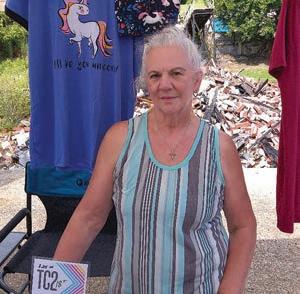

By Jill Runfola
Donora’s Fourth Annual Craft & Vendor Show on Saturday, August 10, was the picture-perfect day to come out and enjoy the unique vendors and assorted crafts available for a very worthy cause.
Held on 6th & McKean Ave. in Donora, from 10:00AM – 5:00PM, the event featured a total of 20 vendors for the community’s shopping pleasure. They included: Paparazzi Jewelry, Raven’s Baubles, Extreme Duty Grill by DFC, Ray’s Lemonade, Nooby’s Sweet Shoppe & Pebble’s Accessories, LLR Cozy Corner, Cool Crafts, and more. Raffle baskets for the Chinese Auction & Half the Take were donated. They contained Fall items, Teen related items, and home décor. The craft and vendor show showcased talented crafters and had delicious grilled food.
Event Host Kelly Balog says that this year she selected the Mon Valley Youth & Teen Association (to benefit from the vendor show), because she became a member of the board there.
The monthly meeting of the Mon Valley Coin Club will take place at 7:00PM on Thursday September 19 at VFW Post 1409, 793 E. Main St., Monongahela. All members and the public are invited to attend. Discussion will be held on the "History of the half dime and its value". A 50/50 will be offered and children's prizes will be awarded. Applications for membership are being accepted. For additional information, call 724503-8455 or 724-972-8464
“I love the work they do for the children,” said Balog. “They have some amazing programs for the kids, and the funds will help with things like paying for kids to attend camp or the Kids Connection Program.” Balog adds, “We definitely want to do something where we give back to the children. They (MVYATA) do a food bank also.” The Food Bank 2024 is held the 3rd Monday of every month at the MVYATA Center.
Mary Anne Bandalo, Executive Director of Mon Valley Youth & Teen, says the program benefits youth with events and programs detailed on their upcoming fall schedule on the website: www.mvyata.org.
Parents and youth who want information to become involved in the program can go to this site. Please contact them at 724-379-4889 before coming to the Center or outside of operation hours and a representative will return your call.
Donations and volunteers are always welcome for the organization. Mon Valley Youth & Teen Assoc., Inc. address is: 160 Thompson Ave., Donora, PA 15033.

On Saturday September 14, starting at 4:00 PM, Thomas Presbyterian Church will hold a wild animal show! The Wild World of Animals works with over 200 animals; each trainer has a particular grouping of individual animals they work with, the animals that come, depend upon which trainer presents that particular show.
Attendees will see 12-13 different animals ranging from arthropods, amphibians, reptiles, birds and mammals. The animals they work with are among some of the most fascinating, beautiful and sometimes endangered animals in the world. The trainers present the animals in a fast paced, informative and fun format, which both children and adults will enjoy.
The show is 45-50 minutes in length with a question-and-answer period at the end. After the show we will serve hamburgers and hot dogs. The cost is $10 per person with a maximum of $40 per family. Tickets can be purchased in advance at the church office or at the door the day of the event.
Thomas Presbyterian Church is located at 1068 Linden Road Eighty-Four, PA. If you have any questions, contact the church office at 724-941-8910.


The Ladies Golf Association recently hosted Flag Day at Youghiogheny Country Club. Planting a flag at her indicated handicap, Valerie Wilson (right) shot a net 67 to claim first place and Star of the Day.Missing from picture, Joanne McHolme placed second with a net 71. Lynn McHolme (left) placed third with a net 73. Last year's winner was Maureen Fiore.

Published Monthly by
Haniford Enterprises, LLC
P.O. Box 13363, Pittsburgh, PA 15243
Phone/Fax: (412) 249-8177
E-mail: news@messengerpaper.com
The South Hills Mon Valley Messenger is published during the last week of the month preceding the issue date. It is available FREE of charge at over 425 area locations throughout the South Hills and Mon Valley communities.
Owner/Publisher/Editor Douglas E. Haniford

The Women's Golf Association at Youghiogheny Country Club hosted their championship tournament. Lori Duncan (left) claimed her third championship title. Tied for low net, Diane Riley bested Lynn McHolme in a scorecard card playoff.
Contributing Writers/Photographers
J.R. Brower, Colette Dell
Alice Harris
Charlotte Hopkins Jill Runfola
Matthew Peaslee, Lois Thomson
Advertising: Charmaine Nebash
Editor: Matthew Peaslee
Distribution: Matthew Peaslee
Kara Prentice
Accounting and Business Administration: Judy Gramm
Promotions and Events: Kara Prentice
Art Director
JMC Graphics lammienancy@aol.com •(412) 877-5321
Editorial Policy
The South Hills-Mon Valley Messenger publishes community news free of charge.

The Ladies at Youghiogheny Country Club played their annual Petticoat Open using the Stableford method. Joanne Nemmer (right) earned 24 points to win the event and Star of the day. One point behind was Lynn McHolme who claimed second place. Last year's winner was Valerie Wilson.
We welcome the submission of articles, news releases, community announcements, editorials and letters for publication.
The Messenger will accept information via telephone, e-mail, Fax, or U.S. mail. Articles submitted without the complete name, address and telephone number of the author will not be printed. All submissions are subject to editing for length, clarity and taste. Photographs will not be returned unless accompanied by a self-addressed, stamped envelope.
Deadline for submissions is the 15th day of the month preceding issue date.
© The South Hills-Mon Valley Messenger and Haniford Enterprises, LLC. All rights reserved. No part of this publication can be reproduced without written permission from the publisher. We reserve the right to reject or cancel any advertisement at anytime. The opinions expressed in the Messenger are those of the author, and not necessarily of the Messenger.
For advertising information, call (412) 249-8177 or e-mail news@messengerpaper.com
Allegheny General Hospital was named top performing hospital in the state, Jefferson Hospital also listed among
Allegheny Health Network (AHN) is once again receiving statewide recognition for its efforts to support and raise awareness about organ, eye and tissue donation as the top-performing health system in Western PA for HAP’s 2024 Donate Life Pennsylvania Hospital Challenge. AHN Allegheny General Hospital (AGH) and AHN Jefferson Hospital were also named top-performing hospitals in the region as part of the challenge, with the hospitals receiving first and third place awards respectively.
Through this annual challenge, HAP recognizes the efforts of health care providers who lead effective campaigns to increase organ donation awareness within their hospitals and communities. HAP partnered with the Pennsylvania Department of Health and the two organ procurement organizations serving Pennsylvania—the Center for Organ Recovery & Education and Gift of Life Donor Program—to support the challenge.
This year, 118 hospitals statewide participated in the challenge. Participating hospitals’ Donate Life Month activities are captured on a scorecard and assigned titanium, platinum, gold, silver, and bronze level recognitions based on their scope, scale and ultimate success at increasing the number of registered organ donors. A total of 11 AHN hospitals were recognized through the challenge with
titanium or platinum designations, including AHN’s, Allegheny Valley Hospital, Harmar Neighborhood Hospital, Canonsburg Hospital, Forbes Hospital, Grove City Hospital, Jefferson Hospital, West Penn Hospital and Wexford Hospital in the Pittsburgh region; and Saint Vincent Hospital in Erie, Pa.
“We thank CORE for their partnership in raising awareness around the critical importance of organ donation across our communities and applaud the care teams and staff across the network for earning these top distinctions,” said Sri Chalikonda, MD, chair, AHN Surgery Institute.
This year, AHN hosted ten flag raising ceremonies, one rose garden ceremony, and one donor memorial ceremony across its 10 participating hospitals. Clinicians and caregivers at AGH also hosted the second annual ceremonial honor walk, paying tribute to nearly 100 members of organ donor families who gave the lifesaving gift of organ donation. In total, AHN registered more than 460 new organ donors in April thanks to its efforts.
"We are deeply honored to partner with so many committed hospitals across Pennsylvania in the HAP Donate Life Hospital Challenge," said CORE President and CEO, Susan Stuart. "This year’s record participation is a testament to the unwavering dedication of healthcare professionals who go above and beyond to advocate for organ, tissue, and cornea donation.”
According to CORE, more than 100,000 people in the United States are waiting for a transplant to save their lives. In Pennsylvania alone, more than 7,000 people are on the waiting list.
To view a full listing of award winners, visit www.haponline.org.
cfsbank, an independent community bank headquartered in Charleroi, PA in partnership with the Mon Valley Regional Chamber of Commerce (MVRCC) held their second Women in Leadership (W.I.L) Series to a sold out audience. This leadership series, which was first launched in March of 2024, was designed to inspire and empower women through a day of networking, learning, and giving back. “We are so thankful and humbled by how many ladies came out to celebrate women with us!” said Leanna Spada, Executive Director of the MVRCC and Co-Founder of the Women in Leadership Series. “If we have helped even one woman feel loved, appreciated, inspired, or safe then we have done what we have set out to do!”
The Women in Leadership Series was held on Wednesday, July 10th at Nemacolin Country Club in Beallsville, PA. Jennifer DiLucia, host of the ‘Spill with Me Jenny D’ podcast, was the keynote speaker for the more than 180 women in attendance. In addition to a featured speaker, this event included lunch, networking, and ven-
dors from local female owned businesses.
Face2Face Healing, whose mission is to build a support network for individuals dealing with cancer or conditions causing an altered self-image, was selected as the charity partner for this event. cfsbank made a monetary donation of $500 and guests were encouraged to make personal donations as well.
“I am thrilled by the overwhelming response and engagement that we had at the 2nd Women In Leadership Series Event.,” commented Kelly Moore, cfsbank Business and Community Development Officer and co-founder of the Women in Leadership Series. “It was truly inspiring to see so many passionate women come together to discuss important issues, share their stories, and empower each other to strive for greater achievements.”
The next Women in Leadership Series is scheduled for Wednesday, November 13, at Nemacolin Country Club. Please contact the Mon Valley Regional Chamber of Commerce at 724-483-3507 for more information.

L
R:

The chamber was honored to be a part of the ribbon cutting ceremony and celebration last week at PA Careerlink Mon Valley's new location at 130 McKean Avenue, Charleroi. A great asset and investment in our community! Stop by on September 12 between 10:00AM and 2:00PM for their Open House.

Owners Linda and Bill Horrell along with their son and daughter-in-law Michael and Kylie Horrell jointly cut the ribbon to their new location
The Chamber was excited to participate in the Marbill Diamond and Jewelry's ribbon-cutting and open-house event this month. This was to celebrate their new location at 1049 Broad Avenue, Belle Vernon, and their 60th year in business. The new showroom is phenomenal. Please stop in to see the hard work that has come to fruition and they are back on Broad Avenue in Belle Vernon where it all started!

Pictured above (L to R): Hannah Crago, Mary Oler, Jason Vitale, Joe Lombardo (owner), Joe Lombardo Sr, Nick Lombardo (owner), Iam Lombardo, Liz Steiner, Dickie Rotheram, Kyle Kinder, Lisa Rotheram, Roseanne Rotheram, Brian Grimm, Julie Grimm
Congratulations to the 201 Man Cave on your new expanded location! Formerly located on Rostraver Road, Owners, Joey and Nick Lombardo decided with the growth of their business it was time to expand. Stop by and visit their team at 800 Fayette Avenue in Belle Vernon or Call for an appointment today 724-929-9100.


By Senior Chief Mass Communication Specialist John Osborne Navy Office of Community Outreach
PEARL HARBOR, Hawaii - Lt. j.g. Zachary McKay, a native of Castle Shannon, PA, serves aboard USS Fitzgerald, a U.S. Navy warship operating out of San Diego, California, and participating in the biennial Rim of the Pacific (RIMPAC) exercise in and around the Hawaiian Islands.
McKay graduated from Keystone Oaks High School in 2017 and Penn State University in 2021.
The skills and values needed to succeed in the Navy are similar to those found in Castle Shannon.

“I learned early in high school through band and track that being on time is important and early is better, which is key to success in the military,” said McKay. “Honesty is always paramount and having integrity and a sense of responsibility has also served me well, especially since I have the lives of others in my hands.”
McKay joined the Navy three years ago. Today, McKay serves as a navigator. “I joined primarily because it was a straightforward way to give back to a country that has given so much to me,” said McKay. “It also lives up to my family’s ideals of service. My grandfathers served in World War II, one was a Marine who actually fought at Iwo Jima.”


Lt. Nicholas Wohar, from California, PA, (pictured at center), and Ens. Nathaniel Jeris, from Ann Arbor, Michigan,(at right) take a photo with a member of the Republic of Singapore Navy during a tour aboard U.S. 7th Fleet flagship USS Blue Ridge (LCC 19) on July 25, 2024. As the 7th Fleet flagship, Blue Ridge is the oldest operational ship in the Navy and routinely operates with allies and partners in preserving a free and open Indo-Pacific. (U.S. NAVY

Mariah Mossbauer, age 7, of North Strabane Township, was the first alternate to the overall Tot title, Covergirl winner, and the Pennsylvania State Cinderella Tot Beauty Winner for the Pennsylvania Cinderella Scholarship Pageant.

Mariah participated in preliminary pageants throughout the year to earn her spot at the state competition to compete against 7 other girls. Throughout the weekend, participants complete a private interview, an on-stage interview, and model casual wear and party wear outfits. The Cinderella Beauty winner is the participant who shows they are poised, confident, and well spoken, during all phases of the competition. Mariah is the daughter of Mike and Kelly Mossbauer. For more information about the Pennsylvania Cinderella Pageant and how to participate, you can visit our website at www.pennsylvaniacinderellapageant.com.

Stephanie Urchick, member of the Rotary Club of McMurray, PA, became the second woman ever to take office as president of Rotary International on 1 July 2024. During her oneyear term, Urchick will lead the 119-year-old membership service organization in adapting for future success as Rotary’s 1.4 million members around the world develop and implement sustainable, community-driven projects that fight disease, promote peace, provide clean water, support education, save mothers and children, grow local economies, and protect the environment. More than $5.5 billion has been awarded through The Rotary Foundation—Rotary’s charitable arm that helps clubs work together to perform meaningful, impactful service—to support these initiatives over the last 100 years.
In order to ensure that Rotary membership is a compelling option for those who have a heart for service and fellowship, Urchick is urging clubs to assess their strengths and areas for improvement while also encouraging them to embrace different meeting formats and membership styles as they work to mirror the communities in which they exist in terms of gender, age, culture, socioeconomic status, and more.
“Embracing different viewpoints and creating peaceful, welcoming, and inclusive societies is at the heart of Rotary’s work,” said Urchick. “As president, I will work with clubs to prioritize advancing peace by helping to create the conditions for stable and resilient societies in which people can thrive.”
As one of the world’s largest membership service organizations, Rotary has made peacebuilding the cornerstone of its global mission. From carrying out service projects to supporting future leaders through youth programs and scholarships, Rotary is taking action to address the underlying causes of conflict, including poverty, discrimination, ethnic tension, lack of access to education, and unequal distribution of resources.
Urchick will host a peace conference at the launch of Rotary’s newest Peace Center in partnership with Bahçeehir University, in Istanbul, Turkey in February 2025. As president, Urchick will also oversee Rotary’s top goal of eradicating polio. Alongside its Global Polio Eradication Initiative partners, Rotary has achieved a 99.9% reduction in polio cases, and contributed more than US$2.7 billion and countless volunteer hours to protect 3 billion children from this paralyzing disease.
Urchick holds a doctorate in leadership studies from Indiana University of Pennsylvania. A Rotary member since 1991, Stephanie has served Rotary in many roles and capacities. Her service includes building a primary school in Vietnam; installing water filters in the Dominican Republic; mentoring new Rotary members in Ukraine; coordinating a Rotary Foundation grant project in Poland; and leading efforts to formulate and adopt Rotary’s Action Plan, a strategic road map that will help bring even more people together to create lasting and positive change in an evolving world.



(BPT) - As long as your substructure is in good shape, resurfacing the walking surface with high-performance composite can be a simple way to breathe new life into your deck, requiring about the same amount of time and energy as resurfacing with wood. And, you'll never have to stain your deck again.
Composite decking, like Trex®, has gained popularity among today's homeowners who relish not having to sand, stain or seal the surface every year and who appreciate the eco-friendly nature of the material, which is made from mostly recycled and reclaimed materials. Better yet, with a little know-how and a few standard tools, even a novice DIYer can install it.
Following are a few tips for taking your existing deck from wood to "wow" by resurfacing it with highperformance, low-maintenance composite decking:
Resurfacing is different than rebuilding - Unlike building a deck
(Continued on page 23.)

BALDWIN TOWNSHIP
BENTLEYVILLE.


Seller
BETHEL PARK
Estate of Mack Vaksman Jeffrey Dupree Jr. and Hayley Dupree
3505 Ashland Drive
Estate of Mary Helen Hahn LDG Enterprises Corp. 5415 Brightwood Road
Estate of Edward Schaffer PNC Bank NA 949 Clifton Road
Brittany Vannatter Jacob and Trisha Sadler 7108 Dumbarton Pl
Brian Carte Bryan and Clarissa Kretchun 823 Hershire Drive
Estate of Earl Steel Monica Bibeau 891 Hershire Drive
Ona Lee Hoard Benjamin Jonard 1184 Logan Road
Accent Properties LLC Alexis and Christian Breitkreutz 2015 Pleasant St.
Stephen Lewandowski Christopher and Emily Vactor 167 Stonewood Drive
Kaitlyn Raie Garfolo Lauren Kenney and Matthew John Koch 2656 Summit St.
Estate of David Coulter Connell Properties LLC 323 Sunset Drive
Georgette Lash Garman Victor and Hanh Dinh Essel 6060 Baptist Road
Patrick Petley Tiki Hut Properties LLC 5133 Brightwood Road
Kashan Masud James Staph and Kailee Clipp 652 Fruitwood Drive
TKO Custom Building Inc. Kenneth and Judith Burns 700 Havengate Drive
Kyle Marie Burkhart Kenneth Royer and Maria Vighetti 5024 Lindermer Ave.
James Ekmann Kaylee Hogan 212 Navajo Road
Mary Karen Hunt Judith Krizman 198 Old Village Ln
Ana Maria Guerra Keegan and Mara Mazzochi 3243 Comanche Road
Kyle Hutter Herbert and Joellen Dodrill 941 Logan Road
Joan Ihnat Zachary Kraska and Mary Ellen Phyllis Smyth 6077 McPherson Ave.
G. Scott Opferman Olena Gladenko 5430 Park Ave.
Voelker Properties LLC Courtney Supper 2685 Santa Barbara Drive
Estate of Janet Ghise Samuel Polglase 5746 Scenic View Drive
Adam Nero Daniel Patrick and Jennifer Ann Branagan 2541 Applegate Ave.
South Pine Wind LLC Sheila Horox 5439 Brightwood Road
ARC BKMST41001 LLC Butterfli Holdings 052 LLC 5240 Library Road
Walter Gregg Thomas Wilk II 502 Maywood Drive
Karen Kennedy Herculano and Rita Hersan 1706 Parsonage Ln
Joshua Jones Maleia Ruane 2101 Pleasant St.
Travis Rigby Michael and Suvannah Colaizzi 2479 South Park Road
Win Plus Management LLC Kaidia Leigh Pickels and Thomas David Varney 112 Thunderwood Drive
Daniell Deleo Andrew and Allison Pricener 195 Thunderwood Drive
June Sheppard Anthea and Michael Nice 3325 Brownsville Road
Bernard Bakos Matthew Workman 331 E Garden Road
CVP Allegheny L.P. Mitchell and Sabria Hryciuk 435 Fairway Drive
Estate of David Artman Todd Andrew Cappetta and Jessica Taylor Smith 322 Radisson Road
Dennis Rigot CVP Penn L.P. 11 Willock Road
ME 3 Real Estate LLC Prayas Investments LLC 3300-3306 Clairton Blvd.
Amy Gauscheman Ian Palonis and Marissa Umble 4108 Cloverlea St.
CARROLL TOWNSHIP
Anna Marie Renacci Zachary Hammer
Washington Cty Land Res. Inc.Carrol Dream Homes LLC


12 Grant Ave.
105 Highland Ave.


$271,000.
$175,000.
$110,000. by sheriff's deed.
$350,000.
$350,000.
$325,000.
$330,000.
$290,000.
$500,000.
$330,000..
$185,000 by sheriff's deed.
$235,000.
$300,000.
$320,000.
$386,900.
$352,000.
$307,500.
$303,000.
$295,000.
$193,500.
$216,500.
$233,450.
$364,900.
$385,000.
$274,900.
$269,900.
$1,200,000.
$215,000.
$216,000.
$283,000.
$301,015.
$327,500.
$385,000.
$350,000.
$193,200.
$210,000.
$190,000.
$120,000.
$625,000.
$216,495.
$220,000.
$90,000.
(Continued from previous page.)
from the ground up, deck resurfacing involves removing and replacing the deck boards with new materials to give it a fresh, updated look. Think of it as a facelift for your deck! Installing composite decking will also extend the life of a deck with boards that are warrantied to last anywhere from 25-50 years or more.
A firm foundation is key - Before pulling up any boards, assess your deck's foundation to ensure it is structurally sound. Start from the ground up by examining the footings, posts and joists. Pay close attention to the condition of the wood. Discolored or spongy wood indicates rot and should be replaced before proceeding. As long as the framing and substructure are intact, you're good to go.
Use your resources - You don't need to be a building expert to tackle a resurfacing project. Utilizing online design tools and cost calculators can help you with product selection and budgeting. There are also step-by-step videos, installation guides and how-to articles available to walk you through the process. Resurfacing an aging or decaying wood deck with new composite decking is a doable DIY project that can be completed over the course of just a weekend or two. You get a brand-new deck for a lot less money than starting from scratch, and a lot less hassle through the years.
For more expert advice and DIY resources, visit Trex.com.


(BPT) - To maximize your time for relaxation and enjoyment, it's a smart idea to simplify daily tasks.
For example, simple kitchen upgrades that streamline cooking and cleaning can save you time to better enjoy your well-earned summer vacation. Summer is ideal for home renovations, big or small. The risk of weather delays is low, and multiple holiday sales make it the perfect time to purchase something you've been saving for! Plus, you'll be thanking yourself when fall and winter hosting picks back up.
Don't know where to start? Check out these five simple kitchen upgrades.
1. Organizational items and systems
Taking time to revamp your kitchen with organizational items and (Continued on page 25.)




Seller
Donald McCoy Century Point Properties LLC
420 Caldwell St.
Leonard McLyod III Green Valley Rentals LLC 615 Farnsworth Ave.
William Forkey Keith Edward Linn 522 N State
Patricia West Mon Valley Real Estate LLC
Aaron Walters Thomas Kakos
429 Rose Ave.
328 Castner Ave.
$1,050.
$45,790.
$15,000.
$55,000.
$40,000.
Mildred Leputa Donald White and Tara Harnois 803 Castner Ave. $25,000.
David Costa Marie Remy 119 McKean Ave. $46,000.
Todd Richards Samantha Mitchell 1265 McKean Ave. $47,500.
Merle Reed Lawrence Pope
330 Rod Way
James Pelissero Justin Nielsen 105 Ida Ave.
$15,000.
$8,000.
Citibank NA trustee Mark Molesky 520 McCrea Ave. $46,000.
Armand Forlini Jr. K2 Homes LLC 414 Short St.
ELIZABETH TOWNSHIP
Noah Decolati Tanner Crookston and Carissa Rechtorik
802 Everglade Drive
Estate of Jesse Michael HerronFederal Home Loan Mtg Corp. 117 High St.
$45,000.
$165,000.
$75,000 by sheriff's deed.
Elizabeth Sporio Joseph Craighead and Rachael Bechtel 407 High St. $179,900.
Beverly Paterra GA Real Estate Partners LLC 239 Mohawk Drive $85,000.
Leo Hannah trustee Bruno and Diane Lazzaris 900 Scenery Drive $125,000.
Robert Dora Donna Permigiani 101 Williamsburg Drive
T&D LLC J&P Christeson LLC 1441 Boston Hollow
Daniel Friedman Dylan Dedominicis 316 Donna Drive $220,000.
Lochan Real Estate Invesment Group LLC Avtar Singh and Kamaljit Kaur
100 Duncan Station Road
Raymond Bonacci Alan and Haley Hritz 814 Golfview Drive
James Walbert Penn Resident Inc. 3421 Long Hollow Road
FALLOWFIELD TOWNSHIP
$140,000.
$250,000.
$330,000.
Mark Yohe David Yohe and William Lusk 3432 State Route 136 $133,334.
US Bank Tr NA trustee Denis Wagner Jr. 4 Evans Road $85,000.
Estate of Gregg Leonard Bethem Meccala Woods 36 Florence Drive $10,000.
Deborah Colditz Robert Joseph and Darien Ellen Cline 1492 Route 481
FORWARD TOWNSHIP
Lauren Zang Nathaniel Casturo Public Road
$154,900.
$25,000.
Shawn Matthew Trump Freddy Jackson 1937 Sea Side Ln $2,000.
Martin Sams Kayla Carr 8161 Mentor Road
Charles Joseph Long IV James Joyce 427 Oliver Drive
Rachel Spyra Luck Michel 3419 Rainbow Run Road
Christina Blank Barrickman Logan Russum 753 Bunola River Road
Stacie Panek Scott and Kristen Turner 207 Oliver Drive
JEFFERSON HILLS
Janet Martinis Cheryl and Daniel Graziano 6431 Jefferson Pointe Cir
Michael Magrini Kenneth David Lyons 1501 N Randolph Drive
$171,000.
$285,000.
$164,000.
$130,000.
$250,000.
$350,000.
$340,000.
Karen Dougherty Mary Perunko and Michael Roger Reed 205 Oneida Drive $218,050.
Lori Laskovics Mandi and Michael Gratzmiller 1124 State Route 885
Cartus Financial Corp. Assegid Hafebo and Rovin Hennessey 3301 Woodwind Drive
Alfred Ernst Jr. JMD Real Estate LLC 1551 Worthington Ave.
(Continued from previous page.)
systems can streamline your kitchen routine. Look at your space and see where you can add shelves, drawer dividers and pantry organizers to create designated spaces for every kitchen item. Kitchen organization will allow you to quickly find what you need when you need it and help you maintain a clutter-free environment.
2. Touchless technology
Touchless kitchen faucet technology is a time-saving innovation that cuts down on cleaning and makes everyday tasks easier so you can spend more days in the sun. When looking for a faucet with touchless technology, consider models like those from the Delta Faucet Touch2O® with Touchless™ Technology line.
To operate, simply place your hand near the faucet, tap the faucet surface with your wrist or forearm or use standard handle activation to stop and start the flow of water. Touch-free activation helps keep your faucet clean, even when your hands aren't. Best of all, the Touch2O® with Touchless™ Technology is available in three different designs with a variety of finishes that complement your personal style.
3. Undercabinet lighting
Installing undercabinet lighting is an easy way to enhance the functionality and ambiance of your kitchen. Choose LED light strips that are energy-efficient and easy to install. Not only will this simple upgrade add a touch of sophistication to your kitchen, but it will also create a well-lit environment for all your culinary adventures.
4. Workstation kitchen sink
$162,000.
$410,000.
$310,000. NVR Inc. Jeffrey and Sean Backus
148 Arnoni Drive
Elizabeth Goetz Joseph and Teresa Coleman 6429 Jefferson Pointe Cir
Charles Beckinger Anthony and Molly Mooney
2008 Riverview Drive
$460,255.
$324,000.
$315,000.
MSD Deer Hollow LLC NVR Inc. Unknown Address $99,028.
MSD Deer Hollow LLC Geoffrey Davis and Alexis Eisner Arnoni Drive
MSD Deer Hollow LLC NVR Inc.
Darcy Giger Keith and Debra Brody
131 Arnoni Drive
1426 Council Pl
Darcy Giger Keith and Debra Brody 1426 Council Pl
Maronda Homes LLC Susmita Dahal
130 Foxhound Drive
John Miller Bernard O'Black Jr. and Pamela O'Black High Road
MB2K Development Inc. Robert Dimsa trustee
Kathleen Savage Tara Dahal
Adam Krizbai Renee Kemmler and Joseph Lada
2100 Laurel Ridge Drive
376 New World Drive
324 Old Clairton Road
$220,000.
$99,028.
$625,000.
$75,000.
$449,990.
$25,000.
$210,000.
$235,000.
$60,500.
Upgrade your kitchen sink to a workstation model designed for versatility and daily kitchen tasks. A model like the Delta® workstation sink with a built-in WorkFlow™ ledge creates a multi-functional space and reduces counter clutter by allowing you to work right over the sink.
The ledge provides plenty of space for food prep, washing and drying, all in one convenient location. Whether you are washing pots and pans after hosting, filling vases for cut flowers from the garden or rinsing sandy items from a day at the beach, a workstation
(Continued on page 26.)
from previous page.)
sink has all the space you need.
5. Change hardware
Want a quick and simple way to elevate your kitchen and refresh your style this summer? Swap out your hardware! Look at the handles and knobs on your cabinets and drawers and think about what colors and finishes speak to your vision of the ideal kitchen. Opt for modern, stylish handles and knobs that will stand the test of time and enhance the aesthetic appeal of your kitchen.
Savor the joys of summer by incorporating these five simple but smart kitchen upgrades. The time you spend now creating a more efficient home environment will give you more time to create summer memories that will last a lifetime.


NORTH BELLE VERNON
Daniel Adametz Mary Kathryn Schickel
333 Henry St.
Sarah Antonucci Taylor Turnbaugh 515 Grant St.
Jesse Cramer Thomas Thompson Jr. and Angela Thompson 392 Fell St. Unit Rear
NOTTINGHAM TOWNSHIP
NVR Inc. Margaret Smith
115 Dana Drive
$156,000.
$135,000.
$80,000.
$394,890.
David McPherson Nathaniel Thomas Powell 1299 Sugar Run Road $375,000.
Castlewood Fields L.P. NVR Inc. Dana Drive $91,000.
Castlewood Fields L.P. NVR Inc. Dana Drive $91,000.
NVR Inc. John Moore III and Candice Moore 362 Dana Drive
Huffys Family L.P. Bradley Hufnagel
$518,290.
100 Hamtom Road $1 (state deed transfer stamps indicate a value of $86,632).
Huffys Family L.P. David Hufnagel
168 Hamtom Road $1 (state deed transfer stamps indicate a value of $84,371).
G. Thomas Mellor Ronald Nowak Jr. and Kristine Nowak 1143 Sugar Run Road
Estate of Francis W. Hope Paul Coyle and Heather Ammann 1433 Sugar Run Road

$513,000.
$430,000.
Castlewood Fields L.P. NVR Inc. Dana Drive $91,000.
Castlewood Fields L.P. NVR Inc.
Est. of Louis Ronald DePretis 2705 Rt 136 LLC 2705 Route 136 $220,000.
PETERS TOWNSHIP
Zhao Xiaodong Jeffrey Pollack and Lori Mazza 619 Sagewood Drive $978,000.
Ernestates Enterprises LLC James Murray 200 Clubview Drive $615,000.
Evertt McDonough Stevenson Williams Co.
305 E McMurray Road $348,000.
William Moshier trustee Adam Ferree and Jessica Barrett 105 Estates Drive $510,000.
Eddy Homes Inc. Mark and Suzanne Brody 522 Harvest View Drive $932,973.
Nathan Siers Andrew Yackuboskey 403 Laurel Drive $229,000.
Christian Zinn John Brady and Lisa Moschella 251 Maplewood Drive $725,000.
Trax Farms Inc. Trax Farm Market Inc. McClelland Road $649,558.
Naor Wallach Matthew Aaron and Renae Alexandra Pabis 235 Molly Drive
Scott Phillip Sands James Butler
154 Rosscommon Pl
David Johnson Gerald and Kara Raymond Thomas Road
Federal Natl Mortgage Assn. Joshua Gesselberty and Erin Ridge 618 Venetia Road
Thomas Boczkowski Elizabeth Schrage
Estate of Elsie Gallagher Charles and Shannon Gilmer
Environmentally Sound Enterprises LLC NVR Inc.
329 Village Green Drive
202 W Edgewood Drive
102 and 106 Westbury Drive
Environmentally Sound Enterprises LLC NVR Inc. 107 Westbury Drive
$831,235.
$320,000.
$512,500.
$241,500.
$465,000.
$349,000.
$202,000.
$101,000.
Robert Cavanaugh Robert Cavanaugh and Maureen Ringeling 475 Bower Hill Road $1 (state deed transfer stamps indicate a value of $80,342).
Nathan Paschel Justin and Darcee Tague 105 Castlebrooke Drive
David Fraticelli Yam Prasad Powdyel
Environmentally Sound Enterprises LLC NVR Inc.
Marshall Lee Detwiler Jr. Richard Lee McCormick and Stacey Pape
Nicholas Hullhorst Bryan and Ashley Eckert
Mark Kuhnhenn trustee Nicholas Anderson and Chelsea Lane
Station Park Properties LLC Shawn Ludwig
Brian Trueblood Alec Shilling and Amanda Wylie
106 Castlebrooke Drive
348 Chalford Cir
236 E Edgewood Drive
230 Fox Run Drive
301 Greenfield Drive
237 Maid Marion Ln
126 N Heide Ln
Erich Rudolph Hoai Dinh Nguyen and Trang Thi Doan Dinh 212 Robinhood Ln
Estate of Ruth Ann Burke Karyl Noel 222 Roscommon Pl
Estate of Amelia Jean BaumgartnerEmilio and Victoria Ann Venturella
Cody Partyka Joseph and Christa Bement
Charles Caldwell Samuel Leonard and Ariel Deborah Veltre
Richard Langston Chad Corey Fenner and Carol Steinhauer
Donald Pasquinelli Jr. Andrew and Pamela Sweat
Environmentally Sound Ent. LLC NVR Inc.
PLEASANT
Thomas Wehmer Daniel Black
Michael Taubes James Barca and Caryn Cordero
Sha Mahat Durga Maya and Govinda Khadka
Scoobyx2 LLC NVR Inc.
Whitney Ptak Allison Margaret and Nicholas Kyle Dunbar
Constance Dalessandri Testa Sidhant Sharma
129 Sherwood Drive
115 Southvue Ct
244 Thompsonville Road
250 W McMurray Road
201 Wellington Cir
130 Westbury Drive
398 Broadway Drive
76 Gill Hall Road
337 Grace St.
131 Pleasant Grove Ct
196 Senate Drive
564 Torwood Ln
$650,000.
$460,000.
$101,000.
$1,510,000.
$720,000.
$300,000.
$549,900.
$61,000.
$540,000.
$340,000.
$352,000.
$275,000.
$405,000.
$540,000.
$12,601.
$101,000.
$200,000.
$353,000.
$290,000.
$102,000.
$250,000.
$254,700.
(Family Features) Whether you're looking to add value for potential sale or simply create a more comfortable living space, now is the perfect time to breathe new life into your home with projects that provide a high return on investment (ROI).
Consider these top home renovation projects from the experts at Westlake Royal Building Products - a leader in innovation, design and production of exterior and interior building products including siding, trim, mouldings, roofing, stone, windows, outdoor living and more - based on the 2024 Cost vs. Value Report from "Remodeling Magazine."
Remodel the Kitchen and Bathroom
The average seller can expect an 96.1% return on a light touch to the kitchen, according to the report, and 73.7% on a modest bathroom renovation. Because personal preferences can vary widely among buyers, minor upgrades can provide a higher ROI than large, upscale remodels. A few easy ways to refresh your kitchen or bathroom include updating shelving or adding new hardware. Decorative trim and mouldings are also cost-effective ways to add visual interest.
As natural and textured home trends continue, homeowners are gravitating toward stone veneer, or manufactured stone, as it can replicate the look of real stone, adding comfort, character and beauty to homes. An option like Versetta Stone from Westlake Royal Building Products offers the authentic, handcrafted look (Continued on following page.)
(Continued from previous page.)
of stone in a panelized format that's easy to install with nails and screws. There's also no need to paint, coat or seal once installed. Ideal for its ability to add texture and dimension throughout both home interior (accent walls and fireplaces) and exterior applications (siding, entryways and walkways), stone veneer - which comes with a 153.2% ROI - can influence mood, emotion and energy levels while serving as a focal point of your home's design.
Depending on the harshness of winter in your area and the age of your home, you may notice certain windows have developed drafts, allowing cold air to enter and heat to escape. Replacing drafty or outdated windows with modern, energy-efficient models is one of the most effective ways to enhance your home's energy efficiency. Additionally, a vinyl window replacement brings approximately 67.1% ROI.
In some cases, applying a fresh coat of paint is enough to refresh your home. However, if you're looking to enhance your home's curb appeal while making a long-term impact, consider installing new siding or replacing existing siding. Because vinyl siding serves as an additional layer of insulation, improving the energy efficiency of your heating and cooling systems, it offers a 80.2% ROI. Weather-resistant, low-maintenance siding like Celect Cellular Composite Siding, which is now available in ontrend colors including Imperial Red, a (Continued on following page.)


Jacob Williams Stacy Anne Ball 2985 Sebolt Road
Melissa Seibert Otis Strong 1928 Strawbridge Drive
Nickole Cantrell Jacob Joseph and Nellie Bradford ODonnell 4134 Terrace Ave.
$152,000.
$300,000.
$152,500.
Michael Dunmire Liberty Invest Capital Inc. 1167 Thomas Ave. $160,111.
Keith Haselhoff Tristan Kernick 6582 Zupancic Drive $281,620.
SPEERS
Leabeth M Peterson Teluch Michael Geoghegan 227 Davidson Drive
Gregory Barr Elizabeth Gregg 103 Crest St.
Louis DiPietrantonio SP Strategies LLC 109 Pennsylvania Ave.
Bernard Schoedel Patrick and Margaret Ann McKeever 19 Boyka Drive
$225,000.
Clarissa Jayne Fabus KretchunJorge Thomas Coneybeer 5048 Don St. $192,500.
Patrick McKeever Jacob Richert and Lexus Kiggins 3690 Finleyville Elrama Road $219,900.
Scarmazzi Highland LLC James Hrica trustee and Colleen Kyler trustee 1518 Highland Drive $458,930.
Gregory Klements Corey and Debrah Behanna 6203 Route 88 $55,000.
Trax Farms Inc. Trax Farm Market Inc. State Route 88 $307,154.
Housing & Urban Dev. Cyrus Hassibi 2399 State Route 88 $114,100.
Trax Farms Inc. Trax Farm Market Inc. 6390 State Route 88 $411,559.
Trax Farms Inc. Trax Farm Market Inc. 528 Trax Road $2,874,850.
Scarmazzi Highland LLC Bernard and Valerie Schoedel 101 Village Ln $453,430.
Scarmazzi Highland LLC Patricia Obringer 113 Village Ln $435,200.
SRJC Properties LLC Thomas William Cowden Jr. and Brittany Cowden 3 Harvest Ln $285,000.
Scarmazzi Highland LLC Thomas Patrick Carberry and Gertrude Zaklan 145 Village Ln $458,740.
Scarmazzi Highland LLC Robert Dora and Debra Ann Reilley 147 Village Ln
WHITEHALL
$467,150.
Tara Nepal Mukamana Mukandutiye 4705 E Willock Road $225,000.
Estate of John O'Brien Jr. Gregory and Colleen Adams 5183 Fieldcrest Drive $150,000.
Ervin Bauman Randy and Natalie Carretta 11 Aldred Ln
Michael Mazzoni Kevin Kocak and Sarah Sopinski 141 Providence Way
Estate of Joanne Madeline Disney Blessed Spiti LLC 5115 Daube Drive
Kendy Pellegrene Jack and Lindsey Narron 5158 Lantern Hill Drive
Nar Dhital Christopher Patrick and Emily Rishel Galgon 5270 Sherwood Drive
NVR Inc. Dylan T. Finocchi and Alexandria V. Stojanof Unknown Address
Damon Lippert Robert and Renee Schram 5082 Azalea Drive
Diana Mysliwiec Brett Dadig 3002 Duncan Ln
Benjamin Nils Smeland Frank Warren and Leslie McIntosh 4808 Old Boston Road
Alex Ehrman Emmaus Communithy Pittsburgh Inc. 213 Peach Drive
Jordan Lowe Logan Thomas Coyne and Emily Jayne Hay 5352 Spring Valley Drive
David Loshelder Sydney Bennington and Dalton Cuccia 1341 Varner Road


(Continued from previous page.)
robust shade of red; Deep Pewter, a compellingly modern forest green; and Timberland, a rich, natural brown, won't warp, sag or buckle and is built to withstand even the harshest weather conditions. Its patented interlocking joints provide a seamless look and it's easy to install in small spaces, like along a knee or pony wall.
If you want to entertain guests outside, it's a perfect time to get your patio or deck ready. While a new coat of stain can update your existing deck's appearance and help protect it, now is also an ideal time to build a deck if your home doesn't currently have one. When choosing a decking material, cost and maintenance are two factors to consider. Composite decking offers a 68.2% ROI and is low maintenance as it's not susceptible to cracking, warping and weather damage.
Find more ideas to update your home at WestlakeRoyalBuildingProducts.com.
$460,000.
$338,000.
$185,240.
$345,000.
$401,000.
$304,615.
$275,000.
$255,000.
$234,445.
$282,540.
$300,000.
$245,000.





If you have questions for our expert, send your questions to SOUTH HILLS-MON VALLEY MESSENGER, P.O. Box 13363, Pittsburgh, PA 15243 or e-mail news@messengerpaper.com
Q: What is the new “hybrid” mattress made by Serta iComfort, and what are the benefits of owning one?
A: Serta’s iComfort Hybrid mattresses combine our latest breakthrough in gel memory foam technology with our most advanced innerspring support systems. Your body will benefit from pressure point relief, added body support and temperature regulation from our exclusive EverFeel® Triple Effects™ Gel Memory Foam. Mattress-wide comfort and support is achieved with our Duet® Coil System with BestEdge® Foam Encasement. iComfort Hybrid Mattress Features:

• EverFeel® Triple Effects™ Gel Memory Foam - Advanced material that is infused with Titanium gel beads. Millions of these beads help dissipate heat for a more comfortable sleeping temperature, and provide added support to points of your body that need it the most.
• Duet® Coil System with BestEdge® Foam EncasementIndividually wrapped coil support system, with each coil consisting of a responsive outer coil that conforms and cradles your body; and a firmer coil that gives more support in reaction to weight and body movement.
Visit Highway Appliance today to browse our selection of Serta iComfort Hybrid mattresses, and see for yourself.

2214 Rt. 88, Dunlevy (Exit 40 off Interstate 70, and just minutes off Rt. 43) 724-326-5616 www.highwayappliance.com

Tri State Neuropathy Centers, one of the largest neuropathy treatment practices in the USA is currently scheduling patients at their Castle Shannon office, located at 3757 Library Road.

Dr. Michael Renk, Tri State Neuropathy Centers
Over 30 million Americans suffer from neuropathy and its debilitating symptoms of painful cramping, burning and tingling, difficulty walking, numbness, and even interruption of sleep. Neuropathy has a devasting effect on normal activities that most people take for granted and enjoy. Some of the most common causes of neuropathy are related to diabetes, medications, chemotherapy, and back issues.
“Peripheral neuropathy is a chronic and progressive disease,” said Dr. Michael Renk of Tri State Neuropathy Centers. “Left untreated, peripheral neuropathy will only get worse. It is best to treat it early.”
Since 2013, the eight regional Tri State Neuropathy Centers have steadily grown and successfully treated over 12,000 patients with an advanced technology protocol that addresses the causes of neuropathy rather than the symptoms. The program is noninvasive, painless, drug-free, and is FDA-approved.
Have Tri State Neuropathy Centers help you get back to enjoying all the activities that you love.
To schedule an initial no-cost consultation, call 412-207-2398. Learn more at www.marydancedin.com.

Find out how Tri State Neuropathy Centers program can help you get back to enjoying all the activities that you love.
To schedule an initial no-cost consultation, call 412-207-2398. Learn more at www.marydancedin.com.

Q: What exactly is LASIK surgery, and how does it work?
A: LASIK (Laser-Assisted In Situ Keratomileusis) is a common outpatient eye surgery designed to improve vision. It utilizes laser-based technology to correct a patient’s refraction (prescription) and reduces or eliminates the need for glasses or contact lenses. If you have vision problems like nearsightedness (where near vision is clear, but distance is blurry), farsightedness (where near vision is blurry), or astigmatism (where vision is blurry at all distances), LASIK might be a good option for you.
During LASIK, a special laser is used to reshape the cornea (the clear, dome-shaped surface of your eye). The cornea’s shape affects how light enters your eye and focuses on the retina (the light-sensitive tissue at the back of the eye). By reshaping the cornea, LASIK helps light focus correctly on the retina, which makes your vision clearer.
Q: How is LASIK different from cataract surgery?
A: Although both LASIK and cataract surgery are procedures that improve your vision, they’re used for different reasons and at different stages of life.
LASIK is a laser-assisted elective procedure used to correct vision problems like nearsightedness, farsightedness, or astigmatism. It’s typically done on younger people who want to reduce or eliminate their need for glasses or contact lenses. LASIK changes the shape of the cornea, so light focuses correctly on the retina.

by Nisha Dhawlikar Gosai, M.D. Glaucoma-Cataracts Consultants, Inc

The procedure is quick—usually about 15 minutes for both eyes—and most people notice an improvement in their vision within a day or so. Recovery is also fast; you might experience some mild discomfort or dryness in your eyes, but most people are back to their normal activities within a day or two. Many patients achieve 20/20 vision or better after LASIK, meaning that they may no longer need glasses or contacts.
Q: What is cataract surgery, and why might I need it?
A: Cataract surgery is performed when the natural lens inside your eye becomes cloudy, causing blurry vision. It is a normal part of aging. Cataracts can cause glare and haloes with bright lights, especially at nighttime, and can cause colors to look duller.
In cataract surgery, the cloudy lens is removed and replaced with a clear, artificial lens called an intraocular lens (IOL). This artificial lens works just like your natural lens did before it became cloudy, helping you see well again. Cataract surgery is one of the most common and successful surgeries performed today. It is done on an outpatient basis, meaning you can go home the same day, and is covered by your medical insurance.
After surgery, most people notice a big improvement in their vision. Some people may still need glasses for reading or other tasks, but their vision is much clearer, and colors are more vivid after cataract surgery. If you are interested in reducing or eliminating your need for glasses altogether, we can discuss premium intraocular lens options that may also be an option for you.

Cataract surgery, on the other hand, is usually needed when you get older and your natural lens inside of your eye becomes cloudy. This cloudiness causes blurry vision, like looking through a foggy window, and it cannot be corrected with glasses or contacts. Cataract surgery is not optional if you want to restore clear vision—it’s necessary when cataracts start affecting your daily life. In this surgery, the cloudy lens is removed and replaced with an artificial lens, which helps you see clearly again.
So, while LASIK and cataract surgery both aim to improve your vision, LASIK is more about fine-tuning how your eye focuses light, and cataract surgery is about replacing a part of your eye that is no longer working well.
Q: Can I have both LASIK and cataract surgery?
A: It is possible to have both LASIK and cataract surgery, but not at the same time. If you’ve had LASIK earlier in life and then develop cataracts as you get older, you can still have cataract surgery. The cataract surgery would address the cloudiness of the lens and restore your vision. Sometimes LASIK can also be performed after cataract surgery to finetune the vision and reduce the need for glasses. If you are considering either of these surgeries or are experiencing vision problems, I am happy to discuss these procedures in more detail with you and choose the treatment best for your specific needs and lifestyle.
References:
1. New England Eye Center. LASIK surgery [Illustration]. https://www.neec.com/lasik-surgery-boston/. Accessed August 12, 2024.
2. American Academy of Ophthalmology, EyeWiki. Mature Cataract [image]. Updated June 2, 2017. EyeWiki website. https://eyewiki.org/File:Mature_cataract.jpg. Accessed August 12, 2024.
3. Wikipedia. Cataract surgery: Intraocular lens implant [image]. Wikimedia Commons website. https://en.wikipedia.org/wiki/Cataract_surgery - /media/File:Hinterkammerlinse_01_(fcm).jpg. Published May 6, 2006. Accessed August 12, 2024.
Dr. Gosai is a board-certified ophthalmologist specializing in cornea, refractive, and cataract surgery. She received her undergraduate degree from Boston University and her medical degree from Rutgers Robert Wood Johnson Medical School. She completed her ophthalmology residency at Tufts Medical Center and cornea fellowship at New York Eye and Ear Infirmary of Mount Sinai. She currently practices with GlaucomaCataract Consultants, Inc.
Glaucoma and Cataract Consultants: Charleroi Office: 17 Arentzen Blvd, Suite 201, Charleroi, PA 15022, 724-483-3688
Mt. Pleasant Office: 220 Bessemer Rd, Suite 101, Mt. Pleasant, PA 15666, 724-547-5733
Mt. Lebanon Office: 1000 Bower Hill Rd, Suite 7200, Pittsburgh, PA 15243, 412-572-6121
BAUER, Jerome J., 75, of Brentwood, died August 9. Arrangements by Jefferson Memorial Cemetery and Funeral Home in Pleasant Hills.
BAUER (KRAUCH) Janet Ann, 73, of Brentwood (formerly Brookline) died July 30. Arrangements by Jefferson Memorial Cemetery and Funeral Home in Pleasant Hills.
BIAGINI, Natalie G., 70, of Monongahela, died August 4. Arrangements by Marshall Marra Funeral Home.
BITTNER, Leroy C. “Chuck,” 83, of South Park, died July 29. Arrangements by David J. Henney Funeral Home, Library.
BRDAR (RICHARDS) Judi, 78, of West Mifflin, died July 31. Arrangements by Paul L. Henney Memorial Chapel in Bethel Park.
BURGESS, Jeann Ann, 88, of Brentwood, died August 12. Arrangements by Jefferson Memorial Cemetery and Funeral Home in Pleasant Hills.
CLODFELTER, Eric C., 70, of North Charleroi, died July 30 in Markleysburg, Pa. Arrangements by Hogan-Melenyzer Funeral & Cremation Services, Inc. in Charleroi.
CONNOR, Edward, 82, of Bethel Park, died August 22. Arrangements by Paul L. Henney Memorial Chapel in Bethel Park.
CRAMER (RIPEPI) Dr. Antionette, 92, of Texas, formerly of Monongahela, died July 25. Arrangements by Marshall Marra Funeral Home.
D’ ALESSANDRO, Barbara Margaret, 81, of Bethel Park, died July 25. Arrangements by Jefferson Memorial Cemetery and Funeral Home in Pleasant Hills.
DAWSON, Thomas E., of Bethel Park, died July 24. Nicknamed “Baron Van Dawson/Admiral.” Arrangements by Paul L. Henney Memorial Chapel in Bethel Park.
DOLINAR (YOUNG) Dorothy Ann, 89, of Finleyville, died July 29. Arrangements by David J. Henney Funeral Home, Library.
DONOVAN, Janet, 85, of Finleyville, died August 18. Arrangements by Kegel Funeral Home.
EARLEY (SZEDON) Robin F., 63, of Monongahela, died August 12. Arrangements by Marshall Marra Funeral Home.
FAUST (LOCKE) Marlene A., 82, formerly of Bethel Park, died August 9. Arrangements by Paul L. Henney Memorial Chapel in Bethel Park.
FERA, Nicholas, Jr., 88, of Baldwin Borough, died August 6. Arrangements by Jefferson Memorial Cemetery and Funeral Home in Pleasant Hills.
FIORE, Nello, 89, of Whitehall, died July 29. Arrangements by Jefferson Memorial Cemetery and Funeral Home in Pleasant Hills.
FITCH, Thomas “Tom,” 80, of Gastonville, died August 5. Arrangements by Kegel Funeral Home.
GABAUER, Sandra, 76, of Finleyville, died August 15. Arrangements by Kegel Funeral Home.
GEIB, Shyri Lynne, 72, of Elizabeth, died August 7. Arrangements by Jefferson Memorial Cemetery and Funeral Home in Pleasant Hills.
GITAS, George J., 80, of Bethel Park and born in Donora, died August 4. Arrangements by Jefferson Memorial Cemetery and Funeral Home in Pleasant Hills.
GREGOR, Theresa M., 92, of South Park, died August 9. Arrangements by Jefferson Memorial Cemetery and Funeral Home in Pleasant Hills.
HAEFNER (SPERANZA), Amber Rose, 40, of Bethel Park, died July 25. Arrangements by Paul L. Henney Memorial Chapel in Bethel Park.
HENLINE, Penny Jane, 72, of Charleroi, died August 8. Arrangements by Hogan-Melenyzer Funeral & Cremation Services, Inc. in Charleroi.
HENSON, Leslie S., 46, of New Eagle, died July 28. Arrangements by Marshall Marra Funeral Home.
HOLMES, Scott A., 57, of Baldwin and born in Pittsburgh, died August 5. Arrangements by Jefferson Memorial Cemetery and Funeral Home in Pleasant Hills.
HOSTERT, Carol A., 93, of Baldwin and born in Chicago, IL, died July 22. Arrangements by Jefferson Memorial Cemetery and Funeral Home in Pleasant Hills.
JOHNSON, Dan Kent, 61, of Baldwin, died August 6. Arrangements by Griffith Funeral Home in South Park Township.
KRUTZ, William “Bill,” 80, of Charleroi, died August 5. Arrangements by Hogan-Melenyzer Funeral & Cremation Services, Inc. in Charleroi.
KUKICH, Catherine A. “Kay,” 85, of Pleasant Hills, died July 31. Arrangements by Jefferson Memorial Cemetery and Funeral Home in Pleasant Hills.
LA RUE, Floyd Ellis, 80, of Charleroi, died August 11.
LICHT, Carl R. “Randy,” 77, of Monongahela, died August 17. Arrangements by Marshall Marra Funeral Home.
LIPPENCOTT, James H., 40, of Charleroi, formerly of Monessen, died August 10. Arrangements by Marshall Marra Funeral Home.
MCCLUNE (KOLOPOS) Barbara J., 92, of Bethel Park, died August 15. Arrangements by David J. Henney Funeral Home, Library.
METZ, Susan D., 69, of Baldwin Township and formerly of South Park, died July 25. Arrangements by Jefferson Memorial Cemetery and Funeral Home in Pleasant Hills.
MILLER (GENSLER) Barbara Ann, 75, of Bethel Park, died August 18. Arrangements by Griffith Funeral Home in South Park Township.
NIX (LEONARD) Carole E., 86, of South Park, died August 9. Arrangements by Griffith Funeral Home in South Park Township.
OLSON, Veronica ‘Vundy’ T., 81, of Speers Hill, died August 20. Arrangements by Carl J. Spallino Funeral Home in Charleroi.
O’ TOOLE, Mary Ann, 80, of Elizabeth, formerly of Plum, died August 11. Arrangements by Jefferson Memorial Cemetery and Funeral Home in Pleasant Hills.
PIEMME, Walter C., 80, of South Park, husband for 53 years of Janice, died August 9. Arrangements by David J. Henney Funeral Home, Library.
POTOMA (HALLER) Patricia Ann, 84, of West Mifflin, died August 10. Arrangements by Jefferson Memorial Cemetery and Funeral Home in Pleasant Hills.
RILEY, Ronald Eugene, 86, of South Park, died August 19. Arrangements by Griffith Funeral Home in South Park Township.
SCHAUB, Wayne T., 86, of South Park, died August 17. Arrangements by Jefferson Memorial Cemetery and Funeral Home in Pleasant Hills.
SCHRIBER, Marlene, 90, of North Charleroi, died July 26. Arrangements by Carl J. Spallino Funeral Home in Charleroi.
SPOSSEY, Joanna R., 79, of VA, formerly of Charleroi, died July 18. Arrangements by Hogan-Melenyzer Funeral & Cremation Services, Inc. in Charleroi.
STUPAR, Donald Raymond, 87, of West Mifflin, died August 19, surrounded by family. Arrangements by Jefferson Memorial Cemetery and Funeral Home in Pleasant Hills.
SUTY, James “Jim,” 76, of New Eagle, died August 5. Arrangements by Kegel Funeral Home.
VACCARI, Edward G., 87, of Finleyville, died July 28. Arrangements by Kegel Funeral Home.
VANSICKLE (HIGINBOTHAM) Carol A., 88, of Upper St. Clair, formerly of Bethel Park, and Washington, PA, died July 28. Arrangements by David J. Henney Funeral Home, Library.
VOGEL, Robert Joseph, 91, of Spring Grove, died July 30. Arrangements by Jefferson Memorial Cemetery and Funeral Home in Pleasant Hills.
WALKER, Audrey J., 88, of Canonsburg, died July 24. Arrangements by Jefferson Memorial Cemetery and Funeral Home in Pleasant Hills.
WIETHOLDER, Edward Kenneth, 58 of South Park, died August 21. Arrangements by Jefferson Memorial Cemetery and Funeral Home in Pleasant Hills.
WILTZ, Kenneth J., 79, of Charleroi, died August 14. Arrangements by Carl J. Spallino Funeral Home in Charleroi.
WISE, Thomas D., 94, of Forward Township, died August 19. Arrangements by Jefferson Memorial Cemetery and Funeral Home in Pleasant Hills.
WOJCIK (HODGSON) Margaret A. “Peggy,” 86, of Charleroi, died August 2. Arrangements by Marshall Marra Funeral Home.
ZAMECNIK, Edward “Ed,”, 80, of South Park, died August 16. Arrangements by Paul L. Henney Memorial Chapel in Bethel Park.


Saints Joachim and Anne Parish will be holding Adult Formation Study for Fall 2024 – ‘Jesus and the Eucharist.’
This series features an impressive array of Catholic voices! Each session opens with an exhortation from a different bishop, includes teaching from prominent theologians and influential figures in the Church today, and highlights personal testimonies from everyday Catholics who have experienced the transformative power of Eucharistic love in their own lives.
The schedule and locations for this series will be as follows:
Tuesday Evenings from 6:30 to 9:00PM
Starting on Tuesday, September 17 through October 29
Saint Michael- Archangel Hall, 101 McLay Drive, Elizabeth
Wednesday Mornings from 9:15AM to 11:30AM
Starting on Wednesday, September 18 through October 30
at Queen of the Rosary Hall, 530 Michigan Avenue in Glassport. Please register by calling the Faith Formation office 412-754-0886.
Reach over 50,000 local readers
To submit a FREE private party classified ad, write down your ad on paper, or an index card, and mail to: The Messenger, P.O. Box 13363, Pittsburgh, PA 15243
We also will accept your FREE private party classified ads via e-mail at: classifieds@messengerpaper.com
REAL ESTATE, RENTALS, HELP WANTED, AND ALL OTHER BUSINESS AD RATES –
$8.00 (minimum) for up to 15 words, plus .35 cents for each additional word. Bold Type - .25 cents per word. Box - $1.50
* NOTICE: FREE private party classified ads are not accepted over the phone. Voice-mail messages for FREE classified ads will not be accepted, and messages are not able to be returned. We appreciate your understanding and cooperation.
The Messenger has established a maximum limit of Five(5) FREE classified ads per issue per private party or individual. Any ads submitted that exceed this maximum will require payment. Our FREE classified ads are intended to be a community service for private party or individuals selling personal goods and items.
Any classified ads that are deemed to be from a resale shop, thrift store, flea market, reseller or other retailer are considered “business” ads, and do not qualify for the FREE classified ads.
** FREE CLASSIFIED AD POLICY – The Messenger has established a maximum limit of Five(5) FREE classified ads per issue per private party or individual. Any ads submitted that exceed this maximum will require payment. Our FREE classified ads are intended to be a community service for private party or individuals selling personal goods and items. Any classified ads that are deemed to be from a resale shop, thrift store, flea market, reseller or other retailer are considered “business” ads, and do not qualify for the FREE classified ads.
2009 HARLEY DAVIDSON DYNA SUPER GLIDE - 17,000 miles, Python pipes, Detachable bags and windshield, New tires and battery, Super tuner. Many other extras. Excellent condition. $7,300. Randy, 412-217-8800
NEW TAILGATE - For Ford Trucks. 724-9388240
2006 GMC ENVOY – Runs good. Approx 70,000 miles. Frame needs repair. $500 OBO. 724-470-403
4 WHEELS - off a 2024 Chevy Equinox, 5 hole pattern, 17 inch. on the car for 3 mo. like new condition. $225. 724 348 0507
1999 HARLEY FXDWG – Aztec Orange Pearl. 10,900 miles. Engine guard kit, profile low rear shock kit, windshield, new tires, assorted extra chrome, chrome footpegs and pedals, cam upgrade, Screamin Eagle slip on mufflers, Screamin Eagle ignition module, Screamin Eagle Mikuni carb, Chrome Highway pegs, Custom leather saddle bags. $6,000. 412-398-2742
SNOW TIRES - (4) 215 60R17 96h Mounted on
Summit winter wheels. fits 2014-2017 Jeep Compass and many others. Used (1) season. $450. 412-877-2717
ACURA MDX FLOOR MATS – Front, back, cargo. $20. 724-938-8482
JON BOAT – 10-ft. Aluminum, Sea King, Lite Weight, Car Topper. $200. 412-592-9803
DIESEL MUFFLER – New. $20. 412-4250342
HALOGEN HEADLIGHT BULBS – Two(2) #9004 high/low beam, $8. Two(2) #9005 high beam, $8. One(1) #9006 low beam, $4. 412425-0342
AMERICAN RACING MAGS - 15" fits GM late 60's, early 70's. $650. 412-886-6165
MOTORCYCLE – 1979 Yamaha, 1100. Call 724-938-8240
TIRE RIMS – Four(4) from 1983 Ford Mustang GT. Call 724-938-8240.
CAR MAGAZINES – Over 500. $20. 412-4250342
SCALE MODEL RACE CAR - Indianapolis, Kurtis Kraft roadster of Bill Vukovich’s 1955 race car. 1:18 scale, die cast metal, correct colors, original box. $75. Phone 520 271-5869
2008 HARLEY DAVIDSON ULTRA CLASSIC
ELECTRA GLIDE – Sharp bike, candy apple red, too many extras to print. Garage kept. Inspection done in May. Maintenance records go with. 49,000 miles. Hidden accent lights, a beauty! Bike runs and sounds great. Ready to ride! $11,000 OBO. Call John (original owner) @ (412) 9257261
2021 ARTIC WOLF 3660 - Suite 5th wheel two bedroom with loft outside kitchen washer and dryer $41,700 obo. original owner. 941-5184040
WEATHER TECH FLOOR MATS - Nissan rogue 2014-2020 black front row, $70. 724-9410362
MILLING HEAD ATTACHMENT - for Skid steer. Two foot. $2,800. 412-670-3507.
2005 HARLEY-DAVIDSON – Soft Tail Duece. 4,600 original miles. Accessories, like new. Black cherry, ready to ride! 724-243-0194
2017 DODGE RAM 2500 HD TRUCK - With Tonneau cover, 5.7 Cummins Diesel, RWD, mileage 43,500, Crew Cab, personal use, no accident or damage, ideal towing vehicle. North Belle Vernon. $27,000. 724-243-3318
NGK IRIDIUM PLUGS - for 2014 earlier Honda, 1.8/2.4L new $44. 412-655-7137
1983 FORD MUSTANG - 5.0, T-tops stick shift. Less than 58,000 miles. Must see this beauty. Serious callers only. 724-802-2305 ask for Val.
2008 KEYSTONE COUGAR - 5th wheel. 27/5 length. Excellent condition garage kept. Must sell. $8,500 obo. Call 412-508-7048 and leave call back number.
2011 CAN AM SPYDER RT - Limited, 22,000 mi, custom paint and seat, excellent condition, $8,200, 724-344-2020
HARLEY DAVIDSON CHROME TOOLBOX –Old school, teardrop. Softail. $50. 724-4660628
1989 CADILLAC SEDAN DEVILLE – 104,000 miles, need some body work and mechanical work. $950. 724-929-9448
AUTOMATIC TRANSMISSION JACK - to remove and replace automatic transmissions. New, never used, (new) price of $125. Can ship or pickup in Munhall. PA. 520 271-5869
FORD MODEL A – Rear end, 1928 – 1933. Complete. $150. 412-833-6870
12-FOOT SMOKER CRAFT DEEP V – Life jackets, oars, paddles, anchors, swivel seat. $300. 724-610-8399
BOAT CUDDY CABIN – 1982 Chris Craft Scorpion, 21-foot, 350 Mercruiser, 260 HP IO, dual wheel trailer and all accessories. Runs great and good condition. $7,500. 412-384-0952
JEEP ‘MOPAR’ BIKE RACK – w/ 2-inch receiver, holds 2 bikes. $125. 412-384-4374
CONVERTIBLE CARS - 1950’s/60. 724-9863152
CHROME WHEELS - 18”/ 2015 MKZ. 724-9863152
REACH 50,000 POTENTIAL CUSTOMERS - in the South Hills and Mon Valley communities! Advertise your business in the South Hills - Mon Valley Messenger. Call for more information at 412-2498177. Or e-mail to news@messengerpaper.com. GET 2 WEEKS FREE OF ADVERTISING when you purchase 2 weeks. Learn more at macnetonline.com or give us a call at 800-4506631.
INJECTION MOLDING ASSISTANT - F-T, M-F 7-3:30 p.m. 40 hr./wk. Bethel Park Respiratory Therapy Products Manufacturer. $16-18 to start, call 412-854-1133, Ext. 410 for employment application.
HELP WANTED - To Split and Stack Firewood. Monongahela. Call for details. 724-243-0194 CHILDCARE - SUNSHINE KIDS INC. is NOW HIRING INFANT/TODDLER TEACHERS and TEACHER’S AIDES. Please contact Ms. Tammy at
724-942-1009 or email tmain@sunshinekidsinc.com
ADVERTISING SALES – Meet with local business owners. Be friendly, smile, and educate them on how newspaper advertising will help their business. Training provided. Get involved with your community newspaper. Work from home, make your own hours, and have fun creating effective advertising programs for your customers. Call 412-249-8177 and ask for Doug. Or, e-mail resume to dhaniford@messengerpaper.com
CUSTODIAN - Thomas Presbyterian Church is hiring a Part-Time Weekend Custodian. This position is for 15 hours per week. Coverage is Friday, Saturday and Sunday. Please email Office@ThomasPres.org for more information or call 724-941-8910.
VOCELLI’S PIZZA AT COOL SPRINGS — Hiring ALL positions. 412-882-2222
HOUSEKEEPER & CLEANING SERVICE - needed $600/Weekly. Working Days: 3days. Time Schedule: 7AM - 1PM. Email: presidentsen@gmail.com
CARPENTERS & LABORERS - J&D
Waterproofing and home improvements are hiring carpenters on the home improvement side and foreman/labor on waterproofing . Please call ASAP. 724-746-8870. We’ve been in business 82 years
AUTO & TRUCK MECHANIC - Help Wanted, Part Time. 724-350-5983
LABOR HELP WANTED – Full or part time work. Some carpentry, plumbing, electrical experience helpful. Need drivers license and must pass drug test. 724-350-5983
VOLUNTEERS WANTED - Monarch Hospice is currently seeking Volunteers to visit patients in the South Hills-Mon Valley area in Skilled Nursing Facilities. If you are interested in an application, please call 723335-1600 and ask for Holly.
DON’T HAVE LIFE INSURANCE YET?
Life Insurance---the last tax-free wealth transfer left. For a quote contact Jim Driscoll at 412-343-1100
Driscoll Insurance Enterprises. Proudly serving the Pittsburgh region since 1949.
ADULT MOBILITY SCOOTER - $500. 412-8817392
WHEELCHAIR – Adult, Invacare. $25. 412-8817392
PEMF – Pulsed Electro Magnetic Field is the natural healing and energizing of your body using the patented KLOUD Biotech at home system. Call Glenn Schreiber (412) 913-8954
ALUMINUM LADDER - 40 foot, $100. 412470-5956
TWO MEN’S BICYCLES - (one 18 speed, one 3 speed) and two never worn helmets. $100. for all. Call 724-348-8349
PET CAR SEAT COVER - $7. 412-655-7137
RIDING RAIN SUIT - Size XL, yellow, $10. 412655-7137
DROP-CLOTH - 12’x15’ new hvy. wt. $20. 412-655-7137
FLUE BRUSH - 8”x12” w/connecting rods. $18. 412-655-7137
TEXTILE MOTORCYCLE COAT - Size XL, w/liner. $40. 412-655-7137
STEREO SYSTEM - Vintage Sansui 7900Z, Rcvr. etc. $500. 412-655-7137
12 VOLT BATTERY - start, also run on natural gas. $300 obo. Call 412-736-2490
BEDROOM SUITE - 6 pc. all wood, very good condition, $300. 724-945-5282
DUNCAN & MILLER GLASS - assorted pieces, $20. call for info. 724-945-5282
FENTON HOBNAIL - white glass assorted pieces, $10. call for info,,724-945-5282
CHILDS BOOSTER CAR SEAT - Exc cond. used very little, $15. 724-945-5282
ELECTRIC ROASTER - Hamilton Beach, like new $25. 724-945-5282
2 CHAINSAWS - And a weed whacker. Needs work. $25. 412-445-2701
SCHOOL DESKS - Two(2) Vintage. 1950's1960's very nice shape $90 421-877-2717
VHS TAPES - over 550, movies, TV, sports and more, $110 for all. 412-952-6608
HOHNER CHROMATICA HARMONICA - over 100 years old, produced in 1921. $60. 724809-5746
AUTOGRAPHED TIM SMITH - Climax bottle (empty) from Culpepper, Virginia location. $10. 724-809-5746
PYREX BAKING DISH - 15 x 10 x2. For oven and microwave use. $10. 724-809-5746
KIA TIRE MOBILITY KIT - Brand New with Carrying Case. $20. 724-809-5746
BOSTON CELTICS - Framed cross stitch 9x11, Silver frame with glass. $25. 724-809-5746
SNOW TIRES - (4) 215 60R17 96h Mounted on Summit winter wheels. fits 2014-2017 Jeep Compass and many others. Used (1) season. $450. 412-877-2717
GLASS - Fenton Hobnail Milk Glass. Salt/Pepper Shakers + Butter Dish w/Cover + Syrup Creamer. Exc. Cond. $70. Call 724-684-7250
BINGO GAME - Monte Carlo. Vintage 1950's. $5. Call 724-684-5531 or 412-419-7080
COFFEE TABLE - Light Wood, 46' long x 19"w x 16"h $15. 412-419-7080
STACKING TABLES - (Set of 3) 15" x 15" x 14.5" high $12. 412-419-7080
ROCKING CHAIR - Dark Wood w/Chair Pads
$25. 412-419-7080
LSU ITEMS - Banner, Throw, T-Shirt 3X, Dog
Bandana $25. 412-419-7080
DUFFLE - Genuine Leather (NEW) 20"long x 10"w x 12"h,dual zipper $25. 412-419-7080
STEP LADDER - 8 ft. $20. 724-945-5282
CLOTHES RACK - on wheels, all metal, adjustable, very sturdy. $45. 724-945-5282
METAL OIL DRUMS - (2) $18 for both 724945-5282
4 WHEELS - off a 2024 Chevy Equinox, 5 hole pattern, 17 inch. on the car for 3 mo. like new condition. $225. 724 348 0507
EDGER - Southland SWLE0799 won't start, includes unused replacement parts. As/Is $50. 412-535-3744
JEEP RENEGADE T SHIRT - New Gildan Large. Florescent Orange and Green. $15. 412-5353744
LAWNBOY - Grass Bag Attachment for Platinum Mower Used $15. 412-535-3744
BATHROOM SINK BOWL - Newport 17” x 19” White, New In Box $30. 412-535-3744
CORDLESS PRUNER COMBO - Greenworks 6" 24V, NIB, Unopened. New $149+, sell $110. 412-535-3744
RARE OVAL TRACK AUTO RACING MAGAZINES - Speed Age magazine, c1951 and ‘52 and later. NASCAR and AAA results, Indy cars, Sprints, etc. 20 issues. $60. Pick up in Munhall or ship. 520-271-5869
CASIO DIGITAL PIANO - with stand 100 songs. $75 412-655-9127
FOLK GUITAR - $15 412-655-9127
ACOUSTIC / ELECTRIC GUITAR – Fender. Hard case, built in tuner. Like new. $200 OBO. 724344-8798
AQUARIUM – with stand. 55 gallon, wrought iron stand. $80. 724-344-8691
TOLE PAINTING ITEMS – Mostly wooden. 412233-7835
GOLF CLUBS – Women’s. With bag. $25. 724348-8349
BIKES – BOGO! $100. 2 helmets included –never worn. 724-348-8349
ACURA MDX FLOOR MATS – Front, back, cargo. $20. 724-938-8482
ORVIS FLY RODS – Four(4). All new, never used. In original cases. $200 each. Call for details. 724-684-5169
OLD BOOKS – Three(3) – on the history of Major League ball parks. 724-938-8240
NEW TAILGATE - For Ford Trucks. 724-9388240
PITTSBURGH STEELERS JACKETS – New, Heavy, winter. 724-938-8240
CANOE – Coleman, 14-ft. $1,100 new, will sell for $350. 724-941-7604
BOWFLEX MAX M5 TRAINER – Like New. Paid $1,800. Asking $600 OBO. Can send photos. 724-809-6055
AIR TANK – 5 Gallon. $10. 412-425-0342
DIESEL MUFFLER – New. $20. 412-425-0342
HALOGEN HEADLIGHT BULBS – Two(2) #9004 high/low beam, $8. Two(2) #9005 high beam, $8. One(1) #9006 low beam, $4. 412-4250342
JAPANESE TEA SET – Hand painted. Like new condition. $75. 724-684-5169
VCR – Two(2) VCR’s and lots of VCR tapes. $60 for all. 412-464-0913
HALLMARK ORNAMENTS – Lots of different. $2 each. 412-464-0913
SEARS BICYCLES – Two(2). Both for $75. 412-464-0913
JON BOAT – 10-ft. Aluminum, Sea King, Lite Weight, Car Topper. $200. 412-592-9803
CEMETERY PLOTS – Two(2), Queen of Heaven Cemetery. Joyful Mysteries section 9. $3,000. 412-884-5874
MAGNATEC COMPOUND BOW – HOYT, in good condition. Weight 50-60 lbs, length 2729.5”, including 17 carbon fiber arrows, extra quiver, sights, trigger glove plus other extras. All encased in a Plano Lock protector case. $150. 412-327-0825
ELIZABETH FORWARD YEARBOOKS – 1961, 1962, 1968, 1974. All 4 books only $20. 724929-8259
COUNTRY MUSIC CASSETTE TAPES – 26 tapes, mostly popular and well known country stars and songs. All for $3. 724-929-8259
The MESSENGER is looking to add experienced Sales Representatives to our growing team of professionals. Candidates should possess: Strong sales and/or customer service skills, ability to offer clients advice on ad content and design, handle several projects at once, work on a deadline, familiarity with Mon Valley area, reliable transportation, flexible schedule, computer with internet access and a personable, friendly attitude.
Interested applicants should email us at dhaniford@messengerpaper.com with a resume and cover letter, or mail to P.O. Box 13363, Pittsburgh, PA 15243.

ELVIS PRESLEY – Stamp sheet, mint. (Antigua –Barbados) 25th anniversary. Beautiful shape. Only $5. 724-929-8259
PATIO FOLD UP RECLINER - $20 412-6559127
WOODEN QUILT RACK - $15 412-655-9127
SNOOPY’S CHRISTMAS COOKIE JAR – In original box. Collectible. $75 412-655-9127
KNITTING MACHINE - Passap Duomatic 80 with many accessories, $100. 412-339-7123.
PLASTIC POKER CHIPS – a Lot. In rotating container. 724-938-8240
COFFEE TABLE – 42” x 42” x 19”. Bottom shelf. Good Cond. $75. 412-884-4515
SPINET PIANO & BENCH – Balowin. Excellent Condition. 57” x 22” x 35”H. $150. 412-8844515
TENPOINT TITAN CROSSBOW – 280 f/s; restrung last season. 3 dot scope, accudraw, 4 carbon arrows. $200. 724-344-8798
ELVIS PRESLEY – Stamp sheet, mint. (Maldives) 25th anniversary. Perfect shape. Only $5. 724929-8259
STEELERS POSTER – Large, 23” x 18.5”, faces of Webster, Woodson, Lambert, Ham, Greene, Blount. Only $10. 724-929-8259
MUSIC CD’S – 61 different. Terrific stars of all kinds. Take all for only $5. 724-929-8259
BOOM BOX – AM/FM/CD. $30. 412-6290713
CLARINET – Good condition. $25. WALKER – Upright, Stand Taller. Red. Like new. $100.
ELECTRIC EDGER – Black & Decker. Like New. $45.
3 METAL FOLDING CHAIRS - like new. $6. 412-848-0280
10'' ORBITAL CAR WAXER - 1/2 HP. $5. 412848-0280
BLACK & DECKER JIG SAW - $5. 412-8480280
TWIN PACK BED SHEETS - (2) Brand New. $15. 412-848-0280
10 PIECE COOKWARE SET - Brand new, still in box. $20. 412-848-0280
OLDER MODEL CRAFTSMAN TOOL CHESTfull of tools. $95. Call before 6pm. 724-3486704
SEARS/CRAFTSMAN BAND SAW - 12"electric 1/2"sanding belt tilt head electronic measurement $125. Call before 6pm. 724-348-6704
TALL METAL STORAGE CUPBOARD - good for garage. $10. Call before 6pm. 724-348-6704
CROSS BOW – Barnett 400, 3 new bolts, cok rope, scope, plyno, hard case. $150 OBO. 724970-9974
LAWN BORDER – 90 pcs., black metal, 8.5 inches long x 10 inches high. Interlocaking. Covers 64 feet. $75 OBO. 724-970-9974
1 OUNCE SILVER – American Eagles, 1993 –
2009. Spot + $10. 724-938-8482
SHOPSMITH – Multi Woodwoorking tool, includes a table saw, jigsaw, lathe, drill press, disc sander and horizontal boring machine. $250. 412-831-7367
SAMICK PIANO – Upright, beautiful walnut finish, bench included. $750. 724-258-6882
JEWELRY ARMOIRE – Holds rings, chains, necklaces. From J.C. Penney. Perfect condition. Fruitwood finish. $69. 724-258-6882.
ROCKING CHAIR – Large, beautiful, dark wood finish. Gold banding and toll painting. $79. 724258-6882
ITALIAN BISQUE LADY FIGURINES – Two(2), 6.5 inches holding flower baskets. $6.59 each. 724-258-6882
JAPANESE TEA SET – 17 pcs, hand painted. $50. 724-684-5169
SMALL ROUND TABLE – Wood. Like new. $30. 412-694-6602
MUSIC MASTER – 45 RPM Record Directory –First Editions. Artist and title versions – perfect condition. Both $75. 412-884-1298
CARBURETORS – three(3) Rochester two barrell, ‘Dual Jet’. $125. 412-425-0342
BAND CLAMPS – Two(2) 2.25 inch. $10. 412425-0342
BAND SAW – New. $90. 412-425-0342
OLD LOUISVILLE SLUGGER BATS – Very good cond. Porta-John. 724-938-8240
CANOE – Coleman 15-foot. New $1,100 – selling for just $350. 724-941-7604
LAWN MOWERS – Two(2) with bags. Need minor repairs. $10. 724-941-7604
BOOKS – Mary Higgens Clark Pocket books, Eleven(11) books. $10. 724-941-7604
WESTERN BOOKS – Paper backs. 7 for $10. 724-941-7604
INVERSION TABLE – Teeter. Like new. $125. 412-853-5627
CRAFTSMAN – Motorized Reversible Shaper, double insulated, new, still in box. Asking $125. 412-853-5627
CRAFTSMAN – 48-inch belt and disc sander. New, still in box. $125. 412-853-5627
HEAVY DESK – With credenza. Banker style. Good cond. $50. 412-853-5627
FURNITURE – Broyhill wood dining room table, china closet, and buffet + 6 fabric chairs. $600 OBO. 724-942-0883
FURNITURE – Floral couch and love seat, and turquoise chair. $300 OBO. 724-942-0883
FURNITURE – Glass coffee table, 2 end tables, light wood. $200 OBO. 724-942-0883
FURNITURE – Hunter green couch, love seat and chair with ottoman. $400 OBO. 724-942-0883
USS DUQUESNE WORKS WATERCOLORsigned and numbered print of Dorothy Six blast furnace at USS, Duquesne Works. Professionally framed, excellent condition, 19”X24”. $50. 520271-5869 local in Homestead.
PROFESSIONALLY FRAMED - J&L Steel, Pittsburgh Works with blast furnaces, 26” X 31”, Excellent Condition, $75. Phone 520-271-5869. local in Homestead
HARD BACK BOOK - Steel Serves the Nation, 1901-51, 50 year story of United States Steel. 9”X12”, 227 pages, color and B&W, near mint condition. $18. Phone 520-271-5869. local in Homestead.
PORTABLE AIR CONDITIONER - by LG, used, excellent condition. Mounted on 4 wheels, moves around room, remote control, cold air. Call for details. $200. Phone 520-271-5869. local in Homestead.
CHAINSAW CHAIN - Twin pack. S62. New $25. 412-445-2701.
LINEOL CULVERT LOADER - $100. 412-4452701.
2 ENGINES - $100 each. 412-445-2701.
GLASS - Fenton Hobnail Milk Glass. Salt/Pepper Shakers + Butter Dish w/Cover + Syrup Creamer. Exc. Cond. $70. Call 724-684-7250
SHOTSHELLS - 1 box .410 #6 shot $23, 2 boxes 16 ga. $11 ea. 724-945-5282
SHOTGUN - Stevens .410 single shot, ex. cond. $325. 724-945-5282
BOOK - History of Greene Co. Pa. Rare, 900 pages, ex. cond. $85. 724-945-5282
BINOCULARS - Sears,7x35-with case, $25. 724-945-5282
LEAD SHOT - good quality, home made, 25 #. $40. 724-945-5282
TELEVISION - 32 inch. Works. $40. OBO. 412445-2701
BEAUTIFUL PEWTER CHRISTMAS ORNAMENTS - Must see! Never used in original boxes. Various styles from Santa Clause to religious nativity. The ornaments start at $25. Contact 412253-5267, 9am to 9pm. Home for the holidays.
GARMIN GPS - like new, $50. CALL 724-3485017
PUNCH BOWL SET - Beautiful. $15. Call 724348-5017
CRAFTSMAN WOOD LATHE - 30 inch on stand. Very nice lathe comes with 2 complete sets of tools, 2 inboard face plates, one outboard faceplate, extra centers and more. Everything for $275. Rostraver Twp. Call 724-379-8261.
LAWN MOWER - Craftsman 21" cut, self propelled, good cond. $80. 724-945-5282
CUTTING OIL - water soluble, 5 gallons. $60. 724-945-5282
SHOTSHELLS - 1 box of .410 shells, #6 shot. $22 724-945-5282
SHOTSHELLS - 2 boxes of 16 ga. Shells. $10 each. 724-945-5282
BEDROOM SUITE - 6 piece all wood very good cond. $300 724-945-5282
SCALE MODEL RACE CAR - Indianapolis, Kurtis Kraft roadster of Bill Vukovich’s 1955 race car. 1:18 scale, die cast metal, correct colors, original
box. $75. Phone 520 271-5869
WEATHER TECH FLOOR MATS - Nissan rogue 2014-2020 black front row, $70. 724-9410362
TABLE AND BOOTH - $100. 412-445-2701. FILE CABINET - $25. 412-445-2701.
KIRBY SWEEPER ATTACHMENT - $20. 412445-2701.
FILTER QUEEN CANISTER - $100. 412-4452701.
VINYL LP COLLECTION - 200 albums, 60s-70s rock/pop, jazz, comedy. Call for list. 724-8095746
PYREX BAKING DISH - 15 x 10 x2. For oven and microwave use. $10. 724-809-5746
KIA TIRE MOBILITY KIT - Brand New with Carrying Case. $25. 724-809-5746
COMPLETE POOL SAND FILTER SYSTEMHayward (above ground) with extra parts/gaskets etc. $50. 412-897-4306
MILLING HEAD ATTACHMENT - for Skid steer. Two foot. $2,800. 412-670-3507.
TRAMPOLINE – One(1) person – like new. $20. 724-243-0194
METGUARD MINING BOOTS – Men’s 10” waterproof lace to toe. Size 10.5, new, never worn, still in box. Matterhorn. $100. 724-2430194
PULL ON BOOT – Men’s 15”, waterproof, internal, Metguard, Matterhorn. New, still in box, never worn. Size 9.5. $100. 724-243-0194
TREE STANDS - $50. 724-243-0194
TURKEY DECOY – For hunting. $10. 724-2430194
POTTERY BARN CRIB – Soft gray, powerfully built, for baby. $100. 724-929-8259
WOODEN LEVEL – Very Old. Great carpenter collectible. All 3 bubbles working. $5. 724-9298259
PLAIN GLASS STEINS – Qty 17, with single red letter ‘R’ on each. All perfect cond. $3 each. 724-929-8259
LAWNMOWERS – Five(5) Lawnboy 2-cycle lawnmowers that I am selling for $25 each. All are complete and fixable for daily use. I no longer have the interest to get them running. Extra parts for sale also. 412-606-6643
CARHART WORK PANTS - Size 33x32, never worn, 3 pairs. $30. 412-655-7137
STACK-ON GUN/STORAGE CABINETDunham’s 21x10x55, new, $70. 412-655-7137
CAMPING TRAIL KITS - 4 place with cups and 6 place with plates $25 for both. 412-831-3275
GOLF CLUBS – with new bag and many extras. $75. 412-884-3598
GOLF PULL CART – Nice. $10. 412-884-3598
CHINESE SKS RIFLE – Bought in the 1980’s, matching numbers, comes with 400 rounds, of Russian ammo and bandoler with ammo and stripper clips. $700. 412-477-0992
SANTA SUIT – Size, M. 11 pcs. Nice. $75. 724-238-3996
42” SNOW PLOW – John Deere, for lawn tractor. $175. 724-238-3996
DEER ANTLERS – Large box. $125. 724-2383996
30” DECK – For Montgomery Ward 1-speed tractor. Nice. $80. 724-238-3996
POWER RAKE – Dethatcher. Gas powered, 20” wide, good condition. $400. 412-886-7492
PERFECT GLASS – Three(3) 32 oz. bottles, $12. 412-655-7137
COLEMAN CAMPING EQUIPMENT - 2 Burner stove, Lantern, and Heater $50 each OBO. 412831-3275
COLMEN PUP TENT - 2 or 3 person tent with rain fly $40. 412-831-3275
RUBBERMAID ROOF TOP CARRIER - New in box 38 inch wide 38 inch long 18 inch high fits Ford Escape type cars. 412-831-3275
ADOPT A REAL FRIEND. We'll make you smile. Satisfaction guaranteed. Washington Area Humane Society 724 -222-7387
PATIO STONES - 2x2 or 2x3 and 10 x 10 Shed. 412-889-5035
TRANSAXLE - for Craftsman LT4000 mower. 724-945-5282
WOODEN ARCHERY ARROWS - At least 29 inch. w/ feathers 724-945-5282
20 OR 22 FOOT OPEN BOW SKE BOAT - 4.0 or bigger motor. Must be in very good condition. Call 724-331-8566.
BUYING SPORTS CARDS – Baseball Cards, Basketball Cards and Football Cards. Don’t throw out that old box of cards from your kid or ex-husband! Give me a call first. Paying Cash. 412-760-2291
AUTHENTIC WWII ARMY FIELD JACKET – M65 Regiment jacket, olive. XL. Lv. Mssg. 412-6678154.
BUYING VINTAGE - Sportscards, autographs, old ticket stubs, items from Forbes Field, and Pipers and Condors items. 724-205-8620
OLD HOT WHEEL CARS - Redlines made by Mattel. Has the red ring on the tires. Made from 1968 to 1977. I mainly collect them during this era. Mostly any condition. A few or your entire collection, I am willing to look at them. Can meet, or ship. Have a PayPal account. 724-984-9085 please text or call.
OLD INSULATORS - buying porcelain or glass insulators used on utility poles or along RR tracks, also lightning rods. 724-782-0539.
FINLEYVILLE BREWING – Old Beer bottles and memorabilia items from Finleyville Brewing wanted. Will pay top dollar! Call 424-215-9385
WANTED ANTIQUES – Sterling silver, old Christmas
decorations, old lamps, oriental rugs, paintings, crocks with blue decorations, gold jewelry. Jim Gillespie at 412-979-7050 or home 724-3486203.
DOGGIE STEPS – two(2) sets. 3 steps on each. $15 for both. 412-881-7392
CHIHUAHUA DOG – Looking to adopt or buy healthy, young (up to 2 years old.) 412-567-3952. FREE GOLDEN RETRIEVER PUPPIES - to Forever Homes! 1 Male,1 Female. Excellent temperament! House trained with very good trainable natures & perfect for families with children and other pets! I will not re-home to just anyone. PLEASE email me first at: stephaniechristensen59@gmail.com before Text (312) 932-7651
ANGELS FOR ANIMALS. Collecting Aluminum Cans for an on-going fundraiser. (Please no steel, no pie tins, and no aluminum foil.) Also selling Enjoy & Entertainment Books for $30 each. For pickup of cans or delivery of books, call Jessie @ 724-9415737. ----------
ADOPT A REAL FRIEND. We'll make you smile. Satisfaction guaranteed. Washington Area Humane Society 724 -222-7387
GARAGE SALE IN THE PARK - Sept. 14th. 9:00AM – 1:00PM. Bethel Park Industrial Park Walk along Industrial Blvd and visit many individual garage sales. Plenty of parking.
VOLUNTEERS WANTED - Monarch Hospice is currently seeking Volunteers to visit patients in the South Hills-Mon Valley area in Skilled Nursing Facilities. If you are interested in an application, please call 723335-1600 and ask for Holly.
MULTI FAMILY YARD SALE - Cedar Creek
Estates in Rostraver Township will be holding a Multi Family Yard Sale on September 14 from 8:00AM to 12:00 noon. Yard sale will be held rain or shine. Lots of great items and fantastic bargains! Take Route 51 to Concord Lane (across from C. Harper Ford), to Municipal Dr. then Lynn Rd. and Landon Dr.
CEMETERY PLOTS – Two(2) plots, Lafayette Park, Route 40. Veterans or Civilians. $1,000 cash for both. 724-938-7988
CEMETERY PLOTS – Two(2) plots, Lafayette Park, Route 40. Veterans or Civilians. $1,000 cash for both. 724-938-7988
MON VALLEY MEMORIAL PARK - 2 plots for sale at, Garden of Devotion section. $1,800 for both. Call Jill at 724-208-9569.
MON VALLEY MEMORIAL PARK – 4 cemetery plots. Located in the Redeemer section to the right
of the statue. Redeemer 123 # 1-4. $3,500 each. 724-258-4626
CEMETERY PLOTS – Two(2) in Jefferson Cemetery. Located in the Garden of Presidents, tier #131C and spaces 1 and 2. $1,000. 412-885-1351
BURIAL LOTS FOR SALE - 2 Each Side by Side. Monongahela Valley Memorial Park. The Garden of Devotion. $4,600 for both, includes Deed Transfer Fee. Contact: Kim Riffle 301-6554508.korif063@gmail.com
CEMETERY PLOTS – (2) at Mon Valley Memorial Park located in the Garden of Devotion section, 61A, spaces 3 & 4. $1,000 each. 724-208-9569
MONOGAHELA VALLEY MEMORIAL PARKGarden of the Cross, Burial Lot No. 125-B, Section G, Plots 1,2,3,4. Current value $1,695.00 each. Willing to sell all 4 at 20% discount. 724-872-6270

Servicing the South Hills and entire Mon Valley Residential • Commercial Exterior • Interior Discounts for veterans and senior citizens Call Glenn at (412) 913-4327 or EPSGlenn@gmail.com www.elitepaintsolutions.net
June’s Housecleaning
Reliable. Honest. References. Weekly or Bi-weekly. Move-ins and Move-outs. 412-651-1794
KEEP IT SIMPLE HANDYMAN SERVICES -electric, plumbing, all your handyman needs. Call 412-253-5163
BRICKLAYER – Chimney repair, glass block windows, 50 years experience. 724-331-8566
CONCRETE WORK - Retaining walls, driveways, all types of cement repair work, free estimate, reasonable (412) 889-5035 SERVICES

HOME MOVIE TRANSFERS
PHOTO MONTAGE CREATIONS 8mm, Super 8mm, and16mm Projector movies, transferred digitally, frame by frame, for superior clarity. New equipment for 2016. No projector flicker - reasonable rates. VHS, VHS-C, mini-DV, and 8mm tapes transferred to DVD. Photos/slides scanned to montage DVD of special events. One of a kind gifts. 724-2585336 dcheplic@ gmail.com. Website: www.dcheplicmovietransfers and montages.com. Facebook: www.facebook.com/ debcheplicmovietransfersandmontages/
Win a FREE Large 1 Topping Pizza from Bethel Park Vocelli Pizza*! Two (2) lucky winners every month!
Just fill in the correct answers to the questions below, and write your name, address and telephone number on the entry form. Then mail in your entry form to the Messenger. Each month we will draw two (2) local winners from all correct entries. Winners will receive a gift certificate good for one (1) FREE Large 1 Topping pizza from Vocelli Pizza. Remember to look for a new Monthly Pizza Puzzler every month, and send in your entry form! (*Good only at Bethel Park Cool Springs location. One entry per household per month. Employees of the The Messenger; Haniford Enterprises LLC, or Vocelli Pizza are not eligible.) Please redeem any Pizza Puzzler winning certificates at the Bethel Park location address below. 1001 Cool Springs Dr, Bethel Park, PA 15234
• Official Entry Form • (Deadline for entries is September 15) Find the answers to these three (3) questions somewhere within this edition of the South Hills-Mon Valley Messenger. Who is the second woman to become President of Rotary International?
When is the Live! Casino Pittsburgh ‘Wing Fest’?
Who is the speaker at the West Jefferson Hills Historical Society September program?
Name:
Address:
Phone Number:
Entry forms should be submitted to: South Hills-Mon Valley Messenger, Attention: “Monthly Pizza Puzzler,” P.O. Box 13363, Pittsburgh, PA 15243
Congratulations to the winners of our August Pizza Puzzler contest! Trista Mentz-Johns - Mt. Lebanon • Scott Hogben - Castle Shannon