Donora Fire Company 15th Annual Car Show
Page 14
“YOU



Donora Fire Company 15th Annual Car Show
Page 14
Throughout the 2024 season, the Thomas Jefferson High School softball team has used one of long-time head and assistant coach John “Hoppy” Mitruski’s steadfast beliefs and popular phrases as a point of focus and motivation.....“You Can’t Coach Heart.” The beloved Mitruski passed away suddenly in May 2023 after serving as the Jaguars’ head softball coach for 33 years, followed by seven more years assisting Heidi Karcher.
(See page 21 for complete story.)






All are invited to the Monessen’s Community Flea Market set for Saturday, September 7 from 9:00AM to 3:00PM, rain or shine. The proceeds will benefit the programs at the Monessen Civic Center. The flea market will be held on the corner of Donner Avenue and Fifth Street and is a “bring your own table” event. The cost of a 15-foot space is $10. Food vendors are welcome – the cost of a 20-foot space is $20. All food vendors must provide copies of up-to-date vehicle licenses, certificate of insurance and PA Department of Agriculture registration with their signed contract. Food vendors must be set up by 9:00AM. General set up is between 7:00AM – 9:00AM on the day of the event.

Event registration forms can be downloaded from the City of Monessen’s website www.cityofmonessen.com and are also available at the City Building, 575 Donner Avenue. All registration forms must be submitted to the City by Friday, August 30. Fees will be collected and booth numbers assigned on the date of the event. Vehicles must be moved after unpacking. Contact Karen Cosner, 724-396-9592, kcosner@cityofmonessen.com for additional information. After shopping, take a walk around Monessen and visit the Greater Monessen Historical Society, the Monessen Public Library, our outstanding restaurants, businesses and our nine(9) beautiful parks! You are guaranteed to be surprised by everything that Monessen has to offer.



Summer was busy for early settlers and so is the 1790 Greenock Log House as members of the Elizabeth Township Historical Society (ETHS) opens the doors to the 18th Century home on the fourth Saturday of each month through October. The house is located at 1235 Greenock Buena Vista Road in Elizabeth Township. Families may come and see recent additions to the site like the mini-barn and Amish wagon as ETHS members demonstrate and talk about the skills and chores needed to sustain life back then.
JULY 27
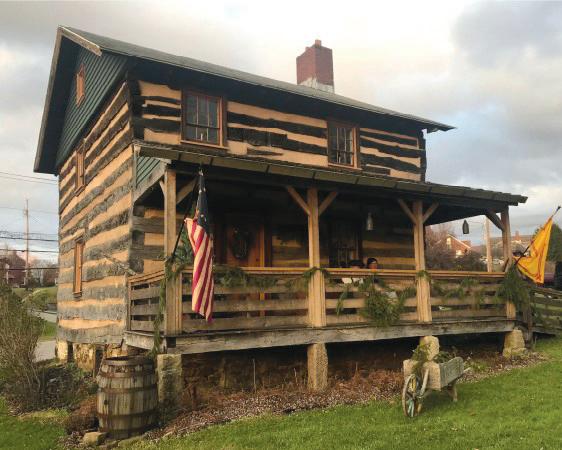
Family Days with 18th century crafts & games for children.
AUG. 24
Harvest Day market & sustainable food practices
SEPT. 28
‘Log House Days’ featuring artists & craft booths, historical reenactors & refreshments plus Apple Fest at church next door. Hours 10 a.m. to 4 p.m. Artists, crafters and vendors may register by calling 412-807-8452 of visiting Greenock Log House Facebook page
OCT. 26
Oktoberfest with music & food.
DEC. 7 & 14
Christmas open with holiday decorations and treats. Hours 4 to 8 p.m.
Questions or to participate call 412-807-8452. For information, visit Facebook pages for the Elizabeth Township Historical and Greenock Log House. Anyone interested in events, membership or who has questions, may call Linda Bennett, ETHS president, at 412-551-5424 or Debbie Gilbert, ETHS vice-president at 412-807-8452. Special events
Belle Vernon Public Library will host Summer Storytime in the Park each Wednesday morning in July, at 11 a.m. in Community Bank Park in North Belle Vernon. The program is geared toward Preschool and early Elementary age children and consists of songs, rhymes and books with a take-and-make craft. For more info, call the library at 724-929-6642.






















FREE COMMUNITY DINNERWednesday, July 3 at 6:00PM. California United Methodist Church hosts its free monthly "Wonderful Wednesday" dinner, held on the 1st Wednesday of each month. Mark your calendars accordingly. Location: 227 Third Street, California, PA. It's across the street from the Dairy Queen. This month is a picnic theme with the main entree being cold sandwiches. Bring a friend and a covered dish to share. Everyone is welcome. For more details, contact the church office at 724-938-2270. We look forward to meeting you!
FIREWORKS EXTRAVAGANZA - The Monongahela Area Chamber of Commerce and the Mon Valley YMCA along with the local business owners are proud to continue the Independence Day Celebration. The fireworks extravaganza will be held on Thursday, July 4, 2024 at the Monongahela Aquatorium. The fireworks display will begin at 9:30PM. A rain date of July 5 has been scheduled. The firework display will be professionally fired by Pyrotechnic Artist, Inc. This event is solely funded by Chamber Members, private donations, service clubs and organizations throughout the community. Food Vendors, Game Trailers and glow in
the dark products will be available during the evening.
RAILROAD STREET FAIR - The youth division of the Monongahela Main Street Program, known as "M.y. Main St" will hold its sixth annual "Railroad - Street Fair" in the 200 block of Third Street on July 4 from 6:00 PM – 9:00PM. The Fair consists of about 25 booths, including vendors, food booths, games, and other attractions. Food will include gyros, funnel cakes, hotdogs, and a real lemonade stand run by grade schoolers. There will be music played on a Celtic harp, a violin, and a guitar, plus balloons, caricatures, facepainting, and crafts by young local entrepreneurs. For additional information or any questions, call 724-310-3299.
BLOOD DRIVE - Elks Lodge #2213. Friday, July 5 from 1:30PM to 5:50PM. Bloodmobile, 2789 South Park Road in Bethel Park. The Blood Mobile will be in the parking lot.
TION - In partnership with Mary, Queen of Peace Parish, the St. George Church Preservation Society (SGCPS) has restored the St. George WWII plaque that was once located on the

front of St. George Church in the Allentown neighborhood of Pittsburgh. The plaque displays the names of 1,017 St. George parishioners who served in WWII and includes the 35 who lost their lives. A dedication ceremony for the monument will take place at 11:00AM on Saturday, July 6. The monument is located in the St. George section of St. John Vianney Cemetery at 920 Brownsville Road, Pittsburgh, PA 15210. A reception will follow at Mary, Queen of Peace Parish Hall at 81 S. 13th Street, Pittsburgh, PA 15203. Please RSVP by phone or email to help us in planning for the event.
SOUTH HILLS COIN CLUB
MEETING - Tuesday evening July 9, at 7:30PM at the Bethel Park municipal building located at 5100 West Library Avenue in Bethel Park. All members and the general public are invited. This month’s program will be the annual summer pizza party. A 50/50 will be offered and children’s prizes to be awarded. Applications are now being accepted for membership. For more information call 724-984-6611.
GIANT OAKS GARDEN CLUBMonthly meeting, Thursday, July 11, at St. David’s, 905 McMurray Road. The program will begin at 1:00PM. The speaker this month is Diann Warznak who will be teaching us different ways to fold a napkin for a pretty table setting. Bring two 17.5X17.5 cloth napkins for practice. Guests are welcome to come to the lunch and program. Guests need to register by calling Donna at 724-470-6170. The luncheon fee is $6.
WHISKEY REBELLION FESTIVAL
- Washington, PA, July 12 and 13, 2024. The popular festival is always
the 2nd weekend in July and takes place along Main Street, between Wheeling and Maiden Streets. This summer festival honors the significant period of America’s early days through historic reenactments, history and heritage displays, street theater performances, children's area, music, food and libations, all the while shining a national spotlight on the city, county and region. Enjoy historic street theater, history display tables, shopping with food and drink. The Bradford House and the Whiskey Rebellion Education and Visitor Center are open for tours during the day on Saturday. Learn about 18th-century living, why the Whiskey Rebellion happened, relive history, and celebrate good music, food, and community. This event is brought to you by the Bradford House Historical Association. To learn more, visit bradfordhouse.org/whiskey-rebellionfestival.
ROSTRAVER SPORTSMEN AND CONSERVATION ASSOCIATION
– Monthly Meeting, 539 Cedar Creek Rd. in Belle Vernon, Monday July 15, at 7:30 PM. All members are encouraged to attend. Applications are now being accepted for membership from both men and women. For more information call 724-984-6611. rostraversca.org
FLEA MARKET - The Labouré Ladies Guild of St. Catherine Labouré Parish will hold its annual flea market “Timeless Treasures” from 9:00AM to 5:00PM on Friday, July 19 and from 9:00AM to 1:00PM on Saturday, July 20 at St. Louise deMarillac Church in the LeGras Parish Center (lower level), 320 McMurray Road, Upper St. Clair. Sale items will include jewelry, gently used children’s clothing to size 6, toys, decorative items, knick knacks, kitchen items, holiday decora-
tions, linens, tools, books, some furniture and much more. There will also be a boutique offering better quality items. Due to fire restrictions, strollers are not permitted inside LeGras Parish Center.
HALF THE TAKE - Community Revitalization of West Newton (C.R.O.W.N.) is holding a ‘Half the Take’ on July 20, at 8:00PM at Vine Street Park in West Newton. Hundreds of golf balls will be loaded into a bucket truck and dropped onto a bullseye. Closest to the center is the winner. $5 a ball. Contact CROWN15089@yahoo.com to find out how to purchase balls.
HOAGIE FUNDRAISER - The West Newton First Church of God will hold their third Hoagie Sale of the year on July 20. This fundraiser is to raise funds for our Mission Trip. Large American homemade hoagies are just $10. Telephone your order and time that you want to come to the church in the morning to pick up. Any leftover hoagies will be sold at Ace Hardware and Rite Aide. The West Newton First Church of God is located at 157 N. Second St. in West Newton. Call 724-872- 7467 to place an order.
WARRIORS ROCK CONCERTJuly 21 at 7:00PM, The Monongahela Aquatorium. A musical tribute concert starring Veterans/First Responders and was created as a community event with the vision of a national concert tour that would have a grassroots touch in every city where the concert is performed. Noted as the “best 2 ½ hours you can spend!” They’ve performed concerts in San Diego on the USS Midway and all across the country. Tickets purchased at the gate are $10 per person, FREE for children under 6! The proceeds benefit local Mon Valley Veterans Organizations & The Monongahela Area Historical Society.
FUNDRAISING EVENT - The Mon Valley Paws will hold a fundraising event on Sunday July 21, from 2:00 PM to 5:00 PM at the Bloom and Brew, located at 100 Riverside Dr. in West Newton. This is an outdoor event. Tickets will be sold for baskets. Will also collect pet supplies. Hibachi Lou's food truck will be on site and Andrew Bicsey will provide live music from 3:00 PM to 6:00 PM. For more information call 724-493-8305.
ANNUAL CAR SHOW - The Donora Fire Company will hold their 15th Annual Car Show on Sunday, July 21 from 10:00AM – 4:00PM at Palmer Park. All cars, trucks, jeeps and motorcycles are welcome. Donation for vehicle registration entry. Dash Plaques and T-shirts to first 100 registrants. Trophies, cold drinks, food, 50/50, Chinese auction. Held rain or shine. Questions or more info, call 724-379-7870
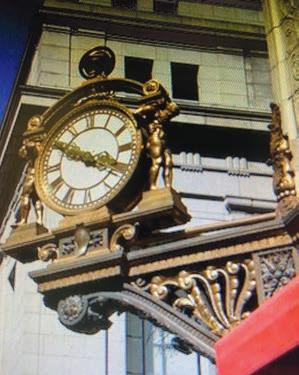
- The Peters Creek Historical Society welcomes Bob Stakeley, Director or Education at the Heinz History Center as their guest speaker, Monday, July 22. The program will be held at 7:30PM at Wrights United Methodist Church, 788 Venetia Road, Venetia. Stakeley’s program titled "Kauffman" will detail the history of the Kauffman Department Store from its beginning in 1871 as a small men's store on the southside with three brothers, Morris, Jacob and Isaac, to its expansion as the iconic flagship store at the corner of 400 Fifth Street. The program is sure to bring back fond shopping recollections of "Meet Me Under The Clock", one of Pittsburgh's designated historical landmarks.


MON VALLEY PAWS MEETING -
Tuesday July 23, at 6:00 PM at the Italian club, located at 112 7th St. in Monessen. All department heads will present their plans for the upcoming year. For more information call 724493-8305.
HOW NOT TO BE SCAMMED -
Saints Joachim and Anne Catholic Parish Christian Mothers will host a presentation “How Not To Be Scammed” by Jayme Giel from First National Bank on Wednesday, July 24 at 7pm in St. Michael Archangel Hall, 101 McClay Drive, Elizabeth. All are welcomed and light refreshments will be provided. For more information call the Parish Office at 412-751-0663

SUMMER FEST - Triumph of the Holy Cross Parish kicks off ‘Summer Fest’ on Wednesday, July 24, from 6:00 PM – 10:30 PM running each night through Saturday, July 27. The festival is located at St. Thomas a’ Becket Church Grounds, 139 Gill Hall Road in, Jefferson Hills.
Summer Fest is a fun-filled event for the whole family featuring rides by LAM Amusements, face painting and games for kids, bingo, nightly raffle, games of chance and a Super Auction with chances to win great prizes. Each evening of the festival features live entertainment and dinner specials. Additional food items available every evening include hamburgers, hot dogs, kielbasa, hot sausage, french fries, Pizza, ice cream, funnel cakes,
and homemade donuts, baked goods, beer and wine coolers. For additional information and questions, please contact the parish office at 412-755-2046.
VENDOR / CRAFT SHOW - A Christmas in July vender/craft show will be held at the First Presbyterian Church 501 Fayette Avenue Belle Vernon, Pa. on Saturday July 27, 2024 from 9:30 AM to 2:00 PM. For more information call 724-929-7616.
CAR SHOW - Victory Hill Social Club Car Show will be held Sunday July 28, from 10:00 AM - 3:00 PM, 25 Jones Lane, Monongahela, PA. Registration begins at 10:00 AM with an entry fee of $5. Trophies, Food,
Drinks, Half the Take, Raffle Baskets, and Music by DJ. Rain Date: Sunday August 4
POLKA FEST - July 28 at North Belle Vernon Community Bank Park . 2:00PM – 6:00PM. A day of Live music, Food, Dancing, and to support the park! Become a sponsor or Polka pal. For more information, visit NBVPark.com/PolkaSponsor or call 724-963-8014 for details




































Plan to spend an enjoyable afternoon beginning at 2:30 on Sunday, August 4, at the Bethel Park Community Center on Park Avenue in Bethel Park with Keystone Chorus, a men's acappella barbershop chorus.

The group has been singing Barbershop music since 1957. Ranging in age from 40 to 100, they sing everything from Barbershop classics like “Lida Rose“, “My Wild Irish Rose” and “Sweet Adeline” to the four part a cappella harmonies of “Only You”, “Hello Mary Lou” and “What a Wonderful World”, to name just a few. This is a free event but a freewill offering can be made if you so desire. Come early to get a good seat.

The Epiphany Church Festival will be held on August 2 – 3 in Monessen. Events on Friday, August 2 will be from 5:00PM10:00PM. Street Level Band will be performing, followed by fireworks at 9:30PM. Saturday, August 3 will run from 3:00PM –10:00PM. The Kosmix Band will play from 3:00PM – 5:00PM, and there will be a balloon artist from 4:00PM – 6:00PM. From 6:309:30PM enjoy a performance by American Pie, followed by 10:00PM outdoor Mass. Both days include delicious homemade ethnic food, picnic food, basket auction, games and more! Epiphany Church is located at 44 Pennsylvania Blvd in Monessen. For more information, visit www.eolparish.com.













































































































































Triumph of the Holy Cross Parish kicks off ‘Summer Fest’ on Wednesday, July 24, from 6:00 PM – 10:30 PM running each night through Saturday, July 27. The festival is located at St. Thomas a’ Becket Church Grounds, 139 Gill Hall Road in, Jefferson Hills.
Summer Fest is a fun-filled event for the whole family featuring rides by LAM Amusements, face painting and games for kids, bingo, nightly raffle, games of chance and a Super Auction with chances to win a Gozney Pizza Oven, Stihl RMA 510 V Self-Propelled Mower, EF Ecoflow Portable Power Station and much more.
Each evening of the festival features live entertainment and dinner specials:
WEDNESDAY, JULY 24, 6:00 PM – 10:30 PM
Enchanted Princesses Entertainment featuring Cinderella, Moana & Belle (ONLY from 7:00 - 8:30 PM) Musical performances featuring Oldies by The Belairs from 7:00PM – 10:00PM Dinner special is Pulled Pork or Chicken Tenders with Fries
THURSDAY, JULY 25, 6:00 PM – 10:30 PM
Musical performances by the Bill Ali Classic Rock Band from 7:00 PM –10:00 PM Dinner special is Italian Night featuring Lasagna Rolls and Meatballs
FRIDAY, JULY 26, 6:00 PM – 10:30 PM
Musical performances by The Wurms (Pop/Rock) from 7:00 PM – 10:00 PM Dinner special is the Annual Festival Fish Fry
SATURDAY, JULY 27, 6:00 PM - 10:30 PM
Musical performances by the Abilene Band & Gas House Anne from 7:00 PM – 10:00 PM Dinner Special is Stuffed Cabbage
Additional food items available every evening include hamburgers, hot dogs, kielbasa, hot sausage, french fries, Pizza, ice cream, funnel cakes, and homemade donuts, baked goods, beer and wine coolers.
For additional information and questions, please contact the parish office at 412-755-2046.

The Peters Creek Historical Society welcomes Bob Stakeley, Director or Education at the Heinz History Center as their guest speaker, Monday, July 22. The program will be held at 7:30PM at Wrights United Methodist Church, 788 Venetia Road, Venetia. Stakeley’s program titled "Kauffman" will detail the history of the Kauffman Department Store from its beginning in 1871 as a small men's store on the southside with three brothers, Morris, Jacob and Isaac, to its expansion as the iconic flagship store at the corner of 400 Fifth Street. The program is sure to bring back fond shopping recollections of "Meet Me Under The Clock", one of Pittsburgh's designated historical landmarks.
Docents will open the doors for tours of the Enoch Wright House, 815 Venetia Road, Venetia on Sunday, July 21 from 12:00 noon to 3:00PM and on Tuesday, July 30 from 6:00PM – 8:00PM. If you have driven by the Enoch Wright House and wondered about this historic landmark and the Wright Family, society members will be on hand to welcome you in!
For more information on the society, the Enoch Wright House and log cabin check out http://www.peterscreekhistoricalsociety.org.

The Monongahela High School ‘Class of 1964’ will hold their 60th reunion on August 15 & 16, starting with a Thursday ‘Meet & Greet’ at Beach Club Marina, Rosie’s, in New Eagle, covered deck overlooking the Monongahela River, and a Friday catered picnic at Mingo Creek Park. The cost is $60 per person for both events. For more information, call or text Donna (Kotecki) 724-2552400.

By Jill Runfola
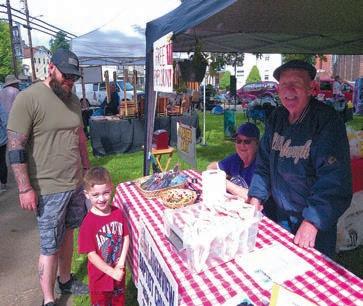
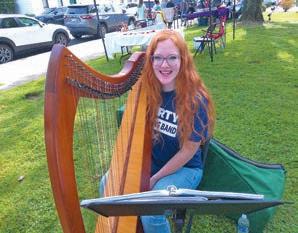
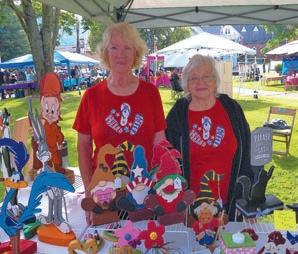
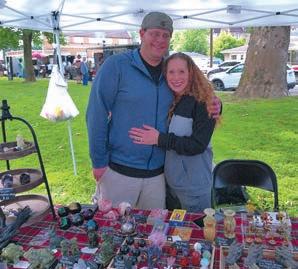
The 2024 ‘Fleatique on the Mon” was held on Saturday, June 1 throughout the main streets of Monongahela and New Eagle. With 3+ miles of businesses, homeowners, churches, antique dealers, crafters, food vendors, flea market sellers, and more,there was something for everyone. The weather was perfect, and it was a good day to walk and browse. For over 20 years now, the Monongahela Area Chamber of Commerce has sponsored this event attended by thousands, and everyone always has a good time.






While others retreat, we are moving forward.
Some publication’s numbers are falling behind. Your free community paper is moving forward. Readership of free community papers is now higher than paid daily papers, and continues to grow. Rather than being replaced by “instant” media, your local free community paper has become an important part of our neighborhood.



Another sign we’re working for you.
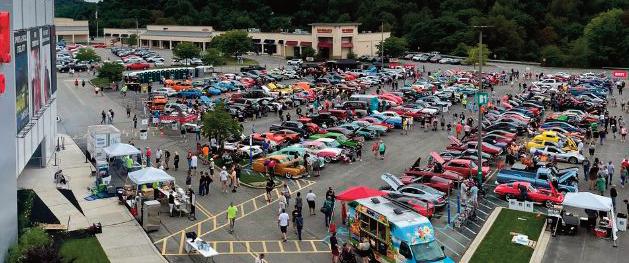
Prepare to unleash the power of your engines as Live! Casino Pittsburgh gears up for its third annual Live! Casino Car Cruise on Sunday, Aug. 4, from 12 noon to 5 p.m., in the casino parking lot. Slots for participation in this cruise are filling up, so car enthusiasts should register early.
“We are excited to ignite the excitement at our third annual Car Cruise,” said Bryan Prettyman, vice president of slots and marketing at Live! Casino Pittsburgh. “With live music, food trucks vintage cars, hot rods and customs, it’s an event car enthusiasts won’t want to miss.”
This year’s event will feature live music, food trucks, prizes and more. Registration spots in this year’s Live! Casino Car Cruise is looking to sell out, so if you are interested in participating, please register in advance. Registration is open to cars, trucks and motorcycles, and there is a fee of $10 to enter, which will be paid at the door (cash only). The first 150 registered entrants will receive a dash plaque and $10 in Free Play to be used at Live! Casino Pittsburgh.
If you are interested in showcasing your car, truck or motorcycle, please pre-register by visiting Pittsburgh.LiveCasinoHotel.com/CarCruise.
There is no charge for the general public to attend.

The West Newton Public Library is seeking donations of Juvenile Fiction and Young Adult books to be placed on our reading shelves. If your children are willing to part with the books they have read, please bring them to our library, located at 124 N. Water Street, during our operating hours Monday and Thursday 12:00 –5:00PM, Wed 12:00 -7:00PM and Sat 10:00AM – 2:00PM. For more info call 724-633-0798.
One hundred and sixty years ago the United States found itself embroiled in a devastating Civil War. At 7:00 P.M. on July 24, 2024 in the Community Rooms of the Jefferson Hills Borough Building, the West Jefferson Hills Historical Society will offer its members and community members a free program which focuses on the story of the men from Allegheny County who fought for the North during the American Civil War. In his program "Day by Day with the 123rd PA Volunteers," Christopher D. George will share how he discovered the unique story of the 123rd while delving into the genealogy of his own family. This Civil War regiment, composed almost entirely of young men from Allegheny County, was led into battle by a “fighting preacher” during some of the darkest days for the North. Mr. George will bring the story of the soldiers of the 123rd to life by sharing the thoughts, feelings, and events they recorded in their journals as well as the extensive coverage the regiment received within the Pittsburgh newspapers.

The Labouré Ladies Guild of St. Catherine Labouré Parish will hold its annual flea market “Timeless Treasures” from 9:00AM to 5:00PM on Friday, July 19 and from 9:00AM to 1:00PM on Saturday, July 20 at St. Louise deMarillac Church in the LeGras Parish Center (lower level), 320 McMurray Road, Upper St. Clair.
Sale items will include jewelry, gently used children’s clothing to size 6, toys, decorative items, knick knacks, kitchen items, holiday decorations, linens, tools, books, some furniture and much more. There will also be a boutique offering better quality items. Due to fire restrictions, strollers are not permitted inside LeGras Parish Center.
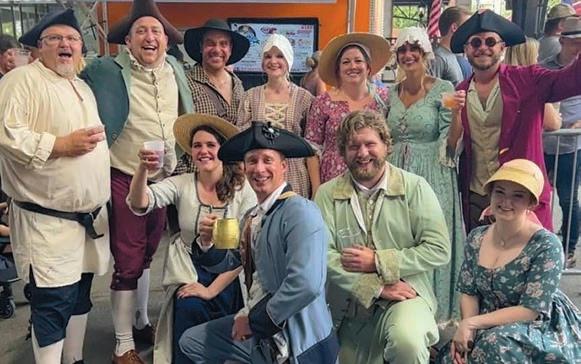
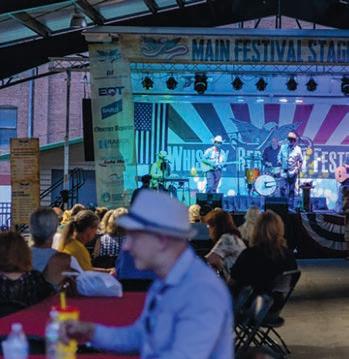
The annual Whiskey Rebellion Festival will be held in Washington, PA on July 12 and 13, 2024. The popular festival is always the 2nd weekend in July and takes place along Main Street, between Wheeling and Maiden Streets.
This summer festival honors the significant period of America’s early days through historic reenactments, history and heritage displays, street theater performances, children's area, music, food and libations, all the while shining a national spotlight on the city, county and region. The main events take place on Saturday. Enjoy historic street theater, history display tables, shopping with

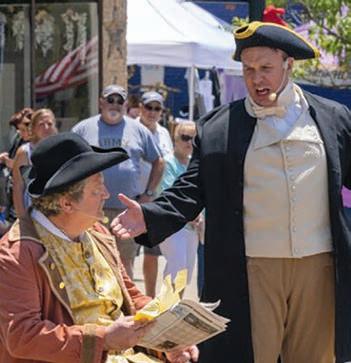
food and drink. The Bradford House and the Whiskey Rebellion Education and Visitor Center are open for tours during the day on Saturday. New for 2024, the Wooly Rebels Area will be located in the courtyard beside the ObserverReporter. And then Saturday concludes with a music headliner.
Learn about 18th-century living, why the Whiskey Rebellion happened, relive history, and celebrate good music, food, and community. This event is brought to you by the Bradford House Historical Association.
To learn more, visit bradfordhouse.org/whiskey-rebellion-festival.
Washington Health System is now UPMC Washington. For more information, visit WHS.org.



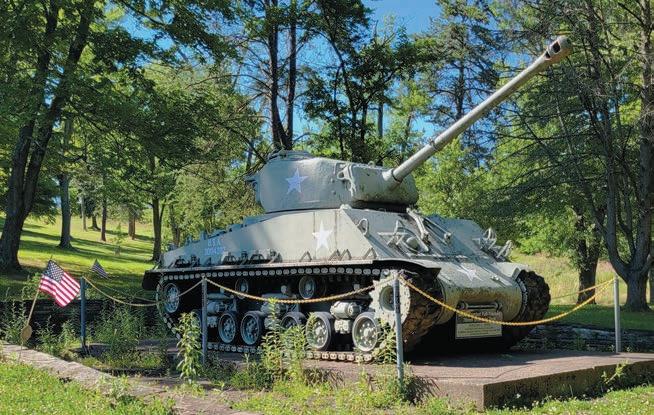
The Monessen Veterans of Foreign Wars post 1190 and American Legion Post 28 want to restore this War Memorial to its original appearance. The cost of this project is $16,500 and help is needed to make it happen. Donations are being sought from businesses, individuals, organizations and groups in any amount. The Donations can be made out to either VFW Post 1190 OR American Legion Post 28 and sent to: American Legion Post 28, P.O. Box 145, Monessen, Pa. I5062
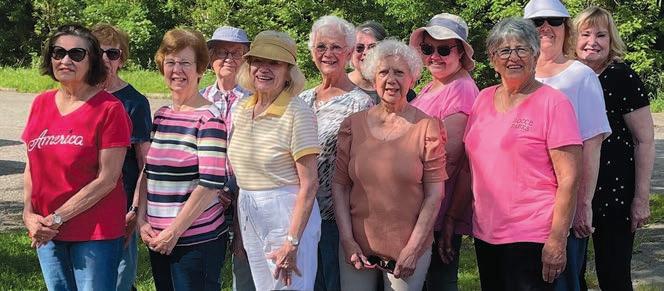
The ‘Bocce Babes’ are back to the courts for their 2024 season! Always enjoying each others company, the ladies play on Wednesdays at 9:30AM at the South Park courts.

The 69th Annual Staffen Reunion will be held at Cedar Creek Park on Saturday July 20, 2024, at Pavilion #2. The reunion will start at 12:00 noon and lunch will be held at 1:00. Please bring a covered dish to share. Also bring your own utensils, plates & drinks. A Chinese Auction & 50/50 Raffle will be held. Any questions, contact Chairperson Nancy Boissin Tencer at 412-302-8359 or nancyboissin @yahoo.com

Dogwood Charter School Board Meetings will be held the second Monday of each month, July 2024 - June 2025, at 6:00PM in conference room 202 of the Bethel Park Municipality Building, located at 5100 West Library Ave, Bethel Park, PA 15102
Community Revitalization of West Newton (C.R.O.W.N.) is holding a ‘Half the Take’ on July 20, at 8:00PM at Vine Street Park in West Newton. Hundreds of golf balls will be loaded into a bucket truck and dropped onto a bullseye. Closest to the center is the winner. $5 a ball. Contact CROWN15089@yahoo.com to find out how to purchase balls.

The Monongahela Area Chamber of Commerce and the Mon Valley YMCA along with the local business owners are proud to continue the Independence Day Celebration. The fireworks extravaganza will be held on Thursday, July 4, 2024 at the Monongahela Aquatorium. The fireworks display will begin at 9:30PM. A rain date of July 5 has been scheduled.
The firework display will be professionally fired by Pyrotechnic Artist, Inc. This event is solely funded by Chamber Members, private donations, service clubs and organizations throughout the community.
Food Vendors, Game Trailers and glow in the dark products will be available during the evening. NO ALCOHOLIC BEVERAGES are permitted on the premises, no firecrackers and no glow in the dark products may be sold. Residents are STRONGLY reminded to avoid the fireworks display site along Bunola River Road. Local police will be fining all stopped vehicles. The Firework display will not commence until all Federal regulations are adhered to. The US Coast Guard will close the river to all recreational boaters from 9:30PM until 10:15PM. All Federal and Coast Guard waterway regulations will be STRICTLY ENFORCED!
Donations should be sent to the Monongahela Area Chamber of Commerce, 208 West Main Street, Monongahela PA 15063. Please make checks payable to MACC and mark firework donation.
A performance by Gary Dunmeyer will be held on July 27, at 7:00PM at the Long Branch Community Grange. Gary is happy to have the privilege and honor of performing a series of songs (17 Total) of his most admired legendary singers and songwriters from the 1950's, 60's and 70's - Johnny Mathis, Bobby Vinton, and John Denver.
Tickets for this event are $40 each, that includes a delicious catered dinner and an exciting show. The dinner begins at 6:00PM and will feature Breaded Chicken, Stuffed Pork Chops, Mashed Potatoes and Gravy, Green Beans, Cole Slaw, Cake and Coffee and Tea. The show begins at 7:00.
Gary Dunmeyer spent his childhood years from 1966 until 1977 in Long Branch and was member of the Grange as a youth. Gary is proud to have the opportunity to come back home for this program. He graduated from West Virginia University with a Mining Engineering Degree and moved to Montana. While there he had the privilege of doing two John Denver Tribute Concerts and one Bobby Vinton Concert. Gary’s singing career began when he was 8 years old singing in the church choir. Here he had the chance to sing many solos’ praising God. He has sung for many weddings and funerals. He also had the opportunity to sing for the Rocky Mountain Elk Foundation, the National Rifle Association, the Elks International, the Gideons International Western Region and the Billings Mustang Minor League Baseball Team of the Cincinnati Reds Organization. Gary sings in his church choir and does many solos and has appeared in “Showboat Talent” in the Mon Valley Area.
Gary says he is looking forward to seeing many friends and family gathering to hear the beautiful ballads and romantic songs that these wonderful artists have given to all of us!
The number of tickets sold will be limited so get yours early. For additional information call 724-938-2529 or 724-469-2736. You may also contact any Grange member. All checks are to be made out to Long Branch Community Grange and mailed to: 36 Howe Street, Coal Center, Pa. 15423. The last day to purchase tickets will be July 22. No tickets will be sold at the door.
The West Newton First Church of God will hold their third Hoagie Sale of the year on July 20. This fundraiser is to raise funds for our Mission Trip. Large American homemade hoagies are just $10. Telephone your order and time that you want to come to the church in the morning to pick up. Any leftover hoagies will be sold at Ace Hardware and Rite Aide. The West Newton First Church of God is located at 157 N. Second St. in West Newton. Call 724-872- 7467 to place an order.

The Grange is handicapped accessible with lots of parking. It is located at 210 Chestnut Street, Coal Center, Pa. 15423.

The Donora Fire Company will hold their 15th Annual Car Show on Sunday, July 21 from 10:00AM – 4:00PM at Palmer Park. All cars, trucks, jeeps and motorcyles are welcome. Donation for vehicle registration entry. Dash Plaques and Tshirts to first 100 registrants. Trophies, cold drinks, food, 50/50, Chinese auction. Held rain or shine. Questions or more info, call 724-379-7870
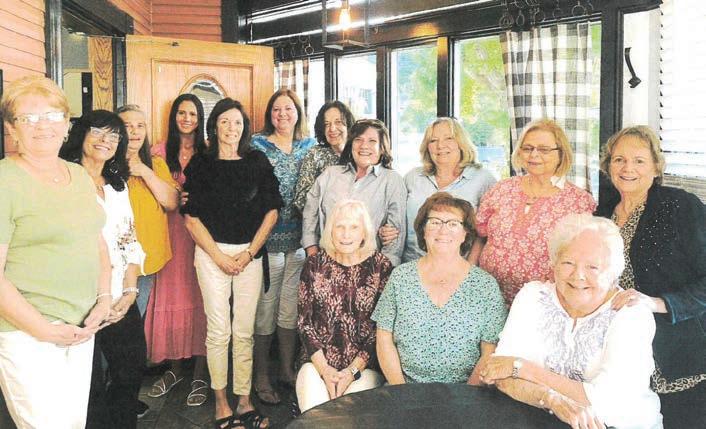
The Victory Hill Ladies Auxiliary presented the Nora Villella honorary scholarship to Ringgold graduate Kensi Staffen, daughter of Dave and Kasi Staffen of Monongahela. Kensi received a $500 award toward her Law degree at Duquesne University.
This year’s scholarship is named in honor of Nora Villella, a long time member of the ladies Auxiliary. Nora served in the Navy based in Pensacola, Florida and will be turning 100 years young this year.
The presentation took place at the Speers Street Grill during the Auxiliary’s annual banquet and luncheon of Officers. Pictured above are the following members who were in attendance (L to R): Seated –Ruth Ann Colosimo, Erin Sinko, Marsha Barcelona. Standing – Ginny Wozniak, Gale Brounce, Donna Yocolano, Kensi Staffen, Sherri Taddeo, Kasi Staffen, Caryl Perney, Julie Farthing, Tracie Gillingham, Linda Zywan, and Marion Segursky.
The monthly meeting of the South Hills Coin Club will be held Tuesday evening July 9, at 7:30PM at the Bethel Park municipal building located at 5100 West Library Avenue in Bethel Park. All members and the general public are invited. This month’s program will be the annual summer pizza party. A 50/50 will be offered and children’s prizes to be awarded. Applications are now being accepted for membership. For more information call 724-984-6611.

The California Farmer's Market 2024 season is in full swing! After its grand opening last month, the market returns on Friday, July 5. The market takes place on the first Friday of the month, at the Hollywood Pavilion, located at 313 third street, in California. Market hours: 4:00PM - 7:00PM. Each month, residents and visitors will be able to shop farm fresh produce, local baked goods, eggs, food, and more while being treated to live music. We hope to see you there!
The Rostraver Sportsmen and Conservation Association located at 539 Cedar Creek Rd. in Belle Vernon, will hold their monthly meeting on Monday July 15, at 7:30PM. All members are encouraged to attend. Applications are now being accepted for membership from both men and women. For more information call 724-984-6611. rostraversca.org
Trap shoots are held every Tuesday from 6:00PM to 9:00PM, every Thursday at 10:00AM and every Saturday at 11:00AM. This event is open to the general public. For more information call 724-094-6611 or visit rostraversca.org







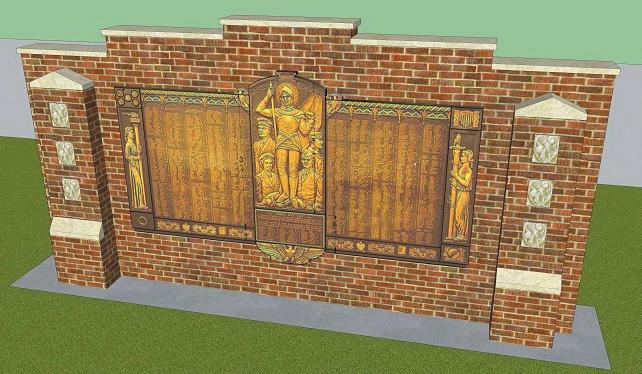
In partnership with Mary, Queen of Peace Parish, the St. George Church Preservation Society (SGCPS) has restored the St. George WWII plaque that was once located on the front of St. George Church in the Allentown neighborhood of Pittsburgh. The plaque displays the names of 1,017 St. George parishioners who served in WWII and includes the 35 who lost their lives. The names on the plaque are listed on the website at SGCPS.net
A dedication ceremony for the monument will take place at 11:00AM on Saturday, July 6. The monument is located in the St. George section of St. John Vianney Cemetery at 920 Brownsville Road, Pittsburgh, PA 15210. A reception will follow at Mary, Queen of Peace Parish Hall at 81 S. 13th Street, Pittsburgh, PA 15203. Please RSVP by phone or email to help us in planning for the event. Plan to be there to honor the veterans and spread the word to all who would like to attend.
Please send SGCPS any contact information of the families of those who are named on the plaque. Leave a message at 412-502-5062 or you can send an email to contact@sgcps.net.


Published Monthly by Haniford Enterprises, LLC
P.O. Box 13363, Pittsburgh, PA 15243
Phone/Fax: (412) 249-8177
E-mail: news@messengerpaper.com
The South Hills Mon Valley Messenger is published during the last week of the month preceding the issue date.
It is available FREE of charge at over 425 area locations throughout the South Hills and Mon Valley communities.
Owner/Publisher/Editor
Douglas E. Haniford
Contributing Writers/Photographers
J.R. Brower, Colette Dell
Alice Harris
Charlotte Hopkins
Jill Runfola
Matthew Peaslee, Lois Thomson
Advertising: Charmaine Nebash
Editor: Matthew Peaslee
Distribution: Matthew Peaslee Kara Prentice
Accounting and Business Administration: Judy Gramm
Promotions and Events: Kara Prentice
Art Director JMC Graphics lammienancy@aol.com •(412) 877-5321
Editorial Policy
The South Hills-Mon Valley Messenger publishes community news free of charge.
We welcome the submission of articles, news releases, community announcements, editorials and letters for publication. The Messenger will accept information via telephone, e-mail, Fax, or U.S. mail. Articles submitted without the complete name, address and telephone number of the author will not be printed. All submissions are subject to editing for length, clarity and taste. Photographs will not be returned unless accompanied by a self-addressed, stamped envelope.
Deadline for submissions is the 15th day of the month preceding issue date.
© The South Hills-Mon Valley Messenger and Haniford Enterprises, LLC.
All rights reserved. No part of this publication can be reproduced without written permission from the publisher. We reserve the right to reject or cancel any advertisement at anytime. The opinions expressed in the Messenger are those of the author, and not necessarily of the Messenger.
For advertising information, call (412) 249-8177 or e-mail news@messengerpaper.com
“Wings,” Best Picture Of 1927, to be Accompanied Live By Theatre Organist Peter Krasinski

The Academy Award-winning silent movie “Wings,” starring 1920s heartthrobs Buddy Rogers and Clara Bow, will be screened with Peter Krasinski’s live theatre organ accompaniment on Saturday July 13, at 7:30 PM. The event will be held at Keystone Oaks High School Auditorium in Dormont, which houses the PATOS Mighty Wurlitzer Theatre Pipe Organ.
“Wings” is a thrilling aviation spectacular that wowed audiences in 1927 with tremendously exciting cinematography featuring stirring action sequences.
“There are airplanes battling from every conceivable angle in this picture,” says Dale Abraham, President of the Pittsburgh Area Theatre Organ Society. “On top of that, the film stars Clara Bow, the “It Girl” of the 1920s. Audiences worshipped her!”
Theatre organist Peter Krasinski will expertly accompany the film, which is one of his alltime favorite silent pictures. Peter plays theatre organ with unbounding energy, and his playing will provide an extra layer of excitement for film-goers, just as audiences expected in 1927.

Peter Krasinski is also the house organist at the Providence (R.I.) Performing Arts Center and has performed worldwide on both theatre organs and classical organs, including appearances in the U.S., France, Finland and Japan. He has proudly played the classical organ at Notre Dame Cathedral in Paris.
In addition, Mr. Krasinski is a former winner of the national organ improvisation competition sponsored by the American Guild of Organists.
Tickets for this event are available at the PATOS website (www.pittsburghtheatreorgan.com) or at the Showclix website (www.showclix.com/event/wings). Admission is $20 in advance, or $25 at the door. Students are free with ID.
Keystone Oaks Auditorium is located at 1000 Kelton Ave. in Dormont. Plentiful free parking is available just off McNeilly Road adjacent to the auditorium. Doors open at 6:45PM and the performance starts at 7:30PM.
The Pittsburgh Area Theatre Organ Society maintains the Pittsburgh area’s only Wurlitzer Theatre Pipe Organ still operating in a public venue. PATOS strives to keep the unique sounds of the theatre organ alive in Pittsburgh by presenting the instrument regularly throughout the year.
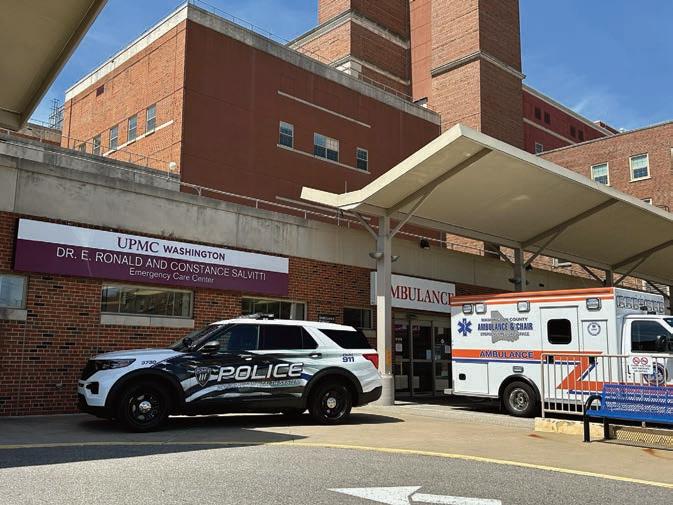
Washington Health System is pleased to announce it has officially joined UPMC, becoming UPMC Washington and UPMC Greene.
In June of 2023, the Boards of Directors of Washington Health System (WHS) and UPMC announced an affiliation agreement between the two entities that would integrate WHS into the UPMC system. One year later, on June 1, 2024, that affiliation became official, ensuring a future of excellent patient care for residents of Washington, Greene and surrounding counties.
“We are elated that the affiliation is complete and look forward to starting a new chapter of collaboration with UPMC,” said Brook Ward, president of UPMC Washington and UPMC Greene. “This affiliation protects the vitality of an essential community asset and solidifies a healthy future for Washington and Greene counties for generations to come.”
UPMC has committed to invest at least $300 million over 10 years to enhance clinical services and upgrade facilities at UPMC Washington and UPMC Greene. These investments by UPMC, combined with contributions the WHS Foundation has made and will continue to make, ensures UPMC Washington and UPMC Greene can provide state-of-the-art health care for local residents for years to come and maintain its position as one of the largest employers in Washington and Greene counties.
“Our focus is on ensuring residents have access to life-saving services and advanced care that is sustainable into the future and preserving jobs of our talented health care workers,” said Ward. “The community is gaining closeto-home access to the nationally recognized, high-specialty care of UPMC.
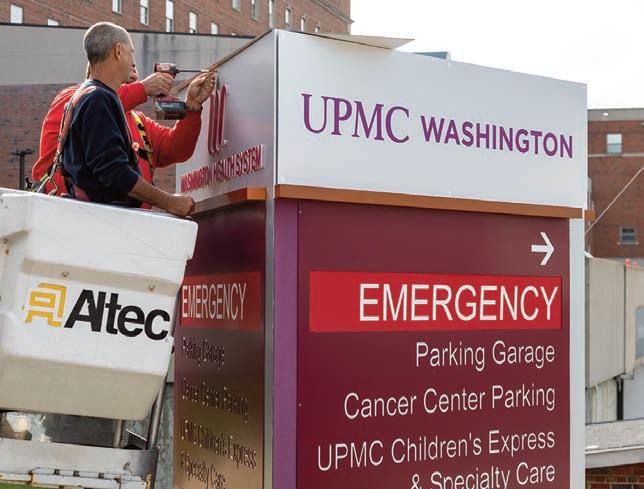
Our local capabilities will expand, creating a destination for world-class care in southwestern Pennsylvania.”
Clinical collaborations between WHS and UPMC for oncology (UPMC Hillman Cancer Center joint venture), pediatric specialties (UPMC Children’s Hospital of Pittsburgh), women’s health (UPMC Magee-Womens) and heart and vascular care (UPMC Heart and Vascular Institute), have been in place for more than a decade, providing care for more than 10,000 patients annually.
UPMC will continue to invest in and advance key services locally, including inpatient and emergency care, women’s health, cardiology, surgical services, diagnostics, primary care and specialty and outpatient services.
“UPMC has a long, successful track record of affiliations with like-minded organizations. We know how essential these hospitals are to this region to preserve needed health care services and livelihoods of thousands touched by them, and we are thrilled to welcome UPMC Washington and UPMC Greene to UPMC,” said Leslie C. Davis, president and CEO of UPMC.
UPMC Washington and UPMC Greene will maintain a local Board of Directors consisting of 11 legacy WHS board members and five newly appointed members from UPMC.
The affiliation does not affect community members’ in-network access to WHS hospitals or doctors. UPMC Washington, UPMC Greene and their affiliated outpatient facilities will continue to honor the contracts that are in place with regional and national insurers.
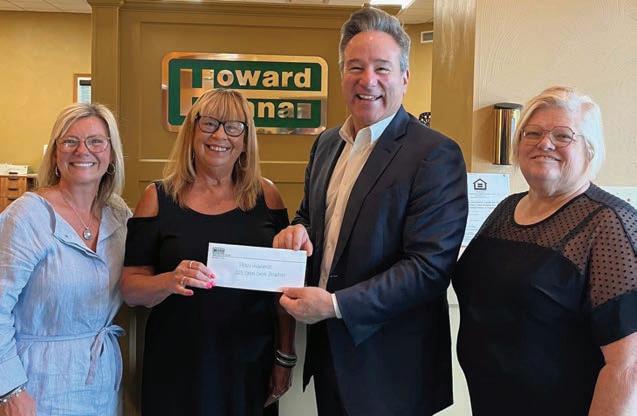
Each December, Howard Hanna Simon Real Estate Services hosts its annual ‘Chow Chow’ Luncheon to raise funds for Penn Highlands Mon Valley’s Free Care Fund. In December 2023, more than 200 people attended the sell-out event at the Clubhouse Grille at Cedarbrook Golf Course. At the event, the funds were raised through a live auction, Chinese Auction, 50-50, bake sale and cash donations. Through the years, the event has raised approximately $300,000 in free care for the community.


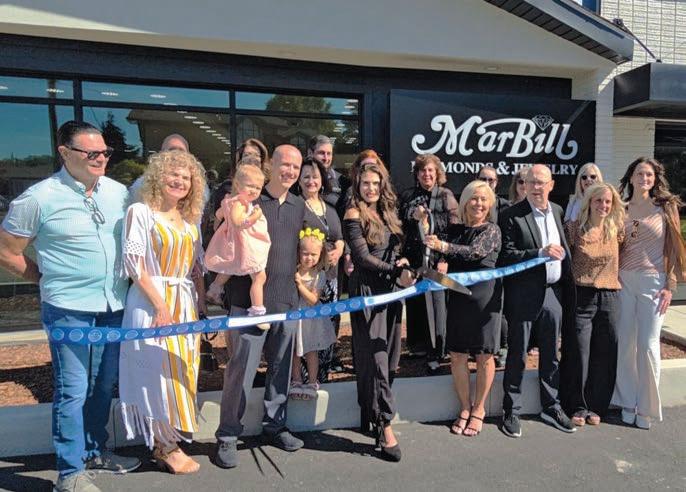
The Mon Valley Regional Chamber of Commerce was honored to be a part of the ribbon-cutting ceremony and open house at the new location of Marbill Diamonds and Jewelry. Making the move to 1049 Broad Avenue in Belle Vernon, they are coming full circle back to where it all started 60 years ago. Please stop in to see the amazing transformation of their new showroom. Stay tuned for the Grand Opening and 60th Anniversary celebration to take place in July.










The Mon Valley Regional Chamber of Commerce Annual ‘Legends of Commerce’ Golf Tournament was held at Nemacolin Country Club on Thursday, June 6, 2024. The golfers enjoyed a day on Nemacolin’s top-rated course along with lunch and ending with a steak dinner.
The Main Event Sponsor was cfsbank. Beverage Sponsors were Stoney’s Beer and Stablein’s Wholesale. Solomon Auto Group sponsored the Hole in One contest offering the chance to win a new vehicle. The tote bag sponsor for this year’s event was Highway Appliance. Morning Donuts were donated by Keystone Bakery and SOL Wellness was on sight offering complimentary chair massages as well. The beautiful crystal trophies awarded to the winners were provided by Crystal Concepts and tournament signs were provided by The Sign Mill.
The 2024 winners of this year’s tournament were First place team, Marsh Tire: Kevin Mollis, Luke Mollis, Brett Young, and John Stech. The winning team was awarded a cash prize along with their crystal trophy.


Your source for hometown, community news...
the South HillsMon Valley MESSENGER
The tournament offered a very successful silent auction once again, the most significant item up for bid was a $3,800 Value Golf Membership to Nemacolin Country Club donated by the country club. The event raises money every year for local scholarships for students in the Mon Valley Area.

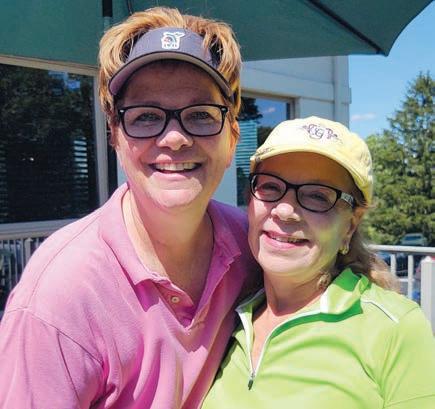
Maureen Fiore took an early lead on Day 1 of the two-day Memorial Tournament for the 18-Hole Women's Golf Association at Youghiogheny Country Club. Improving by nine strokes on Day 2 of the 36 hole better ball event, Fiore sealed her victory with a net 57. Lori Duncan claimed second place with a net 62. The event pays tribute to the deceased members of their organization. Last year's winner was Penny Natale and runner-up was Duncan.
“YOU CAN’T COACH HEART.”

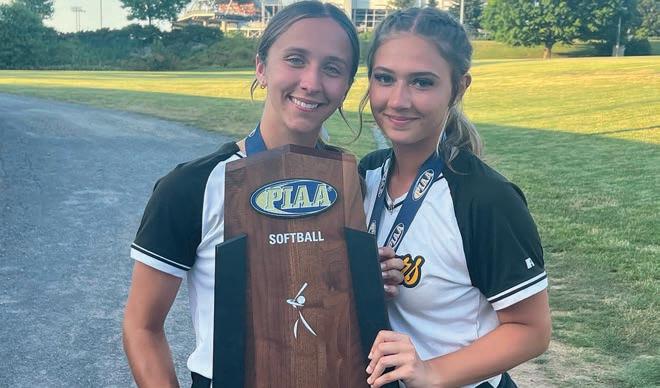
Throughout the 2024 season, the Thomas Jefferson High School softball team has used one of long-time head and assistant coach John “Hoppy” Mitruski’s steadfast beliefs and popular phrases as a point of focus and motivation.....“You Can’t Coach Heart.” The beloved Mitruski passed away suddenly in May 2023 after serving as the Jaguars’ head softball coach for 33 years, followed by seven more years assisting Heidi Karcher.
The high school serving the West Jefferson Hills School District, Thomas Jefferson demonstrated a massive amount of heart by completing an improbable post-season run by capturing the program’s first PIAA 5A State Championship with a dramatic, eight-inning walk-off 2-1 victory over Pittston Area HS (21-2), the District 2 champion.
The Jaguars (16-8) entered post-season with a 9-7 record and as the No. 10 seed in the WPIAL Tournament, but advanced to the WPIAL title game. Thomas Jefferson then won four consecutive PIAA games (traveling more than 1,300 miles roundtrip) to become the first Girls team to win a PIAA state championship in the high school’s 65-year history.
Thomas Jefferson won the heart-pounding thriller at Penn State’s Nittany Lion Softball Park in extra-inning, walk-off fashion. Junior Morgan Alisesky led off the bottom of the eighth inning with a single and stole second base. Junior Alayna Grese was intentionally walked and both runners advanced a base on a wild pitch. Junior Alison Chalovich was intentionally walked to load the bases with no outs, setting the stage for Taylor Karpac. The senior ripped a single through the left side to score a leaping Alisesky as her teammates and
coaches ran onto the field to mob Karpac.
“I was nervous because I hadn’t done much in my at-bats,” said Karpac, one of only two Jaguar seniors. “I knew I had to take advantage of the moment; and then I almost didn’t run to first I was so excited! It’s very exciting; at first our season was a little rocky (W-L record). We played for him (Hoppy) all season.”
Karcher, who played softball at Penn State in the early 1990’s, teaches chemistry and physics at TJ and has been the Jaguars’ head softball coach since 2013. She led TJ to the 2014 WPIAL 3A title as the No. 13 seed.
“We just made BIG history; it’s incredible!” Karcher exclaimed. “It hasn’t sunk in yet. To come from being a 10 seed in the WPIALs to state champions is amazing. It’s an awesome feeling. Female student-athletes are the bomb. Being a student-athlete is a true testament to dedication and teamwork.
“I can’t even explain to you what it means to me (to win the title for Hoppy),” Karcher added. “He was my right hand man. Playing for him is what we’ve been doing all year.”
TJ freshman pitcher Aubrey Shaffer was outstanding, striking out 10 batters, with four walks and allowing seven hits in a complete game performance. “This means everything,” Shaffer said, clutching the PIAA trophy. “And to be the first TJ Girls team to win a state championship is amazing!”
“It’s amazing; we’ve been here for each other all year,” stated senior Zoe Krizan, who has signed to play at Drexel University. “It’s like a Cinderella story. This whole season we played for Hoppy.”


(BPT) - Move over, gray. Green is having its moment this year in bath and kitchen design and décor. Whether dark, light or somewhere in between, these luscious hues are on trend right now, but they evoke a deep sense of nostalgia, optimism, style and panache.
Kohler knows a bit about that. The kitchen and bath fixture giant was the first to bring bold, coordinated color into kitchens and bathrooms in the 1920s. In 1927, Kohler launched precisely matching colors for cast-iron enamel and pottery glaze - meaning toilets, sinks and baths could be coordinated in matching, vibrant hues. Back then, America took a collective gasp when it saw Kohler bathrooms in living color. It set the design world on
(Continued on following page.)

Seller
CARROLL TOWNSHIP
Elizabeth Odrechowski Robert Ravasio 4 Sunset Drive
Donna Dipaola Christopher and Erika Harvey 47 Grant Road
CHARLEROI
Ruby Romito Eugene and Barbara Arlott 612 Crest Ave.
$200,000.
$374,900.
$67,500.
Frank Coppi MMVV LLC 823 Crest Ave. $37,000.
Mon Valley Ppty Grp LLC Valley Dream Homes LLC 1026 Lincoln Ave.
RDS Ventures LLC Makayla Davis 1205 Lower Crest Ave.
Mike Harris Flip & Rmdl LWWW Enterprise LLC 539 Lincoln Ave.
$7,000.
$40,000.
$4,500.
RDS Ventures LLC Makayla Davis 1205 Lower Crest Ave. $40,000.
Michael Coury JNR River Partn. LLC 506-512 McKean Ave.
$700,000
Brandon Konek BRCK Properties LLC 807 McKean Ave. $1. (state deed transfer stamps indicate a value of $39,102).
Abraham Ashenberg Malinna Investments LLC 421-423 Caldwell St.
$250,000.
Kara R. Friedman trus et al 1018 Pennsylvania Ave. $17,000.
Allegheny Cty Redev. Auth. 837 Properties L.P. State St. $2,200.
VB 2 LLC Ernest Luis Baez 806 Toman Ave.
Estate of Pearl E. Nikolich Nicholas Nikolich 1124 Worthington Ave.
$60,000.
$20,000.
Barbara Yogan Pittsburgh SFR Portfolio 2 LLC 411 Halcomb Ave. $1,333,000.
John Smoyer Williams Buy And Trade LLC 922 Miller Ave. $1,001.
Williams Buy And Trd LLC Michael Yuri Obinski 922 Miller Ave. $1,200.
Allegro Properties LLC Pittsburgh SFR Portfolio 2 LLC
435 N Fourth St.
Richelle Hannegan Mon Valley Prime LLC 1027 Pennsylvania Ave.
$56,203.
$45,000.
Jordan River LLC et al 905 Vankirk St. $15,000.
Straub Property Mgmt LLC A Clean Well Lighted Place LLC
201 Chambers St.
Rebecca Verlich Wells Fargo Bank NA 878 Craig St.
Bridan Properties LLC Building Group LLC
2701 Lincoln Ave.
Estate of Mary McDavis VP United Properties LLC 4003 Soltis Drive
Homeown Prsv. Tr Ser 2015 Juan Manuel Ramirez Montiel
Estate of Eugene Sherpata Ivory and Odessa Ellis
Clayton Williams Baron Rodriguez and Wendy Berinti
Money Mikes Inc. Casey Hindman
Donora Downtown Com Inc. Upgrade Demolition & Recycling LLC
Donora Downtown Com. Inc.Upgrade Demolition & Recycling LLC
Joseph Federer Dylan Strimlan
Thomas Jordan Clement Maria Wilkerson
Judith Kovalcik Frances Echevarria




426 Third St.
313 Charles St.
748 LaFayette Drive
601 Washington Ave.
Sixth St.
$113,000.
$30,000. by sheriff's deed.
$27,000.
$18,000.
$25,000.
$89,900.
$163,918.
$3,500.
$1. (state deed transfer stamps indicate a value of $11,438).
Sixth St. $1. (state deed transfer stamps indicate a value of $11,438).
304 Castner Ave. Rear
135 Meldon Ave.
536 Thompson Ave.
$110,000.
$130,000..
$1,370. by sheriff's deed.
(Continued from previous page.)
fire, with this country's elite clamoring for color, color, color in their kitchens and baths, culminating in an exhibit of a color-coordinated Kohler bathroom at the Metropolitan Museum of Art in 1929.
Last year, Kohler celebrated its 150th anniversary with a limited-edition Heritage Colors collection, and this year, that collection expands with the addition of Heritage GreensFresh Green, with its bright, lush vibes that bring the garden indoors; Teal's dark, rich, vivid drama; and Aspen Green's soft, soothing shade. These historic Kohler colors were selected to be revived this year because of their connection to nature, relation to well-being and diverse design sensibilities.
Eager to get started?
Here are 5 ideas to green up your kitchens and baths.
Paint! The easiest and least expensive way to add a splash of green into your kitchen and bath is to paint one, or all four, walls in this trending shade. For kitchens, painted cabinets are all the rage. Why not give yours a facelift in green? For baths, accent with green towels and floor mats, and go for a vintage feel by including black or pink in the mix.
Large appliances and fixtures. Go for it! Stainless steel reigned supreme for years, but color is the emerging trend in kitchen appliances now. Major, high-end appliance manufacturers are offering lines in many shades of green, from light and subtle
(Continued on following page.)

(Continued from previous page.)
to dark and dramatic. But with this trend, you don't have to go all in at once. One statement piece, like a deep teal farmhouse sink within a white countertop, is a showstopper.
Smaller kitchen appliances. If you're not in the market for a major kitchen remodel, you can still add a pop of green with smaller kitchen appliances like toasters, ceramic tea kettles, coffee makers and even tools like can openers, corkscrews and other gadgets. Bonus tip: Don't forget to accent with kitchen towels, hot pads and even new curtains.
Bathroom fixtures. Hold your breath and imagine your bathroom transformed into a spa, courtesy of vibrant green fixtures. A green clawfoot tub? Yes, you can. A pedestal sink in quiet Aspen Green with a toilet to match? It's yours. These hues evoke the elegance of the past while wrapping you in the comfort of the present, making your bathroom a true oasis.
Tiles. You don't need to do a major renovation to add some color to your kitchen's backsplash or around your tub in the bath. Opt for mosaic tiles in various shades of green, or go with the sleek elegance of just one color.
Color can soothe the spirit, lift a mood, brighten a moment. It can make a small room feel bigger, or turn a dark room into an open, airy space. Kohler's Fresh Green, Teal and Aspen Green can inspire you to bask in living color.






(NAPSI)—Storms are growing more powerful and frequent, so having the right outdoor power equipment on hand and using it safely is important, says the Outdoor Power Equipment Institute (OPEI). Home and business owners should think ahead before foul weather or a power outage occurs.
“Any season can be storm season now,” says Kris Kiser, President & CEO of OPEI, an international trade association representing manufacturers and suppliers of outdoor power equipment, small engines, battery power systems, portable generators, utility and personal transport vehicles, and golf cars. “It’s smart to invest in portable and whole house generators and to have other outdoor power equipment on hand, such as water pumps and chainsaws to handle water damage or flooding and damage from fallen trees.”
He notes that outdoor power equipment is evolving all the time. “There’s a power source for every need including battery/electric, propane, solar and gasoline,” he says, noting each has different maintenance and care requirements. “It’s important that you know how to safely operate your individual equipment. And, remember, always read and follow the manufacturer’s manual and never disable safety features.”

With a little forethought and the proper equipment, you and your home or business can stand up to just about any natural disaster.
To get ready for inclement weather, homeowners should follow these tips.
Before a storm identify which equipment could be needed.
Chainsaws or pole saws can trim and clear limbs and shrubs that may break off or get damaged by high winds. String trimmers, pruners and chainsaws can remove other material from around your home that may make it vulnerable to wildfires.
A portable generator powers key appliances and charges cell phones when utilities go down. A whole house generator can keep the lights and appliances on and running. Before an outage, plan where the generator will be set up (never in a home or garage, and always away from your home and any air intake) and determine how to secure it if needed. Buy and install a carbon monoxide detector. Get outdoor-rated extension cords for portable generators and consider adding an approved generator cover for rainy weather.
Water pumps can get water and muck out of basements and homes. Be sure you know how to operate the pump. Never pump substances that your equipment is not designed to cope with. Pay attention to avoid overheating and follow all safety precautions.
A utility type vehicle can transport people and supplies quickly in an emergency. Keep the vehicle stable and drive slowly. Do not turn mid-slope or while on a hill. Consider taking a UTV safety course.
Always read and follow the safety and usage recommendations provided by outdoor power equipment manufacturers.
Never disable safety features. Practice how to operate equipment before you need it. Follow all recommended safety measures on the product as well as in the owner’s manual.
Have the right fuel on hand and charge batteries ahead of bad weather.
Most gasoline-powered equipment uses E10 or less fuel and most manufacturers recommend adding a fuel stabilizer. Fuel that is more than 30 days old may phase separate and cause running problems, so it’s important to purchase fuel just ahead of a storm. Store fuel safely and only use an approved fuel container. Only use manufacturer-recommended batteries.
Pay attention to your energy level and health.
Preparation for bad weather, a power outage and storm cleanup can be taxing. Do not operate power equipment when tired or overly fatigued. Drink plenty of water and take regular breaks. Always use safety gear such as chaps, gloves, eye protection and hearing protection when operating equipment.
Always keep children and pets away from operating outdoor power equipment.
Outdoor power equipment are not toys, and should never be used in a manner not intended by the manufacturer.




















(BPT) - It's
For many of
this time of year is a chance to renew and re-organize. Spring and summer cleaning isn't just about dusting and decluttering; it's also an
This includes updating your window coverings, especially if you have infants or young children. Let's explore the reasons why switching to cordless window coverings can
and safety
your home.
(Continued on following page.)


Craig Wipperman Kyle and Kelsey













Joshua Vecellio Christopher and Emily Murphy
AAMD LLC Christopher Michael and Ashley Lynn Yoho
Charles Loether Drazen and Elisabeth Krajina
Hyde & Dixon Homes LLC Jason DeCarlo
Drew Cooke trustee Sara Jane Chamberlain trustee
Justabout Development LLC Eddy Homes Inc.
Justabout Development LLC Eddy Homes Inc.
Justabout Development LLC Eddy Homes Inc.
Charles Loether Drazen and Elisabeth Krajina
Crossings Development LLC Eddy Homes Inc.
Gary Fieber Deutsche Bank National Trust Co.
Walter Willoughby III Robert and Sara Kohnfelder
Anthony Castellone Kellie McKinney
Nicole Lischner Hoff Jennifer Lynn Kramer
Ctrl Penn Cap. Mgmt LLC Ryan Dixon and Kenady Hubbard
Catherine Christner Xue Chen and Andrew Pikula
Karly Hresko Aaron Troutman and Krystal Lynn Cornll 115 National Drive $299,900.
Estate of Thomas Carnes Michael Joseph and Peggy Kathleen Werle 227 Old Clairton Road
$265,000.
Christopher Bahur Zachary Thomas and Grace Hannah Bahur 148 Woodland Drive $240,000.
Harry Stratigos Streamrise Royalties LLC N. State Route 51
Estate of Steve Shearson Marnie Sutch 241 Nicholls Hills Road
Steven Washinski Ryan Skibicki 302 Patton Road
James Sasko Kozar Realty LLC 1175 Rostraver Road
RWS Land Co. Inc. Michael Joseph and Beth Ann Gasparovic 159 Salem Road
Steve Hrycko Jordan French and Paul Miltenberger 204 Crest Ave.
$34,385.
$296,000.
$55,000.
$325,000.
$425,000.
$190,000.









(Continued from previous page.)

Traditional corded window coverings may seem harmless, but they pose significant risks, especially in homes with young children. The dangling cords can become entangled, leading to accidents such as strangulation. According to the U.S. Consumer Product Safety Commission (CPSC), corded window coverings are one of the top hidden hazards in the home. Find out more from the Window Covering Safety Council.
(Continued on following page.)

(Continued from previous page.)
Cordless options not only eliminate the risk of entanglement but also offer a sleek, modern aesthetic. Opt for durable materials that can withstand daily wear and tear and choose colors and patterns that complement your existing decor. With cordless window coverings, you can achieve a clean and clutter-free look while ensuring the safety of your loved ones.
Did you know using the right window coverings can help you SAVE money? When selecting cordless window coverings for your home, consider energy-efficient window coverings, which can help you save on energy bills as window attachments help regulate the amount of sunlight and heat that enters and exits a home. With today's high inflation costs, this is a no-brainer.
Find out how you can increase your energy savings and comfort with AERC certified products.


SOUTH PARK
Kelsey Johnson James Anderchin and Meng Wang






















Seller
Arthur Nester Clifford Oscar and Lori Lynn Grierson 1025 Barnsley Drive


$318,120.
Veterans Administration Larry and Nathan Brown 5812 Broad St. $108,000.
Ronald Paul Spratt Peter and Moira Kretschmer 933 Hurl Drive
UNION TOWNSHIP
Estate of Annette Gezzer Marena Rose Fedorek 6502 Keystone Ave.
Susan Banahasky trustee Carl Frederick and Jennifer Elizabeth Haessler 9 Banahasky Ln
Ryan Depretis Christopher George and Shelby Diane Coppola 126 Tuscany Estates Drive
WEST ELIZABETH
$245,000.
$188,000.
$650,000.
$450,000.
Estate of David William Mikolaj Austin and Juliana Rust 806 Fourth St. $97,500.
Jamie Robertson Solomon RE LLC 814 Kennedy St. $78,000.
NVR Inc. Joham Estaban P. Orjuela and Andrea N. Pa 261 Chesna Drive


$294,095.
NVR Inc. Alexander Donald Tambakis 263 Chesna Drive $288,550.
Estate of Audrey McMunn Lacie Lautner 16 Shadow Drive $159,000.
Sara Fiorill Natalie Anne Garda 4606 W Lawnview Ave. $349,900.
Rene Biedzinski Gregory Barr 4783 W Lawnview Ave. $415,000.
Rosemary Radziukinas Patrick and Erica Soeder 4703 Brownsville Road $300,000.
Anna Pesci Aaron and Carrie Barchanowicz 696 Dunn Drive $321,000.
Susan Hartman trustee Jane McClure 5410 Lantern Hill Ext. $332,671.
Ashley L. G. Bellovich Suarshan Raghunathan 149 Providence Way $345,000.
NVR Inc. Matthew and Donna Schwartz 259 Chesna Drive $315,910.
Estate of Edward Fiertz Blueroc Realty Holdings LLC 4786 Doyle Road $155,000.
St. Peters Epis. Ch Brntwd Aida Ajdinovic and Rusmir Ohran 1283 Earlford Drive $150,000.
Marika Popovski Andre De Macedo-Cadide 133 Weyman Road
$35,000.
Est. of Kathleen E. Tischler Jhonatan Ortiz Vieyra and Marjani Saunders 4946 Doyle Road $46,875.
Est. of Regina Fisher Morgan Kelly and Alex Melchert 1236 Prospect Road $200,000.
Lauren Barton Ilya and Polina Kulidi 301 Streets Run Road
$238,000.
Real Estate Transactions provided by <RealSTATs>. Contact <RealSTATs> at 412-381-3880 or visit www.RealSTATs.net.
(BPT) - There's nothing quite like the lure of the outdoors when the sun is shining, temperatures are heating up and the world is in bloom. Unfortunately, while you and your family are enjoying all that the warmer months have to offer, mosquitoes are too. To help improve your experience as you spend more time outdoors this season, TruGreen, the nation's leading lawn care treatment provider, shares four reasons you may be attracting mosquitoes without even knowing itand preventive measures you can take to help keep them at bay.
1. Donning flowery perfume
Before you opt for floral scents throughout the summer months, consider that you may be unintentionally enticing mosquitoes. The reaction from the floral scent on your skin's
surface attracts mosquitoes.
Before heading outside, you may want to avoid floral perfumes, lotions and sunscreens - or think twice before going outside soon after applying.
2. Enjoying a cold brew
While many people like to drink beer at friends and family outdoor gatherings, beer - or any alcoholexpands your capillaries which sends more blood to your skin's surface. As a result, your body temperature increases, making you produce more sweat and carbon dioxide - a perfect concoction to intrigue mosquitoes.
The best advice? Save IPAs for your indoor gatherings and choose nonalcoholic, sugar-free beverages while you're having fun in the sun.
3. Attractive - but stagnant - bodies of water
Decor such as bird baths, flower pots, or ponds can provide great flora and fauna for your outdoor space, but be aware that stagnant bodies of water are a mosquito-favorite breeding ground. Any kind of outdoor decor or container holding water is an appealing place for mosquitoes to meet, mate and lay eggs.
To help prevent mosquitoes from intruding on your outdoor get-togethers, scout your property frequently to empty and dry standing bodies of water.
4. Wearing dark-colored and tight clothing
Mosquitoes have limited eyesight (their sense of smell is much better!), but their small eyes can easily see bold, dark colors including navy blue, black, gray and red. They can also bite
through clothes, which gets right to your skin when wearing form-fitting clothing.
You can make yourself less of a target by opting for loose-fitting clothing with paler colors that are less likely to get their attention - like white or yellow. Best yet, wearing lighter, looser clothing can also help you feel cooler when the temps heat up.
"We can all agree that the presence of mosquitoes is less than thrilling," said Dr. Roger May, TruGreen's director of technical operations. "If mosquitoes continue to be a problem in homeowners' backyards, I recommend they consider TruGreen's Mosquito Defense treatment, which can help target these pests and create a more comfortable outdoor environment to enjoy all season long!"

If you have questions for our expert, send your questions to SOUTH HILLS-MON VALLEY MESSENGER, P.O. Box 13363, Pittsburgh, PA 15243 or e-mail news@messengerpaper.com
Q: What is the new “hybrid” mattress made by Serta iComfort, and what are the benefits of owning one?
A: Serta’s iComfort Hybrid mattresses combine our latest breakthrough in gel memory foam technology with our most advanced innerspring support systems. Your body will benefit from pressure point relief, added body support and temperature regulation from our exclusive EverFeel® Triple Effects™ Gel Memory Foam. Mattress-wide comfort and support is achieved with our Duet® Coil System with BestEdge® Foam Encasement. iComfort Hybrid Mattress Features:

• EverFeel® Triple Effects™ Gel Memory Foam - Advanced material that is infused with Titanium gel beads. Millions of these beads help dissipate heat for a more comfortable sleeping temperature, and provide added support to points of your body that need it the most.
• Duet® Coil System with BestEdge® Foam EncasementIndividually wrapped coil support system, with each coil consisting of a responsive outer coil that conforms and cradles your body; and a firmer coil that gives more support in reaction to weight and body movement.
Visit Highway Appliance today to browse our selection of Serta iComfort Hybrid mattresses, and see for yourself.

2214 Rt. 88, Dunlevy (Exit 40 off Interstate 70, and just minutes off Rt. 43) 724-326-5616 www.highwayappliance.com

Tri State Neuropathy Centers, one of the largest neuropathy treatment practices in the USA is currently scheduling patients at their Castle Shannon office, located at 3757 Library Road.

Dr. Michael Renk, Tri State Neuropathy Centers
Over 30 million Americans suffer from neuropathy and its debilitating symptoms of painful cramping, burning and tingling, difficulty walking, numbness, and even interruption of sleep. Neuropathy has a devasting effect on normal activities that most people take for granted and enjoy. Some of the most common causes of neuropathy are related to diabetes, medications, chemotherapy, and back issues.
“Peripheral neuropathy is a chronic and progressive disease,” said Dr. Michael Renk of Tri State Neuropathy Centers. “Left untreated, peripheral neuropathy will only get worse. It is best to treat it early.”
Since 2013, the eight regional Tri State Neuropathy Centers have steadily grown and successfully treated over 12,000 patients with an advanced technology protocol that addresses the causes of neuropathy rather than the symptoms. The program is noninvasive, painless, drug-free, and is FDA-approved.
Have Tri State Neuropathy Centers help you get back to enjoying all the activities that you love.
To schedule an initial no-cost consultation, call 412-207-2398. Learn more at www.marydancedin.com.

Find out how Tri State Neuropathy Centers program can help you get back to enjoying all the activities that you love.
To schedule an initial no-cost consultation, call 412-207-2398. Learn more at www.marydancedin.com.

Q: What is Glaucoma?
A: Glaucoma is a chronic eye disease that affects the optic nerve, causing permanent and progressive vision loss and blindness. Glaucoma is the 2nd leading cause of blindness worldwide with a prevalence of about 2% in the U.S. population. As of 2023, there are 3 million people in the United States living with glaucoma and that number is expected to increase to 6.3 million by 2050 due to the aging population (1). There are a number of risk factors for glaucoma, one of which is high eye pressure. Lowering the eye pressure is currently the only known method of treating glaucoma in order to stabilize the disease. Other risk factors include age (age >40), race (African Americans, Hispanics and Asians are at higher risk), thin corneas, and family history. Some health conditions such as diabetes and medications may also increase your risk of developing glaucoma.
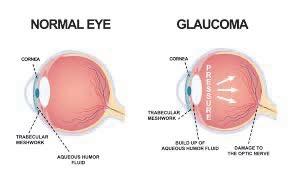
Glaucoma is typically painless, and symptoms develop very slowly over years. Patients may not detect any symptoms or vision loss for many years, and by the time symptoms are noted, the disease may be in a more advanced stage.

Q: How is Glaucoma treated?
A: There is no cure for glaucoma. Glaucoma treatment aims to lower eye pressure to stabilize the disease and prevent further vision loss and damage to the optic nerve. We can typically lower eye pressure in three ways: medication, laser treatment, or surgery.
Medication usually includes prescription eye drops that help to either decrease the amount of fluid production in the eye and/or improve the outflow of fluid from the eye. There are several different classes of these medications, and they can be used alone or in combination.
The most common laser procedure that is used to treat open angle glaucoma is Selective Laser Trabeculoplasty (SLT). This laser helps to improve the outflow of fluid from the eye, therefore, lowering the eye pressure. This procedure is safe, works well for most people, and may be repeated if the effect of the procedure wears off over time. In recent years, this procedure has become the preferred first line treatment for glaucoma in eligible patients.
There are two categories of glaucoma surgeries.
MIGS (Minimally Invasive Glaucoma Surgery) targets the trabecular mesh-

work, which is the natural drain in the eye. The goal of these surgeries is to improve the function of the trabecular meshwork by either opening it, dilating it, or stenting it, in order to increase the outflow of fluid from the eye. These procedures are typically recommended for patients with mild to moderate glaucoma and can often be performed at the time of cataract surgery. Filtration surgery is usually reserved for more advanced glaucoma. These surgeries bypass the trabecular meshwork by creating a new drainage pathway in order to lower the eye pressure.

by Julia K. Polat, MD
Glaucoma and Cataract Surgeon Board certified in Ophthalmology
Glaucoma-Cataracts Consultants, Inc
Q: What is a common misconception about Glaucoma? And what can I do if I am concerned about Glaucoma?
A: The most common misconception about Glaucoma is that a patient with glaucoma must have a high eye pressure. However, glaucoma can develop at any eye pressure. Therefore, it is important to have routine comprehensive dilated eye exams with an optic nerve assessment, since eye pressure alone is not a good screening parameter. Furthermore, early diagnosis and treatment of glaucoma lead to better outcomes with more preservation of vision.
If you are concerned about Glaucoma, I would recommend scheduling a visit for a comprehensive eye exam with your local eye provider or with a subspecialist, such as myself. As a Glaucoma and Cataract subspecialist, I can provide a comprehensive evaluation and identify those patients who are at risk for glaucoma. I am also able to provide a wide range of treatment options for glaucoma, including SLT (laser treatment) and surgical options including MIGS, which I am often able to combine with cataract surgery.
Undergraduate Degree: Carnegie Mellon University
Medical School: Boston University School of Medicine
Ophthalmology Residency: West Virginia University Eye Center
Glaucoma Fellowship: UPMC Eye Center
Prior Employment: UPMC Eye Center 2015-2022 as a glaucoma and cataract surgeon, VA of Pittsburgh 2015- present as a glaucoma and cataract surgeon and as a residency program site director 2018-2022
References: 1. Davuluru, et al. “Identifying, Understanding and Addressing Disparities in Glaucoma care in the United States”. Transl Vis Sci Technol. 2023 Oct; 12(10):18.
Glaucoma and Cataract Consultants: Charleroi Office: 17 Arentzen Blvd, Suite 201, Charleroi, PA 15022, 724-483-3688
Mt. Pleasant Office: 220 Bessemer Rd, Suite 101, Mt. Pleasant, PA 15666, 724-547-5733
Mt. Lebanon Office: 1000 Bower Hill Rd, Suite 7200, Pittsburgh, PA 15243, 412-572-6121
ANDERSON, (BURTON) Margaret “Margy,” of Jefferson Hills, born in Glassport, died on May 30. Arrangements by Stephen D. Slater Funeral Home.
ANDREJCAK, Elmer Donald “MacGyver,” 80, born in McKeesport, PA, resided in West Mifflin, then he made his home in Naples, FL. Arrangements by Jefferson Memorial Cemetery and Funeral Home in Pleasant Hills.
BAUGHMAN, James John, 79, of Brentwood, died on June 6. Arrangements by Jefferson Memorial Cemetery and Funeral Home in Pleasant Hills.
BERNIAK, Patricia G., 83, of Monongahela (Carroll Twp.), died on June 12. Arrangements by Marshall Marra Funeral Home.
BEYER, Susan Iretta, 71, of Brookline (formerly of Belle Vernon), died on June 19. Arrangements by Jefferson Memorial Cemetery and Funeral Home in Pleasant Hills.
BOEHM, Eileen, 87, of Baldwin, formerly of Bethel Park and Mt. Oliver, died on May 24. Arrangements by David J. Henney Funeral Home, Library.
BOIG, Craig W. “Scooter,” 48, of Eighty-four, PA, died on June 10. Arrangements by David J. Henney Funeral Home, Library.
BORES, Donald R., 90, of Finleyville, died on June 11, and he had served as a Veteran in the U.S. Army. Arrangements by Kegel Funeral Home.
BRISCOE, Ronald E., 76, of Monongahela, died on June 2. Arrangements by Marshall Marra Funeral Home.
BURKHART, LeRoy, 84, of Bethel Park, died on June 3. Arrangements by Paul L. Henney Memorial Chapel in Bethel Park.
CAMPBELL, Janet Claire, 94, of Bethel Park, died on June 3. Arrangements by Jefferson Memorial Cemetery and Funeral Home in Pleasant Hills.
CARLUCCI-COX, Michelle ”Mickey,” 68, of Charleroi, died on June 13. Arrangements by Hogan – Melenyzer Funeral & Cremation Services, Inc. in Charleroi.
CHUDICEK, Robert “Bob,” 79, born in Ambridge, Pa, of West Mifflin, died
on May 25. Arrangements by Jefferson Memorial Cemetery and Funeral Home in Pleasant Hills.
DAVIS, Benjamin R., 34, of Finleyville, died on May 30. Arrangements by Kegel Funeral Home.
DOERR, Joseph Forrest, 87, of South Park, died on June 13. Arrangements by Jefferson Memorial Cemetery and Funeral Home in Pleasant Hills.
DRAKE, Ruth “Ruthie” Mary, 73, of Baldwin, died on June 4. Arrangements by Griffith Funeral Home, Inc., in South Park Township.
ELOSHWAY, William M., 83, of Washington, died on May 29. Arrangements by Jefferson Memorial Cemetery and Funeral Home in Pleasant Hills.
FISHER, Richard R. “Richie,” 50, of South Fayette Twp., formerly of Bethel Park, died on June 5. Arrangements by David J. Henney Funeral Home, Library.
FOX, Arta S., 81, of Fallowfield Township, died on May 29. Arrangements by Hogan – Melenyzer Funeral & Cremation Services, Inc. in Charleroi
GIBSON, Robert F., 77, of Broughton, died on May 29. Arrangements by Griffith Funeral Home, Inc., in South Park Township.
GIDO (BOWLAND), Sue Ann, 90, of Monongahela, died on May 27. Arrangements by Marshall Marra Funeral Home.
GRIMES, Leslie Ann, 55, of Charleroi, died, on May 31. Arrangements by Carl J. Spallino Funeral Home in Charleroi.
JASON, Patricia “Pat,” 83, of Bethel Park, died on June 1. Arrangements by Jefferson Memorial Cemetery and Funeral Home in Pleasant Hills.
JOHNSTON, Bradley, 54, of Bethel Park, died on June 2. Arrangements by David J. Henney Funeral Home, Library.
KLOSE, Albert F. JR., 97, of South Park, died on June 8. Arrangements by David J. Henney Funeral Home, Library.
KUNSA, Claire Dawn, 78, of Jefferson Hills, died on June 9. Arrangements by Jefferson Memorial
Cemetery and Funeral Home in Pleasant Hills.
MAHLBERG, Steven G. SR., 75, of Finleyville, died on June 19. He served in the U.S. Army during the Vietnam War as an MP in Germany. Arrangements by Kegel Funeral Home.
MATTA, Virginia “Judy” L., 91, of Coraopolis, died on June 6. Arrangements by Jefferson Memorial Cemetery and Funeral Home in Pleasant Hills.
MCGEARY, Mildred “Millie,” 95, Chippewa Township, died on June 9. Arrangements by Paul L. Henney Memorial Chapel in Bethel Park.
MCTALL (VOGEL), Linda L., 77, of Bethel Park, died on May 27. Arrangements by David J. Henney Funeral Home, Library.
MERZ, George Aloysious, 67, of Whitehall, died on June 2. Arrangements by Jefferson Memorial Cemetery and Funeral Home in Pleasant Hills.
MICHALEC, Gary Allen 90, of Bethel Park, died on June 9. Arrangements by Jefferson Memorial Cemetery and Funeral Home in Pleasant Hills.
MILLER, Eleanor M., 88, of Charleroi, formerly of Hopewell, died on May 25. Arrangements by Carl J. Spallino Funeral Home in Charleroi.
MILLER, Howard JR., 94, of Whitehall, died on June 4. Arrangements by Paul L. Henney Memorial Chapel in Bethel Park.
MORRIS, (FAWCETT), Virginia, 96, of Monongahela, died on June 20. Arrangements by Marshall Marra Funeral Home.
PLICHTA, Paul Andrew, 82, of West Mifflin, died on June 3. Arrangements by Jefferson Memorial Cemetery and Funeral Home in Pleasant Hills.
RAPP, Dorothy, 87, of Finleyville, died on June 1. Arrangements by Kegel Funeral Home.
REO, Samuel J. JR., 78, of Elizabeth, died on June 12. Arrangements by Marshall Marra Funeral Home.
RESNIK, Donald A., 93, of Finleyville, died on June 2. Arrangements by Kegel Funeral Home.
ROMEY, Michael Andrew “Mickey,” 81, of Mississippi, formerly of
Monessen, died on June 5, in Florence, MS. Arrangements by Marshall Marra Funeral Home.
SHAFFER, Dale T., 96, of Whitehall, died on June 16. He served as a Korean War veteran. Arrangements by Jefferson Memorial Cemetery and Funeral Home in Pleasant Hills.
SLOGAN, Michael Craig, 70, of South Park, died on June 4. Arrangements by Jefferson Memorial Cemetery and Funeral Home in Pleasant Hills.
SNYDER, Timothy W., 62, of New Brighton, died on June 20. Arrangements by Marshall Marra Funeral Home.
STOCK, Nancy Ann, 90, of the Wilson section of Clairton, died on June 6. Arrangements by Stephen D. Slater Funeral Home.
TAPER, Robert “Bob” M., 42, of Monongahela, died on June 7. Arrangements by Jefferson Memorial Cemetery and Funeral Home in Pleasant Hills.
VEDDER, Robert W., 71, of Belle Vernon, formerly of Monongahela, died on June 19. Arrangements by Marshall Marra Funeral Home.
VOLPATTI (HAHNE) Marian “Mem” K., 94, of Bethel Park, died on June 16. Arrangements by Paul L. Henney Memorial Chapel in Bethel Park.
WAGGETT, Henrietta Jean, 86, of Finleyville, died on June 12. Arrangements by Jefferson Memorial Cemetery and Funeral Home in Pleasant Hills.
WEAVER, Chuck, 70, of Charleroi, died on June 9. Arrangements by Carl J. Spallino Funeral Home in Charleroi.
WILLIAMS, Edward (Eddie), 95, of Pleasant Hills, died on June 4. Arrangements by Stephen D. Slater Funeral Home.
ZELLA (SINCEVICH) Barbara J., 90, of West Brownsville, died on June 17. Arrangements by Jefferson Memorial Cemetery and Funeral Home in Pleasant Hills.
ZUKAUCKAS, Charles, 97, of Finleyville, died on June 4. Arrangements by Kegel Funeral Home.
ZUPETIC (VALISKA), Norma Jean, 84, of West Mifflin, died on June 8. Arrangements by Jefferson Memorial Cemetery and Funeral Home in Pleasant Hills.

California United Methodist Church, located at 227 Third Street (across from the Dairy Queen), in California, PA, has announced the following upcoming activities and events.
Please join us for food and fellowship on Wednesday, July 3 at 6:00PM. California United Methodist Church hosts its free monthly "Wonderful Wednesday" dinner, held on the 1st Wednesday of each month. Mark your calendars accordingly. Location: 227 Third Street, California, PA. It's across the street from the Dairy Queen. This month is a picnic theme with the main entree being cold sandwiches. Bring a friend and a covered dish to share. Everyone is welcome. For more details, contact the church office at 724-9382270. We look forward to meeting you!
Check out our super bargains! Located in the California United Methodist Church, 227 Third Street (at the corner of Third and Liberty Streets - across from the Dairy Queen). Hours: Thursday evenings, 6:00PM - 8:00PM, and Fridays, 9:00AM - 3:00PM. For more information, visit: https://m.facebook.com/calipaumc, or call the church office at 724-938-2270. We look forward to seeing you there!
Theme: Community Building Dates/Times: July 22 - 24, 6:00PM- 8:00PM.
Location: Hollywood Pavillion, 313 Third Street, California, PA 15419
Organized by California United Methodist Church & United Christian Church. For more information, please call 724-938-2270.
Attention youth in grades 5 - 10! Youth Group now meets on the 1st Sunday of the month at 6:00PM. Please join us for food, fun, fellowship, and games. Bring a friend or two, the more the merrier!
Location: California United Methodist Church, 227 Third Street (across from the Dairy Queen), California, PA 15419. For more information, contact the church staff at 724-938-2270.

Our Lady of Grace Church (Greensburg) will host a Harvest Blessing Celebration Retreat on Sunday, August 18, 2024. All are welcome to attend the retreat, especially those with special needs. The retreat begins with the regularly scheduled parish Mass at 10:30 a.m. with Father Anthony Grossi, OSB as celebrant and homilist. Following Mass, Lunch will be served in Albanese Hall. The retreat will include reflections by Father Rossi, a special “cross” craft, and socialization. Participants are asked to bring a donation for area homeless (i.e. new black socks, food gift cards or small LED flashlight). Registration is $15, which includes appetizers, drinks, lunch, and a wooden cross to paint. To register for the retreat please call Carla Colello at 412-9154146; deadline for registration is August 1st.
Reach over 50,000 local readers
To submit a FREE private party classified ad, write down your ad on paper, or an index card, and mail to:
The Messenger, P.O. Box 13363, Pittsburgh, PA 15243
We also will accept your FREE private party classified ads via e-mail at: classifieds@messengerpaper.com
REAL ESTATE, RENTALS, HELP WANTED, AND ALL OTHER BUSINESS AD RATES –
$8.00 (minimum) for up to 15 words, plus .35 cents for each additional word. Bold Type - .25 cents per word. Box - $1.50
* NOTICE: FREE private party classified ads are not accepted over the phone. Voice-mail messages for FREE classified ads will not be accepted, and messages are not able to be returned. We appreciate your understanding and cooperation.
The Messenger has established a maximum limit of Five(5) FREE classified ads per issue per private party or individual. Any ads submitted that exceed this maximum will require payment. Our FREE classified ads are intended to be a community service for private party or individuals selling personal goods and items.
Any classified ads that are deemed to be from a resale shop, thrift store, flea market, reseller or other retailer are considered “business” ads, and do not qualify for the FREE classified ads. ________________________________________________________________________
** FREE CLASSIFIED AD POLICY – The Messenger has established a maximum limit of Five(5) FREE classified ads per issue per private party or individual. Any ads submitted that exceed this maximum will require payment. Our FREE classified ads are intended to be a community service for private party or individuals selling personal goods and items. Any classified ads that are deemed to be from a resale shop, thrift store, flea market, reseller or other retailer are considered “business” ads, and do not qualify for the FREE classified ads.
2005 HARLEY-DAVIDSON – Soft Tail Duece. 4,600 original miles. Accessories, like new. Black cherry, ready to ride! 724243-0194
1955 JEEP WILLY’S PICK-UP TRUCK –Runs and drives. All original parts, except 350 Chevy engine. 724-243-0194
2017 DODGE RAM 2500 HD TRUCK - With Tonneau cover, 5.7 Cummins Diesel, RWD, mileage 43,500, Crew Cab, personal use, no accident or damage, ideal towing vehicle. North Belle Vernon. $27,000. 724-243-3318
NGK IRIDIUM PLUGS - for 2014 earlier Honda, 1.8/2.4L new $44. 412-655-7137
HUB CAPS – Four(4) International Scout. Nice. 724-238-3996
6-HOLE RALLY RIMS – Chevy or GMC. $45. 412-425-0342
OLDSMOBILE – Two(2) Ralley wheel centers. $12. 412-425-0342
1983 FORD MUSTANG - 5.0, T-tops stick shift. Less than 58,000 miles. Must see this beauty. Serious callers only. 724-802-2305 ask for Val.
2008 KEYSTONE COUGAR - 5th wheel. 27/5 length. Excellent condition garage kept. Must sell. $8,500 obo. Call 412-508-7048 and leave call back number.
2011 CAN AM SPYDER RT - Limited, 22,000 mi, custom paint and seat, excellent condition, $8,200, 724-344-2020
HARLEY DAVIDSON CHROME TOOLBOX –Old school, teardrop. Softail. $50. 724-4660628
1989 CADILLAC SEDAN DEVILLE –104,000 miles, need some body work and mechanical work. $950. 724-929-9448
AUTOMATIC TRANSMISSION JACK - to remove and install automatic and manual transmission, 800lb capacity. New in box. $150. Munhall, PA. 520-271-5869.
2009 HARLEY DAVIDSON DYNA SUPER GLIDE - 17,000 miles, Python pipes, Detachable bags and windshield, New tires and battery. Super tuner. Many other extras. Excellent condition. $7,400. 412-217-8800
FORD MODEL A – Rear end, 1928 – 1933. Complete. $150. 412-833-6870
12-FOOT SMOKER CRAFT DEEP V – Life jackets, oars, paddles, anchors, swivel seat. $300. 724-610-8399
KIA SOUL FACTORY RIM & TIRE – 2016, full size. 205/60-16. Brand new. Purchased for use as a spare. Will fit 2014-2016. Jack unit included. 724-244-1134
BOAT CUDDY CABIN – 1982 Chris Craft Scorpion, 21-foot, 350 Mercruiser, 260 HP
IO, dual wheel trailer and all accessories. Runs great and good condition. $8,500. 412-384-0952
RADAR DETECTOR – Excort. Discontinued. Paid $500 years ago. Sell only $50. 724366-9524
JEEP ‘MOPAR’ BIKE RACK – w/ 2-inch receiver, holds 2 bikes. $125. 412-3844374
FISHING BOAT – 1995 Aluminum, Deep V. Grumman trailer, shore lander, Yamaha 20HP outboard tiller arm, 2007 livewell, depth finders, battery and charger, perfect shape. Smooth and fast. $3,500. Callo Chuck, 724348-6289
TRUCK BED COVER – Foldable vinyl cover for GMC or Chevy. 6ft bed, 3 years old. Good condition. $100. Lv. Mssg. 412-655-7853
CONVERTIBLE CARS - 1950’s/60. 724986-3152
CHROME WHEELS - 18”/ 2015 MKZ. 724986-3152
REACH 50,000 POTENTIAL CUSTOMERSin the South Hills and Mon Valley communities! Advertise your business in the South Hills - Mon Valley Messenger. Call for more information at 412-249-8177. Or e-mail to news@messengerpaper.com.
GET 2 WEEKS FREE OF ADVERTISING when you purchase 2 weeks. Learn more at macnetonline.com or give us a call at 800450-6631.
CHILDCARE - SUNSHINE KIDS INC. is NOW HIRING INFANT/TODDLER TEACHERS and TEACHER’S AIDES. Please contact Ms. Tammy at 724-942-1009 or tmain@sunshinekidsinc.com
ADVERTISING SALES – Meet with local business owners. Be friendly, smile, and educate them on how newspaper advertising will help their business. Training provided. Get involved with your community newspaper. Work from home, make your own hours, and have fun creating effective advertising programs for your customers. Call 412-2498177 and ask for Doug. Or, e-mail letter of interest or resume to dhaniford@messengerpaper.com
CUSTODIAN - Thomas Presbyterian Church is hiring a Part-Time Weekend Custodian. This position is for 15 hours per week. Coverage is Friday, Saturday and Sunday. Please email Office@ThomasPres.org for more information or call 724-941-8910.
VOCELLI’S PIZZA AT COOL SPRINGS — Hiring ALL positions. 412-882-2222
HOUSEKEEPER & CLEANING SERVICEneeded $600/Weekly. Working Days: 3days. Time Schedule: 7AM - 1PM. Email: presidentsen@gmail.com
CARPENTERS & LABORERS - J&D Waterproofing and home improvements are hiring carpenters on the home improvement
side and foreman/labor on waterproofing . Please call ASAP. 724-746-8870. We’ve been in business 82 years
AUTO & TRUCK MECHANIC - Help Wanted, Part Time. 724-350-5983
LABOR HELP WANTED – Full or part time work. Some carpentry, plumbing, electrical experience helpful. Need drivers license and must pass drug test. 724-350-5983
LOOKING FOR EMPLOYMENT - in the months June, July and August. Available for the Monongahela Pa. area only. Will babysit one child and/or pet for a few days a week. Call Lori at 724-469-1631 or email lopfer205@gmail.com. Please leave voicemail when calling.
Life Insurance---the last tax-free wealth transfer left. For a quote contact Jim Driscoll at 412-343-1100 Driscoll Insurance Enterprises. Proudly serving the Pittsburgh region since 1949.
ADULT MOBILITY SCOOTER - $500. 412881-7392
WHEELCHAIR – Adult, Invacare. $25. 412881-7392
PEMF – Pulsed Electro Magnetic Field is the natural healing and energizing of your body using the patented KLOUD Biotech at home system. Call Glenn Schreiber (412) 913-8954
TRAMPOLINE – One(1) person – like new. $20. 724-243-0194
METGUARD MINING BOOTS – Men’s 10” waterproof lace to toe. Size 10.5, new, never worn, still in box. Matterhorn. $100. 724243-0194
PULL ON BOOT – Men’s 15”, waterproof, internal, Metguard, Matterhorn. New, still in box, never worn. Size 9.5. $100. 724-2430194
TREE STANDS - $50. 724-243-0194
TURKEY DECOY – For hunting. $10. 724243-0194
COOKBOOKS – Ten(10) Many church ladies recipes – all like new. $3. 724-929-8259
BOBBLE HEAD – Josh Bell, Pittsburgh Pirates. New, still in original box. $10. 724929-8259
POTTERY BARN CRIB – Soft gray, powerfully built, for baby. $100. 724-929-8259
WOODEN LEVEL – Very Old. Great carpenter collectible. All 3 bubbles working. $5. 724929-8259
PLAIN GLASS STEINS – Qty 17, with single red letter ‘R’ on each. All perfect cond. $3 each. 724-929-8259
LAWNMOWERS – Five(5) Lawnboy 2-cycle lawnmowers that I am selling for $25 each. All are complete and fixable for daily use. I no longer have the interest to get them running. Extra parts for sale also. 412-606-6643
OVER-BOOT SPORT CLIMBERS – One pai. $10. 412-655-7137
CARHART WORK PANTS - Size 33x32, never worn, 3 pairs. $30. 412-655-7137
STACK-ON GUN/STORAGE CABINETDunham’s 21x10x55, new, $70. 412-6557137
PERFECT GLASS – Three(3) 32 oz. bottles, $12. 412-655-7137
COLEMAN CAMPING EQUIPMENT - 2
Burner stove, Lantern, and Heater $50 each OBO. 412-831-3275
COLMEN PUP TENT - 2 or 3 person tent with rain fly $40. 412-831-3275
RUBBERMAID ROOF TOP CARRIER - New in box 38 inch wide 38 inch long 18 inch high fits Ford Escape type cars. 412-831-3275
CAMPING TRAIL KITS - 4 place with cups and 6 place with plates $25 for both. 412831-3275
GOLF CLUBS – with new bag and many extras. $75. 412-884-3598
GOLF PULL CART – Nice. $10. 412-8843598
CHINESE SKS RIFLE – Bought in the 1980’s, matching numbers, comes with 400 rounds, of Russian ammo and bandoler with ammo and stripper clips. $700. 412-477-0992
SANTA SUIT – Size, M. 11 pcs. Nice. $75. 724-238-3996
42” SNOW PLOW – John Deere, for lawn tractor. $175. 724-238-3996
DEER ANTLERS – Large box. $125. 724238-3996
30” DECK – For Montgomery Ward 1-speed tractor. Nice. $80. 724-238-3996
POWER RAKE – Dethatcher. Gas powered, 20” wide, good condition. $400. 412-8867492
CAMPING TRAIL KITS - 4 place with cups and 6 place with plates $25 for both. 412831-3275
GOLF CLUBS – with new bag and many extras. $75. 412-884-3598
GOLF PULL CART – Nice. $10. 412-8843598
CHINESE SKS RIFLE – Bought in the 1980’s, matching numbers, comes with 400 rounds, of Russian ammo and bandoler with ammo and stripper clips. $700. 412-477-0992
SANTA SUIT – Size, M. 11 pcs. Nice. $75. 724-238-3996
42” SNOW PLOW – John Deere, for lawn
tractor. $175. 724-238-3996
DEER ANTLERS – Large box. $125. 724238-3996
30” DECK – For Montgomery Ward 1-speed tractor. Nice. $80. 724-238-3996
POWER RAKE – Dethatcher. Gas powered, 20” wide, good condition. $400. 412-8867492
PROFESSIONALLY FRAMED PICTURE –
J&L Steel Works (Jones & Laughlin Steel), Pittsburgh, in color, measures 26” x 31”, mint condition. $75. Munhall – 520-271-5869
CLARINET – Good Condition. $35. 412629-0713
WALKER – Rollator Walker, New. Red. Cost $677. Sell for $300. 412-629-0713
SINGLE BED HEADBOARDS – Old, real wood, with built-in shelves, matched pair. Exc. condition. Metal beds included. $75 for all. Munhall – 520-271-5869
BOOK – ‘Heart of the Pennsylvania Railroad: The Main Line’. 127 pages, excellent condition. $12. Munhall – 520-271-5869
BOOK – ‘The Monongahela’ (River of Dreams, River of Sweat). All about the Mon river, it’s cities and towns, industries, history and more. Hardback, original jacket cover. Mint cond. $18. Munhall – 520-271-5869
OILER – Type used to lubricate old steam locomotives. Twenty five inches tall with long spout and working thumb valve. Very good condition. $40. Munhall – 520-271-5869
ELECTRIC SMOKER - $20. 724-684-7199
ROLLING TV STAND – With shelf, excellent condition. $20. 724-684-7199
PORCH SHADES – Two(2). 8x8. Never used. Paid $40 each. Asking $20 each. 724-684-7199
WWII MAGAZINES – Eight(8). $2 each. 724-684-7199
BOOK – ‘The Army of the Potomac’ Bruce Catton. Glory Road. $10. 724-684-7199
45 RPM RECORDS – 800 from the 50’s –60’s era. Exc. cond. $495. 412-884-1298 or 412-960-1801
CAMPING LANTERN – Kerosene. Never used. New. Asking $35. 412-831-8998
SLEEPING BAG – New, never used. 15degrees below AI condition. 412-831-8998
ANTIQUE VICTROLA – (Superba) – Floor model. $75. 724-887-6163
MISC ITEMS FOR SALE – 2 VCR’s, VHS movies, porcelain dolls, 2 Sears bikes, records, Hallmark – first one. 412-464-0913
WHEELBARROW – great shape. $25. 724554-7396
WEEDWACKER – Black & Decker. Electric. $25. 412-651-1794
ASHTON DRAKE DOLL – “Cute as a Button” $40. 412-651-1794
CARNIVAL GLASS – Fruit Bowl, Mint Cond. $25. 412-651-1794
FIREPROOF SECURITY BOX – 2 keys included. $25. 412-651-1794
NGK IRIDIUM PLUGS - for 2014 earlier Honda, 1.8/2.4L new $44. 412-655-7137
HUB CAPS – Four(4) International Scout. Nice. 724-238-3996
6-HOLE RALLY RIMS – Chevy or GMC. $45. 412-425-0342
OLDSMOBILE – Two(2) Ralley wheel centers. $12. 412-425-0342
PFALTZGRAFF BOWL – Garden of Eden. 9”. $25. 724-514-7208
BATH SHEET – Beige, XL, 30” x 54”, Martex. $5 724-514-7208
BATH SHEET – Off white, 27” x 54” Wamnsuta. $5. 724-514-7208
QUEEN QUILT – Off white, 92” x 96”, plus pillow shams. $30. 724-514-7208
BATTERY CABLE – Black, New, 6 Gauge. $20. 412-425-0342
WELDING OR BATTERY CABLE – Black and red, used. $25. 412-425-0342
QUEEN AIR MATTRESS – Coleman, double high. $30. 412-384-4374
The MESSENGER is the premier community newspaper in the South Hills and Mon Valley area of Pittsburgh. We are a free, monthly publication seeking to expand our coverage, and grow existing territories.
The MESSENGER is looking to add experienced Sales Representatives to our growing team of professionals. Candidates should possess: Strong sales and/or customer service skills, ability to offer clients advice on ad content and design, handle several projects at once, work on a deadline, familiarity with Mon Valley area, reliable transportation, flexible schedule, computer with internet access and a personable, friendly attitude.
Preferred candidates will possess: Prior newspaper or media experience, good communication and presentation skills and be motivated, determined and persistent.
Interested applicants should email us at dhaniford@messengerpaper.com with a resume and cover letter, or mail to P.O. Box 13363, Pittsburgh, PA 15243.

HUNTING BOOTS – Mens, Kamik, size 11. New in box. Felt liner. $50. 412-384-4374
DINNERWARE – Homer Laughlin “Fiesta” –10 colors, new in box. $30 each. 412-3844374
TREK BIKE – Ladies, 26” 10-speed. $150. 412-384-4374
CANOE – 15-ft Campbell. $350. 724-9417604
HUMIDIFIER - $25. 724-941-7604
FLOWERS – Black Eye Susan’s. 3 clumps for $10. 724-941-7604
RED RASPBERRIES – Bloom twice. 3 for $10. 724-941-7604
BOOM BOX – AM, FM, CD. $35. 412-6290713
SPEAKERS – All sizes. $15 to $40. Samsung, Sony, KLH, Radio Shack. 412629-0713
SONY AND MEMOREX BOOMBOXES –
AM/FM/CD/Cass. Like new. $50. 412-6290713
TURNTABLE – Audio Technica, new. $250. Also have other turntables. 412-629-0713
HONEYWELL – True Hepa Air Purifier. $100. 412-629-0713
HUMIDIFIER – Vicks, Cool mist, like new. $40. 412-629-0713
U.S. PROOF SETS – 80’s, 90’s, and 2000’s. $8 each. 724-938-8482
FREE ORGAN – Ideal for church. Call 10:30AM – 8:30PM, 412-880-8104. MEN’S SKETCHERS – 11.5, extra wide. In box, never worn. Khaki color. Paid $80 –asking $25. 724-713-8157
3 PERSON TENT – 7x7, grey, MarlCont, brand new, never taken out of box. $25. 724-713-8157
VINTAGE CROWBARS – (12) assorted sizes, ranging from 1 foot – 2.5 feet in length. $25 OBO. 724-713-8157
KEN GRIFFEY JR – Autographed baseball glove. Left handed. 724-938-8240 COMMODORE 64 C – Computer. Two(2). 724-938-8240
PRINTER – Panasonic KX-F1600. 724-9388240
WORK BENCH – 5 drawer, 5’ x 3’ x 2’. $40. 724-938-8482
DISPLAY CASE WITH GLASS – handmade, oak finish. Top 48” x 25” x 8”. $25. 724938-8482
SENTRY SAFE – 22” x 17” x 13” $20. 724938-8482
CANVAS DROP CLOTH - 12’x15’ heavy wt., new $20. 412-655-7137
CAR COVER - Honda CRV/Passport/Odyssey $25. 412-655-7137
SPORT CLIMBERS - pair of over-boot. $10. 412-655-7137
CARHART WORK PANTS - size 33x32, never worn, 3pr. $30. 412-655-7137
STACK-ON GUN/STORAGE CABINETDunham’s 21x10x55, new, $70. 412-6557137
PERFECT GLASS BOTTLES - 3/32 oz., $12. 412-655-7137
EXTENSION LADDER – 24’ Aluminum. $40. 724-938-8482
WEAPONS – Nicely sporterized 30-40 Krag Rifle. Russian T-44 folding bayonet carbine. Two(2) 30 round strips of Japanese machine gun ammo. Norway Bayonet with sheath. Will trade for German WWII pistol. 724-3305041
FLY ROD – Orvis T.L.S. Power Matrix, 4 piece, 9 ft, 5 wt. line. New in original case. $230. 724-684-5169
FLY ROD – Orvis Silver Label, 9 ft, two piece, wt. 5 oz. Brand new in case. $230. 724684-5169
SPITTOON – Union Pacific Railroad. Excellent condition. $50. 724-684-5169
COMBINATION SOCKET SET – 1/4" and 3/8” drive, SAE and metric. 40 pieces. $25. 412-751-5688
CIRCULAR SAW – and blades. $25. 412751-5688
HAMMER DRILL - $20. 412-751-5688
DAISY BB GUN – Model No. 99. Very old. 724-938-8240
STEREO TAPE RECORDER – Akai, X-1800 SD. 724-938-8240
DETACHABLE WINDSHIELD – Sportster. Clean. $150 firm. 724-466-0628
STAINED GLASS LAMPS – Five(5), mint cond. Retail for $1,200. Sell all for $450. 412-341-3677
CYCLONE FENCE – 265 feet, posts, rails and all hardware. You remove and haul. Best offer. Tom – Uniontown. 843-685-6034.
REFRIGERATOR – Side by Side. $175. Tom – Uniontown. 843-685-6034.
MICROWAVE – Countertop. $40. Tom –Uniontown. 843-685-6034.
ELECTRIC STOVE HEATER - $45. Tom –Uniontown. 843-685-6034. OVER THE RANGE HOOD - $75. Tom –Uniontown. 843-685-6034.
AC DELCO – Supercharger oil, #12345982, 4 oz. 2 for $5. 412-425-0342
WELDING PANTS – 40” x 30”, new. $5. 412-425-0342
WELDING JACKETS – Medium, Large, and Extra Larger. $10. 412-425-0342
BLUE WORK PANTS – Aramark, 40” x 30” and 36” x 30”. $8. 412-425-0342
FIRE BLANKET – New. $20. 412-4250342
ENTRENCHING TOOL - Soldiers shovel car-
ried on person. East German Army. A quality copy of the US Army tool. Excellent condition, $25. Munhall. 520-271-5869
TIN LITHO TOY MODEL - San Francisco
Cable Car with correct colors in ads. About 1:32 scale, friction motor. Excellent condition. $25. Munhall. 520-271-5869.
AXE - made by Plumb, used, 33.5 inches long. Very good condition. $20. Munhall PA. 520-271-5869
BOOK: “OUT OF THIS FURNACE” - A Historic novel of early Eastern European immigrants and their lives in America's steel industry. Setting in Braddock, PA $10. Munhall, PA 520-271-5869
KITCHEN AID PASTA ROLLER SET - (3 rollers) for KitchenAid Stand Mixer. Like New - $50. Call 412-678-9615.
FREEZER - upright, white, good cond. $100 724-945-5282
CLOTHES RACK - on wheels, heavy duty, adjustable, $45. 724-945-5282
ELECTRIC RANGE - white, good cond. $50 724-945-5282
BICYCLE - Diamond Back,"Topanga",26 inch, mountain bike, good cond. $50 724945-5282
SHOTGUN - Stevens .410 single shot, v.g. condition $325 724-945-5282
WOOD HEADBOARD - Fits Single to King Size Bed. $10. 412-833-5629
LAMPS - Two Metal Table Lamps. $5 each. 412-833-5629
JEEP RENEGADE T SHIRT - New Gildan Large, Florescent Orange and Green $15. 412-535-3744
LAWNBOY GRASS BAG ATTACHMENT - for Platinum Mower Used. $15. 412-535-3744
BATHROOM SINK BOWL - Newport 17” x 19” White, New In Box $30. 412-535-3744
SHOTGUN - Stevens 410 single shot,very good cond. $290, 724-344-0599
SHIP HOTEL SOUVENIR AND BOOKCeramic plate with ship’s picture, book on Ship from beginning to end. Several vintage postcards. $50 all. Munhall, PA. 520-2715869.
VINTAGE PENNSYLVANIA RAILROAD CALENDAR - Original 1941, complete, includes all months. Very good condition. $50. Munhall, PA. 520-271-5869.
STAR TREK NEXT GENERATION MOVIE POSTER - by Paramount Pictures, 1991. 26” H X 73” W. NCC 1701-D excellent condition, $20. Munhall, PA. 520-271-5869.
BINGO GAME - Monte Carlo. Vintage 1950's. $5. Call 724-684-5531.
KNIFE SET - 11 pcs w/Cutting Board. NEW. Reg $40 Asking $5. Call 724-684-5531.
SEWING MACHINE - in Wood Desk Cabinet w/2 Drawers & Expanding Top. Plus Wood
Chair w/Drawer. Very Nice. $25. Call 724684-5531
BARBECUE TOOLS - Set of 4 w/Long Handles. Stainless Steel(USA) $5 for set. Call 724-684-5531
LIGHTHOUSES - 7 Different types/collectibles/sizes. 2 light up. All for $10. Call 724-684-4695.
GLASS - Fenton Hobnail Milk Glass. Salt/Pepper Shakers + Butter Dish w/Cover + Syrup Creamer. Exc. Cond. $70. Call 724684-7250
VINYL LP COLLECTION - 200 albums, 60s70s rock/pop, jazz, comedy. Call for list. 724-809-5746
AUTOGRAPHED TIM SMITH CLIMAX BOTTLE - (empty) from Culpepper, Virginia location. $10. 724-809-5746
LEAD SHOT - good quality, #7 1/2, 25 lbs, $40. 724-344-0599
CEMETERY PLOTS – Two(2) plots, Lafayette Park, Route 40. Veterans or Civilians. $1,000 cash for both. 724-938-7988
GENERATOR – Auto-Lite, 6V-DC, single pulley. $25. 412-833-6870
FRUIT PRESS – Wooden, w/ 14-inch diameter bowl. $200. 412-833-6870
CEMETERY PLOTS – Two(2) in Jefferson Cemetery. Located in the Garden of Presidents, tier #131C and spaces 1 and 2. $1,000. 412-885-1351
FISH TANK – 55 gallon, with metal stand. Some accessories also for quick set up. $100. 724-344-8691
BENCH TABLE SAW – Task Force, 10-inch, with stand new in box. 724-258-8086
DRILL PRESS – 8-inch, 760-3070 RPM, with light. Never used. 724-258-8086
BARBIE DOLLS – 24 from the 1990’s, plus furniture, cases, clothes, accessories. Good condition. $100 OBO. 724-942-0883
BOAT CUDDY CABIN – 1982 Chris Craft Scorpion, 21-foot, 350 Mercruiser, 260 HP IO, dual wheel trailer and all accessories. Runs great and good condition. $8,500. 412-384-0952
ADOPT A REAL FRIEND. We'll make you smile. Satisfaction guaranteed. Washington Area Humane Society 724 -222-7387
----------- ITEMS WANTED --------
FINLEYVILLE BREWING – Old Beer bottles and memorabilia items from Finleyville
E-mail your ad to classifieds@ messengerpaper.com today!