CONNECTING ALUMNI, FRIENDS AND COMMUNITY
JACOBS SCHOOL OF MEDICINE AND BIOMEDICAL SCIENCES UNIVERSITY AT BUFFALO
CONNECTING ALUMNI, FRIENDS AND COMMUNITY
JACOBS SCHOOL OF MEDICINE AND BIOMEDICAL SCIENCES UNIVERSITY AT BUFFALO


Jacobs School grads ready to bolster the health care workforce in Buffalo and beyond and
This edition of UB Medicine showcases the dynamic role our Jacobs School of Medicine and Biomedical Sciences plays in shaping the future of health care in Western New York. We are not just educating physicians and scientists; we are driving economic development and ensuring access to exceptional care for all.
Our UBMD Physicians’ Group stands as a testament to our commitment to both clinical excellence and community service. As the region’s largest physician group, they are not only providing vital patient care but also serving as invaluable mentors to our residents, shaping the next generation of medical leaders. Our faculty are deeply committed to improving the health of our communities. Through their dedicated work in hospitals and clinics across the region, they are providing exceptional patient care and directly impacting the well-being of our region.
We celebrated the remarkable achievements of our students during Match Day this past March, a pivotal moment that underscores the strength of our educational programs and the bright future of our graduates.
Notably, 25 percent of our graduating class chose to remain at the Jacobs School for their residencies, a testament to their commitment to our region and the quality of our training. This success directly contributes to the robust health care workforce that is so vital to our community’s economic health.

Beyond these milestones, this magazine features stories that embody the spirit of our school. From lifesaving actions to compassionate animal rescue efforts, and the inspiring journeys of our students who transitioned from diverse careers to medicine, you will find stories of dedication and resilience.
We are building on a strong foundation of excellence, and we continue to foster an environment where innovation and collaboration thrive.
Thank you for your ongoing support as we continue to advance medical education, research, and community health. We are proud to be leading the health care transformation of Western New York.
With pride and gratitude,

Allison Brashear, MD, MBA
Dean, Jacobs School of Medicine and Biomedical Sciences
Vice President for Health Sciences
President and CEO, UBMD Physicians’ Group
UB Medicine is published by the Jacobs School of Medicine and Biomedical Sciences at UB to inform alumni, friends and community about the school’s pivotal role in medical education, research and advanced patient care in Buffalo, Western New York and beyond.
VISIT US: medicine.buffalo.edu/alumni
COVER IMAGE
Recent UB medical school graduates
Alejandro Falca Jimenez and Sasha Joseph are staying put to do their residencies in family medicine, helping to bolster the future primary care workforce in Buffalo and Western New York.
Photo: Sandra Kicman
16 ON MATCH DAY, MEMBERS OF THE CLASS OF 2025 LEARN THEIR FATE
Many will stay and join residency programs in Western New York

18 UBMD, JACOBS SCHOOL LINK HAS FAR-REACHING IMPACT
Synergy between UBMD, Jacobs School helping to improve the health of Western New Yorkers, train the next generation of doctors
21 JACOBS SCHOOL FACULTY MEMBER SAVES CONCERTGOER
‘He saved my life.’ Dr. Richard Braen performed CPR to revive retired music teacher

22 UB DOCTOR DOES A DIFFERENT KIND OF VIRAL
Puppy-rescuing pilot catches the nation’s attention flying across the U.S. to give dogs a second leash on life
24 FROM DIFFERENT WORLDS TO WHITE COATS
How three Jacobs School students followed unlikely paths into medicine
ALLISON BRASHEAR, MD, MBA Vice President for Health Sciences and Dean, Jacobs School of Medicine and Biomedical Sciences
Jeffry Comanici
Assistant Vice President for Advancement
Editor Patrick S. Broadwater
Contributing Writers
Dawn M. Cwierley
Keith Gillogly Ellen Goldbaum
Dirk Hoffman
Copyeditor Ann Whitcher Gentzke
Photography Sandra Kicman
Meredith Forrest Kulwicki Douglas Levere Nancy Parisi
Art Direction & Design Ellen Stay
Editorial Adviser John J. Bodkin II, MD ’76
Affiliated Teaching Hospitals
Erie County Medical Center
Roswell Park Comprehensive Cancer Center
Veterans Affairs Western New York Healthcare System
Kaleida Health
Buffalo General Medical Center
Gates Vascular Institute
John R. Oishei Children’s Hospital Millard Fillmore Suburban Hospital
Catholic Health
Mercy Hospital of Buffalo Sisters of Charity Hospital
Correspondence, including requests to be added to or removed from the mailing list, should be sent to: Editor, UB Medicine, 955 Main Street, Buffalo, NY 14203; or email ubmedicine-news@buffalo.edu
A select collection of images from events happening at the Jacobs School over the past few months.


Last October, Allison Brashear, MD, MBA, dean of the Jacobs School of Medicine and Biomedical Sciences, vice president for health sciences at the University at Buffalo, and president and CEO of UBMD Physicians’ Group, provided a robust report on the health of the Jacobs School. The annual State of the School address highlighted accomplishments and achievements and celebrated successes over the past 12 months across the school’s academic, clinical, research and community-focused missions.
“Our Heartbeat: A Night of Heartfelt Volunteer, Faculty, and Staff Appreciation,” took place in the second floor atrium of the Jacobs School building on a snowy January evening in downtown Buffalo. The school’s second annual Volunteer Appreciation Night celebrated volunteer faculty, donors, alumni, and the many others who make outstanding contributions to the Jacobs School throughout the year. The evening featured a brief awards ceremony recognizing exemplary service to the school and a string quartet concert featuring musicians from the Buffalo Philharmonic Orchestra.

The Jacobs School of Medicine and Biomedical Sciences continues to bolster its leadership team, adding several new members.
Jessica L. Reynolds, PhD ’04, has been named associate dean for faculty affairs, while Daniel Woo, MD, has been appointed the Irvin and Rosemary Smith Endowed Chair of the Department of Neurology and Beth A. Smith, MD ’00, was named permanent chair in psychiatry.
Michael J. Oldani, PhD, also joins the university as the new executive director for interprofessional practice and education. He will also have a faculty appointment in the Department of Pharmacology and Toxicology in the Jacobs School.
Reynolds Joins Faculty Affairs
Reynolds is an associate professor in the Department of Medicine and the vice chair for faculty development at the Jacobs School. Her work in nanomedicine, which includes developing nanotechnology and biological-based delivery vehicles targeting astrocytes, microglial cells and macrophages, has been groundbreaking. These cells play a prominent role in HIV and neuroAIDs pathogenesis and coinfections associated with HIV, such as tuberculosis (TB).
Reynolds earned her PhD in pathology from the University at Buffalo and has completed several prestigious fellowships. She has held various significant roles at the Jacobs School, including vice chair for faculty development and associate director of the Work Force Development Core at the UB Clinical and Translational Science Institute. Her contributions to research and education have been recognized with numerous awards and honors, including the Distinguished Biomedical Alumna and Outstanding Mentorship in Research awards.
She began her new role in February 2025.
Woo Named Chair of Neurology
Woo comes to the Jacobs School from the University of Cincinnati College of Medicine, where he was professor of neurology and rehabilitation medicine and
associate director of clinical research at the UC Gardner Neuroscience Institute. He joined UB on Dec. 1. He also serves as president and CEO of UBMD Neurology of the UBMD Physicians’ Group.
An internationally recognized leader in stroke research, Woo has been one of the most consistently funded researchers by the National Institute of Neurological Disorders and Stroke over the past decade. Woo, whose focus is intracerebral hemorrhage, led the first large-scale, genome-wide association study that identified a novel genetic risk factor for it.
2016; she is also a professor of pediatrics. Smith also serves as liaison to Psychiatry Program Development at Erie County Medical Center.
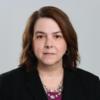
Woo’s research is groundbreaking, particularly in addressing the disproportionate stroke risk among African Americans and Hispanics, who are not only twice as likely to suffer from intracerebral hemorrhage but are affected on average 10 years earlier than other populations, leading to higher rates of disability. His work has also revealed variations in traditional risk factors based on race/ ethnicity and sex.
In 2019, Smith was inducted into the Emeritus Faculty Chapter of the Gold Humanism Honor Society. She has received numerous awards, including the Award for Outstanding Achievement in Child and Adolescent Psychiatry Education and the Award for Excellence in Clinical Supervision.


Woo earned his medical degree and a master’s in molecular genetics from the University of Cincinnati College of Medicine. He did his residency at the Cleveland Clinic and a fellowship in cerebrovascular disorders at the University of Cincinnati.
Smith had been serving as interim chair of psychiatry since July 2023. She was appointed chair March 1, 2025, after an extensive national search.
A graduate of the Jacobs School, she completed her psychiatric residency and fellowship training in child and adolescent psychiatry at the Jacobs School as well. A UB faculty member since 2005, she became chief of the Division of Child and Adolescent Psychiatry in
Oldani joined UB in October 2024. A trained medical anthropologist, he earned his PhD from Princeton University. His initial clinical ethnographic work, sponsored by a U.S.-Canada Fulbright Scholarship, began in Manitoba, where he studied collaborative care teams and examined the racial prescription of psychotropics for Anglo and First Nation children with behavioral disorders. He has conducted research that critically examines the impact of pharmaceutical sales and promotion on provider prescribing practices, changes in psychiatric practices during the pharmaceutical era, and medical and prescribing practices within vulnerable populations, such as the incarcerated mentally ill.

Oldani’s recent research has focused on collaborative deprescribing; the role of focused ethnography within interprofessional medical education; the impact of collaborative practice agreements on chronic disease management, such as Type 2 diabetes; and medical entrepreneurship and the prescribing of ketamine.
He previously served as director of interprofessional practice and education at Concordia University Wisconsin and professor in its School of Pharmacy.
The National Institutes of Health (NIH) has awarded the University at Buffalo $28.4 million over seven years to build on its extensive record of success using the power of research to improve health outcomes and address health disparities throughout Western New York.
The Clinical and Translational Science Award (CTSA) to UB’s Clinical and Translational Science Institute (CTSI) was announced in January, marking the third CTSA that UB has received under the NIH’s National Center for Advancing Translational Science program. The first was awarded in 2015 and the second was received in 2020.
The announcement brings UB’s total CTSA funding since 2015 to just over $65 million.
The purpose of the CTSAs, awarded to only 63 institutions nationwide, is to speed the translation of research discoveries into improved care for all while prioritizing the needs of the most vulnerable members of the community.
“This landmark award reaffirms UB’s stature as a premier public research university that is committed to contributing meaningfully to the health and well-being of the communities we serve,” says UB President Satish K. Tripathi. “It recognizes both the dramatic progress our UB faculty researchers
developing cutting-edge innovations and interventions in the interest of a healthier, more equitable society.”
The work of the CTSA is accomplished through close collaborations among researchers throughout UB—including its six health sciences schools and Roswell Park Comprehensive Cancer Center—15 collaborating institutions and influential community partners, which comprise the Buffalo Translational Consortium.
“This renewal ensures that the health of our community will continue to benefit from these critical collaborations,” says Allison Brashear, MD, MBA, vice president for health sciences and dean of the Jacobs School of Medicine and Biomedical Sciences at UB. “The CTSA renewal grant is a testament to UB’s commitment to advancing medical research and improving lives. By empowering our researchers to investigate the most vexing health challenges, we’re making a tangible difference in Western New York, across the state and around the world.”
“This grant represents a recognized commitment on the part of NIH to look at who’s actually doing the work on the ground that matters in communities that are underrepresented or unrepresented,” says Kinzer Pointer, PhD, pastor of Buffalo’s Liberty Missionary Baptist Church and a member of the CTSI
with people through the challenges they face, who are helping them not only better understand their health, but are actively involved in recovering and maintaining their health.”
These connections have helped Western New York respond to some major challenges, according to Timothy F. Murphy, MD, SUNY Distinguished Professor, principal investigator and director of UB’s CTSI. “Because of the powerful community connections we have, we reduced the proportion of fatalities in African Americans during the pandemic, one of few communities nationally to achieve and sustain this,” he says.
After the tragic racially-motivated shooting on May 14, 2022, the CTSI helped address community trauma with mental health expertise and support.
Following the blizzard of 2022, which had a devastating, disproportionate impact on communities of color, UB and CTSI leaders advised local planning groups on a datadriven equity focus to respond to future storms.
A key factor in addressing health disparities involves diversifying the pool of people involved in clinical research. In 2023, with assistance and expertise from the CTSI, more than 24% of participants in UB clinical research studies were from underrepresented groups.
“Nationally, that number is less than 10%,” Murphy says. “We have far exceeded the national average in engaging people who historically have not had the opportunity to participate in clinical research.”

To encourage novel approaches to health challenges, the CTSA funds pilot projects; the program has a remarkable 11 to 1 return on investment in attracting major external
Platform party from the press conference on Jan. 17 announcing renewal of UB’s Clinical and Translational Science Institute. From left: U.S. Congressman Tim Kennedy, President Satish K. Tripathi, Timothy F. Murphy, Jacobs School Dean Allison Brashear, and Rev. Kinzer Pointer.
In partnership with the Community Health Worker Network of Buffalo, the CTSA will also provide funding to develop a curriculum and train community health workers in clinical research. These workers, trained in translating research goals for the general public, will work with patients in local Tops Markets and independent pharmacies in underserved areas in Buffalo.
WATCH: Highlights from the Jan. 17 press conference announcing the renewal of UB’s Clinical and Translational Science Award from the National Institutes of Health.
Other projects supported by the renewal include:
• Integrating artificial intelligence through connections with UB’s Institute for Artificial Intelligence and Data Science and using AI in a wide range of efforts. These include enhancing health literacy in communicating with potential research participants and improving the use of electronic health records (EHRs) in Western New York.
• Expanding the nationwide reach of “Sofia Learns About Research,” the multilingual children’s activity book and video game that presents research in a fun, age-appropriate way. At Buffalo’s Explore and More children’s museum, the Sofia game has been played more than 200,000 times.
• Speeding targeted drug discovery through the innovative Computational Analysis of Novel Drug Opportunities (CANDO) platform developed by Jacobs School researchers. CANDO has led to the formation of three startup companies and won a national challenge on novel ways to develop drugs to fight opioid addiction.
• Leveraging UB’s international leadership in ontology, the study of organizing and categorizing knowledge, to enable greater common understanding, UB is leading a national network of CTSA hubs to establish new ontologies for the social determinants of health and other subfields.
Margarita L. Dubocovich, PhD, a SUNY Distinguished Professor of pharmacology and toxicology at the Jacobs School of Medicine and Biomedical Sciences, is a recipient of the Presidential Award for Excellence in Science, Mathematics and Engineering Mentoring (PAESMEM).
The award is the nation’s highest honor for science, mathematics and engineering mentors. On Jan. 13, President Joe Biden honored 25 Americans receiving the prestigious PAESMEM award, presented to those who’ve demonstrated excellence in mentoring individuals from groups underrepresented in STEM education and the workforce. The awards recognize outstanding efforts to encourage and mentor the next generation of STEM innovators.
A National Science Foundation selection committee assesses nominations before recommending awardees to the White House Office of Science and Technology Policy.
Dubocovich says that the award reflects the power of mentoring and honors the many successful mentees whom she’s guided.
“Receiving the Presidential Award is an incredible honor and affirmation of my passion for mentoring the next generation of STEM scientists. I know firsthand the power of mentoring that shaped my own journey from humble beginnings to a successful scientific career,” she says. “This award is a tribute to my own mentors and the dedication and success of the many mentees I have advised and guided on my own research team, in the institutional programs I developed, and in professional societies.”
Raised in rural Argentina, Dubocovich says that exceptional teachers and mentors stimulated her interest in science from an early age and shaped her career and devotion to mentoring.
“As a doctoral student and junior scientist, I experienced one-on-one mentoring that helped shape my career,” she says. “This experience promoted a strong interest in mentoring students and junior scientists, particularly women and individuals from underserved backgrounds, and a strong desire to have everyone experience personal and professional success.”
Each PAESMEM awardee will receive a citation signed by the president and a
$10,000 award from the National Science Foundation.
“Dr. Dubocovich’s extraordinary mentorship and unwavering dedication to her students have profoundly shaped my scientific journey and continue to inspire me as I progress in my career,” says Chongyang Zhang, PhD, a former UB undergraduate research assistant, master’s student, and Dubocovich mentee.
“Dr. Dubocovich’s ability to inspire, guide, and nurture her trainees is

Margarita Dubocovich is a recent recipient of the Presidential Award for Excellence in Science, Mathematics and Engineering Mentoring.
unparalleled, and I am privileged to count myself among the many students whose lives she has transformed,” says Zhang, now a pediatrics postdoctoral scholar at Stanford University.
Dubocovich received the Jacobs School Dean’s Award in 2013 for her promotion of a holistic review process to increase enrollment of graduate and professional students from underrepresented groups, and in 2017 she received the UB President’s Medal, which recognizes exemplary service to UB. Outside of the university, Dubocovich has received the inaugural ACNP Dolores Shockley Minority Mentoring Award in 2017, was named an ACNP fellow in 2017 and an ASPET fellow in 2020, and received the ASPET Julius Axelrod Award in Pharmacology in 2022. In 2024, she was bestowed with the Award for Contributing to the Diversity and Inclusiveness of the Translational Workforce by the Association for Clinical and Translational Science in recognition of her extraordinary career focused on mentorship and building a more inclusive and diverse workforce.
Elad I. Levy, MD, MBA, SUNY
Distinguished Professor and the L. Nelson Hopkins Endowed Chair of the Department of Neurosurgery, Jacobs School of Medicine and Biomedical Sciences, has been awarded the Ralph G. Dacey, Jr. Medal for Outstanding Cerebrovascular Research.
The international award was established in 2018 at the Joint Cerebrovascular Section meeting of the American Association of Neurological Surgeons (AANS) and the
meaningful awards of my career,” says Levy, who is also a professor of radiology at the Jacobs School. “It is an award that I share with Buffalo because of all of the research and collaboration and the network that exists here that made all of this possible.”
He says the award recognizes the work that was first envisioned by the late L. Nelson “Nick” Hopkins, MD, SUNY Distinguished Professor of neurosurgery and former chair of the department, which led to UB creating a paradigm shift in stroke treatment.
Led by Hopkins, UB’s team began pioneering new techniques back in the 1990s, using minimally invasive stroke

Congress of Neurological Surgeons (CNS). Its purpose is to highlight the importance of cerebrovascular research in the field of neurosurgery, foster scientific investigation in the areas of stroke and cerebrovascular disease, and recognize neurological surgeons who have made novel, outstanding and continuous contributions to the basic, translational and/or clinical understanding of cerebrovascular disease.
Levy, co-director of the Gates Stroke Center and Cerebrovascular Surgery at Kaleida Health’s Buffalo General Medical Center/Gates Vascular Institute, and president of UB Neurosurgery (UBNS), received the honor in July at the annual meeting of the Society of NeuroInterventional Surgery, which partners with the AANS/CNS CV Section to present the Dacey Medal.
“It was a huge honor to receive the Dacey Medal. It is truly one of the most
treatments. That work continues under Levy, who completed his neurosurgery fellowship under Hopkins in 2003 and joined the UB faculty in 2004. He was named chair of neurosurgery in 2013.
With almost 800 peer-reviewed publications in cerebrovascular disease research, Levy helped create a paradigm shift where thrombectomy, the removal of a blood clot from a blood vessel, became the new standard of care for stroke after a decade-and-a-half of intensive research.
“What started with the first animal model for intracranial stent in our labs at UB, we then took that knowledge to get the first FDA-approved ‘stent for stroke’ trial,” Levy says. “We were able to build on this and were among the first to publish
data ‘uncoupling’ time dependency from stroke care,” he says. “With multiple New England Journal of Medicine publications, we have galvanized organized medicine around stroke intervention care.”
Adnan Siddiqui, MD, PhD, professor and vice chair of neurosurgery at the Jacobs School and CEO and chief medical officer of the Jacobs Institute, started the Dacey Medal when he was chair of the AANS/CNS CV Section. It is named after Ralph G. Dacey Jr., the longstanding chair of neurosurgery at Washington University in St. Louis, who Siddiqui says was an incredible scientist and cerebrovascular surgeon with a storied history of conducting both clinical and translational research.

“We really wanted to honor people who dedicated their entire career to the development of the science of neurosurgery,” says Siddiqui.
Because this was the first year Siddiqui wasn’t on the nominating committee, he was able to nominate someone—and he chose Levy.
“The reason I did this is Elad,” he says. “From the get-go when he came to Buffalo in 2003, he got into basic science and developed the translational research models for intercranial stenting.”
Siddiqui notes Levy then took that idea into the clinic and got the very first FDAapproved trials for intercranial stenting and the first randomized trial.
That led to the first few clinical trials for stents for stroke, followed by Levy being the national principal investigator for the landmark global trial SWIFT PRIME, which resulted in the entire space changing, according to Kenneth V. Snyder, MD, PhD, assistant professor of neurosurgery.
“This work has led to a major change in the paradigm of stroke treatment and new American Heart Association/American Stroke Association acute ischemic stroke guidelines,” Snyder said.
The accolades for the work being done at the “La Bodega” hepatology clinic at the Erie County Medical Center continue to roll in.
Anthony D. Martinez, MD, associate professor of medicine at the Jacobs School of Medicine and Biomedical Sciences, and director of the clinic, has been named a 2024 Elimination Champion by the Coalition for Global Hepatitis Elimination.
Martinez was one of eight people recognized—and the only U.S. representative. Other Elimination Champion awardees included two from Uruguay, and one each from Nigeria, Australia and Thailand. Two other individuals were given special recognition as “Legacy Award” winners.
The award “recognizes outstanding individuals in acknowledgment of their contributions to health equity in the fight for global hepatitis elimination,” according to the website of the coalition, which is part of The Task Force for Global Health.
The honor is a continuation of the recognition La Bodega has received nationally and globally as a novel colocalized model for managing viral hepatitis and addiction disorders.
“We’re deeply honored to be the only U.S. representative this year. I’m also incredibly proud to represent the MexicanAmerican and Latino community,” Martinez says. “Most importantly, this award honors the team and all of the patients. None of this works without the people that comprise the Bodega.”
Martinez, who works in the Division of Gastroenterology, Hepatology and Nutrition at the Jacobs School and sees patients through UBMD Internal Medicine, notes that in his award acceptance interview with the coalition he mentioned “our work may not fix most of what is broken in the world, but our hope is to make some progress in equity in our society.”
“Our mission at La Bodega is rooted in love, and all that defines love: passion, awe, allegiance, respect, justice and compassion.”
Since the program began in 2013, Martinez and his team have treated more than 5,000 people with the hepatitis C virus (HCV).
Martinez says one of the best aspects of the Bodega is the thousands of names and messages inscribed on its walls, left behind by those who have been cured of HCV.
“Those names urge us on, a constant reminder of who we are fighting for,” he says. “I think that’s what this award is about: the people who have made us.”
Martinez structured La Bodega as a comprehensive hepatology clinic which has a built-in addiction medicine program because liver disease and addiction disorders are often connected. The model is a co-localized approach, which utilizes an outreach team of social workers who partner with a number of addiction facilities.

In 2024, the clinic started a new sameday rapid start model for HCV treatment and has treated almost 300 patients, including high-risk pregnant women, Martinez says.
“We are currently one of the only models implementing a rapid approach start in the country (and globally) at this volume,” he says.
The program was also awarded a New York State Department of Health Commissioner’s Special Recognition Award in honor of World AIDS Day for the second time in 2023. It first received the honor in 2018.
“Our mission at La Bodega is rooted in love, and all that defines love: passion, awe, allegiance, respect, justice and compassion.”
Anthony D. Martinez, MD

A novel approach developed by a UB physician-scientist and colleagues to cure hepatitis C virus in people with opioid use disorder using facilitated telemedicine is being honored with a 2025 Top Ten Clinical Research Achievement Award from the Clinical Research Forum.
Andrew H. Talal, MD, MPH, professor of medicine in the Jacobs School of Medicine and Biomedical Sciences at UB, principal investigator, a physician with UBMD Internal Medicine and attending physician at Buffalo General Medical Center, was honored at a ceremony April 14 in Washington, D.C., on behalf of the entire research team.
The Top Ten Clinical Research Achievement Awards honor groundbreaking achievements in clinical research from across the nation. The competition seeks to identify major advances in the biomedical field resulting from the nation’s investment in health and welfare. The recipients are selected by a Clinical Research Forum panel based on their authorship of clinical research studies published in peer-reviewed journals in 2024. They are based on the degree of innovation and novelty involved in the advancement of science; contribution to the understanding of human disease and/or physiology; and potential impact upon the diagnosis, prevention and/or treatment of disease.
“Using a novel approach like facilitated telemedicine to treat our most underserved populations, which in this case cured more than 90% of patients, is exactly the kind of
Andrew H. Talal, professor of medicine in the Jacobs School of Medicine and Biomedical Sciences, received the Clinical Research Award in Washington, D.C. in April.
outcome that academic medicine strives to achieve,” says Allison Brashear, MD, MBA, UB’s vice president for health sciences and dean of the Jacobs School. “We could not be more proud of Dr. Talal and his team for being recognized with this prestigious national award, a first for a UB researcher.”
In addition, UB’s study received a Distinguished Clinical Research Achievement Award at the event. This recognition honors the studies that show creativity, innovation, and/or a novel approach that demonstrates an immediate impact on the health and well-being of patients.
The UB research, published April 3, 2024, in the Journal of the American Medical Association (JAMA), was titled “Integrated Hepatitis C-Opioid Use Disorder Care Through Facilitated Telemedicine. A Randomized Trial.”
The study is one of only a few randomized controlled trials conducted to determine the effectiveness of using telemedicine to expand health care access for underserved populations.
Talal explains that people with opioid use disorder have the highest prevalence and incidence of hepatitis C virus infection. Recent therapeutic advances in which almost everyone with hepatitis C is cured after a few months have revolutionized its management.
“Unfortunately, many people with hepatitis C are not treated for a variety of reasons. Facilitated telemedicine integrated into opioid treatment programs is an extremely effective approach to bring treatment to those who need it,” Talal says.
The UB researchers explored the effectiveness of integrating telemedicine into opioid treatment programs for hepatitis C management, thereby removing the need for off-site referrals.
The study demonstrated that the use of facilitated telemedicine was far superior to in-person referral, which is the standard of care used throughout the country for treating hepatitis C.
The work was supported by an $8.2 million award from the Patient-Centered Outcomes Research Institute (PCORI) and more than $3 million from the Troup Fund of the Kaleida Health Foundation.

Brian Clemency, DO, MBA, professor of emergency medicine, has been honored by the National Association of EMS Physicians (NAEMSP) for his work in support of emergency medical services (EMS) physician education.
“When I first became certified as an emergency medical technician, I studied using the textbook developed by Dr. Caroline. More than 25 years later, it is a unique privilege to receive this award named in her honor.”
Brian Clemency
He received the organization’s Nancy Caroline Award for Mentorship and Education at the NAEMSP’s 2025 annual meeting Jan. 11 in San Diego.
The award is named after Nancy Caroline, MD, an EMS physician who was medical director of Freedom House, an emergency ambulance service that assisted underserved populations in Pittsburgh in the 1960s and 1970s. She was also the first medical director of Magen David Adom, Israel’s Red Cross Society, and was later called “Israel’s Mother Teresa” by colleagues. It is awarded to a NAEMSP member who, through their actions, has demonstrated a relentless commitment to the mentorship of others within the EMS
Brian Clemency has been awarded the Nancy Caroline Award for Mentorship and Education by the National Association of EMS Physicians.
specialty.
“When I first became certified as an emergency medical technician, I studied using the textbook developed by Dr. Caroline,” Clemency says. “More than 25 years later, it is a unique privilege to receive this award named in her honor.”
Clemency, vice chair of academic and faculty affairs within the Department of Emergency Medicine, is an active EMS educator, researcher and medical director. He has served two terms on the NAEMSP Board of Directors.
As founding program director, Clemency was responsible for the University at Buffalo’s EMS fellowship accreditation and the graduation of one of the first EMS fellows in the nation in the 2012-2013 academic year.
Since that time, UB’s program has trained 22 EMS physicians, 12 of which continue to practice in Western New York. The program provides robust experiences in field response, flight operations and research.
Residents and fellows in accredited training programs typically take an intraining exam each year. These national exams are typically administered by a national certifying or specialty professional organization.
These exams simulate a board certification exam and help residents and fellows, and their faculty members evaluate their preparation to take the board certification exam upon completion of the fellowship.
When EMS became a board-certified specialty in 2013, there was no such exam available for EMS fellows.
In collaboration with his colleagues, Clemency launched the Buffalo EMS Question Bank to prepare EMS fellows for their board examination. The Question Bank was successful, so Clemency, supported by the Council of EMS Fellowship Directors, created the EMS InTraining Exam (EMSITE).
Now in its 10th year, the EMSITE is used by 95% of the fellowship programs throughout the country to simulate the board certification exam. Clemency has served as editor-in-chief of the EMSITE since its inception. In 2017, he was honored by the NAEMSP with its President’s Award for his development of the EMSITE.

Leslie J. Bisson, MD, the June A. and Eugene R. Mindell, MD, professor and chair of the Department of Orthopaedics at the Jacobs School of Medicine and Biomedical Sciences at the University of Buffalo, recently received the American Heart Association’s Eastern States Health Equity Leadership Award. He was recognized for his work bringing hands-only CPR education to the community.
“I hope this award helps our community and beyond to keep focusing on the importance of bystander CPR performance and AED use to increase survival for out-of-hospital cardiac arrest.” Leslie
Bisson
The medical director and team orthopaedic surgeon for the Buffalo Bills and Buffalo Sabres, and the president of UBMD Orthopaedics and Sports Medicine, he was a member of the team that saved Damar Hamlin’s life when the Buffalo Bills safety suffered cardiac arrest in 2023. Since then, Bisson has made it his
Leslie J. Bisson poses with Megan Vargulick, executive director of the American Heart Association in the Buffalo/Niagara region, and Buffalo Bills mascot Billy Buffalo after receiving the AHA’s Eastern States Health Equity Leadership Award. Photo courtesy American Heart Association
mission to increase CPR knowledge in Western New York. He leads the UMBD CPR/AED Outreach Program, which has been part of countless CPR demonstrations with the American Heart Association, as well as demonstrating hands-only CPR at other events. His outreach targets underresourced communities in and around the City of Buffalo, helping to increase the number of people who can respond to a cardiac emergency. Bisson and his team have already trained more than 18,000 Western New Yorkers in hands-only CPR.
“I’m honored to accept the award on behalf of our entire CPR training team, who bring unwavering passion to advance our goal of reducing disparities in bystander CPR performance,” said Bisson. “This award validates our work. I hope this award helps our community and beyond to keep focusing on the importance of bystander CPR performance and AED use to increase survival for out-of-hospital cardiac arrest.”
The Health Equity Leadership Award recognizes volunteers across the Eastern States region whose leadership and efforts have reinforced the American Heart Association’s commitment to achieving maximum impact in equitable health and wellbeing and addressing social influences of health to advance health outcomes.
Beth A. Smith, MD ’00 has been awarded $3 million from the Cystic Fibrosis Foundation to focus on the mental health of children with the disease.

The new study is an outgrowth of The International Depression Epidemiological Study (TIDES), which began in 2014 and was the largest study of mental health in adolescents and adults with cystic fibrosis (CF). As a result of TIDES, annual screening for depression and anxiety is now part of routine CF care for nearly 90% of adults and adolescents with CF in the U.S.
“That’s the goal of this new study, which we are calling TIDES 2.0,” says Smith, principal investigator and chair of psychiatry at the Jacobs School of Medicine and Biomedical Sciences at UB.
“It will allow us to take what we have done nationally and internationally for adolescents and adults with CF and do it for children from 18 months up to 11 years old.”
Previous studies at UB and elsewhere have shown that depression in people with CF is linked with worse health outcomes, including decreased lung function, lower body mass index, increased exacerbations and hospitalizations, and increased mortality.
Chelsie E. Armbruster, PhD, associate professor of microbiology and immunology at the Jacobs School, has been awarded a five-year, $3 million grant from the National Institute of Diabetes and Digestive and Kidney Diseases to help further understanding of how the urinary tract defends against infection and understudied pathogens bypass these defenses.
One of the body’s defenses against UTI is a protective layer on the bladder surface that is made up of long chains of sugars called glycosaminoglcyans or “GAGs.”
Armbruster says the exact composition and function of the GAG layer has not been well studied, partly because the most common bacteria that cause UTI (E. coli) don’t have any of the known enzymes required for breaking down GAGs.
Armbruster says researchers need to determine exactly which GAGs are present in different compartments of the urinary tract and whether this changes in patient groups that are at higher risk for developing severe disease.

Chelsie E. Armbruster holds a petri dish containing the bacterium Proteus mirabilis, one of the understudied UTI pathogens her research team is currently working on in an NIH grant-funded study.

Elad I. Levy, MD, MBA, SUNY Distinguished Professor and the L. Nelson Hopkins, MD, Professor and Chair of the Department of Neurosurgery in the Jacobs School, was awarded the Duke Samson Award for his presentation at the 2024 Congress of Neurological Surgeons (CNS).
The early feasibility study assessed safety while evaluating quantified efficacy measures of Synchron’s brain-computer interface device, which allows people with limited to no mobility to operate technology such as mobile devices and computers using their thoughts.
Through a minimally-invasive endovascular procedure, the device is implanted in the blood vessel on the surface of the motor cortex of the brain via the jugular vein. Once implanted, it is designed to detect and wirelessly transmit motor intent out of the brain, intended to restore the capability for severely paralyzed people to have hands-free control over personal devices.
People living in redlined neighborhoods in 1940 didn’t live as long as those living in neighborhoods with access to credit and home loans and that disparity continues today, according to a paper in the Journal of the American Medical Association by researchers at the University at Buffalo and Texas A&M University.
“Redlining is an example of structural racism because it put into law a policy that fostered discrimination based on race,” says Leonard E. Egede, MD, Charles and Mary Bauer Endowed Professor and Chair of medicine in the Jacobs School, who coauthored the paper.
Redlining originated with the Home Owners Loan Corporation (HOLC), which was created in 1933 as part of the New Deal. HOLC ranked the supposed “creditworthiness” of neighborhoods in American cities by designating each neighborhood with a color: Green was the most creditworthy, blue was still desirable, yellow indicated decline and red was the worst. Redlined neighborhoods were home to racial and ethnic minorities, primarily African Americans.

The researchers linked individuals living in HOLC-ranked neighborhoods in 1940 with death records and found that each grade drop from one color to the next was associated with an 8% increased risk of death later in life. Compared to people living in neighborhoods deemed the best credit risks—primarily white neighborhoods—those living in redlined neighborhoods had a life expectancy gap 1.47 years shorter.
Active management after concussion is the best way for patients to recover and get back to school and work as quickly as possible, according to a Clinical Practice paper published in the New England Journal of Medicine by John J. Leddy, MD, clinical professor of orthopaedics in the Jacobs School.

For decades, Leddy and colleague Barry Willer, PhD, professor emeritus of psychiatry, have been developing and studying prescribed aerobic exercise to speed recovery in individuals who’ve had a concussion. Their recommendations were included for the first time in the Sixth International Conference on Concussion in Sport, held in Amsterdam in 2022.
Leddy notes that the medical community has fully rejected the prescribed strict rest period known as “cocooning,” which had been the standard of care for decades. His clinical recommendation is that the patient can begin light physical activity (e.g., activities of daily living and going for a walk outside) and graduated aerobic exercise within 24-72 hours of a concussion.
A dramatic, threefold reduction in repeat operations in patients surgically treated for chronic subdural hematoma was achieved when the artery supplying the brain covering was blocked, according to results of a national clinical trial led by neurosurgeons at the University at Buffalo and Weill Cornell Medicine that was published in the New England Journal of Medicine.
Led by Jason M. Davies, MD, PhD, corresponding author and associate professor of neurosurgery in the Jacobs School, and Jared Knopman, MD, associate professor of neurological surgery at Weill Cornell Medicine, the EMBOLISE trial followed 400 participants at 39 community and academic hospitals with chronic/ subacute subdural hematoma, 197 of which were randomized to the treatment group and 203 to the control group.

“We are changing the way that we are treating this very common disease,” says Davies. “We are changing subdural hematoma from being a disease that commonly requires multiple surgeries to a disease that can be better treated with a simple, minimally invasive procedure that produces better outcomes.”
University at Buffalo researchers have identified the binding site of low-dose ketamine, providing critical insight into how the medication alleviates symptoms of major depression in as little as a few hours.
“Due to its fast and long-lasting effects, low-dose ketamine proved to be literally a lifesaving medicine,” says Gabriela K. Popescu, PhD, professor of biochemistry in the Jacobs School and senior author on the research published in Molecular Psychiatry.
Traditional antidepressants take months to kick in, which increases the risk for some patients to act on suicidal thoughts during the initial period of treatment. Ketamine provides almost instant relief from depressive symptoms and remains effective for up to a week after administration. But just how ketamine achieves such a dramatic antidepressive effect so quickly has been poorly understood at the molecular level. This information is critical to understanding not only how best to use ketamine, but also to developing similar drugs.
New results from a phase 3 clinical trial are expected to change the way advanced stage classic Hodgkin lymphoma is treated in newly diagnosed adolescents and adults. The details appear in a study published Oct. 16 in the New England Journal of Medicine.
Kara M. Kelly, MD, professor of pediatrics and chief of the Division of Hematology/Oncology at the Jacobs School, is a co-senior author and a pediatric co-lead on the study, which enrolled 970 patients at 736 centers across the U.S. and Canada. Data from the trial show that patients who received nivolumab (brand name Opdivo) experienced fewer side effects and had a 50% lower risk that the disease would progress after treatment, compared with patients who received the standard treatment, brentuximab vedotin (brand name Adcetris).
Rebekah Walker, PhD, associate professor of medicine and chief of the Division of Population Health, is principal investigator on a five-year, $3.28 million grant from the National Institute on Minority Health and Health Disparities to conduct a clinical trial asssessing the effectiveness of structured financial incentives in lowering cardiovascular disease (CVD) risk among African Americans facing food insecurity. Food insecurity is associated with increased cardiovascular risk and excess death due to CVD, and while 10.5% of the U.S. population experience food insecurity, over 20% of African Americans experience it, according to Walker.

Rebekah Walker is principal investigator on a NIMHD grant that funds a clinical trial study to assess the effectiveness of structured financial incentives in lowering cardiovascular disease risk among African Americans facing food insecurity.
The clinical trial will test an intervention that combines three components: a monthly income supplementation to address the underlying poverty faced by individuals who are food insecure; financial incentives conditional on the purchase of healthy food aimed at increasing the likelihood of food insecure individuals eating a healthier diet; and education and skills training specific to reducing CVD risk.
A small percentage of patients taking popular GLP-1 medications have experienced vision problems, but a direct causal link with the drugs has not been established. That is the conclusion of a retrospective study published online on Jan. 30 in JAMA Ophthalmology.
The study focused on nine patients who had experienced vision problems while using semaglutide (brand names Wegovy and Ozempic) and tirzepatide (brand names Mounjaro and Zepbound).
The paper is one of several in the past year that have documented vision problems in patients using these drugs. Several patients have presented with a medical condition called nonarteritic anterior ischemic optic neuropathy (NAION), a non-inflammatory disease of small blood vessels in the anterior portion of the optic nerve. The condition occurs when blood supply to the optic nerve is insufficient, damaging the nerve and resulting in sudden partial vision loss that is usually permanent.
“We’re trying to elucidate if being on these drugs can increase your risk,” says Norah S. Lincoff, MD, a coauthor on the paper and professor of neurology in the Jacobs School.
At the annual Harvest Fest event held by Hospice & Palliative Care Buffalo last October, Nancy H. Nielsen, MD, PhD, was honored with the Dr. Robert A. Milch Award for Advocacy and Clinical Excellence!

WATCH: The Harvest Fest video detailing Nielsen’s remarkable efforts.
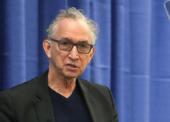
Soon after David Ansell, MD, MPH, started medical school in the 1970s, he became dispirited by its uniformity.
He considered quitting. Instead, he met a group of friends who together began studying the U.S. health care system’s fraught history. “This group of students and I discovered our ‘why.’ And it’s guided me ever since,” Ansell says. “From that day on, I realized for myself, no matter where I went or what position I got, that I would need to be a human rights activist, because in this country we don’t believe that health is a human right.”
Ansell, now senior vice president for community health equity at Rush University Medical Center and associate provost for community affairs at Rush University in Chicago, recounted his activism experience as the featured speaker at the Beyond the Knife endowed lecture. His talk, “Diversity and Equity in an Age of Erasure: Words Matter but Actions Speak Louder,” took place on Feb. 27 at the Jacobs School of Medicine and Biomedical Sciences.
The Beyond the Knife endowed lecture series, now in its fifth year and hosted by the Jacobs School’s Department of Surgery, aims to address and mitigate the effects of systemic racism and inequality in health care.
Allison Brashear, MD, MBA, UB’s vice president for health sciences and dean of the Jacobs School, welcomed the audience of learners, educators, and community members inside the school’s packed M&T Auditorium. She emphasized the lecture series’ continued importance.
“It really brings to light conversations surrounding racism and the impact of that on health care in the U.S.,” she said. “These
topics are so important for our community and are so important for our learners to hear.”
Steven D. Schwaitzberg, MD, SUNY Distinguished Service Professor and chair of surgery, thanked many of the people, sponsors, local businesses, and other collaborators involved with the lecture.
“It takes a village, and I want to thank our whole team,” he said before reminding the audience of the significance and relevance of the issues being discussed. “We live in turbulent times. But we must remain engaged, we must remain energized.”
Ansell’s lecture touched on his early head-on confrontation with disparities in health care during his 17 years at Cook County Hospital, a notorious Chicago public hospital, where he completed his internal medicine residency and eventually become division chief of general medicine and primary care.
While there, Ansell recalled seeing women in labor transferred to the hospital and dying. He remembered people with gunshot wounds, people on ventilators, all transferred, and soon dead.
Disconcerted, he and some of his colleagues began a study looking at about
book “County: Life, Death and Politics at Chicago’s Public Hospital” as a memoir of his accounts. His second book, “The Death Gap: How Inequality Kills,” was published in 2017.
Following Ansell’s talk, a panel of speakers shared insights on disparities affecting Western New York. The panelists included Ansell; Andrew L. Davis, president and chief operating officer of the ECMC Corporation; Leonard E. Egede, MD, the Charles and Mary Bauer Professor and Chair of the Jacobs School’s Department of Medicine; and Zeneta B. Everhart, Masten District council woman for the City of Buffalo.
The panel further emphasized improving public health by addressing wealth disparities and bolstering East Side businesses. “To convince businesses to come in, you have to present a plan to them that shows that their return on that investment is going to be real,” Davis noted.
Everhart stressed the need for more holistic planning and fewer short-term cash infusions that don’t create lasting change. “How are we going to change the landscape of our neighborhood?” she asked. “I like to see things that are going to be generational and transformational. I don’t want to see things that are one-offs.”
Egede said that the corporate, academic and government sectors need to work

500 hospital patients, their diagnoses, and reasons for being transferred to the county hospital. The patients were told that there weren’t enough beds at other hospitals— but the real reason they were transferred, Ansell and his colleagues found, was that the patients were uninsured.
After their study was published in the New England Journal of Medicine, a 1986 law made this practice of “patient dumping,” or transferring impoverished patients from private to public hospitals, largely illegal. Ansell later wrote the 2011
A panel of activists and experts from the Jacobs School, local community, and beyond discussed health disparities in WNY.
together to enhance the community and create investments. He also emphasized that enabling land and property ownership is central to building wealth. “If you can’t own land and you can’t own property, then you can’t transfer wealth. When you can’t transfer wealth, it doesn’t matter how hard you’re working, it creates this cycle that makes things very difficult.”
Only 10% of victims of sudden cardiac arrest survive, and that number is even lower in areas with health inequities. Cardiac arrest victims who receive a shock from an automated external defibrillator (AED) prior to EMS arrival have two to three times better odds of survival. The problem is that in most communities, the locations of AEDs are unknown to citizens and even first responders.
A UB PhD student wants to change that.
Rhonda Drewes, a trainee in the PhD Program in Biomedical Sciences, in the Jacobs School of Medicine and Biomedical Sciences, has kickstarted an initiative to use crowdsourcing to help identify and register locations of AEDs throughout Western New York.
“AED registration is such a simple thing to do and it could mean saving someone’s life. If we target underserved areas in Buffalo, we can impact the disparity of lifesaving health care access.”
- Rhonda Drewes, UB PhD student
Her campaign has been supported by a social justice fellowship from the school’s Office of Inclusion and Cultural Enhancement.
The goal is to make AEDs instantly searchable on Google and Apple map apps so that searching for “AED near me” will become as easy as finding the closest Tim Hortons. The campaign aimed to identify and register 1,000 new AEDs in Western New York by Feb. 14, 2025. By April, more than 1,200 AEDs had been registered across Western New York.
Drewes describes how the campaign relates to her doctoral work in the Jacobs School. “In the lab we are investigating
the role of mechanobiology in heart disease, tackling novel treatments to target stiffness in these conditions,” she explains. “We want to engineer drugs to target this stiffness so that cardiac arrest never happens in the first place, or so that progression of heart-related conditions is delayed until much later in life. Improving
member of the first response team that provided on-field care for Bills safety Damar Hamlin when he suffered cardiac arrest in January 2023. Since then, Bisson has been working with community groups to address barriers to bystander cardiopulmonary resuscitation/automated external defibrillator (CPR/AED) training in underserved communities in Buffalo.
Other partners involved in the effort to identify and register AEDs include the Erie County Department of Health and its HeartSafe Community initiative; UBMD Orthopaedics and Sports Medicine; Cardiac Crusade and PulsePoint, a mobile app dedicated to registering every AED in the U.S. and Canada; and the Rotary Club of Kenmore.

access to AEDs only contributes to the mission of helping people with heart conditions and diseases.
“AED registration is such a simple thing to do and it could mean saving someone’s life,” she says. “If we target underserved areas in Buffalo, we can impact the disparity of lifesaving health care access.”
Drewes is working with a coalition of local and national groups, including one started by Leslie J. Bisson, MD, June A. and Eugene R. Mindell, MD, Professor and Chair of the Department of Orthopaedics in the Jacobs School. Bisson, head team physician for the Buffalo Bills, was a
Rhonda Drewes (center), a PhD student at UB, spearheaded an initiative to help locate and register AEDs across Western New York. She has partnered with Heidi Suffoletto (left) and Nomi Weiss-Laxer of UBMD Orthopaedics and Sports Medicine and multiple other local and national organizations on the effort.
Become an AED verifier here.
BEFORE: 115 AEDS
AFTER: 1,100+ AEDS

ABOVE: A look at the concentration of AEDs across Western New York before and after the campaign to identify and register the devices. BELOW: Buffalo Bills safety Damar Hamlin (right), who suffered cardiac arrest on the field during an NFL game in 2023 and returned to be an integral player in the team’s 2024 playoff run, was featured in UB’s Distinguished Speaker Series on March 13. Hamlin sat down with Leslie Bisson, June A. and Eugene R. Mindell, MD, Professor and Chair of the Department of Orthopaedics at the Jacobs School in the Center for the Arts Mainstage Theater to discuss his inspiring comeback. Bisson, team physician for the Bills, led the on-field response to save Hamlin and the two have jointly worked since to advocate for increased awareness of CPR training and access to AED devices.
Karissa Garbarini, a doctoral student in neuroscience, won two club-level tickets to the Buffalo Bills divisional playoff game against the Baltimore Ravens by registering the most AEDs during a oneweek period in January.
As part of the campaign to increase visibility of the whereabouts of existing AEDs, UBMD Orthopaedics and Sports Medicine, UBMD Emergency Medicine and the Jacobs School sponsored the contest to locate and log the most devices across Western New York. Garbarini registered 126 devices. She received two tickets in the Bud Light Club for the Bills playoff game on Jan. 19.


Match Day is a rite of passage, informing soon-to-be medical school graduates where they will pursue their residency training programs.
For many of the Class of 2025 University at Buffalo medical students, the journey to their residencies will not be a long one.
Each year, many Jacobs School graduates remain in Buffalo to join the region’s exceptional advanced training programs. This year is no exception. In all, 25 percent of the class—44 students—have chosen to stay at the Jacobs School for their residencies.
The Jacobs School has a strong tradition of retaining graduates and training the next generation of health care providers who will remain as physicians within Western New York and care for the community.
“This day is the culmination of more than just academic achievement. It’s the embodiment of every tear shed over a textbook, every patient story that touched your soul, and every time you questioned your own strength and found it anyway.”
Allison Brashear, MD, MBA
“This day is the culmination of more than just academic achievement. It’s the embodiment of every tear shed over a textbook, every patient story that touched your soul, and every time you questioned your own strength and found it anyway,” Allison Brashear, MD, MBA, UB’s vice president for health sciences and dean of the Jacobs School of Medicine and Biomedical Sciences, told the Class of 2025 and their families and friends at the Match Day ceremony held on March 21.
“It’s the moment when the abstract dream of ‘doctor’ becomes a tangible
Six medical students from the Class of 2025 matched to programs at Yale University and two matched to programs at Brown University.
This year’s matches also included nine students from the MD-PhD Program. These students matched to prestigious training programs across the country, including at UB, Johns Hopkins University, Yale University, Duke University, the University of Michigan, Case Western Reserve University and the Mayo Clinic.


Justin Im, who’s from Queens, New York, matched to a neurological surgery training program at Beth Israel Deaconess Medical Center and Harvard University. Jamie Hagerty and Kaylee Ann Marie Hausrath also matched to Beth Israel Deaconess Medical Center and Harvard University. Hagerty will begin a psychiatry residency and Hausrath will join the emergency medicine program.
This year’s match also included multiple couples who matched to training programs together. Rhea Marfatia and Bryan Velez will both be joining the internal medicine residency program at Montefiore Medical Center and the Albert Einstein College of Medicine in New York City.
Shady Albakry, who grew up in Queens, and Jenna Lutfy, who lived a few miles east on Long Island, will be heading back to Long Island together, having matched at Stony Brook Medicine. Albakry matched in internal medicine, while Lutfy matched in medicine-pediatrics.
Lutfy was among those that felt a mix of emotions on Match Day. The excitement of getting her first choice was tempered by the fact that the group of 170-plus medical students would be going their separate ways next year.
“Just seeing that envelope and knowing
BOTTOM: Kathryn Hobika reacts after learning that she matched in the highly competitive pediatrics-psychiatry/child and adolescent psychiatry residency at Brown University.
that we’re not all going to be together next year was a pretty hard pill to swallow,” said Lutfy.
Maxwell Scott agrees.
A native of Lakeview, he matched in orthopaedics at the Jacobs School.
“I love the program, I love the people in it, I know I’ll get great training, so I’m super excited.”
But he’ll miss his classmates, too. He cited the friendships he made as one of the best parts of his medical school experience.
“There are too many memories to count–whether it be going to Bills games together or having those moments when we’re all together staying up late studying. The combination of all of it.”
“I think we went to the best med school in the country,” Lutfy said. “I’m so happy I ended up in Buffalo. We’re so lucky to have been here. It will be sad to leave.”
This year, 190 new residents will begin their training in Western New York at the Jacobs School of Medicine and Biomedical Sciences.
In addition to many Jacobs School graduates, trainees from not only around the country but around the world have chosen to pursue residencies at the Jacobs School, underscoring the appeal of the exceptional training programs in the area.
“We’re excited about our new residents and fellows, who will provide great patient care for the Western New York community and take advantage of our outstanding educational opportunities,” says Gregory S. Cherr, MD, professor of surgery and senior associate dean for graduate medical education.
“We were thrilled with the results of the match,” Cherr says, noting the excellent results for UB after Match Day on March 21 and also the encouraging nationwide total matches and popularity of programs.
Across the nation, a total of 43,237 training positions were available in 2025, up 4.2 percent from 2024, according to the National Resident Matching Program (NRMP). Internal medicine filled 11,750 positions, 679 more than in 2024, while pediatrics added 54 positions nationally this year.
Twenty-five percent of the Jacobs School’s Class of 2025—44 medical students—are staying in the area for residency training.
For both natives and graduates coming in, the breadth of clinical settings in the Buffalo area is a draw for incoming
residents. “We offer training in a wide variety of different types of clinical settings, from a veterans hospital, to a county hospital, to a cancer hospital, pediatric hospital, and multiple adult hospitals and different hospital systems,” he says.
Tentative data indicates that this year’s incoming group of residents comes from 30 states besides New York State.
The Jacobs School is ranked in the top 10 percent of ACGME (Accreditation Council for Graduate Medical Education)-
“We’re excited about our new residents and fellows, who will provide great patient care for the Western New York community and take advantage of our outstanding educational opportunities.”
Gregory S. Cherr, MD
sponsoring institutions in the U.S., which reflects the school’s highly regarded training programs and high standards in education, patient care, and mentoring.
Jacobs School training offers opportunities to engage in cutting-edge patient care, conduct research, and work with a “large cadre of outstanding medical educators,” Cherr says.
While most of the recent medical school graduates pursuing residencies have yet to hone their clinical capabilities, they bring different skill sets and perspectives, Cherr says.

A key goal is to attract compassionate clinicians who will thrive in the WNY training environment, Cherr adds. “We want to get the most qualified, the best, and the brightest people to train here and to stay here in Buffalo.”


By Dirk Hoffman
The synergy between the Jacobs School of Medicine and Biomedical Sciences at the University at Buffalo and its practice plan, UBMD Physicians’ Group, continues to grow through their partnership to improve the health of the Western New York community and train the next generation of doctors.
“AtUBMD and the Jacobs School, our partnership is focused on transforming the health of the Western New York community, from infants to seniors,” says Allison Brashear, MD, MBA, president and CEO of UBMD Physicians’ Group, UB’s vice president for health sciences and dean of the Jacobs School.
“By leveraging our clinical and academic strengths, we are addressing the health needs of every generation and training the next wave of health care professionals to build a healthier tomorrow.”
UBMD is the largest medical group in Western New York. It has more than 630 physicians and more than 2,000 employees, including other health care providers.
It features 16 specialty practice groups operating from 53 locations and its physicians see approximately 500,000 patients annually.
The connection between UBMD and the Jacobs School is deep despite the fact it may not always be outwardly apparent.
“I think some people have the idea that UBMD is at an arm’s length distance away from the medical school and is somehow a very separate entity,” says Brian M. Parker, MD ’93, BS ’88, who was named UBMD’s chief medical officer in October 2024.
“In fact, it is actually highly intertwined with the medical school and the mission of the school in terms of its education,” he adds. “The practice plans are definitely independent from the school in that they are all 501(c)(3) nonprofits, but the missions are very similar.”
Parker, clinical professor and chair of anesthesiology and senior associate dean for clinical affairs at the Jacobs School, says some in the community have not always made the connection that the physicians who are part of UBMD practice plans are oftentimes clinical faculty at the medical school.
“Even if they do not have a full professorial appointment through their department, there are hundreds of volunteer faculty who do have appointments at the school that are also part of those practice plans,” he says.
Parker notes there are currently 117 volunteer faculty members in UB’s Department of Anesthesiology alone.
In addition to medical residents training locally, the more than 700 medical students, who are soon-to-be physicians, are spread all over Western New York through performing their clerkships and their required clinical rotations—and they are doing the bulk of that with faculty who are all part of UBMD.
“These faculty members are the ones inside the practices who are actively running medical students and residents through those spaces on a daily basis,”
in staying in Western New York,” Parker says.
“She has the pleasure of having the problem that she probably doesn’t have enough spots for everyone who wants to stay. And that’s a testament to her faculty who made the case for staying and having a great practice in Western New York.”
Parker cites a similar scenario in the Department of Psychiatry.
“Beth Smith is the new chair of psychiatry. They have a small residency program, but lots of demand from folks who want to stay.”
In fact, including the Jacobs School Class of 2025 medical students, members of the last four graduating classes have filled 22 of the 28 residency training slots in psychiatry, helping to increase the odds of addressing the shortage of psychiatrists in Western New York.
In 2024, UBMD was honored by Buffalo Business First as one of its 10 “Companies

Parker says.
“It shows that we have a large community of physicians who are committed to educating and having medical students and residents in their practices or on their service in the hospitals because they think teaching the next generation of physicians is important.”
And retaining physicians to practice in Western New York after they complete their residency training is a top priority for both the Jacobs School and UBMD.
“You look at UBMD Primary Care and a department like Family Medicine and [department chair] Andrea Manyon has a tremendous amount of clinical research being conducted in that department and she has residents who are very interested
of the Year,” in recognition of several noteworthy accomplishments.
Among its highlights were the opening of the $30 million Northtowns Ambulatory Surgery Center by UBMD Orthopaedics & Sports Medicine inside the 716 Health complex in Amherst, and the launch of UBMD Primary Care, which combined UBMD Family Medicine and the Division of Internal Medicine-Pediatrics of UBMD Internal Medicine in order to expand services and insurance offerings and promote easier access to providers.
Parker says the implementation of a new community electronic health record (EHR) system in 2026—a collaboration between UBMD and local health partners—will be a huge benefit to patients.
“The Epic EHR initiative is going to be the ‘big bang’ in terms of being able to standardize a lot of things across the practice plans,” he says. “By putting everybody on a single platform, it creates visibility for scheduling, access and billing, so everything becomes a single source for a patient.”
UBMD practice plans will be on the Epic system hosted by Kaleida Health, along with the Erie County Medical Center as a community connect partner.
“The patient experience will be elevated because they will have a portal called MyChart where they will be able to see all of their medications, test results, upcoming appointments and billing, all in one place,” Parker says. “I think that is a game changer for us.”
the hospitals to enhance our neurology coverage and staffing in the hospitals, particularly Buffalo General, with the hope of developing a telestroke program with other regional satellite hospitals,” says McCormack, professor and chair of emergency medicine and associate dean for ambulatory strategy at the Jacobs School.
UBMD is also concentrating on improving ambulatory access for patients through such measures as its primary care initiative.
UBMD was recognized as one of the top companies in Western New York for 2024 by Buffalo Business First.
UBMD is also actively seeking to increase the number of its providers among its hospital partners.
Parker says UBMD is working with Dean Brashear on a concerted effort to increase its presence in the Veterans Affairs Western New York Healthcare System.
“There are multiple service lines across medicine and surgery, and there have also been changes in the military workforce due to demographics,” he says.
“When I trained at the VA as an intern in the 1990s there was not a female patient population to any great extent,” Parker adds. “Now there is a need for gynecological services, for example.
“The VA has definite needs that UBMD believes it can work with them to help solve. We have regular meetings with them to see how we can move down that path,” he says. “A lot of their clinicians are also aging out. They had great careers there, but they are retiring.”
UBMD is already a large part of the staffing in most Western New York hospitals such as Buffalo General Medical Center and the Erie County Medical Center (ECMC), notes Robert F. McCormack, MD, director of clinical partnerships at UBMD.
However, the practice plans are constantly looking to expand services to benefit the public.
“Neurology is probably the primary one right now. We are partnering with
“We are making primary care appointments more available and accessible,” McCormack says. “We are also doing that with OB-GYN for outpatient settings. Our Department of Surgery is also very robust in its specialty care and has a large clinical footprint.”
McCormack describes UBMD’s relationship with its hospital partners as “symbiotic.”
“There are different business relationships, so it is important that we work together, and work in the same direction on the same initiatives,” he says. “We are very close with our hospital partners. We have a very good working relationship with both Kaleida Health and ECMC.”
McCormack notes UBMD also works with general practice physicians to staff their clinics with its providers.
‘The advantage of UBMD in the hospital system is we are not only physicians, but we are also educators and researchers,” McCormack says. “We bring the highest quality of care to the hospital system by being on the cutting edge of what is new science and staying current on the best treatments and protocol.
“We enhance the hospitals’ ability to staff with the highest level of physicians who provide more efficient, academic-based state-of-the-art care.”
Parker points out there are reciprocal benefits to having clinical practice plans tied into a university’s teaching and research missions.
“We are being tested on a regular basis by those in the training programs who are testing the knowledge base of our clinicians all the time,” he says. “We challenge them as they are learning in their training, but they are also the ones who are challenging us.
“That give-and-take is really important in a university setting when you are taking care of patients.”
The key for UBMD is growth and access, Parker says.
“We need to continue to bring along the next generation of providers. We are educating them in our clinical training programs and then helping to recruit them into our hospital partners,” he says.
UBMD’s Impact on the Region
630+ PHYSICIANS 70 OFFICES
2,000+ PROVIDERS AND STAFF EMPLOYED
496,000+ UNIQUE PATIENTS SEEN ANNUALLY
1,000,000+ PATIENT VISITS
UBMD stresses an interprofessional practice approach—its physicians work with nurses, physician assistants, nurse practitioners, pharmacists and social workers in a team-based approach to holistic health care.
92 SPECIALTIES/SUBSPECIALTIES
“We have a very progressive mindset to interprofessional care,” McCormack says.
Both McCormack and Parker say UBMD brings a unique perspective to its hospital partners.
“For students who have great experiences in their clerkships, we want to tell them ‘we want to create a role for you and retain you,’” Parker says. “That goes in conjunction with continuing to recruit from outside the community and looking to bring in other physicians who are top in their field.”

By Dawn M. Cwierley and Keith Gillogly
Richard Braen, MD, professor and chair emeritus of emergency medicine in the Jacobs School of Medicine and Biomedical Sciences, has enjoyed his fair share of orchestra concerts.
However, his night at the Buffalo Philharmonic Orchestra’s Classics Series on Sept. 28 is one that he won’t soon forget.
As the audience settled in for the performance, the evening took an unexpected turn when the words ‘Is there a doctor in the house?’ echoed through Kleinhans Music Hall shortly after Stravinsky’s “The Firebird Suite.”
Seated in the balcony, Braen heard the plea and immediately sprang into action, joining others to assist. Amid the chaos, he performed CPR and successfully revived the unresponsive individual. His quick response, critical for out-of-hospital cardiac arrest survival, saved the concertgoer’s life.
That concertgoer was David Cohen, a retired music teacher, active musician and occasional Kleinhans attendee.
“I had to go to the bathroom, so I had just started down the steps, and the last thing I remember is, I missed a step and started falling,” Cohen recalls. “I must have hit my head on the way down because I blacked out.
“But I was told that Dr. Braen came to my rescue and that I had no pulse, and he did CPR on me,” Cohen says. “He saved my life.”
Cohen’s injury stained the floor.
Braen began chest compressions and called for an AED. By the time one arrived several minutes later, Braen could already start to feel a pulse.
Cohen was saved.
“Dr. Braen’s actions at Kleinhans Music Hall remind all of us that the commitment to care for others never fades. His swift, lifesaving response reflects the deep sense of responsibility that defines our medical community,” says Allison Brashear, MD, MBA, UB’s vice president for health sciences and dean of the Jacobs School. “We are proud to count him among our Jacobs School family, where his legacy continues to inspire both his former colleagues and the next generation of physicians.”
At Kleinhans, emergency services soon arrived, and Cohen was transported to ECMC. The concert was temporarily paused while the incident was addressed.
A seasoned physician with more than five decades of experience, Braen previously served as associate dean for graduate medical education for the Jacobs School. He retired in 2016.
Throughout his career, Braen has witnessed numerous cardiac events, and he emphasizes that prompt initiation of CPR is critical to survival. “The statistics for cardiac arrest that are not in a hospital are not very good, for survival and brain function,” Braen says. He adds that Cohen is “a real lucky guy.”
Braen further advocates for community CPR training. “You really have to have the lessons on how to do it. You have to know what to check for, how to do the evaluation in the first place very quickly,” he says. “And then you have to be able to apply it.”
Braen has since been in touch with the grateful Cohen, who is focusing on recovery. Cohen has experienced headaches and vertigo after falling, but he’s following doctor’s orders and resting while halting any brain-stimulating activity. “I’m thankful that even with the brain injury, I’m totally lucid,” Cohen says. “I’m normally a very positive person and determined. I’m determined to beat this. Period.”
A bass player, Cohen has had to cease practicing and playing music, at least temporarily. “I definitely plan to return to playing again,” he says.

Another individual had been attempting CPR but quickly stepped aside when Braen arrived. “Mr. Cohen at that point had no pulse, no respirations. He was basically dead,” Braen says.
Braen took action. He checked Cohen’s carotid artery for a pulse—nothing. He checked his breathing—nothing. Blood from
Braen is not only a lover of music but also a dedicated student of the soprano saxophone. As it turns out, Braen’s saxophone instructor has played in a band with Cohen before.
Braen says that he and Cohen actually have many mutual friends within Buffalo’s music community. But the two had never met before that night.
A seasoned physician with more than five decades of experience, Braen is professor and chair emeritus of emergency medicine at the Jacobs School and formerly served as associate dean for graduate medical education.

Puppy-rescuing pilot catches the nation’s attention flying across the U.S. to give dogs a second leash on life
By Keith Gillogly
At first, most dogs don’t care much for airplane rides— they shake, they whine, and most look a little scared.
But by the time they reach 8,000 or 9,000 feet, hypoxia sets in amid the engine drone; skittish pups get sleepy fast.
Seeing them settle down and drift off always puts Brian D. Rambarran, MD, at ease. For over a dozen years, Rambarran, clinical assistant professor of urology in the Jacobs School of Medicine and Biomedical Sciences, has been piloting
his airplane all around the U.S. as a volunteer with the Pilots N Paws nonprofit organization. He picks up dogs from shelters and brings them to Western New York to be fostered.
“Part of my passion for flying, just like anything else, comes from being a lifelong learner.”
Brian D. Rambarran,
MD
In 2011, Rambarran began practicing with the Western New York Urology Associates group, where he remains a urologist today. It was about that time that he began to take flying lessons. As he was progressing through his training, he came across the group Pilots N Paws, which connects volunteer pilots and plane owners with animals needing rescue flights.
Rambarran had grown up with and always liked dogs. Plus, he’d been volunteering since he was 14, serving as a candy striper at a hospital. So, saving dogs and other animals was a perfect volunteer role.
In 2012, Rambarran completed his first rescue mission with Pilots N Paws, flying down to Georgia to pick up a pregnant dog that would successfully give birth to a litter of foster puppies.
That was the first of numerous rescue flights. He’s since flown to North Carolina, South Carolina, Massachusetts, Florida, California, and everywhere in between, it seems. Sometimes Rambarran flies alone. Other times, a family member or even a resident from the Jacobs School accompanies him on his plane. He flies about once a month, partnering with organizations like Nickel City Canine Rescue to help find homes for the dogs he rescues.
Rambarran often flies to southern states where, he says, high-kill shelters are more common. Some of the dogs in tow require more than just new homes, however. Sometimes they are the victims of natural disasters or in need of surgery or specialty care.
His cargo also includes more than just canines. He’s flown rescue missions for other types of animals, too, from cats to snakes.
Despite all of the beautiful vistas from the pilot’s seat and the adorable nature of his clients, Rambarran says he never created an Instagram or any social media accounts to share his journeys. But, last summer, that changed.
Rambarran was contacted by Sweet Buffalo, which highlights local feel-good stories on its platform and advocates for homeless animals on its Sweet Buffalo to the Rescue page.
After a Sweet Buffalo video about Rambarran went viral, his story and work really took off. He’s since appeared on
“Good Morning America,” “The Jennifer Hudson Show,” “Dr. Phil” and “World News Tonight with David Muir.”
“It was good because it brought awareness,” Rambarran says of all the attention. “There are so many people behind the scenes.”
He’s since joined Instagram and even launched Rambarran Rescues, Inc., a foundation supporting his work bringing shelter dogs to new homes.
When Rambarran was about 10 years old, he embarked on a family trip all the way to England. His first time on an airplane proved fascinating. “I was amazed at being able to take this big piece of tin, fly it across the ocean, and land in a different country,” he recalls.
His dad brought the curious Rambarran up to the cockpit to get closer to all the buttons, controls, and pilot lingo. From that
and additional certifications. “Part of my passion for flying, just like anything else, comes from being a lifelong learner,” he says.
Flying and medicine are, perhaps, not so different, he says. “It’s very akin to medicine. You practice and practice, but you never perfect it. You try and get as best as you can.”
Being a urologist, Rambarran says, lets him get to know patients of all ages while also performing surgeries and hands-on work that ultimately make lives better. On any given day, he might be taking out a kidney with a tumor, removing a piece of bowel to construct a new bladder, treating a patient with kidney stones, or performing a vasectomy.

Rambarran at his day job. He is a clinical assistant professor of urology at the Jacobs School and has practiced with Western New York Urology Associates since 2011.
early age, Rambarran thought he’d become a pilot, if he could somehow start flying lessons. “The passion was always there,” he says of flying.
But, a path toward medicine seemed more natural. He had always liked biology, plus Rambarran’s mom was a nurse and his dad was a social worker.
Rambarran, of course, would still become a pilot, even if that meant flying puppies, not people.
Now, Rambarran is a flight instructor as well as a pilot. He has his commercial rating, multi-engine pilot rating, jet rating,
“You get kind of the best of both worlds. You get to see patients and you get to have patients,” Rambarran says. “And at the same time, we get to operate. So it’s almost like primary care and surgery all rolled into one.”
Back at his home, “we have a whole menagerie of animals,” Rambarran says, including three dogs and some fish and snakes. One of his pets, a small terrier named Toby, was found malnourished and cachectic, wasting away and weak on the streets in North Carolina.
One December, Rambarran picked up Toby in his plane and brought him back intending to find him a forever home. But it was snowy and late by the time they touched down, so Toby would stay the night with Rambarran and his family. After a week, they decided to keep Toby themselves.
Curious and courageous with a love for squeaky toys, Toby, Rambarran says, is a true rags to riches story. Given all the dogs in need of homes and second chances, “adopt, don’t shop,” Rambarran advises. “You can get wonderful, beautiful, happy dogs that will make your family richer through a shelter.”
By Keith Gillogly
At one point, three current Jacobs School of Medicine and Biomedical Sciences medical students were anything but aspiring doctors.
Instead, they were pursuing law, athletics and performance—wholly different endeavors—before switching to medicine.
But their unique backgrounds have helped them to excel at the Jacobs School. And as these students’ stories demonstrate, choosing medical school can be both a rewarding and attainable option, even if the path there takes some unexpected and unconventional turns.

Third-year Jacobs School medical student Miranda Berkebile spent many years as a competitive and touring figure skater before landing on a career path in medicine.
From an early age, Miranda Berkebile’s parents encouraged her to pursue something other than just school. With an ice rink near her childhood home, figure skating quickly became that something.
Now a third-year medical student at the Jacobs School, Berkebile has been an ice skater since age four, spending her first decades immersed in competitive figure skating and performance.
As a young girl, Berkebile skated, took lessons from coaches, and practiced three or four times a week. In high school, she’d skate up to five times a week for hours at a stretch. A Syracuse native, she often commuted to Buffalo for coaching, squeezing in homework and study time while her mom drove.
All that practice paid off; Berkebile was a U.S. figure skating triple gold medalist in ice dancing, freestyle and moves in the field. And although she says she wasn’t quite Olympic level, she truly enjoyed her time skating and pushing herself to compete six or seven times per year.
As high school graduation came and went, Berkebile was set to enroll at the University of Georgia. Then, just two weeks before freshman move-in, a casting director from “Disney on Ice” called.
College would have to wait; Berkebile would spend the next year as an ice skating performer with the traveling “Disney on Ice” show, touring the U.S. while performing as many as 10 or 15 shows a week.
Berkebile was cast as Nemo, the loveable clown fish from “Finding Nemo,” which she humorously describes as “not as glamorous as it sounds.”
“I had to paint my face six times a day because we would have three shows a day,” she recalls. “But it was so much fun, honestly, and it was rewarding to perform for kids every single day.”
Her year with “Disney on Ice” became three years after the program launched an international tour that Berkebile didn’t want to miss out on. “The travel was what kept me on,” Berkebile says. “We traveled every single week. I got to see a lot of the world.”
In all, Berkebile says she visited 44 countries across Europe, Asia, Australia and other regions. But after three years, all that travel meant missed birthdays, holidays and time with family. So when revisiting college, Berkebile opted to stay closer to Syracuse and enrolled as an undergrad at UB.
Aside from skating, Berkebile had always liked science too. She majored in biology and, after considering a few other options, nothing else sounded as exciting as pursuing medical school.
Now at the Jacobs School, Berkebile has participated in clinical rotations in neurology, psychiatry and internal
medicine. Having liked all of them, she admits she’s having trouble choosing a specialty.
“I think when you know a little bit about where somebody comes from and somebody’s culture you can relate to them a little bit better.”
Miranda Berkebile
Yet her time on the ice and traveling imparted valuable skills for medical school, among them time management and a deeper understanding of people and patients.
“My time on tour was spent with a lot of different people, a lot of different cultures, a lot of different nationalities,” Berkebile says. “And that’s something I use every day just interacting with people and interacting with patients. I think when you know a little bit about where somebody comes from and somebody’s culture you can relate to them a little bit better.”

Second-year medical student Emilie Harley played professional ice hockey before becoming a medical student. Discipline and time management are some of the skills honed by her many years on the ice.
Second-year Jacobs School medical student Emilie Harley grew up on the ice as well, not as a figure skater but as a hockey player.
Harley has been playing hockey since before kindergarten. She was born in
Edmonton, Alberta, and grew up in Syracuse. Her dad had been a hockey player and goalie in college, and he encouraged Harley and her brothers to take up the sport. She played continuously throughout her younger years and eventually entered the Ontario Hockey Academy in Cornwall, Ontario, for three years in high school.
In addition to hockey, Harley had long been interested in science and medicine. While attending Robert Morris University near Pittsburgh, she worked at a pharmacy and as a scribe for an orthopedic clinic. And as much as she loved playing hockey, she planned to enter medical school right after college.
Throughout college, Harley continued to shine on the ice. While part of the university’s ice hockey team, she received the university’s Presidential ScholarAthlete award and was named a student athlete of the year. As a senior, she and her team won the College Hockey America league championships and went on to the NCAA Tournament.
A forward when she started college, Harley switched to playing defense to fill an injured teammate’s position. “We had an injury on the team, and I raised my hand and said, ‘I can skate backwards pretty well.’”
Soon, recruiters from the Buffalo Beauts, Buffalo’s former professional women’s ice hockey team, took notice of Harley’s skills. “At the end of my senior year, I got pulled into my coach’s office, and he told me, ‘I have the general manager of the Buffalo Beauts here. Is it OK if they talk to you?’ I said yeah, absolutely.”
After speaking with the team’s coach and general manager, she was offered a spot on the team. “They thought I had some talent, and they’d like to draft me,” she recalls.
After asking her dad for advice, Harley decided to join the Beauts—deferring, but not dismissing, her medical school ambitions.
So Harley moved to Buffalo and spent a year playing for the Buffalo Beauts in 2021. After that, she played hockey for the New Jersey-based Metropolitan Riveters for a year.
Then, when the women’s hockey league restructured, both of Harley’s former teams were eliminated. “I thought of continuing to play because I loved it,” Harley says. “But instead of inspiring and
entertaining people through the game, I couldn’t shake the itch of wanting to improve people’s lives directly through their health.”
At last, it was time for medical school. Now at the Jacobs School, Harley says that playing hockey for so long imparted valuable and applicable skills for studying medicine. “I think there are a lot of skills that would carry over from hockey, or any sport in general, especially discipline and time management,” she says.
Being a lifelong athlete inevitably means suffering injuries, which, in Harley’s case, better prepared her for medical school. “I had learned what ligaments specifically in my ankle and in my foot and leg were torn and stretched,” she says, recalling a high school hockey injury. “So when we came to anatomy first year, I was like, oh, I’ve heard of that before.”
“I couldn’t shake the itch of wanting to improve people’s lives directly through their health.”
Emilie Harley
Harley is still involved with ice hockey, mainly as a coach these days. She coaches two Junior Sabres girls teams, part of the Buffalo Sabres youth hockey organization.

Kahn says that what he learned in law school has been useful and applicable to medical school. “It teaches you a way to problem solve, think through everything, and be very mindful.”
He plans to train in anesthesiology after graduating, a decision that Kahn’s father also influenced but under more tragic circumstances. His dad was diagnosed with salivary gland cancer and had to undergo a procedure, which would cause partial facial paralysis, to remove a large mass.
Just before the operation, Kahn’s dad began having second thoughts. But, Kahn recalls, it was the medical team’s anesthesiologist who took the time to really explain the procedure’s benefits and ease his dad’s concerns. “He gave him the pep talk he needed to go through with the surgery,” Kahn says of the anesthesiologist.
Like Berkebile and Harley, second-year medical student Maxwell Kahn has always been interested in science and medicine. But he seemed predestined for a career in law.
Kahn’s father was a longtime attorney and managing partner with a prominent Buffalo personal injury firm. “It was important to him that I become a lawyer,” Kahn says of his father. “He definitely wanted me to carry on the family legacy there.”
And so he did.
After earning his bachelor’s degree at the University of Michigan, Kahn studied taxation law at the University of Alabama, graduating from law school in 2017. He soon moved back to his native Western New York and immersed himself in practicing law.
The work meant long days and long nights at the desk; Kahn found that his heart just wasn’t in it. “I was putting in ungodly hours, and it’s not that it wasn’t rewarding, because you do really help people,” he says. “It just always felt like a grind.”
Kahn says he gave law the chance it deserved—now it was time to try medicine.
But there was one problem: Kahn’s undergraduate curriculum didn’t include the prerequisite science classes needed for medical school. So, during the downtime afforded by the COVID-19 pandemic, he became a hardworking attorney by day and hardworking student by night, taking online classes at UB to fulfill premed requirements.
And that left a lasting effect, even inspiring Kahn’s pursuit of anesthesia as a specialty. While Kahn’s father died from cancer in 2012, that procedure afforded him several more years of life.
“You’re never too old to change, and you really never stop learning.”
Maxwell Kahn
Kahn hopes to one day combine his medical and legal backgrounds, whether that’s handling medical ethics issues or even helping streamline documentation information. He knows he’ll still have plenty of long days as an anesthesiologist, but health care work will keep him active on his feet rather than stuck behind a desk.
At medical school orientation, Kahn recalls looking around and feeling a little uneasy, being several years removed from college and coming from a much different background than most of his peers; within weeks, those feelings faded.
Now, he encourages anyone considering a later-stage switch to medicine to go for it. “You’re never too old to change, and you really never stop learning.”
Photos by Sandra Kicman.
WATCH: See Miranda, Emilie and Max talk about their unconventional journeys into medicine.
Two Jacobs School alumni were honored at the 2024 UB Alumni Achievement Awards ceremony held on Oct. 17 at the Forbes Theater in Buffalo.
Helen Cappuccino, MD ’88, BA ’84, and Lee Guterman, MD ’89, were among the 20 alumni recognized for bringing distinction to the university. Guterman received the Distinguished Alumni Award for the Jacobs School of Medicine and Biomedical Sciences; Cappuccino received the Distinguished Alumni Award for the University Honors College.
These awards, sponsored by the UB Alumni Association, are given annually in recognition of exceptional career accomplishments, community or university service, and research and scholarly activity. More information on the UB Alumni Achievement Awards is available on the association’s website: https://www.buffalo.edu/alumni/events/ ub-alumni-achievement-awards.html.
Cappuccino works at Roswell Park Comprehensive Cancer Center specializing in the surgical management of breast cancer and is an associate professor at the Jacobs School and at the University of Rochester. She serves on the admissions committee at the Jacobs School, where she also founded and taught a culinary medicine elective. She is a founding member of UB DoctHERS and also serves on the executive committee of the UB Foundation, chairing the gift and stewardship committee. She was honored as one of 50 of America’s most positive physicians nationally.
A dedicated community volunteer, she is currently on the boards of the Buffalo AKG Art Gallery, the University at Buffalo Foundation, Western New York Women’s Foundation, and Chaîne des Rotisseurs Foundation Board. She previously served on the boards of Lockport City Ballet and the Kenan Center. She has chaired numerous charity events for schools and cultural organizations, including the Eastern Niagara United Way, the UB Scholarship Galas and Elmwood Franklin School.
Her outside business endeavors include a film production company with her husband Andy, and their son, Mac. They
have produced five feature-length films including “Arthur Newman” (featuring Colin Firth and Emily Blunt) and “Aftershock” (with Eli Roth), both of which were selected to the Toronto International Film Festival. She is the features editor and writer for Gastronome, a food and wine magazine for the Chaîne des Rotisseurs, an international food and wine society. And she and her husband have also participated in medical missions to Kenya.
Guterman was a founder and co-director of the Toshiba Stroke Research Center at UB. He has numerous patents and publications and has worked with medical device startup companies for decades. In 2006 he left academic medicine and has worked on stroke, neurocritical care and neurology in the Catholic Health System of Buffalo.

Helen Cappuccino received the inaugural Honors College Distinguished Alumni Award. She was presented with the award from Patrick McDevitt, associate dean of undergraduate education and the Honors College, and President Satish K. Tripathi.

As a 15-year-old New York City public school student born in Queens, Guterman enrolled in a National Science Foundation summer medical illustration course at the Hahnemann Medical College. He remained for two semesters doing research in calcium binding proteins in brains. He later attended Binghamton University where he met his wife, Lisa. He worked summers at Woods Hole Marine Biological Lab dissecting squid axons and studying nerve impulse transmission.
Guterman received a PhD in chemistry from Clarkson University, where he was a Kodak Fellow. He attended medical school at UB with his wife, where he was “adopted” by Harold Brody and taught neuroanatomy, which led to a love for everything neuro. He completed his neurosurgery residency and endovascular fellowship at UB. While in residency he and Lisa welcomed three children, Eve, Beryl and Sidney. They are all grown and married and contributing in their chosen fields.
Guterman and his wife have traveled
Lee Guterman (left) receives his award, the Distinguished Alumni Award for the Jacobs School of Medicine and Biomedical Sciences, onstage from President Satish K. Tripathi and Vice President for Health Sciences and Dean of the Jacobs School Allison Brashear.
worldwide to view wildlife and owned a lodge in Rwanda in the Virunga National Park, home to the mountain gorilla. The family brought neurosurgery equipment to Rwanda and developed valuable friendships in Africa, India and South America.

A passion for helping others has taken Shawn Vainio, MD ’03, to all ends of the Earth
As the only physician at an Antarctic research station, Shawn Vainio, MD ’03, was a one-man medical team. He shot and read X-rays, performed root canals, stocked the pharmacy, checked water for contaminants, maintained lab equipment, conducted physicals—all amid a small corner “office” crammed with medical gear and a lone patient bed.
Jacobs School alumnus Shawn Vainio poses with an elderly Tibetan patient in August 2024 in a village near Raison, Himachal Pradesh, India.
From Antarctica to Alaska to the Himalayas, Vainio thrives on practicing medicine in desolate surroundings. He recounted his decades of wilderness medicine experience to an audience of students, trainees and faculty at a UB Global Health Grand Rounds talk, “Living Wilderness Medicine in Alaska, Antarctica and India,” at the Jacobs School on Oct. 16.
As a medical student at UB, Vainio took his first trip with the Himalayan Health Exchange program, which brings health care workers and students to remote Himalayan populations in Himachal Pradesh in northern India and other areas. Twenty-two years later, he still makes annual excursions to the Himalayas.
Vainio, who practices family medicine, shared numerous photos from his journeys to the Himalayas depicting villagers and their more traditional, highly resourceful way of life: Women donning handmade clothing traverse the mountain slopes carrying hand-woven baskets. A stone mill grinds barley mixed with yak butter for the day’s breakfast. People burn piles of dung for warmth amid the treeless landscape.
“They do all the same things we do; they just do it in different ways,” Vainio says.
Amid the largely Buddhist populations, people don’t eat meat. They’re physically active working outside with their hands. People don’t smoke or drink. Their lifestyle, Vainio says, is quite healthy.
Still, serious diseases like tuberculosis and, less commonly now, leprosy, afflict some Himalayans. But their number one complaint isn’t far off from Western patients. “The most common complaint in primary care is that there is a ton of back pain,” Vainio says.
Far up in the Himalayas, there are no drug stores carrying common medicine like Tylenol. So Vainio and the medical teams bring some $70,000 worth of medications on each trip, which are distributed in controlled quantities to prevent overdosing, Vainio says. Some Himalayan regions have community health centers for the villagers, but often they’re several hours’ drive, or an even longer walk, away.
Over a few weeks, the medical teams travel from village to village, on foot and by car, when possible. The roads, which see massive snowfall, avalanches and
landslides, are passable only from June to August.
Vainio led a team of 23 people on his most recent trip to the Himalayas in August, including five U.S. medical residents, himself and a collection of medical students. On any given trip, students hail from the U.S., Canada, Ireland, Scotland, Australia, New Zealand, Iceland and other countries.
With such variety in countries of origin and medical training, team members have plentiful teaching and learning opportunities. “When I’m over there, I give everything I’ve got,” Vainio says. “I give everything from the moment I wake up to when I go to bed because I want the students and residents who are taking the time to come over there to learn as much as they can.”
“The thing I tell people is, with family medicine, you should do what your community needs. With family medicine, you can do so many things.” Shawn Vainio
Throughout medical school and beyond, Vainio never lost sight of his desire to practice medicine in faraway locations and help Indigenous people in need. “He kept his vision alive through the years,” recalls David M. Holmes, MD, clinical associate professor of family medicine and director of the Jacobs School’s Global Medicine Program.
“A lot of people come to medical school, and they want to save the world,” said Holmes, who knew Vainio as a medical student. “But Dr. Vainio’s really kept his motivation going through the years.”
“I love this place,” Vainio says of his native Western New York. “But I also love big mountains,” he added, underscoring his longstanding passion for travel and serving Indigenous populations.
While in his third year of family medicine residency at the University of Utah, Vainio jumped at the chance to work as a family doctor at a remote medical center on Alaska’s Kodiak Island.
His duties spanned the medical spectrum: covering the ER and ICU, delivering babies, serving as a pediatrician, providing elder care. “It
was amazing, it was everything I’d ever dreamed of,” he says.
Amid the rugged archipelago, accessible only by boat or plane, patient injuries could be dire. “Everything from submerged boats, capsized boats, people falling off mountains, bear attacks, hypothermia, frostbite,” Vainio recalls.
In 2007, Vainio spent seven months as the sole medical provider at Antarctica’s Palmer Station, which houses 50 researchers and personnel in the summer and only 15 people in the winter. In addition to the lone patient bed, Vainio’s small clinic included a centrifuge, mini ventilator, X-ray equipment, pharmaceutical supplies, and ZOLL machine for cardiac events.
He did everything himself.
Currently based in Bethel, Alaska, Vainio practices medicine with the Yukon-Kuskokwim Health Corporation. Many of his patients are Yupik Alaska natives—some 26,000 people spread among 58 villages in an area the size of Oregon spanning from the Bering Sea to the foothills of the Alaska Range mountains.
Amid much of the vast tundra, access is limited to using boats in the summer and snowmobiles in the winter—there are no roads. So Vainio frequently uses telemedicine to coordinate care with subregional clinics and community health aides in remote villages. “You can extend the care, just like I do in India, out to those remote places,” he says.
Wiring a jaw shut or amputating a mostly severed finger may not be typical family doctor duties, but they’re tasks Vainio has had to learn. He encourages future family physicians to push their boundaries but never be hesitant to consult the specialists who can help guide through less practiced procedures. “The more you take that next step, the more it makes you better.”
In 2022, Vainio was named Alaska Family Physician of the Year by the Alaska Academy of Family Physicians. In 2023, he was honored with the American Academy of Family Physicians Humanitarian Award.
As evidenced by the variety of his own experiences, Vainio noted that the range and extent of family doctors’ medical expertise and tasks can be surprising. “The thing I tell people is, with family medicine, you should do what your community needs,” he says. “With family medicine, you can do so many things.”

Shawn Vainio, MD ’03, shared stories and experiences about practicing medicine in remote areas of the Himalayas, Alaska and Antarctica as part of a Global Health Grand Rounds presentation.

During the DoctHERS Annual Symposium at the Jacobs School, Donnica Moore, MD ’86, called upon physicians and medical students alike to be good communicators in an age of medical misinformation.
“If there’s a skill that you develop in medicine, it’s the ability to communicate and the ability to communicate very difficult, sometimes very painful, sometimes very uncomfortable or embarrassing information,” she said.
Moore is a physician and prominent advocate for and educator of women’s health, known for delivering relatable, direct commentary and advice. She is founder and president of the health communications and consulting firm Sapphire Women’s Health Group LLC and hosts the podcast “In the Ladies’ Room with Dr. Donnica.”
She has appeared more than 850 times as a guest and contributor on programs such as “The Today Show,” “Good Morning America” and “The Oprah Winfrey Show.” In 2020, Moore was awarded a SUNY honorary degree.
Her lecture at the UB DoctHERS event on Oct. 10 was titled “Women Healing the Nation: Making an Impact in Health Care and the Media.” Sarah L. Berga, MD, professor and chair of the Department of Obstetrics and Gynecology, moderated the discussion and asked Moore about her own journey in medicine, thoughts on media misinformation, and challenges facing women’s health, among other topics.
Moore recalls being a college student at Princeton University in the 1970s and being drawn to medicine. At that time, “there were no women gynecologists in New Jersey,” she said. In fact, women physicians on the whole were rare.
When she soon after traveled to an American Medical Women’s Association (AMWA) conference, she was taken aback by being suddenly surrounded by women physicians. “It was a room about this size, and there were 400 women physicians,” she recalled. “I had never met a woman doctor; I had never seen one on TV.”
Over time, Moore was able to connect

with many women physicians and mentors who shaped her career. As a medical student at UB, she helped launch an AMWA student chapter before earning her MD in 1986.
While there are comparatively more women doctors today than in the 1970s, the understanding of women’s health still must be broadened. “Sometimes people think of women and women’s health as a niche population.” Moore said. “I have to remind everybody that we’re the majority of the population.”
Moore also stressed that women’s health implies much more than reproductive care. “It’s really important to remind people that women’s health is not a euphemism for reproductive health.” Further, women’s health is hardly just the responsibility of obstetricians and gynecologists. “It is the responsibility of every single physician regardless of what your field is,” she said.
Nominate a Deserving Alumnus Today!
Honor an individual who has outstanding achievements as a physician or a biomedical scientist, has shown personal leadership and provides exemplary services to their community.
The Hippocratic Oath should always be their guiding doctrine, he says
During a return visit to Buffalo, Jacobs School alumnus Joseph Failla, MD ’82, talked to medical students about finding joy in their careers.
A distinguished orthopedic hand surgeon in Michigan and an author, Failla presented a talk titled “The Hippocratic Oath: Fostering Empathy, Joy and Purpose in Medicine” during a Nov. 19 event sponsored by the Medical Alumni Association (MAA) and the student-run Orthopaedic Interest Group.
Recently retired from clinical practice, Failla was for many years a volunteer faculty member at Wayne State University School of Medicine, where he taught upper extremity anatomy to first-year medical students and hand surgery to orthopaedic surgery residents.
oral boards the day you graduated. That’s how amazing it was here.”
Failla said medical students would do well to adhere to the values of the Hippocratic Oath.

He earned his medical degree and also completed his residency training at UB, followed by a hand surgery fellowship at the Mayo Clinic Foundation before embarking on a renowned career in hand surgery.
Failla said it was the golden age of orthopaedics in Buffalo when he was an orthopaedic surgery resident.
“There were only four of us. Our leader was Eugene Mindell, MD, a worldrenowned tumor surgeon. He nurtured us and taught us everything,” he said. “People knew when you graduated Buffalo orthopaedics, that you could cut, and you could think. You basically could take your
Failla said the idea for his novel, “The Oath,” was inspired by an essay he wrote called “Beautiful Ellie” for the UB alumni magazine in 2005.
For his novel, Failla created a fictional medical intern’s first day on the job in a hospital and detailed how he learned the Hippocratic Oath in 24 hours because he had never learned it in medical school.
“It was based on a patient I took care of when I was chief resident at Buffalo General. She was beautiful even though her hair was a mess, and she was all disheveled. She would not talk, would not move, and would not even roll over in bed.”
Other residents had examined her, but no one knew what to do with her, Failla said.
He decided to conduct his own examination and the first thing he noticed was her shins were all red and inflamed with deep gouges. Failla found that her toenails were horribly deformed and overgrown.
“Every time she moved in bed, she would scratch herself and she was in horrible pain,” he said.
“Dignity
is what we gave her back and that was the key element to her getting better—not medication and not physical therapy. It was dignity.” Joseph Failla
After getting her some new clothes, a new hairstyle and clipping her toenails, the transformation in Ellie was remarkable, Failla says.
“It wasn’t her hip, it was the two points farthest away from her hip, her head and her toes,” he said. “Sometimes you do not even have to be a doctor, you just have to be a human being.”
Encountering similar instances in his medical training, Failla thought perhaps he could string them together and talk about the Hippocratic Oath as a guiding principle for physicians.
“Because when I realized that Ellie had lost her dignity and self-esteem, the first thing I will tell you about the Hippocratic Oath is it says: ‘I will practice my profession with conscience and dignity.’”
“Dignity is what we gave her back and that was the key element to her getting better—not medication and not physical therapy. It was dignity.”
Alumnus Joseph Failla interacts with medical students during his lecture about finding empathy and joy in medicine.
LEONARD KATZ, MD
Former associate dean who founded Office of Medical Education, gastroenterology program and brought Gold Humanism Honor Society to UB

Leonard A. Katz, MD, an exceptional physician and administrator and a visionary leader who helped shape the Gold Humanism Honor Society at UB, died Feb. 6, 2025, in Longboat Key, Florida. He was 89.
Former associate dean of students and curriculum affairs at the Jacobs School of Medicine and Biomedical Sciences, he is credited with starting the gastroenterology program and the Office of Medical Education at the school.
Katz also linked UB to the Arnold P. Gold Foundation, a notfor-profit that strives to elevate the values of humanism and professionalism in medicine, leading to the establishment of UB’s Gold Humanism Honor Society.
In 2004, Katz attended a meeting in New York City, where he met Sandra Gold, wife of Arnold P. Gold, MD, a renowned pediatric neurologist, who had founded the Gold Humanism Honor Society two years earlier as part of the Arnold P. Gold Foundation.
“Mrs. Gold told me all about it and I immediately resonated with the concept. Humanism is a critical part of medical practice that recognizes that patients are people with feelings, beliefs and fears,” Katz said at the 20th anniversary celebration of the Gold Humanism Honor Society at UB in 2024.
With the support of the emeritus medical faculty, Katz took this new idea to Margaret Paroski, MD, interim dean of the Jacobs School. Paroski took the idea to the school’s Executive Committee and the Gold Humanism Honor Society at UB was born.
“Some good things happen either by serendipity or chance and we should be open to those moments because amazing things can happen,” Katz said.
Katz was honored posthumously for his role in the creation of the society at the March 2025 induction of new members.
A Buffalo native, Katz graduated from Bennett High School, where he was senior class president and a member of the tennis and track teams. He went on to Yale University, where he was a dean’s list student and a member of the wrestling team.
After receiving his medical degree from Columbia in 1961, Katz did postgraduate training at Bronx Municipal Hospital and returned to New Haven for a fellowship in gastroenterology at Yale from 1964 to 1966.
He returned to Buffalo and became an assistant professor in the UB medical school in 1968. At E.J. Meyer Memorial Hospital, now the Erie County Medical Center, he served as head of the clinical and diagnostic laboratories, then was chief of clinical gastroenterology and director of the hospital’s departments of surgery and medicine.
In the 1980s, he began 10 years as associate medical director for research and education for the health maintenance organization Health Care Plan. He also was editor-in-chief for HMO Practice, a magazine published in Buffalo and distributed nationwide.
A fellow of the American College of Physicians, he served as president of the Buffalo Academy of Medicine, a member of the Niagara Frontier Ostomy Association’s advisory board, a member of the Association of American Colleges Northeast Group on Medical Education, and a board member of the Western New York Chapter of Physicians for Social Responsibility.
A former president of the Jewish Community Center and the Weinberg Campus, he was president of the Hebrew Congregation of Chautauqua in Chautauqua Institution. He also started Chautauqua’s Holocaust Education Program, which sends 100 students every year to the U.S. Holocaust Memorial Museum and the National Museum of African American History in Washington, D.C.
In addition to his wife of 66 years, Judy, survivors include two sons, Jeffrey and Andrew; a daughter, Linda Kaminsky; a sister, Merle Goldstein; eight grandchildren; and seven great-grandchildren.
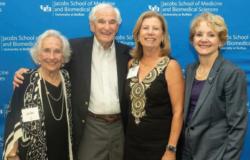
Renowned neurosurgeon whose groundbreaking work changed the way stroke patients are treated

L. Nelson “Nick” Hopkins, MD, SUNY Distinguished Professor in the Department of Neurosurgery and the Department of Radiology in the Jacobs School of Medicine and Biomedical Sciences at UB and a neurosurgeon best known for changing the way stroke patients are treated, died Oct. 5, 2024. He was 81.
Hopkins is perhaps best known for his innovative way of treating stroke patients with clot-busting drugs along with a wire mesh device that gave patients a much better chance of survival and returning to normal function.
In the 1990s, Hopkins and his colleagues had begun exploring how to use minimally invasive stroke treatments that take advantage of the body’s circulation system by threading micro-thin devices through an artery in the groin to reach blocked vessels in the brain, where they are then treated with stents.
The neurosurgical community was initially resistant, but Hopkins and his colleagues at UB and Kaleida Health forged ahead, in part inspired by the success cardiologists had seen using stents to treat coronary heart disease. In 2015, when the Hopkins team, led by Elad I. Levy, MD, MBA, his protégé and now the L. Nelson Hopkins Endowed Chair of neurosurgery at UB, published its successful clinical trial on the technique in the New England Journal of Medicine, Hopkins said: “We’re at the dawn of a new era in stroke.”
Hopkins’ legacy lives on in the many successful neurosurgeons he mentored, including Levy and Adnan Siddiqui, MD, PhD, vice chair and professor of neurosurgery. He turned the Department of Neurosurgery’s fellowship into one of the most sought after in the field.
“The neurosurgical community mourns the loss of a giant who gifted the world the specialty of neuroendovascular surgery,”
Levy said. “His legacy of disciples across the world continues to advance the field he started. But to me, he was a mentor, friend and second father who is deeply loved. My words cannot express the sadness we all feel today.”
Siddiqui said: “The world recognizes Nick’s academic, entrepreneurial and research contributions. But what they probably don’t recognize as readily is his profound humanity and humility, his unfaltering convictions, his love of music and his deep affection for both his biological and pedagogical progeny. To me, that was Nick: a kind and gentle giant of a benefactor to the community, neurosurgery and the world.”
Hopkins’ colleagues said his search for ways to improve medicine was relentless. He also took that approach to envisioning moving UB medical researchers downtown. It was Hopkins who worked with the architect of the Gates Vascular Institute/Clinical and Translational Research Center to create a building where clinicians and researchers would have “collisions” with each other, where the building’s very design would cause them to interact and collaborate. That vision, now a reality, has been responsible for many collaborations and successes that otherwise wouldn’t have taken place.
He worked with then UB Council Chair Jeremy M. Jacobs, his wife Margaret and family to found the Jacobs Institute and honor Jacobs’ late brother, Lawrence D. Jacobs, MD, a UB neurology professor and world-renowned medical pioneer. The Jacobs Institute is a vascular and neurologic medical device innovation center on the Buffalo Niagara Medical Campus.
For his lifetime of innovations and the revolutionary advancements he made to neurosurgery, Hopkins received virtually every major vascular award offered by neurosurgery internationally. Highlights included being named SUNY Distinguished Professor, the highest academic rank in SUNY, and in 2019 he received the Chancellor Charles P. Norton Medal, UB’s highest honor. In 2021, he won the Business First Business Leadership Hall of Fame award and in 2023 was awarded the Kaleida Health Lifetime Spirit Award for the second time. In 2023 he was also featured for the second time as Honored Guest of the Congress of Neurosurgery, where a full program honored his career with a Hopkins Symposium.
He served as chairman of the board of the GVI, president and CEO of the Jacobs Institute and its Center for Innovation in Medicine, and chief scientific officer of the JI.
Nationally, Hopkins served on the board of directors of the American Association of Neurological Surgeons (AANS) and the executive committee of the Stroke Council of the American Heart Association.
He was the scientific and annual meeting chairman for both the AANS and Congress of Neurological Surgeons, former chairman of the Joint Section on Cerebrovascular Surgery, and president of the American Academy of Neurological Surgery. He was the principal investigator of several national clinical trials and authored more than 300 publications on stroke prevention and treatment.
Founding member of the Family Medicine Foundation at the University at Buffalo

Edward “Ted” Rayhill, MD ’54, passed away on Nov. 9, 2024, after reaching his 95th birthday.
A graduate of Canisius College, now Canisius University, Rayhill graduated from the University at Buffalo medical school in 1954, receiving the top two surgical awards. He served in the U.S. Navy, then returned to Buffalo where he entered private practice as a family doctor on Grand Island with his classmate and longtime partner, Robert Miller, MD. They later added Thomas Sheehan, MD, to the practice and served the local community as family physicians for more than 40 years.
In September 1978, Rayhill risked his medical license when he began paramedic-level training for a contingent of Grand Island firefighters. On Oct. 6, 1979, nine newly certified paramedics were ready to initiate advanced life support services with Rayhill serving as medical director. Grand Island was one of the first volunteer
agencies in the state to offer paramedic-level service, with the help of Rayhill who prodded the state to approve Grand Island’s paramedic service. Thirty-six years later, this same unit saved Rayhill’s life from a heart attack in 2015.
Rayhill also served as the chief of family practice at Kenmore Mercy Hospital and was a founding member of the Family Medicine Foundation at the University at Buffalo, where he served as a clinical associate professor for decades. He was a charter member of the American Academy of Family Physicians and the American Board of Family Medicine and served as president of the Erie County Chapter of the New York State Academy of Family Physicians.
Rayhill met his wife, Joanne Decot, when he was 16, and they were married seven years later on June 20, 1953, remaining happily married for 71 years. Other survivors include his four children Christine (Frank Eason) McLimans, Karen Bruno (John), Michael (Donnette) and Catherine (Katherine Hastings) and eight grandchildren, including Melissa Rayhill, MD ’10.
In lieu of flowers, donations may be made to the Family Medicine Endowment Fund at the University at Buffalo: https://medicine. buffalo.edu/departments/family-medicine/about/donate/ endowment.html.
You can make a difference for the UB Jacobs School of Medicine and Biomedical Sciences and do something good for your family!
Including UB in your will is a meaningful way to have an impact! There are also other ways to support the school.
Consider these options:
• Donate appreciated stock to avoid capital gain taxes
• Make a qualified charitable distribution (QCD) from your IRA to reduce your tax obligation
• Establish a charitable gift annuity and receive guaranteed income for life
Learn how your gift can make an impact today. Contact Wendy Irving at dev-pg@buffalo.edu or 877-825-3422.

Recognized as the first board certified hematologist in Maine
Marjorie Boyd, a major figure in hematology in New England, died Sept. 29, 2024, after several years of chronic illness. She was 87. She practiced hematology in Portland, Maine, for 44 years and was well known for her knowledge and devotion to patients.
A native of the Bronx, she attended the High School of Music and Art in Manhattan, but upon deciding on a career in medicine rather than art, transferred to Walton High School in the Bronx for the science courses she needed. For two years after graduation, she attended Hunter College night classes while working to earn enough money to eventually attend Ohio Wesleyan University where she earned her Bachelor of Arts degree.
She earned her medical degree from the medical school at the University at Buffalo in 1968. She completed a residency and fellowship in internal medicine in Buffalo and a fellowship in hematology in Boston. The first board certified hematologist in Maine, she opened her practice in Portland in 1972.
She cofounded the Hemophilia Program at Maine Medical Center in 1978 and served as medical director of the Maine Hemophilia Center from 1992 to 2012. In 1993 she and Glen Roy, RN, founded the Hemophilia Family Camp, in coordination with the New England Hemophilia Association.
Boyd is survived by her brother Charles (Sandy), of Lexington, Kentucky; and two nephews: Seth (Richard), who lives in New York City, and David (Mara), who lives with his family in Toronto.
Radiologist who once treated President Lyndon Johnson at the White House
Harold Baer Zimmerman, who earned his medical degree from the University at Buffalo in 1958, died July 16, 2024, in Alexandria, Virginia. He was 91.
A native of Malden, Massachusetts, he graduated from Williams College with a degree in political science before heading to medical school at UB.
In 1963 he entered the U.S. Navy Medical Corps and served at the rank of Lieutenant Commander. On one occasion he was summoned to the White House to treat President Lyndon B. Johnson.
A radiology physician, he was a founding member of Fairfax Radiology Center where he practiced until his retirement in 1988. Zimmerman, known as Hal to his friends, was an avid baseball fan and a member of the Red Sox Nation. He also loved attending the Kennedy Center and the latest in theater and the arts. During his time in Alexandria, he attended several local conservative and orthodox synagogues.
He married Si Ju Li Zimmerman, a fellow physician, in 1975. She preceded him in death in 2020.
He is survived by his cousins Howard Zimmerman, Sidney Zimmerman, and Marci (Zimmerman) Globerman and their mother, Dvora Zimmerman, his late cousin Jack Zimmerman’s wife.
Empowering possibilities, one project at a time.

A UB-led initiative aimed at bridging the divide between the scientific community and those from historically marginalized communities by bringing together diverse group of UB Faculty, key community centers and residents from various backgrounds.

Learn more and support Community Health Speaks

(Homeless Health, Education, Awareness and Leadership in Street Medicine)
A student-run street medicine outreach initiative that supports individuals experiencing homelessness in Buffalo, reconnecting them to the health care system and improving their health outcomes.

Learn more and support UB HEALS
A trained medical anthropologist, Michael J. Oldani earned his PhD from Princeton University and previously served as director of interprofessional practice and education (IPE) at Concordia University Wisconsin. He joined the University at Buffalo as executive director of IPE on Oct. 1, 2024.
What do we mean when we talk about interprofessional education in the broadest sense?
And what does IPE at UB look like?
IPE is a movement that’s really focused on transforming health care delivery through high quality interprofessional collaborative practice. It’s about preparing highly competent health care professionals, who improve health outcomes and patient safety by excelling in interprofessional communication, teamwork, and patient- and populationcentered care. At UB, we have our six health sciences schools (medicine, nursing, pharmacy, dentistry, public health and social work), but we’ve evolved to include programs in speech language pathology, audiology, physical therapy, occupational therapy, athletic training, dietetics, clinical counseling and more. We even have a relationship with Canisius University to bring in their physician assistant students.
It’s really important for students to understand that they’re going to be working on diverse professional teams and often working with patients who are not like them.
You have no prior connection to Buffalo. What drew you to take on this role at UB?
First, for me, was the level of research coming out of UB. I looked at UB and how much research was being produced at the national level, where people were advancing the literature in IPE in really significant ways. They had a lot of funding for IPE, and the scope of the professions involved was very impressive. What I also noticed was this digital badge/ micro-credentialing program where all the students were receiving proof of their

competency building. Since 2017, UB has awarded over 6,000 digital badges in IPE. That sheer number tells you that students want the distinction. They want the proof that they’re getting better at team-based care.
All of that puts UB at a level that I would say is among the best in the nation.
By definition, IPE can’t exist in a vacuum, but it really is more than an academic exercise—this is collaboration they will carry into their practice and beyond, correct?
So if we take the medical school, for example. Every medical student goes through a curriculum where it’s hardwired in to build competencies in four domains: values and ethics; interprofessional communication; roles and responsibilities, or scope of practice— does a medical student know what a pharmacy student does?—and coming together in teams through activities like simulation. So, we’ve kind of moved from
a movement that’s still very focused on patient safety—in reducing errors—to one that’s also focused on improving outcomes. That’s kind of been the evolution of IPE into practice.
Everyone’s a learner in the IPE space, even me. The best example would be TeamSTEPPS (Team Strategies and Tools to Enhance Performance and Patient Safety). What’s amazing to me is when we do simulations on Friday afternoons with groups of students and you have Stephen Turkovich, president of Oishei Children’s Hospital, there or [Associate Professor of Neurosurgery] Ken Snyder, who is chief physician quality officer at Kaleida Health. They’re right there facilitating with me and these students. The students there are seeing their faculty on a Friday afternoon at 4 p.m. totally enthusiastic about improving patient safety and patient care through TeamSTEPPS. That’s an amazing culture we have here.

Megan Ranney, MD, MPH Dean, Yale University School of Public Health

Ranney is a renowned emergency physician, researcher and advocate for innovative approaches to public health. A passionate advocate for gun safety, Ranney co-founded the American Foundation for Firearm Injury Reduction in Medicine (AFFIRM) and has been a vocal advocate for a public health approach to gun violence. She is a frequent media commentator and has been featured in outlets such as CNN, MSNBC, the BBC and The New York Times.
Robert J. Gore, MD ’02 Clinical Assistant Professor, Kings County Hospital, SUNY Downstate Department of Emergency Medicine

Gore, a distinguished alumnus of the Jacobs School of Medicine and Biomedical Sciences, is the founder and executive director of the Kings Against Violence Initiative (KAVI), a comprehensive youth violence intervention, prevention and empowerment program. He is the author of “Treating Violence: An Emergency Room Doctor Takes On a Deadly American Epidemic,” a book that delves into his experiences and insights on addressing violence as a public health issue.In recognition of his impactful work, Gore was named a Top 10 CNN Hero in 2018. That same year, he was also selected as a Presidential Leadership Scholar.
Representatives from the University at Buffalo, Michigan State University, and invited national speakers and experts—along with community members—will discuss gun violence through a public health lens.
In remembrance of those affected by gun violence, we aim to honor their memory through meaningful dialogue and action.
The three-day conference will take place June 6-8, 2025. It will feature discussions on:
• mental health and addressing suicide
• advocacy training and activity
• the physician’s role in preventing firearm violence
It will also include plenary sessions, remembrance sessions, meals and a reception, and conversations with medical students. Register Now!

Zeneta B. Everhart Councilwoman, City of Buffalo Common Council

A former news producer who transitioned into public service, working as an aide to then State Sen. Timothy Kennedy, Everhart ran for office in 2023 following the May 14 massacre that seriously injured her son, Zaire. She was elected to the Buffalo Common Council, becoming the first woman to hold the Masten District seat in more than 60 years. Before taking office, Everhart testified before Congress about the need for stricter gun law, which helped result in the passage of the Safer Communities Act, the first piece of gun legislation enacted in more than 30 years.
Patricia Logan-Greene, MSSW, PhD Associate Professor and Associate Dean for Academic Affairs, UB School of Social Work
Logan-Greene has a long history of research in areas of childhood adversity and system responses to maltreatment and delinquency and has more recently shifted attention to how social workers can leverage their knowledge and skills to intervene and prevent gun violence. She is a co-leader of the new national Grand Challenge in Social Work to Prevent Gun Violence. This work has led to a Department of Homeland Security Targeted Violence and Terrorism Prevention grant to train behavioral health professionals in New York State on the prevention of violent extremism.

