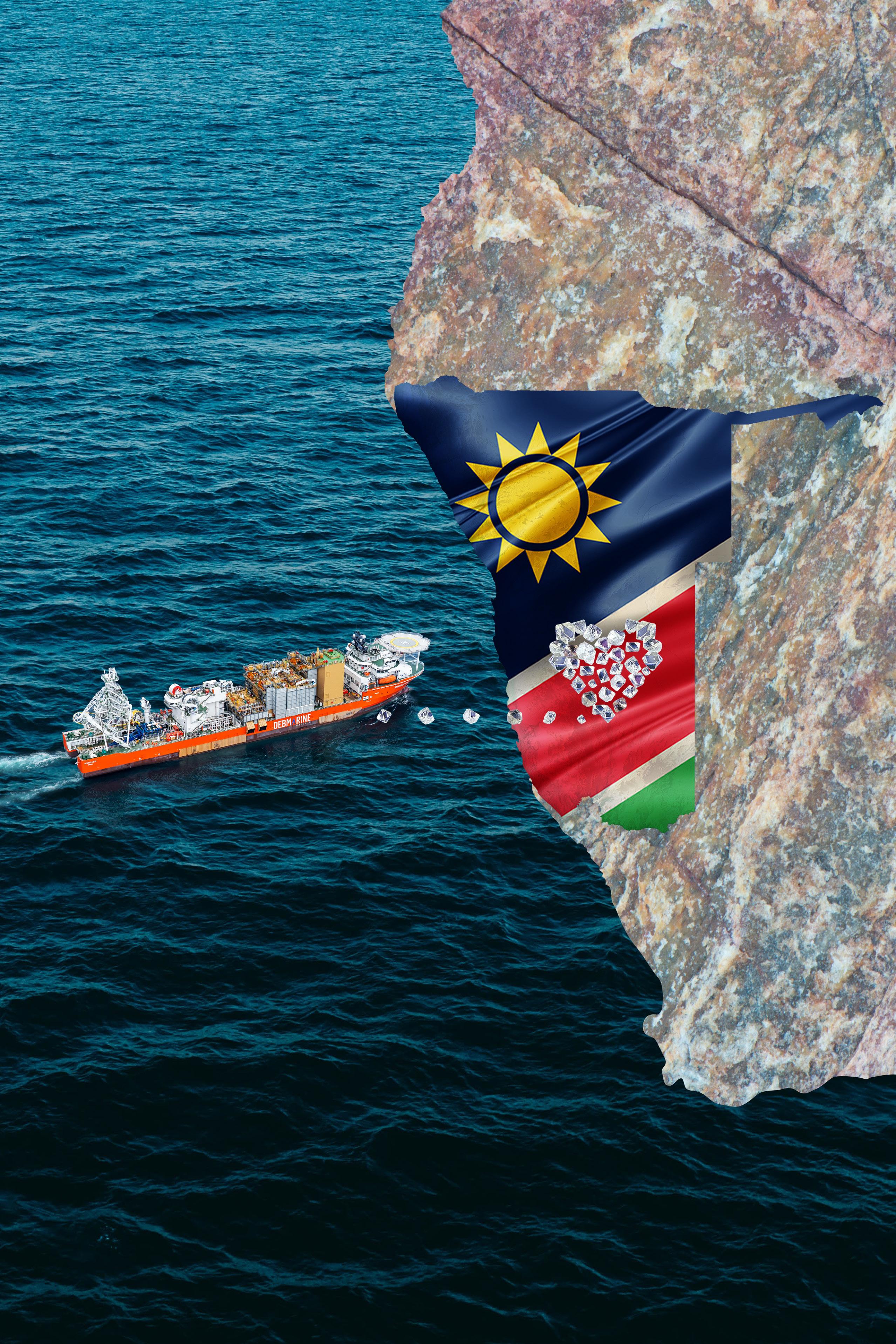
We enable an inclusive environment for enhanced career prospects, focusing on accelerating equal opportunities for all.
At Namdeb, we are about more than mining. We are about mining for good.

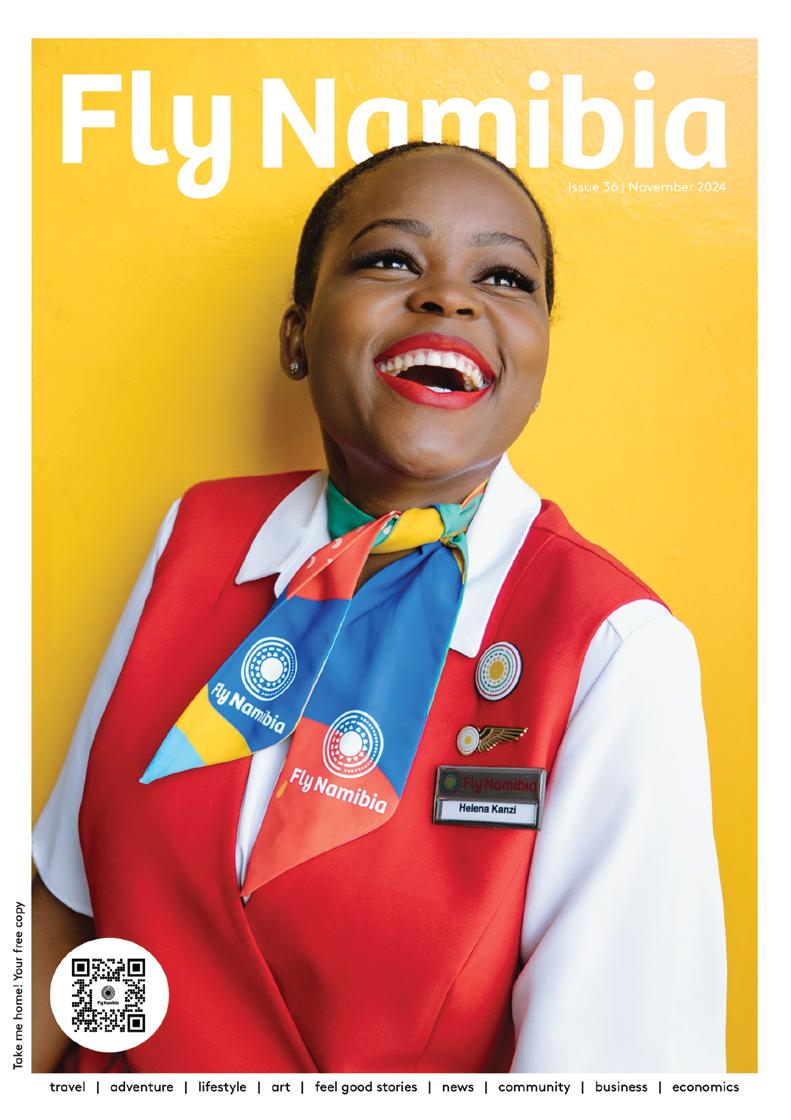
Editor Elzanne McCulloch elzanne@venture.com.na
Content Director
Kirsty Watermeyer kirsty@venture.com.na
Sales
Daleen Small daleen@venture.com.na
Layout & Production
Liza Lottering liza@venture.com.na
Admin and Enquiries
Bonn Nortje bonn@venture.com.na
Printing John Meinert (Pty) Ltd
Venture Publications (Pty) Ltd. PO Box 21593
Windhoek Namibia
Disclaimer:
Please note that while every effort has been made to ensure the accuracy and reliability of the content within this magazine, Venture Publications Pty Ltd and FlyNamibia accept no responsibility for any errors or omissions. The views expressed by individual authors are solely their own and do not necessarily reflect those of the publisher or FlyNamibia. All material, including text and images, is the property of its respective authors and cannot be reproduced or used without explicit permission from Venture Publications Pty Ltd. to the October
At Venture Media, we’re more than just a publisher - we’re a multi-media content creation powerhouse. Our expertise includes awe-inspiring photography, striking videography, impeccable design, and crisp podcasts. With a reputation for excellence spanning three decades, we bring unparalleled storytelling to life.
In our boutique publishing and content marketing house, stories that matter take center stage. Every page you turn reflects our commitment to quality and innovation. Dive in and experience the difference that top-tier content creation can make.





ChatPay allows you to make a payment seamlessly via chat, without requesting or needing an account number.
How do I make a chat payment?
1. Log in to the FNB App
2. Select 'Pay' and then 'Pay' again
3. Select 'ChatPay'
4. Click on the 'New Message' icon located in the top right corner
5. Search for your contact
6. Select the 'ChatPay' icon located in the bottom left
7. Select 'Make a Payment'
8. Follow the prompts to complete the process

Select which tickets you would like to purchase: destinations, travel dates, morning/afternoon departure. We offer multiple fare options such as: Saver, Classic or Premium
Please enter names as they appear on passport or travel documentation
LOGIN to upload passenger details from previous booking.
More options for the perfect trip
Baggage policy, sporting equipment, over weight luggage or to add an additional bag(s)
Cash payment at: Eros Airport, Ondangwa Airport, Oranjemund Airport
Online card transaction
Electronic Funds Transfer (EFT)
PayToday app Buddy SuperApp
Online check-in opens 24 hours before departure of the flight on Fly Namibia
Check-in opens 1h 30min before domestic flight and 2 hours before international flight.
Check-in CLOSES 30 min prior to domestic flight and 50 min prior to international flight.
flight information / rules
Read up on all our additional information regarding terms and conditions, and tick the selection box once completed to continue.
Fill in your payment details in our DPO paygate to make final payment.
Transaction confirmation will be sent to passenger email entered.
Windhoek Eros Airport Office
Ondangwa airport office
Rundu airport office
Katima Mulilo airport office
Hosea Kutako airport office
All major travel agents
Items NOT allowed in hand luggage:
Lotions and aerosols above 100ml, flammable aerosol, sharp objects, i.e. nail files, nail scissors, Leatherman, matches.
20kg Per person


06:30
08:00

Eros - Windhoek Ondangwa - Toivo Ya Toivo 07:30 Mon, Tue, Fri
Ondangwa - Toivo Ya Toivo
Eros - Windhoek 09:00 Mon, Tue, Fri
16:20 Eros - Windhoek Ondangwa - Toivo Ya Toivo 17:20 Tue, Wed, Thu, Fri, Sun
17:50
Ondangwa - Toivo Ya Toivo Eros - Windhoek 18:50 Tue, Wed, Thu, Fri, Sun
10:15 HKIA - Windhoek Katima Mulilo 11:40 Wed, Fri, Sun
12:55 Katima Mulilo HKIA - Windhoek 14:15 Wed, Fri, Sun
Oranjemund flights on hold from 23 September 2024 onwards
09:40 Eros - Windhoek Oranjemund 10:40 Mon, Fri
11:20 Oranjemund Eros - Windhoek
- Windhoek
-
*Please note: Due to volatile weather, Lüderitz PM flights departure time may vary.
10:15 HKIA - Windhoek
in Partnership with

14:00
16:50 Walvis Bay Cape Town 19:00 Mon, Tue, Wed, Thu, Fri, Sun
12:05 Cape Town Walvis Bay 14:20 Sat
06:20 Cape Town HKIA - Windhoek 08:35 Mon, Tue, Wed, Thu, Fri
09:25 HKIA - Windhoek Cape Town 11:35 Mon, Tue, Wed, Thu, Fri
10:45 Cape Town HKIA - Windhoek 13:00 7 days a week
13:45 HKIA - Windhoek Cape Town 15:55 7 days a week
17:10 Cape Town HKIA - Windhoek 19:25 Thu, Fri, Sun
07:00 HKIA - Windhoek Cape Town 09:10 Mon, Fri, Sat
10:00 HKIA - Windhoek
Thu, Sun 11:30 Mokuti
16:05 Keerweder
HKIA - Windhoek
Tue, Thu, Sun
Tue, Thu, Sun
Tue, Thu, Sun
07:30 Eros - Windhoek Rundu 09:00 Mon, Wed, Fri
16:00 Rundu
Eros - Windhoek 17:30 Mon, Wed, Fri
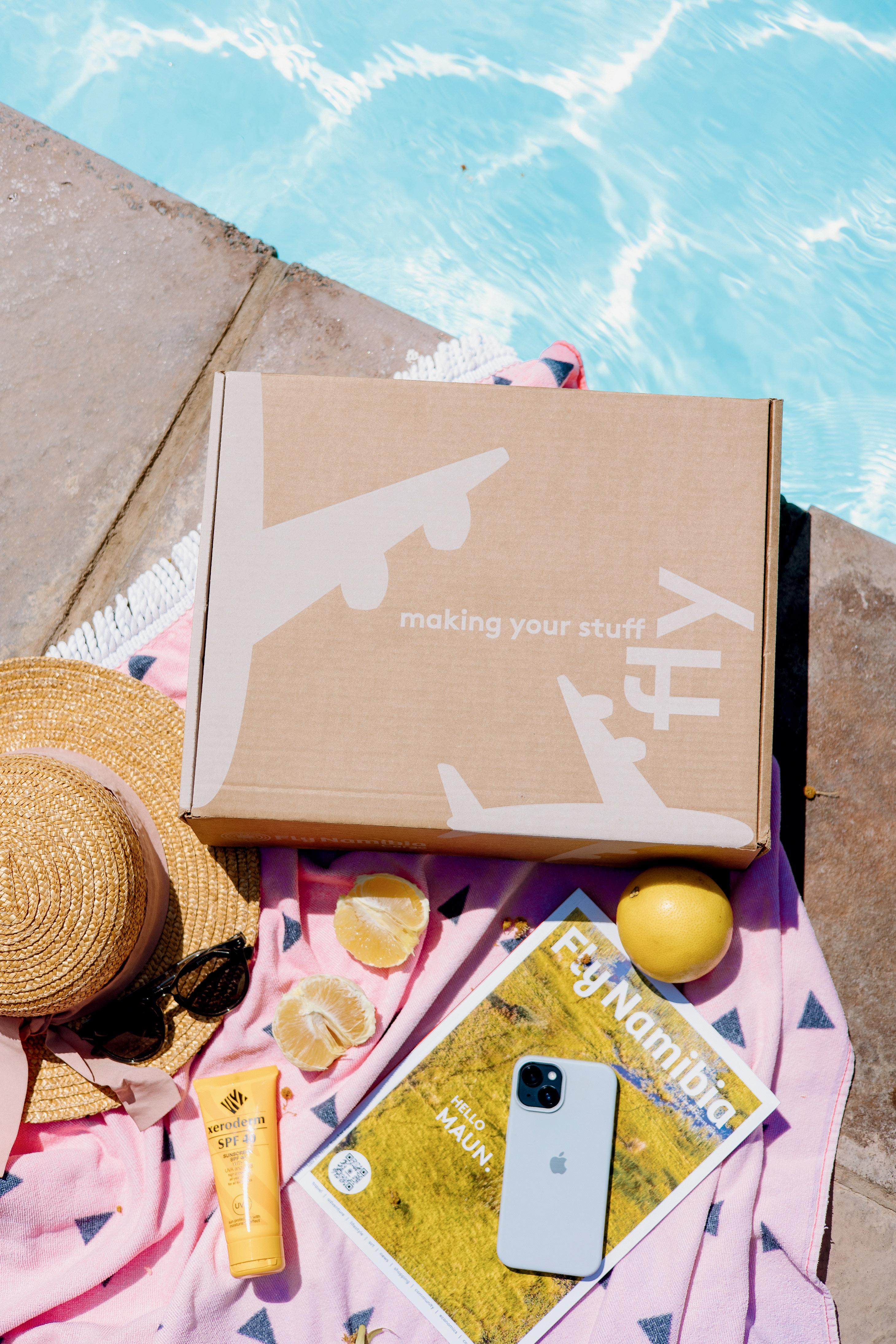
Meet Eppakette, our newest team member!
He likes sunny days by the pool and travelling. He’ll take your stuff to any of FlyNamibia’s destinations!
making your stuff fly

Dear Valued Passengers,
We are thrilled to have you join us as we enter the final stretch of 2024. This year has been an exciting one for FlyNamibia, full of milestones and meaningful initiatives that have brought us closer to the people and communities we serve.
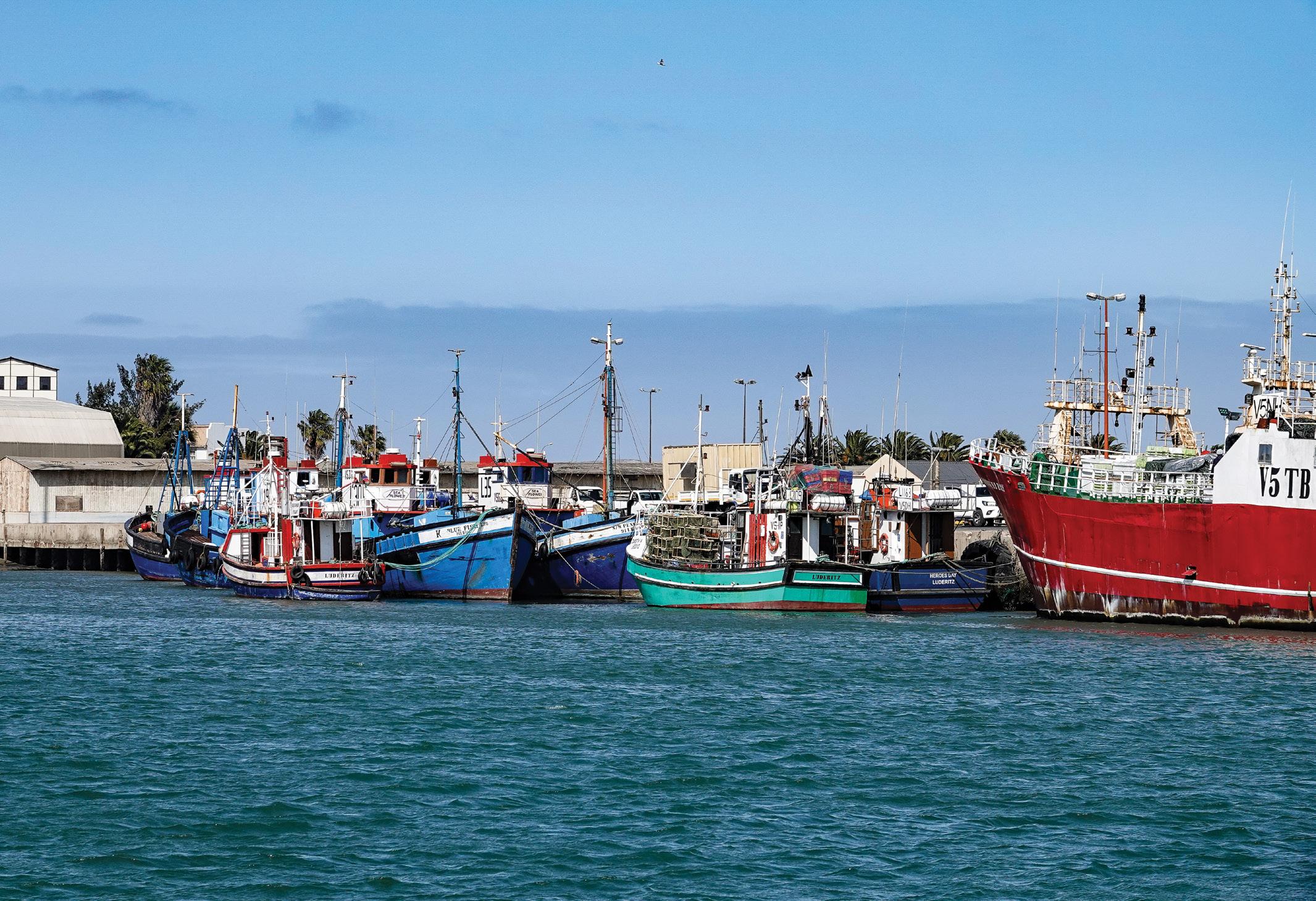
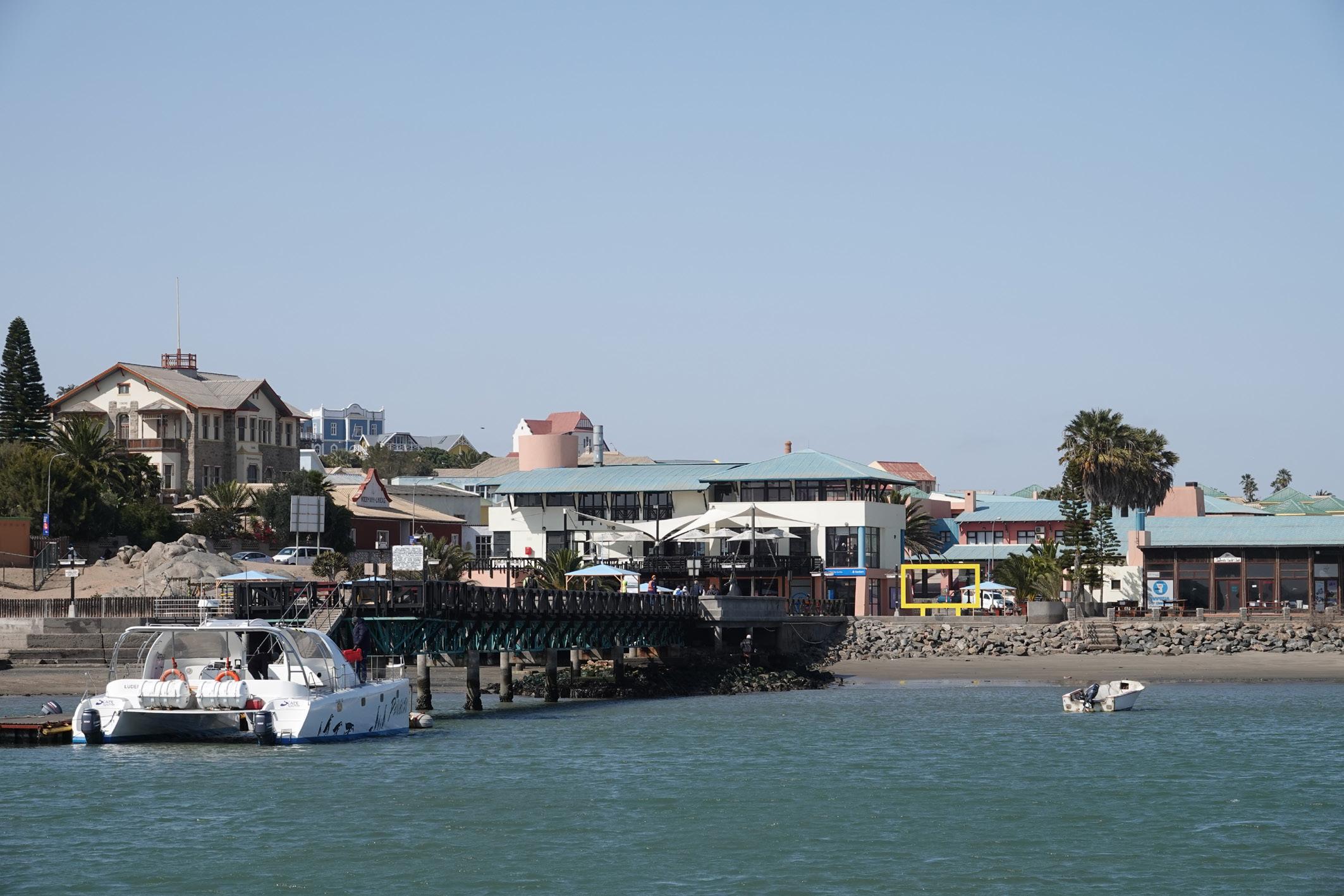
Lüderitz is back!
We are proud to announce the return of our route between Eros (Windhoek) and Lüderitz, in partnership with TotalEnergies EP Namibia. As of 16 October 2024, we’ve resumed weekday flights, reconnecting you to one of Namibia’s most vibrant coastal towns. Whether you’re travelling for business or leisure, we’re here to make your journey seamless and comfortable. Book your flights directly at our Lüderitz Waterfront office or online via our website, where you'll find a dedicated section for Lüderitz bookings. Together with TotalEnergies EP Namibia, we are committed to making this essential route accessible and efficient for all.
Pink Week: Raising Awareness, Sharing Hope October also marked our Pink Week campaign, where
we turned our airline pink in support of Breast Cancer Awareness Month. Our crew proudly wore pink scarves and ribbons, spreading awareness and showing solidarity with those affected by breast cancer. Through heartfelt exchanges and small gestures, we demonstrated that even the smallest acts of kindness can have a powerful impact. Our digital awareness campaign reached thousands, who proudly shared their experiences and joined a community of well-wishers and support for the fighters, the survivors, and those who stand by their side. It’s through initiatives like these that we hope to continue our commitment not only to connecting destinations but also to uplifting and supporting our communities.
FlyNamibia remains dedicated to enhancing your travel experience. We are proud to connect people, businesses, and communities across Namibia and beyond. Thank you for being part of our journey, and we look forward to continuing to serve you with excellence.
Safe travels and happy flying!
The FlyNamibia Team


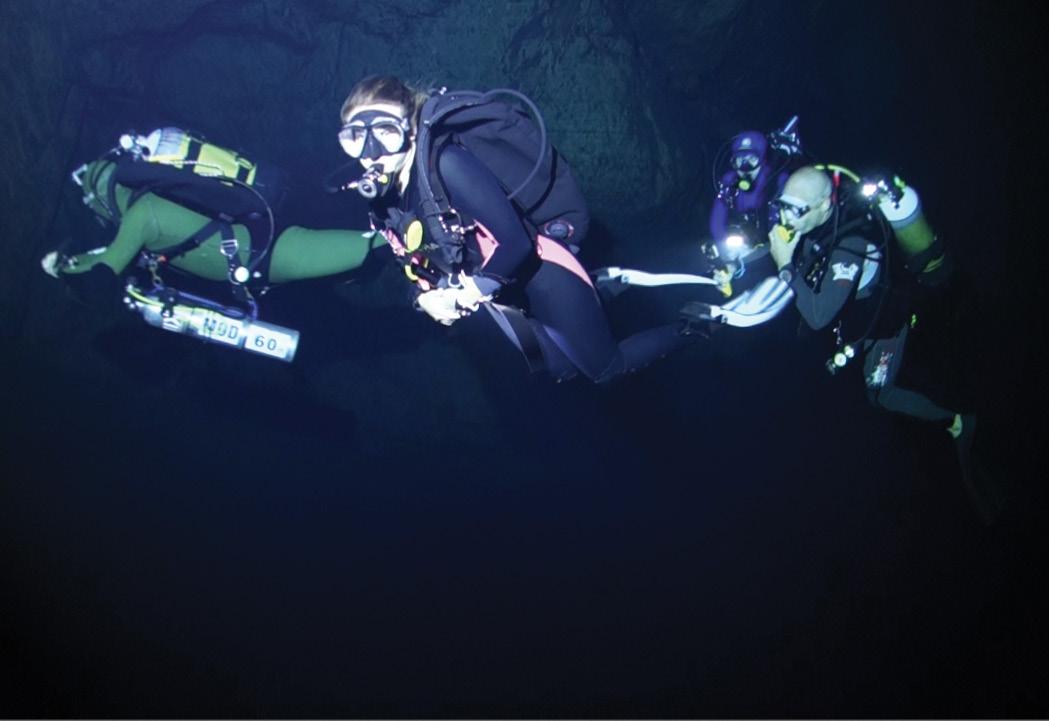

While Namibia is best known for its wide-open spaces, the country is also a paradise for cavers who explore its darkest depths, especially the ones that some adventurers find irresistible. Even the well-known Otjikoto Lake near Tsumeb is nothing but a large cave with a missing roof.
The unique and colourful fish species that occur in Otjikoto and its sister lake Guinas are well documented. Close inspection reveals the interesting dwarf bream, Pseudocrenolabrus philander dispersus, a fish that breeds outside the nest, while the female carries the eggs around in her mouth.
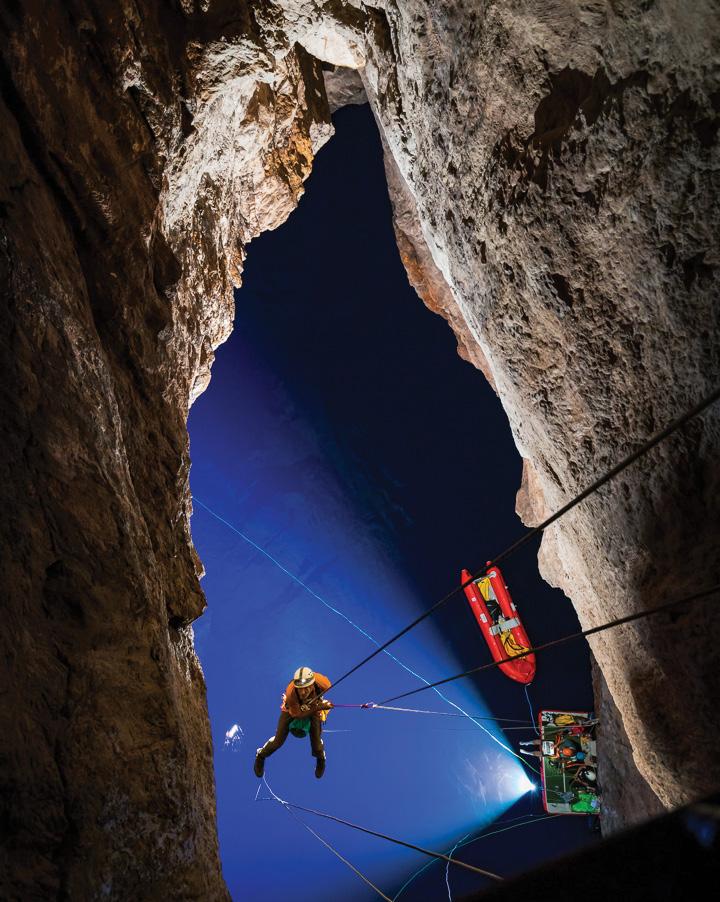
Lesser known are the unique life forms found in the cave system known as Dragon’s Breath, and the fact that one of its caverns houses the world’s largest underwater lake. Situated 46km northwest of Grootfontein lies a subterranean geological wonderland 60 metres below ground which can only be reached via a tiny ladder to reveal a rock formation that mysteriously hides a lake with a surface area of almost 2 hectares.
Dragon’s Breath was discovered in 1986 during a spelaeology expedition aimed at finding caves in the environs of the Otavi Mountains. The entomologist John Irish was part of the team, and it is with him that I visited the cave. We reached the first chamber by means of a small ladder. I knew from the outset that the purpose of the visit was not to try and climb down to the lake itself, as this is best left to specialised diving teams. The sole purpose of my visit was to experience personally why the cave had been given its dramatic name.
My first question was how the scientists had known from the outset where to search for a cave in this extensive landscape. John explained that the dolomite had been eroded by water over countless years and that these telltale signs usually indicated a cave or sinkhole lower down, as is the case with the Dragon’s Breath Cave.
Unlike most readers of this article – who are unlikely to ever make it as far down as the actual lake – John will invariably meet a couple of “old friends” there when he climbs down. He describes a unique life form found there as a small prawn, Trogloleleupia dracospiritus, which is endemic to this cave. Its Latin name dracospiritus means “the spirit of the dragon”. This small amphipod, like most of the other life forms there, survives on bat droppings that filter down to the bottom of the lake. Indeed, apart from the country’s astounding geology, this might be the real contribution of Namibia’s caves to the world of natural sciences. Moreover, there is still a host of life around there, much of which is yet to be recorded.
John accompanied me while I was climbing down from the first chamber and took a small step down from the passage. After turning slightly I continued and then stopped. At this point the visitor reaches a round rock in the middle of the passage, and encounters the “breath” flowing out on the other side,
which can best be described as a small hole between two rocks that is already visible from the first chamber.
The so-called dragon’s breath is literally a warm, humid breeze that rises from the lake. It strikes you without warning as you peer over the round rock. The hole through which the humid air is forced is the lip of a precipice in the roof of the lake chamber. Basking in the uniqueness of the moment, it struck me once again how unbelievable it was that halfway between Tsumeb and Grootfontein this awesome body of water, which is tipped to be the largest subterranean lake in the world, can be viewed.
It was equally interesting when John pointed out that in 1986 the first-ever exploration team had included several female adventurers who, due to their smaller body frame, were required to wiggle their way through the access chamber down to the lake. With water security on the lips of so many people these days, time will tell how the water in this lake will increasingly come into focus, not only as a tourist attraction but also in terms of how the water can be conserved and at the same time used responsibly.
Journals in the Namibian Scientific Society archives indicate that in as early as 1970 a vision for the conservation of Namibia’s water resources was verbalised by the then Director of Water Affairs, MC Myburgh. He described water as an economic necessity, one that should be managed by Namibia’s government as a precious resource. He emphasised that equal access to such water should be given to all people as opposed to any one individual owning it.
On a more esoteric note: my visit to the lake left me with a prevailing sense that this enchanting world should remain untouched. That it should be conserved as something with an intrinsic value that we can hold in the chambers of our hearts as an unuttered prayer, a marvel that is forever present but remains invisible. When interviewed, the controversial South African sangoma, Credo Mutwa, once referred to these spiritual spaces as places “where a greater mystery speaks to us from the shadows.”
The last words about the peaceful, undisturbed world beyond the lip of the cave go to John: “The lasting impression of Dragon’s Breath is one of a huge but largely lifeless lake, which, in a few barely hospitable corners, harbours an unlikely community of animals that is utterly dependent upon a very precarious food source against remarkable odds. Even the most jaded biologist will realise anew just how wonderfully tenacious this thing called Life really is.”
To experience Dragon's Breath contact Dantica Diving at chris@danticadiving.com
Linda de Jager
First published in the Spring 2024 issue of Travel Namibia magazine. Subscribe to Travel Namibia here: www.travelnewsnamibia.zinioapps.com/shop

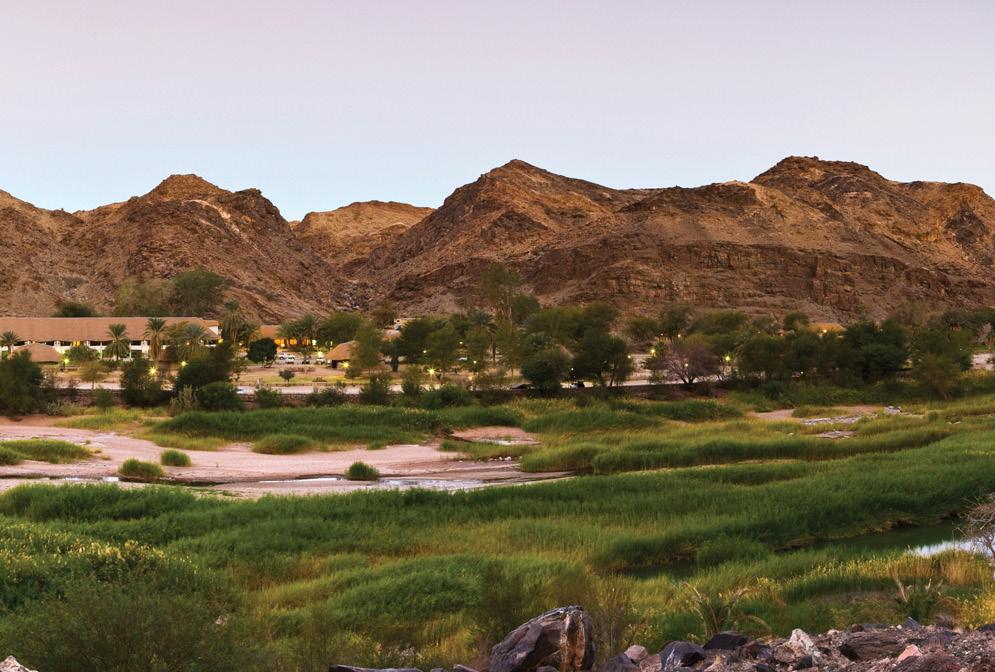

Rising as an island of colour some 200 metres above the surrounding African bush and savannah, the Waterberg Plateau, with its flamboyant brick-red sandstone formations and lush green vegetation, is without a doubt the main drawcard of the region.
The 405 km² Waterberg Plateau Park was proclaimed in 1972 as a reserve for endangered and protected species. The history of the park began on 15 June 1956 with the declaration of two portions of the plateau as natural monuments. This came to pass after representations were made to the then SWA Administration by the Kameradschaft Ehemaliger Deutscher Soldaten, members of the Scientific Society, the Monuments Commission, and other interested parties. The two areas – the Omuverume Plateau and the Karakuwisa Mountain Range – were, however, divided by farms that had been allocated to farmers in the past. The Omuverume Plateau is probably the only sandveld vegetation type that developed for many centuries without being disturbed, due to the vertical cliffs and flora there having reached a unique stage of climate development. Interestingly enough, the original motivation for the proclamation of the entire Waterberg Plateau as a park was to create a reserve for eland. It was reasoned that there were about 800 eland in the Waterberg area that moved from farm to farm and caused a nuisance. As soon as the farmers obtained ownership of the game on their land, the future of these eland would be in jeopardy because the farmers did not tolerate these animals on their land. How wrong this statement proved to be! It was only when farmers were granted ownership of their game, that game populations in the country began to flourish and increase.
Today’s Waterberg Plateau Park is home to some 25 game and over 200 bird species. Rare species such as roan and sable antelope, Cape buffalo and tsessebe occur in large numbers. Species such as black and white rhino are also firmly established on the plateau. The vegetation changes dramatically from acacia savannah at the foot of the plateau to lush green sub-tropical dry woodland with tall trees and grassy plains at the top. Ten fern species have been recorded at the Waterberg, of which one is endemic to Namibia and
Angola. There is also an impressive range of flowering plants, including the conspicuous flame lily, Gloriosa superba
At the foot of the Waterberg plateau a German military graveyard serves as a reminder of one of the darkest periods in Namibian history. During the German-Herero conflict of 1904 to 1907 this was the site of the historic Battle of Waterberg. On 11 August 1904 with Lieut. Gen. Lothar von Trotha at the helm, the German Schutztruppe attempts an aggressive encirclement tactic, surrounding the Herero south of the plateau and killing between 3 000 - 5 000 Herero combatants.The Germans fail to complete the encirclement and most of the Herero manage to escape southeasterly into the waterless Omaheke. The Germans aggressively pursue and then cut off any escape route, forcing the Herero to flee east into British Bechuanaland (now Botswana). During the exodus tens of thousands of men, women and children die of thirst and hunger as they have to travel through the Kalahari Desert to reach the safety of British Bechuanaland.
At the eastern extremity of the park is the Okatjikona Environmental Education Centre, a facility run by the Ministry of Environment, Forestry and Tourism that provides the opportunity for visiting groups, mainly schoolchildren, to learn about the importance of environmental conservation.
The superb natural beauty of the Waterberg can be enjoyed by vehicle on a guided game-viewing tour conducted by NWR or on easy walking routes along the base of the plateau.
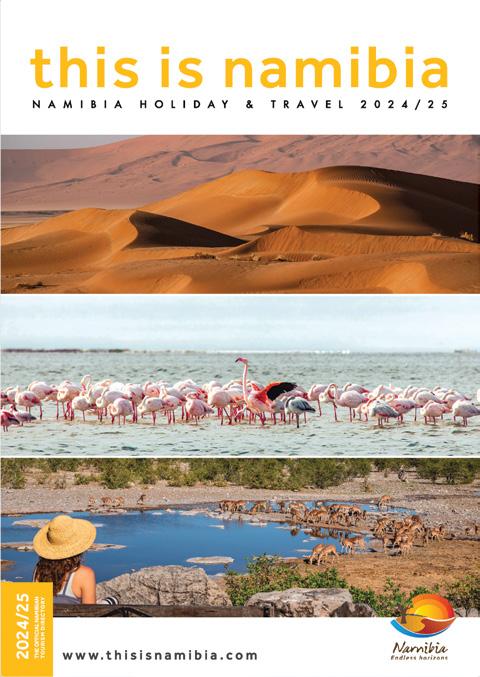
Find more Namibian travel inspiration at www.thisisnamibia.com
Follow @thisis_namibia on Facebook and Instagram for extraordinary Namibia travel stories.

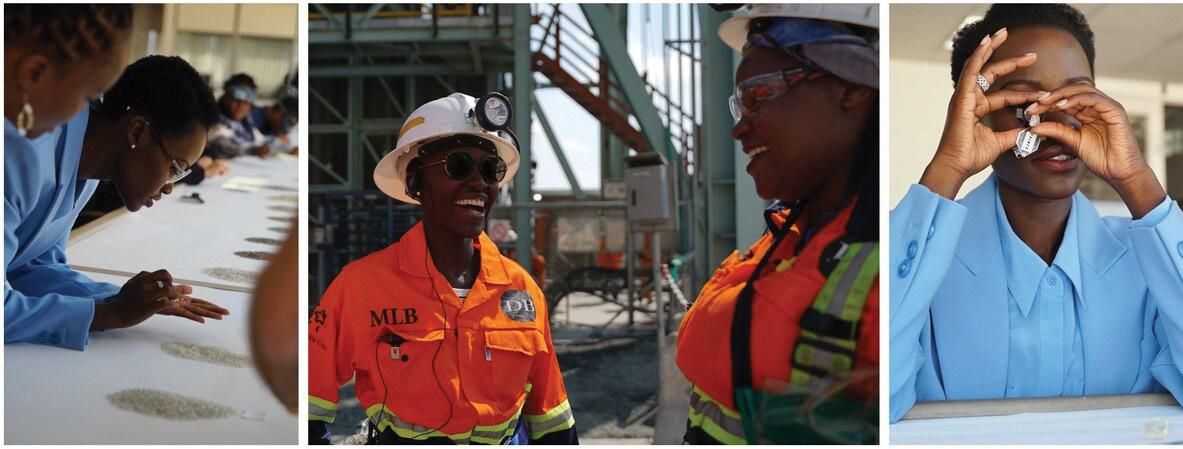
"This is my first time in Namibia, a country known the world over for its natural beauty, but today, I have experienced the beauty of its people firsthand.
I'm especially impressed by the roles women are playing in the diamond industry. It was a woman who walked me through the complex sorting of rough diamonds here at NDTC. When I thought of a diamond sorter before this experience, which was not often, I have to admit, a woman was not what I saw. I highlight this not because men don't matter, but because, as a woman myself, I see myself in other women, and what they achieve expands my imagination of what I can achieve too. There is tremendous value in seeing examples of yourself in things that seem impossible and out of reach. My career is testament to that. When you see someone who looks like you achieve the impossible, your dreams stop being dreams and become goals to be achieved too. That is how barriers get broken." - Lupita Nyong’o, Oscar-winning actress.
expectations. Nowhere is this more evident than in industries once considered out of reach for many, where women are stepping into leadership roles and excelling in ways that challenge long-held norms.
In a country where diamonds symbolise both beauty and strength, it is fitting that women are at the forefront of this sector. Their presence and expertise in traditionally male-dominated spaces serve as a reminder that progress is not only possible but happening right before our eyes. By witnessing these achievements, we are reminded of the power of representation – the ability to see yourself reflected in places you once thought unattainable.
As we look beyond the natural wonders, we find countless stories of individuals breaking barriers and redefining expectations.
I came across a video on Instagram of Nyong’o and this speech she gave during her recent visit to Namibia, and felt Inspired. She was so accurate in her description of Namibia as a country renowned for its vast landscapes and striking beauty. Further truth in her statements, and something that hit me in the gut and caused goosebumps to erupt along my arms, were her comments on the remarkable strength and resilience of Namibia’s people. As we look beyond the natural wonders, we find countless stories of individuals breaking barriers and redefining
Across Namibia, from our cities to our rural heartlands, women are embracing their potential and paving the way for future generations. Their stories inspire us to dream bigger, work harder, and strive for greatness. In a land celebrated for its majestic landscapes, it is the spirit of its people, particularly its women, that truly shines.
This is the Namibia that inspires me: a nation where possibilities are endless and where each step toward equality and empowerment brings us closer to a brighter, more inclusive future.
May others’ achievements and hard work inspire us all to turn our dreams into goals and those goals into reality.
Watch the video on her Instagram account: @lupitanyongo
Elzanne McCulloch

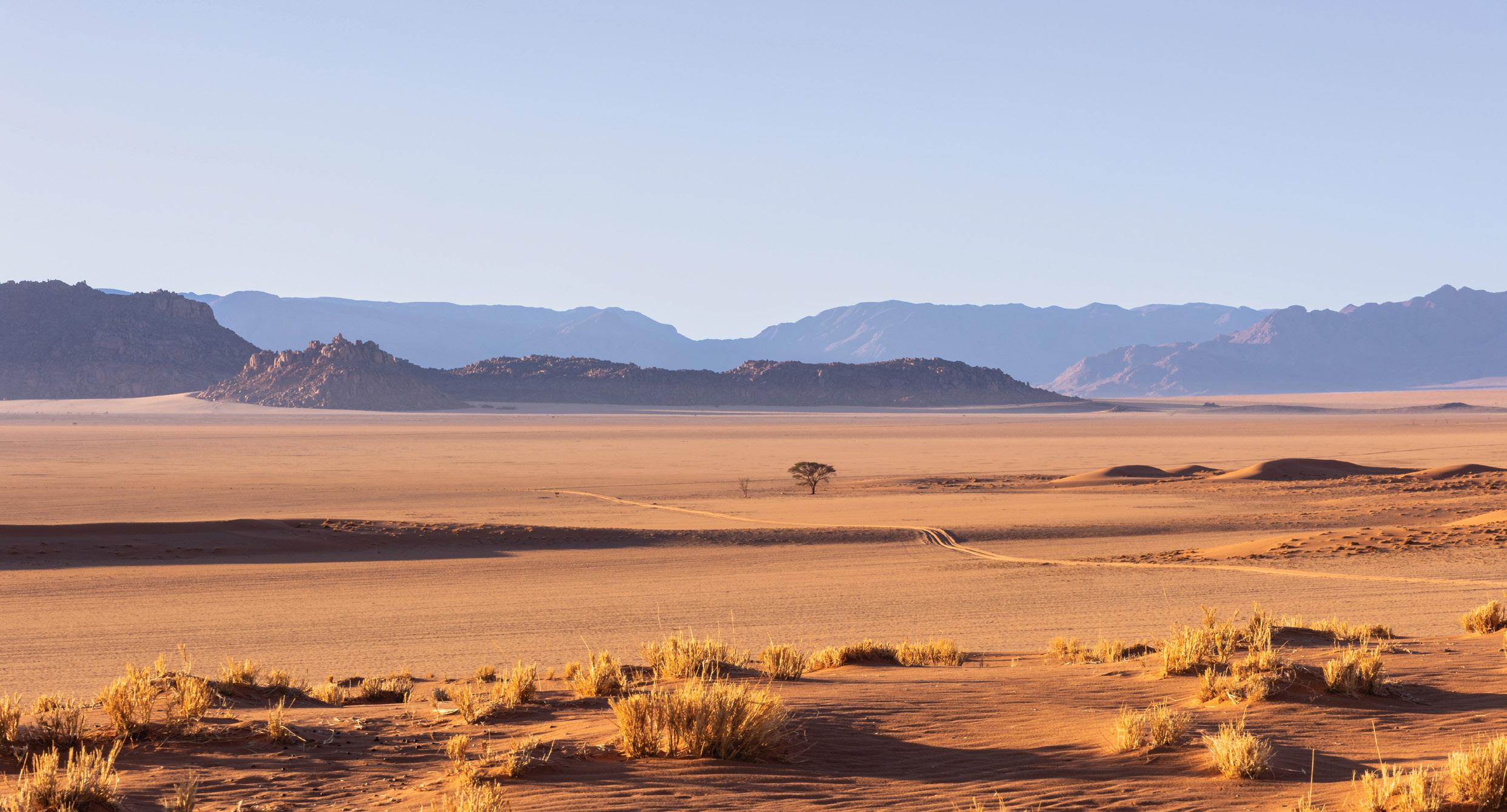
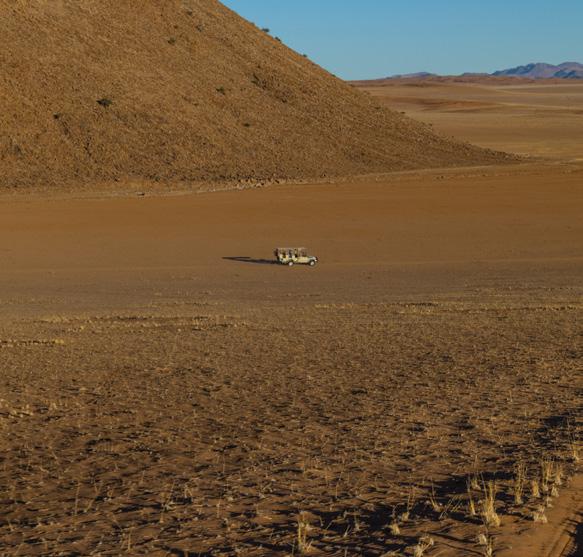
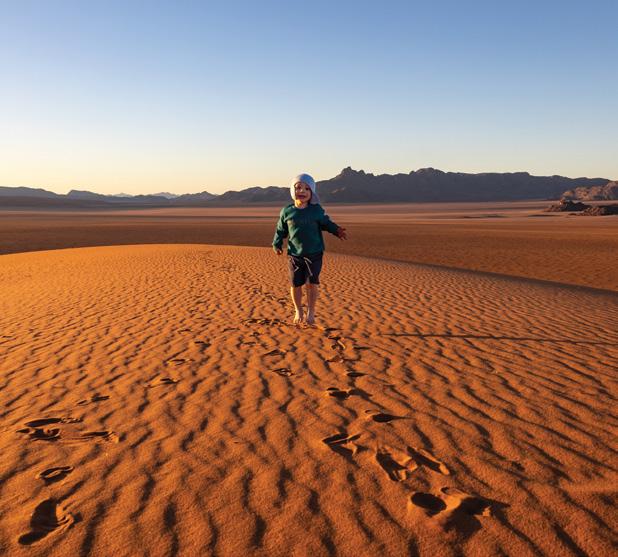
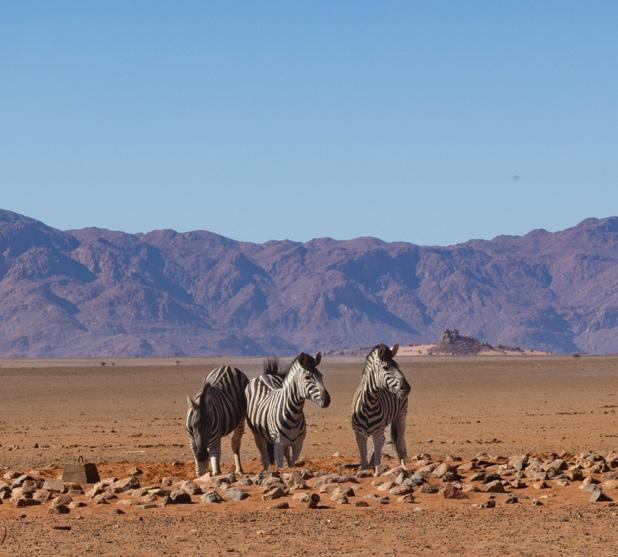
This is a magical land – the colours, the softness of the dunes and the almost ethereal backdrop that appears to be painted on the horizon for dramatic effect. It is exquisite, and it seems unreal. There is so much to marvel at that one’s worries seem to melt away in the sunlight. What once seemed insurmountable now seems petty, and you find yourself zoning out at the sight of space and beauty all around.
And then there is Kwessi Dunes Lodge, which is like stepping into a bygone safari era where your every whim is catered for, even the ones you did not know you had. Some lodges boast their special features for all to see, but this one blends into the horizon and keeps its treasures hidden, for you to find. It is beautiful, and in every corner awaits another gem to uncover. The well-appointed rooms are spacious, offering different comfortable seating options. The patio area alone has a choice between a bench piled with pillows for comfortable lounging, or rocking chairs for daydreaming as you sway your worries away.
Worthy of its own chapter in acclaim is the outside bed for sleeping under the constellations and watching the celestial theatre show above. Having done this many times and in many ways, sleeping under the stars in the desert is one of my favourite things to do. What can often take away from the experience is your exposure to the elements as the desert winds of the evening increase in strength. But here your outside bed has its own four-walled room, which not only protects you from the elements but also directs your focus towards the premier spectacle, which at night, is up.
Another highlight was how much my visit to Kwessi taught me about the subtleties of the desert. On a desert walk with an expert Khoisan tracker, Frankie, we learnt more about desert life than we could ever imagine. We followed tracks, listened to traditional Khoisan stories, and became amateur desert boffins through this enlightening experience.
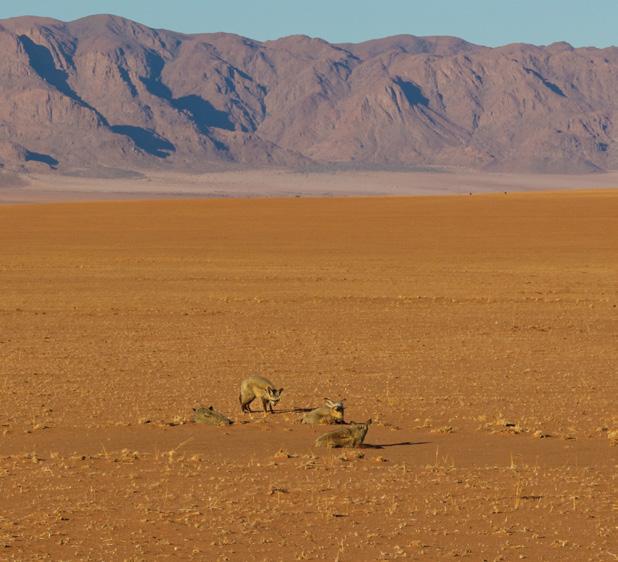
This sundowner drive with Dawid also heralds what has become one of my most special desert experiences to date. As we came over a dune in the late afternoon, we encountered a den of bat-eared foxes, fast asleep in a fairy circle. They were surprised by our presence, but they did not run away. After a short inspection, they concluded that we were friendly and proceeded to playfully chase each other before flopping back down into curled-up little balls in the sandy sphere.
If you did not know, bat-eared foxes are small, primarily nocturnal foxes with comically big ears that help them regulate their body temperature and hear sounds at incredible distances. These insect-loving foxes can hear beetle larvae hatching from dung balls. Also, they are monogamous, and the dads are as involved as the moms in raising the family. There is a lot to love about the bateared fox.
Here you can expect to be lost in reverie.
This was a family trip, meaning my two-year-old son had come along and he was welcomed as part of the family by the staff. Let alone my enjoyment; this could easily be called my son’s best holiday ever. He spent his days racing along dune belts, following beetles, marvelling at desert life and having a feast. In fact, I would be remiss if I did not mention the food. It was spectacular, and besides the tasty three courses that the adults enjoyed, every effort was made to cater to the weird and wonderful palate of a toddler. This meant that one night he dined on French fries paired with spaghetti bolognese while the rest of us savoured the tenderest gemsbok fillets.
Another example of the extra effort by the staff was when we enjoyed one of the many activities at Kwessi. While doing a sunset drive with the delightful Dawid, we found a sundowner table specially decorated for my son, with his name written in sand along with some toys and his favourite drink – apple juice.
Like with the bat-eared fox, it is easy to fall in love with Kwessi Dunes Lodge. Located in the NamibRand Nature Reserve, this beautiful corner of Namibia is a vast desert wilderness of almost 200,000 hectares defined by red dunes, fairy circles and surrounding rocky mountains. You will want to take plenty of photographs, it is simply so beautiful, but no photograph does this place justice. Nothing will prepare you for the radiance you see here. In fact, the landscape will stop you in your tracks. Of course it is quintessential Namibia, but it is also humbling, stirring and striking.
Visiting the NamibRand Nature Reserve is like stepping into a daydream or fantasy land. Here you can expect to be lost in reverie. Where you will not be lost, however, is at Kwessi Dunes Lodge, who will outdo themselves to accommodate you. From the arrangements made to replace our burst tyre to the farewell gift handed to my son by Lilian, the lodge manager, it seems their purpose is to help you ground yourself in these illusionary surroundings.
Kwessi Dunes Lodge is managed by Natural Selection, who offer remarkable experiences in wild, untouched places. To book your stay at Kwessi Dunes Lodge, send an email to: reservations@naturalselection.travel
Kirsty Watermeyer
First published in the Spring 2024 issue of Travel Namibia magazine. Subscribe to Travel Namibia here: www.travelnewsnamibia.zinioapps.com/shop










































































































































































The Namibia Integrated Landscape Approach for Enhancing Livelihoods and Environmental Governance (NILALEG) is an ambitious project aimed at improving the livelihoods of rural communities while promoting sustainable land management. One of its target areas is the Ruacana Focal Landscape, which stretches over parts of northern Namibia’s Omusati and Kunene regions. This landscape is home to communities like the Ongete Farmers’ Association, which has been a direct beneficiary of the project’s resources and training programmes.
The primary objective of NILALEG is to enhance living standards in these rural areas by addressing land degradation and integrating sustainable agriculture and forestry practices. By providing communities with essential resources such as water tanks, pipes, infrastructure for an enclosed nursery, seeds and training on crop production, the project enables local farmers to grow food for themselves while also generating income. This approach not only improves food security but also builds resilience against the challenges posed by climate change and drought.
Gabriel Kajakurapo, a member of the Ongete Farmers’ Association, explains that the project has made a significant difference in their community. Through NILALEG, they received training on soil preparation, crop planting techniques and how to care for different types of crops. “We now grow food for our households, and the surplus is sold to nearby communities,” says Kajakurapo. “Previously, if we needed something like tomatoes, we had to travel to Ruacana, which is far from here and costly due to transport. Now, we can sell our produce locally, reducing the cost for everyone.”
In addition to traditional crops like tomatoes, green peppers, carrots, spinach and onions, the project emphasises the cultivation of indigenous trees such as moringa, bird plum and jackalberry trees. The trees are grown in the nursery from seedlings and replanted in the veld to repopulate the surrounding area with these species, which have become scarce. The project should prove valuable for future generations, as some of these trees also provide food for livestock, especially during droughts. The project not only helps
preserve local biodiversity but also creates new opportunities for income generation, as trees are sold to the community.
Another important aspect of the NILALEG Project is its emphasis on community involvement and governance. Jeremia Katambo, secretary of the Etoto Farmers’ Association, highlights the role of the farmers’ associations in coordinating the project and serving as a link between NILALEG and the Ongete Farmers’ Association. “We engage with the community and traditional leaders to seek permission for what NILALEG intends to do on the land,” Katambo explains. “The farmers’ association is responsible for recruiting workers, such as nursery caretakers, and ensuring that the project is inclusive of everyone, including women, elderly people and individuals with disabilities.”
The nurseries, managed by six local caretakers, provide a vital source of income for these workers. Each caretaker receives a monthly allowance of N$1,000 which helps them support their families. In the long run, the goal is for the nurseries to become self-sustaining through the sale of fruit, vegetables and seedlings.
In addition to crops and trees, the project has also established a grass seed bank to address the needs of livestock farmers. Hardy perennial grasses have been identified as suitable for producing seeds, which will be planted in selected areas after the first rain to provide nutritious feed for animals, especially during dry seasons.
Overall, the NILALEG Project integrates agriculture, forestry and community governance to create a more sustainable future for rural Namibian communities. By reducing the distance to markets, restoring degraded land and fostering local food production, NILALEG is helping these communities build resilience in the face of environmental challenges while improving their quality of life.
The NILALEG Project is implemented by the Ministry of Environment, Forestry and Tourism in partnership with the United Nations Development Programme and funded by the Global Environment Facility.


SATURDAYS @16:00




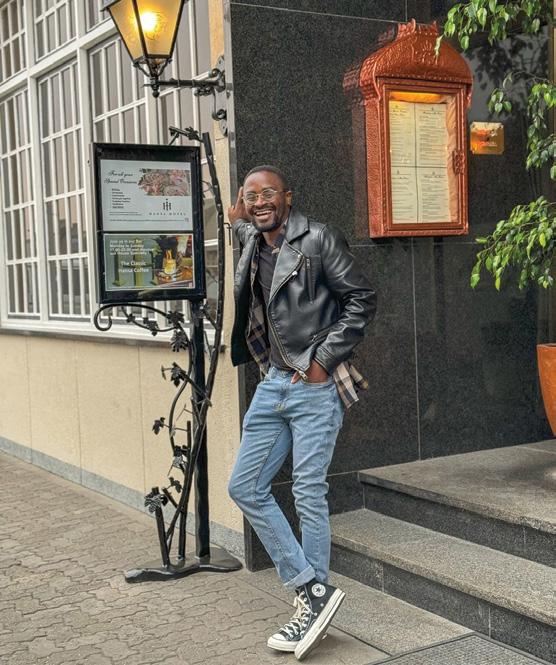
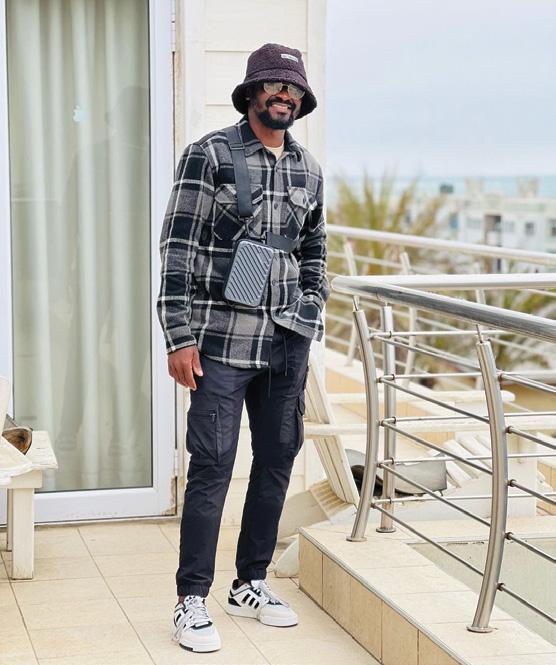



Newly crowned FlyNamibia Ambassador David Penda is more than a social media darling. He is a creative polymath who thrives as a lifestyle and wedding content creator and baker – all while looking understatedly stylish and documenting it all for the pleasure of his over 30,000 Instagram followers.
Imagine having a social media platform that is as picturesque as a postcard. That is David’s reality. Hailing from the coast, David is a busy bee with a knack for making everything look flawless. Given his hectic schedule and growing popularity, securing an interview with David was no easy feat. But after a few determined attempts, I managed to catch up with this rising star to discuss his style and the secret to staying fresh under the Namibian sun.
How would you describe your style in your own words? I would describe my style in three words: simple but classy.
What are the wardrobe essentials that you cannot live without?
A jacket – it always completes an outfit. The styling, though, will depend on the occasion.
How has your style evolved as your creative career progressed?
It has evolved through my investment in timeless classic items. I don’t follow trends that will go out of fashion.
Who are your biggest style inspirations?
My style is inspired by what I like and am comfortable with.
How do you balance comfort and style in your everyday outfits?
I do this by keeping things simple and classy, always prioritising comfort.
What is your go-to outfit for a casual day out?
That’s easy. Casual baggy pants and a T-shirt with comfortable sneakers. And then of course I finish off the look with a jacket.
How do you approach fashion for special occasions or events?
Sticking to the theme provided. If I can’t do that, I go for something black.
As the newly appointed FlyNamibia Ambassador, David is set to embark on the adventure of a lifetime. Over the next year, he will be exploring the breathtaking landscapes and vibrant cultures of Namibia and beyond. To follow his journey and keep up with his amazing experiences, follow him on Instagram: @davidpenda_
Rukee Kaakunga
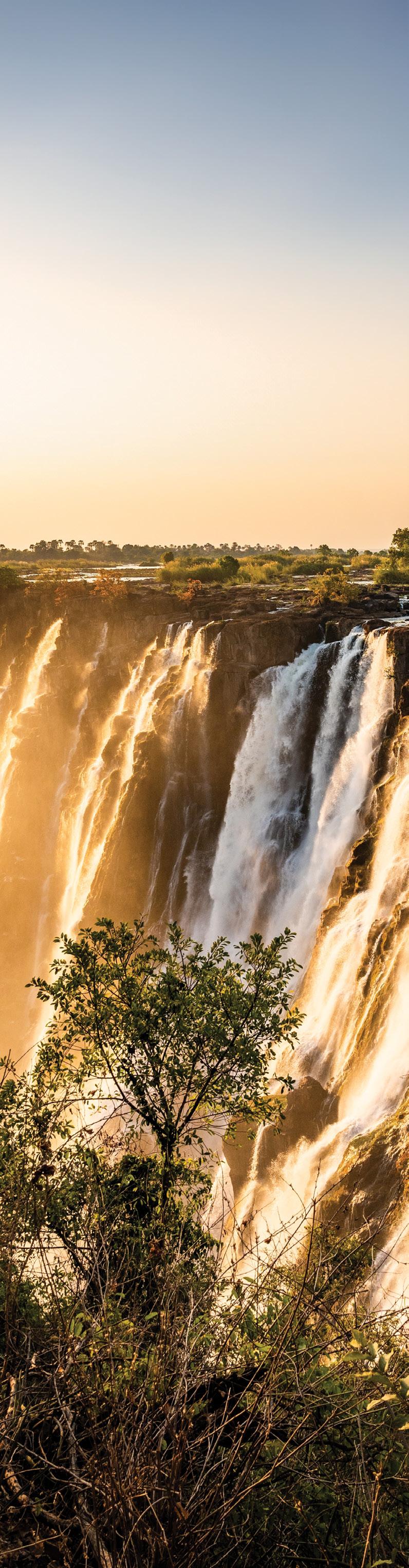

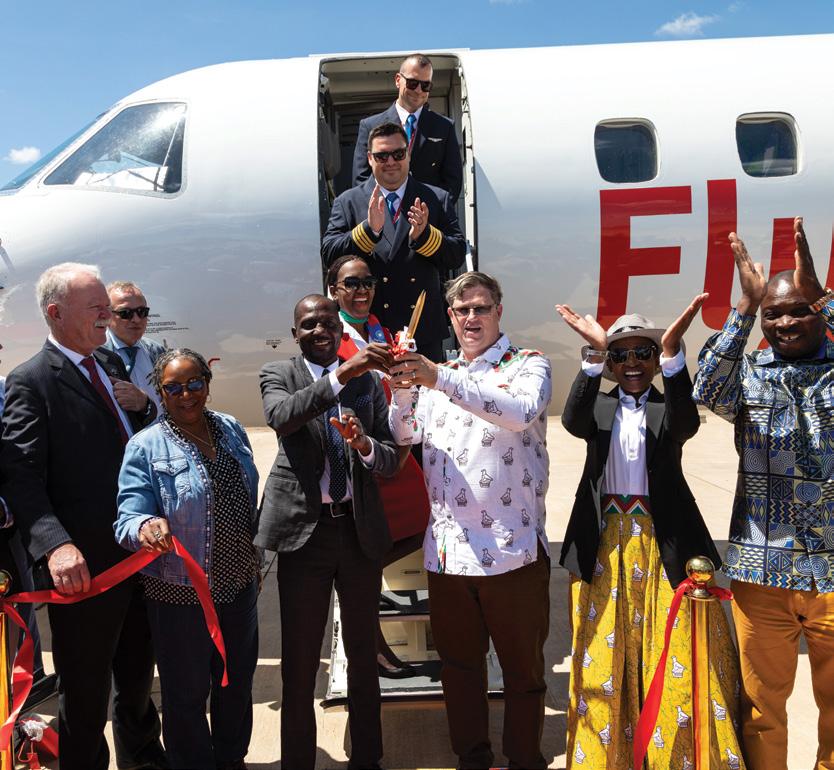
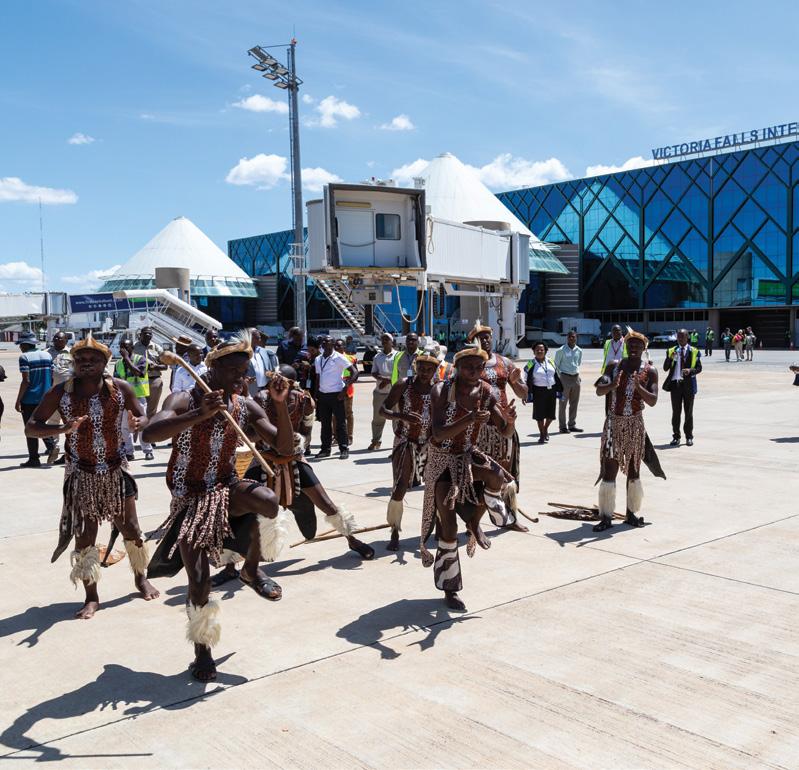
FlyNamibia has created an exhilarating new chapter in southern African travel with its routes between Windhoek, Maun, and Victoria Falls. These flights don’t just connect destinations – they open doors to some of the continent’s most iconic landscapes, offering intrepid explorers and curious travellers the perfect opportunity to experience the untamed beauty and wonder of Namibia, Botswana, and Zimbabwe in seamless journeys.
Imagine starting your adventure in Windhoek, Namibia’s vibrant capital, where the city’s colonial history intertwines with a distinctly African soul. Here, the adventure begins, but it’s only a taste of what’s to come. With FlyNamibia, you can swiftly leave behind the urban energy and find yourself soaring over Namibia’s sprawling, dramatic landscapes or Botswana’s lush wetlands. In a matter of hours, you can land in Maun, the gateway to the Okavango Delta, or in Victoria Falls, home to the aweinspiring “Smoke That Thunders.”
The Wild Heart of Botswana: Maun and the Okavango Delta
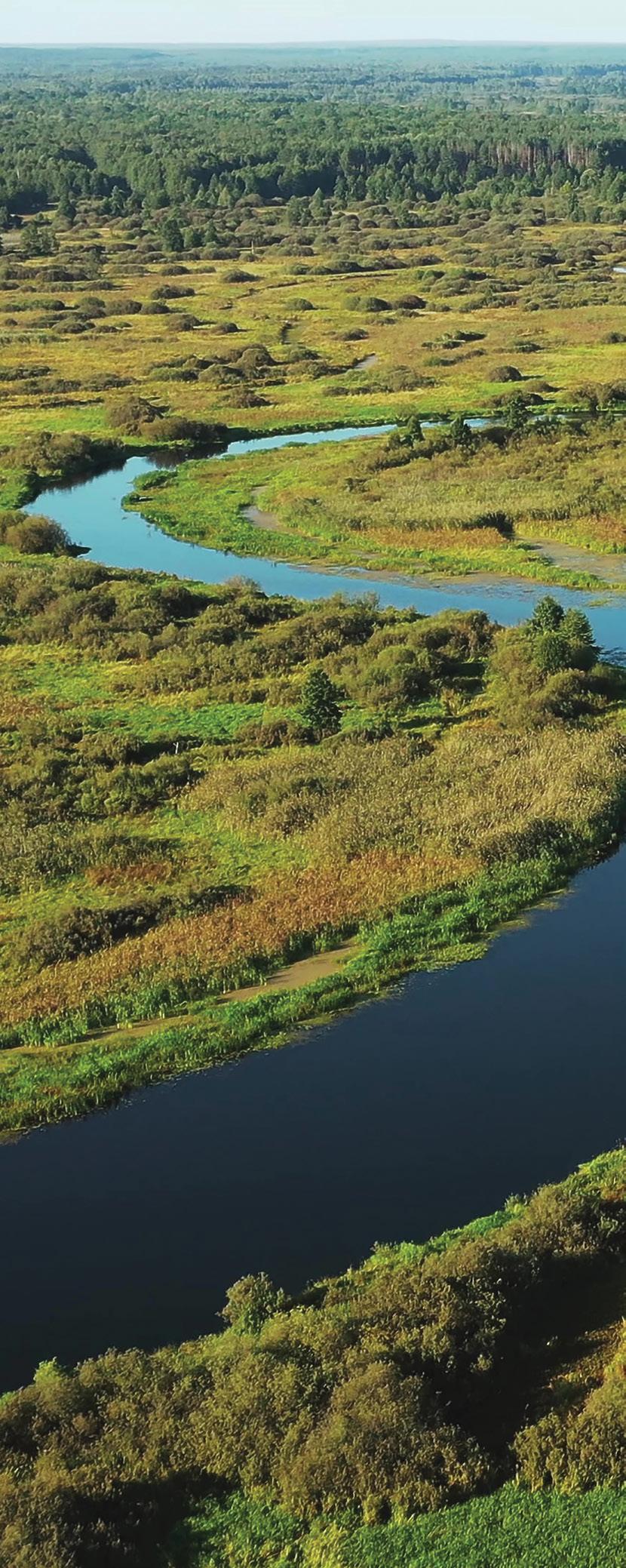
As your FlyNamibia flight descends into Maun, the breathtaking views of the Okavango Delta reveal themselves. This pristine wilderness is one of the world’s largest inland deltas and a UNESCO World Heritage site, teeming with life. In just a short journey from Maun, you’ll be in a world where the roar of lions echoes across vast plains, elephants wade through shimmering waters, and mokoro (traditional dugout canoe) trips offer a front-row seat to nature’s great spectacle.
But it’s more than just the falls themselves that make this destination a must-visit. The surrounding area offers a world of adventure, from white-water rafting to zip-lining across the gorge, and for the thrill-seekers, bungee jumping from the Victoria Falls Bridge is a heart-pounding experience.
FlyNamibia’s flights from Windhoek to Victoria Falls make this natural wonder more accessible than ever before, bringing you face-to-face with one of the planet’s most awe-inspiring spectacles.
Connecting Southern Africa's Hidden Gems
FlyNamibia has done more than just introduce new flights – they’ve connected a region rich in culture, wildlife, and natural beauty, offering travellers an unparalleled chance to explore the heart of southern Africa.
FlyNamibia’s impact goes beyond individual experiences – it’s about connecting the dots between these remarkable destinations, creating a travel network that highlights the extraordinary diversity of southern Africa. Namibia, Botswana, and Zimbabwe each offer a unique chapter in Africa’s story. Namibia’s vast deserts and wildliferich parks, Botswana’s watery wilderness, and Zimbabwe’s world-renowned natural wonders can now be explored with ease, thanks to these direct routes. Whether you're a solo traveller ticking off bucketlist items or a family eager to dive into the heart of African adventures, FlyNamibia’s routes present an irresistible invitation.
Thanks to FlyNamibia’s new route from Windhoek, Maun has never been more accessible, whether you’re a safari enthusiast yearning for close encounters with wildlife or a traveller seeking the tranquillity and beauty of this untouched paradise. Maun is your gateway to a safari experience unlike any other.
Zimbabwe’s Jewel: Victoria Falls
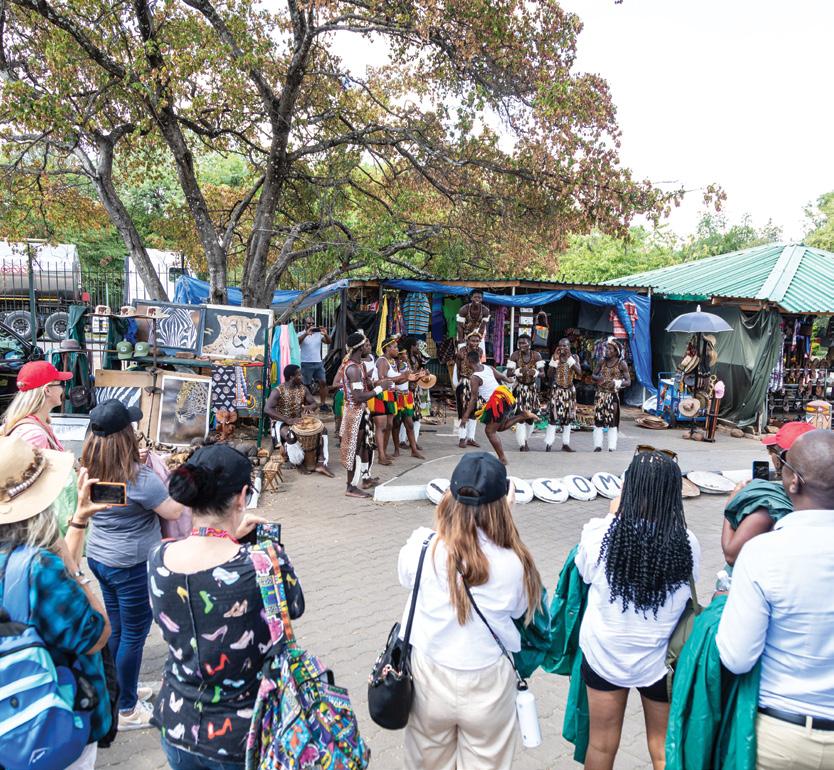
On the other side of the spectrum is Zimbabwe’s crown jewel, Victoria Falls. No words can truly capture the feeling of standing before the world’s largest curtain of falling water, where the Zambezi River plunges over 100 meters into a gorge below.
FlyNamibia’s routes are a game-changer not only for travellers but also for the tourism industry across southern Africa. By fostering easier access to these destinations, the airline is promoting sustainable tourism growth in Namibia, Botswana, and Zimbabwe. Local businesses, from lodges to guides, benefit from the increased flow of tourists, and regional collaborations are strengthened.
FlyNamibia has done more than just introduce new flights – they’ve connected a region rich in culture, wildlife, and natural beauty, offering travellers an unparalleled chance to explore the heart of southern Africa. So why wait? Your next adventure awaits, whether it's in the wetlands of Botswana, the desert expanses of Namibia, or at the edge of the thundering Victoria Falls.
Elzanne McCulloch

The Namibia Tourism Board (NTB) is set to elevate the country’s profile as a preferable travel destination with a series of prominent events planned for late October and early November 2024. These initiatives reflect NTB’s dedication to enhancing tourism and increasing Namibia’s presence both globally and domestically.
A key event on the calendar is the World Travel Expo Miami, scheduled for October 21-23, 2024, in Miami, Florida. This expo is anticipated to attract a diverse audience of travel influencers, agents, and industry professionals from around the world. NTB intends to utilize this opportunity to present Namibia’s stunning landscapes, rich cultural heritage, and abundant wildlife. The goal is to engage with essential stakeholders and solidify Namibia’s status as a leading travel destination known for its unspoiled environments and unique experiences.
Following this, the Kavango Trade Fair & Agricultural Show will take place from October 25-27, 2024, in Rundu, Namibia. This trade fair serves as a platform for local businesses and entrepreneurs to connect with potential partners and customers, further bolstering the country’s economic and tourism sectors.
Immediately after the Kavango Trade Fair, the “Meet Namibia” China Roadshow will occur from October 28 to November 1, 2024. This roadshow represents a vital chance for NTB to engage with the growing Chinese tourist market, focusing on major cities like Beijing and Shanghai. It will include presentations, networking opportunities, and personalized meetings aimed at connecting with Chinese travel agencies, tour operators, and influencers. By showcasing Namibia’s attractions, NTB seeks to inspire future travel and establish enduring partnerships that will drive tourism growth.
Additionally, from October 30 to November 2, 2024, the Erongo Business & Tourism Expo will take place, further demonstrating NTB’s commitment to supporting local tourism enterprises and fostering regional collaboration. This expo will act as a central meeting point for local stakeholders, entrepreneurs, and policymakers, with NTB actively participating in promoting sustainable tourism.
ENQUIRIES:
Contact Person: Flora E Quest Corporate Communication Practitioner | Namibia Tourism Board Call: +264 811465542 | Email: flora.quest@namibiatourism.com.na www.visitnamibia.com.na
Iused to be able to sit and read for hours, getting completely lost in a book and not caring about the outside world. Lately, however, my mind wanders off so much that I struggle to get through a single chapter, often having to go back and reread paragraphs as I realise that – while my eyes were scanning the words and some part of my brain was registering them – I have no idea what was written because my mind was somewhere else.
Worried that this was only happening to me, and that I was having some kind of mid-life onset of ADHD, I posed the question to my listeners one morning and was happy to learn that it was also happening to other people. Well, not happy that it was happening to them, but happy that I was not alone!
It turns out that it is a studied phenomenon, with King’s College London showing that 49% of the people who took part in their survey believed that their attention span had grown shorter, and 47% saying “deep thinking” was no longer something they could easily do. Part of the reason for this is of course the rise of social media and push notifications, but another, very large part is a change in the way we live and work.
As I’m writing this, I have three separate Chrome profiles running on my desktop, each with multiple tabs open, three different Excel documents, along with two Word documents (including this one) and another PDF file open, Outlook and WhatsApp Web on constant duty, as well as an open file manager tab. This is in addition to the two cellphones that are lying right next to me. It should not be surprising at all then that I struggle to concentrate on just one thing and that my mind keeps jumping around – I’ve trained it to be that way!
It turns out that it is a studied phenomenon, with King’s College London showing that 49% of the people who took part in their survey believed that their attention span had grown shorter, and 47% saying “deep thinking” was no longer something they could easily do.
and then only if no-one needed to make, or was expecting, a phone call. The 24-hour news cycle had been created and we had access to CNN and SkyNews, but we weren’t inundated by news the way we are now. When I sat waiting for the doctor or dentist, I either had to page through one of their ancient magazines that held no interest to me or sit thinking, and while I was standing in the queue, I could do nothing but stare at the back of the person in front of me rather than quickly check my Twitter feed to see whether the Third World War has started in the Middle East or if Florida is still there.
There was peace also in not knowing. Where today I feel a constant need to be on top of every news event, back then I could happily visit a different world when I opened my book, not caring what was currently happening in Iraq or Bosnia, and only finding out about Dolly the sheep being cloned when I watched the news later that night.
There have been mixed reactions to restaurants and bars branding themselves “digital-free spaces” and banning all forms of electronics, but there are more and more of them popping up, and there are even special digital-detox events and parties being organised to help people break away from their devices and reconnect with themselves, and each other. One of 2024’s (probably rather niche) trends even involves people trading their smartphone for the kind we used when they first became available – phones that can only call, text and maybe play snake.
With the average person spending 4 hours and 37 minutes on their phone every day, checking it 58 times on average, they may be on to something.
Until next month, enjoy your journey.
When I was younger, there were no cellphones, no social media and while I did (in my final years of school) have a Hotmail account, I could only log on to the internet using the screechy 56K dial-up modem once a day if I was lucky –
David Bishop


Iwalk through aisle upon aisle. Overhead, a lofty modern ceiling stretches far above, giving the space an airy, almost cathedral-like feel. The store is massive. So much so that I wonder, half-jokingly, if I’ll ever find my way out. There’s a comforting sense of familiarity here, though. Like walking through the halls of a place that has quietly been a part of your life for as long as you can remember. Greensport tents, Scott bicycles, rows of tools that could fix just about anything, and Jonsson's clothing that has seen many of us through countless adventures in the Namibian wilderness.
But today, there’s something undeniably different. The setting is new. So very new and vast and exciting. It feels larger than life. I stop for a moment to take it all in. My neck might have a kink in it after this visit as it swivels back and forth between one beautiful display after the other. Up and around to take in the towering roof trusses and windows. The scale, the sleek modernity, and the sense that this is more than just a store. This is CYMOT 2.0. A place that feels like it belongs in a bigger, bolder Namibia.
And as I wander through this sprawling store, I realise that CYMOT, like Namibia itself, is evolving. This is a monument to growth, to resilience, and to the pioneering spirit that has always defined this company, and our country. A store, yes, but more than that, a symbol of what’s possible.
On 17 October, CYMOT Namibia slid open the glass doors to its new flagship store – CYMOT Hilltop – next to the Grove Mall in Windhoek. The grand opening event, held on the following evening, brought together nearly 500 guests, a mixture of clients, suppliers, and Namibian business stalwarts, to celebrate a first for Namibia.
CYMOT has been a cornerstone of the Namibian economy for 75 years, building a legacy intertwined with Namibia and her people. From modest beginnings, the company has grown to boast 18 branches nationwide, one in Angola, and on-site stores at major mines. However, it’s this new flagship store that marks the next chapter in CYMOT’s journey. An audacious leap forward that reflects the company's vision for the future of retail in Namibia and its unwavering commitment to its roots.
At the heart of this grand venture lies the passion of those who made it a reality. Axel Theissen, CYMOT Group Chairman, has been brimming with excitement for this new venture since he took up the mantle as project manager two years ago. Speaking to Axel, listening to his passion for the project, left one completely unable not to be as excited as he is. I have felt this bubbling enthusiasm build up for months, the waves of anticipation rolling off him and sweeping the rest of us along for the ride. None of Axel’s descriptions could have
prepared me for the awe that awaited as I took my first steps into CYMOT Hilltop, though.
The party was big and buzzy, yet humbly Namibian in all its glory. Addressing the gathered crowd, Axel spoke with heartfelt pride about the significance of CYMOT Hilltop. With emotion in his voice, he proudly announced that, to make this dream a reality, “We solely appointed Namibian contractors and subcontractors.” The construction process itself was nothing short of remarkable. With 162,000 man-hours poured into the project, CYMOT Hilltop stands as a product of Namibian hands, minds, and hearts. Two years and ten days ago, this was a bare piece of land, but today, it’s a national asset that will stand for generations to come. For Theissen, the project is personal, a physical legacy of his twenty years at the helm of CYMOT.
The opening of CYMOT Hilltop is a first for Namibia in more ways than one. This building showcases cutting-edge features that blend technological innovation with environmental consciousness. Axel highlighted these achievements, noting that the store is entirely off-grid and powered by solar energy, making use of ingenuity to keep the vast space cool and sustainable. The project was completed within the original project budget and timeline, which anyone who has ever attempted even the most rudimentary renovation project will recognise as quite a feat. This sentiment was mirrored by CYMOT CEO, Ralph Ellinger. “It is said that Rome was not built in a day. But that is probably because they didn't have the same contractors as CYMOT Hilltop,” he mused.
He shared that this building embodies what Namibia can achieve when we think bigger, when we challenge ourselves to meet world-class standards. As a symbol of Namibian capability, CYMOT Hilltop is not just a store but a reflection of the country's forward momentum. The sheer scale and ambition of the project underline Namibia’s readiness to step up and claim its place as a world-class destination. "We don’t just talk big – we build big," Ellinger remarked with a grin, referencing the company’s modest yet impactful mantra that has shaped its success.
Looking ahead, CYMOT Hilltop promises to elevate customer experiences with its innovative approach to retail, sustainability, and design. This flagship store is not just a milestone for CYMOT, but for Namibia. It reflects the nation’s ability to deliver excellence, embodying both the promise of the present and the potential of the future. A future built on the legacy of its past and the vision of what is yet to come.
Elzanne McCulloch


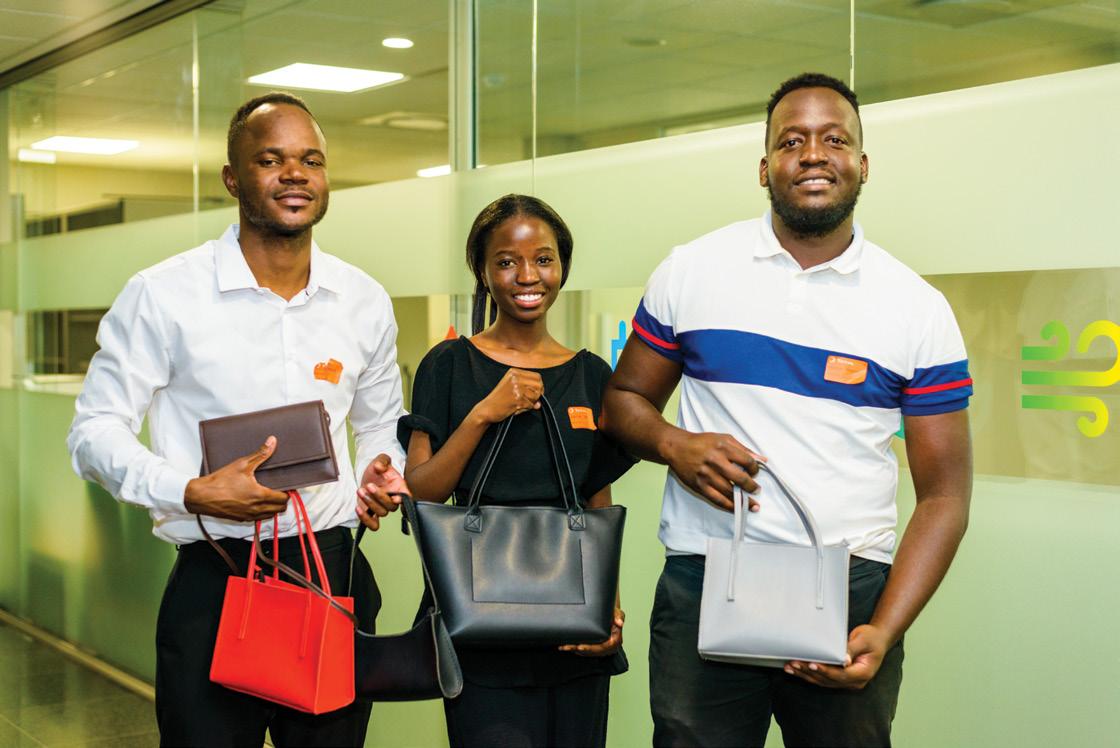


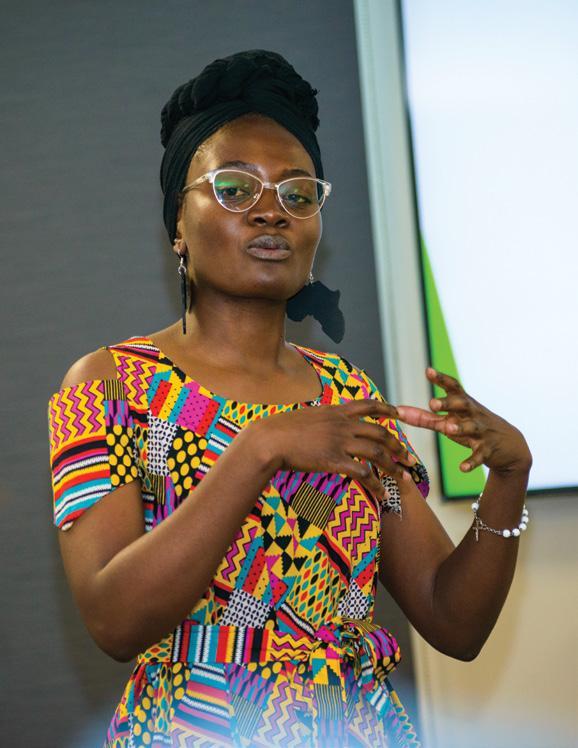
The right kind of energy can ignite a spark that propels ideas forward. Empowering the changemakers of tomorrow is what the fourth edition of the TotalEnergies Startupper of the Year Challenge is about. It serves as a reminder that when young minds are equipped with the tools they need to succeed, they can tackle the pressing issues facing our planet today. With the intention of focusing on creating an environment where innovative ideas can flourish, supported by essential resources and mentorship, the TotalEnergies Startupper of the Year Challenge was launched.
More than just an awards programme, this is a call to action for young minds. By supporting innovative entrepreneurs and promoting sustainable practices, TotalEnergies aims to energise the future of entrepreneurship.
On a cool morning in October, entrepreneurs gathered in the capital for training before presenting their pitches to a panel of esteemed judges. The support offered to participants goes beyond financial assistance; it includes mentorship, visibility and a community of like-minded individuals who can help nurture these ideas into reality.
“Participating in the challenge was a defining moment in my career. It’s one thing to start a business, but it’s another to present that business to TotalEnergies and be selected as one of the top 15 entrepreneurs.” This is according to Bryan Nakambonde from Green Learning, who has created an e-learning website where people can equip themselves to participate in the renewable energy sector through courses on business or engineering relating to renewable energy. Nakambonde added that the TotalEnergies Startupper of the Year Challenge is vital for entrepreneurs: “Startups need capital to bring a new product to the market. You need capital to research and experiment enough to ensure your product can create value in the market; that it can solve a problem that exists in the market.”
The TotalEnergies Startupper of the Year Challenge also highlighted the importance of collaboration. By engaging with local stakeholders and fostering partnerships, TotalEnergies aims to strengthen the ecosystem that supports young entrepreneurs. In doing so, the company reaffirms its belief that the success of any idea is intertwined with the collective energy of those who champion it.
Jesaya Hano-Oshike, also one of the top 15 entrepreneurs, noted that participating in the TotalEnergies Startupper of the Year Challenge has been a rewarding experience: “It offered a chance to showcase MulaStream and its potential to bridge the gap between investors and startups in Africa.” MulaStream is an investment platform that connects risk-averse investors with African pre-seed startups. “The TotalEnergies Startupper of the Year Challenge platform provides valuable exposure and the opportunity to connect with others who are passionate about innovation and entrepreneurship. The initiative is important for entrepreneurs because it encourages new ideas and supports the growth of businesses that can make a difference in their communities,” according to Hano-Oshike.
More than just an awards programme, this is a call to action for young minds.
The selection process for this edition is equally inspiring, featuring a distinguished panel of jurors, including Naftal Kakwambi, managing director of TotalEnergies Marketing Namibia, Laurent Roche, country chair at TotalEnergies Namibia and Iitembu Shituula, Oil & Gas manager for Corporate and Investment Banking at Standard Bank, among others. These jurors bring a wealth of experience and expertise, ensuring that the most deserving candidates are recognised. According to Iitembu Shituula, the TotalEnergies Startupper of the Year Challenge is a “fantastic initiative” that provides crucial support to young entrepreneurs, fostering innovation and sustainable solutions. “It has been inspiring to witness the passion and creativity of these future leaders, who are driving positive change in their communities and beyond,” he added.
Projects are evaluated based on four key criteria: the sustainability of the product or service, the innovative character of the project, its feasibility, and the emphasis on gender equality to promote inclusivity and diversity.
The TotalEnergies Startupper of the Year Challenge emphasises the importance of innovation and sustainability, encouraging participants to think outside the box. Entrepreneurs are invited to submit projects that align with three core categories, each reflecting a commitment to addressing contemporary challenges while promoting environmental stewardship.
Verna Xoagus expressed how much it meant to her to be a part of this challenge: “It has given me hope and validation for the many questions I had when I started this business.” Her business, Laverne Sanitary, produces reusable sanitary pads, which are cost-effective since they can be washed and reused, and they are also environmentally friendly. As an entrepreneur, Xoagus aims to make a difference and uplift women, especially given the high statistics of women living in poverty. She also takes great joy in being able to employ others, enabling them to support their families through their work.
Laurent Roche was equally impressed, saying, “In TotalEnergies, we are convinced that there is no sustainable collective development without perspectives for the youth. I was thrilled to meet with the top 15 startuppers and actively listen to their pitches – full of motivation and engagement. Big congrats to all the participants!”
This year, in celebration of a century of commitment to innovation and socioeconomic development, a special edition of the challenge was launched across 32 African countries. As part of this milestone, 100 candidates will receive recognition and support, marking 100 years of TotalEnergies’ impactful contributions.
TotalEnergies is dedicated to fostering innovation and supporting socioeconomic development through initiatives like the TotalEnergies Startupper of the Year Challenge. This platform empowers emerging entrepreneurs to turn their innovative ideas into viable projects, thereby strengthening the social fabric. By promoting entrepreneurship, TotalEnergies aims to make a lasting impact on the entrepreneurial landscape and contribute positively to the community.
Kirsty Watermeyer
Tourism and hospitality builds the economy, by creating jobs, earning foreign currency, and supporting other sectors, such as transport and logistics. The Development Bank of Namibia understands that tourism is a roadmap to the future, which is why we give more flexibility and support to the sector, and more thought to the ideas, visions and plans of our applicants.
If you have a business plan for tourism and hospitality, call 061 - 290 8000, and expect more.
www.dbn.com.na

The latest Nobel Prize winners have just been announced, leaving many to wonder where this tradition originates from. The Nobel Prizes are among the most distinguished awards in the world, recognising outstanding contributions to humanity in fields such as peace, literature and science. These awards were established in 1901 under the will of Alfred Nobel, a Swedish inventor and philanthropist best known for inventing dynamite. The Nobel Prize was designed to recognise individuals who greatly improve human welfare. Nobel left a substantial inheritance to be invested in solid securities upon his death in 1896. The interest generated by this fund was to be distributed annually as rewards to those who had made outstanding contributions to society in the previous year.
In his will, Nobel specified the disciplines for which the prizes would be awarded: physics, chemistry, physiology or medicine, literature and peace. He also defined the criteria for the relevant prize-awarding committees. Notably, Nobel envisioned the Peace Prize as a recognition for persons who have made substantial contributions to promoting worldwide fraternity, eliminating standing armies and conducting peace conferences. Each Nobel Prize category has its own selection committee made up of specialists in the field. Qualified individuals and organisations submit nominations, and committees carefully analyse the applicants’ contributions before reaching a judgement. The winners, known as Nobel laureates, are announced in October, and the awards ceremony takes place on December 10, Alfred Nobel’s death anniversary.
American scientists Victor Ambros and Gary Ruvkun have been awarded the 2024 Nobel Prize in Physiology or Medicine for their pioneering work on microRNAs, which are small non-coding RNA molecules that play critical roles in gene expression. Their 1990s research concentrated on the model organism Caenorhabditis elegans. MicroRNAs control gene activity by binding to messenger RNA (mRNA), which influences how proteins are generated within cells. Their discovery marked a watershed moment in molecular biology, revealing a hitherto unknown layer of genetic regulation.
Ambros’ and Ruvkun’s results have significant implications for understanding a variety of health disorders, including cancer and heart disease, and have paved the way for novel therapeutic approaches. The Nobel Prize in Physiology or Medicine has recognised numerous achievements in the past, which include the discovery of insulin and the production of vaccinations, as well as advances in genetic research and immunology.
The Nobel Prize in Physics was awarded to John J. Hopfield and Geoffrey E. Hinton for their innovative use of statistical physics concepts in developing artificial neural networks (ANNs). These networks have become foundational to machine learning and artificial intelligence, enabling machines to find and comprehend patterns in large datasets. Hopfield’s work
pioneered the use of energy landscapes to understand neural network behaviour, and Hinton’s contribution has been crucial in furthering deep learning, a type of machine learning that mimics human brain function. Their collaborative research has not only accelerated AI developments but has also discovered applications in fields as disparate as particle physics, material science and astronomy.
One notable recipient of the Nobel Prize in Physics is Albert Einstein, who received the award in 1921 for his innovative explanation of the photoelectric effect. This is a phenomenon which occurs when light shines on particular materials, causing them to emit electrons and giving critical evidence for the quantum theory of light. Einstein’s work not only challenged conventional physics, but it also paved the way for modern quantum mechanics.
The Nobel Prize in Chemistry was awarded to David Baker, Demis Hassabis and John Jumper for their work in predicting and designing protein structures. Baker has been instrumental in creating entirely new proteins, a feat once considered nearly impossible, while Hassabis and Jumper developed an AI model capable of solving a long-standing problem in biology: accurately predicting the complex structures of proteins. Their work utilises computational biology and machine learning to address challenges that have persisted for decades. Proteins are essential molecules in all living organisms, playing critical roles in structure, function and regulation. Understanding their structure enables scientists to design new proteins for therapeutic applications, such as creating novel drugs or addressing diseases at the molecular level.
One cannot mention the Nobel Prize without mentioning Marie Curie. Marie Curie was the first woman to receive the Nobel Prize in Physics, awarded in 1903. In 1911, she made history again by being the first person to win Nobel Prizes in two different scientific domains, this time in Chemistry for her discovery of radium and polonium. Her groundbreaking work on radioactivity not only improved the scientific community’s grasp of atomic science, but it also laid the groundwork for important advances in medical therapies, particularly cancer therapy. Curie’s outstanding achievements and role as a trailblazer for women in science continue to inspire future generations of researchers and scientists.
The 2024 Nobel Prize announcements highlight the continual pursuit for knowledge and the unwavering human desire to understand and better the world. Victor Ambros, Gary Ruvkun, John J. Hopfield, Geoffrey E. Hinton, David Baker, Demis Hassabis and John Jumper made significant contributions to their respective disciplines, demonstrating science’s transformational power. As we celebrate these achievements, we are reminded of the significance of harnessing such developments ethically and responsibly, ensuring that the benefits of these innovations extend to the entire humanity.
Victoria Ndayambekwa Nakafingo

Connecting dreams to a decade of knowledge and experience
The leading aviation training organisation in Africa.


In September, global leaders gathered at the United Nations’ Summit of the Future in New York, addressing pressing challenges facing the world. The event provided a platform for world leaders to demonstrate political will and reaffirm their commitment to tackling global issues through enhanced international cooperation. One of the key outcomes of the summit was the adoption of the Pact for the Future, a comprehensive document that highlights several critical areas, including international peace and security, digital technology, sustainable development, transforming global governance, youth and future generations and financing for development.
In his remarks, President Nangolo Mbumba highlighted the government’s responsibility to create conducive policies and regulatory environments to attract and facilitate private sector investment in projects that are aligned to government priorities in order to boost economic growth and to achieve inclusive sustainable development.
“The Pact and its annexes are pivotal instruments in advancing the 2030 Agenda and fast-tracking the implementation of the Sustainable Development Goals (SDGs) to ensure that our shared aspirations are fully realised in a timely and impactful manner,” said Mbumba.
Opening the summit, United Nations Secretary-General António Guterres said,

“Our world is going through a time of turbulence and transition. But we cannot wait for perfect conditions. We must take the first decisive steps towards updating and reforming international cooperation to make it more networked, fair and inclusive – now.”
The president of the General Assembly, Philemon Yang, called on member states to promote international peace and security, invigorate implementation of the SDGs, foster just and inclusive societies, and ensure that technologies always serve the common good of humankind.
“We must move forward, together, in a spirit of solidarity and multilateral cooperation. The Summit of the Future is a call to action. We must shape our future to protect ourselves and our planet Earth,” said Yang.
President Mbumba reiterated the call for bold leadership, inclusive governance and political will from both the public and private sectors, stressing the need for leaders from the private sector to step up and accelerate action on the SDGs.
“We need partnerships with the private sector to help finance key transitions and to bring innovation in international cooperation,” Mbumba added.
A Heads of State and Government meeting will be held at the beginning of the 83rd session of the General Assembly in 2028 for a comprehensive review of the Pact for the Future.
Maggie Forcelledo Paz
Our world is going through a time of turbulence and transition. But we cannot wait for perfect conditions. We must take the first decisive steps towards updating and reforming international cooperation to make it more networked, fair and inclusive –now.

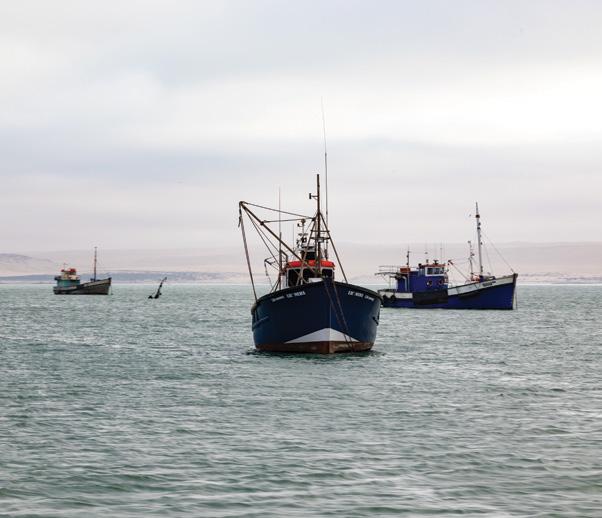
“Empowering communities to safeguard our coastal ecosystems is crucial. When communities grasp their role in preserving marine resources, they become active stewards of the environment. This sense of ownership and responsibility is vital for the longterm success of conservation efforts,” says Clemens Naomab, a senior development officer at the Namibia Nature Foundation and a passionate advocate for sustainable marine resource management.
“In Namibia, there’s a general lack of understanding about our ocean and its vast resources. While our focus often revolves around fish – due to both consumption needs and economic dependence – the ocean offers so much more. It’s important for coastal communities to grasp the ocean’s significance and how it intertwines with our daily lives,” says Naomab.
The work Noamab is doing forms part of the NIMPA+ Project, which is looking to improve the management of Namibia’s marine protected areas, focusing on the sustainable use and conservation of marine resources. A key aim of this project is to boost coastal communities’ economic wellbeing through sustainable development practices and effective marine resource management. “Communities need to see how they can actively participate in and benefit from these resources. Traditionally, conservation efforts may focus solely on protecting specific species, but incorporating community involvement is essential,” he adds, highlighting the importance of local voices in conservation.
Naomab has a long history of working with communities in the northwest of Namibia and believes that local communities are the backbone of wildlife preservation. He notes that Namibia is renowned for its effective community-based conservation, and by actively involving communities in sustainable practices, the benefits of conservation can be felt at grassroots level.
women of the sea
A vital aspect of the project is collaborating with local fishing associations, such as the Benguela Infinite Fisheries and Harvesting Association (BIFHA) and the Namibian Women’s Fisheries Network (NAMFISHNET). NAMFISHNET represents small-scale women fishers who harvest ocean resources for income or food – an often-overlooked demographic in the fishing industry.
“We are working with women’s groups like the Women in Business Association (WIBA) to enhance their market presence. They host market days where they sell their products, and we aim to amplify those efforts through training and support,” says Naomab, who adds that there is currently financial management training underway for WIBA and NAMFISHNET.
Naomab also points out a recent scoping study conducted to assess viable aquaculture businesses. “There’s immense potential for these women to explore avenues like aquaculture,” he notes. “This sector is often commercialised, yet local participation remains limited.”
“The Ministry of Fisheries and Marine Resources, in partnership with Namport, completed an environmental impact assessment (EIA) to identify suitable aquaculture sites,” he explains. “Our project aims to empower these small-scale fishing associations by ensuring they have the necessary documentation and to help them navigate the aquaculture licence application process,” according to Naomab.
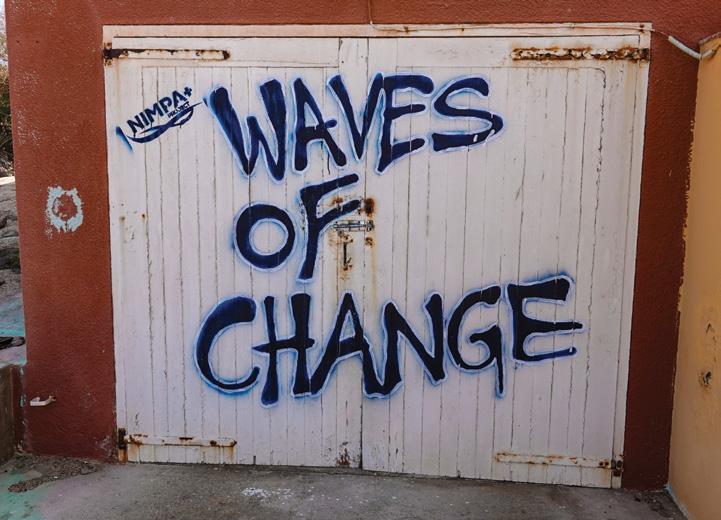
Anria Brandt, the secretary of BIFHA, highlights the significant impact of projects like NIMPA+. “This initiative has sparked a colourful transformation in our town, allowing the community to embrace new opportunities,” she shares.
The project is built on collaboration, as Naomab explains: “We have signed an MOU with the Lüderitz Town Council, leveraging their insights into the local situation. Our goal is to work with what is available to target actions that can truly make a difference.”
The project’s approach also includes conducting a socioeconomic study to better understand the community's dynamics. “We want to identify gaps in education, healthcare and employment – specifically where people are employed and at what levels. This information will help us pinpoint the community’s needs,” he adds.
For Naomab, the heart of the NIMPA+ Project lies in collaboration and transformation. “I enjoy working with people and witnessing how a shared vision can lead to meaningful impact. As Lüderitz transforms, we must ask, ‘Is this change benefiting those on the ground?’ Our
focus should be on addressing local needs and exploring actionable solutions.”
With the project set to run until 2028, Naomab is optimistic about its long-term impact. “We aim to establish sustainable systems that can continue beyond the project’s conclusion. Our focus is on laying a foundation that allows these initiatives to thrive independently.”
Through partnerships with organisations like the Benguela Training Institution and Impact Tank, the project aims to provide locals with essential skills and mentorship. “We have identified ten youth in the final phase of their tourism training,” says Naomab. In Lüderitz, where local tour guides are scarce, this training presents important livelihood opportunities as tourism grows in the area.
Brandt notes that this initiative has energised the younger generation and brought vibrant changes to their town, fostering a sense of ownership and pride among residents. “We are thrilled to see many new activities happening and to involve locals in meaningful ways,” she adds.
As Naomab explains, community engagement is critical in sustainable resource management. This approach not only enhances the effectiveness of conservation efforts but also ensures that local voices are heard and valued. By empowering communities, we take an essential step toward building resilient ecosystems and sustainable livelihoods.
Kirsty Watermeyer
When communities grasp their role in preserving marine resources, they become active stewards of the environment. This sense of ownership and responsibility is vital for the long-term success of conservation efforts.




In a significant gesture of support, Debmarine Namibia has donated a vehicle to the Warmbad community, located 48 km south of Karasburg in the ||Kharas Region. Valued at N$237,000, the vehicle was presented to the Warmbad Settlement Office through the ||Kharas Regional Council to address the pressing need for reliable transportation in the area.
Frieda Iikwa, the control administrative officer for Warmbad, expressed deep gratitude for this timely addition. She also highlighted the community’s struggles with transportation, particularly for emergency services. “This vehicle will provide much-needed mobility in times of crisis,” she said, emphasising how it will improve the community’s response during emergencies.
Adnan Boois, personal assistant to Governor Aletha Frederick, recognised the significance of this donation for Warmbad and the surrounding areas. He pointed out that the vehicle represents not just transportation, but a vital lifeline for the community. “With reliable transport, we can better serve our residents and improve their quality of life,” he noted.
Sofia Roos, secretary of the Bondelswarts Traditional Authority, echoed these sentiments on behalf of Senior Traditional Councillor Hendrik Rooi. She acknowledged that transport has long been a challenge for the community, making the arrival of the vehicle both unexpected and deeply appreciated. “We often feel left out, but this donation gives us hope,” Roos said, urging the community to take good care of the vehicle.
The Warmbad settlement is home to around 300 residents and serves neighbouring communities of over 400 people. The vehicle will significantly enhance local authorities’ ability to deliver essential services, improving overall community wellbeing.
Debmarine Namibia is committed to generating real and lasting benefits for Namibian communities and their natural environment. This vehicle donation represents a commitment to addressing the needs of rural communities like Warmbad, fostering hope and resilience. As the community looks to the future, they can now navigate challenges with increased mobility, ensuring that vital services are accessible when and where they are most needed.



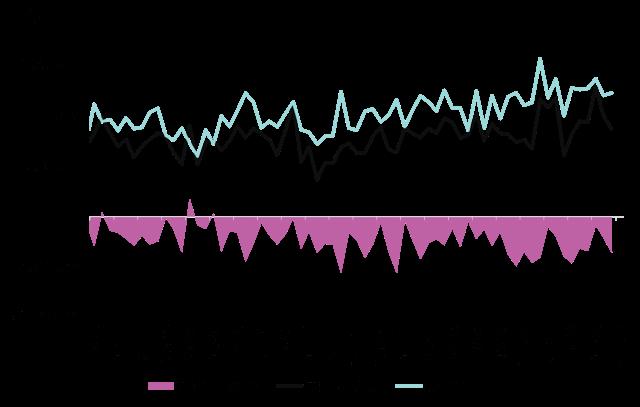
1: Trade balance (N$ million) – March 2019 – August 2024
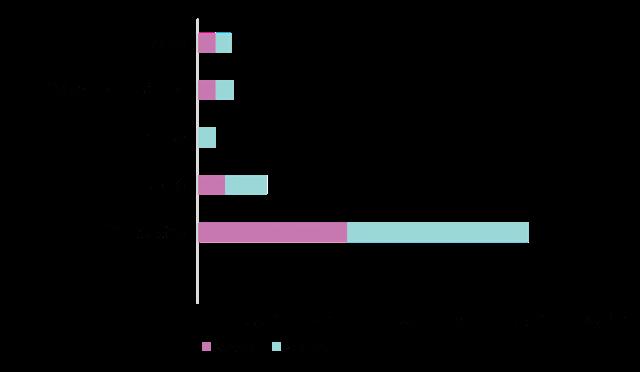
2: Imports by partner (N$ million) – August 2023 – August 2024
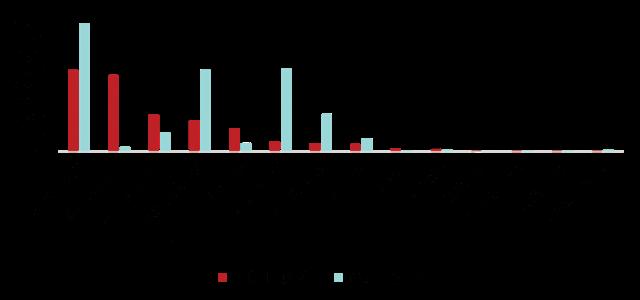
In August 2024, Namibia recorded exports of goods and services amounting to N$8.7 billion, while imports reached N$12.3 billion, resulting in a trade deficit of N$3.6 billion. This represents a significant improvement compared to the N$4.9 billion deficit recorded in August 2023 (Figure 1).
The ratio of imports to GDP stood at 62.7% in Q2 2024, whereas exports accounted for 42.1%, an increase from the 36.1% recorded in Q1 2024. Namibia’s export performance in August 2024 totalled N$8.7 billion, marking the second consecutive month of decline since the peak of June 2024. Despite this decline, exports showed a year-on-year (y/y) growth of 18.2% and a month-on-month (m/m) increase of 12.7%.
This growth was largely driven by the export of precious stones, particularly diamonds, which accounted for 19.5% of total exports. Non-monetary gold and fish also played significant roles, contributing 16.0% and 13.7%, respectively.
On the import side, Namibia’s import bill for August 2024 amounted to N$12.3 billion, reflecting an increase of N$229 million compared to July 2024, although there was a slight y/y decline of 0.1%. The monthly increase was primarily driven by higher imports of petroleum oils, which made up 14.1% of total imports. Fertilizers (3.8%) and motor vehicles (3.6%) were also notable contributors.
In terms of specific export products, the export of salt was valued at N$59.0 million in August 2024. Over the period from August 2023 to August 2024, the average monthly value of salt exports was N$59.9 million, with the highest recorded in March 2024 at N$86.2 million, and the lowest in September 2023 at N$28.0 million.
and Oman for petroleum oils (Figure 2). These trade flows highlight Namibia's strong commercial ties within the Southern African region and its strategic relationships with key global markets in Asia and Europe.
In August 2024, the Southern African Customs Union (SACU) remained Namibia's largest export market, driven by key commodities such as precious stones (primarily diamonds) and nonmonetary gold. SACU also continued as Namibia's leading source of imports, providing essential goods including motor vehicles for goods transportation, sugar, molasses, honey, and alcoholic beverages. SACU receipts have remained a crucial component of Namibia's fiscal framework, significantly supporting government revenue and enabling sustained public expenditure. The robustness of trade within SACU underscores its vital role in ensuring Namibia's economic stability and growth.
Namibia’s export performance in August 2024 totalled N$8.7 billion, marking the second consecutive month of decline since the peak reached in June 2024, despite showing a year-on-year growth of 18.2%.
During the reporting period, Namibia's leading export destinations included South Africa, primarily for non-monetary gold, Botswana for diamonds, Zambia for fish products, China for nickel ores and concentrates, and Spain for fish exports. On the import front, Namibia's principal trading partners were South Africa, supplying motor vehicles, China for civil engineering equipment, and Qatar, the United Arab Emirates,
Infrastructure and Logistics Developments Walvis Bay continues to serve as Namibia's primary gateway for both imports and exports, with N$4 billion worth of imported goods and N$2.6 billion in exports processed through the port (see Figure 3). Namibia's reliable electricity supply facilitates the consistent operation of ports and border posts at full capacity, supporting a seamless flow of goods. This strong infrastructure positions Namibia favourably to capture market share from other regional ports.
In a notable development, Namport has transferred container handling operations at the New Container Terminal in Walvis Bay to Terminal Investment Limited (TIL), effective from 1st October 2024. This concession is anticipated to enhance port efficiency, reducing turnaround times for both imports and exports, which should further improve Namibia's trade competitiveness.
Additionally, Namport has initiated the first phase of a N$4billion investment to expand Robert Harbour at the Port of Lüderitz. This project aims to establish a key oil and gas supply base for the country’s offshore fields, which is expected to alleviate shipping traffic at Walvis Bay. Such strategic investments reinforce Namibia's commitment to strengthening its logistics infrastructure and expanding its role as a regional trade hub.

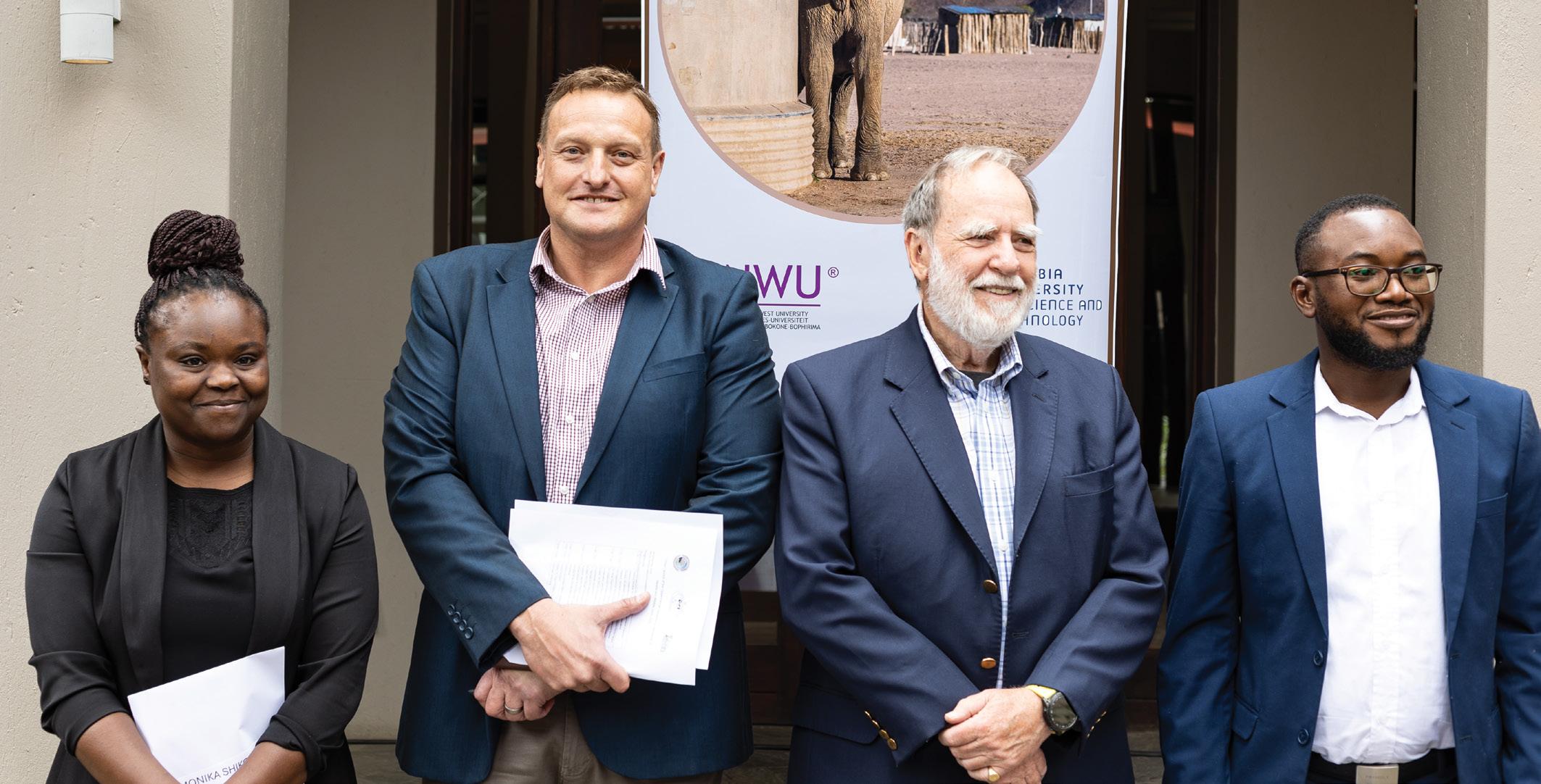
“As a family, we have been deeply involved in nature conservation for many years. We believe that everything we do relies on being in touch with nature. We have a family creed that guides us: anyone who works with us, whether family or otherwise, commits to leaving the world a better place than we found it. To achieve this, we must build sustainable and prosperous societies while engaging with the land, its people and their customs. I believe this principle could serve as a powerful motto for any organisation.”
These were the words of Nicky Oppenheimer, speaking at the launch of the Oppenheimer Generations Research Fellowship in People and Wildlife in Namibia. The fellowship has been awarded to Dr Morgan Hauptfleisch, the director of research at the Namibia Nature Foundation and a renowned figure in the Namibian conservation landscape with a passion for growing young conservation scientists.
Dr Hauptfleisch has been at the forefront of innovative research and conservation strategies that not only protect wildlife but also address the complex interactions between humans and nature. “Morgan has a longstanding relationship with our family, dating back to his time working for us at a small conservancy in South Africa. We always recognised his potential, and I believe we were right,” according to Oppenheimer.
At the ceremony honouring his award, Dr Hauptfleisch remarked, “Throughout my journey, I’ve carved out a niche in Namibia’s conservation landscape, focusing on environmental assessment, human-wildlife conflict and
wildlife movement ecology. My research has always been fuelled by passionate postgraduate students who support the science-conservation interface. I see myself as a bridge between science and conservation, appreciating both perspectives.”
Regarding the future of conservation in Namibia, Dr Hauptfleisch added, “Namibia is unique in its conservation approach because people live alongside wildlife. We have largely moved away from traditional ‘fortress conservation’. While we still have some areas that reflect this model, the trend is shifting towards coexistence, where benefits can flow to both wildlife and local communities.”
Dr Hauptfleisch noted that the fellowship is crucial for fostering collaboration among universities: “While I will continue my role at the Namibia University of Science and Technology, we want to widen our net and tap into the skills available at other Namibian universities. By collaborating, we can enhance indigenous knowledge management and leverage expertise from various institutions, including the University of Namibia and the International University of Management.”
One of the primary goals of the fellowship is to empower young Namibian scientists to address pressing questions about coexistence between people and wildlife. Through this programme, two Namibians will receive bursaries for PhD studies, while four others will be awarded bursaries for their master’s degrees. “All of them will receive support through this project. Additionally, we will continue to supervise existing students to ensure a robust academic framework,” added Dr Hauptfleisch.
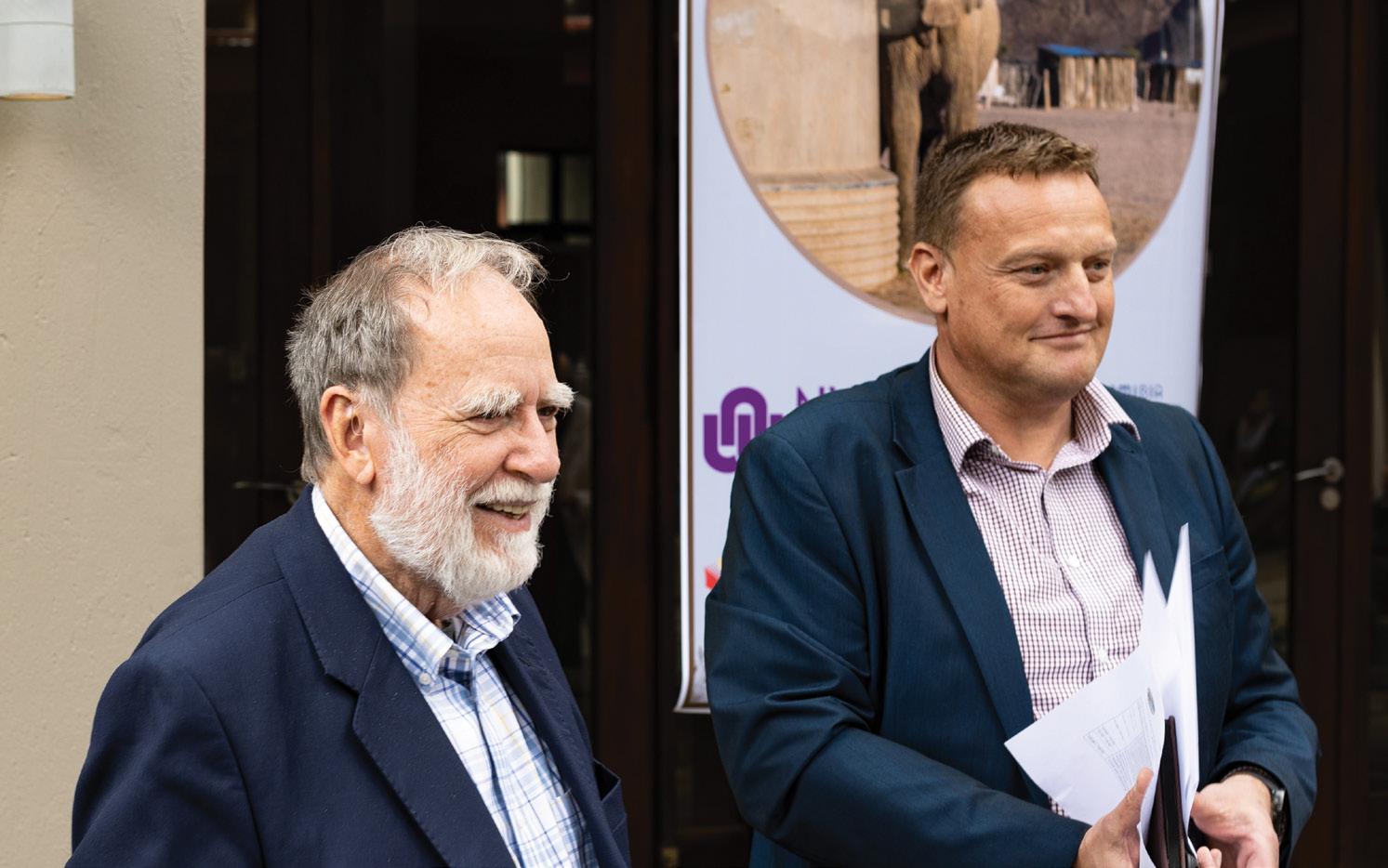
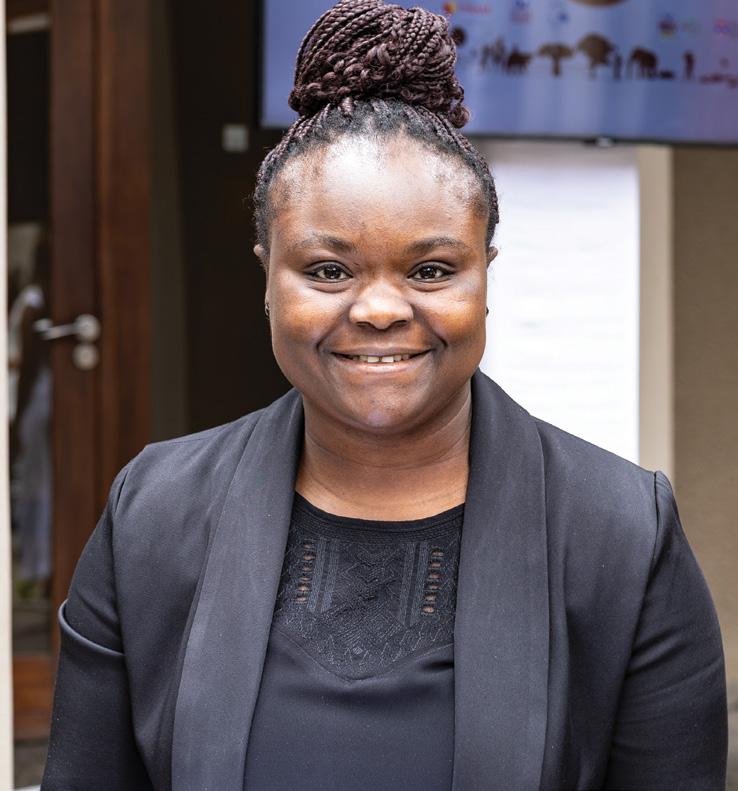

One of the recipients completing her PhD studies is Monika Shikongo, who made history as Namibia’s first female park manager. Now serving as the transfrontier conservation areas and landscape management coordinator at the Ministry of Environment, Forestry and Tourism, Monica will use this bursary to explore the economic potential of the black rhino custodian programmes on freehold farmland in Namibia.
She explains, “My first objective is to evaluate the costbenefit analysis and return on investment of the black rhino custodian programme over its 30-year history on freehold farms. We want to understand what has happened throughout this period.”
According to Dr Hauptfleisch, the fellowship also aims to identify various barriers that hinder effective conservation efforts, whether they be policy-related, economic or physical. Understanding these challenges is crucial for developing actionable strategies. “Once we’ve identified these barriers, we can begin to influence policy. By linking scientific research with policy initiatives, the fellowship aspires to create pathways for more effective and inclusive conservation strategies. Engaging with local communities and policymakers will ensure that
By
linking scientific research with policy initiatives,
the
fellowship
aspires to
create pathways for more effective and inclusive conservation strategies. Engaging with local communities and policymakers will ensure that conservation efforts are not only scientifically sound but also socially equitable.
conservation efforts are not only scientifically sound but also socially equitable,” he said.
Another exciting aspect of the fellowship is its emphasis on honouring the wealth of knowledge that communities possess. “We are thrilled about the concept of para-ecologists – individuals with indigenous knowledge who have been gathering data for years,” said Dr Hauptfleisch. “We believe these local experts can make a significant contribution to scientific research and publications.”
The fellowship is poised not only to enhance conservation efforts but also to cultivate meaningful interactions between communities and wildlife. This prospect excites Dr Hauptfleisch: “I look forward to exploring how wildlife fits into the socio-economic fabric of rural land in Namibia and collaborating with our partners to tackle these critical issues.” Echoing this enthusiasm, Oppenheimer stated, “We are truly excited to embark on an initiative that we believe will make a real difference and foster growth and interaction between people and wildlife in Namibia.”
Kirsty Watermeyer

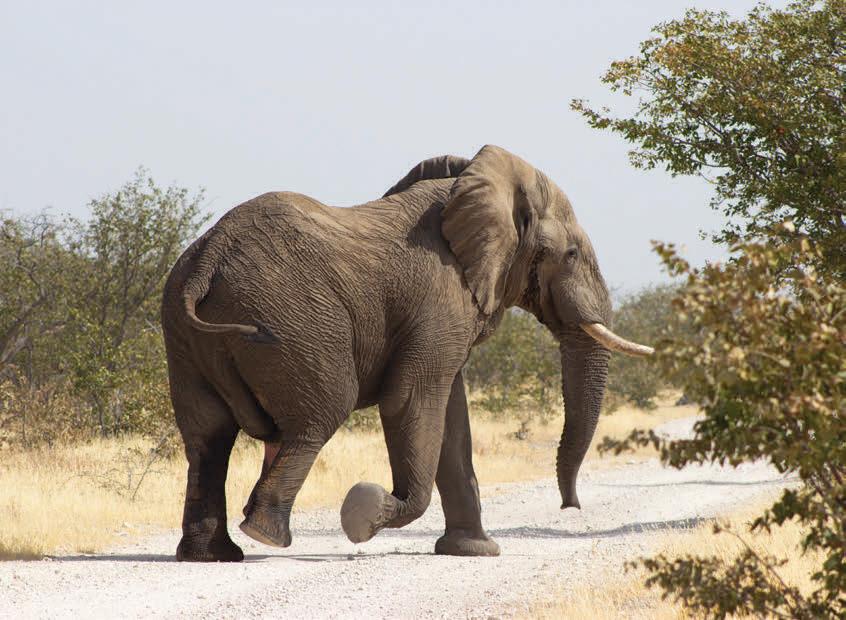
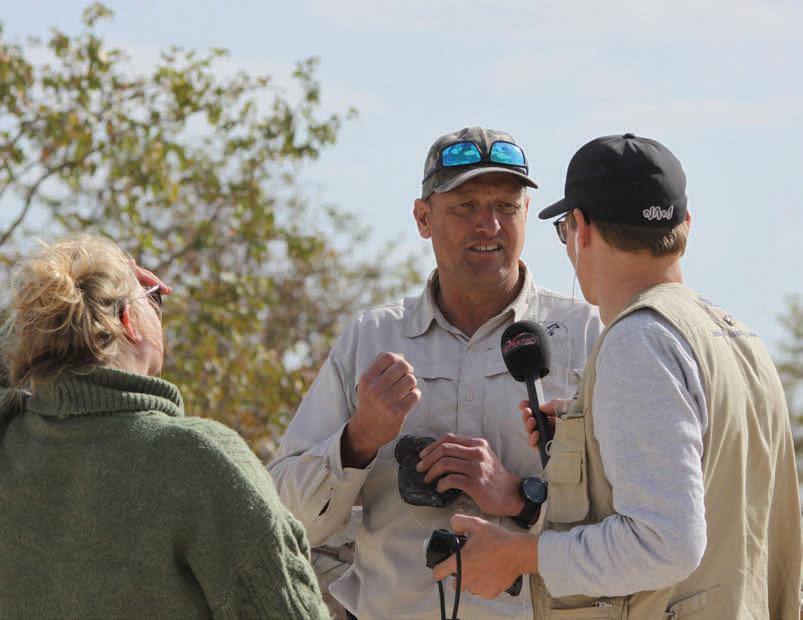
Imagine a flat tire in the middle of the Namibian bush, while a young elephant bull is approaching…and that was only the beginning of three exciting days at Etosha Heights, a private game reserve, bordering the famous Etosha National Park.
Imagine a flat tire in the middle of the Namibian bush, while a young elephant bull is approaching…and that was only the beginning of three exciting days at Etosha Heights, a private game reserve, bordering the famous Etosha National Park.
Imagine a flat tire in the middle of the Namibian bush, while a young elephant bull is approaching…and that was only the beginning of three exciting days at Etosha Heights, a private game reserve, bordering the famous Etosha National Park.
We joined students and researchers from the Namibian University of Science and Technology in releasing two cheetahs into the wild, searching for GPS-collared elephants and witnessed the passion of our Namibian youth for conservation. And we kept the microphones rolling throughout to bring you another story about our favorite topic: Namibia!
We joined students and researchers from the Namibian University of Science and Technology in releasing two cheetahs into the wild, searching for GPS-collared elephants and witnessed the passion of our Namibian youth for conservation. And we kept the microphones rolling throughout to bring you another story about our favorite topic: Namibia!
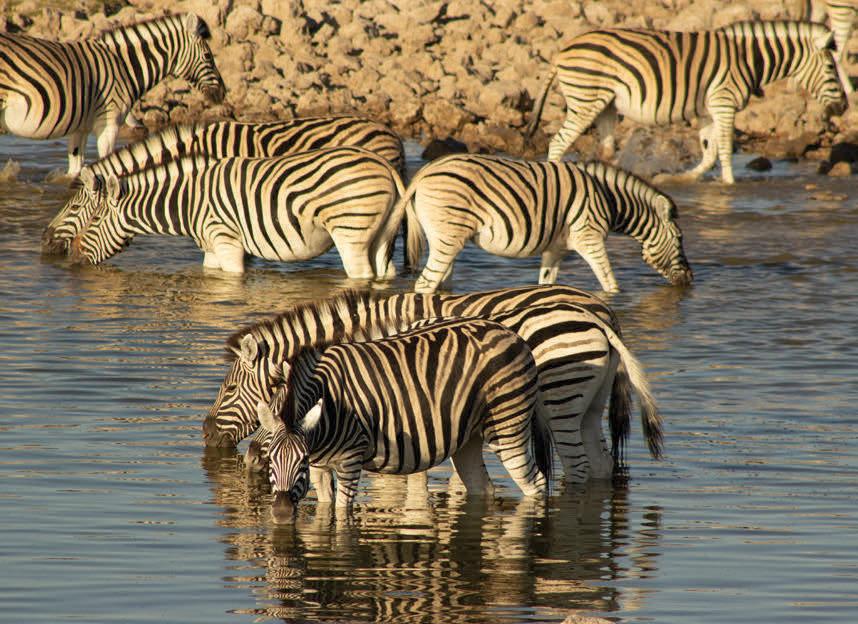
of the most exciting places. And we meet people who care deeply about this country. Discover Namibia with us and share our love for this beautiful land.
of the most exciting places. And we meet people who care deeply about this country. Discover Namibia with us and share our love for this beautiful land.
of the most exciting places. And we meet people who care deeply about this country. Discover Namibia with us and share our love for this beautiful land.
We showcase our unique natural environment and tell you about Namibia’s conservation. We find out how charcoal or beer made in Namibia finds its way to foreign markets. Or what makes Kapana or Zambezi bream so special? And what role sports, music and politics play here. In short, we take you on a journey through Namibia.
The land of vast spaces, of contrasting landscapes, of desertadapted elephants, Omajova mushrooms and glorious sunsets. The land of stories galore.
We joined students and researchers from the Namibian University of Science and Technology in releasing two cheetahs into the wild, searching for GPS-collared elephants and witnessed the passion of our Namibian youth for conservation. And we kept the microphones rolling throughout to bring you another story about our favorite topic: Namibia!
We showcase our unique natural environment and tell you about Namibia’s conservation. We find out how charcoal or beer made in Namibia finds its way to foreign markets. Or what makes Kapana or Zambezi bream so special? And what role sports, music and politics play here. In short, we take you on a journey through Namibia.
We showcase our unique natural environment and tell you about Namibia’s conservation. We find out how charcoal or beer made in Namibia finds its way to foreign markets. Or what makes Kapana or Zambezi bream so special? And what role sports, music and politics play here. In short, we take you on a journey through Namibia.
The land of vast spaces, of contrasting landscapes, of desertadapted elephants, Omajova mushrooms and glorious sunsets. The land of stories galore.
In our podcast ‘Namibia hören’ we take a look behind the scenes
Want to join the world of Namibian wonders and beauties? Simply tune in to Hitradio Namibia’s podcast ‘Namibia hören’.
The land of vast spaces, of contrasting landscapes, of desertadapted elephants, Omajova mushrooms and glorious sunsets. The land of stories galore.
Want to join the world of Namibian wonders and beauties? Simply tune in to Hitradio Namibia’s podcast ‘Namibia hören’. No need to worry about missing out because of language restraints – the podcast is a mix of German and English.
Want to join the world of Namibian wonders and beauties? Simply tune in to Hitradio Namibia’s podcast ‘Namibia hören’.
In our podcast ‘Namibia hören’ we take a look behind the scenes
In our podcast ‘Namibia hören’ we take a look behind the scenes

No need to worry about missing out because of language restraints – the podcast is a mix of German and English.

No need to worry about missing out because of language restraints – the podcast is a mix of German and English.

Switch to a world of convenience with MTC eSIM roaming
Say goodbye to high data charges and juggling multiple SIM cards whilst roaming.
Introducing SIM-less connectivity with MTC eSIM roaming.


SCAN OR Visit: esim.mtc.com.na to get started
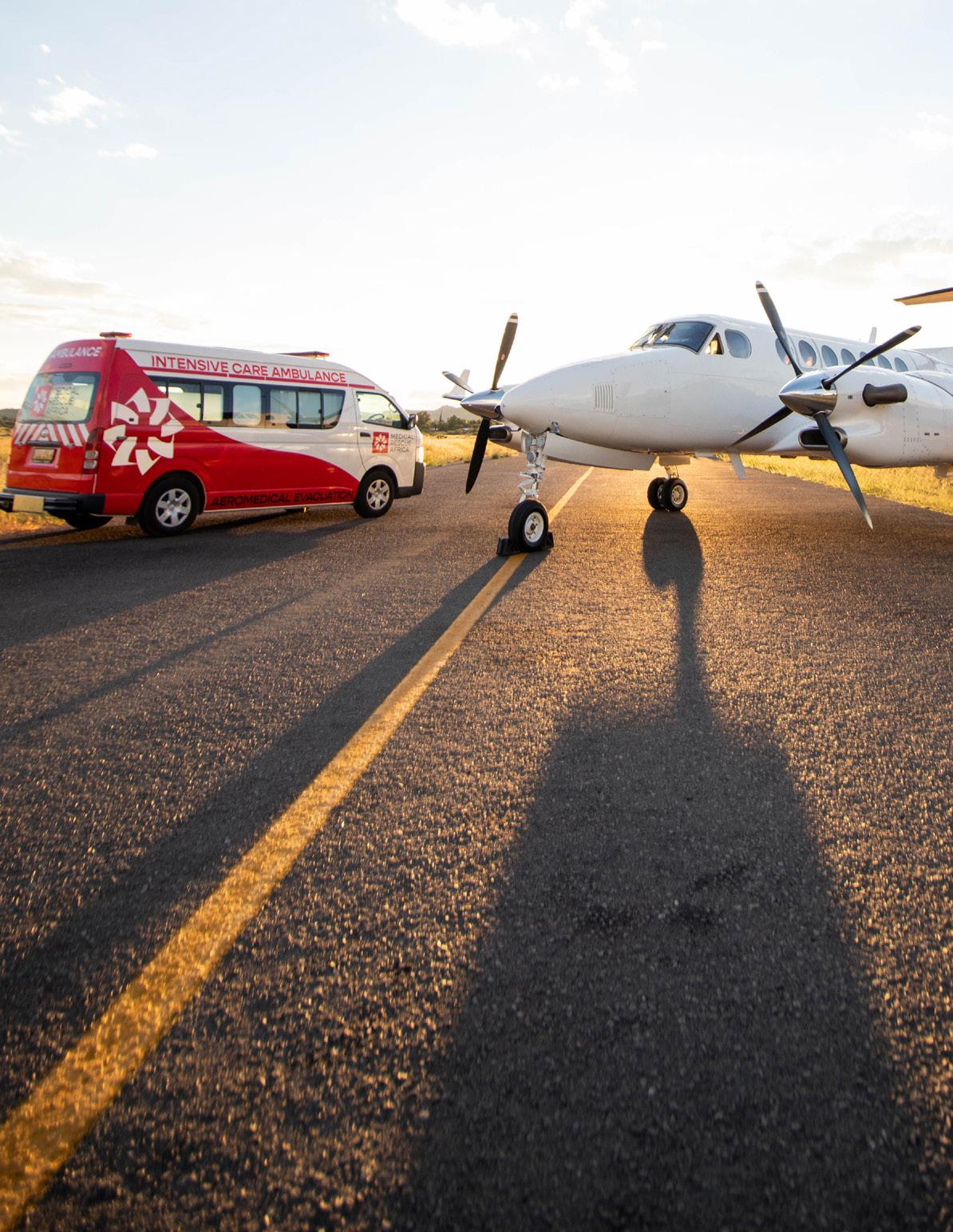
Medical Rescue Africa (MRA) is Namibia’s leading fixed wing Aeromedical Evacuation company specialising in the evacuation of critically ill and injured patients across Africa, 24 hours a day, 7 days a week.
MRA, through Westair Aviation, has a dedicated fleet of Air Ambulance aircraft on standby which have the ability to land on unimproved airstrips as well as to operate at night and in bad weather conditions. Air crews undergo regular refresher training, and all operations comply with the highest safety and quality standards.
MRA has its own 24-hour Call Centre with trained and dedicated operators utilising state of the art equipment and aviation information technology. The Call Centre liaises with local and international Medical Aid, insurance and medical assistance companies to help facilitate and coordinate medical evacuations, and medical repatriation services.
To ensure the best possible pre-hospital treatment to patients, MRA offers a 24-hour Road Ambulance at Eros Airport for transporting patients from the Airport to the treating Hospital. The MRA Ambulance is equipped to an ICU patient care level. MRA has a standard service-level agreement with all accredited ALS Ambulance Services across Namibia for effective Road Ambulance evacuation services should the requirement be to not activate the fixed wing Air Ambulance.
MRA is led by a management team with extensive experience in medical response, evacuation and support operations.
Tel: 912 within Namibia or +264 83 339 0033

Is the contraceptive pill REALLY as safe as it claims?
When it comes to modern contraception, particularly the pill, it is widely considered effective in preventing unintended pregnancies. But what defines medication as truly “safe”? Beyond its primary function, there are other factors to consider. A landmark study by Iversen et al., which began over some 44 years ago, aimed to explore the long-term safety of oral contraceptives. The cohort study in 1966 and 1969 involved 46,022 women who used the pill (“ever users”) compared to women who had never used it (“never users”). The study tracked cancer incidences.
The results? There were 4,661 cases of cancer among ever users and 2,341 among never users. There were 4,661 ever users with at least one cancer in 884,895 woman-years of observation and 2,341 never users with at least one cancer during 388,505 woman-years of observation.
What does this data suggest? The study concluded that most women who choose to use oral contraceptives do not increase their long-term cancer risks. In fact, in some cases, the pill even provides protection. This protection is documented as including cancer of the lining of the womb, ovarian cancer, colorectal cancer, lymphatic and hematopoietic cancer. While breast and cervical cancer are marginally increased in patients under the age of 35 years who are not prone to these types of cancers, the slightly increased risk is no longer a factor for women five years after going off the oral contraceptive. That being said, this is not a blanket endorsement to use the pill without reason. All medication has potential side effects, and the pill is no exception.
However, for many women it does more than just prevent pregnancy – it can significantly improve overall health. Unintended pregnancy remains a significant cause for health complications and in this regard, the pill is undeniably beneficial. Many gynaecological conditions are also treated with hormonal contraceptives. For instance, women with heavy menstrual bleeding, painful ovulation or severe period cramps often find relief through the pill.
The pill is also used to treat hormonal imbalances such as acne in young women, which is caused by ovarian androgen overactivity. Additionally, long-term use is often prescribed for endometriosis, where womb tissue grows outside the uterus, resulting in painful symptoms.
Of course, the pill is not without its risks. It is crucial for doctors to assess a patient’s overall health and potential risk factors – including obesity, smoking, age over 35 and cardiovascular issues – since these can increase the likelihood of blood clots. Other side effects such as mood swings, reduced libido and breast tenderness are also reported by some users.
It is therefore essential to find a contraceptive method tailored to the individual, whether hormonal or nonhormonal. It is also important to clear up some common myths about the pill:
• It does not cause weight gain
• There is no need for a break to allow a withdrawal bleed
• It does not lead to infertility
However, as with any medical decision, it is always best to consult with a healthcare provider to find the contraceptive method that is right for you.
In short, while the contraceptive pill has its pros and cons, it remains a safe and effective option for many women when used appropriately and under medical guidance.
Dr Bettina Zalto Obstetrician & Gyneacologist


The Ministry of Mines and Energy reported a significant surge in exploration activity, with over 600 new licence applications submitted as of December 2023.
Minister of Mines and Energy Tom Alweendo said the influx of applications is a positive indicator of the growing confidence in Namibia’s mineral potential.
He further explained that there are currently 162 valid mining licences but only 68 of those mines are actively operational.
This situation, he claimed, was equally problematic as the issue with exploration licences. As a result, the Ministry adopted a stricter approach to evaluating new mining licence applications.
“Given this high volume of applications, it is no surprise that it is taking a while for us to finalise the evaluation of all the applications in a timely manner. It is not uncommon for an application to take more than a year before it is evaluated,” he said.
The Bank of Namibia’s (BoN) Monetary Policy Committee cut the country’s interest rates by 25 basis points citing declining inflation and that the economy needed more support. The repo rate is now sitting at 7.25% and the prime lending rate has been cut to 11%.
“In discussing the monetary policy stance, the MPC noted the growing momentum in the international monetary policy easing cycle, the retreat in domestic inflation over the

medium term, along with the recent downside surprise in the September 2024 inflation print. The MPC also noted that the domestic economy, while growing at a moderate pace, was operating below full capacity, with private sector credit extension remaining subdued. This suggested that further support to the domestic economy is warranted.”

The Capricorn Foundation has donated N$350,000 to the Women at Work Training Centre, which will be used to train young women and men in basic hospitality skills courses as part of its commitment to job creation and economic advancement.
According to the Capricorn Foundation, 13 students recently graduated from the Women at Work programme, including Zanophen !Hoases, who secured a permanent position through the Women at Work employment bureau. !Hoases credited her success to the invaluable guidance and mentorship she received during the training.
“As a Connector of Positive Change, the Capricorn Foundation is committed to contributing to sustainable community development and economic advancement. Through strategic investments and partnerships, such as Women at Work,
the Foundation uplifts individuals and communities, paving the way for a brighter, more inclusive future,” said Veripura Muukua, Capricorn Foundation Coordinator.

The Ministry of Industrialisation and Trade is pushing for greater involvement of micro, small and medium enterprises (MSMEs) in Namibia’s beverage industry.
This follows the launch of local production of Lion Lager by Anheuser Busch InBev (AB InBev) in Okahandja.
“I wish to further encourage you to proactively engage local suppliers and service providers by sourcing local ingredients and services required for production to foster inclusive economic participation and help build a resilient supply chain that benefits Namibian farmers and businesses alike,” she said at the event.
She further emphasised the importance of attracting sustainable investment in the face of global economic challenges.
The Minister also highlighted the contribution of the manufacturing sector to Namibia’s economic growth, with the sector contributing over N$20.6 billion to the country’s GDP by 2022.
Additionally, Iipumbu stressed the government’s commitment to creating an enabling environment for businesses to thrive.

Kadila Poultry Farming says it has officially begun operations, placing its first batch of 58,000 chicks set for slaughter in the first week of November.
At full capacity, Kadila Poultry Farming aims to produce 400 tonnes of high-quality poultry meat each month, contributing to the local and national supply.
Kadila Poultry Farming is a new venture between Eos Capital, Africa Venture Partner Projects, and Oyeno Poultry Industries, located between Windhoek and Okahandja, the facility features six broiler units.
Eos Capital said the establishment of Kadila Poultry represents a crucial step towards reducing this dependency and a milestone in the country’s pursuit of self-sustainable protein production.
Kadila Poultry Farming has already created over 50 construction jobs, with expectations of generating more than 350 employment opportunities once operational, aiming to make a substantial contribution to Namibia’s agricultural sector.
Namibia currently imports between 2,000 to 2,500 tonnes of poultry meat monthly, highlighting a substantial gap in local production.

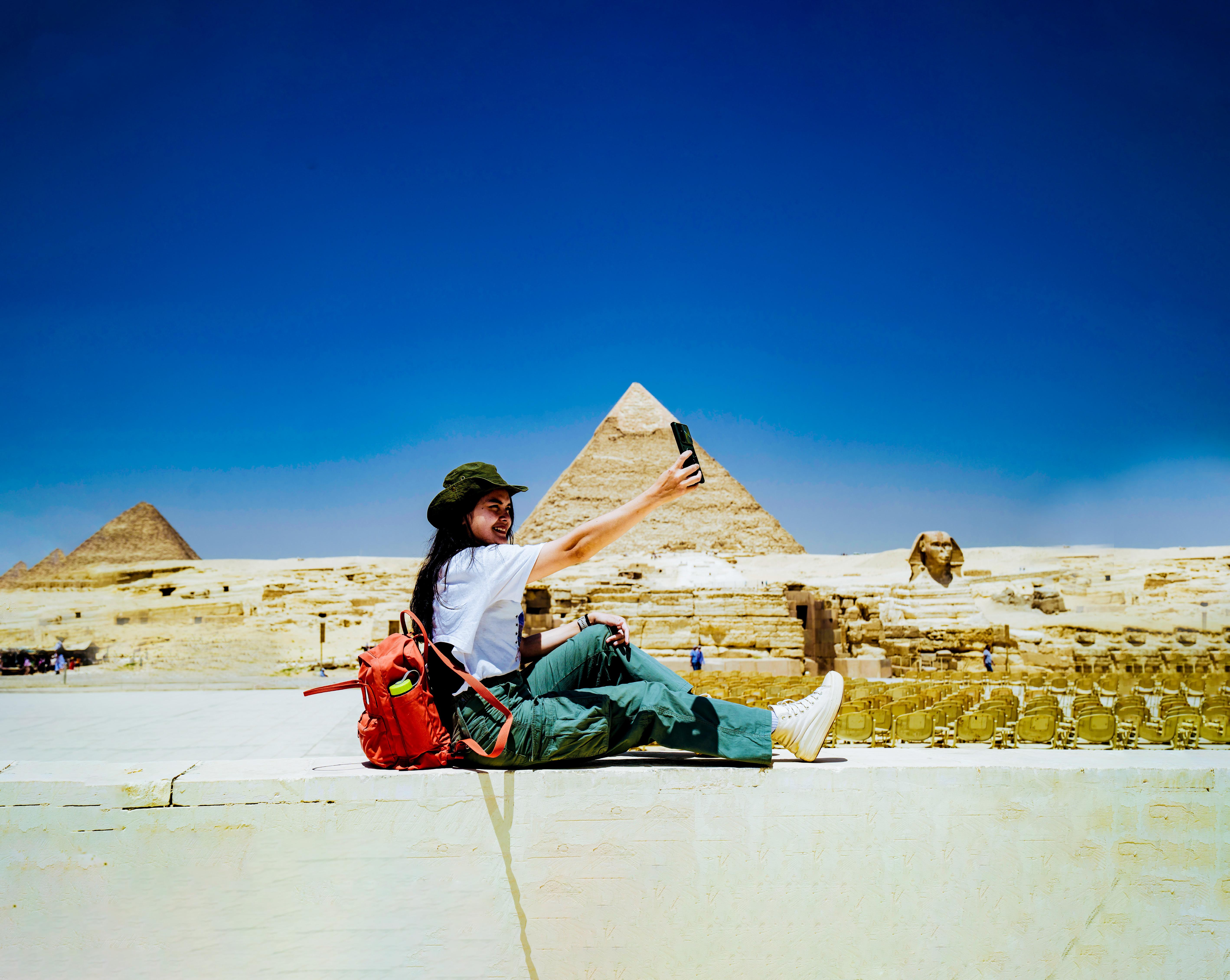
Passport, check. Hotel, check. Seamless data connection, check.
SIMplify your travel and stay connected whilst on the go with MTC eSIM roaming. It’s easy - no SIM change required AND you save on data with a temporary roaming data bundle. SCAN OR Visit: esim.mtc.com.na to get started

Joanette Eises, a seasoned corporate communication specialist and a former journalist, stands out as a beacon of resilience and determination in the corporate world. As a mother of two and a professional navigating the fast-paced communications industry, Joanette has carved a path defined by hard work, strategic growth and a commitment to finding the right balance between career and family.
Joanette’s professional journey began in the world of journalism, where she honed her skills at NBC and Fresh FM. Reflecting on her transition from media to the corporate sector, she describes it as a pivotal moment that significantly influenced her career trajectory. “Moving from journalism into corporate communications was a big shift for me,” she recalls. In journalism, her daily routine was fast paced, centred on news stories, deadlines and immediacy. But stepping into corporate communications required her to adopt a more structured and methodical approach, where processes and approvals govern the flow of work.
Adapting to this new environment was not without its challenges, but Joanette embraced the change by taking professional development courses and diving into public relations through the Public Relations Institute of Southern Africa (PRISA). “I realised I needed to expand my skill set and mindset,” she says. “It wasn’t just about learning new skills, but about adjusting how I thought about communication, structure and processes in the corporate world.”
Throughout her career, Joanette has leaned heavily on mentorship and the support of her family. “My mom has always been my biggest mentor and guide,” she shares, reflecting on the importance of having a support system. Whether it is dealing with a tough day at work or navigating a personal challenge, Joanette’s mother remains her go-to source of advice and comfort. As a mother, Joanette’s approach to leadership has been deeply influenced by her experiences at home. For her, being a mom has taught valuable lessons in balance, structure and routine. Skills that have translated into how she leads in the workplace. “Parenting teaches you resilience. You have to manage your time well, structure your day and learn when
to step back or take time off when needed,” she notes.

She believes that as a leader, it is important to stay grounded, and she constantly reminds herself of the importance of resilience. “There are tough days, but you need to toughen up and keep going. Sometimes, I talk to myself, reminding myself that I’ve got this. It’s about having those moments of reflection, then powering through,” she shares. Challenges are inevitable, and Joanette is no stranger to overcoming obstacles, from workplace politics to the everyday pressures of balancing professional and personal life. Yet, she attributes much of her strength to her faith. “I’m not deeply religious, but I do believe in God and the power of prayer. It helps me stay grounded during difficult times,” she says.
Looking back at her journey, Joanette has one key piece of advice for her younger self: “Embrace every challenge and take risks.” She encourages young professionals, especially those in journalism or corporate communications, to remain curious and open to new experiences. Building a network of mentors is another crucial piece of advice she offers. “In this industry, you need a strong network. Find people you can turn to for guidance, ask questions and learn from their experiences. And don’t be afraid to reach out to peers. LinkedIn is a great platform for building these connections.”
As she continues to make her mark in the corporate world, Joanette remains committed to empowering others, sharing her knowledge and serving as a mentor for the next generation of professionals. In her own words: “We all have challenges, but with the right support system and mindset, there’s nothing we can’t overcome.”
Proudly Sponsored by


B2GOLD’S MISSION EXTENDS BEYOND MINING, WITH A STRONG FOCUS ON MAKING MEANINGFUL CONTRIBUTIONS THAT UPLIFT COMMUNITIES. IN THE OTJOZONDJUPA REGION, THE COMPANY, TOGETHER WITH KEY STAKEHOLDERS IDENTIFIED CORE AREAS ESSENTIAL FOR SUSTAINABLE DEVELOPMENT, INCLUDING EDUCATION AND HEALTHCARE. THROUGH ITS SUPPORT OF INITIATIVES LIKE EDUVISION AND THE CONSTRUCTION OF THE OMBILI CLINIC, B2GOLD CONTINUES TO MAKE A POSITIVE IMPACT ON THE LIVES OF NAMIBIANS. WHILE THESE TWO PROJECTS HAVE DISTINCT OBJECTIVES, THEY SHARE A COMMON GOAL OF EMPOWERING COMMUNITIES TO THRIVE AND BUILD A SUSTAINABLE FUTURE.
Education is a cornerstone of sustainable development, and B2Gold is proud to play a pivotal role in expanding access to quality education in remote regions. Through the EduVision project, initiated by Edugate Academy in Otjiwarongo, technology is being used to overcome the challenges of teacher shortages and resource limitations. Smartboards, paired with satellite links, allow teachers to simultaneously deliver lessons to multiple classrooms, ensuring that pupils in rural areas are not left behind.
Since its inception in 2018, the EduVision project has been a groundbreaking initiative to enhance education in Namibia’s remote areas through digital technology. Over the years, this innovative programme has reached 20 schools, positively impacting 10,000 pupils and 432 teachers across Namibia. As part of B2Gold’s ongoing partnership with EduVision, the company recently sponsored new Smartboards for Khorab Secondary School in Otavi and Ombili Primary School in Otjiwarongo, an investment of N$750,000. This latest contribution adds to the N$2.3 million B2Gold has invested in
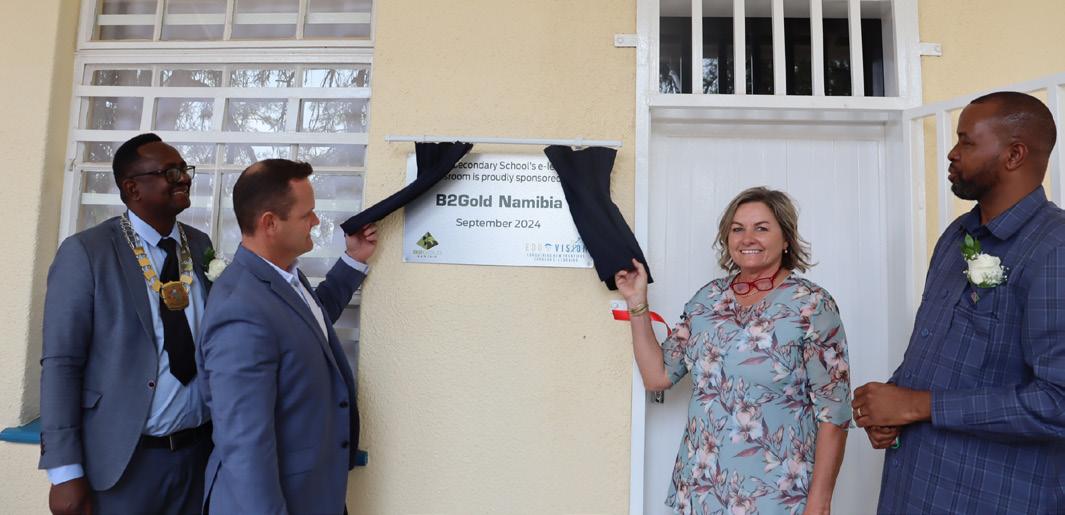
the initiative since 2018. By empowering educators and students with digital tools, the company is helping bridge the educational access gap and pave the way for brighter futures.
Just as education is vital for the mind, healthcare is critical for the body. Recognizing the importance of accessible healthcare, B2Gold has invested in the construction of the Ombili Clinic in Otjiwarongo, a facility designed to meet the healthcare needs of the local community. Breaking ground on April 16, 2024, the clinic was completed ahead of schedule and officially handed over to the Ministry of Health and Social Services on October 2nd, 2024.
With a total investment of N$6 million, the Ombili Clinic offers a wide range of essential services, including general consultations, preventative care, emergency treatment, dental services, and pharmaceutical support. This facility marks a significant milestone in the company’s commitment to improving healthcare access in the Otjozondjupa region, ensuring that residents receive the medical care they need, right in their community.
B2Gold’s commitment to the Otjozondjupa region exemplifies the company’s broader philosophy of contributing to the sustainable
development of communities. By addressing critical sectors such as education and healthcare, B2Gold is not only improving access to essential services but also fostering long-term resilience and growth.
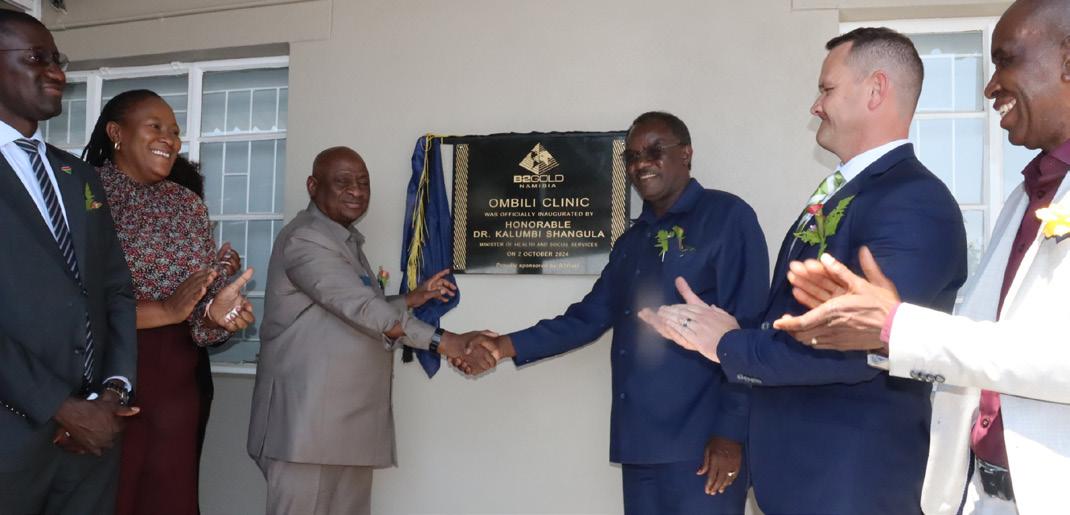



Dirk Aruseb was seventeen years old when Abraham Morris fetched him from the Pella orphanage to join the Bondelswarts. Dirk could not wait to conquer the accursed Schutztruppe alongside legendary Kaptein Jakob Marengo, successor to Hendrik Witbooi and Jonker Afrikaner. But when he arrived at Schansvlakte deep in Namaland, Dirk was warned that he first had to master many life skills before he could join the war: be humble, be patient, be merciful. Find your eland, tame your butcherbird.
But for Dirk war was an adventure – as long as he could kill the German enemy, he was content. It did not matter what commander Nana Kruiper, or Klara Morris, her second in command, tried to teach him: that the liberation struggle of the Bondelswarts meant more than protecting Namaland – their promised land – at all costs.
Crimson Sands is set in Namaland and portrays events in German South West Africa and the Cape Colony between 1904 and 1922, when thousands of Bondelswarts were shot down by Jan Smuts’ fighter planes. It is an epic, panoramic war novel, traversing Southern Africa from Tsumeb to Upington, from internment camps in Windhoek to the dry riverbeds of the Fish River Canyon. Jeremy Vearey conjures a mesmerising tale across an arid landscape of sand, shrub and dune, evoking voices and stories long gone.

As the child of a Hooters waitress and an ex-pro wrestler, Margo Millet always knew she would have to make it on her own. So she enrols at her local junior college, even though she cannot imagine how she will ever make a living. She is still figuring things out and before she knows it, she has an affair with her English professor. While the affair is brief, it is not brief enough to keep her from getting pregnant. Despite everyone’s advice, she decides to keep the baby, mostly out of naiveté and a yearning for something bigger.
Now, at twenty, Margo is alone with an infant, unemployed, and on the verge of eviction. She needs a cash infusion –fast. When her estranged father, Jinx, shows up on her doorstep and asks to move in with her, she agrees in exchange for help with the childcare. Then Margo has a plan: she starts an OnlyFans profile as an experiment, and soon finds herself adapting some of Jinx’s advice from the world of wrestling. Like how to craft a compelling character and make your audience fall in love with you. Before she knows it, she turns it into a runaway success. Could this be the answer to all of Margo’s problems, or does internet fame come with too high a price?

Exit Wounds
Award-winning writer Peter Godwin brings his “moving voice” (The Sunday Times, London) to his latest memoir about his evolving relationships with the women and places that shaped his life.
Peter Godwin’s mother is dying.
Born in England, and having spent most of her adult life as a doctor in Zimbabwe, she now lies on a sickbed in the partitioned living room of his sister’s London home.
Peter has spent his life missing his Zimbabwean childhood, a longing that does not diminish as he reflects on his time as a journalist on the frontlines of combat around the world, or life in New York with his English wife and transatlantic children. In his mother’s final months, he must come to terms with everything his family was and wasn’t: the secrets they kept from one another, the stoicism that sometimes threatened to destroy them, and the beauty of the wildly different places they called home.
With generations of history behind him, Godwin lyrically brings us into the spaces which make us question and suffer, and shows us how we can heal our own scars and celebrate the lives we have among family and friends.

Nexus
#1 NEW YORK TIMES BESTSELLER -
From the author of Sapiens comes the groundbreaking story of how information networks have made, and unmade, our world.
For the last 100,000 years, we Sapiens have accumulated enormous power.
But despite all our discoveries, inventions and conquests, we now find ourselves in an existential crisis.
The world is on the verge of ecological collapse. Misinformation abounds. And we are rushing headlong into the age of AI – a new information network that threatens to annihilate us. For all that we have accomplished, why are we so self-destructive?
Nexus looks through the long lens of human history to consider how the flow of information has shaped us and our world. Taking us from the Stone Age, through the canonisation of the Bible, early modern witch-hunts, Stalinism, Nazism and the resurgence of populism today, Yuval Noah Harari asks us to consider the complex relationship between information and truth, bureaucracy and mythology, wisdom and power. He explores how different societies and political systems throughout history have wielded information to achieve their goals, for good and ill. And he addresses the urgent choices we face as non-human intelligence threatens our very existence.
Information is not the raw material of truth; neither is it a mere weapon. Nexus explores the hopeful middle ground between these extremes, and in doing so, rediscovers our shared humanity.

Revenge of the Tipping Point
Twenty-five years after the publication of his groundbreaking first book, Malcolm Gladwell returns with a brand-new volume that reframes the lessons of The Tipping Point in a startling and revealing light.
What does the heartbreaking fate of the cheetah tell us about the way we raise our children? Why do elite universities care so much about sports? What is the Magic Third, and what does it mean for racial harmony? In this provocative new work, Malcolm Gladwell returns to the subject of social epidemics and tipping points, this time with the aim of explaining the dark side of contagious phenomena.
Through a series of riveting stories, Gladwell traces the rise of a new and troubling form of social engineering. He takes us to the streets of Los Angeles to meet the world’s most successful bank robbers, rediscovers a forgotten television show from the 1970s that changed the world, visits the site of a historic experiment on a tiny cul-de-sac in northern California, and offers an alternate history of two of the biggest epidemics of our day: COVID and the opioid crisis.
Revenge of the Tipping Point is Gladwell’s most personal book yet. With his characteristic mix of storytelling and social science, he offers a guide to making sense of the contagions of the modern world. It is time we took tipping points seriously.

Zeinab Badawi, award-winning broadcaster and president of SOAS, tells an epic story of the oldest inhabited continent in the world from an African perspective, for fans of William Dalrymple, David Olusoga and Peter Frankopan.
Everyone is originally from Africa, and this book is therefore for everyone.
For too long, Africa’s history has been dominated by Western narratives of slavery and colonialism, or simply ignored. Now, Zeinab Badawi sets the record straight.
In this fascinating book, Badawi guides us through Africa’s spectacular history – from the very origins of our species, through ancient civilisations and mediaeval empires with remarkable queens and kings, to the miseries of conquest and the elation of independence. Visiting more than thirty African countries to interview countless historians, anthropologists, archaeologists and local storytellers, she unearths buried histories from across the continent and gives Africa its rightful place in our global story.
The result is a gripping new account of Africa: an epic, sweeping history of the oldest inhabited continent on the planet, told through the voices of Africans themselves.
Elmarie Kotze



Unique local lifestyle brands we're loving, and why you should too
We love their unique woven light pendants and headboards. Elevating your home aesthetic with natural and textural decor is a sure fire way to bring cosy and cool vibes to your space. With the L E D light pendants, every flick of a switch transforms a room into a warm glow you want to bask in. Emulating a similar rustic chic look, the L E D headboards are a brilliant addition to any bedroom, stirring a kind of nostalgia through ratan inspired designs. With a 4 - 6 week lead time on light pendants and headboards, ordering yours means there’s plenty of time to reconfigure the spaces they are destined to liven up, and psyche yourself up for the transformative power of statement lights and a refreshed bedroom.
Shop online at www.leonengelbrecht.com
@leonengelbrechtdesign
+264 81 251 2169
30 Lazarett Street, Southern Industrial, Windhoek


We love their cosy, cool and elegant ethos. For fourteen years, founder Charl Botes has carefully curated the home decor pieces in Habitat, a space that has become synonymous with Swakopmund’s special shopping scene. It was only a matter of time then, for their selection of bathroom and bedroom accessories, enchanting home fragrances, soft furnishings, captivating lighting, and rugs to find a home in Windhoek. A beacon of inspiration and possibilities for architects, designers and homeowners alike; whether in the capital or at the coast, a browse through Habitat entices everybody to bring joie de vivre to their homes and businesses.
Habitat Swakopmund
+264 64 406 466
Habitat Lifestyle Centre, New Industrial, Einstein Street.
Habitat Windhoek
+264 81 493 3733
Bougain Villas Complex, Sam Nujoma Drive
Are you a Nam or SA based lifestyle brand?

List your label with us for only N$1,000 per month for 6 months | fly@venture.com.na
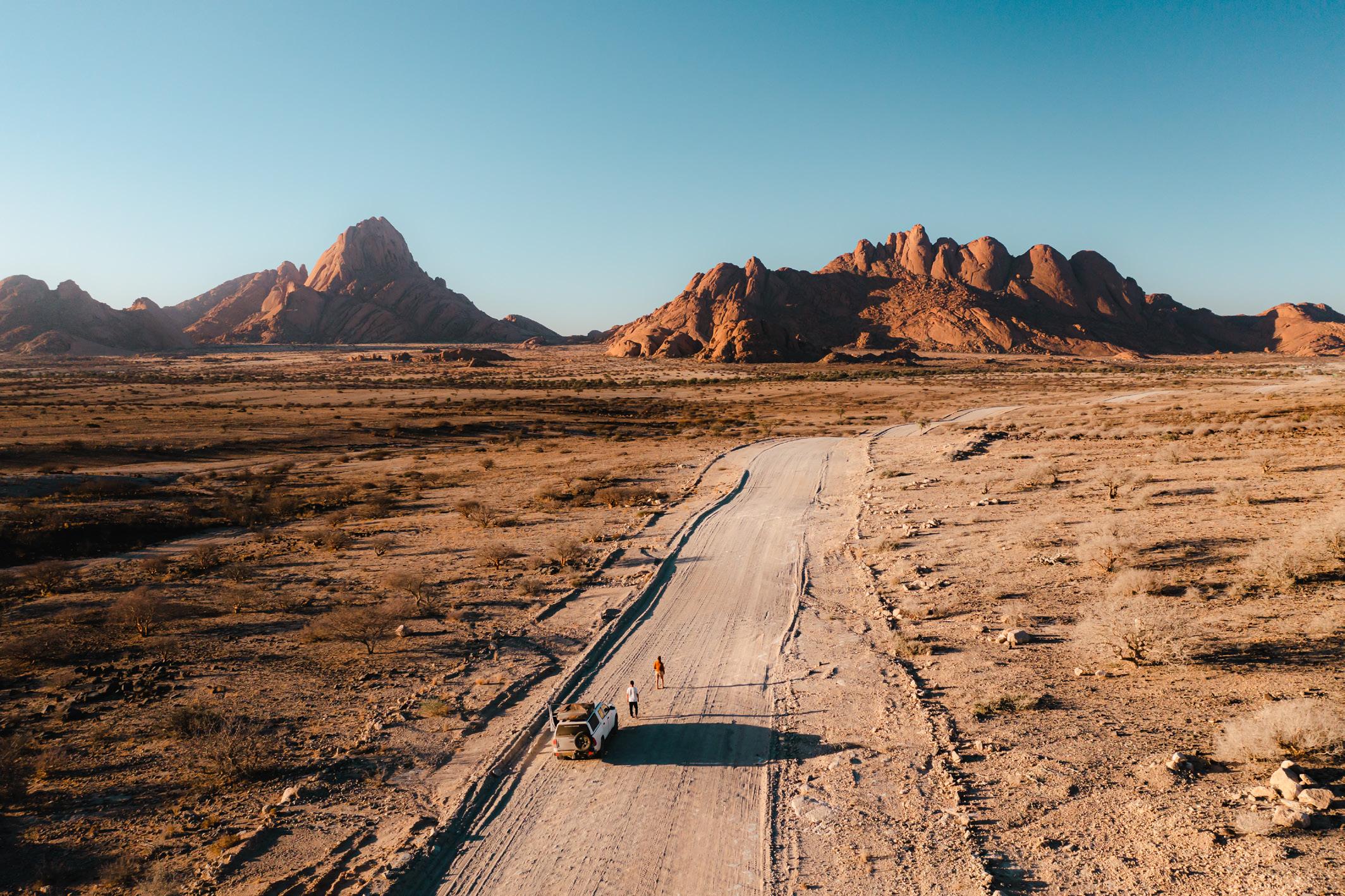

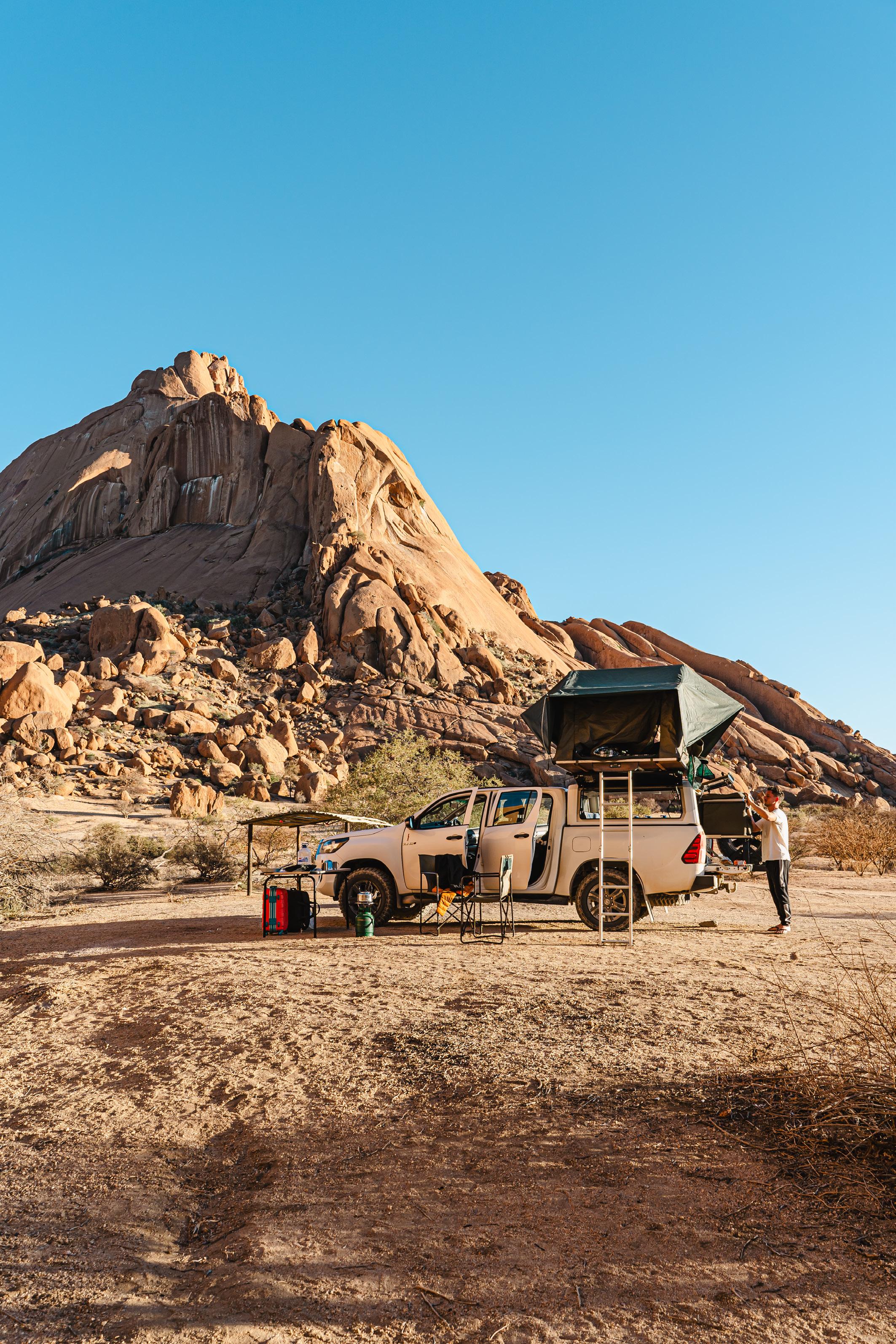
Are you seeing what you think you see?
It turns out that everyone is a semiotician, because we constantly and unconsciously interpret the meaning of signs around us such as words, colours, shapes and much more.
Reading between the lines
Semiotics explores how meaning is created and communicated. It originated from the academic study of signs and symbols, both visual and linguistic, and has evolved into a lens through which we can understand the significant impact of our cultural landscape on our lives. Swiss linguist Ferdinand de Saussure, one of the field’s founders, defined semiotics as “the life of signs within society”.
Our actions and thoughts, which are often automatic, are shaped by a complex set of cultural messages and conventions that we interpret instinctively. Semiotics began by focusing on the meaning of words (linguistics) and has since expanded to explore human behaviour (anthropology and psychology), culture and society (sociology and philosophy), and cultural products like films, literature and art. More recently, it has evolved into a methodology for researching consumer behaviour and brand communication, especially in today’s postGen Z, “woke” world.
The semiotic playbook
The early foundation of this social science has transformed into a thriving industry where semiotic thinking is applied to understand the cultural implications of brands and their impact on consumers. Semiotics can evoke emotional responses; for example, a brand might use warm colours and playful imagery to convey joy, while darker hues and serious imagery communicate sophistication or grandeur.
Of course, being in Namibia, I only learnt about this trend because someone I know has a niece who researches words and their emotional effect for major brands. Her job is to study how a word like “quality” influences consumer perception. Thanks to her work, a major multinational grocery store based in England now carefully chooses to use the word “premium” in its advertising because of its positive impact.
enjoyment of various experiences and is not exactly new. In fact, in 1964, Ernest Richter, the “father of motivational research”, did a fun study that showed just how much a cup’s colour can mess with our taste buds. He had people sip coffee from four cups of different colours – brown, red, blue and yellow – and asked them what they thought. Here is what they said:
• 73% felt the coffee in the brown cup was “too strong”.
• 84% of the women thought the coffee in the red cup was rich and full-bodied.
• The aroma of the coffee from the blue cup was rated as milder.
• Coffee from the yellow cup was perceived as a weaker blend.
The kicker? All four cups had exactly the same coffee inside.
In other words, the colour of the mug can significantly influence the consumer’s multisensory coffee-drinking experience. This is why hotels and restaurants typically serve coffee in white cups.
Interestingly, people who end up brainwashed often still have critical thinking skills. It is not that they have lost their ability to think, but rather their thoughts have been rerouted into a new paradigm.
Culture plays a significant role in consumer behaviour. Consumers no longer just buy products but often also the success, status or lifestyle associated with them, driven by subconscious perceptions and emotions tied to the brand. By analysing signs and symbols, semiotics uncovers these hidden elements and is increasingly integrated into brand communications and market research. It helps brands communicate subtly with customers, guiding them on which signs to embrace or avoid, and whether proposed messages are likely to resonate.
The great coffee cup colour experiment
The way we interpret signs and colours has long influenced our
Signs of the times
While experiments such as these are fascinating, it is also crucial to recognise that we are influenced by more than just the colour of our coffee cup. Semiotic shifts can be used against progressive ideas, showing that meanings can change and be twisted to fit certain agendas. Just like brands use signs and symbols to show who they are, so do movements – whether it is a cause or a political party. Politicians often use symbols that tap into what their audience values, like calling on “patriotism” to drum up support. By understanding the meaning behind words, they can craft messages that hit home and sway opinions.
Lately, there has been a surge of interest in how language can manipulate us, especially with media shaping the way we think. Interestingly, people who end up brainwashed often still have critical thinking skills. It is not that they have lost their ability to think, but rather their thoughts have been rerouted into a new paradigm.
In today’s world, where awareness and sensitivity to social issues are paramount, it is crucial to remain vigilant about how language can shape perceptions and influence conversations. We need to ask ourselves the tough questions from time to time: Do I believe things just because someone told me? Am I overly confident in my beliefs? Do I make an effort to verify what I hear or read?
In a world where meanings can shift in an instant, the signs around you might be designed to influence your thinking, so staying curious and questioning have become essential.
Kirsty Watermeyer


Stephané Edith Conradie’s work delves into the complexities of memory, inheritance and material culture, particularly as they relate to colonialism, displacement and identity in Southern Africa. Born in Namibia and based in Cape Town, Conradie transforms everyday household objects – items often dismissed as mere decoration – into intricate assemblages that challenge viewers to reconsider their significance.
Winner of the Standard Bank Young Artist Award in 2023, Conradie’s travelling exhibition Wegwysers deur die Blinkuur (Signposts through the Twilight) reflects this process of transformation and inheritance. The term “blinkuur” refers to twilight – that fleeting moment between day and night when the world begins to darken and uncertainty sets in. For Conradie, this twilight represents the transitory period between generations; a time when elders, surrounded by cherished possessions, confront their mortality and grapple with the question of who will inherit their values and material culture. In this liminal space, the objects passed down take on even greater significance, symbolising not just family history but the collective memory of a community shaped by the legacies of colonialism, slavery and apartheid.

For Conradie, this twilight represents the transitory period between generations; a time when elders, surrounded by cherished possessions, confront their mortality and grapple with the question of who will inherit their values and material culture.
The twilight metaphor is crucial in understanding Conradie’s work. The exhibition statement poetically describes this moment: “The day is drawing to a close; the sun is setting. The bright sunlight which gave the day its clarity is quickly dimming. Everyone is hurrying to get inside before the depths of darkness set in. The twilight, the blinkuur, is a time to barricade against the uncertainty of the upcoming evening, when the world becomes still and threats begin to lurk. Surrounded by family and inalienable possessions, inside the home discussions begin.”
In this metaphorical twilight, the elders of the home, polishing brass and crockery, sense their time is coming to an end. They anxiously wonder who will inherit their treasured belongings, and more importantly, the values embedded within them.
Conradie captures this tension between past and present in her sculptures, which consist of found objects like ashtrays, ceramic birds, sweet bowls and candleholders. These objects, salvaged from second-hand stores, flea markets and antique dealers, are carefully assembled into intricate, layered compositions. The sculptures, while retaining traces of their original forms, are transformed into something new – something that speaks not only to personal memory but also to a broader, creolised material culture shaped by colonialism and forced migration.
Conradie’s assemblages embody this tension, functioning as signposts (wegwysers) through the foggy morass of generational handovers of values and objects. Despite the anxiety of the blinkuur, Conradie’s work offers a sense of hope. She suggests that even when objects and values are seemingly rejected, ancestral residues remain. These residues are transformed to new identities and material cultures, revealing themselves in the morning light after the blinkuur has passed. Her work challenges us to reconsider the objects we live with and the stories they carry, ultimately offering a powerful reflection on how we construct meaning in a world shaped by displacement, oppression and adaptation. Wegwysers deur die Blinkuur is currently on show at the Standard Bank Gallery in Johannesburg.

Laschandrè Coetzee The Project Room - Namibia www.theprojectroom.com.na








Our traditional mieliepap, eaten for breakfast or as a side dish when we braai, basically consists of white or yellow granular maize meal cooked to a crumbly dry porridge called ‘krummelpap’, or a stiff porridge referred to as ‘putu’ or ‘stywe pap’. I used leftover stywe pap for the pap fingers.
INGREDIENTS
6 x 250 ml water
550 ml maize meal
5 ml salt
TO MAKE THE PAP FINGERS
1 portion of cooked stywe pap
200 g butter
Salt, pepper and BBQ spice to taste

INSTRUCTIONS
• Bring the water to the boil and add the salt.
• Add the maize meal gradually while stirring vigorously.
• Leave to simmer with the lid on for 30–40 minutes.
• Stir every now and then.
• Variation: Add 1 tin of whole corn kernels to the mixture before simmering.
• Pour the cooked porridge into an oven tray and let it cool down and set.
• Cut into fingers and fry in butter until crispy.
• Season to taste with your favourite BBQ spice, salt and pepper
Discover more of Antoinette's delicious recipes in Life on a Table
To order your copy contact Bonn Nortjé at Venture Publications: bonn@venture.com.na


Namibia’s northern airport, Andimba Toivo Ya Toivo, was renamed from Ondangwa Airport in 2019 and on 7 October 2022, a statue was unveiled in honour of Andimba Toivo Ya Toivo at the airport. Ya Toivo was a founding member of the South West African People’s Organisation (SWAPO) and its predecessor, the Ovamboland People’s Organisation (OPO).
Following his release from Robben Island in 1984, Ya Toivo committed himself to building a democratic Namibia, serving as secretary general of SWAPO and in various ministerial portfolios in government. Ya Toivo retired from politics in 2006 and died in 2017.
The airport is about 85 km north of the world-famous Etosha National Park and in close proximity to Oshana, Oshikoto, Ohangwena, Omusati and the Kunene regions of Namibia. A restaurant and car rental services are available at the Andimba Toivo Ya Toivo for your convenience.
For travel schedules and more, contact the airport information office on Tel: +264 65 240 515
Email: communications@airports.com.na
Find us at and www.airports.com.na







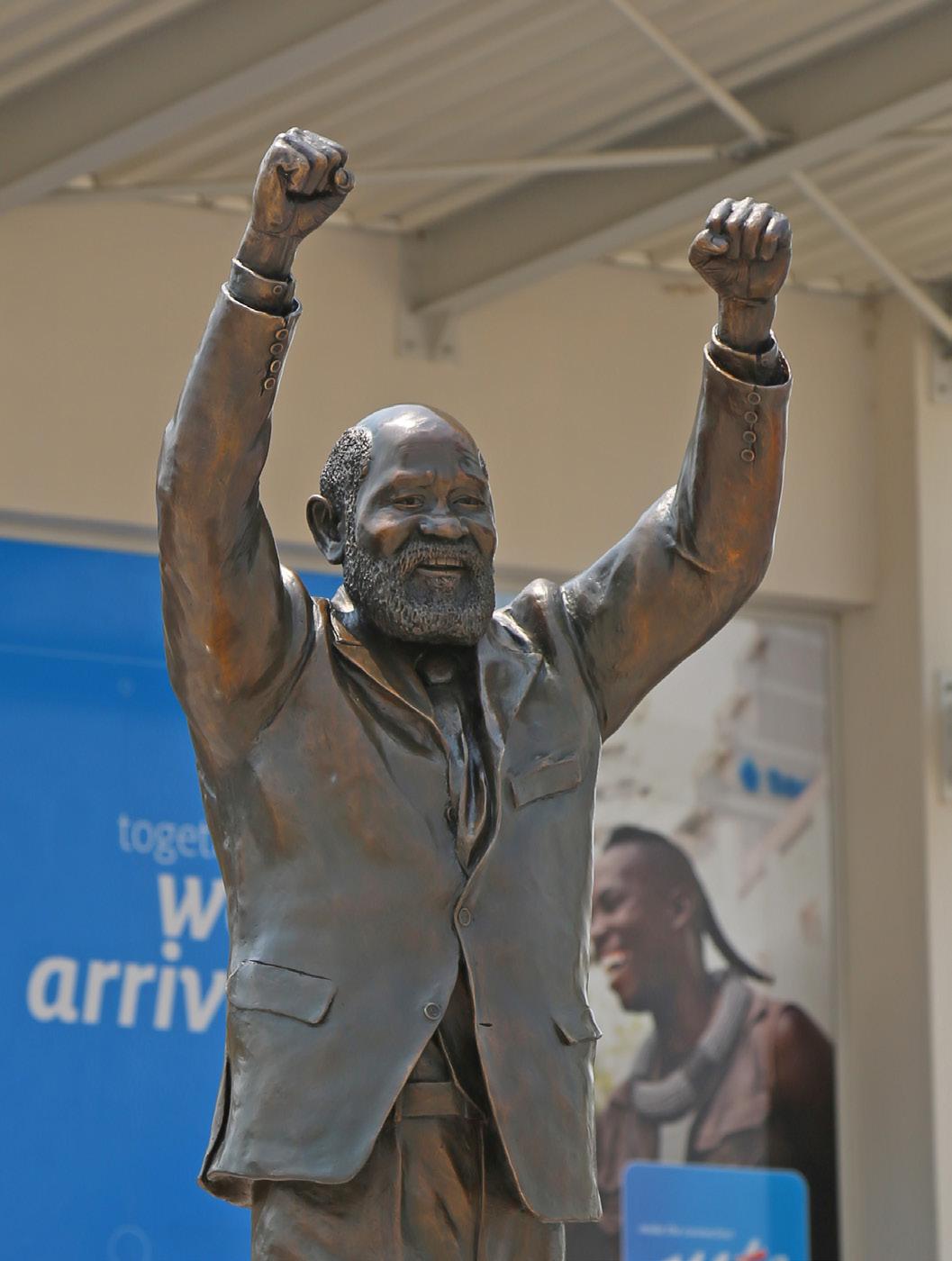
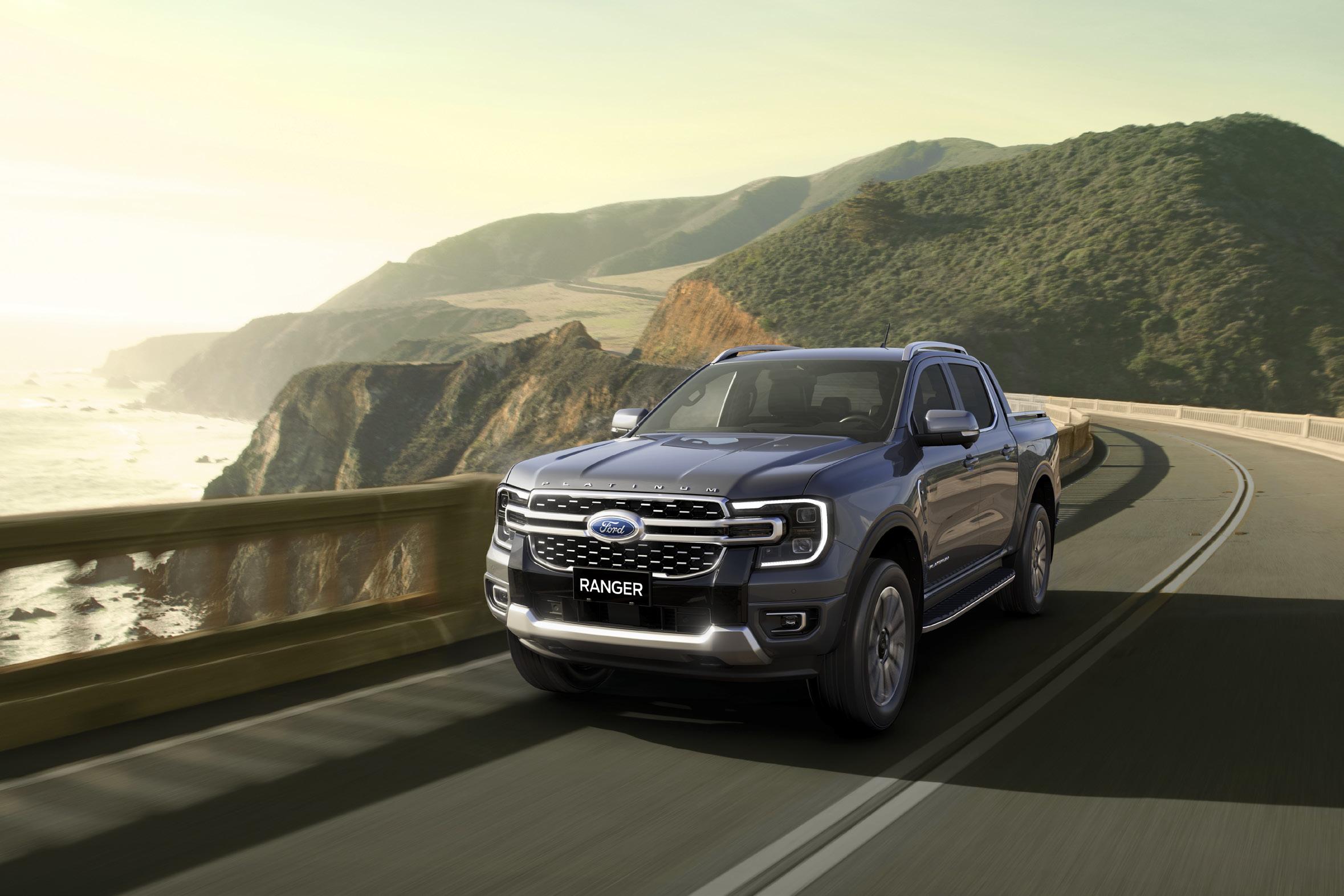




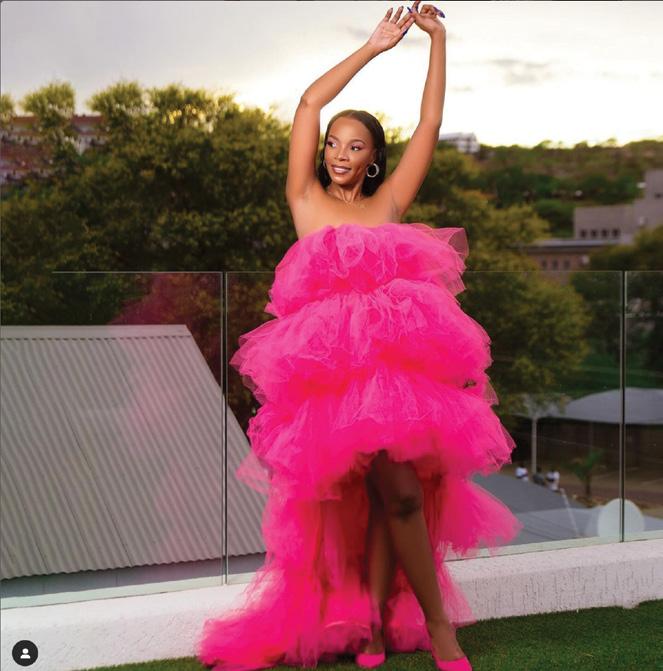
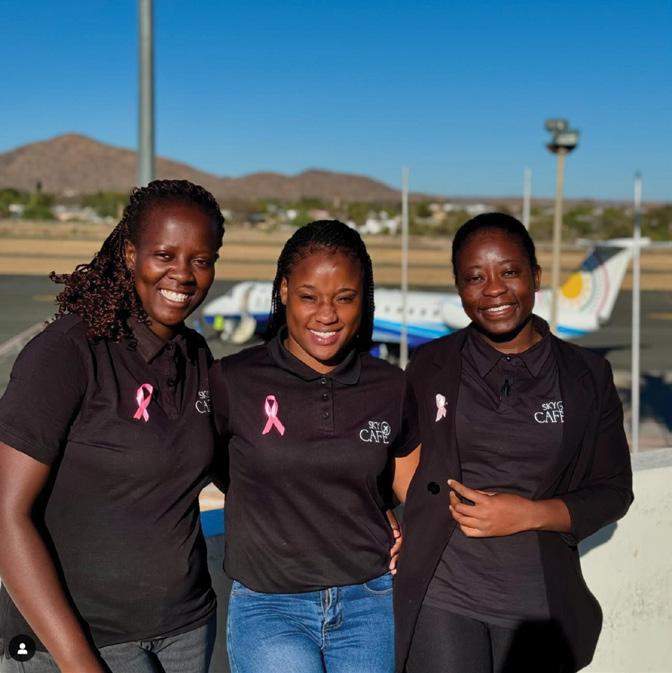

From 21-27 October, we united in PINK to honour those touched by breast cancer. For the fighters, the survivors, and those who stand by their side.


We love seeing your journeys with FlyNamibia on Instagram. Keep Tagging!
We asked: Window seat or aisle seat? What's your favourite and why?

A journey through mystery, nature and timeless wisdom in Namibia's Kaokoland


The Stonemen - Flint and friends in Kaokoland is a spellbinding journey into the heart of Namibia’s remote and mystical Kaokoland, where the lines between reality and legend blur against the backdrop of vast desert landscapes. Authored by Ron Swilling, who skillfully narrates the story as told to her, this book delves into the adventures of Flint Firestone as he navigates through the wilds of Kaokoland, meeting an array of mysterious stone figures – each with their own story to tell. The creator of these enigmatic Stonemen remains anonymous, adding an extra layer of mystery to this compelling narrative.
At its essence, the book is a reflective exploration of the natural world and humanity's connection to it. The desert landscape of Kaokoland becomes a living, breathing entity that Flint and his stone companions inhabit. Every Stoneman Flint encounters offers a unique perspective on life, survival, and the forces that have shaped the earth for millennia. Whether it’s Hanging Man, who contemplates the fragile balance between humans and desert wildlife, or Quartz Man, who muses on the desert’s famous fairy circles, each interaction invites readers to pause and consider the delicate symbiosis between man and nature.
the natural world. The Stonemen themselves, who stand as guardians of the earth, serve as symbolic reminders that we must tread lightly on this planet, preserving it for future generations. Throughout the story, environmental themes are woven seamlessly into the narrative, reminding us that the wilderness is both fragile and resilient, depending on how we choose to engage with it.
The story’s philosophical undercurrents are subtle but powerful. Flint’s journey isn’t just a physical trek through the remote northwest of Namibia; it is also a spiritual and emotional one. Each meeting with a Stoneman brings new insights, not only about the landscape and its creatures but also about life’s deeper meanings – community, balance, survival, and respect for the earth. Swilling’s deft storytelling brings these moments of reflection to the forefront without being heavy-handed, creating a narrative that is as thought-provoking as it is enjoyable.
More than just a tale of adventure, The Stonemen is also a meditation on conservation and our responsibility toward the natural world.
The author’s writing beautifully captures the essence of the Kaokoland, a place where time seems to slow down, allowing readers to experience the profound stillness and awe-inspiring beauty of Namibia's wilderness. Swilling’s descriptions bring the landscape to life – the arid heat of the day, the shimmering constellations of the night sky, and the whispering winds that seem to carry ancient secrets. These vivid depictions are complemented by captivating photographs, and atmospheric illustrations by Jacquie Tarr, whose art adds depth to the story’s already immersive quality.
More than just a tale of adventure, The Stonemen is also a meditation on conservation and our responsibility toward
This is a book for young and old. For those who appreciate adventure, the allure of the unknown, and the profound wisdom that can be found in the natural world. The anonymity of the Stonemen’s creator only adds to the book’s mystique, encouraging readers to focus less on the artist and more on the art – on the powerful messages embedded in the stones and the timeless landscapes they inhabit.
The Stonemen - Flint and friends in Kaokoland is a journey that will captivate nature lovers, adventurers, and anyone who has ever been touched by the vast beauty of untouched wilderness. It’s a reminder that even in the quietest corners of the world, there are stories waiting to be told – and lessons waiting to be learned.
To order your copy, visit: www.venture-events.com
Elzanne McCulloch
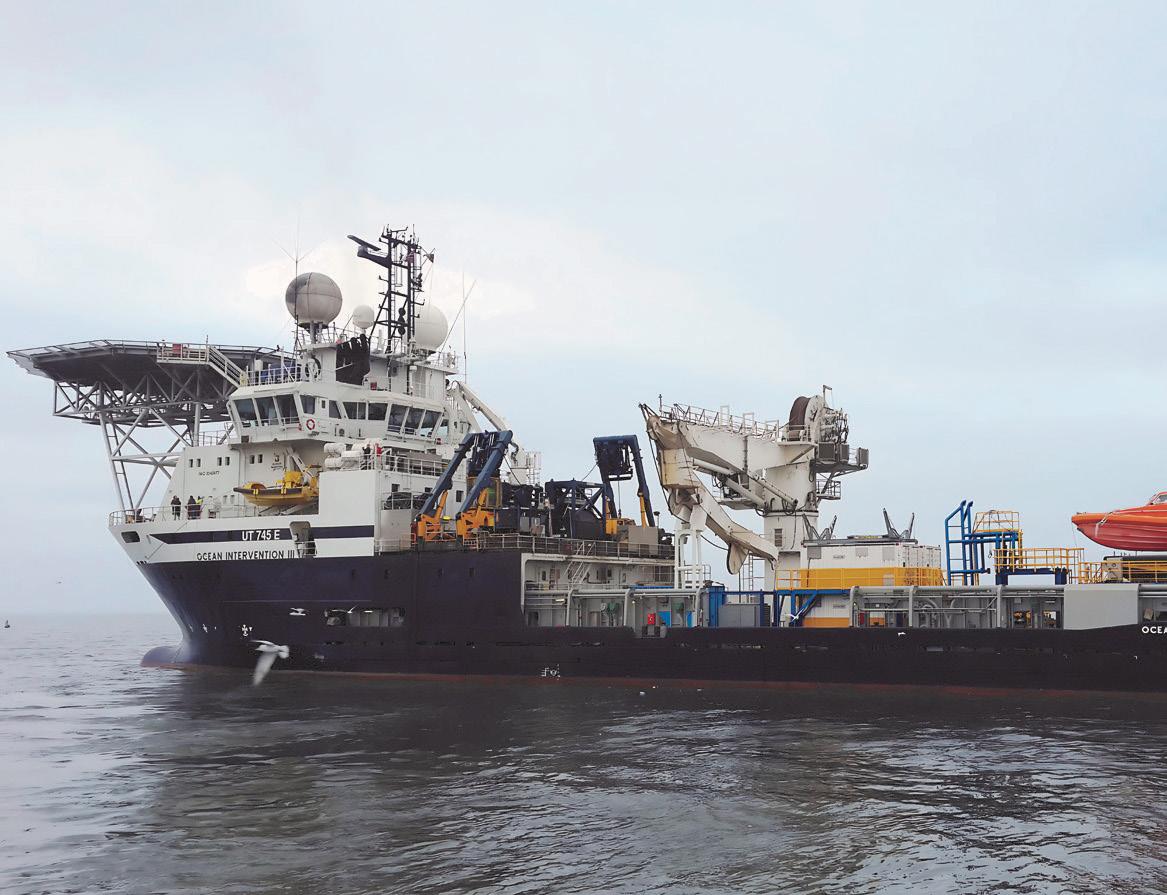


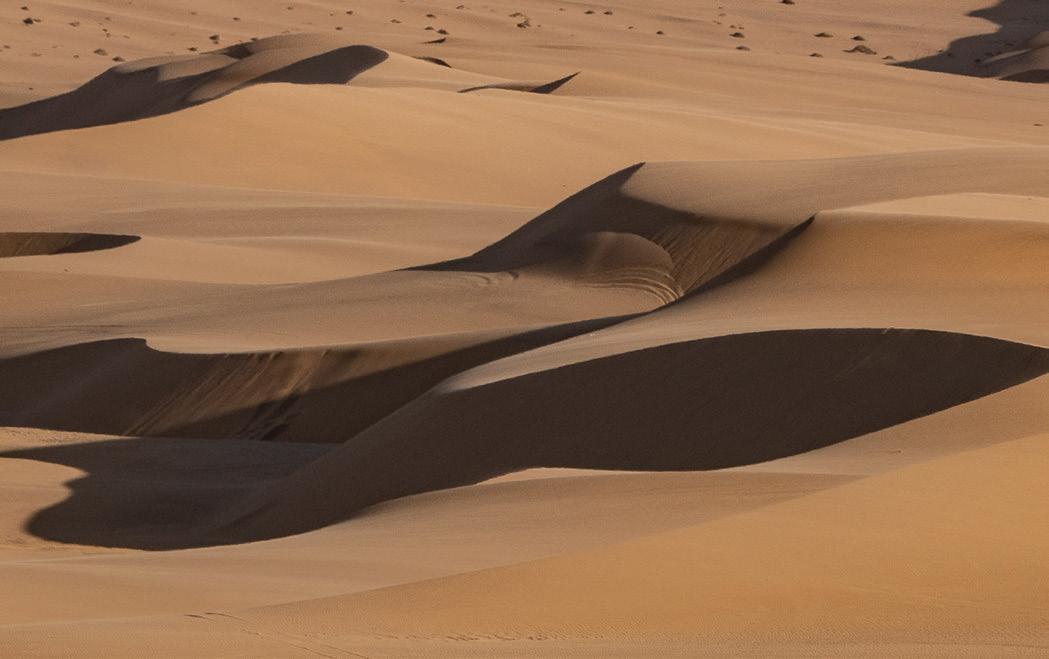



Barack Obama becomes the first person of colour to be elected President of the United States, defeating Republican candidate John McCain.
Mahatma Gandhi is arrested for leading 127 women, 57 children and 2037 men in a march opposing the Indian Relief Bill in South Africa. Released on bail, he rejoins the march and is re-arrested.
On "the eleventh hour of the eleventh day of the eleventh month" the armistice signed by the Allies and Germany ends World War I. The war lasted more than four years and cost millions of lives.
At the Berlin Conference the “Scramble for Africa” is formalised. By the end of the conference, the European powers had neatly split up Africa between themselves, drawing the borders in Africa much as we know them today.

David Livingstone becomes the first European to see the Victoria Falls.
November’s birthstone is topaz. The ancient Greeks believed that topaz could make a wearer invisible. This mineral is a symbol of honour and strength.


US President John F. Kennedy is assassinated by Lee Harvey Oswald in Dallas, Texas.
English naturalist Charles Darwin publishes On the Origin of Species which brushes aside the notion of creationism and lays the foundation for evolutionary biology.
The Reinheitsgebot, or German Beer Purity Law, is promulgated in Munich by Albert IV, Duke of Bavaria. It stipulates that beer should be brewed from only three ingredients – water, malt and hops.
The name November – the “ninth” month in Latin – has remained unchanged since the ancient Roman calendar, which was used until 45 BC. The first Roman calendar consisted of only ten months.
The goal of Sudoku is to fill a 9×9 grid with numbers so that each row, column and 3×3 section contain all of the digits between 1 and 9.

14 November Armistice Day (Remembrance Day) 11 November

World Diabetes Day

20 November
Africa Industrialisation Day

25 November
International Day for the Elimination of Violence against Women