TOTAL LICENSING
Craig Zevin writes about the endless appeal of physical locations for brands. Craig is COO of Spaceport, which builds tools for creators, brands and agencies to monetize IP
158
How IP Serves Advertising and Revenue Intellectual property (IP) plays a considerable role in how brands are building revenue by extending from their core market to engage new and loyal customers with new buying opportunities. Think about it. Little of Google’s value is attributable to physical assets, instead it’s generated from what it accomplishes with its IP (their brand, software, data, etc.) . Same goes for companies like Warner Bros., Disney, and Paramount (which has agreed to merge with Skydance), and Netflix, which announced recently the launch of Netflix House, physical retail stores to open in Dallas and King of Prussia, PA. And here we get to the place where digital and physical IP intersect. And that’s where new advertising and retail revenue opportunities lie. When a brand extends its digital IP into a physical presence, such as with Netflix House where experiences and merchandise around its shows are available, it can significantly enhance consumer engagement and loyalty. Engagement is essential for brand success in terms of identifying leads, sustaining existing customer relationships, and converting on sales. Pop-up experiences like that of the Netflix hit “Stranger Things” not only attract new subscribers but also retain existing ones by offering unique, tangible experiences that digital platforms cannot replicate. Disney was ahead of others by engaging fans with their IP in the real world
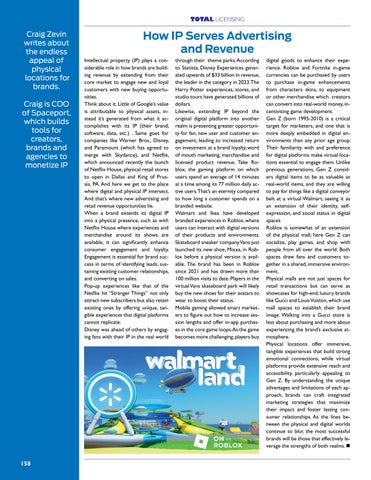
through their theme parks. According to Statista, Disney Experiences generated upwards of $33 billion in revenue, the leader in the category in 2023.The Harry Potter experiences, stores, and studio tours have generated billions of dollars. Likewise, extending IP beyond the original digital platform into another realm is presenting greater opportunity for fan, new user and customer engagement, leading to increased return on investment at a brand loyalty, word of mouth marketing, merchandise and licensed product revenue. Take Roblox, the gaming platform on which users spend an average of 14 minutes at a time among its 77 million daily active users.That’s an eternity compared to how long a customer spends on a branded website. Walmart and Ikea have developed branded experiences in Roblox, where users can interact with digital versions of their products and environments. Skateboard sneaker company Vans just launched its new shoe, Mixxa, in Roblox before a physical version is available. The brand has been in Roblox since 2021 and has drawn more than 100 million visits to date. Players in the virtual Vans skateboard park will likely buy the new shoes for their avatars to wear to boost their status. Mobile gaming allowed smart marketers to figure out how to increase session lengths and offer in-app purchases in the core game loops.As the game becomes more challenging, players buy
digital goods to enhance their experience. Roblox and Fortnite in-game currencies can be purchased by users to purchase in-game enhancements from characters skins, to equipment or other merchandise which creators can convert into real-world money, incentivising game development. Gen Z (born 1995-2010) is a critical target for marketers, and one that is more deeply embedded in digital environments than any prior age group. Their familiarity with and preference for digital platforms make virtual locations essential to engage them. Unlike previous generations, Gen Z considers digital items to be as valuable as real-world items, and they are willing to pay for things like a digital conveyor belt at a virtual Walmart, seeing it as an extension of their identity, selfexpression, and social status in digital spaces Roblox is somewhat of an extension of the physical mall; here Gen Z can socialize, play games, and shop with people from all over the world. Both spaces draw fans and customers together in a shared, immersive environment. Physical malls are not just spaces for retail transactions but can serve as showcases for high-end, luxury brands like Gucci and Louis Vuitton, which use mall spaces to establish their brand image. Walking into a Gucci store is less about purchasing and more about experiencing the brand’s exclusive atmosphere. Physical locations offer immersive, tangible experiences that build strong emotional connections, while virtual platforms provide extensive reach and accessibility, particularly appealing to Gen Z. By understanding the unique advantages and limitations of each approach, brands can craft integrated marketing strategies that maximize their impact and foster lasting consumer relationships. As the lines between the physical and digital worlds continue to blur, the most successful brands will be those that effectively leverage the strengths of both realms. n