
















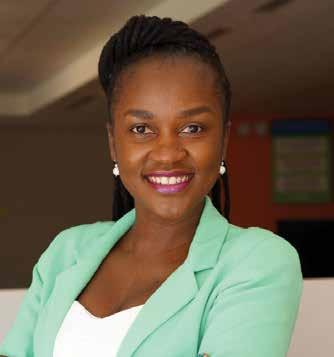




2022 – where did you go? I feel like I just blinked! And yet, this was a sea change year, the year that showed the light at the end of the tunnel was not a train. After “building the ship as we sailed it” for two years to navigate the tsunami of the pandemic’s new normal, some semblance of hope has emerged and green shoots have started to appear in economies around the globe. Here at home we lifted restrictions and people came out of lockdown, joyful at the possibility of being social and interacting with “real” humans – pajamas pants were replaced with something wearable in the great outdoors, and lipstick sales started picking up again (although Revlon was one of the casualties which did not make it in the corporate world).
Topco had pivoted to digi-first for our publications and our events as COVID hit – for two years this was our business model and it was really heartwarming to see the energy, positivity and enthusiasm which greeted the introduction of our first hybrid event – Africa Tech Week – at the Cape Town International Convention Centre this year. This model enabled us to have the best of both worlds – one-on-one interactions, plus the presence of experts and thought leaders joining from around the globe.
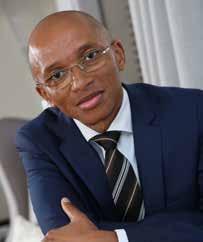
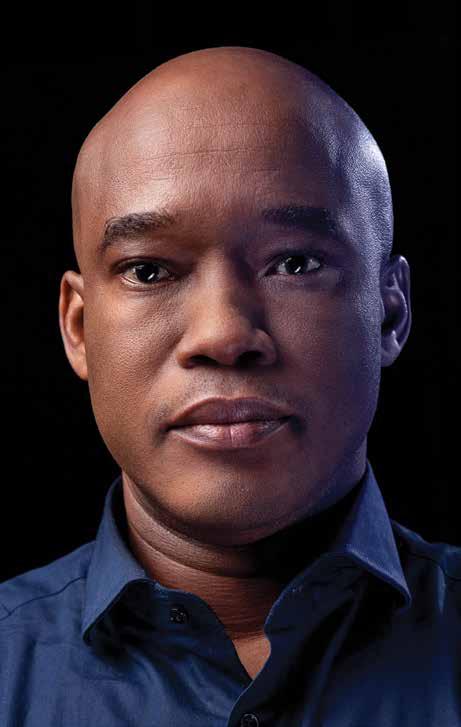
In keeping with the offering of world class content, Top500 celebrates South Africa’s best managed companies and the listing in the publication - which reflects some of the dramatic changes in the business landscape during this time - is a key resource for investors, supply chain managers, talent scouts and those who wish to benchmark themselves against the top organisations in the country – so it is fitting for us to have as our cover icon MultiChoice CEO Calvo Mawela, whose story is an inspiration to us all.
In this bumper 12th edition we have an impressive array of content looking at Leadership, Investing in South Africa, Sector overviews, Tips & Advice, Interviews and Podcasts. In the upcoming pages you will find articles on topics such as 10 multinationals choosing to do business in SA; Investment opportunities across multiple sectors; What it takes to be a leader in the post-pandemic era; South Africa’s global citizens;
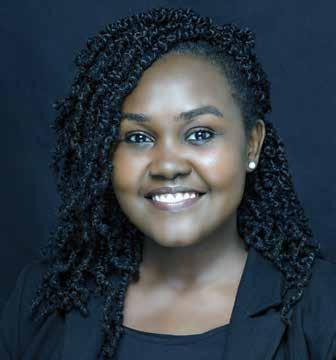
How to ensure employee well being – and that you are hiring the right people! We also have a fantastic array of podcasts and interviews including Joylynn Kirui from Microsoft, angel investor Lelemba Phiri, Zandile Mposelwa from Kellogg SA and Telkom’s Kenneth Kayser.
This publication would not have been possible without the amazing team I work with –Van Fletcher, Director; Koketso Mamabolo, Assistant Editor; Sinazo Mkoko, Assistant Editor; Nasreen Emeran, Designer; and Daniël Bouwer, Traffic Manager.
We hope you enjoy the read.
FionA WAKELin Group Editor
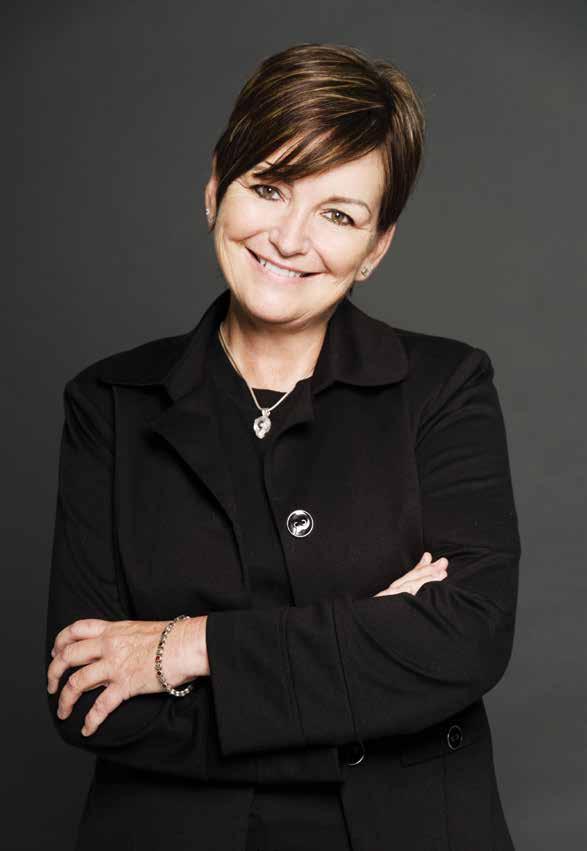
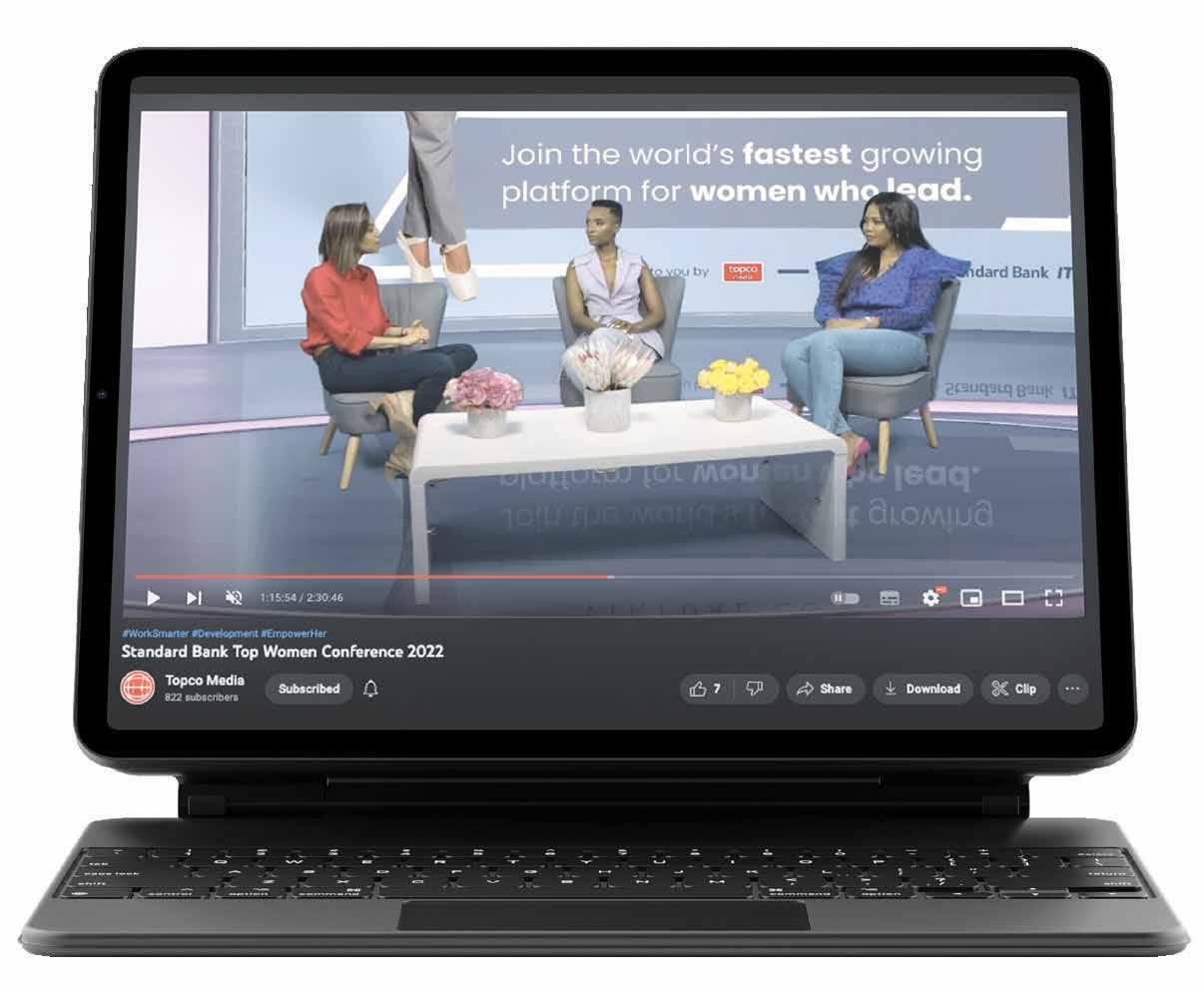
In case you missed it, our annual Standard Bank Top Women Conference took place on the 12 -13 October 2022. Here is a look at just some of the highlights throughout the 2-day conference:
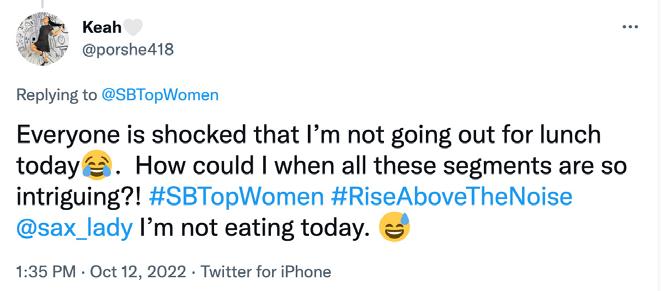





We trended No. #1 on South Africa’s Twitter trends throughout the conference
Over 47 000 views on our Instagram Filters and Stickers
We dropped our very first Swag Bag - and completley sold out!


Amazing feedback on all platforms from our delegates
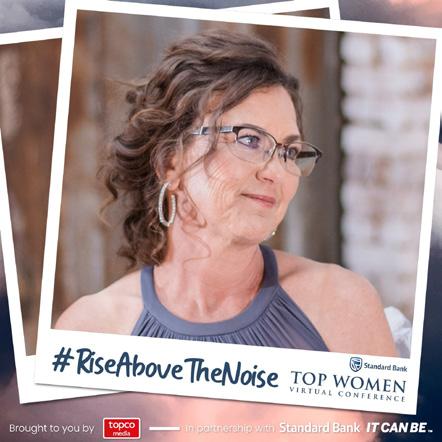
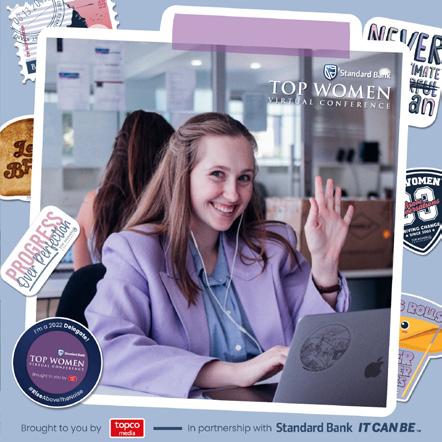
Over 15 000 photos were taken by our delegates at the Virtual Photo Booth
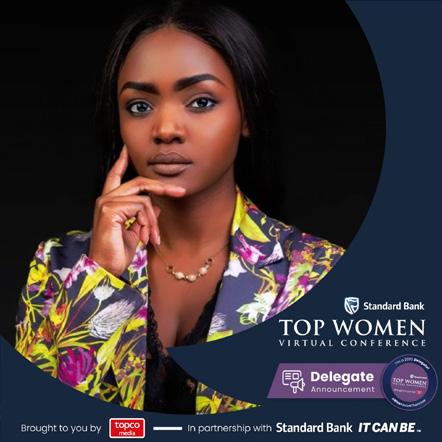
We hosted SA’s most influential women such as Zozibini Tunzi, Terry Pheto & Shannon Esra
 By Fiona Wakelin and sinazo Mkoko
When the coViD-19 pandemic hit South Africa, no one knew how things would turn out, no one knew that we’d be introduced to restrictions and lockdowns forcing us to stay in our homes for monthsbut what was clear to multichoice was that millions of people would be depending on their televisions for information and entertainment. the company brought hope, entertainment, education, comfort and a sense of community during a dark and difficult time.
multichoice - Africa’s leading entertainment company - is on a mission to use the power of entertainment to enrich lives through showcasing compelling local and international stories, which bring people together around a shared passion.
leading and guiding the team is Group ceo, calvo mawela. hailing from humble beginnings in Bushbuckridge, mpumalanga, the 43-year-old took over in November 2018. he had been the chief executive officer of mcSA after holding the position of head of Stakeholder and
Regulatory Affairs and executive in the chairman’s office. Previously he was an engineer at Sentech and a Broadcasting Spectrum manager at icASA
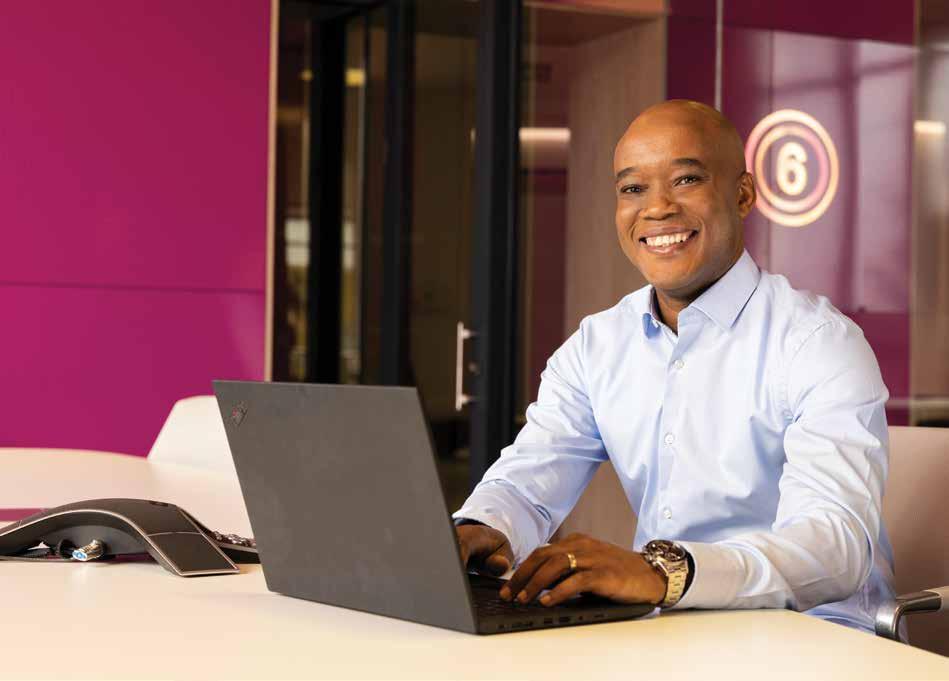
Touching on the career path that led him to his current position, calvo said as he grew up, he had aspired to be an engineer.
“coming from a poor background, i knew that my mother would not even be able to afford to buy me a bus ticket to university. But as soon as i completed my matric, and said i wanted to be an engineer, she was determined to help me pursue this goal. This meant going to a loan shark and paying exorbitant interest rates - the story has a happy ending because i did not let her down and completed my engineering degree.”
WE EstimatE that thE tElEvision markEt is uP to 60 million housEholds and WE arE just sitting at 22 million, Which mEans WE still havE a long runWay for us to continuE to groW into thE futurE as long as WE ExEcutE as WEll as WE’vE ExEcutEd in thE Past and that’s Exciting.
Today, telling stories, sharing information and entertaining Africa rests on his shoulders, with a viewership of an estimated 100 million people across the continent.
“We’ve just crossed over 21 million households, and that’s just across Africa.
“if you think about it, an average household in an African home has five members watching television. This means that everyday we are entertaining 100 million people. And what’s exciting about Africa is we still have a big market that has not even taken up pay television. We estimate that the television market is up to 60 million households and we are sitting at around 22 million, which means we still have a long way for us to continue growing into the future as long as we execute as well as we’ve executed in the past - and that’s exciting.”
Sharing how cOViD-19 has impacted the company, calvo said when the pandemic hit, realising what the world was facing, he went around various divisions within the organisation and told them that it presented an opportunity for the company to be appreciated for what they bring to people across the continent, especially during difficult times.
“i urged them to think about people stuck in their homes, and to imagine what they would need during this tough
time. The answer was that they’d need information, entertainment, and they’d want to be educated as well, on many fronts. i told the teams that we were well-positioned to bring all these three elements into a person’s home in the most cost effective way.”
he added that they partnered with various organisations and government departments to ensure that they delivered on their mandate.
“We partnered with udemy to bring more courses to people. We partnered with the Department of higher education and Training to make sure that we brought high school material to kids across the continent. We made sure that we had a discussion with our news channels for them to really prioritise information around the pandemic. We also brought in the likes of the united Nations and the WhO to ensure that we provided correct information, for the public to be aware of the do’s and don’ts -because with social media becoming so prominent, it is sometimes hard for people to differentiate between what is fact and fiction.
“We are a trusted media platform that is able to bring credible information - there is a lot of editorial intervention that goes on before things are aired on our television.”
At the cutting edge of tech touching on technology and the impact it has had on the company, calvo said they’ve always been known to be a company at the cutting edge of technology as they were the first pay tV platform to launch outside the uS before Sky and they launched the first PVR decoder, the first dual-view decoder, and long before Netflix entered the African market, they delivered Showmax, which was the first video-on-demand service that launched in Africa.
“We are pioneers of technology and technology excites us as an organisation. We like pushing the boundaries on innovation and making sure that we bring the best that the world has to offer. And Africa remains on the cutting edge of technology. Disruption came from the internet and we were the first to embrace it by launching Showmax and we have seen very good traction coming through. While it took us a little bit of time for us to get the platform to where it is at the moment, it has grown in the last year by over 60% in terms of subscription numbers, which really demonstrates that we have managed to get the user experience to be that way. it’s second to none in the world.”
calvo went on to say that the biggest thing that they are chasing are eyeballs - and consumers go after the best content. multichoice have positioned themselves as the best local content producers and one of the world’s leading sports broadcasters.
“i think we have been able to achieve that by playing to our strengths, which is to bring people the best local content. Speaking of local content, we bring it in
over 40 languages across the continent, and we are able to bring stories that people have never seen on tV about people who never thought that their stories are going to be told on television sets,” he said.
out of hollywood and it’s a deliberate investment that we have made as a team, understanding that Africans love to see themselves on television.”
in terms of the commercial side of the business, he said they have seen tremendous growth over the last few years, and that’s just due to the investment in local content and sports.
AfricAns love to see AfricAns on tv
Detailing how local content has changed the public perspective and how they see tV, calvo said gone are the days when Africans used to aspire to seeing hollywood content and getting to hollywood.
“things have changed, Africans love to see their own stories being shown on tV. they want to see their own celebrities on television and they are embracing their own as big characters that can compete across the world. And we have seen content coming out of Africa going on to get resonance across the globe and it’s because of the investments that we have made across the 50 markets that we operate in.
“We have not reached them all, but many of our key markets now are able to produce content. When the content is depicted on television, you cannot see that this was shot in Zambia or Angola or uganda. You just see the same quality that comes
“When it comes to sports, people who come to Africa get surprised as to the length and breadth of sports content that we carry on our platform - from the uS leagues, english Premier league, Formula one and more. to add to that, there is no platform that has the type of sports content that we have. We show more games of the english Premier league than are shown in the uK! these are the things we prioritise to ensure that we give Africans the best of sports coming from all over the world.”
My heArtbeAt touching on his love and passion for the continent, calvo was unequivocal: “the continent of Africa is my heartbeat. i look at it and say, ‘here is a continent which many people look at with negative eyes, and they do not see the opportunity that lies ahead of us’. looking at the world, i ask: ‘where will growth come from into the future?’ it will come from Africa.
“Africa, is one market that is still out there for somebody to do something special and be able to come up with a very successful business. i’m saying this because i walk the streets and interact with the people on the ground, knowing and understanding their hunger.”
his first milestone as multichoice’s Group ceo was the successful listing on the JSe at the start of his term.
the continent of AfricA is My heArtbeAt, i look At it And i’M sAying, here is A continent where MAny people look At it with negAtive eyes, And they do not see the opportunity thAt lies AheAd of us.
“We were on the cusp of listing and when we completed, it was exceptionally successful. We have remained in the top 40 listed companies and have continued to deliver value in terms of profits that have come through, which have continued to grow year-on-year.
“We have been able to pay dividends throughout this period. Pandemic or no pandemic. We took a stance that we are going to continue to pay those dividends and we paid those dividends. We have delivered on the promises we have made to the markets and we are confident that we are going to turn the rest of Africa profitable this financial year. So those are the key milestones that we have set for ourselves and promised to the market and none of them have failed.”
Leadership styLe Calvo describes his leadership style as a collaborative one, involving working together and trying to find solutions to the everyday business problems that they face.
“As a leader, I don’t look over someone’s shoulder when managing my people. I give them the freedom to go and express themselves and do what they are paid to do. However, it isn’t just the effort that is important, results are what counts, so we work towards delivering on the targets that we set for ourselves.
“I’m decisive and disciplined in terms of what I need and what I require from people. I expect the same. And the people that I lead understand that there is a bigger purpose.”
He is inspired by the pioneers that come and share their ideas - and seeing those ideas becoming reality.
“I think we have a bigger purpose in life. We have seen many young people
that started as actors going on to build production companies which are supplying some of the best content - which keeps us growing in terms of subscribers. It’s wonderful to see people who came to us knowing nothing about the industry and watching them grow and contributing to our industry and society-at-large.”
He added that coming from humble beginnings has also been one of his main drivers and he wants to make a difference in life and contribute to the betterment of the world.
the worLd is going to be a better pLace going forward. and i think africa is going to be centraL to where the worLd is going to end up in the future.
“As I grew up and went up the ladder, I asked myself ‘what contribution can I make?’ What legacy am I going to leave behind with the responsibilities that have been entrusted to me, with those that have chosen me to take up this responsibility? And I remind my team that with growing and making more money comes responsibility and the ability to make a difference.”
In terms of expanding the business, Calvo highlighted the plan to go beyond just video entertainment - with more exciting announcements to follow about investment opportunities that will not only be impactful on the African continent but also purposeful in nature and add value to everyday Africans lives.
Refreshingly, he is optimistic about where the world is going.
“The world is going to be a better place going forward. And I think Africa is going to be central to where the world is going to end up. We need African and global leaders to continue to drive the message of hope and to continue to invest in the future of this continent - and if we focus on that we are going to look back and be proud to have made those investments in the right areas and to have contributed towards a better world out there.” n
address 144 Bram Fischer Drive, Ferndale, Randburg, South Africa
postal address PO Box 1502, Randburg, 2125, South Africa
switchboard +27 11 289 3000 DStv Call Centre +27 11 289 2222
For all DStv customer and servicerelated queries, please visit www.dstv.com or selfservice.dstv.com or contact us on help@dstv.com








area of 20 hectares. The solar panels track the sun throughout the day, absorbing solar energy from the sky and reflected light from the ground. The design will result in avoiding an estimated 25 000 tons of carbon emissions annually, the equivalent of removing 5 400 cars from the road in South Africa.
Amazon, founded by billionaire Jeff Bezos, is one of the world’s largest tech companies – in 1 year, US sellers have sold more than 3.8 billion products, averaging 7 400 products sold every minute.
In 2015, Amazon opened its first Amazon Web Services (AWS) office in Johannesburg “to support the growth of the cloud computing business and its rapidly expanding customer base in the country.”
Africa (Cape Town) is the 23rd AWS Region, and the first one in Africa.
“We believe we have an obligation to stop climate change, and reducing
carbon emission to zero will have a big impact. We want to reach net-zero carbon emissions by 2040, a decade ahead of the Paris Climate Agreement, and we are on a path to powering our operations with 100% renewable energy by 2025 as part of our goal to reach net-zero carbon.”
Amazon’s new 10-megawatt solar plant is up and running in the Northern Cape. The plant is expected to generate up to 28 000 megawatt-hours (MWh) of renewable energy per year, which equals the annual electricity consumption of over 8 000 average South African homes.
The solar plant consists of over 24 000 bifacial solar panels - capturing sunlight on both sides - covering an
“Amazon is committed to working with governments and utility suppliers around the world to help bring more renewable energy projects online,” said Nat Sahlstrom, Director of Energy at Amazon Web Services.

“We’re honoured to work with the Department of Minerals and Energy, the National Energy Regulator of South Africa, and Eskom to help deliver a new model for renewable energy generation in South Africa.”
The solar plant, which contributes to South Africa’s 2030 renewable energy goals, is majority-owned by black women and operated by a fully South African-owned company.
Facebook opened its first headquarters in Johannesburg in 2015, looking to grow markets, not only here, but in Kenya and Nigeria.
At Connect 2021, Facebook CEO Mark Zuckerberg introduced Meta, which brought apps and technologies together under one new company brand. Meta’s focus will be “to bring the metaverse to life and help people connect, find communities and grow businesses”.
Some stats: Meta products empower more than 3 billion people around the world to share ideas, offer support and make a difference.
$6-billion+ has been raised by the Meta community to support the causes they care about.
200 million+ businesses use Meta apps to connect with customers and grow
140 billion+ messages are shared every day.
1 billion+ stories shared every day.
Watching videos accounts for half the time spent on Facebook and Instagram and in February 2022 Meta expanded the availability of Facebook Reels for iOS and Android to more than 20

countries across sub-Saharan Africa –including South Africa. The company is also introducing new ways to help creators to earn money, new creation tools and more places to watch and create Facebook Reels.
Commenting on the launch in Johannesburg Nunu Ntshingila, Regional Director for sub-Saharan Africa at Meta said, “We’ve seen that video now accounts for almost all of the time people spend on Facebook and Instagram, and Reels is our fastest growing content format by far. This is why we’re focused on making Reels the best way for creators to get discovered, connect with their audience, and earn money. We also want to make it fun and easy for people to find and share relevant and entertaining content.” - Gadget
In addition to the reels features announced last year, creators around the world will be able to access:
Remix: Create reels alongside an existing, publicly-shared reel on Facebook. When you create a Remix, you can create a reel that includes all or part of another creator’s reel.
60-second reels: Make reels up to 60 seconds long.
Drafts: You will soon be able to create a reel and choose to “Save As Draft” below the Save button.
Video clipping: Meta will be rolling out video clipping tools that will make it easier for creators who publish live or long-form, recorded videos to test different formats.
Google LLC is a global technology company, founded in 1998, when Larry Page and Sergey Brin built a search engine that used links to determine the importance of individual pages on the World Wide Web. Currently the CEO is Sundar Pichai.

Today, the company employs approximately 176 000 people around the world and makes hundreds of products used by billions of people across the globe, from YouTube and Android to Gmail and Google Search. Its mission is to organise the world’s information and make it universally accessible and useful. Google’s parent company Alphabet, reported Q2 2022 earnings of $69.7-billion in revenue, a 13% increase year-on-year.
Google South Africa Google established a country office in South Africa in 2007, as part of its focus on Africa. Google South Africa employs over 60 people, and its headquarters are based in Johannesburg. Dr Alistair Mokoena has served as the Country Director for Google South Africa since 2020.
Google’s mission in South Africa is to make the internet helpful to South Africans, and work together with its government, policymakers, educators, entrepreneurs, and businesses to shape the next wave of innovation in the country and on the African continent.
In February 2022, Google held its Google for South Africa event which outlined its priorities and commitments for the country going forward. These commitments included support for startups, SMMEs and non-profits to accelerate digital transformation and to help the South African economy recover.
Some of the announcements included: The Google for Startups Black Founders Fund has selected 50 top black-led technology startups locally and across the continent to join the programme which included Carry1st in South Africa. Google is part of a group of investors in the business, one of Africa’s leading mobile games publishers. Carry1st will use the additional capital to expand its content portfolio; grow its product, engineering, and growth teams; and acquire new users. The latest
cohort will be expanded to include 60 black-led businesses on the continent. In partnership with the Department of Small Business Development, Google aims to provide support, training and resources to these small enterprises through the newly launched ‘Hustle Academy’ (g.co/hustleacademy) a sub-Saharan African initiative aimed at supporting SMMEs and helping their businesses thrive.
Google has also committed to skills development on the continent - training more than 6 million people in digital skills. Additionally, Google has committed to certifying 100 000 developers and has certified over 80 000 of these so far.

Johnson & Johnson’s business model is based on the belief that good health is the foundation of vibrant lives, thriving communities and forward progress. They have been operating on that principle for more than 130 years, aiming to keep people well at every age and every stage of life. As the world’s largest and most broadly based healthcare company, they are committed to using their reach and size for good, striving to improve access and affordability, create healthier communities, and putting a healthy mind, body and environment within reach of everyone.
“Every day, our more than 130 000 employees across the world are blending heart, science and ingenuity to profoundly change the trajectory of health for humanity” – Johnson & Johnson.
Johnson & Johnson first opened its doors in South Africa in 1930, and in the more than 90 years since, the company has remained committed to helping address global public health needs that have impacted the country and the region as a whole. This kind of long-lasting promise to serving communities is at the root of the company’s mission statement— and it’s what drives Alex Gorsky, Johnson & Johnson Executive Chairman:
“We’re proud to be operating today in South Africa, which is a vitally important market and centre of hope and progress unfolding across the continent. It’s why South Africa is the hub for our work across sub-Saharan Africa, as well as home to our Global Public Health Organisation’s Operations Centre, which opened in 2016.
“And we’re positioned well for that future growth, with almost 1 000 South African employees. Johnson & Johnson has always championed the integral role women play in fuelling the future of human health, so I am proud that more than half of our employees in South Africa are female,” - Alex Gorsky
The Kellogg Company, known as Kellogg’s, is an American multinational food manufacturing company headquartered in Battle Creek, Michigan, United States. In 1894 WK Kellogg created the breakfast cereal Kellogg’sR Corn Flakes and began their journey in South Africa in 1923 when the first cereals were sold. The initial cereals manufacturing facility in Springs, Gauteng, was opened in 1948.
In South Africa, we have Women of Kellogg which supports the company’s efforts to be an organisation where all women learn, grow, lead, and succeed.
“Kellogg is a food company that not only invests in its people but in our food products and we continuously innovate. We not only manufacture, market and sell our products but we also provide employment and create further opportunities through our learnership and intern programmes. Through our South African manufacturing facilities, we export our food products to Africa. We source 70% of our raw materials for our cereal business locally and 98% products are produced locally.

We are committed to environmental and social economic objectives. We are a responsible corporate citizen and through various initiatives we support our communities. We are a company with heart and soul and through our Better Days programme we feed people in need,” - Dana Smith, Head of HR Corporate for Kellogg SA
Microsoft launched its first Africa Development Centre (ADC) in 2019 and opened Africa’s first hyper-scale data centres in South Africa.

“Microsoft invested in local data centres to provide the backbone for South Africa’s cloud computing, data, and network services. Our enterprise-grade data centre regions were opened in Cape Town and Johannesburg in March 2019.
“Linking Microsoft’s global cloud infrastructure to Africa connects businesses to opportunities across the globe, helps accelerate new investments, and improves access to cloud and internet services for people and organisations from Cairo to Cape Town. The local adoption of cloud services has significant potential for job creation as organisations focus on innovation and building their digital businesses at scale.
“Launched in June 2020, Microsoft’s Global Skills Initiative offers immediate steps to help people looking to reskill so they can embark on a new career path or pursue an in-demand job. Existing and new courses from LinkedIn, Microsoft, and GitHub are broadly available to South African job seekers and NGOs. Through this programme, we have already reached over 300 000 South Africans. A cash grants for approximately R2.5-million was allocated to local NPO Afrika Tikkun, as part of a strategic partnership to reach more South Africans through our Global Skills Initiative.
“We extended the Global Skilling Initiative to the end of 2021, and announced a partnership with PSETA (Public Service Sector Education and Training Authority) and Afrika Tikkun to provide at least 20 000 young people with critical digital skills and improve employability of the country’s youth in the Information and Communications Technology (ICT) industry.
“Small and Medium Enterprises (SMEs) can have a profound impact in ensuring economic growth of national economies – they represent about 90% of businesses and more than 50% of employment worldwide. Formal SMEs contribute up to 40% of
national income (GDP) in emerging economies, and these numbers rise significantly if we include informal SMEs.
“Transforming South Africa’s economy to become more inclusive and stimulate sustainable growth requires the development of black-owned enterprises. This isparticularly crucial to creating a dynamic environment, as small businesses are a drivingforce for economic growth. Microsoft’s enterprise and supplier development initiative, the Emerging Partner programme, has provided over 100 fully black-owned small and medium-sized ICT businesses with accreditation training across three cloud solutions, funded their access to market journeys, and provided bespoke business development support.
“It’s estimated that 600 million jobs will be needed by 2030 to absorb the growing global workforce, which makes SME development a high priority for many governments. In emerging markets, most formal jobs are generated by SMEs, which create 7 out of 10 jobs,” – CEO, Microsoft SA, Lillian Barnard

Panasonic” comes from the root words “Pan,” meaning universal, and “Sonic,” referring to sound. It’s a word that refers to the company’s goal of “bringing our sound to customers around the world.” Globally the company employs more than 240 000 people. On July 12, 2018 Panasonic South Africa (Pty) Ltd, a local subsidiary of Panasonic Corporation, announced it had celebrated the inception of a new business office in Cape Town.
“Today, global environmental problems, including climate change, are the world’s top-priority issues that require urgent solutions. We at Panasonic are determined to unite our Group-wide efforts to squarely address these issues. Furthermore, we will devote ourselves to improving the well-being of individual people in society by helping them to pursue their own happiness, in both physical and mental health, and thus live their lives with peace of mind and comfort. Therefore, we have decided to release our new corporate message that encapsulates these aims.
“Under this banner, we will always think out the ideal state and conduct our business activities toward this end. At the same time, we will also work to improve our value-creating capabilities, as well as
operational capabilities at the business frontlines, on a daily basis so that we will be chosen by our customers going forward. Through these endeavours, Panasonic will offer customers products and services of superior quality that surpass their expectations.” - Yuki Kusumi, CEO of the Panasonic Group

Unilever employs more than 148 000 people across the world, with over 400 brand names in 190 countries, and is a “global company with a global purpose”. Founded in 1883 by William Lever with the launch of Sunlight Soap – “it was pioneering, it was innovative and it had a purpose: to popularise cleanliness and bring it within reach of ordinary people. That was sustainable living, even then. We now have over 400 brands and we are still driven by purpose.”
Every year, hundreds of experts from around the world take part in the GlobeScan SustainAbility Leaders Survey.
Drawn from academia, the corporate sector, governments, media and NGOs, 718 sustainability experts from 73 countries are asked to name the three companies that they feel are showing the greatest commitment to integrating sustainability into their business strategies.
In 2022, for the 11th consecutive year, Unilever achieved the top spot. “And we’re in great company, with fellow leaders Patagonia, IKEA, Natura & Co, Microsoft, Interface, Ørsted, Tesla, Danone and Google making up the top 10.”
William Lever registered the Sunlight trademark in South Africa (SA) – hence on the Unilever website you will find the following:
Unilever South Africa: 90 + years of Doing Good.

Vodacom is majority-owned by Vodafone (60.5% holding), one of the world’s largest communications companies by revenue.
“Through Vodafone’s three purpose pillars: Digital society; Inclusion for all; and Planet, the company aims to positively transform lives, drive a better digital future and reduce our environmental impact. We believe in a connected digital society, that the opportunities and promise of a better digital future should be accessible to all, and that business success should not come at a cost to the evironment,” – Vodacom.
Vodacom’s head office is in Johannesburg, and operations include mobile networks in Tanzania, the

Democratic Republic of Congo, Mozambique, Lesotho and Kenya. The organisation offers a wide range of communication services, including data, mobile and fixed voice, messaging, financial services, Enterprise IT, and converged services to 130 million customers (including Safaricom).
Through Vodacom Business Africa (VBA), Vodacom offers business-managed services to large, medium and small enterprises in 48 countries.
but in 2020, Zoom literally became a household word.
We spoke to Abe Smith, Head of International, Zoom Video:
With your experience of scaling operations in Asia and Latin America, what is your view on Africa’s readiness for technological innovation?
“I have been interested in Africa’s technology landscape for over a decade, and this is the final frontier. The opportunity within the region is massive, but you have to be very precise when you develop into the continent. Over time and with consideration you need to figure out how to best build intelligently and intentionally as it is a very technically advanced continent. There is lots of organic interest in the product which has created spirited interest from the company internally to pursue it. Because of this innovative drive, we hope businesses within the region take advantage of our Zoom App fund as we’d love to invest in companies in the region whose mission is to make communications more engaging, productive and effective,” – Abe Smith n
During the pandemic, “zooming” took on added significance – previously it had primarily been associated with photography or focusing on something –
Since the start of the twentyfirst century, technology has been at the heart of enhancing communication and human contact. The internet has not only enabled people to communicate with family and friends all over the world in real time, but powered businesses and creativity across the globe.
With each passing day, more technologies are built to improve our
quality of life and shared experiences. We are hearing more and more about the Metaverse, not only in the tech community but also amongst friends and family. So what does the Metaverse actually mean?
The Metaverse will be a set of virtual spaces including immersive 3D experiences, that are all interconnected so you can easily move between them. It will let you do things you couldn’t do in

the physical world with people you can’t physically be with. In the Metaverse, you’ll be able to hang out with friends, work, play, learn, shop, and more.
The Metaverse has the potential to help unlock access to new creative, social and economic opportunities, and Africans can be involved in shaping it right from the start. Here are a few things to understand about the Metaverse and Africa’s role.
no onE rEally owns thE MEtavErsE
several tech companies like Meta are already starting to think about the future and ways to make the metaverse a reality. It isn’t a single product one company can build or own alone, and if it is to succeed, it will need to be open and interoperable.
Bringing this to life will take collaboration and cooperation across companies, developers, creators and policymakers. It will be built gradually, as many of the products and infrastructure will only be fully realised in the next decade or so. This means great opportunities for africa, as our booming Internet economy will enable africans to play a part in this collaborative future.
africa is MEtavErsE-rEady
The evolution of the Metaverse will support amazing creativity and open up new horizons for brands and businesses, and the community as a whole. now the question is, how can we ensure africa is Metaverse ready?
africa has a large consumer market, and, crucially, top-quality talent. The digital economy is expected to contribute up to $300-billion to africa’s GDP by 2025 (10% growth per year), and the working age population across the continent is expected to grow by 450 million people, or close to 70%, by 2035.
Thriving tech start-up ecosystems in africa are already driving job creation and economic growth. Looking ahead they will help to shape and create the technology that will change how we live and work and shape our shared digital future.
In fact, africa is already alive to the possibilities of the Metaverse. nigeria’s Thrill Digital, founded by Delz erinle and
artist niyi Okeowo, is using ar and vr, crypto and gaming, to create a fashion Metaverse. Thrill Digital won a $40 000 grant from epic Games, a Us video game and software developer investing in Metaverse development, to start astra, a play-to-earn crypto game where players try to amass as many tokens as they can within an allotted time to win real-life luxury fashion items.

unique stories in truly engaging ways. as africa’s population becomes the largest workforce in the world by 2035, many tech analysts are convinced that the metaverse will open up economic opportunities in africa, pointing to its relevance to the evolving postpandemic world of work.
More interestingly, a report which estimates the impact of the Metaverse 10 years after adoption, indicates that the Metaverse will contribute about 1.8% GDP growth to the sub-saharan african economy, representing $40-billion growth.
africarare—referred to as “the first south african Metaverse”—launched in October 2021. It represents a digital land, Ubuntuland, and offers immersive vr experiences including a marketplace for art. africarare featured the premiere nFT art collection from the well-known south african artist norman Catherine. africarare users can purchase land via $UBU Coin, create avatars, and engage in social, gaming or art experiences, and new africarare nFT collections will continue to be featured.
africa’s largest mobile network operator, MTn Group, has also announced in February 2022 that it had purchased 144 plots of virtual land in Ubuntuland. MTn is the first african company to invest in the Metaverse. These are very exciting times for the african tech ecosystem and this is just the beginning!
The Metaverse will also provide a significant opportunity for african brands to advertise themselves and tell
MEta’s coMMitMEnt to africa’s futurE Meta’s recent opening of its second office in africa - in Lagos, nigeria - is testament to our commitment to africa’s role in the Metaverse. The office is the first office in africa to have a team of engineers to support the subsaharan region.
Meta has also launched a two-year $50-million Xr Programs and research fund to build the Metaverse, which includes funding for a “Future africa: Telling stories, Building Worlds” programme. The programme will see the company partner with africa no Filter, electric south and Imisi3D to support creators amplifying african voices and pushing the boundaries of digital storytelling. The program provides grants, mentorship, and supports vr storytellers to develop new and compelling content about africa, showcasing innovative storytelling that shifts negative stereotypes about africa.
By using immersive technology such as 360 video, vr, ar and mixed reality, creators can receive funding of up to $30 000 and mentoring from Meta to grow their skills. Together we can be sure africa is truly metaverse ready. n

Over the past few years, it has been proven, time and again, that the local south African economy has the unique ability to bounce back from setbacks, whether big or small, helping boost international investor sentiment. now smart global players are quite rightly shifting their focus to south Africa’s rich investment potential.
so, what makes south Africa a destination of choice for mega investors like Amazon, Procter & Gamble, Google, coca-cola and heineken?
A simple answer to the question: south Africa is deeply committed to make investment a priority! The south African government and an envoy of leaders including Phumzile Langeni, Jeff radebe, Derek hanekom, mcebisi Jonas, Trevor manuel and Jacko maree are tirelessly working at promoting abroad the favourable conditions for large and medium scale investment in the country. not only does the present government and its agencies offer very attractive funding incentives and tax breaks in several key growth sectors, but they have also created designated Industrial Development Zones (IDZs) where investors can take advantage of significant import duty reductions and rebates, along with a myriad of groundbreaking infrastructure building incentives. Wisely, in south Africa, the “Business as usual” approach has fallen by the wayside to pave a road for a more flexible and attractive “Business unusual” environment.
Traditionally the mining sector has been the backbone of the south African economy, contributing to a substantial portion of the GDP.
The south African Department of mineral resources and the us
Geological survey estimate that south Africa possesses ore reserves amounting to a value of more than $2.5-trillion, with 16 commodities ranked in the Top 10 internationally.

The sector’s well-established infrastructure, along with convenient transport networks have historically been huge drawcards for big investment - this includes the value chain as a whole. herein lies true gold for the medium and smallscale investor, in particular. mining optimisation, IT support, tooling and catering are some of the areas of opportunity within the mining sector.
Looking back in history at the california gold rush, many a fortune was made not only by actual mining, but by tapping into needs related to
mining like timber, transportation, materials and clothing. Levi strauss, the vanderbilt dynasty and J.P. morgan are still striking gold more than a century after the actual gold rush dried up.
agriculturE - thE art of growth
Another important growth sector is Agriculture. south Africa is already on the cutting edge when it comes to the internet and telecoms needed to digitise processes. This means there is a basket of opportunities ripe for the picking for investors in the sector.
Agricultural development, digitisation of agricultural systems, mechanisation of production, the science and technology needed for greater crop yields and greater profitability and again, the sector’s value chain make up part of this offering.
A great advantage is that the south African agricultural sector is particularly diverse in its product offering and the locations where production or growing takes place. Leading, existing product offering include maize, wheat, sugar, sorghum, livestock and viticulture are all ideal choices for investors who strive for lower risk, relatively low yield investment. up for consideration for maverick investors are newer crops like south Africa’s own rooibos, boegoe and opportunities in a well-regulated cannabis/hemp industry. many agricultural regions fall within IDZs, where investors can doubly enjoy the tax and duties benefits and support of government when it comes to the import of components and tooling need needed for mechanisation.

The automotive industry is by no means new in south Africa, with motor manufacturing stretching back almost a century to the 1920s. for decades the
government has closely guarded and supported its motor industry by having local content targets and implementing hefty excise on fully imported vehicles. Light motor vehicles were imported in complete Knockdown Kits (cKD) and assembled locally to avoid import duties. Only in the early 2000s were import duties adjusted to make fully importing a vehicle financially viable.
Over the years the local automotive industry survived unchanged relatively well. But things have changed in recent years because the way the global automotive industry has done business has shifted. All major motor brands have in some way moved production abroad to take advantage of competitive workforces and manufacturing environments.
To rev up growth and investment in the sector government has introduced The Automotive Investment scheme (AIs). The scheme aims to develop the automotive sector through investment
in new and/or replacement models and components that will increase plant production volumes, help sustain employment and strengthen the automotive value chain in general.
A very tangible benefit is that qualifying investor can obtain a non-taxable cash grant of twenty percent (20%) of the value of qualifying investment in productive assets and twenty five percent (25%) of the value of qualifying investment in productive assets by component manufactures and tooling companies as approved by the Department of Trade and Industry. In addition, a non-taxable cash grant of five percent (5%) may be made available for projects that maintain their base year employment figure throughout the incentive period, and achieve at least two of the following economic requirements: tooling; research and development in south Africa; employment creation; strengthening of the automotive value chain; value addition or empowerment.
The covid-19 pandemic made remote work the new normal. This has been just one of the factors that has fuelled south Africa’s business process outsourcing’s exponential growth in the recent past. many global giants have taken advantage of south Africa’s favourable time zone alignment with europe coupled with the nation’s english language proficiency to offering good quality voice-driven contact centres for their clientele that are locally based. Additionally, south Africa’s, intellectual property and data privacy legislation is up to date, the legal system provides protection and its established insurance, banking and telecommunications sectors have strong legal and product similarities with the uK, europe, Australia and the us. It’s really no wonder that south Africa is one of the fastestgrowing BPO industries in the world and a region where you can get a big bang for your investment buck. call centre operation and staffing is just the tip of the iceberg when it comes to business
outsourcing. rapidly growing financial services, administration services, creative staffing, human resources, to mention but a few are outsourcing opportunities that investors should investigate.
location, location, location Parties with an eye on investing in the manufacturing industry would be wise to take advantage of government designated Industrial Development Zones within south Africa.
These manufacturing strongholds, all located close to large ports, benefit from attractive tax and duty exemptions specifically created in an effort to attract foreign Direct Investment and stimulate the export of value-added commodities. The three main IDZs for manufacture in south Africa are coega and east London in the eastern cape, and Dube in KwaZulu-natal.
The Automotive Industry has a mature infrastructure in the eastern cape where volkswagen, ford and the mercedes-Benz factories have operated for much of the past 50 years. In Kwa-

Zulu natal manufacture interests focus predominantly the electronics, petrochemical, white goods and food manufacture inwdustries. Let’s not forget that as with mining and agriculture investment opportunities extend into the value-chain of all these industries.
In short, with intensive support from sArs and the government, manufactures will have import duties wavered on materials, components and tooling need in manufacture. There are also infrastructure building grants and lucrative incentives for investors within IDZs. spread across numerous provinces, potential investors can pick and choose when it comes to the location or region where they choose to invest.
Without evening scratching the surface of real estate, financial and banking services, research and development and more, south Africa has an unlimited wealth of untouched opportunities for both foreign and local investors. n
Impact investing is happening. A review of investment flows shows there has been significant growth in the commitment and application of impact investments to current global challenges. The Global Impact Investment Network’s (GIIN) 1 2020 GIIN annual survey report estimates the market size of impact investment to be $715 billion (see figure 1).

Figure 1: Impact Investment market has grown at a 27% compound annual growth rate (CAGR) from $25.4 billion to $715 billion between 2013 and 2019
governments and philanthropists cannot continue to solve the social and environmental challenges on their own. Hence, institutional investors are expected to adopt the new investment norm of positively influencing the society and environment they invest in to ensure sustainable development.
The global steering group for impact investment (gsg) 2 defines an impactoriented investment as an investment where risk, return and impact are maximised by positioning measurable social and environmental goals alongside financial goals. The gsg argues that well-executed investments benefit not only the owners of the investments but also the society and the environment in which they are made. it believes these societal and environmental effects should be expressly stated and should be the driving force behind any organisation. it also believes these effects be integrated into all investment decisions of investment managers.
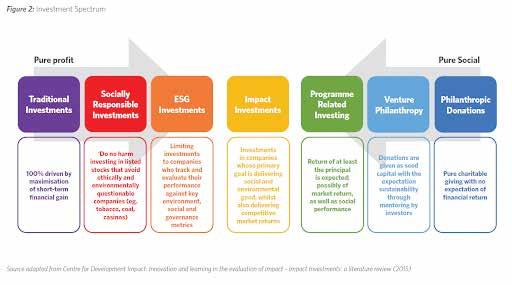
impact investing’s capacity to improve lives and to benefit the environment is proven. Properly managed impact investment can offer the best of financial returns and create a positive effect. To place impact investing in context and to differentiate it from other investment approaches, figure 2 shows the investment spectrum with impact investment in the centre.
it is essential to emphasise that impact investing includes profit as one of its main objectives. Hence, impact investment does not trade off financial return for social or environmental effect, but instead aims to identify investment opportunities that combine them. in other words, there is an explicit commitment to social and environmental impact goals while
earning a market rate of return. another key defining characteristic of impact investment is its expressly stated intentionality. impact investment has, by design, an intentional impact on either the society, the environment or both. This key characteristic distinguishes impact investment from all other investment types classified on the investment spectrum. When viewed this way, impact investment is a universal term, as it can be applied to all investment types and asset classes.
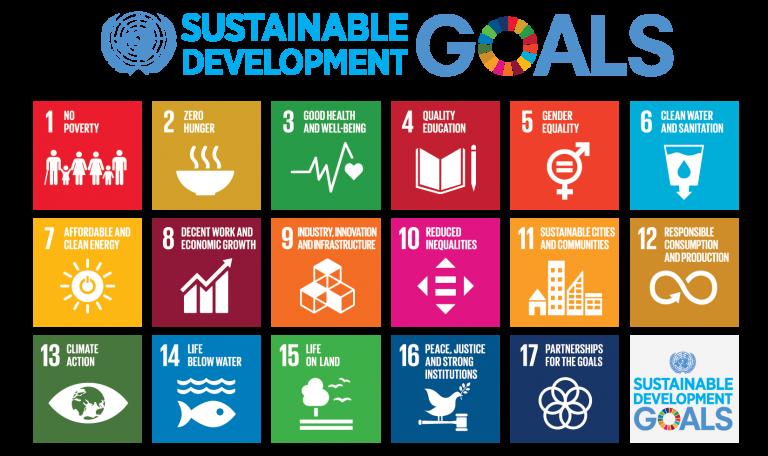
a common starting point for implementing impact investing in practice is the United nations’ sustainable development goals (sdgs). The member states of the United nations adopted the 17 sdgs with 169 targets (see figure 3) in 2015 as part
of the 2030 agenda for sustainable development. These goals form part of an extensive globally coordinated action plan to end poverty and reduce inequality, while also protecting the planet, tackling climate change and spurring economic growth. The goals recognise that social and environmental issues affect everyone and thus apply to every country, irrespective of their ‘developed’ or ‘developing’ economic status.
sustainable development embodies the idea of doing well by doing good. By incorporating social and environmental targets into their investment strategies, investors can align their impact objectives to the sdgs and track their contribution towards achieving these goals. Using metrics that reflect their
effect on specific sdgs, investors can address how they are contributing to a sustainable and equitable future.
Momentum investments has adopted six of the sdgs and we’re aligning our impact strategies with the goals to drive results. These are sdgs 3, 4, 7, 8, 9 and 13. The Momentum impact portfolios have incorporated sustainable investing principles and guidance throughout their investment cycles to make the achievement of the goals an intentional objective. That is, the principles have been integrated into deal origination, due diligence and investment selection for the three impact portfolios – the Momentum alternative energy fund, the Momentum social infrastructure fund and the Momentum diversified infrastructure fund.
The Momentum Alternative Energy Fund is invested in sustainable energy companies, which focus on renewable energy, energy efficiency and storage technology. The priority SDGs for the portfolio are 7 (Affordable and Clean Energy) and 13 (Climate Action). The Momentum Social Infrastructure Fund is invested in businesses involved in providing student housing in the higher education sector, quality affordable housing and non-urban shopping centres. The portfolio aligns with SDG 4 (Quality Education) and 9 (Industry, Innovation, and Infrastructure).
Finally, the Momentum Diversified Infrastructure Fund is invested in core economic infrastructure including toll roads, telecommunications as well as water and wastewater infrastructure. This portfolio specifically targets SDG 8 (Decent Work and Economic Growth) and 9 (Industry Innovation and Infrastructure).
Potential investments are identified and added to the pipeline based on investment criteria that include impact targets. First, it is important that the purpose of the target company (or project) is to address a critical problem relating to the environment or a societal

challenge. For example, the investment in student housing is through a company that focuses exclusively on addressing the 250 000-bed shortage for students.
Second, investments must show a direct link to at least one of the six SDGs. Finally, the impact generated by the investment must be substantive and measurable. In addition to these, the investment case must also hold, i.e., it must meet the risk-and return requirements expected for the exposure.
Moreover, the investment committee that deliberates on the recommended investments also reviews each proposal’s ESG report.
An investment that meets the investment criteria but not the ESG requirement may still be included if the ESG issues can be resolved through continuous, active engagement with the management team of all the investee companies.
By using appropriate indicators, data on impact metrics are collected regularly, and investee companies are monitored to track progress towards their social or environmental objectives. While the impact measurement and monitoring methodology is evolving and may not capture all of an investment’s impact, it captures enough of the impact to track progress toward the SDGs being measured. We believe that impact investing is the responsible thing to do and a fundamental part of our commitment to delivering sustainable outcomes to clients. The improvement of society and the environment is vital if clients enjoy the financial returns delivered by their investments, and we will continue to direct our actions to achieve these outcomes. n
“... investments must show a direct link to at least one of the six sdGs.”








 By Richard Firth, CEO of MIP Holdings












We are living in a world where unforeseen technological innovation is the new normal, and companies are grappling with how to best use new technologies such as AI and big data to create real value.
They are also struggling to balance product innovation against business model innovation. At the same time, customers are demanding real-time, personalised experiences. Consumers can no longer be viewed as the end users of products, but must be seen as active participants in the supply chain.
As a result, any new technology must be implemented as part of a strategic decision to solve today – and tomorrow’s –customer demands. In Africa, this is happening in a very different way to many other territories, mainly because our digital transformation efforts are following a slightly different trajectory. Not only have we leapfrogged many legacy technologies, our challenges and solutions are unique as well. tAs a result, we have seen innovations like Mobile Money and IoT-enabled anti-poaching efforts as African companies rise to the challenge of meeting African consumer needs, opening even more opportunities for digitally-enabled entrepreneurial businesses and SMMEs.
Unfortunately, this is not changing the reliance of larger African organisations on American and European software solutions, hampering the continent’s ability to capitalise on the opportunities digital transformation offers.
arE wE winning?
For years, Africa has bemoaned the lack of digital skills found on the continent. While some countries produce more skills than others, as a region, we are still lagging behind even other developing regions like South Asia.
The total number of developers in Africa was 716 000 last year. Unfortunately, while these statistics may seem like Africa’s digital transformation initiatives are gaining traction, the reality is that we are building skills too slowly for Africa’s future needs – and more worryingly – we are building skills that are not actually benefiting Africa. We may slowly be establishing a digital skills base across the continent, but we are not building African Intellectual Property (IP).
The same report that found our development skills are growing showed another less inspiring trend: 38% of African developers work for companies based outside of the continent.
Four out of every ten African software developers now work for at least one company based outside of the continent, while five work for local start-ups.
South Africa’s Software Development Nation survey found that one in five developers are actively looking for international opportunities, with Europe leading as the destination of choice.
In fact, Africa has now become the recruitment centre of choice for many global companies, with Microsoft, for example, investing over $100-million to open development centres on the continent. The global software giant is aiming to grow its African developer pool to 500 by 2023.
The customer base of most African companies is 99% local, with their physical supply chains also in excess of 90%. And yet, almost 100% of the software solutions they use are developed offshore. There is absolutely no reason that this should be the case.
Some 230 million jobs across the continent will require some level of digital skills by 2030, according to a study by the International Finance Corporation (IFC). That translates to a potential for 650 million training opportunities and an estimated $130-billion market. With the COVID-19 pandemic forcing many businesses to go digital to survive, the need for these skills has only become more apparent.
For example, the demand for African software developers skyrocketed in 2021. The Africa Developer Ecosystem report, which gathered data from Kenya, Tanzania, Uganda, Rwanda, Algeria, Cameroon, Egypt, Ethiopia, Ghana, Ivory Coast, Kenya, Morocco, Mozambique, Nigeria, Senegal, South Africa and Tunisia, found that the pool of professional developers increased by 3.8% year-on-year.
For all of Africa’s focus on digitisation and homegrown solutions, both public and private sector organisations still invest in international technology before they look closer to home. While there are some international solutions that are best-of-breed, there are a number of local alternatives to most of the global offerings that are at least as good, if not better.
The misconception that international solutions are better than home-grown ones has not only hindered the growth of African development houses, but ultimately, African economies. Over and above those developers working for international companies from their home country, many African developers are physically leaving to work overseas. The 2019 State of
The world is in the throes of the Fourth Industrial Revolution (4IR). Almost all organisations in the future will be digital, and 60% of all global GDP will come from digital sources in the next few years, according to the World Economic Forum (WEF).
In fact, the WEF says that an estimated 70% of new value created in the world’s economy over the next decade will be based on digitally enabled platform business models.
In light of this, African countries not keeping on top of emerging technologies and understanding how to harness their capabilities will find themselves falling even further behind. The coming decade will be a pivotal time for Africa.
The continent may have come a long way in developing its digital skills base, but it has even further to go. n
In 2017, Christelle Colman

What differentiates your company from competitors?
• We are part of the Old Mutual Group, with strong support from the blue-chip company.
• We offer specialised, niche services and products to our high net-worth target market. Our product provides some of the widest cover available in the market.
• We have a team of highly-skilled underwriters looking after the needs of the most important clients of our brokers.
and current
approached Old Mutual Insure to propose a non-life insurance solution for its wealthy clients. In August of 2018 the product was launched after the realisation that offering the option to the existing and new intermediary base would contribute to growth.
Elite Risk Acceptances (Pty) Ltd wrote R100-million in premium income after the first year of operations, thanks to the support of its broker and advisor partners. Here Managing Director Tarina Vlok takes us through what sets the company apart, the milestones it’s reached and more.
• We have professional valuations done of the properties that we insure, enabling us to remove average from the contract.
• We have an all-female board.
• We pride ourselves in the development and continued support of our staff.
• We guard our culture and deliberately develop it.
• We maintain close relationships with our intermediaries and have an open door and always available approach to engagement.
• Backed by Old Mutual Insure, we have capacity to insure large domestic risks and have access to favourable reinsurance terms if required.
how is ElitE risk AccEptAncEs
AlignEd with thE nEEds of thE top 500 BEst MAnAgEd coMpAniEs?
Elite embraces female empowerment and diversity. We respect and honour our diverse staff, partner and client networks, as well as the communities we serve.
At Elite, we believe that focusing on the mental and physical health of our staff allows us to retain and nurture talent. This goes hand-in-hand with treating our staff with respect and trust to harness and protect the amazing culture of the team.
We continue to support personal development plans, including formal and informal training, leadership development, as well as learnership and mentorship programs. This is incredibly important in ensuring not only top performance, but also that each employee remains connected and focused. The entire Elite Risk team is already a top performing and connected team - we aim to maintain this in 2023.
Embracing the hybrid work model, we have moved towards a work environment of partial working from home and inperson connection, collaboration, and brainstorming. All while supporting our staff and creating an environment with trust and accountability at its heart. This allows each person to thrive, and ultimately allows our business to grow and attract the best of breed.
• After the resignation of our previous MD, there was a seamless transition to new leadership with tremendous support from our shareholders and staff.
• Appointment of Tandiwe cimela as cOO in 2022.
do you hAvE Exciting plAns for thE coMing yEAr?
Yes, one of the most important exciting plans we have (and that we can share at this stage) is the opening of our own offices in 2023. When the cOViD lockdown hit in March 2020, Elite was still a start-up and we rented office space within the group. since then, we have developed our own very distinct brand and we will be opening our own offices hopefully early in 2023.
would you likE to sEnd A MEssAgE to our rEAdErship? in today’s service economy, it is important for organisations to embrace diversity, including female empowerment. This will enable us to serve our staff and clients in a holistic and well-rounded way. This is especially true in the financial services industry, where traditionally insurance is considered a grudge purchase and there can be a lack of trust of insurers. n
in your opinion, whAt hAvE BEEn soME of ElitE’s Most iMportAnt MilEstonEs to dAtE?
• R100-million premium income after the first full year of operations (December 2019)

• We have provided employment to 35 staff members to date
• When cOViD lockdowns were introduced, we effortlessly moved off site in 24 hours and are continuing to effectively work from home
Address: Old Mutual Building, Jan smuts Drive, 1st Floor Mutual Park, Pinelands, cape Town tel: 086 011 1022 Email: reception@eliterisk.co.za website: www.eliterisk.co.za
“Embracing
Every year a selection of outstanding young leaders (young meaning under 40) from around the globe is chosen by The Forum of Young Global leaders®. This year representatives from 42 countries were selected to “responsibly improve the state of the world” – and 5 young south africans made the cut. but first, who is this community?

TheYoungGlobal leaders® Community isanacceleratorforadynamic communityofexceptionalpeoplewith thevision,courage,andinfluenceto drivepositivechangeintheworld.
Ourgrowingmembershipofmore than1,400membersandalumniof120 nationalities includes civic and business innovators,entrepreneurs,technology pioneers,educators,activists,artists, journalists,andmore.
alignedwiththeWorld economic Forum’smission,weseektodrivepublicprivateco-operationintheglobalpublic interest.Weareunitedbythebelief thattoday’spressingproblemspresent anopportunitytobuildabetterfuture across sectors and boundaries. – The Forum of Young Global leaders.
With all the challenges facing the blue Planet - the latest Un report on climate change warned that it is “now or never” to reverse human-induced global
warming from carbon emissions – as well as the growth of socioeconomic and geopolitical tensions exacerbated by 3 years of COViD (which in itself seems like a never-ending story) to know that we have dynamic, courageous leaders and influencers working together to ameliorate what at times seems like a tar pit, is news we sorely need. it is no less heartening that 5 young south africans are among the 109 chosen from among the world’s best to share their insights, drive, energy and vision. Please meet:
zuriel naiker is Managing Director - industry (Middle east and africa) sales (africa) – at Marsh Mclennan.
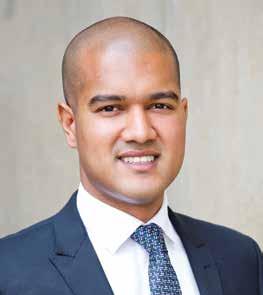
“Our leadership role extends beyond taking a stance in conversation and policy development. We must personify a sustainable, inclusive future. by harnessing the power of a diverse collective, we create, build and sustain momentum for future generations. Our actions can create a force for good and help to solve the complex problems our world now faces. i have modelled this in a corporate environment by building diverse, high-performance teams, and these experiences have helped when addressing larger-scale problems like climate change, sustainability, diversity and poverty alleviation — issues that affect us all, ” – zuriel naiker.
Marsh Mclennan is a global professional services firm with two operating segments, Risk and insurance services and Consulting, comprising four major businesses, each a global leader in its field. The organisation services clients in 130 countries, is one of the Fortune 250 companies and has annual revenues of $17-billion. Marsh Mclennan”s 76 000 colleagues around the world are united in purpose and action for the benefit of clients, shareholders and society.
executive Vice President: Corporate affairs and iR at imperial, esha Mansingh is responsible for esG and sustainability, investor relations, corporate affairs, internal and stakeholder communications, brand positioning, and media liaison at imperial. as the Chairman of imperial’s Global Women’s forum, she drives many women-led empowerment initiatives across africa, Csi projects and leads the sponsorship of the iconic imperial Wanderers stadium.
esha also serves as the co-chairman of the World economic Forum’s new Champions south africa board, on the boards of Unjani Clinics nPC and the imperial and Motus Community Trust, is the chairman of the integrated Reporting and esG sub-committee of CFO Forum sa , and a founding member of the investor Relations society south africa.
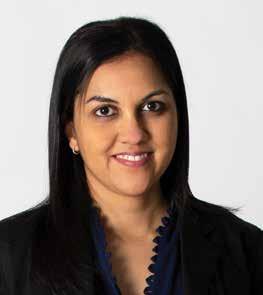
in addition, testament to her far-reaching work in women empowerment and social impact, esha is a multi-global award winner having been recognised among the 100 Most successful Women in business in the World 2021 by GTC, a Top 50 Power of Women 2021 by Mail & Guardian, Positive Role Model for listed Companies in southern africa by accenture Gender Mainstreaming awards 2021 and ‘Most influential Women in africa 2022’ by a european business magazine.
“To be recognised by WeF as a YGl 2022 is an honour. My personal purpose is to continue to make an impact on our committees and countries in need. Through YGl , i want to grow and leverage partnerships and networks with other like-minded leaders with common vision and purpose to drive social impact and women empowerment initiatives particularly on the african continent. also high on my agenda, particularly coming from a leading logistics business in africa, is how we lead and drive the climate change transition journey. We need leaders and voices to represent africa on these international platforms and to also attract investment onto the continent for this climate transition journey. i’m hoping to play a part in these discussions through YGl, ” - esha Mansingh.

Mmaki Jantjies is Group Head of innovation and Transformation at Telkom and an adjunct associate professor. Passionate about digital inclusion, she has led initiatives and studies focusing on system design and adoption of mobile application’s use to improve education and healthcare in south africa. she was the 2017 and 2018 south african delegate representative to the W20 in the G20, contributing to engagement on policies that look at the impact of digital inclusion of women.
Working with Un Women and the Mozilla Foundation, she founded a non-profit organisation, Peo ya Phetogo, which runs various sTeM programmes to ensure that young south africans take up technology as a business or career; the organisation went on to start further programmes which develop teachers’ skills in technology and digital literacy.
Mmaki has been recognised for her contribution to the south african technology sector with local and international awards.
“i was humbled by the announcement to form part of the young global leaders program. it is an exciting platform to be part of a cohort of young leaders who are passionate about creating a sustainable future. The collaborative opportunities provide a platform to bring an african view to the world, on creating a sustainable impact of technology across sectors, “ – Mmaki Jantjies.
in 2021 sumayya Vally, founder of the inter-disciplinary architecture studio Counterspace, was on the Time100 next list of people “poised to make history”. in the same year she was the youngest architect to design the serpentine Pavilion.

“Materially, the Pavilion takes into consideration construction’s role not only socially, but also its wider impact on the environment. i’ve approached it very much with the same ethos as designing something in Jo’burg – looking out for the inspirations in the fabric of the city and the lives of people in it. like previous projects, the methodology for the pavilion is shaped through the lens of a fundamental interest in territory, identity, belonging and trying to understand architecture beyond that which is built.
“i spent a big part of my childhood walking from my grandfather’s stores on ntemi Piliso street in Jo’burg, to the Johannesburg library. Walking in the city is a very sensory experience; i’ve learned that architecture is complicit in separating, othering, excluding – but it can also be a force for the opposite.
“everything we look at is about what we want to bring out in a place. it’s like all the stories of a place are there and we are selecting what to foreground. We’ve tried to achieve this in many of our public art projects, which are about place-making and bringing together an image or a landmark for a place that stems from the context we’re working in.”
sumayya has continued her work with the serpentine by initiating and developing a fellowship programme support structures for support structures.
“Dreaming is everything”.
CeO of african Risk Capacity, lesley is an executive with extensive international experience in insurance and investment management.
aRC ltd is a specialist insurance company that provides parametric insurance coverage to african countries against extreme weather events and natural disasters. lesley spent close to a decade in various senior management roles in insurance and asset management with the aXa Group in london, Paris and singapore, including as CeO of a lloyd’s of london insurance syndicate, Head of Corporate Development for aXa Global asset Management and Chief investment Officer for aXa singapore.
Prior to joining the aXa Group, he was Vice President: investments at aXis Capital in bermuda, as part of an institutional investment team managing Us$15-billion in a global multi-asset investment portfolio.

He began his professional career with Deloitte, where he had various assignments in corporate finance, auditing and tax advisory.
He currently serves as a non-executive Director for various financial services companies around the world. n
For more than 130 years, Johnson & Johnson Consumer Health has aimed to keep people well at every age and every stage of life. Through our iconic brands – such as Benylin®, neuTrOgena®, lisTerine®, JOHnsOn’s®, and sinuTaB® - we combine the power of science with meaningful human insights and digital-first thinking to help more than one billion people take better care of themselves and their loved ones every day.
how doEs Johnson & Johnson ConsumEr hEalth livE up to its ConsumEr & CustomEr nEEds?
Prioritising the feedback and insights we get from consumers is key for us. it enables us to consistently deliver brands that offer quality, value, and trust. That is why we use different sources of insights - such as consumer immersions, market research, social media listening, and consumer care trends, to keep up to date with the latest trends and to truly understand what matters to our consumers. On the customer side, our key account team and our shopper department work closely together with our key partners to understand evolving shopper behaviour and to add value by developing powerful category growth strategies.
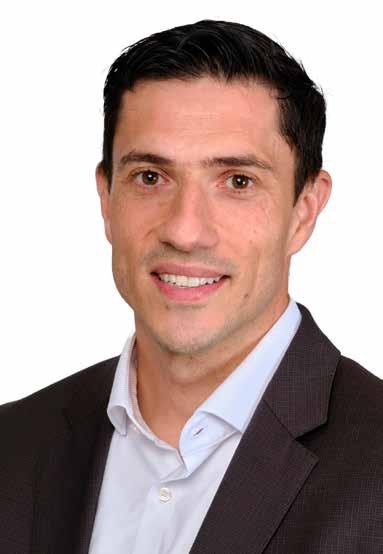
We take every opportunity to prioritise creating products that are sustainable, have natural ingredients, and enhance product transparency so our consumers can make informed choices about personal health products. Moreover, we are reducing our environmental impact by using recycled materials in our packaging, making sure our packaging is easy to recycle or reuse, and powering our operations with renewable electricity.
We call this our Healthy lives Mission –our ambition to advance human health while also protecting our planet which is backed by an investment of $800-million. in line with this, in south africa, we are committed and have engaged in the extended Producer responsibility (ePr) programme and work with designated Producer responsibility Organisations (PrOs) to ensure that we do our part in creating a true circular economy for plastic packaging. This year we celebrated a milestone with the completion of the PV solar installation at our manufacturing site in Cape Town, allowing us to continue to supply meaningful consumer products in a way that considers the health of the planet, while not sacrificing safety or quality of the products themselves.
outsidE sErving ConsumErs and CustomErs, how is Johnson & Johnson ConsumEr hEalth hElping CommunitiEs?

We are committed to supporting the communities in which we live and work.
since 2016 we have funded 23 unjani Clinics - a nurse-led network of primary healthcare container clinics in the communities of south africa. The non-profit company supports and empowers black women and professional nurses, to own and operate their own sustainable healthcare clinic, enabling them to become the first level of primary care for members of their community.
as part of our Csi initiative for 2022, Johnson & Johnson employees visited the Thomas Wildschutt Junior Primary school in Cape Town, to revamp their library and build a vegetable garden. The library will provide an opportunity for the kids to learn and discover the world through reading and a garden will provide daily meals and nutrition for the children.
address: 241 Main road retreat, 7945 Cape Town, south africa tel: +27 21 710 4111 website: www.jnj.com
We are living in the interregnum between the COVID-19 pandemic and the post-pandemic era, where all spheres of life have been severely disrupted. Globally, almost everyone has experienced a life-altering impact on their professional and personal lives. The world was turned on its head. From being home-bound to working online, no person has been spared the deleterious effects of the pandemic.
COVID-19 has not just changed the world but also changed the fundamentals of the workplace ecosystem in myriad ways. During the
past 2 years, for example, business leaders globally were coerced to balance the twin imperatives of ‘lives and livelihoods’. This created profound new challenges for business leadership with no precedents in recent history.

This sudden shift in lifestyles has affected our intrinsic values and ideals, and there has never been a time in the history of the world where there has been a greater need for transformational leadership. The pandemic has highlighted the importance of the role businesses play in society and it has also created a clear challenge for leaders in terms
of the world of work. This creates two interrelated imperatives for leaders, even as they continue prioritising health, workplace safety and worklife balance.
As the world begins to edge closer to some kind of normality, it is critical that leaders do not lose sight of the skills they developed and honed during the pandemic. Consequently, it has become incumbent on them to lead effectively in a post-pandemic era where business organisations in their totality are facing indisputable fragile futures. Whilst it is still early days to speculate about a future post-
pandemic world, at the broad level there will be a need for a pivotal shift in leadership to step forward boldly and deal with 3 immediate major challenges that threaten the very essence and sustainability of enterprises.
in the first instance, leadership will need to find meaningful ways to make the world of work inclusive and better for everyone; secondly, leadership will have to leverage the lessons learnt from the past 2 years to rapidly innovate and match new products and services with consumption patterns that have changed radically; and finally, it will become imperative for leadership to reimagine notions of value creation and sustainability in the context of a world that has been fundamentally distorted
by the pandemic. moreover, given that the pandemic presented the world with one of the most poignant moments in its history, it will become critical for leadership to use this juncture as an opportunity to create fairer, more inclusive, more equitable and more just places to work. Towards this end, a few intrinsic human values and skills are identified as key motivators for the new leadership to embrace. indeed, it has become abundantly clear that to emerge from the crisis stronger and more resilient requires re-thinking what it means to lead and prioritising purpose, trust, empathy and inclusivity.
The human centric approach to leadership, will more than ever, be about creating the conditions in which personnel can thrive and perform at their best. it is about empowering people, making them feel valued, equipping them with what they need and supporting their overall wellness. encouraging emotional wellbeing and mental health ahead of hard business kPis should become the new norm for leadership.
This new participatory leadership will support staff on how they want to shape their world of work. in this new dawn, redefining corporate culture around the precept of ‘people before profit’ has to become the new hallmark of transformational leadership.
Various studies have shown that during the pandemic leaders have become much more emotionally responsive to the challenges that their employees have faced both in and out of the office. This issue of empathy has risen phenomenally with everyone making their way through this pandemic together, especially in checking one another’s wellbeing. deeper relationships help create a much more comfortable, safer feeling

atmosphere, which inspires employees to do their best. it also promotes greater collaboration and understanding between team members, irrespective of any differences in age, gender, culture, or personality.
Ultimately, when everyone feels respected, understood, and valued, the team’s efficiency takes on an upward trajectory. empathy can be a great driver of innovation. Feeling secure and valued in the workplace, with trusting relationships, will help many to feel more comfortable and encouraged when taking risks.
We are all keenly aware that during the pandemic leadership was forced to make rapid and informed decisions amid uncertainty. Gone are the days when leaders could make decisions on past experience. agility has become the key word in this black swan world, where leaders have realised that they do not have all the answers, but have to make critical decisions using the power of their teams, encouraging experimentation to co-create the right solutions for the new pandemicbased challenges.
Finally, if the pandemic taught leadership anything, it is the importance of authenticity, vulnerability and coming together as agile, collaborative and compassionate teams to drive results. The time has arrived to reflect on the positive lessons learned and to recalibrate the critical traits of leadership as we enter the post pandemic era with an optimistic outlook.
equally, our organisations will require life-changing leadership approaches to revive weary and floundering enterprises and restore the physical and mental well being of their aggrieved human resources. n
The corporate world remains in a state of flux. Higher employee turnarounds, evolving client needs, and the recent move toward hybrid work environments mean the ability to manage change effectively is paramount. But as business leaders venture into uncharted territory in a world still dealing with the effects of the pandemic, new strategies will be required – creative new approaches.
According to an April 2021 report by cultural consultancy Barker Langham, creativity is the new “commercial superpower” in dealing with an ever-changing business environment. The report suggests that organisations are better equipped to address these newfound challenges by becoming more creative and hiring more creatives (or more creative people) while also opening opportunities for growth and innovation.
Creativity is no longer just for specific “creative” industries. The report posits that it can address the five core challenges businesses have to deal with today – wellbeing, organisational transformation, innovation, financial return, and identity. Something as simple as a workplace that showcases art led to increases in productivity by 17%; offering creative activities increased staff retention by 28% and attracted more toplevel talent; 69% of companies cultivating creativity reported winning awards and recognition; and even the World Economic Forum recognised creativity as one of the top three skills for employees from 2020.
From a change management perspective, the findings were clear: “The creative, people-focused techniques required to help make significant transitions can be improved among staff through

creative collaboration. Arts-based learning is increasingly used… to enhance employee skills in change management.”

This approach means that business leaders are not alone, and by designing the right working environment, they can work with their teams to find creative solutions when facing significant change. By fostering open dialogue and collaborative thinking around a specific change – such as new systems, roles, or restructuring –teams will feel actively involved, helping individuals cope better and potentially finding new pathways to managing the change.
For example, and Change was working with a multinational financial services entity driving its business strategy. They looked for a fundamentally different new way of operating to stay relevant. We proposed that they put together cross-functional teams organisationwide to look at the value chain while simultaneously pulling in feedback from their staff, resellers, and clients. In short, creative thinking was stimulated among the team through theatre and social games – and leadership realised that their services were part of a more

significant economic cycle for their clients. However, going forward, they would require completely different solutions for their clients compared to standard offerings already present in the industry. By embracing these new ideas, they drove their value to clients and ultimately changed the way the business functioned – for the better.
These creative collaborations are not limited to units within a business, though, with the Barker Langham research also suggesting intersectional collaboration across creative, non-profit, and corporate industries. According to the report, many of these multiindustry partnerships embraced Corporate Social Responsibility (CSR), such as work across the education, health, and environmental spheres. However, with the new trend towards more concrete corporate ESG (Environmental, Social and Governance) policies, many large organisations directly integrate these collaborative values and strategies into their business models. “Companies are beginning to define themselves with a social purpose that underpins their existence… How companies engage with creativity continues to evolve, and
a wealth of richer, more meaningful cross-sector collaborative projects are taking place worldwide. These range in scale from innovative business ideas or placemaking initiatives to teambuilding,” the report reads.
Right now, there’s a significant need for creative solutions as we see more businesses return to their offices after three years of online working. For many, it’s an optimistic move as deaths linked to the COVID-19 pandemic wane. However, employees will push back (change resistance is very real), and hybrid working environments will be contentious unless managed very well with adaptability in mind. The creative thinkers in leadership will find a way to ensure flexibility and safety for their employees without affecting productivity and profitability. n
“By fostering open dialogue and collaBorative thinking around a specific change – such as new systems, roles, or restructuring – teams will feel actively involved, helping individuals cope Better and potentially finding new pathways to managing the change.”
as a leader, you’re responsible for finding solutions to problems big and small. whether it’s resolving a conflict between team members or coming up with a new strategy for growing the business, your ability to problem-solve is crucial to your success. In this blog post, we’ll explore the process you can follow for solving problems as well as four techniques to help solve problems quickly and efficiently. whether you are facing an unexpected obstacle or simply looking for ways to improve your problem-solving skills, read on for some helpful tips.
thE problEm-solving procEss when it comes to problem-solving, there is no one-size-fits-all solution. The best way to approach a problem will vary depending on the situation, contributing factors, the team, and your personal style. However, there are some steps you can take to help ensure that you’re solving the problem in the most effective way possible. below are four steps you can follow when solving problems:
The first step to solving any problem is to identify what the problem is. This may seem obvious, but it’s important to take the time to clearly define the
problem before trying to find a solution. ask yourself questions such as: what is causing the problem? what are the symptoms? what are the potential causes of the problem?
by unpacking these phases, you may more precisely identify the problem:
• Define the issue: what is the specific problem that needs to be addressed?

• Identify the factors involved: what are all of the factors that are contributing to the problem?
• Clarify the goals: what do you want to achieve by solving this problem?
Once you’ve defined the problem, you need to gather as much information as possible about it. This includes understanding the factors involved and gathering data to support or disprove your theories about the problem. You can also talk to people who are affected by the problem or who have expertise in the area. The more information you have, the better prepared you’ll be to come up with a solution.
Analyse the information after you’ve gathered information, it’s time to analyse it and see what
patterns emerge. This is where you start to develop possible solutions to the problem. Try to come up with as many solutions as possible and then narrow them down to the best ones.
Once you’ve come up with a few possible solutions, it’s time to evaluate them and see which one is the best. This can be done by assessing factors such as feasibility, impact, and costs. You’ll also need to consider how the solution will affect people who are affected by the problem.
Now that you know the process for solving problems, let’s take a look at problem-solving techniques that can help you do it quickly and efficiently.
Problem-solving techniques are methods that can help you to solve a problem in a shorter amount of time. There are many different techniques, and the best one for you will depend on the situation and your personal preferences. In this section, we’ll explore four problem-solving techniques that are commonly used by leaders:
brainstorming is a technique for generating ideas. It involves coming up with as many ideas as possible, even if they seem crazy or impractical. get a group of people together who can offer different perspectives, and brainstorm ideas. You can write them down or just say them out loud. This is a great way to get a lot of different ideas and see if any of them can help solve the problem.
swOT analysis is a technique for evaluating the strengths, weaknesses, opportunities, and threats associated with a problem. This can help you determine the best course of action to take.
The 5 whys is a problem-solving technique that involves asking why the problem occurred multiple times. This can help you get to the root of the problem. start by stating the problem. Next answer the question “why?”. asking why another four times will help you work through obvious answers and identify the root cause of the problem.
a decision matrix is a tool for evaluating possible solutions. It helps you compare and contrast different options so you can choose the best one.
The matrix has two axes: options and criteria. The options are the alternative solutions to your problem, listed as rows in the matrix. The criteria are all of the important considerations that should be considered for each option. The process is then to score every criterion for each of the options to identify the solutions with the highest score.
These are just a few of the problemsolving techniques that leaders can use. by using these techniques, you can enhance your leadership skills and lead more effectively.

leaders are constantly called upon to solve problems. Fortunately, problemsolving is a skill that one can develop. Following the process above and practising the techniques will increase your chances of finding solutions.
If you want to develop your problemsolving skills, identify the processes and techniques that are best suited to you, practice solving problems quickly and efficiently, and measure your development and progress in problemsolving. Don’t be afraid to ask for help from others when you’re stuck. and, always remember, there’s more than one way to solve a problem!
n
“Get a Group of people toGether who can offer different perspectives...”
The Armaments corporation of south Africa (Armscor) is an acquisition agency for the south African Department of Defence. It is a state-owned entity with extensive experience in providing defence turnkey solutions. The organisation plays an important role in providing the defence forces with proper resources to execute their duties efficiently and effectively.
providing food parcels to poverty stricken communities and supporting women in farming to access the market.
ArmscOr manages and operates the Naval Dockyard as the sA Navy’s (sAN) third-line maintenance and refitting authority. The Dockyard focuses on maintaining the required capabilities to support the nation’s submarines, ships and shore-based support facilities.
It provides defence turnkey solutions and its research and development focuses on producing cutting-edge technology products. Its technologies have evolved from the defence sector to both commercial and domestic sectors. It has capabilities and skills to meet the needs of the changing global landscape.
It has a proven track record of delivering on its mandate. Armscor has extensive experience in product development, technology development, enhancement, sustainment and disposal of products.
The organisation has world-class facilities that can be used by both local and international clients to test and evaluate the performance of their defence and security related products. Armscor prides itself on maintaining high-quality international standards through rigorous testing and evaluation
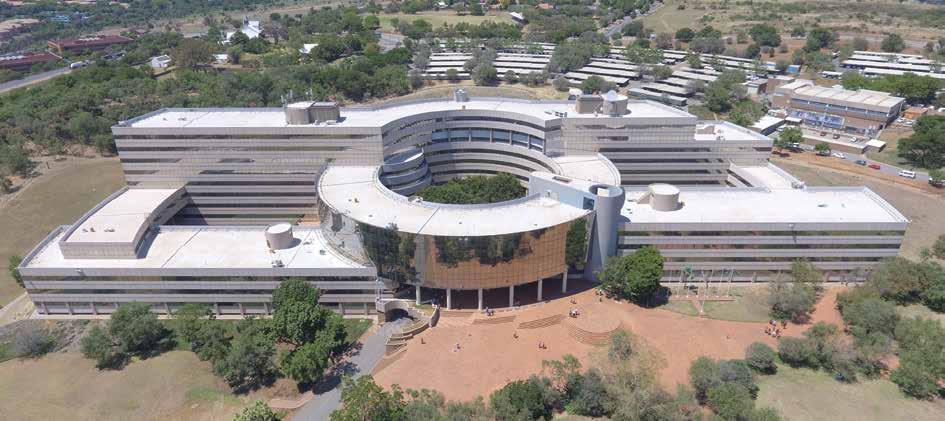
processes on all its technology management projects.
CorporAtE
The csI at Armscor is divided into two components namely; Human capital Development (aimed at supporting learner enhancement to improve their performance and results in science, technology, engineering and mathematics (sTEm) subjects) and socio-Economic Upliftment Programme (aimed at providing social relief during emergencies and disaster situations).
Armscor has a national footprint of csI projects implemented. In the past financial year, a total of 30 projects were funded. These include among other things donation of school shoes and uniforms, providing sanitisers and surface disinfectants to public schools,
It executes activities such as planned preventative maintenance, corrective maintenance, reconstruction and repairs, as well as upgrades to and modernisation of the sA Navy’s vessels (ships and submarines).
It is one of south Africa’s strategic national capabilities, where the country’s naval defence maintenance, repair and overall capabilities are housed.
Dockyard operates one of the five dry docks available in south Africa. It also manages two of the three synchro lifts available nationwide. The facility has capacity to generate seven megawatts of electricity, fresh water and compressed air. It is 228 metres by 29 metres in size. It can be divided into three sub-docks. The ship lift facility has capacity to lift vessels up to 2 500 tonnes.
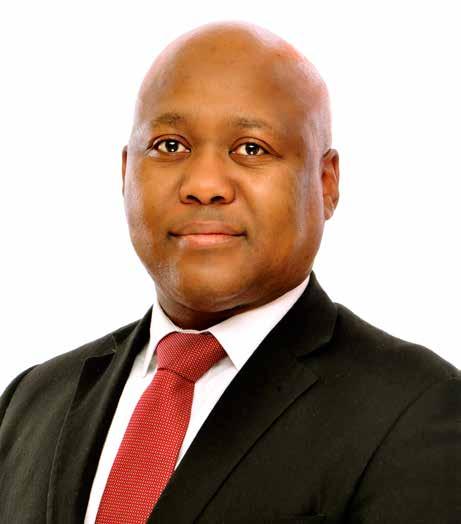

Innovative ideas and thinking can be transformational if you link them together. Boniswa engineered these transforming insights and turned from a start-up into a turnkey telecommunications services provider comprising three business units:

• Boniswa Corporate solutions
• Boniswa Towerco
• Boniswa Manufacturing Boniswa Group is driven by an ambitious strategy from the top down by adapting, changing, innovating, and transforming ideas to meet our client’s needs; CEO and founder Lynnette Magasa provides a clear picture of success in challenging economic conditions.
WhAt
The passion and commitment of Boniswa employees enable them to provide top-notch network service and continuous customer support. we firmly believe in our productive partnership with telecommunication operators to bridge the digital gap between rural and urban areas. at Boniswa, we have remained with our vision of bridging the digital gap since 2004. as a result, through our partnerships, we managed to have our own Boniswa Towerco and Boniswa Manufacturing facilities.
Growing out of the recruitment world, where Boniswa was already present with a focus on telecoms, Magasa identified an opportunity to build a new offering across the infrastructure. with little industry experience but driven by passion and determination, this project yielded early success and allowed Boniswa to build a reputation. The following years saw the company grow aggressively; without significant financial backing, this ambitious female-led start-up garnered attention in the largely male-dominated industry. Boniswa became known for erecting telecom towers, manufacturing unique protective telecom cabinets for the african environment, and tower collocation; this structure is used to support multiple antennas operated by different carriers. Today, Boniswa is home to more than 250 people across multiple divisions. it is a core player in the telecoms industry, providing digitisation opportunities across south africa. as of January 2021, 36% of south africans remained unconnected to the internet. This digital divide is a driver of unemployment, poverty, and inequality. in addition, mobile data users face high costs and unreliable connectivity, and just 1.2% of the rural population has access to high-speed broadband in the home. in
reality, 32.4% of the population lives in rural areas. There is much to be done from a technology and infrastructure perspective. as a result of the pandemic, Boniswa saw opportunities to solve problems instead of threats and negativity.
“Our mOst significant cOmpetitive advantage is emplOying all the in-hOuse expertise as mast upgrading, mast rigging, site acquisitiOn, telecOm shelter manufacturing, civil wOrks, electrical and radiO frequency installatiOn”.
with COViD, like any other business, Boniswa was affected. However, we always look for opportunities. we started thinking differently, and we now use the just-in-time method. as we are in telecoms – a critical sector – we remained busy. Boniswa also had to move to where the end users were. initially, we were ensuring we had businesses covered at their offices, but we had to move towards protecting employees at home. so our strategy changed, and we continued with our vision of bridging the digital gap between urban and rural areas. when COViD came, people quickly started moving back to the countryside, where there was space, instead of staying in the city, and we are now busy building rural sites. we understand that even kids in rural areas need access to education online.
The pandemic lockdowns have spurred a move away from the well-connected cities of Johannesburg, Pretoria, and Durban as home buyers search for property with more space to live, work, and play in smaller towns and coastal regions. no one saw it coming, but it forced businesses to shift. we had to ensure that those in rural areas or farms would not be forgotten. Many offices remain empty, so we are busy moving connectivity to rural areas.
Boniswa Group has three divisions: Boniswa Corporate, which deals with service (CaPEX model), Boniswa Towerco (OPEX model), and Boniswa Manufacturing (CaPEX and OPEX model). we come up with vertical integration where we control multiple stages of our production process and supply chain. Besides offering service, we create partnerships and look for long-term relationships. To materialise this strategy, Boniswa launched its factory, and everything we use is produced and supplied in-house, providing us with a
Lyne Magasa Founder and CEO
competitive advantage. some of our competitors come to us for installation services. we gain a cost advantage when we price items because the process is managed internally.
The company’s factory is situated in Midrand. it can service sites across the country, using a presence across southern africa to help telcos expand throughout the continent. we have grown quite well and are active all over south africa, Botswana, namibia, and Lesotho. we also have a marketing office in France to promote our products across Europe. access to manufacturing has helped the company broaden its horizons. Management is enthusiastic about exploring all avenues for future growth, utilising the innovation within the business to push new boundaries.
The batteries are in their early stage for us, but we are diversifying and hope to penetrate new industries in the future. For example, we are currently busy with a mobile hybrid generator that will use diesel and batteries as a backup. The african continent is known for high unemployment, and theft can be a problem. Therefore, Boniswa Manufacturing has launched a new range of products – telecommunication anti-vandal cabinets that store batteries to meet the needs of the african market. after 18 years, Boniswa continues to thrive and strive for innovation. This goal is driven
by Magasa, who is always looking for ways to remain at the cutting edge of our industry.
we believe that success lies where everyone can share value creation and growth – our clients, employees, future talent, and the communities we serve or who rely on us. Our corporate responsibility is guided by three commitments: people, environment, and business resilience.
Boniswa CEO Lynnette Magasa’s vision for the company is to create meaningful employment. in addition, she wants to grow the company globally and have a Boniswa brand footprint across different continents. a vital part will be to keep bridging the digital gap. Finally, as a continuity strategy, our long-term vision is to develop the company from an sME to a corporate group.

compAny dEtAils: Physical Address: 329 roan Cres, randjespark, Midrand Telephone Number: 011 312 2100
Email Address: info@boniswa.co.za Website: https://www.boniswa.co.za/
sociAl mEdiA: Linkedin: https://www.linkedin.com/company/ boniswa-group/ Facebook: https://www.facebook.com/ boniswagroup/
Mike Steyn, co-owner and operations director of Aspire Solutions, has been working in information technology for nearly two decades. Before this, he worked as a design and project management engineer in South Africa, Namibia and England. In 2004, Mike braved the tough South African market and founded Aspire Solutions, an information technology company that helps organisations take high-impact steps towards solving enterprise-wide, business, system or project challenges. Over a period of 18 years, Mike has led the development and implementation of many complex IT projects.
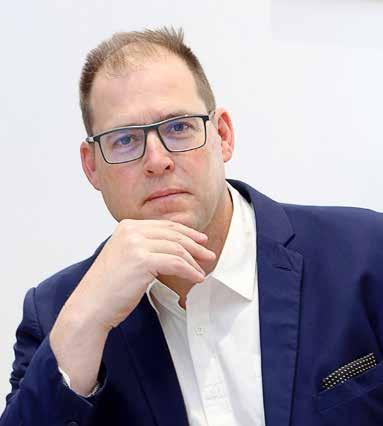
project’s conception through to the point where their vision becomes a reality. We employ a concept of quick returns on investment with regard to their technology infrastructure. Aspire does work in fairly complicated technology spaces, such as large corporations or government agencies, where there are challenging systems that need to be considered and complicated solutions that need to be put together. We never shy away from intricate and difficult problems and, within a very short space of time, we provide a way forward.
We approach technology solutions from a rapid solution deployment perspective because we are cognisant of the fact that tech is supposed to enable and assist businesses in doing things better and, the longer you take to implement the technology, the longer it takes a business to reap the benefits.
I was fortunate enough that, within the consulting engineering firm for which I was working, there was an opportunity to move sideways into information technology. After only a few months, I found that I felt comfortable in the IT space and so we decided to take the IT division out on its own, resulting in the birth of Aspire Solutions. We negotiated with the engineering firm, parted on good terms, and our course was set.
We walk a journey with our clients, helping them from the early stages of a
We’ve coined the phrase “just in time design” - a forward-thinking methodology which means that when we commence with a project, we have not exactly mapped out where we’re going to end up nor do we fully understand all of the problems or challenges we might face; however, we can see what we need in the very short term and can do enough of a design to build our clients a quick solution. And then, as and when I get new inputs, we modify, refine and extend this solution in time. As operations director, I have to ensure that we design fast enough for the developers that are building the technology to know what the solution is.
WhAt hAVE BEEn YoUR MoSt
MEMoRABLE MiLEStonES AS Co oWnER And oPERAtionS diRECtoR oF ASPiRE SoLUtionS?
The celebration of 18 years since we started the company is one big milestone. We also recently got our own premises and so were able to celebrate there.
do YoU hAVE A MESSAGE FoR oUR REAdERShiP?
We need to change the mindset that IT solutions are an expense to the business - they are actually capital outlays that should yield a return. We need to have empathy for, and an understanding of, the complex environment in which technology providers are trying to provide solutions. Businesses need to take advice from and walk the road in partnership with IT companies to forge sustainable and sensible solutions.
Address: 14 Kildare Road Newlands, Cape Town, 7700 tel: +27 (0)21 671 3056 Email: info@aspiresolutions.co.za Website: aspiresolutions.co.za
As product offerings and price continue to converge across industries, customer experience (CX) has emerged as the most important differentiator for businesses looking to remain relevant in 2022 and beyond. As one would expect, there have been several CX trends emerging, particularly aimed at creating a more personalised experience for the consumer – as consumers are faced with more choice than ever, and a growing number of channels to use their voice.
One such trend has seen businesses grouping consumers based on perceived potential – measured through specific behavioural patterns, such as spend for instance – and then providing each group with a different experience.
Using a bank as an example, high net worth individuals might be given access
to a team of private bankers who can provide a personalised experience 24 hours a day. This is aimed at ensuring positive CX, making the customer feel valued, and ultimately retaining their business. Lower income clients however may not have access to a team of bankers.
This is an interesting concept, since they are more likely to be interacting with the business frequently – whether they are looking at ways to get more value out of their products, finding out about new offers or logging queries. This also means they are then more likely to switch providers based on unsatisfactory CX.
Merchants’ consumer research carried out in Q2 2021 found that South African consumers are likely to switch providers based on unsatisfactory CX – usually switching after an average of 2 - 5 negative experiences.

Another related trend which is emerging incredibly quickly is the digitisation of customer touchpoints – for customers across segments. It is imperative to ensure that investment in digital CX tools is not at the detriment to investment in people. As a BPO provider, our 2021 research also showed that 87% of respondents want to speak with an agent when contacting a call centre, and problem solving remains the number one outcome they are wanting to achieve. While digital channels like chat, for example, definitely have their place in providing positive CX, our research over the last two years gives us strong evidence that human connection remains incredibly important to all consumers.
Businesses looking to remain relevant need to ensure they are focusing on creating a personalised, positive experience for all consumers, regardless of their perceived potential. n

Thanks to Top 500 for two consecutive years as the Number 1 ranked Best Managed Company in the Cement Sector. We know it takes the best products, people, customers and partners to stay this strong, and we look forward to the next 130 years building unshakeable partnerships.










































































































When it comes to reaching sustainability targets, the cement sector is considered one of the ‘hard-to-abate’ sectors. These are the sectors where the cost and the technology available does not allow for a simple transition to a green economy. This has not stopped the cement sector from enthusiastically committing itself to more sustainable practices and actively taking steps towards the net-zero emissions target. And with recent protectionist measures, which were welcomed by the South African sector, some of the costs involved may be eased by growth in local sales.
Supporting thE local SEctor Statistics South Africa’s latest numbers on purchases in the construction sector showed cement sales totaling almost R9-billion in 2020, compared to the over R9.2-billiion sales achieved in 2017.

As part of efforts to give the local industry a boost, the national Treasury announced a new protectionist policy which prohibited imported cement in state-funded construction projects. “This is an important ruling to protect a sector vitally important for the national economy,” said cement and concrete SA ceO, Bryan Perrie, in the industry bodies statement. “Furthermore, it has come at the right time given the multi-billion rand infrastructure projects planned by the government over the next three years.”

“The designation of cement will assist in protecting the local cement industry from unfair competition.”
With significant public sector projects planned for the next decade, the cement sector will likely benefit from the R100billion allocated for the Infrastructure Fund. In the 2022 State of the nation Address, President cyril Ramaphosa highlighted how high infrastructure is
on the government’s agenda: “Through innovative funding and improved technical capabilities, we have prioritised infrastructure projects to support economic growth and better livelihoods, especially in energy, roads and water management.”
The ‘hard-to-abate’ status of the cement sector stems from the amount of energy and raw materials required to produce the cement which is at the very heart of the majority of construction projects.
The extraction of limestone is integral, as is the clearing of land, and the need for water nearby, which is in danger of pollution Hence the need for the use of secondary materials, otherwise known as Alternative Fuels and Resources (AFR). This is part of the sector’s commitment to the United nations Framework convention on climate change (UnFccc).
“In response, to comply with ccSA [cement and concrete SA] climate change commitments in line with the national nDc and Paris Agreement, ccSA member companies aspire to net zero emissions by 2050 with milestones informed by decarbonisation along a 1.5-degree trajectory,” said ccSA Industry executive, Dr Dhiraj Rama. “The key initial milestone will be set at 2030.”
The sector is holding itself to account, with ccSA member companies, which include established industry leaders and relatively new roleplayers, committing to reporting and monitoring emissions and exploring alternative energy sources.
Graph sourced from Cement and Concrete SA
industry policy on Afrs
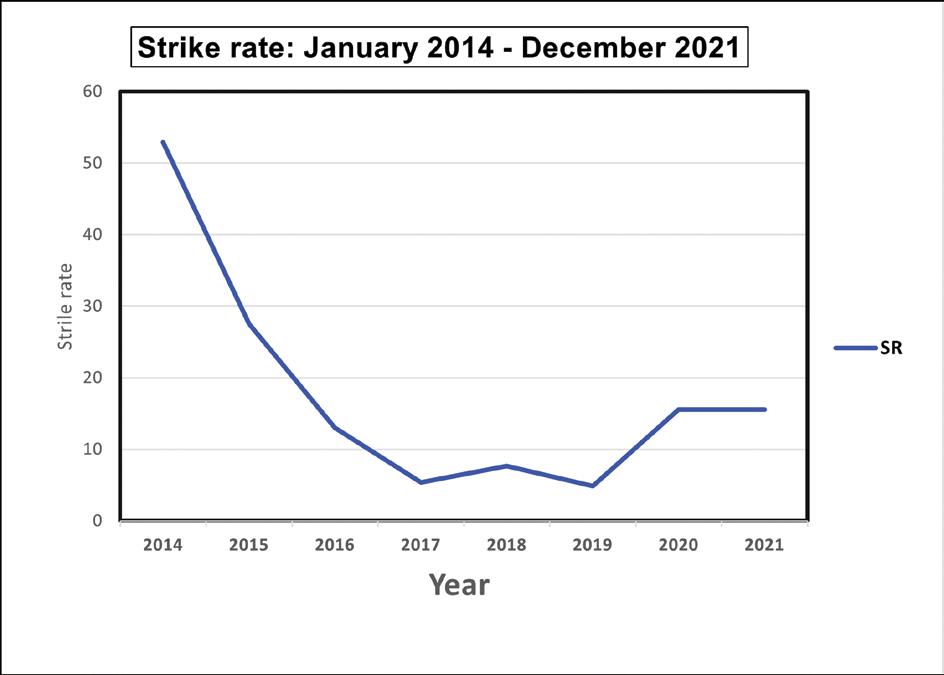
ensure occupational health and safety
Keep the environment safe
Refuse banned wastes
Offer waste management solutions to society
comply with regulations and best practice
communicate transparently
Graph sourced from Cement and Concrete SA
Sources: Statistics South Africa | cement and concrete SA | SA Gov Lombard Odier
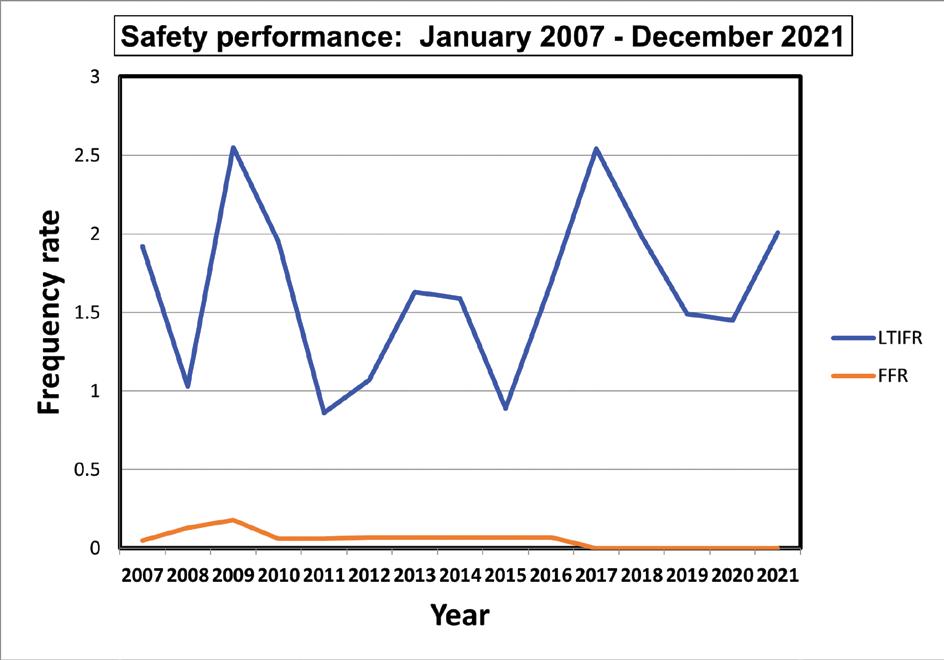
We are honoured to be recognised as one of the Top 500 Best Managed Companies in South Africa – a title underpinned by our core value of Performance. We have upheld our ranking as a leading construction materials company in Southern Africa for almost nine decades. We strive to continuously deliver value to our stakeholders, develop our nation through locally produced high quality products and make a sustainable difference in the communities we serve.


Having been at the helm of the ACTOM Group for five years, Mervyn Naidoo has had to steer the Group through some of the toughest challenges businesses around the world have had to face over that period. The pandemic and conflict in Europe have been a test of his team, and his leadership. “Our management team has managed to navigate through this crisis and emerge a stronger company, with minimal jobs lost over this time,” says Mervyn. In 2023, ACTOM - which specialises in the design, manufacturing, supply and servicing of electro-mechanical equipment - will be celebrating its 120th anniversary. Here Mervyn takes us through his most memorable achievements, and the services ACTOM offers.
factory loading which posed a major challenge in terms of under-recoveries, costs and cash management. Our management team has managed to navigate through this crisis and emerge a stronger company, with minimal jobs lost over this time. The true test of leadership is when one manages through turbulence, adversity and a downward economic cycle. This is particularly memorable for me and I am proud of how we managed to navigate through this period.
PlEasE dEscribE actom’s sErvicEs and thE sEctors you oPEratE in. We operate in the following sectors: Utilities, Municipalities, Mining, Renewable Energy, Petrochemical, Steel, Paper, Cement, Rail and General Industries.

We’re a high-speed rotating equipment specialist service provider, offering comprehensive workshop and site services on steam turbines, compressors, pumps, gearboxes, as well as general machining and fabrication, submerged Arc Micro welding as well as new shafts and repair, grinding and micro welding of all types of rotating equipment and other mechanical components.
What havE bEEn your most mEmorablE achiEvEmEnts as cEo?
I have been in the Group CEO role for over five years, and during this time I’ve had to navigate our Group through a period of low economic growth, a generally depressed capital cycle, the COVID-19 pandemic and the conflict in Ukraine. We had to endure depressed
ACTOM’s offering includes design, manufacturing, supply and service of utility boilers; high voltage equipment; MV switchgear; mini-substations; power transformers; distribution transformers; protection and control solutions; electric motors; DC power solutions; industrial batteries; UPSes; cables; cable accessories; lamps; lighting equipment; solar water geysers; industrial fans; electrical equipment for open cast mining, rail transportation, railway signalling equipment and turnkey systems motors; generators for excavators; off-highway vehicles; locomotives; drilling and pumping applications; high, medium and low-voltage, flameproof, DC and traction motors.
PlEasE discuss south african manufacturing in rElation to thE country’s Just EnErgy transition The energy transition is a major disruptor and a positive one for manufacturing as it has the potential to trigger major product diversification opportunities for local manufacturers. Demand is going to be stimulated, which will culminate in major job creation opportunities as well as the revitalisation of the South African economy.
address: ACTOM, 2 Magnet Road, Knights, 1413 tel: (011) 820-5111 OR (010) 136-0200 Email: actom.marketing@actom.co.za Website: www.actom.co.za
 by KoKEtso MaMabolo
With one of the biggest economies on the continent, supported by an established network of infrastructure and ports of entry, it’s no wonder South Africa’s manufacturing industry employs over a million people, recording sales of over R2-billion in 2021.
thE fall and risE
According to Statistics South Africa, general manufacturing sales (at current prices) in 2021 hit a five-year high after falling to a low not seen since 2016. The COVID-19 pandemic was a massive blow to the sector, which resulted in sales dropping by 11% in 2020 due to low economic activity. The sector made a spectacular recovery in 2021, with sales rising by a staggering 16%.
The pandemic may have hurt the local industry but it did not change how important it is to the South African economy. Almost half of the total export earnings in 2020 were from manufacturing, and in that same year, it contributed 13% to South Africa’s GDP.
As 2022 draws to a close, monthly sales up to July suggest that this year could see the sector performing even better. Sales in all seven months have surpassed those of the same months in the previous, with January recording a 13.4% increase in sales
year-on-year, closely followed by 12.2% in February. The growth slowed in April, May and June, dipping below 10%, before bouncing back to 11.6% in July.
While presenting a report for Proudly SA, Pan African Investment and Research Services economist Dr. Iran Abedian highlighted the potential the industry holds: “Manufacturing in South Africa, given the structure of our economy, has a positive multiplier effect to the tune of 1.3 times because if you inject 10% into manufacturing, the total economy is better off 13%.
“So for every rand that you inject into manufacturing investment, you're going to get R1.30 back.”
Dr. Abedian noted that this potential will require the private and public sectors to each play their roles, in an industry that has become more capital-intensive over the years. This relationship will be a key driver of reindustrialisation. “The success of South Africa’s reindustrialisation rests on an effective partnership framework within which the public sector implements a well-coordinated,
intergenerational infrastructure provision programme while the private sector in diverse industries focuses on industry-specific dynamics,” said Dr. Abedian.
“Sufficient investment in any sector, including manufacturing, is a necessity for sustainable growth and development,” reads the report. “Gross fixed capital formation has shown to be an important driver of economic growth in South Africa.”
The report touches on the need for the manufacturing sector to adapt to the limitations created by the urgent need to address climate change and rising energy costs. “The growing concerns for environmental sustainability, the rising consumer awareness about the
significance of reducing carbon footprint for all goods and services, and the escalation in the cost of energy in all its forms are but a few examples of the constraints within which global manufacturing needs to redefine its operations.”
In March, sales were at the highest of any month in the past seven years at over R260 billion. This is in line with the trend over the last two years where new ceilings have been set, and sales only dipped below R200 million in only two of the previous 19 months. While the outlook has not always been positive, things are certainly looking up for one of South Africa’s key sectors. n
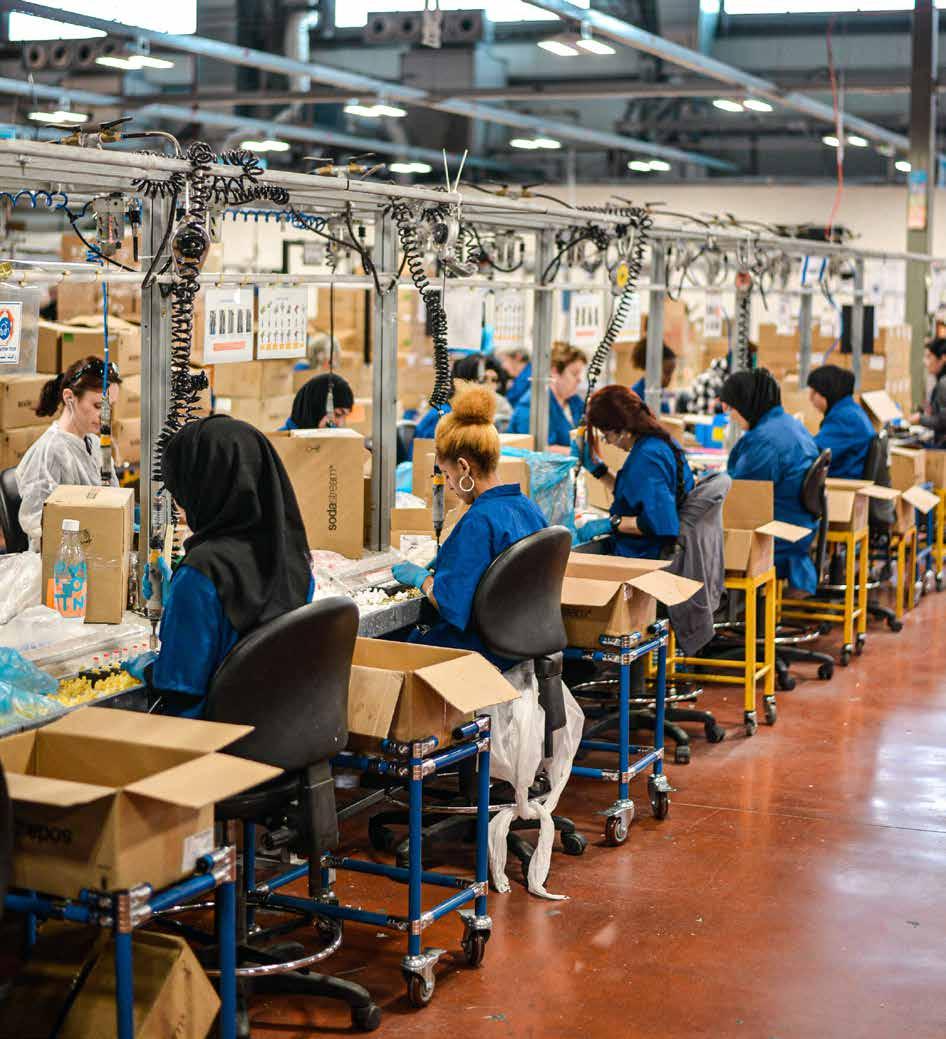
In 2023 it will be two decades since the Broad-Based Black Economic Empowerment (B-BBEE) Act – which established the BEE Commission – was passed. The Act’s mission is to advance and enhance economic transformation and the participation of previously disadvantaged people in the South African economy through diverse but integrated socioeconomic strategies that include, but are not limited to, increasing the number of black people who own, manage and control enterprises and productive assets.
entrepreneurs in townships and rural areas. These entrepreneurs have difficulty accessing finance, markets, technology and infrastructure. There is red tape and other bureaucratic obstacles. On a wider scale, there is also the concentrated nature of the economy and ownership patterns, and exclusion from major value-chains,” - His Excellency..
this acquisition by a black and femaleowned company of a liquid fuel terminal is a historic development.”
GovErnmEnt’S commitmEnt
Speaking at this year’s inaugural Black Industrialists and Exporters Conference, President Cyril Ramaphosa said while the country’s democracy is 28 years old, there are still barriers preventing black entrepreneurs from meaningful and equitable participation in the economy.
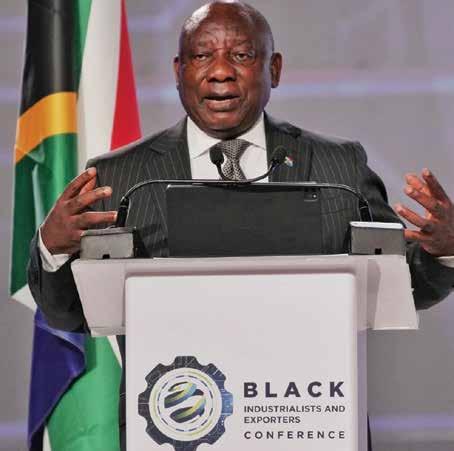
“These barriers are particularly challenging for women, youth and persons with disabilities. They are particularly challenging for
President Ramaphosa announced the appointment of the new Broad-Based Black Economic Empowerment Advisory Council. The Council, comprising government, business, labour and other stakeholders, was established to champion the cause of economic transformation.

According to the 2020 report by the Broad-Based Black Economic Empowerment Commission, “most economic sectors are falling short of their black women ownership targets,
President Ramaphosa reiterated the government’s commitment to entrench and deepen economic empowerment is unwavering. “That is why black economic empowerment is an integral part of our economic reconstruction and recovery in the wake of the COVID-19 pandemic,” he said.
“While there has been significant progress over the last two decades, there are some areas where there has been regression. We have gone backwards when it comes to increasing black management control, upscaling skills development, entrenching enterprise development and broadening procurement to give opportunities to black women and the youth,” said President Ramaphosa.
In the latest report released by the Banking Association South Africa (BASA), Managing Director, Bongiwe Kunene said that without commercially sustainable banks, B-BBEE and inclusive economic growth would be much slower in the country.

“Banks are the single largest source of financing for small and medium enterprises (SMEs), withR34.5 billion in different kinds of finance extended to black SMEs in 2020. SMEs have long been identified as the best way to grow the economy in an inclusive manner, address concentration, create jobs and reduce poverty and inequality.”
“Banks are committed to inclusive economic growth, empowerment and transformation of the economy. They have long acknowledged that the present patterns of unemployment, poverty and inequality threaten the social and political stability on which South Africa depends.”
suppliers in 2020 against an industry target of 80% despite the lockdown restrictions on business activities.”
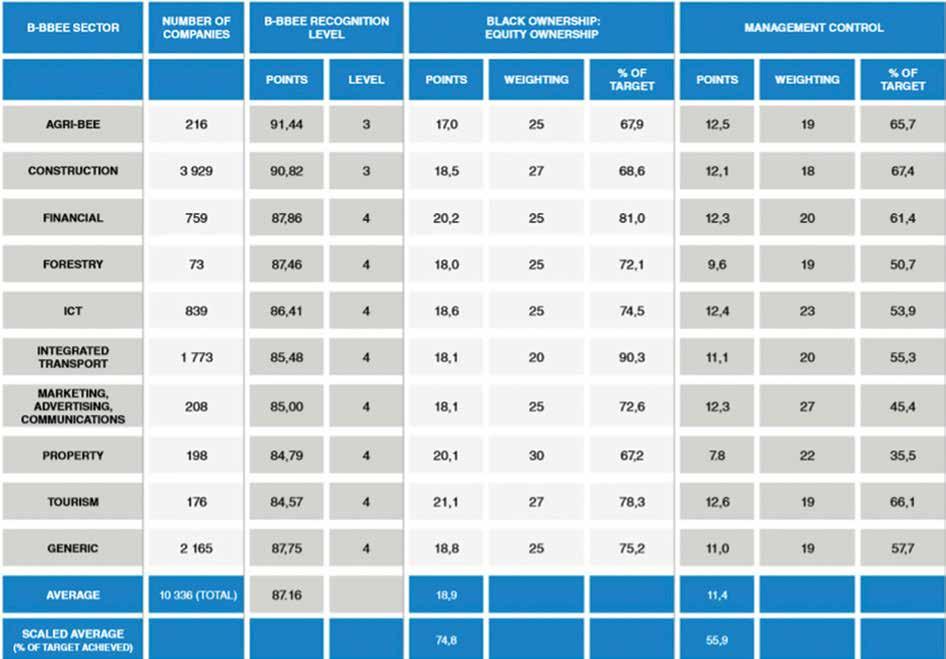
The 2022 Sanlam Gauge report revealed that most sectors and companies in South Africa are still struggling to meet their targets on ownership. The report is based on the B-BBEE scores of over 10 000 companies, measuring transformation across all sectors in South Africa. While there’s been a slight increase from last year, black ownership stood at 74.8% against a target of 100%.
“South African banks are fully committed to achieving the transformation targets set out for them in the Financial Sector Code (FSC). This is best illustrated by the fact that they often go beyond the targets set for them, particularly in equity ownership, procurement and financial inclusion. In procurement for example, banks sourced 82% from BEE-compliant
Speaking about the challenges of making companies comply with transformation legislation, head of the B-BBEE Commission, Zodwa Ntuli told Top Empowerment that more than 80% of the complaints received by the Broad-Based Black Economic Empowerment Commission (B-BBEE Commission) relates to fronting, which is a major concern.
“It is going to take not only the Commission’s oversight, but also the governance committees of various companies to scrutinise their own BEE deals to make sure that those are not fronting deals,” she said.
“We are really concerned about that. We cannot do anything about what happened in the past, but we should be able to deal with it going forward. Cooperation between the government, private sector and regulator is going to be very important.”
“Fronting is not only misrepresenting your B-BBEE status as a company, but also a criminal offence. If you say you have black ownership and you do not have it is a criminal offence. If you submit a B-BBEE certificate to an organ of state for tenders or bid concessions and that certificate sells you as an empowered company when that is not the case, it is a criminal offence,” said Hon. Ntuli. n
Sources: DTI | B-BBEE Commission
The Presidency | BASA | SA Gov | 2022 Sanlam Gauge
Honeycomb BEE Ratings is an independent, nationallybased SANAS Accredited verification agency that conducts professional and impartial verifications of all enterprises, across all sectors, countrywide. The agency believes in the universal values of honesty, integrity, non-discrimination and reliability for each and every decision taken by Honeycomb relative to every BEE verification process and retain authority over all such decisions. With a commitment to fostering longterm relationships with all stakeholders, the agency aims to become and remain the leading B-BBEE ratings agency in South Africa.


What does Winning the top 500 best managed companies in south africa mean to honeycomb bee ratings?
Honeycomb prides itself on building relationships with its clients but if we cannot get this right within our organisation, it won’t flow to our clients. It is an ethos we have built and being Best Managed means our clients and staff agree with us in this regard. We stand by our clients and staff and together we make Honeycomb BEE Ratings who it is today.
your sector is so important to the development Within south africa. can you tell us about some of your clients? We pride ourselves on verifying about 70% of the Top companies in South Africa. We have also become very prominent in the Mining Sector with companies like Anglo Platinum, De Beers, Northam Platinum, Harmony Gold and ASSMANG to name a few. The growth in the Mining Sector has resulted in these companies working towards transformation within their respective companies. A huge part of the transformation is Skills Development which is playing a massive part in transforming and developing our country. It is the best part of what we do, to see this growth year on year, the development and investment back into the communities is uplifting and rewarding.
You havE an incrEdiblY succEssful Pro cYcling tEam that has takEn south africa bY storm! You havE won racEs from road, gravEl and mountain bikE likE caPE town cYclE tour and sani2c- how did it start and tEll us about thE tEam?


To run a successful team, there are many facets that need to work together, needed to create an environment where an individual can feel confident to achieve at their ultimate best. Our cycling team is made up of top riders and management, but more importantly of people who respect each other, their fellow riders and accordingly achieve. Honeycomb is proud of our Pro cycling team not just because of the phenomenal results, but because of what they symbolise, there is strength in unity.
staff and tEamwork mEan so much to You. what advicE can You givE comPaniEs out thErE on how to rEtain staff? Honeycomb’s ethos is built on teamwork. We trust each other within
the company and know that we are only as strong as our weakest link. This ethos led to the formation of a Pro cycling team, who would not achieve results were it not for the support of the team behind each and every winner. i have built Honeycomb on this principle. This proves that no-one is on their own, they have the support of the team, together we know more than one person alone and therefore together we can handle audits and challenges efficiently and
“Honeycomb pioneered tHe electronic verification process and we run one of tHe most efficient processes, as we kept moving, we did not stop and wait. i took tHe time to qualify our wHole team of analysts by putting tHem tHrougH tHe b bbee mdp at wits last year.”
effectively. When we started with Honeycomb, my biggest experience was that as a mother.
i then treated my small team the same as i would my children. i care, listen and show an interest. i reprimand them when they are in the wrong, compliment when they achieve and more importantly reassure them all the way. This has led to a team of staff who are family, who work together like “well oiled machines” but more importantly who care about each other and the welfare of the business. This means they need to care about their clients as this creates sustainability.
“BusinEss woman” is such a powErful tErm. can you givE us somEthing you lEarnt that kEpt you motivatEd to this point, and what still kEEps you motivatEd? my biggest lesson is that i never know enough. i need to keep learning and when i think i know it all, (im talking about b bbee) i stop and remind myself i need to keep reading and learning. i need to keep moving and evolving, both personally and in the business. The last 2 years everyone stood still waiting for something to happen or for us to go back to where we were. The reality is that we are now in the “new norm”.
Our process is effective and simple

Honeycomb pioneered the electronic verification process and we run one of the most efficient processes, as we kept moving, we did not stop and wait. i took the time to qualify our whole team of analysts by putting them through the b bbee mDP at Wits last year. each and everyone passed with exceptional results and we are now the only agency in south africa presenting a FULL team of analysts with mDP’s.
We have just recently purchased another agency in cape Town and will proudly have a strong presence in cape Town with Honeycomb bee Ratings cape Town. We now have a nationwide footprint and this is with offices housing qualified analysts, not an analyst working from home within a designated area.
On-Site Document Verification

a broad-based rating is an in-depth process and an On-site Verification of the evidence submitted for each one of the elements is required. The end result of this process is a Rating certificate issued by Honeycomb that may then be used by the measured entity when tendering for government business or for other procurement purposes.
a pre-rating assessment is conducted on all of the evidence collated by the client, and is verified by Honeycomb through an on-site visit. The result of this exercise is a bbbee scorecard, indicating the points received for each element as well as the bbbee contribution status. This exercise is useful for companies to determine their readiness for an on-site bbbee verification.
The collation of evidence that supports your bbbee score is essential, since the rating process is based on the evidence submitted. Our collation service team will assist in collating the proper evidence that is required for your bbbee rating. Please note, Honeycomb is unable to consult and perform the Verification. n
Address: 27 14th avenue, northmead, benoni
Tel: 0861 HOneycOmb (466 392 662) 010 823 2332 Email: info@honeycomb-bee.co.za Website: www. honeycomb-bee.co.za




It was in november 2021 when the South African government announced that President Cryil ramaphosa had joined other leaders in announcing a historic partnership with the governments of France, germany, the United Kingdom and the United States, as well as the european Union, to support a just transition to a low carbon economy and a climate resilient society in South Africa.
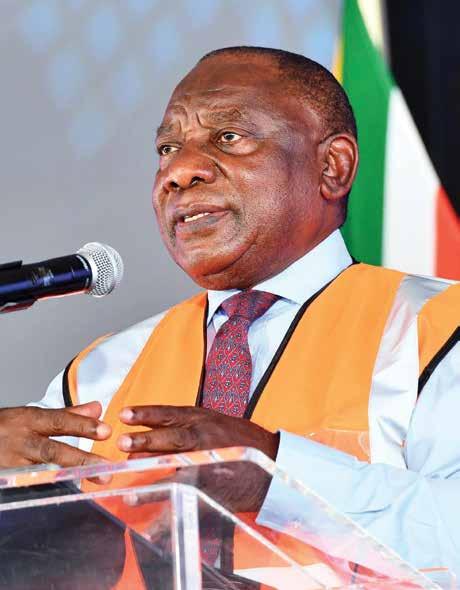
Through the Political Declaration issued to establish this partnership, it was stated that partner countries will mobilise an initial $8.5-billion over the next three to five years through a range of instruments, including grants and concessional finance, to support the implementation of the revised nDC through a just transition to a low carbon and climate resilient economy.
President ramaphosa stated: “Climate change is an existential challenge that confronts us all, and South Africa is committed to playing its part in reducing global emissions. The partnership that we have established today is a watershed moment not only for our own just transition, but for the world as a whole. It is proof that we can take ambitious climate action while increasing our energy security, creating jobs and harnessing new opportunities for investment, with support from developed economies.”
The Declaration added that at the heart of this partnership was the importance of a just transition, which includes support for workers and communities affected by the transition away from coal and enables the creation of quality green jobs. “For the transition to be just, decarbonisation must be implemented in a manner that promotes and sustains employment, livelihoods and economic inclusion for historically marginalised communities and sectors of our society.
A joint task force will be established to take forward the partnership over the coming months.”
The Political Declaration on the energy transition in South Africa included recognising that South Africa requires a transition that is just, especially as there are several important sectors of its economy that may otherwise be negatively affected, including mining, energy, manufacturing and transport and the need to establish an ambitious long-term partnership to support South Africa’s pathway to low emissions and climate resilient development, to accelerate the just transition and the decarbonisation of the electricity system, and to develop new economic opportunities such as green hydrogen and electric vehicles amongst other interventions to support South Africa’s shift towards a low carbon future.
In June 2022 eskom announced that the power utility had planned to lease land in the Mpumalanga province to

renewable energy producers to feed production into the grid. eskom Chief executive Officer, Andrè de ruyter, said that they had selected 18 companies to lease land for the development of renewable energy projects.
The current bids cover about 4 000 hectares (ha) out of the total 36 000 ha available under the programme, according to the power utility. “This shows what can be achieved with reduced red tape and the impact of the liberalisation of the energy sector. This additional capacity will
be added to the grid without any cost to the taxpayer,” - Andrè de ruyter.
The Climate Business Initiative (CBI) reported in Climate Pathways and a Just Transition for South Africa report that decarbonising South Africa’s energy supply requires an unprecedented rollout of renewables.
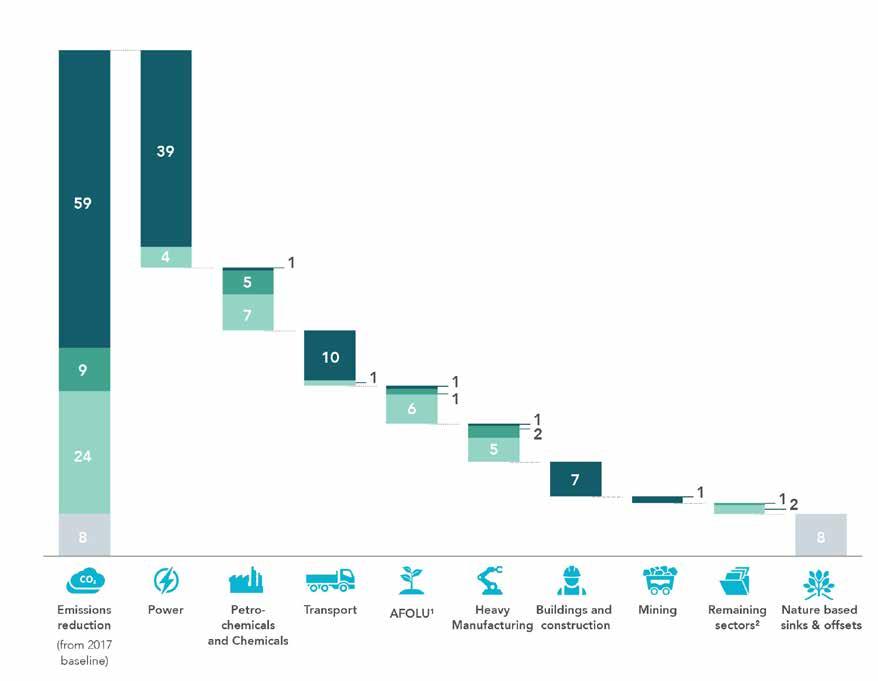
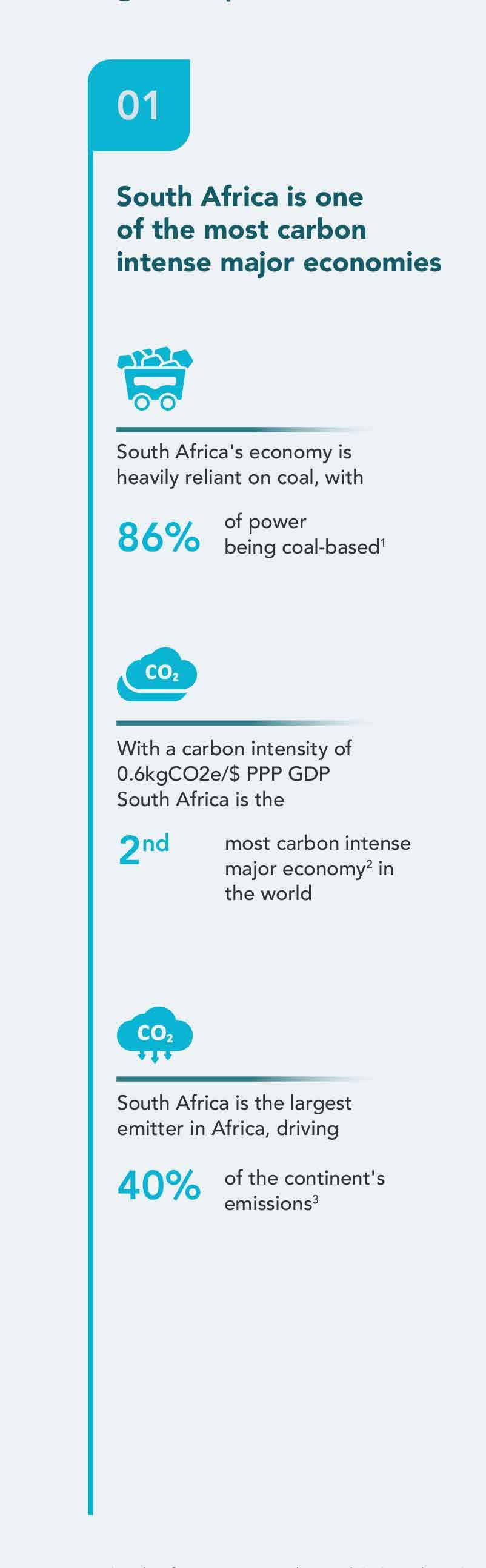
The CBI emphasised how renewable energy is critical to drive a 60% reduction of emissions in the country. n
Sources: energy | The Presidency | nBI SA gov | World Bank | Just Share

Within the transport and logistics sector, courier services such as the express parcel industry have rapidly grown, as have their importance to economic activity. This was even more evident during the worldwide lockdowns which saw much of the activity brought to a halt, mitigated by the existing networks of courier services which could quickly scale and seamlessly deliver goods to people’s homes.

E commErcE on thE riSE shipments made within 48 hours are considered “express”. according to south african Parcel association (saEPa) cEO, garry Marshall, the express parcel industry almost doubled in the previous decade.
in 2021, he noted that the industry had a r8-billion turnover in 2012, but had ballooned to r20-billion in the space of nine years. Even before the pandemic, the industry was on the rise. cOVid-19 only tested how robust it was to rapid change, and ultimately ushered in a new era of business.
given how many businesses are taking their products online, allowing consumers to order from the comfort of their homes, this evolution is set to enable widespread growth. at the height of the pandemic, Economic development Minister Ebrahim Patel said, “e-commerce can be a critical enabler to opening the economy
through contactless transactions which can reduce the movement of consumers, and the density of shoppers in retail spaces.”
The view from the private sector is the same, and the expansion is bound to draw the attention of investors.
“e-commerce is the fastest growing segment of the express logistics business,” declared Marshall.
Couriers are regulated by the Independent Communications Authority of South Africa (Icasa). Packaging weighing less than 30kgs is classified as a postal article.
• $2.2-billion in 2020 (South African Courier, Express and Parcel market size)
• $3.5-billion by 2027 (South African Courier, Express and Parcel market size)


• 7% Compound Annual Growth Rate (2021 - 2027)
• $706-billion by 2027 (Global Courier, Express and Parcel market size)
• 5.7% CAGR (2021 – 2027)
(ProjectionsbyMarketResearch)
Marshall believes that in some cases the market grew by as much as 80% in 2020. “What we saw in the early stage of the cOVid-19 pandemic is that B2c sales skyrocketed in south africa.”
What the industry offers consumers is convenience. it even has a role to play in the consumer-to-consumer sphere, for goods brought on platforms like Facebook Marketplace. The informal sector also holds untapped potential for growth.
speaking about the potential e-commerce holds, Minister Patel went on to say, “Further it can accelerate innovation, support local manufacturers and increase access by the informal market and poorer south africans.”
according to a report by Mordor intelligence, distribution models have to be improved constantly, and businesses
have to think more clearly about bringing stock closer to consumers to reduce inefficiencies. The report states: “in south africa, requirements for new, modern, and efficient distribution centres remain stable, and demand has outperformed all other asset classes and industrial sub-segments, resulting in an overall income return of 9.2% and capital growth of 0.8% in 2020-2021.”
The wider transport and logistics sector is being bolstered by developments in south africa’s trading partners. The demand for local products has risen, due to increased growth with the countries south africa trades the most with. “south africa is experiencing a record trade surplus in the wake of the cOVid-19 pandemic, with exports far outpacing imports.” n
Sources: Engineering news | daily Maverick | Market research | Mordor intelligence | iKhokha | ecommercedB | iOL
Infrastructure is at the very core of a thriving economy. It supports the movement of goods and people, allowing services to be provided and needs fulfilled. It’s for this reason that infrastructure development has formed an important part of the government’s plans for stimulating economic growth. This commitment was reinforced at an Infrastructure Indaba in August, with a 30% increase in spending announced by the National Treasury.
The national Treasury has earmarked r812-billion over the next three years for public infrastructure, with an emphasis on public-private partnerships and the role they can play in creating a foundation for economic growth. Speaking at the infrastructure indaba, Finance Minister Enoch gogodongwana highlighted how integral this commitment is to attracting the investment required to drive development.
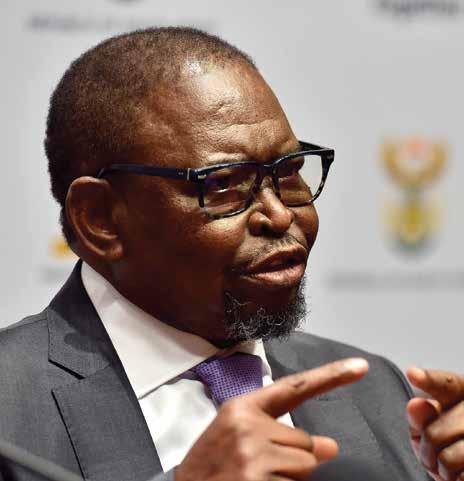
“This is an important step forward in terms of moving closer to the nDP targets, and it is an important signal to investors and the industry and society that the government is committed to ramping up infrastructure.”
in March 2022, the Department of Public Works and infrastructure gazetted the national infrastructure Plan (Phase 1), detailing the state’s plans, which recognise the need for collaboration with the private sector
to bridge the gap between what’s required and the funds and expertise available in the public sector. in the executive summary, the department says: “infrastructure development is vital to attaining South Africa’s long-term economic and social goals.”
They also highlight how the plan keeps in mind the need to transition to a sustainable economy that positively impacts the environment and the lives and livelihoods of South Africans.

“infrastructure delivery will be one of the most significant contributors to South Africa’s transition from a historically closed minerals economy to one that is globally and regionally integrated, low carbon, inclusive and promoting of dynamism in the industries of the future.”
Steel and Engineering industries Federation of Southern Africa (SEiFSA)’s CEO, Lucio Trentini, shared with Top 500 his thoughts on the need for publicprivate partnerships in developing the South African economy:
“The involvement of the private sector in infrastructure development has never been more important if South Africa is going to turn its fortunes,” said Lucio.
“Private-public partnerships (PPP) will allow the state to tap into the resources, financial and otherwise, that are available in the private sector for the provision of infrastructure.”
This was evident at the infrastructure indaba, hosted by Consulting Engineers South Africa (CESA) in August. The indaba brought together government
officials, businesses and engineers around the theme “Engineering the future now”.
The relationship between various stakeholders, particularly the involvement of the business community - who have the funds and expertise needed - which has come into sharper focus as we reflect on the decline in the value of public-private partnerships in the past decade. Between 2010 and 2020, public sector capital investment averaged 5.8% of gDP, while private sector investment averaged 11.2%. Total capital investment came in at 13.7% of gDP in 2020.
in order to reach the targets set out in the national Development Plan (nDP), the private sector’s contribution will need to grow by 10.2% from the figure recorded in 2020. Over r6-trillion will be required to meet the nDP development objectives between 2016 and 2040, with energy and transport representing 72% of the spending.
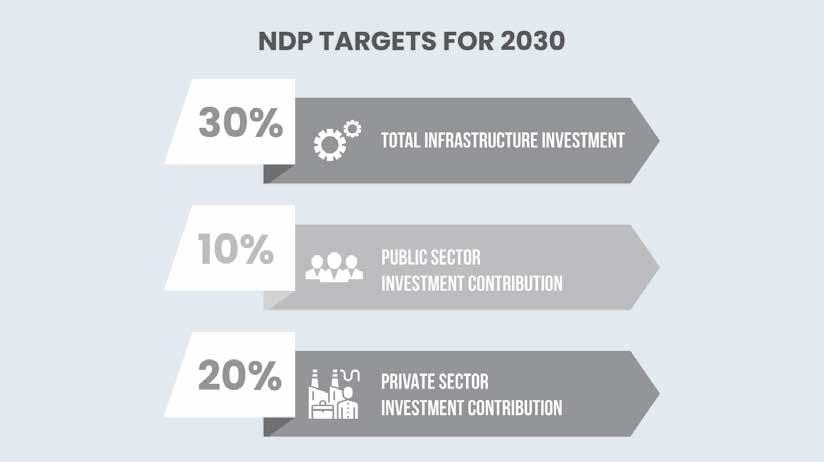
in his address at the infrastructure indaba, Finance Minister, Enoch godongwana announced plans to address the decline in public-private partnerships, following a review which found issues with the red tape required to make the partnerships a reality.

“A PPP review concluded by the national Treasury has emphasised the need to simplify approval and compliance requirements, and reform the policy framework to assess and prioritise PPPs.
“To address this, we aim to create a centre-of-excellence for PPPs, as well as introducing an expedited approval process for projects below a predetermined value. This centre-ofexcellence will be a direct interface with private financial institutions for investments in critical government infrastructure programmes.” n
An international, diversified, sustainable group of businesses, Omnia Holdings Limited is recognised for leading the change from chemicals to green chemicals, biotech and biomolecular solutions, offering network-created, innovative technologies that protect life.
Established nearly 70 years ago, Omnia is based in South Africa and listed on the Johannesburg Stock Exchange. Operating across 25 countries, Omnia is expanding its presence across SADC, North America, Canada, Brazil and Australasia. Omnia differentiates itself based on its leading supply chain and manufacturing capabilities, as well as its specialised customer solutions that are accessible to clients in the agriculture, mining, water, consumer care, food and pharmaceutical, coatings and manufacturing sectors.
The agriculture division, Omnia Nutriology®, produces and trades in granular, liquid and speciality fertilizers, as well as offering value-added services and solutions including humates and
other biostimulants internationally. Omnia’s agriculture customer base includes commercial and smallscale farmers, co-operatives and other corporations across the African continent, Australia, South America and Asia.
The business model is guided by a “Feet on the Farm” approach, which serves as a philosophy based purely on quality relationships with clients. This means that it is Omnia’s priority to share research and technologies to the benefit of its diverse client base, with specialist support from its established team of expert agronomists.
It is estimated that by 2030 the world population will reach nine billion, placing
enormous pressure on natural resources and food security. The growing demand for agricultural products will mainly affect markets of developing economies, especially the most densely populated countries of Asia and sub-Saharan Africa. How countries respond globally to this demand will impact food security.
Since 1953, Omnia has made a significant impact on the local agricultural sector with focused planning and actions. Our client advisory service adopts a holistic approach focusing on crop growth by using specialised products, as well as innovative solutions, technology, services, and close client relationships.

Omnia’s team and investment in advanced technologies, production facilities and infrastructure, partnerships and staff to add value at all levels in the

sector. Its agronomists have access to the most advanced environmentally friendly products, and provide tailored, innovative, and responsible agricultural solutions to ensure sustainability, whilst protecting natural resources.
omniA’s AgriculturE focus is to bolstEr soil hEAlth

Good soil health is a key challenge for every farmer worldwide, and Omnia is at the forefront of providing pioneering solutions with wide applicability. Omnia Australia is a leader in the manufacture of K-humate products – a rich, humicbased soil conditioner and biostimulant that positively impacts soil and plant health. Humic acids are naturally derived from the breakdown of plant and microbial matter, which form the foundation of all fertile soils. Humic acids enhance nutrient efficacy and significantly reduce leaching, waste and nitrogen emissions.
KEnyA: soil hEAlth A growing ArEA of focus
There has been significant investment and expansion in agriculture in Kenya. Last year, the World Bank approved a $250 million International Development Association credit for a new National Agricultural Value Chain Development Project (NAVCDP) to increase market participation and value addition for 500,000 small scale farmers in Kenya. These farmers are engaged in nine value chains across 26 countries. This resultant expansion of the sector has boosted offtake from Kenya globally, resulting in producers being put under scrutiny by international buyers regarding traceability and food growing practices.
Major European retailers are setting up contracts with local suppliers, assessing their on-farm practices relating to environmental, sustainability and governance practices. Thus, the issue of soil health is an important one, as
natural Savanna is transformed into market gardens. Local farmers are taking the health of their soil seriously and doing more to protect their soil as an asset.
ZAmbiA: fEEding thE rEgion

Omnia has consistently pioneered innovative products, services and technologies that have enhanced customer and societal value. Omnia Nutriology® was first to market with its liquid fertiliser range, which has paved the way for precision agriculture as it is known today.
Zambia is a key exporter to the region in markets that experience agricultural deficits, including the DRC, Angola, Malawi and Namibia. Large commercial farmers are financially secure, independent of government subsidies and follow modern farming techniques. In the earlier stages of the move to greener agricultural inputs, farmers are focused on soil health as an important factor to increase yields. Omnia Nutriology® holistically delivers to these farmers’ requirements.
A sustAinAblE ApproAch
Omnia’s focus on niche export crops in Zimbabwe, including tobacco, soya and sugar cane, require traceability and a green mindset, which means that the
Omnia has the technology to assess historical yield data, either from yield monitors or from satellite imagery, dividing the land into management zones. These zones are then treated according to their production potential to ensure that water and fertilizer are not wasted on marginal soil, and that the right investments are made to ensure yield and quality.
Satellite imagery and the unique algorithms created and tested by Omnia, enable farmers to monitor the nitrogen levels in their crops, possible moisture deficits, and even impending pest and disease outbreaks.
omniA sustAinAbility AwArd Omnia was recently awarded the 2022 CFI Best Sustainable Diversified Chemicals Group in Africa. n
for morE informAtion: Email: nutriology@omnia.co.za Website: www.omnia.co.za
The value of transactions is preserved by the proactive anticipation and resolution of issues under international Financial Reporting standards (iFRs, formerly iAs), tied with an understanding of the impact of among others; financial markets, corporate governance, rating agency and regulatory concerns. This is according to Pwc - a global accounting firm that offers audit, assurance, tax, and advisory service.

Pwc south Africa stated that in these volatile capital markets, there is increasing complexity in accounting and financial reporting. The accounting firm said the “international Financial Reporting standards (iFRs) continues to change the landscape of financial reporting developments and companies are being challenged to meet “triple bottom line” reporting best practice.”
At the forefront of developing, influencing and leading the highest standards of ethics, education and professional excellence in the delivery of quality accountancy skills is the south African institute of chartered Accountants (sAicA).
The institute does this by safeguarding the professional standards of the designations on offer; advancing and maintaining the relevance of the profession; and by regulating the members’ and associates’ professional conduct against the sAicA code.
in its 2021 report, sAicA said that reliable and trusted accountancy professionals are the foundation of the wellfunctioning capital markets and trusted finance ecosystem that south Africa depends upon to recover from its current challenges and reach its full potential.
sAicA chairman, Vincent Motholo, said: “Ensuring that inappropriate behaviour does not go unpunished is essential to drive ethical behaviour and restore trust in the profession. The ongoing revelations of accounting/auditing misdeeds and corruption during the year, some of which implicated sAicA members, re-emphasises the importance of timeous and transparent disciplinary action where members are found to have transgressed. We made good headway in this regard during 2021, increasing the number of disciplinary complaints concluded by 96% and publishing quarterly progress reports on the sAicA website.”
thuthuka initiativE
The Thuthuka Education upliftment Fund is sAicA’s pioneering initiative to promote transformation in the profession. its objective is to transform the demographics of the profession to reflect those of the country in terms of race and gender, and provide educational support to African learners and students for the benefit of the profession, while simultaneously helping to uplift communities
sharing his sentiments, sAicA chief Executive Officer, sithembiso Freeman nomvalo, said restoring the reputation of the profession remains a priority. “Professional integrity, adhering to the highest standards of ethical conduct and avoiding conflicts of interest are the bedrock of the accountancy profession. We take allegations against members extremely seriously and note the members mentioned in the Zondo commission Report. All members who are found to have contravened sAicA’s code of Professional conduct will be held accountable.” n
it was in 2011 when the legally constituted financial reporting standard-setter for south Africa, Financial Reporting standards council was formed. Previously, the Accounting Practices Board, a private sector body consisting of a number of accounting and industry bodies, was empowered to issue accounting standards for use by south African companies.
The council has responsibilities identified section 204 of the companies Act:
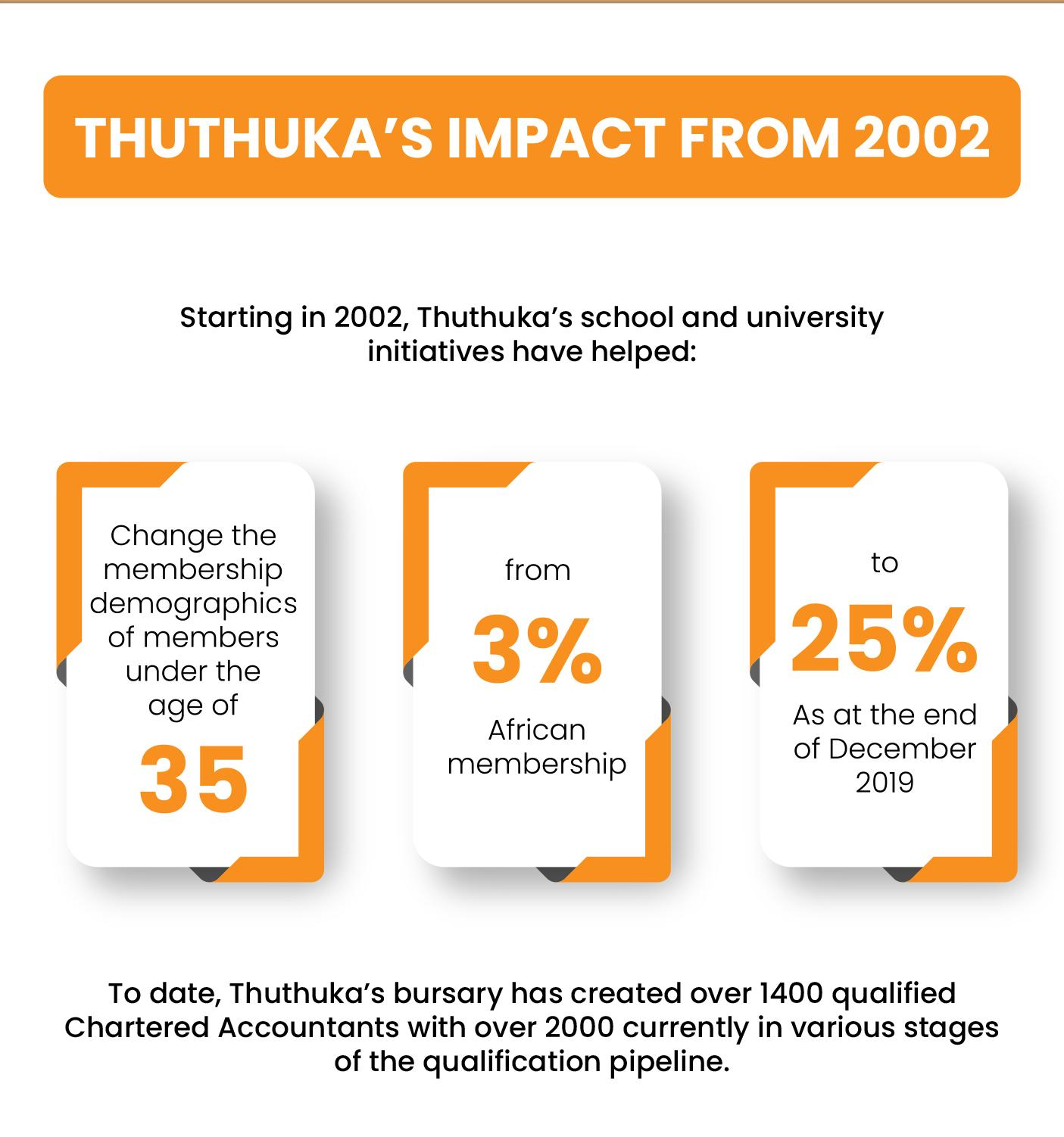
•
To receive and consider any relevant information relating to the reliability of and compliance with financial reporting standards and adapt international reporting standards for distinctive local circumstances;

•
To advise the Minister of Trade and industry on financial reporting standards matters;
•
To consult with the Minister on regulations establishing financial reporting standards.
Trust is a crucial component in the asset management sector and asset management companies in south Africa have managed and continue to build that trust with their clients, despite the challenges faced during a global pandemic.
According to PwC - a corporation that aims to help organisations and individuals create the value they are looking for, by delivering quality in assurance, tax and advisory services, there are several challenges that the industry needs to confront post COVID-19, in order for it to thrive.
In April this year, the Alexforbes Manager Watch™ survey released a list of top performing asset management companies and their B-BBee ratings for the past year.

The Watch has kept a keen eye on the asset managers in south Africa for the past 28 years, tracking their performance and their B-BBee ratings, and they’ve now introduced 22 surveys, one being a multi-manager survey, nine of them being balanced and twelve specialist surveys.
In its latest report on wealth and asset management, the Watch has stated that ninety-One Wealth and Asset Management was the largest south African asset manager with close to R700-billion of assets managed in the country. The asset manager has seen a slight increase of 14% from June 2020 to June 2021.

The ninety-One CeO, Hendrik du Toit said that they operate and invest in a world of change and when they launched the ninety One brand, they thought this phrase aptly described what they have been about since our inception in 1991.
“Over the past year, change, as ubiquitous as ever, has shaped markets, geopolitics, the global economy, our industry, and the world we inhabit.”
In their official statement, du Toit and the chairperson, gareth Penny, said that the 2022 financial year has again been a year of two parts.
“It started with a strong market rebound supported by the global vaccine rollout and continued stimulus from central banks. In the final quarter, business conditions deteriorated markedly,” they said.
Touching on their 2022 results, they noted: “This result reflects the robustness of our simple but diversified business model. Assets under management grew by 10%. ninety One generated net inflows of £5.0 billion over the year (2021: net outflows £0.2 billion). It is particularly pleasing that we achieved net inflows in all of the major asset classes, in all our regions and in both our client channels.”

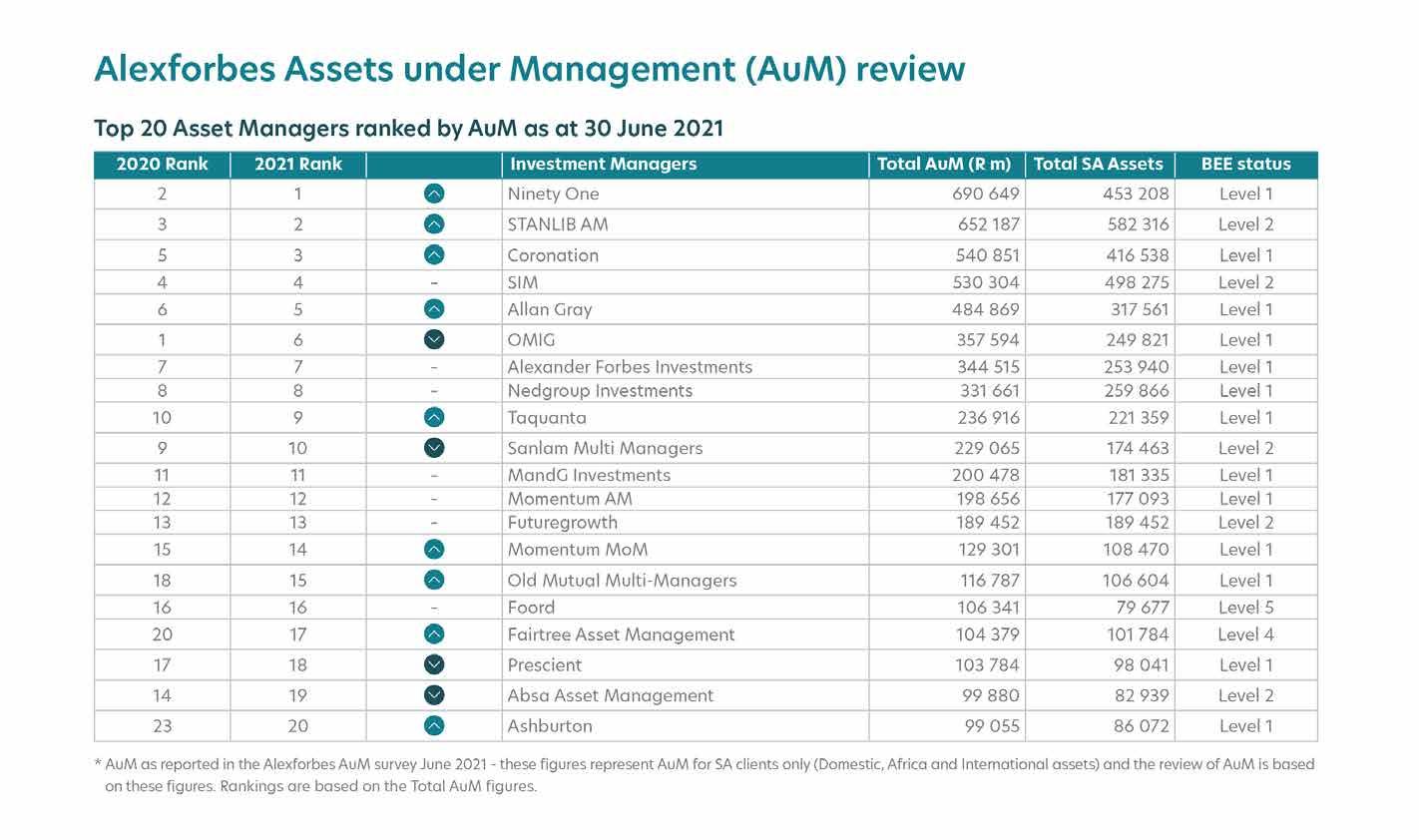
According to PwC, this is an industry that is known to excel at problem solving and it is now facing one of the greatest challenges in an increasingly globalised world that suddenly needs to raise borders and ask its citizens to batten down the hatches. “Within the Asset & Wealth Management industry, it is no longer “business as usual”. Asset managers and third party service providers need to be prepared. While there are many challenges to be confronted, the bottom line is that the
industry, its workforce and customers, the markets and economies will survive.
In fact, the industry will learn from the experience and become stronger for it, even increasing its importance in the financial markets,” the report said. n

Telkom’s multiple award-winning executive of Digital Channels and e-Commerce, Kenneth Kayser, knows better than most how to build a digital business. his twenty years of experience includes time in the financial, mining, telecommunications and public sectors. The PhD candidate at the Johannesburg school of Business has founded and invested in various tech startups in fields ranging from finance, medicine, education and property.
The young executive has found success across the african continent, having been involved with numerous Fortune Global Top 2000 corporations. We find out from him what the keys are to a successful startup, how to build a commercially viable business, some of the lessons he’s learnt from working with top corporations, and more.

What arE thE kEys to starting a succEssful start-up?
I have been fortunate to have started two successful startups over the years.
I gained a lot of exposure while helping Techstars (Us tech accelerator) establish its presents on the african continent while at Barclays working with different fintech startups (helping them grow and scale). There are many success and failure contributors but the ones that stand out for me from a success perspective are:
• Your value proposition: Know exactly what problem you are trying to solve through the start-up and what skills, expertise and tools you have as a founding team to solve this problem. Being honest about your shortcomings as a founding team is key to determining what
intervention needs to be put in place to close these gaps), previous failures also play a key part in success as they guide you on what not to do or what can be done better.
what challEngEs arE south african startups facing and how can thEy bE ovErcomE?
Let’s start with the positives before we focus on the challenges. south africa ranks 61st among the 132 economies featured in the Global Innovation Index for 2021. The Global Innovation Index (GII) ranks world economies according to their innovation capabilities. The GII framework model looks at innovation from an inputs and outputs perspective through 80 selective indicators.
we have what it takes to be an innovative economy, there are challenges that are keeping us from thriving.
• Your team and ecosystem: People, this is probably the most important success and failure element. It’s the people that build the products, and technology and help the business grow and scale. Know what your strengths and weaknesses are, as well as those of your founding team members. startups operate within an ecosystem thus it’s key to understand the value being created by the start-up within their specific ecosystem as well as how best to partner with the ecosystem participants.
how doEs onE build a commErcially viablE businEss?
Good question, this is a work in progress for both startups and corporations. starting with Minimum Viable Tests (MVTs). an MVT is a test of an essential hypothesis. Before building a Minimum Viable Product (MVP), get immersed with the industry, customer and ecosystem in which you are planning to build your business. Then use customer development techniques to validate your hypothesis and de-risk your product and business from failure (as best as possible). Only then launch your MVP once you have worked through your MVTs. Failure forms part of the success process thus you must learn how to fail fast.
south africa over the past three years has improved its ranking from an innovation inputs perspective (from 63 to 61). Innovation inputs include our institutions, human capital & research, infrastructure, market sophistication and business sophistication. These all speak to south africa having both developed and developing economy attributes thus creating a perfect launchpad for startups to launch their businesses to both developed and developing markets. This must be seen as a big plus for south african startups. Our innovation outputs such as knowledge and technology outputs and creative outputs have ranked 68th in the world for the past three years meaning that even though
some of these challenges as listed by the GII include; ease of starting a business, graduates in science and engineering as a percentage of the overall graduate population (education), and gross capital formation as a % GDP, just to name a few. These are all challenges that then impact the start-up ecosystem. I do believe that work being done through the start-Up act will help improve south africa’s start-up ecosystem and improve our innovation outputs as a country.
what doEs thE futurE look likE for EntrEprEnEurs? - how can thEy adapt to what’s coming? My perspective on this question is taken from a digital one as that is where most of my experience and expertise are derived from. The concept of digital colonisation (cited from a 2019 research paper by Danielle Coleman of the University of Michigan) is something that both entrepreneurs and corporations in south africa and africa’s digital economies would have to become acquitted with should measures not be put in place to improve the innovation outputs of our innovation economies. Both private and public sector partnerships will be key to growing and supporting south africa and africa’s digital economies, entrepreneurs and intrapreneurs.
plEasE sharE somE of thE lEssons you’vE lEarnt from working with top corporations. south africa has world-class corporations that compete with the very best in the world. I’ve been fortunate to have worked in several industries like financial services, telecommunication, government ICT and mining. One thing that stands out across all industries is our competitiveness, and because
“South AfricA hAS world-clASS corporAtionS thAt compete with the very beSt in the world.”
“let’S StArt with the poSitiveS before we focuS on the chAllengeS .”
of the competitive nature corporates invest in their staff as well as create environments that cultivate world-class best practices. This could be one of the reasons why south african workers are sought after the world over. as noted in my previous statement about south africa’s economic attributes of having both developed and developing market characteristics, this allows our corporations the ability to create holistic solutions that have global appeal.
hoW can WE attract morE invEstmEnt into thE country? as noted in my previous comments on our innovation outputs as a country and the challenges that exist with it, if both the private and public sectors work closely together to solve those challenges, then I think we can obtain the trust of investors and attract more investment into south africa.
E commErcE hEading in south africa? What arE thE currEnt trEnds:
as our internet connectivity rates improve across communities in south africa, this will enable many more people to be part of the digital economy. This potentially will allow for greater levels of e-commerce transactions. an overall omnichannel approach will help both startups and corporates, thus offering phygital (digital combined with physical) experiences will be key. This phygital trend is quite evident, a recent example of this is Meta (Facebook parent company) launching a physical store that complements its digital offering with Google also doing the same.
plEasE tEll us about your story - hoW did you gEt to this point, pErsonally and profEssionally?
I was born in the Cape Flats in Cape Town in the 80s. My parents decided to relocate to Johannesburg in search of
better prospects and opportunities just before the first democratic elections in south africa. I completed my schooling in Johannesburg and landed my first job at age 14. so, I’ve been balancing work, studies and family responsibilities for many years now (25 years to be precise). I completed my first degree through correspondence (while working), then an MBa in the UK (also while working) and now a PhD. I was also blessed to study at harvard in the Us
do you sEE capE toWn bEcoming africa’s silicon vallEy?
africa’s digital ecosystems are growing with regional hubs emerging across the key regions of africa. Cape Town is one of the regional hubs with Johannesburg, Lagos, Cairo and nairobi. n

What arE local and intErnational invEstors looking for from EntrEprEnEurs?
• Think carefully about your business model (I noted the importance of an MVT framework to test the business concept)
• Think clearly and communicate succinctly
• Demonstrate intellectual integrity
• Balance risk with responsibility
“As our internet connectivity rAtes improve Across communities in south AfricA , this will enAble mAny more people to be pArt of the digitAl economy.”
“AfricA’s digitAl ecosystems Are growing with regionAl hubs emerging Across the key regions of AfricA .”
Microsoft Senior Cloud Security Advocate Joylynn Kirui is what is known as a ‘white hat’ an ethical hacker. Her job is to do everything a hacker would do to compromise a system and she’s always had consistent success doing so. The Africa Tech Week 2022 speaker has hacked into everything. It’s no wonder she was named Hacker of the Year in 2020 and recognised as a finalist in the Top 50 Women in Cybersecurity in the same year.
In this Business Unusual Podcast, we engage in conversation with Joylynn about why businesses hire hackers and how the African continent is faring on the cybersecurity front. She shares with us the importance of developers, businesses and consumers being aware of security threats and protecting personal data.

K E y ta KE aways from this podcast:
• “A hacker has to be lucky only once”
• We don’t care enough about cybersecurity
• It’s important for business to anonymise their customer’s data
• Customers need to protect themselves too
• Developers are the first-line of defence
• “If you don’t have security incorporated into your system it’s like you build a very beautiful house and you leave it without doors and you leave it without windows”
• In cybersecurity, the more things change the more they stay the same
• Black Hats compromise a system for their own benefit; White Hats are given permission to compromise a system
Joylynn Kirui is a Microsoft Senior Cloud Security Advocate based in Kenya. A computer science graduate of the United States International University-Africa, she was previously an assurance officer at Safaricom, after having held positions as a SOC analyst and information systems auditor. Joylynn’s work involves empowering developers and businesses to make their systems more secure in what she calls “developer relations’’. Drawn to cybersecurity after being hacked in university, she now shares her knowledge through training and mentorship. n
To say Bob Moesta is a remarkable human being is a gross understatement. Not many among us can say they literally spoke a book into existence Bob can. Having had a key role in 3 500 products being developed and brought to the world it would be an understatement to say that his knowledge could fill countless books. A speaker at the 2022 Africa Tech Week conference, Bob is one of the pioneers of the Jobs-to-be-Done theory and the author of Demand-Side Sales 101: Stop Selling and Help Your Customers Make Progress.
In this Business Unusual Podcast, Ralf Fletcher, CEO of Topco Media engages in conversation with Bob Moesta about how to get people to buy your products.

K E y ta KE aways from this podcast:
• Find out what you don’t know you might not know you don’t know it
• Most people can’t tell you what they want but they can tell you want they don’t want
• Don’t focus on your top 5 strengths focus on your bottom 5
• Big picture thinking and execution are rare in the same person. You need to work with people who are good at what you’re bad at
• Before you can better understand your customers you need to better understand yourself
• If you want a better quality product, you have to stop inspecting it
• It’s okay to have to two answers
• “The irrational becomes rational with context”
• You can’t learn without being wrong
Bob Moesta is the President and CEO of the Re-Wired Group. A trained engineer and designer, the multiple degree holder is an entrepreneur who has worked in every industry you can imagine. Bob developed the Jobs-tobe-Done theory with Clayton Christensen in the 1990s and has since gone on to solve various problems using their ideas on innovation. He is a guest lecturer at Harvard Business School, MIT Sloan School of Entrepreneurship, Kellogg School of Management at Northwestern University and a fellow at the Clayton Christensen Institute. n
When it comes to advertising, Mike Abel is happy to play in the world of perception, but he also realises that “perception is reality” and when it comes to doing business in South Africa, Mike believes we need to be changing our perception of the challenges we are faced with. What we think of the world becomes our reality. As the Chief Executive Partner of M&C SAATCHI ABEL, one of South Africa’s most successful advertising agencies, Mike has had to develop a keen understanding of how products and services are perceived.
In this Business Unusual Podcast, Ralf Fletcher, Topco Media CEO, engages in conversation with Mike Abel about the Metaverse, NFT’s, art and why more people and businesses should be staying in South Africa.

K E y ta KE aways from this podcast:
• No-one wants to do business with people who don’t believe in themselves
• The enemy of your business is not your competitors
• Reality becomes important when you’re trying to make a social impact
• There’s a difference between leaving and being drawn to something
• It’s possible to create great work while creating an impact
• The people working with the best people win
• You need to be a business person who is in love with solutions
• Lessons Mike learnt from Lord Saatchi: 1. Have some audacity be brave 2. You need to be able to ‘separate the wheat from the chaff’ 3. Don’t tolerate the ordinary
Mike Abel is regarded as one of South Africa’s leading business, marketing and communications specialists. He has over 30 years’ experience in helping build the most successful advertising agencies, through being able to attract and retain the best possible talent, in order to build his client’s brands and businesses. He has worked both locally and internationally over many years developing best-practice thinking and fully integrated business models and solutions to enhance both his clients and agency business performance. n
 by kokEtso mamabolo
“i tell stories that educate, and instil belief in our employees about our strategy,” says Zandile Mposelwa, Corporate affairs director for Kellogg sa . Zandile is speaking as someone with a deep understanding of what it takes to be the best, having worked at an impressive list of industry leaders, including nampak (Marketing Project Manager), BP south africa (Fuels Product Manager), woolworths Financial services (inbound Contact Centre Manager).
“it is not about ‘what can i do alone’ but ‘what we can do together’.”
strengthening the reputation of an organisation is at the heart of what Zandile does at Kellogg south africa, which includes spearheading the company’s Csi programme, Better days. This involves working with both the public and private sectors, as well as nGOs. For Kellogg south africa’s
Better days programme, this has seen them partnering with the department of Basic education, shoprite and the Kolisi Foundation.
“i don’t believe one can please all stakeholders, i however believe that developing a stakeholder mapping and engagement plan is important,” says Mposelwa.
we find out about engaging with employees, pleasing stakeholders and
lessons she’s learnt in her 20 years of experience in the fast-moving consumer goods industry.
how do you go about plEasing all stakEholdErs?
i don’t believe one can please all stakeholders, i however believe that developing a stakeholder mapping and engagement plan is important. There needs to be a clear objective which could be to inform, influence, or get approval. The plan needs to outline why each stakeholder is important; the value they add to the business; the engagement message; when and the frequency of engagements.
what is thE bEst way to EngagE with EmployEEs?
as a leader, i find employee engagements are critical to ensure that together we understand and deliver the organisational strategy. i find them energising. i am particularly grateful
“I don’t belIeve one can please all stakeholders.”
to be able to do some of this face-toface now that our organisation has transitioned from working from home to a hybrid work model.
One of the ways that stand out for me is when our employees participate in some of our Csi initiatives to alleviate hunger in communities.
we do this by giving them food hampers that they donate to families in their communities. i love this because it strengthens our employees’ connection to our purpose to create better days and a place at the table for everyone.
What lEssons did you lEarn from your prEvious rolEs that you arE applying in your currEnt rolE?
i believe in continuous learning and there is arguably no better teacher than experiences. i continue to leverage my previous experiences in my journey to be a continuously evolving leader who makes an impact on people and the company. working in other roles, especially at Kellogg, has given me valuable insights into the organisation (institutional memory) and this allows me to better support the organisation from a different angle.
plEasE tEll us a bit about your background - hoW did you gEt to this point?
i have over 20 years of working experience at different levels in the FMCG industry. some of the companies
i’ve worked for before joining Kellogg include HomeChoice, woolworths, BPsa , nampak, and Tetra Pak. i have held multiple roles since joining Kellogg in 2014.
in this role, i lead Corporate affairs at Kellogg south africa supporting our Kellogg and Kellogg Tolaram JV in south africa and the Kingdom of eswatini.

i tell stories that educate, and instil belief in our employees about our strategy. i promote our organisation externally to our various stakeholders to strengthen the organisational reputation. i also lead the company’s Csi programme Better days.
equity, diversity, and inclusion are important to me.
i am a mother of an 18-year-old son and a 16-month-old daughter who both inspire me. They are my happy place.
What is thE purposE that drivEs you?
My success in the corporate environment is underpinned, and guided, by my purpose and passion, as well as the value system which must be aligned with all that i do. i’ve been fortunate to have purpose-led mentors who continue to shape my leadership journey in both my personal and professional life. My purpose is to inspire change. My purpose comes to life, whether that be through the way i lead the company’s effort to alleviate hunger in communities, gender empowerment advocacy or by mentoring young people to realise their potential. n
“I belIeve In contInuous learnIng and there Is arguably no better teacher than experIences.”
When it comes to developing technology companies in South africa, no-one has as much experience as recently appointed Salesforce’s area Vice President in South africa, Zuko Mdwaba. He’s led an impressive list of tech industry giants such as Oracle, atos, SaS and workday South africa, in a 25 year career that has seen him gather the kind of experience that makes him perfect for bringing a multinational to the South african market.
“I was very fortunate to work with leading multinational companies and most importantly met incredible leaders who helped shape my career and most importantly believed in my potential,” said Oracle’s former Country Leader and business director.
Zuko’s career began as a developer and business analyst, after receiving qualifications in computer science
and statistics. a certified database administrator for database technologies, Zuko transitioned to an enterprise architect and management consultant before moving into business development.
“On a more personal note, I am a husband to an awesome wife and we have two kids that keep us inspired.”
Here we find out from him what the keys have been to his success, what he’s learnt in his extensive experience in management, what it takes to make a multinational company a success in South africa and more.
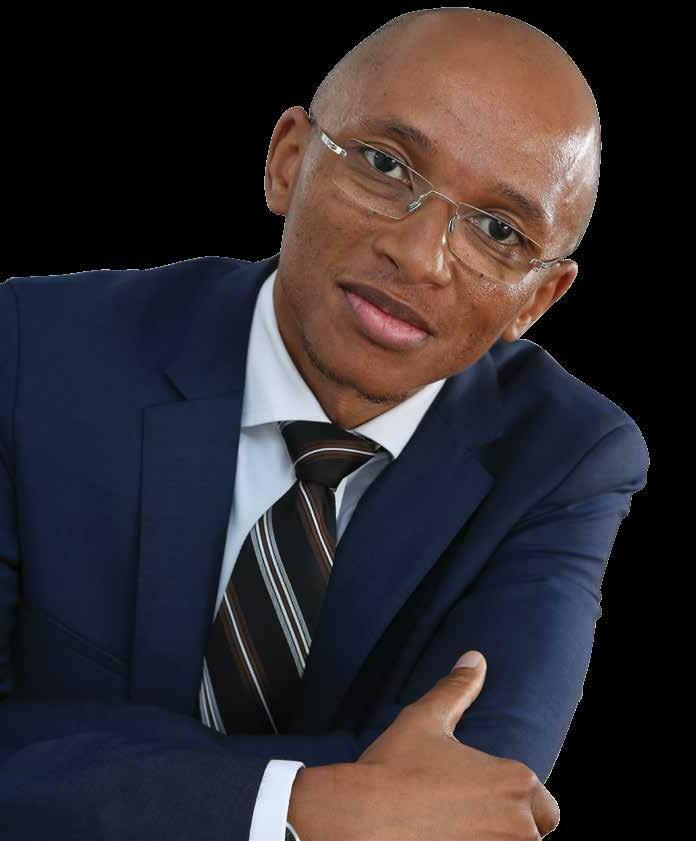
You’vE hEld multiplE positions in major firms, what havE bEEn thE kEYs to Your consistEnt succEss?
For me, it all starts with the intention. It is also intrinsically linked to “why” I do what I do. I alluded to the importance of “why” earlier.
a big part of this is in the word ‘consistency’. Consistency is more important than perfection. One of the disciplines I have is reading books. This helps me learn from others and invariably sharpen my spear all the time. It actually reminds me of the quote by the legendary John Maxwell, “Small disciplines repeated with consistency every day lead to great
achievements
“For me, it all starts with the intention. it is also intrinsically linked to “why” i do what i do.”
it takes to make a multinational
gained slowly over time”. The cycling and running I do is very intentional. The correlation between having the discipline to keep healthy and fit and finding success in my career is amazing. My parents always drummed the philosophy of “a healthy mind lives in a healthy body” in our heads. It improves blood flow to the most underrated organ in the human body, the brain.
The second part is about a learner’s mindset. This simply means I believe my intelligence and talents can be developed over time. This speaks to endless possibilities and never saying never, following my passion, owning up and being accountable, practising gratitude, etc. Our bodies hear everything our minds say. Having a strong internal sense of motivation and purpose and the ability of flexibly set and reset goals have been essential parts of my resilience.
and just as important in the learning process, is learning to unlearn and let go of things that no longer contribute to my growth. The concept of unlearning and relearning has never been more relevant to me. as the futurist alan Toffler wrote: ‘The illiterate of the 21st century will not be those who cannot read or write, but those who cannot learn, unlearn and relearn.”
What Would you say arE thE kEys to making an intErnational brand succEEd in south africa?
I would say it is the humility of understanding a local market.
at Salesforce our values: trust, customer success, innovation, equality & sustainability guide us to do what’s right on a daily basis. It all comes back to our distinctive culture. Our culture is built around the idea that we are all bound together. at Salesforce, our family includes customers, employees, partners and communities. we take care of each other, have fun together and work collaboratively to make the world a better place. This resonates well with my own personal values as it speaks to the core of ubuntu - a quality that includes the essential human virtues, compassion and humanity. at Salesforce, we also know that to be better, we have to do better. So we rely on a 1-1-1 integrated philanthropy model, where we give 1% of our technology, 1% of our time and 1% of our resources back to our communities. This is one of the things that sets us apart and drives our customers’ success.
and how I would overcome the obstacles or challenges. I discovered through this process that it wasn’t the table-stakes skill sets required of most executives today that drove my success, but inquisitiveness, dedication and a passion for learning that ultimately got me here.
What havE bEEn thE biggEst challEngEs you’vE facEd in your carEEr and hoW did you ovErcomE thEm?
One of the challenges I faced in my career was the transition from individual contributor to a manager and eventually to an executive. The shift can be particularly difficult because self-reliant behaviour is often richly rewarded early on in one’s career, while leaning on others is not. However, I have found as one becomes more senior, those who are most successful find a way to think outside of themselves and gain leverage by acting not only on their own but also via teams. a nice benefit to this approach is that it’s much more rewarding to work with others rather than feeling that you have to do everything yourself.
hoW Would you dEscribE your lEadErship stylE?
Now more than ever, I am also cognisant of the fact that what got me where I am today will not get me to where I want to be. because of this, I firmly believe that there’s no growth in the comfort zone. It is very important to be comfortable with being uncomfortable. Today’s accelerated world is also pushing me to continuously immerse myself in learning new things (rewiring my brain)
What did you lEarn in your prEvious positions that Will bEnEfit you in your nEW onE?
Over the years, to make sure I am heading in the right direction, I have taken stock of my personal and professional achievements every six months. This allows me to focus on my plan for the next six to twelve months
My leadership style has always started with creating a VISION for the organisation, to guide the team. I do not do this alone, I include the team. I then build aLIGNMENT through buy-in from the organisation and the team. This occurs through providing consistent, clear messaging, sharing the “why” behind the vision, engaging in dialogue and providing inspiration along the way. “People don’t buy what you do, they buy why you do it. and what you do simply proves what you believe” Simon Sinek. Finally, I CHaMPION EXECuTION and make sure the vision is being executed and becomes reality. This includes analysing what’s working well and what’s not, addressing problems
“I fIrmly belIeve that there’s no growth In the comfort zone.”
through ongoing feedback, offering praise and celebrating success as a team.
at Salesforce, we use the V2MOM. Salesforce’s V2MOM alignment process is critical to our success. Marc benioff, the Chairman & CEO of Salesforce has led through the V2MOM for many years and he has always thought our biggest strength is how we’ve maintained alignment while growing quickly. The V2MOM enables us to clarify what we are doing and then communicate it clearly to the entire company. It boils down to these five questions, which create a framework for alignment and leadership:
1. Vision - what do you want to achieve?
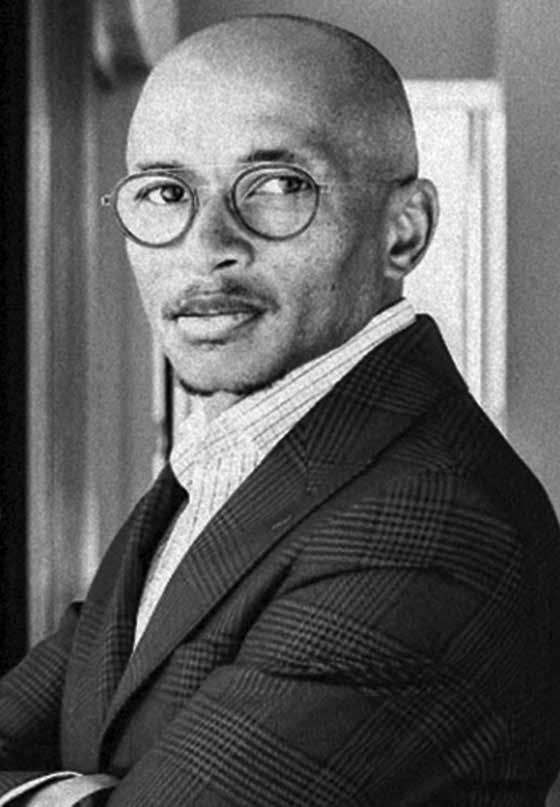
2. Values - what’s important to you?
3. Methods - how do you get it?
4. Obstacles - what is preventing you from being successful?
5. Measures - how do you know you have it?
The five parts of the V2MOM give us a detailed map of where we are going and an understanding of how to get there.
Why do you think South africa iS coming into itS oWn in thE tEchnology SEctor? What’S driving thE intErESt from major companiES Such aS SalESforcE?
South africa has generally always lagged behind in adopting new technologies, especially cloud technologies. The pandemic over the past two and a half years has been a catalyst and a great equaliser in terms of technology adoption and South africa as a country is starting to benefit exponentially out of that. according to Mckinsey, companies digitised many activities 20 to 25 times faster during COVId-19. when it came to remote working, companies moved 43 times more quickly than executives thought possible. COVId-19 has pushed
companies over the technology tipping point and the trend of transforming business forever continues and South africa is no exception.
during the pandemic, consumers have moved dramatically toward online channels. Salesforce plays a critical role in helping build bridges between companies and customers. Over the years, Salesforce has built a solid foundation in South africa with a sizable number of customers and partners. Today, we are thrilled to have a physical presence in South africa and a team of more than 70 people dedicated to the country. To that effect, we have received a very warm welcome from our customers and partners. a big part of this has been customers wanting to leverage on trusted partnerships with Salesforce to transform their businesses, also through learnings of other customers for more than two decades around the world.
plEaSE tEll uS a bit about your background - hoW did you gEt to thiS point?
I have been in the technology industry for 25 years with almost half of that in management & leadership roles. I qualified in Computer Science & Statistics and as a result when I started my career I was a developer and a business analyst. I am also a certified database administrator for a few of the database technologies. I transitioned into an enterprise architect and then a management consultant. My next step was business development that morphed into sales. I was very fortunate to work with leading multinational companies and most importantly met incredible leaders who helped shape my career and most importantly believed in my potential.
On a more personal note, I am a husband to an awesome wife and we
have two kids that keep us inspired. I am a sibling to two sisters and three brothers, with a further gift of nieces and nephews and of course friends. I am also blessed to still have my mother, who jointly with my father were instrumental to where I am today.
Fitness has always been a part of my life.
I have prioritised health and wellness in order to stay competitive in everything I do. I passionately believe being healthy and physically fit has a direct correlation to happiness and success, whatever the personal definition of that may be.
I believe a good leader must maintain mental and physical wellness in order to effectively drive the business forward and inspire the team. I am a cyclist (70% road & 30% MTb/off road) and have conquered many challenges on the bike.
I am also an ultramarathon runner. both cycling and running have taught me how to persevere and thrive on adversity. what I have found interesting over the years is how cycling and running have become bigger than what golf was when I started my career. It used to be business networking on the golf course, nowadays it’s business networking on the bike or on the road running. n

Having scaled Zoona across the African continent, Lelemba Phiri now manages a R100-million gender-lens investing fund. She’s found the special balance many entrepreneurs and investors are looking for: generating profit while still creating an impact. It was at Zoona that she realised she can make an impact elsewhere and as such Lelemba has dedicated her work to empowering women entrepreneurs.
In this Business Unusual Podcast we engage in conversation with Lelemba Phiri about how to attract investors, why she left a successful venture and how it’s possible to make an impact while making a profit. Lelemba shares her journey and explains why gender-lens investing is important.
K E y ta KE aways from this podcast:
• Sub-Saharan Africa has more women getting into entrepreneurship than men
• Investing with your own money only can only go so far
• Investors don’t want complicated language. Be clear, concise and specific when pitching to them
• “Entrepreneurship can be very lonely”
• You need to identify “needle-movers”
• Pitching isn’t reserved for investors only, you also want to be able to attract strategic partners
• If your pitch is interesting enough, they will ask for more details
• “Look for the visionary that’s in the space of what you are passionate about”
• We need spaces where academics and business leaders can work together
Lelemba Phiri is the Principal of the Africa Trust Group and Fund Manager for Engyma Ventures. She is a Director at Zoona and Startup Circles and is currently completing a PhD in gender-lens investing at GIBS. Lelemba has almost two decades of experience working with both the public and private sectors across sub-Saharan Africa. The award-winning angel investor is a certified chartered accountant in the UK and has appeared in various publications, including the Oprah magazine, and was a SABC 3 presenter on “The Power Within”, where she was the financial expert. n
Losing both his parents as a teenager meant that Sandras Phiri had to rely on his entrepreneurial spirit to get through university. “i was always an entrepreneur. When i was a kid i used to sell sweets at school and helped my mum by selling goods at the market. i used to sell bread and milk every morning in the neighbourhood,” says the founder and CEO of Pranary Business School.
When Sandras graduated, he continued on an entrepreneurial path. “i founded a web development and networking company and later i ran a t-shirt business, as well as an entertainment business.” now Sandras is in the business of education.

“i’ve now had the opportunity of working with entrepreneurs from over 50
countries and i’ve interviewed over 100 founders and investors, and travelled to 25 countries.”
Sandras has valuable knowledge on startups and revenue generation, and is happy to share his knowledge with
other entrepreneurs. his expertise has seen him share stages with the likes of Facebook and asana co-founder dustin Maskovitch, as well as YouTube co-founder Steve Chen and famed economist Clay Christensen, to name a few.
Sandras is a director at africa Trust Group and a fund manager for the r100-million Engyma Ventures Fund. here he shares with us how he plans on impacting one million entrepreneurs, how entrepreneurs can build commercially-viable businesses, the mistakes entrepreneurs are making when speaking to investors and what he teaches his students.
What arE thE kEys to building a commErcially-viablE businEss? The key is to decide on what you want
to build – a small business or scalable business. Then set your high level goals. With the goals, put together a team and start executing. You must always talk to customers and get feedback from mentors. it’s also important to surround yourself with people who are on a similar mission – other entrepreneurs.
PlEasE sharE with our audiEncE somE tiPs/advicE for PEoPlE looking to bEcomE EntrEPrEnEurs.
People who want to become entrepreneurs should just start even in a small way. a lot of people make the mistake of over-analysing and staying too much in their heads. it’s important to “get outside the building” and talk to customers. Share your ideas with people and get their feedback early. The number one reason why startups fail is “no market need” – building things that nobody wants to pay for.
why do you tEach businEss ownErs to Pitch undEr thrEE minutEs, without a businEss Plan?
Traditionally early stage entrepreneurs have been told to write business plans and send those to investors. So what happens is that the entrepreneur hires
somebody to write the business plan and nobody reads it afterwards. Business plans do not really work for early stage startups as they are generally a work of fiction. Everybody makes money in Excel. all projects are profitable. But reality is different. Early stage startups must create a pitch deck instead which shows your market size, your traction, revenue model amongst other things. The pitch deck is short and straight to the point and investors read them. When you’re meeting people for the first time they do not have time for you so you need to learn to pitch clearly and get straight to the point in a short space of time. When you pitch successfully investors then give you more time.
EntrEPrEnEurs arE making whEn Pitching to invEstors?
The mistakes entrepreneurs make when pitching to investors include sending a business plan, sending an executive summary etc. The other mistake is just pitching to everybody without knowing what they look for. another mistake entrepreneurs make when pitching to investors is talking too much. They say a lot of things hoping that the investor will pick something from the many things mentioned. in pitching, less is more.
Your pitch needs to be focused. i’ve seen entrepreneurs say “i have two pitches for you” which is a mistake. Lack of focus is a mistake. That said, we do have a free checklist that helps entrepreneurs learn how to pitch investors.
what sEctors should currEnt and PotEntial EntrEPrEnEurs bE looking to gEt into?
Most sectors present potential. however, entrepreneurs should lean more towards the different technologies or applying technology to their existing business models. There are opportunities in artificial intelligence, blockchain, robotics, biotech, agriculture and
generally deep tech. While some of the technologies might be hard to finance initially, nowadays there are a lot of investors and accelerators that are looking for these types of startups.
what doEs thE futurE look likE for EntrEPrEnEurs? - how can thEy adaPt to what’s coming?
The future is bright for entrepreneurship. it’s much easier now than ever before to build a world-class business.
There is easier access to resources, support and capital. as entrepreneurs we must embrace new technologies as they are shaping the future. We must tap into communities that are shaping the future.
how do you Plan on imPacting 1 million african EntrEPrEnEurs?
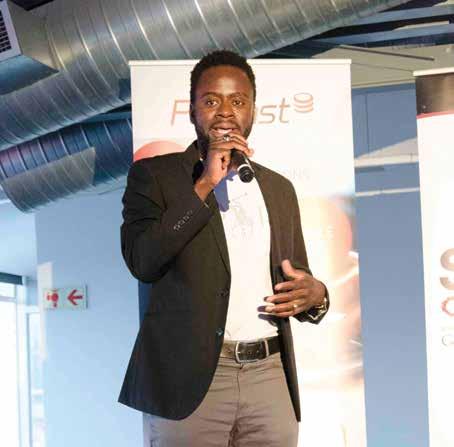
We believe that entrepreneurship has the power to change people’s lives. a large majority of people who can say they have a job are working because of an entrepreneur. as Pranary we want to impact 1 million entrepreneurs in africa. We plan to do this through partnerships and democratising access to world-class mentors and capital. We’re leading a movement of game changers in africa. We are building a community of game changers in africa and are always looking to partner with other forward thinking individuals,
and communities.
organisations
n
“The number one reason why sTarTups fail is no markeT need – building Things ThaT nobody wanTs To pay for.”
“To deliver the best client experience, you need to deliver a great employee experience,” says +OneX Founder and CEO, Rob Godlonton. He knows that to make a business successful the bottom line can’t be the main driver. In order to achieve success you need to have an idea of why you’re doing what you’re doing. Your entrepreneurial journey can’t be rudderless.
Rob was born into a family which managed a farming business that performed well. “being an entrepreneur was in my blood.”
He didn’t take a linear path to being a tech entrepreneur. After completing a bcom Honours in Management Accounting in Stellenbosch, he went over to the UK to work as an accountant. “This was my route to joining the
technology giant PeopleSoft as an implementation manager in the UK and where I discovered my passion for the technology industry.”
He then founded Global Technologies, an application and data company which was bought by Infogain. This was followed by a stint as the CEO of PeopleSoft’s largest partner in Europe, Cedar Consultancy, which was also sold.
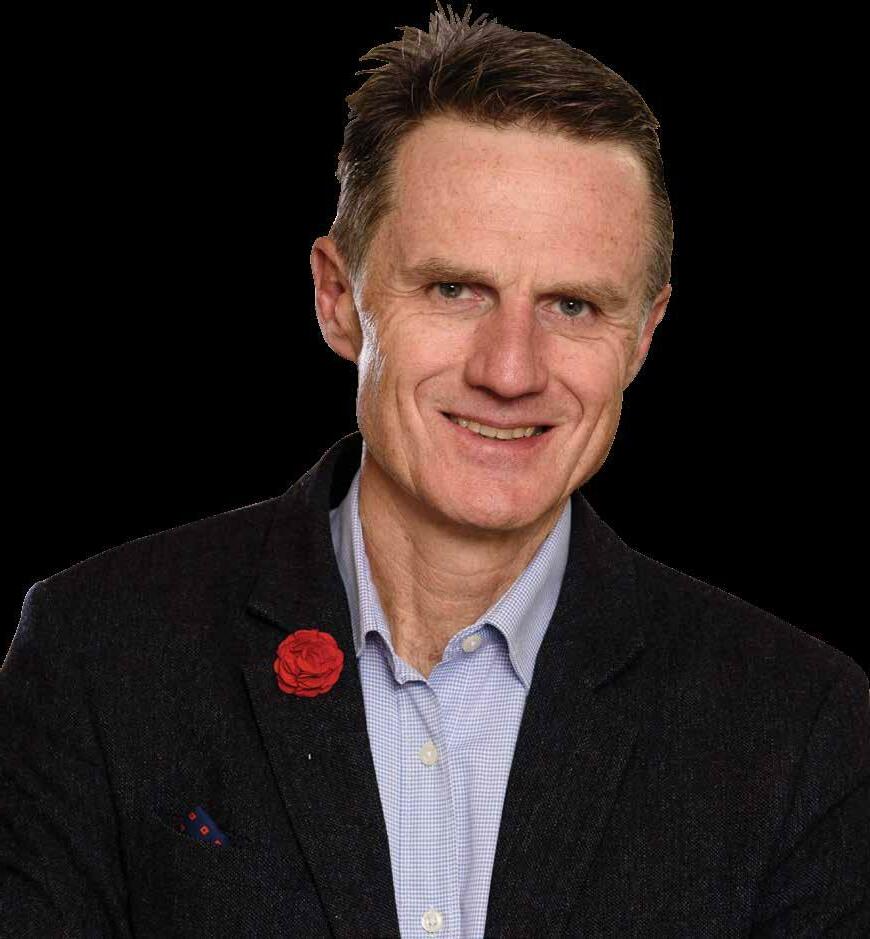
“With the acquisition taking place I returned to South Africa to head up global sales and operations at dimension data. The next move in my career was to EOH for over 10 years, where I headed the Infrastructure and the Applications businesses, which finally became known as iOCO. We grew the business from 200 to over 4 800 people and profits of over R550-million.”
After a sabbatical, Rob found that he was eager to add something to the tech industry: “Along with my co-founders, we conceptualised the idea of a new-age systems and solutions integrator that helps enterprises excel in a dual-speed
“When it coMes to people, they Make oR bReak youR business.”
technology world. We received backing for the business from Reunert and +OneX was started.”
Here Rob shares the knowledge he’s picked up over the years, including what it takes to get your business performing well, his advice to entrepreneurs starting a business in a competitive market and more.
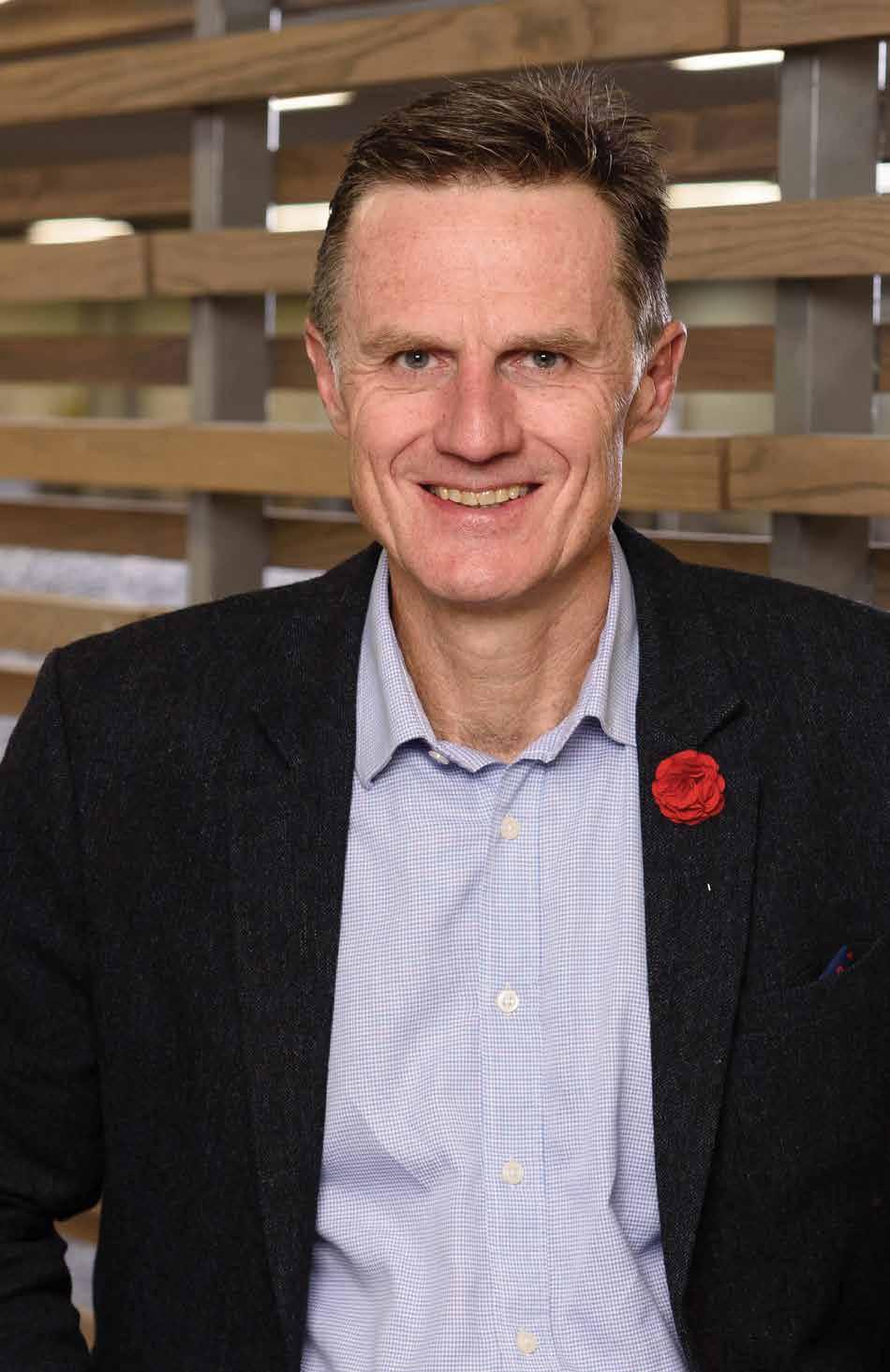
how do you EnsurE cliEnts stay happy?
Client obsession with long lasting relationships is one of the core values at +OneX, and a principle I have believed to be key throughout my career.
To deliver the best client experience, you need to deliver a great employee experience. We seek out people who are client-centric and understand what our clients need, and we empower them to solve their problems. Strong relationships and alignment with client objectives help to ensure that we can assist clients in achieving their objectives. In short, happy employees mean happy clients.
what would you say arE thE kEys to a succEssful businEss?
Purpose and people. You need to have a purpose and know why you are doing what you are doing and how you will be making a difference. When it comes to people, they make or break your business. Spend time and effort on finding the right people rather than having the wrong people in your teams. Having the right people and retaining them helps you to attract more good people to scale your organisation.
what diffErEncEs havE you found bEtwEEn thE it sEctor in thE uk and in south africa?
The UK is the sixth biggest economy in the world by GdP and South Africa is the 31st, so there is an obvious difference
in scale. because the UK’s IT market is larger and even more globally connected than South Africa’s, IT professionals tend to develop deep specialisations in roles and technologies. by contrast, South Africa’s IT professionals tend to have broader exposure to different roles and technologies, becoming excellent multidisciplinary generalists.
That said, South African enterprises and IT professionals are often a few months ahead of the curve in experimenting with new technologies. We have a little less red tape and tend to embrace anything new that will give the business a bit of an edge. Of course, South Africa is not as quick to take up new tech as the US and some Asian markets. In
terms of quality, our skills are as good as those in the UK, even if our orientation is a little different.
What havE bEEn thE biggEst challEngEs you havE facEd in your carEEr and hoW did you ovErcomE thEm?
Working capital and cash management are among the biggest challenges most entrepreneurs face. We developed a sound but ambitious business plan and built a strong core management team. This enabled us to attract Reunert, a company listed on the JSE, as our flagship investment partner.
Once you get going, finding the right people and clients to scale can be a challenge. One way we have addressed this, was through strategic acquisitions, bringing on board entrepreneurs with strong businesses who share our vision and drive to make a difference.
For the business owners who join us, the attraction is that they can focus on growing their business, while leveraging off our shared services and working capital. Given that I’ve been part of groups that have grown via acquisition, I have developed an appreciation of how important it is to enhance the entrepreneurial spirit with the ability to standardise processes, unify brands and simplify legal entities. Ultimately creating an integrated business that remains agile, yet works as one, with people at the core of the business.
Why do you fEEl it is kEy for EntrEprEnEurs to havE a purposE?
Work is not the only way we find meaning in life, but most of us spend 40 hours or more doing our jobs each week. These hours are so much richer and more enjoyable if we find a purpose in them beyond getting through the day to bring home a salary. The
most successful entrepreneurs have a purpose, which they live and breathe with passion every day. Making a positive contribution to the world gives you a reason to be excited about what you do, even when you are squaring up to face big challenges.
the end of ensuring +OneX is the most innovative, collaborative and exciting place to work in the local IT industry.
What advicE do you havE for EntrEprEnEurs starting a businEss in a compEtitivE spacE?
Since the entrepreneurial journey is not for the faint-hearted, I will reiterate the importance of knowing exactly why you want to start a business and what the purpose is for the business. Simply creating a business with the aim of making money is not enough — you need to have a vision about the problem you want to solve for people or the market and the legacy you want to create. Patience and perseverance are essential. It takes time to build a business and there are many roadblocks and setbacks along the way. Make sure you start with a team that shares your purpose, vision and passion.
What arE thE trEnds you havE noticEd in thE local ict sEctor?
What doEs a pEoplE-cEntric culturE look likE and hoW doEs onE bEgin to crEatE it?
A people-centric culture is one where employees are the heartbeat of the business. Employees are empowered to reach their true potential, their mental and physical wellbeing is treated as a priority, they are well rewarded for their work, and they are supported in their career development. Our mentorship programme plays a critical role in our people centric culture. This sort of environment happens by design, not by accident.
We believe in fostering a culture of leading without titles, trust, continuous learning as well as crafting employee experiences that attract the best talent to work at our company. Our Chief People Officer, Kea Hammond, has the responsibility for developing our people and investing in their growth, all towards
In two words, digital acceleration. Most companies are still trying to work out which business model is best for the future workforce — remote work, work from the office or a hybrid of the two.
In addition, we are seeing South African organisations’ multi-cloud maturity growing in leaps and bounds. Rather than regarding the cloud as a technology model, they increasingly see it as a business model that enables them to deliver services to internal and external end-users with more speed and flexibility.
Finally, IT purchasers are looking for a more streamlined, flexible, and customised experience than they get from most of the IT behemoths. They want IT solutions providers that take a flexible approach to partnering, using the right technology to help clients drive innovation, efficiency, and growth. n
“Make sure you start with a teaM that shares your purpose, vision and passion.”
Unfolding in a blend of delicious creamy Coconut, fresh brusts of Citrus and sultry splashes of Vanilla. www.watkinsonline.co.za


Are you tired of not being able to accurately predict your monthly turnover? is there a worrying shortfall between accounts receivable and overheads?

subscription-based income generating model takes the guesswork out of your turnover and profit forecasting and makes for a stable, predictable P&l sheet.
according to a McKinsey research study, 15% of have signed up for one or more subscriptions to receive products on a recurring basis. The subscription ecommerce market is projected to reach $473-billion by 2025, up from $15-billion in 2019—which makes it a massively interesting opportunity for existing and aspiring business owners, too.
“subscription business models focus on the way revenue is made so that a single customer pays multiple payments for prolonged access to a good or service instead of a large upfront one-time price. now, the economy is trending toward more subscriptions instead of ownership for cars, software, entertainment, and shopping. This increases the lifetime value (lTV) of the customer.” - investopedia
an example with advances in technology and software, the subscription-based model is becoming
more and more available and attractive to businesses across a range of sectors. But the one closest to home for Topco Media is the example of magazine and newsletter subscriptions whereby publishers offer a monthly or weekly model that results in multiple purchases instead of a once-off.
options/portals as well as security measures for online purchasing.
GEttinG boxEd in
You might think you have had a light bulb moment for subscription-based business – but does anyone else think so? Is your USP really unique? Who are your competitors and what are you offering that they are not? And, most importantly, why are you offering it?
Simon Sinek puts it so well when he says “People don’t buy what you do; they buy why you do it”.
Once you have your “why” and your “what” sorted – then it is important to identify “who” (who is divided into 2 groups - who are you targeting and who is going to do the work) “how” and by “when”.
Your offerings will be critical, their frequency, and your various payment options/portals as well as security measures for online purchasing.
Once you have your “why” and your “what” sorted – then it is important to identify “who” (who is divided into 2 groups - who are you targeting and who is going to do the work) “how” and by “when”.
Your offerings will be critical, their frequency, and your various payment
For those entrepreneurs whose products are suitable for a subscription box business there are 3 models to choose from: curation, access and replenishment. Curation will require regularly surprising and gratifying clientele through the choice of personalised contents in the boxes; access gives members-only benefits to subscription clients; while replenishment provides automated re-ordering of essential products at a discount. Whichever model best suits your product/s it will be key to factor in transport and delivery costs when planning TNBT (the next best thing).
What to Watch out For 1. safety first
This cuts both ways – you need to ensure business security, fraud prevention and a constant, guaranteed revenue stream - and your customers need to be sure you are adhering to the POPI Act with a robust, hacker proof setup.
2. Keep innovating Stay ahead of your competitors by adding new, exciting packages, offers, competitions and freebies to your clients on a regular basis. Use the latest technology for websites and apps to ensure easy sign up for clients and a great, uncomplicated, welcoming, onboarding experience.
3. stay in touch with your “why” Don’t let all the other “wh’s” – who, when, what, overtake the driving force of your “why” – keep going back to it in your strat plans and weekly meetings.
Use your marketers to celebrate what you do and why to grow your client
base. Review your product offerings and regularly check in with who is buying what; see if there are opportunities to appeal to other LSM groups.
According to McKinsey, women make up the great number of subscription buyers, but men are more likely to have more than one.

5. read and respond to reviews With the exponential increase in the number of online offerings, clients use reviews to help them make choices. Keeping those gold stars above 4 is crucial to growing your client base –and it is especially important to respond personally to each one so that even a poor review is diffused.
6. Keep the human touch. Chat bots are no substitute for the human element. Your customers will know if you genuinely care, and in return you will get their loyalty. n
Sources Mckinsey | Shopify | Investopedia
“PeoPle don’t buy what you do; they buy why you do it”

 by Jessie taylor
More than R1.4-billion is collected by the South African Revenue Service (SARS) every year, and of that almost 40% is paid by individuals under their personal income tax.
But there are several deductions that individual taxpayers can apply for, which could reduce the amount of tax they owe or help them recoup some of the expenses incurred during the tax year. The tax season has officially opened, and while the details around tax payments can be daunting for many, failing to claim deductions that apply to you could see you losing money.

Here are some of the tax deductions you can claim when completing your return this year:
maximum of the amount contributed and the deduction is capped at R 350 000 per year.
If you’re putting away retirement savings, the amount is deducted from your salary before tax, lowering the amount of remuneration taxed by SARS.
Your savings is most likely done through your employer and should be reflected on your IRP5 form. However, if you have additional contributions or pay into a retirement annuity, ensure that you are lodging the paperwork (including your proof of contributions and contributions certificate) with SARS.
If you travel for work (beyond your commute to and from the office) and are not reimbursed by your company, you can claim these travel expenses from SARS. You will need to prove that the mileage was directly related to earning your income, such as travelling to client meetings. You’ll need to have an accurate and detailed logbook of your travel, as well as any maintenance expenses.
If you pay into a pension, provident or retirement annuity fund, you are eligible for a tax deduction of up to 27.5% of your annual income. This is limited to a


If your employer supplies you with a car for work travel, you can claim back for the kilometres you travelled for business purposes during the year. However, to claim these expenses you need to keep an accurate and detailed logbook of all business-related travel and maintenance expenses. You can claim for expenses such as petrol, oil, service costs and insurance.
If you donate to a charity, you can claim back the amounts donated to any registered Public Benefit Organisation (PBO). You can claim up to 10% of your taxable income. If you’ve contributed to a charity, request that they issue you with a PBO certificate which you can submit to SARS.
If you donate above 10% of your taxable income, you can carry forward the amount to the next tax year and have it deducted then (as long as it remains under the limit).
If you work mainly from home in a dedicated space, like a study or office, you may be able to claim some costs associated with that space. These include rent, rates, interest on mortgage bonds, electricity and maintenance. The amount claimed for rent and electricity, for example, will need to be proportional to the office and cannot be for the entire property.
and rental agency fees. Ensure you keep records of the expenses related to the rental property to claim.
More South Africans are supplementing their primary income earnings from a part-time business or freelance job. If you are operating as an individual rather than a company, you are a sole proprietor and become a provisional taxpayer. As a provisional taxpayer, you will need to pay taxes in August and February.


If you own a property and rent it out to someone else as an additional income, you can deduct some costs associated with that property. These include maintenance costs, interest on bond payments, rates and taxes paid on the property, water and electricity, levies, depreciation on furniture in the property

If you belong to a medical aid, you are entitled to some tax deductions from SARS. Medical aid contributions are deducted in the form of tax credits. Your employer will usually handle this by adjusting your tax contribution. If you have medical aid outside of your employer, you will be able to claim credits for your contributions by submitting documentation from your medical aid.
You will also be able to claim out-ofpocket expenses. These are fees you’ve covered that have not been reimbursed by the medical aid, either because they are not covered in your plan or you have run out of member funds. n
Your income needs to be declared to SARS, but there are a number of deductions you can claim. As a business owner, you can use your net losses to offset any tax you pay on your primary income during the first two years. You can also claim any expenses used in running your business, such as Wi-Fi, home office expenses, inventory or accounting fees. Provisional taxpayers are often flagged for verification, so it’s important to show the receipts of all expenses.
Sources: PWC | IOL | news24 | SARS Taxtim | Timeslive
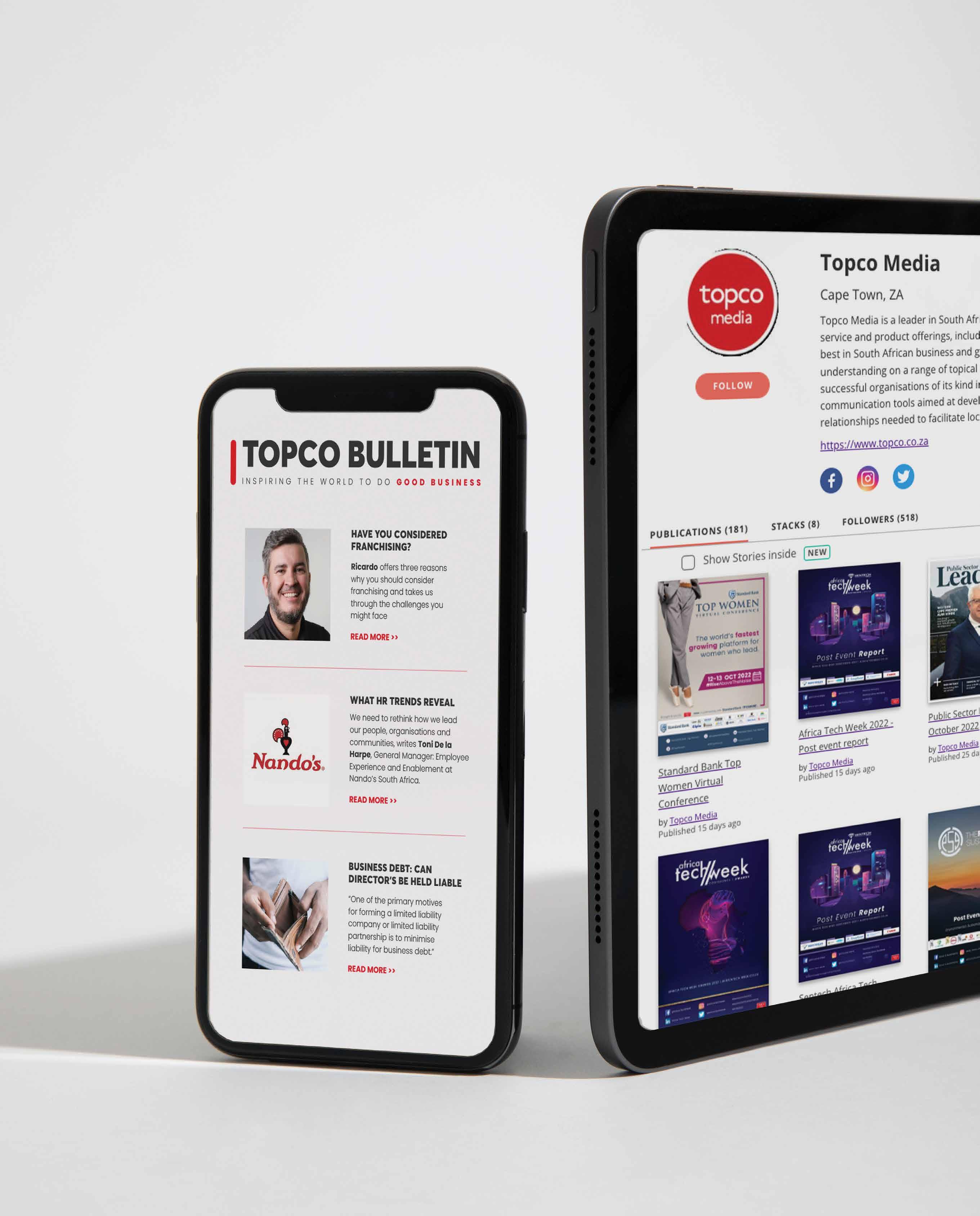

Do you know what your true purpose in life is? when was the last time you truly set time aside to find a clear picture of where you’re headed? It may seem ‘cliché’, but taking some time to sit down and make a list of your goals and aspirations can be instrumental in your future success.
aCCording to a studY
ConduCtEd BY thE harvard mBa BusinEss sChool, on thE valuE of goal sEtting, upon graduating it was dEtErminEd that:
• 84% of the entire class had set no goals at all
• 13% of the class had set written goals but had no concrete plans
• 3% of the class had both written goals and concrete plans
Interestingly, as well, the 3% of the class that had both written goals and a game plan for their future, were earning ten times more than the rest of the 97% of the class who took part in the study. what this shows is that planning ahead for your future, whether it be for your education, career, or holistic life plan, will go a long way in guaranteeing the success of your endeavours.

what is important to note, however, is that this is about more than simply jotting down all your dreams and
aspirations in a diary somewhere. Coming up with ‘smart’ goals that are actionable is what matters. There is no point in setting a bar that is unattainable or something you’re going to lose interest in along the way.
This is where introspection will come into play. How well do you know yourself? are you aware of what your strengths and weaknesses are? what are your personal preferences? These are important questions you need to ask yourself before planning ahead for your future.
In taking the next steps towards drawing out your plan, it may be helpful to acknowledge the foundations of sMarT goals. This clever acronym is actually a nifty checklist of sorts for mapping out your set of goals. sMarT goals are: specific, Measurable, actionable, realistic and Timely. Once you get the just of this, you’ll be well on your way to making your highest potential a reality.
If you’re worried about sticking to the plan and making sure you reach small milestones along the way to your ‘big win’, then here are a few tips and tricks that may help you stay on your path to success:

MaxiMisE thE likElihood of succEss – sEt BEttEr Goals
as you begin to set goals for yourself, be mindful of what truly motivates you. ensure that these goals are aligned with your key beliefs and values. Make sure that these goals are important to you, and that there is significant value in pursuing them. The goals you choose to dedicate your life and time to need to be worthwhile. Take note of where your goals will fall into ‘the bigger picture’. ask yourself:
• are they relevant?
• what is my level of interest in the outcome?
• am I excited about putting in the work required to achieve this goal?
MakE Your ProcEss tanGiBlE a great way to hold yourself accountable in pursuing your goals, would be to put them in writing and place them where they’ll always be visible. This way you’re reminded of where you’re headed and what is required of you to get to the end point. Too often people get caught up in the moment of making big plans, much like when everybody makes New Year’s resolutions, only to slack when it comes to actioning those plans. Having
a poster, checklist, or even a reminder notification set up on your mobile device, will go a long way in keeping you on your toes. another way to stick to it, is to have a designated ‘accountability partner’ whose primary role is to give you a nudge every now and then, keeping you focused on accomplishing your goals.
You cannot achieve a goal without having key milestones and a deadline. setting up a foolproof plan, prioritising each step you’ll have to take towards your end goal, will shape your plan of action. Decide what type of budget you’ll need, where you’ll get your resources from, how you’ll manage risk and how much time you’ll need to fulfill each task. by doing this, you’ll have a clear understanding of the work that will need to be done, and you’ll better your chances of staying on track.
Often we get demotivated and feel like we’re getting nowhere when we don’t take time to celebrate small successes on the way to our ultimate goal. rewarding yourself for your achievements could boost morale and inspire you to keep working diligently. However, try not to undermine your efforts by choosing a reward that could potentially set you back. For example, after working hard for a few months and making gains, taking a holiday could be just what you need to reset and refresh. but be careful of taking too much time off, getting lazy, and losing momentum.
as the saying goes: “Nothing worth having comes easy”. working towards a goal takes time and diligence. give yourself the space you’ll need to take things one step at a time. You don’t want to get too ahead of yourself and end up making avoidable mistakes that could be detrimental to your end goal. set out a clear plan for each week and leave some breathing room for ad hoc tasks and spontaneous last minute moves –enjoy the journey while you’re on it.
goal setting is a process, and although having a plan will strengthen your chances of achieving your goal, things change with time and updates may need to be made. evaluating your game plan and end goal periodically is an important part of this process. Never settle for the bare minimum and check to see if your goals are still relevant to you and your lifestyle. Checking in with yourself and taking stock of all the progress you’ve made is a healthy step in going for acheiving your goals. Think about what you’ve done so far, how you accomplished it, and what you’ve learned from the experience.
Taking time to extract these lessons will increase your productivity, as you’ll be able to make adjustments, and, you’ll be able to apply these outcomes to your future goal setting experience. n

As we head into a hybrid working environment you may have decided that your business needs to ramp up staff or skills in the coming months. But finding the right people to grow your business effectively can be challenging – and the costs can be big if you get it wrong. in a post-Covid world, organisations need to be more agile and dynamic than ever, which means that employing people with simply the “right” CV and experience are not the only ingredients needed for recruitment efforts to succeed. with this in mind, what are the most important things to know to ensure you recruit the right type of people into your organisation?
1. GEt clarity on who you’rE lookinG for as with any project you take on, knowing your ultimate outcome in terms of your recruitment goals is an essential first step. Caroline Kilbey, head of strategic relationships at digital recruitment company strider, says that defining the ideal person for a role is integral before even starting to actively recruit. “Before anything else, you first need to define the roles you are recruiting for,” she says. “Once that is done, you should have a clear idea in your head of what the ideal candidate would be in terms of past experience and attributes.”

2. crEatE a smallEr funnEl Peter Cappelli, Professor of management at the wharton school in Pennsylvania in the us, says that companies are better off creating a smaller but better qualified pool of applicants to potentially fill a particular role. This is because, he says, every applicant costs the company money. “Collecting lots of applicants in a wide funnel means that a great many of them won’t fit the job or the company, so employers have to rely on the next step of the hiring process—selection—to weed them out,” he says. This next step, he points out, is often the hardest part of
the recruitment process. By narrowing the funnel, the entire process can be made more efficient in terms of both time and cost.
3. makE surE thE rolE fits your budGEt – and vicE vErsa we all know the conundrum: we want the best candidate possible for the role, but budgets are stretched thin. But making sure you have the proper budget for the best qualified candidate is a crucial detail, and can have long term effects on the profitability of that hire in terms of your recruitment costs.
“you get what you pay for, so while you may think you have saved on paying someone less, you may not attract the best person for the role,” says Kilbey. “This can ultimately mean you have to go through the entire recruitment process again further down the line.”
4. look for a good company culturE fit if you can, try to recruit from a company similar to your own. For example, someone who has succeeded in a small, agile start-up is likely to have the right attributes for your small and agile

company as opposed to the same level of candidate with only large corporate experience. Cultural fit is also important: in a recent podcast interview, aPCQ executive Director of hr ashley white says getting this right helps you avoid hiring someone who’s a perfect fit for the role, but who is then miserable at work and needs to be replaced in a month or two. Finding someone who is the right cultural fit, she says, is about peeling back the layers and getting to know more about the life and interests of the person outside of work. “i want to know those things not because it’s going to change my hiring decision, but it’s because it gives me a sense of who you are, and whether you’re going to be happy here,” she says.
done, rather than the job title itself. in this way, recruitment can rather focus on best solutions to fill critical skills gaps, whether through build, buy, borrow or some combination of the three.
5. hirE bEyond just thE rolE a recent white paper by gartner found that several environmental shifts have rendered recruiting’s traditional approaches outdated, which have been accelerated by the Covid-19 pandemic. in conventional recruitment drives, business leaders typically define their hiring needs by articulating the candidate profile they want to see in the role, presuming that desired skills are tied to certain qualifications or experiences. But increasingly, leading organisations are rather focusing on the essential skills needed to get the job

This is a long term goal, but a company with a good reputation and where people want to work is far more likely to attract good hires. This comes through a combination of attractive benefits and a positive work culture. when you successfully achieve this, good candidates will come to you. in Fortune’s 100 Best Companies to work For, the top companies were ones that not just survived the Covid shutdowns, but actually thrived. as it turns out, businesses that treat employees well during the toughest of times will attract talent, even when there’s tough competition around.
Finding the right person for your organisation is a challenging task, but it’s well worth doing it properly. having an appropriate recruitment strategy in place that takes into account our new world of work and that takes a long term view in terms of what that employee will add in the long term is the most effective way of going about it. Post pandemic companies are going to need to be as competitive as possible in order to survive, and for those lucky enough to be thriving and expanding, this means having the right people to help them grow.
n
“Finding the right person For your organisation is a challenging task, but it’s well worth doing it properly.
The focus on employee wellness has traditionally been on their physical well-being and the prevention of absenteeism, but this is starting to change and a growing number of employers now realise that physical health is only one component when talking about healthy and wellfunctioning employees.
This shift was accelerated by the pandemic, with employers noticing the impact of the resultant stress on employee wellbeing – and the effect it has had on their performance, and consequently, on the company’s bottom line.
Ultimately, it’s becoming more and more obvious that employee health
affects more than just medical costs; that there is a direct correlation between a holistically healthy workforce and a productive workforce.
What is also becoming evident is that, although we are all responsible for our own health, employers play an important role as well as a tremendous opportunity to assist their employees in realising the value of adopting healthier behaviours so they can lead healthier lives.
And this is where a healthy and supportive workplace culture is so important; one where a sound wellness strategy is reinforced and encouraged will not only benefit the employees but also the company in
several compelling ways:•
Increased employee engagement – research has shown that in companies with employee wellness programmes, staff feel more connected, their health is improved and they generally feel happier. These important factors, along with recognition and constructive feedback practices, all contribute to higher employee engagement levels.
• Improved employee morale – if the pandemic taught us anything, it’s the importance of maintaining or raising staff morale and, by introducing wellbeing initiatives such as mental health workshops or fitness programmes among departments or teams. Attracting the most talented workers –

companies that are seen to care for their employees and offer additional benefits like wellness programmes will always attract the best candidates.
• Reduced absenteeism and healthcare costs – we all know the old adage, “prevention is better than cure” and it’s very apt in the workplace because the knockon costs of stressed employees, burnout and preventable diseases are a lot higher than preventative programmes at the end of the day.
working correctly and that they include everyone, you can alleviate one of the main sources of workrelated stress.
• Listen to your employees – when people have grievances that are not addressed, they start to feel that their opinions don’t matter, but when you take the time to hear about issues or listen to their recommendations, they will feel like valued members of staff which automatically raises morale and wellbeing.
• Give regular and timely feedback – when you regularly give your employees feedback, they feel that their work and their growth in the company matters. Furthermore, feedback will enable them to learn, work better, continue learning and feel as though their career is on track and advancing.
your workplace and creates an emotional bond that automatically makes it a better place to work for everyone.
Although the pandemic wreaked havoc on so many aspects of our lives, one silver lining is that it has undoubtedly turned the spotlight on the importance of mental wellbeing and this will lead to better understanding and more empathy in the workplace.
Employers have already begun focusing less on specific physical health conditions and more on the importance of holistic health with a focus being on prevention rather than cure.

Over and above the implementation of wellness programmes, there are a number of ways that employers can –and should – ensure the wellbeing of their employees.
• Recognise their work and their efforts – employees will always feel more satisfied and fulfilled in their jobs if their hard work and dedication is appreciated and recognised and a culture of appreciation will also further empower and encourage employees. It’s also a good idea to establish rewards platforms as it gives them something to strive towards.
• Facilitate seamless communication – with remote work now the norm, although it works on many levels it also disrupts many aspects, including communication and collaboration/teamwork. By ensuring that the channels of communication are always open,
• Show empathy – having empathy and compassion for your employees humanises
The costs of employee disengagement, absenteeism and healthcare are too high to be ignored and I believe that very soon we will start seeing more diversified employee wellbeing benefits and programmes in the workplace. n
“Recognise theiR woRk and theiR effoRts”


Accenture surveyed more than 25,000 customers across 22 countries and found consumers have changed their buying habits and preferences, altering the power dynamic between brands and people completely. The research didn’t find these changes within a specific demographic or age group, in fact they’re a heterogenous group that expects more from brands when it comes to values, cost, convenience, service, reputation and trust. Consumer attitudes have been fundamentally reshaped by the pandemic, and will likely continue to evolve in fresh directions that will equally reshape how companies engage with them. Those that do not evolve, will not survive.
Dealing with consumers has become more complex primarily because of expectations. The power dynamic that long rested in the hands of the mighty business has now landed in those of the consumer. They have more choice, they have access to more information, they want better pricing and service, and they want personalisation. Thanks
to exposure to global brands and standards, customers expect fair pricing and good service – and they will leave brands they’ve been loyal to for years to get what they want, at a better rate.
Customers also expect businesses to know them better. To be able to almost identify their needs pre-emptively with interactions and engagements that connect with them on a highly personalised level. Brands need to be serving up ads and content from the moment a customer starts surfing for a product or service, and they need to ensure that these are relevant and customised. They also expect that their experiences with a business will be uniform across every channel and touchpoint – regardless of whether this is instore or via a digital channel. Customers are more connected now than ever before and they’re influenced by more than just adverts and content, they’re equally influenced by their peers, influencers, social media and global opinion. Purchasing decisions are powerfully impacted by the people that customers identify with, but equally by
how products and services recognise customer individuality and uniqueness.


These shifting dynamics and requirements are putting organisations under immense pressure. They have to do more, go further, and reinvent old wheels so that they always feel fresh and relevant. They have to invest more time into understanding how to compete globally while still remaining locally engaging, and they have to stay top of customer mind all the time. especially the minds of those who are perceived as influential. From a business to business perspective (B2B), this may mean having a customer advocate or working with ordinary people who have large online followings to promote their brands.
Companies are also increasingly turning to data as a way of navigating these complexities. They’ve recognised the importance of analytics and data insights in helping them to make decisions that are comprehensively relevant to their business and their customers. and they want to effectively use the data available to their business so they can make faster and more accurate decisions. The value of this data-driven mindset is not just that it
offers the business vivid insights that can transform decision making and customer engagement, but that it’s accessible to organisations of all sizes. Companies that don’t have the resources and scale can use data to gain a competitive edge. By listening to their customers, they can remain competitive and alert to further change. and if they focus on using the data alongside influencers and toolsets designed to drive hyper-personalisation and
engagement, then they can effectively compete in a crowded market. dealing with empowered customers is extremely challenging given the rapid pace at which consumer needs change, so packing the toolbox with all the right equipment is essential for any business of any size. it may seem overwhelming, but if companies use the data at their disposal and respond with more informed reactions and engagements, then they are setting themselves on the right path to success. n
“They have To invesT more Time inTo undersTanding how To compeTe globally while sTill remaining locally engaging, and They have To sTay Top of cusTomer mind all The Time.”
“companies ThaT don’T have The resources and scale can use daTa To gain a compeTiTive edge.”

The Top 500 aims to identify the top five companies in each of 100 business sectors monitored by the Topco Research Department. In order to do so, some measure of the qualities that we consider to be characteristic of top companies must be designed in order to rank companies.
To be classed as one of South Africa’s best companies, we expect companies to excel in three key spheres, namely financial performance, empowerment, and policy and accreditation. The criteria within financial performance speak to the ideas of top companies being large, growing and productive institutions that are leaders by virtue of their size and dynamism. Financial performance is measured by four indicators: turnover, rate of turnover growth, Rand turnover growth and turnover per employee.
within the measure. The dynamism of top companies is reflected in their ability to expand and grow, and so we include two medium-weight indicators – one relative, one absolute – of growth in the scoresheet. The former indicator is the rate of turnover growth over the year – since top companies are fastergrowing – while the latter is the Rand value of the turnover growth.
Absolute turnover growth is included to account for the fact that top companies’ growth should make a large contribution to increased total output. These two indicators have a medium weight within the scoring system. Top companies are more productive than other companies and the final performance indicator, turnover per employee, which has a medium weight, speaks to this characteristic.
at the level of management and control. The proportion of black and female executive and non-executive directors is evaluated to complete the scoring for this sphere. Top companies are involved within communities and are committed to quality. This sphere of policy and accreditation accounts for the remainder of the total score. In gauging companies’ engagement and involvement within communities, we measure their total spend on corporate social investment activities relative to net profit.
Companies are also judged on the existence of written policies regarding employment equity, skills development, health and safety, HIV/Aids, and the environment. The final criterion within this sphere, commitment to quality, is proxied by the number of SABSapproved accreditations held by companies.
Size is both an indicator and an outcome of whether or not a company is a top company. From the perspective of financial performance, turnover is used to proxy company size and this indicator has large weight
The business sector has an important role to play in promoting equity and social transformation. Top companies are committed to fulfilling this role, and this commitment is measured using six criteria. Two of these criteria focus on companies’ commitment to the goal of transformation as demonstrated in their employment profiles, namely the shares of employment accounted for by female employees and by black employees respectively.
Top companies, however, go further than just employment, and are committed to ensuring greater diversity

MoRnÉ ooSthUiZEn dEPUtY diRECtoR
Development Policy Research Unit, University of Cape Town
th E to P 500 RESEARC h ME thodo L o GY WAS d ES i G n E d in Con JU n C tion With th E U ni VERS it Y o F CAPE toWn ’S d EVEL o PME nt P o L i CY RESEARC h U nit.
“ to P Co MPA ni ES G o FURth ER th A n JUSt EMPLoYME nt, A nd ARE Co MM itt E d to E n SUR in G GREAt ER di VERS itY ”







Sasol LImited
AECI Limited
African Oxygen Limited
Spanjaard Limited
Omnia Holdings
Engen Petroleum Limited
BP Southern Africa (Pty) Ltd
Shell Downstream South Arica (Pty) Ltd
Total South Africa (Pty) Ltd
Cashbuild South Africa (Pty) Ltd
Italtile Limited
Massbuild (Pty) t/a Builders Warehouse
Brikor Limited
Afrimat Limited
Trellidor Holdings Limited
Turner & Townsend (Pty) Ltd
Mazor Group Limited
Brikor Limited Cement
PPC Limited
Afrimat Limited
AfriSam South Africa (Pty) Ltd
Sephaku Cement

Aveng Africa Limited
Wilson Bayly Holmes-Ovcon Limited
Murray & Roberts Holdings Limited
Raubex Group Limited
Motheo Construction Group (Pty) Ltd
Steel
ArcelorMittal South Africa Limited
Hulamin Limited
Aveng (Africa) Limited
Armaments Corporation of South Africa SOC Limited
Paramount Advanced Technologies (Pty) Ltd
Reutech Radar Systems a division of Reutech Limited
The Bidvest Group Limited
Barloworld Limited
Imperial Logistics Limited
KAP Industrial Holdings Limited
Argent Industrial Limited
ACTOM (Pty) Ltd
Voltex (Pty)Ltd
South Ocean Holdings Limited
Circuit Breaker Industries
Electronic
Reunert Limited
Altron Systems Integration, a division of Altron TMT (Pty) Ltd
Etion Digitise Limited
Ellies Holdings Limited
Siemens SA Limited
Barloworld Limited
KAP Industrial Holdings Limited
Hudaco Industries Limited
enX Group Limited
Invicta Holdings Limited
Mining & infrastructure
Zutari (Pty) Ltd
Bigen Africa Services (Pty) Ltd
Lesedi Nuclear Services (Pty) Ltd
SMEC South Africa (Pty) Ltd
Murray & Roberts Cementation (Pty) Ltd
AECI Mining Explosives
Strata Mining Services (Pty) Ltd
Trollope Mining Services 2000 (Pty) Ltd
CyC li CA l Cun S u ME r Good S
Volkswagen of South Africa (Pty) Ltd

Toyota South Africa Motors (Pty) Ltd
Nissan South Africa (Pty) Ltd
Renault South Africa (Pty) Ltd
Hisense Sa Sales Holdings (Pty) Ltd
Defy Appliances (Pty) Ltd
LG Electronics SA (Pty) Ltd
Nu-World Holdings Limited
Ellies Holdings Limited
Omnia Holdings Limited
Senwes Limited
Kaap Agri Bedryf Limited
VKB Beleggings (Pty) Ltd
TWK Agriculture Holdings (Pty) Ltd
Oceana Group Limited
Astral Operations Limited
RCL Foods Limited
Quantum Foods Holdings Limited
Crookes Brothers Limited
Oceana Group Limited
Premier Fishing and Brands Limited
Sea Harvest Group Limited

Tiger Brands Limited
Libstar Holdings Limited
AVI Limited
RFG Holdings Limited Crookes Brothers Limited
Nampak Limited
Mpact Limited
Transpaco Limited
Bowler Metcalf Limited
Amka Products (Pty) Ltd
Johnson & Johnson (Pty) Ltd
Kimberley-Clark South Africa (Pty) Ltd
HPCB a division of Tiger Brands Limited
Aspen Pharmacare Holdings Limited
Adcock Ingram Holdings Limited
Ascendis Health Limited
Sanofi Aventis South Africa (Pty) Ltd
RCL Foods Limited
Tongaat Hulett Limited
Homechoice Holdings Limited
Verimark Holdings Limited Homemark (Pty) Ltd
diversified
Shoprite Holdings Limited
Woolworths Holdings Clicks Group Limited
Pick n Pay stores Limited Massmart Holdings Limited
The Foschini Group Limited
Truworths International Limited
Mr Price Group Limited
Phumelela Gaming and Leisure Limited Gold Circle (Pty) Ltd
Tsogo Sun Gaming Limited

Sun International Limited hotels
Southern Sun Limited
Sun International Limited
Peermont Global (Pty) Ltd
City Lodge Hotels Limited
Famous Brands Limited
Spur Corporation Limited
MultiChoice Group Limited
Sentech SOC Limited
E Media Holdings Limited
South African Broadcasting Corporation SOC Limited (SABC)
African Media Entertainment Limited
Naspers Limited
Media24 Holdings (Pty) Ltd
Novus Holdings Limited
Caxton and CTP Publishers and Printers Limited
King James Cape Town Pty Ltd
Joe Public United
Saatchi &Saatchi
Bowmans
Webber Wentzel
Spoor & Fisher
Fasken (Incorporated in South Africa as Bell Dewar Inc.)
Adams & Adams

Johannesburg Expo Centre
DURBAN ICC
Cape Town International Convention Centre Company SOC Ltd (RF)
RX Africa.
Workforce Holdings Limited
Adcorp Holdings Limited
ADvTECH Limited
Primeserv Group Limited
CSG Holdings Limited
Fleet Africa (Pty) Ltd
Netstar (Pty) Ltd
MiX Telematics Limited
Innovation Group (Pty) Ltd
Syntell (Pty) Ltd
CallForce Direct (Pty) Ltd
Aegis Outsourcing South Africa (Pty) Ltd
Sigma Connected South Africa (Pty) Ltd
HONEYCOMB BEE RATINGS
Noble BBBEE Advisory
AAA BEE Verification Agency CC
Empowerdex (Pty) Ltd
Fidelity Verification (Pty) Ltd
Mustek Security Technologies
Fidelity Security Group (Pty) Ltd
Bidvest Protea Coin (Pty) Ltd
Eskom Holdings SOC Ltd
Transnet SOC Ltd
Telkom SA SOC Ltd.
PRODUCTIVITY SA
SENTECH
Super Group Limited
Santova Limited
Value Group Limited
OneLogix Group Ltd
Bonitas Medical Fund
Discovery Limited
Fedhealth Medical Scheme
Medshield Medical Aid
Life Healthcare Group Holdings Limited
Netcare Limited
AfroCentric Investment Corporation Limited
Mediclinic International plc
Advanced Health Limited

Shoprite Holdings Limited
Pick n Pay stores Limited
Woolworths Holdings Limited
The SPAR Group Limited
telecommunications (Wireless)
Vodacom Limited
MTN Limited
Cell C Limited
Mustek Limited
Hisense Sa Sales Holdings (Pty) Ltd
Ellies Electronics Proprietary Limited
LG Electronics SA (Pty) Ltd
Water
Rand Water
Johannesburg Water SOC Limited
Capitec Bank Limited
Nedbank Group Limited
Absa Limited
FirstRand Limited
African Bank Holdings Limited
Santam Limited
Old Mutual Insure Limited
AIG South Africa Limited
The Hollard Insurance Company Ltd
Grand Parade Investments Limited
Alexander Forbes Limited
Transaction Capital Limited
Conduit Capital Limited
PSG Konsult Limited
Rand Merchant Investment Holdings Limited
African Rainbow Capital Investments Limited
Transaction Capital Limited
Finbond Group Limited
African Dawn Capital Limited
Sanlam Limited
Liberty Holdings Limited Discovery Limited
Momentum Metropolitan Life Limited Outsurance Holding Limited
Growthpoint Properties Limited
Rebosis Property Fund Limited Attacq Limited
Vukile Property Fund Limited Redefine Properties Limited
Remgro Limited
Arb Holdings Limited
Hosken Consolidated Investments Limited
African Equity Empowerment Investments Limited Brimstone Investment Corporation Limited
JSE Limited Vunani Limited
PSG Konsult Limited
Purple Group Limited Sasfin Holdings Limited
Old Mutual Limited
Coronation Fund Managers
Ninety One Sygnia Ltd
PSG Group

KPMG Services Proprietary Limited
Ernst & Young t/a EY South Africa
Auditor-General of South Africa
SizweNtsalubaGobodo Grant Thornton Advisory Services (Pty) Ltd
Mustek Limited
Alviva Holdings Limited
Dell Computer (Pty) Ltd
Acer Africa (Pty) Ltd
IBM South Africa (Pty) Ltd
telecommunications
Vox Telecommunications Pty Ltd
Jasco Electronic Holdings Limited
TeleMasters Holdings Ltd
Boniswa Corporate Solutions

Huge Group Ltd.
Rectron (Pty) Ltd
Pinnacle Micro (Pty) Ltd
Tarsus Distribution (Pty) Ltd
Axiz (Pty) Ltd
Datatec Limited
Adapt IT Holdings Limited
Alviva Holdings Limited
Altron Systems Integration, a division of Altron TMT (Pty) Ltd
EOH Holdings Limited
Business Software Solutions
Rectron (Pty) Ltd
Sage South Africa (Pty) Ltd Etion Limited
ENRA Technologies CC ISA Holdings Limited
University of South Africa University of Stellenbosch
North West University University of Witwatersrand University of KwaZulu-Natal
Absa Limited
Acer Africa (Pty) Ltd
ACTOM (Pty) Ltd
Adams & Adams
Adapt IT Holdings Limited
Adcock Ingram Holdings Limited
Adcorp Holdings Limited
Advanced Health Limited
ADvTECH Limited
AECI Limited
AECI Mining Explosives
Aegis Outsourcing South Africa (Pty) Ltd
African Bank Holdings Limited
African Dawn Capital Limited
African Equity Empowerment Investments Limited
African Oxygen Limited
African Oxygen Limited
African Rainbow Capital Investments Limited
African Rainbow Minerals Limited Afrimat Limited
AfriSam South Africa (Pty) Ltd
AfroCentric Investment Corporation Limited
AIG South Africa Limited
Air Products South Africa (Pty) Ltd
Air Traffic and Navigation Services Company Limited
Airports Company South Africa
Alexander Forbes Limited
Altron Systems Integration, a division of Altron TMT (Pty) Ltd
Alviva Holdings Limited
Amka Products (Pty) Ltd
Anglo American Platinum Limited
AngloGold Ashanti Limited
Arb Holdings Limited
ArcelorMittal South Africa Limited
Argent Industrial Limited
Armaments Corporation of South Africa
SOC Limited
Ascendis Health Limited
Aspen Pharmacare Holdings Limited Aspire Solutions
Astral Operations Limited
Attacq Limited
Auditor-General of South Africa
Aveng Africa Limited
Aveng Trident Steel (Pty) Ltd
AVI Limited
Axiz (Pty) Ltd
Barloworld Limited
Bauba Resources Limited
Bell Equipment Company South Africa (Pty) Ltd
Bidvest Protea Coin (Pty) Ltd
Bigen Africa Services (Pty) Ltd bizAR Reality Bloem-Water
Boniswa Corporate Solutions Bowler Metcalf Limited Bowmans
BP Southern Africa (Pty) Ltd
Brait South Africa Limited Brikor Limited
Brimstone Investment Corporation Limited
Calgro M3 Holdings Limited CallForce Direct (Pty) Ltd
Cape Town International Convention Centre Company SOC Ltd (RF)
Capitec Bank Limited
Cashbuild South Africa (Pty) Ltd Caxton and CTP Publishers and Printers Limited
CBI-electric:Low Voltage Cell C Limited
Chrometco Ldt
Circuit Breaker Industries t/a CBIelectric:Low Voltage
City Lodge Hotels Limited
Clicks Group Limited
Clientele Life Assurance Company Limited
CMH Car Hire (Pty) Ltd t/a First Car Rental
Cognition Holdings Limited
Conduit Capital Limited Coronation Fund Managers Crookes Brothers Limited
CSG Holdings Limited
Datatec Limited
Defy Appliances (Pty) Ltd Dell Computer (Pty) Ltd
Deneb Investments Corporation Limited Discovery Heath Medical Scheme (DHMS)
Discovery Limited Distell Group Limited DRDGOLD Limited DURBAN ICC
E Media Holdings Limited
Ellies Electronics Proprietary Limited
Ellies Holdings Limited
eMEDIA HOLDINGS LIMITED
Empowerdex (Pty) Ltd
Engen Petroleum Limited
ENRA TECHNOLOGIES cc
enX Group Limited
EOH Holdings Limited
Ernst & Young t/a EY South Africa
Eskom Holdings Limited
Etion Digitise Limited
Elite Wealth Assets Insurance
Exxaro Resources Limited
Famous Brands Limited
Fasken (Incorporated in South Africa as Bell Dewar Inc.)
Fedhealth Medical Scheme
Fidelity Security Group (Pty) Ltd
Fidelity Verification (Pty) Ltd
Finbond Group Limited
FirstRand Limited
Fleet Africa (Pty) Ltd
Fortress Income Fund Limited (Fortress REIT)
Foskor Limited
Gold Circle (Pty) Ltd
Gold Fields Limited
Grand Parade Investments Limited
Grindrod Limited
Growthpoint Properties Limited
Harmony Gold Mining Company Limited
Hisense Sa Sales Holdings (Pty) Ltd
Hollard Insurance Company Limited
Homechoice Holdings Limited Homemark (Pty) Ltd
Hosken Consolidated Investments Limited
Hospitality Property Fund Limited
HPCB a division of Tiger Brands Limited
Hudaco Industries Limited
Huge Group Limited
Huge Telecom (Pty) Ltd
Hulamin Limited
Hyprop Investment Limited
IBM South Africa (Pty) Ltd
ICC Durban (Pty) Ltd
Impala Platinum Holdings Limited Imperial Logistics Limited Innovation Group (Pty) Ltd
Investec Limited
Invicta Holdings Limited
ISA Holdings Limited Italtile Limited
Jasco Electronic Holdings Limited
Joe Public United
Johannesburg Expo Centre
Johannesburg Water SOC Limited
Johnson & Johnson (Pty) Ltd JSE Limited
Kaap Agri Bedryf Limited
KAP Industrial Holdings Limited Kimberley-Clark South Africa (Pty) Ltd
King James Cape Town Pty Ltd KPMG Services Proprietary Limited Kumba Iron Ore Limited
Lesedi Nuclear Services (Pty) Ltd Lewis Group Limited
LG Electronics SA (Pty) Ltd
Liberty Holdings Limited Life Healthcare Group Holdings Limited Luxe Holdings Limited
Massbuild (Pty) t/a Builders Warehouse
Massmart Holdings Limited Mazor Group Limited
Media24 Holdings (Pty) Ltd
Mediclinic International plc
Medshield Medical Aid
Melsoft Private Limited
Merafe Resources Limited
Mhlathuze Water

MiX Telematics Limited
Momentum Metropolitan Life Limited
MoneyWeb Holdings Limited
Motheo Construction Group (Pty) Ltd
Mpact Limited
Mr Price Group Limited
MTN Limited
MultiChoice Group Limited
Murray & Roberts Cementation (Pty) Ltd
Murray & Roberts Holdings Limited
Mustek Limited
Mustek Security Technologies
Naked insurence Nampak Limited Naspers Limited
Nedbank Group Limited
Netcare Limited
Netstar (Pty) Ltd
Ninety One.
Nissan South Africa (Pty) Ltd
Noble BBBEE Advisory
Northam Platinum Holdings Limited
Novus Holdings Limited
Nu-World Holdings Limited
Oceana Group Limited
Old Mutual Insure Limited
Old Mutual Life Assurance Company
South Africa Limited
Old Mutual Limited
Old Mutual Limited
Omnia Holdings Limited
OneLogix Group Ltd
Outsurance Holding Limited
OVK Bedryf Beperk
Paramount Advanced Technologies (Pty) Ltd
Peermont Global (Pty) Ltd
Petra Diamonds Southern Africa
Petroleum, Oil and Gas Corporation of South Africa (PetroSA)
Phumelela Gaming and Leisure Limited
Pick n Pay stores Limited
Pinnacle Micro (Pty) Ltd
PPC Limited
Premier Fishing and Brands Limited
Primeserv Group Limited
PSG Group
PSG Konsult Limited
Purple Group Limited
Putprop Limited
QQuantum Foods Holdings Limited
Sanlam Limited
Sanofi Aventis South Africa (Pty) Ltd
Santam Limited
Santova Limited
Sasfin Holdings Limited Sasol LImited
Sasol Limited (Gas division)
Sasol Mining (Pty) Ltd
Sea Harvest Group Limited Sentech SOC Limited
Senwes Limited
Sephaku Cement
Shell Downstream South Arica (Pty) Ltd
Shoprite Holdings Limited
Sibanye Stillwater Limited
TTarsus Distribution (Pty) Ltd
TeleMasters Holdings Limited
The Bidvest Group Limited
The Foschini Group Limited
The Hollard Insurance Company Ltd
The SPAR Group Limited
Thungela Resources Limited
Tiger Brands Limited
Tongaat Hulett Limited
Total South Africa (Pty) Ltd
Toyota South Africa Motors (Pty) Ltd
Transaction Capital Limited
Transaction Capital Limited
Transpaco Limited
Trellidor Holdings Limited
Trollope Mining Services 2000 (Pty) Ltd
Truworths International Limited
Tsogo Sun Gaming Limited
Turner & Townsend (Pty) Ltd
TWK Agriculture Holdings (Pty) Ltd
Umgeni-Water
University of KwaZulu-Natal University of Limpopo
University of South Africa (UNISA)
University of Stellenbosch University of Witwatersrand
RRand Merchant Investment Holdings
Limited
Rand Water
Raubex Group Limited
RCL Foods Limited
Rebosis Property Fund Limited

Rectron (Pty) Ltd
Redefine Properties Limited
Remgro Limited
Renault South Africa (Pty) Ltd
Reunert Limited
Reutech Radar Systems a division of Reutech Limited
RFG Holdings Limited
Royal Bafokeng Platinum Ltd
RX Africa.
SSaatchi & Saatchi
Sage South Africa (Pty) Ltd
Salungano Group Limited
Siemens SA Limited
Sigma Connected South Africa (Pty) Ltd
SizweNtsalubaGobodo Grant Thornton Advisory Services (Pty) Ltd
SMEC South Africa (Pty) Ltd
SNG Grant Thornton
South African Broadcasting Corporation SOC Limited (SABC)
South Ocean Holdings Limited
South32 SA Coal Holdings Pty Ltd
Southern Sun Limited Spanjaard Limited
Spoor & Fisher
Spur Corporation Limited
Strata Mining Services (Pty) Ltd
Sun International Limited Sun International Limited
Super Group Limited Sygnia Ltd
Syntell (Pty) Ltd
Value Group Limited
Verimark Holdings Limited
VKB Beleggings (Pty) Ltd
Vodacom Limited
Volkswagen of South Africa (Pty) Ltd Voltex (Pty)Ltd
Vox Telecommunications (Pty) Ltd
Vukile Property Fund Limited
Vunani Limited
Webber Wentzel
Wilson Bayly Holmes-Ovcon Limited
Winhold Limited
Woolworths Holdings Limited Workforce Holdings Limited
Zeder Investments Limited Zutari (Pty) Ltd


Conference Producer Janine Brown breaks down the benefits of partnering with a B2B Event. Scan the QR code to find out more >>>
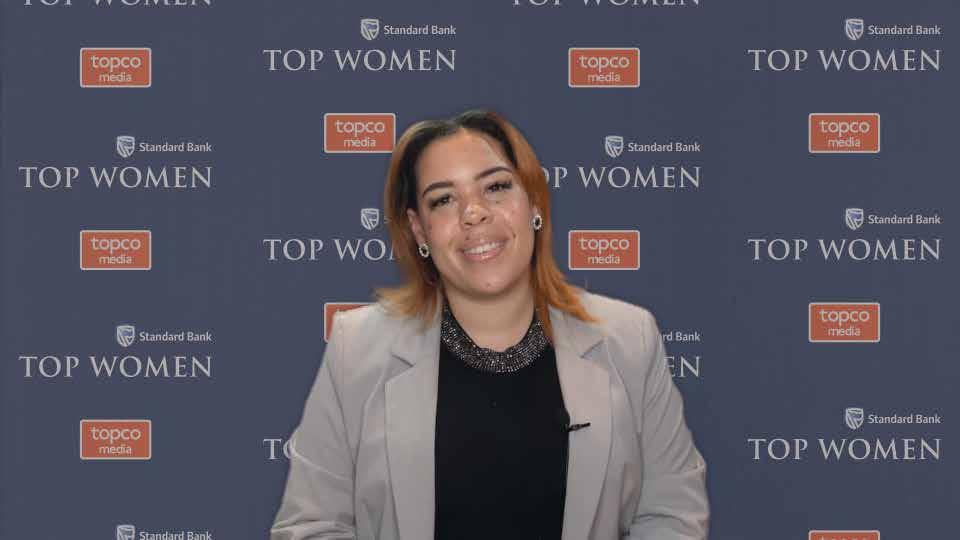
“You can do it yourself - but the experts can do it better.”
YOU SHOULD PARTNER WITH A B2B EVENT
Take a journey away from short termism and start looking at a better future. Meet the interesting people changing Africa – and the way we work, think and live.
To listen to the Business Unusual podcasts, Scan Here