New Year, New Benefits: Introducing the FDA Member Assistance Program
The Ethical and Moral Obligations of a Friend and Colleague
States Remove Stigmatizing Mental Health Questions from Dental Licensure Applications
How Are You Doing, Really?
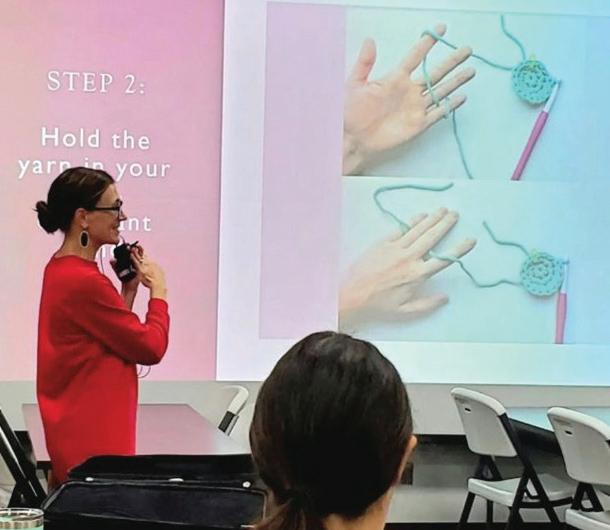
FDC2025 SpeakerPreventive Mental Care
Vol. 37, NO. 1 JANUARY/ FEBRUARY 2025
WELLNESS ISSUE
20 Florida Board of Dentistry Meets in Gainesville
23 Thank You 2024-2025 ADA Councils and Committees
24 States Remove Stigmatizing Mental Health Questions from Dental Licensure Applications
29 New Year, New Benefits: Introducing the FDA Member Assistance Program
32 The Ethical and Moral Obligations of a Friend and Colleague
34 ADA Wellness Resources from the Council on Dental Practice
36 Stretching for Success: Prioritizing Movement for a Healthier, Pain-Free Dental Career
39 ADA Wellness Ambassador Program
40 How Are You Doing, Really?
44 Nuclear Verdicts in Health Care: How Social Inflation Impacts Physicians, Patients and the Future of Medicine
48 Strengthening Smiles and Building Bonds: The Importance of the Florida Dental Association Foundation
50 All About Fluoridation
52 The Evidence Behind the Risk of Fluoride Use: Continued Support for Fluoride Strategies
59 Why I Dental ...
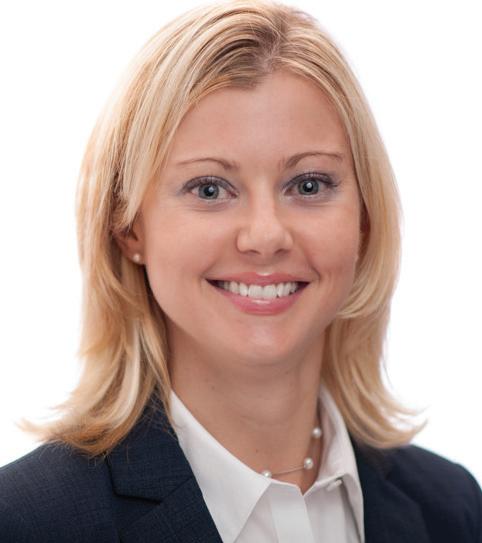
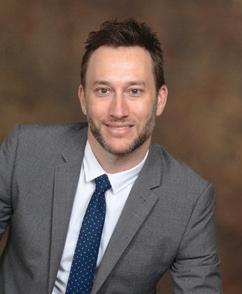
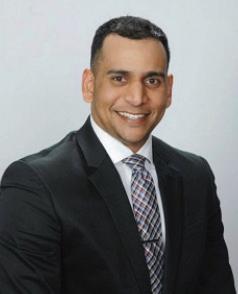
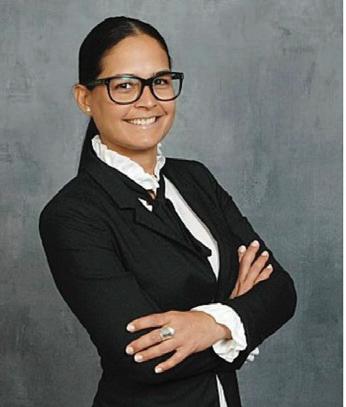
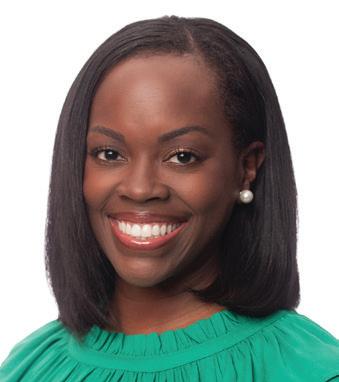
60 FDC2025 Speaker – Preventive Mental Care
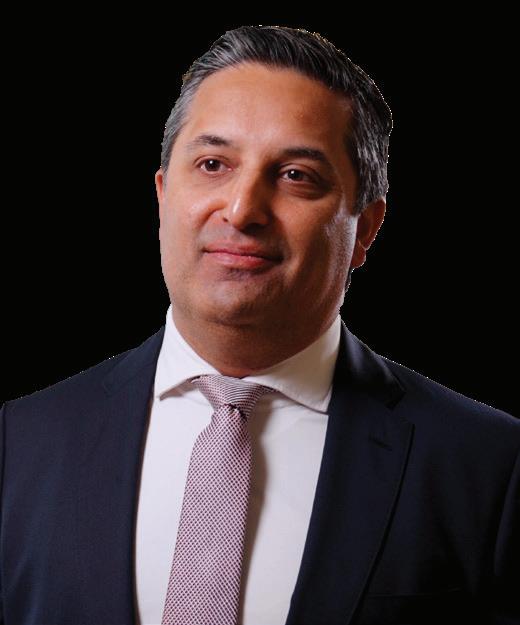
64 FDC2025 Speaker – Trending Diets and the "Skinny" on Dental Health
66 FDC Exhibit Hall
Advertising Index
75 Off the Cusp
EDITOR
Dr. Hugh Wunderlich, CDE
Palm Harbor
BOARD OF TRUSTEES
PRESIDENT
Dr. Jeffrey Ottley
Milton
FIRST VICE PRESIDENT
Dr. Dan Gesek Jacksonville
SPEAKER OF THE HOUSE
Dr. Don lIkka Leesburg
17TH DISTRICT TRUSTEE
Dr. Andy Brown Jacksonville
PRESIDENT-ELECT
Dr. John Paul Lakeland
IMMEDIATE PAST PRESIDENT
Dr. Beatriz Terry Miami
TREASURER
Dr. Rodrigo Romano Miami
EXECUTIVE DIRECTOR Drew Eason, CAE Tallahassee
TRUSTEES
Dr. Tom Brown Orange Park
Dr. John Cordoba Lake Mary
Dr. Bethany Douglas Jacksonville
Dr. Fred Grassin Spring Hill
Dr. Bertram Hughes Gainesville
Dr. Richard Mufson Miami
Dr. Christopher Bulnes Tampa
Dr. Sam DeSai Cape Coral
Dr. Karen Glerum Boynton Beach
Dr. Reese Harrison Lynn Haven
Dr. Eddie Martin Pensacola
Dr. John Pasqual Delray Beach
To contact an FDA board member, use the first letter of their first name, then their last name, followed by @bot.floridadental.org. For example, to email Dr. Hugh Wunderlich, his email would be hwunderlich@bot.floridadental.org.
To call a specific staff member below, dial 850.350. followed by their extension.
EXECUTIVE OFFICE
Drew Eason • chief executive officer/executive director deason@floridadental.org Ext. 7109
Dan Zottoli, SBCS, DIF, LTCP director of sales • Atlantic Coast 561.791.7744 • cell: 561.601.5363 dan.zottoli@fdaservices.com
Dennis Head, CIC director of sales • Central Florida 877.843.0921 • cell: 407.927.5472 dennis.head@fdaservices.com
Mike Trout director of sales • North Florida cell: 904.254.8927 mike.trout@fdaservices.com
Joseph Perretti, SBCS director of sales • South Florida cell: 305.721.9196 joe.perretti@fdaservices.com
Rick D’Angelo, CIC director of sales • West Coast 813.475.6948 • cell: 813.267.2572 rick.dangelo@fdaservices.com
Welcome to 2025!
By FDA President Jeff Ottley, DMD
Welcome to 2025 members of the Florida Dental Association (FDA)! It’s that time of year when the ancient tradition of a New Year’s resolution is often used to promise a healthy change in our lives. Unfortunately, many of these changes are short-lived, whether it’s too lofty a goal or insufficient willpower to bring success. I certainly have failed many times in the past; lose weight, shop less, drink less and exercise more are just a few of the resolutions that went up in flames within a month or two. This year might I suggest some healthy resolutions that I find simple but vastly beneficial and easy to sustain. This publication will focus on wellness and well-being; with that in mind, here are my 2025 New Year Resolutions.
1. Mindfulness: For me, this is staying in the moment with family, friends, coworkers and patients. Block out distractions and focus each moment on that person you are with; really lean in and connect.
2. Breathing: In small increments of each day, pausing, being still and breathing deeply with intention, allowing my body to relax and refresh.
3. Get outside: Get away from the enclosed recycled air and fake lighting and enjoy time outside each day in this beautiful world. Let the sunshine on your face!
4. Emotional sharing: Share your feelings with a loved one or friend; pushing those feelings down and trying to bury them only leads to negative consequences in the future. Be present with someone who is sharing with you.
2025 can be the year where well-being becomes important to you, leading to a healthier and happier you.
HAPPY NEW YEAR!
FDA President Dr. Ottley can be reached at jottley@bot.floridadental.org.
FLORIDA MISSION OF MERCY
Florida Mission of Mercy (FLA-MOM) is the largest charitable dental clinic in Florida. FLA-MOM provides care to any patient at no cost, with the goal of serving the underserved and uninsured in Florida — those who would otherwise go without care. Help us provide dental care to those in greatest need. We need the following types of volunteers:
dentists, hygienists, dental assistants
dental lab technicians
physicians, nurses, EMTs
general community volunteers
Monday, March 24, 6pm
Legislative Briefing
Hotel Duval (8th floor)
Complimentary dinner to follow
Tuesday, March 25
Capitol Visits
Lunch provided
Hotel Duval Room Block $295 per night - click here
Support The FDA: The Smarter Way to Buy Workers’ Comp Insurance
By FDA Services Chief Operating Officer Scott Ruthstrom
When it comes to workers’ compensation premiums in Florida, you may not realize that rates are regulated by the state, meaning premiums for dental offices are the same across all insurance carriers.
However, Florida Dental Association Services (FDAS) has access to The Zenith’s dividend program, which reduces premiums for dental offices by 25%! Doesn’t it make sense to purchase your workers’ compensation insurance from a source that directly supports the dental profession, the FDA and helps you save money?
Even if you already have your workers’ compensation policy with The Zenith through another broker, we can assist in transferring that policy to our agency. Payroll companies also provide workers’ compensation coverage, but did you know you’re paying the full premium plus additional fees? By buying your coverage through the FDA’s wholly owned insurance agency, FDAS, you are fulfilling your insurance requirements and supporting the FDA’s efforts to advocate for and protect the interests of Florida dentists.
In addition to competitive rates, FDAS offers personalized support, risk management tools and resources to help you run a safe and compliant practice. By purchasing through the FDA’s agency, you’re ensuring your business is backed by an organization that understands the unique needs of dentists and is committed to your success.
Support your profession and make a smart choice for your practice — purchase your workers’ compensation insurance through FDAS today!
FDAS Chief Operating Officer Scott Ruthstrom can be reached at scott.ruthstrom@fdaservices.com By buying your coverage through the FDA’s wholly owned insurance agency, FDAS, you are fulfilling your insurance requirements and supporting the FDA’s efforts to advocate for and protect the interests of Florida dentists.
IS X-RAY VISION YOUR SUPERPOWER?
Take the first step on the path to dental radiography certification. Train online, at your own pace. Study anywhere!
The Florida Dental Association (FDA) Online Radiography Training Program provides you the formal training you need, with the professional development you want. Enrich your career path while contributing a vital service to your patients and dental team. It’s the most convenient and economical way to get the radiography training required by Florida law. It’s affordably priced, too — just $285 per student* for FDA members!
*Non-members pay $385.
dental benefits spotlight
It’s 2025: Don’t Be Duped by Virtual Credit Cards
By Bertram J. Hughes, DMD
Last year, due to the lobbying efforts of Florida Dental Association (FDA) members and the FDA team, the Florida Legislature enacted an “opt-in” law for virtual credit card usage in dentistry. These cards come with processing fees (similar to regular credit cards) and additional service fees, reducing your reimbursement from the billed fee.
The law requires that you explicitly “opt in” to receive payment via virtual credit cards. However, some companies may treat cashing a virtual card as implicit consent, even if you later attempt to “opt out.” This can inadvertently apply to multiple network affiliations.
What You Should Do:
1. If you receive a virtual credit card and prefer payment by check or ACH, do not cash the card.
2. Notify the insurance company of your preferred payment method.
3. Report violations to the Florida Office of Insurance Regulation and FDA Chief Legal Counsel Casey Stoutamire at cstoutamire@floridadental.org.
The FDA tracks abuse patterns and will collaborate with regulatory agencies to address issues.
Dr. Bert Hughes is the FDA’s representative on the ADA Council on Dental Benefits program and can be reached at berthughes@me.com
Wellness for the Win: Reclaiming Balance in Dentistry
By ArNelle Wright, DMD, MS
As we step into a new year, many of us in dentistry have set professional goals — improving case acceptance rates or expanding our skillset, which ultimately expands our practices. Yet, how often do we include wellness on that list? For many of us, prioritizing our health feels foreign, even indulgent, but the truth is that our
well-being underpins everything we do. Without it, our goals become a double-edged sword, driving us further into burnout instead of building a fulfilling career.
Recognizing Burnout: When “Autopilot” Becomes a Problem
The thing about burnout is that it’s subtle. As dentists, we’re accustomed to operating on autopilot — moving from patient to patient,
meeting leadership responsibilities, and managing financial stress, all without pause. Over time, this rhythm becomes our default. Only when we hit a wall — physical, emotional or mental — do we realize something is wrong.
Burnout often masquerades as “normal exhaustion” or “just part of the job.” But chronic fatigue, disengagement, irritability and a sense of futility are all signs we’ve ignored our needs for too long. The first step in reclaiming wellness is self-awareness: recognizing when we’re not okay and giving ourselves permission to do something about it.
In the following few segments of this article, I want you to see where you are and which concept can be applied to your life so that you remain well.
Redefining Rest
When we think of rest, we often imagine elaborate vacations or long sabbaticals. While those are wonderful if accessible, rest doesn’t always require a passport or extended time away. Sometimes, it’s as simple as staying home, unplugging from responsibilities and allowing yourself to just be.
Consider taking a weekday off — not to catch up on errands but to truly recharge. A spa day, a walk in nature or simply indulging in a book can do wonders for your mental health. Rest is about more than physical recovery; it’s about creating space
for your mind to reset and your soul to breathe.
Fueling Your Body and Mind
Dentistry is a physically and mentally demanding profession, and how we fuel our bodies directly impacts how we show up for our patients, teams and families. As we enter the new year, consider these small but intentional changes:
● We all know the importance of healthy eating, and this one is so cliche, especially for this time of year. However, choosing whole, nutrient-dense foods will sustain your energy throughout the day. Something I will be focusing on for several reasons is meal prepping at home and stocking my practice with healthy snacks. This way, I have fewer excuses to give in to the daily temptation of quick, processed food options.
● Another one of my favorites, which sounds really obvious, is hydration. It’s easy to avoid or lose track of water intake during the work day. We all know to keep a reusable water bottle with us, but what good is it if it’s not being put to use? I’ve made hydration a habit by doing challenges with the team, and my favorite is sharing them publicly with my community online.
Chronic fatigue, disengagement, irritability and a sense of futility are all signs we’ve ignored our needs for too long.
● One final addition we can make as we commit to wellness is physical activity. Movement doesn’t have to mean an hour at the gym.
A 20-minute walk, yoga session or quick stretch between patients can make a big difference. Earlier in 2024, I started taking a 40-45 minute workout class to protect my lunch while simultaneously sticking to my goals. As a busy mom, this was one of my best accomplishments last year.
Nurturing Your Spirit
Wellness extends beyond the physical. Spiritual practices, whatever form they take for you, can provide grounding and clarity in a demanding profession. Whether it’s mindfulness, prayer, journaling or simply sitting in gratitude, these moments help us connect to something bigger than ourselves and remind us of the “why” behind our work.
I know what you’re thinking: there’s no time. But I encourage you to carve out five or 10 minutes for this
practice. I’ve noticed a big difference in my approach to everything by simply taking time to reflect and give thanks.
Looking Ahead: A Year of Joy
As we embrace the wins of 2024, let’s commit to more than professional success in 2025. Let’s prioritize wellness practices that allow us to do what we love alongside those who love us. By creating space for rest, fueling our bodies and nurturing our spirits, we can rediscover the joy of dentistry — not as a chore, but as a calling.
To my colleagues: here’s to a year of joy, purpose and growth. Let’s make wellness the foundation of our success. Because when we win at wellness, we win at life.
Wishing you a positive, healthy and fulfilling year.
Dr. ArNelle Wright is the FDA's 17th District Alternate Delegate to the ADA and serves as chair of the FDA New Dentist Task Force. She can be reached at arnellewrightdmd@gmail.com.
news@FDA
FDA Member
Dentists
Can Access
the 2025 "Rooted in Dentistry" Webinars for FREE!
Stay ahead of the curve with your continuing education (CE) for the 2024-2026 license renewal! The 2025 "Rooted in Dentistry" webinar series is your opportunity to stay informed, grow your skills and earn CE hours. With up to six CE hours available, this live webinar series is a convenient way to expand your knowledge at no cost. Go to bit.ly/4gRz01r to view the webinar schedule and course details and to sign up! Don't miss your chance to earn six hours of CE as a Florida Dental Association (FDA) member dentist at no cost.
Pair the Rooted in Dentistry webinars with Today’s FDA Diagnostic Discussion courses to earn up to 12 hours of FREE CE on behalf of the FDA. Members can earn up to six hours of general CE by reading the Diagnostic Discussion column in the bi-monthly Today’s FDA and taking a quick online quiz. Discussions and quizzes are available 24 hours a day at the convenience of your home or office. Go to bit.ly/3DMovx8 to access these free courses.
New! Elevate Leadership Conference
In collaboration with Jason Feifer and his team from “Entrepreneur®” magazine and the New Dentist Committee, the American Dental Association (ADA) is introducing Elevate, an exclusive, curated experience designed for participants to enhance their leadership potential March 28-30 in Washington, DC. At Elevate, your members will gain actionable insights to inspire personal growth, expand their professional network, learn from leading experts and earn CE credits.
Go to bit.ly/4j8ui0i to learn more.
Utilize the FDA’s Jumpstart Program in Solving Workforce Challenges
All of this while providing staffing for offices that may have difficulty hiring the right people. A true win-win!
As a result of the FDA’s efforts, members can access a student directory at floridadental.org/jumpstart. It notes students’ geographic location, interests and roles they could fill. If you have an interest in engaging any of these students, please contact them directly and make suitable arrangements. If you know pre-dental students who may be interested registering, encourage them to visit floridadental. org/jumpstart to sign up and learn more about transforming their enthusiasm into expertise.
Leasing a Dental Practice?
5 Office Insurance Tips
The FDA’s Jumpstart program is an initiative to connect member dentists with pre-dental students who are interested in volunteering or working with dental offices. It’s a creative solution to assist in solving workforce challenges faced by Florida dentists. Jumpstart is a fast pass for students to gain real-world experience, connect with dentists and master skills that will help them stand out in the dental school application process and in the competitive field of dentistry.
Having the right office insurance in place is essential to protect your investment and keep your practice running smoothly in the event of unforeseen challenges. Here are key considerations to ensure your insurance coverage is comprehensive and tailored to your needs.
1. Business Income Insurance: One of the most overlooked aspects of office insurance is Business Income coverage. If your practice experiences a covered loss — such as fire, theft or another event that forces you to close temporarily due to the physical damage — this insurance can provide financial support. We recommend carrying enough coverage to ac-
count for at least three to six months of operating expenses. Dentistry has a unique time element: rescheduling patients during downtime can lead to lost chair time, which may also impact attracting new patients. Business Income insurance ensures your practice can recover financially while getting back on track. Go to bit.ly/4aiQaSG to read the full article.
Polish Your Perspective at the 2025 Florida Dental Convention!
Come for the CE, Stay for the Fun™ at the 2025 Florida Dental Convention (FDC), June 19-21 “Polish Your Perspective” and stay at the forefront of the dental industry with access to cutting-edge trends and groundbreaking technologies with more than 150 course options and 300 plus leading dental vendors. FDC2025 is your gateway to exploring the latest advancements that will redefine the way you practice dentistry.
Featured course topics include The Pankey Institute's TwoDay Occlusion Program, Anterior Implants, Botox in Dentistry, Cone-Beam Computed Tomography Technology, Laser Dentistry, Laminate Veneers, Silver Diamine Fluoride and Pediatric Dentistry and much more. Go to bit.ly/4g3hIfT to explore courses and speakers.
Take advantage of this exceptional opportunity to sharpen your skills while surrounded by the beauty and luxury of the recently renovated Gaylord Palms Resort. Registration opens March 1, at floridadentalconvention.com
FDA Members Get FREE FDC2025 Registration!
Being an FDA member pays off — especially at the FDC2025! As a member, you'll enjoy exclusive perks, including:
• FREE preregistration (a $360 value).
• To access 18+ FREE course options (save up to $55 per course), visit bit.ly/3Cblnuw
• Discounts on course fees and team member registrations.
Make plans to join your peers June 19-21 at the Gaylord Palms Resort & Convention Center In Orlando. Registration opens March 1 at floridadentalconvention.com.
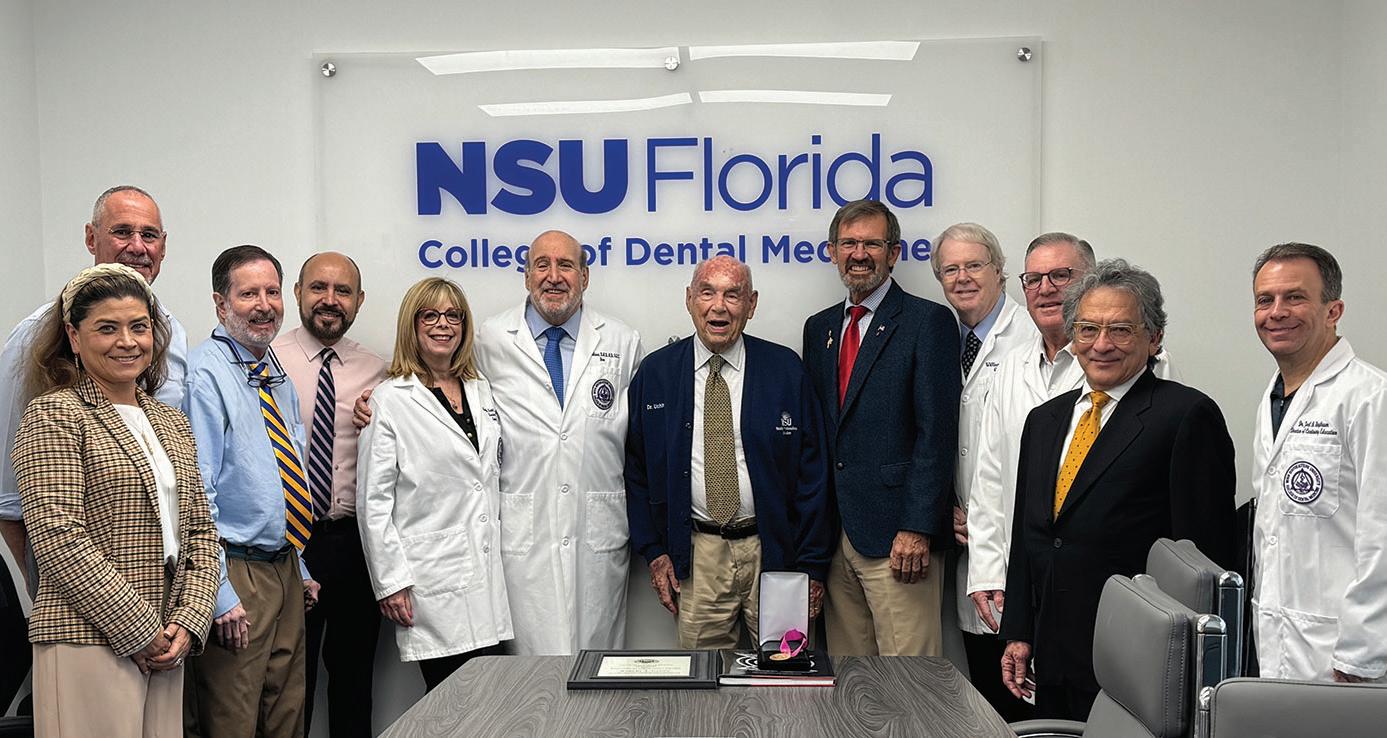
Dr. Robert Uchin Receives Lifetime Achievement Presentation
Nova clinical/administrative staff congratulate Dr. Uchin (center) on his Lifetime Achievement award.
Dr. Robert Uchin received a Lifetime Achievement presentation last Monday. He was accompanied by his daughter, Carol Alterman, and Nova's clinical/administrative faculty. Dr. Uchin served the longest period as Dean of the College of Dental Medicine and was president of many dental associations, including the FDA and a longtime member of the American College of Dentists (ACD) for 50 years. Stories were shared of his legacy surpassed only by the thousands of dental students, post-doctoral residents, and internationally trained dentists graduating under his term and leadership, instilling the Core Values of the ACD to all as an enthusiastic supporter of the ACD. Everyone was happy, honored and inspired to see him back at school.
FDA Survey Winners
Thank you to both FDA members and non-members for participating in our recent membership survey! The following doctors were selected for the random prize drawings for Amazon gift cards:
• Dr. Kathleen Anderson
• Dr. Steve Belcher • Dr. Stephanie Dye • Dr. Ricky Pan
Welcome New FDA Members
Learn more by visiting our virtual Member Center at floridadental.org
The following dentists recently joined the FDA. Their memberships allow them to develop a strong network of fellow professionals who understand the day-to-day triumphs and tribulations of practicing dentistry.
Atlantic Coast District
Dental Association
Dr. Sandra Ghattas, Pompano Beach
Dr. Kyle Pettersen, Delray Beach
Dr. Nicholas Funyak, Palm Beach Gardens
Dr. Austin Chikamoto, Plantation
Central Florida District
Dental Association
Dr. Ana Ribeiro, Gainesville
Dr. Lan Hoang, Titusville
Dr. Luis Pagan,Orlando
Dr. Thomas Tamburello, Cocoa Beach
Dr. Shamim Neduvanchery, Gainesville
Dr. David Leonard, Gainesville
Dr. Silvia Amaya Pajares
South Florida District
Dental Association
Dr. Helen Pavon-Pozo, Miramar
Dr. Jose Parra, Miramar
Dr. Roberlandis Lopez, Miami
Emilio Sifredo Zapata
Orlando
Died: 11/21/2024
Age: 70
Dr. Erik Scheifele, Miami Beach
Dr. Bianca Magallanes, Davie
Dr. Oscar Ramos, Pembroke Pines
Northeast District
Dental Association
Dr. Lucienne Park, Phoenix
Dr. Robert Nguyen, Jacksonville
Dr. Teagen Vence, Jacksonville
Dr. Ochuwa Audu, Yulee
Northwest District
Dental Association
Dr. Won Sik Jung, Fort Walton Beach
Dr. Brian Knapp, Tallahassee
West Coast District
Dental Association
Dr. Chase Waller, Safety Harbor
Dr. Scott Upright, Odessa
Dr. Michelle Jacomino, Riverview
Dr. Terissa Crowl, Clearwater
in memoriam
The FDA honors the memory and passing of the following member:
D. Michael Watkins
Orlando
Died: 12/03/2024
Age: 74
Dennis Lucas
Naples
Died: 12/20/2024
Age: 70
Richard Lee Smith
Gainesville
Died: 12/26/2024
Age: 92
Where in the World is Today’s FDA?
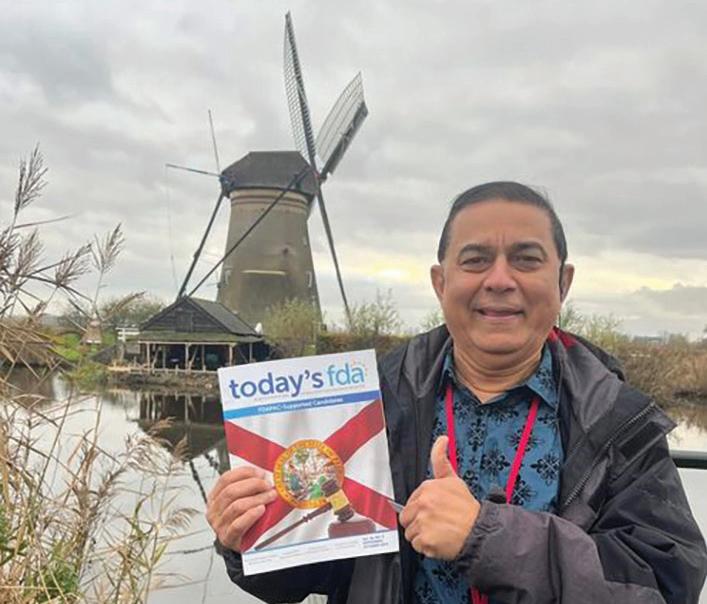
Thank you, Dr. Sam Desai, for taking Today’s FDA to the Netherlands.
Do you have vacation plans this year? On your next trip, take a copy of Today’s FDA with you, take a photo and send it to jrunyan@ floridadental.org to see it featured in an upcoming issue.
Where will Today’s FDA venture next?
Hinman.org | @hinman dental
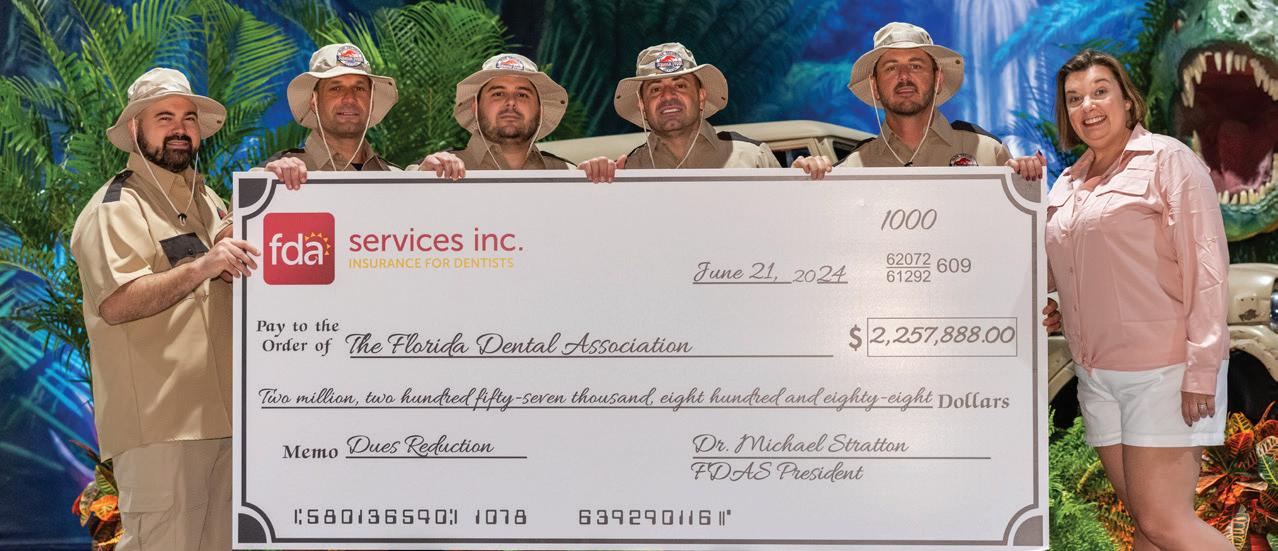
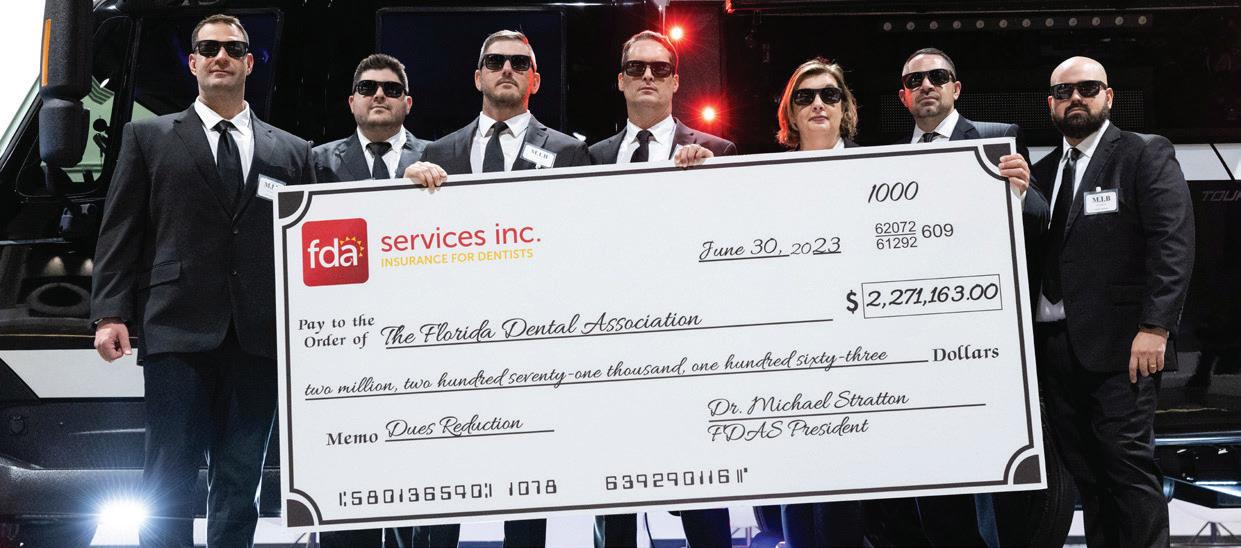
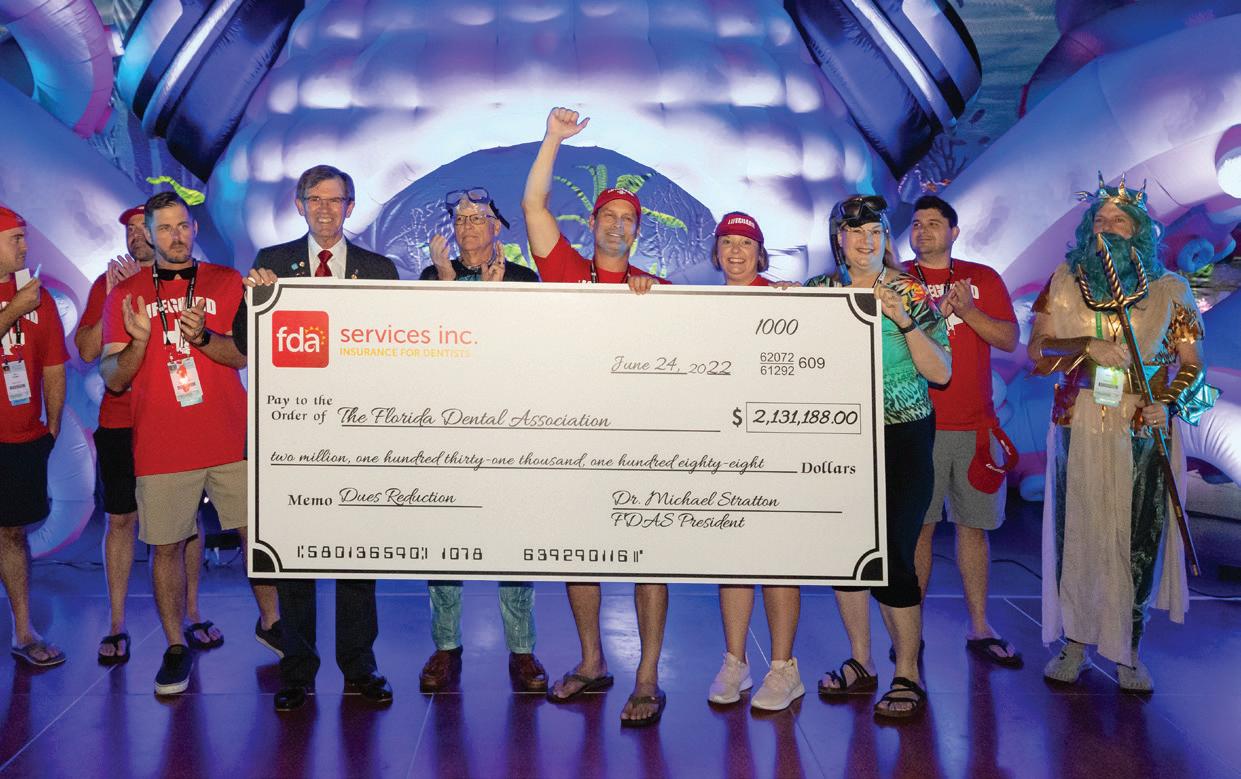
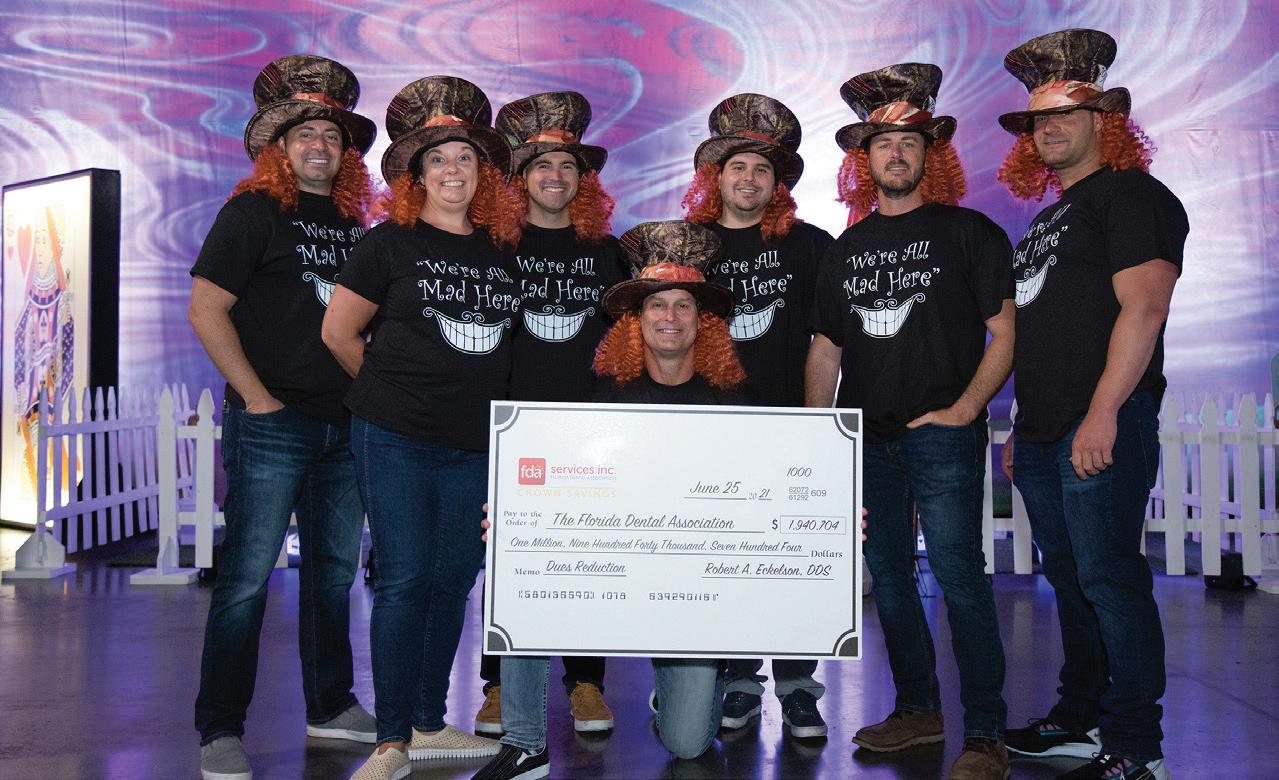
FOR CONTRIBUTING MORE THAN $16 MILLION TO ORGANIZED DENTISTRY IN THE PAST 10 YEARS!
SUPPORTING FDAS MEANS SUPPORTING THE FDA! THANK YOU, FDA
In 10 Years FLORIDADENTAL ASSOCIATIONTHANKS
FDASERVICESFOR ITS CONTRIBUTIONS
board of dentistry
Florida Board of Dentistry Meets in Gainesville
By FDA Chief Legal Officer Casey Stoutamire
Traci Zeh and the FDA looks forward to working with her.
The next BOD meeting is scheduled for Friday, Feb. 14, at 7:30 a.m. ET in Ft. Myers.
of Dentistry (BOD) met in Gainesville on Friday, Nov. 15 at 7:30 a.m.
The Florida Dental Association (FDA) was represented by BOD Liaison Dr. Steve Hochfelder and FDA Chief Legal Officer Casey Stoutamire. FDA Executive Director Drew Eason, FDA Lobbyist Brandon Edmonston and FDA Trustee, Dr. Bert Hughes were also in attendance. Drs. Alex Delgado, Jim Haddix and students from the University of Florida College of Dentistry and the Santa Fe Dental Hygiene and Assisting programs also attended.
BOD members present included:
Dr. Jose Mellado, chair; Dr. Nick White, vice-chair; Dr. Claudio Miro; hygiene members, Ms. Karyn Hill and Ms. Angela Johnson; and consumer members, Mr. Fabio Andrade and Mr. Ben Mirza. Drs. Brad Cherry and Tom McCawley were absent but excused. There are two open dental positions on the board. Unfortunately, this was Mr. Andrade’s last meeting as he was elected to the Weston City Commission, which means there is also an open consumer position on the board. The FDA thanks Mr. Andrade for his service and wishes him good luck in his future endeavors! This was also the first meeting for the new board executive director, Ms.
The board approved updates to the licensure applications for those applicants applying for licensure with scores from the ADEX licensure exam taken after Oct. 1, 2011, which is when Florida moved away from a state licensure exam and started accepting the ADEX exam. As part of the application process, a dentist must show that they have been engaged in the full-time practice of dentistry in the state from which they are transferring. This update modifies how an applicant shows and how the board verifies the full-time practice requirement. As a reminder, this was the language the FDA and BOD staff worked on several years ago and that the legislature approved the last session.
As you may remember, the board heard a request for a declaratory statement at the August meeting. The petitioner asked the board to clarify that a dentist with a health access dental license practicing within a health access setting includes the programs of the health access setting and is not limited to practicing within a brick-and-mortar building of the health access setting. The board directed the board counsel to draft a statement that statutory language includes programs that a health access setting provides in other locations and is not limited to a brick-and-mortar building. The health access setting license is tied to the particular setting/program and not a physical location. The board counsel brought the actual verbiage
of the statement back to the board at this meeting, and it approved the declaratory statement.
During the report from the Council on Dental Hygiene, the board approved the proposed revision to the rule on Required Sterilization and Disinfection Procedures so that it complies with the Occupational Safety and Health Administration and Center for Disease Control (CDC) guidelines. The rule, which is not yet effective and working through the rulemaking process, will now read:
64B5-25.003 Required Sterilization and Disinfection Procedures
1(a-f) no change
(2)(a) Surgical and other instruments that normally penetrate soft tissue or bone, including, but not limited to, forceps, scalpels, bone chisels, scalers, and surgical burs, must be sterilized after each use.
(b) Instruments that are not intended to penetrate oral soft tissue or bone, including, but not limited to, high speed dental handpieces, slow-speed handpieces, slow-speed motors, air-polisher nozzles, air-polisher body, contra-angles, reusable prophy angles, amalgam condensers, plastic instruments, and burs, but that may come into contact with oral tissues must be sterilized after each use according to the manufacturer’s instructions for use.
(c) However, if heat, steam under pressure, or chemical vapor sterilization of an instrument is not technically feasible, due to its
size or composition, the instrument must undergo sterilization with a disinfectant/sterilant that destroys viruses and spores. Disinfectants must be registered by the U.S. Environmental Protection Agency (EPA) as a disinfectant/ sterilant and must be used in accordance with the manufacturer’s recommendations and in accordance with CDC Guidelines as defined and incorporated by reference in subsection 64B525.002(4), F.A.C.
(d) High speed dental handpieces, slow-speed dental handpieces, slow-speed motors, air-polisher nozzles, airpolisher body, slow speed dental sleeves, and contra-angles, and reusable prophy angles must be sterilized after each use using a heat or heat with pressure or heat with chemical method. The method used must be capable of sterilization.
In August, the board approved rules to implement SB 1600, licensure by endorsement. As a reminder, to be eligible for licensure by this method, a dentist will have to qualify based on all the requirements in the statute, which include practicing dentistry three of the previous four years before application, having no disciplinary history and not having any information reported to the National Practitioner Databank, passing a national licensure exam (this does not include a state-specific licensure exam) and passing the Florida Laws and Rules exam. Unfortunately, the statute does not require an applicant to graduate from a CODA-approved dental school, and since there is no statutory authority, the board could not promulgate a rule requiring this.
However, the FDA plans to pursue legislation to resolve this issue during the 2025 legislative session. At this meeting, an attorney asked the board to consider defining the practice of dentistry to include years in residency. Thus, an applicant could use the previous years of residency to fulfill the practice requirement when applying under the MOBILE Act. The board counsel’s opinion is that no rules are needed on this topic and the board can take this up on a case-by-case basis. However, based on the board’s information discussion, it does not appear likely that this current board would include time in a residency in the definition of full-time practice of dentistry.
There were six disciplinary cases and one determination of waiver that included, among other things, incorrect implant placement, record-keeping violations and endodontic treatment. A theme in all of the cases was a need for proper communication between the dentist and the patient. It is much better to be a spectator than a participant in BOD disciplinary cases.
Finally, Dr. White was elected chair and Dr. Miro was elected vice-chair for 2025. The FDA thanks Dr. Mellado for his service as chair and looks forward to working with Dr. in the upcoming year. Also, during his chairman’s report, Dr. Mellado thanked the FDA representatives in the room. He mentioned he had recently received his American Dental Association Life Member pin and encouraged everyone to join organized dentistry.
FDA Chief Legal Officer Casey Stoutamire can be reached at cstoutamire@ floridadental.org.
MORE WINS, LOWER DUES.
Renew your membership for 2025 today!
THREE EASY WAYS TO PAY:
ONLINE: Visit floridadental.org/dues or scan the QR code below.
MAIL: Return blue envelope with statement and payment.
PHONE: Dial 850.681.3629 to speak to our friendly membership team.
PAYMENT PLAN:
Choose from a variety of monthly installment plans.
AUTO-RENEWAL:
Set it and forget it! Your membership will automatically renew each year with the credit card you put on file.
Dr. Kaycee Wilcox FDA member since 2016 Crestview
Dr. Jessica Stilley-Mallah FDA member since 2005 New Port Richey
Dr. Brandon Alegre FDA member since 2005 Boca Raton
2024-2025 ADA Councils and Committees
The Florida Dental Association (FDA) would like to thank the following members who have completed their terms of service on various American Dental Association (ADA) leadership bodies. Thank you for your years of service!
• Dr. Stephen Cochran, Council on Advocacy for Access and Prevention
• Dr. Mark Limosani, Council on Communications
• Dr. Jeff Ottley, chairman, Council on Dental Practice
• Dr. Dan Gesek, Council on Government Affairs
• Dr. Terry Buckenheimer, American Dental Political Action Committee
Congratulations to the newly appointed FDA members serving on ADA Councils and Committees for the next leadership term!
• Dr. Johnny Johnson, Jr., Council on Advocacy for Access and Prevention
• Dr. Monique Belin, Council on Communications
• Dr. Stephen Zuknick, Council on Dental Practice
• Dr. Christopher Bulnes, Council on Governmental Affairs
• Dr. Beatriz Terry, American Dental Political Action Committee
The FDA would also like to recognize its members who will continue their terms on ADA Councils, Committees and Commissions.
• Dr. Carlos Bertot, Commission for Continuing Education Provider Recognition
• Dr. Roberta Pileggi, Commission for Continuing Education Provider Recognition
• Dr. Indraneel Bhattacharyya, Commission on Dental Accreditation
• Dr. Bertram Hughes, Council on Dental Benefit Programs
• Dr. Paul Palo, Council on Ethics, Bylaws and Judicial Affairs
• Dr. Robin Nguyen, Council on Membership
• Dr. Mohammad Reza Iranmanesh, Joint Commission on National Dental Examinations
• Dr. Toby Thomson, New Dentist Committee
• Dr. Kitrina Cordell, National Commission on Recognition of Dental Specialties and Certifying Boards
• Dr. Alessandro Villa, Council on Scientific Affairs
States Remove Stigmatizing Mental Health Questions from Dental Licensure Applications
Reforms prevent discrimination against dentists seeking care
By American Dental Association Mary Beth Versaci
States across the U.S. continue to take steps to remove stigmatizing questions related to mental health, including substance misuse, from dental licensure applications.
In September, leaders from the American Dental Association (ADA) and the Federation of State Medical Boards presented a unified message at the American Association of Dental Boards annual meeting that patient safety is a priority and can be enhanced through efforts that safeguard provider health.
According to survey data from the 2024 ADA Council on Communications Trend Report, 36% of dentists felt
defeated, wanted to quit dentistry or did not want to go to work at least several times a month in the six months leading up to the survey and 82% felt some type of major stress in their career.
In 2023, the ADA House of Delegates passed a resolution to assist states in developing and advocating for legislation or regulations that prevent discrimination in licensing, credentialing and other matters against dentists who
ADA and state dental association staff met with an American Medical Association subject matter expert to identify direct and indirect language in dental licensure applications that could be considered stigmatizing.
have ever received counseling, therapy or treatment for mental health issues, including substance misuse.
Three states — Florida, New Jersey and Wisconsin — are participating in the ADA’s pilot program. Read about these states and others in this article that have achieved licensure reform or are in the process of making changes. More resources related to licensure reform and other wellness topics are available at ADA.org/wellness.
Texas
In 2023, the Texas State Board of Dental Examiners moved away from “have you ever” questions dealing with treatment for depression and substance use disorder, changing language on both initial and renewal licensure applications.
Applications now include the following question, which is consistent with recommended language from the Federation of State Medical Boards that addresses current impairment: “Are you currently suffering from any condition for which you are not being appropriately treated that impairs your judgment or that would otherwise adversely affect your ability to practice dentistry in a competent, ethical and professional manner?” Current impairment is different from current illness or treatment.
The board also includes language below the question that states it recognizes dentists may face mental health and substance use issues and lists options they can pursue, such as seeking medical care, self-limiting their practice or anonymously self-referring to the Professional Recovery Network, a peer assistance program dedicated to helping health care professionals enter treatment confidentially. The language states that if dentists fail to adequately address a health condition that makes them unable to practice dentistry with reasonable skill and
safety to patients, the board may take action against their license.
The Texas State Board of Dental Examiners was the first state board of dentistry to be recognized by the Dr. Lorna Breen Heroes’ Foundation as a Wellbeing First Champion. The foundation, which was started by the family of an emergency room doctor who died by suicide in 2020 during the COVID-19 pandemic, champions licensure and credentialing reform for physicians and other health care providers.
A coalition led by the foundation developed the Wellbeing First Champion Challenge program to support licensure boards in auditing and changing their applications, forms and addendums to be free of intrusive mental health questions and stigmatizing language. The coalition verifies these materials and then recognizes licensure boards as a Wellbeing First Champion.
Virginia
In 2023, the Medical Society of Virginia reached out to the Virginia Dental Association to see if it would support legislation seeking to remove stigmatizing and antiquated questions about mental health from all state health care provider licensure forms. The bill was passed and signed into law that year and went into effect immediately.
Licensure applications now include the following two questions: “Do you have any reason to believe that you would pose a risk to the safety or well-being of your patients or clients?” and “Are you able to perform the essential functions of a practitioner in your area of practice with or without reasonable accommodation?”
Recommended language addresses all mental and physical health conditions as one, similar to the question currently included on dental licensure applications in Texas.
wellness
The Medical Society of Virginia also asked the Virginia Dental Association if it would support adding dentists and dental hygienists to the state’s SafeHaven program, which allows health care providers to seek help for career wellness and burnout without fear of losing their professional license. The program initially was limited to physicians when it was established in 2020. The updated SafeHaven legislation went into effect July 1, 2024.
State dental associations may consider reaching out to their state medical societies to see if there is an opportunity to work together on licensure reform for health care providers.
Iowa
After an Iowa dentist died by suicide in 2020, the Iowa Dental Association and Iowa Dental Board recognized the urgency in addressing dentists’ mental health and eliminating stigmatizing language from initial and renewal licensure applications.
In June 2024, the board eliminated all questions related to medical conditions, alcohol and drugs from applications. Instead, applicants have to indicate they have read and understand a health notice that states the board understands dentists may struggle with mental health conditions and substance use disorders and expects them to properly address these concerns. The notice provides a link to practitioner health programs and states dentists could be subject to board review if they fail to
address health conditions that may impair their ability to meet the minimum standard of care.
Minnesota
The Minnesota Board of Dentistry changed its licensing questions so that dentists who participate in the Health Professionals Services Program or want to self-refer are not penalized for doing so and getting the help they need. The program monitors and assists licensees with physical, psychological and substance use disorders so they can still practice as long as they are accountable and compliant with the program.
Licensure applications currently ask dentists if they have any diagnosed and/or treated mental, physical or cognitive condition or illness that has not been reported to the program and could affect their ability to practice with reasonable skill and safety. Another question asks the same thing about substance use disorders.
Oregon
The Oregon Dental Association has been pursuing licensure reform since August 2023. Its goal would be to have the Oregon Board of Dentistry eliminate “have you ever” questions from dental licensure applications to align with updated language already used by the Oregon Medical Board for physicians. The Oregon Dental Association’s efforts are supported by the Oregon Dental Hygienists’ Association and two large group practices that employ about a quarter of dentists in the state.
North Dakota
The North Dakota Dental Association is working with the North Dakota Board of Dental Examiners to include dentists in physician assistance programs by 2025. After that change takes place, the organizations plan to review licensure application language.
Florida, New Jersey, Wisconsin
In 2023, the ADA Council on Dental Practice surveyed state dental associations, and 16 responded with interest in participating in the ADA’s pilot program to get started with auditing dental licensure applications, changing questions that may be barriers for dental professionals to
A workgroup from the council’s Dental Team Wellness Advisory Committee selected Florida, New Jersey and Wisconsin to participate in the project based on several criteria, including whether dentists’ initial and renewal licensure applications could be improved to remove intrusive questions.
ADA and state dental association staff met with an American Medical Association subject matter expert to identify direct and indirect language in dental licensure applications that could be considered stigmatizing. While many of the questions were appropriately aligned with language used in other physician licensure applications, the American Medical Association reviewer found each dental application asked at least one “have you ever” question related to an applicant’s past adverse actions or behavior.
Each application also included at least one question about the applicant’s mental health and substance use
from the American Medical Association and Federation of State Medical Boards. Recommended language addresses all mental and physical health conditions as one, similar to the question currently included on dental licensure applications in Texas.
The reviewers also found each application could benefit from a positive statement indicating the board encourages individuals suffering from mental health or substance use disorders to seek confidential care or assistance.
There are 29 physician health programs in 28 states, including two in Arizona, that are members of the Federation of State Physician Health Programs. These programs offer confidential support to dentists and, in some cases, dental team members.
The state dental associations are reviewing the recommendations they received about their licensure applications and will determine their next steps to approach their state dental boards.
Starting Jan. 1, 2025, FDA members have free, confidential access to AllOne Health‘s counseling and work/life services.
The Florida Dental Association’s (FDA) Member Assistance Program (MAP) can help you reduce stress, improve mental health and make life easier by connecting you to the right information, resources and referrals.
All services are confidential and available to you and your household as an FDA member benefit. This includes access to short-term counseling and the wide range of services listed below:
Mental Health Sessions
Manage stress, anxiety and depression; resolve conflict, improve relationships and address personal issues. Choose from in-person sessions, video counseling or phone counseling.
Life Coaching
Reach personal and professional goals, manage life transitions, overcome obstacles, strengthen relationships and achieve greater balance.
Financial Consultation
Build financial wellness related to budgeting, buying a home, paying off debt, resolving general tax questions, preventing identity theft and saving for retirement or tuition.
Legal Referrals
Receive referrals for personal legal matters including estate planning, wills, real estate, bankruptcy, divorce, custody and more.
Work-Life Resources and Referrals
Obtain information and referrals when seeking childcare, adoption, special needs support, eldercare, housing, transportation, education and pet care.
Personal Assistant
Save time with referrals for travel and entertainment, professional services, cleaning services, home food delivery and managing everyday tasks.
Medical Advocacy
Get help navigating insurance, obtaining doctor referrals, securing medical equipment and planning for transitional care and discharge.
Member Portal
Access your benefits 24/7/365 through the member portal with online requests and chat options. Explore thousands of self-help tools and resources including articles, assessments, podcasts and resource locators.
New Year, New Benefits:
Introducing the FDA Member Assistance Program
As we imagine the possibilities in 2025, many of us are looking for ways to improve our lives. This could mean you want to run a marathon, save money or even check in on your mental health. We are excited to announce a new member benefits program to help you achieve your goals and support your well-being throughout the year.
Starting Jan. 1, all Florida Dental Association (FDA) members have free, confidential access to AllOne Health's counseling and work/life services through our new Member Assistance Program (MAP). This program is designed to help you reduce stress, improve mental health, and make life easier by connecting you to the right information, resources and referrals. Here are some of the key benefits you can access:
• Mental Health Sessions: Manage stress, anxiety and depression; resolve conflict, improve relationships and address personal issues. Choose from in-person sessions, video counseling or phone counseling.
• Life Coaching: Reach personal and professional goals, manage life transitions, overcome obstacles, strengthen relationships and achieve greater balance.
• Financial Consultation: Build financial wellness related to budgeting, buying a home, paying off debt, resolving general tax questions, preventing identity theft and saving for retirement or tuition.
• Legal Referrals: Receive referrals for personal legal matters including estate planning, wills, real estate, bankruptcy, divorce, custody and more.
• Work-Life Resources and Referrals: Obtain information and referrals when seeking childcare, adoption, special needs support, eldercare, housing, transportation, education and pet care.
• Personal Assistant: Save time with referrals for travel and entertainment, professional services, cleaning services, home food delivery and managing everyday tasks.
• Medical Advocacy: Get help navigating insurance, obtaining doctor referrals, securing medical equipment and planning for transitional care and discharge.
• Member Portal: Access your benefits 24 hours a day, seven days a week, 365 days a year through the member portal with online requests and chat options. Explore thousands of self-help tools and resources including articles, assessments, podcasts and resource locators.
No matter what the question might be, connect with AllOne Health. It is a great starting point to find appropriate resources, referrals, information and support. Simply pick up the phone and call 800.788.8630 or log in to encompass.us.com to access your services using the code: fdamap.
The FDA hopes you take full advantage of these new benefits and have a healthy and prosperous year ahead!
FDA Career Center
The Ethical and Moral Obligations of a Friend and Colleague
By Paul Palo, DMD
My name is Paul Palo, and I have been practicing general dentistry in Winter Haven for 33 years. My story starts when I first returned to my hometown to begin private practice and I joined my father in general dentistry in 1991. My dad was a powerful influence on my morals and ethics, but, as most father and son relationships go, he tended to treat me more as a son, not necessarily as a colleague. It was at this same time I met and cultivated a close friendship with Dr. John Smith. John was a half-generation older than me and a sincere, caring dentist who was well respected in Winter Haven.
John became a defacto mentor to me. I would often pick his brain on problems I was having in my practice and follow his sage advice.
Let’s jump forward 20 years. By this time, I had become familiar with John’s staff. I often see his lead assistant, Janet, at the gym and exchange pleasantries. One day, out of the blue, Janet contacted me to say that she had noticed for the past three months that John’s hands were beginning to shake. It started very subtly, however it grew much worse and really affected the quality of his work. She asked if I thought John might be drinking too much. You see, John has always been a heavy social drinker and
multiple times when I would speak with him in the evenings, he would slur his words and appear to be intoxicated. I never felt that he drank on the job, but it was not out of the realm of possibility. I told Janet I would investigate and let her know what I found.
That afternoon, I called John’s wife, Susan, to inquire about his health. Susan was nearly in tears when I brought up my concerns. She told me that they were going through a very stressful time in their personal lives and that his drinking had gotten out of control. Susan told me that he had recently been taking strong narcotics for his lingering back pains, and it was affecting his overall mental stability. She said that he was having a very difficult time and the thought of getting help would surely end his career. You see, as so many of us are, John was a workaholic; he lived for his patients and practice, and it was a close second to his family. John defined his whole life as a dentist. Susan also shared that John had made several comments about suicide.
Wow, I had some sleepless nights following this conversation. My questions concerned my ethical and moral obligations to my profession and, more importantly, my friend. These two seemed to be in direct conflict. It became apparent that I would have to have a tough conversation with John. As with many things in life, the more complex and beneficial they are.
So, as a lifelong overthinker, I decided to over-prepare. I contacted the Florida Dental Association (FDA) and their wonderful staff overseeing the Council on Ethics Bylaws and Judicial Affairs for answers. I became familiar with the American Dental Association’s (ADA) Code of Professional Conduct and the Florida Impaired Practitioners Program. I felt my first obligation was to the profession. As a member of the ADA, you take an oath to practice this great profession. The Code of Nonmaleficence speaks to a dentist’s obligation to matters of personal health and colleagues’ health. The Code clearly states in section 2.D.1. “A dentist who contracts any disease or becomes impaired in any way that might endanger patients or dental staff shall, with consultation of a physician or other authority, limit the activities of practice to those areas
My questions concerned my ethical and moral obligations to my profession and, more importantly, my friend. These two seemed to be in direct conflict.
that do not endanger patients or staff.” This was very clear-cut and told me John would need to immediately seek help to prevent harm to his patients or staff. The second point was handling John’s state and my moral obligation to my friend and colleague.
I conveniently scheduled a lunch meeting with John on a Friday when I knew he would not see any patients in the afternoon. After exchanging pleasantries, I quickly got to the point. I told him of the concerns presented to me by his staff and asked if he was alright. As expected, he denied anything was wrong. So, I delicately brought up my conversation with his wife at this point. At first, he was a bit defensive but not terribly upset. After pressing him on the issue of his increased drinking and drug use and how it was affecting his practice, his demeanor changed. He almost seemed to be relieved to be able to talk openly about his struggles. He shared with me some very upsetting and dark problems he was struggling with. More than a few tears were shed by both of us. Now, with the problem acknowledged, how to move forward could be addressed. John was genuinely terrified that bringing these issues forward would ruin his career and family. He even hinted that “ending it all” was, at times, foremost in his mind. A cold chill ran down my back as I scrambled to answer this last comment. At this point, I felt way out of my depth but consoled him as a good friend, not a colleague.
Wellness Resources from the Council on Dental Practice
Explore ADA.org/Wellness for articles, courses, videos and other resources across these health and well-being areas: mental health, physical health, opioid prescribing, and pregnancy.
Well-Being Index (WBI)
ADA.org/Well-BeingIndex
ADA Dentist Well-Being Program Directory (updated in 2023)
ADA.org/WellnessDirectory
Your health matters. The ADA licensed the Dental Well-Being Index (WBI) — the validated risk assessment tool invented by the Mayo Clinic and used by hundreds of health care organizations — for every Member. Log into your ADA account first. Then, set-up your WBI account. The WBI takes one minute to complete and you will see your own personal dashboard and resources. You can track your well-being over time.
This Well-Being Program Directory provides a list of healthcare professionals in each state who will serve as a point of contact and offer support during a time of need. This is part of the ADA mission to enhance the personal and professional lives of our members for the betterment of the dental team and the patients they serve.
September is national suicide prevention awareness month. After a Suicide:
After a Suicide Postvention Toolkit
ADA.org/Postvention
ADA Ergonomic Stretches
ADA.org/Stretch
ADA Wellness Videos
ADA.org/WellnessVideos
A Guide for Dental Workplaces was developed in 2023 by the American Foundation for Suicide Prevention (AFSP) and the American Dental Association (ADA). This resource reflects learnings in responding to a suicide death for professional dental settings.
Better ergonomics can improve your practice — daily stretching and exercise, can help dental practitioners and their team enjoy long, healthy careers. Download the ADA Ergonomics Stretches infographic today, including 25 quick stretches, to keep you and your dental team healthy.
Visit ADA’s Wellness Playlist on our YouTube channel to watch new, short promotional videos on:
• ADA Dentist Well-Being Program Directory
• 2-part Resilience Webinar courses in ADA CE Online
• ADA Opioid Prescribing Resources
wellness
In my research, I found out that the Florida State Board specifically asks on its application for both initial and re-licensure if the applicant has any previous or ongoing problems with substance abuse or if they have sought treatment for any chemical dependency. How to ethically answer this question is quite a quandary. If you answer truthfully, it opens you up to significant scrutiny and probable suspension along with the public ridicule potentially ruining your professional reputation. So many dentists lie about this and continue suffering in silence. I felt that this is the reason so many dentists end up taking their own lives; they see no way out, and they feel trapped. According to the ADA, the suicide rate among dentists in the United States is 7.18%. Male dentists have the highest suicide rate in the country at 1 8.02%. Female dentists are fourth with 5.28%. The average suicide rate of the general population in the U.S. is only .42%. 2
I was shocked by these statistics, but now I understand why this is occurring at such a high rate.
At the ADA’s House of Delegates in Orlando, the 14th Trustee District resolution 517 entitled “Preventing unfair discrimination” was adopted. Resolution 5172023 assigned a task force of creating a pilot project to assist states to develop and advocate for legislation or regulation that prevents discrimination in licensing, credentialing and other matters against those who have received counseling, therapy for treatment of mental health issues. Florida is one of the states on this pilot study and according to FDA President Dr. Jeff Ottley is working diligently to present these changes to the Board of Dentistry (BOD) and the State Legislature.
This is a slow process that needs to be kick started in order to shed light on this critical issue. Our colleagues’ and our friends’ mental health should be our top priority moving forward.
According to the ADA, the suicide rate among dentists in the United States is 7.18%. Male dentists have the highest suicide rate in the country at 1 8.02%. Female dentists are fourth with 5.28%. The average suicide rate of the general population in the U.S. is only .42%. 2
Before we finished our lunch, I helped John understand a path forward by putting him in contact with Florida’s Physician Recovery Network. This outstanding organization provides completely confidential services for practicing professionals to receive treatment for an array of mental health and substance abuse issues. By completing this program, there would be no reporting of his condition to the BOD. I continued to monitor John’s progress and am happy to report he is well on the way to recovery.
References Available Upon Request
This article is purely fictional and any semblance to actual persons is unintended. The shock value is intended to be a wakeup call to the profession to help guide and protect our most valuable commodity, ourselves.
Dr. Paul Palo is a general dentist can be reached at ppalodmd@gmail.com.
Stretching for Success: Prioritizing Movement for a Healthier, Pain-Free Dental Career
By Mina Ghorbanifarajzadeh, DMD
Wiggling and moving around, professionally known as stretching or dynamic movement, is an ingredient to life and overall wellness that sometimes gets lost in the noise. Our overall wellness tends to happen as the drill is going, and a patient is waiting for an exam in the recall chair. As dentists, we are no strangers to the physical demands of our profession. Hours spent hunched over patients, so focused, maintaining precise postures and performing repetitive motions take a toll on our bodies. During dental school, I began experiencing persistent neck and shoulder discomfort, which motivated me to pursue yoga teacher training to prevent future injuries and take better care of my body. However, knowledge isn’t action; tension and spasms set in deeper as a new dentist, and I knew I needed to change my habits. That’s when I decided to prioritize movement and stretching throughout the day — not just as part of a one-hour workout routine but as a vital component of my daily life, just like breathing.
Incorporating movement and stretches throughout the day markedly reduced my pain and elevated my overall wellness. A mere two minutes of well-executed movement improved my end-of-day range of motion and energy levels while
These movements and stretches do more than relieve tension — they help prevent long-term complications that could shorten a dentist’s career.
reducing my persistent tension. I’ll add that accessibility for me is everything. There needs to be simplicity in the movements so they can be done anywhere, in the operatory during a short break, with no equipment necessary. These practices are indispensable and part of the lifelong wellness toolkit for those who can’t always make it to the gym.
In an effort to share my knowledge and love for movement, in collaboration with the American Dental Association (ADA), the ADA Member App has guided ergonomic stretches, bringing this relief to all members at their fingertips.1 Take a stand between patients and take a moment to stretch. These movements and stretches do more than relieve tension — they help prevent long-term complications that could shorten a dentist’s career. Research has shown that regular movement can help reduce the risk of musculoskeletal disorders, a common occupational hazard in dentistry.2
Two favorite stretches are the “side bend stretch” and “neck retractions.” During the side bend, focus on reach-
ing as far as possible and directing your breath into the intercostal space and the area between the last rib and hip. After a couple of breaths on each side, you might feel taller. As for neck retractions, they are vital to undo all of the forward head postures we hold, not just from providing care but also from daily activities like sitting and using the phone. Focus on bringing the head and neck back in one plane rather than tilting the chin upward to get the most from this stretch; you can even try it against the wall. These easy techniques take a few moments to try and can dramatically improve how you feel by the end of the day.
Beyond stretching, try incorporating brisk 15-minute walks during lunch breaks or pacing while reviewing patient notes. Staying active keeps blood flowing and helps counteract the effects of prolonged sitting or standing.3
Take a moment and prioritize yourself. Download the ADA Member App if you haven’t already, and explore the ergonomic stretches today.
Your body will thank you, and you’ll be better equipped to provide the career-long, high-quality care your patients deserve.
Dr. Ghorbanifarajzadeh is an ADA Wellness Ambassador and can be reached at dr.minag@icloud.com
References:
1. ADA Ergonomic Stretches: ada.org/-/media/ project/ada-organization/ada/ada-org/files/ resources/practice/health-and-wellness/ ada_ergo_stretches.pdf?rev=3b1881c0636d48e585123b4218bae959
2. Roll, S. C., Tung, K. D., Chang, H., Sehremelis, T. A., Fukumura, Y. E., Randolph, S., & Forrest, J. L. (2019). Prevention and rehabilitation of musculoskeletal disorders in oral health care professionals: A systematic review. Journal of the American Dental Association (1939), 150(6), 489–502. doi.org/10.1016/j.adaj.2019.01.031
3. Kumar, D. K., Rathan, N., Mohan, S., Begum, M., Prasad, B., & Prasad, E. R. (2014). Exercise prescriptions to prevent musculoskeletal disorders in dentists. Journal of clinical and diagnostic research : JCDR, 8(7), ZE13–ZE16. doi.org/10.7860/JCDR/2014/7549.4620
★ Discounted Room Rate at the Recently Renovated Gaylord Palms
ADA Wellness Ambassador Program
By Sharon Siegel, DDS, MS
The American Dental Association (ADA) launched the Wellness Ambassador Program in 2022 to raise awareness of support services available to dentists facing health and wellness challenges.
This initiative brings together a diverse group of dentists from various practice types, specialties, ages and districts, all dedicated to promoting the well-being of their peers.
The first cohort of Wellness Ambassadors included nine dentists and a leader from the Alliance of the ADA. The Alliance, which represents dentists’ family members, plays a crucial role in this program, as loved ones are often the first to notice changes in a dentist's well-being. Following the initial group, the second cohort featured Dr. Mina Ghorbanifarajzadeh alongside another leader from the Alliance.
The group I lead, along with 10 other dentists, is focused on establishing wellness programs within state or local dental societies and developing health and well-being committees at the state level. For comprehensive re-
sources on wellness initiatives, visit ada.org/resources/ practice/wellness.
Collaboration with peers is essential for implementing wellness programs and establishing state-level well-being committees to effectively address the wellness challenges faced by dental professionals. Beyond my leadership role, I teach Healing Breaths programs, inspired by my personal experience with the benefits of daily SKY Breath and Meditation practices. These practices offer numerous benefits, including stress relief, reduced anxiety, lower blood pressure and cholesterol levels, enhanced calmness and improved ability to manage daily mental fluctuations.
For more information, Dr. Siegel can be reached at siegelsh@gmail.com
It is important to collaborate with peers to implement wellness programs and state-level committees.
Dr. Siegel
How Are You Doing, Really?
By Robert G. McNeill, DDS, MD, MBA, FICD, FACD
Burnout is something I understand deeply. I’ve felt the weight of exhaustion, questioning how to keep going while caring for my patients, team, family and myself. As dentists, we know this burden isn’t unique. According to the American Dental Association (ADA) Well-Being Index, 56% of dentists report feeling distressed or struggling.
But what happens when those struggles feel impossible to share? For years, questions on license renewal forms, like “Have you ever been treated for depression or substance abuse?” forced many providers into silence. Fear of stigma kept people from seeking help.
In 2023, the Texas State Board of Dental Examiners removed outdated and stigmatizing “have you ever” questions, replacing them with a single inquiry focused on current impairment: “Are you currently suffering from any condition for which you are not being appropriately
treated that impairs your judgment or that would otherwise adversely impact your ability to practice in a competent, ethical and professional manner?”
Shortly after these changes, a friend shared how this new question allowed him to seek treatment for alcohol use disorder and suicidal ideations without fear of stigma.
This issue isn’t limited to Texas. We need nationwide reform. This year, the ADA House of Delegates adopted a resolution urging dental boards to review and update these questions. I’m hopeful that Florida will be among the states leading this change.
Stress in dentistry has only grown since the pandemic. From patient care to financial pressures, the challenges are real — and ignoring them carries risks. Research shows that provider well-being directly impacts patient safety.
As providers and colleagues, we must ask ourselves: How are we truly doing? Are we taking time to recharge and care for ourselves? I’ve learned firsthand the importance
As providers and colleagues, we must ask ourselves: How are we truly doing? Are we taking time to recharge and care for ourselves?
of putting on your oxygen mask first because you can’t pour from an empty cup.
To my peers in Florida, I encourage you to take the ADA Well-Being Index (ADA.org/wellness) and check in on each other. Let’s work together to remove stigma, protect our profession and ensure that every provider feels safe enough to seek help when needed. The path forward depends on collaboration between dental associations,
educators, regulators and clinicians. Many lives depend on it.
Dr. Robert McNeill is a consultant with the ADA Dental Team Wellness Advisory Committee and the chair of licensing with the Texas State Board of Dental Examiners. Dr. McNeill can be reached at bobddsmd@yahoo.com
FLORIDA DENTAL CHATTER
This Facebook group is designed for dentists to interact with other members, receive the latest updates and information, and engage with FDA leaders and sta across the country. This is the place to be in the know!
Join u s at fa ceboo k . co m /g ro u ps/ flo r i dadenta lchat te r.
Follow us on Social CONNECT AND STAY INFORMED
The Florida Dental Association (FDA) is a state constituent of the American Dental Association (ADA), which represents dentists throughout the country.
@FloridaDentalAssociation
@fda_dental
@FDADental
@florida-dental-association
@floridadental
Florida Dental Chatter is a private Facebook group designed for dentists to interact with other members, receive the latest updates and information and engage with FDA leaders and sta .
Stay informed with updates on the education and event o erings for the Florida Dental Convention. You'll also find details about other continuing education events hosted by the FDA, including webinars, Women Inspire and Navigate Dentistry (WIND) and more.
@floridadentalconvention
@florida_dental_convention
@FLDentalConvt
@florida-dental-convention
@floridadentalconvention
Stay in the know with FDA Services about practice insurance resources, risk management tips and industry updates by following our page.
@FDAServicesInc
@fda_services
@FDAServicesInc
@fda-services-inc-
The FDA Foundation is the philanthropic and charitable organization for dentistry. Bringing together volunteer dentists, donors and community partners to serve the underserved and uninsured in Florida.
@FloridaDentalAssociationFoundation
@florida_dental_foundation
GOVERNMENTAL AFFAIRS OFFICE
The FDA Governmental A airs O ce (GAO) Instagram account is for FDA members only and is used to promote legislative and political advocacy throughout the year.
Nuclear Verdicts in Health Care:
How Social Inflation Impacts Physicians, Patients and the Future of Medicine
By President, The Doctors Company and TDC Group Robert E. White Jr.
From 2013 to 2023, the American court system saw a roughly 67% increase in the number of medical malpractice verdicts awarding $10 million or more. Last year, more than half of these nuclear verdicts totaled $25 million or more. The average of the top 50 MPL verdicts increased 50 percent in 2023 to $48 million each from $32 million each in 2022.
Skyrocketing dollar amounts could give an observer the idea that the pace of medical malpractice litigation is up — yet the opposite is true. Claim frequency is flat to decreasing nationwide. So what is behind this spike in nuclear verdicts? And who is affected, besides the parties to those suits?
The term “social inflation” describes periods like this one, in which the costs of medical malpractice claim resolution are increasing faster than general inflation. Social inflation arises from the convergence of various social and economic forces: desensitization to big numbers, eroding tort reform, and more.
Social inflation increases the price of health care. It ratchets up the costs of doing business for health care professionals and facilities, and fear of litigation inspires defensive medicine. Fortunately, through tort reform, states may be able to contain social inflation’s effects on healthcare costs.
Numbness to Big Numbers
In our society, many of us have become inured to large
quantities and large dollar amounts. Professional athletes routinely chalk up tens of millions of dollars per year, and we’ve seen lottery jackpots more than billion dollars. Most people shrug at a multimillion-dollar verdict.
For decades, researchers in cognition have observed that their fellow citizens experience “number numbness.” We human beings are generally bad at understanding large numbers, and numbers over one million are especially hard to grasp.
Researchers who study risk and decision-making say that some of us are more prone than others to being swayed by moods and by narrative, especially in an environment of heightened emotion — and heightened emotion is definitely present in a court proceeding surrounding an allegation of malpractice. Whether or not a medical error has occurred, adverse events can happen to patients, and the results can be devastating.
Exploitation of Empathy
We know that within a cultural setting of number numbness, the courtroom’s environment of strong emotion can further skew our understanding of large numbers. Amplifying this effect, plaintiffs’ attorneys attempt to exploit jurors’ emotions using “reptile theory”: They frame the defendant as threatening, which arouses jurors’ primal sense of fear — thus engaging the more basic parts of the human brain, those responsible for fight-or-flight responses.
The end results of this exploitation are verdicts designed to punish the defendant to deter others. These verdicts go far beyond making the injured party whole. Exploiting jurors’ sense of empathy and protectiveness to achieve
Defensive medicine involves adding steps to the course of care out of fear of litigation, rather than hope for a treatment outcome.
high-dollar verdicts this way leads to harming the very people jurors wish to help: patients.
Large Verdicts Pay Attorneys — and Investors
Although juries that award large sums to plaintiffs may feel concern for an injured person, 40% or more of that indemnity can go to the plaintiff’s attorney, not the plaintiff.
Further, most Americans are unaware that people invest in medical malpractice lawsuits and hedge funds often float plaintiffs’ attorneys’ litigation in exchange for a share of the settlement or jury award. Enriching these third-party funders is probably not what jurors have in mind when they choose massive awards.
Large Verdicts Promote Defensive Medicine
“Defensive medicine” is a familiar phrase, but what does it mean? Defensive medicine involves adding steps to the course of care out of fear of litigation, rather than hope for a treatment outcome. For instance, many of us are familiar with the idea that doctors may seek to protect themselves by ordering medically unnecessary tests. This increases the cost of health care overall.
The exact amount of spending increase is unknown, but many estimates would concur that defensive medicine adds at least $55 billion per year to U.S. health care costs. Tort reform measures, including caps on noneconomic damages, can help mitigate these fears and added costs.
Large Verdicts Cost Us All: The Tort Tax
Nuclear verdicts create ripple effects that spread far beyond the parties to a medical malpractice lawsuit. Eventually, premiums for medical professionals are affected, and increases in premiums for health care professionals can affect the cost of care. This is how nuclear verdicts impact everyone’s cost of living: through what is known as the “tort tax.” The U.S. Chamber of Commerce Insti-
tute for Legal Reform calculated a tort cost equivalent to 2.1% of gross domestic product, or $3,621 per American household.
Steering U.S. Healthcare Through the Challenges Ahead
Numbness to large numbers is not isolated to the consideration of legal matters. Our collective inability to take in large quantities applies to comprehending the human toll of natural disasters and other crises, too. But social inflation is easier to prevent than an earthquake. We can let our elected representatives know that we support damage caps and other tort reform measures.
A survey conducted by the American Property Casualty Insurance Association and Munich Reinsurance America indicates that many Americans are not aware of litigation aspects such as third-party litigation funding or the potential impact on their own household costs — but upon learning about these issues, most people surveyed wanted common-sense reforms.
Halting social inflation won’t overcome vaccine misinformation, integrate new technologies or resolve our doctors shortage — American health care has plenty of challenges to navigate. But it will be easier for U.S. health care to steer through those obstacles if it is piloted by clinicians who are free from fears of crippling litigation costs.
The guidelines suggested here are not rules, do not constitute legal advice, and do not ensure a successful outcome. The ultimate decision regarding the appropriateness of any treatment must be made by each health care provider considering the circumstances of the individual situation and in accordance with the laws of the jurisdiction in which the care is rendered.
If you have questions, please email TDC's PR Director Kelly Cinelli at kcinelli@thedoctors.com
Practice financing1
Is your medical liability insurer invested in shareholder interests, or
INVESTED IN YOU?
Why choose a medical liability insurer that rewards investors versus rewarding you? At The Doctors Company we answer only to members like you. Not Wall Street. That’s why we’ve delivered $470 million in dividends to our members. And it’s why our unrivaled Tribute® Plan has awarded over $150 million to members who have spent their careers advancing the practice of good medicine.
Why settle for less than you deserve? Scan here for a rapid premium indication.
Strengthening Smiles and Building Bonds: The Importance of the Florida Dental Association Foundation
By FDA Foundation Director R. Jai Gillum
For many underserved and uninsured Floridians struggling to receive essential dental services, the Florida Dental Association (FDA) Foundation has been a source of information and services for more than 40 years. Serving as the philanthropic arm of the FDA, the FDA Foundation is the catalyst for uniting people and organizations to protect the health and well-being of people of all ages through better oral health.
The FDA Foundation embodies the spirit of giving and compassion, providing essential dental services for the public by utilizing the support of FDA members and various community partners across the state. The FDA Foundation is an organization dedicated to improving Floridians’ oral health and overall well-being. Since its inception, the FDA Foundation has consistently demonstrated a commitment to excellence, ensuring dental care reaches those in need.
FDA Foundation key programs, Florida Mission of Mercy (FLA-MOM), Donated Dental Services (DDS) and Project: Dentists Care (PDC) are not just about oral health care; they are about giving people a reason to smile again. Whether you choose to volunteer or donate to the FDA Foundation or become a part of the respected Emerald Club, your involvement can be a powerful catalyst for change.
The signature program of the FDA Foundation is FLAMOM. FLA-MOM is an annual two-day clinic that brings
together volunteer dental professionals and community volunteers to provide a wide range of services; from exams, cleanings and fillings to extractions and dentures, patients receive needed dental care at no cost to them. Volunteers from across the state and nation unite, creating a ripple effect of hope and healing that resonates with patients and volunteers alike. Through the selfless dedication of these volunteers and the support of donors and sponsors, FLA-MOM brings dental care to underserved communities throughout Florida. Since 2014, FLA-MOM clinics have provided $17 million in donated dental care by performing 104,510 procedures for nearly 16,000 patients. FLA-MOM offers a lifeline to individuals who suffer from oral health issues and restores their smiles and dignity, overall health and confidence.
The DDS program is another vital initiative aimed at helping those in need. DDS partners with dentists to serve individuals with disabilities, the elderly or those who are medically fragile and cannot afford treatment. DDS is a program jointly funded by the FDA Foundation and Dental Lifeline Network Florida. Participating dentists treat patients in their offices during regular office hours. Patients work with a trained case manager who removes barriers to care by ensuring the patient has reliable transportation, is committed to treatment and will arrive on time. The DDS case manager works with specialists and labs who volunteer their services. Since 1997, the Florida DDS has provided $11.1 million in donated dental care to more than 2,000 patients. DDS has been a lifeline for many, ensuring oral health is within reach for those facing hardships.
The FDA Foundation is a premier example of the dental community’s commitment to giving back and a symbol of what dentistry can achieve when combined with compassion.
A comprehensive list of dental access-to-care programs throughout the state is maintained by the FDA Foundation in the PDC Resource Guide. PDC is a statewide network of organizations that offer preventative and restorative dental care to those in greatest need. PDC providers are a network of compassionate dentists who care for patients without dental insurance and those with limited financial resources. This network of dentists provides quality dental care in conjunction with low-cost dental clinics, non-profit dental clinics, and state-funded dental clinics. These programs are eligible for annual grants from the FDA Foundation.
Have the above FDA Foundation programs piqued your interest? Are you passionate about improving access to oral health? Please consider joining the FDA Foundation’s Emerald Club. Annual Emerald Club membership allows you the opportunity to take your commitment to the next level. By joining this esteemed club, FDA member dentists provide crucial support for the FDA Foundation’s mission and programs. Emerald Club membership provides the opportunity to engage directly with like-minded professionals, access exclusive events and contribute to a brighter and healthier future for all Floridians. Please consider joining the Emerald Club.
The FDA Foundation is a premier example of the dental community’s commitment to giving back and a symbol of what dentistry can achieve when combined with compassion. Whether you are a member of the FDA or simply someone who believes in the importance of accessible dental care, the FDA Foundation offers a platform to make a lasting impact. The FDA Foundation is transforming smiles and lives, one tooth at a time.
For more information about the FDA Foundation, please visit floridadental.org/foundation.
Kristin Badeau and R. Jai Gillum at the 2024 FLA-MOM in Lakeland.
FDA Foundation Director R. Jai Gillum and DDS Coordinator Megan Manor.
2023 FLA-MOM volunteers with a patient in the Prosthodontics Department.
All About Fluoridation
Why fluoridate tap water?
Continues to reduce cavities by
about 25% in adults and children.
Decreases missed school and workdays to dental-related pain.
Cost-saving public health practice.
Reduces cavities in addition to other fluoride products such as toothpaste, rinses, and varnish.
Water fluoridation is regarded as one of 10 great public health achievements of the 20th century by the CDC
Where can I learn more?
ADA's Fluoridation Facts with 1pages of Q&A format responses to common questions.
MouthHealthy.org has resources written by dentists for parents.
Recent JADA articles related to fluoride.
Fluoridation FAQs
Fluoridation videos from our 75th Anniversary of Community Water Fluoridation Webinar Series.
Why should dentists advocate for community water fluoridation?
To improve the oral health of the community
To educate patients and staff on the value of this disease prevention measure
To promote the best science and evidence related to reducing cavities.
To positively impact the oral health of the public in an equitable manner
When can I use this information?
How can I check if my water is fluoridated?
This locally governed health equitable practice is used within supervised community water systems. Learn about your community at My Water’s Fluoride.
How to Take Action on Water Fluoridation
Contact Your State and Component Dental Association
The American Dental Association collaborates with state and local leaders to keep you informed and prepared for fluoridation changes.
Speak With Your Community
Your local educators, school nurses, pediatricians, public health dept, and community leaders also care about oral health.
Talk About Cavities
Share with your patients and community the importance of prevention. This includes water fluoridation, dental sealants, prenatal oral health care, and routine Age-1 dental visits. Look at your local Community Needs Assessment.
Share with Decision-Makers
Your elected officials or utility board often decide if your water is fluoridated. Take time to share with them the best science.
Ask Experts About the Evidence
The Council on Advocacy for Access and Prevention has a National Fluoridation Advisory Committee prepared to connect with you. Contact the ADA to have your questions answered.
Prepare for a City Council Vote
The best way to take action is to initiate or defend community water fluoridation to reduce cavities.
The Evidence Behind the Risk of Fluoride Use: Continued Support for Fluoride Strategies
By Margherita Fontana, DDS, PhD, Carlos González-Cabezas, DDS, MSD, PhD and Livia Tenuta, DDS, MSc, PhD
Since its discovery as an anticaries agent, fluoride has been the main strategy for caries control worldwide. This approach is supported by thousands of studies demonstrating that fluoride can significantly reduce both the prevalence and severity of dental caries, regardless of how it is applied or used (e.g., water fluoridation, fluoride toothpastes, professional fluoride products, etc.).1,2,3,4,5
Although there are well-known risks associated with the use of fluoride — such as dental fluorosis from exposure to elevated fluoride levels during tooth formation, and the risk of acute toxicity from accidental exposure to very high fluoride levels at once — these risks can be managed through proper fluoride use. Therefore, because these known risks can be controlled, and do not impact overall health or quality of life, the use of fluoride as currently recommended is considered safe.
Yet, concerns about possible fluoride harm persist among some individuals. For example, recent studies show
Dr. Margherita Fontana
Dr. Carlos González-Cabezas
Dr. Livia Tenuta
significant opposition by some caregivers of young children to both fluoridated water and toothpaste due to perceived risks.6 This opposition may reflect broader risk intolerance, as similar trends are observed with vaccine hesitancy among these caregivers.7 In the last several months, the debate around use of fluoride for caries control has reignited, fueled primarily by two events. The first was a publication by the U.S. Department of Health and Human Services National Toxicology Program (NTP) in August 2024 regarding the state of the science between fluoride and neurodevelopment and cognition.8 Secondly, based on the NTP report, on Sept. 23, 2024, Judge Edward M. Chen of the U.S. District Court for the Northern District of California ruled that the Environmental Protection Agency (EPA) must issue new rules related to fluoride levels in tap water. The court wrote that “this finding does not conclude with certainty that fluoridated water is injurious to public health,” but it found that the plaintiffs had adequately demonstrated an “unreasonable risk” of harm.
The EPA still needs to respond. These events have again raised concerns about the safe use of fluoride, and it is our goal in this commentary to briefly discuss the evidence behind these newer concerns, from a scientific point of view.
The work on the NTP report started in 2016 and took eight years to be finally published, undergoing many rounds of revisions due to significant concerns around the quality of the supporting evidence, research methods, and conclusions. In fact, many
In the last several months, the debate around use of fluoride for caries control has reignited, fueled by a government report and a court ruling directing the EPA to issue new rules about fluoride levels in tap water.
concerns and revisions of drafts of this report by important groups such as the National Academies of Science, Engineering and Medicine (NASEM) and an NTP Board of Scientific Counselors (BSC) highlight how challenging it has been to reach conclusions because of the varied quality, and in many cases contradicting conclusions, of the underlying data supporting the report.
For example, the majority of the higher quality studies included in the report (19 in total) were conducted in areas of endemic fluorosis in China, India, Iran and Mexico, where the population is exposed to naturally high levels of fluoride in the water. Their results point to an association between higher exposure to fluoride [more than 1.5 ppm (milligrams per liter)] and lower IQ in children. The NTP report rightfully treated this association with concern. However, it is important to understand that association does not mean causation; for example, there may be other unknown contaminants in the water that could be responsible for the effects on IQ, which at this time remain unidentified in these studies. The World Health Organization (WHO) has set a safe limit for fluoride in drinking water of 1.5 ppm to prevent
the development of moderate/severe fluorosis. Yet, the vast majority of the evidence on the association between IQ and fluoride comes from communities where living conditions do not allow for the implementation of the WHO recommendation.
In an effort to understand how fluoride might affect IQ, the NTP investigated mechanistic studies, most of which explored the potential impact of fluoride on thyroid hormones, and subsequent neurodevelopment. The NTP concluded that the data does not support this mechanism. No other mechanisms have been clearly identified. Therefore, at this stage, the data available on fluoride and IQ remains based on association rather than causation, without a demonstrated plausible biological mechanism.
In addition, the NTP found no evidence that fluoride exposure adversely affects adult cognition, nor that the low fluoride level of 0.7 ppm, currently recommended for U.S. community water fluoridation programs, negatively impacts children’s IQ, even when considering studies which were conducted in artificially fluoridated areas in Canada.9,10 t
water fluoridation
ADA to Public: Fluoride Is Safe, Effective
In a news release issued in late September, the American Dental Association (ADA) reaffirmed its staunch support of community water fluoridation at optimal levels to help prevent tooth decay.
In its news release, the ADA stated: “The district court ruling against the Environmental Protection Agency provides no scientific basis for the ADA to change its endorsement of community water fluoridation as safe and beneficial to oral health.
“The key takeaway for the public and public health community from this ruling is that it ‘does not conclude with any certainty that fluoridated water is injurious to public health,’ as stated by District Court Judge Edward Chen. Based on the ruling, the EPA is required to take a regulatory action, but the ruling did not ban or in any way limit the addition of fluoride to public drinking water supplies. Community water fluoridation at optimal levels is currently defined as 0.7 parts per million by the U.S. Public Health Service and supported by the Centers for Disease Control and Prevention (CDC) and many leading public health authorities.”
Then-ADA President Linda Edgar, DDS, said, “Oral health should not be a luxury; it’s essential. Optimally fluoridated water is accessible to communities regardless of socioeconomic status, education or other social variables. Even in an era with widespread availability of fluoride from various sources, studies show that community water fluoridation prevents at least 25% of tooth decay in children and adults throughout their life span. The scientific weight of sound evidence around the benefit of community water fluoridation is clear and compelling.”
The ADA is aware there is widespread misinformation circulating online and in social media around community water fluoridation and is urging members and the public to be cautious of “pseudo-scientific information.” The ADA is also urging consumers to learn more about the benefits of fluoride by visiting the ADA’s MouthHealthy.org website or by searching for Fluoridation Facts on the ADA website at ada.org.
Given their potential impact on the use of water fluoridation as a public health measure, these studies included in the NTP report have undergone extensive scrutiny by the scientific community. In fact, a detailed assessment of the limitations of the methods and outcomes used to measure fluoride exposure (e.g., fluoride in urine) and IQ (e.g., tests performed by different assessors in fluoridated and non-fluoridated areas, potentially affecting outcomes due to inter-assessor variability) has been recently published.11 These methodological design limitations, present in the majority of the studies published on this topic, highlight that the current level of evidence is largely based on associations, which fall short of the rigor preferred by scientists to guide public health policies.
Furthermore, other important longitudinal studies have failed to demonstrate an association between fluoride use via fluoridated water and IQ. For example, a longitudinal study conducted in New Zealand where subjects were followed over 38 years showed that the IQ scores of teens and adults living in fluoridated communities during infancy and childhood were no different than the scores of people who lived in communities without fluoridated water.12 A different longitudinal study in Australia showed that exposure to fluoridated water during the first five years of life was not associated with long-term altered measures of child emotional and behavioral development or executive functioning.13
These specific studies focusing on IQ and intelligence add to the extensive body of evidence, which shows that, apart from dental fluorosis, no other health concerns are linked with chronic fluoride use at recommended levels.
The U.S. Public Health Service currently recommends 0.7 ppm fluoride, and as mentioned above, the WHO recommends drinking water to have a maximum of 1.5 ppm fluoride. A 2020 critical review of the evidence did not support the presumption that fluoride should be assessed as a human developmental neurotoxicant at the current exposure levels in Europe.14 The International Association for Dental Research (IADR) reviewed its position statement on community water fluoridation in 2022, considering the neurotoxicity risks, and decided to continue endorsing water fluoridation.15 Thus, while additional research to better understand the association at very high levels of chronic exposure and potential biologic mechanisms is important, there is currently no evidence to suggest concern with the strategies we currently use.
As a response to the NTP report, numerous commentaries in support of water fluoridation as currently provided in the United States have been written by respected groups such as the American Dental Association,16 the American Academy of Pediatrics,17 the American Associa-
water fluoridation
tion for Dental, Oral and Craniofacial Research,18 the American Fluoridation Society,19 and the American Water Works Association,20 among others. Also, the National Institute of Dental and Craniofacial Research has recently sponsored an excellent free webinar reviewing the science behind water fluoridation at bit.ly/3Dyk48Y.
As clinicians, it is of upmost important we always consider the evidence supporting risks and benefits of strategies we use to care for our patients and communities. The NTP report, as well as all existing evidence to date, strongly supports the safety and efficacy of fluoride for caries control as currently used and recommended in the United States.
Reprinted, by permission, from the Journal of the Michigan Dental Association, December 2024 issue.
Margherita Fontana, DDS, PhD, is the Clifford Nelson Endowed Professor of Dentistry and chair of the Department of Cariology, Restorative Sciences and Endodontics at University of Michigan School of Dentistry in Ann Arbor, Mich. She serves as director of the Global Initiatives Program in Oral and Craniofacial Health at the School of Dentistry. She has more than 180 papers published in peer reviewed journals, such as the Journal of Dental Research, Caries Research, Journal of Dental Education, Pediatric Dentistry, Advances in Dental Research, Journal of Public Health Dentistry, Jour-
nal of the American Dental Association, and the British Dental Journal. She is the 2023-25 president of the Organization for Caries Research (ORCA).
Carlos González-Cabezas, DDS, MSD, PhD, is the Richard Christiansen Collegiate Professor of Oral and Craniofacial Global Initiatives at the Department of Cariology, Restorative Sciences and Endodontics at University of Michigan School of Dentistry. He is the school’s associate dean for Academic affairs and has directed or co-directed several pre-doctoral and graduate courses in cariology. He has particular research interest in professionally applied anticaries products and translational caries models.
Livia Tenuta, DDS, MSc, PhD, is an associate professor at the Department of Cariology, Restorative Sciences and Endodontics at the University of Michigan School of Dentistry. Tenuta has been involved in leadership roles in the International Association for Dental Research, serving as president of the IADR Cariology Group, the Organization for Caries Research (ORCA), and the American Academy of Cariology. She is currently the editor-in-chief of the scientific journal Caries Research. She has published more than 100 peer-reviewed articles on dental biofilm cariogenicity and the role of fluoride in caries prevention.
Awards Luncheon 2025
Dental Student Award
MR. CARTER BEDINGHAUS
Dental Team Member Award
MS. HIND RICHANI
Public Service Awards
DR. ZACK KALARICKAL
DR. MATTHEW RASMUSSEN
NSU COLLEGE OF DENTAL MEDICINE
New Dental Leader
DR. MONIQUE BELIN
Leadership Awards
DR. BERNIE KAHN
DR. ROBIN NGUYEN
Special
Recognition
DR. TOM BROWN
Helping Members Succeed Team Impact Award
MS. TESSA POPE
President’s Award
DR. JEFF OTTLEY
Dentist of the Year
DR. BETHANY DOUGLAS
J. Leon Schwartz
Lifetime Service Award
DR. GERALD BIRD
JOIN IN THE RECOGNITION OF YOUR COLLEAGUES
Friday, June 20 | 11:30 AM – 1:00 PM • Gaylord Palms Resort and Convention Center, Orlando, FL
Individual tickets are $55 or reserve a table of 10 for $550.
Purchase tickets through your FDC registration or contact Lianne Bell at lbell@floridadental.org or 850.681.3629 by June 6 SPONSORED
The Peer Review program is designed to help Florida Dental Association member dentists.
Avoid costly legal fees, malpractice suits and Board of Dentistry complaints by using this free service exclusively for members.
Learn more online at FloridaDental.org/PeerReview or by contacting FDA Peer Review Coordinator Lywanda Tucker at 850.350.7143 or ltucker@floridadental.org
Visit floridadental.org/online-ce for this FREE, MEMBERS-ONLY BENEFIT. You will be given the opportunity to review the “Diagnostic Discussion” and its accompanying photos. Answer five multiple choice questions to earn one hour of CE.
Contact the FDA at ce@floridadental.org or 850.350.7103.
The DDS program allows me to help those in need with dentistry in my own office. Everyone should volunteer, it’s so gratifying and the patients truly appreciate you.
Jeffrey Ottley, DMD
Board Secretary/Treasurer & DDS Volunteer
Volunteering is easy.
A p
Preventive Mental Care
By Alicia Spence, DDS
We can make it a habit to check in with our colleagues and to let our staff know what resources are available if they’re ever having a hard time.
Returning to in-person classes at Texas A&M College of Dentistry brought a mix of excitement and apprehension for many students as COVID restrictions were finally lifted. Students who had spent months in the solitude of their downtown Dallas apartments could struggle with wax-ups and gossip about Tiger King episodes with their friends from the comfort of their lab seats once again. Professors gladly signed out of Zoom sessions and onto lecture hall screens in preparation for lively in-class discussions. The main clinic again hummed with the activity of dental students and their grateful patients.
While there was palpable joy in being back together, there were also unforeseen setbacks. Many students were struggling financially after taking on more responsibility for family members and aging parents. The rising cost of groceries and living expenses added an extra burden for students who had already taken out loans and met maximums for financial aid.
As the stress of daily living rose, so did the anxiety of our dental students. I’m in my 11th year of teaching at the dental school and I can confidently say that I have never seen students that stressed before. Encouraging students and mentoring them throughout their dental school journey is what brought me into academia. Still, I had never referred
so many students for counseling and mental health assistance as I did during that time. After conferring with Pre-Clinical Director and Associate Professor in Comprehensive Dentistry, Dr. Janna Burnett, we decided that something needed to change. We felt that the students needed more resources and a means to build resilience, while our faculty needed training to help students in crisis. We created a plan for a new mental health committee and began recruiting other faculty. Dentists, by nature, are servants at heart, and it was easy to build a committee of caring faculty and have that committee approved by the school’s administration.
We began hosting monthly events called “Wellness Wednesdays,” which offered free lunch, a guest lecture on topics related to health and wellness, and a stress-relieving activity. Since the beginning, our events have drawn crowds of more than 100 students each time, and they range from yoga sessions to healthy cooking classes to kazoo singalongs. What started as a small idea to help our students has evolved into a school-wide effort to provide them with the resources they need to succeed in dental school and the real world. They are learning how to manage their stress. They are also hearing from their school community that it is more than okay to talk about mental health issues and where to find help.
While we can’t eliminate the inherent stress of being a dental student or health care provider, we can help
our students, faculty and dental colleagues think about their mental health in a preventive way. Our mission has spread from the dental school to our dental community in Dallas. We can start the journey earlier with our students, but we also recognize that our dental colleagues need mental health support too. We all know that a full schedule of patients and the stresses of running a practice can take a toll on a person’s well-being, none of which was emphasized in school until recently. Mental health issues and subsequent coping habits were seen as part of the academic journey, leading to health care providers who were silently struggling. Taking care of other people is hard; taking care of people when you are not well is even harder.
According to the 2021 Dentist Well-Being Survey Report from the American Dental Association, “the percentage of dentists diagnosed with anxiety more than tripled in 2021 compared to 2003. Dentists younger than 40 years old were more likely to score higher on the depression risk assessment questions than older dentists and have lower perceived self-competence. Less than half, or 46%, of dentists were aware
of a state dentist well-being program available through their dental association.” (Solana, 2022). The key to addressing these anxiety-related issues is community. Younger dentists need mentorship and encouragement from experienced colleagues. Dental societies and organizations should continually remind their members of the available resources and offer professional and social support.
In my mental health presentations, I emphasize the importance of the main pillars of well-being: stress management, time management, sleep, exercise, helpful habits, counseling and resources. I also talk about the dental office environ-
Professor Lisa Mallonee talks about nutrition and mental health during a Wellness Wednesday event at Texas A&M College of Dentistry.
Dr. Lara Coseo teaches a lesson during “Cocoa and Crochet.”
FDA’S FREE WEBINAR SERIES !
Stay ahead of the curve with your CE for the 2024-2026 license renewal! The 2025 Rooted in Dentistry Webinar Series is your opportunity to stay informed, grow your skills and earn CE hours. With up to 5 CE hours available, this live webinar series is a convenient way to expand your knowledge at no cost. Best of all, CE credit for all attended webinars will be submitted to CE Broker on your behalf.
THE ROOTED
MARCH 12 | 12-1 PM EST
Katie Lee, DDS THE MONSTERS IN THE MOUTH: THE MOUTH-BODY CONNECTION
1 CEU (GENERAL CREDIT)
SEPTEMBER 10 | 12-1 PM EST
Sue Scherer, RDH, BS PREMEDICATION GUIDELINES FOR DENTAL PROFESSIONALS
1 CEU (GENERAL CREDIT)
MAY 14 | 12-1 PM, EST
Andrea Tsatalis, DDS THE MYSTERY OF PAIN: EXPLORING NON-ODONTOGENIC SOURCES OF PAIN
1 CEU (GENERAL CREDIT)
SEPTEMBER 10 | 12-1 PM EST
Kevin Fryer, DDS DIGITAL IMPLANT RESTORATION
1 CEU (GENERAL CREDIT)
JUNE 9 | 12-1 PM EST
Kevin Suzuki, DMD PERI-IMPLANT DISEASE: DIAGNOSIS, TREATMENTS, PREVENTION
1 CEU (GENERAL CREDIT)
ment and ways to make it calmer for patients and their providers. Without knowing it, I have been following the Danish tradition of “hygge” to make my patients feel less stressed in the dental chair and make my office feel more welcoming for students. In the book, The “Little Book of Hygge: Danish Secrets to Happy Living,” Miek Wiking talks about the secrets to happiness and how to make our environment more appealing. According to Wiking (2017), the introduction states that “Hygge is about an atmosphere and an experience, rather than things. A feeling that we are safe, that we are shielded from the world and allow ourselves to let our guard down.” I can recall the moment that my patient, white-knuckled and almost in tears for fear of the extraction she had come in for, looked at me, relaxed her hands, and let out a big sigh. I had brought her a pillow to hold across her chest and had explained that she had control. I would do everything I could to make the appointment comfortable and stop when she was not. I guided her through a breathing exercise, helping her focus on each of her senses. Her hands peeled off the chair arms and her heart rate decreased. She let her guard down, allowing me to complete the appointment without complication or stress. I’ve applied these concepts of physical comfort and reflective moments in my presentations to dentists, along with ideas for making the dental office more appealing. While we can’t make pumpkin spice Cavicide or do crown preps by candlelight, we can certainly minimize the harshness of
fdc2025 speaker
the operatories with small comforts and a calming presence.
We can also make time in our hectic schedules for meditation and volunteering, both of which do wonders for our mental state. We can make it a habit to check in with our colleagues and to let our staff know what resources are available if they’re ever having a hard time. These actions might seem small, but they certainly go a long way in changing the stigma, and for someone afraid to seek help, your example could be just the encouragement they need.
If you or someone you know is having a mental health crisis, call or text 988. Additional resources for dentists can be found at floridadental.org/ healthydentist/wellness-resources
and at ada.org/resources/practice/ wellness/mental-health
Alicia Spence, DDS is the interim director of Recruitment and Admissions and a clinical assistant professor at Texas A&M College of Dentistry. She can be reached at aspence@tamu.edu.
Dr. Alicia Spence will present the course “Preventive Mental Care” on Thursday, June 19, during the 2025 Florida Dental Convention (FDC). This course is free for Florida Dental Association members. View course details at floridadentalconvention. com. FDC registration opens on March 1.
References Available Upon Request.
Happy dental students posing after a Wellness Wednesday yoga session.
Trending Diets and the “Skinny” on Dental Health
By Sara Karlin, DDS and Ellen Karlin, MMSc, RDN, LDN, FADA
According to the latest Center for Disease Control (CDC) data, 20% of adults in every U.S. state have obesity, which is a serious and complex chronic disease.
Not only is this most recent statistic staggering, it is estimated that more than 250 million Americans will be overweight or obese by the year 2050. The current obesity management treatments include bariatric surgery, anti-obesity medications, diet, nutrition and lifestyle changes. Even though each of these treatments may lead to a positive outcome in terms of
weight control, they all carry a variety of oral health challenges and considerations. A recent 2023 systematic review and meta-analysis found that following bariatric surgery, patients had increased probing depth and increased tooth wear at the dentin level.
Glucagon-Like Peptide-1 Receptor Agonists (GLP-1RAs) are often used to treat obesity. While effective for weight
Ms. Karlin
Dr. Karlin
loss, they have several side effects that dentists must understand and consider in order to provide optimal oral care. Oral health care professionals need to be aware of the side effects of GLP-1RAs to take the necessary precautions and modify the dental treatment plan as needed.
Obesity, caries and periodontal disease are all serious chronic diseases that are multifactorial, greatly impacted by diet and nutrition and almost entirely preventable. Therefore, prevention must be the primary focus. The health consequences of obesity and poor oral health are alarming and they lower the quality of life for our patients, in terms of their physical, psychological and social domains. The biomechanical effects of obesity, including knee, back, hip, joint, foot pain, impaired postural stability and flexibility and osteoarthritis; may impact the patient’s ability to maintain optimal oral hygiene at home. In addition, studies have found that obese patients have a high risk for xerostomia, alveolar bone loss, caries and tooth loss. There is a tremendous impact on the obese dental patient’s metabolic health, with an increased risk for hypertension, cardiovascular disease, metabolic dysfunction-associated steatotic liver disease and diabetes. While obesity increases the risk of diabetes, diabetes increases the risk and severity of periodontal disease. In fact, evidence-based science confirms a three-way relationship between overweight status, periodontal disease, and diabetes, with diet as the key modifiable risk factor.
Widely-followed dieting trends, including intermittent fasting, ketogenic, low FODMAP, vegetarian and Mediterranean diets, affect your patients’ dental health. The popularity of fad diets for weight control is increasing and becoming a serious public health concern, requiring substantial additional attention from oral healthcare professionals. Dental patients who are following trending weight loss regimens may have significant oral health problems, including xerostomia, malnutrition, caries, gingivitis, recurrent aphthous ulcers and periodontal disease. Weight loss diets are often low in key nutrients, including iron, calcium, B vitamins, dietary fiber and polyphenols. As a result, both children and adults following these diets may experience vitamin and/or mineral deficiencies and/or frequent oral infections. For example, a dental patient following a popular weight loss diet that is low in B vitamins may present to the dental office with severe riboflavin deficiency accompanied by oral
symptomology. The oral exam may reveal cracking at the corners of the mouth, burning lips and mouth and magenta tongue. The dental treatment plan must take into consideration the current nutritional status of the patient to ensure that the patient will be able to heal properly following any procedure that needs to be performed.
The latest scientific research reveals that oral health care professionals play a crucial role in both screening for obesity and providing weight control interventions within their scope of practice. Considering the increasing importance of nutrition in preventing obesity and oral disease, a multidisciplinary approach and collaboration are pivotal. The dentist should inquire about the patient’s appetite, if they are eating a variety of healthful foods, and whether or not the patient is taking a vitamin and mineral supplement. The registered dietitian nutritionist is an important member of the health care team and can help these patients choose nutritious foods that promote weight control and a healthy oral microbiome. Dentists can play a role in motivating patients to make healthy food and beverage choices. Overweight and obese patients benefit from interdisciplinary collaboration and the care they receive from all health care professionals. As the science continues to evolve, the entire dental team can serve as a valuable resource to provide nutritional guidance in order to promote oral and overall health and well-being.
Ms. Ellen Karlin, MMSc, RDN, LDN earned her master’s degree in nutrition from Emory University. She is a fellow of the American Dietetic Association and spokesperson of the American Dairy Association North East. Ms. Karlin can be reached at karlinellen@gmail.com.
Dr. Sara Karlin earned her dental degree from the University of Maryland School of Dentistry and a specialty certificate in pediatric dentistry from New York University College of Dentistry. She is a diplomate of the American Board of Pediatric Dentistry and adjunct faculty at the Arizona School of Dentistry and Oral Health. Dr. Karlin can be reached at sarakarlin4@gmail.com.
Dr. Sara Karlin and Ms. Ellen Karlin will present the course “Trending Diets and the Skinny on Dental Health” on Thursday, June 19, during the 2025 Florida Dental Convention (FDC). View course details at floridadentalconvention.com. FDC registration opens on March 1.
FREE PRE-REGISTRATION FOR FDA MEMBERS!
FLORIDA DENTAL CONVENTION | EXHIBIT HALL
JUNE 19-21, 2025 – GAYLORD PALMS RESORT - ORLANDO
Visiting the FDC Exhibit Hall is an invaluable opportunity for you to experience a comprehensive showcase of the latest advancements in the dental field, from cutting-edge technology to innovative treatment options. Stay up-to-date on industry trends, expand your skills, and discover products and services that can enhance patient care and the overall dental practice experience all under one roof at FDC2025. Support the companies that support the Florida Dental Convention!
A-C
A1 HANDPIECE SPECIALISTS
ABYDE
ADIT
ADS DENTAL SYSTEM INC.
AIR TECHNIQUES INC.
ALIGN TECHNOLOGY INC.
ALLTION /VEREX
ALPHAEON CREDIT
AMD LASERS
ANDAU MEDICAL ASEPTICO
ATLANTA DENTAL SUPPLY
ATLANTIC DENTAL SOLUTIONS/BREWER COMPANY
ATOMICA TECHNOLOGY INC.
AUGMA BIOMATERIALS
AUTOREMIND
BALLARD GLOBAL
BANK OF AMERICA PRACTICE SOLUTIONS
BARKSDALE DENTAL LAB
BAUSCH ARTICULATING PAPERS. INC
BAYFIRST
BENCO
BEST CARD
BEST INSTRUMENTS USA
BIEN-AIR DENTAL
BIOCLEAR
BIOGAIA PROBIOTICS
BIOHORIZONS
BIOLASE
BIRCH 59 PPO LLC
BISCO INC.
BQ ERGONOMICS LLC
BRANDMAX
BRASSELER USA
CARECREDIT
CARESTREAM DENTAL
CARR, INC.
CENTURION HEALTH
CITY NATIONAL BANK
CLIX THERAPY
CLOUD DENTISTRY
COASTAL PROFESSIONAL CONTRACTING INC.
COLGATE
COLTENE/SCICAN
CORE SCIENTIFIC
CREST + ORAL-B
CROWN TENANT ADVISORS
CULTURE DENTAL ADVISORS
CURVE DENTAL
CUTCO CUTLERY
D-F
DADDY D PRO MIAMI
DANDY
DDS MATCH FLORIDA
DEMEOLA TEMPLE CPA GROUP
DENTAL DEALER SOLUTIONS
DENTAL DYNAMIC STAFFING
DENTAL EQUIPMENT LIQUIDATORS
DENTAL INTELLIGENCE
DENTAL TRIBUNE AMERICA
DENTALEZ-DSX
DENTALREE.COM INTERNATIONAL INC.
DENTIUM USA
DENTLIGHT INC.
DESIGNS FOR VISION INC.
DIGI SEARCH
DIGITAL DOC
DIGITAL HEALTHCARE PROFESSIONALS
DOCTOR MULTIMEDIA
DOCTOR’S CHOICE PRACTICE TRANSITIONS
DOCTORSINTERNET
DORAL REFINING CORPORATION
DR. MARKETING
DREVE AMERICA
EASSIST DENTAL SOLUTIONS
EKOS DENTAL GROUP
ELEVATE ORAL CARE
ELITE PAYMENT GROUP
EPDENT AMERICA INC.
ESTHETIC PROFESSIONALS
EVENLY
FLORIDA DENTAL ASSOCIATION (FDA)
FDA FOUNDATION
FDAPAC
FDA SERVICES INC.
FLORIDA COMBINED LIFE
FLORIDA MEDICAL ADVISORS
FLORIDA PROBE CORP.
FOUR QUADRANTS ADVISORY
G-K
GARFIELD REFINING
GARRISON DENTAL SOLUTIONS
GC AMERICA INC.
GLIDEWELL DENTAL
GUARDIAN
H&H COMPANY
HALYARD
HAWAIIAN MOON
HEARTLAND DENTAL
HENRY SCHEIN DENTAL
HENRY SCHEIN DENTAL PRACTICE TRANSI-
TIONS
HUFRIEDYGROUP
HUMANA
HUNTINGTON PRACTICE FINANCE
HUNZA DENTAL
IMPLADENT LTD
IMPLANT DIRECT
IMPLANT EDUCATORS
IMPLANT SEMINARS
IMTEC CORPORATION
INTERACTIVE ACCOUNTANTS LLC
IOTECH INTERNATIONAL
ITXPROS
JIM O’BRIEN ARCHITECTURE & INTERIORS
JMU DENTAL INC
KARL SCHUMACHER DENTAL
KENWOOD/WIRED FOX TECHNOLOGIES
KERR DENTAL
KETTENBACH LP
KOMET USA
KWIKLY DENTAL STAFFING
L-Q
LEGALLY MINE
LUMADENT INC.
MAN & MACHINE INC.
MEDIANV
MEDILOUPES
MEDS 2U PHARMACY: EMERGENCY DENTAL KITS
MEGAGEN AMERICA
MEISINGER USA
MERCHANT PREFERRED ZERO
MICROCOPY
MODERN DOC MEDIA
MYRIAD CAPITAL
NADA PAYMENTS
NAK DENTAL GROUP
NEOCIS
NEW TEETH NOW
NEXHEALTH
NSK AMERICA
NUCHAIR INC.
OCEANVIEW BUILDING GROUP
OLYMPUS DENTAL
OOMA, INC.
OPAL REEF LLC
ORASCOPTIC
OVERJET
PATIENT NEWS
PATTERSON DENTAL
PEARL
PHILIPS SONICARE AND ZOOM WHITENING
PLANMECA/KAVO
POWER DENTAL GROUP
PPO PROFITS
PRACTICE BY NUMBERS
PREMIUM PLUS DENTAL SUPPLIES
PROFESSIONAL SALES ASSOCIATES INC.
PROVIDE
Q-OPTICS & QUALITY ASPIRATORS
R-S
R&D SURGICAL USA / XENOSYS USA
REALTIME CPAS
REVENUEWELL
RGP DENTAL INC.
RITTER DENTAL
SALVIN DENTAL SPECIALTIES LLC
SGA DENTAL PARTNERS
SHAMROCK DENTAL CO. INC.
SHATKIN F.I.R.S.T. LLC
SHOFU DENTAL CORPORATION
SMILE DESIGN DENTISTRY
SNAP ON OPTICS
SOLMETEX/STERISIL/DRYSHIELD
SOLUTIONREACH
SOUTHERN DENTAL REFINING
SP RECONSTRUCTION SERVICES INC.
SPRINTRAY
STELLALIFE
STESZEWSKI LAW
STRAUMANN
STRAUSS DIAMOND INSTRUMENTS INC.
SUMMIT HANDPIECE EXPRESS
SUNBIT
SUNCOAST CREDIT UNION
SUNRISE DENTAL EQUIPMENT INC.
SURGITEL
T-Z
TD BANK
THE ARGEN CORPORATION
THE DAWSON ACADEMY
THE DENTAL FESTIVAL/DENTAL PITCH BROKERAGE
THE DOCTORS COMPANY
THE TRANSITIONS GROUP LLC
THEPRACTICECONSULTANT.COM
TOKUYAMA DENTAL AMERICA
TORCH DENTAL
U.S. BANK HEALTHCARE BUSINESS BANKING
ULTRADENT PRODUCTS INC.
ULTRALIGHT OPTICS INC.
UNITED MIDWEST SAVINGS BANK
VAKKER DENTAL INC.
VALUMAX PROTECTIVE APPAREL INC.
VATECH AMERICA
VECTOR RESEARCH & DEVELOPMENT
VIDEO DENTAL CONCEPTS
VOCO AMERICA INC.
WATER PIK INC.
WEAVE
WELLS FARGO
WSD LABS USA INC.
XITE REALTY LLC
ZIRC DENTAL PRODUCTS
HALL HOURS & EVENTS
Times are subject to change
THURSDAY, JUNE 19
11 AM-6 PM
Exhibit Hall Open to Attendees
11 AM-2 PM
Lunch available to purchase
3-5 PM Puppy Break 4-6 PM
Welcome Cocktail Reception
FRIDAY, JUNE 20
8:45 AM-6 PM
Exhibit Hall Open to Attendees
11 AM-2 PM
Lunch available to purchase
3-5 PM
Puppy Break
SATURDAY, JUNE 21
9 AM-2 PM
Exhibit Hall Open to Attendees
11 AM-2 PM
Lunch available to purchase
EXHIBITORS IN GREEN ARE FDAS CROWN SAVINGS PARTNERS .
Diagnostic Quiz
By Shamim Neduvanchery, BDS* Nadim M. Islam, DDS, Indraneel Bhattacharyya, DDS, and Sumita Sam, DDS
A 62-year-old female presented to Dr. Thomas Backeris, an oral and maxillofacial surgeon in Valrico, Florida. On examination, a firm, exophytic soft tissue growth was noted on the lingual gingiva adjacent to tooth #19 (Fig. 1). The patient noticed the lesion several months ago, which had increased in size. On palpation, the lesion felt slightly firm with no bleeding. The patient had good oral hygiene, and her medical history was unremarkable. An excisional biopsy of the lesion was performed. The excised tissue was submitted for microscopic evaluation to the University of Florida College of Dentistry, Oral & Maxillofacial Pathology Biopsy Service. After microscopic evaluation, numerous active odontogenic islands were noted within the connective tissue stroma.
Question:
Based on the clinical and histopathologic description, what is the most likely diagnosis?
A. Pyogenic Granuloma
B. Gingival Cyst
C. Peripheral Ameloblastoma
D. Parulis or Gum Boil
E. Peripheral ossifying fibroma
Fig.1: The clinical photograph shows a tissue-colored nodular growth on the lingual gingiva site of tooth #19 (white arrow).
diagnostic discussion
A. Pyogenic Granuloma
Incorrect. Including pyogenic granuloma (PG) in the differential diagnosis for “bump on the gum” lesions is always a prudent choice. While the clinical features support the diagnosis, the microscopic description is incompatible. PG is a common non-neoplastic, tumor-like growth in the oral cavity. It is believed to result from an exaggerated tissue response to local irritation or trauma. Clinically, PG often appears as a smooth or lobulated mass that frequently exhibits surface ulceration. Its color ranges from pink to red, depending on the age of the lesion. These lesions are typically painless but bleed easily and show a strong predilection for the gingiva. PG is most common in children and young adults, though it may also be observed in older patients. A female predilection has been reported, and it is particularly common in pregnant women. During pregnancy, an increase in progesterone and estrogen is seen, which contributes to the development of this lesion. Microscopically, PG is characterized by exuberant granulation tissue, a dense network of blood vessels, and intense inflammation. These microscopic features are not appreciated in the current case. Treatment involves surgical excision down to the periosteum, accompanied by thorough scaling of adjacent teeth to eliminate any sources of irritation.
B. Gingival Cyst
Incorrect. Gingival cysts are cystic by nature, as their name suggests, and often appear bluish and domeshaped. They commonly occur in the mandibular canine-premolar region, accounting for about two-thirds of cases. These cysts are uncommon and are considered the soft tissue equivalent of the lateral periodontal cyst. They are almost always located on the facial gingiva or alveolar mucosa, rarely appearing on the marginal gingiva. Originating from the remnants of the post-functional dental lamina, gingival cysts are typically painless, domeshaped, and bluish or bluish-gray in color. Occasionally, they can cause superficial “cupping-out” of the alveolar bone, which is not visible in radiographs. Because of their similar appearance, they are sometimes misidentified as “mucoceles.” However, this is incorrect since salivary gland tissue is absent in the gingiva. In this patient’s case, the clinical presentation and histopathologic findings do not support a gingival cyst.
C. Peripheral Ameloblastoma
Correct! Peripheral ameloblastoma (PA), also known as extraosseous ameloblastoma, arises in the soft tissues of the oral cavity and shares similar histological patterns with conventional ameloblastoma. Possible origins include odontogenic remnants from the vestibular lamina, pluripotent cells in the basal cell layer of the mucosal epithelium, and minor salivary gland pluripotent cells. These tumors predominantly occur in the mandible (nearly 70%) and typically present as painless, slow-growing, exophytic masses in the gingival or alveolar mucosa, often in the premolar to molar region. Clinically, the mass cannot be distinguished from other benign gingival entities, such as the “three-P’s. ”In this case, microscopic evaluation is necessary to determine the diagnosis. Microscopic examination reveals a tumor with numerous proliferating odontogenic epithelial
Fig. 2A. Histopathologic examination reveals a tumor with odontogenic epithelial islands dispersed throughout the connective tissue stroma (black arrow). (H&E, 10x magnification).
islands dispersed throughout a connective tissue stroma (Fig. 2A). These epithelial islands predominantly exhibit a follicular pattern, with basal cells exhibiting peripheral palisading, hyperchromasia and reverse polarity (Fig. 2B). Due to its rarity, low recurrence rate and less aggressive behavior compared to intraosseous ameloblastoma, a conservative approach involving surgical excision is generally recommended.
D. Parulis or Gum Boil
Incorrect. A parulis is usually associated with a symptomatic tooth or a dental inflammatory process. These lesions are associated with a draining sinus tract from a local acute inflammatory process, usually of pulpal or periodontal origin. A parulis represents a mass of subacutely inflamed granulation tissue at the distal opening of an intraoral sinus tract. Patients are often symptomatic. A parulis may appear red or swollen, similar to a pyogenic granuloma. Under the microscope, a parulis exhibits edematous granulation tissue with subacute inflammation and collections of neutrophils. Without an involved tooth as a source of infection, a parulis is an unlikely consideration for the current case.
E. Peripheral ossifying fibroma
Incorrect. A peripheral ossifying fibroma (POF) is a common hyperplastic growth that occurs exclusively on the gingiva. Unlike true neoplasms, it is considered a reactive lesion, often caused by chronic irritation such as dental calculus, ill-fitting crowns, orthodontic appliances and trauma. Approximately half of all cases are found in the incisor-cuspid region of the maxillary arch. POF most frequently affects children and young adults, with peak incidence occurring between the ages of 10 to 19 years, and it is notably more common in females. Clinically, POF presents as a red to pink sessile or pedunculated nodular mass that is firm upon palpation. While these features are compatible with the current case, the histopathologic features are incompatible. Microscopically, POF consists of inflamed fibrous connective tissue and/or granulation tissue, often containing calcified material such as osteoid or dystrophic calcifications. These features were not observed in the present case. Due to POF’s high recurrence rate, treatment typically involves surgical excision down to the periosteum to minimize the likelihood of recurrence.
Diagnostic Discussion is contributed by University of Florida College of Dentistry professors and Drs. Indraneel Bhattacharyya, Nadim Islam and Sumita Sam who provide insight and feedback on common, important, new and challenging oral diseases.
The dental professors operate a large, multi-state biopsy service. The column’s case studies originate from the more than 16,000 specimens the service receives annually from all over the United States.
Clinicians are invited to submit cases from their practices. Cases may be used in the “Diagnostic Discussion,” with credit given to the submitter.
Conflict of Interest Disclosure: None reported for Drs. Islam, Bhattacharyya and Sam.
*Resident in Oral & Maxillofacial Pathology
Drs. Islam, Bhattacharyy and Sam can be reached at oralpath@dental.ufl.edu.
The Florida Dental Association is an American Dental Association (ADA) CERP Recognized Provider. ADA CERP is a service of the ADA to assist dental professionals in identifying quality providers of continuing dental education. ADA CERP does not approve or endorse individual courses or instructors, nor does it imply acceptance of credit hours by boards of dentistry. Concerns or complaints about a continuing education provider may be directed to the provider or to ADA CERP at ada.org/goto/cerp.
References Available Upon Request
Dr. Bhattacharyya
Dr. Islam
Dr. Sam
career center
FDA’s Career Center
The FDA’s online Career Center allows you to conveniently browse, place, modify and pay for your ads online, 24 hours a day. Our intent is to provide our advertisers with increased flexibility and enhanced options to personalize and draw attention to your online classified ads!
Dentist - Jacksonville
Are you ready to elevate your dental career while enjoying a supportive, low-stress work environment in one of Florida's most vibrant cities? If you’re a passionate and skilled General Dentist looking for a rewarding role, look no further. We're offering a unique opportunity that combines autonomy, growth potential, and a work-life balance you’ve always dreamed of! Why You'll Love Working With Us: Autonomy & Support in One: Take charge of your own practice without the headache of managing overhead costs, payroll, or staffing. We’ve got all the business logistics handled—so you can focus on providing top-notch care to your patients. Be a Part of Something Special: Our practice is locally owned (NOT corporate), with a strong reputation that’s driven by a commitment to quality. You’ll be treated as a colleague, not just a provider, and your input will truly matter. Attractive Compensation Package: We offer a guaranteed monthly salary between $15,000-$18,000, PLUS the potential to earn more based on your collections. Within a few months, we’re confident you’ll exceed your base salary—and we’ll increase your collection percentage every year up to 35% collections. Growth & Technology: Our office is equipped with the essential tools to succeed,
including CEREC, digital x-rays and modern software. And as we grow, we’re excited to add more state-ofthe-art technology to give you the best resources to serve your patients. No Corporate Red Tape: Say goodbye to the stress of corporate dentistry! Here, you’ll have the freedom to practice the way you want, while enjoying a team-oriented, supportive environment that respects your expertise. What You’ll Be Doing: Performing a wide range of procedures: exams, fillings, crowns, simple root canals, and extractions (with the option to expand your scope based on your comfort level). Building strong relationships with patients in a welcoming, family-oriented practice. Collaborating with a team that values open communication and mutual respect. What We’re Looking For: Qualifications: DMD or DDS from an accredited dental school. A valid state dental license. Ability to maintain state-required insurance coverage. A patient-first mentality with excellent clinical and interpersonal skills. A commitment to maintaining open, honest communication with ownership. Ready for a Change? This is more than just a job—it’s a chance to grow, thrive, and enjoy your work again. If you’re looking for a supportive and dynamic practice with real opportunities for advancement, apply now and let’s talk about how
you can make a meaningful impact with us! Visit careers.floridadental. org/job/dentist-jacksonville-florida-0261.
General Dentist - Naples
We are seeking a part-time Associate Dentist for our private Naples practice, with potential for future ownership.. Our main focus is on building long-term patient relationships, while providing comprehensive dental care, in a caring environment. We are looking for a team player to provide personal patient care while having procedures run seamlessly. You should be well-organized with great attention to detail. If you feel that you would be a ideal fit, we look forward to hearing from you. Salary/ compensation is negotiable. Visit careers.floridadental.org/job/general-dentist-naples-florida-0260.
Full Time Dentist
Tallahassee
Area
We are seeking a skilled and compassionate General Dentist to join our team in Tallahassee Metro, FL. The ideal candidate will have a strong commitment to providing high-quality dental care and possess a comprehensive skill set in various dental procedures. Rural community benefiting from all aspects of dental care. Although specialist referral is advised depending on GP skillset, There is a robust practice opportunity for those
Visit the FDA’s Career Center at careers.floridadental.org. Post an ad on the FDA Career Center and it will be published in our journal, Today’s FDA, at no additional cost. Today’s FDA is bimonthly, therefore, the basic text of all active ads will be extracted from the Career Center on roughly the 5th of every other month (e.g., Jan. 5 for the Jan/Feb issue, March 5 for the March/April issue. etc.). Please note: Ads for the Nov/Dec issue must be placed no later than Nov. 1. We reserve the right to edit excessively long entries.
who enjoy endo and basic oral surgery. Removal prosthetics, implant restoration, and crown/bridge are the primary needs for the patient population. The area is know for its outdoor activities such as kayaking, fishing, golf, and equestrian. There are also many kid-friendly activities as well. You can also find many great restaurants, shopping, and nightlife nearby. Benefits: Competitive Compensation. - 401K, - CE Courses. Key Responsibilities: - Diagnose and treat oral health conditions, including diseases, injuries, and malformations of teeth and gums. - Perform routine dental procedures such as cleanings, fillings, extractions, and root canals. - Design and fit dental prosthetics, including dentures, crowns, and bridges. - Conduct comprehensive patient examinations, including the use of X-rays and other diagnostic equipment. - Educate patients on oral hygiene practices and preventive dental care. - Develop treatment plans for patients and coordinate with dental hygienists and assistants. - Maintain accurate patient records and comply with all state and federal regulations. - Stay updated on the latest developments in dental technology and techniques. Required Skills: - Proficiency in general dentistry procedures, including restorative, prosthetic, and preventive care. - Strong diagnostic skills and the ability to develop effective
treatment plans. - Excellent manual dexterity and attention to detail. - Strong communication and interpersonal skills to effectively interact with patients and staff. - Knowledge of dental software and electronic health records. - Ability to work independently and as part of a team in a fast-paced environment. Qualifications: - DDS or DMD degree from an accredited dental school. - Valid state dental license in Florida. - Other certifications as required by state to include- CPR, DEA, etc. Preferred Skills. - Experience with dental implants and advanced restorative procedures. - Knowledge of sedation dentistry techniques. - Proficiency in the use of dental lasers and other advanced dental technology. We provide our team members with great support and resources so our providers can deliver superior care with clinical autonomy in a collaborative, patient-centric environment. BLS. DDS/DMD from accredited US dental school OR completion of 2-year International Dental Program (US) for foreign grads. Active Florida License. Active DEA license. PPO and FFS office. Visit careers.floridadental.org/ job/full-time-dentist-tallahasseearea-tallahassee-florida-0250.
Dental Residency Director
The Dental Residency Director has responsibility for all aspects of the Advanced Education in General
Dentistry (AEGD) program, including maintenance of AEGD program accreditation by the Commission on Dental Accreditation (CODA) and the Accreditation Association for Ambulatory Health Care, Inc. (AAAHC). Oversee compliance with the American Dental Association Continuing Education Recognition Program (ADA CERP). Responsibilities include program administration, development and implementation of the curriculum plan, ongoing evaluation of program content, faculty teaching and student/resident performance, evaluation of student/resident training and supervision in affiliated institutions and off-site rotations; maintenance of records related to the education program; and student/ resident selection. Visit careers.floridadental.org/job/dental-residency-director-miami-florida-0256.
Intermin Services Anywhere in Florida
GENERAL DENTIST WILL TRAVEL ANYWHERE IN FLORIDA: Sick Leave, maternity leave, vacation or death, I will cover your practice so that production continues while you are out. Experienced in covering general dentists and pedodontists. Please call or text Robert Zoch, DDS, MAGD at 512.517.2826 or email: drzoch@ yahoo.com. Visit careers. floridadental.org/job/interimservices-any-florida-0213
our journal advertisers support
FDA Foundation: Emerald Club ...........................
FDAS: Bank of America
FDAS: Contributed $16 Million 18 & 19
FDAS: FDAS Agents Inside Front Cover
FDAS: Prime Perks Back Cover
FDC2025 Exhibit Hall 66 & 67
Schein
Advertising Information
For display advertising information, contact: Deirdre Rhodes at drhodes@floridadental.org or 800.877.9922, Ext. 7108.
For Career Center advertising information, contact: Jill Runyan at jrunyan@floridadental.org or 800.877.9922, Ext. 7113.
Publishing Information
Today’s FDA (ISSN 1048-5317/USPS 004-666) is published bimonthly by the Florida Dental Association (FDA), 545 John Knox Road, Ste. 200, Tallahassee, FL 32303. FDA membership dues include a complimentary subscription to Today’s FDA. Nonmember subscriptions are $150 per year; foreign, $188. Periodical postage paid at Tallahassee, FL and additional entry offices. Copyright 2025 Florida Dental Association. All rights reserved. Today’s FDA is a refereed publication. POSTMASTER: Please send form 3579 for returns and changes of address to Today’s FDA, 545 John Knox Road, Ste. 200, Tallahassee, FL 32303.
Editorial and Advertising Policies
Editorial and advertising copy are carefully reviewed, but publication in this journal does not necessarily imply that the FDA endorses any products or services that are advertised, unless the advertisement specifically says so. Similarly, views and conclusions expressed in editorials, commentaries and/or news columns or articles that are published in the journal are those of the authors and not necessarily those of the editors, staff, officials, Board of Trustees or members of the FDA.
Editorial Contact Information
All Today’s FDA editorial correspondence should be sent to Dr. Hugh Wunderlich, Today’s FDA Editor, Florida Dental Association, 545 John Knox Road, Ste. 200, Tallahassee, FL 32303. FDA office numbers: 800.877.9922, 850.681.3629; fax: 850.561.0504; email address: fda@floridadental.org; website address: floridadental.org Today’s FDA is a member publication of the American Association of Dental Editors.
F*D*A 2025TH
Suicide in the Dental Profession: A Silent Crisis
By FDA Editor Hugh Wunderlich, DDS, CDE
“Suicide is painless, it brings on many changes.” These haunting lyrics from the theme song of M*A*S*H* evoke a deep sense of melancholy and contemplation. While the song may suggest an escape from pain, the reality of suicide is anything but painless for those left behind. In the dental profession, a field often associated with bright smiles and meticulous care, a shadow looms — a disproportionately high rate of suicide among dentists. This silent crisis warrants urgent attention and collective action.
Dentistry is a profession that demands perfection. Dentists are tasked with performing intricate procedures, often under immense pressure to deliver flawless results. Guess what? All those crowns you make are … permanent. The stakes are high, as even minor errors can have significant consequences for patients. This pursuit of perfection is compounded by the isolation many dentists face in their practice. Unlike physicians who often work in team-based environments, dentists frequently operate
in small, independent settings. This isolation can create a fertile ground for stress, anxiety and depression to grow unchecked.
Financial pressures further exacerbate the problem. The cost of dental education is staggering, often leaving graduates with hundreds of thousands of dollars in debt. Coupled with the expense of setting up or maintaining a practice, many dentists find themselves in a precarious financial position. The weight of these burdens can feel insurmountable, pushing some to the brink.
Moreover, societal expectations of dentists contribute to the stigma surrounding mental health in the profession. Dentists are seen as successful, stable and prosperous. Admitting to struggles with mental health can feel like a betrayal of this image, leading many to suffer in silence. This was me. Fortunately, the depression was short-lived. But this silence is deadly, as untreated mental health issues can spiral into despair and, tragically, suicide.
The lyrics of “Suicide is Painless” suggest that the act of taking one’s life might bring relief from suffering. However, for the families, colleagues, and patients left behind,
In Memoriam
The FDA honors the memory and passing of the following members:
Nelson Castellano
Robert Ettleman
off the cusp
the pain is profound and enduring. Loved one’s grapple with guilt, confusion, and an aching void that no amount of reasoning can fill. Colleagues may question if they missed signs of distress, while patients mourn the loss of a trusted caregiver.
Tampa Died: 2/12/2023
Age: 83
Michael Chanatry
Jacksonville Died: 2/12/2023
Age: 72
Silas Daniel Seminole
Tampa Died: 1/23/2023
Age: 69
Wendell Hall
Tampa Died: 2/12/2023
Age: 88
Charles Infante
Gilbert Principe
Longwood Died: 1/12/2023
Age: 80
Edward Stokes Died: 1/11/2023
Age: 76
To address this crisis, the dental community must foster an environment where mental health is prioritized and destigmatized. Dental schools should incorporate mental health education into their curricula, equipping students with tools to manage stress and recognize warning signs in themselves and others. Professional organizations must advocate for accessible mental health resources and create platforms for open dialogue.
Died: 1/10/2023
Age: 74
Plantation Died: 2/15/2023
Age: 92
Additionally, mentorship and peer support networks can help combat the isolation many dentists experience. By connecting with colleagues who understand the unique challenges of the profession, dentists can find solace and solidarity. These connections can be lifesaving, offering a reminder that no one has to face their struggles alone.
Scan the QR code to the right to view the lyrics to "Suicide is Painless."
FREE COURSE TUITION AT FDC2023!
Volunteer to be an FDC Speaker Host.
As we reflect on the poignant lyrics of “Suicide is Painless,” let us remember that while the song captures a moment of despair, it is not a prescription for action. The dental profession must confront this silent crisis with compassion, understanding and a commitment to change. Suicide may feel like an escape, but the path to healing lies in addressing the root causes of suffering and building a community where every dentist feels supported and valued.
Volunteers provide an invaluable service to the Florida Dental Convention. Speaker Hosts will be responsible for introducing the speaker, making announcements in front of the course, passing out and collecting surveys, and contacting convention staff if AV assistance is needed.
Volunteering has its perks!
• All Speaker Hosts receive a $20 lunch voucher for Exhibit Hall concessions.
• Lecture Speaker Hosts receive free course tuition for the hosted course.
“And I can take or leave it if I please.”
Volunteer today at education.floridadentalconvention.com
QUESTIONS?
FDA Editor Dr. Hugh Wunderlich can be reached at hwunderlich@bot.floridadental.org.
Contact Mackenzie Johnson at mjohnson@floridadental.org or 850.350.7162.
PrimePerks Advantage
Cost-Effective Coverage, Happy Employees: The Smart Way to Offer Benefits
Benefits to choose from
HOW IT WORKS
SET ALLOWANCE
Set a per employee benefit amount of $25+ per month.
EMPLOYEE ELECTS BENEFITS
Employee elects their coverage and pays any additional premium.
EMPLOYER BILLED
Pays allowance amount and collects employee portion.