



ThunderOverTheHeartland.com As a world-class lineup of aircraft roars through the skies over Topeka, your business can take in the action with great hospitality for customers, top sales associates and others at the Thunder Over the Heartland Air Show. For more information Contact: info@ThunderOverTheHeartland.com or 785.783.0117 3 HUGE DAYS. 2 DYNAMIC EXPERIENCES. October 11-13, 2024 | Forbes Field, Topeka







MAY/JUNE 2024 TK Business Magazine 3 1-888-510-7333 | businessbanking@capfed.com 130 Years of Experience Building Strong Relationships. Our History. Your Future. CapFed® has a variety of deposit and loan solutions to provide flexible support for all businesses. Our people make the relationship True Blue®. WE DON’T CRUNCH NUMBERS Proactive Accounting Tax Services Audit Services Outsourced CFO
WE SAVOR THEM FOR THE DELICACY THEY ARE
btandcocpa.com
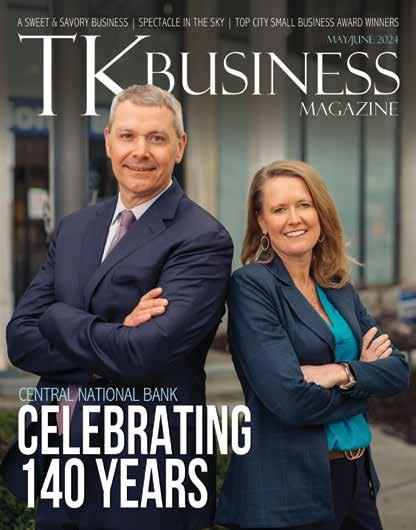
On the Cover: Central National Bank Celebrating 140 Years of Legacy
Siblings Mike Munson, executive vice-president and Sara Girard, president and CEO, share how family leadership, community focus and legacy drives Central National Bank’s success admidst industry evolution.
4 MAY/JUNE 2024 TK Business Magazine CONTENTS TK BUSINESS MAGAZINE | MAY/JUNE 2024 10
PAGE
Photo by JOHN BURNS


MAY/JUNE 2024 TK Business Magazine 5 TK 0524 Call Doug to get a quote today 785-264-4911 doug.martens@bcbsks.com Doug Martens Group Sales Consultant Explore the globe with confidence. Take GeoBlue® with you Comprehensive Medical Coverage for International Travelers. Anyone can purchase a GeoBlue plan. • long-term & short-term corporate plans • single trip plans for groups • individual plans for leisure • and more bcbsks.com/travel © 2024 GeoBlue. All Rights reserved. GeoBlue is the trade name of Worldwide Insurance Services, LLC (Worldwide Services Insurance Agency, LLC in California and New York), an independent licensee of the Blue Cross Blue Shield Association. GeoBlue is the administrator of coverage provided under insurance policies issued by 4 Ever Life International Limited, Bermuda, an independent licensee of the Blue Cross Blue Shield Association. Blue Cross and Blue Shield of Kansas is an independent licensee of the Blue Cross Blue Shield Association.
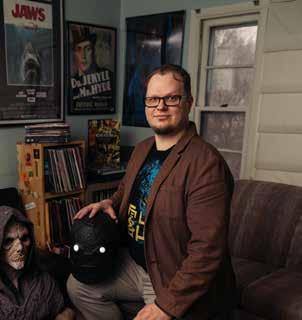
Video Store Rat to Filmmaker 20
Jake Jackson, influenced by ‘80s cinema, navigated from video stores to independent film, mastering makeup effects, teaching, and business strategies in filmmaking.
Marc Shepherd with Copeland Insurance Agency explains why insurance rates are soaring and gives steps on how to keep costs manageable.
A Sweet & Savory Business
Hanebe, a juice bar, and Crispy & Co, a fried chicken restaurant, create a diverse culinary experience under one roof.
For 40 years, Scott Hunsicker has fostered integrity, client welfare and community support in financial planning at Kansas Financial Resources.
So Much More than Books
The Level 2 Tech Center at Topeka & Shawnee County Public Library provides valuable cutting-edge digital resources for entrepreneurs, hobbyists and every day users.
Spectacle in the Sky
Topeka’s Thunder Over the Heartland Air Show returns with a thrilling twist: twilight aerial displays and fireworks, to provide a spectacular experience.
Exploring Lake Perry’s Oasis
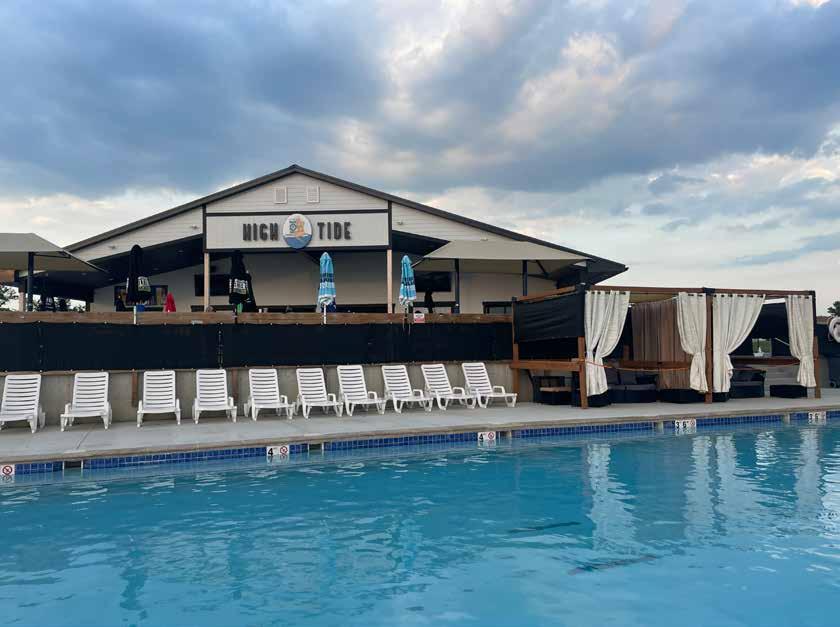
Discover a lakeside oasis at High Tide 21, a restaurant at Lake Perry, where families enjoy sunset views, live music, and a menu filled with seafood delights.

Building a Better Construction Contract
Andrew Wiederholt of Foulston Siefkin LLP gives five essential elements every construction contract should include in order to account for and address as many possible outcomes, planned or unforeseen.
From the Professor:
Washburn Professors Luella Moore and Norma Juma have an informative conversation about multiculturalism and diversity in a global context.
Lang Named to
Top 200 CPAs
Brian Lang of SSC CPAs + Advisors who was named to Forbes Media’s Inaugural Top 200 CPAs list tells how he feels about this special recognition.
Small Business of the Year Awards
Meet the seven local businesses that were selected and recognized for their role in Topeka’s economic vitality and cultural enrichment at the annual Small Business of the Year Awards.
At the Core
Danielle J. Martin interviews Dr. Shekhar Challa, president & CEO of Kansas Medical Clinic and a trailblazer in medical innovation, entrepreneurship and mentorship.
6 MAY/JUNE 2024 TK Business Magazine CONTENTS TK BUSINESS MAGAZINE | MAY/JUNE 2024
The
24
Insurance Crisis
26
Building Legacies 32
34
42
48
52
Multiculturalism &
56
Diversity
Forbes
60
62
92
20 26
Photo by JOHN BURNS
Photo by JOHN BURNS
Do you enjoy playing your cards right at the blackjack table? Or doubling down on massage tables at the Cedar & Sage Spa? Maybe you prefer to go all in – into the pool, that is. Prairie Band has it all. So you can have all the fun.


More ways to
Must be 21 years of age or older to enter Sportsbook. Must be 18 years of age or older to gamble. Owned by the Prairie Band Potawatomi Nation. Getting help is your best bet.Call the confidential toll-free Problem Gambling Helpline at 1-800-522-4700. OPEN NOW! Outdoor Pool
play your way

CONTRIBUTORS
PUBLISHER
Braden Dimick & SALES DIRECTOR braden@tkmagazine.com 785-438-7773
CREATIVE DIRECTOR & DESIGNER
Janet Faust
EDITOR Lauren Jurgensen
COVER PHOTOGRAPHER
CONTRIBUTING WRITERS
PHOTOGRAPHERS
CONTRIBUTING EXPERTS
John Burns
Morgan Chilson
Tara Dimick
Miranda Ericsson
Kim Gronniger
Lisa Loewen
Samantha Marshall
Danielle Martin
India Yarborough
John Burns
Jennifer Goetz
Norma Juma
Louella Moore
Marc Shepherd
Andrew Wiederholt
WEBSITE MANAGER
Cordell Dimick
2024 TK Business Magazine is published by E2 Communications, Inc., 7537 SW 26th St., Topeka, KS 66614 (785) 438-7773. Reproduction or use of this publication in any manner without written permission of the publisher is prohibited.
Every effort was made to ensure accuracy of the information in this publication as of press time. The publisher assumes no responsibility of any part for the content of any advertisement in this publication, including any errors and omissions therein. E2 Communications, Inc. makes no endorsement, representation or warranty regarding any goods or services advertised or listed in this publication. Listings and advertisements are provided by the subject company. E2 Communications, Inc. shall not be responsible or liable for any inaccuracy, omission or infringement of any third party’s right therein, or for personal injury or any other damage or injury whatsoever. By placing an order for an advertisement, the advertiser agrees to indemnify the publisher against any claims relating to the advertisement.





8 MAY/JUNE 2024 TK Business Magazine
@TK...Topeka's Business Magazine @TK Business @tk_business_ @TKBusinessMag

Your fully-loaded system includes:
Mobile
Maximum security with 24x7 monitoring.
100% local support with fast and accessible experts.
Top-notch technology and automatic software upgrades.
Flexible contract terms to fit your business needs.
MAY/JUNE 2024 TK Business Magazine 9 SHOULDN’T KEEP YOU UP AT NIGH T. YOUR BUSINESS PHONE SYSTEM READY TO GET DOWN TO BUSINESS? WITH THE COMPLETE BUSINESS PHONE SYSTEM FROM NEX-TECH.
access whether you're at home, in the office, or on the road. A private connection to Nex-Tech’s reliable network.
SCAN TO LEARN MORE! nex-tech.com/business

CELEBRATING 140 YEARS OF LEGACY
THE CENTRAL NATIONAL BANK STORY
By KIM GRONNIGER
by JOHN BURNS
Central National Bank (CNB), one of the state’s largest financial institutions and a family institution, will celebrate its 140th anniversary in October.
Sara Girard is CNB’s chief executive officer and president. She and her brother Mike Munson, the bank’s executive vice president and general counsel, work with other members of their family at the Topeka branch located at 800 SE Quincy St.
Girard joined the CNB team in 2005 and Munson joined in 2017. Neither of them felt pressured to follow the same career path as their relatives, and said that they were welcomed to contribute to the family’s legacy.
They now work only a few blocks from the Frank Carlson Federal Building,
10 MAY/JUNE 2024 TK Business Magazine
}
Photos
Brother Mike Munson and sister Sara Girard are part of the fourth generation to devote their time to the family’s legacy at Central National Bank.
Photo by JOHN BURNS
Nearly 6,000 open jobs are currently unfilled in Shawnee County.
Lack of quality child care is a major barrier.

Family Forward is addressing the child care shortage by bringing businesses, families and child care providers together:
• to create hundreds of new child care slots
• to build a business culture that is family-friendly
• to build a parent assistance fund You have a role. Let’s move forward together. Visit www.FamilyForwardNow.org
MAY/JUNE 2024 TK Business Magazine 11
development issue
Child care is a business & economic
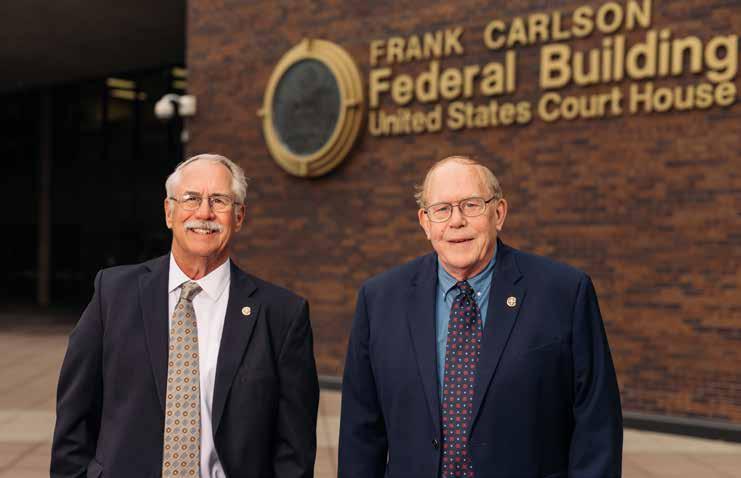
Third-generation family members
Tom Rolfs and Edward “E.C.” Rolfs are active employees at Central National Bank.
which was named after their greatgrandfather — a former Kansas governor, United States senator and CNB director. Munson uses the same desk his great-grandfather used when he served in Washington, D.C. Their father, Robert Munson, devoted his distinguished 45-year career to CNB as well.
“Dad used to tell us when the going gets tough, the tough get going,” said Munson. “When things aren’t going exactly as we had planned or when things get tough, we can look up at the framed Theodore Roosevelt speech ‘The Man in the Arena’ that Dad gave each of us for our offices.
It reminds us to buckle down, get to work and continue trying to do the best possible.”
Other third-generation employees at CNB include former Kansas State Representative and current Chairman of the Board Edward “E.C.” Rolfs, board member and Senior Vice President Tom Rolfs and board members Christine Rolfs Munson, Jim Waters and Clarence Waters. Fourth-generation employees, in addition to Girard and Munson, include Brett Rolfs, who is a records manager, disaster recovery officer and board member, and his wife Amanda Rolfs, the director of marketing.
CNB’s other Topeka leaders include Topeka Branch President Steven Newell and Executive Vice President David Brant.
AN EVOLVING INDUSTRY
The Rolfs family has been overseeing CNB since 1884. In that time, they’ve grown $1.3 billion in
assets and changed how the bank operates.
Those changes include installing an air conditioning unit to replace the large block of ice that was cooling their lobby, and evolving from roomsize supercomputers to modern-day desktop computers and laptops. After Girard joined, she added casual Fridays for bank employees.
The bank has weathered everything from pandemics to economic upheavals. When new banking legislation was passed in 1980, they were able to open a holding company, which they use to acquire other banking institutions.
“Our family business works because we all respect the long legacy of conservatism and perseverance,” said Girard. “My great-grandfather managed the bank during the Great Depression, and under his leadership Central National Bank was the only one in Geary County allowed to reopen after the
12 MAY/JUNE 2024 TK Business Magazine }
Photo by JOHN BURNS





MAY/JUNE 2024 TK Business Magazine 13 Investment Products are: NOT Deposits • NOT FDIC Insured • NOT guaranteed by the Bank Subject to Possible Loss of Principal • NOT insured by any Federal Government Agency Member FDIC Equal Housing Lender Blake Sutton, ChFC® Vice President & Trust Officer (785) 276-3232 blakes@centralnational.com Steve Newell, President Commercial Loan Officer (785) 231-1412 snewell@centralnational.com 800 SE Quincy Street in Topeka, Kansas www.centralnational.com A Fiduciary Advisor Investments | RetIRement | estate PlannIng Lending to Kansans since 1884. Come see us for your commercial and personal financial needs. Central National Bank... Attorney and professional engineer Andrew Wiederholt’s article this month in TK Magazine outlines what businesses can do to help avoid construction project problems. Andrew Wiederholt combines his legal insight with his experience as a professional engineer handling public works infrastructure design and construction to help clients with construction and engineering-related matters and litigation. Construction/Renovation Planned? 5 Elements You Must Consider ANDREW P. WIEDERHOLT, PE awiederholt@foulston.com 785.354.9418 FOULSTON.COM
federally mandated bank holiday. My grandfather survived the farm crisis and led a bold expansion strategy that positioned our bank to serve the many communities we do today. Then my uncle [E.C. Rolfs] managed the bank through the mortgage crisis and the Great Recession.”
During Girard’s first bank role as marketing officer, she worked with local broadcasting network WIBW, Dan Lindquist and Jim Edmonston to create CNB’s “Money for Life” jingle and tagline. It was the bank’s first step in creating a brand strategy.
Robert Munson predicted the future of banking when he wrote about the advent of ATMs, direct deposits, automatic bill payments and home banking in a 1984 centennial celebration booklet:
“It appears that the trend toward greater levels of bank automation will continue in the future. Automated teller machines will continue to increase in popularity. Point of sale devices accessed via the same card used with the ATMs will appear in
stores, restaurants, and gas stations; these will offer convenience to the customer and guaranteed funds to the business itself. Direct deposit of payroll and government payments will be standard, as will automatic bill payment. And ultimately ‘home banking’ will arrive, where customers can perform banking transactions from their home via an inexpensive device tied into their telephone.”
To this day, the team at CNB seeks new ways to improve their operations and customer interactions. “We pride ourselves on being a large Kansas bank that can service the financial needs of almost anyone but still have the feel of a community bank,” said Girard.
Munson agreed. “We may experience growing pains as we centralize certain operations, but we never want to lose that personal feel,” said Munson.
FAMILY AFFAIR
With so many family members working to oversee branches in 22
towns across Kansas and Nebraska, Girard said they’re happy to work together when they need to overcome an issue or disagreement.
“We have the right people in place and feel good about the team’s adaptability,” said Girard. “We recognize one another’s skill sets and have absolute faith and trust in what each person does.”
“Having a business with multiple generations is advantageous in lots of ways, and appealing to many of our customers who also run family businesses, because they understand that we have similar dynamics,” said E.C. Rolfs. “If you work for a Fortune 500 company, you can fire someone who makes a mistake or that you disagree with, but if you want to have a pleasant Thanksgiving, you have to be more willing to work through things with a family business.”
Girard, who in 2017 became CNB’s first president in more than 100 years whose name is not Edward Rolfs, said her grandfather E.J. Rolfs had an entrepreneurial
14 MAY/JUNE 2024 TK Business Magazine }
PHOTO SUBMITTED
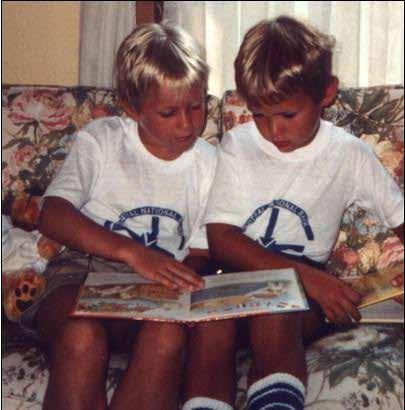
The Munson siblings, Sara and Mike, sporting Central National Bank shirts in 1984.
DESIGN + CREATE + ENJOY
COMPLETE RESIDENTIAL REMODELING PORTFOLIO
INTERIOR DESIGN & FURNISHING

ANNOUNCING
GOLDEN RULE HOME SERVICES
$99/HOUR + $49 TRIP CHARGE + MATERIALS
• Minor interior repairs: trim, sheetrock, tile, solid surface flooring, paint touch up, cabinetry repairs
• Minor exterior repairs: small siding/trim/decking repairs, touch up painting
• Changing furnace or appliance filters, batteries
• Gutter cleaning
• Furniture assembly
• Mounting shelving
• Hanging photos/pictures
• Mounting wall TV
• Power washing
• Door & window repairs (limited)
• Setting up Smart Home products


“Having a business with multiple generations is advantageous in lots of ways, and appealing to many of our customers who also run family businesses.”
— E.C. Rolfs Chairman of the Board Central National Bank
spirit. “He took charge to help the bank grow,” said Girard. “He often asked employees, ‘If you’re a racehorse, how will you run the race?’ He wanted everyone to be invested in what was happening.”
“My dad spoke in riddles,” said E.C. Rolfs. “It was not uncommon for us to have a two-hour discussion with our dad and then huddle up afterward to figure out whether we’d been yelled at or praised.”
Girard described her family mentors as “great models of intelligence, diligence, hard work, wise decision-making and high integrity.”
Girard, a former Kansas State University basketball player, recalled a time during high school when she thought she’d broken a record by scoring 37 points in a single game. The new record earned her praise and an interview with a local radio reporter. But the next morning at breakfast, her father informed her that he’d been
tracking her shots during the game and she had not set a new record. Girard had only scored 35 points, not 37.
“He told me he was calling the school to set things straight and that this lesson in integrity would be more important to me than any school record or any embarrassment I might feel, and he was right,” said Girard.
“One of our dad’s favorite sayings was ‘do the right thing,’” said Munson. “That’s how we approach customer relationships. We want to know what their goals are, whether it’s starting a new business, buying property, opening an investment account, growing net worth or opening a savings account for their children. Our goal is to find common sense solutions.”
Ninety-two of the bank’s 280 employees have been with the company for at least 15 years. Girard said that’s because the culture at CNB promotes work-life balance, offers paid volunteer days and values clear communication. They use inperson meetings and a weekly newsletter, written by Girard, to keep their employees informed.
“We’re all members of the Central National Bank family,” she said. “We talk about our goals and performance and celebrate and acknowledge each other. Our bank would not be where it is today without them.”
COMMUNITY FOCUS
Giving back to the communities where CNB does business is important to Girard. She said the bank’s charitable foundation, Central
16 MAY/JUNE 2024 TK Business Magazine
}
Photo by JOHN BURNS



MAY/JUNE 2024 TK Business Magazine 17
Charities, has contributed to nonprofits for more than 30 years.
After Munson moved to Topeka in 2006 and Girard arrived in 2012, they were quick to join efforts that would help the local community. Girard serves on the boards for the Auburn-Washburn Foundation, GO Topeka and Junior Achievement. She is also active in the Kansas Bankers Association and serves on the American Bankers Association Membership Council.
Munson is a founding member of the 20/30 Club Foundation, vice chairman and former chairman of the Metropolitan Topeka Airport Authority and a former board president of TARC.
SIBLING SYNERGY
Before joining the bank, Girard worked as a financial analyst at Hallmark Cards. Munson had a private practice representing the interests of financial institutions. Like his grandfather and uncles, he’s also a licensed pilot. This has given the perk of faster travel to CNB.
“I typically don’t mention that our corporate jet is a cramped Cessna or that our corporate pilot is my younger brother,” said Girard.
“Joining the family business made sense and having the ability to work with Sara was icing on the cake,” said Munson. “I’ve always looked up to her.
She brings a tremendous amount of energy and a sense of excitement to the bank and strives to create a fun and positive place for employees.”
Munson and Girard’s shared love of childhood jokes has grown to include more sophisticated pranks, especially on April Fools’ Day. “Work should be fun,” said Munson. “We like to laugh. We can be serious one minute and then laugh about something our kids did at home the next.”
The siblings see each other every morning when they drop off their kids at school. They always look forward to their annual spring ski trip and family business meeting in Steamboat Springs,
18 MAY/JUNE 2024 TK Business Magazine
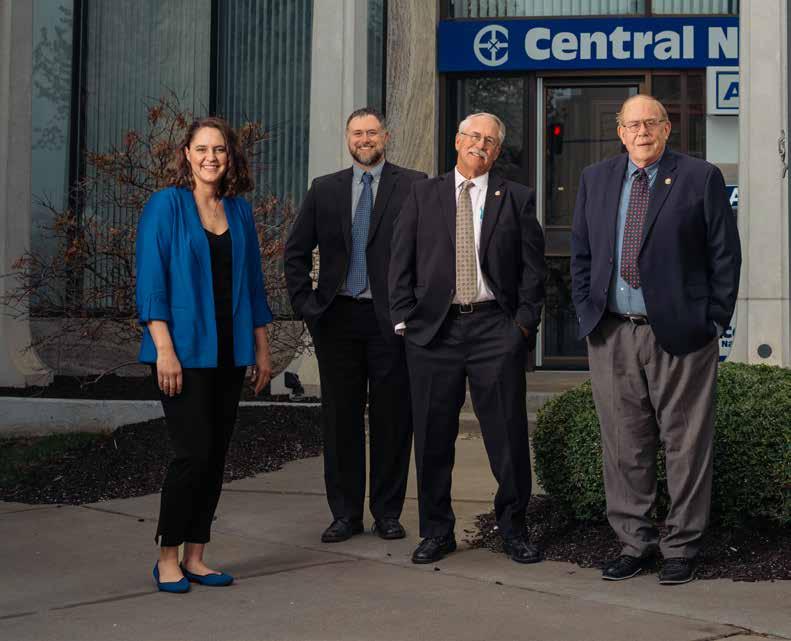
It’s a family institution at Central National Bank (from L to R): Amanda Rolfs, director of marketing; Brett Rolfs, records manager, disaster recovery officer and board member; Tom Rolfs, senior vice president; Ed C. Rolfs, chairman of the board; Mike Munson, executive vice president and general counsel; and Sara Girard, chief executive officer and president.

“Our family business works because we all respect the long legacy.”
— Sara Girard Chief Executive Officer/President
Central National Bank
Colorado — a Rolfs family tradition that their mother started in 1986.
WHAT’S NEXT?
Girard and Munson are planning an event to celebrate CNB’s 140th anniversary in October. Girard said that even as the bank grows, their focus is on community banking.
“Despite today’s technology, banking is and always will be a people business,” she said. “I don’t run our bank myself and never will. It’s a team lift and I lucked out with the team I get to work with each day.” TK








MAY/JUNE 2024 TK Business Magazine 19 tbrown@aldersgatevillage.org 7220 SW Asbury Drive Topeka, Kansas 66614 785-286-7490 785-286-7490 Must Reserve by May 31st. Local/regional moves only. Call for details! Incredible One-Bedroom 30 hours of downsizing assistance on us! Apartment S pecial Your moving expense on us! Plus
Photo by JOHN BURNS
to FilmmakerVideo Store Rat
by
JAKE JACKSON | MMBN PRODUCTIONS
Photo
JOHN BURNS
By TARA DIMICK
by JOHN BURNS
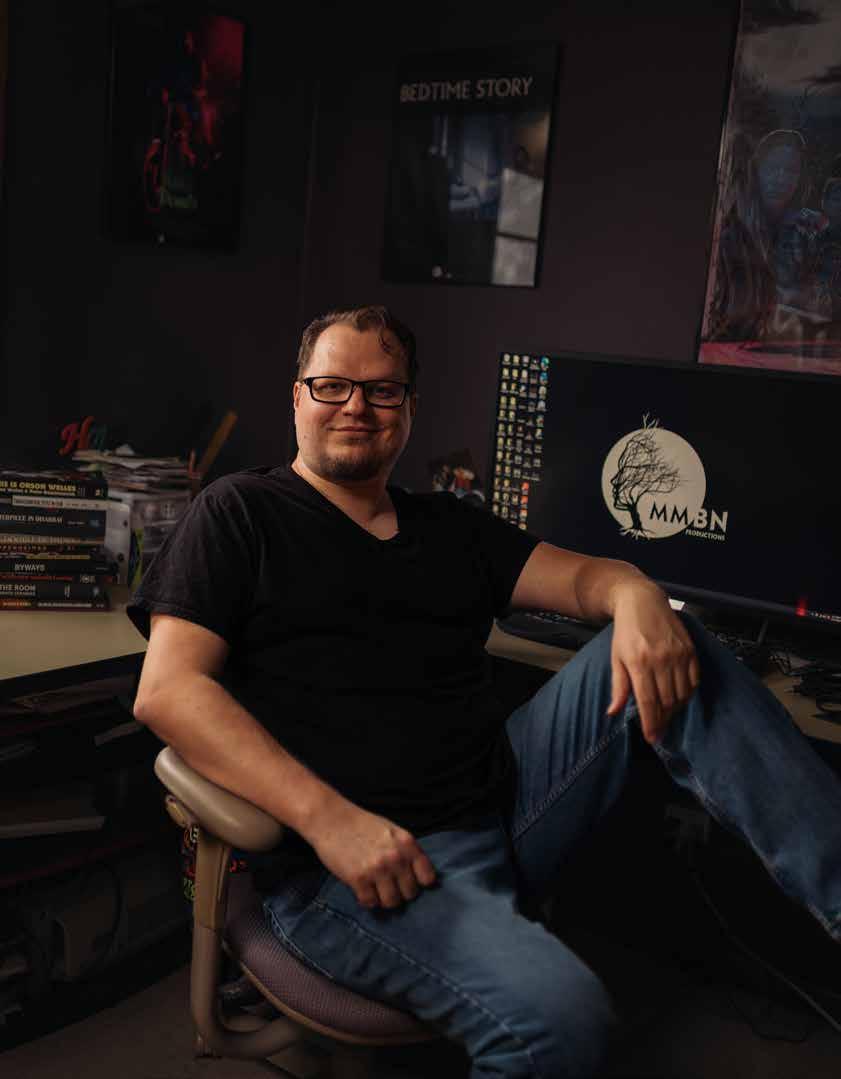
Born in the ‘80s when innovative films and artists were the order of the day, Jake Jackson developed a fascination for transformation, storytelling, creativity and film from an early age.
“I grew up in the ‘80s, constantly bombarded with innovative films, filmmakers and artists. As a video store rat, I was immersed in fantastical creatures and imagery, realizing in middle school that movies don’t just magically happen,” said Jackson, owner of MMBN Productions. “This sparked my passion for telling a narrative the way I wanted.”
The independent film boom of the early ‘90s introduced him to the works of many film directors, including Quentin Tarantino, Robert Rodriguez and Spike Lee. It inspired him to take up filmmaking when he was still in high school. “I had to learn how to compose a shot and how to do makeup and makeup effects, ultimately realizing that this is what I want to do with my life,” Jackson said.
His desire to tell stories on the big screen led him to the School of the Art Institute of Chicago.
“I love telling a story and being able to mold something.”
Jake Jackson MMBN Productions
“I learned to really stop looking at things from a purely narrative point of view and start looking at them from a visual and auditory point of view,” said Jackson.
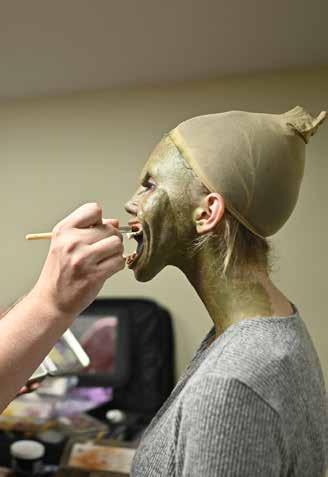
Later in life, having started a family, he learned that filmmaking demanded more time than he could afford. Jackson delved into special effects makeup as another way to release his creative energy. Soon, he was taking an advanced course created by renowned makeup artist Dick Smith.
“Dick Smith’s legacy in makeup effects, from ‘The Exorcist’ to ‘The Godfather,’ inspired me to pursue mastery in the craft. Smith’s proteges, filled with Academy Award winners, mentored and propelled me to excel in the advanced course,” said Jackson.
He honed his makeup skills at local theatre productions for Helen Hocker Theater and Topeka Civic Theatre, where he was able to consistently practice his designs. Then came an opportunity to work as a makeup artist for the satirical, soapopera-style slasher film called “Hell Town” by Steve Balderson, a filmmaking mentor Jackson had known since he was 18.
The film’s success brought him recognition and even more opportunities, including a low-
budget feature film shot in the Colorado Rockies. The movie was accepted at several film festivals and earned a distribution deal with Showtime, as well as a best special makeup effect award for Jackson.
The COVID-19 pandemic halted Jackson’s fast-paced filmmaking life, but he used the time to write scripts and complete a short film he’d had on the back burner. In 2021, he returned to work on two back-to-back features: one with frequent collaborator Patrick Rae and another he shot with Balderson, called “Bloody Famous.”
“I love telling a story and being able to mold something,” said Jackson. “It’s like putting the pieces of a puzzle together to create a story that can hopefully intrigue, terrify, warrant an emotional trigger and keep them coming back.”
THE MONEY SIDE OF FILMMAKING
An artist at heart, Jackson also knows the importance of understanding the business side of the industry. A successful artist can’t just focus on the art, he said, they must also consider the financials. This can mean taking on projects that offer financial stability but might not align with one’s creative vision.
That’s why Jackson jumps at the chance to join a project even if it falls beyond his expertise. He
MAY/JUNE 2024 TK Business Magazine 21 }
Photos


once took on a last-minute acting role when an actor fell ill on set. Jackson believes that stepping up is key to building one’s reputation in the industry.
For him, it’s important to have side gigs or a day job that can ensure steady income. Side gigs also give him the flexible schedule he needs to make films.
When he’s not making movies, he enjoys using his master’s degree in education to teach, share his knowledge and nurture a new generation of young creatives.
“Navigating the intricate business landscape of filmmaking involves establishing multiple income streams, from teaching and consulting to side gigs, to sustain the craft. Incorporating entrepreneurial strategies, like creating LLCs for each project and engaging investors, ensures the financial viability of each endeavor,” said Jackson.
Jackson’s work on the 2019 werewolf film “I Am Lisa” was both creatively and financially rewarding for him. Not only did it sell out of DVD units through its distribution deal, but it also made enough profit for him to repay investors and earn residual income.
“The distributor shared that they had never had an independent film in physical media sell out,” said Jackson.
THE MARKETING SIDE OF FILMMAKING
While Jackson finds joy in creating makeup effects for film characters, the world of film festivals and marketing has proven a different beast.
According to him, filmmakers must be proactive when it comes to self-promotion. It’s not enough to hope that festival judges will notice your
22 MAY/JUNE 2024 TK Business Magazine
PHOTO SUBMITTED
Photo by JOHN BURNS
work. It takes real marketing skills to excite audiences about an upcoming release.
“Strategically managing film production from inception to distribution involves calculated promotion and timing,” said Jackson. “Delaying marketing until post-production completion avoids premature anticipation and maximizes audience engagement, a lesson learned through experience and mentorship.”
SECURING INVESTORS
Jackson is excited about his next feature titled “Happy.” After he was given the script, he decided to spearhead the production. He said that the movie’s production process has been a lesson in persistence and determination as the team searches for investors to help bring the project to life.

Navigating the film industry of the Midwest comes with challenges, and securing investments is one of them. But Jackson remains undeterred.
“Investment in the film industry, especially in the independent sector, varies greatly, but the most important factor to consider is the budget that’s needed to bring a vision to life,” said Jackson. “For instance, the budget for a project could range from a few thousand to hundreds of thousands of dollars. The deciding factor here is the scope of the project — the number of sets, the size of the crew and the cast involved. However, the objective remains
the same: create a project that can quickly turn a profit.”
Investors are more than sources of money, they’re essential to the creative process.
“The ideal investor is someone who feels a connection to the project,” said Jackson. “They’re not only investing money, but also time and resources. The ultimate goal is to foster a team spirit that guides every aspect of the production process.”
From his humble beginnings as a video store rat to his work among the lights and cameras of independent film sets, Jackson has become the magic behind the movies. TK
MAY/JUNE 2024 TK Business Magazine 23
PHOTO SUBMITTED
PHOTO SUBMITTED
THE INSURANCE CRISIS
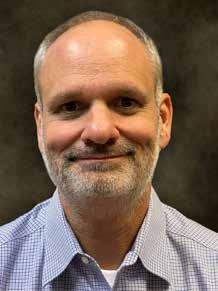 MARC SHEPHERD Senior Risk Manager Copeland Insurance Agency
THE SHOCK
There is no doubt, the world after COVID-19 is just more expensive. Nowhere is this more evident than opening that bill from your insurance carrier. In one way or another, almost every consumer can count on paying more for insurance this year than ever before, and not just a little bit more.
Increases on home and auto policies routinely exceed 25% more than last year and worse yet, deductibles are also increasing. In some cases, coverage options are decreasing.
In the property world alone we have seen large property policies double and in some cases triple and quadruple. The days of $1,000 deductibles for wind/hail are replaced with deductibles of $2,500 or higher as the new standard. All of this, and more premium!
WHAT HAPPENED
To really understand the challenges we all face, it helps to really understand the problem. Simply put, insurance pays for people, places and things. From injuries from a car accident or in the workplace, to hail or fire damage to a building or house, to damages to your car or theft of your property. Insurance is there to help financially put the pieces back after tragedy strikes.
However, each of those things — from medical bills to car parts — have exploded in price and at almost record rates. Combine this with recordbreaking storms and natural disasters and you have the perfect storm.
In 2023, the United States saw 28 separate events that led to losses in excess of one billion dollars. To make things worse, that represented roughly the same number of losses from 2022, only this time the dollar figures were almost 30% higher.
Wind/hail losses have also skyrocketed following the increase in every segment of the building world. The last three years of data are shocking as the average loss size has almost doubled over just two years.
AVERAGE PAID WIND/HAIL LOSS AMOUNTS*
2021 $8,000 average paid per loss
2022 $12,000 average paid per loss
2023 $15,000 average paid per loss
*One carrier’s example
As you can see these numbers represent increases that are unsustainable and crippling to a financial company. Each of these years represent catastrophic losses to companies’ reserves and, more importantly, stockholders’ earnings. At the same time, medical bills continue to skyrocket along with the cost to fix or replace a vehicle is outpacing inflation by a wide margin.
In some cases, replacement parts are not even available, adding even more to the losses suffered.
WHAT IS THE PLAN?
For even small regional insurance companies, the plan starts with their purchases of reinsurance. In short, most insurance companies purchase a catastrophic reinsurance policy to protect their bottom line. Think of it as a huge deductible that caps the losses for the company. The problem is these reinsurance carriers are international, and the world is not fairing any better than the U.S.
For most insurance companies, their year started off with an increase in their prices that further crippled their ability to keep prices or expenses low. Losses in the hundreds of millions have been average and the bleeding must stop.
Companies look to first consolidate their risks. Many companies are limiting new policies, lowering their limits of liability and in some cases removing coverages that once were commonplace. Next,
24 MAY/JUNE 2024 TK Business Magazine
INSURANCE PLANNING
in response to the above wind/hail numbers, we see companies working hard to get out of the roofing business. They look to raise deductibles, and some place time limits that prevent customers from filing claims from years ago. (This looks to really be a challenge for realtors and house sellers that could learn their house is not sellable without a new roof, yet coverage isn’t available.)
WHAT CAN WE DO?
If ever there was a time to work with your local agents, it’s now.
Insurance companies have done a spectacular job over the past forty years convincing us all that they are in it for us. They are your friend, your neighbor, your savior from the horrible. However, in truth the average insurance company is a large, organized and powerful financial corporation. Each of them answer to a board of directors and stockholders.
Your insurance policy is a legal contract and one they intend on honoring, but it is up to you to make sure that contract represents your needs.
Take a moment and learn the coverages you need and what impacts their prices.
Consult with your agent before turning in a small claim and determine the direct impact that might have on your policy going forward.
As companies tighten their guidelines, work to keep your property maintained and a risk the companies want to insure.
Competition never hurts, there are dozens of great insurance agents in the area. Some work with only one highly rated carrier, whereas independent agents might work with dozens of companies.
Meet with them and understand what your options are in the
marketplace. As you learn what is possible, or not possible, you are able to make better decisions on how to handle things moving forward.
Lastly, be very careful online. There are some online carriers that will allow you to change or adapt coverages to your detriment. If it looks too good to be true, today it probably is.
THE FUTURE
Pricing will always fluctuate as companies trend in and out of strategies to either grow or shrink their portfolio, and these price hikes might relax over the next couple of years.
We have no reason to believe that deductibles or strict limitations on wind/hail type claims will ever return to prior levels. The time for better understanding, planning and action is now.

MAY/JUNE 2024 TK Business Magazine 25
TK
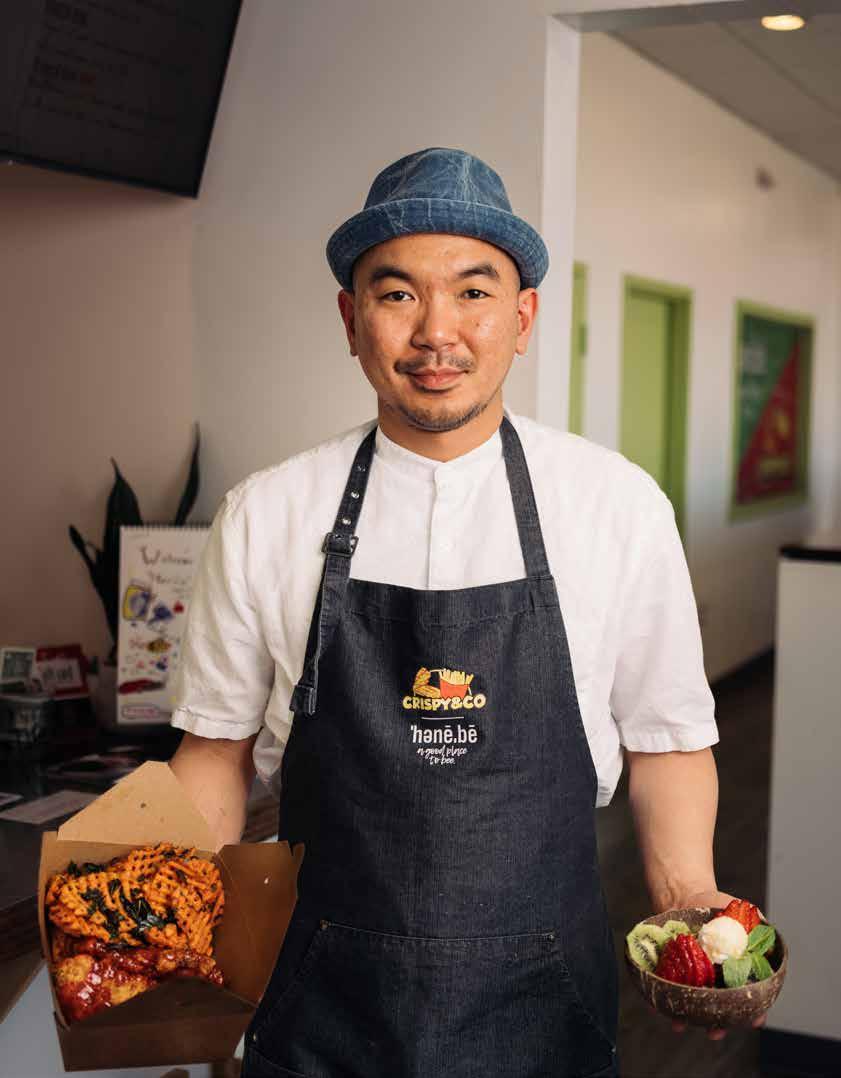 CJ CHENDRAWIJAYA | Co-owner | Hanebe and Crispy & Co
Photo by JOHN BURNS
CJ CHENDRAWIJAYA | Co-owner | Hanebe and Crispy & Co
Photo by JOHN BURNS
ASweet SAVORY & BUSINESS
By LISA LOEWEN
Photos by JOHN BURNS
When it comes to complementary foods, it’s probably peanut butter and jelly — not smoothies and chicken wings — that first come to mind.
But walk inside Hanebe, a juice bar that operates under the same roof as fried chicken restaurant Crispy & Co, and smoothies and chicken wings are exactly what you’ll find.
Located at 2855 SW Wanamaker Road in Topeka, Hanebe’s all-natural juices, smoothies and açaí bowls appeal to anyone with an appetite for healthy indulgences. Their menu items include everything from fresh-squeezed juices (think cucumber, apple and celery) to açaí bowls topped with fresh avocado or chia seeds and honey.
Just a few steps away, Crispy & Co’s Asian-fusion chicken wings and fries are there to satisfy the cravings of customers who desire something a little more savory.
GLOBAL EXPERTISE
CJ Chendrawijaya, who coowns Hanebe as well as Crispy & Co, developed his dual-restaurant concept after managing a variety of food businesses around the world. Originally from Indonesia, CJ worked for several years in Australia’s food industry before coming to the United States. He eventually ended up in Topeka.
The building at 2855 SW Wanamaker Road was once home to a yogurt shop and the former Mediterranean restaurant known as Gyroville. When members of his family bought the property, they asked CJ to use the space to bring something new to the community.
“When I was in Australia, I worked with bars, food trucks, cafes, coffee shops, you name it,” said CJ. “So, I already had some great ideas of what we could do in this space. I wanted something people wouldn’t find anywhere else, that sense of Yin and Yang.”

CJ spent three months researching consumer trends, ingredients, food sourcing and market conditions to determine the ideal menu items for each restaurant. He analyzed his findings and decided to use the “opposites attract” concept of two distinct restaurants — healthy on one side and fried on the other.
“When I lived in Sydney, people there really cared about their health and loved clean, fresh food,” said CJ.
Açaí bowls at Hanebe are topped with fresh avocado or chia seeds and locally sourced honey.
“It has become a trend here, as well, and I wanted to bring that concept to Topeka.”
A SWEET IDEA
Fresh fruits and vegetables are the foundation of Hanebe’s menu. The juice bar uses locally sourced produce as often as they can, with
MAY/JUNE 2024 TK Business Magazine 27 }
Photo by JOHN BURNS
Photos by JOHN BURNS


The answer he discovered became the name of the
A SAUCY APPROACH
CJ said that he didn’t want Crispy & Co’s menu to veer too far from the traditional fried chicken tenders and wings that customers expect.

CJ personally inspecting every order of fruits and vegetables to ensure they’re of the highest quality. He imports açaí berries from a certified company in San Diego and purchases honey direct from Sunflower Bee Company, a local bee farm.
“I walked into Hanebe one day to try an açaí bowl and asked where they got their honey from,” said Joe Purdum, owner of Sunflower Bee Company. “I asked CJ to try my local honey and have been his supplier ever since.”
Hanebe soon became Joe’s biggest customer, purchasing 50 pounds of honey every two weeks.
“That fresh honey really does taste better,” said CJ.
Honeybees were also the inspiration behind Hanebe’s name and brand.
“I wanted a name that meant something,” said CJ. “Honeybees are known for organization and as a symbol of wisdom. In the Bible, they represent God’s blessings and wisdom.”
While researching how he could include honeybees in his brand, CJ searched Google to learn how “honeybee” is pronounced.
“Who doesn’t like fried chicken?” said CJ. “I have been all over the world, and fried chicken is everywhere. My idea was to offer people something they already know they like, but put a little spin on it.”
For CJ, that meant offering the same fried chicken tenders and wings that customers can find at almost any fried chicken establishment, but with an Asian twist. Their dipping sauces are a fusion of western and Korean, Vietnamese and Thai flavors.
Customers can choose from different seasonings like soy garlic, bulgogi or gochujang, a sweet and spicy red chili paste that’s common in Korean cuisine, as well as dry rub options like salt, pepper, basil and their golden original recipe.
Crispy & Co also offers french fries, tater tots and sweet potato sides with flavors like cheddar, sour cream and barbecue. Those with a bigger appetite may be interested in the restaurant’s specialty, which they call The Guilty Pleasure — a bed of fries topped with chicken tenders and special sauce.
“It isn’t just our flavors that make us different,” said CJ.
28 MAY/JUNE 2024 TK Business Magazine }
restaurant: Hanebe.



MAY/JUNE 2024 TK Business Magazine 29 FIGHTING RISING HEALTHCARE COSTS Pr ot e ct i ng You r B u s i n e ss I nt ere st s Rising healthcare costs threaten your business. Kansas Employers for Affordable against government mandates to protect your hard-earned dollars and ensure AFF O R DABL E HE A LTH CAR E EMPLOYERS FOR FOR MORE INFORMATION VISIT www.keah.org CONTACT US AT info@keah.org

“Asian culture is based on family-style meals. Our wings are big enough to share.”
A GROWING REPUTATION
Hanebe and Crispy & Co have only been open for a little more than six months, but the parking lot stays full because customers are spreading the word. CJ said that people ask him all the time if they can work at one of his restaurants. Many of the employees are high school students, and both restaurants have a reputation for being a safe and fun work environment.
“I see this as a workshop where kids can experience work in a good place where people care about them,” said CJ. “I let them make mistakes, and they learn from that experience.”
Employees who work for him learn what it means to be reliable and responsible. They greet customers with a smile, and learn that a kind word can go a long way.
High school sophomore Ava DiGiovanni has been working part time
at Hanebe since late last summer. After she and her grandmother stopped in one day to try an açaí bowl, she knew she wanted to work there.
“I just loved the energy here from the moment I first walked in,” said Ava. “I mentioned that to CJ, and he asked if I wanted a job. There is no stress here. I come to work and actually like what I do.”
Ava said she wanted to find a job where she felt like she was able to help people. At Hanebe, she gets to brighten the customer’s day with conversation and a healthy drink or fruit bowl.
“I have never seen any other place like this one,” Ava said. “My friends want to work here, too, because I like it so much.”
Employee Christian Torres has been working at Crispy & Co since December, after a conversation between his dad and CJ resulted in a job offer.
“I graduated high school early and needed a job before I headed
off to the East Coast for college. CJ didn’t care that I would only be available for eight months. He took a chance on me, and I am so grateful,” said Christian, who added that CJ is more like a mentor or big brother than a boss.
“CJ treats everyone here like family,” said Christian. “He is so understanding and easy to work for. I never have a day that I don’t want to go to work.”
A PLACE TO CALL HOME
Even though CJ has traveled all over the globe, he sees Topeka as his home. The people here have embraced him and shown support for his less-than-conventional business ideas. While he hopes that Hanebe and Crispy & Co succeed, CJ wants these establishments to offer more than just good food.
“At the end of the day, it really isn’t about the profit,” said CJ. “I just want this to be a good place to be for customers and employees.” TK
30 MAY/JUNE 2024 TK Business Magazine
Many of the employees at Hanebe and Crispy & Co are high school students, who say they love working at the restaurants and learning from the experience.
Photo by JOHN BURNS
Increase Sales through Tailored Digital Solutions





MOBILE IV SERVICE
We offer our clients the option of customizable IV vitamin infusions in our cozy in-office IV Lounge or in the convenience of their own home or office. We can provide IV infusions at special events too!
We offer affordable functional lab testing addressing:
• Gut Health
• Food Sensitivities
• Micronutrients


• DNA Methylation
• Toxic Chemical Burden
• Active Cancer Screening
• Hormone Metabolism
• Stress Hormone Evaluation
• And so much more!

Please
website or call our office to schedule an appointment, so we can develop a plan that is right for you! www.epicintegrativewellness.com 785-377-0700
MAY/JUNE 2024 TK Business Magazine 31
visit
our
FNP-C Amanda
MSN, APRN, FNP-C 7 Marketing Strategy Tips! Our Digital Marketing Services: Targeted Display CTV & OT T Mobile-to-Social Polygonning YouTube Advertising Digital Audio Social Media Targeting Paid Search Retargeting your message needs to stand out. We blend cutting-edge technology and deep local connections to ensure you are top of mind with your customers.
Kelsey Stringer MSN, APRN,
Whitson
weareyourcompass.com

BUILDING LEGACIES
THE STORY OF KANSAS FINANCIAL RESOURCES
By MORGAN CHILSON
Photo by JENNIFER GOETZ
In 1983, the trajectory of Scott Hunsicker’s life took a monumental turn. At just 21 years old, he found himself at Montgomery Ward department store, where an unexpected job offer from Bob Evenson changed his life.
Evenson recruited Scott to venture into the realm of selling life insurance and retirement
planning services under the banner of Kansas City Life. Little did they know, this collaboration would be the start of the independent financial planning entity known today as Kansas Financial Resources (KFR), which recently commemorated four decades of service.
With the inception of KFR, Scott’s vision attracted like-
minded individuals. Todd Zimlich came aboard as a producer in 1993, coinciding with KFR’s official incorporation. Fast forward to 2004 and Scott’s son, Eric Hunsicker, had joined the ranks. Together, they form the foundation of KFR, a business deeply rooted in family values and a commitment to guiding clients through their financial journeys.
32 MAY/JUNE 2024 TK Business Magazine
From L to R: Michael Young, LeAnn Adams, Scott Hunsicker, Danielle Artzer, Eric Hunsicker, Maria Perry, Todd Zimlich
Photo by JENNIFER GOETZ
CORNERSTONES
“In our office, advice and accountability are our cornerstones,” said Scott, the president of KFR. “During life’s pivotal transitions — be it bereavement, disability or retirement — having a dependable advisor is paramount. The financial landscape is ever-changing and at KFR, we continually broaden our role and educational resources to safeguard our clients’ interests.”
The Hunsicker duo lead KFR’s culture of integrity, and sustained growth, attributing it to their responsive approach to client needs. Two decades ago when Eric assumed his role within the company, he pursued the Certified Financial Planning designation, bolstering KFR’s commitment to holistic client care.
“Eric’s stewardship and commitment to our clients has been invaluable,” said Scott. Today, Eric spearheads KFR’s Financial Planning operations, nurturing existing client relationships and fostering new connections to ensure sustained client commitment.
For Scott and Eric, integrity is key especially when entrusted with the financial well-being of families across generations. “Our foremost duty is client welfare,” said Eric. “Cultivating genuine relationships has been the cornerstone of KFR’s success.”
Financial literacy is central to their process. Scott said that he is candid with his clients when they discuss investment principles, and he cautions against impulsive decisions driven by emotions. “Fear and worry can cloud judgment,” he said, adding that he advocates for rational and informed decisions.
FAMILY AND COMMUNITY
Navigating the demands of their family business is not without its challenges. “It’s not for everyone,” said Eric, reflecting on their father-son dynamic. However, the team at KFR believe that their values of honesty and continued education have propelled their business forward.
Scott said that KFR strives to not only be a family business, but also a community business. That
means being involved in civic and philanthropic organizations to make Topeka and Shawnee County stronger, like Toys for Tots, the United Way and the 20/30 Club.
In addition to giving to local charities and fundraisers, Scott was instrumental in creating a stimulus fund called Helping Others Support Topeka (HOST), designed to help Topeka businesses with monetary pandemic relief in 2020. The project raised $2 million for local businesses.
LOOKING FORWARD
Scott, Eric, Todd and the KFR team said they anticipate continued growth, fueled by the trust and recommendations of their clientele.
Scott said he extends gratitude to the Topeka community, acknowledging their pivotal role in KFR’s evolution.
“Our journey began with diligence, trust and opportunity,” said Scott. “To our clients, we owe an immeasurable debt of gratitude for their unwavering trust.” TK

MAY/JUNE 2024 TK Business Magazine 33
SO MUCH MORE THAN BOOKS
How the
Topeka & Shawnee County Public Library’s Level 2 Tech Center Helps Hobbyists and Entrepreneurs Alike
Books aren’t the only items that guests will find at the Topeka & Shawnee County Public Library (TSCPL).
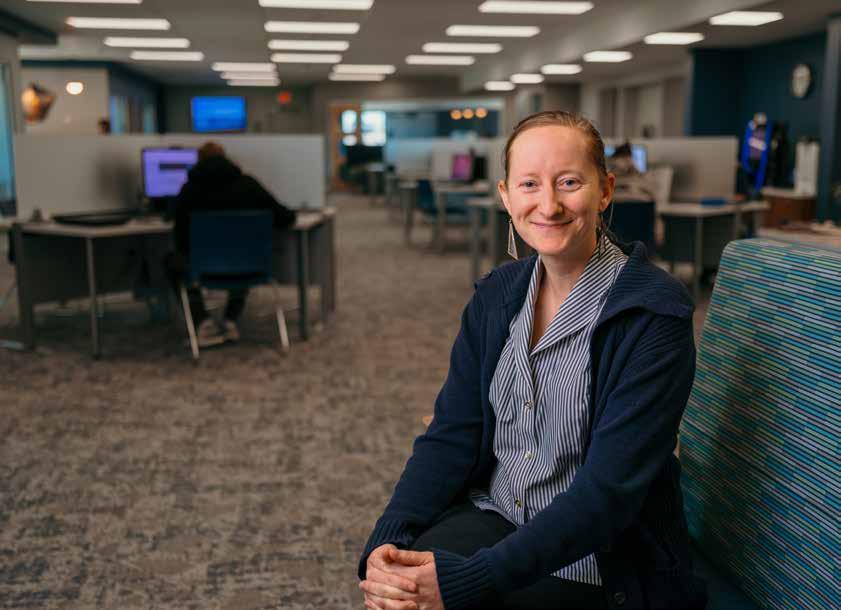
The library is now home to the Level 2 Tech Center, which will be two years old in August. This high-tech facility features a digital art studio, two recording studios, 30 computers and five meeting rooms.
Debbie Stanton, the library’s public services manager, said that they never could have imagined how many amenities the Level 2 Tech Center would have by the time it was ready to open. When they were planning the center, she and her staff created “personas,” or fictional descriptions of the type of people they expected to use the Level 2 Tech Center, to give them a better sense of what the facility should include.
By INDIA YARBOROUGH
Photos by JOHN BURNS
Some of those personas, like a teenage YouTuber, an aspiring podcaster and a graphic design student, were a clear sign to the team
34 MAY/JUNE 2024 TK Business Magazine
Photo by JOHN BURNS
Debbie Stanton, public services manager at Topeka & Shawnee County Public Library, oversees the Level 2 Tech Center that celebrates its second anniversary this year.
at TSCPL that the Level 2 Tech Center needed to be more than just a computer lab. It needed to have technology for different purposes and needs — such as recording music.
“There is a group called the Sweet Adelines, a female barbershop group, who comes in. They use our recording studio,” said Stanton. “They also just practice in there because they like the acoustics. You’ll turn the corner sometimes and hear barbershop music.”
Located on the west end of the library’s second floor, the Level 2 Tech Center has become a valuable resource for hobbyists,
entrepreneurs and everyday users. In addition to the center’s studios and meeting rooms, it features a 3D printer, a Cricut machine, a laminator and Mac and PC computers where guests can access the entire Adobe Creative Suite library of software.
Zan Popp, the library’s public services supervisor, said that the only limit you’ll find at the Level 2 Tech Center is “your own imagination.”
INTRO TO ADVANCED
Staff at TSCPL have seen library guests use the Level 2 Tech Center for anything and everything.
Stanton said that one woman used their Cricut machine to create
designs for a wedding. Popp saw a young man use their on-site video recording room to create content for his show on the Twitch livestreaming platform. Other guests have used the center’s 3D printer to create prototypes, quirky gifts and more.
For Popp, the Level 2 Tech Center is a place where the community can use tools that they may not have access to at home. It’s also where people can try equipment or software for the first time, as well as explore new technologies, in a low-pressure setting.
Newcomers can undergo an orientation to learn how to use


MAY/JUNE 2024 TK Business Magazine 35
}
by



The Level 2 Tech Center features two recording studios that are used by aspiring podcasters, musical groups and individuals creating content for online platforms.
the center’s tools. The center also provides access to online training, including free LinkedIn Learning courses.
“It’s a place to play and explore, knowing that they can go as deep or as shallow as they want,” said Popp. “It’s that idea that you don’t have to have a membership or pay a fee to go try it somewhere else.”
Anyone who has a library card can reserve equipment or a space at the center, up to seven days in advance, by visiting the Level 2 Tech Center page at www.tscpl.org.
In February, the center received a total of 715 online reservations, which doesn’t include the 1,127 people who came in to use one of their 30 computers.
“It’s also a neat place to see some of our resources come to life,” said Stanton.
A guest who checks out a book about graphic design might find themselves using software like Adobe Illustrator or InDesign at the center’s digital art studio. Meanwhile, someone who picks up one of their pamphlets about podcasting could end up in the recording studio.
“People grow and build their knowledge,” said Stanton. “We have a few people who have come in every day, for like a month, and taken two to three hours during the day to watch videos. They’re working on it, building up that knowledge set.”
COMMUNITY CENTER WITHOUT A POOL
Stanton sees the TSCPL as a place where all are welcome. “It’s a space that I think people of a lot of different backgrounds feel comfortable coming to,” she said.
Stanton also said that when the library was preparing for the Level 2 Tech Center’s debut in August 2022, staff was focused on how individual people would use the center. However, pairs and small groups have turned out to be some of the center’s most common users, such as the Topeka chapter of SCORE Business Mentoring.
36 MAY/JUNE 2024 TK Business Magazine }
Photos
JOHN BURNS




MAY/JUNE 2024 TK Business Magazine 37



With a digital art studio, 30 computers and five meeting rooms, the Level 2 Tech Center is ideal for individuals who want to create and explore or use the resources for a quiet workspace.
SCORE Business Mentoring is a nonprofit group that encourages small business mentorship. They now host free drop-in sessions in one of the center’s meeting rooms, where guests can drink coffee and chat about business.
“In all honesty, we are so much more than books,” said Popp, talking about the library. “It’s the programs. It’s the people. It’s the tools. It’s the resources. It’s a chance to meet somebody, have a cup of coffee. I mean, it’s a community center without a pool.”
The library is also a place to get work done. Many people, including remote workers, come there to find a quiet place to work or take a video conference call in one of their meeting rooms.
“In this day and age, you might not have an office, but you’ve got a library,” said Popp, adding that libraries have evolved to fit how people use them.
Both the library and the Level 2 Tech Center plan to keep evolving, adding new technology and resources. Popp said they plan to add a digital memory lab by late summer or early fall. Guests will be able to use the new lab to convert analog “memories,” such as film photographs and VHS videos, into digital files.
They also plan to add a large-format printer for poster-sized projects. TSCPL works closely with Washburn Tech and the Topeka Center for Advanced Learning & Careers to make sure that the Level 2 Tech Center’s offerings align with programs across the city.
“The idea was to start with the digital arts,” Popp said. “But there’s always discussions within the team of what’s the next step.”
38 MAY/JUNE 2024 TK Business Magazine
TK
Photos by JOHN BURNS


MAY/JUNE 2024 TK Business Magazine 39 Topeka ER & Hospital provides secure and private comprehensive medical detox tailored to address your unique needs, helping you achieve a healthier, substance-free life. topekahospital.com 6135 SW 17th St. Topeka, KS 66615 Board-Certified Emergency Physicians Establish Transition Goals for Substance Abuse Treatment Complete Health Assessment Medical Monitoring & Stabilization Throughout Withdrawal Period MEDICALLY
DETOX COMMERCIAL INSURANCE ACCEPTED START YOUR JOURNEY TO RECOVERY TODAY 785-670-6760
ASSISTED





WE’VE GOT YOU COVERED, HONESTLY. With over 40 years in business, Mesler Roofing, Siding and Windows has the experience and qualifications needed for any exterior project. They specialize in roofing, siding, window replacement, door replacement, gutters, and exterior painting.
Schedule a free appointment to learn more about recommended services which includes a free evaluation of your home’s exterior. Mesler Roofing, Siding and Windows will discuss any immediate needs, what you might want to update and how you envision your home looking at the end of the project.
Mesler Roofing, Siding and Windows is a lowpressure selling company with the goal to educate customers about what’s available on the market in order for you to make an informed decision. They offer a wide range of products that can fit any budget as well as great financing options. They also specialize in storm damage claims and will work with you and your insurance company.
Come by and visit our showroom at 1628 US 40 Hwy, Lawrence, KS 66044.
www.meslerexteriors.com 785-371-0000



40 MAY/JUNE 2024 TK Business Magazine DEB NORTH | FOUNDER & OWNER OF YES! ATHLETICS LOCAL BUSINESS
LOCAL BUSINESS
LeaderTopeka SPOTLIGHT PARTNERS SUPPORT
LEADERS
ENHANCE YOUR NATURAL APPEARANCE
The Refinery specializes in non-surgical and antiaging cosmetic services including Botox injections to smooth fine lines and wrinkles, dermal fillers for volume replacement, and chemical peels and SkinPen microneedling to treat fine lines, hyperpigmentation, sun spots, and scarring.
The Refinery’s goal is to enhance your natural appearance without the look of being overdone or unnatural. They will assess your individual skin care needs and develop a customized treatment plan aimed at achieving your specific aesthetic goals.
Book an appointment and let The Refinery help you feel confident and beautiful in your own skin.
Services are provided by Sarah Jepson, Medical Director, Board Certified Nurse Practitioner and Robyn Gorrell, Registered Nurse.
www.therefinerymed.com 785-329-3499


NEED AN HONEST AND RELIABLE MECHANIC?
When people in the Topeka and Auburn area need honest and reliable auto repair, they turn to the auto technicians of Doug’s Service Center.
Doug’s Service Center technicians have a deep understanding of vehicles. The technicians have had a lot of formal training with Doug who’s had GM training and NAPA AutoCare training. Plus, all technicians attend Vision, a high-tech 3-day training, at the shop.
All of the technicians are lifelong learners because they work on everything. When a vehicle comes in, it becomes their challenge to get it repaired correctly.
Because Doug’s Service Center cares about its technicians and their families, you’ll get service from technicians with longevity and stability working on your vehicles.
Schedule an appointment today or stop by Doug’s Service Center at 601 SW Fairlawn Road in Topeka.
www.dougsservicetopeka.com 785-271-6757





MAY/JUNE 2024 TK Business Magazine 41

SPECTACLE IN THE SKY
PHOTO SUBMITTED
Thunder Over the Heartland Air Show’s new evening event is expected to dazzle
After a two-year hiatus, Topeka’s Thunder Over the Heartland Air Show will return in the fall with an after-dark twist.
Thunder Over the Heartland has partnered with Vaerus Aviation, as well as other local businesses, to host the United States Air Force Thunderbirds from October 10 through 14 at the Topeka Regional Airport. This year, guests will be treated to a new show featuring late-night flying and fireworks. The four-day spectacle promises to wow viewers while giving local businesses a unique opportunity to brighten their marketing.
that we could produce a safe, well-coordinated event,” said Pettit. “You have to develop a trusted track record before teams like Thunderbirds are willing to commit.”
A LINEUP AS BIG AS THE SKY
Thunder Over the Heartland will host two evening shows for the public on Friday, October 11 and Saturday, October 12 at the Topeka Regional Airport formerly known as Forbes Field. Both shows begin at 3 p.m. and conclude with fireworks at 8 p.m.
By SAMANTHA MARSHALL
“This is one of the most world-class-produced events our community has ever seen,” said Brooks Pettit, president of Vaerus Aviation. “You don’t want to miss such a beautiful performance.”
After bringing the last air show to Topeka in 2021, Pettit immediately put in a request to host the Thunderbirds again in the future.
“The 2021 air show was meant to demonstrate to the performers and military personnel

For their final show of the weekend, Thunder Over the Heartland will switch to a matinee format that begins at noon on Sunday, October 13. Spotter’s Area ticket holders can also see the Thunderbirds perform a private show on Thursday, October 10, before the start of the weekend shows for the public.
The Thunderbirds will be the first pilots to take to the skies on Friday and Saturday in the late afternoon. At twilight, a second

MAY/JUNE 2024 TK Business Magazine 43 Your Story. Our Purpose. Investment Management Borrowing & Liability Risk Management Trusts & Estates endeavorpw.com 785.329.2510
and
spectators
boost Topeka businesses.
}
Thunder Over the Heartland will treat guests to a new show featuring late-night flying and fireworks.

set of aerial performers will zip through full aerobatic routines as pyrotechnics flash from their wings. Fireworks and a wall of fire will then bring the show to a close.
“It will be a true spectacle in all senses of the word,” said Luke Carrico, the air show’s director. “Our focus is to really reimagine the air show experience.”
Carrico said that they designed the new program to cater to the public’s love of nighttime entertainment.
“When we go out with friends, we go in the evening,” said Carrico. “Instead of us trying to do a show in the hottest part of the day, this is an opportunity for us to do it when temperatures are more comfortable.”
The skies will be the main event, but guests will still have plenty to see and do on the ground — from grabbing a bite to eat to
touring a variety of aircrafts on display.
Thunder Over the Heartland is inviting the public to attend their air show weekend kickoff party. The party begins at 6 p.m. on Thursday, October 10 at Evergy Plaza and is free and open to the public. Families can meet the Thunderbirds and other air show performers, get their autographs, enjoy food trucks, listen to live music and witness a parachute jump into Evergy Plaza. The party will also spotlight the Thunderbirds Hometown Hero, a person selected by the Northeast Kansas community to fly with the Thunderbirds.
AN OPPORTUNITY TO SHINE
Pettit and Carrico said that they are dedicated to giving local businesses an ideal environment in which to entertain clients.
Businesses that support Thunder
Over The Heartland will have the opportunity to take part in a national air show marketing plan.
VIP ticket packages for the Thunder Over the Heartland show include luxury seating options, as well as opportunities for custom branding and food and beverage options.
“It’s a pretty unique delivery method for any brand. We have the shock and awe of being able to have the visuals and sounds of what an air show is,” said Carrico. “There’s lots of exposure for corporate partners. It’s not a traditional marketing medium.”
Pettit said that for the air show to return in the future, it’s vital that they gain the support of the Topeka business community. He added that it would be impossible to sell enough tickets at a high-enough price to make the air show a financial success without local sponsors.
44 MAY/JUNE 2024 TK Business Magazine
}
PHOTO SUBMITTED
ThunderOverTheHeartland.com As a world-class lineup of aircraft roars through the skies over Topeka, your business can take in the action with great hospitality for customers, top sales associates and others at the Thunder Over the Heartland Air Show. For more information Contact: info@ThunderOverTheHeartland.com or 785.783.0117 3 HUGE DAYS. 2 DYNAMIC EXPERIENCES. October 11-13, 2024 | Forbes Field, Topeka
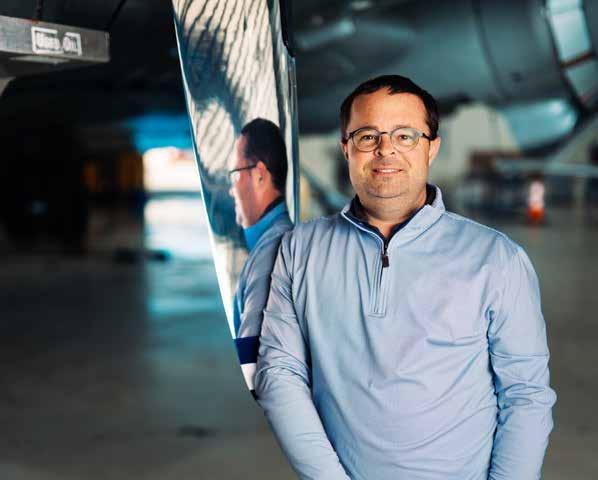
“This is also a sentimental journey of wanting to continue [my dad’s] legacy.”
— Brooks Pettit President Vaerus Aviation
“It’s not very often that someone takes what could be a million-dollar risk to bring an event like this to Topeka,” said Pettit. “For events like this to continue happening, they need to be well supported by the business community.”
WORTH THE FLIGHT RISK
Pettit, Carrico and the rest of the Thunder Over the Heartland team have invested more than two years of effort to bring the four-day event to Topeka. Carrico compared it to planning a large gala, but one that cares for tens of thousands of guests rather than only a few thousand. The aviation element makes the planning more complex, but Carrico said that’s the easy part.
“Brooks [Pettit] and team are well versed in aviation, so that allows us to focus on making it a great day out for families,” said Carrico. “Working with the United States military is an actual enjoyment. They allow us to showcase

our men and women in the best way possible.”
Pettit’s work to bring the air show to Topeka is driven by his desire to do good for the community, as well as to continue the efforts of his father. Pettit’s father, who passed away when Pettit was 13 years old, was the chairman of the Topeka air shows that took place in the late 1980s and early 1990s.
“After he died, there were no more air shows in Topeka,” Pettit said. “So, this is also a sentimental journey of wanting to continue that legacy.”
Pettit said that he believes events like the air show can uplift the greater Topeka community. For him, that’s worth the risk.
“Our community is fiercely advocating for itself and taking bold actions to make this a place people call home,” Pettit said. “Much like all of the other great things that are happening, it doesn’t come without risk. But it’s a risk you have to take for our community to be strong.” TK
Photo by JOHN BURNS





MAY/JUNE 2024 TK Business Magazine 47 Thrive in a worry-free, pest-free environment. Learn more about Green Pest Solutions Scan Here When Peoples Insurance Group and Safety Consulting joined forces with World Insurance Associates LLC, we made a promise to bring our customers more products and services to protect their most important assets. We have kept our promise since 2020 while experiencing a challenging, hard market and are excited to see what the future holds. LARGE RESOURCES. LOCAL RELATIONSHIPS. 1415 SW Topeka Blvd Topeka KS 66612 (785) 271-8097 agent@peoplesinsure.com WE CAN HELP YOU WITH: • Business Insurance • Workers Compensation • Contractor Performance Bonds • Surety and Fidelity Bonds • Cyber Insurance • Home, Auto, & Life • Employee Benefits • Mandated Safety Training Programs • Site Safety Inspections • Improved Workplace Safety • OSHA & DOT Compliance • And more We help our clients manage and protect their most valuable assets—their people and their business. World Insurance Associates offers our clients top products and services from the best providers that span all of your personal and commercial needs. Plus, you continue to get the white-glove service and personal touch of your local World agent CRAIG STROMGREN Principal, President ERIN LESSER Principal, Unit Leader DEREK ROWE Principal, Unit Leader WWW.WORLDINSURANCE.COM

EXPLORING LAKE PERRY’S OASIS
By MIRANDA ERICSSON
High Tide 21, a restaurant on the shore of Lake Perry, has become a popular meeting spot for families, fishing enthusiasts and business owners.
48 MAY/JUNE 2024 TK Business Magazine
Photo by JOHN BURNS
From L to R: Larry Mosher, Alawna Mosher and Shelly Mosher
 by JOHN BURNS
When Larry and Shelly Mosher opened High Tide 21 in Perry, Kansas, they wanted to do more than run a lakeside restaurant — they wanted the restaurant to feel like a community.
“People from all walks of life spend time out here,” said Larry, who took over as the restaurant’s co-owner with his spouse, Shelly, two years ago. “We see retirees, weekend warriors, pedal bikers, hikers and families enjoying the lake. We’re close enough to visit on a week night, but far enough out to really feel like a getaway, an escape from routine.”
Nestled along the scenic shoreline of Lake Perry, High Tide 21 is a restaurant that features a swim-up bar, live music and an extensive menu of seafood and cocktails. Guests can bring their dogs and watch the sunset while enjoying a meal on the patio, or rent one of the restaurant’s cabanas.
“You feel like you’re out of the everyday city life and enjoying a little piece of heaven out here,” said Emily Hierl, the operations manager at High Tide 21. “It’s a mini ‘Lake of the Ozarks’ feeling that you can’t find just anywhere. Where else can you grab a drink at a swim-up bar and see an eagle flying over you?”
MEMORY MAKER
Many Kansans have fond memories of summers at Lake Perry, including the Moshers, although their own connection to the area runs deeper. Larry said that he was a teenager when he started working at the original property that became High Tide 21. At the time, it was 1995 and the restaurant was called The Crow’s Nest. He met his wife Shelly there the following year.
In 2019, a flood damaged the original building and former owners Chris Windler and Bryan Best decided to rebuild the restaurant on higher ground. They asked Larry, who had previously worked as a food and beverage director for casinos and had 25 years of industry experience, to become the new general manager in June 2021. Larry said that neither he nor Shelly could have imagined that they’d someday run a restaurant at the same location where they first met.
“I was honestly feeling a little burned out on the food and beverage world at the time,” said Larry. “But this is a place where I made a lot of good memories, and I felt drawn back. Being here really took me back to my youth, and I decided that I wanted to help others make memories here with their families. We’ve worked really hard to create a welcoming space where families can feel safe and everyone will feel welcome. High Tide 21 is a place to relax, enjoy life and make memories with the people that you care about.”

MAY/JUNE 2024 TK Business Magazine 49
Photo
}
“Where else can you grab a drink at a swim-up bar and see an eagle flying over you?”
— Emily Hierl Operations Manager High Tide 21
MAKEOVER
Windler and Best sold the restaurant and marina to an investment group in March 2023. The same month, Larry was given an opportunity to sublease the building, and he and Shelly officially became High Tide 21’s new owner-operators.
Larry said that in response to customer feedback, he and his team have spent the last few years making changes to the restaurant and its menu. Guests can now play cornhole and pool, and kids have access to a splash pad. Guests who are 21 and older can also take advantage of the swim-up bar. Their menu offers a wide selection of dishes, including seared yellowfin tuna, shrimp and fish tacos, crab rangoon and their popular queso burger.
“My personal favorite is a family recipe called the pinwheel,” said Larry. “Shelly’s always made it for our family and we love it, so we decided to put it on the menu and let other people love it, too.” Their menu describes the pinwheel as a jumbo tortilla filled with cream cheese, green onions, green chilies, shredded cheese and black olives, which is then sliced and served with a side of salsa.
Hide Tide 21 hosts several events throughout the year, including live music, pool parties and a fishing tournament. The Moshers also enjoy hosting private and ticketed events and pool parties at the restaurant, including a pool party hosted by Topeka and Lawrence Pride, a pool party with Tribal Roots of Wichita and a Christmas in July party.
Larry said that his favorite event is their September fishing tournament, which includes a youth division and has prizes for both kids and adults.
“Kids will get support and encouragement and be the stars of the show first, then adults can go out on the lake and do their thing. I love that we not only brought a fishing tourney here, but one that kids can engage with and be a part of those memories,” said Larry.
Lakeside fishing might be one of the restaurant’s most unique features. But according to Hierl, High Tide 21’s sunset views over Lake Perry are just as special.
“I never get over the awe and wonder of our view,” said Hierl. “Every summer seems to go by faster, but for a little while out here, we all slow down to enjoy life and soak up the sun.” TK
50 MAY/JUNE 2024 TK Business Magazine
PHOTO SUBMITTED


renovations to



Purchase, refinance or construction loans for commercial properties
Available for owner-occupied or investment properties
Backed by a team of lending experts with in-depth knowledge of the local real estate market
Precision in the detailsbecause we care about your business as much as you do


 STEVE SHORTMAN
Baskin Robbins
STEVE SHORTMAN
Baskin Robbins

YOUR PARTNER IN
ERIK EVANS Assistant Vice President of Commercial Services 785-228-8148
STEPHANIE SEVATSON Commercial Underwriting Analyst 785-228-8140
envistabusiness.com
From
new builds, our commercial services team is here to help you dream bigger, while executing wisely and confidently.
COMMERCIAL REAL ESTATE
erik.evans@envistacu.com
stephanie@envistacu.com Your story is our passion - Read the Baskin Robbins story at
Topeka,
helpful.
easy it could be.”
“My experience with Envista felt very personal, just like dealing with a friend or neighbor. They knew
and they were all so friendly and
I just didn’t realize how
BUILDING A BETTER CONSTRUCTION CONTRACT
By ANDREW WIEDERHOLT
One Sunday evening at supper with my wife’s family, someone asked our nephew if he had any good jokes. Without missing a beat, he sighed, shook his head and said, “I was hoping to have a construction joke ready…but it’s behind schedule.”
Construction projects are complicated undertakings that depend on uncontrollable factors and involve significant expense and effort. Add that to most issues not arising until work is underway or fully complete, and it’s easy to see why problems occur.
The best way to prevent a project’s complete derailment is to have a plan in place accounting for as many outcomes as possible, while leaving enough flexibility to manage unforeseen circumstances.
At a minimum, a construction contract must contain five essential elements.

ESSENTIAL ELEMENTS OF A CONSTRUCTION CONTRACT
1 SCOPE
A contract’s scope defines the parties’ rights and obligations, and the project’s schedule and objectives. The scope should contain the parties’ full names, addresses and signatures, the included and excluded work, mandatory milestones, delay consequences and quality standards. Important scope provisions include:
• That the completed work will comply with all plans, specifications and applicable laws.
• That the contractor will submit and regularly update a detailed construction schedule.
• A “time is of the essence” clause.
• Defined construction start and completion dates.
• The necessary requirements for the project to be considered complete.
Although not fatal to enforceability, construction contracts should be in writing to provide concrete evidence of the agreed-to terms and, in Kansas, extend the time to assert a breach of contract claim to five years.
} CONSTRUCTION CONTRACTS



Your
Trust McElroy’s to expertly perform all plumbing details of bath, shower, sink and 430 W 1st Ave, Topeka, KS 66603 | Topeka 785-267-0316 | Kansas City 913-722-1075 AlltechKS.com FOR CHOOSING US FOR YOUR SECURITY SYSTEM PROJECT. Th k You T eka Z ! Reliable, state-of-the-art solutions supported by our responsive local Alltech team. We make technology easy! Security Systems Structured Cabling Audio Video Solutions Business Phone Systems
Fulfill
Remodeling Vision
RISK ALLOCATION
Construction contracts allocate the parties’ risk most critically through insurance and indemnification clauses, warranties and unknown or hazardous conditions procedures. Insurance provisions establish the policy coverages, limits and durations the parties are expected to carry.
A contractor’s insurance must insure it to work on the specific project, and the parties should name each other as additional insureds on their respective policies to create direct contractual rights.
Indemnification generally requires the parties to defend and hold each other harmless for damage or injury to the project or third parties resulting from
their own acts or omissions. Importantly, additional insured and indemnity provisions are unenforceable in Kansas when one party seeks to insure against, or indemnify, its own intentional or negligent acts or omissions.
Warranties allocate risks related to the work’s quality and performance following completion. Contractors are regularly required to expressly warrant that their work will be of good quality, conform to the plans and specifications and be free from defects for one year.
Contracts should specify when that warranty period begins and if anything may extend it, and how manufacturer’s warranties will be transferred to the owner. Notably, even if Kansas
3 WORK CHANGES
construction contracts are silent on warranties, a duty for contractors to perform their work skillfully, carefully, diligently and in a workmanlike manner is implied by law.
The presence of unknown or hazardous conditions can drastically change a project. Upon discovery, contracts should require the parties to immediately notify each other and appropriate government agencies, and detail remediation and safety responsibilities.
Time and payment adjustments due to the discovery should be limited to the extent the conditions were not known, or should not have been known, when the contractor’s estimate was set.
At some point, all construction projects will change. A finished project can differ significantly from what the parties originally agreed to. Effective contract change provisions outline procedures for requesting and issuing changes, and how change disagreements will be addressed. Change orders, change directives and minor changes in the work are addendums to the contract that stipulate what the desired or necessary changes are, how they affect the project schedule and what the additional work will cost. Every change should be documented in writing and signed by both parties.
4 PAYMENT
Owner and contractor financial priorities in a construction project are defined by two questions: “How much will this cost?” and “When am I getting paid?”
Effective contract payment provisions answer these questions by clearly stating amounts that are due, when amounts are due and the terms and conditions of payment.
Contractor bids to establish a project’s anticipated cost should spell out the project cost in a way that reflects the
scope of work and includes all potential fees and charges.
Unforeseeable circumstances affecting the cost can be addressed through change provisions, but known or predictable costs likely won’t be reimbursed.
Payment timing forces owners’ and contractors’ interests into direct conflict. Owners don’t want to pay for incomplete or defective work, and contractors must avoid significant time and material investment without payment guarantee.
Kansas law eases this tension by setting a 30-day time limit for owners to make payments owed to contractors while allowing owners to retain a portion of the payment until the project is substantially complete.
Contractors may also file mechanic’s liens for unpaid bills, creating a legal claim to the owner’s real estate.
The goal is to provide leverage to each party to ensure projects reach full completion and full payment as close together as possible.
CONSTRUCTION CONTRACTS
2

DISPUTE RESOLUTION
Many construction contracts contain binding arbitration provisions. In Kansas, parties can mutually agree that arbitration be used to resolve disputes instead of formal court proceedings. In arbitration, there is no jury and the proceedings are closed, but the arbitrator has significant discretion in a final decision with limited appeal rights. Sometimes, the parties also agree to pre-litigation (or pre-arbitration) mediation to facilitate resolution if a dispute does arise.
Much like the projects they govern, construction contracts can be incredibly complicated and exhausting to manage. The most effective examples result in a living document that is precise yet adaptable. By addressing scope, risk allocation, payment, work changes and dispute resolution before work ever begins, a contract’s parties will have created a solid foundation to successfully complete their project on.
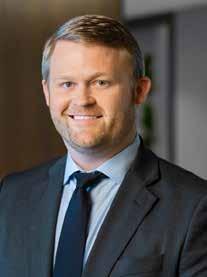
TK
This update has been prepared for informational purposes only. It is not a legal opinion; does not provide legal advice for any purpose; and it neither creates nor constitutes evidence of an attorney-client relationship.

MAY/JUNE 2024 TK Business Magazine 55
5
ANDREW WIEDERHOLT Engineer & Attorney Foulston Siefkin LLP
PHOTO SUBMITTED

A Conversation About MULTICULTURALISM & DIVERSITY in a Global Context
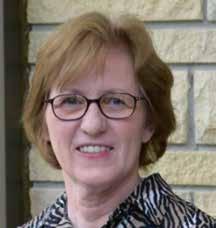
Louella Moore is the Mosso Professor of Accounting at Washburn University. She is a CPA, a member of the Institute of Management Accounting’s Diversity, Equity and Inclusion Committee and an associate editor for Accounting Education.

Professor Norma Juma is an endowed chair and the Brenneman Professor of Business Strategy at Washburn University. She serves on the editorial board of the Journal of African Business (JAB). She is also the vice president of finance for the Academy of African Business and Development (AABD).
Louella Moore: Norma, I enjoyed your article in the January issue of TK Business Magazine in which you wrote about the 70th anniversary of the Supreme Court’s 1954 ruling in Brown v. Board of Education. I wanted to talk with you to explore a few themes in more depth. After summarizing the importance of Brown v. Board of Education, you mentioned that the Academy of African Business and Development (AABD) held its annual meeting here in Topeka in May. Tell me more about the AABD conference.
Norma Juma: The AABD was established nearly 25 years ago and this year marks its 24th annual conference. I serve as the current vice president of finance for the organization. One of our foundational goals is to gather scholars from various disciplines to engage in discussions that inform and influence policy regarding Africa and beyond. This year’s conference will feature representatives from over 12 countries and with more than 80 individuals in attendance. Attendees included a range of professionals, from Mandela Washington Fellows and Fulbright Fellows to business researchers and medical professionals. This level of interdisciplinary collaboration is needed to address global challenges.
MAY/JUNE 2024 TK Business Magazine
}
FROM THE PROFESSOR
PHOTO SUBMITTED
PHOTO SUBMITTED
LM: My doctoral dissertation, which I wrote in the mid-1980s, was on the disparities in drop-out rates among demographic groups in accounting education. Unfortunately, identifying a problem is easier than finding a solution. Participating in the annual Michael Tilford Conference reignited my interest in exploring the historical and cultural dimensions of sociocultural challenges. For the AABD conference paper, my colleagues and I looked at evidence of lingering bias related to African-themed accounting research despite the safeguards of double-blind reviews. As someone with international experience, I’m curious about your perspective on how different countries handle multiculturalism and diversity. Are some countries more successful than others in addressing social divisions?
NJ: Multiculturalism and diversity are universal concepts that emphasize the acknowledgment and celebration of diverse cultural, racial and ethnic identities within a predominant political culture. From my observations, societies that shy away from engaging in conversations about these topics tend to face greater difficulties, whereas those that embrace such dialogues often see significant benefits. In Africa, issues often revolve around tribalism rather than racism. For instance, Kenya recognizes 44 tribes, including the Asian community as the newest addition. While some might dismiss tribal distinctions as inconsequential, they are deeply rooted in rich oral histories and unique cultural narratives. However, when tribalism intersects with politics, it becomes a critical issue, as it does in many African countries1 Regarding social justice strategies, W.E.B. Du Bois and Booker T. Washington offered different approaches, which can coexist within an individual’s life philosophy at different times. For example, Nelson Mandela evolved from actively resisting to embracing reconciliation. This was a philosophical shift from Du Bois’ approach toward a closer alignment with the positions of Washington and Mahatma Gandhi.
LM: Historically, societies have struggled to balance the benefits of world trade and technological advancements against their disruptive side effects. For instance, Topeka’s population has remained stable since the 1970s, but its infrastructure and neighborhoods are still influenced by the diverse groups that migrated here for work in the late 19th and early 20th centuries. Economic and intergroup rivalries from that era mirror today’s tensions with globalization, which now affects not just outsourcing of manufacturing jobs but knowledgebased work as well. As educators, we’re tasked with discussing these complex issues without taking political stances. How do you manage to address diversity and globalization topics in your classroom effectively while remaining neutral?
NJ: In my classes, I emphasize that most ideas and historical events can be understood from multiple viewpoints. It’s essential for students to recognize and explore these different perspectives without hastily dismissing them, as doing so might indicate intellectual complacency. To facilitate challenging discussions on diversity and globalization, I focus on presenting data and evidence, and I make a point to honor the personal experiences that students bring to the conversation.
MAY/JUNE 2024 TK Business Magazine
FROM THE PROFESSOR
LM: I agree. Management controls affect real people and thus require decisions informed by both data and human ideals. Moreover, students need role models that reflect societal diversity. Despite women outnumbering men in United States collegiate accounting programs since the 1990s, textbook representations of thought leadership have historically skewed towards white western males, a trend that is beginning to change as evidenced by the diverse Thinkers50.com ranking of management thinkers for 2023.
There has long been an erroneous myth that African Americans are “just not that interested in business.”2 Du Bois3 utilized data visualization for sociological research as early as 1900 and emphasized African Americans’ long-standing contributions in business. Du Bois’ colleague, Joseph A. Pierce4, also documented African American interest in business and accounting, especially cooperative business models. The cooperative form came before modern concepts like beneficial corporations (B corps) and the triple bottom line which balances social, environmental and financial concerns.
NJ: The cooperative model endorsed by Du Bois and Pierce resonates deeply with African philosophies like Ubuntu and Harambee, which emphasize community solidarity. “Ubuntu” is a Zulu concept that highlights the deep connection between individuals and their societal and physical environments, encapsulated in the phrase “I am because we are.” Similarly, the term “Harambee” represents a Kenyan tradition of community self-help, meaning “all pull together.” This is akin to the principles of social capital and network theory in strategic management, emphasizing the importance of both strong and weak ties. These concepts, highlighting the importance of collective effort and community bonds, align with the idea of a “time multiplier,” where strategic collaborations can significantly amplify outcomes. I endeavor to impart these insights to my students, underscoring that a well-coordinated team can significantly increase productivity.
Similarly, B corps embody the triple bottom line of people, planet and profit, echoing Du Bois and Pierce’s forward-thinking approaches and underlining the potential for businesses to address societal challenges effectively. It’s clear that Du Bois and Pierce were visionaries, far ahead of their era. TK
1 Balaton-Chrimes, S. (2021). Who are Kenya’s 42(+) tribes? The census and the political utility of magical uncertainty. Journal of Eastern African Studies, 15(1), 43–62.
2 Walker, J. E. (2009). The History of Black Business in America: Capitalism, Race, Entrepreneurship (Vol. 1). UNC Press Books.
3 Du Bois, W.E.B. 1899. The Philadelphia Negro. Reprint with Introduction by Henry Louis Gates, Jr. Oxford University Press.
4 Pierce, J. 1947. Negro Business and Business Education. New York and London: Harper Brothers Publishers.
MAY/JUNE 2024 TK Business Magazine 59
Lang Named to Forbes Top 200 CPAs
Brian Lang, CEO of SSC CPAs + Advisors has been been named to Forbes Media’s inaugural Top 200 CPAs.
As the list highlights, CPAs play a vital role in helping companies and individuals solve compliance issues and chart their course for better business solutions, and Lang does just that.
“I’m honored to be part of this profession, and I’m honored to work with an amazing team of curious professionals at SSC who make it all happen,” said Lang.
PERFORMER, ACHIEVER & MOTIVATOR
For the inaugural list of America’s Top 200 CPAs, Forbes identified over one thousand eligible candidates who were then rated in areas like achievements, influence on the profession, performance, and innovation.
“Brian is always looking for ways to serve clients effectively and leverage innovation to make the best use of the expertise of team members” said Erika Dvorske, COO. “He leads in a way that engages team members to find innovative solutions so that SSC and our clients are better tomorrow than we were yesterday.”

60 MAY/JUNE 2024 TK Business Magazine
BRIAN LANG | CEO | SSC CPAs + Advisors
Founded in 1984, SSC CPAs + Advisors is an employeeowned Kansas firm with a commitment to creating value for clients with innovative professionals. TK

911 SE Adams • Topek a, K ansas • 66607 800-211-8008 • capitalcityoil.com THE POWER OF PREMIER FUELS AND LUBRICANTS We care how you fuel Call us at 785-233-8008 or stop by M-F 8am - 5pm Six decades of delivering fuel with a fleet of trucks have taught us a good deal more about what drives a happy customer than anything else.


YOUNG ENTREPRENEUR AWARD WINNER
MICRO ENTERPRISE AWARD WINNER

WOMEN-OWNED SMALL BUSINESS AWARD WINNER
EMERGING INNOVATION AWARD WINNER
TOP CITY SMALL BUSINESS AWARDS

SMALL BUSINESS MANUFACTURER AWARD WINNER

VETERAN-OWNED SMALL BUSINESS AWARD WINNER
Compiled by: INDIA YARBOROUGH BRADEN DIMICK

MINORITY-OWNED SMALL BUSINESS AWARD WINNER
TOP CITY SMALL BUSINESS OF THE YEAR WINNER
The 2024 Small Business Awards celebrates the essence of our community’s entrepreneurial spirit. This annual event celebrates the resilience, innovation and determination of local business owners who see possibilities and navigate challenges to create economic vitality and cultural richness in Topeka. Meet the remarkable individuals whose ventures are the driving force behind our shared prosperity and collective growth.
}

BECOMING ATHENA
LEADERSHIP PROGRAM

YOU INTERESTED IN BUILDING YOUR PROFESSIONAL LEADERSHIP PROFILE?
The Becoming Athena Leadership Program is a comprehensive leadership development initiative aimed at empowering women to achieve their full potential in their personal and professional lives. The program focuses on providing participants with the skills and tools they need to become confident and effective leaders, with a particular emphasis on developing skills in areas such as communication, negotiation, strategic thinking, and decision-making. Through a series of workshops, coaching sessions, and networking opportunities, participants gain the knowledge and support they need to achieve their goals and overcome obstacles. The program is designed to help women take charge of their careers and lead with confidence, helping to create a more diverse and inclusive workforce.
For more information on the ATHENA Leadership Program, email Israel.Sanchez@TopekaPartnership.com or scan the code to visit our website!

Interested in sponsoring this program, please reach out to Ashlee.Spring@TopekaPartnership.com






WOMEN’S INITIATIVE TRAILBLAZER SPONSORS: · CAPITOL FEDERAL · WASHBURN UNIVERSITY · TOPEKA AND SHAWNEE COUNTY PUBLIC LIBRARY · INTRUST BANK · SOUTHWEST PUBLISHING · WASHBURN UNIVERSITY ALUMNI ASSOCIATION & FOUNDATION · FHLBANK · UNIVERSITY OF KANSAS HEALTH SYSTEM ST. FRANCIS CAMPUS · COREFIRST BANK & TRUST
LEADERSHIP
LIVE AUTHENTICALLY LEARN CONSTANTLY ADVOCATE FIERCELY ACT COURAGEOUSLY
COLLABORATION BUILD
GIVE BACK CELEBRATE
ATHENA
MODEL
FOSTER
RELATIONSHIPS
ARE
EQUITY & OPPORTUNITY CHAMPION PARTNERS: WOMEN’S INITIATIVE BENEFACTOR: MEDIA SPONSORS: EVERGY

YOUNG ENTREPRENEUR AWARD WINNER

64 MAY/JUNE 2024 TK Business Magazine SMALL BUSINESS AWARDS PHOTO SUBMITTED
David & Jackie Vincent
CIRCLE COFFEE CO.
Owners David & Jackie Vincent
How did you get to where you are today with your business?
DAVID: We wanted to open a space that brought our neighborhood and surrounding community together to experience an excellent product paired with excellent service. Hospitality has started to seem like an afterthought at most places we go these days. We wanted to change that standard in our little pocket of Topeka, because we believe those small interactions are actually really
important. We also noticed that locally, there is a lack of people who are getting the training they need to become highly skilled at their craft in the service industry. We wanted to open a cafe that prioritizes a high standard for what we serve and the care we put into what we’re doing. We believe Topeka deserves a place that is full of people who care deeply about what they do.


“Bartlett & West helped us understand the long-term potential in biogas. By producing energy and selling to the power grid, we avoid flaring and expect to cut down on our operating costs. It’s rare to find a municipal project that generates revenue. This is a huge win for the City of Topeka.”
Sylvia Davis, Deputy Director of
MAY/JUNE 2024 TK Business Magazine 65
City of Topeka Utilities
www.bartlettwest.com Driving community and industry forward, together. Oakland Wastewater Treatment
Operations
Department
Plant: Producing renewable fuel to drive city revenue and environmental sustainability
What motivated you to open your business in the Topeka area?
What sets you apart from other businesses in your industry?
I grew up in Topeka and have always desired to see more of a creative community develop here. As we’ve planted roots, we’ve noticed a lot of folks move elsewhere for opportunities. We wanted to be an example for younger people who are considering staying in Topeka to pursue their own creative endeavors.
We are very intentional about everything we do. As many businesses in our industry age and grow, it’s easy to lose sight of why you’re doing what you’re doing. From the top down we have made a commitment to our team and our guests that we will pursue excellence in everything we do as long as we are in business.
What did it mean to you and your team to be a finalist in the Young Entrepreneur category of the Small Business Awards?
Being a finalist in the Young Entrepreneur category is a cool thing because a big reason we are doing what we’re doing is to show other young people that there is a lot of opportunity here in Topeka.
It is a really great indicator to our team that we’re doing the right thing. We ask a lot from our small team in the pursuit of excellence. When our hard work is noticed, we are always encouraged by that.
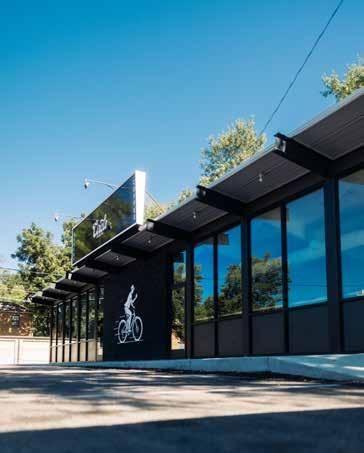

66 MAY/JUNE 2024 TK Business Magazine
SMALL BUSINESS AWARDS
PHOTO SUBMITTED PHOTO SUBMITTED






MAY/JUNE 2024 TK Business Magazine 67 DON’T JUST JOIN A CLUB Join a Family www.topekacc.org (785) 354-8561 THE TOPEKA COUNTRY CLUB Aspire. Prepare. Enjoy. With you for life. Fee-Only | Fiduciary Independent | Objective (785) 232-3266 716 S. Kansas Ave., Topeka, KS 66603 (785) 371-4832 832 Pennsylvania St., Suite 1005, Lawrence, KS 66044 claytonwealthpartners.com

68 MAY/JUNE 2024 TK Business Magazine SMALL BUSINESS AWARDS PHOTO SUBMITTED
Nick Love, MD, MBA and Bradley Hopper
EMERGING INNOVATION AWARD WINNER
LOVE LIFESCIENCES, INC.
Co-Founders Nick Love and Bradley Hopper
How did you get to where you are today with your business?
BRADLEY: Our inspiration came from witnessing a real problem with patients adhering to their injectable medications due to the pain they experienced during the injection process.
We went to a large group of patients to ask them what, exactly, they struggled with and then took those
problems to the drawing board to find solutions. We came up with a singleuse injection pen that is completely controlled by the patient while offering numerous safety features.
Once we had a baseline for our device it was time to learn how to bring it to market. Through
several advisors, we were able to learn how to patent our device, build a Food and Drug Administration pathway and fully manufacture our device.
Today, we are awaiting FDA clearance while we scale our manufacturing processes to meet the high demand we have experienced.



MAY/JUNE 2024 TK Business Magazine 69
}
What motivated you to open your business in the Topeka area and how has the community impacted your growth and trajectory?
What sets you apart from other businesses in your industry?
Topeka is a great community to open a business. The partnership is one of the only community initiatives that offer resources like grants throughout the nation. We have had a great experience working with many Topekans who have helped grow our business through advisement, networking and funding.
We have sadly found that the majority of companies in the pharma/biotech space put a high emphasis on profits and the like instead of helping patients live better lives.
Our business started with the goal of helping patients have an improved experience whether that be through the medical experience or just affording medications. We are the underdogs in the arena, but our fresh approach and perspective on the market have helped us find success in many ways.
What did it mean to you and your team to be a finalist in the Emerging Innovation category of the Small Business Awards?
It is an honor to be recognized for the hard work we’ve been doing. Bringing medical devices to market is a long and strenuous process that requires a lot of behind-thescenes work. It is fantastic for our team to have this positive recognition from the Topeka community.
Growing up in Topeka and owning several small businesses over the years, including my first business that I started in high school, I have looked up to a lot of other local entrepreneurs and wondered if I have what it takes to be like them.
There is still a long road ahead, but I am grateful to have such great support as I navigate my path. This award would be a big motivating factor for me to keep pushing forward.
Love Lifesciences, Inc. has designed a UniPen to put the control of medications back into the hands of the user. The goal is to provide a more comfortable injection experience.

70 MAY/JUNE 2024 TK Business Magazine SMALL BUSINESS AWARDS
}
PHOTO SUBMITTED
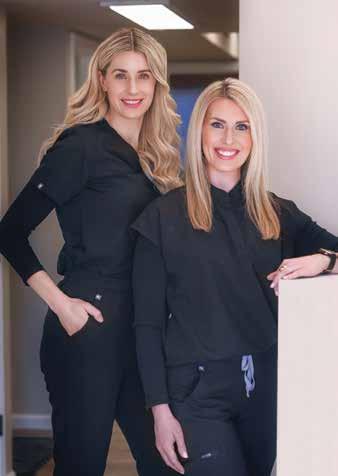


•
•
•
•
•


MAY/JUNE 2024 TK Business Magazine 71 Please visit our website or call our office to discuss your symptoms, so we can develop a plan that is right for you! www.epicintegrativewellness.com 785-377-0700 • Fatigue • Weight Gain • Hot Flashes • Difficulty Sleeping • Mood Changes • Low Libido • Brain Fog • Night Sweats
Fatigue
•
Low Motivation
Brain Fog
Difficulty Gaining Muscle Mass
Weight Gain
Low Libido
Mood Changes • Hormone replacement therapy for women • Testosterone replacement therapy for men • Medical weight loss WE CAN HELP! WE OFFER CUSTOMIZED TREATMENT PROGRAMS.
•

72 MAY/JUNE 2024 TK Business Magazine SMALL BUSINESS AWARDS PHOTO SUBMITTED
ENTERPRISE AWARD WINNER
Angeliqué-Olivia J. Taylor
MICRO
AO NOLA PRALINE CANDY
Owner Angeliqué-Olivia J. Taylor
How did you get to where you are today with your business?
ANGELIQUÉ-OLIVIA: I was inspired by the traditional creole pecan praline candies from my hometown of New Orleans, Louisiana. My aunt, Sandra Victor, and my cousin Sonya used to make them when I was growing up and I learned how to make them at a young age. I have always made them and other creole dishes for family events and work potlucks. I was encouraged to make it a business, but never imagined doing so.
Not until March of 2020, when my life changed forever. I found my beloved Aunt Sandra dying of COVID-19 in her home.
The week prior to my aunt contracting COVID, she and I had a heart-to-heart talk about my work environment at the time. She advised me that not all money is good money and that I must step out on faith and start a new venture that would empower me. Even then, I was not prepared to start a business.
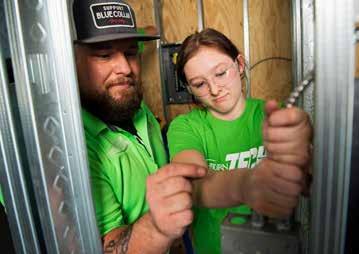

Just three days after my aunt’s death, I was cleaning her house and found that she had left a piece of a pecan praline candy I’d made tucked under her pillow. That’s when I knew that my dear Aunt Sandra had the last word in death.
She was absolutely right. I needed to move forward and start my longawaited praline business that she and family members were always encouraging me to do. No longer could I ignore what God had in store for me. That’s when I started planning AO Nola Praline Candy.
MAY/JUNE 2024 TK Business Magazine 73 Washburn Shawnee County THRIVES SCHOLARSHIP Providing financial assistance to students and graduates of Shawnee County high schools who enroll in one of Washburn Tech’s 30+ career programs. Enroll now! Call 785.670.2200 5724 SW Huntoon St. ˡ Topeka, Kansas WashburnTech.edu Together We Thrive! Electrical Technology Katy Price & Joe Beasley 785.414.3226 bokfinancial.com/privatewealth Not sure about the next step on your wealth journey? Let us help. BOK Financial Private Wealth offers extensive services and solutions to help you protect and manage your wealth. BOK Financial® is a trademark of BOKF, NA. Member FDIC. Equal Housing Lender ©2024 BOKF, NA.
}
What motivated you to open your business in the Topeka area and how has the community impacted your growth and trajectory?
I knew Topeka would embrace my business. I had already introduced my praline flavors to my coworkers at the local VA and they fell in love with them.
Topeka is my new home. I love Topeka as much as I love New Orleans. I relocated to Topeka after Hurricane Katrina in 2005. It wasn’t easy at first but once I got out of my depression, I accepted that relocating to Topeka was the best place to raise my daughter and start my career.
The locals welcomed me and my family. That welcoming spirit is what motivates me to continue to grow my business.
My pralines are now a well-known delicacy in the Topeka region thanks to Downtown Topeka Inc., the Breadbasket Farmers Market and Hy-Vee grocery store. I want to expand to other local Hy-Vee stores in neighboring towns. I also want to see my Kansas City Chiefs pralines at Arrowhead Stadium, Kansas university stadiums and other local retail businesses.
What sets you apart from other businesses in your industry?
In Topeka, there are no competitors in the field of praline making. Even in New Orleans, there are only two flavors of pralines.
My business offers a total of 13 flavors that include light sugar, vegan and bacon praline treats to accommodate all family members — including furry babies. Three flavors are rum pralines. The rum isn’t for flavoring — it has a kick, but it goes down smooth.
I have been working with attorney Tuck Duncan to propose a new confectionery alcohol bill in the state so that I may become a rum praline manufacturer in Kansas. If this bill is passed, it will help other small businesses in Kansas that want to make alcohol-infused treats.
In New Orleans, rum pralines are just for flavor, and do not have the effect of taking a shot in food form like my rum pralines. I can’t wait to share the opportunity with our community.
What did it mean to you to be a finalist in the Micro Enterprise category of the Small Business Awards?
It took me by surprise! I am appreciative of this award because it means that my hard work and dedication isn’t in vain.
It shows that my dear Aunt Sandra taught me well and was right about this new business venture I was so scared to take.
She always advised me to lead with love, be positive and remember that good food always brings people of all sorts together. I concur!
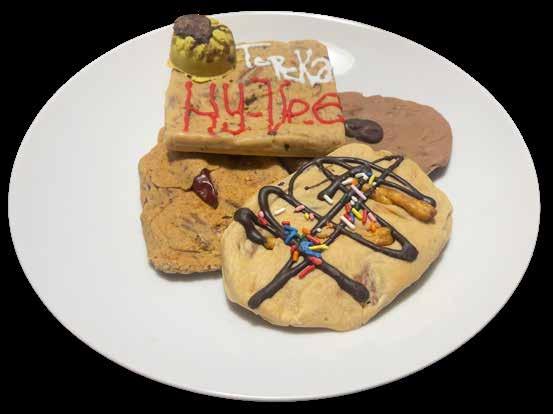
74 MAY/JUNE 2024 TK Business Magazine } SMALL BUSINESS AWARDS
PHOTO SUBMITTED


07.25.24
Join us on July 25th at our Education and Industry Summit!
Our keynote speaker, Mark Perna, will unravel strategies to navigate the evolving landscape of work and education, empowering the next generation to soar to their highest potential. Perna is a renowned generational workforce expert and Forbes contributor, this summit promises insights that will reshape your approach to education and workforce development.

SAVE THE DATE

76 MAY/JUNE 2024 TK Business Magazine SMALL BUSINESS AWARDS
PHOTO SUBMITTED
SMALL BUSINESS MANUFACTURER AWARD WINNER
Regina & Paul Brown with staff members
AUTOMATION CONTROLS, INC.
Co-Owners Regina & Paul Brown
How did you get to where you are today with your business?
PAUL: My wife and I moved to the DallasFort Worth area of Texas after graduating from Kansas State University. We both worked initially for manufacturing businesses.
After five years I went to work for a systems integrator because that was my passion. I believed a systems integration business could prosper here in Northeast Kansas, and we could raise our family in a great environment at the same time.



MAY/JUNE 2024 TK Business Magazine 77 }
What motivated you to open your business in the Topeka area and how has the community impacted your growth and trajectory?
For us, the Topeka area was home and where we wanted to base our business. The community has been very supportive of us through matching grants by GO Topeka. Over the years, we began to realize how important it was for local businesses to stay current with technology so they could be competitive on the world market. Our customers recognize that we’re keeping them on the leading edge of technology and have remained faithful to us.

What sets you apart from other businesses in your industry?
We have a great passion to train the next generation. Our goal is to try and encourage as many high school students as we can to enter the automation field. We sit on a board at Washburn Tech to help them keep the curriculum relevant to the current needs of the market.
What did it mean to you and your team to be a finalist in the Small Business Manufacturer category of the Small Business Awards?
Without a doubt, winning is a great reward to our whole team. We are very humbled to have been nominated and very thankful to the community for this honor.
Winning is a seal of approval for our calling to encourage the next generation to get the skills they need and find a passion like we did.
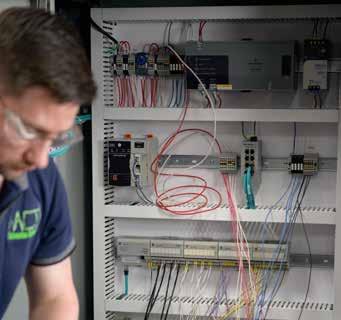

78 MAY/JUNE 2024 TK Business Magazine
SMALL BUSINESS AWARDS } PHOTO SUBMITTED PHOTO SUBMITTED PHOTO SUBMITTED

80 MAY/JUNE 2024 TK Business Magazine SMALL BUSINESS AWARDS PHOTO SUBMITTED
AWARD WINNER
WOMEN-OWNED SMALL BUSINESS
Heather DiDomenico Graves
ONYX SALON AND WELLNESS SPAS AND ONYX WELLNESS CAFE
Owner Heather DiDomenico Graves
How did you get to where you are today with your business?
HEATHER: I had the incredible opportunity to work at one of the best salons in the United States. I was given an amazing foundation for the industry and also trained to be an educator.
Teaching people has always brought me so much joy. I adore doing hair, but I also
love helping people grow and master their craft.
I had started my own business inside someone else’s business and was training stylists who would later work for that business. It made sense for me to take the leap and open my own salon.
I was a single mom at the time, so I was quite nervous but came up with a plan that made me comfortable. I sold my house, bought a commercial building and lived above it while we built the salon. This meant I could provide for my son and build my dreams.

MAY/JUNE 2024 TK Business Magazine 81 }
What motivated you to open your business in the Topeka area and how has the community impacted your growth and trajectory?
I moved to Topeka from San Diego 14 years ago and I love it. Honestly, coming from a bigger city and knowing the cost and hustle, Topeka is a gift.
This city has so many incentives to promote small business owners. The resources and connections that GO Topeka offers are invaluable. I truly feel like this city wants to be full of successful entrepreneurs. So, hands down, I choose Topeka.
This community has been everything for Onyx. Topeka has truly shown up to celebrate and support all of my girls and their careers. I couldn’t be more grateful to this community. We’ve had amazing support from NOTO, Downtown Topeka Inc., GO Topeka, Greater Topeka Partnership and the community, who really support their local businesses. I am truly blown away by this community every day.
What did it mean to you and your team to be a finalist in the Women-Owned Business category of the Small Business Awards?
It means so much to be a finalist for the WomenOwned Business category. Women’s empowerment and mentorship is my identity and the heartbeat of Onyx. I love these women to the moon. It’s truly a blessing to see them all walk into such strength of self and success in their careers.
To win is the icing on the cake for me and them.
We have such incredible small business owners here in Topeka, so being in a room with all of these unbelievable entrepreneurs is amazing. Thank you for this opportunity, and for always supporting Onyx.
What sets you apart from other businesses in your industry?
Education, mentorship and room for growth. Most salons are either commission or booth rent. I know what it’s like to be working at a commission salon and to be ready to grow to the next level, but can’t in that space. I also know how much money it costs up front to start your own business as a booth renter.
I wanted to have a space where I could mentor my girls and help them grow into whatever they want to be. I have a buyback program that keeps the startup costs for booth rent to a minimum, and really helps them get their footing. I want all of my girls to have great success. Once they are on their own, I still check in with them, guide them and help in any and all ways possible.

82 MAY/JUNE 2024 TK Business Magazine
SMALL BUSINESS AWARDS PHOTO SUBMITTED }



TDesignCompany.com TDesignCompany thiessen_designco KITCHEN | BATH | WHOLE HOME REMODELS | NEW CONSTRUCTION | FURNISHING | DECORATING

84 MAY/JUNE 2024 TK Business Magazine SMALL BUSINESS AWARDS PHOTO SUBMITTED
VETERAN-OWNED SMALL BUSINESS AWARD WINNER
Allison & Jake Taylor
CURB APPEAL POWER WASH
Owner Jake Taylor
How did you get to where you are today with your business?
JAKE: I learned what hard work was growing up on a small farm and serving in the United States Army Reserves. When I worked in restaurant management, I learned that most people aren’t that good at cleaning. I also learned how to serve others as a pastor. I found out you can serve others with hard work, cleaning and making a business. By teaching and mentoring others how to do the same, you can feel great making a living.


MAY/JUNE 2024 TK Business Magazine 85 Visit us for the personal attention you deserve! alliancebankks.com }
What motivated you to open your business in the Topeka area and how has the community impacted your growth and trajectory?
Topeka is my home. I met and married my high school sweetheart here 23 years ago, and since then our two wonderful children, Alex and Emma, have grown to love Topeka as their home, as well.
Our customers are the best in the Midwest. We continue to focus on their needs, and they continue to call on us for their cleaning projects, Christmas lights and gutter or gutter guard needs.
As we’ve grown from just me to a team of 13 employees, we have been fortunate to be awarded grant reimbursements as we add equipment to serve our community. This assistance from GO Topeka has been valuable, along with the networking opportunities and educational resources.
What sets you apart from other businesses in your industry?
Our vision, our standards and our technicians. Our vision is to glorify God by collectively using our unique gifts and talents to serve others. We continue to focus on the needs of others, and we do this by using the right soaps and the right techniques to get the right results.
Our team has a guiding principle — “wash on” — that became our slogan, and our technicians are champions at it. Even when the situation may not be ideal, we have been given a talent and called to a mission, so wash on. We operate in the background, helping our customers reach their cleaning goals so that they look like the superhero. Other companies try to copy our techniques, but we wash on. We continue to focus on our vision to serve others, and we’re still the highest-rated and most-awarded pressure washing company in Topeka, Lawrence and Manhattan.
What did it mean to you and your team to be a finalist in the Veteran-Owned Business category of the Small Business Awards?
I learned our guiding principle from serving in the U.S. Army Reserves: “You never get ahead by doing the minimum.” As we began to solve more problems for residential and commercial customers, we started adding wash technicians to serve our customers’ needs.
We would send wash crews from Wichita to Kansas City to clean up parks and playgrounds, parking garages and commercial properties. We learned by working long days in all temperatures to complete our customers’ goals that our guiding principle of “wash on” became a badge of honor. Today, we have a team of 13
people in our home office and in our wash crews to serve the needs of our customers. From wash technicians, Christmas lights installers and gutter installers, we remain steadfast in our resolve to “wash on,” affirming our dedication to excellence and service to the community.
Serving others is what we do, and my past experiences have helped me serve more people. I am fortunate to live in a city that encourages small businesses to grow and provides opportunities to do so. I didn’t enlist to be recognized, but I am thankful that our team makes a difference in our community and is worth recognizing. Thank you.

86 MAY/JUNE 2024 TK Business Magazine SMALL BUSINESS AWARDS
} PHOTO SUBMITTED






MAY/JUNE 2024 TK Business Magazine 87 Investment advisory services offered through Cambridge Investment Research Advisors, a Registered Investment Advisor. Cambridge and On Target Financial are not affiliated. Making Sure you take your best shot at financial goals. Joseph Prokop, CFP® CRPC® CERTIFIED FINANCIAL PLANNER™ Client CFO & Fiduciary (785) 272-5000 www.ruontarget.com 5301 SW 7th St Topeka, KS 66606 joe@ruontarget.com TKbusinessmagazine.com MAILED DIRECTLY TO YOUR DOOR. NEVER MISS AN ISSUE. SUBSCRIBE TODAY.
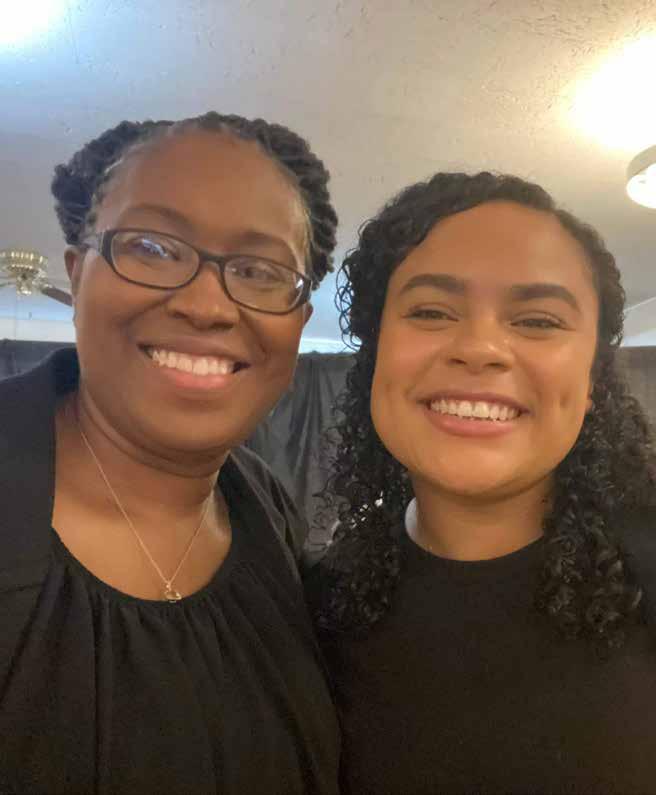
88 MAY/JUNE 2024 TK Business Magazine SMALL BUSINESS AWARDS PHOTO SUBMITTED
SMALL
AWARD
MINORITY-OWNED
BUSINESS
WINNER
Melissa Patterson & Tiara Patterson
PATTERSON FAMILY CHILD CARE CENTER LLC
Owner Melissa Patterson; Director Tiara Patterson
How did you get to where you are today with your business?
MELISSA: I’ve always had a love of children and watching them grow. Being a part of their early education was the inspiration to start my own family childcare business. We’ll be opening our second location, the Patterson Family Infant & Toddler Center LLC, soon. Tiara Patterson is in training to keep the business going and will be the director of the new center.

MAY/JUNE 2024 TK Business Magazine 89
}
TOP CITY SMALL BUSINESS OF THE YEAR WINNER
What motivated you to open your business in the Topeka area and how has the community impacted your growth and trajectory?
MELISSA: We moved back to Topeka in 2006. Anywhere you go throughout the world, there’s going to be a need for childcare. The thing about owning an early learning center is that children are everywhere. Over the years, we’ve grown from family child care to a child care center, and will now have a second location. The laughs, the hugs, the I Love Yous keep me going.
TIARA: What I enjoy most is being able to watch the kids grow and being able to tangibly see all of your work come to fruition. I work a lot with infants, so I love being able to watch them start crawling, start talking and growing in their environment.

What did it mean to you and your team to win the Minority-Owned Small Business category and to also win the award for Top City Small Business of the Year?
MELISSA: It’s a great accomplishment to get recognized for something I started in 1997 that has blessed so many people. The hard work that the teachers put in daily is recognized and awarded. With God, all things are possible.
Winning this award is not just for me. It’s for the ones who have helped me to get to where I am. It’s also about leaving behind a legacy that Tiara is going to take over and keep going for years to come.
What sets you apart from other businesses in your industry?
MELISSA: Our business is a ministry. If you’re doing your ministry and doing the work that the Lord has given you, it’s going to set you apart.
TIARA: We’re in it to win it. We’re in it because we love the kids and because we really want to create an environment where they feel safe and loved. Not just for the children, but for the whole family and the whole community.
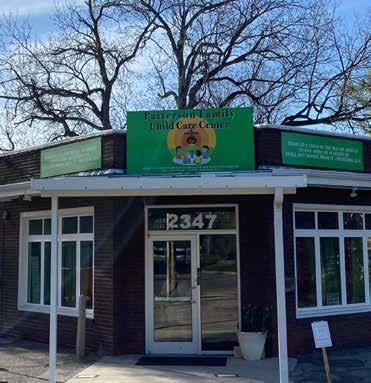
90 MAY/JUNE 2024 TK Business Magazine SMALL BUSINESS AWARDS TK
PHOTO SUBMITTED


AT THE CORE
WITH DANIELLE J. MARTIN

SPOTLIGHT ON
SUBMITTED
DR. SHEKHAR CHALLA
PRESIDENT AND CEO OF THE KANSAS MEDICAL CLINIC
PHOTO
ABOUT DR. SHEKHAR CHALLA
Dr. Shekhar Challa, President & CEO of Kansas Medical Clinic (KMC), is board-certified in Gastroenterology and is a practicing Gastroenterologist at Kansas Medical Clinic. KMC is a multi-specialty group practice with 150 employees, 33 providers, and is spread across 13 locations throughout Kansas and Missouri.
He is the founder of Osteoporosis Services, Inc. Which, at its peak, was the largest mobile bone density service company in the United States; spanning 6 states and 150 rural hospitals.
He also had the opportunity to co-found with his daughter Akhila, a nutraceutical probiotic company, called Probulin. Probulin is currently available in over 4,000 stores in the USA, including Whole Foods and Sprouts.
In addition to his several companies, Dr. Challa is an award-winning author. His books include “Winning the Hepatitis C Battle,” for which he received the Readers Preference Award and was a Benjamin Franklin award finalist, “Spurn the Burn: Treat the Heat-Everything you need to know about Acid Reflux Disease,” and “Probiotics for Dummies.”
Dr. Challa is on the board of Medtronic. He has been involved with the Greater Topeka Partnership since its inception and now serves as its chair.
In 2020, Dr. Challa was selected to the Junior Achievement of Kansas Topeka Business Hall of Fame.

Scan the QR code to see the full interview with Dr. Shekhar
“At the Core with Danielle J. Martin” features leaders across Kansas and is dedicated to showcasing the stories and voices of local leaders who have substantially impacted their communities and industries.
MARTIN:
I’m excited to introduce Dr. Shekhar Challa. He’s the president and CEO of the Kansas Medical Clinic, and known as the Renaissance Doctor. Dr. Challa, welcome to the show.
DR. CHALLA: Thanks for having me.

MAY/JUNE 2024 TK Business Magazine 93
}
Challa, president and CEO of the Kansas Medical Clinic.
MARTIN:
Dr. Challa, tell us about your background.
DR. CHALLA:
I was born in India, but I was in New York for five years, from 1982 to 1987, which is where I did my training in internal medicine and gastroenterology. I was definitely very nervous moving to Topeka. When you train in New York, you can work anywhere in the world. I was pretty confident about my skillset, but nervous and not sure whether I’ll be successful.
MARTIN:
What led you to diversify your medical services?
DR. CHALLA:
As the old adage goes, don’t put all your eggs in one basket. We also wanted to be sure we’re meeting what the consumers in Kansas need. Twenty-five years ago, my wife came up with the idea to start a med spa. We were the first med spa in Kansas. We later found our sweet spot in dermatology. In the last 10 years, we’ve also scaled our research. There are a lot of medical conditions out there for which there are no drugs, and research provides an avenue to try something out. I’m proud to say that we are doing 16 studies on liver disease, fatty liver, and cirrhosis. There’s no treatment for it and all the major pharmaceutical companies are racing to make the first drug.
MARTIN:
Not only are you a doctor, but you’re also an entrepreneur. How do you balance the two roles?
DR. CHALLA:
My dad told me to be a good doctor first, then an entrepreneur. I was just a doctor for the first 10 years. Once I felt comfortable, I decided to be an entrepreneur. Eighty to 90% of my work still involves the medical practice, which I owe to my superstar management. They’re awesome. And because of that, I still can practice gastroenterology and hepatology and let the company grow.
I’m not a micromanager, which helps. Over the years at KMC, we’ve developed what we call the “great philosophy.” One part of the great philosophy is to make the patient’s day. That’s why we are here. Play, but within reason. We are family and need to take care of each other. My management team makes it easy for me to balance the two roles.
I think medical training teaches you to work hard and be resilient, which helps in your entrepreneurial journey. They don’t teach any of this in medical school, which is sad.
MARTIN:
You’ve written several books, and you also run a business with your daughter. Tell us more.
DR. CHALLA:
I’ve written multiple books, and I’m proud to say that my book about hepatitis C was translated into Spanish. I wrote “Probiotics for Dummies” after my daughter told me she wanted to start a supplement company. We formulated our own products and I wrote the book to give our products credibility. Our biggest challenge was bringing our products to the market. We were strong in coming out with the product and getting credibility, but we were poor in understanding how to sell the product. That’s when we got a traditional CEO. Soon, our products were in 5,000 stores. We exited the company in 2019, I believe.
MARTIN:
What advice would you give to aspiring entrepreneurs in the medical field?
DR. CHALLA:
Known your product or service better than anyone else. You have to be the purple cow, like in Seth Godin’s book “Purple Cow.” In short, he says that you have to be remarkable so that people from far away will identify you as the purple cow, as opposed to a regular cow. Beyond knowing your product, my advice would also be to get ready to work hard, be resilient, and understand your numbers.
94 MAY/JUNE 2024 TK Business Magazine
MARTIN:
What principles or strategies have you learned from opening your own practice?
DR. CHALLA:
Never be overconfident. Selfdoubt helps you learn along the way and grow. I tell my kids that dreams are free, so dream big. The two mantras I have are “perfection is the enemy of good” and “status quo is the kiss of death.” If you try to be perfect, good is good enough. Otherwise, you’ll be striving for perfection and will never move.
MARTIN:
Why did you choose to open KMC in Topeka?
DR. CHALLA:
I came here in 1987. I wanted to be in a place that’s good for raising a family, and close to a big city. Topeka was ideal. I was not who I am today in 1987. Topeka made me, so I owe it to Topeka.
MARTIN:
You’re also involved in the community and on multiple leadership boards. When do you sleep?
DR. CHALLA:
Luckily, I don’t sleep a whole lot, so four to five hours is enough for me. I catch up by taking afternoon naps on weekends.
MARTIN:
When it comes to work-life balance, what advice would you give to others?
DR. CHALLA:
From a business perspective, numbers don’t lie. You have to be true to your numbers. There is no advantage pursuing a passion if the numbers don’t make sense, if the economics don’t work. You have to be honest with yourself. You will soon realize when to push the gas pedal and when to hit the brake.
MARTIN: When do you know it’s time to take a break?
DR. CHALLA:
Unfortunately, I’m not triggered that way. If it was left to me, I wouldn’t take a break. But I have good people surrounding me — my wife, my kids, my mentor — who keep me accountable.
MARTIN:
Talk about why you recommend that everyone have a mentor.
DR. CHALLA:
My mentor is a gentleman by the name of David Finkel. He wrote the book “Scale.” He keeps me grounded, accountable, and gives me a second opinion. A trained mentor pulls from a lot of businesses, and that helps whether you’re in the medical field or otherwise.
I look at mentorship in two ways. You are not only mentoring the business aspect, but also the personal side of the individual or the company. You have to be supportive and tactical when it comes to mentorship, and you have to be speaking in actionable terms, set a date, a time, a deadline. That’s how mentorship is from a business side, from a personal side. You have to mature as a person, too. Humility is a virtue we hardly see. Being humble is good.
The other thing is don’t let success go to your head, or failure go to your heart. Failure is inevitable in business. You just need to get up and keep going. Entrepreneurship is the ultimate equalizer. It doesn’t see your gender or skin color. When you are successful, take the time to pay it forward. One of the ways you can pay it forward is by mentoring others.
MARTIN:
How can people find a mentor?
DR. CHALLA:
There are so many people out there. You think they’re so busy and won’t have enough time for you, but that’s not true. You’ll be surprised. You just have to ask. I mean, I’ve been asked by several people, but expect homework. Don’t come back to me and waste
MAY/JUNE 2024 TK Business Magazine 95 }
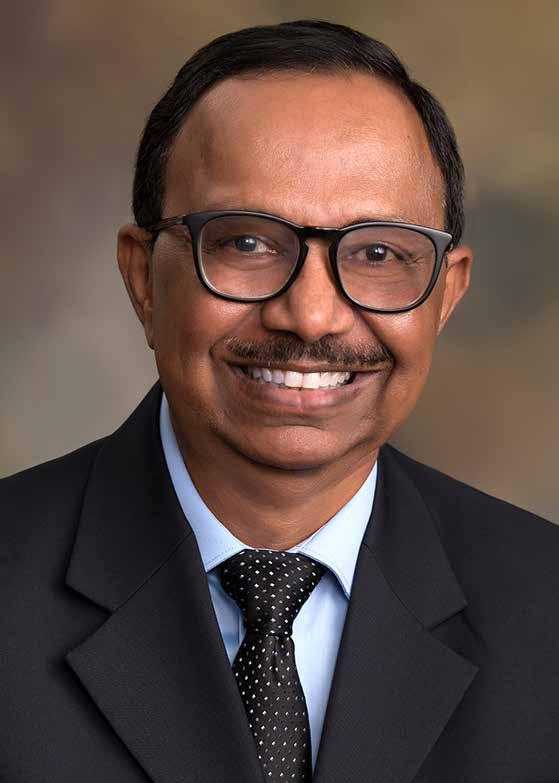
my time unless you have done A, B, C. A mentor doesn’t even have to be someone in your field. A mentor is somebody who’s been successful and also had failures in their life, but got over that and continue to be successful.
MARTIN:
Would you say that you’re comfortable with failure?
DR. CHALLA:
Absolutely. If you have not failed, you’re either a rookie and just
getting started, or you’re not comfortable stepping out of your comfort zone. I have had my share of failures. As long as you learn from your failures and don’t repeat the same thing, you are okay.
MARTIN: What advice would you give to those who are trying to be as successful as you are?
DR. CHALLA:
It’s not going to happen overnight. It is going to take time and a lot
SHEKHAR CHALLA President & CEO Kansas Medical Clinic
of hard work. At some point, you may realize that your product may not be as good as you think it is, or your service is not as good as you think it is. This is where mentorship and getting a second opinion will always help.
MARTIN:
Do you see retirement coming anytime soon?
DR. CHALLA:
We just signed on to a couple of research studies, which will go on for seven years. I don’t expect to retire, but I may slow down in the practice of gastroenterology.
MARTIN: What legacy do you want to leave?
DR. CHALLA:
To be remembered in a positive way. TK
96 MAY/JUNE 2024 TK Business Magazine
PHOTO SUBMITTED
DR.
SAME WEEK APPOINTMENTS


Advisors Excel Scholarship Promotes Personal Financial Planning Career Path at K-State
Advisors Excel started a $5,000 scholarship in 2020 to help more women and minorities get introduced to the personal financial planning career path. In May, the first scholarship recipient, Jayde Madel, graduated from Kansas State University with a Personal Financial Planning degree. To date, eight scholarship recipients are enrolled in the nationally ranked Personal Financial Planning program.


Stormont Vail Health Welcomes Lincoln Center OB/GYN Douglas Gleason, M.D.
Dr. Gleason delivers various women’s health services in the Stormont Vail OB/GYN Lincoln Center in Topeka. Aside from his 12-year education journey, Dr. Gleason has called Topeka home his entire life. After finishing his residency at Indiana University School of Medicine in Indianapolis, Dr. Gleason joined his father’s practice in Topeka, where he has served for 27 years.

Locally Owned SPIN!
Pizza Debuts Detroit Style Pizza at Topeka Location
The Detroit Style Pizza features a pillowy, crispy crust generously topped with Wisconsin brick cheese that stretches all the way to the crunchy edge. Each pizza is topped with SPIN! Pizza’s quality ingredients and finished with a bold homemade marinara sauce.
Intelligent Banking Solutions Welcomes
Ronnie Wooten as CEO
Intelligent Banking Solutions Inc., the market leader in debt collection and asset recovery management software for financial institutions, announced Ronnie Wooten as CEO. Wooten, who has more than 33 years of financial industry experience across retail, lending and operations, will also continue her role as CEO of Suntell, a position she has held since 2022. Both companies are part of Arcadea Group.
Tenpenny
Joins Topeka INTRUST Team INTRUST Bank welcomes Ben Tenpenny as Senior Commercial Relationship Manager at its Topeka location. Ben brings nearly 30 years of banking experience to his new role, with a focus on commercial banking and a deep understanding of the local business landscape. A lifelong resident of Topeka, Ben is deeply rooted in the community and has dedicated years to understanding the needs of local businesses.
FHLBank Topeka Selects Lance Liby as Chief Business Officer
Lance Liby has been selected as the new chief business officer for FHLBank Topeka, a wholesale bank that serves as a source of credit for member financial institutions in Colorado, Kansas, Nebraska and Oklahoma. He joined FHLBank Topeka in 2013 as director of credit analytics and has served as chief credit officer since 2017.
Nitty Gritty Dirt Band to Perform Live at Prairie Band Casino
The three-time Grammy Awardwinning Nitty Gritty Dirt Band is bringing All The Good Times: The Farewell Tour to Prairie Band Casino & Resort in Mayetta, KS on Thursday, July 11.


98 MAY/JUNE 2024 TK Business Magazine Send your news releases to news@tkmagazine.com. Get expert business
at TKmagazine.com BUSINESS
ALL PHOTOS SUBMITTED
advice and up-to-date information on business in Topeka
NEWS
24-Hour Crisis Center – 400 SW Oakley
24-Hour Crisis Line – 785-234-3300
24-Hour Detox Line – 785-234-3448
Assertive Community Treatment (ACT)
Case Management
Community Medication Outreach (CMO)
– Adults only
Crisis Intervention
Crisis Residential Services - Adults Only
Dialectical Behavior Therapy (DBT)
Expressive Therapies
Health Coordination
Homeless Outreach & Housing
Human & Sex Trafficking Prevention
Integrated Dual Diagnosis Treatment (IDDT)
In-Home Support Services
Intake Services
Illness Management & Recovery
Medication Assisted Treatment (MAT) – Adults only
Mobile Access Partnership (MAP)
Mobile Crisis Response (MCR)
NAVIGATE - AGES 15 - 36
Nicotine Cessation – Individual & Groups
Nursing Facility for Mental Health (NFMH)
On-site Pharmacy – Genoa Healthcare
Osawatomie State Hospital Liaison
Outpatient Psychotherapy Services (OPS)
Projects for Assistance in Transition from Homelessness (PATH)
Peer Support
Psychotherapy
Psychiatric Medical Services
Psychosocial Rehabilitation
Services for Employment Success (SES)
SOAR – SSI/SSDI Outreach Access & Recovery
Spravato Clinic – Adults only
Transitional Housing – Adults only
Valeo Recovery Center (VRC)
- Social Detox-Adults only
- Residential/Intermediate-Adults only
- Community Housing/Reintegration-Adults only
- Intensive Outpatient
- Continuing Care Outpatient
- Jail Treatment Program
- Drug Testing
- Assessment and Referral

MAY/JUNE 2024 TK Business Magazine 99 May is Mental Health Awareness Month GET HELP, FIND HOPE 330 SW Oakley Topeka, Kansas, 66606 Phone: 785.233.1730 24-Hour Crisis Line: 785.234.3300 24-Hour Detox Number: 785.234.3448 Visit us at: or valeotopeka.org Valeo behavioral
Health Care Services

14% of pregnancy-associated deaths in Kansas occurred among Black mothers from 2016—2018.* All mothers and children deserve just opportunities for health and happiness. Stormont Vail Health is committed to improving Black Maternal Health through education, advocacy, and support.
Scan the Code to
• Find community resources
• Read real-life stories of hope and resilience from local moms
• Learn about our initiative to support Black Maternal Health

Scan the code or visit stormontvail.org/black-maternal-health to learn more
Stormont Vail Maternal Fetal Medicine
830 Lane St. | Topeka, 66606 (785) 354-5952
Stormont Vail OB/GYN - Lincoln Center
800 SW Lincoln St. | Topeka, 66606 (785) 233-5101
Stormont Vail Hospital Topeka Campus 1500 SW 10th Ave. | Topeka, 66604 (785) 354-6000
Stormont Vail OB/GYN - Lincoln Center Urish 2830 SW Urish Rd. | Topeka, 66614 (785) 273-4010
Source: Kansas Maternal Mortality Report, 2016-2018
100 MAY/JUNE 2024 TK Business Magazine stormontvail.org
