
Our providers can treat a variety of common conditions through on-demand video visits, such as:
• Seasonal allergies
Our providers can treat a variety of common conditions through on-demand video visits, such as:
• Eye irrit ation
• Stomach aches
• Seasonal allergies
• Eye irritation
• Colds & coughs
• Stomach aches
• Sinus infections
• Colds & coughs
• Sinus infections
• Non-severe COVID-19 symptoms
• Earaches
• Rashes & skin conditions
• Non-severe COVID-19 symptoms
• Earaches
• Flu
• Rashes & skin conditions
• Flu
• UTIs & bladder infections
• UTIs & bladder infections
• Sore throats
• Sore throats
Scan the QR Code to bookmark the page.
Sca n t he QR code to bookmark the page.

KUTopeka.com/VideoVisits
kutopeka.com/videovisits
From contractors and caterers to corporations and companies of all sizes, local businesses contribute to ensure the zoo’s vitality and viability.




Building
10
Two local family businesses have found ways to adapt and be innovative while respecting core founding principles to successfully transition their businesses from generation to generation. Getting
32
Marsha Pope with the Topeka Community Foundation shares how economic development is built through community development. Frye’s
34
As Tony and Tina Frye ease into retirement, they share the transitioning process of passing their business to Joe Tanner, a trusted employee who feels like family.
5
40
Chris McGee and Brady Franklin with Endeavor Private Wealth share the impact of Secure 2.0 Act for your retirement planning. Heart
44
Randy Wheat, owner of Haus Janitorial Services, turned what started out as a side gig 30 years ago into a thriving company.
The
50 Washburn Professor Liviu Florea discusses the opportunities and downfalls of teamwork. Under
56
Little Russia Chili Parlor, Pizagel’s and The Wheel Barrel are three Topeka eateries bonded by change, as each has seen new ownership take over in the past year.

The

72 An update on the current conditions and activity of Topeka’s industrial, retail and office real estate.
78
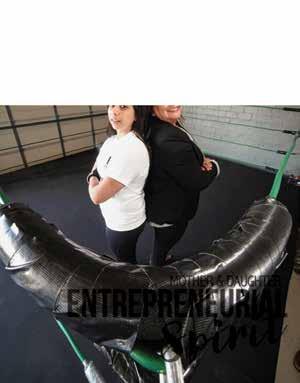
Diana Ramirez and Jessica Barron are mother and daughter who are supportive of each other as they each walk their own entrepreneurial path.
88
Jake Holly with Foulston Siefkin explains the importance of understanding the contracts you are signing and how to create a contracting strategy to help you win the battle—and the war—of the forms.
92 TK talks one-on-one with Melissa Brunner, evening anchor & Talk Show Host for WIBW 13 News.



PUBLISHER & EDITOR Tara Dimick
CREATIVE DIRECTOR & DESIGNER Janet Faust
MANAGING PARTNER
Braden Dimick & SALES DIRECTOR braden@tkmagazine.com
COVER PHOTOGRAPHER Jennifer Goetz

WRITERS
Morgan Chilson
Kim Gronniger
Lisa Loewen
Israel Sanchez
Tyler Strunk
India Yarborough
PHOTOGRAPHERS
John Burns
Miranda Chavez-Hazim
Braden Dimick
Jennifer Goetz
Jared Hitchens
Brian Laird
Tyler Strunk
CONTRIBUTING EXPERTS
Justin Dempsey
Ed Eller
Liviu Florea, PhD
Brady Franklin
Jake Holly
Brady Lundeen
Chris McGee
Mike Morse
Marsha Pope
Mark Rezac
MARKETING ASSISTANT


Cordell Dimick
Hope Dimick
2023 TK Business Magazine is published by E2 Communications, Inc., 6021 SW 29th Street, Suite A, PMB 106, Topeka, KS 66614 (785) 438-7773. Reproduction or use of this publication in any manner without written permission of the publisher is prohibited.
Every effort was made to ensure accuracy of the information in this publication as of press time. The publisher assumes no responsibility of any part for the content of any advertisement in this publication, including any errors and omissions therein. E2 Communications, Inc. makes no endorsement, representation or warranty regarding any goods or services advertised or listed in this publication. Listings and advertisements are provided by the subject company. E2 Communications, Inc. shall not be responsible or liable for any inaccuracy, omission or infringement of any third party’s right therein, or for personal injury or any other damage or injury whatsoever. By placing an order for an advertisement, the advertiser agrees to indemnify the publisher against any claims relating to the advertisement.
@TK Business @tk_business_




 Photos by TYLER STRUNK
Running a family business is a challenging yet rewarding endeavor that many entrepreneurs aspire to achieve, as it embodies the dream of building a legacy to be passed down through generations. The obstacles that come with running a business, such as changing markets, rising competition and technological advancements can make this dream difficult to realize. For two local family businesses, however, a willingness to adapt and innovate while respecting core founding principles has made a successful generational transition look easy.

“
[Dan Cooper] observed my leadership style, but that meant he watched me do things right, and he watched me make mistakes. Hopefully, he learned from both.”
Current Electrical began its journey as a full-service electrical contractor in 1978 when Craig Cooper and Mark Bolley, both licensed electricians, founded the company with one goal in mind: to become a trusted name in the electrical construction industry.

Born and raised in Topeka, Craig never considered starting a business anywhere other than in his hometown. When the idea of working for someone else became untenable, Craig called Mark and pitched the idea of starting their own electrical company.
“I asked Mark, ‘what have we got to lose?’” Craig said. “The answer was ‘really nothing.’”
That night, they met at Craig’s house and put together an estimate for a job with a local waste contractor and
builder. They won that bid and found themselves off and running.
Starting a new business venture can be scary, but starting one when you need to provide for a young family is terrifying. Fortunately for Craig, his wife, Cindy, threw her full support into his business venture.
“Cindy had no idea what I was doing,” Craig said. “Heck, I am not sure I did either. But she believed in me. She took care of everything else in our life so I could focus on the business. I couldn’t have done this without her.”
Besides having a supportive family in his corner, Craig’s business received an additional boost from
Reece Shirley, owner of Shirley Construction, who gave them their first commercial job at American Investors Life.
“I didn’t know Reece at the time, but that was the beginning of a working relationship that still exists today,” Craig said. “Only now it is between the next generation for both of our companies.”
Current Electrical embodies the true spirit of a family business. Craig’s sons, Cory and Dan Cooper, both followed in their father’s footsteps. Sadly, Cory passed away from cancer in 1997 at just 25 years old.
Dan, who was a junior in high school when his brother died, decided during his third year at the University of Kansas that he wanted to join the family business.
“He asked me what he needed to do to make that happen, and I told him to get his electrician’s license. Two years later, he had done just that,” Craig said.
Dan began working in the field to gain the industry experience he would need to one day take over the business. But he learned more than just job skills.
When I started working for the company, I had a stereotypical view of construction and the guys who worked it,” Dan said. “I assumed they chose construction because they couldn’t handle college. But once I was around them, I found out I was wrong. They were some of the most intelligent people I had ever met. They just chose a different path.”
When Craig’s partner decided to exit the company five years later, the time was right for Dan to move into the office and take on more responsibility.
Dan finally took the reins and assumed the role of president of Current Electrical in 2016. Under his leadership, the company continues to thrive and grow. However, he is the first to admit that he was intimated by the shoes he was expected to fill.
“Dad built quite a business. I really didn’t want to screw that up,” Dan said.
While Craig served as a mentor, he didn’t micromanage every little detail Dan was involved with. He let the group of talented experts throughout the organization teach Dan what he needed to know.
“Danny knew what lane he was supposed to be in and didn’t
veer from that,” Craig said. “Of course, he observed my leadership style, but that meant he watched me do things right, and he watched me make mistakes. Hopefully, he learned from both.”
While he didn’t want to make too many changes that might alter the trajectory of company, Dan also recognized that he needed to do some things differently to fit his personality.
“I have to lead with my own style and not try to mimic the way Dad did things,” Dan said.
Taking an honest and introspective look at itself in 2019, Current Electrical recognized a need to evolve in a few areas. Up to that point, the company had never had a website, nor had it done any type of marketing or advertising. Enlisting the help of a local branding agency, they underwent a rebrand officially changing the company name to Current Electrical from Cooper Electric and refreshing the logo to give it a cleaner look. But then the pandemic hit, and they shelved it.
“That was partly my fault,” Dan said. “It was a tough decision for me because I didn’t want to feel like I was erasing anything or taking away from the legacy my dad had built with the Cooper name.”
What Dan realized with a little reassurance from his father, was that even though the name was different, it was still the same company with the same values.
Dan has been serving as president of the company since 2016, but with Craig’s official retirement at the end of 2022, it opened a new chapter for Dan as he forges new connections and shoulders the full responsibility of leadership at Current Electrical.

In June, he won’t be the only Cooper in the family business. Dan’s wife, Kristi, will join the business as the full-time office manager, taking their family “all-in” to keep the legacy alive.
Dan and Kristi’s two children aren’t old enough to decide if they want to take the business into the next generation, but Dan will have a spot waiting for them if that is what they ultimately decide.


Shirley Construction has been a cornerstone of the Topeka community for nearly 90 years. Founded by Samuel Shirley in 1937, the company has evolved through four generations, adapting to changing times while maintaining a steadfast commitment to quality and service.

When Sam’s son, Reece, joined the business 10 years later, he helped transition the company’s focus from residential to commercial construction. Shirley Construction welcomed the third generation into the business with the addition of Reece’s son, Barry, and his son-in-law, Dan Elwell in the late 1970s and then took it one generation further when Aaron Elwell came on board in 2001.

“We are a true generational business,” Aaron said. “Not many companies can trace their legacy back four generations.”


Shirley Construction has been able to thrive through multiple generations for several reasons, not the least of which is respect for leadership. When Aaron first joined the company as a newly minted Kansas State University graduate, he didn’t just walk into a leadership position, he started as a carpenter in the field just like his uncle and his grandfather before that.
“When I first got out of school, I thought I knew everything about construction. I quickly learned that was not the case,” Aaron said.
While the work wasn’t easy, the lessons he learned were priceless. Aaron learned the ins and outs of the construction business from the perspective of the employees in the field as well as those in the office. But even more importantly, Aaron learned that he loved the hands-on aspect of construction and that the professionals he worked with in the field were some of the smartest people he had ever met.
Many of the same people in those key positions from when Aaron first started working for the company remain, and they respect that he put in the work to earn the position that he now holds.
“I understand that sometimes we must do some jobs that aren’t the most pleasant, but we must get them done. There’s nothing that I can tell the guys to do that I haven’t done myself,” Aaron said.
When talks about retirement and transition of leadership came up, it was always assumed that Aaron’s dad would retire first. However, health issues a year ago forced his uncle’s hand earlier than anticipated. Dan and Aaron now share leadership responsibilities both in the office and out in the field.
“My uncle was a field guy. My dad was in the office more. That is how that partnership worked,” Aaron said.
“So, when my uncle retired, I expected to fill his shoes.”
That was not how the roles played out, however. With new technology taking over much of the construction world, Dan was more than happy to spend more time out in the field and let Aaron manage the office.

“Dad has always been a pen and paper guy,” Aaron said. “Sometimes it’s easier for dad to be on the jobsite with the guys while I handle the technology in the office.”

While some things, such as technology, have changed with the new generation of leadership, other things have remained the same. Aaron attributes the company’s ability to not only survive generational transfers but thrive during those transitions to living up to the ethical standards on which the company was founded.
“In a small town like Topeka, we can’t afford not to be ethical. If you don’t treat the owners, subcontractors, vendors and everyone involved with your projects with integrity, you won’t be in business very long, certainly not like we have for almost a hundred
years,” Aaron said. “We always do the right thing. Sometimes to a fault. Sometimes it costs us money. But in the long run it pays off.”
Shirley Construction has played a significant role in the local community, completing numerous projects for the City of Topeka and Shawnee County. From the children’s party house at Gage Park to the restoration of the Frank Carlson Federal Building, the company’s work has left a lasting impact on the lives of Topeka’s residents.
Shirley’s roots are deep and pervasive in Topeka. There is barely a school in town that wasn’t either built by Shirley Construction or added onto by the company.
“I love the fact that when I drive around Topeka, everywhere I look I see buildings that exist because of my great grandfather, my grandfather or my dad and uncle,” Aaron said.
The adage, “leave your work at the office” is hard enough for the average person, but for those involved in a
multigenerational family business, it becomes almost impossible. Family dinners and holidays are ripe for business meetings.
“The hardest thing about being a business owner is that it doesn’t ever stop. And because it is all in the family, we go to family stuff, and it is hard not to talk business. Everyone tries hard to leave it at the office, but some of it still follows us home,” Aaron said.
Fortunately, the lines of communication between Dan and Aaron are strong, and they are almost always on the same page.
“I never felt like I needed to work in the family business. It always felt natural to come back because I wanted to work with my dad,” Aaron said. “I respect him and want to continue this business in a way that makes him proud.”
Retirement is still in the cards for Dan, but the timeline is not set in stone because of the void it would create in the management picture. Juggling as many as eight jobs at a time, right now it is all hands on deck at Shirley.
“It is hard to replace two people with 50 years of experience at the same time,” Aaron said. “Dad will have to wait just a little bit longer.” TK
" S c h w e r d t D e s i g n G r o u p h a s a g r e a t w a y o f l i s t e n i n g t o y o u r w a n t s a n d n e e d s a n d d e v e l o p i n g a n d i m p l e m e n t i n g t h o s e i t e m s i n t o t h e o v e r a l l p r o j e c t T h e y b r o u g h t i d e a s a n d c o n c e p t s t o t h e t a b l e t h a t w e w o u l d h a v e n e v e r t h o u g h t o f b u t h a v e b e c o m e i n s t r u m e n t a l i n t o t h e c u r r e n t d a i l y u s a g e o f o u r s p a c e . O u r b u i l d i n g h a s h a d v i s i t o r s f r o m a l l o v e r t h e c o u n t r y a n d w e h a v e r e c e i v e d i n c r e d i b l e f e e d b a c k t h a t i t m a t c h e s u p t o a r c h i t e c t u r e f o u n d w i t h i n c o r p o r a t e h e a d q u a r t e r s l i k e Z a p p o s . A s w e l l a s i n c r e d i b l e v i s i o n a r y d e s i g n s e r v i c e s , t h e f i r m p r o v i d e s f a n t a s t i c c u s t o m e r s e r v i c e . "
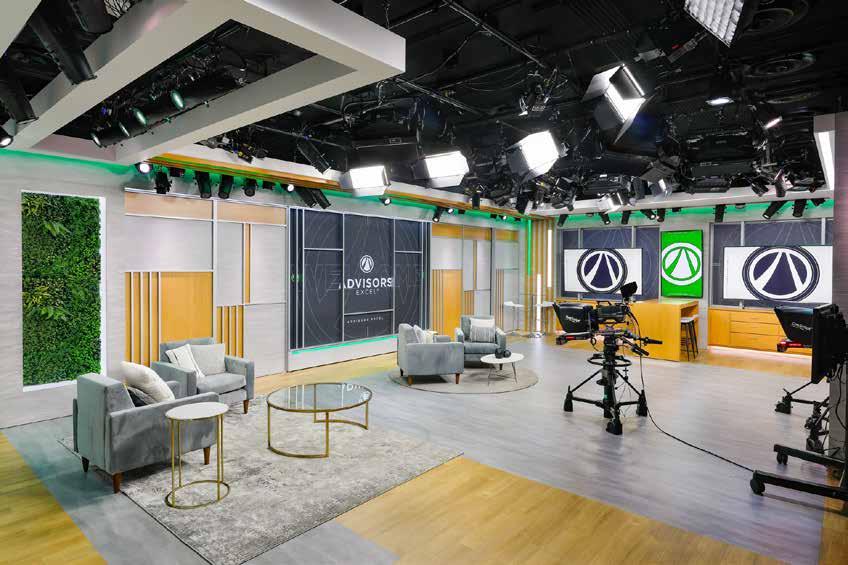

A m y K l o t z C F O / A d v i s o r s E x c e l
s c h w e r d t d e s i g n g r o u p
 By JUSTIN DEMPSEY Nex-Tech Technology Services
Here’s a seemingly simple question: How many of you would like to make $70,000 tax free for less than a day of work?
Now, how many of you would like to be the one who pays for that half day of work? On the surface, you might think that these questions relate to turning a quick profit. However, when tied to my recent workplace experience, they have deeper cybersecurity implications.
Last month, I was unfortunate enough to have helped a business that fell victim to a ransomware attack. The small company employed fewer than 10 individuals and had lost seven years’ worth of data.
The attack happened over the weekend and impacted everything at the company, including their accounting system. They had just two days to move payroll and to pay employees. Meanwhile, they juggled conversations with insurance, legal, and forensic teams.
After getting the right people involved, the small business learned that the estimated ransom was $70,000. Forensics showed the attacker spent less than a day in their system before deploying everything automatically and moving on to the next victim.
That’s a great payday for a cybercriminal that comes at an extremely high cost to businesses.

This year alone, I have helped 11 small to mediumsized businesses with cyber events. Events ranged from phishing attempts and credential harvesting to encryption events and bank/billing redirects.
• Maintenance is key. Too many small businesses see IT as a buy once and run forever solution. They underestimate that technology requires care and maintenance, just like your car does.

• Good Managed Service Providers (MSPs) can help. Companies that partner with a strong MSP are much less likely to have issues. When issues do arise, they are resolved much faster when a good MSP follows industry best practices and steps in with proper processes and the experience to deal with cyber events.
While these lessons are important, it is even more essential that business owners consider ways to protect their organizations from cyber events. Most of it boils down to implementing, documenting, and following consistent processes:
• Be aware of your email. Phishing and email compromises are the fastest growing attack vectors. These attacks can let criminals in, giving them access to your customers, or to your billing and bank accounts.
• Use multifactor authentication on all accounts. This should be standard for all users in your organization.
• Train users on phishing safety. There are great tools out there to help train your team in fun ways. In fact, Nex-Tech offers that as a service.
• Protect your email account and passwords.
• Change passwords on a regular basis.
• Disable and clean up accounts as soon as someone leaves.
• Check your backups once a year. Backups are crucial. However, they do no good if they are never checked or only exist on-site. The first thing a cybercriminal will do is find and kill backups locally attached to the network.
• If you have a Windows server, take advantage of the Active Directory rules related to account management. Some rules to consider include enforcing complex passwords and locking out accounts after three failed attempts.
• Keep your IT up to date. If you cannot be active in this process, engage someone who can. Hint: you might work with a good Managed Service Provider.
• Educate your staff. Help them feel comfortable speaking up if something does not feel right. Typically, users know something is wrong but may be uncomfortable sharing.
Perhaps the most important takeaway is that your business can be protected against the potentially devastating impacts of a cyberattack.
I used to think that the bad guys were cyber wizards and that there was no way we could prevent them from harming our networks. Most of the time, however, these attacks are not as highly sophisticated as those in the movies; the bad guys just take advantage of the business’ lack of good IT practices and cyber hygiene. By taking basic steps, most businesses will be able to avoid a cyber event. TK

 Photo by JOHN BURNS
You may already know about the Topeka Zoo and Conservation Center’s engaging exhibits, lush landscape and commitment to wildlife preservation, but you might not be familiar with the business practices and partnerships that enable the treasured venue to flourish.

From contractors and caterers to corporations and companies of all sizes, local businesses contribute financial support, in-kind services and volunteer labor to ensure the zoo’s vitality and viability.
Cynthia McCarvel, director of development, said the zoo’s 85 business donors range from capital city stalwarts like Evergy, Hill’s Pet Nutrition, Security Benefit, BNSF, Blue Cross and Blue Shield of Kansas and Advisors Excel to a myriad of small companies and sole proprietors.
“Whatever size the company is, the employees take great pride in working on our projects,” she said.
Brendan Wiley, chief executive officer, said Kay McFarland Japanese Garden and Venue, which opened in August 2020, is just one example of various businesses coming together to create a beautiful space for locals and tourists to explore.
“The Japanese garden master didn’t bring a crew and instead trained our contractors’ employees to do the work,” Wiley said. “When we had our grand opening, it was fun to see the wonder in the eyes of the local workers’ significant others as they took in the displays. We heard a lot of ‘you can do this?’”
Evergy’s Green Team, comprised of company volunteers,
converted former utility poles into fencing and created wooden structures for the popular attraction.
“Our master gardener was elated to work with aged wood and relieved he wouldn’t have to worry about warping,” Wiley said.
Over the years the Green Team has helped build bear, butterfly and lorikeet exhibits, crafted a run for raptors and even transported a hippo to Kansas City to catch a flight.
When a hippo became pregnant in 2010, the Topeka Zoo couldn’t accommodate three animals and had to arrange transportation for a male hippo to the San Francisco Zoo. FedEx provided a plane, the Topeka Police Department contributed the scales to weigh the hippo and Evergy’s Green Team got him to the airport on time.

Logistical concerns are especially warranted and worrisome when a large animal needs
an assist from high-tech equipment designed for people.
An orangutan experiencing severe gastrointestinal issues underwent a screening procedure at Stormont Vail.
“It’s a production whenever we take an animal offsite because we have to make sure we account for every possible thing that could happen between the zoo and the hospital,” Wiley said. “It requires multiple vehicles for staff and safety equipment. Then when we get to the hospital, we’re going in back doors and looking around corners because we don’t want to freak anyone out by our presence. Seeing a wild animal on a gurney could be confusing and cause alarm.”
McCarvel said many partners have provided an initial service and then become so intrigued by the zoo’s mission that they now make ongoing contributions as both contractors and donors.
“They often visit the zoo in their free time too and promote their discoveries on social media, which






helps us make people aware of all that’s happening here,” she said.
“Our business partners really take ownership of our community zoo and become like an extended family,” Wiley said. “I’ve studied models around the country, and I don’t know of another zoo that gets the support we do.”
Such support was especially critical during the pandemic and resulted in Zoo Lights, a holiday lighting extravaganza with regional appeal.
Wiley said the zoo had been considering such an event since 2013 but “monumental start-up costs” stalled discussions. However, in 2019, a large private donor and Evergy pledged support and soon other business partners did too.
“We knew that having a festive, outdoor event where people could gather and still maintain social distancing protocols would work,” Wiley said. “Zoo Lights saved our year and we’ve made the event bigger and better ever since with the support of our business partners. The success of that event during a pandemic also helped convince a lot of people that privatization, through a private public partnership, was a good option for us to pursue.”
Each year the zoo partners with local businesses that design and build multiple displays and handle electrical, animation and other needs for Zoo Lights. McCarvel said corporate volunteers also help transform the complex into a winter wonderland.
“In the past, KBS Constructors Inc. has partnered with Washburn Tech students to help build our holiday village and gingerbread house,” she said. “This is a wonderful experience for the students and provides lasting structures for the event.”
Since 2017, the Topeka Zoo has undertaken infrastructure projects totaling $22 million and pumped 18 million pounds of concrete into the
complex to improve the aesthetics and functionality of the grounds and exhibits.
“Sometimes our business partners work with their subcontractors to get costs down for us too, which really helps,” Wiley said. While some zoo projects require heavy equipment to implement, others rely on the ingenuity of partner loyalty programs.
Silver Lake Bank offers a debit card that provides funds back to
the zoo. The Blind Tiger Brewery & Restaurant sponsors a tiger cam at the exhibit and a portion of the proceeds of every pint of Tiger Bite IPA sold goes to the zoo.
“Jay Ives, the owner, really wanted to do something to support Sumatran tigers so through our partnership we’ve sent funds to the Minnesota Zoo, which houses the Sumatran Tiger Species Survival Program,” Wiley said. “They forward the Blind Tiger funds to the Wildlife

Conservation Society in New York, which operates a field office on the isle of Sumatra. Then those funds are used to employ a ranger who works daily to protect tigers in the wild.”
The Blind Tiger Brewery also features a locally sourced bison burger, The Kansan, on its menu.
“They donate edible byproducts from their brewing operations for the bison to eat and then after the meat is processed, the bones come back to the zoo for the tigers,” he said.
Happy Basset Brewing Company features an African Painted Dog Lager and a portion of the proceeds for that beverage support the zoo’s African painted dog exhibit.


The zoo’s conservation efforts also include working with Waste Management® and its recycling efforts in Shawnee County.
“We make people aware of how working together to care for the environment makes things better for the animals and all of us too,” he said.
McCarvel said the zoo’s commitment to preservation and sustainability is compelling for many business partners, who help fund education programs, including free monarch butterfly citizen science classes and an environmental club for middle and high school students. Business partners also fund an Education Scholarship Fund, which ensures children have equitable access to enrichment opportunities.
“The zoo’s goal is to connect Topeka to the wildlife and wild places we share
with the planet,” she said. “These handson programs and camps provide a unique opportunity for children to learn about animals and conservation and the role zoos play in protecting endangered species while also encouraging an interest in science and the natural world.”
In addition to providing funds and/ or paid labor to support zoo projects, business partners often allow their employees to assist staff with various needs like spreading mulch, painting and creating event displays. Many employees volunteer through the annual United Way of Kaw Valley’s Nancy Perry Day of Caring event each September in addition to other times during the year.
“All of our business partners’ contributions are important to us and we value every single one,” McCarvel said. “We host a lot of events throughout the year to recognize them.”
Likewise, McCarvel said a lot of businesses host employee appreciation outings at the zoo or provide special event or general admission tickets for their use.
“We provide year-round opportunities for escape and entertainment for everyone in our community, as well as visitors,” she said. “We couldn’t do it without our business partners.”
Linda and Keith Sowards, owners of Sowards Glass Inc. and Topeka natives, have had a lifelong affinity for the Topeka Zoo and Conservation Center, often bringing their two daughters and now grandchildren to the complex to enjoy nature. The couple’s company has provided glasswork for the Kay
McFarland Japanese Garden and Venue, Camp Cowabunga and the Giraffe & Friends exhibit that opened this spring. They are currently working on a new Golden Lion Tamarin exhibit.
In business for 31 years, Linda said, “We have ownership in the zoo and believe it’s important to have a great place for families to visit. I’m a proud Topekan and I like being involved in the changes that our community is making that will affect future generations. We give to many causes in town, but the zoo is special because it’s a place for locals and out-of-towners to just go and enjoy themselves and make memories.”
Though not yet ready to retire, Linda said that when she does, she would like to volunteer at the zoo.
“I love animals and kids so it would be perfect.”
Kaw Valley Bank, a business partner for five years, sponsors a couple of the Topeka Zoo and Conservation Center’s premier entertainment events, the Roar & Pour wine festival and Brew at the Zoo, a showcase for local beers and live music.
Craig Heideman, chief executive officer, said, “Our community is making great things happen and we wanted to help spotlight positive developments in town with our sponsorships. We try to appeal to a cross-section of people, and sponsoring zoo events makes sense for us. We especially value the opportunity to collaborate with other sponsors and vendors to showcase local restaurants and bands and let people know what our community has to offer.”
Debbie Schwartz, vice president of marketing, said the bank’s zoo
sponsorship exposure often extends beyond the events themselves. As a component of Roar & Pour, animals were paired with a local artist to create one-of-a-kind pieces available for auction the night of the event. The artwork was previewed during a First Friday NOTO event at Redbud Park.
“We believe in what the zoo is doing with their animal care and conservation efforts,” she said. “Our employees and customers love our involvement and enjoy attending the various zoo events.”
Heideman and Schwartz often visited the zoo while raising their respective families.
“There were a number of years after my kids got older that I didn’t go to the zoo much,” Heideman said. “When I did go back, I saw how well-maintained the space is and heard about the awesome ideas the team has come up with to enhance it even more. We’re glad to be part of it.”
Jarred White, an insurance agent with Farmers Insurance, has been a Topeka Zoo and Conservation Center donor since 2017. White and his family often visited other zoos while on vacation, taking advantage of behind-thescenes encounters when they could.
“The sizable number of people visiting the zoo from Topeka and Shawnee County who see my logo at the entrance, on the website and in the Zooreka! publication with a link to my website make this a cost-effective way to promote my business,” he said. “I’m very pleased with our partnership.”
White’s involvement has expanded to include underwriting lorikeet feedings, supporting educational programs, and providing ice cream treats to zoo staff one day each summer. He and his wife, Beth, also visit the zoo every Sunday morning and post a picture of whatever strikes them in the moment on social media.
“The more you go, the more you see,” he said. “Things change all the time. My favorites right now are the hippo and Golden Lion Tamarin exhibits.” TK
“All of our business partners’ contributions are important to us and we value every single one.”
—Cynthia McCarvel Director of Development Topeka Zoo

Traditional economic development is focused on jobs. But times have changed. Now—in addition to job creation, economic development leaders in our community talk about quality of place. Inclusive prosperity. Economic opportunities for all. Leaders have a more holistic definition of economic development which includes the notion that community development is economic development.
how we measure it and how we deliver it—is so important.
At its most basic level, philanthropy has always been about directing financial capital to solve social problems. Traditionally a grant maker, the Topeka Community Foundation has granted almost $100 million to important programs and projects in our community during our 40-year history. From the arts to youth sports, our reach has been broad and our partnerships have been many.
MARSHA POPE President Topeka Community Foundation
As
Examples of this include Stormont Vail Health’s commitment to population health. This leading health care organization focuses not only on patients inside the walls of their buildings, but works with other organizations in new and creative ways to better the health of all residents in our community.
Another example is the City of Topeka. We often think of a city as providing services like clean water, code enforcement and building inspections. Our city is leading a collective impact model to reduce student homelessness.
Is there a role for philanthropy in economic development?
Yes. Smart philanthropy can strengthen job opportunities, support innovative ideas and improve public understanding of economic issues like affordable housing and childcare.
Excellence in philanthropy is measured by results—not good intentions. That’s why impact—both
Recently, however, we unlocked additional capital by adopting policies which provide dollars to literally invest in local nonprofit organizations and for-profit businesses who have bold, creative and sustainable solutions for issues of importance in our community.
We believe we can achieve attractive financial returns while contributing to meaningful economic progress. We believe we have a distinct responsibility to redefine the definition of “returns” to include both a financial and social return—all while advancing our mission.
If, as a community, our goal is economic prosperity for all, we must expand our imaginations and our arsenals—strategically investing our time, talent and treasure in transformative ideas that benefit both our community and our bottom line. We must seize the opportunity to be agents of change and courageously build a strong community for today and generations to come. TK
we work to create a community that is resilient, prosperous and equitable for generations to come, public, private and nonprofit organizations are reimagining what role they can have in making progress toward this goal.

In 1974, Frye’s Auto Repair launched as a part-time business in a residential two-stall garage. Leroy and Dotty Frye and their son, Tony Frye, slowly built their customer base by working four nights a week while employed at other full-time jobs during the day.
After nine years, the Frye family officially opened as a full-time auto repair shop. They

continued to operate in the original garage until they built a new one at 1320 SW Auburn Road in 2004. For the past 19 years it has been run by Tony and his wife, Tina Frye.
“I never carried business cards. I like to say our customers carried our business cards,” Tony said, emphasizing the importance of word-of-mouth marketing in his industry. “Being an independent shop, you interview for a job every day. Even keeping old
customers, you’re still applying for a job.”
It was a true family enterprise that provided very well for their family said Tina. But when the couple turned 60 about 5 years ago, it was time to think about retirement plans. That meant considering how they would transition to a new owner. Luckily, it wasn’t a tough decision for the Frye’s as they had a trusted and beloved
employee who feels just like a family member.
The new owner, Joseph Tanner—known as Joe around the shop—went to work at Frye’s Auto Repair 11 years ago after completing the Washburn Institute of Technology automotive program.

“I started as a technician and did all the lube changes and cleaned up. I learned from the

ground up,” Joe said. “Tony and Tina Frye taught me a lot as well as the techs who helped coach me, teach me and show me how the shop operates.”
Joe credits his education at Washburn Tech for providing him with a strong foundation to build on. Tony also served on the advisory board at the school for 18 years where he offered insight on the automotive industry as an independent business owner. Both credit the school with supporting the business and their growth.
Darrin Dillingham, automotive instructor at Washburn Tech, knows both men.


“Most of our advisory board members are dealerships but we have a few independents too. Tony is one of the independents that’s always been involved,” Dilligham said. “I’m always interested in getting input from successful
independent shops, because the goal for a lot of students is to go out and get 10 or 15 years of experience and then own their own shop.”
That’s pretty much what happened with Joe, who was a student of Dillingham’s.
“Joe was a very serious and nice student,” he said. “He came to Tech with a thirst for knowledge and a personality that showed you he was going to do well.”
Although he followed that path Dillingham said many students desire, it wasn’t really Joe’s original plan.
“I thought I was going to use this place as a stepping stone to gain skills and knowledge that would land me at a dealership for 20 years and then I’d retire,” Joe said. “But as time went on, I realized I didn’t want to work at a dealership. It’s just a different atmosphere here.”
“We do a lot of business and a lot of work,” he added. “It’s a very comfortable, personable shop. I know all of the customers which

made the transition so much smoother.”
The Fryes, who said their two sons weren’t interested in auto repair careers, retired knowing their life’s work is in capable hands. They worked hard to build a successful business— revenue increased five times over from the time they took over until their retirement—and they want to make sure it continues to thrive.

“We always called our business our baby who never grew up,” Tina said while laughing. “We got to take care of the baby and now in retirement the baby is taking care of us. We know Joe well and love Joe, so much so, that we left our name—Frye’s Auto Repair—because we trust him.”
Tony and Tina began talking about selling the business five years ago with Joe. They gradually increased his responsibilities and shared the working parts of the business. It benefited them with more time off in recent years.
While talking with Tony and Joe, it’s easy to see why the two connected. The words “safety” and “trust” came up frequently from both. Each said they sometimes have to have tough conversations with customers to
let them know what needs to be done. Ultimately, repairing vehicles properly is about keeping everyone safe on the road.
“Safety is our number one goal,” Joe said. “We have to do this together. We have to live through this life together and keep everybody safe.”
The slow transitioning of the business into Joe’s hands made the process relatively seamless. For Joe, it required changing his mindset.
“I want to get out there and diagnose everything and fix it because I’m really efficient at it. I know exactly what I want done and in what order and how I want it done,” he said. “But I’m learning to let the techs do it their way. That’s been the toughest, making the transition from wrenching on stuff to service writing.”
Joe plans to grow the business in terms of the number of cars served and he would like to add more employees, which isn’t an easy task.
Dillingham agrees that finding qualified employees can be tough. Although he still sees mostly full
classes at Washburn Tech, he knows many companies in town need more help. It’s changed over the 14 years he has been teaching.
“At first, it seemed like our top students weren’t always placed by graduation. You could find a job, but you weren’t really sought after. Today that’s completely different,” he said. “Today, our advisory board is very active. They let us know when they’re looking for talent. To be honest, I’ve had students placed two weeks into the school year.”
Joe has been busy during the first six months that he’s been in charge, but he definitely plans to continue the relationship with Washburn Tech. Many changes are coming in the automotive industry and he wants to stay on top of it. He looks forward to meeting students who have his passion for fixing cars.
His goal for Frye’s Auto Repair is simple.
“Great quality and consistent service while keeping family first and foremost. I want you guys to be safe so my family and yours is safe on the road,” Joe said. TK


According to a study conducted by the National Institute on Retirement Security (NIRS), nearly 40 million working-age households in the United States have no retirement savings at all. This represents a staggering 45% of the U.S. population, and it includes both those who have no access to an employersponsored retirement plan and those who do, but have not yet started saving for retirement. According to the ASPPA, 74% of small businesses do not offer an employer sponsored retirement plan.

There is a history of bipartisan support for addressing the retirement crisis in America. In December of 2022, the Secure a Strong Retirement Act of 2022, otherwise known as the Secure 2.0 Act, was signed into law. The $1.7 trillion tax bill was designed to encourage Americans to invest more and for longer.
Secure 2.0 is nearly 400 pages long and has nearly 100 provisions. We want to provide five key implications for individuals and business.
The required minimum distribution (RMD) age is being increased.

Secure 2.0 raised the RMD age to 73.
The RMD age will increase again to 75 by 2033.
Catch up contributions have increased.

Individuals 50 or older now have a catch-up contribution limit of $7,500 for Individual Retirement Accounts (IRA) for a total of $30,000 and will be adjusted for inflation starting in 2024.

In 2025, employees 60 to 62 years of age will have an increase of 50% more than the regular catch-up contribution (or $10,000, whichever is greater) in retirement accounts.
Roth treatment is available for vested employer contributions. Employers can elect for employees to have the option for employer contributions - both matching and non-elective, to be made to employee’s Roth 401(k) and 403(b) retirement plans.
Starting in 2024, investors will no longer be required to take RMDs from Roth 401(k)s or 403(b)s.
All individuals who earn $145,000 or more will be required to make all catch-up contributions on an aftertax basis, though regular contributions can still be made on a pre-tax basis.
Small business owners can now offer Roth versions of SIMPLE and SEP IRAs in addition to the traditional SIMPLE and SEP IRAs.
A promising development is that investors will be able to save more for longer.
As a small business, we know firsthand both the financial and administrative challenge of offering a 401(k). We see it as something with significant value both as a benefit and recruiting tool in a tight labor market.
2Secure 2.0 significantly expanded tax credits for employer sponsored retirement plans.
Employers can claim up to $5,000 for three years for the costs of setting up a qualified plan with an additional $500 for utilizing auto enrollment.
A new credit was introduced that reimburses small businesses for up to $1,000 of employer contributions on behalf of modest earners and phased out over five years.
A hypothetical business with 44 employees could potentially see as much as $154,000 in tax credits over the course of five years to offset the costs of a retirement plan start up.
We believe in the value of saving for education for our own kids as well as kids of clients. A question we get asked often when thinking about saving for college in a 529 is what if a 529 is overfunded?
3Secure 2.0 allows a 529 to Roth rollover option starting in 2024.
The 529 account must be at least 15 years old with the same beneficiary.
The rollover amount must have been in the account for at least five years.
Roth IRA annual contribution limits will apply to rollover contributions ($6500 in 2023).
529 to Roth rollovers are limited to $35,000 per beneficiary over their lifetime.
4
Secure 2.0 has expanded Qualified Charitable Distributions (QCD) which are one of the most tax-efficient ways to accomplish charitable giving. QCDs allow investors to give gifts to charities on a pre-tax basis.
Individual investors can currently make $100,000 of QCDs annually starting at age 70½.
The $100,000 QCD limit will be indexed for inflation starting in 2024.
Starting in 2023, investors can use QCDs to fund charitable remainder trusts and charitable gift annuities. 5 There is a lot that is NOT in Secure 2.0…
There is not a restriction on conversions from a traditional IRA/qualified plan to Roth IRA/qualified plan.
There is not a limit on backdoor Roth IRA conversions.
The Qualified Charitable Distribution age has not changed from 70½.
The types of investments have not changed that can be purchased with retirement funds.
The “10-year rule” for distribution inherited IRAs introduced under the original SECURE Act has not changed.
The changes in Secure 2.0 have significant implications for investors and businesses. For investors, it is easier to save more money, for longer and with more Roth (after tax) options. 529s are more flexible by allowing Roth rollovers. Charitably inclined investors will be able to give more and with more vehicles. Businesses have more tax incentives than ever to sponsor retirement plans for their employees.
TKSource: National Institute on Retirement Security (NIRS), “Retirement Security 2019: Americans’ Views of the Retirement Crisis and Solutions,” March 2019. Available at: https://www.nirsonline.org/wp-content/uploads/2019/03/Retirement_Security_2019.pdf
Source: https://www.asppa-net.org/news/small-business-owners-remain-hesitant-start-401k
This report has been created for informational purposes only and is subject to change. Information has been obtained from sources believed to be reliable, but its accuracy and completeness are not guaranteed.
Endeavor Private Wealth, Inc. does not provide legal or tax advice. This communication cannot be relied upon to avoid tax penalties. Please consult your tax and legal advisors to determine how this information may apply to your own situation. Whether any planned tax result is realized by you depends on the specific facts of your own situation at the time your tax return is filed.





Randy Wheat, owner of Haus Janitorial Services, turned what started out as a side gig 30 years ago into a $1.9 million business through the combination of old-fashioned hustle and creative thinking.

Born and raised in Topeka and a multi-sport athlete at Highland Park High School, Randy understood the value of hard work even at a young age. His hustle earned him a reputation on the field, but it was his creative problem solving that set him apart from his peers and set him on the path to entrepreneurship.
His first job right out of school, which paid a whopping $5 per hour, involved working with traffic control devices such as barricades, lights, signs and street painting for a variety of public and private projects. His attention to detail propelled him into a supervisory position before he turned 20 and earned him a seat at the table for planning large projects for KDOT and other organizations.
“I remember the first meeting that I sat in on,” Randy said. “They looked at me and then did a double take. They didn’t take me seriously at first because I was too young. They liked my ideas though, and then my age didn’t matter.”
When the company he worked for closed after a few years, he joined the grounds crew at Aldersgate Village. To help cover his bills he picked up a side hustle with Lutz Janitorial. It wasn’t long before Debbie Lutz began to notice that Randy was a little different than her other employees.

Hey, small business owners in Topeka and Shawnee County, we’ve got some exciting news for you!
Congratulations to the 2023 Small Business Award winners! Your hard work, dedication, and innovative spirit have made a significant impact on the Topeka community. As dream chasers, opportunity makers, and success creators, you have demonstrated that anything is possible with passion and perseverance. Your entrepreneurial spirit and commitment to excellence serve as an inspiration to us all.
Dialogue Coffee House Young Entrepreneur Award
Civium Architecture & Planning Micro-Entrerprise Award
Yes! Athletics Emerging Innovation Award
Customskin Medspa at His and Her Salon & Day Spa
Woman-Owned Small Business Award
Chavez Inc.
Minority-Owned Small Business Award
Ricks Advanced Dermatology & Radiance Medical Spa

Veteran-Owned Small Business Award
Bimini Pet Health
Small Business Manufacturer Award
Supersonic Music/ Treehouse Drums
Small Business Exporter Award
Senne & Company
TopCity Small Business of the Year
Scan below for more on the Small Business Award winners and see how you can prepare to take your business to the next level!


Are you looking to take your business to the next level but need a little extra help to get there? Well, you’re in luck! GO Topeka is here to provide you with some awesome incentives to support your growth and development.
And the best part? It’s free money, people! That’s right, free money for your business to use and grow!
We’re talking about everything from marketing and construction to professional services and even global markets matching grants. So if you’re interested in getting in on this action (and why wouldn’t you be?), just head on over to the GO Topeka website and fill out the online application form. Let’s make your small business dreams a reality!
“Any time they offered overtime, I was the first to raise my hand,” Randy said. “It didn’t matter what the job was or where, I took it. Sometimes it meant I was working 20-hour days, but I never minded the hustle.”
Because of Randy’s willingness to go above and beyond, Debbie shared some of the financial aspects of the janitorial business with him and opened his eyes to the benefits of entrepreneurship. In the middle of all those numbers, Randy discovered an untapped niche business opportunity: carpet cleaning.
“I said to myself, ‘I can do this,’” Randy said. “The problem was, I had no equipment and no paying customers.”

Undeterred by what he didn’t have, Randy concentrated on what he did have: belief in himself. He found a portable carpet cleaning machine for sale for $1,500, but he only had $500 at the time. He convinced the seller to put him on six-month payment plan and then informed Debbie that he was in the carpet cleaning business (in his spare time). She gave him so much work that he paid off the machine in less than two months.
The carpet cleaning business began to take off, and like most entrepreneurs, Randy had a decision to make—stand still in the
safety of the known or take a risk and move forward. Randy chose to leap.
“To take my business to the next level, I needed bigger jobs. To get those bigger jobs, I needed a bigger machine,” Randy said. “I needed a truck-mounted machine.”

That meant coming up with $15,000. Rather than asking for a loan, Randy put his head down and put his hustle to work. Still working his regular shifts for Aldersgate Village and Lutz Janitorial, Randy picked up every carpet cleaning job he could find, often working late into the night. Within 90 days, he had the money he needed.
“I starved for 90 days only eating ham and bologna sandwiches,” Randy said, “but I hustled that money up.”
Randy picked up the new machine in Kansas City and was already working his first water job on a flooded basement that same day.
As his reputation for reliability and quality work began to grow, Randy knew he needed to turn this side hustle into his primary business. Looking for additional revenue streams that would provide more consistent income, he bought a truck and a snowplow and added snow removal to his list of services. Then came lawn care, and eventually he began picking up some of his own janitorial clients as well.
Things were humming along pretty good, but never one to be satisfied with the status quo, Randy saw a new opportunity in owning rental property. Once again, he approached this venture from a different perspective. He purchased the house he was renting and moved into the upstairs so he could rent out the downstairs. With the rent money paying the bills for that house, he used the money he saved to buy another one, and then another. These houses needed a lot of work, so he was able to purchase them for a fraction of their value and, through a partnership with Ron Harris, fixed them up and turn them into viable housing.
At one time, Randy and his partners owned as many as 25 houses before eventually selling most of them and recouping their investment.
When Randy once again needed to upgrade his equipment with the addition of a $50,000 cleaning machine and a $25,000 van, that same hustle came into play. He amazed his banker by paying off the loan in 30 days. But it wasn’t easy.
“We happened to have a big flood right at that time,” Randy said. “I worked 20-hour days for a week to handle all of those flood jobs,” Randy said. “Other people said ‘no’ to after-hours work. I always said ‘yes.’”
That willingness to put his head down and do whatever it took to move his business to the next level once again set Randy apart from those around him because he viewed things differently. He didn’t see the impossible workload; he saw beyond it to the future of a business he was building.
Randy built his business on hustle and creativity, but he is the first to admit that he wouldn’t be where he is today without the example of some key mentors in his life. Before he even thought about starting the business, Randy spent hours talking with Alonzo Harrison about business ownership and how to build something from the ground up.
“I am so inspired by what Alonzo has achieved, not only personally but for what he has done for the Black business community,” Randy said. “In the minority business community, he is the one I look up to the most.”
The appreciation he has for those who helped guide him as an entrepreneur has Randy looking for ways he can give back to the community and mentor those coming up behind him. Randy plays an instrumental role in the annual Community Dinner and serves as vice president of Juneteenth.

He hopes to one day see one of his three children take over the business he has created.
“I started with $500, hustle and a dream,” Randy said. “I set the walls up. All they have to do is keep the roof on.” TK
Randy Wheat has spent his life watching other people and learning from their success and their mistakes. From those observations and his own lived experiences, Randy has some advice to offer.
1. Don’t carry debt. The more you get in over your head and overextend yourself, the more likely you are to fail.
2. Don’t get drug down by the negative. Hang around positive people and positive things will happen.
3. Be willing to make tough choices and live with them.
4. Don’t let anyone else dictate your future.
5. The word “no” only means you have to find a different way.
6. Have a good lawyer, a good banker and a good accountant (shout out to M&M Accounting & Tax Services) on your team.
7. No matter what else you do, pay the bank and pay your taxes






In many organizations, people work in teams for a significant part of their worktime. A team consists of two or more people who work interdependently to accomplish common goals related to a task-oriented purpose. Some teamwork is by default, in the sense that it is mandated, such as production and maintenance teams focused on the accomplishment of core operational-level production and service tasks.
Other teamwork occurs, however, by choice, meaning that team members don’t have to, but choose to work together. For instance, a group of executives may work together to identify solutions to organizational challenges.


Since people choose, at times, teamwork, rather than individual work, it means that there are convincible arguments in support of teamwork. These arguments can, mostly, be subsumed into two categories: team performance and satisfaction with
This means that team members hope to achieve more while working in teams than they can achieve individually or enjoy the teamwork experience. The performance argument is supported by the emergence of effective and creative solutions that happen when people with varied outlooks and experiences work together.


Teamwork is potentially synergistic, in that the team performance is higher than simply the sum of individual performances of the team members. The social orientation that most people share is likely endorsing the satisfaction argument. Despite the fact that some people prefer to work alone, most people enjoy sharing experiences with others. Sharing accomplishments enhances motivation and, even, sharing the lack of accomplishment may seed the ground for future accomplishments. Furthermore, as part of a team, people have a greater level of control over decisions and work outcomes that can add to the feeling of belonging and lead to a greater feeling of ownership. When people are a part of a communal goal, they feel more connected to their organization and more fulfilled of their

In addition to performance and satisfaction, there are more arguments in support of teamwork, including individual and professional development through strengthening interpersonal relationships and team-mediated crosslearning opportunities. In teams, people observe and learn from each other, share, verify and validate viewpoints, and can, potentially, gain trust and confidence. Collective intelligence, described as shared or team intelligence that emerges from the collective efforts, collaboration, and competition can also be attributed, at least in part, to teamwork.
However, teamwork has its perils. To derive the team benefits, trust has to be built, procrastination and social loafing need to be identified and addressed, and destructive conflict needs to be averted, just like fear of conflict and artificial harmony should be prevented. In his book, “The Five Dysfunctions of a Team: A Leadership Fable,” Patrick Lencioni identifies other team perils, in addition to trust and conflict hindrances; vagueness and lack of commitment, in the
form of feigning buy-in for team decisions that creates ambiguity throughout the organization; accountability avoidance that creates resentment, encourages mediocrity, and risks missing deadlines; and lack of attention to team results due to prioritizing personal success, status and ego before team success.
Teams are also vulnerable to incomplete or asymmetrically distributed information and “us versus them” thinking that dismisses or antagonizes nonmembers of the team and other teams, referred to as out-groups. Ineffective teams may lack clear goals, direction or priorities, as well as clear roles among team members and adequate work norms. These teams may suffer from disengagement, poor leadership, and lack of cooperation that can translate into a silo mentality, in which team members act in an isolated and un-coordinated manner.
Groupthink and group shift can also affect teamwork. In the latter, the initial positions of the team members are exaggerated toward a more extreme position, as a result of diffused responsibility, lower perceived accountability and higher team risk propensity, since the risk is divided among all team members rather than borne by an individual.
In the former, the desire for team harmony and conformity of viewpoints results in the team’s dysfunctional dynamics, focused on in-group or itself only; confirmation bias; dismissal of deliberate team decision-making or alternative solutions; and
‘dehumanization’ of actions of outgroups or members of other teams. Team members can feel under pressure to avoid raising controversial issues out of fear that their views would be perceived negatively by other team members and in order to achieve or preserve clear and harmonious agreements, at the expense of innovation, constructive opinions and better arguments.
William H. Whyte Jr. derived the term from George Orwell’s 1984
1 2
novel and wrote that “The main principle of groupthink, which I offer in the spirit of Parkinson’s Law, is this: The more amiability and ‘esprit de corps’ there is among the members of a policy-making in-group, the greater the danger that independent critical thinking will be replaced by groupthink, which is likely to result in irrational and dehumanizing actions directed against out-groups.” Irving Jones outlines 8 groupthink symptoms grouped in 3 categories:
• Illusion of invulnerability manifested in the form of an exacerbated confidence that the right decision has been made, facilitating excessive optimism and risk-taking.
• Unquestioned belief in the morality of the team causing team members to ignore the consequences of their actions.
CLOSED-MINDEDNESS:
• Rationalizing warnings that might challenge the team’s assumptions.
• Stereotyping those who are opposed to the group as weak, evil, biased, spiteful, impotent or stupid. 3
• Self-censorship of ideas that deviate from the apparent team consensus.
• Illusion of unanimity among team members, where silence is viewed as agreement.
• Direct pressure to conform placed on any member who questions the team.
• Mind guards, who are self-appointed members who shield the group from dissenting information.
Teamwork requires the right set of conditions—logistic, compatibility, commitment—to be effective.
J. Richard Hackman identified four enabling conditions for team effectiveness:

1 2 3 4
Effective teams need explicit goals that are consequential for team members and challenging, but not so difficult that the team becomes dispirited.
Teams require the right team composition and optimally designed tasks and processes that promote positive dynamics, cooperation, focus, clarity of tasks and goals, responsibility and accountability. Meanwhile, these tasks and processes should discourage counterproductive team behaviors, in the form of withholding information that undermines collaborative efforts, casting blame, procrastinating, social loafing, destructive conflict and distrust, selfishness, groupthink, or group shift. Teams can reduce the potential for counterproductive behaviors by establishing clear norms or rules that spell out desirable and undesirable team behaviors.
A performance-enabling supportive context includes an information system that provides real-time access to all relevant data, an educational system that increases awareness and develops capabilities, a reward system that reinforces good performance, and access to tangible resources, such as technology and equipment.
Last but not the least important, each effective team builds its team mental model and shared mindset that are fostered by a common identity and common understanding. Team mental model that is reflected in the form of team cohesiveness and task abilities promotes knowledge-sharing, trust-building, performance orientation and epistemic opportunities, underlined by knowledge heterogeneity and within-team cross-learning potential.
Effective teamwork can also benefit from a practice called “structured unstructured time,” that is time blocked off in the schedule to talk about matters not directly related to the task at hand, to help team members become more familiar with each other, teamwork and context.
Teamwork has never been just a “walk in the park,” but, if approached in a right manner, can provide a wealth of opportunities to everyone involved—team members, teams, organizations, and the society, as a whole. TK

Thomas L. Bell
Cameron S. Bernard
N. Larry Bork




Tracy A. Cole
Miranda K. Carmona
Samuel R. Feather
Jessica L. Freeman
Susan L. Mauch




David P. O’Neal
Patrick M. Salsbury
Cynthia J. Sheppeard
Andrew D. Tague


Catherine L. Walberg

 By INDIA YARBOROUGH
For one new owner, it was a rare opportunity. For another, the chance to carry forward a legacy. For a third, their purchase was a necessary next step in taking the local staple to new heights.

For those tasked with taking over the reins of a small business especially a legacy local restaurant with decades to its name—challenges and opportunities go hand in hand. In fact, as one Topeka business owner put it— managing change, “That’s the only constant.”
Little Russia Chili Parlor, Pizagel’s and The Wheel Barrel are three Topeka eateries that, on the surface, may seem to have little in common. Though unique in their menus and experiences offered, the restaurants are bonded by change, as each has seen new ownership take over in the past year. And the goals of those owners are the same—keep a legacy alive, while attempting to elevate a recognizable brand.
by JENNIFER GOETZ } Photos Photo by JENNIFER GOETZ
For 75 years, Porubsky’s Deli and Tavern served house-made hot pickles, cold cuts and, in the winter months, its famed chili to railroad workers and state legislators alike. It was a Topeka staple, dating back to 1947, when the neighborhood restaurant and grocery first opened its doors.


Now, the building at 508 N.E. Sardou Ave.—which housed the deli and tavern as it was passed from one Porubsky generation to the next—dons a new name and some interior upgrades. But the legacy behind that unassuming tavern, remains.
“I had been a bit of a patron of Porubsky’s—once, twice a year kind of stuff, mostly just coming through and grabbing and going,” said Casey Mclenon, the building’s new owner. “That was my familiarity with it. I knew it had been here, knew it was a staple, and I knew they made really really good, interesting stuff.”
When Mclenon learned in late spring of 2022 that Porubsky’s had closed and the building was on the market, he knew he had to make a move.
“I reached out to my real estate agent and asked him if we could get connected,” Mclenon said. “He put me in contact with the (Porubsky) family.”
After the family took time to consider the sale, they offered
 Photo by JENNIFER GOETZ
Mclenon a tour. It didn’t take long for him to put down an offer, and the rest, as they say, is history.

There was just one catch.
“They were very clear about not selling the name or the recipes,” Mclenon said. “I totally get that.”
He got creative, reopening under a new name that honors both the Porubsky legacy and the “Little Russia” neighborhood—named for the immigrants who first settled there—in which the eatery sits. That’s how Little Russia Chili Parlor came to be.

“What a rare opportunity to try to help continue a little bit of the history that’s gone on here, certainly with tons of respect to the family that ran it prior,” Mclenon said, though he’s quick to add Little Russia Chili Parlor has a flavor decidedly its own.
“I’m not going to tell you they’re the same,” he said of the
chili parlor’s hot pickles. “But they’re something we’re really proud of.”
Since reopening as Little Russia Chili Parlor back in November, Mclenon and John Tacha, general manager and a man-of-many-hats, have done their best to explain the restaurant’s changes to customers old and new.
Though not identical to those of its predecessor, different house-made pickle varieties can still be bought on site, including a “super-hot” horseradish version similar to the hot pickles prior and a “western Kansas sweet” style stemming from a Tacha family recipe.
Chili remains the coveted, number-one product, Mclenon added, with the parlor’s spicy pimento dip a close second.

Rather than sticking with the Porubsky’s model of a market and deli on one side and tavern on the other,
the chili parlor is a true restaurant and bar. Other changes include an updated payment system, online ordering at 508Pickles.com, additional in-house seating, and expanded hours. A seasonal offering at Porubsky’s, chili is also available at the parlor year-round.
Through the restaurant’s décor, longtime customers may notice a few nods to the past. The coolers behind the bar came with the place and are 80-to-90-years-old. They also kept the original Porubsky’s butcher block, which now serves as the chili parlor’s condiment station.
“That butcher block is well over a hundred years old we think,” Mclenon said. “It’s supposedly only been out of the property once ever. In the flood of ’51, they said they took it out of here, so it didn’t end up down the river.”
When possible, the chili parlor partners with area businesses to lend a local flair to its menu, which still
features cold-cut plates, some deli delights and a few grab-and-go items.
Moburts, for example, worked with Mclenon and Tacha to craft a proprietary seasoning blend for their chili. The sauerkraut they use comes from a Kansas company out of Baldwin City. The parlor’s food vendor is based in Emporia, and the restaurant now offers a Sunflower State staple—cinnamon rolls alongside the chili. Those are made by an Amish bakery here in Kansas.
“If we can do business with someone who’s got a great product locally, we want to do that,” Mclenon said. “I was in the food sales business for 25 years. Using really good ingredients was the whole plan.”
Mclenon admits this is the first restaurant he’s owned—and he might not have opened Little Russia Chili Parlor if Tacha hadn’t been on board. Both Lawrence residents, the pair have been friends for more than 10 years.
When it came to investing in Topeka’s Little Russia neighborhood, Mclenon said he hopes keeping a business operational there helps the area thrive. He sees opportunity in Kansas’ capital city and is confident it will be “even better” five years from now.


“I think Topeka’s got good, positive energy as a whole,” Mclenon said. “I think the energy in Topeka is real. They’ve been working on it for a long time.”
Former Porubsky’s co-owner, Cecelia Pierson, whose father opened the business, seems happy Mclenon and Tacha took a chance. In fact, she and her family were among Little Russia Chili Parlor’s first customers, and she said it was emotional to go back—because when they retired and closed Porubsky’s, “we really didn’t know what was going to happen to the building,” she said.

“I’ve been down there,” Pierson added. “It’s a wonderful place. He’s done so much work to it. I’m just really excited there’s a business in there and that they’re able to keep a memory alive.”

Keeping memories alive is a theme for the new owners of Pizagel’s.
Kevin Dunford, alongside husbandand-wife duo Joe and Crysi Sessel purchased the pizza-and-bagels joint at 2830 S.W. Fairlawn Road in late 2022, officially taking over operations on January 1.


Pizagel’s isn’t the first restaurant the trio has bought in recent months, with their portfolio also including Paisano’s Ristorante. They took over the local Italian eatery in late 2021, and Dunford’s ownership title extends to Tiki Taco Shack—formerly Taco Casa—as well. Between those purchases, Dunford, Crysi and Joe began building a reputation.
“There was a lot of whirlwind going around about us,” Dunford said.
Around the same time, he added, Jim Burgardt, longtime owner of Pizagel’s, reached out to Dunford. The former Pizagel’s owner was looking to retire and wanted to sell to someone who could carry the business forward. Dunford and the Sessels seemed like a perfect fit.
“That’s how we ended up with Paisano’s—an owner who was ready to retire, that was concerned about the





history and legacy of the restaurant,” Joe said.
And Pizagel’s had a similar story.
Part bakery café, part pizzeria, the business has operated for nearly 30 years. It was known as Bagel Express for more than a decade before a restaurant rebrand and menu refresh yielded a new model — bagels in the morning, pizza in the evening, all created using the same made-from-scratch dough.
It’s a proven model, according to Dunford, Crysi and Joe, and they don’t plan to make any changes there. In fact, the baker who makes Pizagel’s dough in house has been kneading and throwing at the restaurant for more than 20 years.


“Kind of our niche is being able to not aggravate customers who have been coming to a place for a long time and have expectations,” Joe said, “while also being able to manage them into the

future, which has been a struggle for legacy restaurateurs.”
Coming to Pizagel’s, the trio knew they needed to focus on their people first, so from the jump, they emphasized team building and strengthening employee morale. They also made a few new full-time hires early on, as the restaurant was shortstaffed, and worked to address other outstanding personnel issues.
“Being owners that are there for the employees from day one, that was the biggest thing,” Dunford said. “We tried to tell the employees before we even took over that we’re here for you, not just you for us.”
In some ways, the new ownership group is still evaluating what might need to change or could be upgraded.
“You can’t manage change without knowing the background and the current state,” Joe said, indicating they don’t want to move too quickly and are relying on long-timers like general manager Janette, who has been with Pizagel’s since it was Bagel Express, to tell them when something might or might not work.
As of late March, the group hadn’t yet made any changes to the menu, but Joe said they hoped to roll out new items soon. Fresh offerings may include rotating sandwich specials, such as pastrami and Swiss on a pumpernickel bagel, and they’re looking at introducing a Frito chili pie as winter soup specials come to an end. Crysi is also excited to eventually introduce to customers some new made-from-scratch baked goods.
“We manage change by expanding available options, without taking things away that people like,” Joe said. “Then, we can start looking at dropping things off the back end that people just don’t really buy. It’s all about respecting the customers.”


Whether it’s Pizagel’s or one of the other businesses they own, Dunford, Crysi and Joe each stress a people-first mindset as the key to their success.

“You can have the best food,” Dunford said, “but if your team or the owner or the customers or any one of those is bad, it doesn’t work. It’s got to be the whole melting pot coming together.”
Getting that recipe right, they say, is going to pay off.

Investing in the team has also been a big focus lately for The Wheel Barrel, a local restaurant known for dishing out gourmet grilled cheese, craft beer and specialty cocktails in Topeka’s NOTO Arts and Entertainment District.


The business celebrated its 7th anniversary at the beginning of April, and new owners Pedro Concepcion and Dylan Kietzman hope to help the oneof-a-kind eatery thrive for years to come.
“I’ve always loved the brand,” Concepcion said. “I used to own a sandwich shop a long, long time ago, and when The Wheel Barrel opened, I kind of helped Jon (Bohlander) a little bit, like picking out the bread.”
Bohlander started the business, and late last year announced new owners would be stepping in to help. He maintains a minority stake in the restaurant, but Concepcion and Kietzman serve as managing partners.

“I’ve taken it about as far as I can,” Bohlander said, adding he doesn’t regret his decision to let up on the reins. “Pedro and Dylan both have a lot of experience in restaurants. I think they’ll take it to the next level.”
And moving Bohlander’s vision forward is exactly what the pair has in mind.
“They’re probably a lot smarter on social media, branding and all that stuff,” Bohlander said. “I probably had too many irons in the fire, let a lot of details go. They’re shaping some things up.”
Concepcion and Kietzman each developed a love for food at a young age, and they’ve put their culinary passions to work in Topeka—Concepcion by opening his own businesses, including K.I.T Solutions, which provides support to some area restaurants, and Kietzman by working in the local restaurant scene, including as a sous-chef at The Cyrus Hotel.
Because Concepcion was already involved in the NOTO Arts District and had a working relationship with
Photo by JENNIFER GOETZBohlander, he made contact with the restaurateur first. Concepcion then invited Kietzman to join the venture, as they had connected prior through the city’s food-and-beverage scene and Concepcion knew he admired the chef’s work ethic and skill.


“It was kind of one of those things,” Kietzman said of why he agreed to take part. “I’m not getting any younger. Obviously, when you get into food, the ultimate end goal is owning your own place—so if it’s gonna happen, it’s gonna happen now. I was just kind of
tired of clocking into someone else’s dream.”

So, he said yes to The Wheel Barrel which was a good thing, as Concepcion said he wouldn’t have assumed majority ownership alone. Still, they wanted Bohlander to

be involved in shaping the restaurant’s future.
“Jon had done such a great, great job with The Wheel Barrel,” Concepcion said. “Since this is kind of a legacy for him, I felt that it was very important for him to be part of it. He was so invested in the brand and the area.”
When it comes to changes on the horizon, the new owners do have a few things in store. Rather than reworking their food menu—which was already a strong product, Concepcion said— imminent change focuses on logistics, ironing out efficiencies and looking for overlooked opportunities that may help The Wheel Barrel flourish.
“Moving forward,” Keitzman said, “we just want to keep things elevated, while being approachable. You get people outside their box enough, while still giving them something that’s comforting. It’s that perfect give-andtake.”
On the food side, they are extending specials, making them weekly offerings so customers have longer to enjoy the dishes. The updates patrons may notice most, though, are changes being made to the physical space.

In the back of the restaurant, where The Wheel Barrel has traditionally had outdoor seating, the owners are adding a metal-framed, heavy-vinyl-covered patio
that will feature heaters, lights and fans, allowing it to be used year-round. That should expand the restaurant by about 64 seats. In conjunction, they’re creating a mural out back and plan to have family-friendly yard games there.
By the end of the year, locals may also see the business hosting special events, such as whiskey or wine tastings. It’s all part of a strategic five-year plan for growth, which emphasizes local partnerships and could have the owners introducing a Wheel Barrel food truck to the community in year three.
Through it all, Concepcion and Keitzman are placing a strong emphasis on having and developing a team that feels a sense of pride and ownership in the business. Investing in their people is how restaurants will survive in today’s business climate, they say.
“I’m trying to build a team that can grow the brand, and we can grow together,” Concepcion said.
The same concept applies to cultivating the capital city’s restaurantand-bar scene, he added. He and Keitzman would like to see less competition and more collaboration among local businesses doing innovative things to raise Topeka’s reputation in that realm.
“We all have our own strong suits,” Concepcion said. “We just have to figure out how we can help each other move forward.”
Get people invested, support and encourage each other along the way, and be the change you want to see— they say that’s how this community will create the city’s next generation of business owners.
“Topeka is going through this renaissance right now, where things are being challenged, things are being built,” Concepcion said. “I think we’re realizing we have the artists; we have the talent; we have the people who are willing to invest in their city. We’re now believing in ourselves.” TK







Doug’s Service Center has been taking care of all your automobile service needs for more than 29 years. From oil changes and factory scheduled services, to tire replacement, brakes and wheel alignments, to major engine work or replacement Doug’s Service Center does it all.

Doug’s understands that a vehicle is, often times, the second largest investment somebody will make—next to a home. They understand how crucial it is to have an automobile in good, running order to keep one’s life in good running order too. An automobile is key transportation to get to and from work, or get kids to and from school and sporting events. No one likes or needs car problems.
When you need honest and reliable auto repair, call Doug’s Service Center, a local family owned and operated business, to schedule an appointment. Doug’s skilled technicians have a deep understanding of vehicles, formal training and the newest technology to ensure you can trust their service.
www.dougsservicetopeka.com 785-271-6757



785 Bail Bonds is the #1 trusted bail bond company in the area. They are here when you need bail fast to get you released from jail.

They serve all of Northeast Kansas and surrounding areas and they are available 24 hours a day and 7 days a week.






No matter what type of bail bond you are in need of, you can rest assured knowing that 785 Bail Bonds is available when you need them. They offer fast, affordable, and convenient service.
Contact 785 Bail Bonds anytime.
www.785bailbonds.com


785-845-8154
The Prellwitz Promise: “We will always work with our prospective and present homeowners to provide a fair and reasonable bid on all projects.”
Before any construction begins, Prellwitz Construction will ensure you are satisfied with the plans and a firm building or remodeling price. No surprises!
Prellwitz Construction has been building quality homes for more than 30 years and has earned numerous accolades and awards. References are available upon request.

Call Prellwitz Construction for your next project today.
www.prellwitzconstruction.com 785-806-9005

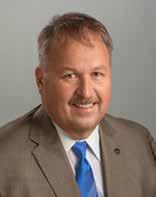
Sales and leasing of existing industrial real estate have been very strong for several years, the current result of which is the lowest vacancy rate and lowest availability of space we have seen in decades. As one might expect, rental rates have steadily risen over the past several years, as have costs of ownership (property taxes, insurance, common area maintenance, construction costs, etc.). In years past, we have discussed the industrial market with reference to geographic segments of the community. Today, the market availability of space is so limited, a community-wide view of types of space is more appropriate.
Ed Eller Industrial SpecialistSmall business industrial parks are characterized as typically 1-4 tenant buildings, with a mix of service and distribution tenants and a few light manufacturers. Vacancy is extremely low averaging less than 1% overall. Modified gross rents have increased substantially in the last 3-5 years, along with costs and values. Absorption has been limited, but very strong. Kansas Commercial has been associated with several new construction projects since 2019. One recent project was a 24,000-square-foot speculative building that went from 8% occupancy in the second quarter of 2022 to current occupancy of over 80%.


Medium industrial parks and buildings consist of freestanding buildings from 20,000 to 60,000 sq. ft. commonly with 1-4 owner/ occupants or tenants. Sales of these buildings were strong in 20192021, with rising prices per square foot depending on location and functionality. Rents have increased significantly, with Class B modified gross rents rising generally $4.00$5.00 per square foot per year to $5.00-$6.00 per square foot per year.
Class A building rents have been $6.00-$7.00 NNN-Roof and Structure with energy efficient, modern, functional structures, with new or newer offices, restrooms, etc. Class C buildings in this category in Topeka are concentrated on the south side of Topeka commonly referred to as the Forbes Area. Occupancy has been slightly lower for Class C buildings, but still very strong, typically above 95% in the last few years with steadily increasing rents and a move from modified gross leases to NNN-Roof and Structure leases.
Large industrial parks and buildings would commonly be from 60,000 to 250,000 square feet with 5-20 tenants, with several
important exceptions; namely single tenant regional and national manufacturers and distribution companies, i.e., Wal-Mart, Mars, Target, Home Depot, US Foods, Goodyear, Bimbo. Several strong local manufacturers, ErnestSpencer, Koch & Co., Fairview Mills/J6 Enterprises, Bettis Companies, etc. also occupy this space and have made significant investments in expansion over the last several years.
Very significantly, the Forbes Industrial Park and various individual buildings have seen a marked increase in occupancy and rents in the last five years, where traditionally we have seen 20-30% vacancy and modified gross rents from $1.85-$2.25 per square foot per year now have occupancy above 90% and rents from $1.75- $2.25 NNN-Roof and Structure. Owners have also spent significant money rehabilitating and renovating the existing stock to increase material handling efficiency, lighting and energy efficiency.
The market for quality industrial space is also strong with cap rates ranging from 7-8% in the last few years. Rising interest rates may dampen the appetite for existing leased properties by investors as the margin between cap rates and interest rates narrows. However, there is a significant
counter current in the industrial investment community who are increasingly focused on the value of these properties relative to replacement cost. Land prices and construction costs, although minimally tested locally, are increasing substantially, which may lend validity to this sentiment.
Perhaps the most exciting element of the local market is the prospect of several new industrial developments in the planning stage for 50,000 to 450,000 square feet of buildings under consideration in 2023-2024. Affordable land prices and strong demand for space in a scarce market are helping to generate interest and activity in this arena among local and regional private and institutional developers. Several infill projects ranging in size from 3-15 acres are being considered around the community as well as a few larger projects in the 20–40-acre range.
The limiting factor locally has been the cost of extending municipal utilities to lower priced land versus developing on higher priced land already served by utilities, streets, etc. Projected and future rents are finally approaching a point where future investment in new development may allow for substantial growth of Topeka’s industrial base in manufacturing, distribution and wholesale trade.
Photo by BRADEN DIMICK
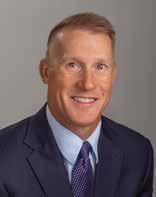
The increase of the cost of construction is being felt by all sectors of commercial real estate. New carpet and paint for a lease space a few years ago was $5.00 +/per square foot and now is $10.00 +/- per square foot. A tenant used to be able to have other updates and changes to a space aside from carpet and paint. This is no longer. The increase in cost will eventually be passed along to the consumer. Lease rates will increase and/or tenants will be asked to participate in remodeling and updating expenses of lease spaces. Either way, the tenant will be paying a higher effective lease rate.
The small office users of the community have returned to the office. The suburban office market is solid with limited spaces available to lease and very few office buildings on the market for sale. We often hear people comment that they see our signs all over and thus the market must be weak. This is not accurate. Unlike residential real estate when a sign is almost always for a full residence, our sign in front of a building is more often than not
for a single suite inside of a large building.
The downtown office market is our current challenge. Many of our major employers are struggling with workers returning to the office. The market has large blocks of space available, and this is prior to Hill’s vacating the 150,000-squarefoot building at 8th and Topeka. The revival of Downtown Topeka has been incredibly positive for all of Topeka and the office market. We need to continue to support this redevelopment.
The next greatest challenge we have in leasing spaces in downtown after the return of employees is parking. The City of Topeka has a two-hour free parking policy on Kansas Avenue and on the 100 blocks east and west of the Avenue. Unfortunately, this policy appears to be going away. This will impact office users that have customers/ clients visit their downtown office. In addition, the city is going to increase parking rates in cityowned garages. This increase in cost goes directly to the bottom line of a tenant or landlord.

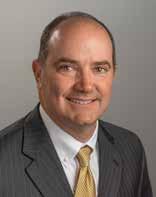

The retail market continues to be active in several sectors throughout Topeka while a few retailers are aggressively expanding. The sectors that continue to see activity are the West and SW sectors of the market. There are several new construction sites that will see new retailers open by Q3 or the beginning of Q4. Rates have not increased much in these sectors, but we continue to have activity.
Downtown retail has not fully recovered from Covid. There continues to be several vacancies in the downtown sector and several retailers have closed. Similar to those looking for office space, parking availability is critical for downtown retailers that want easy, free and accessible parking for their customers.
Quick Service Restaurants or QSR’s lead the pack on trying to find locations. With less seating, new floor plans and new operating procedures, QSR’s have changed
their strategies due to the inability to find enough employees willing to work and the desire to have a driveup window. Properties that have the ability for a drive-up window are in high demand. Not all QSR’s will have indoor seating and instead offer a carryout or drive-thru experience.
There continues to be a high demand from retail investors looking to purchase property. The increase in interest rates barely slowed down investors’ interest in purchasing opportunities. More investors are looking for the “value add” properties. If a property is priced correctly, we see multiple offers from local, regional, and national investors. Some will purchase the property, sight unseen. True triple net investment properties continue to be in high demand. With the increase in the costs of goods sold, higher wages, staffing challenges and the increase in real estate taxes, local and regional retailers will have to make some hard decisions as to the future of their business. Many are adapting to new ways of doing retail business. TK
Mark Rezac Partner PHOTO SUBMITTED Photo by BRADEN DIMICK

Diana Ramirez and her daughter Jessica Barron drove separately, but they arrived at Milk & Honey at exactly the same time to meet up with me.
“Her brothers tease me that she’s my favorite child,” Ramirez said after sitting down.
I noticed Jessica’s necklace and asked her about it. “My mom got it for me. It’s two hearts. Right?” Barron said, looking at her mom for confirmation.
“Yeah, it’s two hearts. One for me and one for you,” Ramirez said.
The necklace is composed of two hearts forged into one, almost like an infinity symbol. Similarly, both mother and daughter are forged in the infinite journey of entrepreneurship.


Ramirez is the owner at Express Employment Professionals in Topeka and Emporia.
“I didn’t know that this was going to be what I would grow up to be, a franchise owner of a staffing agency, but it is the path that I took, and it’s been wonderful for me and my family,” said Ramirez.
She’s been in the staffing industry for over two decades and she is passionate about helping others. Ramirez had the opportunity with Express to buy the office that she was working in.
“I started with them in 2003 and the plan was to buy it five years later. I bought it in 2008, right according to plan,” said Ramirez. “Unfortunately, in 2009 we had a recession, so it was the worst time ever to buy a business. But I figured that if we could make it through, we would be okay. And then four years later I opened a second location.”

Ramirez just purchased another territory and will be opening a 3rd location very soon.
In addition to the growth that Ramirez has created, she is also proud of the fact that she’s now helping a third generation find employment.

“When I joined Express, I was sold on their mission and their vision. It’s simple. It’s to help as many people as possible to find good employment. The other piece of that is that I get to touch other
people’s lives. We have helped so many people and that’s what keeps me going. That’s what makes me get up every morning. We’re not only helping the individual, but also their family,” said Ramirez.
Her two sons have worked for the staffing agency as well. Ryan worked for the business for eight years and is still in staffing vendor management. Jordan currently works for the company.
“My kids were very young when I started in the staffing industry. They knew that my job was to find employment for people. Numerous times I would be at the grocery store with my young children when my oldest son would ask everyone, ‘do you need a job?’ That was quite embarrassing. But
they would always hear me talking to customers and clients,” said Ramirez.
While Barron never worked for the staffing agency, she did work at several temporary jobs when she was younger and lived at home. Sometimes it was because she wanted to try out a career field, and other times it was because someone didn’t show up and her mom recruited her or her brothers.
“My rules were simple,” Ramirez began. “If you played sports or were involved at school you got a pass, but you just can’t just sit around doing nothing. You had to work. I think part of Jessica’s work ethic comes from that, which I got from my parents.”
Following in her mother’s entrepreneurial spirit, Barron recently opened her own business, J.B. Boxing—a boxing gym in Topeka.

She began boxing at the age of 13, a passion that she inherited from her father, also a boxer and coach. Her mom wasn’t too keen on the idea at first.
“Every time she left for practice I would tell her, ‘don’t let them hit your face,’” said Ramirez.
Although Ramirez wasn’t too fond of the idea, she wasn’t going to stop her. She wanted Jessica to try it out for herself, even if she didn’t understand it.
Barron’s dad wanted to make sure that she was in it for the long haul. On her first day at the gym her dad gave her gloves and headgear, and told her to spar. She didn’t even know what that meant.


“Of course, when I got in there it was with guys who already had experience and who’ve already been training and were bigger than me. I got a bloody nose. I got knocked down. I was crying. But I got back up. I kept getting back up. And here I am now, stronger than ever,” said Barron.
“And her face is fine,” Ramirez said, laughing.
“No broken nose,” Barron added, prominently displaying her nose.
At 15 she won the National Women’s Golden Gloves Championship. At 16 she won a silver medal at the Junior Olympics. At 17 she was awarded the bronze at the Women’s National Championship.
Then she went to college and stopped amateur boxing but kept up with the Topeka Golden Gloves. It’s the association that her father belongs to, and she continued to work out in boxing gyms when possible.
“Tell him about all your degrees,” Ramirez chimes in, proudly.
Barron told me about her four degrees. She has a bachelor’s degree in psychology. A master’s degree in clinical psychology. She also has a physical therapy assistant license and a degree in Spanish, which she earned while studying abroad in Spain.
“There was a pattern that I continued to see throughout my entire education, which is that the mind and the body are intertwined. If one isn’t right, then the other suffers,” said Barron. “To me, boxing has both of those parts, the physical and the mental.”
Now at 30, she’s bringing her mental health education and her passion for boxing to her gym. Currently, the gym is mainly being used by boxers who are training for tournaments or competitions. They come from all over the state of Kansas, something that both mother and daughter are very proud of. Eventually, Barron wants to open the gym for people who want to get a good


workout, not just those seeking a boxing career.
“Safety is really important to me,” Barron said. “I want to make sure that things are done properly.”
“I’m really proud of her,” Ramirez said. “Now her dad and the Topeka Golden Gloves work out of her gym. She’s the boss lady. Like my staffing agency, J.B. Boxing is a woman minority owned business. She’s following in my footsteps in that way.”
Although they are in completely different industries, they both have faced very similar challenges.
Ramirez mentioned how at job sites or career fairs, or even in meetings that people, usually men, ask her, “Who do you work for?” when she hands them her business card. “You know, I’m not very timid or shy, so I let them know that I’m the owner. If it was a man buying


one franchise or another, people would just offer congratulations.”
Barron faced some of those same doubts when it came to boxing.
“When I started boxing, girls were not allowed to box. I was the first female competitor here to put on gloves,” said Barron.

Barron explained that there were no other girls in the sport, so she would have to spar with other boys her age or older. Partly because the coaches would try and scare off any girls who were interested in the sport. Barron was scared at first, too. She would make her twin brother go to the gym with her but he stopped going after a few months. He wasn’t into it.
“And so, then I just took a step forward and continued to go by myself and do my own thing. Obviously it kind of blossomed into something else,” said Barron.
“It’s unfortunate that we both experienced stereotyping although in different ways,” Ramirez said. “It’s reality.”
Both are undeterred in achieving their goals, despite the many obstacles and challenges they have faced.
“Jessica planned everything out. She just didn’t decide one day to open this
gym. This was something she had been working on,” said Ramirez. “Of all the things that we had to do to get to where we are, I hope a little of that knowledge of owning a business rubbed off.”
Barron then showed me the tattoo on her right ankle. It’s of a sea turtle. She always wanted a tattoo but couldn’t decide what to get. However, on a road trip with some friends (all clinical psychologists), they took turns analyzing each other and what really drove them. Family was Barron’s main driving force.
“So yeah, it’s a turtle. But if you look closely, the shell of the turtle is made of seashells. Whenever my mom travels, she likes to go to the beach. And whenever she goes there, she always collects seashells. So, the shell of the turtle is made of different seashells and there is a heart on the turtle’s head,” said Barron. “Sea turtles are very family-oriented. Like they are very, very family-oriented.”
“She’s going to make me cry,” Ramirez said. Barron’s eyes teared up as well.
Hard work and family is all forged together, just like those two hearts on Barron’s necklace.
Once the interview was over and we said our goodbyes, I looked back and saw them leaving the same way they had come in; two trailblazing entrepreneurs. TK




Buying and selling equipment, materials, and more is an everyday part of most businesses. For companies that buy and sell, form contracts with favorable provisions are not enough to protect your business interests. In any given supply chain transaction, many documents change hands: requests for quotations, acknowledgment forms, purchase orders, and more.
Most of the time, those transaction go smoothly, and the contracts backing the transactions are barely reviewed. But when something goes wrong, the contracts come out for review, and the initial issue is which terms govern the transaction. This exchange, commonly referred to as the “battle of the forms,” can lead to increased liability and costs.

So, before you find yourself in that situation, learn about a contracting strategy that can help you win the battle—and the war—of the forms.
Most businesses that regularly buy or sell use a boilerplate or “standard” form contract. Standard forms are a necessity—the transaction costs (time and money) would be too high to negotiate the terms of each individual deal. And businesses need certainty in allocating their risks.
The exchange of standard forms is very common. Efficiency and time constraints demand businesses move forward without giving much attention to the fine print—until something goes wrong.
The Uniform Commercial Code (UCC) lays out the framework for the “battle of the forms.” It only applies in transactions involving “merchants,” which are essentially any business or person engaged in buying and selling products.
One court of law called this UCC provision “a defiant, lurking demon patiently waiting to condemn its interpreters to the depths of despair.”
This particular provision under the UCC addresses situations where companies have exchanged standard forms and agreed on the key deal points, such as price and quantity.
However, the parties have never expressly agreed on other crucial points that don’t routinely come into play, such as warranties, choice of law, and limitations on liability. In this situation, the UCC determines what terms will govern if the parties still consummate the transaction and if properly contested, the default terms under the UCC will apply (commonly referred to as gap-fillers).



Under the framework, additional terms or different terms not included in the first offer become part of the agreement unless one of the following conditions are met:
1. The initial offer expressly limits acceptance to the terms of the offer;
2. The additional or different terms “materially” alter the offer; or
3. Notification of objection to the additional or different terms was already given or is given within a reasonable time after notice of the terms is received.
A food distributor orders a machine part from a manufacturer to use in its assembly line. The machinery part is defective—causing the line to shut down for days until the part is repaired. As a result, the distributor loses sales and sues the manufacturer not only for the part, but also for hundreds of thousands of dollars of lost profits from the shutdown.
The distributor solicited the part with its standard order form, which provided that the manufacturer would be liable for consequential damages and litigation must take place in New York. The manufacturer responded to the purchase form with an acknowledgment that contained conflicting terms—expressly providing for no consequential damages, limiting its liability to the price of the part, and stating any litigation must take place in Kansas. Both forms expressly limited acceptance to its terms and objected to any inconsistent terms. Depending on which form controls, the manufacturer could be liable for hundreds of thousands of dollars in lost profits (consequential damages).
In Kansas, under this scenario, a court would ignore the conflicting terms among the parties and apply the UCC gap-fillers.
The gap-fillers are default statutory terms that will apply if the two terms conflict with each other. In the battle, both sides have the ability to opt into the UCC gap-fillers by conditioning their offers.
The best way to win the battle of the forms is to not play the game. If both sides sign what is often called a “master agreement,” then the UCC gap-fillers do not apply.
A typical master agreement contemplates future transactions between the parties governed by the general terms of the master agreement. This permits the parties to engage in future transactions and negotiate only the key deal points specific to that transaction.
Master agreements give the parties an opportunity to negotiate the finer points on the front end and prevent any inconsistent terms from applying in the future.
The drawback is that master agreements typically take time to agree on. Additionally, if the transaction is a one-off deal, it may make little sense to take the trouble of entering into a master agreement. But if the transaction leads to litigation, the upfront expense of negotiating master terms will easily be less than the post-dispute litigation costs concerning which terms will govern.
If you do have to wage the battle of the forms, the next best approach is to ensure that your form contains sufficient language that expressly limits acceptance to the terms of the offer and objects in advance to any different or additional terms. That way, the worst case scenario is that the UCC gap-fillers may apply (and not the other side’s terms).
Unfortunately, the gap-fillers are too exhaustive to summarize here, but overall, the terms are more buyerfriendly. Most notably, the terms include fairly broad warranty and remedy provisions, including consequential damages.
It is important that you understand these terms and ensure your business is able to bear the allocation of the risks that is imposed by them. TK
This information is not a legal opinion and it does not provide legal advice for any purpose. If you have questions or want more information, contact your legal counsel.




 Photo by MIRANDA CHAVEZ-HAZIM
WIBW 13 NEWS
Melissa grew up in Manitowoc, Wisconsin and earned her degree in broadcast communication from Marquette University in Milwaukee. Melissa’s first job in the business was for a radio station in her hometown doing fishing reports. For three summers, she got up at 4 a.m. to talk about how the fish were biting in Lake Michigan. Just before graduation, Melissa landed a job at WFRV-TV in Green Bay as a producer.
A chance to be in front of the camera as a reporter brought her to Topeka and WIBW-TV in May 1996. Melissa has earned numerous awards from the Kansas Association of Broadcasters, Kansas Associated Press, American Cancer Society and RTNDA, and the news team has earned smaller market Best Newscast honors from the Heartland Regional Emmys twice.
Melissa is involved with several area organizations and events, including the Children’s Tumor Foundation, American Cancer Society, Capper Foundation, American Heart Association, the Race Against Breast Cancer and Valeo.
Melissa is married to WIBW-TV Chief Photographer Doug Brown They live in Topeka with their cats.
QYou could be anywhere, why Topeka?
Why not Topeka? I love this community and this area. I’ve embraced it and am fortunate it’s embraced me as well.
Professionally, it’s allowed me to grow, and I continue to feel challenged and supported. Topeka is a great area for news! We are the state capital; we are surrounded by excellent small and large universities; we’ve had groundbreaking roles in history; Fort Riley and Kansas National Guard are both in our backyard; and we constantly have great people doing great things. I’m also blessed to be at a community-minded station which supports many organizations and causes. I’m in a place where I truly feel I’m making a difference.
Personally, I’ve also grown. Topeka is a good fit for me. It’s a city that’s just big enough. The people are friendly. We have music and art and sports. It’s easy to escape to the countryside. Perhaps most important: I met my husband here! Doug Brown is our chief photojournalist. He grew up just outside Topeka, near Grantville. We spend a lot of time on his dad’s farm, which is where I hang out with all the baby calves you see me post on social media!
Q Who paved the way for you?
Certainly, at the national level, women like Diane Sawyer, Barbara Walters, Connie Chung and Jane Pauley paved the way for women in television news to be taken seriously. They fought to have women viewed as being able to handle more than just the lifestyle segments. They challenged the assumption that the men should automatically get the political assignments or the interviews with world leaders.
I arrived in Topeka at a time when Mary Loftus, Sally Baltes, Betty Lou Pardue, Lori Hutchinson and Amy Lietz were the established women anchors at the local stations. All of them were respected leaders in the community. Because they—and the women who came before them—set the tone. The stage was set for all us women who followed to be seen in the same light.

Q Who have you paved the way for?
This is a tough question to answer. I strive to continue the progress made by women in our industry. I want young female journalists who follow me to see it is okay to stand up for yourself. It is okay to express your ideas, and fight for the projects and assignments about which you feel strongly. I want them
to not simply accept what’s handed to them, but to go after what they truly want. I can’t say I’ve never felt pushed down, but I can say I’ve always gotten back up.
Q What is your proudest moment? Lowest?
I don’t want to be a total downer on this one, but I can’t answer questions about my life without mentioning the night I thought my life would end. My last semester of college, I was abducted at gunpoint by strangers, who stole my car, took me with them, forced me to get cash out of ATMs, then put me in the trunk while they drove around, eventually dumping the car - and mein an alley. I was pistol whipped; I was groped; at one point, a gun was cocked at the back of my head. After they abandoned the car, I eventually kicked out the back seat to get away, and a passing school bus driver picked me up.
It’s not just the incident itself that makes this a low point, but the fear that followed. It wasn’t an abstract fear of the unknown or anxiety over a decision, but a true, physical, am-I-safe fear. I would step out a door and turn back around, heart racing, because I wasn’t sure the people walking down the sidewalk didn’t mean harm; a noise in the middle of the night would get me out of bed to
look out the window, just to be sure no one was there. The fears would ebb and flow. Gradually, the fears faded to the background. I have a healthy personal safety awareness now that wasn’t there before, which is a good thing. Although, I admit I still have my anxious moments. I chose to speak publicly about the experience. As a college student, I wanted to raise awareness of campus safety. Now, I continue to speak about it because it’s important to know things like this happen to real people in our communities. We all need to be personally aware, and we all need to do our part to take a stand against crime because you just don’t know when the next victim could be you or someone you love.
I spent a lot of time questioning why I am still here when others do not survive. God had a reason He kept me here. I have a responsibility to use my voice and share my story to make a difference. I want others who’ve been through a traumatic experience to know they can come out on the other side. What happened will always be a part of them, but it does not have to define them. Life is a gift and you are here to use it. It is a journey from victim to survivor. In that respect, my lowest moment became my proudest: I’m a survivor.
CONGRATULATIONS to Dr. JuliAnn
Mazachek on winning the inaugural Athena Leadership Award. This award is designed to highlight excellence in female leadership, recognizing the courage, collaboration and impact of women making a difference in our community. Dr. Mazachek is the first female President of Washburn University and she continues to break barriers and demonstrate strong leadership at the university and throughout our community!
Are you ready to take your business to the next level? The First Opportunity Fund from GO Topeka can help you get there! Whether you're just starting out or looking to expand, the First Opportunity Fund is the key to unlocking your business's full potential. Don't wait - apply now and get the support you need to succeed!

FOR MORE INFO:
Glenda.Washington@TopekaPartnership.com
GoTopeka.com/first-opportunity-fund/ 785.246.6205

Join our upcoming event to learn about the benefits of diversity, equity, and inclusion for your organization. Register now to gain insights and practical strategies for creating a more inclusive workplace.


Q Is there a guiding principle or mantra you use?
Be respectful and be kind. You are not always going to agree with everyone and you may not always like everyone, but you don’t have to be cruel.
I use this approach when I’m interviewing people. I believe you can ask tough questions without being unnecessarily leading or confrontational. Plus, you usually get a better answer that way!
Empathy also comes into play. We often encounter people on the worst day of their lives. My personal experience has taught me there is a right way and a wrong way to ask a question. You have to be sensitive to the situation and think about your words. Be respectful. We see the best and the worst in our jobs. It is easy to become jaded. I feel like if I ever lose my empathy, it’s time to step away.
Q Who do you admire?
I admire anyone who has the courage to take a risk. It could be personally or professionally. It could be moving to a new city, changing jobs, launching a new business, singing in front of a crowd, or running for public office. It could be saying no when everyone else is saying yes; raising a question when it seems you’re the only voice of dissent. It is scary to be out on that limb, so I admire those who don’t hesitate to take those steps.
Q How do you overcome adversity?
Well, first there’s the minor freakout! Then I calm down, take a deep breath, and tell myself I can do this. I think through the options, analyze different perspectives, and move forward. You have to keep moving, even if it’s not the direction you initially planned.
Q What advice would you give your younger self?
You are stronger than you think.
Q What story most impacted you and how?

I can’t pick just one!
The story that had the most personal impact on me was about Morgan Kottman. She was 15 years old and battling a rare brain cancer. We had no way of knowing when we interviewed her that we’d be capturing her last day at school and some of her final messages to her family. She passed away two weeks after the story aired, but she left with me a lesson on the importance of living and loving, and I am forever grateful for her wisdom.
The most meaningful project I undertook was an in-depth special for the 50th anniversary of the Brown vs. Board decision. I got to interview the two plaintiffs who were still alive at the time and meet some of the children who were involved. I learned so much about the totality of the case and Topeka’s pivotal role way beyond what is taught in school. What struck me was this group of ordinary, average people. They didn’t do this to get rich. They did it because it was the right thing to do. They proved one person really can change the world.
The most amazing experience was traveling with the 190th Air Refueling Wing on a deployment to Guam. It was an honor to share the story of what they do, and also to learn why Guam is important to our overall security as a nation.


Everything you need to start or grow. You deserve a business banking team that’s “all in.”


I grew up in a small town, so it means a lot when I walk into Envista and they know who I am. I’m not just another number, I’m a neighbor. They want to see me thrive.

“
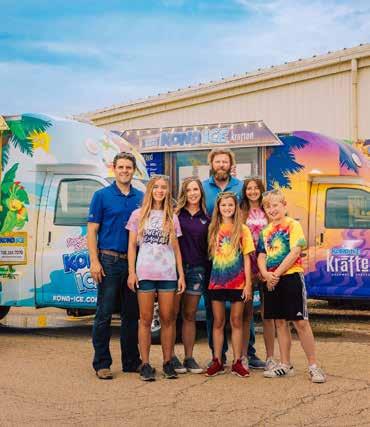
- Angel McGhee, Firehouse Boutique & Studio
Advisors Excel Founders Make Significant Investment in Washburn University Future Ichabods at Washburn University
will benefit from a lead gift to renovate Henderson Learning Resources Center made by Advisors Excel Co-Founders David Callanan and Cody Foster.

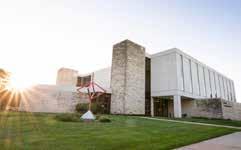
Aileen McCarthy, M.D., Receives ACP Mastership Award
Dr. Aileen McCarthy, a Stormont Vail Health physician and member of the board, has been awarded the American College of Physicians’ 2022-23 Mastership.
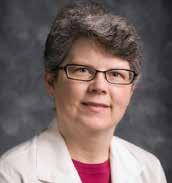
GTP
Stephanie Norwood Director of Entrepreneurship and Small Business
The Greater Topeka Partnership and GO Topeka are pleased to announce Stephanie Norwood has been named GO Topeka’s Director of Entrepreneurship and Small Business. Norwood steps into the role after serving for more than three years as The Partnership’s Director of Events.

National Bank
Central National Bank announced the hiring of Financial Advisor and Trust Officer, Blake A. Sutton

Bimini Pet Health Signs on as Corporate Partner to Topeka’s Plug and Play Animal Health Accelerator
Plug and Play Topeka and GO Topeka announced Topeka-based Bimini Pet Health is partnering with the Plug and Play Animal Health accelerator to find and develop new technologies.

20 Under 40 Nominations Open The Jayhawk Area Council Boy Scouts opened up the nomination period for the 2023 Topeka’s Top 20 Under 40 class. The nomination window closes at midnight on June 9.


2023 TopCity Interns Program Prepares to Kick Off, Topeka-Area Employers Encouraged to Take Part

GO Topeka and Forge Young Talent announced TopCity Interns is back for another summer of introducing college students and young professionals to all the capital city of Kansas has to offer.



A career at Stormont Vail Health means joining a team of people who consider every day a chance to improve someone’s life, whether it’s a patient or a colleague. Come be a part of our team, who celebrates working together.