Hearing on High Alert

What Is Sound Sensitivity?
Treatment for Trauma and Noise Sensitivity
Online Interventions for Tinnitus and Hyperacusis
Record-Breaking Fundraiser Honoring Kent Taylor

Soothe Tinnitus with FDA Approved Lenire
Soothe Tinnitus with FDA Approved Lenire
Lenire has been proven in clinical trials and with real world patients to provide significant relief from tinnitus.
Lenire has been proven in clinical trials and with real world patients to provide significant relief from tinnitus.

Reclaim Your Quiet with Lenire
Reclaim Your Quiet with Lenire
Reclaim Your Quiet with Lenire
91.5%
Real World Effectiveness:
Real World Effectiveness:
Real World Effectiveness:
91.5% of real world patients benefit from treating tinnitus with Lenire. 1
91.5% of real world patients benefit from treating tinnitus with Lenire. 1
91.5% of real world patients benefit from treating tinnitus with Lenire. 1
Highly Recommended:
Highly Recommended:
Highly Recommended: 83% of 500+ clinical trial patients would recommend Lenire to treat tinnitus. 2
83% of 500+ clinical trial patients would recommend Lenire to treat tinnitus 2
83% of 500+ clinical trial patients would recommend Lenire to treat tinnitus 2
Learn more about the first and only FDA approved bimodal neuromodulation tinnitus treatment device and find a clinic near you by visiting www.lenire.com/find-a-clinic
Learn more about the first and only FDA approved bimodal neuromodulation tinnitus treatment device and find a clinic near you by visiting www.lenire.com/find-a-clinic.
Learn more about the first and only FDA approved bimodal neuromodulation tinnitus treatment device and find a clinic near you by visiting www.lenire.com/find-a-clinic.
Visit www.lenire.com/us for more about contraindications, warnings, precautions, and tinnitus.
Visit www.lenire.com/us for more about contraindications, warnings, precautions, and tinnitus.
Controlled Clinical Trial Proven:
Controlled Clinical Trial Proven:
Controlled Clinical Trial Proven: Lenire is proven to be more effective than sound-alone in a controlled clinical trial 3
Lenire is proven to be more effective than sound-alone in a controlled clinical trial. 3
Lenire is proven to be more effective than sound-alone in a controlled clinical trial. 3
Guided by Professionals:
Guided by Professionals:
Guided by Professionals: Lenire is available at leading tinnitus clinics. Scan the QR code to find a clinic near you.
Lenire is available at leading tinnitus clinics. Scan the QR code to find a clinic near you.
Lenire is available at leading tinnitus clinics. Scan the QR code to find a clinic near you.
Scan to find your nearest clinic
Scan to find your nearest clinic
Scan to find your nearest clinic
2 Visit www.lenire.com/clinical-trials for clinical aggregate recommendation statistics.
2 Visit www.lenire.com/clinical-trials for clinical aggregate recommendation statistics.
1 McMahan, E.E. and Lim, H.H., 2024. Effectiveness of bimodal neuromodulation for tinnitus treatment in a real-world clinical setting in the United States: A retrospective chart review. medRxiv, pp.2024-08; doi: https://doi.org/10.1101/2024.08.22.24312175 [preprint]
1 McMahan, E.E. and Lim, H.H., 2024. Effectiveness of bimodal neuromodulation for tinnitus treatment in a real-world clinical setting in the United States: A retrospective chart review. medRxiv, pp.2024-08; doi: https://doi.org/10.1101/2024.08.22.24312175 [preprint]
Visit www.lenire.com/us for more about contraindications, warnings, precautions, and tinnitus.
1 McMahan, E.E. and Lim, H.H., 2024. Effectiveness of bimodal neuromodulation for tinnitus treatment in a real-world clinical setting in the United States: A retrospective chart review. medRxiv, pp.2024-08; doi: https://doi.org/10.1101/2024.08.22.24312175 [preprint]
3 Boedts, M. Beuchner, A. et al. Combining sound with tongue stimulation for the treatment of tinnitus: a multi-site single-arm controlled pivotal trial. Nature communications (2024) 3. https://www.nidcd.nih.gov/health/tinnitus
3 Boedts, M. Beuchner, A. et al. Combining sound with tongue stimulation for the treatment of tinnitus: a multi-site single-arm controlled pivotal trial. Nature communications (2024) 3. https://www.nidcd.nih.gov/health/tinnitus
2 Visit www.lenire.com/clinical-trials for clinical aggregate recommendation statistics.
3 Boedts, M. Beuchner, A. et al. Combining sound with tongue stimulation for the treatment of tinnitus: a multi-site single-arm controlled pivotal trial. Nature communications (2024) 3. https://www.nidcd.nih.gov/health/tinnitus


When Sound Hurts: The Reality of Pain Hyperacusis

When the Patient Becomes the Clinician: Rethinking Care for Sound Hypersensitivity
Losing Hearing Health, Trust, and Finding a New Beginning at Texas Roadhouse
Record-Breaking Community Turnout Generates $980,000 for ATA: Texas Roadhouse and Bubba’s 33 Partner With ATA for a Fourth Year to Honor Kent Taylor, Founder of Texas Roadhouse, and Revolutionize Understanding of Tinnitus


Zhang, PhD Chair, Board of Directors
Words Matter: The Need for Clear Definitions for Sound Hypersensitivity
For individuals with sound hypersensitivity disorders, receiving an accurate diagnosis can be an uphill battle. The term hyperacusis is frequently used as a catch-all label for noise sensitivity, phonophobia, misophonia, loudness hyperacusis, and pain hyperacusis—all distinctly different conditions. The lack of widely accepted definitions has left many patients feeling misunderstood and healthcare providers struggling to offer effective support. Moreover, without standardized terminology, scientific progress in understanding the underlying mechanisms of these disorders also falters.
Consider misophonia, a condition where certain sounds trigger extreme emotional distress, including anxiety or anger. Misophonia is sometimes seen as a psychological disorder or is misclassified as phonophobia, which is a fearbased response to sound. Similarly, loudness hyperacusis and pain hyperacusis are frequently lumped together, despite one involving a heightened perception of volume and the other causing actual physical pain in response to sound. These distinctions are not minor—they determine treatment approaches, research priorities, and, most importantly, the quality of life of those affected.
Tinnitus offers an instructive example. Although its mechanisms remain debated, there is at least a baseline definition: The perception of sound without an external source. This consensus has allowed research to move forward in meaningful ways. If the same could be achieved for sound hypersensitivity disorders, it would improve everything from diagnostic accuracy to treatment outcomes.
Without a consensus on definitions, many patients feel invalidated or are sent from specialist to specialist without a clear treatment path forward. Researchers, too, struggle to design studies when the conditions they are investigating lack precise boundaries. The cost of this ambiguity is highest for patients—they might be left without proper treatment simply because their condition has not been adequately defined or, worse, have their condition further deteriorate because of inappropriate care or lack of care.

MANAGING EDITOR AND PUBLISHER
Joy Onozuka, MA
American Tinnitus Association
COPY EDITOR
Christina Palaia
Emerald Editorial Services
EDITOR-AT-LARGE
James A. Henry, PhD
Ears Gone Wrong®, LLC
Portland, OR
EDITORIAL ADVISORY PANEL
Marc Fagelson, PhD
East Tennessee State University
Johnson City, TN USA
Gail M. Whitelaw, PhD
Department of Speech and Hearing Science
The Ohio State University
DIGITAL DESIGN & PRODUCTION TEAM
JML Design, LLC
ATA BOARD OF DIRECTORS
Jinsheng Zhang, PhD, Detroit, MI—Chair
Stelios Dokianakis, AuD, CH−TM, Holland, MI—Vice Chair
Gordon Mountford, South Pasadena, CA—Treasurer
John Minnebo, MBA, Philadelphia, PA—Assistant Treasurer
Sara Downs, AuD, Duluth, MN—Secretary
Jeff Bingham, San Diego, CA
Shahrzad Cohen, AuD, CH−TM, Sherman Oaks, CA
Marc Fagelson, PhD, Johnson City, TN
Jennifer Gans, PsyD, San Francisco, CA
David Hadley, MBA, San Francisco, CA
Emily McMahan, AuD, CH−TM, Anchorage, AK
Samantha Morehouse, AuD, CH−TM, Cincinnati, OH
Julie Prutsman, AuD, Highlands Ranch, CO
Robert Travis Scott, Abingdon, VA
Joseph Trevisani, New York, NY
Dan Torpey, CPA, Irving, TX
Erin Walborn-Sterantino, AuD, CH−TM, Rensselaer, NY
HONORARY DIRECTOR
William Shatner, Los Angeles, CA
ATA HEADQUARTERS
American Tinnitus Association
8300 Boone Blvd., Suite 500
Vienna, VA 22182 USA
T: 800.634.8978 (Toll Free)
www.ata.org
The American Tinnitus Association is a non-profit corporation, tax exempt under 501(c)(3) of the Internal Revenue Code, engaged in educational, charitable, and scientific activities. Tinnitus Today magazine is © copyrighted by the American Tinnitus Association.
ATA™ is a registered trademark of the American Tinnitus Association.
Jinsheng
ATA SCIENTIFIC ADVISORY COMMITTEE
Marc Fagelson, PhD—Chair
East Tennessee State University, Johnson City, TN
Carey D. Balaban, PhD University of Pittsburgh, PA
Jianxin Bao, PhD
Duke University, Durham, NC
Shaowen Bao, PhD
University of Arizona Tucson, AZ
Julia Campbell, AuD, PhD University of Texas at Austin, TX
Donald Caspary, PhD
Southern Illinois University School of Medicine, Springfield, IL
Christopher R. Cederroth, PhD University of Tübingen, Tübingen, Germany
Richard Gault, PhD
Queen’s University Belfast, Northern Ireland
Karah Gottschalk, AuD, PhD
Mountain Home VA, Johnson City, TN
Sylvie Hébert, PhD
Université de Montréal, Canada
James Henry, PhD
Ears Gone Wrong®, LLC Portland, OR
Bruce Hubbard, PhD
CBT for Tinnitus, Morristown, NJ
Maria Kleinstaeuber, PhD
Utah State University, Logan, UT
Jose Antonio Lopez Escamez, MD, PhD University of Sydney, Australia
Don McFerran, MD, MA FRCS (Retired) Colchester Hospital, UK
Kenneth Morse, AuD, PhD West Virginia University, Morgantown, WV
Arnaud Norena, AuD, PhD
National Center for Scientific Research (CNRS)
Aix-Marseille University, France
Jay Picciillo, MD
Washington University School of Medicine, Saint Louis, MO
Daniel Polley, PhD
Massachusetts Eye and Ear, Boston, MA
Josef Rauschecker, PhD
Georgetown University, Washington, DC
Tricia Scaglione, AuD
Holistic Hearing & Wellness, LLC, Fort Lauderdale, FL
William Sedley, PhD
Newcastle University Billingham, UK
LaGuinn Sherlock, AuD, CH–TM
Walter Reed National Military Medical Center Bethesda, MD
Paul Smith, PhD, DSc
University of Otago School of Biomedical Sciences
University of Otago, Dunedin, New Zealand
Sarah Theodoroff, PhD
VA Portland Health Care System, Portland, OR
Pim van Dijk, PhD
University Medical Center Groningen, Netherlands
Sven Vanneste, PhD
Trinity College Dublin, Ireland
Florian Vogt, PhD, PsyD
University College London, UK
Nathan Weisz, PhD
University of Salzburg, Austria

American Tinnitus Association c/o Truist Bank PO Box 424049 Washington, DC 20042-4049
Sustaining Hope: The Power of Ongoing Support for Tinnitus Research
As CEO of the American Tinnitus Association, I am constantly inspired by the dedication of our supporters— individuals who recognize that tinnitus research and advocacy require sustained commitment. Last year, thanks to our generous donors, the ATA awarded over $400,000 in research grants. This was a significant achievement that directly fuels critical studies seeking to unravel the mysteries of tinnitus and bring us closer to effective treatments. Yet, even with this success, we know we need to fund more.
The shortfall underscores the need for more sustaining donors and members—people willing to make an ongoing investment in our mission. Unlike one-time gifts, sustaining contributions provide steady, predictable funding that allows us to plan long-term initiatives, expand research efforts, and support those living with tinnitus.
For people looking for a way to make an impact beyond a one-time gift, the ATA offers a simple and powerful fundraising tool: give.ata.org/together. This easy-to-use platform enables anyone—individuals, families, community groups—to create their own fundraiser. Whether you’re running a marathon, celebrating a birthday, or honoring a loved one affected by tinnitus, this page makes it seamless to rally support for groundbreaking research and advocacy.
With the next round of grant applications closing just weeks after this issue’s release, now is the time to take action. Every dollar raised strengthens the ATA’s ability to fund transformative research that could lead to a cure. By becoming a sustaining donor or launching your own fundraiser through Classy—ATA’s donation platform—you are directly contributing to a future where tinnitus no longer disrupts or unravels lives.
Tinnitus research is gaining momentum, but we can’t afford to lose steam. With your continued support, we can ensure that no promising grant goes unfunded, and that hope remains within reach for the millions affected by tinnitus.
Thank you for joining us in our pursuit to quiet tinnitus together.


Patrick A. Lynch, Esq., MBA Chief Executive Officer
The opinions expressed by contributors to Tinnitus Today are not necessarily those of the publisher or the American Tinnitus Association. This publication provides a variety of topics related to tinnitus for informational purposes only.
ATA’s publication of corporate sponsored materials in any kind of media does not, in any way or manner, constitute or imply ATA’s approval or endorsement of any featured product or service. ATA does not favor or endorse any commercial product or service.

Loudness Hyperacusis Pain Hyperacusis
VS
Understanding the Differences, Challenges, and Urgent Need for More Research
By James A. Henry, PhD, and Kelly N. Jahn, AuD, PhD
As many as 17 percent of people have difficulty tolerating everyday sounds that do not bother others.1 These people are hypersensitive to sound compared to the typical person. In general, a sound hypersensitivity disorder is characterized by interference with or prevention of participation in normal life activities because everyday sounds cause physical discomfort, pain, negative
emotional reactions, fear, or some combination of these symptoms.2
The term hyperacusis is often used to describe a sound hypersensitivity disorder, but at least five different sound hypersensitivity disorders have been distinguished in the scientific literature:
• Loudness hyperacusis: Sounds are perceived as unbearably loud when they seem normal to most other people.
• Pain hyperacusis (noxacusis): Sound causes physical pain in or around the ears.
• Misophonia: Certain sounds cause negative emotional reactions, especially sounds from the mouth and nose of others.
• Noise sensitivity: Sound in general causes irritation or annoyance.
• Phonophobia: Excessive fear that sound will be too loud, distressing, or painful.
The Hyperacusis and Misophonia Book: When Everyday Sounds Are Too Loud, Distressing, or Painful was written to explain these disorders,
how they differ, and how they can be diagnosed and treated.2 This article focuses on explaining how loudness hyperacusis differs from pain hyperacusis.
Loudness Hyperacusis
Definition
Loudness hyperacusis is the experience of uncomfortable-tounbearable physical sensations (exclusive of piercing, burning, or stabbing pain) in the ears and/or head when exposed to any sound at intensity levels that would not be uncomfortable for the typical person.2
Symptoms
This definition is the basis for diagnosing loudness hyperacusis. The physical symptoms might involve an uncomfortable sense of fullness in one or both ears (like a balloon being blown up inside the ear), dull earache, or headache. The sensations are often difficult to describe, but they are not
typically characterized using adjectives such as “piercing,” “burning,” or “stabbing” that would indicate severe physical pain.
Although loudness hyperacusis can occur in isolation, it is commonly associated with a range of audiovestibular, neurological, psychological, and neurodevelopmental conditions, including tinnitus, hearing loss, migraine, autism spectrum disorder, brain injury, William’s syndrome, and post-traumatic stress disorder, to name a few.3,4
Theorized Mechanisms
Loudness hyperacusis is widely believed to be caused by heightened central auditory gain (i.e., the “volume control” in the brain is turned up too high).5–7 “A consensus is emerging in the auditory neuroscience literature that hyperacusis may be associated with a sustained and persistent increase in central auditory gain.”8
“A sound hypersensitivity disorder is characterized by interference with or prevention of participation in normal life activities because everyday sounds cause physical discomfort, pain, negative emotional reactions, fear, or some combination of these symptoms.”
What is central auditory gain? Briefly, all neurons in the central auditory system fire spontaneously even in the absence of sound, which is normal for everyone.2 The spontaneous activity has a “set point,” which is recalibrated depending on the level of sound entering the ears.5,9 During an extended period of quiet or when there is hearing loss, the set point may be raised such that the central auditory system amplifies sound more than usual, which could result in loudness hyperacusis.
Another source of physical discomfort can be caused by tightening of the tensor tympani muscle—one of the two middle-ear muscles that contracts to stiffen the middle-ear bones (ossicles)—which reduces the amount of sound energy entering the cochlea.2 Physical discomfort associated with loudness hyperacusis could be due to everyday sounds causing contraction of the tensor tympani muscle, which would cause fullness in the ear and other uncomfortable sensations, often described as “pain” but not meeting the definition for pain hyperacusis as explained below. Some people have tensor tympani syndrome, which could explain why the tensor tympani contracts so easily with sound exposure.
Treatment
Treatment often involves some type of systematic sound exposure to desensitize (or recalibrate) central auditory gain. These interventions typically focus on alleviating the physical discomfort caused by sound. If a patient also has negative emotional reactions to this physical discomfort, then resolving the
sound-related discomfort may also positively impact emotional wellbeing. Sometimes, however, intense emotional reactions to sound may need to be treated separately from the physical discomfort. In such cases, patients should be referred to behavioral health specialists to address the emotional impact of sound exposure.
The most effective approaches to managing loudness hyperacusis typically involve a combination of graded sound exposure and counseling.8 A common intervention for loudness hyperacusis is Tinnitus Retraining Therapy, which uses a specific form of sound therapy along with a structured counseling protocol.8,10 Other approaches that use different forms of sound therapy and counseling include Hyperacusis Activities Treatment and Progressive Tinnitus Management.11,12 Transitional Intervention is a unique and relatively new approach that uses output-limiting sound-protection devices combined with counseling to recalibrate the hyper-gain response associated with loudness hyperacusis.13
It is important to note that sound therapy may not be effective for all patients and that other types of treatment or referrals to other healthcare professionals might be necessary. In all cases, educational counseling is essential so that patients understand the purpose of treatment, the plan of care, and how to address emotional well-being. Cognitive behavioral therapy (CBT) can be used to treat the negative emotional reactions to sound. Specifically, CBT has been used to treat sound-
“Many people with loudness hyperacusis can benefit from graded sound exposure, but sound therapy may be ineffective for some people with pain hyperacusis and can even worsen the condition.”
avoidance behaviors associated with loudness hyperacusis.14 Reducing sound avoidance results in more sound entering the ears, which could augment sound therapy approaches.
In some cases, surgery may be used as a last resort to treat loudness hyperacusis. A surgical technique has been developed to impede the transmission of sound waves to the cochlea—effectively reducing the loudness of sound.15 In essence, the surgery stiffens the membranes (round and oval windows) in the bony cochlea that are necessary to transmit sound to the inner ear. The majority of patients undergoing this surgery showed long-term improvement in hyperacusis symptoms.
Pain Hyperacusis
Definition
Pain hyperacusis (noxacusis) is the experience of burning, stabbing, or jabbing pain in the ears or head when exposed to and/or following any sound at an intensity level that would be comfortable for the typical person.2
Symptoms
Both loudness hyperacusis and pain hyperacusis are defined by physical reactions to sound at intensity levels that are comfortable for most people. The main difference between the two conditions is how these sensations manifest. Whereas loudness hyperacusis is described as discomfort, intolerance, or hypersensitivity, pain hyperacusis is described as piercing pain, including burning, stabbing, or jabbing sensations. Pain hyperacusis can also result in delayed or prolonged pain, and patients often experience “setbacks” where the pain is exacerbated for a period of time following sound exposure.4,16 Many patients experience some degree of both loudness and pain hyperacusis.4,16 Those who experience pain hyperacusis tend to exhibit more severe, debilitating, and life-altering symptoms.4
Pain hyperacusis is not recognized by most healthcare professionals.16 “The old way of thinking is that there is one kind of hyperacusis, where everything sounds louder. Fortunately, science has progressed, and it’s
now known that there is a more severe form, pain hyperacusis, where loudness passes some threshold and turns into actual pain. And that pain lingers and worsens. It’s impossible to describe how much suffering this condition entails.”17
Theorized Mechanisms
Whereas loudness hyperacusis is thought to be caused by an increase in central auditory gain, “there is littleto-no empirical evidence to support central gain as the underlying cause of pain hyperacusis per se.”16 This does not mean that people with pain hyperacusis do not have elevated central auditory gain—there is simply not enough evidence one way or another to make that determination at this time.
So, which theories might explain the origin of sound-induced pain? Briefly, the inner ear (cochlea) is connected to the brainstem by the auditory nerve. This nerve is a bundle of nerve fibers, some of which have characteristics that could make them function like pain receptors.18 These fibers may be the source of the pain, but there are other possible sources, including structures in the middle ear and central auditory pathway.16
In the middle ear, damage, overload, or myoclonus (uncontrollable twitching) of the tensor tympani muscle can irritate the trigeminal nerve and result in pain in or near the ear. Regarding the central auditory pathway, damage to the middle or inner ear can lead to an increase in neural activity or elevated central gain. It should be noted that patients with pain hyperacusis often have many other symptoms such as fullness,
pressure, or fluttering in the ear that are consistent with a middle ear origin.4,16,19 However, more research is needed to pinpoint the underlying mechanisms of pain hyperacusis.
Treatment
Many people with loudness hyperacusis can benefit from graded sound exposure, but sound therapy may be ineffective for some people with pain hyperacusis and can even worsen the condition.4,16,20 One individual reported that sound therapy was “counterproductive and lowered my sound tolerance dramatically. I never recovered from that worsening.”17 There are, however, some people with pain hyperacusis who do benefit from sound therapy, so it is important to explore all possible treatment avenues when working with these patients.16

However, a patient should never be advised to “tough it out” by enduring painful sound under the pretense that sound exposure will eventually result in the ability to tolerate sound comfortably. Even if sound cannot be tolerated at all, it is important to leave the door open for possible sound therapy in the future. After all, the ultimate goal of therapy for pain hyperacusis is that the person is comfortable with reasonable levels of sound.
Counseling is essential for anyone with pain hyperacusis. Educational counseling should be used to explain what is known about pain hyperacusis and possible treatments.21 Counseling to reduce stress and anxiety should
be done as needed, which may also have the benefit of relaxing the tensor tympani muscle.22 CBT has not yet been empirically studied in patients with pain hyperacusis, but its efficacy in treating other forms of pain suggests that CBT might be helpful, and certainly would not cause harm.4 Perhaps the best source of data on different treatments used for pain hyperacusis is a study in which 32 adults described their use of pharmaceutical and nonpharmaceutical treatments for pain relief.16 In that study, “most participants reported low efficacy of interventions that are designed to counteract maladaptive gain in the central nervous system (e.g., sound therapy, Tinnitus Retraining Therapy) and six participants reported that those therapies made their noxacusis worse.”16 In general, nonpharmaceutical treatments were
reported to be largely ineffective for alleviating pain hyperacusis.
On the other hand, the patients in this study reported modest-toexcellent effects from pharmaceutical treatment with benzodiazepines, nerve blockers, anticonvulsants, Tylenol, oxycodone, and Botox.16 Two of the participants in the study reported an “excellent effect (>90% pain relief)” using nerve blockers such as lidocaine and ambroxol.16 Extensive evidence supports ambroxol for treating neuropathic pain in various conditions. One participant reported an excellent effect from Botox injections in the tensor veli palatini muscle. “The tensor veli palatini is innervated by the trigeminal motor root and may form a functional unit with the tensor tympani muscle to control middle ear pressure.”16 The authors point out that their results are generally consistent with middle ear and trigeminal nerve theories of pain hyperacusis mechanisms, and they suggest that this hypothesis could be clinically
tested using locally administered analgesics such as over-the-counter 4 percent lidocaine ear drops. Another study showed promising results with benzodiazepines, opioids, and gabapentinoids—with a strong warning to use benzodiazepines “judiciously.”4 Another study noted some minor improvement with clonazepam.23 Finally, an audiologist from the University of Iowa recommended lifestyle modifications to improve quality of life for individuals with pain hyperacusis.20
Summary
Distinguishing between loudness hyperacusis and pain hyperacusis is a fairly recent development.4,20 The distinction has always existed for people who experience these different forms of hyperacusis, but clinicians and researchers have only recently become aware of the differences. It can be helpful to think of loudness hyperacusis as a disorder related to increased auditory gain, and pain hyperacusis as caused by pain receptors in or near the ear. Pain hyperacusis also tends to be a more severe condition than loudness hyperacusis.

combination of sound therapy and counseling, but pain hyperacusis presents more of a challenge. The study reviewed above that evaluated 32 adults with pain hyperacusis is an important resource that suggests specific treatment approaches that might be viable in addition to future directions for randomized controlled trials. Research is urgently needed to evaluate these different approaches.

James A. Henry, PhD, is an audiologist with a doctorate in behavioral neuroscience. He spent more than 35 years as an auditory researcher at the VA hospital in Portland, Oregon. His research focused mostly on clinical evaluation and treatment for individuals with bothersome tinnitus. Dr. Henry, who retired in 2022, continues to give lectures and training workshops, and serves as an educational consultant. His primary interest is writing books about tinnitus, sound hypersensitivity disorders, and hearing loss.
Loudness hyperacusis can often be treated successfully using some

Kelly N. Jahn, AuD, PhD, is an assistant professor in the Department of Speech, Language, and Hearing at the University of Texas at Dallas and principal investigator of the Neuroaudiology Laboratory. Her research combines behavioral and neuroimaging techniques to understand how auditory perception changes across the life span and after injury to the ear. A primary goal of her work is to develop evidence-based diagnostic tools and treatments for sound hypersensitivity disorders, with an emphasis on loudness hyperacusis, pain hyperacusis, and autism spectrum disorder.
Your Unique Tinnitus Requires Unique Therapy with the Levo System

The FDA-cleared Levo System was developed by an international team of world-class neuroscientists, clinicians, business professionals, and patients. The patented technology and sound therapy system are scientifically proven to diminish the effect of tinnitus over time.
A Solution That Works
• Reduces the intensity of a patient’s tinnitus by 80%1
• Improves the quality of a patient’s sleep by 81%1
• Works with patients who have normal hearing and/or tinnitus frequency components outside the range of amplification
• No-risk 3-month return policy2
Neuroscience Based Therapy
Leveraging the cognitive abilities of the brain, the Levo System relieves the symptoms of tinnitus through the process of neural habituation.
Personalized Sound Print Assessment
Just as no two fingerprints are the same, no two people have the same tinnitus sound. Use the Levo System to identify, map, and create the therapy to match the patient’s unique sound print.
Therapy During Sleep
At night, sensory systems remain active with fewer competing sensory inputs, making this 8-hour therapeutic window extremely effective.
(1) https://levomedical.com/wp-content/uploads/2023/10/international_journal_of_audiology_study.pdf (2) Terms & conditions apply

When Sound Hurts
The Reality of Pain Hyperacusis
By David Treworgy
Pain hyperacusis is an enormously challenging condition. It is invisible, with no objective diagnostic procedure. There’s no gushing blood or gaping wound. Most providers, even ear, nose, and throat (ENT) physicians and audiologists, have never even heard of pain hyperacusis. The unfortunate result is that patients often receive advice that is not only unhelpful but also actively harmful.
What Is Pain Hyperacusis?
A consensus definition by Bethany Adams and coauthors defines
hyperacusis as “a reduced tolerance to sound(s) that are perceived as normal to the majority of the population or were perceived as normal to the person before their onset of hyperacusis.”1 What this means for patients is that ordinary, everyday sounds can be unbearably loud and/or physically painful. The terms loudness hyperacusis and pain hyperacusis are used to describe these two conditions, which have varying degrees of severity, and many patients report some degree of both.
I am one of those patients. With pain hyperacusis, sometimes referred to as noxacusis (a term coined by researchers at Johns Hopkins University in 2015), sound causes pain that is immediate, delayed, or both.2 Immediate pain typically feels like a knife in the ear. Delayed pain, which
can last hours, days, months, or even longer, most typically manifests as a burning pain.
No Objective Diagnostic Tests
A major challenge for patients and physicians alike is that there is no objective diagnostic test such as a blood test or imaging. Loudness discomfort level (LDL) testing, administered by an audiologist, consists of presenting sounds into patients’ ears, which is inherently uncomfortable for people with hyperacusis. The testing is also known to be unreliable for realistically assessing a loudness tolerance problem. Further, it does not account for differences in such things as frequency and duration of sound that causes pain, and it ignores the delayed pain that is a hallmark of pain hyperacusis. Worst of all, some patients report being permanently injured by this test.

There has been extensive in vitro analysis (with cochleae donated to research) examining the cellular structures of the hearing mechanisms with high-powered microscopes to visualize damaged hair cells and synapses. As a result, scientific consensus has grown that damage at the cellular level causes hearing loss and likely contributes to tinnitus. But for pain hyperacusis, there has been no comparable research. This would be difficult to do in any case, because the rarity of pain hyperacusis makes it hard to obtain sufficient donated cochlea samples.
My Experience With Diagnosis: Misophonia or Hyperacusis?
When pain hyperacusis patients visit medical providers, even specialists, they find a lack of knowledge and understanding,
especially in differentiating hyperacusis from other types of sound hypersensitivity disorders. I experienced this firsthand.
My hearing was perfectly normal until I began to reach middle age, about 10 years ago. I began to notice that loud, high-pitched sounds such as ambulance sirens were painful. I bought some earplugs and would pop them in briefly until the ambulance had passed. But the pain from those sounds gradually grew worse, so I consulted with specialists in the field. I received a confusing diagnosis— misophonia—and was advised to make a recording of ambulance sirens and play it on repeat until I “adjusted” to the sounds, and they no longer “bothered” me.
This made no sense to me at all. I tried to explain that I wasn’t “bothered” by those sounds, but that they caused physical pain. This was my introduction to the professional ignorance that I have observed again and again with countless patients in countries all over the world.
“…Growing awareness about types of sound hypersensitivity, including loudness and pain hyperacusis, helps patients better determine how to manage their condition and realize that, for the sake of their own health, they must question outdated conventional wisdom.”
The understanding of misophonia has grown tremendously since then, in part thanks to a 2011 New York Times article titled “When a Chomp or a Slurp Is a Trigger for Outrage.”3 This article explained the difference between misophonia and hyperacusis. Misophonia is an intense emotional reaction to a soft sound, such as chewing or breathing.
The article quotes Marsha Johnson, an audiologist in Portland, Ore., who specializes in sound hypersensitivity:
Misophonia (“dislike of sound”) is sometimes confused with hyperacusis, in which sound is perceived as abnormally loud or physically painful. But Dr. Johnson says they are not the same. “These people like sound, the louder the better,” she said of misophonia patients. “The sounds they object to are soft, hardly audible sounds.”
Dr. Johnson’s description explains the difference between hyperacusis and misophonia in a way that the specialists I consulted could not— ambulance sirens are not soft, hardly audible sounds. And I did not have specific trigger sounds like a misophonia patient; anything louder than a certain decibel level was painful for me. Covering up sound for me was not an option, whereas a misophonia patient triggered by chewing can mask that sound by playing music with dinner. I cannot mask an ambulance siren. Dr. Johnson’s comments helped make it clear to me that my correct diagnosis was loudness and pain hyperacusis, not misophonia. Back then, better knowledge would have helped me. Patients often find the best thing is to do nothing—not
to try to “get better.” Many find that time and quiet, and protection against the risk of a surprise noise that could be injurious, are what helps them improve, though very slowly, over months and years.
Dr. James Henry, a highly respected research audiologist and a member of the American Tinnitus Association’s Scientific Advisory Committee, has authored a new book that explains how to distinguish the different types of sound hypersensitivity disorders, including misophonia and pain hyperacusis, and the different approaches to managing them. His book is reviewed in this issue of Tinnitus Today on page 18. A resource like this would have been invaluable to
me and should be equally invaluable for new patients (and their healthcare providers) trying to determine their diagnosis.
Sometimes Accepted Medical Practices Cause Harm
Historically, many medical interventions that were widely accepted as the standard of care in reality were harmful. Debunking such misinformation takes a long time. Perhaps the most notorious example is bloodletting, commonly performed for 2,000 years to treat diseases of all kinds until it was discontinued in the late nineteenth century. History buffs will know about the most famous victim—George
Digital Spaces for Hyperacusis Patients
Facebook patient support group
“Hyperacusis Support” https://www.facebook.com/groups/NHTSUPPORT
Hyperacusis and Other Sound Disorders Discussion Group
Contact: Trudy Jacobson
Email: trudyfromtucson@gmail.com https://www.ata.org/your-support-network/find-a-supportgroup/
Reddit patient support group “Hyperacusis” subreddit https://www.reddit.com/r/hyperacusis/ Discord “Hyperacusis Support” server https://discord.gg/sq99DHtsU3
Organizations
Hearing Health Foundation www.hhf.org
Hyperacusis Central www.hyperacusiscentral.org
Hyperacusis Research www.hyperacusisresearch.org https://www.facebook.com/hyperacusisresearch
Washington. As treatment for a throat infection, doctors removed around 40 percent of his blood, thinking that would treat the infection. He died. There are more modern examples of harmful standard care, too: lobotomies, thalidomide, and the 1976 swine flu vaccine, to name a few. By the time I was being diagnosed and determining treatment, studies had shown bloodletting to be harmful and it had been discontinued for a long time, but the treatment I pursued also ended up being harmful. It was recommended that I try Tinnitus Retraining Therapy (TRT), and high success rates were cited. The idea of playing more sound into my ears using sound generators when sound already

caused me so much pain seemed odd to me.
I consulted with a couple of neurotologists (ENT physicians who specialize in the ears) for advice. One said, “You will be in good hands with that approach.” My inclination was to act, even though I had doubts, so I went ahead with TRT. Unfortunately, during the course of treatment, I worsened from a mild to a severe level. After six months I could not tolerate the sound generators even at the lowest level. Unfortunately, I have never recovered from that severe level. In fact, I have worsened further.
The TRT approach I used has harmed many other pain hyperacusis patients, too. Some report improvement with TRT and other sound therapies, or at least they haven’t worsened. Some improve, and then worsen with an episode known as a “setback” (a further injury caused by a noise insult), because sound therapy ignores setback prevention, which is a huge problem with hyperacusis.
Patient Support Groups
After my pain hyperacusis became more severe from TRT, I was increasingly desperate and tried a middle ear surgery that reportedly had helped some hyperacusis patients. In my case, unfortunately, it did not help, though it did not make me worse. I was out of ideas for interventions, so I changed my focus to supporting others in support groups and raising money for research grants to find a cure.
For a number of years now, I have served as a volunteer to help administer support groups for hyperacusis and tinnitus, including co-leading a support group for Maryland, Virginia, and the District
of Columbia that is listed on the ATA website. New members typically are in a state of frustration and confusion when they join. They generally have consulted with medical providers but received the same kind of unclear and sometimes harmful advice that I did. Veteran group members help educate people about the nature of their sound hypersensitivity (e.g., loudness hyperacusis, pain hyperacusis, misophonia) and how to best manage the condition.
Raising Money to Find a Cure
As part of my involvement in support groups, I work to raise money for the nonprofit organization Hyperacusis Research.4 With the money raised, Hyperacusis Research funds research grants awarded via the Hearing Health Foundation and its Emerging Research Grant program. Each grant funds $100,000 for researchers over a two-year period. We patients are always disheartened to see so much research money spent on yet another study on sound therapy. We need new therapies and novel ideas.
Many hyperacusis patients are incapacitated and have been forced to leave their jobs, so they are not able to contribute. But with online funding platforms they can raise money from family and friends. Even those with limited means will do what they can and contribute, say, $5. Every dollar helps.
The most recent grant was awarded to Manoj Kumar, PhD, of the University of Pittsburgh, to research the KCNQ2/3 potassium channel as it relates to the mitigation of noise trauma–induced hypersensitivity. Although $100,000 per grant is not a large sum in the
context of medical research, we hope that after the initial work, the researchers will apply for further grants with the National Institutes of Health, which has a large budget to fund hearing-related research, including hyperacusis, through the National Institute on Deafness and Other Communication Disorders.
We Are Hopeful for the Future
We are excited about new research but understand that a real cure is most likely far in the future. In the meantime, growing awareness about types of sound hypersensitivity, including loudness and pain hyperacusis, helps patients better determine how to manage their condition and realize that, for the sake of their own health, they must question outdated conventional wisdom.

References
David Treworgy is a pain hyperacusis patient and advocate for research to find a cure. He lives in Arlington, Va.
1. B. Adams, M. Sereda, A. Casey, P. Byrom, D. Stockdale, & D. J. Hoare. (2021). A Delphi survey to determine a definition and description of hyperacusis by clinician consensus. International Journal of Audiology, 60(8), 607–613. https://doi.org /10.1080/14992027.2020.1855370
2. C. Liu, E. Glowatzki, & P. A. Fuchs. (2015). Unmyelinated type II afferent neurons report cochlear damage. Proceedings of the National Academy of Sciences, 112(47), 14723–14727. https://doi.org/10.1073/pnas.1515228112
3. J. Cohen. (2011). When a chomp or a slurp is a trigger for outrage. New York Times, September 5, 2011. https://www.nytimes.com/2011/09/06/ health/06annoy.html
4. Hyperacusis Research, https://hyperacusisresearch. org/

When the Patient Becomes the Clinician
Rethinking Care for Sound Hypersensitivity
By Jan L. Mayes, MSc (Retired Audiologist)
I’ve had hyperacusis for over 50 years. I don’t know whether I was born with it or it resulted from a severe head injury at age five. I was about six years old and entering elementary school when I became aware that sounds that were too loud or uncomfortable for me didn’t bother others.
Sounds—both soft and loud—were distressing, including metal clanging against metal, paper ripping, blenders running, tapping, and hammering. Typical sounds made by people eating, chewing gum, and sucking their teeth were also intensely unpleasant. Moreover, the sounds caused pain. For perspective on the perception of sound by someone with severe loudness hyperacusis, a 50 dB loudness level might seem like 100 dB.1 The volume of the world
is stuck on high. For those with pain hyperacusis, there is little difference between just audible and ouch.
Growing up with sound as a daily tormentor, my creative escape was plotting murder mysteries starring my dining partners. At school, I would pull my hair over my ears, lean on my desk, and stick my index fingers in my ears—my “fingerplugs”—to block uncomfortable sounds. That also blocked out the teacher’s voice, which meant I missed classroom learning. I never told anyone about my weird ears, and nobody ever asked.
I became a clinical audiologist in my 20s after a car accident left me with severe tinnitus, which fueled immense distress. I was told “nothing could be done,” but I was determined to find answers to reclaim some semblance of a meaningful life.
In my audiology program, which I completed in the 1980s, we were
taught little about tinnitus. It was in the 2000s through continuing education courses, which are required to maintain professional certification, that I began to learn about hyperacusis and tinnitus management protocols. Ongoing education included reading evidence-based case studies and research, as well as attending seminars, workshops, and annual professional conventions.
It was affirming to discover that what I experienced for most of my life was recognized and being researched as distinctly different sound disorders: loudness hyperacusis, pain hyperacusis, phonophobia, and misophonia. I experience each type, with symptoms ranging from mild to moderate. I felt empowered knowing that I wasn’t alone.
It’s estimated that 0.2 percent to 17.2 percent of the general population has hypersensitivity to sound, as
well as 3.2 percent to 17.1 percent of children and teens, with higher rates seen in individuals with hearing loss, with autism spectrum disorder, and in certain professions such as teachers and musicians.2–4 Up to 90 percent of people with sound hypersensitivity disorders have tinnitus, whereas about 40–55 percent of people with tinnitus have sound hypersensitivity disorders.1
Individuals with sound hypersensitivity disorders are too often at a loss of what to do. In fear of making things worse, sufferers logically seek silence and avoid sound that is unpleasant, loud, painful, and/or frightening. Like me, many individuals with sound hypersensitivity disorders have two or more types, such as pain hyperacusis and phonophobia, loudness hyperacusis and misophonia, and so on. It’s also notable that this population often has difficulties concentrating and processing sounds or speech in noisy environments beyond what their hearing thresholds would suggest, regardless of whether their hearing is within the normal range.5
Because sound is uncomfortable and often unpredictable outside one’s home, it’s common for individuals
to wear hearing protection all the time, whether in loud environments or not. Unfortunately, this protective strategy results in further reduced sound tolerances and increased self-isolation, stress, insomnia, anxiety, and depression. It’s easy to understand how unmanaged symptoms disrupt quality of life, including home life, social interactions, school performance, and work responsibilities.2,6
What Do We Know About Sound Hypersensitivity Disorder Management?
“Tinnitus and hyperacusis are medical conditions that have undoubtedly existed throughout human history,”
James A. Henry, PhD, explains.1 Thanks to many researchers, including the pioneers in this area, there is evidence to guide management of sound tolerance disorders.1,5,7
Yet, despite far more research on sound hypersensitivity disorders in recent years, healthcare professionals who work with adult and pediatric patients still don’t understand treatment and management options— it’s hard to pool evidence-based
“For perspective on the perception of sound by someone with severe loudness hyperacusis, a 50 dB loudness level might seem like 100 dB. The volume of the world is stuck on high.”
studies and cases for systematic reviews when the available research uses inconsistent age ranges, definitions, assessment tools, methodologies, and treatment criteria.2,4
Like tinnitus care, most healthcare providers agree that sound hypersensitivity disorder evaluation and treatment fall under audiology’s primary scope of practice. However, few audiology clinics are prepared to work with such patients. In 2023, 67 percent of audiology clinics in the United States reported they do not have hyperacusis management protocols.8
Such a care gap has a myriad of negative consequences. Too often people are only told about options available at specialty clinics, which isn’t reasonable for individuals with mild to lower-moderate severity and those isolated at home and/or of limited financial means. Wait times can also be lengthy. For example, in my province of British Columbia, Canada, there are only two clinics providing hyperacusis Tinnitus Retraining Therapy for a population of over five million. We can and must do better.
More than 15 years ago, my audiology clinic updated our hyperacusis and tinnitus management protocols. Although our audiologists were familiar with hyperacusis retraining therapy approaches, nobody at our clinic had specialty training.8 We based our protocols on approaches meant for general clinic use: Hyperacusis Activities Treatment and Progressive Tinnitus Management, modified for hyperacusis.5,9,10
Hyperacusis Activities Treatment became clinically available around 2006. The Iowa University Carver College of Medicine Hyperacusis and Tinnitus webpage has practical resources, including a sound therapy treatment protocol, hyperacusis listening diary, examples of relaxation exercises, and communication strategies.5,10
The Progressive Tinnitus Management webpage at the National Center for Rehabilitative Auditory Research has clinician resources and materials for patients, including a provider guidebook, patient workbook, CDs, and DVDs.9 Now available as Tele-PTM, PTM has been used successfully since 2005 by the US Department of Defense and Veterans Affairs clinics.
Addressing sound hypersensitivity disorders requires a significant shift in clinical care—to a model that prioritizes greater education and involvement from healthcare providers, is more deeply sensitive to patient concerns and opinions, and recognizes that treatment must evolve on the basis of standardized definitions and more flexible, individualized approaches. Given the highly variable nature of these sound sensitivity conditions, patients must be empowered as the primary drivers of their care because there is no onesize-fits-all solution, and setbacks can be particularly distressing.
Pain hyperacusis presents an even greater challenge because our understanding remains limited, and
“In 2023, 67 percent of audiology clinics in the United States reported they do not have hyperacusis management protocols.”
well-intended guidance for loudness hyperacusis patients can cause harm to those with pain hyperacusis. To truly advance care, we need stronger research efforts, greater collaboration between patients and providers, and above all, a commitment to compassion for those living with these life-altering disorders.

Jan L. Mayes, MSc, has had tinnitus for more than 40 years. She is an awardwinning author of nonfiction hearing health books. As a retired audiologist, Mayes continues to write about tinnitus, hyperacusis, and community noise impact on disability access, communication, and hearing wellness. In her spare time, Mayes enjoys writing dystopian fiction. To learn more, visit her website: https:// janlmayes.wordpress.com/
References
1. J. Henry. (2022). Sound therapy to reduce auditory gain for hyperacusis and tinnitus. American Journal of Audiology, 31(4), 1067–1077. https://www.doi. org/10.1044/2022_AJA-22-00127
2. J. Ren, T. Xu, T. Xiang, J. Pu, L. Liu, Y. Xiao, & D. Lai. (2021). Prevalence of hyperacusis in the general and special populations: A scoping review. Frontiers in Neurology, 12 https://doi.org/10.3389/ fneur.2021.706555
3. I. Potgieter, D. J. Hoare, & K. Fackrell. (2022, March). Hyperacusis in children: A thematic analysis of discussions in online forums. American
Journal of Audiology, 31(1), 166–174. https://doi. org/10.1044/2021_AJA-21-00137
4. S. N. Rosing, J. H. Schmidt, N. Wedderkopp, & D. M. Baguley. (2016). Prevalence of tinnitus and hyperacusis in children and adolescents: A systematic review. BMJ Open, 6(6). https://www. doi.org/10.1136/bmjopen-2015-010596
5. A. da S. Assis, R. S. Tyler, A. E. Perreau & P. C. Mancini. (2024, October). Hyperacusis: How you can help yourself. Hearing Journal, 77(10), 5–9. https://doi.org/10.1097/01.HJ.0001069204.18007.af
6. N. R. Mraz & R. L. Folmer. (2003, December). Overprotection-hyperacusis-phonophobia & tinnitus retraining therapy: A case study. Audiology Online. https://www.audiologyonline.com/articles/ overprotection-hyperacusis-phonophobia-tinnitusretraining-1105
7. P. J. Jastreboff & M. M. Jastreboff. (2000). Tinnitus retraining therapy (TRT) as a method for treatment of tinnitus and hyperacusis patients. Journal of the American Academy of Audiology, 11, 162–177. https://doi.org/10.1055/s-0042-1748042
8. K. N. Jahn & C. E. Koach. (2023, December). Hyperacusis diagnosis and management in the United States: Clinical audiology practice patterns. American Journal of Audiology, 32(4), 950–961. https://doi.org/10.1044/2023_AJA-23-00118
9. National Center for Rehabilitative Auditory Research. (n.d.). Progressive tinnitus management. https://www.ncrar.research.va.gov/ ClinicianResources/IndexPTM.asp
10. R. Tyler & A. Perreau. (n.d.). Hyperacusis activities treatment. Department of Otolaryngology, University of Iowa. https://otolaryngology.medicine. uiowa.edu/patient-care/tinnitus-and-hyperacusis/ hyperacusis
11. M. Pienkowski. (2021). Loud music and leisure noise is a common cause of chronic hearing loss, tinnitus, and hyperacusis. International Journal of Environmental Research and Public Health, 18(8), 4236. https://doi.org/10.3390/ijerph18084236
12. M. Pienkowski. (2017, February). On the etiology of listening difficulties in noise despite clinically normal audiograms. Ear and Hearing, 38(2), 135–148. https://doi.org/10.1097/ AUD.0000000000000388
13. National Center for Rehabilitative Auditory Research. (n.d.). Tinnitus and hearing survey. https://www.ncrar.research.va.gov/Documents/ THS.pdf

Ways to Modify Care for Patients With Sound Hypersensitivity Disorders
By Jan L. Mayes, MSC
Avoid uncomfortably loud testing, such as acoustic reflexes; do include otoacoustic emissions, speech-in-noise testing, and extended high-frequency audiometry (frequencies important for auditory processing, understanding speech in background noise, sound localization, and music appreciation).12,13
Employ quick screening tools (10 questions or fewer), when possible, such as Tinnitus and Hearing Survey developed by the National Center for Rehabilitative Auditory Research.13
Forgo an audiogram to focus appointment time on the sound disorder, its management, and appropriate counseling if the patient has had a hearing evaluation within the last year and there is no concern about a change in hearing thresholds.
Utilize computer-based auditory training programs for patients to do at home with audiology guidance, such as Listening and Communication Enhancement (Lace AI Pro: https://www.laceauditorytraining.com/) for adults.
Use counseling visual aids and clinician resources from Progressive Tinnitus Management and Hyperacusis Activities Treatment programs as needed.
Prepare the waiting room with examples of retail and custom hearing protection options,
including custom-molded two-in-one earplugs, high-fidelity premolded musician’s earplugs, high-fidelity earmuffs, earmuffs with built-in safe amplification for easier communication and listening in noise, and earplugs and earmuffs compatible with safe personal listening in noise.
Offer flexible appointment options:
• Longer appointments for initial sound hypersensitivity and tinnitus evaluations to adequately address patient concerns and provide counseling
• Evaluation, counseling, and aural rehabilitation offered over several shorter sessions based on patient preference
• Ten- to 15-minute telehealth appointments allowing for at-home follow-ups, auditory training check-ins, and quick engagement to address flare-ups/setbacks
Complete a clinical management checklist to summarize case history, counseling, and management plan. Instead of a lengthy report, this can be quickly completed and scanned to the patient file for documentation and future reference.
Provide a patient handout on sound hypersensitivity disorders management resources, tools, and guidelines, which patients can consult at their leisure.

Breaking the Sound Barrier A Comprehensive and Accessible Resource on Sound Hypersensitivity Disorders

Title: The Hyperacusis and Misophonia Book: When Everyday Sounds Are Too Loud, Distressing, or Painful
Author: James A. Henry, PhD
Publisher: Ears Gone Wrong, LLC
Number of pages: 297
Hardback ISBN: 978-1-962629-09-6
Paperback ISBN: 978-1-962629-10-2
Ebook ISBN: 978-1-962629-11-9
New support group
ATA is pleased to announce that Dr. James A. Henry is leading the recently launched Hyperacusis and Other Sound Disorders Discussion Group. The group meets monthly and is run with the assistance of ATA volunteers Trudy Jacobson and David Treworgy. For more information, email trudyfromtucson@gmail.com or see ATA’s support group listing webpage at https://www.ata. org/your-support-network/find-asupport-group/
By Kelly N. Jahn, AuD, PhD
Between 0.2 and 17.2 percent of the general population is hypersensitive to sound.1 Many of these individuals experience debilitating psychosocial consequences, including mental health challenges and social isolation.2 Despite the high prevalence of sound hypersensitivity and its negative impact on quality of life, we do not know why some people have trouble tolerating sound, nor do we have broadly effective management solutions. One of the primary reasons that we have many unanswered questions about sound hypersensitivity is that scientists and healthcare professionals do not widely agree on how to define the condition. Hyperacusis is often used as an umbrella term to refer to a reduced tolerance to ordinary sounds that do not bother most people.3 These broad definitions overlook the fact that “reduced tolerance to sounds” can manifest in many ways and that it can impact one’s quality of life to varying degrees. In 2014, Dr. Richard Tyler and colleagues described four subtypes of hyperacusis that acknowledge the existence of multiple symptoms, including loudness intolerance, pain, annoyance, and fear.4 Still, scientists and clinicians continue to use myriad terms and definitions to describe sound hypersensitivity symptoms. This lack of consensus has led to widespread confusion among scientists, healthcare professionals, and the public. There
are no standard guidelines for clinical diagnosis or management of sound hypersensitivity, and few clinicians have training or experience in working with these patients.5 It is not surprising that people with sound hypersensitivity disorders frequently report a lack of empathy, support, and guidance from those who are otherwise best poised to help them.6
James A. Henry, PhD, seeks to address this problem in his newly published book, The Hyperacusis and Misophonia Book: When Everyday Sounds Are Too Loud, Distressing, or Painful 7 His “hope is that this book will bring some clarity about what is known and ultimately help those who are unable to tolerate everyday sounds that saturate our environment.”
Relying on his 35-year career as an audiology researcher, Dr. Henry guides readers toward a comprehensive understanding of the symptoms, challenges, clinical tools, and possible treatments for each of five sound hypersensitivity disorders. The book is bolstered by a thorough review of scientific literature (with more than 200 references) combined with patient stories and expert opinion.
A Clear Framework for Understanding Sound Hypersensitivity Disorders
A core feature of this book is its clear and succinct working definitions that provide a strong foundation for
understanding sound hypersensitivity disorders. Dr. Henry begins “with a working definition of a sound hypersensitivity disorder that would apply to each and all of the individual disorders: A sound hypersensitivity disorder is defined by interference with, or prevention of, participation in normal life activities because everyday sounds cause physical discomfort, negative emotional reactions, excessive fear, or some combination of these symptoms.”7
He then provides working definitions and high-level overviews of five distinct disorders: loudness hyperacusis, pain hyperacusis, misophonia, noise sensitivity, and phonophobia. The remainder of the book is dedicated to describing each disorder with respect to similarities, differences, and methods of clinical assessment, diagnosis, and treatment. Here, I emphasize what I feel are some of the most unique and overlooked considerations about sound hypersensitivity that this book brings to light.
When Does Sound Hypersensitivity Become a Problem?
A critical component of Dr. Henry’s working definition is the consideration that sound hypersensitivity only rises to the level of a “disorder” once it interferes with, or prevents, participation in normal life activities. The sound hypersensitivity literature often overlooks the fact that chronic conditions and physical sensations exist on a spectrum and that “we all live with sounds we prefer not to hear.”7 As Dr. Henry points out, it is critical to determine not only whether a person’s symptoms rise to the level of a disorder, but also where the
person falls along the sound-sensitivity spectrum.
To this end, Dr. Henry proposes a scale to infer the degree to which sound hypersensitivity affects a person’s life. “We can use the following definitions as a rough guide to diagnose a mild, moderate, severe, or extreme sound hypersensitivity disorder:
• Mild disorder = minimally significant interference with normal life activities
• Moderate disorder = substantial interference with normal life activities
• Severe disorder = extensive interference with normal life activities
• Extreme disorder = prevents some or all normal life activities”7
Pain Hyperacusis and the Limitations of Available Scientific Evidence
Recognizing the degree to which a sound hypersensitivity disorder impacts a person’s quality of life is particularly important for people who experience pain hyperacusis (also referred to as noxacusis). Although the notion that some people experience physical pain when they hear sounds is not new,4 this subpopulation has been relatively ignored in the scientific literature for many years and most clinicians do not recognize pain hyperacusis as a distinct disorder that requires special consideration.5,6
According to Dr. Henry, “Pain hyperacusis is indeed a distinct disorder with likely multiple variations.” It is critical to understand that, to date, no randomized controlled trials have specifically evaluated the efficacy of any treatments for pain hyperacusis. As Henry points out, recent survey studies,6,8 patient testimonials,9 and
expert clinicians10 suggest that some patients with pain hyperacusis may experience a worsening of their symptoms after undergoing popular sound therapy interventions that are often used to treat loudness hyperacusis.
Dr. Henry emphasizes the need for a balanced, individualized approach. Most importantly, people with pain hyperacusis should not be pressured to undergo sound therapy intervention, but these approaches should not be entirely ruled out “if and when the person is ready,”7 because the ultimate treatment goal is to improve participation in normal life activities. We provide additional details about pain hyperacusis in a companion article (see page 4 of this issue).
When Conventional Wisdom Does More Harm Than Good
People with severe sound hypersensitivity disorders often wear hearing protection devices (e.g., earplugs or earmuffs) even when the noise levels are not considered intense enough to cause ear damage. Healthcare professionals typically discourage excessive “overprotection” from sound, and there is some evidence that prolonged earplug use can lead to heightened sound sensitivity.11
Informed by his own lived experience with loudness hyperacusis, Dr. Henry is one of few experts to formally acknowledge that there are nuances to recommending against the overuse of hearing protection. Whereas “overprotection” from sound is not ideal and can worsen sound hypersensitivity symptoms, some people may need to do “whatever is necessary to survive in a world of painful sound.”7 People with sound
hypersensitivity disorders should never be pressured to stop protecting their ears, and the best approach likely varies from person to person and across symptom subtypes.
Along the same lines, patients with sound hypersensitivity disorders should not be pressured to participate in diagnostic tests (e.g., loudness discomfort level [LDL] testing) that they are not comfortable with and that do not have a clear diagnostic purpose. However, professional organizations12 and audiologists5 commonly cite LDL testing as the primary clinical tool that should be used in the differential diagnosis of hyperacusis.
In brief, LDL evaluations involve presenting sounds that increase in intensity until they reach an uncomfortable level. A person with a sound hypersensitivity disorder may be expected to have a lower LDL than someone who does not have a sound hypersensitivity disorder. However, the scientific literature suggests that LDLs are highly variable across people with hyperacusis and that this type of testing is not sensitive or specific enough to be used as a sole diagnostic tool.13 Dr. Henry offers an honest interpretation of existing LDL data and suggests that the risk of causing discomfort often outweighs the limited clinical utility of LDL testing for these patients.
The Verdict: A Resource for Everyone
Dr. Henry has created an accessible and comprehensive resource for sound hypersensitivity disorders that will serve as a bridge between professionals, clients, and the public. The clear working definitions provide a framework to reduce variability in how clinicians assess, diagnosis, and treat these disorders and how medical researchers define and quantify them in their studies.
This book also provides clarity for people who are affected by sound hypersensitivity disorders and validates their lived experiences. Despite the numerous open research and clinical questions in the field, we are reminded not to lose sight of the guiding principle that motivates those of us who are dedicated to understanding and treating these disorders: “The person’s quality of life is what ultimately matters.”7
Kelly N. Jahn, AuD, PhD, is an assistant professor in the Department of Speech, Language, and Hearing at The University of Texas at Dallas and principal investigator of the Neuroaudiology Laboratory. Her research combines behavioral and neuroimaging techniques to understand how auditory
“One of the primary reasons that we have many unanswered questions about sound hypersensitivity is that scientists and healthcare professionals do not widely agree on how to define the condition.”
perception changes across the life span and after injury to the ear. A primary goal of her work is to develop evidence-based diagnostic tools and treatments for sound hypersensitivity disorders, with an emphasis on loudness hyperacusis, pain hyperacusis, and autism spectrum disorder.
References
1. J. Ren, T. Xu, T. Xiang T, et al. (2021). Prevalence of hyperacusis in the general and special populations: A scoping review. Frontiers in Neurology, 12 706555. https://doi.org/10.3389/fneur.2021.706555
2. L. Jüris, G. Andersson, H. C. Larsen, & L. Ekselius. (2013). Psychiatric comorbidity and personality traits in patients with hyperacusis. International Journal of Audiology, 52(4), 230–235. https://doi.or g/10.3109/14992027.2012.743043
3. B. Adams, M. Sereda, A. Casey, P. Byrom, D. Stockdale, & D. J. Hoare. (2020). A Delphi survey to determine a definition and description of hyperacusis by clinician consensus. International Journal of Audiology, 60(8), 607–613. https://doi.org /10.1080/14992027.2020.1855370
4. R. S. Tyler, M. Pienkowski, E. R. Roncancio, et al. (2014). A review of hyperacusis and future directions: Part I. Definitions and manifestations. American Journal of Audiology, 23(4), 402–419. https://doi.org/10.1044/2014_AJA-14-0010
5. K. N. Jahn & C. E. Koach. (2023). Hyperacusis diagnosis and management in the United States: Clinical audiology practice patterns. American Journal of Audiology, 32(4), 950–961. https://doi. org/10.1044/2023_AJA-23-00118
6. K. N. Jahn, S. T. Kashiwagura, & M. S. Yousuf. (2025). Clinical phenotype and management of sound-induced pain: Insights from adults with pain hyperacusis. Journal of Pain, 27, 104741. https:// doi.org/10.1016/j.jpain.2024.104741
7. J. A. Henry. (2025). The hyperacusis and misophonia book: When everyday sounds are too loud, distressing, or painful. Ears Gone Wrong.
8. Z. J. Williams, E. Suzman, & T. G. Woynaroski. (2021). A phenotypic comparison of loudness and pain hyperacusis: Symptoms, comorbidity, and associated features in a multinational patient registry. American Journal of Audiology, 30, 1–18. https://doi.org/10.1044/2021_aja-20-00209
9. D. Treworgy. (2023). My hope is to turn pain into progress. Hearing Health Foundation, June 27, 2023. Retrieved from https:// hearinghealthfoundation.org/blogs/my-hope-is-toturn-pain-into-progress
10. S. Witt. (2023). What I have learned from my hyperacusis patients. Hearing Health Foundation, November 30, 2023. Retrieved from https:// hearinghealthfoundation.org/blogs/what-i-havelearned-from-my-hyperacusis-patients
11. K. J. Munro, C. Turtle, & R. Schaette. (2014). Plasticity and modified loudness following shortterm unilateral deprivation: Evidence of multiple gain mechanisms within the auditory system. Journal of the Acoustical Society of America, 135(1), 315–322. https://doi.org/10.1121/1.4835715
12. American Speech-Language-Hearing Association. (n.d.). Tinnitus and hyperacusis. Retrieved from https://www.asha.org/practice-portal/clinicaltopics/tinnitus-and-hyperacusis/
13. J. Sheldrake, P. U. Diehl, & R. Schaette. (2015). Audiometric characteristics of hyperacusis patients. Frontiers in Neurology, 6 https://doi. org/10.3389/fneur.2015.00105


Insurance Solutions for Managing Auditory Distress
By Peter Vernezze, PhD, LCSW
When it comes to getting help to cope with the negative impact of tinnitus, for many of us, money is a consideration and often an obstacle. The good news is that therapy, which has been shown to be one of the most effective interventions for reducing tinnitus distress, may be more affordable and accessible than you think. Although visiting a psychologist may not be the first thing that comes to mind when you are diagnosed with tinnitus or a sound sensitivity disorder, evidence suggests this might be exactly what you need. While this article focuses on insurance coverage for tinnitus, the information is also relevant for those navigating insurance for sound hypersensitivity disorders.
According to research, depression has been described in up to 33 percent of patients with tinnitus. Anxiety is also closely associated with the condition and can be seen in up to 45 percent of patients with tinnitus.1 We’re not talking here about feeling sad but about major depressive disorder, not just occasional nervousness but its clinical cousin, general anxiety disorder. These statistics prompted a recent review of the literature on the relation between mental health disorders and tinnitus that concludes “All tinnitus patients should be screened for psychiatric disorders.”2
Major depressive disorder and generalized anxiety disorder are
conditions catalogued in the Diagnostic and Statistical Manual of Mental Disorders, Fifth Edition (DSM-5). If a condition is listed in the DSM-5, it is recognized by the American Psychiatric Association as a diagnosable mental illness. Even more important for our purposes, the treatment of any DSM-5 condition is a candidate for health insurance coverage, since the Mental Health Parity and Addiction Equity Act requires coverage of mental health services to be comparable to physical health coverage.
But the help available for tinnitus through therapy does not stop with these two related conditions. Even if you fall short of being diagnosed with clinical depression or anxiety, you may still have a diagnosable mental health condition that qualifies for treatment and insurance coverage: adjustment disorder.
An adjustment disorder requires “the development of emotional or behavioral symptoms in response to an identifiable stressor within three months of the onset of the stressor.” The distress must cause “significant impairment in social, occupational or other important areas of functioning.”3 If this does not sound like a textbook definition of tinnitus distress, I don’t know what does.
In short, interventions like cognitive behavioral therapy (CBT) for tinnitus will likely be covered by insurance if you are diagnosed with one of the conditions mentioned above. However, insurance


will usually not cover psychotherapeutic interventions performed by an audiologist. Instead, therapy needs to be carried out by a mental health provider licensed in your state. In addition, the treatment is subject to the same deductibles and limitations (e.g., the provider must be in network) as physical health conditions.

Peter Vernezze, PhD, LCSW, is a private practice psychotherapist in Tucson, Ariz., where he specializes in alleviating the psychological impact of tinnitus. He offers free monthly newsletters and weekly meditation sessions for the tinnitus community. For more information, see www.therapistwithtinntus.com
References
1. S. Zoger, J. Svedlund, & K. M. Holgers. (2001). Psychiatric disorders in tinnitus patients without severe hearing impairment: 24 month follow-up of patients at an audiological clinic. Audiology, 40(3), 133–140.
2. K. Ziai, O. Moshtaghi, H. Mahboubi, & H. R. Djalilian. (2017). Tinnitus patients suffering from anxiety and depression: A review. International Tinnitus Journal, 21(1), 68–73.
3. American Psychiatric Association. (2013). Diagnostic and statistical manual of mental disorders (5th ed.). https://doi.org/10.1176/appi. books.9780890425596

Treatment Approaches for Trauma and Noise Sensitivity
By Sarah Theodoroff, PhD, and Bret E. Fuller, PhD
The experience of hearing and listening to sounds in our environment forms part of the fabric of our everyday lives. Yet, how we classify or assign meaning to the sounds we hear is a very personal experience. When we listen to sounds around us, we are influenced by both their perceptual (e.g., pitch, timbre, loudness) and their emotional characteristics (e.g., annoyance, joy).
There are multiple types of sound tolerance conditions.1 The focus of this article is on noise sensitivity, which is a complex phenomenon that involves the physiological and the psychological state of an individual, both of which together determine how “reactive” someone is to sounds in their environment.2 The noise sensitivity phenomenon is distinct from hyperacusis, which is defined as a “reduced tolerance to sound(s) that are perceived as normal to the majority of the population or were perceived as normal to the person before their onset of hyperacusis.”3
How reactive we are to background sounds, also known as ambient noise, is a factor too. Often, people who have increased noise sensitivity describe bothersome sounds as annoying, irritating, and sometimes threatening. To a certain extent, everyone experiences noise sensitivity—but the degree varies. Our general predisposition to different sounds influences our reactions to ambient sounds or noise. In general, individuals who are highly noise sensitive have a harder time habituating to background sounds and noises and experience more intense emotional responses to them. The basis for this sensitivity can be explained in part by the numerous neural connections between the auditory system and the limbic system, which is a group of brain structures that, among other things, influence our emotional response, decision-making, and judgments about what we hear. Some people with sensitivity to sound linked with trauma perceive ambient sounds as threatening.
The auditory-limbic neural connection is also the basis for how
we classify what sounds mean and our emotional responses to them. We are constantly assessing the sounds around us to determine whether we need to react to them and if so, how urgently. Our ability to detect and react to sounds in the environment is reflexive. The neural structures of the limbic system are connected to the autonomic nervous system, which drives how reactive we are. The amygdala, which is part of the limbic system, helps to identify the salience of a sound and how we respond to it. Decisions you make resulting in a shift to fight, flight, or freeze are determined by this part of your brain.
People with increased noise sensitivity have stronger reactions to sound, which can include a heightened stress response when in noisy environments. In noisy situations, it is challenging for a person with noise or sound sensitivity to filter out distracting sounds and focus on what they want to listen to. This in turn usually results in becoming overwhelmed and negatively affects functioning. Many people with post-traumatic stress
disorder (PTSD) have co-occurring noise sensitivity that contributes to sound-avoidant behavior, which can result in social isolation.
Symptoms and Diagnosis of PTSD
Prior to addressing sound tolerance issues in individuals who might have PTSD, an important first step is to have them assessed to rule-out a PTSD diagnosis by a mental health professional.4
To be diagnosed with PTSD, an individual must have experienced a traumatic event involving exposure to possible death (actual or threatened), serious injury, or sexual violence. Directly experiencing, perpetuating, or witnessing a traumatic event are included in this clinical criterion. PTSD can also occur secondary to hearing about a traumatic event experienced by someone else or by experiencing repeated and possibly extreme exposure to aversive details of a trauma.
The symptoms of PTSD are grouped into four main categories or clusters:
a. Intrusion of memories or reexperiencing the trauma: Nightmares, flashbacks, or memories are the most common symptoms of PTSD.
b. Persistent avoidance of objects, people, or places associated with the trauma: Avoidant behavior often leads to isolation or a person’s inability to work or attend social events.
c. Negative alterations in cognitions and mood: A person with PTSD may have distorted beliefs about themselves or the world. They might think that the world is no longer safe, or that they were responsible for the trauma. Persistent shame
or guilt about the trauma, feelings of alienation, emotional numbing, and inability to recall details of the trauma are also part of this cluster. d. Heighted arousal or reactivity: Sleep disturbance, hypervigilance, reckless behavior, and difficulty concentrating are very common symptoms of PTSD. Sometimes individuals may drink alcohol or use drugs to control the memories or reduce the reactivity.
How Sound Intolerance Is Affected by PTSD
There are several ways PTSD symptoms can exacerbate how bothersome sound intolerance issues are as well as possible co-occurring conditions, such as tinnitus. Traumatic events are often associated with loud noise, particularly for military personnel when linked to combat situations. Sounds that are similar to the sounds of the trauma, for example fireworks resembling combat sounds, can be triggers that may cause someone to re-experience a trauma or have a flashback to the trauma. In many cases with Veterans and refugees, their tinnitus was caused by exposure to loud sounds such as firearm discharges, explosions, and military equipment. In these cases, the presence of tinnitus is a constant reminder of these traumatic experiences.
Avoidance is a main symptom of PTSD and one of the Diagnostic and Statistical Manual of Mental Disorders (DSM-5) diagnostic criteria.5 Specifically, “(1) avoidance of or efforts to avoid distressing memories, thoughts, or feelings about or closely associated with the traumatic event(s) and/or (2) avoidance of or efforts to avoid external reminders (people, places, conversations, activities,
objects, situations) that arouse distressing memories, thoughts, or feelings about or closely associated with the traumatic event(s).”
For some people living with PTSD, environmental sounds and noise can be overwhelming, particularly when these everyday sounds are perceived as troublesome. Think of the cacophony of sounds in a crowded shopping mall and how overwhelming being surrounded by all that “noise” may be, especially for individuals who avoid a lot of uncontrollable activity. People with negative thoughts, beliefs, and affect are more likely to be negatively impacted by loud, annoying, or uncontrollable sounds, which leave them feeling unsafe. Individuals with co-occurring depression, shame, or guilt are less likely to have the necessary coping skills or resilience to handle being around loud sounds. Hypervigilance is the tendency to be much more alert and aware of threats in one’s environment. Focusing on environmental sounds and identifying and locating them are how the brain assesses the nature of threatening stimuli. This is why people with PTSD are more likely to be sensitive to noises in their home, which may lead to impulsive checking and an increased arousal response. This also leads to sleep disturbance and makes concentrating difficult.
Treatment of PTSD
The good news is that PTSD is a treatable condition, and several evidence-based treatments are efficacious in reducing symptoms and increasing resilience. By treating PTSD, sound intolerance can also be reduced because an individual can increase their capacity to handle sounds around them, apply new cognitive skills to appropriately
evaluate threats, and use coping skills to reduce stress.
The first step is for the client and practitioner to gain a better understanding of the event (or events) that caused PTSD. The therapist should assess the client’s internal triggers and the external stimuli that cause increased symptoms, and then identify the client’s cognitions and beliefs about the events. The next step is for the practitioner and client to discuss and agree on a treatment approach. There are three main categories of evidence-based treatment for PTSD: (1) exposurebased; (2) acceptance-based; and (3) cognitive-based.
Exposure-Based Therapy
Exposure-based psychotherapy approaches are based on the principle that PTSD is kept active because of the individual’s tendency to avoid thinking about the trauma. Many people living with PTSD attempt to avoid anything that is associated with the trauma. Because of this, the trauma continues to be a very powerful factor in their lives and causes compensatory behaviors such as avoidance of external stimuli, and use of escape mechanisms, such as alcohol, drugs, gambling, sex, and so forth. Exposure-based approaches to therapy invite the person to directly reexperience the trauma to desensitize them to the traumatic experience. Treatment success is defined as the person being able to talk about, think about, or write about the trauma without an increase in anxiety.
Prolonged Exposure (PE) Therapy is the most studied and effective treatment for PTSD.5–7 About 54 percent of people who complete PE therapy experience clinically significant improvement such that they no longer
meet the criteria for a PTSD diagnosis at the conclusion of therapy.8
The protocol for PE therapy is approximately fifteen 90-minute sessions with a certified mental health professional. In the initial therapy session, an assessment of the trauma using a standard interview is completed. Next, the client is trained in breathing relaxation techniques, which are key methods to desensitize the client to their trauma-related memories and the feelings they are experiencing and possibly avoiding.
The initial sessions involve psychoeducation about trauma, reactions to trauma, and the rationale for the treatment. Then, the therapist encourages the person to imagine the traumatic event (i.e., imaginal exposure) and talk about it at length. This helps move the person to where they can relive traumatic memories and habituate to them, which results in the traumatic memories becoming less painful over time.
If the person starts feeling anxious, the therapy session is paused, and relaxation strategies are applied. The imaginal exposure is processed and the person is encouraged to talk

about their reactions at that moment. They are encouraged to be aware of and work toward changing disturbing beliefs about the traumatic event.
Later sessions involve identifying “hot spots,” which are the most disturbing parts of the trauma, and recounting them over and over as a way to diminish the emotional reactivity associated with them. After the person is able to overcome these hot spots, they recount the entire trauma again until the anxiety and reactivity have reduced, resulting in PTSD symptom relief.
Eye Movement
Desensitization and Reprocessing Therapy
Eye movement desensitization and reprocessing (EMDR) therapy is an intervention developed by Francine Shapiro that involves using bilateral stimulation.9 Bilateral stimulation is when an external stimulus alternately stimulates between the right and the left parts of the brain. This eight-phase treatment uses bilateral stimulation while the patient holds an image of the trauma in their mind. The most common forms of bilateral stimulation are eye movements (such as when the patient follows the therapist’s fingers left and right), auditory tones alternating left and right in headphones, or tapping alternately on each leg.
The theory suggests that when a traumatic memory exists in the neural network, it is encased in an emotional shell—commonly experienced as anxiety, fear or resistance—that prevents it from being directly accessed. Using EMDR, the memory is processed sub-cortically (not in the thinking part of the brain) so that it can be accessed, reprocessed, and then stored again without the affective shell. This way, the memory
can then be accessed without fear or anxiety attached.
Acceptance-Based Theory
The most common acceptancebased approach is called Acceptance and Commitment Therapy (ACT) 10 In this approach, the mental health professional assists the person with PTSD to accept their PTSD symptoms and live alongside the pain, rather than avoid those events or experiences that may trigger the pain.
The A in ACT is for acceptance. Acceptance means using a mindful approach to observe the inner and outer worlds to see life as a whole experience. A mindful approach allows a person to defuse the immediate emotional or behavioral reactions to thoughts or triggers and be open to all types of experiences. The C for commitment is about learning to be more connected to personal life values and acting in ways that honor those values.
ACT has been shown to reduce symptoms of PTSD in Veterans.11,12 When compared to person-centered therapy, ACT was shown to be superior in improving engagement in social relationships, and with leisure activities and reducing PTSD symptoms.
Cognitive-Based Therapy
Last, there are cognitive-based psychotherapy approaches to treat PTSD, such as Cognitive Processing Therapy (CPT).13 Depending on the client, CPT may consist of six to 24, 50- to 60-minute sessions. In CPT, the therapist works with the client to find the ways in which the trauma has changed their thinking. Often these thoughts keep the trauma active, so it’s important for the therapist to work with the client to identify them,
change them, and reduce their impact on functioning.
The patient writes a one-page impact statement in response to questions such as, “Why do you think the most distressing event occurred?” The goal is to identify “stuck points,” which are ingrained beliefs about the trauma that cause the client to experience guilt, shame, depression, and anxiety. The therapist then works through these stuck points using Socratic questioning, challenging assumptions, challenging core beliefs, and evaluating objective evidence to change the way the client thinks about the trauma. The goal is to improve daily functioning by helping the client eliminate the negative beliefs about the trauma.
Conclusion
For people who experience increased noise sensitivity and PTSD, multiple desensitization and psychotherapy approaches are available to help reintegrate sounds, locations, and people back into their lives in a safe and healthy way. Often a multidisciplinary team approach is used that includes audiologists, psychologists, and sometimes occupational therapists to tailor the therapy to the patient’s needs.
If you would like to learn more about PTSD and treatment options for Veterans (and non-Veterans), you can go to the VA National Center for PTSD website, www.ptsd.va.gov. Even if PTSD is ruled out as a contributing factor to noise sensitivity, a mental health professional might still be involved and work with the audiologist to provide cognitive behavioral therapy (CBT) or another type of psychotherapy to help reduce how reactive the patient is to everyday sounds and noises.

Sarah M. Theodoroff, PhD, CCC-A, is the interim associate director at the VA National Center for Rehabilitative Auditory Research, an associate professor in the Department of Otolaryngology—Head Neck Surgery at Oregon Health & Science University, and adjunct faculty at Pacific University and Western Washington University. Dr. Theodoroff’s research focuses on the poorly understood perceptual consequences of noise, specifically tinnitus, hyperacusis, and noise sensitivity. Her work is informed by her clinical background as an audiologist and focuses on developing effective paradigms to provide health care professionals the necessary evidence to guide patient care for Veterans and non-Veterans with these health conditions.

Bret E. Fuller received his doctorate in counseling psychology from the University of Missouri-Columbia. Now in his 17th year at the VA Portland Health Care System in Portland, Ore., Dr. Fuller is a supervisory psychologist specializing in health psychology, which applies psychological interventions to improve health challenges experienced by Veterans. He works with the Department of Audiology offering group sessions to address tinnitus with evidencebased psychotherapy techniques. In addition to his work with Veterans, Dr. Fuller trains psychology students and supervises one of the behavioral health interdisciplinary teams in the Outpatient Mental Health Clinic and for Neuropsychology. He has written publications on addiction, health services, college student development, and hepatitis C.
Acknowledgments: This work was supported by the Department of Veterans Affairs, Veterans Health Administration, and resources and the use of facilities at the VA Rehabilitation Research, Development, & Translation, National Center for Rehabilitative Auditory Research (Award# C2361-C), at the VA Portland Health Care System in Portland, Ore. The content does not necessarily represent the views of the U.S. Department of Veterans Affairs, Department of Defense, or United States government.
Complete references can be found in the digital version of Tinnitus Today, Spring 2025.
Losing Hearing Health, Trust, and Finding a New Beginning at Texas Roadhouse
By Joy Onozuka

For 20 years, Mahasinah Dent poured her heart into working at a popular restaurant chain because she believed it was more than just a job. She and her coworkers celebrated milestones together, endured long hours, and shared a bond that comes from working side by side in a fast-paced, high-pressure world. That bond, however, began to fray during the coronavirus pandemic and eventually broke when she was at her lowest, struggling with the aftereffects of a COVID-19 infection, which included severe hearing loss and tinnitus in one ear. Instead of support, Dent was met with doubt, dismissiveness, and hostility, which led to a period of crippling self-doubt and thoughts of suicide.
“I went from being a high performer to being ridiculed,” Dent said, reflecting on the air of suspicion that her manager suddenly had toward her. “It was like she thought I was trying dodge work. It was unnerving.… Not only did I lose my hearing, but it was also replaced by noise that sounds like an airplane taking off in my head.”
Despite multiple urgent care visits and consultations with an otolaryngologist who prescribed prednisone, her auditory world remained muffled, and voices echoed as tinnitus blared. It shattered her ability to function in a busy restaurant, where her colleagues were testing and teasing her to see what she could and couldn’t hear.
To make matters worse, sound began to cause pain. “Certain tones
and pitches, like the high-pitched voice of a child, would feel like an ice pick was stabbing my ear,” she said. Large crowds were suddenly disabling. She couldn’t hear beyond the tinnitus, couldn’t concentrate, and couldn’t quash the rush of sudden anxiety that ballooned into panic attacks. “It was crippling to be in a restaurant, with no accommodations, and staff making fun of me and doubting my inability to hear,” Dent said. “The COVID-19 pandemic opened my eyes to seeing that I was not at the right place.”
Dent found a new position at a restaurant that had smaller crowds. She also found ways to conceal her hearing loss so she wouldn’t be judged by coworkers. To function, Dent took antidepressants. “It got me through feeling like I can’t live like this—that feeling that I’d rather
be dead.” With time, the auditory echo and stabbing pain subsided. She stopped taking the medication, which left her fatigued and feeling disconnected from herself, and eased her way back into doing things she had enjoyed prior to becoming sick and developing hearing loss and tinnitus.
When she learned that Texas Roadhouse founder Kent Taylor had also developed severe tinnitus when he came down with COVID-19, she wondered whether she might find a supportive work environment among Roadies. What she discovered was far beyond anything she could have imagined.
Dent joined Texas Roadhouse in Chantilly, Va., as a service manager. Managing partner Casey Dennison, however, saw Dent’s potential and nurtured it.
“I went from being on edge and afraid that I wouldn’t hear something, to being supported and offered opportunities to grow,” Dent said. Her years of experience and commitment to excellence opened a pathway she had never envisioned: becoming a managing partner, which is how Texas Roadhouse refers to its owners.
After training with Dennison, she worked at three other locations in Virginia. Each Texas Roadhouse adheres to Kent’s systems and blueprints for success. And each store taught Dent something different about what it takes to create Kent’s legendary service, food, and
camaraderie, which are more reflective of a healthy family vibe than a business chasing numbers.
“Every person I’ve worked with has been amazingly supportive,” Dent said, reflecting on the two years that she’s been with Texas Roadhouse. “Texas Roadhouse allows you to care about others.”
The message of support and the idea of maintaining Kent’s legacy of excellence were delivered directly from the top during Dent’s managing partner training.

“CEO Jerry Morgan was there to coach us on how to love our people,” Dent said with pride. She was seated at the front of the room and later found herself deep in conversation with Morgan. “He cares about what I think,” she said, which struck her as exceptional and proof that every Roadie matters.
That sentiment lingered in her mind as she sifted through countless applications and interviews to find individuals capable of transforming a restaurant space into a vibrant, welcoming environment where community is built and shared.
When faced with a problem, Dent asked herself, “What would Kent do?”
When interviewing job candidates, she wondered, “What piece of the puzzle might this person be on my team?”
“I went from being on edge and afraid that I wouldn’t hear something, to being supported and offered opportunities to grow.”
In one interview, an adolescent kept her eyes glued to her phone. “I didn’t understand why she wasn’t looking at me.” But quickly Dent discovered the young woman was deaf and was using the phone for captioning. After spending time with her, Dent decided to hire her as frontof-the-house utility staff to help keep the new store pristine.
Dent is determined to uncover and nurture potential that might be hiding under lack of experience and confidence or behind a disability like hearing loss. She is also working to ground herself in the quiet of her newly built store because loud sound can still be overwhelming for her.
She meditates, does breathing exercises, and imagines all eyes on her as she rallies her new Roadies to deliver service that echoes the spirit of Kent and offers the warm embrace that she has received at every Texas Roadhouse she has visited. It’s a tall order, one that she knows can transform an everyday experience into a life-altering one.
Managing partner Mahasinah Dent, middle, with Roadies on opening day of Texas Roadhouse at Waynesboro, Va., where vision, passion, and a perfect day came together.

Record-Breaking Community Turnout
Generates $980,000 for
ATA
Texas Roadhouse and Bubba’s 33 Partner With ATA for a Fourth Year to Honor Kent Taylor, Founder of Texas Roadhouse, and Revolutionize Understanding of Tinnitus
At times, the tinnitus community feels like Dr. Seuss’s Whoville—unheard and unseen, desperately calling out for the world to understand the challenges of tinnitus and its wide-ranging impact on quality of life. Hence, when Texas Roadhouse and Bubba’s 33 held their fourth annual nationwide tinnitus awareness fundraiser for ATA on February 3, it felt like the breakthrough moment when the collective voices of Whoville broke through proclaiming, we’re here! And it is through this collective effort—Texas Roadhouse, Bubba’s 33, ATA, and the many supporters within the community—that we’re able to advance a vision of a world free from the burdens of tinnitus. Yes, we’re here!
The February 3 event, which marked the launch of Tinnitus Awareness Week 2025, paid tribute to the life and legacy of Texas Roadhouse founder Kent Taylor, who developed severe tinnitus following COVID-19 infection. “We are proud of our partnership with ATA and their work to help those suffering from tinnitus. This partnership is important to us as we continue to honor our founder, Kent Taylor, and all those affected by tinnitus,” said Travis Doster, chief communications officer
at Texas Roadhouse.” Kent was well known for his people-first approach, prioritizing a dynamic company culture that generously supported Roadies, treating customers like family, and helping others in the community.
In true Roadie Nation fashion, the fundraiser broke another record with $980,000 raised, which enables ATA to expand its Innovative Tinnitus Research Program, operate its free helpline, and offer patient and provider resources. ATA CEO Patrick A. Lynch, said, “I cannot thank everyone enough for the incredible
Tinnitus Awareness Week Launch


turnout. The gift, representing hope and honoring Kent, makes it possible for us to continue our mission and have a meaningful impact.” Lynch also expressed deep admiration for the warmth and commitment of the Roadie Nation to ensuring that others are aware of the ATA and its support services. “The passion and dedication are truly inspiring,” he said.
With greater public awareness of tinnitus and its widespread impact, more people may be able to prevent this often-avoidable condition, while those affected can access credible, effective support to ease its burden.
As an informed community, we have a responsibility to advocate for a radical shift in hearing health awareness—one that fosters compassionate support for those struggling with tinnitus and drives an urgent search for answers and potential cures for this widespread condition. Like the Whos in Whoville, we must keep making noise— advocating, educating, and ensuring the world hears that tinnitus matters and that ATA is here to help!
On February 3, Local DMV reporter Ellen Meny, on left, interviewed ATA CEO Patrick A. Lynch and Candice OrtizHawkins, AuD and ATA tinnitus advisor, about tinnitus and ATA’s activities during Tinnitus Awareness Week.


Dine to Donate


ATA staff Beth Griffin, second from right, with family and Texas Roadhouse managing partner Michael Ransom at Marysville, Ohio.
Chantilly, Va. managing partner Casey Dennison, L, with ATA CEO Patrick A. Lynch, and local store marketer Jennie Hildenbrand reflect on Kent’s legacy.
Right, Emily McMahan, AuD and ATA board member, with Alaska Hearing & Tinnitus Clinic Center staff at Texas Roadhouse in Anchorage, Alaska.
Second from right, Laura Pratesi, AuD, of Citrus Hearing Clinic with staff at Texas Roadhouse in Clermont, Fla.
Elly Pourasef, AuD, of Memorial Hearing at Texas Roadhouse in Houston, TX.
L, Gail Brenner, AuD, with Tricia Scaglione, AuD, at Texas Roadhouse in Coconut Creek, Fla.
Front row (L to R), Hannah Kinzer, ATA Scientific Advisory Committee member Kenny Morse, Rylee Harris, Sarah Van Putten; Back row (L to R), Haley Kolos, Emily Moloney at Texas Roadhouse in Morgantown, W. Va.
Holland Doctors of Audiology owner Stelios Dokianakis, AuD and ATA board member, at Texas Roadhouse in Grandville, Mich.
Back row, third from right, ATA Board Chair Jinsheng Zhang, PhD, with friends and family at Texas Roadhouse in Madison Heights, Mich.


Dine to Donate


Meaningful Help and Credible Information, Seven Days a Week
Even though most tinnitus cases cannot be cured, a range of interventions can often help manage its negative impact. Because each individual experiences tinnitus differently and the causes of tinnitus are so varied, there is no one-size-fits-all solution for its management. If you or a loved one need guidance on tinnitus or finding an appropriate healthcare provider, contact ATA at 800–634–8978 or email tinnitus@ata.org


L, Samantha Morehouse, AuD and ATA board member, with friends and Texas Roadhouse Roadies in Cincinnati, Ohio.
Second from right, Heather Malyuk, AuD, of Soundcheck Audiology with Texas Roadhouse Roadies Harry Curtis, Holly Eiseman, and Crystal Janas at Stow, Ohio.
Robert Travis Scott, ATA board member, with Roadie Noah Odum in Bristol, Va.
Jeff Bingham, ATA board member, with his wife Kristin at Texas Roadhouse in Oceanside, Calif.
ATA staff Joy Onozuka at Texas Roadhouse, Chantilly, Va.
Deb Holmen, ATA online support group leader, at Texas Roadhouse in Madison, Wis.

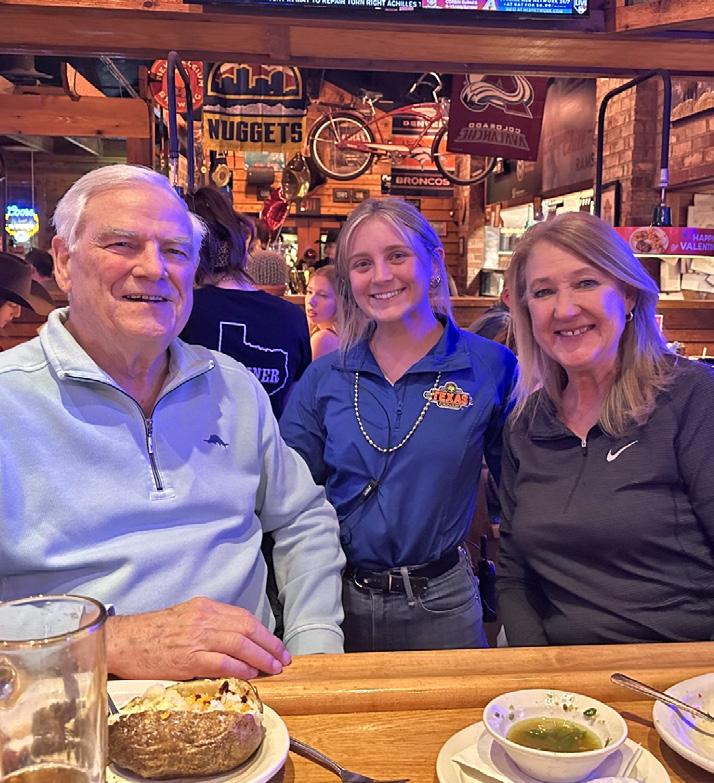
Traynor, AuD and former ATA board member, with his wife Krista and Roadie



East Tennessee State University audiology students, L to R, Kennedy Horn, Ashley Boutin, Syndney Young, and Maddie Prevatte at Texas Roadhouse in Johnson City, Tenn.


Bob
Faith Leos at Texas Roadhouse in Fort Collins, Colo.
Roadies at Texas Roadhouse in Cedar Rapids, Iowa.
R, ATA Peer Volunteer Dennis Brody at Texas Roadhouse in Union City, Calif.
ATA staff Bryce Onozuka at Bubba’s 33 at Roanoke, Va.
L, Marigold and Dottie at Texas Roadhouse in Fort Wright, Ky.
From L, Megan Hallihan, Rachel Sussman, Joanna Kolker, Gianna Rodriguez, Eric and Haddie Hoover, Christina Shields, and Maddie Rolf—faculty and students at the University of Maryland in College Park— enjoy an evening at Texas Roadhouse in Columbia, Md.
L, Christina Shields, AuD, and University of Maryland, College Park, AuD students, join LaGuinn Sherlock, far right, former ATA board chair and current Scientific Advisory Committee member, and Michele Spencer, AuD and ATA tinnitus advisor, for an evening at Texas Roadhouse in Columbia, Md.


L, Alex, with Brandie and Mike Delvisco, organizers of the Douglas Lake Celebrity Pro-Am Fishing Tournament and concert benefiting ATA, enjoy a meal at Texas Roadhouse in East Knoxville, Tenn.
Stefan Fosco, AuD, of Audiologic Solutions with Texas Roadhouse local store marketer Cari Summers at Albany, N.Y.
Cindy Sheehan and Dave Dottle enjoy a meal at Texas Roadhouse in Lady Lake, Fla.
L, Max, Anthony, and Drew at Texas Roadhouse in Potomac Mills, Va.
Peter Vernezze, LCSW and ATA professional member, outside Texas Roadhouse at Wilmot Rd., in Tucson, Ariz.
R, John Minnebo, ATA board member, chats with Texas Roadhouse managing partner Ron Marcus at Concordville, Pa.
Trudy Jacobson, tinnitus group facilitator, at Texas Roadhouse at Wilmot Rd. in Tucson, Ariz.
From left, Jacob and Alex Culberson, Melissa and Benji Wikoff, Carly, Celine, and Marc Ducharme holding Violet at Texas Roadhouse in Marietta, Ga.
L, Megan Read with Julie Prutsman, ATA board member and owner of Sound Relief Hearing, at Texas Roadhouse in Littleton, Colo.
Dine to Donate


About Tinnitus
Tinnitus affects approximately one in 10 individuals worldwide. Despite its prevalence, there is no cure for most types of chronic tinnitus, and most healthcare providers receive little training in its management. Tinnitus, which can present as buzzing, ringing, whooshing, and a range of other sounds, can be associated with exposure to loud noise, age-related hearing loss, earwax blockage, head and neck trauma, cardiovascular disorders, neurological conditions, stress, and anxiety.


Tony and Kathy Scaglione at Texas Roadhouse in Naples, Fla.
From L, Stacy O’Brien, AuD, with ATA peer volunteer Sal Gentile, Kassandra Hemmen, AuD, and managing partner Shane Cline at Texas Roadhouse in Port Orange, Fla.
William Shoemaker, hearing conservationist, and Amanda Nordgren, AuD, of Hearing Wellness Center at Texas Roadhouse in Duluth, Minn.
Rich Patterson perusing menu options at Texas Roadhouse in Cedar Rapids, Iowa.


Tinnitus & Sound Sensitivity
Close Relatives With Distinct Differences
By Marc Fagelson, PhD
In 2018, David Baguley published a book chapter titled “Reflections on the Association Between Hyperacusis and Tinnitus.”1 Baguley’s perspective on the issue was informed by a career that wove decades of clinical observations with hundreds of scholarly papers and conference presentations. He was a great listener who readily conveyed lessons from patients and colleagues learned along the way; his chapter evinces this connection, ending with the statement, “An analogy to use with patients might be to describe hyperacusis and tinnitus as cousins rather than siblings: related, yet with
substantial, distinctive, and important differences.”
Initial Considerations
Tinnitus may be reasonably categorized as subjective or objective, with an outsider’s observation of an objective event as the clear difference between the two. The concept of sound intolerance, however, has many facets. We have worked with patients who can hop on a motorcycle for a four-hour ride without earplugs but who must leave the room at the sound of a grandchild shrieking with delight. A person may be bothered by a sound’s loudness or pitch, another person might be bothered by a specific passage of music, or
sounds made by specific individuals. Others might be fearful of sound, or experience pain when in the presence of certain sounds. Despite these differences, some form of central nervous system hyperactivity is one element shared, at least to some degree, across these diverse auditory events.
Tinnitus and Sound Hypersensitivity: Overlap
Although the term hyperactivity as used above lacks specificity, it may be applied in broad strokes to a number of intriguing and paradoxical auditory events. Tinnitus onset and perpetuation may be attributed in

a substantial number of cases to neuroplastic compensatory changes in auditory system activity, perhaps triggered by changes in cochlear integrity. As the central pathway compensates for peripheral damage, preexisting neural activity in the pathway may become detectable as tinnitus.
Similarly, and as reported decades ago,2 many individuals with highfrequency hearing loss experience reduced loudness tolerance for highpitched sounds, an event the authors termed softness imperception sounds in the high-frequency region for affected individuals were reportedly either inaudible or too loud. Although the notion of softness imperception was not without controversy,3 patient reports of decreased tolerance, particularly in frequency regions of puretone loss are common.
An argument could be made that a person with high-frequency hearing loss should be able to tolerate higher levels of sound than a person with normal hearing in that frequency range. The fact that reduced tolerance accompanies threshold loss suggests a central adjustment that affects a listener’s calculation of a sound’s power; that is, the listener perceives excessive loudness when in the presence of a moderately high but not unsafe sound level, and as a result concludes that the sound’s
“…the use of sound has substantial therapeutic benefit if introduced and maintained in a manner that addresses specific patient reports related to tinnitus and sound intolerance.”
loudness signifies a harmful sound. The person may also experience pain and fear in addition to loudness discomfort, and all of this may occur even when the sound does not meet damage risk criteria. Indeed, the observation that tinnitus pitch, when measurable, corresponds to regions of maximum puretone hearing loss is consistent with this example of central compensation.4 Such examples support the idea that tinnitus and sound hypersensitivity disorders share neural mechanisms regarding their onset and maintenance.
A patient’s experience with tinnitus and/or sound hypersensitivity disorders may be influenced by emotional state or associations between the disorders and their onset circumstances. Reports of powerful interactions between traumatic (for example, combat) exposures, posttraumatic stress disorder (PTSD), tinnitus, and sound intolerance suggest mutual reinforcement between the consequences of trauma and soundrelated disorders that affect patients decades after the initial exposure.5
Not only did Veterans with PTSD rate their tinnitus as more bothersome than those without PTSD, but the trauma survivors were also three
times more likely than patients without trauma histories to rate their sound intolerance problems as more severe than their tinnitus. Again, these were patients who sought services in a tinnitus clinic, and once questioned, indicated that although the tinnitus was a problem, tolerating sounds that did not bother others was a bigger problem. More than 75 percent of the patients thus affected indicated that impulse sounds (i.e., sounds resembling explosions) were challenging; nearly the same number indicated that the sound of their grandchildren triggered similar discomfort. All affected patients affirmed that the sound intolerance was most pronounced when the offending sound was unexpected. With respect to audiologic rehabilitation, sound hypersensitivity disorders influence the management of correctable hearing loss and tinnitus, as a patient with reduced loudness tolerance will be tested by amplified sound, or other background sounds otherwise intended to interfere with tinnitus perception. Clinicians must consider patient reports of tinnitus and sound hypersensitivity prior to fitting assistive devices.

In some cases, a patient benefits from desensitization training prior to, or in the early stages of fitting a device. Encouraging exploration of new sounds, music, or environments may challenge patients who are concerned that a substantial proportion of the sounds they hear are potentially damaging. However, the process of loudness desensitization is well documented7 and offers a reasonable approach to support a patient’s attempts to use devices with minimal discomfort.
Clearly, hearing aid manufacturers are familiar with the notion of patients’ experiences with loudness evolving during the course of a fitting. Most manufacturers offer an acclimatization option that gradually increases gain values over time from less than optimal, but with little danger of excessive loudness, to prescriptive targets that may have exceeded tolerance limits at the initial fitting. Such options highlight yet another link connecting tinnitus and sound intolerance: the use of sound has substantial therapeutic benefit if introduced and maintained in a manner that addresses specific patient reports related to hearing difficulties, tinnitus, and sound intolerance.
Tinnitus and Sound
Hypersensitivity: Distinctions
In Baguley’s book chapter, he also outlined a few distinguishing characteristics between tinnitus and hyperacusis. In terms of diagnosis,
tinnitus clinicians have several validated survey instruments upon which they can draw to evaluate the ways in which tinnitus affects a person’s life. By comparison, patients with sound intolerance may list the situations or sounds they find uncomfortable, but their responses lack the statistical validation used in most tinnitus assessments. Therefore, evaluating sound hypersensitivity disorders likely suffers from variability in patient reports, experiences, and aversions. Such differences might be more easily documented and ultimately addressed with respect to tinnitus complaints rather than those centered on sound intolerance.
The effect of a quiet environment is profoundly different when comparing reactions from a patient with pain hyperacusis or loudness hyperacusis to those of someone bothered by tinnitus, as are the effects of the two conditions on the quality and quantity of sleep enjoyed by a patient. Similarly, while a patient bothered by tinnitus might notice relief from an environment with background noise, the patient with pain hyperacusis or loudness hyperacusis may feel compelled to withdraw from such a setting. Presence of background noise, music, or conversations may provide for the patient the sense that their tinnitus is intermittent (indeed, tinnitus may be intermittent to begin with) while pain or loudness hyperacusis is rarely so. Patients report that the sensation of sound hypersensitivity will be triggered consistently when
encountering specific sounds, and furthermore, the specific sounds always have the potential to provoke discomfort and the need to withdraw. In that sense, sound hypersensitivity exhibits a constancy that is not always evident for patients bothered by tinnitus. It is also the case that patients can have tinnitus and not be bothered by the sensation, while the patient with sound intolerance appears to be bothered without exception by the offending sounds.
Sound hypersensitivity disorders are rarely unilateral, although close to half the patients reporting tinnitus indicate unilateral presentation.8 This situation influences tinnitus management strategies, particularly when cases of unilateral tinnitus present with asymmetric hearing loss, and suspected neural pathology, such concerns are rarely related to sound intolerance. However, the difference in presentation suggests that the mechanisms responsible for tinnitus and sound hypersensitivity are attributable in neither a simple nor consistent manner to putative neural compensation for reduced peripheral function. Bilateral, symmetric hearing loss is more likely to be associated with unilateral tinnitus than with unilateral sound hypersensitivity, even as neural plasticity would be expected to produce similar bilateral effects. This distinction, as with many elements of tinnitus and sound hypersensitivity, challenges patients and requires attention in future research.

Subtypes of tinnitus and sound hypersensitivity are evident from patient reports. In some cases, differences between subtypes are unequivocal. For example, subjective versus objective tinnitus, somatically modulated tinnitus, and reactive tinnitus impose specific and distinct effects on quality of life and emotional state. Similarly, loudness hyperacusis is distinct from specific sound aversions associated with misophonia (for example, food chewing or soup slurping), or pain hyperacusis. However, it is also common for multiple forms of tinnitus and/or sound hypersensitivity to co-occur. Clinicians must be prepared to triage patients in a manner that ensures patients with complex and multi-faceted problems find the appropriate resources and providers.
Tinnitus and sound intolerance issues may impose upon patients’ activity limitations, emotional upheaval, and isolation. Hearing aid fittings may be complicated or worse, uninvited, with device effectiveness limited by patients’ aversions to various sounds. Patients with puretone thresholds in the normal range may be frustrated when told they have “normal hearing,” and it is the clinician’s job to ensure that the patient understands the limitations of the puretone audiogram. Especially for patients with tinnitus and sound tolerance problems, normal thresholds do not signify normal hearing.
We should be clear on this issue: A patient with tinnitus and/or sound hypersensitivity may seek help,
because their symptoms affect quality of life and impose unusual and perhaps unanticipated difficulties on a variety of routine activities. Their situation is analogous to the patient with normal puretone thresholds whose speech-in-quiet performance is good, but whose speech-in-noise abilities are poor. The diagnosis of “normal hearing” is counterproductive for this patient, as it misrepresents the functional consequences associated with the patient’s hearing status.
If a patient takes the time to seek hearing healthcare services, then it is incumbent upon the healthcare provider to balance audiometric findings, especially those consistent with “normal hearing” with the patient’s case history, intake questionnaire responses, and the narrative the patient offers regarding their motivation to seek hearingrelated services.
The American Tinnitus Association remains devoted to patients of all ages whose quality of life is influenced by tinnitus and sound hypersensitivity disorders. The diversity of patientreported problems ensures that much work remains regarding both assessments and interventions.

Marc Fagelson, PhD, is a professor of audiology at East Tennessee State University. He received a BA in English and MS in audiology from Columbia University,
and his PhD in hearing science from the University of Texas at Austin.
In 2001, he opened the James H. Quillen Veterans’ Affairs Medical Center (VAMC) Tinnitus Clinic that now enrolls more than 1,300 patients.
Dr. Fagelson co-edited with Dr. David Baguley two texts published by Plural that center on tinnitus and disorders of sound tolerance. He also collaborated with Dr. Suzanne Kimball on the Tinnitus and Hyperacusis Casebook, published by Thieme in November 2021. He has more than 50 publications and has given more than 100 conference and workshop presentations. In July 2023, Dr. Fagelson was voted to chair the American Tinnitus Association’s Scientific Advisory Committee.
References
1. D. Baguley. (2018). Reflections on the association between hyperacusis and tinnitus. In M. Fagelson and D. Baguley (Eds.), Hyperacusis and disorders of sound intolerance: Clinical research perspectives. Plural Publishing.
2. S. Buus & M. Florentine. (2002). Growth of loudness in listeners with cochlear hearing losses: Recruitment reconsidered. Journal of the Association for Research in Otolaryngology, 3(2), 120–139. https://doi.org/10.1007/s101620010084
3. B. C. J. Moore. (2004). Testing the concept of softness imperception: Loudness near threshold for hearing-impaired ears. Journal of the Acoustical Society of America, 115(6), 3103–3111. https://doi. org/10.1121/1.1738839
4. M. Schecklmann, V. Vielsmeier, T. Steffens, M. Landgrebe, B. Langguth, & T. Kleinjung. (2012). Relationship between audiometric slope and tinnitus pitch in tinnitus patients: Insights into the mechanisms of tinnitus generation. PLOS One, 7(4), e34878. https://doi.org/10.1371/journal. pone.0034878
5. M. A. Fagelson. (2007). The association between tinnitus and posttraumatic stress disorder. American Journal of Audiology, 16, 107–117. https:// doi.org/10.1044/1059-0889(2007/015)
6. I. Potgieter, K. Fackrell, V. Kennedy, R. Crunkhorn, & D. J. Hoare. (2020). Hyperacusis in children: A scoping review. BMC Pediatrics, 20(319). https:// doi.org/10.1186/s12887-020-02223-5
7. C. Formby, L. P. Sherlock, & S. L. Gold. (2003). Adaptive plasticity of loudness induced by chronic attenuation and enhancement of the acoustic background. Journal of the Acoustical Society of America, 114(1), 55–58. https://doi. org/10.1121/1.1582860
8. D. M. Baguley, G. Andersson, L. McKenna, & D. J. McFerran. (2013). Tinnitus: A multidisciplinary approach (2nd ed.). Wiley.
Bridging Personal Experience and Evidence-Based Care
Advancing Online Treatments for Tinnitus and Hyperacusis

By Ann E. Perreau, PhD
In my years as a practicing audiologist, clinical researcher, and person with tinnitus, I have become very familiar with the many ways that tinnitus affects people. My journey with tinnitus started after a serious health problem required hospitalization and IV antibiotics. That condition resulted in bilateral ear infections and chronic tinnitus, which became noticeable several months later. Initially, I was devastated to be an audiologist with tinnitus, and I experienced insomnia for many months. However, I became more interested in tinnitus and wondered
whether having it would put me in a better position to help my patients. Perhaps my condition could influence my clinical practice at Augustana College, and I could include tinnitus management as the cornerstone.
During my sabbatical, I studied under well-known tinnitus expert Dr. Rich Tyler, who had previously served as my PhD mentor. In collaboration with Dr. Tyler, I edited a book on tinnitus; updated the slides for Tinnitus Activities Treatment, a clinical tinnitus management program; and published several papers on group education sessions for hyperacusis.1–3 I even learned how to program a cochlear implant for tinnitus relief.4
Since then, I have spent my time researching and advancing clinical care for tinnitus patients. I have attended conferences to learn more about tinnitus from leading researchers and expert clinicians. I collaborated with Dr. Tyler and others on tinnitus studies, including efficacy of wearable devices for tinnitus, effectiveness of sound therapy apps for patients with cochlear implants and bothersome tinnitus, and assessment of quality of life of tinnitus patients using a new Meaning of Life questionnaire.5–7 I continue to work on the development of subjective questionnaires on hearing and tinnitus to better understand patient
perspectives (i.e., Tinnitus Primary Functions Questionnaire).8
Although these efforts are important, it became apparent that I (we) needed to do more and do things differently for people bothered by tinnitus. I saw patients in my clinic who were confused about what could be done to help their tinnitus and others who could not afford ongoing tinnitus services. I was disappointed by the uncertainty of treatment outcomes, lack of resources and knowledgeable professionals to help patients, and lack of insurance coverage, which limits affordability of care for managing tinnitus. Through all these obstacles, I saw an opportunity for growth.
My solution was rooted in my background in audiology combined with my training as a college professor. At Augustana College, we focus on student learning through hands-on activities and reflection, and we value and reward excellence in teaching. After the COVID-19 pandemic, I became an advocate for blended teaching that incorporates online and in-person learning opportunities.
Therefore, in 2021, I embarked on a new line of research to develop and test the effectiveness of remote counseling for tinnitus and
hyperacusis. Our program was based on Tinnitus Activities Treatment, which focuses on addressing the specific problems experienced by patients and uses picture-based counseling to help educate each person about tinnitus.9
We developed a six-week program, Tinnitus Activities Treatment–Online, that (1) introduced patients to hearing, hearing loss, and tinnitus; (2) educated about causes, potential mechanisms, and reactions to tinnitus; and (3) recommended strategies for tinnitus relief, including sound therapy, amplification, mindfulness, and relaxation.
I created weekly modules that participants could complete at their own pace. The course included videos that Dr. Tyler and I narrated to teach concepts about tinnitus and how to cope with it, assigned homework that allowed students to reflect on topics introduced in the videos, and posted quizzes to assess students’ understanding of important concepts. We tested the effectiveness of our program using validated questionnaires such as the Tinnitus Primary Functions Questionnaire, which patients completed before and after the program.
With the support of the American Tinnitus Association and through
“After counseling, participants reported significantly lower scores on the Inventory of Hyperacusis Symptoms, and even lower scores after the sound therapy trial.”
my local community, I enrolled 243 participants to complete the TAT-Online study (Thank you to the participants!). Fifty-nine participants completed the study, and we found a significant improvement on all measures of tinnitus severity and in their reactions to tinnitus. Specifically, the impact of tinnitus on daily activities such as concentration and emotional wellbeing was significantly lower for the group of participants as well as for 39 percent to 55 percent of individual patients. Ratings of tinnitus loudness and annoyance were also significantly lower after TAT-Online. TAT-Online helped people cope with tinnitus regardless of their age, how long they had tinnitus, or whether they wore hearing aids.
Participants reported that TATOnline was “nicely laid out [arranged], short and easy to follow, informative” and that it provided them with “a variety of different teaching/learning techniques.” More than 96 percent of the participants said that they would recommend TAT-Online to others— an outstanding result! Participants reported that the six-week, self-paced program was a good length and manageable with other activities (i.e., work, school). Regarding the TATOnline videos, participants rated their effectiveness at 9 out of 10. In my audiology classes, I get excited when I see ratings this high.
In future studies, we will assess effectiveness of TAT-Online using a control group or wait-list control. We also will incorporate sound therapy, amplification, or even bimodal neuromodulation to supplement tinnitus device use. Finally, we are interested in connecting patients who
complete TAT-Online with the greater online tinnitus community via support groups or local healthcare providers to extend the network and provide support to more patients with tinnitus.
Because hyperacusis patients face similar challenges of affordability and accessibility of care, I developed a remote counseling and sound therapy program for hyperacusis patients, Hyperacusis Activities Treatment–Online (HAT-Online). This project is funded by a National Institutes of Health AREA R15 grant, and we are using that funding to enroll a sufficient pool of participants, test the effectiveness of our program using a wait-list control, and investigate two sound therapy approaches. The HAT-Online program that we designed combines a variety of strategies to manage hyperacusis, including cognitive behavioral therapy, mindfulness, and more.
We’ve done a small trial run with 29 participants to test the program. HAT-Online, similar in format to TATOnline, includes four weeks of remote counseling with asynchronous videos, homework and reflection, discussion forums, and quizzes. It focuses on five key topics: (1) basic education on hyperacusis and hearing, and common problems associated with hyperacusis;10,11 (2) reactions to sounds and changing reactions using attention diversion exercises;12–14 (3) thought analysis and restructuring;15,16 (4) relaxation exercises and mindfulness;17 and (5) gradual sound exposure and proper use of hearing protection.18
Following the four weeks of counseling, participants completed a four-week sound therapy trial using either gradual exposure to everyday sounds or sound generators with white noise that was individualized for each participant.9,19 We coached participants to gradually increase the level of sound exposure and duration of listening time over four weeks and to track progress using daily listening logs.
As a final component of HATOnline, our research team, including a clinical psychologist, facilitated weekly synchronous online discussion forums. Participants shared their concerns with each other, discussed ways to change reactions to hyperacusis, and received coaching on gradual sound exposure. Participants stated that the online forums were very helpful because they met others with hyperacusis and learned how to cope with the condition. Several partners of participants also attended the forums, which provided much needed education for them, too.
Our preliminary results from 29 participants reveal a significant improvement in hyperacusis over eight weeks. After counseling, participants reported significantly lower scores on the Inventory of Hyperacusis Symptoms,20 and even lower scores after the sound therapy trial. Results also revealed a moderate to large decrease in hyperacusis for 57 percent of our patients.
Participants reported that the counseling helped them to be more aware of unhelpful thoughts about hyperacusis and to reframe their
thoughts about sound exposures. The individualized sound therapy trial helped participants to cope with bothersome sounds, including chewing or sharp, sudden noises. The study is ongoing, and we continue to gather evidence to assess the effectiveness of HAT-Online to reduce reactions and improve outcomes for people with hyperacusis.
Through these successful studies and an appreciation of the challenges of having tinnitus, I am honored as a scholar and audiologist to help others manage their conditions. I look forward to finding new ways to support patients with tinnitus and hyperacusis through education, collaboration, and innovation.

Ann Perreau, PhD, is an associate professor specializing in audiology at Augustana College in Rock Island, Ill. She teaches courses on hearing science, research methods, and audiology. At the Roseman Center for Speech, Language, and Hearing, she offers audiological services focused on tinnitus and hyperacusis. She is highly regarded in the field of communication sciences and disorders for her commitment to education and patient care. Dr. Perreau’s research contributions include tinnitus and hyperacusis assessment, questionnaire development, and the publication of multiple peer-reviewed articles and book chapters. She actively participates as a speaker and planning committee member in the Annual International Conference on the Management of the Tinnitus and Hyperacusis Patient. In May 2023, she received an NIH grant for her hyperacusis study.

Complete references can be found in the digital version of Tinnitus Today, Spring 2025.

Noise, Voice, and the Lombard Effect
By Joy Onozuka
You may not have heard of the Lombard effect, but you’ve probably experienced it without realizing it in noisy restaurants, crowded sporting events, or lively parties. The Lombard effect is the natural response of raising your voice in a loud environment so that you can be heard. Songbirds and parrots do it, as do whales and dolphins. It was identified more than 100 years ago by French otolaryngologist Etienne Lombard when he worked at a hospital in Paris. He observed that patients would naturally elevate their speaking volume in louder environments, which is different from deliberately raising your voice.
The Lombard effect is considered an adaptive response to loud auditory environments that helps improve communication. Today, the Lombard effect is a valuable tool used in clinical assessments of hearing function and remediation of certain medical conditions that affect speech and communication. It is also used in scientific investigations that explore the complex interplay between auditory perception and vocal behavior
and, increasingly, in architectural design that mitigates background noise and reverberation, which are inherent in open spaces.
In a hearing test, for instance, an audiologist may conduct the test by asking an individual to repeat words or sentences presented with different levels of background noise. The individual’s increased vocal intensity or effort in response to the noise can provide insights into auditory processing abilities and potential hearing impairments. For individuals with hearing loss who may struggle with regulating their speech volume, the Lombard effect can be used in auditory training programs to help them adjust their vocal intensity to improve communication in challenging noise situations. Understanding of the Lombard effect has also led to improvements in hearing aids and other assistive listening technologies that adjust to cancel out background noise in loud environments.
For individuals with Parkinson’s disease, which can cause speech and voice control difficulties, the Lombard effect is used in speech therapy to help patients learn to increase
their voice volume and clarity when speaking in louder environments.
In experiments studying speech perception and comprehension, researchers use background noise to simulate real-world listening environments. By studying how participants adjust their speech in noisy environments, researchers gain insights into the mechanisms underlying audio-vocal integration and the cognitive processes involved in understanding speech in loud environments.
As awareness grows about how noise affects hearing and communication, the Lombard effect is increasingly shaping the design of public spaces like restaurants, transit hubs, and open offices, where acoustic treatments, thoughtful layouts, and sound-absorbing materials help reduce ambient noise and support clearer conversation.
In a noisy world, understanding the Lombard effect empowers us to respond more effectively and even reshape our environments. So next time you’re in a loud setting, notice how your voice shifts—you’re experiencing the Lombard effect in real time.

Iowa Health Care Audiology Approach to Treating Sound Hypersensitivity
By Shelley A. Witt, MA, CCC-A
Hyperacusis is a health condition with a variety of symptoms. The term hyperacusis is very broad and not particularly clinically useful. Differentiating the perceptions and reactions of the patient is much more helpful and can influence treatment options and outcomes.
The subcategories and treatment approaches that I share in this article are based solely on years of clinical observation and clinical practice, drawing on Hyperacusis Treatment Activities, which is a program developed by the University of Iowa’s Department of Otolaryngology.2
The following four subcategories are suggested as a place to start and
are based on the patient’s primary complaint:1
• Loudness hyperacusis
• Fear hyperacusis
• Annoyance hyperacusis
• Pain hyperacusis
Loudness Hyperacusis
Loudness hyperacusis occurs when moderate sound levels are perceived as uncomfortably loud. It can be accompanied by sensorineural hearing loss and/or tinnitus. An individual with loudness hyperacusis has difficulty
tolerating everyday sounds, sounds that are not bothersome to a normally functioning auditory system.
Bothersome sounds might include but are not limited to the sound of a telephone ringing, clocks chiming, church music, conversations with multiple talkers or loud talkers, children laughing or screaming, dogs barking, and/or kitchen sounds. Individuals might describe these sounds as annoying and/or painful, but the main complaint is centered on loudness or volume
Clarification: The terms fear hyperacusis and annoyance hyperacusis correspond to phonophobia and misophonia, respectively, as used elsewhere in this issue.
Individuals who experience loudness hyperacusis often report that sound is simply too loud. The mechanisms that produce loudness hyperacusis are not well understood. Anything that causes hearing loss might cause loudness hyperacusis, including noise exposure, aging, and trauma.
Individuals with loudness hyperacusis often avoid situations where they cannot tolerate sound. They can become reclusive, struggle with negative thoughts and emotions, and might wear hearing protection to tolerate sound.
Treatment Options
Sound Therapy
The most common treatment for loudness hyperacusis is sound therapy. By listening to sound at soft levels for a disciplined period of time, some individuals can reestablish their tolerance to everyday sound.3–5
It is important to understand that this approach is not masking bothersome environmental sound but rather is a form of therapy meant to change sensitivity to sound. Although sound therapy approaches and sound stimuli can come in many different forms, the most common approach is using a broadband stimulus such as white noise.
Loudness hyperacusis is thought to be the result of spontaneous, overactive, or hyper neural activity in the auditory nervous system. This hyperactivity may be caused by abnormal auditory gain, meaning the auditory system amplifies sound signals more than it should. Or, it could be caused by dysfunctional neural inhibition, referring to the
inability to filter out background noise or manage sounds at a normal level.6–9 Broadband sound, such as white noise used in sound therapy, stimulates a wide frequency range with equal volume, so in essence it stimulates much of the cochlea (the organ of hearing) in a controlled fashion. This is done in an attempt to reorganize or calm the overactive neural activity of abnormal auditory gain.
It has also been theorized that a hypertonic tensor tympani muscle, referring to the middle ear’s tensor tympani muscle remaining contracted, could be a possible cause of loudness hyperacusis.10 It is speculated that with time a hypertonic muscle can change the ossicular spatial position, meaning a change in the positioning and spacing of the middle-ear bones, which in turn can change the endolymphatic pressure (the pressure of the fluid in the cochlea) and possibly cause cellular inflammation. Therefore, a constant broadband stimulus via sound therapy can be used in an attempt to stimulate the muscle in a graduated and consistent manner, thereby minimizing the likelihood of the unwanted hypertonic contraction.
In addition, white noise has the added benefit of being a very easy sound stimulus for the patient to ignore during treatment. When patients participate in this type of therapy, it is important that they know that the sound stimulus should be very soft in volume (barely audible), should not cause any pain or discomfort when the stimulus is on or off, and in some cases can take time and daily commitment (perhaps 6, 8, 12, or 18 months or more) to realize benefit.
Incorporating background sound into the environment as a form of sound therapy
It is necessary for the patient to avoid silence or to minimize the time spent in situations where it is quiet to ensure that the brain is continually exposed to sound so that it does not have a chance to recover to its previous hypersensitive state. This can be achieved by adding very soft, low-volume background music, television, or artificial sound to environments that would normally be quiet using a tabletop sound generating device or a Bluetooth speaker connected to a smart device with a sound-generating app.
Wearable sound generators
Ear-level sound generators specific for sound therapy are available. (See softtouchlabs.com.) These devices resemble hearing aids and come in behind-the-ear styles. An open fit approach is ideal to allow for the reception of speech and everyday sounds.
Wearable sound generators have the advantage that the volume of the sound therapy can be carefully controlled, and the sound therapy travels with the person everywhere they go. The sound therapy should always be set to a very soft or just barely audible volume level. Set it and forget it is the rule.
For some individuals, two sound generators, one on each ear, may be necessary. A hearing aid with a built-in masker with the amplification turned off can also be considered.
Specialty devices
The Neuromonics sound therapy stimulus is a tool used for tinnitus
treatment (see Neuromonics.com). This treatment approach has been found to be successful in treating loudness hyperacusis for some individuals. The sound therapy used is customized music with an embedded broadband sound that individuals may or may not hear.
The music itself is stretched to mimic the rate of the resting heartbeat (similar to the music used in hospitalbased music therapy), which has the added benefit of addressing the autonomic nervous system response that causes stress, anxiety, and fear. Individuals should adhere to the recommended two to four hours of daily use.
Successive approximations:
Exposure to controlled sounds With this type of sound therapy, individuals listen to a sound for a prescribed time every day. The duration of intervals and the number of times each day that the individual listens increase slowly over weeks and months. The level of the sound can also be increased, but very gradually.11
Several sound alternatives are utilized in successive approximations.
The sound stimulus can be a recording of a particular sound the person finds uncomfortable, a recording of white or broadband noise, or a recording of something pleasant like music, ocean waves, rain, or soothing sounds. The advantage of using a recording of the sound stimulus is that it allows for careful volume control.
Hyperacusis Activities Treatment
Hyperacusis Activities Treatment (HAT) is a counseling and sound therapy treatment approach developed by Richard Tyler, PhD, at the University of Iowa. It is a picture-based, patientcentered approach to providing information and management techniques for loudness hyperacusis. It can be used alone or in conjunction with any sound therapy approach.
The illustrations used in the program allow for orderly movement through concepts so that no important concepts are missed. This is an easy format in which to discuss difficult concepts and allows for client-centered open and collaborative discussions. HAT is provided for free by the Tinnitus Clinic at Iowa Health Care.2
Earplugs
As mentioned earlier, many individuals with loudness hyperacusis on their own start using ear protection in
an attempt to manage everyday sounds. Unfortunately, this is usually counterproductive for loudness hyperacusis and can make things worse.3,12 Individuals should avoid wearing earplugs—hearing protection earplugs, not musician’s earplugs— except when exposed to uncomfortably loud sounds or when there is the potential for damaging hearing.
Musician’s earplugs, in contrast, are recommended for temporary use in the early stages of loudness hyperacusis treatment. Musician’s earplugs attenuate sound evenly across frequencies and can provide better sound quality than typical earplugs. Wearing musician’s earplugs temporarily for comfort can keep someone with loudness hyperacusis socially active, countering tendencies to reclusive behaviors.
Sleep Apnea
Sleep apnea is a potentially serious sleep disorder in which breathing repeatedly stops and starts. Some individuals do not know that they have sleep apnea and as a result can experience extreme sleep deprivation. Sleep deprivation can cause sound sensitivity symptoms.

Be aware of sleep apnea as an underlying medical condition that can cause loudness hyperacusis, especially when typical loudness hyperacusis treatment options do not work.
Fear Hyperacusis
Fear hyperacusis occurs when an individual can tolerate sound but expresses a sense of being afraid, fearful, scared, or apprehensive about being exposed to sound; reports feeling dread or living in fear of sound; or cowers, trembles, cringes, shrinks from or flinches when anticipating sound.
Fear hyperacusis might be an emotional consequence of having or having had loudness hyperacusis, pain hyperacusis, or annoyance hyperacusis. The main complaint is centered on fear and not loudness or volume. Individuals with fear hyperacusis might be able to physically be in the presence of sound, but the fear of and anticipation of certain sounds (whether they are bothersome or not) keeps them from socializing. Some individuals with fear hyperacusis can tolerate fearful sounds when they don’t visually see the object emitting the sound.
Treatment Options
The most common treatment approach is to discuss and treat any loudness hyperacusis the patient might be experiencing using the previously discussed treatment options for loudness hyperacusis: sound therapy, appropriate use of musician’s earplugs, and HAT. In addition, the section in the Tinnitus Activities Treatment (TAT) program that discusses thoughts, emotions,
and biological reactions can provide an excellent starting place for understanding the basis of the fear emotion.13
If you are a clinician, have a good referral source for additional interventions such as cognitive behavioral therapy (CBT), anticipatory strategy work for managing challenging situations and sounds, psychological therapy, and any type of limbic system regulation, such as relaxation therapy, mindfulness, deep breathing, and so forth. If you are a patient, be open to these approaches in addition to audiological support.
Annoyance Hyperacusis
Annoyance hyperacusis occurs when an individual is bothered by a combination of the quality of a sound and the circumstances under which the sound is produced; the response is linked in most cases to not only a sound, but the person producing the sound. The main complaint is centered on the characteristics of sound and not loudness or volume.
Individuals with annoyance hyperacusis tend to be most bothered by very soft, low-volume repetitive sounds such as oral sounds (the sounds people make when they eat, breathe, or chew), office sounds (keyboard or finger tapping), and other miscellaneous low-volume sounds like fingers snapping, ceiling fans, and windshield wipers. These sounds are
often described as cringeworthy and create a feeling that permeates the body like when you hear nails on a chalkboard.
Individuals with annoyance hyperacusis describe an emotional reaction to sound that can range from annoyance to anger, such as wanting to lash out at people, and panic, either feeling the need to flee or actually fleeing. Individuals with annoyance hyperacusis tend not to have loudness hyperacusis and can manage moderately loud sound and loud or noisy environments just fine. In contrast, they tend to struggle with quiet environments that highlight soft repetitive sounds. Individuals with annoyance hyperacusis often report feelings of guilt because many of the sounds they find bothersome are sounds other people create. They report feeling bad that they get angry or can’t be around other individuals. They can become reclusive and struggle with negative thoughts and emotions.
Treatment Options
Sound therapy is often a helpful treatment option for annoyance hyperacusis. The goal with sound therapy is to mask bothersome lowvolume sounds—this is opposite the approach of loudness hyperacusis sound therapy treatment. The most convenient treatment is using ear-

level sound generators (such as from softtouchlabs.com) so that the therapy can easily go with the patient from environment to environment.
Other forms of ear-level sound therapy include Neuromonics sound stimuli (Neuromonics.com), a hearing aid with amplification turned off and sound therapy activated, and a smartphone app connected wirelessly to earbuds (preferably open-fit sport earbuds). The Neuromonics stimulus has the added benefit of addressing the limbic system to help calm the emotional reaction that annoyance hyperacusis can cause.
If bothersome sounds are limited to specific environments such as dinner in the home with family and ear-level devices are not wanted, then incorporating background sound into the environment by adding low-volume background sound (music, television, or artificial sound) via a tabletop soundgenerating device or a Bluetooth speaker can help.
Sound therapy for individuals with annoyance hyperacusis blocks out bothersome sound. This is helpful and can keep people from becoming reclusive or struggling with
relationships; however, it is important to also incorporate additional therapy with the goal of managing the limbic reaction that annoyance hyperacusis creates.
Other forms of therapy that can be helpful are successive approximation work, Hyperacusis Activities Treatment, Tinnitus Activities Treatment thoughts and emotions work, cognitive behavioral therapy, anticipatory strategy work, psychological therapy that specifically focuses on phobias, and any form of limbic system work (relaxation therapy, mindfulness work, deep breathing).
Pain Hyperacusis
Pain hyperacusis occurs when individuals have either an immediate or a delayed physical sensation of pain in response to sound. The pain is very specific and very severe and occurs in response to all volume levels of sound, including very soft sounds.
Individuals with pain hyperacusis often report the pain as a stabbing sensation that can feel like an ice pick in the ear or a burning sensation like a hot poker. The pain might be felt quickly after sound exposure or much later, even days after exposure. Some individuals report a cumulative effect that they can’t always predict. The main complaint is pain. Pain
so severe that this is usually a debilitating condition.
Most individuals with pain hyperacusis avoid many situations because they can’t predict which sounds might cause pain, and at this time there is no way to treat the pain. Some individuals can be in the presence of sound but then experience severe delayed pain, whereas some individuals feel immediate pain. Due to this, individuals with pain hyperacusis often become reclusive and fearful and may struggle with negative thoughts and emotions.
Treatment Options
Unfortunately, sound therapy is not an effective form of treatment for pain hyperacusis and in fact can make things worse.14 Musician’s earplugs can provide comfort and minimize pain and for some individuals can slow an accumulative effect. Many individuals with pain hyperacusis, however, use musician’s earplugs, hearing protection, and even double ear protection during most of their waking hours and even during sleep to simply stave off pain, even though this might unfortunately make the condition worse.
Any and all talk therapy approaches can be helpful for treating the emotional aspects of this ear disorder (such as HAT, TAT, CBT, and others), but talk therapy doesn’t treat the pain.
Currently, the best form of treatment is to minimize pain by minimizing exposure to sound.
Other disorders share this same stabbing ear pain symptom, such as trigeminal neuralgia (a chronic pain condition affecting the main sensory nerve of the face, causing severe facial pain), geniculate neuralgia (a rare type of nerve pain caused by compression or irritation of a small nerve cluster located near the ear), and myalgic encephalomyelitis/chronic fatigue syndrome (ME/CFS) (a complex condition characterized by extreme fatigue, pain, and cognitive difficulties).
Other disorders share the same stabbing pain symptom, but not necessarily in the ear—for example, post-herpetic neuralgia (a painful nerve complication of shingles that can last for months or years in the area where the shingles rash occurred), shingles pain (burning or stabbing nerve pain caused by the varicella-zoster virus), and complex regional pain syndrome (a chronic pain condition usually affecting an arm or leg, often after injury, leading to severe, prolonged pain).
There are many suspected causes of the pain, such as cellular and neuroinflammation (swelling in the body and nervous system that can trigger pain), mast cell activation (immune cells that release chemicals that cause inflammation and
sensitivity), microglia and astrocyte activation (brain immune cells overreact to injury or infection, leading to chronic pain), viral response (the body’s reaction to infections that may cause lasting nerve damage), chronic stress (long-term stress that heightens pain sensitivity), and depleted stress hormones (low levels of hormones like cortisol, which help control pain and inflammation).Pain specific to the ear may indicate a possible relationship between middle ear and inner ear symptoms and a cellular response could be causing pain.15–20
Using existing pain protocols intended for other disorders with similar pain could be a place to start for treating patients with pain hyperacusis. In my clinic, we have started investigating using the same antiviral approach used to treat patients with ME/CFS and have considered high-dose vitamin C.
Next Steps
While we have some good audiological approaches to managing certain subcategories of hyperacusis, it is critical that we create a sense of urgency for research that can help us understand the mechanisms of and possible treatment approaches for all forms of hyperacusis. We need money and interest. I would like to see funds support a center of excellence dedicated to hyperacusis
research, and I welcome all basic science researchers who are interested in solving this medical mystery to come aboard.
In conclusion, years of clinical practice at Iowa Health Care has taught me that the term hyperacusis is too broad and not particularly clinically useful. By differentiating the perceptions and reactions of the patient and creating subcategories, we can better study the uniqueness of patient cohorts in an attempt to learn from them and hopefully uncover the mystery of the mechanisms behind this ear disorder.

Shelley A. Witt, MA, CCC-A, is an audiologist at Iowa Health Care, Department of Otolaryngology, who has participated in research projects on cochlear implants, hearing aids, tinnitus and hyperacusis for more than 25 years. In addition to providing clinical care for tinnitus and hyperacusis, she has co-authored numerous scientific manuscripts, posters, and book chapters. In her capacity as a tinnitus and hyperacusis specialist, she advocates in the professional clinical communities for increased awareness of hyperacusis and treatment options.
Complete references can be found in the digital version of Tinnitus Today, Spring 2025.

Shifting the Soundscape Through Cognitive Behavioral Strategies
Bruce Hubbard, PhD, ABPP
In late 2004, when listening to music, I noticed an odd sensation in my right ear. At first, I shrugged it off, but it happened every time I heard a certain passage from my favorite CD. A month later, when my tinnitus started, this “odd” sensation exploded. It became intensely uncomfortable and was aggravated by a wide range of ordinary sounds. As distressing as my tinnitus was, this experience, which I eventually learned is loudness hyperacusis, was much, much worse.
My physicians and the internet were no help, so I turned to the approach to stress and trauma I’d practiced my entire career: cognitive behavior therapy (CBT). Having some familiarity with the cognitive behavioral treatment of pain, I developed a
program to help myself adapt to loudness hyperacusis. It saved my life!
As I write these words decades later, I still have mild loudness hyperacusis, but I barely notice it, and when I do, it doesn’t bother me at all.
For me and many others, CBT has been a life-altering tool to neutralize tinnitus and live fully despite sensitivity to sound.
What Is Loudness Hyperacusis?
Loudness hyperacusis is an auditory condition in which common sounds, which don’t bother others, are experienced as uncomfortably loud.1
On encountering uncomfortable sounds, it is common to see someone with loudness hyperacusis wince and cover their ears, just as someone without the condition would do in response to a truly loud sound, such as a smoke alarm.
The condition can cause anxiety and lead to phonophobia, an irrational fear of safe sounds. It is common for people with loudness hyperacusis to avoid the sounds that cause discomfort as well as the settings where these sounds occur. This avoidance reinforces anxiety, and, over time, limits access to important areas of life, which can result in depression.
Loudness hyperacusis varies in intensity: It may be so mild that it is barely noticed; moderately uncomfortable, causing avoidance and dysfunction; or, in rare cases, so severe that sounds as low as a whisper are uncomfortable. My loudness hyperacusis started out as moderate and, over the course of CBT, reduced to mild.
Loudness hyperacusis can be distinguished from pain hyperacusis, in which common, safe sounds cause physical pain in or around the ears.
The CBT approach described here is intended for loudness hyperacusis. The approach may be, in some cases, adapted for people with pain hyperacusis, but only under the direction of a specialist who understands that condition.
Loudness Hyperacusis “Trigger” Sounds
In CBT, external factors that cause problematic physical and emotional reactions are called triggers. A wide range of trigger sounds affect loudness hyperacusis. Common trigger sounds include clanking dishes, a child crying, road noise, motors of air conditioners and fans and similar appliances, crowd noise, applause, a dog barking, running water from a faucet or shower, music, peoples’ voices, and even one’s own voice. In addition, loudness hyperacusis can be triggered by reminders of past sounds.
Loudness Hyperacusis, Tinnitus, and Other Related Conditions
For patients bothered by tinnitus, loudness hyperacusis often starts at around the time of tinnitus onset. Studies show about 40 percent of people with tinnitus have hyperacusis, and 85 percent of people with hyperacusis have tinnitus.1
Loudness hyperacusis is also associated with loud events, hearing loss, inner ear infection, Meniere’s disease, and cochlear hydrops. Less often, it may occur suddenly with no clear cause. There is no evidence that stress, anxiety, or depression cause hyperacusis; however, all have been reported as potential exacerbators of the problem.
Cognitive Behavior Therapy for Loudness Hyperacusis
CBT consists of a set of strategies that change how we respond to the experience of loudness hyperacusis. The goal of CBT for loudness hyperacusis is to reduce the distress and avoidance caused by the condition. However, the actual physical symptoms of the condition may also decrease. Unlike the more common Tinnitus Retraining Therapy (TRT) approach to treating loudness hyperacusis, described in another article on page 4, CBT does not require expensive ear-level devices. The effectiveness of CBT for loudness hyperacusis has been documented in one study. In a group of 60 people with loudness hyperacusis, Juris and colleagues tested a CBT program very similar to mine.2 Their program included “applied relaxation” rather than the more modern choice of “mindfulness of sound.” Their results showed significant improvements in sound tolerance, as well as reduced avoidance and distress based on Hyperacusis Questionnaire scores, and improved quality of life. These improvements were maintained at a 12-month follow-up.
In mild to moderate cases, CBT for loudness hyperacusis can be either self-administered or completed under the direction of a qualified cognitive behavior therapist who is trained in treating the condition. For severe cases, the guidance of a qualified CBT professional is recommended.

A CBT Program for Loudness Hyperacusis
CBT for any problem should begin with an honest review of what we can and cannot change. In the case of loudness hyperacusis, we cannot change the existence of it or the fact that we have it, but we can change how we respond, which can have a dramatic, positive influence on our ability to cope constructively. The CBT program outlined here is a blueprint for reducing the impact of loudness hyperacusis. Like me, with practice and greater confidence, you too can significantly reduce your distress and get back to fully enjoying your life.
The program consists of four skill areas: careful thinking, graded exposure, mindfulness of sound, and courageous, values-directed action. Like physical therapy, these strategies must be learned, practiced, and consistently applied over a period of months to achieve the desired outcome.
Careful Thinking About Loudness Hyperacusis
The cognitive component of CBT, careful thinking, is based on the ageold wisdom that how we think about problems can have a strong effect on how we feel and behave. Here are two of the most distressing thoughts about loudness hyperacusis followed by more helpful thoughts.
Distressing thought: “If a sound feels like it’s too loud, it must be damaging my hearing.”
Helpful thought: “Even though the sound feels uncomfortable, the actual loudness level is not dangerous. I am not damaging my hearing by exposing myself to this sound.
Distressing thought: “If I’m this distressed by sound now, and there is no cure for loudness hyperacusis, then I will always be distressed. My life and my future are ruined.”
Helpful thought: “There may be no cure for my loudness hyperacusis, but there are ways to manage it and even reduce its affect.”
Graded Exposure to Trigger Sounds
Armed with more helpful, encouraging thoughts about loudness hyperacusis, the next step is to commit to a program of graded
exposure to sounds that bother you.2–4 Graded exposure is effectively employed in CBT to reduce a wide range of distressing reactions, such as phobias and post-traumatic stress syndrome. At a subconscious level, graded exposure helps our brains desensitize to trigger sounds, and, at a conscious level, it helps us learn that we can tolerate the discomfort, that our hearing will not get worse, and that the uncomfortable sensations themselves may eventually subside.
I used foam earplugs to facilitate graded exposure to my trigger sounds. These are ideal because as distress goes down and confidence goes up, they can be gradually trimmed down with scissors to increase exposure to the trigger sounds. (More on this in the section on courageous, valuesdirected action below.)
Graded exposure can be supplemented with sound enrichment, which involves playing room-level background sound, such as music, nature sounds, or anything else, whenever possible.
Mindfulness of Sound
Mindfulness is an ancient meditation technique, commonly used in the health sciences to help us accept
and adapt to aspects of our bodies and lives we don’t want but can’t change. With tinnitus and loudness hyperacusis, the correct application is mindfulness of sound 5
In CBT, mindfulness is an acceptance strategy. It involves the practice of paying attention to our experience in the moment without getting pulled into thoughts and urges but rather allowing thoughts, feelings, and urges to come and go as they will, coexisting with them, while working to keep our attention on a chosen target. For loudness hyperacusis, that target is the experience of hearing the trigger sounds—both the sounds themselves and the sensations of loudness in our ears
I found mindfulness of sound extremely helpful, and I used it as part of my graded exposure plan. For example, I set a timer for ten minutes and deliberately stacked dishes, mindfully attending to the sounds and sensations of the clanking. I allowed myself to experience the discomfort of loudness without getting pulled into the unhelpful thoughts and urges to stop.
Through daily practice, I gradually desensitized to the clanking and could coexist with the experience of hyperacusis while dining with my family. I used the same technique for other bothersome sounds. This made it much easier to reenter the noisy areas of life I’d been avoiding, such as crowded restaurants, children’s parties, and playing my guitar.

Courageous, ValuesDirected Action to Fully Rejoin Life
Armed with helpful, encouraging thoughts, mindful acceptance of sounds, desensitization and confidence gained from graded exposure, you are ready to commit to the courageous action needed to fully rejoin all the areas of life you may be avoiding because of your sound sensitivity.
Foam earplugs or other types of hearing protection can also be used to facilitate courageous action. Audiology programs for loudness hyperacusis typically discourage use of earplugs; however, in my program they are permitted as part of a graded exposure plan, with the agreement that you will eventually taper off them entirely. I would much rather see you using earplugs to engage as fully as you can in life rather than fall victim to avoidance and the negative consequences that can bring.
Before entering challenging settings, plan which strategies, including mindfulness, reminding yourself of encouraging thoughts, and earplugs, you’ll use to cope with discomfort. The goal is to make it through a significant part of the situation, even if you decide you need to leave early. This way you are promoting desensitization to the sensations of loudness and building confidence in your ability to fully rejoin your life.

Upon developing tinnitus distress in 2005, Bruce Hubbard, an experienced clinical psychologist, turned for help to the only evidence-based treatment, cognitive behavioral therapy (CBT). Following his recovery, Dr. Hubbard founded CBT for Tinnitus, LLC, to provide global access to online training and coaching to people struggling with tinnitus distress and tinnitus education for professionals. He has published numerous articles and podcasts on CBT, mindfulness, and tinnitus. His webinar, Cognitive Behavior Therapy for Tinnitus, sponsored by the
Medical Disclaimer
The content in Tinnitus Today magazine is intended to provide helpful health information for the general public. It is not intended as medical advice or for making an evaluation to pursue a particular course of action. It is made available with the understanding that the American Tinnitus Association (ATA) is not engaged in rendering medical, health, psychological, or any other kind of personal or professional services. The magazine content should not be considered complete and, therefore, does not cover all physical conditions or
their treatment as it relates to tinnitus and tinnitus management.
ATA always recommends that you consult and work with a medical, healthcare, or other competent professional when considering the best course of tinnitus management. This begins with a medical examination to rule out possible underlying medical causes for tinnitus. If you’re interested in adopting guidance/suggestions made in the magazine, you should discuss this first with your medical provider before doing so.
Anxiety & Depression Association of America (ADAA), has received close to 400,000 views.
Dr. Hubbard is a visiting scholar at Columbia University, Teachers College, and past president of the New York City Cognitive Behavior Therapy Association (2016–2018). Additionally, he is certified in cognitive and behavioral psychology through the American Board of Professional Psychology (ABPP). He completed his doctorate in clinical psychology at Binghamton University and his clinical internship at New York University Medical Center.
References
1. G. Andersson & D. Baguley. (2007). Hyperacusis: Mechanisms, diagnosis, and therapies. Plural
2. L. Juris, G. Andersson, H. Larson & L. Ekselius. (2014). Cognitive behavioural therapy for hyperacusis: A randomized controlled trial. Behaviour Research and Therapy, 54 https://doi. org/10.1016/j.brat.2014.01.001
3. R. Litwin. (2018). Hyperacusis management: A patient’s perspective. In M. Fagelson & D. Baguley (Eds.), Hyperacusis and disorders of sound intolerance: Clinical and research perspectives. Plural.
4. B. Carson, L. Guerrero, M. Niebles, & C. Gayle. (2024). Modified cognitive behavioral therapy approach reduces loudness discomfort levels for an autistic child with hyperacusis. Case Report, Frontiers in Psychiatry, 15, 1440624. https://doi. org/10.3389/fpsyt.2024.1440624
5. L. McKenna, E. Marks, C. Hallsthorn, & R. Schaette. (2017). Mindfulness-based cognitive therapy as a treatment for chronic tinnitus: A randomized controlled trial. Psychotherapy and Psychosomatics, 86, 351–361. https://doi. org/10.1159/000478267

Any information about drugs and supplements contained in the magazine is general in nature, and does not cover all possible uses, actions, precautions, side effects, or interactions of the medicines mentioned.
ATA and authors of articles in the magazine specifically disclaim all responsibility for any liability, loss, or risk, personal or otherwise, which is incurred as a consequence, directly or indirectly, of the use and application of any of the content in the magazine.
Sleeping It Off How Sleep Can Affect Tinnitus

By Ken Rawling, MSc
My tinnitus first began around 6 p.m. on Sunday, April 12, 2015. Yes, I remember the time and date precisely! I was 69 years old, in good health, my hearing was unaffected, and I had never suffered from tinnitus before.
The hissing/whistling noise—I call it a “hissle”—in my right ear was so intrusive that for the first time in my life I found it difficult to get to sleep. During the first five nights after onset, I slept fitfully, with long periods awake, and only achieved around 60 percent of my normal sleep duration. During the daytime, the tinnitus was generally very bad, but I also noticed that it seemed to vary quite a lot.
Then, absolutely exhausted after five mostly sleepless nights, I enjoyed eight hours of unbroken sleep on Friday night, the sixth night. When
I woke up Saturday morning, the tinnitus amplitude was so low that I nearly canceled the appointment I had made with my physician for later that day. The amplitude level remained low until that evening, and I think that is when I had my first inkling that “a good night’s sleep” might help to suppress my symptoms.
That night I went to bed resolved not to let the tinnitus keep me awake; in fact, I looked forward to going to sleep as an escape from the noise, and that has been my attitude ever since. Tinnitus has never kept me awake since the end of that first week, not even if the noise level is high when I go to bed. In the weeks and months that followed, it was reassuring to undergo an MRI scan and have my outer ears professionally cleaned, but I found many aspects of the “received wisdom” about tinnitus from the medical profession and
elsewhere difficult to comprehend, to put it mildly. For instance, the focus on stress levels and how one “feels” about tinnitus rather than the physical factors that might be causing or triggering it, and the one-size-fitsall attitude toward tinnitus that is noncritical, made little sense to me.
It seemed obvious that if your tinnitus varies, something must be causing the variations. Equally obvious, if you could discover what was causing the variations, you could control and manage your tinnitus and increase the time spent in remission. I wondered why the people advising me showed no interest in helping me to do so, and instead just offered me the same palliative remedies they offered to tinnitus patients who have symptoms that are more or less constant all the time. So I decided to conduct my own research, using myself as a subject.
The Research Project
I began to keep detailed records of the variations in my tinnitus levels and the factors that might be associated with them. I noted the times when the level seemed to change—not as tedious as it sounds because changes seldom occurred more than two or three times per day—and I recorded the subjective waking level each morning, the prevailing level for that particular day, and the retiring level when I went to bed. I now use an 8-point scale for these judgments, with level 1 equivalent to pre-tinnitus silence, and I have also used sound matching against varying levels of white noise on an MP3 player to provide a more objective estimate. I investigated dietary items, including salt and caffeine, that have been noted by others to affect tinnitus. I also explored other suspected triggers, such as Wi-Fi exposure. I studied each variable consecutively, with a minimum of 100 observations each. Close exposure to household noise such as a vacuum cleaner nearly always led to an increase in tinnitus level, and dozing off during the daytime, even for a second or two, also always did, so further
“Tinnitus has never kept me awake since the end of that first week, not even if the noise level is high when I go to bed.”
investigation of these two triggers seemed unnecessary.
Results
Consistent with the findings of a large-scale study by Marcrum et al., with the exception of alcohol, none of the dietary items that I looked at was associated with changes in tinnitus level; and working close to my Wi-Fi router had no effect either.1 But some of the other findings from my research were very significant, therapeutically as well as statistically.
Despite my experience during the first week, I found that sleep duration was unrelated to next-day tinnitus over the longer term. But I did notice that staying up late at night—usually to watch a late-night movie—seemed to increase the chances of a level 1 or 2 day of remission the following day.
Results from a sample of observations in 2020 are shown below. The McNemar statistical test for this table indicates that the results haven’t occurred by chance: staying up late really does seem to increase the chances of a remission day for me. You will see why in the next section.
Collaboration
By the end of 2021, I decided that I had gone as far as I could with my single-subject research. It had achieved its main objective of helping me increase the amount of time I spend in remission—up from around 15 percent of the time when the tinnitus started to 35–40 percent by 2021.
I decided that it was time to publicize at least some of this research and perhaps establish some form of collaboration with professional researchers who could
subject my findings to more rigorous scientific examination than I was capable of. I was privileged to present some of my sleep findings in a poster session at the Tinnitus Research Initiative Conference in Dublin in 2023, which is where I first met researcher Robin Guillard, PhD, and began a collaboration with him that is still ongoing.
Results so far from his sample of “sleep intermittent tinnitus” (SIT) subjects, which includes me, seem to indicate that sleep pressure plays an important role in reducing next-day tinnitus. Sleep pressure refers to the gradual increase in the chemical adenosine in the brain during wakefulness. Adenosine is a crucial neuromodulator that promotes sleepiness and helps regulate the sleep-wake cycle. As adenosine levels build while a person is awake, sleep pressure increases. This is probably why my late nights—with higher-thanusual sleep pressure—are associated with lower next-day tinnitus.
Guillard has applied mathematical modeling to data from the sleep diaries kept by his subjects and finds that the higher the sleep pressure at the point of waking up, both during the night and in the morning, the lower the tinnitus level. He has also carried out simulations that suggest that physiological processes that affect memory over several days are compatible with the observations made in his study.
Ongoing sleep debt, which refers to the accumulated lack of sleep over time, fits with such a description. Guillard says that insufficient sleep for several successive days accumulates
a sleep debt that translates into increased sleep pressure during wakefulness. This increase in sleep pressure then leads to deeper sleep— often designated as recovery sleep— at the next sleep occurrence. Further research is needed to confirm this theory, but it would certainly account for my own sleep experience during the first week after onset when I slept poorly for five days then slept deeply, resulting in near total suppression of the tinnitus sound the next day!
Details of his SIT study will be available in the article he is preparing for publication.2
It’s Not Just Sleep
On the other hand, factors unrelated to sleep seem likely to be responsible for most of my tinnitus variations during the day, and I would welcome further collaboration with researchers who could take my findings in these areas a step further. The data I have collected are drawn from hundreds, and in some cases thousands, of observations.
Two aspects of my tinnitus experience that seem to merit further investigation are the following:
• The role of neurotransmitters: Research has been conducted on the way neurotransmitters— chemical messengers in the brain—and other internal processes might affect tinnitus. From my experience, I strongly suspect that neurotransmitters such as dopamine play an important role.
• The “urban hotspots” effect: My tinnitus level usually increases when I leave the suburb where I
live and go to a larger town or city center. There are several aspects of a downtown environment that could potentially trigger tinnitus increases.
What motivates me to continue with this research? Well, the main driver used to be a determination to identify the factors that cause my tinnitus to vary so that I could increase the time I spend in remission. But now I feel that I have an altruistic motive as well: I hope that research into variable tinnitus like mine will eventually lead to discoveries that will also benefit people whose tinnitus is more or less constant all the time. That would definitely make it all worthwhile.

Ken Rawling, MSc, AFBPsS, is a British industrial psychologist. He specialized in psychometric testing and assessment for most of his working life, but since his sudden-onset tinnitus began in April 2015, he concentrates on tinnitus research. He has identified a number of physical correlates for his highly variable symptoms and doesn’t believe that his symptoms have anything to do with psychology.
Learn more about the sleeptinnitus connection, a research area funded by the American Tinnitus Association, by tuning into our interview with Dr. Guillard and Mr. Rawling at https://www.youtube.com/ watch?v=rk2xyGc0d3M&t=4s
References
1. S. C. Marcrum, M. Engelke, H. Goedhart, et al. (2022). The influence of diet on tinnitus severity: Results of a large-scale, online survey. Nutrients, 14, 5356. https://doi.org/10.3390/nu14245356
2. R. Guillard, A. Cadix, K. Rawling, M. Congedo, W. Schlee, & A. Londero. (forthcoming). Exploring sleep intermittent tinnitus patients’ infradian tinnitus loudness periodicity.

Tinnitus Silence
by David Holcomb
“Honey, can you hear that… that low-level buzz?”
I replied, “No.” We never found what it was. We dismissed it and joked, “It’s all in your head.” It was late, we were tired, so we headed off to bed.
We started a band when we were in our teens, Rockin’ late and loud in concert tees and jeans, We dreamed that teenage dream—“the next Rolling Stones,”
The Brits filled stadiums; we filled our headphones.
We served together during Desert Storm, Bombs and munitions were simply the norm, Earplugs were not enough from time to time, “Hold your nose, blow real hard, you’ll be fine.”
Are these friends at lunch just giving their take?
Or mourners attending a suicide’s wake?
It’s more than a buzz, it’s more than a ring; Tinnitus can be a debilitating thing.
Are you hearing a persistent high-pitch tone?
It’s a real condition; you’re not alone.
Maybe you can handle it or maybe you’re in crisis, Get help either way! Don’t suffer in tinnitus “silence.”
David Holcomb is a data practitioner, educator, philosopher, author, and culturalist. He serves as an advisor with Stop The Ring, a nonprofit working to establish a Tinnitus Learning Health Network. David is dedicated to applying his expertise in data and organizational strategy to improve patient outcomes, enhance clinical effectiveness, and elevate quality of life. Through his poem, he hopes to offer reassurance and remind others that they are not alone.
32nd Annual International In-Person/Online Conference
Management of the Tinnitus & Hyperacusis Patient
The 32nd Annual International Conference, Management of the Tinnitus & Hyperacusis Patient is scheduled to be held August 14–15, 2025, at the University of Iowa. The educational event is intended for otologists, audiologists, hearing aid specialists, and other healthcare professionals providing clinical services for tinnitus patients. Topics include an overview of current evaluation practices, management strategies, and research. Presentations are given by leading researchers, practitioners, and leaders in advocacy and include the latest developments in the areas of medical
ATA is proud to be a DIAMOND SPONSOR
treatments, neuroscience, sleep therapy, noise-induced hearing loss, and hyperacusis.
The conference, which is being held in person and online, is intended to increase the knowledge and skills of clinicians; however, it is open to patients and their families, with the understanding that no individual diagnosis or treatment will be offered.
For more information, visit the University of Iowa’s website: https://otolaryngology.medicine.uiowa.edu/ news-events/conferences-and-courses/managementtinnitus-and-hyperacusis-patient
Tinnitus Support Groups
People with tinnitus at every stage in their journey, from the first few days to many years later, can benefit from membership in a support group. Every tinnitus support group operates differently; but they all share a passion for providing meaningful discussion and a caring
environment where one can be understood through shared experience. Below is a list of groups and meeting dates, current at time of print. Each support group referenced here is independently operated and led by volunteers who wish to provide education and support to the tinnitus community.
IN-PERSON MEETINGS
The American Tinnitus Association (ATA) does not sponsor or endorse these activities and expressly disclaims any responsibility for the conduct of any independent support group or the information it may provide. ATA is not a healthcare provider and you should consult with a primary care physician or hearing healthcare professional for qualified medical advice on tinnitus and related disorders.
*To allow for flexibility in planning, some groups do not schedule meetings far in advance. When we receive updates from support group leaders, we update meeting information on our online Events Calendar at www.ata.org . The information was provided to ATA staff at the time the magazine went to print; therefore, please confirm meeting details with the contact person prior to a meeting or reference our website at: https://www.ata.org/news/events
This is a partial listing of support groups and scheduled meetings. A complete list can be found at https://www.ata.org/ your-support-network/find-a-supportgroup/. New groups continue to be added, so please check the website for updates periodically.
If you’re interested in forming a group, please contact Joy Onozuka at tinnitus@ata.org
If there isn’t a group in your area, ATA has an extensive network of volunteers who provide email and telephone support and educational information. To connect with a volunteer in your time zone, see: https://www.ata.org/your-support-network/ telephone-support/
Support group information in the magazine and on the ATA website is provided by group leaders and is subject to change. Please contact the support group leader directly to confirm meeting information.
California
The Palo Alto Tinnitus Support Group at Avenidas Blue Room of the Avenidas Senior Center 450 Bryant St. Palo Alto, CA 94301
Contact: Ken Adler
E: karmtac@aol.com
T: 650–839–1770
3rd Thursday of the month, 5:30–7:30 pm
Colorado
Mesa County Tinnitus Support Group Community Hospital, Legacy Room 1 2351 G Rd.
Grand Junction, CO 81505
Contact: Elaine Conlon
T: 970–589–0305
E: conlonelaine@aol.com
3rd Wednesday of the month, 6:00 pm
North Denver Tinnitus Support Group Broomfield Community Center Overland Room
Contact: Melissa Golden
T: 303–506–9389
E: mbaycon@hotmail.com
Florida
Clermont Tinnitus Support Group
Citrus Hearing Clinic, LLC
835 Seventh Street, Ste. 2 Clermont, FL 34711
Contact: Laura Pratesi, AuD, CCC-A, F-AAA
T: 352–989–5123
E: drlaura@citrushearing.com
2nd Monday of the month, 1:00 pm
Michigan
Marketplace Tinnitus Group
2020 Raybrook SE Grand Rapids, MI 49505
Contact: Robert Ellis
T: 616–949–4911
E: robe7350@gmail.com
Holland Tinnitus Support Group
Holland Doctors of Audiology
399 E 32nd St. Holland, MI 49423
Contact: Stelios Dokianakis
Website: https://holaud.com/contact/ T: 616–392–2222
E: info@holaud.com
Meeting date and time TBD
Pennsylvania
NE Pennsylvania Hybrid Support Group
Wright Center for Community Health, 2
Contact: Nicole L. Flynn, RN
T: 570–230–0019
E: flynnn@thewrightcenter.org
1st Friday of the Month, 2 pm
Please email/call the point-of-contact person listed for information on upcoming meetings.
Beyond Borders
Hyperacusis and Other Sound Disorders Discussion Group
Contact: Trudy Jacobson
E: trudyfromtucson@gmail.com
3rd Thursday of the month, 8:30 pm, ET
Arizona
Tucson Tinnitus Support Group
Contact: Trudy Jacobson
E: trudyj@cox.net
4th Saturday of the month, 1:00 pm Arizona residents only
California
Hearing Loss & Tinnitus Support Group
Contact: Mimi Salamat
E: dr.mimi@yourhearingdoc.com
1st Thursday of the month, 7:00–8:30 pm
Los Angeles/Orange County Tinnitus Support Group
Contact: Barry Goldberg
E: bargold06@yahoo.com
3rd Saturday/Sunday of the month, 10:00 am Sacramento Area Tinnitus Support
Contact: Pat Clark
E: sactinnitus@gmail.com
2nd Wednesday of the month, 6:30–8:00 pm
San Diego Tinnitus & Hyperacusis Support Group
Contacts: Michael J. Fischer, Loretta Marsh, David Phaneuf, Tom Sutton
E: michaeljohnfischer@hotmail.com
E: lorettamarsh@hotmail.com
E: djphaneuf@yahoo.com
E: tomsutton63@gmail.com
1st Tuesday of the month, 6:00–7:30 pm
Colorado
Denver Tinnitus Support Group
Contact: Rich Marr
T: 303–875–5762
E: rmarr5275@gmail.com
2nd Monday of the month, 7:00–8:30 pm
VIRTUAL MEETINGS
Iowa
The University of Iowa Tinnitus Education and Support Group
Contact: Julie Jeon, AuD, PhD
E: csd-audiologyclinic@uiowa.edu
2nd Wednesday of the month, 9:00–10:00 am
Maryland
UMD Tinnitus & Hyperacusis Support Group
Contact: Christina Shields, AuD
T: 301–405–5562
E: shields3@umd.edu
Meets quarterly, date and time TBD
Missouri
St. Louis Tinnitus Support Group
Contact: Tim Busche
T: 636–734–4936
E: tbusche@stltinnitus.org
1st Wednesday of even months
New Jersey
South Jersey Tinnitus Support Group
Contact: Beth Savitch, Erin Lustik
T: 856–602–4200
E: tsg@advancedent.com
2nd Thursday of May, July, Sept., Nov., 7:00–8:30 pm
New York
Bronx Tinnitus Support Group
Contact: Dr. S. Karie Nabinet
T: 917–797–9065
E: kkwn12u@aol.com
1st Thursday of the month, excluding summer, 6:30 pm
Pennsylvania
Lehigh Valley Tinnitus Support Group
Contact: Luke Ciaccio, PhD
T: 610–776–3117
E: lciaccio@gsrh.org
2nd Tuesday of month, 5:30–6:30 pm
Texas
Austin & San Antonio Tinnitus & Hyperacusis Support Group
Contact: Matthew Randal
T: 512–660–7276
E: atasg.satx@gmail.com
Dallas–Ft. Worth Tinnitus Support Group
Contact: John Ogrizovich
E: dfwtsg@yahoo.com
Saturday, every six weeks, 10:00 am
Virginia
National Capital Region
Tinnitus Support Group
Contacts: Joe Sipos, David Treworgy
E: joe.sipos12@gmail.com
E: david_treworgy@yahoo.com
Meets monthly, date and time TBD
Wisconsin
Madison WI Tinnitus Support Group
Contact: Deb Holmen
T: 608–219–0277
E: dholmenihearu@gmail.com
Website: TinnitusWISupport.com
4th Wednesday of the month, 6:30–7:30 pm
HYBRID MEETINGS
California
The Palo Alto Tinnitus Support Group at Avenidas
Contact: Ken Adler
E: karmtac@aol.com
T: 650–839–1770
3rd Thursday of the month, 5:30–7:30 pm
Oklahoma
“Tinnitus Together” Support Group
Crossings Community Church, Life Care Center
Contact: Pam Timmons
E: ptimmons@houghear.org
1st and 3rd Monday of the month, 6:30 pm
Texas
Austin & San Antonio Tinnitus & Hyperacusis Support Group
UT Speech and Hearing Center
2504 Whitis Ave a1100, Austin, TX 78712
Contact: Matthew Randal
T: 512–660–7276
E: atasg.satx@gmail.com
1st and 2nd Saturday of the month, 11:00 am

Spotlight on Patient Providers
Professional Members
Listing current as February 28, 2025
When making an appointment, please mention that you learned of the provider from ATA, thereby ensuring that providers understand the importance of being a part of ATA’s professional provider network.
COLOR KEY
Purple: Audiology
Green: Medical practitioner
Blue: Hearing aid dispenser
Orange: Therapist
Pink: Complementary/ Alternative Medicine practitioner
Navy: Other
UNITED STATES
Alabama
Lynette Bardolf, AuD Audiology Solutions, LLC Enterprise, AL
Monica Boudreaux, AuD South Alabama Hearing and Tinnitus Center, LLC Foley, AL
Susan Sheehy, AuD Alabama Hearing Associates Madison, AL
Dana Walchek, AuD Hearing Solutions Inc. Birmingham, AL
Alaska
Thomas McCarty, AuD The Hearing Connection Anchorage, AK
Emily McMahan, AuD, CH–TM Alaska Hearing & Tinnitus Center Anchorage, AK
Arizona
Jaslean Ahuja-Michals, AuD Hearing and Brain Centers of America Scottsdale, AZ
Lynn Callaway, BC–HIS Affordable Hearing Solutions Green Valley, AZ
Evan Davies, AuD, CH–TM Arizona Hearing Specialists Tucson, AZ
Mehdi Foroogozar, HIS Enticare Casa Grande, AZ
Judy Huch, AuD, CH–TM Oro Valley Audiology, Inc. Oro Valley, AZ
Bomina Kang, AuD Sound Relief Hearing Center Peoria, AZ
Steven Lopez, CCHT, MHC Awaking Healing, LLC Glendale, AZ
Tina Patton, AuD Hearing and Brain Centers of America Phoenix, AZ
Sarah Pitrone, AuD, CH–TM Sound Relief Hearing Center Mesa, AZ
Christina Radous, AuD Hearing and Brain Centers of America Glendale, AZ
Hannah Rauch, AuD Hearing and Brain Centers of America Surprise, AZ
Meg Safko, MA, CH–TM Arizona Otolaryngology Consultants (AOC) Phoenix, AZ
Adriana Sanchez AuD, CH–TM Arizona Hearing Specialists Tucson, AZ
Greg Swingle, AuD Arizona Hearing Specialists Tucson, AZ
Peter Vernezze, LCSW, PhD Therapist With Tinnitus Tucson, AZ
Rachael Zovko, AuD Hearing and Brain Centers of America Paradise Valley, AZ
Arkansas
Kelley Linton, AuD, CH–TM Center for Hearing and Balance Ltd. Fort Smith, AR
California
Kasra Abolhosseini, AuD Hear USA–Tustin Laguna Niguel, CA
John Barrett, DAOM The Acupuncture Wellness Center, Inc.
Los Angeles, CA
Randall Bartlett, MA Tinnitus & Audiology Center of Southern California, Inc. Santa Clarita, CA
Shahrzad Cohen, AuD, CH–TM Hearing Loss Solutions Sherman Oaks, CA
David DeKriek, AuD Fidelity Hearing Center Cerritos, CA
Gregory Frazer, AuD Pacific Hearing & Balance Center, Inc. Los Angeles, CA
Jennifer Gans, PsyD Mindful Tinnitus Relief San Francisco, CA
Amit Gosalia, AuD West Valley Hearing Center Woodland Hills, CA
Danielle Hall, AuD California Hearing Center San Mateo, CA
Tracy Holcomb, AuD Treble Health
San Francisco, CA
Kim Hoppin, AuD Marin Hearing Center Corte Madera, CA
Samuel Johnson, AuD Walnut Creek Audiology Walnut Creek, CA
Shannon Kim, AuD University of California San Diego Health San Diego, CA
Beverly Lew, AuD Sound Advice Burbank, CA
Peter Marincovich, PhD Audiology Associates Santa Rosa, CA
Suzanne May, AuD, CH–TM Treble Health Sacramento, CA
Alyse Mendiola, AuD VAPAHCS Monterey Division Marina, CA 93940
Marni Novick, AuD, CH–TM Silicon Valley Hearing, Inc. Los Gatos, CA
Angelica O’Boyle, AuD Hearing Associates Inc. Northridge, CA
Cathie Pechnick, LCSW Los Angeles, CA
Ramsay Poindexter, AuD, CH–TM Treble Health San Jose, CA
Brook Raguskus, AuD, CH–TM Pacific Hearing Service San Jose, CA
Samantha Ramirez, AuD Kaiser Permanente Redwood City, CA
Rixon Rouse, AuD Kaiser Permanente San Francisco, CA
Breanne Schwartz AuD, CH–TM Treble Health Oakland, CA
Karen L. Sorensen, PhD Private Practice Psychologist San Diego, CA
Cheri Taylor, AuD
Emerald Hill Audiology Monterey, CA
Margaret Wallhagen, PhD, RB, GNP University of California, San Francisco San Francisco, CA
Brian Worden, MD Alleviate Tinnitus Therapy Woodland Hills, CA
Colorado
Paige Andrade, AuD, CH–TM Sound Relief Hearing Center Denver, CO
Julie Eschenbrenner, AuD Flatirons Audiology, Inc. Lafayette, CO
Kaela Fasman, AuD, CH–TM Sound Relief Hearing Center Golden, CO
Allison Labrec Gomez, AuD Treble Health (Online) Denver, CO
Aniellia Grabowski, AuD Colorado Tinnitus & Hearing Center Englewood, CO
Brandi Greenhouse, AuD, CH–TM Sound Relief Hearing Center Sedalia, CO
Kelsey Harris, AuD
Sound Relief Tinnitus and Hearing Center Fort Collins, CO
Emily Hensarling, AuD, CH–TM Seeds of Insight Coaching Parker, CO
Danielle Jenkins, AuD Colorado Tinnitus & Hearing Center Englewood, CO
Patricia Kalmbach, AuD Colorado Tinnitus & Hearing Center Englewood, CO
Anthony J. Kovacs, AuD, CH–TM Sound Relief Hearing Center Fort Collins, CO
Alison LaBrec, AuD, CH–TM Sound Relief Hearing Center Golden, CO
Sarah Mathews, AuD Treble Health Denver, CO
Abigail McMahon, AuD, CH–TM
Sound Relief Hearing Center Fort Collins, CO
Elizabeth McNichols, AuD, CH–
TM
Sound Relief Hearing Center
Highlands Ranch, CO
Leah Mitchell, AuD, CH–TM Sound Relief Hearing Center Highlands Ranch, CO
Natalie Phillips, AuD Audiology Center of Northern Colorado
Fort Collins, CO
Drew Price, AuD, CH–TM Sound Relief Hearing Center Denver, CO
Julie Prutsman, AuD, CH–TM Sound Relief Tinnitus & Hearing Center Littleton, CO
Megan Read, AuD, CH–TM
Sound Relief Hearing Center Highlands Ranch, CO
Mackenzie Reichert, AuD, CH–TM Hear Lab Centennial, CO
James Richwine, HIS Conifer Hearing and Tinnitus Conifer, CO
Senia Romero, AuD, CH–TM Sound Relief Hearing Center Centennial, CO
Jackie Smith, AuD, CH–TM Sound Relief Hearing Center Parker, CO
Mandi Solat, AuD, CH–TM Audiology Services & Hearing Aid Center Lakewood, CO
Robert Traynor, EdD, CH–TM
Robert Traynor Audiology, LLC Fort Collins, CO
Kelli Whitley, AuD Sound Relief Highlands Ranch, CO
Connecticut
Jenny Crews, AuD ENT Medical and Surgical Group New Haven, CT
Laura Kruger, AuD
VA Medical Center West Haven, CT
Delaware
Ashley Helthall, AuD HearingLife Dover, DE
Katlynn Roldan, AuD HearingLife Dover, DE
Florida
Sherrie Alpert, AuD Hear Again America Stuart, FL
Indira Alvarez, AuD Palm Coast Hearing Center Palm Coast, FL
Hyo Arnold, AuD, CH–TM Advanced Audiology & Hearing Aids Port St. Lucie, FL
Kelly Breese, AuD, CH–TM Doc Side Audiology | Hearing Aids of Sarasota Sarasota, FL
Anne Carter, PhD, CH–TM Pasadena Hearing Care St. Petersburg, FL
Sheila Case, AuD Intracoastal Hearing Center Vero Beach, FL
Maura Chippendale, AuD, CH–TM Chippendale Audiology Cape Coral, FL
Melissa Clark, AuD Suncoast Hearing Services Plus Bradenton, FL
Noel Crosby, AuD Advanced Hearing Solutions Englewood, FL
Ali Danesh, PhD Labyrinth Audiology Boca Raton, FL
Edvaldo de Oliveira Leme, BS Medika Jacksonville, FL
Kristin DesErmia, AuD Coastal Hearing Care Bradenton, FL
Elizabeth James, HIS Hear Again America Stuart, FL
Kimberly Lamb, AuD Lamb Audiology Eustis, FL
Mark Rahman, HIS Gulf Gate Hearing Aid Center Sarasota, FL
Cindy Simon, AuD
South Miami Audiology Consultants South Miami, FL
Susan Terry, AuD Broadwater Hearing Care St. Petersburg, FL
Kayla Wilkins, AuD Aspire Hearing and Balance Lakeland, FL
Stephanie Zang, HIS Digital Hearing Lab Clermont, FL
Georgia
Alicia Bernstein, MS, CH–TM ENT of Georgia/Advanced Hearing LLC Alpharetta, GA
Elisa Bobbitt, AuD Newtown Hearing Center Alpharetta, GA
Christopher Campellone, HIS GoToHearing Gainesville, GA
Will Dennison, HIS Dennison Hearing Solutions Dacula, GA
Avni Patankar, AuD Maple Hearing Clinic Cumming, GA
Liz Ramos, AuD, CH–TM ENT of Georgia/Advanced Hearing Atlanta, GA
Nikki Weaver, AuD Fayette Hearing Clinic and Coweta Hearing Clinic Peachtree City, GA
Melissa Wikoff, AuD, CH–TM Peachtree Hearing Marietta, GA
Idaho
Bailey Neuhaus, AuD, CH–TM Boise VA Medical Center Boise, ID
Kalob Parsons, AuD Better Hearing and Audiology LLC Idaho Falls, ID
Christine Pickup, AuD Mt. Harrison Audiology & Hearing Aids, LLC Rupert, ID
Tosha Strickland, AuD Strickland Ear Clinic Meridian, ID
Illinois
Courtney Baker, AuD Hearing Brain Audiology, PLLC Chicago, IL
Steve Bonzak, MS, LAc Health Traditions Chicago, IL
Megan Bradshaw, AuD, CH–TM Revolution Hearing Napervville, IL
Phillip Elbaum, LCSW Stritch School of Medicine Loyola University, Chicago Deerfield, IL
Ryland Gallagher, AuD Northwest Speech & Hearing Arlington Heights, IL
Lori Halvorson, AuD, CH–TM Lake Forest Hearing Professionals Lake Forest, IL
Dawn Heiman, AuD Advanced Audiology Consultants Oak Brook, IL
Jaclyn Jansen, AuD
Sarah Bush Lincoln Effingham, IL
Julie Lendzion, MS Naperville Hearing Services Naperville, IL
Anne Miller, AuD Phonak Audiology Research Center Aurora, IL
Maria Morrison, AuD, CH–TM Geneva Hearing Services Geneva, IL
Rebecca Murphy, AuD Kerr Hearing Aid Center Inc. Springfield, IL
Mark Partain, AuD, CH–TM Treble Health Chicago, IL
James Peck, HIS Life Hearing Health Centers Forreston, IL
Jeanne Perkins, AuD Audiologic Services Mokena, IL
Daria Popowych, AuD North Side Audiology Group, Inc. Chicago, IL
Alyssa Seeman, AuD Illinois State University Normal, IL
Maria Vetter, AuD
Chicago Hearing Services Chicago, IL
Indiana
Laura Fragomeni, AuD, CH–TM Audiology Solutions, PC Indianapolis, IN
Sara Hanson, AuD Reid Hearing Center Richmond, IN
Sharon Hirstein, MA Elkhart Audiology Rehab Elkhart, IN
Lindsey Koble, AuD, CH–TM Audiology Always Auburn, IN
Allison Morris, AuD Treble Health Indianapolis, IN
Erica Person, AuD, CH–TM Flex Audiology Lawrenceburg, IN
Vasilike Rauch, AuD
Professional Hearing Management Valparaiso, IN
Iowa
Julie Jeon, PhD (Professor) The University of Iowa Iowa City, IA
Diana Kain, AuD Heartland Hearing Center Hiawatha, IA
Jill Nesham, AuD Professional Hearing Solutions by Dr. Jill Cedar Rapids, IA
Jonathan Stirn, AuD Hope Hearing & Tinnitus Center Hiawatha, IA
Heather Thatcher, HIS Hope Hearing & Tinnitus Center Hiawatha, IA
Kansas
Matthew Brown, AuD Kaw Valley Hearing Lawrence, KS
Marli Gathright, AuD Hearing & Balance Specialists of Kansas City Olathe, KS
Bryne Gonzales, AuD NuSound Hearing & Tinnitus Center Topeka, KS
Darcie Anna Hartwick, HIS Hartland Hearing Care Centers Manhattan, KS
James Mangimelli, AuD Mosaic Life Care Atchison, KS
Lauren Mann, AuD University of Kansas Medical Center Kansas City, KS
Kentucky
Nachiketa Bhatt, RN Healthy Living Primary Care Louisville, KY
Stacy Garrard, AuD Kentucky Audiology & Tinnitus Services Lexington, KY
Ann Rhoten, AuD Kentucky Audiology & Tinnitus Services Lexington, KY
Kari Wickstrom, AuD Bluegrass Hearing Clinic Nicholasville, KY
Louisiana
Catherine Lo, AuD The Hearing Clinic Thibodaux, LA
Mary Miller, PhD Premier Hearing and Balance Hammond, LA
Elena Treadway, AuD Noel ENT Hearing Center Abbeville, LA
Maine
Lindsay Allison, AuD, CH–TM Capital Hearing Wellness Center, LLC Augusta, ME
Kelly Lynch, MA
Mercy Ear Nose and Throat Associates Portland, ME
Kassander Thompson, AuD MaineHealth Norway, ME
Ashlee Vandiver, AuD Red Maple Audiology, LLC Turner, ME
Maryland
Katelyn Leitner, AuD, CH–TM Clarity Audiology & Hearing Solutions Eldersburg, MD
Candice Ortiz–Hawkins, AuD Capital Institute of Hearing & Balance Silver Spring, MD
Sofia Roller, AuD The Hearing Wellness Center, LLC Lutherville-Timonium, MD
Yael Schonfeld, AuD Chesapeake ENT Baltimore, MD
LaGuinn Sherlock, AuD, CH–TM Walter Reed National Military Medical Center Bethesda, MD
Christina Shields, AuD University of Maryland College Park College Park, MD
Massachusetts
Judith Bergeron, HIS Beauport Hearing Care Gloucester, MA
Collin Campbell, Lac
Campbell Acupuncture and Herbal Medicine Clinic Eastham, MA
Theresa Cullen, AuD, CH–TM Cape Cod Hearing Center Hyannis, MA
Kenneth Grundfast, MD Massachusetts Eye and Ear Infirmary West Roxbury, MA
Peter Harakas, PhD Cognitive Behavior Therapy Insights, LLC Arlington, MA
Stephane Maison, AuD, PhD, CH–TM
Massachusetts Eye & Ear Tinnitus Clinic Boston, MA
Theresa Nissenbaum, HIS Hearing and Brain Centers of America Worcester, MA
Dierdre Anderson, AuD Audiology Network Services Salisbury, MA
Karen Wilber, AuD, CH–TM Boston Children’s Hospital Lexington Lexington, MA
Michigan
Stelios Dokianakis, AuD, CH–TM Holland Doctors of Audiology Holland, MI
Allie Heckman, AuD, CH–TM Michigan Medicine–University of Michigan Ann Arbor, MI
MaryRose Hecksel, AuD Audiology & Hearing Aid Center Lansing, MI
Tiffany Inman, AuD, CH–TM Inman Audiology Troy, MI
Angie Lederman, MS, CH–TM Hear Now Audiology & Tinnitus Center Clinton Township, MI
Angela McNabb, MS Hear Now Audiology & Tinnitus Center Clinton Township, MI
Jacklyn Miller, AuD Advanced Audiology Lansing, MI
Shannon Radgens, DO Red Cedar Ear Nose & Throat & Audiology Owosso, MI
Virginia Ramachandran, AuD, PhD Oticon, Inc. Plymouth, MI
Michelle Rankin, AuD Rankin Audiology and Hearing, LLC Chelsea, MI
Michelle Schuiling, AuD, CH–TM Holland Doctors of Audiology Holland, MI
Karrie Slominski, AuD Henry Ford Health System Detroit, MI
Minnesota
Rachel Allgor, AuD Journey Audiology and Hearing Care/Journey Tinnitus Relief Center Hastings, MN
Jennifer Anfinson, AuD, ABAC Starkey Hearing Technologies Eden Prairie, MN
John Coverstone, AuD, CH–TM
Audiology Ear Care
New Brighton, MN
Sara Downs, AuD, CH–TM
Hearing Wellness Center Duluth, MN
John Ehlen
Hear Central Victoria, MN
Jessica Fredine, HIS Hearing Life Anoka, MN
Heidi Hill, AuD
Hearing Health Clinic Osseo, MN
Jason Leyendecker, AuD Audiology Concepts Edina, MN
Katie McManus, LPC
CBT Minneapolis-St. Paul Minneapolis, MI
Laura Morrison, AuD, CH–TM HearingLife Hearing Center Saint Paul, MN
Missouri
Paige Arbanas, AuD
Veterans Administration Kansas City, MO
Laura Flowers, AuD Hearing and Balance Specialists of Kansas City Lee’s Summit, MO
Kasi Saucier, AuD, CH–TM Renew Audiology Hearing Aid and Tinnitus Center Madison, MS
Montana
Joshua Whicker, AuD Hearing & Speech Connection Billings, MT
Nevada
Robyn Lofton, HIS Hearing Associates of Las Vegas Las Vegas, NV
Allison Treseder, AuD, CH–TM Neosensory, Inc Reno, NV
New Hampshire
Nataliya Ayzenberg, PhD, AuD, CH–TM Alliance Hearing Center Concord, NH
New Jersey
Yasmin Battat, AuD Oracle Hearing Center Lawrenceville, NJ
Granville Brady Jr., AuD Dr. Granville Brady Jr. East Brunswick, NJ
Jennifer Elfert, AuD, CH–TM Alliance Speech & Hearing Center Howell, NJ
Bruce Hubbard, PhD CBT for Tinnitus, LLC Morristown, NJ
Jade Igbokwe, AuD, CH–TM NTI Audiology Jersey City, NJ
Michelle Kennedy, AuD Treble Health Newark, NJ
Tatyana Kennedy, AuD Treble Health Oradell, NJ
Nicole Piasentini, AuD, CH–TM New Jersey Hearing Health Center Brick, NJ
Marion Rollings, PhD Holistic Health Counseling Center LLC Hillsborough, NJ
New Mexico
Dorothy McCurley, AuD McCurley Hearing Design Albuquerque, NM
Allison Moneypenny, AuD Advanced Hearing Care Alamogordo, MN
Kaya Peterson, AuD Southwestern Hearing & Balance Center Santa Fe, NM
Catherine Worth, MS Capital Hearing Care Santa Fe, NM
New York
Nicole Ball, AuD Hearing Evaluation Services of Buffalo, Inc. Tonawanda, NY
Julia Bramley, AuD Slocum Dickson Medical Group New Hartford, NY
Lois Cohen, LCSW Tinnitus Distress & Relief Counseling Northport, NY
Natalie Crossland, AuD, CH–TM New York Hearing Doctors | Institute for Hearing & Balance New York, NY
Nancy Datino, AuD Audiology and Speech Solutions Rye, NY
Elliot R. Davis, BS DDS
Elliot R. Davis, D.D.S. New York, NY
Omar Estevez, HIS Hearing and Brain Centers of America Valley Stream, NY
Stefan Fosco, AuD Audiologic Solutions Rensselaer, NY
Craig Kasper, AuD New York Institute for Hearing & Balance
New York, NY
Jennifer Lazzaro, AuD Hearing and Brain Centers of America Valley Stream, NY
Tracey Lynch, AuD
Island Better Hearing Inc. Melville, NY
Daniel Mierlak, PhD General and Addiction Psychiatry New York, NY
Jeffrey Shannon, AuD Hudson Valley Audiology Center Pomona, NY
Randall Solomon, MD Island Psychiatry PC Port Jeff Station, NY
Lori Trentacoste, AuD Island Better Hearing Inc. Melville, NY
Diana Vetere, AuD Treble Health (Online) Huntington, NY
Erin Walborn–Sterantino, AuD, CH–TM Audiologic Solutions Rensselaer, NY
Carolyn Yates, AuD, CH–TM Hearing Evaluation Services of Buffalo, Inc. Tonawanda, NY
North Carolina
Caitlyn Adams, AuD East Coast Hearing & Balance Raleigh, NC
Jennifer Auer, AuD, CH–TM Audiology Attention & Tinnitus Care, PLLC Concord, NC
Saranne Barker, AuD, CH–TM Revolution Hearing Henderson, NC
Susan Bergquist, MS Heritage Audiology Wake Forest, NC
Kendall Carroll, AuD, CH–TM
Atrium Health Wake Forest Baptist Winston-Salem, NC
Shelly Cristobal, AuD Hearing Health Care Services Durham, NC
Lisa Fox–Thomas, PhD UNCG Speech and Hearing Center Greensboro, NC
Goutham Gosu, AuD Hearing Solution Center Charlotte, NC
Julie Hess, Psychiatric RN, PCMHI WG Bill Hefner VA Medical CenterKernersville Clinic Greensboro, NC
Danielle Jenkins, AuD Raleigh Hearing and Tinnitus Center Raleigh, NC
Patricia Johnson, AuD, CH–TM UNC Hearing & Communication Chapel Hill, NC
Carroll Kendall, AuD, CH–TM
Atrium Health Wake Forest Baptist Clemmens, NC
Allison King, AuD Palmetto Family Hearing Center Waxhaw, NC
Kelly Knolhoff, AuD Birkdale Audiology Huntersville, NC
Saranne Lentz-Barker, AuD, CH–TM Spectrum Hearing Clinic Henderson, NC
Nancy McKenna, AuD, PhD University of North Carolina at Chapel Hill Chapel Hill, NC
Sheri Mello, AuD
Raleigh Hearing and Tinnitus Center Raleigh, NC
Melissa June Palmer, AuD Clayton Audiology, PLLC Clayton, NC
Stan Phillips, MD Southlake Hearing and Tinnitus Center Huntersville, NC
Ivy Saul, AuD, CH–TM Audiology & Hearing Services of Charlotte Charlotte, NC
Michael Slater, AuD South Lake Hearing and Tinnitus Center
Huntersville, NC
Emilee Tucker, AuD, CH–TM
Carolina Ear, Nose & Throat— Sinus and Allergy Center, PA Hickory, NC
North Dakota
Mack Brandt, AuD Altru Professional Center Grand Forks, ND
Ohio
Joe Baker, MA Hearing Science Westlake, OH
Sarah E. Curtis, AuD, CH–TM Sounds of Life Hearing Center, LLC Painesville, OH
Ellen Foltz, AuD, CH–TM Modern Hearing Solutions Canton, OH
Casey Haumesser, AuD
Louis Stokes Cleveland VA Medical Center VA Northeast Ohio Healthcare System Audiology Cleveland, OH
Ryan Hill, AuD, CH–TM The Hill Hear Better Clinic Cincinnati, OH
Cathy Kooser, MSW, LISW Hillcrest Hearing & Balance Center Centerville, OH
Thomas Lolan, MA, AuD South Dayton Hearing Aids & Audiology Kettering, OH
Heather Malyuk, AuD Soundcheck Audiology Hudson, OH
Samantha Morehouse, AuD, CH–TM
Mercy Health ENT/Audiology Williamsburg, OH
Samantha Morgan, AuD The OSU James Cancer Hospital Columbus, OH
Richard Reikowski, AuD Family Hearing & Balance Center Akron, OH
Eryn Staats, AuD Memorial Hospital Audiology Marysville, OH
Taylor Verba, AuD, CH–TM Echo Hearing Systems & Audiology Powell, OH
Babette Verbsky, PhD, CH–TM Hearing Connections Audiology Lebanon, OH
Gail Whitelaw, PhD The OSU Speech–Language–Hearing Clinic Columbus, OH
Oklahoma
Suzanne Kimball, AuD University of Oklahoma Health Sciences Center Oklahoma City, OK
Caitlyn Matthews, AuD Hearts for Hearing Oklahoma City, OK
Mark Robertson, MD Ascension Medical Group Bartlesville, OK
Oregon
Anna Forsline, AuD VA Portland Healthcare System Portland, OR
Kristen Furseth, AuD, CH–TM Willamette ENT Salem, OR
Bryan J. Greenaway, AuD, CH–TM Pacific University Hillsboro, OR
James Henry, PhD Ears Gone Wrong, LLC Portland, OR
Erika Shakespeare, AuD Audiology & Hearing Aid Services La Grande, OR
Sarah M. Theodoroff, PhD
VA Portland Healthcare System Portland, OR
Colette Vossler-Welch, AuD
Eugene Hearing Associates Eugene, OR
Sandi L.B. Ybarra, AuD Hearing Associates Eugene, OR
Pennsylvania
Krista Blasetti, AuD WellSpan ENT and Hearing Center York, PA
Gail Brenner, AuD Tinnitus Treatment Center of Philadelphia Philadelphia, PA
Mindy Brudereck, AuD, CH–TM Berks Hearing Professionals Wyomissing, PA
Linda Dallas, MEd Allentown Ear, Nose and Throat Emmaus, PA
Amy Greer, AuD, CH–TM Lemme Audiology Associates Ebensburg, PA
Jacob Hulswit, AuD Jefferson Balance and Hearing Center Philadelphia, PA
Jennifer Isayev, AuD Audiometrics, Inc. Bryn Mawr, PA
Jeannie Karlovitz, AuD Advanced Hearing Solutions Exton, PA
Debbie Lombardi, AuD, CH–TM Premiere Speech and Hearing Brownstown, PA
Anthony Napoletano, HIS Lansdowne Hearing Lansdowne, PA
Alexandra Taylor, AuD Aberdeen Audiology Wayne, PA
Lucy Tence Corbin, AuD PA Hearing & Tinnitus Center Selinsgrove, PA
Rhode Island
Holly Puleo, AuD
Gateway Hearing Solutions Warwick, RI
South Carolina
Gary Fike Jr., AuD Palmetto Family Hearing Center Fort Mill, SC
Meg Kalady, AuD
Kalady Audiology Beaufort, SC
Alex Tarvin, AuD
Elevate Audiology Hearing and Tinnitus Center Easley, SC
Jason Wigand, AuD Beach Audiology Hearing & Balance Center Myrtle Beach, SC
South Dakota
Gaurav Jain, AuD, CH–TM Stanford Hearing Aids Sioux Falls, SD
Tennessee
Tiffany Ahlberg, AuD Ahlberg Audiology & Hearing Aid Services Cleveland, TN
Kalyn Bradford, AuD Knox Audiology Knoxville, TN
Marc Fagelson, PhD East Tennessee State University Johnson City, TN
Brittany Grayless, AuD University of Tennessee Health Science Center Knoxville, TN
Courtney Guthrie, AuD 4 Bridges Audiology Chattanooga, TN
Jennifer Hausladen, AuD University of Tennessee Health Science Center Knoxville, TN
Andrea Plotkowski, AuD Appalachian Audiology Knoxville, TN
Paul Shea, MD Shea Ear Clinic Memphis, TN
Elizabeth Welch, AuD Hear Tennessee Franklin, TN
Texas
Diane Allen, PhD
The Grove Counseling & Wellness Center Dallas, TX
Theodore Benke, MD Benke Ear, Nose, & Throat Clinic Cleburne, TX
Arica Black, AuD
The Hearing Doctor Lubbock, TX
Christie Cahill, AuD
Family Hearing & Sensory Neural Center Huntsville, TX
Tracey Castillo, AuD, CH–TM Houston Ear, Nose and Throat Houston, TX
Sarah Chapman, AuD Hearing and Brain Centers of America Granbury, TX
Christina Corrales AuD, CH–TM Cornerstone Audiology Lubbock, TX
Heather Dean, AuD
Burleson Audiology Clinic Burleson, TX
Mary Harrison, AuD Today’s Hearing Katy, TX
Jamie Hawkins, AuD Clarity Hearing The Woodlands, TX
Mark Hedrick, AuD, CH–TM Audiology & Hearing Aid Center Tyler, TX
Rachel Higginbotham, AuD, CH–TM
Boerne Hearing and Tinnitus Boerne, TX
Carla Hoffman, HIS Hoffman Hearing Solutions LLC Corpus Christi, TX
Kristen Keener, AuD
IlluminEar Tinnitus & Audiology Center Austin, TX
Beki Kellogg, AuD Hope Hearing & Tinnitus Center Southlake, TX
Christina Lobarinas, AuD UT Southwestern Medical Center Dallas, TX
Cynthia Lockhart, HIS Avalon Hearing Aids Carrollton, TX
Tony Milesi, AuD RK Audiology Austin, TX
Liana Mills, AuD Hearing and Brain Centers of America
Weatherford, TX
Celia Miranda, AuD, CH–TM Hear In Texas New Braunfels, TX
Julie Mistic, AuD Hearing and Brain Centers of America Weatherford, TX
Kailey Murphy, AuD Hearing and Brain Centers of America Austin, TX
Elly Pourasef, AuD Memorial Hearing Houston, TX
Beth Rasmussen, AuD Texas State University Round Rock, TX
Lisa Redman, AuD Total Hearing Care Garland, TX
Christie Spencer, AuD, CH–TM Fort Bend Hearing Sugar Land, TX
Candace Utranusorn, AuD
IlluminEar Tinnitus & Audiology Austin, TX
Victoria Villareal, AuD RK Audiology Austin, TX
Crystal Wiggins, AuD, CH–TM Memorial Hearing Houston, TX
Erika Wilcox, AuD, CH–TM Memorial Hearing Houston, TX
Utah
Seth Austin, HIS Timpanogos Hearing & Tinnitus American Fork, UT
Brian Bureau, AuD Hearing and Brain Centers of America
St George, UT
Jacob Burrows, AuD Hearing and Brain Centers of America
Cedar City, UT
Layne Garrett, AuD, CH–TM Timpanogos Hearing American Fork, UT
Jessica Nelson, HIS Timpanogos Hearing Spanish Fork, UT
Will Sparrow, AuD Hearing and Brain Centers of America
St. George, UT
Spencer Stirland, AuD Hearing and Brain Centers of America
St. George, UT
Taya Williams, HIS Hearing and Brain Centers of America
Bountiful, UT
Please note that the American Tinnitus Association does not verify providers’ certifications and expertise in tinnitus treatment. The list is meant expressly for informational purposes and should not be construed as the ATA’s endorsement of the providers listed. The ATA strongly advises anyone using the list to check practitioners’ websites and tinnitus services before scheduling appointments. Please note that the list includes hearing aid dispensers because hearing aids can be helpful to some people in the management of their tinnitus.
Vermont
Stephanie Hollop, AuD, CH–TM Univ. of Vermont–E.M. Luse Center Burlington, VT
Virginia
Kimberly Abeyta, AuD Hearing Resource Center Fredericksburg, VA
Ann DePaolo, AuD The Audiology Offices, LLC Kilmarnock, VA
Julie Farrar–Hersch, PhD Augusta Audiology Associates, PC Fishersville, VA
Kim Fisher, MA Richmond Hearing Doctors Richmond, VA
Kristin Koch, AuD Evolution Hearing Charlottesville, VA
Fred Lindsay, DO Hampton Roads ENT and Allergy Hampton, VA
Washington
Thomas Armstrong, PhD Thomas Armstrong, PhD, PLLC Walla Walla, WA
Stacy Butler, AuD, CH–TM Highline Audiology & Hearing Aids Richland, WA
Tyler Ellis, AuD, CH–TM Northwest Hearing + Tinnitus Seattle, WA
Erika Kay, AuD, CH–TM Highline Audiology & Hearing Aids Burien, WA
Thomas Littman, PhD, CH–TM Factoria Hearing Center Bellevue, WA
Anna Mamiya, AuD PAC Audiology Bellevue, WA
Laura Moran, AuD, CH–TM Northwest Hearing + Tinnitus Olympia, WA
Janice Powis, AuD, CH–TM Mind Over Tinnitus Bainbridge Island, WA
Dustin Spillman, AuD, CH–TM Audiologists Northwest Bremerton, WA
Kindra Veith, AuD, CH–TM Northwest Hearing + Tinnitus Seattle, WA
Natalie White, AuD, CH–TM Eastside Audiology Snohomish, WA
Wisconsin
Hugo Guerrero, AuD, CH–TM Mayo Clinic Health System Onalaska, WI
Veronica Heide, AuD, CH–TM Audible Difference, LLC Madison, WI
Dan Malcore
The Hyperacusis Network Green Bay, WI
Christina Milos, AuD, CH–TM Audiologic Wellness, LLC Pleasant Prairie, WI
Samantha Sikorski, HIS Sikorski Hearing Aid Center, Inc. Rice Lake, WI
U.S. TERRITORIES
Puerto Rico
Isamar Gonzalez–Feliciano, AuD Centro Audiológico e Interdisciplinario, Isamar González, Inc. Arecibo, PR
Edvaldo de Oliveira Leme, RNC Médika Curitiba, PR
Neysa Orraca, AuD Centro Neymar Bayamon, PR
Soami Santiago de Snyder, PhD Universidad de Puerto Rico Medical Sciences Campus Gurabo, PR
Alejandro Torres Torres, AuD The Hearing Center San Juan, PR
INTERNATIONAL
Argentina
Susana Dominguez, AuD Conacu.com.ar Caba, Buenos Aires
Australia
Fabrice Bardy, MClinAud MindEar Surry Hills, NSW
Lynne Blackford, MClinAuD
MQ Health Speech and Hearing Clinic
Macquarie University, NSW
Mini Gupta, AuD
All Ears Hearing
Mount Waverley, VIC
Jennifer Yeowart, MaAuD
Tinnitus Relief Australia Maroochydore, QLD
Belgium
Haike Bruneel, MD HB Consulting Borgerhout, VLG
Canada
Nashlea Brogan, AuD
Bluewater Hearing Sarnia, ON
Ronald Choquette, AuD, CH–TM University of Montreal Faculty of Medicine
Montreal, QC
Sabrina DeToma, AuD
Salus Hearing and Tinnitus Centre Vaughan, ON
Patrick DeWarle, AuD, CH–TM Winnipeg Hearing Centres Winnipeg, MB
Kimberly Eskritt, AuD Lambton Audiology Associates Sarnia, ON
Deborah R. Lain, MSc Hope for Tinnitus Calgary, AB
Colin Lau, MA Sound idEARS Inc. | Vancouver Tinnitus & Hyperacusis Clinic Vancouver, BC
Suzanne MacLaren, AuD Calgary Ear Centre Calgary, AB
Margaret Steinberg, AuD Total Hearing Centre Ancaster, ON
Cayman Islands
Annette Stephenson, AuD Cayman Hearing Center Grand Cayman, Cayman Islands
Costa Rica
Silvia Bonilla, AuD Conservacion Auditiva Ocupacional y Comunitaria CAOC San Rafael, CR
Juan Olmo, AuD
Conservacion Auditiva Ocupacional y Comunitaria CAOC San Jose, CR
Czecklsolvakia
Lenka Povová, MD
Myrinx SRC, Ear Nose & Throat Specialist Nový Bor
France
Grignard Pierre GRIGNARD.SA Leblanc, France
Ghana
Neal Boafo, AuD NeuroAudiology Ltd Haatso, Accra
Hong Kong
David Ho, MD Shangzhi Medical Group Hong Kong
Italy
Andrea Beghi, MD Centro Vertigini Ferrara
Mattia Peirano, AuD Freelance Vallecrosia, IM
Mexico
Monica Palacios Orozco, AuD Monica del Carmen Palacios Orozco Guanajuato, Mexico
Peru
Oxana Panduro, MHSc Centro de Diagnóstico y Rehabilitación Auditiva Vestibular San Isidro, Lima
Singapore
Sharad Govil, AuD, MSc Amazing Hearing Group Singapore
United Kingdom
Lisa Caldwell, MA
The Hearing Coach Glossop, UK
Alan Hopkirk, AuD
The Invisible Hearing Clinic Glasgow, UK
TINNITUSTODAY
Editorial Calendar
Tinnitus Today magazine is a print and electronic media magazine published in April, August, and December, and circulated to 25,000+ ATA contributors, donors, patients, supporters, researchers, and healthcare professionals.
The magazine editorial team empowers readers with information, including up-to-date medical and research news, feature articles on urgent tinnitus issues, questions and answers, self-help suggestions, and letters to the editor from others with tinnitus. Strong service journalism, compelling storytelling, first-person narrative, and profiles are presented in an inviting format to encourage readers to reflect, engage, and better understand a chronic condition that affects millions.
Editorial Calendar is subject to change.
To advertise, contact: tinnitus@ata.org
MISSION AND CORE PURPOSE
The mission and core purpose of ATA are to promote relief, help prevent, and find cures for tinnitus evidenced by its core values of compassion, credibility, and responsibility.
CORE VALUES AND GUIDING PRINCIPLES
Compassion: Evidenced in a spirit of hope reflected in the commitment to finding a cure, preventing the condition, and supporting those affected by the condition.
Credibility: Evidenced in accurate information from reliable sources, transparency in decisionmaking, and an earned reputation for trustworthiness.
Responsibility: Evidenced in patient-centered advocacy by a collaborative community of forward thinking leaders accountable to its mission and members.
www.ATA.org


Loudness Hyperacusis vs. Pain Hyperacusis: Understanding the Differences, Challenges, and Urgent Need for More Research footnotes continued from page 8
1. J. Ren, T. Xu, T. Xiang T, et al. (2021). Prevalence of hyperacusis in the general and special populations: A scoping review. Frontiers in Neurology, 12, 706555. https://doi.org/10.3389/fneur.2021.706555
2. J. A. Henry. (2025). The hyperacusis and misophonia book: When everyday sounds are too loud, distressing, or painful. Ears Gone Wrong.
3. J. Paulin, L. Andersson, & S. Nordin. (2016). Characteristics of hyperacusis in the general population. Noise and Health, 18(83), 178–184. https://doi.org/10.4103/1463-1741.189244
4. Z. J. Williams, E. Suzman, & T. G. Woynaroski. (2021). A phenotypic comparison of loudness and pain hyperacusis: Symptoms, comorbidity, and associated features in a multinational patient registry. American Journal of Audiology, 30(2), 341–358. https://doi.org/10.1044/2021_AJA-2000209
5. B. D. Auerbach, P. V. Rodrigues, & R. J. Salvi. (2014). Central gain control in tinnitus and hyperacusis. Frontiers in Neurology, 5, 206. https://doi. org/10.3389/fneur.2014.00206
6. M. McGill, A. E. Hight, Y. L. Watanabe, et al. (2022). Neural signatures of auditory hypersensitivity following acoustic trauma. Elife, 11. https://doi. org/10.7554/eLife.80015
7. D. M. Baguley & D. J. Hoare. (2018). Hyperacusis: Major research questions. HNO, 66(5), 358–363. https://doi.org/10.1007/s00106-017-0464-3
8. K. Fackrell, I. Potgieter, G. S. Shekhawat, D. M. Baguley, M. Sereda, & D. J. Hoare. (2017). Clinical interventions for hyperacusis in adults: A scoping review to assess the current position and determine priorities for research. BioMed Research International, 2017, 2723715. https://doi. org/10.1155/2017/2723715
9. R. Schaette & R. Kempter. (2006). Development of tinnitus-related neuronal hyperactivity through homeostatic plasticity after hearing loss: A
computational model. European Journal of Neuroscience, 23(11), 3124–3138. https://doi. org/10.1111/j.1460-9568.2006.04774.x
10. N. Kalsoom, K. Fackrell, D. El Nsouli, & H. Carter. (2024). Current recommendations for the use of sound therapy in adults with hyperacusis: A scoping review. Brain Science, 14(8). https://doi. org/10.3390/brainsci14080797
11. R. S. Tyler, A. Perreau, & P. C. Mancini. (2022). Hyperacusis. In R. S. Tyler & A. Perreau (Eds.), Tinnitus treatment: Clinical protocols (pp. 165–197). Thieme.
12. J. A. Henry, T. L. Zaugg, P. J. Myers, & C. J. Kendall (Schmidt). (2010). Progressive Tinnitus Management: Counseling guide. Plural Publishing.
13. C. Formby, C. A. Secor, D. Cherri, & D. A. Eddins. (2024). Background and rationale for a transitional intervention for debilitating hyperacusis. Journal of Speech Language and Hearing Research, 67(6), 1984–1993. https://doi.org/10.1044/2023_ JSLHR-23-00352
14. H. Aazh, M. Landgrebe, A. A. Danesh, & B. C. Moore. (2019). Cognitive behavioral therapy for alleviating the distress caused by tinnitus, hyperacusis and misophonia: Current perspectives. Psychology Research and Behavior Management, 12, 991–1002. https://doi.org/10.2147/PRBM. S179138
15. H. Silverstein, B. Kellermeyer, & U. Martinez. (2020). Minimally invasive surgery for the treatment of hyperacusis: New technique and long term results. American Journal of Otolaryngology, 41(1), 102319. https://doi.org/10.1016/j. amjoto.2019.102319
16. K. N. Jahn, S. T. Kashiwagura, & M. S. Yousuf. (2025). Clinical phenotype and management of sound-induced pain: Insights from adults with pain hyperacusis. Journal of Pain, 27, 27104741. https:// doi.org/10.1016/j.jpain.2024.104741
17. D. Treworgy. (2023). My hope is to turn pain into progress. Hearing Health, 39(2), 30–33.
18. M. B. Wood, N. Nowak, & P. A. Fuchs. (2024). Damage-evoked signals in cochlear neurons and supporting cells. Frontiers in Neurology, 15, 1361747. https://doi.org/10.3389/ fneur.2024.1361747
19. M. Westcott, T. G. Sanchez, I. Diges, et al. (2013). Tonic tensor tympani syndrome in tinnitus and hyperacusis patients: A multi-clinic prevalence study. Noise and Health, 15(63), 117–128. https:// doi.org/10.4103/1463-1741.110295
20. S. Witt. (2023). What I have learned from my hyperacusis patients. Hearing Health Foundation. Retrieved from https://hearinghealthfoundation.org/ blogs/what-i-have-learned-from-my-hyperacusispatients
21. M. Westcott. (2016). Hyperacusis-induced pain: Understanding and management of tonic tensor tympani syndrome (TTTS) symptoms. Journal of Pain & Relief, 5(2), 1–2. https://doi. org/10.4172/2167-0846.1000234
22. A. J. Noreña, P. Fournier, A. Londero, D. Ponsot, & N. Charpentier. (2018). An integrative model accounting for the symptom cluster triggered after an acoustic shock. Trends in Hearing, 22, 2331216518801725. https://doi. org/10.1177/2331216518801725
23. P. Fournier, D. Paleressompoulle, M. J. Esteve Fraysse, et al. (2022). Exploring the middle ear function in patients with a cluster of symptoms including tinnitus, hyperacusis, ear fullness and/or pain. Hearing Research, 422, 108519. https://doi. org/10.1016/j.heares.2022.108519
Treatment Approaches for Trauma and Noise Sensitivity footnotes continued from page 25
1. J. A. Henry, S. M. Theodoroff, C. Edmonds, I. Martinez, P. J. Myers, T. L. Zaugg, & M. C. Goodworth. (2022). Sound tolerance conditions (hyperacusis, misophonia, noise sensitivity, and phonophobia): Definitions and clinical management. American Journal of Audiology, 31(3), 513–527.
2. S. A. Stansfeld. (1992). Noise, noise sensitivity and psychiatric disorder: Epidemiological and psychophysiological studies. Psychological Medicine, Suppl. 22, 1–44.
3. B. Adams, M. Sereda, A. Casey, P. Byrom, D. Stockdale, & D. J. Hoare. (2020). A Delphi survey to determine a definition and description of hyperacusis by clinician consensus. International Journal of Audiology, 60(8), 607–613.
4. F. W. Weathers, M. J. Bovin, D. J. Lee, et al. (2018). The Clinician-Administered PTSD Scale for DSM-5 (CAPS-5): Development and initial psychometric evaluation in military veterans. Psychological Assessment, 30(3), 383–395. https://doi. org/10.1037/pas0000486
5. American Psychiatric Association (2022). Diagnostic and statistical manual of mental disorders (5th ed., text rev.). https://doi.org/10.1176/ appi.books.9780890425787
6. E. Foa, E. A. Hembree, B. O. Rothbaum, & S. Rauch. (2019). Prolonged exposure therapy for PTSD: Emotional processing of traumatic experiences—therapist guide (2nd ed.). Oxford Academic.
7. B. V. Watts, P. P. Schnurr, L. Mayo, Y. Young-Xu, W. B. Weeks, & M. J. Friedman. (2013). Metaanalysis of the efficacy of treatments. Journal of Clinical Psychiatry, 74(6), e541–e550. https://doi. org/10.4088/JCP.12r08225
8. Management of Posttraumatic Stress Disorder Work Group. (2017). VA/DoD clinical practice guideline for the management of posttraumatic stress disorder and acute stress disorder (version 3.0). Department of Veterans Affairs and Department of Defense. Retrieved from https:// www.healthquality.va.gov/guidelines/MH/ptsd
9. F. Shapiro. (2017). Eye movement desensitization and reprocessing (EMDR) therapy: Basic principles, protocols and procedures. 3rd ed. Guilford Press.
10. S. C. Hayes & S. Smith. (2005). Get out of your mind and into your life: The new Acceptance and Commitment Therapy. New Harbinger.
11. J. H. Hamblen, S. B. Norman, J. Sonia, et al. (2019). A guide to guidelines for the treatment of posttraumatic stress disorder: An update. Psychotherapy, 56(3), 359–373. https://doi. org/10.1037/pst0000231
12. M. M. Kelly, E. D. Reilly, V. Ameral, S. Richter, & S. Fukuda. (2022). A randomized pilot study of Acceptance and Commitment Therapy to improve social support for veterans with PTSD. Journal of Clinical Medicine, 11(12), 3482. https://doi. org/10.3390/jcm11123482
13. P. A. Resnick, C. M. Monson, & K. M. Chard. (2024) Cognitive Processing Therapy for PTSD: A Comprehensive Therapist Manual. 2nd ed. Guilford Press.
Iowa Health Care Audiology Approach to Treating Hyperacusis footnotes continued from page 47
1. R. S. Tyler, M. Pienkowski, E. R. Roncancio, et al. (2014). A review of hyperacusis and future directions: Part I. Definitions and manifestations. American Journal of Audiology, 23(4), 402–419. https://doi.org/10.1044/2014_AJA-14-0010
2. R. Tyler & A. Perreau. (n.d.). Hyperacusis Activities Treatment. University of Iowa and Augustana College. Retrieved from https://tinyurl. com/5n8c6aw4
3. C. Formby, L. P. Sherlock, & S. L. Gold. (2003). Adaptive plasticity of loudness induced by chronic attenuation and enhancement of the acoustic background. Journal of the Acoustical Society of America, 114(1), 55–58.
4. C. Formby, L. P. Sherlock, S. L. Gold, & M. L. Hawley. (2007). Adaptive recalibration of chronic auditory gain. Seminars in Hearing, 28(4), 295–302.
5. S. L. Gold, E. A. Frederick, & C. Formby. (1999). Shifts in dynamic range for hyperacusis patients receiving Tinnitus Retraining Therapy (TRT). In J. W. P. Hazell (Ed.), Proceedings of the Sixth International Tinnitus Seminar 1999 (pp. 297–301). Tinnitus and Hyperacusis Centre.
6. B. D. Auerbach, P. V. Rodrigues, & R. J. Salvi. (2014). Central gain control in tinnitus and hyperacusis. Frontiers in Neurology, 5, 206. https://doi. org/10.3389/fneur.2014.00206
7. W. T. Brandy & J. M. Lynn. (1995). Audiologic findings in hyperacusic and nonhyperacusic subjects. American Journal of Audiology, 4, 46–51. https://doi.org/10.1044/1059-0889.0401.46
8. R. M. Cox, G. C. Alexander, I. M. Taylor, & G. A. Gray. (1997). The contour test of loudness perception. Ear and Hearing, 18, 388–400. https:// doi.org/10.1097/00003446-199710000-00004
9. A. J. Norena & S. Chery-Croze. (2007). Enriched acoustic environment rescales auditory sensitivity. Neuroreport, 18, 1251–1255. https://doi. org/10.1097/WNR.0b013e3282202c35
10. A. Bell. (2011). How do middle ear muscles protect the cochlea? Reconsideration of the intralabyrinthine pressure theory. Journal of Hearing Science, 1(2), 9–23.
11. S. Thieren, P. VanDommelen, & M. R. Benard. (2024). New hyperacusis therapy combines psychoeducation, sound exposure, and counseling. American Journal of Audiology, 33(3), 613–623. https://doi.org/10.1044/2024_AJA-23-00210
12. K. J. Munro, C. Turtle, & R. Schaette. (2014). Subcortical plasticity and modified loudness following short-term unilateral deprivation: Evidence of multiple neural gain mechanisms within the auditory system. Journal of the Acoustical Society of America, 135(1), 315–322. https://doi. org/10.1121/1.4835715
13. Tinnitus Activity Treatment. (n.d.). University of Iowa, Department of Otolaryngology. Retrieved from https://otolaryngology.medicine.uiowa.edu/ patient-care/tinnitus-and-hyperacusis
14. Z. J. Williams, E. Suzman, & T. Woynaroski. (2021). A phenotypic comparison of loudness and pain hyperacusis: Symptoms, comorbidity, and associated features in a multinational patient registry. American Journal of Audiology, 30(2), 341–358. https://doi.org/10.1044/2021_AJA-20-00209
15. P. Fournier, D. Paleressompoulle, M.-J. Esteve Fraysse, F. Paolino, A. Deveze, F. Venail, & A. Norena. (2022). Exploring the middle ear function in patients with a cluster of symptoms including tinnitus, hyperacusis, ear fullness and/or pain.
Hearing Research, 422, 108519. https://doi. org/10.1016/j.heares.2022.108519
16. A. J. Noreña, P. Fournier, A. Londero, D. Ponsot, & N. Charpentier. (2018). An integrative model accounting for the symptom cluster triggered after an acoustic shock. Trends in Hearing, 22 https:// doi.org/10.1177/2331216518801725
17. C. J. C. Weisz, S.-P. Williams, G. Eckard, et al. (2021). Outer hair cell glutamate signaling through type II spiral ganglion afferents activates neurons in the cochlear nucleus in response to nondamaging sounds. Journal of Neuroscience, 41(13), 2930–2943. https://doi.org/10.1523/ JNEUROSCI.0619-20.2021
18. M. Westcott. (2016). Hyperacusis-induced pain: Understanding and management of tonic tensor tympani syndrome (TTTS) symptoms. Journal of Pain & Relief, 5, 234. https://doi.org/10.4172/21670846.1000234
19. M. B. Wood, N. Nowak, K. Mull, A. Goldring, M. Lehar, & P.-A. Fuchs. (2021). Acoustic trauma increases ribbon number and size in outer hair cells of the mouse cochlea. Journal of the Association for Research in Otolaryngology, 22(1), 19–31. https://doi.org/10.1007/s10162-020-00777-w
20. M. B. Wood, N. Nowak, & P. A. Fuchs. (2024). Damage-evoked signals in cochlear neurons and supporting cells. Frontiers in Neurology, 15, 1361747.