$103 Million for Trail




On Dec. 7, the California Transportation Commission approved $103.3 million in grant funds for 6.5 miles of the Coastal Rail Trail, a bike and pedestrian path next to the railroad tracks from Beach Street in Santa Cruz to 17th Avenue in Live Oak, then to State Park Drive in Seacliff. Full Story page 5




Candle in the Darkness
Twin Lakes Church in Aptos
host Christmas Eve
at 4:30 and 6 p.m. on Friday, Dec. 23, and 3, 4:30 and 6 p.m. Saturday, Dec. 24. A remembering service is planned at 7:15 p.m., Dec. 23, and a service in Spanish will be at 6 p.m. Saturday, Dec. 24. The Christmas Day service will be at 10 a.m. Sunday, Dec. 25, including fun for kids and Christmas brunch.




New Cabrillo Stage Artistic Director

Cabrillo Stage, the beloved professional summer musical theatre festival, has a new artistic director, Andrea L. Hart, who hails from Berkeley and produced the Fringe Festival at the Great Plains Theatre Conference. Full Story page 4
RESIDENTIAL CUSTOMER www.tpgonlinedaily.com Times P ublis h i ng G roup, I n c . Family Owned For 31 Years • Aptos, La Selva Beach, Corralitos, Freedom & Watsonville Times Publishing Group, Inc. 9601 Soquel Drive Aptos, CA 95003 December 15, 2022 • Vol 31 No. 24 GARVEY PAINTING, inc. THE REPAINT SPECIALISTS (831) 688-6913 | www.garveypainting.com License #1057716 seanpoudrier.com WHO YOU WORK WITH MATTERS CalRE#01932326 831.531.7171
will
candlelight services
A
Photos Credit: David Schlaepfer See page 18 for Twin Lakes’ annual food drive results.
HappyHolidays HappyHolidays WE PAY THE SALES TAX ON RENTALS! www.AToolShed.com • 1-800-A-TOOL-SHED OPEN AND DELIVER 6 DAYS A WEEK (Closed Sunday) EQUIPMENT RENTALS & SALES 8 CONVENIENT LOCATIONS TO SERVE YOU!
Frank Prevedelli Memorial Scholarship Full Story page 6





2 / December 15th 2022 / Aptos Times www.tpgonlinedaily.com
2022 Sotheby’s
except those
of
Act and the Equal
Act. All offerings are subject to errors, omissions, changes including price or withdrawal without notice.
BAY REGION
We’ll find what you want in a home. And what you never knew you could have.
sothebysrealty.com ©
International Realty. All Rights Reserved. Sotheby’s International Realty® is a registered trademark and used with permission. Each Sotheby’s International Realty office is independently owned and operated,
operated by Sotheby’s International Realty, Inc. The Sotheby’s International Realty network fully supports the principles
the Fair Housing
Opportunity
MONTEREY
Nothing compares.
Vaccine Boosts Pfizer Revenue, By Jondi Gumz





Volunteer Data: How Sea Otters Use Slough: New Scientific Paper

Cover A Candle in the Darkness Community News 4
5
6
7
8
10
12
Volume 31 No. 24 10 17 20 30 Table of Contents Y O U P U T T H E G R A N D I N G R A N D M A 831 359 4670
New Cabrillo Stage Artistic Director
$103 Million for Bike & Walk Trail
Frank Prevedelli Memorial Scholarship
State Offers Money to Repair Old Fair Barns, By Jondi Gumz
Shows Value of Amateur Observations
Holiday Beauty Gutzwiller Memorial Groundbreaking: Strock Family to Match
contributing writers
New Cabrillo Stage Artistic Director
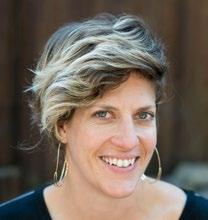
Cabrillo Stage, the beloved professional summer musical theatre festival, has a new artistic director, Andrea L. Hart, who hails from Berkeley and produced the Fringe Festival at the Great Plains Theatre Conference.

Hart, 46, will be only the fourth Cabrillo Stage artistic director, and the first woman to lead the company, founded in 1981 by Lile O. Cruse.
She was hired to succeed Jon Nordgren, artistic director for 17 years, who retired in September.
Cabrillo Dean of Visual, Applied, and Performing Arts John Graulty said, “Our national search for a new artistic director for Cabrillo Stage landed us a bright, young, articulate star in the theater firmament.”
Hart is an accomplished playwright and theatre maker, having had her work developed at the Great Plains Theatre Conference, CounterPulse, MacDowell, New Ohio Theatre, Hyde Park Theatre, and the University of Texas New Theatre Festival of New Work.
She came to Santa Cruz in July after finishing a master’s in fine arts in directing at the University of Texas at Austin.
Times Publishing Group, Inc. 9601 Soquel Drive, Aptos, CA 95003
The Times Publishing Group, Inc., publishers of the Aptos Times, a bi-monthly publication, the Capitola Soquel Times and Scotts Valley Times, each printed monthly, Coastal Weddings Magazine, Coastal Home and Garden Magazine, Aptos’ Fourth of July Parade Official Program Guide and Capitola’s Summer Festivals Official Program Guide, is owned by Patrice Edwards. Entire contents ©2022. All rights reserved.
Reproduction in any form is prohibited without the publisher’s written permission
PHONE: (831) 688-7549
FAX: (831) 688-7551
GENERAL E-MAIL: info@cyber-times.com
Patrice Edwards: patrice@cyber-times.com
Publisher’s Assistant: assistant@cyber-times.com
Editor: info@cyber-times.com
Calendar Listings: www.tpgonlinedaily.com

Graphics Department: graphics@cyber-times.com
Billing Inquiries: cathe@cyber-times.com
Classified Sales: sales@cyber-times.com
Production: production@cyber-times.com
CHECK OUT OUR WEB SITE AT: www.tpgonlinedaily.com
mission statement

We at the Times Publishing Group, Inc. are dedicated to providing a voice for the individuals and organizations in our community while highlighting the outstanding accomplishments of our local businesses. We seek to promote healthy family values through our coverage of youth activities, school news, senior events, community groups and entertainment
Before graduate school, she lived in the Berkeley area for 20 years, where she was a co-founder and member of several small theatre companies, including 6NewPlays, which focused on producing new plays by Bay Area playwrights. She also taught visual and performing arts and directed musicals and plays in schools all over the Bay Area.
“Studying how to make live theatre
during a pandemic was not what I set out in graduate school to do,” said Hart. “However, I feel incredibly fortunate to have been in school during that time. It served as a crucible to not only my artistic practice, but my thinking on how to keep live performance relevant to our communities as we move forward.”
In a letter to the Cabrillo Stage mailing list, Hart wrote: “Whether it’s an unforgettable performance from years ago, a tune that never leaves your head, or the lyrics that remind you you’re not alone, musical theatre has the power to connect and uplift us like nothing else.”
Hart is invested in community building and supporting a healthy local artist ecosystem.
When she was director of education and public programs at the Oceanside Museum of Art, she began the first dance residency with local dancer Alyssa Junious, who created new work and community events in response to the artwork in the galleries.
“Theatre, by its very nature, is a local endeavor,” Hart said. “It exists in a particular place and time and it speaks to those who see it in that moment. I want Cabrillo Stage to represent the Monterey Bay community in all of its fullness and to be a place our audiences call home.”
Hart answered these questions for Aptos Times:
As a playwright, you wrote “Murky as Hell.” What’s it about?
Murky as Hell” is based around stories of women who aided Jeffrey Epstein, Harvey Weinstein, and Terry Richardson, amongst others.
What began as an exercise in imagining fitting punishment for these women, turned into a meditation on the unnerving grey areas around the violence women inflict on each other and the systems that teach us how to do it.
The show included a Mad Max-style wasteland, a sci-fi reprogramming center and an over-the-top Wrestlemania-inspired Thunderdome fight sequence.
Your favorite musical?
As a child, we had the record to “Annie.”
My mom sat by the record player and transcribed all the lyrics using a typewriter and we used that script to sing those songs incessantly.
I can’t say that’s my “favorite” musical, but it is inscribed on my psyche in a very deep way. I also learned “The Sun’ll Come Out Tomorrow” in sign language.
Why Cabrillo Stage?
Any time a mention of Cabrillo comes up in conversation, it is always with the most loving and reverent tones. Anyone I know who has studied there always raves about it. I also had looked into the theatre when I arrived in town and heard what quality productions they put on.
During the application and interview process, I was encouraged by the questions that were asked and the thinking that was going into season selection and culture around the theatre.
As I’ve gotten started, I’m repeatedly touched by how many people hold this place dear.
4 / December 15th 2022 / Aptos Times www.tpgonlinedaily.com
“Hart” page 8
COMMUNITY
NEWS
publisher
Patrice Edwards
editor
Jondi Gumz
Jondi Gumz, Kieran Kelly, Leigh Ann Clifton, Edita McQuary, Risa D’Angeles, Sophia Manzur, Joyce and Barry Vissell, Christopher Elliott, Tony Tomeo, Zach Friend
layout
Michael Oppenheimer, Ward J. Austin graphic artists
Michael Oppenheimer, Ward J. Austin
production coordinator Camisa Composti
media consultants
Teri Huckobey, Brooke Valentine
office coordinator
Cathe Race distribution
Bill Pooley, Taylor Brougham
Michael Oppenheimer, Camisa Composti
Michael Oppenheimer, Ward J. Austin, Brad King website
photography
Andrea L. Hart
$103 Million for Bike & Walk Trail
For Aptos residents, it’s the biggest Christmas surprise ever: On Dec. 7, the California Transportation Commission approved $103.3 million in grant funds for 6.5 miles of the Coastal Rail Trail, a bike and pedestrian path next to the railroad tracks from Beach Street in Santa Cruz to 17th Avenue in Live Oak, then to State Park Drive in Seacliff.
This means more than 18 miles of the Coastal Rail Trail from Davenport to Aptos are now fully funded. These sections of Rail Trail are expected to be completed by 2025.

The funds come from the state’s Active Transportation Program.

“This is a big win for Santa Cruz County,” said Regional Transportation Commission Executive Director Guy Preston. “The Coastal Rail Trail projects are going to transform the way people travel through our county and will benefit generations of bicyclists and pedestrians. This is a great example of how voter-approved local funding can leverage larger state and federal grants.”
Santa Cruz County’s 2016 voterapproved Measure D sales tax provided a match to leverage the funding.


The trail is a multi-jurisdictional project, and the County of Santa Cruz was awarded $67.6 million for 4.5 miles of trail known as Segments 10-11.
This is the largest active transportation grant the state has ever awarded.
The project, rated 95 out of 100, is in the environmental phase with final design expected to begin in 2024.

Game Changer

“The Coastal Rail Trail is a gamechanger for the County’s residents, bringing them new recreational and commuting options while helping us reduce greenhouse gasses and improving the health and safety of the community,” said Santa Cruz County Parks planner Robert Tidmore. “This will be remembered as
an important day in building Santa Cruz County’s transportation future.”
The City of Santa Cruz was awarded $35.7 million to deliver segments 8 & 9 of the trail, rated 90 out of 100. Environmental, design and right-of-way work for this 2.2-mile trail is underway.
“We are so excited to secure funding to advance constructing the Coastal Rail Trail. This is an important project for our community,” said Santa Cruz City Manager Matt Huffaker. “Families, children, and visitors will be able to safely walk and bike in Santa Cruz to all of our amazing amenities.”
Segments of the Rail Trail in Santa Cruz from the Wharf to the Westside are completed or under construction.
Santa Cruz County Friends of the Rail & Trail, which in June successfully fought Measure D, Greenway’s vision to drop passenger rail service from the county general plan and use the rail corridor for an interim multi-use trail, congratulated the staff at the City of Santa Cruz, County of Santa Cruz and RTC who applied for the money.
www.tpgonlinedaily.com Aptos Times / December 15th 2022 / 5 Great Holiday Savings! Buy 7 Anlin windows and 1 Anlin door from Aptos Glass and we will upgrade the door to have a pet door insert for your furry family member compliments of Aptos Glass & Ideal Windows, Inc. Come by our showroom to discuss your project in detail and view samples from our large collection! Proud partnership with: (831) 662-9272 carrie@aptosglass.com 402 Trout Gulch Road Aptos, CA 95003 Monday-Friday, 8am-5pm, Saturday by appointment only. COMMUNITY NEWS
“Trail Funds” page 8
Frank Prevedelli Memorial Scholarship
Anew agricultural scholarship will honor the memory of Frank Prevedelli, whose passion was farming apples in Watsonville.
Prevedelli and his wife of 55 years, Silvia, sold everything they grew at the Prevedelli Ranch and at farmers’ markets throughut the Bay Area.
When he died at home Jan. 21, his family asked for donations to create a scholarship in his memory.
On Monday, family, friends and loved ones announced the Frank Prevedelli Memorial Scholarship Fund, established with $26,574.
The annual scholarship is to go to students who attended high school in Santa Cruz County and major in agriculture or a field related to agriculture.
The fund will be part of the educational programs offered by Agri-Culture, Inc., and it will be housed at Community Foundation Santa Cruz County.

Steve Bontadelli, president of AgriCulture, Inc., said, “We are honored to receive the funding to perpetuate Frank Prevedelli’s legacy in the agricultural community of Santa Cruz County and the Pajaro Valley.” n

About Frank Prevedelli
He was born in 1931 in Warm Springs, California, the youngest of four children born to Arturo and Erinna (Irene) who emigrated from Italy.
Frank’s family farmed in Soquel in the 1930s. The existing family farm in Watsonville was purchased in 1945.


As an adult, Frank was a well-respected member of the local agricultural community. His passion was farming apples.
One of Frank’s many projects was to
BELOW:

build a machine for grading and sorting apples, which remains in operation at the family farm.
Frank, and his wife, Silvia, made an amazing team as husband and wife, and as farmers.
Frank belonged to the Sons and Daughters of Italy, Watsonville Lodge. He was a true Italian with a passion for good healthy food. Frank enjoyed traveling, fishing, and gardening.
Frank and Silvia raised two children, Geri and Nick, who continue the farming operation today. Frank loved spending time with his family, who meant the world to him.
6 / December 15th 2022 / Aptos Times www.tpgonlinedaily.com COMMUNITY NEWS
•••
The Prevedelli family announces the new scholarship.
ABOVE: Frank, second from left, with his family in the 1930s in Soquel: parents Arturo and Erinna, siblings Chuck, Art and Mary.
Frank (far right) with his siblings.
State Offers Money to Repair Old Fair Barns
By Jondi Gumz
The 1955 livestock barns at the Santa Cruz County Fair are not going to be demolished under the new regime in place since CEO Dave Kegebein was dismissed Oct. 4.
On Dec. 6, the fair board, with new members Nick Colubaquib of Aptos and Rachel Wells of Felton, voted with board member and interim manager Don Dietrich and acting board president Stephanie Fontana abstaining, to rescind the motion to demolish and instead agreed to pursue repairs to engineered specifications with money proffered by Michael Flores, deputy director of the state Department of Food and Agriculture.
“The state will step up,” Flores said. “No strings attached.”
An audit of the Santa Cruz County fair by that agency, which oversees opera tions at state-owned fair property, found no receipts for $163,442 in purchases and led to the dismissal of Dave Keg ebein, who in 11 years had orchestrated a financial turnaround with $1.75 million cash on hand, albeit with omissions in record-keeping.
As in October, the fairgrounds meeting room was full, some calling for more transparency on the financials, which are behind schedule, and more watching on Zoom.
Flores, dressed in a suit, stepped to the microphone at the fair board meeting and said that state resiliency funding will pay for the repairs.

“We feel it’s prudent,” Flores said, acknowledging it would take time to come up with plans for a new multi-purpose building, as Kegebein had proposed and the board supported.
Kegebein, at the microphone, said resiliency funding was “widely perceived” as a plan to adapt fairgrounds for use by homeless people.
Flores, responding to Kegebein, said, “He couldn’t be more wrong.”
Flores said resiliency funding is designed to upgrade heating and cooling systems at fairgrounds, which are needed in disasters such as earthquakes, fires, and flooding.
He said the money is also going to install commercial kitchens to provide
meals to disaster victims and incubate startup food businesses, proper showers and broadband, and RV access.

“That’s what this money is meant for,” Flores said.
Some in the audience were unconvinced.
“We want no strings attached,” said Kevin Hurley, a volunteer who heads up the fair’s beef cattle department.
The barns were deemed unsafe by the state and cordoned off during the fair. Tents were put up for fair animals and their exhibitors.
Historic Mess Dietrich, in his role as interim manager, said he got the impression from talking with CDFA and California Construction Authority (designed to facilitate construction projects at fairgrounds) that due to the historic designation, it would be easier to repair than demolish the barns.
Asked he could get the historic designation corrected, Dietrich said he tried to reach the county planning department, which oversees historic resources.
“They’ve been fairly unresponsive,” Dietrich
“If you need help, I’m available,” said fair board member Dana McRae, county counsel for 22 years before retiring.
“Our legal team can certainly help,” said Flores of CDFA.
The county Historic Resources Commission meets in January.
Board member Tony Campos said demolition was stalled because of “an honest mistake” designating the entire fairgrounds property as historic.
The intent had been to designate the Rodgers House, built in the 1870s, donated by Melanie Kett Wirtanen to the fairgrounds and moved there in 1998, as historic.
However, Wirtanen, who spoke, said she was “completely shocked” by the designation, which limits what can be done to the property.
Kegebein said the historic designation is by parcel and the fairgrounds is one parcel.
That explains why the historic designation was applied to the fairgrounds as a whole.
Fontana pointed out the access for fire trucks and trailers is difficult with the
current setup. This is why she had favored pursuing a new multi-purpose building.
New Interim Manager
Anew
interim manager is coming on board Jan. 2.
He is Kelly Ferreira, who retired as San Benito County fair manger in 2013 after 27 years and has been working as a fair consultant since.
Recommended by staff at CDFA, Fontana called him well qualified.
Because of his retirement status, Ferreira will work three days a week at 60% salary.
His pay will be $99,060, which Dietrich said is 60% of what Kegebein was paid.
Dietrich said he would fill in on days Ferreira is not at work.
There were 7 yes votes, with Dietrich abstaining due to his dual role.
Betty Aboytes, who owns property next to the fairgrounds, said she appreciated being able to call on Dave Kegebein whenever she saw something amiss or the event music was too loud.
“I just need to know who to call,” she said.
Recruiting Permanent Manager

had brought his tools to do fairgrounds repairs on a volunteer basis. When he needed to work on his own vehicle, he asked Kegebein if he could use the shop and Kegebein said it was OK.
Dietrich
recommended creating an ad hoc committee to recruit a permanent manager, and the board agreed.
Directors Dana McRae and Michael Pruger are on that committee.
Donna Steward, who has 24 years of experience, was hired as board secretary to take minutes at $37.50 per hour.
The financials for September and October are not yet ready, but the fairgrounds is booked for many weekend events.
Fairgrounds Shop Use Dietrich explained, as he had promised, why he had used the fairgrounds shop to work on his own equipment. He said he
Dietrich said he had repaired equipment of fair customers and staff and had notified CDFA.
“I like helping people,” he said. “I’m going to continue until I’m no longer needed.”
As for plans to repair leaks in the roof of the Harvest Building, Dietrich said it’s a work in progress. He hopes to have a report on Jan. 24. •••
Future meeting dates: Jan. 24, Feb. 28, March 28, April 25, May 23, June 27, July 25, Aug. 22, Oct. 24, Dec. 5, all at 1:30 p.m. at the fairgrounds, 2601 E. Lake Ave., Watsonville. Meeting is also on Zoom. For agendas, see santacruzcountyfair.com.
www.tpgonlinedaily.com Aptos Times / December 15th 2022 / 7 COMMUNITY NEWS
Photo Credit: Jondi Gumz
New Santa Cruz County fair board members Rachel Wells and Nick Colubaquib
of Food and Agriculture
Vaccine Boosts Pfizer Revenue
By Jondi Gumz
On Monday, Pfizer said annual revenue from its mRNA vaccine portfolio could reach $10 billion to $15 billion by 2030, soothing investor fears about decline in Covid vaccine demand and expiring patents.
Pfizer shares rose to $52.59 in afternoon trading and helped lift the Dow Jones Industrial Average by 528 points, up 1.58% -- the biggest one-day percentage gain since Nov. 30.
FiercePharma expects the drugmaker’s 2023 revenue to top $100 billion — a new record and more than double the prepandemic level — due to demand for its Covid-19 vaccine and oral treatment Paxlovid. The world’s largest pharmaceutical company by revenue, Johnson & Johnson, reported $82.6 billion revenue in 2020.
On Tuesday, Florida Gov. Ron DeSantis said he plans to petition the state’s Supreme Court to convene a grand jury to investigate “any and all wrongdoing” with respect to Covid-19 vaccines.

“We’ll be able to get the data whether they want to give it or not,” DeSantis said.
“In Florida, it is illegal to mislead and misrepresent, especially when you are talking about the efficacy of a drug.”
He shared his plans after a roundtable with Florida Surgeon General Joseph Ladapo and a panel of scientists and physicians, where they pointed out that pharmaceutical companies have not provided their data on Covid-19 vaccines to independent researchers.
On Nov. 27, a published report by six pathologists from Heidelberg (Germany)
“Trail Funds” from page 5
“The CTC’s decision to approve these grant applications and fund the construction of the Rail Trail alongside the existing railroad tracks confirms that Rail With Trail can be built and is being built in Santa Cruz County,” said FORT Board Chair Faina Segal.
Segal said all 32 miles of trail are now in construction or design phases, and planning for electric passenger rail service from Santa Cruz to Pajaro has started.
“On a personal level, as a resident of Live Oak, I am particularly excited for the brand-new direct route between Santa Cruz and Live Oak for bikes and pedestrians,” she added.
The Coastal Rail Trail plan includes a wide, flat, multi-use trail as well as future
electric passenger train service. The goal is to improve walkability and bike safety for people living near the Branch Rail Line. It is hoped the electric train will offer a real alternative to people stuck in Highway 1 traffic jams and give South County residents a commuting solution.
Measure D Oversight
The Santa Cruz County Regional Transportation Commission is accepting applications for the Measure D Taxpayer Oversight Committee for representatives from Districts 1, Santa Cruz, & 2, Aptos. The deadline is Jan. 13.
This committee is tasked with reviewing how the funds generated by the transportation tax are being spent. Responsibilities include:
• Reviewing expenditures annually to ensure they conform
University Hospital who performed autopsies on 25 individuals who died unexpectedly at home and within 20 days after Covid vaccination.
They found five cases where “autopsy findings indicated death due to acute arrhythmogenic cardiac failure. Thus, myocarditis can be a potentially lethal complication following mRNA-based antiSARS-CoV-2 vaccination.”
None had signs of a pre-existing heart disease.
The study, “Autopsy-based histopathological characterization of myocarditis after anti-SARS-CoV-2-vaccination,” appeared in Clinical Research in Cardiology, official journal of the German Cardiac Society.
On Dec. 12, the college football world was stunned to learn Mike Leach, the influential
• Reviewing the annual audit prepared by an independent auditor, describing how funds were spent
• Producing a publicly available Annual Report of Oversight Activities
The committee shall include at least one person with an accounting or fiscal management background. Applications are at https://sccrtc. org/wp-content/uploads/2022/12/OvrSghtCommApp-2022_final.pdf
Smaller Projects
The state also awarded $12.3 million for smaller “active transportation” projects in Santa Cruz County. They are:
• City of Watsonville, $6.9 million for Safe Routes to Downtown Watsonville, pedestrian and bicycle improvements at schools
• Santa Cruz County Health Services Agency, $1.8 million for Safe Routes for Watsonville School Families and
football coach at Mississippi State University, collapsed at home and died of complications from a heart condition at age 61.
The MSU announcement did not include his Covid vaccination status.
In 2021, Mississippi State University required Covid vaccination for faculty and staff to comply with President Biden’s executive order, the reason being not to jeopardize $271 million in federally funded research.
Former Washington State University SU football coach Nick Rolovich, sued the university on Nov. 11, seeking damages after he was fired last year for refusing to get the Covid-19 vaccine.
Rolovich, who is Catholic, claimed discrimination against religion, wrongful withholding of wages, and loss of future income.
Community, education for pedestrian and bicycle safety
• City of Santa Cruz, $2.9 million to construct a multiuse path on Swanton Boulevard and sidewalks, protected bike lanes, and intersection improvements on Delaware Avenue
• UC Santa Cruz, $0.7 million for the culturally inclusive “SlugBikeLife” Bike Safety and Education Program Phase 2 Statewide, the California Transportation Commission programmed $1.02 billion for 93 active transportation projects.
About 13% of the funding was awarded to Santa Cruz County, one of the smallest counties. n •••
To see the ratings of the funded projects, see file:///Users/patriceedwards/Downloads/184-6-a11y.pdf
“Hart” from page 4
It feels like an institution that is very much rooted in and serving its local community. I find that very inspiring and energizing.
How will you decide which shows to stage? Season selection is always a process of trying to thread the needle on many different needs and desires. I believe in a collaborative process that involves as many stakeholders in the conversation as possible.
We reached out to the community with a survey that presented genres to gauge audience interest, we’ve reached out to the artistic community to see what is exciting
to collaborators, we look at what is being produced in surrounding communities to gauge what niche hasn’t been filled, and then a group of us gets in a room and has a spirited discussion.
In the end, you want to get to a place where the community can trust that even if they don’t know the show or feel they don’t like the show, they are excited to see what Cabrillo Stage will do and that will keep them coming back. Where do you live?
What’s your impression of the Santa Cruz County housing market — for homebuyers & renters?
in the Westside of Santa Cruz. We moved here because my partner, Ross,
got an exciting job at the Elkhorn Slough Foundation. His entire family lives here, though, so it’s a place we’ve often come back to in our years away.
Let’s just say we moved here in July and we didn’t move into our rental until October. We were lucky enough to have wonderful family to stay with until we could find a rental we could afford. (Buying was never an option.)
When I left Berkeley (after 20 years and an incredibly sweet rental deal) I never thought I’d come back to the Bay Area because as a theatre artist I’d never be able to afford it.
There were some desperate feeling moments between July and September,
but in the end we got very lucky with a sweet landlord. And an opportunity to get rid of a lot of stuff! In all seriousness, I love our neighborhood and feel incredibly lucky to walk my dog to the beach on any given day.
I do think the cost of living directly impacts the type of arts that a community can sustain. So many of us consider our work a labor of love, but I know I’ve tried to make love pay the rent many times and it never works out.
I feel very fortunate that we stumbled on the place we got and I hope that as the conversation continues in this area, solutions to the lack of affordable housing will continue to move forward. n
8 / December 15th 2022 / Aptos Times www.tpgonlinedaily.com COMMUNITY NEWS
Ilive
WSU Vice President for Marketing and Communications Phil Weiler told The Seattle Times via email that Rolovich’s lawsuit “is wholly without merit” and that the university enforced the vaccine mandate “in a fair and lawful manner.”
Evasive New Variants
Two newer Omicron subvariants BQ1.1 and BQ.1 now dominate, with 36.8% and 31.1% of cases respectively., according to weekly projections by the U.S. Centers for Disease Control & Prevention.
BA.5, the once-pervasive variant included in the new “bivalent” booster for this fall along with the original 2020 coronavirus, has shrunk to 11.5% of new cases.
A new variant of concern, XBB, comprises 4.7% of cases.
This is important because scientists in new independent studies published in Nature and the Lancet report the bivalent booster “did not produce robust neutralization against the newly emerged BA.2.75.2, BQ.1.1, or XBB.1” – in other words, these newer subvariants are able to evade immunity from infection and vaccination.
The U.S. Centers for Disease Control and Prevention stopped reporting Covid cases on Sept. 21, recognizing 95% of Americans age 16 and up had some immunity from vaccination or infection.
Now that immune may be in question.
California reports 60.4% of people have primary vaccinations and boosters, and 19.4% got the bivalent booster.
In Santa Cruz County, 67.9% have primary vaccinations and boosters, and 26.9% got the bivalent booster.
The bivalent combo was expedited by federal officials who asked drug-makers to test on mice rather than humans.
Pfizer submitted data based on 8 mice, and the U.S. Food and Drug Administration granted emergency use authorization.
On Dec. 8, the FDA amended that emergency use authorization to allow bivalent Covid-19 vaccines from Moderna and Pfizer for children as young as 6 months.
More Spreadable Researchers say the new Covid-19 variants are more spreadable, which explains why the state’s test positivity rate is up to 11.7%, but there is no indication they are more deadly than previous versions.
The U.S. is averaging 570 deaths a day, compared to 3,000 last winter when the Delta variant raged.
Santa Cruz County reports 51 Covid deaths after Omicron, compared to 225 as of Dec. 15, 2021, before Omicron.
According to CDC data, vaccinated people made up 42% of Covid deaths in January and February during the peak of
the Omicron surge, compared with 23% during the Delta surge in September 2021.
Santa Cruz County reports one more death in the psat month, bringing the total to 276 since the pandemic began in 2020.
The last nine deaths were people who were vaccinated, according to the county dashboard, all 65 or older with medical conditions.
Tests at Home
Santa Cruz County reports 1,114 active Covid cases, double from a month ago.
Dr. John Swartzberg, clinical professor emeritus of infectious diseases and vaccinology at UC Berkeley School of Public Health, contends Covid case data are not valuable for monitoring the virus because so many people buy tests sold at drugstores for use at home, which escape tracking by public health officials.
The Santa Cruz County Office of Education reports 679,500 tests with Inspire Diagnostics.
According to the Santa Cruz Office of Education, cases in schools peaked at 4,407 on Jan. 27, and have risen in the past two weeks from 161 to 360.
The 14-day positivity rate, 12.25% in January, has risen from 1.61% to 2.59%.
The California Department of Public Health reports 20 patients hospitalized in Santa Cruz County with a positive Covid test, including one in intensive care.
Avoid Emergency Room
After Thanksgiving, Santa Cruz County health officials reported a surge in influenza and respiratory syncytial virus cases along with Covid and asked people with no symptoms or mild cases, or other non-serious illnesses, to “avoid unnecessary trips to already burdened hospital emergency departments.”
People with significant difficulty breathing, intense chest pain, severe weakness, or an elevated temperature that persists for days are among those who should consider seeking emergency medical care for their condition, health officials said.
They said people with “relatively mild” respiratory infections “can effectively recover from their illness at home, or by seeking primary care treatment and/or speaking with their primary care provider.”
See the CDC guidance for RSV at https://www.cdc.gov/rsv/clinical/index. html
2023
Immunization Practices voted unanimously in favor of adding the Covid vaccine to the federal recommended immunization schedule for children and adults.
The existing schedule recommends 27 doses of vaccine between birth and age 6.
Starting at 6 months, children should get the Covid vaccine, plus boosters, the committee said.
The committee heard Dr. Tom Shimabukuro report the death of a boy 13 days after his first dose of Pfizer Covid vaccine. The autopsy showed the cause of death was heart inflammation known as myocarditis; tests found no evidence of viral infection.
The death was reported to the federal Vaccine Adverse Effects Reporting System, and verified by the CDC. Committee members determined Covid vaccine benefits outweigh the risks. The CDC said its recommendation is not a mandate, with the decision up to states, counties and municipal officials. California’s SB 277 requires students be vaccinated to attend public school; no
exemptions for personal belief. Homeschoolers are exempt.
Gov. Newsom plans to lift the state of Covid-19 emergency on Feb. 28.
Local information: www.santacruzhealth.org/coronavirus or (831) 454-4242 from 8 a.m. to 5 p.m. Monday through Friday. n •••
Santa Cruz County
In hospital with positive Covid test: 20 Intensive care: 1 •••
COVID Deaths: 276
As of Dec. 12 Age
85 and older: 121 • 75-84: 64 • 65-74: 49 60-64: 15 • 55-59: 4 • 45-54: 10 35-44: 8 • 25-34: 5
Underlying Conditions
Yes: 226 • No: 50
Vaccinated
Yes: 39 • No: 237 Race
White 163 • Latinx 90 • Asian 16 • Black 3 Amer Indian 1 • Hawaiian 1 • Another 2 Gender
Men: 140 • Women: 136 Location
At facility for aged: 118 Not at a facility: 158
Recommendation
The CDC plans to provide a recommended vaccine schedule in 2023.
On Oct. 20, the Advisory Committee on

www.tpgonlinedaily.com Aptos Times / December 15th 2022 / 9
NEWS
COMMUNITY
Plenty of Free Customer Parking Wilder Associates Inc. Property Management Specialists 662-0291 Kumon Math & Reading Center Learning for the Long Run 508-8200 Village Liquors For All Your Beverage Needs 688-5691 Joy of Movement Pilates & Gyrotonic® More Zest for Life 688-8077 Epicenter Cycling Trek Bicycles for All Types of Riders 662-8100 Dentistry for Animals Dr. Judy Force, DVM 768-7148 CQENS International Inhalation Market www.cqens.com Researchers say the new Covid-19 variants are more spreadable, which explains why the state’s test positivity rate is up to 11.7%, but there is no indication they are more deadly than previous versions.
Volunteer Data: How Sea Otters Use Slough

New Scientific Paper Shows Value of Amateur Observations
Hundreds of people come to Elkhorn Slough in Moss Landing every day to hike coastal trails, revel in the diversity of shorebirds, or kayak among otters and seals. What if the energy of these people could be harnessed to answer important scientific questions about the estuary? A new paper published in the international journal Ecosphere shows how community members can play a key role in our growing understanding of how sea otters use estuaries.
“The Elkhorn Slough Reserve is dedicated to protecting the biodiversity of this estuary and to engaging the community in this effort, for the benefit of many different species and habitats,” says Reserve manager Dave Feliz.
Volunteers support education, stewardship, and research at the Reserve. One of the most dedicated groups participates in the Reserve Otter Monitoring Program, known as ROMP.
ROMP volunteers go out twice per month to count otters and observe their behaviors at over a dozen locations around Elkhorn Slough. For many of these volunteers, otter monitoring has become a passion.
“Watching otters is the highlight of my day, and I always learn something new,” says volunteer Ron Eby, who plays a leadership role in ROMP and is the first author on the new paper.
One of the most exciting patterns detected by the ROMP team is how closely sea otters are associated with seagrass beds in the estuary. Volunteers note exact locations of each otter during their monitoring efforts.
When the records for five years were combined, it became clear that sea otters are found in seagrass about six times more often than in immediately adjacent open water. The Reserve is engaged in seagrass restoration, and this finding highlights how important such restoration is for generating vital sea otter habitat.

Another striking pattern detected by ROMP: Differences in otter distribution and behavior based on the tide. Where the otters are and what they are doing differs significantly at low versus high tides.
For instance, the new paper demonstrates that quiet tidal creeks through salt marshes on the Reserve are used primarily at high tide, when otters can scramble up the banks and nap on the marshes, warming up and saving energy.
“Volunteer data really allow us to understand how salt marshes are used by otters, and this helps us design the best strategies for conserving and restoring these habitats,” said Reserve Research Coordinator and adjunct UC Santa Cruz professor Dr. Kerstin Wasson, the senior author on the new paper.
The new study also highlights the value of amateur observations as a part of ecotourism ventures.
In 1994, Captain Yohn Gideon started the Elkhorn Slough Safari, which takes visitors out on pontoon cruises along the main channel of the estuary. He designed these tours specifically to provide opportunities for close-up encounters with sea otters. On each trip, he handed one participant a clicker and asked them to press the button every time they saw a new otter. Passengers always took this duty seriously and counted carefully. At the end of the voyage, the otter counts were recorded.
Gideon sold the Slough Safari in 2015 to Captain Joe Mancino, who continued the tradition of counting otters on each voyage.
“We’re out on the water every day, showing locals and visitors from far away the beauty of the Slough and the diversity of animals in the estuary,” said Mancino. “Since we’ve got eyes on the water every day, it just makes sense for us to count the otters and seals on our voyages.”
Currently Mancino is logging about 400 pontoon trips, thus 400 otter counts per year.
The new paper compares long-term patterns of otter abundance in Elkhorn Slough from Slough Safari otter counts with data collected by a professional team of scientists headed up by the US Geological Survey, which conducts annual surveys of southern sea otters across the entire range. The patterns were nearly identical: Both show the same peaks and valleys in otter abundance over time, and both yield very similar estimates for current otter numbers in the lower estuary (around 80 animals).
Since the Slough Safari data were
clearly reliable, they were then used to examine seasonal differences, and it turned out that there are more otters in the lower estuary in summer than in winter. Volunteer data can detect such patterns and other short-term dynamics that professional surveys conducted only once a year cannot.
Dr. Wasson hopes the results of this paper will encourage more community members to get involved in monitoring habitats and species in the natural world around them—and that it convinces the scientific community that such observations can be accurate, complementing those of professionals.
“All those eyes on our habitats can help us understand and protect the places we love,” she notes. “So find a place you care about and start watching! My doctoral advisor used to love to quote Yogi Berra, who said ‘you can observe a lot by watching.’”
This investigation and the new paper were led by the volunteers and staff of the Elkhorn Slough Reserve, owned and operated by the California Department of Fish and Wildlife, in partnership with the National Oceanic and Atmospheric Administration and the Elkhorn Slough Foundation. n
Visit www.elkhornslough.org for information about the Elkhorn Slough Reserve and the Elkhorn Slough Foundation. For information on USGS sea otter surveys, see: https://www.usgs.gov/centers/werc/science/ california-sea-otter-surveys-and-research
10 / December 15th 2022 / Aptos Times www.tpgonlinedaily.com COMMUNITY NEWS
•••
Addressing Period Poverty
 By Sophia Manzur
Period poverty is defined as the struggle those who have a menstrual cycle face while trying to afford menstrual products. Despite not being able to control a menstrual cycle, those who have one are still left to purchase products that some cannot afford.
I believe that menstrual products should be an approved item to purchase using government subsidies or covered through medical insurance. To help alleviate this problem for our local community, I have started a school club called “That’s on Period Project.”
That’s on Period Project’s goals are to raise awareness about the stigmas surrounding menstruation, to raise money to purchase period products and to organize period product drives.
We aim to partner with local organizations who support those in need, and

to provide donations of the menstruation products for those in need.
Recently That’s on Period organized a drive where Mount Madonna School students, parents, faculty and staff donated about 110 packages containing period products.
The chosen recipients of this drive are the Watsonville-run Center for Farmworker Families’ Oaxacan Community Shed, a nonprofit organization dedicated to education, advocacy, and support for farmworker families and Gilroy’s Community Solutions, which provides services for families and individuals of all ages who are facing times of crisis, ranging from mental health and substance use to domestic violence, sexual assault, and human trafficking.
The Center for Farmworker Families’ Oaxacan Community Shed was chosen because of the large number of the migrant families living in Watsonville who are in desperate need of assistance to meet essential daily needs like personal hygiene products, including period products. Some

of the families using this organization’s resources must choose between feeding their children or purchasing items like tampons and pads. For these families accessing period products is a luxury instead of a basic human need that should be fulfilled.
One of the reasons Community Solutions was selected is because they serve survivors of domestic violence who flee their homes without personal belongings like clothing and toiletries.
www.tpgonlinedaily.com Aptos Times / December 15th 2022 / 11 FEATURED COLUMNIST
“Period Poverty” page 12
Sophia Manzur with some of the products she collected to donate.
Sophia Manzur
Holiday Beauty
Every year around the holidays, a group of local musicians (including singer-songwriter and KPIG disc jockey Michael Gaither) play at a fundraiser, with all proceeds to St Joseph’s Family Center in Gilroy.
“Wonderful org and always happy to be able to contribute,” said Gaither, who lives in Watsonville.



He and his pal Steve Kritzer always
pair up and do a set of original Christmas tunes — “way fun,” Gaither said.
Each year, the event features a raffle with locally donated items, such as this wreath created by Michelle McCain of Wild Ridge Organics, which specializes in protea.

“My wife Cyndy had the winning raffle ticket for the wreath,” Gaither said, adding, “We had a lot of tickets.” n
“Period Poverty” from page 11
Providing period products to these families and individuals is one way we can ensure all of their basic needs are met while they receive additional services to keep them safe from violence.
I am inspired by the Mount Madonna School sixth grade to twelfth grade students, their families and faculty and staff who donated the products to help their local community members surrounding an issue that is somewhat taboo to speak about.
It was encouraging to see my peers of all genders understand the very real predicament those with periods face when deciding to purchase a food or pay an electric bill over obtaining period products
that would allow them to experience menstruation in a more dignified and comfortable way.
Access to menstrual products supports those who have experience menstrual cycles ability to fully participate in society with confidence and without the fear of embarrassing bleed through — not to mention compromising their health due to the increased risk of urogenital infections from using inadequate period products. n •••
Sophia Manzur is a junior at Mount Madonna School. To donate menstruation products or funds to purchase menstruation products to the That’s on Period Project, contact Sophia at thatsonperiodproject2020@ gmail.com or on Instagram at: https://www. instagram.com/thatsonperiodproject/

12 / December 15th 2022 / Aptos Times www.tpgonlinedaily.com SPECIALIZING IN Residential Repaints & Custom Homes Homeowners Associations Property Managers “ Dependable Ser v ice , Affordable Qu alit y”
SPECIAL If we paint your interior and/or exterior by January 31, 2023 we will buy the paint. We do not offer every plan available in your area. Any information we provide is limited to those plans we do offer in your area. Please contact Medicare.gov or 1-800-MEDICARE to get information on all of your options. DO YOU HAVE OR NEED A Medicare Supplement? Medicare Advantage Plan? Turning 65 Soon? Are You Paying For or Losing Group Insurance? All of Our Services at No Cost To You We return your calls & answer your questions. See us @ www.seniorbenefits.care Review New Prescription and Medicare Supplement Plans Designed To Meet Your Budget And Needs! Where our clients send their friends. We make it easy for you! ★★★★ Customer Service COMMUNITY NEWS
WINTER
Protea wreath, created by Michelle McCain
Groundbreaking Strock Family to Match December Donations
 By Kieran Kelly
Local officials officially broke ground on the Sgt. Damon Gutzwiller Memorial at Willowbrook County Park in Aptos on Nov. 14.
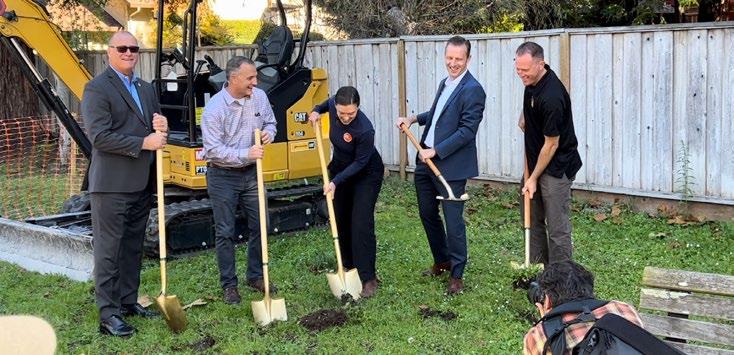
Santa Cruz County Sheriff Jim Hart, Supervisor Zach Friend, County Parks Director Jeff Gaffney, County Park Friends Executive Director Mariah Roberts, and Deputy Sheriff’s Association President Ethan Rumrill plunged shovels into the park’s damp soil in a symbolic beginning to the memorial’s construction.
Sgt. Gutzwiller was killed in the line of duty on June 6, 2020, leaving behind his wife and two young children. His many friends and colleagues wanted to find a way to honor the legacy of his service and the idea for a memorial in his neighborhood park was born.
“Today’s groundbreaking allows for hope and a new story to be told,” said Supervisor Friend. “As we create a reimagined park filled with sounds of cross-generational happiness from children and adults playing, and reflection, love and community support at the new memorial site.”
Damon Gutzwiller grew up in Santa Cruz County and owned his first home in the Willowbrook neighborhood. He could often be found there playing with his beloved dog, Shasta. A dedicated public servant, Damon served with the Santa Cruz County Sheriff’s Office for 14 years where he rose to the rank of sergeant.
The memorial will include a circular seating area near the park’s pedestrian bridge that will face towards a new flagpole near the park’s southern entrance. The site will feature a plaque honoring Sgt. Gutzwiller.

“This memorial will serve as a place of beauty, peace and reflection for so many of us here in the community and will ensure that Sgt. Gutzwiller’s sacrifice, and that of his family and all who knew him, will be forever remembered and honored,” said Rumrill, speaking as president of the Santa Cruz Deputy Sheriff’s Association.
In a nod to Sgt. Gutzwiller’s young children, the park’s playground will also be updated with new features to make the park more accessible for children.
The park’s existing sport courts were also recently resurfaced and re-striped for tennis and pickleball enthusiasts.
“We are excited to start construction on the renovations to Willowbrook County Park in honor of Sgt. Gutzwiller,” said Jeff Gaffney, county parks director. “I am truly amazed at how so many community members came together to make this first phase of the project start so quickly.”
In an effort to finish the final stretch of fundraising for the project, the Strock family of Aptos will donate a dollar for every dollar donated in December up to $16,000. n •••

For info, visit: www.classy.org/campaign/ willowbrook-memorial-1-1-matching-challenge/ c451688


www.tpgonlinedaily.com Aptos Times / December 15th 2022 / 13 Need a little help? We’ve got you covered ... Our technicians at Aptos Computer Services are dedicated to providing you the best possible support for all your I.T. needs. SERVICES: PC & Mac Repair Virus Removal Data Transfer Consultation Web Hosting Vintage/Legacy Custom Builds Aptos Computer Services 831-477-1234 Phone: (831)477-1234 Hours: Monday-Friday: 10AM to 6PM 7969 Soquel Drive, Aptos, CA 95003 Special during the month of December: One (1) Year of business-class antivirus included with any service rendered. aptoscomputer.com COMMUNITY NEWS Gutzwiller Memorial
Artists Rendering
Aptos Real Estate Update
Ruth Bates 831.359.2212 ruthbates1@gmail.com CalBRE#01799929
HAPPY HOLIDAYS TO ALL!
Remember to eat and shop locally.
APTOS SOLD 11/01-12/01: (13 SFR, 2 Townhomes, 3 Condos)
330 Tolak-$2,855,000, 531 Townsend-$2,274,000, 120 Las Lomas-$2,200,000, 322 Park-$1,825,000, 449 Vista Del Mar-$1,750,000, 113 San Benito-$1,725,000, 155 Stephen-$1,725,000, 158 Via Trinita-$1,625,000, 150 Glen Brae$1,340,000, 116 Hainline-$1,280,000, 3140 Trout Gulch-$1,250,000, 420 Vista Del Mar-$1,220,000, 4777 Porter Gulch-$955,000, 340 Village Creek(TH)-$1,304,554, 163 Provincetown(TH)-$1,075,000, 2104 Pensaquitas(TH)-$915,000, 141 Aptos Village #304-$712,000,1690 Dolphin-$700,000
APTOS ACTIVE:

There are 24 Active single-family listings with an Avg 57 Days on Market! These homes have been sitting for two months now on average and only 3 have done price reductions. It may be a long winter here.
INTEREST RATES: as of 12/01 — Avg 30-year fixed rate = $7.995%!
RED APPLE CAFE ART SHOW: 12/20 — MARCH 2023
In additional to selling Real Estate, my other love is Painting. My Seascapes, Landscapes and Still Life paintings, will be hanging at the Red Apple Café Aptos starting 12/19, just in time for the Holidays. I am donating 5% of any sales in December to the American Cancer Society on behalf of the Red Apple owners. So come on down and enjoy a fabulous Red Apple breakfast or lunch from 7:30-3:00pm daily and buy an original painting for yourself or your loved one.


FEATURED COLUMNIST
The Gift of a Friend
Having a true friend (or several) in your life is a true gift. Having someone who you can call and say, “I am not doing well. I need your love,” is a huge blessing. It takes a lot of courage to feel your need for someone and be able to express it. It is such a gift in your life to have someone who will say, “Absolutely, I am here for you.”
I have saved a card from a good friend who passed from this world perhaps 10 years ago. The card shows a beautiful garden and the entrance to the garden is a broken gate. The card says, “A good friend overlooks your broken-down gate and admires the flowers in your garden.” A true friend looks past your faults, and sees your beauty and believes in you.
My mother strongly believed in the power of friendship. When I was a young child, our family lived in the inner city of Buffalo and I had a lot of friends there. It was a poorer neighborhood and no one cared how you looked. We all just played.


In the third grade, we moved to a middle-class neighborhood and I felt so different from the other girls. I didn’t fit in with the other girls who talked about others and made fun of them. I was deep in my feelings, and very sensitive. I thought about God. No girl my age seemed like that. So I stayed by myself most of the time. This bothered my mother very much, as she lived her life on the premise that friends are the true treasures in life.
One day, she came into my room while I was deep in a fantasy play with my dolls and stuffed animals. She asked me why I didn’t ask friends over. I replied, “I am so different from everyone else, no one would want to be my friend.” She looked at me very seriously and said, “Joyce, to have a friend you have to be a friend. Look for
Call, email, text anytime and Get Results With Ruth!
 By Joyce and Barry Vissell

someone who needs your love, and be thoughtful to them.”
There was a girl in my class named Carol, whose father was an undertaker and they lived upstairs from the funeral home. The other girls made fun of her as she seemed so serious. Taking my mother’s advice, I started sitting with her at lunch, and yes, she was rather serious and we had little to talk about. She told me that she always had to be quiet at home in case there was a funeral downstairs.
She could never run wild or play music, and her father didn’t want her to laugh in case someone was downstairs crying over their dead relative.
I told my mother about Carol, and her immediate response was, “Invite her over this Saturday. I’ll make a special lunch for the two of you with cookies for dessert, and your father will play games with both of you.” My father was very funny and knew how to entertain children with laughter and fun.
So I did invite her over. Carol came to our home very shy and quiet, and she left laughing and making a lot of noise. She had such a great time that she begged to come again soon. It was so much fun to see her so happy at our home. Her mother called later and told my mother that her little girl didn’t have much fun in life. Her mother was so grateful and Carol came often to our home and I had a friend.
My mother loved to collect friends. She told me that she would rather collect friends than tea cups, books, clothes, shoes and other material things that people like to collect. To my mother, a friend was worth so much more. My mother lived to be 90 years old. Eventually all of her long-term friends died as well as her seven siblings who were also best friends. My mother did not let this stop her from friendship. She went right on making new friends in the way she had taught me, “To have a friend is to be a friend.”
Three days before my mother died, she woke up in the morning with a lot of energy. She had been mostly sleeping before that. She looked at me and said, “I feel so good today. I would like to make a new friend! Please find me one.” How was I supposed to accomplish finding a new friend for my mother in just one day? I looked out the window and there was our daughter’s friend, who was visiting from Colorado, washing his car. I yelled down to him, “Can you please come up and
visit with my mother?” He jumped at the chance! He ran up and sat with my mother for one hour. He loved to sing old musicals and so they both sang together.
After he left, I went back to my mother and she was beaming, “I really wanted to make a new friend before I died and now, I have. I feel very fulfilled.” I guess she felt her “collection” was complete. She showed me that it is never too late in life to make a new friend.
It takes time to be a good friend, and also a willingness to share deeply and be vulnerable together. Having a good friend is about being willing to listen to them. Even if you have heard the story before, your friend needs to be able to share it again. But having a good friend also means that your friend listens to you as well and asks questions about your life. A good friend does not do all of the talking without listening to you. If your “friend” is always doing all of the talking and does not seem interested in your life, then they are using you and are not really a good friend.
If you have a friend who listens to you and is interested in your life and who believes in you and who is supportive of your dreams, then indeed you have a great treasure. Treat that great treasure well. n •••
Joyce & Barry Vissell, a nurse/therapist and psychiatrist couple since 1964, are counselors in Aptos who are passionate about conscious relationship and personal-spiritual growth. They are the authors of 9 books and a new free audio album of sacred songs and chants. Call 831-684-2130 for information on counseling sessions by phone, on-line, or in person, their books, recordings or their schedule of talks and workshops. Visit their web site at SharedHeart.org.

14 / December 15th 2022 / Aptos Times www.tpgonlinedaily.com
Paid Advertising SANTA CRUZ COUNTY DECEMBER 2022











www.tpgonlinedaily.com Aptos Times / December 15th 2022 / 15 Featuring Graber Custom Draperies & Roman Shades! Visit Our Full-Service Showroom Let us assist you from concept to completion Property managers, contractors, residential, realtors, commercial, welcome! Hardwood • Luxury Vinyl Plank • Laminates • Carpet • Shutters • Wool • Sisal • Linoleum Cork • Custom Area Rugs • Custom Draperies • Window Shade s Featuring Both Graber & Hunter Douglas Window Fashions SEVERAL STYLES AND COLORS OF CARPET AND VINYL IN STOCK FOR THAT QUICK INSTALL! CONVENIENTLY LOCATED IN SOQUEL VILLAGE Monday – Friday: 9am-5pm & Saturday: 9am-2pm 2800 Daubenbiss Ave, Soquel • 831.476.8780 • Interiorvision.biz19 19 YEARS IN BUSINESS
Matthew Burke Named First Cabrillo College Local Government Fellow
Matthew Burke has been selected as the first Cabrillo College Local Government Fellow.
Matthew graduated from Cabrillo College in May 2022. He is enrolled in the Public Policy program at UC Riverside. In the summer of 2023 he will intern in the County of Santa Cruz Chief Administrator’s Office.
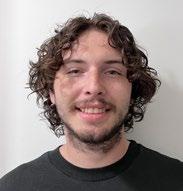
The Fellows program was created in 2021 by current and former local government leaders throughout Santa Cruz County and the Cabrillo College Foundation.
The goal of the program is to encourage and support Cabrillo College students to pursue careers in local government.
Matthew said, “I’m honored to be selected as the first Cabrillo College Local Government Fellow. This opportunity allows me to connect and learn from leaders within our community and provides me with a pathway towards
my own ambitions in working within local government.”
Arne Croce, a Cabrillo alum, former city manager and one of the program organizers, said, “We are grateful for the generous community support which made this program possible. We are excited for Matthew and look forward to his future in local government.”
Effective, efficient local government is critical to communities. Planning, infrastructure, public safety, libraries, parks and recreation, elections management, and health and social services are essential to a high quality of life and robust economy. Developing dedicated, competent, and diverse future local government leaders is key to maintaining the essential services provided by our cities, counties, and special districts.
Cabrillo College Local Government
Fellows c/o Cabrillo College Foundation The Sesnon House 6500 Soquel Drive Aptos CA 95003 The Fellows program selects Cabrillo College students with preference to those who are the first in their family to attend college who will pursue a major consistent with a career in local government service. The students receive: • A $2,000 scholarship • A paid internship with a local government agency in Santa Cruz County • Mentoring by a current or retired local government leader The Fellows program has raised $50,000 which will support one Fellow annually in perpetuity.
The goal is to raise an endowment of $100,000 and support the selection of two Fellows each year. Contributions have come from individuals, businesses, and the cities of Capitola and Santa Cruz. Santa Cruz County and the cities of Capitola, Santa Cruz, Scotts Valley,

and Watsonville have committed to providing a paid internship to those students selected as Cabrillo College Local Government Fellows.
For additional information contact Arne Croce: 650-740-6593, acroce51@ hotmail.com The Cabrillo College Foundation will accept contributions to the Local Government Fellows Program. n
You may contribute in the following ways:
1) CHECK: Send a check payable to the Cabrillo College Foundation. Enter Local Government Fellows Scholarship in the memo section. Cabrillo College Foundation 6500 Soquel Drive Aptos, CA 95003
2) CREDIT CARD: Call the Cabrillo Foundation office at 831-479-6338 to donate with your credit
3) ONLINE: https://foundation.cabrillo. edu/donate/ Enter “Local Government Fellows” in the Notes section
16 / December 15th 2022 / Aptos Times www.tpgonlinedaily.com YOU’RE INVITED! Kickoff Rally Mix, mingle, and hear guest speakers explain the importance and urgency of providing nourishing food for our neighbors in need. Thursday, November 10 11:30 a.m. – 1 p.m. Aptos Village Green, next to New Leaf Market RSVP required to attend. Scan QR Code or visit thefoodbank.org/kickoff22 Holiday Food & Fund Drive Second Harvest Holiday
Drive 100% of all funds raised during the Holiday Food & Fund Drive secure food that is distributed to our Santa Cruz County neighbors in need. Together we can provide 4 healthy meals for $1! Scan for more information or to donate. Look for our barrels!blue Second Harvest Holiday Food & Fund Drive 100% of all funds raised during the Holiday Food & Fund Drive secure food that is distributed to our Santa Cruz County neighbors in need. Together we can provide 4 healthy meals for $1! 100% of all funds raised during the Holiday Food & Fund Drive secure food that is distributed to our Santa Cruz County neighbors in need. Together we can provide 4 healthy meals for $1! Look for our barrels!blue COMMUNITY NEWS
Food & Fund
•••
Matthew Burke
Agri-Culture’s 26th Annual Farm Dinner
Attendees at Agri-Culture’s 26th Annual Farm Dinner celebrating the harvest not only raised money for the educational organization but also were treated to the world premiere of “The Perfect Pie,” a song by Suzanne Cornelius about Watsonville apple grower Nita Gizdich.
Cornelius and her husband Robert, who lead the Wildcat Mountain Ramblers bluegrass band, decided this event hosted by Hortifrut Genetics Ltd. on the Nakano Family Ranch would be perfect for the world premiere before they took it on the road.


At the end of the evening, guests were given a box of local produce from local companies to take home and enjoy.


Attendance is always limited to 100, but the event raised almost $40,000 in profit for the many educational and scholarship programs of Agri-Culture, Inc., which has a goal to educate the public about local agriculture in Santa Cruz County and the Pajaro Valley.


The guests included: Tom Am Rhein, Nakano family representative; Doug Fischer, Santa Cruz County Bank; Lucas Flowers, Driscoll’s, Inc.; Guy George, 2022 “Farmer of the Year”; Robert & Karen Kitayama, Kitayama Brothers; Dick & Marisela Peixoto, Lakeside Organic Gardens; Clint, Karen & CJ Miller, Royal Oaks Farms; Randy Repass & Sally-Christine Rodgers, R Bar R Ranch; Jessica Vaughan, Mary Maselli, Michelle Montalvo, Focus Agriculture Class 31 graduates. n


www.tpgonlinedaily.com Aptos Times / December 15th 2022 / 17
COMMUNITY NEWS
It’s time ... to add the space you’ve been dreaming of!
Doug Fischer, Santa Cruz County Bank, and Claudia Flores with fresh produce to take home
Clint, Karen and CJ Miller, Royal Oaks Farms
Am Rhein Family
Hortifrut Genetics Ltd was a beautiful location for the Farm Dinner
Nakano Family Ranch was a beautiful spot for the hors d' oeuvres.
Compare our CD

4.2 4.5
4.2 4.5
4.2 4.5
 Ryan J Ozog Financial Advisor

4.8
4.8
4.8
* Annual Percentage Yield (APY) effective 121222. CDs offered by Edward Jones are bank-issued and FDIC-insured up to


commissions. CDs require the distribution of interest and do not allow interest to compound. CDs offered through Edward Jones are issued by banks and thrifts nationwide. All CDs sold by Edward Jones are registered with the Depository Trust Corp. (DTC).

Twin Lakes Church: 1 Million+ Meals for Food Bank
In five weeks, Twin Lakes Church in Aptos raised funds for over one million meals for local families.

During Sunday services, the congregation celebrated the announcement that donations to Second Harvest Food Bank totaled more than $250,000 plus hundreds of pounds of food.

Many church members sold items at yard sales and donated all the proceeds.
“I think this is getting back to what Christians did in the first place,” said Rev. René Schlaepfer, Twin Lakes Church pastor. “The Bible describes followers of Jesus selling their possessions and giving the money to the poor. That’s exactly what happened here.”
Typical of donations was a handwritten note from a 6-year-old child, “Church, please use this money to help the people who are hungry. Signed, Lucas.” He included money from his piggy bank.
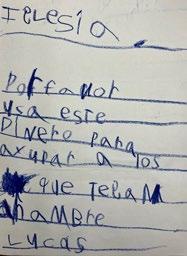
The donation is the church contribution to the countywide holiday food and fund drive.
Inflation has hit local families hard: Before the pandemic, 55,000 people a month received food through Second Harvest’s partners. The number is now 75,000.
Second Harvest’s goal to help meet that need is five million meals. The food bank provides four meals for every dollar donated. This year’s holiday drive goes through Jan. 15. To donate, go to www. thefoodbank.org
“As the new CEO, I am amazed at the community embrace of Second Harvest Food Bank. Twin Lakes Church has a long history of embracing our mission. We’re ecstatic!” said Erica Padilla-Chavez, Second Harvest CEO. “On behalf of the children, families and individuals that will benefit, I thank them for their continued support.”
Dr. Cynthia Larive, UCSC chancellor and food drive co-chair, added, “I am so grateful to the Twin Lakes Church community for their generous support of the food bank. It will make a difference for so many in Santa Cruz County.” n
18 / December 15th 2022 / Aptos Times www.tpgonlinedaily.com COMMUNITY NEWS Fly on over to 416 Airport Blvd. in Watsonville • CARPET • HARDWOOD • WATER-PROOF FLOORING • WINDOW COVERINGS 416 Airport Boulevard, Watsonville, CA • 831-728-3131 HOLIDAY SALE 20% OFF all material purchases over $500! (Must be presented at the time of estimate.) FDI-1867L-A © 2022 EDWARD D. JONES & CO., L.P. ALL RIGHTS RESERVED. AECSPAD > edwardjones.com | Member SIPC Compare our CD Rates Bank-issued, FDIC-insured % APY* % APY* % APY* * Annual Percentage Yield (APY) effective 121222. CDs offered by Edward Jones are bank-issued and FDIC-insured up to $250,000 (principal and interest accrued but not yet paid) per depositor, per insured depository institution, for each account ownership category. Please visit www.fdic.gov or contact your financial advisor for additional information. Subject to availability and price change. CD values are subject to interest rate risk such that when interest rates rise, the prices of CDs can decrease. If CDs are sold prior to maturity, the investor can lose principal value. FDIC insurance does not cover losses in market value. Early withdrawal may not be permitted. Yields quoted are net of all
3-month
6-month
1-year
FDI-1867L-A
>
Member
© 2022 EDWARD D. JONES & CO., L.P. ALL RIGHTS RESERVED. AECSPAD
edwardjones.com |
SIPC Call or visit your local financial advisor today.
Rates Bank-issued, FDIC-insured % APY* % APY* % APY* * Annual Percentage Yield (APY) effective 121222. CDs offered by Edward Jones are bank-issued and FDIC-insured up to $250,000 (principal and interest accrued but not yet paid) per depositor, per insured depository institution, for each account ownership category. Please visit www.fdic.gov or contact your financial advisor for additional information. Subject to availability and price change. CD values are subject to nterest rate risk such that when interest rates rise, the prices of CDs can decrease. If CDs are sold prior to maturity, the investor can lose principal value. FDIC insurance does not cover losses in market value. Early withdrawal may not be permitted. Yields quoted are net of all commissions. CDs require the distribution of interest and do not allow interest to compound. CDs offered through Edward Jones are issued by banks and thrifts nationwide. All CDs sold by Edward Jones are registered with the Depository Trust Corp. (DTC).
Financial Advisor 151 Aptos Village Way Ste 308 Aptos, CA 95003 831-662-4565 3-month 6-month
1-year
FDI-1867L-A © 2022 EDWARD D. JONES & CO., L.P. ALL RIGHTS RESERVED. AECSPAD > edwardjones.com | Member SIPC
visit
% APY*
APY*
APY*
Ryan J Ozog
Call or
your local financial advisor today. Compare our CD Rates Bank-issued, FDIC-insured
%
%
$250,000 (principal and interest accrued but not yet paid) per depositor, per insured depository institution, for each account ownership category. Please visit www.fdic.gov or contact your financial advisor for additional information. Subject to availability and price change. CD values are subject to interest rate risk such that when interest rates rise, the prices of CDs can decrease. If CDs are sold prior to maturity, the investor can lose principal value. FDIC insurance does not cover losses in market value. Early withdrawal may not be permitted. Yields quoted are net of all commissions. CDs require the distribution of interest and do not allow interest to compound. CDs offered through Edward Jones are issued by banks and thrifts nationwide. All CDs sold by Edward Jones are registered with the Depository Trust Corp. (DTC).
151 Aptos Village Way Ste 308 Aptos, CA 95003 831-662-4565 3-month 6-month
1-year

www.tpgonlinedaily.com Aptos Times / December 15th 2022 / 19 kp.org/downtownsantacruz Save time getting high quality care for your whole family. Pharmacy, X-ray, mammograms, pediatrics, and more are now available at our new downtown Santa Cruz Medical Offices. Get more done in one stop Santa Cruz Medical Offices 110 Cooper Street Santa Cruz, CA 95060 Now open, come visit.
BUSINESS PROFILE
InterIor VIsIon FloorIng DesIgn
‘Think Green’
By Edita McQuary
The New Year is right upon us! Is home redecorating in 2023 on your mind?
When you look around your home, do you see areas that need improvement and updating?
If new flooring, carpets or window treatments are on your horizon, a visit to Interior Vision Flooring Design is a must.

The only woman-owned mom-anddaughter business of the kind in this area, Deborah Cypert and her daughter Bobbie Frandeen have just what you need at their Soquel Village location. They take pride in their work in this male-dominated industry.

Deborah has been in the flooring industry for 35 years. Her father was a builder so the construction industry is “in her bones.” She learned about flooring while working with him.
Deborah and daughter Bobbie have been working together for 17 years. Their company, Interior Vision, will celebrate 20 years in May 2023 with an expansion of their location. When finished, the store will have almost 3,000 square feet of sustainable mostly-made-in-U.S.A. flooring, carpets and window treatments.
As much as possible, they deal in sustainable, made in U.S.A., hard and soft surface products.
The wood companies they deal with use responsible harvesting methods and sell environmentally friendly products. Many people are allergic to all but natural products so Interior Vision carries natural wood, cork, wool, and linoleum.
“We like to go green all the way through,” said Deborah.
Interior Vision offers free in-home
consultation, and advice on what would work best in the customer’s situation.
“We are invested in developing relationships and want the customer to love what they end up buying. After all, floor covering is the third most expensive investment homeowners are likely to make,” according to Deborah.
In regard to window coverings, Bobbie explained some state legislators tried to pass a bill to eliminate all cords on window coverings to be safe for children. However, the bill was amended several times and never passed.
Therefore, in 2018 the industry set its own safety standards to assure safety for children and now we can be assured no new window shades pose a threat to children.
Interior Vision carries Hunter-Douglas and Graber draperies and Roman shades. So if you still have the old Venetian blinds or pull-own shades, come and visit Interior Vision and have them show you into the 21st century with their uniquely beautiful and unusual collection of window coverings.
There are also some interesting shutters to look at. There is a selection of many different kinds of products, some made of grasses or wood fabric.
Some of their wood fabric slides are made by Honeycutt Verberglide and open side- to-side rather than vertically. They also carry Luminet, modern vertical and they carry fabric draperies. These really unique window slides have to be seen to be believed.
If you need an area rug, you can see some in the store or view online catalogs to select one that is right for your home.
Always community-minded, the Deborah and Bobbie have donated the flooring for the Children’s Museum of Discovery at Capitola Mall. Some of the other charities they have supported are the Make-a-Wish Foundation in San Francisco and our local Habitat for Humanity. They have also worked with Housing Matters and the Santa Cruz City School District and Live Oak School District.
Some interesting period projects were in restoring several Victorian homes on Walnut Street and Lincoln Street in Santa Cruz. They have also helped restore a historical house in Capitola. One of their fun projects was running an “Ugly Carpet Contest,” where the winner received $1,000 of floor covering.
When asked what it is like working with your mother/daughter, their response was that they have developed a trust in each other so both are working for the best
interests of the business and the best part is they get to see each other every day.
For a very interesting experience, come visit their store and meet Deborah and Bobbie. They welcome homeowners, property managers, contractors, real estate agents and commercial business people. n •••
Interior Visions, 2800 Daubenbiss Avenue, Soquel, Monday-Friday: 9 a.m. to 5 p.m. & Saturday: 9 a.m. to 2 pm. 831-4768780, Interiorvision.biz19
20 / December 15th 2022 / Aptos Times www.tpgonlinedaily.com
Bobbie Frandeen and Deborah Cypert
Garden Leaders from 11 States Visit PVUSD

When 44 school garden leaders visited Pajaro Valley Unified schools, they learned from the students.



A 3rd grader at Amesti Elementary told of participating in Engineering in the Garden: “We built a prototype for our trellis, we thought it would be strong, but when we tried it in the big garden, the rain knocked it down. Then, we had to use teamwork to change our design to make it stronger.”
A 2nd grader at Starlight Elementary said: “I love nature. And nature loves me!”


On Dec. 6, Starlight Elementary, home to the new Emeril’s Culinary Garden and Teaching Kitchen, founded by PVUSD, foundations, agencies, businesses and donors across the community, hosted lunch for teams from 22 organizations and agencies from 11 states attending Life Lab’s School Garden Support Organization Leadership Institute.
Visitors also saw garden classrooms at MacQuiddy Elementary.
The day culminated with a panel discussion that included PVUSD Superintendent of Schools Dr. Michelle Rodriguez, Starlight Principal Jaclynne Medina, District Impact and Resource Development Officer Andrea Carlos Willy, PVUSD Afterschool Program and Food Services
The 4.5-day institute is designed to share best practices at school garden programs to support learning.
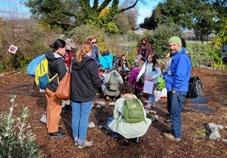
Teamwork and the love for the environment are key lessons.
“Our partnership with LifeLab allows us to offer garden-classrooms as a meaningful and exciting way for students to engage in their education,” Rodriguez said. “We at PVUSD know that students deserve the best learning spaces where they can uncover their passions, interests and talents.”
Garden classrooms align with the school district’s commitment to the Whole Child, Whole Family, Whole Community.
Life Lab Co-Executive Directors Don Burgett and Judit Camacho and Life Lab’s Board President Katy Stonebloom agree, “Together we are proving the potential of garden classrooms as core school assets and growing … programs that nurture empowered young learners and scientists.”
Mitchell added, “Our goal is for every child in PVUSD to have the self-empowerment to exclaim, ‘I am a scientist!’ and ‘I am a chef!’ and that each of these students have the self-confidence to know they, themselves, can use these skills to positively impact our community.”
n


www.tpgonlinedaily.com Aptos Times / December 15th 2022 / 21 Tis the Season for Giving … Why Give? • All donations are directed to improve Aptos school sports related facilities and activities, “For Our Kids.” • ASF works in partnership with PVUSD to ef ciently develop facilities at AHS and its feeder schools. • Support from the community in the form of donated funds, donated material and labor, means we can complete projects economically. Ways to Give ... Have Fun With ASF – Sponsor or Attend an Event. Give Today! – Immediately improve our kids here at home. Leave Your Legacy! – Leave a lasting impact on youth sports in your community. 501 (C) (3) Nonprofit #77-0345205 ASF P.O. Box 2405, Aptos, California 95001 For More Information: Paul Bailey: 831-818-0406 – Brent Chapman: 831-588-4822 COMMUNITY NEWS
Liaison Patrick Littleton, and Life Lab Partner Schools Program Leader Aisling Mitchell.
Garden leaders enjoy PVUSD school gardens
• Photos Provided By Aisling Mitchell
Jacob’s Heart Supports Families

The love radiating from these photos perfectly reflects the spirit of Jacob’s Heart — Family.
Our mission is to improve the quality of life for children with cancer and support their families in the challenges they face. Family is at the core of everything we do. Mom and Dad, Grandma and Grandpa, Uncles, Aunts, Cousins, and Siblings, they all belong at Jacob’s Heart.
When a child is diagnosed with cancer, the effect ripples through everyone who loves that child. The fear and uncertainty of childhood cancer can be life-changing, and every single person deserves to be cared for.
Each year, over 350 families come to Jacob’s Heart for love, hope, belonging and support. You are the reason we can wrap every family up in love and build their resilience with hope and healing. Because of you, we will get them through.

Thank you for your donation and support. It means the world to me, our staff and most importantly to the families we are honored to serve.

Give at https://give.jacobsheart.org/ give/453716/#!/donation/checkout



— Heidi Boynton, Executive Director, Jacob’s Heart •••

Storm Blows Everything Apart. Help! It’s hard to stand in the pouring rain, looking at ruined canopies and up-ended shelters while your horses are standing there clustered away from the area you have been working on for months.

They stand there, freaked out because of the shelter blowing onto its head. They’re looking worried and cold. This area was designed to be covered and dry.
We work with a very tight budget. The most important task is keeping the horses fed, safe, warm, and dry. “Letters” page 26
22 / December 15th 2022 / Aptos Times www.tpgonlinedaily.com SEACLIFF Hybrid Repair and Service Toyota / Lexus Specialist Serving Aptos for Over 40 Years Complete Auto Repair Saturday Smogs Seacliff 76 • 831-688-7600 • seacliff76@live.com • 201 Searidge Rd. On approval, ask for details of different plans. PRICES ON NAME BRANDS ASK FOR A QUOTE TODAY! BEST Prices On Michelin & BF Goodrich Tires Prices On Michelin & BF Goodrich Tires Locally Owned and Operated! serving The community for over 30 years
TO THE EDITOR
LETTERS
Raising Awareness
Mount Madonna Students Participate in Farmworker Reality Tour
By Leigh Ann Clifton
Every year migrant farm workers from Oaxaca, Mexico come to California’s central coast to work in the agriculture industry as strawberry pickers and in other roles, including weeding and harvesting.
Undocumented workers with few to no legal rights represent a significant part of this labor force. These workers are vulnerable to wage theft, sexual assault and harassment and high levels of pesticide exposure, and endure six-day work weeks for the promise of wages to send home to family members and the hope of a better life.
In recent weeks, Mount Madonna School 12th and sixth grade students have had some eye-opening lessons and a personal glimpse into the harsh subsistence for these hard-working community members and their families, through the Farmworker Reality Tour hosted by Dr. Ann López of the Center for Farmworker Families.
“They are feeding us through their labor and we as a nation and society are violating their human rights to decent housing, fair working conditions and a dignified life,” said MMS parent Jennifer Astone, who chaperoned students on a recent tour.

The multi-faceted tour included an unvarnished presentation from López and a talk by the owner of Crystal Bay Farms, a local organic farmer who promotes organic, regenerative farming. It included first-hand farmworker stories, including hearing from residents of the Buena Vista Migrant Center, an isolated housing complex situated behind the county jail and county dump. The students’ final stop was a dinner in Watsonville prepared by a farmworker family, who shared their own
struggles with housing affordability and access.
“Dr. López shared facts with us and stories by introducing us to six farmworkers in three different settings: one was an undocumented farmworker who is now a mother of five children who crossed the border at age 14. She told us her tale of crossing the border with her 16-year-oldbrother,” said Astone. “She’s been living and working here for the past 20 years and has a young son with disabilities which Dr. López believes is due to working in the fields with high pesticide exposure.” Dr. López also shared that many farmworker women are sexually assaulted in the fields when they work.
For a unit titled Exploring Agricultural Practices in the Adulting 101 class, students learn about the many ways in which food is produced, with an emphasis on sustainability, indigenous knowledge and the entire food system.
“We are examining agricultural practices through a social justice lens,” said teacher Sara Sobkoviak, who designed this essential life skills elective for high school seniors. “As part of this curriculum unit students participate in the Farmworker Reality Tour. I want students to understand who’s growing our foods, who’s helping to produce our food, and what their experience is. This is important for understanding how our food choices can make a difference for a safer and more equitable working environment. Dr. López has dedicated her life work to bringing awareness about the difficulties our farmworkers face and I am grateful for her fortitude and the sacrifices she has made to better the lives of so many.”
Participating students reflected on this eye-opening experience.
“The working conditions seemed to be brutal physically and not very rewarding financially,” commented senior Jacob SirkTraugh. “The instability, however, is one of the worst parts of their job. Because workers constantly have to go to different farms to be able to find work with in-season crops, there are often situations where they have to travel very far to work or are unable to find work at all. This along with the minimal pay and lack of accountability for farm owners makes their job and lifestyle very difficult. Permanent improvement of these conditions could come from political places of power, but that is very difficult due to the pushback from industrial agriculture.”
Classmate Zoey Ocampo-Sobkoviak agreed.
“The working conditions that farmworkers usually face in our area are long hours without the basic amenities and resources that are legally required for employers to provide” said Ocampo-Sobkoviak. “Since many are undocumented, they are threatened with deportation if they don’t comply with their employer’s illegal actions. In non-organic farms and even in organic farms they are at risk for illness or injury from spraying, not enough breaks, lack of access to healthcare, and extreme temperatures.”
“The living conditions can sometimes be adequate and comfortable for the families (such as in the migrant camp we visited),” she continued, “but the comfort was fought for and does not come without its sacrifices: having to leave for several months, not being able to leave much, lack of transportation to school, no internet. Tenants may also be threatened with deportation and overly high rent in inadequate housing. I think we should establish housing areas for migrants that are safe spaces from ICE [Immigration and Customs Enforcement], allow undocumented workers to live for reduced rent, and have transportation for their children to go to school. They should be permanent instead of seasonal camps. We should also invest in more access to financial aid and housing for migrants outside of migrant camps.”
The sixth grade class and teacher Hilary Alvarado attended the Farmworker Reality Tour with the twelfth graders. The tour is one of several field trips sixth graders have taken this semester as a part of an agroecology learning journey the
students are participating in this school year. They are learning about how agricultural systems are ecological systems, with inputs, outputs, and species interactions. Learning about farm labor is an essential piece of learning about agriculture.
“We heard first-hand stories of farmworkers crossing the border, living in a migrant labor camp, and working in the fields,” said Alvarado. “The students learned about the injustices experienced by farmworkers and I believe they gained gratitude and appreciation for the work they do. In the aftermath of the tour, they are learning to channel any strong emotions they may feel about the subject into doing something constructive, such as learning more, volunteering, donating and buying organic produce. I’m so proud of the sixth graders for showing up for this field trip, for listening attentively and for asking great questions.”
Sixth grade students and parents reacted, as well, to the stark realities and difficulties experienced daily by migrant farmworkers.
“Learning about the pain that farmworkers have to go through to harvest food for us to eat is devastatingly sad,” commented student Giavanna Iacocca.
“I appreciate so much of what Dr. Ann López does for the migrant and farmworker community,” said parent Layna Melton. “The girls definitely took away a lot from this experience and had a lot of questions; awareness is a great start.”

www.tpgonlinedaily.com Aptos Times / December 15th 2022 / 23 COMMUNITY NEWS
“Farmworker Reality” page 24
$5.7 Billion Opioids Settlement with Walgreens
On Dec. 12, Attorney General Rob Bonta announced a $5.7 billion multistate set-tlement agreement in principle with retail pharmacy chain Walgreens to address its role in fueling the opioid epidemic.
The settlement would resolve allegations the company failed to appropriately over-see the dispensing of opioids at its pharmacies and could bring more than $500 million for California to fight the harms caused by the opioid epidemic.
The announcement comes on the heels of last month’s announcement of a proposed $3.1 billion settlement with Walmart to resolve similar claims.
“To all those struggling with substance
“Farmworker Reality” from page 23
“There are a lot of injustices we would never know of without things like the reality tour,” said classmate Nolan McKibbin.
“It is very sad that people have to live like this to feed us,” commented student Nyah Melton.
abuse disorders, to all those desperately in need of treatment and recovery options — help is on the way,” Bonta said. “The California Department of Justice is working to bring valuable funding to our state’s efforts to combat the opioid crisis from the companies who once chose profits over the well-being of our communities.”
Funds from the settlement will be divided among participating states, local gov-ernments, and tribes. The vast majority of settlement funds must be used to com-bat the opioid crisis, including by providing treatment and recovery services to people struggling with opioid use disorder.
“I learned about how farmworkers live,” shared student Pierce Culbertson. “Now that I know, I want to make change.”
During her “reality lesson” with the MMS students, López shared a quick economics and free trade short-course by describing the effects of the 1994 passage of North American Free Trade Agreement
California would be eligible to receive up to approximately $510 million.
The settlement would also have courtordered injunctive relief requirements to help prevent such a crisis from happening again:
• A Controlled Substance Compliance Program to ensure compliance with in-junctive terms, train employees, and help prevent drug diversion;
• A requirement to investigate and resolve prescriptions with potentially sus-picious “red flags” before dispensing;
• Site visits and compliance reviews of individual pharmacy locations;
• An agreement to provide unblinded
(NAFTA) on small-holder corn farmers in Mexico, who as a result were forced off of the land as the government no longer purchased their local and indigenous corn.
“As a parent of an MMS student, I was grateful for the opportunity to listen to farmworkers directly about their experience,” said Astone. “I did not know that there was a migrant housing camp literally six miles away from my home. Dr. López and her colleagues at the Center for Farmworker Families advocate for the families through direct aid, like computers for the children to learn, medical appointments for farmworkers and advocacy such as the passage of a bill that does not require them to move every six months in order to qualify for migrant housing.
“The zip code 95076 has the highest rate of pesticide exposure 95% in the county and it has a 70% Latinx population which is a clear indicator of environmental racism,” continued Astone. “Why isn’t pesticide exposure better controlled in that zip code? Why is the average life expectancy of a farmworker only 49 years old? We can do better as a society and a people to treat those who farm our lands better.”
Experiencing the Farmworker Reality Tour ignited feelings of empathy and compassion in the students, their parents and educators. Their first-hand accounts were relayed to the MMS school community, and as a result, the senior class and those involved with the student club, That’s on Period Project, inspired many students and school employees to do more.
That’s on Period Project is working to address “period poverty” and menstruation stigma. Period poverty is defined as the struggle those who have a menstrual cycle face while trying to afford menstrual products. During Mount Madonna’s
“867” sales data from the company’s distributor to drug manufacturers, to help identify and prevent drug diversion.

An executive committee of attorneys general from California, Colorado, Connecti-cut, Delaware, Illinois, Indiana, Iowa, Kentucky, Louisiana, Massachusetts, Nebras-ka, New York, North Carolina, Ohio, Pennsylvania, Rhode Island, Tennessee, and Texas have served as the lead negotiators on this deal. The settlement has been endorsed by the executive committee, attorneys representing local governments, and Walgreens.
“Opioid Settlement” page 26
recent Homecoming festivities, That’s on Period Project club members led a drive to collect packages of menstrual products. The call was answered, and more than 100 packages were donated by students, faculty, staff and school families. This past week, many of these donations were delivered to the Center for Farmworker Families. The remainder of the donated menstrual products will be delivered in the coming week to Community Solutions in Gilroy, which provides services for those facing times of crisis.
Additional support for migrant agricultural workers is underway, and on December 8, in lieu of a holiday gift exchange, MMS employees will instead gather after school to assemble holiday gift bags for the Oaxacan Community Shed. Some 300 families visit the community shed hosted by the Center for Farmworker Families in Watsonville.
“We are asking for your help to make the holidays a little more special,” said Sobkoviak. “Please visit this link (https://www.signupgenius.com/ go/10c094ea9ad22a3f8c70-holiday) to participate. We are looking for gloves, hats, small games, art supplies, small stuffed animals, small toys, books all new or gently used. We would also like to add specialty items like small lotion bottles, ChapStick, and treats if possible.”
On Friday, December 9, MMS junior and senior students will embark on a community service journey to deliver the gift bags and spend the afternoon volunteering at the community shed.
“I am thankful we got to go on the tour,” said student Rebecca Piccardo. “I am hopeful that we can all work together to create a brighter future!” n
24 / December 15th 2022 / Aptos Times www.tpgonlinedaily.com
•••
Photos Credit: Sara Sobkoviak
NEWS
CALIFORNIA
Can
Get a Refund for my American Airlines
When Linda Brucia tries to change her American Airlines flight to tend to her ailing father, she inadvertently books the wrong airport. How can she fix this mistake?

Ihad a ticket to fly home from San Francisco to New York on American Airlines this summer. A day before my flight, I learned that my father had a stroke.
Because I have macular degeneration, I had to call American Airlines to change my flight. I spoke with three different representatives. They were unhelpful and gave me misleading information.
But after much back and forth, I changed my ticket for an additional fee of $1,149. Between the chaos of my father’s condition and the rude agent, I realized I had booked the wrong flight. I was flying back from the wrong airport — San Jose instead of San Francisco. It was much too far from where I was, and I wouldn’t be able to get there on time.
I immediately called American Airlines to explain my mistake and advised the agent I would not be on the San Jose flight. The representative indicated that the airline could not refund me at that time but that I should follow up with the customer service department for a refund. I saw a seat online from San Francisco to New York and asked him to book it. He did, but it cost an extra $1,648.
Because of these events and my disability, I paid $2,797 in change fees to move up my flight one day. I want a refund for these charges. — Linda Brucia, New York
•••
I’m so sorry to hear about your father. I hope he is well on his way to recovery. There’s so much that went wrong with this case, it’s hard to know where to start.
Airlines strongly prefer that you make your flight changes online. Remember how they used to charge an extra fee for making a reservation by phone to encourage customers to book through their site? American dropped that surcharge during the pandemic, but that shows its aversion to accepting reservations by phone.
American Airlines should have been accommodating because of your disability and your state of mind, having just learned of your father’s stroke.
I don’t know if American believed your story. For example, you said you had to call the airline because of your macular degeneration but later checked the flights online. That might have made the representatives question your narrative. (And for the record, I believe you.)
You asked for a ticket change, but I think the representative misunderstood you and put in for a refund.
American should have changed your ticket from San Jose to San Francisco. But it looks like you purchased an entirely new ticket. That should have left you with a ticket credit for your original flight from San Jose to New York.
But more to the point, you had a complicated interaction with the reservation agents. And that’s understandable. You were under a lot of stress at the time. You would have been better off asking someone

who can use a computer to make the ticket changes for you. That way, you would have had time to consider all the options instead of feeling rushed — and maybe being misunderstood — by a phone agent.


When you’re trying to solve a consumer problem, it helps to remember the three P’s — patience, persistence and politeness. I have more strategies on how to fix any airline problem in my free guide
By Christopher Elliott
to booking an airline ticket at https:// www.elliott.org/airline-problems/ best-way-buy-airline-tickets-guide/ I also publish the names, numbers and emails of American Airlines’ executives on my consumer advocacy site at https:// www.elliott.org/company-contacts/ american-airlines/

www.tpgonlinedaily.com Aptos Times / December 15th 2022 / 25 Year-in-Review ACROSS 1. Use a bayonet 5. *Late Saget 8. Greek salad staple 12. Meal in a shell 13. Lowest brass 14. Like daytime energy 15. *2022 16. Van Gogh’s famous flower 17. Poodle minus d 18. *Late Queen 20. Volcano off Sicily coast 21. Leaves out 22. Elf’s distinctive body part 23. *Olympic host 25. *Russia’s target 29. Black sheep sound 30. Treat badly 33. Reason for Thanksgiving 34. Carl Jung’s inner self 36. “But I heard him exclaim ‘___ he drove out of sight, “Merry Christmas...” 37. Pick on 38. Pro ____ 39. Bank, usually 41. Driver’s aid 42. Jalopy 44. Back of the neck, pl. 46. Finish line 47. Fur of the marten 49. Paul Bunyan story, e.g. 51. *Economic woe 55. Faultfinder 56. Tropical edible root 57. Soreness 58. Irretrievable loss 59. Gator’s cousin 60. *Super Bowl winners 61. Undertaking 62. “For ____ a jolly good..” 63. Archaic form of do, second person singular DOWN 1. Eyelid affliction 2. Asian weight unit 3. Smoothie bowl flavor 4. Russian hunting sighthound 5. Chemistry lab measuring device 6. Parting words 7. New Year’s Eve get-together, e.g. 8. Running competition 9. *Twitter’s new proprietor 10. Western Samoan money 11. “____ you ready?” 13. Relating to shinbone 14. Asparagus unit 19. Amnion, pl. 22. Barely obtain 23. Erie or Suez 24. Port-au-Prince country 25. Like something vintage, usually 26. About to explode 27. Olfactory organs 28. Athos’ or Porthos’ weapon 29. Throw up 31. Lecherous look 32. Funereal container 35. *Tom Cruise’s callsign 37. “____-____-la” 39. Type of Christmas lights 40. All together 43. T-shirt style 45. Small bomb 47. Rabbit trap 48. 1970s big dos 49. “Musical” constellation 50. Dollar bills 51. 7-year affliction 52. International Civil Aviation Org. 53. Electrical resistance units 54. Egg holder 55. 100 lbs. © Statepoint Media Answers on 31 »
Booked the
Airport
I
Wrong
FEATURED COLUMNIST
I
Ticket?
•••
Solved” page 26
“Problem
Hanukkah & Christmas — Days & Nights of Wonder
With the Sun entering Capricorn (Dec. 21), winter is here (northern latitudes). Mars (actions!) is retrograde and Mercury (communication) begins its retrograde (in Capricorn) on December 29th. In the sky soon (Christmas morning), Sirius, the star that told of the holy birth, the Christmas star more than 2000 years ago shines brightly. It says these are the “days &nights of wonder.”

The Jewish and Christian festivals of Hanukkah and Christmas occur together this year. Hanukkah (8-day festival of lighting the menorah) begins Sunday evening (Dec. 18) at the sight of the first star and just prior to the solstice. Then we have the last new moon of 2022 on December 23. Then the midnight Sun flashes forth (Dec. 25) and we have Christmas, celebrating the birth of the holy child of long ago.
The day after Christmas we begin the 12 Days of Christmas, the journey of the Magi which ends January 6, 2023. So we celebrate two festivals at once this year. When the different religious days occur simultaneously, the seeds of the Aquarian

ARIES
It’s important to maintain moment to moment awareness of all experiences each day and of all who come into your sphere of life. If aware you will see their gifts (talents and abilities) and they will reflect your talents, too This is a great revelation. Allow yourself no expectations. Remain poised in observation to all that is around you. In this silence new values come forth, new perspectives, new realities you have been searching for.
TAURUS
Know that plans will change, feelings and emotions too. Memories will be part of the holidays this year and you have many of them. You will sense and feel special people no longer with us becoming part of your day to day. In memories, in spirit form, in prayers. Know they are still loving you, still close by. You will have new revelations about your work in the world. Perhaps art, a painting, a work of creativity. Follow the signs.
GEMINI
If not traveling then soon you should be. Travel offers perspectives that change the course of your life, shifting your present and advancing you into the future. With the retrogrades all of your focuses turns inward. Thoughts concerning money and resources become practical. You seek new ways to communicate. Make a plan, create goals and make a commitment to study Compassionate Communication with friends and partners. You will never be the same.
CANCER
New insights come forth about the people in your life. Before you had global ideas. But now you have come closer to your own life. You have a deeper more personal understanding about how others live their lives. This has created a change in thinking. You communicate your insights to those who care for you. Do become interested in what others think. Ask for their insights. This creates deeper connections. And then love is released. You are surprised.
new world religion are being presented in the hearts & minds of humanity.
In the days between solstice and Christmas, there is a hushed stillness in the air. The Sun is quiet too, resting at the Tropic of Capricorn. There is a searching for respite, a place to stay by a young couple. There is no room in the inn, so a stable is found. Here the young mother gives birth. The animals looking on. In the sky a bright star shines (Sirius). Far to the East three Astrologer Magi Kings, searching the sky, note a “strange star shining forth.” The star of prophecy. Seeing the star, they begin their journey westward with gifts gold, frankincense and myrrh. We will journey with them.
Above in the sky is the constellation Virgo (Madonna with child). We listen within ourselves, an infinitude of space. There we hear the constellations, voices and harmonies of the spheres and the many angelic lords and hosts. As the Light shines forth in the heavens we hear the words, “Hark the Herald Angels Sing, Glory to the newborn King! Peace on Earth, Goodwill to All” Goodwill to All & to Everyone Everywhere! n
LEO
Tend to your health. A health issue from the past may reoccur. If seeing a doctor, seek a homeopathic MC and/or a Functional doctor (MD) in your area or close by. Functional doctors diagnose, look at health and test differently. It’s important to have a new approach to all things. From health to work to animals to plants to co-workers. Mars and Mercury retrogrades offer revelations around desires, aspirations, communication and life concerns. Listen quietly. Information comes on little cat’s feet.
VIRGO
Notice your creative expressions increasing with more feelings of happiness and enthusiasm and then playfulness comes into the mix and you recognize these are natural gifts within each of us and something spontaneous begins to occur and you understand your life experiences from birth to the present and then you understand everyone else’s, too. And everything transforms daily in front of your eyes. And then there is joy that follows.
LIBRA
The past returns for review. Nothing can stop this. Gradually a new perspective appears concerning childhood home, parents, siblings, family interactions. Childhood impressions change like a kaleidoscope of colors. With revelations your understanding increases and you step unexpectedly into a state of compassion. To anchor this shift you reorder everything in your home. And a state of wonder follows you everywhere.
SCORPIO
So many thoughts occurring during this time. You attempt to find a pattern to a puzzle of life. You realize there are things you want to say (and not say) to family and friends. You notice all around is the light of insight and a new way of doing things and you review old knowledge and see how it forms the foundation for a new philosophy of life. Soon, quietly, new skills appear.
SAGITTARIUS
Life and its magical gifts have you assessing many thingsvalues, resources, priorities, what you have and don’t yet have, what you want and don’t want. You look too at what you considered lost (returning later in different forms). New and innovating ideas about your future work in the world. They take into consideration all your desires and aspirations, later to anchor in the world. A new land calls. You answer.
CAPRICORN
It’s good to create an “I am….” Journal. With Pluto in your sign for so long, all Capricorns are have transformed, are transforming and becoming their greater selves. It’s good to see yourself in new ways, with new information being given about who you are. Write in your journal sentences beginning with “I am…” Write each day. See how you begin to unfold and express yourself differently. A new self-coordination, identity, harmony and creativity emerges as you write about yourself.
AQUARIUS
Perhaps you feel many ending or closings or approaching a curve in the road. There may sadness or sorrow concerning something (someone) that is no longer. This will ease over time. New perceptions occur in the next days, weeks and months, offering an understanding of the past. Look back as much as you can. Cherish everything. This remembering is a gift. Soon you will be stepping forward onto another path. All that is good from the past is still with you.
PISCES
So many things change for Pisces during the retrogradesfriends, groups, hopes, wishes and dreams. You review the past year and your purpose. You discover how everyone holds a different importance in your life. There is a sense of a new world along with a new service calling, new relationships and a new form of group sharing to take place. You step more fully into inner worlds. While remaining very practical in the outer worlds. There is no confusion. Only peace.
“Opioid Settlement” from page 24
Terms of this agreement go to the states for their review. Each state has until the end of 2022 to join.
If sufficient states sign on, the agreement will go to local governments around the country for sign-on during the first quarter of 2023.
California is assessing the terms of a similar settlement agreement with retail pharmacy chain, CVS.
To date, California’s DOJ has secured $30 billion through nationwide settlements against opioid manufacturers Johnson & Johnson and Mallinckrodt; distributors Cardinal, McKesson, and AmerisourceBergen; and consulting firm McKinsey & Company. n
“Letters” from page 22
We have been working hard for months. From coordinating volunteer work from the wonderful conservation corps to sitting at tables to collect donations and share our story, we have been working tirelessly. So here we are. It feels like a punch to the gut.
Thank God, Denna, Billie, and the (non-horse guy) husband, Dave went into action. It was dangerous!
We had to wait for a break in the blowing wind, then get straight to work and unhook the canopy, keep it from blowing away, keep it from whipping us in the face, and keep it from moving the frame onto the top of us!
Once tipped on its side, we could safely take it all apart. All the pipe panels were down, we had to un-attach each one, stand them upright, and reattach them with better bracing.
It has been a wet, challenging day.
We have to buy a heavier garage cover for the horses. We need $3,500.
If you can help, we’ll get thru this hurdle quickly.
Give at https://donatenow.networkforgood.org/pregnantmarerescue
— Lynn Hummer, founder, Pregnant Mare Rescue, Aptos
“Problem
Solved”
from page 25
I contacted American Airlines on your behalf to see if we could get this sorted out. It looks like you already disputed the charges for your first ticket on your credit card. American said that it would not fight the dispute as a goodwill gesture, so you will get your money back. n
Christopher Elliott’s latest book is “How To Be The World’s Smartest Traveler” (National Geographic). Get help by contacting him at http:// www.elliott.org/help • © 2022 Christopher Elliott.
26 / December 15th 2022 /
Aptos Times www.tpgonlinedaily.com
•••
Astrology • Mid-December 2022 • By Risa
••• Risa D’Angeles •
• risagoodwill@gmail.com
Esoteric
D’Angeles
www.nightlightnews.org
FEATURED COLUMNIST


Firewood: Old-Fashioned Tech
By Tony Tomeo
Chimney clearance pruning is easy to overlook nowadays because, for various reasons, chimneys are becoming obsolete. Modern homes lack them completely. Some chimneys of older homes succumbed to earthquakes. Because of simpler and cleaner alternatives for heat, remaining chimneys and their fireplaces, as well as firewood, are almost passe.
Ironically, chimineas and fire pits have become a fad. Most modern fire pits use propane for fuel, but a few use firewood. Although such fire pits and chimineas burn less firewood than fireplaces, they are ridiculously less efficient. Their warmth simply escapes into the atmosphere. Relative to the volume of wood they burn, they generate much more smoke.
Nevertheless, whether for fireplaces, wood stoves, fire pits, or chimineas, firewood is not yet completely obsolete. Some households only rarely use small quantities for ambience fires. Some households still use more significant quantities to supplement home heating. A few households rely on firewood as their primary or exclusive source of home heating.
For unrelated reasons, the availability of firewood has declined with its demand. Orchard trees that were still relinquishing their space decades ago are now gone. Also, wildlands are now farther from large urban regions where most people live. Wood from demolished buildings is more likely to become chipped mulch than to become available as firewood.
Fortunately, most tree services sell firewood that is a byproduct of their work. Such wood is generally a mix of various species, so may include some degree of


softwoods, such as pine. Rural tree services are more likely to be able to provide specific types of hardwood, and are also more likely to be able to deliver it. Their softwoods might be less expensive.
Tree services prefer to leave wood where they do tree work, and actually charge a bit for removal. Cut rounds of logs should be firewood length, but need splitting and seasoning. Inadequately seasoned or damp wood generates more smoke than properly dried wood. It should stay sheltered from rain. Palms and yuccas are impractical for use as firewood.
•••
Cork Oak
This is a tree that takes some time to impress. Bloom is uninteresting. Foliage is no more distinctive than that of coast live oak. Instead, the most spectacular characteristic of cork oak, Quercus suber, is the boldly striated and uniquely spongy texture of its mature bark. Such bark takes a few years to develop, but gets so thick that it seems significantly older.
As its name implies, cork oak had historically been the exclusive source of bark for corks and cork products. As modern and more practical materials diminished demand for such bark, cork oak became more popular as an evergreen shade tree. It is quite happy within the arid chaparral climates of California. In fact, it behaves much like native oak species.
The bark actually looks like cork.

Mature cork oak trees generally stay less than forty feet tall, even if their trunks are wider than three feet with their unusually thick bark. Without excessive irrigation, their roots are notably complaisant. Low branches are more visibly sculptural than high branches. With pruning for adequate clearance though, trees with high branches are striking street trees. Foliar and floral debris is quite messy during spring bloom. n
com.
www.tpgonlinedaily.com Aptos Times / December 15th 2022 / 27
•••
Tony Tomeo can be contacted at tonytomeo.
Cut firewood needs to be split.
Transforming Your Water for Tomorrow soquelcreekwater.org/transform
COMMUNITY CALENDAR
ANNOUNCEMENTS
ATTENTION KSCO LISTENERS
On Nov. 19, KSCO supporters filled the Capitola Library meeting room to brain-storm possibilities to buy the iconic 1080 AM talk radio station. More than 50 peo-ple met again Dec. 2 to work on a plan to present to owner Michael Zwerling, who has been looking for a buyer so he can retire Jan. 1.
A follow-up meeting to let people know what is happening, and how to get involved and help, is scheduled for 1-3 p.m. Saturday, Dec. 17 at the Capitola Library, 2005 Wharf Road, Capitola. All are invited.
Supporters say, “Together, we can keep KSCO radio a great local gem on the air-waves, serving our community.”
The Dec. 2 discussion focused on a proposal by David Welch to Zwerling a few days before to turn KSCO into a nonprofit, offering apprenticeships, podcast recording and more local program hosts. On Dec. 7, Zwerling came on the Charlie Freedman Show, saying Welch’s proposal was not an offer with cash terms.
“Of course, I respect his decision,” Welch said via email.
As Aptos Times reported, Zwerling is looking only for cash offers of $8-9 million for the station and property or a lease at $25,000 per month.
“MZ needs to hear from the many KSCO radio listeners that we really value and depend upon this local radio station,” said KSCO general manager Michael Olson. “We all need to call and thank him for providing the unique programs and public service asset to our community for over 30 years.”
To see prior coverage, go to www.tpgonlinedaily.com, click on e-editions and view the Nov. 15 Aptos Times and December issues of Capitola-Soquel Times & Scotts Valley Times.
TEMPLE BETH EL CHANUKAH CELEBRATIONS
3055 Porter Gulch Road, Aptos
Rockin’ live music, a colorful menorah over 5 feet tall, latkes, donuts, falafel, and stories and music with Santa Cruz singer and lecturer Mark Levy will be Chanukah highlights this year with Temple Beth El.
Chanukah, one of the most widely observed Jewish holidays, is a festive eight-day celebration that this year runs from the evening of Dec. 18 concluding at sunset Dec. 26.
“We look forward to sharing the magic and light of Chanukah with the entire community,” says Sr. Rabbi Paula Marcus. “It’s a special time for young and old.” All services are open to all members of the Jewish community and all who want to celebrate the holiday.
Friday, Dec. 16: Chanukah Rock of Ages, 7 p.m. at Temple Beth El sanctuary in Aptos leads off with the largest service. Partly mystical, mostly magical, always musical. Please RSVP online to reserve a seat https:// www.tbeaptos.org/chanukah.
Sunday, Dec. 18: Community Menorah Lighting on the first night of celebrations, at 4:30 p.m. at Santa Cruz Town Clock. Families and friends of all ages sing


and light a tall & beautiful Ziva menorah. Bring the kids for Chanukah crafts and live music sing along. No need to RSVP. https://www.tbeaptos.org/chanukah.
Friday, Dec. 23: Seniors Holiday Program, 1 p.m. at Temple Beth El sanctuary featuring Jewish educator and musician Mark Levy. Senior Connections programs are curated by seniors and are free — please RSVP online https://www.tbeaptos.org/chanukah.
Friday, Dec. 23: Chanukah Dinner, falafel bar & latkes, 5:30 p.m. at Temple Beth El social hall, festive meal before Chanukah Shabbat service. Adults: $10; Kids 12 and under: $5. RSVP required online at https:// www.tbeaptos.org/chanukah.
Friday, Dec. 23: Chanukah Shabbat Service, 7 p.m. Temple Beth El sanctuary, led by Jewish educator and musician Mark Levy for a magical evening of Chanukah songs and entertaining stories. Bring your menorah and candles! Free but please RSVP online https://www. tbeaptos.org/chanukah.
VOLUNTEER FOR MILES FOR SMILES
The independent nonprofit Partnership for Children, which increases access to medical care for children with serious illnesses and supports their families, needs volunteers for its Miles of Smiles holiday giving program.
Volunteers are needed at the organization’s “toy room” in Salinas, where they will wrap gifts from which Partnership for Children, children, will be able to select dur-ing the holidays.
To volunteer or for information, call (831) 422-3002.
FOOD DISTRIBUTION

In the first three drive-through distributions, Second Harvest Food Bank staff and volunteers gave out more than 330,000 pounds of food, primarily shelf-stable pantry items, plus frozen meats and fresh vegetables.
Food prices have been rising faster than other goods in 2022 due to complex factors such as avian flu, which reduced the supply of chicken and other poultry, and higher transportation costs due to higher fuel prices.
This means especially high prices for turkey and other traditional holiday favorites. The average Thanksgiving dinner is expected to cost 20% more than last year and 37% more than two years ago.
Housing prices in Santa Cruz County are among the most expensive in the U.S., with average rent in the city of Santa Cruz at $2,800 for a one-bedroom apartment, up 17% over last year.
The next distribution takes place Dec. 19
Volunteers are welcome — and needed. Volunteers are asked to arrive at the fair-grounds before 3:30 p.m. for training. Second Harvest Food Bank will provide a light dinner and volunteers can take food for themselves or others.
If you are interested, email Stephanie Russo at stephanier@ thefoodbank.org, or call (831) 232-8186.
FLYNN CREEK CIRCUS AT CAPITOLA MALL
Flynn creek Circus presents “Winter Fairytale,” featuring wild acrobatics, hilarious comedy, and extreme skills Dec 16-Jan. 1 at the Capitola Mall, 1855 41st Ave., Capitola.
The Woodsmen, the Fairy, and the Spring Sprite are some of the colorful characters you will meet in this memorable holiday production. This tale speaks to the quiet darkness of Winter and the value of rest and reflection.

Flynn Creek Circus performances will take place under a big top tent.
Showtimes vary. Tickets are at https:// www.flynncreekcircus. com/
Tickets are sold by table reservation, single seats or seating at a shared table.
Seating prices range from single bar stool, $23, and single seat, $38, to high top tables seating 4-6, $121 to VIP tables.
Beer, mulled Wine, hot drinks and light concession are available for purchase.
Charity shows are at 2 and 5 p.m. Wednesday, Dec. 28 and are open to the public. To donate a ticket to a local charity, contact Nicole at (707) 684-2118.
HOLIDAY FUN AT THE BOARDWALK
The Santa Cruz Beach Boardwalk has been made over for the holidays!
Enjoy a fun-filled day at the Boardwalk and enjoy holiday decorations — a 3-story Christmas tree! — photos with Santa, festive food and shopping.
“The holiday season is a magical time at the Santa Cruz Beach Boardwalk,” said Kris Reyes, Boardwalk spokesman. “Where else can families get their picture taken with Santa, do some holiday shopping and ride a world-famous wooden roller coaster?”
Classic holiday movies are shown in rotation at Colonnade Stage 5-7 p.m. Also: Pedal karts in the main plaza, fire pit rental & holiday s’mores.
Package pricing is $29.95.
Dates: Noon to 5 p.m. Saturdays & Sundays thru Dec. 18, Monday – Sunday Dec. 19 – Jan 1.
HOLIDAY LIGHTS AT THE COUNTY FAIRGROUNDS
The Santa Cruz County Fairgrounds Foundation and the Agricultural History Project presents Holiday Lights 2022 from 5:30-9 p.m. Nov. 25 – Dec. 25 at the Santa Cruz County Fairgrounds, 2601 E. Lake Ave., Watsonville.
This is over a half-mile drive-through experience of spectacular lighted Holiday displays all around you. Giant Christmas trees twinkling with lights – Santa – reindeer – snowmen – lighted tunnels, and many more magical moments. Stay in your warm car and drive through this Holiday Experience.
Visit fairgrounds-foundation.org/holiday-lights/.
HOLIDAY ART BY STUDENTS
The talented students at the Monterey Bay Horsemanship & Therapeutic Center in La Selva Beach are selling their artwork for the holidays.

A show of 50 pieces of artists’ quality giclee prints at the Ugly Mug CoffeeHouse, 4640 Soquel Drive, Soquel is open through Saturday, Dec 17. All 50 pieces are the same price, $45 each; credit cards and Venmo accepted.
To purchase prints, contact Christine KiebertBoss at gombhtc01@ gmail.com or 831-840-0047. She is trying to set up a website to sell student art but that will likely come after the holidays.
“There is so much more to do for our students with disabilities,” she said.
The Monterey Bay Horsemanship and Therapeutic Center, which serves people with all disabilities including autism, recently received a generous $75,000 grant from Helpers Community, some of which is designated for the arts program.
OPEN STUDIOS SURVEY
Do you love Open Studios?
If you experienced Open Studios this year, we’d love to get your feedback. What worked well? What could have worked better?
Whether you visited one location or many, we’d love to hear from you.
The survey is at https://www.surveymonkey.com/r/ OS_Visitor_Survey
WINTER ITALIAN LANGUAGE CLASSES
Learn the language of “la dolce vita” with native Italianspeaking Instructors. Whether you are new to the Italian language, totally fluent, or everything in be-tween, the classes the Dante Alighieri Society of Santa Cruz is offering are for you!
The 10-week session begins the week of Jan. 23.
Early bird pricing ends Dec. 19. Pricing & location (on-line & in-person) varies; see individual class descriptions for more information. The last day to register is Jan. 20.
See: https://www.dantesantacruz.com/classes. For information email: dan-tesantacruz1265@gmail.com
SUPPORT FOR MOTHERS OF SURVIVORS
Survivors Healing Center is offering online women’s support groups and mothers of survivors of childhood sexual abuse support group. The goals are to empower through a healing process and prevent sexual abuse of children and youth.
You are not alone. You are not to blame.
More info: 831-423-7601 or www.survivorshealingcenter.org
HELP MATCHINGDONORS.COM
Currently, 270 people die every day in the U.S. waiting for an organ transplant; those that live wait 7 to 12 years to receive a kidney transplant through the government’s deceased organ donor waiting list.
Many patients receive their kidney transplant within only six months of registering on MatchingDonors. com, which is appealing to people to help by becoming a living organ donor or donating cars, boats, RVs, real estate, or planes to support the nonprofit organization, founded in 2003 and based in Boston.
Supporters include NFL quarterback Tom Brady, who raises money in the memory of his College of San Mateo coach Tom Martinez, who died of a heart attack in 2012 while waiting for a kidney transplant.
Visit https://www.matchingdonors.com/life/ for more information.
RESOURCE FOR CAREGIVERS
As families gather for the holiday, people may see grandma or grandpa, their mom or dad, or their aunt or uncle more forgetful or frail and in need of care.
Since 1988, Del Mar Caregiver Resource Center has served Santa Cruz County families of persons living with neurological conditions such as Alzheimer’s disease, Parkinson’s disease, multiple sclerosis, stroke, traumatic brain injury and other conditions that cause memory loss and confusion.
Trained staff are tuned in to the experiences and issues caregivers face, ready and able to connect, listen
28 / December 15th 2022
/ Aptos Times www.tpgonlinedaily.com
Have a virtual or live event you want to promote? Send your information to info@cyber-times.com by December 20
and support. The center receives funds from the state Department of Health Care Services.
For information, see https://www.delmarcaregiver.org/ or call toll-free (800) 624-8304.
ONGOING EVENTS
Mondays
BRIDGE CLUB
10:30 a.m.-Noon, Capitola Branch Library, 2005 Wharf Road Ongoing thru Aug. 8
The Capitola Branch Library will host Bridge Club sessions on Mondays.
Everyone is welcomed from beginners to social players. Make new friends and sharpen your mind. Bridge Club is a partnership between Santa Cruz County Parks and Santa Cruz Public Libraries. Register at scparks.com or in-person the day of the event.
Tuesdays
PET LOSS AND GRIEF SUPPORT VIA ZOOM
6 to 7:30 p.m., virtual meeting BirchBark Foundation’s Pet Loss and Grief Support Zoom group offers a free support group, moderated by a licensed grief counseling therapist.

Register at https://www.birchbarkfoundation.org/ griefsupport or call 831-471-7255.
DATED EVENTS
Friday December 16
BCRPD’S ANNUAL HOLIDAY PARTY
6-9 p.m., Downtown Rec Center, 13333 Middleton Ave., Boulder Creek Boulder Creek Recreation’s Holiday Party will be at the Rec Hall.
There will be dancing, a DJ, music and fun for the whole family. Free.
There also will be a dinner fundraiser by donation, with pasta bar, gluten free options and vegan/veggie options. Register at Online at bcrpd.org
Saturday December 17
HOLIDAY TRIVIA
1 p.m., California Coffee, 9105 Soquel Drive, Aptos Songwriter and KPIG DJ Michael Gaither returns for trivia at California Coffee.

Two rounds with gift cards to the winning teams.
Monday December 19
thru Friday January 6
PVUSD WINTER BREAK
Classes resume Monday, Jan. 9
Wednesday December 21
HOMELESS MEMORIAL SERVICE
10-11:30 a.m., Santa Cruz County Veterans Memorial Building, 846 Front St., Santa Cruz
The public is invited to share in the 24th annual Homeless Memorial Service at the Santa Cruz County Veterans Memorial Building in down-town Santa Cruz, next to the U.S. Post Office.
In conjunction with the National Homeless Persons Memorial Day, the event honors homeless community members who died in 2022.
Presenters are Housing Matters, the Santa Cruz County Homeless Persons Health Project, Wings, and the Veterans Hall of Santa Cruz.
To date, 90 persons experiencing homelessness have died on the streets of Santa Cruz County this year, along
ACTORS’ THEATRE: NEW 8 TENS PLAY FESTIVAL
January 20 thru February 19
8 p.m., Thursdays thru Saturdays • 2 p.m. Saturdays and Sundays, Santa Cruz Center Street Theatre, 1001 Center St. After nearly a year without new shows, the Santa Cruz Actors’ Theatre is kicking off the 2023 season with its popular 8 Tens @ 8 Short Play Festival — 16 new productions Jan. 20 through Feb. 19.


“We’re excited about putting on a fresh batch of 10-minute plays,” said the theatre company’s president Suzanne Schrag, in contrast to its recent brief “reboot” of previously done short plays this summer.
The new plays, selected from nearly 260 submissions coming from across the country, will alternate Thursdays, Fridays and Saturdays at 8 p.m., with additional Saturday and Sunday matinees at 2 p.m. The weekend shows will feature one line-up at 2 p.m., and another selection at 8 p.m., allowing theater fans to see all 16 plays on the same day.
The reading committee that selected the plays received them anonymously to avoid any chance of favoritism. Directors for each production are local and well known in the theater community. All performances will be in the Santa Cruz Center Street Theatre, 1001 Center St.
Playgoers will be required to wear a mask in the theatre and lobby areas, but proof of vaccination is not required.
Tickets are $32 general, $29 for students and seniors. Thursday performances offer a discount: Two tickets for the price of one. A package deal for both shows is $58 general, $54 students and seniors. For the play lineup and tickets, see: www.santacruzactorstheatre.org/tickets •••
with another 45 housed individuals who previously were homeless.
People experiencing homelessness have much shorter life expectancies and are more likely to suffer violence, trauma and health issues, according to the county.
Wednesday December 21
Thursday December 22
AGAPÉ DANCE’S THE NUTCRACKER
2:30 & 6:30 p.m., Cabrillo Crocker Theater, 6500 Lower Perimeter Road, Aptos
The magical holiday ballet comes to life at the Cabrillo Crocker Theater!
The most amazing production of the Nutcracker right here in Santa Cruz County!
Our show features the full traditional storyline with highly trained dancers, honored local guests, gorgeous scenery, and the majestic score by Tchaikovsky.
Tickets: AgapeDance.com or Crocker Theater box office 831-479-6154.

Saturday December 24
SIXTH ANNUAL REINDEER RUN 5 K 9 a.m. Start (check in 8:30 a.m.), Junction Park, Boulder Creek The 6th Annual Reindeer Run will take place starting at Junction Park. Runners start at 9 a.m., joggers at 9:30 am and walkers at 10 am. The price: $20 comes with T-shirt; $25 after Dec. 10. Register at Online at bcrpd.org n
Thursday December 29
HABARI GANI! HONORING KWANZAA
6 – 8 p.m., Museum of Art & History, 705 Front St, Santa Cruz Curated by Santa Cruz Black Health Matters Initiative, this community at the Museum of Art & History honors the annual celebration of Kwanzaa.
Since 1966, Kwanzaa has been recognized amongst the winter holiday classics. However, many lack understanding of its significance and practice.
Habari Gani! welcomes the community for: Kinara lighting ceremony, traditional dance, music, and a gift-giving ceremony.
Featuring a pop-up by black-owned bookstore, BlknPrint, plus a Kwanzaa market. 10% of sales will be donated to the Santa Cruz Ofrenda.
Thursday January 26
VOLUNTEER FOR 2023 PIT COUNT
5 p.m.-10 a.m., Location TBD
The County of Santa Cruz is moving to conducting the Point in Time homeless count annually and needs community support.
The 2023 PIT count will be done using an app-based data collection tool, and will cover the entire county in one morning. Sign up at https://asr.sjc1.qualtrics.com/ jfe/form/SV_2f3KayP7qtQJNdk
Volunteers will work in groups, meeting their team members either at a central deployment center location or a convenient location before walking/driving their assigned routes and aiding with data collection.
Volunteers are asked to bring their vehicles to use in the count if they are able.
Contact Alex Werner at alex@appliedsurveyresearch.org. for more information.
•••
The Housing for Health Partnership and Applied Survey Research will host com-munity meetings to gather input and volunteers for the count Friday, Dec. 16, from 11 a.m. to noon and Thursday, Jan. 12, time TBA. Meetings will be in person.
RSVP at https://www.eventbrite.com/e/ santa-cruz-county-2023-point-in-time-count-planningmeeting-tickets-464743970727
Saturday February 11
25 YEARS OF HOPE &
HEALING DINNER
6 p.m. (Dinner at 7 p.m.), Cocoanut Grove, 400 Beach St., SC Jacob’s Heart Children’s Cancer Support Services will celebrate 25 years of hope & healing at a gala at the Cocoanut Grove. There will be food, drinks, music, dancing, and inspiring stories.
Tickets are $125 per person (other options available) at https://jacobsheart.ticketspice.com/25years
Friday February 24 thru Sunday February 26
2023 BANFF CENTRE MOUNTAIN FILM FESTIVAL WORLD TOUR
7 p.m. each night, Rio Theatre, 1205 Soquel Ave, Santa Cruz Get off the beaten path, stand on the highest peaks, ski the steepest slopes, and be a part of the gripping adventures waiting for you at the 2023 Banff Centre Moun-tain Film Festival World Tour, brought to you by UC Santa Cruz Adventure Rec.
Tickets are $23 for Aspen (Fri) and Juniper (Sun), $25 for Willow (Sat), with each night featuring completely different films. A special $10 rate is available for UCSC students for the Juniper show.
This event supports UCSC Adventure Rec student programs, affording UCSC stu-dents the chance to share in the magic of outdoor adventures.
Film ratings and advisories are included in the descriptions. Consider checking be-fore purchasing tickets for the young adventurers in your life. For tickets and list of films visit https://recreation.ucsc.edu/ adventure/banff.html n
Times / December 15th 2022 / 29
www.tpgonlinedaily.com Aptos
Fabric, Hawaiian surfer Mainei Kinimaka (Aspen)
COMMUNITY CALENDAR
Photo: Actors Sarah Cruse (left) and Avondina Wills, pictured here in a past show, both return to the 2023 8 Tens @ 8 Festival.
Improving Oral Health Outcomes in Our Community
 By Zach Friend, Supervisor, Second District
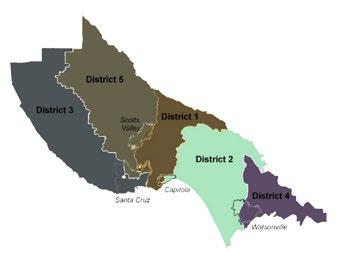
Last month, Dientes Community Dental in partnership with Oral Health Access Santa Cruz County, First 5 Santa Cruz County and the Central Coast Alliance for Health released the 2022 Oral Health Report — an updated and indepth look at the state of local oral health in our community and the status of access to care.
What Was In The Original Oral Health Report?
This year’s report builds upon the 2016 Oral Health Needs Assessment, which looked at key indicators of oral health in the Monterey Bay region including: access and utilization, current needs of the targeted population and resources available to the targeted population.
This year’s report compares where there have been improvements since 2016 based on targeted outreach and investments, and where there are still gaps. The 2016 look was the first oral health needs assessment in Santa Cruz County and showed significant gaps and the need for improving access and outcomes in oral health care in our community. Oral Health Access Santa Cruz County — a stakeholder group consisting of local non-profit, education, government, health, dental professionals and elected leaders was formed following the original report and focused on three key elements:
1) Promote a First Tooth First Birthday Campaign — to ensure that the youngest were seeing dentists around their first birthday to set them on a course of oral health moving forward
2) Encourage Kindergarten oral health screenings
3) Expand treatment, prevention and clinical capacity
Over the last few years, due to the work of Dientes and the Oral Health Access Santa Cruz County group, these elements have been implemented and made notable improvements in oral health outcomes in our community.
What Did The Current Report Find?
One of the first key findings from the report focused on education and awareness. The report found that awareness of the importance of oral health in our county improved significantly over the last five years — due in large part to a concerted and directed effort of outreach and education by local community partners.
On the dental services side, 78% of Santa Cruz County children had been to the dentist within the last 6 months, compared to the California average of about 59%.

For children with Medi-Cal, use of dental services was about 64%, which is higher than the state average of 50%.
Some other findings of note (in particular of things that may impact access) — English proficiency may influence the use of oral health services.
For example, over 20% of K-12 students in Santa Cruz County are reported to be English-Language Learners and some early indications are that this could impact access to services or awareness of services.
Another key finding is that the demand for dental care is closely lined with having dental insurance. As a result, the recently expanded Medi-Cal dental befits for adults should improve access to coverage for adults. Lastly, there are only 13 dentists in Santa Cruz County listed on the state website as current Medi-Cal dental providers — representing 6 percent of the local dentist supply.
Even though there have been significant improvements since the implementation of Oral Health Santa Cruz County, it’s clear some gaps remain. The report covered a collection of recommendations for improving outcomes and access.
What Recommendations Did The Report Make?
The report made over a dozen recommendations. Here are some of the key recommendations:

1) Continue to expand access to dental services in high-need communities
2) Expand access to specialty care including hospital and sedation density, endodontics and oral surgery as well as increase fluoridated community water systems
3) Increase efforts to educate parents and caregivers about the importance of
policymakers, community leaders and advocates
4) Create marketing strategies that focus on young adults, particularly those with Medi-Cal and explore opportunities to increase utilization among children and youth in foster care
5) Continue to advocate for dental benefits to be added to Medicare and for increased Medi-Cal Dental reimbursement rates for private dentists as a way to increase the number of dentists who accept public insurance
If you’re interested in learning more you can see the 2022 report, you can find it online at: https://dientes.org/media/publications/ •••
As always, I appreciate any feedback you may have on this (or any other County issue). I’m maintaining regular updates on social media at www.facebook.com/supervisorfriend

30 / December 15th 2022 / Aptos Times www.tpgonlinedaily.com FEATURED COLUMNIST
Local News ... Local Sports ... Local Politics ... Local News ... Local Sports ... Local Politics ...
Will Tori Stray Into Your Heart?

eet Tori! This one-year-old extra-large mixed breed (Rhodesian, Shepherd, Dane?) came to the Shelter as a stray. She is a social butterfly and loves to meet new people and dogs alike.

Tori has many dog friends that she romps around the Shelter yards with and wrestles with. However, she has shown some resource guarding when in a home with another dog. She would do best in a home with no other dogs but have dog friends that she can play with regularly.
We do not have any history of Tori with cats. Kids in the home may be a fit provided they meet at the Shelter prior to adoption.
Looking for an adventure buddy? Come meet Tori today.
Now through the end of December SCCAS is having a “Home for the Holidays Adoption Special” where all Shelter pets will be available for a “Pay it Forward” adoption donation of the adopters’ choice.
The suggested donation is between $50-$200 and adopters can select a fund for their donations to go to: Planned Pethood Fund (low cost/free spay/neuter) or Extra Mile Fund (specialty lifesaving procedures for homeless animals).
The adoption fee includes spay/neuter, microchip (including registration), age-appropriate vaccinations, routine treatment for worms/fleas, and a free pet wellness exam with a local participating veterinarian.
If you are looking for a furry friend for the holidays, come to the Shelter and meet your new best cuddle buddy!
Visit us today at 1001 Rodriguez St. in Santa Cruz from 10-6 (adoption shows end at 5), open 7 days a week. n

Santa Cruz County Animal Shelter’s full-service, open-admission shelter: Santa Cruz Location (Public Entrance): 1001 Rodriguez St., Santa Cruz, 95062
Hours: Daily 10 a.m. – 6 p.m.



Watsonville Location: CURRENTLY CLOSED 580 Airport Blvd, Watsonville, CA 95076

www.tpgonlinedaily.com Aptos Times / December 15th 2022 31 www.AToolShed.com 1-800-A-TOOL-SHED Open 6 Days A Week • Closed Sunday WE DELIVER Campbell 408-378-4921 900 DELL AVE. Santa Clara 408-727-0822 2550 LAFAYETTE ST. Santa Cruz 831-477-7133 3700 SOQUEL AVE. Watsonville 831-722-0334 285 W. BEACH ST. Greenfield 831-856-9100 60 4TH ST. Hollister 831-638-1999 2610 SAN JUAN RD. Morgan Hill 408-779-7368 95 E. MAIN AVE. Salinas 831-424-7368 210 W. MARKET ST. Spring ‘23 Registration Save the Dates Registration Opens On… Snap the code for more info Nov. 14 for Designated Students (Calworks, ASC, EOPS, WIOA, Guardian Scholars and Veterans) Nov. 16 for Student Athletes Nov. 17 for Continuing Students with 30+ units Nov. 21 for Continuing Students with 0-30 units Nov. 28 for New Students crossword on 25 » Year-in-Review © Statepoint Media
M
•••
SCCAS Main line: 831-454-7200. Animal Control: 831-454-7227. After-Hours Emergency: 831-471-1182 • After Hours: jillian.ganley@santacruzcounty.us
SCCAS Featured Pet




REALTOR® 831.566.2263 AmberMelenudo.com ambermelenudo@gmail.com DRE 01921098 A M B E R M E L E N U D O APTOS & LA SELVA BY THE NUMBERS NOV 2022 MLS Data T h i n k i n g o f s e l l i n g o r b u y i n g a h o m e i n 2 0 2 3 ? G i v e y o u r s e l f e v e r y a d v a n t a g e . 105% list price received 2.125m median sale price 16 median days on the market 14 homes sold 13 new listings Contact Amber today for a no obligation consultation and free home value analysis.
