623-972-2371 11527 W Peoria Ave Youngtown/Sun City
602-569-0508
•
•
TSO guitarist Angus Clark and local musicians rip through ‘Burn’
•
•
•
•
•
you out. Our experience is our customer’s advantage, we know how to maximize your benefits.
‘Tinker
Arizona
involve your home equity in your retirement plan, analyzing what is best for your financial future.
• Concentrates on doing what is best for you.
• A+ BBB rated company.
• We make in-home visits statewide.
Leibo At Large 2020 on course to top the horror of 1347
BY DAVID LEIBOWITZ
When it comes to bad years, it’s pretty tough to top 1347. That was the year the Black Death kicked into overdrive, contaminating major cities in Europe and Asia. Ultimately, that epidemic killed more than 50 million people over the next few years.
By any estimation, that’s an epically horrendous year. Though 2020 seems ready to jump up and shout, “What, you think that’s miserable? Dude, hold my beer.”
One measure of tracking how awful a year is tracking the folks we lose over time. 2020 started o on a downer note just a few days after New Year’s when brain cancer took Neil Peart, the drummer and lyricist from Rush.
famous people to killing the masses. You can blame the COVID-19 fatalities on a perfect storm: a lethal virus meeting clueless elected leaders and an inattentive populace, or you can chalk it up to 2020 doing more 2020 things.
Then Trump would have raided France and given himself credit for “ending the 100 Years War more than 90 years ahead of schedule.”
I still wouldn’t put that past him if things get desperate heading into Election Day. Meanwhile, 2020 continues to pick o some of America’s best and brightest.
Speaking of too young, three weeks later 2020 took Kobe Bryant and his 13-yearold daughter Gianna in a helicopter crash that killed nine people in all.
Bryant, 41 at the time of his death, arguably belongs on the NBA’s Mount Rushmore as a ve-time champion, an 18time All Star and the league’s 2008 Most Valuable Player.
Personally, I loved to despise Bryant, but there’s no denying he was a transcendent talent.
By March, 2020 shifted from targeting
If you’re a rock fan between the ages of 20 and Methuselah, you’ve madly air drummed in time to Peart’s beats in “Tom Sawyer” or the instrumental “YYZ.” Named the fourth-greatest drummer ever by Rolling Stone, Peart was only 67 when he passed.
The pandemic count at press time? Over 15 million cases worldwide and 620,000 dead. I’ll spare you the latest from Arizona, which seems determined to add World COVID Champion 2020 to that lonely Arizona Diamondbacks 2001 World Series crown.
On the positive side, I’m halfway through this column and I haven’t mentioned President Trump.
I’m trying to stay away from that subject to cut down on my hate mail.
Plus, there’s the folks who track me down online to let me have it every time I mention the president. Had Donald Trump been king in 1347, I absolutely believe his court jester would have put out a parchment press release longer than the Silk Road.
It would have labeled the Black Death the “Mongol Flu” and proclaimed that the world was “better o without that other half of the population, because they weren’t our best people anyway.”
Hugh Downs, as smart and classy a newsman as has walked God’s green earth, passed away July 1 in Scottsdale. Downs was everything today’s network anchor clowns are not: Fair, strong-minded and able to probe without being a jerk.
Strength was also the hallmark of civil rights icon John Lewis, 80, who left us last week at a moment when we need his dignity and unerring instinct for justice. Lewis was 23 when he spoke at the 1963 March on Washington. He survived police batons, segregationist attacks and 33 years in Congress to emerge a legend.
I don’t imagine Lewis quit a day in his life, which is inspiration enough not to give up on 2020.
This year is surely a test, however. And to this point, we are being stretched near to breaking.
David Leibowitz has called the Valley home since 1995. Contact david@leibowitzsolo.com.
Dental Insurance
Ron and Mary expected to look forward to retirement, but somewhere along the line, they went from planning retirement to fearing retirement. With kids, cars, houses, and vacations, it was a stretch to stick to their financial plan. When life threw in emergencies, job losses, chronic illness, and a struggling business, they veered off course. They saved what they could, and now retirement is around the corner.
Then 2020 arrived, and Covid-19 swept the globe. At first, Ron and Mary thought worldwide fear and panic might keep things in perspective, but panic continued to escalate. Stocks were volatile, businesses feared forced closures, and everyone seemed shaken.
Amid the panic and fear, Ron and Mary’s priorities became crystal clear; they needed safety and security.
For Ron and Mary, safety and security came in the form of a reverse mortgage recommended by their sonin-law. He insisted actuaries openly recognize the reverse mortgage as a method of reducing post-retirement risk, saying it provides security for individuals and couples 62 and older with equity in their home. It was exactly what Ron and Mary needed to relieve their anxiety. Using a reverse mortgage, while continuing to pay their property taxes and insurance costs, Ron and Mary are never required to make a mortgage payment for as long as either of them live in their home. The financial security it offered
changed everything. They’re now looking forward to discovering what retirement will bring.
Many Americans find themselves more afraid of retirement than ever with the Covid-19 pandemic sweeping the globe. Don’t be one of them! Find out how Sun American Mortgage Company has been helping seniors just like you find safety and security for over 25 years. Call Sun American Mortgage Company (480)467-1000 or toll-free at 1(800) 469-7383. 4140 E. Baseline Rd., Ste. 206, Mesa, Arizona 85206
Ask Gabby Gayle Advice column for the over-50 crowd
BY GAYLE LAGMAN-CRESWICK
Dear Gabby Gayle: My mom lives in an assisted living community. It has been a wonderful living arrangement. We have a loving and engaged family and visited her often and took her out often. The community just announced that a few employees have been diagnosed with COVID-19. Now we cannot visit her. She cannot leave her apartment, and I am living in mortal fear that she will catch the dreaded virus. She cannot even see her husband! We feel helpless. I remember you were in the retirement business before you retired. Any suggestions? Signed, Fearful
Dear Fearful: I empathize with you. I have three close friends in facilities, and all have the virus in their residences. One of my friends cannot see her husband and tells me she would rather die than be without him. The loneliness of not seeing loved ones is painful to the resident and the loved one.
I have a couple of suggestions. First, nd out if someone on the sta could FaceTime or Zoom from your parents’ room to loved ones. Some places are regularly doing this from their activity department. The only other thing I can suggest is if the resident has a spouse, the husband move in with his wife for a few months, until this pandemic is over. Good communities should be providing activities by way of the television—such as exercise, counseling, games and a way for residents to voice their concerns to management. If this is not provided, please talk to the administrator to see if these things can be provided. The pandemic has caught us all o guard and unprepared. This has placed a huge strain on long-term care residences. They have become short-sta ed, illness has struck even the administrators, they have had to procure personal protective equipment and teach the sta how to use it, and establish a method of testing the sta and residents. Sending prayers! Signed, GG
Dear Gabby Gayle: I am a 60-yearold gay woman. I have had a significant relationship for 20 years with another woman. We do not live together because
we are both professionals and have been afraid it would damage our status at work. Everyone, including our families, thinks we are just friends. Now that I am 60 and she is 65, we are rethinking living together. I am not divulging our professions for obvious reasons. Do you have any advice for us?
Signed, In the Closet
Dear Closet: I realize that 20 years ago it was a di erent world for all LGBTQ persons. However, this is 2020, and I cannot imagine denying yourselves the joy of living together, no matter what your profession. As for family, (they probably already suspect and they don’t care). It is not the business of your workplace to know what you do with your personal life, and you are not obligated to tell them, except to change your address or if you marry, etc. I am an advocate of separating work and home. You have wasted 20 years! Please enjoy the home stretch of your lives. Signed, GG
Dear Gabby Gayle: I am 55 years old and lost my job of 25 years due to the pandemic. First, I was laid o . Then they sent me a letter and said they were not replacing my position. Thank you for 25 years, huh? I believe some companies are using the pandemic to recon gure their sta to save them money. Nevertheless, I am having trouble even getting an interview. When I got this job, I lled out an application and I either got called for an interview or I went on to the next. Nowadays, it is lengthy online applications, and you don’t even get a chance for an interview. I think they see my age and think “No way,” and there is not a darned thing I can do about it. Any suggestions? Signed, Jobless
A A Q
Dear Jobless: You have joined a huge group of the formerly employed in our society! First, try applying for jobs within your area of expertise. Then, do not give up. Patience. We have to play the cards we are dealt! Good luck, GG
Shadow Mountain MEMORY CARE
Introducing Shadow Mountain, a brand new boutique memory care community located in Phoenix, Arizona.
Residents enjoy a wonderful lifestyle, all with the security of knowing care is available if they need it.
• All meals and utilities (expect phone) are included
• Safe and secure environment with 24/7 care sta
• Personalized care and activity plan
• Maintenance-free apartments are available on a month-to-month rental basis
HOW DO I RESERVE AN APARTMENT?
• Secured outdoor courtyard for gardening, strolling, and enjoying the fresh air
• Shared Suites - an option that allows two individuals the opportunity to share an apartment and form new friendships while enjoying the cost savings.
Based on initial demand, we are allowing future residents to reserve the apartment style of their choice by placing a deposit now. ACT SOON! The earlier you reserve, the better the apartment selection.
Features Metal HEAVY
Metal artist Daniel Moore creates new public art installation in Tempe for Beyond Self Storage
of his largest. With his public art projects, he often collaborates with architects, engineers and designers.
Moore has had a lot of help from his family to grow his business.
From the beginning, his wife, Nancy, was heavily involved in the family-run business. Their three daughters also assist when they can.
“They have all, in one way or another, contributed in the past and as we speak to the success of our business. It is definitely a family affair,” he says.
BY LAURA LATZKO
With any public art project, artist Daniel Moore thinks about the purpose behind the building. The concepts of “decluttering” and “compartmentalizing” inspired him when he was developing a piece called “Chaos Restored” for Beyond Self Storage in Tempe.
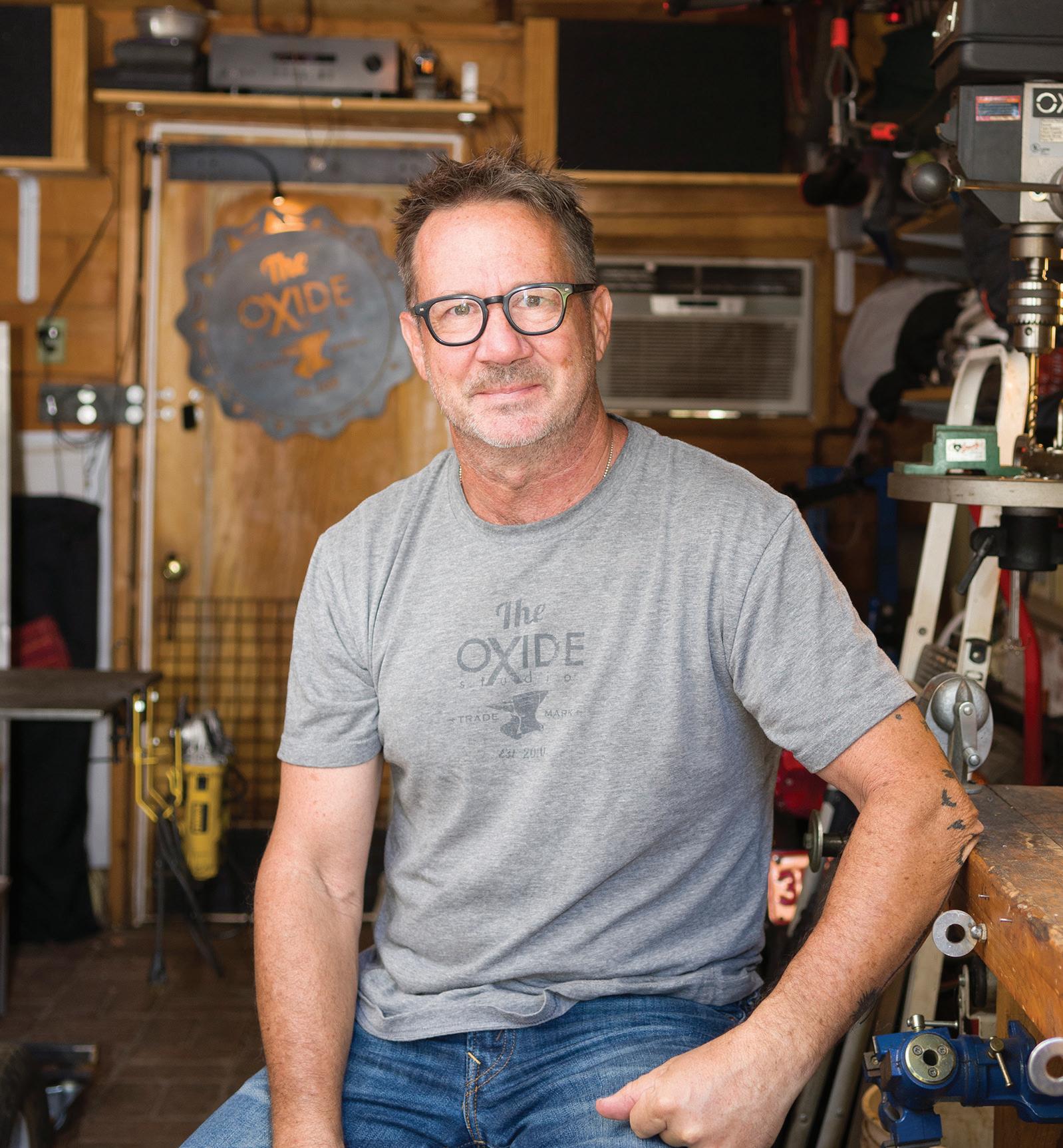
This is one of the more recent works for 57-year-old Moore, the owner of The Oxide Studio in Phoenix.
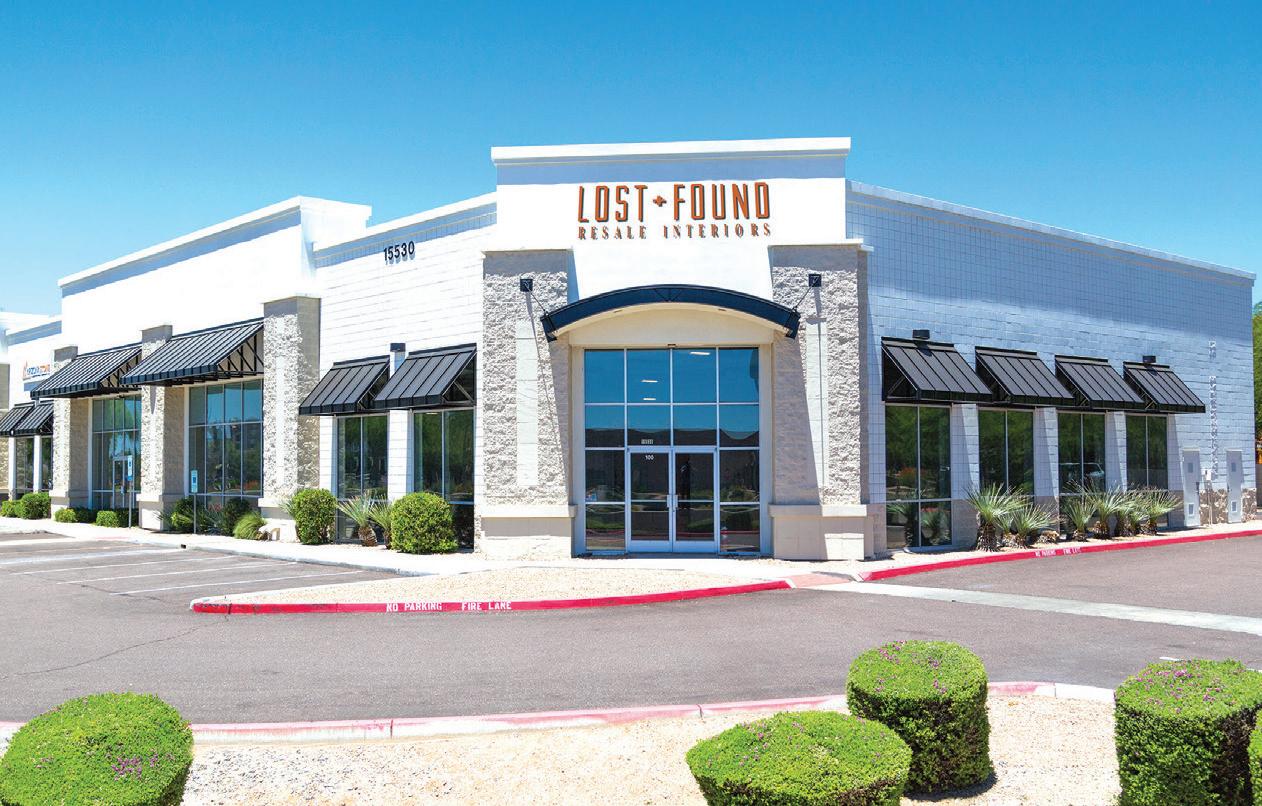
This metal art installation is featured on a 65-by-35-foot building face for Beyond Self Storage’s second location at the corner of Ruby and Priest drives. When developing his design, Moore considered the nature of Beyond Self Storage’s work.
“A lot of people don’t have enough room for the things that they own, and they need a place to organize their lives,” he says.
“That’s what that piece represents, is these elements that are chaotic moving down and having some sense of organization and becoming compartmentalized in those rectangular shapes that are to the left of that giant wall. They are actually boxes. If you look at them closely, all of the elements represent a three-di-
mension box, which echoes the theme of a storage facility.
The piece was developed in conjunction with the city of Tempe’s Art in Private Development Ordinance, which requires new developments over 50,000 square feet to either support arts programs or commission works of art for their properties. The piece was made with hot-rolled steel, which Moore often uses in his work.
The process took about a year and a half. Moore says there are different stages to any public art project, including designing, fabricating and transporting the pieces.
“It’s one thing to design it on paper. It’s another thing to figure out how it’s going to be mounted and the materials that it’s going to be made out of—making sure that they are durable and the maintenance is of minimal concern,” he says.
Along with creating the sculptural elements for the building, Moore developed the painted pattern behind it. To do this, he created a color palette and dimensional drawing that outlined where the different colors would go on the building.
He worked closely with the architect, project manager and site supervisor when developing the piece, which is one
and moved to Arizona shortly thereafter in 1986.
Before starting his own business, Moore worked as a graphic designer for a sign company, where he was first to metalwork. While working for the sign company, he was inspired to create more artistic designs. He taught himself to weld, improving on the skill over the years through his work with oxide.
Before coming on full time in October 2016, his wife—a trained ballerina and Russian folk dancer—owned her own business, worked as a Montessori teacher and had jobs in the financial and nonprofit sectors.
He says his wife handles bookwork, marketing, taxes, insurance and public art paperwork for the company, allowing him to focus on creating artwork.
“We both have specialized talents, but they are completely different. We work very well together in that respect,” Moore says.
Hailing from Iowa City, Iowa, Moore always loved to draw and create things as a child, but it wasn’t until his sophomore year at the University of Iowa that he began to think about a career as an artist.
He graduated from the university with a degree in graphic design and photography, minoring in ceramics and jewelry,
He started making metal sculptures for his wife for Mother’s Day and birthday presents, and then expanded to doing botanical panels for art shows and home tours.
His offerings and clientele soon expanded, and he started Oxide in 2010. The studio is located out of his garage in the Willo Historic District in Phoenix.
Through his company, he creates sculptural pieces, furniture, custom gates, fences, heavy-metal windchimes and botanical panels for residential and commercial customers and public art projects.
His artwork is shown at galleries in Jerome, Sedona and near Bryce Canyon, Utah, as well as in the Desert Botanical Garden gift shop. Oxide Studio also takes part in shows at the DBG and in Fountain Hills.
With each project, Moore looks at clients’ spaces, personal styles and needs.
“Everyone’s home has a different vibe, a different style, a different architecture. What I try to do is work with the client, taking into consideration their environment, their style, if its eclectic, contemporary or traditional. I try to do something that is conducive to where they live and their environment,” Moore says.
During the COVID-19 pandemic, Moore has been busy with projects in private residences because more people want to
Metal...continues on page 9
Metal artist Daniel Moore recently created an art installation for Beyond Self Storage’s new location in Tempe. (Photo by Mike Small of Mike Small Photography)
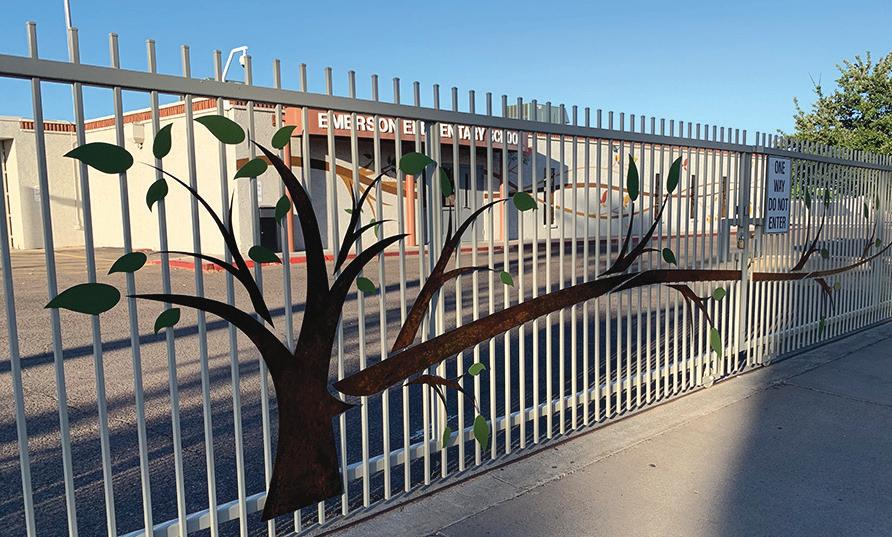
For a recent project, metal artist Daniel Moore created tree-themed artwork for Emerson Elementary School. (Photo by Daniel Moore)
improve their living spaces.
“So many people are at home, analyzing what they want to do at their house. They have more time to think about it and will act on a project they otherwise wouldn’t have,” Moore says.
For his public art projects, he has worked with libraries, schools, parks, city governments and businesses.
Recently, he created tree-themed artwork for Emerson Elementary School in Phoenix.
Throughout the years, Moore has worked with clients in different parts of the country. In Oklahoma, he developed a kinetic piece called Bee-52, a hybrid insect/airplane inspired by different themes within the area.
In his work, Moore has often been inspired by nature, especially the Sonoran Desert landscape. Although his work still features botanical elements, he also creates more abstract, geometric pieces.
He started to go in this direction with “Ellipses,” a piece he created for Miller Plaza in Scottsdale. He was chosen to create the work of art for IN FLUX, a program in which artists develop public art for different municipalities.
“It represented particles of space, how things gravitate to and are repelled from one another, and how that mirrors society. It’s very abstract, but I think that was the genesis of me moving towards more geometric composition,” Moore says.
Owning a business is never easy, and making a go of Oxide hasn’t come without its challenges.
When the Moores started Oxide, they sacrificed retirements, savings, investments and a weekly paycheck. They had one daughter at home and two in college at the time.
Moore says they committed to the company and continued to expand it. Although there have been some financial struggles over the years, Moore says being his own boss, able to create on his own terms, has made it worth it.
Even through difficult times, such as the COVID-19 pandemic, the Moores have supported their family through art. “I think the key to our success is we are diverse. We do public art, practical art, custom projects,” Moore says.
Daniel Moore theoxidestudio.com
Going for It
Mesa woman goes from multiple careers to teaching other seniors
BY CONNOR DZIAWURA
When Mesa’s Marge Draeger saw something she was interested in, she just went for it.
Now 68, it’s that instinct that has led her down such a varied path in life, which includes dairy farming, singing for a country-rock band, teaching college-level computer programming and now working as a guide for GetSetup.
The latter is a new platform through which retired educators and experts lead courses—many of which are free— that re-train seniors in modern skills. Courses vary from how to use different devices, apps, software and websites to simply crafting quick meals. As Draeger puts it, courses are “geared toward helping seniors remain vital in the workplace.”
calls “a little more advanced, maybe, than just early beginner stuff.”
She found out the hard way that seniors can have difficulty finding jobs, regardless of resume.
“Once I moved to Arizona, I did hit that gray wall. Nobody wanted to hire me for anything except maybe a greeter at Walmart,” she says. “So it does exist, and it doesn’t matter what your IQ is or what your background says. If you have gray hair, you might just as well not ask. It’s so frustrating, and I never would have thought that really existed.”
Based out of San Francisco, GetSetup was founded in 2019—before the COVID-19 pandemic. With mass stay-athome orders several months back, Draeger feels she has noticed a quick pivot from paid classes to more free offerings.
She has taught numerous subjects, including how to use video conferencing technology Zoom as well as what people need to know about Medicare. The latter, she clarifies, is not advice or a sales pitch; rather, it’s education on important information some people lack.
“It’s things you don’t know and you have no way to know unless someone tells you, because the Medicare site is just a puzzle,” she says, acknowledging it was a passionate subject to her due to her own experiences.
She also mentions starting new classes with PowerPoint and Excel, which she
“I wrote one for Google Photos, which is, I think, an awesome app for people who might lose their phone and don’t want to lose their pictures or whatever,” she adds.
Classes are not prerecorded; they’re live so as to best help students, she specifies. A schedule of upcoming offerings is available at getsetup.io/schedule.
Draeger comes to GetSetup with a diverse background.
When she was 18 in Wisconsin, for example, she married a dairy farmer. She recalls having a “decent” plot of land, which she estimates at around 250 acres and a couple hundred head of cattle. But while she loved it, she says it was difficult to support a family including four children.
“In Wisconsin, dairy farming has always been a really expensive hobby. And if somebody doesn’t work out and work full time and have health insurance through work, you’re going to starve to death,” she admits, noting it as an inspiration to seek a college degree.
She has a musical side as well.
“When I was a child, we had one of those huge wooden cabinets that played 78 RPM records, and you would wind it up—you didn’t plug it in—and I would stand there and sing along with my mom country music records—the really old Roy Acuff, Hank Williams, really old music—and I just loved it,” she recalls. “My dad always said, ‘She’s going to be a singer someday.’”
Sure enough, she at one point wound up fronting a four-piece country rock band, Rex Critter, the name of which was partially inspired by country musician Tex Ritter but also by Truck Shackley & the Texas Critters, a puppet band from the ‘80s television series “Barbara Mandrell and the Mandrell Sisters.”
“We were very, very popular in the Wisconsin tri-state area—Wisconsin, Minnesota, Illinois—but mostly Wisconsin,” she continues. “We only played, like, weekends—so Friday, Saturday, Sunday—and we spent about eight hours a week practicing, working up new numbers. So it was pretty much part time.”
Despite her farming days and time spent as a musician, computer programming is “just something that’s in my bones,” she notes. She describes having taught for Wisconsin’s Northcentral Technical College but also managing its web servers and writing its websites.
“Back in the ‘80s, when people were hearing about the internet, I was one of the ground-floor people developing. I taught myself to develop website programming and make websites without a degree, which is why in the ‘90s I could teach at the college level even though there were no degrees available yet— because there were none,” she explains. “Somebody has to start that; somebody has to get those first degrees out there; and that was one of the things I did, and I loved it.”
In recent years, she has continued on with various other jobs and relocated to Arizona—which ultimately led her to GetSetup through an AARP listing.
“I feel like when I saw something I wanted to do, I went for it—I did it,” Draeger emphasizes. “And if I were to give advice to a young person today—I did this, I said this to my 18-year-old granddaughter—don’t let what you think somebody else expects hold you back. If you want to do this, do it. Because the only regret you’ll have when you’re 68 is, ‘I wish I had tried that.’”
For more information, visit getsetup.io.
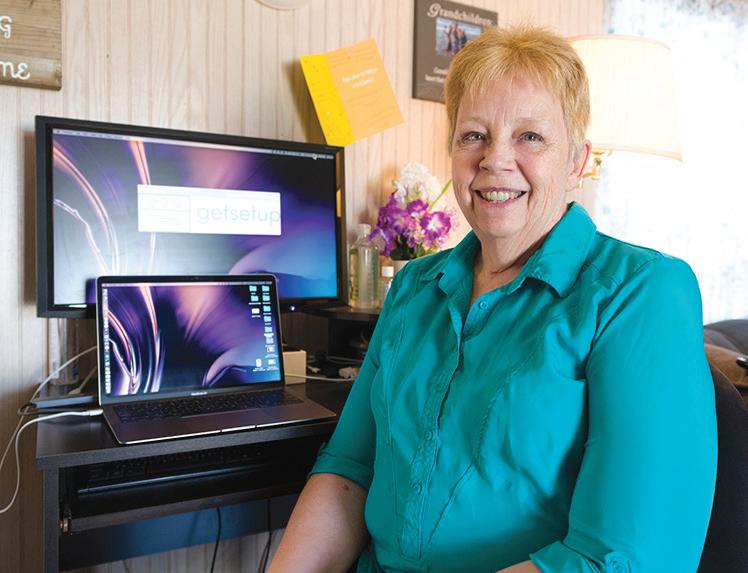
Mesa’s Marge Draeger, who works as a guide for GetSetup, teaching seniors modern skills like Zoom, was previous a dairy farmer, country-rock singer and college-level computer programming instructor. (Photo by Pablo Robles)
Entertainment
‘Dare to Dream’
Jerry O’Connell visualized a ‘Secret’ role, and landed it
BY CHRISTINA FUOCO-KARASINSKI
Actor Jerry O’Connell was on a set of a TV show and frequently complaining about his life, when a coworker gave him a copy of the book “The Secret.”
“I said, ‘Oh brother. This is going to be like a cult,’” O’Connell recalls. “I read it and it was very helpful. It was a really crazy time in my life professionally. I know it sounds cheesy to say this, but I visualized if they ever made a scripted version of the film, I wanted to be in it.”
He is.
“The Secret: Dare to Dream” hit premium video on demand outlets on July 31. The film was originally slated for an April 17 theatrical release by Roadside Attractions, but the COVID-19 pandemic changed that.
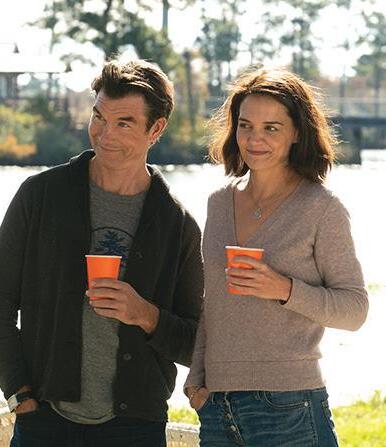
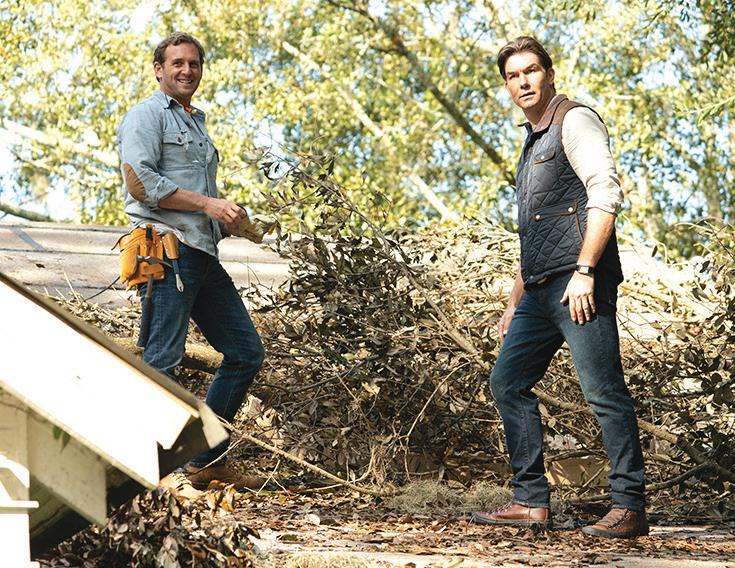
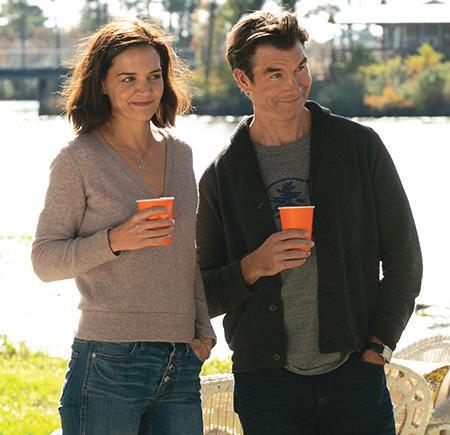
The movie tells the story of Miranda Wells (Katie Holmes), a hard-working young widow struggling to raise three children, when she encounters Bray Johnson (Josh Lucas). He’s carrying—literally—a secret that could change Miranda’s life. Meanwhile, she’s involved with her coworker, Tucker, played by O’Connell.
Written by Rhonda Byrne, “The Secret” was one of 2006’s best-selling self-help books, based on an earlier film of the same name. It is based on the belief of the law of attraction, which claims that thoughts can change a person’s life di-
rectly. It sold 30 million copies worldwide and has been translated into 50 languages.
“The book has such a fanbase,” O’Connell says. “It has changed so many people’s lives. I’m interested to see what ardent followers of the rules of attraction will think about the scripted version of their beloved book.
“It’s an international phenomenon, ‘The Secret.’ This is a dramatic version of that. I think the most challenging part is making sure the secret, this is the dramatic version of that. I think the most challenging part is making sure—I wouldn’t call it the fans—the followers of ‘The Secret’ are happy with what we did.”
The movie was directed by Andy Tennant, with whom Lucas fans would be familiar because he helmed “Sweet Home Alabama” as well.
“They certainly got the right person when they got Andy Tennant
to come do it,” O’Connell says. “He’s our writer/director, and I guess he really is one of the kings of rom-com. It was just so interesting that they went to him with the scripted version of ‘The Secret.’” O’Connell is keeping busy these days. Amazon’s IMDb TV is carrying his show “Carter,” which is about an actor who played a cop on television and has a problem determining the difference between reality and fiction.
He also voices Cmdr. Jack Ransom on CBS All Access’ “Star Trek: Lower Decks,” which premieres on August 10. He describes the 10-episode run as a comedic version of “Star Trek.”
During the pandemic, O’Connell says he’s using his “laws of attraction” talents and visualization techniques to get his kids back in school. (He’s kidding.)
He’s hoping that fans and followers of “The Secret” have as much fun with the movie as he did.
“It was a fun set,” O’Connell says. “Katie Holmes is such a doll. She’s so much fun to work with.
“And man, I wasn’t playing his love interest, but that Josh Lucas is so dreamy. I had scenes with him—not to judge him—but I do get lost in his Paul Newman-esque blue eyes.”
Tinseltown Talks
‘Tinker Bell’ ties the knot at 90
BY NICK THOMAS
What could persuade a 90-year-old actress—once a model for Disney animators creating the Tinker Bell character of 1953’s “Peter Pan”—to abandon her West Coast home of nine decades and fly off to a new life in Florida some 2,500 miles away? Perhaps a sprinkle of Disney magical
fairy dust was involved when World War II veteran Robert Boeke, now 94, was visiting Amsterdam last summer with friends and stumbled on a store sign for “Tinker Bell Toys.”
“He told the people in the group he had actually dated Tinker Bell—me!—70 years ago,” former model Margaret Kerry explains by phone from her new home in Sarasota.
“One of the people with him decided to find me.”
An internet search led to Kerry’s website, Tinker Bell Talks (see tinkerbelltalks.com). Emails were sent, and Kerry remembered dating him. The two eventually reconnected last Septem-
ber in North Carolina, followed by marriage in February and the move to Florida soon after.
“We just celebrated our four-month anniversary,” Kerry says in mid-June. “And we haven’t yelled at or kicked each other.”
“Well, it’s early in the marriage,” I tell her wryly.
“Thank you very much, I’m hanging up right now!” she says, laughing.
Kerry’s film career began at the age of 4 in an uncredited role in Warners’ “A Midsummer Night’s Dream” (1935) playing—as if to foretell her future—one of the fairies.
“I remember it clearly because one of the big studio lights caught fire and Mickey Rooney, who played Puck, dragged me into this little, 2-inch deep stream on the set so I’d be safe from any flames.”
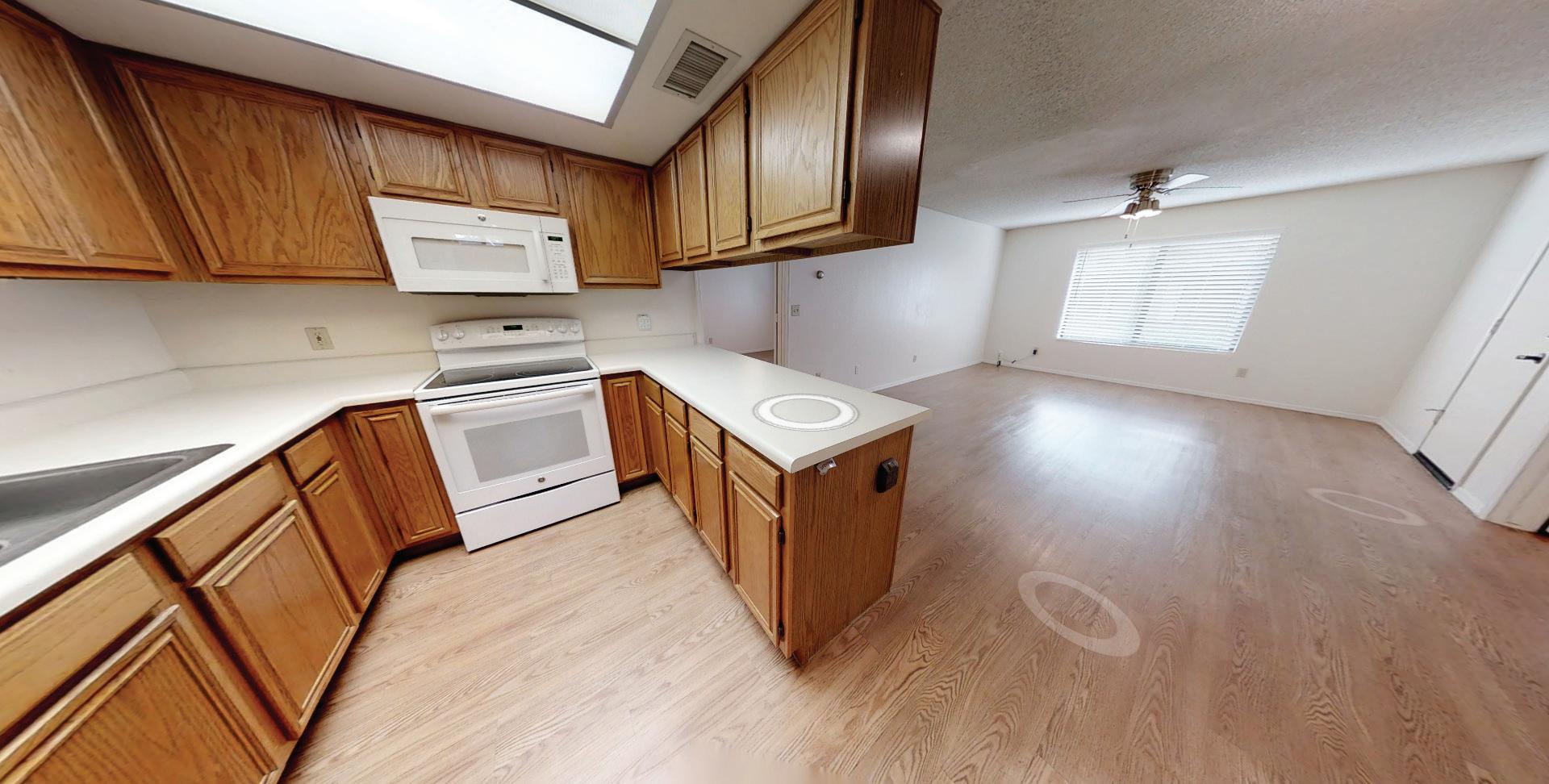
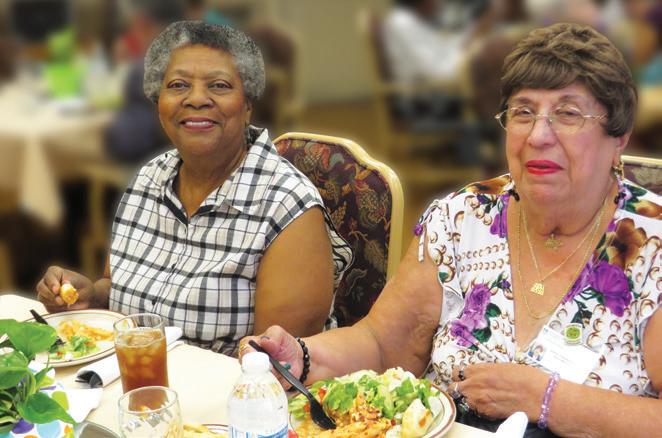
Located in East Central Phoenix, the Kivel campus is beautifully landscaped and offers 210 well maintained independent living apartments. As a HUD community it is designated for income qualified individuals 62 years of age and over. Rent for a Kivel Manor Independent Living apartment is only 30% of adjusted gross income. Rent includes Utilities – Air Conditioning, Heat, Water, Sewage, Garbage and free Cable TV channels.
Kivel campus offers a variety of amenities:
• HUD 210 studio & one bedroom apartments
• Basic cable & utilities included
• Full service Hair Salon
• Theatre where residents enjoy movies
• Mini-mart for those little things you might need!
• Weekly shopping and banking trips along with monthly outings aboard the Kivel bus.
• Bingo is a favorite event but card games, book clubs, crafts, drawing and painting classes along with discussion groups offer stimulating and fun things to do.
More roles came her way, including a half-dozen “Our Gang” (aka “The Little Rascals”) shorts, although as a member of the Meglin Kiddies troupe of child performers, she received no individual screen credit on some.
Her claim to fairy fame came in her early 20s as the model for Disney’s Tinker Bell. She also modeled for the red-headed mermaid in “Peter Pan” and did her voice.
“June Foray was the brunette mermaid,” Kerry recalls. “One day after a recording session, we stepped out on the Disney lot. ‘Why are we trying to get in
Each apartment has:
• Kitchen with a stove/oven, full size refrigerator with plenty of freezer space
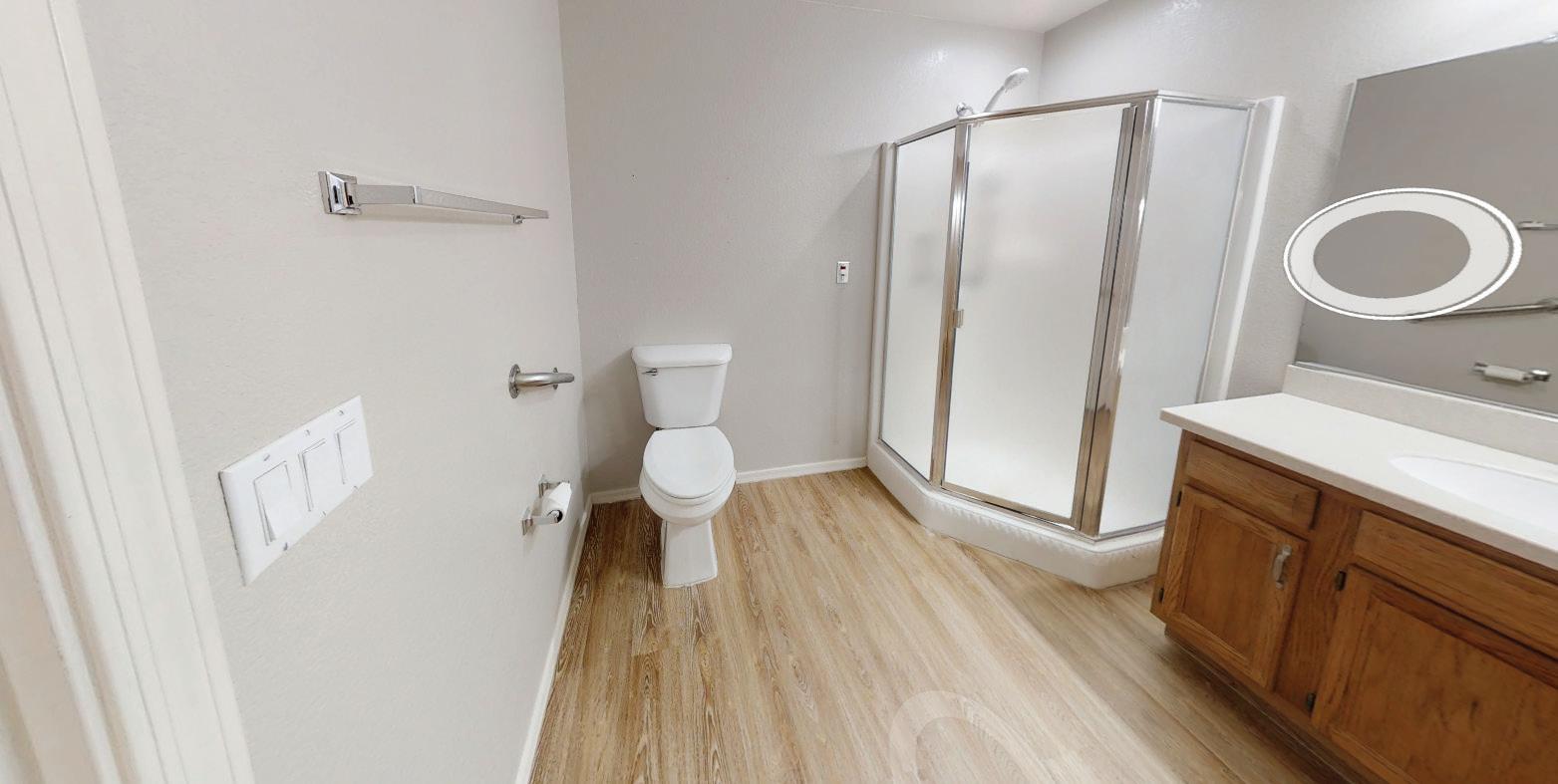
• Spacious bathrooms with grab bars and emergency call pull cords
Safe and Secure:
• Off-duty police security patrol
• 24-hr emergency call system
• Automatic fire alarm & sprinkler system
Numerous Social/Recreational Options
• On-site media center & theatre
• Bingo, cards, crafts
• Exercise & Tai Chi
• Discussion groups & book clubs
• Kivel bus for shopping & outings
Margaret Kelly models for Tinker Bell. (Photo courtesy Margaret Kelly)
Axe to Grind
TSO guitarist Angus Clark and local musicians rip through ‘Burn’
BY CHRISTINA FUOCO-KARASINSKI
Trans-Siberian Orchestra guitarist Angus Clark vividly remembers the day the world shut down. He was playing guitar for Cher and took a side trip to an NBA game in Oklahoma City.
Clark knew something was wrong.
“This year, I was slated to play 10 shows with Cher, and the second one was in Oklahoma City,” Clark says. “The whole band drove to Oklahoma City to see the Utah Jazz play.
“We sat there waiting for the game to start and then the cheerleaders came out and did the halftime show before the game started. Then they said the game was canceled. Our shows were canceled. The basketball season was canceled, and I haven’t left home since.”
Instead of laying low, Clark has been creating music with friends. His latest project is a cover of Deep Purple’s “Burn” with singer Bobby Sisk (Drop Diezel) from Cave Creek, bassist Greg Smith (Dokken, Ted Nugent), drummer Jason Hartless (Ted Nugent), keyboardist Marine Lacoste (Uncle Kracker) and Phoenix guitarist Brian Buzard.
“I just recorded and there was Bobby, who has a lot of touring credits,” says Clark, photographed here with a Jackson guitar. “He’s a tremendous singer. I just recorded my parts and put the video and the audio in a Dropbox. It came out great. After I submitted my parts, that was pretty much it.
“I’ll do anything that helps people stay connected and to give people something to do and makes them feel better about
the fact we all have to stay on lockdown right now. I want to keep people safe and healthy until we have a national strategy.”
“Burn” was a logical choice for Clark, who has played with a Deep Purple tribute band.
“Ritchie Blackmore is a huge influence for me,” he says about the original Deep Purple and Rainbow guitarist. “I had, in particular, been a fan of the early Rainbow (Ronnie James) Dio material.
“The Deep Purple material is much more popular than Rainbow material. When getting together with Greg Smith a few years ago, we had always done Deep Purple material; the stuff that has Glenn Hughes in it. I had learned all that material.”
To put this project together, he had to “dive deep” and make sure he was get-
ting the guitar solo “YouTube ready.”
“You don’t want to mess it up on YouTube,” he says with a laugh. “It was a personal challenge. I feel I got a good result out of that.”
Clark grew up in New York City with an opera singer mother and a father who played the cello. Music filled his home.
“I took up the guitar in earnest when I was 13, the same year Pink Floyd’s ‘The Wall’ came out,” he says. “After that, I was just learning Pink Floyd and Black Sabbath and ‘London Calling’ by The Clash. Then I discovered Ritchie Blackmore’s Rainbow.
“I was a huge devotee of the giants of guitar, like Michael Schenker, Randy Rhoades, David Gilmore, Tony Iommi and Yngwie Malmsteen.”
Clark landed his first deal in 1992 with
the band Naked Sun, a progressive metal act. But the musicians were dropped as “grunge took hold,” he says.
After that, he spent the rest of the ’90s touring the world with Japanese new age musician Kitaro, who was signed to Geffen Records.
“I was playing, essentially, instrumental Pink Floyd-style, orchestral rock music with no singers,” he says.
Around 1999, his friend and Kitaro fan Marty Friedman recommended him to Trans-Siberian Orchestra.
If there are concerts this fall, Clark will celebrate 20 years with the West Coast team of Trans-Siberian Orchestra. He’s especially fond of the Valley.
“We love that area,” he says. “I’ve previously worked with some guitar builders based out of Phoenix and (Peoria’s) Atomic Guitar Works. They’re great. We love that town. I can’t wait to get back there.
“I love playing with TSO and the fans are the best. The band is really tight knit. Al Pitrelli, Jane Mangini and I have all been in the West Coast-touring band for about 20 years.”
For now, he’s spending a “fortune” on cameras and home recording gear through the pandemic and posting content on his socials @angusclarkGTR.
“Since the lockdown hit, we’ve becoming self-producing broadcasters,” he says with a laugh.
“Burn” featuring Angus Clark, Bobby Sisk, Greg Smith, Jason Hartless, Marine Lacoste and Brian Buzard. youtube.com/watch?v= CbjMdDVWTZ8
Arts Patrons Honored
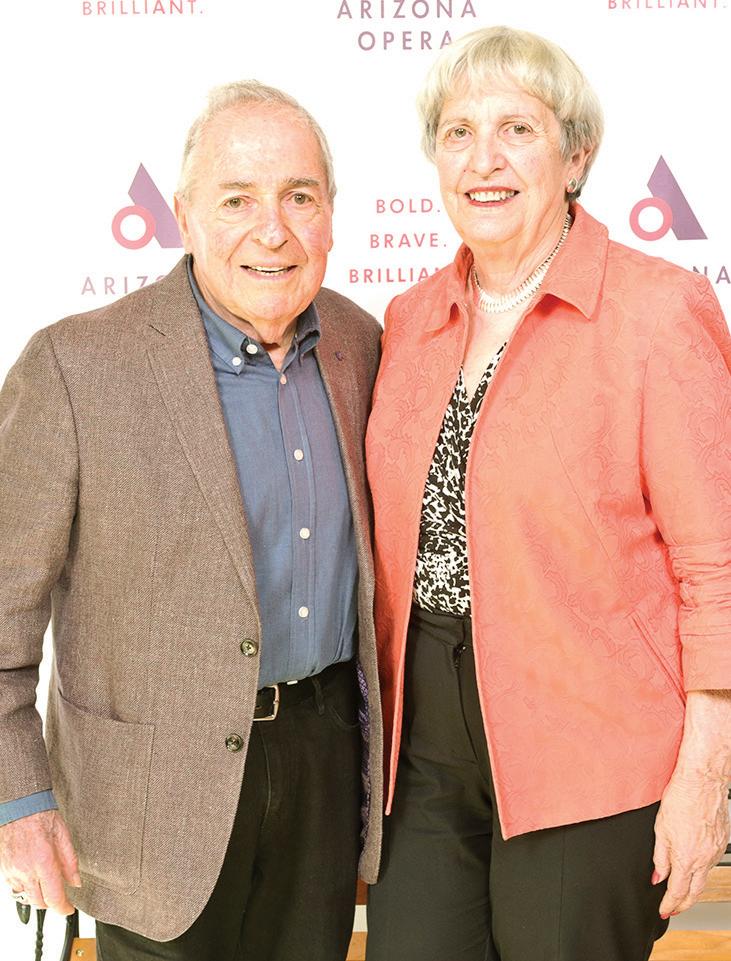
Arizona Opera renames plaza after longtime advocates
BY LAURA LATZKO
Many arts supporters make meaningful contributions to local organizations. Some individuals, such as Robert (Bob) and Shoshana Tancer, have an even greater influence in the Phoenix arts community.
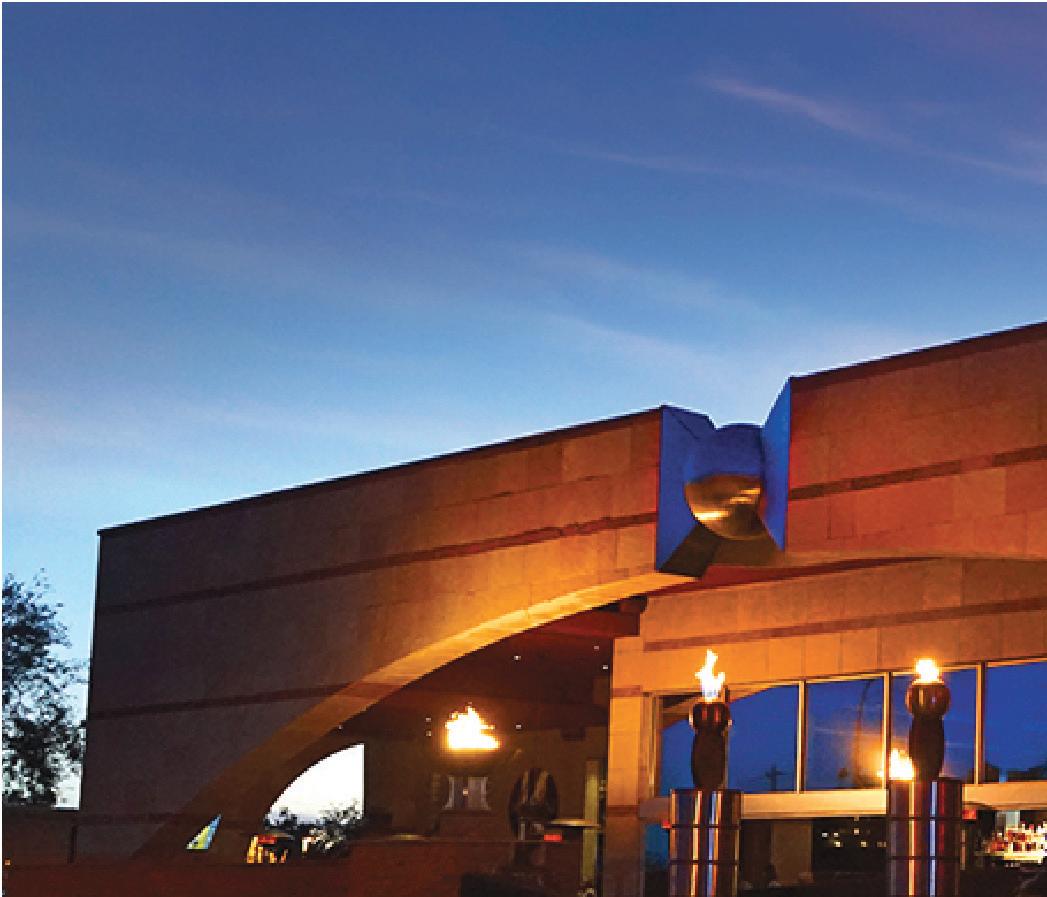
In honor of the couple, the Arizona Opera is renaming the Arizona Opera Center’s courtyard the Shoshana B. and Robert S. Tancer Plaza.
“Bob and Shoshana have been for five decades such important people, not just to the community at large but to the arts community in particular and most especially to Arizona Opera,” says Joseph Specter, Arizona Opera’s president and general director.
“They are the kind of wonderful people for whom we do all of this work. They’ve worked so tirelessly to help us realize our value to the community, connecting us with people. It just seemed proper to be able to celebrate them in this way. “
the Phoenix Chamber Music Society, the Barrow Neurological Foundation, Arizona Theatre Company, ASU’s Friends of Jewish Studies, the Harvard Club of Phoenix and the Phoenix Country Day School.
Even when they had busy schedules with work and family, they tried to stay involved with the arts.
“We felt the community has been very good to us, and we are giving back to it,” Shoshana says.
Specter was friends with Bob and Shoshana.
“Bob and Shoshana have not just been colleagues and board members. They have been among me and my family’s closest friends,” Specter says. “That is a testament to how Bob and Shoshana engage, because there are so many people whose lives have been touched by their work that feel a similar closeness.”
Bob’s energy and mindfulness inspired Specter.
Talks...continued from page 11 front of the camera to be actors?’ we asked each other.
We realized voice-over work was heavenly because we didn’t have to put on makeup, fix our hair or get dressed up. And we could read from scripts—no lines to memorize. We both decided right there to go into voice-over acting. June became one of the most famous (e.g., Rocky of ‘Rocky and Bullwinkle’) and I went on to do about 600 cartoon voiceovers.”
Although it’s been nearly 70 years since Kerry’s famous fairy job, her tiny-winged alter ego has never been far away especially during the numerous fan conventions she’s attended for decades. She plans to continue giving talks and lectures.
“Tinker Bell and I share some characteristics. We’re perky and adventurous,” says Kerry, who turned 91 in May. “I think getting married and moving to Florida after living 90 years in California counts as an adventure!”
A ceremony will be held later this year, possibly in the fall. The announcement came shortly after Bob’s death on March 17.
The couple, who were lawyers and professors with the Thunderbird School of Global Management, were married for 65 years and had four children together. They met in junior high and married their first year of law school. They moved to Phoenix 50 years ago from the Dominican Republic.
The two have been very active in the arts community and involved with organizations like the Arizona Opera. Shoshana says having the plaza renamed after her and her husband means a lot because of her and her husband’s love of the arts. She never anticipated that the Arizona Opera would honor her and Bob in this way.
“I am absolutely overwhelmed. I think it is incredible and completely unexpected,” Shoshana says.
Bob served as the opera company’s board chairman for two terms, from 1999 to 2001 and 2015 to 2017. He has also held other roles for the company, such as de -
velopment committee chairman.
Specter says Bob had a special way of communicating with others.
“Bob was so magical in his approach. In a conversation with him, you just always felt you were the most special person in the world,” Specter says.
Shoshana is a past president of the Phoenix Opera League and has served as chairwoman for the Arizona Opera’s special events. She has been an Arizona Opera honorary trustee since 2015 and joined the opera’s board this spring.
Along with his contributions to the Arizona Opera, Bob served as chairman for OPERA America’s National Opera Center Board of Overseers and was later on the organization’s national board of directors.
Recently, Shoshana became a member of the organization’s National Opera Center Board of Overseers.
Bob and Shoshana have also been on the National Patrons Council for the Opera Theatre of St. Louis, after being acquainted with it through its co-founder.
Locally, the couple has supported or held leadership roles on the boards of Act One, Ballet Arizona, the Desert Botanical Garden, the Phoenix Symphony,
“It’s a huge loss for us to not have him here. The naming of the plaza for Bob and for Shoshana, these two special people, gives us a chance to celebrate that memory, energy and spirit that certainly embodies them but also are infused into the company that they spent so much time supporting and championing,” Specter says.
Shoshana and Bob witnessed the Phoenix arts evolution for more than 50 years. Shoshana says it’s important to have a thriving art community.
“We were delighted to be able to participate in the growth and development of various arts forms,” Shoshana says.
Bob fell in love with opera at a young age and was given a subscription to the standing room at the Metropolitan Opera for his bar mitzvah.
“His parents were afraid that if he did not have the subscription, he would just be standing in line and probably wouldn’t be able to get his homework done,” Shoshana says.
Bob and Shoshana instilled a love of the arts in not just their children but their grandchildren and great-grandchildren. Shoshana says this was one of her motivators for being so involved in the arts.
“We wanted for our children and grandchildren—other people’s children as well—to be enriched by various art forms,” Shoshana says.
The Arizona Opera is renaming the Arizona Opera Center’s courtyard the Shoshana B. and Robert S. Tancer Plaza in honor of the couple, pictured here. (Submitted photo)
Nick Thomas teaches at Auburn University at Montgomery in Alabama and has written features, columns and interviews for over 800 newspapers and magazines.
Dining
Fire and Fun
Kasai Japanese Steakhouse maintains its high energy
BY CHRISTINA FUOCO-KARASINSKI
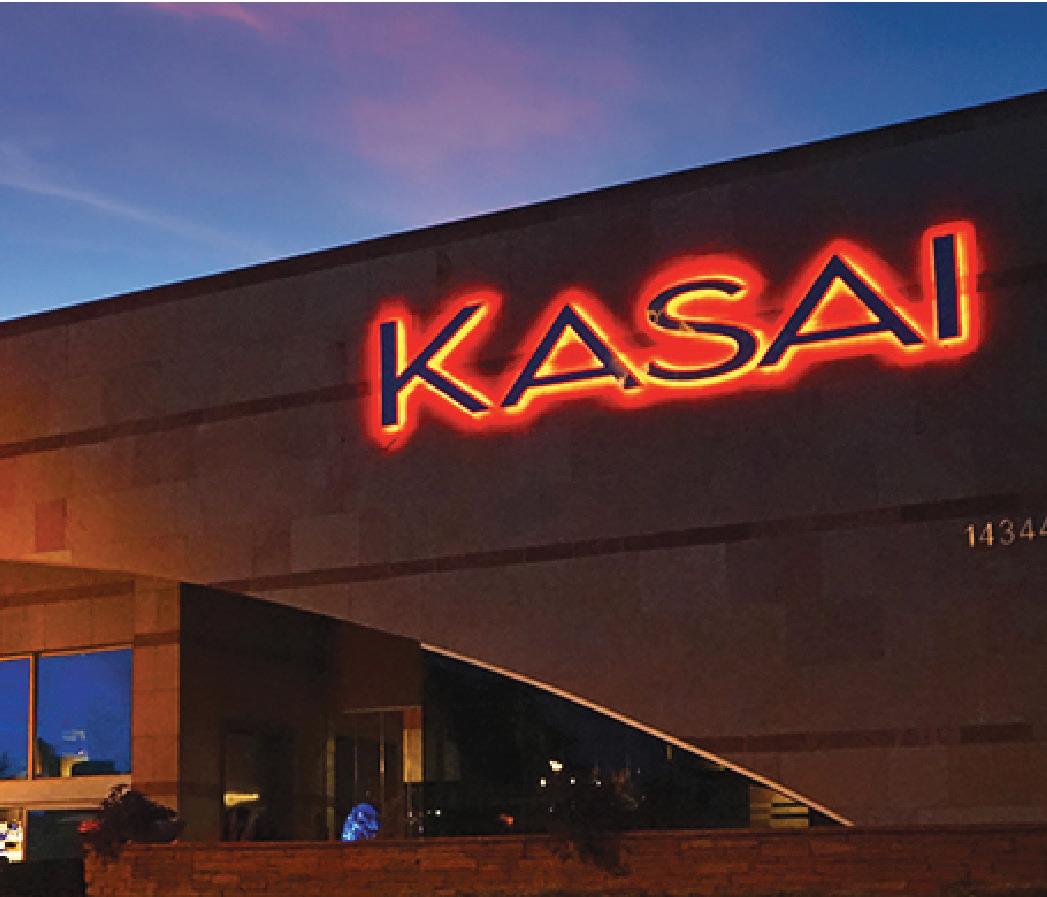
When Sapporo in Scottsdale rebranded as Kasai Japanese Steakhouse in November 2018, the move infused new energy into the 11,000-square-foot airy building.
Owner Michael Russello says that energy hasn’t subsided. The teppanyaki restaurant had a facelift over the pandemic break from March 17 to July 1.
“We took away other tables and added four teppanyaki tables, totaling 14,” Russello says. “Nowadays, people want more of the Japanese steakhouse.
“We were busy last night. Guests were just having fun. It’s a dinner show where you forget about the world for a little while. I’m blessed with the best chefs around, which make me look good.”
The teppanyaki tables seat 146. Previously, the tables were only at the back and sides of the restaurant. Now, with the addition of the four hoodless tables, teppanyaki is the dining room’s focal point.
For teppanyaki, guests are treated to seven-course meals of shrimp starter, mushroom soup, house salad, fried rice, seasonal vege-
tables, protein and Dole Whip Hawaiian pineapple frozen dessert.
Teppanyaki, which is cooked on hoodless grills, features a slew of options individually or in combinations— let mignon ($36), New York strip ($34), sumo let mignon ($48), sumo New York strip ($44), chicken breast ($20), soy-glazed tofu ($20), calamari steak ($24), salmon ($30), scallops ($34), shrimp ($28), sea bass ($42), lobster ($46) and Wagyu let mignon ($70).
There’s more to Kasai than teppanyaki, though. When Kasai reopened, it listed on its menu some old favorites, like the Misoyaki black code with eel sauce and
“We did reduce some items on the menu, though,” he says. “With coronavirus, you want to keep your inventory down. It’s a good amount of money sitting in inventory when you have to shut down. It’s not fun.
“You’re going through a lot of product. You can’t just keep produce or fresh sh around. I’m a foodie type of guy, and every item we do right now is great. We do care about the appetizers. We have incredible sushi, too.”
Russello couldn’t donate the leftover produce, because the boxes were open.
“When you have an open box, you’re not allowed to donate, I don’t think,” he says. “We’ll have 15 cases of eggs and it’s open. You’re not allowed to donate it. That was one thing I said when this thing
Kasai...continues on page 15
togarashi butter ($18) and the Mongolian lamb chops with Asian slaw, coconut curry and beurre blanc ($24).
What’s Cooking? Black Forest Ice Cream Cake
BY JAN D’ATRI
Whoever came up with the combination of cherries and chocolate hit a home run!
That combo is especially delicious in a black forest cake with layers of cherry lling, chocolate cake and whipped cream. Have you ever thought about a frozen version of this favorite dessert? It’s delicious.
This cake starts with a thin layer of chocolate cake or brownies on the bottom, then layers of cherry ice cream, ice cream sandwiches and whipped topping make this recipe a frozen dream. It all gets topped with fresh berries, cherry pie lling and maraschino
cherries for color. I screamed, and you’ll scream for this refreshing gourmet ice cream cake!
Black Forest Ice Cream Cake
Ingredients:
- 1 box chocolate cake mix or fudge brownie mix (or store-bought cake or brownies)
- 1 quart cherry or cherry chocolate ice cream, thawed
- 1 package (12) ice cream sandwiches
- 1 tub, Cool Whip, thawed in the refrigerator
- 1 package Oreo cookies, thin or regular
- 1 small jar maraschino cherries
- 1 can cherry pie lling
- Fresh berries like blueberries, raspberries and blackberries, optional - Chocolate coating, optional
Directions:
Line an 8-by-8-inch square cake pan with foil, extending enough foil on both ends to be able to lift the cake out when frozen. Bake the chocolate cake or fudge brownies according to package instructions in a shallow baking sheet pan so the cake is only about 1 inch high. When done, cut the cake or brownies to t the 8-inch cake pan. (You can also use a store-bought frozen chocolate cake or store-bought brownies.)
Thaw the cherry ice cream in a container enough so it can be spreadable. Spread about 1/2 to 3/4 inch of the melted ice cream over the cake bottom. Place the ice cream sandwich bars over the ice cream so that they all t snuggly together. Press down on the ice cream sandwiches so they press into the ice cream. Top the ice cream sandwiches with the remainder of the melted ice cream. Cover and freeze overnight. When cake has hardened, spread Cool Whip over the top and sides of the cake. If desired, put some Cool Whip in a piping bag to decorate the top. Combine about 1/2 cup of the cherry pie lling with several fresh berries, mixing gently to combine. Spoon the berry mixture in the center of the cake. Press Oreo cookies around the top of the cake so that they are standing up. Rinse maraschino cherries and place a few around the top of the cake.
(Optional: In addition to the bright red cherries, you can also dip cherries in chocolate coating. Let harden, and place around the cake.)
Return to freezer for several hours. When ready to serve, cut cake immediately and serve while cake is still frozen.
started; they should have changed that rule.”
Restaurants are nothing new to Russello. He also owns the ice cream shop The Creek Cookies and Cream at The Shops at Dynamite Creek, 28248 N. Tatum Boulevard, Suite B1, Cave Creek.
“We have raspberry Dole Whip there,” he says, before quickly adding, “My focus is on Kasai, and we want to grow the concept in the area. There are a couple of locations that we’re eyeing. We have Downtown Phoenix ready to go as soon as we want to pull the trigger.
“We planned on taking over the space in June. With this hoodless teppanyaki grill it’s way better. We can go anywhere and do them. There’s no teppanyaki in Downtown Phoenix.”
Colorful, potent drinks are a centerpiece as well, like the Violet Solstice made with Hendricks Mid-Summer Solstice gin, crème de violette and fresh lemon juice ($14) or The P. King cocktail (in honor of original owner Patrick King, who lost his battle with melanoma earlier this year) made with Toki Japanese whiskey, lychee liqueur, fresh lime juice and a dash of bitters ($14).
Whether it’s the bar, teppanyaki table or dining room, guests will be greeted by sta wearing masks.
“We’re really abiding by the rules,” Russello says. “Everybody’s wearing the masks. The chefs, they’re more strict than anybody in the building. It’s a little easier for us because we have a bigger place. It’s tough to be 50% in a smaller restaurant. We’re lucky that it’s a big space.”
Kasai is still about having fun, though.
“It’s high energy, and we play fun music,” he says. “It’s not a place for a really quiet dinner. People yell at the tables. They’re just having fun. We have a great sta , and they’re pushing the fun element, too.”
This fall, Kasai will take a new turn.
“I want to do brunch in the fall,” Russello says. “We’re starting to think about it right now. It’s a two-month process for a teppanyaki brunch. I want to gure it out and get suggestions from the chefs. I think it could be a fun brunch place, too.”
Kasai Japanese Steakhouse 14344 N. Scottsdale Road, Scottsdale, 480.607.1114, kasaiscottsdale.com
Hospice Is Hope HOV volunteers pay tribute to veterans
BY LIN SUE COONEY Director of Community Engagement, Hospice of the Valley
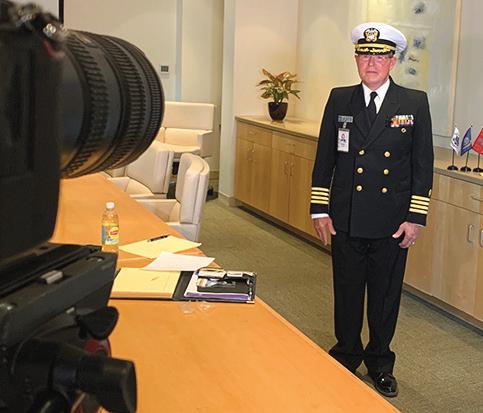
Denny Bash’s military career is one of steely dedication. The Vietnam-era veteran served 32 years in the Navy— spending nearly half of that time providing medical support for the Marines. And when his children joined the U.S. Air Force Auxiliary, he joined it, too.
He’s a pretty tough cookie. But each time he pays a tribute visit to a fellow veteran at end of life, the Hospice of the Valley volunteer gets emotional.
“I cry at every one of them,” he confesses. “I love the service. The military has given me every break in my life, and that’s the reason I’m giving back.”
Bash is one of 45 volunteers—all veterans—with our agency’s Saluting Our Veterans program. Since its inception
in 2011, the program has honored more than 2,700 veteran patients for their service to our country.
These volunteers normally provide special recognition in a face-to-face visit—but all that has changed in recent months due to the coronavirus. Instead of being there in person to present a ceremonial pin and small flag, volunteers like Bash are invited into a family’s home through a video screen. Just like before, the two veterans are able to spend time reminiscing about their service—one last chance to share experiences. It’s quite obvious how much pride and gratitude veteran patients feel as they recall special times of camaraderie and accomplishment. And their families are grateful to
have some precious new memories to treasure after their loved one has passed.
“Even during a global crisis, we want to make sure our veteran families know how grateful we are for their service and sacrifice,” says Stacia Ortega, director of volunteer services at Hospice of the Valley. “We knew we could find a way to make that happen.”
COVID-19 has certainly caused some challenges—but our volunteers agree: Virtual visits still provide a beautiful way to honor the brave men and women in our community who are facing an endof-life journey. “The veteran-to-veteran connection gives our hospice patients an opportunity to unpack some things they’ve never shared with anyone, things they will only tell another veteran,” Bash says. “When I ask them if they would like to talk about their service, they jump at the opportunity to discuss what they’ve done, where they’ve been, what the service meant to them.”
Every veteran is unique. And each has a unique story.
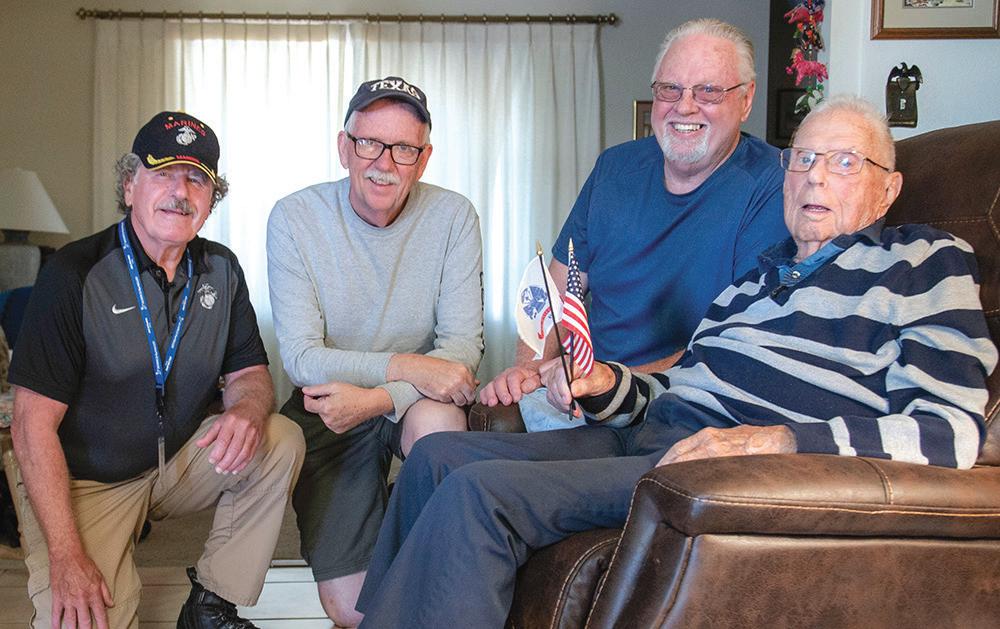
Chester Dorr stormed the beaches of Normandy in France in World War II. Prior to the pandemic, volunteer Rodney Dehmer, a Vietnam War veteran, honored the
99-year-old on the 75th anniversary of D-Day. Dorr’s family was overcome with emotion during the ceremony. “This is one hell of a program,” says his son Jim, also a Vietnam veteran. “It just tops the cake.”
Arizona is home to more than half a million veterans. Many were never recognized or thanked for their courage. That’s particularly true for the men and women who fought in Vietnam. The prestigious We Honor Veterans national program has recognized Hospice of the Valley for providing superb care to all veterans, with special emphasis on the unique needs of Vietnam-era and combat veterans.
“In good times and hard times, it’s our extraordinary honor to pay tribute to these heroes in our community,” says teary-eyed volunteer Bash. “It feels incredibly rewarding.”
If you are a veteran and think you’d enjoy volunteering for Hospice of the Valley’s Saluting Our Veterans program, please visit hov.org/volunteer/saluting-our-veterans or call 602-636-6336 to find out more.
Lin Sue Cooney is director of community engagement for Hospice of the Valley.
Due to COVID-19, Hospice of the Valley volunteer Denny Bash performs virtual tribute visits to veteran patients. The Saluting Our Veterans program honors veteran hospice patients with a commemorative pin, small flag from their branch of service, and gratitude for their courageous service and sacrifice.
Prior to the pandemic, Hospice of the Valley volunteer Rodney Dehmer met with Tom and Jim Dorr and their father, World War II veteran Chester Dorr, who was honored on the 75th anniversary of D-Day. (Photos courtesy Hospice of the Valley)
The Area Agency on Aging is offering a 14-week Too Many Treasures Hoarding Therapy Group designed to educate and gently guide individuals who self-identif y with hoarding behaviors.
Participants must:
• Be 60 years of age and older
• Participate in group interactions and home assignments
Registration is now open for the Area Agency's Virtual Hoarding Therapy Group.
COSTS
SRP wants to help you take control of your summer energy bill. Call us today to make sure you’re on the right price plan – and if you ever need help to pay your bill, we have programs and resources ready to support you.
Our customer service representatives are available 24/7. Call now at (602) 236-8888.
The Healthy Geezer Medication can cause
BY FRED CICETTI
by Donna Pettman
dry mouth
My mouth seems to be a bit dry most of the time. Does this mean anything?
Everyone experiences dry mouth occasionally. We get it when we are under stress. But if you have dry mouth all or most of the time, you need medical help. The medical term for this condition is xerostomia.
Symptoms of this problem are: saliva that seems thick, sores or split skin at the corners of your mouth, di culty speaking and swallowing, bad breath, a change in your sense of taste, increased plaque, tooth decay and gum disease.
Most xerostomia is related to the medications taken by older adults rather than to the e ects of aging. More than 400 medicines can a ect the salivary glands. These include drugs for urinary incontinence, allergies, high blood pressure, depression, diarrhea and Parkinson’s disease. Also, some over-the-counter medications often cause dry mouth.
Dry mouth can also be caused by cancer treatments such as chemotherapy and radiation, nerve damage in the head or neck, the autoimmune disease Sjogren’s syndrome, endocrine disorders, Alzheimer’s disease, stroke, anxiety disorders and depression.
Sjögren’s syndrome can occur either by itself or with another autoimmune disease such as rheumatoid arthritis or lupus. Salivary and tear glands are the major targets of the syndrome. The result of the syndrome is a decrease in production of saliva and tears.
drome can occur at any age, but the average person with the disorder at the Sjögren’s Syndrome Clinic of the National Institute of Dental and Craniofacial Research (NIDCR) is in his or her late 50s. Women with the disorder outnumber men 9 to 1.
In addition, tobacco, alcohol (in beverages and mouthwash), drinks with caffeine, snoring and breathing with your mouth open can aggravate dry mouth. If you think you have dry mouth, go to your doctor or dentist. Your doctor may adjust your medication that is suspected of causing the problem. Or, your doctor may prescribe a medication to stimulate saliva production.
There are other ways to improve saliva ow. Try sugar-free hard candy or chewing gum. Avoid lemon- avored hard candy, because it makes saliva acidic, increasing the possibility of tooth decay. You can also sip water regularly, try over-the-counter saliva substitutes, avoid breathing through your mouth, and use a humidi er in your bedroom.
If you have dry mouth, you have to pay greater attention to your teeth. Brush your teeth with an extra-soft toothbrush after every meal and at bedtime. If brushing hurts, soften the bristles in warm water. Floss your teeth gently every day. Always use toothpaste with uoride in it. If you have a sweet snack, brush right away.
Qualifiers, Rx and Part B Premium Assistance No Cost, Complete & Accurate Medicare Guidance Call: Jim Schmidt 480-296-3900
JimSchmidt@ MrMedicareAndYou com
Appealing to your Good Nature
I'm hoping you and I can make a small but significant difference for our veterans and community members that are less fortunate, homeless or in shelters Should you have gently used clothing to donate to appreciative people, I would be more than happy to pick up and distribute Just give me a call Thank You! Jim Schmidt 480 296 3900
Services
TIRED OF BEING ALONE?
No-one deserves to be lonely. We therefore gladly invite you to meet your ideal companion through Companion Outreach For complete details, simply visit us at: CompanionOutreach com