november 2024



november 2024
School-Safe Communication, Built for Coaches
Improve day-to-day team communication with a platform built for coaches, not classrooms. Parents love having ONE app for all things athletics without getting lost in district-wide noise on classroom software.
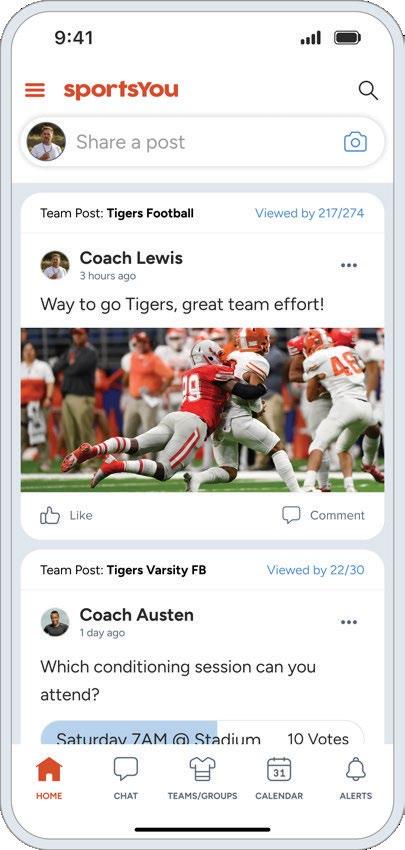
sportsYou is a school-safe platform
Free for schools + built for coaches
sportsYou does not sell individual user data
Districts can access communication history
Your data is encrypted and stored in the US


sportsYou is a 100% American-owned company
Join for free! www.sportsyou.com
Set Up Your Teams
1. Sign up for sportsYou
2. Create your first team/group
3. Add members
4. Configure team settings
5. Designate admins
Join Your THSCA Group


TEXAS COACH - (ISSN 0040-4241) - Copyright 2024 Texas High School Coaches’ Association, Inc.
PUBLISHER
TEXAS HIGH SCHOOL COACHES ASSOCIATION, INC.
PUBLISHING/EDITORIAL OFFICES:
2553 N INTERSTATE 35 FRONTAGE RD SAN MARCOS, TX 78666-5924 web: www.thsca.com
Subscriptions: Annual subscription to TEXAS COACH for members of the Texas High School Coaches Association is $20.00, which is included in the THSCA membership dues. For non-members, digital versions of the magazine may be accessed for free at www.thsca.com. Single copies are $5.00 per current volume. TEXAS COACH is published monthly except in June, July, and August and is dated the first of the publication month, although it is mailed around the 10th of the publication month.
Change of address: Request for change of address must reach us 30 days before the date of issue with which it is to take effect. Duplicate copies cannot be sent to replace those undelivered through failure to send advance notice. Email change of address notice to admin@thsca.com or members can go online and make the change in your member portal profile at www.thsca.com.
Periodicals Postage Paid at San Marcos, TX & additional entries. “All rights reserved”. (USPS 540-600).
POSTMASTER send address change to:
TEXAS HIGH SCHOOL COACHES ASSOCIATION P.O. Drawer 1138
SAN MARCOS, TX 78667-1138
Printed by Capital Printing Co in Austin, Texas.
EXECUTIVE DIRECTOR
JOE MARTIN joemartin@thsca.com
ASSISTANT EXECUTIVE DIRECTOR
GLEN WEST glenwest@thsca.com
Chief Operating Officer of THSCA BRIAN POLK brianpolk@thsca.com
Chief Operating Officer of THSCEF LIBBY PACHECO libbypacheco@thsca.com
Director of Publications & Technology BECKY ADAMS beckyadams@thsca.com
Director of Administration
MARGARET BEYER margaretbeyer@thsca.com
Director of Media & Marketing
ANNA BUCKALEW annabuckalew@thsca.com
Director of Exhibits & Sponsorships
MOLLY FLY mollyfly@thsca.com
Director of Membership
ALLIE HERRMANN allieherrmann@thsca.com
SHERYL HONEYCUTT sherylhoneycutt@thsca.com
Director of Hotels & Hospitality
CHELSEA MILLER chelseamiller@thsca.com
Director of Finance & Accounting
KEVIN SMITH kevinsmith@thsca.com
Director of Public Relations & Awards
TYLER WATTS tylerwatts@thsca.com


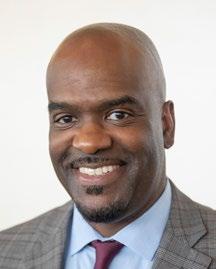

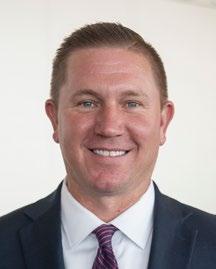
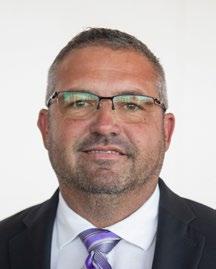


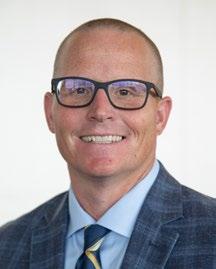


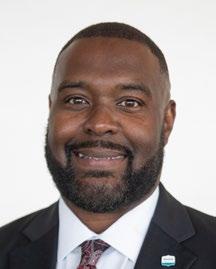
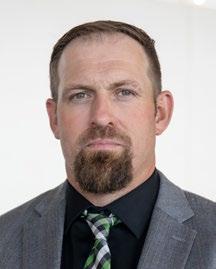
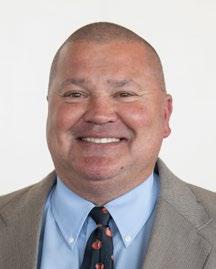
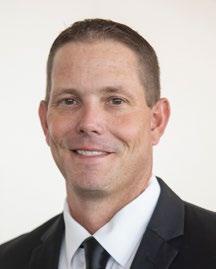
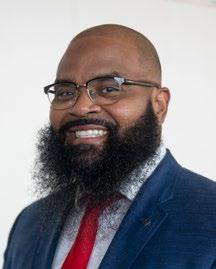



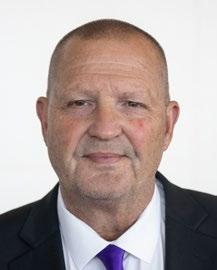
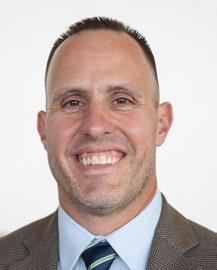
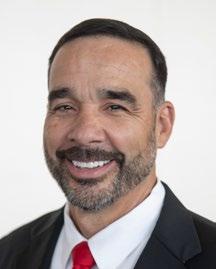
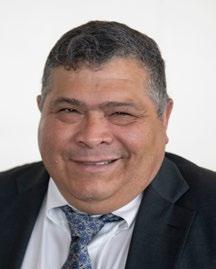
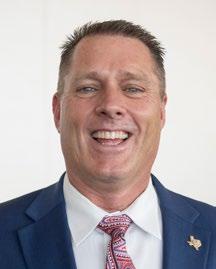
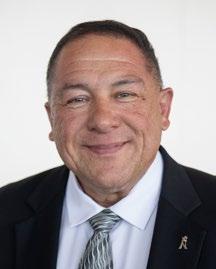
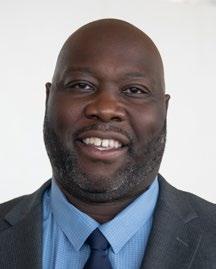
BOARD OF DIRECTORS COMMITTEES for 2024-2025:



Finance: Sterling Doty, Dave Henigan, B.J. Gotte, *Kendall Miller, John Snelson, Drew Sanders
Bylaws: Chip Darden, *Chad Dunnam, Joe Hubbard, Todd Quick, Shaun McDowell, Leo Mireles
Ethics: Chris Cochran, *LaQueisha Dickerson, Clint Hartman, Don Hyde, Marvin Sedberry Jr., Fred Staugh
Policy: Jerry Carpentier, Josh Gibson, Brian Randle, *Aaron Roan, Jacob Thompson, Todd Winfrey
Magazine: Kevin Crane, Jeff Ellison, Reuben Farias, Allen Gratts, *Lance Moffett, Juan Morales
Hall of Honor: Dub Farris, Gary Joseph, *Johnny Taylor, Allen Wilson
Director-Elects & Alternates:
DIRECTOR-ELECTS
*Denotes Chair
Region 1 – Andy Cavalier, Canadian; Region 2 – Casey Pearce, Breckenridge; Region 3 – Josh Gibson, Pleasant Grove; Region 4 – Michael Pry, El Paso Coronado; Region 5 – Brian Randle, Randle; Region 6 – Don Hyde, La Vega; Region 7 – Ben Bitner, CC Veterans Memorial; Region 8 – Eddie Salas, San Antonio Harlan;
1ST ALTERNATES
Region 1 – Jason Richards, Muleshoe; Region 2 – Sammy Burnett Brownwood; Region 3 – Marcus Shavers, North Forney; Region 4 – Daren Walker, El Paso Franklin; Region 5 – Rick LaFavers, Ridge Point; Region 6 – Clint Fuller, Kilgore; Region 7 – David Sanchez, Laredo United; Region 8 – Tony Salazar, Westlake;
2nd ALTERNATES
Region 1 – Aaron Dunnam, Dumas; Region 2 – Mike Reed, Gordon; Region 3 – Antonio Wiley, Coppell; Region 4 – Frank Maldonado, Midl. Legacy; Region 5 – Travis Reeve, El Campo; Region 6 – Shane Tolleson, Waxahachie; Region 7 – JC Ramirez, Jr., Veterans Memorial; Region 8 – Doug Warren, Wimberley;

ATHLETIC DIRECTORS
R-1 Jason Richards, Muleshoe
R-2 Russell Lucas, Sweetwater
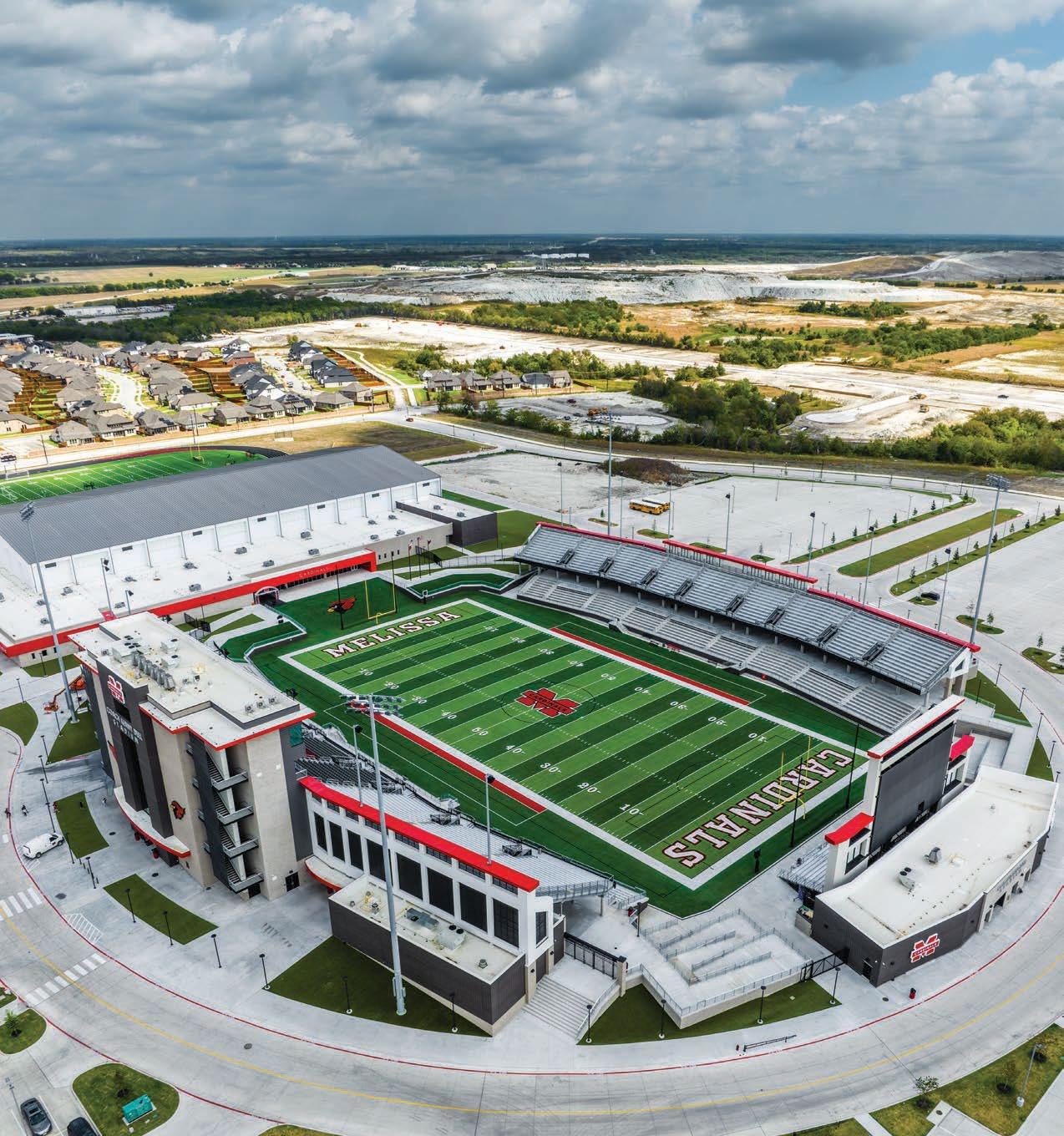
R-3 Seth Stinton, Melissa
R-4 *Jaime Boswell, Andrews
R-5 Virginia Flores, Cy-Fair
R-6 Don Drake, Ennis
R-7 Rob Davies, Harlingen
R-8 Stan Laing, Northside
ATHLETIC TRAINERS
R-1 Steven Ortiz, Midl. Legacy
R-2 Billy Abbe, Abilene
R-3 *Mike Harrison, Allen
R-4 Isaac Wimberley, Lub. Cooper
R-5 Aimee Williams, Fort Bend
R-6 Greg Goerig, Midlothian
R-7 Benjamin Garcia, Harlingen
R-8 Chad Hennessey, Georgetown
AQUATICS
R-1 OPEN
R-2 Casey Pacheco, Abl. Wylie
R-3 Eric Vogan, Texas High
R-4 *Michael Waldmann, Andrews
R-5 Robert Kelly, Pasadena
R-6 Daniel Gonzalez, Longview
R-7 Hector Castaneda Jr., Harl. South
R-8 Kari Brothers, Northside
BASEBALL
R-1 Thomas Brockman, Idalou
R-2 Allen McGee, Graham
R-3 Josh Wheeler, Muenster
R-4 Juan Orozco, EP Coronado
R-5 *Corey Cephus, Cy-Ranch
R-6 Matthew Anderson, Franklin
R-7 Adrian Alaniz, Sinton
R-8 Tom Alfieri, SA Churchill
BOYS BASKETBALL
R-1 Jason Pillion, Amarillo
R-2 *C.J. Villegas, Brady
R-3 Ty Tabor, Krum
R-4 Jason Archibald, Wink
R-5 Danny Russell, Friendswood
R-6 Jake Russ, Franklin
R-7 Sean Armstrong, G. Portland
R-8 Andrew Brewer, Alamo Heights
At-Large Samuel Benitez, North Shore
GIRLS BASKETBALL
R-1 Tyler Helms, Idalou
R-2 *Kenni Patton, Electra
R-3 Donna McCullough, Sachse
R-4 Steve Lee, Pebble Hills
R-5 Christina Jamerson, Dulles
R-6 Marcus Willis, La Vega
R-7 Ashley Moncivaiz, Harlingen
R-8 Christina Camacho, Judson
At-Large Brooke Brittain, Mansfield
BOYS CROSS COUNTRY
R-1 Jay McCook, Canadian
R-2 Glenn Griffin, Holliday
R-3 *Logan Kelly, Lovejoy
R-4 Alonzo Samaniego, Presidio
R-5 Kenneth Decuir, Paetow
R-6 Josh Sypert, Eustace
R-7 Efrain Ambriz, Harlingen
R-8 Kelly Thompson, Leander Rouse
GIRLS CROSS COUNTRY
R-1 Ray Baca, Canyon
R-2 Loy Triana, Burkburnet
R-3 *Susan Bailey, Highland Park
R-4 Corina Marrufo, Del Valle
R-5 Jim Darcey, Katy
R-6 Edward DeLaCruz, Waxahachie
R-7 Joey Rendon, Santa Gertrudis
R-8 Rachel Freeman, SA Reagan
At-Large Karmen Sanders, Taylor
6-Man Josh Stanaland, Jayton
R-1 Jason Richards, Muleshoe
R-2 Sterling Doty, Stephenville
R-3 *Joe Castillo, Little Elm
R-4 Ruben Rodriguez, Eastlake
R-5 Rick LaFavers, Ridge Point
R-6 Clint Fuller, Kilgore
R-7 Brent Davis, G. Portland
R-8 Alan Haire, Jarrell
BOYS GOLF
R-1 Justin Wilborn, Lub. Cooper
R-2 Jason Hodges, Stephenville
R-3 Charlie Means, Denison
R-4 Paul Bustamante, Pebble Hills
R-5 *Mike Martin, Memorial
R-6 Brant Bennett, Midlothian Heritage
R-7 Celso Gonzalez, McAllen Mem.
R-8 Glenn Phair, New Braunfels
At-Large Paige Martin, Southlake
GIRLS GOLF
R-1 OPEN
R-2 Chris Sims, Abilene Cooper
R-3 Kerry Gabel, FM Marcus
R-4 Shawn Trousdale, Eastwood
R-5 *Angela Chancellor, Kingwood Park
R-6 Joel Davenport, Ennis
R-7 Jennifer Ruiz, McAllen
R-8 Patrick Pruitt, Westlake
At-Large Brent McCuiston, Alamo Heights
BOYS SOCCER
R-1 Hugo Aguillon, West Plains
R-2 Justin Rhodes, Stephenville
R-3 Pablo Regalado, Kemp
R-4 OPEN
R-5 *Ben Powell, Bellville
R-6 OPEN
R-7 Julian Robles, Harl. South
R-8 David Rogers, SA Lee
At-Large Jason Meekins, Katy Jordan
GIRLS SOCCER
R-1 Alistair Caldwell, Lub. Coronado
R-2 Carl Wiersema, WF Rider
R-3 Kelly Thompson, Allen
R-4 OPEN
R-5 *Evelyn Torres, Ridge Point
R-6 Gerald Slovacek, Midlo. Heritage
R-7 OPEN
R-8 Bailee Perrine, Dripping Springs
At-Large Aaron McGough, Highland Park
SOFTBALL
R-1 Styler Haddock, Canyon
R-2 Cynthia Herrera, Stamford
R-3 *Kathy Schoettle, Allen
R-4 Lindsie Swarb, Monahans
R-5 Katie Roberts, Brenham
R-6 Same Weeks, Troup
R-7 Audra Troutman, Sinton
R-8 Jennifer Fox, Alamo Heights
TENNIS
R-1 Darby Norman, Canyon Randle
R-2 *Carrie Castleberry, Vernon
R-3 Sylvia Sims, Frisco Heritage
R-4 OPEN
R-5 Daniel Marshall, A&M Consol.
R-6 OPEN
R-7 Eddie Marquez, Roma
R-8 OPEN
BOYS TRACK & FIELD
R-1 Jon Murphy, Stratford
R-2 Andy Howard, Goldthwaite
R-3 *Janson Head, Denton Ryan
R-4 Brien Burchett, Greenwood
R-5 Jason Haddock, Clements
R-6 Josh Rankin, Longview
R-7 Bob Bechtold, McAllen
R-8 OPEN
GIRLS TRACK & FIELD
R-1 Crista Jones, Lub. Monterey
R-2 *Jeremiah Butchee, Stephenville
R-3 Ashley Broom, Sunnyvale
R-4 Robert Ontiveroz, Monahans
R-5 David Pollack, Seven Lakes
R-6 Jordan Johnson, Midway
R-7 Stacy Zamzow, Goliad
R-8 Jen McHugh, SA Reagan
VOLLEYBALL
R-1 Kelly Lozada, Lubbock Monterey
R-2 Shay Douglas, Stephenville
R-3 Jennifer Chandler, Northwest
R-4 Heather Archibald, Wink
R-5 Jenny Adcock, Stratford
R-6 Arden Johnson, Troup
R-7 Jess Odem, Goliad
R-8 *Rachel Torvik, SA Reagan
At-Large Kayla Allen, Vista Ridge
BOYS WRESTLING
R-1 Dalton Clear, Canyon
R-2 OPEN
R-3 *Kyle Stevens, Anna
R-4 Oscar Norez, EP Montwood
R-5 Vinnie Lowe, Katy
R-6 Collin Stroner, Midlothian Heritage
R-7 Donald "Ed" Arvin, CC Veterans Memorial
R-8 David Burdick, Vista Ridge
GIRLS WRESTLING
R-1 *Tyler Frausto, Canyon
R-2 OPEN
R-3 Tiffany Mangini, Flower Mound
R-4 Stephen Scott, EP Franklin
R-5 Nicholas Johnson, Cy-Woods
R-6 OPEN
R-7 Ronald Pratt, Rio Grande City
R-8 Garvin Smith, San Marcos
*DENOTES CHAIR





THSCA Coaches,
November is an exciting month full of transitions. Some volleyball, cross-country, water polo, and team tennis programs have attained the ultimate prize and won the state championship. There are football programs that are still fighting for a trip to AT&T Stadium. For those who did not reach that goal I know that you understand what we do daily far outweighs any accolades or trophy that we obtain. The investment in our student-athletes lives and giving them the tools to be successful in life is what matters most. Across the state, basketball teams are starting practices and take their first step toward the Alamodome. Good luck to those still in the hunt and congratulations to those who won their last game.
Texas High School Coaches Day was a huge success. Coaches make the ultimate sacrifice EVERY day for the sake of our kids and communities. This state recognition, while long overdue, is well deserved by each of you. As we recognize our coaches, remember that Coach of the Week and Coach of the Year Nominations are still ongoing. Remember, the Coach of the Year awards are not just for Head Coaches so please nominate your Assistant Coaches for recognition as well. R.O.C.K. Nominations are also due for the Class of 2025 by December 1st. As we recognize our veteran coaches, our R.O.C.K. Program is very instrumental in developing our Coaching Staffs for tomorrow. Please get those nominations in for a deserving young coach. The R.O.C.K. initiative gives our brightest young coaches the tools they need to become the leaders in our profession in the years to come.
We celebrate this profession because we know its importance and have countless examples of how coaches continue to change the lives of our young people. We realize that we only exist as coaches because we are fortunate enough to coach players. Please make your nominations for the Super Elite Team, and the Academic All-State Awards. Nominations are still ongoing for these awards.
Lastly, the UIL Legislative Council Meeting just wrapped up, and the results from that meeting are on page 53. Please stay active and watch for our legislative alerts as we enter the Texas legislative session in January. We will need to stay vigilant; our profession, kids, and communities are worth it. Good luck again to everyone as we finish up football and start our winter seasons. Continue to set the standard and lead our kids and communities.
John Snelson, THSCA President

DIGITAL TICKETING IS NOW PART OF THE FAN ENGAGEMENT SUITE.

Fan-friendly and easy to manage. Meet Hudl Tickets.
Everything in one place.
Fans can watch live games and highlights, see schedules, and now buy tickets, all in one place.
Completely customizable. Choose your pricing, ticket types, capacity and single or multi-game ticketing.
No added cost.
It’s free to add Hudl Tickets to your organization.
More efficient entry.
Each ticket holds a QR code that fans scan at the gate, giving them direct entry in seconds and reducing lines. No minimums.
There are no minimums on tickets sold. Sell as many or as few as you’d like.
Let Hudl do the setup.
Let us know which events you want to offer digital ticketing and we’ll set it up for you.
Better reporting and security.
Digital sales simplify the accounting, security, and reporting process. Get a real-time look at who purchased tickets, tickets sold, and revenue generated.
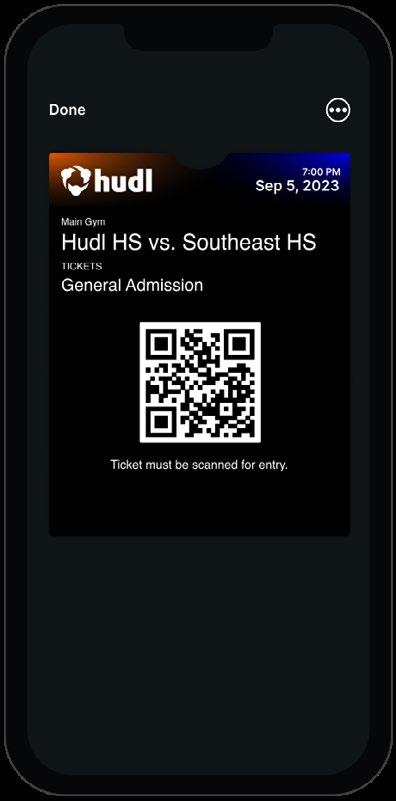
Make your live events easier to attend. Get started with Hudl Ticketing at: hudl.com/solutions/fan/ticketing
I S
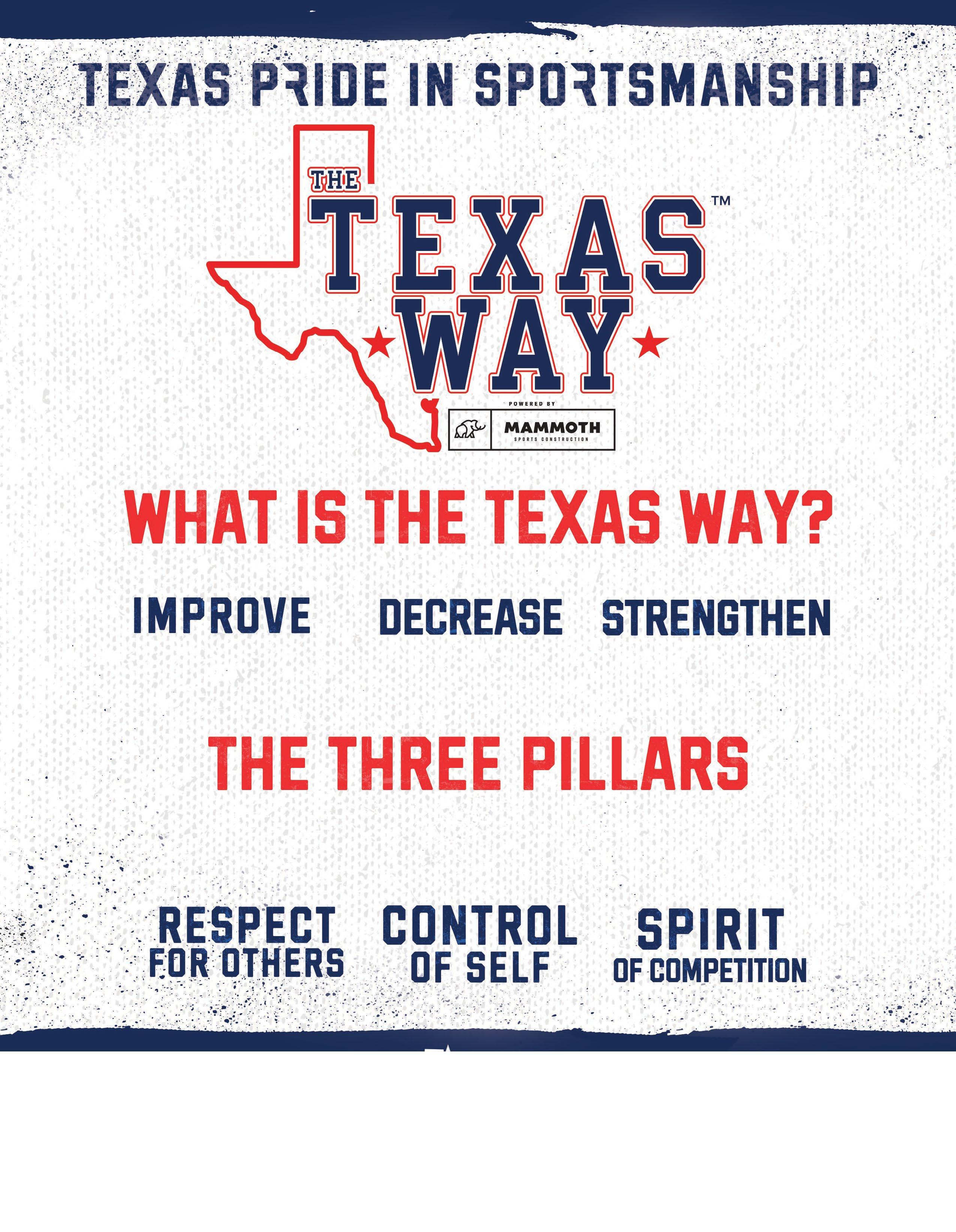



Rufus Benjamin “Ben” Gorden was born on July 20, 1960, and passed away on his birthday, July 20, 2024. He was born to Jefferson Burney Gorden and Mary Beth Demoney. Ben was named for his grandfather, R.B. Gorden, whose Scottish family members were early pioneer Limestone County residents.
Ben loved his family, friends, students, the farm, and all topics related to sports. He was an avid movie buff, and was an encyclopedia of knowledge about movies, actors, and movie plots. Ben loved his former students and took great pride in their accomplishments…past and present. One could frequently find Ben at a former student’s basketball, football, or track game. Ben was a loyal friend.
Ben graduated from Coolidge High School in 1978 followed by graduation from Tarleton State University with a Bachelor of Science in Education. He served the Gholson ISD as Athletic Director and Physical Education teacher, and then served in Wortham ISD as a social studies and physical education teacher, and coach. Ben coached football, cross country, basketball, tennis, softball, baseball, track and field. Additionally, Ben was employed at the Brookhaven Youth Ranch where he worked with at risk youths.
Two of Ben’s favorite quotes: “Character cannot be developed in ease and quiet. Only through experience of trial and suffering can the soul be strengthened, ambition inspired, and success achieved.” Helen Keller
“The difference between a successful person and others is not a lack of strength, not a lack of knowledge, but rather a lack of Will.” Vince Lombardi Jr.
Merrill Green was born August 1, 1930 in Woodward, Oklahoma and passed from earth to Heaven on September 29, 2024. He was the son of Reverend E.A. and Marie Green and the ninth of eleven siblings. He spent his early years in Oklahoma Nazarene parsonages with a large loving and cherished family. After graduating from Chickasha High School, Merrill attended and graduated from Oklahoma University where he was a four year member of Bud Wilkinson's 1950 National Championship football team and the 1951 Oklahoma University Baseball National Championship team. Merrill was drafted by the Washington Redskins after graduating from OU but elected to serve two years as an officer in the U.S. Army. Merrill married his high school sweetheart, Bonnie Strickler, and together they spent a lifetime serving together as career educators, community involvement and active members in the Church of the Nazarene.
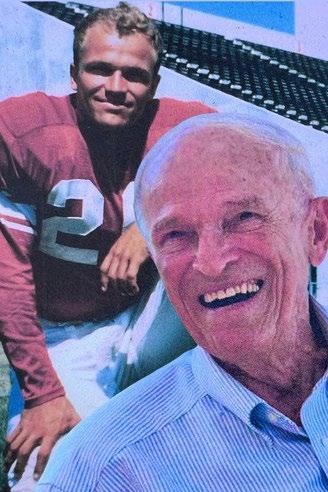
Merrill coached football for nine years at the college level with stints at Wichita State University, University of Missouri, University of Arkansas and Texas Tech University. He coached for 27 years at two high schools: seven at Abilene Cooper High School and 20 years at Bryan High School. He was honored to have served as President of the Texas High School Coaches Association and was inducted into the THSCA Hall of Honor. Merrill loved his community and was a member of the Bryan Rotary Club and served as District Governor of Rotary International. He loved his fellow Rotarians. He sang for 25 years with the local Barbershop quartet, Sounds Ok, and cherished all the relationships with this special group of men. Merrill was honored to have served for twelve years as a Bryan ISD school board member; serving a term as President of the Board. Merrill loved to play golf and once said, "I always thought it was the game I loved, but it hit me one day that it was really the people I played with that was the real reason I enjoyed golf; it was the friendship/fellowship."
He was a lifelong member of the Church of the Nazarene where he gave his life to the Lord early as a child and grew in God's grace, wisdom and mercy throughout his life. He wanted to serve the Lord through sharing community with others. He felt so loved and wanted the community to know how they have blessed him by all the rich and God ordained relationships.
A special thank you to Home Spark Health Care Service, Ms. Ethel Collins and Ms. Ina Lindley-Webster for their unusual and blessed devotion to Merrill. Proverbs 3:5-6.


Doyle Edwin Parker “Coach Parker” was born on August 30, 1937, Doyle graduated from Andrews HS and Hardin-Simmons Univ. In 1956, he married his high school sweetheart, Shirley Latham, and they shared 64 years of love and adventure.
Doyle and Shirley were blessed with three children: Kim Parker-Guerrero (Mike), Rusty Parker (Emmanuelle), and Donise Alvarez (Jose). He was a proud grandfather to eight grandchildren: Kelly Creech (Doug), Josh Creech (Emily), Cade Guerrero (Dakota), Jake Guerrero, Haleigh Thomas (Nate), Brooks Parker, Vanessa Koran (Kris), and Austin Alvarez (Brandon), and seven great-grandchildren: Adelaide, Willie, and Isla Grace Creech, Parker and Henry Thomas, Gavin and Kai Koran. He is also survived by his special friend Joann Miller, many cousins from the Parker and Brumley families, and a special group of lifelong friends, aka “our chosen family” known as the Mullets.
Coach Parker had an illustrious 39-year football coaching career, 12 of which he spent at Texas Tech University, where he retired in 1999. His career began in Hale Center, Texas, and spanned ten high schools before moving to the college ranks at Rice, Lamar, and Texas Tech. He was proud to coach the Red Raiders in several bowl games, including the Cotton, Alamo, Copper, All-American, Independence, and the Coca-Cola Bowl in Tokyo, Japan. His many honors include induction into the THSCA Hall of Honor, Bellville HS Hall of Honor, and Distinguished West Texan Award at the National Football Foundation Texas Tech Chapter’s annual scholar-athlete banquet. It’s the chapter’s highest recognition. One of his proudest achievements was leading the Bellville Brahmas to the 1977 Texas High School State Championship, coaching his son Rusty as quarterback and having his daughter Donise cheering on the sidelines.
Beyond coaching, Doyle loved to travel, fish, golf, and attend football games, especially if he had a grandchild playing or a grandson or son-in-law coaching. He cherished the time spent with his grandchildren and great-grandchildren. He taught his children to waterski, fish, play sports, dance, and drive, and he ensured they had the opportunity to attend college. Doyle had a special way of brightening everyone’s days with his funny texts and warm hugs, always making sure his family knew they were loved & that he was proud of them. Doyle, age 87, passed away unexpectedly on October 7, 2024, in Lubbock, Texas.



Thank you barely suffices for the outpouring of love shown to myself and my family after the tragic loss of my daughter, Ayden Rose Burt, while attending coaching school in San Antonio this past July. Ayden was a third generation educator in Jasper, Texas. My parents, Billy and Sammie, myself, and Ayden had a combined 105 years of service to Jasper ISD. Even though Ayden was only in her fifth year as an educator and coach, she was a true coach’s kid, having grown up in field houses, on football fields, and at track meets, first at C.E. King in Sheldon ISD, and then in Jasper. Ayden had good old school coaching DNA in her. She had a true passion for seeing her students and her athletes succeed on the field, in the classroom, and in life. Ayden had no trouble dishing out the tough love when it was needed, but she was also the kid’s biggest cheerleader and gave all the credit to their efforts.
I coached for twenty-three years before going in to administration, and I know there is not a coach in the state of Texas who has not said to his or her athletes that they are all one big family. Well after this tragic event, I will say that the coaching community across the state of Texas is one big family. I have heard from coaches individually, as staffs, and from districts from all across the state.
There have been too many cards, letters, and contributions for me to thank everyone individually. However, there are a few I want to mention. I want to thank Aaron Henson at TeamFunded and Matt Stepp from Dave Campbell for setting up the online donation fund. I want to thank the THSCA for the benevolence donation. I want to thank the Hispanic Coaches Association for their donation and the Little Cypress-Mauriceville girls track coaches and athletes for their donation. These donations are going towards a scholarship foundation that has been set up in Ayden’s name called The Ayden Rose Burt Foundation. The foundation has been set up as a Texas Non Profit Corporation and is applying for 501c3 tax status. If you would like information about donating my email is sdburt@swbell.net
I also want thank Coach Kendrick Crumedy, the head football coach and Athletic Director in Jasper, for all he has done in helping me and my family through this tragedy. A very special thank you goes out to Coach Joe Martin of the Texas High School Coaches Association; he has really gone above and beyond in coordinating so many things behind the scenes.
Again, thank you to all who have reached out in any way. There are way too many for me to list in a single letter, but know that you are all loved and appreciated so much.
Sincerely,
David Burt




By Coach Kayla Allen | Vista Ridge HS
Being a part of an organization is so much more than just a membership. Obviously, you know that already, being a member of the THSCA. Professional associations give coaches resources, learning opportunities, recognition, community, and much more. So, how do you know which organizations to be a part of? Are certain organizations better than others? I think you have to lay out what you personally want to get out of joining affiliations and what matters to you most.
Personally, I am a member of THSCA and the American Volleyball Coaches Association (AVCA). While many of the benefits are the same for both organizations, there are a few differences that I feel it is important to be a member of both organizations for personal and professional reasons.
Similar to coaching school, the AVCA hosts an annual convention. From Wednesday to Sunday, there are a wide range of seminars for attendees to go to. Over 120 sessions are put on for volleyball coaches to improve their craft, along with a recruiting showcase for uncommitted athletes and an exhibit hall. As a bonus, the convention is held in conjunction with the NCAA Division I National Championship. I always look forward to attending the convention not just because it is an opportunity to learn from some of the best coaches in the world, but because it is an incredible networking event for volleyball coaches. The last two years, THSCA and Baden Sports have sponsored a “Texas Get Together” at the convention. Without this social, I would have soaked up every minute of the convention and returned home without branching outside of the friends I traveled with. However, one of the best things that professional organizations provide is a community. Throughout the convention there are a plethora of opportunities to connect with college, club, and high school coaches. I look forward to growing my circle at the convention this year.


The AVCA represents all levels of volleyball: collegiate, professional, high school, club, and youth. Its mission is to advance the game of volleyball and to expose more people to the sport. The organization fights for changes in regards to rules, funding, Title IX, and other volleyball specific policies. It also provides insights into the latest volleyball trends and news at a national level. Both THSCA and AVCA advocate for coaches and volleyball in varying capacities.
Being a national organization, AVCA provides the opportunity for my athletes and our program to be recognized at the national level. High School awards include AVCA All-America, AVCA Best and Brightest, AVCA All-Region Teams, and MaxPreps Players of the Week. There is also an AVCA Phenom Watch List for uncommitted athletes who are invited to participate in a College Prep Program, which is the only showcase that has over 200+ college coaches in attendance. Scholarships and polls are additional ways the AVCA recognizes athletes and programs.
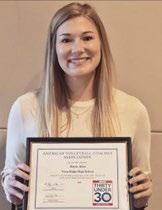
In 2022, I was recognized on the AVCA Thirty Under 30 list. Though this was an honor to be recognized, receiving this award has provided exposure to my program and athletes as well. Each week, high school members receive the AVCA Weekly Assist in their inbox. The email includes a mini newsletter with important news about the organization, upcoming events and dates, as well as tips and drills from other coaches. In 2023, I was asked to include a drill used within my program for the forum as a result of being a Thirty Under 30 recipient. This was not only a personal and professional development opportunity for me, but it spotlighted my program, our athletes, and the Vista Ridge High School facilities. List past Summer, I was asked to create a presentation for the 2024 AVCA Super Clinic. Again, I got to highlight my athletes as they represented our program in drills for the video and I grew professionally as it was my first time to record a 45-minute presentation. Not to mention I had a total fangirl moment when my picture was posted on the same social media graphic as the legendary John Cook!


Being involved in THSCA and AVCA provides me with many benefits as a coach. Professional development opportunities allow me to be a role model for my athletes by having a growth mindset. Networking introduces me to college coaches which helps with straight line recruiting. Awards recognize my athletes and bring exposure to our program.
HOPE TO SEE YOU IN LOUISVILLE, THSCA VOLLEYBALL COACHES!



The all-in-one digital ticketing solution that offers more – empowering schools, organizations, and event organizers to streamline ticketing and event management.
• STREAMLINED DIGITAL TICKETING
• INTEGRATED SOCIAL MEDIA MARKETING
• EFFORTLESS FUNDRAISING
• RELIABLE SUPPORT





Hard times don't create heroes. It is during the hard times when the "hero" within us is revealed."
Bob Riley
"Don't be pushed by your problems. Be led by your dreams."
Ralph Waldo Emerson
"You have to remember that the hard days are what make you stronger. The bad days make you realize what a good day is. If you never had any bad days, you would never have that sense of accomplishment!."
Aly Raisman
"When you come out of the storm, you won’t be the same person who walked in. That’s what this storm’s all about."
Haruki Marakami
The ultimate test of faith is not how loudly you praise God in happy times but how deeply you trust him in dark times.”
Rick Warren
BY TIM MILLER ASST. TRACK COACH, ALICE HS
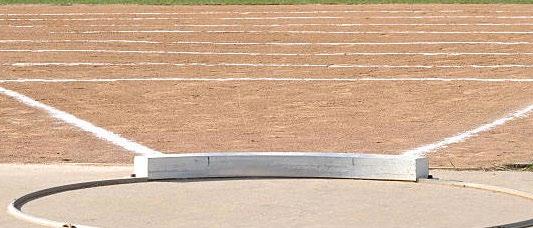
If someone only ever watched college and professional track and field, one would think that the glide is obsolete and not a viable option for most anymore. At the HS level, it is still the preferred method of throwing. There’s a good number of student athletes who rotate, however most are still competing with the linear glide technique. My hope in writing this article is to give a few drills that correct specific problems common to the glide.
Before we get started, a few universal truths:
1. The thrower (and more importantly the shot) should finish moving faster than it starts.
2. If the shot drops away from the neck at any point during the throw, it is losing speed.
3. The speed of the shot put at release is the main determinant of the distance it goes.
4. I’ve heard many coaches tell their athletes to throw the shot higher, but I have never been to a meet where they measured the height of the shot. (The hips moving through the finish correctly will produce the optimal height)
(This writing will assume a right handed thrower)
Error 1: Going flat on the right foot in the standing throw
This error can kill the momentum of a glide faster than almost anything else because it makes conditions difficult to rotate/drive the right hip into the throw. The fix to this in the standing throw (power position/front throw) it’s a very simple answer:
Fix 1: Stay on the ball of your foot! There isn’t really a drill for this other than coaching them to do their standing throws on the ball of their right foot. This also makes it easier to keep their weight back over their right hip, which will make it easier to avoid standing up too tall, too early.


Error 2: Lifting the shoulders towards the throw before the hips are turning
Standing up too tall brings the shot put off of its ideal path. Often this will show itself by the shot coming off the neck (In reality it’s the thrower coming away from the shot). The upper body doesn’t need to do much other than stay closed until it’s time to deliver the shot.
Fix 2: Pop-under Drill
Start in a wide stance power position with both legs straight and the right foot grounded on the heel only. The right knee and foot will come off the ground and
pop-under the chest and shoulders into a normal power position. This can be done in multiple reps or with a throw each time. The key is reaching back with the left arm and not allowing the shoulders to rise with the action of the right foot. This also helps with Error 1. Error 3: Going flat on the right in the glide


This error is usually caused by improper firing order in the middle of the ring. The shoulders will rise and the heel will go flat in an attempt to create stability and balance. The effect on the shot is that it drops and gets ahead of the right hip, causing the legs to be limited to only creating vertical energy. The shoulders and torso need to stay back over the right thigh so that the hip can lead them into the delivery of the shot.
Start in the typical power position, and move the left towards the back of the ring. It should be about 6” to a
foot past the right in the middle. The left side should be wrapped around the right, with the left arm across the body(about even with the right foot). The action of this drill should start however the athlete typically begins a glide (static or drop-in/dynamic) and be focused on the left leg moving to the toeboard and leaving the shoulders wrapped and the left arm reaching back. The final coaching point here is making sure the athlete stays on their right toes.


Starting in whichever position the athlete normally starts their glide, they will hop 2 or 3 times without grounding the left leg. Each hop will cover a little bit of ground and it is imperative that they land on their toe each time. With each hop, I cue them to stretch the left arm wrap


backwards and leave their shoulders further behind. The final hop is a great time to get them to learn to be more aggressive with the grounding of a slightly bent left leg while still keeping their shoulders back. Because of the 2 or 3 hops, this drill takes longer than a normal throw and gives them more time to get ready to put the left on the ground quickly without disturbing the separation they’ve created between their shoulders and their hips.
Error 4: The left leg is brought past the right knee at the start of the glide/ left leg crosses behind the right leg/ shoulders get tall at the start of the glide Ok. Error 4 is really 3 errors, but they are all related. This mistake is sometimes accompanied by the right foot being cheated ahead to about 11 o’clock (if the center of the back of the ring is 12 o’clock). This cheating of about 15 or 20 degrees seems logical to get the right foot into a good position in the middle, but it can take a lot away from the amount of momentum created by the drive across the ring. As a coach, this is a time where discretion can be applied. I had a college athlete who threw 52’ this way (and shot was her 2nd event). As you can imagine….I didn’t choose a properly aligned foot as the hill I wanted to die on. As for the left leg, bringing the left knee past the right will create a situation where the shoulders will be more likely to come up early to counter the leg swing, and crossing the left behind the right can open the left side too wide at the toeboard.
Fix 4: Proper “coiling” of the left leg and foot.
This isn’t really a drill, but it’s something I see all the time. First the foot. If the toes of the left leg are pointed down it makes both improper moves more difficult to complete and allows the athlete to put that energy into a more efficient drive across the ring. Now, the left leg. I use the term “coiling” because bringing the left towards the back of the ring in preparation to drive towards the front reminds me of a rattlesnake coiled and ready to strike. I will use this to describe and cue the movement, and the imagery tends to resonate with most Texans. “Coil” by

bringing the inside of the (medial) left knee to the inside of the right knee. Because the right leg is there, it blocks the left from going too far and allows the shoulders to stay down and back. This sets up a longer path for the shot to the front of the ring, which will result in more balance and speed when the athlete gains confidence in the move.
Final Thoughts: There is definitely a common theme in all of the fixes. The shoulders need to face the back and stay over the right hip while the legs move aggressively towards the toeboard, and to transfer this momentum effectively it is best to stay on the ball of your foot in the middle of the ring. Any of these drills can be used to cement the previous statement. Any of these drills can be adjusted or cued to meet the specific needs of the athletes each coach is working with, so feel free to get creative with how you use them. If you have any questions, email me at mill6360@gmail.com or find me on Instagram: miller_ coaches_throws. Good Luck this Track and Field season!






BY CASEY VEEN, M.S. BARBERS HILL H.S., HEAD VOLLEYBALL COACH
Before we dive into this article, I want you, the reader, to know that this article is based on scientific research and theories, as well as statistics to help shed light on why women coaches are deciding to leave the coaching profession at such alarming rates. The intention is to reveal the silent, unspoken internal struggles that women face daily to our athletic leaders in hopes to help attract and retain women coaches.
Let’s begin at the origin of the advancement of women in sports: Title IX. In 1972, a group of female leaders and other activists were able to get Title IX of the Education Amendments of 1972 passed to prohibit discrimination against sex from participating or being employed in any federally funded organization. Title IX particularly states that “No person in the United States shall, on the basis of sex, be excluded from participation in, be denied the benefits of, or be subjected to discrimination under any educational programs or activities receiving federal financial assistance” (U.S. Department of Education, 2021). This significant piece of legislation has protected millions of women involved in sports, including athletes, coaches, and leaders. Despite the growing number of female athletes from
the existence of Title IX in 1972, the number of women in coaching positions has declined gradually throughout the years. Researchers have found that “Title IX did not increase female coaching rates at any level. Although Title IX increased the number of coaching positions by 185%, the vast majority (98%) of these were filled by men” (Pacetti-Donelson, 2023).
Representation matters, and for the sports world, the perception is that there is no room to develop female coaches and that this profession will eventually come to a dead end. Throughout this article, we will explore the psychological toll that is attributed to the underrepresentation of women in the coaching profession, which includes gender norms and the stigmas, the lack of female role models, and lastly why women burn-out.
Linguistic determinism holds that language determines our thoughts and perceptions, shaping our worldview in profound ways. Masculine and feminine labels are attached to everything in our world and the sports industry is no exception. For example, when someone thinks of soccer and basketball, they are


oftentimes associated with masculine characteristics like aggression, strength, and grit, whereas when a person thinks of gymnastics and cheerleading they are seen as having feminine characteristics like grace, flexibility, and spunk. Society views masculine and feminine entities as two vastly different labels that are rigid with zero gray area, so when a woman displays typical masculine characteristics she is quickly viewed as abnormal and perplexing. “Gender expectations (e.g., being intrusive, self-confident, and dominant for men; being nurturing, affectionate, and compassionate for women) impact whether women and men are perceived to successfully fulfill their stereotypical gender roles” (Borland 2015). To best understand the stereotypes of gender roles and how they influence perceptions of leadership, the role congruity theory can be examined.
To sum up this theory, it suggests that females experience discrimination in coaching and sport leadership positions due to characteristics associated with their gender, like mentioned above. According to this psychological theory, there are certain societal expectations that a leader must possess, but it must be congruent with their appropriate gender traits. An example of this is when leaders are often seen as confident, strong, and demanding, which fall into the masculine column. Women looking to take on those roles can be perceived as incompetent or less qualified, since they do not inherently possess those masculine traits, according to our society. When individuals do not fit the mold, like an assertive woman or even a nurturing man, then they may be perceived as less capable of fulfilling the job. Look no further than how the media portrays female coaches and athletes when they display a hint of anger, frustration, or intensity. Watch the verbiage and labels placed on female coaches and athletes if they step one toe out of line. This challenge creates a sense of hopelessness by women, since they cannot
change the double standards woven throughout our society. Besides being subjected to the societal labels of masculine or feminine traits, women also have to navigate the double bind. “Double bind” or “tightrope” is a subconscious event where women get caught trying to steer which response to present during situations, as well as how people might interrupt their responses. This creates a psychological obstacle that women have to grapple with. Standing at the crossroads, women are presented two paths to choose from: 1) continue to be true to themselves and embrace their masculine leadership traits but in turn be labeled negatively, or 2) conform to their gender roles, and possibly be seen as weak or incompetent.
This constant internal battle creates complacency (by not wanting to advance), increased mental load (causing fatigue) and burn-out amongst women in the workplace and in the sports world. By challenging these gender norms and the false narrative of leadership skills having to hold “masculine” traits, our society can broaden the perception of women in coaching.

Mentorship is necessary to develop successors and effective employees, which goes for the business world and for the sports industry. Mentors provide insight and guidance that gives the mentee tools to help break out on their own and gain their own personal successes. Typically, a mentor selects those that remind the mentor of themselves to help them achieve the path they have already traveled. Here lies the problem; if men are in leadership positions, they are more likely to mentor another man. Look at the discrepancies at the college level when hiring head

coaches and assistant coaches for female sports: “for all three divisions combined, women filled 41.2% of head coaching positions and 50.3% of assistant coaching positions for women’s teams” (Megargee, 2023b). This demonstrates the disadvantage in obtaining leadership positions due to those at the top doing the hiring. The concept of hiring those that are most like ourselves, and in this case males hiring males, is called homologous reproduction. “The theory of homologous reproduction would contend that people tend to feel comfortable and can identify with others most like themselves so when it comes to making a hiring decision they are often biased in whom they select”(Borland 2015 ). Though this concept is typically subconscious and oftentimes unintentional, it is still detrimental to those that don’t resemble the leaders of the sports organization. This structural barrier creates a roadblock for women trying to obtain those coaching and leadership positions. Without equal opportunities to become a leader or to be mentored to lead, then women will simply not lead. Inclusiveness creates a positive and productive workspace. When women feel supported and know that their leaders want them to be successful, this will increase performance and retention. By investing in a mentorship program and fostering a culture that promotes all employees, sport organizations can reap the benefits of having empowered women, inclusive men, all while maintaining a diverse coaching staff. This not only displays a positive culture, but teaches both female and male athletes how to respect and learn off of different leaders which will benefit them for the rest of their lives.
Title IX, as mentioned in the introduction, guaranteed female athletes the opportunity to participate in athletics, just like their male peers, “but that equality
stops at graduation” (Hutchins et al., 2019b). Dr. Leanne Norman, a Senior Research Fellow at Leeds Beckett University, conducted a study that investigated women sport coaches and their professional/personal identity. One of the biggest takeaways from the investigation is why women coaches “burn-out”. The phrase “burnout” refers to a deep sense of emotional, mental, and/ or physical exhaustion that is caused by overwhelming stress. In the study, Dr. Norman discusses that women coaches grow tired of doing their job to the best of their capabilities while simultaneously navigating being marginalized, under appreciated, treated differently, while taking on the role of being the mom, wife, or other personal obligations. “A major recurring theme was that the coaches have to spend time and energy on gaining acceptance and respect in their organizations and proving their worth as a head coach because they were women” (Leeds Beckett University, 2015). Taking into consideration that women have to endure inappropriate comments, the feeling of being left-out, all while trying to select appropriate responses so that they are not coming off as a… well, you know the word, the job becomes just too much to handle. This is why most women in coaching decide to bow out and obtain a new career. Also, due to societal pressures, most women coaches place family needs over career advancement, because career advancement does not seem like a thing that will come to fruition. With the accumulation

of data between the UIL, NFHS, and WeCoach, women make up only 22-25% of the high school coaching profession. Women may feel the pressure to prioritize work needs over personal obligations, which then leads to a self-inflicted guilty conscience and an exhausted mental-state. We won’t even go into mom guilt and auto-criticism that goes along with that. Addressing “burn-out” requires leaders to assess how their organization treats their employees and if their policies promote an appropriate work-life balance. By focusing on knowing the mental burden that women coaches and women employees have, leaders can help make those feel included and construct pathways for better opportunities.
By understanding all the psychological tolls that are hardwired into female coaches, it is imperative that athletic directors and administrators intentionally implement strategies to retain coaches, as well as having an empathetic understanding of each coach on staff. Here are a few ways to help:
Implementing mentorship programs specifically tailored to female coaches can provide guidance, support, and professional development opportunities. By pairing experienced coaches or leaders with female coaches, mentorship programs can help women navigate the challenges they may face in their coaching careers. These programs can also provide a platform for networking and building relationships within the coaching community.
2. Professional Development Opportunities
Offering professional development opportunities that address the unique challenges faced by female coaches can help them enhance their skills and knowledge. Workshops, seminars, and conferences focused on topics such as leadership, gender equity, and work-life balance can empower female coaches and provide them with the tools they need to succeed in their roles.
Creating a culture of gender equality and inclusivity within the coaching staff is essential for attracting and retaining female coaches. Athletic directors and administrators should foster an environment where
female coaches feel valued, respected, and supported. This can be achieved by promoting diversity in coaching staff, addressing gender biases, and providing equal opportunities for professional growth and advancement.
Encouraging open and honest communication within the coaching staff is crucial for creating a supportive and collaborative environment. Athletic directors and administrators should establish channels for coaches to express their concerns, share their experiences, and provide feedback. By actively listening to the needs and perspectives of female coaches, leaders can address any issues or barriers they may face and work towards finding solutions together.
Fostering a culture of collaboration and support among coaches can contribute to the retention of female coaches. Athletic directors and administrators should encourage teamwork, cooperation, and mutual respect among all coaching staff members. This can be achieved through team-building activities, shared decision-making processes, autonomy over program decisions, and the recognition of achievements and contributions. By creating a positive and inclusive coaching environment, leaders can help female coaches thrive and feel motivated to continue their coaching careers.
References
Burton, L. J., Kane, G. M., & Borland, J. F. (2020). Sport leadership in the 21st century. Jones & Bartlett Learning.
Hutchins, C., Curry, E., & Flaherty, M. (2019b, December 31). Opinion | Where Are All the Women Coaches? The New York Times. https:// www.nytimes.com/2019/12/31/opinion/Women-coaching-sportstitle-ix.html
Leeds Beckett University. (2015, August 11). Women sports coaches close to burn-out, new research reveals. Leedsbeckett.ac.uk; Leeds Beckett University. https://www.leedsbeckett.ac.uk/news/0815women-sports-coaches-close-to-burnout/
Megargee, S. (2023b, March 22). Study: Most women’s NCAA teams are still coached by men. AP NEWS. https://apnews.com/article/ diversity-ncaa-coaches-30958ab74d4b61efc0d54eee361dafef Pacetti-Donelson, V. (2023, March 13). Title IX and Its Impact on Opportunities for Women in NCAA Coaching and Administrative Leadership. The Sport Journal. https://thesportjournal.org/ article/title-ix-and-its-impact-on-opportunities-for-women-inncaa-coaching-and-administrative-leadership/#:~:text=Their%20 findings%20further%20demonstrated%20that
U.S. Department of Education. (2021). Title IX and Sex Discrimination. Title IX and Sex Discrimination. http://www.ed.gov/about/offices/list/ ocr/docs/tix_dis.html
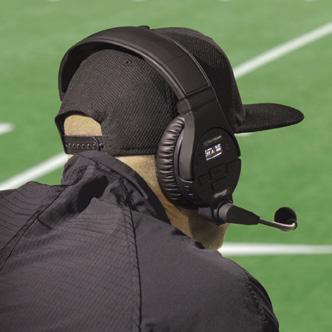
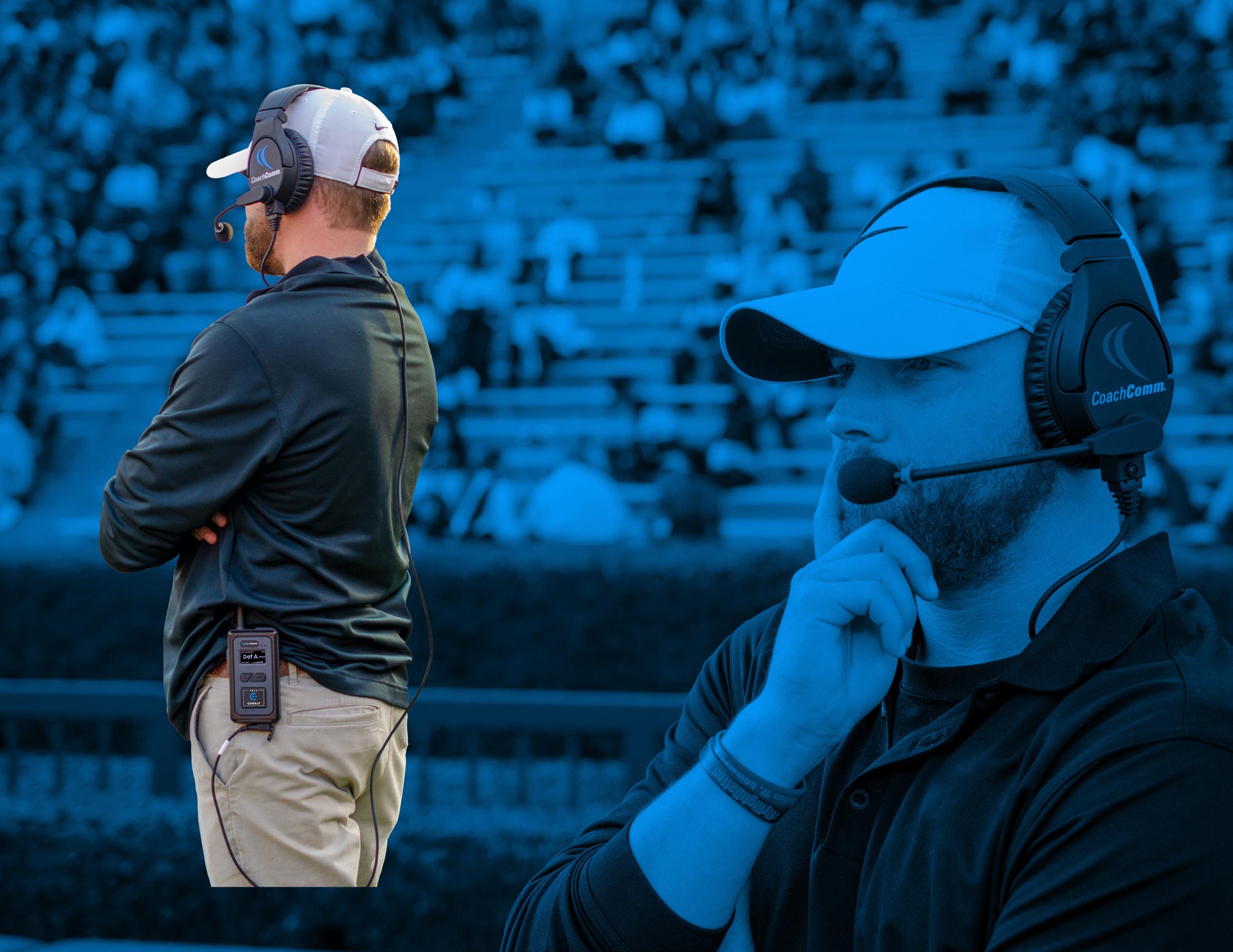
“I have used CoachComm for many years. The Cobalt PLUS All-In-One is the best headset that I have had. It is lightweight, comfortable and very clear.”

A1 WIRELESS HEADSET
• Lightest, best-fitting All-in-One headset
• No setup required & easy to use
• Superior sound quality with intelligent noise cancellation
• No cord!
• Up to six customizable channels with unlimited users
• No basestation
• Durable weather-resistant construction
• Mix-and-match All-In-One with traditional Cobalt PLUS beltpacks and player receivers
• Revolutionary drop-in wireless headset charger available




Features only high school coaches as speakers
1 18 Lectures given by top high school football coaches from Texas
Friday Night OL and DB Chalk Talk
Saturday Night Small School Session
A discount to B Bass Pro Shops Outdoor World for each coach at the clinic (Good on selected items for the duration of the clinic.)
The Embassy Suites Hotel is located adjacent to Bass Pro Shops and in close proximity to Grapevine Mills Mall and the Toyota Music Factory
Coaches Devotional Sunday morning
A clinic t-shirt for the first 700 coaches in attendance (Sponsored by The Performance Course)
Cash and Bass Pro Shops gear given away after each lecture Sunday
$ $1000 Cash door prize after the last lecture Sunday
“Texas Hold-Em” Tournament Friday night
50 minute lectures and 45 minute breakout sessions
Job Board available
Clinic Headquarters:
Embassy Suites Outdoor World at D/FW Airport 2401 Bass Pro Drive, Grapevine, TX 76051 Phone (972) 724-2600 or (800) EMBASSY
To receive the special room rate of $159, make your reservation by January 4 and state you are attending the DFW Coaches Clinic. Embassy Suites Hotel provides a complimentary cooked to order breakfast and happy hour each day to every coach staying at the hotel. Each room comfortably sleeps four.
$80 registration fee if mailed in by January 19 ($90 after January 19, no refunds after this date)
To pre-register, please send the registration form and a check payable to: D DFW Coaches Clinic 30801 Beck Road Bulverde, Texas 78163
Check our website for clinic updates or to register www.coachesclinic.net E-mail — coachesclinic@yahoo.com






A.C. Jones HS - Football
Abernathy HS - Football
Abilene HS - Volleyball
Alice HS - Football
Alice HS - Football
Allen HS - Football
Alto HS - Football
Americas HS - Football
Aransas Pass HS - Football
Aubrey HS - Football
Banquete HS - Football
Barbers Hill HS - Football
Bel Air HS - Football
Belton HS - Football
Ben Bolt HS - Football
Bishop HS - Football
Bloomington HS - Football
Borger HS - Football
Breckenridge HS - Football
Brennan HS - Football
Brook Hill HS - Football
Bryan HS - Football
Bullard HS - Football
CC Veterans Memorial HS - Football
C C Winn HS - Football
Calallen HS - Football
Caldwell HS - Football
Callisburg HS - Football
Cameron HS - Football
Canadian HS - Football
Canyon HS - Football
Canyon HS - Football
Canyon Randall HS - Football
Carroll HS - Football
Chisholm Trail HS - Football
Cinco Ranch HS - Football
Clear Springs HS - Football
Clemens HS - Football
Coronado HS - Football
Crandall HS - Football
Crane HS - Football
Cuero HS - Football
Cuero HS - Volleyball
Cuero JH - Volleyball
Cypress Falls HS - Football
THANK YOU to all of the schools who reported participation so far in this fall's "Our Day to Shine" Campaign! With support from our coaches and their communities, the THSCA is able to assist athletes & coaches beyond what our current benefit policies will allow.
Your donations, just through November 1st have totaled over $70,000!
Davenport HS - Football
Del Valle HS - Football
Denton HS - Football
Denver City HS - Football
Devine HS - Football
Dimmitt HS - Football
East Central HS - Football
Eastland HS - Volleyball
Edinburg HS - Football*
Edinburg Vela HS - Football
El Campo HS - Volleyball
El Dorado HS - Football
Fairfield HS - Football
Forest Park MS - Football
Fort Bend Austin HS - Football
Foster MS - Football
Franklin HS - Football
Fredericksburg HS - Football
Freeman HS - Football
Garland HS - Football
Gatesville HS - Football
George Ranch HS - Football
Giddings HS - Football
Glenn HS - Girls Basketball
Godley MS - Football
Gonales HS - Football
Greenwood HS - Football
Hallettsville HS - Football
Haltom HS - Football
Harker Heights HS - Football
Harlan HS - Football
Harlingen South HS - Football*
Henderson JH - Football
Hightower HS - Football
Idalou HS - Football
J.J. Pearce HS - Football
Jarrell HS - Football
Jim Ned HS - Football
John Jay HS - Football
Johnson HS - Football
Jourdanton HS - Football
Katy HS - Football
Kilgore HS - Football
King HS - Football
Klein Collins HS - Football
Klein Forest HS - Football
La Grange HS - Football
La Vernia HS - Football
Langham Creek HS - Football
Laredo Nixon HS - Football
Lindale HS - Football
Little Cypress- Mauriceville HS - Football
Littlefield HS - Football
Longview HS - Football
Lubbock Cooper HS - Football*
Lubbock Coronado HS - Football
Lyford HS - Football
Madison HS - Volleyball
Madisonville HS - Football
Mansfield HS - Football
Marble Falls HS - Football
Marshall HS - Football
McAllen HS - Football
McKinney Boyd HS - Football
Mesquite ISD
Midland HS - Volleyball
Midland Legacy HS - Football
Midlothian HS - Football
Montwood HS - Football
Mt Pleasant HS - Football
Muleshoe HS - Football
Navarro HS - Football*
Needville HS - Football
New Braunfels HS - Football
New Deal HS - Football
New Home HS - Football
Nixon Smiley HS - Football
Nixon Smiley HS - Volleyball
North Crowley HS - Football
Odessa HS - Football
Olney HS - Volleyball
Palmview HS - Volleyball
Palo Duro HS - Football
Pampa HS - Football
Pearce HS - Football
Pebble Hills HS - Football
Pecos HS - Football
Pettus HS - Football
Plains HS - Football
Port Neches-Groves HS - Football
Poteet HS - Football
PSJA North HS - Football
River Road HS - Football
Rockport-Fulton HS - Football
Roosevelt HS - Football
Round Rock HS - Football
Sanger HS - Football
Santa Rosa HS - Football
Seminole HS - Football
Sharyland HS - Football
Sharyland HS - Volleyball
Sharyland Pioneer HS - Football
Shoemaker HS - Football
Silsbee HS - Football
Skidmore HS - Football
South Garland HS - Football
Steele HS - Football
Stephenville HS - Football
Sudan HS - Football
Sulphur Springs HS - Football
Tascosa HS - Football
Terrell HS - Football
Texas HS - Football
Three Rivers HS - Football
Timber Creek HS - Football
Tompkins HS - Football
Troup HS - Football
Troy HS - Football*
Tuloso Midway HS - Volleyball
Tyler HS - Football
United HS - Football
United Johnson HS - Football
Uvalde HS - Football
Victoria East HS - Football
W.B. Ray HS - Football
Wall HS - Football
Weslaco East HS - Football
West Plains HS - Football
Whitesboro HS - Football
Wimberley HS - Football
Wink HS - Football
Wylie HS - Football
Yoakum HS - Volleyball
*Programs participating in Multiple Our Day to Shine Events.



Where did you attend high school and what sports did you play?
I graduated from Canyon High School and I played basketball (for Dan Hamrick) and baseball (for Gary Hix).

Where did you attend college and what was your degree in?
I received my Bachelor's degree in Sports and Exercise Sciences from West Texas A&M University.
Tell me when and why you decided to get into coaching?
I was raised by two parents in education; my mom taught elementary school and my dad was a coach. So teaching and coaching was always in the back of my mind. I worked at a bank in college and thought that might be a path I wanted to consider, but after doing that for my first two years of college, I realized how much I missed the game of basketball and wanted to be around the game.
Who has had the biggest impact/ influence on the way you coach?
It's hard to narrow that down. Being around my dad, I saw how much he enjoyed what he did and how much he loved being around

kids. I have taken parts of how I was coached throughout school and applied them to my philosophy. I was fortunate enough to work for Bob Schneider and Joe Lombard -- two of the best coaches in the history of Texas -- and still try to model our teams after their teams.

Tell me about your coaching journey so far.
At West Texas A&M Univ., I was a student assistant coach for girls' basketball. I have had coaching
stints at Godley HS (cross country, basketball, softball) -- Canyon HS (volleyball, basketball) -Panhandle HS (cross country, basketball, golf, track) -- Abilene Wylie HS (basketball, track) -Spearman HS (cross country, basketball, tennis) -- and now at Shallowater HS (cross country, basketball).

What do you hope your studentathletes take away from your program and their time with you?
Our program is based on 3 things: Play Hard, Play Smart, Play Together. We want our kids to understand that those qualities can be applied to everythingnot just sports. If they work hard, make good decisions, and know how to work well with others, they are going to be successful in their careers, as mothers, and as people. Most of all we want them to know how much we love them.
What character quality do you feel is most important to impress upon today’s youth?
We have to teach kids how to deal with adversity. When things don't go their way or are hard, too many have been allowed to just quit or wait for someone to do it for them. Kids have to be reminded that life is 10% what happens to
you and 90% how you respond to it. Life is hard but that is okay. God doesn't put us through anything that we cannot handle.
Who has been your biggest supporter in your career?
That could be an endless list because I have had AMAZING support from my family and friends. But my wife (Jennifer) and our kids (Kinleigh, Bryson, Braxton) are at the top. We have been in a lot of different locations and schools, so they have had to adjust to new places and people too many times. Through it all, they have been there to support me through all the "peaks and valleys" of this profession. They have loved getting to be around all of our players through the years and I love it that they got to be on the floor and celebrate with us after the State Championship last year.
What advice would you offer a young coach, just starting their coaching career?
1) Faith and Family first; those are the things that will allow you to continue to enjoy life and persevere through the tough times that will happen. 2) Love the kids; that will allow you to enjoy your job.


What does it mean to you to have been recognized as 23-24 Coach of the Year by your THSCA peers?
Incredibly honored because we have so many outstanding coaches in our state that deserve to be recognized. I appreciate the recogntion but this is really a recognition for our whole team: players and coaches. I was blessed with a tremendous group of individuals who all sacrificed for TEAM success and being recognized for that is appreciated.

Where did you attend high school and Who were your coaches?
I grew up in Lubbock, Texas. I played any sport I could play. I just wanted to compete. By the time I got to High School all I wanted to do is play basketball. I really had a one-track mind at that point. I played for a small TAPPS school called Trinity Christian. We had a good team. We won 62 games my final two years, and my junior year we went 32-4 and won the TAPPS 4A state title.
I played all 4 years for Coach Todd Duncan. He's currently the head basketball coach at Lubbock Christian University.

Where did you attend college and what was your degree in?
I played one year at Wayland Baptist Univ. After my Freshman year I transferred to Texas Tech and graduated with a degree in Exercise and Sports Science.
Tell me when and why you decided to get into coaching?
My high school experience was incredible. It couldn't have been better. I loved my teammates and my coaches. I assumed everyone had the same experience. I had two younger brothers. They went to two different schools in town and had two vastly different experiences. It was from the stands supporting them that it dawned on me that coaches had a lot of influence in kids lives'. My second year of college is when I knew I wanted to be a coach.
Who has had the biggest impact/ influence on the way you coach?
I think the guys you work with influence your coaching more

than anyone else. I worked as a volunteer for Todd Duncan, Rod Wright, and Tom Inman. Each of them impacted me in many ways. Jeff Clarkson impacted me more than anyone else. I was his assistant for 11 years at two different schools. I could fill a book with the wisdom he left with me.

Tell me about your coaching journey so far?
As a college undergraduate, I volunteered for two seasons at Trinity Christian HS in Lubbock. Todd Duncan was my high school coach as well as the first head coach I was able to serve under. My first paid job was in
Richardson ISD as a JH coach. I coached basketball and track. Rod Wright at Berkner let me volunteer with them during their final four run in 2006.
My second year out of college was at a MS in Plano. I coached Football, Basketball and Track. Tom Inman was the head coach at Plano Senior and he let me volunteer with them. They were the defending state champs.
In the Spring of 2007, Coach Inman connected me with Jeff Clarkson who was looking for a 9th-grade B-team coach at Naaman Forest. I was there for 5 years, and coached the 9th grade B-team four times, and the JV one time. I was an assistant Track coach the entire time. We made a run to the final four in 2012.
Coach Clarkson moved to Plano East and I was able to go as his Varsity Assistant. I served in that role as for 6 years before I was promoted to the head coaching role. 2024 marks my 13th year at Plano East, 7th as Head Coach.
What do you hope your studentathletes take away from your program and their time with you?
So much... I want their high school basketball career to be the best time of their lives. I want them to look back and think, "Those were the good 'ole days".
I also want them to learn what it means to commit to something you are passionate about, and learn what it means to set a goal, develop a work ethic, and make sacrifices to achieve their goal.
I also want them to know what a great father and husband look like.
What character quality do you feel is most important to impress upon today’s youth?
As a coach, I am tasked with the responsibility of teaching athletes how to communicate well. Especially with adults.
They need to learn about time management and leadership skills. I feel like our athletes are the future leaders in our community.
Who has been your biggest supporter in your career?
EASY... My family! My wife Micahl and my 5 children make enormous sacrifices so that I can coach other people's kids.
My mom and my dad never miss anything I have done in sports.
What advice would you offer a young coach, just starting their coaching career?
Who you work for matters! Work for the best you can. Learn as much as you can. Just like playing sports... You learn
through experience. Don't pass up opportunities to work camps or coaching summer teams.


What does it mean to you to have been recognized as 23-24 Coach of the Year by your THSCA peers?
You don't sign up to teach and coach for personal or professional accolades. You don't even really ever think about it. Then when a significant award such as this comes through it really takes you off guard. I never expected anything like this. The award truly reminds me of the Bible verse Ephesians 3:20. "... to him who is able to do above and beyond all that we ask or think..."

CLINIC LOCATION
Courtyard Marriott New Braunfels River Village
SCHEDULE


Your Letter Jacket Specialist
Check the Website
CONFIRMED SPEAKER LINE UP
Ron Rittimann - Alamo Heights HS
Todd Bailey – Aledo HS
Nick Rogers - Pieper HS
Tony Sanchez - Westlake HS
Larry Zierlein - NFL Retired Mac Acuña – Performance Course
Dr. Lindsay Stephens – Sports Medicine Associates
More to follow…
Courtyard New Braunfels River Village
Same Great Location on the River
CLINIC RATE
CLINIC DIRECTORS
SPONSORS
Rudy’s Bar

By James Burk, Head Strength & Conditioning Coach at Hardin-Simmons Univ.

VBT (Velocity-Based Training) is an excellent tool for all sports and athletes to optimize their training. Although VBT has been around for a long time, it has recently become more affordable for high schools to implement. Benefits of VBT include avoiding overtraining, by using optimal loads, providing instant feedback for each repetition, and creating a competitive environment among athletes. In my opinion, it compares to the emergence of Hudl. Hudl changed the game and how video was traded and watched. We will never go back to the old ways of meeting in a parking lot to trade VHS tapes. I envision VBT as being similar in how we optimize the training of our own athletes.
Several types of velocity-based tools and associated costs and ease of use. Camera-based systems such as Perch and Elite Form are the most expensive and are usually found in college settings. Linear Position transducers use a tether that attaches to the bar commonly associated with Tendo units and Gym Aware. Accelerometerbased technologies utilize a Bluetooth device that attaches to the bar or the body, such as Output and Enode. An Accelerometer device can range from $300-$500 per device. Other costs associated with going to a VBT system would include tablets at the rack with a magnetic tablet mount. Each of the above-mentioned methods and company includes a software subscription that allows for recording and
tracking of athletes’ weights used as well as speeds achieved and for coaches to write the workouts that will be displayed at each rack and tablet.
VBT does not mean just training fast. It is training based on a prescribed or desired speed versus a traditional percentage. When looking at a prescribed percentage, it does not factor in an athlete’s readiness for that day and that session. An athlete’s strength level can vary up to 18% daily. This can result from life stressors, lack of sleep, not eating breakfast… A set that is prescribed at 80% may feel like 62% to the athlete who is primed and ready, yet it may feel like 98% to the tired player. However, an average velocity of 0.5m/s is objective and can be performed by an athlete with an optimal load, not a pre-determined load.
When lifting in season using VBT and its auto-regulatory aspects, it becomes even more beneficial. A player who receives few repetitions in practice versus a player who rarely comes out of the game, or competition, will be in a different readiness state when lifting. Therefore this method of training becomes even more beneficial when the lift takes place post-practice.
What does this look like, and how does this apply to obtaining different strength goals? If the objective is to improve absolute strength then the average velocity would be .3-.5 m/s. The squat and
bench will have different speeds since the distance the bar travels is further in the squat than the bench. When the objective is strength-speed (aka dynamic effort), the speeds will be between .751.0 m/s. In the past, coaching cues might include: “move the bar faster”, should hear a noise at the top because the bar is moving so fast, or you should get 3 reps in the same amount of time it would take you to get a single max effort repetition. These are still not bad coaching cues if you do not have VBT devices.
With VBT, objective feedback is given after each repetition. Therefore guessing becomes obsolete. Think of it as having a coach at every rack. When using VBT for Olympic Lifts, a peak velocity will be used. Height does factor into speeds; players with longer limbs will typically have higher speeds due to the fact that the bar is traveling further.
Moving the bar with specific speeds versus traditional percentage-based training can also have additional benefits that carry over to the field of play. Baynard et.al (2021) found that VBT training showed greater improvements in countermovement jumps, sprint speed, and change of direction.
Beyond the beneficial scientific aspects of the training, there are additional benefits beyond sets and reps. Accountability of players completing all prescribed sets and repetitions with appropriate weights and speeds is tracked when athletes correctly enter their name and the weight being used. After the workout, all data can be observed and easily exported to a spreadsheet. Some systems also can display the distance the bar moves which is quite helpful when coaching depth in squat movements. One of the most powerful benefits of VBT that I underestimated before seeing it in action is the competitive environment it creates. Weakley et. al (2019) state the following in regard to the benefits VBT has in this area, instantaneous objective feedback should be used when completing resistance training to increase motivation and competitiveness and improve performance.
In conclusion, its important to note a few helpful hints in order to avoid common mistakes I have made. First, give constant reminders for
athletes to enter their name, and weight used, and, based on the system, hit complete at the end of each set. Next, place the tablet where the athletes can see it in order to get feedback following each repetition. Place the sensor on the bar where there is no possibility of crushing it when putting the bar back in the J hooks. Finally, make sure you have all technology charged and updated as needed.
Athletes have gotten more powerful and stronger for a long time without the use of VBT and will continue to for years to come. However, it is definitely worth researching and considering its use with athletes. If you have questions or would like to discuss this in more detail feel free to contact me at james.burk@hsutx.edu. For examples of how we use VBT in our training and for additional resources, scan the QR code below.


Banyard, H. G., Tufano, J. J., Weakley, J. J. S., Wu, S., Jukic, I., & Nosaka, K. (2021). Superior Changes in Jump, Sprint, and Changeof-Direction Performance but Not Maximal Strength Following 6 Weeks of Velocity-Based Training Compared With 1-RepetitionMaximum Percentage-Based Training. International Journal of Sports Physiology & Performance, 16(2), 232–242
Weakley, J. J. S., Wilson, K. M., Till, K., Read, D. B., Darrall-Jones, J., Roe, G. A. B., Phibbs, P. J., & Jones, B. (2019). Visual feedback attenuates mean concentric barbell velocity loss and improves motivation, competitiveness, and perceived workload in male adolescent athletes. Journal of Strength and Conditioning Research, 33(9), 2420–2425. https://doi.org/10.1519/ jsc.0000000000002133

BUILDING FOR SPORTS FROM START TO FINISH
LIGHT GLADIATOR ATK | Used in 28 of 32 NFL locker rooms and trusted by elite players across the league.
NFLPA-NFL “Recommended Helmet”| Achieving the highest safety rating category for the 2024-25 season.
Ranked Among the Best | #2 all-purpose helmet, #3 overall by Virginia Tech, and up to 40% lighter than competitors at just 3.5 lbs.
LIGHT SS1 (Flag Headgear) | #1 Virginia Tech flag headgeat with perfect 0.0 score
MENTION CODE TEXASCOACH FOR EXCLUSIVE PRICING.
FOR SALES INQUIRIES OR QUESTIONS CONTACT:




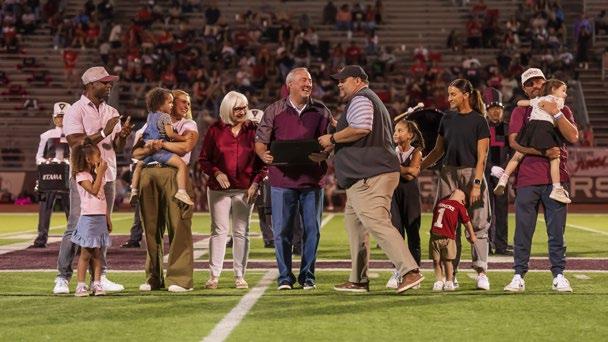
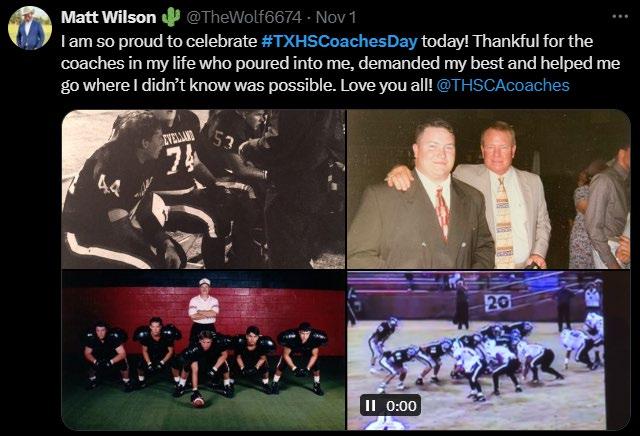
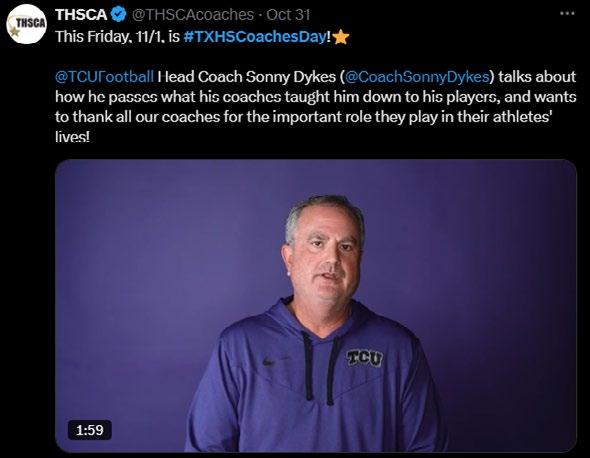
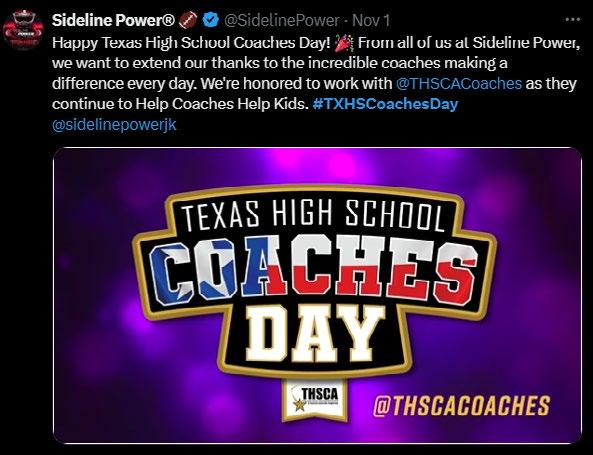
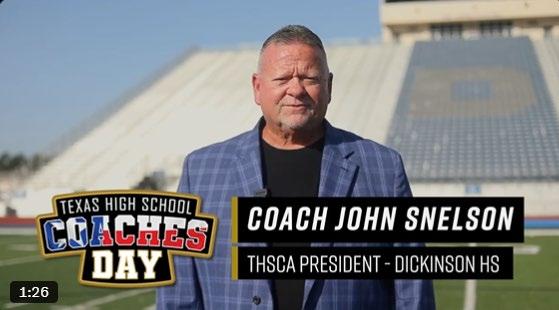
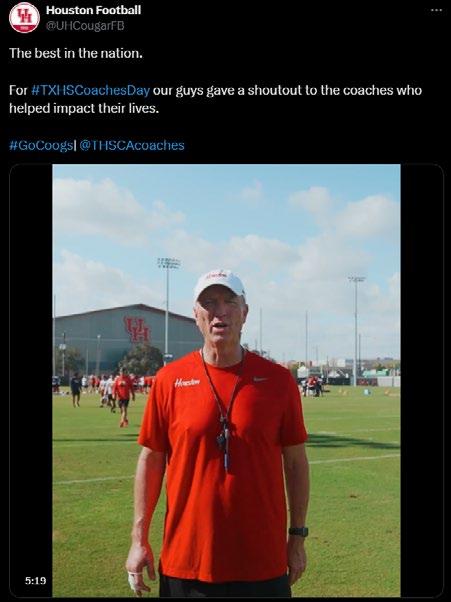
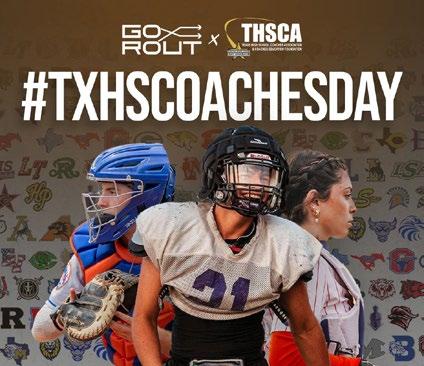
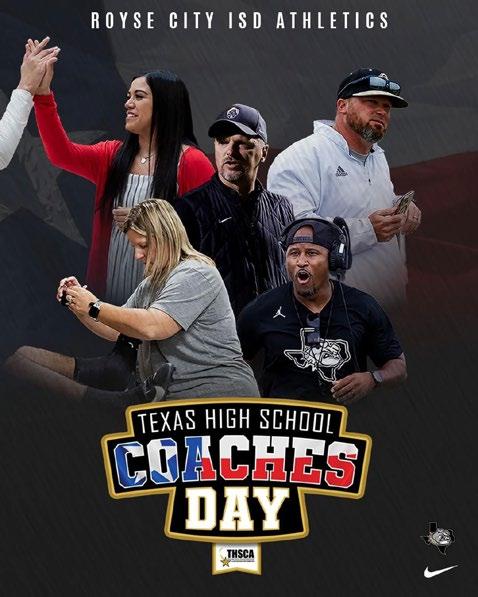
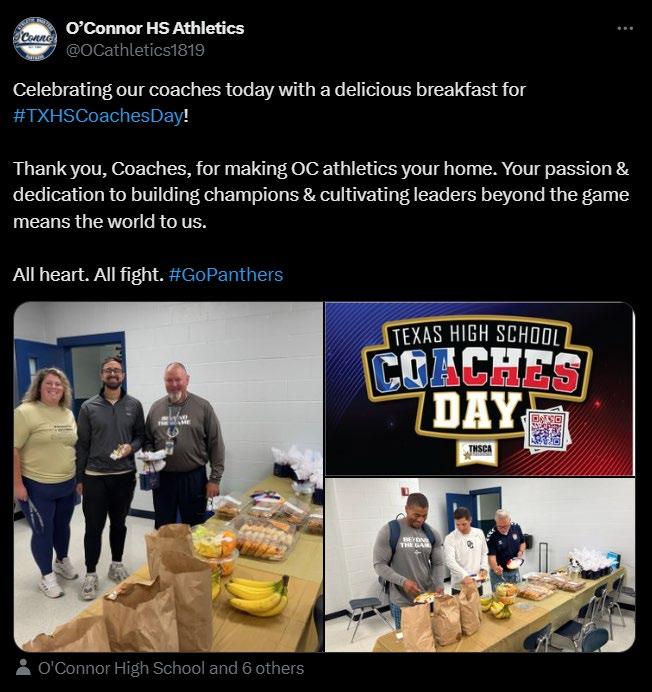
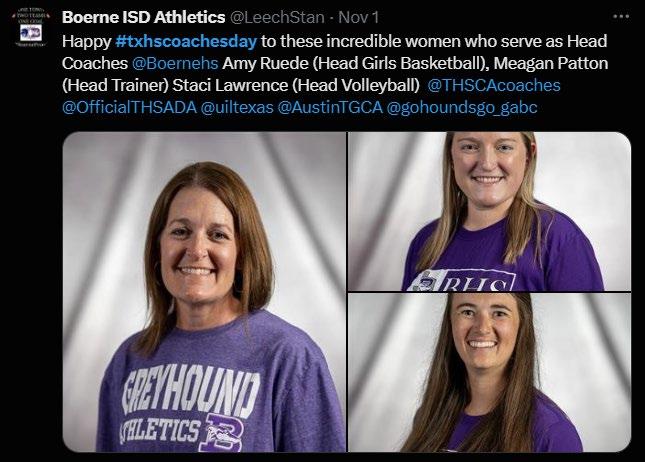
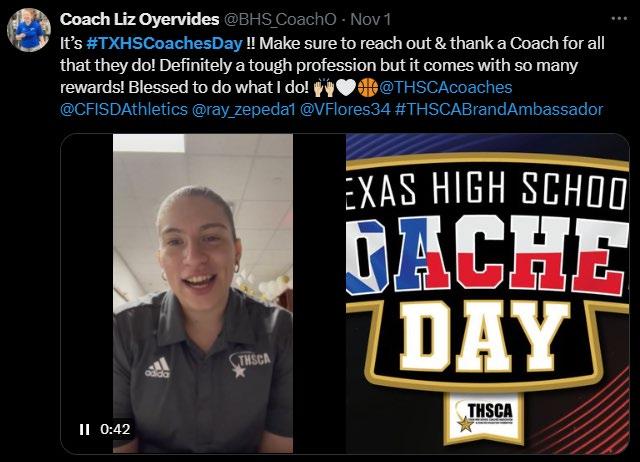
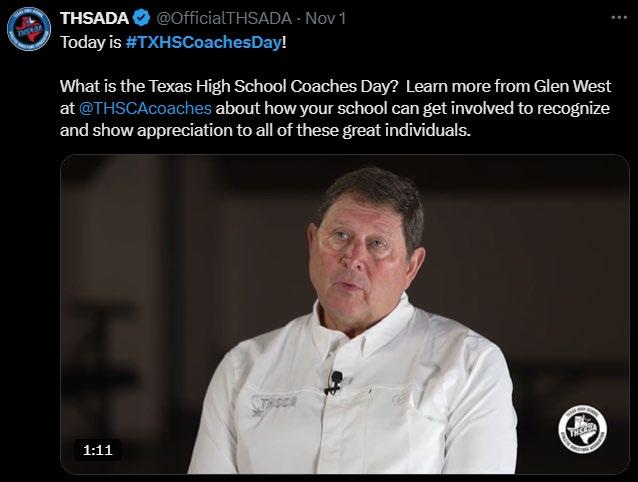
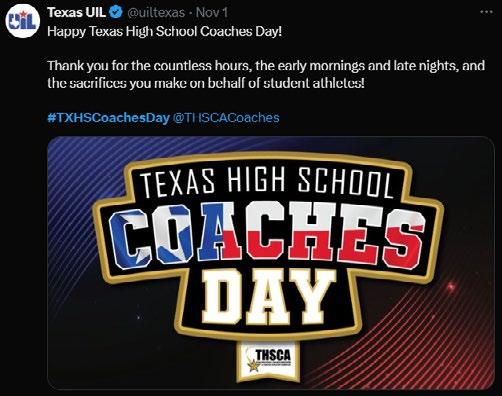
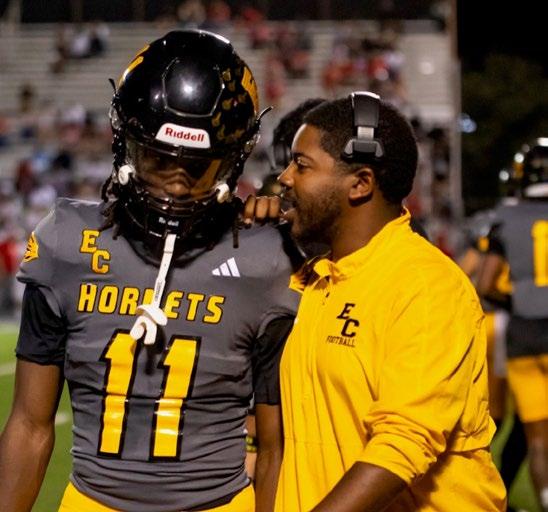
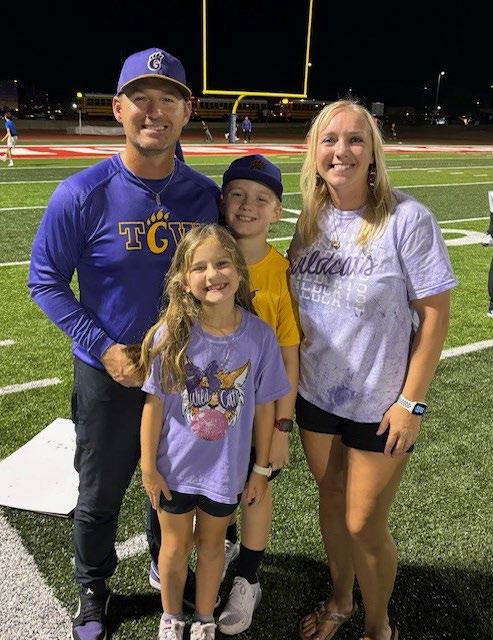
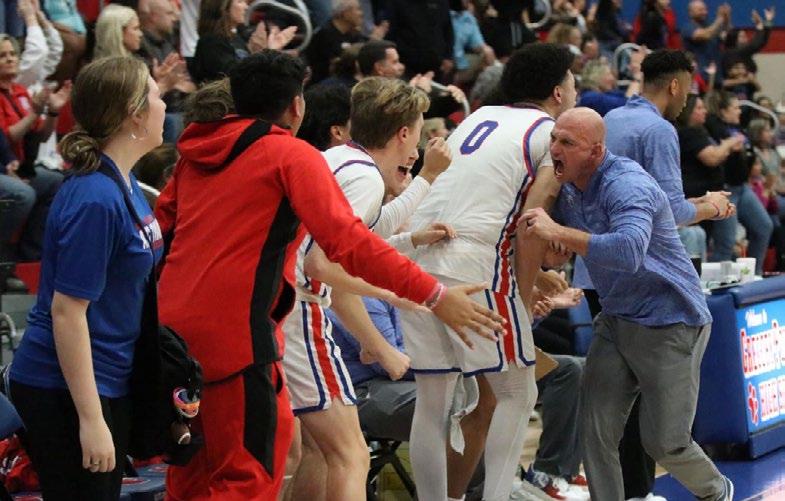
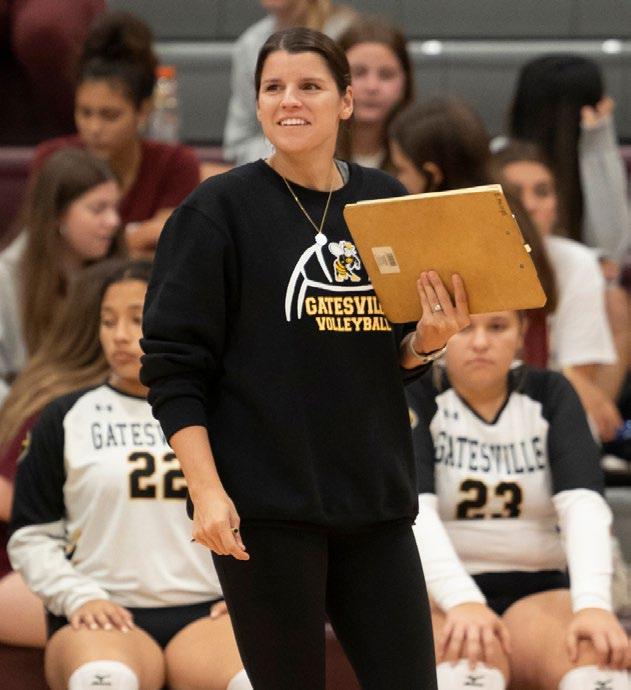
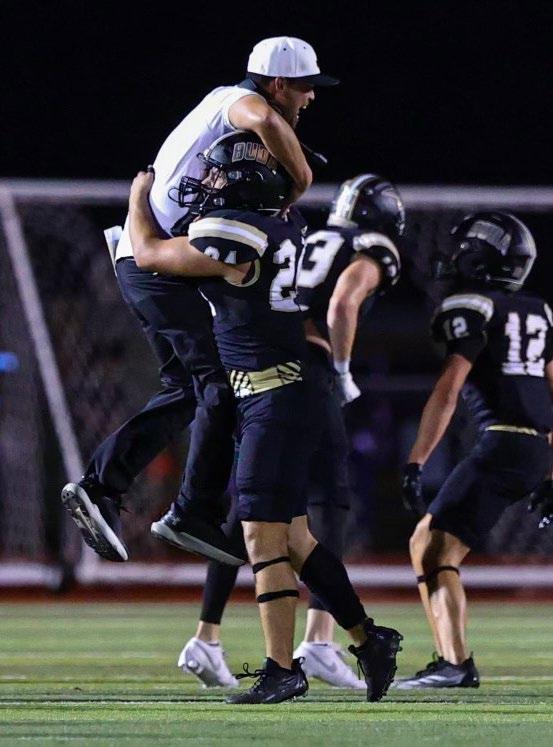
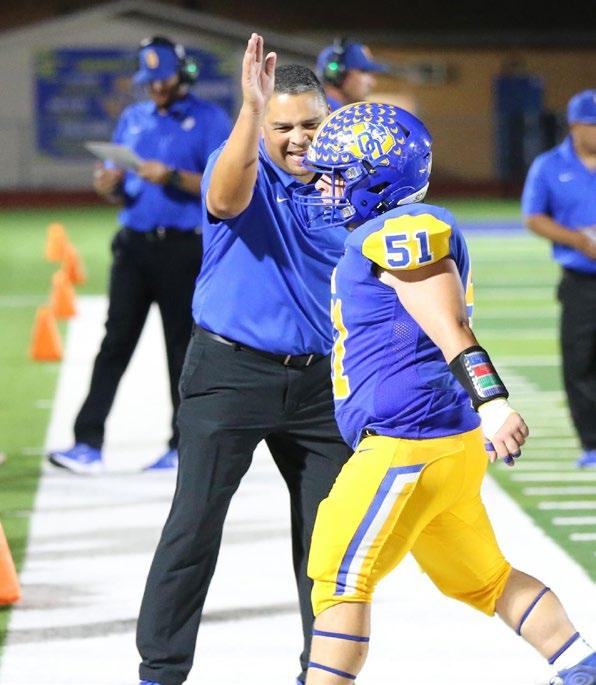
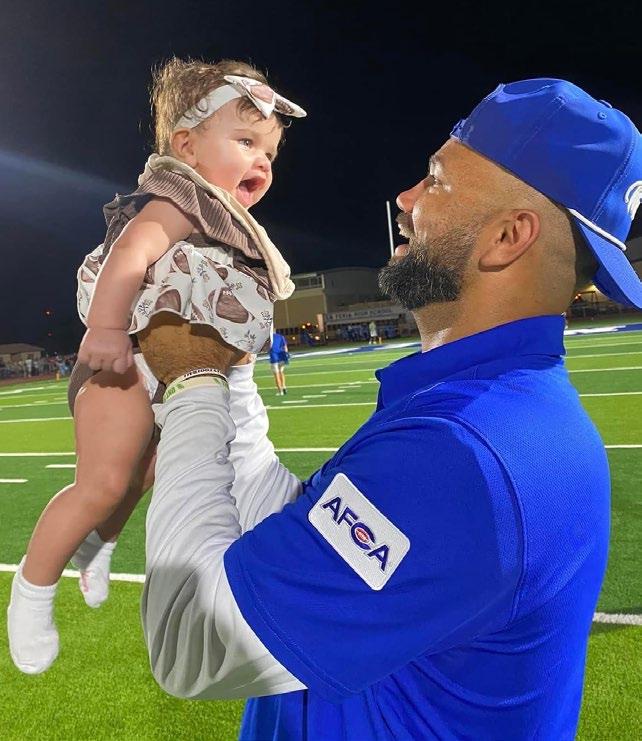
High school and middle school coaches all over Texas now have a day specifically designated to celebrate their positive impact on students and communities. Senate Concurrent Resolution 38, designates the first Friday in November each year, as Texas High School Coaches Day. The resolution passed in the Texas legislature on May 19, 2023.
Participation in high school athletics has positive lifelong benefits for student-athletes. Student-athletes learn time management skills, leadership skills, the value of hard work, teamwork, and how to work through adversity. An article published by the National Federation of High Schools outlines that students also show a “stronger sense of selfconfidence in building relationships with others and having an expanded capacity for empathy.” Without dedicated coaches to lead high school sports programs, students would miss out on the benefits of sports.
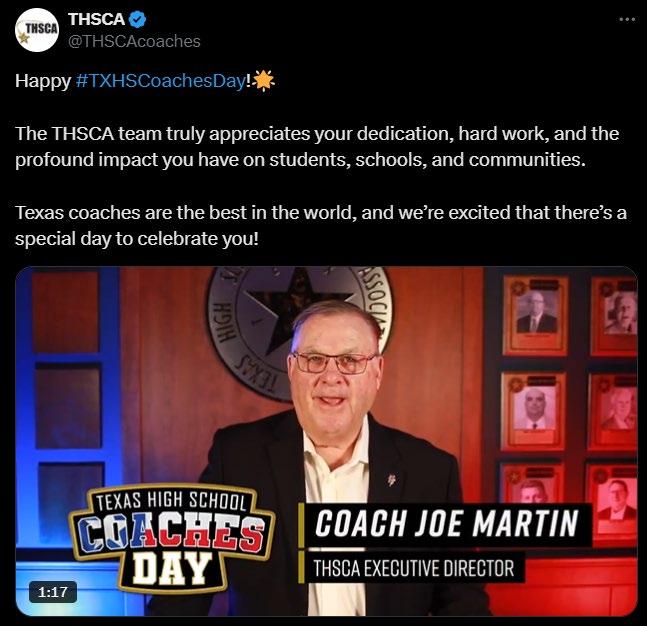
“Texas high school and middle school coaches are unique in that they are integral to the schools and communities they coach,” said Joe Martin, Executive Director of the Texas High School Coaches Association (THSCA). “Public school coaches are full-time teachers, department chairs, hall and cafeteria monitors, disciplinarians, and grief counselors. They are field trip bus drivers, pep rally leaders, part-time field and facility maintenance workers, security guards, and janitors. They are the first to arrive on campus and the last to leave at night. But above all, they care for students and the community without expectation of praise and recognition. That is why we are thankful that Texas Legislatures voted to create a day specifically for our school coaches; Texas High School Coaches Day will be celebrated to recognize the incomparable role that Texas coaches play in our communities.”
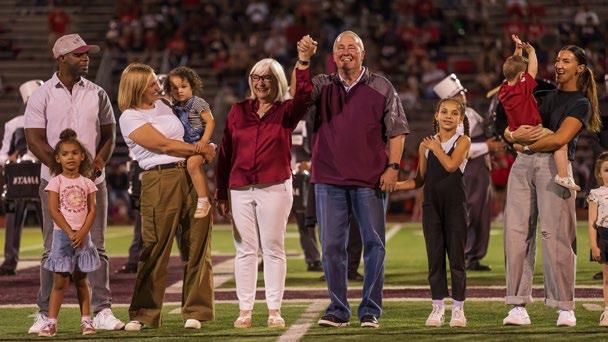
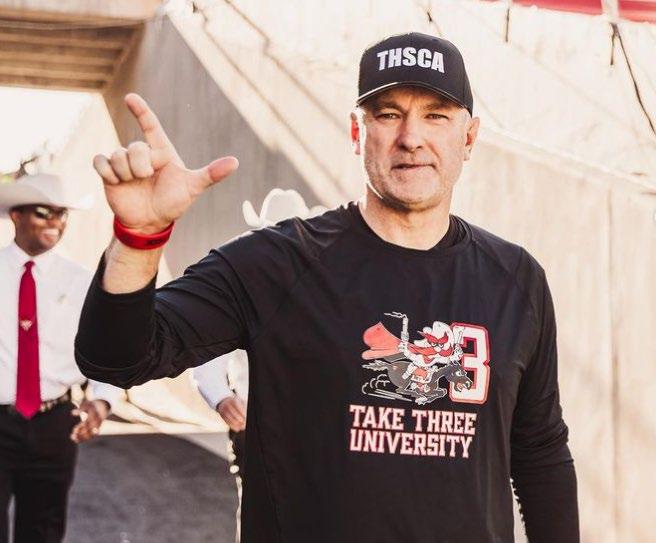
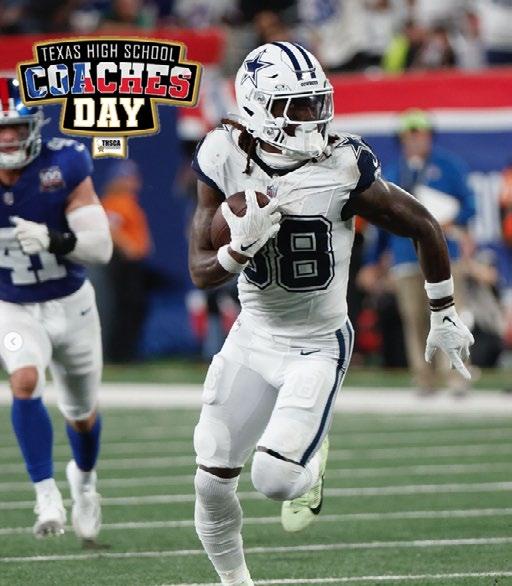
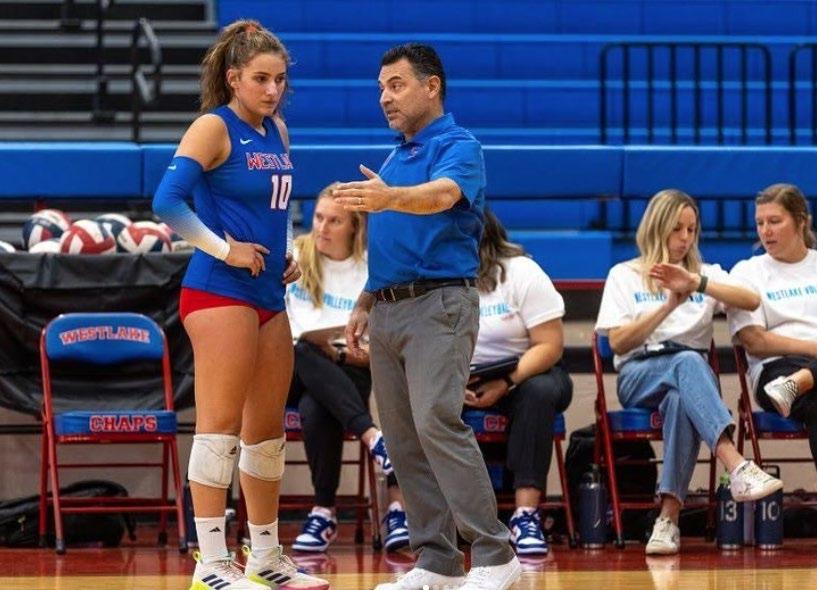
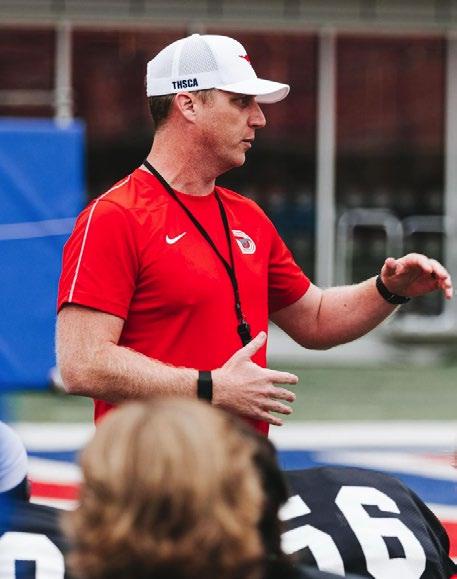
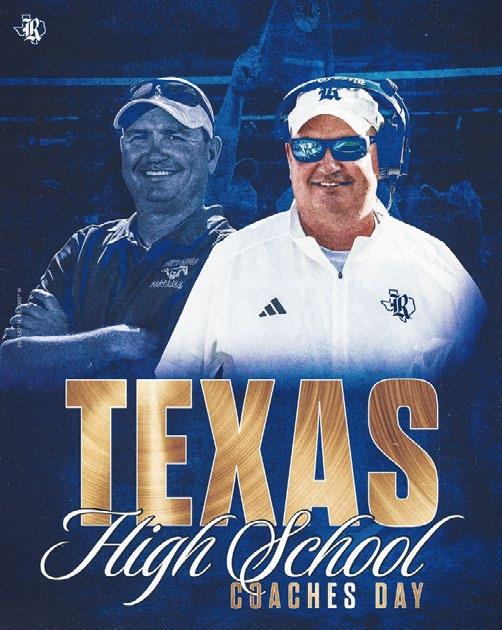
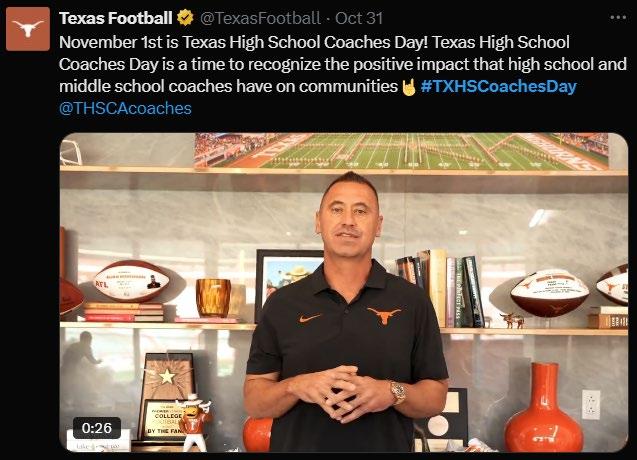
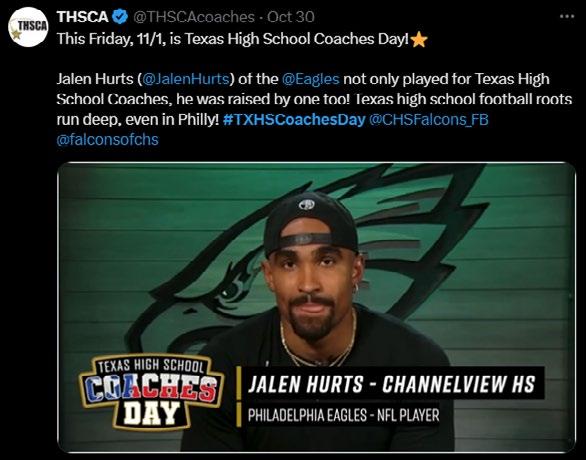
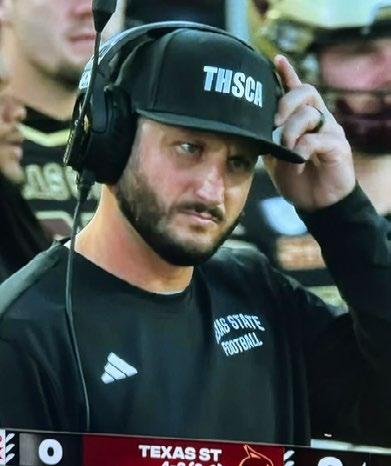
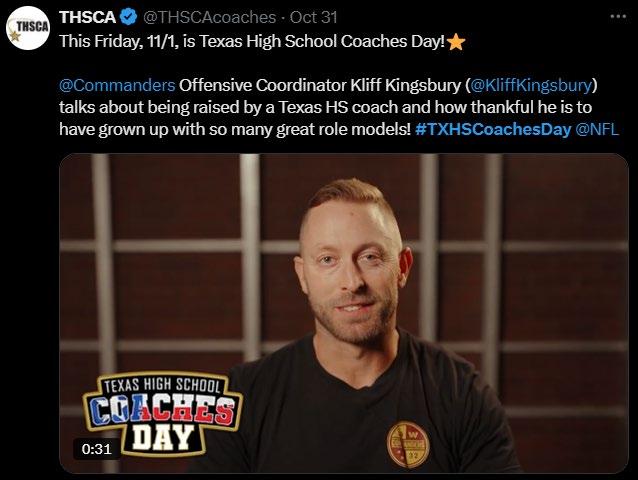
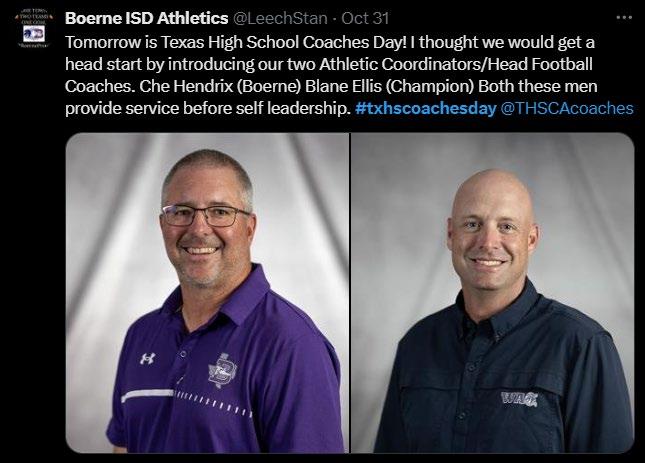
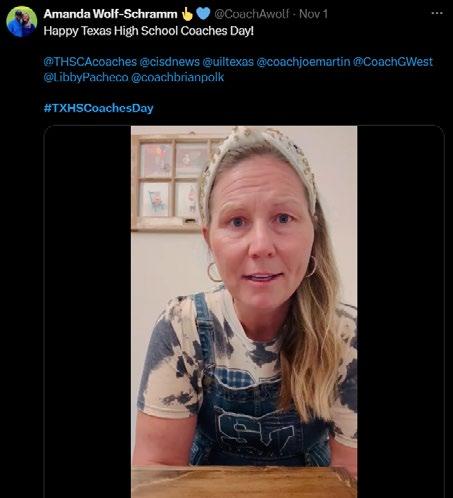
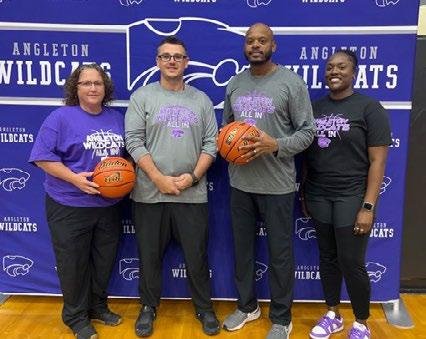
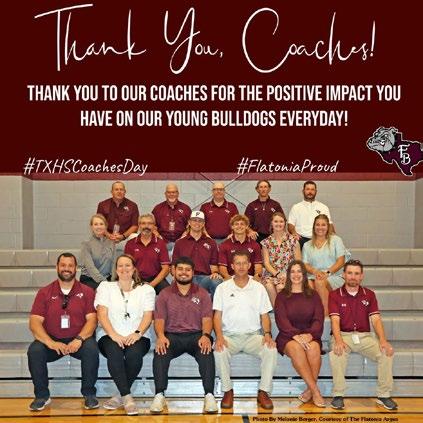
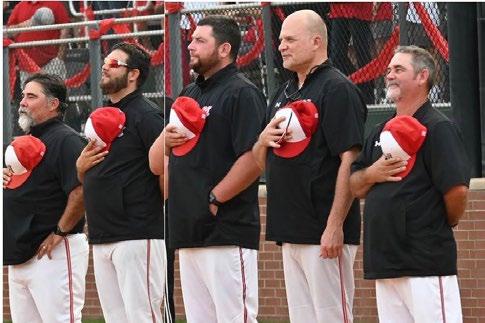
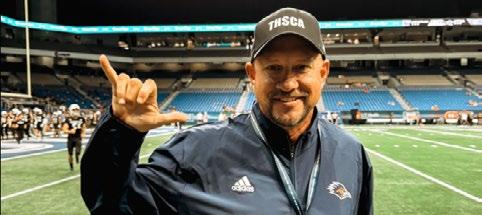
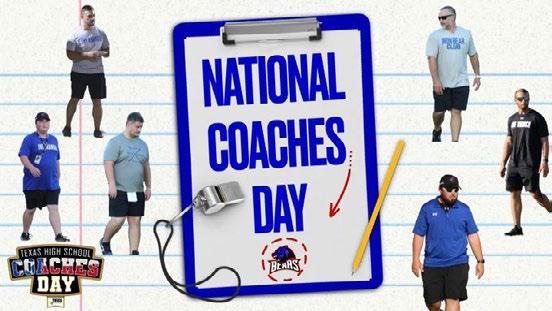
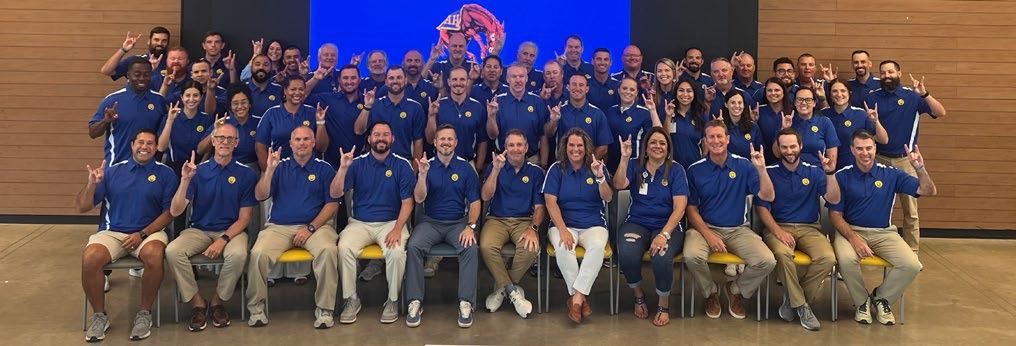
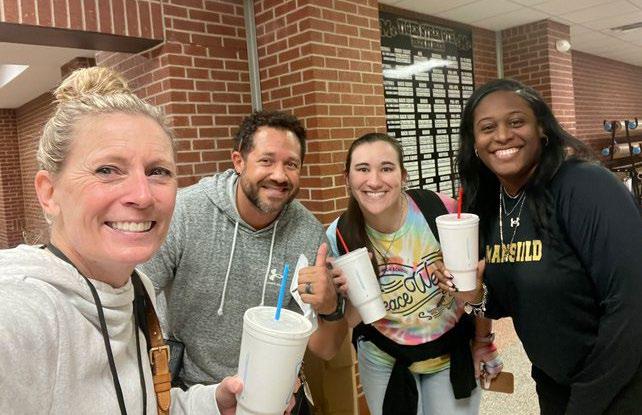
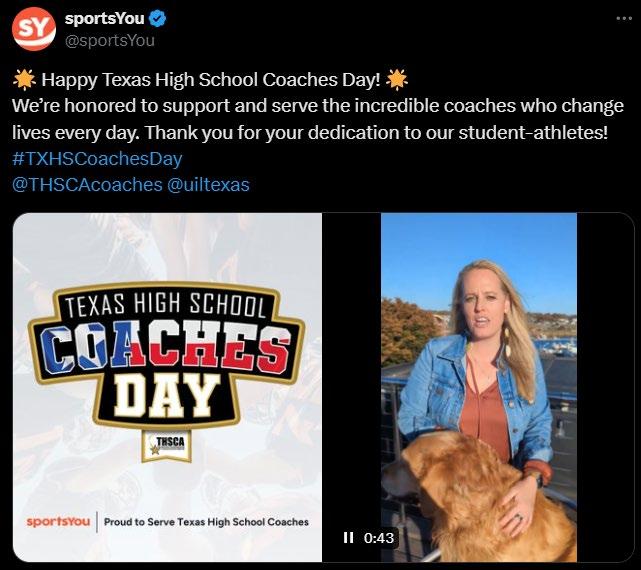
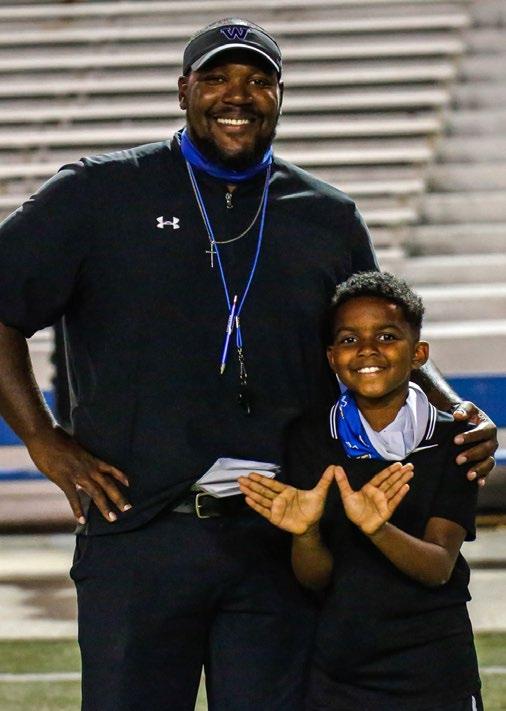
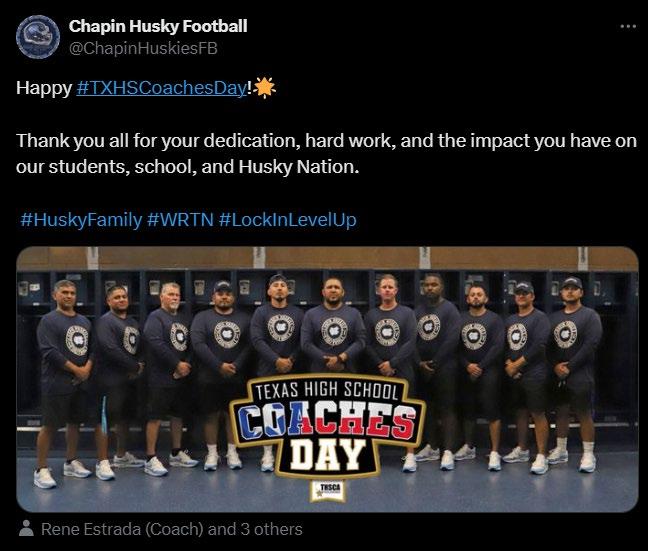
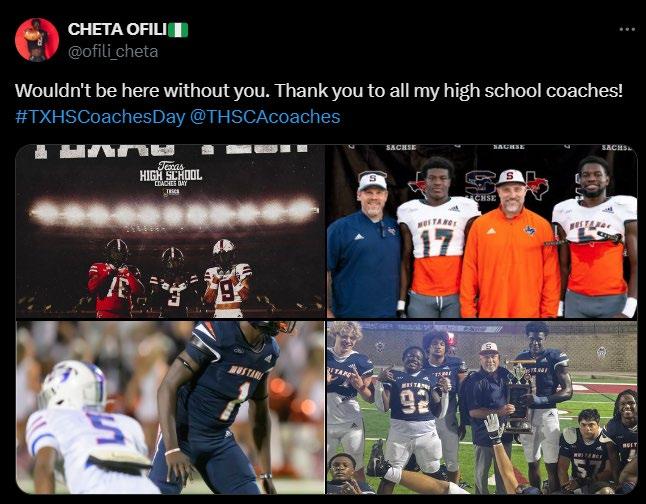
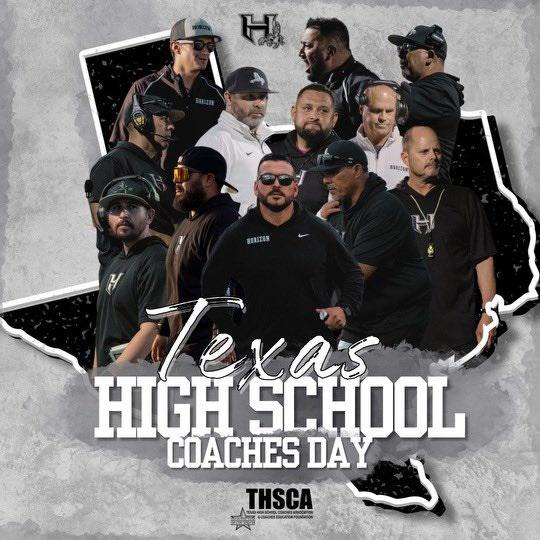
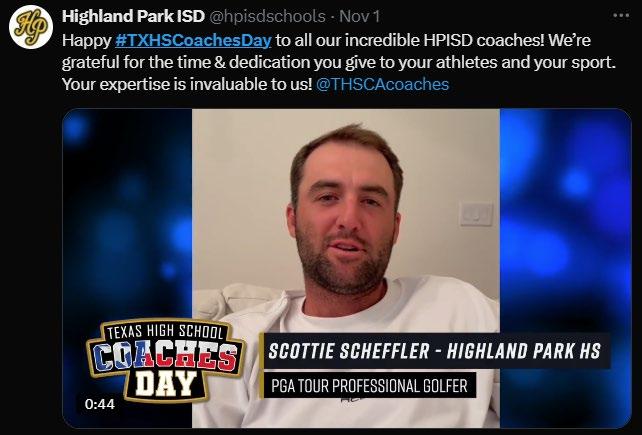
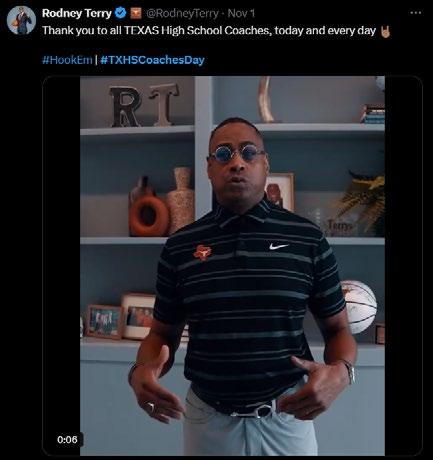
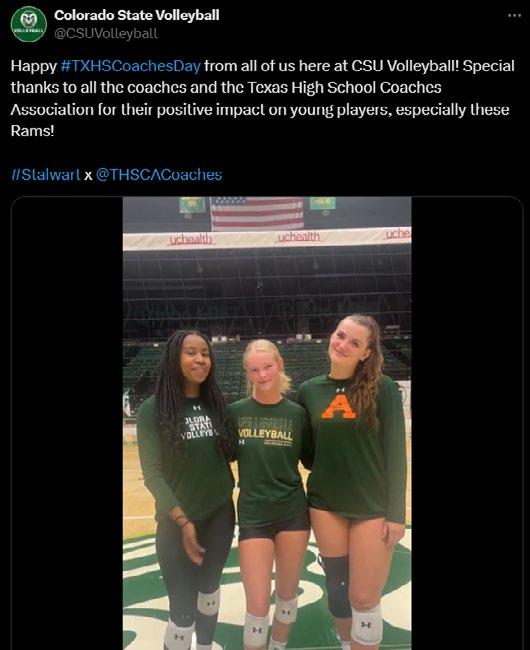
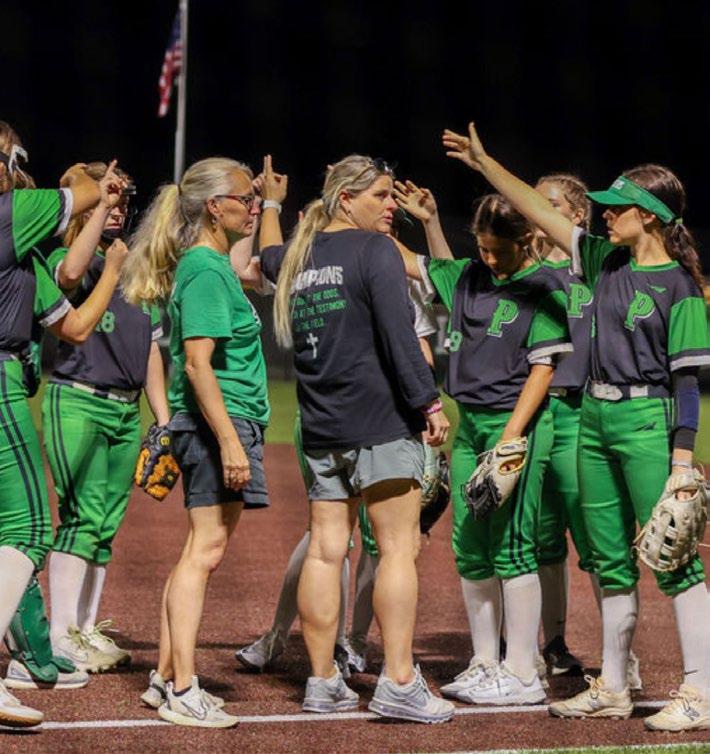
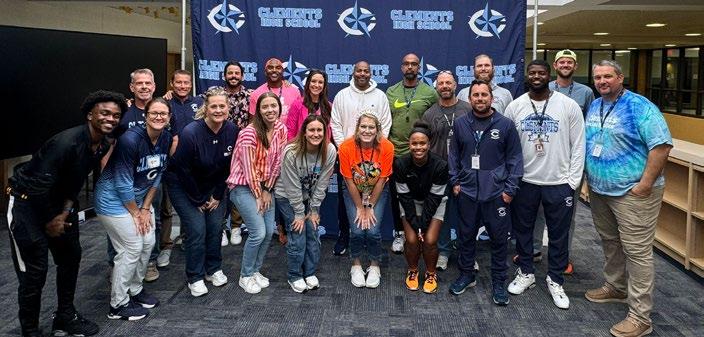
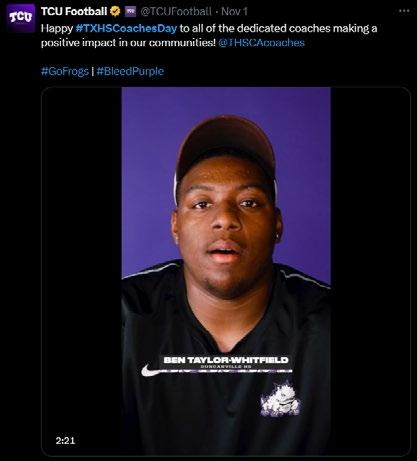
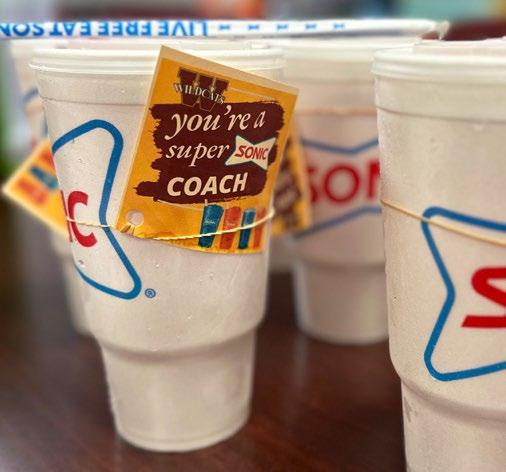
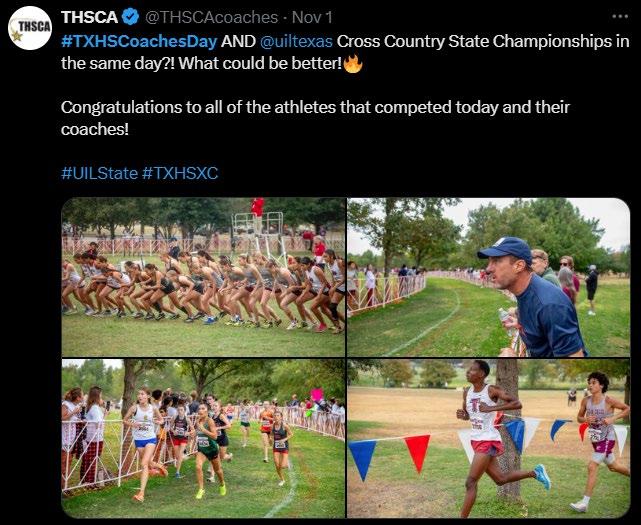
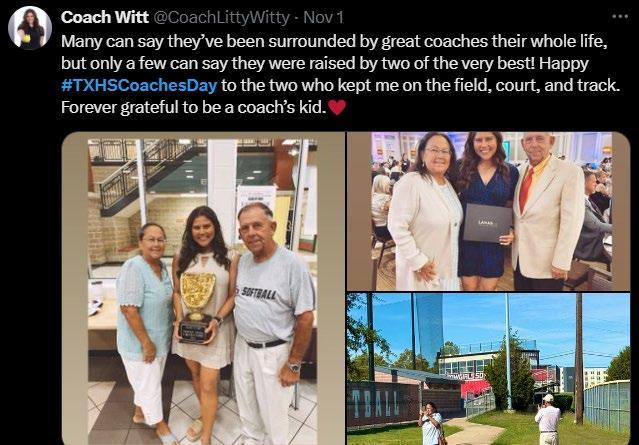
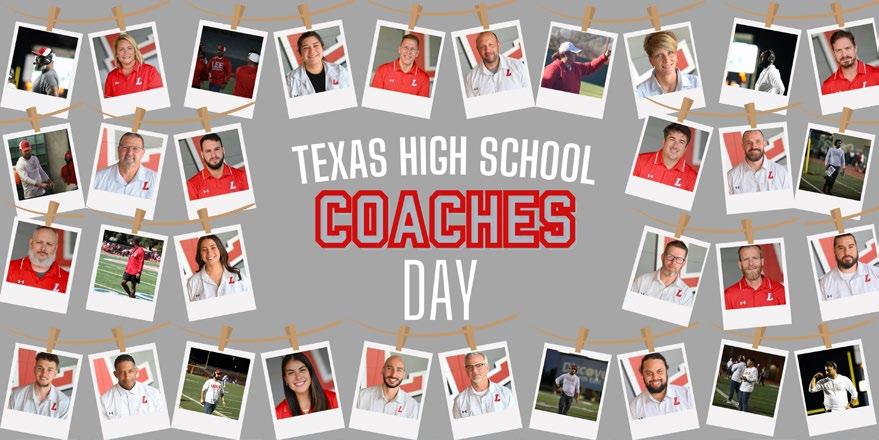
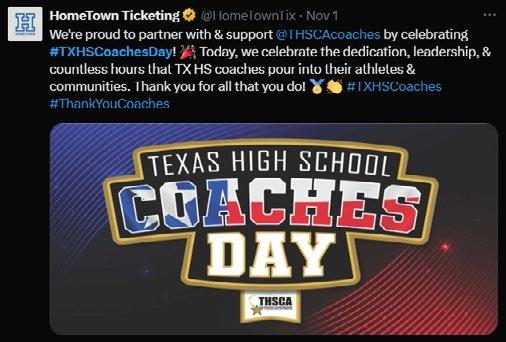
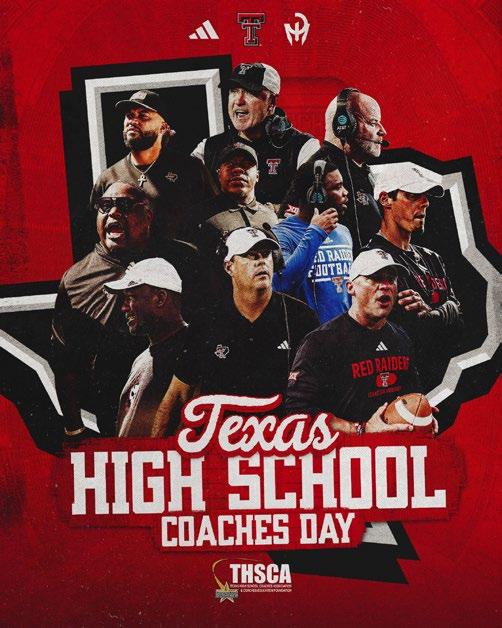
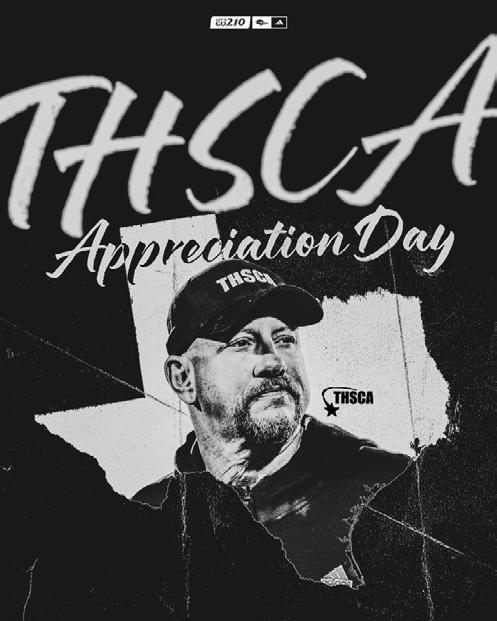
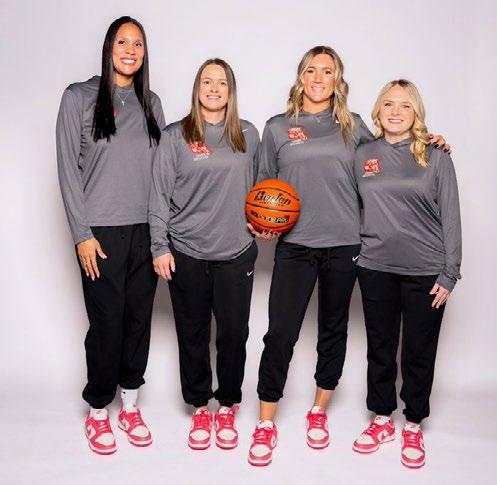
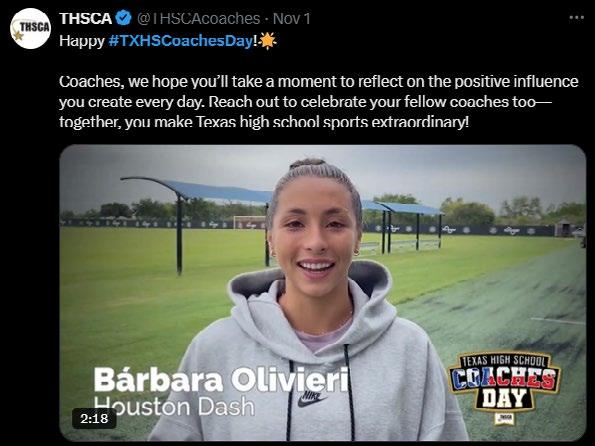
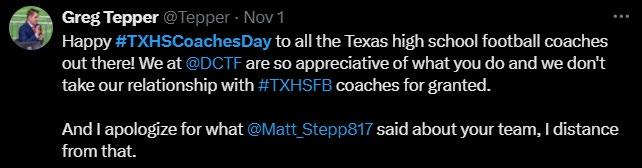
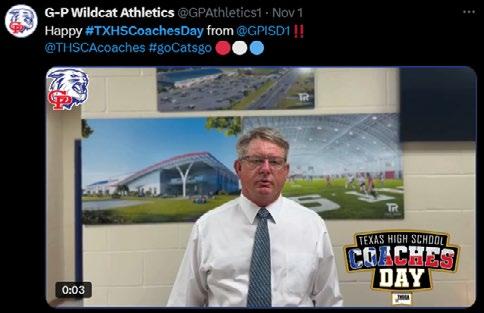
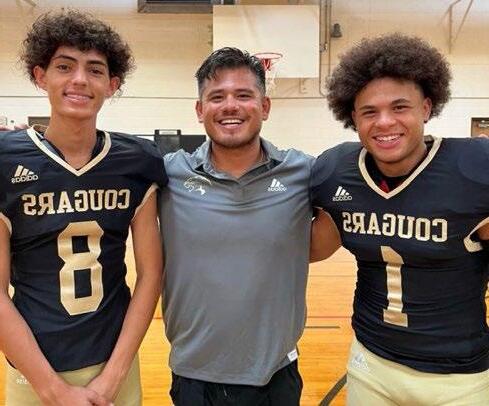
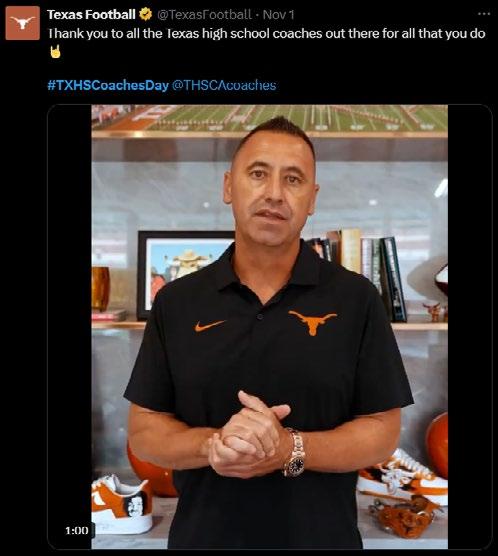
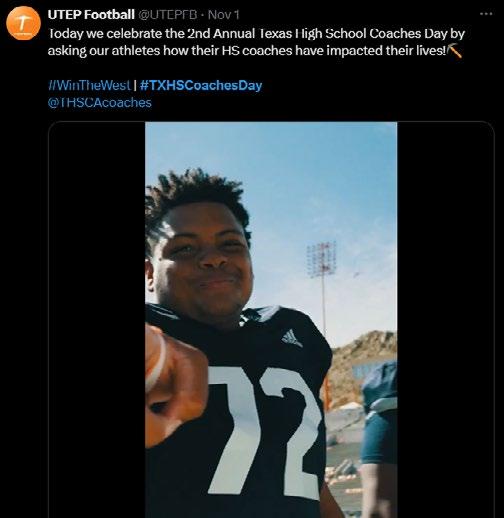
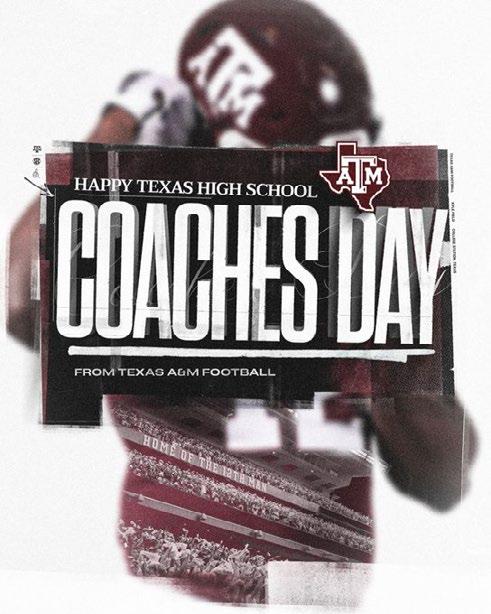
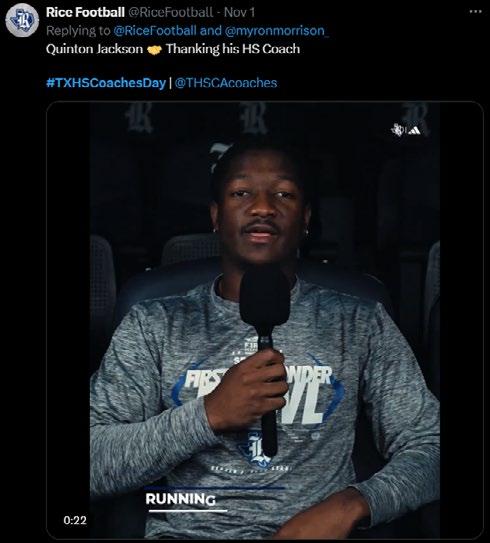
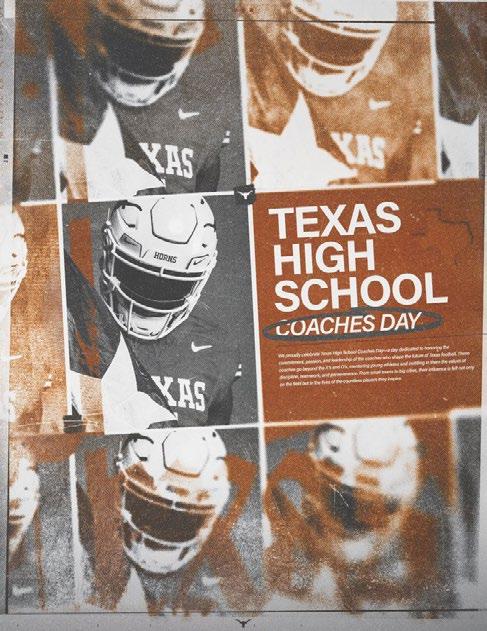
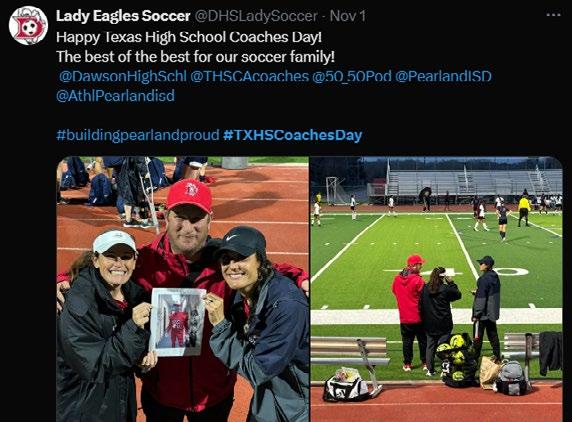
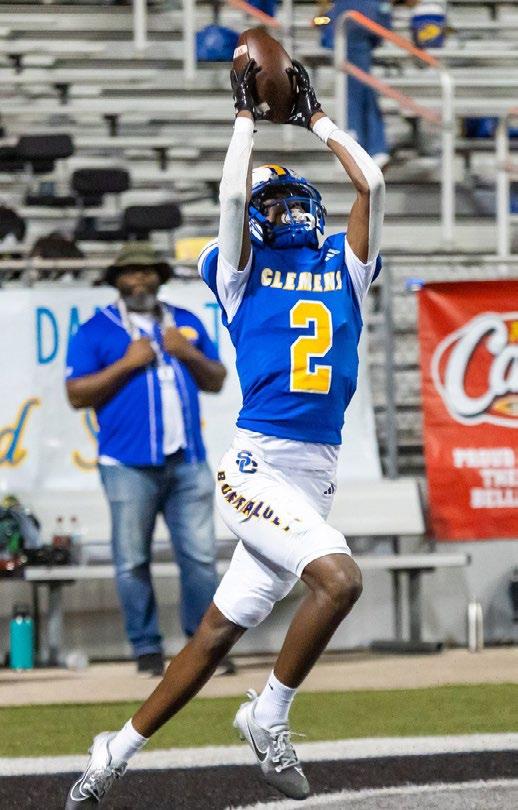
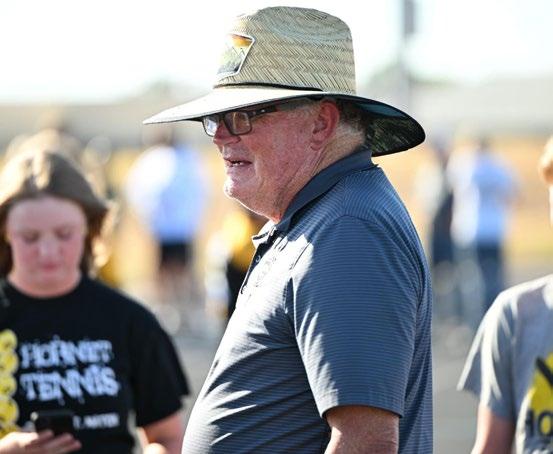
Schools were asked to participate in Texas High School Coaches Day, on November 1, 2024, by recognizing their coaches through social media, pep rally recognition, thank you cards, and other creative ways. On October 28th, THSCA launched a week-long social media campaign highlighting videos from Texas-raised professional athletes thanking coaches for their positive impact. Parents and communities were asked to find their ways to recognize the high school and middle school coaches in their school communities, and you all did not disappoint! We want to share some of the celebrations from across the state with you here.






Your questions and concerns about your health matter. Ascension Seton care teams are here to empower you and your family by listening, respecting your experiences, and creating a care plan that works for you. You deserve to be seen and heard. That‘s why our doors are always open to provide health and healing, for the whole you — body, mind and spirit. To us, you are more than a patient. And together, we are a community.
Cypress Woods HS; 13550 Woods-Spillane Blvd., Cypress, TX 77429 Jan 18th,2025 (8am-2pm)
The longest running strength clinic in the state of Texas for High School and Junior High Coaches Presentations and Hands on Demonstrations
SPONSORED BY



Preregistration: https://forms.gle/U7rV6fFpsSJ1mZsPA

John Mitchell
Director of Strength and Conditioning – Cy Woods HS 2019 NHSSCA State Strength Coach of the Year Former Baylor Strength Staff
Jeremy Justice
Director of Strength and Conditioning – Summer Creek HS

Ryan Ojeda
Assistant Strength Coach – University of North Texas Speed and Dynamic Movement Specialist
Keith Caton
Director of Strength and Conditioning – Manvel HS
Former Strength Coach for Syracuse University
Former Director of Sports Performance at Indiana
Former Strength Coach at Baylor, W. Kentucky, Missouri, Elon, Auburn, and Southern Miss.
$35 per Coach, or $75 per Staff. Checks made payable to Cy Woods Athletics Please Contact Jeffrey.kachermeyery@cfisd.net for any questions











NAME:
NAME:
NAME: NAME:
SCHOOL:
ADDRESS:
EMAIL ADDRESS:

We are publishing results of the October UIL Legislative Council meeting so you can be informed of any changes that might be taking place. Some of these results are partial results as it applies to athletics. All proposals that were passed are scheduled to go into effect on August 1, 2025 pending state approval by the Commissioner of Education (unless otherwise noted) and are not effective until designated by the U.I.L.
athletic PROPOSALS THAT WERE PASSED:
a. A proposal to amend Section 1204(r) regarding incident reporting times for officials
b. A proposal to amend Section 1209(g) regarding non-school participation in the TABC June summer showcase event
c. A proposal to amend Section 1205(e) regarding athletic eligibility guidelines for students that have changed schools for athletic purposes
Athletic PROPOSALS DENIED, REJECTED, or NO ACTION taken:
a. A proposal to add mixed relays in every relay at Track and Field competitions
b. A proposal to add boys volleyball as a sanctioned activity
c. A proposal to add girls flag football as a sanctioned activity
d. A proposal to sanction Rugby as a sanctioned activity
e. A proposal to add Lacrosse as a sanctioned activity
f. A proposal to allow Guardian Caps during football competitions
g. A proposal to put limitations on audio and visual effects in a stadium or arena
h. A proposal to allow certain pyrotechnics at athletic events
i. A proposal to allow certain noisemakers at athletic events
j. A proposal to allow tethered drones during football competition
POLICY PROPOSALS THAT WERE PASSED:
a. A proposal to expand the jurisdiction of the State Executive Committee (SEC) as it relates to investigating schools with an inordinate number of Previous Athletic Participation Forms (PAPF) for new students
b. A proposal to provide a penalty the State Executive Committee (SEC) could impose on a UIL District Executive Committee (DEC) or Music Region Executive Committee when it is determined that the Committee is acting in a manner inconsistent with the rules of the C&CR
c. A proposal to update requirements for filing a PAPF and mandate completion of the New Student Eligibility Questionnaire prior to participation at any level at a new school
d. A proposal to outline the process for foreign exchange students to participate in varsity sports mandating approval from the District Executive Committee before foreign exchange students can apply for a waiver to bypass the parent residency requirement
policy PROPOSALS DENIED, REJECTED, or NO ACTION taken
a. A proposal to add ballet folklorico as a UIL sanctioned event
b. A proposal to add dance as a UIL sanctioned event
Full results can be obtained at:
https://www.uiltexas.org/policy/legislative-council

February 14-16, 2025
Hilton and Conference Center College Station, TX
Kevin Barbay, University of Houston (1:00 pm, Fri.)
Eman Naghavi, University of Houston (3:30 pm, Fri.)
Trey Brooks, Rockwall HS (7:00 pm, Fri.)
Nick Rogers, Pieper HS (7:00 pm, Fri.)
Bill Bedenbaugh, Oklahoma (8:00 am, Sat.)
Mack Leftwich, Texas State (10:30 am, Sat.)
Jeff Traylor, (2:00 pm, Sat.)/Justin Burke, UTSA (3:15 pm, Sat)
Jordan Davis, University of North Texas(4:30 pm, Sat.)
Mason Miller, Baylor (8:00 pm, Sat.)
Bob DeBesse, Grapevine HS (8:30 am, Sun.)
Larry Zierlein, Clinic Director Marcia Zierlein, Dir. of Operations
Blake Baker, LSU (1:00 pm, Fri.)
Kevin Peoples, LSU (3:30 pm, Fri.)
Drew Sanders, Vandegrift HS (7:00 pm, Fri)
Dexter McCoil, Texas State (8:00 am, Sat.)
Jon Kay, Rice University (10:30 am, Sat.)
Jess Loepp, UTSA (2:00 pm, Sat.)/ Jeff Traylor (3:15 pm, Sat.)
Jim Gush, University of Incarnate Word (4: 30 pm, Sat.)
Sean Spencer, Texas A&M (8:00 pm, Sat.)
Drew Sanders, University of North Texas (8:30 am, Sun.)
Speakers Topics and updates can be seen on our website: www.lonestarclinic.com
Pre-registration by Credit Card can be done on our website: $82 pre-registion/$92 at the door.
We also accept purchase orders, check, cash, Zelle, or money orders. $80 Pre-registration/$90 at the door. There will be no refunds issued after January 25 To pre-register please print a registration form from the website: www.lonestarclinic.com Send your registration & payment to:
Lone Star Coaching Clinic 1404 Strada Curva
New Braunfels, TX 78132
Phone: 830-885-5415 e-mail: lonestarclinic1@outlook.com
Friday Night Social at 9:00 - ??? Sponsored by:
Hilton and Conference Center, 801 University Dr. East, College Station, TX. Special room rate $114. Check-in time is 4:00. Call 979-693- 7500 or 800-HILTONS. Please state you are attending LSC25 to receive the special room rate. This special room rate is available until the room block is sold out or Jan. 22nd, whichever is first.
Hotel Information: www.collegestation.hilton.com
Wings & More; Jim Smith, New York Life; Adrenaline Fundraising; and Photo Texas


At Abilene Cooper, we are proud of what we have developed in our DB room over the last few years. Since 2016, our defensive backs have had 7 players voted as team captains, a 5A defensive player of the year, 80 interceptions, and multiple athletes go on to play at the college level. We believe one of the main attributes that makes our defensive backs unique is teaching them to play all the defensive back positions on the field. The majority of our individual time is dedicated to drills that ensure the athletes are comfortable playing both corner and safety. Therefore, there is an emphasis on footwork (corner and safety), learning the assignments of multiple positions, and engaging in big picture concepts that apply to our defense as a whole. As a foundation of our program, we take a lot of time utilizing this teaching philosophy with our freshmen and JV teams. Spring ball and summer skill work is a great time to implement this method. It might be a slower learning curve, but in the end, it makes us better as a whole. Over the years, there have been many instances where a Safety has had to go play Corner or vice versa. In this situation, the position is not foreign to the athlete, and he is able to play with confidence because he has done it before. Below are some examples of the drill work we do to incorporate this ideology. There are two types of drills we will focus on in this article to support our philosophy. Footwork (Safety and Corner) and Ball Drills (Emphasis on eyes).
Written by: Rett Dittfurth & Joshua Alcorn
Abilene Cooper High School

We start our DBs in a corner stance (shuffle position). Their eyes are inside towards the ball. The first step is made with their up-field foot (Read Step). After their read step, they will begin their shuffle before T-Stepping and breaking downhill in front of them at a 45-degree angle. This is a simulation for breaks on curls, slants, or digs. We call this break “Easy Way” because they are breaking downhill in front of them.
Variations: These drills can be done on “reaction” by a coach breaking them, secondly by telling them which step / shuffle to break on, or third by having them break on their own.

The DBs will go through the same process as Easy Way, but at the break they will open their hips and break downhill at a 45-degree angle away from the ball without turning their back to the ball. This is a simulation for breaks on comebacks, quick outs, or deep outs. A key point is to gain ground with the downhill foot out of the break (left foot in picture) and eliminate extra steps on the break.

The same Easy Way / Hard Way concept can be used from a running position (or turn and run). In this drill the athletes will open up and run with their eyes inside toward the ball. Then on reaction they will make their easy or hard breaks from the running position and accelerate back downhill at a 45-degree angle. This simulates breaks on deeper routes when the DB is already in the running position, and it applies to situations for both safeties and corners.


This drill allows for the DBs to get the same type of downhill break from a safety stance instead of a corner stance. Four cones are set up 3 yards apart in the shape of a square. The DBs will start at the bottom corner of the square in a safety stance. They will then backpedal to the first cone, shuffle to the next cone, transition downhill to the cone right in front of them, backpedal to the cone directly behind them, and finish with a T-Step, accelerating at a 45-degree angle downhill. The DBs would then do the same drill, but this time start in the other corner of the square in order to work a T-Step off the opposite foot. This drill teaches body control, allows the DBs to transition from backpedaling to shuffling, and requires them to T-Step from the backpedal.
This is one of our main drills that we do out of a 4-line start, just like our Easy way / Hard way breaks. We start in a safety stance or shuffle stance and weave inside or outside (to simulate releases from WR), then break downhill or into a turn & run. So much of route reading is seeing and feeling the release of the WR. The athletes will not always shuffle or backpedal in a straight line and this is an opportunity to teach them to react with the necessary weave (out of a backpedal or shuffle) to different releases.

While we get to practice 1 on 1’s vs. the offense, we still work a lot of techniques with our In Phase and Out of Phase drills during Indy time. We will start behind a WR by a yard (Out of Phase) and have them run with the WR and read the eyes and play the hands on a thrown ball. The coaching point is do not turn your head if you are not “in phase” with the WR. Next, we will start even with the WR (In Phase) and work on maintaining hand placement and knocking the receiver off his path before getting eyes back around for the ball since we are even with the WR. Our guys have a lot of fun and compete in these two drills. Any time you incorporate a ball in a drill, you need to.

Another ball / eyes drill we do is our “Kick Over Top drill.” The drill, (pictured + explanation below) works our safeties eyes transitioning from QB to WR and back to the ball at the end to high point it. Easy to apply to multiple coverages if needed, whether you’re kicking over the top to #1 on a pattern read or playing deep in a zone and being a playmaker etc.
Both of these ball drills force the DB to see the ball late and react to the ball in the air. This simulates the many situations in a game when the DB has to react and make a play even though he does not see the ball thrown.
These are just a few examples of drills that we believe have benefited our athletes and program. They have allowed us to work our DBs in situations for both the corner and safety positions, as well as helping our athletes remain disciplined with their footwork and eyes. If you would like more information on specific drills or how we coach our defensive backs you can contact us at (roy.dittfurth@abileneisd.org) or (joshua.alcorn@abileneisd.org).


The future of flag f tba INCLUDES the GIRLS!
Complete the Da as Cowboys HIGH SCHOOL GIRLS FLAG FOOTBALL SURVEY and be entered to win $5,000 in Oakley eyewear for your team or sch l! Scan the QR code to complete and enter!
As the popularity of high school girls flag football grows in the United States, the Dallas Cowboys are working with school communities across Texas to provide girls an opportunity to use the game of flag football as a fun and exciting way to be healthy, to learn values taught through sport, and potentially further their education with scholarships to collegiate intitutions now playing flag football at a higher level. For more information or to discuss partnering with the Dallas Cowboys on this effort, contact YouthFootball@DallasCowboys.net.

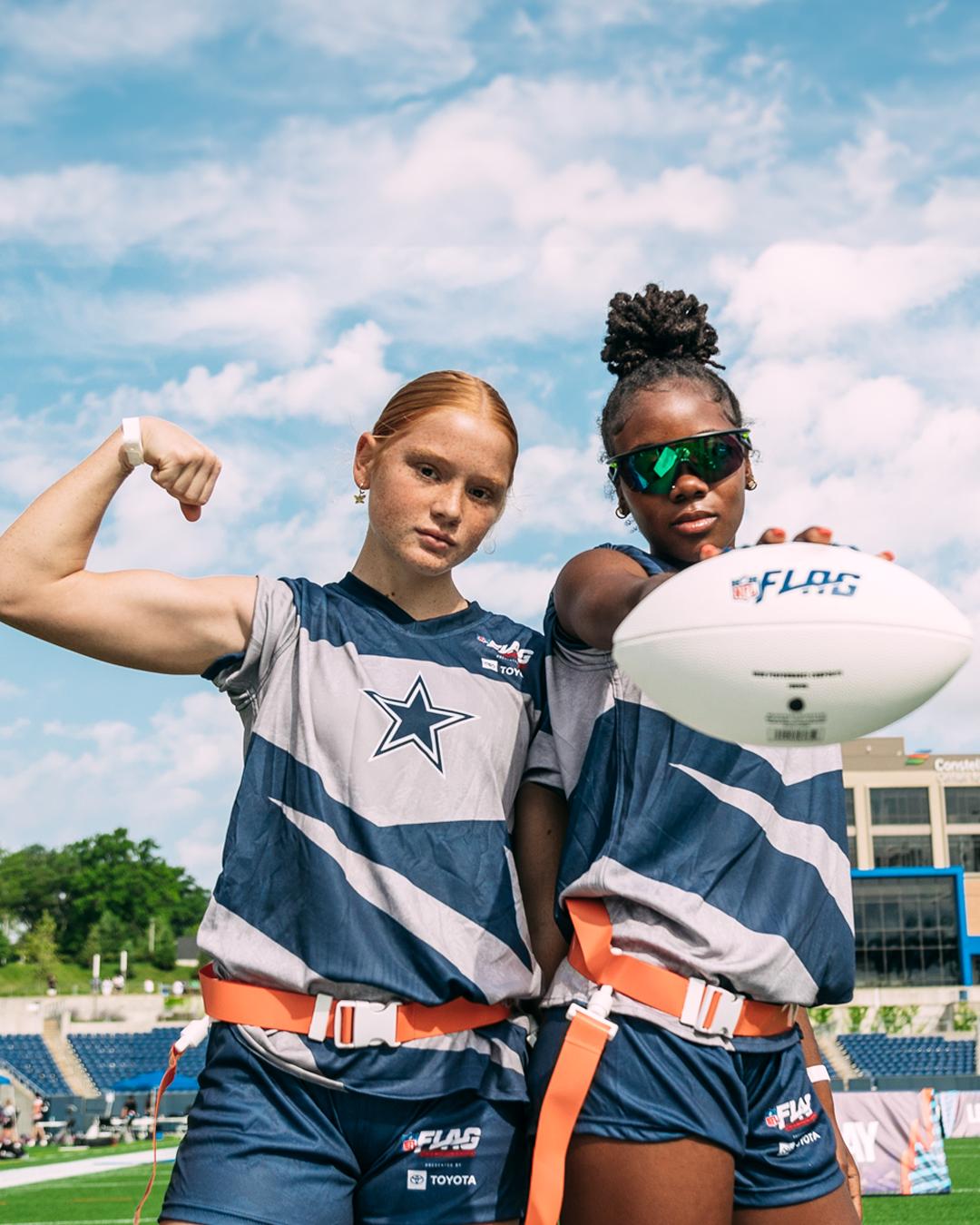
Package Value Provides 25 Units of Oakley Eyewear








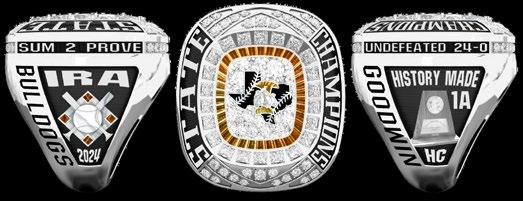




I learned so much about work ethic and values from my parents; and in high school I learned lessons from my coaches and teachers about character and winning on the field as well as off the field. There were so many people who made a positive difference in my life and prepared me for what was to come in my coaching career.
In today’s world of social media, peer pressure and single parent homes, our high school coaches stand even more importantly as a beacon to provide stability and hope to high school students.
In my book Beyond the Game, I laid out four pillars that have been instrumental to any success I may have achieved. They are Attitude, Effort, Self-discipline and the Capacity to Care. The first three are staples in any coach’s tool bag but the Capacity to Care has more influence on your athletes than anything they learn playing the sport. It requires a coach to model this attribute first, then nurture and instill it in each of your students. If they leave your school understanding the power of unconditional love that you showed them and they then share that through their community service, you have won more than any game played.
Last year, in celebration of my 90th birthday, my family and friends provided the initial endowed funds to launch the nonprofit Grant Teaff Foundation. With the support of the Texas High School Coaches Association, the Texas High School Athletic Directors Association and the Texas Sports Hall of Fame, the foundation will annually fund The Grant Teaff Beyond the Game Team Award and will also provide support for the Texas Sports Hall of Fame.
The team award recognizes Texas high school teams that positively serve their communities and use their influence to go beyond the game. In April, we honored El Campo High School as the first recipient at the Texas Sports Hall of Fame Induction Banquet. It was a special part of the evening with coaches and players in attendance! Brad Sham recognized the team from the podium and a video of El Campo’s community service was shown and will run permanently on the new video screen in the Texas Sports Hall of Fame. We presented the school with a grant of $5,000 to support their athletics program.
It was always my goal to simply make a positive difference in the lives of others. I encourage you to engage your athletes in serving others as a team. They will grow and those they serve will benefit and see their team’s capacity to care in action.
Please visit www.grantteaff.org to submit your team’s community service projects and have the opportunity to experience what Coach Reeve and El Campo High School did this past year.
Coach Teaff started as an assistant at Lubbock High School in 1956. After a 37- year coaching career including 20 years as the head coach for Baylor University, Teaff was chosen to lead the American Football Coaches Association as Executive Director in 1994. Over the next 22 years, he transformed the Association into one of the most effective and powerful organizations in all of college sports. Coach Teaff’s outstanding career as a college coach has placed him in eight Halls of Fame, including the Texas Sports Hall of Fame (1995). He is a member of the College Football Hall of Fame Class of 2001.



























KB3 SPORTS APP has allowed us to streamline our stats & maxes for inseason & offseason as well as given us the ability to promote our players across the country.
James Clancy HFC, Klein Cain HS
MAXES & MEASURABLES can be entered by a player or coach and will be added to a player’s profile page.
Your teams’ profile page is publicly accessible to parents, players, media and recruiters with links to each player’s profile page.
Download a Team Stat File to keep track of team stats by player or team totals.
Download a Game Summary File to view play-by-play game recap.
Automatically generate a Player Stat File to view per game and cumulative player stats as well as in-season and off-season maxes and measurables.
RECRUITING
College coaches can access your players test scores, stats, maxes & measurables.
College Coaches can DM with coaches and players via our IN-APP MESSAGING.
Get Started! Download the free app for Android or Apple, join now!

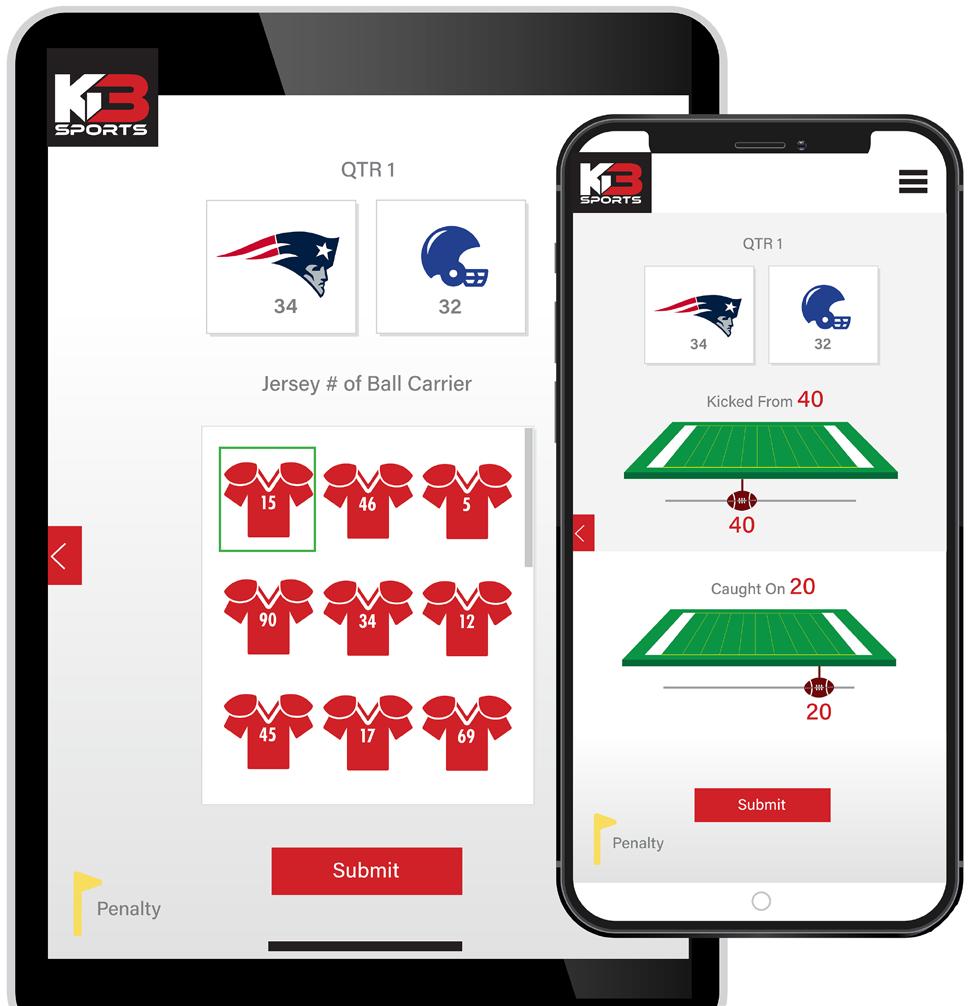


We all know the saying that competition breeds excellence, but incorporating that into a weight room setting can be difficult at times. As coaches we don’t think about incorporating competition into the weight room, because we are worried about making sure our athletes are getting all their sets and reps in a safe and efficient manner. We leave so much off the table if we don’t add in some type of competition. Also, athletes love it when they get to compete. Here are some simple ways to add incorporation into the weight room.
A thing I do to incorporate competition into the weight room is to put it in at the end of the session. Everyone thinks they have the right to compete, but it is a privilege to be able to compete. At the end of a weight room session I will call out two athletes that have separated themselves from the team that day. From there I will have them do some sort of competition one on one. Some examples of competition I like to use are chin-up ISO, Trap Bar/ DB hold, or a weighted plank. After a while of doing this athletes want to be picked at the end for a chance to compete against someone. As a coach you get more effort provided during the session, and you get to reward your athletes at the end for the effort they put forward by rewarding them with the opportunity to compete.
BY CALL FLORENCE PERFORMANCE COURSE

Another way to add competition into a weight room session is to literally put it in the middle of the session. A way I do this is by incorporating “money sets” or “go for broke sets”. For example let’s say you have your athletes doing 4x6 on chin-ups with a :03 second eccentric. On that 5th set that’s when I incorporate that “money set” by telling my athletes to get as many reps as they can on that get. I also tell my athletes to compete within their group and try to be the one that has the most reps out of their group. I’ve seen athletes break rep PR’s just by incorporating this method. Most athletes don’t want to lose, and when that pressure of losing is presented to them; it produces results they didn’t know they had in them.
Competition days are beneficial in many ways. I like to incorporate competition days in the off season as it can be pretty taxing on the athlete’s body. On competition days I will split the team into 4-5 smaller teams, depending on the size of the team you are working with. Then I will have them go through a series of events such as Chin-Up ISO relay, Trap Bar Hold, DB Goblet Squat to a medicine ball for reps, Bench Press for reps. I even incorporate some speed and agility on competition days such as Cone Stack Relay, Sprint Relay, Medicine Ball Sprint Relay. Competition days break up the monotony of the everyday grind in the off-season. Also, competition days are a way of forming team chemistry. When grouping your athletes into teams, I try to group the teams evenly as far as upperclassmen and underclassmen. This way the older athletes and younger teammates can compete together.
Don’t just let game days be the only days your athletes are exposed to competition. Use the weight room to your advantage by incorporating competition within the session. At the end of the day “Competition Breeds Greatness.”
Coach’s Checklist:
Schedule
Analyze Last Week’s Game
Order Gear
Wash Uniforms
Find a repair person
Wait for Equipment
Hire installation crew





Four outstanding organizations, transformed into one powerhouse. And while our name may have changed, everything you count on - great service, uniforms, and gear remain.

YOUR GAME IS ALWAYS GAME ONE






The enrollment period for 2024-25 Professional Liability Insurance (7/1/24-6/30/25) is now open. You must purchase 2024-25 THSCA Membership (7/1/24-6/30/25) in order to be eligible for this insurance coverage. ** THIS INSURANCE COVERAGE WILL BEGIN ON THE DATE OF PURCHASE AND WILL EXPIRE 6/30/2025.**
You have the option to purchase online by logging into the Member Portal, or you can visit https://www.thsca.com/liability-insurance to find a downloadable Insurance Registration Form. Find policy coverage outlines & annual rates on our website as well.