the West








The summer heat has (nearly) subsided, many of the tourists have gone home, and for locals, it’s looking more and more feasible to get a table at one of Central Oregon’s indoor or outdoor brunch spots. In honor of this special time of year, when the region becomes more of a “locals’” scene, we’re rolling out our Breakfast and Lunch Guide to help you plan a stellar Saturday or even an awesome busi ness lunch. Our Chow section is packed with more great food stories, including a seasonal recipe from resident foodie Donna Britt and a roundup of two longtime taco spots in Bend. Meanwhile, with Indigenous Peoples Day around the corner, Jack Harvel shares the history of the West’s first tribally owned museum dedicat ed to Native peoples. Our political endorsements continue with endorsements for both Deschutes County Commissioner and House District 55. And last but not least, your friendly local film reviewer gives you his hand-picked schedule for what to see and do at this week’s BendFilm Festival. Me, I’ll be moderating a discussion at Bend Film’s music video screening Friday night at Open Space; hope to see you there. Thanks for reading!





 ACEVEDO,
 BYRON MAAS, TABITHA JOHNSTON, LAUREN HOFFMAN,
In the race for position 3 on the Deschutes County Board of Commis sioners, it’s time for a change.
While we admire Patti Adair for advocating for Worrell Park and her work supporting Veteran’s Village and the expansion of ser vice hours for the Deschutes Coun ty Stabilization Center, we sim ply find Mor gan Schmidt more pre pared, more polished and, due to her founding Pandemic Part ners during the COVID-19 pandem ic, her advocacy on behalf of women, the unhoused and those in need of resources during the pandem ic simply more impressive and more aligned with the needs of a growing Deschutes County.

When discussing the important topic of groundwater in the region, Adair used her time during our inter view to talk about the need to cut down water-sucking junipers. Schmidt, by contrast, advocated for on-farm efficiencies, for the need to expand water leasing programs and discussed
the notion of collaboration among all stakeholders. Regarding county employees’ abortion services in their health plans, Adair said she felt it was perfectly fine to allow the county’s grandfathered plan—which doesn’t have to comply with the state’s Reproductive Health Equi ty Act, since it went into effect before the state’s change—is fine by her. Schmidt believes it’s not enough to meet the legal bare min imum and believes women of all pro fessions and walks of life deserve to make their own medical deci sions. On the psilocybin services in the unincorpo rated county, Adair was one of two commissioners who decided to put it back on the ballot for Deschutes County voters; Schmidt believes it’s a waste of county resources to com pel voters to vote yet again in a county that already majority-voted in favor.
In sum, we believe Schmidt’s val ues and commitment better matches the values of a majority of Deschutes County voters. Vote Morgan Schmidt for the Deschutes County Board of Commissioners, position 3.
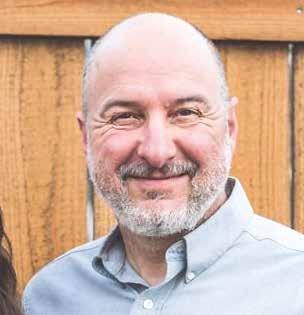
When we interviewed Brian Lep ore, we discovered a pragmatic, educated farmer and fam ily man with a Ph.D. in soils science who cares deeply about his district and who’s run ning because he feels rural Ore gonians have been left behind. Something of a Renaissance man, he espouses progres sive values, while also having the “dirt under his fingernails” that only a farmer can possess. He’s committed to getting to know the people of his district—both the rural and suburban—and to listen to them to achieve solutions that don’t favor one political ideology or another.
Cases in point: Lepore, like many rural and/or conservative residents, believes Oregon’s Corporate Activities Tax could stand to be adjusted, shar ing his concerns on its taxing of gross instead of net profits. Lepore supports Measure 114, the gun safety measure on the ballot this November, but he said
he agrees that prospective gun owners should get training and permits, and had concerns about putting the discre tion for those per mits in the hands of law enforce ment rather than a more neu tral government body.
If there’s a good reason to support incumbent E. Werner Reschke over Lepore in the race for House District 55, we wouldn’t know what it is. Some candidates in recent races have a pat tern of not showing up or not respond ing to media requests for interviews during the political season—a trou bling trend that demonstrates both a lack of willingness to engage in import ant dialogues with their opponents, and in this case, an apparent disinter est in the many new voters who now make up part of the newly adjusted House District 55.
Worrell Park provides respite for nearby workers in the middle of the city. It is unique in Bend a pocket park where wildlife, insects and more can find a home.
I find it ironic that the City of Bend is trying to reduce parking and car trips through various code changes related to House Bill 2001 and Executive Order 20-04 and encourage various trans portation alternatives. Yet the Coun ty is doing the opposite by proposing more parking spaces at huge expense of, depending on number of 48 or 68 spac es, $36,762 to $58,333 per space. It seems that the County and City aren’t on the same page.
In the era of climate change, warming climate, heat island effects (Bend is rat ed as 14th worst in U.S.) and COVID this is not the time to destroy native trees that provide shade and sequester carbon right in the middle of Bend. This is an opportunity to send a message that the County values these special places. The City of Bend codified protections for such places with their Areas of Special Interest code which was based on work done by the County years ago.
This is not the time to blast native vegetation and a Central Oregon iconic geologic structure into oblivion for yet another parking lot. That would encour age more car trips which is the opposite of many of Bend’s and State goals. Each government entity must take responsi bility for addressing how their policies contribute to climate change and what they can do to help solve the climate issue.
It is time for Deschutes County com missioners to implement policies that contribute to solving climate change by saving Worrell Park not destroying it.
 —Judy Clinton
Letter of the week
This election in November is pro foundly important. As a young per son who is deeply concerned for the future of our planet, I need to empha size how crucial it is to elect Emerson Levy for HD53. With an opponent that is a climate change denier and sure to dismantle the progress we have already made, no argument can be made that Michael Sipe is a candidate that is look ing out for the planet or for those of us on it. He proudly spoke the words, “Climate alarmism is more risky than climate change, in my view.” He is ignor ing expert scientists all over the world who wholeheartedly disagree with that statement. Emerson Levy is the cham pion Central Oregon needs in Salem. She is the candidate who will continue Oregon on its path of sustainability and progress. A lot is on the line here, and Emerson is the person who will fight for you, your family, and the future gener ations of Oregonians yet to come. Vote for Emerson!
—Samuel G. LewisIn response to the complaints about the ongoing loudness coming from the Hayden Homes Amphitheater, I say “hogwash." The citizens of Bend are so very fortunate to be able to experi ence music outside at this venue during the summer. The improvements have enabled us to have bands that we would have to travel for. The 10:00 finish time line is very reasonable. I love being able to sit on my porch or walk my dog to the sounds of Ziggy Marley! Keep it loud, keep it coming and rock on!
- Maureen Donahueweek’s paper. Please limit letters to 250 words.
not constitute an editorial endorsement of said opinions.


So very sorry to hear of his pass ing. We had become email pals last few months. Our last email I had wanted to share with him that I had a Bat in my office! We had a chuckle over that one. He was such a neat man who you stood a chance to learn a lot from! So glad I got to hear some of his stories, but not nearly enough. He was a walking book of information and I am so blessed to have had the chance to have met him via emails and for him to educate me. He truly is a treasure. Prayers and condo lences for his family. He will surely be missed.
—Charity Scott via bendsource.com
Central Oregon has lost a real trea sure. I have learned a lot from him. My heartfelt condolences to Sue and their family.
—Cheryl Schadt via bendsource.com
Many thanks to Mark Ransom and the many volunteers and sponsors of Roots Fest 2022. The date was perfect. The weather was perfect. The venue was perfect. And the talented musicians that played were all amazing. Bend is a spe cial place for many reasons, and for me, I would have to place our stellar musi cians and their willingness to share their
gift for free- at the top of the list. Can’t wait for 2023!.
—Michael J. CoveyMichael: I couldn’t agree more! Roots Fest was such a blast at The Box Factory this year—a real com munity event for one great com munity.
—Nicole VulcanOregon Sen. Ron Wyden toured the Azimuth 315 apartment com plex on Bend’s west side on Sept. 30 to advocate for low-income housing tax credits and clean energy tax cred its — which reduces the amount owed in federal income taxes — to provide affordable housing. The median Bend home costs over $700,000, which is about $200,000 more than the median Oregon home sale.
The Azimuth apartments are funded through low-income housing tax cred its, and applications are only open to people making 60% or less of the area median income — in Bend that’s about $34,000 for a single person, $39,000 for two people and $48,000 for a fam ily of four. As of December 2021, only 20% of Bend households could afford the median price of a home. A one-bed room apartment at the complex is listed at $765 a month.
“Housing is very capital intensive. And affordable housing requires a com bination of funds that are federal, state, local at the city level as well as from grant sources,” said John Gilbert, co-owner of Pacific Crest Affordable Housing, which built the Azimuth apartments. “The big gest of those funds is low-income hous ing tax credits, which typically funds about 75-80% of these projects. This project was a $14 million project. So that translates into something like $10 to $11 million coming from low-income hous ing tax credits.”
Oregon allocates low-income hous ing tax credits to developers for about 10 projects a year, who in turn work with a partner to sell them to other organi zations, typically around the same price it’ll save in taxes. The largest buyer of these credits are banks because it fulfills a legal obligation to invest in low-in come communities under the Commu nity Reinvestment Act, a 1977 law that was intended to reverse the impacts of redlining.
Wyden said he pushed for 2018 leg islation that increased allocation of low-income tax credits to the state by 12.5%, adjusted the income test to aver age the salaries of tenants, which pre viously wouldn’t allow tenants if an individual breached the 60% threshold. He also co-sponsored a 2021 bill that would fund more low-income housing tax credits and supported an addition al $29 billion of expanded low-income housing tax credits in the Build Back Better Act.
“The low-income housing tax cred it is, dollar for dollar, one of the best investments you can make in housing. Residents like it, developers find it to have as little red tape as possible. And
so, we’re going to build on that,” Wyden told reporters.
Critics of low income tax credits say the bureaucracy involved inflates the cost of building housing, that it costs
climate change in the country’s history. The bill includes $260 billion of clean energy tax credits that subsidize indi vidual homeowners’ energy efficient improvements.
vehicles up to $7,500 for light duty vehi cles and $40,000 for medium and heavy-duty vehicles. Power develop ers are eligible for a 30% tax credit for zero-emission power facilities and industrial business can get up to $85 per ton of carbon they capture.
“If you’re talking about a commercial building, they can get expanded ener gy efficiency credits up to $5 a square foot depending on the level of energy savings,” Wyden said. “This is going to allow us to get to a significant fraction of our carbon emission reduction goal by 2030, not 3050 or something else— 2030. Some estimates as much as 40% of our carbon emission goal by 2030.”
the federal government over $9 billion a year, that maintaining it as low income housing is difficult after the afford ability restrictions expire and that it concentrates people into low income communities where opportunities may be limited. About 90% of all newly cre ated affordable rental housing utiliz es the credit, and a report covering the years 2011-2015 found about the pro gram financed about 50,000 low-in come housing units.
Wyden also discussed clean ener gy tax credits, which the Azimuth com plex also utilized. He called the Inflation Reduction Act the biggest investment in
The bill covers 30% of efficiency improvements like windows, insulation and appliances up to $1,200 a year, 30% off heat pumps or efficient wood stoves up to $2,000 per year, covers $150 of home energy audits and 30% off rooftop solar panels, battery storage and geo thermal heat pumps. Vehicles have up to $7,500 tax credit for new electric or hydrogen fuel cell cars and 30% off up to $4,000 off a used clean car.
Businesses can also take advantage of 30% off of efficiency investments like rooftop solar and geothermal heat pumps, EV charging stations in low-in come and rural areas and electric
Wyden also spoke about his proposal to create a middle-income housing tax credit that would cap rents at 30% of the area median income and be eligible for people making 100% or less of the AMI.
“In Central Oregon, if you have a firefighter and a nurse that are having trouble figuring out how to get a roof over their head, they’re going to bene fit from [the middle income housing tax credit],” Wyden said. “Those firefight ers and nurses, folks who are middle income and working hard and playing by the rules in Central Oregon, they’re going to have a chance to be part of the American dream.”
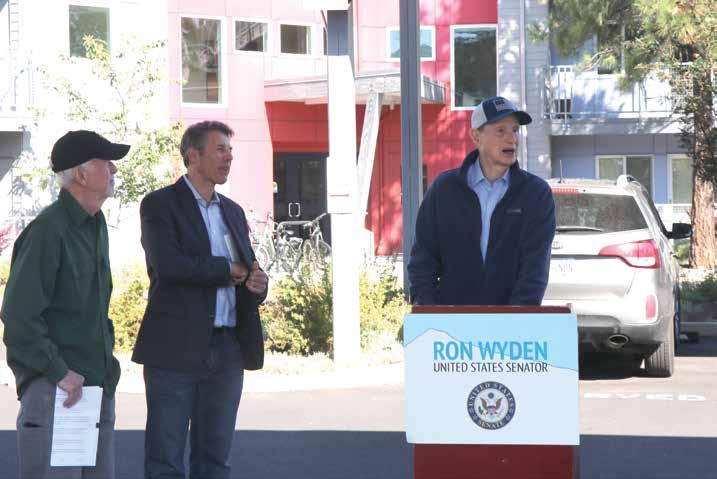
“The low-income housing tax credit is, dollar for dollar, one of the best investments you can make in housing. Residents like it, developers find it to have as little red tape as possible. And so, we’re going to build on that.”
—RON WYDEN
The House 55 district, which now encompasses parts of rural Deschutes County, Sunriver and also Klamath County, was redrawn during the redistrict ing process, and now includes many constituents who were part of other districts before this. Some of them do not know Reschke and did not even yet realize they’d been placed in a new district.

It’s ironic that candidates such as Reschke don’t even bother to engage with endorsement interviews with outlets they, we can only assume, believe to be unaligned with their values, because when that hap pens, all we can do as an editorial board is make more assumptions about what those candidates stand for.


But this is also a dereliction of duty in another way, because someone is going to win in the race, just as someone is going to lose. Whoever wins will one day be tasked with sharing information important to the people in their district—and who will they turn to then to get the word out? The very same people—local media—they eschewed when it was campaign season. Candidates should see endorsement interviews not just as a time to advocate for voters to vote for them, but also as a time to sow the seeds of respectful dis course in a community. We as an editorial board may not agree with a particular candidate’s (or representa tive’s) viewpoints, but when it comes to sharing news
about a change in state law, a bill that’s on the horizon in the legislature or other legislative information cru cial to people’s lives, the media is a vehicle to convey those messages. Those relationships should be tanta mount to any politician.


Being a majority-rural district, we believe Lepore, the family farmer, would serve his constituents well in Salem. Lepore took the time to share his ideas with this newspaper here in Bend; Reschke did not. With that, we can only assume that Lepore cares more about all voters of his district. Vote Brian Lepore for Oregon House District 55.
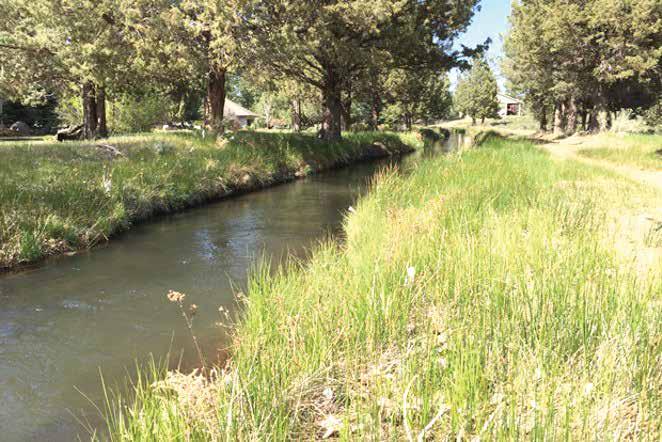
By Jack Harvelgroup of property owners and Arnold Irrigation District patrons are suing their irrigation district and the Natural Resources Conservation Service in an attempt to block a planned piping of a 12-mile canal. Save Arnold Canal, made up of Arnold patrons, start ed organizing after a draft environmen tal assessment of the piping project was released in June 2021.
The lawsuit alleges the plan to pipe the canal would violate the National Environmental Policy Act, the Water shed Protection and Flood Prevention Act and the Administrative Procedures Act. They claim AID failed to thorough ly explore alternatives to piping. They also are concerned with the loss of the habitat that’s formed around the canal, damage to property resulting in reduced property values and that water won’t be able to seep back into the ground to water nearby trees and recharge aquifers.
Last year, Arnold patrons told the Source Weekly their preferred solution would be to line the canal with geotex tile liner and shotcrete. Unlined canals can lose up to 50% of water that seeps
into the ground, whereas lined canals only lose about 10%. No water is lost in piped canals, but seepage waters trees near the canals and can recharge aquifers.
The director of modernization at Farmers Conservation Alliance, the agency that prepared the environmen tal assessment, said lining was ruled out because it cost nearly twice as much in the long run because piping requires little to no maintenance. He also said piping contributes a relatively small amount to water level declines in aqui fers, but that it’s paltry in comparison to withdrawals or the changing climate.
The environmental assessment says it will modernize 149 of the district’s 646 patrons’ lines, saving 32.5 cubic feet per second from seepage loss during irrigation season. The excess water will be transferred to North Unit Irrigation District, which holds the most junior water rights in the Deschutes Basin but has more commercial agricultural pro duction than other irrigation districts in Central Oregon.



Hace treinta años el museo de Warm Springs se con virtió en el primer museo administrado por tribus en los estados del Oeste. Su exhibición permanen te profundiza en la era pre-colonial, Euro-Americana y Moderna de los tres distintos pueblos que ahora res iden en la reserva de Warm Springs, incluyendo los pueblos de Wasco, Warm Springs y Paiute.
Los tres pueblos hablaban diferentes idiomas y tenían diferentes estilos de vida. El pueblo de Was co pescaba y comerciaba a lo largo del río Colum bia y hablaba un idioma Chinook. El pueblo de Warm Springs era seminómada a lo largo de el río Columbia, mudándose de pueblos entre el invierno y el verano. Las dos tribus comerciaban a menudo a pesar de la barrera del idioma entre los Wascoes de habla chinu kana y los de Warm Springs de habla sahaptiana.
Los Paiutes vivieron una vida muy diferente a la vida del pueblo de Warm Springs y de los Wascoes, depen dientes del río. Los Piutes migraron con frecuencia en búsqueda de la caza a lo largo del vasto territorio de lo que ahora es llamado Oregon, Nevada, Idaho y Utah. El pueblo Paiute fue el último en en instalarse en Warm Springs, mudándose a fines del siglo XVIII, después de haber sido expulsado de la Reserva de Yakama después de la Guerra de Bannock entre el pueblo de Bannock y Paiute de habla Shoshoni contra el gobierno de los Estados Unidos.
La misión del museo es preservar, promover y com partir el patrimonio cultural y artístico de las Tribus Confederadas de Warm Springs. Durante su fundación, el presidente de la mesa directiva del museo, Delbert Frank Sr., dijo que quería contar la historia de su pueb lo tanto para el público como para las futuras gen eraciones de los pueblos de Wasco, Warm Springs y Paiute. Su historia sobrevive a pesar de los esfuerzos del gobierno de los Estados Unidos para eliminar las lenguas y costumbres indígenas al menos hasta 1934, cuando se firmó la Ley de Reorganización Indígena, dando marcha atrás al objetivo de la asimilación cul tural y restaurando los derechos sobre los minerales y la tierra. La sobrevivencia de la cultura entre los gru pos nativos está arraigada en las tradiciones verbales transmitidas a las generaciones.
“Se transmite entre las familias; tienes a los abue los enseñando a sus nietos, padres enseñando a sus hijos. Así es como se transmite y se sigue transmitien do,” dijo Sunmiet Maben, gerente de operaciones del museo en Warm Springs.
La exposición principal en Warm Springs práctica mente no ha cambiado desde que el museo abrió por primera vez hace 30 años, aunque llevó casi el mismo tiempo en desarrollar la colección de antigüedades. Un comité trabajó durante varias décadas para adquirir objetos ya sea comprados o donados. Cuando terminó
la sesión, el museo tienía alrededor de 2,900 artículos.
“Las antigüedades indígenas, los objetos indígenas, son una industria millonaria a nivel mundial. Así que, muchos de estos artículos pueden llegar a manos de coleccionistas privados que se encuentran fuera de la reserva y desaparecen. Esto se hizo para poder man tener estos artículos dentro de la reserva, del museo,” dijo Elizabeth Woody, directora ejecutiva del museo en Warm Springs. “Es muy importante para las familias tener los objetos en el museo, saben que se encuentran allí, saben que están a salvo y que están siendo cuida dos bajo los estándares del Museo Smithsonian.”
Los objetos que alguna vez pertenecieron a las tri bus también pueden ser repatriados de museos que reciben fondos federales. “Muchos de los objetos antiguos, las artesanías y los cestos, se le obliga a los museos repatriarlos si es que reciben dinero federal. Así que, tenemos la capacidad de recuperar esos obje tos y ponerlos en nuestra colección,” dijo Woody.
Actualmente, el museo está en medio de una cam paña para ofrecer membresía, para tratar de obtener nuevos colaboradores del establecimiento. El museo también publicará un informe para los medios de comunicación para conmemorar el día de los Pueblos Indígenas, el lunes 10 de octubre, como una manera de educar al público sobre la importancia del día para los Pueblos Indígenas no solo en Oregon sino también en todo Estados Unidos.


 By Jack Harvel
Thirty years ago the Museum at Warm Springs became the first tribally run museum in the West ern states. Its permanent exhibit dives into pre-co lonial, Euro-American contact and the modern era of the three distinct peoples that now reside at the Warm Springs reservation, including the Wasco, Warm Springs and Paiute people.

All three of these bands spoke different languag es and lifestyles. The Wasco people fished and trad ed along the Columbia River and spoke a Chinook language. The Warm Springs band were semi-no madic along the Columbia River’s tributaries, moving between winter and summer villages. The two tribes traded regularly, despite the language barrier between Chinnokan-speaking Wascoes and Sahaptin-speaking Warm Springs.
The Paiutes lived a much different life than the riv er-dependent Warm Springs and Wascoes. Paiutes migrated frequently across a vast territory of what’s now Oregon, Nevada, Idaho and Utah in search of game. Paiute people were the last to settle in Warm Springs, moving in the late 1800s after being forced from the Yakama Reservation in the aftermath of the Bannock War between the Shoshone-speaking Ban nock and Paiute people against the United States government.
The Museum’s mission is to preserve, advance and share the traditional, cultural and artistic heritage of the Confederated Tribes of Warm Springs. During its founding, museum Board President Delbert Frank Sr. said he wanted to tell the story of his people for both the public and for future generations of Wasco, Warm Springs and Paiute people. Their story survives despite efforts by the United States government to suppress indigenous languages and customs until at least 1934, when The Indian Reorganization Act was signed — reversing the goal of cultural assimilation and restoring land and mineral rights. The survival of culture among Native groups is rooted in oral traditions passed down in the household.
“It’s passed down through the families; you have grandparents teaching their grandchildren, parents
teaching their children. That’s how it’s being passed on and carried on,” said Sunmiet Maben, operations manager at the Museum at Warm Springs.
The main exhibit at Warm Springs is largely unchanged from when it first opened 30 years ago — though it took about as long to build the collection of antiques inside it. A committee worked for sever al decades acquiring artifacts through both purchases and donation. By the time the session wrapped up the museum had about 2,900 items.
“Indian antiquities, Indian objects, is a multi-bil lion-dollar industry worldwide. So, a lot of these items could have gone to private collectors off the reserva tion and disappeared. This was to set aside to be able to keep these items within the reservation for the museum,” said Elizabeth Woody, executive director at the Museum at Warm Springs. “It’s so important for the families that have their items in the museum, they know that they’re there, they know that they’re safe and that they’re being cared for under Smithsonian Museum standards.”
Items that once belonged to the tribes can also be repatriated from museums that receive feder al funding. “Many old items, beadwork and basket ry, museums are required to repatriate them if they receive federal money. So, we have the ability to get those items back and put them into our collection,” Woody said.
When the Museum at Warm Springs opened it was hoped that it’d be the first of a network of tribal muse ums that would preserve regional culture, but progress has since been slow. There are tribally owned muse ums in Washington, California and Arizona but still relatively few in the West.
The artifacts in the Warm Springs Museum span the last three centuries and include practical tools like hide scrapers, mortar and pestles and the baskets and sacks used for storing berries and roots. There are also copies of the documents and treaties that’ve defined life on a reservation.





“The tribes have a history that predates the United States of America. And then most of the relationships that we’ve had with the United States government and the state is based upon a treaty, which is a con tract between the United States and our nation, that we’re not just an ethnic group, but we’re also a true nation within a nation,” Woody said. “That’s import ant because we are partners, and do a lot of land man agement and a lot of natural resource management in the state and in the rivers.”
Wasco populations today are concentrated in the Warm Springs Indian Reservation and the Yakama Indian Reservation in Washington. The Northern Pai ute, however, with a formerly nomadic lifestyle across several states, are more geographically dispersed. Being a later addition to the Confederated Tribes of Warm Springs, there’s more emphasis on Wasco and Warm Springs in the museum’s permanent exhibit.


“Unfortunate because the Paiutes came onto the reservation a little bit later. And so there has been a push to make sure that they’re represented fairly,” said Sunmiet Maben, operations manager at the Museum at Warm Springs. “I think a lot of it is just kind of dis tinguishing the groups, but I think we’re a little trickier so many of our families are kind of mixed so like most of us are Warm Springs and Wasco, Warm Springs and Paiute. There’s a few that still kind of associate with just one, but there’s a meshing of cultures.”
A temporary gallery showcases exhibits usually designed by museum staff. Currently the gallery is fea turing portraits of powwow dancers from across the country in ceremonial dress. “Faces from the Land: A Photographic Journey Through Native America” by Ben and Linda Marra features 36 large portraits along with a personal narrative written by the subjects.

Many of Warm Springs’ collection of artifacts are stored rather than displayed, as are nearly 5,000 pho tographs and documents.
“The archives are one of the reasons why the muse um was built, besides the collections. It was planned that it would be a repository for information and items that would serve our sovereignty, and preservation of our own history. Not through anybody else’s eyes, but through our own,” Woody said.
The museum is in the early stages of cataloging and digitizing its archives, which right now can be
imprecise with the locations of artifacts, photos and documents. Woody estimates that the museum likely has more items in the archive than it presently knows and is seeking to learn more about archiving from pro fessional archivists.
“We’re hoping to begin a wider collection of mate rials and a systematic way of collecting items,” Woody said.
The Museum is expanding its archives through a five-year strategic plan funded by the DeVos Institute of Arts Management. One condition of that funding is that the museum must become more of a cultural institute. Woody sees this essentially like a school or training program that teaches young people in tradi tional native crafts.
“We’re building apprenticeship, and teaching them about what to look for, and how to do the things that we need them to do in order to create some of these beautiful things that we make,” Woody said.
Workshops in the past year have focused on recon necting tribal people to the cultural art system shared by tribal members in Warm Springs, the Yakama Nation, Umatilla and Nez Perce. The museum has also hosted a handful of guest speakers on the topic of Native languages, boarding schools and more.
In another 30 years Hill said she wants to see the building restored to its full conservatory capabilities, with an off-site collection storage site outside of the flood and fire zone the museum is in, and an upgrade of the permanent exhibit. In September the museum held its annual membership drive, which grants peo ple free admission and a 10% discount in the gift shop.
As the museum approaches 30, Indigenous People’s Day is about to have its second year as an official Ore gon holiday. South Dakota was the first state to recog nize the holiday in 1989, and since then 13 other states have adopted the holiday on what was formally Colum bus Day — a holiday many Native people viewed as a day glorifying settler-colonialism and oppression of indigenous people in America. In Bend, Central Ore gon Community College is hosting a beading work shop and screening the film “nîpawistamâsowin: We Will Stand Up,” which follows the family of a mur dered Cree man as they seek justice. The COCC Oct. 10 events are free and open to the public.


LOCAL BAND ROCKS THE STAGE
The Hasbens is a local group out of Bend that has a groovy rock sound. Performing regularly, this band has concert energy that you don’t want to miss. Catch them at River’s Place and stay updated on our calen dar for future performances. Thu., Oct. 6, 6-8 p.m. River’s Place, 787 NE Purcell Blvd., Bend. Free.


With vendors, lectures, cooking, tasting, workshops and exhibits, this Saturday is dedicated to learning and appreciating the nature of mushrooms and fungi. This annual event brings together naturalists and community members. See bendsource.com for our story from last week! Sat., Oct. 8, 10am-3pm. Sunriver Nature Center and Conservatory, 57245 River Rd., Sunriver. Free.
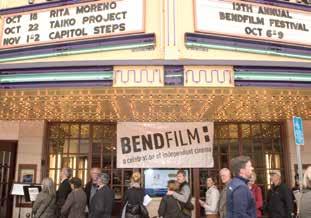
THREE DAYS OF IN-PERSON FILMS IN BEND
The highly anticipated film event of the year for Bend. Showings will take place all over Central Oregon, including Madras, and films vary from creative shorts to longer documentaries. Find a show that interests you and take part in the local film festival. See more in this week’s Screen story. Thu., Oct. 6 - Sat., Oct 9. Various venues. $10-$300.
Blending country, blues and folk, Rudolf Korv sings heartfelt tunes with a raspy tone. This free concert event is one not to miss. Joining Korv, The Northwest Feels take the stage to perform for Central Oregon. Sat., Oct. 8, 6-8 pm. Worthy Brewing, 495 NE Bellevue Dr., Bend. Free.

Groovy lyrics collide with string-filled arrangements in Horse Feathers’ music. Crossing over genres, this band features a significant amount of violin, adding rich tone and movement to its tunes. Horse Feathers’ stage presence will get you up on your feet and danc ing this Friday night. Fri., Oct. 7, 8-11pm. Volcanic Theatre Pub, 10 SW Century Dr., Bend. $15.


UNDERSTANDING THE FOREST AROUND US
Living in the Pacific Northwest is special because of the nature that surrounds us. Learn about the history of Oregon’s lush forests, where to find them and how to protect them this weekend in Redmond. Sat., Oct. 8, 11am-12:30pm. Redmond Public Library, 827 SW Deschutes Ave., Redmond. Free.
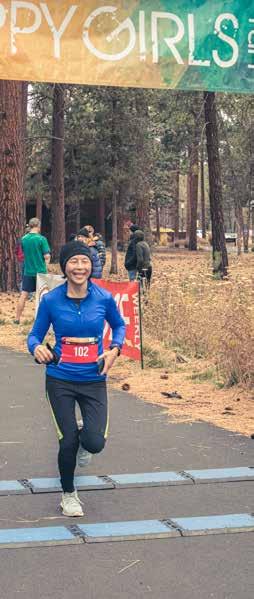
Can you beat Beethoven? Beethoven’s 5th Symphony will be playing over the loudspeakers at the COCC track to motivate runners and see who can beat the 33-minute time. All proceeds will go to the Central Oregon Symphony. Sun., Oct. 9, 10am. Central Oregon Community College Track, 2600 NW College Way, Bend. $35.
SUNDAY
These two country acts have over 1 million listeners on Spotify, and they’re making their way to Central Oregon. Morgan brings attitude and soul to her pop country music. Rich brings acoustic sounds and pos itive energy to his songs. One concert and two acts! Sun. Oct. 9, 8:30pm. Domino Room, 51 NW Green wood Ave., Bend. $20-$75.
SUNDAY
Bringing classic rock to Bend, Tantric is full of alter native metal energy that will get listeners grooving. Best known for its song “Breakdown,” this band’s concert performances are unmatched. Rock out this weekend with Tantric. Sun., Oct. 9, 6-10pm. Silver Moon Brewing, 24 NW Greenwood Ave., Bend. $10.
Can you believe that it’s pumpkin patch season al ready? Schilling’s Garden Market has more than just pumpkins; visitors can find corn stalks, ornamental cabbage and kale, assorted mums and seasonal pro duce. Mondays-Saturdays, 9am-5pm. and Sundays, 10 am-3pm. Schilling’s Garden Market, 64640 Old Bend-Redmond HWY, Tumalo. Free.








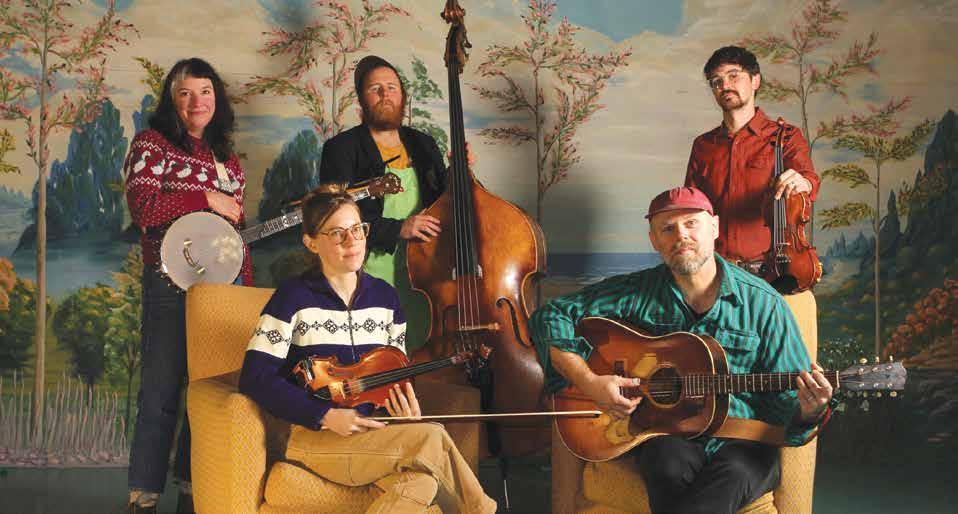
The beautiful and striking arrange ments of Horse Feathers will hit home for a lot of Pacific North westerners, especially if you were liv ing around Portland in the late 2000s. The musical project of Justin Ringle has changed members a few times over the years, but violinist Nathan Crockett has been with Ringle since almost the very beginning. Now rounding out the band are Luke Ydstie and Kati Claborn of The Hackles and Blind Pilot, along with Hal li Anderson of River Whyless. The band comes to town for the first Horse Feath ers show in Bend in over 10 years. Check out our Q&A with Ringle below.
Source Weekly: So the band is get ting ready to start your fall tour in a cou ple of days. Are you excited to get on the road and hit some of these stops?
Justin Ringle: I am! It’s gonna be nice! It’s gonna be a tidy little North west thing. Nothing too crazy, just a couple of long drives.
SW: You and Nathan obviously have a long history of playing together, and now the band has Luke, Kati and Halli as well who are all from great bands and very talented. How long have you been working with them and what’s it like getting on stage with this group?
JR: Let’s see. Kinda since, off and on since probably like 2016 or 2017. I’ve been playing with them intermittent ly and locally but we really only started to hammer down on it in the last year. Mainly because the band I had been playing and touring with since 2016, that rhythm section, they live in Kentucky and once COVID came it kind of became an impractical possibility to play with them consistently. Kill Rock Stars reis sued our record “House with No Home” and I switched to do all the touring this year with this ensemble which is a lit tle bit more of an old school approach to the music for us. A little more stringheavy, no drums.
With every type of personnel change you always have to rearrange the music a bit but in general it was pretty seamless. Luckily Luke and Kati are our neighbors in Astoria. They live just right around the corner from us so it’s kind of a com munity band in a sense.
SW: You mentioned the reissue of “House with No Home.” What do you remember most about the time mak ing that album around its initial release back in 2008?
JR: I had put out one record, “Words Are Dead,” with a local label and had gotten a lot of great press with that
record and had just done our first national tour. But with “House With No Home” we signed to Kill Rock Stars and it was the first time we really, real ly, jumped out there. I just remember how big everything felt and how scary. It kind of plucked me out of my situation into playing really professionally. Pri or to that I had been working odd jobs and really scraping. Once that came out I just started to tour really consistent ly. That year, 2008, was really musical ly rich. And in Portland the scene was really vibrant. This is going to make me sound super old, but in 2008 we were still worrying about moving units of CDs. It was a completely different gal axy in many ways.
SW: I really enjoy the “Curs In The Weeds” reprise off the reissue. Was that a new version or something you had been working on before?
JR: It’s funny. For the people who followed the band, I played that song at pretty much every show since it got written, right? And as time has gone on it has always been kind of changed and refined. It was kind of interesting to capture that song in the way that par ticular band was playing it live at the time. The interesting thing is I record ed that with the band I was playing with
from Kentucky, and I recorded part of it in Kentucky. But I included everyone in the new group and recorded all these different session parts on it. So it real ly is indicative of my entire musical life over the last five years.
SW: Then you have the two live cuts, “Working Poor” and “Fathers.” What made you want to get those on the reissue?
JR: It was kind of a serendipitous thing. We did our first European tour. The violinist at the time, Peter Broder ick, moved to Europe and so he actual ly got to do part of the tour with us and we got to do that studio session in Bel gium. I finished the record not too many months before so those versions of those songs were very pure. They’re kind of a weird relic because they were so indicative and related to where we were at the time with that album. They’re a weird oddity.
Cabin 22 Trivia Wednesdays at Cabin 22 Cabin 22 is back and better than ever. All the fun you remember has returned, and Cabin 22 hopes you will, too! More TV coverage, locals specials and prizes to win! 6:30pm. Free.
Craft Kitchen & Brewery Comedy Open Mic Sign-up 7:30pm. Starts at 8pm. Free to watch. Free to perform. If you’ve ever wanted to try stand-up comedy, this is where you start! 8-10pm. Free.
Crosscut Warming Hut No 5 Garret
Alexander @ Crosscut- Warming Hut No. 5 Relax with a pint and enjoy great local music every Wed. from 6-8pm. 6-8pm. Free.
General Duffy’s Waterhole Live Music
Wednesdays Stop by for live music by local artists every Wednesday night in the Annex at General Duffy’s Waterhole. See artists like Parker Steers, Tony Buckman, Phillip Austin and others! 7-9pm. Free.
Hub City Bar & Grill Karaoke What’s your go-to karaoke tune? 8pm-Midnight.
M&J Tavern Open Mic Night Downtown living room welcomes musicians to bring their acoustic set or turn it up to eleven with the whole band. Bring your own instruments. Goes to last call or last musician, which ever comes first. 21+. 6:30pm. Free.
Mic w/ Derek Michael Marc Head down to the Northside Bar and Grill Wednesdays to catch local artists perform live. 7-9pm. Free.
Pour House Grill Ultimate Trivia Night with Clif Come to Pour House Grill for the best trivia night in town, guaranteed. With new questions every week written by the host Clif, and inter esting gameplay including wager style Double Jeopardy and Final Jeopardy questions, Pour House Trivia Night will have you on the edge of your seat! 6-8pm. Free.
The CO Show is a free comedy showcase! Doors open at 7pm show starts at 8pm! Central Oregon Comedy Scene and Karaokaine produc tions have teamed up to bring this show to you! It’s co-hosted with multiple hosts, co-produced for Central Oregon! 8pm. Free.
Silver Moon Brewing Song & Story with Pete Kartsounes Pete is an award-winning singer-songwriter, flat picker and cutting-edge musician’s musician. No stranger to life out on the road, Pete has spent over two decades bringing his voice and guitar to stages all over the world. Come experience one of Bend’s finest talents! 6-8pm. Free.
Austin Mercantile Brian Craig Enjoy wine and browse style with live music on the patio featuring local acoustic folk rock artist Brian Craig. 4-6pm. Free.
Bridge 99 Brewery Trivia Night at Bridge 99 Join each Monday and Thursday for live UKB Trivia at Bridge 99 Brewery. Free to play. Win Bridge 99 gift cards! First Monday, Thursday of every month, 6pm. Free.

Campfire Hotel Paul Eddy Bedell Artist and local song-singer fires up the decades with songs from your parents’ record collection. 6-8pm. Free.
Craft Kitchen and Brewery Trivia Night Craft Kitchen and Brewery is bringing a nostalgic spin to trivia with large, hand-crafted, replicas of Trivial Pursuit wheels. There are enough pies for six teams. So, get there early to claim your favorite color! Sign-up 6:30pm. Starts at 7pm. 6:30-8pm. Free.
The Domino Room Melt Banana, Wand and Deaf Club Melt-Banana is a Japanese noise rock band that is known for playing extreme ly fast grindcore and noise music mixed with experimental, electronica and pop-based song structures. Since forming in 1992 the band has released 10 albums and toured worldwide exten sively. 8-11:59pm. $25.
Faith Hope & Charity Vineyards Heller Highwater Trio Heller Highwater Trio brings you soulful vocals and harmonies, of songs you know and love. From Aretha Franklin, Adele, to the Rolling Stones… R&B, blues, country and pop. Enjoy wine and song at the vineyards! 5-8pm. Free.
Hub City Bar & Grill Karaoke What’s your go-to karaoke tune? 8pm-Midnight.
Porter Brewing Co. Live Music with The Ballybogs Grab a pint, sit back, relax and enjoy live music by an amazing group of artists who brings the best Irish Trad Music in Central Ore gon! Every Thursday at Porter! 6-8pm. Free.
River’s Place The Hasbens The Has bens is a four-piece improvisational rock group whose top priority is putting on a high energy show that will keep the crowd moving from start to finish! 6-8pm. Free.
Silver Moon Brewing Trivia on the Moon Come down to Silver Moon Brewing for a night of trivia! Teams are welcome to show up in groups up to 8 people. Silver Moon also offers seating reservations for $20 donations that all go to F*Cancer! If you would like to reserve a table please contact the Trivia on the Moon Facebook page. 7pm. Free.
Zero Latency Bend Karaoke Thursdays & Friday Nights That’s right! Karaoke is coming to Zero Latency in Bend. Download the SINGA app and sign up for your time slot and song. Note: The venue will show up on the SINGA app by Monday, 8/29 to sign up. 7-10pm. $7 at the door, includes a domestic beer.
Zero Latency Virtual Reality Arena Ka raoke Nights Zero Latency has brought karaoke to Zero Latency Virtual Reality Arena. There will be food specials, craft beers and cider on tap, domestic beers and wines available. So come on in and show Zero Latency your karaoke singing voices. 7-10pm. Free.
Rudolf Korv and the Northwest Feels - Live at Worthy Burgers and Brews For Eugene-based Americana duo, it’s about honoring the journey, while never losing sight of where the duo has been. It’s about listening to the small voice that guides listeners along the way, whether it comes from somewhere deep inside or someplace high above. Come join for an evening of live music. 5-7pm.
Domino Room Bearly Dead (Grateful Dead Tribute) Midtown Events is pleased to pres ent Bearly Dead (Grateful Dead Tribute). Doors are at 8:30 with music starting at 9. This is a 21+ event. 8:30-11:30pm. $15.
Eqwine Wine Bar Free Friday Music at Eqwine Wine Bar Join every Friday from 6-8pm for the music series featuring local singer/song writer/musicians. This week Eqwine Wine Bar is happy to host musician Casey Hurt. 6-8pm. Free.
Hub City Bar & Grill DJ/Karaoke Nights Dj dance music intermingled with karaoke! 8pm. Free.
The Oxford Hotel Karrin Allyson at Jazz at the Oxford Karrin is an internationally acclaimed pianist and singer with 13 albums, five Grammy nominations and appearances all over the world. Allyson is noted both for the warmth and sincer ity of her performing style and the breadth of her repertoire. 7-11:55pm.
Volcanic Theatre Pub Horse Feathers at Volcanic Horse Feathers, and its re-imagined string ensemble of seasoned play ers are returning to the road in the spring of 2022 in support of an April, Kill Rock Stars re-issue of the 2008 breakthrough release “House With No Home.” Justin Ringle and longtime violinist Nathan Crockett will be backed by new additions of upright bass (Luke Ydstie: The Hackles, Blind Pilot), banjo (Kati Claborn: The Hackles, Blind Pilot) and violin (Halli Anderson: River Whyless). The group will perform selections from “House With No Home” as well as old favorites, high lighting the acoustic characteristics of earlier orchestral arrangements as well as the energy of recent releases. 8-11pm. $15.
Zero Latency Bend Karaoke Thursdays & Friday Nights That’s right! Karaoke is coming to Zero Latency in Bend. Download the SINGA app and sign up for your time slot and song. Note: The venue will show up on the SINGA app by Monday, 8/29 to sign up. 7-10pm. $7 at the door, includes a domestic beer.
Zero Latency Virtual Reality Arena Ka raoke Nights Zero Latency has brought karaoke to Zero Latency Virtual Reality Arena. There will be food specials, craft beers and cider on tap, domestic beers and wines available. So come on in and show Zero Latency your karaoke singing voices. 7-10pm. Free.
Craft Kitchen and Brewery Comedy
at Craft: AC O’Neal AC O’Neal, Portland’s very own wild young gun! Rising up in the comedy ranks in Portland’s scene AC O’Neal is quick to show his wacky personality, with his smart yet extremely silly comedy. Growing up and living in Portland has not stopped AC from traveling across the beautiful Pacific Northwest. Having preformed at clubs in Eugene, Tacoma, Vancou ver and of course the amazing clubs in Portland, such as Harvey’s and the Siren Theater. Get ready to laugh your extremities off! 8-10pm. $15.
Domino Room Booze and Glory Mid town Events is proud to present Booze and Glory at the Domino Room. 7:30-11:30pm. $18.
Hub City Bar & Grill DJ/Karaoke Nights Dj dance music intermingled with karaoke! 8pm. Free.
Northside Bar & Grill Tiger Lynn Upbeat popular dance music. 8-11pm. Free.

OSU Deschutes County Extension Ser vice Central Oregons 1st EVER R\&B, Hip-Hop \& Comedy Jam Vol.1 Featuring: Jon B, Frankie J, J Holiday and more. 6:30pm. $38.59-$86.29.
River’s Place Saturday Jazz Sessions Sonic Benders brings an evening of soul/funk/boo galoo featuring songs from The Meters, New Mastersounds, John Scofield and more! Brother Gabe (MFG, Watkins Glen etc.) on guitars, Dave Watts (The Cutmen) on bass, Patrick Ondrozeck (Company Grand, StealHead etc.) on keys and Jason Bradley on drums. 6-8pm. Free.
The Oxford Hotel Karrin Allyson at Jazz at the Oxford Karrin is an internationally acclaimed pianist and singer with 13 albums, five Grammy nominations and appearances all over the world.
Allyson is noted both for the warmth and sincer ity of her performing style and the breadth of her repertoire. 7-11:55pm.
Worthy Brewing Live Music Saturdays Every Saturday Worthy Brewing will put on a live show! Come enjoy beers and music. 6-8pm. Free.
Worthy Brewing Rudolf Korv and the Northwest Feels Live at Worthy Brewing For Eugene-based Americana duo, it’s about honor ing the journey, while never losing sight of where the duo has been. It’s about listening to the small voice that guides us along the way, whether it comes from somewhere deep inside, or some place high above. Come join for an evening of live music. 6-8pm.
The Astro Lounge Local Artist Spotlight Sundays This is a chance to listen to Central Or egon’s newest and upcoming local artists. They have earned their spot to perform a two-hour show, changing weekly, every Sunday. Support
Domino Room Tyler Rich, Kylie Mor gan The distance. It’s something every touring musician learns to deal with when it comes to relationships. Tyler Rich decided to bring the issue front and center on his debut album, "Two Thousand Miles," released via The Valory Music Co. The title references the stretch between Nashville and Los Angeles, as well as Tyler’s two great loves — the dream of his career and his biggest muse. More specifically, it signifies the door-to-door distance between the apartments he and actress Sabina Gadecki, whom he mar ried last September, share in each city. 8:30pm. $20-$75.
Flights Wine Bar Trivia at Flights Wine Bar Join Sundays for trivia with King Trivia! Free to play! Get a group together, and come get nerdy! Awesome prizes and as always, delicious food and drinks! 4-6pm. Free.
Flights Wine Bar Live Music at Flights Come grab a great glass of wine, have an incredible dinner and enjoy live music every Sunday at Flights Wine Bar. 6-8pm. Free.
Hub City Bar & Grill Big Band Open Jam All welcome to sing or play an instrument, just come on in and get on Gordy’s sign-up sheet. 5-8pm. Free.
Obie Oasis Obie Oasis Concert Sundays Bring a chair, picnic and beverage to the Obie Oasis Amphitheater and enjoy talented regional mu sicians. This is a house concert with performer donations encouraged. All proceeds go to per formers. Sound system provided by Spark Music Gear. For artist information go to CalvinMann. com/shows. 2pm. Donation.
River’s Place Trivia Sunday at River’s Place @ Noon Win gift card prizes for top teams! It’s free to play. Indoor and outdoor seating available. Enjoy brunch favorites by Nik’s Snacks, Bai Tong on Wheels and Bluma’s Chicken. Mimosas, brews, ciders and more! Noon-2pm. Free.
River’s Place Larkspur Stand This Ameri cana/indie-bluegrass band is hits the stage at River’s Place for a night full of live music and energy. 6-8pm. Free.
Silver Moon Brewing Open Mic at the Moon Get a taste of the big time! Sign-up is at 4pm! Come check out the biggest and baddest open mic night in Bend! 5-8pm. Free.
Silver Moon Brewing Tantric Tantric is an American rock band from Louisville, KY, founded by Hugo Ferriera. Come out to Silver Moon Brewing to grab a drink, get some food and listen to live music! 6-10pm. $10.

Amazing top notch talent, jaw dropping! All musicians and comedians are welcome from first-timers to pros. Hosted by Nancy Blake and Danny Guitar Harris, two longtime local musi cians. Very supportive and can provide instru ments if needed. 8pm. Free.
Craft Kitchen and Brewery Comedy Open Mic Free to watch. Free to perform. Sign-up 6:30pm. Starts at 7pm. Hosted by Jessica Taylor and Katy Ipock. 7-9pm. Free.
Elixir Wine Group Locals Music Night Enjoy live musicians, great wine and small bites. 6-9pm. Free.
On Tap Locals’ Day Plus Live Music Cheaper drinks all day and live music at night, get down to On Tap. 11am-9pm. Free.
The Commons Cafe & Taproom Story tellers Open-Mic StoryTellers open-mic nights are full of music, laughs and community. Bill Powers of Honey Don’t and several other projects in town, hosts one of the best open mics in town. Sign-ups start at 5pm sharp in the cafe, and spots go quick. Poetry, comedy and spoken word are welcome, but this is mainly a musical open mic. Performance slots are a quick 10 minutes each, so being warmed up and ready is ideal. 6pm. Free.
Initiative Brewing Trivia Tuesdays in Red mond Trivia Tuesdays in Redmond, with Useless Knowledge Bowl. Join in to win top team prizes! It’s free to play. Bring your team this week! Great new food menu. Arrive early for best seating. 6:30pm. Free.
Silver Moon Brewing Eric Leadbetter & Friends Local artist, Eric Leadbetter, hosts his fellow musicians for this weekly free show every Tuesday. Come sit out on the brewery’s patio and enjoy an evening of music, food and most import ant... stellar craft beers! 6-8pm. Free.

The Cellar—A Porter Brewing Com pany Music Night at The Cellar, Featuring Central Oregon Music & Musicians Grab a pint, sit back, relax and enjoy live music by Central Oregon musicians! Every 2nd and 4th Tuesday of the month, from 6-8pm at The Cellar! Second Tuesday of every month, 6-8pm. Free.
Heart Mountain Suite Premier with Central Oregon Mastersingers An amazing story from the Japanese community in Yakima Valley, an award-winning composer from Bend, and the talented choral voices of Central Oregon Mastersingers will team together for the Central Oregon premiere of Heart Mountain Suite. The free concert, which puts poetry to music, will be held at the Unitarian Universalist Fellowship of Central Oregon. Heart Mountain Suite, a 40-minute choral suite for mezzo-sopra no, choir, violin and piano, excerpts portions of the full-length opera by the same name — Heart Mountain. Sarah Mattox, a Bend native and accomplished mezzo-soprano, composed the full-length opera which won the 2014 John Duffy Composers Institute Fellow Award. Tickets are free but must be reserved in advance. $25 dona tion suggested. Unitarian Universalist Fellowship of Central Oregon, 61980 Skyline Ranch Rd., Bend. Contact: 541-390-3921. Free.
Sunday Brunch and Karaoke Wake up right with brunch and karaoke! Sundays, 10am3pm. General Duffy’s Waterhole, 404 SW Forest Ave., Redmond. Free.
Join every Wednesday for Tango classes and dancing! Your first class is free. 6:30-7pm Tango 101 Class, no partner needed! 7-8pm All Levels Class. 8-9:30pm Open Dancing. Wednesdays, 6:30-9:30pm. Sons of Norway Hall, 549 NW Harmon Blvd., Bend. Contact: 541-728-3234. tangocentraloregon@gmail.com. $5-$10.
Bend Community Contra Dance Featur ing caller Rich Goss and music by Trees are for Hugging. Beginner’s workshop 7pm, dance be gins at 7:30pm. Oct. 8, 7pm. Pine Forest Grange Hall, 63214 Boyd Acres Rd., Bend. Contact: 541388-9997. bendcontra@gmail.com. $10.

Blues Social Dance Meet friendly people, enjoy great music and connect with others through dance at this bi-weekly social. Drinks plus catching up with old friends and making new ones at 7pm, beginner dance lesson at 8pm followed by social dancing until 10pm. $5 suggested donation. No partner or experience
needed! Every other Friday, 7-10pm. Through Dec. 30. The Range Apartments Clubhouse, 3001 NW Clearwater Dr, Bend. Contact: 541-508-7766. $5.
Line and Swing Dancing Lessons Line and swing dance lessons every Thursday night at The Cross-Eyed Cricket! Thursdays, 7-9pm. Cross-Eyed Cricket, 20565 NE Brinson Blvd., Bend. Free.
Nia Fusion of dance, martial arts and healing arts focusing on reconnecting to body sensations and the body’s natural way of movement through form, freedom and play. You will dance though deep intention and joyful expressions to connect to your true nature. Wednesdays, 8-9am and Sat urdays, 11am-Noon. Bend Hot Yoga, 1230 NE 3rd St. UnitA320, Bend. Contact: yoga@bendhotyoga. com. $20/drop-In.
Nightclub 2-Step Dance Lessons Join this three-week group dance class held on Wednesdays, Oct. 5, 12 and 26. The first week is introduction and review; the class progresses weekly to more difficult combinations. Partner not required, although encouraged. Beginner or intermediate level. Contact Valerie for more details. Wednesdays, 6-6:55pm. Through Oct. 26. The Space, 2570 NE Twin Knolls Dr., Suite 110, Bend. Contact: 541-602-6168. valdances@ hotmail.com. $10.
Soul in Motion: Movement and Dance Movement and dance as a practice for life: no mats, no poses, all you!! Facilitated to support you to let your body take the lead, bringing curiosity, playfulness and mindfulness to par ticipants’ movements... alone, together and as a community. No dance experience necessary, just a desire to move. All bodies welcomed. Mondays, 7-8:15pm. Through Oct. 26. Namaspa Yoga Stu dio, 1135 NW Galveston Ave., Bend. Contact: 541948-7015. soulinmotionbend@gmail.com. $20.
19th Annual BendFilm Festival
BendFilm is an independent Oregon film festival in the truest sense – rugged, brilliant, daring, adventurous, fun and engaging. Academy-qual ifying and one of the “25 Coolest Festivals in the World." Oct. 6, Noon. Bend, RSVP for address, Bend. Contact: 541-388-3378. info@bendfilm.org. $10-$300.
My Ascension A film screening to bring hope and awareness to fight suicide. Following the documentary, there will be a panel discussion to share stories and resources. There will also be trained clinicians on hand for anyone needing assistance. This subject, while difficult, is vital to the destigmatization of of mental health. Oct. 11, 6pm. The Tower Theatre, 835 NW Wall St., Bend. Contact: 541-317-0700. info@towertheatre.org. Free; reserved seating.
Art Viewing Visit Sagebrushers Art Society in beautiful Bend to see lovely work, paintings and greeting cards by local artists. New exhibit every 8 weeks. Visit Sagebrushersartofbend.com for information on current shows. Wednesdays, 1-4pm, Fridays, 1-4pm and Saturdays, 1-4pm. Sagebrushers Art Society, 117 SW Roosevelt Ave., Bend. Contact: 541-617-0900. Free.
Build a Sculptural Form for your Mosaic Art Design a sculptural form with hands-on exercises aimed at helping students become more comfortable with the design and building process. Students will choose to create either an abstract sculptural form or a flower. Once built, students will be ready to add their own mosaic design to the exterior. Fridays, 5-7pm. Through Oct. 7. DIY Cave, 444 SE Ninth St. Suite 150, Bend. Contact: 541-388-2283. info@ diycave.com. $250.
Intermediate/Advanced Wheel Throw ing Class
This class is for intermediate
students. Continuing students will continue to skill build and work on their own projects or a group decided project. The course includes one scheduled 3-hour class per week for five weeks and use of studio tools, one 25 lb. bag of clay and glazes. Tuesdays, 10am-1pm. Through Oct. 11. Tumalo School of Pottery & Craft, 65093 Smokey Butte Dr., Bend. Contact: 321-432-8009. pottery byyvonne@gmail.com. $225.
Intro to Airbrushing Come discover the fun and interactive skills necessary for airbrush painting. Learn everything you need to know to get started. You will learn, air brush types and parts, assembly/disassembly and cleaning. The group will discuss and compare the various paint types, practice trigger control, pressure, gun movement, control and spray strokes. Oct. 5, 6-8pm. DIY Cave, 444 SE Ninth St. Suite 150, Bend. Contact: 541-388-2283. info@diycave.com. $109.
Get started on the path to creating your own treasured handknits! Learn the fundamentals of knitting, basic stitches, how to read a pattern, fix your mistakes, and more. Create a small project to take home. Pattern provided. Take three classes and earn a 10% discount on yarn! Every other Thursday, 5:30-7pm. Fancywork Yarn Shop, 200 NE Greenwood Ave., Bend. Contact: 541-3238686. hello@fancywork.com. $10.
Monday Morning Wheel Throwing with Yvonne - Five Weeks 10am-1pm This class is for beginning/intermediate students. Continuing students will build skills while work ing on group or pre-approved personal projects. New students will learn the steps in throwing, glazing and firing. Mondays, 10am-1pm. Through Oct. 10. Tumalo School of Pottery & Craft, 65093 Smokey Butte Dr., Bend. Contact: 458-202-9430. yvonne@tumaloschoolofpottery.com. $225.
Second Saturday at the Gallery Enjoy free food and libations at the Artists Gallery Sunriver Village the 2nd Saturday of each month. Work of 30 local artists is on display and here’s your chance to meet some of those artists. Sec ond Saturday of every month, 4-6pm. The Village at Sunriver, 57100 Beaver Dr., Sunriver. Contact: 541-593-8704. Free.
Join David in the Kreitzer Gallery and Studio, and experience sublime and healing Central Oregon splendor landscapes, the human figure, koi, California vineyards, floral and fantasy oil and watercolor images. Thursdays-Sundays, Noon5pm. Kreitzer Art Gallery and Studio, 20214 Archie Briggs Rd., Bend. Contact: 805-234-2048. jkreitze@icloud.com. Free.
Bend Ghost Tours Join for Ghosts and Legends of Downtown Bend Tour and hear all about Bend’s permanent residents! Your Spirit Guide will lead you through the haunted streets and alleyways of Historic Downtown Bend where you’ll learn about the city’s many macabre tales, long-buried secrets and famous ghosts. Wednes days-Sundays, 7:30-9pm. Downtown Bend, Bend. Contact: 541-350-0732. Bendghosttours@gmail. com. $25.
gon’s Ancient Forests Learn about what makes these forests so special, where to find them and why so few remain. Oct. 8, 11-12:30am. Redmond Public Library, 827 SW Deschutes Ave., Redmond. Contact: 541-312-1032. lizg@dpls.lib. or.us. Free.
Raise The Deschutes Seminar Series: Groundwater in Central Oregon Deschutes River Conservancy’s Raise the De schutes Seminar Series was created to increase regional water knowledge and awareness of available solutions. This seminar will focus on current trends in the regional aquifer system and the unique connection between groundwater and surface water. Oct. 10, 6-8pm. Open Space Event Studios, 220 NE Lafayette Ave, Bend. Contact: info@deschutesriver.org. 541-382-4077. Free.
CTC Teen Theatre Program ClassActing For Theatre, Film & TV 10-Week class! Ages 12-19. Find out who you are and maybe who you can be! With so many outlets, what does it mean to be an actor? Do you have what it takes? $60 for non-members, free for members! Thursdays, 4-5:30pm. Through Dec. 1. Cascade Theatrical Theatre, 148 NW Greenwood Ave., Bend. Contact: 541-389-0803. ctcinfo@ cascadestheatrical.org. $60 for non-members, free for members.
CTC Teen Theatre Program ClassHeads Up 7 Up! A Playwriting Work shop 10-week class! Ages 12-19. Seven easy steps to getting that play out of your head and on to the page. Whether you are a seasoned play wright or just starting out, this workshop is for you! $60 for non-members, free for members. Mondays, 4-6pm. Through Nov. 28. Cascade The atrical Theatre, 148 NW Greenwood Ave., Bend. Contact: 541-389-0803. ctcinfo@cascadestheat rical.org. $60.
Theater Company Authentic, hilarious com edy based on audience suggestions, with a sprin kling of comedy sketches. No show is ever the same!! Real improv/ real laughs/ real theater. Every other Tuesday, 8-9:30pm. Through Oct. 26. Open Space Event Studios, 220 NE Lafayette Ave, Bend. Contact: rennytemple1@gmail.com. $10 Online / $15 at the door.

Club. The group will discuss The Candy House by Jennifer Egan. Oct. 5, 6-7pm. Roundabout Books, 900 NW Mount Washington Dr., #110, Bend. Con tact: 541-306-6564. julie@roundaboutbookshop. com. Free.

Memoir Writing Class ONLINE (3 Ses sions) Registration opens 9/15. Class starts 10/6. This Zoom class guides participants in writing, reflecting on, and shaping the luminous details of the past into a coherent, meaningful story to share with others. All levels welcome. Thursdays, Oct 6, 13, 20, 11:30am - 1pm. $225. Register: esantasiero@gmail.com or 541-4084509 Thu, Sept. 15 and Thursdays. Through Oct. 20. Contact: 541-408-4509. esantasiero@gmail. com. $225.
Mystery Book Club Please join in-store or on Zoom for Mystery Book Club. The group will discuss The Ladies of the Secret Circus by Constance Sayers. Join Zoom link here: https:// us02web.zoom.us/j/87648931984?pwd=eHN4V jRIOVkyck5DL092OE9Nakd2QT09. Wednesdays, 10:30am. Roundabout Books, 900 NW Mount Washington Dr., #110, Bend. Contact: 541-3066564. julie@roundaboutbookshop.com. Free.
Raging Writers Writing Workshop & Open Mic Raging Writers is a free, inclusive and respectful creative writing opportunity and open mic. No food or beverage available, but plenty of inspiration and energy on tap. Located every 2nd Sunday at Spork. Second Sunday of every month, 3:30-5:30pm. Spork, 937 NW Newport Ave., Bend. Contact: icooper435@gmail. com. Free.
Writers Working: Seeing Around the Narrator Examine first-person characters and unreliable narrators with a community of writers. You can attend this program online or in-per son. This program is a joint production between Central Oregon Writers Guild and Deschutes Public Library. Oct. 11, 5:30-7:30pm. Downtown Bend Public Library - Brooks Room, 601 NW Wall St., Bend. Contact: 541-312-1063. paigef@ deschuteslibrary.org. Free.
Writers Writing - Healing Poetry: The Art of Living Through Grief Discuss the healing potential of poetry and write your own. This is an in-person program. Registration is required. Hear how psychologists and poetry therapists understand the healing potential of poetry. Draft your own poem on the subject
of loss. Carol Barrett holds doctorates in both clinical psychology and creative writing. Oct. 8, Noon-2pm. Sisters Library, 110 North Cedar St., Sisters. Contact: 541-312-1063. paigef@ deschuteslibrary.org. Free.
Writers Writing: Quiet Writing Time

Enjoy the focus of a quiet space with the benefit of others’ company. This is an in-person pro gram. Masks are recommended at all in-person library events. Bring personal work, read a book or answer emails. Come when you can, leave when you want. Free, open network WiFi avail able. Tuesdays, 1:30-4:30pm. Deschutes Public Library-Downtown, 601 NW Wall St., Bend. Contact: 541-312-1063. paigef@deschuteslibrary. org. Free.
Celtic Faire Experience a day of Celtic culture at Porter Brewing Co., with live music, food and drinks, and local vendors selling crafted goods. This is a family-friendly event. Oct. 8, Noon-8pm. Porter Brewing Co., 611 NE Jackpine Ct #2, Red mond. Contact: 541-504-7959. info@porterbrew ingco.com. Free.

Hero Join at Wilco Farm Store on NE Hwy 20 in Bend for an adoption event in support of Street Dog Hero. There will be adoptable pups for you to meet and as well as lots of swag available for purchase. Oct. 9, Noon-3pm. Wilco Farm Store, 2717 NE Highway 20, Bend. Contact: 541-3233647.
6th Annual Sunriver Fungi Fest & Mushroom Show Join Sunriver Nature Cen ter & Observatory and Central Oregon Mushroom Club for a special day dedicated to appreciating and understanding fungi! There will be a display of mushrooms native to our region, lectures, demos, vendors and more. More information is available on the website: fungifest.snco.org. Oct. 8, 10am-3pm. Sunriver Nature Center & Obser vatory, 57245 River Rd., Sunriver. Free/members, $12/adults.
Grandma’s Bingo is back at Silver Moon Brewing! The brewery hosts the famous bingo event for good times and a chance to win some cold hard cash! Sundays, 10am-1pm. Silver Moon Brewing, 24 NW Greenwood Ave., Bend. Free.
Call for Volunteers - Play with Par rots! Volunteers needed at Second Chance Bird Rescue! Friendly people needed to help socialize birds to ready for adoption, make toys, clean cages and make some new feathered friends! Do you play a musical instrument? Come and prac tice for the birds! Located past Cascade Lakes Distillery, call for hours and location. Contact: 916-956-2153.
Humane Society Thrift Store - Vol unteers Needed Do you love animals and discovering “new” treasures? Then volunteering at the HSCO Thrift Store Donation Door is the perfect place to combine your passions while helping HSCO raise funds to provide animal welfare services for the local community. For information contact: rebecca@hsco.org. Ongoing. Humane Society Thrift Shop, 61220 S. Highway 97, Bend. Contact: 541-241-3761. rebecca@hsco. org.
Share Your Business and Profession al Expertise Share your professional and business expertise! Become a volunteer mentor with SCORE in Central Oregon. The chapter is growing. Your experience and knowledge will be valued by both new and existing businesses in the community. To apply, call 541-316-0662 or visit centraloregon.score.org/volunteer. Fri, Aug. 26 and Ongoing. Contact: 541-316-0662.
Volunteer with Mustangs to the Res cue Gratifying opportunity available! All aspects of daily horse care and barn maintenance for Mustangs to the Rescue. Mondays-Sundays. Mustangs to the Rescue, 21670 McGilvray Rd., Bend. Contact: 541-330-8943. volunteer@mus tangstotherescue.org. Free.
Volunteer with Salvation Army The Salvation Army has a wide variety of volunteer opportunities for almost every age. Salvation Army has an emergency food pantry, the groups visit residents of assisted living centers and make up gifts for veterans and the homeless. Ongoing. Contact: 541-389-8888.
Volunteers Needed! Bird friendly or just curious? Volunteers are needed to help socialize and play with birds to help them to become more adoptable and possibly make some new (feath ered) friends! Please email or call for hours and location, by appointment only. First Monday-Sun
day of every month, 10am-4pm. Second Chance Bird Rescue, 19084 Dayton Rd, Bend. Contact: 916-956-2153. scbrwestcoastdiv.org. Free.
Become a Better Public Speaker Do you struggle with public speaking? You’re not alone! Come visit Bend Toastmasters Club and learn how to overcome your public speaking fears. Wednesdays, Noon-1pm. Contact: 503-501-6031. bend.toastmasters.club@gmail.com. Free.
Celebrate With the Bend Bhakti Col lective Kirtan, sacred song, dance and commu nity. Celebrate with the Bend Bhakti Collective. Thursdays, 7pm. First Presbyterian Heritage Hall, 230 NE Ninth St., Bend. Contact: 541-3824401. Free-$20.
Bend Police will set up the Oregon Physical Abilities Test (ORPAT) course. Oct. 8, 11am-4pm. Riverbend Park, 799 SW Columbia St., Bend. Free.
Board Games Hosted by The Base
The Base at Franklin is a new space in the Old Bend neighborhood for neurodivergent humans and allies to access community through the shared goal for connection and wellness. Board games from 4-5:30pm. RPG direcly following at 5:30pm. RSVP required. Fridays, 4-5:30pm. The Base at Franklin, 5 NW Franklin Ave., Bend. Contact: 541-610-8826. hello@baseatfranklin.com. Free.
Caregiver support group Join us on Zoom (or possibly in-person) for our SAO Caregiv er support group. Open for Stroke survivor caregivers AND all caregivers in general, we all have so much in common and benefit from connecting with others in a similar place. Email for Zoom link. Sroke Awareness Oregon. Contact: sanchana@oregonstate.edu Second Monday of every month, 1-2pm. Through Dec. 12. Contact: 541-678-2380. sanchana@oregonstate.edu. Free.
City Club of Central Oregon and League of Women Voters present Or egon House District 53 & 54 Candidate Forum Join the City Club of Central Oregon and the League of Women Voters of Deschutes County for this forum with candidates for Oregon House Districts 53 & 54. The forum will take place in-person and be recorded. Oct. 6, 6:308:30pm. Deschutes County Building, 1300 NW Wall St., Sawyer Room, BEND. Contact: info@ cityclubco.org. Free.
Educator Happy Hour Join Roundabout Books and Oregon State Literacy Association for an educator happy hour! Learn about great books for any grade level and educator offerings from Roundabout Books and OSLA, plus free books and 20% off all purchases that night. Oct. 6, 5:30-6:30pm. Roundabout Books, 900 NW Mount Washington Dr., #110, Bend. Contact: 541306-6564. julie@roundaboutbookshop.com. Free.
First Responder Career Fair & Com munity Event Learn more about careers in law enforcement and public safety and current job openings in local first responder agencies. The event is free to attend and open to the public.
ght Bring friends and make new friends. More people the bigger the pot. Simple game. One dol lar table and $5 tables. The winner of each game takes the pot. You’re not going to get rich but you will have fun. Happy hour has $4 beer and wine options. Wednesdays, 5-7pm. Zero Latency Bend, 1900 NE 3rd St STE 104, Bend. Contact: 541-6170688. Zerolatencybend.com.
able incentives from local and federal sources. Everyone can benefit from innovation. 30+ speakers on solar energy, energy efficiency, new financing for commercial projects, EV charging and equipment choices will help guide your decisions. Oct. 6, 9am-4:30pm. Central Oregon Community College, 2600 NW College Way, Bend. Contact: dhodiak@350Deschutes.org. $50/ general, $29/veterans.
Celebrate the 10-year anniversary of the Get There Challenge this Oct. 3-16 by making your commute better! Try biking, walking, carpooling or taking transit to work to save money and reduce CO2. Then, log your trips (including remote work) in Get There Connect and unlock other achievements to earn points. Oct. 2-16. Contact: 541-408-6111. kim@commu teoptions.org. Free.
Grand Opening Party Celebrating Broken Top Brands new factory and retail store for sustainable luxury home and body goods. Free food, music, games and raffle — with hundreds of dollars worth of prizes and a special 25% off retail store prices! Oct. 5, 2-6pm. Broken Top Brands, 2491 NE Twin Knolls Dr., Bend. Contact: 541-306-3079. influencer@brokentopcandleco. com. Free.
The seventh annual Go Clean Energy Conference is your home base for creating resiliency projects for home, business, school, nonprofit, government and farm. Billed as the most affordable “how to” conference in the region, tickets are only $50, and $29 for veterans. The revolution happening in clean energy requires new knowledge, actions and solutions. All made possible through valu
High Desert Corvette Club Our purpose is to plan and conduct safe social activities and events that promote enjoyment of Corvettes. We also contribute annually to local nonprofit organizations. Due to COVID, please check our website for meeting details: highdesertcorvettes. org Second Tuesday of every month, 6-7:30pm. Contact: 909-994-7500. 1991highdesertcor vettes@gmail.com. TBD.
Kirtan & Sacred Sound Kirtan and Sacred Sound with Bend Bhakti Collective and special guests through the month. Find out why chanting mantra is beneficial. No singing or other expe rience needed! Thursdays, 7-8:30pm. Heritage Hall, 230 NE 9th St., Bend. Free, suggested donation of $5-$20.
Neuroqueer Meetup A safe place for neu rodivergent, queer individuals to exchange with the goal of promoting exploration and sharing of experiences, as well as empowerment and con nection to community. Every other Wednesday, 6-7:30pm. The Base at Franklin, 5 NW Franklin Ave., Bend. Contact: 541-610-8826. hello@base atfranklin.com. Free.
Parkinson’s Resources of Oregon Support Group This support group offers a safe space for all people involved in caring for or managing Parkinson’s Disease. Please contact Kay Terzian if you wish to join or have further questions 541-388-1706. Fridays, 9:45-11:45am. Through Jan. 1. Bend Coffee & Books, 155 NE Greenwood Ave, Bend. Contact: 541-388-1706. kaymarie.terzian@gmail.com. Free.
Paws & Pints Come talk dogs and make friends with other like minded folks! Join us for a hosted beverage and there may even be an adorable puppy or two looking to meet their perfect person! First Wednesday of every month, 5-7pm. Silver Moon Brewing, 24 NW Greenwood Ave., Bend.
Socialist Book Club of Bend Join the book club at the Bend downtown library for education al socialist literature. In October, participants will be learn about the imperialism of the United States with the book: “The Jakarta Method.”
For more information Contact: socialistbook clubbend@gmail.com Oct. 6, 4-5pm. Downtown Bend Public Library - Hutchinson Room, 601 NW Wall St., Bend. Contact: socialistbookclubbend@ gmail.com. Free.
Sole Support for Parkinson’s Join the walk to raise awareness and support for those living with Parkinson’s disease in Central Ore gon. All funds raised remain local, ensuring no one faces Parkinson’s disease alone. 1K and 5K route options. Oct. 9, 12:30-3pm. Drake Park In front of stage, Riverside Dr., Bend. Contact: 800426-6806. info@parkinsonsresources.org. Free.
Meet fellow alumni, win swag and fight, fight, fight for Washington State at Cascade Lakes Brewing Company in Bend, the home of the WSUAA Central Oregon Club. Saturdays-Sat, Oct. 8, Sat, Oct. 15, Sat, Nov. 5 and Sat, Nov. 19.
Through Nov. 26. Cascade Lakes Brewpub, 1441 SW Chandler Ave., Bend. Free.

After a decade apart, Maggie tracks down her elusive father, whose obsessive fixation with UFOs frustrates her attempts to communicate her big news.
Stories that question what’s next, how to move on, why it happened, and what’s possible.
The life and legacy of wakeboarding’s most unconventional figure, Raph Derome. Film sponsored by Caliber Home Loans
Bad Axe
An Asian-American family in Trump’s rural America fights to keep their restaurant and American dream alive.
A deaf woman with autism who survived incarceration and abuse uses artwork to heal from her past.

When a mother discovers her baby taken from the church steps by black market adoption operators, she goes on a roadtrip with them to interview the potential adoptive parents.
The story of the beloved PBS children’s series “Reading Rainbow,” its iconic host LeVar Burton, and the challenges its creators faced in cultivating a love of reading through television.


Film sponsored by InFocus Eye Care
In medieval England, the daughter of a financially destitute Lord thwarts her father’s plans to marry her off to a wealthy suitor.
Film Sponsored by InFocus Eye Care
Close Leo and Remi are two 13-year-old best friends, whose seemingly unbreakable bond is suddenly, tragically torn apart.
A conflict over a newly planted tree in a south Tel Aviv migrant neighborhood brings deep-seated prejudices to light for a gay couple trying to have a child.
When Empress Elizabeth of Austria turns 40, she is officially deemed an old woman, and she starts trying to maintain her public image.
Eighteen-year-old Giulio develops an interest in the bold and mysterious new occupant of the long abandoned house next door.
An opportunity to step into the shoes of people we may otherwise misunderstand and find that we have more in common than what separates us.
A routine smuggling
Film
Captivating characters face their feelings and flaws in ways that are all too familiar.
Justin Kreutzmann, son of the Grateful Dead’s drummer Bill Kreutzmann, examines the life of musicians and their families, interviewing the world’s greatest drummers.
Film sponsored by Cascade School of Music
Local documentarians share their community’s experiences and observations, highlighting local causes that affect all of us.
Sponsored by Visit Central Oregon
Including the film Julia from the 2021 BIPOC Woman Filmmaker grant recipient, these narrative shorts showcase local filmmakers’ talent and passion for storytelling.
Sponsored by the Miller Lumber Company
An amateur historian defies the stodgy academic establishment in her efforts to find King Richard III’s remains, which were lost for over 500 years.
Film sponsored by ASI Wealth Management
Love, Charlie: The Rise and Fall of Chef Charlie Trotter
An absorbing, unvarnished profile chronicling the passions of the Chicagobased master chef, and the consequences of pursuing perfection at all costs.
Film Sponsored by Tompkins Wealth Management
Native Way Forward
Three rising Native leaders explore how building careers around the values of community and kinship can lead us all to a brighter future.
Navalny
During his months-long recovery from an assassination attempt, Russian anticorruption activist Alexei Navalny makes shocking discoveries about the attempt on his life, and decides to return home.
Film sponsored by Giggster
Necessity: Climate Justice & the Thin Green Indigenous activists and white allies resisting oil trains and terminals in the Columbia Gorge.
On the verge of losing control, at the brink of revolt, or sometimes with a simple touch, characters encounter acceptance, healing, and self-discovery.
Of Medicine and Miracles
Steve Glew spent the 1990s smuggling Pez dispensers, until the Pezident decided to take him down.
Film sponsored by First Interstate Bank
Select episodes of this half-hour comedy series that follows the exploits of four Indigenous teenagers in rural Oklahoma.
The final nine months of America’s 20year war in Afghanistan, captured from multiple perspectives that offer a historic window into the end of America’s longest war, and the costs endured for those most intimately involved.
Filmed over 25 years, two young brothers go on a 2,000-mile road trip to solve a family mystery: Sam’s mom is missing.
Film sponsored by Bryant, Lovlien & Jarvis
In 2013, Texas State Senator Wendy Davis stood for 13 hours to filibuster the anti-abortion bill SB5, galvanizing a new generation of activists in the struggle for reproductive freedom.
Film sponsored by The Starview Foundation
Survival takes on a new meaning for these characters whose hearts, lives, and minds are threatened by their circumstances.
Neither a late pregnancy nor a sudden breakup would have fazed Frida, but together they’re comically disastrous.
Four sex workers befriend a selfproclaimed healer, who offers a path to salvation from the streets.
Whether by blood, choice, or circumstance, characters who find themselves bonded together, for better or worse.
Stories from people in the thick of it.
For 29 years, UFOs remain floating in the sky—silent, motionless, unidentified.
Uýra, a trans indigenous artist, travels through the Amazon forest on a journey of self-discovery.
Film Sponsored by Visit Central Oregon
Visions of the past, present and future help these protagonists explore parts of themselves.
Germination: Shorts
Through foraging, planting, and traditional cooking, stories about how communities are cultivated and nourished with food.
Sponsored by Pacific Power
Indigenous Shorts
An exclusive screening in Madras of short films from the Indigenous Shorts program.
In a rough Memphis neighborhood, an unlikely friendship forms between an orphaned Syrian refugee and an opioid-addicted conservative shut-in.
A middle-class suburban couple in their 60s are drawn to their new neighbor, a charismatic bachelor who has karaoke evenings at his apartment.
Heartfelt and joyful, these stories of deeply felt friendships and whimsical adventures showcase the magic of animation for young audiences.
Sponsored by The Campbell Foundation
Dr. Carl June’s research and work are all on the line when 5-year-old Emily Whitehead, who has run out of options to beat her leukemia diagnosis, becomes the first child to enroll in his experimental trial.
Film sponsored by Dr. Andy Higgins
Pasang: In the Shadow of Everest Pasang Lhamu Sherpa’s tragic, inspiring journey to become the first Nepali woman to summit Everest.
Film Sponsored by Best Best and Krieger LLP
Path of the Panther
Drawn in by the haunting specter of the Florida panther, a movement is born to save an ecosystem.
Film sponsored by NewSun Energy
Stewart Brand, a founder of the modern environmental movement, is under fire from former allies who believe he’s gone too far in his mission to fight extinction by reviving lost species.
Film sponsored by Bend Anesthesiology Group
Two Afghan women fight for their freedom after being imprisoned for “moral crimes.”
Cultural and intergenerational trauma erupt in this story about two sisters.


We’re back for our 19th festival with four full days of films screening at theaters around town and two weeks of virtual viewings, so you can join the Festival at home, too.

Join us at theaters around town.
Film screening tickets and Festival passes can be purchased online at BENDFILM.ORG or at the Festival Headquarters at Scalehouse Gallery. Screenings tend to sell out early. We highly recommend you buy your tickets (or if you have a Pass, reserve your tickets) online ahead of time.


Get through the line quickly and grab the best seats in the house.
Get the most out of your BendFilm Festival experience with our smartphone app. Check out the film schedule, buy tickets, and more. Use the app to get through the ticket line faster and grab the best seats in the house.
STREAMING OCT. 10-23
Sometimes, the best seat in the theater is actually your couch.
Stream films on TVs and other devices using the Festival’s Ticket site, Eventive. Some virtual films have limits on tickets, just like limited seats in a theater. Head to BENDFILM.ORG to learn more.
There’s so much more to experience at the Festival after the credits roll.


We’re excited and honored to host Oscarnominated writer-director Tamara Jenkins (Slums of Beverly Hills, The Savages, Private Life) as our IndieWoman of the Year and First Features Presenter this year. See her in a special conversation with former Sundance Festival Director John Cooper after the screening of Private Life. Attendance is free for the conversation, but don’t miss this wonderful film! You can also catch Tamara Jenkins after a screening of her First Feature Slums of Beverly Hills and at three panels she’ll be participating in, including a Screenwriting Panel alongside Oscarwinning screenwriter of Sideways, Jim Taylor.



Head to Madras to see our showcase and celebration of Indigenous films at the Madras Performing Art Center, featuring exclusive screenings and short film programs. Special guests include award-winning actor and comedian Tatanka Means and actor and musician Gary Farmer.

Listen to the filmmaking tips and tricks of the trade and get an insider’s view into independent filmmaking today. These free panels and discussions are open to the public and feature many of the Festival filmmakers, jurors, and special guests. The Panels are held at the downtown Bend Deschutes Public Library.

2022 Panels Include:

• Beyond Sundance with former Sundance Festival Director John Cooper








• Screenwriting from Page to Screen with Jim Taylor and Tamara Jenkins



• First Features and Indie Filmmaking Panels with Tamara Jenkins and select competition filmmakers



• Industry Panel with select jurors and industry guests










After School Art Club Art Club is a unique after school program for kids to create and bring their ideas to life in an inspiring studio space. The weekly schedule features a different focus each day; choose the day that most interests your child or nurture their creativity across a variety of media. Mondays-Tuesdays-Thursdays, 2:30-5pm. Through Dec. 15. Wondery Art + Ad venture School, 19550 Amber Meadow Dr. Suite 190, Bend. Contact: sarah@wonderyschool.com. $150 per month.
Amelia’s World Puppet Show Join Amelia Airheart Monkey and Miss Hannah for a fun and uplifting interactive Zoom puppet show! All ages welcome, 3 & under please be accompanied by a sibling or parent/caregiver to assist with inter action. Message ACORN School of Art & Nature on Facebook to request the Zoom link. Fridays, 4-4:15pm. Contact on Facebook. Free.
Early Release Wild Wednesday Art Club Art Club is a unique after school program for kids to create and bring their ideas to life in an inspiring studio space. The weekly schedule features a different focus each day; choose the day that most interests your child or nur ture their creativity across a variety of media. Wednesdays, 1-5pm. Through Dec. 14. Wondery Art + Adventure School, 19550 Amber Meadow Dr Suite 190, Bend. Contact: sarah@wonderyschool. com. $150 per month.
First Thursdays! Come support local ven dors and herbal craft makers! Sample medicinal teas that will support your health and listen to live local sounds. Creative plant medicine at its finest! First Thursday of every month, 4-7pm. Through Dec. 1. The Peoples Apothecary, 19570 Amber Meadow Dr, Bend. Contact: 541-7282368. Free.
Kids Open Play The Kids Ninja Warrior gym is a wonderful space for kids to stay active and have fun! It offers both Toddler Open Play for the littles and Kids Open Play for kids — babies and toddlers are welcome, too. The clean, bright and fully padded space is full of fun-filled movement. Saturdays-Sundays, Noon-3pm. Free Spirit Yoga + Fitness + Play, 320 SW Powerhouse Dr., Suite 150, Bend. Contact: 541-241-3919. info@freespir itbend.com. $15/Kids Open Play 1-Pass, $130/ Kids Open Play 10-Pass.
Let’s Talk About It Training with KIDS Center Examine child development through a social, physical and developmental lens. You can attend this program online or in-person. Registration is required. Register by using the “Register Here” link above. Masks are required at all in-person library events. Tuesdays, 10am. Redmond Public Library, 827 SW Deschutes Ave., Redmond. Contact: 541-312-1032. lizg@ deschuteslibrary.org. Free.
Moms + Groms Meetup Moms + Groms is officially back @ Boss Rambler 3-6pm every Wednesday! Moms, it’s simple: show up with your grom(s) to socialize and drink beer (or whatever you want) with other moms while the kiddos make new friends! All moms get $1 off drinks! Wednesdays, 3-6pm. Boss Rambler Beer Club, 1009 NW Galveston Ave., Bend. Free. Teen Yoga Series Learn how your own breath, mind and body can help you deal with anxiety, fear, anger while increasing focus, self-acceptance and your ability to fall asleep with ease. Build a routine that helps you be the best you can be. Free snack with class. Schol arships and family rates available. Wednesdays, 2-3:30pm. Through Dec. 1. Love Bird Yoga, 418 sw 6th st, redmond. Contact: 541-527-4463. info@lovebirdyoga.com. $108 for all 8 sessions.
The Patch with a view at Schil ling’s Garden Market The pumpkin patch is open the whole month of Oct., 7 days a week! They have a hay maze, animals, a farm stand with local seasonal favorites, fall decor, mums, a plant sale, beer, wine and snacks! Bring the whole family out The Patch With a View! Mon days-Saturdays, 9am-5pm and Sundays, 10am3pm. Through Oct. 31. Schilling’s Garden Market,
64640 Old Bend-Redmond HWY, Bend. Contact: 541-323-0160. info@schillingsgardenmarket. com. Free.
Tinkergarten: Body, Mind & Heart Fall Season
How can you help your kid fall in love with the outdoors and build the habits, connec tions and skills that help kids thrive throughout life? Tinkergarten will Lead explorers through lessons that help kids learn to take risks, em brace change, keep calm, practice gratitude and more! Tuesdays-Thursdays, 10-11am. Through Nov. 10. Tumalo State Park, 64120 O. B. Riley Rd, Bend. Contact: 458-231-3395. sherry.cardot@ mail.tinkergarten.com. $219.
Ujima Afterschool Program Ujima after school program is committed to elevating stu dent voice, ensuring diverse representation and is dedicated to equity work regardless of race, religion, political affiliation, sexual orientation/ expression, etc. The program celebrates diversity and culture and pursue an education of the self that benefits the community. Wednesdays, 3-5:30pm. Through Nov. 16. Ujima Afterschool Program, 520 NW Wall St., Bend. Contact: 541604-8055. info@thefathersgroup.org. Free.
Adult Cooking Class-Mushrooms! Who doesn’t love to cook with musrooms?! They are such an amazing ingredient to cook with. Please join Kindred Creative Kitchen in this handson class where participants will celebrate the amazing flavors of mushrooms. Each course will be paired with wines. Oct. 7, 5:30-9pm. Kindred Creative Kitchen, 2525 NE Twin Knolls Dr., Bend. Contact: 541-640-0350. kindredcreativekitchen@ gmail.com. $95.
Adult-Bake Like a Pro 1 Baking is all
about technique. Kindred Creative Kitchen loves sharing the baking experience with people. This is the first of the Bake Like a Pro series but can be taken out of order. Adults, join Kindred Creative Kitchen in this extensive hands-on class to learn to bake like the pros do. Mon, Oct. 3, 6-9pm, Mon, Oct. 10, 6-9pm and Mon, Oct. 24, 6-9pm. Kindred Creative Kitchen, 2525 NE Twin Knolls Dr., Bend. Contact: 541-640-0350. kindredcreativekitchen@gmail.com. $180.
Apple Season Recipes With apple season in full swing, learn new recipes featuring the quintessential fall ingredient. During this cooking demonstration and tip-filled class, you will discover how to infuse flavors from the orchard throughout your cooking. This class will be held online in a Zoom meeting. Oct. 6, 6-7pm. Con tact: 541-312-1029. laurelw@deschuteslibrary. org. Free.
Fried Chicken Thursdays Fried Chicken Thursdays at Flights Wine Bar! Dine in with a 2-piece plate with sides and a biscuit for $18 or take an 8-piece bucket and a bottle to-go! Upgrade to the “Balla Bucket” to get a selected bottle of champagne. Thursdays, 3-9pm. Flights Wine Bar, 1444 NW College Way Suite 1, Bend. Contact: 541-728-0753. flightswinebend@gmail. com. $38.
Pre-order a locally sourced meal kit to help support local food access and support programs that help local farms/ranches. This includes a multi-course meal with options to custom ize, have delivered to your home and choose a cocktail/mocktail/beer. Make it a dinner making party or reserve a VIP ready-to-eat meal. Oct. 7, 4-6pm. COCC, Cascade Culinary Institute, 2555 NW Campus Village Way, Bend. Contact: 541390-3572. info@hdffa.org. $95.
Schilling’s Farmers Market The Schil ling’s Farmers Market gives local farmers and makers a place to come together and celebrate good, hard, honest work – the work done by the hands of our neighbors. Come out and help us grow! Sun, Oct. 9, 10am-3pm. Schilling’s Garden Market, 64640 Old Bend-Redmond HWY, Bend. Contact: 541-323-0160. info@schillingsgarden market.com. Free.
Second Street Second Saturday Join the Second Street Bend shop community at Bend Coffee & Books for a special food menu, along side live music and local artists’ works! Ample parking is available, and bikers/foot commuters get 30% off! Enter in to a free drawing for a local goodies basket. All ages welcome! Sat, Oct. 8, 10am-2pm, Sat, Nov. 12, 10am-2pm and Sat, Dec. 10, 10am-2pm. Bend Coffee & Books, 155 NE Greenwood Ave, Bend. Contact: 541-3883249. bendcoffeebooks2022@gmail.com. Free.
Cross Cut Warming Hut: Locals’ Day! Tuesdays are Locals’ Day. Every Tuesday enjoy $1 off regular size draft beverages. Come by the Warming Hut and hang out by the fire. See you soon, Bend! Tuesdays. Crosscut Warming Hut No 5, 566 SW Mill View Way, Bend.
Growler Discount Night! Enjoy $2 off growler fills every Wednesday at Bevel! Wednes days. Bevel Craft Brewing, 911 SE Armour St., Bend. Contact: 831-245-1922. holla@bevelbeer. com. Free.
Locals’ Night Monday is the day to be at Silver Moon Brewing! Come on down and join the local family all day every Monday! Silver Moon offers $3 pints of the core lineup beers and $4 pours of the barrel aged beers all day. Come down and sample what’s new while also enjoying the brand new food menu! It’s a steal of a deal that they won’t be chasing you out the door for! Mondays. Silver Moon Brewing, 24 NW Greenwood Ave., Bend.
Locals’ Day Come on down to Bevel Craft Brewing for $4 beers and cider and $1 off wine all day. There are also food specials from the food carts located out back at The Patio! Tues days. Bevel Craft Brewing, 911 SE Armour St., Bend. Contact: holla@bevelbeer.com. Free.
Thursday Night Football Welcome to the new era of Thursday Night Football only on Amazon Prime and shown on Peppertree Pub’s 6 big screen TVs. $10 for one appetizer and a pint of beer poured from 15 rotating taps. It’s the NFL like you have never seen it before at the new Peppertree Pub. Thursdays, 4-9pm. Peppertree Pub, 1082 SW Yates Dr., Best Western Premier, Bend. Contact: 541-382-2007. bendsales@pep pertreeinns.com. Free.
Whiskey Tuesdays The Cross-Eyed Cricket Watering Hole is offering exclusive access to a li brary of top shelf whiskeys every Tue. One-ounce pours for reasonable prices. Come by and try something new, or sip on your favorites! Tues days, 11am-11pm. Cross-Eyed Cricket, 20565 NE Brinson Blvd., Bend. Free.
Wine Wednesdays Happy hour all day on Wine Wednesday. Come in for discounts on glasses, beers and apps! Wednesdays, 3-9pm. Flights Wine Bar, 1444 NW College Way Suite 1, Bend. Contact: 541-728-0753. flightswinebend@ gmail.com. Free.
8th annual Beat Beethoven’s 5th 5k & 1-mile race Can you Beat Beethoven? Run/walk the 5k in less time- Beethoven’s 5th Symphony (33 min.) heard over loud speakers at the track. There’s also 1-mile around the track. There’s food, drink, raffle & free kids’ obstacle course. Benefits Central Oregon Symphony. Beethoven himself will run the 5k. Oct. 9, 10am. Central Oregon Community College track, 2600 NW College Way, Bend. Contact: 541-317-3941. beatbeethoven5k@cosymphony.com. $35.





Adult Dodgeball (Open Gym) Make friends, get fit and have fun! Whether you’ve played before or are trying something new, join Bend Dodgeball for a game or two and see why it’s Bend’s favorite adult social sports league. Wednesdays, 6:30pm. Through Nov. 16. Boys & Girls Clubs of Bend, 500 NE Wall St., Bend. Contact: hi@benddodgeball.com. $8.
Badminton Night! Beginners and expe rienced players welcome. Extra racquets and birdies provided. The $10 cost helps pay for the facility. Wednesdays, 7:30-9:30pm. Through Nov. 2. Bend Hoops, 1307 NE 1st St, Bend. Contact: 503-720-8605. jimwinkle@gmail.com. $10.
Thursdays, 6:15pm. City of Redmond, Redmond. Contact: rundanorun1985@gmail.com.
Thursday Night Run Run through the Old Mill for around 3-5 miles, stay for food and drinks! Thursdays, 6-7pm. Spoken Moto, 310 SW Industrial Way, Bend. Free.
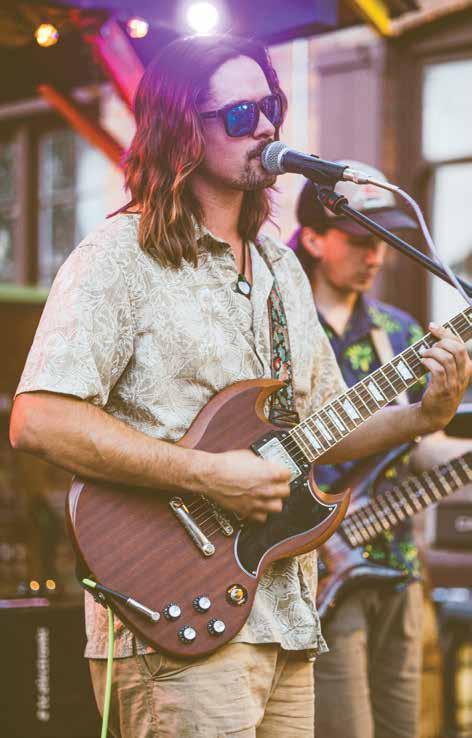
Join Vamonos Outside and the BRG for its monthly BIPOC climbing night. Second Tuesday of every month. Bend Rock Gym, 1182 SE Cen tennial Ct., Bend. $15.
The group will run, maintaining social distance, along the Deschutes River and then receive discounted drinks from the cidery after the run! Mondays, 5pm. AVID Cider Co. Taproom, 550 SW Industrial Way, Bend. Contact: bendarearunningfraternity@ gmail.com. Free.
FootZone Fall Training Groups Trail Half Marathon Training for and completing a Trail Half Marathon (13.1mi) is a challenging and rewarding endeavor. Participants benefit from FootZone’s experienced head coach and mentors. The half marathon program will also include informational clinics on nutrition, hydration, gear, injury prevention, stretching techniques and more. Safe. Community. Accountability. Fun. Friends. Tuesdays-Saturdays, 8am and Tue, Aug. 16, 6pm. Through Nov. 12. FootZone, 842 NW Wall St., Bend. Contact: 541-317-3568. col@ footzonebend.com. $150.
FootZone Fall Training Groups: Run ning Forward FootZone is combining its 5k and 10k groups to add more value to partici pants. In this track runners will be welcomed as a first time 5k runner or encouraged as a re turning runner looking to advance skills, improve endurance or push for a little bit longer running event. Sat, Sept. 10, 8am and Tuesdays-Wednes days-Saturdays, 6pm. Through Nov. 6. FootZone, 842 NW Wall St., Bend. Contact: 541-317-3568. col@footzonebend.com. $120.
Planet Fitness Home Work-Ins Planet Fitness is offering free daily workouts via lives tream! The best part? No equipment needed. Get your sweat on at least four times a day. Valid even for those without memberships! Visit the Planet Fitness Facebook page for more details. Ongoing, 4-5pm. Free.
Redmond Running Group Run All levels welcome. Find the Redmond Oregon Run ning Klub on Facebook for weekly run details.

sion Cog Wild’s certified PMBIA coaches will teach proper body position and the fundamentals of mountain biking with an intentionally planned series. Three, 2+ hour mountain bike lessons led by certified skills coaches with the same cohort. Saturdays Oct. 8, 15 and 22 at 9am. $225 for 3 sessions. Saturdays, 9-11:30am. Through Oct. 22. Cog Wild, 19221 SW Century Dr, Bend. Contact: 541-385-7002. info@cogwild.com. $225 for all 3 Saturdays.
Saturday Morning Coffee Run Come join CORK for a Saturday long run at 9am. The group will meet outside Thump Coffee on York Dr. for a long run. Feel free to run or walk, whatever “long” means to you! Whatever your pace and distance, Thump hopes you’ll join for the run and stay afterwards for food and drinks! Saturdays, 9-10am. Thump Coffee - NW Crossing, 549 NW York Dr., Bend. Free.
Understanding Water in the West Join the Deschutes Land Trust and Natasha Bellis for a dive into understanding water in arid climates. We’ll explore water management in the West and learn more about how water quality and quantity interact with conservation and Land Trust projects like the Whychus Canyon Pre serve. Oct. 6, 10am-12:30pm. Whychus Canyon Preserve, Sisters. Contact: 541-330-0017. event@ deschuteslandtrust.org. Free.

“Honor Moments of Change: Pivot with Purpose” Mini-Retreat Series Kids grow. Parents age. Bodies evolve. Connections build and dissipate. Change is inevitable yet how we process and respond to that change invokes long-standing effects. Throughout the classes time together, participants will implement tools to gracefully navigate and intentionally reflect upon life’s transitions. Cultivate space to be and
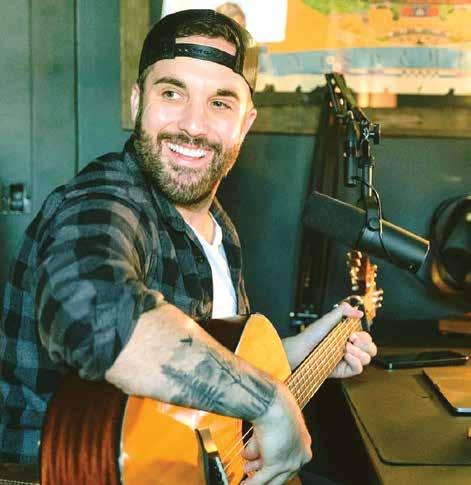
Tyler Rich and Kylie Morgan put a pop spin on traditional country music and are bringing a little something different to the weekend entertainment lineup.
Bringing love songs and groovy country tunes, the “Thinking We’re In Love” tour is stopping through Bend.
Rich has put out many hits, including “Leave Her Wild,” “The Difference” and “Better Than You’re Used To,” climbing the charts and becoming well-known in mainstream country music. Many of his songs bring uplifting energy to listeners, like “The Difference,” his most popular song with over 74 million streams on Spotify.
Many of his songs lean into the feeling of being in love and some even about heartbreak. Rich finds creative perspectives and ways of storytelling through his lyrics. Rich’s most recent release, “Trucks Don’t Lie,” unpacks the hurt of leaving a relationship and feeling the pain in the everyday parts of your life.
Joining Rich on stage is Kylie Morgan. Country twang, catchy beats and female-empowering lyrics fill Morgan’s music. Morgan has just over 1.5 million monthly listeners on Spotify and isn’t slowing down. Her sound is different from other country artists out there, with honesty and strength in her lyrics.
Some of Morgan’s most listened-to songs include: “If He Wanted To He Would,” “I Only Date Cowboys” and “Independent Without You.” The TikTok community found Kylie Morgan’s new release “Bridesmaids,” and it turned into a video trend on the app. The song currently has been included in over 130K videos about girl best friends.
For those looking for a fun night out or a concert with beautiful vocals, this twoact performance fits all the vibes. This concert is a country music lover’s dream, and even for those who are skeptical about the genre, Rich and Morgan’s pop twist invites all listeners to come out on Sunday night. Catch these two at 8pm Sun., Oct. 9 at the Domino Room.
Domino Room
51 NW Greenwood Ave., Bend
$20-$75
become! For more information visit www.invit inggrowth.org. Wednesdays. Through Nov. 2. Bend, River West Neighborhood, NW Columbia, Bend. Contact: molly@invitinggrowth.org. $500 for eight week series (Limited to 10 people).
Everyone is living in times of unfath omable stress. This stress effects our nervous system and creating anxiety, depression, sleep issues and dis-connection. In this experien tial class we learn to rebalance and regulate ourselves by using the strategies of awareness, breath, sound, movement, reframing thinking and support to shift into wellbeing. Thursdays, 10am-Noon Through Oct. 27. Central Oregon Community College, 2600 NW College Way, Bend. Contact: 503-680-5810. bethweltonmill er@gmail.com. $109.
Beginner Yoga Series Join Deven Sisler in a warm, welcoming space to demystify yoga, discover why and how to use props for your body and explore how your own breath, mind and body can help you with your posture, reduc ing stress and falling asleep with ease. Mon days, 4:30-5:30pm. Through Oct. 23. The Yoga Lab, 550 SW Industrial Way, Suite 170, Bend. Contact: 541-633-7363. info@theyogalabbend. com. $60 for all four sessions, $19/drop-in. Bend Pilates Bend Pilates is now offering a full schedule of classes through Zoom! Sign up for your class on Mindbody.com and download Zoom. Prior to start you will receive an email invitation to join class. Be ready with mat, weights, roller and/or band and login five min utes prior to class time. For more information visit bendpilates.net/classes/. Ongoing, Noon1pm. $20.
Bend Zen Meditation Group Bend Zen sits every Mon, evening at 7pm. Arrive at 6:45pm to orient yourself and meet others. The group has two 25-minute sits followed by a member-led Dharma discussion from 8:058:30pm. All are welcome! Learn more and signup for emails at www.bendzen.net. Mondays, 6:45-8:30pm. Brooks Hall at Trinity Episcopal Church, 469 Wall St., Bend. Contact: bendzen sitting@gmail.com. Donations accepted.
Capoeira: A Martial & Cultural Art Form of Freedom Free yourself from everyday movement and thought streams, push your boundaries and find joy in community. This Afro-Brazilian art combines music and acro batics in a constant flow of movement, attacks and creative defense. Tuesdays-Thursdays, 7-8:30pm. High Desert Martial Arts, 63056 Lower Meadow Dr. Ste. 120, Bend. Contact: 541-678-3460. ucabend@gmail.com. $30 intro month.
Coaching Group Build your dream life while connecting to a supportive, motivating commu nity. Clarify your goals — internal or external, immediate or long-term, self or other focused. Learn new skills, techniques and insights to make it happen! Led by Diana Lee, Meadowlark Coaching. Mondays, 6-7:30pm. Contact: 914980-2644. meadowlarkcoaching@yahoo.com. $15-25.
Community Acupuncture Acupuncture helps reduce stress, increase vitality and ener gy. Treat acute and chronic pain and strengthen your immune system. Community acupuncture makes it possible for more people to access affordable health care. Wednesdays-Fridays, 10:30am-1pm. Hawthorn Healing Arts Center, 39 NW Louisiana Ave., Bend. Contact: Reserva tions: 541-330-0334. info@hawthorncenter.com. $60/session.
Dream Interpretation Group Your inner consciousness is trying to communicate with your conscious mind all the time. It speaks to us in dreams and waking life in the language of symbolism. Facilitator Michael Hoffman has been interpreting dreams for the past 35 years. This approach draws on Jungian dream inter pretation and spiritual traditions. Every other Tuesday, 6-7:30pm. Contact: 541-639-6246. michael@naturalwayofbeing.com. Free.
Drop In Monday Meditation Open to all! Come join in the beautiful gardens for meditation and healing! Mondays, 6:30-7:30pm. Blissful Heart Wellness Center, 45 NW Greeley Ave., Bend. Contact: 510-220-2441. cathleen@ blissful-heart.com. Donation based.
Ecstatic Meditation Retreat Join on Oct. 12-16 for 5-day retreat with 3 full days of silence and the indefinable exploration into meditations that transcend sitting into dance, yoga and more. Offerings coming from Monika, Amanda, Owl, Puma, Ryan, Shanti and more.
For a full schedule and all the details, email Ryan at: exudechi@gmail.com. Sign-ups: Sept. 21-Oct. 11. Central Oregon, Countywide. Con tact: exudechi@gmail.com.
Program Impact PD! is a highly energy ex ercise class designed for people with Parkin son’s. Whole body activation, voice work, facial expression, counteract your symptoms, dual tasking, fine motor skills and increase your daily activity. Led by Nancy Nelson an Exercise Specialist for Parkinson’s. Tuesdays-Thursdays, 9:15-10:30am. High Desert Martial Arts, 63056
Lower Meadow Dr. Ste. 120, Bend. Contact: 503-799-5311. nancyn.pdex@gmail.com. $119 a month.
In-Person Yoga at LOFT Wellness & Day Spa In-person yoga classes at Bend’s newest yoga studio! Tuesdays: Vinyasa with instructor Kelly Jenkins. 5-6pm. Limited to five participants. Thursdays: Foundation Flow with instructor Kelly Jenkins. 5-6pm. Limited to five participants. Schedule online or give us a call to reserve your spot! Tuesdays-Thursdays, 5-6pm.
Loft Wellness & Day Spa, 339 SW Century Dr. Ste 203, Bend. Contact: 541-690-5100. info@ loftbend.com. $20.
Learn Ayurveda Join Beth Lyons, NAMA certified Ayurvedic Practitioner and LMT for a holistic approach to your health. Ayurveda is the “Science of Life” and helps you find balance through simple daily rituals, diet and herbs. The group will go over principles of prevention, food as medicine, digestive fire, routine and healing herbs. Oct. 8, 12:30-1:30pm. Bend Hot Yoga, 1230 NE 3rd St. UnitA320, Bend. Contact: yoga@ bendhotyoga.com. $10/BHY Members, $20/ Non-Members.
Live Music Yoga & Gong Bath Medi tation This experiential yoga class explores vibration through movement, music and meditation. Through the use of gongs, crystal and Tibetan bowls, chimes, flutes and drums the group explores the healing journey of expe riencing sound on a deep profound level. Please bring a yoga mat, cushion and blanket for max comfort. All levels welcome. Wednesdays, 7pm. Hanai Foundation, 62430 Eagle Rd., Bend. Contact: 808-783-0374. Kevin@soundshala. com. $15-20.
es in Tumalo Love Thy Camp has opened a small (4 yogis max) yoga studio in Tumalo! One of the ways it raises money is through yoga classes. So, come support your health and a great cause! Check the schedule for dates/times. Private one-on-one available too! First class $5 off with code: GetSomeYoga. Mondays-Fridays, 9:30-10:30 and 11:30am12:30pm. Love Thy Camp, 20039 Beaver Lane, Bend. Contact: 541-948-5035. info@lovethyca mp.com. $20/drop-in.
Group The Mommy & Me Breastfeeding Sup port Group meets weekly in the Central Oregon Locavore event space. Lactation consultants on hand from St. Charles and WIC to weigh babies and answer questions. All are welcome, including partners and siblings, no matter how you are feeding your baby. Thursdays, 6-8am. Central Oregon Locavore, 1841 NE Third St., Bend. Free.
Overeaters Anonymous (OA) Meet ing Zoom meeting password: 301247. For more information: centraloregonoa.org/. For
assistance, call Terri at 541-390-1097. Sundays, 3-4pm. oacentraloregon@gmail.com.



Please join Nancy Nelson- Parkinson’s Exer cise specialist for this whole body in-person, function-focused exercise that will push you to do more than you think. You will be challenged physically and cognitively while working through fitness goals: strength, balance and agility. Tuesdays-Thursdays, 1-2pm. First Presbyterian Church, 230 NE Ninth St., Bend. Contact: 503799-5311. nancyn.pdex@gmail.com. $160 for 8 weeks.















Q&A Voters decide in November whether unin corporated Deschutes will opt out of psilocybin therapy. Info session and Q&A about psilocybin therapy for addressing depression, anxiety, endof-life anxiety, addiction and other mental health challenges. Short film followed by Q&A with pan el of experts. Oct. 5, 6-8pm. High Desert Music Hall, 818 SW Forest Ave., Redmond. Free.
Scottish Country Dance Scottish Country Dance class is on Monday from 7-9pm at the Sons of Norway Building. A chance to social ize and get a bit of exercise too. Beginners are welcome. All footwork, figures and social graces will be taught and reviewed. Contact 541-5089110. Mondays, 7-9pm. Sons of Norway Hall, 549 NW Harmon Blvd., Bend. Contact: 541-508-9110. allely@bendbroadband.com. $5.
St. Jacob Orthodox Christian Church Liturgy Father Ignatius leads the Christian Orthodox community at the back of the Bend Coffee & Books store. All ages, denominations, colors, races and groups are welcome to come join. Participants will pray, give thanks, read and worship. Please wear modest attire. Sundays, 10-11:30am. Through Feb. 1. Bend Coffee & Books, 155 NE Greenwood Ave., Bend. Contact: 541-241-8119. father.ignatius@orthodoxbend. org. Free.
St. Jacob Orthodox Christian Church VESPERS Join Father Ignatius and the con gregation in a small worship space located at the back of Bend Coffee & Books. This is a simple evening of prayer and worship. Wednesdays, 6-6:45pm and Saturdays, 6-6:45pm. Through Feb. 1. Bend Coffee & Books, 155 NE Greenwood Ave., Bend. Contact: 541-241-8119. father.ignati us@orthodoxbend.org. Free.
proach focuses on the entire body as well as the mental and spiritual aspects. Tuesdays-Thurs days, 9:45am. Grandmaster Franklin, 61980 Skyline Ranch Rd., Bend. Contact: 541-797-9620. arawak327@gmail.com. $80 per month.
classes are traditional moves, modified and adjusted by Dr. Paul Lam and his team of medical experts. We also explore using our knowledge of Tai Chi to help us stay safe and balanced, as seniors. Wednesdays-Fridays, 8:45-9:45am. Ore gon Tai Chi, 1350 SE Reed Mkt Rd. Ste 102, Bend. Contact: 541-389-5015. $65/month.
7-8pm. Through May 5. St. Helen’s Hall - Trinity Episcopal, 231 NW Idaho St., Bend. Contact: 541815-5574. taizebend@gmail.com. Free.


Tai Chi / Qi Gong


The focus of Grandmaster Franklin’s teaching is on the individual, not on the group. He teaches the original form as it was taught in the monastery: unchanged—Taoist Tai Chi Chuan 108 movements. This holistic ap

Tai Chi for Health This two-day per week class is appropriate for anyone who wants a slower Tai Chi class or those dealing with chronic health conditions. The gradual, gentle and simple movements help facilitate healing and improve motion, flexibility and balance. The entire class can be performed in a wheelchair or a chair. Any student may sit for all or part of the class. Half of our time is gentle warm-ups. “Tai Chi for Health”
Taize Meditation Service The Taize Choir of Central Oregon invites you to participate in an hour of meditative non-denominational Taize music, silence and prayer at our monthly ecu menical service. Families are welcome. Services are first Thursday October-May, except April 13 at Shalom Bayit. First Thursday of every month,
Yoga with Focus: Dance Gain flexibility for extensions and strength for inversions. This vinyasa style class allows a deep stretch while building strength. Tools for stress relief and conditioning that can be transferred to the dance studio. Appropriate for all levels of yoga and dance. No yoga or dance experience necessary. Thursdays, 9-10am. Bend Hot Yoga, 1230 NE 3rd St. UnitA320, Bend. Contact: yoga@bendhotyoga. com. $20/drop-in.










We sampled two classic Bend taquerias for National Taco Day, but no one needs a reason to try them
By Nicole VulcanIn my opinion, no one even needs an excuse like “I’m hungry” to eat a taco—or maybe even two or four. But this recent Oct. 4 was supposedly National Taco Day, and for that, I’d eat at least six, depending on how you’re counting. On that anticlimactic national-holiday-day, I stopped by two longtime Bend taquerias to check out the goods.
The staff at Tacos El Pihuamo is not even aware that it’s National Taco Day—a thing dreamed up by taco chain Del Taco some years back—when I stop in to grab a trio of classics from this beloved green truck on Third Street, north of Reed Market Road. That’s perfectly fine by me, because once again, there’s always a reason to eat tacos—especially these classic street tacos, small enough to fit in the palm of your hand and served with a double tortilla aimed at helping you reign in the generous helpings of meat inside.
I opted for two longtime classics—asada (steak) and carnitas (shredded pork), along with birria, the shredded-beef phenom that’s been taking the American taco world by storm. Birria originated in the Mexican state of Jalisco, where it’s typically made with goat meat, but in the U.S., people along the Mexico-California border have spread this trend around over the past 15 years or so, serving the stew-like birria Tijuana style, with beef and cooked in broth. A 2020 sto ry in Eater detailed “The Great Birria Boom,” and I for one am here for it.
Tacos Pihuamo’s version doesn’t come with a cup of consommé—the delightful broth the beef is cooked in—when ordering individual tacos, but among the three tacos on my plate, it was still the juicy, flavorful star. Sorry asada—love you, but your flashy cousin is kinda stealing the show. Tacos Pihuamo’s carne asada taco was not to be ignored, coming tender with just a hint of crispiness on the edges. Likewise, the carnitas were hearty and juicy, with bits of crispy edge I love in carnitas.
Four salsas are available at Tacos Pihuamo, including a spicy, creamy and absolutely awe some avocado-based version, a habanero version with just the right amount of heat, a fresh green salsa with an herby flavor and a red that lets the spice-averse get the flavors without the bite. I love to scoop up just one of each taco’s two tortillas, douse a bite in a salsa and then let enough meat fall out to use the second tortilla for leftovers. Luckily, this taqueria’s compact yet sturdy tortillas let that process unfold without a falling-apart mess. This is a trio of perfect tacos, and at $7.50 for all three, it’s an affordable meal, too.
Tacos El Pihuamo 950 SE 3rd St., Bend Mon-Fri 10am-7pm facebook.com/TacosPihuamo
Tucked along Division Street near the Reed Market and Third Street intersection, it’s easy to miss this unassuming tortilleria in the Scandia Plaza. But plenty of people don’t miss it, as evidenced by the line out the door when the spot opened late on the day of my visit.
Tortilleria Reyes has a wide menu of meat offerings, including chicken, barbacoa and asada—the three I ordered—along with birria, adobada (marinated pork), cuento (pork skin) and buche (pork stomach). With my first bite of the barbacoa—tradition ally my favorite among the three I tried—what stood out was the excellent tortilla, soft and with just a hint of crunchiness, and doubled up for that added stability. Since this place offers tortillas by the bag, it’s no wonder that their tortilla game is strong. The barbacoa was tasty if not overly salty, while the asada was on the crispy side. Typically, pollo (chicken) tacos are not my go-to, due to the tendency for street chicken tacos to get a little stringy, that was not the case here. Tortilleria Reyes’ chicken was juicy and flavorful, the chicken coming apart in big shreds.
And the salsas? Yum. I prefer a lot of heat, and the red salsa definitely delivered, having me hold back from putting the entire container on one taco and allowing me to leave some for a future egg scramble. Tortilleria Reyes also offers a guac salsa with lots of flavor and plenty of cilatro.
For those looking to sit down inside and get the full classic tortilleria experience, this is the spot. Grab a beer or a few Mexican style candies, stock up on tortillas or oth er basic sundries, and peruse the menu that includes lots more than tacos. I eyed up the menudo, sopes and the full birria order—this one made with goat and coming with consommé and six tortillas—but after downing all these tacos, those will have to wait for another visit.
CThe definition of piccata in cooking is thin slic es of meat, typically veal or chicken, that are dredged in flour, sauteed and served in a lem on butter sauce. A piccata is typically associated with Italian cooking although it’s quite possible it actually originated in the U.S. in the 1930s in Ital ian-American kitchens. The immigrants who first created the dish were likely of Sicilian descent since the ingredients – lemons, capers, garlic – were so common in Sicilian cooking. It was originally prepared with veal, which during that time in history was much cheaper than chicken, believe it or not!
In this recipe I actually prefer chicken and I also prefer pounding the chicken flat versus thin ly slicing it with a knife. The pounding adds ten derness to the meat, which, once cooked in the lemon butter sauce, literally melts in your mouth. But, if you ask me, the real star of piccata is the sauce. Lemony, briny, buttery and downright lux urious is how I would describe it.
In this version, I’ve added in-season heirloom tomatoes for a twist on the classic dish. Tomatoes are in season through October in Oregon (and in Paris, where I’m writing from this week) and there are certainly some good ones available now. Plus, stacking the tomato slices with the chick en slices looks fancy and sometimes fancy is fun!
Please don’t be shy about making this sauce. Once I finally made it at home myself I was aston ished at how easy and forgiving it was, meaning you have wiggle room as far as ingredient mea surements. In other words, if you taste it after using the ingredient amounts that I’m suggest ing in the recipe and it doesn’t taste the way you were hoping it would, you can add more lemon or more wine/liquid or more capers or more salt or whatever. The key is TASTING. You must taste the sauce. I typically start tasting it after I’ve add ed the first bit of butter after stirring in the gar lic, capers and lemon. I often add more butter and more lemon. The sauce cooks up quickly so this is a quick dish to prepare. Have everything in place before you even start browning the chick en because once you get going, there’s no down time. Bon Appetit!
 By Donna Britt
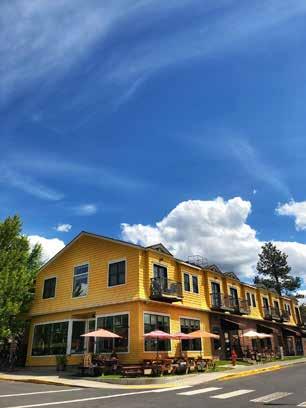

• 4 to 8 chicken breasts, thinly sliced and/or pounded (you can butterfly larger breasts to make two pieces if you want – the idea is to end up with 2 palm-size pounded pieces of FLAT chicken for each serving)
½ cup all-purpose flour
Big pinch each of salt & freshly ground black pepper
• 1 ½ tablespoons olive oil
• 2 tablespoons unsalted butter
• ¼ to ½ cup white wine
• 4-5 cloves of garlic, thinly sliced or minced
• 1-2 tablespoons capers
• Fresh lemon juice (from at least one lemon – add more lemon juice to taste)
• 1-2 more tablespoons of butter • 2-3 large heirloom tomatoes, thickly sliced Parsley sprig & lemon slices for garnish, as desired
Mix flour with salt & pepper on a large platter or plate. Dredge chicken pieces in flour mixture, lightly coating both sides. Heat olive oil and 2 tablespoons butter in large skillet over medium-high heat.
Lightly brown chicken pieces. This will only take a couple of minutes on each side. Remove chicken to a clean platter or plate.
Pour wine into the same skillet (after chicken is removed, leaving all residue for the deglazing). Keep heat on medium-high. Add garlic, capers and lemon juice to the bubbling wine, then stir in butter a table spoon at a time until desired consistency is reached. If you want a thinner sauce, you can add more wine or even broth or a bit of water. Taste the sauce and add more butter, more capers or more lemon if desired. You may also want to add more salt & pepper but be sure and taste before you do. Return chicken to sauce and heat through.
To serve, place a piece of chicken on each plate. Add a tomato slice then another piece of chicken. And finally stack another tomato on the very top. Drizzle and spoon sauce over the stack and around the plate. Garnish with parsley and lemon as desired.
Serve with a slice of warm bread with with olive oil and a side of something green.
Locals may have a sturdy green bag or two hanging around their pantries, waiting to be filled with foods for people in need. In 2015, those green bags began to cir culate around Bend, destined for collection by volunteers with the Bend Food Project. The nonprofit gives the bags out, collect them—ideally full of non-perish able foods—again two months later for distribution to people in need. After seven years in operation, the Bend Food Project recently achieved a milestone of collect ing 1 million pounds of food.
The Bend Food Project started in 2015 with a goal of alleviating food insecurity in Central Oregon. Its first collection garnered about 2,700 pounds of food. Now, the average collection is about 40,000 pounds, according to its website.

Hitting the 1-million-pound mark was a welcome turn of events for its founders, who estimate that 1 million pounds of foods equates to 800,000 meals.



“It’s an astonishing number,” remarked BFP’s Larry Marceaux. “We never dreamed we could hit the 1-million pound goal so soon. Central Oregonians have been quick to volunteer and donors have been very generous.”
Bend Food Project has a food collection event happening this Saturday, Oct. 8, when some 240 “Neighborhood Coordinators” will head out to collect food from the nonprofit’s 3,300 donors. Those interested in learning more or getting a bag to fill can visit bendfoodproject.com.


weeks ago,
reported on



Pizza Paradise
Pete Wojda said he’s



Village Shopping Center
of Tuesday, Oct. 4 at 4pm. Little Pizza Paradise




open Tuesday through Saturday from 4 to 8pm.




Between working for BendFilm, Tin Pan Theater and the Source Weekly, I haven’t been able to go to the BendFilm Festival just as a spectator in several years. I’m either working at one of the venues, writing about the movies or, if I’m really lucky, interviewing the filmmakers as they roll through Bend. This year will be no dif ferent as I’m stretching my time as a house manager or bartender at Cascades Theatrical Company and Tin Pan Theater over the four days of the festival. With that said, I like to imagine exactly how I would spend every minute of the festival if I had a pass and had nothing to do but watch movies and schmooze at the parties. So, if you want to maximize the in-person festival this year on Oct. 6-9, let me show you what I would do if I had the freedom to wander freely over those four magical days.
12:45pmDocumentary: “Retrograde” From the filmmaker behind the searing documentary “Cartel Land” comes this powerhouse look at the final nine months of the war in Afghanistan. An expertly crafted doc like this is the perfect way to begin a film festival. At Regal Old Mill
2:30pmGrab some lunch/early dinner and keep hydrated.
5:30pm
Opening Night Film- Documentary: “The Pez Outlaw” A deliriously fascinating documentary about Eastern European Pez dispenser smuggling. Just go into this blind and be blown away. At the Tower The atre. Filmmaker in attendance.
8pm
Opening Night Reception: This is always a blast. Meet the filmmakers and network with them or just get your drink and dance on. Quite the party. At Open Space Event Studios.
10pm- Go home and sleep the sleep of a content ed puppy.
Friday, Oct. 7
about one of the most respected film festivals on the planet. At Deschutes Library - Brooks Room
5:30pm
Television Show: “Reservation Dogs” You’ll have to drive fast to make it in time, but it will totally be worth it. “Reservation Dogs” is one of the best shows on TV and to have the great Gary Farmer and Tatanka Means in attendance is a big deal. At the Madras Per forming Arts Center. Actors in Attendance.
avant-garde documentary. At Regal Old Mill. Film makers in attendance.
11:45am
Have lunch and drink some water.
1pm
9:45am
Documentary: “Butterfly in the Sky” The docu mentary about “Reading Rainbow” you didn’t know you needed. At Regal Old Mill. Filmmaker in atten dance.
11:45am
Panel: “The Sexy Side of Filmmaking: A Panel of Industry Insiders” A panel of experts in the field of actually getting your film distributed and seen. With people from NEON, Magnolia and Vox, this should be unmissable for people who want to make a living in the industry. At Deschutes Library - Brooks Room.
12:45pm- Eat foods and hydrate some more.
1:45pm
Panel: “Screenwriting From Page to Screen” This is the panel I’m the most excited for since it will have the great Jim Taylor (“Election” and “Sideways”) and Tamara Jenkins (“Slums of Beverly Hills”) discussing screenwriting and the art of adapting novels for film.
At Deschutes Library - Brooks Room.
3:45pm
Panel: “Beyond Sundance with John Cooper”
Hear the former Sundance director tell inside stories
Eat something, you animal. You can’t survive off of beer and dreams.
8pm
Shorts: Music Videos: Watch a gorgeously curat ed lineup of music videos including one from She and Him as well as local musician Kelsey Beck Kuther. This will be a blast. At Open Space. Filmmakers in atten dance.
9:45pm
Shorts: “Late Night Shorts” Close the night on a bonkers note with some deeply strange and wonder ful short films. At Cascades Theatrical Company. Film maker in attendance.

Sleep and dream of movies.
Saturday, Oct. 8
Documentary: “Sam Now” Sweet, thoughtful and ultimately very fascinating look at generational trauma and how our parents have the power to shape almost our entire future. If you see one doc at the fest, this should be the one. At Regal Old Mill. Filmmakers in attendance.
3:30pm
Panel: “First Features Panel” Here’s another chance to hear Tamara Jenkins talk, as well as Jude Chun (The wonderful “Unidentified”), David Siev (“Bad Axe”), Elise Levine (“Sweetheart Deal”) and Reed Harkness, (“Sam Now”) about their first films.
5:15pm
Conversation with IndieWoman of the Year, Tamara Jenkins: Do you see a pattern here? Tamara Jenkins is an indie film legend and her movies “Slums of Bever ly Hills,” “The Savages” and “Happy Accidents” helped shape me as a cinephile and a writer. Having her here is a dream come true for me. At the Tower Theatre.
5:45pm
Have some dinner and dranks.
10:45am
Documentary: “Sweetheart Deal” A brutal and unforgettable look at sex workers in Seattle. As tough as it is to watch, this is ultimately a humane and life-af firming example of how to make a truly non-judgmental
7pm Awards Reception and Ceremony: I mean, you gotta see who wins and hear the acceptance speeches. At the Boys and Girls Club.
9:30pm-
Closing Night Party: This is always a really fun par ty where everyone can mingle with the award winners, the festival goers and the folks who make the festival happen. At Bunk + Brew
Get that rest…only one more day to go.
Sunday, Oct. 9
10am
Award Winner TBA: This will be one of the big winners of the fest and if it’s one you missed, then this will be the perfect time to catch it. At Regal Old Mill

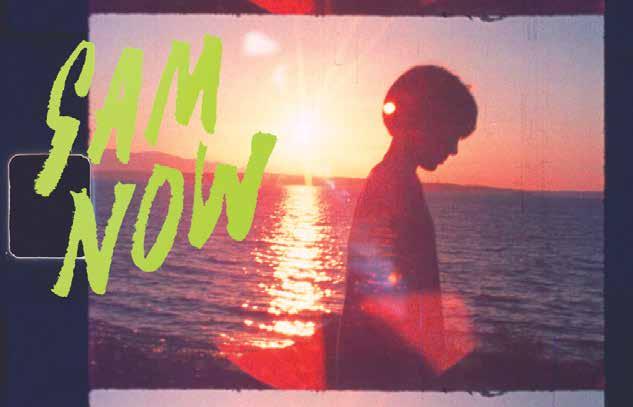
12:45pm
Narrative: “Close” An astonishingly lovely French language drama about the unbreakable bonds of child hood friendship. Simply fantastic. At Regal Old Mill
2:40pm EAT FOOD.
4pm
Documentary: “Pasang: In the Shadow of Ever est” An inspiring doc about the first Nepali woman to summit Mount Everest that will inspire a whole new generation to follow their dreams. Madras Performing Arts Center. Filmmakers in attendance.
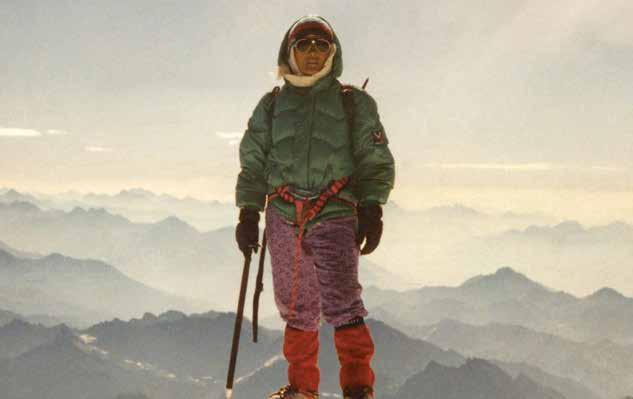
6pm
Narrative: “Corsage” A fantastic period charac ter study that follows the Empress Elisabeth of Austria in the latter half of the 19th Century. The lead per formance by the great Vicky Krieps is a banger. Regal Old Mill.
You did it! Get some rest and know you did a fantas tic job bouncing around to all the different venues and stuffing your brain with movies.
Several of the films will be available to watch virtu ally from Oct. 10-23, so here’s a few more I would defi nitely try to catch while you can:
Documentary- “Bad Axe” The hateful and xeno phobic dogwhistle of “traditional American values” is unveiled in this deeply infuriating documentary fol lowing an Asian American family in 2020, striving for the American dream and being beaten down over and over by racist hate in the face of the pandemic. An unforgettable look at Trump’s rural America.
Narrative- “Jacir” Great performances and a time ly message make this an easy pick for one of the biggest crowd-pleasers of the fest.
Narrative: “Unidentified” A beautifully strange and wonderful Korean sci-fi/comedy/dance movie about the most banal alien invasion of all time. Bon kers in the very best way.
Documentary: “Au Revoir” Some of the finest water sports cinematography I’ve ever seen.
Shorts Block-“Togetherness.” “Ice Merchants” shows the limitlessness of animation, “Concrete and Steel” is a Spanish riff on a Tarantino crime dramedy, “The Originals” focuses on a lost lifestyle in Brooklyn, “Takilma Stories” looks at some 1970s Oregon weird ness and “North Star” features a stunning performance from “Euphoria’s” Colman Domingo.
AMSTERDAM: A sprawling crime comedy starring Bale, Robbie, De Niro and…Taylor Swift? Ok. Alright. This is one of my most anticipated movies of the year and I still think it will probably be a hot mess. Director David O. Russell is behind two of all-time classics (“Three Kings” and “I Heart Huckabees”), so he has my loyalty no matter what. Regal Old Mill, Sisters Movie House
AVATAR (RE-RELEASE): To get people hyped for the new “Avatar” movie coming out in December, Disney is re-releasing the original to remind people that it was a thing back in 2009. I haven’t seen it in years, but I remember “Avatar” having cool 3D and a plot that reminded me how much I love “Fern Gully.”
Regal Old Mill
BARBARIAN: A woman arrives to her rental home but the dude that played Pennywise is already there. Most people would flee into the night, but then we wouldn’t have a movie, so she stays and deeply creepy horror ensues. This is a new horror classic from top to bottom. Regal Old Mill
BROS: Finally, we have a big budget studio romantic comedy with and an all-LGBTQ+ central cast. This is the first time something like this has been done in history and with star Billy Eichner writing and the Nicholas (“Forgetting Sarah Marshall”) Stoller, this could end up being this year’s comedy smash success.
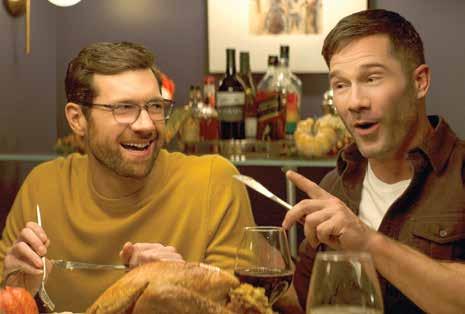
Regal Old Mill
BULLET TRAIN: Why yes, I would like to see Brad Pitt fight a train full of assassins as it speeds across Japan. When you’ve got one of the co-creators of the “John Wick” franchise behind the camera, that means there will be just as many jokes as punches and “Bullet Train” is just as goofy as it is exciting.
Regal Old Mill
DON’T WORRY DARLING: The media loves to talk about all the drama involved with the making of this one, but completely forgets that 1) Olivia Wilde directed the charming and lovely “Booksmart,” 2) Florence Pugh is one of the best actresses of her generation and 3) that this movie is actually an orig inal idea instead of a remake or comic book movie. I think it looks fantastic.
Regal Old Mill, Sisters Movie House, Odem Theater Pub
THE GOOD HOUSE: Starring Kevin Kline and Sigourney Weaver, this romantic drama follows a New England realtor as she rekindles some long-dormant connection with her high school sweetheart. This definitely looks like one of those movies that people complain don’t get made anymore: something focused on adults dealing with real human emotions.

Regal Old Mill, Sisters Movie House
LYLE, LYLE, CROCODILE: I wasn’t aware I needed Javier Bardem dancing with an animated crocodile
in my life, but here we are. Regal Old Mill, Sisters Movie House, Odem Theater Pub, McMenamins
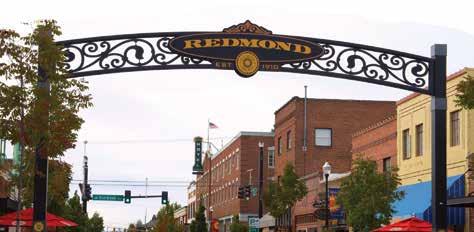
MARCEL THE SHELL WITH SHOES ON: in love with the hilarious and touching YouTube vid eos of Marcel (voiced by the luminous Jenny Slate) when they came out a few years ago? Of course, you did. Well, this feature length story about the little shell searching for his people is one of the sweetest and kindest movies of the last few years. A joy.
Pan Theater
MOONAGE DAYDREAM: David Bowie in all his per fection. Glorious. Regal Old Mill, Tin Pan Theater
PEARL: A darkly funny and disturbing melodrama that acts as a prequel to last year’s modern horror classic “X,” Ti West and Mia Goth’s “Pearl” is a perverted and bloody "Wizard of Oz.” Truly one of the most original experiences of the year. Mill, Tin Pan Theater
SEE HOW THEY RUN: An old-fashioned comedy/ mystery that plays like a madcap Agatha Christie whodunnit featuring Sam Rockwell, Saoirse Ronan, Adrien Brody and Ruth Wilson? Yeah, that sounds like it was made just for me. Regal Old Mill
SMILE: This new horror flick has a similar plot to “It Follows,” but looks just creepy enough to stand on its own. After a young woman goes through a traumatic incident, she starts getting stalked by a smiling creature that looks like people she knows. This has a hell of a trailer, so maybe we might have a solid horror flick on our hands. Regal Old Mill, Odem Theater Pub
TERRIFIER 2: I’m not sure the world needed a twoand-a-half-hour evil-clown movie, but now we’ve got one. This is going to be a bloody, gooey good time and I am so excited that Art the Clown has returned and is in our local theaters. Go see this so I’m not there by myself. Regal Old Mill
THE TERRITORY: A captivating look at the struggle between indigenous tribes and developers as the lo cals try to save as much as they can of the Amazon. This really shows you the power of documentaries and their ability to effect change. Tin Pan Theater

TOP GUN: MAVERICK: There’s a reason why Tom Cruise is the last true movie star and it’s mostly because he’s that perfect blend of creepy, weird and desperate to entertain us—and boy does he. Talk about a highway to the danger zone. Regal Old Mill
THE WOMAN KING: An historical drama/action movie about the Agojie, the all-female warrior unit that protected the African kingdom of Dahomey in the 1800’s. Featuring an absolutely fierce perfor mance by Viola Davis, this is a solid if flawed epic.
Regal Old Mill
Last week we printed an obituary written by the fam ily of Jim Anderson, who passed Sept. 22 after a long life filled with caring about the natural world—and writing about it, too.
While Anderson’s absence will be felt far beyond the pages of this newspaper, where he regularly penned columns for “Natural World,” it is in this column that many readers got the best glimpse of what he stood for. Anderson’s regular musings on everything from the Jerusalem Cricket to endangered monarchs to keeping house cats away from birds will live on at our website, bendsource.com, but we’ve also compiled some of his best quotes here, on topics that recurred over the 24+ years of “Natural World.”
“Those Bushtits in Sue’s photo, pigging out at our suet feeder, always bring the thrill of feeding wild birds alive in our souls. Don’t know about you guys, but if you’re having a slow and not-so-fun day, Bushtits will bring joy into your life!” “Feeding Our Feathered Friends,” Dec. 16, 2021
“Let’s face it, hummingbirds can get hooked on feeders, just like humans on whiskey. They see the red on a feeder which attracts them to come look at the device, then they spy the fake flower hole and bingo! — they’re into it and hooked.” “Hummingbirds in Win ter—What Do We Do?” Nov. 25, 2021
“My first adventure with sage-grouse was in the ear ly ‘50s when my old pal, Ed Park, and I took newcomer birders from Great Britain, Alan and Sheila Baldridge, to see their first sage grouse in America. We had them pitch their tent overnight on Reub Long’s hay field/
strutting ground at Ft. Rock. In the morning our native sage-grouse were right in the Baldridge’s front yard.” “It’s Sage-Grouse Hunting Season,” Sept. 17, 2020
On the North American Beaver
“Like it or not, everyone who uses water is unknow ingly depending on the dam-building talents of our North American Beaver. Without question, we have the industrious beaver to thank for helping keep the water available for us to drink, cook with, flush our toi lets with, irrigate with, and use as we will in hundreds of other ways.” “Beavers, Our Eager Aquifer Engi neers,” July 16, 2020
“There’s nothing like having a bluebird nesting box in your backyard. If you have an outdoor cat, put a Bird-be-safe collar on it so it doesn’t target the birds. A swallow nesting box will be a welcome asset if you live near a mosquito-producing body of water. You can also put up a bat shelter and have bats fluttering about at night, helping with the mosquito reduction business.” “Homes for Birds and Bats,” Feb. 27, 2020
On “Owl,” Jim’s feathered foster son
“I was in a pickle, but the Osterizer blender was sit ting right there on the counter, so I tossed the gopher in, put the cover on and hit the switch. Ker-zamm! Gopher guts, bones and hide were splattered all over the inside of the jar.
“…I removed the cover, and with my finger scraped off some guts, meat and bone and offered it to the lit tle tennis ball. The minute the goop got in the owl’s mouth it reached for more, and in a few minutes every thing I could scrape off was in the owl.” “My Feathered Foster Son,” Dec. 19, 2019
“Dear readers, cats killing birds and other native wildlife has—for years and years—been the bane of my existence. Not only do the incredible numbers of dead birds and other native wildlife bother me, but it is also the business of domestic cats bringing their vic tims into the house that worries me no end.” “At Last!” Aug. 22, 2019
“This reminds me of the time I spent living with an Aboriginal family on a billabong near Darwin, Austra lia, years ago. My host’s 14-year-old daughter, Daphne, teased me as she was chomping down on the roasted wood-boring beetle larvae she’d dug out of a eucalyp tus. I still get a funny feeling in my tummy thinking back on those interesting times.” “Of Pandoras and Other Moths,” July 25, 2019
“Of all the insects that live in, under, over and on Central Oregon, none can catch a person’s eye and generate more fear, questions, admiration, revulsion and other human emotions like that of Stenopelmatus fuscus, the Jerusalem Cricket, AKA:
· Earth baby
· cara de niño (Spanish for “child’s face”)
· wó see ts’inii (Navajo for “skull insect”)
· old bald-headed man
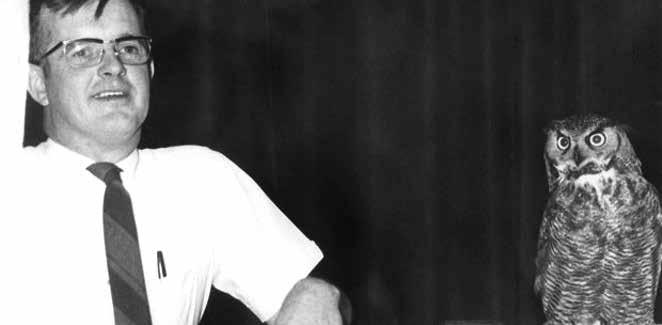
· potato bugs
· skull bug
· What in the $#%# is that!?” “Nina De La Tierra/ Child Of The Earth: The Mystery Of The Jerusalem Cricket,” Aug. 13, 2009
…Well, that was fun. With so many years of Ander son’s treasures to mine through, we’ve barely scratched the surface. We may have to do this again!
 By Allie Noland
Plan projects and practices to help save the planet, save money and promote clean energy Thursday at the 7th Annual Go Clean Energy Conference. Hosted at Central Oregon Community College, the event invites businesses, govern ment and all individuals interested in clean energy solutions to join for a day full of speakers, vendors and networking.
This conference serves as a space to help provide knowledge to help people pur sue projects in clean energy efficiency, electric vehicles, energy storage and electri fying buildings, said Diane Hodiak, executive director of 350 Deschutes. The main theme of the conference is electrification.
With over 30 speakers, the conference will cover a variety of energy topics. Bob Keefe, author of Climatenomics, presents at the conference. Keefe will discuss the exploding green jobs popping up all around the world. Scott Bolton, senior vice president of transmission development at PacifiCorp, will present on electric infra structure and the move toward electrification in the West. Melanie Plaut is a retired doctor and now focuses her work on fossil fuel resistance. Plaut will speak on the health and safety aspects of fossil gas.
Innovative speakers are presenting to inspire the community, provide profes sional expertise and answer questions about how to sustain clean energy usage and push for policies that will create systematic change.
“It’s a climate crisis,” Hodiak said. “And we are seeing this with wildfires and water shortages. And yet, we have solutions. We have solutions to the climate crisis. We have only to implement them.”
Everyone of all income levels is invited to learn how to save energy and see how our government can implement policies to move toward clean energy.
“Climate change is an everyone problem,” Hodiak said. “Everyone can do some thing that will help lower their costs and help the planet.”
Visit gocleanenergy.org to purchase tickets for the all-day event.
Thu., Oct. 6, 9am-4:30pm
Central Oregon Community College


NW College Way, Bend
$29/veterans



Mercurial. That may be the most defin ing aspect of fresh hop beers that are not one specific beer or flavor but are a shapeshifting target. When a beer fea tures fresh (aka “wet”) hops (as opposed to the kiln-dried, typically pelletized hops all breweries rely on year-round) it isn’t defined by its brewery or style but by vir tue of being completely agricultural. As such, as with all terroir-driven consum ables, there’s a breadth of changeabil ity that can often lead fresh hop beers not to a brewer’s desired destination but to Mother Earth’s whimsical one. Their inherent beauty is that freshly-picked hops must reach a brewery’s boil kettle within 24 hours, but ideally even sooner lest the volatile compounds within the hop flower degrade.
What this means for us in the Pacific Northwest, where virtually 99% of hops are grown, is that our breweries are able to produce them. Add to this that hops are only harvested in late summer. So these beers—typically IPAs, but any beer style where the brewer wants to showcase the pungent emeralds of the Willamette or Yakima Valleys—are exclusively a liquid delicacy available right here, right now.
Some of them put already cherished hop varietals on a pedestal such as Crux Fermentation Project’s Crosby Strata Fresh Hop IPA, which pays homage to the Valley’s Crosby Hop Farm. The hop is celebrated for its balance of sweeter fruit notes (berries and passion fruit) combined with danker, herbal (sage!) qualities.
Crux’s beer was included in a small, informal, blind tasting conducted at the Source Weekly HQ and our thirsty judg es, mercurially, offered up notes across the spectrum. Some deemed it creamy, others felt it was quite bitter. One was struck by the beer’s “Juicy Fruit” flavor while another noted it tasted like “green matter.”
Taste, of course, is subjective, but the fun factor in fresh hop beers is that dif ferent palates truly pick up varying qual ities, all of which are to be expected in such offerings.
Perhaps the favorite beer sampled was Boss Rambler’s Azacca Shaka Hazy IPA. Azacca is much newer to the scene at large, a varietal marked by bright man go and other tropical fruit notes with a more diminished citrus kick than many classic PNW hops. Though the beer also featured some Strata as well as Citra Lupomax (think hashish made from Citra hops), its 10 pounds of Goschie
Farms fresh Azacca is the centerpiece and the beer’s sweet, smooth flavor and mouthfeel were an across-the-board hit. The most on-target comment was “Limoncello.”
Of course, some brewers are able to get their hands on experimental hops— ones that have not officially been pat ented or named and are only available for trial use to select breweries. Natural ly, a brewery of Deschutes’s size means it can get ahold of almost anything it desires and lucky for us it desired Exper imental 1320. To this beer drinker’s taste buds, it’s reminiscent of another newer variety called BRU-1 in that it smacks of fresh pineapple. Each of the judges felt whisked away to a tropical island drink ing Experimental 1320 Fresh Hop IPA, available at both the Deschutes brewpub and tasting room. It is complemented by a peppery kick perhaps owing to a more phenolic yeast strain and/or the sharp ness derived from the wet hops which, understandably, can taste a bit like chew ing on flower stems. In a good way.
Also formally under the Deschutes umbrella, Boneyard’s Out on Bale (brewers love hop puns and this is a nod to bales of hops) is the one Imperi al IPA in our roundup. Though it weighs in at 8.5% ABV, the freshie Simcoe hops give it a softer, stone fruit direction than one might expect of a stronger beer, and it actually reminded judges of Sil ver Moon’s Hydrosphere Fresh Hop IPA, built up to 6.7% and built on fresh Mosaic hops that ultimately led the beer more in a strawberry direction than gua va nectar that this judge often associates with that varietal. Both were among the “smoothest” and easy-drinking beers we considered.
One of the more polarizing beers sampled was Sunriver’s D’Kine, Hopped using wet Mosaic hops from Coleman Agriculture, I typically associate the hop with juicy guava but in this beer’s case, a sharp bitterness and funkiness shined. It presented more bong water aroma than GoodLife’s 150 Hippies, also part of the lineup, which garnered several comments about having a “coffee” like quality. Given its leafy astringency, the Amarillo hops that comprise this beer can sometimes throw huge orange and grapefruit notes but in this case, offered more pine resin and sandalwood.
For hop heads, these ephemeral beers are the equivalent of winos’ Beaujolais nouveau.
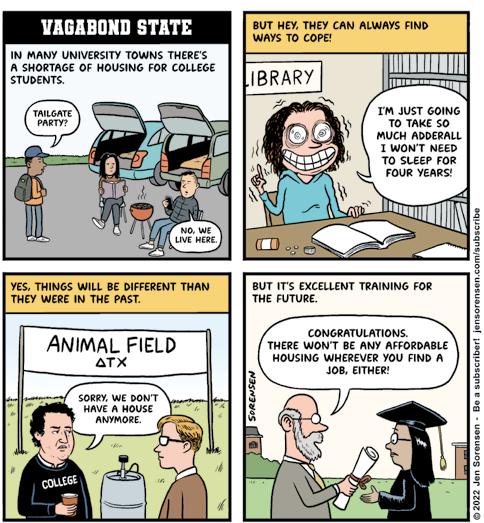


 By Rob Brezsny
LIBRA (Sept. 23-Oct. 22): When he was young, Libran poet W. S. Merwin had a teacher who ad vised him, “Don’t lose your arrogance yet. You can do that when you’re older. Lose it too soon, and you may merely replace it with vanity.” I think that counsel is wise for you to meditate on right now. Here’s how I interpret it: Give honor and respect to your fine abilities. Salute and nurture your ripe talents. Talk to yourself realistically about the success you have accomplished. If you build up your appreciation for what is legitimately great about you, you won’t be tempted to resort to false pride or self-absorbed
SCORPIO (Oct. 23-Nov. 21): In his absurdist play Waiting for Godot, Samuel Beckett offers us two characters, Vladimir and Estragon, who pa tiently wait for a white-bearded man named Godot. They’re convinced he will provide them with pro found help, perhaps even salvation. Alas, although they wait and wait and wait, Godot never arrives. Near the end, when they have abandoned hope, Vladimir says to Estragon, “We are not saints, but we have kept our appointment.” My sense is that you Scorpios, like Vladimir and Estragon, may be close to giving up your own vigils. Please don’t! I believe your personal equivalent to Godot will ulti mately appear. Summon more patience.
SAGITTARIUS (Nov. 22-Dec. 21): Poet Charles Wright has testified, “I admire and revere and am awed by a good many writers. But Emily Dickinson is the only writer I’ve ever read who knows my name, whose work has influenced me at my heart’s core, whose mu sic is the music of songs I’ve listened to and re membered in my very body.” In my astrologi cal reckoning, now is an excellent time for you Sagittarians to identify artists and creators who provide you with similar exaltation. And if there are no Emily Dickinson-type influences in your life, find at least one! You need to be touched and transformed by sublime inspiration.
CAPRICORN (Dec. 22-Jan. 19): I’ve read and studied poetry for many years, but only recently discovered Capricorn poet Lizette Woodworth Reese (1856–1935). How is it possible I missed her? Her contemporary, journalist H. L. Menck en, described her work as “one of the imperish able glories of American literature.” She received many other accolades while alive. But today, she is virtually unknown, and many of her books are out of print. In bringing her to your attention, I am announcing my prediction about you: Anything in your life that resembles Reese’s reputation will change in the next 12 months. If you have until now not gotten the recognition or gratitude you deserve, at least some of it will arrive.
AQUARIUS (Jan. 20-Feb. 18): Author Sophia Dembling defines a friend as a person who con soles you when you’re feeling desperate and with whom you don’t feel alone. A friend is someone whose life is interesting to you and who is interest ed in your life. Maybe most importantly, a friend must not be boring. What’s your definition, Aquar ius? Now is an excellent time to get clear about the qualities you want in a friend. It’s also a favorable phase to seek out vital new friendships as you de-emphasize mediocre and overly demanding alliances.
PISCES (Feb. 19-March 20): Do you or do you not wish to capitalize on the boost that’s available? Are you or are you not going to claim and use the challenging gift that would complicate your life but also expedite your growth? Act soon, Pisces! If you don’t, the potential dispensation may disap pear. This is an excellent chance to prove you’re not afraid of achieving more success and wielding more power. I hope you will summon the extra courage necessary to triumph over shyness and timidity. Please claim your rightful upgrade!
ARIES (March 21-April 19): “Magic Realism


Bot” is a Twitter account that generates ideas for new fairy tales. Since you will benefit from imag ining your life as a fairy tale in the coming weeks, I’ll offer you a few possibilities. 1. You marry a rainbow. The two of you have children: a daugh ter who can sing like a river and a son who is as gleeful as the wind. 2. You make friends with a raven that gives you savvy financial advice. 3. You invent a new kind of dancing; it involves crying and laughing while making holy prayer gestures toward your favorite star.


4. An angel and a lake monster join forces to help you dream up fun new adventures. 5. You discover a field of enchanted dandelions. They have the power to generate al gorithms that reveal secrets about where to find wonders and marvels.

TAURUS (April 20-May 20): On February 1, 1976, singer Elvis Presley was partying with bud dies at his home in Memphis, Tennessee. As the revelry grew, he got an impetuous longing for an 8,000-calorie sandwich made with French bread, peanut butter, blueberry preserves, and slabs of bacon. Since this delicacy was only available at a certain restaurant in Denver, Colorado, Elvis and his entourage spontaneously hopped onto his pri vate jet and flew 900 miles to get there. In accor dance with astrological omens, Taurus, I encour age you to summon an equally keen determination to obtain pleasurable treasures. Hopeful ly, though, they will be more important than a sandwich. The odds of you procuring neces sary luxuries that heal and inspire are much higher than usual.
GEMINI (May 21-June 20): Gemini writer Nikki Giovanni reminds us, “It cannot be a mistake to have cared. It cannot be an error to have tried. It cannot be incorrect to have loved.” In accor dance with astrolog ical omens, I ask you to embody Giovanni’s attitude. Shed any worries that your caring and trying and loving have been blunders. Celebrate them, be proud of them, and promise yourself that you will keep caring and trying and loving. The coming weeks will be an excellent time to renew your commitment to your highest goodness.
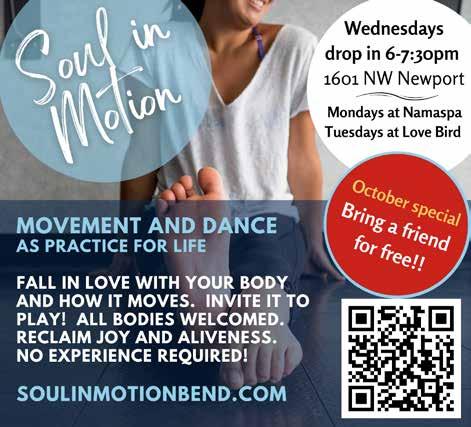
CANCER (June 21-July 22): I was born near Amarillo, Texas, where the US Energy Department stores over 20,000 plutonium cores from old nu clear warheads. Perhaps that explains some of my brain’s mutant qualities. I’m not normal. I’m odd and iconoclastic. On the other hand, I don’t think my peculiarity makes me better than anyone. It’s just who I am. I love millions of people who aren’t as quirky as me, and I enjoy communicating with unweird people as much as I do with weirdos. Ev erything I just said is a preamble for my main mes sage, Cancerian: The coming weeks will be prime time for you to give extra honor and credit to your personal eccentricities, even if they comprise a minor part of your personality.

LEO (July 23-Aug. 22): Author Jennifer Huang testifies, “Poetry is what helps me remember that even in my fragments, I am whole.” What about you, Leo? What reminds you, even in your frag ments, that you are whole? Now is an excellent time to identify the people, animals, and influ ences that help you generate a sense of unity and completeness. Once you’re clear about that, spend quality time doing what you can to nurture those healers. Maybe you can even help them feel more cohesion and harmony in themselves.
VIRGO (Aug. 23-Sept. 22 ): Virgo journalist Sydney J. Harris described “the three hardest tasks in the world.” He said they weren’t “physi cal feats nor intellectual achievements, but moral acts.” Here they are: 1. to return love for hate; 2. to include the excluded; 3. to say “I was wrong.” I believe you will have a special talent for all three of these brave actions in the coming weeks, Virgo. Amazingly, you’re also more likely than usual to be on the receiving end of those brave actions. Con gratulations
Darkness cannot drive out darkness; only light can do that.
Hate cannot drive out hate; only love can do that.
Hate multiplies hate, violence multi plies violence, and toughness multiplies toughness... ~Martin Luther King Jr.
Once upon a time, way, way, way back before Cheerios and McDonalds, there was no hate in the world. …
That is not a true state ment, at least I'm darn sure it’s not true. Why am I so sure? Here's my theory, and remember, it's only my theory.
Whether you believe in the Biblical story of creation and what follows, or the science of evolution and the aca demic study of recorded history, either way, human beings have brutalized one another since the beginning. Kill ing, capturing, torturing, enslaving and eradicating have been the norm for thousands of years. That is our history from as far back as we have been able to record it. Conquering, warring and dominating seem to be in our genetic makeup. All of the recorded evidence points clearly in this direction.
It is a sobering, if not a depressing observation.
And it hasn’t ended. But it has, in many ways across our magical plan et, been significantly reduced. Right makes right has been the guiding prin ciple in our world, as we simultane ously do our best to democratize and humanize the planet. There is less slavery in the world today, but slav ery still exists. There is so much more integration, just in my 76-year life time, although segregation has not yet departed. There are more equal rights, but again, total equality has not been reached. There is significant evidence, in the bigger picture, that we have been heading in this less hateful and more loving direction.
Our legal system and moral teach ings remind us that might does not make right and every day we inch clos er to a more humane global reality. It is an ongoing battle and bless all of our courageous battlers. Thank you! Today, nearly everyone knows that might does not truly make right. We all know these higher wisdoms: Love your neigh bor as yourself. All people are created equal. Liberty and justice for all. Let freedom ring. United we stand!
People frequently counter my observation that we are evolving toward a more humane future and often they retort, “Yeah, but…” and then go on to describe the many ugly, graphic injustices that still exist in our evolving world. I agree, but you also must concede there has been move ment toward a more just world. And I
 By Burt Gershater
also have to admit there are some of us humans who have no interest in equal ity and loving their neighbor as them selves. Not yet, anyway…at least not at the conscious level.
I have a question.
What are your racial, religious or sexual associations? White? Latino? Black? Jewish? Muslim? Hindu? Native American? Asian? Straight? Female?
Gay? There are at least a thousand more options. And each one of us has been involved, at some level, in this ancient war of dominance, subor dination, prejudice and hatred. Every populated continent lives in the shad ow of its conquerors, domi nators and victims. The residual hatred and fear linger for generations.
Hating people because of their color is wrong.
And it doesn't matter which color does the hating.
It's just plain wrong.
~Muhammad Ali
Hatred and resentment are easily accessible sources of false power.
I repeat.
Hate and resentment are easily accessible sources of false power.
Hate and resentment are, in fact, easily accessible addictions.

Just like any addiction, they offer a quick hit and are intoxicating.
Predictably, they cause more damage than the relief they seductively provide.
Quick relief and ultimately more damage to ourselves and others.
That’s the definition of addiction.
Hatred and resentment paradox ically enslave not only the hated but even more so, the hater.
Hatred and liberty cannot coexist.
Freedom requires that we release our hatred.
There are two primary categories in this ancient model: the hater and the hated.
And a person can easily fit into both of these.
And there are some “observers” who somehow have escaped this personally and societally toxic phenomenon.
The above sentence is also false!
We are ALL in this together.
There are NO untouched observers.
I imagine one of the reasons people cling to their hates so stubbornly is they sense, once hate is gone, they will be forced to deal with pain.
~James Baldwin
We are animals first, and thus our brains are preset to attend to negative stimuli in order to keep us safe.
Even more importantly, we are human beings and we were uniquely given the freedom, power and respon sibility to choose peace, whenever that is possible.
Let’s all keep doing our most important job.













Home located on a quiet street in SW Redmond lined with mature trees. Open floorplan features kitchen, eating area, half bath, and great room with gas fireplace. Upstairs has 3 bedrooms, 2 bath with utility/laundry room for convenience, also boasts a HUGE bonus room. Double sinks and a large walk-in closet in Primary. Front and back sprinkler system with fenced backyard. 2-car garage with room for shop/storage area. Seller will credit buyer $15,000.00 towards buyers closing cost or rate buydown.
Move-in ready home in a quiet NE Bend neighborhood in a great location. This light and bright home features recent improvements including new carpet, fresh interior & exterior paint, newly refinished hardwood floors and new LVT flooring. A fully fenced back yard features nomaintenance Trex deck and storage shed, large gated access to back yard on both sides of the home. This Palmer home has a great floor plan. A Must See! Seller will credit buyer $13,000.00 towards buyers closing cost or rate buydown.

What a strange time the last few years have been in real estate.
It seems like whiplash: a few months ago the real estate market was booming, and now as interest rates have increased, the market has slowed from the warp speed it was for most of the last two years. Gone are the days of every listing getting tons of show ings and multiple offers in a couple of days. Although the market has changed, some trends that started somewhat recently will continue and other trends will start as the market stabilizes.
The first trend that will remain pop ular in many local markets, especially Bend, will be Accessory Dwelling Unit, or ADU (see The Source article from 8/31/2022 by A’Leah Knight all about ADUs). ADUs have become popular among homeowners for several rea sons; rental income, multi-generation al living and workspace are the main rationales. Many people have worked remotely living in Bend for years, even prior to COVID. With the trend of remote work getting more popular, people are looking for ways to make their home their office, and ADUs can provide the needed space while adding value to your property. ADU’s can allow a homeowner to earn rental income by renting out their ADUs either long term (more than 30 days) or they can rent them out short term (less than 30 days) typically using some sort of inter mediary like AirBnB or VRBO. Finally, the trend within the trend: multi-gen erational living! It seems more and more people are looking for properties that will accommodate multi-genera tional living, and ADUs are a great way for people to accomplish this, having
The final trend to be discussed has been going on for a couple of years, as millennials have become such a large segment of buyers, is the desire for larger lots. Locally this has made old er neighborhoods in Bend desirable because of the prevalence of larger lots. Most homes built in the last few decades have been built on smaller lots, and often are within developments. While these types of homes and neigh borhoods still sell, the homes with larger lots tend to be the most covet ed over the last few years. Larger lots allow a homeowner to add square foot age, sheds, outbuildings or ADUs—all things that are popular among home owners in Bend.



One by one, we can strengthen our community’s defenses against child abuse.
how to recognize the signs, report your concerns, and shut down opportunities for abuse. Sign up for a free training today.

are.