







THE INDUSTRY CHANGES FAST. THE TSL EXPRESS
SECURED FINANCE DEAL TABLE HELPS YOU KEEP PACE

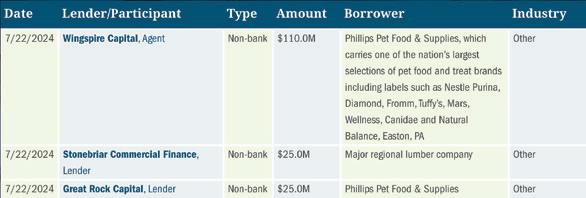

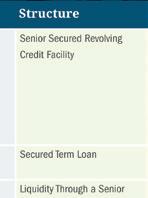
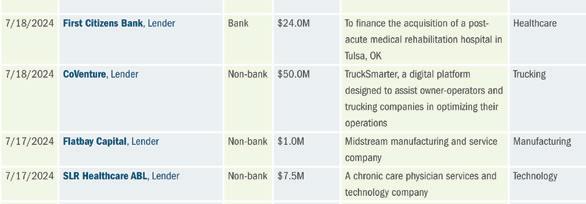

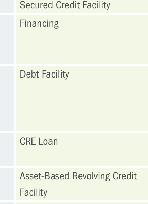
The Secured Finance Deal Table offers:
Comprehensive, interactive information that is fully sortable and downloadable
Detailed ABL, factoring and other senior secured transaction data on over 3400 deals, updated daily
Specifics including deal terms, structure, borrowers, industry, interest rates, contact information, and more
Join the ranks of industry leaders who trust the TSL Express Secured Finance Deal Table to navigate the complexities of secured finance.











GREAT PLACES TO WORK P6 TABLE OF CONTENTS. JULY/AUGUST 2026 VOL. 82 ISSUE 4



In this section, SFNet members highlight their company cultures, benefits, internships and perks. 6
A practical introduction to asset-based lending, collateral analysis, borrowing bases, field examinations, and loan monitoring for interns, students and industry newcomers unable to attend the inaugural Secured Finance Network 2026 Summer Intro to Asset-Based Lending (ABL) for College Interns. 44 BY
EILEEN KOWALSKI

ABL PRIMER FOR STUDENTS, INTERNS AND INDUSTRY NEWCOMERS P.45
New to secured finance? This article offers a practical guide to how invoice factoring works, common structures, key benefits, and the role it plays in modern working capital management—showing how businesses turn unpaid invoices into cashflow and how finance professionals help companies bridge the gap between doing the work and getting paid. 50 BY ECAPITAL
For students and early-career professionals exploring finance or accounting careers, asset-based lending field examination offers a path that is hands-on, analytical and surprisingly varied. 54
BY ALIAH LALANI
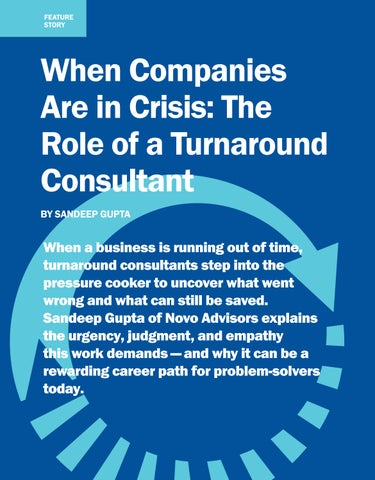
When a business is running out of time, turnaround consultants step into the pressure cooker to uncover what went wrong and what can still be saved. 58
BY SANDEEP GUPTA
On April 30, Regions Bank announced Amy Barrentine had been elevated to serve as head of Regions Business Capital, a specialty finance business within the bank’s Corporate Banking Group. 62
BY MICHELE OCEJO
For law students and summer associates interested in finance, secured transactions or commercial law, commercial finance offers a practical, business-focused career path at the center of how companies obtain working capital. 66
BY MICHELE OCEJO
As artificial intelligence reshapes business, the real financing story may be unfolding behind the scenes. This article looks beyond AI software to the data centers, power systems, cooling equipment and GPUs driving unprecedented capital demand— and explains why that infrastructure boom is creating new opportunities for commercial finance professionals. 69
BY RILEY THOMPSON
In this edition of the Lender’s Edge, we discuss the modern borrowing base: what the documents say and what actually happens. 71
BY TYLER MULLEN
TOUCHING BASE 5
The Secured Finance Network is the trade group for the asset-based lending arms of domestic and foreign commercial banks, small and large independent finance companies, floor plan financing organizations, factoring organizations and financing subsidiaries of major industrial corporations.
The objectives of the Association are to provide, through discussion and publication, a forum for the consideration of inter- and intra-industry ideas and opportunities; to make available current information on legislation and court decisions relating to asset-based financial services; to improve legal and operational procedures employed by the industry; to furnish to the general public information on the function and significance of the industry in the credit structure of the country; to encourage the Association’s members, and their personnel, in the performance of their social and community responsibilities; and to promote, through education, the sound development of asset-based financial services.
The opinions and views expressed by The Secured Lender’s contributing editors and authors are their own and do not necessarily express the magazine’s viewpoint or position. Reprinting of any material is prohibited without the express written permission of The Secured Lender
The Secured Lender 0888-255X, Copyright © 2026 by Secured Finance Network is published 6x per year (Jan/ Feb, March, June, July/Aug, Sept/Oct, November) by SFNet, 875 6th Ave, Ste 1802, NY, NY 10001. Business and Editorial Offices: 875 6th Ave., Ste 1802, NY, NY 10001, Accounting and Circulation Offices: 875 6th Ave, Ste 1802, NY, NY 10001 Call (212) 792-9390 to subscribe. Periodicals postage is paid at New York, NY, and additional mailing offices (if applicable).
Secured Finance Network 875 6th Ave., Suite 1802, New York, NY 10001 (212) 792 -9390 Email: tsl@sfnet.com www.SFNet.com
Periodicals postage paid at New York, NY, and at additional mailing offices. Postmaster, send address changes to The Secured Lender, c/o Secured Finance Network, 875 6th Ave., Suite 1802, New York, NY 10001
Editorial Staff Michele Ocejo Editor-in-Chief and SFNet Communications Director mocejo@sfnet.com
Eileen Wubbe Senior Editor ewubbe@sfnet.com
Aydan Savaser Art Director asavaser@sfnet.com
Advertising Contact: James Kravitz
Chief Business Development Officer T: 646-839-6080 jkravitz@sfnet.com









I’m excited to be connecting with this unique audience: undergraduate and graduate students focusing on business, those of you pursuing a law career, and interns and early career professionals who are just starting out in the secured finance industry. This isn’t a field most people “plan” to join; many find their way here by serendipity. Secured finance, a multitrillion dollar industry, is often called “the biggest industry you’ve never heard of,” yet it is the backbone of our economy and a gateway to a rich and fulfilling career.
A little background on who we are: The Secured Finance Network (SFNet), the nonprofit association that publishes this magazine, was founded in 1944 and remains an essential resource for organizations and professionals who deliver and enable secured finance to businesses. Every day, our community works to provide the capital that fuels our economy’s engines of commerce. The articles in this issue define “secured finance” in more detail, but the short distinction is “commercial loans that are secured by collateral.”
For this 2026 Great Places to Work in Secured Finance issue, we have expanded the educational component for readers who are new to the field. In addition to company profiles, you’ll find primers on asset-based lending, factoring, field examinations, secured finance law, and valuations. Together, these pieces offer a practical introduction to how secured finance works—from structuring and monitoring credit facilities, to evaluating collateral, to understanding the legal frameworks and valuation disciplines that support transactions.
SFNet is the hub of a vibrant community, bringing together diverse people, data, knowledge, tools, and insights that put capital to work. Through networking opportunities ranging from large scale conferences to intimate local chapter events, SFNet fosters communities of interest that generate opportunities, deal flow, and long-term relationships and collaborations.
Millions of firms in the U.S. directly feel the impact of secured finance, and the benefits extend beyond the enterprises themselves to their employees, customers, communities, and the broader economy. If you pursue a career in secured finance, you can be assured you will have a meaningful, direct effect on small-and medium-sized companies, many of them family owned.
This industry offers dynamic and fulfilling career opportunities, from direct lending and business development to accounting, law, field exams, and valuations. This Great Places to Work resource is one of many tools available
to aspiring secured finance professionals, alongside guest lecture programs at colleges and universities around the U.S., and scholarship, mentoring, internship, and professional development programs.
In addition to the various primer articles mentioned above, this issue, on page 64, also features an interview with Amy Barrentine, who was recently promoted to serve as head of Regions Business Capital.
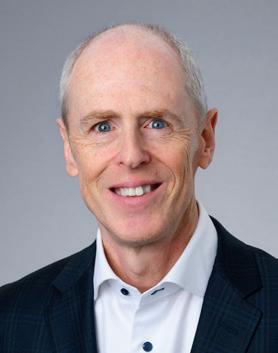
RICHARD D. GUMBRECHT SFNet Chief Executive Officer
On page 68, in Financing the Physical Backbone of Artificial Intelligence , Riley Thompson of Mitsubishi HC Capital America discusses the financing story that may be unfolding behind the scenes as artificial intelligence reshapes business. This article looks beyond AI software to the data centers, power systems, cooling equipment and GPUs driving unprecedented capital demand— and explains why that infrastructure boom is creating new opportunities for commercial finance professionals.
In this edition of the Lender’s Edge, on page 71, Blank Rome attorneys discuss the modern borrowing base: what the documents say and what actually happens.
I encourage you to reach out to any of the contacts listed in the profiles to learn more about specific companies, as well as the industry in general. Also, feel free to contact me at Richard_Gumbrecht@sfnet.com with any questions. I’d be happy to discuss the industry and its many career opportunities.


For more than 40 years, Access Capital has been a privately held commercial finance company providing asset-based lending facilities from $1 million to $25 million and term loans from $500,000 to $5 million. While serving a broad range of industries, Access Capital has built a nationally recognized specialty in financing workforce solutions and staffing companies, partnering closely with referral sources to help businesses grow through every stage of their journey.
What specific programs do you offer to attract and retain talent?
Please share your culture, benefits, DEI initiatives, internships and fun perks.
At Access Capital, our culture starts with a line our late founder Miles Stuchin wrote 40 years ago: “We wanted to create a place where entrepreneurs could obtain financing from other entrepreneurs.” That idea has shaped how we treat clients, and how we treat each other, ever since.
The strongest evidence of our culture is how long people stay. Several colleagues have been at Access Capital for more than 15 years. That continuity is not an accident; it reflects an environment where people are trusted, given room to grow, and supported as professionals and as people.
Access Capital is still owned by the Stuchin family. Family ownership is unusual in our industry. It means longer-term thinking, real continuity of values, and a leadership team that is genuinely accessible.
We invest in our team through annual Fly-In events that bring everyone together for collaboration, strategic planning, and relationship-building, and through community service that strengthens both our team and the places where we work. Recent activities include a day of service at the West Side Campaign Against Hunger, hygienekit assembly for the unhoused in our community, the American Heart Association Wall Street Run & Heart Walk, and Toys for Tots toy drive.
We are also investing meaningfully in AI, Claude in particular, across every department. The goal is not headcount reduction. It is giving our team more time to do the work that actually matters: analyzing borrowers, building client relationships, and solving problems. It is a quiet, but real, change in what working at Access Capital looks like day to day.
Compensation and benefits are competitive. What sets us apart is a leadership team that is genuinely approachable, milestone recognition that feels personal, and a flat structure where good ideas can come from anyone.
We have hired college interns in the past but do not have a specific program. We are exploring a formal internship program for the 2026 to 2027 academic year focused on giving students hands-on exposure to secured finance, credit analysis, and client management.
Four things make Access Capital different in secured finance.
First, the founding idea. Miles Stuchin started Access Capital in 1986 on the principle that entrepreneurs deserve a lender who thinks like them. Forty years later, the company is still living that idea every day.

Second, family ownership. In an industry full of fund-owned and institution-owned lenders, Access Capital is still owned by the Stuchin family. That ownership shows up in patience, long-term decisionmaking, and an authentic commitment to the people who work here.
Third, specialization. We have spent decades developing deep expertise in human capital management: staffing firms, workforce solutions providers, professional employer organizations, and adjacent businesses. Our clients fund the payroll and operations that put people to work. That work matters, and our team feels it.
Fourth, how we are evolving. Many secured-finance shops still do everything manually. We are using AI to automate financial spreading, approval documentation, verifications, and workflow. That frees our analysts to spend more time on actual client analysis and relationships. The result is a firm with 40 years of experience that is also moving faster than peers double and half our size.
What would you say are the best things about the industry you work in? What are the challenges?
Secured finance does work that most people never see, but its impact is real. Capital from lenders like us funds payroll, hiring, acquisitions, and growth at thousands of businesses across the country. When we get financing right, an entrepreneur can grow, employees keep their jobs, and a local economy stays healthy. That is genuinely meaningful work.
The work is also intellectually engaging. No two clients look the same. Every financing requires real problem-solving: collateral, cash flow, industry dynamics, ownership, succession. The people who thrive in our industry tend to be curious, analytical, and good with people. The work rewards all three.
Our industry is cyclical, and during difficult periods we have to balance helping clients with protecting our own capital. Competition has compressed margins on quality credits; we have to earn pricing through service, judgment, and responsiveness rather than expect it as a default. And every year there is more to learn about evolving industries, regulatory shifts, technology, and our clients’ businesses than there are hours to learn it in.
When people ask about a career in secured finance, we often tell them it’s one of the rare professions where numbers and relationships carry equal weight. Every day brings the opportunity to help business owners pursue their goals, navigate challenges, and create opportunities for their employees and communities. It’s rewarding work because you can actually see the difference you’re making.
Sherman Oaks, CA | www.assembledbrands.com

Assembled Brands is the capital backbone for the next generation of iconic consumer brands. We provide flexible, non-dilutive credit facilities to CPG companies across beauty, food & beverage, apparel, home goods, electronics, and pet supplies. Designed by founders, for founders, we deliver the scalability and liquidity required to move at the pace of modern retail. Our facilities range from $1MM to $20MM, with borrowing bases calculated against accounts receivable and inventory, which includes DTC and Amazon-specific inventory that most lenders simply can’t lend against. By combining high advance rates with built-in accordion features that scale automatically alongside a brand’s growth, we empower founders to scale with confidence, independence, and purpose.
What specific programs do you offer to attract and retain talent?
We put people first at Assembled Brands, fostering a culture of professional autonomy, where our team is empowered to achieve their highest goals. Our team is intentionally diverse, bringing together a wide range of perspectives that allow us to better relate to the entrepreneurs and brands we fund. We empower our employees to grow in their careers by providing high levels of ownership and direct exposure to the founders and brands shaping the future of retail.
To support our employees’ well-being, we offer a premier benefits package including comprehensive medical, dental, and vision plans that are heavily company-subsidized to keep contributions small and affordable. We further invest in our team’s future through a 401(k) plan with an employer match. Additionally, we provide 100% company-paid life insurance and long-term disability coverage, along with FSA and dependent care options.
We prioritize work-life balance through a hybrid model for our Sherman Oaks-based team and full remote flexibility for our distributed workforce nationwide, ensuring our team has the space to thrive both personally and professionally.
What makes your company stand out?
We set ourselves apart through an unwavering commitment to flexibility and scalability for our clients. While most lenders provide rigid, one-size-fits-all structures, we offer creative solutions that include accordion facilities that expand in real-time as a brand scales. By eliminating multiple layers of approval, we move at the speed of these founders, delivering funds in days rather than months. We embrace the complexities of modern commerce by layering on top of the revolving line of credit, purchase order (PO) financing, and lending against Amazon inventory to ensure our partners never hit a ceiling right when momentum is building.
As a trusted partner for founders, we build the financial foundation for sustainable growth. By providing liquidity without the need for personal guarantees or restrictive lockboxes, we give founders the operational autonomy required to remain in 100% control of their vision. We don’t just fund a business; we provide the scalable infrastructure for it to become iconic!
What would you say are the best things about the industry? What are the challenges?
The most exhilarating part of secured finance is witnessing a brand’s real-time momentum. For our team, engaging with diverse industries, from food & beverage to beauty to apparel, creates a dynamic environment where we have a front-row seat to how the next generation of household names is built. There is an immense sense of purpose in providing the capital that keeps those wheels turning.
The primary challenge for emerging brands is navigating the gap between early-stage funding and traditional banking. Many founders find themselves stuck between high-cost, short-term advances that drain cash flow and bank financing they aren’t yet ready to access. We build the bridge to bankability for them! By providing a scalable alternative to restrictive debt, we help brands mature their operations and achieve their long-term aspirations.
Above all, we find our deepest purpose in acting as a strategic partner, helping clients optimize their cash flow so they can eventually graduate to a bank on their own terms.
We are always looking for passionate individuals to join our growing team. You can find our latest job openings on LinkedIn or reach out directly via hello@assembledbrands.com.

BDO USA, PC is a leading professional services firm with more than 80 offices across the United States.
As part of those services, we act as trusted advisors to companies facing financial distress. When businesses don’t meet the conditions of their loan agreements or need more capital than their lenders agree to provide, the restructuring arm of BDO, BDO Consulting Group, LLC, is often called upon to provide restructuring financial advisory to the borrowers as well as to their lenders. Our BDO Consulting Group professionals often assist these borrowers with interim management as well as advisory services.
BDO offers a rewarding career with a powerful impact. Restructuring consulting and management gives you the opportunity to make a difference by preserving jobs and saving companies that might otherwise cease operating, both of which help to expand the economy.
What specific programs do you offer to attract and retain talent?
Our culture is focused on our core purpose - helping people thrive, every day. We’re dedicated to building high-performing teams with diverse skillsets, capable of delivering excellent results for our clients. At the core of our recruitment and retention strategy is a commitment to a flexible workplace. Time spent working at a BDO office, a client site or a remote location will vary from week to week, team to team and engagement to engagement. Embracing this reality enables BDO to recruit the best talent regardless of location and empowers our teams to manage their personal and professional obligations while still ensuring productivity, agility and connectivity.
At BDO, we believe in the apprenticeship model, with mentorship from senior leadership on client engagements. Given the middle market focus of our restructuring practice, project teams typically range from two to five members. This allows for significant exposure to client-facing senior professionals within the practice. There is also a commitment to structured training and development programs, with the goal of cultivating future leaders.
BDO also has a robust internship program. A restructuring internship is designed to prepare interns to become successful associates through on-the-job training with live deal teams, financial modeling training, case studies and mentorship.
What makes your company stand out?
BDO believes that being purpose-driven and putting people first have been the keys to our long-term success and have set us apart from other firms. Teams are built on trust, working toward common goals while helping each individual find ways to meaningfully connect their purpose with our firm’s purpose. There is always willingness to collaborate with other groups within BDO to provide the best recommendations for clients. This gives junior professionals opportunities to learn from multiple senior leaders who are invested in their growth, and to develop skillsets across a wide variety of industries and specializations.
Further, because restructuring engagements are so diverse, they require skilled practitioners who can be flexible in their thinking and operate within a framework of mutual respect and support. Our roster of professionals with deep experience, who have won awards for operational and financial turnarounds, is a testament to the success of this environment.
“BDO placed me in roles where I can thrive and prioritize both my
personal and professional development; I find it rewarding navigating complex situations and striving to attain the best outcomes for the clients we serve,” says Anthony Del Piano, a BDO Consulting Group senior manager.
What would you say are the best things about the industry you work in? What are the challenges?
An especially rewarding aspect of the Turnaround & Restructuring industry is the ability to have a noticeable impact on the performance of companies in distress. We take pride in representing companies and creditors in challenging situations and making recommendations that are both effective and acceptable to key constituents.
Challenges can arise out of contentious situations where parties are adverse or in litigation with each other. These circumstances can delay or hinder more positive outcomes and further underscore the opportunities that deep knowledge and adaptability can bring. In addressing any situation, we emphasize a multi-disciplinary approach. Our teams work directly with the C-Suite, boards of directors and lenders in an advisory capacity. In specific situations, BDO Consulting Group professionals can step into interim management roles, such as CEO, CFO, or COO, to help transition leadership. These engagements are fast paced and benefit from the dedication and talent of our teams, making for a dynamic and ever-changing work pace.
Contact information for prospective employees
Contact Anna Greer at agreer@bdo.com or (630) 371-9463. If you want to learn more about how BDO can support you with this service, please contact Baker Smith at bsmith@bdo-ba.com or (404) 979-7145.

Benesch is one of the fastest-growing Am Law 200 law firms, with approximately 500 attorneys across six offices in Cleveland, Chicago, Columbus, New York, San Francisco, and Wilmington. The firm’s Commercial Finance & Banking Group has vast experience in structuring and documenting secured financings, navigating relationships between senior and junior lenders, and successfully handling complex loan originations and restructurings for small businesses, middle-market companies and large corporations alike. Known for delivering sophisticated legal services with a practical, business-oriented approach, Benesch has earned consistent recognition from Chambers USA, with more than 40 attorneys and 19 practice areas ranked, along with widespread honors in Best Lawyers in America and Best Law Firms.
What specific programs do you offer to attract and retain talent? Please share your culture, benefits, DEI initiatives, internships and fun perks.
Benesch’s culture is a defining element of its success and a key driver of both talent attraction and retention. Often described as both sophisticated and scrappy, the firm fosters an environment where ambition is matched by approachability and collaboration. A cross-functional group of partners, associates, and staff actively champions the firm’s culture by promoting engagement, strengthening connections, and ensuring that core values remain visible across offices. Through regular communication, firmwide initiatives, and in-person engagement opportunities, Benesch reinforces a workplace grounded in respect, accountability, and teamwork. The firm complements this culture with targeted programs that support well-being and professional growth. These include wellness resources such as mental health support, fitness and mindfulness platforms, and access to financial advisors, as well as a nationally recognized Summer Associate Program and internship opportunities across departments. Benesch continues to receive top Vault rankings, including recognition for Attorney Interactions, Career Development, Inclusion, and mentoring, reflecting its commitment to providing a meaningful and supportive experience at every stage of a professional’s career.
What sets Benesch apart is its ability to pair rapid, strategic growth with an intentional focus on continuously improving client experience. Through its Benesch Edge initiative, the firm evaluates how it delivers legal services at every level, enhancing efficiency, strengthening communication, and driving innovation across teams and offices. This mindset is shared firmwide, where every professional contributes to delivering practical, business-focused solutions and a consistently high level of service. Supported by nearly 100% growth over the past five years, the addition of more than 100 attorneys and 85 professional staff in the past year, and an 85% lateral partner retention rate, Benesch continues to distinguish itself as a firm defined not only by its scale, but by how it serves its clients.
What would you say are the best things about the industry you work in? What are the challenges?
What I like most about secured finance is helping businesses get the funding they need to operate, grow, or navigate challenging situations. Drafting long credit agreements may seem dull, but each deal is actually like putting a puzzle together alongside really smart clients and counterparties. It is a demanding practice because, like a lot of transactional legal work, the deals can be complex and deadlines can be tight, and of course there is a steep learning curve at the beginning. Law schools may teach secured transactions, but in practice it is a whole different ball game!
Contact information for prospective employees
Tabitha Humphries Partner (872) 302-6492 thumphries@beneschlaw.com
Chicago, IL |

BMO is a Top 5 asset-based lender in North America made up of a high-growth, high-performance team, with execution of a wide bandwidth of deals ranging from $10 million to $1Bn+ and a staff of 85 professionals averaging 15+ years of experience in offices throughout the United States, including Chicago (group headquarters), Los Angeles, San Francisco, Dallas, Atlanta, Minneapolis, Indianapolis, Phoenix, Salt Lake City and Boca Raton. Our team covers the entire United States, and we have industry specialties in Metals, Retail, Food and Consumer, Transportation and Healthcare as well as dedicated focus to Financial Sponsors.
What specific programs do you offer to attract and retain talent?
BMO US ABL has a close-knit team that is characterized by a culture of mentorship with colleagues who genuinely care about each other. Though we operate with workplace flexibility, the majority of our colleagues choose to come in every day into what is an active and vibrant office in our new BMO tower in Chicago. We believe in hiring the strongest talent and pushing responsibility down to colleagues that have demonstrated they can effectively handle it early in their careers. Training, including classroom and in-the-field, is key to BMO’s success. New analysts have the opportunity to work on meaningful assignments early in their careers, including pre-screening at the opportunity stage, new deal underwritings and being the portfolio manager on certain accounts. At the vice president level, top performers will often have the ability to transition to business development or be promoted to a portfolio and underwriting team leader role. BMO is competitive with pay, benefits, and promotes work/life balance.
BMO US ABL generally has two rising junior/senior interns and one rising sophomore intern each summer, who have a fulsome experience working with the entire team.
What makes your company stand out?
As an organization, BMO has been recognized externally for multiple awards, including:
Best Commercial Bank in US and Canada by World Finance Magazine
BMO wins 11 honours for AI and digital innovation
BMO recognized for digital innovation and customer experience
BMO recognized with six Treasury and Payment solutions
BMO named one of 2026 World’s most ethical companies for the ninth consecutive year
What would you say are the best things about the industry you work in? What are the challenges?
A significant advantage of a job in secured finance is the opportunity to work with a variety of companies in a variety of industries and ownership structures. Relationship managers and portfolio managers alike have the opportunity to develop strong client relationships, and those that do it well act in an advisory capacity. There is a strong mentorship aspect in the industry, where junior colleagues learn from senior colleagues on how to effectively manage client relationships, analyze and mitigate risk, and negotiate term sheets and loan
documents. Challenges include unpredictable timelines that can at times be very compressed and the necessity of working on multiple assignments at once. The ability to multitask and switch back and forth between different work streams is of critical importance.
Contact info for prospective employees:
Jon Biorkman, Group Head
Email: jon.biorkman@bmo.com
Tel: 414-748-1180
Jason Hoefler, Managing Director
Email: jason.hoefler@bmo.com
Tel: 312-461-7856
Kara Goodwin, Managing Director
Email: kara.goodwin@bmo.com
Tel: 312-461-5853
Bridge Business Credit is a privately held non-bank asset-based lender which provides flexible working capital solutions to businesses across the Eastern and Central United States.
Founded in 2002 and headquartered in Troy, MI, the firm specializes in accounts receivable financing, inventory lending, equipment and real estate financing, purchase order financing, and debtor-in-possession financing. Bridge partners with companies across a wide range of industries, structuring customized financing solutions to support growth initiatives, acquisitions, restructurings, and ongoing working capital needs. Our team is known for its responsive service, creative problem-solving, and commitment to building long-term relationships with clients, referral partners, and advisors.
Bridge Business Credit stands out through its unwavering commitment to clients, industry expertise, and reputation for excellence. The firm’s dedication to delivering tailored financing solutions and exceptional service has earned significant recognition, including being named Best of MichBusiness (2023), receiving the Corp! Magazine Most Valuable Professional Award (2021) and being recognized by Inc. Magazine as a Power Partner (2022). These honors reflect the trust that clients, referral partners, and industry peers place in Bridge’s ability to provide reliable capital solutions and strategic guidance.
In addition to its industry accolades, Bridge differentiates itself through a highly collaborative culture and relationship-driven approach. By combining deep lending expertise with personalized service, the firm helps businesses navigate challenges, capitalize on opportunities, and achieve long-term success. This commitment to both professional excellence and strong partnerships has established Bridge Business Credit as a standout leader in the secured finance industry.
What specific programs do you offer to attract and retain talent?
Bridge Business Credit places emphasis on mentorship, professional development, and creating a collaborative workplace culture where employees feel supported both professionally and personally. The company offers both a full-time summer internship program and parttime internship opportunities during the school year, providing direct experience within the secured finance industry.
Interns gain exposure in multiple departments through working closely with veteran team members in underwriting, portfolio management/operations, client interaction, accounting, and deal structuring. Bridge has been highly effective at developing early-career talent, with 45% of interns moving into full-time roles.
Bridge has built a strong reputation for its collaborative culture and team-oriented environment, where employees develop lasting professional relationships and continuously learn from one another. The firm promotes open communication and accessibility across all levels of the organization, fostering a supportive atmosphere that encourages both personal and professional growth. This close-knit culture creates an environment that is highly collaborative, welcoming, and grounded in a strong sense of teamwork.
Bridge enhances employee engagement by hosting monthly all-employee meetings that begin with a luncheon, allowing team
members to build connections outside of their day-to-day roles. While the company emphasizes an in-person environment to support collaboration and mentorship, management remains flexible when personal circumstances require remote work. This combination of structure, flexibility, and strong interpersonal connections has contributed to Bridge’s ability to attract and retain top talent.
What would you say are the best things about the industry you work in? What are the challenges?
Secured finance offers a unique opportunity to work closely with businesses by providing capital solutions that support growth, turnaround initiatives, stability, and long-term success.
One of the most rewarding aspects of the industry is the ability to help companies navigate important moments in their development, whether they are expanding operations, pursuing strategic initiatives, or overcoming temporary challenges. The field also provides exposure to a wide range of industries, business models, and management teams, making every transaction both dynamic and educational.
As a result, professionals in secured finance continuously develop strong skills in financial analysis, strategic thinking, problem solving, and relationship management while making a meaningful impact on the businesses they support.
The dynamic nature of secured finance is both one of its greatest challenges and one of its most rewarding qualities. Every financing opportunity requires thoughtful analysis, sound judgment, and the ability to adapt to evolving business and market conditions.
Economic trends, industry developments, and company-specific circumstances can all influence a transaction, making each situation unique and intellectually engaging.
For individuals who enjoy building strong relationships, solving complex problems, and working closely with businesses to achieve strategic goals, secured finance offers a fast-paced and highly fulfilling career path.
Contact information for prospective employees:
Bridge Business Credit
Grace Pawlenko, Executive Managing Director, Portfolio Management (248) 509-1886
900 Wilshire Drive, Suite 305, Troy, MI 48084
Chicago, IL | www.chapman.com
Chapman and Cutler LLP is a finance-focused law firm. We advise some of the world’s most sophisticated financial companies and institutional investors on matters that are interesting, challenging, and innovative. We are recognized for industry-leading practices across the financial services marketplace, including secured finance, structured finance, commercial lending, and bankruptcy and restructuring. We are also on the leading edge of legal services innovation, developing products and investing in new technology for our firm and our clients to drive efficiency, agility, and service.
Our firm is comprised of lawyers and professional staff with exceptional technical skills and industry insight who care deeply about our clients and each other. We stay connected to each other through a collective sense of purpose to make a difference—in the work of our clients, the careers of our people, the support of our communities, and the cultivation of good ideas. Nearly half of our partners began their legal careers at Chapman and many of our professional staff have worked at the firm for 15 or more years. This longevity contributes to a cohesive and collaborative culture, where we share insight and experience to help clients advance novel financial products and structures across financial markets.
Chapman is built around a single core focus: finance. That concentration sets us apart in the industry. We are among the largest and most active secured finance practices in the market, regularly leading sophisticated, time-sensitive, domestic and cross-border transactions. From our coast-to-coast offices, we take the time to understand each client’s business model, risk priorities, and execution goals, pairing deep secured finance experience with an innovative technology platform, including advanced AI tools, to deliver responsive, solutions-oriented advice aligned with client objectives.
Asset-Based Lending. Chapman’s ABL practice is a market leader in structuring, documenting, and negotiating sophisticated assetbased credit facilities for banks, private credit providers, and other commercial finance sources. Our lawyers are deeply embedded in the ABL market and bring a practical, business-focused approach informed by real time market insight and longstanding relationships with leading asset-based lenders. We advise on facilities supporting working capital needs, acquisitions, recapitalizations, restructurings, and sponsor driven transactions, with a focus on efficient execution and commercial outcomes.
Lender and Specialty Finance. Chapman advises banks, credit funds, and other institutional lenders in structuring, documenting, and negotiating credit facilities to specialty finance companies, fintech lenders, and leasing companies. Our work encompasses working capital loans, factoring, merchant cash advances, and other structured products across a broad range of asset classes.
Back-Leverage Financing. Chapman represents lenders and fund borrowers in a broad spectrum of financing structures utilized to obtain
liquidity, including warehouse lines, loan-to-loan facilities, repurchase agreements, NAV and Holdco facilities, and hybrid structures. We bring deep experience in the market, helping clients navigate complex structural arrangements and bespoke collateral packages to obtain capital efficiency and enhanced returns.
Workouts, Bankruptcy and Restructuring. When credits become distressed, Chapman’s workout team helps lenders protect and maximize recovery on their positions. Banks, funds, institutional investors, indenture trustees, administrative agents, and independent directors, turn to Chapman for special situations and restructuring advice spanning debt and equity financing, capitalizing on distressed and other special situation events, restructuring existing loans, and implementing exit strategies.
Contacts
Nicole Krol (Chicago Team Lead)
Partner
312.845.3453
nckrol@chapman.com
René LeBlanc-Allman (Charlotte Team Lead)
Partner
980.495.7301
leblanc@chapman.com
Marilynn Tham (San Francisco Team Lead)
Partner
415.278.9015 mhtham@chapman.com
Nick Whitney (New York Team Lead)
Partner
212.655.2546 whitney@chapman.com
Chicago, IL and Toronto, Ontario, Canada | us.cibc.com/en


CIBC is a trusted financial institution, providing tailored solutions for clients with North American operations. With US headquarters in Chicago and the backing of a nearly 160-year-old global financial institution based in Toronto, we offer commercial, wealth management, personal and small business banking along with cross-border banking solutions.
Our client centric approach focuses on building and relationships, guided by our values of trust, integrity and innovation. We invest in our businesses, clients, people, and communities to make a positive impact. By exceeding expectations and fostering meaningful connections, CIBC helps clients make their ambitions a reality.
What specific programs do you offer to attract and retain talent?
Please share your culture, benefits, DEI initiatives, internships and fun perks.
CIBC offers a range of programs aimed at attracting and retaining talent, including our internship opportunities. The Commercial Banking Training Program is a full-time, 18-24 month program based in our Chicago office led by professionals from our organization as well as select industry and topic experts. Individuals gain real-world experience alongside seasoned relationship managers in all types of lending practices such as asset-based lending, commercial real estate, middle market banking, leveraged lending and specialty banking. They also gain in-depth product knowledge in the areas of financing, treasury management, wealth management, foreign exchange and derivatives.
Alongside our Commercial Banking Training Program, we offer competitive compensation packages and prioritize professional development through training and development programs. CIBC also emphasizes mentorship and coaching, enabling our professionals to reach their full potential. We recognize the importance of work-life balance and provide flexible work arrangements, wellness programs and employee assistance programs.
More importantly, CIBC fosters a diverse and inclusive workplace with programs that value and respect employees. We recognize and reward employees for their contributions through various recognition programs.
What makes your company stand out?
There are several aspects that set CIBC apart, including:
Strong focus on customer service and building long-term relationships
CIBC prioritizes understanding our clients’ needs and providing personalized solutions to help them achieve their financial goals.
Commitment to corporate social responsibility
We actively engage in initiatives that support the communities we serves, including philanthropic efforts, environmental sustainability and social impact programs.
Inclusive environment
We value diversity and ensure that employees from all backgrounds feel included and empowered to contribute their unique perspectives, fostering innovation, collaboration and a sense of belonging.
Strong financial performance and stability
We have a solid track record of delivering consistent results
and managing risk effectively. This financial strength provides confidence to clients and stakeholders and demonstrates CIBC’s ability to navigate challenging economic environments.
What would you say are the best things about the industry you work in? What are the challenges?
There are several aspects that make the ABL industry rewarding. First, our customer base—whether family-owned or sponsor-backed—owners and managers of small and medium sized businesses work tirelessly to innovate and stay ahead of their competition. This ingenuity does not go unnoticed, and we strive to provide creative solutions to help them achieve their goals.
Second, we have the opportunity to work closely with companies that are manufacturers, distributors and wholesalers, which are often working-capital and fixed-asset intensive, providing unique challenges. It is these businesses that are the backbone of the private US economy. It is truly fulfilling to collaborate with these ownerentrepreneurs to help them succeed in a highly competitive and increasingly global marketplace.
Last, within our ABL team we take a personalized approach to financing and pride ourselves in being good partners to our customers. We carefully analyze businesses from the perspective of their owners, enabling us to fully comprehend their unique financing requirements. Whether it’s working-capital support or term debt/capital expenditures facilities, we strive to help businesses realize and achieve their ambitions.
What our nearly 160-year track record has shown is that we excel at navigating complex financial landscapes, adapting to evolving market conditions and managing risk effectively. We remain committed to providing the best possible solutions to our customers and overcoming any hurdles that may come our way while maintaining a steady and patient approach.
Contact information for prospective employees
Ronald W. Kerdasha, Originations Manager – East ronald.kerdasha@cibc.com | 410-913-7875
Ramsey Naber, Originations Manager – West ramsey.naber@cibc.com | (310) 892-4848

Commercial Finance Partners provides funding solutions for small- to middlemarket companies seeking non-traditional sources of capital and working capital. Through direct funding and consulting programs, Commercial Finance Partners is the one-stop shop for any non-bank financing need. Our product offering includes accounts receivable financing, SBA 7(a), conventional loans, asset-based loans, equipment financing, real estate loans, debt capital advisory, insurance services, and other non-traditional loan products to fit almost any small- to mediumsized financing request. We have an office in Boca Raton, Florida, where our direct funding operation is based. We additionally have satellite employees working in home offices in New York and Michigan.
What makes your company stand out?
Commercial Finance Partners stands out from other organizations due to our approach to employee inclusion, creative workspace environment, ability to grow both individually and through a team environment, and strong benefits and perks for the team. We have a unique business model of both direct funding and consulting that covers all debt-based financing needs. Our “one-stop shop” model for almost any small business financing need allows our business development and underwriting-based employees to continuously evolve their knowledge base.ctions, with a focus on efficient execution and commercial outcomes.
We operate on the Entrepreneurial Operating System (EOS), which gives our team a shared language for goal-setting, accountability, and decision-making. EOS has helped us build a more focused, aligned organization where every team member understands their role and how it connects to the bigger picture.
One of our proudest achievements is the M&A Advisor Restructuring Deal of the Year award, which recognized our team’s ability to execute complex transactions at the highest level.
What specific programs do you offer to attract and retain talent?
Our goal when we founded Commercial Finance Partners was to create a business that would bring our employees together in an environment that would foster creativity, collaboration, and bringing the best out of everyone, across different roles and responsibilities. We blend employees and management to continuously provide education, support, and growth tools so that employees can learn from experienced veterans and have opportunities to carve out unique roles and responsibilities.
We actively champion creativity and encourage employees to build something of their own within our platform. Two strong examples: employees identified opportunities in Debt Capital Advisory and Insurance Services, developed those initiatives from the ground up, and we provided the support, budget, and infrastructure to help them grow. Those are now established service lines within our firm. We believe some of the best ideas come from the people doing the work every day, and we create the conditions for those ideas to take root.
We offer internships and some of our employees today started as interns. Since inception, we have had a 95% retention rate for employees who have started working for us — many of our employees were recent college graduates who have now carved out long-term careers with us. We also champion diversity, with both minorities and women represented with close to 50% of the employee headcount.
We are proud to offer some of the best benefits within our peer group: health insurance, dental, vision, 401(k) including matching, profit sharing, and more. We also make it a priority to have fun together as a team — through group outings, events, SFNet participation, and other in-person gatherings throughout the year. One of our favorite weekly traditions is ordering lunch together every Friday.
What would you say are the best things about the industry you work in? What are the challenges?
The best thing about our industry is the creative approach to solving small business financing needs that often require a holistic understanding of the business we are assisting. We enjoy the ability to serve customers that are often unable to find a traditional solution, while still providing competitive programs that meet their needs.
The challenges we face are that we operate in a highly competitive environment, so it is critical to evolve both as a company and individually to maintain a competitive edge. There are very few barriers to entry in our space, so staying ahead through product offerings, technology, and customer service remains essential to our continued success.
Contact information for prospective employees
Commercial Finance Partners
Darren Palestine, Managing Partner (561) 948-2329
1200 N. Federal Highway, Suite 201 Boca Raton, FL 33432

CSC is a global leader in business, legal, and financial services, trusted by more than 180,000 clients worldwide—including leading financial institutions, law firms, and Fortune 500 companies. In the secured lending space, we provide comprehensive lien solutions, UCC filing and management, collateral management, agent bank and escrow services, and due diligence support, helping lenders and counsel manage complex transactions with precision and confidence.
Founded in 1899 and headquartered in Wilmington, DE, CSC operates across 30 countries and 70 offices worldwide, supporting transactions of all sizes—from middle-market deals to the world’s most complex secured financings. With more than 8,500 employees globally, we combine more than 125 years of deep industry expertise with the responsiveness clients need when the stakes are high. CSC is privately held and financially strong—a stable, long-term partner for an industry that demands reliability.
What specific programs do you offer to attract and retain talent?
Please share your culture, benefits, DEI initiatives, internships and fun perks.
At CSC, building a great place to work isn’t aspirational—it’s measurable. We’ve earned recognition from the Top Employer Institute, Built In’s Best Places to Work, and ACCA Global, reflecting a genuine investment in employee experience at every level.
Our benefits package covers the essentials and beyond— comprehensive medical, dental, and vision coverage; paid holidays plus a paid floating holiday; and flexible and remote work options for many teams. An employee assistance program supports our people through personal and work-related challenges, and our contribution match program means when employees give back to causes they care about locally and globally, CSC gives back alongside them, matching $200,000 in donations annually.
Professional development is a cornerstone of our culture. With more than 86,000 learning and development courses completed companywide, employees have access to an extensive online catalog, mentoring programs, and career pathway programs—plus tuition reimbursement for certifications, higher education, and professional development aligned to current or future roles. Sixteen percent of employees have been with us for 10 or more years, 15% of roles are filled internally, and nearly one in five new hires comes through an employee referral. Those numbers reflect something real.
Our Diversity and Belonging Program, launched in 2020, advances inclusive workplace practices through education, awareness, and accountability. Our DEI employee net promoter score reached 58 in 2025 on a scale of −100 to +100. Women make up more than 52% of our workforce and hold 43% of leadership positions.
`We also offer a paid internship program. Some of our most tenured employees started as interns, including team leads who trace their path at CSC back more than a decade.
More than 125 years in business says something important about the kind of partner we are. CSC has navigated economic cycles, regulatory shifts, and industry transformations because we’ve consistently earned the trust of the clients who depend on us—and in secured lending, that trust is everything. When precision matters and there’s no margin for error, clients choose partners they know.
In this space, our combination of technology, legal expertise, and service depth is difficult to replicate. We don’t just process
transactions, we understand the law behind them. Our employees bring deep expertise in UCC filings, lien priority, and collateral management developed through years of focused practice. Many of them have been here long enough to have seen multiple generations of deals.
That’s the difference between a vendor and a partner. We’re the latter.
What are the best things about this industry? What are the challenges?
Secured finance sits at the foundation of how commerce moves. When a business needs capital to grow, acquire a competitor, or weather a difficult quarter, secured lending often makes it possible. The industry touches virtually every sector of the economy—real estate, manufacturing, health care, technology—which means the work is varied, consequential, and never dull.
For professionals entering the field, secured finance offers something rare: deep intellectual rigor paired with real-world impact. Every transaction has its own complexity, stakeholders, and risks to manage carefully. The professional community is notably collegial, and the Secured Finance Network exemplifies that spirit well.
The challenges are equally real. The regulatory environment governing secured transactions evolves constantly, and documentation demands require precision. Cross-border deals require specialized knowledge of UCC law, priority rules, and jurisdiction-specific requirements—there’s little room for error. But that complexity is also what makes this work so rewarding. The learning never stops, and the expertise you build here is genuinely hard to develop anywhere else.
Contact Information for Prospective Employees
Visit cscglobal.com/careers to explore opportunities worldwide.

Dwight Funding is a modern asset-based lender to growth-stage companies across DTC, CPG, and other high-growth sectors. Our revolving lines of credit range from $1MM–$20MM and are secured by accounts receivables, inventory, and fixed assets. By combining our team’s deep industry expertise with Atlas, our proprietary lending platform, we deliver an efficient ABL experience designed for the unique needs of today’s leading businesses.
What specific programs do you offer to attract and retain talent? Please share your culture, benefits, DEI initiatives, internships and fun perks.
Dwight is designed to be a place where continuous enrichment and long-term career growth are the norm. We invest heavily in professional coaching, mentorship, and outside coursework, giving team members at every level the tools to build new skills that drive the company forward. That same commitment extends to our internship program, where interns take on high-impact projects across the organization, sharpening their professional interests and often building a runway to full-time roles.
Our culture is built around that same growth mindset. The clearest example is a one-month paid sabbatical that every team member earns after five years to step back and recharge. We also come together for annual ski trips, summer barbeques, and VIP events across the consumer industry. Our hybrid model balances meaningful in-person collaboration with the flexibility people need to do their best work. Our office, with 360-degree views of Manhattan, is designed to be both collaborative and enjoyable. It features an open floor plan, an in-house gym, a regular on-site chiropractor and barber, daily catering, pressed juice Thursdays, and more.
What makes your company stand out?
Dwight stands out because of the innovation, the people, and the brands we support. Since 2015, we have reimagined assetbased lending from the ground up, using data, automation, and a growing suite of AI tools to eliminate the friction founders have long associated with secured lending. For our team, that means working on the cutting edge, with the freedom to think outside the box and come up with creative solutions that push the industry forward.
Our people come from finance, tech, and consumer backgrounds to have a direct impact on the brands they see every day on shelves and in their feeds. As the leading assetbased lender in our space, our team has helped scale gamechanging brands like Chubbies and Hero Cosmetics from the early stage through to successful, multi-million dollar exits. For anyone passionate about the consumer world, it is a rare seat to have.
What would you say are the best things about the industry you work in? What are the challenges?
The best part of the job is building lasting relationships with some of the fastest-growing brands in consumer. It is uniquely rewarding to help a founder go from launching into their first major retailer, to eventually closing a big growth round or a successful transaction.
The challenge is that each consumer category carries its own cash flow dynamics and supply chain realities, and each reacts differently when the economy or regulations shift. Those inflection points are exactly where we set ourselves apart. Our proprietary data and AIdriven analysis help us see a shift coming, and decades of category experience tell us how to respond. It is that combination of technology and specialization that lets us manage risk with real precision.
Contact information for prospective employees
To learn more about working at Dwight, visit www. dwightfunding.com/careers or contact Nicole Schafer (nschafer@dwightfund.com).

At eCapital, we’re building the next chapter of specialty finance. As an AI-powered fintech company, we provide working capital solutions to businesses across the United States, Canada, and the United Kingdom. Backed by a team of more than 800 experts, we combine technology, data, and industry expertise to help businesses access the capital they need to operate, grow, and navigate change.
Since its inception, eCapital has funded more than 44,000 businesses across more than 80 industries. The company supports financing facilities up to $250 million and has been recognized on the Inc. 5000 list of America’s Fastest-Growing Private Companies for three consecutive years and named an Inc. Power Partner, reflecting its continued momentum and commitment to client success.
What specific programs do you offer to attract and retain talent?
Please share your culture, benefits, DEI initiatives, internships, and fun perks.
We believe people perform at their best when they have the opportunity to build on their natural strengths. As a Gallup®-Certified Strengths-Based Organization, we help employees identify and develop their talents while creating an environment that supports learning, collaboration, and career development.
That approach shapes many of the programs and experiences we offer employees, including:
Professional Development and Learning - Employees have access to a variety of development opportunities, including our Leadership Development Program, LinkedIn Learning, mentorship opportunities, and role-specific training designed to help them build skills and advance their careers.
Employee Recognition - Recognition is an important part of our culture. Through our digital peer-to-peer recognition platform, employees across countries, departments, and levels of the organization can celebrate one another’s contributions and successes.
Employee Engagement - We conduct regular employee engagement surveys to gather feedback, identify opportunities for improvement, and ensure employees have a voice in shaping the workplace experience.
Retirement Savings Programs - Employees have access to retirement savings programs, including 401(k) plans in the United States and RRSP programs in Canada.
Internship Opportunities - Our internship program provides students and early-career professionals with hands-on experience across multiple business functions, offering valuable exposure to the financial services and fintech industries.
Community Involvement - We encourage charitable giving and fundraising initiatives at both the local and regional level, empowering employees to support causes that matter most to their communities.
Employee Events and Perks - Throughout the year, teams participate in social events, celebrations, wellness initiatives, and team-building activities that help strengthen connections across the organization.
What makes your company stand out?
What sets eCapital apart is that we’re not just participating in the evolution of specialty finance; we’re helping drive it.
Our combination of specialized knowledge, diverse financing capabilities, and continued investment in technology creates an environment unlike most organizations in the industry. From clientfacing teams and operations to product development and technology, employees collaborate across disciplines and contribute to the platforms, products, and solutions that help businesses move forward. Perhaps most importantly, we’re doing it at a time of significant momentum for both our company and our industry.
What would you say are the best things about the industry you work in? What are the challenges?
One of the best things about our industry is the perspective it provides. We work alongside entrepreneurs and business leaders at pivotal moments, helping them navigate complexity, seize opportunities, and achieve their goals. Knowing your work can help a business move forward or pursue its next stage of growth is incredibly rewarding.
The challenge is that every business is different. There is rarely a one-size-fits-all solution, which requires a combination of experience, creativity, and sound judgment. At eCapital, we’ve built our business around understanding those realities and looking beyond traditional models to find the right path forward. That’s what makes this field so dynamic and rewarding, and why it’s an exciting time to be part of its future.
To learn more about eCapital and explore current career opportunities, visit: ecapital.com/careers


FGI is a leader in the global commercial finance industry, equipping small and medium enterprises with the tools they need to enhance their business. Through its three principal business units, FGI Finance, FGI Risk, and FGI Tech, FGI provides clients with flexible and customized asset-based lending and credit insurance solutions designed to support international and domestic growth. TRUST™, FGI Tech’s flagship software, is a powerful web-based credit insurance management platform that automates the management and administration of credit insurance policies in real-time. FGI is headquartered in New York City with offices across the US and the UK, delivering unique and relationship-focused solutions for its clients worldwide. For more information, visit fgiww.com.
What specific programs do you offer to attract and retain talent? Please share your culture, benefits, DEI initiatives, internships and fun perks.
FGI is a global organization, and it is our goal to foster a culture in which team members feel connected, respected, and heard, all over the world. We empower our employees to reach their full potential by encouraging them to seek new opportunities through internal movement between divisions and continuing to learn and develop their skill through educational opportunities and conference attendance. We recognize the importance of a strong company culture, whether in-office or remote. Our hybrid work model allows employees to work from home and in the office, providing flexibility and the chance for in-person collaboration. Regular team-building events, including volunteering in the community, birthday celebrations, picnics, trivia games, and cooking classes, ensure time for connection outside of the workplace. We strive to stay competitive within the market with lucrative total compensation packages including medical, dental and vision insurance, 401K matching, paid time off, and more. The most celebrated of our activities is the annual company-wide summit, a meeting held at the beginning of each year in a different location, designed to bring our employees from around the globe together in one place.
Paul Bower, director, FGI Technology, based in London said, “FGI has an amazing sense of creative energy and purpose. Whether working with colleagues in the US, Europe or the Middle East, everyone is looking to push the boundaries and find better ways of doing things. Nothing is off limits, and everyone is supported to try ideas and cut through challenges. This means we move quickly and have a real sense of ownership - if it makes sense, we go for it! I love that and with the range of skill sets and experience in the business, it makes for a powerful mix as well as a great place to work.”
Additionally, FGI offers summer internships for college students to gain work experience and introduction to the finance industry. FGI interns work in various departments within the organization, exposing them to different roles and responsibilities. We provide interns with the opportunity to explore the aspects of business that interest them the most, allowing them to have a more specialized experience during their internship.
Team member feedback is valued and collected annually through our employee engagement survey. Results and feedback consistently surpass industry benchmark scores, reflecting the value of our programming and policies. These insights help guide our ongoing efforts to foster a positive, supportive, and high-performing workplace.
What makes your company stand out?
FGI leadership believes that people are the most valuable asset within any organization. Our employees have diverse backgrounds with different stories to tell, all with a shared vision to continue to move FGI forward and provide exceptional service to our clients. Our team is spread across multiple countries, and we make a significant effort to support our employees so that they always feel engaged.
Based in New York, FGI Finance senior associate Issac Yen said, “I joined FGI over two years ago from a large investment bank, deliberately stepping into a world I didn’t know. ABL was completely new to me, but I was drawn to a firm where I could own my work and see my contributions more directly. What’s stood out most is the flatness of our environment; I can walk over to any credit committee member and have a real conversation. That accessibility has allowed me to start leading deals, train new team members, and watch my suggestions shape our everyday processes. FGI has also supported me beyond my day-to-day in underwriting and closing responsibilities, giving me room to explore business development and attend many industry events. I came in not knowing what ABL was, and I’ve grown into a well-rounded finance professional. FGI continues to push me to find new opportunities and make them my own.”
What would you say are the best things about the industry you work in? What are the challenges?
Our industry provides unique lending solutions when traditional banking partnerships may not be an option. Structuring these solutions can be challenging, as more creativity, flexibility, and diligence are required than for a traditional lender. However, the expansion and goal achievement made possible for businesses as a result, can be transformative. At FGI, we offer three products to add value for clients. We support a wide variety of industries and company types and enjoy the opportunity to partner with domestic and international businesses with complex financing and risk mitigation needs. Each day presents our employees with the chance to learn something new and an opportunity to provide remarkable service for our clients.
Contact information for prospective employees
Norka Lawrence nlawrence@fgiww.com
Hamilton, NJ | www.myfirstbank.com
Founded in 2007, First Bank is a full-service community bank with approximately $4 billion in assets headquartered in Hamilton, NJ, serving businesses and individuals throughout New Jersey, Pennsylvania, and Florida.
First Bank provides a comprehensive suite of financial products and services, including commercial lending, asset-based lending, treasury management, business banking, residential lending, and personal banking solutions. The Bank combines the capabilities and expertise of a larger financial institution with the responsiveness and accessibility of a community bank.
What specific programs do you offer to attract and retain talent?
First Bank attracts and retains talent through a combination of competitive salaries, annual incentive opportunities, 401(k) matching, medical, dental, vision, life insurance coverage, flexible spending accounts, and wellness resources. Beyond benefits, First Bank fosters a collaborative and inclusive culture where employees are encouraged to contribute ideas, take ownership of their work, and build lasting relationships with colleagues and customers. Team events, volunteer opportunities, ongoing employee recognition programs, and accessible leadership help create an environment where employees feel valued, supported and connected to the Bank’s mission and long-term success.
What makes your company stand out?
What truly sets First Bank apart is its close-knit community bank culture. Despite the Bank’s growth, employees have direct access to senior leadership, and the executive team remains highly engaged with employees across all levels of the organization. The CEO personally knows employees by name and regularly recognizes their contributions—something rarely found in larger financial institutions.
As a community bank, First Bank gives employees the opportunity to make a meaningful impact on local businesses and communities. The Bank’s culture is built on collaboration, accountability, transparency, and mutual respect, supported by experienced leaders who encourage professional growth and teamwork. The Bank offers incentive and recognition programs such as Best Producer Awards, Sales and Service Team Awards, recognition ceremonies, and award events that celebrate employee achievements through both public recognition and monetary rewards.
Employee engagement is a priority, with annual holiday celebrations, employee appreciation events, team outings, and branch celebrations that strengthen relationships and promote a positive workplace culture.
First Bank is also committed to developing future banking professionals through annual internship programs in both Retail and Commercial Banking, providing valuable hands-on experience, mentorship, and exposure to the banking industry.
Together, these initiatives create an environment where employees are recognized, supported, and inspired to succeed while making a difference in the communities they serve.
A key differentiator is our commitment to continuous learning, mentorship, and a clear path for career advancement. Experienced leaders actively coach employees through hands-on training, cross-
functional exposure, and real-world learning opportunities. Within our asset-based lending team, employees gain exposure to credit analysis, underwriting, collateral control, field examination, loan administration, portfolio management, business development, and leadership development. Employees have direct access to leadership, are encouraged to contribute ideas, and are empowered to make an impact. The Bank’s culture emphasizes collaboration, accountability, transparency, and mutual respect. Employees are recognized for their contributions and provided opportunities to grow their careers while helping clients and communities succeed. First Bank also offers internship opportunities on both the retail and commercial banking sides, providing meaningful industry experience and helping develop future banking professionals.
What are the best things about the secured finance industry? What are the challenges?
Secured finance offers the opportunity to help businesses grow by providing financing backed by assets such as inventory, accounts receivable, equipment, or real estate. Every transaction is unique, requiring problem solving, financial analysis, and relationship building skills. Professionals gain exposure to a wide range of industries while developing expertise in credit, operations, and business strategy.
The greatest challenge is balancing growth opportunities with prudent risk management. Secured finance requires understanding complex financial information, collateral structures, and changing economic conditions while delivering timely solutions to clients. Success depends on strong analytical skills, communication, adaptability, and the ability to build trusted long-term relationships.
Publicly Traded: First Bank (NASDAQ: FRBA)
Contact Information Website: www.myfirstbank.com/lending/business-lending/assetbased-lending
Boston, MA | www.gordonbrothers.com
Founded in 1903, Gordon Brothers delivers integrated solutions through our asset advisory services, lending and financing, and trading. With deep expertise in brands, industrial, retail and real estate, we are the original global asset expert, working across business growth stages to deliver liquidity, create security, enable growth and maximize asset value. Our solutions-oriented approach combined with over 120 years of industry knowledge enables clients to get the most value from their assets. Leveraging our deep expertise, we work closely with clients globally to determine the value of, lend against, or buy and sell their assets to help them achieve their business goals. We are headquartered in Boston with more than 30 offices across North America, Europe, the Middle East, Africa and Asia Pacific.
What specific programs do you offer to attract and retain talent?
Please share your culture, benefits, DEI initiatives, internships and fun perks.
Gordon Brothers is a company of problem solvers, innovators and collaborators. As a leader within our industry, our people count. We offer a high-energy, high-performing culture that fosters a creative spirit, honesty, respect and transparency while encouraging accountability and innovation. We believe a workplace that encourages different voices, perspectives and backgrounds creates better teams and solutions.
We offer an array of benefits to support our employees in their professional and personal lives, including competitive compensation packages, retirement savings with generous company match, paid time off and a variety of health and wellness programs to support physical, mental and emotional well-being. Additionally, we foster lifelong learning through educational assistance for full-time employees, summer internships for college students and active recruitment of recent graduates.
Giving back to our communities is one of the most important things we do. We make a tangible and lasting difference by giving back, both as an organization and through the dedication of our people. Our team members are dedicated to making a difference, whether it’s donating our time, attention or resources, Gordon Brothers is proud to support local and global charities and community projects.
We pride ourselves on the skill, talent and character of our people and are always looking for bright, driven professionals to join our team. Visit www.gordonbrothers.com/about-us/careers/ to learn more about Gordon Brothers and our open positions.
At Gordon Brothers, we foster a culture of collaboration and creativity to find unique and innovative solutions for our clients. We take pride in fostering an engaging, inclusive culture and encouraging employees to bring new ideas to the table, develop their skills, and build dynamic and fulfilling careers.
What would you say are the best things about the industry you work in? What are the challenges?
Gordon Brothers’ range of services allows our global industry experts to partner with clients worldwide at any point in their business lifecycle. That gives us the opportunity to develop a deep understanding of the unique challenges companies face and industry trends that affect the
global economy. Our experts think creatively and work collaboratively with each client to provide rapid, customized solutions on an integrated or standalone basis across valuations, dispositions, financing and investment to help companies grow and transform.
Contact information for prospective employees
For more information, please contact HR@gordonbrothers.com.

Great Rock Capital is a private credit firm that specializes in serving the needs of middle market companies across the United States and Canada. The company provides fast, flexible, and creative financing solutions that maximize liquidity and provide growth capital. The firm offers senior secured credit facilities ranging in size from $25 million to +$200 million, including bespoke revolvers and term loan structures that deliver greater flexibility than those provided by traditional commercial lenders. Great Rock has significant capital commitments from its partners: a private equity business, a large institutional investor, and corporate note holders. The team consists of 30 professionals located across the United States and Canada.
What specific programs do you offer to attract and retain talent?
Please share your culture, benefits, DEI initiatives, internships and fun perks.
Great Rock fosters a collaborative, team-oriented in-office culture while supporting workplace flexibility. Our headquarters are situated in a vibrant, renovated industrial office space along the Saugatuck River in Westport, CT. We place a strong emphasis on in-person connection to celebrate professional and personal milestones, strengthen relationships, and learn from one another. Creating a dynamic and enjoyable workplace is equally important to our firm, which is why we encourage regular team lunches, happy hours, and friendly — though often spirited — internal competitions.
Great Rock is dedicated to building a team that includes best-inclass talent from different backgrounds, skill sets, and experience to enhance our corporate culture. We have onboarding plans for new hires at all levels to integrate them with the culture on day one. Great Rock also offers credit training, collaborating with both in-house subject-matter experts and third-party providers to ensure that our upand-coming talent is benefiting from similar training rigor that the larger commercial banks provide.
Interns have played an essential role in building our junior talent pipeline. The team has three full-time employees who started their careers at Great Rock as interns and are now key contributors to the Marketing, Underwriting, and FinOps functions.
What makes your company stand out?
Everyone has a voice. No matter your level or experience, each member of the Great Rock team contributes to outcomes that directly impact the business, not just internal or “busy work.” To foster open dialogue and transparency, every new opportunity is presented and discussed on a company-wide call open to all employees. This gives team members of all experience levels real-time exposure to how deals are sourced and structured, while creating an open forum for questions and for sharing relevant experience or relationships.
The leadership team operates with an open-door policy and includes two tenured female leaders who each run their own vertical within the business. The broader team is consistently willing to roll up their sleeves to execute on deals. Together, we have focused on creating a diverse organization where each new hire makes the overall team stronger. When evaluating candidates, we place equal importance on cultural fit and technical capabilities.
What would you say are the best things about the industry you work in? What are the challenges?
The secured finance industry is a community. Real friendships are formed, and even though we compete for business, there is a sense of true happiness for others’ success. The industry is also very resilient across economic cycles, with activity remaining strong in both up and down markets. Its broad exposure to a wide range of industries supports a steady flow of opportunities that drives sustained engagement and continuous learning over time - no two deals are the same.
Competition is always a challenge, but as a lender, there is also the intellectual challenge of fully understanding the situation each borrower is facing and providing a fulsome solution. A highlight for the team is interacting with management and founders who are enthusiastic about their companies, and it creates an added drive to be able to provide financing and help them achieve their goals.
Jenn Cronin Managing Director, Head of Marketing cronin@greatrockcapital.com
(203) 557-6277
Headquartered in Dallas, TX Haversine Management is a specialty finance firm dedicated to helping commercial lenders grow. Since starting in 2018, we’ve become a trusted lender finance partner to factors, asset-based lenders, and other commercial lenders, offering fast, flexible, and fair funding solutions tailored to their needs. Our approach includes senior and junior lender finance lines of credit up to $30 million, as well as participation funding programs up to $20 million. We’re not just a capital provider: we’re an industry resource. In 2023, we premiered the “In Focus with Haversine” podcast, which now has over 200,000 views and highlights trends, challenges, and opportunities shaping the specialty finance landscape. In 2026, we launched Haversine Vector, offering debt and equity to help emerging factors and assetbased lenders launch and grow.
What specific programs do you offer to attract and retain talent?
At Haversine, we believe people do their best work when they are trusted, challenged, supported, and given room to grow. We are a small, entrepreneurial team, so employees are not limited to one narrow function. Team members have the opportunity to understand the full business, contribute ideas, and see how their work impacts the company, our investors and partners, and the lenders we support.
Values-Driven Culture: Our core values remain central to how we operate: show up for the game, be proactive and responsive, commit to “No Surprises,” achieve operational excellence, and create inspiring stories.
Professional Development: We support continuous learning through industry conferences, certifications, leadership coaching, AI training, mentorship, and exposure to different parts of the business.
Cross-Functional Learning: Our team works across originations, underwriting, portfolio management, operations, sales, marketing, and strategy. We want team members to understand how the organization works, not just their individual roles.
Flexible Work Arrangements: We offer hybrid, flexible schedules that support both collaboration and individual productivity as well as work/life balance.
Comprehensive Benefits: We offer company-paid employee benefits, a 401(k), bonus opportunities, and continued support for personal and professional growth.
Personal Branding and Industry Engagement: We encourage team members to build their own professional brands, participate in industry organizations, attend events, and contribute to thought leadership.
Growth Mindset: We encourage employees to step outside their comfort zones, learn new skills, and expand what they are capable of over time.
What makes your company stand out?
We Fill Gaps in the Market: Haversine was created to fill a void in the market by solving a real capital need for lenders, and we continue to create products around those market needs.
Solutions for Different Stages of Growth: Our platform supports lenders at multiple points in their life cycle, from emerging platforms to established finance companies seeking larger or more flexible capital solutions.
Deep Industry Expertise: Our team brings decades of experience
across specialty finance, investment, lending, and portfolio management. We aren’t just financial engineers. We are experienced operators passionate about serving the industry.
Entrepreneurial and Agile: We are built to move quickly, think creatively, solve challenges, and create customized solutions while bringing discipline and structure to every transaction.
A Company of Leaders: Many Haversine team members have earned industry certifications, participated in industry associations, spoken on panels, or received awards and recognition.
Innovation in Practice: We invest in tools, technology/AI training, workflow improvements, and new product development to improve how we make decisions and scale responsibly.
What would you say are the best things about the industry you work in? What are the challenges?
The best part of the secured finance industry is the positive impact it has on businesses across the country. Factors, asset-based lenders, and specialty finance companies help businesses access working capital when traditional financing may not be available or may not move quickly enough. By providing capital to those lenders, Haversine helps expand access to funding for the businesses they serve.
We also value how relationship-driven this industry is. Specialty finance requires trust, creativity, responsiveness, and the ability to understand both risk and opportunity. No two lenders are exactly alike, which makes the work challenging, interesting, and meaningful.
The challenges are also what create opportunity. Lenders continue to navigate changing credit conditions, increased regulation, bank pullback, increasing competition, aggressive structures, concentration, and the need for flexible capital. Haversine was built for that environment. We saw a gap in the market where lenders themselves needed flexible, thoughtful capital partners. And, as the industry evolves, we believe there will be continued demand for creative lender finance solutions with innovative platforms that help commercial finance companies grow responsibly.
If you’re passionate about finance, innovation, and collaboration, we’d love to hear from you. Reach out to Jeff Whaley, CFO, at jwhaley@ haversinefunding.com or Gen Merritt-Parikh, Co-CEO, gmerritt@ haversinefunding.com to explore career opportunities at Haversine.
New York, NY | www.jpalmercollective.com

JPalmer Collective (JPC) is an asset-based lending (ABL) firm created to fund high-growth companies that do not fit the traditional lender’s criteria. The company provides tailored financial solutions and white-glove service with a consultative approach, focusing on women-led companies and brands that prioritize sustainability, inclusivity, and conscious consumerism so they can achieve sustainable growth. The firm’s target client size is $5-$100MM of revenue, and the target facility size is $1MM - $20MM. Headquartered in New York, JPC has staff in Canada and operates throughout the U.S.
What specific programs do you offer to attract and retain talent?
JPC is incredibly proud of our culture and our company mantra: we’re a relationship-driven and people-first firm. While secured finance is often perceived as highly transactional, we’ve built an environment centered around collaboration, trust, and support.
As a company committed to more than 50% of our portfolio being women-owned or women-led businesses (in fact, 53% are women-led, and 57% of the credit limits are women-led), it is not surprising that our entire executive team is female and 78% of our team is female. We believe in an inclusive work environment helping all team members to flourish. We foster a flexible hybrid work environment, with employees typically working two days in-office and the remainder remote, while also accommodating fully remote arrangements when appropriate. We believe flexibility allows our team members to perform at their highest level both professionally and personally.
Culture is equally important to us. We host “Together Tuesdays,” where the full team gathers in-office and lunch is provided to encourage collaboration and connection. We celebrate employees, both personally and professionally, through birthday celebrations, baby showers, maternity support, and team events that recognize important life milestones.
We also invest heavily in developing future talent through our internship program. This summer, we will host five interns who will receive direct exposure to underwriting, portfolio management, operations, and business development. Many of our interns maintain relationships with the firm well beyond the program with some joining the team full-time.
One of the strongest indicators of our culture is that all but one of our employees joined through referrals or existing relationships. We are fortunate that our team members actively recommend people they trust and want to work alongside. We believe great culture attracts great people.
Our benefits package is highly competitive and designed to support long-term employee wellness and retention. We provide medical insurance with the company covering 99.9% of the employee premium, along with dental, vision, and life insurance benefits. We are also rolling out a retirement plan with a 3.5% match and have responsible paidtime-off policies that encourage employees to prioritize balance and family commitments.
In an industry defined by numbers, we put our stock into people. Great colleagues help build exceptional work environments. Because we are small in size, but big in heart, our employees genuinely care about each other, and we expect everyone to be willing to step outside their formal job description to help a teammate or support a client.
That collaborative mindset extends beyond our own organization and into the broader secured finance industry. Contrary to the stereotype of finance as cutthroat, we have found this industry to be remarkably relationship-oriented. Competitors often become trusted resources, sounding boards, and even friends. We celebrate each other’s successes and support one another during challenges.
We also pride ourselves in maintaining an entrepreneurial environment where employees have meaningful responsibility and visibility regardless of title. Team members are encouraged to contribute ideas, work directly with leadership, and develop professionally in ways that are often difficult to achieve at much larger institutions.
At the end of the day, our people are the reason clients choose to work with us, and the reason employees stay.
What are the best things about the secured finance industry? What are the challenges?
Secured finance plays a critical role in helping businesses grow, stabilize, and navigate transitional periods. Many companies cannot access traditional bank financing due to growth stage, seasonality, acquisitions, or temporary operational challenges. Asset-based lenders and secured finance providers help fill that gap by providing flexible capital solutions tied to accounts receivable, inventory, and other assets.
One of the best aspects of the industry is that every transaction is different. Our team gains exposure to a wide range of industries, business models, and entrepreneurial stories, creating an intellectually engaging environment. The work is fast-paced, analytical, and highly relationship-driven.
Another unique aspect of secured finance is the sense of community within the industry itself. Despite being competitors, professionals in this space frequently collaborate, share insights, and support one another. There is a strong sense of mutual respect across the industry.
The biggest challenge is balancing speed, creativity, and risk management. Businesses often come to secured lenders during periods of significant transition, which means transactions can be complex and time-sensitive. It requires thoughtful underwriting, strong communication, and the ability to adapt quickly while remaining disciplined.
For professionals who enjoy problem-solving, teamwork, and helping businesses succeed, secured finance can be an incredibly rewarding career path.
Contact information for prospective employees
Prospective employees interested in learning more about career opportunities at JPC may contact: concierge@jpalmercollective.com.
Salt Lake City, UT | www.keystonenational.com
Keystone National Group is a leading $2.5B asset-centric private credit provider focused on providing tailored capital solutions ranging from $10M-$100M. Based in Salt Lake City, Utah, the firm is recognized for its ability to structure creative financing solutions and execute transactions with speed and certainty across four main verticals: Equipment Finance, Specialty Finance, Real Estate Lending, and Corporate Lending.
What specific programs do you offer to attract and retain talent? Please share your culture, benefits, DEI initiatives, internships and fun perks.
Team Environment: Our in-office environment fosters collaboration, teamwork, and relationship building for our employees. From company hikes to our annual offsite trip and regular employee appreciation events, we work hard to build a culture where people feel connected, valued, and proud to be part of the Keystone team.
Benefits: Keystone offers competitive benefits including health, life, vision, and dental insurance plans for employees and their families, along with an unlimited PTO policy that reflects our commitment to work-life balance.
Internships: Keystone also offers a summer internship program, partnering with universities to help develop the next generation of finance professionals.
Health & Wellness: Keystone’s Salt Lake City office includes access to two gyms, a swimming pool, basketball courts, pickleball courts, and a golf simulator.
What makes your company stand out?
With 50 employees across the firm, Keystone continues to build a team of experienced professionals with deep industry knowledge across Equipment Finance, Specialty Finance, Real Estate Lending, and Corporate Lending. Our industry expertise allows us to move quickly, underwrite, and execute transactions with speed and certainty. We understand that every deal is different and may require a flexible structure that works for the borrower. Our commitment to creative, tailored financing is why repeat sponsors continue to choose Keystone. This commitment also extends to how we build our team. Keystone has added seven new team members already in 2026 across Asset Management, Origination, Underwriting, and Operations. As we continue to grow, we are committed to attracting top talent, including through our university internship partnerships, to expand our ability to execute transactions.
What are the best things about the industry? What are the challenges?
The private credit industry is both challenging and rewarding. Providing asset-backed capital creates lasting partnerships that generate value not only for Keystone and our investors, but for the borrowers and communities we serve. Keystone and other private credit providers have an opportunity to fill the gap that exists when banks pull back from middle market and specialty lending. At the same time, challenges do persist, such as finding quality deals, credible sponsors, and strong asset coverage. Competition in the private credit space has grown over the years, but Keystone stays committed to its asset-centric
philosophy that has guided us from the start.
Contact Information for prospective employees:
Grant Calder Partner Gcalder@keystonenational.com
Peyton Lang
Operations Associate Plang@keystonenational.com
Park Ridge, IL | www.loebequipent.com

146 years in business, but with the energy and poise of a start-up.
We’re a specialty lender and equipment solutions firm based in Chicago. We help companies in transitional financial states find a path forward through asset-based lending, auctions, and appraisals. Every deal is different. Every client situation is too. And we get to help provide the path forward.
That’s the work. Read on to learn why people stay for it.
What specific programs do you offer to attract and retain talent? Please share your culture, benefits, DEI initiatives, internships and fun perks.
What We Offer (the stuff you can put on a spreadsheet)
Competitive comp and 401(k) with match
Unlimited PTO, with a culture that genuinely supports taking time off
A fully remote work environment
Strong health insurance coverage, plus vision, dental, life, AD&D, and short- and long-term disability coverage, accident and critical illness, and HSA/FSA
Monthly team events people genuinely look forward to Annual destination retreat with the whole team
Company-sponsored professional development and continuing education
Then, what we really offer (the stuff you can’t put on a spreadsheet) Purpose.
Every project has a story. From the company to its people to the company’s needs. Our team steps into complex situations, solves hard problems, and finds solutions others often don’t.
Growth.
We invest in perpetual technology learning. Every single teammate has adopted AI into their daily workflow. 100% adoption. Not a mandate. A culture. We move faster than firms much larger than us because we treat innovation as a habit, not a project.
True team support.
From leadership to sales to operations, every person at Loeb is invested in succeeding together. We go the extra mile for each other. We hire for that, and we protect it.
What makes your company stand out?
How we hire says a lot about who we are. Skill and talent matter. Obviously. But we also screen for culture, core values, and personality. We care as much about how you show up for the people around you as we do about talent.
We value different backgrounds, perspectives, and ways of thinking because they make both the team and the work stronger.
Inconsiderate of others? Put yourself first? Don’t work well with a team? That’s not the kind of hire we’d make.
We protect our people and our culture. That’s non-negotiable. It creates a place where people can do meaningful work, keep learning, try new things, and know the team around them is genuinely invested in their success.
What would you say are the best things about the industry you work in? What are the challenges?
Most people outside the industry don’t realize how dynamic this work is. You get a front-row seat inside companies across every industry, solving problems that traditional banks can’t and won’t. No two deals look the same. Ever.
That problem-solving and investigative work is what keeps secured finance interesting. Day after day. Often, you help a company survive and put it in a position to thrive again.
Contact information for prospective employees Visit www.loebequipment.com/contact-us or call 773-548-4131.
You can also reach out to any of our team members directly. If we’re hiring, they’ll point you in the right direction.
We occasionally offer summer internships for students who want real exposure to the work, not just busy work.
Toronto, Ontario, Canada | www.mcmillan.ca

McMillan LLP is a leading Canadian business law firm with more than 750 firm members, including over 300 lawyers, serving public, private and not-for-profit clients across Canada, the United States and internationally. Ranked second on Forbes Canada’s Best Employers list for 2026, recognized as one of Canada’s Best Law Firms by The Globe and Mail and named one of Canada’s Top Employer for Young People in 2026, we are known for our collegial, inclusive and high-performing approach.
With offices in Vancouver, Calgary, Toronto, Ottawa and Montréal, McMillan offers deep industry insight across financial services, particularly banking and finance, as well as construction, infrastructure, natural resources and energy, technology and transportation. Through a “One Office” philosophy and collaborative leadership, our lawyers advise on complex domestic and cross-border transactions, private equity deals, real estate financing, high-stakes litigation, regulatory disputes and international trade matters.
What specific programs do you offer to attract and retain talent?
McMillan takes a strategic, people-first approach to attracting and retaining talent, grounded in a culture of respect, teamwork, commitment, client service and professional excellence. This foundation fosters a collaborative environment where legal and business professionals can do sophisticated work while building longterm careers.
Flexibility is central to our approach. Through a hybrid work model and Work From Anywhere Program, firm members can tailor how they work to support productivity and work-life balance—an important factor in a fast-paced, client-driven environment.
We complement this with a fully employer-paid benefits offering focused on wellbeing. Core benefits include mental health coverage, virtual care and fertility support, while our national Wellness Program offers resources such as mindfulness training, fitness sessions and financial wellness programming.
Career development is another key priority. We offer structured onboarding, mentorship, leadership programs and ongoing learning supported by tuition subsidies and coaching. Early talent is developed through robust student programs, including summer student roles, articling placements, co-op positions and paid internships across legal and business functions.
What sets McMillan apart is not just the breadth of its programs, but the intention behind their design and refinement. We take a structured, feedback-driven approach, using firm member input to evolve the workplace experience. This helps foster an engaging environment, supported by firmwide social programming that brings colleagues together to connect and build relationships. A defining example is Community Day Tuesdays, where informal activities such as themed lunches create opportunities for firm members to engage across offices and practice groups.
Equally central to McMillan’s culture is our commitment to equity, diversity and inclusion, alongside a strong sense of community. Our eight active affinity groups—representing Black, Indigenous, 2SLGBTQIA+, Asian Canadian, South Asian, Jewish and Muslim communities—create meaningful opportunities for mentorship, dialogue and professional development, supporting both recruitment and retention of diverse talent. This commitment is further reflected in the firm’s pro bono work, fundraising initiatives and support for more than 50 charitable organizations across Canada.
Operationally, innovation is another core strength. In 2025, McMillan became the first national law firm in Canada to deploy Legora, an AI-enabled platform that enhances research, drafting and workflow efficiency, allowing lawyers to focus more on delivering strategic client advice. This is complemented by thoughtfully designed office spaces across our five locations, featuring wellness rooms, hoteling areas and collaborative environments. These elements create a workplace that is structured, responsive and aligned with the expectations of today’s professionals.
What would you say are the best things about the industry you work in? What are the challenges?
One of the most rewarding aspects of working in the financial services and secured finance industry is the direct connection to how businesses access capital and grow. At McMillan, our nationally recognized Financial Services Group is ranked among the top firms in Canada for secured lending, asset-based lending and equipment finance, with recognition in leading directories such as Chambers (Banking & Finance), Lexpert (Asset Equipment Finance/Leasing) and Best Lawyers in Canada. We advise a broad range of clients—from major Canadian and international financial institutions to private lenders, private equity sponsors and institutional investors—on sophisticated domestic and cross-border transactions. In secured finance, we act for both lenders and borrowers in structuring financing arrangements secured against diverse asset classes, including real estate, equipment, receivables and intangible property.
The work is varied, fast-paced and highly collaborative, offering exposure to a wide spectrum of industries and complex transactions. At the same time, it is a dynamic and rigorous practice. Transactions are deadline-driven, require a high degree of precision and must navigate an increasingly intricate regulatory landscape. Balancing speed, accuracy and commercial judgment is a constant challenge, but it is also what makes the work intellectually stimulating, engaging and professionally rewarding.
Contact information for prospective employees: Jordana Loporcaro
Director, Professional Resources and National Legal Talent Acquisition Jordana.loporcaro@mcmillan.ca

Morgan Lewis is a leading global law firm with more than 2,200 lawyers and legal professionals across North America, Europe, the Middle East, Asia Pacific, and Latin America, advising clients on their most significant business, financing, regulatory, and litigation matters. Within the firm, our Finance Practice comprises more than 125 lawyers worldwide and is recognized for handling complex financings across the full spectrum of the capital markets.
A cornerstone of our practice is asset-based lending (ABL), where we represent many of the world’s leading banks, financial institutions, and non-bank lenders in domestic and cross-border transactions. Our lender-focused practice advises on revolving credit facilities, acquisition financings, working capital facilities, and other secured lending arrangements across a broad range of industries. We regularly handle transactions ranging from middle-market financings to multi-billion-dollar syndicated facilities, providing clients with practical, market-informed guidance backed by deep industry relationships and extensive deal experience.
What specific programs do you offer to attract and retain talent?
Please share your culture, benefits, DEI initiatives, internships and fun perks.
At Morgan Lewis, our five core values—Excellence, Service, Teamwork, Integrity, and Commitment—guide how we serve our clients, support our colleagues, and engage with our communities. This commitment is reflected in initiatives such as our annual Pro Bono Challenge, through which 100% of eligible lawyers have met the firm’s goal of contributing at least 20 hours of pro bono service annually, as well as Community Impact Events that support organizations in the places where we live and work. Morgan Lewis is equally committed to providing every member of the firm with the resources and support needed to thrive. Through ML Well, we promote intellectual, physical, emotional, and occupational well-being while fostering engagement across the firm. We also invest significantly in professional development at every stage of a lawyer’s career, from our robust Summer Associate Program and foundational training programs for first- and second-year associates to specialized academies designed for mid-level and senior associates. Together, these initiatives help ensure that Morgan Lewis continues to attract, develop, and retain exceptional talent.
What makes your company stand out?
What sets Morgan Lewis apart is our deeply collaborative and inclusive culture. We believe the best work is accomplished through teamwork, bringing together lawyers at every level to solve complex challenges and deliver exceptional client service. Associates work closely with senior associates and partners, gaining meaningful hands-on experience, mentorship, and real-time feedback from the outset of their careers. Rather than a “sink-or-swim” environment, we foster a culture of support, mutual respect, and continuous learning. Team members are encouraged to ask questions, share ideas, and learn through direct involvement in sophisticated matters, knowing they have the guidance and resources needed to succeed. This commitment to professional development, coupled with a genuine investment in our people, creates an environment where individuals can grow, thrive, and build long-term careers.
What would you say are the best things about the industry you work in? What are the challenges?
One of the best things about the secured finance industry is the people. Many of the lenders, investors, and advisors we work with have helped build and shape the market over decades. As a result, the industry is
highly relationship-driven, providing opportunities to develop long-term professional connections that often extend well beyond individual transactions.
The work itself is also intellectually engaging. While financing transactions follow established legal and commercial frameworks, no two deals are exactly alike. Each transaction presents unique business considerations, market dynamics, and legal issues that require creative problem-solving and strategic thinking. Whether negotiating a new structure or navigating a challenging situation, there is always something new to learn.
The industry’s greatest challenges are often driven by broader economic conditions. Market uncertainty can make it more difficult for companies to access financing and can increase competition among lenders and the professionals who serve them. At the same time, attracting and retaining top talent remains a priority, as skilled professionals have more career opportunities than ever before.
Contact information for prospective employees
Heli Moberg, Director of Attorney Recruiting: @ heli.moberg@ morganlewis.com
Garden City, NY, New York City, NY and Fort Lauderdale, FL | www.moritthock.com




Moritt Hock & Hamroff LLP (MHH) is a full-service firm with over 100 attorneys and offices located in Garden City, NY, New York City and Florida. Leading national and regional financial institutions in the secured lending industry have relied upon MHH’s Secured Lending Practice group to draft and negotiate complex loan agreements, syndication and capital markets transactions, workouts, structured specialized loan programs and portfolio sales, secured by a broad range of asset classes. MHH has also leveraged its experience as a nationally recognized Secured Lending practice, along with its Equipment and Transportation Leasing practice, in a broad range of lender finance transactions, with recent transactions, including, but not limited to, representing a specialty finance division of a regional bank in the disposition of a portfolio of vehicle and equipment leases and loans in which the seller retained the servicing, and representing a lender in the issuance of an approximately $75,000,000 revolving line of credit to a national motor vehicle finance company secured by a pledge of special units of beneficial interest in the borrower’s titling trust.
What specific programs do you offer to attract and retain talent? Please share about culture, benefits, DEI initiatives, internships and fun perks.
MHH is committed to cultivating a diverse and inclusive environment that supports and celebrates the diverse voices of its professionals, staff and client base. By mere example, MHH is a signatory of the New York City Bar Association’s Statement of Diversity Principles and participates in its Diversity Fellowship Program. MHH also participates in the Long Island Law Student Diversity Internship Program. To help further MHH’s diversity and inclusion efforts, MHH created, and Julia Gavrilov, a partner of the firm, co-chairs, its Women’s Initiative program, which provides the women of MHH with insight, opportunity and a platform to assist in their professional development and advancement, while working toward eliminating gender bias within the legal and finance industries. Ms. Gavrilov, on behalf of MHH, regularly speaks on the topic of diversity and inclusion at webinars and conferences. MHH measures its commitment and progress in promoting DE&I within the firm and in the legal community by, first and foremost, fostering an environment that encourages, supports and celebrates diversity and inclusion and promotes the advancement of diverse individuals. In doing so, MHH has, among other things, implemented a robust internal mentorship and sponsorship program, in which senior mentors advise and provide guidance to junior employees, including those senior mentors who are in a position to sponsor such employees. MHH’s commitment to DE&I is a core value of the firm, and MHH understands and appreciates that creating a diverse legal team to represent its client base will lead to better decision-making, work product and results.
True to its “Strength in Partnership” guiding principle, one of MHH’s distinguishing features is its commitment to keeping its clients knowledgeable and informed, which is a vital component of its partnership with clients. The attorneys in MHH’s Secured Lending, Equipment & Transportation Finance department frequently contribute to MHH’s Secured Lending blog with articles on important legal topics, trends and the latest developments in the law, which are often published in leading leasing and finance publications and subsequently emailed to its clients. MHH provides its client base with continued access to MHH’s Secured Lending
blog posts and other published articles on its website. MHH also regularly circulates newsletters and/or alerts to its clients, in which important legal topics, trends and developments are highlighted. Moreover, MHH offers complimentary “Lunch and Learn” sessions to its clients to further educate them on, among other things, legal trends and developments in the leasing and finance industry.
What would you say are the best things about the industry you work in? What are the challenges?
One of the most rewarding aspects of practicing law within the secured finance space, particularly on the transactional side, is that it enables you as an attorney to work together with, rather than opposite to, counterparties toward a common goal of successfully closing a transaction while still protecting your client’s interests. Moreover, attorneys on front-end transactions are often tasked with negotiating and documenting the terms of the deal. Doing so not only hones their skills as attorneys, but also as businesspeople, which helps provide an even better understanding of their client’s business and appreciating what matters most to them. The keen business acumen demonstrated by MHH’s attorneys, coupled with their extensive legal experience, is a valueadd to its client base in the secured finance industry.
Contact information for prospective employees
Moritt Hock & Hamroff LLP
400 Garden City Plaza, 2nd Floor Garden City, New York 11530
Tel: (516) 873-2000
Attn: Lisa Markus, Human Resources
Email: lmarkus@moritthock.com
Austin, TX | www.nfusioncapital.com

With a team of over 30 employees, nFusion Capital is a leading commercial lender supporting the cash flow and liquidity needs of entrepreneurs, small businesses and middle-market companies in the U.S. and Canada. Our services include traditional factoring, asset-based lending, and term loans ranging from $500,000 to $25 million, and we have doubled our portfolio every year since inception. We serve clients across a wide range of industry verticals, including construction, staffing, manufacturing, oil and gas sectors. Headquartered in Austin, TX, a major center of entrepreneurial activity, we also have offices in every U.S. time zone across the country.
What specific programs do you offer to attract and retain talent?
Everything we do is driven by our core values; from the companies we work with to the employees who join our team. One of our core values is “Own Your Own Experience.” We, as a company, do not define the culture or the workplace – our employees are responsible for establishing and nurturing the environment they desire and taking ownership of it. Simply put, as a team, we are better together. We enjoy collaborating, focusing on where each of us excels, and challenging team members to be their best. Each employee receives a training budget per year to use on external training, online webinars or conferences. We have a casual dress code and a laidback atmosphere. From the very beginning, each employee could choose the work environment where they would be the most effective and happy – in the office, work from home, work at a co-working space, or a mix of all of the above. Additionally, we have an open and flexible office layout that fosters collaboration – no offices or closed doors. Every desk has the same technology setup where anyone can plug in and be ready to work. We have a very competitive benefits package with a 401(k) and employer match, plus 100% paid health coverage for employees and 50% for their families. Lastly, we have a free catered lunch every day in the office.
What makes your company stand out?
We are the optimistic lender. We always start from a position of “Yes, we can” and work aggressively on behalf of our clients to help ensure their success. We believe in our clients and work to find creative solutions for them. That positivity and creativity does not just affect the salespeople; it flows throughout the organization and keeps employees engaged. In addition, we were founded by a team of entrepreneurs, so our attitude is naturally more focused on problem-solving and innovation. We have a unique perspective because we were business owners before we became lenders and saw firsthand the challenge of not being able to grow due to a lack of cash flow. Everyone here has the freedom, and the responsibility, to be innovative, whether in developing a financial solution for a client or recommending a new software system that increases efficiency. Any employee can produce an idea and take responsibility for it. One more point that makes us different is our construction focus. To best serve our construction clients, we hired people with more construction industry experience than financial experience. We can teach the finance aspect – but understanding the construction industry’s nuances is crucial.
What would you say are the best things about the industry you work in? What are the challenges?
The specialty lending industry has always been a niche, but it continues to grow and evolve, which keeps it challenging and exciting. While factoring is one of the oldest forms of finance in the world, it still plays a major role in supporting businesses and helping them grow. What’s more, the culture of our industry is very inclusive and collaborative. While we may be competitors with other lenders in certain situations, we spend a great deal of time collaborating and supporting each other. We can always pick up the phone and ask other lenders how they approach a certain aspect of the business or situation, and they are happy to help.
Contact information for prospective employees
Recruiting top talent in our industry is always our highest priority. Contact Jason Lippman, CEO, at (512) 775-1987.

Otterbourg offers clients a unique combination of legal insight and practical solutions. We are known for our integrity, stability, market knowledge and business sense, and with a home office based in New York – as well as some attorneys working in other locales – we have been the firm of choice for over a century for an elite group of leading financial institutions and commercial businesses on deals of all sizes, ranging from the millions to the billions.
The firm has particular expertise in:
Asset-based lending, junior lien lending, general corporate lending, venture and growth lending, international finance and leveraged and structured finance.
Representation of committees of unsecured creditors in large and complex bankruptcy reorganization cases throughout the United States.
Representation of individual institutional lenders, bank groups, commercial enterprises, hedge funds and other secured and unsecured creditors in complex, high-profile litigation.
General corporate and securities matters, including mergers and acquisitions, public and private offerings of debt and equity securities, and debt and equity restructurings.
Real estate matters, including real estate acquisitions, sales, joint ventures, 1031 tax deferred exchanges, real estate development, financing and leasing across different asset classes
Trusts and estates law, including the development of sophisticated estate plans to transfer wealth while minimizing tax implications.
What specific programs do you offer to attract and retain talent? Please share about your culture, benefits, DEI initiatives, internships and fun perks.
We offer a competitive summer associate program for law students with a very selective hiring process that enables us to attract and retain talented individuals starting at the beginning of their legal careers. During the summer, these law students experience what it is like to be a first-year lawyer at Otterbourg, with important, substantive work assigned accordingly. Similarly, by reviewing the work product produced by the summer associates and observing them in professional interactions, including with firm clients, the firm is able to identify who we think will be a good match for our culture and who meets the high professional standards required by the firm – and we have a terrific history of holding onto the talent we start out with.
Our young associates are exposed to clients right away. We see this as part of the maturation process and another reason why people feel fulfilled here at Otterbourg. In addition, good work is recognized and rewarded.
We like to think of our firm as an extended family. We have many social events throughout the year to foster relationships in addition to the time we spend working together. We are proud of the fact that during COVID, we did not lay off or furlough one attorney or other
employee. The partners were very concerned about the well-being of all those that the firm employs and kept everyone on – even those who could not perform their jobs remotely.
What makes your company stand out?
At our heart, we are a creditors rights firm, known internationally for our solid lending and creditors rights practices. For several decades, we have also served as co-general counsel of Secured Financing Network (SFNet), which gives us authority and credibility among other firms. With a nod to our deep bankruptcy roots, we are often referred to as the “cradle of bankruptcy judges,” with five Federal Bankruptcy Judges, including two Chief Judges, having worked at the firm. Most of our financial transaction attorneys are cross-trained with bankruptcy law expertise, so deals are documented in a manner to best protect our lending clients in the event that the borrower becomes financially distressed.
With very little turnover, we have consistency with the institutions we represent. On a personal level, this also allows us to be more sensitive to the needs of our clients, and encourages long-standing relationships with our clients.
What would you say are the best things about the industry you work in? What are the challenges?
Working in the secured finance industry gives one an entrée into all other industries and businesses across the spectrum, both domestically and internationally. With every deal, whether it’s a front-end loan transaction, a workout or restructuring, you never really know what you’re going to get, but we have exposure to every industry (such as retail, manufacturing, pharmaceuticals, staffing, logistics and energy, to name a few) as well as all the issues that could come up, all within the context of secured transactionalbased work. We also have the luxury of being at the top of the list of firms that specialize in secured lending work.
One of the biggest challenges we see in our industry is the turnover of personnel. Some of it is a function of cost-cutting, but regardless of the reason, losing experienced people with valuable institutional knowledge – as with any other industry – can be harmful.
Contact information for prospective employees: Otterbourg P.C.
230 Park Avenue
New York, NY 10169-0075
Tel: 212-661-9100
Fax: 212-682-6104
Email: info@otterbourg.com
New York, Chicago, Dallas, Houston, and Los Angeles | www.paladinmgmt.com

Paladin Management Group (“Paladin”) works with middle-market companies and their stakeholders through the most consequential moments a company faces, including financial distress, operational breakdown, complex transactions, and situations where the path forward is not yet clear. We are a firm of practitioners. Our team of professionals has led companies through restructurings, served as interim executives, sat on boards, and advised lenders through workouts and recovery situations when decisive leadership was required.
With professionals located in New York, Chicago, Dallas, Houston, and Los Angeles, our team brings first-hand experience across key roles.
What specific programs do you offer to attract and retain talent? Please share your culture, benefits, DEI initiatives, internships and fun perks.
At Paladin, professionals at every level work directly alongside partners and clients from the beginning. Junior and senior team members collaborate on the same engagements, contribute to the same deliverables, and are encouraged to bring their perspective regardless of where they are in their career. We believe people grow fastest when they are given real responsibility early, and we are deliberate about creating that environment. We are intentional about creating a culture where people are trusted with responsibility, challenged to grow, and supported by experienced professionals who are invested in their success. Advancement at Paladin is driven by performance, not tenure.
Beyond client work, team members at every level are encouraged to build and maintain their own relationships with prospective and industry peers. Our professionals attend industry conferences, participate in workshops, and are brought into business development conversations early.
We take care of our people, and we believe the relationships we build along the way matter. Those shared experiences strengthen our team and create a culture where people enjoy showing up for one another, both professionally and personally.
What makes your company stand out?
Our people and our values.
The work we do is ultimately about people. Behind every engagement are teams navigating uncertainty and stakeholders facing decisions that carry lasting consequences. We take that seriously. Every engagement demands not just technical rigor but genuine empathy for management teams, employees, and stakeholders who need someone in the room they can trust to do the right thing even when the options are limited.
We are deliberate about who joins this team. Technical ability matters, but so does character, humility, and a willingness to put the client first even when the answer is not easy. Those are the qualities that define how we work and why our clients trust us with their most consequential decisions.
What would you say are the best things about the industry you work in? What are the challenges?
The best part of this industry is the people. Every situation brings together a different mix of management teams, lenders, investors,
attorneys, and advisors, all working toward a common goal. Each brings a distinct perspective; all focused on one thing: finding the best possible outcome for a given situation. The relationships built across that table define a career in this industry.
Our clients rarely call when things are going well. They call because they’re facing a challenge, pursuing an important transaction, going through significant change, or trying to solve a problem that doesn’t have an obvious answer.
What makes the work rewarding is that the impact is tangible. When a company stabilizes, preserves jobs, or completes a transaction that seemed out of reach, you were in the room where it happened. You know what it took.
These situations rarely come with unlimited time or unlimited options. Decisions need to be made quickly, priorities can shift overnight and the stakes are real for everyone involved. That urgency is also what attracts a certain kind of professional that is energized by complexity, accountable to outcomes, and motivated by work that genuinely matters.
Contact information for prospective employees info@paladinmgmt.com

Parker, Hudson, Rainer & Dobbs LLP is a U.S. law firm with an integrated collection of boutique practices dedicated to helping our clients excel. The firm has represented and served clients nationally and internationally in the areas of finance, bankruptcy, commercial litigation, real estate, corporate law, and healthcare for 45 years and continues to grow and develop its experience and new talent in all areas.
Our Commercial Finance team has developed a significant reputation in representing clients in the financial services industry, particularly in asset-based lending, cash flow lending, syndicated loan facilities (representing agents and lenders), healthcare finance, lender finance, cross-border loans, acquisition financing, DIP financing, factoring, franchise finance, and trade financing in transactions ranging in size from $5 million to over $1 billion. The transactions often involve multi-lender syndicated credit facilities, multiple layers of other debt in the capital structure including institutional term debt or bonds, and equity.
What specific programs do you offer to attract and retain talent? Please share your culture, benefits, internships and fun perks.
Attorneys are attracted to Parker Hudson because of our entrepreneurial culture, sophisticated practices, and people. We pride ourselves on having a positive and inclusive culture where everyone works hard to serve our clients and enjoys spending time with each other. We offer our junior attorneys early opportunities to substantively interact with clients and work directly with partners on all of their matters.
Attorneys joining the firm are assigned mentors with the goal of a seamless assimilation into the firm’s culture. The firm often sponsors internal gatherings, whether in the form of trainings or social events to promote and foster collegiality. Each summer, the firm sponsors a class of summer law students and regularly offers full-time employment opportunities at the firm upon graduation from law school.
What makes your company stand out?
Parker Hudson operates at a sophisticated level with high-profile clients. Our unique culture and core values have been nurtured for 45 years. Our goal is to provide clients with the highest quality legal representation with unsurpassed client service.
Many of our attorneys have left larger firms in favor of a more entrepreneurial culture and close working relationships. We have a deep bench of finance lawyers, including some of the most prominent women in secured finance. We believe our firm offers the right combination of experience, expertise, and efficiency to be the perfect fit for our clients.
We further distinguish ourselves by investing from day one in the careers of our new attorneys. We pride ourselves on providing substantive legal training for our attorneys on a variety of topics that affect our clients. We are known for our dedication to expanding and constantly refining our attorneys’ legal knowledge but also providing training to our clients and other industry groups.
What would you say are the best things about the industry you work in? What are the challenges?
The secured finance industry is fairly close-knit and that creates a special camaraderie among clients, attorneys, and other industry players. It is common to form long-term relationships with people that span the course of decades. We are fortunate to work with many
bright and dedicated people and work together to achieve a successful result for our clients. Our industry also is unique because no two transactions are the same and that ensures that our work stays novel and interesting. The industry also serves many start-up and middlemarket businesses, and it is a great feeling to help those businesses continue to grow and succeed.
One challenge each of us faced when joining this industry is a learning curve. It takes time, energy, and attention to detail to learn a new language. Another challenge arises from our constant preparation for the “worst-case scenario”– it can be difficult to balance closing a transaction efficiently, while at the same time appropriately addressing all areas of risk. Despite these challenges, the good news is that many such obstacles are nullified, at least in part, by the satisfaction of a successful closing.
Contact information for prospective employees
Bobbi Acord Noland, Partner – (404) 420-5537
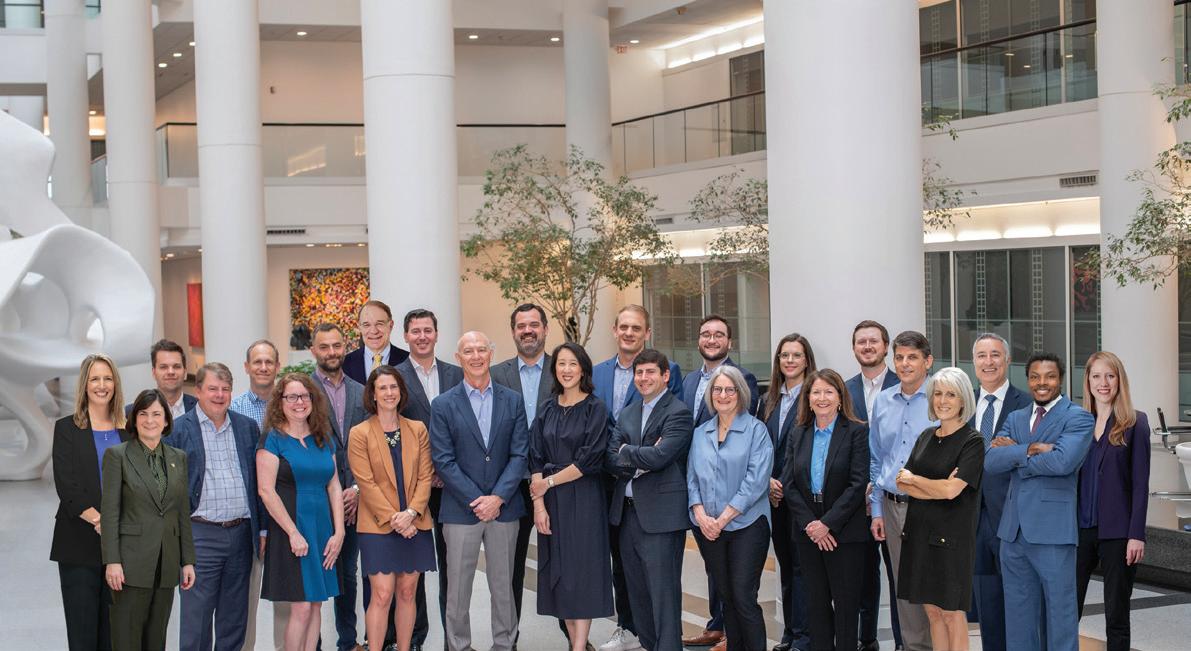
For 45 years, Parker Hudson has been dedicated to providing exceptional legal representation and unparalleled client service in sophisticated commercial lending transactions. The firm has an entrepreneurial spirit and collaborative environment that fosters close working relationships internally and with its clients and other industry professionals.
Parker Hudson has extensive experience in asset-based lending, cash flow lending, syndicated loan facilities, healthcare finance, lender finance, acquisition financing, DIP financing, cross-border loans, and factoring. The firm also is recognized for its depth in complex restructurings and bankruptcies.
With a deep bench of finance and restructuring lawyers, Parker Hudson offers the ideal blend of experience and efficiency to meet our clients’ needs and exceed their expectations.
Sioux Falls, SD | www.pathward.com

Inspired by our purpose to power Financial Inclusion for All™, Pathward® N.A., is a national bank focused on financial access. We have evolved our business model to meet the changing needs of customers and businesses and tap into underserved and emerging markets. Pathward strives to increase financial availability, choice, and opportunity across our Partner Solutions and Commercial Finance business lines. Our commercial finance team helps businesses access the funds they need by creating systematized, scalable, and configurable solutions that help businesses grow.
Pathward’s customized financing includes asset-based lending collateralized on accounts receivable and inventory, equipment financing through term loans and leases, and government guaranteed lending for niche industries. We approach the unique needs of our clients and business relationships with the entrepreneurial insight of an independent – and the benefits of a nationally chartered bank with expanded products and services. Since 1996, Pathward has been helping companies secure financing, and that focus continues today. Learn more at Pathward.com.
What specific programs do you offer to attract and retain talent? Please share your culture, benefits, DEI initiatives, internships and fun perks.
At Pathward, we are dedicated to building an inclusive culture of belonging across our hybrid/remote work environments. Our employees represent the communities where we live, work, and play, and we are committed to building an inclusive workforce.
Pathward’s Talent Anywhere recruiting strategy helps us attract diverse talent and gives employees more choice in how and where they work best. That flexibility is one reason Pathward has earned Great Place to Work® certification four years in a row.
Our comprehensive benefits package supports employees at work and at home, including health insurance, 401(k) retirement plans, and life and disability coverage, alongside competitive paid time off, company holidays, and flexible schedules. Employees also have access to Life Guidance Services, an Employee Assistance Program, and financial wellness workshops. In 2025, Pathward introduced PATHways to Wellness, offering tools, resources, and incentives to support overall well-being.
We invest in growth through learning and development programs, including leadership training and team-building opportunities. That commitment to development is reinforced by transparent pay practices, a comprehensive job architecture and robust learning and development opportunities.
Inclusion is part of how we work. Employee Resource Groups (“ERG”), a culture of belonging, accommodation resources and opportunities to give back to our communities, all help create an experience where employees feel supported and valued. In fiscal year 2025, 25% of employees participated in at least one ERG, and 77% participated in Pathward’s Community Impact Program. Internships may also be available for early career development opportunities.
What makes your company stand out?
Pathward stands out because our purpose is bigger than the work itself. We power financial access and inclusion, and that purpose shapes how we build culture, support employees and show up in our communities. That commitment is backed by measurable results. Earlier this year, Pathward certified™ as a Great Place to Work® for the fourth consecutive year, with 88% of employees surveyed saying Pathward is a great place to work — 31 points higher than the typical U.S. company. With flexible ways of working, competitive benefits,
inclusion, development opportunities and a strong culture of service, Pathward creates an environment where employees can grow, contribute and feel connected to something larger than themselves. That combination of purpose, belonging and measurable impact is what makes Pathward a uniquely great place to work.
What would you say are the best things about the industry you work in? What are the challenges?
Secured finance helps businesses access funding using assets like equipment, inventory, or receivables. In simple terms, it gives businesses practical ways to grow, manage cash flow, and invest with confidence. What makes the industry rewarding is its real-world impact; it helps businesses move forward and supports broader economic growth. The challenge is that it can be complex and highly regulated, which means balancing innovation and speed with strong risk management, compliance, and transparency. ion for prospective employees
Prospective employees can explore current openings and learn more through Pathward’s Careers page: https://www.pathward.com/aboutus/people-culture/careers.

For 160 years, we have been committed to providing our clients with great service and powerful financial expertise to help them meet their financial goals. We are proud of our longstanding history of supporting not only our customers but also our communities, employees and shareholders.
As a leader in senior secured financing to middle market companies, larger corporations, publicly traded companies, and private equity, PNC Business Credit offers a broad range of creative, customized financing solutions in support of acquisitions, refinancings, expansion and business transformation both domestically and internationally. Their extensive capabilities range from asset-based lending (ABL) to leveraged and cash flow financing, channel finance, vendor finance, and specialty financing for technology companies and retailers.
What specific programs do you offer to attract and retain talent? Please share your culture, benefits, DEI initiatives, internships and fun perks.
At PNC, we’re committed to making a positive difference in the lives of our employees and their well-being. This starts with helping to ensure our employees are in the right roles with the right skills, so that they can do their best work.
We provide competitive benefits* and programs to support our employees, including paid vacation, occasional absence and personal days, paid family leave, flexibility for many roles, fertility coverage and support under the medical plan. In addition, we offer:
paid maternity and parental leave; reimbursement for adoption, surrogacy, and doula services; family building resources and apps to support employees’ journey through parenthood.
educational assistance; retirement benefits, including a 401(k) matching contribution and a pension plan; Health Savings Account with contributions from PNC; and an Employee Assistance Program, including no-cost counseling.
In addition, we offer a wide range of enterprise-wide programs for employees, including our 13 Employee Business Resource Groups (EBRGs), which provide a forum for discussion, networking and mentoring among employees; volunteer opportunities, including up to 40 hours of paid time off to volunteer in the community, as well as mentoring programs.
The Corporate & Institutional Bank’s development program is a strategically designed learning path that includes structured, experiential and social learning, mentorship opportunities, coaching and feedback. PNC Business Credit, within PNC’s Corporate & Institutional Bank, also facilitates its own development programs, which can vary in length from 12 to 36 months. PNC Business Credit’s development program places candidates in all major areas of the business.
Diversity & Inclusion is a core value and business imperative at PNC. We foster connectedness in every aspect of business by purposefully engaging in a diverse and inclusive culture that strengthens customer relations, embraces employees’ assets and delivers results to our stakeholders.
*Benefits are subject to eligibility requirements.
What makes your company stand out?
We encourage PNC and PNC Business Credit employees to have a development plan for each stage of their careers. Through development plans and performance conversations, we help them think about how they’ll reach their goals, what kind of mentorship they may need and what skills they should learn.
Through PNC University (PNCU), we offer our employees thousands of learning and development opportunities, in physical and virtual classrooms and online. PNC University also empowers employees to develop outside of formal learning, through enabling experiential and social learning in the flow of work.
Our Education Benefit offering is intended to support the financial well-being of our employees as they pursue education and equip themselves to grow their career at PNC. In addition to providing numerous degrees and programs that are paid 100 percent by PNC, the benefit expansion includes many other direct payment programs, so the employee does not have to pay for their education upfront and request reimbursement, which can be a barrier to education for many. Programs include master’s, bachelor’s and associate degrees, short-form certificates and bootcamps, language programs, college prep and high school completion.
What would you say are the best things about the industry you work in? What are the challenges?
The best part of the asset-based lending industry continues to be the strong sense of community among clients and professionals. Every day, we work alongside thoughtful, driven people who bring a wide range of perspectives and experience. That variety not only strengthens outcomes for clients but also makes the work deeply rewarding.
In 2026, the opportunity in the market remains compelling. Companies are navigating more complex operating environments, and the need for flexible, reliable capital has never been more important. That creates a meaningful runway for our industry to grow, innovate and deliver real value. It’s an exciting time to be part of ABL, with plenty of room to learn, contribute and make an impact.
Contact information for prospective employees
Eileen Kowalski at eileen.kowalski@pnc.com or (215) 585-1051
Ravinia Capital is a boutique investment bank serving the middle market, based in Chicago. We advise business owners on sell-side M&A, distressed and §363 sales, and debt advisory, typically for companies with $10 million to $250 million in revenue. We are seller-only by design: we represent the owner’s interests, never the buyer’s, and we do not run a consulting or liquidation practice that competes with the professionals who refer business to us.
Our team of 15 is small and senior. Clients work directly with the bankers who close their deals. We have executed more than 150 transactions across multiple cycles. Managing Partner Tom Goldblatt, CTP, is a 2026 ABF Journal Rainmaker, a three-time Turnaround Atlas Award recipient, and a Crain’s Chicago Business Notable Dealmaker in M&A, among many other recent honors and accolades.
What Programs Do You Offer to Attract and Retain Talent?
We hire people who want to do real work from day one. On a small senior team, an analyst sits in the same room as the managing partner, sees the entire deal from pitch to close, and is never siloed into one corner of the process for two years. That exposure is both the recruiting pitch and the retention strategy.
Ravinia is a virtual firm with team members dispersed across the United States. That structure gives people genuine flexibility — we believe in getting the work done, not monitoring where you sit. We come together as a team several times a year in Chicago and actively participate in regional conferences, often bringing team members along to build relationships and stay current in the industry. We periodically offer internships, fellowships, and analyst openings. These are not assembly-line programs — they are real opportunities for people early in their careers to work alongside experienced bankers on live transactions. Business students interested in restructuring, M&A, and secured finance are encouraged to subscribe to the Ravinia Capital LinkedIn page, https://www.linkedin.com/company/raviniacapital-llc/, to monitor our sporadic recruitment notices.
What Makes Ravinia Capital Stand Out?
Three things, and they reinforce each other: Seller-only focus. We do not represent buyers, run a fund, or operate a liquidation business. There is no channel conflict and no ambiguity about whose interests we serve. Lenders and attorneys who refer business to us know we will never compete with them for their borrower.
Built for transactions. We have structured and closed more than 150 deals through good markets and bad, including the distressed and time-pressured situations where most firms stumble. The Turnaround Atlas and ABF Journal recognitions reflect work done, not credentials accumulated.
Senior attention, start to finish. The people who pitch a deal are the people who close it. For a lender or attorney sending us a relationship, that consistency protects the client and makes the referrer look good.
What are the best things about this industry? What are the challenges?
Secured finance sits at the center of how middle-market companies get built, bought, and saved. When a business needs capital to grow,
change hands, or work through a hard stretch, secured lenders and the advisors around them make it possible. The best part of the work is that it’s real — you are helping owners protect what they have spent a lifetime building, and you see the outcome.
The challenge is that the stakes are high and the timelines are unforgiving, especially in distressed situations. A deal can hinge on moving faster and thinking more clearly than everyone else at the table. That pressure is what draws the right people to this field — and what makes the wins matter.
Contact information for prospective employees
Shari Giddens
Director of Marketing
Ravinia Capital LLC
SGiddens@RaviniaCapitalLLC.com (224) 422-7764
Birmingham, AL | www.regions.com

Regions Business Capital is a specialty finance team within Regions Bank’s Corporate Banking Group. It provides financing solutions for companies looking to strengthen their foundation, build responsible growth, and accomplish long-term objectives. From managing periods of rapid growth, to navigating performance volatility, strategically leveraging acquisitions, to managing shareholder distributions, and more, Regions Business Capital specializes in helping clients grow and achieve their business goals.
Solutions provided by Regions Business Capital include:
Asset-Based Lending
Supply Chain Finance
Trade Receivable Securitization and Receivable Purchase
Equipment Finance
Regions Business Capital has nearly 100 professionals serving clients across the United States through offices in Atlanta, Birmingham, Charlotte, Chicago, Dallas and New York. Regions Bank is an equal opportunity employer.
Please share your workplace culture, benefits, internships and fun perks.
At Regions Bank, attracting and retaining top talent starts with a strong, purpose-driven culture grounded in our core values— doing what is right, putting people first, focusing on the customer, reaching higher and enjoying life. We foster a collaborative, team-oriented environment where employees are supported in growing their careers while making a meaningful impact in the communities they serve.
We invest in our associates through robust development programs, including leadership training, early-career and rotational opportunities, tuition reimbursement, and ongoing learning through internal platforms. Mentorship and sponsorship programs further support career mobility and long-term success.
Our comprehensive benefits package is designed to support the whole person, offering competitive compensation, health and wellness coverage, retirement plans with company contributions, family-focused benefits, and flexible work arrangements where appropriate. We also provide wellness resources, mental health support, and financial education tools to help employees thrive.
Engagement and recognition are central to our culture. We celebrate individual and team contributions while regularly gathering employee feedback to continuously enhance the workplace experience.
Finally, Regions offers opportunities to give back through paid volunteer time, community engagement initiatives, and team-building activities—creating a workplace that is both rewarding and impactful. Internship programs are also available, helping build a strong pipeline of future talent.
Regions Business Capital stands out in a highly competitive asset-based lending industry because of its strong legacy and relationship-driven approach. Our advice-led delivery model and
commitment to delivering a superior client experience are central to why businesses continue to turn to Regions for their business banking needs.
As more companies look to leverage their assets to support evolving capital needs, our team brings deep credit experience and structuring capabilities that enable us to provide customized, market-leading solutions. This combination of experience, insights, and client focus allows us to build lasting relationships and deliver value across market cycles.
What would you say are the best things about the industry you work in? What are the challenges?
Working in the asset-based lending (ABL) industry offers a highly dynamic and rewarding career for people who thrive at the intersection of finance, strategy, and relationship management. The work spans a broad range of industries—from manufacturing and transportation to healthcare, retail and distribution—so every client situation is different. This variety creates opportunities to solve complex problems, structure creative financing solutions, and directly support companies as they grow, transform, or navigate change.
At the same time, secured finance requires a high level of discipline and adaptability. Market fluctuations can quickly impact asset values, introducing additional complexity into underwriting and risk management, particularly during periods of economic uncertainty. The work is also operationally intensive, requiring close coordination across legal, credit, and field exam teams, as well as rigorous attention to documentation and regulatory standards. As competition in the market continues to evolve, professionals must balance responsiveness and innovation with prudent risk management. These challenges are what make the field both demanding and compelling, requiring strong analytical capabilities, attention to detail, and a forward-looking mindset.
Contact information for prospective employees
Amy Barrentine is the head of Regions Business Capital. She can be reached at amy.barrentine@regions.com.
New Orleans, LA | www.republicbc.com

Republic Business Credit is a market-leading commercial finance company supporting the working capital requirements of private equity and entrepreneurial-owned businesses. Republic provides asset-based lending, ledgered lines of credit, traditional factoring, direct to consumer loans and Fast AR Funding. Republic partners with clients to rapidly grow businesses, start-ups and companies experiencing recoverable distress.
Republic was acquired by Renasant Bank in 2022, which is one of the Southeast region’s strongest financial institutions with roughly $17.5 billion in assets. The partnership with Renasant Bank opened to Republic a vast network of resources and relationships that have exponentially increased partnership opportunities. Republic is headquartered in New Orleans with additional offices in Chicago, Los Angeles Houston and Atlanta.
What specific programs do you offer to attract and retain talent? Please share your culture, benefits, DEI initiatives, internships and fun perks.
We believe in a culture of constant growth, where employees are supported at every stage of their journey. To us, meaningful support means looking at the whole person. We are actively pursuing new options and benefits that elevate our team’s experience, benefiting both their professional development and their personal well-being.
Among the specific highlights of our workplace experience:
Project-based learning: With a presence in New Orleans, Los Angeles, Oklahoma, Chicago, Houston, Atlanta and Florida, our team members experience a variety of high-level, independently led project work. We’re not a top-down company, and we’re proud of that.
Performance Incentives: In addition to competitive base salaries, we actively reward dedication. We don’t hesitate to offer bonuses, merit-based raises, cost-of-living adjustments, and direct incentives for bringing in new clients or driving successful client recommendations.
Educational reimbursement: We provide a framework to supplement our internal training and empower our employees to continue learning throughout their career, including external education opportunities, training, MBA, executive education, industry workshops and various certificates.
Rotational programs: We recognize the good work of our employees and regularly offer promotions and development opportunities throughout the business. High potential new hires work across several departments during their early years to provide alignment with their development and career goals.
Diversity, Equity & Inclusion (DEI): We have been recognized by industry groups for our commitment to a diverse and inclusive workforce, which we celebrate. Our team members have expanded that recognition to include a culture that strengthens our workplace environment.
Comprehensive Benefits: We cover a substantial percentage of employee healthcare premiums and offer a robust suite of coverage, including life, vision, and dental insurance for staff and their families. We also support and encourage professional development benefits — conferences, classes, training, networking, etc.
Flexible schedules: We value and encourage work-life balance. Our employees work a hybrid schedule that includes in-office and at-home workdays. We also are generous with time off for any unexpected emergencies or personal needs.
Vibrant Culture & Team Building: Hard work is balanced with genuine connection. We host an annual company retreat that offers
a time for genuine connection for our cross-country team. We don’t just celebrate professional success; we celebrate the person. We are constantly looking for new ways bring the team together and celebrate our wins.
Internships: We offer internships to help guide the next generation of finance professionals.
What makes your company stand out?
Our team. We are currently celebrating our 15th anniversary, a milestone that would be impossible without the right people in the right places. As part of our reflection, we’ve intentionally defined what sets Republic apart. While many firms offer creative, growth-focused client solutions, our true differentiator is the culture built by our 46 team members.
We have intentionally blended an executive leadership team possessing over 125 years of secured lending expertise with a wave of ambitious newcomers. This dynamic creates an incredible workplace culture where our seasoned professionals provide deep mentorship and creative structuring knowledge, while our newer team members inject fresh perspectives and innovative ideas. The result is a collaborative environment where everyone’s voice has value.
Our tagline right now is “The difference isn’t the capital; it’s the partner.” That isn’t just a promise to our clients; it is also the blueprint for how we treat each other every day. Our team works well together because of who we all are individually.
What would you say are the best things about the industry you work in? What are the challenges?
Best Things: It’s a relatively small, incredibly tight-knit industry. There is definitely a ‘six degrees of Kevin Bacon’ element to secured finance. Everyone seems to know everyone, or at least knows someone in common! Because of that, you have an entire network of people genuinely rooting for you, whether they are mentors, sponsors, or referral partners. Of course, we are competitors, but at the end of the day, there’s a shared dedication to helping businesses unlock their growth potential.
Challenges: The challenges are mostly external. Market volatility makes strategic planning incredibly complex right now. However, that volatility actually highlights why our industry is so vital. Because we are much more flexible than a traditional bank, we have the flexibility to step in during economic uncertainty and provide the stability businesses need to keep moving forward.
Contact Information for prospective employees
Robert Meyers, CEO, rmeyers@republicbc.com
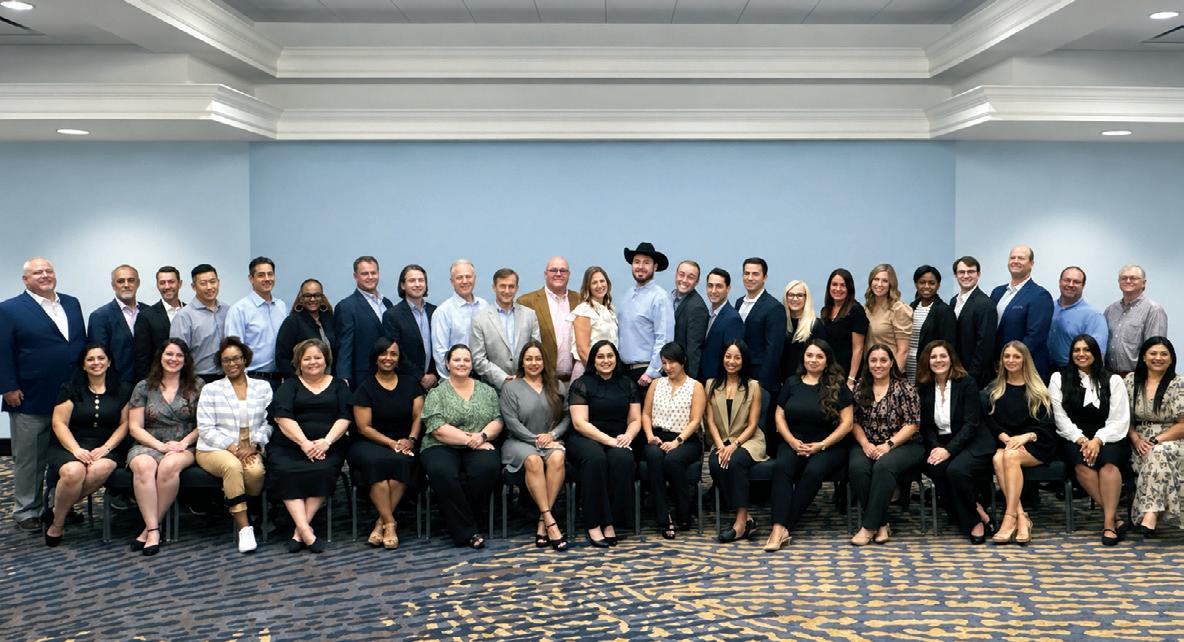





As we continue to grow, we are hiring! We offer a competitive package that includes:
We approach each team members’ career goals with the same dedication and long-term mindset we bring to helping our clients succeed. As a result, more than 50% of our employees have been with us five years or more.
• Performance bonuses, cost-of-living adjustments & more
• Professional development opportunities
• Flexible schedules, including hybrid schedules
To see current opportunities, visit republicbc.com/about/our-team /

With over 88 years of leadership and industry experience, Rosenthal Capital Group (RCG) is the largest privately held commercial finance company in the country, now led by the third and fourth generations of the Rosenthal family. With more than 500 clients across the country, RCG is committed to providing personalized service, credit protection and flexible lending to middle-market clients with loans up to $40MM+. With unmatched financial capacity and decades of experience, RCG is best in class for all its clients’ creative financing needs, including factoring, asset-based lending, direct-to-consumer financing, purchase order financing and equipment financing. Rosenthal’s team of seasoned professionals covers the U.S. from coast to coast and nearly everywhere in between, with dedicated offices in New York, California, Georgia, North Carolina and Illinois.
What specific programs do you offer to attract and retain talent? Please share your culture, benefits, DEI initiatives, internships and fun perks.
RCG offers a broad range of professional development and training opportunities for our employees, from various continuing education and certification programs via industry associations, to our own internal training programs. We are fortunate to have an incredibly talented team of professionals, and our goal is to make sure each of our colleagues can broaden and enhance their understanding of our industry and our clients’ businesses. We listen closely to our employees and evolve our programs to ensure we offer the most relevant and meaningful development opportunities. We make it a point to promote from within, whenever possible, ensuring that our invaluable talent is recognized for their contributions to the firm and to our clients. We have embraced a hybrid work environment that offers many of our employees the option to work from home if their job responsibilities allow for it, or work from our new New York City headquarters at 300 Park Avenue or our many offices around the country.
What makes your company stand out?
After more than 88 years in business, RCG is still a family-run business. Our independence allows us to be more flexible and to offer more personalized attention, not only to our clients but also to our employees. In fact, many of our colleagues often say that our company culture resembles that of an actual family. Perhaps that’s why so many have called our firm home for decades, with many of our employees recently celebrating their 10th, 15th, 20th and even 30th anniversaries with the company. Every individual at RCG is treated equitably and with respect, which is reflected in our generous benefits packages, our flexible work environment and our focus on developing and promoting talent from within the organization.
What would you say are the best things about the industry you work in? What are the challenges?
These are challenging times. Global economic instability, inflation concerns, and supply chain slowdowns are affecting nearly every business and organization, regardless of sector or geographic location. Uncertainty around market conditions and an evershifting landscape have pushed RCG and many of our industry peers to reevaluate how we support the brands we work with. We’re finding new ways to be creative and nimble to help our
clients weather the challenges they face. That includes referring business to other companies in our industry—even our direct competitors—or partnering with them to find the right solutions for clients. Ours is an industry blessed with incredible camaraderie, because we consistently put our clients’ needs first. What could be more meaningful than working alongside smart, talented, thoughtful professionals and partners who make it their mission every day to problem solve and help countless entrepreneurs and business owners tackle their most pressing challenges?
Contact information for prospective employees
Jasmine Rivera, CPP VP, Payroll & Personnel Services
E: JRivera@rosenthalinc.com
T: (212) 356-1431



SouthStar Capital is a nationwide commercial finance company providing flexible working capital solutions to businesses across a wide range of industries. Our financing options include accounts receivable financing, asset-based lending, purchase order financing, invoice factoring, payroll funding, and specialized government contract financing. As a direct lender, we work closely with clients to understand their unique funding needs and deliver customized solutions that support growth, improve cash flow, and help capitalize on new opportunities. With direct access to decision-makers and an experienced in-house team, we make the funding process efficient and straightforward. Whether your business is expanding, managing seasonal demand, or navigating cash flow challenges, SouthStar Capital is committed to helping you secure the capital you need to move forward with confidence. Contact us today to learn more.
What specific programs do you offer to attract and retain talent? Please share your culture, benefits, DEI initiatives, internships and fun perks.
At SouthStar Capital, our culture is rooted in being a familyowned and operated business where employees are valued, supported, and empowered to grow. Because we handle everything in-house, from business development and underwriting to closing, funding, and account management, employees gain exposure to multiple areas of the business and work closely with leadership.
We foster a collaborative and enjoyable work environment through weekly Friday happy hours, company events, team celebrations, and a pet-friendly office. We also offer internal referral programs that provide employees with opportunities to earn additional income by referring prospective clients and business opportunities. Our close-knit culture and entrepreneurial environment make Southstar a place where employees can build long-term careers.
What makes your company stand out?
SouthStar Capital stands out because we are a privately funded, family-owned commercial finance company with a highly diversified product offering. We provide a wide range of working capital solutions that allow us to support businesses across many industries and stages of growth.
Unlike many lenders, every aspect of the client experience is managed in-house, creating a streamlined process, faster decision-making, and a more personalized experience for both clients and referral partners
What would you say are the best things about the industry you work in? What are the challenges?
Secured finance helps businesses access the working capital they need to grow, manage cash flow, and take advantage of new opportunities. One of the most rewarding aspects of the industry is seeing the direct impact financing can have on a company’s success.
The biggest challenge is education. Many business owners are unaware of the financing options available beyond traditional bank loans, so a key part of our role is helping them understand the solutions that can support their business goals.
Contact information for prospective employees
Sara Craig Project Manager
843-800-8299
Sara@southstar.com
Philadelphia, PA | www.stradley.com

Founded a century ago in Philadelphia, Stradley Ronon’s reputation for sensible, sophisticated and results-oriented client representation is an extension of our culture: an ethos of collegiality and collaboration that begins with our lawyers and business professionals and radiates outward to our clients, our community and beyond. Recognizing that legal issues are not one-size-fits-all, we tailor our strategies and staffing to garner exceptional results at unparalleled value.
Our longstanding connections in the public and private sector and the well-earned trust of our clients have put us at the center of pioneering work, such as establishing one of the first mutual funds in the United States in 1928. Stradley Ronon continues to strike a similar balance in all that we do, from leading high-stakes courtroom conflicts to devising novel financing regimes to operationalizing innovative acquisition strategies. As our clients attest, Stradley Ronon’s approach is always determined, yet practical, flexible and resourceful.
What specific programs do you offer to attract and retain talent?
Please share your culture, benefits, DEI initiatives, internships and fun perks.
Stradley Ronon’s culture is built on the principle that skill, effort and outcomes determine one’s professional journey and create pathways for the most talented individuals to excel regardless of background or identity. We have several initiatives that strengthen our entire organization and uphold our core belief that a truly inclusive, equitable workplace maximizes both individual potential and collective excellence. The firm’s core values serve as our foundation for our culture of excellence: Inclusion, innovation, mentorship, pro bono and community impact.
We develop future lawyers through hands-on training in close-knit teams with direct partner engagement, practice-specific training and professional development workshops that build essential skills. Our evaluation process identifies strengths and helps chart career paths. Through this cycle of training, education and feedback, our lawyers become mentors and advisers who actively support the growth of others. Our associates serve as members of our hiring committee, technology committee and associates committee, the latter of which serves as a liaison between junior lawyers and firm leadership.
Our firm also encourages lawyer involvement in engagement groups, special projects and initiatives, and pro bono and community service efforts. Lateral associates receive customized orientations and dedicated mentors who provide structured support, reinforce firm values, create networking opportunities and share resources to position mentees for success.
Through our Summer Associate Program, law students are given a multifaceted, immersive experience with introductions to a wide variety of practices and industries, pro bono and community service opportunities, invaluable feedback from dedicated mentors, and an indepth look into life at Stradley Ronon.
Our firm, in partnership with Clio, also provides an industry-leading, award-winning generative AI training certification program anchored in applied learning theory with concrete, clearly defined learning goals.
From helping to establish the first mutual fund in the United States to our involvement in some of the most sophisticated, cuttingedge matters, Stradley Ronon’s nationally recognized investment management, corporate and litigation practices counsel public and
private funds, financial institutions and Fortune 500 corporations across a range of industries. This foundation strengthens our lending practice by giving us a unique perspective on how capital is raised, deployed and structured in today’s markets.
Stradley Ronon’s high caliber of client service is sustained by a commitment to authenticity and excellence across our firm. We welcome lawyers and business professionals who share in that commitment.
Ranked in Chambers Global and Chambers USA, The Legal 500 and BTI Litigation Outlook, clients rely on us to deliver superior results, proactive strategies and personalized attention to their business needs.
Our clientele includes:
25% of Fortune 100 companies.
80% of the 25 largest U.S. banks.
More than 50% of the 20 largest U.S. asset managers.
Over the past five years, 41% of the lawyers promoted to partner began their careers as associates at the firm. We have been named repeatedly by U.S. News & World Report on its Best Companies to Work For: Law Firms list, by SurePoint on its Leopard Law Firm Index Top 200, and by the Los Angeles Business Journal on its Leaders of Influence: Most Admired Law Firms to Work For list.
What would you say are the best things about the industry you work in? What are the challenges?
As lawyers, we are at the forefront of legal developments and work closely with clients to navigate evolving laws and market standards that impact their businesses. We value our ability to support our longstanding clients’ business objectives and strategies and are proud of our relationships. While changes in the secured finance industry and broader economic trends can create new opportunities, they may also introduce uncertainty. In these moments, our roles as trusted advisers position us to serve as true partners to our clients.
One of the most rewarding aspects of working in this industry is the opportunity to collaborate with sophisticated, highly experienced professionals who share a common commitment to delivering exceptional results for clients.
Contact information for prospective employees
Visit www.stradley.com/careers for more information on opportunities for lawyers, law students and business professionals.



BY EILEEN KOWALSKI
This summer, I had the pleasure of teaching two cohorts of the inaugural Secured Finance Network 2026 Summer Intro to Asset-Based Lending (ABL) for College Interns. As a follow-up, this is a practical introduction to asset-based lending, collateral analysis, borrowing bases, field examinations, and loan monitoring for interns, students and industry newcomers unable to attend, or as a reference for those that attended.
This primer translates the core concepts from the introductory ABL training materials into a practical technical reference that explains how lenders evaluate collateral, structure credit facilities, monitor risk, and respond when borrower performance changes.
ABL is a form of financing in which the amount a borrower can access is tied primarily to the value and quality of specific assets. These assets usually include accounts receivable, inventory, machinery and equipment, cash, intellectual property, or insurance proceeds. In an ABL facility, the lender focuses on whether collateral can be converted into cash if the borrower defaults or becomes insolvent.
Unlike traditional cash-flow lending, which places greater emphasis on enterprise cash generation and financial covenants, ABL relies on collateral monitoring and borrowing base availability. This makes ABL especially useful for businesses with working capital needs that fluctuate with sales, inventory levels, receivable collections, seasonality, or growth.
ABL and factoring are alternatives to conventional financing and can improve liquidity by linking borrowing capacity to the borrower’s working capital assets. As eligible receivables and inventory increase, borrowing availability may also increase. As those assets decline, availability may contract. This structure encourages more disciplined working capital management and can provide flexibility during performance setbacks, growth initiatives, expansion plans, or capital structure changes.
Collateral is an asset pledged by the borrower to support repayment of a loan. For ABL purposes, collateral is valuable only to the extent that the lender can monetize it in a default or insolvency scenario. The most common collateral categories include accounts receivable, inventory, fixed assets, cash, intellectual property and insurance proceeds.
Accounts receivable are often a primary ABL collateral class because they are expected to convert into cash in the near term. Advance rates commonly range from 70% to 90% of eligible receivables, although lower rates may be appropriate depending on risk. Lenders evaluate dilution, trends, customer concentration, diversification, overall customer credit quality and specialized receivable characteristics such as government, foreign, affiliates, or contra accounts.
Receivable testing and verification are important controls. Field examiners, using various AR sampling, may test whether receivables exist, are valid, are fully collectible, and whether disputes or discrepancies exist. Significant disputes, offsets,
or unresolved discrepancies should generally be treated as ineligible until resolved.
Inventory is typically more difficult to convert into cash than accounts receivable because goods must often be finished, sold, and collected before cash is realized. As a result, inventory advance rates are usually lower than receivable advance rates and may range from 20% to 75% of net orderly liquidation value. Lenders consider the potential value of raw materials, work in process, finished goods and in-transit inventory, plus whether the borrower maintains a reliable perpetual inventory system. Common ineligibles include packaging, consigned goods, offsite inventory, perishables and certain specialized products.
Appraisals are often used to validate inventory and equipment values. Common valuation bases include forced liquidation value and net orderly liquidation value. Appraisals may discuss value characteristics, current market conditions, seasonality, liquidation time frames and asset-specific considerations.
The borrowing base is a document prepared periodically by the borrower using the collateral formula to determine how much the borrower may draw under a revolving facility at a specified reporting period. It generally applies advance rates to eligible collateral and may include reserves, blocks, caps, or other limitations. Availability is typically calculated as the lesser of the borrowing base or the loan commitment, minus
Advance Rate
Availability
Borrowing Base
Cash Dominion
Concentration Limit
Dilution
outstanding borrowings, letters of credit and other credit extensions. See a simple example on next page.
A field examination (see page 54 for a primer on field exams) is a review of a borrower’s assets, liabilities, facilities, books, records and collateral reporting. Field exams help lenders independently validate what the borrower represents and warrants. They reduce the risk of misrepresentation, identify reporting errors and support ongoing portfolio monitoring.
The scope of a field exam depends on the proposed or existing credit facility and/or the existing collateral using a clearly defined review period. A survey exam focuses on underwriting a prospective facility, while a recurring exam confirms whether the borrower’s financial or collateral condition has changed since the survey or prior review.
A sound loan structure should define the purpose of the facility, source of repayment, adequate amount, appropriate term, appropriate pricing and framework for monitoring. From the lender’s perspective, the goal is to be repaid in full while establishing a framework under which the borrower can continue seamlessly operating. From the borrower’s perspective, the goal is to maintain access to liquidity with minimal interference in normal business operations.
Typical ABL Documents
Loan and Security Agreement: Governs the lending relationship, grants the lender a security interest in collateral and defines financing terms.
Promissory Note: Evidences the borrower’s debt obligation.
The maximum percentage a lender will lend against a collateral category.
The amount of additional borrowing permitted under a revolver at a point in time.
The document that details the collateral formula that limits how much the borrower can draw.
A control arrangement in which collections are directed to a lender-controlled lockbox or account.
The maximum percentage of receivables that may come from one customer or category.
The difference between the gross amount of invoices and the cash actually collected for such invoices, usually discussed as a percentage of sales.
Eligible Collateral Collateral that meets the loan agreement criteria for inclusion in the borrowing base.
Excess Availability
Field Exam
Additional funds available to the borrower after considering borrowing base limits and outstanding debt, reserves, and blocks.
A review of borrower records, collateral, systems, and reporting used to validate lending support.
Ineligible Collateral Collateral that remains pledged but does not qualify for borrowing base inclusion.
Net Orderly Liquidation Value
Over-Advance
Working Capital
The estimated value realized if assets are liquidated in an orderly manner over a reasonable period.
The portion of a revolving credit facility that exceeds calculated borrowing base availability.
Current assets minus current liabilities, used as a measure of short-term liquidity.
BBC Date 5/31/2026
Accounts Receivable as of the last exam: 4/30/2026 1,250,000
Sales for the period since the last exam: 4/30/2026 5/31/2026 1,000,250
Credit Memos for the period since the last exam: 4/30/2026 5/31/2026 (50,000)
Cash Receipts for the period since the last exam: 4/30/2026 5/31/2026 (900,050)
Credits/Debits for the period since the last exam: 4/30/2026 5/31/2026 -
Accounts Receivable pledged as of this exam: 5/31/2026 1,300,200
Ineligible Accounts Receivable as of: Various 5/31/2026 257,000 Eligible Accounts Receivable: 1,043,200 Advance
Inventory pledged as of this exam: 5/31/2026 1,350,000
Joseph Smith, CFO 6/20/2026
CFO, Controller, Treasurer Date
Guaranty: Provides an additional repayment obligation from a guarantor if the borrower defaults.
Intercreditor Agreement: Allocates rights among lenders with interests in the borrower’s collateral.
Landlord or Bailee Waiver: Helps preserve lender access to collateral located with a landlord or bailee.
Insurance Documents: Evidence lender loss payee status or other insurance protections.
Deposit Account Control Agreement (DACA): Provides lender control rights over deposit accounts, often connected to cash dominion.
Covenants are contractual requirements that help the lender monitor risk and establish expectations for borrower conduct. Affirmative covenants require the borrower to take or perform certain actions. Negative covenants restrict specific actions. Financial covenants measure performance through tests such as debt-to-equity ratio, interest coverage, cash flow, EBITDA, or operating expense levels.
Key monitoring metrics include liquidity, excess availability, borrowing base trends, days sales outstanding (DSO), days inventory outstanding (DIO), days payable outstanding (DPO), dilution, concentration, collateral reporting accuracy and compliance certificate results.
A default occurs when the borrower violates a provision of the financing agreement. When problem loans arise, lenders identify available solutions, evaluate advantages and disadvantages, and coordinate with credit, portfolio management, legal counsel, appraisers and other specialists as needed. The objective is to be proactive rather than reactive.
Important concepts include preserving lender rights, understanding available remedies, obtaining legal input on perfection and priority, considering third-party rights, and recognizing when a workout can be negotiated versus when bankruptcy-related strategies may be necessary.
This article is for general information purposes only and is not intended to provide legal, tax, accounting or financial advice.
This article was written with the assistance of an AI tool.
Eileen Kowalski is SVP and national recurring field exam manager at PNC Business Credit. She is a 35-plus year veteran of commercial finance and asset-based lending. Eileen is integral to PNCBC’s Field Exam training program. She joined PNCBC in 2004 as an
1 2 3 4 5 6
ABL availability is driven by collateral value, eligibility and advance rates.
Accounts receivable usually convert to cash faster than inventory, which is why receivable advance rates are often higher.
Not all pledged collateral is eligible collateral; exclusions protect the lender from weak or uncertain recovery sources.
Field examinations validate collateral quality, borrower reporting and operational risk.
Loan documents, covenants, and monitoring reports create a control framework for the lending relationship.
Problem loan management requires early identification, careful documentation, and coordination among credit, portfolio management, legal, and valuation professionals.
AVP & senior field examiner after serving as a field examiner for a predecessor bank of M&T Bank and an AVP & senior field examiner with LaSalle Bank. In addition to managing the nationwide staff, Eileen’s responsibilities include, but are not limited to, field exam quality control, integration of AI into the exam process, and FE new hire recruiting/training activities. Eileen is a member of the SFNet Education Committee and the SFNet Foundation Board as the Education liaison.





BY ECAPITAL

New to secured finance? This article offers a practical guide to how invoice factoring works, common structures, key benefits, and the role it plays in modern working capital management—showing how businesses turn unpaid invoices into cash flow and how finance professionals help companies bridge the gap between doing the work and getting paid.
Healthy cash flow is essential to every business. Even profitable companies can face cash flow challenges when payment for goods or services takes weeks, or even months, to arrive. As payment cycles lengthen across many industries and operating costs fluctuate, companies are experiencing longer cash conversion cycles and greater working capital needs. More cash remains tied up in outstanding receivables, even as businesses continue to meet payroll, pay suppliers, purchase inventory, and fund dayto-day operations.
For many businesses, the challenge isn’t winning business; it’s accessing the cash they’ve already earned. Maintaining healthy cash flow depends on both disciplined financial management and flexible financing solutions that bridge the gap between issuing an invoice and receiving payment.
Invoice factoring, also known as accounts receivable factoring, is one such solution. By converting unpaid invoices into immediate working capital, it helps businesses improve cash flow without adding traditional debt, diluting equity, or relying on restrictive loan covenants.
Invoice factoring is a form of receivables financing that converts unpaid invoices into immediate working capital. It involves selling eligible accounts receivable to a factoring company in exchange for an advance on their value.
Instead of waiting 30, 60, or 90 days for customers to pay, a business sells its eligible invoices to a factoring company and receives an immediate advance on the invoice value. The factoring company then collects payment from the customer and releases the remaining balance, less an agreed-upon fee.
This practice provides businesses with faster access to working capital, helping them improve cash flow while continuing to meet operating expenses, invest in growth, and respond to new opportunities. Rather than waiting for customers to pay, companies can put the value of their outstanding invoices to work immediately.
Today, invoice factoring is a well-established financing solution used by businesses across a wide range of industries.
Invoice factoring has evolved over thousands of years alongside the growth of global commerce. As trade expanded beyond local markets, merchants shipping goods over long sea routes relied on factors to arrange sales, assess buyers’ creditworthiness, collect payments, and provide advances before shipments were paid for. These services helped businesses continue trading despite long payment cycles and established many of the commercial principles that underpin modern factoring.
Over time, factoring adapted to support manufacturers, exporters, wholesalers, and, more recently, industries such as transportation, where longer payment terms became increasingly common following U.S. deregulation in the 1980s. Although the industry has continued to evolve, its purpose has remained remarkably consistent: helping businesses convert receivables into working capital.
How it works: Although qualification requirements and funding timelines vary by provider and transaction, invoice factoring generally follows a straightforward qualification and funding process.
Qualification: Businesses provide basic company information, details about their funding needs, and supporting documentation. Depending on the provider and financing structure, this may include invoices, customer lists, bank statements, articles of incorporation, tax records, and existing financing agreements.
The qualification process typically involves the following steps:
Invoice review: The factoring company reviews outstanding invoices to confirm they are valid, unpaid, and owed by creditworthy customers.
Customer credit checks: The factor evaluates the payment history and credit strength of the business’s customers, since repayment depends on the account debtor.
Business verification: The company’s ownership, registration, tax status, insurance, and operating history may be reviewed.
Lien and UCC search: The factoring company checks for existing liens or claims against the company’s accounts receivable.
Depending on the complexity of the transaction, the qualification process may take anywhere from several days to a few weeks.
Rates and terms: Factoring companies typically set fees and terms based on the risk, volume, structure, and collection profile of the receivables being funded.
Receivables risk: The factor reviews aging reports, customer concentration, payment history, and collection performance. Industry-specific risks, including fraud exposure, seasonality, administrative complexity, and the likelihood of disputes, may also affect pricing.
Invoice volume and funding activity: Monthly invoice volume, average invoice size, and funding frequency can influence rates and facility terms.
Factoring structure and servicing requirements: Pricing may also vary based on the type of factoring arrangement and the level of invoice verification, account administration, and collection support required.
Once these assessments are completed, the business receives proposed advance rates, factoring fees, funding limits, and contract terms. In simple terms, the lower the risk and the higher the invoice volume, the more competitive the factoring fee is likely to be.
The funding process generally follows these steps:
The business submits eligible invoices to the factoring company, typically through an online portal or other agreed submission method.
The factoring company verifies the invoices.
Depending on the provider and financing arrangement, an advance of up to 90% of the invoice value may be provided, often within 24 hours.
The factoring company collects payment directly from the account debtor when the invoice becomes due.
Once payment is received, the factoring company remits the remaining balance to the business, less the agreed-upon fee.
Invoice factoring is not a one-size-fits-all financing solution.
receivables have been assigned to the factor and are instructed to remit payment directly to the factor.
Non-notification factoring: Account debtors are not notified of the factoring arrangement. Payments are typically directed to a controlled lockbox or collection account.
Recourse factoring: The seller is obligated to repurchase or reimburse the factor for receivables subject to recourse under the terms of the factoring agreement.
Non-recourse factoring: The factor assumes specified credit losses, typically arising from an account debtor’s insolvency, subject to the terms and exclusions of the factoring agreement.

Working with an experienced specialty finance provider can help businesses understand the available financing options and choose the solution that best aligns with their cash flow needs and long-term business objectives.
Factoring arrangements can be structured in different ways depending on a company’s cash flow needs, customer base, risk profile, invoice volume, and desired level of flexibility. In a factoring transaction, the financing provider that purchases receivables is referred to as the factor.
The following are some of the most common ways invoice factoring can be structured:
Spot factoring: A business factors selected invoices on a one-off or occasional basis rather than under an ongoing commitment.
Whole ledger factoring: A business factors all or substantially all of its eligible accounts receivable.
Selective factoring: The business chooses specific invoices or account debtors to factor.
Notification factoring: Account debtors are notified that
True sale factoring: The factor purchases the receivable outright rather than taking a security interest. If the transfer qualifies for sale accounting, the receivable is derecognized, which may improve leverage and other financial ratios.
The appropriate structure depends on a company’s financing objectives, customer relationships, risk allocation preferences, and operational requirements.
Technology Technology has become an increasingly important part of the factoring industry, with many providers investing in digital platforms, automation, and integrated payment technologies to improve efficiency and transparency. Depending on the provider, businesses may be able to submit invoices electronically, monitor funding activity, track receivables, access reporting, and receive funds through faster payment methods.
These advancements have transformed factoring from a manual financing arrangement into a modern working capital solution built for speed, visibility, and operational control.
While the specific features and services offered vary by provider, invoice factoring may offer several advantages depending on a business’s financing needs and the structure of the arrangement.
Improved access to cash flow: Invoice factoring converts outstanding receivables into immediate funding, helping businesses improve cash flow without waiting for customer payments.
Alternative to traditional borrowing: Factoring provides access to working capital without taking on a conventional term loan or line of credit.
Industry expertise: An experienced factoring provider understands industry-specific cash flow needs and can structure financing to align with how a business operates.
Collections support: Many factoring providers manage collections and accounts receivable administration, helping reduce administrative burden while encouraging timely customer payments.
Recourse and non-recourse options: Businesses can choose between recourse and non-recourse arrangements depending on their risk tolerance, customer profile, and financing needs.
Digital account management: Depending on the provider, businesses may have access to online tools for submitting invoices, tracking funding activity, and monitoring account information.
Reporting and account visibility: Many providers offer reporting tools and online account access that provide visibility into invoices, payments, reserves, funding activity, and customer payment trends.
Flexible funding capacity: Funding availability may increase as invoice volume and approved customer credit limits grow, allowing financing to scale alongside the business.
Financing flexibility: Depending on the financing arrangement, invoice factoring may involve fewer restrictive covenants than many traditional lending products.
Invoice factoring is not the right solution for every business. It should be evaluated alongside other financing options based on a company’s cash flow needs, customer payment cycles, funding requirements, and operational objectives. Industries such as transportation, staffing, healthcare, manufacturing, wholesale, and distribution are often well-suited to accounts receivable financing because they typically incur significant operating costs before collecting payment from customers.
Working with an experienced specialty finance provider can help businesses understand the available financing options and choose the solution that best aligns with their cash flow needs and long-term business objectives.
Conclusion
Although the tools, technology, and financing structures have evolved, the business challenge has remained remarkably consistent: helping companies access the cash they’ve already
earned. Invoice factoring continues to play an important role in addressing that challenge by converting receivables into working capital and supporting healthy cash flow.
Understanding how invoice factoring works, where it fits within a broader financing strategy, and when it is most appropriate can help businesses make informed financing decisions. It also provides insight into the broader specialty finance industry, where professionals combine financial expertise, technology, risk management, and client relationships to help businesses solve complex cash flow challenges and support economic growth.
eCapital Corp. is an AI-powered fintech company transforming how businesses access and manage working capital. The company serves businesses across the United States, Canada, and the United Kingdom through a broad range of financing solutions, including asset-based lending, receivables finance, payroll funding, supply chain finance, and other customized financing products. To learn more, visit www.ecapital.com.
BY ALIAH LALANI
For students and early-career professionals exploring finance or accounting careers, asset-based lending field examination offers a path that is hands-on, analytical and surprisingly varied.


This article takes readers inside the role, showing how field examiners help lenders evaluate risk, understand businesses from the ground up and build skills that go well beyond traditional desk-based finance work.
When most college students think about careers in finance or accounting, they consider roles like auditor, financial analyst, or banker. One role that often goes unnoticed, but offers a diverse mix of experience including travel, financial analysis, management interaction and exposure to a variety of industries, is the assetbased lending field examiner. This article explains what field examiners do, what their day-to-day work looks like, and why this career path is unlike many others.
Field examinations are due diligence exercises by a capital provider, typically a lender, on a company they are seeking to make a loan to or have made a loan to. They typically occur as part of two key stages in the loan process:
Pre-loan due diligence, which is diligence before a loan is issued
Ongoing monitoring, which is performed periodically during the life of the loan
Field examiners play a central role in commercial lending, especially within asset-based lending (ABL). Asset-based lending is a type of financing where a borrower secures a loan using its assets as collateral. Instead of relying on credit history or cash flow, lenders focus on the value of specific assets; most commonly accounts receivable, inventory, equipment, or sometimes real estate as the primary repayment source. This is a common debt capital market tool, particularly for noninvestment grade and/or highly leveraged companies. It is also the type of commercial loan that survived the Great Financial Crisis of 2008 and the Pandemic period of 2020.
A field exam primarily focuses on the working capital cycle and its components -- AR, inventory, AP and cash, as these comprise the basic day-to-day operations of any business. Buying inventory, manufacturing, selling products to customers on account and paying vendors.
A field examiner’s work sits at the intersection of accounting, finance, and risk management. A field examiner does not just look at numbers and check a box. Instead, they go on-site to borrower companies, examine source documentation, assess whether businesses are accurately reporting the assets used to secure loans and provide recommendations to the lender.
This diligence process involves a diverse set of tasks, which provide the field examiner with irreplaceable experiences and skillsets, including:
Conducting interviews with management on their business processes regarding customer sales, inventory purchases, manufacturing and other related topics
Performing analytics to shed light on cash conversion
dynamics of working capital assets
Analyze accounting treatment for issues affecting cash conversion of working capital assets
Physical inspection of manufacturing and distribution facilities to observe product flow and related matters
While the lenders perform a variety of financial diligence steps of their own, the end goal for the field exam is to confirm a lender’s desktop analysis, help lenders determine how much they can safely lend, and identify ongoing collateral monitoring points as well as provide an alternate view of a borrower’s financial condition, helping them make informed lending decisions and manage credit risk.
There is no typical day for a field examiner. A field examiner may be traveling onsite to a client one day and performing analytical reviews of financial information the next. A field examiner spends a lot of time gathering, analyzing and reconciling data. For example, a field examiner may review source documents, test controls, and verify information for accuracy and consistency. Field examiners frequently interact with borrowers, asking questions and clarifying processes to better understand how systems operate. As findings emerge, they document observations carefully, noting any risks or discrepancies. Communication is also a key element for a field examiner, from performing management interviews to drafting reports that summarize conclusions and recommendations. Throughout the day, examiners must manage deadlines, adapt to unexpected issues, and maintain a professional, objective approach. The role often involves a mix of independent analysis and collaborative communication, making each day structured and dynamic.
A field examiner must blend strong analytical ability with keen attention to detail to accurately assess financial records and operational processes. A successful field examiner needs a good sense of intellectual curiosity to identify discrepancies, risks, and patterns that may not be immediately obvious. Effective communication is equally important, as field examiners must clearly explain findings in written reports and discuss them with borrowers, lenders or colleagues. Time management and organization help field examiners handle multiple assignments, meet deadlines, and work independently in varied environments. Additionally, integrity and professional judgment are vital, as field examiners are entrusted with sensitive information and must maintain objectivity while making decisions and conclusions in complex situations.
A field examiner plays a vital role within asset-based lending. By combining analytical expertise, attention to detail, and strong communication skills, field examiners provide lenders with a reliable, independent view of a borrower’s financial position and collateral quality. Their work not only supports sound lending decisions but also helps businesses strengthen their own processes and controls. As a career path, field examination offers a dynamic blend of analysis, problem-solving, and real-world business exposure. For those seeking a role that goes beyond the desk and directly impacts critical financial decisions, becoming a field examiner is both a challenging and rewarding opportunity.
Aliah Lalani, CPA-CA, CBV, is managing director at Hilco Global in the Diligence Services group and has been an integral part of the team for over 12 years. Throughout her tenure at Hilco, Aliah has taken on ever increasing roles from day-to-day field roles to managing the business, including client services activities and ensuring the business infrastructure meets the needs of clients.
on business valuations and M&A. Aliah holds a BA in economics and a Diploma in accounting from the University of British Columbia.

There is no typical day for a field examiner. A field examiner may be traveling onsite to a client one day and performing analytical reviews of financial information the next. A field examiner spends a lot of time gathering, analyzing and reconciling data. For example, a field examiner may review source documents, test controls, and verify information for accuracy and consistency.
As part of her role, Aliah is responsible for managing ABL field teams in connection with new business surveys and recurring exams. She, together with the Diligence Services senior team, is involved in business development and client management. Aliah and her team are responsible for hiring, mentoring, coaching and training the team.
Aliah began her career at KPMG in Vancouver, Canada. While at KPMG, Aliah earned her Chartered Professional Accountant designation (CPA-CA) as well as her Chartered Business Valuation (CBV) designation. Aliah commenced her time at KPMG in the audit practice focusing on high-tech and bio-tech companies and then moved to KPMG’s advisory practice focusing

JUNE 2, 2026




BY SANDEEP GUPTA
When a business is running out of time, turnaround consultants step into the pressure cooker to uncover what went wrong and what can still be saved. Sandeep Gupta of Novo Advisors explains the urgency, judgment, and empathy this work demands — and why it can be a rewarding career path for problem-solvers today.
Consulting typically conjures an image of financial specialists advising companies on optimizing everything from boosting revenue to increasing growth and implementing organizational improvements. My own consulting career began this way after securing my MBA from the University of Chicago. The plan was to take the skills I learned and put them to good use helping healthy companies strategize.
Then came a struggling medical device company. A team of consultants at our firm worked on it for months with no results. It wasn’t our traditional client looking to scale their core business or set a strategic direction, but a confused bundle of companies fused through nearly two dozen acquisitions that were never fully integrated, struggling with daily operations. It was a mess and they decided our advice wasn’t helping. Everyone was shocked (offended may be a better word) when they replaced us with a turnaround consulting firm.
It was my first introduction to turnaround consulting and I was immediately intrigued, especially as an entrepreneur who helped build a family business. I realized it wasn’t a growth strategy that this client needed, but a realistic plan on how to navigate the present-day crisis they faced. Could they make payroll tomorrow? Out of the hundreds of products they sold, which were profitable? They needed all that information today, not in three months through a PowerPoint presentation because they likely wouldn’t survive that long. Three decades later, my first impression remains the same: the field of turnaround consulting is incredibly rewarding, but takes a special personality. If you are considering this type of career, a little planning and foresight is helpful.
I liken turnaround consulting to being a doctor in an emergency room. While your medical expertise is the same as your colleague in say private practice, in the ER the pace is faster and the stakes are higher in the face of acute crisis.
Typically, we walk into a situation where the financial pieces are scattered like a jigsaw puzzle. Perhaps there is no clear record of financials, maybe a world event obliterated sales overnight, or perhaps costs are outpacing sales and no one was paying attention when it mattered most. No matter the issues, our job is to start by asking a lot of questions and compiling the data as quickly and efficiently as possible. Time is of the essence, and every week adds layers of complexity and cost. Numbers are critical to not only telling the story, but helping align all the stakeholders. And, we have to decide at lightning speed if we can salvage the situation or if we need to navigate our client through bankruptcy.
We assume critical roles like chief executive officer, chief financial officer, and chief restructuring officer and work alongside the management and staff to build a pathway to
potential recovery. This requires our team to work directly with our clients in their offices, often walking their factory floors and speaking to staff directly to gain a better understanding of the challenges they face. At first, not everyone is happy we are there, and that has to be delicately navigated as well. It takes tact and diplomacy to juggle different personalities strained under immense stress and pressure. As consultants, we can’t give into the panic or frustration, and have to always stay as grounded as possible.

If you are still reading and think turnaround consulting sounds interesting, there are a few things that can help you stand apart: very strong financial skills, the ability to think strategically even under pressure, a strong sense of empathy, and a personality that leans into constant shifts and unpredictability.
Always keep your technical and financial skills sharp - that starts with accounting. This core skillset is a priority because the first task in a distressed situation is to quickly assess and navigate the financials. Only then can the team move on to develop and implement potential solutions. And no, you don’t need a formal accounting background. In my case, I proactively worked at it. Take a class, read books, and hone your financial abilities in any way possible. Actively seek out opportunities: the Secured Finance Network offers several online and in-person classes as well as a certification program that employers value.
Read business journals to stay sharp. Success in turnaround consulting requires strong business acumen and an ability to understand and absorb risk. It’s helpful when our consultants understand the ebb and flow of business cycles, which differ depending on the industry. Review case studies and understand what tactics were used and why. On our company website we offer audio interviews with our Partners and deal leads to explain how they navigate cases. Hearing it from them - how they felt and reacted in the moment - is invaluable background.
My partners and I always stress that words matter and ensure that listening is our team’s shared approach no matter the client. Working with distressed businesses means understanding sensitivities and acting diplomatically and empathetically. Witnessing family businesses wind down
instilled in me a deep degree of humility. I make sure that my team and I always deliver our recommendations with honesty and grace. It’s not just what you say - it’s how you deliver the message. Can you put yourself in your client’s shoes?
Lastly, how do you react to change? Do you like things slow and steady or are you prepared to pivot…constantly? Working through a crisis means long hours, taking calls from clients at any time, and being prepared to question any and all recommendations. It’s about working with new clients and in different industries and cities constantly; early in my career I was sometimes in two to three cities within a week. If you are the kind of person who enjoys the shifts, consider pursuing turnaround consulting.
I have dedicated my career to helping organizations navigate critical periods of crisis and uncertainty. Though this field may not be for everyone, if you think it is for you I urge you to pursue it. The industry needs qualified candidates with a passion for helping distressed businesses and making a critical, lasting, and meaningful impact.
Little. He is a member of the Chicago chapter of the Turnaround Management Association (TMA) and the Secured Finance Network (SFNet) and serves on several boards.

For Sandeep Gupta, it’s about process and patience. After three decades of experience in turnarounds, restructuring, financial advisory, and operational improvement, he’s honed an impactful approach to drive financial performance. Sandeep serves as managing partner of Novo Advisors, a firm he founded in 2012. His work spans a diverse range of industries including technology, specialty finance, healthcare, agriculture, automotive, energy, food manufacturing, and media. Sandeep has taken on notable interim management roles for several high-profile projects and has helped boost sales, enhance operating performance, and preserve tens of thousands of jobs. Sandeep honed his financial and turnaround skills at three leading firms: FTI Consulting, Silverman Consulting, and Arthur D.
Always keep your technical and financial skills sharp - that starts with accounting. This core skillset is a priority because the first task in a distressed situation is to quickly assess and navigate the financials. Only then can the team move on to develop and implement potential solutions.


The industry’s most trusted resource for credible news published for over 30 years, with over 6000 readers per issue, SFNet’s The Secured Lender has an audience that is engaged, refers to the magazine often and 47% of respondents to a recent survey have taken action as a result of reading advertisements in the publication. The power of buzz is still alive in print







7 out of 10 B2B readers say they spend more time with industry related print publications than with mainstream business or consumer print magazines, according to the Association of Business Information & Media Companies.


BY MICHELE OCEJO
On April 30, Regions Bank announced Amy Barrentine had been elevated to serve as head of Regions Business Capital, a specialty finance business within the bank’s Corporate Banking Group.
An important competitive differentiator for Regions Bank, Regions Business Capital develops tailored services for companies at all stages of their life cycles. From managing periods of rapid growth, to navigating performance volatility, strategically leveraging acquisitions, to managing shareholder distributions, and more, Barrentine’s team specializes in helping clients build responsible growth and achieve clear goals.
Barrentine is an experienced leader who joined Regions in June 2022 as manager of Originations, where she and her team sourced new opportunities with clients in key growth markets across the country utilizing Regions Business Capital’s products. Barrentine has over 30 years of experience serving public and private companies in a diverse range of industries. Prior to joining Regions, Barrentine served as the managing director in the Asset-Based Lending Group at SunTrust Robinson Humphrey, Inc., now Truist Securities. Barrentine succeeds Courtney Jeans, who was recently elevated to a new role within the bank’s Risk Management division.
Here, Barrentine discusses her career trajectory, her goals in her new role and what makes ABL a critical financing tool.
Can you walk us through your career trajectory and how you entered the asset-based lending industry?
Amy Barrentine: With a Bachelor of Arts in Political Science, I was a congressional intern the summer before I graduated and saw my future as a legislative aide and perhaps, followed by a law career.
That was the plan.
But my congressman announced he would not be seeking re-election, and I knew if I went that route, I’d likely have a job for two years. And that didn’t seem like a great plan or at least one that lacked certainty.
So, I pivoted. I moved to Boston and landed a job at Bank of New England luckily in the workout group. In the middle of the New England real estate recession, I was surrounded by people dealing with distressed credits and restructuring, working to optimize outcomes for borrowers and the bank alike. I found my passion for banking. That was 36 years ago, and I am grateful for the “pivot”. That early foundation in distressed credit situations is probably one of the most important points in my career that ultimately led me to asset-based lending.
After four years in workout and cold New England winters, I moved back south, with a few years in credit risk review for a bank holding company that owned multiple community banks, and then joined NationsBank, now Bank of America, where I initially worked in corporate banking. And that’s where I was introduced to asset-based lending.
My boss at the time recognized my workout experience and believed I would be great in ABL, so she introduced me to the head of the ABL group, and I moved into the business as a
portfolio manager, then into underwriting.
I joined SunTrust at the very early stages of building their ABL platform. We had to originate the deal, underwrite it, and manage it, because there wasn’t a built-out infrastructure yet.
I left briefly to go to Gordon Brothers, a leading appraisal firm for the assetbased lending industry, which I think made me a better lender. It gave me a much deeper understanding of asset valuations and liquidations. I learned a lot over those two years, but realized I missed the deals. So, I returned to banking.

I went to back to SunTrust as an originator and in 2015 took over leading the originations team focused on the CML/ MM market, a role I served in during the Truist merger. That experience, while challenging when you consider a bank merger of equals that closed three months before a worldwide pandemic, was rewarding and positioned me for this new role.
I joined Regions Bank in June 2022 and am honored to now lead the team in Regions Business Capital.
When I step back and look at it, there was nothing linear about my career. I got into asset-based lending somewhat by happenstance, and I stayed because I genuinely love the business. We are doing incredible work at Regions Business Capital, and I’m so proud of our team and the opportunity to lead it into the future.
How has asset-based lending evolved over the course of your career?
When I first got into ABL, it was a very different product than it is today. Back in the late ’90s, it was much more associated with distressed situations. Borrowers were often coming into ABL because there were fundamental problems in their business. So, you had this concept of patient capital. You were financing companies that needed time to stabilize or restructure. And that’s where my background in workouts actually aligned very well with ABL.
Today, the product has evolved dramatically. ABL is now a working capital financing tool that companies use across their lifecycle. It’s used by companies that are growing rapidly and need support for working capital builds. It’s used by companies with timing mismatches in cash flow. It’s used for acquisitions, liquidity events, or to provide flexibility during periods of volatility.
The product has expanded from something that was more niche and somewhat stigmatized to something that is broadly accepted and strategically used. And honestly, I think that’s a
great thing. Because it means that we’re not just stepping in when something is wrong—we’re working with clients to help them grow.
What are your short-term and long-term priorities in your current role at Regions?
I came into this role in December, and we have a really strong foundation here. We have a team with tremendous credibility in the bank as strong credit and risk stewards, and I want to make sure we maintain that.
We’ve grown significantly over the last four years. Much of that growth was tied to what we saw during COVID—supply chain disruptions, inventory build, and borrowers needing liquidity to get product off the boats. There was real demand for ABL financing, and we grew alongside that.
So, in the near term, my focus is really on maintaining the integrity and discipline that we’ve built while continuing to take an appropriate level of growth and market share. I want to make sure that as we grow, we are still doing it in a very thoughtful and methodical way, and that we continue to deliver the same level of performance that we historically have.
At the same time, I’m very focused on how we scale the business more effectively and efficiently. One of the areas we’re looking at is our collateral management systems. We’re evaluating more robust systems that can ingest client data and help with the borrowing base calculations. Because one of the biggest objections we hear, especially from middle-market clients, is the reporting burden.
Longer term, I want us to continue to grow the platform by continuing to invest in technology, continuing to invest in talent, and making sure we are positioned as a leading ABL platform in the market. It also means continuing to expand how we think about the business, not just as ABL, but as part of a broader working capital continuum. We offer asset-based lending, supply chain, receivables purchase, securitization, equipment finance. Regions is known for delivering holistic solutions to clients, and we will continue to work alongside our banking relationship managers to grow delivery of those solutions to clients.
Another important long-term focus for me is talent. We have a lot of very experienced professionals who are retiring, and we need to make sure that we are developing the next generation of leaders. And that ties back to training and development. We must pass on the knowledge, especially around things like bankruptcy, liquidation, and credit structuring.
At the end of the day, my goal is to grow the business, but grow it in a way that preserves Regions’ strong associate culture, reinforces our credit discipline, and positions us for the long term. We are known as a strong, disciplined ABL platform that delivers for our clients and for the bank, and I look forward to leading this next chapter.
Why do you believe ABL is such a critical financing tool for the middle market?
ABL plays a critical role in the economy. According to data from our trade association – the Secured Finance Network, asset-based lending is approximately a $540 billion industry. Despite its relatively small size its impact is significant. The capital we provide allows companies to invest in inventory, expand operations, and pursue strategic initiatives. It supports acquisitions and liquidity events. It helps companies navigate periods where cash flow might be constrained.
And one of the things I really like about middle-market ABL is that you can see the impact. You can see how the financing is being used within the company and within the community.
From a bank perspective, it’s also a very disciplined product. We’re underwriting to collateral, we’re monitoring the borrowing base, and that creates strong performance. We’re not relying solely on projections—we’re lending against assets that we understand and monitor continuously.
It’s a product that benefits both borrowers and lenders, and it plays an important role in supporting economic activity.
How important is credit discipline in ABL, and how does it shape decision-making?
Credit discipline is everything. If there’s one thing that was foundational to my career, it’s understanding credit. The better you understand credit and risk, the better you can structure a deal and advocate for the client. And in ABL specifically, that means understanding the collateral, the borrowing base mechanics, and what happens in a downside scenario.
We underwrite to liquidation. That’s a core principle. We’re asking ourselves, if something goes wrong, can we monetize the collateral and get repaid?
That’s where some borrowers can get uncomfortable, because when you talk about net orderly liquidation value, they hear “liquidation” and immediately react. And you have to explain to them that it’s not about expecting failure—it’s about disciplined underwriting. It’s about being comfortable supporting them if their operations face challenges because of our confidence in our asset underwriting.
What are the key considerations in structuring ABL solutions today, especially in more complex capital stacks?
Structuring has become more complex, particularly with the growth of multi-tranche deals and different forms of capital, but the fundamental principles haven’t changed. You must understand how you get repaid, you must understand your position in capital structure, and you must think through how things play out if the business does not perform as expected. Intercreditor dynamics are very important. When you have multiple lenders, alignment is critical. If lenders have different views on risk or different approaches to managing a situation, it can create challenges.
And it’s not just about the downside—it’s also about how you work together throughout the life of the deal. That’s why relationships matter so much in this industry. We know each other, we understand how each other thinks, and that leads to better outcomes. One thing I will say is that not everything that looks like ABL is ABL. Just because something is on a borrowing base does not mean it has the same discipline, monitoring, and structure that defines true ABL. That distinction matters when you’re thinking about risk.
How do you think about the broader working capital continuum—ABL, supply chain finance, and other products?
I think about it as a continuum of working capital solutions. Not every client is going to use every product, but there are opportunities to combine them in ways that create strong outcomes.
You can have ABL alongside supply chain finance or receivables purchase programs. You can incorporate equipment finance where it makes sense. The key is to understand the client’s needs and match the right product to fit those needs. It’s also about returns and discipline. We’re not just providing capital—we’re providing capital that needs to make sense from a risk and return perspective. And I think the ability to offer multiple products within a coordinated framework is a real advantage. It allows us to be more flexible and more responsive to what clients need.
What role do technology and AI play in the future of ABL?
I think AI and technology will make us better. It will make us more efficient and give us better visibility into data and trends.
One of the biggest pain points in ABL has always been reporting. Clients will say, “I’m going to have to hire someone just to do reporting for you.” So, if we can use technology to streamline that—ingest data, calculate borrowing bases, provide predictive analytics—that’s a huge benefit.
I see it augmenting what we do. It can handle repetitive and data-heavy tasks and allow us to focus more on analysis, structuring, and client relationships. And I think it’s coming at the right time, because the industry is facing a wave of retirements. Having tools that improve efficiency will help us manage that transition.
How is the industry addressing talent development and attracting new professionals?
Training is critical. Whether it’s formal programs, like credit training or certificate programs, or internal initiatives, we must invest in developing talent.
Here at Regions, we built a leadership development program that included people from every function within ABL— underwriting, portfolio management, operations, collateral management. It gave people a broader understanding of how everything fits together, and it gave them a voice to contribute
ideas and solutions.
I also think culture is incredibly important. People want to work in environments where they feel valued, where they’re part of a team, and where they can grow. Great talent attracts great talent. I am very proud that Regions Business Capital has attracted great talent.
And finally, I think we need to do a better job of telling our story. When people understand the impact of what we do, how we support businesses, how we contribute to the economy, it becomes a much more compelling career path.
Michele Ocejo is SFNet director of communications and editor-in-chief of The Secured Lender.
BY MICHELE OCEJO

For law students and summer associates interested in finance, secured transactions or commercial law, secured finance offers a practical, business-focused career path at the center of how companies obtain working capital.
For law students and summer associates interested in finance, secured transactions or commercial law, a career as a commercial finance attorney can offer a unique blend of legal analysis, business strategy and dealmaking. One of the most specialized areas within commercial finance is representing lenders in asset-based lending (ABL) and factoring transactions. (For detailed articles on ABL and factoring, turn to page 44 and 50.)
Unlike litigators who resolve disputes after problems arise, commercial finance attorneys help structure and document transactions that provide businesses with access to working capital while protecting the lender’s interests. Their work spans the lifecycle of a financing relationship—from initial due diligence and loan documentation to ongoing amendments, workouts and enforcement strategy.
A primary responsibility of a commercial finance attorney is conducting legal due diligence. Before a lender commits funds, the attorney investigates the borrower, its corporate structure and its assets to identify legal and business risks that could affect the lender’s ability to recover if the borrower defaults. These risks may include competing liens, uncertainty over who owns the collateral, restrictions on the transfer or assignment of receivables, gaps in collateral descriptions, missing consents, or contract terms that could make certain assets more difficult to collect, control or liquidate.
This process may involve reviewing corporate documents, organizational charts, existing debt agreements, customer contracts, leases, bank account information, intellectual property records and public filing records. Attorneys also search Uniform Commercial Code (UCC) records to determine whether other lenders already have security interests in the borrower’s assets. Just as important, they work to confirm that the borrower actually owns, or has sufficient rights in, the assets being pledged.
That review often begins with a perfection certificate, which provides detailed information about the borrower’s legal name, locations, subsidiaries, prior names, bank accounts, collateral, intellectual property and other assets. The attorney compares that information against public records and material contracts to identify inconsistencies or restrictions that may need to be resolved before closing. In ABL and factoring transactions, this step is especially important because the lender’s credit decision often depends heavily on the value and collectability of specific assets, such as accounts receivable, inventory, equipment or other collateral.
For example, if a manufacturing company wants a $20-million asset-based revolving credit facility, the lender’s attorney must determine whether the company’s receivables and inventory are already pledged to another creditor.
The attorney may also review major customer contracts to determine whether they contain anti-assignment provisions, offset rights, payment direction restrictions or other terms that could limit the lender’s ability to collect receivables after a default. If inventory is located at third-party warehouses or leased premises, the attorney may seek collateral access agreements to help preserve the lender’s ability to reach and sell that inventory. Resolving these questions before closing is essential because perfection, priority, control and contractual restrictions can significantly affect the lender’s recovery if the borrower defaults.
Commercial finance attorneys spend much of their time preparing and negotiating transaction documents. Depending on the deal, these documents may include loan and security agreements, factoring agreements, guaranties, intercreditor agreements, subordination agreements, UCC financing statements, collateral access agreements and deposit account control agreements.
While many transactions follow established market standards, every deal is different. Attorneys must understand both the legal and business objectives of their clients and draft documents that appropriately allocate risk. Representing the lender often means negotiating provisions related to borrowing availability, collateral reporting, financial covenants, defaults, remedies and enforcement rights. Strong drafting can prevent disputes and provide greater certainty if problems arise later.
As a deal approaches closing, the attorney becomes the coordinator of numerous moving parts. They work with the borrower, opposing counsel, lenders, field examiners, appraisers and documentation specialists to ensure all conditions have been satisfied. They review executed documents, confirm lien filings, obtain necessary third-party consents and prepare closing checklists.
Attention to detail is critical. A missed filing, an incomplete lien perfection step or a required consent that is not obtained could jeopardize the lender’s collateral position. For many junior attorneys, closings provide an excellent opportunity to learn project management skills while gaining exposure to a variety of legal and business issues.
A commercial finance attorney’s work does not end when funds are advanced. Borrowers frequently request amendments, waivers, increased credit lines, acquisitions or changes to reporting requirements. Attorneys analyze how those requests affect the lender’s rights and draft the necessary documentation.
They also advise lenders on regulatory compliance,
collateral issues and evolving business risks. In many ways, they serve as long-term business counselors to financing institutions, helping clients adjust documents and strategy as the borrower’s business changes.
Not every financing relationship proceeds smoothly. Borrowers may experience declining sales, covenant defaults, borrowing base deficiencies, fraud, customer disputes, liquidity problems or other warning signs that suggest the lender’s risk profile has changed.
When these situations occur, commercial finance attorneys often move beyond document drafting and become strategic advisors to the lender. They help the client assess the seriousness of the default, evaluate the strength of the lender’s collateral position and consider practical options for protecting the loan. That advice may include whether to reserve rights, increase reporting obligations, reduce availability, require additional collateral, negotiate a forbearance agreement, or begin planning for an orderly exit from the relationship.
In more distressed situations, the attorney may help the lender develop an enforcement strategy. That can involve analyzing remedies under the loan documents and the UCC, coordinating with field examiners and appraisers, communicating with other creditors, negotiating with the borrower and guarantors, or preparing for a possible bankruptcy filing. The attorney’s role is not simply to react after a default occurs, but to help the lender make informed business decisions at a moment when timing, leverage, documentation and collateral value all matter.
The goal is often to maximize recovery while minimizing disruption, expense and litigation risk. In that sense, commercial finance attorneys serve as both legal counselors and practical problem-solvers, helping lenders navigate troubled credits while preserving optionality and protecting the institution’s interests.
Commercial finance law offers an excellent career path for students who enjoy transactional work and want to understand how businesses operate. The practice combines contract drafting, negotiation, secured transactions, corporate law, bankruptcy concepts and financial analysis.
Students interested in this area can begin building a foundation while still in law school. Courses such as Secured Transactions are especially valuable because they introduce the rules governing security interests, perfection, priority and remedies—concepts that are central to asset-based lending and factoring. Classes in Bankruptcy, Business Associations, Commercial Law, Contracts and Negotiations can also provide useful context for understanding how lenders evaluate risk and
document credit facilities.
Attorneys in this field are involved in transactions that help companies grow, manage cash flow, acquire equipment, finance inventory and weather economic challenges. They work closely with bankers, credit professionals, accountants, turnaround consultants and business executives, providing a broad perspective on the commercial world.
For students seeking a practice area that is intellectually challenging, commercially focused and deeply connected to the business economy, commercial finance—particularly assetbased lending and factoring—offers a rewarding and dynamic career. It is a field where the legal concepts students encounter in class quickly become practical tools used to structure deals, solve problems and support businesses in the real economy.
This article was created with assistance from an AI tool.
Michele Ocejo is director of communications for SFNet and editor-in-chief of The Secured Lender.
BY RILEY THOMPSON
As artificial intelligence reshapes business, the real financing story may be unfolding behind the scenes. This article looks beyond AI software to the data centers, power systems, cooling equipment and GPUs driving unprecedented capital demand— and explains why that infrastructure boom is creating new opportunities for commercial finance professionals.
Artificial intelligence may be grabbing headlines for its impact on software, productivity, and business operations, but behind every AI application sits a massive physical infrastructure buildout that requires financing. Data centers, power systems, cooling equipment, networking hardware, and increasingly expensive graphics processing units (GPUs) are becoming critical assets in the modern economy. According to recent data, combined capital expenditures among the world’s nine largest cloud service providers are projected to reach approximately $830 billion in 2026, representing nearly 79% year-over-year growth.
While much of the public conversation focuses on AI models and applications, commercial finance professionals should be paying equal attention to the infrastructure supporting them. The scale of investment required to build, expand, and refresh these environments is creating financing demand that extends well beyond traditional technology lenders.
At the same time, many of the institutions that historically financed technology infrastructure are becoming more selective. That shift is creating new opportunities for non-bank lenders willing to understand the collateral, structures, and operational realities behind these transactions.
For years, banks played a significant role in equipment finance, but regulatory and economic realities have altered the equation. Evolving capital requirements have increased the amount capital banks must hold against certain lending activities, making some equipment transactions less attractive than they once were. Despite periodic discussions about deregulation, many corporate borrowers and lenders are making decisions based on the regulatory environment that exists today, not the possibility of future policy changes.
Just as important, many banks evaluate profitability based on the total value of a client relationship rather than the merits of an individual transaction. Equipment finance may be profitable on its own, but when compared against higher-yield offerings such as treasury management, wealth management services, commercial deposits, or revolving credit facilities, it often falls lower on the priority list.

RILEY THOMPSON
Mitsubishi HC Capital America
That does not mean technology infrastructure financing is becoming less attractive. In many cases, it means the opposite. The deals still work economically, they just simply no longer fit as easily within the capital allocation and relationshipyield models many banks use today.
This dynamic is creating a meaningful opening for non-bank lenders and private credit providers. Unlike banks, many nonbank finance companies evaluate opportunities on a transactionby-transaction basis. Deals that no longer fit a bank’s internal economics can still generate attractive risk-adjusted returns. As AI infrastructure spending continues to accelerate, the pool of opportunities available to these lenders is likely to expand alongside it.
The growth of AI infrastructure is also influencing how transactions are structured. Historically, many technology acquisitions were financed through loans designed to support long-term ownership. Increasingly, however, borrowers are gravitating toward fair market value (FMV) lease structures.
The reason is that technology is evolving faster. Organizations investing in AI infrastructure know that some of today’s hardware may need to be upgraded or replaced well before the equipment reaches the end of its physical life. Financing structures that provide flexibility are becoming increasingly valuable.
Many companies are also becoming more deliberate about how they manage equipment throughout its lifecycle. Rather than supporting every conceivable contract structure, organizations are often standardizing around financing approaches that make future upgrades easier to manage. FMV leases can offer flexibility that traditional ownership-focused structures often lack, particularly when technology refreshes become necessary.
The trend reflects a broader shift in mindset. For many borrowers, the financing discussion is becoming less about ownership and more about maintaining access to the most effective technology over time.
One of the most important lessons for lenders entering this market is that AI infrastructure should not be viewed as a single asset class.
A data center may contain assets with dramatically different useful lives, depreciation schedules, and residual value profiles. The facility itself may retain value for decades. Power and cooling systems often have useful lives measured in 10 to 15 years, while GPUs and other high-performance computing equipment may have economically relevant lives of only three to seven years before technological advances diminish their value.
Yet some borrowers and even experienced executives continue to approach these projects as though all assets should be financed the same way. Doing so may simplify documentation, but it can also create unnecessary risk.
A useful comparison is the distinction between a mortgage and a home equity line of credit. Different assets require different financing structures because they behave differently over time. The same principle applies within AI infrastructure environments. Matching financing terms to the expected life of the underlying asset is critical to protecting both borrowers and lenders.
For commercial finance professionals, this means collateral analysis becomes especially important. Understanding what is being financed, how quickly it is likely to depreciate and what replacement cycles may look like can significantly influence transaction performance.
Despite strong demand, many of the challenges associated with AI infrastructure financing have little to do with technology itself.
One common issue is speed. Founders and operators often work under aggressive deployment timelines and intense competitive pressure. In their rush to bring computing capacity online, financing considerations can become secondary. Borrowers may commit to delivery dates, customer contracts, or infrastructure plans before capital arrangements are fully finalized.
Legal complexity creates another layer of friction. Landlord waivers, for example, can be particularly difficult to obtain when equipment is housed inside third-party data centers. Security protocols, operational restrictions, and facility ownership structures often make negotiations more complicated than those associated with traditional equipment transactions.
Technology updates can also create challenges when they are not anticipated upfront. Many financing agreements do not automatically accommodate mid-term equipment replacements. If borrowers expect hardware upgrades during the financing term, those possibilities should be addressed during structuring rather than after the need arises. Flexible lease structures, vendor support, and clearly defined replacement provisions can help avoid costly amendments later.
Valuation discipline may be the most important consideration of all. Demand for AI-related equipment has created situations where
borrowers pay substantial premiums for hardware. For lenders, that can quickly become a collateral problem. Recovery values are based on what an asset can reasonably command in the marketplace, not what someone happened to pay during a period of heightened demand. In some cases, an overvalued asset may present greater risk than an asset with little secondary market value at all.
Commercial finance has historically evolved alongside major economic transformations. Railroads, manufacturing, telecommunications, and renewable energy all created new asset classes that required specialized financing expertise. AI infrastructure appears poised to follow a similar path.
The combination of growing demand, changing financing structures, and reduced participation from some traditional lenders is creating opportunities for commercial finance professionals willing to develop expertise in the space. At the same time, success will require a clear understanding of asset lifecycles, collateral management, documentation requirements, and valuation fundamentals.
The AI boom may be driven by software innovation, but its foundation is physical infrastructure. Those facilities and assets all require capital. For commercial finance professionals, that reality presents a growing opportunity, not simply to participate in the AI economy, but to help build the infrastructure that makes it possible.
Riley Thompson is VP and head of Direct Sales at Mitsubishi HC Capital America, one of the nation’s largest non-bank commercial equipment finance companies. With nearly 30 years in equipment finance and more than $2.5 billion in funded loans and leases over his career, he oversees MHCA’s direct sales operation across the U.S.
BY TYLER MULLEN
Asset-based lending (“ABL”) has historically been considered a systematic form of secured credit. In an ABL deal, a borrower’s availability corresponds to collateral value, and the borrowing base is the mechanism through which the parties determine availability at any given time. Credit agreements present availability as a simple formula: eligible accounts receivable and inventory (and in some cases other collateral types) multiplied by applicable advance rates, minus applicable reserves. The implication is that if a borrower can calculate its borrowing base, it can predict liquidity.
In today’s market, that picture is incomplete. Many ABL facilities still begin with the familiar formula, but day-to-day management of availability often depends less on stated definitions and more on what lenders learn in real time. “Permitted Discretion”, reserves, field exams, appraisals, and operational overlays increasingly determine the amount a borrower can actually borrow. The borrowing base has evolved from a purely formulaic construct into a dynamic riskmanagement tool, and the gap between what the legal documents say and what happens in practice matters for everyone involved.
Most ABL credit agreements describe a borrowing base in familiar terms. The borrower delivers periodic borrowing base certificates showing:
1. Eligible Accounts Receivable, net of ineligibles (aging, disputes, offsets, concentration limits, governmental receivables, foreign receivables, etc.);
2. Eligible Inventory, typically conditioned on appraisal methodology and sometimes sub-limited by category (raw materials, work-inprocess, finished goods, in-transit, etc.);
3. Advance Rates applied to each asset class; and
4. Reserves, deducted from the result to reach “availability.”
On paper, this structure is meant to be objective and repeatable. Definitions are drafted to create bright-line eligibility outcomes
and reserves are typically framed as a limited set of adjustments tied to known risks such as dilution, taxes, landlord liens, and third-party claims. Many legal documents provide for robust reporting covenants, audit rights, appraisals, and field exams to validate the borrower’s selfreported inputs.
If the story ended there, borrowers could treat availability as a predictable function of their collateral. In practice, however, ABL relationships are rarely governed by purely mechanical calculations, particularly in times of stress, operational change, market upheaval, or collateral volatility.
TYLER MULLEN Blank Rome LLP
Modern ABL documents embed meaningful lender discretion into the borrowing base framework, and that discretion increasingly drives availability. Lenders (or, in syndicated deals, agents) are typically authorized to implement reserves in their “Permitted Discretion” (i.e., a reasonable determination made from the perspective of a similarly situated secured lender), adjust advance rates based on appraisal outcomes, and even modify eligibility criteria in response to field exam findings. Of course, agents and lenders are obliged to act in good faith— changes impacting the borrowing base calculation must be based on reasonable concerns impacting collateral value. However, these discretionbased tools provide lenders and agents a practical avenue through which to quickly respond to risk without a formal amendment.
The most common tool for bridging the document-to-practice gap is undoubtedly reserves, which can be implemented quickly and are often drafted broadly. Even when the formula and definitions remain constant, a reserve can effectively act as an override. Common reserves include dilution reserves (when returns or rebates increase), landlord reserves (when access agreements are unobtainable), and inventory reserves (when operations are disrupted or liquidation profile changes).
From a borrower’s perspective, reserves can feel like a moving target. From the lender’s perspective, reserves are a fair and practical riskcontrol mechanism used to manage uncertainty without negotiating every scenario the parties cannot foresee at closing.
In addition to implementing reserves, lenders also manage risk by examining and verifying eligibility. Since borrowers self-report eligible assets, the resultant collateral value is only as reliable as the borrowers’ reporting systems and processes. Field exams test whether those systems and processes produce trustworthy data—and field exam findings can sometimes be the moment when “eligible on paper” becomes “ineligible in practice.”
Field exams can uncover inaccuracies in borrowing base reporting due to factors like offsets being improperly tracked, inventory classifications
being inconsistent and receivables aging misaligning with eligibility requirements. A borrower may calculate a borrowing base believing that it complies with the literal terms of the credit agreement, but a field exam can lead to reduced availability based on a determination that the inputs are inaccurate or fail to consider commonly overlooked eligibility criteria.
While field exams focus on eligibility, appraisals focus on value and are the starting point for determining advance rates. While legal documents often specify appraisal frequency and methodologies (e.g., NOLV), appraisals do not always translate into borrowing capacity in a purely mechanical way. Agents and lenders may apply overlays based on factors an appraisal cannot fully capture in real time. Even where the appraisal supports a stated inventory advance rate, lenders may reduce effective availability through additional reserves or “temporary” adjustments, particularly when there is a mismatch between appraisal timing and current operational conditions.
Finally, as collateral pools become increasingly complex, more assets fall into a twilight zone—technically eligible, but practically discounted because the liquidation path is uncertain. Examples include:
Licensed or branded inventory where trademark or distribution agreements may restrict the ability to sell through alternate channels, raising questions about liquidation value; Foreign accounts receivable that are technically eligible but operationally difficult to collect; and
Inventory located at third-party locations where missing access agreements, commingling, or third-party claims create priority and control risk.
In a progressively more connected and global marketplace, these are no longer edge cases. They are increasingly common in ABL facilities supporting modern business models, particularly those built on brand licensing, multi-channel distribution, or cross-border operations.
Given the recognized gap between what the documents say and factors driving availability in practice, what are the parties to do?
Treat reserves as core credit tools. If reserves are doing the heavy lifting, the documents should describe them clearly, operationally, and with workable reporting mechanics.
Align field exam cadence with collateral risk. Rapidly changing collateral pools may justify more frequent exams and more transparent consequences.
Communicate adjustments early and often. The fastest way to erode a borrower’s trust is for availability to shrink for what appears to be no reason or without an understandable path to restoration. More than ever, ABL is a relationship requiring transparency and give-and-take on both sides.
Availability is not only math—it is trust. Strong systems, transparent reporting, and rapid remediation of exam issues preserve liquidity and help lenders help you.
Expect overlays in gray areas. If collateral includes licensed inventory, high-return channels, foreign receivables, etc., plan for reserves and reduced predictability.
Model liquidity with a cushion. Borrowers should forecast availability under “stressed” reserve scenarios, not only under the best-case formula.
Draft with the operational playbook in mind. If the agent or lender intends to manage risk through reserves, the agreement should make the mechanics clear and workable.
Calibrate discretion. Overly broad discretion can create uncertainty while overly narrow discretion can force unnecessary amendments. The right balance depends on deal structure, collateral complexity, and sponsor sophistication.
Stress-test the borrowing base definitions. At the documentation phase, determine where issues may emerge (returns, rebates, licensing constraints, cross-border collections, etc.) and build the document around those realities.
The borrowing base is still the defining feature of ABL deals, but it has evolved from a formula that determines availability into a framework within which availability is managed. That evolution is not inherently negative; it reflects a market adapting to more complex collateral, faster-moving risk, and the need to react quickly without constantly renegotiating documents. The critical point is clarity and transparency. An ABL deal is, in many ways, less about formula and more about relationships and trust. Lenders, borrowers, and counsel should recognize the gap between the legal scaffolding and operational reality, and draft and operate accordingly.
We hope you enjoyed the column and are always interested in your feedback. If you have any questions or comments, please let us know at tyler.mullen@blankrome.com. And as always, whenever the structure matters and the stakes are real, the Lender’s Edge is with Blank Rome.
Tyler Mullen is a partner in Blank Rome’s Financial Services, Restructuring and Bankruptcy Practice Group. Tyler concentrates his practice on commercial finance and restructuring matters, with a particular focus on asset-based lending. Tyler represents a wide range of clients, including banks, commercial finance companies, private credit lenders, and other institutional lenders, as well as private and public companies, in areas such as commercial lending, assetbased financing, acquisition financing and other secured transactions.

SFNet is pleased to offer what we believe are the most comprehensive guides to complying with the Disclosure Regulations for Commercial Finance Transactions for both New York, California and Florida/Georgia.

With these guides, we hope to provide greater clarity on how to comply with the new legislation and regulations.










We provide these guides to our members at no cost. Non-Members may purchase the guides on our website.
to learn about our continuing advocacy initiatives.