There comes a time when you’re ready to move boldly—to invest in yourself and your business by using what you have to fund where you want to go. At Cadence, we help power those dreams with simple, affordable business financing that leverages your assets.
ACCELERATING GROWTH
SFNet Initiatives to Help You Thrive
Welcome to TSL’s Summer Data Issue. Although the topics in this issue, which was first published in 2022, have evolved a bit, the original goal of delving into the intricate world of secured finance data in order to equip you with the knowledge to navigate our industry’s dynamic landscape, has remained the same.
This issue features several deal spotlights, in which SFNet members pull back the curtain on the details of their impactful transactions, and pivotal industry data from our annual ABL and Factoring Surveys as well as the SFNet Market Pulse report.
As demonstrated by this issue of TSL, summer is heating up here at SFNet with a few key announcements: Registration opened on July 10 for SFNet’s 80th Annual Convention in Houston, November 13-15. Join us at the forefront of innovation and strategy where we’ll be leaning into Accelerating Growth. Engage with industry leaders and experts to explore cutting-edge solutions and trends shaping the future of secured finance. Network with peers, gain insights into emerging technologies, and discover new opportunities to optimize your strategies. Don’t miss this essential event for staying ahead in a dynamic marketplace.
In June, SFNet launched the Secured Finance Certified Professional (SFCP) program. The program’s robust curriculum and certification criteria are designed to reinforce industry excellence, elevate your professional standing, and propel your career forward. Contact Denise Castagna at dcastagna@sfnet.com for details.
On December 3, SFNet will be hosting its first Supply Chain Finance Conference in New York City featuring Moody’s top Supply Chain guru and insights from experts across the Supply Chain and Trade Finance ecosystem. Keep an eye out for additional details later this summer.
On page 9, we present Navigating Economic Uncertainty: Key Insights from the SFNet Market Pulse Report. The latest SFNet Market Pulse Report provides a comprehensive analysis of various economic indicators, trends, and projections that are crucial for stakeholders in the secured finance industries. This article synthesizes the key findings and insights from the report, offering a detailed overview of the current economic outlook, credit markets, consumer finances, sector activity, and global economic trends.
On page 12, The State of Asset-Based Lending in Q1 2024: A Comprehensive Analysis provides highlights of Q1 results showing the ABL industry exhibited both stability and cautious optimism despite the economic headwinds. This report provides a comprehensive overview of the economic conditions, lender confidence, commitments, outstandings, and portfolio performance within the ABL sector.
The U.S. economy wrapped up last year on a robust note,
buoyed by resilient consumer spending and a solid labor market. As we progress through 2024, the economic landscape reveals both challenges and opportunities for the factoring industry. Read about the highlights as discussed during an SFNet webinar presented by industry experts in Factoring Industry Remains Resilient Amid Economic Shifts on page 18.
On page 36-44, we feature member deals that illustrate the significant impact secured finance can have on businesses representing a wide range of industries, including construction, software and a food manufacturer.
RICHARD D. GUMBRECHT SFNet Chief Executive Officer
In Sponsor-Backed Deals Can Be a Lifeline for Small to Middlemarket Businesses in Need of Capital on page 32, Tom Siska of eCapital, discusses how sponsor-backed deals have gained traction due to their unique advantages and flexibility. But what exactly are they, and why are they sometimes considered superior to traditional bank loans in many scenarios?
Data and precedent play a key role in your ability to structure, negotiate and document lending transactions. In cross-border deals, access to this data is especially essential and can be more challenging to locate. Laura Jakubowski of Goldberg Kohn provides the information you need to arm yourself with vital information on page 22, in Public Data in Cross-Border Lending
As you delve into the details presented in this issue, I encourage you to stay engaged with SFNet’s upcoming events and initiatives, such as registering for our 80th Annual Convention and the Secured Finance Certified Professional program, both designed to foster excellence and innovation within our community. Thank you for joining us on this journey of accelerating growth. Have a safe and enjoyable summer!
COVER STORY
NAVIGATING ECONOMIC UNCERTAINTY: KEY INSIGHTS FROM THE SFNET MARKET PULSE REPORT P8
Navigating Economic Uncertainty: Key Insights from the SFNet Market Pulse Report
The latest SFNet Market Pulse Report provides a comprehensive analysis of various economic indicators, trends, and projections that are crucial for stakeholders in the secured finance (notably asset-based lending and factoring) industries. This article synthesizes the key findings and insights from the report, offering a detailed overview of the current economic outlook, credit markets, consumer finances, sector activity, and global economic trends and unwavering vision. 8
FEATURE STORIES
The State of Asset-Based Lending in Q1 2024: A Comprehensive Analysis
The first quarter of 2024 presented a complex landscape for asset-based lending (ABL) and the broader economic context. According to the SFNet Q1 2024 Asset-Based Lending and Confidence Index surveys, the ABL industry exhibited both stability and cautious optimism despite the economic headwinds. 12 BY SFNET’S DATA COMMITTEE
FEATURED STORY
THE STATE OF ASSET-BASED LENDING IN Q1 2024: A COMPREHENSIVE ANALYSIS. 12
Factoring Industry Remains Resilient Amid Economic Shift
The U.S. economy wrapped up 2023 on a robust note, buoyed by resilient consumer spending and a solid labor market. 18
BY SFNET’S DATA COMMITTEE
Public Data in Cross-Border Lending
In cross-border deals, access to this data is especially essential and can be more challenging to locate. Laura Jakubowski of Goldberg Kohn provides the information you need to arm yourself with vital information. 22
BY LAURA JAKUBOWKSI
Embracing the Future: Tech & AI Trends in Secured Finance
The secured finance industry is undergoing a transformative phase driven by advancements in technology and artificial intelligence (AI). Recognizing the need to stay ahead of these trends, the Secured Finance Network (SFNet) has established a Technology and Innovation Task Force. 26
BY SFNET’S TECHNOLOGY AND INNOVATION TASK FORCE
Succession: ABL Industry Needs a Plan
The ABL industry is struggling with succession challenges. Founders are synonymous with their firms, yet many lack succession plans despite good health and changing industry dynamics. The generational shift demands innovation and client-centric approaches. 30
BY CHARLIE PERER
Sponsor-Backed Deals
Can Be a Lifeline for Small to Middle-Market
Sponsor-backed deals have gained traction due to their unique advantages and flexibility. But what exactly are they, and why are they sometimes considered superior to traditional bank loans in many scenarios? 32
BY TOM SISKA
Evolving Strategies in Business Development for Secured Finance
In a rapidly shifting financial landscape, the Secured Finance Network’s recent webinar offered a deep dive into effective business development strategies within the secured finance sector. 34
BY MICHELE OCEJO
The Flourishing Story of Dorchester Community Garden
In this new column, SFNet focuses on members’ hobbies outside of work. In this issue we explore community gardening. 46
BY EILEEN WUBBE
MEMBER PROFILE
McGuireWoods:
Teamwork Key to Firm’s Success
McGuireWoods is a full-service firm providing legal and public affairs solutions to corporate, individual and nonprofit clients worldwide for more than 200 years collectively. 47
BY EILEEN WUBBE
The Secured Finance Network is the trade group for the asset-based lending arms of domestic and foreign commercial banks, small and large independent finance companies, floor plan financing organizations, factoring organizations and financing subsidiaries of major industrial corporations.
The objectives of the Association are to provide, through discussion and publication, a forum for the consideration of inter- and intra-industry ideas and opportunities; to make available current information on legislation and court decisions relating to asset-based financial services; to improve legal and operational procedures employed by the industry; to furnish to the general public information on the function and significance of the industry in the credit structure of the country; to encourage the Association’s members, and their personnel, in the performance of their social and community responsibilities; and to promote, through education, the sound development of asset-based financial services.
The opinions and views expressed by The Secured Lender’s contributing editors and authors are their own and do not necessarily express the magazine’s viewpoint or position. Reprinting of any material is prohibited without the express written permission of The Secured Lender
The Secured Lender, magazine of the asset-based financial services industry (ISSN 0888-255X), is published 6 times per year (Jan/Feb, March, June, July/Aug, Sept and Nov) $65 per year non-member rate, and $105 for two years non-member rate. SFNet members are complimentary.
Secured Finance Network 370 Seventh Avenue, Suite 1801, New York, NY 10001. (212) 792 -9390 Email: tsl@sfnet.com www.SFNet.com
Periodicals postage paid at New York, NY, and at additional mailing offices. Postmaster, send address changes to The Secured Lender, c/o Secured Finance Network, 370 Seventh Avenue, Suite 1801, New York, NY 10001
Editorial Staff Michele Ocejo Editor-in-Chief and SFNet Communications Director mocejo@sfnet.com
Eileen Wubbe Senior Editor ewubbe@sfnet.com
Aydan Savaser Art Director asavaser@sfnet.com
Advertising Contact: James Kravitz
Business Development Director T: 646-839-6080 jkravitz@sfnet.com
Advantage Business Capital & Far West Capital to Clarify Corporate Identities
Advantage Business Capital / Far West Capital announced a clarification of corporate identities. Moving forward, all Austin, TX employees will operate under the Advantage Business Capital name. Operations in El Paso, TX, solely focused on the transportation industry, will continue under the Far West Capital name. This modification involves no changes to personnel or services offered and is intended to unify and clarify the company’s non-transportation services under one name, Advantage Business Capital.
Asset-Based Lending Consultants (ABLC) Welcomes Jerry M. Klein, CPA as New Senior Field Examiner
Jerry Klein officially joined the team on May 1, 2024, bringing with him a wealth of expertise in accounting, auditing, and financial analysis, with a specialized focus on asset-based lending examinations. Before joining ABLC, Klein was a financial reporting accountant at EVU Residential.
Blank Rome Continues to Bolster New Boston Office with Leading Corporate Trio
Blank Rome is pleased to announce the expansion of the firm’s newly opened Boston office with the addition of partners Stephen “Steve” D. Brook and Robert “Rob” Y. Chow, and senior counsel William “Bill” V. Sopp, who join the Corporate, M&A, and Securities group. The group reunites with the 25-attorney team from Burns & Levinson LLP that opened Blank Rome’s Boston office earlier this month with leading corporate, finance, mergers and acquisitions (“M&A”), tax, litigation, and cannabis practices.
Buchalter Welcomes Shareholder in Los Angeles to its Growing Corporate Practice, Expands Latin America Practice
Buchalter announced the addition of Juan Pablo Albán as a corporate
shareholder in its Los Angeles office. Albán also joins as a member of the firm’s recently established Latin American Practice Group.
Amit Trehan Joins Cahill Gordon & Reindel LLP’s New York Office as a Bankruptcy and Restructuring Partner
Amit Trehan’s practice will focus on representing a broad range of clients including financial institutions, hedge funds, direct lenders, corporate clients, ad hoc groups, and derivative counterparties, among others. He joins Cahill from Barclays, where he most recently served as a principal in special asset management.
Change Capital Welcomes Paul Durosko as Head of Lending Operations
Paul Durosko has joined as senior vice president and head of Lending Operations at Change Capital. With over three decades of experience in the commercial finance and lending industry, Prior to joining Change Capital, Durosko served as director of underwriting at C2FO, where his contributions were pivotal in evaluating and mitigating risks associated with lending operations.
Don Norman Named Senior Portfolio and Relationship Manager for CIT Commercial Services
First Citizens Bank announced that its CIT Commercial Services subsidiary has named Don Norman as a vice president and senior portfolio and relationship manager in its Western Region. In his new role, Norman will be responsible for managing a portfolio of clients while consistently supporting the overall growth of Commercial Services in the Western region.
Citizens Financial Group Appoints Don McCree as Senior Vice Chair
Don McCree, head of Commercial Banking, has been appointed as senior vice chair of Citizens. As head of Commercial Banking, McCree is
responsible for all aspects of Corporate and Investment Banking, including Commercial Lending, Commercial Real Estate, Capital Markets & Advisory, Asset Finance, Treasury Solutions, and Underwriting & Portfolio Management.
Davis Polk Welcomes Leading Finance Partner Luke McDougall in London
Davis Polk announced that prominent leveraged finance practitioner Luke McDougall will join the firm as a partner in the finance practice based in London. McDougall focuses his practice on UK and cross-border leveraged finance, corporate finance and restructuring matters.
eCapital Welcomes Matthew Shearer as SVP, Channel Sales
eCapital Corp. announced the appointment of Matthew Shearer as senior vice president of Channel Sales. In his role, Shearer will lead the go-to-market strategy for eCapital’s embedded finance solution, leveraging his extensive network to establish new partner relationships, drive revenue, and foster growth within eCapital’s digital finance business.
Edward Irvin Joins eCapital as SVP, Business Development Officer, Amplifying Presence in Southwest and West Coast Markets
eCapital Corp. announced Edward Irvin has joined, assuming the role of SVP, business development officer, reporting directly to Tom Siska, SVP, Commercial Finance. Irvin’s appointment strengthens the Company’s presence in the Southwest and West Coast regions, enhancing its ability to serve clients.
Kristen Palmer Joins First Business Bank as Vice President - Accounts Receivable Financing
First Business Bank welcomes Kristen Palmer to its subsidiary, First Business Specialty Finance, LLC, as vice president and a business development officer in its Accounts Receivable Financing
group. Palmer brings more than a decade of experience in the financial services industry to her role at First Business Bank.
First Business Bank Promotes Paige Runyard, CPA, To Assistant Vice President - Accounts Receivable Financing
First Business Bank is pleased to announce Paige Runyard’s promotion to assistant vice president - senior credit & portfolio manager within its accounts receivable financing team, part of First Business Specialty Finance, LLC.
First Citizens Names Jason Goldberg Regional Sales Manager for CIT Commercial Services
First Citizens Bank announced that its CIT Commercial Services subsidiary has named Jason Goldberg as a regional sales manager dedicated to increasing new business in the Northeast.
First Citizens Names Sana Moheet Relationship Manager for Middle Market Banking
First Citizens Bank announced that its Middle Market Banking group has named Sana Moheet as a relationship manager focused on building new business in Texas and the surrounding areas.
Getzler Henrich’s Ryan Gross Named One of DBusiness’s 30 in Their Thirties
Getzler Henrich & Associates is proud to announce that Ryan Gross , director, has been recognized by DBusiness , Detroit’s Premier Business Journal, as one of the esteemed recipients of the “30 in Their Thirties” award. The accolade, featured in the May-June 2024 issue of DBusiness , highlights individuals making significant contributions to their respective industries.
Gordon Brothers Welcomes Mark Bohntinsky as Global Head of Credit
Mark Bohntinsky oversees Gordon Brothers’ credit quality, setting portfolio strategy and partnering with key lending
stakeholders globally, including Kyle Shonak, head of North America Lending, to expand the firm’s capital base and pursue a wider array of lending opportunities. Additionally, he is a member of the investment committee.
Caleb Smith Joins Gordon Brothers as Managing Director, North America Real Estate Services
Caleb Smith has joined Gordon Brothers, the global asset experts, as managing director, North America Real Estate Services. In this role, Smith oversees Real Estate Services’ daily operations through the implementation of streamlined processes, procedures and methodologies and enhancing the operational platform to provide full life cycle portfolio optimization services to retail, office, commercial and industrial clients.
Holland & Knight Grows Southern California Finance Practice with Additions of Paul Severin, Kristin Bacchus and Patricia Whitten
Finance attorneys Paul Severin , Kristin Bacchus and Patricia Whitten have joined Holland & Knight’s nationally recognized Financial Services Practice Group in Los Angeles as partners. They were previously partners with Loeb & Loeb, where Severin recently served as vice chair of the firm.
Hans Jung Joins KeyBank as Senior Commercial Banking Relationship Manager
Hans Jung has joined the bank as senior relationship manager within its Connecticut and Western Massachusetts middle-market Commercial Banking team. In this role, he will work with companies with annual revenues from $10 million to $2 billion, offering a range of corporate finance solutions, treasury management, and liquidity solutions tailored to meet their unique business needs.
Moritt Hock & Hamroff Sees Continued Growth with the Addition of Three Attorneys to its New York Offices
Moritt Hock & Hamroff announced the addition of three attorneys continuing the growth that the firm has experienced over the past year. Nafisa Ahmed joins as an associate in the firm’s Not-ForProfit Group and Natalia Thomas joins as counsel in the firm’s Creditors’ Rights, Restructuring & Bankruptcy Group, both working out of its Garden City, NY office. Tina M. Kassangana, who previously worked for the firm for three years, returns as an associate in its Corporate, M&A & Securities Group out of its New York City office.
Legacy Corporate Lending Appoints
Carlos Acedo as Vice President of Finance
Carlos Acedo will report to Legacy chief executive officer Clark Griffith and will play a key role in shaping the financial strategies of the company. Acedo brings to Legacy nearly 15 years of extensive experience in asset-based lending and finance. Previously, he served as a vice president of FP&A at White Oak Commercial Finance, where he managed ABL portfolios and contributed to driving financial performance for the firm.
Parker, Hudson, Rainer & Dobbs’ Kathleen O. Currey Elected as a Fellow to the American College of Commercial Finance Lawyers
Commercial Finance partner at Parker Hudson, Rainer & Dobbs, Kathleen O. Currey, has been inducted into the American College of Commercial Finance Lawyers (“ACCFL”) at their annual meeting on April 5, 2024. ACCFL Fellows are lawyers who achieved preeminence in commercial finance law and those who made substantial and sustained contributions to the promotion of learning and scholarship in commercial finance law, among other attributes.
Paul Hastings Adds Premier
Restructuring and Private Credit Team, Further Strengthening Market-Leading Restructuring and Finance Platforms
In a move that further strengthens its market-leading restructuring and global finance platforms, Paul Hastings LLP announced that a team of top-tier restructuring, private credit and special situations lawyers has joined the firm across multiple locations.
The team joins from King & Spalding LLP and includes Jennifer Daly, who was cohead of the global finance and restructuring practice and previously headed the private credit and special situations practice, Roger Schwartz, Matthew Warren, Christopher Boies, Zachary Cochran, Peter Montoni, Geoffrey King, Lindsey Henrikson, and Robert Nussbaum.
Peapack Private Hires Jerry Dominguez as Senior Managing Director
Peapack-Gladstone Financial Corporation and Peapack Private, a division of Peapack-Gladstone Bank, announced that Jerry Dominguez has joined Peapack Private’s New York City location as senior managing director. Dominguez is responsible for providing customized commercial banking solutions to a diverse set of businesses to help them achieve their financial goals.
Provident Financial Services, Inc.
Completes Merger with Lakeland Bancorp, Inc.
Provident Financial Services, Inc. announced that its merger with Lakeland Bancorp, Inc. was completed, creating the premier super community banking franchise in the region. The merger of Lakeland Bank with and into Provident Bank has also been completed.
In addition to Anthony Labozzetta, president and CEO, and Thomas J. Shara, former president and chief executive officer, now serving as executive vice chairman, the company also formally named the other members of its executive leadership team: Thomas Lyons, senior executive vice
president and chief financial officer; James Christy, executive vice president and chief risk officer; Joseph Covell, senior vice president and general auditor; Vito Giannola, executive vice president and chief banking officer; George Lista, president and CEO, Provident Protection Plus, Inc.; Bennett MacDougall, executive vice president and general counsel; Timothy Matteson, executive vice president and chief administrative officer; Valerie Murray, executive vice president and chief wealth management officer; James Nigro, executive vice president and chief credit officer; Carolyn Powell, executive vice president and chief human resources officer; John Rath, executive vice president and chief lending officer and Ravi Vakacherla, executive vice president and chief digital and innovation officer.
Republic Business Credit Adds Katherine Hebert Seghers as VP, Senior Accountant in New Orleans
Republic Business Credit continued its national growth trajectory with a new addition at the company’s home office in New Orleans. Katherine Hebert Seghers, an experienced data analyst and financial accounts manager, recently joined as vice president, senior accountant.
Nisha Pujji Joins Republic Business Credit as Operations Analyst in Los Angeles Office
Republic Business Credit is pleased to announce the addition of Nisha Pujji to its West Coast office, adding to a team known for its ABL, e-commerce and apparel factoring expertise. Pujji will serve as an operations analyst, reporting to AVP, operations manager, Chad Crunelle.
Republic Business Credit Welcomes
Brian Resutek as SVP, Southeast Regional Manager, Atlanta
Republic Business Credit is excited to announce the addition of Brian Resutek as senior vice president, Southeast regional manager. Resutek brings nearly two decades of experience in factoring,
commercial finance, banking and business development.
Republic Business Credit Continues Growth Trajectory with Addition of Danielle Wright-Madison as VP, Underwriting
Danielle Wright-Madison, who began her career as a financial analyst and most recently served as a field exam manager for a major national banking institution, is among the new hires at Republic’s New Orleans headquarters.
Republic Launches Internal Field Examination Group, Hiring TuyetVan Nguyen as SVP, Head of Field Examination & Governance
As part of its 2024 growth strategy, Republic Business Credit is pleased to announce the addition of Tuyet-Van T. Nguyen to its New Orleans team. Nguyen assumes the role of senior vice president, head of Field Examination & Governance, and will lead all third-party and internal field examination activities across the commercial finance portfolio.
William Walsh Joins Rockland Trust’s Asset Based Lending Division
Rockland Trust expanded its Asset Based Lending team with the appointment of William Walsh as vice president, relationship manager. In this role, Walsh is responsible for cultivating and nurturing relationships with clients across the team’s portfolio.
Solifi Celebrates 50 Years of Secured Finance Software Solutions
Solifi, a global fintech software partner for secured finance, is celebrating its 50th anniversary after enjoying substantial growth in 2023. Founded in Minnesota as Decision Systems in 1974, the business initially specialized in solutions for equipment finance.
Bolstering National Presence, Stradley Ronon Launches California Office with 10-Lawyer Team
Stradley Ronon, a full-service, nationally
recognized law firm, has launched an office in Southern California, underscoring the firm’s strategic growth plan in key markets throughout the United States. The office — the firm’s ninth and the first on the West Coast — will be led by partner-in-charge Esther E. Cho and includes partners David D. Piper, Neal S. Robb, Melanie L. Ronen and Bentley P. Stansbury III. A team of five associates is also expected to join the firm.
TBK Bank Appoints Jamie Paterson as EVP, Chief Operating Officer - Banking Operations
Triumph Financial, Inc. announced Jamie Paterson was appointed as the executive vice president, chief operating officer –banking operations of its TBK Bank, SSB subsidiary. In his role, Paterson will be responsible for overseeing operational excellence for the bank.
David Zolot Joins Tiger Capital Group as Managing Director, Brand Strategies
David Zolot, a high-impact investment professional who brings nearly 25 years of experience in corporate, IP and consumer-brand strategy, has joined Tiger Capital Group as managing director, Brand Strategies.
Jason Shanahan Joins Tiger Finance as Managing Director
Jason P. Shanahan, a 24-year veteran of the asset-based lending and consumer finance industries, has joined Tiger Finance as a managing director. From his base in Tiger’s Boston office, Shanahan will focus on identifying both secured debt financing and equity capital opportunities, as well as utilize his experience to further strengthen the Tiger Finance operating platform.
Triumph Strengthens Its Asset Based Lending Team with Appointment of Todd A. Witmer
Triumph, a member of the Triumph Financial, Inc. portfolio of brands, is
pleased to announce the appointment of Todd A. Witmer as the new SVP, business development officer for its asset-based lending group. In this role, Witmer will play a pivotal role in forging strategic partners and identifying new business opportunities for Triumph.
Josh Register Joins United Capital Funding Group LLC as Business Development Officer
In his role, Josh Register will spearhead the company’s expansion efforts in Florida, with a primary focus on the state’s key markets – the Tampa Bay area, Jacksonville, Miami, and Orlando.
Jeffery Wacker Joins Webster Bank’s Asset Based Lending Division
Webster Bank announced that Jeffery Wacker has joined the bank’s Asset Based Lending division as managing director of Large Corporate Asset Based Lending (ABL) Originations. In his role, Wacker will have geographic coverage responsibility for the entire United States market, focusing on the market for syndicated, large corporate ABL senior secured credit facilities.
Navigating Economic Uncertainty: Key Insights from the SFNet Market Pulse Report
BY SFNET’S DATA COMMITTEE
As we delve into the second quarter of 2024, the financial landscape is marked by both challenges and opportunities. The latest SFNet Market Pulse Report provides a comprehensive analysis of various economic indicators, trends, and projections that are crucial for stakeholders in the secured finance (notably asset-based lending and factoring) industries. This article synthesizes the key findings and insights from the report, offering a detailed overview of the current economic outlook, credit markets, consumer finances, sector activity, and global economic trends.
The U.S. economy experienced a modest growth of 1.3% in the first quarter of 2024, driven by consumer spending and business investment. However, the growth fell short of expectations due to subdued consumer spending, inventory reductions, and declining net exports influenced by a strong dollar. Despite these challenges, there is optimism in certain areas, such as the improving global economic outlook and stable portfolio quality in the secured finance industry. The SFNet ABL and Factoring Confidence Indices indicate a cautiously optimistic outlook among lenders, with expectations for stable conditions in the near term.
Economic Outlook
The U.S. economy grew at an annualized rate of 1.3% in Q1 2024, nearly a full percentage point below consensus estimates. This muted growth was due to softer consumer spending, businesses paring back inventories, and declining net exports as a strong dollar increased the cost of U.S. goods. If there is a silver lining to slower growth, it is that progress on disinflation is looking more promising than it was earlier in the year. The latest CPI report showed 0% month-over-month (M/M) price growth in May, easing concerns that inflation is reigniting. However, it will take a few more months of disinflation to confirm that price growth is returning to a more sustainable rate.
Achieving the Fed’s target is a double-edged sword. Disinflation may stem from reduced consumer demand, but if demand drops too far, the U.S. could dip into a recession. The preponderance of evidence, however, indicates that the U.S. economy is achieving a “soft landing”—a reduction in inflation with a still-healthy labor market and no recession.
Over the next six months, four factors will shape the trajectory of the U.S. economy:
1. Stubborn Inflation. Progress on inflation stalled in early 2024, sparking fear that the Fed could raise rates again. However, fears have abated as CPI and Core PCE inflation (the Fed’s preferred measure) have cooled.
2. Consumer Financial Stress: Cracks are beginning to show in consumer spending as debt burdens rise and real disposable income growth eases.
3. Cooling Labor Market: Despite surprisingly strong payroll growth in May (+272K jobs), the labor market is not as hot as it has been. The unemployment rate rose to 4%, job postings continue to fall, and voluntary “quits” are declining.
4. Political Uncertainty: With the close 2024 U.S. presidential race kicking into gear, political uncertainty is high.
Consumer Finances
Household financial stress is rising, evidenced by tepid real disposable income growth, increasing delinquency rates, and a low personal savings rate. The resilience of consumer spending, a primary driver of economic growth since the pandemic, is under pressure from these factors.
Resilient consumer spending has been the predominant force fueling economic growth since the pandemic recession of 2020. However, recent data suggest a spending slowdown may be underway, with the economy posting notably slower GDP growth in Q1 2024 than it did in Q4 2023. Declining economic activity was due in large part to lower-than-expected spending as consumers have started to balk at high prices and feel the pinch of high interest rates.
Several trends are contributing to this slowdown:
1. Tepid Real Disposable Income Growth: Even as the labor market has remained strong, inflation-adjusted disposable income growth slowed to just 1% year-over-year (Y/Y) in April. Consumers are stretching their budgets as they struggle to maintain their current spending.
2. Rising Financial Stress: Delinquency rates for most types of debt have risen steadily from 2021. This rise is particularly pronounced for credit cards, as climbing APRs—sometimes upwards of 30%—make paying off debt more difficult,
particularly for younger and lower-income households. Auto loan delinquencies are also up, with high monthly payments overstretching more household budgets.
3. Low Personal Savings Rate: The combination of elevated prices and moderating disposable income has led to a decline in the personal saving rate. It now stands at 3.6%, roughly half its 10-year average.
Sector Activity
Retail sales growth has moderated, indicating waning consumer demand. Despite this, retail employment has increased, suggesting some resilience in the sector.
Retail sales declined by more than 1% month-over-month (M/M) in January, bounced back slightly in February and March, but flattened in April. Overall, slowing growth may indicate that consumers are becoming more cautious in the face of growing financial stress and higher interest costs on credit cards. Despite weaker sales at many retailers, payroll employment in the retail sector has increased steadily over the past six months but is now more in “tepid growth” mode.
The manufacturing sector also shows signs of softening. Though the ISM Manufacturing Index entered expansionary territory for the first time since 2022 in March, it has since returned to contractionary territory for the past two months. Meanwhile, only 69% of manufacturers were positive about their company’s outlook in the National Association of Manufacturers’ Outlook Survey for Q1 2024, well below the long-term average of 75%.
Production data tells a similar story. Industrial production for the sector declined 0.5% Y/Y in April, with petroleum & coal products, motor vehicles & parts, and electrical equipment manufacturers seeing the largest drops. There are some pockets of optimism as computer and electronic product manufacturing, which includes semiconductors, is expanding. With a softer overall outlook, a manufacturing slowdown is a risk to watch for the broader U.S. economy.
The trucking industry is still reeling from pandemic-era shockwaves. Trucking was in high demand by mid-2020 as homebound consumers shifted their spending from services to goods but when the U.S. reopened, spending swung back towards services. Battered by this swing, the industry has been in a “freight recession” for the past two years.
Credit Markets
Credit Demand & Growth
With interest rates remaining “higher for longer,” business demand for credit has been muted. According to the Federal Reserve’s April 2024 Senior Loan Officer Opinion Survey (SLOOS), a net 27% of banks reported weaker demand from large and medium firms for commercial and industrial (C&I) loans, and a net 23% reported weaker demand from small firms. When explaining weaker demand, banks continue to cite decreased customer needs to finance plant/equipment investment, inventory, and mergers & acquisitions.
There is scant evidence that a demand recovery is just around the corner. Nearly six in 10 banks reported that the number of inquiries from potential business borrowers around new credit lines or increasing existing lines has not changed, while another 27% report that inquiries have decreased.
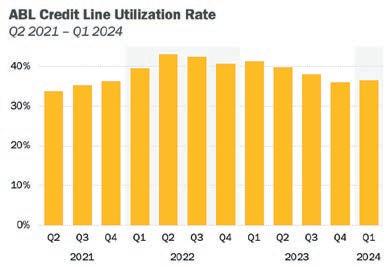
Asset-based lenders have a relatively positive but, measured, outlook for new business demand. Just over half of the respondents to the Q1 SFNet ABL Confidence Index expect demand for new business to increase over the next three months. Lenders are less optimistic around client utilization, with most expecting utilization rates to remain unchanged over the same period. Utilization rates have been flat and hovering around 37% for the past three quarters. As with the SLOOS results, asset-based lenders also cite lower merger & acquisition activity as a reason for softer demand.
Factors have a similar outlook for new business demand for the first half of 2024. About half the respondents to the latest Confidence Index expect demand to improve, while the other half expects it to hold steady. With retailers facing challenges, factors do not expect this key client industry to spur a major increase in demand in the near term.
Looking forward, two developments could lead to an uptick in demand. As interest rate cuts become more probable later in the year, lower costs will likely drive more borrowing activity. Additionally, many firms that took advantage of low rates in 2020 and 2021 will need to refinance their loans as they approach maturity in 2025 and beyond.
If these conditions that could spark increased demand materialize, the secured finance industry appears poised to respond.
Credit Supply
Lending standards remain tight but unchanged, reflecting cautious optimism among banks. Asset-based lending commitment growth has slowed, and regulatory changes are contributing to cautious capital management among lenders.
Most banks are not changing their lending standards or terms after having steadily tightened since July 2022. In the latest SLOOS, a net 16% and 20% of banks reported tighter standards for large/medium and small firms, respectively. Nearly four in five banks say that their lending standards are unchanged. Of the banks that report tighter standards, most explained their change by citing an unfavorable or uncertain economic outlook or reduced tolerance for risk. Along with muted demand, steady but tight lending standards also explain the tepid growth in C&I loans.
Focusing on asset-based lending, commitment growth has been slower in recent quarters. Total commitments were essentially flat from Q4 2023 to Q1 2024, while new originations with new clients fell by 29.7% over the same period. Though much of the slower growth in commitments stems from weaker demand, regulatory changes may also play a role as lenders manage their capital with greater caution. A similar dynamic is at play with C&I loans, where nearly half of banks explained their tightening in the SLOOS by pointing to regulatory factors. Policy changes may be creating a barrier to lending, but assetbased lenders are largely ready for new business.
At its June meeting, the Federal Open Market Committee (FOMC) announced that it would maintain the target range for the federal funds rate at 5.25 to 5.5% for the 7th meeting in a row. The FOMC also released updated rate projections, with officials now expecting just one cut in 2024. According to CME Group’s latest analysis of futures prices, markets predict a roughly two-thirds chance for at least two cuts by year-end.
Lender Profitability
Most banks report that spreads between loan rates and costs of funds did not change in the latest SLOOS. Loan spreads may not have changed much, but net interest income at FDIC-insured commercial banks and savings institutions declined by 1.7% from Q4 2023 to Q1 2024.
In its statement on the Q1 results, the FDIC continued to highlight the “resilience” of the banking industry, pointing to recovering net
income, “favorable” asset quality metrics, and “stable” liquidity. However, the FDIC also identified several challenges, including declining net interest margins and volatility in market interest rates, and observed that “deterioration” in office properties and credit card loans were risks to watch.
Portfolio Performance & Outlook for Business Conditions
Portfolio performance has deteriorated slightly in recent quarters but remains within its historical range. The charge-off rate on C&I loans at all commercial banks rose to 0.43% in Q1 2024, while the delinquency rate increased to 1.13%. Both rates are near their prepandemic levels and below their 20-year averages. Meanwhile, ABL non-accruals as a share of outstandings dipped to 0.57% in Q1 after peaking in Q4. Portfolio performance is weaker than it was a year ago, but there is not a major cause for concern. Indeed, Confidence Index scores have increased as a growing share of asset-based lenders and factors expect performance to improve. With performance returning to pre-pandemic norms, the outlook is positive, but lenders are closely monitoring portfolios for signs of stress.
The outlook for general business conditions is more mixed. Assetbased lenders have a slightly negative outlook for business conditions, while factors have a slightly positive one. Nonetheless, both outlooks are close to neutral, and most asset-based lenders and factors expect business conditions to remain the same. The secured finance industry performs well in a variety of economic conditions, but it may take a meaningful shift in business conditions to spark new demand.
Conclusion
The SFNet Market Pulse Report highlights a complex, but navigable, economic landscape. While challenges such as rising household financial stress and soft credit demand persist, there are areas of cautious optimism, particularly in the global economic outlook and stable portfolio performance. Stakeholders in the secured finance industry should remain vigilant and adaptable as they navigate these economic conditions.
This article provides a summary overview of the key findings from the SFNet Market Pulse Report, offering valuable insights for stakeholders in the secured finance and asset-based lending industries. To download the full report visit: https://www.sfnet.com/home/industry-datapublications/industry-insights-trends/market-pulse or scan code below:
The State of Asset-Based Lending in Q1 2024: A Comprehensive Analysis
BY SFNET’S DATA COMMITTEE
The first quarter of 2024 presented a complex landscape for assetbased lending (ABL) and the broader economic context. According to the SFNet Q1 2024 Asset-Based Lending and Confidence Index surveys, the ABL industry exhibited both stability and cautious optimism despite the economic headwinds.
This report, based on SFNet’s detailed findings, provides a comprehensive overview of the economic conditions, lender confidence, commitments, outstandings, and portfolio performance within the ABL sector.
Economic Context
The U.S. economy had a slow start to 2024, with a muted growth rate of 1.3% in the first quarter. Softer-than-expected consumer spending and declining business inventories were significant contributors to this modest growth. Rising debt burdens and slowing real income growth have started to pinch consumer spending, which has been a driving force in the economy over recent years. The unemployment rate edged up to 4%, with a corresponding decline in job postings, signaling a softening labor market. However, the labor market remains robust enough to prevent a collapse in consumer spending.
Progress on disinflation is promising, with the May Consumer Price Index (CPI) report showing unchanged prices, alleviating fears of renewed inflation. The Federal Reserve is widely expected to maintain its cautious stance, likely refraining from rate cuts until the fall, aiming to achieve a “soft landing” – reducing inflation without triggering a recession.
On balance, the ABL industry remains healthy and has a moderately improving outlook even though current economic conditions have limited demand for borrowing. Limited merger and acquisition activity has contributed to softer demand for ABL and looming regulatory changes have limited supply by spurring banks, especially smaller ones, to manage their capital with greater caution. Facing softer consumer demand, many retail clients are under stress, and lenders are closely monitoring portfolios. That said, there are indications that portfolio performance is turning a corner and starting to improve. While a stable ABL industry is poised to help clients meet their working capital needs, an uptick in loan demand may be needed to spark an improvement in business conditions.
Yield on Corporate Bonds and 10-Year Treasury
The spreads for corporate bond yields have tightened in recent months as yields trend downward, while underlying interest rates hold relatively steady. This indicates a cautious, but stable, financial environment for lenders and borrowers alike.
Tightening spreads for corporate bonds reflect investors’ confidence in corporate credit quality, even as they demand higher premiums for taking on risk. The stability in underlying interest rates supports the overall borrowing environment, making it feasible for businesses to plan and execute their financing strategies without the added burden of volatile interest rates.
Lender Confidence Index
Non-bank lenders showed more optimism than banks about industry conditions in the next quarter, with non-bank confidence increasing by 5.0 points to 65.8. Banks, however, saw a slight dip in overall confidence by 2.1 points to 57.0. Both groups maintain a slightly positive outlook, with non-banks having more favorable expectations for general business conditions, portfolio performance, and employee headcounts.
Banks’ expectations for new business demand and client utilization rates softened slightly, while non-bank expectations remained flat. Notably, no lenders expect demand to decrease in the next quarter. Most banks and non-banks expect utilization rates to remain the same, with a larger share of non-banks foreseeing improvements.
Commitments and Outstandings
For banks, total commitments remained essentially flat from Q4 2023 to Q1 2024, with a modest 0.2% increase. Total outstandings, however, ticked up by 1.3%. Deal activity was quiet, with new commitments with new clients falling by 36.5%. However, commitment runoff fell by 40.4%, resulting in positive net commitments.
Non-banks experienced a similar trend, with flat total commitments (-0.9% Q/Q) and a modest uptick in total outstandings (+3.2%). New commitments with new clients saw a substantial decline of 66.1%, while commitment runoff was largely unchanged. Consequently, net commitments turned negative. New outstandings also declined by 64.6%, with outstandings runoff increasing slightly, leading to negative net outstandings.
Credit Line Utilization
With modest increases in outstandings and flat commitments, the utilization rate increased for both banks and non-banks. Bank utilization rose by 0.41 percentage points to 36.2%, remaining below the long-term historical average, while non-bank utilization increased by 1.99 percentage points to 50.0%, just above average.
The increases in utilization rates for both banks and non-banks indicate a cautious, but steady, demand for credit. This trend suggests that while new business may be slower, existing clients are drawing on their available lines more frequently, possibly to manage cash flow amid economic uncertainty. Banks’ lower utilization rates compared to non-banks reflectsthe availability of other types of debt capital for larger borrowers. It also reflects bank’s generally more conservative approach and stricter credit controls, which align with their regulatory requirements and risk management strategies.
Portfolio Performance
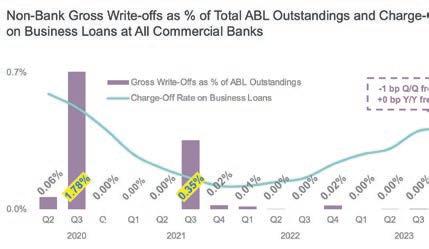
Portfolio performance remained stable for both banks and non-banks in Q1 2024. Among banks, criticized/classified loans and write-offs increased, but non-accruals declined. Non-banks reported decreased non-accruals and write-offs. As the large liquidity injection from pandemic-era stimulus dissipates, lenders
are closely monitoring portfolios for signs of stress, but overall portfolios remain healthy by historical standards.
The stability in portfolio performance highlights the resilience of ABL portfolios amidst economic fluctuations. Banks’ slight increase in criticized/classified loans and write-offs indicates some pressure points, but the decline in non-accruals suggests that problematic loans are being managed effectively. Non-banks’ decrease in non-accruals and write-offs points to strong portfolio management practices and possibly more flexible loan structures that can accommodate borrowers’ needs during economic slowdowns.
Syndicated ABL Overview
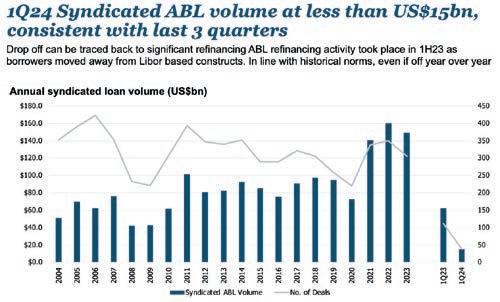
The syndicated ABL market saw less than $15 billion in volume in Q1 2024, consistent with the last three quarters. This decline can be traced back to significant ABL refinancing activity in the first half of 2023, as borrowers moved away from LIBOR-based constructs. New ABL assets totaled $2.02 billion, down 76% year-over-year, marking the lowest quarterly total on record for new money.
Average ABL undrawn pricing edged down, with drawn spreads at 200 basis points. Demand for new loan assets continues to fuel competition, keeping cash flow deal spreads stable. Outstanding ABL commitments, after reaching a record high of $353.7 billion at the end of 2023, edged down to $349.5 billion by the end of Q1 2024. Note that the pricing reflects average across the entire market sample and is not necessarily indicative of any individual transaction pricing.
The syndicated ABL market’s performance underscores the cautious stance that lenders and borrowers are taking amid economic uncertainties. The significant drop in new ABL
assets indicates a wait-and-see approach, with businesses possibly postponing new hiring until there is more clarity on the economic outlook. The stable, but competitive, pricing environment reflects lenders’ need to balance risk and return while maintaining market share.
Borrowing Base Composition
The borrowing base composition for ABL remains diversified, with receivables making up the largest share at 51.3%, followed by inventory at 40.3%. Other components include machinery and equipment (3.9%), property (1.1%), and intellectual property (0.7%).
This diversified borrowing base composition allows lenders to spread their risk across different asset types, which can provide a buffer against sector-specific downturns. The high proportion of receivables and inventory in the borrowing base reflects the typical collateral profile of ABL, which is heavily reliant on assets that can be quickly converted to cash in case of borrower default.
Non-Bank Lenders’ Performance
Non-bank lenders had a quieter quarter in terms of new commitments, which fell by 66.1%, but they managed to maintain a slight increase in outstandings. The net commitments turned negative due to higher commitment
runoff. The decline in new commitments reflects the broader trend of cautious lending amid economic uncertainties.
Despite the decline in new commitments, non-bank lenders’ ability to maintain and even increase outstandings shows their resilience and adaptability. Their more flexible lending structures and willingness to work with clients to manage existing commitments can help them maintain portfolio stability even in challenging economic conditions.
Criticized and Classified Loans
For both banks and non-banks, the levels of criticized and classified loans have shown some increases, but the overall portfolio health remains stable. Banks reported a 9.2% increase in criticized/classified loans quarter-over-quarter and a 14.5% increase year-over-year. Non-banks reported an increase in criticized/classified loans, with higher proportions of non-accruing loans compared to the previous quarter.
The increases in criticized and classified loans indicate areas of concern within the portfolios, but the stability in overall health suggests that these issues are being managed effectively. Continuous monitoring and proactive management of these loans are crucial to prevent further deterioration and to maintain portfolio quality.
Gross Write-Offs
Banks and non-banks reported changes in gross write-offs, with banks showing a significant 66.9% increase quarter-over-quarter and a 46.1% increase year-over-year. While these increases are significant statistically the actual chargeoffs remain at a low level from a historical perspective. Non-banks’ gross write-offs remained relatively flat, reflecting their effective management of distressed assets.
The increase in gross write-offs for banks highlights the challenges they face in managing distressed assets. However, the ability to absorb these write-offs without significant impact on overall portfolio performance indicates strong capital buffers and effective risk management practices.
Long-Term Outstandings vs. Monthly Commercial & Industrial (C&I) Loans
Comparing long-term outstandings with monthly C&I loans provides insight into the broader lending trends. While ABL outstandings showed modest growth, C&I loans experienced more volatility, reflecting the different dynamics in these lending segments.
The comparison between ABL and C&I loans underscores the stability of ABL as a financing option. ABL’s reliance on secured assets provides a more predictable performance for lenders, even when broader commercial lending experiences fluctuations. This stability makes ABL an attractive option for lending businesses seeking reliable financing sources.
Headcount Expectations
Lender expectations for headcount growth remained largely stable, with banks showing a slight dip and non-banks exhibiting a modest increase. Banks’ headcount expectations dipped by 4.7 points to 54.3, while non-banks’ expectations increased by 4.2 points to 62.5.
Stable headcount expectations reflect the cautious optimism within the ABL sector. Lenders are maintaining their workforce levels to ensure they can manage existing portfolios effectively while being prepared for potential increases in demand. Nonbanks’ higher expectations for headcount growth indicate their anticipation of more robust activity in the near future.
Conclusion
The asset-based lending industry in Q1 2024 faced a mixed set of issues, but lenders remain cautiously optimistic. While economic conditions and demand for borrowing were softer, lenders maintained stable portfolios and showed positive outlooks
for the future. Non-bank lenders were notably more optimistic than banks, reflecting differing perspectives within the industry. As the year progresses, the ABL sector will continue to navigate economic challenges and opportunities, supported by a resilient and adaptive approach.
The insights from the SFNet Q1 2024 report highlight the importance of continuous monitoring, proactive management, and strategic flexibility in maintaining the health and performance of ABL portfolios. As economic conditions evolve, the ability of lenders to adapt and respond to changing circumstances will be crucial in ensuring the ongoing stability and growth of the assetbased lending industry.
For details on participating in SFNet’s ABL and Factoring Surveys, please contact Aydan Savaser at asavaser@sfnet.com.
us where industry titans converge. Where partnerships are built and deals are brokered. Where the future of secured finance is shaped. Meet us in Houston, November 13-15, 2024, for SFNet’s 80th Annual Convention.
Factoring Industry Remains Resilient Amid Economic Shifts
BY SFNET’S DATA COMMITTEE
The U.S. economy wrapped up 2023 on a robust note, buoyed by resilient consumer spending and a solid labor market.
As we progress through 2024, the economic landscape reveals both challenges and opportunities for the factoring industry.
A recent webinar hosted by the Secured Finance Network (SFNet) provided valuable insights into the state of the factoring industry, as gleaned from the 2023 SFNet Annual Factoring survey. Panelists included Marc Grossman of Wells Fargo Commercial Services Group; Michael Hudgens of CIT Commercial Services, a subsidiary of First Citizens Bank; and Paul Schuldiner of Rosenthal & Rosenthal. Here, we distill the key discussions and projections shared by the expert panel.
Economic Context and Its Impact on Factoring
The U.S. labor market has shown remarkable strength, with an average of 276,000 jobs added monthly through March 2024. However, signs of consumer strain are emerging, marked by a low savings rate and rising credit card delinquency rates. Inflation remains a pressing concern, hovering above the Federal Reserve’s 2% target, particularly in the service sector. Although the Fed is anticipated to cut interest rates in 2024, the number of cuts is likely to be fewer than previously expected and may occur later in the year.
In this economic environment, factors report subdued demand as consumer retail spending remains soft, and retailers manage their inventories cautiously. The trucking industry has also faced challenges due to weaker spending on durable goods, limiting factoring demand from transportation clients. Despite these hurdles, overall portfolio performance remains solid, with some optimism for improved demand in the latter half of 2024.
factors are receiving from clients, particularly in the retail sector, where there is a cautious yet positive outlook for 2024.
Factoring Volume and Client Dynamics
Factoring volume decreased by 2.6% year-over-year, with U.S. volume dropping by 1.6% and international volume by a substantial 28.2%. The apparel and textiles industry saw an increase in its share of factoring volume, comprising nearly half of the total. In contrast, the number of factoring clients declined by 5.2%, with both U.S. and international clients showing reductions.
It was noted that the decline in the number of factoring clients is largely due to industry consolidation and a shift from traditional factoring to asset-based lending structures among larger clients.
Factoring Sentiment and Performance Metrics
Overall factoring sentiment, as measured by the average of four sentiment indices, rose to 64.8, indicating a slightly optimistic outlook for the industry. Expectations for business conditions and portfolio performance improved significantly, while new business demand and employee headcounts remained relatively unchanged.
One panelist commented that it’s encouraging to see improved expectations for business conditions and portfolio performance. This optimism is reflective of the feedback
Sector-Specific Trends
The retail sector experienced a notable downturn, especially in furniture and home furnishings, as consumer spending shifted towards experiences like travel and dining. This shift has impacted the trucking and transportation sectors as well, reducing demand for related factoring services. Conversely, the apparel and textiles sector has shown resilience, maintaining a significant share of the factoring volume.
According to the panel, retailers are increasingly optimistic about the latter part of 2024. This optimism is driven by expectations of interest rate cuts and a potential uptick in consumer spending.
Regional Insights
The Northeast continues to dominate U.S. factoring volume, comprising 57% in the second half of 2023, while the Southeast holds the highest share of clients at 26%. This regional distribution underscores the concentration of factoring activity in certain economic hubs, reflective of broader economic patterns and industry concentrations.
Notification vs. Non-Notification Factoring
Non-notification factoring accounted for over half of all volume in H2 2023, reflecting a shift from traditional notification factoring. This trend is attributed to larger clients preferring the confidentiality of non-notification arrangements and the rise of hybrid financing structures.
Financial Performance and Outlook
Revenues in the factoring industry decreased by 4.4% from H1 to H2 2023, with net interest revenue increasing its share of total revenue. Direct expenses also saw a slight dip, but pre-tax income as a share of volume declined. Average loan turnover and days sales outstanding both decreased, indicating more efficient collection cycles.
The efficiency in loan turnover and collection cycles is a positive sign, suggesting that factors and their clients are adapting well to the current economic conditions.
Conclusion
The factoring industry faces a complex landscape as it navigates the economic shifts of 2024. While challenges persist, particularly in consumer retail spending and the trucking sector, there is cautious optimism for improvement later in the year. Factors continue to adapt, leveraging efficiencies and exploring new financing structures to meet evolving client needs.
The insights from SFNet’s 2023 year-end survey and the expert panel discussion highlight the industry’s resilience and strategic adaptability. As the year progresses, the factoring industry will play a crucial role in supporting businesses through economic fluctuations, demonstrating its enduring value in the financial ecosystem.
For details on participating in SFNet’s ABL and Factoring Surveys, please contact Aydan Savaser at asavaser@sfnet.com.
Knowledge Is Power
THE INDUSTRY CHANGES FAST. THE TSL EXPRESS SECURED FINANCE DEAL TABLE HELPS YOU KEEP PACE
The Secured Finance Deal Table offers:
Comprehensive, interactive information that is fully sortable and downloadable
Detailed ABL, factoring and other senior secured transaction data on over 3400 deals, updated daily
Specifics including deal terms, structure, borrowers, industry, interest rates, contact information, and more
Join the ranks of industry leaders who trust the TSL Express Secured Finance Deal Table to navigate the complexities of secured finance.
Public Data in Cross-Border Lending
By Laura Jakubowski
Data and precedent play a key role in your ability to structure, negotiate and document lending transactions. In cross-border deals, access to this data is especially essential and can be more challenging to locate. Laura Jakubowski of Goldberg Kohn provides the information you need to arm yourself with vital information.
The ability to leverage key precedent and transaction data is essential to structuring, negotiating and documenting lending transactions. This is particularly true in the world of cross-border assetbased financing, where new transaction structures and jurisdictional arrangements continue to emerge as borrowers expand their operations to access new geographical markets. For a cross-border asset-based loan, it is essential to understand the nuances of the markets in which the company is operating, both from a practical and a legal perspective. This understanding is key both for lenders who are considering the overall lending landscape when initially considering a transaction, as well as for lawyers who are documenting a cross-border loan.
For cross-border transactions involving U.S. parent companies, lenders have the great advantage of access to a wealth of public information through filings made with the Securities and Exchange Commission (SEC). In most cases, such public companies that close new financing facilities or make significant amendments to existing facilities are required by U.S. law to disclose details about the transactions, which usually includes filing full copies of key credit documents. The filed credit documents are available to the public through the SEC’s online database, EDGAR (Electronic Data Gathering, Analysis and Retrieval), which includes access to public company filings dating back to 1994.
A review of credit agreements that are publicly available through EDGAR can serve various key purposes for crossborder ABL lenders and the lawyers who represent them in these transactions, including the following:
Identification of key jurisdictions: Data from public documents can show the jurisdictions that are most frequently part of a cross-border deal structure, how this has evolved over time, and whether any recent precedent exists for certain jurisdictions that are less frequently included in cross-border loans. It is often informative to investigate lending structures in certain countries, and in particular whether such entities are designated as borrowers or guarantors, and/or whether availability under the facility is predicated on such entity’s assets.
Identification of key currencies: There also may be operational and/or legal challenges posed by lending in a particular currency. Data from cross-border credit agreements is helpful in identifying the currencies that are most frequently used and ostensibly easier to administer and, for those that are less frequently used, whether there is any recent precedent for that currency and how the applicable provisions are drafted.
Borrowing base structures: It is instructive to review any public precedent that exists for a particular jurisdiction to determine exactly how the borrowing base is structured. Is
the borrowing base fully consolidated across all jurisdictions, do the entities in each country have a separate borrowing base, or is the borrowing base consolidated for entities in some countries and not in others? There are often legal and practical limitations behind how the borrowing base is structured that are common across different transactions involving the same or a similar mix of jurisdictions, so reviewing borrowing base structures from precedent transactions can help to identify key structuring issues.
Goldberg Kohn
Type of assets: Reviewing borrowing base definitions from public documents can be helpful to determine what type of collateral in particular countries most often forms part of the borrowing base. While this commonly includes accounts receivable, legal and practical limitations in a given country may limit the inclusion of other assets in the borrowing base, including inventory, equipment, real estate and other types of assets.
Potential reserves: A key feature of asset-based lending is the ability to address potential claims that may take priority over a secured loan by creating a reserve against the company’s borrowing availability. While some loan agreements have a generic definition of reserves that relies on the administrative agent’s discretion to impose reserves, many agreements list specific reserves on a country-by-country basis. Reviewing these specific lists can help provide a lender with a sense of what types of priority claims may require further diligence, or may otherwise need to be taken into account in a particular jurisdiction. In addition to the public data on this topic, SFNet has developed a detailed resource that provides helpful background to identify and structure around potential priority claims in specific jurisdictions. The resource is described in more detail below.
Guarantee limitations: A review of public credit agreements and other key documents can also provide lenders an outline of specific legal limitations that may be required when dealing with a guarantor that is located in a particular country. The extent to which a lender can rely on the enforceability of a guarantee is one of the most challenging areas in documenting any lending transaction, and it is important to understand the legal limitations on
LAURA JAKUBOWSKI
any guarantees arising from the laws of the guarantor’s jurisdiction. These jurisdiction-specific limitations are often detailed in the cross-guaranty language in the applicable credit agreement.
While much of the key information described above is readily available in public credit agreements for U.S. public companies that have cross-border credit facilities, the process of searching for and focusing in on exactly the right information is often challenging and time-consuming. To assist lenders with this exercise to leverage precedent and answer basic deal structuring questions, SFNet has created two curated resources that can be helpful in locating the right data. These resources include (1) a database with a summary of key documentation points for public precedent cross-border ABL transactions 1, and (2) a database with high level summaries of potential priority claims in specific jurisdictions provided by counsel experienced in the relevant jurisdictions 2 These resources are available on the SFNet International Finance Committee’s website at [www.sfnet.com/home/ industry-data-publications/ industry-insights-trends/ abl-cross-border-reserveand-deal-data]. The databases provide a helpful overview of key considerations when structuring a cross-border transaction, as well as a source of public precedent documents that may be helpful in drafting and negotiating documentation for cross-border credit facilities. SFNet’s deal database includes a comprehensive list of public credit agreements that fit the cross-border ABL structure going back to 2011 – a historical perspective that provides an interesting data snapshot of how the cross-border ABL lending market has changed over time. The database can
be used to observe market trends across multiple metrics, including the frequency of certain jurisdictions and currencies, as well as how borrowing base, guarantee and collateral structures have changed in response to market pressures and changes in local law.
The data that can be gleaned from public filings and other similar sources is critical to helping lenders make informed decisions about structuring cross-border transactions. It is particularly valuable at the outset of a transaction and when dealing with a new jurisdiction with which the lender may not be familiar. Being aware of cross-border precedent and potential deal structuring pitfalls not only helps lenders protect against undue legal and credit risk, but also assists in setting expectations early on with clients about potential challenges to deal structures – and sets the stage for working together to come up with creative solutions to solve them.
To assist lenders with this exercise to leverage precedent and answer basic deal structuring questions, SFNet has created two curated resources that can be helpful in locating the right data.
Laura Jakubowski is a knowledge management attorney with Goldberg Kohn. She leads the firm’s knowledge and data management strategy, and provides legal, technical, market and practical expertise for the firm’s Commercial Finance and Bankruptcy practices.
Jakubowski rejoined Goldberg Kohn in her current position in August 2021. Prior to that, she was an assistant general counsel at a large financial institution where she focused on middle market lending and digital, data use and privacy law matters for its commercial banking group. Previously she was a commercial finance associate at Goldberg Kohn.
1. The database includes the following documentation point for each transactions: (1) the name of the filing entity (usually also the U.S. borrower), (2) the name of the administrative agent, (3) the closing date of the facility, (4) the amount of the facility (including any separate tranches for different borrowers/ currencies), (5) the jurisdictions where the borrowers are organized, (6) the jurisdictions where any other collateral is located, (7) the types of assets included in the borrowing base (8) any country-specific availability reserves, (9) detail on the structure of the borrowing base, (10) any country-specific guarantee limitations, (11) the currencies that are available for loan advances and (12) whether the facility is provided by bank or non-bank lenders. A link to the relevant agreement on the SEC website is also provided.
2. The database includes information for Australia, Belgium, Canada, Germany, Mexico, the Netherlands and the United Kingdom and covers the following information (1) type of potential priority claim, (2) scope of the claim and any conditions to exercising, (3) detail on how the amount of the claim is calculated, (4) how the claim is treated in the context of the borrowing base and (5) whether there are any workarounds other than an availability reserve.
Print Advertising with The Secured Lender
TSL print
The industry’s most trusted resource for credible news published for over 30 years, with over 6000 readers per issue, SFNet’s The Secured Lender has an audience that is engaged, refers to the magazine often and 47% of respondents to a recent survey have taken action as a result of reading advertisements in the publication. The power of buzz is still alive in
7 out of 10 B2B readers say they spend more time with industry related print publications than with mainstream business or consumer print magazines, according to the Association of Business Information & Media Companies.
Embracing the Future: Tech & AI Trends in Secured Finance
By SFNet’s Technology and Innovation Task Force
The secured finance industry is undergoing a transformative phase driven by advancements in technology and artificial intelligence (AI). Recognizing the need to stay ahead of these trends, the Secured Finance Network (SFNet) has established a Technology and Innovation Task Force. This new committee aims to leverage best practices in lending data, analytics, and technology while raising the level of capability of the industry over the near and long term.
This article delves into the key findings of the 2024 SFNet Tech & AI Survey, exploring the industry’s engagement with tech and AI, the challenges faced, and the strategic direction set by the new committee.
The Creation of the SFNet Technology and Innovation Task Force
“The SFNet Technology and Innovation Task Force was created to address the rapid changes in technology and the rise of AI, which are significantly impacting secured lending. The committee’s mandate includes identifying and researching available software and technologies, their capabilities, costs, and benefits for the secured lending community. Additionally, the committee focuses on AI risks and mitigation efforts, as well as cybersecurity best practices.” said Task Force chair Ian Fredericks of Hilco Global.
Growth Opportunities and Challenges
Large financial institutions have been at the forefront of adopting lending technology, data aggregation, and advanced analytics. However, they face challenges, including internal resistance to change and the complexity of implementing new technologies. For smaller community banks, the manual intensive nature of secured lending and factoring has been a major obstacle. The committee aims to leverage technology and AI tools to make processes like underwriting, collateral monitoring, asset valuation, and fraud detection cost effective, reliable and scalable for both large and small institutions, regulated and unregulated.
Surveying the Community
To understand the current landscape, the committee will conduct periodic surveys among SFNet members. These surveys gather data on the technologies being used, the benefits and burdens associated with them, and areas of focus for the task force. The survey results will guide the task force’s plans for webinars, educational materials, and conference events, ensuring they address the community’s needs effectively.
Survey Overview
The initial SFNet Tech & AI Survey provides valuable insights into the secured finance industry’s approach to technology and AI. The survey covers various aspects, including the attention paid to tech and AI trends, the frequency of tasks that could be automated, the practical use cases of tech and AI, the current use of AI tools, the expected impact of AI, and the challenges in implementing new tech and AI solutions. Additionally, it examines the type of organizations and job functions of the respondents, offering a comprehensive view of the industry’s landscape.
Respondent Demographics
Understanding the demographics of the respondents provides context for the survey results. The majority of respondents (65.12%) come from organizations with assets under $50 billion. In terms of industry experience, 64.41% have over 20 years of experience, indicating a seasoned group of professionals. The types of organizations represented in the survey include independent ABLs (27.12%), independent factoring firms (16.95%), and large-to-small bank-affiliated ABLs and factors (33.89%). Job functions of the respondents vary, with executives (31.03%) and business heads (18.97%) being the most common roles.
The survey reveals that the secured finance industry is paying significant attention to technological trends. When asked about their attention to tech trends on a scale of 1 to 10, where
1 is no attention and 10 is a high level of attention, 30% of respondents rated their attention at 10. The weighted average score was 8.05, indicating a high level of engagement with tech trends overall. A substantial portion of respondents, 18.33%, rated their attention at both 8 and 9, further emphasizing the industry’s focus on technology.
AI Trends
Similarly, the survey shows that AI trends are also capturing the industry’s attention. On a scale of 1 to 10, 25% of respondents rated their attention to AI trends at both 8 and 10, with a weighted average score of 7.5. An additional 11.67% rated their attention at 7, highlighting a strong interest in AI.
Frequency of Tasks That Could Be Automated
Automation is a key area of focus for the secured finance industry. The survey reveals that 40% of respondents frequently work on tasks or projects that could be automated, while 58.33% encounter such tasks occasionally. Only 1.67% have never worked on tasks that could be automated. This indicates a high potential for automation within the industry.
Practical Use Cases of Tech and AI Tech Use Cases
The survey identifies several practical use cases for technology in the secured finance industry. The most significant use case is loan servicing process automation, with 55% of respondents recognizing its potential. Other notable use cases include spreading financials and financial analysis (43.33%) and borrowing base reporting (43.33%).
AI Use Cases
AI also presents numerous practical applications in secured finance. Fraud detection is seen as the most practical use case, with 50% of respondents highlighting its importance. Other significant use cases include marketing and prospecting (40%) and collateral monitoring (40%).
Current Use of AI Tools
Despite the potential benefits, the adoption of AI tools in the secured finance industry is varied. According to the survey, 50.85% of respondents currently do not use any AI tools. However, 44.07% use generative AI tools like ChatGPT, and 13.56% use AI chatbots. Other AI tools, such as AI notetakers and AI predictive monitoring tools, are used by a smaller percentage of respondents (11.86% and 3.39%, respectively).
Expected Impact of AI
The secured finance industry has high expectations for the impact of AI. The survey reveals that 30% of respondents believe AI will have a significant impact on the industry within the next five years, rating this impact as a 10 on a scale of 1 to 10. An additional 25% rated the impact at 8, and 18.33% rated it at 7, indicating a strong expectation of AI’s influence.
Challenges in Implementing Tech and AI Solutions
Tech Implementation Challenges
The survey identifies several challenges in implementing tech solutions within the secured finance industry. Cost is seen as the biggest challenge, with 38.33% of respondents highlighting it as a significant barrier. Other notable challenges include the effectiveness of the solutions (18.33%) and data privacy concerns (11.67%).
AI Implementation Challenges
When it comes to AI, data privacy is the biggest challenge, with 25% of respondents identifying it as a major concern. The effectiveness of AI solutions (18.33%) and data quality (13.33%) are also significant challenges.
Webinar and Conference Topics of Interest
The survey also explores the topics that respondents would like to see covered in webinars and conferences. The most popular topic is specific examples of how tech and AI solutions are being used in the secured finance industry, with 85% of respondents expressing interest. Other popular topics include an overview of major recent tech and AI breakthroughs (75%) and the challenges and limitations of new tech and AI solutions (60%).
Bank Responses:
Specific Examples of Tech/AI Solutions: 85%
Recent Tech/AI Breakthroughs: 75%
Challenges and Limitations: 60%
Nonbank Responses:
Specific Examples of Tech/AI Solutions: 87.18%
Recent Tech/AI Breakthroughs: 66.67%
Challenges and Limitations: 61.54%
Budget and AI Tool Purchase Intentions
The survey reveals strong intentions to invest in AI tools tailored to the needs of the secured finance industry. A significant 89.66% of respondents indicated that they would purchase AI tools if they were available and tailored specifically to ABL and factoring. Despite this interest, only 39.66% of respondents have set aside a budget for AI technology, suggesting that there is room for growth in terms of financial commitment to AI.
Conclusion
The 2024 SFNet Tech & AI Survey highlights the significant attention that asset-based lenders and factors are paying to technology and AI trends. While cost and data privacy remain substantial challenges, the industry is optimistic about the potential impact of AI in areas like fraud detection, marketing, and collateral monitoring. With a strong interest in practical examples and breakthroughs in tech and AI, the secured finance industry is poised to embrace innovative solutions to enhance efficiency and effectiveness.
The survey results underscore the importance of continued investment in tech and AI, as well as the need for educational resources to help industry professionals navigate the challenges and opportunities presented by these technologies. As the secured finance industry evolves, staying abreast of tech and AI trends will be crucial for maintaining a competitive edge and driving future growth.
The SFNet Tech and Innovation Task Force plays a pivotal role in this landscape by focusing on identifying and researching technologies that can benefit the industry. By addressing the challenges of implementing new technologies and leveraging the opportunities presented by AI, the committee aims to foster a more efficient and innovative secured finance industry.
In summary, the secured finance industry is on the brink of a technological revolution, with significant potential for automation and AI-driven solutions. By addressing the challenges and leveraging the opportunities presented by tech and AI, asset-based lenders and factors can enhance their operations and deliver greater value to their clients. The SFNet Tech and Innovation Task Force will be instrumental in guiding the industry through this transformative period, ensuring that members benefit from the latest advancements while managing risks effectively.
Among other recommendations, the Technology and Innovation Task Force believes that AI should be used as a tool to help make industry professionals more productive. To illustrate this, the Task Force used ChatGPT to generate a first draft of this article. From there, Task Force members provided input into the final version of this article, substantially reducing the time from first to final draft. This represents an effective use of AI.
Succession: ABL Industry Needs a Plan
BY CHARLIE PERER
The ABL industry is struggling with succession challenges. Founders are synonymous with their firms, yet many lack succession plans despite good health and changing industry dynamics. The generational shift demands innovation and client-centric approaches. Planning and communication are crucial. Unlike TV drama, ABL leaders must ensure smooth transitions to secure their legacies and firms’ futures amidst industry upheaval.
Succession is an American satirical comedydrama television series centered around the Roy family, the owners of global media and entertainment conglomerate Waystar RoyCo. The premise is that the patriarch, Log Roy, has experienced a decline in health and his four children begin to prepare for a future without their father and vie for prominence within the company. Apply this to the ABL industry and many of the leading bank and non-bank groups are synonymous with their founder(s) who have yet to set a succession plan. In many cases it’s hard to separate the two. It’s easy to understand as, for many of these entrepreneurs, lending is and has been their life, and their business and personal relationships are intertwined. Thanks to modern medicine, many are also in good health so it’s understandable to think they might work for a while. Ironically, this has potential to create a conflict as the next generation gets impatient. There is a generational change happening now that encompasses everything from where employees work, how they work and technology change, among other things. At some point though this industry is going to need a succession plan as the industry is going through a sea of change.
Succession dynamics will always remain, however, the difference now is that there is much more capital and control from sponsors and asset managers, etc. that will cause the new management to be under more pressure. They will have to stick to basics or they will fail. Change is never easy and often comes at times of significant industry and technological change like we are dealing with now. Many of today’s leaders took over the reigns 20 to 30 plus years ago during a period of immense change, which included the formation of the first wave of sophisticated ABL platforms such as Foothill, GE, CIT and Fleet, among many others. As a result, today’s leaders came of age in a different time, lending climate and even culture. What also should be said is that the historical view of the borrower as a debtor is being re-imagined in today’s climate. This is due to the multitude of options available today and also more layers involved, ie investment banks, FAs, consultants, etc. to actually reach the client. We are entering a different lending climate where the customer experience and process matter more than ever as the borrower’s options are greater than ever.
The next management change that takes place is going to usher a new era of product innovation (already happening), customer experience and workforce development. There is also occasionally a disconnect between how things are done today and recognizing some of the change management that a new generation plans to implement. This will include both internal changes with employees (i.e. work/life balance, telecommuting, etc.) and externally with clients. Handing over the reins to the next generation of management was a significant step at many legacy institutions 20-plus years ago in ensuring continuity and growth within the organization. It involved identifying and grooming talented individuals, providing them with mentorship and opportunities for growth, and gradually delegating responsibilities to them as they demonstrate readiness. Effective communication, support, and a clear succession plan were key elements in the process, ensuring a smooth transition and maintaining organizational effectiveness. Creating and enacting this plan is a multi-year and often times challenging endeavor
as it does involve picking certain people over others, among other things.
The challenge is severalfold, with the first one being that there are a number of really talented executives out there who are patiently and, in some cases, impatiently waiting to get their chance to run a group. The next is generational divide as the lending framework has changed considerably with everything from tech to the advent of EV ABL lending, among other things. The pace is faster, the options have increased and any firm of size needs a real bench of talent. Another factor, similar to Succession, is to plan ahead and communicate it. We are now starting to see just this with recent announcements from both CIBC and others to start to the lay the groundwork for the future. The latest examples set a good precedent for how to plan internally and also to the market at large.
CHARLIE PERER
SG Credit Partners
The end of the Succession series was equally anticipated as that of The Sopranos and did not disappoint. The patriarch (spoiler alert), of course, failed to plan his succession leading to a boardroom showdown between and among the four siblings with none becoming CEO. In the end, an outsider was picked to lead and each of children went their separate ways. TV always makes for great drama, but in the case of the ABL industry we are going to see less dramatic versions of Succession play out over the next decade. Let’s hope the leaders of the ABL industry start thinking through their ultimate succession plans so we leave the drama to the TV series. Unlike the TV series, we should expect to see a much more thoughtful transition in the ABL industry where TV ratings aren’t at stake, but rather the legacy of retiring executives and the future success of the platforms they helped to build.
Charlie Perer is the co-founder and head of originations of SG Credit Partners, Inc. (SGCP). In 2018, Perer and Marc Cole led the spin out of Super G Capital’s cash flow, technology, and special situations division to form SGCP.
Prior to Super G, he co-founded Intermix Capital Partners, LLC, an investment and advisory firm focused on providing capital to small-to-medium sized businesses. At Intermix, Perer spent significant time sourcing and executing transactions and building relationships within the branded consumer, specialty finance and business services industries. Perer began his career at Oppenheimer & Co. (acquired by CIBC World Markets) where he was a member of the Media Investment Banking Group. He graduated Cum Laude from Tulane University. He can be reached at charlie@sgcreditpartners.com.
Sponsor-backed deals have gained traction due to their unique advantages and flexibility. But what exactly are they, and why are they sometimes considered superior to traditional bank loans in many scenarios?
BY TOM SISKA
Sponsor-Backed Deals Can Be a
for Small to Middle-Market
Businesses in Need of Capital
The borrower was a small startup on the cusp of landing its largest customer ever. It needed short-term capital to carry it through until the deal could be closed.
The bank said no. There wasn’t enough collateral to cover the amount of the loan. The private equity firm that was an early investor didn’t want to commit long-term equity to solve a shortterm need, and neither did the startup’s executives, for that matter, since additional equity would dilute their stake.
So, the PE investors came up with a new idea: Write a short-term note to advance the funds needed to bring in the inventory to service an expected surge of new, large orders. Once the inventory arrived at the company’s warehouse, the lender had the collateral to repay the PE firm. The borrower landed the business, the lender increased the loan to what was now a solid borrower, and the PE firm cheered as the company beat projections. Everyone won.
That’s an example of how an asset-based lender and private equity sponsor can work together to contribute to a company’s success when the capital need doesn’t neatly qualify for an asset-based loan or an equity investment.
Bank loans have traditionally been a go-to resource for many businesses, but those options have narrowed in recent years. The approval rate of small business loans in the U S. by big banks fell from 20% in 2019 to 13% in 2023. Small banks tightened the screws even further, dropping approval rates from 50% to 20% during the same period.
An increasingly popular financial alternative for small to middlemarket businesses, in particular, is sponsor-backed deals. This means of financing has gained traction due to its unique advantages and flexibility. But what exactly is it, and why is it considered superior to traditional bank loans in many scenarios?
Understanding Sponsor-Backed Deals
In a sponsor-backed deal, private equity firms or other financial sponsors provide funding to a company by investing their own capital or raising funds from investors to support the company’s financial needs. Unlike bank loans, which are purely debt financing, sponsorbacked deals can combine equity and debt, aligning the interests of the sponsor with those of the company.
In a typical sponsor-backed deal, a private equity firm identifies a promising company and provides capital in exchange for equity ownership or a combination of equity and debt. This strategy allows the sponsor to have a say in the company’s strategic decisions to increase the likelihood that the investment will pay off. Deals can be structured in various ways, including buyouts, growth capital investments, or recapitalizations.
Sponsor-backed deals offer more flexibility than traditional bank loans. Banks often impose stringent repayment schedules and covenants, restricting a company’s operational freedom. In contrast, sponsors have the freedom to tailor their investment terms to suit the needs of the borrowing company, providing a more adaptable financing solution. Equity investments don’t require repayment; debt
components can usually be tailored to the company’s cash flow situation.
Expertise dividend
Sponsors also bring more than just capital to the table. They often have extensive industry experience and networks that can help the company achieve its goals. This guidance can be invaluable for companies looking to expand, innovate, or navigate complex market conditions.
Equity involvement gives sponsors a vested interest in the company’s success. This alignment creates a better environment for collaboration and decision-making since both parties work toward a common goal. In contrast, bank loans are purely transactional, with the bank caring only about loan repayment and interest.
Sponsors can also provide access to additional resources, such as operational expertise, market insights, and potential partnerships. Specialized PE firms can orchestrate partnerships between their portfolio companies to support those looking to scale rapidly or enter new markets.
Sponsor-backed deals aren’t appropriate for every situation or company. Some PE firms are more interested in recouping their investment than fostering the growth of their portfolio companies. Any business considering a sponsor-backed deal should check the reputation of the PE firm by speaking to portfolio companies or simply searching the internet.
Despite the risks, sponsor-backed deals can be a compelling alternative to traditional bank loans. By aligning the interests of the sponsor and the company, these deals foster a collaborative approach to growth and success.
Tom Siska is senior vice president, Commercial Finance, at eCapital. His impressive career includes transformative successes, solidifying his stature in the financial sector. Notably, he drove impactful sales & marketing strategies at Sterling Commercial Credit LLC, culminating in a gamechanging acquisition. At Grasshopper Bank NA, he played a pivotal role in establishing a thriving commercial and asset-based lending group and his skill in integrating and overseeing acquisitions at North Mill Capital underlined his strategic acumen. His talent for nurturing winning teams and delivering transformative outcomes has yielded an impressive $100MM in stakeholder value across diverse startup and turnaround ventures.
TOM SISKA eCapital
Evolving Strategies in Business Development for Secured Finance
BY MICHELE OCEJO
In a rapidly shifting financial landscape, the Secured Finance Network’s recent webinar offered a deep dive into effective business development strategies within the secured finance sector.
Moderated by James Kravitz, SFNet’s business development director, the session featured prominent industry experts Lance Rosenthal, executive vice president of business development at RelPro; Jack Penzi, director of originations at Great Rock Capital; and Mitch Sterling, chief client development and relationship officer at Blank Rome. Together, they explored the critical elements that drive growth and success in secured finance.
Core Strategies in Business Development
The discussion opened with an emphasis on the essential qualities that define a successful business development professional. Lance Rosenthal highlighted the importance of genuine relationship-building, stating, “It’s about creating those relationships. If someone doesn’t feel comfortable, there is not going to be anything further than that.” This insight underscores the shift from transactional business interactions to sustained, trust-based partnerships.
Jack Penzi discussed the emotional resilience required in the field, noting, “Business development is an emotional rollercoaster. The best BDOs stay even-keeled, never getting too high or too low.” His perspective sheds light on the psychological endurance needed to navigate the frequent highs and lows of securing and managing deals.
Mitch Sterling added a unique viewpoint from the legal sector, emphasizing the significance of internal networking within organizations. He remarked, “Internal relationship building is almost as important as external relationship building,” highlighting the comprehensive approach needed for effective business development across various sectors.
Innovative Tools and Technological Advances
The conversation transitioned to the role of technology in modern business development. The panelists shared their experiences with different tools that have enhanced their capabilities. Rosenthal praised sales intelligence platforms for their ability to provide detailed insights into prospects, enhancing the preparation and personalization of pitches.
Penzi underscored the value of face-to-face interactions, even in an increasingly digital world. He advocated for the effectiveness of traditional networking methods, such as events and personal meetings, which continue to play a crucial role in building substantial relationships.
Sterling pointed to the increasing relevance of content creation in the legal field, where providing thought leadership through articles, webinars, and presentations has become a key strategy for engaging clients and showcasing expertise.
Adjusting to the New Normal
The impact of the COVID-19 pandemic on business practices was a significant topic of discussion. The panelists reflected on how the pandemic has accelerated the adoption of digital tools. Rosenthal noted the increased reliance on mobile communications, stating, “People are picking up their cell phones more now than ever, even in the business world.” This shift has led to a reevaluation of traditional communication strategies and the adoption of more flexible, responsive approaches to client engagement.
Strategic Relationship Building and Networking
Building on the theme of relationships, the experts discussed various approaches to nurturing connections both within and outside one’s organization. They shared strategies ranging from hosting small, targeted events to leveraging larger industry conferences to expand their network and influence.
Challenges and Opportunities
As the session progressed, the panelists addressed specific challenges they face in the industry, from increasing competition to the complexities of cross-sector collaboration. They also explored opportunities arising from these challenges, such as the potential for innovation and the development of new market niches.
The webinar provided a comprehensive overview of the strategies that today’s business development professionals employ in the secured finance industry. The insights shared by Rosenthal, Penzi, and Sterling highlighted the evolving nature of business development, which increasingly relies on a blend of traditional relationship-building techniques and innovative uses of technology.
This detailed exploration not only offers practical advice for professionals within the secured finance sector but also serves as a reflection on the dynamic nature of business development in any field. As these professionals continue to adapt and thrive, their experiences provide valuable lessons and a roadmap for success in an ever-changing economic landscape.
Michele Ocejo is SFNet director of communications and editor-in-chief of The Secured Lender.
THE ANATOMY OF
A DEAL
Unveiling Successful Collaboration in Construction Financing BY ANDREW COONEY
Altriarch details a recent transaction with a construction factoring company and how collaboration is essential to success.
Navigating the landscape of the construction factoring industry involves a distinct set of challenges, particularly in verifying project completion milestones to facilitate financial transactions seamlessly. Unlike conventional industries that are characterized by tangible products or singular service deliverables, construction projects unfold in incremental phases, often involving multiple parties concurrently. This fragmented process poses a formidable challenge for factoring institutions that focus on the construction industry and demands precise verification of the project completion status prior to disbursing funds.
According to Danielle Brown, managing partner and co-CEO of Altriarch Commercial Finance (“the lender” or “Altriarch”), the concept of project verification emphasizes the imperative nature of creating a sealed ecosystem for managing risk, which is proprietary to each construction factoring institution. Brown adds that the key to success is establishing quality assurance protocols to mitigate project delays caused by miscommunications, work quality expectations, material inaccuracies, supply chain disruptions or labor shortages.
The anatomy of a deal can certainly be complex, requiring multiple institutions and subject-matter experts to facilitate various components of the transaction and satisfy all parties involved. That said, collaboration is essential, with lenders, borrowers, the borrowers’ clients and legal experts coming together to intimately understand the deal and find a solution.
The Power of Strategic Partnerships and Operational Precision
Altriarch recently facilitated and closed a $15-million funding arrangement for a Tennessee-based construction factoring company (“the borrower”). The borrower provides services ranging from receivables financing to material purchase programs for contractors nationwide. The borrower, with over 25 years of experience in construction financing and a deep roster of in-house industry experts, has built an operational
framework around efficient underwriting processes, which includes on-site decision-makers, to enable expedited funding within days. Part of this operational framework includes capabilities that ensure financial control and due diligence at the underlying debtor level. With a cash control system via a lockbox account and daily sweeps, financial transparency is a key focus. In addition, the borrower sets verification limits and maintains detailed client approval records, resulting in sound invoice and payment verification procedures for optimal financial health and risk management.
In early 2023, the borrower began seeking improved funding structures to replace its senior line with a large regional bank, as well as its outstanding mezzanine facility with an investment advisory firm. Altriarch played a pivotal role in restructuring the borrower’s outstanding debt and ultimately closed on a $15 million senior secured revolving credit facility. Through detailed underwriting, which encompassed assessing management strengths, analyzing client portfolios, and ensuring lien compliance efficiency, Altriarch was comfortable with engaging in a long-term partnership with the borrower.
While in the final stages of the underwriting and legal process, the borrower had an opportunity to close on a factoring line with a mechanical contractor located on the West Coast, but faced funding constraints since the new facility with Altriarch was not yet in place. Given Altriarch’s commitment to a long-term partnership, the team did not want the borrower to miss out on the deal. After co-underwriting the deal with the borrower, Altriarch decided to participate in the facility and provide $2 million in capital alongside the borrower. Altriarch’s capital enabled the borrower to secure the new client and close on the facility. Subsequently, post-initial funding alignment, the borrower strategically transitioned its portfolio to the new facility over several months, fueling seamless client transitions. The partnership’s success was further supported by attorney specialists who provided legal insights, optimized debt structures and ensured compliance measures were met throughout the entirety of the funding processes.
This collaborative effort, emphasizing lender partnerships, client integration, and portfolio expansion, underscores the borrower’s dedication to operational excellence and enduring success. The successful conversion was made possible through cohesive collaboration among multiple stakeholders
ANDREW COONEY Altriarch
who were able to garner a deep understanding of the intended results.
Driving Innovation and Sustainable Growth in Construction Financing
Altriarch recognizes the ways in which this borrower sets itself apart in the world of construction financing. By prioritizing customized financial offerings and meticulous risk management practices, the borrower excels in delivering tailored solutions to its clients. Brown went on to say:
“By conducting comprehensive credit evaluations of debtors through Experian reports and detailed Project Information Sheets, the borrower ensures a robust risk management framework through a strategic partnership with a third-party that streamlines lien compliance procedures, ensuring prompt payment upon project completion notification.”
As the partnership evolves, Altriarch continues to support the borrower’s expansion, demonstrating a shared vision for innovation and industry leadership in construction factoring solutions.
In a strategic move towards sustained innovation, the borrower is collaborating with Altriarch to increase the current facility from $15 million to $25 million, as the borrower is seeing increased demand in supply chain financing opportunities.
Andrew Cooney joined Altriarch in 2023 as a senior associate on the Private Credit Investment team, bringing over 8 years of experience in the investment management industry. In his current role, he focuses on deal sourcing and investment due diligence. He also helps manage the current Altriarch investment portfolio from a compliance, monitoring, and performance standpoint.
Prior to joining Altriarch, Cooney began his career as a portfolio management associate with Morgan Stanley Private Wealth Management. Following his time at Morgan Stanley, he joined Barings as a client portfolio manager in the Private Equity / Real Assets group.
This collaborative effort, emphasizing lender partnerships, client integration, and portfolio expansion, underscores the borrower’s dedication to operational excellence and enduring success. The successful conversion was made possible through cohesive collaboration among multiple stakeholders who were able to garner a deep understanding of the intended results.
Supply chain finance, characterized by extended payment terms to suppliers, presents a strategic opportunity to streamline cash flow and bolster financial adaptability in the construction sector. Altriarch’s backing not only drives the borrower’s expansion in tandem with its clients but also sparks the introduction of cutting-edge financial products. The partnership with Altriarch remains instrumental in steering the borrower towards long-term success while fortifying the financial well-being of construction businesses nationwide.
Cooney graduated from Hampden-Sydney College with a B.A. in economics. He is also a CFA Charterholder.
THE ANATOMY OF
A DEAL Utilizing Strategic Partnerships to Propel Client Growth
BY KEVIN LABORDE
Cash Flow Resources is a small privately owned New Orleans-based factoring company serving small businesses in the Gulf South.
CFR’s typical deal size is $1 million or less. The majority of deals funded by CFR do not involve other factoring companies, but in this instance, bringing in another funding partner made the most sense.
CFR has been a member of SFNet since 2015. Over the last nine years, our SFNet membership has allowed CFR to meet industry players and develop personal relationships that have proven very valuable on a day-to-day or deal-by-deal basis. This transaction became a text book example of how the SFNet network can be utilized to develop better outcomes that make sense for all concerned.
In 2022, CFR landed a new client providing a $750,000 factoring facility for an industrial/service provider. The client is a family-owned company in Louisiana that had great plans for growth. At the time the original deal was closed, the facility size was appropriate for CFR and the client. In taking on this client, CFR performed its typical analysis and debtor reviews. The company had written off a significant number of invoices the prior year and their prior factor had discontinued funding and would not communicate with them. CFR acted as a bridge between the old factor and the company, facilitating productive conversations at the outset. This developed trust between all players and gave CFR and the company a path forward.
Things quickly changed for the client with their new business opportunities requiring funding well in excess of original expectations. This bulge of activity was accommodated, but stretched CFR’s funding capacity, and required the client to step up its game so it could successfully operate at a faster run rate. The opportunities they were pursuing primarily involved supporting the construction of LNG export facilities. The company had the opportunity to capitalize on other service provider shortfalls which quickly and dramatically changed the situation. CFR’s initial funding became the lifeline they needed at the right time, but simply ran up against what made sense for CFR.
CFR contacted a much larger funding company we met through SFNet to gauge their interest in the client’s space. A new CPA was engaged and the company’s internal reporting policies and procedures were improved upon. Over the ensuing weeks, due diligence was completed to transition the client to the new factor. CFR made it clear from the beginning that we wanted to continue to participate in the deal, and the new factor made it clear that they wanted CFR to be a part of it. This was key for both sides, and both parties communicated
in advance to ensure client expectations were met throughout the account transition.
KEVIN
LABORDE Cash Flow Resources
The client respected and leaned on the advisory role CFR played throughout the transition process, and it allowed the client to grow without any adverse impacts. The relationship was successfully moved under very similar terms as its original structure with CFR, with CFR participating at its original funding level. With the new factor’s underwriting, higher-level funding limits could be accommodated to meet the client’s needs. For CFR, that process resulted in an even better understanding of the deal and a better overall outcome by the time it was closed. The client experience was uninterrupted, and it was truly an outcome you always want to have happen. More importantly, due to the client landing new opportunities and the new factor’s larger funding capacity, the deal size tripled within six months of closing.
A client that had been generating annual revenues of around $9-10 million was now running at over a $70 million annual run rate. Looking back, had CFR tried to keep the relationship on its books and not relied on its SFNet network and the advice of industry players to find a good partner, things would have turned out much differently. In all likelihood, the client would have found another option and CFR would have lost its client relationship completely.
CFR ended up making the right call. We did so by being open and honest. After discussing and disclosing everything with our client, we explained the mounting issues with our continued funding of the relationship internally. CFR chose to remain funded at an exposure level we felt was appropriate for us that mirrored our original commitment to the client while allowing a larger factor to take the relationship to a new level.
Needless to say, going this route was the best decision for all concerned. Our client has been positioned to take on substantial new opportunities, the new factor has a larger transaction than originally planned, and CFR retained its relationship and funding participation in the process. We call that a win-win-win proposition.
Kevin Laborde founded Cash Flow Resources “CFR” in late 2003 after a 22-year banking career. CFR serves small companies needing growth capital, but lacking financial guidance to help manage the finances of their business.
When you contribute to the Secured Finance Foundation, you help fund important initiatives bene tting secured lenders worldwide.
Professional Development through online and on-demand education and leadership programs
Industry Resources such as annual data studies, market sizing reports and the Compendium of Secured Finance Law
NextGen support via mentoring, guest lectures and our 40 Under 40 Awards
Support our Corporate Fundraising Campaign today.
THE ANATOMY OF A DEAL
Strategic Partnership with Thryv Marks a Milestone in Business Growth and Innovation
BY BRENT HAZZARD
At the heart of every good deal lies a foundation of strong relationships. Each company, lender, and investor is unique, and the path to success begins with a deep understanding of each party’s individual needs and goals. Recently, Citizens closed a transaction with Thryv Holdings, Inc. that underscores these themes.
With more than 300,000 customers globally, Thryv is a developer of software-as-a-service (SaaS) for small and medium-sized businesses (SMBs). The company’s software enables customers to modernize their operations, helping them generate new leads, manage customer relationships, and run their day-to-day. The company also offers print and digital marketing solutions, and is the last major purveyor of the traditional Yellow Pages.
Since 2016, Thryv has invested heavily in its SaaS offering to proactively address evolving customer needs and transition away from the legacy Yellow Pages model. Leveraging its history, knowledge, and relationships in the SMB market, the company has positioned itself as a premier solution for not only legacy Yellow Pages customers, but also for a new generation of businesses navigating the digital era.
Thryv refinanced its balance sheet in 2021 in conjunction with its acquisition of Sensis, a provider of digital, marketing and directory services in Australia. After a period of strong debt repayment and organic growth in its SaaS business, the company began to consider refinancing options in October 2023.
Citizens has a deep relationship with Thryv’s CFO and understood the company’s objectives in refinancing - including interest cost savings, additional liquidity to fund further growth, and a desire to reach a broader investor group as its business evolves. Over the course of six months, as both the business and debt markets showed continued improvement, Citizens proposed a selection of refinancing solutions for both an assetbased revolver and term loan facilities.
In February 2024, Thryv selected Citizens to lead and syndicate a new Term Loan B and asset-based revolver with improved terms. Thryv’s decision to select Citizens was based on the bank’s strong institutional investor relationships, deep
industry expertise, and proven ability to arrange and syndicate institutional deals in the technology software sector.
BRENT HAZZARD Citizens
Citizens pre-marketed the transaction to a group of investors to support the deal with meaningful anchor commitments. At the same time, the bank conducted collateral work to confirm the borrowing base, which was structured to give Thryv some additional availability. In alignment with Thryv’s goals, particular attention was given to targeting a new investor group that could grow with the company as it continues to shift its focus from print marketing services to software.
Following strong receptivity in the pre-marketing process, including a meaningful anchor commitment for the new Term Loan B, Citizens launched a broad retail syndication process to build a robust and diverse orderbook with a combination of both existing and new lenders. Simultaneously, Citizens reached out to a select group of asset-based lenders. Ultimately, the term loan syndication was significantly oversubscribed, which allowed Citizens to tighten pricing and reduce OID for Thryv, while the asset-based revolver was clubbed up with one other lender.
Overall, the success of this transaction can be attributed in large part to the strong relationships that formed the foundation of the deal. Citizens’ deep understanding of Thryv’s needs and goals enabled the bank to deliver on the company’s objectives. The transaction resulted in material interest cost savings for Thryv, additional tenor across its capital structure, and additional liquidity to fund further growth in its SaaS business. At the same time, the bank’s deep connectivity with institutional investors helped Thryv reach a broader base of new and existing lenders.
Looking ahead, Thryv is now well-positioned with dry powder for future growth as it continues to transform its business and expand its product offering. Meanwhile, Citizens continues to serve as a trusted advisor to the company as Thryv executes on its core objective of empowering small and medium-sized businesses to modernize how they work.
Brent Hazzard is the president of Asset Finance & head of Asset Based Lending at Citizens. His teams originate, underwrite and manage asset-based working capital lines of credit and loans and leases for essential use equipment for commercial clients across the US. He has more than 30 years of experience as a lender.
THE ANATOMY
OF A DEAL
Facilitating Growth through Swift, Creative Collaboration
BY JIM MARASCO
The anatomy of a deal is often described through the lens of a traditional financing checklist—the financial ratios, the covenants, collateral coverage, etc.
What really drives successful business transactions is often less objective. The true anatomy of a deal is found in cross-collaboration, quick action and communication, and creative problem-solving by the people involved.
When Gibraltar Business Capital (GBC) was approached by GloryBee Natural Sweeteners, an Oregon-based, family-owned business undergoing an ownership transition, there were many moving pieces to consider and parties involved.
The company sought a lender to refinance existing bank debt and provide additional liquidity for growth. It was the final week of the year, so timing was critical. Multiple stakeholders had to be brought in under tight timelines. The transaction involved an ownership transition and required careful replacement of the senior revolving loan facility while maintaining other select creditor relationships. It all came down to timing and teamwork.
Maximizing Financial Benefits Amid Transitions
A significant driver for this deal was the ownership transition. As the first generation of owners looked to convert debt to equity, year-end closure became more critical. Having invested in a state-of-the-art manufacturing facility and national expansion, the company needed a true partner to support that growth. A quick close was key to maximizing financial benefits and ensuring a smooth ownership transition.
While GloryBee’s management was initially cautious about transitioning their lending relationship away from a traditional bank, GBC’s understanding of their business and consultative lending approach quickly alleviated those concerns. The GBC team moved swiftly, hitting critical deadlines and assuring stakeholders were aligned.
Additional Liquidity to Support Growth Opportunities
Addressing critical tax considerations, complex operational needs, and access to additional liquidity required a more creative approach than a traditional lending ecosystem allowed. A concerted effort to synchronize with various divisions of the existing bank lender ensured a seamless transition without disrupting existing operations.
Another pivotal aspect of the deal was providing the necessary liquidity to ramp up production for new orders from a large national retailer. The existing lender could not support the pre-order production, constraining the company’s growth potential.
Delivering Creative Financing Solutions
GBC responded to the company’s capital needs and provided a $20MM senior credit facility secured by accounts receivable and inventory. GBC’s creative financing structure included an overadvance feature, providing additional liquidity to support the company immediately. This innovative approach ensured GloryBee could ramp up production to meet new orders while addressing its immediate and long-term growth objectives.
JIM MARASCO
Gibraltar Business Capital
This deal also demonstrates the value of industry expertise. Consumer products companies face unique challenges impacting cash flow and their ability to quickly adapt to the ebb and flow of sales demand, supply chain issues, or other market forces. Many companies enjoy growth opportunities that require more flexible capital, such as gearing up for increased consumer demand, a large new customer, or investing in a new product or service. As such, working with a lender who is creative and experienced in the industry is also key.
Building Partner Trust and Confidence
By demonstrating a creative loan structure and responsiveness to unique circumstances, we gained the trust and confidence of the company’s leadership. The anatomy of this deal exemplifies how partnerships built on expertise, responsiveness, and collaboration help businesses turn periods of change into fuel for growth.
As a non-bank, asset-based lender, Gibraltar prides itself on working faster, meeting deadlines, and facilitating across multiple parties while being flexible and responsive to unique circumstances. This approach was key to the successful outcome for a company looking to evolve, build, and grow.
As head of originations at Gibraltar Business Capital (“GBC”), Jim Marasco leads a high-performing team responsible for providing creative and reliable financing solutions to lower middle market companies across the U.S. With an extensive senior leadership tenure at Wells Fargo Capital Finance and its predecessor Foothill Capital Corporation, Marasco played a major role in its robust growth by developing innovative product solutions and strong relationships with the sponsor community and other intermediaries. He has considerable experience working with distressed, turnaround, and special situation credits across various industries. Having served on Gibraltar’s Board of Directors, he recognized the incredible opportunity for independent ABL companies like GBC to serve companies requiring a creative and tailored lending approach, which ultimately led to Jim officially joining the company as head of originations in 2023.
THE ANATOMY OF A DEAL
Innovative Inventory Financing is the Perfect Solution for High-Growth Food Manufacturer
BY JENNIFER PALMER
With the retail landscape evolving, lenders must adapt. Many now position themselves as direct-to-consumer (DTC) lenders, underwriting e-commerce companies’ businesses based on turnover and cash flow. Still, inventory is a necessary asset that should also generate availability. Having cut my teeth in inventory lending when I started at Gerber Finance, an inventory-only lender, my experience has become a valuable tool, given the changing landscape.
With the retail landscape evolving, lenders must adapt. Many now position themselves as direct-to-consumer (DTC) lenders, underwriting e-commerce companies’ businesses based on turnover and cash flow. Still, inventory is a necessary asset that should also generate availability. Having cut my teeth in inventory lending when I started at Gerber Finance, an inventory-only lender, my experience has become a valuable tool, given the changing landscape.
This expertise served us well last year when a small, but highgrowth, food manufacturer approached JPalmer Collective for financing. This company has a strong DTC presence, and most of the sales are online, meaning the accounts receivable on the balance sheet are far less than the inventory. In this situation, a typical assetbased lending structure with an accounts receivable balancer on the inventory would not work for the company, so we had to get creative. The need for an innovative solution was urgent and underscored the evolving nature of the lending landscape.
The first thing we did -- and always do -- is determine what the company needed for the next several months and then see if we could get back into a structure that benefits both of us. Since the client had an existing lender who needed to be repaid, we had to generate enough availability on the closing borrowing base certificate (BBC) to take out the lender. We also needed enough surplus working capital to ensure that money added value to the company’s growth story.
When creating the BBC, we separated their accounts. We ascribed different advance rates, reflecting their various dilution rates rather than just blending the accounts receivable, calculating the average dilution, and using one advance rate. This approach unlocked additional availability immediately. Next was the inventory advance. In this case, we didn’t order an appraisal as we are intimately familiar with the inventory class. Hence, we just worked off the inventory cost. The company is entirely seasonal, and while we are mindful of that, we still wanted some cap on inventory to ensure the company managed
liquidity wisely. Accordingly, we looked at their average cost of goods sold, analyzed their four-month lead time, and capped their inventory holding at four months of Cost of Goods Sold. Again, the company is seasonal, so we underwrote their budgeted needs and built-in recurrent spikes for this cap, which made sense for the cyclical peaks in their business. This action ensured there were restrictions on the amount of inventory they could purchase and keep on hand, but it also made sense for their business.
PALMER JPalmer Collective
Lending on inventory in transit is something I have always been comfortable doing. Still, we often add this to the availability mix after the first three months of the deal, and this case was no different. This 90-day period of an agreement is also a transition for the client; during that time, it’s essential to ensure that the company complies with the cash management systems and reporting. Saving this additional availability is a deal sweetener that helps motivate the client to ensure that all policies and procedures are followed and that the closing checklist has been tackled.
Lending on inventory is not for everyone, so monitoring this inventory by Stock Keeping Units (SKUs) against budget is critical. Tweaking the cap and/or advance rates to reflect the reality of the business and changes in the industry are decisions that must be made in real time. This transaction resulted in a well-funded client able to handle the fluctuations of their business and a clean balance sheet.
Jennifer Palmer is the CEO and founder of JPalmer Collective. She is the former CEO of Gerber Finance and a past president of the Secured Finance Network.
JENNIFER
THE ANATOMY OF A DEAL
$11 Million Asset-Based Loan Rescues Seafood Distributor
BY ANDREW O’DAY
Rosenthal & Rosenthal details a recent transaction that shows how flexibility and compatibility can make all the difference.
The asset-based lending landscape looks very different today than it did just a few years ago as the world was bouncing back from the global pandemic. At the time, banks were trying to support clients that otherwise would likely never have qualified for financial support under different circumstances. In particular, bank asset-based lenders were offering deals with more generous structures that, in many instances, were comparable to alternative lenders. The lines between the structure of the deal and pricing became somewhat blurred. But when the government funding programs that had been buttressing these companies expired, many bank lenders found themselves unable to continue to lend as aggressively as they had been during this period. And companies that had been on the receiving end of these generously structured loans began to feel it.
Since that period, we have seen higher quality deals with much more appropriate structures, including everything from reasonable inventory caps to reinstituting personal or corporate guarantees.
Alternative lenders are much better positioned today with even more opportunities to take on higher quality deals, especially as banks began to focus on deposits and reducing loans in the last year and a half. Deals that once were appealing to banks are now less so and, in some cases, even being deemed un-bankable. This has opened up the spigot for alternative lenders albeit with heightened competition with many sources of private credit available to borrowers.
“In this constantly shifting market, companies that are feeling squeezed by their bank lenders—or worse, being pushed out of them— are finding that non-bank finance companies can offer more flexibility and access to working capital than they had been able to secure with their bank lenders,” said Paul Schuldiner, executive vice president and chief lending officer at Rosenthal.
Earlier this year, Rosenthal was introduced to a company that found itself in a turnaround situation with a highly concentrated customer. Based in the Southeast, the company imports and distributes highquality frozen seafood to major food wholesalers and retail partners throughout the Eastern and Southeastern U.S. Recognizing that the company needed support quickly, the client’s Midwest-based turnaround consultant brought in Rosenthal as a potential financing partner. After much consideration, the client initially opted to go with a bank asset-based lender over Rosenthal, thinking they would have more availability at more traditional pricing, but the company’s
management team was forced to pivot when the transaction became subject to more stringent bank underwriting.
O’DAY Rosenthal & Rosenthal
The client was left with a typical dilemma. Is price more important than structure? They were in need of immediate access to incremental working capital to rectify the customer concentration issue, but they were running into unexpected restrictive lending requirements that seemed insurmountable. The company’s turnaround consultant suggested that the client reengage with Rosenthal and the two parties reconnected at the industry’s largest trade show soon after. Within only three weeks of that meeting, Rosenthal was able to fund and close the transaction, providing the company with an $11 million asset-based lending facility, backed by accounts receivable and inventory.
“The transaction we executed for this client is a perfect example of how alternative financing solutions assist with execution of a turnaround and why the right structure should be measured equally with pricing,” said Schuldiner. “When companies are struggling with client concentrations, supply chain issues or other challenges, they need flexibility, speed and non-dilutive working capital solutions to give them the edge to take advantage of sales opportunities or even rehabilitate if that’s needed.”
In these scenarios, flexibility, compatibility and collaboration are critical to structuring effective alternative lending solutions for clients, especially when they offer a viable alternative to raising equity. Providing the right mix of liquidity options can alleviate concentration risks and decrease inventory reliance before they pose a real challenge to a business. In some cases, alternative lenders are even able to find solutions for bank clients, whether assuming the relationship altogether, if the bank prefers that option. or supporting a segment of the relationship to offer extra liquidity before transitioning the lending relationship back to the bank. Regardless of the circumstances, it’s clear that companies should be exploring various financial solutions— and partners—to keep their businesses on track and moving forward in the current climate.
Andrew O’Day is a vice president and business development officer at Rosenthal & Rosenthal.
ANDREW
THE ANATOMY OF A DEAL
Innovative Factoring Solution Revitalizes
NYC Software Firm
BY MARTIN EFRON
White Oak Commercial Finance supports worker management software company’s successful relaunch and rapid growth with a flexible factoring solution.
In late-2023, White Oak Commercial Finance was approached by a prospective client facing a unique set of financial challenges. The New York City-based software company had been in business for over 12 years, but it was experiencing some growing pains. The firm had lost a significant amount of money in the previous two years, relied on a single customer for most of its revenue, and needed access to millions of dollars in working capital. These factors alone were enough to scare off traditional lenders. But we had reason to believe there was more to the story and that there could be an opportunity for us to support them.
We sat down for a series of meetings to get to know the management team and better understand their business, including what was causing the recent financial losses and liquidity issues. We soon realized that this was not a typical 12-year-old company, but essentially a complex startup.
Challenges
The Y Combinator-backed company had a workforce management software solution that was being relaunched with an innovative new business model. Following a successful equity raise, they had been investing heavily in the buildout of their platform in 2022 and 2023. This had resulted in them burning through substantial amounts of cash, but it had been strategically spent to facilitate the company’s new business model and position it for future growth. They expected to start reaping the fruits of those efforts in the medium-term and needed access to working capital during this next phase.
Another challenge the company faced was customer concentration. They had one customer that represented about 40% of sales. This is higher than what we would typically like to see, although it is not that unusual for a startup, which is how we were now looking at this company in its current iteration. Additionally, this customer was a private company, so there was not a lot of information available about their ongoing ability to pay their bills. That risk would need to be mitigated.
Solutions
We conducted a thorough analysis and felt comfortable that the
company’s business plan and management team were solid and that that their financial performance would improve. We presented them with a couple of different financing structures to support their goals, including ABL and factoring.
In the end, factoring was determined to be the best option for the client, offering greater flexibility for similar or better pricing. In December 2023, we closed a $10 million factoring facility for the company. We also advised them, for their own benefit, to explore credit insurance to get coverage for their biggest customer, which we helped them secure. This provided both them and us with peace of mind, knowing they would be at least partially protected against a major payment default.
MARTIN EFRON
White Oak Commercial Finance
Over the following months, the company’s financial performance improved more quickly than expected and they needed more support from us to continue on their rapid growth trajectory. In June 2024, we expanded our factoring facility to $25 million.
We have worked very closely with the company, from in-person meetings to weekly phone calls. This highly collaborative process has allowed us to support their growth with flexible financing solutions while also managing risk. The factoring structure provides many touchpoints to the collateral, so we can see our client’s invoices, collections and more, all in real time. This has made us feel very comfortable, even with a higher than originally anticipated customer concentration, because there are no surprises. We are working together as trusted partners.
One of the best things about factoring is its flexibility. It has been providing companies with access to working capital for decades, although its roots go back hundreds of years. Now, here we are using factoring to help a cutting-edge company in the artificial intelligence space scale up their business to serve the 21st century workforce. It is pretty amazing that something so time-tested can still be so transformational for a business. It was a pleasure to support our client during this critical phase of growth and opportunity. We look forward to further expanding our partnership with them in the years ahead.
Martin Efron is head of factoring for White Oak Commercial Finance, LLC, an affiliate of White Oak Global Advisors. More information can be found at https:// whiteoaksf.com/commercialfinance.
Growing Together: The Flourishing Story of Dorchester Community Garden
BY EILEEN WUBBE
In this new column, SFNet focuses on members’ hobbies outside of work. In this issue we explore community gardening.
Hollie Day, CPA, vice president and field exam supervisor at PNC Business Credit, is a founding member of the Dorchester Community Garden, a communal project offering fresh and free produce in an area underserved by traditional grocery stores.
The Dorchester Community Garden, located in Chicago’s South Shore community, was founded in 2012 by three members. A community organization, Rebuild Foundation, would hold weekly “Coffee, Tea, and Chat” sessions where members of the neighborhood could get together and socialize. Creating an open green space was brought up during one discussion and by the following summer, the community began gardening with just two raised beds in a vacant lot with a hose running across the street. It has since grown to 32 raised beds and a water supply (as of 2021) as well as a greenhouse obtained through grant funding.
For Dorchester Community Garden co-founding member Hollie Day, CPA, vice president and field exam supervisor at PNC Business Credit, her interest in gardening stemmed from childhood, having grown up with an herb garden. Her mother also grew tomatoes and peppers each summer as well as grapes to make wine and currants to make jelly.
While the garden currently does not have a board, it does have its land held in trust by Neighborspace, an urban land trust in Chicago that preserves spaces for community groups. The cofounders applied for and became a Neighborspace garden in 2016.
“Rather than a traditional community garden where members each have their own plot, all of our beds are meant to be enjoyed by the entire community,” Day explained. “Our garden is never locked and can be accessed 24/7. We plant one or two types of vegetables per bed. People can come in and harvest what they would like at any time. For those who are new to gardening or not confident with their gardening, we also do Sunday harvests where our core group of gardeners will pick what is ripe and lay it out on a table for folks to come and take what they’d like.”
Most of the garden’s funding came from Open Space Funding. Under Chicago’s Open Space Impact Fee program, one-time charges are assessed to new developments to help pay for land acquisitions and park improvements.
“These funds were used for infrastructure, including the materials for the cedar beds and
synthetic wood fence materials,” Day said. “Besides the posts, which we had professionally installed, members of the neighborhood constructed the garden beds and fence. These funds also provided for the greenhouse, patio, tool shed, water source, and solar.
In the past we have also received funding from The Chicago Fund for Safe and Peaceful Communities, which supports community-based organizations to help create opportunities for violence prevention and reduction. Any additional grants provide budgets for special projects and general upkeep, such as the annual purchase of seeds and seedlings.”
The garden has a core group of three volunteers with other members of the community joining on Sundays when time allows. The garden volunteers have also hosted corporate days of service, collegiate days of service, and veteran days of service.
Radishes are among Day’s favorite to grow because they are ready in a few weeks, along with raspberries, because once they take to a space, they can self-propagate.
“I also enjoy tomatoes for the singular fried green tomato BLT I make each year, and hops, because beer making is another hobby enjoyed in our home,” Day said.
PNC Business Credit’s Hollie Day is a founding member of the Dorchester Community Garden.
As growing seasons for vegetables wind down, which is typically late October to midNovember, volunteers clear the dead plants and cover the bed with plastic sheeting to protect from weeds and other debris over the winter.
Day used to live down the block from the garden and was there a few times a week. She has since moved and core work hours are on Sundays, and typically longer at the beginning of the season when volunteers are clearing and preparing beds and planting. Day averages about 2-3 hours a week at the garden and is there more if they are hosting a service day or having a special project.
Dorchester Community Garden is a communal garden and gathering space providing fresh free produce.
The gardening continues at home, where Day has an additional four beds to try to grow different plants, like heirloom carrots.
“I also have a toddler who loves tomatoes, so she gets her own cherry tomato plant at home, which she immediately heads to after daycare. I’ve also had her start helping me with getting herbs and peppers out of the garden. I’m hoping that once my son is able to walk, he’ll enjoy getting out there with us, too.”
“In the off season, community gatherings are still welcome to enjoy the patio space. Then it’s time to get several seed catalogs and start planning for the next season,” said Day.
Do you have an interesting hobby to share?
Contact ewubbe@ sfnet.com.
Eileen Wubbe is senior editor of The Secured Lender.
McGuireWoods: Teamwork Key to Firm’s Success
McGuireWoods is a full-service firm providing legal and public affairs solutions to corporate, individual and nonprofit clients worldwide for more than 200 years collectively. Here, firm partners Penny Zacharias and Ying Hsu discuss McGuireWoods’ Banking and Finance and debt finance practice areas and what they are seeing in the industry.
BY EILEEN WUBBE
McGuireWoods’ Debt Finance Department comprises about 90 lawyers of the roughly 950 lawyers of the firm, making it one of its biggest departments. A variety of lending transactions, including asset-based lending, syndicated finance, acquisition financing, and leveraged buyouts are handled by the Debt Finance Department. In addition, a segment of the firm’s restructuring and insolvency attorneys that primarily work on bank financing and other types of restructuring are part of this department. McGuireWoods has 20 U.S. offices and a London office, with debt finance lawyers in almost all of them.
“One third of the firm’s debt finance lawyers regularly work on ABL matters.
PENNY ZACHARIAS McGuireWoods
YING HSU
McGuireWoods
We have an ABL team that meets regularly, shares information, talks about transactions and issues and shares information about clients,” explained Penny Zacharias, office managing partner of the firm’s Pittsburgh office, who joined in 2015.
Ying Hsu, office managing partner of the firm’s Chicago office, added that the practice is industry agnostic. About a third of deals she works on are healthcare related. Her practice has gone from being predominately on the lender side to a more balanced mix between lender-side and borrower-side work.
Healthcare and energy are a heavy industry focus of the firm.
“The ABL industry work lends itself to some of the more traditional types of industries, such as metals and industrials,” Zacharias said. “But our ABL covers a variety of industries.”
Zacharias is a co-chair of the firm’s Women in Private Equity and Finance initiative, which promotes the advancement of women in private equity and lending through a series of industry-focused events that provide substantive educational and networking opportunities.
“We’ve built a great network of women leaders as well as women at the earlier stages of their careers that are interested in networking with our group,” Zacharias said. “It’s a nice tie in to the representations we have of women-owned firms or women-owned private credit funds.”
Trends and Challenges in the Secured Finance Marketplace
More covenant waivers and amendments, fewer forbearance agreements, a robust M&A market, the growth of private credit funds and keeping on top of regulatory changes are just a few of the trends and challenges Hsu and Zacharias are seeing in the market.
“I’ve spent a good chunk of my year so far addressing problems that have come up in our deals,” Hsu said. “In our world oftentimes a borrower and lender’s relationship may be pretty quiet and stable, and we might not hear anything other than maybe one or two amendments during a transaction’s three- to five-year term and then a payoff. This year we’re touching so many of our deals with some sort of issue, some small, some larger, and I think that credit approval for those changes has been more challenging than it has been in the past.”
“Given the overall macro state of the economy for the last several years, we all thought that the bottom was going to come out,” Zacharias added. “We haven’t seen that, but we have seen companies struggling. Deals that were put together in recent years, when there was so much capital to deploy and terms and documentation were much looser, are all coming back now on the companies.”
The M&A market looks better and more robust than it did a year ago, which often will drive activity on the lending side, Zacharias added. There is more interest in getting deals done.
“It’s a matter of more diligence being placed on transactions this year, which goes into lenders being a little cautious, but still wanting to have their doors open to do business, which draws out the process. It’s not that the deals aren’t getting done; they just
seem to be taking longer than years past, which isn’t necessarily a bad thing.”
Fee pressure also continues to be a challenge and that isn’t unique to McGuireWoods. Hsu says it is an ongoing issue and has been more challenging in the last few years, and will likely be an increasingly bigger pressure point on the legal industry. The firm also puts effort into its fee structure for clients.
“Making sure we can do the work at the right price for the parties involved is an ongoing pressure,” she said. “We try to be as collaborative as possible, and that’s something I think is special about our culture and has helped our partner retention.”
Additionally, “keeping up with the changing landscape clients are facing, particularly the lenders, with all of the regulatory pressures they are facing, is a challenge,” Zacharias added. “We’re not regulatory lawyers but we are able to be mindful of what’s happening in the greater scheme and then adapting to what that’s going to translate into, such as deals they underwrite and how they’re doing deals and taking them to market. Staying on top of the current market trends is something that our clients expect from us, and there’s been a ton of change over the last several years. With a department as large as ours, it’s a huge benefit of being at a firm with so many internal resources.”
Laser Focused on Client Service and Firm Culture
McGuireWoods prides itself on its excellence in client service. The firm strives to make sure its core values are intertwined in how they’re conducting themselves internally and externally.
“We have a team approach,” Zacharias explained. “When we kick off transactions, we have deal teams, partners and lawyers at all levels, and our more junior colleagues have the chance to do valuable, important work. It’s not like some places where for the first five years you’re sitting in a corner doing the signature pages. That’s an important part of the work, but it’s not the only thing.”
The firm has approximately 50-60 summer associates throughout the firm, and they get to select from a wide variety of assignments in the course of the summer program.
“They can come in thinking they want to do tort litigation and then leave wanting to do what Penny and I do,” Hsu added. “We make it deliberately open so they can try different things, but that can present challenges if I want to pull in a summer associate on a transaction, and then the transaction timeline shifts if a deal doesn’t stop or start or we don’t get the greatest projects for the summer.”
Eileen Wubbe is senior editor of The Secured Lender.
Because
Because
things aren’t always as they seem
as they seem
One must comprehend the whole picture before arriving at conclusions.
Tiger’s ABL appraisers and data analysts are never satisfied taking just one look at a problem. They take a second, third, and fourthuntil they see the true picture. Boots-on-the-ground due diligence. Proprietary TigerInsightstm Analytics. $5b/year liquidation expertise.
Take a closer look.
HOW HILCO MADE TIME FLY
When it was time for World of Watches to monetize aged and excess inventory, Hilco Wholesale Solutions helped by purchasing more than 100,000 units up-front. Find out how our custom capital solutions, purchase and sale strategies can help your aged and excess goods fly off the shelf at optimal prices, without risk or channel disruption. Contact Gary Epstein at 847.418.2712 or gepstein@hilcoglobal.com.