The Parliamentarian: 2024 Issue Three – The convening power of the Commonwealth
TheParliamentarian
IN THIS ISSUE
The nature of good governance in small jurisdictions PAGE 239
Global shipping and the role of Parliamentarians by the International Maritime Organization PAGE 246
Insights from India’s General Election PAGE 249 Challenges facing women in Parliamentary Leadership roles PAGE 254
Political deepfakes are harming democracy PAGE 257
A parliamentary photographer’s 30-year career at the Australian Parliament PAGE 264
THE CONVENING POWER OF THE COMMONWEALTH
67th COMMONWEALTH PARLIAMENTARY CONFERENCE SYDNEY, NEW SOUTH WALES, AUSTRALIA
3 to 8 October 2024 (inclusive of arrival dates)
CONFERENCE THEME: ‘ ENGAGE, EMPOWER, SUSTAIN: CHARTING THE COURSE FOR RESILIENT DEMOCRACY ’
Ū One of the largest annual gatherings of Commonwealth Parliamentarians. Hosted by the Parliament of New South Wales and the CPA New South Wales Branch.
Ū Over 500 Parliamentarians, parliamentary staff and decision-makers from across the Commonwealth for this unique conference and networking opportunity.
Ū CPA’s global membership addressing the critical issues facing today’s modern Parliaments and Legislatures.
Ū Benefit from professional development, supportive learning and the sharing of best practice with colleagues from Commonwealth Parliaments together with the participation of leading international organisations.
During the 67th Commonwealth Parliamentary Conference, there will also be several additional conferences and meetings including: 40th CPA Small Branches Conference; 8th Commonwealth Women Parliamentarians (CWP) Conference; meetings of the Commonwealth Parliamentarians with Disabilities (CPwD) network; CPA General Assembly and debate; meetings of the CPA Executive Committee ; presentation of the 2024 Commonwealth Parliamentarian of the Year awards; the 2nd Lifaka Lecture; and the 58th Society-of-Clerks-at-the-Table (SoCATT) meeting. At the 67th CPC, eight learning and development workshops will be held during the main Conference with four addtional workshops during the CPA Small Branches Conference and four additional workshops during the Commonwealth Women Parliamentarians Conference.
This year, delegates at the Conference will also elect the Chairperson of the CPA Executive Committee and the CPA Small Branches Chairperson.
Visit the 67th CPC Hub for more information - www.cpahq.org/67-cpc or email cpc@cpahq.org.
13 to 17 October 2024 149th IPU Assembly, Geneva, Switzerland
21 to 27 October 2024 27th Commonwealth Heads of Government Meeting (CHOGM), Apia, Samoa
24 October 2024 United Nations Day
November
4 to 8 November 2024 67th Commonwealth Parliamentary Conference, Sydney, New South Wales, Australia including 40th CPA Small Branches Conference; 8th Commonwealth Women Parliamentarians (CWP) Conference, Commonwealth Parliamentarians with Disabilities (CPwD) meetings; CPA General Assembly; CPA Executive Committee meetings; and the 58th Society of Clerks-at-the-Table (SoCATT) meetings.
December
3 December 2024 International Day of Disabled Persons
10 December 2024 UN Human Rights Day
2025
February
24 to 28 February 2025 CPA Parliamentary Academy: Advanced Professional Development and Skills-building Residency Programme for MPs, Valetta, Malta
March
8 March 2025 International Women's Day
10 March 2025 Commonwealth Day
April
1 to 4 April 2025 CPA Small Branches Workshop, Douglas, Isle of Man
28 April or 5 May 2025 Commonwealth Women Parliamentarians (CWP) Workshop, Nassau, The Bahamas
June
30 June 2025 International Day of Parliamentarism / World Parliament Day (IPU initiative)
30 June to 4 July 2025 CPA Parliamentary Academy: Advanced Residency Programme for Leadership in Parliament for Clerks and Officials, Wellington, New Zealand
July
19 to 25 July 2025 61st CPA Canada Regional Conference, Québec City, Québec, Canada plus the Commonwealth Women Parliamentarians (CWP) Canada Regional Meeting
September
September 2025 2025 Parliamentarian of the Year Awards – nomination deadline closes 15 September 2025 International Day of Democracy
The CPA calendar fosters the exchange of events and activities between CPA Regions and Branches. For further information on any events, please contact the CPA Branch concerned or the CPA Headquarters Secretariat via hq.sec@cpahq.org or visit www.cpahq.org. CPA Branch Secretaries are asked to send notices of all events to the CPA Headquarters in advance of the publication deadline to ensure the calendar is accurate.
CONTENTS
VIEWS & COMMENT
Editor’s Note
The convening power of the Commonwealth Page 208
View from the CPA Secretary-General
Looking ahead to CHOGM in Samoa, 67th CPC in New South Wales and the progress of the CPA Status Bill Page 210
NEWS & PHOTOS
CPA news
View from the CPA Small Branches Chairperson
Examining Environmental Resilience in small jurisdictions and the parliamentary responses required Page 212
News reports from CPA and Commonwealth activities including:
• First CPA Parliamentary Academy Residency Programme for Parliamentary Clerks in Sri Lanka
• CPA/UNDP Conference on Artificial Intelligence and Disinformation in Singapore
• CPA Small Branches Workshop on Environmental Resilience in Small Jurisdictions in Hawaii
• 60th CPA Canadian Regional Conference in Ontario 46th Regional Conference of the CPA Caribbean, Americas and the Atlantic Region in Guyana
• 12th Commonwealth Youth Parliament in New Zealand
• CPA Secretary-General’s visits to the CPA Branches in Malaysia, Selangor and Victoria Pages 213-219
PARLIAMENTARY REPORTS
Parliamentary Reports and Third Readings
Reports from Australia, Trinidad and Tobago, Canada, British Columbia, New Zealand, Ghana, India, The Gambia and the United Kingdom Pages 278-292
CPA DIRECTORY
CPA Organisational Structure
CPA Executive Committee, CWP and CPA Small Branches Steering Committees, CPwD Regional Champions and CPA Regional Secretaries Page 296
Obituary
THE PARLIAMENTARIAN: 2024 ISSUE THREE Book review
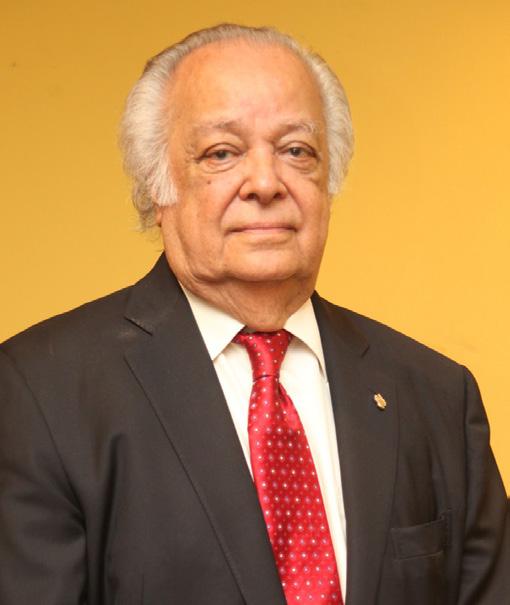
The longest-serving Commonwealth SecretaryGeneral from Guyana Pages 294
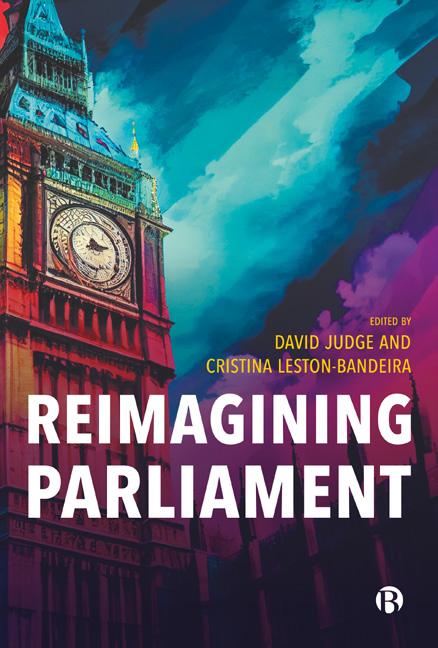
A former Clerk in the UK and Wales reviews a new book 'Reimagining Parliament' Page 294
FEATURE ARTICLES
Looking ahead to CHOGM 2024 in Samoa
The Prime Minister of Samoa's update
Page 220
Reconnecting with the Commonwealth: CHOGM
2024 and beyond
The UK Commonwealth Minister writes about rebuilding partnerships
Page 222
‘Engage, Empower and Sustain: Charting the course for resilient democracy’
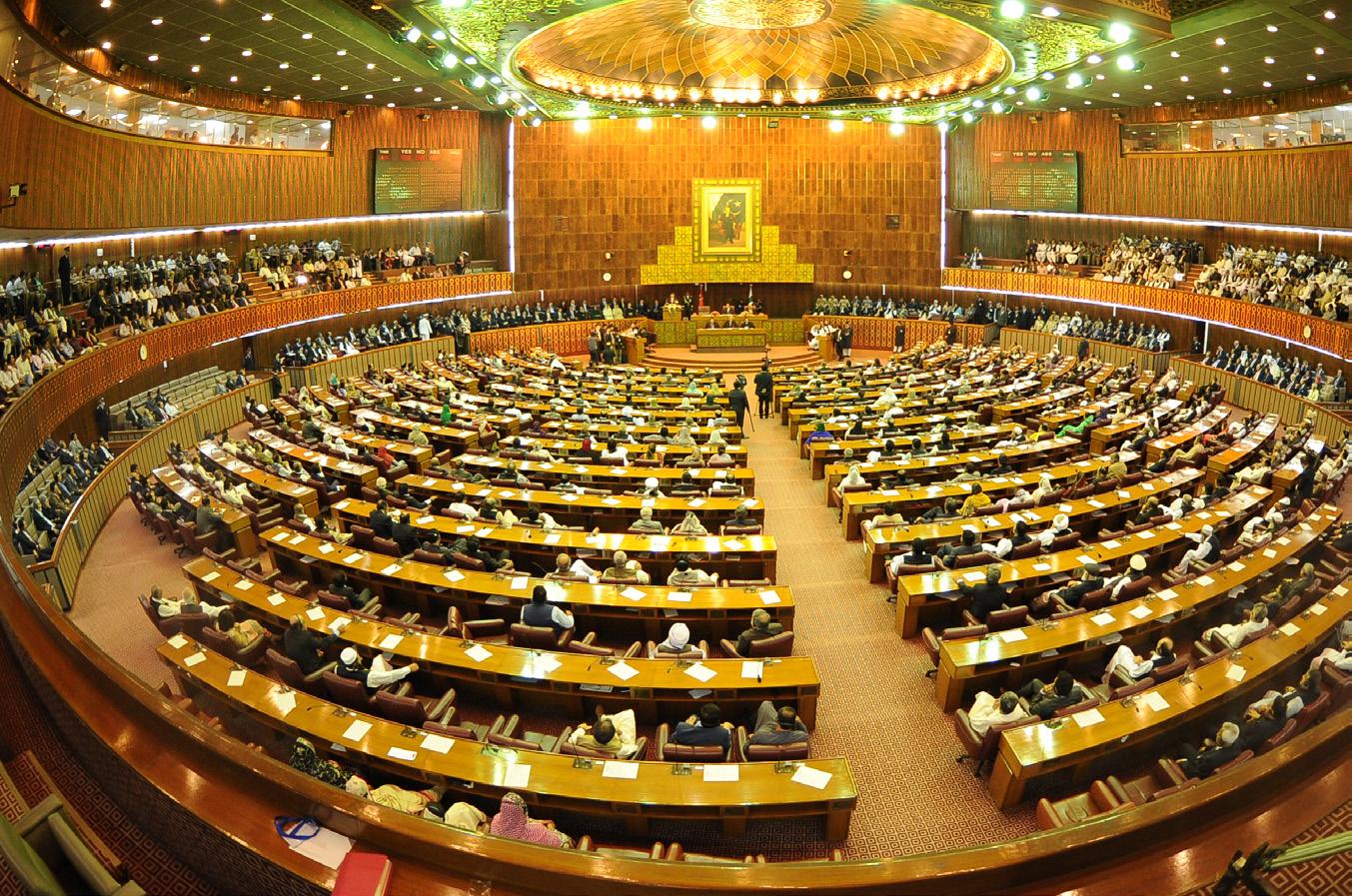
A View from Pakistan on the upcoming theme for the 67th Commonwealth Parliamentary Conference
Page 224
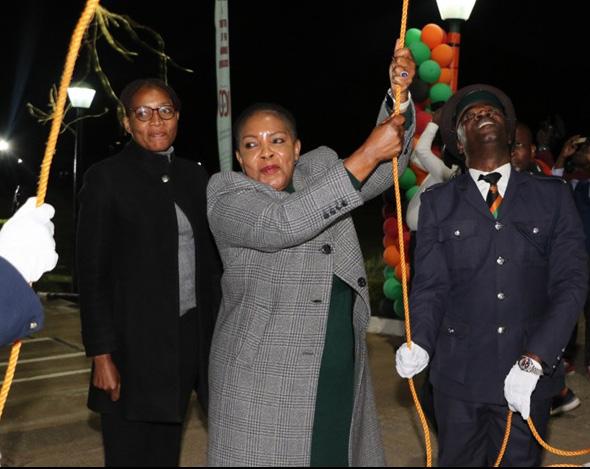
Celebrating 100 years of the Zambian Legislature
The Speaker of Zambia writes about innovation and changes
Page 226
25 years of the Scottish Parliament
The Presiding Officer highlights innovation and engagement
Page 230
Looking ahead to the next chapter
25 years of Senedd Cymru –
Welsh Parliament
Page 232
Cyprus 50 years on The President of the Cyprus House of Representatives sends a plea to Commonwealth colleagues
Page 234
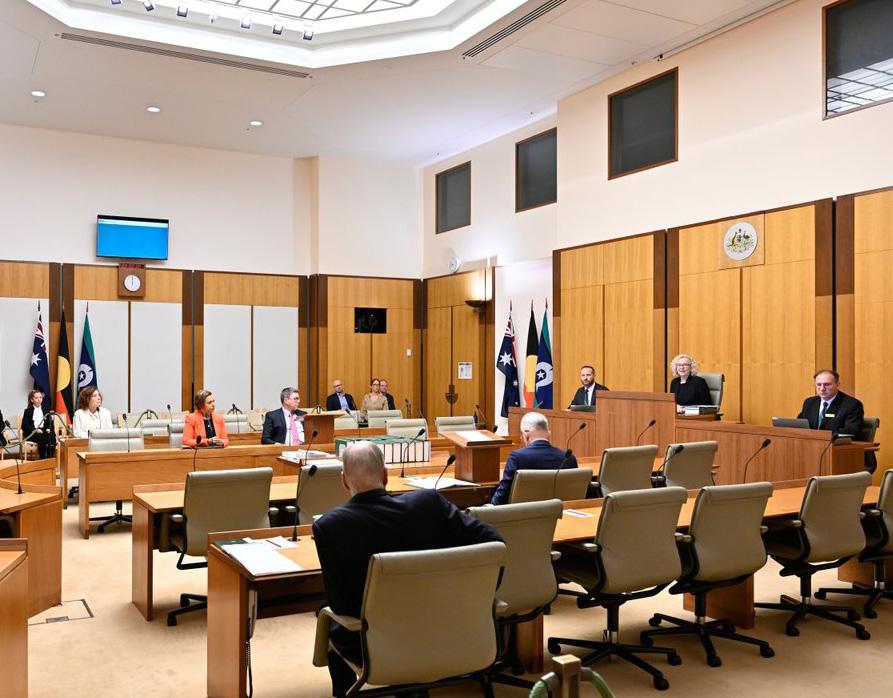
The 30th anniversary of an Australian parliamentary institution
The Deputy Speaker writes about the Federation Chamber in the Australia Parliament
Page 236
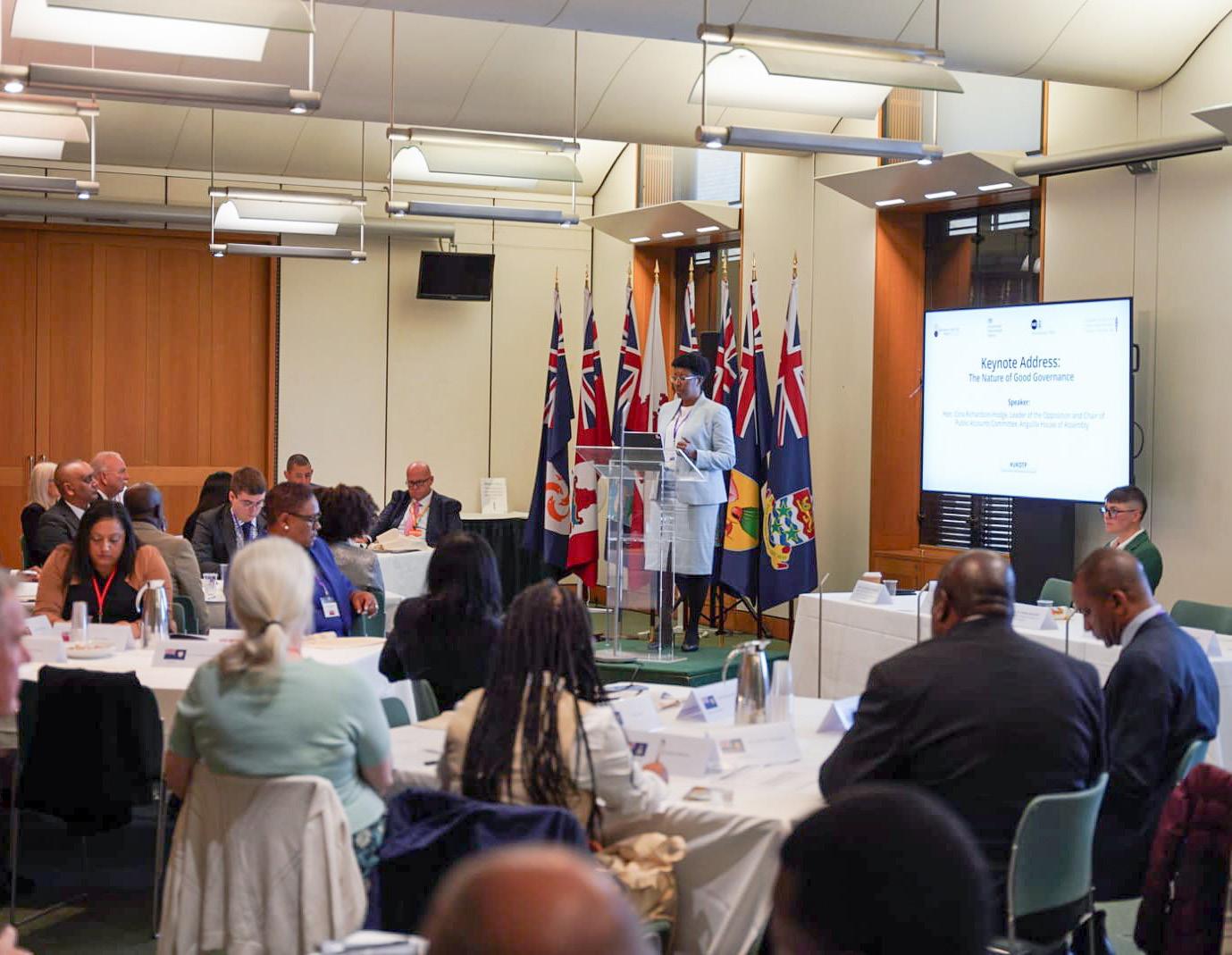
The nature of good governance in small jurisdictions
A Member of the Anguilla House of Assembly on the oversight of public finances
Page 239
Developing new CPA Standards for Codes of Conduct for MPs and the Parliamentary Workplace
The Deakin University Research team's findings
Page 243
Global shipping and the role of Parliamentarians
The Secretary-General of the International Maritime Organization (IMO)
Page 246
The world's largest election
Insights from India’s General Election in 2024
Page 249
Strengthening the Independence of Parliaments
The Parliamentary Service Act in The Bahamas
Page 252
Challenges facing women in Parliamentary Leadership roles
A Member of the Canadian Parliament shares her experience
Page 254
'Making it by Faking it' Political deepfakes are harming democracy
Page 257
Artificial Intelligence in the Legislature
A former Member of the Ontario Legislature explains how AI is impacting on Parliaments
A parliamentary photographer's 30-year career at the Australian Parliament
Page 264
Hosting a CPA Conference on small island
A Member of the Legislature of St Helena reports on the historic event in the small island’s story
Page 268
Modern parliamentary oversight tools
How can social audits enhance democratic accountability in The Gambia?
Page 269
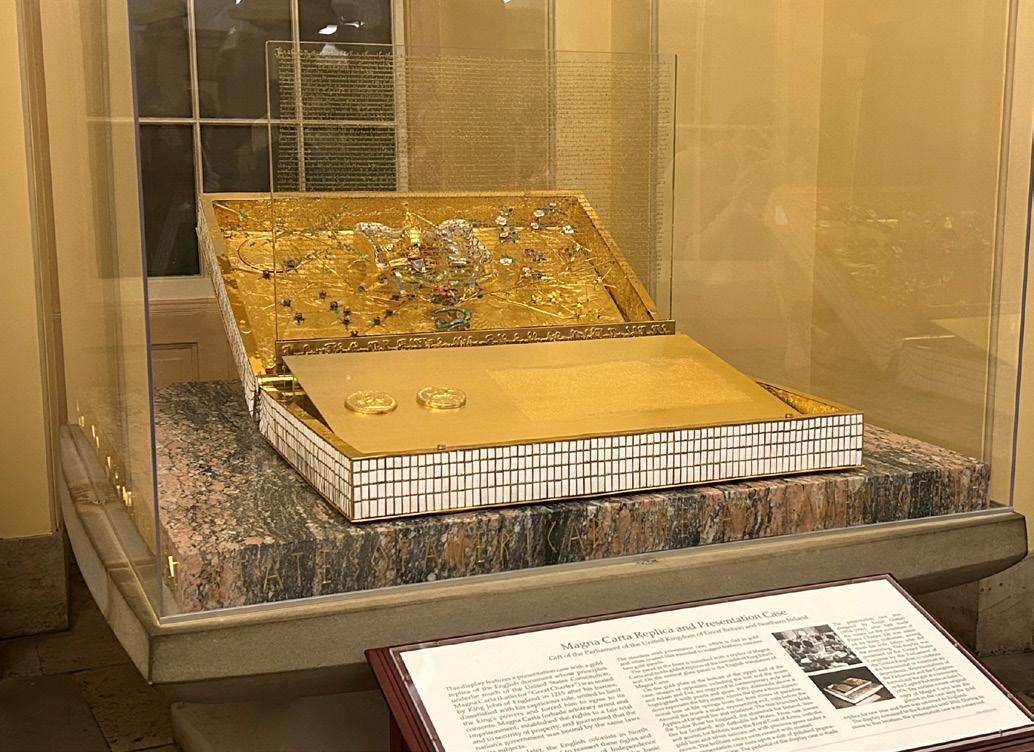
Historical Perspective: A Tradition of Gift Giving from the ‘Mother of Parliaments’
Examining the various gift exchanges between Commonwealth Parliaments
Page 272
Editing the Hansard for 30 years
Recording the official report of the Parliament of Uganda
Page 276
The Parliamentarian: Journal of the Parliaments of the Commonwealth Volume 105 | 2024: Issue Three The Parliamentarian ISSN 0031-2282
Issued and published by the Commonwealth Parliamentary Association, CPA Headquarters Secretariat, Richmond House, Houses of Parliament, London, SW1A 0AA, United Kingdom.
Mr Jeffrey Hyland Editor, The Parliamentarian editor@cpahq.org
Annual subscription: Four issues including supplements: UK: £44 inc. postage. | Worldwide: £46 surface post and £52 airmail
Price per issue: UK: £14 cover price plus UK or worldwide postage.
Disclaimer: Opinions and comments expressed in articles and reviews published in The Parliamentarian are those of the individual contributors and should not be attributed to the Secretariat of the Association.
Contributors: Thank you to all contributors for this issue.
Printed in: United Kingdom by Warners Midlands, PLC; and Times Printers, Singapore.
Limited print run - contact editor@cpahq.org for details of print copies for CPA Branches.
Mr Jeffrey Hyland, Editor, The Parliamentarian, Commonwealth Parliamentary Association
THE CONVENING POWER OF THE COMMONWEALTH
The Commonwealth has a special place in the international community and is widely recognised for its convening power in bring together nations and territories of vastly different sizes, populations and development. The Commonwealth is a diverse community of 56 nations who work together to promote prosperity, democracy and peace.
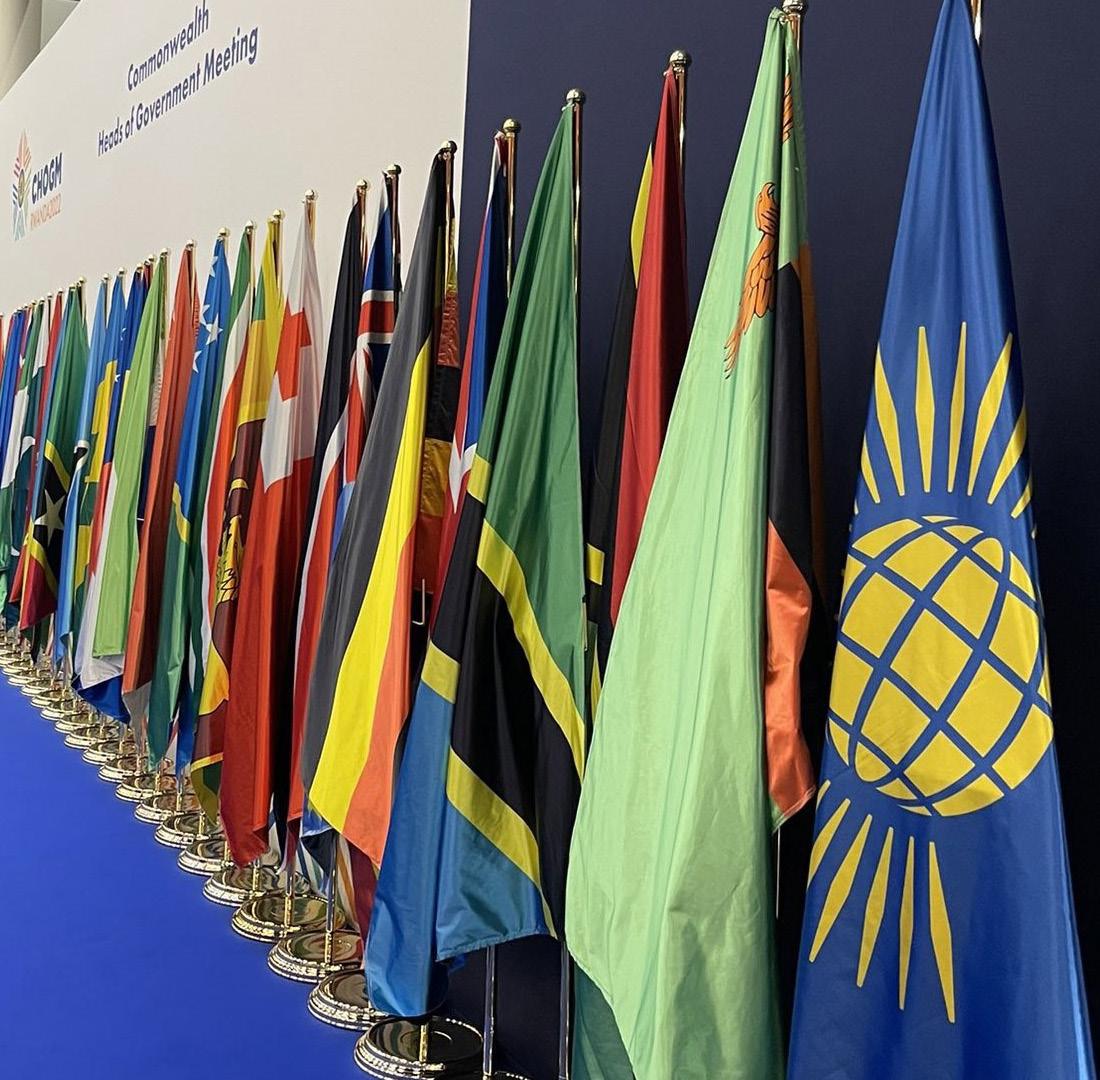
In October, Samoa will host the 27th Commonwealth Heads of Government Meeting (CHOGM) when leaders from member countries will come together to reaffirm shared common values and address global challenges.
The CHOGM theme for 2024 is ‘One Resilient Common Future: Transforming our Common Wealth’ and will focus on delivering a more prosperous, secure, sustainable and fairer future for all its citizens, particularly its young people. The future of the Commonwealth depends on its one billion young people and the CHOGM's priorities will have a strong youth focus.
Across the Commonwealth, we all face common challenges: global trade and investment; cross-border security threats; the effects of climate change on small and vulnerable countries; pressures on the shared Commonwealth values of democracy, good governance and inclusivity.
Parliamentarians from across the Commonwealth Parliamentary Association’s membership will come together with heads of government, global leaders, business executives, civil society groups, international and women’s organisations and young people for a CHOGM that also includes four Commonwealth Forums. The Forums – Business, People’s, Women’s and Youth - offer an opportunity for Commonwealth dialogue and provide a platform for a wider debate of some of the key issues and challenges, in advance of and alongside the discussions by leaders at CHOGM.
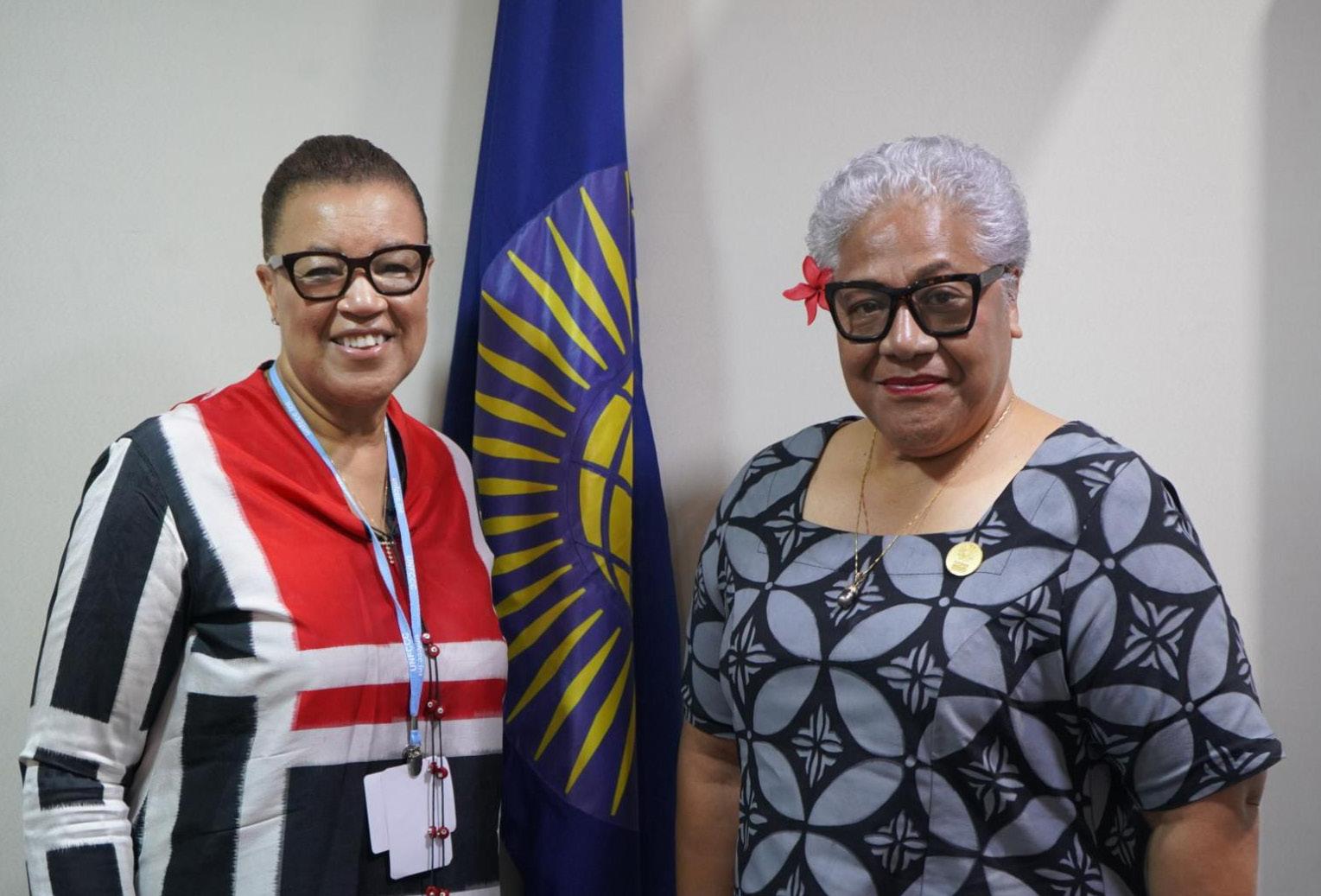
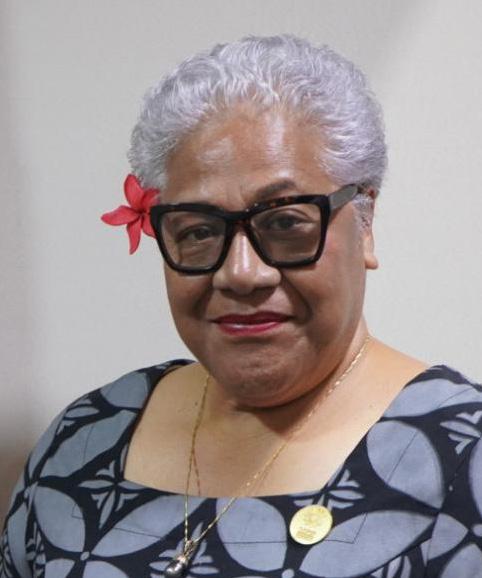
This issue of The Parliamentarian looks ahead to CHOGM 2024 and we are delighted to feature a statement from the Prime Minister of Samoa, Hon. Fiame Naomi Mataafa who reflects on the first time that a Pacific Island country will host the biennial Commonwealth event.
The new UK Minister for the Commonwealth, Lord Collins of Highbury, writes about rebuilding partnerships in the Commonwealth as the CHOGM takes place in Samoa to tackle shared challenges together.
In his View article for this issue, the CPA Secretary-General, Stephen Twigg reports on the developments regarding the CPA’s Legal Status and looks ahead to both CHOGM in Samoa and the
67th Commonwealth Parliamentary Conference (CPC) in New South Wales, Australia.
The Chairperson of the CPA Small Branches, Joy Burch, MLA, Speaker of the Legislative Assembly of the Australian Capital Territory examines environmental resilience in small jurisdictions and the parliamentary responses that are required in light of the recent CPA Small Branches Workshop on the topic which took place in Hawaii, USA in partnership with the East-West Center and the Julie Ann Wrigley Global Futures Laboratory ASU.
Nighat Paristan from the Research Department at the National Assembly of Pakistan Secretariat provides a view of the upcoming theme for the 67th Commonwealth Parliamentary Conference‘Engage, Empower and Sustain: Charting the course for resilient democracy’.
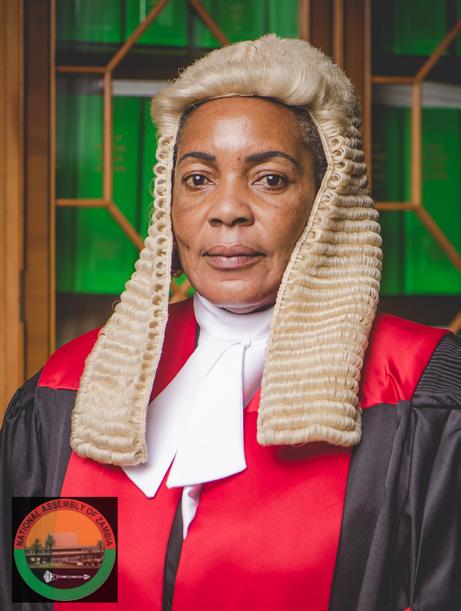
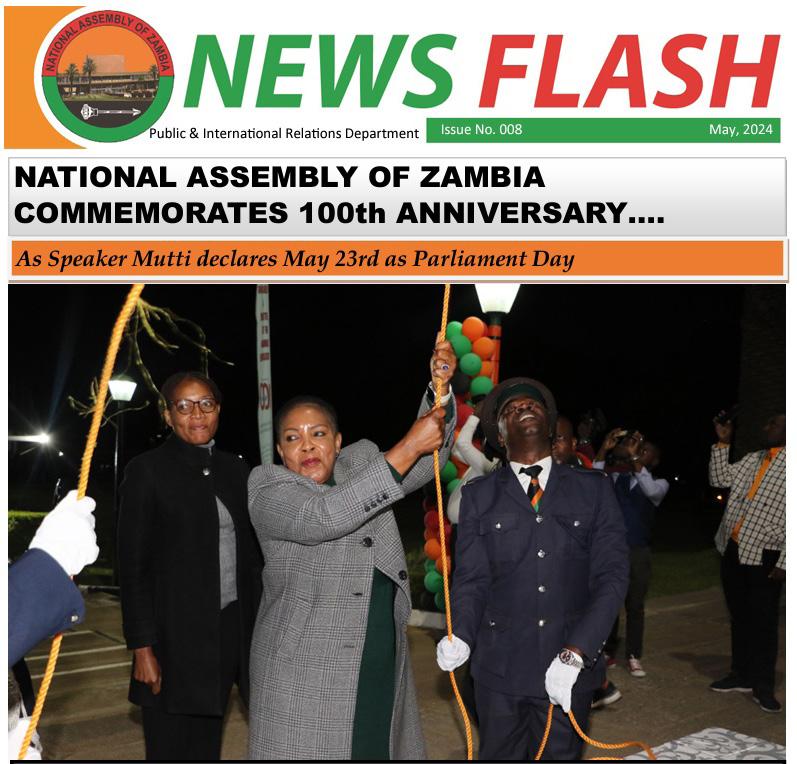
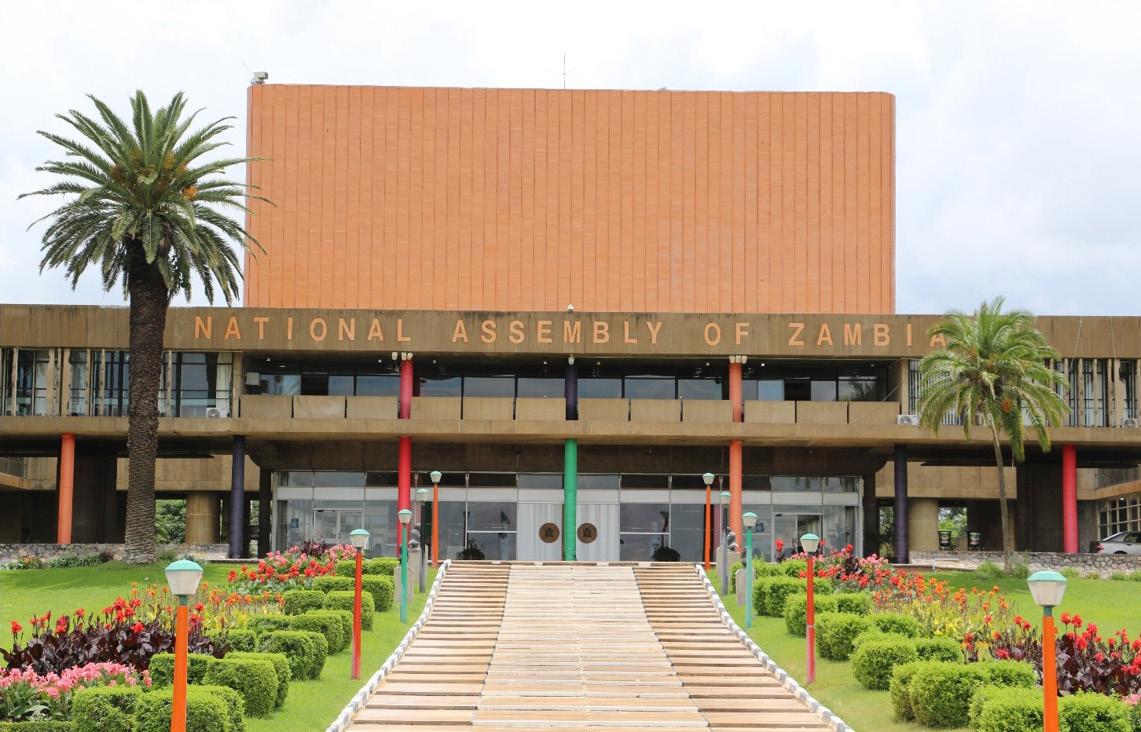
A number of Commonwealth Parliaments are marking special anniversaries this year. The Speaker of the National Assembly of Zambia, Rt Hon. Nelly Mutti, SC, MP writes about the innovation and changes made to the Zambian Legislature over its 100 year history.
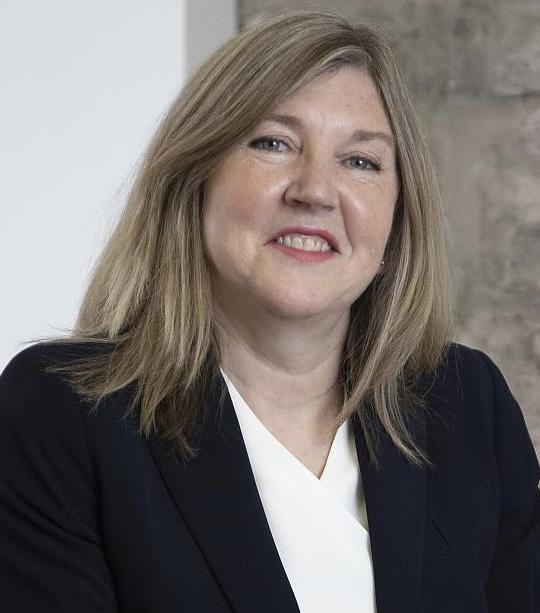
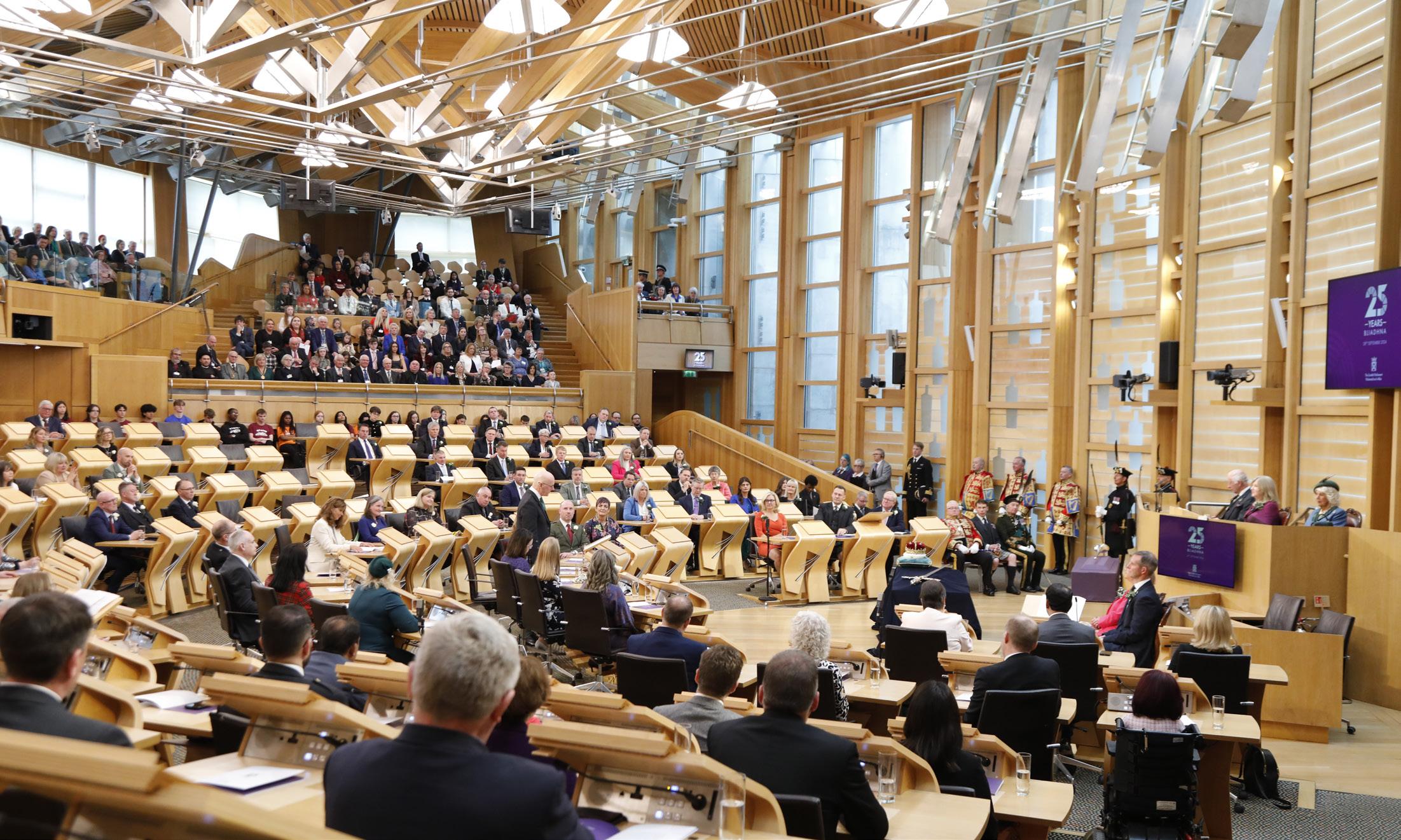
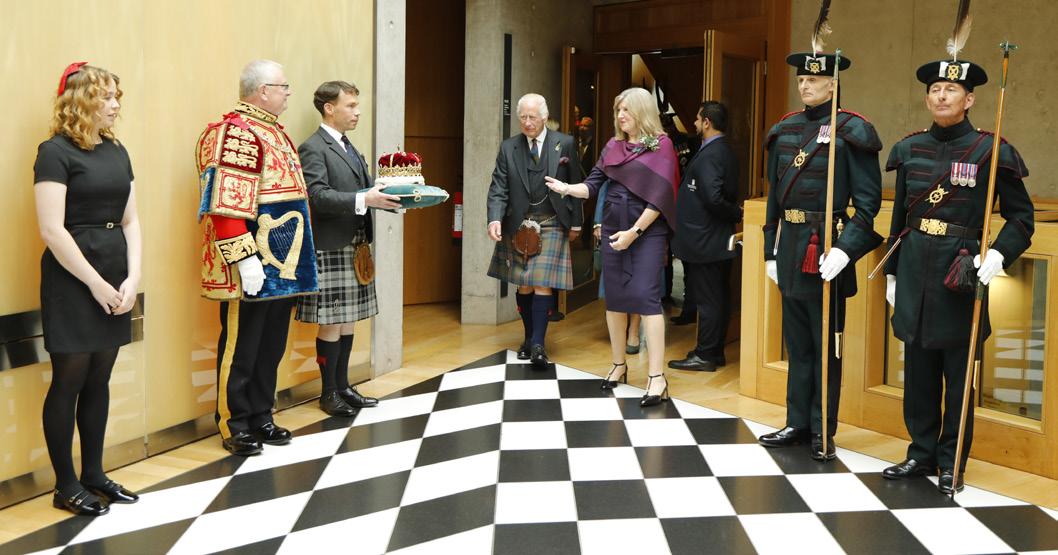
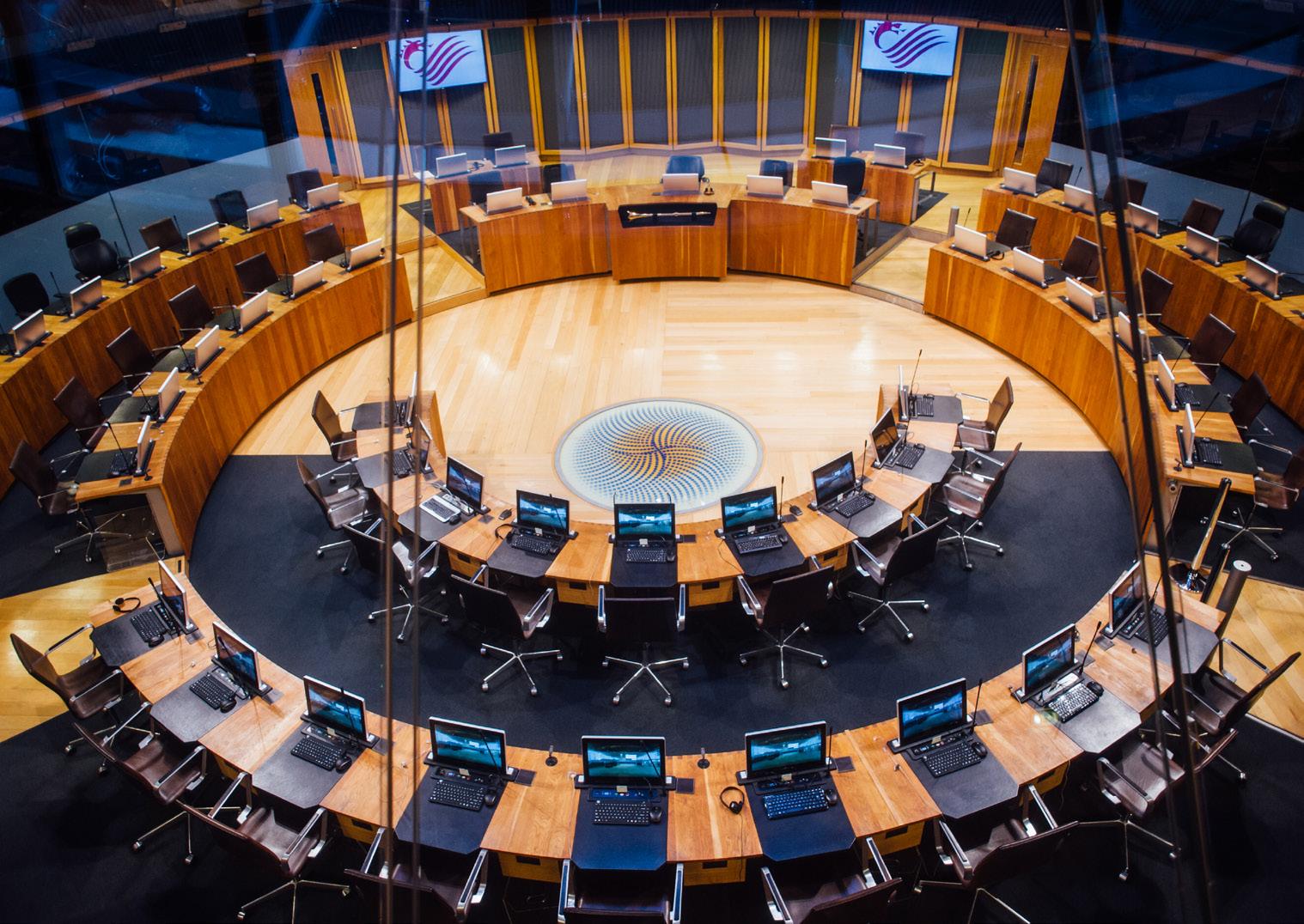
Two of the devolved Assemblies in the United Kingdom are marking their 25th anniversaries this year. The Presiding Officer of the Scottish Parliament, Rt Hon. Alison Johnstone, MSP writes about innovation and engagement at the Legislature. Looking ahead to the next chapter, Rt Hon. Elin Jones, MS is the Llywydd (Presiding Officer) of the Senedd Cymru (Welsh Parliament) and she has been a Member since its creation 25 years ago.
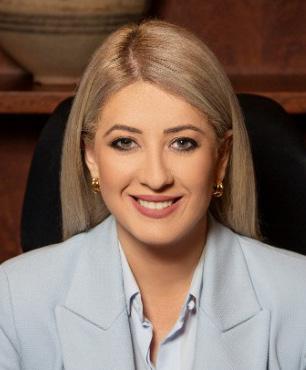
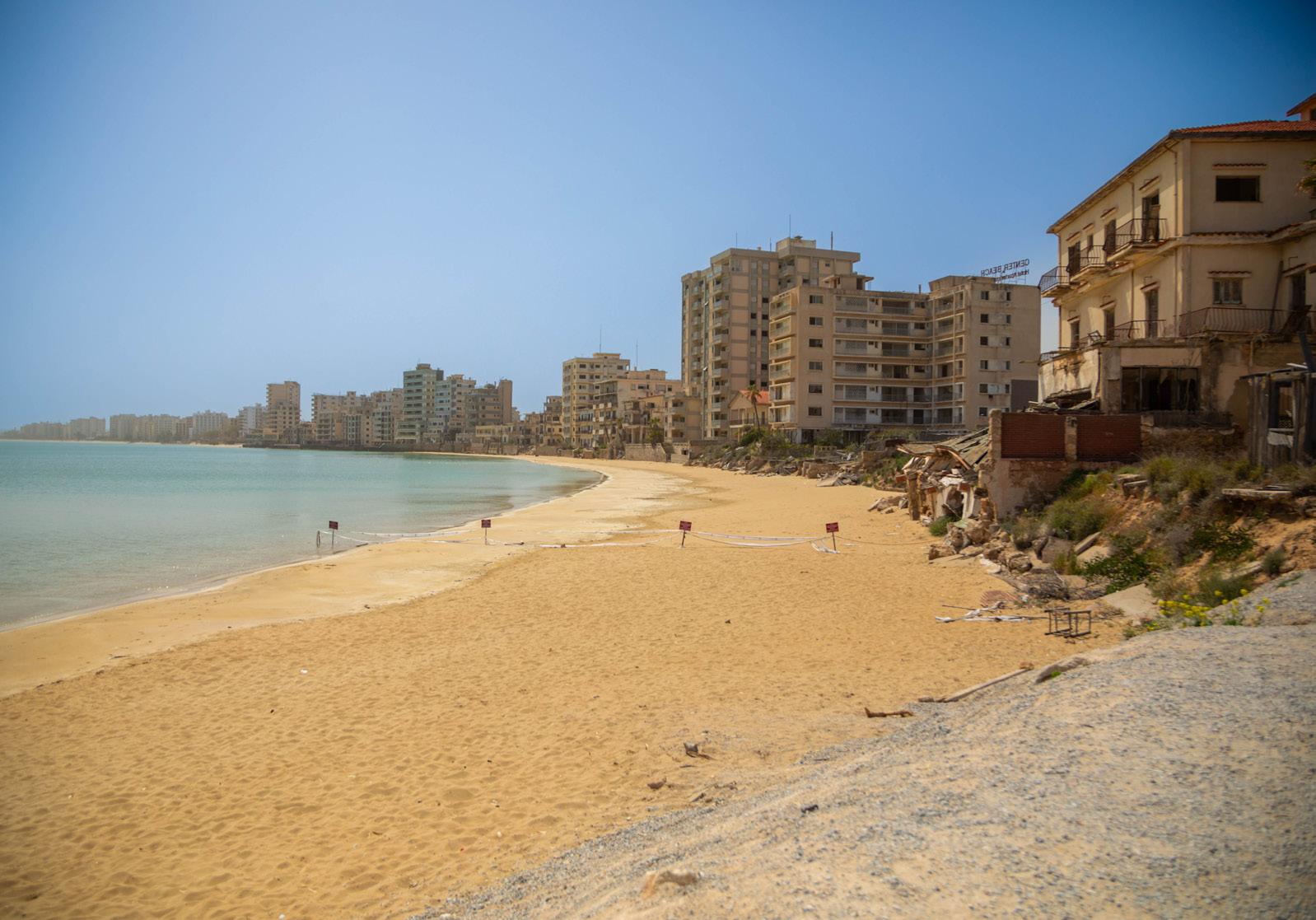
The President of the Cyprus House of Representatives, H.E. Ms Annita Demetriou marks the poignant 50 year anniversary of the occupation of Cyprus and sends a plea to Commonwealth colleagues.
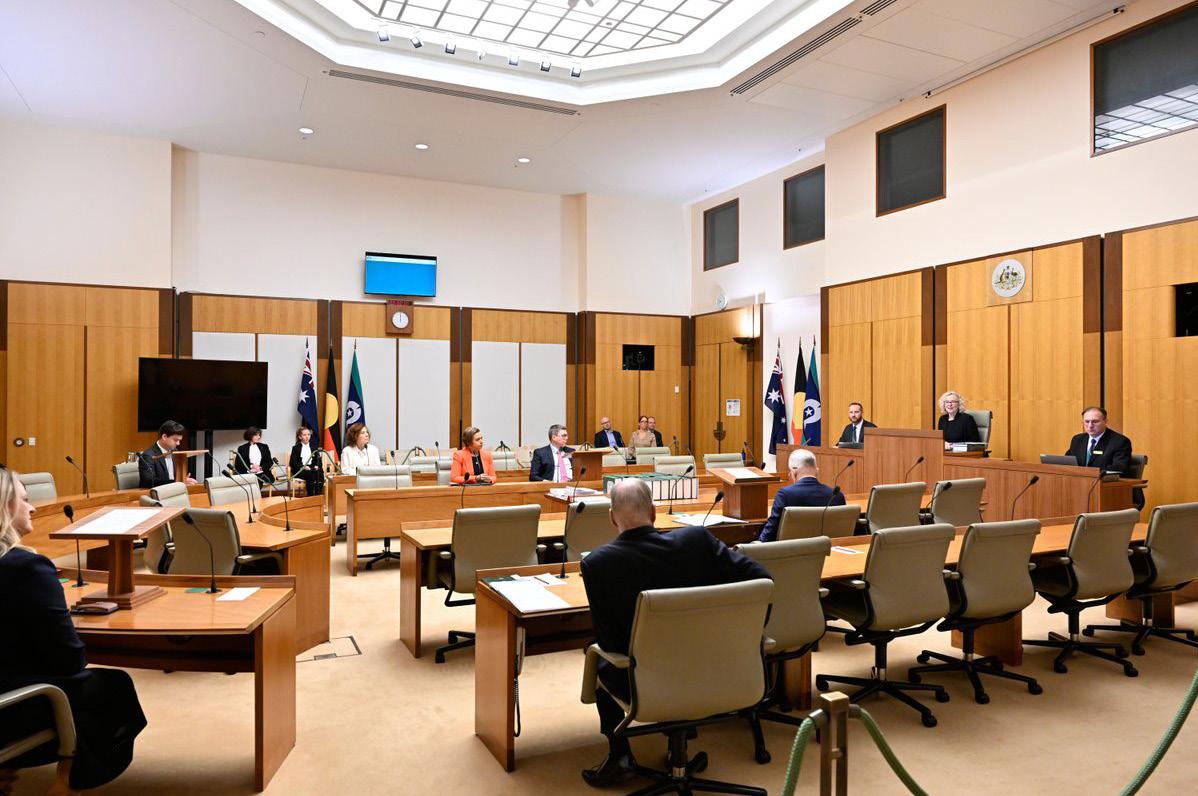
The Deputy Speaker of Australia's House of Representatives, Ms Sharon Claydon, MP shares the benefits of a parallel Committee chamber as the Federation Chamber marks its 30th anniversary.
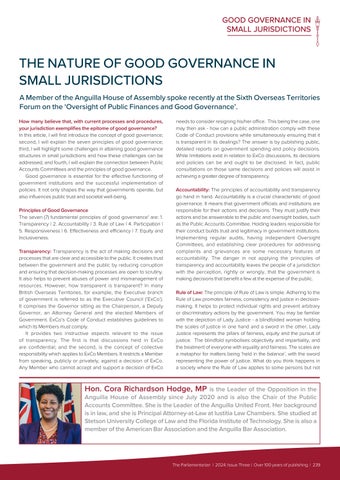
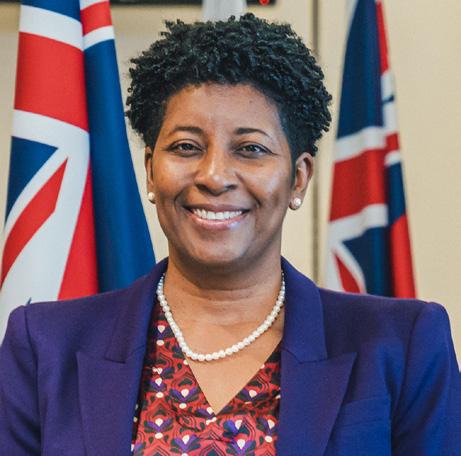
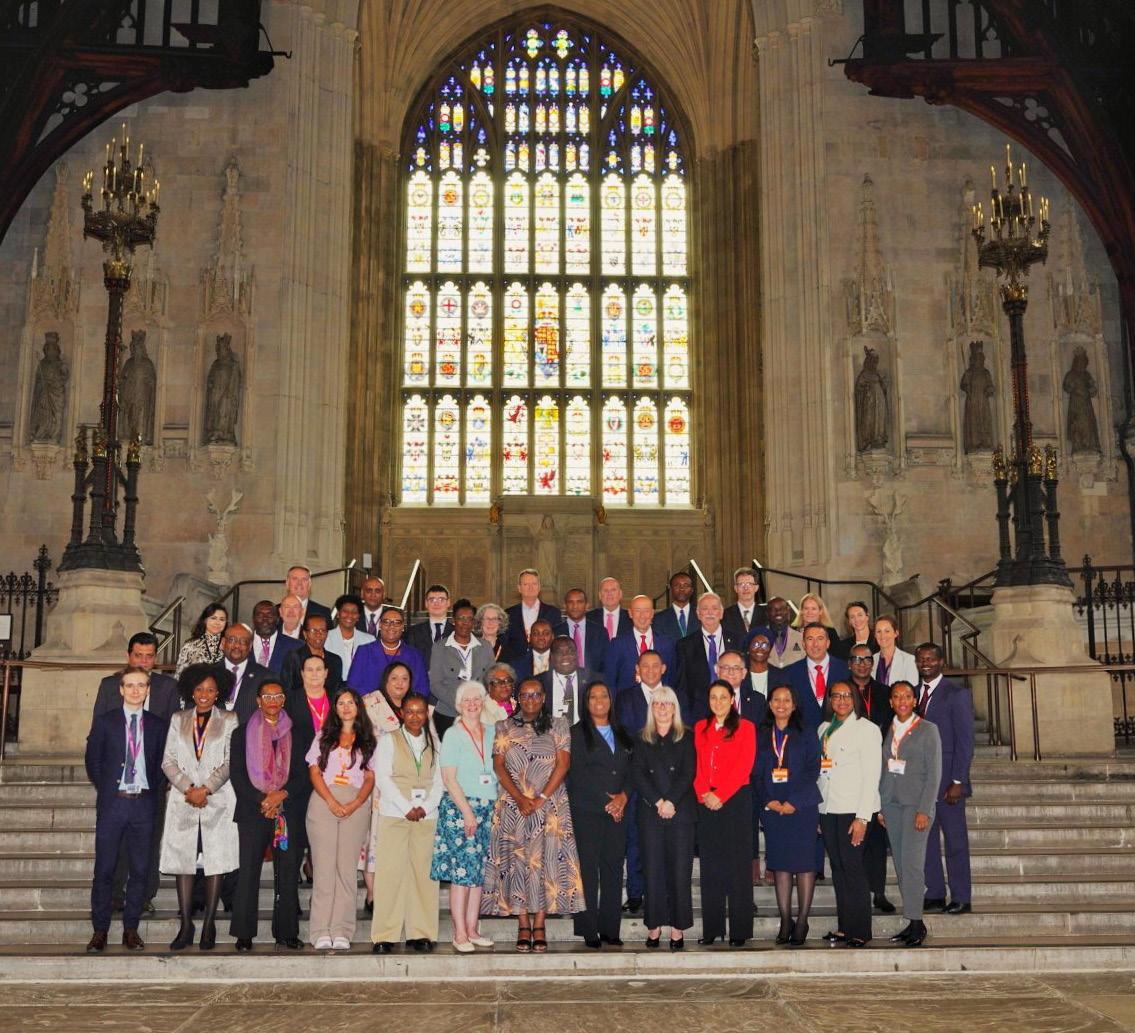
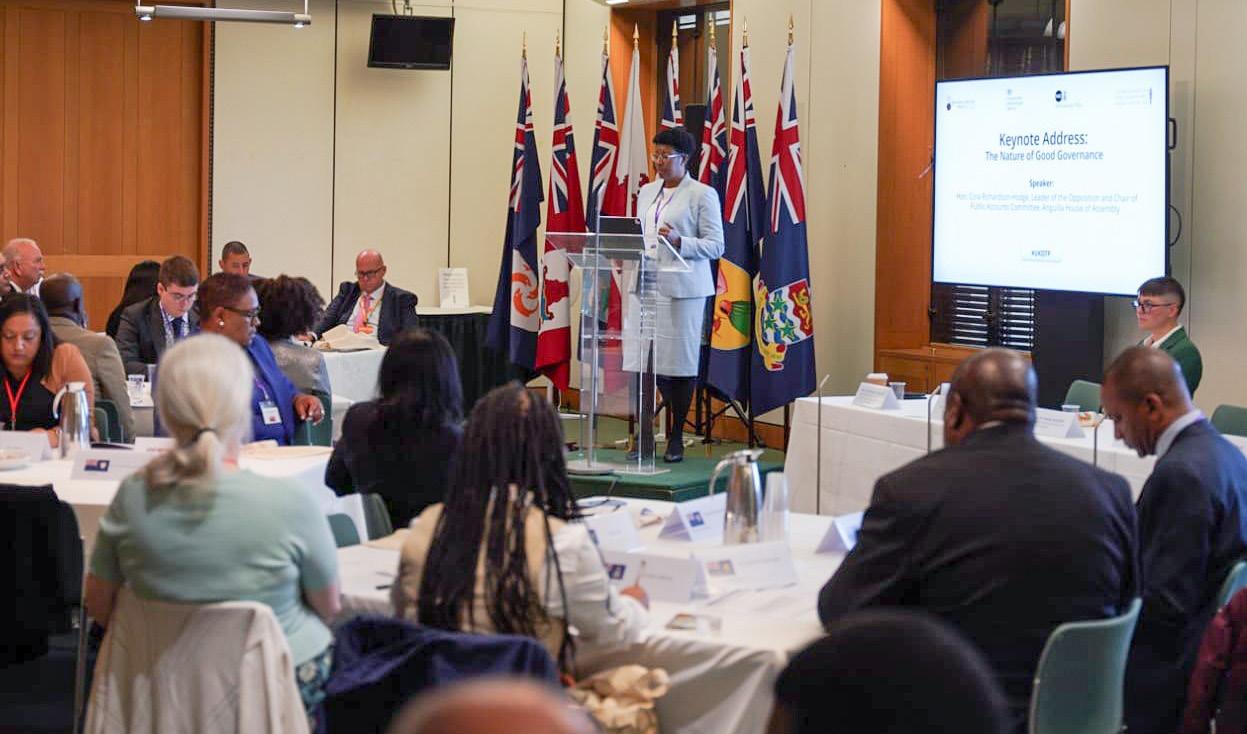
Hon. Cora Richardson Hodge, MP from the Anguilla House of Assembly spoke recently at the Sixth Overseas Territories Forum on the ‘Oversight of Public Finances and Good Governance’ and in her article for The Parliamentarian, she asks what is the nature of good governance in small jurisdictions?
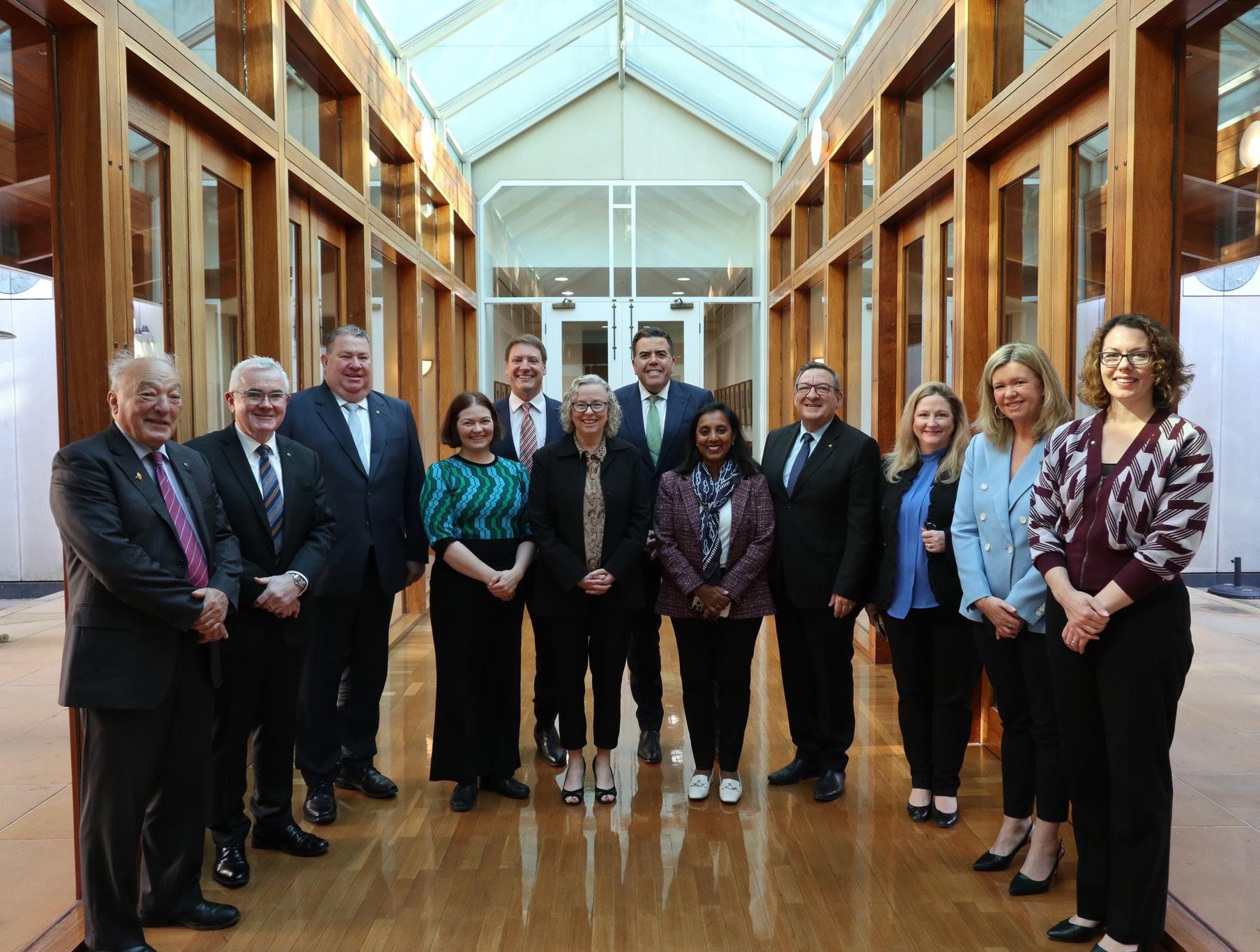
The CPA recently launched a new ‘Standards for Codes of Conduct for Members of Parliament and the Parliamentary Workplace’ and the team behind the new codes of conduct from Deakin University led by Andrew Young (former Clerk of the Parliaments in Victoria) share their research.
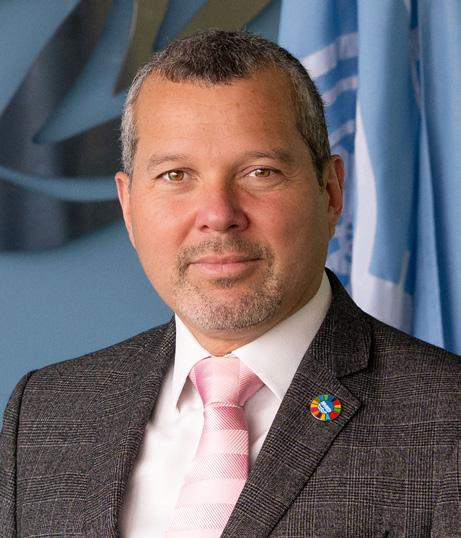
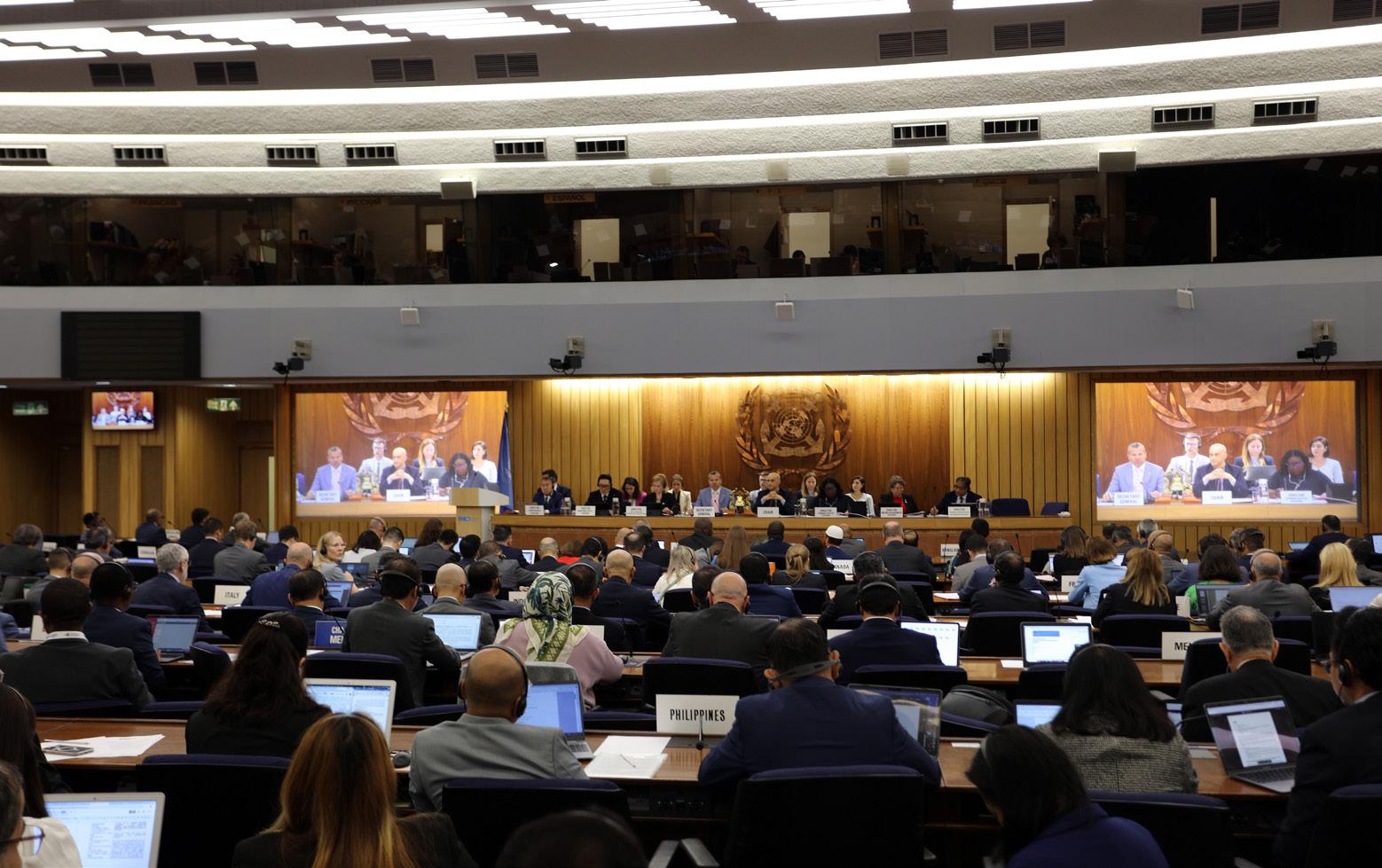
The Secretary-General of the International Maritime Organization (IMO), Mr Arsenio Domínguez writes about the role that Parliamentarians have in maintaining an effective international maritime framework and ensuring that global rules are reflected in national law.
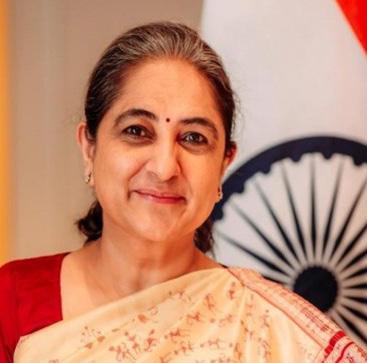
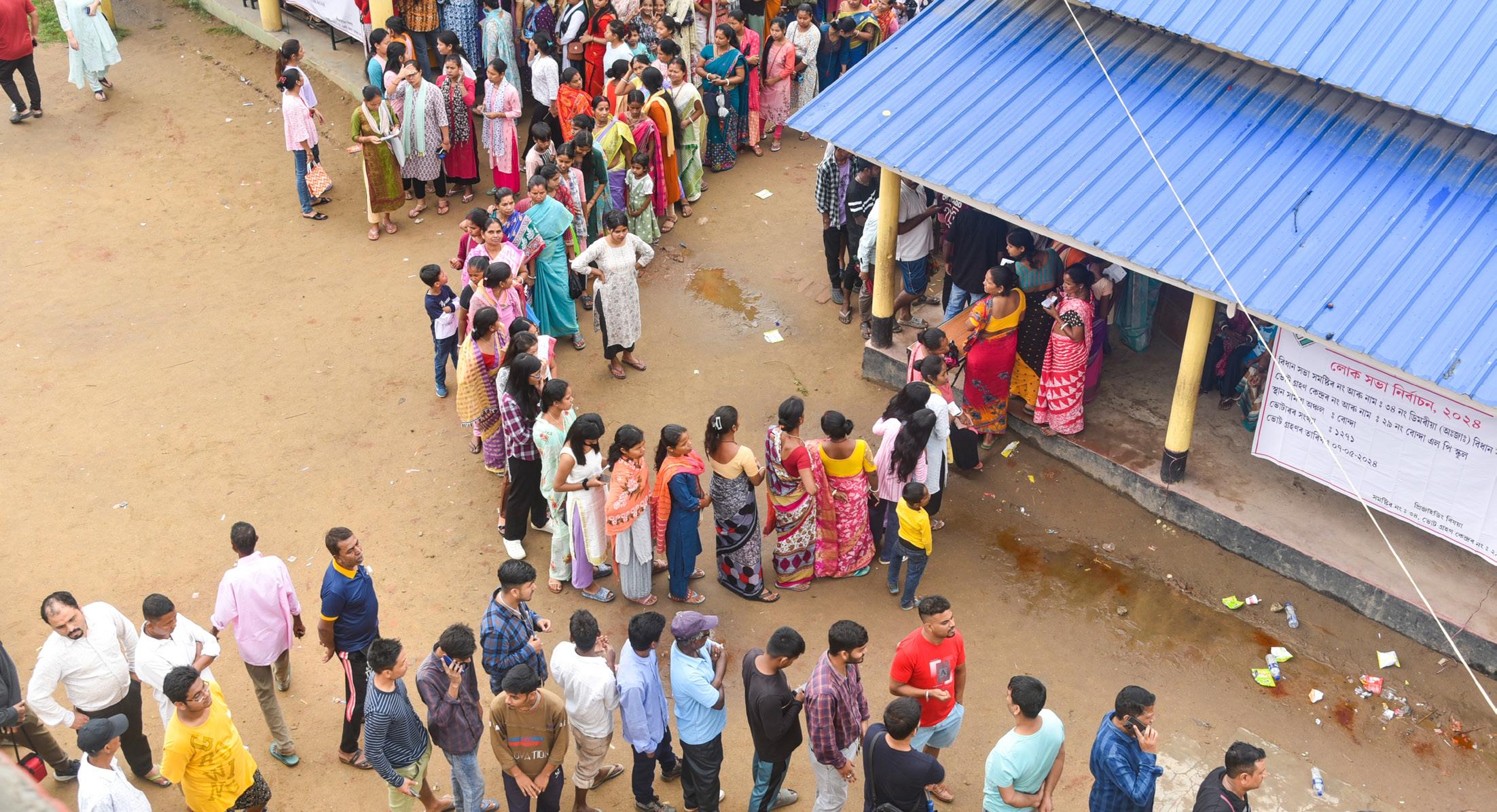
The world’s largest democratic election took place in India earlier this year and Dr Vandana Kumar from the Parliament of India shares her expert view of what took place.
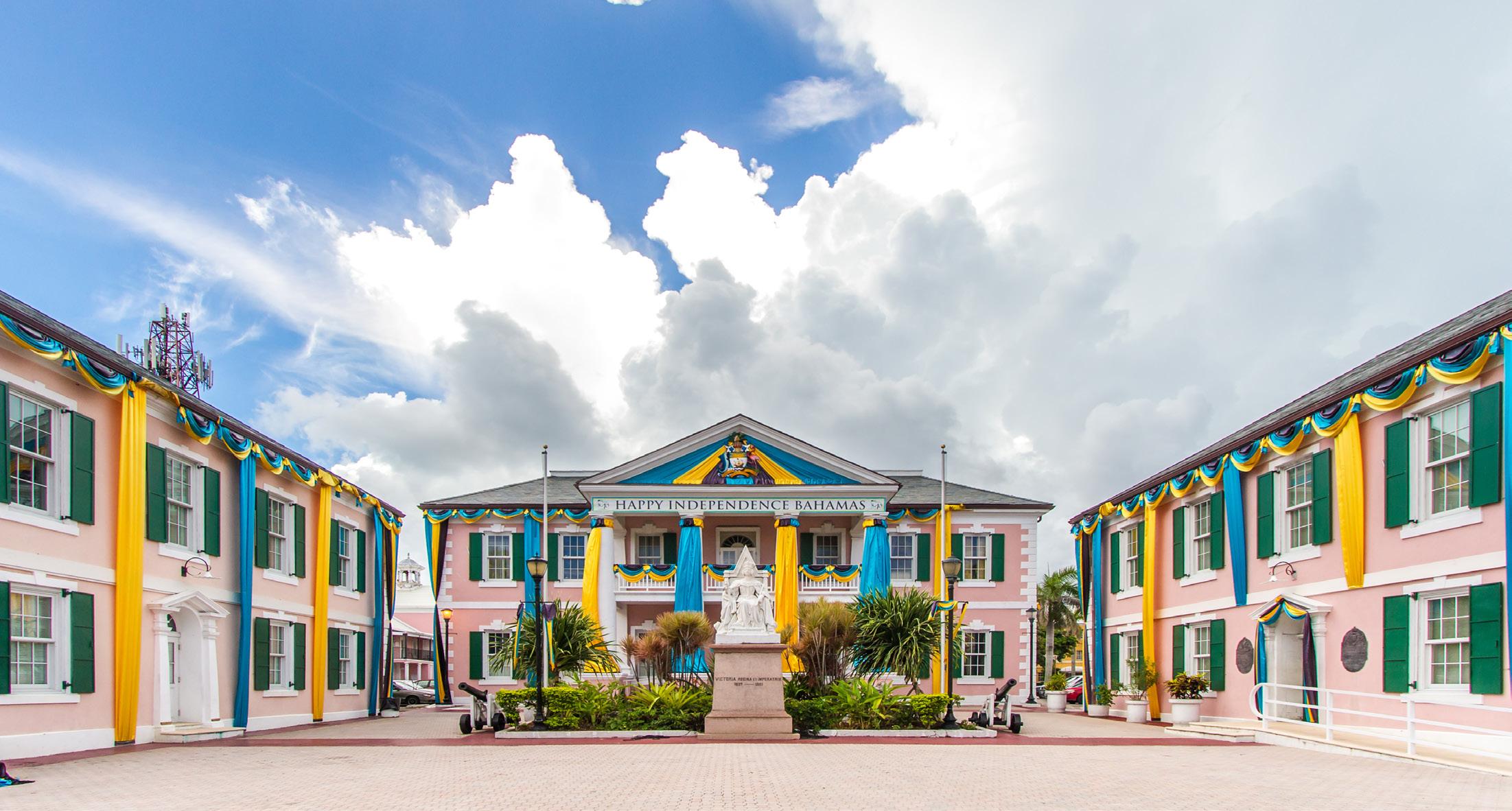
The Clerk of the Parliament of The Bahamas, Mr David L. Forbes explains how the introduction of the Parliamentary Service Act in The Bahamas has provided autonomy over the Legislature’s financial and administrative affairs.
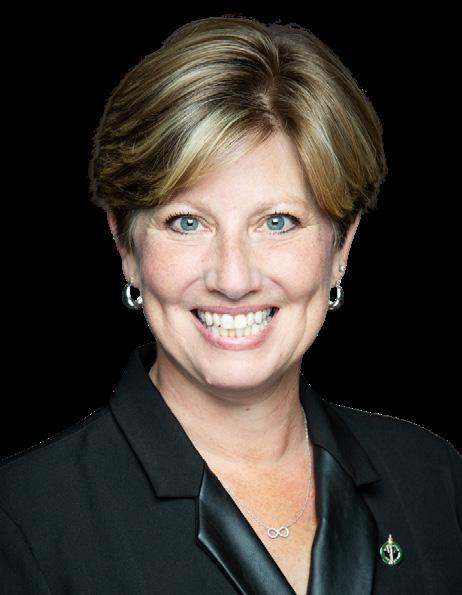
Hon. Karen Vecchio, MP has been a Member of the House of Commons in the Parliament of Canada since 2015, and she writes about the challenges facing women in undertaking parliamentary leadership roles.
Marilyn Bromberg from the University of Western Australia is an expert on social media and the law, and she examines why political deepfakes are harming democracy.
Janet L. Ecker is a former Member of the Ontario Legislature and a financial services expert in Toronto. In this issue of The Parliamentarian, she explains how Artificial Intelligence is impacting on Parliaments.
Rafael Jimenez Aybar and Franklin De Vrieze from the Westminster Foundation for Democracy (WFD) ask how can Parliaments develop effective climate legislation and implement rigorous oversight mechanisms to guarantee these laws achieve their intended outcomes?
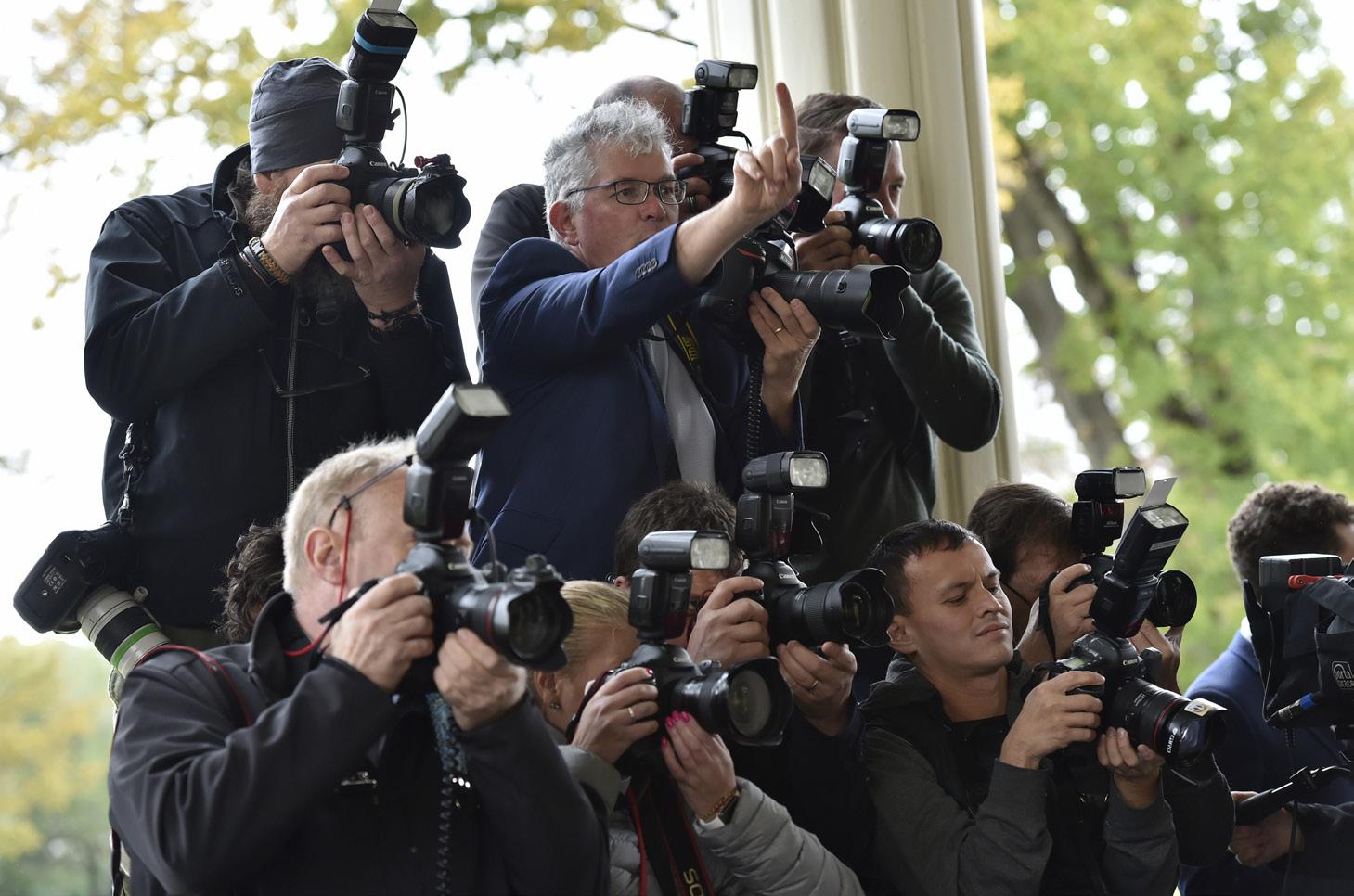
Fleur Hall from the Department of the House of Representatives in the Australian Parliament provides a fascinating insight into the life of a parliamentary photographer as she interviews retiring
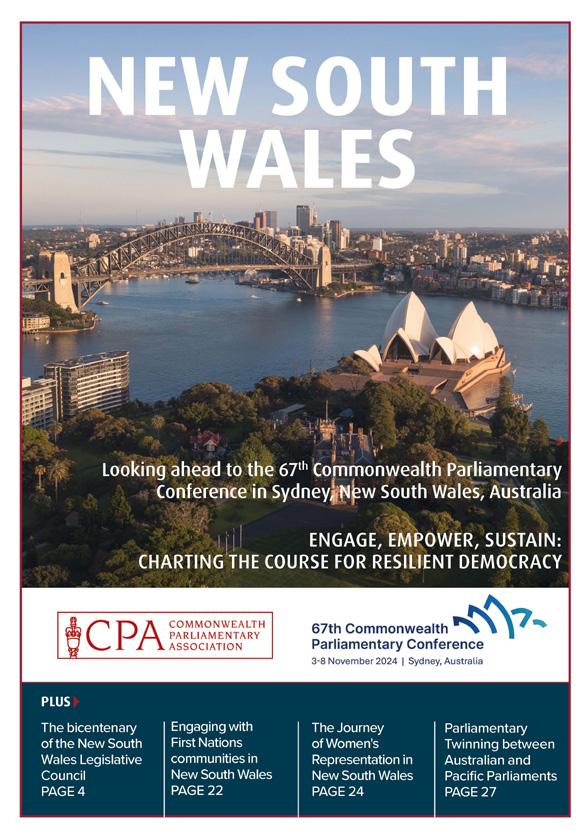
Ahead the 67th Commonwealth Parliamentary Conference (#67CPC) hosted by the Parliament of New South Wales and CPA New South Wales Branch in Sydney, Australia from 3 to 8 November 2024, the CPA Headquarters Secretariat are delighted to publish a supplementary magazine to this issue of The Parliamentarian. The New South Wales supplement features articles by Members of the host Parliament who examine many different areas of the political life of the State.
AUSPIC photographer David Foote about his contribution to the visual history of the Australian Parliament for more than 30 years.
The Research team at The Gambia National Assembly provide an article on social audits as a modern parliamentary oversight tool to enhance democratic accountability.
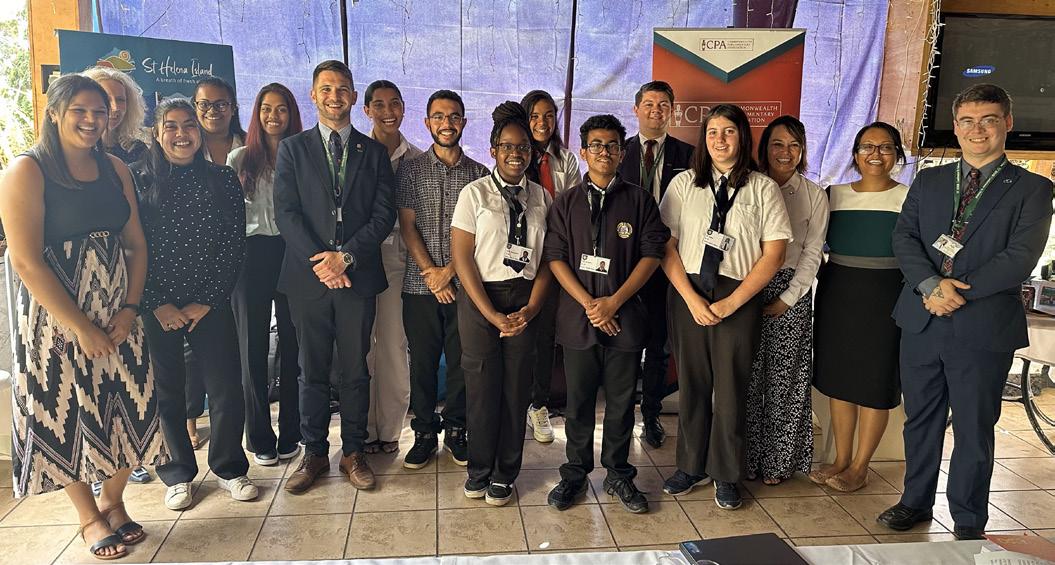
Hon. Andrew Turner, MLC, a Member of the Legislature of St Helena, writes about the experience of hosting a CPA Conference on a small island following the 53rd CPA British Islands and Mediterranean Regional Conference in St Helena.
President of the Canadian Study of Parliament Group, Charlie Feldman gives us a historical perspective of Commonwealth Parliaments with his article examining the tradition of gift giving from the Westminster Parliament and between other Legislatures over the years.
Mohammed Katamba records the story of Andrew Walube, who has been editing the Hansard at the Parliament of Uganda for 30 years.
News reports in this issue of The Parliamentarian include the first CPA Parliamentary Academy Residency Programme for Parliamentary Clerks in Sri Lanka; a CPA/UNDP Conference on Artificial Intelligence and Disinformation in Singapore; the CPA Small Branches Workshop on Environmental Resilience in Small Jurisdictions in Hawaii; the 60th CPA Canadian Regional Conference in Ontario; the 46th Regional Conference of the CPA Caribbean, Americas and the Atlantic Region in Guyana; 12th Commonwealth Youth Parliament in New Zealand; and the CPA Secretary-General’s visits to the CPA Branches in Malaysia, Selangor and Victoria.
The Parliamentary Report and Third Reading section includes parliamentary and legislative news from Canada; British Columbia; Trinidad and Tobago; New Zealand; The Gambia; the United Kingdom; Ghana; India; and Australia. We look forward to hearing your feedback on this issue of The Parliamentarian and to receiving your future contributions.
Jeffrey Hyland Editor, The Parliamentarian editor@cpahq.org
SECRETARY-GENERAL
LOOKING AHEAD TO CHOGM IN SAMOA, 67th CPC IN NEW SOUTH WALES AND THE PROGRESS OF THE CPA STATUS BILL
The Secretary-General of the Commonwealth Parliamentary Association, Stephen Twigg
The closing three months of 2024 will be of crucial importance to the CPA and the wider Commonwealth family. In October, the Commonwealth Heads of Government Meeting (CHOGM) will be hosted by the Government of Samoa. In November, the 67th Commonwealth Parliamentary Conference (CPC) will be hosted by the Parliament of New South Wales in Sydney, Australia. Meanwhile, the UK Parliament will continue its consideration of a Government Bill which will finally pave the way for the CPA to achieve a new legal status akin to an international organisation.
At CHOGM, the Governments of the Commonwealth will elect the next Commonwealth Secretary-General. On 11 September 2024, the CPA was delighted to partner with the Commonwealth Foundation and Chatham House to host a debate with the three candidates seeking to succeed Rt Hon. Patricia Scotland, KC as Commonwealth Secretary-General. It was a hybrid format with an in-person audience at Chatham House in London and a wider online audience with an impressive range of questions submitted from across the Commonwealth on subjects including reparations, media freedom and human rights.
The CPA works closely with the staff of the Commonwealth Secretariat, and I look forward to working with the successful Commonwealth Secretary-General candidate building upon the work I have done with Baroness Scotland and her colleagues. I am pleased to have this opportunity to thank Baroness Scotland for her work and wish her the very best for the future.
The CPA will be present at CHOGM in Samoa where we shall participate in the Commonwealth Women’s Forum and hold a side event, in partnership with other Commonwealth Organisations, on the importance of inclusive political leadership. As an Associated Organisation, we will have the opportunity to address the Commonwealth Foreign Affairs Ministers Meeting. CPA’s presence in Samoa should enable us to reaffirm the vital role of Parliaments in taking forward our shared values and priorities including the rule of law, tackling climate change and promoting sustainable development and human rights.
After Samoa, the CPA’s focus will shift to Sydney, Australia for our 67th Commonwealth Parliamentary Conference. I am immensely grateful to everyone who is working so hard to deliver a successful Conference. I would like to express my warm thanks to the amazing team in the New South Wales Parliament. I had the opportunity to conduct a site visit in August and I am confident that we are going to have a well-organised, productive and enjoyable CPC.
An important element of the CPC is the opportunity it provides for
our three CPA networks to meet and I am excited by the plans being developed by the networks.
The annual CPA Small Branches Conference will elect a new Chairperson for the CPA Small Branches following Speaker Joy Burch’s decision not to contest the forthcoming elections in the Australian Capital Territory. Joy has done a brilliant job as Chairperson and I wish her the very best for the future.
Traditionally, the Commonwealth Women Parliamentarians (CWP) Conference has only been held every three years. I am very pleased that it has now been agreed that the CWP Conference will be held annually starting from this year.
Our third, and newest, network is the Commonwealth Parliamentarians with Disabilities (CPwD) who will be following up on the brilliant outreach event held in Accra, Ghana, last year and reaffirming the importance of disability inclusion to the work of the CPA.
2024 has been described as the ‘year of elections’ with Commonwealth citizens going to the polls in both large and small jurisdictions. I am pleased to congratulate all successful candidates including our CPA Treasurer, Hon. Shri Anurag Sharma, MP, who was re-elected to the Lok Sabha in India’s General Election.
In the United Kingdom General Election, our CPA Chairperson, Ian Liddell-Grainger, was not re-elected. I know that Ian will be missed throughout the CPA membership. He is a passionate advocate for the Commonwealth and provided effective leadership of the CPA Executive Committee over a period of more than three years.
Dame Maria Miller was also not re-elected. Dame Maria served as Chairperson of CPA UK and played a crucial role in taking forward the issue of the CPA’s legal status for which I am very grateful. I wish both Ian and Dame Maria well for the future
I wrote an extensive update on the question of the CPA’s legal status in the previous issue of The Parliamentarian. I am very happy to report that we have seen substantial progress since then.
In July 2024, the new UK Government included the status issue in the King’s Speech and published a Bill almost identical to the one which had previously been tabled by Dame Maria Miller and Baroness Frances D’Souza. The Bill is currently progressing through the House of Lords. As it is a Government Bill, I am confident that it will become law. Once the Bill becomes law, it will provide a legal basis for the CPA and the International Committee of the Red Cross (ICRC) to be recognised as akin to international organisations in UK law with a set of privileges and immunities conferred via secondary legislation. By the time that we meet for the 68th Commonwealth Parliamentary Conference in Barbados in
October 2025, we should have the full new legal status in place.
At the forthcoming 67th CPC in Sydney, there will be several important items for decision to ensure that we are fully ready for this new legal status. This has been a longstanding matter of debate within the CPA’s membership – going back for more than thirty years. I am grateful to everyone who has worked so hard over a long period of time to get us to this point including the previous Working Group whose members put together the Business Case to the UK Government, the current Governance Working Group who have considered all options in meticulous detail and to our nine CPA Regions, especially the CPA Africa Region which has made the case powerfully and consistently for this change.
The new status will bring fresh opportunities for the CPA to
increase the impact of our work in the Commonwealth and in other international bodies including the United Nations. These changes will not happen overnight, and we will have to work hard to make the very best of this new opportunity.
Next year, we will begin consultation on the next CPA Strategic Plan which will be the first such Strategic Plan for the new CPA. It will provide a focus for us to build upon the amazing work already happening across the CPA membership whilst identifying potential new partnerships and areas of work. I am confident that, with a new legal status, the Commonwealth Parliamentary Association will go from strength to strength, building upon its history and drawing upon the great diversity of experience in the CPA membership.
CPA SECRETARY-GENERAL VISITS THE PARLIAMENT OF MALAYSIA AND SELANGOR STATE LEGISLATIVE ASSEMBLY
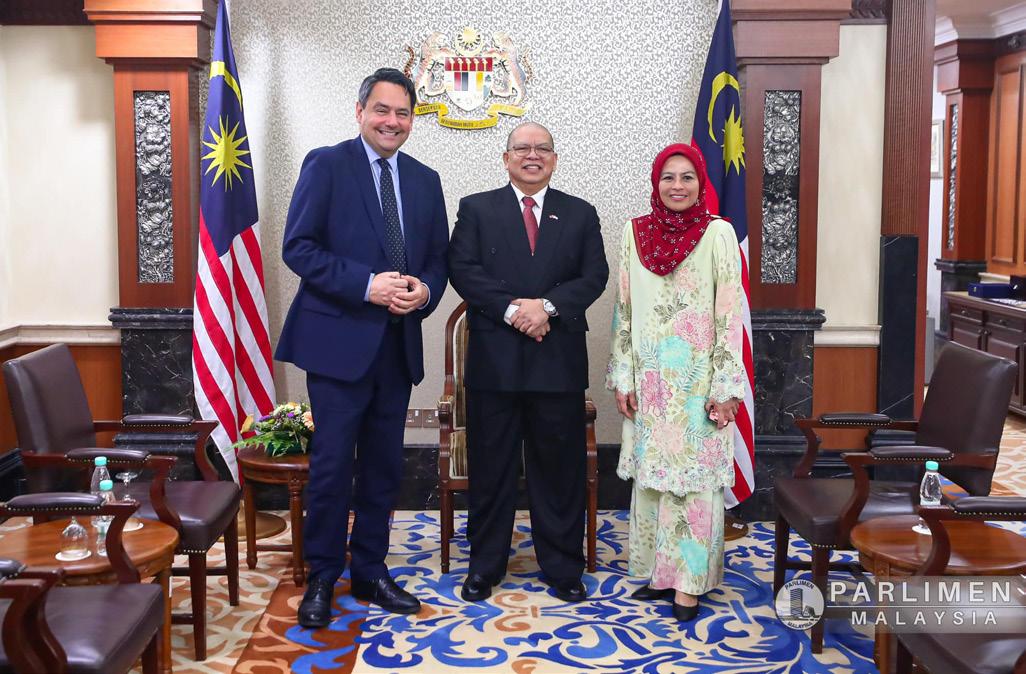
The Secretary-General of the Commonwealth Parliamentary Association, Stephen Twigg has visited the Parliament of Malaysia and the Selangor State Legislative Assembly between 19 and 21 June 2024. The CPA Secretary-General met with Speaker of the Malaysia House of Representatives (Dewan Rakyat), Hon Tan Sri Dato' Johari bin Abdul, MP followed by a tour of the Parliament of Malaysia.
The CPA Secretary-General subsequently met with Hon. Datuk Seri Dr Noraini Ahmad, MP, the Deputy Minister of Women, Family and Community Development and the Honorary Secretary of the CPA Malaysia Branch. Dr Ahmad is also a former Commonwealth Women Parliamentarians (CWP) Chairperson (2016-2019). The CPA Secretary-General briefed Members of the CPA Malaysia Branch on the latest activities of the CPA and its work in the CPA South-East Asia Region and also met with Senator Hon. Isaiah Jacob, the Regional Champion for the Commonwealth Parliamentarians with Disabilities (CPwD) network and Senator Hon. Datuk Wira Dr Mohd Hatta Md Ramli, a member of the CPA Interim Executive Board.
Later in the day, the CPA Secretary-General spoke at a panel discussion and Q&A held at the Parliament of Malaysia on ‘The power and purpose of parliamentary diplomacy: Strengthening relations among Commonwealth nations’ alongside the Deputy President of the Senate of Malaysia, Senator Hon. Datuk Nur Jazlan bin Tan Sri Mohamed and Hon. Tuan Lee Chuan How, MP. The event was attended by Parliamentarians, Members of State
Legislative Assemblies, High Commissioners, academia and international relations students.
During the discussion, the CPA Secretary-General said: “If Parliaments are to play a role in diplomacy, it can’t just be left to individuals. It has to be about having an effective, healthy and functioning parliamentary institution. Parliamentary diplomacy, alongside other forms of diplomacy including citizen diplomacy as well as the more traditional government diplomacy, is more important than ever. The CPA’s role in parliamentary diplomacy is about strengthening Parliaments, supporting individual MPs and developing strong international partnerships.”
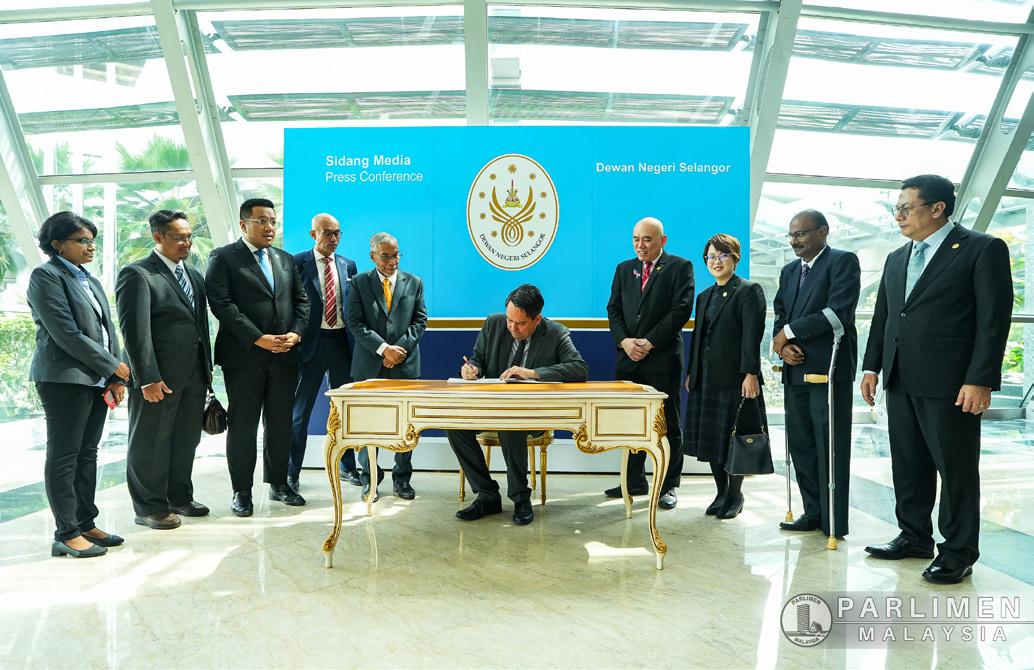
Subsequently, the CPA Secretary-General visited the Selangor State Legislative Assembly where he was received by the Speaker, Hon. Lau Weng San, met with State Members and toured the Parliamentary Chamber. The CPA Secretary-General was accompanied by Members of the Senate of Malaysia (Dewan Negara).
The CPA Secretary-General, Stephen Twigg said: “I was very pleased to visit the CPA Malaysia and CPA Selangor Branches, during my first visit as Secretary-General. There is a great interest in the Association’s work from the Legislatures of Malaysia, and we are developing further links and opportunities for networking and professional development for Commonwealth Parliamentarians across the country.”
The CPA South-East Asia Region comprises the national Parliaments of Malaysia and Singapore as well as 13 State Legislatures in Malaysia.
Chairperson of the CPA Small Branches, Joy Burch, MLA, Speaker of the Legislative Assembly of the Australian Capital Territory
EXAMINING ENVIRONMENTAL RESILIENCE IN SMALL JURISDICTIONS AND THE PARLIAMENTARY RESPONSES REQUIRED
One of the great activities of the CPA Small Branches network is the annual CPA Small Branches Workshop. This year, the CPA Small Branches Workshop on Legislative Leadership for Environmental Resilience in Small Jurisdictions, was held from 23 to 25 July 2024, in Honolulu, Hawaii. Parliamentarians and parliamentary staff from more than ten Parliaments attended the three-day workshop which included expert speakers and panel members from local and global environmental organisations. The three days were filled with lively conversation amongst the participants, active roundtables and discussion, and presentations from a series of experts.
We know that Parliamentarians play a multifaceted role in representing small jurisdictions through engagement with local communities as representatives, crafting laws as legislators and in holding governments accountable to commitments as scrutineers. It is therefore essential that we are equipped with the requisite knowledge and skills to devise effective environmental resilience strategies and foster connections with the wider policy and research community.
The workshop kicked off with a session entitled ‘What is Environmental Resilience and Why is it Important’. This session set the scene for participants on the characteristics of environmental resilience from a climate change, disaster risk reduction and sustainable energy transitions perspective. Participants had the benefits of hearing from experts in their fields on environmental resilience and the important role played by Parliamentarians in actively achieving change. Sessions that followed enabled participants to consider how and when Parliamentarians can intervene in the parliamentary cycle to shape change around environmental resilience and to use Parliaments to maximise benefits to communities. To achieve impactful and lasting change, Parliamentarians need to consider what their goals and objectives around environmental resilience could be.
One of the greatest challenges for small jurisdictions and achieving sustainable change is in the effective implementation of laws. The session on ‘Implementation of Sustainable Environmental Legislation’ considered how Parliamentarians can ensure there is accountability and oversight of legislation to achieve lasting change. In addition to legalisation, workshops covered the international landscape around international agreements, commitments and standards; particularly those centred around COP meetings.
To round off the above sessions around planning and
implementing laws, the next session explored strategies for accessing and leveraging climate finance effectively. Experts provided insights into the global climate finance environment and how Parliamentarians can source funding and ensure effective application by governments.
All participants enjoyed and were inspired by the words shared by Naima Te Maile Fifita, Executive Director, Institute for Climate and Peace, about the role youth play in activism and policy change.
For participants, it was not just sitting and learning through dialogue, rather, we had the opportunity to participate in a field trip to see firsthand the work of Juli Burden, who is the Agrivoltaics Systems Lead at the Hawai’i Agriculture Research Centre at the Mililani Solar Project. This project combines Agriculture and Photovoltaics (for example, solar panels) on the same land and gave an opportunity for participants to see a solar farm which is integrated into an agricultural site/farm. At the conclusion of the workshop all participants agreed to the following statement and outcomes.
The CPA Small Branches Workshop participants recognise the threat and impact of climate change and recognise the valuable contribution and expert knowledge the panellists and experts have shared. Key messages from the CPA Small Branches Workshop are:
• Parliaments need to be the centre of change
• Consideration of the ‘circular economy’ and the potential tensions between sustainable development and economic growth
• The value of knowledge exchange and best practice approaches of other CPA Small Branches
• Recognition of the importance of listening to, and empowering, youth
• The importance of constitutional change
• To harness the resources and expert knowledge from the Workshop when returning to your parliamentary role.
Recommendations:
• Share your knowledge and learnings with your Parliament
• Consider a ‘Youth Parliament’ or other similar outreach activity to engage the youth on climate change
• Consider drafting and promoting climate protection action plans for your institution
• Develop links and partnerships with supportive stakeholders such as the Blue Planet Alliance
• Consider a Committee enquiry to explore the potential opportunities of agrivoltaics
• Ensure the outcomes and outputs of this Workshop are reflected in the 2025 CPA Small Branches workplan.
Hon. Emani Fakaotimanava-Lui, an elected Member of the Niue Parliament, participated in this year’s workshop. Niue is a single island that is a raised coral atoll in the Pacific Ocean. The land area is 259 square kilometres (100 square miles) and the highest point above sea level is 65 metres. As such Niue is well aware of the impact of climate change and the need to consider environmental resilience.
“As a newly elected Member of Parliament on Niue, this was my first CPA event and I found it very informative with some important key take aways such as Green Banks, Agrivoltaics, Blue Planet Alliance, as well as the Container Deposit Scheme. I thoroughly enjoyed some of the presentations of what is being done in Hawai’i to mitigate climate change by setting foreseeable goals with achievable timelines. The exciting part is that other states and small island nations can also see the vision coupled
with the determination to also take action themselves. Although we’re small, but with concerted effort, we demonstrate our love for our environment and wish for it to be accessible to our children and future generations.
It was also great to hear and learn of how some senior Parliamentarians have navigated themselves during their time as legislators. My personal highlight was meeting other participants and sharing stories from each of our own jurisdictions. I would like to take this opportunity to thank our Legislative Office on Niue including the CPA team with their tireless efforts in organising such a well thought out Workshop. Kia Monuina"
The CPA Smal, Branches Workshop was not only successful in terms of imparting and enriching participant knowledge and understanding, but also forging meaningful commitments and friendships. Finally, I would like to put on record my thanks to all those who came and shared with us their knowledge and expertise.
COMMONWEALTH PARLIAMENTARIANS EXAMINE LEGISLATIVE LEADERSHIP FOR ENVIRONMENTAL RESILIENCE IN SMALL JURISDICTIONS IN HAWAII
Small jurisdictions in the Commonwealth often face unique environmental challenges due to their size, isolation and vulnerability to climate change and natural disasters.
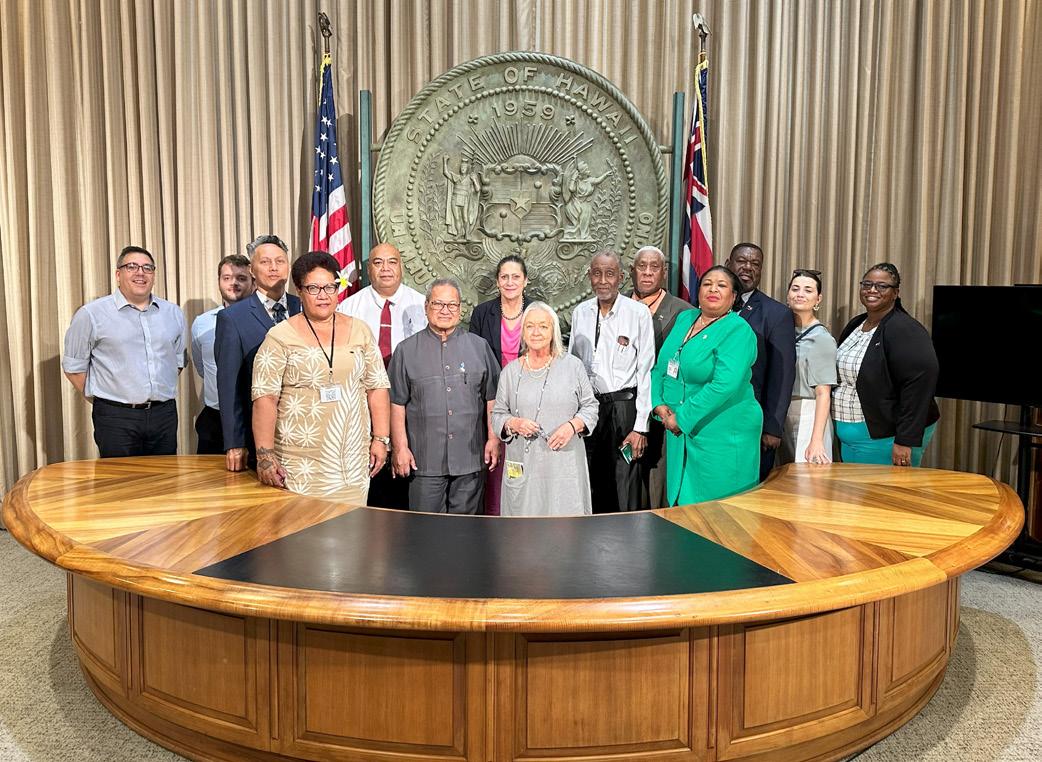
Commonwealth Parliamentarians came together with policy experts at a CPA Small Branches Workshop on Legislative Leadership for Environmental Resilience in Hawaii, USA from 23 to 25 July 2024 in partnership with the East-West Center and the Julie Ann Wrigley Global Futures Laboratory ASU, both experts in this field of research and policy development.
The workshop focused on enhancing capabilities to promote environmental resilience, addressing global challenges like climate change, disaster risk management and sustainable energy transitions. This initiative aligns with the CPA's broader mission to upskill Parliamentarians, equipping them with the practical tools and knowledge essential for their role as community representatives, legislators and scrutineers.
Delegates attended from CPA Branches in Antigua and Barbuda, Australian Capital Territory, British Virgin Islands, Niue, Saint Lucia, Samoa, Tonga, Turks and Caicos Islands and Tuvalu.
The CPA Small Branches Chairperson, Joy Burch, MLA, Speaker of the Australian Capital Territory welcomed delegates and highlighted that the workshop’s proximity to jurisdictions in the CPA Pacific Region has enhanced accessibility for participants, who have been under-represented in previous CPA Small Branches initiatives.
US Congressman, Ed Case welcomed delegates to the EastWest Center and said: “I wish to say ‘mahalo’ to both the EastWest Center and the Commonwealth Parliamentary Association. You have similar strengths and a shared vision, and moreover, the experience and the ability to bring people together, to facilitate dialogue, to foster collaboration and to arrive at ideas that can bring hope to resolution.”
Expert panellists from law and politics included Hawaii State Senators Chris Lee and Jarrett Keohokalole; former New Zealand MP, Hon. Munokoa Poto Williams; Dr Abbi Hobbs, Senior Analyst in Climate Change Scrutiny at the Scottish Parliament;
Justice (Ret.) Michael Wilson, former associate justice of the Hawaii Supreme Court and Midori Akamine, an Attorney of Environmental law.
Other experts from the spheres of advocacy and academia represented organisations such as the Blue Planet Alliance, the Commission of Small Island States on International Law and Climate Change Secretariat (COSIS), the Global Institute of Sustainability and Innovation, and the University of Hawaii.
At the end of the workshop, participants agreed on a series of pledges and future actions that will be reflected in the 2025 CPA Small Branches Workplan.
The CPA Secretary-General, Stephen Twigg stated that: “Hawaii has demonstrated leadership in setting ambitious renewable energy targets and its proactive stance on sustainability sets an inspiring backdrop for legislative discussions. Additionally, Hawaii's location facilitates access to a wide range of local expertise, organisations, and potential partners, enriching the Workshop with insights and practices in environmental resilience.”
Commonwealth Parliamentarians visit the Hawaii State Legislature.
THE CHALLENGES OF ‘DEEPFAKES AND DISINFORMATION’
Recent developments in Artificial Intelligence (AI) and synthetic media have added new layers of complexity when combating disinformation. These technologies can create highly realistic but entirely fabricated content, making it increasingly difficult for individuals and organisations to distinguish between truth and falsehood. With more than half the world’s population voting in elections in 2024, the impact of deepfakes on public discourse and our ability to maintain fact-based narratives is a major concern for democracies across the world this year.
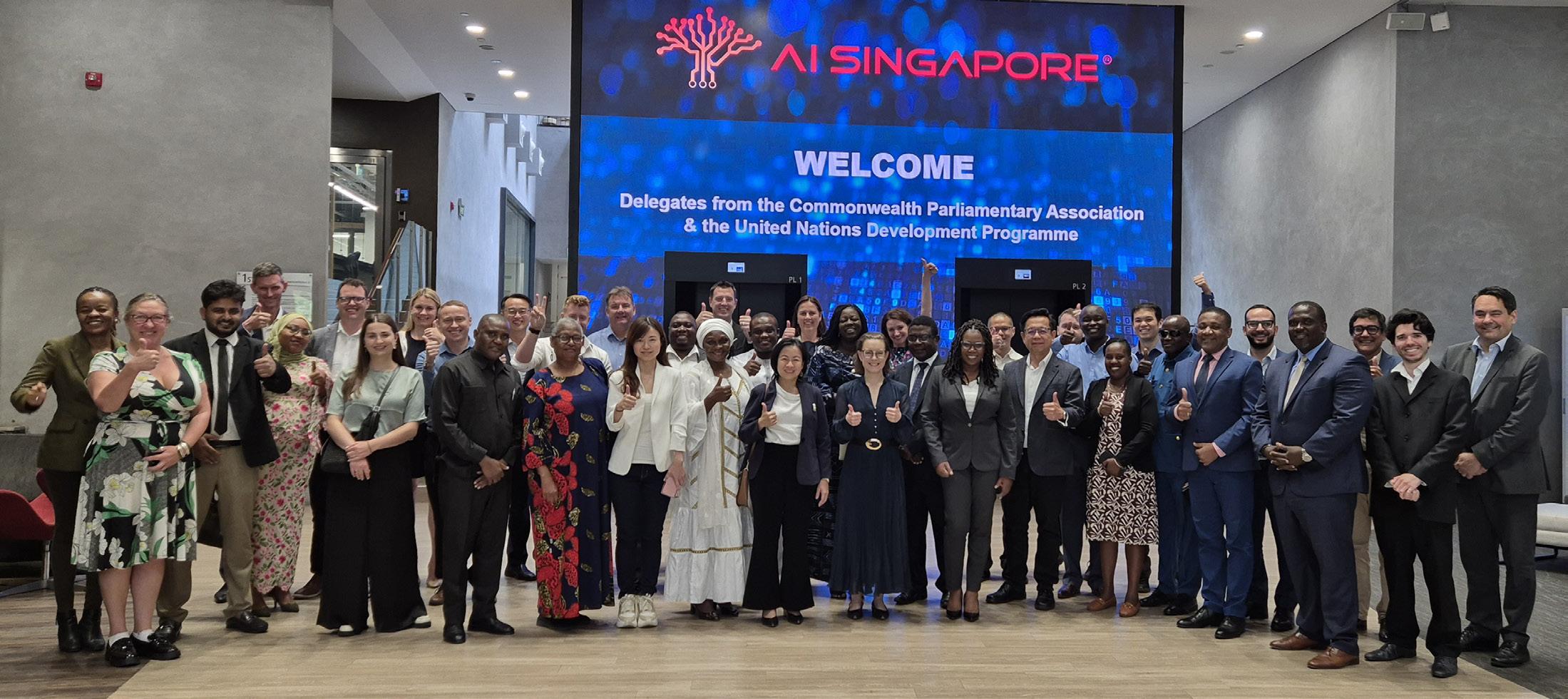
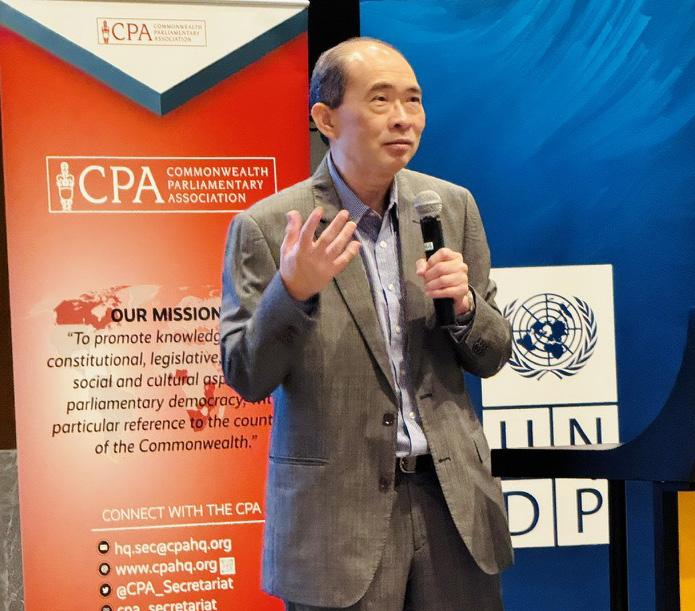
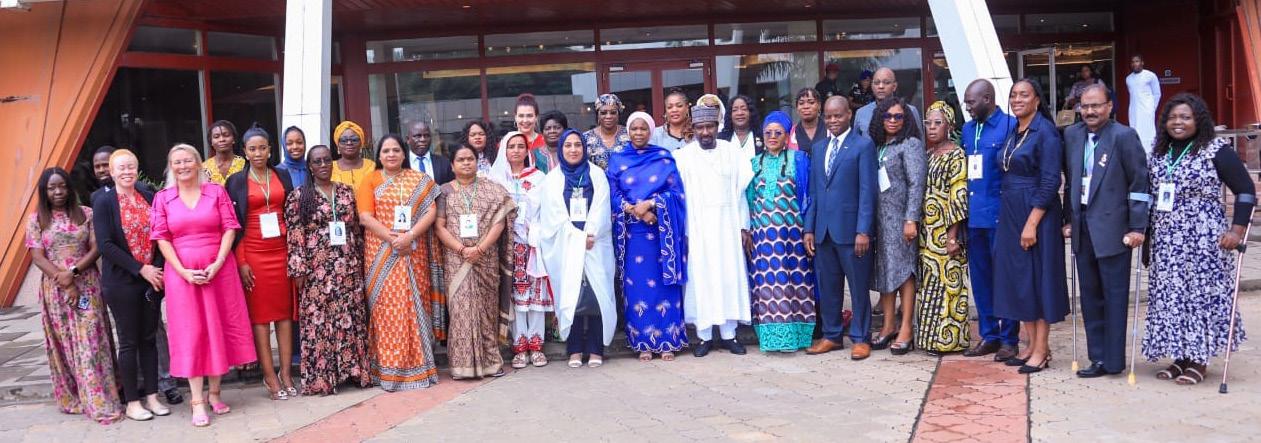
Commonwealth Parliamentarians joined leading experts to discuss these issues at the CPA and UNDP Conference on Artificial Intelligence and Disinformation: ‘Democracy in the age of deepfakes’ held in Singapore from 18 to 20 June 2024. The Conference aimed to raise awareness about the latest developments in Artificial Intelligence and synthetic media and their implications for democracies.
The Conference featured panel discussions, roundtables, dialogues, explainers and Q&As with experts in the field covering topics such as: the core concepts of disinformation, AI and synthetic media; the threat landscape and the strategies to combat disinformation; and the legislative environment and policies to ensure the integrity of digital democracies.
On the second day of the CPA/UNDP Conference, delegates visited AI Singapore, one of the leading research companies working with new technologies and the national AI programme, where they heard about the innovative work taking place on building an AI ecosystem and harnessing synthetic media. Delegates were welcomed by Ms Tin Pei Ling, MP, on behalf of the Speaker of the Parliament of Singapore, who said: “Whilst advances in AI technologies bring numerous opportunities and benefits in the ways we work, live and interact with each other, it is important that we acknowledge the threats posed by any potential misuses and abuses of these powerful tools. We are delighted that Singapore has been chosen to host this landmark event in the CPA’s calendar and that delegates have the opportunity to engage with some of the innovators and experts based here in Singapore.”
As part of the programme for the Conference, the delegates visited the Parliament of Singapore for a tour with the Deputy Speaker, Hon. Christopher de Souza, MP. Delegates attended from CPA Branches in Borno (Nigeria); British Virgin Islands; Cameroon; Ghana; Jamaica; Kenya; Malawi; Namibia; New South Wales (Australia); Nigeria; Penang (Malaysia); Queensland (Australia); Singapore; Sri Lanka; United Kingdom; Victoria (Australia); Wales; Western Australia; Zanzibar.
Reflecting on the CPA and UNDP AI Conference, the CPA SecretaryGeneral, Stephen Twigg, said: "The conference was a valuable opportunity for Parliamentarians to learn from experts and each other about the latest developments in AI and synthetic media, and their impact on our public discourse. I believe that Legislators have a vital role in ensuring the integrity of our digital democracies, and I hope that the conference will inspire them to take action and collaborate with key actors in this field."
FIRST CPA RESIDENCY FOR PARLIAMENTARY CLERKS IN SRI LANKA
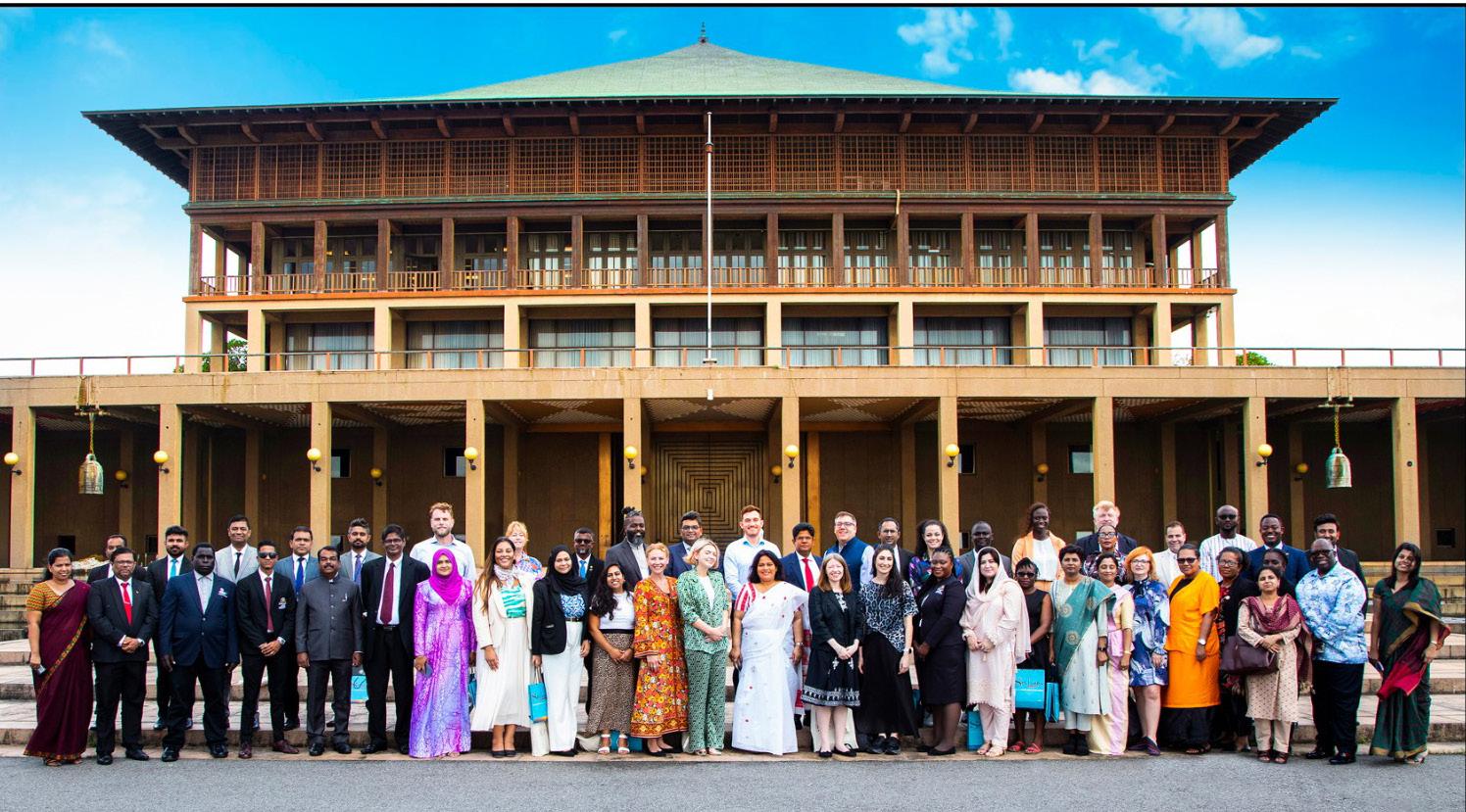
Over forty Commonwealth Clerks and parliamentary officials from across the CPA’s membership attended the CPA Advanced Residency Programme for Leadership in Parliament in Colombo, Sri Lanka from 9 to 15 June 2024. This was the first Residency Programme held for Clerks and parliamentary officials as part of the CPA Parliamentary Academy.
The five-day programme is specifically designed for parliamentary officials and enhances skills on topics ranging from leadership and strategic thinking to project management and conflict resolution. The Residency course provided attendees with an opportunity to meet in-person and learn from their colleagues in other Parliaments across the Commonwealth in a unique ‘training for trainers’ session which embeds sustainability into parliamentary learning and development. One Parliamentary Clerk said: “This was a fantastic CPA programme that brought together different perspectives from around the Commonwealth to learn from each other and to develop our skills in managing Parliaments, both large and small.”
The CPA Secretary-General, Stephen Twigg, said: “I am very grateful to the Parliament of Sri Lanka for hosting the first CPA Parliamentary Academy Residency for Clerks. The Academy continues to go from strength to strength in promoting mutual learning and best practice. It also offers a great opportunity for Clerks and parliamentary officials to network, learn and develop their skills.”
The delegates were welcomed by the Speaker of the Parliament of Sri Lanka and CPA Sri Lanka Branch President, Hon. Mahinda Yapa Abeywardana, MP, who said that parliamentary officials have a great responsibility to serve their countries by strengthening democracy and that this programme is a great platform to build up the friendship and professional relations across the Commonwealth. “It was a pleasure to welcome so many Parliamentary Clerks and officials from across the Commonwealth to the Parliament of Sri Lanka this week for the first CPA Parliamentary Academy Residency.”
The Secretary-General of the Parliament of Sri Lanka, Mrs Kushani Rohanadeera added that aim of this CPA programme is not only to enrich professional skills but also to foster a culture of continuous learning and development within parliamentary institutions.
The programme was co-hosted by the Commonwealth Parliamentary Association Headquarters Secretariat and the Parliament of Sri Lanka with delegates attending from Australia Federal; Bougainville; Eswatini; Fiji; The Gambia; Guyana; Kenya; Maharashtra; The Maldives; New South Wales; New Zealand; Pakistan; Puducherry; Scotland; Seychelles; Sri Lanka; Tanzania; Trinidad and Tobago; United Kingdom.
Since the launch of the CPA Parliamentary Academy in 2021, there have been four Residency courses for Parliamentarians that were hosted by New South Wales (Australia), Western Cape (South Africa), Alberta (Canada) and Scotland. This is the first time that a Residency Programme has been held for Clerks and parliamentary officials. The CPA Parliamentary Academy Residency courses complement the CPA’s online courses, providing face-to-face interactive learning and knowledge-sharing at a more advanced level.
CPA SECRETARY-GENERAL VISITS THE PARLIAMENT OF VICTORIA
The CPA Secretary-General, Stephen Twigg visited the Parliament of Victoria in Australia on 8 August 2024 where he met with the Joint CPA Victoria Branch Presidents - Hon. Maree Edwards, MP, Speaker of the Legislative Assembly and Hon. Shaun Leane, MLC, President of the Legislative Council. The CPA Secretary-General briefed the CPA Victoria Branch on the latest activities of the CPA, its work in the CPA Australia Region and preparations for the 67th Commonwealth Parliamentary Conference in Sydney later this year. He also heard about work by the Victoria Parliament on the implementation of the ‘Transitioning to Life After Parliament’ recommendations and the establishment of a Parliamentary Workplace and Standards Commission.
In addition, the CPA Secretary-General was briefed on the work of the Parliament of Victoria through the Pacific Parliamentary Partnerships Fund which twins Victoria with the Legislatures in Nauru, Tuvalu and Fiji to share best practice, training and equipment. Later in the day, the CPA Secretary-General visited Deakin University, which has worked with the CPA to develop an updated set of Standards for Codes of Conduct which was launched recently.
Image credit: Parliament of Sri Lanka/Photo by U.G. Nuwan Duminda.
YOUNG COMMONWEALTH LEADERS DEBATE RESPONSES TO CLIMATE CHANGE AT 12th COMMONWEALTH YOUTH PARLIAMENT IN NEW ZEALAND
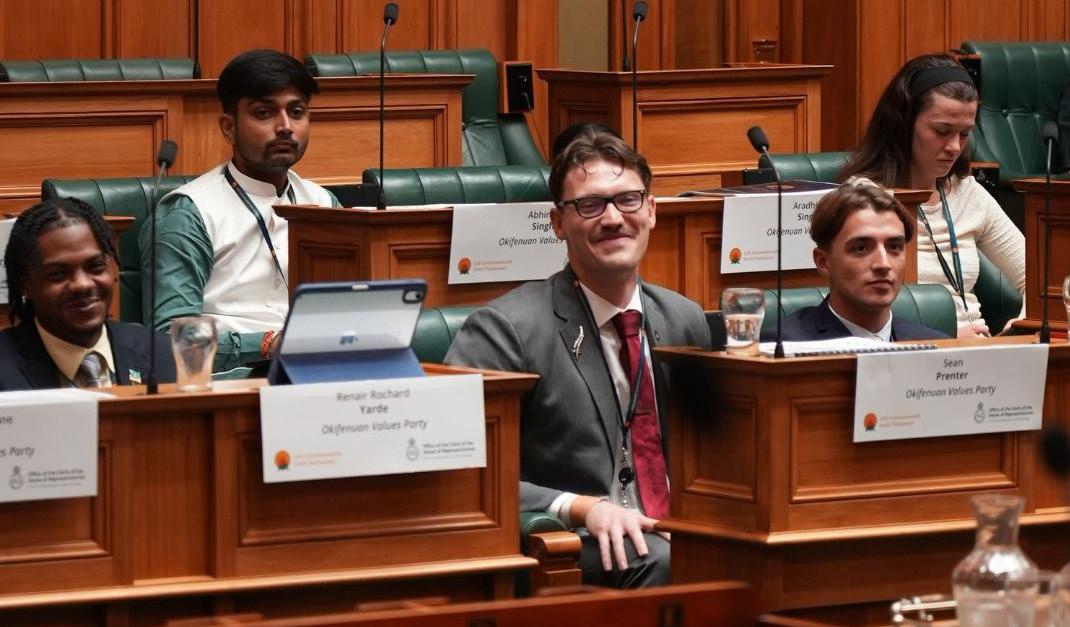
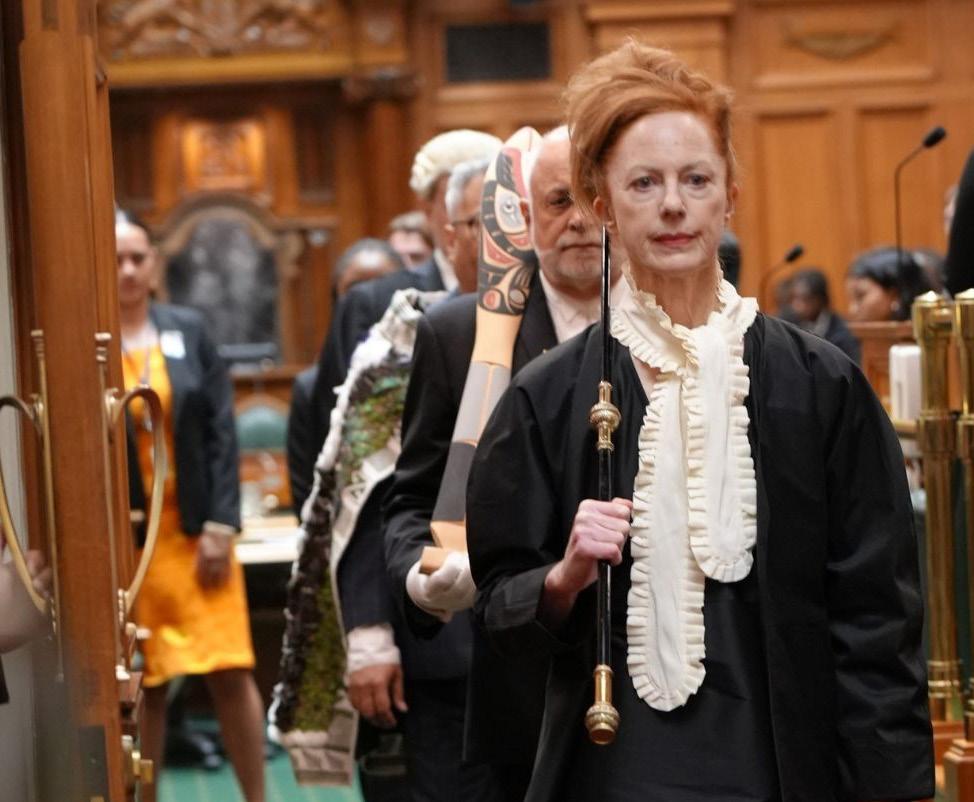
65 young people from 39 Commonwealth jurisdictions took part in a three-day ‘mock’ Parliament organised by the Commonwealth Parliamentary Association. The 12th Commonwealth Youth Parliament (CYP) was hosted by the Parliament of New Zealand in Wellington from 2 to 5 September 2024. Participants aged 18 to 29 acted as Members of the ‘Parliament of Okifenua’, a fictional island nation of 2.5 million people in the South Pacific. They represented four mock political parties, two of which were in a governing coalition and two who represented the opposition. Delegates were assigned roles including Prime Minister and Deputy Prime Minister, Leader of the Opposition, party leaders, whips, members of Parliamentary Committees and Ministers.
At the opening ceremony, the CPA President and President of the Legislative Council of New South Wales, Hon. Ben Franklin, MLC welcomed the participants: “To all the delegates, I want to say how excited I am to see so many passionate and engaged young people ready to dive into this unique opportunity. This isn’t just a chance to observe how a Parliament works - it’s your chance to get hands-on experience, to debate, to challenge ideas and to really understand the processes that shape governance.”
Hon. Teanau Tuiono, MP and Hon. Francisco Hernandez, MP (both New Zealand) served as the Speaker of the 12th Commonwealth Youth Parliament during their proceedings. Youth delegates were supported by several experienced political mentors, including Hon. Nicole Werner, MLA and Hon. Michael Galea, MLA from the Victoria Legislative Assembly and Hon. Tamatha Paul, MP, Hon. Katie Nimon, MP and Hon. Tom Rutherford, MP from the Parliament of New Zealand.
The 12th CYP centred on a debate over a mock Bill on people displaced by climate disasters, and what the correct humanitarian response should be. The Bill was divided into three sections: the first of these focused on the granting of climate change visas, the second on providing an assistance programme for visa holders and the third on establishing a climate change humanitarian fund.
The Youth Parliamentarians debated, amended and voted on the mock Climate Change Resettlement and Humanitarian Aid Bill. The Bill was introduced by Prince Kwakye from Ghana, who acted
as the Foreign Minister and a member of the governing Okifenuan Social Democratic Party. Following passionate Second Reading debates, the Chamber held inquiry-focused amendment debates before ending with the Third Reading debate. Joseph WaldingKaraitiana of New Zealand, Nicholas Sagadaya of Guyana, Priscilla Sevor of Ghana, Corissa McClure of Guyana and Sabrina Jamil of the United Kingdom brought the debate to a close by providing their summaries as party leaders. At the final vote, the ‘mock’ Bill passed with 44 votes in favour to 18 against.
Reflecting on the week’s programme, Sabrina Jamil, the UK’s representative and the Leader of the Oceanic Progress Party in the mock Parliament, said: “This incredible role gave me the opportunity to represent over 17 million young people across the UK, collaborating with Youth Parliamentarians from around the globe in Wellington.”
A delegate from Guyana, Nicholas Sagadaya, was selected for the role of Prime Minister. He also had positive comments about the week: "The Commonwealth Youth Parliament allowed everyone the chance to experience a rich culture from New Zealand as well as the parliamentary procedures. Overall, it was a positive experience.”
The CPA Branches represented at the 12th Commonwealth Youth Parliament were: Kenya, Tanzania, Uganda, Ghana, Namibia, Sri Lanka, Punjab, Pakistan, Queensland, New South Wales, Australian Capital Territory, South Australia, Tasmania, Australia, Falkland Islands, Jersey, Gibraltar, United Kingdom, Wales, Saint Lucia, Guyana, Turks and Caicos Islands, Trinidad and Tobago, Prince Edward Island, India, Rajasthan, Uttar Pradesh, Tamil Nadu, Tonga, Samoa, Niue, Nauru, New Zealand, Fiji and Singapore.
The Commonwealth Youth Parliament is the CPA’s flagship youth programme designed to introduce young Commonwealth citizens to the role and purpose of Parliaments as democratic institutions.
Image: Parliament of New Zealand.
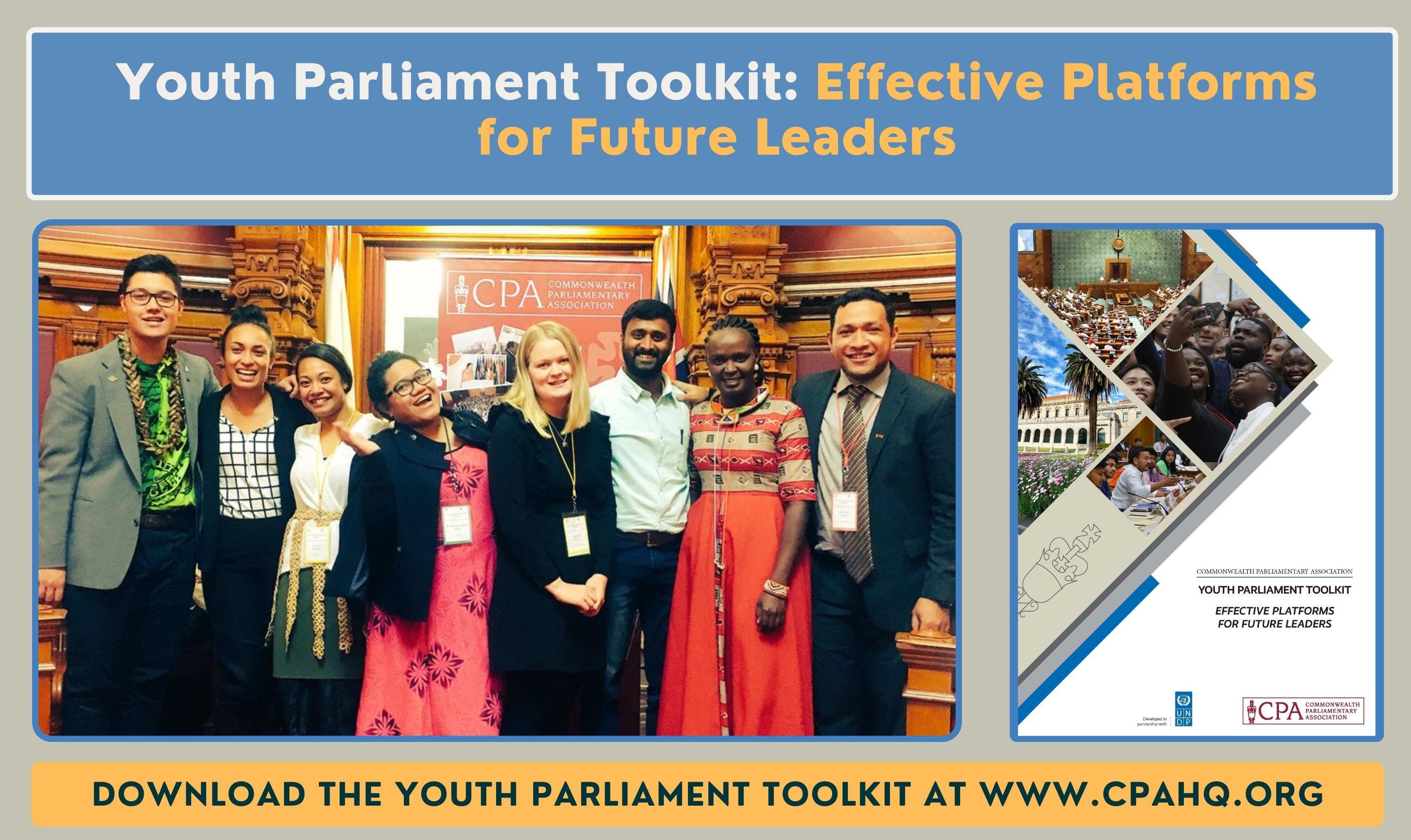
YOUTH PARLIAMENT TOOLKIT LAUNCHED FOR COMMONWEALTH PARLIAMENTS
Youth engagement has been an important long-term passion and commitment of the Commonwealth Parliamentary Association (CPA). It is firmly embedded in the CPA Strategic Plan 2022-2025 which states that: “We pledge to prioritise the role and interests of young people within the CPA’s work and operations. We will uphold and promote youth participation in politics.”
One of the many ways that the CPA seeks to pursue this pledge is through our biennial Commonwealth Youth Parliament programme. For over 27 years, the CPA has been a leader in its field, with its first Commonwealth Youth Parliament (CYP) delivered in 1997. Over 600 young Commonwealth citizens have participated in the Commonwealth Youth Parliament to date. The programme is aimed at young people aged 18 to 29 who gain experience being young Parliamentarians.
Participants experience life in the political spotlight and gain practical experience of the parliamentary system. Formal parliamentary practice adapted from several Commonwealth countries is followed and the proceedings are observed under the watchful eyes of experienced parliamentary officials. The Commonwealth Youth Parliaments’ alumni have progressed into a wide variety of careers including several participants who are now current Speakers and Members of Parliaments. It is with these ideals in mind that the Commonwealth Parliamentary Association (CPA) and the United Nations Development Programme (UNDP) have developed this latest resource on Youth Parliaments, coinciding with the Commonwealth Year of Youth in 2023/2024a year dedicated to youth-led action for sustainable and inclusive
development. As the publication highlights, the shape and scope of a Youth Parliament or its equivalent youth engagement programme can vary from place to place, nevertheless whatever approach is taken, its need cannot be underestimated.
UNDP is committed to enhancing young people’s political participation which includes partnering with Parliaments and supporting mechanisms such as Youth Parliaments as important platforms for meaningful and sustained youth engagement in all aspects of policy- and decision-making worldwide.
The CPA Secretary-General, Stephen Twigg said: “The political participation of young people has the potential for tremendous impact. To avoid tokenism, young people’s right to participate fully should be taken seriously and the voices of young people heard. Young people have a vital role to play in public discussion about how best to meet the social, economic, technological and political challenges of the future. We hope that this new CPA/UNDP Toolkit on Youth Parliaments will provide comprehensive advice and support stakeholders in establishing and strengthening Youth Parliaments as effective platforms for young changemakers and future leaders.”
The Youth Parliament Toolkit contains expert advice on establishing, planning, running and promoting a Youth Parliament with additional case studies and evaluation methods from across the Commonwealth.
To download the new CPA/UNDP Youth Parliaments Toolkit please visit the CPA website www.cpahq.org or email hq.sec@cpahq.org to request a copy.
CPA NEWS
COMMONWEALTH PARLIAMENTARIANS ATTEND 60th CPA CANADIAN REGIONAL CONFERENCE IN ONTARIO
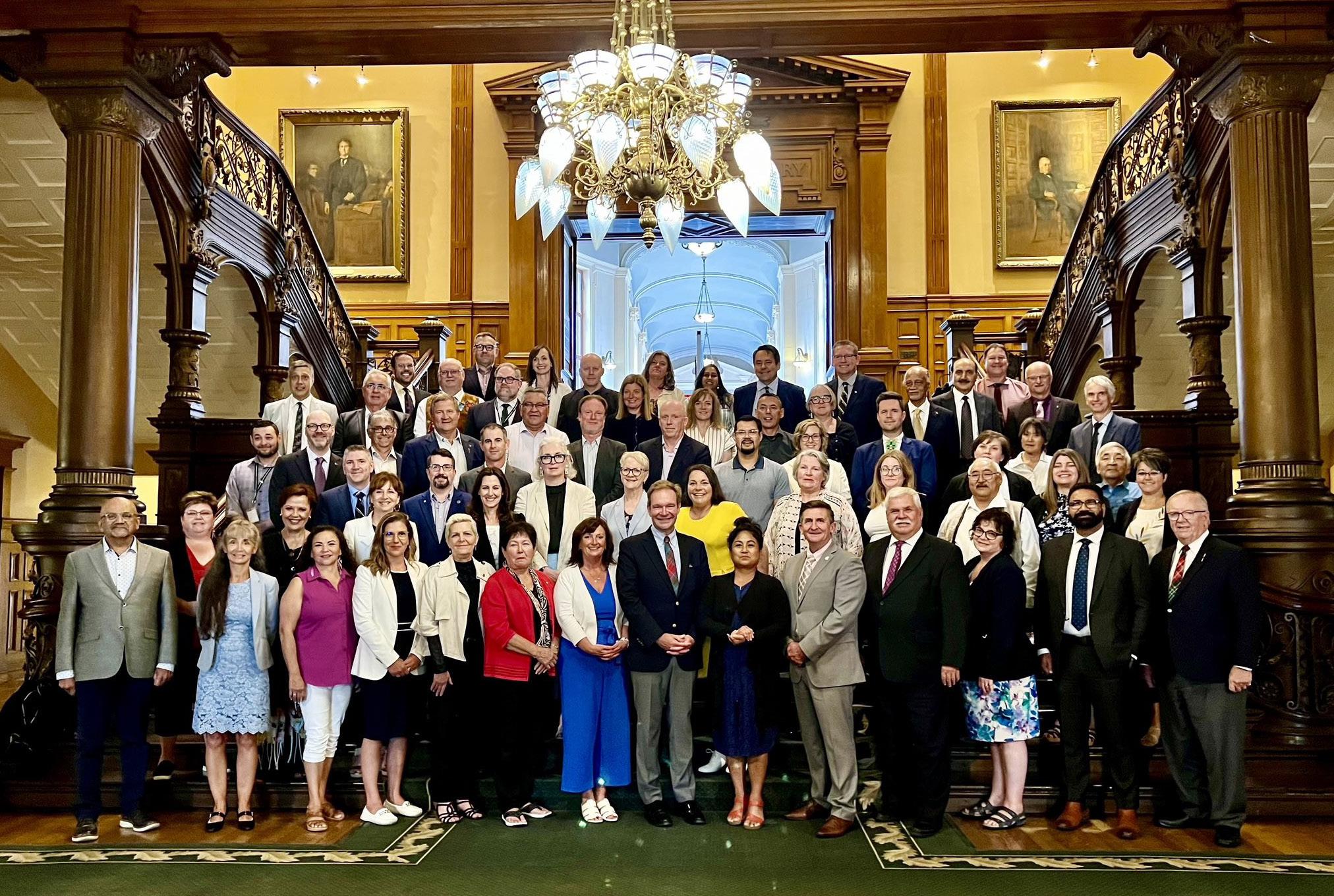
Over 50 Commonwealth Parliamentarians and Parliamentary Clerks discussed the challenges facing Legislatures at the 60th Commonwealth Parliamentary Association (CPA) Canada Regional Conference, which took place in Toronto, Ontario from 20 to 27 July 2024. Delegates were welcomed to the Regional Conference by the Speaker of the Legislative Assembly of Ontario, Hon. Ted Arnott, MPP.
The CPA Canada Regional Conference was attended by Members of the Federal, Provincial and Territorial Legislatures of the Region, as well as the Acting CPA Chairperson and Speaker of the Barbados House of Assembly, Hon. Arthur Holder, MHA, and the Speaker of the Legislative Assembly of Victoria in Australia, Hon. Maree Edwards, MLA. Delegates were also welcomed by the Lieutenant-Governor of Ontario, Her Honour Edith Dumont who spoke about the Province and its commitment to the Commonwealth.
Delegates attended panel sessions on a wide range of topics including Artificial Intelligence in the Legislature presented by Janet Ecker of the Vector Institute; how to build a healthy and inclusive workplace culture with the Speaker of the Legislative Assembly of British Columbia, Hon. Raj Chouhan, MLA; and the crisis of news media and its effects on our democracies with the Executive Director of the Dais (Toronto Metropolitan University), Karim Bardeesy and the CEO of the Inspirit Foundation, Sadia Zaman.
The Regional Conference also held discussion panels on women in political office and promoting influential roles for women with guest discussion leaders, Dr Kate Graham from Huron University College and Members from Ontario and Québec.
The CPA Secretary-General, Stephen Twigg briefed Members on the latest CPA activities and said: “I was delighted to attend the 60th
CPA Canada Regional Conference in Ontario and to hear of the innovative work that Canadian Parliamentarians and parliamentary staff are undertaking in the fields of Artificial Intelligence, creating an inclusive workplace culture and examining the role of the media in our democracies. It was interesting to hear the different perspectives from Commonwealth Parliamentarians in Canada as well as the opportunity for Members to learn from each other.”
Avni Kondhia, Programmes Manager from the CPA Headquarters also presented on the CPA’s Recommended Benchmarks for Democratic Legislatures and the process of self-assessment available to CPA Branches as a method of improvement and progression.
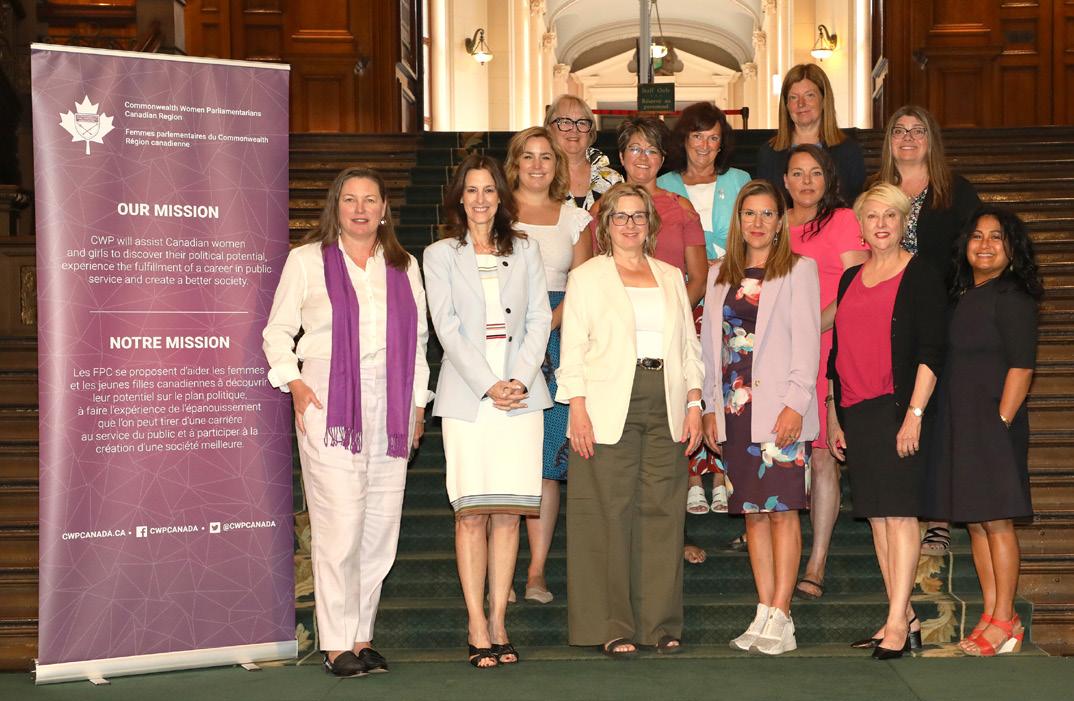
Ahead of the CPA Canada Regional Conference, the Commonwealth Women Parliamentarians (CWP) Canada Regional Conference also took place. The CWP Canada Regional Chair, Hon. Susan Leblanc, MLA (Nova Scotia) chaired the Steering Committee meeting and CWP delegates engaged in sessions focusing on the theme of ‘Women in Action’. Delegates heard from panellists such as Karen Vecchio, MP and former Chair of the Canadian House of Commons Standing Committee on the Status of Women (2017 to 2024) on women in leadership roles; Manavi Handa, a Midwife and Associate Professor at Toronto Metropolitan University and Keri Gray, Entrepreneur and founder of Shades of Gray Indigenous Pet Treats on women entrepreneurs; and Colleen James, a Councillor from the Waterloo Region on women running for election.
The Canadian Region of the Commonwealth Parliamentary Association comprises of the Provinces, Territories and the Federal Parliament of Canada. The Region is governed by a Regional Council which is made up of representatives from each of the Legislatures of Canada.
46th REGIONAL CONFERENCE OF THE CPA CARIBBEAN, AMERICAS AND THE ATLANTIC REGION DISCUSSES THE CHALLENGES FACING MODERN PARLIAMENTS
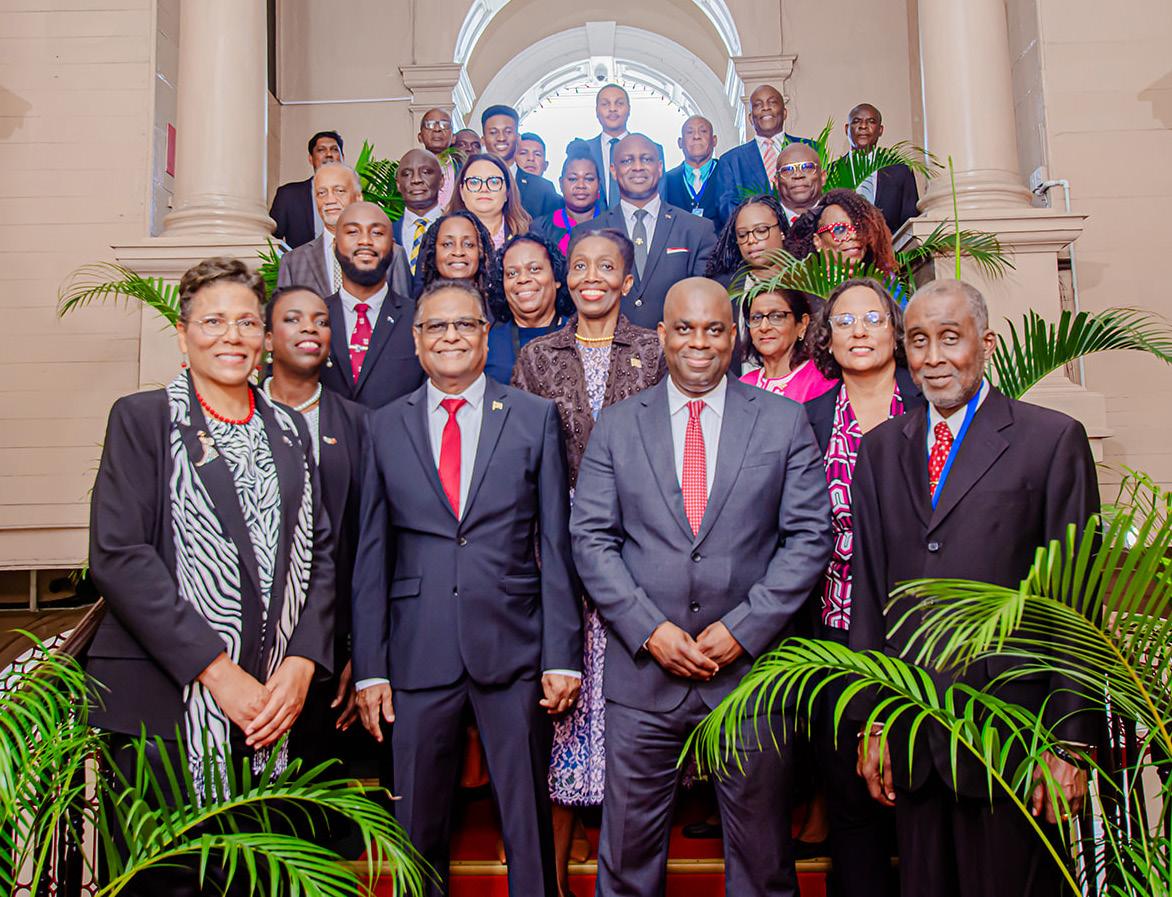
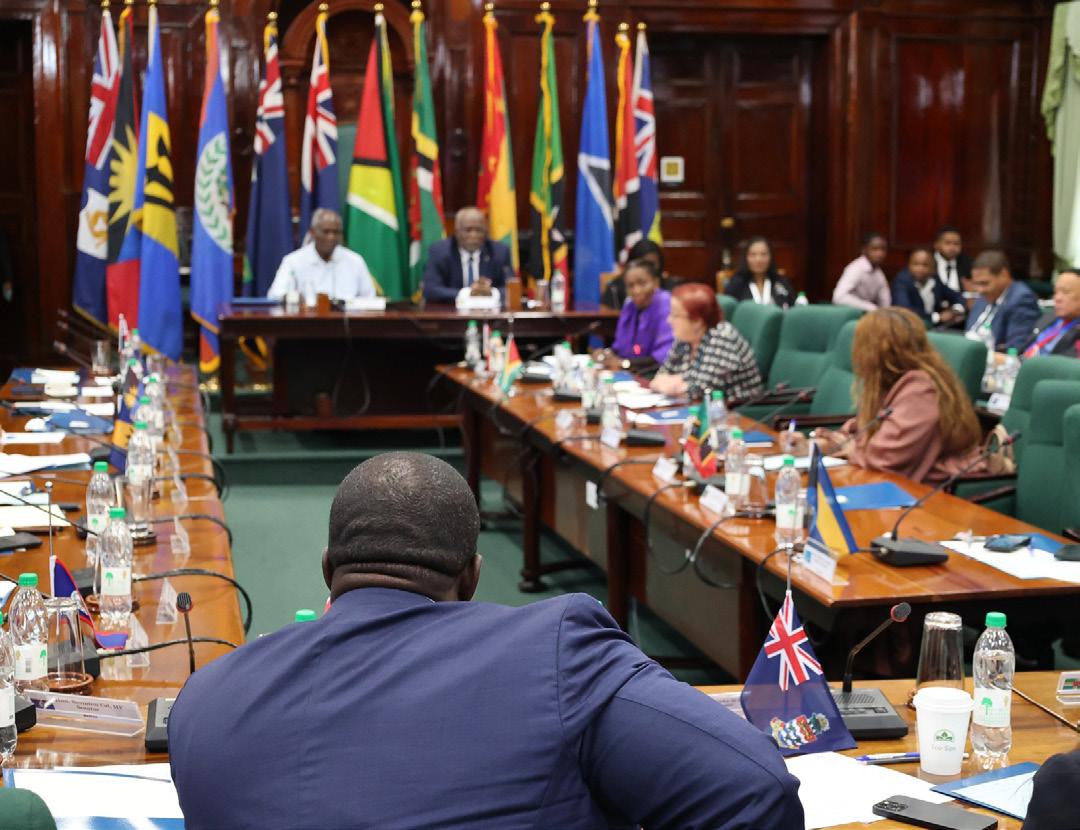
The Guyana Branch of the Commonwealth Parliamentary Association (CPA) has successfully hosted the 46th CPA Regional Conference of the Caribbean, Americas and the Atlantic (CAA) Region on the theme of ‘Democracy: Challenges facing modern Parliament’. The CPA Regional Conference saw over 60 delegates participate from 1 to 7 September 2024 in Georgetown. The Regional Conference also focused on the pressing issues facing the wider region such as peace and security, migration and the impact of Artificial Intelligence.
The Speaker of the National Assembly of the Parliament of Guyana, Hon. Manzoor Nadir, MP said: "As Speaker of the Guyana National Assembly, it was an honor to host the 46th CPA CAA Regional Conference on 'Democracy and Challenges Facing Modern Parliaments.' Bringing together Members from across the Region to share common challenges and solutions, the vibrant exchange of ideas on AI, security, governance and gender has equipped us to navigate the complexities of modern governance and fortify parliamentary democracy across our Region."
During their opening speeches, Caribbean leaders underscored the democratic challenges faced by the Region and urged delegates to take workable solutions and best practice back to their own Parliaments. The President of Guyana, Hon. Dr Mohamed Irfaan Ali gave the keynote address and said: “Democracy thrives in an environment where diverse voices are heard and where differences are respected. In our increasingly polarised world, it is more important than ever that we promote dialogue and understanding, both within our Parliaments and within our societies.”
The CPA Secretary-General, Stephen Twigg, briefed Members on the latest CPA activities and stated that: “I was delighted to attend the 46th CPA Caribbean, Americas and the Atlantic Regional Conference in Guyana and to hear of the challenges facing Parliamentarians and parliamentary staff today. The CPA Regional Conferences offer opportunities to hear different perspectives from Commonwealth Parliamentarians across each Region as well as providing a space for Members to learn from each other.” The CPA Secretary-General also paid tribute to the second Commonwealth Secretary-General (1975-1990) and former Foreign Minister of Guyana, Sir Shridath ‘Sonny’ Ramphal, who passed away recently.
The CPA's Jack Hardcastle also presented on the CPA’s Recommended Benchmarks for Democratic Legislatures and the process of self-assessment available to CPA Branches as a method of improvement and progression.
A number of nations and territories were represented including Anguilla; Antigua and Barbuda; The Bahamas; Barbados; Belize; British Virgin Islands; Cayman Islands; Dominica; Guyana; Nevis; Saint Lucia; St Kitts and Nevis; Trinidad and Tobago; Turks and Caicos Islands. The Acting CPA Chairperson and Speaker of the Barbados House of Assembly, Hon. Arthur Holder, MP, SC also attended the Regional Conference.
During the week, the 14th CAA Regional Conference for Commonwealth Women Parliamentarians (CWP) took place and featured sessions on gender-sensitive Parliaments, healthcare access for women and girls and the experiences of women
Presiding Officers. Presenters included Hon. Vindhya V. H. Persaud, MP, Minister in Guyana and Benite Dibateza, CWP Coordinator at the CPA Headquarters. Delegates were welcomed by the CWP CAA Regional Chairperson, Hon. Valerie Woods, Speaker of the House of Representatives of Belize and Janet Wallace, Finance Director at the CPA Headquarters (on behalf of the CPA Secretary-General).
The 17th Caribbean Regional Youth Parliament took place at the end of the Regional Conference. Young people aged 18 to 29 years from across the Region came together to debate and experience parliamentary democracy in action. The youth delegates debated a motion on the benefits of greater youth representation in Legislatures. Representatives attended from Anguilla, Antigua and Barbuda, Cayman Islands, Guyana, Barbados, and Trinidad and Tobago. The Regional Youth Parliament provides a platform for young leaders to engage in meaningful dialogue on pressing issues within their jurisdictions and the wider region, fostering leadership skills and promoting youth involvement in governance. Many Legislatures in the Caribbean Region also hold their own Youth Parliaments.
LOOKING AHEAD TO CHOGM 2024 IN SAMOA
The Prime Minister of Samoa speaks about the first time that a Pacific Island country like Samoa will host the biennial Commonwealth Heads of Government Meetings (CHOGM).
It is not very often that we gather to speak about the Commonwealth, but this year, we are bringing the Commonwealth to Samoa, and to our Blue Pacific continent. It is fitting therefore that we pay tribute to the Commonwealth of Nations, an important organisation that Samoa joined in August 1970, of which nine of our Pacific Islands Forum are also members.
Commonwealth Day is celebrated on 11 March every year, commemorating this year, the 75th anniversary of its journey and growth as a unique family of independent countries from Africa, Asia, Caribbean and the Americas, Europe and the Pacific. With its diverse membership, the Commonwealth comprises the world’s largest to the smallest, and low- and high-income countries. Of the 56 members of the Commonwealth, 33 of the world’s 42 small states are members. Samoa and seven other Pacific Island Forum countries fall into this grouping of small states, comprising a mix of Small Island Developing States (SIDS) and Least Developed Countries (LDCs).
Since independence, Samoa has gradually joined many multilateral and regional organisations to bolster our political and development relations that have helped realise our development aspirations. Equally important, however, are the roles and functions that political institutions like the Commonwealth and the Pacific Islands Forum play in our development. These organisations, bring together the political leadership of our countries to consider these very issues. For many of us, the Commonwealth has been a constant in our lives, seeking to promote and advance our shared goals of development, democracy, human rights, freedom, peace and the interests of vulnerable states for and on behalf of 2.5 billion of our citizens, in particular our youth, women and children, anchored in solidarity, and the values and principles expressed in the Commonwealth Charter. The Commonwealth is vital global partner for advocacy and support, particularly for small and vulnerable countries like Samoa. Collectively, we have an opportunity to respond and to make a difference.
Our theme for the Samoa Commonwealth Heads of Government Meeting (CHOGM) 2024 is ‘ One Resilient Common Future: Transforming our Common Wealth’. Our focus is on resilience, as a
unifying approach that transcends the humanitarian, development, human rights, and peace and security pillars. The theme we have chosen will allow us to look at all the key pillars of the Commonwealth through a resilience lens. We strongly believe that we should focus on solutions and accelerated action. We speak from the collective experience of the Blue Pacific Continent, where our Pacific Islands Forum Leaders have declared climate change as the single greatest threat to the security and well-being of our people; where the ocean makes up 96% of our Blue Pacific region; and where we are amongst the first to most immediately suffer the impacts of climate change.
This is not the first time that the Pacific has hosted a CHOGM, but it is the first time that a Pacific Island country like Samoa will host a CHOGM. Australia hosted CHOGMs in 1981, 2002 and 2011. New Zealand hosted in 1995. Vanuatu was scheduled to host the CHOGM in 2017 but was unable to host after Cyclone Pam devastated the country’s infrastructure in March 2015. These are the realities of our countries, and it is why the Commonwealth ‘Aiga’ (meaning family in Samoa) is important to us.
As host and incoming Chair of the Commonwealth, Samoa has an important opportunity to bring a unique perspective to the table and to contribute and influence discussions on all aspects of political and socio-economic development.
Consistent with the spirit of our Commonwealth ‘Aiga’, and guided by the Fa’asamoa, the Samoa government and people eagerly anticipate welcoming the Commonwealth family to our island home and to our Blue Pacific Continent. We are working hand-in-hand with the Commonwealth Secretariat with the invaluable support of our partners and the Commonwealth Family, to ensure a successful, productive and unique event, and to the further strengthening of the spirit of Commonwealth cooperation.
This article is taken from the press statement by the Prime Minister of Samoa regarding CHOGM 2024 (3 September 2024).
Hon. Fiame Naomi Mata’afa is the Prime Minister of Samoa. She first entered the Parliament of Samoa in 1985 and is the leader of the Fa’atuatua i le Atua Samoa ua Tasi (F.A.S.T.) party. She is the first female Prime Minister and was also the first Deputy Prime Minister of Samoa. She is the Member of Parliament from the Lotofaga Constituency on Upolu’s South Coast. She first joined the Cabinet in 1991 as Minister of Education, Sports and Culture and also served as the Minister of Justice and Courts Administration and the Minister for Natural Resources and Environment. She has represented Samoa on the Executive Boards of UNESCO and the Commonwealth of Learning. She is currently the Chair and Pro-Chancellor of the University of the South Pacific and also the Chair of the Eminent Persons’ Advisory Panel (Pacific Leadership Programme) Australia.
to the
DEBATE BETWEEN CANDIDATES FOR COMMONWEALTH SECRETARY-GENERAL
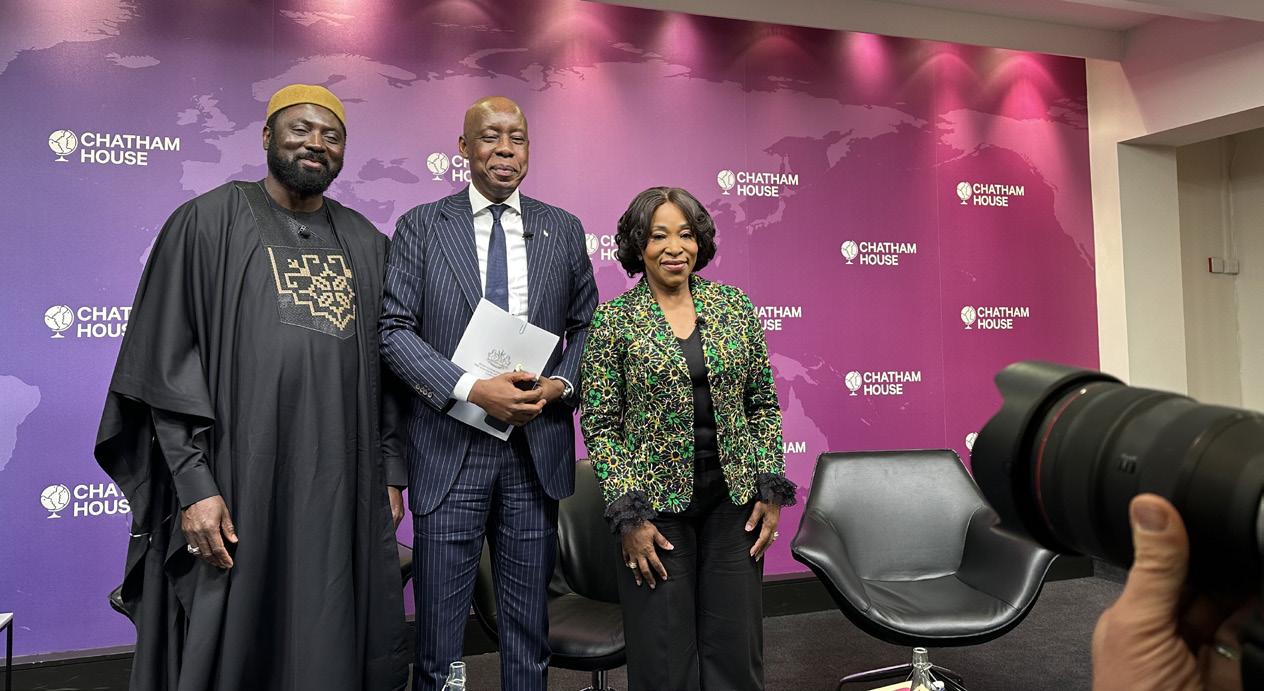
Ahead of CHOGM 2024, the three candidates for Commonwealth Secretary-General joined an event at Chatham House to share their vision for the future of the Commonwealth.
At the next Commonwealth Heads of Government Meeting in Samoa in October 2024, the seventh Commonwealth SecretaryGeneral will be elected. Ahead of this momentous vote, the three declared candidates for Commonwealth Secretary-General convened at Chatham House in London, UK to present and debate their vision for the future of the Commonwealth.
Africa makes up more than a third of the Commonwealth’s 56 member states and the three declared candidates are from that Region; Mamadou Tangara of The Gambia, Shirley Botchway from Ghana and Joshua Setipa of Lesotho. The new Commonwealth Secretary-General will succeed Rt Hon. Patricia Scotland, KC, who has held the post since 2016.
Candidates faced questions from Commonwealth Parliamentarians, international organisations and civil society representatives at an event titled 'The future of the Commonwealth', moderated by broadcast journalist, Zeinab Badawi.
The debate was co-hosted by Chatham House and two key Commonwealth entities, the Commonwealth Foundation, which is the inter-governmental arm of the Commonwealth mandated to advance the interests of its 2.7 billion citizens and civil society, and the Commonwealth Parliamentary Association, which works to promote parliamentary democracy and good governance throughout the Commonwealth.
The next Commonwealth Secretary-General will be pivotal in shaping the organisation’s future relevance. They must ensure its central institutions remain at the forefront of international cooperation, stay true to the Commonwealth’s values and address issues that genuinely matter to Commonwealth citizens.
To watch the debate in full visit the Chatham House YouTube Channel at www.youtube.com/@ChathamHouse10
You can also read a CPA Blog Series: 'The next Commonwealth SecretaryGeneral?' to read about the three candidates aspirations for the future of the Commonwealth by visiting www.cpahq.org/knowledge-centre/blogs/
of Samoa.
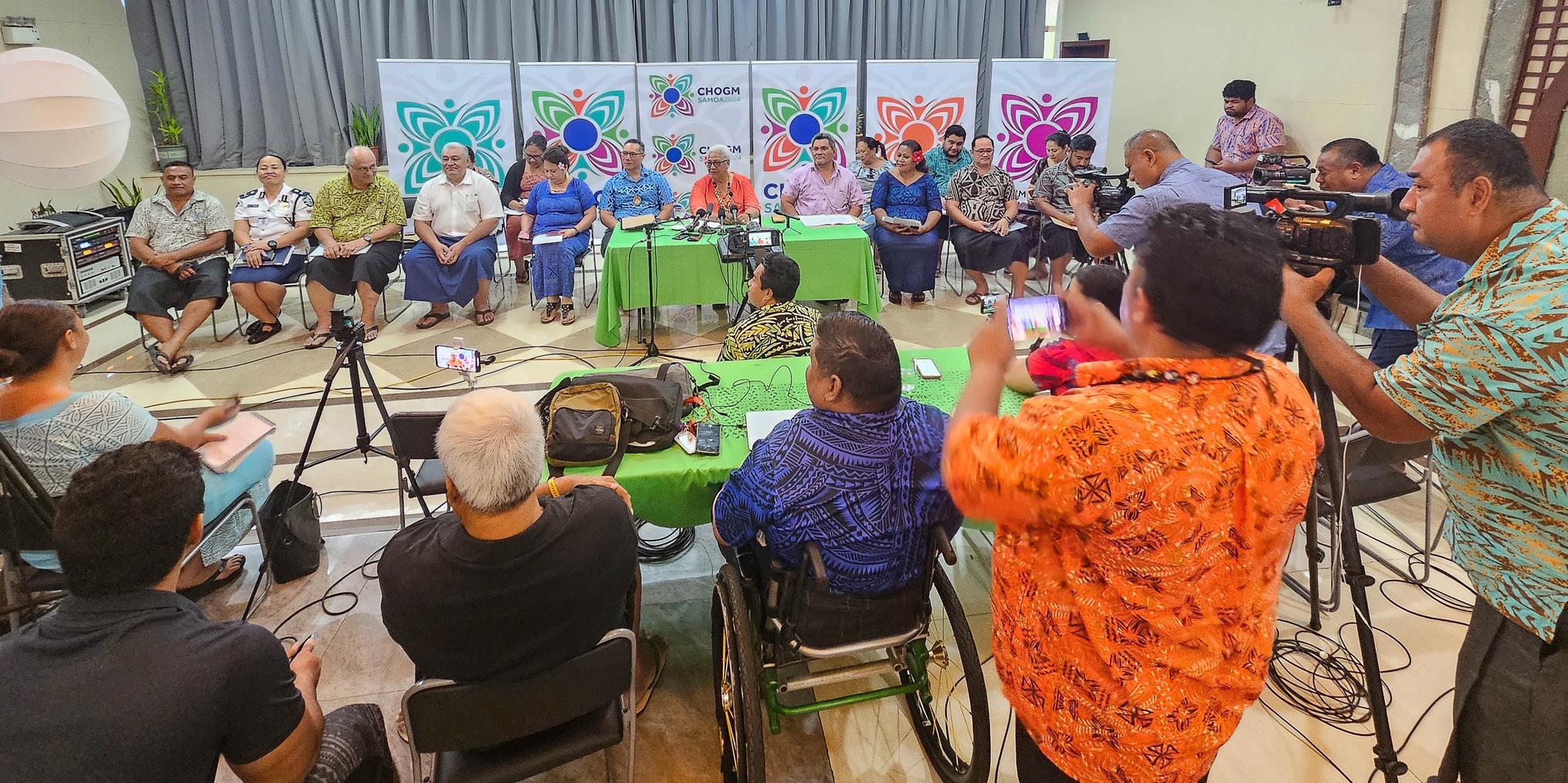
Above: The Prime Minister of Samoa, Hon. Fiame Naomi Mata’afa and the CHOGM 2024 Organising Committee speak
media on 3 September 2024 about the final arrangements for the event ahead of the CHOGM 2024.
RECONNECTING WITH THE COMMONWEALTH: CHOGM 2024 AND BEYOND
The UK Commonwealth Minister writes about rebuilding partnerships to tackle shared challenges together.
I was honoured to recently be appointed as the Minister responsible for the Commonwealth in the UK Foreign, Commonwealth and Development Office (FCDO), where my portfolio also includes SubSaharan Africa, the African Union, multilateral policy and human rights.
I am committed to building partnerships that put people and growth at the heart of our relationships. This will be a long-term approach in line with the new UK mission-led government. We are reconnecting with our partners across the Commonwealth, a network united by friendship, values and a determination to tackle shared challenges together.
As the Commonwealth celebrates its 75th anniversary, 2024 is also an opportunity to look to the future and consider how the organisation can best adapt to today’s challenges.
The Commonwealth is a unique platform for cooperation with the Global South as we reset relationships across Africa, the Caribbean and the Pacific. More than 60% of people living in Commonwealth countries are under 30 and this UK Government is committed to investing in supporting young people throughout the Commonwealth. I am proud that the UK is the biggest donor to the Commonwealth Secretariat, including to the Commonwealth Youth Programme, which addresses global issues affecting young people, including climate change, gender equality and unemployment.
However, there is always an opportunity for reinvigoration and renewal. The Commonwealth and its institutions, as with any organisation, needs to adapt and reflect the ever-shifting shared challenges facing its members.
From 21 to 26 October 2024, Samoa will welcome delegates from across the Commonwealth for the first ever Commonwealth Heads of Government Meeting (CHOGM) to take place in a Pacific Small Island Developing State. It will also be the first CHOGM since His Majesty The King became Head of the Commonwealth.
Samoa’s theme for CHOGM is resilience, built around four policy pillars: Resilient Economies, Resilient Environment, Resilient Societies and People, and Resilient Democratic Institutions. We fully support the importance of building shared resilience across these pillars, and we will work with our Commonwealth partners to ensure this year’s meeting brings lasting benefits.
As I remarked when writing in The Parliamentarian in 2019, delivery in the Commonwealth cannot be left to governments alone. Governments need to work with all aspects of civil society in addition to private sector organisations and individuals.
At CHOGM, as well as discussions between Commonwealth leaders, there will be the Commonwealth Women’s Forum, Commonwealth Youth Forum, Commonwealth People’s Forum, and Commonwealth Business Forum as well as over 35 side-events in Samoa. These forums and side events are an invaluable component of CHOGM as an opportunity for civil society and the private sector to engage with Commonwealth leaders. Mobilising these connections will help to deliver meaningful change for Commonwealth citizens on the issues that matter to them - issues such as boosting sustainable development and economic transformation and helping to tackle the climate and nature crisis.
I attach great importance to the role that civil society plays in the Commonwealth, including through more than 80 accredited organisations which promote people-to-people connections, knowledge exchange and professional collaboration across the 56 member states.
As an accredited organisation, the Commonwealth Parliamentary Association (CPA) has almost 180 Branches across 53 Commonwealth member states. The UK is pleased to host the organisation’s headquarters in London, and I continue to champion a Bill, currently making its way through the UK Parliament, which will secure CPA International’s long-term future here in the UK. The Bill’s cross-party
Lord Collins of Highbury is the UK Commonwealth Minister and a Member of the UK House of Lords. He was appointed as Parliamentary Under-Secretary of State of the UK Foreign, Commonwealth and Development Office, Deputy Leader of the House of Lords and Lord in Waiting (Government Whip) in July 2024. Before joining the government, Ray Collins was an Assistant General Secretary of the Transport Union (1994 to 1999) and the General Workers Union, later Unite (1999 to 2008). He also served as General Secretary of the Labour Party (2008 to 2011) before joining the House of Lords in 2011. Lord Collins was Co-Chair of the UK All-Party Parliamentary Group (APPG) for Nutrition for Growth and was an officer of the APPG on Global LGBT Rights. He is also Patron of Positive East, London’s largest HIV charity based in the East End.
support is testament to the value that UK Parliamentarians place on their partnership with the CPA.
I am also pleased that the FCDO is currently funding projects with CPA International and the CPA UK Branch. Working with CPA International, our collaboration provides funding for the continuation of the successful Benchmarking Programme, which undertakes assessments against the CPA’s Recommended Benchmarks for Democratic Legislatures and has reached 32 Commonwealth Parliaments in recent years. Working with the CPA UK Branch, our
“ The Commonwealth is a unique platform for cooperation with the Global South as we reset relationships across Africa, the Caribbean and the Pacific. More than 60% of people living in Commonwealth countries are under 30 and this UK Government is committed to investing in supporting young people throughout the Commonwealth. ”
funding is continuing to strengthen Commonwealth Parliamentary action to address gender-based violence and modern slavery.
There are still colonial-era laws on the statute books in many Commonwealth countries that have an impact on the lives of the most vulnerable and marginalised in society, including LGBT+ people. I welcome the work of The Commonwealth Equality Network (TCEN) and its efforts to address violence and discrimination, empower grassroots human rights defenders and support efforts to repeal or reform discriminatory legislation.
However, there is still more to be done: 29 of 56 Commonwealth member states continue to criminalise same-sex relationships and it is deeply concerning to see increasing attempts to rollback or undermine human rights and freedoms. I am pleased that the UK continues to support the work of the Commonwealth Disabled People’s Forum to protect and promote the rights of disabled people across the Commonwealth. We are also working with Women’s Rights Organisations through the FCDO’s ‘What Works Programme’ to promote and protect gender equality.
While none of these challenges have overnight solutions, we can and must tackle them together. As the Commonwealth family prepare to gather in October, that is the message I will be taking with me to Samoa.
I look forward to hearing from civil society and the private sector at CHOGM and I know that their contributions will enrich the discussions among Commonwealth leaders, as we look to the future.
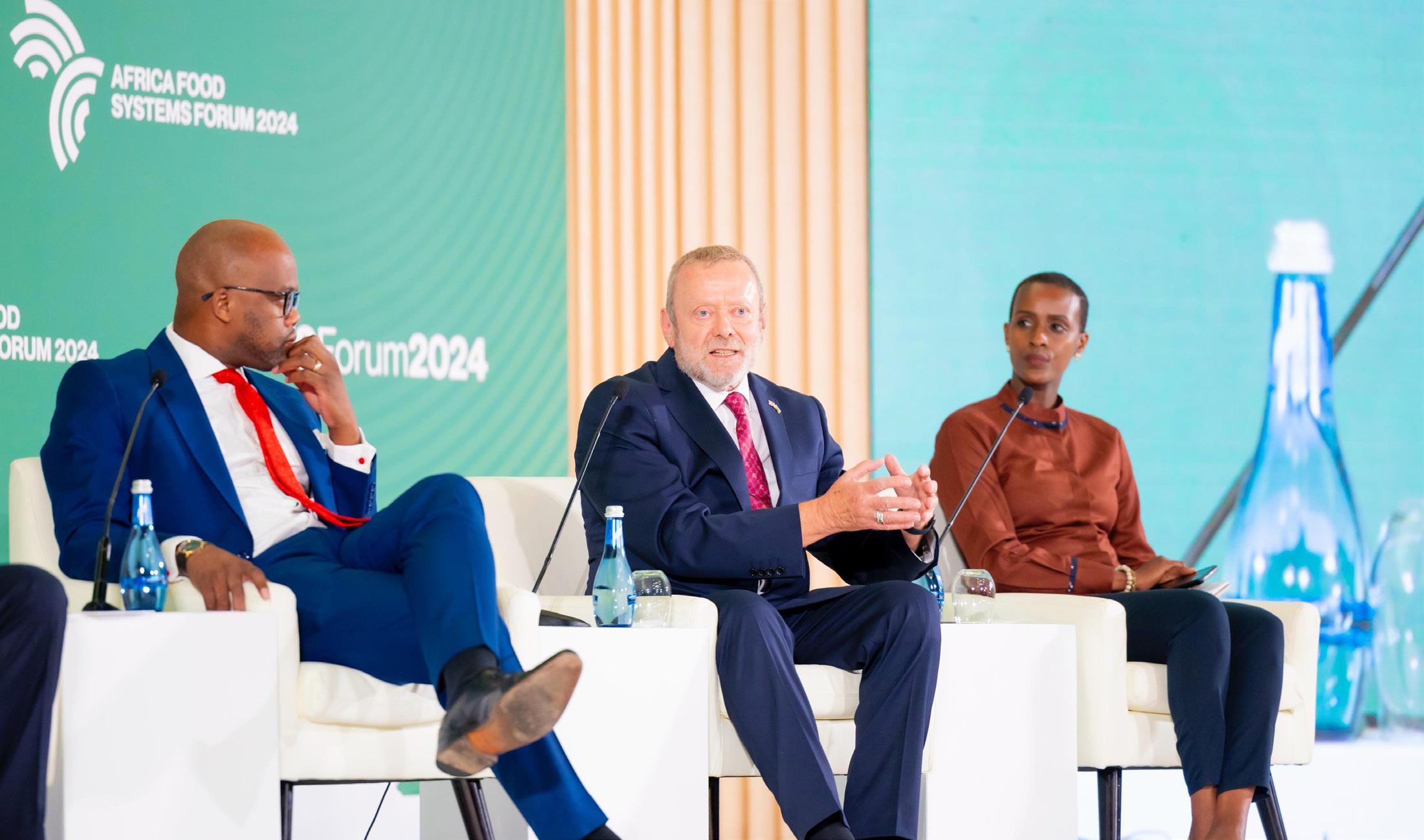
Above: In his role as UK Minister for Africa, Lord Collins of Highbury (centre), spoke at the 2024 Africa Food Systems Forum in Rwanda on the importance of food security throughout the continent.
‘ENGAGE, EMPOWER AND SUSTAIN: CHARTING THE COURSE FOR RESILIENT DEMOCRACY’
A View from Pakistan on the upcoming theme for the 67th Commonwealth Parliamentary Conference. Introduction
The 67th Commonwealth Parliamentary Conference, themed ‘Engage, Empower, Sustain’, aligns closely with the Pakistan Parliament’s democratic journey. Despite challenges from unelected institutions, military coups and weakened political institutions, Pakistan’s Parliament and its citizens have demonstrated remarkable resilience. They have continuously strived to reclaim their rights and enhance political discourse, achieving significant milestones along the way.
Although democratic progress can be precarious and entrenched powers often reassert themselves, the enduring spirit of Pakistan’s Parliament and its people remains a strong force for reform. In 2024, Pakistan marked its third consecutive constitutional transfer of power after over 77 years of independence, solidifying its multiparty democracy. This achievement has led to a prolonged period of civilian rule and heightened public expectations for democratic institutions to foster positive change and uphold democratic values.
Public Engagement
Engagement is vital in a parliamentary democracy as it ensures that government actions reflect public will, it also fosters a more informed electorate, promotes inclusivity and strengthens democratic institutions by encouraging active citizen participation and oversight.
The National Assembly of Pakistan is deeply committed to civic engagement, exemplified by its proactive approach in initiating a range of programmes aimed at educating and involving the youth in parliamentary democracy. Key among these initiatives is the first ever student internship programmes, which includes a summer school, young intern’s programmes, voluntary internships and a Young Parliamentary Associates Programme, designed to provide young participants with a thorough understanding of parliamentary functions and the legislative process.
These programmes offer participants a unique opportunity to interact with Parliamentarians, media experts and civil society members. Through sessions focused on the Constitution and Rules of Procedure, fundamental rights and parliamentary procedures, students gain valuable insights into the workings of the Parliament. Workshops in critical thinking, media communication and teamwork further enhance their skills along with exposure visits to the Provincial Assemblies. Between 2013 and 2024, these programmes placed approximately 3,000 interns in the National Assembly.
Social media has transformed traditional methods of political awareness, emerging as a significant tool for civic engagement. Pakistan is home to 71.70 million social media users. This shift has notably altered the political landscape by providing a more interactive medium compared to traditional channels. Social media platforms are essential for involving young people in politics, offering real-time communication, encouraging participation and enabling them to express their views. Acknowledging the impact of social media, the National Assembly of Pakistan has created a dedicated social media department to improve public
engagement in the legislative process and advance transparency and accountability.
The Social Media Department of the National Assembly manages and shares messages, statements, infographics and videos from the Speaker, Deputy Speaker and Members of the National Assembly on significant national and international events, as well as various contemporary issues. They ensure ‘real-time’ coverage of parliamentary proceedings and events on platforms like X (Twitter), Facebook and Instagram, while also addressing misinformation by providing accurate and balanced information to maintain transparency and a positive digital presence.
Empowered Parliament
An empowered Parliament is the cornerstone of democracy and at its core, democracy aims to empower the people. To deliver on its promise of empowering all segments of society, particularly marginalised groups, the Parliament of Pakistan has introduced constitutional legal reform and envisaged different strategies for reform.
To abolish discrimination against persons with disabilities and eliminate barriers towards the full enjoyment of their rights and their inclusion in society, the Parliament of Pakistan passed the new Disability Rights Act. The Act provides a comprehensive legal framework to protect and promote the rights of people with disabilities in Pakistan. The new law covers areas like the political participation of persons living with disabilities, equity in education and employment, equality before the law, ease of access and mobility, and protection from violent, abusive, intolerant and discriminatory behavior. In a significant advancement toward acknowledging the rights and needs of people with disabilities (PWDs), the National Assembly premises have been made fully accessible to individuals with disabilities. In addition, the National Assembly has acquired a braille edition of the Constitution of Pakistan, which enabled visually impaired individuals to access the document.
To provide legal recognition to transgender persons, the National Assembly of Pakistan enacted The Transgender Persons (Protection of Rights), Act 2018. The Act provides legal recognition to transgender persons and prohibits discrimination and harassment. It also places an obligation on local governments to provide for the welfare of the community.
Similarly, The Right of Access to Information Act, 2017 was enacted to provide for a law which gives effect to the fundamental right of access to information as guaranteed under Article 19-A of the Constitution of Islamic Republic of Pakistan and international law. The law envisages that everyone has a right of access to all information held by public bodies subject to reasonable restrictions imposed by law. It is applicable to all public bodies of the Federal Government.
Well-structured and resourced Parliaments are essential to a vibrant democracy, to promote and advance democratic values and inclusivity within Parliament. The National Assembly Strategic Plan (NASP) has been designed to strengthen the Parliament
as a whole and implement processes for improved oversight, access to information and excellence in governance of the institution. This process enables all parliamentary parties to collaboratively develop a vision for parliamentary democracy and create a pathway for a stronger democracy in the country. The Strategic Plan Oversight Committee (SPOC) is a cross-party group dedicated to parliamentary reforms, and the National Assembly’s Programme Management Unit (PMU), which acts as the SPOC’s secretariat, are responsible for overseeing and implementing the strategic plan to enhance Pakistan’s democracy.
Gender empowerment
Empowered women frequently emerge as dynamic leaders of change, playing a crucial role in democratic governance. Despite facing numerous political and societal challenges, Pakistan's Parliament has consistently worked to ensure the representation of women in positions of power and leadership. The Constitution of Pakistan not only guarantees political rights for women but also provides opportunities for women’s participation in decisionmaking by reserving seats in the National Assembly, Senate and Provincial Assemblies.
Similarly, the 2017 Act mandates that political parties allocate at least 5% of their party tickets to women for electoral contests. Despite facing significant political challenges, Women Parliamentarians from Pakistan have made substantial contributions on the national and international stage, including within the Commonwealth Parliamentary Association.
Notable figures include Ms Benazir Bhutto, who served as Prime Minister of Pakistan in two separate terms, and Dr Fehmida Mirza, who became the first female Speaker of the National Assembly in the Muslim world. In addition, Ms Kashmala Tariq chaired the Commonwealth Women Parliamentarians (CWP) from 2007 to 2010, Dr Nafisa Shah served as the Vice-Chairperson of the CPA Executive Committee in 2011 and 2012, and Ms Shandana Gulzar Khan led the Commonwealth Women Parliamentarians (CWP) from 2019 to 2022.
Sustainability
Sustaining parliamentary engagement is crucial for implementing the global 2030 Agenda, as achieving the Sustainable Development Goals (SDGs) demands diverse policy approaches across health, education, poverty reduction, economic growth, climate change and resource sustainability. These goals encompass social inclusion, economic development and environmental sustainability.
In response to the need for concrete action, the National Assembly of Pakistan has made significant strides by establishing a dedicated SDGs Secretariat within Parliament. This initiative aims to institutionalise the representation, legislation and monitoring of the Sustainable Development Goals (SDGs). Recognising the urgency of this issue, Pakistan became the first country to create a Parliamentary Taskforce for the SDGs, tasked with guiding and overseeing the implementation and localisation of these goals.
Achieving Goal 5 (Gender Equality) of the Sustainable Development Goals relies heavily on the equal participation and leadership of women in political and public life. In this regard, the Pakistan Women’s Parliamentary Caucus (WPC), a crossparty forum for female Parliamentarians, is playing a pivotal role. The Caucus has consistently provided a platform for women Parliamentarians from both Houses of Parliament, across party lines, to openly discuss and tackle issues impacting the lives of citizens, with a special focus on women's issues. Its objective is to enhance the crucial role of women legislators in proposing genderresponsive legislation, reviewing and amending discriminatory laws and policies, and highlighting issues of national and public concern. The WPC has effectively addressed some of the most pressing issues faced by women in Pakistan through various initiatives, including legislation, advocacy and awareness campaigns. This includes organising conferences, seminars and study circles to promote knowledge sharing and sensitisation.
To progress towards SDG Goal 7, which focuses on ensuring access to affordable and clean energy and achieving sustainable energy targets, the Parliament building of Pakistan has achieved a notable distinction. It has become the world's largest green legislative building by adopting extensive energy conservation measures as a primary strategy, implementing an energy management system (EnMS), and transitioning to renewable energy sources.
Conclusion
Pakistan's parliamentary democracy is crucial for maintaining stability, accountability and long- term development, despite facing numerous challenges but the future of democracy in Pakistan hinges on the Parliament's capacity to implement reforms, improve accountability and foster social progress.
This article was written by Nighat Paristan, Director (Research) at the National Assembly Secretariat at the Parliament of Pakistan.
THE ZAMBIAN LEGISLATURE: CELEBRATING 100 YEARS
The Speaker of Zambia writes about the innovation and changes made to the Zambian Legislature over its 100 year history.
On 23 May 2024, the Zambian Legislature marked 100 years of its existence, a journey that is notable by the long passage of time and the impact that the Legislature has had on Zambian society. This is no mean achievement as it typifies resilience, growth and evolution. This article, therefore, gives an insight into the Zambian Legislature, highlighting a brief history, impact and its plans for the future.
Overview of the History of the Zambian Parliament
The history of the Zambian Legislature predates Zambia’s independence. In 1918, an Advisory Council to the British South African Company (BSA) was established, which was renamed as the Legislative Council (LEGICO) in 1924. The LEGICO held its first meeting on 23 May 1924, in Livingstone, the first capital of Northern Rhodesia, the present-day Zambia. At that point, the LEGICO was presided over by the Governor, and a few elected officials, primarily representing the interests of the white settlers.
From 1924 until Zambia’s independence, the number of Members in the LEGICO had significantly increased, from the initial five to 80 Members.
In 1964, when Zambia attained political independence, the LEGICO was renamed as the National Assembly of Zambia, and it composed a total of 80 Members; 75 of whom were elected and five were nominated.
The National Assembly of Zambia: Post-Independence
Since independence, the National Assembly of Zambia has seen three different Republics. The major difference in these Republics was the Constitutional amendments that led to changes in the governance framework and the increase in the number of Members of the National Assembly.
In the First Republic from 1964 to 1972, the National Assembly of Zambia elected its first indigenous Speaker, Hon. Wesley Nyirenda, who presided over 80 Members, out of whom, 75 were elected and five nominated. By the end of the first Republic, there
Rt
Hon. Nelly
Mutti,
were Constitutional amendments that saw the number of Members increase to 110; 105 elected and five nominated.
In the Second Republic from 1972 to 1991, Constitutional changes transformed Zambia into a one-party state and saw the number of Members increase to 135, with 125 elected and ten nominated.
In the current Third Republic, which began in 1991, the number of Members has increased to 167, consisting of 154 elected, eight nominated, plus the Speaker, First Deputy Speaker and VicePresident of the Republic. Notably, the Speaker and First Deputy Speaker are elected from outside Parliament, while the Second Deputy Speaker is elected from among the 156 elected MPs.
In its entire history, the Zambian Legislature has been presided over by nine Speakers, with the current being the first female Speaker to hold that position.
Impact of the Zambian Legislature
To begin with, being in existence for an uninterrupted 100 years is an achievement in and of itself. It typifies great resilience, adaptation and innovation. However, beyond that, as the Zambian Legislature, we have had an indelible impact on society through the legislation and policies that we have promulgated.
Every sector of Zambian society, from education, health, security, economy to foreign policy, has been impacted, primarily through the traditional functions of legislation, oversight, budget approval and representation. For instance, Zambia is today heralded as a beacon of peace and stability, not only in Africa, but the world over, owing to our leading role in building consensus among people of competing interests and ideologies. This, among other reasons, is why Zambia was selected to host the 3rd Conference of Speakers and Presiding Officers of the Commonwealth (CSPOC) in 1973.
In addition, as a representative body, the Zambian Parliament has created platforms through which the interests, concerns and diverse perspectives of the people across the country are considered during decision-making. Furthermore, the Zambian Parliament has been providing oversight to the Executive through
SC, MP, FAPRA is the first female Speaker of the National Assembly of Zambia and a lawyer by profession, with over 40 years of practice. Over her long career, she has served in various positions, both as a state advocate and in private practice. As a state advocate, she served various Government Ministries such as the Ministry of Legal Affairs and Ministry of Foreign Affairs and in private practice, she managed a private law firm, Lukoma Chambers. Since being elected as Speaker of the National Assembly in 2021, she has promoted parliamentary diplomacy, rule of law and transparency in parliamentary processes. In recognition of her contribution, she was awarded the CPA Commonwealth Parliamentarian of the Year Award for 2023 at 66th Commonwealth Parliamentary Conference in Ghana.
various mechanisms such as Parliamentary Committees, inquiries, Questions and Private Members’ Motions, among others. Last but not least, as the Zambian Parliament, we have played a role in shaping Zambia’s foreign policy through many ways including the ratification of international treaties and agreements.
It is noteworthy that in making the impacts highlighted above, our Parliament has embraced innovation and reforms, both in procedure and administration, to enable the institution respond to the evolving needs of the Zambian people.
Reforms and Innovation
The reform agenda in the Zambian Parliament gained momentum in 2000. Since then, a number of legal, procedural and administrative reforms have been implemented aimed at making the Legislature more responsive, representative and accountable in the performance of its core functions. Some of the reforms and innovations are highlighted below.
(i) The Committee System has been aligned to the structure of Government Ministries to enhance policy development and scrutiny. Further, Committees are mandated according to the Constitution of Zambia (Amendment) Act No. 2 of 2016, under Article 89 and Order 184 of the National Assembly of Zambia Standing Orders 2024, not to exclude the public or the media from their sittings. In this regard, a new Committee Building was constructed to accommodate members of the public.
(ii) The Legislative Process has also been reformed where Bills are referred to relevant Committees for detailed and careful consideration. During the Committee sittings, members of the public are given the opportunity to participate in the process. Additionally, the Parliament of Zambia has instituted measures to encourage Members to sponsor Private Members Bills.
(iii) Public Engagement brings Parliament closer to the people, and demystifies the institution. In this regard, several platforms
have been created to facilitate two-way communication between Parliament and the people, and some of these include:
a) establishment of Constituency Offices in all 156 constituencies, which act as information centres for constituents, as well as centres of interaction between individual Parliamentarians and their electorates;
b) establishment of Parliament Radio, Television, Facebook, YouTube and X (Twitter) Accounts, which broadcast live parliamentary proceedings, both in the plenary and in Committee, to disseminate information about Parliament, and also allow members of the public to participate in parliamentary work. In broadcasting proceedings, the Zambian Parliament introduced sign language interpretation to enable deaf persons to follow parliamentary proceedings; and
c) construction of the Media and Visitors’ Centre , which serves as a distribution
from the Commonwealth pose for a photo at the front of the Zambian Parliament Building during the 3rd Conference of Speakers and Presiding Officers of the Commonwealth (CSPOC) hosted by Zambia in October 1973.
Above: The Speaker of the National Assembly of Zambia, Rt Hon. Nelly Mutti, SC, MP, FAPRA, hoists the Zambian Flag to commemorate 100 years of the Zambian Legislature on 23 May 2024.
Image: National Assembly of Zambia.
Left: Speakers
100 YEARS OF THE ZAMBIAN
point of information and educational materials about the National Assembly of Zambeia. It also acts as an overall information centre for public inquiries and provides work stations for the media.
(iv) Adoption of Information and Communication Technologies (ICTs).
The Zambian Parliament, like the rest of the world, is on a digital transformation agenda aimed at leveraging ICTs to enhance efficiency and effectiveness in operations. To this end, our Parliament is in the process of implementing an e-Parliament that will facilitate electronic management of the National Assembly. So far, an e-Chamber system , a component of an e-Parliament has been developed. The e-Chamber system is an internally developed system that is used to manage the plenary and Committee sittings. The adoption of this e-Chamber system was fast tracked during the COVID19 pandemic. Some of the functions of the e-Chamber system include: generating an attendance list; generating the Speaker’s list where Members of Parliament who wish to speak on a matter are captured in the order they have indicated; provision for raising points of order; provision for raising matters of urgent public importance; generating a division list; facilitating electronic voting; distributing documents; and a chat room, (which at the moment is only available for Presiding Officers and Clerks-AtThe-Table but will be extended to Members in due course).
To this end, we intend to construct a new and modern Chamber that will accommodate more Members of Parliament, in anticipation of the delimitation that will see more constituencies created. Notably, the current Chamber was built for a smaller capacity of Members, but with the increased number since its construction which began in 1964, and more who are yet to come, there is an urgent need to build a new Chamber.
In addition to the e-Chamber system, the Zambian Parliament has developed an application known as e-Parliament, a platform for electorates to engage with Parliamentarians. In its current form, the e-Parliament allows the public to access legislative documents, updates and enhances transparency and accountability. Members of the public can also stream live parliamentary proceedings using the application, and plans are underway to ensure that the public can access the application without the need for internet bundles.
Furthermore, the Zambian Parliament is finalising the redevelopment of its website to create special web pages that will provide age-appropriate parliamentary information. It is planned that the new website will be commissioned from September 2024.
The Future
As the Zambian Legislature, our centenary celebrations not only serve as a point of reflection of our past, but also and most importantly, a springboard for the next 100 years. Taking into account all the lessons of the past, we are hopeful of a new journey of innovation and discovery.
To this end, we remain committed to fine tuning our processes in order to make the institution more effective and efficient. In addition, we are looking to expand and improve our infrastructure to meet the modern trends, including easing access for persons with disabilities.
Further, we will continue to adapt to new technologies and innovate new ways of making the Zambian Legislature more effective, and responsive to the needs of the Zambian people. This is particularly important now more than ever in the wake of new technologies such as Artificial Intelligence, and the disruptive health emergencies such as the recent COVID-19 pandemic.
With regard to Artificial Intelligence, plans are underway to utilise these tools for streamlining and digitising systems such as the processing of questions by Members of Parliament, generating the Order Paper, public interaction, data analysis, audio to text translation and local language translation.
To further enhance public engagement, the Zambian Parliament intends to create a call centre to provide a feedback mechanism for the public.
Conclusion
As we celebrate our 100 years, it is not a mere milestone, but a testament of an enduring spirit of the Zambian Legislature. We celebrate our history, resilience and the profound impact we have had on the Zambian society. As we look back, we also look forward to our shared aspirations, opportunities and greater responsibilities that await us in the next 100 years. In all this, we remain resolute, guided by our principles to meet and even exceed the expectations of the Zambian People.
Above: The current Parliament building of the National Assembly of Zambia was constructed in 1966.
Image: National Assembly of Zambia.
Register for the CPA Parliamentary Academy
The CPA has designed a curriculum of online courses specifically for Parliamentarians and parliamentary officials.
Our courses are intended to strengthen your capacity to fulfil constitutional and statutory obligations as well as to enhance your knowledge and understanding of the role of Parliament in the democratic governance process. These accessible courses offer an adaptive and flexible learning approach, with both written and visual content along with access to a variety of useful resources. So if this sounds right for you, register for the Academy now and get started!
To register for the CPA Parliamentary Academy, please email hq.sec@cpahq.org or fill out a ‘Contact Us’ form on our website. More information can be found on our website: www.cpahq.org/parliamentary-academy
Free courses for CPA Members
25 YEARS OF THE SCOTTISH PARLIAMENT: INNOVATION AND ENGAGEMENT
The Scottish Parliament marks its 25th anniversary.
2024 marks two significant milestones in Scotland’s political journey: 25 years since the Scottish Parliament first sat and 20 years since the opening of our award-winning Holyrood building situated in the UNESCO World Heritage site at the foot of the Royal Mile in Edinburgh.
In our relatively short life, this Parliament has tackled some of the issues that matter most to people in Scotland, from land reform, equal marriage and world-leading public-health legislation. In fact, over 300 pieces of legislation aimed to improve the lives of the constituents we serve have been passed in the last quarter century.
Our innovative petitions system led the way with allowing people to sign petitions electronically and secure consideration by the Citizen’s Participation and Public Petitions Committee with just one signature. Over 2,000 petitions have been submitted on topics from road safety and the environment to justice issues, and our youngest petitioner has been just 7 years old.
However, I recognise that 25 years on from the arrival of the Scottish Parliament, we’re not at the end of that journey, really we are in our infancy. I’m very aware of the need to ensure the Parliament is fit for purpose for the next 25 years.
This is why I’ve been leading work that will ensure there are fewer barriers to equal gender representation and participation in our Parliament. Having women in key roles and ensuring they are properly represented across the Parliament helps bring different voices and perspectives to decisions, so I commissioned the Gender Sensitive Audit as a first step towards reform. The results were very interesting and informative. They included the observation that women in leadership roles in the Parliament fluctuated considerably, that Committee membership does not always reflect the gender balance, that women often made fewer contributions and that men were more likely to have their interventions accepted.
In response to the report, I have created an advisory body, the Gender Sensitive Advisory Group, and a women’s caucus for the Parliament. The caucus will cover important topics including how to break down barriers for women entering politics, the impact of social media and how we can make the Parliament family and life
friendly. Parliamentary caucuses focused on delivering progress in the rights of women have been formed across the world. I think they are crucial in amplifying women’s voices to be heard in political discussions and debates. We were delighted to welcome then UK MP and Mother of the UK House of Commons, Rt Hon. Harriet Harman to our first event in May.
Another key output from our audit was the importance of supporting all Members with continuing professional development programmes, especially around parliamentary norms and culture. It is also a key thread running through our international strategy. Ensuring our inward and outward visits incorporate key opportunities for networking, sharing experience, best practice and innovation.
For me, my focus is on making this Parliament as responsive as it can be. For example, I visited Canada in 2023 and after learning more about how they allow time for backbenchers, implemented a similar process back in the Scottish Parliament.
It is clear though that we can only provide a truly representative Parliament if we increase those who think about the Parliament as a career and who feel that it is an environment for them. As a politician, it is concerning the level of vitriol those in public life face on a day-to-day basis, particularly since the advent of social media platforms.
The Scottish Parliament recently set up a pilot project, which has now been made permanent which uncovered just the level of abuse faced by Members. From those 38 Members who participated in the pilot programme over 461 online threats were passed to Police Scotland. Which shows the scale of the abuse our Members face when trying to do their job.
As Presiding Officer, I want everyone to be able to contribute to the work of the Parliament – whether as an MSP, to tell us their views or to campaign for issues they care most about.
This has been underpinned by our public engagement strategy that recognises that there are a core group of certain people in our communities that are less likely to engage with us. Those who are of a low income, are in an ethic minority community or are disabled.
Rt Hon. Alison Johnstone, MSP is the sixth Presiding Officer of the Scottish Parliament. Alison was first elected in 2011 as a Member of the Scottish Parliament for the Lothian region, although she has been involved in the work of the Scottish Parliament since 1999, working for the first Green politician to be elected in the UK. Alison’s interest in politics began when she was part of a campaign group to save a local playing field in Edinburgh.
We know that we put barriers up to our engagement with us and this work will continue to identify ways we can break down those barriers and increase our visibility in communities across the country.
A significant part of our work in ensuring our relevance is how we engage with the people of Scotland on issues that matter to them. The Citizen Participation and Public Petitions Committee recently undertook an inquiry into public participation in the Scottish Parliament, trying to identify new and innovative ways to include people in our decision making.
This includes the use of citizen participation in our work and the use of citizen panels. Our first pilot Citizens Panel assisted the Parliament's Zero, Energy and Transport Committee's postlegislative scrutiny of section 91 of the Climate Change (Scotland) Act 2009 which required the Scottish Government to produce and periodically review a public engagement strategy for climate change, making a series of recommendations which the Committee endorsed and reported to the Scottish Government.
Our next pilot Citizen Panel for this session will support CrossCommittee scrutiny of how to tackle Scotland's drug deaths and the harms caused by drugs.
These pilots will build on our in-house public participation expertise and be used to embed public participation through the use of Citizens' Panels in the work of the Parliament as we look ahead to the next session after the 2026 elections.
Parliamentary staff have also undertaken significant work to improve the accessibility of our consultations on inquiries undertaken by our Committee’s. This has included trialling and integrating digital consultation platforms. However, I also recognise that digital platforms are not the only way that people engage with our work. Staff have also developed accessible consultations in the Easy Read format and consultations in multiple languages and British Sign Language consultations.
As a Parliament we will continue to try to engage with people in a way which is best for them. This is a constantly evolving and continuing piece of work, but one which is vital if we are to keep ensuring that Scotland's Parliament of the people can still represent Scotland for the next 25 years and beyond.
To find out more about the work of the Scottish Parliament visit www.parliament.scot
and
King
Patron of the Commonwealth Parliamentary Association, and
were welcomed to The Scottish Parliament on 28 September 2024 by CPA Scotland Branch President and Presiding Officer, Rt Hon. Alison Johnstone, MSP to mark its 25th anniversary. The royal couple met with Members of Parliament, parliamentary staff, local heroes and Scottish Youth Parliament representatives.
Above
left:
Charles III,
Queen Camilla
Image
LOOKING AHEAD TO THE NEXT CHAPTER:
25 YEARS OF SENEDD CYMRU – WELSH PARLIAMENT
‘The only constant is change’ – as the Senedd marks its 25th anniversary this year, this ancient philosophy still finds resonance in one of the world’s youngest and most modern Parliaments. 1999 was a year of hope and expectation. The turn of the millennium represented the beginning of a new era and an opportunity for Wales’s newly established National Assembly (as it was then known) to chart its own course. As a Member of that first Assembly (and one of the four remaining Members of the Class of ’99) I am proud of the way in which our national Parliament has seized that opportunity to date and is raising its sights for the future as we enter a period of transformational change.
In less than two years’ time, Senedd Cymru – the Welsh Parliament – will grow from an institution of 60 Members to 96. The electoral system will change too, with a more proportional model set to be adopted based on 6 Members elected to each of the new 16 constituencies. So as the electoral community, voters, would-be candidates and Members themselves begin to imagine our new Senedd, it is worth recollecting how Wales arrived at this point.
Elected as Presiding Officer in 2016, I set out my intent to do something with the job, not just do the job. In February 2017, I commissioned an independent Expert Panel on Electoral Reform to provide robust, politically impartial advice on three topics. How many Members were needed to effectively represent the people of Wales? What would be the most suitable electoral system? And what should the minimum voting age be in Wales?
Having consulted broadly with a range of experts, academics and members of the public, the Panel concluded that in order to operate as effectively as possible for the people of Wales, the Assembly as it was then known should move to a more proportional electoral system. The Panel’s report stated that: “If the Assembly had the same average number of Members per head of population as the 16 devolved institutions in Europe, Canada and Australia with a population between 2 and 4 million, it would have a membership of 86. If the nine states of the USA with similar populations were also included, the number would be 91.”
Despite the Panel’s conclusive research, however, the absence of political will at the time to increase the institution’s capacity meant that this element of electoral reform was not pursued. Instead, the Senedd and Elections (Wales) Bill was introduced on 12 January
2019 to extend the franchise to 16- and 17-year-olds and to give the institution a new name – Senedd Cymru – which better reflects its status as a full law-making body.
It wasn’t until after the 2021 election that the debate surrounding the Senedd’s capacity was reignited in earnest. A Co-operation Agreement between the Welsh Government and Plaid Cymru committed to acting on the recommendations of a Special Purpose Committee on Electoral Reform established in October 2021 to consider the conclusions previously reached by the Committee on Senedd Electoral Reform in the Fifth Senedd. The Special Purpose Committee was also tasked with making recommendations for policy instructions for a Welsh Government Bill on Senedd Reform by 31 May 2022. This culminated in the Introduction of the Senedd Cymru (Members and Elections) Bill in September 2023 which proposed a raft of changes, most notably to:
• Increase the size of the Senedd to 96 Members.
• Decrease the length of time between Senedd ordinary general elections from five to four years.
• Increase the maximum number of Deputy Presiding Officers from one to two.
• Increase the legislative limit on the size of the Welsh Government to 17 (plus the First Minister and Counsel General), with power to further increase the limit to 18 or 19.
• Require candidates to, and Members of, the Senedd to be resident in Wales (by disqualifying candidates and Members who are not registered to vote in a Senedd constituency).
• Change the Senedd’s electoral system so that all Members are elected via closed list proportional representation, with votes translated into seats via the D’Hondt formula.
With the support of at least two-thirds of Members, the final stage of the Bill was passed on 8 May 2024, nearly twenty-five years to the day since the people of Wales voted in their first ever Assembly Election. So, as I write, surveyors and contractors are on site in Cardiff Bay, working at pace to plan the required adjustments to accommodate 96 Members and their officials after the next Senedd Election in May 2026. Thanks to the foresight of my predecessor, Presiding Officer Lord Dafydd Elis-Thomas, there is a moveable wall in the Siambr (debating chamber) which can make way for more seating, but nevertheless, there is still considerable work underway
Rt Hon. Elin Jones, MS is the Llywydd (Presiding Officer) of the Senedd Cymru (Welsh Parliament). She was elected to the Assembly in May 1999 and has held various roles including Shadow Minister for Economic Development, Shadow Minister for the Environment, Planning and Countryside and Minister for Rural Affairs. She was a member of Aberystwyth Town Council and was the youngest Mayor of Aberystwyth. She also worked for the Rural Wales Development Board, Radio Ceredigion and the television production company Wes Glei Ltd.
to ensure that the space in which our parliamentary business takes place week in week out is modern, accessible and inclusive.
As one of the first Parliaments in the world to meet online during a global pandemic, this of course includes making provisions for continued hybrid working. Having tested positive for COVID a day into lockdown, I was adamant that the Senedd should explore all options for continuing to fulfil its purpose of scrutinising the government and delivering for the people of Wales. As a small Parliament, we have always benefitted from in-house expertise and our excellent ICT colleagues are no exception. Tasked with exploring how I could chair proceedings from my home in Ceredigion, they worked with pace, innovation and ambition to ensure that the Senedd held its first virtual meeting on 1 April 2020. Soon, colleagues from across the Commonwealth and beyond were looking to Wales for examples of best practice and pioneering ways of keeping the wheels of democracy turning, however challenging the circumstances. Whilst some institutions viewed hybrid or virtual proceedings merely as a temporary measure, the Senedd values the agility it provides, particularly for those Members who may otherwise spend up to ten hours a week on the infamous A470 between north and south.
Above: The main Siambr (debating chamber) of the Senedd Cymru – Welsh Parliament.
Ensuring that this work isn’t done in isolation is another important guiding principle. Despite international travel not being possible during COVID of course, the Senedd’s commitment to engaging with colleagues across the world to share experiences and good practice has remained unhindered.
As our Clerks and procedural experts begin preparing for a very different Seventh Senedd, it is important that the principles of accessibility and inclusivity which drove our ways of working during the pandemic will endure in this next chapter and beyond. Over the coming months and in consultation with Members, Senedd Commission officials will review Standing Orders, Procedural Rulings and Precedents that will inform a new framework for supporting a larger Senedd with the possibility of more Committees and increased sitting hours. This work will be guided by the commitment of current Members to set firm foundations for their successors without hindering the Seventh Senedd cohort’s ability to offer creative challenge to the way we do things now.
As I have already mentioned, the Senedd Commission’s ICT officials have established themselves as being among the best in their field with counterparts from Canada to Australia to New Zealand reaching out for guidance and advice. Similarly, our Clerks and Communications officials maintain strong relationships with colleagues in other Parliaments, whilst on a personal level I will be representing the Senedd’s CPA Branch at the 67th Commonwealth Parliamentary Conference in Sydney in November.
Next year, the Senedd’s CPA Branch will host the 54th CPA British Islands and Mediterranean Regional Conference in Cardiff for the first time since 2014 and I look forward to welcoming new and returning friends and colleagues to our national Parliament. By that time, we will be 12 months away from a very different Senedd Election that will result in a very different Parliament. We will welcome a host of new faces, each one needing to navigate a labyrinth of processes, procedures, rooms and rules, and do so at a breathless pace.
I look forward to the next twenty-five years of the Senedd’s story with optimism, knowing that Members old and new will be supported by the best in their field.
I have no doubt that change will remain a constant in our young institution’s next chapter. As we look to 2026 and beyond, I am also hopeful that we can continue to make our mark as an agile, innovative and welcoming Parliament, and that Senedd CPA colleagues will continue to play a pivotal role in this regard.
To find out more about the work of the Senedd Cymru – Welsh Parliament visit www.senedd.wales
Image credit: Senedd Cymru –Welsh Parliament.
CYPRUS 50 YEARS ON: THE SAD REALITY OF AN ILLEGAL
OCCUPATION AND DIVISION THAT STILL PERSISTS
The President of the Cyprus House of Representatives sends a plea to Commonwealth colleagues.
I am particularly pleased to have this opportunity to reach out again to all my Commonwealth colleagues, as my present contribution follows a Ietter I recently addressed to my counterparts on the occasion of the sombre 50th anniversary of the Turkish invasion.1 An open wound for my country and its people.
Cyprus is well known to the vast majority of the world as a small yet vibrant and flourishing island in the Mediterranean. A place where the sun shines nearly year-round and where troves of visitors arrive to enjoy the pristine waters and nature, the warm hospitality of the people and the rich cultural heritage and history. However, upon visiting Cyprus, a sad realisation will emerge before the eyes of the more inquisitive visitor.
In the coastal areas of Protaras, the apt swimmer will notice in the distance at the opposite side of the bay, the outline of a once thriving beach resort, the city of Famagusta, standing still and frozen in time for five decades now. Whilst chatting with the friendly locals, the use of terms such as ‘refugee’ and ‘missing person’ is likely to come up in the conversation, usually accompanied by a gloomy look and an awkward smile. While exploring the streets of the charming walled city of Nicosia, the island’s capital, the visitor is bound to reach a dead end, with signs indicating that ‘entry beyond this point is prohibited’ as this is a ‘UN controlled area’.
In all these instances, the common and tragic denominator is the 1974 Turkish invasion and continuing military occupation of the northern part of the island. For the past 50 years, Cyprus remains violently divided, with its people experiencing 50 years of pain and uncertainty; 50 years of struggling for justice; seeking respect of their most basic human rights and 50 years of harbouring an unquenched desire for reunification and peace.
Some say that time heals all wounds. In the case of Cyprus, however, each year that passes only sharpens the consequences of the invasion and solidifies the results of the tragic events that unfolded in the summer of 1974, when Turkey illegally invaded
the Republic of Cyprus in blatant violation of the UN Charter and international law. This act of aggression, not only led to the occupation of over one third of the territory of the Republic of Cyprus, but also caused profound human suffering, including the displacement of thousands of families, the loss of lives, hundreds of still missing persons and enduring violations of human rights. The division of our island has inflicted deep wounds on our society, that persist to this day, both overtly and covertly as the collective trauma is passed down through generations.
The northern part of the island is under the control of Turkey and is one of the most densely militarised areas in the world with thousands of Turkish troops stationed there. Turkey has been blatantly defying pertinent UN Security Council Resolutions calling, inter alia, for the non- recognition by any state of the illegal entity, the so-called ‘Turkish Republic of Northern Cyprus’. Turkey has been escalating its bellicose rhetoric, provocations and illegal acts, both on the ground, in the UN controlled buffer zone and the fenced area of Famagusta and in Cyprus’ Exclusive Economic Zone. Such threats are as inadmissible as is the claim by the Turkish side for a ‘two state’ solution in Cyprus that falls outside the UN negotiating framework and has been explicitly rejected by the international community.
The de facto partition of Cyprus stands as a blunt reminder of the challenges we face in upholding the principles of international legality and testifies that the Cyprus problem is not an issue of intercommunal strife, as per the Turkish narrative, but an international problem of foreign invasion and occupation. As we are witnessing increased violence and instability on a worldwide scale, it becomes evident that ‘frozen conflicts’ simply do not exist. In the case of Cyprus, the status quo is unsustainable and cannot be the solution to the Cyprus problem.
Our struggle throughout the decades has been twofold. To keep the Cyprus issue high on the international political agenda, while also addressing the many challenges faced by the people of
H.E Ms Annita Demetriou is the President of the House of Representatives at the Parliament of Cyprus since 2021 and is the first woman to hold the role. She is also the first female President of the Democratic Rally (DISY), making her the youngest person to have served in either role. Educated at the University of Cyprus and the University of Kent, she worked as a Public Relations Officer and then a lecturer in International Relations at the University of Cyprus. She also presented a news bulletin at Capital TV as well as becoming a local councilor. She was first elected as a Member of the House of Representatives in June 2016 to represent the constituency of Larnaca District. In Parliament, she has held several roles including Deputy Chair of the Parliamentary Committee on Equal Opportunities and the Parliamentary Committee on Education and Culture. Her priorities include, among other issues, the promotion of human rights, the eradication of gender stereotypes, the protection of the environment and the strengthening of parliamentary diplomacy.
Cyprus and the Republic as a whole, as a result of this ominous situation. In this respect, the contribution of the House of Representatives has been critical, within the remit of its competences as stipulated by the Constitution of the Republic of Cyprus, which provides for a clear separation of powers. The Executive power is exercised by the President and the Council of Ministers, the Judicial power lies with the Courts of the Republic and the Legislative power is exercised by the House of Representatives.
In the tumultuous times that followed the events of the summer of 1974, the House enacted, in cooperation with the Executive, special legislation for the equitable distribution of burdens brought about by the Turkish invasion and occupation, as well as other legislative measures aiming at the restoration of the country’s economy and relief of the displaced, other victims and the relatives of missing persons. The House to this day actively works towards this end, often asked to resolve complex and sensitive issues that still persist within society. For instance, the issue of violence experienced, particularly by female victims of the invasion was addressed, following the efforts of women Parliamentarians that shed light to their predicament, which had remained up to that point largely in obscurity. The House of Representatives amended legislation so that these women would be recognised as war victims and be awarded with psychological and other necessary support.
potential of our country to play its full role as a pillar of security and stability and a bridge of dialogue and cooperation between Europe and the Middle East, as per its geographic location and the excellent relations it maintains with all but one countries of the region. Cyprus has also a vital role to play within the modern Commonwealth, as an active and constructive partner towards further consolidating prosperity and sustainable development.
In the international arena, the House of Representatives was quick to acknowledge the critical importance of international solidarity and support. The pursuit of a just and lasting solution to the Cyprus problem is a collective responsibility that echoes the shared principles and values upon which the international community is founded, and which must be respected unconditionally far from double standards. This is the message that we strive to convey across the world. Especially within the realm of our diverse and multifaceted Commonwealth family, the core principles of democracy, respect for human rights and the rule of law form the cornerstone of a modern and vibrant Commonwealth.
Half a century of Turkish occupation is too long. We remain strongly committed to spare no effort towards the resumption of substantive negotiations, under the auspices of the UN SecretaryGeneral, with the aim of achieving a just and viable solution to the Cyprus problem, based on a bizonal, bicommunal federation with political equality, as defined in pertinent UN Security Council Resolutions. We strive for a settlement that will reunify our country and will benefit the whole people of Cyprus, Greek Cypriots, Turkish Cypriots, Maronites, Armenians and Latins, enabling them, especially our youth, to live and prosper in conditions of lasting peace and security. We firmly believe that the prospects for a reunited and free Cyprus are significant and will multiply the
Guided by this vision, my message to you all is a sincere call-out for cooperation, unity and peace. In this respect, my Turkish Cypriot compatriots subjected to stifling restrictions in the self-proclaimed ‘TRNC’, subordinate to Turkey, need to have the freedom to express their wishes and aspirations and to work closely with the Greek Cypriots with a view to fully restore trust between the two communities. The fate of Greek Cypriots and Turkish Cypriots is common and lies in their will to coexist peacefully within a reunified country and to enjoy in full the rights and privileges emanating from Cyprus’ EU membership.
As Parliamentarians, we are accountable both for our actions and inactions to our citizens and to future generations, so I would like to remain confident that we will strive to do right by them. As a young political leader, I am determined to work towards ensuring that generations to come can live in a world where the principles and values of the Commonwealth Charter prevail, so that the people of Cyprus can at last enjoy the year-long sunshine, free from the heavy shadow cast by division and occupation.
References:
1 A related video message by H.E. Ms Annita Demetriou, also included in the letter to her counterparts, can be accessed at this link - https://youtu. be/x9VKRCSdPw4 or via www.youtube.com/@HoRCyprus/.
Above: Varosha, once a thriving seaside resort in Famagusta, now stands eerily abandoned, its beach deserted and buildings decaying.
THE FEDERATION CHAMBER: THE 30th ANNIVERSARY OF AN AUSTRALIAN PARLIAMENTARY INSTITUTION
The Deputy Speaker of Australia's House of Representatives shares the benefits of a parallel Committee chamber as it marks its 30th anniversary.
The Federation Chamber is an alternative venue of the Australian House of Representatives, operating in parallel with its main Chamber to allow two streams of business to be debated concurrently.
In June this year, I was pleased to take the Chair in the Federation Chamber and make a statement celebrating the 30th birthday of this unique and successful Australian innovation in parliamentary institutions. Even so, it is not widely known that the Federation Chamber exists, and it is important that we celebrate what the Federation Chamber enables Members to do. Since its establishment to relieve legislative pressure in the House, it has adapted and evolved to provide a range of speaking opportunities for Members.
Shaped by history and geography
Composed of Members representing 151 diverse electorates spread across a vast continent, the Australian House of Representatives has from its inception, in 1901, faced a very practical challenge. Travel to and from Canberra can be a significant impost, taking Members away from their electorates and families for long periods. Yet it takes time to make legislation, scrutinise government and represent constituents in the national Parliament. Therefore, making the most of the House’s time when Members are in the capital is imperative.
In the late 1980s, changes to sitting patterns increased the number of sitting days per week from three to four. However, in 1993, the House Standing Committee on Procedure, noting the marked increase in legislative activity since 1901, found there had nevertheless been a significant rise in the ‘guillotining’ of Bills to reduce legislative pressure.1
To address this, the Committee proposed the establishment of a ‘Main Committee (Legislation)’. In 1994, the House responded by amending its Standing Orders to create ‘the Main Committee’ - a parallel chamber supporting a second legislative stream. The
business menu also included the ability to debate ‘take note’ motions on Committee and delegation reports.
Thirty years later, as Deputy Speaker of the House, it is my proud duty to chair what is now known as the Federation Chamber: a second chamber of the House in which Members can not only debate legislation but also move Private Members’ motions and have a range of other speaking opportunities.
Like many successful parliamentary innovations, the growth of the House’s second chamber has been iterative.
In 1995, a Procedure Committee report on Bills, questions and working hours found that the Main Committee had increased sitting hours by almost 10%. A striking indicator of the success of the Main Committee in allowing more time for consideration of legislation was the decrease in the use of the guillotine - for example, in 1994 the guillotine was used for 14 Bills compared with 132 Bills in 1992. Further, the ability to debate Committee reports in the Main Committee had also significantly relieved pressure at the end of periods of sittings, when the presentation of an increased number of reports usually coincided with the greatest pressure from legislative business.2
In 1997, in response to a Procedure Committee recommendation, the House agreed to the introduction of three-minute statements and an adjournment debate. Initially the opportunity to make statements was only available to Private Members but was eventually extended to Parliamentary Secretaries and Ministers, recognising their representational role, and they were renamed ‘constituency statements’. In 2008, the Main Committee became the venue for the grievance debate and the opportunity for Members to make 90-second statements was also added.
In February 2012, the House agreed to amend its Standing Orders to change the Main Committee’s name to the Federation Chamber, in recognition of the importance of the House’s second chamber. Other names had been explored, but ultimately the
Ms Sharon Claydon, MP has been the Member for Newcastle in the Australian House of Representatives since 2013. She was elected as Deputy Speaker in 2022, having first become a member of the Speaker’s panel in 2015. In 2002, she chaired the Joint Committee on Parliamentary Standards and is a member of the Parliamentary Leadership Taskforce, established to oversee implementation of the recommendations from Set the Standard, the report of the Independent Review into Commonwealth Parliamentary Workplaces, by the Australian Human Rights Commission 2021.
word ‘Federation’ was favoured as it recognised ‘the fundamental structure of our parliamentary system’.3
Since 13 September 2016, Mondays in the Federation Chamber have been entirely devoted to Private Members’ business.
At its inception, the Main Committee met as required, often twice a week. These days it meets four days a week. In 1995, its first full year of operation, the Federation Chamber provided an additional 94 hours of debating time. In 2014, this figure reached 209. In 2024, for the first half of the year to 5 July, the Federation Chamber has already met for 133 hours.
A creature of the House
The Federation Chamber is presented as a microcosm of the House. It is situated in the largest of the House of Representatives Committee rooms, which has been fitted out in a horseshoe configuration similar to that of the House. There are galleries for the public, advisers and the media. As with the House, the floor of the Federation Chamber is reserved for Members. The public galleries are separated from the floor by rope barriers, and, while advisers may occasionally be tempted to lean or call across, this is strictly out of order.
The Standing Orders relating to the Federation Chamber clearly situate it as subservient to the House. It can meet only when the House is sitting and must suspend if a division is called in the House so that Members can attend. The Federation Chamber also does not meet during Question Time or at other times when most
Above: 8 June 2024 marked the 30th anniversary of the inaugural sitting of the Federation Chamber in the Australian Parliament. The Federation Chamber (then called the Main Committee) was created after the House of Representatives Standing Committee on Procedure recommended it be established in its ‘About Time’ report in 1993.
Members might be expected in the Chamber. All Members of the House are Members of the Federation Chamber. It has a quorum of three - the Deputy Speaker, one government Member and one nongovernment Member - who must be present at all times. Members who are suspended from the service of the House due to disorderly conduct are also excluded from the Federation Chamber.
In establishing a second chamber, the House was at pains to make sure that it operated on a consensus basis. The Federation Chamber cannot suspend Standing Orders, and any decision taken in the Federation Chamber is subject to the approval of the House. The Standing Orders do not provide for divisions in the Federation Chamber. If a matter cannot be resolved ‘on the voices’ - in other words, if any Member dissents from the result announced by the Chair - then the question is returned to the House for resolution.
Matters can be referred to the Federation Chamber by a programming declaration by the Leader of the House or Chief Government Whip, by resolution of the House or by the Selection Committee, which selects items of Private Members’ business for consideration on Mondays.
30th
Taking the Chair
As Deputy Speaker, I am the Chair of the Federation Chamber. As well as setting its meeting times whenever a deviation from the pattern set by the Standing Orders is required, I am responsible for presiding over Federation Chamber meetings. In this role, I am ably assisted by a panel of deputies, who have been appointed by warrant of the Speaker. The Federation Chamber’s relatively small size and restricted range of business make it a good venue for new Chairs to develop their skills. Members’ proximity to each other can tempt them to interject. Unresolved questions can end proceedings on a matter more quickly than expected. Cut-off times may be either flexible or inflexible, depending on the item of business. This dynamism means that Chairs must always be focussed, and new Chairs can find they have the opportunity to exercise not just their technical skills but their negotiating skills as well.
Despite the general ethos of cooperation in the Federation Chamber, disorder does sometimes arise, and there are formal mechanisms in place if it does. The Chair may direct a disorderly Member to leave the Federation Chamber for a period of 15 minutes. Should a Member refuse to leave as directed, the Chair must report the disorder to the House. Alternatively, if sudden disorder occurs in the Federation Chamber, the Chair may - and on motion by any Member is obliged toimmediately suspend or adjourn the proceedings. The Chair must then report the circumstances to the Speaker. Any subsequent action to sanction a Member may only be taken in the House. Disorder warranting formal action has been rare, although the Chamber has been suspended or adjourned due to disorder - the last occasion being in 2020. One of the more conspicuous examples of disorder occurred in 2015, when a Member was named and suspended from the service of the House after pouring and spilling fuel oil that he had brought into the Federation Chamber to illustrate a speech.
under consideration were trialled in the Federation Chamber before being introduced into the House two years later.
In turn, the Federation Chamber has inspired other Legislatures to consider new ways of working. For example, the United Kingdom’s House of Commons looked closely at our model before establishing its parallel debating chamber, Westminster Hall, in a manner which suited its own needs.
More commonly, though, a cooperative spirit prevails. The ability of any Member to move the adjournment of the Chamber and the unresolved question mechanism further reduce the likelihood of disorder. This, too, is where the role of the Chair in anticipating issues, acting fairly and impartially and using their discretion and judgement can go a long way to keep proceedings orderly.
Happy birthday
As a parallel debating chamber, the Federation Chamber has made a significant contribution to managing the work of the House. More than 1,570 Bills have been referred to it, and Members have spent over 2,340 hours debating legislation there.
It has also been a useful forum for introducing and trialling procedural and other innovations. For example, a formal mechanism for allowing a Member to pose a short question or make a brief response during another Member’s speech was first permitted in the Main Committee by sessional order. This provision for interventions, as they are known, was eventually adopted in the House. In 2012, screens showing the item of business and question
Our Federation Chamber was created in response to the unique circumstances of Australia’s House of Representatives and the need to make the most of the time available to Members while they were in the national capital. Over time, it has grown into a forum which allows opportunities for Private Members as well as offering a parallel debating stream of legislation. The Federation Chamber has also provided the House with an important forum to test and innovate, helping our Parliament remain agile and adaptive.
Happy 30th birthday to the Federation Chamber. May this unique Australian parliamentary innovation continue to evolve and help strengthen our democracy for decades to come.
References:
1 House of Representatives Standing Committee on Procedure, About Time: Bills, Questions and Working Hours, October 1993.
2 House of Representatives Standing Committee on Procedure, Time for Review: Bills, Questions and Working Hours, June 1995.
3 House of Representatives Standing Committee on Procedure, Renaming the Main Committee, June 2004.
Above: The Speakers Panel for the Australian Parliament. Members of the Speakers Panel assist the Speaker and Deputy Speaker by taking the Chair of the Federation Chamber when required to preside over proceedings.
THE NATURE OF GOOD GOVERNANCE IN SMALL JURISDICTIONS
A Member of the Anguilla House of Assembly spoke recently at the Sixth Overseas Territories Forum on the ‘Oversight of Public Finances and Good Governance’.
How many believe that, with current processes and procedures, your jurisdiction exemplifies the epitome of good governance? In this article, I will first introduce the concept of good governance; second, I will explain the seven principles of good governance; third, I will highlight some challenges in attaining good governance structures in small jurisdictions and how these challenges can be addressed; and fourth, I will explain the connection between Public Accounts Committees and the principles of good governance.
Good governance is essential for the effective functioning of government institutions and the successful implementation of policies. It not only shapes the way that governments operate, but also influences public trust and societal well-being.
Principles of Good Governance
The seven (7) fundamental principles of good governance1 are: 1. Transparency | 2. Accountability | 3. Rule of Law | 4. Participation | 5. Responsiveness | 6. Effectiveness and efficiency | 7. Equity and Inclusiveness.
Transparency: Transparency is the act of making decisions and processes that are clear and accessible to the public. It creates trust between the government and the public by reducing corruption and ensuring that decision-making processes are open to scrutiny. It also helps to prevent abuses of power and mismanagement of resources. However, how transparent is transparent? In many British Overseas Territories, for example, the Executive branch of government is referred to as the Executive Council (‘ExCo’). It comprises the Governor sitting as the Chairperson, a Deputy Governor, an Attorney General and the elected Members of Government. ExCo’s Code of Conduct establishes guidelines to which its Members must comply.
It provides two instructive aspects relevant to the issue of transparency. The first is that discussions held in ExCo are confidential; and the second, is the concept of collective responsibility which applies to ExCo Members. It restricts a Member from speaking, publicly or privately, against a decision of ExCo. Any Member who cannot accept and support a decision of ExCo
needs to consider resigning his/her office. This being the case, one may then ask - how can a public administration comply with these Code of Conduct provisions while simultaneously ensuring that it is transparent in its dealings? The answer is by publishing public, detailed reports on government spending and policy decisions. While limitations exist in relation to ExCo discussions, its decisions and policies can be and ought to be disclosed. In fact, public consultations on those same decisions and policies will assist in achieving a greater degree of transparency.
Accountability: The principles of accountability and transparency go hand in hand. Accountability is a crucial characteristic of good governance. It means that government officials and institutions are responsible for their actions and decisions. They must justify their actions and be answerable to the public and oversight bodies, such as the Public Accounts Committee. Holding leaders responsible for their conduct builds trust and legitimacy in government institutions. Implementing regular audits, having independent Oversight Committees, and establishing clear procedures for addressing complaints and grievances are some necessary features of accountability. The danger in not applying the principles of transparency and accountability leaves the people of a jurisdiction with the perception, rightly or wrongly, that the government is making decisions that benefit a few at the expense of the public.
Rule of Law: The principle of Rule of Law is simple. Adhering to the Rule of Law promotes fairness, consistency and justice in decisionmaking. It helps to protect individual rights and prevent arbitrary or discriminatory actions by the government. You may be familiar with the depiction of Lady Justice - a blindfolded woman holding the scales of justice in one hand and a sword in the other. Lady Justice represents the pillars of fairness, equity and the pursuit of justice. The blindfold symbolises objectivity and impartiality, and the treatment of everyone with equality and fairness. The scales are a metaphor for matters being ‘held in the balance’, with the sword representing the power of justice. What do you think happens in a society where the Rule of Law applies to some persons but not
Hon. Cora Richardson Hodge, MP is the Leader of the Opposition in the Anguilla House of Assembly since July 2020 and is also the Chair of the Public Accounts Committee. She is the Leader of the Anguilla United Front. Her background is in law, and she is Principal Attorney-at-Law at Iustitia Law Chambers. She studied at Stetson University College of Law and the Florida Institute of Technology. She is also a member of the American Bar Association and the Anguilla Bar Association.
GOOD GOVERNANCE IN SMALL JURISDICTIONS
Right: Thirty-nine delegates from Overseas Territories attended the 6th UK Overseas Territories Forum on Good Governance and Oversight of Public Finance hosted by the UK Parliament, the UK Government Internal Audit Agency and the UK National Audit Office from 10 to 12 September 2024. The Forum was attended by Parliamentarians, parliamentary officials and government auditors from Anguilla, Bermuda, British Virgin Islands, Cayman Islands, Falkland Islands, Gibraltar, Montserrat, St Helena, and the Turks and Caicos Islands as well as UK Members.
to others? Are the principles of justice, fair play and an impartial judiciary eroded if, for example, a private citizen is arrested, charged and convicted for committing an offense but a Minister of Government, having committed a similar offense under similar circumstances is not arrested or charged or convicted? The Rule of Law must apply to all of the people all of the time. Should this fail, it portends a breakdown in other good governance structures. That is why all government actions should be reviewed by legal experts and mechanisms for challenging decisions that may violate legal standards should be put in place.
Participation: Participation refers to the involvement of citizens and stakeholders in the decision-making process. It ensures that diverse perspectives are considered and that decisions reflect the needs and preferences of the community. Participation anticipates the conducting of public consultations, surveys and community forums to gather input from various segments of society before making significant policy decisions. The participation and involvement of the public allows a government to obtain a clear sense of the sensitive nature of certain matters in a jurisdiction.
Responsiveness: Responsiveness involves addressing the needs and concerns of the public in a timely manner. It ensures that government actions remain relevant and effective. A government
must be able to provide rapid responses to public emergencies and institute feedback mechanisms.
Efficiency and Effectiveness: Efficiency and effectiveness are making optimal use of resources to achieve desired outcomes and ensure that government actions are cost-effective. Examples of streamlined processes could be in the area of public sector reform and consistent performance evaluations of public servants. This encourages efficiency and making the best use of human resource capital.
Equity and Inclusiveness: Equity and inclusiveness ensure that all individuals and groups have access to opportunities and resources. It reduces inequality and ensures that government actions benefit all segments of society.
The Challenge in Small Jurisdictions
Attaining good governance in a small jurisdiction may be a challenge where:
(1) Familial or political affiliations may exist across government institutions, thereby undermining their ability to enforce laws, uphold rights and provide public services;
(2) The jurisdiction may not have the financial resources available to invest in the good governance structures required;
(3) A government may not see the need to prioritise funding of good governance structures;
(4) At other times, limited available financial resources are applied for more urgent needs, especially in the wake of natural disasters and worldwide pandemics; and
(5) A government may, in fact, intentionally refuse to implement good governance structures as it may be seen as a fetter to its authority and power.
The lack of funding and resources needed for the proper functioning of a Public Accounts Committee is just one example.
How can a small jurisdiction tackle these and other challenges? Some suggestions may include the creation of a registry of interest for persons in government institutions, training of all Parliamentarians and other administrators on the value of good governance, and, of course, the provision of financial assistance focused on the implementation and development of core good governance structures.
The Public Accounts Committee
the primary Parliamentary Committee which ensures that good governance principles are upheld in public administration.
Conclusion
The Public Accounts Committee (the ‘PAC’) is the most important Committee of any Parliament. The foundation of this Committee’s existence is to create greater openness in government finances. It is based on the belief that transparent budgetary practices can ensure that public funds are being spent as promised by the government, while maximising the benefits derived from spending. A crucial component of a transparent system of public spending involves an independent assurance of the integrity of public spending through an audit process and the scrutiny of its outcomes by some elected representatives in Parliament.
The PAC does not concern itself with the policy of any public administration – its interest is whether the policy is being carried out efficiently, effectively and economically. The PAC’s role is to assess the value for money of Government projects, programmes and service delivery.2 It does this by scrutinising the financial expenditure of the government and the taxpayers’ money, ensuring transparency and accountability within Government, and making recommendations to ensure taxpayers receive the best value for money on government spending. Drawing on the work of external auditors, the PAC takes evidence from senior government officials, publishes its report and provides recommendations to which the government must respond publicly. Ultimately, the PAC is
In conclusion, there is much work to be done. The charge is for each one of us to continue our efforts to uphold the seven good governance principles in all aspects of governance. In some jurisdictions, the PAC is an empty shell awaiting committed Members, procedure manuals, independent funding and external audit support. Appreciating the role of the PAC, providing the support necessary for it to be successful and adhering to good governance principles will build a better future for our citizens.
This article is based on the keynote address given by the author at the Sixth Overseas Territories Forum on the ‘Oversight of Public Finances and Good Governance’ hosted by the UK Parliament (CPA UK), the UK Government Internal Audit Agency and the UK National Audit Office from 10 to 12 September 2024.
References:
1 United Nations Committee of Experts on Public Administration, Definition of basic concepts and terminologies in governance and public administration (E/C.16/2006/4) (New York, 2006).
2 UK Parliament: Public Accounts Committee https://committees.parliament.uk/ committee/127/public-accounts-committee/membership/
CPA Engagement, Education and Outreach
Handbook: Creating Open, Accountable and Transparent Institutions
Download your copy online at: www.cpahq.org or email hq.sec@cpahq.org to request a copy.
NEW CPA STANDARDS FOR CODES OF CONDUCT FOR MEMBERS OF PARLIAMENT AND THE PARLIAMENTARY WORKPLACE
Introduction
In 2023, the Commonwealth Parliamentary Association (CPA) commissioned a Deakin University team 1 to revise the CPA’s benchmarks for codes of conduct for Members of Parliament, first published in 2016. The revision resulted in the CPA’s publication of Standards for Codes of Conduct for Members of Parliament and the Parliamentary Workplace2 in April 2024.
Some of the standards are an update of previous benchmarks, whereas others are new themes - for example, ‘Commitment to a safe and respectful workplace’ and ‘Online behaviour, social media, artificial intelligence and information management’ – are included to reflect changes in Parliaments and society in the time since the original codes were initially formulated.
This article outlines some of the challenges of crafting codes of conduct and parliamentary processes for dealing with misconduct which necessitated the review. It also describes some of the substantial updates and new themes which seek to modernise and professionalise parliamentary standards.
Our work was informed by recent parliamentary scandals, reviews of parliamentary workplace rules and culture, relevant academic literature and primary research in the form of a survey and interviews with Commonwealth Parliaments. A separate background research report has also been published by the CPA3 and this article draws on both publications.
Why codes of conduct for MPs matter Controversies involving Parliamentarians’ misconduct explain, in part, why studies show that public trust and confidence in government and politicians is at a record low in the UK and Australia.4
Members of Parliament have individual and collective responsibility for the functioning and integrity of the Parliament by: upholding the ideals of democratic government , particularly by respecting the separation of powers and the rule of law; MPs should also demonstrate high standards of integrity and ethical behaviour, including workplace behaviour, consistent with their important public interest roles as elected representatives.
Many of the 2016 benchmarks remain relevant today. However, the CPA was concerned about the rate of adoption of the 2016 benchmarks into codes of conduct across Commonwealth Parliaments. Seventy-one per cent of respondents to our survey of Commonwealth Parliaments said that they had some form of code of conduct for MPs. We found that some codes applicable to MPs
also applied to a broader category of ‘public officers’. While such arrangements are better than having no code, we recommended that Parliaments should have a code specifically for MPs.
The new ‘CPA Standards for Codes of Conduct for MPs and the Parliamentary Workplace’
The new standards are listed under nine themes:
1. Commitment to parliamentary democracy, institutional integrity and a code of conduct
2. General conduct in public office
3. Disclosure and publication of financial and other interests and conflicts of interest
4. Commitment to a safe and respectful workplace
5. Online behaviour, social media, artificial intelligence and information management
6. Complaints, independent investigations and procedural fairness
7. Rectification and sanctions
8. Ethics adviser
9. Awareness and education
The nine themes are organised into minimum standards that all Parliaments should adopt, and additional measures that may be adopted depending on each Parliament’s political and cultural context, size and influence of any existing workplace laws. Furthermore, we draw attention to key considerations for developing codes of conduct and related structures, as well as relevant definitions and further resources for Parliaments to refer to.
Codes of conduct that are ‘fit-for-purpose’ for each Parliament
The Commonwealth Parliamentary Association’s membership includes Parliaments from diverse regions in the world. More than fifty of the almost 180 Parliaments in the CPA are part of the CPA Small Branches network, that is, jurisdictions with populations less than 1 million, in some cases less than 100,000 people.
Our research identified a range of factors that may influence the code of conduct adopted by Parliaments, including:
• political and cultural contexts;
• jurisdiction size and technical expertise; and
• application of general workplace laws, particularly laws relating to harassment and sexual harassment.
The OSCE/ODIHR’s Parliamentary Integrity report notes that:
“It is not possible to prescribe a single, one-size-fits-all solution for improving standards of parliamentary integrity. The most
This article was written by Andrew Young, Research Fellow (and former Clerk of the Parliaments, Victoria), with Dr Peter Ferguson, Ainsley McDonald, Associate Professor Amy Nethery and Associate Professor Zim Nwokora, Deakin University, Australia.
CODES OF CONDUCT FOR MPs AND THE PARLIAMENTARY WORKPLACE
effective strategies are those that take into account specific institutional and political conditions.”5
Recognising the diversity in the CPA’s Legislatures, we designed a model of ‘minimum standards’ that all Parliaments should adopt and ‘additional measures’ to be implemented at the discretion of each Parliament to assist the development of codes that are fit for purpose.
Setting standards for Parliaments as workplaces
The most pressing objective of our review was to develop standards for codes of conduct that promote appropriate workplace behaviour, rather than focusing solely on traditional concerns, such as conflicts of interest. All people in the parliamentary workplace, including MPs, should feel safe and respected. In our survey of Parliaments just over 50% stated that general laws to protect people in the workplace applied in full to MPs. The CPA, through its Commonwealth Women Parliamentarians (CWP) network has highlighted the problem of violence, discrimination and harassment of women in Parliament and provided clear guidance on steps that should be taken to stop such behaviour.6
Based on the best practice models in Parliaments, the minimum standard for a code of conduct should list the following as unacceptable and prohibited behaviours:
• discrimination
• bullying
• harassment
• sexual harassment
• sexual assault
• victimisation.
Inclusion of Sexual Assault in workplace standards - Not all codes of conduct that include prohibited workplace behaviours expressly refer to sexual assault, which should be a criminal offence in the general law. In the parliamentary setting, sexual assault may be one element of ‘political harassment, a form of gender-based violence committed against people active in public and political life, [which] is a fundamental barrier to women’s participation in decision making’7. We concluded that sexual assault should be included because violence against women provides a disincentive or chilling effect on women’s political participation and a distortion of representation. It is noted that this concern also applies to members of other groups, who are disproportionately subject to political violence and related behaviours due to their attributes or identity.
The Chamber - The Chamber is an important part of an MP’s workplace, and they have a right to be free from bullying, discrimination and harassment in that space. One view is that this
right may conflict with the law of Parliament in relation to MPs’ right to speak freely in the Chamber. However, most Houses already regulate Members’ freedom of speech to some extent. The written rules or practices of most Houses include prohibiting unparliamentary language and limits on what an MP may say about another MP, the sovereign/head of state or the judiciary. It is a duty of a Presiding Officer to enforce those limits and for the House and Privileges Committee to deal with serious breaches of the rules.
The challenge for a Presiding Officer and the House more generally is to arrive at a contemporary understanding of conduct and theatrics in the Chamber that allows for robust debate, but not bullying, discrimination or harassment for its own sake. The new standards left it open for codes of conduct to apply to conduct in the Chamber, provided it does not breach the established boundaries of freedom of speech.
Procedural fairness, including Independent Standards Commissioners and right of appeal
A modern Parliament should have regard to principles of procedural fairness even if not legally obliged to do so because of the Parliament’s exclusive competence over its own proceedings. The new standards include -
• A Member who makes a complaint and a Member who is the subject of the allegation shall not sit on the Committee or body that is responsible for inquiring into the complaint, or for making findings.
• A Member who is alleged to have breached the code of conduct shall be provided with the evidence that is being used in support of the allegation and be given reasonable time to seek advice and prepare answers or defence of the allegations.
An aspect of professionalising standards in Parliaments includes a role for a Standards Commissioner who is independent of the House and its Privileges and Ethics Committees, subject to a Parliament’s size and resource constraints. Additional measures that Parliaments should take now, or aspire to, include -
• A complaint alleging a breach of the code by a Member shall be made to an independent investigator, being a Standards Commissioner or other independent officer, who must, as soon as possible, make a preliminary determination as to whether to inquire further or not.
• The investigator must be selected by a non-partisan process designed to ensure multiparty support. Such a process should be led by the Presiding Officer and the Clerk.
In our survey, 43% of Parliaments said that Members who were subject to a finding of a breach of the code of conduct had a right of appeal. The new standards formalise this practice:
• The code of conduct shall provide that a Member against whom a complaint has been upheld, has right to appeal or review unless such complaint has been upheld by the House itself.
Social Media
Social media has become a prominent tool of political discourse and often an extension of a Member’s activities and speech in the Chamber and in Committees. It is similarly a powerful vehicle for conveying personal comments, which in the physical workplace
CODES OF CONDUCT FOR MPs AND THE
could be a form of bullying or harassment. Just as contemporary codes of conduct must acknowledge the need for Members to be accountable for their workplace behaviour, so they should regard online behaviour as a form of workplace behaviour.
The Committee on Standards in Public Life (UK), noted in its 2021 report, Upholding Standards in Public Life:
• 1.12 Social media: .... ‘The Committee recommended in its 2019 report on local government that there should be a rebuttable presumption that all public behaviour, including comments made on publicly accessible social media, should be considered as made in an official capacity. We consider that the same principle should apply to MPs and peers’.
We concluded that standards for codes of conduct should include stand-alone provisions relating to social media, including minimum standards that:
• Members shall not use social media, email or any other online activity/forum to bully, harass or otherwise treat another person, including another Member, in a way that would breach workplace and community standards or the rules and practices of the Chamber.
• Members are accountable for the context in which they share third-party content on their social media.
For MPs with staff, additional measures included:
• Members are accountable for the content posted in their accounts by their authorised staff.
Conclusion
Parliaments are under pressure to make laws that keep up with a rapidly changing and technologically complex society. Equally challenging and no less important is the requirement that Parliaments implement and update codes of conduct that meet rapidly changing expectations of Parliaments as workplaces and of Members as professionals in their workplace. The Standards for Codes of Conduct published by the CPA in April 2024 include many more themes and standards than could be included in this article. We hope that they assist all Parliaments to consider what it means to be a professional, ethical, safe and inclusive institution.
References:
1 Article by Dr Peter Ferguson, Ainsely McDonald, Associate Professor Amy Nethery, Associate Professor Zim Nwokora and Andrew Young.
2 CPA Standards for Members of Parliament and the Parliamentary Workplace, 2024, www.cpahq.org
3 Research Report: CPA Standards for Members of Parliament and the Parliamentary Workplace, 2024 www.cpahq.org
4 British Social Attitudes (BSA) Survey, The Guardian, 12 June 2024, Trust in British politics hits record low, latest BSA survey finds | UK news | The Guardian, (accessed 9 July 2024) & Public trust in governments is at an all-time low, Australian National University finds - ABC News, 10 December 2019.
5 OSCE/ODIHR. 2022. Parliamentary Integrity: A Resource for Reformers, 15.
6 See for example, Anti-Harassment Policy Guidelines: A toolkit for Commonwealth Parliaments, Commonwealth Women Parliamentarians, 2020.
7 ParlAmericas, Action Plan for preventing Political Harassment and Violence Against Women , annual gathering organised by the Group of Women Parliamentarians of ParlAmericas, Buenos Aires, Argentina, June 2015, 8.
GLOBAL SHIPPING IS A LIFELINE FOR BILLIONS – BUT IT CAN ONLY WORK IF
PARLIAMENTARIANS
ARE ENGAGED
The Secretary-General of the International Maritime Organization (IMO) shares his vision.
Parliamentarians have a key role to play in maintaining an effective international maritime framework and ensuring that global rules are reflected in national law. However, in some countries, limited resources and a lack of awareness about maritime matters mean that legislators may not be fully engaged on relevant issues. This can lead to weak implementation of regulations, affecting the overall effectiveness of the global framework. Given the strategic importance of the maritime sector to global economic stability, this must be addressed to ensure that international shipping remains safe, secure and sustainable for all.
Why care about the maritime sector?
The maritime industry is one of the world’s oldest and most vital, responsible for transporting more than 80% of global trade in goods. This is done at a scale, efficiency and cost that no other mode of transport can match. From the clothes we wear to the food we eat, from raw materials and fuels to electronics and medicine, the vast majority of goods we consume have travelled by sea at some point to reach destinations across the globe. The sector employs nearly two million seafarers worldwide, with millions more people working in ports and the wider maritime ecosystem. In the Commonwealth, where 49 out of a total 56 member countries have a coastline, the maritime sector underpins much of the blue economy, including the fishing and tourism industries, while supporting international connectivity, trade and national security. Shipping continues to be a lifeline for global supply chains as well as the livelihoods of people and communities.
The global maritime regulatory framework – how it works
The safe and smooth running of this indispensable industry depends on international regulations developed by the International Maritime Organization (IMO) through its 176 Member States. More than 50 globally binding IMO conventions and protocols, along with hundreds of non-mandatory guidelines and recommendations, regulate merchant vessels worldwide. They cover everything from
ship design, construction and equipment to safety procedures on board ships, to security measures at ports and regulations that prevent pollution from ships, including emissions.
Regardless of where a ship was built, where it is owned, the country under which it is flagged and the origins of its crew – they all fall under the same rules. The responsibility for enforcing those rules lies with States, in their capacity as flag, port or coastal States. In other words, IMO treaties must be integrated into national law so that countries can apply them to ships that fly their flag, call into their ports or pass through their territorial waters. Member States are audited every seven years to ensure they are complying with the applicable IMO instruments. Generally, IMO treaties are widely ratified – the six most important conventions on safety, marine pollution, seafarer training, collision prevention, maritime traffic facilitation and liability for oil pollution have been ratified by most countries, representing 98% of the world fleet by tonnage. However, application on the ground level is the real challenge.
Implementation and enforcement
An analysis of 82 audits carried out on IMO Member States between 2016 and 2022 revealed that issues with implementation and enforcement of IMO instruments were among the most common findings reported. The study found that for Flag States in particular, global policies were not being implemented through national legislation and guidelines, while enforcement was hindered by the absence of appropriate national legal provisions, internal directives and human resources to ensure compliance with international obligations. Legislative drafters and lawmakers need to understand IMO treaties and how to domesticate their provisions into national law. To bridge this gap, IMO conducts legal drafting workshops, while IMO’s global training institutes - the World Maritime University (WMU) and the IMO International Maritime Law Institute (IMLI) - also offer training programmes. The aim is to better target its technical assistance towards improving countries’ capabilities to implement IMO regulations.
Mr Arsenio Domínguez assumed his role as tenth Secretary-General of the International Maritime Organization (IMO) on 1 January 2024, bringing with him more than three decades of experience serving the global maritime sector, across a spectrum of leadership roles of increasing scope and responsibility. Initially representing his native Panama, first within the Panama Maritime Authority and in his lattermost appointment as Ambassador of Panama to IMO, his affinity for building consensus saw him elected by his peers as Chair of several flagship IMO intergovernmental meetings. A naval architect at heart and by training, he studied in Mexico and the UK.
How can Parliamentarians make a difference?
Parliamentarians can further support the global regulatory framework through a range of functions, ensuring that the benefits of such a system reach their communities:
• Aligning national laws with IMO instruments: Parliamentarians are responsible for reviewing, debating and enacting laws, including those related to maritime issues. They can ensure that the national legal framework governing maritime activities is comprehensive, up-to-date and aligned with international standards set by IMO. They can set national priorities and integrate maritime elements in broader national strategies, such as on climate change and national security.
• Allocating adequate resources to maritime initiatives: Parliamentarians have to ensure that adequate resources are provided for the implementation of IMO regulations, training of personnel and the maintenance of maritime infrastructure.
• Addressing the needs of the maritime community: Parliamentarians can advocate for the safety and wellbeing of seafarers, port workers and coastal communities, ensuring their concerns are addressed in maritime safety regulations.
• Raising public awareness and advocacy: By engaging with the public and relevant stakeholders, parliamentarians can build support for stronger measures that enhance the safety, security and sustainability of shipping overall.
Key issues
The engagement of Parliamentarians is even more crucial given the major transitions the maritime sector is undergoing. In an industry as globalized as shipping, some challenges and opportunities can only be addressed through international action across a wide range of stakeholders, in all sectors. These include the following major issues:
• Maritime safety and security: Ongoing geopolitical tensions are having dramatic impacts on the safety and security of international shipping. These challenges are putting seafarers, ships and cargo at risk, whether they stem from a resurgence in piracy and armed robbery against ships, or continued attacks on shipping in the Red Sea. These threats not only endanger lives but also disrupt trade, with significant economic consequences.
In the long term, IMO supports regional and national authorities to strengthen their maritime security through capacity-development, regional strategies and technical cooperation projects that support the development of legislation, training and regional cooperation.
Parliamentarians can contribute to maritime security by ensuring that their countries comply with security frameworks in IMO conventions, such as the International Convention for the Safety of Life at Sea (SOLAS) and the International Ship and Port Facility Security (ISPS) Code. This Code outlines mandatory measures for governments, port authorities and shipping companies to enhance maritime security. Parliamentarians
SHIPPING
can work to legislate measures that protect shipping routes and ensure the safety of ships and cargo.
• Decarbonization: The maritime sector represents 3% of global carbon emissions. The 2023 IMO Strategy on Reduction of Greenhouse Gas (GHG) Emissions from Ships demonstrates the commitment of Member States to reach net-zero shipping by or around, i.e. close to, 2050. It includes a set of concrete targets, including legally binding measures for the industry, and a timeline to achieve them.
‘Short-term’ measures have already entered into force, namely requirements for energy efficiency and carbon intensity of ships. Member States are currently discussing a set of proposed ‘midterm’ measures, including a global marine fuel standard and a maritime GHG emissions pricing mechanism. IMO is expected to adopt these ground-breaking measures in late 2025, for entry into force in 2027.
Parliamentarians have a valuable role in supporting the implementation of the 2023 IMO GHG Strategy through legislation and policy development, as well as enforcement of measures that have already been adopted. Moreover, they can support the development and deployment of alternative energy sources in the maritime sector, such as wind or solar power, and the production and supply of alternative low and zero-emission fuels for shipping.
• Digitalization and new technology: Innovation is fundamental to the green transition of the maritime industry, which demands new technologies, including digital tools, alternative fuels and infrastructure to support low- and zero-carbon shipping. New financial solutions are required to support all these.
Since 1 January 2024, all IMO Member States are required to use a one-stop digital platform or ‘Maritime Single Window’ (MSW) to exchange key information among ships, ports and other agencies involved in the arrival, stay and departure of ships at ports. MSWs streamline procedures, boost efficiency, and save time and money while reducing associated emissions.
Member States are gradually establishing these gamechanging ‘single windows’, and IMO is supporting this rollout through targeted needs assessment missions and deployment of open-source software, with the support of regional entities and development partners. I encourage Parliamentarians to support this process, while recognising the need for new skills in the workforce, including managing cyber risks. We must ensure that developing countries, in particular Least Developed countries (LDCs) and Small Island Developing States (SIDS), are not left behind in the march towards digitalisation.
• Focus on ocean action: The IMO’s World Maritime Day theme for 2025 is: ‘Our Ocean, Our Obligation, Our Opportunity’. As the largest sector operating in the ocean space, shipping plays a central role in the protection of the marine environment and management of ocean resources.
Over many decades, IMO has developed and adopted a range regulations to protect the ocean from shipping’s potential negative impacts, supported by technical cooperation projects to assist Member States in this area. For example, the International Convention for the Prevention of Pollution from Ships (MARPOL) covers pollution from oil, dangerous chemicals, packaged goods, sewage and garbage, and harmful emissions from ships.
Parliamentarians can support the integration of these regulations at the national level, while ramping up actions to protect marine biodiversity. By integrating environmental considerations into maritime policy, Parliamentarians help to ensure that shipping practices are sustainable and that the oceans are preserved for future generations.
Towards a more sustainable future for shipping
The role of international shipping in connecting communities and markets while sustaining international trade cannot be overstated. In this worldwide industry, Parliamentarians play a crucial rolenot only in reinforcing the global regulatory framework, but also in ensuring effective enforcement at the national level. Importantly, this entails promoting awareness about the maritime sector in general, and more specifically about maritime safety, security and sustainability.
To find out more about the work of the International Maritime Organization (IMO) visit www.imo.org
Above: The opening of the 132nd Session of the International Maritime Organization (IMO) Council in July 2024.
THE WORLD’S LARGEST ELECTION: INDIA’S FESTIVAL OF DEMOCRACY
Insights from India’s General Election in 2024
Introduction
In June 2024, India concluded its seven-phase general election for the eighteenth Lok Sabha. As a representative democracy with a bicameral Parliament, India has a lower house - the House of People or the Lok Sabha as it is popularly known and is constituted every five years through direct elections to its 543 seats. The electorate in the country in 2024 comprised a whopping 970 million people which is more than 10% of the world’s population and almost six times that of registered voters in the US. Further, 642 million actual voters in these elections are also 1.5 times the voting population of G7 countries or 2.5 times of all the voters of European Union put together.
Although 2024 is a landmark year, with over four billion people in about 50 countries heading to the polls, general elections in India stand out not only due to their unparalleled scale but also because of their unique significance. Through these elections, the largest democracy reinforces the power of the people to choose their leaders and shape the destiny of the nation.
The grand scale
The election process for the 2024 Indian General Elections was meticulously curated over two years by the Election Commission of India. Given the size and scale of the exercise, it was conducted in seven phases over 44 days, covering a voting population of 970 million, with over 8,000 candidates from 744 political parties. Over 15 million election workers and security personnel were deployed at 1.1 million polling stations and around 5 million electronic voting machines (EVMs) were used. The election machinery thus ensured that every eligible voter in the country could vote within a twokilometre radius of their residence and the results of the mammoth electoral exercise could be declared within 72 hours of the last votes being cast.
Strong tradition of honouring ‘Janadesh’, the will of the people Election after election have proved that the Indian voter is very mature, sagacious and knows his or her priorities and gives a mandate that reflects the nation’s mood and will.
When India chose democracy upon achieving independence in 1947, many global observers were sceptical. They doubted whether
a country with such vast diversity, economic challenges and low literacy rates could sustain democratic governance. However, India, through its successive governments, people and institutions has repeatedly demonstrated its commitment to democracy through successful elections and peaceful transfers of power.
Since the first elections in 1952 to the present, the Indian voters have consistently demonstrated their decisive preferences –voting for a government which comprised leaders who were at the forefront of the freedom struggle (1952) to overthrowing an incumbent government which had imposed the controversial emergency (1977) to overthrowing a government in 1989, which had a solid mandate of a three quarter majority in the previous elections in 1984, on the plank of corruption. Then the elections from 19902009 threw up fractured mandates which resulted in coalition governments. However, the political landscape saw a decisive shift in the 2014 and 2019 general elections as the Bhartiya Janata Party (BJP) led the National Democratic Alliance (NDA) and achieved overwhelming victories in both elections. These wins underscored a significant departure from the coalition era, reflecting the electorate’s desire for stable and decisive governance. In the 2024 elections, the electorate has once again expressed their preference for stability by granting a historic third consecutive term to the Indian Prime Minister, Shri Narendra Modi. While choosing stability, the electorate has also given a mandate for stronger opposition and greater representation to regional parties.
Successive elections over the last seventy-five years have, thus, very firmly demonstrated the deep roots of democracy in India which have paved the way for the transition of power and change of governments as per ‘Janadesh’, the mandate of the people in a peaceful and seamless manner.
Contribution of Election Commission
The successful and peaceful conduct of elections is fundamentally a testament to the unwavering commitment of India and Indians to democracy and the democratic process. This achievement highlights the crucial role of millions of voters who actively participate in the electoral process, exercising their right to vote. These voters, from diverse backgrounds and regions, come
Dr Vandana Kumar is a civil servant, currently serving as Additional Secretary in the Rajya Sabha Secretariat at the Parliament of India. In a career spanning 32 years, she has worked in diverse areas of governance including renewable energy, development of industry, public procurement and complex national defence programmes. She has contributed to the formulation of India’s National Green Hydrogen Mission, Renewable Energy and Solar Manufacturing. She is also the Additional CEO of Sansad TelevisionIndia’s Parliamentary TV Channel.
together to demonstrate their belief in the power of their individual vote and the collective strength of their voices in determining the nation's future. It also underscores the tireless efforts of various stakeholders, including the Election Commission to ensure free, fair and transparent elections.
The Election Commission of India (ECI) has since its inception in 1950 been instrumental in orchestrating one of the largest and most complex electorate exercises. This time too, the ECI made extensive arrangements for participation from different sections of society, among men, women, youth, third gender, persons with disabilities, senior citizens and people in the remotest corners of the country. Here are some insights on how India celebrated the largest festival of democracy in the world.
Gender and youth participation
Many countries, for long periods, restricted the vote to men of property, and enfranchised women much later, often following a bitter struggle for equal rights. India on the contrary, embraced the principle of universal adult franchise from its inception.
Women constitute nearly half of India's population. Participation of women, therefore in elections is not only a matter of gender equality but also a crucial factor in ensuring that the democratic process is representative, inclusive and effective. The elections for 18th Lok Sabha which witnessed a voter turnout of 642 million also made notable strides in women’s participation with 312 million women voters exercising their franchise, which is higher than the 2019 election figures and 1.25 times that of women voters of 27 European Union countries in their last national election.
In 2023, a historic decision was made by passing the Constitution (One Hundred and Twenty Eighth) Amendment Bill, to provide one-third of seats for women in the Lok Sabha and State Assemblies. While the full impact of this amendment will unfold in future elections, it builds upon India’s long-standing commitment to gender parity in governance.
This election witnessed a 10% increase in the number of women candidates - from 720 in 2019 to 797 in 2024. Notably, India has reserved one-third of seats in local bodies for women since 1993, a proactive measure aimed at empowering women at the grassroots level and today 46% of seats in local bodies (estimated to be 1.4 million) are occupied by women representatives.
India has a youthful demographic profile with a significant portion of the population under the age of 35. This demographic characteristic is a defining feature of India's population composition and has significant implications for various aspects of society, economy and governance. Therefore, the engagement of young voters is crucial in shaping the future of the nation. The 2024 general elections in India saw an unprecedented 210 million young voters (18-29 years), with over 18 million first-time voters.
Steps for inclusion and accessibility
The 2024 General Elections in India stands as a testament to the country's dedication to fostering an inclusive and accessible democratic process. There was notable participation from the third gender during these elections, reflecting an increasing recognition and inclusion of transgender individuals in the political process. According to the Election Commission of India, there were over
48,000 registered voters identifying as third gender in 2024, a significant increase from previous elections.
The Election Commission of India also implemented measures to ensure greater accessibility for voters with disabilities. This included the introduction of braille-enabled Electronic Voting Machines (EVMs), ramps at polling stations, the provision of transportation facilities for differently-abled voters and pink polling booths managed by all women staff. Besides, the remote voting system or postal ballots, a blockchain-based distribution system, enabled migrants, service voters and voters on Election Duty posted at different locations to be able to cast their votes from their place of work (Host Constituency) without commuting to their parent constituencies, thereby saving time and money and enabling higher voter turnout. In an unprecedented move, the facility for voting from home was extended on a nationwide basis for senior citizens above 85 years of age and persons with disabilities (PwDs) with a 40% benchmark disability to make voting more accessible for those who might face significant challenges in reaching polling stations.
Special measures were taken to include voters from remote and difficult-to-reach areas. Polling stations were established in some of the most remote regions, such as Malogam in Arunachal Pradesh, which is accessible only by foot or helicopter, with single-voter stations in the Gir Forest of Gujarat and in a wildlife sanctuary in Kerala, polling stations near the houseboats on the Dal Lake in Srinagar and a dedicated polling station for five family members in a remote Himalayan village. These efforts demonstrate the commitment to ensure that every voter had comfortable access to exercise their franchise and that every vote counts, regardless of location.
Adoption of technology
India is one of the pioneers in adopting Electronic Voting Machines (EVMs) on a large scale. Starting on a limited scale in the 1999 General Elections, EVMs became the standard for all elections by 2004. EVMs not only streamlined the voting process but also reduced the incidence of invalid votes and electoral fraud that was associated with the manual voting process involving paper ballots.
Over 5 million EVMs were used in the 2024 general elections to ensure quick and accurate voting across the country. This massive deployment not only streamlined the voting process but also enabled the timely declaration of results, further solidifying the efficiency and effectiveness of EVMs in one of the world's largest democracies. The results of the seven phase elections that ended on 1st June 2024 were declared just three days after the last phase.
The mandate of the 2024 elections has decisively quelled critics of Electronic Voting Machine (EVM) who had earlier raised concerns about their inviolability. The clear and resounding outcome of the elections, including the historic third consecutive term for the Prime Minister, Shri Narendra Modi and a balanced mandate favouring stronger opposition, has underscored the integrity of the electoral system and demonstrated the robust oversight mechanisms.
In recent years, the adoption of Voter Verified Paper Audit Trail (VVPAT) systems has further enhanced the credibility of EVMs, allowing voters to verify their choices. VVPAT is a machine attached to the EVM which allows the voter to confirm the candidate for whom the vote has been cast. The very fact that the Election Commission of India has received fewer than ten requests from candidates who
lost in the recent Lok Sabha elections for verification of EVM-VVPAT units further reflects the confidence that candidates and political parties have in the robustness of the EVMs and the VVPAT system. In alignment with the Government’s ‘Digital India’ initiatives, the Election Commission of India introduced Electronic Electoral Photo Identity Card or 'e-EPIC' which could simply be downloaded along with details of polling station and booth. These technological initiatives have enabled an inclusive, transparent and efficient electoral process.
Digital Campaigning and Social Media Influence
Digital campaigning and social media have revolutionised political campaigns globally, including in India. The 2024 elections saw unprecedented use of these tools by candidates, political parties and the Election Commission. The Commission used platforms like Facebook, X (Twitter), Instagram and YouTube to enhance voter awareness and engagement, especially targeting younger voters. Campaigns such as 'Turning 18' and 'You are the One' encouraged first-time voters and celebrated the contributions of various stakeholders, including Booth Level Officers, ground staff, polling parties, media professionals and security personnel.
Observers from abroad
The Indian elections have garnered significant global interest, with 75 delegates from 23 countries participating in the International Election Visitors’ Programme (IEVP) to witness the electoral process first-hand across six states. These observers have lauded ECI’s transparency measures and innovative practices such as Green Polling Stations. They also commended the use of advanced technology in EVM and VVPAT randomization, enhancing electoral credibility. The delegates unanimously lauded India’s peaceful
and inclusive election process, highlighting its accessibility and the active participation of citizens. The observations of these international observers have further bolstered the assertion of free and fair elections in India.
Conclusion
The successful conduct of peaceful, fair and transparent elections, which give every Indian an opportunity to exercise their franchise and a powerful voice in democracy, is a matter of justifiable pride for India and Indians. Exercising the franchise is a delightful experience in India. Right from obtaining the voter card to getting inked, it is a seamless process made possible with dedicated professionalism of 15 million election workers. Sixty-six percent of the electorate exercised its right as well as duty and delivered a ‘Janadesh’ (mandate of the people) defying media pundits and psephologists (election experts) which has reinforced that India’s elections are free and fair, and that democracy and the people of India are capable of navigating through the din, and are ready and eager to shape the destiny of the nation.
The mandate has been decisively in favour of providing guiderails for strengthening democracy, ensuring that every section of the populace gets represented, cutting across party lines and demography. Yet, the electorate has again handed over the reins to its most popular leader for a historic third time, to continue the work for realising his vision for ‘ViksitBharat@2047’ (i.e. a developed India by 2047), when the country marks 100 years of independence.
Democracy is in India’s soul. It is steeped in India’s governance, its institutions and its people and this spirit of democracy is inviolable.
Above: Indian voters wait in queues to cast their votes at a polling station in Guwahati during the 3rd phase of the Lok Sabha polls in May 2024.
STRENGTHENING THE INDEPENDENCE OF PARLIAMENTS
STRENGTHENING THE INDEPENDENCE OF PARLIAMENT IN THE BAHAMAS
The introduction of the Parliamentary Service Act in The Bahamas has provided autonomy over the Legislature’s financial and administrative affairs.
I should perhaps preface my remarks by pointing out the following: The separation of powers is the cornerstone of, and foundational to, the democratic concept and is outlined in the Commonwealth Latimer House Principles. Each of the three branches have exclusive functions. Only the Parliament can create laws, only the Executive can decide Policy, and only the Judiciary can interpret the Laws. The new Parliamentary Service Act has no effect on this theoretical construction. What it does is enhance the administrative and financial autonomy of the Parliament. However, the extent to which this autonomy is allowed is controlled by the Executive which controls the purse strings. This is the backdrop to my discussion.
The 1st July 2024 marked a significant milestone in the life of the fourth oldest Parliament in the Commonwealth. It marked the commencement date of The Bahamas’ Parliamentary Service Act which enshrined the independence of the Legislative Branch of the government. Coincidentally, The Court Services Act also came into effect on the same date culminating in the full separation of powers amongst the three branches of government (Executive, Legislature and Judiciary). Each branch now controls its own financial and administrative affairs.
The separation of powers (first codified by Montesquieu) has long been a cornerstone of the democratic ideal. Montesquieu concluded that the best form of government was one in which the Legislative, Executive, and Judicial branches of power were separated and kept each other in check to prevent any branch from becoming too powerful.
The journey of The Bahamas Parliament has been both complex and fascinating. As late as 1969 (in a communication to the Parliament), the Speaker is on record asserting “the absolute independence of the Parliament” in response to an attempt by the Premier to appoint the Clerk of the Parliament. The Speaker’s protest led to the withdrawal of the Executive’s overreach.
However, with the passage of time new Speakers, for any number of reasons, failed to uphold and enhance the doctrine of the Separation of Powers leading to a gradual erosion of Parliamentary Independence. In addition, the Executive continued to subsume one after another of the administrative and accounting functions of the Parliament. As recently as 1985, The Bahamas Parliament had full control of its finances. The Public Service Commission also co-operated fully without gainsaying the administrative decisions of the Parliament. At about this time, the Parliament made certain financial decisions that the Cabinet found
objectionable. To resolve the issue the Cabinet chose the path of least resistance, and the Parliament lost control of its finances. As a result of its ill-advised prior decisions, the administration of the Parliament continued down this anemic spiral for the next several decades because it had no moral ground upon which to challenge the actions being taken by an extremely popular administration led by a group of very confident and determined politicians.
In 2012, a new Speaker (Dr Hon. Kendal Major) was elevated to the Chair. He advocated for the independence of the Parliament of The Bahamas. A Select Committee investigated the matter and made a favorable report, but the report was ‘dead on arrival’.
As fate would have it, in 2017, Hon. D. Halson Moultrie as the 54th Speaker marked a turning point with his forceful advocacy, building on the initiative previously embarked upon by Speaker Major. His resistance to the Cabinet’s encroachment, along with his ‘Open Parliament’ initiative sparked significant public discussion and debate.
Speaker Moultrie criticised the existing arrangement, famously comparing the relationship between the Legislature and the Cabinet to “a dinghy boat being dragged behind the mother ship”, and he embarked upon a mission to restore Parliamentary Independence. He immediately got to work, drafting a Bill to affect the Independence of the Institution. His efforts caught the attention of the Judicial Branch, which also started to advocate for greater autonomy.
The continuing encroachment of the Cabinet Office into the affairs of the Parliament of The Bahamas slowly became insufferable. The Greeks had a saying: “Those whom the gods would destroy, they first make mad.” The grip of the technocrats in the Executive Branch was suffocating and was met with stiff resistance. The Speaker determined that the Parliament must be free from the clutches of the Cabinet Office.
The Parliamentary Administration Act of Barbados proved a wonderful resource for the draft Bill of the Speaker, which was immediately forwarded for the consideration of the Government of The Bahamas.
The Governing (FNM) party, while publicly expressing its support for the Speaker’s initiative, demonstrated no genuine commitment to moving it forward. The tabling of the Court Services Bill demonstrated this fact and was perhaps the catalyst that ramped up the Speaker’s continued pronouncements from the Chair. The Speaker’s ‘Open Parliament’ initiative sparked confusion and wide public discussion followed on the matter. The Chair and the Cabinet were at an impasse.
Meanwhile, the Official Opposition (PLP) committed itself to the independence of the three branches of the government as is
Mr David L. Forbes is the Clerk of the Parliament of The Bahamas.
STRENGTHENING THE INDEPENDENCE OF PARLIAMENTS
envisioned by the Constitution – should it be returned to power at the ensuing general elections.
The standoff between the Speaker and the Prime Minister probably precipitated the abrupt prorogation of the Parliament. There was wide public speculation that the Prorogation was a framework the Government intended to use to remove the Speaker from office using a ‘no-confidence’ vote. This proved to be a mistake as a study of the Constitution proved that that sacred document provided greater protection to the Speaker than it did for the Prime Minister. The Speaker could not be forcibly removed from Office except under certain prescribed conditions. Speaker Moultrie did not fall into any of these categories. (The case of Speaker Hon. Occah Seapaul in Trinidad and Tobago proved very helpful in the Speaker’s defense). With a mere six months left in its term, the government promptly dissolved the Parliament and called a General Election which ushered in a new administration. It was unfortunate that a principle entrenched in the very idea of a democracy had been met with resistance and intrigue, such that it cause the government to call the election. Be that as it may; The Separation of Powers was now an idea whose time had come. The Bahamas was about to chart a new course.
The new administration demonstrated its commitment to its stated programme of enhancing efficiency in governance. The independence of the three branches of the government was declared in its first Speech from the Throne. Two years later, the new Government passed the Parliamentary Service Act and the Court Service Act. These were landmark additions to the Statute Laws of the Commonwealth of The Bahamas.
Those who lead the Parliamentary Institution in the future should cherish this new Act. The separation of powers should be a matter of ongoing discussion amongst the staff of the Legislature. Mental muscles, like physical muscles, are strengthened by exercise. A body that simply goes through the motion will soon lose its vitality.
Independence is the greatest privilege of people and institutions alike, but independence is not freely given. There must be a thirst for it. The suffocating control of the Cabinet Office over the Parliament became intolerable. Ironically, it was these same kinds of dynamics in governments and societies that gave birth to the doctrine of the separation of powers in the first place.
Independence comes with responsibility. The Clerk, as administrative head of the Parliament, must have the courage to defend the institution against every unnecessary encroachment upon its sacred domain.
The Parliamentary Service Commission hires, fires and disciplines the staff. It provides for their training. It also determines the policies and direction of the Legislature. In this sea of varying and competing interests, the Clerk has the duty of ensuring the smooth and efficient operation of the Parliament in accordance with the decisions, directives and policies of the Commission.
A number of Commonwealth Parliaments have implemented Parliamentary Service Acts as a result of the CPA’s work on the Commonwealth Latimer House Principles on the Separation of Powers between the Legislature, the Executive and the Judiciary; on the CPA’s Recommended Benchmarks for Democratic Legislatures and the CPA Model Law Toolkit (which provides a toolkit for establishing Parliamentary Service Commissions). Visit the CPA website www.cpahq.org or email hq.sec@cpahq.org for more information.
With thanks to Mauriel Knight, Youth Representative for the CPA Caribbean, Americas and the Atlantic Region on the Editorial Advisory Board for The Parliamentarian and Deputy Clerk of the National Assembly of St Kitts and Nevis, and Rashad Flowers, Senior Parliamentary Officer at the Parliament of The Bahamas for co-ordinating this article.
“CALM DOWN, DEAR” – THE CHALLENGES FACING WOMEN IN PARLIAMENTARY LEADERSHIP ROLES
A Member of the Canadian Parliament shares her experience.
Politics. It is an institution within the Commonwealth, in which you know that you can make a difference. Real change can happen simply by using your words and advocating on behalf of the constituents in your community. You know they need to be heard, and politics is the arena where you can debate, listen, negotiate and govern accordingly. However, many women underestimate the importance of their voice at the political table. Truthfully, I did not realise the fullness of my own political potential until important people in my life encouraged me to run as a Member of Parliament in 2015.
When looking at my own political history and the path forward, I am struck by the importance of ensuring more women know they have a powerful and resilient voice that can overcome barriers.
Women belong in politics. However, I understand the hindrance women feel when they ask, “How do you manage as a Member of Parliament and a mother?” This is a challenging balance which could explain why in 2021, 103 women were elected to Parliament out of 338 contested seats. Women have less than a third of the voice in the Canadian House of Commons. In the 2021 election, there were 2,010 candidates, representing 22 different parties (according to Elections Canada), and only 762 of the names on ballots were women. Although this is an improvement from past elections, it shows there is still more progress to be made.
One of the most important ways I attempted to highlight the barriers women face in Parliament, was through my role as Chair of the Status of Women Committee from 2017-2024 (except for a short break when I served as the Official Opposition’s Deputy House Leader). The Committee studied important topics including Human Trafficking of Women, Girls and Gender-Diverse People; Women’s Economic Security; Safe Sport; and Kiera’s Law, legislation amending the Criminal Code to train judges on intimate partner violence.
During my time as Chair, the Status of Women Committee tabled a report in 2019 titled, ‘Elect Her: A Roadmap for Improving the Representation of Women in Canadian Politics’, which highlighted 7 Factors That May Deter Women from Participating in Electoral Politics (Report of the Standing Committee on the Status of Women, 42nd Parliament, 1st Session). The Committee identified the following issues as the main barriers for women:
• Gender Stereotypes and Discrimination;
• Lack of Confidence in Abilities;
• Insufficient Efforts to Recruit Female Candidates;
• Difficulties in Financing Campaigns;
• Absence of Family-Friendly and Gender-Sensitive Workplaces;
• Gender-Based Violence and Harassment; and
• Gender-Biased Media Treatment.
When reflecting on these factors, it is easy to see why fewer women enter politics, especially at the federal government level. Although women’s participation has greatly improved since 1921 when the first female was elected to Canadian Parliament, participation in all forms of government for women remains around 35%. Now, perhaps more than ever, the 7 Factors That May Deter Women from Participating in Electoral Politics, remain evident in today’s political landscape. Extreme misogyny, sexism, and more subtle, patronising examples of gaslighting and mansplaining continue at all levels of government. Famously, then United Kingdom Prime Minister, Rt Hon. David Cameron abruptly told female Parliamentarian Dame Angela Eagle to “calm down, dear” during a debate in 2011.
Discrimination against women hides as microaggressions, interruptions and sometimes, sadly, it even comes from other women. We continue to see violent comments hurled at female politicians including threats of rape and violence towards their family. As politicians, especially women politicians, we can work
Hon. Karen Vecchio, MP is a Member of the House of Commons in the Parliament of Canada and was first elected for Elgin-Middlesex-London in 2015. She is a former Chair of the House of Commons Standing Committee on the Status of Women (2017 to 2024) and has served as the Shadow Minister for Women and Gender Equality and Youth and Deputy House Leader for the Opposition. She is a member of the Canadian Branch of the Commonwealth Parliamentary Association, the Canadian NATO Parliamentary Association and the Canada-Africa Parliamentary Association. Prior to being elected, she owned a small business in London, Ontario and worked alongside former MP Joe Preston as his Executive Assistant for 11 years.
together to ‘detoxify’ the Canadian House of Commons but it’s a two-way street. Male politicians must do their part to stop the misogyny. However, based on my life experience, I believe the key to getting more women involved is finding a gateway to pursue leadership roles and connecting with strong female leaders.
Before being elected as a Member of Parliament, I was a constituency assistant and executive assistant to Joe Preston, Member of Parliament for Elgin-Middlesex-London, the Member for the riding I currently represent. I joined the local Conservative provincial riding association in 2004 and worked on federal, provincial and municipal elections prior to my employment. My role in the constituency office led me to work as the Office Manager in Joe Preston’s 2005-06 campaign and my love for leadership roles in elections was ignited.
My introduction to Caucus was different than that of my predecessor. After losing the election, the Conservative Party needed a new Interim Leader which led to Hon. Rona Ambrose stepping into that role. There was an incredible female leader in our Conservative Caucus room with a total of 99 Parliamentarians, in which 35 were new Parliamentarians and 29 were females. Since that time, the Party has had four Leaders, with my initial introduction to Parliament being a positive, strong female voice at the helm, which truly set my direction.
In 2017, I was elected as Chair of the Status of Women Committee after being a Standing Member of the Committee since the 2015 election. MP Marilyn Gladu, the former Chair, received a new role and the membership of the Committee changed. A motion to elect MP Rachael Harder for Chair of the Standing Committee on the Status of Women was defeated, and I was nominated by government Members on the Committee. Although the role of Chair is to be impartial, government Members felt that MP Harder was unfit to hold procedural position because of her own personal beliefs. I did not accept the nomination of Chair, however after completion of the vote with 7 for and 3 against, I was forced to be Chair of the Committee.
Following the election of the Chair, I felt very reluctant to step into this new role. As a result, I stated from the beginning of my time as Chair that I was going to do it on my terms. My first rule was that no party could remove other parties’ proposed witnesses. I
implemented this change so witnesses could bring more diverse opinions to the Committee, and Members could create more fulsome reports. The Committee began to feel like a family meeting, similar to when my own family comes together to deal with a family crisis. Collaboration became the core foundation from which we built a safe space for women to discuss the issues they faced.
This culture played a significant role in the study of Kiera’s Law, a Private Members’ Bill tabled by MP Anjou Dhillon and shepherded by MP Pam Damoff. Within the walls of the Committee room, each Member understood the pain and humanity of every domestic violence survivor in front of us regardless of differing political views. Our Committee became defined by compassion and the desire to empower women to tell their stories. Everyone on the Committee recognised that this piece of legislation was vital to help families facing violence. We were a bipartisan group and won as a team for Kiera and her family. As a result, Keira’s Law, Bill C-233, An act to amend the Criminal Code and the Judges Act (violence against an intimate partner) became law on 27 April 2023 which requires judges to undergo education regarding intimate partner violence and coercive control.
In 2015, when I was assigned to the Standing Committee on the Status of Women Committee, I was disappointed. I was hoping to focus my attention on advancing for small business, agriculture and government services in Ottawa. However, looking back, I am extraordinarily grateful and proud of the work my team and I completed. The opportunity allowed me to participate in a Committee that prioritised creating a culture that helped lead real change. Women must be at the table and not just setting it with forks and knives for men to govern and enjoy the meals we have prepared.
The 7 Factors That May Deter Women from Participating in Electoral Politics, are not myths. We need to continue working towards change and engaging more women in elected positions. Women do not need to “calm down, dear”, rather, we must shift the rules of culture for women to feel welcome, included and heard.
This article is based on a presentation by the author at the 60th CPA Canada Regional Conference in Ontario in July 2024.
How can you make your Parliament a gender-sensitive institution?
• The Commonwealth Women Parliamentarians (CWP) network is an active advocate for women's representation in Parliament, seeking to ensure Parliaments are gender-sensitive institutions.
• The CWP network has produced two complementary publications to help Parliaments through the gender-sensitisation process.
Download your copy online at: www.cpahq.org or email hq.sec@cpahq.org to request a copy
COMMONWEALTH PARLIAMENTARIANS EXAMINE RESPONSES TO GENDER-BASED VIOLENCE AND ENSURING GENDER JUSTICE AT CWP WORKSHOP IN NIGERIA
Commonwealth Parliamentarians from 18 jurisdictions came together in Abuja, Nigeria to examine the parliamentary responses to genderbased violence and ensuring that gender justice prevails. The Commonwealth Women Parliamentarians (CWP) Workshop was held from 20 to 22 August 2024 and was hosted in partnership with the National Assembly of Nigeria. Gender-Based Violence (GBV) can be understood as violence directed against a person or group of people because of their gender. Despite decades of concentrated effort to combat GBV, it remains one of the most serious and prevalent human rights violations in the world having no social, economic or national boundaries. Delegates at the CWP Workshop looked at the challenges in addressing and changing attitudes to GBV as well as the political commitment to provide much needed transformation. The three main sub-themes of the workshop were: GBV legislation within Parliaments; tackling GBV in local constituencies and the role of MPs; and GBV in relation to national policies and international treaties and conventions.
Delegates were welcomed to the CWP Workshop by the Deputy President of the Senate of Nigeria, Senator Hon. Barau I. Jibrin, the Commonwealth Women Parliamentarians (CWP) Chairperson, Hon. Dr Zainab Gimba, MP (Nigeria) and the CPA Deputy Secretary-General, Jarvis Matiya who said: “At the CPA, we believe that the best learning environments for our membership is to prioritise dynamic engagement and focus on participation across all attendees. This workshop through the Commonwealth Women Parliamentarians network provides a means of peer-to-peer learning and building capacity to effect change at a local, national and international level. It also supports the CWP’s aim to help Parliaments to become gender-sensitive institutions.”
The CWP President, Hon. Lynda Voltz, MP (New South Wales) also presented the findings of a recent report on combating harassment and violence in the Parliamentary workplace which will also be explored at the 8th Commonwealth Women Parliamentarians (CWP) Conference due to take place in Sydney in November 2024.
Workshop participants had the opportunity to hear from experts from leading organisations including the Inter-Parliamentary Union (IPU); the Institute of Commonwealth Studies; UNICEF; UN Women; UN-CEDAW Committee as well as speaking with organisations engaged in promoting gender equality in Nigeria including ElectHER; Girls’ Power Initiative (GPI) Nigeria; Women’s Rights Advancement and Protection Alternative Nigeria; and the National Human Rights Commission of Nigeria.
Participants attended the CWP Workshop from Akwa-Ibom (Nigeria); The Bahamas; Benue (Nigeria); Borno (Nigeria); Eswatini; Gauteng (South Africa); The Gambia; India Union; Malawi; Malaysia; Namibia; New South Wales (Australia); Niger State (Nigeria); Nigeria Federal; North-West (South Africa); Pakistan; Tanzania; United Kingdom.
'MAKING IT BY FAKING IT': POLITICAL DEEPFAKES ARE HARMING DEMOCRACY
Introduction
Consider this: you are watching a video of the Prime Minister of the jurisdiction where you live delivering a speech about the link between COVID-19 and climate change. You believe what you watch. You consider taking action because of the contents of the video: action which impacts your health and the environment. How might you feel if you subsequently learned that this video was fake?
A fake video like this (a ‘deepfake’) was made of the Belgian Prime Minister Sophie Wilmès which showed her talking about a link between COVID-19 and climate change. Another famous deepfake showed former US President Barack Obama calling another former US President, Donald Trump, ‘a total and complete dipshit’ that went viral and in 2022, countless people saw an approximately one minute deepfake of Ukrainian President Volodymyr Zelenskyy telling his soldiers to put their arms down and surrender to Russia. Ukraine’s military intelligence agency subsequently released a video about how deepfakes could result in confusing citizens.
These political deepfakes involve important world leaders and had the potential to influence the credibility of the politicians who appeared in them and to impact voters’ beliefs. Therefore, it is critical that politicians and the public are aware about deepfakes, and evidence-based actions are taken to address their potential impact.
This article will explain what a deepfake is, how political deepfakes can be problematic and it will give a few ideas about how to prevent and/or address the damage that political deepfakes can cause. Given how substantial this damage can be to democracy, this article is an important read.
What is a Deepfake?
Deepfake technology is artificial intelligence that allows a person to create a fake video that shows any person saying or doing anything that they may never have said or done. It is easy to create them: a person only needs a few images on a mobile phone. Deepfakes can be very believable, particularly when their creator uses software to modify the voice of the person who appears in the deepfake to make it sound more realistic. One can create deepfakes with free technology and YouTube has many tutorials explaining how to make them. One can use deepfake technology to create videos
that are so realistic some people cannot tell whether or not they are real and they can use social media to try to show the deepfakes to millions of people quickly.
Deepfakes were first created as pornography videos without the consent of the person who appeared to be in them. They became mainstream in about 2018, when deepfakes of actors Gal Gadot and Maisie Williams were posted on the online discussion board Reddit. When Reddit’s staff learned about this, they banned them from their platform. FakeApp and Deepnude are examples of the software one can use to create a deepfake. The public is increasingly creating deepfakes.
Technology was created to identify some deepfakes, but then deepfake creators found ways to alter deepfakes to prevent this. Some of the ways to try to detect deepfakes are: searching for technical imperfections (such as lip movements that do not appear natural) and checking if the actor in the video says things that one would not expect them to say. One may believe deepfakes are real, even if they detect a flaw. In the future, it is expected that deepfakes will have fewer technical imperfections, so one will need to look more at the video content to decide whether the video they are dealing with is a deepfake. More analytical people are less likely to believe the content in a deepfake than those who are less.
Some of the problems with Political Deepfakes
Political deepfakes involve politicians or political matters, ‘are a challenge to democracies’ and can spread misinformation. Governments, technology companies, think-tanks and media companies are among those considering how to address political deep fakes.
More specifically, politicians can create deepfakes that try to harm their opponent’s credibility, that create a political scandal and/or that show politicians engaging in illegal actions. Where deepfakes are concerned, not even the sky’s the limit. If you can think of some way to use a video to harm a politician or political ideal, you can likely create it.
Not surprisingly, the ramifications of political deepfakes can be significant. After seeing a deepfake, voters may think differently about the politician who appears to be in the deepfake or about
Marilyn Bromberg is an Associate Professor researching social media and the law and Health Law at The University of Western Australia Law School. She is also a practising lawyer. She is originally from Toronto, Canada and moved to Australia in 2006. She graduated from the Schulich School of Business at York University and completed further studies at the University of Western Australia, Murdoch University, the University of Notre Dame Australia and the London School of Economics.
their party. Voters may change their vote so that it reflects the attitude or policy of the deepfake. Deepfakes can alter elections. For example, if a person changes their vote due to seeing a deepfake or a candidate drops out of an election race because of a deepfake. A politician might time a deepfake so that it affects their opponent’s credibility but there is not enough time for the opponent to share the truth about the deepfake widely before an election. The sheer existence of deepfakes can result in people not believing that real videos are, in fact, real.
Important studies have made relevant findings regarding political deepfakes. For example, Vaccari and Chadwick used amended versions of the 2018 deepfake video in which Barack Obama swore about Donald Trump (as mentioned above). About 16% of study participants were misled by the deepfake, about 33% were uncertain about whether it was accurate and about 50% believed it was fake.
A study of 278 people in the Netherlands (half of whom were Christian) involved showing them a political deepfake (both video and audio) that involved joking about crucifixion. The attitudes of the people in the study toward the politician in the deepfake worsened after seeing the deepfake, but their attitude toward the party was not impacted.
These studies clearly show that deepfakes can impact the attitude toward politicians of some of the people who see them. Consequently, it is important to think about how to address the damage that they can cause.
What can be done to try to address the challenge posed by deepfakes?
Political deepfakes can cause serious problems to democracy: what can be done to try to address the challenges that they can create?
Firstly, it is critical to teach the public about deepfakes and provide media training so they may be less likely to believe deepfake content. Some of the questions one should ask themselves when they are looking at a video that may be a deepfake are: ‘[d]oes the content of the message reflect the positions of this politician, and are the statements not too extreme for the depicted actor?... does the audio reflect the real voice of the actor, and are the moving images authentic?’ Admittedly, it may be contentious how to deliver this type of teaching and require considerable resources. Nevertheless, given what is stake, it is important that it is done to teach as many people as possible.
Further, in this post-truth world, it may be annoying or frustrating having to constantly critically analyse what we read and what we watch and think about whether it is true. Unfortunately, at this point in time, it appears that there is no other choice.
Also, it important to tell the public that when they learn that a video is a deepfake: they should inform the public by social media, the mass media and websites specifically for fact checking. While this is an excellent idea, one might wonder whether the public would make this effort to go out of their way to report a deepfake. Perhaps if the consequences of not doing so are sufficiently explained, this could help. Since finding imperfections is one way to detect deepfakes, it may assist to teach the public that they should look for such imperfections when they watch videos. If reporting deepfakes
is very easy (for example, there’s an app for it), this could also make it easier for the public to report them.
As well, it is important to teach politicians about deepfakes: what they are and the threats they can create. Politicians should consider creating communications plans and strategies about how they might deal with a deepfake that affects them.
I was fortunate to deliver training about deepfakes at a Commonwealth Parliamentary Association and United Nations Development Programme Conference on Artificial Intelligence and Disinformation: Democracy in the Age of Deepfakes on 20 June 2024. At the CPA Conference I spoke about deepfakes to politicians from around the Commonwealth and took questions. The politicians were incredibly interested in what I had to say and asked highly relevant questions.
It is also important that psychological support is offered to politicians affected by deepfakes. I would imagine that a deepfake could negatively impact a politician’s mental health. It is also worth considering how a political deepfake could impact the politician’s family. Depending on the content of the deepfake (e.g. if it is an intimate image deepfake), they could experience significant harm.
Conclusion
The beginning of this article discussed just a couple of political deepfakes. Many more examples exist and it is expected that due to increased deepfake creation many more will be created. It is so important that politicians and the public are aware of them and receive appropriate information about it, whether it involves attending training sessions or even reading an article like this.
References and Further Reading:
• Andrew Ray, ‘Disinformation, Deepfakes and Democracies: the Need for Legislative Reform’ 44(3) 2021 UNSW Law Journal 983, 986.
• Cristian Vaccari and Andrew Chadwick, ‘ Deepfakes and Disinformation: Exploring the Impact of Synthetic Political Video on Deception, Uncertainty, and Trust in News’ (2020) 6(1) Social Media and Society 1, 1.
• Markus Appel and Fabian Prietzel, ‘ The Detection of Political Deepfakes’ (2022) Journal of Computer-Mediated Communication 1, 1.
• Tom Dobber, ‘Do (Microtargeted) Deepfakes Have Real Effects on Political Attitudes?’ 26(1) (2021) The International Journal of Press/ Politics 69, 70.
• Chandell Gosse and Jacquelyn Burkell, ‘Politics and Porn: How News Media Characterizes Problems Presented by Deepfakes ’ (2020) Critical Studies in Media Communication 497, 499.
• Mika Westerlund, ‘The Emergence of Deepfake Technology: A Review’ (2019) 9(11) Technology Innovation Management Review 39, 39.
• Sophie Maddocks (2020) ‘A Deepfake Porn Plot Intended to Silence Me’: Exploring Continuities between Pornographic and ‘Political’ Deep Fakes’ (2020) 7(4) Porn Studies 415, 416.
• Michael Hameleers, Toni G.L.A. van der Meer and Tom Dobbler, ‘They Would Never Say Anything Like This! Reasons To Doubt Political Deepfakes’ (2024) 39(1) European Journal of Communication 56, 68.
ARTIFICIAL INTELLIGENCE IN THE LEGISLATURE
A former Member of the Ontario Legislature explains how AI is impacting on Parliaments.
Election to political office in a parliamentary democracy in a Commonwealth country is a distinct honour. Steeped in history, both good and bad, our parliamentary system has largely withstood the tests of time and the challenges of human fallibility. However, we are now faced with a new challenge, one that can either enhance and strengthen, or undermine and destroy that system and democracy in general.
Artificial intelligence, or AI, is the ability for computers to think more like humans — to learn, reason, make decisions, solve problems and forecast outcomes. At its simplest, AI is “just” another new technology, but it is hitting all levels and sectors of society like a tidal wave. We used to think technology was something to replace human labour – picture the modern manufacturing floor with its vast array of robotic arms. However, AI is a technology that can enhance, support, replace and challenge human intelligence and thinking. Can our parliamentary system survive? Can we craft appropriate policies and laws to capture the upside of this new toy and minimize its downsides? Can we adapt ourselves, as legislators, to take advantage of new AI-enabled tools to do a better job?
Some countries are already leading the way. The Brazilian Chamber of Deputies has developed an AI-enabled tool called ‘ULYSSES’ that helps to draft legislation. It analyses existing laws and suggests improvements to new Bills, helping lawmakers to create more consistent and effective legislation.
Estonia has implemented an AI system to help judges speed up legal proceedings. The system processes small claims cases more efficiently by assisting in the analysis of legal documents and precedents.
The UK Parliament is experimenting with machine learning to improve the accessibility of parliamentary records. AI tools are being used to transcribe audio recordings of debates and Committee meetings, making them easily searchable and accessible.
Taiwan has implemented an AI-powered platform called ‘vTaiwan’ to facilitate public participation in policymaking. The system uses machine learning to analyse and summarize public
opinions on proposed legislation, helping lawmakers better understand constituent views.
The European Parliament uses AI-powered tools to translate documents and speeches into multiple languages, improving efficiency and accuracy in multilingual communication.
Finally, some US Congressional offices are using AI tools to assist in policy research, helping staff members quickly analyse large volumes of information and prepare briefings for legislators.
It is not hard to imagine ways that AI can help individual legislators, from transcribing debates and drafting correspondence to writing speeches and handling voter contact data. It can enhance an elected official’s research capabilities and expand the public’s opportunities to provide input and participate in policy consultations. It can help governments predict and analyse problems, discover and test new solutions, and assess their impacts. However, like anything this transformative, there is a dark side. Its ability to enable criminal behaviour, to make things up — deliberately or otherwise — is also transformative. Disinformation and misinformation are becoming a part of our daily lives.
It is interesting to note that when US President Joe Biden made his recent decision not to seek re-election, he did so through a tweet on X (formerly known as Twitter) rather than issuing a formal White House media statement. That same day, his campaign Co-Chair, Senator Chris Coons of Delaware, was participating in a national security forum panel discussion entitled ‘The End of Trust? AI misinformation and disinformation’. Delegates were discussing the threat of ‘deep fakes’ in the upcoming Presidential election when the tweet was posted. It prompted a great scramble among delegates and reporters, trying to confirm that the tweet was real and not fake. So, as with any new technology, the risks are many and they are real.
Recently, controversy has arisen whether AI will achieve sentience, and turn into some version of the computer HAL from the movie 2001: A Space Odyssey or the all-powerful Skynet in the Terminator movies. Some of the original inventors of AI are now
Janet L. Ecker is a former President and CEO of the Toronto Financial Services Alliance (TFSA), a concept she turned into an influential public-private partnership dedicated to building Toronto as an international financial services centre. She was previously the Minister of Finance for Ontario and was the first woman to deliver a financial budget in the Legislature. She sits on a wide range of public and private boards, agencies and government advisory committees and is a Board Member of the Vector Institute. She is one of the founders of Equal Voice, a multi-partisan organisation working to elect more women to Parliaments in Canada.
sounding the alarm about the risks of a technology that could soon become smarter than a human. However, the genie is out of the bottle. The task of elected officials now is to figure out how to deal with it. There are several major policy issues to be addressed. How do we ensure that the data AI uses is relatively unbiased and that it will provide fair and accurate outcomes?
AI relies on the data it is given, or trained on, to develop its applications. If that information reflects historical inequities and prejudices, it can inadvertently perpetuate and even exacerbate existing societal biases. Ensuring fairness requires meticulous data collection, unbiased model training and continuous monitoring. Another major concern is how to ensure transparency and accountability. It is not always clear how many AI systems actually arrive at their conclusions and make their decisions, the so-called ‘black box’. Transparency is needed to demonstrate how AI has arrived at its conclusions or predictions. Ensuring these systems are explainable and transparent is crucial for building trust and accountability.
Another issue arises from AI’s need for large datasets to learn from and upon which to base its deductions. This can raise serious privacy concerns about how individuals can retain their ability to consent to the use of their data.
Canada, a global leader in the creation of AI, has also been leading the way on many of these policy issues, through the Vector Institute, a globally recognised AI think-tank focused on advancing AI and its applications across different sectors. Its goal is to foster
economic growth, improve productivity, grow the AI talent base and create societal good. Working with industry, institutions, startups and governments to advance the use of AI, Vector helps organisations adapt and innovate. It supports a vast ecosystem of more than 10,000 people, organisations, universities, industry partners, start-ups, government agencies and healthcare partners. It also works closely with Canada’s federal government and other global organisations, like the OECD and the World Economic Forum, to develop answers to these critical questions.
As part of its collaborative work, Vector was instrumental in the federal government’s recent roll-out of a ‘Voluntary Code of Conduct on the Responsible Development and Management of Advanced Generative AI Systems’ and it has also released a set of ‘AI Trust and Safety Principles’ for organisations.
Canada is not alone in wrestling with these policy issues. Many Commonwealth democracies are confronting the same issues and there is much to be gained through global cooperation. It offers the best guarantee that we can successfully reap the benefits of this new technology for our elected officials, our governments, and our societies.
• This article is based on a presentation by the author at the 60th CPA Canada Regional Conference in Ontario in July 2024.
• To find out more about the Vector Institute and their research and leadership in AI please visit www.vectorinstitute.ai.
TURNING LAWS INTO ACTION: ENSURING CLIMATE LEGISLATION DELIVERS REAL-WORLD RESULTS
How can Parliaments develop effective climate legislation and implement rigorous oversight mechanisms to guarantee these laws achieve their intended outcomes.
As the urgency of climate change intensifies, Parliaments play a pivotal role in crafting legislation and in ensuring it will have real-world impact. Beyond merely debating climate policies, legislative bodies must ensure that climate laws are robust, actionable and enforceable, and that they include mechanisms for democratic participation which will both help guide decisionmakers and expand the political space in society required for their implementation.
This article explores how Parliaments can develop effective climate legislation and implement rigorous oversight mechanisms to guarantee these laws achieve their intended outcomes, embedding citizen engagement across both phases of the legislative life cycle, as a democratic imperative as much as a strategic approach to deliver the ‘ever accelerating climate action’ to which countries have committed under the 2015 Paris Agreement. We underscore the critical actions that Parliaments can take to drive meaningful environmental progress. We put forward seven guidelines as to how Parliaments can ensure that climate legislation translates into tangible results for both people and planet.
2024 provides a critical opportunity for Parliaments to exert institutional leadership for stronger and more democratic climate action, as countries prepare their next round of pledges under the Paris Agreement, the 2nd Nationally Determined Contributions (NDC), which are due before COP29 in November 2024, communicating to the global community how they intend to make progress on their path towards decarbonization and adaptation to the local scenarios related to a global increase of temperature of at least +1.5C expected by science. Sustained oversight on climate legislation by Parliaments everywhere is a critical condition of success, as national Parliaments are the sole institutions legally capable to exert oversight, monitoring and verification on national pledges made under the Paris Agreement.
Our seven-fold guidance has been informed by the joint research by GLOBE, International IDEA, ParlAmericas and WFD, mapping how Parliaments around the world are advancing climate action under the Paris Agreement. The report provides a wealth of information backed by country cases of ways in which Parliaments can advance climate action.
The first point of guidance is that the quality and the ambition of the laws does matter. Climate legislation is more likely to have realworld impact if it is comprehensive in its scope, if targets are clear and enforceable, and, if we are talking about national Parliaments, if the targets are aligned with the international commitments reflected in the country’s NDC under the Paris Agreement. In this case, the Parliament in question will be having the real-world impact of no less than blowing life in a global legal instrument that is not worth the paper on which it is written if parties do not bother to abide by it.
Second, Parliaments can make all the difference by exerting effective oversight. Regular monitoring and reporting are crucial. Parliaments should mandate regular reporting on progress toward climate goals, for example annual reports from relevant agencies and independent bodies like climate commissions, which ideally could be supplemented by 5-year reports on the delivery of the NDCs towards the end of their expiry date, as the government is busy preparing the next submission, so that findings could guide forward planning. This reporting would then happen in the context of the 5-year Global Stocktake led by the United Nations Framework Convention on Climate Change (UNFCCC) level and contribute to it. To be able to deliver this monitoring and oversight, Parliaments need the support of independent oversight bodies, which they can in fact establish, such as the UK Climate Change Committee, that can monitor and evaluate the implementation of climate policies objectively and provide unbiased advice.
Thirdly, to ensure real-world impact, Parliaments need to integrate climate considerations across all sectors, recognising that climate change affects and is affected by various areas such as energy, transportation, agriculture and urban planning. One effective strategy is to establish cross-sectoral Committees, like those that may exist on the SDGs or gender equality, specifically tasked with reviewing and coordinating climate-related policies across different governmental departments.
These Committees can facilitate communication and collaboration, ensuring that all legislative efforts are aligned with overarching climate goals. Additionally, mandates requiring climate impact assessments for all new legislation can help to systematically evaluate the environmental implications of proposed laws. By embedding these assessments into the legislative process, Parliaments can proactively address potential climate impacts,
Rafael Jimenez Aybar is Environmental Democracy Practice Lead and Franklin De Vrieze is Head of Practice Accountability at Westminster Foundation for Democracy (WFD).
promoting a holistic approach to climate action and ensuring that every piece of legislation contributes to a sustainable future.
In fourth place, they can also implement climate-responsive budgeting. This involves tracking and analysing climate-related expenditures within the national budget. It also involves providing adequate funding for climate initiatives across all sectors, including public awareness and engagement. Parliaments can allocate funds through national budgets and engage with the government to advance strategies to attract international climate finance. Their oversight on multilateral climate finance flowing into the country would also be highly desirable - on democratic grounds and to secure effectiveness of the aid received.
In fifth place, there are opportunities in global and regional cooperation to share best practices. Parliamentarians can participate actively in international climate forums, not least in UNFCCC Conference of Parties (COPs), as part of their national party delegations. Parliamentarians are now recognised as an informal constituency by the UNFCCC Secretariat, whose Focal Point organisation is GLOBE, and there is a vibrant community of parliamentary networks and organisations partaking in COP meetings and in the bespoke constituency programme curated by GLOBE over the two weeks of COPs.
Of late, the Inter-Parliamentary Union (IPU) also convenes international parliamentary meetings in the fringes of COPs. However, there are many international parliamentary fora which address climate action on a regular basis and in which Parliamentarians can participate. This helps in harmonizing efforts, amplifying the impact of successful national policies and maintaining a sense of momentum at home and elsewhere. Parliaments should support institutionally the participation of their Members in this type of gathering and, if possible, financially as well.
Sixthly, Parliaments need to face the challenge of radically deepening meaningful democratic participation in climate decisionmaking, being drivers of citizen empowerment. This requires two parallel efforts, one to promote public awareness and education on climate issues to build support for climate policies, and another one to put in place new mechanisms for meaningful engagement of ordinary citizens in the work of Parliament, both in the legislative process, to ensure that laws are inclusive and address the needs of those most affected by climate change and by the policy responses required, and in scrutiny processes too.
Last but not least, of course, Parliaments can focus on postlegislative scrutiny (PLS), supplemented by other types of legislative reviews and in ensuring that legislation is adaptive. They can
conduct post-legislative scrutiny climate laws regularly to ensure they remain effective, align post-legislative scrutiny exercises with the preparation phase of NDCs so that findings can inform further NDC design, and also check whether laws are still relevant in the face of evolving scientific knowledge and climate impacts. Findings ought to find their way into amendments - climate legislation needs to be adaptive, allowing for adjustments based on periodic evaluations and feedback from implementation experiences.
In conclusion, for Parliaments to truly address the climate crisis, they must strengthen the coherence, effectiveness, implementation and inclusivity of climate legislation. This involves crafting wellintegrated policies that align with international standards, ensuring these laws are both ambitious and practical, and establishing robust mechanisms for monitoring and enforcement. Moreover, inclusive legislative processes that engage diverse stakeholders can enhance the legitimacy and impact of climate actions. The time for half-measures is over; the future of our planet depends on decisive and comprehensive legislative action. Parliaments must rise to the challenge and act boldly - our environment, economies and future generations are counting on it.
To find out more about the work of the Westminster Foundation for Democracy (WFD) visit www.wfd.org and for information about 'Parliaments and the Paris Agreement' visit https://www.wfd.org/what-we-do/resources/ parliaments-and-paris-agreement.
LIFE BEHIND THE LENS
Reflections on retiring AUSPIC photographer David Foote’s unparalleled contribution to the visual history of the Australian Parliament for more than 30 years.
When photographer David Foote commenced with the Australian Government Photographic Service (AUSPIC) at Australia’s Parliament House in 1992, in the pre-digital era, a high degree of ‘match fitness’ was essential, especially on sitting days. The nature of the work meant running between jobs across a building that occupies an area of some 240,000 square metres over four levels, shooting in black and white, in colour, and sometimes on colour transparencies, all while carrying over seven kilograms of equipment, including two cameras: one with a wide-angle lens, the other with a moderate zoom.
In the early days, he and his colleagues would also make up to three runs per sitting day to offsite labs, delivering images they had captured on film for processing. Black and white rolls were taken to a lab at the Australian National University, and a company initially based at Queanbeyan, just outside Canberra, was used
Left: Press photographers at the Australian Federal Parliament including AUSPIC’s David Foote (standing on the back row with arm raised).
for colour. “We’d take the film out, get it processed, proofed. A paper proof. We’d write the number on the back and deliver them to Parliamentarians around the building.”
Foote, who retired from the Parliamentary Service in June 2024, has had a remarkable career. He has witnessed and recorded the visual history of the business of the Australian Parliament for thirty-two of its 123 years. “All of that time, I enjoyed it,” he says, “Good people. Good events.”
Having emigrated to Australia from his native Scotland in 1971, Foote started his professional life as a photographer for The News , an afternoon daily newspaper in Adelaide, South Australia. A two-year stint with The Canberra Times followed. In September 1992, he heard through a friend that a job for a photographer at Parliament House was being advertised, so he applied. He was on the road for the Times when he received word he’d been given an interview. The newspaper was doing a story about one of the country’s last remaining telephone exchanges then still in operation, in Bourke, a town in the north-west of New South Wales, over 700 km from Canberra. When the crew pulled into the exchange for the story, the switchboard operator obligingly set Foote up in an adjacent room and connected him through to Parliament House, so he could do his job interview by telephone first.
When Foote joined AUSPIC, the organisation was in its infancy. It had been set up in 1988 to provide photographic services to (the new) Parliament House, after the government had made the decision to cut parliamentary photography from the remit of the
Fleur Hall works at the Department of the House of Representatives in the Australian Parliament and is a regular contributor to The Parliamentarian.
Australian Information Service, a federal government organisation established in 1940 to promote the image of Australia. When the Australian Information Service (by then part of the Department of Foreign Affairs and Trade) was completely dissolved in 1996, AUSPIC’s role expanded: it took on photographic services for the Department of the Prime Minister and Cabinet.
This heralded, in addition to his regular work in and around Parliament House, the beginning of over 70 overseas trips that Foote made during the course of his career, as one of three official photographers for Prime Ministers on official visits. These took place from the mid-1990s, accompanying Australian Prime Minister, Hon. John Howard on his visits (he was in Washington when terrorist attacks took place on 11 September 2001) through to 2023, for a final visit with the current Prime Minister, Hon. Anthony Albanese. They were often multi-country visits, across the globe, usually without media present. The resulting images formed part of a documented history by the official photographer, and as such were generally not for publication.
Sometimes images were given to the media. A memorable example that Foote cites is Australian Prime Minister, Hon. Julia Gillard’s meeting with US President, Barack Obama in the Oval Office in the White House in 2011. Ms Gillard, Australia’s first female Prime Minister, had given the US President an Australian Football League football, and the two were kicking and passing the ball, as Foote snapped away. Later, when the two leaders visited an elementary school, President Obama made mention of the football, jokingly telling the children that he and Ms Gillard had accidentally knocked over a statue of one of the former Presidents. The football immediately became the story, and the image was subsequently distributed to media outlets. “I would always give images back to the PM’s office, being the client”, Foote explains, “and it was up to them to decide.”
was a significant improvement, because it meant they were “closer to the clients; we could walk around, photographing the building growing and changing.”
Originally, AUSPIC was based in Canberra’s city centre on the other side of Lake Burley Griffin, and its photographers would come up to Parliament House on demand. It would take Foote and his colleagues half an hour from door to door, once a request – usually from then Australian Prime Minister, Hon. Paul Keating’s office – came through. A decision was subsequently made for the AUSPIC team to be based in the building on sitting days. By 1998, the move ‘up the hill’ had been made permanent. For Foote, this
Foote says that the relationship with the clients – both Members and Senators – was one of the most important aspects of the work. “A lot of the time, it was building relationships with them, and trust.” Prime Ministers got to know Foote’s distinctive Scottish accent, he says, and when he was covering a major event, and trying to get their attention as they were coming out, they would instinctively know where to look. Of course, photographers are first and foremost observers, and Foote says a large part of the skill is in knowing your subjects’ habits and mannerisms – the way they walk, how they use their hands – and then watching and anticipating which way they might walk or turn their head.
Right: Australia’s Parliament House emerges from the mist hanging across Canberra in the Australian Capital Territory.
THE WORK OF A
“You’re always ready and poised. You stalk, you wait, you change position.” What might be described as a sixth sense for anticipating – however fleeting – a reaction, or an expression on a subject’s face, through which the story may be told, is actually the product of preparation, patience and years of experience. (Foote describes the ‘endless’ waiting – in corridors, for hours, to move into an event, only to have less than 30 seconds once inside to take the perfect shot – as among the greatest challenges of the job.) There is a psychology, he says, to how an image eventuates. Luck does play a role, and sometimes, Foote says, “it’s hard getting everything to synchronise. But you get those pictures that do.”
Forty such images featured in an exhibition, ‘Behind the Lens’, at Parliament House in 2017, which celebrated a quarter of a century of Foote’s service. On display were iconic moments Foote had captured of Australia’s leaders on the world stage, including the Gillard/Obama ‘football shot’ from 2011, ALP Leader Hon. Kim Beazley and His Holiness the Dalai Lama ‘in hysterics’ in 1996, and Australian Prime Minister, Hon. John Howard and US President, George W. Bush in discussion on a boat on Sydney Harbour during a meeting of APEC (the Asia-Pacific Economic Cooperation) in 2007. At the time of the exhibition, Foote said that one of his favourite images featured was of Prime Minister, Hon. Julia Gillard in the Sultan Ahmed Mosque in Istanbul. “Ms Gillard wore a blue scarf. She looked up at the mosaic ceiling for a split second and I took the photo. Some images just fall into place – expression, location – and this one did.”
So the still image endures, amid the clamour and movement of the visual media. The reason, according to Foote, is that a single image stays in people’s minds and if an image is good, it will stand by itself, and tell the story behind the moment in time that it depicts.
To get a sense of the shape of the day, Foote would listen to the radio on his way to Parliament House, to hear what the big news event of the morning was and whether a major political story was unfolding. It was the variety of the work that Foote says he enjoyed the most. Often, there might be a guest of government in the building, or a parliamentary delegation. Some jobs would have
been booked long in advance, like the Opening of Parliament, visits by Heads of State, or events hosted by the Parliament. During the 26th Conference of Speakers and Presiding Officers of the Commonwealth (CSPOC), held in Australia’s Parliament House in January 2023, for example, Foote was on hand to capture the procession of Speakers and Presiding Officers, many in ceremonial robes, led through Members’ Hall by Ngunnawal and Ngambri Indigenous custodian, Mr Paul Girrawah House playing the didgeridoo.
Other jobs would be more flexible, such as portraits of Parliamentarians, taking passport photos, or photographing official gifts to the Parliament, and even its furniture. Over the years there were Parliamentarians, Foote says, whom he would see often and who were always keen to have their photo taken. Others would have to be ‘chased’ into the studio. “People don’t like a picture of themselves ageing”, he wryly observes, “so that was the hard thing, trying to entice them back in to have a new picture done!” Foote describes the “ebbing and flowing of the demands of the day, running from job to job, and people chasing things. There are times that you’d have to say no. There were only two of us at one time and often you would have to say, ‘No, I’m sorry, we can’t do it, and we’ll put you the top of the list for next time’.”
Photography in the Australian House of Representatives and Senate Chambers has changed, with more access gradually being permitted over time. In 1992, following the decision by the House to authorise live televising of its proceedings, the Speaker approved access to certain proceedings for still photography, generally limited to photographers from Auspic, or who are members of the Federal Parliamentary Press Gallery. Originally, only the Member or Senator who had the call could be photographed. Now, observes Foote, it’s more of an “open season at times; it’s not the person with the call, it’s the news of the day.” That meant, for Foote, being in the Chamber galleries not as a matter of course on a sitting day, but rather only on demand, or if there was something newsworthy happening, or if a particular guest was present for proceedings.
The images that form the official pictorial record of the Australian Parliament are, of course, as varied as the events themselves: the election of a Presiding Officer; decisions on major pieces of legislation, such as the same-sex marriage Bill; the Apology to the Stolen Generations. Nestled in among these are the quieter moments recorded for posterity: early in the pandemic, on the first day of sittings when protective perspex screens had been newly erected on the Table in the House of Representatives Chamber; behind them, Clerks at the Table, seated, watchful, in masks.
Left: The procession of Speakers and Presiding Officers at the 26th Conference of Speakers and Presiding Officers of the Commonwealth (CSPOC) hosted by the Australian Parliament on 4 January 2023.
Technology has, of course, evolved. Older pictures of the Chambers, Foote says, were quite dark, because “you’d be struggling with the light in the two Chambers. And you’d have to use tripods, because film wasn’t that great. The digital now goes up to five, six thousand ASA film speed. So, you can freeze action, nowadays.” While processing of film gave way to first generation digital cameras, around 2006, the mode of delivering even digital images has transformed. Early email systems could not open file sizes of even 1.5 Mb, so the process was to put images on floppy discs and later DVDs, and to distribute them to clients across Parliament House that way. Now, a new library has been set up, a Digital Asset Management System, for the preservation of digital assets including Auspic photos, in which users can search keywords to find and download images.
As is well known, the editing capabilities of modern digital photography programmes and applications are very advanced, especially compared with earlier times. However, Foote tends to eschew these, saying, “When I started photography, one of the old photographers told me: ‘Perfect neg [negative]; perfect prints’ – meaning, if you shoot it right in the first place, it’s so much easier to post-process afterwards.” He doesn’t tend to ‘fix’ images retrospectively, aiming instead to create the right image at the time, and he doesn’t like images being cropped: “I don’t mind a bit of cropping, but not when you crop the history element out of it.” The removal of parts of the whole image means that the context is gone, and, consequently, there is ‘no connection’ with what remains: what
is happening on the sides, or in the corners of an image, the spaces in which history also resides.
As a witness to history, Foote considers the development and use of Artificial Intelligence in his field as deeply troubling, because it’s so easy now to manipulate the record convincingly. “Years ago, you know, when you took the picture on a negative, you couldn’t adjust it. That was it. With photo processes now, you type in what you want in the picture, and it will make a picture using images and in so doing, creates something that’s not the truth.”
For his part, David Foote regards having recorded more than three decades of Australian parliamentary history, with the truth at the heart of his work, as an enormous privilege. His work at the very centre of our representative democracy has been in the service of the Australian people. With that came a great sense of responsibility. “You are always trying to get the best out of the occasion. And you are recording history. You want to give back something people will be pleased with, and that suits the need. There is that future aspect – an image might end up in a family archive, or in a book on Australian history. So it’s good that what I’ve done has ended up being a historical record – today’s news, tomorrow’s history.”
Above: Australian Prime Minister, Hon. Julia Gillard pictured visiting the Sultan Ahmed Mosque in Istanbul during a visit to Turkey to coincide with ANZAC Day on 25 April 2012.
HOSTING A CPA CONFERENCE ON A SMALL ISLAND
HOSTING A CPA CONFERENCE ON A SMALL ISLAND
In the last issue of TheParliamentarian, we reported on the 53rd CPA British Islands and Mediterranean Regional Conference in St Helena. One of the Members of the Legislature of St Helena reports on the historic event in the small island’s story.
In a momentous occasion, the Commonwealth Parliamentary Association (CPA) convened its 53rd CPA British Islands and Mediterranean Region Conference on the picturesque island of St Helena. Hosted from 19 to 25 May 2024, this marked the first time that St Helena had hosted a CPA conference, drawing delegates from ten Parliaments and Legislatures across the BIM Region. The Regional Conference theme, ’Addressing Challenges to Sustainable Development in Times of Global Uncertainty’, resonated with the unique context of St Helena and its Regional neighbours. Delegates delved into critical topics including: ‘Digital Reforms and Artificial Intelligence’, the ‘Climate Emergency’ and the ‘Benefits of a Youth Parliament’. The Regional Conference unfolded at Anne’s Place, a family-run restaurant nestled in the serene Castle Gardens in the heart of Jamestown. With a traditional home-cooked menu featuring local delicacies like Plo and fresh locally-sourced fish cakes, Anne’s Place provided a calm and relaxing environment for the Regional Conference backdrop. Its picturesque setting allowed delegates to engage in meaningful discussions while savouring St Helena’s climate and culinary delights.
A highlight of the Regional Conference was the Youth Engagement Session on the theme of the ‘ Benefits of a Youth Parliament ’. Young people from St Helena’s community passionately voiced their opinions on the benefits of a Youth Parliament alongside members of the panel who spoke about their own views or experiences in Youth Parliaments. The discussion at the session clearly has taken root; with a group of young people
having subsequently launched a St Helena Youth Parliament to advocate for their peers, ensuring their views resonate in local decision-making processes. “The CPA BIM Regional Conference that was hosted on our island was a symbol of hope for me, not only did it show that we all have the very same goals of a better future for young and mature people alike in various ways, but it also gave a sense of belonging to something bigger than myself,” St Helena Youth Parliament Chairperson Zac Bargo said. “The support, experience and outreach offered by our peers from the BIM Region makes our journey steadfast and I am confident that the St Helena Youth Parliament will secure its foundation because of the: courageous and inspiring acts of my peers within the SHYP; Prince Andrew School which was represented by its Student Council; those who came to the conference and those who did not; and the members of Legislative Council who opened the door and gave the push which put this moment in motion and their continued support, but not just from the Council, but of our very own community.”
The Regional Conference also set trends in the BIM Region. Discussions on artificial intelligence (AI) sparked innovative ideas, prompting the CPA Region to adopt AI as its new theme for regional work and events. As the world grapples with uncertainty, St Helena’s Regional Conference has positioned AI at the forefront of parliamentary discourse, emphasising its potential for sustainable
Hon. Andrew Turner, MLC is a Member of the St Helena Legislative Council. He was elected in October 2021 and is the district representative for Blue Hill and Sandy Bay. He has held various positions including Chair of the Employment Rights Committee and serves as the Legislative Council representative on the National Trust Council. Prior to election, he worked in local media, where he became highly involved in island issues. He first became interested in local politics while still in school and was a founding member of St Helena’s first Youth Parliament.
The famous Jacob's Ladder in St Helena overlooking Jamestown.
St Helena's youth groups at the 53rd CPA BIM Regional Conference.
development. In the words of the Speaker of the St Helena Legislative Council and President of the CPA St Helena Branch, Mr Cyril Gunnell: “It was an honour and a privilege to open the conference. The commitment to undertake a very important CPA conference in St Helena was well rewarded when delegates from across the BIM Region praised the outcome adding that future conferences should be held on our beautiful island. St Helena has been part of the CPA BIM Region since 1993. The synergy from the BIM Region’s annual conferences is valuable for Parliamentarians. It was a historic event hosting the Regional Conference for the first time with a few faces recognised from previous engagements.”
The BIM Region Working Group said “organising the 53rd CPA BIM Regional Conference was a challenge, as it was the first time St Helena had hosted a Conference of this nature. However, what an amazing Conference it turned out to be. Delegates praised the venue as one of the best they had attended because of its unique and relaxed setting; our wonderful scenic island; and one of the friendliest people in the world. Their comments also included the feeling of been in a safe environment with so much freedom to walk around the town, even at night. The topics chosen by St Helena for the Conference were current and informative, with much commonality for debate. We certainly learnt from each other and shared the challenges we all face. Through networking and working together, we shared the best solutions for the betterment of our countries, making a difference by the choices we make to grow our economy and having a safe environment, which improves the quality of life for all.”
St Helena’s legacy as a conference host will resonate far beyond its shores, leaving a lasting mark on the CPA BIM Region’s parliamentary landscape.
SOCIAL AUDIT: A MODERN PARLIAMENTARY OVERSIGHT TOOL TO ENHANCE DEMOCRATIC ACCOUNTABILITY IN THE GAMBIA
Introduction
Parliaments throughout the world have their functions summarised and categorised into three areas: legislation, oversight/scrutiny and representation. Oversight, which involves “the review, monitoring and supervision of government and public agencies, including the implementation of policy and legislation” (Yamamoto, 2007), is the central function through which Parliaments ensure accountability. Through oversight, as Duri et al. (2022) put it, Parliament asserts the system of checks and balances on the Executive and ensures that policies and actions of the latter are efficient and commensurate with the needs of the public.
There is an increasing need in Parliaments today for the adoption of a social audit in their oversight activities as the world evolves towards more democratic, responsive and accountable public institutions. “There is an increased emphasis on words such as participation, transparency and accountability in governance – social audits bring these words to life” (Aruna Roy and Nikhil Dey). There is no gainsaying that the process, which determines whether state reported expenditures reflect the actual monies spent on the ground on a project or programme, reported that the people should be at the centre of any social audit exercises.
Considering the above, Roy and Dey would concur that audits should be conducted by residents living in communities and focused on issues identified by the residents living there. It is a participatory inclusive process, focusing especially on women and young people, in a common understandable language. As indicated by Gerardo Berthin, social audit rests on the premise that, when government officials are watched and monitored, they feel greater pressure and the need to respond to their constituents’ demand. Therefore, this will limit the abuse of their power while in office.
According to the Ghana Integrity Initiative, social audits started in the 1950s as a tool to hold business corporations accountable for their economic and social impacts. In the 1980s, social audits expanded to look at good governance in all types of organisations. They gained significant global traction in the mid1990s, thanks to experimentation by Mazdoor Kisan Shakti Sangathan (MKSS), a labourers’ and farmers’ union in Rajasthan, India in monitoring the implementation of the Mahatma Gandhi National Rural Employment Guarantee Act. It is important to understand that social audits are relevant as they promote a more accountable and transparent government developments. They also complement the role of oversight institutions like the National Assembly.
As a matter of fact, when citizens elect Members of Parliament (MPs), they do so with the expectation that these representatives will effectively advocate for their constituencies and enact and supervise policies and laws that address communal needs. To achieve this, social audits become instrumental to empower citizens, enabling them to demand greater accountability from public officials. Ultimately, this dynamic promotes democratic governance, encouraging citizens to actively monitor the performance of their leaders and hold them accountable for their actions (Berthin, 2011).
Murphy (2024) defines social audits as a formal review of a company’s [or an institution’s] endeavours, procedures and code of conduct regarding their social responsibility and their impact on society. He added that social audits
Alhagie M. Dumbuya (Director of Research)
Amie Barrow (Research Officer)
Mary T. Mendy (Research Officer)
Fatoumata Sissawo (Research Officer)
From the National Assembly of The Gambia.
OVERSIGHT TOOL
serve as a way for a business to ascertain if the actions taken are positively or negatively received and relates that information to the company’s overall public image.
Furthermore, there is no standard for the measurable items to include in a social audit. As such, this gives companies the ability to expand or contract the scope of their social audits based on their goals and what they intend to achieve through the audit. As highlighted by Roy and Dey, social audits promote active citizenship and help those who are most vulnerable to exercise their constitutional rights.
The authority and legitimacy of oversight by the National Assembly of The Gambia
The powers of the National Assembly to exercise oversight authority on the Executive or the Judiciary as public institutions are contained in sections 109 of the 1997 Constitution of The Gambia, and order 97 of the National Assembly Standing Orders, 2019. Through its Committees, the law accords the National Assembly with the powers to monitor, scrutinise and hold government institutions accountable for the way they administer or manage public institutions and resources. There are about 22 Committees in the National Assembly, of which 14 are Standing Committees while eight are Select Committees. Each of these Committees have the vested authority to conduct oversight activities and social audit exercises as they so deemed fit.
Social audit approaches used by the National Assembly Recently, three Committees of the National Assembly: the Select Committee on Monitoring the Implementation of Government Projects, the Select Committee on Gender, Children and Social Welfare and the Standing Committee on Public Enterprises have undertaken social audit exercises to some government projects. All the Committees used one or many of a common methodology, i.e. public hearings, focus group discussions, site visits, interviews, administration of questionnaires, observations and dialogue through exchange of ideas. While the specific objectives of each Committee varied based on their mandates, their overall goal was to collect relevant information from the beneficiaries of these programmes and assess their successes and effectiveness.
The findings from each of the Committees are both complex and interesting. The Committee on Monitoring the Implementation of Government Projects visited road construction sites in some parts of the country. However, some local leaders, school officials and community members have expressed concerns about the quality of the roads under construction citing specific problems relating to accidents at road diversions, environmental issues like flooding caused by diverted waterways, poor drainage systems and disruptions to schools due to the dust and noise generated by the construction. Some of the residents whose houses have been demolished have complained of not being compensated by the government or the project.
A major criticism against the roads being constructed was the failure of the project to conduct an Environmental and Social Impact Assessment (ESIA) before commencing work. Concerns have been raised over environmental degradation, particularly issues related to poor drainage and the improper diversion of waterways. During the rainy season, residents, particularly those living along the project sites suffer serious water logging and flooding, leading to displacement and destruction of valuables.
On the other hand, the Standing Committee on Public Enterprises (PEC) was concerned with access to quality water supply to households within the Greater Banjul Area (GBA) by the country’s National Water and Electricity Company (NAWEC) and assessing the affordability, reliability and consistency of such a supply. Among the PEC’s findings were that water supplies, especially in areas such as Tallinding, have often been reported to have been contaminated with dirt and foreign particles, allegedly due to frequent busting of water pipes. To this, NAWEC argued that this was partly caused by households placing their meters too close to waste disposal sites and toilets, which compromised the water quality.
The report also revealed that water supplied by NAWEC in both Kanifing and Banjul is inconsistent, and the costs attached to the payment of water bills have not decreased despite the lack and shortage of water supplies. During its engagement with the media, the PEC observed that several complaints have been lodged with the media. However, the Committee noted that when NAWEC is engaged on the issue, communities or complainants barely receive any feedback on the matter. To make matters more complicated, the media do not always follow-up to ascertain if the issue has been addressed or not. This shows a lack of proactiveness on social audit matters.
For the Select Committee on Gender, Children and Social Welfare, its objective was to evaluate the effectiveness and impact of the Women’s Enterprise Fund on the lives of the women (selected women’s groups) and their families. The Women’s Enterprise Fund, established by the Women’s Enterprise Fund Act 2020, has the objective of creating, promoting and growing women-owned enterprises for their self-employment and financial stability, and showcases an alternative framework for the funding of women entrepreneurs.
The Committee observed that in 2023, a little over 5.6 million dalasi has been disbursed to about 51 women groups on loan as a revolving fund. As a condition for the loan, each recipient is to have a bank account, and it behooves on the group to ensure that the money is collected from the recipients and repaid to the government. Due to its meagre amount, the women complained that the loan was insignificant to establish a substantial business that could yield a good profit. Despite this, the government reported through the Committee on some of the challenges it had in recovering the money from the groups.
Comparative analysis
One of the strengths of The Gambia’s approach is the transparency embedded in the process, as the hearings are often opened to the
The National Assembly of The Gambia
public and the media. This created an avenue for citizens to engage with the process. The reports of these exercises are regularly being presented to the National Assembly and resolutions are taken based on the recommendations of the Committee.
However, challenges remain, particularly in enforcing the resolutions made by the National Assembly. The Committees have limited powers to impose sanctions or ensure that their recommendations are implemented by the Executive branch. Furthermore, budgetary constraints sometimes limit the effectiveness of field visits, inspections and inter-jurisdictional research. The budget of the Committees is dependent on the cumulative budget of the National Assembly, though sometimes, as in this particular social audit exercise, the activities are donor funded.
In addition, there is no clear-cut law in The Gambia that makes social auditing by the National Assembly, or an institution so established by the National Assembly, binding for any social project or programme. For instance, in India, the National Rural Employment Guarantee Act of 2005 makes it binding that social audits are conducted on a regular basis to maintain accountability and openness of projects and programmes. Citizens are trained to conduct social audits themselves by examining records and verifying the delivery of services. These audits are participatory, with public hearings where local communities can raise concerns about project implementation or misuse of funds.
Consequently, social audit in India is being described as a grievance-redressing mechanism that gives the poor and citizens an opportunity to seek justice as it plugs the leaks in public expenditure. Officials are obliged to share documents with village-level auditors, who are being trained by independent social auditors established by law. On the contrary, social audits are not so common in The Gambia. As such, there is no such arrangement at community level for beneficiaries to take the lead in ensuring the accountability of projects implemented on their behalf.
In Nikolaeva (2016), Bauer and Fenn suggested that in conducting social audits, the focus should be on social programmes rather than social impact. In other words, those conducting social audits should be more concerned about the types of social programmes that are being initiated and implemented to benefit the public, rather than the impact of these programmes on the lives of the people. This is so because, technically, it is much easier and less complicated to measure the effectiveness and efficiency of social programmes that are being implemented than their impact.
Of course, good social programmes can eventually have very positive impacts on society. For instance, in The Gambia, the social audit conducted by the Select Committee on Gender, Children and Social Welfare was concerned with the workable strategies put in place by the Ministry of Gender, Children and Social Welfare for the access of funds by women groups that benefitted from the Women’s Enterprise Fund. The Committee looked at whether the eligibility criteria were fair and non-discriminatory; if the amount distributed can make any meaningful impact and planned to ensure that beneficiaries do not default in their payments.
In South Africa, the Parliament incorporates civil society organisations (CSOs) into the social audit process, leveraging their expertise and community networks to increase oversight capacity. For example, the Social Justice Coalition in Cape Town works with Parliamentary Committees to conduct social audits on public
services such as sanitation. This partnership has been effective in holding government agencies accountable for service delivery failures. In contrast, The Gambia’s social audits are primarily driven by Parliament without significant involvement from civil society organisations. While this maintains a certain level of parliamentary independence, it also means that Committees might miss out on the technical expertise and local knowledge that CSOs can provide.
In Ghana, social audits are usually conducted by social audit clubs in collaboration with the National Commission on Civic Education. Beside monitoring and investigating government projects and the quality of public services, they also focus on auditing the Auditor General’s report on the performances of local councils and Ministries. In Peru, unlike Ghana, social audits are more focused on reviewing public documents and raising awareness than following institutions on the implementation and completion of government projects. The Standing Committee on Finance and Public Accounts in The Gambia is well credited for taking on institutions on the Auditor General’s report, as in Ghana.
Conclusion
Social audits are not widely used in The Gambia, largely due to limited awareness and understanding of their importance among the general population and stakeholders, as well as the lack of comprehensive legal frameworks that empower specific institutions to conduct the process. It is worth noting that social audits have the potential to foster transparency, accountability and community participation in governance and public service delivery.
Therefore, the National Assembly should take the lead in promoting and institutionalising social audits by enacting legislation that clearly defines the process, outlines the roles of relevant institutions, and provides mechanisms for citizen participation. This would not only enhance oversight and accountability in the management of public resources but also empower communities to actively engage in governance by monitoring projects and services that affect their daily lives.
Furthermore, the National Assembly should work in collaboration with civil society organisations, local governments and development partners to raise public awareness about the benefits of social audits. Capacity-building programmes should be introduced to equip communities with the knowledge and skills needed to effectively conduct and participate in social auditing processes for sustainable national development. This comprehensive approach will help embed a culture of nationalism, transparency and accountability across all levels of government, ensuring that public funds and resources are used efficiently in the best interest of the people.
References:
• Chris B. Murphy (April 2024): Social Audit: Definition, Items Examined, and Example. Investopedia. https://www.investopedia.com/terms/s/social-audit.asp
Hironori Yamamoto (2007). Tools for parliamentary oversight: A comparative study of 88 national Parliaments.http://archive.ipu.org/PDF/publications/oversight08-e.pdf
• Ghana Integrity Initiative (GII). Social Auditing Clubs (SACs). https://tighana.org/ programs/ongoing-projects/social-auditing-clubs/ Social audit in 20 steps: lessons learned from fighting corruption in Guatemala, Peru and Ghana. https://www.u4.no/social-audit-in-20-steps-lessons-learned-from-fightingcorruption-in-guatemala-peru-and-ghana Social Audit. ClearIAS. https://www.clearias.com/social-audit/
• A Pocket Guide to Conducting Social Audits in South Africa. https://internationalbudget. org/wp-content/uploads/social-audits-in-south-africa-pocket-guide-2018.pdf
HISTORICAL PERSPECTIVE: A TRADITION OF GIFT GIVING FROM THE ‘MOTHER OF PARLIAMENTS’
“In this House we are surrounded by the tokens of affection which have been sent from all over the Commonwealth to adorn our Chamber from no fewer than 45 different countries. You, Sir, are sitting in the Chair presented by Australia. The Serjeant-atArms sits in the chair which is the gift of Ceylon. The Table comes from Canada, the boxes from New Zealand, the chairs at the Table from South Africa, the Bar of the House from Jamaica. We pass through doors given by India and Pakistan. Chairs and tables, lamps and clocks, and many other articles of use and beauty, are reminders of the generosity of our fellow citizens in other lands.”
- UK Prime Minister, Rt Hon. Clement Atlee, MP, UK Parliament Hansard, 26 October 1950 col 2931-2932.
When the UK House of Commons chamber reopened in 1950 after its destruction during World War II, it was populated with objects gifted from throughout the Commonwealth. In appreciation, the House adopted a resolution of thanks to other countries’ “Legislatures and peoples for the generous gifts with which the Chamber is adorned” 2 While these gifts to the UK House are well documented and were the subject of a recent exhibition in Portcullis House to celebrate the 75th anniversary of the ‘modern’ Commonwealth,3 the UK Parliament has also provided many gifts of its own to Legislatures around the world.
Indeed, gifts from the UK House of Commons can be found all over the globe in Parliaments big and small. As stated by one UK MP in 1961, “I am sure that we shall agree that in this House of Commons, where we are simply surrounded by gifts from other parts of the Commonwealth, gifts which are tributes to links of affection and fellowship, we should from time to time convey our own feelings and send similar good wishes to these other Legislatures” 4 These “tributes to links of affection and fellowship” find expression on the parliamentary record (both in the UK and in other jurisdictions) but are not as well known.
Rather than attempt to compile what would inevitably be an incomplete list of parliamentary gifts, this article explores the
parliamentary record to identify some of the presents the so-called ‘Mother of Parliaments’ at Westminster has given to her offspring.
Independence Gifts
When countries in the Commonwealth attained independence, they routinely received gifts from the UK House of Commons. An early example from Hansard shows that the UK House of Commons gifted a mace and Speaker’s Chair to Ceylon in 1948.5 The 28-pound ornate mace (delivered in January 1949) is now used by the Parliament of Sri Lanka.6 The delegation sent to deliver the mace reported back that “the Chair and Mace were greatly admired and most kindly and, indeed, enthusiastically received” 7 Hansard from the House of Representatives was placed in the Commons Library for Members to read the proceedings of the presentation. Speaking for other Members, then Opposition Leader, Rt Hon. Winston Churchill, MP welcomed the delegation report, telling the House “We are very glad that his visit was so successful, and consider that he and his colleagues - our colleagues - who travelled on this mission and who were so cordially and kindly received have rendered a service not only to the House, but to wider circles” 8
In 1958, the UK House of Commons resolved to deliver a Speaker’s Chair to Ghana.9 The 1959 presentation was humorously recounted by a Member to the House in 1973. As he recalled, the formal procession - including British MPs - marched into the Chamber only to hear “about face” from the Serjeant-at-Arms who, it was revealed, had forgotten to carry in the mace!10 That MP further related that upon presentation of the Chair, Members of the Ghanian Cabinet rushed from the backbench, hoisted it on their shoulders and carried it to the dais and “thrust Mr Speaker into it in a rather rougher manner than that in which you, Mr Speaker, came into the Chair of this House” 11
The Clerk of the National Assembly of Ghana recalled the story slightly differently. No mention is made of the forgotten mace or the rough delivery of the Speaker into the chair, but the chair’s journey is corroborated: “Then the unexpected happened. Before the Ushers could proceed to the New Chair and solemnly carry it to the Dais, the Prime Minister, accompanied by some of his colleagues and Back Benchers, rushed to the Bar and carried the new Chair, shoulder high, to the Dais. They then, with all due
Left: The parliamentary mace that sits in the Senedd (Wales) was a gift from the Parliament of New South Wales when the new debating chamber opened in 2006.
Charlie Feldman is President of the Canadian Study of Parliament Group and is one of two representatives for the CPA Canada Region on the Editorial Advisory Board of The Parliamentarian.1
The views herein are not those of any employer.
Right: The original Australian Speaker's Chair was formally presented to the Australian Parliament on 11 October 1926, a gift from the United Kingdom Branch of the then Empire Parliamentary Association. Carved from oak and timbers from both Westminster Hall and HMS Victory, the flagship of Admiral Nelson at the Battle of Trafalgar, the Speaker’s Chair travelled from London in pieces, and it was assembled in Canberra to a height of four metres. The Speaker’s Chair is no longer used in Parliament and is kept in The Museum of Australian Democracy at Old Parliament House.
care for Mr Speaker’s person, sat him in the Chair” 12 Perhaps “due care” is in the eye of the beholder.
As the 1960s came, the pace of gift giving increased dramatically. One sees in Hansard gifts such as: a mace to Sierra Leone in 1961;13 a Speaker’s Chair to Nigeria in 1962;14 a bookcase and gavel to the Republic of Trinidad and Tobago, a Speaker’s Chair to the House of Representatives of Jamaica,15 and a mace a gavel to Cyprus all in 1963;16 a mace to Uganda in 1964;17 a bookcase with constitutional and parliamentary reference works to Kenya in 1965;18 and, a similar bookcase with reference works to Singapore in 1966.19
On a recent trip to Singapore, I had the good fortune to visit their Parliament and to see the bookshelf in the Library. Affixed to it is a certificate with the resolution of thanks passed by the Singapore Parliament on 5 December 1966. It also has a felt stand to which a card from the UK House of Commons is attached. It reads, in all capital letters, ‘Presented by the House of Commons of the United Kingdom to the Parliament of Singapore on the Attainment by Singapore of independence Within the Commonwealth’ and sits in front of Norman Wilding and Philip Laundy’s ‘An Encyclopaedia of Parliament’. The programme of the presentation ceremony includes some of the other titles: John Mackintosh’s ‘The British Cabinet’, Michael Stewart’s ‘The British Approach to Politics’, and Basil Chubb’s ‘The Control Of Public Expenditure’.20
The highpoint of gift giving from the Mother of Parliaments to her offspring was likely 1967-8. In those years one sees gifts including: a bookshelf and books to Malta21; a Clerk’s Table and Chairs to Lesotho22; a parliamentary library and silver inkstand to Botswana23; a Speaker’s Chair to The Gambia24; a Clerk's table, three Clerks' chairs and a chair for the Serjeant at Arms to Guyana25; a parliamentary library to Barbados26; and, a parliamentary library to the Legislatures of the Associated States of St Christopher, Nevis and Anguilla, Antigua, Dominica, Saint Lucia and Grenada.27
In respect of the parliamentary libraries for Barbados and the Associated States, the Leader of the Government explained that “The Parliamentary authorities in Barbados and the Associated States, whose wishes were naturally considered, welcomed these proposals and two complete libraries of Parliamentary and constitutional works of reference have therefore been assembled. Lists of the books selected are available in the Library” 28 While the list of books may have been available for consultation, the delegation that presented the books to Barbados reported an omission. As relayed by one MP to the House: “It seemed, however, to the delegation that there was an inadvertent omission from the list of books presented, and I am sure that it will have your approval, Mr Speaker, that a copy of the poetical works of Robert Burns has since also been placed in the Library of the House of Assembly”.29 While the works of Burns have certainly been referenced many times in Parliament, a parliamentary library purist might question
whether books of his poems are best classified within the ambit of parliamentary or constitutional reference works.
The gifts from the Mother of Parliaments continued in 1970 with a Speaker’s Chair to Swaziland30; a parliamentary library to St Vincent31; and a mace for Mauritius.32 Further gifts included a mace to The Bahamas in 197533; and a Presiding Officer’s Chair to Grenada in 1977.34 In 1981, the House discussed a Speaker’s chair for Zimbabwe35; as well as a gift of a clock and gavel set to the Parliament of Saint Lucia and a Speaker's Chair to the House of Assembly of Dominica.36 A similar discussion occurred regarding a gift of a Speaker's Chair to the House of Representatives of Antigua and Barbuda in 1983.37
It is perhaps worth noting that gifts were neither sent immediately nor without extensive consultation of the recipient Legislature. For example, in 1963 when a Speaker’s Chair was to be gifted to Malaya (later Malaysia), it was noted to the House that the proposal dated to 1957 but “our friends in Malaya wished the Chair to harmonise with their new Parliament building in Kuala Lumpur and they asked us to withhold a decision on the Chair until they could visualise exactly what was wanted” 38 Similarly, there was delay in the gift to Fiji though the circumstances were unique. As a Member explained to the House in 1981: “Fiji became independent, within the Commonwealth, in 1970, and a gift was offered to its Parliament at that time. However, Fiji was then hoping to build a new parliamentary building and asked if we would defer our gift. Over 10 years have passed and the Speaker of the House of Representatives of Fiji has agreed that Fiji would now welcome
PARLIAMENTARY GIFTS BETWEEN COMMONWEALTH LEGISLATURES
a gift from the House of Commons, although the new Parliament has not yet been built.”39 Fiji’s new Parliament would be completed in 1992, though the gift of Clerk’s table was delivered to the then Parliament in 1981.40
The parliamentary record shows these gift discussions in various forms beyond chamber debate, including through written questions – such as those concerning a gift to Guyana on its independence in 196641; the Gilbert Islands upon their independence (as Kiribati) in 197942; or a gift to the National Assembly of Tanganyika (later Tanzania) on its independence in 1962.43 There is also Committee consideration, such as on the resolution respecting a gift to Malawi on its independence in 1966.44
Reports from Delegation Visits
UK Members who travelled on delegations to deliver the gifts often required leave of absence to be granted by the Chamber.45 They would report back to the House on their travels, often bearing resolutions from the receiving Legislature that would typically be entered into the Journals. For example, in 1966, Members reported back on their trip to deliver a Speaker's Chair to the Council Negri of Sarawak and a Mace to the Legislative Assembly of Sabahboth States having achieved independence within the Federation of Malaysia.46 A resolution as reported in the Journals reads: “Be it Resolved that this Council accepts with grateful thanks and appreciation [of] the gift of the handsome Speaker's Chair from the Commons House of Parliament of the United Kingdom of Great Britain and Northern Ireland to mark the independence of Sarawak within the Federation of Malaysia and to serve as a token of friendship and goodwill on the part of the British House of Commons and people towards the Council Negri and people of Sarawak.”47
Members occasionally reported back to the House with other observations from the receiving Parliament. A Member from The Bahamas delegation said “You, Mr Speaker, may be interested to learn that the Speaker there has a very useful weapon in his armoury. In order to curtail lengthy speeches, he has the use of a sand clock timer which sheds its sand 15 minutes after a speech commences, and that is followed by a stricture from the Chair” 48 Said the Speaker, “As regards the sand clock, my views are well known. I see two distinguished Members of the usual channels here today. Perhaps they will take some note of the point” 49
On occasion, reports back would relate interesting adaptations of the Westminster system. Speaking about the delegation to Fiji, a UK Member said “They are blending British parliamentary traditions with French ones. For example, they have a semi-circular Chamber. We explained that they should not feel any special attachment to the British tradition simply because it was 500 years older and 500 years better” 50
While there is no question that the pomp of ceremony and protocol is ever present in gift presentations, the record occasionally reflects some slight misadventure. Recounting the delivery of a Speaker’s Chair to Antigua and Barbuda, one MP told the House “I had one brief encounter with the local mosquitoes. […] The creatures pressed home their attack with great resolution and within three minutes I thought there might be a by-election pending”.51 He continued by thanking another MP from the delegation who “virtually saved my life”
Of course, even when a trip has no misadventures there may yet be some critique. Members of the delegation sent to deliver a mace to Western Samoa told the House in 1974 that Members spent more time travelling to Western Samoa than they did on the ground.52 One was quite direct that he would have preferred to stay longer. Perhaps it should be considered that these remarks were made in December in England, a time one might much prefer to be in the warmer climes of Samoa.
Other Contexts
Beyond the Commonwealth independence gifts, other circumstances giving rise to new Parliaments have also seen gifts from the UK House of Commons. For example, in 1958 the UK House agreed to gift a mace to the House of Representatives of the West Indies upon the creation of the Federal Parliament of the West Indies Federation. As a Member explained, “A custom has grown up in recent years whereby, when a new Legislature is opened in the Commonwealth, or when a former dependent territory achieves its independence, this House of Commons presents to the Legislature in question [with] a Mace, or sometimes a Speaker's Chair, or some other object associated with our proceedings here.”53
A similar situation arose with the gift of a mace to the Federal Assembly of the Federation of Rhodesia and Nyasaland (today Zimbabwe, Zambia and Malawi) in 1954. Explained the Lord Privy Seal: “[P]olitical development took place in Central Africa when, with the approval and blessing of this Parliament, Southern Rhodesia, Northern Rhodesia and Nyasaland united their destinies in the new Federation of Rhodesia and Nyasaland. So once again a new Legislature has come into being, one further Legislature as an offspring of what is so frequently called this Mother of Parliaments.
It is, therefore, proposed, and I hope the House and the Committee will agree rightly proposed, that the event should be marked by this House, and that we should do it most appropriately by presenting a Mace to the new Federal Assembly.”54
Australia’s bicentenary and new Parliament House was occasion for the gift of a Vice-Regal Chair, to be sent by both Houses. The resolution read: “That an humble Address be presented to Her Majesty, praying that Her Majesty will give directions that, to mark the Bicentenary in 1988 of the first European settlement of Australia
Left: Canada’s Parliament has an oil painting of traditional dancers by artist Kerry Collins gifted by the Parliament of Trinidad and Tobago in 2007.
Right: An 'unusual' parliamentary gift in a non-Commonwealth Legislature is the replica of the Magna Carta on display at the US Congress which was presented by the Parliament of the United Kingdom on the occasion of the American bicentenary in 1976.
and the opening of the new Parliament House in Canberra, a gift of a Vice-Regal Chair be made, on behalf of both Houses of Parliament, to the Parliament of the Commonwealth of Australia” 55 Debate in the Commons raised questions of the appropriateness of celebrating European settlement given the impacts of colonization, particularly on Indigenous peoples.56
While the gifts discussed so far are new in character, replacements are sometimes necessary. In 1951, the House agreed to present a Mace to the House of Representatives of the Commonwealth of Australia and a Speaker's Chair to the House of Representatives of New Zealand.57 As the Prime Minister noted to the UK House, the original Australian mace had gone missing. The original mace was reported to have been a gift from the UK House as well.58 The mystery of the missing Australian mace continues to this day; scandal erupted at the time when it was suggested that inebriated Members took it to a nearby brothel and engaged in undoubtably unparliamentary practices.59
Notably, UK parliamentary generosity has also extended to non-Commonwealth Legislatures. Of particular note, in 1975, there was agreement to let the Magna Carta be given on loan to the US Congress on the occasion of the American bicentenary.60
Conclusion
While there exists no single comprehensive database of parliamentary gifts, Hansard shares the story of the UK House’s generosity towards other Legislatures in the Commonwealth. While the biggest gift given
References:
1 President of the Canadian Study of Parliament Group. The views herein are not those of any employer.
2 UK Hansard, 26 October 1950: Column 2935. https://hansard.parliament.uk/ Commons/1950-10-26/debates/4057004d7b7f-4274-822f-687115f95227/ CommonsChamber
3 https://www.cpahq.org/media/wp2im1zd/ cpa-history-commonwealth-gifts-to-ukparliament-1950.pdf See also HC Deb 4 December 1950 vol 482 c 27.
12 M.A. K B. Ayensu, Presentation of a Speaker’s Chair to the Ghana National Assembly. The Table, Volume XXVIII (1959), pages 65-67.
13 HC Deb 12 December 1961 vol 651 cc230-2
14 HC Deb 24 July 1962 vol 663 cc 1421-3
15 HC Deb 17 December 1963 vol 686 c1212
16 HC Deb 05 February 1963 vol 671 c364
17 HC Deb 28 April 1964 vol 694 c366
18 HC Deb 09 December 1965 vol 722
cc737-9
19 HC Deb, 20 December 1966, col 1192-3
20 Presentation of a Bookcase and Books to the Parliament of Singapore. Online: https://www.parliament.gov.sg/docs/ default-source/default-document-library/ presentation-of-bookcase_uk-house-ofcommons.pdf
21 HC Deb 20 June 1967 vol 748 c 1627
22 HC Deb 12 December 1967 vol 756 c 177
23 HC Deb 12 December 1967 vol 756 c 177
24 HC Deb 13 December 1967 vol 756
cc429-30
25 HC Deb 06 November 1968 vol 772 cc910-2
26 HC Deb 21 May 1968 vol 765 cc473-5
27 HC Deb 21 May 1968 vol 765 cc475-7
28 Ibid
29 HC Deb 23 October 1968 vol 770 c 1289
30 HC Deb 14 May 1970 vol 801 cc1654-5
31 HC Deb 10 December 1970 vol 808 c639
32 HC Deb 25 November 1970 vol 807 c461
33 HC Deb 18 June 1975 vol 893 cc1397-8
by the UK House is that of its Westminster traditions, its spirit of giftgiving has also been passed along. For example, Australia’s House of Representatives gifted a mace to the House of Assembly of the Territory of Papua and New Guinea in 1964.61 Similarly, the mace that sits in the Senedd (Wales) was a gift from the Parliament of New South Wales when the new debating chamber opened in 2006.62 Canada’s Parliament has a painting of dancers donated by the Parliament of Trinidad and Tobago in 2007,63 and Canada’s House of Commons Board of Internal Economy agreed in 2024 to donate a Clerk’s Table to the Montserrat Legislative Assembly.64 The list, quite happily, goes on across decades and Legislatures. One hopes these “tributes to links of affection and fellowship” remain an enduring feature of Commonwealth Parliaments. Let us commit to documenting and celebrating them.
34 HC Deb 25 November 1977 vol 939 cc 1956-1960
35 HC Deb 10 December 1981 vol 14 c1000
36 HC Deb 06 February 1981 vol 998 cc509-13
37 HC Deb 25 April 1983 vol 41 c601
38 HC Deb 17 July 1963 vol 681, cc 681-2
39 HC Deb 23 July 1981, vol 9 col 549
40 HC Deb 11 December 1981, vol 14, c 1088
41 HC Deb 26 May 1966 vol 729 cc157-8W
42 HC Deb 12 July 1979 vol 970 cc276-7W
43 HC Deb 17 April 1962 vol 658 cc63-4W
44 HC Journals, 2 May 1966, 15 Eliz II, p. 33
45 HC Deb 12 May 1964 vol 695 cc383-4
46 HC Deb 08 July 1966 vol 731 cc835-7
47 HC Journals, 8 July 1966, 15 Eliz II, p. 135
48 HC Deb 19 December 1975, vol 902 c 1930
49 Ibid c 1931.
50 HC Deb 11 December 1981, vol 14, c 1090
51 HC Deb 29 July 1983, vol 46 c 1428
52 HC Deb 13 December 1974 vol 883 cc988-91
53 HC Deb 25 March 1958 vol 585 cc249-51
54 HC Deb 09 July 1954 vol 529 cc2497-501
55 Lords Deb 21 January 1988, vol 492 cc 333-336
56 HC Deb 18 January 1988, vol 145 cc 674678.
57 HC Deb 04 July 1951 vol 489 cc2325-9
58 Mystery of the missing mace (26 October 1991). The Canberra Times (ACT : 1926 - 1995), p. 44. http://nla.gov.au/nla.newsarticle134162546 See also Ferguson, Kathryn. “Parliament of Whores: The Mystery of the Mace.” Victorian Review, vol. 32, no. 2, 2006, pp. 64–87. JSTOR, http://www.jstor. org/stable/27793600.
59 Tony Wright, “Stick your stick: The mystery of the Mace is vastly more satisfying” 16 October 2014. The Age. https://www.theage. com.au/national/victoria/stick-your-stickthe-mystery-of-the-mace-is-vastly-moresatisfying-20141016-1177rq.html
60 HL Deb 17 July 1975 vol 362 cc1354-8
61 Australia House of Representatives Hansard, Thursday, 19 March 1964, Page: 661.
62 BBC Online, “New mace is gift from down under” http://news.bbc.co.uk/2/hi/uk_news/ wales/4754894.stm
63 House of Commons Online Collection: https://www.ourcommons.ca/heritage/en/ collection/2135
64 Canada, House of Commons Board of Internal Economy 30 May 2024.
Image credit: Charlie Feldman.
EDITING THE HANSARD FOR 30 YEARS
EDITING THE HANSARD FOR 30 YEARS
The story of Andrew Walube: Recording the official report of the Parliament of Uganda.
Sometime in October 1988, a young university graduate, Andrew Festus Walube, walked through the gates of Uganda’s Parliament Building, following his appointment as Assistant Editor of Hansard. This was only two years into the new government established following a protracted guerrilla war.
The Hansard is the official record of proceedings or debates of the Parliament of Uganda, named after the official report in UK Parliament on which it is based. These proceedings are recorded and published verbatim avoiding redundancies, repetitions and factual errors. Internationally, it dates back to the 18th century and is one of the Commonwealth best legislative practices. In Uganda, every time that Parliament sits for the plenary, two principal officers, who are non-legislators, will be in attendance: the Clerk and the Sergeantat-Arms, both of whom are visible from the commencement until the adjournment. On the face of it, the role of the Clerk in taking the minutes of proceedings is simply that: simple. It’s not that, however, as this task is so wide that it was found necessary to create the Department of Official Report (DOOR), established to record all debates or speeches by Members of Parliament.
Before this happened, a small team of staff were in place handling this unsurmountable task. That’s how Walube was recruited by the Civil Service of Uganda to be part of the team.
A few months after being recruited as an Assistant Editor of Hansard, he would take on the role of Ag. Editor of Hansard, then a vacant position. This was the start of his journey to transform the Hansard and its production process, the quality of the product or publication and have an influence/legacy felt in the entire Parliamentary Service and on the African continent.
The Editor of Hansard is charged with planning for, co-ordinating and monitoring activities and providing leadership to the Hansard department. When Walube joined the Service, the National Assembly did not have the department of official report as we have or know it today, but rather the Documentation Unit, which also supervised the library services. Recordings of debates were undertaken on reels and later on cassette recorders, from which transcripts were produced. Although there was some record of debates since the start of present-day Parliament of Uganda, the current production processes and records began to take proper shape after 1996 with the acquisition and introduction of technology.
When he first started, Walube found no Hansard, which gets its name from Luke Hansard, who started recording and publishing the UK House of Commons debates in 1771.
“There was no Hansard or official report of Parliament. The National Resistance Council (the party of government) simply had proceedings,” he said, ensuring that he makes the distinction, as proceedings of National Resistance Council or earlier Parliaments did not meet Hansard criteria. He set out to work on his vision to create the official report of the Parliament of Uganda. This would entail the recruitment of more personnel, their training, the establishment of a
department and clear structures and a clear production process that would include recording and broadcasting, transcribing and editing, and printing and publishing. The department would be headed by the Editor of Hansard and would include assistant editors, sub-editors, audio typists or transcribers, recording technicians, a documentation officer and documentation assistants.
In later years when eventually created, the department would have four sections: recording - responsible for recording of debates onto audio and videocassettes, as well as operating the public address system in the Chamber; transcribing – transcribing of debates from audio cassettes to digital format; editorial – responsible for editing debates and printing section, which printed a hard copy of the publication as well as other Parliament publications.
In 1989, Richard Ogwang joined the National Assembly as an Electronics Technical Assistant. He said that then, the recording equipment of debates was located in the Chamber, adjacent to where the Sergeant-at-Arms sits. All recordings (only audio) were done on reels and magnetic tapes, from which audio typists would transcribe the debates using manual typewriters and relying on a noisy electromechanical playback.
“Andrew Walube transformed the unit [Hansard department] under him over the years. He would challenge us as technical people on what we needed to do a better job in terms of quality,” Ogwang said in an interview.
Over the years, advancement in practical technology meant that the transcribing and editorial functions would be merged, with assistant editors, who were university degree holders, taking on the responsibility from transcribers, who had a secretarial background. Now, assistant editors, who transcribe recordings, which are now digitally recorded, receive and save, and carry out the first edit.
As time passed, new and more staff were recruited, and technology got better and more advanced, to cater for the increasing number of legislators. When Walube was recruited in 1988, the National Assembly comprised 38 Members before its expansion to 270 following a countrywide election. Today, the Parliament of Uganda consists of 557 Members. From a staff of less than a dozen, now the department comprises over 50 staff, occupying several offices, with the recording section out of the Chamber and located in the basement of the main Parliament Building.
Staff now digitally access, save, retrieve and share recordings and in addition, video recordings are completed. The department can also monitor and remotely record various Committee sittings. In order to avoid moving across the city for printing purposes, Walube ensured that in-house printing machinery was procured. Even the quality of the product kept improving as Walube ensured that staff were trained and were attached to other Parliaments from where they acquired new skills relevant in the department.
Current and former staff of Parliament praised Walube for his dream and dedication towards having a clean and good quality
Mohammed Katamba is the Information Officer at the Parliament of Uganda.
official report of the House, all agreeing that everything in place was due to his vision. At the turn of the century, new technology, was only slowly being adopted by Government Ministries and agencies remained expensive. When the new technology was procured and installed, it had to be followed by the training of staff. Recruitment of new staff did not come easy.
“He would support all our ideas – financially. He was after performance in the department,” Ogwang said, adding that “He would go for the best in equipment, staff and software.” He encouraged staff to go for training as he feared that some of them could fail to cope with changes or improvements in technology.
“In the Department of Official Report, we credit Andrew Walube for putting in place the structures that we currently have: an editorial division; an in-house broadcasting division and the Parliament printery, where Hansards and parliamentary publications are printed,” said Moses Bwalatum, who replaced Walube as Editor of Hansard in 2022. Staff in the department were hopeful that the printer would become the main printing house for not only Parliament publications but all government documents.
“With the expected supply and installation of an A2 printery this year, we should be able to print notebooks and calendars among some publications. Parliament will save money by not outsourcing the printing of such publications,” he said.
Walube’s contribution goes beyond his department and can still be felt within the Parliamentary Service. He is praised for his professionalism and work ethic. Staff believe that the Hansard department together with everything in it was his vision and effort.
When he organised the first staff retreat intended to work on a Hansard Editing Style Guide, all other departments copied. Further, Hansard staff got the first computers in the Building, and received the required training, before other departments followed.
“He was a committed officer, who liked his job. He led his [team] very well. We had challenges of equipment and personnel [but] was able to perform and deliver the Hansard as required,” said Ahmed Kagoye, the Sergeant-at-Arms, who joined Parliament three years after Walube in 1991. “As a student of English, he would write very good papers [for the Board of Management]. They would be brief, but he would capture all issues that we had to discuss,” he added.
“He was a disciplinarian and did not like shoddy work. He wanted no errors in the Hansard. All of us learnt from him,” said Kagoye.
Grace Gidudu, who joined the Department as an Assistant Editor of Hansard in 1999, credits her work attributes to Walube. She said that, together with her colleague, Ann Mugunga, they learnt how to be in office in time, start and finish our work well and in time before embarking on another task.
“He instilled in us a strict work ethic and was keen on impartiality, quality and detail. What he taught me has followed me especially as I deal with publications. I must look at the detail. Even when I fall off [this practice] I must get back to it,” said Gidudu, who is now an Assistant Director in the
EDITING THE HANSARD FOR 30
Department of Communication and Public Affairs in Parliament of Uganda.
Dr Sarah Namusoga, who left the Parliamentary Service in 2013, to return to academia, also talked positively about Walube, saying that he was professional, so caring, and would endeavor to reach out and check on colleagues, all of whom he wanted to see progress in their careers. “He was professional and nice to work with, as he knew the Hansard production process,” she said. “He was hands on and that made me respect him more. He knew and would edit the Hansard, which improved my relationship with him as he knew what we went through doing the job,” she said adding that “I would enjoy working with a boss like that.”
In preparation for his retirement, colleagues put together a short appreciation video, all praising him and praising the time he was head of the team. What staff, old and current, agreed on is that Walube created, shaped and then modernised the Hansard production process for the Parliament of Uganda.
Previously, the Hansard would be published or printed after months of a sitting. However in 2004, a Hansard was prepared and published in 24 hours, which has been the case ever since. Walube asked of his staff to be accurate, remain politically impartial and always be accurate while reporting.
“We continue to uphold these principles to ensure the Hansard is ready on time,” said Bwalatum. “His work has shaped the historical narrative of our country and has supported and informed decision making by MPs and public alike,” he added. With the training and systems put and left in place, they all believe that the Hansard would continue to be edited and published on time, and with good quality.
“We behave the way we do because we were trained and nurtured by Andrew Walube. We appreciate this training and guidance,” said Stephen Mwanga, a Principal Assistant Editor of Hansard.
Andrew Festus Walube, who had qualifications in English and Management retired from the Parliamentary Service in February 2024, contented that he served and left a mark on the institution. “My vision was to create a Hansard so that people can read [actual] proceedings of the House,” he said, adding that “Now someone can ask for the [actual] proceedings of Parliament and [he or she gets them] because they are available. So my dream was achieved,” he said.
COMMONWEALTH LEGISLATIVE NEWS
PARLIAMENTARY REPORTS AND THIRD READINGS FROM PARLIAMENTS AROUND THE COMMONWEALTH
AUSTRALIA
New Governor-General and Parliamentary Standards Page 279
UNITED KINGDOM
Following the UK General Election Page 287
INDIA
Valedictory Address on the last day of the Session Page 290
CANADA
Foreign interference in Canadian democracy
Page 285
TRINIDAD AND TOBAGO
Training Judiciary and Constitution reforms Page 289
THE GAMBIA & GHANA
Legislative news Page 290
THIRD READING REPORTS
• Australia Federal Page 282 British Columbia Page 284
• New Zealand Page 291
OBITUARY
Longest-serving
Commonwealth SecretaryGeneral Page 294
BOOK REVIEW
Reimagining Parliament Page 294-295
REPORTS FROM THE PARLIAMENT OF AUSTRALIA
SWEARING IN OF THE GOVERNOR-GENERAL
On 1 July 2024, Her Excellency Hon. Ms Sam Mostyn, AC was officially sworn in as the 28th Governor-General of the Commonwealth of Australia, succeeding General Hon. David Hurley, AC CVO DSC (Retd). In the forecourt of Australia’s Parliament House, an Indigenous smoking ceremony took place, followed by a General Salute from Australia’s Federation Guard.
In the Senate Chamber, the Chief Justice of Australia, Hon. Stephen Gageler, AC administered the affirmation of allegiance followed by the affirmation of office. The Governor-General then signed the proclamation, which was counter-signed by the Australian Prime Minister, Hon. Anthony Albanese, MP
In her remarks, the Governor-General said: “Prime Minister, everyone in the Chamber, and all Australians, I am ready and able to undertake the role you have entrusted in me. I will be an optimistic, modern and visible Governor-General, committed to the service and contribution that all Australians expect and deserve from the holder of this Office … I will remain alive to changing expectations
and needs, whilst holding fast to respect for the role and its place in our peaceful democracy. I believe that our democracy is the golden thread that unites Australians across this vast continent and down the generations. I am keen to begin the work of professionally and conscientiously discharging my Executive and constitutional responsibilities.” Outside, a twenty-one gun salute sounded. A reception in Members’ Hall followed, which commenced with a Welcome to Country delivered by Ngunnawal Elder Aunty Serena Williams. The Australian National Anthem was then sung.
The Prime Minister told those gathered that “the swearing in of a Governor-General is a bright moment in the life our nation, but it is not one we approach lightly. We are a young nation on an ancient continent –yet the democracy that has defined us for 123 years is numbered among the world’s oldest, and the Governor-General has always been at the heart of it. It is high office, but it is not lofty. For all the pomp of its origins, the role of Governor-General is one that has become firmly rooted amongst the Australian people.”
The Leader of the Opposition, Hon. Peter Dutton, MP, on behalf of the Federal
Opposition, congratulated the GovernorGeneral on her appointment, saying “Our 28th Governor-General brings to her position many qualities, her judiciousness as a legal practitioner, her knowledge as a political policy advisor, her acumen as a businesswoman and senior executive … Her Excellency possesses a decency and humility which will see her connect with everyday Australians and dignitaries here and across the world.”
On 12 August 2024, the Speaker of the House of Representatives, Hon. Milton Dick, MP, informed the House that on 5 July 2024, he had personally presented to the Governor-General the COAG Legislation Amendment Bill 2024 for assent, being the first Bill ready for presentation following the Governor-General’s swearing-in. The Speaker reported that the GovernorGeneral, in the name of His Majesty, had assented to the Bill, which is now Act no. 54 of 2024.
The Governor-General who has had a long career in law and business, is the second female in Australian history to hold the position. Hon. Dame Quentin Bryce, AD CVO served as Governor-General of Australia from 2008 to 2014.
Parliamentary Report by Fleur Hall, Parliament of Australia.
CONDOLENCE MOTION: LAST SURVIVING RAT OF TOBRUK
On 12 August 2024, the Prime Minister, Hon. Anthony Albanese, MP moved a condolence motion on the death of Mr Thomas Page Pritchard, who passed away on 3 August at the age of 102.
Mr Pritchard was a World War II veteran and the last surviving member of the ‘Rats of Tobruk’, the soldiers of the Australian-led Allied garrison that held the Libyan port of Tobruk against the German Afrika Corps in 1941 during the Siege of Tobruk.
The Prime Minister told the House that Mr Pritchard, like many young people determined to serve, lied about his age in
order to enlist, and that he had “ended up taking part in one of the military campaigns that most emphatically showed the great truth of the Australian character. Through its eight extraordinary months, the Siege of Tobruk called on the tenacity of every Australian soldier who stood against the forces of Hitler and Mussolini. It called on their resourcefulness. It called on that deep instinct to respond to even a glimpse of hell with comradery and understated courage, with irony and humour.”
The Prime Minister said that Mr Pritchard “may have been our last living link to one of the most extraordinary episodes in Australian military history, but he was a man of humility. As much as we as
Australians lay claim to him, he belonged first and last to family and friends.”
The Leader of the Opposition, Hon. Petter Dutton, MP, seconded the motion, describing Mr Pritchard as a “truly great Australian, part of the greatest generation.”
The motion was debated in the Federation Chamber before being returned to the House on 21 August where it was agreed to, with all Members rising in silence. A public memorial for all the Rats of Tobruk will be held in Melbourne later this year.
PARLIAMENTARY WORKPLACE STANDARDS BILL
On 21 August 2024, the Parliamentary Workplace Support Service Amendment (Independent Parliamentary Standards Commission) Bill 2024 was presented by the Assistant Minister to the Prime Minister, Hon. Patrick Gorman, MP. The purpose of the Bill is to establish the Independent Parliamentary Standards Commission (IPSC) as a workplace investigation framework for Commonwealth parliamentary workplaces, pursuant to a recommendation made by the Australian Human Rights Commission in ‘Set the Standard’, the report on the Independent Review into Commonwealth Parliamentary Workplaces, that was established in 2021.
The IPSC will enforce the behaviour standards and codes for Parliamentarians and their staff, and for Commonwealth parliamentary workplaces, which were endorsed by both Houses of Parliament in February 2023.
The Bill also provides for the review of the behaviour codes within one year of the first session of each new Parliament, once the IPSC has commenced. Subject to the passage of the Bill, the IPSC will commence on 1 October 2024.
AUSTRALASIAN STUDY OF PARLIAMENT GROUP ANNUAL CONFERENCE
The annual conference of the Australasian Study of Parliament Group (ASPG) will be hosted by the New Zealand Parliament from 2 to 4 October 2024. The ASPG annual conference brings together those with an interest in parliament and parliamentary affairs, such as parliamentary officers, academics, staff and former and current Members of Parliament, and the media. The theme for this year’s conference is ‘Te Manawaroatanga o
Pāremata i tea o Hurihuri – Parliament’s Resilience in a Changing World’.
Established in 1978, the ASPG is a politically non-partisan body, focused on encouraging and stimulating research, writing, teaching and discussion about parliamentary institutions, particularly those of Australia, New Zealand and the South Pacific. The ASPG has a main Executive body and has established Chapters in all States and Territories of Australia and in New Zealand. The official journal of the ASPG, the Australasian Parliamentary Review, is available at https://www.aspg. org.au/a-p-r-journals-2/.
PARLIAMENTARY REPORTS
FROM THE CPA AUSTRALIA REGION
NORTHERN TERRITORY ELECTION 2024
The Northern Territory election was held on 24 August 2024. The Northern Territory is governed by one House of Parliament, the Legislative Assembly. The Northern Territory covers approximately 1,420,000 square kilometres and has 25 Legislative Assembly divisions; each represented by one elected Member of the Legislative Assembly. Electoral divisions are very different in geographical size and can range from as little as four-square kilometres to almost 450,000 square kilometres. Each division has approximately 5,500 electors.
General elections for the Northern Territory Legislative Assembly are held every four years and are conducted by the Northern Territory Electoral Commission. Like the rest of Australia, voting is compulsory in the Northern Territory at all levels of government.
The incumbent Territory Labor Party, led by Chief Minister, Hon. Eva Lawler, MLA, had sought to secure a third successive term in office. However, Ms Lia Finocchiaro, MLA (Country Liberal Party), who became Leader of the Opposition in 2020, led her party to a decisive victory, with the CLP winning 17 of the Assembly’s 25 seats.
The CLP’s campaign focused on law and order and the Territory’s economy. The CLP won seats in the capital city, Darwin, and its suburbs, as well as in Palmerston, Alice Springs, Katherine and the Barkly in the outback.
Ms Finocchiaro, a former lawyer, was 27 when she was first elected to Parliament in 2012, becoming the youngest elected Member in the Territory’s history. In her victory speech, Ms Finocchiaro told supporters that “as a born-and-bred second-generation territory kid – the granddaughter of Italian migrants – I grew up living an iconic Territory childhood, hunting, camping, fishing and playing outside.” Ms Finocchiaro thanked Ms Lawler for her service and dedication and commitment to the Northern Territory. She told the crowd that the result “was a victory for hope and opportunity for every single Territorian.” She said that “we’ve heard loud and clear that Territorians want change, and the work starts [today] to deliver that.”
In her concession speech, Ms Lawler said “Unfortunately, we haven’t got over the line tonight, it looks like I’ve lost my seat and I know some of our great candidates and great Members have also lost their seat as well tonight.” She described it as “a sad night – an absolutely sad night for Labor.” Ms Lawler had only been Chief Minister since December 2023, following the resignation of Hon. Natasha Fyles, MLA, who had failed to declare an interest in a shareholding.
Ms Finocchiaro was sworn in as the Northern Territory’s 14th Chief Minister on 28 August 2024, together with Hon. Gerard Maley, MLA, who was sworn in as Deputy Chief Minister.
UPCOMING ELECTIONS FOR THE AUSTRALIAN CAPITAL TERRITORY AND THE STATE OF QUEENSLAND
The Australian Capital Territory will head to the polls on 19 October 2024. The ACT’s Legislative Assembly is made up of 25 Members who are elected from five different electorates. At the last election, held in October 2020, ACT Labor was returned for a sixth term, with the support of the Greens. On 16 October, three days before the election, a leaders’ debate between the Chief Minister for the ACT, Hon. Andrew Barr, MLA (Australian Labor Party) and Leader of the Opposition, Ms Elizabeth Lee, MLA (Canberra Liberals) will take place.
Queensland’s next general election is scheduled to be held on 26 October 2024. At this election, 93 Members, representing 93 electorates, will be elected to the Queensland Parliament. Queensland is led by Hon. Steven Miles, MP (Australian Labor Party), who was sworn in as the state’s 40th Premier following the resignation, on 10 December 2023, of Hon. Annastacia Palaszczuk, MP. The Leader of the Opposition is Mr David Crisafulli, MP (LNP).
Export Control Amendment (Ending Live Sheep Exports by Sea) Bill 2024
The Export Control Amendment (Ending Live Sheep Exports by Sea) Bill 2024 was introduced in the Australian House of Representatives on 30 May 2024. It amends the Export Control Act 2020 to:
• prohibit the export from Australia of live sheep by sea on and after 1 May 2028; and
• enable the Minister to make arrangements for payments or grants of financial assistance for certain activities relating to the phasing out of export of live sheep by sea.
The Bill was referred to the House of Representatives Standing Committee on Agriculture on 3 June. The report recommended that the Bill be passed, and that the Australian Government:
• considers making additional funding available to support the transition, potentially through the 2026 stocktake of industry progress; and
• continues to seek opportunities to work with the Western Australian Government to refine and implement the transition support package.
The Minister for Infrastructure, Transport, Regional Development and Local Government, Hon. Catherine King, MP (Australian Labor Party) told the House that the Bill “delivers on the Australian
government’s election commitment, taken to two elections, to phase out live sheep exports by sea. Phasing out this trade marks a considerable step forward for sheep welfare, reflecting our nation’s values of compassion and ethical treatment of animals.” The Minister said that the Bill “aligns with the recommendations of an independent panel appointed by the Minister for Agriculture, Fisheries and Forestry to consult with stakeholders.” The Minister said that that the “certainty of an end date provides time to consider and make decisions appropriate to circumstances.” She added that assistance would be provided in the form of a $107 million transition support package, which had been announced in the Budget.
The Leader of the Nationals, Hon. David Littleproud, MP, told the House that “the Coalition will be opposing this Bill [and] a future Coalition government will reinstate this industry.” During his speech, Mr Littleproud moved an amendment to the motion that the Bill be read a second time that took the form: “the House declines to give the Bill a Second Reading”. The Second Reading amendment expressed several concerns about the proposal to ban the live sheep export industry, including: • the impact it would have on the industry’s 3,000 workers in Western Australia, such as shearers, truck
drivers, fodder suppliers, livestock agents, farmers and producers; and • that it would mean alternatives being sourced from countries that do not share Australia’s animal welfare standards, resulting in perverse international animal welfare outcomes.
The amendment was seconded by Hon. Michael Sukkar, MP (Liberal Party of Australia) and other Members of his party spoke in strong opposition to the Bill.
Among those supporting the Bill was the Member for Brisbane, Mr Stephen Bates, MP (Australian Greens) who said that the decision was welcomed, but that “2028 is too far away.” He said “the live export trade cannot be made safe for any animal. It is a business model built on cruelty [and] that will always put profit above animal welfare.” The Member for Clark, Mr Andrew Wilkie, MP (Independent), said that “regarding the claim that no better country has better animal welfare standards than Australia, every country that doesn’t participate in the live animal export trade has better animal welfare standards than us. New Zealand banned live animal exports years ago. There’s currently a Bill before the UK House of Commons that would ban live export from the UK.”
On 26 June, the amendment moved by Mr Littleproud was disagreed to on division. The House divided on the question that the
Third Reading Report by Fleur Hall, Parliament of Australia.
Bill be read a second time; this was agreed to 89:54. The Bill was then read a third time.
The Bill was introduced in the Australian Senate on 1 July, and the Second Reading debate took place that day. The Deputy Leader of the Opposition in the Senate, Senator Hon. Michaelia Cash (Liberal Party of Australia) said that “the people of Western Australia do not want this Bill to go through tonight.” Also opposing the Bill was the Leader of the Nationals in the Senate, Senator Hon. Bridget McKenzie, who said that the closure of the industry “will lead to animal welfare standards dropping across the world. The delivery of culturally appropriate protein from Australia to the Middle East will cease.” She argued that “the live sheep industry employs thousands of Western Australians and has delivered important and comprehensive animal welfare reforms in recent years.”
In his contribution, Senator David Pocock (Independent) remarked that “given the controversy of the Bill, it’s disappointing that there has not been a Senate inquiry into this Bill … the Senate is a house of review, and the Committee process is absolutely fundamental to our ability as Senators to consider important legislation.” Senator Pocock added that he feared the $107 million support package “will not be sufficient to properly make the transition” but that despite his concerns, he supported the Bill.
The Bill was passed by the Senate later that evening. It received royal assent on 9 July 2024.
Modern Slavery Amendment (Australian Anti-Slavery Commissioner) Bill 2024
This Bill amends the Modern Slavery Act 2018 to establish the Australian AntiSlavery Commissioner as an independent statutory office holder within the Attorney-General’s portfolio to provide an independent mechanism for victims and survivors, business and civil society to engage on issues and strategies to address modern slavery.
The Bill was referred to the Senate Standing Committee on Legal and Constitutional Affairs on 7 December 2023. The report recommended that the Bill be passed, subject to some recommendations, including that:
• the Bill be amended to include a requirement that the Commissioner
develop specific guidelines in the strategic plan to support victimsurvivors of modern slavery; and • while the Anti-Slavery Commissioner should not have the power to investigate individual cases of modern slavery, once established, the office of the Commissioner should make appropriate arrangements, for example a memorandum of understanding, with relevant law enforcement agencies to facilitate the referral of cases for investigation as requested.
The Attorney-General, Hon. Mark Dreyfus, KC, MP (Australian Labor Party) described modern slavery as “an egregious form of human rights abuse which deprives victims of their dignity, fundamental rights and freedoms” and called the Bill “a landmark reform in Australia’s response.”
He said that the new Commissioner will “play a key role in educating and raising awareness of modern slavery in Australia” and will work to support business to address risks of modern slavery practices in their operations and supply chain. The Attorney-General explained that while the Commissioner will not investigate or deal directly with individual matters of modern slavery, they will be able to make observations regarding systemic issues based on their engagement with victims and survivors and the broader community, and also contribute to future reforms of the Modern Slavery Act.
The Member for Gippsland, Hon. Darren Chester, MP (The Nationals) said that the five strategic national priorities, established in 2020 by the former government (prevention; action through the justice system/criminal law; supporting and protecting victim-survivors and interstate/ international partnerships), help to put the Bill in context. Mr Chester said that by establishing a Commisioner, the Bill “provides an enabling effect.” He explained that this was because the Commissioner would be influential in shaping responses to modern slavery, but in many respects, the direct outcomes would be delivered by others. He noted that the Coalition would finalise its position on the Bill pending the outcome of the Senate Committee’s report.
The Member for Curtin, Ms Kate Chaney, MP (Independent) said that she welcomed the appointment of the Anti-Slavery Commissioner and that she would be supporting the Bill because “it’s a step in
the right direction.” However, she observed that Professor John McMillan, AO had conducted a mandatory review of the Modern Slavery Act, which had resulted in 30 significant recommendations for reform. Ms Chaney said that she was concerned that “if other reforms are not implemented at the same time, the Anti-Slavery Commissioner will have limited ability to actually uncover slavery or to support wellintentioned companies to take reasonable and necessary steps to avoid slavery risks and to hold to account businesses that are knowingly condoning modern slavery.”
The Bill was read a second time, and during consideration in detail, the Member for Mayo, Ms Rebekah Sharkie, MP, moved nine amendments, including to require Australian entities carrying on businesses in Australia to assist the Commissioner in addressing modern slavery, and for entities to undertake due diligence to address the risks of modern slavery in supply chains. The amendments were disagreed to. The Bill passed the House on 8 February 2024.
The Bill was introduced in the Australian Senate later that day. During the Second Reading debate, which took place during May, Senator David Shoebridge (Australian Greens) said that the Greens would be supporting the Bill, but that improvements were needed. He said that recommendations in the Senate Committee’s report, while useful, are “modest.”
In her contribution, Senator Hon. Linda Reynolds (Liberal Party of Australia), said modern slavery “distorts global markets, undercuts responsible business and can pose significant risk to entities that find themselves inadvertently benefiting from slavery practices at some point in the supply chain.” Senator Reynolds added that it was “a great day of pride for everybody in this Chamber, because what people don’t see is that there are many common causes that, on all sides of this chamber, we work together on.”
During consideration in detail, six Government and three Opposition amendments were agreed to. The Bill, as amended, was agreed to, and it passed the Senate on 28 May. The House of Representatives agreed to the amendments made by the Senate, and the Bill received royal assent on 11 June 2024.
BRITISH COLUMBIA
Bill 22, Safe Access to Schools Act
Bill 22, Safe Access to Schools Act, was introduced on 10 April 2024. The Bill gives the Lieutenant-Governor-in-Council the power to establish access zones around schools within which certain forms of harmful and disruptive behaviour are prohibited. The Bill was introduced in response to numerous protests on school grounds opposing Sexual Orientation and Gender Identity (SOGI) programmes in British Columbia. In most cases, access zones include the school building, grounds, and a 20-metre buffer zone around the perimeter which would only be in effect during specific times when students and staff are likely to be present. The Bill is set to be repealed on 1 July 2026, or earlier by regulation.
During the Second Reading debate, Hon. Niki Sharma, KC, MLA, Attorney-General, indicated that the Bill seeks to address disruptions in the education system caused by protests on school grounds which negatively impact students and staff. The Attorney-General stated that the Bill is designed to balance protecting children and access to education with maintaining freedom of expression in a temporally and geographically limited way. She noted that the Bill does not prohibit demonstrations based on specific issues, but rather prohibits harmful or disruptive behaviour.
Official Opposition Shadow Minister for Attorney-General, Michael Lee, MLA, supported ensuring that places of education are neither threatened nor undermined and that children and their families are not intimidated. Lee expressed concern about leaving the LieutenantGovernor-in-Council to establish access zones for specific schools or classes of schools by regulation, compared to the Access to Services (COVID-19) Act which
included more detailed provisions in the legislation itself. Lee also suggested that the scope of the Bill should be expanded to include post-secondary institutions along with ethnocultural and faith-based community spaces to better protect minority communities. Additionally, he noted that the School Act already contains provisions to maintain order and prohibit people from disturbing or interrupting school proceedings. Finally, Lee identified that the Bill does not address the related issue of intimidation at municipal council and school board meetings.
Sonia Furstenau, MLA, Leader of the Third Party, supported the legislation, while noting that she hoped that it would never have to be used. Furstenau highlighted that schools are not the appropriate venue for heated public policy debates that can lead to harassment and intimidation of children, teachers, school administrators or parents. Furstenau stated that children learn best when they feel safe and that schools are an environment to teach respect for the inherent human rights of every person.
Fourth Party House Leader Bruce Banman, MLA, expressed concerns that freedom of expression and the right to engage in peaceful protest were being regulated. Banman stated that the government must amend the Bill to truly be content-neutral as every citizen should have the right to support or oppose any school programme peacefully without fear of retribution. Additionally, Banman suggested that the legislation be extended to critical infrastructure points in the Province, such as bridges, ports, pipelines and railways.
At the Committee stage, Selina Robinson, MLA, an Independent Member, supported the preventive approach provided for in the legislation, but noted the need to expand the scope of the Bill to include
other institutions frequented by children for educational purposes, citing examples of students attending programming at the Jewish Community Centre and the protest of a drag storytime event at a local library.
The Safe Access to Schools Act passed Third Reading on 30 April 2024.
Bill 23, Anti-Racism Act
On 11 April 2024, Bill 23, Anti-Racism Act, was introduced. The Bill requires government to develop an action plan on or before 1 June 2026 to address systemic racism and advance racial equality. The Bill also establishes a Provincial Committee to advise government on the development and implementation of the plan. The plan must include actions to be taken by public bodies, such as Provincial Ministries, agencies, healthcare and social services providers, to identify, eliminate and address the harms caused by systemic racism. The Bill places an emphasis on consultation and engagement with Indigenous and racialized peoples and includes assessment, accountability, reporting and compliance measures.
During the Second Reading debate, Hon. Niki Sharma, KC, MLA, AttorneyGeneral, stated that the Bill promotes a data-informed and intersectional approach to identify and eliminate systemic racism and advance racial equity in public sector policies, programmes and services. She highlighted that the Bill allows the government to respond to systemic racism uncovered through the Anti-Racism Data Act, which was enacted in June 2022, and noted that the Bill is one of the government’s commitments under the Declaration on the Rights of Indigenous Peoples Act Action Plan 2022-2027. The Attorney-General confirmed that engagement with racialized communities is central to implementing the proposed legislation and highlighted that extensive consultation with Indigenous and racialized communities took place in 2023 and early 2024, with over 7,000 people involved.
Teresa Wat, MLA, Official Opposition Shadow Minister for Anti-Racism Initiatives, voiced support for the creation of a Provincial Committee to guide and implement the anti-racism action plan; however, she expressed reservations regarding the 1 June 2026, deadline, emphasising the need for immediate action to address systemic racism. Wat also stressed the importance of ensuring
Third Reading Report by Danielle Migeon, Legislative Assembly of British Columbia.
high standards of accountability and transparency in Committee operations. Highlighting recent examples of anti-Asian and antisemitic hate, Wat emphasised the need for a Province-wide multilingual anti-racism hotline to provide a safe platform for victims to report incidents and seek support.
At the Committee stage, Adam Olsen, MLA, Third Party House Leader, discussed the issue of systemic racism specific to Indigenous peoples and questioned why the Bill did not define the term “systemic racism”. Olsen also identified that the Bill is a part of a larger project to advance reconciliation and that anti-racism legislation must uniquely identify and address systemic racism faced by Indigenous peoples.
During the Second Reading debate, Selina Robinson, MLA, an Independent Member, supported the proposed investments in programmes and services to heal communities affected by racism. She also expressed interest in how the government planned to implement the Bill in the public service and public school system. Using examples of antisemitic discrimination, as well as the negative impacts of government policies on non-racialised minorities, Robinson stated that more clarity was needed regarding whether non-racialised communities that experience discrimination were covered by the legislation.
The Anti-Racism Act passed its Third Reading on 9 May 2024.
CANADIAN PARLIAMENTARY REPORTS
Parliamentary Report by Gabrielle de Billy Brown, Parliament of Canada.
CHANGES IN THE SENATE OF CANADA
On 21 May 2024, Hon. David Richards left the Canadian Senators Group to sit as a nonaffiliated Senator. He had been a member of that group since 2019.
On 28 May 2024, Hon. Frances Larkin rejoined the Independent Senators Group, having temporarily left the group to serve as Government Liaison in the Senate in February 2024. Hon. Patti LaBoucane-Benson has taken on the Government Liaison role on an acting basis, in addition to her current duties as Legislative Deputy to the Government Representative in the Senate.
On 3 June 2024, Hon. Mary Robinson joined the Canadian Senators Group. She had been sitting as an unaffiliated Senator since her appointment in January 2024.
On 4 June 2024, Hon. Mohammed Khair Al Zaibak joined the Canadian Senators Group, having sat as an unaffiliated Senator since his appointment in January 2024.
On 9 June 2024, Hon. Victor Oh retired from the Senate having represented the Province of Ontario since 2013. Over the course of the 44th Parliament, he was a Member of ten Standing Senate Committees and held the position of Vice-Chair of the Subcommittee on Veterans Affairs of the Standing Senate Committee on National Security and Defence. He sat as a Member of the Conservative Party of Canada.
On 28 June 2024, Hon. Victor Boudreau was appointed to the Senate of Canada to represent the Province of New Brunswick. Prior to joining the Senate, he dedicated his career to political affairs, most recently as Chief Administrative Officer of the town of Shediac and as a Vice-President of a public affairs firm. He also served as a Member of the Legislative Assembly of New Brunswick between 2004 and 2018. During his time in office, he held a variety of Cabinet positions, as well as the role of Leader of the Opposition in the Provincial Legislature between 2010 and 2013. He currently sits as an unaffiliated Senator.
Two new Senators were appointed on 16 August 2024. Hon. Charles Adler, who represents the Province of Manitoba, previously worked in the media as a journalist and radio host. He was awarded the Queen Elizabeth II Diamond Jubilee Medal in 2012. Hon. Tracy Muggli, who was appointed to represent the Province of Saskatchewan, is
a registered social worker who spent most of her career in the health sector, most recently as the Executive Director of St Paul’s Hospital in Saskatoon. She was also awarded the Queen Elizabeth II Platinum Jubilee Medal in 2012. Both currently sit as unaffiliated Senators.
On 19 August 2024, Hon. Mobina Jaffer retired from the Senate of Canada, having represented the Province of British Columbia since 2001. The first Muslim Senator in Canada, she was also the first East Indian woman to practise law in her Province. At the time of her retirement, she was a member of the Independent Senators Group.
As of 30 August 2024, the standings in the Senate were: Independent Senators Group 42, Canadian Senators Group 18, Progressive Senate Group 14, Conservative Party of Canada 12, and non affiliated 11. Eight seats were vacant.
CHANGES IN THE HOUSE OF COMMONS
On 31 May 2024, John Aldag, MP stepped down from his role as a Member of Parliament. Mr Aldag represented the constituency of Cloverdale–Langley City in the Province of British Columbia twice: once between 2015 and 2019 and again between 2021 and 2024. He was a Member of the Liberal Party of Canada. A by-election has not yet been announced.
On 24 June 2024, Don Stewart, MP won a by-election in the constituency of Toronto–St. Paul’s, in the Province of Ontario. The seat had been vacant since 16 January 2024. A Member of the Conservative Party of Canada, MP Stewart worked in finance prior to being
PARLIAMENTARY
CANADA
elected, most recently for the Canadian Investment Regulatory Organisation.
Two by-elections have been called for 16 September 2024, one in LaSalle–Émard–Verdun, in the Province of Québec, and one in Elmwood–Transcona, in the Province of Manitoba. The former seat has been vacant since 31 January 2024 and the latter since 31 March 2024.
On 31 July 2024, Hon. Karina Gould, MP reprised her cabinet role as Leader in the House of Commons following her parental leave. MP Gould is the first federal Cabinet Minister to give birth while in office.
The standings in the House of Commons as of 30 August 2024 were: Liberal Party of Canada 155, Conservative Party of Canada 119, Bloc Québécois 32, New Democratic Party 24, Independent 3 and Green Party of Canada 2. Three seats were vacant.
FOREIGN INTERFERENCE IN CANADIAN DEMOCRACY
In recent months, the Canadian Parliament has responded in various ways to allegations of attempts by foreign state and non-state actors to influence Canada’s democratic institutions.
For example, on 3 June 2024, the National Security and Intelligence Committee of Parliamentarians – whose Members hold ‘Top Secret’ security clearance and are permanently bound to secrecy – publicly released a redacted version of its Special Report on Foreign
Interference in Canada’s Democratic Processes and Institutions. The report states that, according to Canadian intelligence data, “some elected officials … began wittingly assisting foreign state actors soon after their election.” Further information regarding details of this assistance was not made public.
Following the release of this report, the House of Commons adopted a motion on 11 June 2024 requesting that the terms of reference of the Public Inquiry into Foreign Interference in Federal Electoral Processes and Democratic Institutions “be expanded to allow it to investigate Canada’s federal democratic institutions, including Members of the House of Commons elected in the 43rd and 44th Parliaments as well as Senators.” The Commissioner of the Public Inquiry has confirmed that this will be examined as part of the current terns of reference.
On 20 June 2024, Bill C-70, An Act respecting countering foreign interference, received royal assent. The Bill makes a series of amendments to the Security of Information Act, the Canadian Security Intelligence Service Act, the Canada Evidence Act and the Criminal Code to better prevent, detect and counter threats against Canadians and Canadian institutions. It also introduces the Foreign Influence Transparency and Accountability Act which, when it comes into force, will create the Foreign Influence Transparency
Registry. The registry seeks to promote transparency from individuals and entities who advocate on behalf of or collaborate with a foreign state or non-state actor to exercise influence over Canadian institutions.
NOMINATIONS
On 20 June 2024, following a recommendation from the Canadian Prime Minister, Rt Hon. Justin Trudeau, MP, the Committee of the Privy Council appointed Christine Ivory to the position of Parliamentary Librarian for a five-year term, effective 21 October 2024. Ms Ivory is a career public servant who has worked for more than 25 years in support of parliamentary democracy, including over 15 years at the Library of Parliament.
On the same day, again on the recommendation of the Prime Minister, the Governor-General of Canada, Rt Hon. Mary Simon, renewed the appointment of Patrick McDonell to the position of Sergeantat-Arms of the House of Commons for a second five-year term. Mr McDonell has been in the position since 2019 and served as acting Sergeant-at-Arms from 2015 to 2019.
On 5 July 2024, the Prime Minister announced the appointment of Anthony Housefather, MP as Special Advisor on Jewish Community Relations and Antisemitism. As Special Advisor, Mr Housefather will give advice to Cabinet on the government’s work to fight antisemitism and address the recent rise in hateful acts committed against Jewish-Canadians.
IN MEMORIAM: FORMER SPEAKER
Earlier this year, on 7 April 2024, Hon. John Allen Fraser, former MP, passed away. First elected in 1972 as a Member of the Progressive Conservative Party of Canada, Mr Fraser represented the constituency of Vancouver South, in British Columbia, for over twenty years. In 1986, he was elected 32nd Speaker of the House of Commons, a role he held until 1993. He was the first Speaker to be elected by his peers through a secret ballot. Previously, the practice was for the Prime Minister to propose a name, and then the question put to an open vote in the Chamber.
UK PARLIAMENTARY REPORTS IN THE RUN-UP TO THE GENERAL ELECTION
UK GENERAL ELECTION CALLED
Following a day of mounting speculation, on Wednesday 22 May 2024 former UK Conservative Prime Minister, Rt Hon. Rishi Sunak, MP, announced that His Majesty King Charles III had agreed to his request to dissolve the UK Parliament elected in 2019. Standing outside the black door of Number 10 Downing Street amid heavy rain, which some observers remarked suggested an inauspicious start to his election campaign, Mr Sunak said the next general election to elect a new UK House of Commons would be held on 4 July 2024. (The UK Prime Minister’s role in advising the Monarch on when to dissolve a Parliament and call another was revived by the Dissolution and Calling of Parliament Act 2022. This repealed provisions governing fixed intervals between general elections and mechanisms for calling early general elections introduced by the Fixedterm Parliaments Act 2011).
compensation body for victims of an infected blood scandal;
• the Digital Markets, Competition and Consumers Bill, which included a number of measures aimed at strengthening consumer rights online; and
NEW LABOUR GOVERNMENT
Following Mr Sunak’s statement, the then Leader of the House of Commons, Rt Hon. Penny Mordaunt, MP, announced that Parliament would be prorogued on Friday 24 May. This allowed just two sitting days for the period known as ‘wash-up’, when the Government and Opposition agree on which Bills or parts of Bills should be expedited through any remaining parliamentary stages to reach the statute book. In addition to a Finance Bill, Government Bills that went on to receive Royal Assent before the end of the session included:
• the Leasehold and Freehold Bill, which included measures aimed at increasing leaseholder rights as consumers and homeowners in England and Wales;
• the Post Office (Horizon System) Offences Bill, which quashed the convictions of sub-postmasters convicted in a software scandal;
• the Victims and Prisoners Bill, which included provision to establish a
• the Media Bill, which modernised broadcasting legislation.
A number of Private Members’ Bills also became law before the end of the session, including a Bill to introduce higher jail sentences for people stealing pets such as cats and dogs; a Bill making it easier for Irish nationals to register for British citizenship; and a Bill extending the maximum lease available to the Zoological Society of London for land in Regent’s Park, London, used by London Zoo.
Bills that fell at dissolution included Government Bills to prohibit anyone born after 2009 from buying cigarettes; a Bill to ban so-called ‘no-fault’ evictions of tenants from residential properties; and a Bill to establish an independent regulator for men’s football in England. In addition, a Private Member’s Bill with Government support to grant the CPA and the International Committee of the Red Cross (ICRC) certain legal privileges and immunities enjoyed by other international organisations of which the UK is a member also fell at the end of the session.
The UK’s Labour Party, which had been in opposition since 2010, was returned with a substantial House of Commons majority at the general election held on 4 July 2024.
The following day, His Majesty King Charles III duly invited Rt Hon. Sir Keir Starmer, MP, to form a Government. Sir Keir began appointing his Cabinet the same day.
Labour won 411 of the 650 seats available under the UK’s ‘first past the post’ electoral system with 34% of the vote, almost doubling the 209 seats they won at the 2019 election. (Following boundary reviews, polling took place across 543 seats in England, 57 in Scotland, 32 in Wales and 18 in Northern Ireland).
Meanwhile:
• the Conservatives won 121 seats with 24% of the vote, down 244 from the 365 seats they won in 2019 (and the lowest number of seats won by the party at any general election since 1832), returning the party to opposition for the first time since early 2010;
• the Liberal Democrats won 72 seats with 12.2% of the vote, the party’s highest number of seats for almost a
Parliamentary Report by Thomas Brown, Parliament of the United Kingdom.
Image credit: UK Parliament.
Above: The Speaker of the UK House of Commons leads the procession to the House of Lords during the State Opening of the UK Parliament in July 2024.
UNITED KINGDOM
century and a result returning them to third-party status in the House of Commons - a position they last held in 2015; and
• the Scottish National Party (SNP) won nine seats with support concentrated in Scotland, down from the 48 seats they won in 2019.
In addition, the Irish republican party Sinn Féin maintained their seven seats; independents won six; the Democratic Unionist Party and Reform UK won five seats each (though the latter obtained 14.3% of the vote); the Green Party and Plaid Cymru won four each; the Social Democratic and Labour Party won two; and Traditional Unionist Voice, Alliance and the Ulster Unionist Party won one seat each.
The Speaker, Rt Hon. Sir Lindsay Hoyle, MP, was also re-elected.
The new House of Commons includes a record proportion of female MPs, with 263 women elected in July (40.5%). In addition, of those elected: 300 MPs were re-elected; 15 MPs became MPs again after a gap in service; and 335 candidates became MPs for the first time.
Turnout was 59.8%, down from 67.3% in 2019. This was lower than the turnout at general elections between 2005 and 2019, but just higher than the 59.4% turnout at the 2001 general election.
The day of the election also saw the Prime Minister’s Office publish a dissolution peerages list including the names of 19 individuals who would receive a peerage title and join the House of Lords, the UK Parliament’s Second Chamber. The list included former UK Conservative Prime Minister, Rt Hon. Theresa May and former UK Labour Foreign Secretary, Rt Hon. Dame Margaret Beckett, both of whom had stood down from the House of Commons ahead of the election. They have since received their titles and are now known as Baroness May of Maidenhead and Baroness Beckett, respectively. Rt Hon. Dame Rosie Winterton and Rt Hon. Dame Eleanor Laing, two former Deputy Speakers of the House of Commons, were also included on the list. They are now known as Baroness Winterton of Doncaster and Baroness Laing of Elderslie, respectively.
NEW UK PARLIAMENT MEETS
At its first meeting following the election (on 9 July 2024), the UK House of Commons re-elected Rt Hon. Sir Lindsay Hoyle, MP,
to the post of Speaker. In remarks before he was re-confirmed in post, Sir Lindsay welcomed Rt Hon. Sir Edward Leigh, MP, to his new role as Father of the House, and Rt Hon. Diane Abbott, MP, to her place as Mother of the House (the titles held by the longest continuously serving male and female MPs). Sir Lindsay later added: “On a serious note, it has been an absolute privilege to serve this House as the 158th Speaker. I must say that four and a half years have flown. With the authority of the Chair comes great responsibility, which is something I have never taken lightly or for granted […]
There has never been a dull moment; it is an incredible job, which I want to continue. There is so much more still to do, because I care about the reputation and the standards of this House. I care about enabling the Government to do their job in this Chamber, and about enabling the Opposition to hold the Government to account. I care about supporting Back Benchers to pursue issues that are important to their constituencies - as someone who was a Back-Bench Member for many years, I know how important that is - and I care about you individually, both as Members who have a job to do in this building and as people trying to do those jobs with constituents, staff and families to consider. I have worked tirelessly, and will continue to do so, to keep Members safe, which is the fundamental part of protecting democracy. On that basis, I submit myself to the House as your Speaker, seeking to be your champion.”
Sir Lindsay was subsequently re-elected unopposed before MPs were sworn by taking the Oath of Allegiance or affirming.
KING’S SPEECH AND NEW SESSION
The new Labour Government set out its legislative programme in the first King’s Speech of the new Parliament on 17 July 2024. The Speech, read by His Majesty King Charles III to Members of both Houses, judges and invited dignitaries in the House of Lords Chamber, together with its accompanying memorandum, included reference to 40 Bills covering a wide range of areas. This was the highest number of Bills to appear in a Speech from the Throne since 2005, and the second highest since 1997.
Most Bills were new proposals, including two proposals affecting the House of Lords:
a Bill to remove the remaining hereditary peers from the House and a Bill to extend a temporary measure to increase the number of female Bishops in the Second Chamber. However, a small number were the same or similar to Bills considered in the last Parliament, including a Bill to reform the arbitration sector, a Bill to control the sale of tobacco and vapes, a Bill to reform renters’ rights and a Bill to regulate men’s football in England. Meanwhile, two Hybrid Bills, one to provide for a Holocaust memorial and learning centre adjacent to the Palace of Westminster in London and the other a high speed rail line between Crewe and Manchester, were carried over from the previous Parliament.
In addition, the Speech confirmed the new Labour Government would legislate to treat the CPA and the ICRC in a manner comparable to that of an international organisation of which the UK was a member. The Government introduced the Commonwealth Parliamentary Association and International Committee of the Red Cross (Status) Bill in the House of Lords the following day.
The start of the new session also saw a ballot for Private Members’ Bills in the House of Lords. Bills to legalise assisted dying for terminally ill adults and to regulate lithium-ion batteries were among the topplaced Bills, facilitating debates on these issues early in the new Parliament. At the end of July, the House of Commons also agreed to establish a Modernisation Committee to “consider reforms to House of Commons procedures, standards, and working practices; and to make recommendations thereon”. Modernisation Committees were appointed in the 1997, 2001 and 2005 Parliaments and their proposals led to certain changes in House of Commons procedures and practices, including the introduction of debates in a second debating chamber known as Westminster Hall; changes to the sitting hours and the calendar of sittings of the House of Commons; and the core tasks undertaken by House of Commons Committees.
Both Houses of the UK Parliament are sitting for two weeks in September, when elections for the Chairs of House of Commons Committees are expected. Both Houses will then break for the ‘Conference Recess’, when political parties hold party conferences, before returning in October.
UK PARLIAMENT MARKS 200th ANNIVERSARY OF THE CLERK OF THE PARLIAMENTS ACT
On 21 June 2024, the UK Parliament marked the 200th anniversary of the Clerk of the Parliaments Act, passed in 1824. This Act formed the basis of the modern UK House of Lords Administration, increasing the professionalism of the organisation and helping to ensure it was better placed to support the House.
The position of Clerk of the Parliaments in the UK Parliament existed in some form since around 1290, when the keeping of parliamentary records was put on a more definite footing. However, by the eighteenth century, people were holding the office without actually carrying out the duties, instead paying someone else (often a junior member of their family) to carry it out for them. It had become a sinecure. By the nineteenth century, there was discontent from Members of Parliament about this, and there was a wider push at the time for reform to sinecures.
This resulted in the appointment of a Select Committee to inquire into the Office of Clerk of the Parliaments. The Committee’s recommendations made changes that created the foundations for how the House of Lords is supported today, even down to things like ordering that the House of Lords Business and Minutes be printed each day. The key recommendations were the implementation of formal salaries for Clerks and changes to their appointment. Central to this was the requirement that the Clerk of the Parliaments ‘execute the duties of his office personally’.
The report was agreed on 9 June 1824, and a Bill to give effect to the report’s recommendations was read a first time on the same day. The Clerk of the Parliaments Act received Royal Assent on 21 June 1824.
Two hundred years on from the passing of the Act, the UK House of Lords Administration, led by the Clerk of the Parliaments, provides professional support to the House and its Members, along the principles set out in the 1824 Act and Report. The Clerk of the Parliaments executes their duties personally and is supported by a team of professional colleagues.
TRINIDAD AND TOBAGO PARLIAMENT
Parliamentary Report by Paras Ramoutar, Freelance Journalist based at the Parliament of Trinidad and Tobago.
OPPOSITION MP CALLS FOR TRAINING OF JUDICIAL OFFICERS
Opposition MP for Mayaro, Hon. Rushton Paray outlined that accountability is the key to maintaining public trust in the legal system and the introductions of an independent body will ensure fairness in the allocation of judicial resources.
The Member was speaking in a debate in the Trinidad and Tobago House of Representatives on the Civil Division Bill 2024, which would create new separate divisions of the Judiciary for civil, small claims and estates matters.
The Member also called for adequate training to be provided. “Judges need to be equipped with the necessary skills to manage cases effectively within their respective divisions. Without proper training, we risk undermining the very reforms we seek to implement. We need to ensure that vulnerable populations have access to justice without facing additional financial burdens.”
The proposed financial limits for the small claims courts could also act as a barrier as individuals with claims exceeding these limits might be discouraged from seeking justice, creating inequality with the system.
CONSTITUTION EXERCISE POSTPONED TO NEXT YEAR
The Prime Minister of Trinidad and Tobago, Hon. Dr Keith Rowley has announced in the House of Representatives that a series of public consultations on constitutional reform that was due to start in November will now be held early next year.
The Committee on Constitutional Reform, chaired by former Speaker, Hon. Barendra Sinanan, SC, had held nationwide meetings and received large volumes of correspondence since being appointed by the Cabinet on 25 January 2024. The Committee will be looking at the nation’s Constitution and any proposed reforms.
Image credit: Parliament of Trinidad and Tobago.
INDIA
LEGISLATIVE REPORTS FROM INDIA
Parliamentary Report by Utpal Kumar Singh, Secretary-General, Parliament of India.
The Fifteenth Session, which was the last session of the Seventeenth Lok Sabha, commenced on 31 January and concluded on 10 February 2024. The House had nine Sittings covering 63 hours and 30 minutes. The session was extended by a day and the House sat late for 20 hours and 27 minutes to complete the listed business. The productivity during the Fifteenth Session stood at about 148%.
The President of India, Smt. Droupadi Murmu addressed Members of both Houses of Parliament assembled together in the Lok Sabha Chamber on 31 January 2024, since this was the first session of the calendar year.
The ‘Motion of Thanks on the Address by the President’ was moved by Hon. Dr. Heena Vijaykumar Gavit, MP on 2 February 2024, which was seconded by Hon. Professor S. P. Singh Baghel, MP, Minister of State in the Ministry of Health and Family Welfare. 117 Members from different political parties took part in the debate that lasted for 15 hours and 28 minutes.
BUSINESS OF THE HOUSE
Legislative Business (Government Bills): Seven Government Bills were introduced and twelve Government Bills were passed. Three Bills, namely, The Constitution (Scheduled Tribes) Order (Amendment) Bill, 2024; The Constitution (Scheduled Castes and Scheduled Tribes) Orders (Amendment) Bill, 2024; and The Water (Prevention and Control of Pollution) Amendment Bill, 2024, as passed by the Rajya Sabha, were laid on the Table of the Lok Sabha.
Some of the important Bills passed by the House during the Session were: The Finance Bill, 2024; The Jammu and Kashmir Local Bodies Laws (Amendment) Bill, 2024; The Public Examinations (Prevention of Unfair Means) Bill, 2024; The Water (Prevention and Control of Pollution) Amendment Bill, 2024.
Committee Reports: Twenty-eight Reports of Parliamentary Standing Committees were presented to the House. Discussion on Motion under Rule 342: A discussion was held on the following Motion under Rule 342 moved by the Minister of Finance, Smt. Nirmala Sitharaman: “That this House do consider
the White Paper on the Indian Economy and its impact on lives of the people of India,” on 9 February 2024 in which 29 Members took part.
Short Duration Discussion under Rule 193: The House also had a Short Duration Discussion under Rule 193 on the Construction of the Shri Ram Temple and Pran Pratishtha of Shri Ramlala on 10 February 2024. The discussion was initiated by Dr Satyapal Singh and altogether 26 Members participated.
Obituary References: During the Session, the Speaker of Lok Sabha, Hon. Om Birla, MP made obituary references on the passing away of four former Members - Sarvashri Bhadreshwar Tanti, Sonawane Pratap Narayanrao, Harmohan Dhawan and Shrimati Rubab Sayeda. Visits of Parliamentary Delegations: On 5 February 2024, the Speaker welcomed a parliamentary delegation led by the Chairman of the National Assembly of Suriname, H.E. Mr. Marinus Bee.
VALEDICTORY ADDRESS BY THE SPEAKER OF LOK SABHA ON THE LAST DAY OF THE SESSION
On the last day of the Session on 10 February 2024, 20 Members gave Valedictory addresses in the House, including the Prime Minister, Hon. Shri Narendra Modi, MP and the Speaker of the Lok Sabha. The Speaker highlighted the important business of the Seventeenth Lok Sabha and said that it was unique in the sense that Members held their sittings in the old and new Parliament Buildings. Six conferences of Presiding Officers were held during the period including the 84th All India Presiding Officers’ Conference (AIPOC) and the 60th Conference of Secretaries of Legislative Bodies in India from 27 to 29 January 2024 at the Maharashtra Legislature in Mumbai. Parliamentary delegations from 16 countries visited India and 42 Indian Parliamentary delegations visited overseas.
The Fifteenth Session of the Seventeenth Lok Sabha was adjourned sine die on 10 February 2024 after playing of the National Song. The House was prorogued by the President of India on 15 February 2024.
LEGISLATIVE REPORTS: THE GAMBIA AND GHANA
GAMBIA’S PARLIAMENT REJECTS BILL TO ALLOW FGM
On 15 July 2024, Legislators at the National Assembly of The Gambia rejected a Bill seeking to overturn a 2015 ban on female genital mutilation (FGM). When it was originally introduced in March 2024, the Women Amendment Bill 2024 was approved by a majority of MPs, raising the prospect of The Gambia becoming the first country to overturn a ban on the practice. Human rights groups and the UN had urged Parliamentarians to block the Bill. The Gambia is among the ten countries in the world with the highest rates of FGM, with 73% of women and girls aged 15 to 49 having undergone the procedure. The draft law, tabled by Hon. Almameh Gibba, National Assembly Member for Foni Kansala, was rejected after Members voted against all of its proposed clauses. The Speaker of the National Assembly, Rt Hon. Fabakary Tombong Jatta, said that a majority of MPs had voted against the Bill even before its Third Reading - the Bill had been “rejected and the legislative process exhausted.” FGM is banned in more than 70 countries globally but continues to be practised. According to the UN, more than 230 million girls and women around the world have had FGM.
GHANA PARLIAMENT PASSES WOMEN’S EMPOWERMENT LAW
On 30 July 2024, the Parliament of Ghana passed a law to give more opportunities to women at the national level with a target to increase participation in governance and decision-making to a minimum of 30% by 2030. MPs unanimously passed the Affirmative Action Gender Bill 2024, ending a process started in 1998 to create an equitable society and mandate efforts to address the socio-cultural, political, economic and educational imbalances in the public and private sectors. The Speaker of the Parliament, Hon. Alban Bagbin, MP said that Ghana must now act to implement the requirements of the law, inspired by the 1992 Constitution which says the state must take steps to ensure gender equality and equity.
Less than 15% of Ghana’s 275-Member Legislature are women, below the 30% target set out by the United Nations and the Commonwealth. Ghana was ranked 119th in a ranking of the global gender gap on political empowerment in a report released in June 2024.
Whakatōhea Claims Settlement Bill
The Whakatōhea Claims Settlement Bill was read for a third time on 28 May 2024. Such settlement Bills implement deeds between the Crown and iwi (Māori tribes) to settle grievances arising from the Crown’s failure to uphold the Treaty of Waitangi since it was signed in 1840. The Whakatōhea iwi is based in the Eastern Bay of Plenty, on the east coast of the North Island of New Zealand, and has a population of approximately 17,000. The Bill sets out that the Crown’s historical treatment of Whakatōhea included invasion, the infliction of violence and loss of life, the destruction of property and land confiscation. The settlement package includes an acknowledgment and apology from the Crown, the transfer of 33 cultural redress sites, commercial redress funds totalling $100 million, and natural resources arrangements.
The Minister for Treaty of Waitangi Negotiations, Hon. Paul Goldsmith, MP (National) talked about the historical background: “Te Whakatōhea lost much in the confiscation of their land and in the war the Crown waged on their people. Before the Crown’s invasion of Ōpōtiki, the people of Te Whakatōhea had developed a burgeoning agricultural industry to supply the growing settlement of Auckland… Much of this was destroyed by the Crown forces in the invasion. Whakatōhea have lived with the aftermath of these devastating acts ever since. It’s past time for the Crown to make redress.”
Cameron Luxton, MP (ACT) talked about the importance of the Crown apology: “I want to start with how important it is to have an apology written down in a Bill such as this. That really does mean that a side takes ownership of what had happened - that the Crown agrees about what had happened and the responsibility that the Crown had for these historical travesties that took place.”
Rt Hon. Adrian Rurawhe, MP (Labour) talked about the Treaty settlement process: “We’ve heard on many occasions in this House from Members who say what the magnitude of the loss was compared to the relatively small redress that we get - it’s not compensation - and ask ourselves, ‘Why would you do that?’… I think, for our collective future, that must happen. We must look at how these Treaty
settlements have been valued, how we have progressed from them. Have they been good, bad, or indifferent? That’s one for future generations to look at.”
Shane Jones, MP (New Zealand First) said: “I am very confident that once the dust settles around this settlement, there’ll be the inevitable smoothing-out processes, you will seize the opportunity and work and build on the collaborative nature of the mahi (work) that has been carried out over the last three to five years and create New Zealand’s largest and most profitable and most desirable new platform of marine, blue ocean growth.”
Rawiri Waititi, MP (Te Pāti Māori) said: “Kotahi noa iho te mahi i tēnei rā. Ko te takutaku. Ko te whakamoemiti. Kua oti ngā kōrero.” (There is only but one thing left to do today. It is to recite karakia (prayers). It is to express gratitude. Enough has been said.) He then recited a prayer of the Ringatū faith.
Willie Jackson, MP (Labour) said: “We’re very lucky in the House to have that type of contribution, in all seriousness, from the Member Rawiri Waititi - from your Member, Whakatōhea. That type of karakia or kōrero (speech) has never been done in the House, so I mihi (pay tribute) to my good mate and whanaunga (relative) Rawiri for putting that forward in the House, because that is what it’s all about.”
The Bill was read for a third time with no opposition and received the Royal Assent on 4 June 2024.
Sale and Supply of Alcohol (Winery Cellar Door Tasting) Amendment Bill
The Sale and Supply of Alcohol (Winery Cellar Door Tasting) Amendment Bill allows wineries to charge customers a tasting fee to sample their wines at the cellar door, and creates an off-licence category for wineries that currently hold an on-licence. It is a Member’s Bill, sponsored by the MP for Kaikōura, Stuart Smith. The Bill was drawn from the ballot and received its First Reading on 26 July 2023 during the 53rd (previous) Parliament, before receiving its Second and Third Readings in the 54th Parliament. At the passing of its Second Reading, the Bill’s title was changed from the Sale and Supply of Alcohol (Cellar Door Tasting) Amendment Bill to the current title to reflect the Bill’s focus on winery cellar doors.
In outlining his motivation for sponsoring the Bill, Stuart Smith, MP (National) explained the importance of the wine industry to New Zealand’s economy: “There’s over 6,000 people who work directly in the wine industry, with 12,000 people in the rest of the economy who benefit from working in or with the wine industry”, and that “As the 6th-largest export good, New Zealand wine is a success, with over $2 billion worth of exports.”
James Meager, MP (National) echoed Smith’s support and explained the Bill’s purpose by saying that “many cellar door operators are forced to give away free
Third Reading Report by Lizzie Hendy, Parliament of New Zealand.
Image credit: Parliament of New Zealand.
samples of their products … which is both economically unsustainable and out of step with international norms for wine tourism. So by allowing wineries to charge a reasonable fee for tasting samples … this Bill will help put cellar door operations on a more sustainable financial footing.”
Cameron Luxton, MP (ACT) expressed his party’s support for the Bill’s removal of regulations on businesses, stating that “when we remove barriers from business … we increase the ability of everyone to thrive.” The Green Party’s support for the Bill focused on harm minimisation, highlighting the requirement in the Bill for cellar door operators to supply snack food and water with tastings.
Ricardo Menéndez March, MP (Greens) said, “one of the key factors of having things like food and water has to do with ensuring that people who are consuming alcoholic beverages can actually not get intoxicated really fast. Then we can minimise that harm.”
Labour Party members were split on the Bill. Hon. Dr Duncan Webb, MP (Labour) outlined his concerns when he stated at Second Reading that “This Bill allows wine tasting anywhere … So one of my real concerns about this Bill is that someone could become a winemaker by contract, contract to have some wine made, and set up a bar anywhere and without all of the usual controls around the provision of alcohol.” He also raised concerns about the Bill skewing the market in favour of grape wine sellers, saying, “It gives quite an unfair advantage to wineries and grape growers who can have this particular sales technique … which other people who brew alcoholic beverages cannot have.”
Meager addressed some of these concerns in his speech, responding that “The maximum sample size is set at just 35 millilitres … So no business could viably operate by selling such tiny samples as their primary offering” and that “the Committee’s view was that this is a specific Bill targeted towards fixing the anomaly for wine cellar door operators, and that if Members thought it would be appropriate to expand the Bill to other industries, they would be welcome to bring a Member’s Bill themselves.”
The Speaker determined that the question on the Bill’s Third Reading would be treated as a conscience issue, meaning that a personal vote (division) would be
held so Members could cast their votes individually according to their beliefs, instead of the usual party vote procedure where whips cast all their parties’ votes together. The Bill passed its Third Reading on 31 July 2024, with 96 votes in favour and 26 votes opposed, and received Royal Assent the following day.
Immigration (Mass Arrivals) Amendment Bill
The Immigration (Mass Arrivals)
Amendment Bill strengthens settings for managing a mass arrival of immigrants to New Zealand, should one occur in future. The policy objective set out in the Bill is “to enable New Zealand to manage an irregular maritime arrival, should one occur, in an orderly and safe manner, and to ensure that in doing so the rights of all involved are protected.” The Bill changes the immigration regime to allow an application for a warrant of commitment to be made within 28 days if needed, extended from 96 hours under the previous legislation.
The Bill was introduced by the Labour Government in the 53rd Parliament, and reinstated in the 54th Parliament under the National Government. The Minister of Immigration, Hon. Erica Stanford, MP (National) explained the need for the Bill: “the current deadline of just 96 hours is simply not enough time for an Immigration Officer to initially process a group, do security and identity checks, determine whether detention of a mass arrival group is necessary, and apply for a group warrant of commitment and have it heard and decided by a judge. That means that if a mass arrival group were to come to New Zealand and if there were a need to detain them, a hearing on a warrant of commitment might need to be held without legal representation for members of that group. This is a breach of their fundamental human right to natural justice.” She said that “our enduring commitment to upholding the fundamental human rights of all people remains intact.”
While supporting the Bill, Hon. Phil Twyford, MP (Labour) expressed his disappointment that his amendments tabled on behalf of the Labour Party had not been supported by the Government. His amendments had included the principle that families are not to be separated in the process of the detention of a mass arrival
group, the requirement for independent third-party monitoring of the treatment and detention condition of persons detained after a mass arrival, and a provision placing time limits on detention based on the size of the group. He stated, “the reason why we should be going the extra mile to put safeguards and judicial oversight and checks and guard rails in this process is that, left to its own devices, the bureaucracy won’t always pay attention to those things.”
Parmjeet Parmar, MP (ACT) agreed with the need for the Bill: “We have limited numbers of lawyers who specialise in this field, and we want to see that enough time is given to these people, because the current legislation says it’s four days, and four days may not be enough time for hundreds of people to be represented in a fair manner.” Tanya Unkovich, MP (New Zealand First) agreed that irregular maritime arrivals demanded “a delicate balance between humanitarian obligations and national security imperatives. As a nation, we must ensure that our borders remain secure whilst upholding our commitment to treating migrants with dignity and respect.”
Ricardo Menéndez March, MP (Greens) spoke against the Bill, saying: “no credible human rights organisation has actually told politicians that they want this Bill to go through. This includes the Asylum Seekers Support Trust, Amnesty International, Community Law, the NZ Council for Civil Liberties, the Red Cross, World Vision, Refugee Family Reunification Trust, the Refugee Council of New Zealand, and the Office of Human Rights Proceedings, as well as the Human Rights Commission and the United Nations High Commissioner for Refugees.” He noted that “there is a small risk that there may be a mass arrival incident - which in and of itself is political language. We’ve chosen to call people escaping some of the most harrowing experiences that one can ever imagine, such as genocide and war and arriving by sea, ‘mass arrivals’.”
The Bill passed with 102 votes in favour (National, Labour, ACT Party, and New Zealand First) and 15 against (Greens). Te Pāti Māori opposed the Bill in its First and Second Readings. The Bill received the Royal Assent on 4 June 2024.
OBITUARY:THE LONGEST-SERVING COMMONWEALTH
SECRETARY-GENERAL FROM GUYANA
On 30 August 2024, it was announced that Sir Shridath ‘Sonny’ Ramphal had passed away at the age of 95. Sir Shridath was born on 3 October 1928 in New Amsterdam, British Guiana (now Guyana) and was widely recognised as a towering figure in international diplomacy and an elder statesman of the Commonwealth and the Caribbean Region. Educated at King’s College London and called to the bar at Gray’s Inn, Sir Shridath’s distinguished career spanned many pivotal roles including Assistant Attorney-General of the West Indies Federation, Minister of Justice and Foreign Affairs of Guyana, and 2nd SecretaryGeneral of the Commonwealth. He also held concurrent positions as Chancellor of the University of Guyana, the University of the West Indies and Warwick University in the UK. Globally respected, he also served the World Conservation Union, the UN Conference on Environment and Development and was a mediator for elections and constitutional crises.
As the longest-serving Commonwealth Secretary-General from 1975 to 1990, Sir Shridath was instrumental in the fight against institutional racism in Southern Africa, playing a key role in the termination of apartheid in South Africa. Nelson Mandela once said of him: “He is one of those men who have become famous because, in their fight for human justice, they have chosen the whole world as their theatre.”
In his later years, he continued to serve with distinction and at age 92, amidst the COVID-19 pandemic, he was the first lawyer to appear virtually before the International Court of Justice, representing Guyana in a significant border dispute with Venezuela.
Sir Shridath was the recipient of numerous prestigious honours from around the world and enjoyed a close working relationship with the late Queen Elizabeth II. He was also involved in The Ramphal Institute which formed part of the Institute of Commonwealth Studies at the University of London.
The current Commonwealth Secretary-General, Rt Hon. Patricia Scotland, KC said: “As a committed internationalist, and my longest-serving predecessor as Secretary-General, Sir Sonny served the Commonwealth with extraordinary vision, compassion, wisdom, and a steadfast commitment to the values which bind our family of nations. He guided the Commonwealth through some of its most challenging and transformative moments and steered us into the modern era.”
The President of Guyana, His Excellency Dr Irfaan Ali said: “The passing of Sir Shridath Ramphal marks the end of an era, not only for Guyana but for the entire Caribbean and the Commonwealth of Nations. We mourn the loss of an outstanding statesman, a regionalist par excellence and a committed internationalist. His contributions went beyond the Commonwealth, shaping the international relations with his wisdom and leadership. Sir Shridath’s life was one of magnificent service - dedicated to his homeland, to the region and to the world.”
The CPA Secretary-General, Stephen Twigg also paid tribute to Sir Shridath ‘Sonny’ Ramphal while attending 46th CPA Regional Conference of the Caribbean, Americas and the Atlantic (CAA) Region in Guyana. He said: “Sir Sonny was the longest serving Secretary-General of the Commonwealth and was a powerful voice across a wide range of shared challenges of that time. Two things stood out - his advocacy on behalf of small states in general, including Small Island Developing States, and the powerful and passionate leadership he provided in opposition to apartheid in South Africa. He was a towering figure, and we remember him with great fondness and respect.”
BOOK REVIEW: CONTEMPLATING A DIFFERENT, MORE VIGOROUS AND MORE RELATABLE PARLIAMENT
Reimagining Parliament - Edited by David Judge and Cristina LestonBandeira | Published 22 May 2024 | 188 pages | ISBN 978-1529226997 / 9781529226980 | Bristol University Press.
The Labour manifesto before the July 2024 UK election promised to “establish a new Modernisation Committee tasked with reforming House of Commons procedures, driving up standards, and improving working practices” The Committee was duly set up before the House of Commons rose for the summer break. There’s a big potential agenda for its 14 Members, and if they want to be radical (and those of us who look forlornly at the current state of the UK Parliament hope they will be), their Clerks will be welladvised to invest in 14 copies of ‘Reimagining Parliament’ – a slim but packed volume cannily published just in time for the new UK Parliament. Edited by two pre-eminent parliamentary scholars, David Judge and Cristina LestonBandeira, ‘Reimagining Parliament’ contains eight essays by distinguished academics and practitioners (the reader will have no difficulty in knowing who is an academic and who is a practitioner) who are all united in wanting the UK Parliament to change and who are prepared to make the imaginative leap needed to contemplate a different, more vigorous and more relatable institution (albeit that some authors are more heterodox than others).
Their eight essays deal with the parliamentary space (Alexandra Meakin); with rhythms, rituals and symbols (Emma Crewe); with representation (David Judge); with engagement (Cristina Leston-Bandeira, Didier Caluwaerts and Daan Vermassen); with those who work in the institution (Hannah White); with governance (Ben Yong); with scrutiny (Lucinda Maer) and with procedure (Paul Evans). The essays are sandwiched between the editors’ limpid and expository introduction and conclusion.
The symbolic nature of the Palace of Westminster (a symbol both of democracy and of its perversion) is emphasised by Meakin, but she imagines space that is more open and accessible, both physically and electronically, where all citizens have easier access and those who work
Image
credit: Shridath Ramphal
Centre,
University of the West Indies, Barbados.
Obituary written by the Editor of The Parliamentarian. Credit sources: Statement from Sir Ronald Sanders KCMG KCN AM/ The Guardian/The Round Table.
there do so in safer and more productive conditions. Her despair at the chronic failure to grasp the building restoration nettle is returned to later by White and Yong. The refreshing anthropological approach to Parliament that Crewe has brought to parliamentary studies is again evident in her chapter. Her imagination takes us to a Parliament with a more inclusive approach to knowledge, with greater diversity and equity and better citizen participation, and where wellness (a welcome addition to discussions about parliamentary reform), standards and ethics are improved. This reviewer hopes, however, that her idea that Peers should be renamed as Senators and MPs as Representatives will not come to pass. Addressing the failures of the current system of representation is perhaps the challenge least likely to be tackled by Parliamentarians who have benefited from that system. Although Judge tells us that his chapter is one of “bounded reimagining” where more radical ideas are not considered, no-one who reads it will have any doubt that the current system of representation is not fit for purpose, will be increasingly so in the future world of AI and needs systemic change if representational inequalities are to be addressed. Leston-Bandeira, Caluwaerts and Vermassen are rather kinder to the UK Parliament, recognising what has been done already to foster engagement. However, they call for that engagement to be sustainable, deepened and institutionalised, with clearer linkages between a wider public’s inputs and parliamentary outputs. Fascinatingly, they stress the commitment that Parliamentarians should have to the unborn.
White, a former worker in Parliament herself and a long-time campaigner against
the bullying and sexist environment that has characterised the UK Parliament in the past, describes devastatingly the current unsafe, exclusionary and ramshackle working environment and imagines an exemplary future – less hierarchical, professionalised and taking place in multiple physical and electronic workplaces.
A concise history of parliamentary governance and its dysfunctionality is given by Yong who emphasises how governance of the parliamentary institution is related to democratic outcomes and to accountability. His reimagined UK House of Commons Commission would be elected, salaried, with portfolios for its members and – crucially – be focused on the institution itself. The problems inherent in having separate governance mechanisms for each House would also be addressed, and transparency increased.
The special nature of parliamentary scrutiny is important for Maer, whose essay concentrates on the House of Commons Select Committees. She knows these Committees well, and though her reimagining is less radical than other essayists, her suggestions for better future scrutiny are thoroughly sensible and definitely achievable. Her forceful reminder that Parliamentarians need to be engaged to achieve better scrutiny is applicable to all the reimagining ideas in the book.
Evans neatly complements Maer, identifying the dead-ends into which procedure has sunk, and imagining a UK Parliament that is more Committee-focused and better engaged with the outside world. He is particularly good on the complexity and obscurantism of current procedure, and on the excessive control of the House of Commons by the Executive, and his proposals for reform of the legislative
Book review written by Sir Paul Silk, KCB, a former Clerk in the UK House of Commons (1975 to 1977, 1979 to 2001 and 2007 to 2010) and a former Clerk to the National Assembly for Wales (2001 to 2007). He also served as Chair of the Commission on Devolution in Wales and as a member of the Expert Panel on Electoral Reform set up by the Welsh Assembly Visit
process are very sound. ‘Amen’ to his ideas for remedying the woeful absence of any effective parliamentary control of public expenditure.
If there is one disappointment, it is that (though there are many references to the benefits of aspects of technological change such as remote working) there is no chapter devoted to imagining how technological change in its widest sense, and particularly artificial intelligence, may affect the Parliament of the future. That chapter could perhaps have been written by someone who is a technological futurologist rather than a parliamentary expert.
No-one will agree with everything suggested by the ten authors – and, knowing many of them, they almost certainly don’t agree with one another, but the vigour and passion with which they all write is genuinely cathartic – a badly needed catharsis that flushes out the sclerosis that can too often hobble the imagination of those of us jaded by parliamentary decline.
There is a long way to go to achieve what the authors imagine, and most of them recognise that their imagination may be several steps too far for Parliamentarians and (more importantly) governments. However, it is imperative that the journey begins and proceeds at pace. Take notice, Modernisation Committee.
There is also a wider agenda. Once the parliamentary threads start to be unpicked, the threadbare nature of the British constitution becomes ever more apparent. As the editors recognise in the concluding chapter, parliamentary reform cascades into wider questions of constitutional reform. Let us hope that the new UK government has the bandwidth – and shares this book’s imagination – to facilitate some re-weaving.
to order a copy.
Commonwealth Parliamentary Association
Office Holders of the Commonwealth Parliamentary Association
PATRON:
His Majesty King Charles III Head of the Commonwealth
VICE-PATRON:
Hon. Margaret Beazley, AC, KC Governor of New South Wales
CPA Executive Committee
Dates of membership below. Some Members are completing terms started by other Members. *TermdatesextendedasnoCPAGeneralAssemblyheldin2018,2020and2021.
CPA Officers
CPA PRESIDENT: (66th CPC to 67th CPC - 2023-2024): Hon. Ben Franklin, MLC, President of the Legislative Council (New South Wales)
CPA VICE-PRESIDENT: (66th CPC to 67th CPC - 2023-2024): Senator Hon. Reginald Farley, JP, President of the Senate of Barbados
CHAIRPERSON OF THE CPA
EXECUTIVE COMMITTEE: (Acting CPA Chairperson from 5 July 2024): Hon. Arthur Holder, MP, SC, Speaker of Barbados House of Assembly
CPA VICE-CHAIRPERSON: (Acting CPA Vice-Chairperson (from 23 August 2024): Senator Hon. Sue Lines, President of the Senate, Australia Federal
CPA TREASURER: (65th CPC to 68th CPC - 2022-2025): Hon. Shri Anurag Sharma, MP (Lok Sabha, India Union)
COMMONWEALTH WOMEN
PARLIAMENTARIANS (CWP)
CHAIRPERSON: (65th CPC to 68th CPC - 2022-2025): Hon. Dr Zainab Gimba, MP (Nigeria)
CPA SMALL BRANCHES
CHAIRPERSON: (65th CPC to 67th CPC - 2022-2024): Joy Burch, MLA, Speaker of the Legislative Assembly of Australian Capital Territory
COMMONWEALTH PARLIAMENTARIANS WITH DISABILITIES (CPwD)
CHAIRPERSON: (65th CPC to 68th CPC - 2022-2025): Hon. Laura Kanushu Opori, MP (Uganda)
The CPA Coordinating Committee comprises the CPA Chairperson, Vice-Chairperson, Treasurer, CPA Small Branches Chairperson and the Chairpersons of the Commonwealth Women Parliamentarians (CWP) and the Commonwealth Parliamentarians with Disabilities (CPwD) networks.
Senator Hon. Sue Lines, President of the Senate, Australia Federal (64th CPC to 67th CPC - 2019-2024) - Also Acting CPA Vice-Chairperson. Completing term started by other Australia Federal Senators.
Hon. Mark Shelton, MP, Tasmania (65th CPC to 68th CPC - 2022-2025)
Hon. Curtis Pitt, MP, Speaker of Queensland (66th CPC to 69th CPC2023-2026)
CPA BRITISH ISLANDS AND MEDITERRANEAN REGION
Vacant, United Kingdom (64th CPC to 67th CPC - 2019-2024)* Completing term started by other UK Members.
Hon. Stuart McMillan, MSP, Scotland (65th CPC to 68th CPC2022-2025)
Deputy Mary Le Hegarat, Jersey (66th CPC to 69th CPC - 2023-2026)
CPA CANADA REGION
Hon. Terry Duguid, MP, Canada Federal (64th CPC to 67th CPC - 2019-2024)* Completing term started by another Canadian Member.
Hon. Donna Skelly, MPP, Deputy Speaker of the Legislative Assembly of Ontario (65th CPC to 68th CPC - 2022-2025) Completing term started by another Ontario Member.
Hon. Raj Chouhan, MLA Speaker of the Legislative Assembly of British Columbia (66th CPC to 69th CPC - 2023-2026)
CPA CARIBBEAN, AMERICAS AND THE ATLANTIC REGION
Hon. Gordon J. Burton, MHA Speaker, Turks & Caicos (64th CPC to 67th CPC - 2019-2024)* Completing term started by another Turks & Caicos Member.
Hon. Arthur Holder, MP, SC Speaker of the Barbados House of Assembly (65th CPC to 68th CPC2022-2025)
Senator Hon. Dr Dessima D. Williams, President of the Senate, Grenada (66th CPC to 69th CPC2023-2026)
CPA INDIA REGION
Vacant, Lok Sabha, India Union, (64th CPC to 67th CPC - 2019-2024)* Completing term started by other India Members.
Smt. Ritu Khanduri Bhushan, MLA Speaker of Uttarakhand Legislative Assembly (65th CPC to 68th CPC2022-2025)