
PARLIAMENTARY LEARNING FROM NETWORKS ACROSS THE COMMONWEALTH

Five steps to create a women’s parliamentary caucus PAGE 151
This issue of The Parliamentarian features case studies and expertise from a number of different networks and organisations as well as from within the CPA membership.
India opens new Parliament building PAGE 161
Journal of the Parliaments of the Commonwealth PAGES 127, 134, 140 & 142 Established in 1920 | Over 100 years of publishing 2023 | Volume 104 | Issue Two | Price £14
Youngest Speakers and Presiding Officers in the Commonwealth PAGE 118 The future of InterParliamentary Relations in the UK PAGE 120
Planning for an Election: ‘Transitioning to new Parliaments’ PAGE 124 Developing a Parliamentary Agenda for the Global Climate Change Conference (COP28) PAGE 137

2023
June
7 to 8 June 2023
12 to 16 June 2023
30 June 2023
July
2 to 6 July 2023
12 to 13 July 2023
21 to 28 July 2023
Calendar of Forthcoming Events
Updated as at 5 June 2023
CPA Post-Election Seminar for the Dominica House of Assembly (virtual)
CPA Parliamentary Academy Residency Course, Edmonton, Alberta, Canada

International Day of Parliamentarism / World Parliament Day
52nd Presiding Officers and Clerks Conference (POCC) for the Pacific and Australia Regions, Solomon Islands
18th Conference of Speakers and Presiding Officers of the Africa Region, Cameroon
45th CPA Caribbean, Americas and the Atlantic Regional Conference, Providenciales, Turks and Caicos plus 13th Commonwealth Women Parliamentarians (CWP) CAA Regional Conference and 16th CAA Caribbean Youth Parliament
22 to 29 July 2023
August
59th CPA Canada Regional Conference, Regina, Saskatchewan, Canada plus Commonwealth Women Parliamentarians (CWP) Canada Regional Meeting
1 August 2023 2023 Parliamentarian of the Year Awards – nomination deadline closes
12 August 2023
TBC August 2023
September
15 September 2023
30 Sept to 6 Oct 2023
October
12 to 15 October 2023
23 to 27 October 2023
24 October 2023
TBC October 2023
November
25 November 2023
30 Nov to 12 Dec 2023
December
3 December 2023
10 December 2023
2024
3 to 6 January 2024
Dates TBC 2024
International Youth Day
Commonwealth Youth Parliament (CYP) - Virtual
International Day of Democracy
66th Commonwealth Parliamentary Conference, Accra, Ghana including 39th CPA Small Branches Conference; Commonwealth Women Parliamentarians (CWP) and Commonwealth Parliamentarians with Disabilities (CPwD) meetings;
66th CPA General Assembly; CPA Executive Committee meetings; and the 57th Society of Clerks at the Table (SoCATT) meetings.
43rd CPA Canadian Parliamentary Regional Seminar, Ontario, Canada
147th IPU Assembly, Angola
United Nations Day
CPA Australia and Pacific Regional Conference, Brisbane, Queensland, Australia.
International Day for the Elimination of Violence against Women
COP28: 28th session of the Conference of Parties to the UNFCCC, Dubai, United Arab Emirates
International Day of Disabled Persons
UN Human Rights Day
27th Conference of Speakers and Presiding Officers of the Commonwealth (CSPOC), Kampala, Uganda
27th Commonwealth Heads of Government Meeting (CHOGM), Apia, Samoa
The CPA calendar fosters the exchange of events and activities between CPA Regions and Branches. For further information on any events, please contact the CPA Branch concerned or the CPA Headquarters Secretariat via hq.sec@cpahq.org or visit www.cpahq.org. CPA Branch Secretaries are asked to send notices of all events to the CPA Headquarters in advance of the publication deadline to ensure the calendar is accurate.
PAGES 153-158
CONTENTS
THE PARLIAMENTARIAN: 2023 ISSUE TWO
VIEWS & COMMENT
Editor’s Note
Parliamentary learning from networks across the Commonwealth
Page 96
View from the CPA Chairperson

Commonwealth Youth: How can Parliamentarians best support the youth of the Commonwealth to achieve their full potential?
Page 97
View from the CPA Small Branches Chairperson Opportunities for CPA Small Branches: Growth and development for your Parliament
Page 98
NEWS & PHOTOS
CPA news
News reports include:
• CPA Branch visits to New Zealand and Cyprus CPA Post-Election Seminar in Tonga

• CPA Executive Committee Mid-Year meeting in Gibraltar
• 52nd CPA British Islands and Mediterranean Regional Conference
71st Westminster Seminar
• Anguilla Assembly endorses new code of conduct
• Commonwealth Leaders meet ahead of the Coronation
Pages 106-116
View from the Commonwealth Parliamentarians with Disabilities (CPwD) Chairperson
Mental health: An escalating form of disability
Page 100
View from the Commonwealth Women Parliamentarians (CWP) Chairperson
Reports from visits to The Gambia and Nigeria
Page 102
View from the CPA Secretary-General Reaching every corner of our global Commonwealth family
Page 104
Commonwealth Women Parliamentarians (CWP) news

Reporting on CWP activities including International Women's Day 2023 in CPA Branches across the Commonwealth Pages 146-150
Commonwealth Day 2023 reports
Reports from CPA Branches as Parliaments and Parliamentarians celebrate Commonwealth Day 2023

Pages 153-158
PAGE 161
94 | The Parliamentarian | 2023: Issue Two | 100 years of publishing
PAGE 106
124
PAGE
Main
images: CPA Headquarters Secretariat. Additional images: CPA Branches and Shutterstock. Front cover image: Parliament of New South Wales, Sydney, Australia.
CONTENTS
FEATURE ARTICLES
Youngest Speakers and Presiding Officers in the Commonwealth
To mark the Commonwealth Year of Youth
Page 118
The future of InterParliamentary Relations in the United Kingdom
A new report from the Study of Parliament Group and the Hansard Society

Page 120
Planning for an Election: 'Transitioning to new Parliaments'
New CPA handbook in Election
Planning
Page 124
A blueprint for E-Parliaments
The demands for e-Parliaments within the global legislative sector
Page 127
Post-Legislative Scrutiny in The Gambia
A potential evaluation tool for the National Assembly of The Gambia
Page 130
Parliamentary innovation and engagement with the Parliament of Malawi
A case study from Global Partners Governance Practice
Page 134
Developing a Parliamentary Agenda for the Global Climate Change Conference
A researcher from PIPS Pakistan looks ahead to COP28
Page 137
Parliamentary Learning from Peer Networks
Best practices shared by experts from the International Republican Institute (IRI)
Page 140
Practical support for Parliamentary staff
The International Parliament Engagement Network and its work supporting staff
Page 142
Gender-based violence and its impact on trade
UK MP reports from the first World Trade Congress on Gender
Page 144
How to start a Women's Parliamentary Caucus
Five steps to create a women's parliamentary caucus
Page 151
PARLIAMENTARY REPORTS
Parliamentary Reports and Third Readings
Legislative reports from India, Australia, Trinidad and Tobago, British Columbia, Canada, New Zealand and Montserrat Pages 160-171
CPA DIRECTORY
CPA Organisational Structure
CPA Executive Committee, CWP and CPA Small Branches Steering Committees, CPwD Regional Champions and CPA Regional Secretaries
Page 172
The Parliamentarian: Journal of the Parliaments of the Commonwealth Volume 104 | 2023: Issue Two The Parliamentarian ISSN 0031-2282
Issued and published by the Commonwealth Parliamentary Association, CPA Headquarters Secretariat, Richmond House, Houses of Parliament, London, SW1A 0AA, United Kingdom.
Tel: +44 (0) 20 7799 1460
Email: hq.sec@cpahq.org www.cpahq.org
Twitter @CPA_Secretariat Facebook.com/CPAHQ
Stephen Twigg CPA Secretary-General
Mr Jeffrey Hyland Editor, The Parliamentarian editor@cpahq.org
Annual subscription: Four issues including supplements: UK: £44 inc. postage. | Worldwide: £46 surface post and £52 airmail
Price per issue: UK: £14 cover price plus UK or worldwide postage.
Disclaimer: Opinions and comments expressed in articles and reviews published in The Parliamentarian are those of the individual contributors and should not be attributed to the Secretariat of the Association.
Contributors: Thank you to all contributors for this issue.
Printed in: United Kingdom by Warners Midlands, PLC; and Times Printers, Singapore.
Limited print run - contact editor@cpahq.org for details of print copies for CPA Branches.

The Parliamentarian | 2023: Issue Two | 100 years of publishing | 95
PARLIAMENTARY LEARNING FROM NETWORKS ACROSS THE COMMONWEALTH
This issue of The Parliamentarian features case studies and expertise from a number of different networks and organisations as well as from within the CPA membership.
The CPA Secretary-General, Stephen Twigg in his View article reflects on how the CPA can reach every corner of our ‘global’ Commonwealth family, while the Chairperson of the CPA Small Branches, Joy Burch, MLA, Speaker of the Legislative Assembly of the Australian Capital Territory, looks at the opportunities for the smallest Parliaments and Legislatures to grow and develop.
Former UK Parliamentary Clerk, Philippa Helme shares her expertise as featured in a new CPA handbook to assist Legislatures in planning for an election and the new intake that arises.

The CPA Western Cape Branch recently hosted the Society of Clerks-at-the-Table (SoCATT) Africa: South Sub-Region for a twoday workshop and they share the blueprint for e-Parliaments that was an outcome of the event. Alhagie M. Dumbuya examines how Post-Legislative Scrutiny could be utilised as a tool by the National Assembly of The Gambia for the evaluation of recent legislation.
Greg Power from Global Partners Governance Practice (GPG) writes about the project that they have been undertaking with Democracy International on parliamentary innovation and engagement with the Parliament of Malawi. Ms Fakiha Mahmood from the Pakistan Institute for Parliamentary Services (PIPS) outlines the importance of developing a parliamentary agenda ahead of the Global Climate Change Conference 2023 (COP28).
Thomas Kahn and Erin McMenamin share their knowledge of parliamentary learning from peer networks using their experience of working with the International Republican Institute (IRI) and the House Democracy Partnership in the United States and beyond. Professor Cristina Leston-Bandeira, Dr Sarah Moulds and Dr Elise Uberoi from the International Parliament Engagement Network (IPEN) share how it offers collegiality and practical support for parliamentary staff.
One of the areas that we are examining in The Parliamentarian is the relationship between national and subnational Legislatures that occurs across the CPA’s membership. This relationship is replicated in the State Legislatures of Nigeria, India and Malaysia, the Provincial Parliaments in Canada and South Africa, and the Legislatures in the UK Overseas Territories to name a few examples. The relationship between the UK Parliament and the devolved Legislatures in Wales, Scotland and Northern Ireland is examined by Paul Evans and Sir Paul Silk, who recently co-authored a new report, published jointly by
the Study of Parliament Group and the Hansard Society, that sets out a proposal to develop and improve inter-parliamentary relations.
2023 is also the ‘Commonwealth Year of Youth’, which will give an increased focus to the 60% of the Commonwealth’s 2.5 billion people who are aged under 30 years. The Chairperson of the CPA Executive Committee, Hon. Ian Liddell-Grainger, MP (United Kingdom) asks how Parliamentarians can best support the youth of the Commonwealth to achieve their full potential. This issue also highlights some of the young leaders who are the youngest Speakers and Presiding Officers in the Commonwealth.
This issue features reports of activities for International Women’s Day on 8 March this year including a report by the Commonwealth Women Parliamentarians (CWP) Chairperson, Hon. Dr Zainab Gimba, MP about her recent visits to a women and girls’ project in her constituency in Nigeria. UK Member, Hon. Rushanara Ali, MP writes about the relationship between gender-based violence and the impact on trade following the first World Trade Congress on Gender. This issue also features five practical steps to starting a Women's Parliamentary Caucus.
As Mental Health Awareness Month recently took place in May, the Chairperson of the Commonwealth Parliamentarians with Disabilities (CPwD) network, Hon. Laura Kanushu, MP (Uganda) asks why action has not been taken sooner on mental health.
News reports in this issue of The Parliamentarian include CPA Branch visits to New Zealand and Cyprus; the CPA Post-Election Seminar in Tonga; CPA Executive Committee Mid-Year meeting in Gibraltar; and Commonwealth Leaders meeting ahead of the Coronation. This year was the first Commonwealth Day for the new Head of the Commonwealth, King Charles III and his first annual message featured in many activities and events that took place in CPA Branches in Parliaments and Legislatures to mark the day. Reports from these events are featured in this issue.
The Parliamentary Report and Third Reading section includes parliamentary and legislative news from Canada Federal; British Columbia; Trinidad and Tobago; New Zealand; India; Montserrat; and Australia Federal.
We look forward to hearing your feedback on this issue of The Parliamentarian and to receiving your future contributions.
Jeffrey Hyland Editor, The Parliamentarian editor@cpahq.org
96 | The Parliamentarian | 2023: Issue Two | 100 years of publishing EDITOR’S NOTE
One of the key tenets of the Commonwealth Parliamentary Association is the opportunity for Parliamentarians and parliamentary staff to collaborate on issues of mutual interest and to share good practice across the CPA membership.Mr Jeffrey Hyland, Editor, The Parliamentarian, Commonwealth Parliamentary Association
COMMONWEALTH YOUTH: HOW CAN PARLIAMENTARIANS BEST SUPPORT THE YOUTH OF THE COMMONWEALTH TO ACHIEVE THEIR FULL POTENTIAL?
In March 2023, the CPA celebrated Commonwealth Day and it was a joy to see so many CPA Branches celebrate the theme of ‘Forging a sustainable and peaceful common future’. A theme which centres the conversation on the 1.5 billion young people within the Commonwealth and the importance of ensuring we create a more sustainable, democratic and prosperous world for them. Many of our CPA Branches rightly used this Commonwealth Day as a chance to engage with young people through their wider public outreach and utilised CPA resources like the Commonwealth Day Youth Engagement Handbook and the CPA’s Engagement, Education and Outreach Handbook which has been developed for the benefit of our membership to be a practical resource to help strengthen their public engagement and outreach focus. If your Legislature or organisation has not already downloaded these tools from our website to utilise for your own institution, then I highly encourage you to do so.
As an organisation, we are fully committed to prioritising the role and interests of young people within the CPA’s work and operations. We uphold and promote youth participation in politics and endeavour to support young Parliamentarians in their new roles through, amongst other mechanisms, encouraging their participation in CPA Post-Election Seminars, enrolling in the CPA Parliamentary Academy and, in due course, creating mentoring opportunities with our alumni. Beyond our core membership, we are focused on engaging and educating young people on democracy and the role of Parliament. That’s why we highlighted youth as a cross-cutting theme in our CPA Strategic Plan 2022-25, ensuring that we mainstream this theme into our work and decision-making processes, creating a more inclusive, responsive and relevant organisation.

Commonwealth Day 2023 also marked the tenth anniversary of the signing of the Commonwealth Charter, which was originally signed by Her late Majesty Queen Elizabeth II on 11 March 2013. The Commonwealth Charter seeks to reflect the shared values of the Commonwealth’s nations and citizens and its anniversary this year provided an opportunity to reflect on its progress and reaffirm the principles within our organisation and member Parliaments. The foundations of the Charter have proved their worth over these eventful years and are a testament to the lasting relevance and values of the Commonwealth. It is so important that we enable and support all members of our Commonwealth family to live by and defend these shared democratic values.
On 6 May 2023, we welcomed a new Head of the Commonwealth with the coronation of His Majesty King Charles III. The late Queen

supported the CPA since her accession to the throne in 1952 and later became the Patron of the Commonwealth Parliamentary Association in 1989. Throughout our membership we are witnessing important conversations around the role of the monarchy within the Commonwealth with many nations looking at their constitutional arrangements for the future. As we have seen in Barbados recently in 2021, the transition from monarchy to republic can take place smoothly within the Commonwealth. The CPA has a crucial part to play in facilitating these discussions and engaging on how the modern Commonwealth is shaped. We look forward to a close relationship with King Charles, in his role as Head of the Commonwealth, and are confident he will be as supportive of the CPA and our aims as his late Mother.
Since my last View article, we convened the Mid-Year CPA International Executive Committee, generously hosted by the Speaker of the Gibraltar Parliament and CPA Gibraltar Branch President, Hon. Melvyn Farrell, JP, MP. It was excellent to see so many of our Network Chairs and Regional Representatives, and to have the opportunity to discuss matters vital to the CPA’s governance and future, including upcoming programmes, financial reporting and the critical issue of our legal status. As ever, I am committed to reaching a solution on this matter and I pay thanks again to all CPA Executive Committee members for their support and guidance on this crucial matter. We look forward to convening as a Committee again in the side-lines of the 66th Commonwealth Parliamentary Conference taking place in Accra, Ghana in October – I hope to see many of you there.
The 52nd CPA British Islands and Mediterranean (BIM) Regional Conference was hosted by the UK Parliament in late April 2023. This year, the Regional Conference focused on ‘Inclusive and Sustainable Parliaments’ and delegates heard from experts and guest speakers on topics including gender representation, disability inclusion, workplace equality networks, parliamentary standards and the climate emergency. CPA Regional Conferences are always an excellent forum to share best practice and discuss solutions to the mutual challenges we face in each of the nine Regions. In my capacity as CPA Chairperson, I’m very fortunate to be invited to Regional Conferences and I have greatly benefited from previous participation in the CPA Africa and CPA India Regional Conferences. I look forward to attending my first CPA Caribbean, Americas and the Atlantic Regional Conference later in the year and learning from colleagues there on the important topic of ‘Building A Resilient Region in The Face of Global Challenges’.
The Parliamentarian | 2023: Issue Two | 100 years of publishing | 97 VIEW FROM THE CPA CHAIRPERSON
Hon. Ian Liddell-Grainger, MP, Chairperson of the CPA Executive Committee and Member of the United Kingdom Parliament.
OPPORTUNITIES FOR CPA SMALL BRANCHES: GROWTH AND DEVELOPMENT FOR YOUR PARLIAMENT

The 65th CPA General Assembly saw changes to the CPA Small Branches network’s membership, subsequently resulting in CPA Branches from within the CPA’s wider membership becoming part of, or rejoining, the network. The key change of eligibility from a population level of 500,000 people to 1 million has seen Solomon Islands, Fiji, Melaka, Sikkim, Newfoundland and Labrador, New Brunswick, Maldives, Malta, and Tasmania, now an active part of the network.
It is timely to remind ourselves of the core purpose of the network and of the opportunities that are provided through the CPA. The CPA Small Branches network recognises the particular needs and requirements in parliamentary strengthening, development and cooperation across the CPA Small Branches, some of the smallest jurisdictions in the Commonwealth. Whilst differences in population can seem extreme – common threads that bind the CPA Small Branches are strong.
Through cooperation, access to CPA programmes, and a focus on good democratic processes, CPA Small Branches are positioned to overcome national and global challenges. The CPA Small Branches network has access to the full range of programmes on offer from the CPA, affording the same growth opportunities as larger networks. The CPA Small Branch network provides a means of mutual support through an exchange of ideas and successful parliamentary processes.
Post-Election Seminars are a good example of beneficial programmes that CPA Small Branches can access. I recently
had the privilege of being part of such a seminar. In March 2023, the CPA Secretary-General, Stephen Twigg, as well as Hon. Jan Logie, MP and Gabor Hellyer, Principal Clerk of Committee (both from the New Zealand Parliament), and myself, travelled to the Legislative Assembly of Tonga to work with new and returning Members of the Parliaments of Tonga, Tuvalu and Fiji. The seminar examined the core elements of democratic governance and identified examples of best practice from Tonga, the Pacific and the wider Commonwealth.
Lord Fakafanua, Speaker of the Legislative Assembly of Tonga, gave a keynote address at the opening ceremony and captured the sentiment of the participants. He said: “This seminar is valuable and opportune as there is never an expiration date on the importance of capacity building, institutional strengthening and professional development for both new and veteran MPs. We have constitutional mandates, roles, duties and responsibilities that we must adhere to.”
At the CPA seminar, Parliamentarians and Parliamentary Clerks from New Zealand, Australia, Tonga and Niue gave presentations both in-person and virtually on parliamentary practice and procedure. Local experts on climate change and gender equality were also invited to the seminar to offer specialist insights on how Parliamentarians can support progress in these areas. To read more about the CPA Post-Election Seminar in Tonga turn to page 106.
Further opportunities for CPA Small Branches’ development include improving and refining Standing Orders and other related processes towards good governance. For example, the Anguilla House of Assembly recently passed a motion approving a new code of conduct for Members. The code, which recognises community expectations and elected Member standards, was developed with support of the CPA through a technical assistance programme and collaboration from the ACT Legislative Assembly Clerk, Tom Duncan.
The Regional Initiative Fund (RIF) is offered on an annual basis to all CPA Small Branches and whilst there is a monetary cap and not all requests can be achieved, it is a great opportunity for CPA Small Branches and a further demonstration of CPA offerings for growth and collaboration.
In 2022, proposals from St Helena, Seychelles and Northern

98 | The Parliamentarian | 2023: Issue Two | 100 years of publishing VIEW FROM CPA SMALL BRANCHES
CHAIRPERSON
“The CPA Small Branches network has access to the full range of programmes on offer from the CPA, affording the same growth opportunities as larger networks. The CPA Small Branch network provides a means of mutual support through an exchange of ideas and successful parliamentary processes.”Chairperson of the CPA Small Branches, Joy Burch, MLA, Speaker of the Legislative Assembly of the Australian Capital Territory
CONTINUED PARTNERSHIP GROWTH BETWEEN ACT AND KIRIBATI THROUGH AUDIT OFFICE

The Speaker of the Australian Capital Territory Legislative Assembly, Joy Burch, MLA and the Chair of the Public Accounts Committee, Elizabeth Kikkert, MLA welcomed representatives from the Kiribati Audit Office who are working together with Michael Harris, the ACT Auditor-General and the ACT Audit Office to improve performance audit capability.
The Speaker, who is also the CPA Small Branches Chairperson, took the opportunity to meet the Kiribati Audit Office representatives given the twinning partnership between the ACT Legislative Assembly and the Maneaba ni Maungatabu (National Parliament) of Kiribati. The meeting with the Kiribati Audit Office representatives took place in the Kiribati Room at the ACT Legislative Assembly, which was opened in June 2012 in recognition of the twinning partnership between the two Legislatures.
The Speaker said: “The ACT Legislative Assembly has a special and enduring relationship with Kiribati and this new twinning arrangement between the ACT and Kiribati Audit Offices is a further demonstration of the commitment and interest we share. These arrangements are also an excellent opportunity for the exchange of information and an opportunity to learn from the way other jurisdictions operate. I am pleased to have joined with the Auditor-General to support this new arrangement and look forward to seeing this relationship grow.”
The CPA Australia Region and the CPA Pacific Region have an active twinning programme between Parliaments and Legislatures in both Regions. The Pacific Parliamentary Partnerships (PPP) Fund represents a commitment from Australia’s Federal, State and Territory Legislatures to support parliamentary strengthening in the CPA Pacific Region. Through the twinning arrangements, targeted assistance has been provided to Pacific Island Parliaments through the provision of training and equipment as well as other links.
Territory were accepted under the RIF with innovative and sustainable outcomes. In November 2022, the Northern Territory Speaker, Hon. Mark Monaghan, MLA, together with the first Clerk Assistant, Russell Keith, visited Niue. Several meetings and workshops looking at parliamentary practice, procedure and administration were hosted alongside the Speaker, Clerk and Members of the Niue Assembly. This visit resulted in the successful exchange of ideas and experiences across these two Parliaments, it was agreed their efforts had a positive impact on them both. Several CPA Branches in the CPA Australia Region and CPA Pacific Region have an active twinning programme, administered through the Pacific Parliamentary Partnerships (PPP) Fund at the Australia Federal Parliament, which provides targeted assistance through the provision of training and equipment as well as other bilateral links. The CPA Australian Capital Territory Branch, for example, is twinned with the CPA Kiribati Branch.
In January 2023, the National Assembly of Seychelles hosted a workshop on ‘Implementing a Parliamentary Service Act’. This workshop, which included two-days of learning and development specific to the subject of parliamentary independence, supported the National Assembly’s long-term pursuit of establishing a Parliamentary Services Commission. The CPA sent Huw Williams from the Scottish Parliament and Matthew Salik, Head of Programmes at the CPA Headquarters, to deliver the programme. To date, a draft Bill has been produced based on the CPA’s Model Law for Independent Parliaments.
The CPA offers the Small Branches Scholarship Programme. This programme provides support for Clerks and officials to participate in the Professional Development Certificate in Parliamentary Management, delivered by McGill University
in Canada. Designed to develop well-informed, skilled parliamentary officials who will contribute to the effective management of Parliaments and the strengthening of democratic processes in small jurisdictions.
In 2022, the CPA Small Branches awarded five scholarships to nominees from Tuvalu, St Lucia, Niue, Kiribati and Grenada. Due to ongoing restrictions from COVID-19, the course was moved to a fully online attendance. For 2023, two nominees from the Maldives and Guyana have been accepted for scholarships for this programme which will include a 1-week residency at McGill University in May 2023.
Members and parliamentary staff from the CPA Small Branches network also have free access to a wide range of online courses through the CPA Parliamentary Academy, including a specific course on parliamentary action on climate change designed for small jurisdictions.
As CPA Small Branch Network chair, I am a member of the CPA Coordinating Committee and the CPA Executive Committee. In these roles, I always ensure that the voice of CPA Small Branches are heard and opportunities for further development and collaboration are explored.
I encourage all Members of the CPA Small Branches to think about the opportunities offered through the CPA and utilise these opportunities for your Parliaments and communities.
I also encourage Members of the CPA Small Branches to consider active participation and engagement with the upcoming 39th CPA Small Branches Conference to be held at the 66th Commonwealth Parliamentary Conference in Accra, Ghana in September/October 2023.
The Parliamentarian | 2023: Issue Two | 100 years of publishing | 99 VIEW FROM CPA SMALL BRANCHES CHAIRPERSON
Image: Australian Capital Territory Legislative Assembly.
PARLIAMENTARIANS WITH DISABILITIES
MENTAL HEALTH: AN ESCALATING FORM OF DISABILITY
According to the United Nations Convention on the Rights of Persons with Disabilities, “Persons with disabilities include those who have long-term physical, mental, intellectual or sensory impairments which in interaction with various barriers may hinder their full and effective participation in society on an equal basis with others.”

As Commonwealth Parliamentarians, we are obliged to not only protect and advocate for the rights of persons with disabilities (PWDs) but also prevent, where possible, the circumstances that lead to disability.

Although there are people who are at higher risk of developing a mental health or behavioural disorder, every person can develop such a disorder, no matter their background. In addition, just like any disorder, a person can have more than one. More than 26 million people worldwide are diagnosed with several mental illnesses at one time.
Despite the various existing categories of disability, cases of mental health disorders are on the increase globally. Over 970 million people around the world struggle with some form of mental illness, while 14.3% of deaths worldwide, or approximately 8 million deaths each year, are attributable to mental disorders. The impact of the COVID-19 pandemic on the mental health of victims, health workers, caretakers and society at large cannot be underrated. The fear of the unknown led to anxiety and the economic
depression following the pandemic has made many people depressed, hopeless and abusive, among other psychological effects.
The grim reality is that everyone can develop a mental health disorder regardless of age, sex, race, educational background, level of education and economic status; hence the need for urgent and sustainable intervention.
Mental health is included in the United Nations Sustainable Development Goals (SDGs) as a priority for global development for the next 15 years. SDG 3 advocates for good health and wellbeing, with mental health targets being to ‘reduce by one third premature mortality from non-communicable diseases through prevention and treatment and promote mental health and wellbeing’ (target 3.4); and to ‘achieve universal health coverage, including financial risk protection, access to quality essential health-care services and access to safe, effective, quality and affordable essential medicines and vaccines for all’ (target 3.8).
Mental health can affect daily living, relationships and physical health, which impedes the development of other health and developmental targets in addition to aggravating poverty. This calls for adequate policies on education, employment, housing, social welfare and the environment to enhance the well-being of populations.
As Commonwealth Parliamentarians, it is pertinent that we take the initiative to advocate for mental health awareness and evidence-based public policy while identifying best practices that can inform policy change regarding mental health. In order to incorporate mental health into national policy, it is important to identify and engage key agencies and stakeholders relevant to this subject, and assess the status of the mental health of our citizens (the context, needs, demands, current policy, service inputs, processes and outcomes) and develop strategic plans and implementation frameworks in addition to regularly reviewing progress.
In addition, healthcare policy should transition from solely
100 | The Parliamentarian | 2023: Issue Two | 100 years of publishing
VIEW FROM THE COMMONWEALTH
As Mental Health Awareness Month recently took place in May, the CPwD Chairperson asks why action has not been taken sooner on mental health.Commonwealth Parliamentarians with Disabilities (CPwD) Chairperson, Hon. Laura Kanushu, MP, Parliament of Uganda
“As Commonwealth Parliamentarians, we are obliged to not only protect and advocate for the rights of persons with disabilities (PWDs) but also prevent, where possible, the circumstances that lead to disability.”
managing generally common illnesses to one that pro-actively promotes the health and well-being of citizens. Policy advocacy should be centred around the decentralisation of mental health services; the integration of mental health into Primary Health Care; the establishment of mental health inpatient units within the Regional Referral Hospitals; the training of general health workers in mental health (pre-service and in-service training); improving access to behavioural health services; the promotion of the psychological aspects of general health care; and the reduction of mortality associated with mental illness, both from suicide and from premature physical mortality among others.
The Parliament of Uganda enacted the Mental Health Act in 2018. The Act provides for mental health treatment at primary health centres, emergency admission and treatment, involuntary admission and treatment, voluntary and assisted admission and treatment, admission and treatment of persons with mental illness who are not ordinarily resident in Uganda, and the requirement to consent to treatment, among others. The law was assented to by the President of Uganda on 25 December 2018.
Since 1949, the month of May has been recognised the world over as Mental Health Awareness Month. The Parliament of Uganda is commemorating the event by launching a Mental Health Awareness Campaign which is running throughout the month. Activities include sensitisation about mental health, retreats for adolescents or parents, a wellness camp, counselling services and team building activities, among others. Participation can be physical or virtual, depending on what is convenient for each stakeholder.
Handling mental health challenges is not limited to commemorating May as the Mental Health Awareness Month but is part of the Parliamentary Service’s Employee Assistance Programme where the services of qualified, professional

WITH DISABILITIES
counsellors are at the disposal of Members of Parliament and parliamentary staff all year round.
The Committee on Health of the 11th Parliament of Uganda has been at the forefront in advocating for the allocation of more resources to the only national referral mental hospital in the country, Butabika National Referral Mental Hospital. Last financial year, the health facility received an increment in its budget for feeding the ever-increasing number of patients and completing the construction of some wards. Despite an increase in the number of mental health patients, the country has only 53 psychiatrists. To handle the increased need for psychiatric services, Butabika National Referral Mental Hospital has a toll-free line to respond to questions about mental health.
The sad reality is that cases of mental health disorders are likely to keep on increasing, yet there is denial among some segments of the population and a lack of prioritisation of mental health care and treatment.
Mental health is a crucial issue that impacts everyone and plays a key role in efforts to achieve social inclusion and equity, universal health coverage, access to justice and human rights, and sustainable economic development. Therefore, there is a need to address mental health by developing tools and strategies that utilise evidence-based approaches to prevention, treatment and health promotion. As the Commonwealth Parliamentarians with Disabilities (CPwD) network, and the larger Commonwealth Parliamentary Association, this form of disability should never ever be ignored. It is a cross-cutting form of disability which needs the concerted efforts of all stakeholders.
I call upon all Commonwealth Parliamentarians to take charge and address this form of disability!
The Parliamentarian | 2023: Issue Two | 100 years of publishing | 101 VIEW FROM THE COMMONWEALTH PARLIAMENTARIANS
REPORTS FROM THE CWP CHAIRPERSON'S VISITS TO THE GAMBIA AND NIGERIA
CWP CHAIRPERSON VISITS THE NATIONAL ASSEMBLY OF THE GAMBIA TO DISCUSS WOMEN’S POLITICAL PARTICIPATION
The Commonwealth Women Parliamentarians (CWP) Chairperson, Hon. Dr Zainab Gimba, MP (Nigeria) has led a delegation of the CWP Africa Steering Committee on a visit to Gambia.


The Speaker of the National Assembly of The Gambia, Hon. Fabakary Tombong Jatta welcomed the CWP delegation to discuss women’s political participation and representation as key objectives of the network. The Speaker assured the delegation of his unreserved support to women and the right to political participation and encouraged a focus on the challenges confronting women in politics at a grassroots level.
The CWP delegation met with the Gender Committee of the National Assembly to discuss issues affecting women in politics and the strategies available to overcome them. According to the latest IPU data, 8.62% of Members of the National Assembly of The Gambia are women. The CWP delegation also met with women’s civil society organisations.
102 | The Parliamentarian | 2023: Issue Two | 100 years of publishing VIEW FROM THE COMMONWEALTH WOMEN PARLIAMENTARIANS
Commonwealth Women Parliamentarians (CWP)
Chairperson, Hon. Dr Zainab Gimba, MP, Member of the Federal Parliament of Nigeria
“The CWP mission is 'topromotetherepresentationofwomeninCPA Branchesandwomen'sfullandequalparticipationinallpoliticaland parliamentaryleadershipatalllevels.' The CWP represents an estimated 3,000 women Parliamentarians in Commonwealth national and subnational Parliaments and Legislatures, across all 9 Regions of the CPA.”Images: National Assembly of The Gambia. Images: National Assembly of The Gambia.
CWP CHAIRPERSON HIGHLIGHTS COMMUNITY PROJECTS FOR WOMEN AND GIRLS IN NIGERIA TO MARK INTERNATIONAL WOMEN'S DAY 2023
On International Women’s Day 2023, the CWP Chairperson, Hon. Dr Zainab Gimba, MP visited two community projects in her Federal constituency of Bama, Ngala and Kalabalge in Borno State. The first was a local programme for women and girls which provides education and support for business startups and the second was an Arabic and Quranic Centre where she spoke to both male and female students. The CWP Chairperson provided a report from her visit:


Purpose: The purpose of the visit was to meet with and carry out spot assessments of the welfare and security of the people in the Internally Displaced Persons (IDP) camps in Gamboru Ngala in Ngala Local Government Area of Borno State. Gamboru (or Gamburu) is a market town in Borno State, north-east Nigeria, near the Cameroon border. It is the administrative centre of Ngala Local Government Area, which had been known as the ‘theatre of war’ in the fight against insurgency. Being a border town, it was violently subjected to consistent attacks by Insurgents from the Islamist terror group, Boko Haram. Many women and children were killed, or captured for slavery or for sexual exploitation.
Until a few years back, this was the narrative of the people of Gamboru Ngala before it was recaptured by the Federal government forces. The dislocation of the lives and livelihood of this group of people necessitated further restrictions on them including the improvised building of Internally Displaced Persons (IDP) camps. As the representative of the local people at the Federal level, I wanted to pay a working visit to the IDP camps to look at a number of things including the provision of food, medical facilities and drugs as well as assessing the security of the camps in light of recent attacks on similar camps in other areas.
Observation: In north-east Nigeria, where Gamboru Ngala is located, there is still a growing humanitarian crisis with a vast number of Internally Displaced Persons in need of emergency assistance. Despite several international humanitarian organisations working in this area to deliver emergency aid and medical support to people affected by armed conflict and
epidemics, their efforts seem to have not been enough to aid these IDPs living among host communities. Many people are lacking access to basic livelihoods and resources which ultimately leads to unprecedented levels of malnutrition and food insecurity.
There are not enough specialized NGOs to support the many issues of child protection, to prevent and respond to the humanitarian crisis in this area, to implement specialised, individual case management and psycho-social support services to vulnerable children. This includes those with special needs or children affected by or at risk of abuse, violence, early forced marriages and exploitation. There is a huge need to oversee the implementation of community mobilisation strategies aimed at creating an enabling environment for children to develop mentally, physically, socially and psychologically without fear of abuse, neglect, exploitation or violence.
It was observed that some NGOs in the Local Government Area were also providing nursing and midwifery care through all stages of pregnancy, childbirth and post-delivery treatment, including follow-up appointments with patients according to doctors’ prescriptions. The traditional birth attendants have been trained in universal hygiene standards and precautions in order to ensure the quality and continuity of care for the target population.
Though the 3rd battalion of the Nigerian Army is quartered in the Local Government Area, many people are still apprehensive of further attacks by the insurgents with several recent examples of abductions and kidnappings, including aid workers.
Conclusion: The working trip has revealed real issues of concern from the people of Gamboru Ngala who are more than eager to have their lives back. Their lives were violently interrupted by the Islamic terrorists, and this is the primary concern of the people
To read more reports from the Commonwealth Women Parliamentarians network's activities for International Women's Day 2023, please turn to page 146.
The Parliamentarian | 2023: Issue Two | 100 years of publishing | 103 VIEW FROM THE COMMONWEALTH WOMEN PARLIAMENTARIANS
Images: Office of Hon. Dr Zainab Gimba, CWP Chairperson.
Images: Office of Hon. Dr Zainab Gimba, CWP Chairperson.
REACHING EVERY CORNER OF OUR ‘GLOBAL’ COMMONWEALTH FAMILY
One of the highlights of my job is the opportunity to visit Parliaments and communities across the Commonwealth. The CPA organises itself into nine regions stretching from the CPA Pacific Region across the globe to the CPA Canadian Region. When I started work as the CPA Secretary-General in August 2020, I was determined to visit all nine regions early in my tenure. Unfortunately, travel restrictions arising from the COVID-19 pandemic meant that it has taken a lot longer for me to fulfil this aspiration than I might have expected. Nevertheless, in March 2023, a visit to Tonga and New Zealand in the CPA Pacific Region ensured that I have now been to every CPA Region on at least one occasion.
I was in Tonga for a CPA Post Election Seminar with the Tonga Parliament at which we were also joined by Parliamentarians from Fiji and Tuvalu. I also took the opportunity to visit two schools and it was great to engage in discussion with the students on a broad range of subjects.
Youth Engagement
2023 has been designated as the Commonwealth Year of Youth marking the 50th anniversary of the Commonwealth Youth Programme and in recognition of Commonwealth Leaders' commitment to young people. The Year of Youth provides an opportunity for Parliaments and for the CPA to consider how we can engage more effectively with young people. This is timely as the world emerges from the COVID pandemic and as the United Nations marks the midpoint of the Sustainable Development Goals/Agenda 2030 with the important SDGs Summit in New York this September.
In Wellington in March 2023, I was delighted to meet with Commonwealth Youth New Zealand (CYNZ) and to learn more about the work they undertake. Organisations like CYNZ are part of a diverse tapestry of Commonwealth youth organisations which work at all levels to engage and empower young people.
The CPA’s Commonwealth Youth Parliament (CYP) first met in Manchester, United Kingdom, in 1997. Twenty-five years later, I was pleased to attend its most recent meeting in Trinidad and Tobago in November 2022. CYP provides a showcase of youth leadership in the Commonwealth and many former ‘CYPers’ have gone on to serve in Government, Parliament, public policy, the law or the media amongst other roles.
One of the most powerful speeches I have heard in recent years was at the 11th CYP in Trinidad and Tobago when the young representative from Tonga spoke eloquently about the impact of climate change in her home jurisdiction. It was good to meet with her again when I visited Tonga in March. I hope that, in this Year of Youth, the Commonwealth will not only give a platform to a diverse range of Commonwealth young people’s voices but will act on what they hear.
The COVID pandemic had a huge impact across the world. For children and young people, this has included a significant loss of learning as schools, colleges and universities closed temporarily. There has also been a serious impact on the mental health and well-being of many people including countless children and young people. This combination of lost learning and the mental health impact represents a generational challenge throughout the world. It has affected young people from all backgrounds, but it also reinforces existing inequalities that, all too often, act as barriers to progress. These barriers are based on a range of factors including family income, gender and disability. Addressing these barriers will be important if we are to ensure that all young people get the opportunities they deserve.
In March of this year, I met with participants in the Commonwealth Youth Leaders’ Summit which brought together a range of Commonwealth youth leaders including the Commonwealth Youth Council (CYC). I was pleased to follow up this discussion with a meeting in May 2023 with CYC representatives at which we discussed a number of topics of shared interest including the importance of a broad education curriculum and opportunities to work together at a regional level so that the diverse experiences of young people are fully reflected including young women and young people with disabilities. The CPA will continue to engage with young people’s organisations so that we can assist our Members to be responsive to young people in their jurisdictions.
Governance outcomes
In April 2023, the CPA Executive Committee met in Gibraltar. I am immensely grateful to the CPA Gibraltar Branch for hosting this important meeting. I was pleased to update members of the CPA Executive Committee on the CPA Secretariat’s work since the 65th Commonwealth Parliamentary Conference (CPC) in Canada in

104 | The Parliamentarian | 2023: Issue Two | 100 years of publishing VIEW FROM THE CPA SECRETARY-GENERAL
The Secretary-General of the Commonwealth Parliamentary Association, Stephen Twigg
August 2022. High on the agenda for discussion in Gibraltar was the longstanding matter of the CPA’s legal status. I was pleased to report that there have been constructive discussions with the United Kingdom Government in recent months. Our goal is to secure primary legislation as a matter of urgency. At the same time, a set of benchmarks have been developed to assist a potential process for identifying a new location for the CPA Headquarters. The United Kingdom Government has been left in no doubt about the determination of the CPA to secure recognition in legislation as an international, interparliamentary organisation. The 66th CPC in Ghana this October will be a pivotal moment in the CPA’s history as we seek to finally resolve an issue which has been on the CPA’s agenda for more than thirty years.

The CPA Executive Committee received an excellent presentation from the Parliament of Ghana about preparations for the 66th CPC and agreed the main Conference theme, ‘The Commonwealth Charter Ten Years on: Values and Principles for Parliaments to Uphold’. 2023 marks the 10th anniversary of the Commonwealth Charter which outlines the principles and values of the Commonwealth.
Last year in Canada, the 65th CPC was extremely productive and agreed an important series of constitutional amendments which have updated the CPA’s Constitution. These include measures to enhance the representation of women in the CPA itself with a new requirement for a minimum of one third women both in the CPA General Assembly delegations and amongst Regional Representatives on the CPA Executive Committee. A further amendment, proposed by the CPA Western Cape Branch, was agreed under which CPA Branches now have an entitlement to a minimum of two CPC delegates provided that at least one of the two is a woman. Taken together, these changes should assist the CPA to increase the numbers of women both at the CPC and on the CPA Executive Committee. The Commonwealth Women Parliamentarians (CWP) network played a crucial role in ensuring the passage of the new ‘minimum one-third’ rule.
After the travel restrictions arising from the COVID pandemic, it has been a pleasure to have the opportunity to travel again. I am
CPA PHOTO GALLERY
grateful to the CPA Branches and Regions who have hosted me on visits over the past two years. One of the CPA’s great strengths is our regional structure and I look forward to attending CPA Regional Conferences alongside other CPA activities in the coming months. I keep in regular contact with CPA Regional Secretaries, and I would like to take this opportunity to thank them for their work in promoting the CPA’s work within their Regions.
Environmental and Travel Policies

I recognise that the CPA has important environmental responsibilities. So, I am pleased that the CPA Executive Committee in April 2023 agreed a new Environmental Policy and a new CPA Travel Policy. These acknowledge that travel is an important element of the CPA’s work whilst affirming the urgent importance of addressing climate change. These new policies draw upon the greater use of technology for virtual meetings that we have become used to in recent years.

One practical change agreed by the CPA Executive Committee was that future Mid-Year meetings of the CPA Executive Committee will be held virtually. This will both reduce CPA’s carbon footprint and make some financial savings for the organisation. The greater use of virtual or hybrid meetings and the creation of the CPA’s online Parliamentary Academy means that we are witnessing a significant change in the balance of our activities, compared to before the COVID pandemic, which not only has the potential to deliver serious environmental benefits, but could enable some Members and parliamentary staff to participate in CPA activities who might previously have struggled to attend due to lack of time or other practical constraints.
The CPA Strategic Plan 2022-2025 includes technology and innovation as one of its cross-cutting themes. Another of the cross-cutting themes in the Strategic Plan is sustainable development and climate change. As we implement the new policies on the environment and travel, we will seek to maximise the effective use of technology so that we can play our part in tackling climate change and promoting sustainable development.
The Parliamentarian | 2023: Issue Two | 100 years of publishing | 105 VIEW FROM THE CPA SECRETARY-GENERAL
Right: The Chair of the CPA India Region Zone III, Hon. Shri Pasang D. Sona, Speaker of the Arunachal Pradesh Legislative Assembly led a delegation to London recently where they met with the CPA Secretary-General, Stephen Twigg to discuss the CPA’s support to Members of Parliament. The delegation included Members of the Legislative Assembly's Public Accounts Committee who met with the Public Accounts Committees of the UK House of Commons and The Scottish Parliament during their visit.
Left: Following the recent CPA Executive Committee Mid-Year meeting in Gibraltar, the Speaker of the Parliament of Sri Lanka, Hon. Mahinda Yapa Abeywardana, MP met with the CPA Secretary-General, Stephen Twigg at the CPA Headquarters in London, where they discussed a range of topics related to the CPA Sri Lanka Branch being the Secretariat for the CPA Asia Region.
The Speaker is a Member of the CPA Executive Committee representing the CPA Asia Region. The CPA Secretary-General also met with the CPA Sri Lanka Branch Secretary, Mr Dhammika Dasanayake, Secretary-General of the Parliament of Sri Lanka.
Image credits: CPA Headquarters Secretariat.
Right: The President of the Australian Senate, Senator Hon. Sue Lines met with the CPA Secretary-General, Stephen Twigg in London, following the CPA Executive Committee, where they discussed a range of topics related to CPA Australia Federal Branch and CPA Australia Region. The President of the Senate is a Member of the CPA Executive Committee representing the CPA Australian Region.
TONGA PARLIAMENT HOSTS CPA POST-ELECTION SEMINAR FOR PACIFIC PARLIAMENTARIANS


New and returning Members of the Parliaments of Tonga, Tuvalu and Fiji took part in a Post-Election Seminar co-hosted by the Commonwealth Parliamentary Association and the Legislative Assembly of Tonga from 21 to 23 March 2023. The seminar examined the core elements of democratic governance and identified examples of best practice from Tonga, the Pacific and the wider Commonwealth.
Hon. Lord Fakafanua, the Speaker of the Legislative Assembly of Tonga and CPA Tonga Branch President, said: “This seminar is valuable and opportune as there is never an expiration date on the importance of capacity building, institutional strengthen and professional development for both new and veteran MPs. We have constitutional mandates, roles, duties, and responsibilities that we must adhere to.” Gloria Pole’o, Clerk of the Legislative Assembly of Tonga and CPA Tonga Branch Secretary, also spoke at the opening ceremony, which included a moment of silence for the passing of Hon. Pohiva Tu’i’onetoa, former Prime Minister of Tonga, who passed away earlier in March.
At the CPA seminar, Parliamentarians and Parliamentary Clerks from New Zealand, Australia, Tonga and Niue gave presentations on parliamentary practice and procedure. Local experts on climate change and gender equality were also invited to the seminar to offer specialist insights on how Parliamentarians can support progress in these areas.
The shared fiscal, environmental and political challenges facing small jurisdictions was a particular focus for the programme. Tonga and many other Pacific Parliaments are members of the CPA Small Branches network, which empowers small Parliaments to ‘overcome national and global challenges through cooperation, advocacy and the strengthening of parliamentary democracy and good governance’. The CPA Small Branches Chairperson, Joy Burch, MLA, Speaker of the Australian Capital Territory Legislative Assembly, provided insights into how small Parliaments around the Commonwealth are responding to these common challenges.
Reflecting on the sessions, which covered a wide range of themes from behaviour and ethics to communicating with constituents, the CPA Secretary-General, Stephen Twigg said: “This CPA Post-Election Seminar was an excellent opportunity for new and experienced Parliamentarians to think collectively about how they can develop their performance as representatives, scrutineers and educators, with support from their colleagues in other Commonwealth Parliaments. I was impressed by the appetite for learning and interest in new ideas shown by Members from Tonga, Tuvalu and Fiji.”
In addition to the seminar, the CPA Secretary-General visited the Ocean of Light International School and Tonga High School speaking to over 1,000 young people and answering students’ questions on issues including the Commonwealth, global conflicts, mental health and youth empowerment. After speaking to students at the school visits, the CPA Secretary-General said: “One of the pleasures of my job is that I get the opportunity to visit schools across the world to meet with young people, to meet with children and to hear their voices.” He also met with local and regional NGOs and the British High Commission in Tonga during the three-day programme.

CPA HEADQUARTERS TEAM VISIT FIJI PARLIAMENT
Two members of the Programmes team from CPA Headquarters, Lydia Buchanan and Jack Hardcastle met with staff at the Parliament of Fiji to discuss parliamentary strengthening programmes and the CPA’s Parliamentary Academy with its online training courses for MPs and parliamentary staff. The CPA Fiji Branch was established in 1970 and Fiji is one of the largest Parliaments in the CPA Pacific Region.

106 | The Parliamentarian | 2023: Issue Two | 100 years of publishing CPA NEWS
For the latest CPA and Commonwealth news please visit www.cpahq.org or follow the CPA on social mediaTwitter @CPA_Secretariat | Facebook.com/CPAHQ | LinkedIn | Instagram @cpa_secretariat
Images: Tonga Parliament
Images: Tonga Parliament
CPA SECRETARY-GENERAL VISITS NEW ZEALAND PARLIAMENT


In his first official visit to the New Zealand Parliament, the CPA Secretary-General, Stephen Twigg was greeted by a Mihi whakatau (Māori welcome) to Parliament and formally welcomed by CPA New Zealand Branch President, Rt Hon Adrian Rurawhe, Speaker of the New Zealand House of Representatives, before Question Time in the Chamber. During the visit from 27 to 28 March 2023, the CPA Secretary-General also met with the Speaker to discuss opportunities for further collaboration between the CPA and the New Zealand Parliament. The CPA Secretary-General met with Hon. Gerry Brownlee, MP, the Father of the House of Representatives and CPA Pacific Regional Representative on the CPA International Executive Committee; David Wilson, Clerk of the House and CPA New Zealand Branch Secretary; and senior leaders from the New Zealand Parliamentary Service. Human rights and women’s representation in the Commonwealth were on the agenda at a meeting with Hon. Anahila Kanongata’a Suisuiki MP, who represents the CPA Pacific Region on the CPA Working Group on Human Rights and is an active member of the Commonwealth Women Parliamentarians (CWP) New Zealand Group. The CPA Secretary-General also spoke to young people about the past, present and future of the Commonwealth at an interactive workshop with Victoria University of Wellington International Programme students and a meeting with representatives of Commonwealth Youth New Zealand. Discussing the visit, the CPA Secretary-General said: “I would like to thank the Speaker, Members and staff at the New Zealand Parliament for such a warm welcome on my first visit to the country. I was particularly encouraged to hear about ongoing collaboration between New Zealand and other Pacific Parliaments, which I saw firsthand at the CPA Post-Election Seminar in Tonga earlier this month. I was also impressed by the ideas and questions on the future of the Commonwealth discussed at the workshop with students from the Victoria University of Wellington.”
NEW ZEALAND PARLIAMENT INSTALLS SOLAR PANELS TO BOOST SUSTAINABILITY

The New Zealand Parliament has installed 560 solar panels on the roof of the Parliament building in a bid to boost its sustainability. The new solar panels will produce over 200 kilowatts of electricity to help power the Parliament, with expected annual savings of NZ$31,000 a year on energy costs.
The panels were installed in stages on the roof of Parliament House over the last six months of 2022. They are expected to have a substantial and positive impact on Parliament’s energy consumption and carbon emissions.
New Zealand Parliamentary Service Chief Executive, Rafael GonzalezMontero said it was an exciting step forward in Parliament’s sustainability journey. “With three buildings and over 1,800 people working on the precinct, Parliament needs a significant amount of power to operate. These solar panels will reduce the amount of fossil fuels Parliament relies on, which means we can decrease our carbon footprint and impact on the environment. Transparency is important to us, so we’ve installed screens in the Beehive reception to display the panels’ output and show how much electricity is being produced in real time. Making sustainable choices is a priority for us, and this is one way we can work towards our vision of having an environmentally sustainable New Zealand Parliament.”
Other measures have included installing 20 Electric Vehicle chargers in the Parliament car park, upgrading lighting systems to LED, offering alternative transport options and implementing sustainable initiatives through a sustainability programme. The New Zealand Parliament’s new buildings will also achieve the highest ‘Greenstar’ sustainability rating by incorporating environmentally conscious design and ensuring carbon reduction during their lifespan.
NEW ZEALAND PARLIAMENT MARKS CORONATION

The Prime Minister of New Zealand, Rt Hon. Chris Hipkins, MP marked the start of New Zealand’s celebration of the Coronation of His Majesty King Charles III by planting a tōtara sapling on the Parliament of New Zealand’s grounds, with a plaque unveiled beside the tree. The CPA New Zealand Branch President, Rt Hon. Adrian Rurawhe, MP, Speaker of the House of Representatives was also present. During the weekend of the King’s coronation, councils across New Zealand will also plant native trees as part of ‘He Rā Rākau Tītapu – King Charles III Coronation Plantings’.


The Parliamentarian | 2023: Issue Two | 100 years of publishing | 107 CPA NEWS
Image credits: Ne Zealand Parliament.
Over 560 solar panels have been installed on the roof of Parliament House in New Zealand.
Image credit: Ne Zealand Parliamentary
Image credits: Ne Zealand Parliament.
Service.
SEYCHELLES OPENS RENOVATED PARLIAMENT BUILDING TO MARK 30th ANNIVERSARY
For the first time in its history and in a culmination of the 30th anniversary celebrations of the National Assembly of Seychelles this year, the renovated Parliament building has been officially opened by CPA Seychelles Branch President, Hon. Roger Mancienne, Speaker of the National Assembly.
The Speaker led the ceremonial procession into the newly renovated Chamber to mark the commencement of the 2023 Meeting of the Legislature and thanked the hardworking parliamentary staff during the intense period of renovation. The Speaker, accompanied by the CPA Seychelles Branch Secretary and Clerk of the National Assembly, Mrs Tania Isaac, unveiled a plaque commemorating the occasion.

Later the same day, the President of the Republic of Seychelles, His Excellency Wavel Ramkalawan was welcomed to the National Assembly to deliver his address on the State of the Nation to the assembled Members.

As part of the 30th anniversary celebrations for the National Assembly of Seychelles - the Parliamentary Reporting Unit has been officially renamed 'The Hansard'. Many Parliaments and Legislatures in the Commonwealth have adopted 'The Hansard' as the name of the official verbatim record of what has been said in Parliament. It also includes records of votes and written ministerial statements. Reports are usually published daily covering the preceding day's events. 'The Hansard' is named after Thomas Curson Hansard (1776–1833), a London printer and publisher, who was the first official printer to the UK Parliament at Westminster. In a statement, the National Assembly of Seychelles explained that the change had been enacted to ensure that the National Assembly Secretariat continue implementing the best-known practices and ensuring that the parliamentary services were consistently in line with international parliamentary standards. This includes ensuring that parliamentary staff can effectively exchange information with Hansard units from other Parliaments globally.
CPA SECRETARY-GENERAL VISITS PARLIAMENT OF CYPRUS

The Secretary-General of the Commonwealth Parliamentary Association, Stephen Twigg has visited the Parliament of Cyprus. The CPA Secretary-General was received by the CPA Singapore Branch President and the President of the House of Representatives, Ms Annita Demetriou at the Cyprus Parliament where they discussed a range of topics, including international cooperation across the Commonwealth and professional development for Members of Parliament.
The CPA Secretary-General also met with Cypriot Members of Parliament - Aristos Damianou, MP; Nikos Sykas, MP; and the Secretary-General of the House of Representatives, Mrs Tassoula Jeronymides. CPA Cyprus Branch Members attended the 65th Commonwealth Parliamentary Conference (CPC) in Halifax, Canada in August 2022 and the 52nd CPA British Islands and Mediterranean Regional Conference in the UK in April 2023.
The CPA Secretary-General also toured the historical Cyprus Archaeological Museum and observed Plenary Session of the Cyprus House of Representatives.
For the latest CPA and Commonwealth news please visit www.cpahq.org or follow the CPA on social mediaTwitter @CPA_Secretariat | Facebook.com/CPAHQ | LinkedIn | Instagram @cpa_secretariat
108 | The Parliamentarian | 2023: Issue Two | 100 years of publishing CPA NEWS
Image credit: National Assembly of Seychelles.
Images credit: Cyprus Parliament.
SEYCHELLES NATIONAL ASSEMBLY RELAUNCHES THE PARLIAMENTARY REPORTING UNIT AS ‘THE HANSARD’
Image credit: National Assembly of Seychelles.
The 'Hansard' team at the National Assembly.
CPA EXECUTIVE COMMITTEE MEET TO DISCUSS KEY GOVERNANCE AGENDA IN GIBRALTAR


The Commonwealth Parliamentary Association (CPA) Executive Committee met for their Mid-Year Meeting in Gibraltar to discuss key governance issues and planning for the year ahead. Speakers and Members of Parliament from across the Commonwealth joined both in-person and via video link to discuss matters including the CPA’s legal status, financial reporting and future activities, such as the 66th Commonwealth Parliamentary Conference in Ghana. The two-day meeting, hosted by the Gibraltar Parliament, took place from 18 to 19 April 2023. The CPA Executive Committee was due to have been held in Gibraltar in recent years, but the in-person meeting had been postponed due to the COVID-19 global pandemic and travel restrictions in place at the time.
The Chairperson of the CPA Executive Committee Hon. Ian Liddell-Grainger MP (UK) said: “The Commonwealth Parliamentary Association provides a unique platform for inter-parliamentary dialogue to take place amongst its membership of Parliaments and Legislatures. The CPA Executive Committee is pleased to be meeting in Gibraltar to further the CPA’s work in strengthening parliamentary democracy across the Commonwealth supported by the CPA Headquarters Secretariat team.” The CPA Secretary-General, Stephen Twigg also attended the meetings and updated Members on recent activities. A meeting of the CPA Regional Secretaries also took place.
The Speaker of the Gibraltar Parliament and CPA Gibraltar Branch President, Hon. Melvyn Farrell, JP, MP, and the Chief Minister of Gibraltar, Hon. Fabian Picardo, KC, both welcomed parliamentary colleagues. The Speaker said: “I am delighted to welcome Parliamentarians from across the Commonwealth to Gibraltar for the CPA Executive Committee meetings. The CPA Gibraltar Branch is active in the wider CPA networks and is committed to engaging with the Commonwealth. The CPA is a forum through which we are able to share our innovations, experiences and best practices in our Parliament and where we can learn from other Legislatures on delivering parliamentary democracy and good governance for our citizens.” The CPA Gibraltar Branch was established in 1951 and is a member of the CPA British Islands and Mediterranean Region as well as the CPA Small Branches network. The CPA Gibraltar Branch has hosted the CPA Executive Committee previously in 1969, 1987 and 2000 and most recently hosted the Commonwealth Women Parliamentarians (CWP) British Islands and Mediterranean Regional Conference in October 2022.
SPEAKER OF INDIA'S LOK SABHA INAUGURATES CPA INDIA REGION ZONE III CONFERENCE IN SIKKIM
In February 2023, the CPA India Region Chairperson, Shri Hon. Om Birla, Speaker of the Lok Sabha attended the 19th CPA India Region Zone III Conference that was held in Gangtok, Sikkim. The Lok Sabha Speaker expressed thanks to the annual conference for providing a platform for Presiding Officers and Legislators to come together to strengthen democracy and good governance in the country while also having insightful deliberations over the peculiar issues of various regions. He added that such conferences aid in public policymaking through the elaboration and discussion of solutions.

The conference was attended by a number of Presiding Officers

and Members of Parliament including the Chair of CPA India Region Zone III, Hon. Pasang D. Sona, Speaker of the Arunachal Pradesh Legislative Assembly; the Speaker of the Sikkim Legislative Assembly, Hon. Arun K. Upreti; the Chief Minister of Sikkim, Hon. Prem Singh Tamang; and the Deputy Chair of the Rajya Sabha at the Parliament of India, Hon. Harivansh Narayan Singh.

The CPA India Region comprises the Parliament of India and 31 sub-national Legislatures from India's states and union territories. The Region is divided into four zones.
The Parliamentarian | 2023: Issue Two | 100 years of publishing | 109 CPA NEWS
Image
credits: Sikkim Legislative Assembly.
Image credits: CPA Headquarters Secretariat.
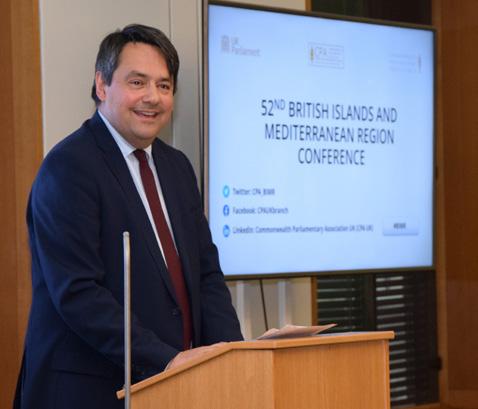
INCLUSIVE AND SUSTAINABLE PARLIAMENTS ARE HIGHLIGHTED AT 52nd CPA BRITISH ISLANDS AND MEDITERRANEAN REGIONAL CONFERENCE

Commonwealth Speakers, Members and parliamentary staff from the CPA British Islands and Mediterranean (BIM) Region attended the annual Regional Conference, which was this year held at the UK Parliament on 26 and 27 April 2023. The 52nd CPA BIM Regional Conference focused on the theme of ‘Inclusive and Sustainable Parliaments ’ and delegates shared their own Legislatures’ experiences as they participated in the discussions. Delegates heard from guest panellists over two days on the topics of gender representation, disability inclusion, workplace equality networks, parliamentary standards and the climate emergency.
More than 30 Parliamentarians and officials were welcomed by the CPA UK Joint Branch President, Rt Hon. Sir Lindsay Hoyle, MP, Speaker of the UK House of Commons and the Chair of the CPA UK Branch, Rt Hon. Dame Maria Miller, MP. The keynote speaker was Rt Hon. Karen Bradley, MP, Chair of the UK House of Commons Procedure Committee who spoke about practice and procedures during the COVID-19 pandemic and the introduction of proxy voting. Representatives from many CPA Branches were in attendance including Scotland, Alderney, Wales, Jersey, Falkland Islands, Isle of Man, Malta, Gibraltar, Cyprus and the United Kingdom.
In his address to delegates, the CPA Secretary-General, Stephen Twigg reflected on the Regional Conference theme and said: “The CPA Strategic Plan has strong commitments to diversity and inclusion with cross-cutting themes including Gender, Disability and Youth. I am pleased to have this opportunity to thank the CPA British Islands and Mediterranean Region for its work in championing greater representation of women both in Parliaments and in the governance of the CPA itself.” He went on to talk about the impact of the CPA’s Capital Investment Fund in promoting the inclusion of persons with disabilities and praised the recent use of the Fund in the CPA Isle of Man Branch to conduct an accessibility audit and implement physical improvements to their Legislative building to improve access.
In the margins of the Regional Conference, Members of the Commonwealth Women Parliamentarians (CWP) BIM Regional Steering Committee also met to discuss the network’s forthcoming business for the Region.
COMMONWEALTH PARLIAMENTARIANS AT 71st WESTMINSTER SEMINAR ON EFFECTIVE PARLIAMENTS


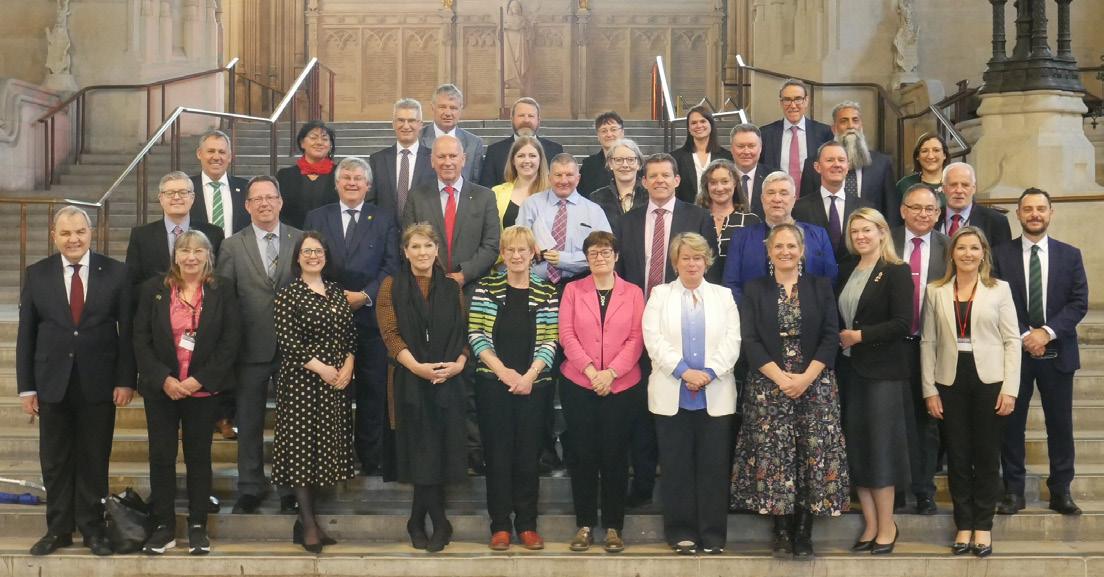
Over 60 Commonwealth Parliamentarians, Clerks and officials from 27 CPA Branches attended the 71st Westminster Seminar from 13 to 17 March 2023 hosted at the UK Parliament by the CPA UK Branch. The theme of the Westminster Seminar for 2023 was ‘ Effective Parliaments ’, which informed sessions throughout the seminar and provided a forum for delegates to exchange ideas on parliamentary practice and procedure, as well as share wider experiences of how Legislatures across the Commonwealth function.
Delegates heard from Rt Hon. Dame Maria Miller, MP, Chair of CPA UK’s Executive Committee, emphasised the powerful benefits of global peer-to-peer learning and the UK Shadow Foreign Secretary, Rt Hon. David Lammy, MP noted that there is “a massive opportunity with the Commonwealth’s size and unity of vision to disentangle some of the problems faced.”
The seminar also explored potential solutions to shared challenges across the different Legislatures, leadership and accountability in Parliament and how to exercise effective scrutiny. Delegates also experienced the work of the UK Parliament; observed Prime Minister’s Questions and visited the local constituencies of UK MPs.
For the latest CPA and Commonwealth news please visit www.cpahq.org or follow the CPA on social media -
110 | The Parliamentarian | 2023: Issue Two | 100 years of publishing CPA NEWS
Twitter @CPA_Secretariat | Facebook.com/CPAHQ | LinkedIn
Instagram
|
@cpa_secretariat
Image credits: CPA UK Branch.
Image credits: CPA UK Branch/CPA Headquarters.
SPEAKERS FROM UK AND OVERSEAS TERRITORIES MEET IN ANGUILLA FOR DISCUSSIONS ON DEEPENING PARLIAMENTARY DEMOCRACY
The 2nd Commons and Overseas Territories Speakers’ Conference (COTSC) has been held at the Anguilla House of Assembly from 3 to 5 April 2023 on a theme of ‘Deepening Parliamentary Democracy in the British Overseas Territories - A Roadmap to 2030 ’. The conference was hosted by the Speaker of the Anguilla House of Assembly, Hon. Barbara Webster-Bourne. Speaker WebsterBourne is also the CPA Small Branches Vice-Chairperson.
Commonwealth Speakers and representatives attended from Anguilla, Bermuda, Cayman Islands, Falkland Islands, Montserrat, St Helena, Turks and Caicos and Gibraltar as well as the United Kingdom. The conference continued the discussions at the inaugural COTSC hosted by Rt Hon. Sir Lindsay Hoyle, MP, Speaker of the UK House of Commons in the UK in 2022, where it was noted that well-structured and resourced Legislatures are essential to a vibrant democracy in the Overseas Territories.
At this year’s conference, the Speakers, alongside Parliamentary Clerks and constitutional experts, examined different aspects of building strong Legislatures and effective parliamentary democracy. Over a series of sessions, deliberations provided a roadmap to supporting good governance in each Overseas Territory. The CPA Headquarters’ Head of Programmes, Matthew Salik also presented on the CPA’s Democratic Benchmarks and Model Law for Parliaments which provide frameworks for excellence in Commonwealth parliamentary and legislative practice. All the Legislatures attending are Branches of the Commonwealth Parliamentary Association across two of the CPA’s Regions - the CPA British Islands and Mediterranean Region and the CPA Caribbean, Americas and the Atlantic Region.
ANGUILLA ASSEMBLY ENDORSES NEW CODE OF CONDUCT AND REGISTER OF INTERESTS

The Anguilla House of Assembly passed a motion approving a new Code of Conduct and Register of Interests for Members on 28 March 2023. The new regulations were developed by the Administration Committee of the Anguilla House of Assembly with support from the Commonwealth Parliamentary Association (CPA) through a Technical Assistance Programme. The motion, presented by Hon. Dee-Ann Kentish-Rogers, acknowledged ‘the community’s expectations of high standards from their elected representatives as well as the desire of Members of this honourable House to enhance propriety and to strengthen the community’s trust in the Assembly’.
The new Code of Conduct and Register of Interests will require Members to abide by a set of principles, establishes the position of Commissioner of Standards, outlines a process for dealing with breaches of the Code (including sanctions) and requires Members to submit a declaration of interests. In December 2022, Tom Duncan, Clerk of the Australian Capital Territory Legislative Assembly, visited Anguilla to help draft the new Code of Conduct and Register of Interests, guided by the CPA’s Recommended Benchmarks for Codes of Conduct applying to Members of Parliament.
This was one of several activities outlined in CPA’s Technical Assistance Programme. Other activities included a review of the Standing Orders, a Governance, Organisational and Administrative review and the development of outreach and educational resources.
Hon. Barbara Webster-Bourne, Speaker of the Anguilla House of Assembly, said: “We are appreciative of the partnership that we have forged over the years with the Commonwealth Parliamentary Association’s Headquarters. The technical expertise provided by Tom Duncan of the Australian Capital Territory Legislative Assembly, under the auspices of the CPA HQ, and the spirit in which it was delivered were an integral part of the process and its success. We look forward to building on that relationship.”
CPA SUPPORTS ANGUILLA WITH NEW EDUCATION VIDEO FOR SCHOOLS

The Commonwealth Parliamentary Association has supported the launch of new education resources with the Anguilla House of Assembly aimed at helping students to learn about democracy and the work of the Legislature. A new educational video produced in partnership with the CPA Headquarters will be used in schools as a tool to educate students about the work of the Assembly. The Speaker of the Anguilla House of Assembly, Hon. Barbara WebsterBourne, said: "If we are to strengthen our democratic systems, our young people as the inheritors of these systems must be educated about those systems and the values that hold them together." The Speaker also expressed her "sincerest appreciation to the Commonwealth Parliamentary Association Secretariat for their ongoing commitment to the Anguilla House of Assembly."
The CPA Headquarters has been working with the Anguilla House of Assembly and CPA Anguilla Branch on CPA Technical Assistance Programme. The CPA Headquarters also engaged a Creative Digital Intern who worked on the video resource project.
The Parliamentarian | 2023: Issue Two | 100 years of publishing | 111 CPA NEWS
84th CPA AFRICA EXECUTIVE COMMITTEE HELD IN KWAZULU-NATAL
The Vice-Chairperson of the Commonwealth Parliamentary Association, Hon. Osei Kyei-Mensah-Bonsu, MP, Majority Leader and Member of the Parliament of Ghana, outlined the CPA’s recent priorities and activities as he addressed the 84th CPA Africa Region Executive Committee meeting in Durban, South Africa, held from 3 to 6 April 2023 on the theme of ‘ An Activist, People-Centred Legislature ’. Delegates were welcomed by the Speaker of the KwaZuluNatal Provincial Legislature, Hon. Nontembeko Boyce, MPL. The meeting is held twice a year to plan the regional activities of the CPA Africa Region and to discuss issues of concern to Members. The CPA Africa Region, comprising of 63 national and sub-national Legislatures, provides Parliamentarians with the opportunity to discuss issues and build consensus on areas of common interest to deepen parliamentary democracy, good governance and promote human development.
SAMOA PARLIAMENT HOSTS INAUGURAL CPA BRANCH MEETING

The Legislative Assembly of Samoa's convened its first-ever CPA Samoa Branch meeting on 9 May 2023 at the Parliament House in Mulinuu with the Speaker saying it was long overdue. Chaired by the Speaker of the House and CPA Samoa Branch President, Hon. Papaliʻi Liʻo Taeu Masipau, MP, the two-day programme offered an opportunity for Members of Parliament who had attended various CPA workshops and forums to present on what they had learned as well as discussing parliamentary practices and procedures. The Speaker of the Legislative Assembly emphasised in his address the importance of Samoa becoming a Branch of the Association, with opportunities to strengthen the implementation of Samoa’s democratic duties and specifically to enhance Members’ knowledge and abilities in order to effectively carry out their parliamentary duties. Members heard presentations on recent CPA activities on parliamentary procedures and climate change; gender equality through the Commonwealth Women Parliamentarians network; as well as the Asia-Pacific Parliamentary Forum on Global Health and Parliamentarians for Global Action.
COMMONWEALTH PARLIAMENTARIANS AT 146th IPU ASSEMBLY IN BAHRAIN


Commonwealth Parliamentarians attended the 146th Assembly of the Inter-Parliamentary Union (IPU) in Manama, Bahrain from 11 to 15 March 2023. Over 1,700 Parliamentarians from around the globe, including the CPA President and Speaker of the Parliament of Ghana, Rt Hon. Alban Bagbin and the Speakers of Australia, India, Tonga, Zambia, Malawi, Malta and many other Commonwealth jurisdictions, attended the IPU Assembly on the theme of ‘Promoting peaceful coexistence and inclusive societies: Fighting intolerance’. The IPU Assembly was opened by the Deputy Prime Minister of Bahrain, Shaikh Khalid bin Abdullah Al Khalifa, on behalf of the King of Bahrain, and he reaffirmed Bahrain's commitment to join efforts and improve global security, stability and peace. The event was also attended by IPU President, Duarte Pacheco and the IPU SecretaryGeneral, Martin Chungong. This year, the IPU membership increased to 179 countries with the readmission of Liberia, a founding member of the IPU in 1889 whose membership lapsed in 2011.
For the latest CPA and Commonwealth news please visit www.cpahq.org or follow the CPA on social mediaTwitter @CPA_Secretariat | Facebook.com/CPAHQ | LinkedIn | Instagram @cpa_secretariat
112 | The Parliamentarian | 2023: Issue Two | 100 years of publishing CPA NEWS
Image credit: KwaZulu-Natal Legislature.
Image: Legislative Assembly of Samoa.
Image: Inter-Parliamentary Union.
CANADIAN SPEAKER USES SNOWMOBILE TO TRANSPORT PARLIAMENTARY MACE TO VISIT REMOTE COMMUNITIES

The Speaker of the Northwest Territories Legislative Assembly, Hon. Frederick Blake Jr used an unusual method of transport as part of his educational tour of some of the remote areas of the northern Canadian Territory recently. The Speaker was taking the historic parliamentary mace to visit a school when he found the road to his home community of Tsiigehtchic was blocked by heavy snow and a jack-knifed lorry. The Speaker helped to transport the mace and other objects by snowmobile around the blocked road to the Chief Paul Niditchie School in order to deliver his talk to students and teachers. The area is familiar to the Speaker as he happens to live in Tsiigehtchic, where he has previously served as chief and mayor. The Speaker told local news Cabin Radio: “A tractor trailer jackknifed there, pulling in a mobile home, so it blocked the road – and it’s the only way in. I noticed it before the team came in, so I just figured, ‘Ah, probably warm up the Ski-doo, just in case’.”
The Legislative Assembly regularly organises educational tours across the Territory. The Northwest Territories covers a vast area of 1.346 million km² with a total population of around 45,000 people, making it one of the most sparsely populated areas of the Commonwealth. The parliamentary mace, which normally sits in the chamber of the Legislative Assembly in Yellowknife, routinely goes on tour. Students are taught how it serves as a symbol for the Legislature and the Northwest Territories, bringing together the likes of painting, carving, beadwork, quillwork and even pebbles within the mace’s design to represent all 33 of the Territory’s communities.
MALAWI PARLIAMENT DELEGATION VISIT CPA HEADQUARTERS

In March 2023, the CPA Deputy Secretary-General Jarvis Matiya met a delegation from the Parliament of Malawi at the CPA HQ Secretariat office in London, UK. They discussed the Parliament of Malawi’s recently concluded self-assessment using the CPA Recommended Benchmarks for Democratic Legislatures, and CPA’s programme offerings such as the online courses for Parliamentarians through the CPA Parliamentary Academy.
CPA LEARNS LESSONS FROM AUSTRALIAN HUMAN RIGHTS COMMISSION

Staff at the CPA Headquarters met with Kate Jenkins, the Australian Sex Discrimination Commissioner, and Rosalind Croucher, President of the Australian Human Rights Commission to learn about human rights and sex discrimination practices. Kate led a major review of parliamentary workplaces in the Parliament of Australia and shared lessons from Australia's experience as well as alignment with the Commonwealth Women Parliamentarians (CWP) network’s work on gender-sensitive Parliaments.
CPA SECRETARY-GENERAL MEETS WITH JERSEY DEPUTY
The Secretary-General of the Commonwealth Parliamentary Association, Stephen Twigg met with the Chair of the CPA Jersey Branch, Deputy Rob Ward at the CPA Headquarters in London.

The discussion centred on the CPA’s work on youth engagement in the Commonwealth during the Commonwealth Year of Youth and the Jersey States Assembly’s engagement with local schools and colleges.
Deputy Rob Ward also wrote previously on the topic of the impact of climate change on the smallest jurisdictions in the Commonwealth in The Parliamentarian (2021 Issue Three).

The Parliamentarian | 2023: Issue Two | 100 years of publishing | 113
CPA NEWS
Image: CPA Headquarters Secretariat.
Image credit: Northwest Territory Legislative Assembly
The Speaker of the Northwest Territories Legislative Assembly, Hon. Frederick Blake Jr used a snowmobile to transport the parliamentary mace during an educational tour in Tsiigehtchic.
THE KING AND THE QUEEN CONSORT VISIT UK PARLIAMENT AHEAD OF THE CORONATION
On 2 May 2023, King Charles III and Queen Camilla visited the UK Parliament to meet Members of both Houses of Parliament ahead of the Coronation. The King, who is also the Head of the Commonwealth, was greeted by the Lord Great Chamberlain, Lord Carrington, and the Lady Usher of the Black Rod, Sarah Clarke as is traditional.

The Joint CPA UK Branch Presidents, the Speaker of the House of Commons, Rt Hon. Sir Lindsay Hoyle, MP and the Lord Speaker, Rt Hon. Lord McFall of Alcluith welcomed the royal couple inside Westminster Hall where they were introduced to members from both UK Houses of Parliament with shared parliamentary interests, including agriculture, business and communities. The Queen Consort also met with Members of both Houses who share similar interests, including literacy, combating domestic violence and osteoporosis. Their Majesties also viewed the UK Speaker's State Coach, which is now on display in Westminster Hall and links to past Coronations. It is one of the oldest examples of ceremonial coaches in the UK.
UK SPEAKER UNVEILS STAINED GLASS WINDOW TO CELEBRATE LINKS WITH BRITISH OVERSEAS TERRITORIES AND CROWN DEPENDENCIES


Parliamentarians from the CPA Caribbean, Americas and the Atlantic Region and the CPA British Islands and Mediterranean Region attended the unveiling of two new stained-glass windows by the Joint CPA UK Branch President, Rt Hon. Sir Lindsay Hoyle, MP, Speaker of the UK House of Commons to commemorate the close relationship between the UK Parliament, the British Overseas Territories and the Crown Dependencies.
The new stained-glass windows are located at the entrance to Speaker’s House and depict each of the heraldic shields of 16 UK Overseas Territories and three Crown Dependencies. The UK Speaker said that the new works of art "would be a permanent and tangible reminder of the strong and close links between the UK and its wider family. From now on, every single person coming into Speaker’s House will be reminded of how closely we are connected."
The stained-glass windows feature coats of arms from Akrotiri and Dhekelia, Anguilla, Ascension, Bermuda, the British Antarctic Territory, the British Indian Ocean Territories, the British Virgin Islands, Cayman Islands, Falkland Islands, Gibraltar, Montserrat, Pitcairn Islands, St Helena, South Georgia and the South Sandwich Islands, Tristan da Cunha, Turks and Caicos, Guernsey, Jersey and the Isle of Man. The stained-glass also depicts symbols linked to the coat of arms of the UK Speaker including three Lancashire roses, bees from his home village of Adlington in Lancashire, the key of Gibraltar (where he is Chancellor of the University) and a Rugby League ball. The other group of arms is linked to those of John Evelyn Denison, the first UK Speaker to live in Speaker’s House (Speaker from 1857-72).
At the unveiling of the new stained-glass windows, the Premier of Anguilla, Hon. Dr Ellis Webster, said he was ‘delighted’ to see his island nation represented in Parliament. "It is a proud moment for our territory and a testament to our shared history and heritage with the UK and its British Overseas Territories," he said. The Premier of Montserrat, Hon. Joseph Eason Taylor Farrell, said he was ‘excited’ to see Montserrat’s heraldic shield displayed in Speaker’s House, particularly “at a time when residents of the Overseas Territories have joined with the rest of the UK family to celebrate the coronation.” The British Virgin Islands’ Premier, Hon. Dr Natalio Wheatley, said the window "acknowledged the importance of the Territory and its people" and "their contributions to our shared history and heritage."
News story credit: UK Parliament Speaker’s Office.
For the latest CPA and Commonwealth news please visit www.cpahq.org or follow the CPA on social mediaTwitter @CPA_Secretariat | Facebook.com/CPAHQ | LinkedIn | Instagram @cpa_secretariat
114 | The Parliamentarian | 2023: Issue Two | 100 years of publishing
Image credit: UK Parliament.
Image credit: UK Parliament.
Image
CPA NEWS
credit: Uk Parliament.
COMMONWEALTH LEADERS PLEDGE CONTINUED UNITY AND YOUTH EMPOWERMENT AT SPECIAL CORONATION SUMMIT
Ahead of the Coronation in May 2023, Commonwealth Leaders representing 56 nations met with the Head of Commonwealth, HM King Charles III at Marlborough House in London. The King was greeted by the Commonwealth Secretary-General, Rt Hon. Patricia Scotland, KC before meeting with Commonwealth Leaders. The King has described the Commonwealth as a ‘cornerstone’ of his life, expressing his unwavering support for the values, people and countries of the Commonwealth. At their Commonwealth Heads of Government Meeting (CHOGM) in 2018, Commonwealth Leaders decided that he would succeed Her Late Majesty Queen Elizabeth II as Head of the Commonwealth, and he acceded to the role upon her death in September 2022.
Commonwealth Secretary-General, the Rt Hon. Patricia Scotland KC, said: "I can think of no stronger signal of His Majesty’s deep connection to our Family of Nations than taking time to meet with Commonwealth Leaders at Marlborough House ahead of his Coronation. Earlier this year, the King highlighted the Commonwealth’s 'near-boundless potential as a force for good'. In today's meeting, leaders reaffirmed their unwavering and unified commitment to the continued strengthening of our Commonwealth family and assuring its future by investing in the 1.5 billion young people across our 56 nations.”
Commonwealth Leaders discussed many issues of mutual interest, including initiatives to support the empowerment of young people, as 2023 has been designated as the Commonwealth Year of Youth. This year also marks the tenth anniversary of the signing of the Commonwealth Charter, which reaffirms the values and principles of the Commonwealth as well as its aspirations. 2023 is also being marked as the Commonwealth Year of Peace. The Commonwealth is growing in size, scale and influence, and the meeting also welcomed the leaders of Togo and Gabon, who attended joined the Commonwealth in 2022.
The President of Rwanda, His Excellency Paul Kagame, in his role as Chair-in-Office of the Commonwealth, welcomed the leaders of the two newest Commonwealth countries and paid tribute to the new Head of the Commonwealth when he said: "We appreciate the King’s lifelong devotion to Commonwealth affairs, just as we remember the role of her late Majesty, Queen Elizabeth II, in giving the modern Commonwealth its shape and spirit." His Highness Tuimalealiifano Va’aleto’a Sualauvi II, the Head of State of Samoa also attended the event as the incoming Commonwealth Chair-in-Office. In 2024, Samoa will succeed Rwanda as Chair at the 27th Commonwealth Heads of Government Meeting (CHOGM) in Apia, the capital city.

PARLIAMENTARIANS JOIN THE DISCUSSIONS AT COMMONWEALTH LAW CONFERENCE
Commonwealth Parliamentarians have joined lawyers, judges, government officials and experts at the 23rd Commonwealth Law Conference (CLC) in Goa, India from 5 to 9 March 2023. Organised by the Commonwealth Lawyers Association (CLA), the conference was held under the theme of ‘Common Challenges in Uncommon Times’. This year marks 20 years since the adoption of the Commonwealth Latimer House Principles on the separation of powers. The Commonwealth Parliamentary Association (CPA) played a key role in the establishment of the Principles* which highlight the importance of the separation of powers between the Legislature, the Executive and the Judiciary to ensure effective governance and democracy. Delegates at the 23rd CLC heard from the Commonwealth SecretaryGeneral, Rt Hon. Patricia Scotland, KC who called on lawmakers and the legal community to use their skills to deliver justice at a time of increased global insecurity and to take on the challenge of protecting the environment, improving governance, enhancing freedoms and enabling the most vulnerable. The Commonwealth Secretary-General emphasised the importance of the progress made over the past 20 years and noted that the Commonwealth Latimer House Principles provide an effective framework for governments, Parliaments and judiciaries to implement the Commonwealth’s fundamental values.

*The Commonwealth Parliamentary Association (CPA) was a partner in the establishment of the Commonwealth Latimer House Principles together with partners: the Commonwealth Secretariat, the Commonwealth Magistrates and Judges Association (CMJA), the Commonwealth Lawyers Association (CLA) and the Commonwealth Legal Education Association (CLEA). Representatives from each organisation form the Commonwealth Latimer House Principles Working Group.
The Parliamentarian | 2023: Issue Two | 100 years of publishing | 115
COMMONWEALTH NEWS Image credit:Commonwealth Lawyers Association.
Image credit: Commonwealth Secretariat.
44th MEETING OF THE CONFERENCE OF HEADS OF GOVERNMENT OF CARICOM IN THE BAHAMAS AS THE ORGANISATION MARKS ITS 50 th ANNIVERSARY

Parliamentarians from across the CPA Caribbean, Americas and Atlantic Region attended the 44th Meeting of the Heads of Government of the CARICOM (Caribbean Community) in The Bahamas from 15 to 17 February 2023.

The President of Ukraine, Volodymyr Zelenskyy, delivered an address virtually to Caribbean leaders to outline the latest situation in the conflict with Russia. Delegates also heard from the Director General of the World Trade Organization (WTO), Dr Ngozi Okonjo-Iweala and John Kerry, the United States Special Envoy for Climate. The Prime Minister of Canada. Rt Hon. Justin Trudeau also attended as a special observer and announced that Canada will be taking on the role of Chair of the Caribbean Development Bank’s (CDB) Board of Governors in June 2023. Delegates were welcomed by the Incoming Chairman of CARICOM, Hon. Philip E. Davis, MP, Prime Minister of The Bahamas and the CARICOM Secretary-General, Dr Carla Barnett.
In 2023, the Caribbean Community (CARICOM) is celebrating its 50th anniversary, following its establishment by the Treaty of Chaguaramas on 4 July 1973. CARICOM members include: Antigua and Barbuda; The Bahamas; Barbados; Belize; Dominica; Grenada; Guyana; Haiti; Jamaica; Montserrat; Saint Lucia; St Kitts and Nevis; St Vincent and the Grenadines; Suriname; Trinidad and Tobago. Associate Members: Anguilla; Bermuda; British Virgin Islands; Cayman Islands; Turks and Caicos Islands.
COMMONWEALTH FOREIGN AFFAIRS MINISTERS MEET TO DISCUSS RESPONSES TO GLOBAL CRISES

Foreign Ministers from across the Commonwealth met for the 22nd annual Commonwealth Foreign Affairs Ministers Meeting (CFAMM) held at Marlborough House in London during Commonwealth Week in March 2023. The agenda focused on enhancing the resilience of Commonwealth countries, recognising the concurrent crises and challenges faced by many members such as climate change, the ongoing impacts of the pandemic and spiralling food and energy costs, which pose risks to peace and stability. Addressing the gathered Ministers, the Commonwealth Secretary-General, Rt Hon. Patricia Scotland, KC said: “We have shown again this week that our Commonwealth Family is unique in the world: bound by our special blend of shared interests, practical advantages and shared values.
We are strengthened by our diversity, and united in our commitment to our Commonwealth Charter. As we celebrate the Charter’s tenth anniversary, we can renew our commitment to the vision it expresses: for a fairer, more equitable, more peaceful and sustainable world rooted in democracy, justice and human rights. And we can take confidence in the firm foundation it provides us: to face the challenges of today and seize the opportunities of the future.”
As the representative of the current Commonwealth Chair-in-Office, Hon. Dr Vincent Biruta, Minister of Foreign Affairs and International Cooperation of Rwanda, said: “The CHOGM 2022 Summit in Kigali was a success for all Commonwealth members. Members’ participation in Kigali, and in the months of preparation before, embodied the Commonwealth spirit of goodwill, collaboration and sharing. Going forward, we need to draw on this collective goodwill in our efforts to progress the CHOGM 2022 outcomes. A further celebratory point of note from CHOGM 2022, is the extension of our family of nations, bringing our union to 56 members, with the welcome addition of both the Gabonese Republic and the Republic of Togo. We look forward to working with Ministers and officials from both nations.”
The next Commonwealth Foreign Affairs Ministers Meeting is expected to take place in September 2023 in the margins of the UN General Assembly.
For the latest CPA and Commonwealth news please visit www.cpahq.org or follow the CPA on social mediaTwitter @CPA_Secretariat | Facebook.com/CPAHQ | LinkedIn | Instagram @cpa_secretariat
116 | The Parliamentarian | 2023: Issue Two | 100 years of publishing
Image credits: CARICOM.
Image credit: Commonwealth Secretariat.
COMMONWEALTH NEWS

YOUNGEST SPEAKERS AND PRESIDING OFFICERS IN THE COMMONWEALTH
At the Commonwealth Heads of Government Meeting in 2022, Commonwealth Leaders declared 2023 as a year dedicated to youth-led action for sustainable and inclusive development. The ‘Commonwealth Year of Youth’ was officially launched in January 2023. The Commonwealth’s 56 member countries have a combined population of 2.5 billion people, of which more than 60% are under 30 years of age. Youth engagement is central to the work of the Commonwealth Parliamentary Association, which includes the Commonwealth Youth Parliament (CYP), the development of educational resources and outreach programmes. These programmes aim to increase awareness of the important work done by the CPA in promoting democratic governance across the Commonwealth and to connect Parliamentarians with young people in schools, colleges and universities to inspire the next generation of young leaders. To mark the 'Commonwealth Year of Youth', we are highlighting some of the young leaders who are currently the youngest Speakers and Presiding Officers in the Commonwealth’s Parliaments and Legislatures.
WESTERN CAPE
Hon. Daylin Mitchell, MPP was elected as the Speaker of the Western Cape Provincial Parliament, a Provincial Parliament in South Africa, on 12 December 2022. At the age of 36, this makes him the youngest current male Speaker in the Commonwealth. This, however, comes as no surprise, considering that, when he was first sworn in as a Member of the Western Cape Provincial Parliament in 2015, he was a very youthful 29-year-old. In 2021, he was sworn in as the youngest member of the provincial Cabinet. Having been brought up in a strict but loving and supportive family, Hon. Daylin Mitchell learnt from an early age that ethics and values are as important as love and loyalty. In his early teens, he started to become aware of social matters and injustices. Growing up as a non-white person in South Africa and being an avid history buff, it was inevitable that he gravitated towards the social challenges that very often have their roots in the history of South Africa. More than just understanding the underlying issues, he wanted to be part of addressing the challenges and changing the lives and realities of people in order to restore hope, especially in the youth. As part of youth leadership at school, Hon. Daylin Mitchell chaired the Interact club and outreach committees and served as head prefect of his high school. These activities were focused on building civil activism. This social awareness gradually morphed into a political awareness, prompting him to apply for a position at a political party. This first career step started a journey that has led him, over many years, to the position that he now holds. He first entered the doors of the Western Cape Provincial Parliament in 2015, when he was appointed Chief of Staff for the Democratic Alliance (DA) when he was also the Deputy Chairperson of the Cape Metro Region for the party. His talent and passion were noticed by the leadership of the party, and he was encouraged to enroll in the DA Young Leaders Programme, from which he graduated in 2009. In Parliament and Government, he has held several positions including the Chairperson of the Standing Committee on Transport and Public Works, Deputy Chief Whip, Minister for Transport and Public Works, later to be renamed the Minister for Mobility. As Speaker of Parliament, Hon. Daylin Mitchell has focused on several key priority areas that reflect his personal beliefs and passions very clearly. These include building a credible Parliament, expanding citizen service, strengthening support to legislators, supporting Parliament’s employees and strengthening democracy. He is determined to lead with integrity and inspire hope across society, but especially among the youth.

CAYMAN ISLANDS
Hon. Katherine Ebanks-Wilks, MP is the Speaker of the Cayman Islands Parliament. In November 2022, she was elected as the youngest Speaker of the Parliament in its history. She was first elected as a Member of Parliament in 2021 and was previously the Deputy Speaker, Parliamentary Secretary to the Education and Finance Ministries. She has over 15 years of experience in the legal profession, first working as a Financial Services Paralegal in the private sector and, more recently, as Research Paralegal at the Cayman Islands Law Reform Commission. She is also deeply passionate about her community, as well as representing the Constituency of West Bay Central, she is a founding director of the United Against Bullying Foundation, a nonprofit organisation that focuses on the prevention and education of bullying behaviour. She is also a director of the Cayman Islands Youth Development Consortium, a non-profit organisation that focuses on supporting at-risk youth. By virtue of her Speakership role, she is the Chairperson of the CPA Youth Parliament Organising Committee for the Cayman Islands, an annual event held to mark Commonwealth Day (see page 154).

NEVIS ISLAND
Hon. Michelle Slack is the President of the Nevis Island Assembly. She was appointed as the President during the first sitting of this year’s parliamentary term held on 19 January 2023, making her one of the youngest Presiding Officers in the Commonwealth. Hon. Michelle Slack is an Associate Attorney-at-Law at the Law Firm of Daniel Brantley on Nevis Island. She was educated at Norman Manley Law School in Jamaica where she gained a Bachelor of Law (LL.B.) with first class honours. She was named a 2021 Chevening Scholar with the UK Foreign, Commonwealth and Development Office representing the Barbados and Eastern Caribbean Region. She also represented the island in the 9th Commonwealth Youth Parliament (CYP9), orgnaised by the CPA, in 2018 when it was held on the island of Jersey.
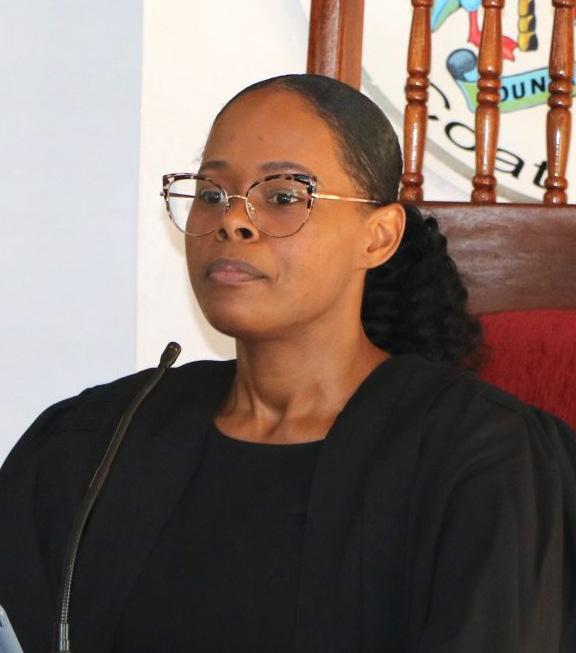
118 | The Parliamentarian | 2023: Issue Two | 100 years of publishing
Text
by the CPA Western
provided
Cape Branch.
CYPRUS
Hon. Annita Demetriou is the President of the House of Representatives at the Parliament of Cyprus since 2021 and is the first woman to hold the role. She is also the first female President of the Democratic Rally (DISY), making her the youngest person to have served in either role.

Educated at the University of Cyprus and the University of Kent, she worked as a Public Relations Officer and then a lecturer in International Relations at the University of Cyprus. She also presented a news bulletin at Capital TV as well as becoming a local councilor. She was first elected as a Member of the House of Representatives in June 2016 to represent the constituency of Larnaca District. In Parliament, she has held several roles including Deputy Chair of the Parliamentary Committee on Equal Opportunities and the Parliamentary Committee on Education and Culture. On her election as Speaker, the President of Cyprus said that her election sent "a strong message ... to all women of Cyprus, to all citizens of Cyprus, that women can and must strive for such positions because they deserve them."
TONGA
The Speaker of the Legislative Assembly of Tonga is Lord Fatafehi Fakafanua, who was first elected as Speaker in 2012. At the age of 38, he is one of the youngest current Speakers in the Commonwealth. Educated at King’s College in Auckland, New Zealand, he went onto study in New Zealand and India gaining Degrees and Master’s in Diplomacy, Law and Business.
Prior to entering Parliament, he worked as a manager of a company that administered commercial and residential properties in Tonga. During a 2008 by-election, he was first elected as a representative for Ha'apai, the youngest member ever of the Tongan Parliament. Between 2012 and 2014, he was re-elected into Parliament as a Noble Representative and also elected as the youngest Speaker in the Parliament’s history. He was re-elected in 2017 when he also began his second term as Speaker. Lord Fakafanua is a member of the Tongan royal family, through his mother, and he is the 8th holder of a noble title in the country. In 2008, he was the recipient of Knight Commander (KCQS) awarded by His Majesty King George Tupou V.

ST KITTS AND NEVIS
Hon. Lanein Blanchette is the Speaker of the National Assembly of St Kitts and Nevis since October 2022 and is one of the youngest Speakers in the Commonwealth. She is an Attorney-At-Law who gained her Bachelor’s Degree with Honours in Criminal Justice from Monroe College in New York in 2008. Subsequent roles with the national government introduced her to public service and the justice system. A further Law degree at the University of the West Indies, Cave Hill Campus (Barbados) followed, and she was called to the Bar in 2017. She worked as a Crown Counsel in the Office of the Director of Public Prosecutions where she prosecuted criminal matters federally in the Magistrates and High Courts until June 2022. She is now the founder and Lead Counsel at Blanchette Law Chambers. She continues to actively volunteer in community sporting activities in netball and football and serves as the President of the Aces Netball Club and is a member of the St Kitts and Nevis Sports Council.
Hon. Latoya Jones is the Deputy Speaker of the National Assembly of St Kitts and Nevis since October 2022 and is one of the youngest people to hold the role. She was also appointed as a Senator for the Opposition Party. She describes herself as a “Nevisian at heart; a dynamic young lady who is determined to empower the people of her nation.”
She recently served as the Special Advisor to the Premier of Nevis at the Nevis Island Administration, and she also worked as the Assistant Regulator at the Nevis Financial Services Department, as a Senior Tax Officer at the Inland Revenue Department, and as a Senior Auditor at the Department of Audit.


At the time of their appointments as the Speaker and Deputy Speaker of the National Assembly of St Kitts and Nevis respectively, it was noted that the appointment of female leaders was a pledge made by the Prime Minister, Dr Terrance Drew, to place more young people and women in positions of power.
Editorial by Jeffrey Hyland, Editor, The Parliamentarian.

Image credits: CPA Branches/CPA Headquarters. The Parliamentarian | 2023: Issue Two | 100 years of publishing | 119
THE FUTURE OF INTER-PARLIAMENTARY RELATIONS IN THE UK
The emerging quasi-federal organisation of the Legislatures in the United Kingdom is under new strain yet there are currently no formal mechanisms for the UK Parliament at Westminster and the devolved Legislatures in Northern Ireland, Scotland and Wales to engage with each other on issues of mutual concern. A new report, published jointly by the Study of Parliament Group and the Hansard Society, sets out a proposal to develop and improve inter-parliamentary relations.
The last quarter-century has seen a dramatic change in the constitutional architecture of Great Britain and Northern Ireland. The New Labour government elected in 1997 moved swiftly to implement its promise of devolution to Scotland and Wales (following advisory referendums in each nation), establishing in 1999, the Scottish Parliament and the National Assembly for Wales, each with its own government drawn from the Members of those bodies. The Belfast/Good Friday Agreement of April 1998 (also endorsed by referendums on both sides of the Irish border, and the 25th anniversary of which has recently been the focus of widespread celebrations) enabled the restoration of devolved government in Northern Ireland (where it had previously existed from 1922 to 1972).
The then Secretary of State for Wales, Ron Davies, famously described devolution as “a process, not an event”. And so it has proved. The history of restored devolved government in Northern Ireland has been fraught, with the Northern Ireland Assembly suspended for seven of its 24 years of existence. However, in Scotland, and even more dramatically in Wales, the Governments and Legislatures have each gained significantly more powers to make laws in a wide range of areas within their jurisdictions. In 2006, the Welsh devolution settlement was completely redrawn, and in 2011, the National Assembly (following a further referendum) was given primary law-making powers similar to those already enjoyed by the Scottish Parliament. Following the Scottish independence referendum of 2014, both the Scottish Parliament and the National Assembly for Wales were granted further extensive legislative competences (one of which the National Assembly used to rename itself the Welsh Parliament or Senedd Cymru). Meanwhile, and
Paul Evans, CBE is a former Clerk in the UK House of Commons, from where he retired in 2020. He is a former Chair of the Study of Parliament Group and a member of the Hansard Society. He can be contacted at: brynheulog.evans@ btinternet.com.
always controversially, England continued to be governed directly by the UK Parliament and Government.
From the outset, mechanisms to coordinate law and policy across the now four jurisdictions within the UK were seen as necessary, with a Joint Ministerial Council established to facilitate inter-governmental relations. In the first years of devolution, when the Labour Party formed or headed the governments in the UK, Scotland and Wales there was relatively little friction, and the formal inter-governmental relations mechanisms were not much used. After the arrival of Scottish National Party-led government in Scotland and Conservative-led government for the UK, these informal relations began to come under pressure.
While the UK was a member of the European Union, much of the legal base in wide areas (agriculture, environment, fisheries, trade, employment, to name a few) of government action was common across the UK, and was shared with the Republic of Ireland. The decision to leave the EU following the referendum of 2016 (in which majorities in both Scotland and Northern Ireland voted to remain) introduced a new complexity to the overlap and potential for conflict between laws made by the four Legislatures. The legislation giving effect to the withdrawal agreement was contested by both the Scottish and Welsh Legislatures and Executives, and subsequently the legislation enabling the UK government to enforce common standards within the UK internal market was also highly controversial.
The COVID-19 pandemic also brought the distinctions between the four jurisdictions within the UK to greater public notice, as the four governments adopted different public health measures at different times. Although the differences between the measures adopted by them were mostly of detail, they did starkly highlight the need for
Sir Paul Silk, KCB is a former Clerk at both the UK House of Commons and Senedd Cymru. From 2011 to 2014, he was Chair of the Commission on Devolution in Wales. He is a former President of the Study of Parliament Group and a Trustee of the Hansard Society. Email evanpaulsilk@gmail.com.


THE FUTURE OF INTER-PARLIAMENTARY RELATIONS IN THE UK
120 | The Parliamentarian | 2023: Issue Two | 100 years of publishing
intergovernmental cooperation and coordination. In 2023, for the first time, the UK government used its residual power under the devolution settlement to block a law made by the Scottish Parliament (the Scottish Gender Recognition Act) on the basis that it conflicted with UK law.
The operations of the Joint Ministerial Council had been criticised almost from the outset for their opacity and lack of accountability to the four Legislatures. Much of this criticism came from Committees of those Legislatures, and there were regularly repeated calls for the establishment of some kind of formal, or at least formalised, system of interparliamentary relations (IPR) so that the Members of those bodies could co-operate effectively in holding their Executives to account for the conduct of inter-governmental relations. Lacking any cohesive co-ordinating force to give effect to these recommendations (which had been echoed by a series of government-appointed commissions of inquiry over the decades), progress was meagre. Some informal co-operation occurred between Committees of the Legislatures on a bilateral basis, and the 2016 referendum inspired the creation of an ‘Inter-Parliamentary Forum on Brexit’ (IPF) which brought together a group of Committees from each Legislature with interests in the procedural consequences of leaving the EU. It did not, however, achieve a high profile for its work, even within the Legislatures themselves, and had no formal powers and lacked a shared secretariat to plan, co-ordinate and publicise its work.
After the referendum, the UK government acknowledged the need to improve inter-governmental relations within the UK, a need which became more acute as conflicts between the different levels of government became endemic rather than sporadic. A Review of Inter-Governmental Relations, which had been commissioned in March 2018, was finally published in January 2022. The review introduced a tiered system of forums for furthering intergovernmental relations. These were:

• Inter-Ministerial Groups (IMGs) (essentially subject or ‘portfolio’ based).
• An Inter-Ministerial Standing Committee (IMSC) which would provide a co-ordinating and dispute-resolution role.
“ The COVID-19 pandemic also brought the distinctions between the four jurisdictions within the UK to greater public notice, as the four governments adopted different public health measures at different times. Although the differences between the measures adopted by them were mostly of detail, they did starkly highlight the need for intergovernmental cooperation and coordination. ”
• A Finance Inter-Ministerial Standing Committee (F-IMSC) to consider fiscal matters, led by the Treasury.
• Ad-hoc and time-limited Inter-Ministerial Committees (IMCs) to consider specific issues which could not be effectively dealt with within the portfolio groups.
• The Council, bringing together the UK Prime Minister with the heads of devolved governments.
The structure was to be supported by a small secretariat comprising officials from all the participating governments. The Government statement at the time of publication concluded by saying that: ‘The governments are accountable to their respective legislatures for the conduct of intergovernmental relations and will seek to promote a wider understanding of this activity. All governments commit to increased transparency of intergovernmental relations through enhanced reporting to their respective legislatures.’
However, no UK Legislature had been invited to endorse the proposed new structures and the creation of the new intergovernmental relations structures provided a renewed impetus for revisiting the calls for the development of interparliamentary relations (IPR). While the Governments’ statement paid lip service to parliamentary accountability, it was left for the Legislatures themselves to make that a reality and work together to challenge the assumption of Executive dominance in decisions which affect all parts of the nation, and which engage widely with overlapping UK-wide and devolved competences.
In January 2022, the UK Study of Parliament Group held a session on interparliamentary relations at its annual conference. The Parliamentarians participating in that meeting threw down a challenge to the Group to come up with a blueprint of some kind for better interparliamentary relations in the UK. In response, a study group of academics and officials from Westminster, the Scottish Parliament, the Senedd and the Northern Ireland Assembly, working jointly with the Hansard Society, was formed and met together on
FUTURE OF INTER-PARLIAMENTARY
THE
RELATIONS IN THE UK
The Parliamentarian | 2023: Issue Two | 100 years of publishing | 121
several occasions during 2022 to discuss ideas. We published a report in January 2023 setting out our ideas – ‘A New Structure for Interparliamentary Relations in a devolved Great Britain and Northern Ireland’. The full report can be found on the Study of Parliament Group’s website.

In the short term, we would like to see the Inter-Parliamentary Forum become better supported and better known. However, beyond that, we want it to be developed into an Inter-Parliamentary Body – something that will happen most naturally if the InterParliamentary Forum works well together and itself sees the need for a more formal body.
The task for the formal body will be wider than holding to account the inter-governmental relations bodies mentioned earlier. Much intergovernmental activity does not take place through formal channels, and the Body should have the freedom to manoeuvre within its terms of reference as is normal for Parliamentary Committees. For example, the Body might scrutinise relevant Treaties, as well as what are known in the UK as Legislative Consent Motions (when the other Legislatures are asked to consent to law being made in their area of competence by the UK Parliament in London). It would also be a forum in which the wider issues of devolution can be discussed between Members of the five Legislative chambers, and a force for improving communication and understanding of the devolution settlements and the respective roles of the devolved Legislatures. The Body would not diminish in any way the individual Legislatures’ rights and responsibilities as far as the scrutiny of their own Executives is concerned. Instead, it would complement, and therefore enhance, those rights and responsibilities.
What might the Body look like and how might it operate? It will need to be recognised by each Legislature in its Rules of Procedure, with each adopting a common set of Principles for the Rules of the Body. Detailed Rules for the way the Body operated would in due course be agreed by the Bureau of the Body.
Membership should be open to any primary law-making Legislature of the UK, though the Crown Dependencies and potentially other similar bodies (like the London Assembly) could have an Observer role. The size of the Body should recognise the balance between having enough Members to operate effectively through Committees and the difficulty for smaller Legislatures of having too high a proportion of its Members absent at the Body.
To demonstrate parity of esteem, all Legislatures should be represented with equal numbers of Members; but each Legislature should decide how to appoint Members and to deal with vacancies according to its own practices, recognising that electoral cycles vary. So far as practical, delegations should represent the composition of Legislature as a whole, and the aim should be for continuity of service. Each Legislature’s delegation would have a Leader chosen according to that Legislature’s own practices.
Though it might be desirable to have a ‘seat’, the acquisition of a building is unlikely to be practical or affordable – and the choice of
location could be controversial. This means that there should be a rotation of meeting places between the Legislatures.
A Presiding Officer could either be directly elected by the Body, or be appointed by its Bureau. They would be responsible for deciding whether matters were within the competence of the Body, and would be the principal spokesperson for the Body – they would not be a ‘neutral’ Speaker in the House of Commons mould. There would be a Bureau consisting of the delegation leaders from each Legislature and the Presiding Officer. The Bureau’s functions would be the organisation of business for Plenary and Committee, and administrative and financial control. It should have responsibility for external communications, transparency and value for money.
The Bureau would, under its rules of procedure, work by consensus and have the ability to act on behalf of the Body between meetings. The Governments’ representative(s) (including officials) should be able to attend and speak at the Bureau.
The Body would meet in Plenary and Committee, and there would be a quorum – perhaps one third of its Members and at least three Legislatures represented – that would apply both in Plenary and Committees. The default position would allow hybrid, virtual and physical meetings, open to the public and broadcast – though some of the value of plenary meetings especially will be diminished by virtual attendance.
For the time being, the existing framework of scrutiny Committees operated by each of the Legislatures will be key to effective scrutiny of inter-governmental relations, and the Body should build on these. Therefore, the rules of each Legislature should provide for joint hearings with Body Committees, with principles agreed across Legislatures specifying how Body Committees might work with their sectoral Committees. One way of aiding integration with them would be to ensure that the membership of the Body, and therefore of its Committees, is drawn principally from the relevant Committees of each Legislature. This will aid continuity, political salience and relevance, as well as reducing duplication of effort. Of course, it will be for the Body to determine its own Committee structure, but it is likely that there will eventually be a small number of broadly thematic Committees reflecting the inter-governmental structures, with the facility to establish ad-hoc working groups as well.
Because each Legislature would have equal numbers of Members, there would be no voting either in Plenary or Committees.
122 | The Parliamentarian | 2023: Issue Two | 100 years of publishing
THE FUTURE OF INTER-PARLIAMENTARY
The Northern Ireland Assembly is located at the Stormont Parliament building.
RELATIONS IN THE UK
The emphasis and ambition would be to proceed always by consensus, though there would need to be a facility for Members to register dissent.
Ideally the Plenary and Committees should both meet over a concentrated period – for example, a day and a half of Committees, followed by a half-day Plenary, although Committees could work virtually so as to reduce the length of these mini-sessions. Sessions might eventually take up between three and five two-day sittings a year, with the possibility that the Bureau could convene an extraordinary session. So far as possible, meetings would be coordinated with the Ministerial meetings. Arrangements for, and any restrictions upon, Committees meeting outside sessions, or travelling independently, would need to be determined.
Accountability requires that Ministers and government officials must answer to the Body. This should be provided for in each Legislature’s Rules of Procedure. So, for example, Ministers should be required to respond to Opinions issued by the Plenary Body or its Committees. Ministers (and their officials) would be expected to attend the Body and its Committees, though a decision would need to be taken on the extent of their answerability. Primary legislation would, however, be necessary to give the Body powers of summons, and any immunities and privileges appropriate.
The Body would itself need to account to member Legislatures, perhaps by a Report after each Plenary session to be laid and debated, or by oral statements made by delegation leaders. Legislatures might also be able to refer matters to the Body.
The secretariat could follow the template of the intergovernmental secretariat. Officials would be independent of the different Legislatures’ administrations, though many are likely to be seconded from them. The secretariat and costs of meetings etc would be funded centrally with each Legislature paying an
UK SPEAKERS AND PRESIDING OFFICERS MEET IN NORTHERN IRELAND

The Speakers and Presiding Officers from the Parliament of the United Kingdom and the devolved Legislatures of Scotland, Wales and Northern Ireland met together at Stormont in Belfast in February 2023 to exchange ideas and discuss common challenges facing their Legislatures. The Speaker of the Northern Ireland Assembly, Hon. Alex Maskey, MLA welcomed the Speaker of the UK House of Commons, Rt Hon. Sir Lindsay Hoyle, MP; the Presiding Officer of the Senedd Wales, Hon. Elin
THE FUTURE OF INTER-PARLIAMENTARY RELATIONS IN THE UK
appropriate share. Each Legislature would meet the costs of travel and subsistence of its own Members.
Many Commonwealth countries have well developed federal systems where relationships between the federal and provincial Legislatures are mature. The United Kingdom is not a mature democracy in these terms. Each of the Legislatures in Scotland, Wales and Northern Ireland has differing powers. England – where 80% of the UK’s population live – has no Legislature of its own. The UK Parliament is the sole Legislature for England – but it can, and does, legislate for the other countries of the UK in the areas where those other countries’ Legislatures do not have competence or where they consent to the UK Parliament legislating on their behalf – and, more controversially, occasionally when those Legislatures do not consent. This haphazard semi-federal system cries out for better intergovernmental cooperation – and that must be matched by interparliamentary control and oversight. Our proposals are an attempt to get the debate on this issue moving on from aspiration to implementation. In that process, much can be learned from other Commonwealth countries. We are very open to suggestions.
To read the Study of Parliament Group/Hansard Society Joint Paper ‘ A New Structure for Interparliamentary Relations in a devolved Great Britain and Northern Ireland’ (February 2023) please visit either of the following websites:

• https://studyofparliamentgroup.org/study-ofparliament-group-papers/
• https://www.hansardsociety.org.uk/ publications/reports/a-new-structure-forinterparliamentary-relations
Jones, MS; and the Presiding Officer of the Scottish Parliament, Rt Hon. Alison Johnstone, MSP.
Together they observed a minute's silence in support of the people of Ukraine on the day which marked one year since Russia’s full-scale invasion. The Presiding Officers also met with Northern Ireland Youth Assembly members ahead of their fifth Plenary Sitting.
The four Legislatures are Branches in the CPA British Islands and Mediterranean Region of the Commonwealth Parliamentary Association.

The Parliamentarian | 2023: IssueTwo | 100 years of publishing | 123
Images: Northern Ireland Assembly.
Images: Northern Ireland Assembly.
‘TRANSITIONING TO NEW PARLIAMENTS’: NEW CPA HANDBOOK FOR PARLIAMENTS IN ELECTION PLANNING
Elections represent a regular challenge for parliamentary administrations, both large and small, across the Commonwealth.
The Commonwealth Parliamentary Association (CPA) has published a new online Handbook for Parliaments in Election Planning to assist Legislatures in planning for an election and the new Parliament that follows. The Handbook is primarily intended for use by the parliamentary officials who are tasked with planning for their next election, but it may also be of interest to Members of Parliament, especially those charged with overseeing their House Services or Administrations, who wish to ensure that election planning in their Parliament reflects good practice.
The Handbook draws on examples from more than 30 Commonwealth jurisdictions, including: Trinidad and Tobago, the United Kingdom, Malaysia, Cyprus, Western Cape, New Zealand, Alberta, Kiribati, St Lucia, Guernsey, Scotland, Nigeria, Kenya, Australia, Tanzania, South Africa, British Virgin Islands, Montserrat, Jersey, Manitoba, Victoria, Canada, Nova Scotia, Sierra Leone, India, Queensland, New South Wales, Belize and Saskatchewan
The CPA is grateful to all those who contributed information.
Elections: a challenge and an opportunity for Parliaments
The timing and impact of the election may be uncertain, and Parliaments need to be ready to respond to a range of outcomes. This requires advance planning and flexibility; and the work involved has to be done alongside meeting the operational requirements of the current Parliament, which can be particularly challenging for smaller administrations with limited resources.
However, elections also provide an opportunity. An opportunity for the Parliamentary Administration to impress new Members – and
the country or jurisdiction more widely – with the quality of their service and the professionalism of their staff. It is also perhaps an opportunity for the Administration to make some changes, such as a shift to digital services or a change in working culture.
The new CPA handbook offers a range of suggested approaches and practical recommendations for making the most of these opportunities.
Planning ahead
Parliaments and Legislatures often wait till a year or so before the election before setting to work. The CPA handbook recommends starting planning earlier – soon after the last election.
The CPA handbook recommends establishing a Planning Group, consisting of the lead staff from the relevant parliamentary service units or departments – and any outside agencies which are directly involved in providing services (for example, if Members’ pay and expenses are managed externally to Parliament). Staff on the group should be sufficiently senior to be able to make decisions on behalf of their departments but have time to give to this role. It is a good idea for the Parliamentary Service to work closely with the political parties and with Member groups and relevant Committees in planning for the election, though there may be political sensitivities to manage.
The election period
However much planning has been done in advance, the election period will be a time of great activity.
The CPA handbook gives advice on setting dissolution rules. These will include the rules applying to Members who are standing
Philippa Helme, CB is a Parliamentary and Government Training Consultant and was a Clerk in the UK House of Commons from 1983 to 2019. From 2014 to 2019, she was the Principal Clerk of the Table Office, with responsibility for overseeing plenary proceedings. She also held a number of senior roles in the UK Parliament including Deputy Head of the Committee Office, Clerk to several Parliamentary Select Committees, Private Secretary to the Deputy Speaker and Head of the Office of the Chief Executive. She also worked on secondment to the UK Government as Parliamentary Adviser at the Cabinet Office. Since retiring from the UK Parliament, she has supported parliamentary strengthening work by the Commonwealth Parliamentary Association, the Westminster Foundation for Democracy and The Industry Parliament Trust, and also acts as an independent panellist for public appointments.

NEW CPA HANDBOOK FOR PARLIAMENTS IN ELECTION PLANNING
124 | The Parliamentarian | 2023: Issue Two | 100 years of publishing
Elections are a common feature of democratic Parliaments across the globe and for all parliamentary administrations across the Commonwealth, elections represent a regular challenge.
for re-election, and their staff, on the use they can, or cannot make, of Parliamentary services during the election period. This also includes supporting retiring Members, as well as steps to prepare for the new Parliament. If there is a separate Election Management Body, the Parliamentary Service will need to make sure that its requirements are met.
Offices will need to be made ready for new Members of Parliament, and urgent maintenance works undertaken while Parliament is not sitting. Plans for the arrival of new Members will need to be finalised and events rehearsed.
After the election
Communicating with new Members of Parliament immediately after the election can be tricky. The CPA handbook warns against overloading new Members with information that they do not need at this introductory stage.
Focus on the first essentials for new Members - when and how to get to Parliament; what to bring; whether Members have any special needs or requirements, etc. Information packs may have been sent out in advance, via returning officers, but it is wise not to assume they have all been received and the information has been absorbed.
Giving new Members of Parliament a friendly and efficient welcome when they get to Parliament is crucial. If there is a large group of new Members, Parliaments should consider setting up a New Members Reception Area, a ‘one-stop shop’ providing information and support on immediate priorities, such as finances, IT, office requirements and overnight accommodation. A family room or childcare facilities may be useful to support new Members’ needs.
A social event, at which new Members can meet each other, and perhaps a group photograph, are often arranged by the Parliamentary Administration. At this stage, briefings on top priorities – such as the requirements of the Parliament’s Code of Conduct and how to go about employing staff – may be appropriate. All of these activities need to be well managed and rehearsed, and carefully scheduled to take account of other things (additional events held by the political parties, for example).
An approach adopted in some Parliaments is to pair each new Member with a either a returning Member or parliamentary staff ‘buddy’ who takes them on their initial tour and then stays in contact as a ‘go-to’ person over the coming weeks.
Returning Members should also not be neglected as they may also need additional advice and support, particularly if they have changed role or the parliamentary procedures or rules have been updated.
Parliaments will also need to communicate with any Members of Parliament who were defeated in the election. Depending on the numbers of defeated Members involved, it might be useful to have a nominated person, or a small team, dedicated to their support.
FOR PARLIAMENTS IN ELECTION PLANNING
TOP TIPS FOR ELECTION PLANNING
• Plan ahead – don’t leave it until the year before the election.
• Resourcing - make sure your plans are properly resourced, in both staff time and money.
• Work together – make sure that the whole Parliamentary Service is working to a single plan with agreed priorities.
• Liaise with others – particularly the political partiesto make sure your plans fit with theirs.
• Member focus - consider what it will be like for new Members and don’t overload them with too much information early on.
• Engage at the right time - make the most of the time and enthusiasm available immediately after the election to get vital information and key messages across – but take a longer-term approach to Members’ professional development.
• Remember the needs of returning Members
• Don’t ignore Members’ staff
• Keep your plans flexible and under review
• Evaluate - consider how it went, get feedback and think about what could be done even better next time.
As well as managing informal welcoming events, Parliamentary Administrations will need to be ready to support the formal proceedings which begin at the start of a new Parliamentary term in many Commonwealth jurisdictions. These activities may include the election of the Speaker and Deputy Speaker(s), the swearing-in of new Members (and/or the administration of the oath), the opening of Parliament and the Speech from the Throne ceremony.
Induction and training
The CPA handbook devotes a separate chapter to the induction and training of Members of Parliament and their staff. It explores the pros and cons of a ‘big bang’ approach – an intensive training event early in the Parliament – or a phased approach.
There is a case for capitalising on new Members’ enthusiasm soon after the election and equipping them with the information required in their new role early on. However, there is no point in putting a lot of trouble and resource into delivering a seminar if Members do not turn up. Member engagement is key to the induction process. It may be more practicable to deliver a Post-Election Seminar later in the Parliamentary term, by which time new Members will have a
CPA
NEW
HANDBOOK
The Parliamentarian | 2023: Issue Two | 100 years of publishing | 125
“ The Handbook is primarily intended for use by the parliamentary officials who are tasked with planning for their next election, but it may also be of interest to Members of Parliament, especially those charged with overseeing their House Services or Administrations, who wish to ensure that election planning in their Parliament reflects good practice. ”
FOR PARLIAMENTS IN ELECTION PLANNING
better understanding of the everyday challenges of the role. There may be a case for involving returning Members as well and providing all Members with an opportunity to reflect on how the Parliament operates and to consider experience elsewhere.
CPA Post-Election Seminars
For over 25 years, the Commonwealth Parliamentary Association, through the CPA Headquarters, have conducted CPA Post-Election Seminars for Parliaments at a national or sub-national level. This longstanding programme introduces newly elected Parliamentarians to differing legislative systems and methods of working. The CPA seminars usually take place a few months after a general election, in either a physical or virtual format, and are delivered by senior, highly experienced current and former Parliamentarians and parliamentary officials from throughout the Commonwealth.
The objectives are two-fold:
• To disseminate information on diverse good practices in Commonwealth Parliaments as a way of providing options to Parliamentarians.
• Promote an understanding of the way parliamentary procedures and practices can embed good governance into a system.
Topics covered by the programme might centre on dealing with the media, working in the constituency, as well as how to perform better in Parliamentary Committees. Participants across all programmes highlight a significant increase in understanding of parliamentary practice and procedure.
Recent CPA Post-Election Seminars include Tonga, Kenya, St Helena, Zambia, Guyana, Belize, The Bahamas, Cayman Islands, Dominica, Trinidad and Tobago, Bermuda and Anguilla. The CPA also provided support to the Parliament of Jamaica in their newMembers induction programme.
Training topics
The CPA handbook sets out a range of topics which might usefully be covered in Post-Election training. It suggests some areas that are early priorities (such as ethics, security and conduct in the Chamber) and others might be better left for later seminars, when the information is more immediately needed (the legislative process and the role of Select Committees, for example).
The CPA handbook also covers the training needs of returning Members (for example, former Ministers who have returned to the backbenches and newly elected Parliamentary Committee Chairs) and of Members’ staff. For constituency staff, located in home districts, online training may be the most useful and costeffective option, but occasional training and familiarisation days at the Parliament, or at regional centres, with funding for travel and overnight accommodation, might also be considered.
As well as providing training events, Parliaments will need to make sure that up-to-date information and guidance is accessible to Members and their staff when they need it, either on paper or, increasingly, online. The CPA handbook contains links to a range of guidance and toolkits published by Parliaments across the Commonwealth, and also to training courses available online, including the CPA Parliamentary Academy (which includes a course titled ‘Induction for New Parliamentarians’ that would be most relevant for newer Members).
Evaluation
After all the work that will have been put into planning for a General Election, it is important to evaluate how it went, what went well and what could have been done better. This should help inform Parliaments’ planning for the next election. This is likely to involve getting feedback from Members but could also include Members’ staff and other users of parliamentary services. Commissioning research from a university or civil society organisation may also be an option. The CPA handbook provides a number of top tips for Parliaments.
Feedback
The new CPA Handbook for Parliaments in Election Planning is available on the CPA website (www.cpahq.org), ISSUU platform (https://issuu.com/theparliamentarian) or by emailing the CPA Headquarters at hq.sec@cpahq.org
The CPA Headquarters would like to hear from you if have any feedback on your election planning or would like to share new examples of best practice in your Parliament.

126 | The Parliamentarian | 2023: Issue Two | 100 years of publishing NEW CPA HANDBOOK
Download your copy online at: www.cpahq.org ‘Transitioning
new Parliaments’
• Assisting in planning for an election and the intake of Members of Parliament that follows.
Sharing examples of best practice and case studies from Commonwealth Legislatures.
to
Handbook for Parliaments in Election Planning
•
A BLUEPRINT FOR E-PARLIAMENTS
At the end of 2022, as the representative of the Society of Clerksat-the-Table (SoCATT) Africa: South Sub-Region, the Western Cape Provincial Parliament (WCPP) and CPA Western Cape Branch hosted parliamentary staff from CPA Branches in Eswatini, Namibia and South Africa (both Federal and Provincial Legislatures including Limpopo, Northern Cape, KwaZulu-Natal, Gauteng, Free State, Eastern Cape) and the South African Legislative Sector Support team in Cape Town, South Africa for a two-day workshop on e-Parliaments.
The objective of the workshop was to establish a blueprint for e-Parliaments for the Sub-Region, that would guide Parliaments on the processes they should follow during their digital transformation journeys. The discussions at the workshop centred on the essential elements required to run e-Parliaments and the major projects and steps required to move towards the desired e-Parliament. Delegates heard from a wide range of panellists who presented their research and findings.
Dr N. Mwagiru, a Senior Futurist and Senior Lecturer at the Institute for Futures Research at the University of Stellenbosch, focused on futurism and future studies. She outlined that Parliaments should prepare for the future by assessing current indicators and creating possible scenarios. This enables an entity to develop and equip itself for future readiness.
There was also a strong emphasis on shaping the future by actions in the present. In the context of e-Parliaments, the messaging was clear - the Parliaments that are created by the current leadership should not be aimed at accommodating the current Members of the Legislature and employees, but those of future generations yet to come.
Mr Vernon Titus, the Director of Institutional Enablement at the Western Cape Provincial Parliament shared a case study focusing on an extensive research project carried out by the Parliament’s research section during the beginning of the COVID-19 pandemic. The research focused on e-Parliaments, particularly the Estonian Parliament, in a response to the movement and gathering restrictions implemented as a result of the pandemic, but also with a view of transforming the Parliament to be e-capable.
Luis Kimaid, from Bussola Tech - a global organisation based in Brazil that works in the promotion of legislative modernisation and digital transformation, provided delegates with a more practical and contextual level of information. Bussola Tech has worked in over 50 countries to help with modernising and digitising Parliaments, with new technologies being introduced in order to enable and support the modernization process. Emphasis was placed on the importance of transforming the thinking and habits of people in order to enable the technical processes to take place. The impact of the transformation on Parliaments and their ability to effectively carry out their mandates was also highlighted. These countries
include Israel, Brazil, Azerbaijan, Netherlands, Argentina, Canada, Greece, the European Union and the United States of America.
The Centre for Innovation in Parliament, a division of the InterParliamentary Union (IPU), delivered the next presentation which provided the participants with further case studies of Parliaments across the world that had undertaken the modernisation and digital transformation process. Understanding the challenges and obstacles that the leadership of Parliaments are faced with when planning this process was highlighted as well as outlining what elements – both physical and attitudinal – are required for Parliaments to successfully complete the process.
Deliberations focused on the essential elements of a blueprint for an e-Parliament. Four key elements were highlighted:
1. People; 2. Process; 3. Architecture; 4. Data.
As it relates to the people-driven element of e-Parliaments, the emphasis of the discussions was on change management and the need to amend business processes to make provision for the activities that would characterise the e-Parliament system.
Participants also highlighted that the skills required to drive change management programmes cannot be over emphasised and applies to both the administration and to Members of Parliament.
With regards to ‘process’, institutions embarking on this journey will have to establish an e-Parliament strategy outlining the desired outcome and the manner in which the institution seeks to attain that outcome.
In terms of the technology architecture elements, the participants emphasised the importance of digital platforms. It was also emphasised that accurate real-time data is critical for these platforms to be successful and remain relevant. Moreover, there would be a need for a data conversion and data transfer strategy to upload hardcopy historical information to digital platforms. Another critical architecture element that was highlighted is the importance of cyber security.
To guide Parliaments on their journey, the discussion of the blueprint template also included a discussion on incremental modernisation maturity levels for institutions. A maturity level model would be useful as it would recognise that Parliaments in the Sub-Region would be on different levels of maturity in terms of transformation.
Finally, resolutions emanating from the two-day workshop included participants agreeing to take up the discussion around the pooling of resources across the Sub-Region with the South African Legislative Sector Support, as well as undertaking a costing exercise for the appointment of a consultant to assess the maturity levels of the legislative bodies in the Sub-Region.
The draft blueprint for e-Parliaments is shared here for other CPA Branches to utilise in their development processes. Please do share any feedback with the wider CPA membership.
With thanks for this article from the representative of the Society of Clerks-at-the-Table (SoCATT) Africa: South Sub-Region, Romeo Adams, who is also the Secretary to the Western Cape Provincial Parliament and CPA Western Cape Branch Secretary.
The Parliamentarian | 2023: IssueTwo | 100 years of publishing | 127 A BLUEPRINT FOR E-PARLIAMENTS
Parliaments are facing new challenges with the growth of the Fourth Industrial Revolution and the realities that Parliaments faced during the COVID-19 pandemic. As a result, the demands for e-Parliaments has been placed high on the agenda for the global legislative sector.
A BLUEPRINT FOR E-PARLIAMENTS
1. What is an e-Parliament?
The World e-Parliament Report defines an e-Parliament as a Legislature that is empowered to be more open, transparent and accountable through ICT. It also empowers people, in all their diversity, to be more engaged in public life by providing higher quality information and greater access to documents and activities of legislative bodies. An e-Parliament is an efficient organisation where stakeholders use information and communication technologies to perform their primary functions of law-making, public participation, and oversight more effectively. Through the application of modern technology and standards, as well as the adoption of supportive policies, an e-Parliament fosters the development of an equitable and inclusive information society.
In defining an e-Parliament and discussing digital transformation, it is critical to understand that this is not about computerising processes, but integrating technology into all processes of Parliaments in order to make them more effective, more accessible and future ready. Every business area, whether in parliamentary support services or enabling services, needs to have a technology adviser to participate in business planning. It also requires institutions to become agile and constantly scanning the horizon for new technologies and developments.
2. Key elements of an effective e-Parliament
Four key elements/components of an effective e-Parliament were identified by the participants. These elements were:
• People – Users and beneficiaries (MPs, staff, public, etc.) as well as those charged with developing and supporting the e-Parliament.
• Process – The underlying parliamentary or democratic functions that are being supported or transformed.
• Architecture – The infrastructure, hardware and software required to instantiate the transformation.
• Data – The information and documents created, stored, transmitted and shared.
3. Packages
Each of the elements identified above comes with a package of activities, projects and requirements needed for the elements to work effectively to support the establishment and effective functioning of an e-Parliament.
3.1. People
It is of critical importance that the correct people buy into the concept of an e-Parliament. These must include the leadership of the institutions as well as the people who will implement and eventually use the new Parliament. The leadership, both administrative and political, must be vocal advocates of e-Parliament and imbed the ideal in all processes and other decisions. It is suggested that a Committee on e-Parliament be established, chaired preferably by the Speaker and is representative of all parties represented in the legislative body.
A Steering Committee should also be established, chaired preferably by the Secretary, and include representation from technology, core business and support services.
This people-driven process cannot succeed without a programme to manage the change in organisations. This will have to include reviewing and most likely amending business processes in order to make provision for the e-activities that would characterise the e-Parliament system. This is likely to result in some redesign of the organisational structure and in particular the placement and extent of the technology owners/ drivers in the institution. The skills development component of the change management programme cannot be over emphasised and again applies to administration and Members of Parliament alike.
3.2. Process
As referred to above, relating to change management, the processes of the legislative bodies will have to be reviewed with the e-platforms in mind. This, again, impacts on the users (Members), the drivers (leadership) and the implementers (administration, both technical and line). This would also be very clearly reflected in the standing rules of the legislative institution with express provision made for the digital transformation required for an e-Parliament. This will roll down into the operational policies and operating procedures of the administration.
Institutions embarking on this journey will have to, with due cognisance to 3.1. above, establish an e-Parliament strategy outlining the desired outcome and the manner in which the institution seeks to attain that outcome. Endorsement by the Speaker is critical, and it is recommended that it be tabled in the House to ensure buy-in. Once a strategy has been approved the governance pillars have to be identified and the relevant frameworks and policies established. It is critical that responsibility, accountability and authority be determined and documented in order to ensure that the e-Parliament is workable. Security, and in particular cyber security, is of utmost importance and has to be addressed in the governance frameworks.
3.3. Architecture
While digital transformation should be inherent in every function, it is an unavoidable truth that information technology and digital services sit at the heart of the process. Without the digital platforms an e-Parliament can never be established. The applications and systems that have to be developed, customised or configured would include, but are not limited to, parliamentary business, House papers, voting, e-petitions, public participation, correspondence tracking, management and workflow management. For e-engagement a digital stakeholder database would be essential and streaming sittings, Committee meetings and events live is of equal importance. It would further enhance the operations of the
A BLUEPRINT FOR E-PARLIAMENTS 128 | The Parliamentarian | 2023: Issue Two | 100 years of publishing
e-Parliament if there were collaboration workspaces, again for both the Members and the administration.
In addition to these software requirements, there would be significant hardware requirements. Setting up of hybrid chambers, which would enable seamless e-sittings and emeetings, will have to be one of the first steps. With that, unified communication would be required on top of other hardware reforms such as personal computer devices, portability and the like. Consistent power supply or alternative power sources would be required should electricity infrastructure not be reliable. This factor, in the midst of the energy crisis, is a serious consideration.
The last, but probably one of the most important architectural elements, would be security and, in particular, cyber security. Although cyber security straddles many of these packages, it would be the responsibility of the technology team to drive it.
3.4. Data
This package is probably where the line and parliamentary support services, in particular, would play a dominant role. E-Platforms require data in order to lend any value to the operations of an institution, of which a legislative body is no exception. Accurate real-time data is absolutely critical in order for these platforms to retain any relevance and, as a consequence, be used by the Members and administration.
In order for these platforms to be of value, they will need to be populated with historical data. The period of historical
data to be included will have to be determined by the various institutions. Loading historical information on the digital platforms would require a data conversion and data transfer strategy.
4. Maturity Levels
The participants understood that the digital and organisational transformation that is required to have effective e-Parliaments is a long process with many steps along the way. It is also recognised that different Parliaments in the Sub-Region would be on different levels of maturity in terms of the transformation.
5. Key initial projects
When Sub-Regional Parliaments begin to implement the blueprint as presented above and seek to reach the various levels of maturity that some projects are crucial to embark on. These are linked very closely to the elements discussed in paragraph 2 of the blueprint, namely people, architecture, process and data.
5.1. Leadership and governance
5.2. Technology requirements determination
5.3. Digitising functions of the House and the parliamentary programme
5.4. Assessment of legislative bodies in the South subregional legislative bodies
To guide Parliaments on their journey, the blueprint includes incremental maturity levels, with the characteristics of each level. The three levels are unpacked below.
• Steering Committee
• e-Parliament strategy
• Change management plan
• Hybrid sittings
• Digital House papers
• Livestreaming of sittings and Committee meetings
• Standing rules
• Hardware requirements assessment
• House resolution
• Steering Committee
• e-Parliament strategy
• Change management plan
• Hybrid sittings
• Digital House papers
• Livestreaming of sittings and Committee meetings
• Standing rules
• Cyber security plan
• Electronic voting app
• Electronic stakeholder database
• Hardware strategy
• House resolution
• Steering Committee
• e-Parliament strategy
• e-Parliament policy
• Change management plan
• Hybrid sittings
• Digital House papers
• Livestreaming of sittings and Committee meetings
• Standing rules
• Cyber security plan
• Cyber security implemented
• Electronic voting app
• Electronic stakeholder database
• Digital public engagement tool
• e-Petitions
• Enabling tools provided
A BLUEPRINT FOR E-PARLIAMENTS The Parliamentarian | 2023: Issue Two | 100 years of publishing | 129
e-Parliament 1.0 e-Parliament 1.5 e-Parliament 2.0
POST-LEGISLATIVE SCRUTINY AS A TOOL FOR NATIONAL ASSEMBLY EVALUATION OF THE LAWS OF THE GAMBIA
Abstract
This article gives an insight into the concept of Post-Legislative Scrutiny (PLS) using a comparative approach. The findings reveal that PLS is a tool that has allowed Parliaments to become directly involved in monitoring the implementation of the laws it has enacted by way of soliciting feedback from citizens whom the laws are meant to benefit.
There are parliamentary jurisdictions that make it the mandate of all its Parliamentary Committees to conduct Post-Legislative Scrutiny vis-à-vis their oversight functions, whilst others have specific Parliamentary Committees set up for this purpose. There are, however, some jurisdictions that only conduct Post-Legislative Scrutiny on needs basis. For most of the jurisdictions reviewed, Post-Legislative Scrutiny is done either by the Parliament itself, or by an independent institution assigned by Parliament with the specific mandate of Post-Legislative Scrutiny.
Introduction
One of the important roles of Parliament is to make laws that meet the needs of the people. The process of lawmaking, otherwise called legislation, generally entails a series of parliamentary procedures that seek to review the needs of society with a view to responding to those needs appropriately and adequately, in an efficient and resourceful manner.
Post-Legislative Scrutiny, or ex-post evaluation of legislation, is generally recognised as a tool for the evaluation and assessment of enacted laws by Parliament to inform itself of how these laws affect the lives and livelihoods of the citizens. Franklin De Vrieze describes Post-Legislative Scrutiny as a stand-alone activity that enables a Parliament to self-monitor and evaluate, as well as reflect on the merits of its own democratic output and internal technical ability. Often, and despite the best of intentions it might have, the focus of Parliament at the time of legislation is to have the law enacted. It rarely pays attention to how well the law is being implemented over time, and its resulting positive and negative effects. Thus, through Post-Legislative Scrutiny, Parliament is availed of the opportunity to directly evaluate and assess the efficiency, effectiveness and
impact of its laws on society. This helps Parliament to understand whether a law or set of laws have served the purpose for which they were enacted or not, and if not, then Parliament could decide to correct the anomaly.
The process of assessing the effectiveness of a law is multifaceted, and is not automatic. The implementation of any law is largely tied to an inextricable network of factors that include funding, compliance, commitment, support and cooperation from institutions and citizens, as well as changes in the politics and economy of the country or society. Consequently, the ‘London Declaration on Post-Legislative Scrutiny’ noted that the implementation of legislation depends on such factors as the clarity of the legislative texts; compatibility with other laws and the constitution; availability of human and financial resources to implement the law; full and unrestricted access to the legislation by enforcement authorities; and timely issuing of secondary or delegated legislation.
To this end, the ultimate objective of Post-Legislative Scrutiny is for Parliament to oversee the implementation of the laws it has passed, take note of the areas that went well for society and those that require improvement. It also gives Parliament the opportunity to gather from the individual and collective experiences of the citizens regarding the implementation of the law and prepare itself for a review where required to ensure that laws always benefit citizens.
This article, therefore, attempts to popularise the concept of Post-Legislative Scrutiny for the National Assembly of The Gambia in particular, and Parliaments in general. It is hoped that the National Assembly might consider using Post-Legislative Scrutiny as a tool of engagement and assessment of the laws it has passed. Using a comparative approach, this article discusses the use of PostLegislative Scrutiny in other jurisdictions, underscores some laws in The Gambia that could be subjected to Post-Legislative Scrutiny and makes some compelling conclusions.

Post-Legislative Scrutiny in perspective
Social theorists would argue that the fundamentals of any law for a society is to shape and improve the lives of the people through what that law permits or prohibits. In other words, the need for a
POST-LEGISLATIVE SCRUTINY
A TOOL FOR
130 | The Parliamentarian | 2023: Issue Two | 100 years of publishing
AS
EVALUATION
Alhagie M. Dumbuya is the Director of Library and Research Services at the National Assembly of The Gambia.
law is to constrain or empower, restrict or enhance. Therefore, while Parliaments debate legislation, it should not be seen as the end of the process because a law may have unintended outcomes or simply have no effect at all.
Post-Legislative Scrutiny is often done through a Committee of Parliament that may either be set up for this purpose or assigned on an ad hoc basis. Parliamentary Committees offer the most direct form of engagement. From jurisdiction to jurisdiction, the nature and terms of reference of a Committee differs. In parliamentary jurisdictions like Indonesia and Belgium, there are Committees set up for the specific task of ex-post evaluation of legislation. However, there are others, including in South Africa, that are set up on the basis of necessity to investigate specific issues of ex-post evaluation of legislation. For the House of Commons and House of Lords in the UK, all the Parliamentary Committees have the freedom and latitude to conduct Post-Legislative Scrutiny. In most parliamentary jurisdictions where ex-post evaluation of legislation is done, the law has to be in place for at least three to five years before PostLegislative Scrutiny can be sanctioned.
In a WFD-funded review, De Vrieze and Hasson (2017) reveal that the Federal Parliament of Belgium created a Parliamentary Committee in 2007 for the specific mandate of ex-post evaluation of legislation. The responsibilities of the Committee include: to receive petitions that highlight problems arising from the implementation of a specific law which has been in force for a minimum of three years; to conduct post-legislative review on the basis of recommendations made by the rulings of the Court of Arbitrage/Constitutional Court on the application of specific legislation; and to respond to issues raised in the annual report that is submitted by the General Prosecutor of the country to Parliament, highlighting problems related to the interpretation or enforcement of specific laws.
De Vrieze and Hasson note that in Indonesia, the House of Representatives established a Standing Committee on Legislation, referred as Badan Legislasi (BALEG), that has a central role in the law-making process within the Parliament, particularly in conducting Post-Legislative Scrutiny. They reveal that the Committee monitors whether the government enacts implementing regulations or not, monitors if the law is being challenged at the Constitutional Court, and evaluates the applicability of the laws by the implementing agencies and the impact of the laws to the people. BALEG refers the results of its Post-Legislative Scrutiny to relevant subject Committees, which then take further actions to Government Ministries, agencies, or judiciary agencies within their jurisdictions.
In South Africa, since the Parliament does not have the internal capacity to do Post-Legislative Scrutiny, it has commissioned an external panel of senior experts to conduct a systematic examination of the effects of laws passed by the National Assembly since non-racialised majority-rule was established in 1994. De
Vrieze reveals that in the 2004 report of the UK House of Lords’ Constitution Committee, there was a recommendation for PostLegislative Scrutiny to be a routine feature of parliamentary scrutiny. The Committee took a holistic view of the legislative process, encompassing not only the passage of a Bill after introduction, but pre-legislative scrutiny and post-legislative scrutiny.
It can be adduced that scrutinising the implementation of a law may take the form of a Committee hearing where government representatives along with other stakeholders such as civil society organisations that work on such specific issues can be invited to report on the implementation of the law. As a follow-up, Committees can make specific recommendations to the house or the plenary. The rationale for these recommendations and their adoption is to lend greater credence and attention to some provisions of the law that are either not being implemented or only partially implemented. If Parliament adopts these recommendations, the Committee thereafter monitors their implementation. In some cases, discussions on the implementation of a law may lead to immediate legislative amendments that may propose corrective intervention or readjust the original provisions of the law to accommodate events that have transpired since the law was adopted.
According to Franklin De Vrieze, a Parliament’s capacity, and performance in Post-Legislative Scrutiny are to a significant extent determined by the presence of parliamentary procedures and structures that are specific to Post-Legislative Scrutiny and the extent to which the Post-Legislative Scrutiny inquiries generate written findings and recommendations (Post-Legislative Scrutiny reports), as well as monitoring and conducting follow-ups to those findings.
The status of oversight at the National Assembly of The Gambia
The National Assembly of The Gambia has 23 Parliamentary Committees. Fourteen of these Committees are Standing Committees, whilst eight are Select Committees. The Assembly is empowered by the Constitution to establish Standing Committees. However, the establishment of a Select Committee is dependent on the need for it. The Assembly can establish as many Select

POST-LEGISLATIVE SCRUTINY AS A TOOL FOR EVALUATION The Parliamentarian | 2023: Issue Two | 100 years of publishing | 131
Image credit: National Assembly of The Gambia.
The National Assembly of The Gambia.
POST-LEGISLATIVE SCRUTINY AS A TOOL FOR EVALUATION
Committees as it considers necessary, through a motion tabled by the Committee of Selection (Standing Order 95(3)). In accordance with Standing Order 95(5), special Select Committees may also be established to deal with any specific time-bound matters.
The National Assembly has not assigned an exclusive mandate to any Committee to evaluate laws. However, all Committees are directed to identify, monitor and co-operate with all Ministries, departments and agencies in matters relating to their terms of reference, and to receive and review Bills, activity reports, domestic and foreign policies, agreements, strategic plans and other measures and decisions of the institutions under their purview.
The focus of National Assembly oversight or scrutiny by its Committees is mostly limited to how the budget is being implemented as appropriated based on the annual estimates approved by the Assembly. Each of the Committees of the Assembly work with its line Ministries, departments and agencies to monitor and measure the extent to which resources and services are being distributed and delivered, and to determine the impact of this distribution and delivery on the lives of the common people.
The Committees invite sectors and interface with them, receive reports from institutions that may outline the details of their activities, and make field visits to assess the performance and challenges of institutions vis-à-vis their terms of reference. For example, in 2022, when a massive oil spill occurred at Mandinary Oil Depot in the West Coast Region, the Committee on the Environment visited the site to assess the veracity of the damage caused. The Committee on Health also visited some major hospitals and pharmacies and had series of engagements with the concerned authorities when an Acute Kidney Injury outbreak was declared in the country that killed over four dozen children. These incidents have been noted as the result of the failure of institutions to effectively implement and enforce the existing laws. However, in each of these instances, the focus was never on how well the law was implemented. Instead, the focus was on establishing the factors that led up to those incidents. It may be argued that if the laws are being periodically reviewed to assess the extent to which they have been implemented and benefited the people, such incidents might never have to occur.
Some laws that could be reviewed
The Constitution of the Republic of The Gambia vests the legislative power of the State (power to make and amend laws) in the National Assembly. The Constitution also empowers the National Assembly to delegate some of its lawmaking powers to an individual or other body. In The Gambia, any law made by a person or body by virtue of delegated law-making power is referred to as subsidiary legislation (also known as secondary legislation, subordinate legislation, or delegated legislation). Subsidiary legislation must generally be made within the framework of an Act of the National Assembly. In this regard, a case can be made for the Assembly to monitor the exercise of the lawmaking power it has delegated through a review of the implementation of subsidiary legislation.
It could be argued that some of the laws of The Gambia are obsolete or have no longer been implemented. Some of these laws include the Motor Traffic Act, 1948; Price Control Act, 1974; Injuries Compensation Act, 1990; The Gambia Fertilizer Fund Regulations, 1966; Old Metal Dealers Act, 1917; Skin Bleaching (Prohibition) Act,
1996; and the Anti-Littering Regulations, 2007. The ultimate intent of any law is to improve, deter or regulate human behavior and the way societal structures are managed. Where this cannot be achieved by any law, then there is no need for it.
The proposal for a thorough review of the Motor Traffic Act of The Gambia, for instance, is informed by the appalling rate and gravity of road traffic accidents in the country. It could be that this law does not suffice to deter the behaviours that lead to the occurrence of the serious accidents on the roads, or the provisions are not adequately implemented and enforced. In April 2022, the Point Newspaper reported that the World Life Expectancy ranked The Gambia fourth place among world’s worst countries where accidents are mostly registered. The report indicated that the total number of accident cases recorded in The Gambia by April 2022 reached 11,995 whilst the death toll accelerated to 365. It further noted that from January to April 2022 alone, The Gambia registered a whopping 1,825 cases of road accidents.
The proposal for a thorough review of the Price Control Act is informed by the apparent lack of price control in the market which has contributed to an increase in the prices of goods and commodities at a high, frequent and unpredictable rate.
As to the Injuries Compensation Act, the proposal to review this Act is informed by the need to protect all persons, especially those working in the public sector who sustain injuries or die of injuries sustained at work and to allow the compensation scheme to accord with existing realities.
The proposal for a thorough review of the Skin Bleaching (Prohibition) Act is informed by the March 2021 claim of the Executive Government of The Gambia that it lacks the required resources to implement and enforce the Act. A Bill was subsequently tabled before the National Assembly to repeal the Act. However, the Bill could not get the required votes to pass. The general claim of the Members that voted against the repeal was based on religious principles.
How can the National Assembly incorporate Post-Legislative Scrutiny in its oversight functions?
There are three options available to the National Assembly should it decide to use Post-Legislative Scrutiny to monitor the implementation and improve the quality of its legislation. According to De Vrieze, the options available to Parliament are as follows:
• First, Parliament could require Ministries to provide regular reporting to Parliament on the implementation of laws after three or five years of their enactment. On the basis of this, the National Assembly could require Government Ministries, departments and agencies to regularly report to Parliament on laws that are three to five years into their implementation, just as they are already doing on their terms of reference. To do this, and for ease of reporting and assessment, Committees, in collaboration with the Office of the Clerk and support partners such as the civil society organisations (CSOs), may provide a template or a scorecard that Ministries, departments and agencies would use as guide.
• Second, Parliament could outsource or commission research on the implementation of a law to external institutions, either autonomous official institutions (such as the Auditor General’s Office) or external independent institutions such as
132 | The Parliamentarian | 2023: Issue Two | 100 years of publishing
POST-LEGISLATIVE SCRUTINY AS A TOOL FOR EVALUATION
universities. The National Assembly could equally outsource or commission research on the implementation of specific laws. In other words, the National Assembly can commission research by inviting research institutions in the country to evaluate the degree to which a certain law or collection of laws have been implemented. This would include outsourcing research to specific external and autonomous official institutions such as the National Audit Office, Judiciary of The Gambia, or independent institutions such as University of The Gambia, especially where it feels that the workload required would overwhelm the capacity of the Assembly Service.
• Third, Parliament could initiate and conduct its own inquiries on the implementation of selected laws by holding public hearings, collecting evidence and conducting in-house research by staff of the Assembly Service, such as through the Research Unit. It could be argued that assigning such duties to the Assembly Service might be more cost effective. The Assembly could also establish a specific Committee or Committees for the sole purpose of conducting Post-Legislative Scrutiny or incorporate Post-Legislative Scrutiny as part of the terms of reference of all its Committees.
What challenges would the Assembly likely face in adopting Post-Legislative Scrutiny as a tool?
The National Assembly of The Gambia is a legislative Parliament with most of its scrutiny and oversight activities centered around assessing the trickledown effect of national resources and services to the people. Since the focus in ‘Legislative Parliaments’ is mainly on debating and adopting legislation, and oversight is often limited to budget oversight, De Vrieze opined that introducing PostLegislative Scrutiny in such Parliaments will broaden its oversight functions, giving it a new agenda that would result in new workload for both staff and MPs.
Therefore, while the National Assembly is being encouraged to adopt Post-Legislative Scrutiny as a tool in its parliamentary business, it is equally encouraged to address critical human resource and capacity challenges of the National Assembly Service, factors that are central to the success of the tool.
Conclusion
Post-Legislative Scrutiny is a tool that encourages citizens’ participation and engagement with Parliament. When enhanced, these engagements can serve to reduce ambiguity and public distrust as the citizenry would be more informed of the activities, powers and limitations of the National Assembly.
Post-Legislative Scrutiny will help National Assembly Members to better understand how the laws they pass affect the people. In this regard, the National Assembly could opt to evaluate the laws of The Gambia itself or commission independent research to look at some of the archaic laws in our statute books that no longer serve the

relevance and purpose for which they were legislated. However, the Assembly must first review its Standing Orders to provide for Post-Legislative Scrutiny prior to introducing it. As it is, there is no provision in the Standing Orders of the National Assembly that advocates for post-evaluation of legislation.
References:
The ‘London Declaration on Post-Legislative Scrutiny’. Westminster Foundation for Democracy. https://www.wfd.org/news/academicseminar-launches-london-declaration-post-legislative-scrutiny
• Franklin De Vrieze and Victoria Hasson. Post-Legislative Scrutiny: Comparative study of practices of Post-Legislative Scrutiny in selected Parliaments and the rationale for its place in democracy assistance (2017). https://www.wfd.org/
• Parliamentary Innovation . Seven questions on Post-Legislative Scrutiny (2022). https://gpgovernance.net/seven-questions-on-postlegislative-scrutiny/
• Franklin De Vrieze. A Guide to Post-Legislative Scrutiny. Westminster Foundation for Democracy (2018). https://www.wfd.org/what-we-do/ resources/guide-post-legislative-scrutiny
• Franklin De Vrieze. Parliamentary and legislative indicators for PostLegislative Scrutiny. Westminster Foundation for Democracy (2021). https://www.wfd.org/
• European Partnership for Democracy (EPD). Expert insight: Why PostLegislative Scrutiny may be considered a public good. https://epd. eu/2021/03/17/post-legislative-scrutiny-public-good-lord-norton-devrieze/
• Revised Standing Orders of the National Assembly of The Gambia. (2019).
• Pa Modou Cham. Gambia ranked 4th in world's road accidents (27 April 2022). https://thepoint.gm/africa/gambia/headlines/gambia-ranked4th-in-worlds-road-accident
• Modupeoluwa Adekanye. Gambian Members Of Parliament To Uphold Skin-Bleaching Ban (23 March 2023). https://guardian.ng/life/ gambian-members-of-parliament-to-uphold-skin-bleaching-ban/
The Parliamentarian | 2023: IssueTwo | 100 years of publishing | 133
Image credit: Matthew Salik/CPA Headquarters.
INNOVATION AND ENGAGEMENT WITH THE PARLIAMENT OF MALAWI
CASE STUDY: PARLIAMENTARY INNOVATION AND ENGAGEMENT WITH THE PARLIAMENT OF MALAWI
Earlier this year, the Commonwealth Parliamentary Association (CPA) Headquarters visited the Parliament of Malawi to engage with the CPA Malawi Branch and to support a self-assessment using the CPA’s RecommendedBenchmarksforDemocraticLegislatures.
As part of this process, the CPA team engaged with officials from Democracy International and Global Partners Governance Practice on the project that they have been undertaking in Malawi funded by the United States Agency for International Development (USAID).
In May 2022, the Parliament of Malawi launched the Parliamentary Support Program, a five-year initiative funded by the United States Agency for International Development (USAID), and implemented by Democracy International, Inc., in collaboration with my own organisation, Global Partners Governance Practice (GPG). Since 2005, GPG has been at the forefront of efforts to provide more innovative and effective forms of support to politicians and Parliamentarians, and we are delighted to be working with Members of Parliament in Malawi to find new ways of trying to manage the intractable problems that they face.
The Parliament of Malawi shares characteristics with others in Anglophone parts of sub-Saharan Africa, informed by the Westminster tradition, with a constituency-based electoral system and majoritarian elections, but also incorporating aspects of a Presidential system following independence. As in many other countries, those institutions have been tested by periods of authoritarian rule, public unrest and growing demands for democracy, but since the reintroduction of multi-party politics and the establishment of a new constitution in 1994, the political system has mostly ensured the peaceful transfer of power.
However, a key part of the electoral battle between the main political parties in recent years has been the need for greater parliamentary oversight and accountability from the government. As a result, there is a swell of support among MPs from all parties, staff and outside organisations for reforms which will strengthen Parliament’s ability to carry out its core functions. The problem, though, is that there are few obvious incentives for MPs to prioritise their parliamentary roles in practice. The vast majority of their work takes place at the local level, where they spend much of their time
trying to respond to the often desperate and immediate needs of their voters. In addition, their electoral fortunes are far more likely to be decided by what they do locally, rather than nationally.
It is these sorts of practical, political and behavioural challenges that the project is designed to address.
The work with MPs in Malawi is at an early stage, and we are still in the process of discussing with the Speaker, MPs and parliamentary staff about where our support will be most useful to them. However, three areas have already emerged as potential areas for development, all of which revolve around engaging with the current practice of politics, and the incentives shaping the logic of political behaviour.
The first is at the local level. In Malawi, as in many other countries, many of the most complex problems that MPs face are within their constituency. Their voters need and want the local MP’s help in areas ranging from health and education, to water, electricity and employment. These requests take on many different forms, and MPs are often asked to cover a child’s education fees, medical bills or the cost of establishing a new bore hole. The lack of ambulances is a problem in many places, and MPs are often phoned to help people get to or from hospital. In such instances, the local politician will either have to use their influence to get an ambulance to the people, send them a car, or pay for a taxi to transport them. One MP told us he simply bought an ambulance for the constituency, and anecdotal evidence suggests this is not an isolated case.
MPs now have a bigger constituency development fund (CDF) of around US$80,000 a year to help manage such cases, but it is clear that many MPs are exhausted and overwhelmed by the work, and
Greg Power, OBE is the Founder and Board Chair of Global Partners Governance Practice (GPG). His new book ‘Inside the Political Mind: The human side of politics and how it shapes development’ will be published by Hurst in the autumn. To find out more about the work of GPG please visit www.gpgovernance.net.

CASE STUDY: PARLIAMENTARY
134 | The Parliamentarian | 2023: Issue Two | 100 years of publishing
simply do not have enough resources to meet all the requests from voters.
There are no easy solutions to these problems of the demands and expectations for what MPs deliver at local levels, but we have started to explore how we might help them to develop more strategic responses and achieve a better targeting of funds to alleviate some of the pressures. For instance, where fifty people are coming with the same health or schooling problem, rather than give individuals money to cover their costs, a better response would be a new health clinic, or scholarship scheme – finding collective solutions instead of individual ones.
At the same time, there are very practical measures that can be introduced. Organisational and financial planning skills are critical, and many MPs have suggested that developing office and finance management systems to monitor casework, track spending and measure impact would be an important first step in finding those collective responses.
However, it is also clear that such local measures only ever tend to ameliorate problems rather than solve them. Permanent solutions to a problem like a lack of ambulances are only likely to emerge from action at the national level, and this is the impetus for the second area of work – connecting constituency and Committee work.
The fact is, MPs have a huge amount of insight as to how well national policy, legislation and service delivery is functioning on a daily basis. Every citizen who asks them for help is highlighting a failure in state provision. As a result, they have a level of experience and expertise that is beyond the reach of Ministry officials, whose job it is to make policy. The challenge is to find ways of routinely channelling that local experience into the Parliament, so that it is used as evidence to help shape national political priorities and inform government responses.
A number of permanent Committees are keen to develop more evidence-based forms of policy making, as part of their wider legislative and oversight roles, and the project will aim to support them in discharging those functions. However, if we can also help local MPs build better systems tracking casework and monitoring local services, this information can be used simultaneously to help MPs address immediate problems at the local level, and also help Parliamentary Committees improve the formulation of policy and legislation in the long run.
The third strand of work, which complements the first two, is in Parliament’s follow-up function. In Malawi as in many other countries, the priority of MPs in Parliament is the passage of new law. However, MPs from across the political divide suggested
that its big weakness was in failing to follow up on whether parliamentary decisions were implemented properly, if at all. A number of MPs highlighted provisions in certain Bills that no one had understood at the time, and no Parliamentary Committee subsequently checked on the detail, the original rationale behind the provision, or whether it had been enacted. Likewise, many MPs feel that although a lot of effort is put into approving the government’s budget, MPs were particularly poor at investigating how money is being spent, whether it was having an effect, and whether government spending offered any value for money.

To this end, the project will seek to combine the work of Parliamentary Committees, independent oversight agencies and civil society organisations to gather evidence, assess the impact of certain Bills and make recommendations as to how they should be revised. Such forms of post-legislative scrutiny can take numerous forms. There is no one right way to conduct such investigations, and no blueprint for their implementation. As such, we will be working with MPs to identify both the issues and the process that is suitable in that context. The effectiveness of such an investigation will depend ultimately on the extent to which they are driven by the interests and concerns of the MPs who will have to make those laws work.
Politically agile programming
This last point is central to the success of any parliamentary support programme – it needs to be built around the interests of MPs themselves, not those of the organisations charged with the job of ‘implementing solutions’.
Global Partners Governance Practice (GPG) was asked to be part of this programme on the understanding that we would avoid many of the traditional mistakes of parliamentary assistance. To this end, our approach has developed over many years, draws on our direct experience of trying to manage the process of reform in many different parts of the world, including Westminster, and is
CASE STUDY: PARLIAMENTARY INNOVATION
The Parliamentarian | 2023: Issue Two | 100 years of publishing | 135
AND ENGAGEMENT WITH THE PARLIAMENT OF MALAWI
The main entrance gates to the Parliament of Malawi.
“ The Parliament of Malawi shares characteristics with others in Anglophone parts of sub-Saharan Africa, informed by the Westminster tradition, with a constituencybased electoral system and majoritarian elections, but also incorporating aspects of a Presidential system following independence. ”Images: Parliament of Malawi.
CASE STUDY: PARLIAMENTARY
INNOVATION AND ENGAGEMENT WITH THE PARLIAMENT OF MALAWI

built around three main principles: people over process, problemsolving not preprepared solutions, and peer-to-peer exchange.
The starting point – people over process – reflects the fact that all change is behavioural change. Far too many traditional parliamentary support programmes are still built around institutional and procedural reform, rather than helping MPs to do their jobs better. Changes to the legislative process, Committee system and financial oversight only matter if MPs use those opportunities in new ways. In every Parliament there is a gap between the powers that a Parliament has, and the willingness or ability of MPs to use them. The job of a support programme is to find out why that gap exists, and then help MPs to narrow it.
This then leads to the second principle – problem-solving, and not preprepared solutions. There are no universal blueprints for parliamentary development. Changes to behaviour have to start by understanding the problems that MPs are dealing with every day, the challenges that they face, and what they are hoping to achieve. It is in working with them to find their own solutions to problems, that new techniques, working practices and skills develop – which in turn then lead to the gradual strengthening of the Parliament as a whole. It is an iterative, exploratory and entrepreneurial process – and one that is grounded in deep understanding of political realities and existing power dynamics.
We are only able to pursue those objectives thanks to the expertise and experience of our staff and Associates, which is the third working principle, of peer-to-peer exchange. We are fortunate to have a wide range of former MPs, Ministers and Parliamentary Clerks on whom we can draw in this work.
The common characteristic in all of those Associates is that they tend to spend more time listening than speaking. Although we may have a lot of expertise, the MPs that we work with – in Malawi and everywhere else – will have an expertise that is beyond our reach, about the context within which they operate, the public expectations they have to manage and the contours of parliamentary politics within which they operate. That is the key to
MALAWI PARLIAMENT UNDERTAKES CPA BENCHMARKS ASSESSMENT
A delegation from the Commonwealth Parliamentary Association Headquarters met with the Parliament of Malawi in February 2023 as part of a CPA Benchmarks selfassessment. The CPA’s Recommended Benchmarks for Democratic Legislatures provide a framework for excellence in Commonwealth parliamentary and legislative practice. As part of their visit, the CPA delegation met with the Speaker of the National Assembly and CPA Malawi Branch President, Hon. Catherine Gotani Hara, MP; the Clerk of the Parliament and CPA Malawi Branch Secretary, Fiona Kalemba and Members of Parliament as well as parliamentary staff, the judiciary, trade unions and business organisations, the media and civil society groups. The outcomes report will play an important role in developing the effectiveness of the Parliament and contribute to its implementation of the Sustainable Development Goals (SDGs7).
finding meaningful and effective reforms. It is where international experience and national expertise is combined – through politicians with different backgrounds talking to each other about politics – that new and innovative solutions emerge.
Institution-building from the inside
The key point is that the path of parliamentary development is shaped by the interests, incentives and personal preferences of MPs themselves: Parliaments only get stronger when politicians want to make them stronger. It is when MPs can see how they can use parliamentary procedure, Committee work and financial oversight to address immediate problems, that those Parliaments grow in authority, power and impact.
This is what lies behind the project in Malawi. It is about helping MPs to manage the things which matter today, but doing so in ways that strengthen their institution, so that it will be easier to fix those same problems tomorrow.
However, the ability to facilitate that sort of change depends on understanding the things which are motivating politicians in the first place. It revolves around their opinions, interests and incentives, and the way in which they seek to pursue what is important to them within the Parliament. In short, change cannot be designed from the outside, it has to start from what is inside the political mind, and work outwards from there.
The role of organisations such as GPG in this sort of context is not to fix things, it is to help politicians fix things for themselves. It is a process of enabling, not implementing. It is in aligning the interests and incentives so that politicians of all parties are harnessing the ways in which Parliament can be more effective in serving their citizens. We hope that this project will make a small contribution to that process in Malawi.
Disclaimer: The contents of this article are the sole responsibility of the author (or authors) and do not necessarily reflect the views of Democracy International, USAID or the United States Government.
136 | The Parliamentarian | 2023: Issue Two | 100 years of publishing
Images: Parliament of Malawi.
ON CLIMATE CHANGE AHEAD OF COP28
DEVELOPING A PARLIAMENTARY AGENDA FOR THE GLOBAL CLIMATE CHANGE CONFERENCE 2023 (COP28)
1. Introduction
“We are running out of time, but not out of options to address climate change,” with these words the Executive Secretary of the UNFCCC, Simon Stiell, launched the synthesis report of the Sixth Assessment Report released by IPCC on 20 March 2023. The document once again reiterates the need to cut greenhouse gas emissions by at least half by 2030 in order to limit the global surface temperature as per the internationally agreed targets. Human activity is damaging the environment in such a way that those least responsible for the damage are among the most vulnerable to the harmful impacts of climate change. Moreover, climate change adaptation efforts are hampered due to significant gaps on one hand, and maladaptation on the other hand. These efforts are further constrained due to lack of required financial resources, especially in developing countries.1
While climate change mitigation has swelled over the past few years, countries’ ambitions pronounced in the nationally determined contributions (NDCs) seem difficult to limit global temperature rise below 2oC. Therefore, sustained efforts at all levels are required in order to secure the planet from the deteriorating impacts of climate change. A net zero CO2 emissions target is inevitable for addressing the challenge of global warming that has been caused by human activity. Cooperation among all stakeholders at national, as well as international, level coupled with a sound policy and governance framework is the need of the hour in order to move forward in a meaningful manner.2
As a major component of the governance structure, Parliaments play a crucial role in the policy process through legislation, representation and oversight functions. The Climate Change Laws of the World database3 records 3,150 climate change laws and policies at a global level as of mid-April 2023. More than a thousand among them are legislative instruments enacted through Parliaments across the world. Most recent examples include the Safeguard Mechanism (Crediting) Amendment Bill 2023 of Australia, Climate Change Response Act of Taiwan, and Planning and Building Act of Sweden.4
At a time when the scientific community has been sounding the alarm for addressing the climate emergency, Parliaments across the globe have joined hands to launch the ‘Parliaments for the Planet’
campaign through the forum of the Inter-Parliamentary Union. The initiative seeks to integrate climate action among Parliaments through measures such as reducing carbon emissions within parliamentary operations and adopting digital solutions for greater efficiency and climate resilient development.5 This article seeks to develop a parliamentary agenda for the global climate change conference scheduled to be held from November to December 2023 in Dubai Expo City, UAE. The article provides an overview of major takeaways from the previous Conference and highlights major issues expected to drive deliberations at the upcoming COP.
2. Reflections from COP27
Carrying forward the legacy of Glasgow 2021, the 27th Conference of the Parties to the UNFCCC (COP27) was held in Sharm el Sheikh, Egypt in November 2022. The Conference focused on four major themes: mitigation, adaptation, finance and collaboration. The Sharm el Sheikh Implementation Plan included actions and recommendations in areas such as scientific evidence, energy transitions, early warnings and observatory systems, finance, technology transfer, and capacity building etc. The major outcome of the annual global climate gathering was the establishment of the first ever Loss and Damage Fund in order to compensate countries most vulnerable to the deteriorating impacts of climate change. The need for the establishment of a dedicated Loss and Damage Fund arises out of the existing funding gaps in directing climate finance towards populations most vulnerable to the impacts of climate change. In addition, the scientific community has made it explicitly clear that the loss and damage incurred due to the impacts of climate change will increase in tandem with the rise in average global temperatures.6
A Loss and Damage Fund was among the major practical measures that Parliamentarians gathered from across the world at the Parliamentary meeting during COP27 had recommended in the joint statement. Parliamentarians recognised climate change as an existential threat and suggested several practical measures as a way forward to tackle the challenge. Beyond reiterating the need to mobilize USD$100 billion per annum as per the existing pledges, Parliamentarians at COP27 recommended increasing the climate
Ms Fakiha Mahmood is currently working as Deputy Director (Research) at the Pakistan Institute for Parliamentary Services (PIPS). A member of PIPS Research Wing for nearly a decade, she has contributed to numerous research products as part of the services that the Institute is mandated to provide to Legislatures in Pakistan. She has also organised and participated in various conferences and workshops over the course of her parliamentary career. She has several publications to her credit at national and international level in the area of her specialisation (i.e. international relations and strategic studies).

The Parliamentarian | 2023: IssueTwo | 100 years of publishing | 137 DEVELOPING A PARLIAMENTARY
AGENDA
DEVELOPING A PARLIAMENTARY AGENDA ON CLIMATE CHANGE AHEAD OF COP28
finance magnitude at least threefold given the severity of the challenges that climate change poses to communities across the globe.
While participants at COP27 cherished the Loss and Damage Fund as a breakthrough decision, experts noted the challenges pertaining to the operationalisation of the Fund. The outcome document of COP27 merely established the Fund and left the details to be decided by a Transitional Committee which will present its recommendations during the next COP. Parties have yet to take major decisions, such as where will the money come from? How will the funds be channeled? And finally, who will be at the receiving end? As a welcome development, the Transitional Committee has been established as per the given time frame, its first meeting was held from 27 to 29 March 2023 in the Egyptian city of Luxor. Comprising 24 members with equitable geographical distribution, the Committee is co-chaired by representatives from South Africa and Finland.
Parliamentarians should keep abreast of these developments in regard to the Loss and Damage Fund. They should keep themselves informed with regard to the provision of funds, and especially with regard to the details pertaining to the utilisation of these funds at a national level which often require alignment with the existing budgetary mechanisms. The Loss and Damage Fund is of particular significance to Commonwealth countries due to the fact that a large number of its members are small island states, often facing an existential threat due to impending climate disasters. Their input will be of particular importance in finalising the modalities for the much-awaited Loss and Damage Fund.
3. Looking forward to COP28
3.1 First Global Stock Take (GST)
The Conference of Parties scheduled to take place at the end of this year is crucial for the conclusion of the first Global Stock Take, a process which began in 2021 with a mere collection of information that is supposed to produce concrete outcomes this year in accordance with the Paris Agreement. The objective of this hectic exercise is to gauge the overall impact of the nationally determined contributions (NDCs) of states submitted to the UNFCCC Secretariat. It seeks to determine the existing state of greenhouse gas emissions and adaptation efforts to cope with climate change impacts. It will also analyse the spectrum of financial flows under the rubric of climate finance as agreed by the parties under international instruments.
The component-wise timeline of the Global Stock Take is as follows:
• November 2021 to June 2023: information collection and preparation.
• June 2022 to June 2023: Technical Assessment.
• November 2023: Consideration of outputs.7
The latest NDC synthesis report, published by the UNFCCC Secretariat on 26 October 2022, includes information from NDCs submitted by 193 states members to the Paris Agreement. The NDC registry marks significant improvement over the years in terms of NDCs submissions. Moreover, the report contends that “The projected total global GHG emission level taking into account full implementation of all latest NDCs (including all conditional elements) implies an even stronger possibility of global emissions peaking before 2030 than estimated in the previous version of this report.”
However, the challenge lies in terms of the salience of commitments communicated and with regard to their implementation which requires financial and technological resources. This years’ Global Stock Take will look deeper into the impact of NDCs over the targets set forth in the Paris Agreement with regard to cutting greenhouse gas emissions and reducing global temperatures. Analysts expect member states to go much beyond paper submissions and demand concrete steps are taken to tackle the climate emergency.
This is the time for Parliaments to utilise national parliamentary institutions, such as the relevant Parliamentary Committees, public hearing mechanisms or other available parliamentary oversight tools, to engage stakeholders for analysing their respective NDCs in terms of submission status as well as their implementation. Parliamentarians are also mandated to represent a wide array of citizens in their constituents. They should engage local communities in order to gauge the impact of commitments under the NDCs over vulnerable populations such as indigenous people.
3.2 Spurring climate finance
The Biennial Assessment reports of the UNFCCC Standing Committee on Finance define climate finance as “the financial resources dedicated to adapting to and mitigating climate change globally, including in the context of financial flows to developing countries.” Climate finance is an essential component of the international climate regime centered on the UNFCCC process. The regime builds on the fundamental principle of “common but differentiated responsibilities and respective capabilities,” and places greater responsibility on developed country parties in global efforts to tackle climate change challenges. The Paris Agreement set the target of meeting USD$100 billion annually by 2020 in climate finance flows from developed countries to developing states. The pledge still falls short of this target.
The Fifth Biennial Assessment report adopted at the previous Conference of Parties provides a detailed assessment of the climate finance flows during 2019-2020. The report highlights the increasing trend of mechanisms for tracking climate finance in national budgets as well as green budgeting frameworks in both developed and developing countries. A 12% increase in climate finance flows has been recorded during 2019-2020 as compared to 2017-18. Substantive growth in adaptation finance, primarily driven by mitigation actions taken in building, infrastructure and transport, brought the annual average of climate finance to USD$803 billion. However, the report infers that the global climate finance flows fall considerably short of developing countries’ needs.
The magnitude of public climate finance from bilateral as well as regional sources was USD$40.1 billion in 2020, and Multilateral Development Banks (MDBs) provided USD$45.9 billion in 2020 to developing countries as per the data provided by the Fifth Biennial Assessment report. Serious gaps exist with regard to mobilizing climate finance from the private sector which also witnesses significant data collection issues. These gaps have already been translated into the ongoing negotiations leading to COP28. Analysts highlight the need for the reform of MDBs to meaningfully integrate climate change into the development agenda as well as devising mechanisms to spur climate finance through private sources as a way forward for delegates when they assemble for COP28.
138 | The Parliamentarian | 2023: Issue Two | 100 years of publishing
While the global parliamentary community has already expressed the desire to increase the climate finance magnitude three-fold, Parliamentarians should utilise national parliamentary forums for better oversight of the Executive and giving informed inputs into the climate related policy process. Given their primary role in the national budget, Parliamentarians have a privileged position to steer climate finance at the domestic level. Ahead of the next global climate change conference, Parliamentarians should make preliminary assessments at a national level to provide informed inputs into the global parliamentary deliberations taking place in the sidelines of COP28.
4. Fighting disease from climate-induced disaster: the case of Pakistan
The World Health Organization has provided fresh insights into the deeper linkage between climate change and health systems with their latest report titled “It was just the perfect storm for malaria.”8 The report highlights Pakistan’s efforts to fight the burden of disease in the aftermath of the floods which took place in 2022. While the flood water has receded from almost all of the calamity-hit areas, Pakistan now gears up to fight the burden of disease in the postdisaster reconstruction phase. Last year’s monsoon season left Pakistan in a precarious situation when at its peak almost one third of the country was inundated with water due to climate-induced floods which caused damage of more than USD$15 billion.
The country, which successfully led the Group of 77 nations to launch the diplomatic offensive at COP27 for the establishment of the Loss and Damage Fund, witnessed an extreme weather event that displaced 8 million people across the Pakistan while 33 million were directly affected from the unprecedented floods in the country’s history. The severity of the floods exposed the institutional and systemic gaps in existing disaster risk structures. Fortunately, the international community, including development partners and friendly countries, stepped in to support Pakistan in its hour of need. According to an assessment carried out by the Planning Commission of Pakistan, the country needs at least USD$16,260 million for its resilient recovery from the disaster in a time frame of up to seven years.
The post-disaster reconstruction phase is now being challenged with the current malaria outbreak in Pakistan, seen as the worst since 1973. Unfortunately, floods have hit those areas already vulnerable to malaria outbreaks. Mosquitoes began occupying those areas even before the flood water had receded. Concentrated primarily in the Provinces of Sindh and Balochistan, malaria cases have increased fourfold in the post-floods scenario. The number of cases has jumped from 400,000 across the country in 2021 to more than 1.6 million in a selected 60 districts as per the latest WHO report. Moreover, specialists have also been warning of the presence of the more dangerous P. falciparum malaria parasite.9
In close coordination with the Executive organs of the state, the Parliament of Pakistan is playing its part in national efforts to tackle the impending emergencies. While the country has dedicated
AGENDA ON CLIMATE CHANGE AHEAD OF COP28
Parliamentary Committees on climate change and health, the National Assembly Secretariat hosts a robust Sustainable Development Goals (SDGs) Secretariat which serves to coordinate parliamentary interventions in meeting the SDGs which include climate action on land and marine ecosystems, as well as health and education related targets. While Members of Parliament took up the agenda through their parliamentary oversight tools on the floor of the House, the National Assembly Standing Committee on Climate Change deliberated on the national response and measures to tackle the challenge. Most recently, Pakistan has launched the first National Clean Air Policy in order to augment its efforts to ensure a healthy and clean environment.
5. Way forward
At the 2022 Conference of Parties, the global parliamentary community advocated for the establishment of a Loss and Damage Fund in the final statement which also called for increasing the global climate finance flows threefold. The establishment of this much awaited fund as a milestone achievement of COP27 reflected the peoples’ aspirations becoming realised through the Executive forum. While the scientific evidence necessitates rapid climate action in order to save the planet from the deteriorating impacts of climate change, Parliaments must not lose the chance to deliver on their mandates as we move towards COP28. Parliaments need to take stock at the national level prior to entering the global deliberations during the GST process.
Moreover, UNFCCC reports have made it clear that the USD$100 billion pledge is still a distant dream and much more needs to be done in order to go beyond this target which is inevitable for meaningful climate action. All this requires reforming the international financial architecture so that it amply integrates climate action into the development agenda. In addition, mobilising climate finance through the private sector is necessary given the substantial gaps existing in this area. The case of the recent floods in Pakistan and the subsequent disease burden on the country demonstrates the vulnerability of those least responsible for generating the impacts of climate change.
References:
1 https://unfccc.int/
2 https://www.ipcc.ch/report/ar6/syr/resources/spm-headline-statements.
3 https://climate-laws.org/
4 https://climate-laws.org/legislation_and_policies?type%5B%5D=legislative.
5 https://www.ipu.org/parliaments-planet.
6 https://cop27.eg/#/
7 https://unfccc.int/topics/global-stocktake
8 https://www.who.int/news-room/feature-stories/detail/It-was-just-theperfect-storm-for-malaria-pakistan-responds-to-surge-in-cases-followingthe-2022-floods
9 Ibid.
The Parliamentarian | 2023: IssueTwo | 100 years of publishing | 139 DEVELOPING A PARLIAMENTARY
“ While the global parliamentary community has already expressed the desire to increase the climate finance magnitude three-fold, Parliamentarians should utilise national parliamentary forums for better oversight of the Executive and giving informed inputs into the climate related policy process. ”
PARLIAMENTARY LEARNING FROM PEER NETWORKS: BEST PRACTICES FROM GLOBAL EXPERIENCE
Members of Parliament around the globe have demanding and challenging jobs. They often share many of the same challengeslong hours, lack of staff resources and other support, citizen frustration and disillusion, and executives encroaching on parliamentary powers. These challenges make legislative achievements especially impressive. And while Parliamentarians would greatly benefit if they had access to institutions which could offer professional development and other resources, these opportunities are few.
Parliamentary networks, like the Commonwealth Parliamentary Association (CPA) and the House Democracy Partnership (HDP), have proven to be invaluable resources in building resilient democratic champions and facilitating knowledge-sharing across countries in a peer-to-peer paradigm. HDP, founded in 2005 by bipartisan Members of the U.S. Congress and co-implemented by the International Republican Institute (IRI) and the National Democratic Institute (NDI), supports the development of responsive, independent and effective Legislatures in over 24 nations. HDP creates a platform for partnership between legislators and their staff with their counterparts across the world.
Almost1 20 years after its establishment, and with thousands of legislators engaged, the HDP model has proven effective at connecting Parliaments globally to learn from one another and advance legislative democracy through bolstering institutions, building political will for reform, and equipping legislators and their staff with the knowledge and skills needed to succeed. Over the past four decades, IRI has built a vast network of experts and a trove of best practices2 that are shared with partners through support to HDP and other legislative programming.
First, a cadre of professional staff is vital for the work of effective Parliaments. Staff can assist Committees, individual MPs and leadership in meeting their myriad responsibilities. MPs face packed schedules and many competing demands, including constituent meetings, Committee hearings, campaign events and constituency travel. Staff members offer expertise and experience in drafting legislation, organising hearings, and assisting citizens.
Thomas Kahn served as Staff Director for the Budget Committee of the U.S. House of Representatives for over twenty years and before that served on the House Committee on Oversight. He is now a distinguished faculty fellow at American University, a public policy advocate, and a regular contributor to IRI programming.

Many public policy issues often require the technical background of lawyers, accountants and other experts. Staff can also act as critical extensions of MPs and allow Members to conduct more work than the MP would ever be able to do on their own.
Parliament should prioritise the hiring and development of professional staff that can aid Members in carrying out their duties; utilising a mix of civil servants that are non-partisan as well as political staff, both of whom can work to advance the priorities of Members and the institution of the Legislature. For example, in the Legislature of Liberia, MPs have the resources to hire multiple staff who are able to support the MP’s activities in both the capital and constituency offices. Staff are tasked with specific duties and responsibilities that correspond to Member priorities and values, including legislative work, constituency communications and office management. Additionally, the Parliament maintains independent offices, like the Legislative Information Service and Legislative Budget Office, to act as a resource to its members. Another example is the National Assembly of The Gambia, where the National Assembly employs professional staff who support the functions of legislative drafting, policy analysis and research, as well as communications and constituent support. These staff resources in The Gambia and Liberia provide MPs with needed support to fulfill their duties and responsibilities with greater reach than they could alone.
Second, Parliaments should use Committees and commissions to conduct some of its most important work. Parliaments are often too big and lack both the time and expertise that Committees offer. As a result, Parliamentary Committees often play the role of ‘miniLegislatures’. They hold hearings where they debate issues, study problems and conduct aggressive oversight. Most Committee activities should be open to the public. Public hearings offer Committees and the public an opportunity to hear from Cabinet Ministers explaining and defending their government’s programs. Hearings are also a chance for civil society representatives from private business, trade unions, environmental groups and academics to share their views. In Mongolia, public hearings have
Erin McMenamin is a Senior Program Manager at the International Republican Institute (IRI) and formerly a Senior Legislative Assistant at the U.S. House of Representatives for her hometown member of Congress.

PARLIAMENTARY LEARNING FROM PEER NETWORKS 140 | The Parliamentarian | 2023: Issue Two | 100 years of publishing
been used to bring light to public health and pollution issues, debate and advance anti-corruption efforts and confirm high-level public appointments.

Another strength that effective Committees can offer is expertise and specialisation. After years of service, defence Committee members become specialists in military equipment and national security while health Committee members become experts in medical challenges. In addition, health Committees are often comprised of physicians and nurses, while judiciary Committees frequently include lawyers. Committees can spend several days debating, writing and amending budgets or complex legislation before the Bill goes before the full Parliament.
In the absence of a strong Committee system, caucuses and working groups can serve similar purposes to create an area where legislative work, consensus building and cross-party dialogue can take place. In Sri Lanka, the Women Parliamentarians’ Caucus of the Parliament invites all women Parliamentarians from across party, geographic, ethnic and religious lines to work together towards the empowerment of women and the elimination of violence against women and girls in the country. Every female MP of the current 2020 to 2025 session of Parliament, are members of the caucus. The caucus priorities include policy advocacy to advance women’s rights and legal reforms, gender responsive budgeting, representation of women MPs across parliamentary bodies and combatting gender-based violence.
Third, the capacity and willingness to conduct oversight and relatedly exercising the power of the purse. Strong Parliaments engage in active and diligent oversight. Oversight is essential to ensure that the laws are being enforced in line with legislative intent, that government is addressing critical societal needs and that the private sector is acting appropriately. Effective oversight is designed to root out corruption, cut government waste and make sure tax dollars are being spent most wisely. When Parliament suspects Ministers are not enforcing the law or doing their jobs properly, public hearings can be an effective tool to hold the government accountable. Oversight hearings give Parliamentarians the opportunity to ask civil servants to justify their actions and defend their policies and can often identify problems before they turn into crises.
In Serbia3, the National Assembly instituted its Law on Parliament and new Rules of Procedure with transparency and accountability provisions, including provisions for public hearings to review legislation and monitor implementation, which led to significant budget oversight via online and ‘real-time’ tracking of Ministry of Finance expenditures as well as funds available to MPs.
Fifth, the power to budget - deciding how to spend money and whom to tax - is one of Parliament’s greatest authorities and responsibilities. A budget showcases the priorities of a government – and the citizens who elected them – in how their resources should be used. Parliament is the voice of the people and so legislators must play a central role in writing the budget and setting budget priorities. Parliaments which abdicate their budgeting power to the Executive become empty talking chambers which deny power from the people who elected them.
Sixth, strong integrity mechanisms within Parliaments are essential to build and maintain public trust. Whether actual or perceived, the specter of government corruption breeds mistrust and cynicism and corrodes confidence in the democratic process. Codes of conduct,
Above: In the margins of the Post-Election Seminar for the Parliament of Kenya in January 2023, the Speaker of the National Assembly, Rt Hon. Moses Wetang’ula (centre) met with officials from the International Republican Institute (IRI) who were participating in the seminar along with the CPA. The IRI delegation was led by Thomas Kahn and included IRI Program Manager for the House Democracy Partnership, Erin McMenamin; IRI Resident Program Director for Kenya, Yomi Jacobs; and IRI Program Officer for the Center for Global Impact, Reed Dhein.
ethics rules and Parliamentary Advisory Committees establish clear rules of the road and inculcate a sense of propriety and professionalism in Parliamentarians so that they can do their jobs. In the U.S. House of Representatives, the Committee on Ethics advises and educates on ethical conduct and rules, conducts investigations into wrongdoing, issues penalties and reviews financial disclosures for Members and senior staff to safeguard and promote integrity of the institution and its Members. Parliaments should endeavor to establish and support ethics codes and commissions, educate their Members on proper conduct, investigate and punish wrongdoing, and maintain transparency and reporting disclosures for Members and their families and senior staff. Preventative measures can help mitigate institutional failures and insulate bodies from scandal and the costs of faltering public trust.
The work of Parliamentarians is demanding, and while every democratic nation is different, the challenges Parliaments face often have parallels. Parliamentarians have much to learn from one another, and continued support for programs that facilitate knowledge-sharing are a critical tool in setting democracies up for success.
To find out more about the work of the International Republican Institute (IRI) please visit www.iri.org
References:
1 A compilation of successes and best practices can be found in the HDP’s review of programs report online at https://www.iri.org/resources/the-housedemocracy-partnership-stronger-legislatures-for-stronger-democracies/.
2 For further reading on parliamentary best practices developed through support to HDP, the Global New Member Orientation Guide can be found online at https://www.iri.org/resources/hdp-global-new-member-orientationguide/
3 For further reading please visit https://www.iri.org/resources/iri-unveilsconstituent-engagement-guide/
PARLIAMENTARY LEARNING FROM PEER NETWORKS The Parliamentarian | 2023: Issue Two | 100 years of publishing | 141
Image credit: Parliament of Kenya.
INTERNATIONAL PARLIAMENT ENGAGEMENT NETWORK OFFERS COLLEGIALITY FOR MEMBERS AND PRACTICAL SUPPORT FOR PARLIAMENTS
The growing impetus to connect the people with their Parliaments has generated a flurry of activity and investment in the last few years, both inside and outside of parliamentary settings. Elected Members of Parliament, senior parliamentary staff, community organisations and commentators are all hungry to learn more about what works and why. This appetite for evidence-based information about parliamentary public engagement and the need for a safe forum for sharing best practice gave rise to the establishment of the International Parliament Engagement Network1 (known as ‘IPEN’) and has fuelled its rapid expansion and impact ever since.
The International Parliament Engagement Network was established in 2020 as a collaboration between the Centre for Democratic Politics2 at the University of Leeds3 and the UK House of Commons Service and has grown rapidly. It currently has over 300 members from over 50 countries across the world, combining academics, parliamentary officials and representatives of civil society organisations. IPEN provides a virtual network to facilitate research and develop evidence-based resources for parliamentary staff seeking to engage the public with Parliaments’ work — an area of increased public and academic interest in the context of a decline in trust and a rise in populism and political disengagement.
While organisations such as Involve 4 and the Organisation for Economic Co-operation and Development (OECD) 5 offer resources on public engagement, these are not specific to the context of Parliaments. Parliaments are complex organisations that balance the needs, values and intentions of different actors, including (party political) Parliamentarians and (impartial) officials. Public engagement activities in this context need to balance political and impartial requirements: political support is crucial and the involvement of Parliamentarians in these activities can really help their public appeal, but Parliaments — as institutions — need to appeal to all citizens and reflect Parliamentarians from
Professor
Cristina LestonBandeira is Chair of IPEN and a Professor of Politics at the University of Leeds. She has conducted research on Parliaments for nearly 30 years. Her research focuses on the relationship between Parliament and citizens, particularly public and digital engagement.

all political parties. Many Parliaments deliver these activities with small budgets and teams who may be new to this emerging area, generating a need for lesson learning and sharing resources. In addition, with (usually) only one Parliament per country, opportunities to share lessons have been limited.
This is where the International Parliament Engagement Network comes in. IPEN aims to facilitate knowledge exchange and collaboration between officials, civil society representatives and academics from a variety of backgrounds and perspectives, to enhance research and practice in parliamentary public engagement. IPEN connects its members through the sharing of research and reports, facilitating introductions, discussions and exchanges via MS Teams and hosting professional development seminars online. Its membership is open to parliamentary officials from all jurisdictions who are invited to join as individuals (with or without associated membership from their respective institution), in addition to academics and third sector organisations working in the area of public engagement with Parliaments.
These unique features of IPEN mean that it offers both formal and informal opportunities for people to connect, removing barriers sometimes associated with institutional hierarchy and enabling empowering, supportive professional relationships to form between scholars and practitioners from around the world.
IPEN includes members associated with Commonwealth Parliaments, for example from the UK, New Zealand, Canada and Australia. But other parliamentary traditions are also represented, for example through members from Brazil, Nigeria, Germany and the USA. IPEN organised a pioneering online conference in 2021,6 hosted across three global hubs in Australia, Europe and Brazil, and its international membership has grown significantly since.
Every month, IPEN delivers at least one online seminar. Some of these are delivered through the new global Public Engagement
Dr Sarah Moulds is a senior lecturer in law at the University of South Australia and an Executive member of IPEN. She is the editor of the Australasian Parliamentary Review and her most recent book ‘Committees of Influence’ explores the important role that Parliamentary Committees play in rights protection in Australia.
Dr Elise Uberoi is a statistics researcher in the UK Parliament's House of Commons Library and Deputy Chair of IPEN. She works on statistics on elections and the UK Parliament, including public engagement.


INTERNATIONAL
ENGAGEMENT NETWORK 142 | The Parliamentarian | 2023: Issue Two | 100 years of publishing
PARLIAMENT
Hub,7 which is co-hosted by IPEN and the Inter-Parliamentary Union’s Centre for Innovation in Parliament. While IPEN seminars take place in IPEN’s MS Teams, Hub seminars are hosted on Zoom and aimed at wider audiences interested in public engagement with Parliaments, often featuring IPEN members as presenters.
Our online seminars8 have covered topics including parliamentary broadcasting, engaging children and using citizen input for parliamentary business. We have heard from people all over the world, including Australia, South Africa, Brazil and Ireland. IPEN members are invited to help shape the seminar programme. This means that seminars offer members the opportunity to hear about new ideas they could try themselves, but also give them the chance to showcase their own successes and innovations. IPEN members say that these seminars result in ongoing engagement with officials from other Parliaments and researchers.
IPEN’s MS Team hosts a wealth of resources including academic research and recordings of all our seminars. Our website also includes the public engagement toolkit9 that we produced based on an online interactive workshop with input from 60 IPEN members. If you ever have time, you and/or your team might like to try to put into practice key public engagement principles through the online ‘escape-room’ game we developed, Terra Nova,10 also available on our website.
IPEN is open to all parliamentary staff involved in or interested in public engagement. You can apply to join via our website 11 to


start capturing the benefits of this vibrant network for your own institution.
References:
1 https://ipen-network.org/
2 https://cdp.leeds.ac.uk/
3 https://www.leeds.ac.uk/
4 https://involve.org.uk/
5 https://www.oecd.org/
6 https://ipen-network.org/ipen-2021-conference/
7 https://www.ipu.org/innovation-hub/public-engagement-hub
8 https://ipen-network.org/recent-seminars/
9 https://ipen-network.org/public-engagement-toolkit/
10 https://ipen-network.org/terranova-game/
11 https://ipen-network.org/contact/
INTERNATIONAL PARLIAMENT
ENGAGEMENT NETWORK
EXAMINING GENDER-BASED VIOLENCE AND ITS IMPACT ON TRADE
Reporting from the first World Trade Congress on Gender.
I was pleased to participate in the recent World Trade Organisation (WTO) Conference on gender and trade in Geneva. The policy area on which I spoke – gender-based violence and trade – is not often discussed, and certainly not in the hallowed halls of the WTO. Yet the discussion was informed, passionate and highlighted the links between violence towards women and girls, and trade policy. We explored two themes: first how women contribute to global trade, and second, how trade contributes to the status, wealth and independence of women.
The Organisation for Economic Cooperation and Development (OECD) points out that women’s contribution to trade is significant but often hidden. Women's roles are often within small and medium enterprises (SMEs), supplying goods and services which are one step removed from the global trade data points, and are therefore missed from headline figures. The official methods of gathering data are outdated and constructed around a male-dominated model. Women’s contributions, directly or indirectly, are missed. It is a fair bet that far more women are engaged in global trade than official figures suggest.
My first suggestion for a shift in global policy would be an agreement on how data is collected, and how it reflects the true picture of women’s role in trade. As an advocate of ‘evidencebased policy making’ I would argue that without accurate and timely evidence, comparing like with like, we will never achieve a policy framework which reflects the realities. We need a much more granular approach to data collection.
International trade has enhanced the status of women overall by increasing opportunities and raising wages. This in turn has led to more economic independence for women as they break out from traditional notions of being subservient to fathers and husbands. Few can deny that women have advanced in recent decades in many countries in terms of rights, political and economic participation, and democratic representation. These are positive factors in women’s progress and prosperity.
The OECD shows that 27% of women’s jobs are directly or indirectly dependent on exports. According to the World Bank report
on women and trade, exporters employ more women. In developing countries, women make up 33% of the workforce of exporting firms compared with just 24% of non-exporting firms. International trade creates better jobs for women. When women are employed in sectors with high levels of exports, they are more likely to be formally employed in a job with better benefits, training and security.
Trade increases women’s wages and increases economic equality. Developing countries that double their manufacturing exports - a typical increase for developing countries that open themselves to trade - would see women increase their share of total manufacturing wages from 24% to 30% through a combination of increased employment and higher salaries.
Rapid globalisation and digitisation have created winners and losers. Jobs are lost as well as created, communities threatened as well as built. For example, in countries like Bangladesh, there is an ongoing struggle for labour rights, safe workplaces, decent wages and freedom from exploitation. This struggle is replicated in developing countries across the globe.
The garment industry, in particular, has made strides to improve conditions, but the voracious appetite for ‘fast fashion’ in western markets creates huge demands to cut costs and speed up production. With such profits to be made, and ever-growing consumer demand, it is often women who pay the price. That price is paid in terms of women’s exploitation, long hours, poor wages and unsafe conditions. This is replicated in other sectors of the economy.
The price is also paid in terms of gender-based violence. The World Bank reports that violence against women and girls is a global pandemic. One in three women are affected by violence at some point in their lives. Around 35% of women worldwide have experienced either physical and/or sexual violence by their partner or another male. Seven per cent have been sexually assaulted by a non-partner. Thirty-eight per cent of murders of women are committed by their partner. Furthermore, 200 million women worldwide have experienced female genital mutilation. Violence towards women is indeed at pandemic levels.
Hon. Rushanara Ali, MP is the Member of the UK Parliament for the constituency of Bethnal Green and Bow in east London. She was first elected in 2010 and has been re-elected three times. In the UK Parliament, she is a member of the Treasury Select Committee and was previously the Shadow Minister for Education and the Shadow Minister for International Development. She is the Chair or Vice-Chair of a number of All-Party Parliamentary Groups (APPGs) including Action on Conflict and Global Britain, Bangladesh, Burma (Myanmar), Genocide and Crimes Against Humanity, Philanthropy and Social Investment, Rohingya and War Crimes. She is also the UK Prime Minister’s Trade Envoy to Bangladesh.

EXAMINING GENDER-BASED VIOLENCE AND
ITS IMPACT ON TRADE
144 | The Parliamentarian | 2023: Issue Two | 100 years of publishing
EXAMINING GENDER-BASED VIOLENCE AND ITS IMPACT ON TRADE
This is not only devastating for survivors of violence and their families, but also entails significant social and economic costs. In some countries, violence against women is estimated to cost countries up to 3.7% of their GDP – more than double what most governments spend on education. In this situation, it is clear we are holding back women, preventing women from fulfilling their potential, and thus depriving the global economy of energy, entrepreneurialism and economic growth. In short, male violence towards women is not only a heinous crime, it is also bad for the global economy.
As well as many women facing rape, violence, trafficking, enslavement and murder, women are also subjected to chronic but subtle, even legal, discrimination and exclusion in the economy, and especially in international trade. The WTO shows that women are disadvantaged through nations’ legal prohibitions on taking part in business, gaining access to business finance, the persisting gender digital divide and knowledge gaps in trade and trade rules.
As UK Trade Envoy to Bangladesh, it is striking how often I am dealing with men in senior positions in international trade. There is a definite gender gap in senior positions, and at the level of policymaking and decision-making. Men use these archaic laws, and outmoded cultural norms, to maintain their dominance in the realm of international trade. If women are denied access to the entrypoints of international trade, there are fewer women in the pipeline of business, and so there are fewer candidates for the top jobsCOO, CFO, and CEO. If the C-suite is all-male, the decisions they make will mostly fail to benefit women.
And yet again, excluding women means we are stifling economic growth. As McKinsey has shown in their ‘Women in the Workplace’ annual reports, companies with balanced boards do better than all-male ones. To systematically exclude women from economic activity costs the global economy trillions of dollars. McKinsey showed that company profits and share performance are often 50% higher when women are well represented in leadership roles.
So, what is the solution? We need a combination of policy interventions: Let’s start with global leadership on tackling violence against women and girls, including improved interventions by criminal justice systems and police forces; tougher sentences for perpetrators; work with men and boys to tackle sexist language, assumptions and actions; funding for women’s refuges and shelters; and clear action in high-profile cases when public figures and celebrities are involved.
The UK also has an appalling record on tackling violence against women and girls. Less than two in 100 rapes recorded by the UK police in 2021 resulted in a criminal charge against the rapist within
twelve months, let alone a conviction. The UK’s charging and conviction rates remain among the lowest since records began. Across the world, we need criminal justice systems which listen to women’s voices, take rape and assault seriously, dedicate police time to pursuing the perpetrators, and give sentences which reflect the seriousness of the crime.
We must break down the barriers to women’s participation at every level of the economy, from the entry-level, to the highest reaches of global corporations. This means everything from mentoring, training, access to finance, legal protections and of course, equal pay. We need global, national and local institutions and policies which engage and empower women and girls, smashing the glass ceiling and create elevators of opportunity. This must start in the home, be reinforced in the family, and flow through education systems.
Every nation should introduce fair trade policies which reward global corporations which trade fairly and ethically, which support the drive for Net Zero, and which protect labour standards and worker safety. I applaud the WTO for having the perspicacity to host their important event and allow women’s voices to be heard. I hope the conference will be the first of many on this topic, and spawn concrete change in the global system of trade. Women demand safety, security and a seat at the table. We may demand this for reasons of equality and justice, but the economic arguments are equally powerful. Women’s advancement is good for global growth.
As Mari Pangestu, the managing director of the World Bank says: ‘Trade can expand women’s role in the economy and decrease disparities with men by giving women more and better employment opportunities. Seizing these opportunities will be even more important in a post-COVID-19 world’.


The World Trade Congress on Gender is the first international research conference on trade and gender organised by the World Trade Organization (WTO). The Congress was held for the first time from 5 to 7 December 2022 in Geneva, Switzerland and subsequent events will take place on a biennial basis. The Congress' objective is to release research work conducted by trade and gender experts (members and non-members of the WTO Gender Research Hub). Innovative thinking was at the heart of the Congress and 30 researchers, experts and panellists from all over the world presented their latest findings on trade and gender.
Visit www.wto.org and click on ‘Women and Trade’.
Image credits: World Trade Organization (WTO)The Parliamentarian | 2023: Issue Two | 100 years of publishing | 145
COMMONWEALTH WOMEN PARLIAMENTARIANS NEWS

COMMONWEALTH WOMEN PARLIAMENTARIANS CELEBRATE INTERNATIONAL WOMEN'S DAY 2023 ON THEME OF #EMBRACEEQUALITY
On International Women's Day 2023, the Commonwealth Women Parliamentarians (CWP) network joined Parliaments across the Commonwealth in celebrating the achievements of women and campaigning for women's full and equal participation in political and parliamentary leadership at all levels.
To mark International Women's Day 2023, the CPA Headquarters launched a new online course on 'Effective Women's Parliamentary Caucuses ’. The course is proved through the CPA Parliamentary Academy which offers free courses for all Commonwealth Parliamentarians and parliamentary staff. The new course offers an introduction to the main methods used to establish and run effective women’s parliamentary caucuses, based on the experiences of Parliaments across the Commonwealth and beyond.
The Chairperson of the Commonwealth Women’s Parliamentarians, Hon. Dr Zainab Gimba, MP released a video message in which she said: “Countries with higher share of women in Parliament are more likely to pass and implement gender sensitive laws. Although there has been significant Improvement in the number of women elected to Parliaments, there hasn't been a corresponding increase in the number of women Parliamentarians or prime leadership positions within Parliament. Therefore, women Parliamentarians should be supported to achieve greater leadership roles within Parliament.”

The CWP Chairperson also marked International Women's Day with visits to two community projects for women and girls in her Federal constituency of Bama, Ngala and Kalabalge in Borno State, Nigeria. Read more about these projects on page 103.

The CWP network also co-signed a joint statement for International Women's Day on 'Equality in Law for Women and Girls in a Digital Age' together with the partners of the 'Global Strategy for Equality in Law for Women and Girls by 2030: A Multi-stakeholder Strategy' Partners include: UN Women; The African Union; Commonwealth Secretariat; Inter-Parliamentary Union; Organisation Internationale de la Francophonie; and Equality Now.
COMMONWEALTH WOMEN PARLIAMENTARIANS AT CSW67 AT THE UNITED NATIONS
The Commonwealth Women Parliamentarians (CWP) network was represented at the 67th session of the Commission on the Status of Women in New York, USA from 6 to 9 March 2023 by the CWP Vice-Chairperson, Hon. Valerie Woods, MP, Speaker of the National Assembly of Belize. For the first time, the CWP network received delegate places at the main session of CSW67 through its partnership work with the Commonwealth Secretariat which gave an additional opportunity to contribute to the discussions taking place.
The CWP Vice-Chairperson said: “What has come as no surprise is that women throughout the world, no matter where we are, are still battling gender inequality, gender discrimination and sexual harassment. It is no different for Parliamentarians who face the same issues. What resonated with me from the meetings at CSW is that there is a very distinct and important role for Parliamentarians to get involved in tackling technology-based violence, lack of accessibility to technology as well as affordability, because when we bridge that digital divide that is when we continue to move ever so closer to gender equality, gender equity and gender parity.”
The CWP Vice-Chairperson also joined the CPA UK Chairperson, Rt Hon. Dame Maria Miller, MP and other Commonwealth Women Parliamentarians from different countries to discuss the importance of creating gender-sensitive Parliaments and the crucial role that Parliaments play in meeting the needs and interests of women Parliamentarians.
Other themes at the event included innovation and technological change, education in the digital age for achieving gender equality and the empowerment of all women and girls.
146 | The Parliamentarian | 2023: Issue Two | 100 years of publishing
INTERNATIONAL WOMEN’S DAY 2023 ACROSS THE COMMONWEALTH

AUSTRALIA FEDERAL
At the Parliament of Australia, the two Presiding Officers, Hon. Milton Dick, MP, Speaker of the House of Representatives and Senator Sue Lines, President of the Senate, held a joint event to celebrate the work of female parliamentary staff and leaders. The Speaker said: “We recognise the important role these women have in the work of the Australian Parliament.”

GUYANA
To mark International Women's Day 2023, the Parliament of Guyana hosted a National Assembly of Girls which was attended by young leaders and Parliamentarians. Participants joined in a debate within the chamber to highlight issues facing women across the country. The event was also held to mark the 70th anniversary of the Parliament of Guyana in 2023.
NORTHERN IRELAND
The Speaker of the Northern Ireland Assembly, Hon. Alex Maskey, held an event in the Parliament Buildings to celebrate International Women’s Day 2023. The event brought together woman MLAs, both past and present, who spoke about their experiences as elected representatives. The Parliament Buildings were also lit up in purple to mark the day. Northern Ireland historically has had the lowest proportion of female representation in the UK devolved administrations, but it is growing. In 1998, women made up only 13% of elected representatives to the Assembly and by 2020, it had increased to 33%.

ZAMBIA
The Speaker of the National Assembly of Zambia, Rt Hon. Nelli Mutti, MP released a message for International Women’s Day highlighting the theme of technological advancement to empower women. A delegation of Zambian MPs led by Ms Mirriam Chonya, MP attended the Committee Sitting of the Pan African Parliament in South Africa where they called for a commitment towards actualising women’s empowerment programmes throughout the CPA Africa Region.

SCOTLAND
The Scottish Women's Convention held its 20th annual International Women’s Day conference at the Scottish Parliament, hosted by the Presiding Officer, Rt Hon. Alison Johnstone, MSP. This year’s theme was ‘Break the Bias’, and among the speakers, were Scotland’s First Minister, Rt Hon. Nicola Sturgeon, MSP, comedian and broadcaster, Susan Morrison, as well as Zara De Almeida and Grace Lennon, pupils from Our Lady’s High School in Cumbernauld. There was also a Scottish Government debate held in Parliament to mark International Women’s Day 2023.

SOUTH AFRICA - MPUMALANGA
Parliamentary staff at the Mpumalanga Provincial Legislature in South Africa held a Women's Colloquium under the theme of ‘Healing the wounds of the past: Rise and become a Rose!’ to celebrate and empower its female employees to mark International Women’s Day. The Executive Manager of Corporate Services, Ms Happiness Magagula gave inspiring remarks on women’s empowerment but also held a moment of reflection to remember a colleague who had sadly passed in the days prior to the event.

The Parliamentarian | 2023: Issue Two | 100 years of publishing | 147
COMMONWEALTH WOMEN PARLIAMENTARIANS NEWS
Image: Parliament of Australia.
Image: Parliament of Guyana.
Image: Northern Ireland Assembly.
Image: Parliament of Zambia.
Image: Scottish Parliament/Kirsty Anderson.
Image: Mpumalanga Provincial Legislature .
COMMONWEALTH WOMEN PARLIAMENTARIANS NEWS

INTERNATIONAL WOMEN’S DAY 2023 ACROSS THE COMMONWEALTH
PAKISTAN
In Pakistan, the Women's Parliamentary Caucus of the National Assembly of Pakistan held an International Women’s Day 2023 event in which they paid tribute to the trailblazing women, who contributed to the development of the country.

NEW ZEALAND
The Commonwealth Women Parliamentarians New Zealand Group celebrated recent achievements to mark International Women’s Day 2023 which included organising an event to celebrate the milestone of 50% women Members of Parliament, with all three former women Prime Ministers as guest speakers; submitting evidence to the Standing Orders Committee on changes to better support mothers in Parliament; creating a 'Future Leaders Challenge' video competition to get young people thinking about gender equality; and hosting students at the New Zealand Parliament to hear from Members sharing their experiences in politics.
SRI LANKA
To mark International Women’s Day 2023, the Department of the Serjeant-at-Arms at the Parliament of Sri Lanka held a celebratory event on the theme of ‘Innovation and technology for gender equality’. The work of 35 women officers attached to the security department was recognised and several awards were presented by the Serjeant-at-Arms, Mr Narendra Fernando.

WESTERN AUSTRALIA
The Joint CPA Western Australia Branch Presidents, Hon. Michelle Hopkins Roberts, MLA, Speaker of the Legislative Assembly and Hon. Alanna Therese Clohesy, MLC, President of the Legislative Council celebrated International Women’s Day 2023 with Members and parliamentary staff at the Parliament of Western Australia. The Parliament’s fountains were lit in purple to honour the day.
RWANDA
Members of the Parliamentary Women's Federation (FFRP) from
the Rwanda Parliament visited schools in different regions to speak to students as part of a campaign aimed at accelerating women's role in development and to celebrate International Women's Day.

SEYCHELLES
The CWP representative at the National Assembly of Seychelles, Hon. Regina Esparon released a statement to mark International Women's Day 2023 in which she recognised the achievements of all women in society and highlighted what women and girls have achieved in the domain of technology and digital education in the ICT world despite the many inequalities that women face.
QUEENSLAND
At the Queensland Parliament, members of the Parliamentary Service came together to show their support for the 2023 International Women’s Day theme of #EmbraceEquality. The gathering recognised the women of the Parliamentary Service and the important work they do.


148 | The Parliamentarian | 2023: Issue Two | 100 years of publishing
Image: Parliament of Pakistan.
Image: New Zealand Parliament.
Image: Parliament of Sri Lanka.
Image: Rwanda Parliament.
Image: Queensland Parliament.
Image: Parliament of Western Australia.
SAMOAN PRIME MINISTER AND COMMONWEALTH SECRETARY-GENERAL URGE STRONGER EFFORTS TO GET MORE WOMEN INTO LEADERSHIP
At a special event held to mark International Women’s Day and Commonwealth Day, which both took place in March 2023, the Prime Minister of Samoa and the Commonwealth Secretary-General called for stronger efforts to address the gender imbalance in leadership. Both leaders noted that despite progress, women in positions of power remain rare.

The Prime Minister of Samoa, Hon. Fiame Naomi Mata’afa said: “Only seven per cent of the world’s elected heads of government are women. To change this, women’s representation in Parliament needs to reach 50%. This requires challenging the cultural impediments and social conditioning to create a more supportive environment for women to participate in politics. Doing so is important because there is a direct correlation between the level of women’s representation in leadership and the level of national development.”
Drawing on her own experience, the Samoan Prime Minister encouraged aspiring leaders to be self-aware and to understand their environment, adding that these two factors are essential to bringing about positive change. However, with six out of 52 Parliament seats held by women in Samoa, she noted that challenges remain in ensuring women’s perspectives inform decision-making on major issues such as climate change at the national level.
The Commonwealth Secretary-General, Rt Hon. Patricia Scotland, KC noted the significant under-representation of women in decisionmaking roles and the fact that women make up more than half of the world’s population should be enough to compel everyone to ensure equality in leadership. Speaking about the climate crisis, the Commonwealth Secretary-General commended the Samoan Prime Minister’s leadership in mobilising greater climate action
and international support for small island states. “The intensifying impacts of climate change disproportionately affect women and girls,” she added.
The Commonwealth Secretary-General also acknowledged the remarkable progress made in Rwanda, the current Commonwealth Chair-in-Office, which, at 61%, has the highest proportion of women Members of Parliament in the world. She highlighted that increased women’s participation in leadership leads to policymaking that promotes quality of life, a more participatory democracy, a stronger push for removing unjust laws and greater action on social issues, such as gender-based violence. The special event was held as part of the ‘Marlborough House Dialogues’ attended by Commonwealth Ministers, High Commissioners, civil society delegates and journalists.
JAMAICA HOSTS HISTORIC SITTING OF FIRST ALL-FEMALE YOUTH PARLIAMENT TO MARK INTERNATIONAL WOMEN’S DAY

A historic sitting of the first all-female Youth Parliament of Jamaica, involving young women aged 18 to 25, was held at Gordon House on 21 February 2023 ahead of International Women’s Day to debate issues related to gender equality and women's economic empowerment.
Members of the Young Women in Leadership (YWiL) forum urged the Government to do more to address gender inequality in the workforce, arguing that if this issue is left unattended it will have a detrimental impact on Jamaica's economy. Youth participants undertook the roles of Speaker, Prime
Minister, leader of the Opposition and all Members of Parliament during the special sitting of Parliament.
The YWiL initiative aims to promote young women's interest in public leadership and is designed to equip young women with the knowledge, skills and networks for their work as current and future leaders. The event was supported by ParlAmericas, UN Women, the Spotlight Initiative and the Caribbean Women in Leadership. The live stream on YouTube attracted over 2,500 views.
The Parliamentarian | 2023: Issue Two | 100 years of publishing | 149 COMMONWEALTH WOMEN PARLIAMENTARIANS NEWS
Image: Commonwealth Secretariat.
WOMEN PARLIAMENTARIANS IN KENYA LAUNCH CAMPAIGN TO SUPPORT LOCAL DESIGNERS AND MANUFACTURERS

The Kenya Women Parliamentary Association (KEWOPA) joined with the Kenya Women Senators Association (KEWOSA) to run a week-long campaign in February 2023 to support Kenyan-based fashion designers and clothing manufacturers who use locally produced textiles. The campaign seeks to support local industries and goods and services produced by small and medium-sized enterprises (SMEs) in Kenya which contribute to employment creation, poverty alleviation and income generation. Members of Parliament wore different outfits made by local designers for parliamentary sessions that took place during the week and encouraged member of the public to join the campaign through social media. One Member of Parliament said: "We need to promote local designers and empower our tailors. We should revive local industries."
The KEWOPA Association has a mandate to strengthen the participation of women in all spheres through capacity development, partnership building and strategic community engagement.
THE SCOTTISH PARLIAMENT PUBLISHES GENDER AUDIT REPORT WITH NEW RECOMMENDATIONS FOR A GENDER-SENSITIVE PARLIAMENT

The Scottish Parliament has published the recommendations of an audit looking at barriers to equal representation and participation at Holyrood. A cross-party board established in 2022 oversaw the project and the gender-sensitive audit examined barriers to equal representation and participation at the Parliament. Recommendations include rule changes to guarantee women’s representation on key bodies and groups within Parliament, including all Parliamentary Committees, and the establishment of a forum for women MSPs to discuss issues of mutual interest. A review of the Parliament’s sitting times to ensure greater inclusion and wellbeing would be introduced and a limit on the unpredictability of sitting times. Launching the report, the Presiding Officer of the Scottish Parliament and CPA Scotland Branch President, Rt Hon. Alison Johnstone MSP, said: “We currently have the highest percentage of women elected to the Parliament since 1999, and women are well represented in some of our key positions. However, history shows us that progress cannot be taken for granted. The package of measures published today is designed to strengthen equal representation and participation at Holyrood. Having women in key roles and ensuring they are properly represented across the Parliament helps bring different voices and perspectives to decisions. This report is only the first step towards substantive reform. I believe that the recommendations will help drive institutional change over the short, medium and longer-term.”
The audit report references several publications produced by the Commonwealth Women Parliamentarians network to support gendersensitisation work in Parliaments. Professor Sarah Childs, who has worked on several CWP publications and programmes, was also a member of the advisory board who produced the audit report for the Scottish Parliament and said: “This report marks an important moment, with Scotland building on its record and joining a growing number of countries around the world committed to reforms that will gender sensitise its Parliament.”
WOMEN SPEAKERS OF PARLIAMENT FROM JAMAICA AND CAYMAN ISLANDS MEET WITH FEMALE MPs
The Speaker of the Jamaica House of Representatives, Hon. Marisa Dalrymple Philibert met with her counterpart, the Speaker of the Parliament of the Cayman Islands, Hon. Katherine Ebanks-Wilks at Gordon House in Jamaica on 9 March 2023 to discuss bilateral cooperation across the Caribbean. During the visit, both Speakers also met with female Ministers and MPs from the Jamaica Parliament. The CPA Caribbean, Americas and the Atlantic Region has one of the highest representations of women Speakers and Presiding Officers in the Commonwealth with 15 out of the 19 CPA Branches in the Region having a female Speaker of the House or President of the Senate.

150 | The Parliamentarian | 2023: Issue Two | 100 years of publishing
COMMONWEALTH WOMEN
PARLIAMENTARIANS NEWS
Image: Kenya Women Parliamentary Association (KEWOPA).
Image credit: Mark Bell/Jamaica Information Service.
Image credit: The Scottish Parliament.
On International Women’s Day 2023, the CPA launched a new online course on ‘Effective Women’s Parliamentary Caucuses' as part of the CPA Parliamentary Academy. The course offers an introduction to the main methods used to establish and run effective women’s parliamentary caucuses, based on the experiences of Parliaments across the Commonwealth and beyond. This article is adapted from the content of the course. It was co-authored by the CPA and Gender Solution, a team of gender equality and parliamentary experts with 15 years of experience in qualitative and quantitative research who supported the development of the course.
Women’s parliamentary caucuses (WPCs) are very important mechanisms for empowering women Parliamentarians and strengthening their political impact. They also help to change parliamentary working environments by advocating for equality between male and female Members and parliamentary staff. Currently almost 100 Parliaments around the world have functioning women’s parliamentary caucuses. This article outlines five key steps to follow in order to establish a successful women’s parliamentary caucus.
1. Garner support and map your allies
Establishing a new structure within a Parliament requires support from different stakeholders and a good understanding of the political context in which it will operate. During the consultation process, map potential allies and identify challenges that might arise while forming a women’s parliamentary caucus. It is particularly important to reach dormant supporters (not active in a given moment but with the ability to become active allies in the future) to gauge the level of assistance and/or resistance the group might receive. Start your mapping process with the following actors:
1. Fellow women Parliamentarians: It is important to make sure that enough women are interested in the initiative.
2. Party and parliamentary leadership: Especially in the case of a less favourable political context or in the face of political change, it is imperative to confirm the existence of support for the caucus among political party leaders, as well as Presiding Officers.
3. Women’s movement and civil society: The support of women’s organisations and other civil society groups can be important in raising awareness and support from wider society.
4. International community: It is helpful to liaise with women
Parliamentarians or civil society from other countries who have had experience in setting up/participated in a women’s parliamentary caucus. Experiences of different Parliaments prove that there are certain ‘windows of opportunity’, that is, moments in which the process of establishing a caucus is more easily carried out. This can be in the immediate aftermath of a parliamentary election, during parliamentary work on drafting gender equality legislation or around international events regarding women’s rights or international resolutions influencing the situation of women.
2. Establish rules and design the decision-making process
Although a women’s parliamentary caucus is generally less formal than a Parliamentary Committee, it is important to establish and write down specific details of its operating procedures. Documented rules and regulations ensure that everyone is aware of the roles and functions of the caucus and its membership, providing a solid basis for the caucus’s future endeavours. The rules of procedure for a women’s parliamentary caucus depend on the type of caucus being created (partisan verse bipartisan) and are ordinarily established internally by the caucus’ members. Remember, there is no single model of women’s caucus, therefore there is no single formula for what should be included in its rules and procedures. However, there are some important questions that should be considered by the initiators of the women’s parliamentary caucus when deciding on its rules. These include:
1. What are the rights and responsibilities of the women’s parliamentary caucus members?
2. Who can become a member of the women’s parliamentary caucus?
3. How are leaders are selected?
4. What is the voting method of the women’s parliamentary caucus?
3. Define your focus areas and prioritise objectives
The vision of the women’s parliamentary caucus and its main objectives should be identified and defined as early as possible, since they impact all aspects of women’s parliamentary caucus functioning. The women’s parliamentary caucus’s common objectives provide strategic direction, which is also crucial in terms of cooperation and building trust, especially in bipartisan caucuses. Below are some ways in which a caucus can identify common objectives:
• Map common interests among the potential women’s parliamentary caucus members;
• Organise a debate or consultation among women Parliamentarians;
• Research examples of similar bodies in various Parliaments and their vision and mission;
• Perform a gender-sensitive audit in your Parliament to identify policy gaps;
• Consult with gender equality experts on the main challenges for women. Once a clear shared vision has been built, the women’s parliamentary caucus members should try to rank the objectives identified in order of precedence. Limited and well-defined goals make it easier to plan concrete actions, whereas addressing a more extensive agenda can dilute the impact of the caucus.
4. Plan activities
The activities of a women’s parliamentary caucus should be designed to achieve its agreed objectives. Below are some common activities undertaken by women’s parliamentary caucuses across the world:
• Building coalitions around gender-related issues
• Raising awareness on gender equality among MPs & parliamentary staff
• Advocating for a non-discriminatory, gender sensitive working environment
• Monitoring and evaluation of government policy and legislation
• Communicating with stakeholders (media, civil society, business, academia, etc) to facilitate discussion between citizens and politicians
• Lobbying for women’s promotion to positions of leadership in Parliament
• Commissioning research to inform parliamentary debate on gender. To exert meaningful impact and perform activities that will advance gender equality, resources are needed. These include essential material resources that will allow the women’s parliamentary caucus to conduct regular activities, such as a meeting venue, IT equipment, office supplies etc., as well as financial resources to hire experts, organise events and official visits or engage with civil society through outreach programmes.
5. Monitor, evaluate and communicate performance
To measure progress and recognise the impact of the women’s parliamentary caucus, set up clear indicators for the objectives you want to achieve as a caucus and systematically evaluate the caucus’ work using these indicators. Effective monitoring and evaluation will help the caucus to identify successful strategies and adjust its programmes and budget accordingly. Having clear evidence of successful outcomes can also help to convince parliamentary leaders to continue providing the caucus with support and funding, contributing to its durability beyond the completion of a parliamentary term.
Communicating successes to key stakeholders is also important. You will only convince people of the value of the caucus if you can show them exactly how the caucus has contributed to progress on gender equality. Caucuses often produce written reports on their work, but try thinking about additional ways to clearly and simply showcase impact. This could be a series of video interviews with women members discussing a new policy, or an infographic presenting statistics on women’s political participation in a visually engaging way.
The Parliamentarian | 2023: Issue Two | 100 years of publishing | 151
HOW TO START A WOMEN’S PARLIAMENTARY CAUCUS IN FIVE STAGES Visit www.cpahq.org/parliamentary-academy to register for the online course on ‘Effective Women’s Parliamentary Caucuses'.
Register for the CPA Parliamentary Academy Now

Free courses for CPA Members

The CPA has designed a curriculum of online courses specifically for Parliamentarians and parliamentary officials.
Our courses are intended to strengthen your capacity to fulfil constitutional and statutory obligations as well as to enhance your knowledge and understanding of the role of Parliament in the democratic governance process. These accessible courses offer an adaptive and flexible learning approach, with both written and visual content along with access to a variety of useful resources. So if this sounds right for you, register for the Academy now and get started!
To register for the CPA Parliamentary Academy, please email hq.sec@cpahq.org or fill out a ‘Contact Us’ form on our website. More information can be found on our website: www.cpahq.org/parliamentary-academy
COMMONWEALTH PARLIAMENTARY ASSOCIATION CELEBRATES
COMMONWEALTH DAY ACROSS ITS 180 PARLIAMENTS AND LEGISLATURES
The Commonwealth Parliamentary Association (CPA) celebrated Commonwealth Day 2023 on Monday 13 March 2023 across the CPA’s nine Regions and around 180 Parliaments and Legislatures.
The theme for Commonwealth Day 2023 was ‘Forging a sustainable and peaceful common future’ which combined the active commitment of the Commonwealth to support the promotion of peace, prosperity and sustainability, especially through climate action, to secure a better future for young people and to improve the lives of all Commonwealth citizens.
Many Commonwealth Parliaments supported the Commonwealth Flag for Peace initiative for Commonwealth Day 2023. The Commonwealth Flag for Peace features a white dove of peace in the bottom corner of the Commonwealth flag, symbolising the shared values of the Commonwealth, including the promotion of peace around the world. Flag-raising ceremonies took place at Parliaments, town halls, schools, colleges and many places across the Commonwealth.
This was the first Commonwealth Day since Her late Majesty Queen Elizabeth II’s passing, and the first presided over by His Majesty King Charles III as the Head of the Commonwealth at the multi-faith Commonwealth Service at Westminster Abbey in London where he joined Members of the Royal Family, the Commonwealth Secretary-General, representatives of the Commonwealth Parliamentary Association, High Commissioners, dignitaries and over 600 schoolchildren. As the Head of the Commonwealth, The King gave his first Commonwealth Day message during the service in which he spoke of the diversity of the Commonwealth and its shared political values in strengthening democratic governance. He said: “Commonwealth Day was an occasion of particular pride for my beloved Mother, The late Queen - a treasured opportunity to celebrate our Commonwealth family, to whose service she dedicated her long and remarkable life. In succeeding Her Majesty as Head of the Commonwealth. I draw great strength from her example, together with all that I have learnt from the extraordinary people I have met, throughout the Commonwealth, over so many years.
The Commonwealth has been a constant in my own life. and yet its diversity continues to amaze and inspire me. Its nearboundless potential as a force for good in the world demands our highest ambition: its sheer scale challenges us to unite and be bold. Whether on climate change and biodiversity loss, youth opportunity and education, global health or economic co-operation, the Commonwealth can play an indispensable role
in the most pressing issues of our time. Ours is an association not just of shared values. but of common purpose and joint action.”
Commonwealth Day 2023 also marked the tenth anniversary of the signing of the Commonwealth Charter which was signed by Her late Majesty Queen Elizabeth II on 11 March 2013. The Commonwealth Charter seeks to reflect the shared values of the Commonwealth’s nations and citizens and its anniversary provides an opportunity to reflect on its progress and to ask if it meets the diverse needs of the Commonwealth’s citizens.
The Chairperson of the CPA International Executive Committee, Hon. Ian Liddell-Grainger, MP said: “As the Commonwealth marks the 10th anniversary of the Commonwealth Charter, it is a reminder of the magnificent reaffirmation of the basic principles that have underpinned the Commonwealth family since its inception. The foundations of the Commonwealth Charter have proved their worth over these eventful years and are a testament to the lasting relevance and values of the Commonwealth.”
2023 has also been designated the ‘Commonwealth Year of Youth’ and so this Commonwealth Day also focused on delivering opportunities for young people to connect with the Parliaments, governments and institutions of the Commonwealth.
The CPA Secretary-General, Stephen Twigg said: “This Commonwealth Day, we celebrate the work of Parliamentarians with young people in their communities. More than 60% of the Commonwealth’s 2.5 billion people are aged under 30. Education and outreach are of vital importance to Commonwealth Parliaments – especially with young people – and the Commonwealth Year of Youth provides an opportunity to engage fully with young people. The CPA does this through the successful Commonwealth Youth Parliament, recently held in Trinidad and Tobago, and we are exploring further activities to support Parliaments in their outreach and engagement with young people, as well as supporting young Members of Parliament.”
Many CPA Branches used Commonwealth Day as an opportunity to engage with young people through their wider public outreach and have utilised CPA resources like the Commonwealth Day Youth Engagement Handbook and the CPA’s Engagement, Education and Outreach Handbook for Commonwealth Parliaments.

Commonwealth Day is celebrated annually on the second Monday of March. CPA Branches hosted a wide range of in-person and virtual events for Commonwealth Day.

CPA NEWS Commonwealth Day 2023 The Parliamentarian | 2023: Issue Two | 100 years of publishing | 153
Image credit: Commonwealth Secretariat/RCS.
Image credit: Commonwealth Secretariat/RCS.
CPA NEWS
Commonwealth Day 2023
CPA CAYMAN ISLANDS HOLD YOUTH PARLIAMENT TO MARK COMMONWEALTH DAY
The Parliament of the Cayman Islands held its 16th CPA Youth Parliament to mark Commonwealth Day 2023 with 26 high school and tertiary participants aged 14 to 20 conducting proceedings in the House and debating two motions on a progressive taxation system and on the use of public transport by islanders. Participants were praised by the Governor, the Premier, Ministers, MPs, officials and parents alike for their dedicated performance and debates. Special awards were given for outstanding performance and best debater on the Government and Opposition benches. The Youth Parliament debate was part of Cayman Island’s Commonwealth Day celebrations, which also included a church service and flag-raising ceremony.

CPA ISLE OF MAN RELEASES POEM TO MARK COMMONWEALTH DAY 2023
The Parliament of the Isle of Man – also known as Tynwald – shared a specially written poem titled ‘The Commons’ by Michael Manning, for Commonwealth Day 2023. The poet, also known as The Manx Bard, is often asked to compose poems to mark special occasions in the Isle of Man. Music and poetry play an important part in the Manx parliamentary life. The poem was also performed at the annual CPA Isle of Man Branch dinner that was also held to mark Commonwealth Day 2023.


CPA ALBERTA SPEAKER GIVES ADDRESS FOR COMMONWEALTH DAY 2023

The Speaker of the Alberta Legislative Assembly, Hon. Nathan Cooper, MLA marked Commonwealth Day 2023 with a special address to Members and parliamentary staff in the Chamber in which he said: "We are geographically and culturally diverse, yet unified by our shared commitment to democracy, peace, human rights and equality."
CPA NORTHERN IRELAND CELEBRATE COMMONWEALTH DAY 2023 WITH MUSIC AND DANCE

To mark Commonwealth Day 2023, the Northern Ireland Assembly Speaker, Hon. Alex Maskey, MLA hosted a special celebration of musical and dance performances from across the Commonwealth from Arts Ekta and the South Asian Dance Academy. Along with the performers, guests also heard speeches from the Honorary Consul for Cyprus, Nick Lestas; the Honorary Consul for Namibia, Kevin O’Neill; and the Honorary Consul for Malawi, Carson McMullan. Members of the Assembly, Keith Buchanan and Andrew Muir also spoke about the Commonwealth.

Image credit: Cayman Islands
Image credit: Northern Ireland Assembly
Government
154 | The Parliamentarian | 2023: Issue Two | 100 years of publishing
PARLIAMENT OF GHANA HOSTS TWELVE STUDENT PARLIAMENT DEBATES TO MARK COMMONWEALTH DAY 2023


The Parliament of Ghana held twelve student Parliaments to observe Commonwealth Day 2023 with mock parliamentary sittings and debates. The Second Deputy Speaker of Parliament, Hon. Andrew Amoako Asiamah, addressed students on the tenets and ideals of parliamentary democracy ahead of the debates and also highlighted this year’s theme of ‘Forging a Sustainable and Peaceful Common Future’. He said that the theme combines the active commitment of member states to support the promotion of peace, prosperity, and sustainability, especially through climate action, to secure a better future for our young people and improve the lives of all Commonwealth citizens. Students debated the topic of ‘30 years of uninterrupted parliamentary democracy; active citizen participation, an attainable feat or a political slogan’. The debate was won by the returning champions, KNUST Parliament.
PARLIAMENT OF JAMAICA MARKS COMMONWEALTH DAY 2023 WITH YOUTH FORUM ON HEALTH, SAFETY AND CAREER DEVELOPMENT


The Parliament of Jamaica marked Commonwealth Day 2023 and the Commonwealth Year of Youth with the youth forum which was opened by the Speaker of the House of Representatives, Hon. Marisa Dalrymple-Philibert, MP. Youth participants from local schools heard from organisations who presented on various issues concerning youth engagement including health and wellness; safety and security; financial knowledge; career development; and youth expression. The forum was also supported by the South African, UK and Nigerian High Commissions in Jamaica and featured exhibitions from public and private sector entities. The Speaker of Jamaica said: “I believe it is always the right time to focus on our young people and to tackle endemic challenges affecting them. And it is my hope that our young people here today, and those with whom they will interact, will be better equipped to navigate this world and to make decisions to reach their fullest potential and reach to contribute to the development of our country and our Commonwealth.”
CPA FALKLAND ISLANDS RECOMMIT TO COMMONWEALTH VALUES TO MARK COMMONWEALTH DAY 2023
To mark Commonwealth Day 2023, the Chair of the Falkland Islands Legislative Assembly, Hon. Leona Roberts, MLA, who is also a CPA British Islands and Mediterranean Regional Representative on the CPA International Executive Committee, said: “On this 10th anniversary of the signing of the Commonwealth Charter, Members of the Legislative Assembly reaffirm and renew our ongoing commitment to these key principles. The Falklands are home to a diverse population, with long-established ties to the Commonwealth, and we will continue to work to strengthen those bonds of common interests and shared values, and to build a peaceful and sustainable future for all our people. The Falkland Islands are committed to upholding the values of the Commonwealth – peace and justice, tolerance, respect and solidarity, care for our environment and for the most vulnerable in our community.”
CPA NEWS
The Parliamentarian | 2023: Issue Two | 100 years of publishing | 155
Commonwealth Day 2023
Image credit: Parliament of Ghana.
Image credit: Parliament of Ghana.
Image credits: Parliament of Jamaica.
Image credits: Parliament of Jamaica.
CPA NEWS
Commonwealth Day 2023
PARLIAMENT OF WESTERN AUSTRALIA CELEBRATES COMMONWEALTH DAY 2023 WITH AUSTRALIAN SENATE PRESIDENT
At the Parliament of Western Australia, Hon. Shelley Payne, Member of the Legislative Council held a special event to mark Commonwealth Day with the Parliamentary Friends of the Commonwealth group, which she co-convenes with Hon. Steve Martin, MLC. The objectives of the group are to provide opportunities for Members of Parliament in Western Australia to establish and strengthen relationships with the 56 Commonwealth member countries to assist in delivering a common and sustainable future; to advocate for active engagement with the Western Australian-Commonwealth Business community to boost trade and economy; and to foster friendly social and cultural ties between Western Australia and Commonwealth partners. The event heard from guest speaker, Senator Hon. Sue Lines, who is the President of the Australian Senate, a CPA Executive Committee member for the CPA Australia Region and a local Federal Senator in Western Australia who highlighted the Commonwealth Day theme of youth engagement. The traditional Welcome to Country ceremony was performed by Dr Richard Walley and over half of the Commonwealth’s 56 countries were represented on the day.
In addition, the Western Australia Parliament hosted Deanmore Primary School students on a visit on Commonwealth Day where they learned more about the number of countries in the Commonwealth and what it means to be part of this Association during a special information session to mark the day. Each year, the Parliament welcomes hundreds of primary and secondary school students for tours of Parliament House to learn about democracy and the Commonwealth, as well as through their regional outreach program, Virtual Q&A sessions and online civics and citizenship workbooks.

UK PARLIAMENT HOSTS FLAG RAISING, RECEPTION AND ARCHIVE EXHIBITION TO MARK COMMONWEALTH DAY 2023

To mark Commonwealth Day 2023, the Speaker of the UK House of Commons, Rt Hon. Sir Lindsay Hoyle hosted a flag raising ceremony with guests from across the parliamentary and the Commonwealth communities in the UK, including Ministers and Commonwealth High Commissioners.


The Speakers of Tuvalu and Saint Kitts and Nevis, Hon. Samuelu Penitala Teo and Hon. Lanien Blanchette; the CPA UK Chairperson, Rt Hon. Dame Maria Miller, MP; UK Commonwealth Minister, Lord Zac Goldsmith; and the Shadow Foreign Minister, Rt Hon. David Lammy, MP spoke at the reception, which was also attended the Prime Minister of Samoa, Hon. Fiame Naomi Mata’afa and the Foreign Minister of Tonga, Fekitamoeloa ʻUtoikamanu. The Amalgamation Choir - an all-female community choir based in Cyprus – also performed at the event.
The UK Parliamentary Archives and the UK Speaker’s Office also showcased their latest exhibition of historical photographs of the Commonwealth Parliamentary Association over the years in a display in Portcullis House.

156 | The Parliamentarian | 2023: Issue Two | 100 years of publishing
Image credit: Parliament of Western Australia. Image credit: UK Parliament. Image credit: UK Parliament/Andy Bailey. Image
Image credit: Parliament of Western Australia.
credit: CPA Headquarters Secretariat.
COMMONWEALTH DAY 2023 CELEBRATED IN ST HELENA
The Speaker of the Legislative Council, Hon. Cyril Gunnell, MLC welcomed students to a special assembly at Prince Andrew School in St Helena to mark Commonwealth Day 2023 and spoke of the historic year ahead with the Coronation of the King and celebrating 50 years of the Commonwealth Youth Programme. The Speaker said: “It was a pleasure to join people from around the world in celebrating Commonwealth Day. We may be a small Island, but we are part of a wider Commonwealth family of 2.5 billion people, who are united by our shared values.”
The Acting Governor of St Helena, Greg Gibson, also read the King’s message as Head of the Commonwealth; Chief Minister, Julie Thomas, read the Commonwealth Secretary-General’s message; and Student Council President, Stefan Thomas, read the Commonwealth Affirmation. Students also heard from guest speakers, who were all under 30 years of age, speaking about their careers to date, along with some of the challenges they faced and how they overcame them. The Speaker, who is also the CPA St Helena Branch President, raised the Commonwealth Flag as part of the ‘Fly a Flag for the Commonwealth’ initiative. Other Members of the Legislative Council attended Commonwealth Day assemblies at the island’s primary schools.

CAMEROON FOREIGN MINISTER LEADS COMMONWEALTH DAY 2023 CELEBRATIONS

The Cameroon Ministry of External Relations held a special event for Commonwealth Day 2023 to celebrate Commonwealth values through cultural activities. The Minister Delegate to the Ministry of External Relations with special responsibility for the Commonwealth, H.E. Felix Mbayu attended the event and presented prizes to school children and award winners. The South African High Commissioner to Cameroon, H.E. Manda Langa, who is also a poet and novelist also addressed the event.
NEW SOUTH WALES PARLIAMENT WELCOMES THE GOVERNOR TO CELEBRATE COMMONWEALTH DAY 2023

To mark Commonwealth Day 2023, the Parliament of New South Wales welcomed the Governor of New South Wales, Her Excellency the Honourable Margaret Beazley AC KC, and members of the Commonwealth Day Council to Parliament House, where Her Excellency delivered His Majesty King Charles III's official Commonwealth Day message. The President of the Legislative Council, Hon. Matthew Mason, Cox, MLC and the Speaker of the Legislative Assembly, Hon. Jonathan O’Dea, MP jointly hosted a lunch for the Governor and specially invited guests.
COMMONWEALTH HIGH COMMISSIONS JOIN PARLIAMENT OF NAMIBIA’S COMMONWEALTH DAY 2023

The Parliament of Namibia held its annual Commonwealth Day celebration with a cultural event that featured entertainment alongside cuisines from around the Commonwealth. Pupils from local schools in the Khomas Region performed music and singing.
The event was presided over by the Chairperson of the National Council of Namibia, Hon. Lukas Sinimbo Muha and the Speaker of the National Assembly, Hon. Peter Katjavivi, MP, both Joint CPA Namibia Branch Presidents. High Commissioners from a number of Commonwealth countries resident in Namibia also attended including Botswana, Ghana, India, Kenya, Malaysia, Nigeria, South Africa, Tanzania, the United Kingdom and Zambia.

NEWS
Image credit: St Helena Government.
CPA
Commonwealth Day 2023 Image credits: British High Commissioner to Namibia.
The Parliamentarian | 2023: Issue Two | 100 years of publishing | 157 Image credit: Canadian High Commissioner to Cameroon.
Image credit: New South Wales Parliament.
CPA NEWS Commonwealth Day 2023
FIJI PARLIAMENT HIGHLIGHTS YOUTH ENGAGEMENT AT OPEN DAY FOR COMMONWEALTH DAY 2023


The Speaker of the Fiji Parliament, Hon. Ratu Naiqama Lalabalavu shared his Commonwealth Day 2023 message highlighting youth engagement and accessibility for all citizens. Due to its geographical location, Fiji is one of the first places in the Commonwealth to celebrate Commonwealth Day.
At a special Open Day event at Parliament House, the Deputy Speaker and the Assistant Minister for Local Government and Housing, Hon. Lenora Qereqeretabua welcomed local students to the Chamber as well as explaining about her role and answering students’ questions. She explained that the Commonwealth Charter outlines the core values and principles that guide member countries toward parliamentary democracy and one of these is the importance of young people in the Commonwealth. "Parliament recognises the positive and active role and contributions of young people in promoting development, peace, democracy, and other Commonwealth values such as tolerance and understanding, including respect for other cultures,” the Deputy Speaker said. The British High Commission in Fiji also supported the open day event.
PAKISTAN NATIONAL ASSEMBLY HIGHLIGHTS SUSTAINABLE FUTURE FOR COMMONWEALTH DAY 2023


In his Commonwealth Day 2023 message, the Speaker of the National Assembly of Pakistan, Hon. Raja Pervez Ashraf committed to a vision of peace and a renewed effort to work towards inclusive economic empowerment for all people. The National Assembly of Pakistan and the Pakistan Institute of Parliamentary Services (PIPS) hosted a specially convened seminar to commemorate Commonwealth Day in Islamabad that brought together 150 participants including Commonwealth High Commissioners (UK, Australia, South Africa and Maldives), Members of Parliament, parliamentary officials, faculty members and students from four different universities.

A panel discussion on the ‘Role of Parliament in Engaging Youth’ was chaired by Hon. Romina Khurshid Alam, MNA who said that the youth are the future of Pakistan and encouraged the younger generations to familiarise themselves with their Parliaments and its achievements. She emphasised that National Assembly of Pakistan has established a Parliamentary Taskforce on the Sustainable Development Goals (SDGs), the first of its kind, and has also established the Young Parliamentarians Forum to develop future political leadership in the country.
Other panelists included Hon. Mehnaz Akbar Aziz, MNA; Syed Shamoon Hashmi, Additional Secretary at National Assembly and Mr Muhammad Rashid Mafzool Zaka, Director-General (research) at the Pakistan Institute for Parliamentary Services. Dr Lal Chand Ukrani, MPA from the Provincial Assembly of Sindh and CPA Executive Committee member for the CPA Asia Region also joined the seminar via video link and emphasised that the future of Pakistan is in the hands of the youth and that the collective efforts of the global community can lead to peace, prosperity and sustainability.
158 | The Parliamentarian | 2023: Issue Two | 100 years of publishing
Image credit: National Assembly of Pakistan.
Image credit:
Image credit: Fiji Parliament.
Image credit: Fiji Parliament.
National Assembly of Pakistan.
Image credit: National Assembly of Pakistan.


DID YOU KNOW THAT CPA HAS RESOURCES AVAILABLE FOR COMMONWEALTH PARLIAMENTS? DOWNLOAD CPA’S NEW PUBLICATIONS AND TOOLKITS Visit www.cpahq.org or email hq.sec@cpahq.org www.cpahq.org
COMMONWEALTH LEGISLATIVE NEWS
PARLIAMENTARY REPORTS AND THIRD READINGS FROM PARLIAMENTS AROUND THE COMMONWEALTH


INDIA
New Parliament building opens in New Delhi
Page 161
TRINIDAD AND TOBAGO
Head of State inauguration and Budget Review
Page 166
AUSTRALIA
35th anniversary of Parliament building in Canberra
Page 162
CANADA
New Senate Speaker and Acting Clerk of the House
Page 170
THIRD READING REPORTS
Australia Federal Page 164
British Columbia Page 167
New Zealand Page 168
OBITUARY
Montserrat: One of the longest serving Speakers in the Commonwealth passes away
Page 171
160 | The Parliamentarian | 2023: Issue Two | 100 years of publishing
INDIA OPENS NEW PARLIAMENT BUILDING
INDIA’S PRIME MINISTER AND THE SPEAKER OF LOK SABHA AT OPENING CEREMONY
On 28 May 2023, a new Parliament building was inaugurated in the Indian capital of New Delhi. The new triangularshaped Parliament building was opened by the Prime Minister of India, Hon. Narendra Modi, MP, accompanied by the Speaker of the Lok Sabha, Shri Hon. Om Birla, CPA India Branch President, and Hon. Harivansh Narayan Singh, the Deputy Chairperson of the Rajya Sabha.
The new four-storey Parliament building is located a short distance from the old Parliament building. Besides the modern technology, the new Parliament building has a total of 1,272 seats in the two chambers, nearly 500 more than the old building, and at least three times as much space to accommodate lawmakers stretching over 65,000 square metres.
The Lok Sabha chamber, which will seat the lower house of the Parliament, is designed in the likeness of a peacock, India’s national bird. The Rajya Sabha chamber, which will seat the upper house, is designed to resemble the lotus, India’s national flower. The stateof-the-art Constitution Hall will offer a space for MPs to meet with citizens and modern offices for parliamentary staff. A new Parliamentary Library will open for Members and parliamentary staff to access the thousands of books, reports and records held by the library staff. The new Parliament building will also be platinum-rated for energy efficiency as part of the commitment to environmental

sustainability. Special consideration has also been given to ensure that the Parliament building will be ‘Divyang Friendly’ (accessible for people with disabilities) and that accessible spaces are available.
The Prime Minister unveiled a plaque dedicating the building to the nation and later addressed a gathering of lawmakers saying “This is not just a building. It is a reflection of the aspirations and dreams of 1.4 billion Indians. This is the temple of our democracy and it’s giving the message of India’s determination to the world.”
The Prime Minister also installed a historically significant gold sceptre, called the Sengol, in the new Parliament building. The Government of India said the gold sceptre was given to India’s first Prime Minister, Jawaharlal Nehru by priests from a prominent Hindu sect.

The new Parliament building is part of the Government of India’s project to develop the Central Vista complex in Delhi.

The old Parliament building will be converted into a museum. The previous building served as independent India’s first Parliament and witnessed the adoption of the Constitution of India. Built between 1921 and 1927, the previous Parliament building was designed by architects Sir Edwin Lutyens and Herbert Baker.
In 2006, the Parliament Museum was added to showcase the rich democratic heritage of India and it will now be extended across the whole of the old Parliament building.
The Parliamentarian | 2023: Issue Two | 100 years of publishing | 161 PARLIAMENTARY REPORT INDIA
Parliamentary Report by the Editor of The Parliamentarian
Above: The new Parliament building for India, infront of the ‘old’ Parliament building.
Image credits: Government of India Press Bureau.
Image credits: Government of India Press Bureau.
AUSTRALIA MARKS 35th ANNIVERSARY OF PARLIAMENT BUILDING AND HOLDS BUDGET NIGHT
35th ANNIVERSARY OF THE OPENING OF AUSTRALIA’S PARLIAMENT HOUSE
The 35th anniversary of the opening of Australia’s Parliament House occurred on Tuesday 9 May 2023. That date is significant because it is also the date of the very first sitting of Australia’s Parliament, at the Exhibition Building in Melbourne (9 May 1901), and that of the opening of the provisional (‘Old’) Parliament House (9 May 1927).
An event to mark the occasion was held on Monday 8 May 2023. Ngambri and Ngunnawal Custodian Paul Girrawah House, Ngambri and Ngunnawal Elder, Dr Aunty Matilda House-Williams and the Ngambri Family cultural group led the Presiding Officers, the President of the Senate, Senator Hon. Sue Lines and the Speaker of the House of Representatives, Hon. Milton Dick, MP, into the Great Hall to commence proceedings. Paul Girrawah House then gave a Welcome to Country, during which he observed that “our story is a shared story. We must remember that, under the concrete and the steel of this place, there is a rich, powerful, compelling First Nation history, which is now a shared history that belongs to all of us.”
Master of Ceremonies for the event, the Secretary of the Department of Parliamentary Services, Mr Rob Stefanik, then invited remarks from the Presiding Officers. The President of the Senate reminded the audience that Parliament House sits on important Aboriginal land, land that was “[a] meeting place”. She described Parliament House as the “pillar… and heart of our democracy” and observed that the building is both “a place of stories: stories of friendship, work, careers… and a place of discussion, debate and decision” – an echo of the sentiments expressed by Her Majesty Queen Elizabeth II who said at the Opening Ceremony for the building in 1988: ‘This new Parliament House will become the workplace for the men and women into whose hands Australians choose to place legislative and executive responsibility. The chambers will become the centres for debate on all the pressing issues of government, and future generations of Australians will look to
those who work here for national security, wise legislation and fair administration.’
In his remarks, the Speaker of the House of Representatives acknowledged the broader workforce of Parliament House, saying “this is your celebration as well. You’ve kept our building operating and working for thirty-five years.” The Speaker observed that there are 1,000 workers in Parliament House in a non-sitting week, a number that would swell to 10,000 during the (Budget) sitting week, one of the busiest of the parliamentary year.
In a further echo of proceedings at the official Opening in 1988, a multi-faith blessing of the building took place, given by leaders of the Anglican, Catholic, Uniting, Greek Orthodox churches and the Muslim and Jewish faiths. The occasion also featured a performance from the Australian Capital Territory (ACT) Primary Concert Choir: ‘Our Song’ by Yorta Yorta composer Deborah Cheetham, AO.
The ceremony concluded with the cutting of a Parliament House shaped birthday cake – featuring the iconic Australian lamington – by the President, together children from the choir, and staff of the parliamentary departments who had supported the Parliament with 35 years of service.
The day also featured the launch of the Turning the Key: Opening Australia’s Parliament House exhibition, about the construction of the building, which runs until November 2023.
ADDRESS OF CONGRATULATION TO HIS MAJESTY THE KING ON THE OCCASION OF THE CORONATION
On 9 May 2023, the Prime Minister, Hon. Anthony Albanese, MP, moved in the House of Representatives that an address of congratulation be presented to His Majesty The King. The motion expressed “our warm congratulations at this time of your Coronation [and] our respect and regard for the dedication you have displayed in your commitment to public service and to the people of Australia.”
The Leader of the Opposition, Hon. Peter Dutton, MP seconded the motion, and then Members rose in their places to signify their agreement.
In the Senate, on the same day, the President of the Senate, Senator Hon. Sue Lines, made a statement acknowledging the coronation of His Majesty.
NEW MEMBER OF THE HOUSE OF REPRESENTATIVES
On 17 February 2023, Hon. Alan Tudge, MP (Liberal Party of Australia) resigned his seat as the Member for Aston in the outer eastern suburbs of Melbourne, Victoria. On 20 February 2023, the Speaker, Hon. Milton Dick MP, announced that the date of the by-election for Aston would be 1 April 2023. The seat was won by Ms Mary Doyle (Australian Labor Party), who defeated Liberal candidate Ms Roshena Campbell. It was the first time in more than a century that the government has won a seat from the opposition at a federal by-election.
Ms Doyle was sworn in on 9 May 2023 and gave her first speech on 11 May 2023.
The electorate of Aston was formed in 1984 and is named after Tilly Aston, a blind writer and teacher who helped found the Library of the Victorian Association of Braille Writers.
BUDGET NIGHT 2023
On 9 May 2023, the Treasurer, Hon. Dr Jim Chalmers, MP (Australian Labor Party), introduced Appropriation Bill (No. 1) 20232024 (the Main Appropriation Bill). During his Second Reading speech, the Treasurer said that “in all our decisions, we seek to strike a considered, methodical balance… between spending restraint to keep the pressure off inflation, while doing what we can to help people struggling to make ends meet.”
Before making funding announcements, the Treasurer set the scene by referring to the uncertainties of the global economy, which he said “is slowing due to persistent inflation, higher interest rates and financial sector strains. Outside of the pandemic and the Global Financial Crisis, the next two years are expected to be the weakest for global growth in over two decades… This will affect us here in Australia.”
The Treasurer went on to announce a suite of measures, including funding for:
• cost of living relief.
• Medicare and the care economy.
• more affordable housing.
162 | The Parliamentarian | 2023: Issue Two | 100 years of publishing
PARLIAMENTARY REPORT AUSTRALIA
Parliamentary Report by Fleur Hall, Parliament of Australia.
• renewable energy, and clean-energy manufacturing in Australia, and investment in ‘value adding’ industries, people, skills, technology and small business.
• small business.
• child care and enhanced paid parental leave.
• new programs “to tackle entrenched disadvantage”, including a new Central Australia package “to improve safety and more opportunities for young people in their communities.”
The Treasurer also told the House that “we are now forecasting a small surplus in 2022–23 – which would be the first in 15 years. We expect that to be followed by a deficit of $13.9 billion in 2023–24.”
Concluding his speech, the Treasurer observed that “122 years ago today, the Federal Parliament first met. Called to serve a new nation on an ancient continent, created by a vote of the people. Today Australia is bigger, fairer, more diverse, more open to the world and more engaged with our region than anyone alive at Federation could possibly have imagined. And yet what brought this country together was a belief that the future could belong to Australia and that we would be stronger, safer and more prosperous if we worked to seize its opportunities and share its rewards.”
Following the Budget speech, Appropriation Bill (No. 2) 2023-2024 and Appropriation (Parliamentary Departments) Bill (No. 1) 2023-2024 were presented by the Assistant Treasurer, Hon. Stephen Jones, MP
On Thursday 11 May 2023, the Leader of the Opposition, Hon. Peter Dutton, MP, gave the Budget reply, in which he said that “Australians will be disappointed with the Albanese Government’s second Budget, which adds to inflation and cost of living pressures. This Budget hurts working
Australians. Worse, it risks creating a generation of working poor Australians.”
During his speech, Mr Dutton outlined several Opposition policies, including to:
• assist first home buyers by accessing their superannuation through the super homebuyers’ scheme.
• restore to 20 the number of Medicaresubsidised psychology sessions.
• provide $4 million in funding to Ovarian Cancer Australia.
Mr Dutton concluded by telling the House that the Opposition “will restore economic responsibility by balancing the Budget, getting debt, deficit and inflation down, and doing much-needed structural reform.”
When debate on the Second Reading of the Main Appropriation Bill resumes, it is customary for there to be a cognate debate covering Appropriation Bill (No. 2) and Appropriation (Parliamentary Departments) Bill (No. 1). It is expected that many Members will contribute to the Second Reading debate, during which the requirement that debate be relevant to the subject matter is waived, under the Standing Orders, and public affairs may be debated.
While the Second Reading debate is occurring in the House of Representatives, the particulars of expenditure contained in the Bills will be examined by the Senate through its Estimates Committees. The Budget Bills are expected to pass both Houses by 30 June 2023.
PARLIAMENTARY REPORTS: CPA AUSTRALIA REGION NEW SOUTH WALES STATE ELECTION

The New South Wales state election was held on 25 March 2023. New South Wales is divided into 93 state electoral districts, and voters in each district elected one person to represent their district in the
Legislative Assembly. Voters also elected 21 of the 42 Members of the Legislative Council.
The incumbent Liberal-National Coalition, led by Premier Hon. Dominic Perrottet, MP, had sought to secure a fourth successive four-year term in office. However, Mr Chris Minns, MP (Australian Labor Party), who became Leader of the Opposition in June 2021, led his party to victory, which resulted in the first Labor government in the state in 12 years.
In his victory speech, Mr Minns said that the people of New South Wales had voted “for a government that would put people at the heart of all decision-making…and we will not let them down.” Mr Minns thanked Mr Perrottet “for his service on behalf of the people of New South Wales.” He told supporters that “it is undeniably the case that this election campaign, perhaps uniquely, was a model of respect and civility. Neither party took the low road, neither political party took the low blow, and I think it can be a model for the way democracy is done right across this country. I can’t say that every election campaign in the future will be conducted the same way, but from now on, no one will be able to say that it can’t be.”
In his concession speech, Mr Perrottet said “the great people of New South Wales have decided to elect a Labor government in this state and that is a decision we respect.” Mr Perrottet said that he particularly wanted to acknowledge Mr Minns, observing that “elections can get ugly, but I believe this election was truly a race to the top.”
Overall, the ALP won 45 seats, two short of the number needed to form a majority. The ALP was able to form government with the support of independents: the Member for Sydney, Mr Alex Greenwich, MP, the Member for Lake Macquarie, Hon. Greg Piper, MP and the Member for Wagga Wagga, Dr Joe McGirr, MP, who guaranteed Mr Minns’ government confidence and supply.
The new Premier was sworn in on 28 March at Government House in Sydney, together with Hon. Prue Car, MP, who was sworn in as Deputy Premier.
The 58th Parliament of New South Wales was opened by the Lieutenant-Governor of New South Wales, His Excellency the Honourable Andrew Bell, on Tuesday 9 May 2023.
The Parliamentarian | 2023: Issue Two | 100 years of publishing | 163
PARLIAMENTARY REPORT AUSTRALIA
Referendum (Machinery Provisions) Amendment Bill 2022
This Bill was introduced on 1 August 2022 in the Australian House of Representatives by the Assistant Minister to the Prime Minister, Hon. Patrick Gorman, MP (Australian Labor Party). The Bill was referred to the Joint Standing Committee on Electoral Matters on 1 December 2023. In its report of 13 February 2023, the Committee recommended that the Bill be passed, subject to two recommendations: that the Australian Government strengthen the opportunities for enfranchisement and participation in the referendum, including to support increased enrolment and participation, particularly of Aboriginal and Torres Strait Islander people, and that the Australian Government consider amendments to the Bill to ensure clear, factual and impartial information be made available to all voters and in appropriate formats for Aboriginal and Torres Strait Islander people and people from culturally and linguistically diverse backgrounds.
The Bill amends the:
• Referendum (Machinery Provisions)
Act 1984 to: align postal voting procedures in referendums with equivalent procedures in federal elections; enable the early opening and sorting of pre-poll ordinary votes, and the extraction of declaration votes during preliminary scrutiny; align authorisation requirements with the Commonwealth Electoral Act 1918; establish a financial disclosure and foreign donation restrictions framework for referendum campaigning; prohibit foreign donations of $100 or more for referendum campaigning, and prohibit foreign campaigners from fundraising or directly incurring referendum expenditure in a financial year equal to or more than $1,000; enable the Electoral Commissioner to make modifications to certain aspects of a referendum during a declared emergency; and make technical amendments; and
• Commonwealth Electoral Act 1918 and Referendum (Machinery Provisions) Act 1984 to extend the application of the designated elector framework to referendums; and make consequential amendments.
The Assistant Minister told the House that the Bill “will advance the Prime Minister’s commitment to hold a referendum…in the
next financial year…to enshrine a First Nations voice in the Australian Constitution, a voice that will speak to the Parliament and the Executive about matters that affect First Nations peoples.” Noting that the last referendum held was 22 years ago, the Assistant Minister explained that the Bill “makes amendments to replicate current electoral machinery provisions into the referendum context to ensure the voting process and experience is similar to that of a federal election…and that integrity and transparency measures that currently apply to federal elections will also apply to referendums.” The Assistant Minister said that it was “important that the government can fund civics education in relation to the upcoming referendum”, and for that reason, explained that the Bill will “temporarily suspend expenditure restrictions in section 11 of the Referendum Act to ensure the government can provide Australians with factual information about the referendum.”
Concluding his speech, the Assistant Minister said that the information would provide voters with information about the referendum process, but that the government would not be funding ‘yes’ and ‘no’ campaigns, adding that “as the next referendum will be the first in the digital age, there is no need for taxpayers to pay for a pamphlet to be sent to households. Modern technology allows Parliamentarians to express their views to voters directly and regularly through a wide range of sources, such as television, email and social media, that did not exist when the pamphlet was introduced in 1912.”
The Member for Berowra, Mr Julian Leeser, MP (Liberal Party of Australia), agreed that there is “much in this Bill that’s sensible” but argued that “formal ‘yes’ and ‘no’ cases should appear at every referendum. They should be sent to every elector. They should be publicly funded. No referendum campaign should be driven by money or by who has access to the most billionaires. It should be driven by arguments that Australians can hear.”
In her contribution the Member for North Sydney, Ms Kylea Tink, MP (Independent) said that she did not agree with the provision in the Bill that removed the requirement to distribute a ‘yes’ and ‘no’ pamphlet, and that she therefore “welcome[d] the undertakings from the Prime Minister that the Bill be amended to ensure a factual, informative resource will be distributed nationally.”
During consideration in detail on 7 March 2023, amendments moved by the Member for Griffith, Mr Max Chandler-Mather, MP (Australian Greens) and by the Member for Warringah, Ms Zali Steggall, OAM, MP (Independent) were disagreed to, and the Bill was read a third time.
The Bill was introduced in the Australian Senate the next day. The Leader of the Nationals in the Senate, Senator Hon. Bridget McKenzie described changing the Constitution as “a serious venture” and said that “The fact that the government has agreed, after much pressure, to have a pamphlet outlining both the ‘yes’ case and the ‘no’ case to every Australian means that, whether they live in capital cities like Brisbane or whether they live in Indigenous communities like Santa Teresa, they will have the ‘yes’ and the ‘no’ proposition before them and they will be able to confidently walk into that ballot box and exercise their sovereign will.”
Senator Larissa Waters (Australian Greens), said that the Bill represents “an opportunity to improve enfranchisement, particularly for First Nations communities, and that is an opportunity that should not be missed.” She foreshadowed that the Greens would be moving amendments including for on-theday enrolment with provisional voting and to expand remote polling programs and phone voting for those unable to get to a polling booth, in order to “increase the number of people who are able to cast a vote.”
Senator Patrick Dodson (Australian Labor Party) reflected on the negotiation that had taken place on the Bill, saying that “From the start we have extended the hand of bipartisanship on the referendum. The Voice should be above fearmongering and political gains. The government has agreed…to reinstate the official pamphlet…On this side, we are treating both ‘yes’ and ‘no’ campaigns even-handedly—zero public funding for both, because…this is the people’s referendum; it’s for the people to organise their own campaigns and their own funding.”
During the Committee of the Whole debate on 22 March 2023, seven Government amendments, including to provide a requirement for the Electoral Commissioner to distribute an official ‘yes’ and ‘no’ pamphlet, were agreed to. The Bill, as amended, was agreed to and read a third time. The Bill received royal assent on 27 March 2023.
164 | The Parliamentarian | 2023: Issue Two | 100 years of publishing
THIRD READING REPORT AUSTRALIA
Third Reading Report by Fleur Hall, Parliament of Australia.
National Reconstruction Fund Corporation Bill 2023
This Bill was introduced in the House of Representatives by the Minister for Industry and Science, Hon. Ed Husic, MP (Australian Labor Party), on 30 November 2022. The Bill establishes the National Reconstruction Fund Corporation (NRC) as a corporate Commonwealth entity to invest in projects in priority areas of the Australian economy through the provision of financial accommodation and the acquisition of equity interests.
The Minister told the House that the Bill “allows the Government to set priority areas for the corporation to invest.” Describing them as “frontier technologies”, the Minister said that the priorities were: value-add in resources; value-add in agriculture, forestry and fishery; transport; medical science; renewables and low-emission technologies; defence capability; and enabling capabilities. He explained that the Bill provides “the NRC with access to $15 billion over the next seven years for its investments” and that the aim was for “return from those investments to be reinvested in the corporation, ensuring its sustainability in the long term.”
The Deputy Leader of the Opposition, Hon. Sussan Ley, MP (Liberal Party of Australia) informed the House that the Opposition opposed the Bill, saying “on this side of the House, we know that the best way we can support the manufacturers of Australia is by creating the right economic conditions for them to succeed…Instead of reinventing economics and remaking capitalism, the Government should focus on economics 101. Input costs affect the bottom line, and the price of energy is the first among those input costs for so many of
our manufacturers.” Ms Ley also expressed concern that the Bill “allows the Minister to appoint members of the board, the Chair and indeed the Committee. The Minister will have direct discretion to appoint board members overseeing the rollout of a $15 billion taxpayer fund, leaving the door open to a situation where significant funding could be ticked off or denied at the whim of union officials.”
The Member for Ryan, Ms Elizabeth Watson-Brown, MP (Australian Greens) told the House that “the Greens support an active role for government in getting public money to where it needs to be.” She said that the Bill was “a step towards an Australia that can add value to the raw materials we extract, a manufacturing nation that creates high-quality jobs across a diverse economy” but said that the Greens were “deeply concerned by the extreme lack of specificity” in the Bill.
Expressing her “disappointment” that the Opposition did not support the Bill, the Member for Mackellar, Dr Sophie Scamps, MP (Independent), said that it was “an exciting opportunity for Australian industry, innovation and entrepreneurship”. Dr Scamps said that it was, however, important to examine “whether this Bill, which proposes to create a body that will oversee the disbursement of $15 billion to businesses, actually contains the appropriate underlying integrity infrastructure to ensure it operates fairly and in the manner envisaged.” She argued that the appointments for the Board contained in the Bill “do not provide guarantees of transparency, accountability or, critically, independence from the Minister.” Dr Scamps also foreshadowed that she would support the Greens’ proposed
amendments: “that the NRC be prohibited from investing in anything that involves logging of native forests, the building of new infrastructure for fossil fuel projects, or any projects inconsistent with emissions reduction targets.”
During consideration in detail, an amendment to this effect was moved by the Leader of the Australian Greens, Mr Adam Bandt, MP, and was agreed to. The Member for Goldstein, Ms Zoe Daniel, MP (Independent) also moved an amendment, which was agreed, to require the Board to have regard to the desirability of encouraging and improving economic participation by historically underrepresented groups, including women, First Nations peoples, people with a disability and people of culturally and linguistically diverse backgrounds. The Bill, as amended, was agreed to and read a third time.
In the Senate, the Deputy Manager of Opposition Business, Senator Hon. Jonathon Duniam (Liberal Party of Australia) said that the Bill “does nothing to address the issues of…. rising energy costs; a lack of supply of particular materials and inputs into the manufacturing process; labour market shortages; increased costs related to labour; disrupted supply chains; and increased fuel costs.”

Senator Ross Cadell (The Nationals) said that his party “respected…the motive of creating regional jobs” but did not support the Bill, citing some problems including “the transparency, the mechanisms and the potential generation of a whole list of consultancies that will benefit out of this” as well as “issues with the timing of getting it to market soon enough.”
The Second Reading was agreed to on 28 March 2023, and during the Committee of the Whole debate later that day, Government amendments – including to require the corporation to develop policies on how environmental, labour, social and governance matters need to be considered in relation to its investment functions and powers and also its subsidiaries – were agreed too. Amendments circulated by Senator David Pocock (Independent) and by the Jacqui Lambie Network were also agreed to. The Bill, as amended, was agreed to and read a third time. The House considered and agreed to the Senate amendments on 29 March 2023. The Bill received royal assent on 11 April 2023.
The Parliamentarian | 2023: Issue Two | 100 years of publishing | 165
THIRD READING REPORT AUSTRALIA
TRINIDAD AND TOBAGO
LEGISLATIVE NEWS FROM TRINIDAD AND TOBAGO PARLIAMENT
NEW HEAD OF STATE
The Republic of Trinidad and Tobago has elected and sworn-in its seventh Head of State in the person of Christine Kangaloo. She is the second woman to hold the position of Head of State and is a former President of the Senate. The Presidential inauguration was held on 20 March 2023 at the Queen’s Park Savannah in Port of Spain with the Prime Minister of Trinidad and Tobago, Hon. Dr Keith Rowley and the Chief Justice, Ivor Archie administering the oath of office.
In her address to Members of Parliament, Senators and diplomats, she said that she would aim to demystify office of the Presidency. “One of the questions which invariable emerges, whenever the occasion for the election of a President arises, is the role of the President in the first place. Through our collective fault, 47 years after our nation attained Republican status, significant portions of our citizenry remain unclear about precisely what the role of the President is. During my term, I would like to continue the work begun by my predecessors in trying to demystify the role. I think that a good place to start is at the level of our primary school children.”
She said that one of the ways she would like to see the Office of the President made more and more accessible, is by having the facilities put to greater use in hosting cultural, educational and artistic ventures - particularly among the youth. “For example, I would like to see the Bandstand put to regular use as a platform for new and emerging artistes. I would like to see the ballroom and the grounds at President’s House used to host displays.”
“As our democracy and our society mature, there is an increasing demand for our leaders to become more and more accessible. The Office of the President is no exception. There are certain levels of security that attend to the Office of President - including as the President moves around in public spaces and as many of us have experienced on the roads.”
Her Excellency projected that the President’s Office and its grounds serve the public, “by becoming a cradle to intellectual, cultural and artistic exploration, among our youth, and in so doing to improve observation, perception and communication skills among young people.”
Trinidad and Tobago became a Republic on 24 September 1976, with a President as the Head of State. The country is a member of the Commonwealth.
JURY SYSTEM UPROAR
During a debate in the Senate of Trinidad and Tobago on the Miscellaneous Provisions (Trial By Judge Alone) Bill 2023, Opposition Senator Jayanti Lutchmedial claimed that the ruling People’s National Movement has undermined public confidence in Trinidad and Tobago’s judicial history. The Senator questioned whether ‘judge-alone’ trials provided a greater level of transparency and fairness to all participants in the criminal justice system than jury trials.
Senator Lutchmedial argued that no citizen has a constitutional right to a jury trial, and many do not agree that ‘judgealone’ trials were a viable alternative to replace jury trials. She noted that the proposed Bill seeks to reduce the number of jurors in non-capital offence matters and in capital offence matters from nine to six and from 12 to nine jurors, respectively. “Judges do not experience life as ordinary people”, she added.
PROPERTY TAX INTRODUCED
A bid to re-introduce a property tax, which had been shelved for over a decade, was passed in the Trinidad and Tobago House of Representatives by a majority of Government votes, with the Opposition United National Congress party voting against. The Minister of Finance, Hon. Colm Imbert said that Clause 5 of the Bill replaces Section 7A of the Valuation of Land Act. According to data from the Trinidad and Tobago Electricity Commission (T&TEC), the Water and Sewerage Authority (WASA), Trinidad and Tobago Post and records from the old Land and Building Taxes System, there were an estimated 600,000 properties in the country.
Calculations on property tax are made on the different categories of land to be valued including residential land, commercial land, industrial land and agricultural land. This allows the valuation roll to be assessed and valued by the Commissioner of Valuation and the level of property tax determined. Following this new amendment, the Minister outlined that the Commissioner of Valuations would be able to value 50%
of the different types of land. The rate of tax varies according to the area where the properties are located with some homeowners paying as much as TT$3,000, whilst others may pay TT$1,000 a year.
‘What we are doing is finally bringing Trinidad and Tobago into the modern era, finally creating a dedicated income stream for municipal corporations, no matter which political party is in charge, and finally providing local government bodies with the funding they require’, the Minister said.
OPPOSITION CRITICISE BUDGET REVIEW
The Government of Trinidad and Tobago faced criticism as the Minister of Finance, Hon. Colm Imbert presented the midyear Budget Review in the House of Representatives. The Leader of the Opposition, Hon. Kamla Persad-Bissessar recalled that the Minister had presented eight Budget Reviews in Parliament, and each had sought to distract from the real state of the economy. “The point remains that it is still bad, the economy is bad, and people are suffering in this country. This exercise today where the Government is asking for four billion more dollars, the Minister has not told us how this will improve the quality of life of the people.”
The Opposition Leader noted the high levels of crime in the country with a record 600-plus murder toll in 2022. “The victims and perpetrators of crime span all political affiliations, ethnicities, religions, social standings and income levels. No matter which sector of the society we identify with, we must have the humility to accept this fact, put aside emotions and work together for all our citizens. All citizens must equally feel safe in Trinidad and Tobago,” she noted. She added that the unprecedented level of criminality requires a multi-faceted and co-operative approach which draws on expertise from all sectors of society.
However, some in the business community welcomed the measures announced by the Minister of Finance to expedite the payment of outstanding VAT refunds, saying this will greatly assist with growth in the business sector. The Trinidad and Tobago Manufacturers’ Association (TTMA) noted that the announcement showed the Government’s continued commitment to the small and medium enterprise sector (SME).
166 | The Parliamentarian | 2023: Issue Two | 100 years of publishing PARLIAMENTARY REPORT
Parliamentary Report by Paras Ramoutar, Freelance Journalist based at the Parliament of Trinidad and Tobago.
Bill 12, Intimate Images Protection Act
Introduced on 6 March 2023, Bill 12, Intimate Images Protection Act, addresses the non-consensual sharing, and threats of distribution, of personal intimate images. This includes a process for a legal decision declaring that an intimate image was recorded or distributed without consent and to order perpetrators to stop distributing or threatening to distribute intimate images. Additionally, the Bill provides a statutory basis for those who have suffered harms of non-consensual distribution and threats of distribution of intimate images to make claims for damages.
Hon. Niki Sharma, KC, MLA, AttorneyGeneral, elaborated that the distribution of intimate images without consent is a form of sexualized violence which disproportionately impacts women, girls and gender-diverse people. She explained that the Bill will reinforce individual rights of privacy and consent, and will reduce the evidentiary burden on survivors. The Bill also provides recourse for minors, and surviving family members of victims, to pursue legal action to stop the distribution of private images and establishes a process to seek monetary damages for harms suffered.
During the Second Reading debate, Michael de Jong, KC, MLA, Shadow Minister for Attorney-General, supported the Bill’s overall approach of addressing the unfortunate misuse of technology. He inquired about how orders of British Columbia tribunals and British Columbia courts will be received by the large international technology platforms and how the Bill will function as a disincentive to those misusing technology and violating people’s privacy.
Adam Olsen, MLA, Third Party House Leader, also expressed support for the Bill, stating that this legislation addresses a pervasive type of sexualized violence in society that has far-reaching impacts affecting the mental health and livelihood of the person affected.
On 30 March 2023, the Intimate Images Protection Act received Third Reading.
Bill 13, Pay Transparency Act
Bill 13, Pay Transparency Act, was introduced on 7 March 2023. The Bill will require all British Columbian employers to publicly post employee salaries on an
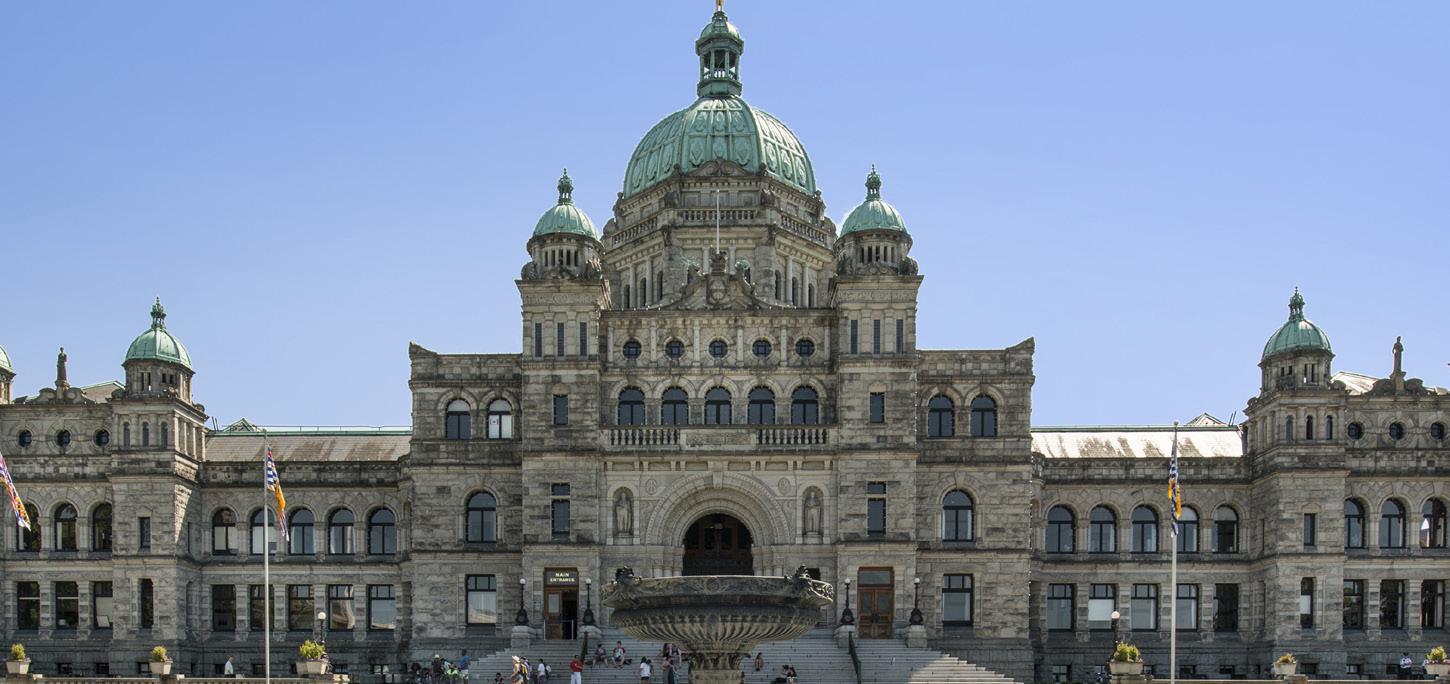
annual basis, including information about differences in pay in relation to employees’ self-identified gender and other characteristics. Additionally, employers must include pay scales in job postings. Employers will also be prohibited from asking prospective workers about past earnings during the hiring process and prohibited from dismissing or punishing employees who ask about their pay or who share information about their pay with co-workers or other job applicants.
The Minister of Finance, Hon. Katrine Conroy, MLA, explained that, through a fouryear phased approach, the Bill will require employers to report on their hourly wage, bonus and overtime pay gaps. She asserted that this will enhance the transparency of employer pay practices, expose wage discrimination and empower employees and job applicants to advocate for fair pay. A data standard is currently being developed under the Anti-Racism Data Act and will be included in the reporting requirements to allow for an understanding of the gender pay gap from an intersectional lens. The Minister noted that the government invited all 203 First Nations and Métis Nation BC to consult on the proposed legislation, along with several Indigenous organisations. Furthermore, before completing an annual report or a report on the review of the Act, the Bill requires the government to provide written notice to any Indigenous entity that is authorised to act on behalf of Indigenous peoples whose members could be affected by the publication of the report.
Renee Merrifield, MLA, Shadow Minister for Gender Equity and Inclusion, noted that British Columbia has one of the largest gender pay gaps in Canada and expressed support for the Bill’s principles to address this issue. Merrifield appreciated that the phased approach takes into consideration
small businesses and the time required to implement changes while also expressing concerns that the implementation of the Bill could be too slow. Merrifield also suggested areas of improvement including creating a centralized registry, as in the model employed by the United Kingdom, which would allow for the development of public advocacy tools. She elaborated that a centralized registry would be more accessible as it would allow an individual to find information about different industries or employers in one place.
Adam Olsen, MLA shared support for the Bill’s intentions but expressed concerns that the Bill does not go far enough to address pay disparity. He highlighted that the Bill does not require employers to disclose wage gaps and could place the onus on the worker to advocate for themselves. During the Second Reading and the Committee of the Whole, Olsen expressed concerns that the Bill does not address pay equity, explaining that pay transparency only requires employers to disclose information and data about pay gaps while pay equity policies would impose obligations on employers to take steps to identify and eliminate wage discrimination. With respect to the reporting on pay transparency, Olsen suggested that employers should be required to prepare a plan to address their pay gap if their reporting demonstrates pay gaps larger than provincial average. He also discussed other areas for strengthening the Bill to ensure robust and effective pay transparency including oversight and accountability mechanisms like fines or other penalties for non-compliance, and the requirement that employers post their annual reports in perpetuity.
The Pay Transparency Act passed Third Reading on 25 April 2023.
The Parliamentarian | 2023: Issue Two | 100 years of publishing | 167 THIRD READING REPORT BRITISH COLUMBIA
Third Reading Report by Natalie Beaton, Legislative Assembly of British Columbia.
Severe Weather Emergency Recovery Legislation Bill
The Severe Weather Emergency Recovery Legislation Bill granted the New Zealand Government flexible powers to assist with the emergency response and recovery of affected areas after severe weather events that occurred early in 2023. The Bill was intended to assist economic recovery, planning processes, and the rebuilding and recovery of land, infrastructure and other property; increase safety and resilience, ensure that central and local government activity can continue to be undertaken; temporarily enable the relaxation or flexible operation of some legislative requirements; and provide opportunities for local Māori and community groups to participate in the development of Orders in Council (secondary legislation) required to implement these actions.
In January and February 2023, New Zealand’s upper North Island was buffeted by severe weather events, including Cyclone Gabrielle and Cyclone Hale. These events resulted in deaths, largescale flooding and slips, and significant damage and destruction of property and infrastructure. Focusing on the recovery aspect of the response, this Bill was the successor to the Severe Weather Emergency Legislation Act 2023, which focused primarily on the emergency response.
The Bill enabled the making of Orders in Council to grant exemptions from, modify, or extend any of the 27 Acts set out in Schedule 2 of the Bill. Other Acts can be added to the list in Schedule 2, as long as the House resolves to approve each such addition. The Bill also amended the Local Government Act 2002, the Local Government (Auckland Council) Act 2009, and the Resource Management Act 1991 to facilitate recovery processes. The Bill drew heavily on the 2016 Hurunui/Kaikōura earthquake legislation, as well as the 2011 and 2012 Canterbury earthquakes legislation.
The Bill underwent a very short Select Committee process due to the time-sensitive nature of the recovery, resulting in 204 written submissions and 31 oral submissions. At First Reading, Chris Penk, MP (National), Hon. Gerry Brownlee, MP (National), Hon. Eugenie Sage, MP (Green), and Simon Court, MP (ACT) described the Bill as granting the Government ‘Henry VIII’ powers. The

Labour Party generally accepted this critique, but explained that there were checks and balances in place to prevent overreach. The National Party supported the Bill at its Third Reading. Ian McKelvie, MP (National) said, “I have no fears that the seemingly extraordinary powers that we’re granting to Ministers and to the Executive will be abused. I’m confident local communities will benefit greatly from the enactment of the legislation.”
Eugenie Sage, former Minister of Conservation, noted the lack of emphasis the Bill placed on “climate change resilience”, introducing Supplementary Order Paper 341 in response to this perceived oversight. She added, “we still think that things could have been brought back to the whole of the Parliament, rather than just done through Executive power, because of that public scrutiny that you get through the Select Committee.” Debbie Ngarewa-Packer, MP (Te Paati Māori) criticised the Bill for viewing formal engagement with Māori only “as a nice-to-have”.
At the Committee of the Whole House stage, 17 Supplementary Order Papers (SOPs) were introduced. This included one Government SOP, which passed, and 16 Opposition SOPs, all of which either did not pass or were ruled out of order.
At Third Reading, the Minister for Emergency Management, Hon. Kieran McAnulty, MP (Labour) thanked the Governance and Administration Committee for their hard work, noting that, despite the shortened Select Committee
process, the Bill had “undoubtedly been improved.” The New Zealand Government accepted the majority of the Select Committee’s recommendations, including expanding the knowledge and expertise that the Minister must take into account when appointing the members of the Severe Weather Events Recovery Review Panel, refining the framework for scrutinising Orders in Council made during an interregnum period, and ensuring that Orders in Council are no broader than geographically necessary.
The Bill passed through its Second Reading, Committee of the Whole House stage, and Third Reading under urgency on 6 April 2023. The final vote was 98 Ayes, 21 Noes.
Returning Offenders (Management and Information) Amendment Bill
The Returning Offenders (Management and Information) Amendment Bill was read for a third time under urgency on 22 February 2023. The Bill related to people who have been deported to New Zealand from Australia under Australia’s Migration Act 1958. New Zealand citizens can live, study and work in Australia indefinitely under a ‘Special Category’ Visa, but this can be revoked by the Australian Government if they receive a prison sentence of more than a year. Many of the deportees had lived in Australia since childhood and had few connections in New Zealand before being deported.
168 | The Parliamentarian | 2023: Issue Two | 100 years of publishing
THIRD READING REPORT NEW ZEALAND
Third Reading Report by Lizzie Hendy, Parliament of New Zealand.
Hon. Paul Goldsmith, MP (National) talked about the Returning Offenders (Management and Information) Act, which was passed in 2015 and enabled New Zealand authorities to impose probationlike orders such as electronic monitoring on returning prisoners from Australia. Goldsmith said the 2015 Act was passed to deal with “a real public safety issue in terms of having serious criminals returned to this country, and not wanting to just have to sit back and wait for them to re-offend before they are dealt with by the New Zealand justice system.”
Attorney-General Hon. David Parker, MP (Labour), speaking on behalf of the Minister of Justice in the Third Reading, explained that the new Bill amended the 2015 Act “to address issues raised in the recent High Court decision of G v The Commissioner of Police. The High Court recently found that the Act does not apply in respect of offending that occurred overseas before the Act came into force in November 2015.” The case found that the requirement for parole conditions in New Zealand equated to a penalty beyond what the plaintiff had served in Australia, and was inconsistent with the New Zealand Bill of Rights Act 1990. Parker went on to say that: “So what this Bill does is confirm that the Act does apply since its inception, to people whose offences and convictions occurred earlier than that 2015 inception date of the underlying legislation.”
Golriz Ghahraman, MP (Green), raised concerns that the Bill applied retrospectively, did not allow for individualised assessments of each of the deportees, and was being passed under urgency, without the opportunity to consult the public, saying: “it is a sanction-focused scheme, a restrictionbased scheme, not rehabilitative, and it’s being applied retrospectively… and we’re doing it under urgency, without the appropriate means for the public and for the expert bodies that we entrust to comment on law and on rights to come here, come to us, and make submissions.”
Nicole McKee, MP (ACT), however, argued that the Bill’s retrospectivity was justified: “When we speak to retrospectivity in legislation, ACT usually recoils from supporting such things. However, this instance is different, and the reasoning behind it is valid, in our opinion... Should this Bill not go through, then 21 serious offenders will be let loose without
management, rehabilitation, conditions or proper reintegration into New Zealand society, and that’s not a recipe that we want to mix into our communities.”
Chris Penk, MP (National), spoke in favour of passing the Bill under urgency: “the stakes are high. Parliament has inevitably moved quickly. And of course we have to do so independently of the courts; we can’t say to the courts, ‘Please hold off while we have a fuller parliamentary process in the usual way.’ This is the first sitting of Parliament in 2023 since the court action. So, for those reasons, we have acted in the way that we have - and look forward to further discussion on the matter, perhaps after even the law has passed, for those reasons.”
The Bill passed its Third Reading on 22 February 2023 with 108 votes in favour and 12 against, and received the Royal Assent on 27 February 2023.
Crimes (Child Exploitation Offences) Amendment Bill
The Crimes (Child Exploitation Offences) Amendment Bill was read for a third time on 5 April 2023. The Bill started as a Member’s Bill which was drawn from the ballot by Hon. Ginny Andersen, MP (Labour) and had its First Reading in 2021, and was taken through its Third Reading by Angie WarrenClark, MP (Labour). The Bill amended the Crimes Act 1961 to provide for new offences relating to persons 18 years or older using electronic communications (such as social media platforms) to harm persons under 16, and increased penalties for offences relating to the sexual grooming of children online. Previously, the Crimes Act 1961 required that a defendant must have met the young person they have targeted, travelled to meet them, or arranged for or persuaded the young person to travel to meet them, which didn’t include offences that took place online.
Andersen talked about how the Bill had changed as a result of the Select Committee process: “This Bill started as focused on online grooming... But, through the process of understanding how our laws work here, it’s changed a lot. It has changed to include both online and reallife grooming activities.” She added that: “The submissions we heard on this Bill changed the direction of the Bill quite significantly. When we heard from those non-governmental organisations who work at the coalface of dealing with child
sexual abuse, a lot of their comments in the submissions were that the Bill needed to change in order to respond to the fact that grooming happened in real life and, more often than not, from those known to the child - known to the victim. So this Bill has taken on board all of those submissions.”
Hon Paul Goldsmith, MP (National) agreed, saying: “the Bill that we were debating in the First and Second Readings is much changed by the Select Committee process, and we now have a much more tightly focused and smaller Bill.” However, he added that: “Originally, the Bill as introduced was extending jail time penalties from five years to seven years for a section in relation to these crimes, and I did make the point in a previous speech - and I’ll make the point again - about how kind of odd that seemed. This is a Government that has focused on reducing the prison population and at every turn we see people having short periods of home detention after violent assaults and crimes, and yet we have legislation introducing seven-year prison sentences.”
Warren-Clark talked about the need for the Bill: “seven in 10 New Zealand teenagers had experienced at least one type of unwanted digital communication within the past year, and 19% of those surveyed had been asked for a nude or a nearly nude image of themselves to be shared. It’s clear that we need further tools to act and protect to support our young people.” Karen Chhour, MP (ACT) agreed with the need for the Bill: “sexual grooming offences will now align with existing offences in the Crimes Act … so I think that’s really important too, making sure that the in-person behaviour doesn’t actually have to happen before consequences start to kick in.”
Golriz Ghahraman, MP (Green) supported the Bill but added that: “this piece of legislation is only the legislative part of what we need to support young people to be safe from harm in online spaces - we need a lot more education, a lot more community-based support, consent education, standardised sex education in our schools, which we currently don’t have, to recognise that young people need to be empowered to protect themselves and to be safe as part of our communities.”
The Bill was read for a third time with no votes against, and received the Royal Assent on 12 April 2023.
THIRD READING REPORT NEW ZEALAND The Parliamentarian | 2023: Issue Two | 100 years of publishing | 169
PARLIAMENTARY NEWS FROM FEDERAL PARLIAMENT OF CANADA
CORONATION OF HIS MAJESTY KING CHARLES III
On 6 May 2023, the Governor-General of Canada, Rt Hon. Mary Simon, the Prime Minister, Rt Hon. Justin Trudeau, MP, as well as a delegation including Indigenous leaders and notable Canadians attended the coronation of His Majesty King Charles III in London, UK.
In accordance with tradition, new symbols were revealed. Created by the Canadian Heraldic Authority and approved by His Majesty The King, the new Canadian Royal Crown highlights the country’s connection to the land and the water. The new flag of the Sovereign, which will serve for all future sovereigns, features the coat of arms of Canada as well as royal emblems of both the United Kingdom and France.
In addition, to commemorate this historic moment, the first stamps representing His Majesty The King will be revealed by Canada Post. The Royal Canadian Mint, for its part, has released special collectors’ coin for the event and has begun its work to design and place an effigy of His Majesty King Charles III on coins and, later, on bank notes.
NEW SPEAKER OF THE SENATE OF CANADA
On 12 May 2023, Hon. Raymonde Gagné was appointed as the 46th Speaker of the Senate of Canada. She succeeds Hon. George Furey, who served as 45th Speaker from 2015 to 2023. Hon. Raymonde Gagné was appointed to the Senate of Canada in 2016 to represent the province of Manitoba. Prior to her appointment, she worked in
education, including as President of the Université de Saint-Boniface, and remains a strong advocate of minority language rights. She is the first female Speaker of the Senate of Canada in 44 years, and the third female Speaker since the founding of the Senate of Canada in 1867. The Speaker of the Senate of Canada is appointed by the GovernorGeneral on the advice of the Prime Minister.
CHANGES IN THE SENATE
Senator Hon. Sharon Bureau joined the Canadian Senators Group on 21 February 2013, after sitting as a non-affiliated Senator since her nomination to the Senate of Canada on 21 November 2022. She represents the Province of Ontario.
On 23 February 2023, Senator Hon. Andrew Cardozo, who represents the province of Ontario, joined the Progressive Senate Group. He had previously been sitting as a non-affiliated Senator since his nomination on 21 November 2022.
On 28 February 2023, Hon. Larry W. Campbell retired from the Senate. He had been a member of the Upper Chamber since 2005, representing the Province of British Columbia. During his tenure, he was a member of the Liberal Party of Canada in the Senate, and later a member of the Independent Senators Group, followed by the Canadian Senators Group. At the time of his retirement, he was sitting as a nonaffiliated Senator.
Two new Senators were named to the Upper Chamber on 3 May 2023. Hon. Beverly Jane MacAdam now represents the province of Prince Edward Island. Prior

to her appointment, she had a long career as a public servant, including as AuditorGeneral in her province. Hon. Iris G. Petten was appointed to represent the Province of Newfoundland and Labrador. Her career centred around the fishing industry as a senior executive and entrepreneur. Both currently sit as non-affiliated Senators.
On 11 May 2023, Hon. George Furey, who served as 45th Speaker from 2015 to 2023, retired from the Upper Chamber after 24 years. He had been representing the province of Newfoundland and Labrador since 1999. As he held the position of Speaker of the Senate at the time of his retirement, he was part of the non-affiliated Senators.
As of 15 May 2023, the standings in the Senate were: Independent Senators Group 39, Conservative Party of Canada 15, Canadian Senators Group 14, Progressive Senate Group 13 and non-affiliated 10. Fourteen seats were vacant.
CHANGES IN THE HOUSE OF COMMONS
On 21 February 2023, Han Dong, MP left the caucus of the Liberal Party of Canada to sit as an independent. Mr Dong has been representing the constituency of Don Valley North, in the Province of Ontario, since 2019.
On 28 February 2023, Hon. Candice Bergen, MP, resigned her seat in the House of Commons. She had been a Member of Parliament since 2008, representing the constituency of Portage-Lisgar, in Manitoba, as a member of the Conservative Party of Canada. During her time in the Parliament of Canada, Ms Bergen has occupied at various times the positions of Minister of State of Social Development, House Leader of the Official Opposition and interim Leader of the official opposition.
On 7 March 2023, Hon. Marc Garneau, MP resigned his seat in the House of Commons, after representing the constituency of Westmount-Ville-Marie, now called NotreDame-de-Grâce-Westmount, since 2008. He was a member of the Liberal Party of Canada. During his parliamentary career, Mr Garneau occupied many Cabinet positions, including Minister of Foreign Affairs, Trade and Development as well as Minister of Transport. He was also the first Canadian astronaut to fly in space in 1984.
170 | The Parliamentarian | 2023: Issue Two | 100 years of publishing PARLIAMENTARY REPORT
CANADA
Parliamentary Report by Gabrielle de Billy Brown, Parliament of Canada.
On 14 May 2023, the Prime Minister, Rt Hon. Justin Trudeau, MP announced that four by-elections would be held on 19 June 2023 in the following constituencies: NotreDame-de-Grâce-Westmount (Québec), Oxford (Ontario), Portage-Lisgar (Manitoba) and Winnipeg South Centre (Manitoba). The standings in the House of Commons as of 15 May 2023 were: Liberal Party of Canada 156, Conservative Party of Canada 115, Bloc Québécois 32, New Democratic Party 25, Independent 3 and Green Party of Canada 23. Five seats out of 338 were vacant.
FOREIGN INTERFERENCE IN CANADIAN DEMOCRACY
In recent months, the topic of foreign interference has been at the centre of the work of two House of Commons Committees: the Standing Committee on Access to Information, Privacy and Ethics and the Standing Committee on Procedure and House Affairs. This follows recent allegations and news articles which seemed to indicate attempts by foreign states to influence Canadian democratic institutions. Both Committees have been meeting with various experts and stakeholders to better assess the risks and determine what actions must be taken to tackle this issue.
On 6 March 2023, the Prime Minister, Rt Hon. Justin Trudeau, MP announced a new series of measures to combat foreign interference, including tasking the National Security and Intelligence Committee of Parliamentarians to review the situation. On 15 March 2023, the Prime Minister announced the nomination of Rt Hon. David Johnston, former GovernorGeneral of Canada, as Independent Special Rapporteur. In this new role, he will be tasked with assessing the extent and impact of foreign interference in Canada’s electoral processes and make formal recommendations to the government. His reports will be made public.
LEGISLATION
As mentioned in the previous edition of The Parliamentarian, Bill C-39: An Act to amend An Act to amend the Criminal Code (medical assistance in dying) was introduced in February 2023. It received Royal Assent on 9 March 2023. Sponsored by Hon. David Lametti, MP, the Minister of Justice, the Bill extends the exclusion for persons suffering solely from a mental illness from accessing medical assistance
in dying services in Canada for a period of one year.
On 27 April 2023, Bill C-11: An Act to amend the Broadcasting Act and to make related and consequential amendments to other Acts, known as the Online Streaming Act, received royal assent. This Bill intends to modernise Canada’s broadcasting policy to include streaming services in its scope, and amends broadcasting and regulatory policies to ensure that the programming provided is accessible and that the entire Canadian population is represented. It also modifies the powers of the regulatory agency to allow it to impose administrative monetary penalties when certain violations are committed. A similar version of the Bill had been introduced during the second Session of the 43rd Parliament, but it was dissolved before the Senate could complete its consideration of the Bill.
APPOINTMENT OF ACTING CLERK OF THE HOUSE OF COMMONS
Following the retirement of Charles Robert, Clerk of the House of Commons, on 13 January 2023, Eric Janse has been appointed in the position on an interim basis. Mr Janse has a long career in the House of Commons. For over 30 years, he has held many administrative positions and contributed to the pivot to hybrid proceedings during the COVID-19 pandemic. Mr Janse is also a former secretary to the Conference of Speakers and Presiding Officers of the Commonwealth (CSPOC).
IN MEMORIAM
On 7 May 2023, Hon. Marc Lalonde passed away. The Member of Parliament for the constituency of Outremont, in Québec, between 1972 and 1984, he quickly joined Cabinet, where he served in many positions during his tenure, including Minister of National Health and Welfare, Minister of Justice and Attorney-General of Canada and Minister of Finance. In 1974, as minister of National Health and Welfare, he led the publication of a report which argued for the promotion of healthy lifestyles and environments as part of health measures. This report had a profound impact on health policy in Canada and abroad. For his work, Mr Lalonde received the World Health Organization Medal and was made a Companion of the Order of Canada.
OBITUARY: ONE
Academic, author and historian, Sir Howard Fergus, who served one of the longest terms as Speaker of a Commonwealth Parliament in recent memory, has died at the age of 85. From 1975 to 2001, he served as the Speaker of the Legislative Council of Montserrat, one of the longest terms for a Presiding Officer in the Commonwealth. He subsequently returned to the post as Acting Speaker on numerous occasions and he also held the role of Acting Governor of Montserrat several times.
Sir Howard, who earned a doctorate from the University of the West Indies (UWI) in 1978, retired from the University in 2004 as a Professor of Eastern Caribbean Studies. He wrote and edited more than 14 books, including several works on Montserratian history and society. His scholarly works have been published in a number of international journals and he was also an established poet. Sir Howard was the winner of The Caribbean Writer Poetry Prize in 1992, and of the David Hough Literary Prize for an author residing in the Caribbean in 2002. He also wrote the words for the national song of Montserrat ‘Motherland’.

He was knighted as a Knight Commander (KBE) in 2001 and received the Order of Excellence from the Government of Montserrat in 2014.
Report by the Editor of The ParliamentarianThe Parliamentarian | 2023: Issue Two | 100 years of publishing | 171
PARLIAMENTARY REPORT MONTSERRAT
OF THE LONGEST SERVING SPEAKERS IN THE COMMONWEALTH
Commonwealth
Office Holders of the Commonwealth Parliamentary Association
CPA Executive Committee
Dates of membership below. Some Members are completing terms started by other Members. *TermdatesextendedasnoCPAGeneralAssemblyheldin2018,2020and2021.
CPA Officers
CPA PRESIDENT: (65th CPC to 66th CPC - 2022-2023): Rt Hon. Alban Bagbin, MP, Speaker of Parliament (Ghana)
CPA VICE-PRESIDENT: (65th CPC to 66th CPC - 2022-2023): Vacant, Parliament of New South Wales

CHAIRPERSON OF THE CPA EXECUTIVE COMMITTEE: (65th CPC to 68th CPC - 2022-2025):
Hon. Ian Liddell-Grainger, MP (United Kingdom)
CPA VICE-CHAIRPERSON: (65th CPC to 66th CPC - 2022-2023):
Hon. Osei Kyei Mensah Bonsu, MP (Ghana)
CPA TREASURER: (65th CPC to 68th CPC - 2022-2025): Hon. Shri Anurag Sharma, MP (Lok Sabha, India Union)
COMMONWEALTH WOMEN
PARLIAMENTARIANS (CWP)
CHAIRPERSON: (65th CPC to 68th CPC - 2022-2025): Hon. Dr Zainab Gimba, MP (Nigeria)
CPA SMALL BRANCHES
CHAIRPERSON: (65th CPC to 68th CPC - 2022-2025): Joy Burch, MLA, Speaker of the Legislative Assembly of Australian Capital Territory
COMMONWEALTH
PARLIAMENTARIANS
WITH DISABILITIES (CPwD)
CHAIRPERSON: (65th CPC to 68th CPC - 2022-2025): Hon. Laura Kanushu Opori, MP (Uganda)
The CPA Coordinating Committee comprises the CPA Chairperson, Vice-Chairperson, Treasurer, CPA Small Branches Chairperson and the Chairpersons of the Commonwealth Women Parliamentarians (CWP) and the Commonwealth Parliamentarians with Disabilities (CPwD) networks.
Regional Representatives
CPA AFRICA REGION
Hon. Dr Makali Mulu, MP, Kenya (63rd CPC to 66th CPC- 2017-2023)*
Vacant (63rd CPC to 66th CPC- 2017-2023)*
Hon. Osei Kyei Mensah Bonsu, MP, Ghana (64th CPC to 67th CPC - 2019-2024)* - Also CPA ViceChairperson
Rt Hon. Dr Abass Bundu, MP, Speaker, Sierra Leone (64th CPC to 67th CPC - 2019-2024)*
Hon. Solomon Lechesa Tsenoli, MP, Deputy Speaker of the National Assembly, South Africa (65th CPC to 68th CPC - 2022-2025)
Hon. Raymond Nkhata, MP, Malawi (65th CPC to 68th CPC - 2022-2025)
CPA ASIA REGION
Hon. Dr Lal Chand Ukrani, MPA Sindh, (63rd CPC to 66th CPC - 20172023)*
Hon. Mahinda Yapa Abeywardana, MP, Speaker, Sri Lanka (64th CPC to 67th CPC - 2019-2024)* Completing term started by another Sri Lanka Member.
Hon. Kazi Nabil Ahmed, MP Bangladesh (65th CPC to 68th CPC2022-2025)
Parliamentary Association Office Holders
CPA AUSTRALIA REGION
Vacant (63rd CPC to 66th CPC- 2017-2023)*
Senator Hon. Sue Lines, President of the Senate, Australia Federal (64th CPC to 67th CPC - 2019-2024). Completing term started by other Australia Federal Senators.
Hon. Mark Shelton, MP, Speaker of the Legislative Assembly, Tasmania (65th CPC to 68th CPC - 2022-2025)
CPA BRITISH ISLANDS AND MEDITERRANEAN REGION
Hon. Leona Roberts, MLA Falkland Islands (63rd CPC to 66th CPC - 2017-2023)*
Hon. Chris Elmore, MP, United Kingdom (64th CPC to 67th CPC - 2019-2024)* Completing term started by other UK Members.
Hon. Stuart McMillan, MSP, Scotland (65th CPC to 68th CPC - 2022-2025)
CPA CANADA REGION
Hon. Randy Weekes, MLA, Speaker of the Legislative Assembly of Saskatchewan (63rd CPC to 66th CPC- 2017-2023)* Completing term started by Nova Scotia.
Hon. Terry Duguid, MP, Canada Federal (64th CPC to 67th CPC - 2019-2024)* Completing term started by another Canadian Member.
Hon. Ted Arnott, MPP, Speaker of the Legislative Assembly of Ontario (65th CPC to 68th CPC2022-2025)
CPA CARIBBEAN, AMERICAS AND THE ATLANTIC REGION
Hon. Claudius J. Francis, MP Speaker, Saint Lucia (64th CPC to 67th CPC - 2019-2024)* Completing term started by another St Lucia Member.
Hon. Gordon J. Burton, MHA Speaker, Turks & Caicos (64th CPC to 67th CPC - 2019-2024)* Completing term started by another Turks & Caicos Member.
Hon. Arthur Holder, MHA Speaker, Barbados (65th CPC to 68th CPC- 2022-2025)
CPA INDIA REGION
Shri Biswajit Daimary, MLA Speaker, Assam (63rd CPC to 66th CPC- 2017-2023)* Completing term started by another Assam Member.
Hon. Shri Uday Pratap Singh, MP, Lok Sabha, India Union, (64th CPC to 67th CPC - 2019-2024)* Completing term started by other India Members.
Smt. Ritu Khanduri Bhushan, MLA Speaker of Uttarakhand Legislative Assembly (65th CPC to 68th CPC2022-2025)
CPA PACIFIC REGION
Hon. Therese Kaetavara, MHR Deputy Speaker, Bougainville (63rd CPC to 66th CPC- 2017-2023)* Completing term started by another Bougainville Member
Hon. Ratu Epeli Nailatikau Speaker, Fiji (64th CPC to 67th CPC2019-2024)*
Hon. Gerry Brownlee, MP, New Zealand (65th CPC to 68th CPC2022-2025)
CPA SOUTH-EAST ASIA REGION
Hon. Lim Biow Chuan, MP Singapore (63rd CPC to 66th CPC2017-2023)* Completing term started by another Singapore Member
Hon. Dr Dato’ Noraini Ahmad, MP, Malaysia (64th CPC to 67th CPC - 2019-2024)* Completing term started by another Malaysia Member
Hon. Dato’ Law Choo Kiang, MLA, Speaker, Penang (65th CPC to 68th CPC - 2022-2025)
172 | The Parliamentarian | 2023: Issue Two | 100 years of publishing
CPA Small Branches Steering Committee
CPA SMALL BRANCHES CHAIRPERSON
Joy Burch, MLA, Speaker, Australian Capital Territory
CPA AFRICA REGION
Hon. Churchill Gill, MNA Seychelles (2021-2024) - CPA Small Branches Vice-Chairperson
CPA ASIA REGION
Hon. Eva Abdulla, MP Maldives (2022-2025)
CPA AUSTRALIA REGION
Hon. Mark Monaghan, MLA Speaker, Northern Territory (20202023)
CPA BRITISH ISLANDS AND MEDITERRANEAN REGION
Deputy Adrian Gabriel Guernsey (2023-2026)
Commonwealth Parliamentary Association (CPA)
CPA CANADA REGION
Hon. Brian Warr, MHA Newfoundland and Labrador (2022-2025)
CPA CARIBBEAN, AMERICAS AND THE ATLANTIC REGION
Hon. Barbara Webster-Bourne, MHA, Speaker, Anguilla (2020-2023)
CPA INDIA REGION
Shri Arun Kumar Upreti, MLA Speaker, Sikkim (2022-2025)
CPA PACIFIC REGION
Hon. Lord Fakafanua, Speaker, Tonga (2022-2025)
CPA SOUTH-EAST ASIA REGION
Hon. Hamizan bin Hassan, MLA Perlis (2020-2023)
Commonwealth Women Parliamentarians (CWP) Steering Committee
CWP PRESIDENT
Hon. Patricia Appiagyei, MP Ghana (2022-2023)
CWP CHAIRPERSON
Hon. Dr Zainab Gimba, MP Nigeria (2022-2025)
CPA AFRICA REGION
Vacant (2022-2025)
CPA ASIA REGION
Hon. Selima Ahmad, MP Bangladesh (2021-2024)
CPA AUSTRALIA REGION
Hon. Kate Doust, MLC Western Australia (2022-2025)
CPA BRITISH ISLANDS AND MEDITERRANEAN REGION
Rt Hon. Dame Maria Miller, MP United Kingdom (2021-2024)
CPA CANADA REGION
Hon. Lisa Thompson, MPP Ontario (2020-2023)
CPA CARIBBEAN, AMERICAS AND THE ATLANTIC REGION
Hon. Valerie Woods, MP Speaker of the House of Representatives, Belize (2021-2024) - Also CWP ViceChairperson (2022-2023)
CPA INDIA REGION
Smt. Sunita Duggal, MP Lok Sabha, India (2020-2023)
CPA PACIFIC REGION
Hon. Selina Napa, MP Cook Islands (2020-2023)
CPA SOUTH-EAST ASIA REGION
Hon. Alice Lau Kiong Yieng, MP Malaysia (2022-2025)
Commonwealth Parliamentarians with Disabilities (CPwD) Regional Champions
CPwD CHAIRPERSON
Hon. Laura Kanushu Opori, MP Uganda (2022-2025)
CPA AFRICA REGION Vacant (2020-2023)
CPA ASIA REGION
Hon. Zill-E-Huma, MNA Pakistan (2020-2023)
CPA AUSTRALIA REGION
Hon. Liesl Tesch, MP New South Wales (2020-2023)
CPA BRITISH ISLANDS AND MEDITERRANEAN REGION
Hon. Paul Maynard, MP United Kingdom (2020-2023)
CPA Regional Secretaries
CPA AFRICA REGION
Ms Nenelwa Joyce Mwihambi, Parliament of Tanzania
CPA ASIA REGION
Mrs Kushani Rohanadheera, Parliament of Sri Lanka
CPA AUSTRALIA REGION
Ms Alex Cullum, Parliament of Australia
CPA BRITISH ISLANDS AND MEDITERRANEAN REGION
Mr Jon Davies, Parliament of the United Kingdom
CPA CANADA REGION
Hon. Dan Coulter, MLA British Columbia (2020-2023)
CPA CARIBBEAN, AMERICAS AND THE ATLANTIC REGION
Senator Hon. Paul Richards Trinidad and Tobago (2020-2023) Also: CPwD Vice-Chairperson
CPA INDIA REGION
Smt. Supriya Sule, MP India (2020-2023)
CPA PACIFIC REGION
Hon. Viam Pillay, MP Assistant Minister for Agriculture, Waterways and Environment, Fiji (2020-2023)
CPA SOUTH-EAST ASIA REGION
Senator Ras Adiba Mohd Radzi Malaysia (2020-2023)
CPA CANADA REGION
Mr Jeremy LeBlanc, Parliament of Canada
CPA CARIBBEAN, AMERICAS AND THE ATLANTIC REGION
Mr Pedro E. Eastmond, Parliament of Barbados
CPA INDIA REGION
Shri Utpal Kumar Singh, Parliament of India
CPA PACIFIC REGION
Ms Amber Walters, Parliament of New Zealand
CPA SOUTH-EAST ASIA REGION
Mr Nizam Mydin bin Bacha Mydin, Parliament of Malaysia
CPA Headquarters Secretariat
Stephen Twigg
CPA Secretary-General
Commonwealth Parliamentary Association, CPA Headquarters Secretariat, Richmond House, Houses of Parliament, London SW1A 0AA, United Kingdom
Tel: +44 (0)20 7799 1460
Email: hq.sec@cpahq.org
www.cpahq.org
Twitter @CPA_Secretariat
Facebook.com/CPAHQ
Instagram @cpa_secretariat
LinkedIn | YouTube
A full A to Z listing of all CPA Branches can be found at: www.cpahq.org
InformationassuppliedbyCPABranchesandCPARegionstoCPAHeadquartersSecretariat


SUBSCRIBE TODAY THE PARLIAMENTARIAN To subscribe to The Parliamentarian, please email editor@cpahq.org Members of Parliament: Please contact your CPA Branch Secretary for print and digital copies. Individual subscriptions also available.