PARLIAMENTARY INNOVATION IN THE COMMONWEALTH

IN THIS ISSUE
Examining Parliaments’ clock towers across the Commonwealth
PAGE 46
The President of Rotary International outlines their global development work
PAGE 50
Parliamentary Water Caucuses on Water, Sanitation and Hygiene (WASH)
PAGE 52
Institutional potential of AI in Parliamentary Practice
PAGE 58
Reports from the 26th Conference of Speakers and Presiding Officers of the Commonwealth (CSPOC) in Australia including the topics of e-Parliaments and technology, professional development for MPs and staff, security issues and the reconciliation process with First Nations Peoples.
75 years of Parliamentary Reporting via the Saskatchewan Hansard
PAGE 64
Journal of the Parliaments of the Commonwealth
12, 20-40
88 Established in 1920 | Over 100 years of publishing 2023 | Volume 104 | Issue One | Price £14
PAGES
&

2023
March
5 to 9 March 2023
8 March 2023
11 to 15 March 2023
13 March 2023
13 to 17 March 2023
21 to 24 March 2023
April
3 to 7 April 2023
Calendar of Forthcoming Events
Updated as at 27 February 2023
23rd Commonwealth Law Conference 2023, Goa, India
International Women's Day
146th IPU Assembly, Bahrain
Commonwealth Day
71st Westminster Seminar on Effective Parliaments, UK (CPA UK Branch)
CPA Post-Election Seminar for CPA Pacific Region: Tonga
UK Overseas Territories Speakers Conference, Anguilla
w/c 17 April 2023 Mid-Year CPA Executive Committee meeting, Gibraltar
26 to 28 April 2023
May
24 to 26 May 2023
June
11 to 17 June 2023
30 June 2023
TBC June 2023
July
2 to 6 July 2023
TBC July 2023
23 to 28 July 2023
TBC July 2023
August
1 August 2023
12 August 2023
September
15 September 2023
30 Sept to 6 Oct 2023
52nd CPA British Islands & Mediterranean Regional Conference, London, UK
CPA Small Branches Workshop on Disaster Risk Management, London, UK
CPA Parliamentary Academy Residency Course, Edmonton, Alberta, Canada

International Day of Parliamentarism / World Parliament Day
53rd CPA Africa Regional Conference, Venue TBC
52nd Presiding Officers and Clerks Conference (POCC) for the Pacific and Australia Regions, Solomon Islands
45th CPA Caribbean, Americas and the Atlantic Regional Conference, Providenciales, Turks and Caicos
59th CPA Canada Regional Conference, Regina, Saskatchewan, Canada
6th CPA Asia Regional Conference, Venue TBC
2023 Parliamentarian of the Year Awards – nomination deadline closes
International Youth Day
International Day of Democracy
66th Commonwealth Parliamentary Conference, Accra, Ghana including 39th CPA Small Branches Conference; Commonwealth Women Parliamentarians (CWP) and Commonwealth Parliamentarians with Disabilities (CPwD) meetings; 66th CPA General Assembly; CPA Executive Committee meetings; and the 57th Society of Clerks at the Table (SoCATT) meetings.
October
23 to 27 October 2023
24 October 2023
TBC October 2023
November
25 November 2023
147th IPU Assembly, Angola
United Nations Day
CPA Australia and Pacific Regional Conference, Brisbane, Queensland, Australia.
International Day for the Elimination of Violence against Women
30 Nov to 12 Dec 2023 COP28: 28th session of the Conference of Parties to the UNFCCC, Dubai, United Arab Emirates
December
3 December 2023
10 December 2023
International Day of Disabled Persons
UN Human Rights Day
The CPA calendar fosters the exchange of events and activities between CPA Regions and Branches. For further information on any events, please contact the CPA Branch concerned or the CPA Headquarters Secretariat via hq.sec@cpahq.org or visit www.cpahq.org. CPA Branch Secretaries are asked to send notices of all events to the CPA Headquarters in advance of the publication deadline to ensure the calendar is accurate.
PAGES 12, 20-40 & 88
PAGE 46
CONTENTS
THE PARLIAMENTARIAN: 2023 ISSUE ONE
VIEWS & COMMENT
Editor’s Note
Priorities in 2023: How is the Commonwealth performing?
Page 4
View from the CPA Chairperson
10 years of the Commonwealth Charter: Remaining relevant in the Commonwealth
Page 5
View from the Commonwealth Women Parliamentarians Chairperson
Progress on the 10 year anniversary of the Commonwealth Charter
Page 6
PAGE 64
PAGE 74
NEWS & PHOTOS

CPA news
News reports include:
26th CSPOC in Australia

• CPA Branch visits to Sri Lanka and Singapore
Post-Election Seminar in Kenya
• Seychelles parliamentary leadership workshop
New CPA toolkit for election planning
• New Speakers course for current and prospective Presiding Officers
• Commonwealth launches 2023 Year of Youth
Pages 12-19
View from the CPA Small Branches Chairperson
The importance of youth engagement for Parliaments
Page 8
View from the CPA Secretary-General
The Commonwealth in the 21st century and the role of the CPA Page 10
Commonwealth Women Parliamentarians (CWP) news

Reports from CWP activities in Sierra Leone, Kenya and the Australian Capital Territory Pages 66-67

2 | The Parliamentarian | 2023: Issue One | 100 years of publishing
FEATURE ARTICLES 26th CSPOC ARTICLES
Professional development training for MPs and staff
The Speaker of Australia's House of Representatives
Page 20
E-Parliaments and technology: The Canadian experience
The Speaker of Canadian House of Commons
Page 23
The Zambian experience of e-Parliaments and technology
The Speaker of the National Assembly of Zambia
Page 26
Parliamentary innovation
The Speaker of the National Assembly reviews progress in Pakistan
Page 29
The importance of security for our Parliaments
The Speaker of the UK House of Commons
Page 32
Reconciliation for First Nations Peoples

The President of the Australian Senate on the importance of the reconciliation process
Page 35
Parliaments and the COVID-19 pandemic
The Deputy Speaker of Rwanda examines opportunities for parliamentary innovation
Page 37
An Independent Speaker
The South Australian experience
Page 41
Parliaments’ clock towers
Examining different Parliaments' clock towers across the Commonwealth
Page 46
SDGs and eradicating polio
The President of Rotary International outlines their global development work
Page 50
Water is (good) politics
Parliamentary Water Caucuses on Water, Sanitation and Hygiene (WASH)
Page 52
Freedom of expression
The role of the media in good governance Page 55
Beyond Contemporary Parliamentary Practice
The institutional potential of Artificial Intelligence
Page 58
Mapping and Connecting Parliamentary Research Services
New website launched Page 60
Advancing parliamentary innovation through PostLegislative Scrutiny
A new Community of Practice
Page 62
75 years of Parliamentary Reporting
The Saskatchewan Hansard
Page 64
Importance of working towards gender-sensitive Parliaments
The Jamaican Experience
Page 68
Parliaments free from sexism, harassment and violence
A case study from Pakistan
Page 70
Education & Outreach in Commonwealth Parliaments
Examples from Tonga, Sri Lanka and the Isle of Man
Page 74
PARLIAMENTARY REPORTS
Parliamentary Reports and Third Readings
Legislative reports from Canada, British Columbia, Trinidad and Tobago, United Kingdom, New Zealand and Australia

Pages 76-90
Book review
Page 91
CPA DIRECTORY
CPA Organisational Structure
CPA Executive Committee, CWP and CPA Small Branches
Steering Committees, CPwD Regional Champions and CPA Regional Secretaries
Page 92
CONTENTS
The Parliamentarian: Journal of the Parliaments of the Commonwealth Volume 104 | 2023: Issue One The Parliamentarian ISSN 0031-2282
Issued and published by the Commonwealth Parliamentary Association, CPA Headquarters Secretariat, Richmond House, Houses of Parliament, London, SW1A 0AA, United Kingdom.
Tel: +44 (0) 20 7799 1460
Email: hq.sec@cpahq.org www.cpahq.org
Twitter @CPA_Secretariat Facebook.com/CPAHQ
Stephen Twigg CPA Secretary-General
Mr Jeffrey Hyland Editor, The Parliamentarian editor@cpahq.org
Main images: CPA Headquarters Secretariat. Additional images: CPA Branches and Shutterstock.
Annual subscription: Four issues including supplements: UK: £44 inc. postage. | Worldwide: £46 surface post and £52 airmail
Price per issue: UK: £14 cover price plus UK or worldwide postage.
Disclaimer: Opinions and comments expressed in articles and reviews published in The Parliamentarian are those of the individual contributors and should not be attributed to the Secretariat of the Association.
Contributors: Thank you to all contributors for this issue.
Printed in: United Kingdom by Warners Midlands, PLC; and Times Printers, Singapore.
Limited print run - contact editor@cpahq.org for details of print copies for CPA Branches.
The Parliamentarian | 2023: Issue One | 100 years of publishing | 3
PRIORITIES IN 2023: HOW IS THE COMMONWEALTH PERFORMING?
2023 will mark several Commonwealth anniversaries with the 10-year anniversary of the Commonwealth Charter and the 20-year anniversary of the Commonwealth Latimer House Principles on the Separation of Powers. In addition, 2023 has been declared the ‘Commonwealth Year of Youth’ which will give an increased focus on the 60% of the Commonwealth’s 2.5 billion people who are aged under 30 years. This first issue of The Parliamentarian for 2023 explores these themes and many other topics.
The Chairperson of the CPA Executive Committee, Hon. Ian Liddell-Grainger, MP (United Kingdom) and the Commonwealth Women Parliamentarians (CWP) Chairperson, Hon. Dr Zainab Gimba, MP (Nigeria) both examine progress on the 10-year anniversary of the Commonwealth Charter. The Chairperson of the CPA Small Branches, Joy Burch, MLA, Speaker of the Legislative Assembly of the Australian Capital Territory, looks at the importance of youth engagement for Parliaments while the CPA Secretary-General, Stephen Twigg in his View article reflects on the Commonwealth in the 21st century and the role of the CPA.
This issue of The Parliamentarian reports from the recent 26th Conference of Speakers and Presiding Officers of the Commonwealth (CSPOC) in Canberra, Australia. CSPOC is a separate independent organisation, although many of its participants are also members of the Commonwealth Parliamentary Association. Many Speakers and Presiding Officers have kindly given us permission to publish their speeches and presentations at the conference. The Speaker of the House of Representatives at the Parliament of Australia, Hon. Milton Dick, MP shares new approaches to training for Members and their staff and the President of the Australian Senate, Senator Hon. Sue Lines writes about the importance of Parliament in the reconciliation process with First Nations Peoples.
The Speaker of the Canadian House of Commons, Hon. Anthony Rota, MP and the Speaker of the National Assembly of Zambia, Rt Hon. Nelly B. Mutti, MP both write about e-Parliaments and technology in their respective jurisdictions. The Speaker of the National Assembly of Pakistan, Hon. Raja Pervaiz Ashraf reviews innovation and the Speaker of the UK House of Commons, Rt Hon. Sir Lindsay Hoyle, MP highlights how security issues can impact on administering Parliament. Hon. Edda Mukabagwiza, MP, Deputy Speaker at the Parliament of Rwanda writes about the impact of the COVID-19 pandemic in accelerating opportunities for parliamentary innovation. Serjeant-at-Arms and Clerk Assistant, Lauren Williams
writes about the Parliament of South Australia's experience of an Independent Speaker. In a special feature to mark the completion of the five-year restoration of ‘Big Ben’ at the UK Parliament, we examine some of the many different clock towers in Parliaments around the Commonwealth.
The first woman President of Rotary International, Jennifer Jones outlines their work helping to achieve the Sustainable Development Goals and eradicating polio. Ugandan MP, Hon. Jacqueline Amongin from the East African Legislative Assembly writes about the impact of developing a Parliamentary Water Caucuses on Water, Sanitation and Hygiene (WASH). As Commonwealth Law Ministers adopt a new set of principles on freedom of expression, David Page, a member of the civil society working group that drafted them, considers the next steps for their implementation.
Dr Fotis Fitsilis (Hellenic OCR Team) and Professor Dr Jörn von Lucke (The Open Government Institute) share their view of the institutional potential of Artificial Intelligence. Dr Vicky Ward and Dr Mark Monaghan write about the recent POST project where they mapped Parliamentary Research Services around the world to develop new networks and information sharing. The Westminster Foundation for Democracy’s Franklin De Vrieze writes about advancing parliamentary innovation through Post-Legislative Scrutiny. Kari Olson writes about Saskatchewan Hansard celebrating 75 years of parliamentary reporting.
Hon. Tamika Y. Davis, MP (Jamaica) writes about the importance of working towards a gender-sensitive Parliament following her participation at the recent CWP Workshop on Champions for Gender Equality and Ms Tehseen Khalid from the Pakistan Institute for Parliamentary Services outlines the importance of Parliaments free from sexism, harassment and violence against women.
The Parliamentary Report and Third Reading section includes legislative news from Canada; British Columbia; Trinidad and Tobago; New Zealand; the United Kingdom; and Australia. This issue also features education and outreach projects in Parliaments including new books for children launched by the Parliaments of Tonga and Sri Lanka and funding for school visits in the Isle of Man.
We look forward to hearing your feedback on this issue of The Parliamentarian and to receiving your future contributions.
Jeffrey Hyland, Editor, The Parliamentarian editor@cpahq.org

4 | The Parliamentarian | 2023: Issue One | 100 years of publishing EDITOR’S NOTE
Mr Jeffrey Hyland, Editor
The Parliamentarian, Commonwealth Parliamentary Association
10 YEARS OF THE COMMONWEALTH CHARTER: REMAINING RELEVANT IN THE COMMONWEALTH
 Ian Liddell-Grainger,

In this first issue of The Parliamentarian in 2023, as the Commonwealth prepares to celebrate the 10th anniversary of the Commonwealth Charter, it is a reminder of the magnificent reaffirmation of the basic principles that have underpinned the Commonwealth family of nations since its inception.
Signed in 2013, the Commonwealth Charter regards all member states as equal and strives for prosperity, advancement and the improvement of the lives of all the people that belong to it. As the parliamentary arm of the Commonwealth, the Commonwealth Parliamentary Association (CPA) is committed to ensuring that we are an effective Association, responsive to Members’ needs, and capable of addressing the significant global challenges of the future. We aspire to be a Commonwealth that is strong, respected in the world, speaks out on major issues and enlarges its networks with a global relevance and a clear profile.
The CPA is highly motivated by the standards of the Commonwealth Charter in conducting its regular activities and we continue to benchmark our ongoing projects with it firmly in mind. The CPA Strategic Plan (2022-2025) echoes the principles of the Charter with the key thematic areas and readily aligns itself to the mission, values and aims of the Association. This year is also the 20th anniversary of the Commonwealth Latimer House Principles, which promote the Separation of Powers in jurisdictions between the Executive, the Judiciary and the Legislature. As one of the partners that established the Commonwealth Latimer House Principles, they are also a key driving force in the CPA. During this extremely tense, stressful and unstable period in history,

it is more important than ever that the Commonwealth Charter and the Commonwealth Latimer House Principles are upheld. The relevance of peaceful solutions is brought into sharp focus and differences can be solved by open discussion, tolerance and agreement. With 60% of the Commonwealth population being under the age of 30, fostering these ideals for the next generations are of crucial importance.
2023 also marks the ‘Commonwealth Year of Youth’. The CPA is dedicated to supporting youth engagement and participation such as the annual Commonwealth Youth Parliament, held most recently in the CPA Trinidad and Tobago Branch, CPA Roadshows to schools and universities and youth workshops. For the Commonwealth to continue being relevant, we need to adapt our approaches with technological and digital advances, utilise every educational opportunity and face challenges together to look toward a more contemporary Commonwealth.
The foundations of the Commonwealth Charter and the Commonwealth Latimer House Principles have proved their worth over these eventful years and are a testament to the lasting relevance and values of the Commonwealth. The Commonwealth not only survives, but thrives, prospers and continues to nurture positive ideals. I very much look forward to attending the Commonwealth Day Service on March 13th this year and watching a special symbolic flag be hoisted from hundreds of flagpoles throughout this country and far beyond, depicting a united Commonwealth.
The Parliamentarian | 2023: Issue One | 100 years of publishing | 5 VIEW FROM THE CPA CHAIRPERSON
Hon.
MP, Chairperson of the CPA Executive Committee and Member of the United Kingdom Parliament.
Image: Commonwealth
“As the parliamentary arm of the Commonwealth, the Commonwealth Parliamentary Association is committed to ensuring that we are an effective association, responsive to Members’ needs, and capable of addressing the significant global challenges of the future.”
Secretariat.
PROGRESS ON THE 10 YEAR ANNIVERSARY OF THE COMMONWEALTH CHARTER

The Commonwealth Charter, as a compelling force, expresses the commitment of member states to good and effective network for co-operation and for promoting development in a world of ever-changing economic circumstances and uncertainty, a matrix of new trade and economic patterns, unprecedented threats to peace and security, and a surge in demands for democracy, human rights and broadened economic opportunities which are of great importance.
While recognising the diversity of the Commonwealth, especially in an ever-changing world, the Commonwealth Charter as a working document has met the objective of building consensus through deep and wide consultations and the sharing of experiences. This has been achieved through practical co-operation in supporting the development of free and democratic societies and the promotion of peace and prosperity to improve the lives of all the people of the Commonwealth. These are the compelling values and vision which binds and places the Commonwealth uniquely as a platform of conscious convergence of interdependence amongst its member states.
This year will mark the celebration of ten years of a significant milestone as the Commonwealth continues its journey of development and renewal since 2013 when Queen Elizabeth II
signed the document. It also provides an opportunity to ask how far we have progressed in achieving the 16 core principles of the Charter.
The Commonwealth Charter, as a document, expresses the commitment of member states in building, supporting and strengthening their legal systems, good governance and the rule of law, which are essential to the progress and prosperity of all. These values and the aspirations of the Commonwealth are guided by a strong commitment to promoting good governance through the rule of law, which helps to enhance the capacity of judges, law enforcement officers and other public institutions to tackle corruption and by sharing best practices which can lead to the further development and prosperity of member states.
Parliaments and representative local governments are essential elements in the exercise of the democratic process. Therefore, participation in the electoral system, through free and fair elections, helps in shaping any society and recognises the inalienable right of the people to freely choose their representatives at every strata of governance. The Commonwealth Secretariat have been consistent and committed to election monitoring over the years. This has helped in promoting free and fair elections, and in the deepening of democracy in the Commonwealth.
The Commonwealth Charter also acknowledges the importance of a sustainable economic and social transformation to eliminate poverty, enhancing inclusive growth and building economic resilience by helping to remove the wide disparities and unequal living standards of the vast majority of the people of the world through multilateral trade.
The Commonwealth Charter acknowledges the important role that civil society plays in our communities and countries, as partners in promoting and supporting the Commonwealth and in achieving the Sustainable Development Goals (SDGs). Civil society’s participation in the Commonwealth takes many forms and it occurs at many different levels. Organisations such as the Commonwealth Trade Union Group, the Commonwealth Youth Council and the Commonwealth Action for Human Settlements (Comhabitat) are some of the many civil society organisations involved with the Commonwealth.

6 | The Parliamentarian | 2023: Issue One | 100 years of publishing VIEW FROM THE COMMONWEALTH WOMEN PARLIAMENTARIANS
Commonwealth Women Parliamentarians (CWP) Chairperson, Hon. Dr Zainab Gimba, MP, Member of the Federal Parliament of Nigeria
“Parliaments and representative local governments are essential elements in the exercise of the democratic process. Therefore, participation in the electoral system, through free and fair elections, helps in shaping any society and recognises the inalienable right of the people to freely choose their representatives at every strata of governance.”
The Commonwealth has continued to provide space for civil society organisation from across the globe to come together to influence Parliaments and governments through the Commonwealth Foundation’s Grants Programme for civil society organisations. The programme works to bring the voice of civil society into all aspects of governance, supporting the engagement of civil society in shaping the policies and decisions that affect people’s lives.
The Commonwealth Charter has lived up to the intended expectation as a unique catalyst for new forms of friendship and co-operation among its 56 member states, playing the role of intergovernmental champion, and of helping the poorest and most vulnerable states to develop responses to protect the people most at risk. Amongst its many other outcomes has been assisting small and developing states in the Commonwealth in tackling their particular economic, energy, climate change and security challenges, helping in building their resilience for the future, advocating for their special needs and providing policy advice on political, economic and social development issues.

Gender equality and women’s empowerment, as well as the importance of girl’s education, are essential components of human development and basic human rights, while the positive and active role contributions of young people in promoting development, peace and democracy are landmark achievements of the Commonwealth Charter.
The Commonwealth Charter further affirms the importance of maintaining the integrity of the roles of the Legislature, the Executive and the Judiciary, as outlined in the Commonwealth Latimer House Principles. These are the guarantors in their respective spheres of the rule of law. The promotion and protection of fundamental human rights and an adherence to good governance is a panacea to development.
The climate crisis affects every member of the Commonwealth. Members are assisted in the protection and conservation of our natural ecosystems and affirm that sustainable management of the natural environment is the key to sustained human development. The Commonwealth Charter affirms the importance of multilateral cooperation, sustained commitment and collective action to address the challenges of climate change. In particular, Governments across the Commonwealth have facilitated the development, diffusion and deployment of affordable environmentally friendly technologies and renewable energy, and also the passing of laws banning illicit dumping of toxic and hazardous waste as well as the prevention and mitigation of erosion and desertification.
The Commonwealth is an effective association committed to promoting the necessity of access to affordable health care, education, clean drinking water, sanitation and housing for all citizens. It emphasises the importance of promoting health and well-being in combatting communicable and non-communicable diseases as well as reaffirming the right of everyone to have access to safe, sufficient and nutritious food, consistent with
the progressive realisation of the right to adequate food in the context of national food security.
In conclusion, the Commonwealth Charter has given cogent expression to the commitment to boost trade between member countries by conducting research in trade policy to promote the trade and development interests of members, by improving their global trade competitiveness, and by encouraging members to exchange best practices and experiences on trade and investment.
At the 2022 Commonwealth Heads of Government Meeting (CHOGM), while referring to the growing cooperation within the Commonwealth, the Commonwealth Secretary-General, Rt Hon. Patricia Scotland, KC, stated that the Commonwealth offers an “enduring example of power of multilateralism.’’ She further stated: “It is telling that, in a world, which often feels like it is fracturing, the Commonwealth is growing precisely because of what we stand for and what we can deliver. Our ability to bring leaders together as equals, to have difficult conversations in a constructive spirit and face the world’s challenges together, underlines our strength and value.”
“This has been a hallmark of the Commonwealth,” she continued, while adding that our 74-year history includes collective action to end apartheid, the ground-breaking Lusaka Declaration on Racism in 1979, the landmark Langkawi Declaration on the Environment in 1989 and relentless advocacy for the small and the vulnerable. “These interventions shifted the dial. Today, we must have these values of peace and justice, tolerance, respect and solidarity as an enduring responsibility. It is our duty to ensure that we do not simply honour these values, but that we ensure they shape the choices we make in the face of profound global challenges.”
The Parliamentarian | 2023: Issue One | 100 years of publishing | 7 VIEW FROM THE COMMONWEALTH WOMEN PARLIAMENTARIANS
Image: Commonwealth Secretariat.
Above: As Head of the Commonwealth, Queen Elizabeth II signed the Commonwealth Charter in 2013.
LISTENING TO OUR YOUNG PEOPLE
The United Nations Convention on the Rights of the Child affirms that children and young people have the right to participate in decisions that affect them. The Commonwealth Parliamentary Association (CPA) recognises the special role that Parliaments play in connecting with young people and providing opportunities to provide input on government policies, services and initiatives.
It is important to give a voice to young people in addressing the range of social, environmental and economic challenges that are faced by Parliaments and governments across the Commonwealth. It is equally important that young people have the chance to learn about how our parliamentary systems operate and to develop the necessary skills and experience to take on leadership positions both now and into the future.
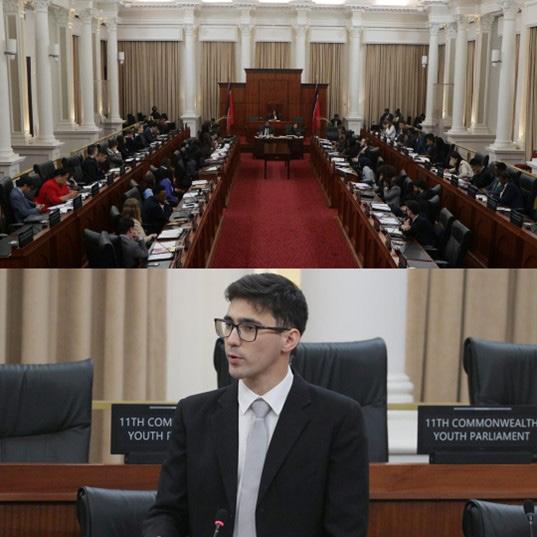
In this article, coinciding with the start of the Commonwealth's Year of Youth, I outline opportunities for young people in the Legislative Assembly of the Australian Capital Territory (ACT). I have also taken the opportunity to include input from Hon. Churchill Gill, MP from the Seychelles National Assembly and to share the experience of young person, Braith Sneddon, who participated in the recent 11th Commonwealth Youth Parliament in Trinidad and Tobago.
In the ACT Legislative Assembly, youth affairs are considered
and advanced in several different ways, including through:
• the ACT Youth Advisory Council, which directly advises the Minister for Education and Youth Affairs;

• the Assembly’s Standing and Select Committees;
• direct engagement and education through the Assembly’s parliamentary education program; and

• the Children and Young People’s Commissioner.
The Youth Advisory Council provides strategic advice to the ACT Minister for Education and Youth Affairs on issues affecting young people. It provides a direct link between young people and the Minister. The Council regularly consults with young people, youth organisations and groups, and with the broader community, using the most effective channels and media. It provides the ACT Government, via the Minister, with direct and well-informed advice regarding young people, to ensure that its experiences, concerns, expectations and aspirations are understood by the Government. Importantly, it alerts the Minister to relevant emerging issues, potential risks and opportunities, and serves as a point of contact for the community regarding systemic issues.
With the ACT Government, the Council also conducts a Youth Assembly to ‘draw out key ideas, policy recommendations and encourage direct participation of young Canberrans aged 12 to 25 years to have their voices heard in a full-day forum’.1 One hundred and nine young people attended the 2021 Youth Assembly, making 18 recommendations relating to
a) inclusive policy
b) resilience, rights and respectful relationships
c) youth employment
d) environment and sustainability.
The Government formally responded to the Youth Assembly’s report and tabled a copy of its response in the Legislative Assembly to inform debate and discussion on the issues affecting young people as expressed by young people.
In the Legislative Assembly, the Standing Committee on Education and Community Inclusion considers youth affairs as part of its resolution of appointment. It undertakes inquiries on a range of matters affecting young people and seeks submissions and evidence from young people and youth organisations on a wide range of topics.
8 | The Parliamentarian | 2023: Issue One | 100 years of publishing VIEW FROM CPA SMALL BRANCHES CHAIRPERSON
“It important to give a voice to young people in addressing the range of social, environmental and economic challenges that are faced by Parliaments and governments across the Commonwealth. It is equally important that young people have the chance to learn about how our parliamentary systems operate and to develop the necessary skills and experience to take on leadership positions both now and into the future.”Chairperson of the CPA Small Branches, Joy Burch, MLA, Speaker of the Legislative Assembly of the Australian Capital Territory
As the Commonwealth marks the start of its Year of Youth, the CPA Small Branches Chairperson outlines the importance of youth engagement for Parliaments.
Additionally, it is a statutory function of the Office of the Legislative Assembly (the administrative arm of the Assembly) to provide public education about the functions of the Assembly and its Committees. The Office’s education team fulfills this function by conducting:

• education seminars for schools and community groups;
• collaborative inter-school Committee role-play events;
• a ‘Westminster workshop’ in which young people learn about the Westminster system of parliamentary democracy through short lectures, role plays and collaborative research with peers;
• a Constitutional Convention in which students explore constitutional issues relevant to the ACT; and
• sessions where students and young people can meet their elected Members and ask questions about how they perform their roles in representing the ACT community.
The ACT has a Children and Young People’s Commissioner which is a statutory office holder, established under the ACT Human Rights Commission Act 2005. The Commissioner endeavours to: consult with children and young people in ways that promote their participation in decision-making; listen to and seriously consider the views of children and young people, including being sensitive to the linguistically and culturally diverse backgrounds of children and young people.
Importantly, the Commissioner has a role to promote the participation of young people in making decisions about government policies and legislation to ensure that the rights and interests of young people are upheld.
In knowing how the ACT works, it was useful to understand how other Parliaments engage with young people in their society. As such I invited Hon. Churchill Gill, MP from the Seychelles National Assembly to provide a snapshot of their recent youth engagement. I thank him for his contribution, and include an extract below:
“It is crucial for the future of any country that the young demographic is adequately supported and nurtured through outreach, open dialogue, education and positive influences, preparing them to take up the mantle in the future. For the National Assembly of Seychelles, one direct channel of ensuring constructive and positive engagement with the youth is the Media Youth Sports and Culture Committee, of which I am a member.
The Committee’s portfolio is extensive and includes oversight over departments responsible for the youth. As part of its work with youth, the Committee organises meetings and visits to several entities engaged in youth work. In July 2022, for instance, the Committee visited the Anse Royale Youth Hostel, which provides a home for post-secondary students from the islands of Praslin and La Digue, who pursue their studies on Mahé island.
As the elected Member for one District on Praslin Island and a member of the Committee, I, along with the Committee, was eager to know more about the experience of the students in this crucial time in their lives when they set about building a strong foundation for their future. With open conversation being encouraged, the resident representatives freely expressed their opinions and ideas about topics specific to their individual as well as shared experiences.
Once the meeting was concluded, the Committee visited
In late 2022, the ACT selected a young Canberran, Braith Sneddon, to participate in the 11th Commonwealth Youth Parliament (CYP) – a program organised by the CPA and held in Trinidad and Tobago in November 2022. Braith had this to say about his participation: “I found the CYP nothing short of eye-opening. Working alongside aspiring politicians, ambitious public servants and passionate youth advocates of so many culturally diverse nations has given me an inspiring appreciation of youth engagement in politics. It has driven me to take a more active role and platform to urge young people to get involved in politics and engage with the political process.”
the hostel facilities. Along the way, more residents spoke with Committee Members about the hostel as well as their schooling concerns. The visit at the Youth Hostel was only one of many the Committee has held over the years, along with meetings with several youth groups and entities responsible for the youth, promoting more discussions of youth concerns. Committee Members are also invited to youth talks and conferences locally and regionally.
Most recently, the Chairperson of the Committee, a young Parliamentarian himself, Hon. Wavel Woodcock, attended the second African Youth Dialogue in Morocco in December 2022 where the theme of the event was ‘The promotion of good governance through the elimination of hunger and malnutrition: Enhancing of the role of young Parliamentarians and the youth in Africa’s Legislatures’. Attending such events promotes the exchange of knowledge and the benefit of different perspectives from other Parliamentarians and people engaged with the youth. For the National Assembly of Seychelles, the Committee is a significant means of maintaining constant dialogue with the youth and directly gaining their views on different topics.”
References:
1 ACT Government response to the 2021 Youth Assembly ‘Our Voice, Our Impact’ Report, p 2.
The Parliamentarian | 2023: Issue One | 100 years of publishing | 9 VIEW FROM CPA SMALL BRANCHES CHAIRPERSON
THE COMMONWEALTH IN THE 21st CENTURY AND THE ROLE OF THE CPA

Every year, in the month of March, Commonwealth Day is celebrated. This year, Commonwealth Day is on Monday 13th March, and it will provide an important opportunity to recognise the tenth anniversary of the signing of the Commonwealth Charter in March 2013. The Charter sets out the core values and beliefs of the Commonwealth including good governance, the rule of law, human rights and sustainable development.
2023 marks the mid-point of the United Nations Sustainable Development Goals (SDGs). The Goals were adopted in New York in 2015, and their ambition is for delivery by 2030. This was always going to be a tough challenge, but it has been made harder still by the impact of COVID and the current economic and financial situation.
2023 is also the 20th anniversary of the Commonwealth Latimer House Principles endorsed at the Commonwealth Heads of Government Meeting (CHOGM) in Abuja, Nigeria, in 2003. These Principles reaffirm the importance of the roles of the Executive, the Legislature and the Judiciary and the separation of powers between the three.
So, this is a timely moment for us to consider the future of the Commonwealth in the 21st century and the role played by the Commonwealth Parliamentary Association (CPA).
The CPA has existed for more than a century. Our core mission is to bring Parliaments and Parliamentarians together to learn from each other. The Commonwealth Charter, the UN’s Agenda 2030 and the Commonwealth Latimer House Principles provide powerful tools to assist the CPA in our work.
It is crucial, as we contemplate the future of the Commonwealth, that we have an open discussion about its past including the legacies of colonialism and slavery. The Commonwealth in the 21st century is, and must remain, a partnership of equal nations with shared values and a commitment to work together to meet the huge challenges of the modern world.
I started work as the CPA’s 8th Secretary-General in August 2020. One of my first priorities was to develop a new Strategic Plan for the organisation. We consulted widely with our member Branches and a range of external organisations. The CPA Strategic Plan was adopted and launched in 2022. It reaffirms our longstanding commitment to secure a new legal status for the CPA. We are seeking recognition, in UK law, of the CPA as an
international, interparliamentary organisation and discussions on this are continuing at many levels, including the CPA Executive Committee. As CPA Secretary-General, I am determined to resolve this issue of our legal status so that we can move forward together as a strong and united organisation.
At the CPA, we are committed to the monitoring and evaluation of our work so that it has maximum impact. In that spirit, the CPA Recommended Benchmarks for Democratic Legislatures were updated in the light of the Sustainable Development Goals. These Benchmarks are an important set of tools to support parliamentary strengthening.
Perhaps our biggest innovation in recent years was the launch, two years ago, of the CPA Parliamentary Academy. This is an online resource available to all CPA members. The feedback from participants has been very positive and I strongly encourage all Members across our membership to undertake these courses. I appreciate that Members of Parliament and parliamentary staff are all busy, but the great strength of the CPA Parliamentary Academy is that these courses can be undertaken whenever you have the time. That flexibility has meant that we have had more than 800 people signing up to the CPA Parliamentary Academy courses so far.
The Commonwealth has designated 2023 as its ‘Year of Youth’. The COVID-19 pandemic had a massive impact on children and young people with schools closed, learning lost and significant effects on mental health. This impact has been felt across the globe but especially by those who already faced the greatest barriers in education, including persons with disabilities, girls and young women and those living in the poorest communities.
This ‘Year of Youth’ provides the Commonwealth with an opportunity – and a responsibility – to engage fully with young people. In November 2022, the CPA held another very successful Commonwealth Youth Parliament in Trinidad and Tobago. We are now exploring further activities for 2023 to support Parliaments in their outreach and engagement with young people as well as supporting young Members of Parliament.
Inclusiveness is an important part of the Commonwealth Charter. The CPA seeks to reflect this in our work, most notably via our three amazing networks – the Commonwealth Women
10 | The Parliamentarian | 2023: Issue One | 100 years of publishing VIEW FROM THE CPA SECRETARY-GENERAL
The Secretary-General of the Commonwealth Parliamentary Association, Stephen Twigg
Reflecting on the 10th anniversary of the Commonwealth Charter.
CPA PHOTO GALLERY
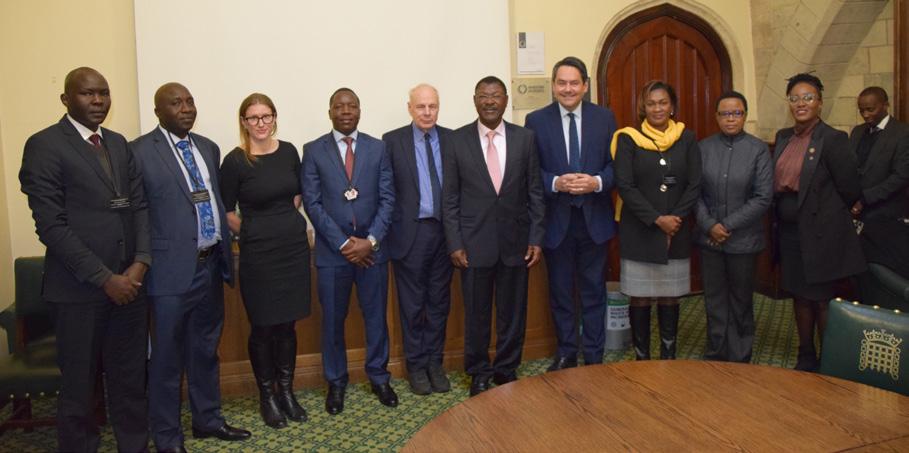
Right: The Speaker of the National Assembly of Kenya, Rt Hon. Moses Wetang’ula, E.G.H., MP met with the CPA Chairperson, Hon. Ian Liddell-Grainger, MP and the CPA Secretary-General, Stephen Twigg at the UK Houses of Parliament on 14 December 2022. The meeting was held ahead of the CPA Post-Election Seminar with the Parliament of Kenya early in 2023 and the Speaker was also briefed on ongoing discussions regarding the legal status of the CPA. A delegation of Kenyan Parliamentarians and parliamentary staff also attended the meeting, including Samuel Njoroge, Clerk of the National Assembly and the Kenyan High Commissioner to the UK, Manoah Esipisu. The CPA Kenya Branch was formed in 1964, shortly after Kenyan independence was formally declared. In 2021, the Branch hosted the first ever Regional Conference of the Commonwealth Parliaments with Disabilities (CPwD) network.

Left: The CPA Secretary-General, Stephen Twigg is undertaking a wide range of meetings with Commonwealth High Commissioners based in London and recently met with the High Commissioner for India in the United Kingdom, H.E Vikram Doraiswami to discuss the CPA’s work in the CPA India Region and the wider Commonwealth.

Right: The First Deputy Speaker of the National Assembly of Zambia, Hon. Malungo A. Chisangano, MP met with the CPA Deputy Secretary-General, Mr Jarvis Matiya at the CPA Headquarters in London, UK. Discussions focused on the ongoing training and support from the CPA for the Members of the National Assembly and parliamentary strengthening work across the CPA

the
Parliamentarians (CWP), the CPA Small Branches network and the Commonwealth Parliamentarians with Disabilities (CPwD).
I have now been in this role for two and a half years and I am learning all the time about the work of Parliaments across the Commonwealth on critical matters ranging from climate change to gender equality or from technology and innovation to the Sustainable Development Goals.
There are wide disparities in the situations faced by different Commonwealth countries but many challenges in common. At the 26th Conference of Speakers and Presiding Officers of the Commonwealth (CSPOC) in Australia in January 2023, there was a lot of discussion about security both institutionally and individually. The Conference also shared experiences of how different Parliaments had adapted at the height of the COVID-19 pandemic and I am delighted that many Speakers and Deputy Speakers have agreed to share their presentations from CSPOC in this issue of The Parliamentarian. I am committed to working with Speakers and Presiding Officers through CSPOC to build upon these important areas of discussion.
Strong, independent Parliaments are vital, but their existence cannot be taken for granted. Legislation, oversight and holding the Executive to account are crucial functions of the Legislature. Another important role is to connect with citizens and civil

society. The Commonwealth has a plethora of organisations and networks with whom the CPA works. In the same way that a healthy, diverse global civil society is good for the Commonwealth so too is a strong civil society important for the work of individual Commonwealth countries.
The Commonwealth is not just a Secretariat supporting the Governments of 56 countries. It is a complex set of networks and organisations. Similarly, the CPA is not just a Secretariat of staff but an organisation of around 17,000 Legislators supported by parliamentary staff. Above all, the Commonwealth should be there for its 2.4 billion citizens.
As we mark the 10th anniversary of the Commonwealth Charter, let us take this opportunity to reflect on the commitments contained within it. By nature, I am an optimist, but even I have to admit that the scale of the challenges we all face is daunting – the climate crisis, armed conflict, food insecurity, authoritarianism, inequality, poverty, human rights violations and a precarious world economy. Yet, it is in such difficult times that we most need strong networks and organisations so that we can both support, and learn from, each other. For the 21st century, the Commonwealth and the CPA have an opportunity to make a positive difference.
The Parliamentarian | 2023: Issue One | 100 years of publishing | 11 VIEW FROM THE CPA SECRETARY-GENERAL
Africa Region. The Deputy Speaker was accompanied by
Deputy High Commissioner of Zambia to the UK, Mrs Lube Chibwe Nxumalo.
Image credits: CPA Headquarters Secretariat.
Speakers and Presiding Officers from across the Commonwealth have met in Australia for the 26th Conference of Speakers and Presiding Officers of the Commonwealth (CSPOC) which took place from 3 to 6 January 2023. Delegates from more than 30 Commonwealth Parliaments were hosted by the Senate of Australia’s President, Hon. Sue Lines and the Speaker of the Australian House of Representatives, Hon. Milton Dick, MP.

The conference’s aim is to strengthen parliamentary institutions by bringing together Speakers and Presiding Officers from across the Commonwealth.
The biennial conference focused on the topics of parliamentary engagement, security and e-Parliaments, and was an opportunity to share best practice on Parliamentarians as effective legislators and representatives. A special plenary session was also held on training for Parliamentarians and staff; Speakers and Presiding Officers discussed the provisions and practices available in their own Parliaments which focused on the induction and upskilling of Members and staff, and also addressed critical areas like anti-bullying and harassment training.
The Speaker of the Australian House of Representatives, Hon. Milton Dick, MP said in a TV interview ahead of the conference: “The role of the conference is to ensure both sides have equal opportunity to express their views. Australia has the opportunity to showcase how we’ve handled the pandemic for example, but also to understand and learn from other jurisdictions about how they’ve dealt with remote Parliaments and online security.”
The Secretary-General of the Commonwealth Parliamentary Association, Stephen Twigg, attended the 26th CSPOC and met with many Speakers and Presiding Officers during the conference, as well as having the opportunity to update the conference on recent CPA initiatives available to them, such as the CPA Parliamentary Academy.
Speakers and Presiding Officers attended the conference from many jurisdictions including: New Zealand; Sri Lanka; Rwanda; India; Jamaica; Malta; Tonga; Malaysia; Barbados; Botswana; Canada; Maldives; Nauru; Singapore; Zambia; Kenya; Uganda; Pakistan; United Kingdom; Mauritius; Jersey; Isle of Man; Guernsey.

The CSPOC conference brings together the Speakers and Presiding Officers of the Parliaments and Legislatures of the Commonwealth. It focuses on the sharing of experiences, collaboration and partnership across the Parliaments of the Commonwealth. CSPOC was created in 1969 by Hon. Lucien Lamoureux, 27th Speaker of the Canadian House of Commons to focus on the role of Speakers within parliamentary institutions and CSPOC is a separate independent organisation, although many of its participants are also members of the Commonwealth Parliamentary Association. CSPOC operates on a two-year cycle, holding a conference of the full membership every two years, although the most recent conference was delayed by COVID-19. The next host for the biennial conference is Uganda from 3 to 6 January 2024. For more information about the Conference of Speakers and Presiding Officers of the Commonwealth (CSPOC) please visit www.cspoc.org

12 | The Parliamentarian | 2023: Issue One | 100 years of publishing CPA NEWS
For the latest CPA and Commonwealth news please visit www.cpahq.org or follow the CPA on social mediaTwitter @CPA_Secretariat | Facebook.com/CPAHQ | LinkedIn | Instagram @cpa_secretariat
SPEAKERS MEET IN AUSTRALIA FOR THE 26th CONFERENCE OF SPEAKERS AND PRESIDING OFFICERS OF THE COMMONWEALTH TO DISCUSS PARLIAMENTARY ENGAGEMENT, INNOVATION AND SECURITYImages: Parliament of Australia/AUSPIC Images: Parliament of Australia/AUSPIC
CPA SECRETARY-GENERAL VISITS PARLIAMENT OF SINGAPORE
In January 2023, the CPA Secretary-General, Stephen Twigg visited the Parliament of Singapore and was received by the CPA Singapore Branch President and the Speaker of Parliament, Hon. Mr Tan Chuan, MP at Parliament House where they discussed a range of topics, including parliamentary practice and procedure in Singapore and across the Commonwealth.


The CPA Secretary-General also met with Singaporean Members of Parliament - Mr Lim Biow Chuan, MP; Mr Gerald Giam, MP; Miss Rachel Ong, MP; and Ms Yeo Wan Ling, MP – who attended the 65th Commonwealth Parliamentary Conference (CPC) in Halifax, Canada in August 2022. The CPA SecretaryGeneral toured the historical gallery at Parliament House and observed Question Time from the Public Gallery.
CPA SECRETARY-GENERAL VISITS PARLIAMENT OF SRI LANKA

The CPA Sri Lanka Branch President and the Speaker of Parliament, Hon. Mahinda Yapa Abeywardana, MP received the CPA Secretary-General, Stephen Twigg during a visit to the Parliament of Sri Lanka. The Speaker is a Member of the CPA Executive Committee representing the CPA Asia Region. The CPA Secretary-General was also received by the President of the Democratic Socialist Republic of Sri Lanka, Hon. Ranil Wickremesinghe.
During his visit to Sri Lanka, the CPA Secretary-General met with Hon. Dinesh Gunawardena, MP, Prime Minister and Minister of Public Administration, Home Affairs, Provincial Councils and Local Government at the Prime Minister's Office in Colombo. He also met with Hon. Ali Sabry, Minister of Foreign Affairs; Hon. (Dr.) Susil Premajayantha, MP, Minister of Education and Leader of the House of Parliament; Hon. Sajith Premadasa, MP, Leader of the Opposition; as well as other Members of Parliament.
The CPA Secretary-General also met with the CPA Sri Lanka Branch Secretary, Mr Dhammika Dasanayake, Secretary-General of the Parliament of Sri Lanka. The CPA Sri Lanka Branch has recently become the Secretariat for the CPA Asia Region.
CPA CANADA FEDERAL BRANCH DELEGATION VISIT THE UK AND WALES
A delegation of two Senators and five Members of the House of Commons from the Parliament of Canada visited the Parliament of the United Kingdom in January 2023. The delegation was led by the Assistant Deputy Speaker, Hon. Alexandra Mendès, MP, Chair of the CPA Canada Federal Branch.

During their visit, the CPA Canada delegation met with the CPA Chairperson, Hon. Ian Liddell-Grainger, MP and also held a consultation meeting with the CPA Secretary-General, Stephen Twigg and a team from the CPA Headquarters Secretariat to discuss the CPA Canada Federal Branch’s engagement with the wider Association and also the work of the Commonwealth Women Parliamentarians (CWP) network.
The Canadian visitors held a bilateral meeting with a delegation from the National Assembly of The Gambia, who were also visiting the UK Parliament, and they also visited the Welsh Parliament to engage with Members of the devolved Legislature and found out about their legislative process. The CPA Canada delegation included: Hon. Alexandra Mendès, MP (Chair); Senator Hon. Patricia
The Parliamentarian | 2023: Issue One | 100 years of publishing | 13 CPA NEWS
Bovey; Senator Hon. David M. Wells; Ms Marie-Hélène Gaudreau, MP; Mr Gord Johns, MP; Mr Chandra Arya, MP; Mr Rémi Bourgault, CPA Branch Secretary; and Ms Brittany Collier, Parliamentary Advisor.
SEYCHELLES PARLIAMENTARY LEADERSHIP WORKSHOP WITH THE CPA TO ESTABLISH A MORE INDEPENDENT PARLIAMENT
Senior Members and officials of the National Assembly of the Seychelles, along with officials from the Government of Seychelles, have benefitted from a workshop delivered by the CPA Headquarters from 23 to 24 January 2023. The National Assembly Council of Seychelles, headed by the Speaker, Hon. Roger Mancienne, MP and including the Deputy Speaker, Leader of Government Business, Leader of the Opposition, Whips and senior officials participated in the workshop, which was held at the National History Museum, Victoria, Mahé.


The workshop, which was funded under the auspices of the CPA Small Branches Regional Initiative Fund (RIF), provided an in-depth opportunity for the National Assembly to consider the financial, administrative and legal ramifications of establishing a National Assembly Service and National Assembly Commission; with the ultimate aim of increasing and strengthening the independence of the National Assembly from the Executive. The workshop was delivered with the support and contributions of Huw Williams, Clerk’s Office at The Scottish Parliament and Matthew Salik, Head of Programmes at the CPA.
The programme aligns to the strategic objectives of the CPA to uphold the principles of the separation of powers enshrined in the Commonwealth Latimer House Principles and the Commonwealth Charter. The National Assembly Services Bill 2022, which forms the basis of the programme, was built upon the Model Law for Independent Parliaments published by the CPA in 2020.
The Speaker of the National Assembly of Seychelles, Hon. Roger Mancienne, commented: “ I would like to thank the Commonwealth Parliamentary Association for this workshop which has been very helpful in developing better practices for our future. I’ve appreciated the insight that the resource team have brought from their own Parliaments and the spirit in which they have delivered their observations in this exchange with us. I extend our gratitude to the CPA as an organisation for the support it has provided us, not only today but in all of our previous interactions as well.”
SEYCHELLES SPEAKER ELECTED AS NEW PRESIDENT OF SADC PARLIAMENTARY FORUM

The Speaker of the National Assembly of Seychelles, Hon. Roger Mancienne, has been elected as the President of the Southern African Development Community Parliamentary Forum (SADC-PF) at the 52nd Plenary Assembly Session on 6 December 2022. The National Assembly of Seychelles is an active member of the CPA Small Branches network and its Members have attended recent CPA seminars.
The SADC-PF Assembly was opened by H.E. Felix Antoine Tshisekedi Tshilombo, President of the Democratic Republic of Congo on the theme of ‘The role of Parliaments in strengthening legislative frameworks for peace and security in the SADC region’.

Seychelles Member, Hon. Regina Esparon, Chairperson of the SADC-PF Regional Women’s Parliamentary Caucus (RWPC) spoke at the Assembly about RWPC initiatives in promoting gender equality and the increased participation of women in decision-making and policy drafting.
The SADC-PF is a regional inter-parliamentary body composed of 13 Parliaments representing over 3,500 Parliamentarians in the SADC region including Angola, Botswana, Democratic Republic of Congo (DRC), Lesotho, Malawi, Mauritius, Mozambique, Namibia, South Africa, Seychelles, Swaziland, Tanzania, Zambia and Zimbabwe.
For the latest CPA and Commonwealth news please visit www.cpahq.org or follow the CPA on social mediaTwitter @CPA_Secretariat | Facebook.com/CPAHQ | LinkedIn | Instagram @cpa_secretariat
14 | The Parliamentarian | 2023: Issue One | 100 years of publishing CPA NEWS
Image credit: National Assembly of Seychelles.
Image credit: National Assembly of Seychelles.
Images credit: Southern African Development Community Parliamentary Forum (SADC-PF).
NEW MONARCH VISITS UK PARLIAMENT TO UNVEIL TRIBUTES TO CPA PATRON, QUEEN ELIZABETH II
His Majesty King Charles III visited the UK Parliament on 14 December 2022, to unveil a plaque on the floor of the historic Westminster Hall, which marked the site of the Lying-in-State of the late Queen Elizabeth II. The installation of the plaque continues a royal tradition that stretches back to King Edward VII in 1910 and it the first time that a reigning monarch had unveiled the tribute in person.

The King also spoke to UK parliamentary staff who had helped to deliver the historic Lying-in-State ceremony, where over 200,000 members of the public paid their respects to the late Queen.

King Charles unveiled a gift from UK Parliamentarians to the late Queen, which marked the occasion of her Platinum Jubilee, a pair of unique lanterns
with bronze sculptures at the base featuring the heraldic beasts of the United Kingdom. UK Parliamentarian, Rt Hon. Michael Ellis, KC, MP led the project to create the Platinum Jubilee gift – which is situated between two previous gifts to Queen Elizabeth II, the Diamond Jubilee window in Westminster Hall and the Silver Jubilee fountain in New Palace Yard – and was entirely funded through personal donations from Members of both Houses of Parliament. During the visit The King met with the Lord Speaker, Rt Hon. Lord McFall of Alcluith and the Speaker of the UK House of Commons, Rt Hon. Sir Lindsay Hoyle, MP, as well as the Prime Minister and Leader of the Opposition.
COMMONWEALTH PARLIAMENTARY ASSOCIATION AMONGST COMMONWEALTH ACCREDITED ORGANISATIONS APPLAUDED FOR IMPACT

The Commonwealth Parliamentary Association is amongst the Commonwealth’s network of 87 accredited organisations (AOs) that have been recognised for their work to support member countries during some of the worst catastrophes seen in recent times, from the COVID-19 pandemic to devastating natural disasters like the devastating undersea volcano in Tonga or the flooding in Pakistan.
Representatives of a range of non-profit organisations, networks and associations, accredited to support the delivery of the Commonwealth Charter, gathered at Marlborough House in November 2022 for their 14th structured dialogue with the Commonwealth Secretary-General, Rt Hon. Patricia Scotland, KC. During their first in-person meeting since the pandemic, the Commonwealth Secretary-General conveyed her appreciation for the work of the AOs which spans all regions of the Commonwealth. “In the face of the grave challenges facing our world – from the social and economic impacts of the pandemic to the impacts of climate change and the tremors of global conflict - the work of the Commonwealth’s Accredited Organisations stands tall.” Other key successes through AOs’ contributions were the Commonwealth Living Lands Charter and the Commonwealth Declaration on Sustainable Urbanisation.

COMMONWEALTH CLERKS AND OFFICIALS AT PUBLIC ACCOUNTS COMMITTEE WORKSHOP
Over 40 Clerks and officials from Commonwealth Legislatures attended a Public Accounts Committee Workshop at the UK Parliament from 5 to 7 December 2022. The three-day workshop was designed to allow delegates to collaborate with colleagues across different regions, discussing responses to shared challenges faced by PACs. Delegates were also able to share their experiences on existing practices and find new approaches to the financial scrutiny work of PACs. The workshop was organised by the CPA UK Branch as part of the Commonwealth Association of Public Accounts Committees (CAPAC).
The Parliamentarian | 2023: Issue One | 100 years of publishing | 15 CPA NEWS
Image credit: UK Parliament Image credit: Commonwealth Secretariat. Image credit: UK Parliament
Image credit: CPA UK.
POST-ELECTION
SEMINAR STRENGTHENS
KNOWLEDGE OF PARLIAMENTARY PROCEDURE FOR MEMBERS AND SENATORS AT THE PARLIAMENT OF KENYA
Newly elected and returning Members and Senators at the Parliament of Kenya have strengthened their knowledge of parliamentary practice and procedure at a Post-Election Seminar co-hosted by the Commonwealth Parliamentary Association (CPA) in Mombasa, Kenya, from 30 January to 2 February 2023.

The National Assembly and Senate conducted parallel training programmes, with Members and Senators learning from colleagues and experts across the Commonwealth in a range of discussions designed to examine the core elements of democratic governance. The theme of the seminar was ‘Equipping the 21st century legislator for effective service delivery’.

Opening the seminar, the President of the Republic of Kenya, H.E. Dr William S. Ruto, EGH, said: “A democratic government is underpinned by a representative Assembly. The robustness of our democracy, effectiveness of government, viability of the state and the feasibility of development depend, to a considerable extent, to the existence and effective functioning of a strong Parliament.”
Reflecting on the position of Parliament within democratic systems of governance, CPA Secretary-General, Stephen Twigg added: “Strong, independent Parliaments are vital, but their existence cannot be taken for granted. Legislation, oversight and holding the Executive to account are crucial functions of the Legislature. Another important role is to connect with citizens and civil society.” The CPA Secretary-General also spoke to participants about the Commonwealth in the 21st century and updated Members and Senators on the CPA’s outreach work.
Parliamentary experts from the Parliaments of Australia, Canada and South Africa provided a Commonwealth perspective at the seminar. Hon. Kevin Andrews, former Australian Minister of Defence, Natalie Foster, Clerk Assistant at the House of Commons of Canada, and Hon. Sylvia Lucas, Deputy Chairperson of the National Council of Provinces of South Africa, offered unique insights on issues including parliamentary privilege, public engagement and inter-parliamentary diplomacy. Experts from the International Republican Institute (IRI) and House Democracy Partnership also brought a perspective on the US Congress to the seminar.
ANGUILLA HOUSE OF ASSEMBLY DEVELOP NEW CODES OF CONDUCT ASSISTED BY AUSTRALIAN CLERK
Members of the Anguilla House of Assembly are developing a new Code of Conduct and Register of Interests for Parliamentarians, supported by the Commonwealth Parliamentary Association Headquarters and the deployment of the Clerk of the Legislative Assembly of the Australian Capital Territory, Tom Duncan, who is an expert in the practice, funded through the CPA.

This work is part of an ongoing CPA Technical Assistance Programme for the CPA Anguilla Branch which began in 2020 with a CPA Post-Election Seminar and assessment against the CPA’s Benchmarks for Democratic Legislatures. This was followed by a visit by a technical team from the CPA Headquarters in 2021 to review the Legislature's governance and administration arrangements followed by the launch of a revised Standing Orders for the House of Assembly, the first update to the Legislature’s rules since 1976.
For the latest CPA and Commonwealth news please visit www.cpahq.org or follow the CPA on social mediaTwitter @CPA_Secretariat | Facebook.com/CPAHQ | LinkedIn | Instagram @cpa_secretariat
16 | The Parliamentarian | 2023: Issue One | 100 years of publishing CPA NEWS
Image credit: Anguilla House of Assembly.
Image credit: Government of St Helena.
‘TRANSITIONING TO NEW PARLIAMENTS’: NEW CPA TOOLKIT PROVIDES SUPPORT TO PARLIAMENTS FOR ELECTION PLANNING

The CPA has launched a new Handbook for Parliaments in Election Planning to assist Legislatures in planning for an election and the influx of Members of Parliament that follows. The purpose of this Handbook is to support Parliaments by suggesting approaches and sharing examples of best practice from across the Commonwealth. It is primarily intended for use by the parliamentary officials who are tasked with planning for their next election, but it may also be of interest to Members of Parliament, especially those charged with overseeing their House Services or Administrations, who wish to ensure that election planning in their Parliament reflects good practice. Introducing the CPA toolkit, the CPA Secretary-General, Stephen Twigg, said: “This new Handbook has been developed to broaden and augment that post-Election support, by supporting the institution of Parliament to effectively transition from one Parliament to another. In particular, this Handbook looks how Parliaments should plan for elections, how they should coordinate their activities, how they should provide the right information at the right time to new Members, and how to evaluate if the transition period was successful or not.” This latest resource has been developed for the benefit of the CPA’s member Branches, but also the wider community of Parliaments outside of the Commonwealth. The publication draws upon contemporary research, established best practices and relevant case studies/examples from more than 30 Commonwealth jurisdictions.
The new CPA handbook is available to download at www.cpahq.org.
COMMONWEALTH PARLIAMENTARIANS ATTEND CROWN DEPENDENCIES NETWORK IN GUERNSEY
Thirty-two Members and parliamentary staff from the Legislatures of the Isle of Man (Tynwald), Jersey, Guernsey and Alderney attended the Crown Dependencies Network in St Peter Port, Guernsey from 30 November to 2 December 2022. This year’s event included presentations and discussions on ‘The Housing Crisis in the Crown Dependencies’ and ‘General Elections in Small Jurisdictions’. The Crown Dependencies Network was established under the auspices of the Commonwealth Parliamentary Association. It brings together the Parliaments and Parliamentarians of the Isle of Man, Guernsey, Alderney and Jersey to discuss common interests, problem solve and share experience.

OVERSEAS TERRITORIES FORUM WELCOMES DELEGATES FROM NINE UK OVERSEAS TERRITORIES

The Overseas Territories Forum 2022 brought together 35 Parliamentarians, Clerks, electoral officials, and external and internal auditors from nine UK Overseas Territories and Crown Dependencies for a three-day programme at the UK Parliament from 29 November to 1 December 2022. Delegates were welcomed by CPA UK Joint Branch President, Rt Hon. Sir Lindsay Hoyle, MP, Speaker of the UK House of Commons to the first in-person Forum since 2019, and also heard from Hon. Gordon Burton, MHA, Speaker of the Turks and Caicos House of Assembly about the measures in place in his jurisdiction.
Sessions covered a wide range of topics, ranging from legislative scrutiny practices to effective public engagement, and the multilateral forum provided delegates with the opportunity to explore issues relating to good governance and the oversight of public finances. The Forum was delivered by the CPA UK Branch in partnership with the National Audit Office and the Government Internal Audit Agency.

The Parliamentarian | 2023: Issue One | 100 years of publishing | 17 CPA NEWS
Image: CPA Guernsey Branch/States of Guernsey.
Images: CPA UK.
INDIA VICE-PRESIDENT INAUGURATES 83rd ALL INDIA PRESIDING OFFICERS CONFERENCE AT THE RAJASTHAN LEGISLATIVE ASSEMBLY

The Vice-President of India and the Chairman of the Rajya Sabha, the India Parliament’s Upper House, Shri Hon. Jagdeep Dhankhar inaugurated the two-day 83rd All India Presiding Officers Conference in Jaipur held from 11 to 12 January 2023. Speakers and Presiding Officers from across the CPA India Region, including National and State Legislatures, attended the event held at the Rajasthan Legislative Assembly. In his opening address, the Vice-President of India emphasised the need for maintaining harmonious relations between the Executive, the Legislature and the Judiciary as well as stressing that the essence of democracy lies in the prevalence of the mandate of the people and securing their welfare. Underscoring the historic importance of India’s assumption of the leadership of the G20 group of nations, the Vice-President also urged Presiding Officers to focus on their positive role during this historic moment.
The CPA India Regional Chairperson and Speaker of the Lok Sabha, Shri Om Birla addressed the conference and expressed concern over the shrinking time of debate and discussion in the Legislature saying, “Laws will be stronger and more effective if there is a substantial contribution of people.”
The conference also discussed efforts to bring all Legislatures in India together on a single digital, platform, that also includes Members of Parliament, citizens and other stakeholders. The Sansad Platform has been developed by the Ministry of Electronics and Information Technology (MeitY) and was conceived by the Speaker of the Lok Sabha. The app serves as a one-stop platform for viewing all information related to the daily operations of the Lok Sabha with information on various Bills and live telecast also available.
NEW ZEALAND PARLIAMENT HOSTS HANSARD CONFERENCE FOR PARLIAMENTARY STAFF

The New Zealand Parliament have hosted the Australasian and Pacific Hansard Editors Association Conference, where Hansard Editors from the CPA Australia Region –Australia Federal Parliament and the Australian State Parliaments – and the CPA Pacific Region – the Parliaments of Fiji, Niue, Solomon Islands, Tuvalu, Tonga, Vanuatu, Cook Islands, Bougainville, Papua New Guinea and New Zealand - gather to discuss their work.
The theme of this year’s conference was: ‘Tautohetohe Mata Rau: He Reo nui kia Mau | Diversity of Debate: Multiple Languages on the Record’ and parliamentary staff had the opportunity to exchange ideas and practices.
CANADIAN SPEAKERS MEET IN SASKATCHEWAN

Speakers and Presiding Officers from the Canadian Federal and Provincial Parliaments attended the 39th Canadian Presiding Officers Conference in Regina, Saskatchewan in February 2023 where they were able to share legislative developments and best practice from their Legislatures.

18 | The Parliamentarian | 2023: Issue One | 100 years of publishing CPA NEWS
Image credit: National Assembly of Tanzania.
the latest CPA and Commonwealth news please visit www.cpahq.org or
the CPA on social mediaTwitter @CPA_Secretariat | Facebook.com/CPAHQ | LinkedIn | Instagram @cpa_secretariat
Image: Parliament of New Zealand.
For
follow
Image: Legislative Assembly of
Saskatchewan.
NEW SPEAKERS COURSE PROVIDES EXPERTISE AND PROFESSIONAL DEVELOPMENT FOR CURRENT AND PROSPECTIVE PRESIDING OFFICERS
The CPA has launched a new Advanced Course for Speakers and Presiding Officers as part of its online CPA Parliamentary Academy. This new course provides a unique opportunity to provide Speakers and Presiding Officers of Parliaments with the knowledge and skills on how to perform their functions as the leaders within their parliamentary institutions. The course is equally beneficial for those who aspire to this role either in the short or long-term and to Deputy Speakers who wish to gain more understanding in their support role. The course will also be of value to parliamentary staff within Speaker’s offices, external parliamentary development specialists or political students. The CPA Secretary-General, Stephen Twigg said: “We have brought together senior, experienced, current and former Speakers and Presiding Officers, Parliamentarians, Clerks and officials from across the Commonwealth to provide our Members with practical advice, best-practice case-studies and current learning in one single online course. The CPA can utilise over a hundred years of specialist experience of professional development training and institutional strengthening programmes for Parliamentarians and Clerks and instils that expertise into our online courses.”
The new course examines in-depth the procedural, administrative, ceremonial and outreach roles of Speakers and Presiding Officers from within a Commonwealth context. This new course can be taken as a standalone course or as part of the CPA Parliamentary Professional Development Certificate delivered through the CPA Parliamentary Academy. Visit www.cpahq.org/parliamentary-academy to find out more and to register your interest.
COMMONWEALTH PARLIAMENTS COMPETE IN A RANGE OF DIFFERENT SPORTS


Commonwealth Parliamentarians and parliamentary staff from across the CPA Africa Region participated in the 12th East African Community (EAC) Inter-Parliamentary Games in Juba, South Sudan from 25 November to 1 December 2022. The Games saw men and women from East African Parliaments including Kenya, Rwanda, Tanzania and Uganda competing in various sports at the EAC Bunge Games. Sports included football, athletics, basketball, netball, darts, volleyball and tug-of-war. In the CPA Pacific Region, it was rugby union that provided the competitive spirit between the Parliaments of New Zealand and the Cook Islands who played in a closely fought parliamentary rugby clash that ended in a 15-15 draw. The Cook Islands Minister of Sports, Vaine Mokoroa captained his team while the captain of the New Zealand First XV was Mike Woodhouse, MP. The Sir Terepai Maoate Trophy was due to be presented at the end of the match – but was held back as there was no outright winner. The Members of the New Zealand Parliament also visited a number of cultural and community projects including a school visit to Apii Takitumu during their visit.
COMMONWEALTH LAUNCHES 2023 YEAR OF YOUTH


2023 has been declared the Year of Youth by the Commonwealth to mark the start of a year-long programme of action on youth issues. The Commonwealth’s 56 member countries have a combined population of 2.5 billion people, of which more than 60% are under 30 years of age. Youth engagement is central to the work of the CPA in promoting democratic governance and connecting Parliamentarians with young people in schools, colleges and universities to inspire the next generation of young leaders. The CPA’s youth work includes the annual Commonwealth Youth Parliament (CYP) which took place recently hosted by the Parliament of Trinidad and Tobago. Many Commonwealth Legislatures also host Youth Parliaments in their own jurisdictions.
The CPA has also developed educational resources for Parliaments to educate young citizens about democracy – such as the CPA Engagement, Education & Outreach Handbook that supports public education initiatives for Commonwealth Parliaments. The CPA also published the Commonwealth Day Youth Engagement Handbook which serves as a toolkit for how Commonwealth Parliaments can use Commonwealth Day as a means of public outreach and engagement for young people.
The Commonwealth Secretary-General, Rt Hon. Patricia Scotland, KC who launched the Year of Youth said: “I am excited that the next 12 months will bring Commonwealth leaders, stakeholders and citizens together to celebrate and empower our 1.5 billion young people. Despite the many challenges they face, young people give so much towards every aspect of the social, economic, political and cultural life of our 56 member countries. The Commonwealth’s future success rests with them.”
The Parliamentarian | 2023: Issue One | 100 years of publishing | 19
CPA NEWS
Image: Parliament of Uganda/East African Community.
Image: Cook Islands News/22103001.
PROFESSIONAL DEVELOPMENT TRAINING FOR NEW MEMBERS OF PARLIAMENT AND STAFF
Sharing new approaches and best practices from the Parliament of Australia.
In this article for The Parliamentarian, I would like to share some thoughts about training for new Members of Parliament and their staff and provide examples of the new approaches that have been adopted in Australia. It is timely that I write on this topic. In May 2022, Australia’s federal election saw eight new Senators and 35 new Members of the House of Representatives elected to the 47th Parliament of Australia.
This article will provide an outline of the current Australian Parliamentarian Induction Program for newly elected Members, describe some recent events that prompted updates to the program and explain why these improvements are so important and the difference they have made to the most recently elected Members of the Australian Parliament.
As we have a bicameral Parliament in Australia, I should clarify that some of the points in this article are specific to Members of the House of Representatives, in which case I will use the term ‘Members’, but when referring to both Members and Senators, I will use the term ‘Parliamentarians’.
The Parliamentarian Induction Program
Newly elected Members of Parliament come from all walks of life, adding a breadth of experience to the richness of our parliamentary debates. However, most do not necessarily have previous experience in the life and responsibilities of a Parliamentarian. It is the responsibility of the Parliament, therefore, to ensure they receive this training and information as early as possible following their election.
When our new Parliamentarians are elected, they are effectively starting a new job and, as they settle in, there are several elements for them to be briefed and trained on. These include:
• the administrative entities that support Parliamentarians and their staff
• the role of Members and Senators as employers of staff, and
• conducting parliamentary business within the chambers as well as in their local constituencies.
The Australian Parliamentarian Induction Program begins within the first six weeks of a Parliamentarian having been elected. For Members of the House of Representatives, there is a ‘New Members Seminar’ run over two days, where Members travel from their local constituencies to Parliament House in Canberra. During this seminar, various presenters from internal parliamentary departments and external services and teams meet and talk to the new Members about a broad range of topics ranging from how to speak to or propose amendments to Bills in the Chamber, to the important process of registering their interests and potential conflicts.
Following the formal induction seminar, check-ins are scheduled with new Members at three months following their election. This is to ensure all necessary information has been accessed and support is available for any follow-up questions or special needs.
Challenges to the training program
A challenge shared by many Commonwealth Parliaments is the limited amount of time that Parliamentarians have. When they are being inducted, there is a risk of ‘information overload’.
There are very few opportunities where all new Members are in one room together, as one cohort, without other demands – such as Parliamentary sittings. Australia is a vast nation, and some Members have quite long distances to travel to Canberra when Parliament sits. So, it is vital that we make the best use of these two initial training days.
Hon. Milton Dick, MP is the Speaker of the House of Representatives in the Federal Parliament of Australia. He was first elected as the Member for Oxley in Queensland in 2016 and subsequently re-elected in 2019 and 2022. Current and previous parliamentary roles have included Chair of the Standing Committee on Appropriations and Administration; Chair of the Broadcasting of Parliamentary Proceedings Committee; Deputy Chair of the House Standing Committee on Procedure; Membership of the Standing Committees on Tax and Revenue and on Health, Aged Care and Sport. Prior to his election to Parliament, he worked in several roles within the Australian Labor Party at a state and national level and had local government service at Brisbane City Council.

26th CSPOC: PROFESSIONAL DEVELOPMENT TRAINING FOR NEW MPs AND STAFF
20 | The Parliamentarian | 2023: Issue One | 100 years of publishing
During our two-day seminar we try to provide the baseline knowledge that is both fundamental and relevant to all Members, to start off their parliamentary term, and we encourage additional training once they have settled into their roles.
It is definitely the case of ‘you don’t know, what you don’t know’, so it is always best to give Parliamentarians the information they need to hit the ground running and offer additional support once they settle in and know what they need.
We acknowledge that different Members have different interests and needs in their learning and development. Some are more interested in procedure while others are more interested in legislation. Some have more experience in these areas, while others are new to the whole landscape.
26th CSPOC: PROFESSIONAL DEVELOPMENT TRAINING FOR NEW MPs AND STAFF
In addition, some Members may not have employed staff before, so Members are provided with advice and support on how to recruit and manage parliamentary staff, administer a budget and navigate the complex but crucial financial public accountability requirements that are required in the parliamentary context.
The Department of the House of Representatives offers a range of options for training for Members and their staff so that they can engage in more detailed procedural training. This includes formal and informal training opportunities such as lunchtime drop-in sessions for Members and their staff, to one-on-one ad hoc advice requests.
It is important to provide a range of training opportunities to suit the needs of each Member or their staff. Some prefer one-onone intensive training, and some would just like to drop in to ask a quick question. Some Members like to send their staff to bring the expertise back to the team.
These training opportunities are offered to all Members and staff at regular times and as required.
The change in the approach for training
Two years ago, there was significant media and public attention brought to the work culture and environment of the Australian Parliament House. This media interest highlighted that substantial changes were needed to make the parliamentary workplace a safer and more supportive environment for staff, particularly women: one that was more in line with the expectations of the Australian public who have elected us to these offices.

The Parliamentarian | 2023: Issue One | 100 years of publishing | 21
“ We acknowledge that different Members have different interests and needs in their learning and development. Some are more interested in procedure while others are more interested in legislation. Some have more experience in these areas, while others are new to the whole landscape. ”
CSPOC: PROFESSIONAL DEVELOPMENT TRAINING FOR NEW MPs AND STAFF
In response, in the past 12 months the Australian Parliament has made various changes to the way that Parliamentarians and their staff are inducted and supported in their jobs.

There have been a number of reviews and inquiries looking into new approaches and innovation to create and foster safe and respectful workplaces. This led the shift in how we train our Parliamentarians and their staff.
The induction training has been refreshed, and there is now extensive information and training provided to Parliamentarians on their role as an employer
This is information on their responsibilities to their staff, such as learning and development, setting and modelling appropriate workplace culture, resolving issues, work health and safety and how to establish and maintain a positive workplace.
The refreshed induction training provides substantially more information than was previously provided on their responsibilities as an employer. So much so, it is almost given an equal weighting of importance with other parliamentary information, such as logistics, procedure, electorate offices and conducting parliamentary business.
Parliamentarians must remember that whilst they have responsibilities in the Chamber and in their electorate, they also have equal responsibility for the workplace they create and maintain. This responsibility is to set the standard for inclusive, respectful and professional workplaces, both in Parliament House and across Australia.
Services and training available to Members of Parliament and their staff
In addition to traditional services and training available to Parliamentarians and staff, such as leadership, procedural and other general skills, I would like to highlight our newer or expanded initiatives.
A new suite of training that is now available to Parliamentarians and their staff is ‘Safe and respectful workplaces training’. This
is a face-to-face tailored workplace education that supports Parliamentarians and their staff to understand their rights and responsibilities in the workplace, what constitutes unacceptable behaviour and how to respond to serious incidents when they occur.
The training is offered in a variety of formats to provide flexibility. It can be delivered through shorter sessions, one-on-one, with a Parliamentarian, with a nominated staff member or for whole teams together.
In terms of services available to Parliamentarians and staff, we recently expanded our Parliamentary Workplace Support Service. The Support Service provides independent and confidential support to anyone who works or volunteers in a parliamentary workplace connected to the Federal Parliament. They assist in early intervention and resolution services, while also providing education and counselling to proactively improve workplace conduct.
The establishment of the Parliamentary Workplace Support Service provides Parliamentarians and their staff with the ease and assurance of one phone number to contact when serious incidents occur, with services available around the clock.
Why these changes are important
Whilst it sounds very simple and logical to change the way we have approached training for Parliamentarians and their staff, this shift contributes to a much larger cultural change.
These changes are important as they help support Parliamentarians to establish their offices and feel supported in managing their new staff and teams.
Ensuring that teams are well managed can improve performance, skills and the development of staff. It also makes clear the responsibility the Parliamentarians have in setting the standard in their own workplaces within Parliament.
Particularly in these times of change, it is important we continue reforming our services and training to continue to respond to the needs and interests of all Parliamentarians and their staff.
As Speaker of the Australian House of Representatives, it is my honour and my privilege to oversee the Australian Parliament, alongside the President of the Senate, as it undertakes these changes for the benefit of the Parliamentarians and their staff.
This article is based on a keynote speech given at the 26th Conference of Speakers and Presiding Officers of the Commonwealth (CSPOC) which took place from 3 to 6 January 2023 in Canberra, Australia. CSPOC is a separate independent organisation, although many of its participants are also members of the Commonwealth Parliamentary Association. More information can be found at www.cspoc.org
22 | The Parliamentarian | 2023: Issue One | 100 years of publishing 26th
THE COMBINATION OF TECHNOLOGY AND ‘IN-PERSON’ CONNECTION BRINGS THE GREATEST BENEFIT TO OUR PARLIAMENTS AND OUR CITIZENS
The Canadian experience of e-Parliaments and technology.
In this article for The Parliamentarian, I would like to share some thoughts about technology and Parliaments, and how we can use technology to strengthen our democracies.
I will reflect on our experiences during the pandemic and how technology may shape the future of parliamentary proceedings. I will also suggest some ideas about how, as Speakers and Presiding Officers, we can lead our institutions in using technology to be more inclusive and to engage more citizens. And finally, I will share what I am doing, as Speaker, to leverage those ‘in-person’ real-time moments into meaningful parliamentary exchanges.
We love technology
Without a doubt, during the COVID-19 pandemic, technology made our Parliament - and our democracy - function. For Speakers and Presiding Officers, hybrid-Parliaments helped us acquire new skills including:
• On day one, it was about the proper use of the ‘mute’ button!
• We had to remind participants about dressing appropriately, and not eating or using cell phones while present for proceedings.
• We needed to remind people to have their video ‘on’ for the duration of their interventions.
• And when Members were creative about using their backdrop as a kind of prop, we had to remind them to make their surroundings as neutral as possible, as if they were in the Chamber.
• There were some pleasant surprises as well: I observed that our daily ‘Question Period’ went from a raucous free-for-all to an almost-civilized exchange where questions were asked and answers received.
• And I noticed a drop in heckling, because whoever is loudest on Zoom appears largest on the screen.
Parliamentary Committees
For our Parliamentary Committees, where so much of the substantive work of Parliament takes place, the introduction of new technologies was a game changer. In Canada, it has long been possible for witnesses to appear and testify by video conference. But with the pandemic, video conferencing moved to Zoom. This transformation made it easier for witnesses to participate from their homes or offices, while reducing costs, saving time and reducing the carbon footprint associated with travel for in-person appearances. Thanks to technology, Committees can complement their traditional, in-person consultations with online surveys and e-consultations. E-consultations are fast, inexpensive and accessible, and are more easily analysed. The input of thousands of respondents can be distilled and quantified, enabling Committees to make better informed recommendations. The results of these e-consultations have been dramatic. One Committee that combined in-person and e consultations was able to capture the views of over 5,000 respondents with a broad cross-sectional demographic.
What we learned
The use of technology in our Parliaments gave us the opportunity for our parliamentary digital teams to learn valuable lessons including:
• IT equipment and digital service must be of a high standard. For example, to ensure a minimum standard for audio and video quality, Parliamentary Committees should run technical connection tests with all witnesses before meetings.
• Just as important is to monitor MPs in the Chamber, and Table Officers are constantly making sure that the next virtual speaker is connected.
• We also learned that virtual participation is not always easy for Canadians living in remote, rural or northern communities,
Hon. Anthony Rota, MP is the 37th Speaker of the House of Commons in the Parliament of Canada. He is the Member for the electoral district of Nipissing-Timiskaming. Previous parliamentary roles have included Chair of the Subcommittee on Veterans Affairs of the Standing Committee on National Defence as well as Assistant Deputy Speaker and Assistant Deputy Chair of Committees of the Whole. Prior to his election in 2004, he worked in the field of international technology transfer and in the financial and real estate sector.

26th CSPOC: E-PARLIAMENTS AND TECHNOLOGY
The Parliamentarian | 2023: Issue One | 100 years of publishing | 23
26th CSPOC: E-PARLIAMENTS AND TECHNOLOGY
where high-speed Internet services are not always available. COVID-19 forced us to pay special attention to these areas.
• And in Canada’s bilingual Parliament, where proceedings are interpreted simultaneously in English and French, we learned that the health and well being of our interpreters depend on the proper use of equipment (headsets and microphones) and procedures (advance testing).
• All of these issues could occasionally interrupt proceedings in our Parliament.
But we also learned that when technology works well, people love it. In December 2021, we launched a cellular phone-based electronic voting application, which has been a huge success. The way it works is that Members sign into their personal House of Commons account on their House-managed mobile devices and validate their visual identity. They have 10 minutes to cast their vote and may change their vote at any time before the voting period closes. If Members encounter a technical issue, they may use the ‘raise hand’ function on the Zoom platform and let the Chamber know how they wish to vote once recognised by the Speaker. There is also a stipulation that they can only vote from within Canada. E-voting has been critical in a hybrid Parliament, and now we are seeing its relevance for other non pandemic–related situations, such as travel disruptions, severe weather events or illness.
Technology is inclusive
We have also seen how technology can make Parliament more inclusive and transparent. Technology can offer more people a place at the table, and a chance to participate and be heard. Indeed, some have argued that hybrid proceedings of Parliament and e-voting may improve gender representation and the retention of Members from under represented groups.
It also gives Members more opportunities to engage with their constituents while still fulfilling their parliamentary obligations. Technology allows citizens to easily communicate their views on legislation through email, petitions or virtual town halls - not to mention social media. Recently, a Member gave a speech in the Chamber while posting to their Facebook Live stream. This allowed the Member - clearly a multi-tasker - to field questions coming in live while delivering their speech. The analytics speak volumes: by streaming to their Facebook Live page, the Member achieved 800% more engagement on their social media page in a fraction of the time that the House did with its Twitter posts on the same event. This suggests that, while the Chamber may be the physical setting for Parliament as a deliberative body, the public is quicker to attend and engage in virtual parliamentary spaces.
Work-life balance
Finally, on a more human level, we learned that hybrid proceedings play a role in work-life balance for many, both staff and Members.
Technology going forward
In conclusion, Canada’s House of Commons, like many Legislatures across the Commonwealth, is committed to increasing its transparency, accessibility and outreach. Technology is the key to doing this as it makes our proceedings more accessible and offers more opportunities to engage in the political process. In addition to
expressing their views about government at the ballot box, people are now making their thoughts public on a daily basis through comments, ‘likes’, ‘dislikes’ and other forms of online engagement.
As far as the future of hybrid sittings of Parliament are concerned, Canada’s Standing Committee on Procedure and House Affairs - which has been studying the issue - will report early this year. I hope we will have some insights into big-picture questions such as, ‘Should the House continue to allow remote participation for all Members in any situation at any time? Should this option be available under specific circumstances that the House will define? And will these provisions apply differently in the Chamber, in committees, or in other parliamentary activities?’
Parliaments can leverage technology to ensure that everyone can enjoy the same privileges, no matter how close or far they may be from the seat of their government. But, as I said in my introduction, as much as we love technology, nothing can replace ‘in-person’, face-to-face contact. A good example is to think of your favourite band. Fans will have their favourite music on playlists, but they will also go to concerts to enjoy the live experience. Playlists and concerts: both are great, but one does not replace the other. And, as Speakers and Presiding Officers, for whom Parliament can sometimes feel like a loud rock concert, I see opportunities for us to be creative in how we use technology and, also, how we leverage the moments we share together.
For my part, I am always looking for ways to bring Members together so they can see their colleagues as colleagues, not as adversaries. One way I do this is through weekly dinners. Every week, I invite a mix of 20 or so Members to sit at the same table. We make sure that people are always seated next to someone from a different party. These informal, completely low-tech gatherings have proven to be very popular and allow people who often disagree on policy issues to find ways to connect as human beings sharing the same goal of serving Canadians and Canadian democracy.
In my diplomatic capacity, I am happy to receive delegations in Ottawa, and also to lead delegations, again with a mix of Members, to other countries. I have found that even if subsequent meetings are virtual, that first ‘in-person’ meeting sets the stage for greater and more meaningful collaboration. In the end, it is quite obvious. We have learned a lot from the pandemic. It is not an all-or-nothing proposition when it comes to technology.
As Speakers and Presiding Officers, we are fortunate to find ourselves in this time and space, when we can lead our Parliaments with a judicious mix of technology and ‘in-person’ connection, for the benefit of our citizens, our countries and democracy.
This article is based on a keynote speech given at the 26th Conference of Speakers and Presiding Officers of the Commonwealth (CSPOC) which took place from 3 to 6 January 2023 in Canberra, Australia. The CSPOC conference was created in 1969 by Hon. Lucien Lamoureux, 27th Speaker of the Canadian House of Commons to focus on the role of Speakers within parliamentary institutions. CSPOC is a separate independent organisation, although many of its participants are also members of the Commonwealth Parliamentary Association. The Parliament of Canada provides the Secretariat to CSPOC and more information can be found at www.cspoc.org
24 | The Parliamentarian | 2023: Issue One | 100 years of publishing

THE
RAPID EVOLUTION OF DIGITAL PLATFORMS
AND THEIR
GROWING
USE BY SOCIETY WILL CONTINUE TO INFLUENCE AND SHAPE LEGISLATURES TODAY AND IN THE FUTURE
The Zambian experience of e-Parliaments and technology.
Introduction
Parliaments are principal forums that derive their legitimacy from the people in order for them to perform their constitutional functions. Therefore, in today’s evolving and dynamic society, Parliaments have an obligation of creating an equal and inclusive environment for all to have access to their work. This is made possible when Parliaments leverage modern technology through the adoption of electronic and digital innovations to ensure constituents are able to learn about, experience and participate in parliamentary processes with ease.
In discussing e-Parliaments, this article will start by highlighting the evolving public expectations. This article will then discuss the global developments in e-Parliaments. It will then cascade to discuss the Zambian parliamentary situation within which it will consider the legal and policy framework that enhance the accessibility of Parliament in as far as e-Parliament is concerned.
E-Parliament refers to the use of ICTs in parliamentary institutions with the objective of enhancing and strengthening their core functions and operations. E-Parliament helps in promoting e-Democracy and encourages participation of citizens in the democratic and socio-economic platforms.1
Evolving public expectations
Globally, Parliaments have recognised that the public now expects much more in terms of increased accountability, effectiveness and efficiency. The factors mostly attributed to this trend include: developments in digital technology; the evolving relationships between the Legislature and the people; and a rise in demand for accessibility. As a response, Parliaments are placing much reliance on technological innovations as a basis to become accessible, transparent, open and modern (ATOM) institutions.
Typically, the public expects Parliaments to have fully functional, up-to-date and interactive avenues such as a website and social media handles. The public’s evolving expectations include:
i. timely and prompt response to enquiries by e-mail or social media;
ii. adequate and simplified online information with excellent search capabilities;
iii. acceptable level of access to information related to parliamentary proceedings in Committees and Chambers; and
iv. satisfactory interaction or dialogue between constituents and elected officials regarding public input in policy matters.
Global developments in e-Parliaments
According to the International Telecommunication Union (ITU) report of 2021, an estimated 37% of the world's population or 2.9 billion people, have still never used the Internet, 96% of them are living in developing countries.2 However, the ITU also reports that number of people who have used the Internet has surged to 5.3 billion in 2022 or 66% of the world's population, from an estimated 4.1 billion in 2019. This global growth in Internet use is positive news for Legislatures that adopt the e-Parliament agenda.3
The notion of e-Parliaments is a generally accepted initiative, supported by international initiatives such as the Centre for Innovation in Parliament (CIP). The initiative was launched by the Inter-Parliamentary Union (IPU) in December 2018 with the support of a core group from the following Parliaments: Brazil; Chile; Portugal; Zambia; and the European Parliaments. The Centre is a partnership platform where Parliaments work together as a network of regional and thematic hubs to support parliamentary innovations through improved use of digital tools and sharing good practices.
Rt Hon. Nelly B. Mutti, MP is the current and first ever female Speaker of the National Assembly of Zambia. Elected in September 2021, she is also the Chairperson of the Standing Orders Committee, which examines parliamentary procedure, customs and traditions of the House, and of the House Business Committee. Prior to joining the Legislature, she served as a lawyer for a private law firm as well as several other business interests. With over four decades of experience as an advocate of the Zambia High Court and Supreme Court, she served the Government of Zambia in various portfolios between 1980 and 1990, including as State Advocate under the Ministries of Legal Affairs and Foreign Affairs. She also spent time as Zambia’s representative to the Legal Department of the United Nations in New York and is a Certified Arbitrator and Mediator.

26 | The Parliamentarian | 2023: Issue One | 100 years of publishing 26th CSPOC: E-PARLIAMENTS AND TECHNOLOGY
In technologically advanced Parliaments, innovations such as e-petitions, e-voting and ultimately e-democracy have been implemented. Other innovations implemented include the setting up of websites integrated with discussion platforms on social media platforms and digital debates running alongside parliamentary proceedings. Through these innovations, citizens are now able to participate remotely in parliamentary proceedings, view and comment on their representative’s submissions, votes and debates.
In addition, Parliaments are providing access opportunities to traditionally underserved populations by establishing friendly platforms such as parliamentary web portals for children and young people. These portals present age-appropriate information concerning Parliament's functions and procedures in form of interactive elements such as quiz questions and a virtual tour of Parliament. These features are intended to invite children and young people to take a closer look at democracy and Parliamentarianism.
The Zambian situation
According to the Zambia Information and Communications Technology Authority (ZICTA), the Internet penetration rate generally increased from 52.6% in June 2019 to 53.3% in June 2022. Nearly 99% of the Internet users are mobile Internet users implying that most Internet services are accessed through SIM-card based technology.4
Although the Internet penetration rate is lower than the global average rate of 66%, the National Assembly of Zambia recognises the benefits of transforming into an e-Parliament through the legal and policy framework. For instance, the National Assembly of Zambia is empowered by Article 89 (1) and (2) of the Constitution of Zambia to facilitate public involvement in the legislative process through public participation and media inclusion in Parliamentary Committee sittings.5 Further, the Constitution under Article 88 (1)
and (2) empowers citizens to petition the National Assembly to initiate the enactment, amendment or repeal of legislation.6
In the last decade, political players have leveraged ICT to influence citizens. However, women have experienced cyberbullying which has discouraged them from participating in politics. In view of such forms of discrimination, Parliament enacted the Cyber Security and Cyber Crimes Act No. 2 of 2021 whose objective in part is to protect persons, including women against cyber-crime.
The constitutional demand for public participation in the work of Parliament is reinforced through various provisions of the 2021 National Assembly of Zambia Standing Orders. These include Standing Order No. 123, which permits citizens to petition the National Assembly electronically, provided the petition bears a digital signature; Standing Order No. 174, which allows for Committees to invite and facilitate members of the public to make submissions, physically or virtually, on the subject under consideration.
In addition to the legal framework, the National Assembly of Zambia has aligned its planning instruments with aspirations of the Eighth National Development Plan (8th NDP) regarding the enhancement of citizen engagement. In this regard, Pillar 2 of the National Assembly Strategic Plan (2022 to 2026) provides for public access and participation in parliamentary activities. The aspiration is specified in Strategic Objective 2.1 which seeks to enhance public participation in parliamentary activities through expansion and strengthening of ICT platforms for public engagement. Furthermore, Strategic Objective 3.2 pursues the enhancement and strengthening of institutional operating systems through provision of ‘smart’ and modern ICTs for achieving a transformed, responsive and inclusive Legislature.

The Parliamentarian | 2023: Issue One | 100 years of publishing | 27 26th CSPOC: E-PARLIAMENTS AND
Above: Members of the National Assembly of Zambia attend the recent CPA Post-Election Seminar for new and returning Members.
TECHNOLOGY
CSPOC: E-PARLIAMENTS AND TECHNOLOGY
Additionally, the National Assembly of Zambia Communication Strategy and the Information and Communication Technology (ICT) Implementation Strategy 2020-2024 were developed partly to make Parliament more accessible through establishing appropriate and integrated platforms into the overall National Assembly of Zambia communication framework.
Technological innovations to enhance accessibility
The Parliament of Zambia has in the last few decades taken up technological innovations to enhance public access of its work. Some of the innovations include the following:
Broadcast of parliamentary proceedings: As part of its major reforms, the Parliament of Zambia established the Television and Radio Stations to broadcast recorded and live parliamentary proceedings to constituents. The broadcast of parliamentary debates gives the public first–hand view of how Parliament works and how Members articulate policy issues. Through these platforms, citizens access policy matters discussed by their representatives.
Sign language interpretation: In order for people with hearing impairment to access policy matters discussed by Parliamentarians, Parliament TV introduced a sign language inset in all its coverage. This innovation is in line with Section 49 of the Persons with Disabilities Act No 6 of 2012 which requires all television stations to provide sign language inserts in all programmes covering events of national significance.
Adoption of digital media: As a consequence of improved internet penetration, digital media has become a preferred means for public engagement, especially among the youth. In this regard, the Parliament of Zambia uses the parliamentary website (www. parliament.gov.zm), Facebook page and YouTube account. The creation of the parliamentary website has given access to key information on the major events of Parliament and relevant publications such as Bills, Acts of Parliament, Ministerial Statements, brief biographical details of MPs, Committee Reports, Estimates of Revenue and Expenditure, Order Papers, Votes and Proceedings. The website also allows the public to submit petitions, send e-mails or request information. Further, the Parliament of Zambia is advancing towards refining special pages of the current website for primary school learners and children with different learning disabilities. A consultant has since been engaged to develop and implement this initiative by end of April 2023. In Zambia, children comprise 53.4% of the total population which forms a significant constituent of the National Assembly of Zambia. In addition, Parliament has utilised the National Assembly of Zambia Facebook page and YouTube accounts to stream live and recorded parliamentary proceedings.
Integration of the hybrid system with physical sittings: The National Assembly of Zambia has introduced a hybrid system which gives Members access to the Chamber and Committee proceedings either physically or virtually. The virtual option is made available to Members, who due to circumstances beyond their control are unable to attend parliamentary meetings in person.
Platforms for Virtual Submission: In line with Standing Orders 174 (3), the Parliament of Zambia is able to facilitate a virtual platform for invited witnesses to make submissions remotely. However, this is only permissible when witnesses advance valid reasons of their inability to physically appear before the Committee.
Access to electronic gadgets: The Standing Orders permit Members to use electronic gadgets in the House for the purpose of debating a motion, receiving and sending messages and accessing parliamentary documents.7 In doing so, Parliament has enabled Members to have access to software and programs which would enhance their productivity and meaningful participation.
Challenges of e-Parliaments
Despite the various platforms available for Parliaments to respond to evolving expectations of the people and to improve accessibility and public engagement, there are a number of challenges that the Parliament of Zambia faces, such as the following:
i. Lack of online interactive platforms to facilitate direct dialogue between Members and constituents in the governance process. Currently online platforms such as the Parliament website are not interactive to facilitate public dialogue on legal or policy matters;
ii. The growing threats of misinformation and disinformation often commonly associated with social media. The growing abuse has contributed to the slow adoption of social media for parliamentary work. However, Parliament mitigates this threat through enactment of cyber laws and provision of regulations in the Standing Orders;
iii. Mistrust and apathy due to unfulfilled expectations. Unfortunately, not all public suggestions can be taken on board by the National Assembly of Zambia. However, being transparent in the consultation process and giving feedback to the public can help to manage unmet expectations; and
iv. Establishing e-Parliaments is resource-intensive . Setting up digital and electronic equipment to ensure effective and efficient access to parliamentary processes requires significant commitment in terms of time, money and human resources.
Conclusion
The rapid evolution of digital platforms and their growing use by society will continue to influence and shape Legislatures today and in the future. In view of this, Parliaments, as public institutions of governance, should leverage modern digital innovations that enable the democratic involvement and participation of citizens in discussing public policy matters and the general welfare of citizens. Therefore, Legislatures must ensure that they are not left behind due to strict adherence to parliamentary traditions, customs and practice.
This article is based on a keynote speech given at the 26th Conference of Speakers and Presiding Officers of the Commonwealth (CSPOC) which took place from 3 to 6 January 2023 in Canberra, Australia. CSPOC is a separate independent organisation, although many of its participants are also members of the Commonwealth Parliamentary Association. More information can be found at www.cspoc.org
References:
1 https://www.mpa.gov.in/sites/default/files/NeVA_updated_pdf_0.pdf
2 https://www.itu.int/en/mediacentre/Pages/PR-2021-11-29-FactsFigures.aspx
3 https://www.itu.int/en/ITU-D/Statistics/Pages/stat/default.aspx
4 ZICTA Mid–Year ICT Sector Performance Reports, 2020 & 2022
5 The Constitution of Zambia, No 2 of 2016, (Amendment) Act, 2016
6 Ibid
7 The National Assembly Standing Orders 2021, Order No 231
28 | The Parliamentarian | 2023: Issue One | 100 years of publishing 26th
PARLIAMENTARY INNOVATION AT THE PARLIAMENT OF PAKISTAN
The Speaker of the National Assembly reviews innovation and progress in Pakistan.
I write this article at a time of sweeping changes worldwide. On the one hand, the global upheaval caused by the Coronavirus pandemic called for a new working and social environment, while the catastrophes brought about by climate change have resulted in a desire for a new approach to human living. The global economic upheavals and the consequent social and political unrests in our societies are seeking a prompt and satisfying response from our Parliaments and Governments.
Diversity is today’s ‘buzz word’ and inclusivity is our democratic institutions’ biggest challenge. Simply said: Parliaments have to innovate; we need to improvise; we must invent new ways of working.
As representatives of the people, the onus of innovating new socio-cultural, socio-political and socio-economic order falls upon us, the Parliamentarians, who must first put their own House – our Parliaments - in order to lead the people by example and not by mere hollow words.
Democracy is the story of evolution
Ever since the penning of the Magna Carta in 1215, the concept, focus and stretch of democracy has evolved in every generation, changed with the shifting realities of our times and has consequently redefined our societies throughout the course of history. This journey of humanity’s pursuit for a more just, equitable and inclusive society saw significant transition in the aftermath of the industrial revolution that the famous US Political Scientist, Samuel Huntington termed as the ‘first wave of democracy’. But let us not forget, this ‘Jacksonion Democracy’ was selective and restricted the voting rights to a class of white males and not to ‘We the People’. Despite being discriminatory, this idea of a concentration of power in ‘the one’ to its sharing among ‘the few’ had its own appeal.
The monarchies of Europe thus gave way to the rise of debating chambers and by the start of the World War One, history recorded as many as 22 democracies of the ‘privileged few’ across the world.
However, the very selective nature of this first wave of democracy met its fate in the rise of populist Fascist and Bolshevik movements. The tide was reversed and by 1942, the number of democratic orders had dropped to 12. The message was loud and clear:
• Democracy cannot be selective.
• The democratic organs of governance must not discriminate.
• Meaningful participation of the common citizen in holding the government of the day accountable is the only guarantee against dictatorships as well as the power capture by the populist, fascist and extremist movements.
This is the crux of democracy, which was time and again repeated and reminded during the second and the third waves of democracy, the fall of the Iron Curtain, in the ‘Arab Spring’ and the ‘Rise of the Extreme Right’ of our present times. Democracy loses its meaning and Parliaments fail the trust of the people the moment we confine and classify.
My leader, Shaheed Mohtarma Benazir Bhutto, termed it as the ‘democracy deficit’, which must be addressed by Parliaments in order to retain people’s confidence. The wisdom of Goethe must lead our path that “freedom has to be re-made and re-earned in every generation”. The protection, preservation and progression of these very freedoms is the challenge that Parliaments around the world are faced with.
The role of Parliaments in innovation
One of the main endorsements towards innovative Parliament is experimentation. The Presiding Officers, being the custodians of the House, must be the catalysts of this change. We must always be mindful that an open, transparent, equitable and accessible Parliament reduces the divide among the general public and the Parliament. We can pursue this goal by building consensus in enacting and amending laws; help improving existing Rules of Procedures and writing new Standing Orders. And in doing so, our first priority must, therefore, be to create a visionary and focused ‘Strategic Parliamentary Plan’
Hon. Raja Pervaiz Ashraf is the current Speaker of the National Assembly of Pakistan. He served as the 19th Prime Minister of Pakistan from June 2012 until March 2013. He has also served as the Minister for Water and Power (2008-2011). He was first elected to the National Assembly in 2002. He graduated from the University of Sindh in 1970 and was involved in agriculture before entering politics.

26th CSPOC: PARLIAMENTARY INNOVATION
The Parliamentarian | 2023: Issue One | 100 years of publishing | 29
that is backed by a time-bound, tangible and targeted work plan. This process must include all parliamentary groups to bring unanimity and joint political resolve for a clear way forward.
At the same time, we must have the pulse of the people by reaching out to civil society, the Bar, women, minority groups, persons with disabilities, the youth and most important: the children. Our respective offices must also involve subject and technology experts in our planning in order to recognise precise actions that can bring about innovations in Parliament. Once finalised, the Strategic Plan must be backed by aligning our parliamentary budgets in line with this document in order to secure and provide adequate resources for the envisioned innovations.
In the end, strategic planning ought to be recognised as a continuing and constant process that involves all major stakeholders within the Parliament. The requirement for effective oversight, quarterly review and efficient management thus becomes paramount.
One of the most essential discussions that is required to be debated is how much openness and transparency a Parliament wishes to achieve at the institutional level as well as in terms of individual Members. Being open and transparent in terms of being judged independently for their performance adds to the integrity of office holders that will further encourage public confidence and strengthen democratic values.
The Speaker’s Office must lead to ensure the universal accessibility of this parliamentary information. The Speaker’s Office can initiate this by involving and giving opportunity to people that are disabled, with other spoken languages, inhabitants of rural areas with lack of digital infrastructure, and those with a lack of resources.
Parliaments must adopt and focus on the best ways to utilise technology to improve its outreach strategies. Cyberspace and social media are the new horizon today and speaking to young people made me realise how boring our respective websites had become. It is time to change our communications strategy. Gone are the days of long and lengthy reports and press releases. A picture speaks a thousand words. The human attention span has shrunk to a mere eight seconds. Twitter allows only 280 words and Tik Tok gives access to not more than 15 second videos. We must adapt to this new reality if we want the youth to be on our side.
Parliamentary progress
This was the path that the National Assembly of Pakistan adopted with the return of democracy in 2008 and has been diligently following ever since. Our first 5-year National Assembly Strategic Plan (NASP) was written in 2008. This was reviewed and improved in light of our experiences in 2014 and the 3rd and present 5-year Plan was penned in 2019. Each has been backed by a definite Annual Work Plan and every Department of the National Assembly is required to align its annual budgetary requirements to achieve the targets set out in the Strategic Plan. The entire process is regularly monitored and evaluated through a specially created wing of the Special Initiatives Department in the National Assembly, under which a Project Management Unit is entrusted to be the Secretariat of the NASP. It was through strategic planning that we realised that the conventional Committee System, which is otherwise most important to ensure parliamentary oversight and efficient legislation, was somehow unable to provide for the inclusivity of special interest
groups and ensure a bi-partisan consensus approach to issues of special concern.
An informal alliance of Parliamentarians across all parties was required which could not be ensured through the Committee System. The answer could be found in caucusing and the formation of Parliamentary Forums. In 2009, our Parliament began with the formation of a Women’s Parliamentary Caucus, which is an acrossthe-board alliance of all women Parliamentarians. It has now become a global parliamentary brand, referred to as a role-model by the 2010 Inter Parliamentary Union Report, CPA Publications and various UN Agencies.
Our second step was the creation of a Special Parliamentary Task Force on the Sustainable Development Goals (SDGs) in 2014 when Pakistan’s Parliament became the first-ever Parliament to shift its development agenda from the Millenium Development Goals (MDGs) to the Sustainable Development Goals (SDGs). The efficiency and effectiveness of this group can be gauged from one example: in light of its targeted approach towards energy conservation, Pakistan’s Parliament became the first-ever 100% Green Parliament by installing a One-Mega-Watt Solar System. Today, we not only meet all our energy needs hence bringing zero financial impact to the taxpayers, but are also humbly contributing to the national grid in an energy deficient country.
The Parliamentary SDGs Secretariat was also instrumental during the recent devastating floods in Pakistan where the Parliament lead the international discourse at the recent COP27 in Sharm-El-Sheikh in Egypt, making the world realise that Pakistan is the victim and not responsible for global environmental degradation.
Youth remains the driving force for any nation, aspiring for a secure and bright future. The Young Parliamentarians Forum, created in our Parliament, is not only the bridge between the Youth and the Parliament but is also a useful resource in innovating and adapting to new technologies, breaking the status quo and developing efficient communication strategies on social and cyber media. Alongside this, we have a robust Internship Program, whereby young students and graduates are offered voluntary internships, not only enabling them to explore the possibilities of a parliamentary profession but also to understand from the inside, the workings of a Parliament. I have also recently authorised a paid one-year internship programme as well, which will include a special quota for deserving and marginalised sections of our society.
Progress in 2022
2022 marked the 75th Year of Pakistan’s Independence and the Parliament, under my leadership, decided to lead the nation in these celebrations in an innovative manner. We ventured into a series of events which has now set a new parliamentary practice. From 10 to 13 August 2022, we welcomed ordinary citizens into Parliament House and held special sessions of the Minorities Parliament, the Women’s Parliament and the Children’s Parliament within the National Assembly Chamber. Ordinary people with very humble backgrounds were invited to sit in the very chairs which have been regarded as the exclusive privilege of the elected representatives. History was thus made when a sanitation worker, a transgender person, school teachers, nurses and young children spoke about their concerns in the presence of Cabinet Ministers, Committee
26th CSPOC: PARLIAMENTARY INNOVATION 30 | The Parliamentarian | 2023: Issue One | 100 years of publishing
Chairs and Members, who listened attentively and responded to the grievances that were raised. So well-received was this innovation that for the first time in our history, the Parliament of Pakistan became Twitter’s top trend and the speech of a child shared on social media had over 6 million views. It clearly shows that people respond when they are involved.
Honouring the resolution passed at the Children’s Parliament, I constituted an All-Parties Children Caucus, which is currently reviewing all laws and the workings of state institutions concerning children.
In a similar exercise, Parliament commissioned the first-ever Public Sector Building Audit for Persons with Disabilities. Considering its recommendations, the entire building was made accessible for persons with disabilities, by constructing ramps, special washrooms and placing other fixtures. The National Assembly website has been made accessible for the visually and hearing impaired while our Assembly shares the distinction with very few Parliaments to have its Constitution available in braille format as well.
The sweeping reforms in our Committee System have ensured that Committee Chairs are allocated to the Opposition, including the all-powerful Public Accounts Committee. The idea of public hearings is being institutionalised, while all Ministries are bound through a Standing Order to submit their annual Public Sector Development Programme (PSDP) by 30th January each year to be thoroughly scrutinised and amended before its passage in the Annual Budget in June. In addition, many academic and subject-matter experts are being linked with our Standing Committees, as well as with the Research Wing, Legislative Drafting Unit and Parliamentary Forums to provide them with expertise and research in order to provide the best evidence-based decision-making. The Pakistan Institute of Parliamentary Services (PIPS) is also tasked with bringing in the required skill set through local and international trainers and experts for our Parliamentarians and parliamentary staff.
Pakistan also has the distinction of being the first country in South Asia to frame a new law on Freedom of Information. Now, under the Right to Access to Information Act 2017, any citizen can demand the disclosure of any information concerning the Parliament and the Executive. We also regularly update all information on our website.
Invoking the dictum of internal client satisfaction, the National Assembly of Pakistan has introduced a new hiring and promotions
mechanism for parliamentary staff, whereby the focus is placed on staff performance, merit, experience and qualifications, and not on the age-old ‘seniority-cum-fitness’ criteria. This has helped to bring forward the talent and motivation for competitive performance among parliamentary staff, aspiring to elevate themselves further in their professional careers.

Our robust and well-planned pursuits of parliamentary diplomacy through Friendship Groups as well as international and regional parliamentary forums are paving the way for strengthening the existing bilateral and multilateral ties. We are active partners of the IPU, CPA, Parliamentary Union of the Islamic Countries and have recently joined as Observers the Parliamentary Assembly of ASEAN. What is more, our initiatives have resulted in the formation of new forums like the Parliamentary Assembly of Economic Cooperation Organization (PAECO); the Speakers’ Conference of Afghanistan, China, Iran, Pakistan, Russian Federation and Turkey on Countering Terrorism & Strengthening Regional Connectivity; as well as the Trilateral Speakers’ Meeting of Azerbaijan, Pakistan and Türkiye.
Like democracy, parliamentary innovation is an ongoing process and not a final product. Parliaments must be forward looking and should not be held prisoners of the past, trapped in age-old statusquo and bureaucratic red-tapism. It’s time to change; it’s time to reform; it’s time to remain relevant.
This article is based on a speech given at the 26th Conference of Speakers and Presiding Officers of the Commonwealth (CSPOC) which took place from 3 to 6 January 2023 in Canberra, Australia. CSPOC is a separate independent organisation, although many of its participants are also members of the Commonwealth Parliamentary Association. More information can be found at www.cspoc.org
The Parliamentarian | 2023: Issue One | 100 years of publishing | 31 26th CSPOC: PARLIAMENTARY INNOVATION
The main Chamber of the National Assembly of Pakistan.
THE IMPORTANCE OF SECURITY FOR OUR PARLIAMENTS AND ITS IMPACT ON DEMOCRACY
The Speaker of the UK House of Commons highlights how security issues for Parliamentarians can impact on administering Parliament and the democratic process.
When we talk about security, I think it’s important to be clear about what it is there to protect. This isn’t just about people; or even about buildings, information or IT systems. Our Parliaments and the Parliamentarians who serve in them symbolise our democracies, our freedoms, our ways of life and it is democracy that needs defending across many fronts from an ever-evolving range of threats. At the most fundamental level, we must ensure that our elected representatives, and those who work with them, have the protection they need, both on, and away from the Parliamentary Estate, to feel secure enough to continue to participate in the democratic process. Security is about safeguarding our democracies.
In 2016 we lost Jo Cox, a UK MP shot and stabbed in a brutal act of terrorism. And in 2021, my friend and colleague, Sir David Amess, another UK Member of Parliament, was stabbed and killed while working with his constituents. Jo and David were all helping others, serving our nation. They did not deserve to die. We should also remember PC Keith Palmer, a police officer who was stabbed to death on the Parliamentary Estate in 2017 as he heroically confronted a terrorist who was intent on taking further lives after he had murdered members of the public on nearby Westminster Bridge.
The UK Parliament’s security requirements are ever evolving because the nature of the threat is rapidly changing, or to be more precise, new and different threat actors and vectors are emerging, while some of the old ones haven’t gone away.
The Palace of Westminster and the UK Parliamentarians who serve there have long been iconic terrorist targets. Looking back at British history, we had the Gunpowder Plot in 1605, and the assassination of a serving UK Prime Minister, Spencer Perceval, in 1812, just outside the Chamber itself. In modern times, we have faced the threat of Irish terrorism: In 1979 Conservative MP Airey
Neave was murdered driving into the car park at the Palace of Westminster, the Grand Hotel in Brighton saw a bomb detonated at the Conservative Party Conference in 1984, murdering five people. However, the nature of that threat has morphed, and will likely do so again; the capability of groups like Al Qaeda and ISIS to mount spectacular attacks in locations like London – as we experienced in May 2005 – seems to have receded for the time being, with the disruption of their bases in Afghanistan and Syria. Their ability to regroup and rebuild capability is a real possibility which we need to factor into our planning and mitigations: if we aren’t focused and determined, terrorist groups can form and build capability more quickly than we can install our defences.
As our politics have become more divisive, and extremism has developed more generally, we have seen the rise of far-right extremism, and it was one such individual who murdered Jo Cox. As we have seen from recent events in Germany, this is a global phenomenon.
These are the tangible threat actors, those who wish us physical harm. Over the past 5 years, I have become increasingly aware of the threat to our democracy from foreign state actors. In 2017, our Parliamentary network was attacked by a state actor. We learnt a lot from that experience, and have invested heavily in cyber security since, but I am acutely aware of the sheer volume of attacks, from criminals as well as state actors, that we need to plan on the assumption that it’s a “when”, not an “if” that the next attack penetrates one of our defences.
We have also become increasingly aware of attempts by foreign powers to subvert our democracy. This time last year our Security Department at the UK Parliament worked with the UK’s Security Service to issue an interference alert to Members of both Houses, naming a Chinese-British dual national, Christine Lee, as
Rt Hon. Sir Lindsay Hoyle, MP is the Speaker of the House of Commons in the UK Parliament since 2019 and the Joint Branch President for the CPA UK Branch. He was first elected as a Member of Parliament in 1997 for the constituency of Chorley in Lancashire, having previously served in local government as a councillor and Mayor. He held a number of Select Committee roles in Parliament before being elected as the Chairman of Ways and Means and Deputy Speaker in 2010. As Honorary Colonel of 3 Medical Regiment, he is a keen supporter of and advocate for the UK Armed Forces. A key priority during his Speakership is to strengthen the United Kingdom’s ties with the Commonwealth and the UK Overseas Territories.

26th CSPOC: PARLIAMENTARY
SECURITY AND ITS IMPACT ON DEMOCRACY
32 | The Parliamentarian | 2023: Issue One | 100 years of publishing
an agent of influence for the Chinese State. The year before we called out two individuals working to influence UK politicians on behalf of the Russian state and the year before that, 3 Chinese nationals operating as journalists were asked to leave the UK. Just this autumn, we identified a covert influence campaign which saw thousands of emails impersonating genuine constituents being sent to UK Members of Parliament, asking them to lobby our Foreign Office and raise a Human Rights issue the Middle East on the floor of the House. I’m not arguing for the rights or wrongs of the case, but calling out as unacceptable the attempt to subvert our Parliamentary democracy. I’m sorry to say, that the more we look for this kind of activity, the more we will find.
It is all too easy to consider these threat actors and vectors in isolation from each other, but they can also be blended threats. A
SECURITY AND ITS IMPACT ON DEMOCRACY
careful piece of social engineering, based on the real-world activities of a Parliamentarian, can enable a successful cyber-attack. A cold approach on Linked In, inviting a Parliamentarian to write a paper for a conference hosted by an obscure Chinese think tank can be the first, seemingly benign, step in a relationship with the State Security Service.

What do we need to do to safeguard our democracies?
The threats we are facing are increasingly complex and blended; it’s essential that we don’t treat threat actors and vectors in isolation, but consider how they interact, and their impact on our collective vulnerabilities – whether it’s the Parliamentary Estate or Parliamentarians. We then need to make sure that this emerging threat picture drives dynamic development and implementation of mitigations. It’s all too easy to fight the last battle or focus on implementing the recommendations from the last security review, without building the capability to understand the threat, feed it into the security model, and build an adaptive capability which, if it doesn’t enable you to get ahead of the threat, at least enables you to understand it and keep pace with it.
In order to develop that threat picture, we need to work with our partners: police, government departments, including security and intelligence services, commercial partners and platforms, and our sister Parliaments overseas, to share our understanding and data points. It’s essential that we learn from each other’s experiences: share our own learnings and borrow others’ crises and think through what would happen if we suffered the same misfortunes. After January 2021 we, like
26th CSPOC: PARLIAMENTARY
The Parliamentarian | 2023: Issue One | 100 years of publishing | 33
“ The UK Parliament’s security requirements are ever evolving because the nature of the threat is rapidly changing, or to be more precise, new and different threat actors and vectors are emerging, while some of the old ones haven’t gone away. ”
CSPOC: PARLIAMENTARY SECURITY AND ITS IMPACT ON DEMOCRACY
many Commonwealth Parliaments, reconsidered our ability to respond to a mass incursion. I’m sure many other Parliaments reconsidered the extent to which they could protect their Parliamentarians in 2021, following the murder of Sir David Amess.
At Westminster, we have spent the past year working with the police and Home Office to develop a risk assessment capability which will ingest all source intelligence across all threat vectors and actors: physical and cyber; terrorist, extremist and state actors. We then set this threat picture against known vulnerabilities to drive all aspects of our mitigation response. We prioritise threat assessments for our most targeted and vulnerable MPs, and ensure that we put in place any additional measures, over and above the standard measures we aim to implement for everyone. As this analytical capability develops, it will increasingly drive our physical and operational mitigations across the parliamentary estate.
Together with the UK Home Secretary, I also asked the Security Department and Police to review the protective security measures for all UK MPs, which were originally put in place following the murder of Jo Cox, six years ago. We’ve built on these to ensure that we are not just protecting the buildings our MPs use – their homes and offices – but also their travel, the cyber security of their personal devices and so on. Our partnership with police forces across the UK is crucial here. Every MP has a point of contact in their local force they can contact about security concerns and threats, and we have an embedded Metropolitan Police team from the Met at Westminster that co-ordinates effort across the forces and draws together that all-important threat picture.
There’s a lot of work going on here to further improve the offer to UK MPs, and deliver a consistently strong response to all 650 MPs’ security needs, but I think the most important thing we can do is to develop UK Members’ awareness of the threat, and what they can do through their own actions to reduce their vulnerability:

whether it is about two factor authentication on their devices; taking up the security offer; taking security advice in how they arrange their surgeries and meetings with constituents. We need Parliamentarians to be active participants in their own security and transform the security culture at the UK Parliament.
Safeguarding the physical security of a sprawling and ageing estate is challenging at the best of times, but when you have thousands of pass holders, hundreds of thousands of visitors every year (or in the space of six days, during Her late Majesty’s lying in State), it’s a real headache which many of us share. It’s essential that our democracies are accessible to the public and are seen to be accessible. It’s a central tenet of British democracy that any member of the great British public can come and lobby their Member of Parliament outside the Chamber: that’s why the space outside the Chamber is known as ‘Members’ Lobby’, and anyone can come and listen to debate in the Chambers.
A vibrant democracy like ours will have any number of Committees, meetings and events on a single day. We must make sure we have got the balance right, between enabling the business of the House to proceed without disruption, and in public view; and keeping everyone involved safe and secure.
If access and security are in tension at our Parliaments, then so is the requirement to keep malign actors out at the perimeter, and let passholders, particularly Members of Parliament, in as quickly as possible. After the Westminster Bridge attack, we initiated a series of security upgrades to the perimeter. This is important and necessary work, but we also need to build a layered model out from our hard perimeter. At Westminster, we are fortunate in working with our partners in the Parliamentary and Diplomatic Protection Command of the Metropolitan Police to secure the perimeter of the estate. We are currently developing a policing model which projects beyond the perimeter, providing that additional protection and reaction time, and working to improve the co-ordination with the wider Met.
I’ve only just scratched the surface of this massively important issue. To meet the ever-evolving requirements of parliamentary security, we’ve all got to stay on top of the threat. Which means working together and sharing our concerns, our problems and solutions. Security is a team sport.
We need to build adaptive systems which take into account the full range of threat actors and vectors. We all know what it’s like to manage security on a day-to-day basis: the gravitational pull of the urgent day-to-day can easily crowd out the allimportant longer-term change. It can be tempting to drive security looking exclusively through the rear-view mirror, addressing what has happened, rather than considering what might. We need to keep one eye on the mirror, and the other on the road ahead.
This article is an extract from a presentation given at the 26th Conference of Speakers and Presiding Officers of the Commonwealth (CSPOC) which took place from 3 to 6 January 2023 in Canberra, Australia. CSPOC is a separate independent organisation, although many of its participants are also members of the Commonwealth Parliamentary Association. More information can be found at www. cspoc.org
34 | The Parliamentarian | 2023: Issue One | 100 years of publishing
26th
RECONCILIATION FOR FIRST NATIONS PEOPLES IN AUSTRALIA
Yumalundi means hello in the Ngunnawal language. Across Australia, our traditional owners hail from different countriesfrom approximately 250 different countries. Most with different languages, practices, traditions and stories. I’m from Western Australia, and live on the lands of the Whadjuk Noongar people. In Noongar language, the word kaya means hello.
As members of the Commonwealth, many of the nations and peoples we represent have suffered at the hands of colonisation and its legacies. Australia is not immune from this experience. First Nations children are incarcerated or detained at 17 times the rate of a non-First Nations child despite making up less than 6% of the population. First Nations people face many issues that others in Australia do not: shorter life expectancy, lower levels of education and employment, inter-generational trauma, high imprisonment rates, substance abuse and lack of political representation – all a direct result of the legacy of colonialism in Australia.
As a Presiding Officer, and as a government, I believe it is our duty to work towards closing the gap, apologising, and healing the intergenerational trauma experienced by our First Nations people. When Australia was colonised, British explorers deemed this country to be terra nullius. This means ‘nobody’s land’. Except, this was somebody’s land. For at least 60,000 years Aboriginal and Torres Strait Islander peoples have lived on these lands. These are the lands of the oldest living culture in the world. The lands of great song lines and storytelling. The lands of immense beauty and culture. These are Aboriginal lands.
To give a history of the Parliament’s journey towards reconciliation would be amiss without mentioning the Mabo decision. The Mabo decision was the first doctrine of native title into Australian law. The High Court decision recognised that Aboriginal land belongs to Aboriginal people. Eddie Mabo began legal proceedings in 1982, where an action was brought claiming native title to the Murray Islands. The existing legal understanding in Australia operated on the assumption that Aboriginal and Torres
Strait Islander peoples had no concept of land ownership before colonisation, and that sovereignty delivered complete ownership of all land in the new colony to the Crown, abolishing any rights that may have existed previously. This case changed the legal and national perspectives on land rights across Australia. After a decade of struggle, the Mabo case recognised the land rights of the Meriam people, the traditional owners of the Murray Islands, and overturned the belief that at the time of colonisation, these lands were terra nullius. As a result of 10 years of hard work within a system specifically curated to marginalise and silence Aboriginal people, the Australian courts recognised that indigenous peoples had lived in Australia for thousands of years and enjoyed rights to their lands. One year later, the Native Title Act of 1993 was passed by our legendary Labor Prime Minister, Hon. Paul Keating.
It was only one year before the Native Title Act was passed and six months after the High Court’s Mabo decision that Paul Keating gave the Redfern speech – one of the most powerful speeches in Australian history. The location of the address, Redfern Park in Sydney, was significant. Redfern was the heart of First Nations, and more specifically Koori, culture and activism. This speech addressed the challenges that First Nations people faced and recognised the detrimental impact that colonisation has had on First Nations people and cultures. It is important to note that the Redfern speech was the first time any Australian Prime Minister had publicly acknowledged the harm that European settlers were responsible for.
15 years later, the Labor Prime Minister, Hon. Kevin Rudd, gave a National Apology to First Nations people, particularly to the Stolen Generations, for historic laws, policies and practices that have contributed to the intergenerational trauma that still exists today. The journey to this historic National Apology had its inception with the ‘Bringing them Home’ report into the separation of Aboriginal and Torres Strait Islander children from their families. The children of Aboriginal and Torres Strait Islander people that were forcibly removed from their families by our federal and state governments
Senator Hon. Sue Lines is the President of the Senate in the Federal Parliament of Australia. She was first chosen by the Parliament of Western Australia in 2013 to represent the State in the Senate and was subsequently elected to the Senate for Western Australia in 2016 and 2022. She has held a number of parliamentary roles including as Deputy President and Chair of Committees from 2016 to 2022. Prior to her parliamentary service, she worked as a teacher and as a union organiser.

26th CSPOC: RECONCILIATION FOR FIRST NATIONS PEOPLES
The Parliamentarian | 2023: Issue One | 100 years of publishing | 35
The President of the Australian Senate writes about the importance of Parliament in the reconciliation process.
RECONCILIATION FOR FIRST NATIONS PEOPLES
Left: The 26th Conference of Speakers and Presiding Officers of the Commonwealth (CSPOC) began with the traditional procession of Speakers and Presiding Officers, who were led into the Great Hall at the Parliament of Australia by Ngambri and Ngunnawal Custodian Paul Girrawah House, playing the didgeridoo, Ngambri and Ngunnawal Elder, Dr Aunty Matilda House-Williams, and dancers Ella House, Reuben House and George House.

and church missions are known as the Stolen Generations. Not only were many of the children abused – psychologically, physically or sexually – after being removed and while living in group homes or adoptive families, but they were also deprived of their culture alongside their families.
The inquiry that led to the ‘Bringing them Home’ Report heard from 535 First Nations Peoples. One witness, Rose, said to the inquiry: “After about 14 years my eldest brother came to live with us. One sister found us through the Salvation Army about 16 years later. Then my baby brother … who died last year … was caught up in the system, was like a lost street kid and was bashed by the police in Melbourne a couple of years ago. He ended up with a tumour on the brain and was never the same again. My second sister … my family didn’t see for 27 years. What could anyone do now to make up for those 27 years of not having their sister a part of their life? It’s a terrible big hole in my heart that will never be filled. We all are in contact with each other now and we try to make up for all those lost years. But something’s missing.”
I have a copy of the National Apology framed in my office as a reminder of the journey our nation has walked together to reconcile the legacies of colonisation, and I know that many of my parliamentary colleagues have also done the same.
We are still working towards this reconciliation. In the Parliament of Australia, we now include an Acknowledgement of Country in both chambers, at the start of every sitting day. My government rallied to have the Aboriginal and Torres Strait Islander flags proudly on display in both chambers and we are taking innovative steps to enshrine a First Nations voice to Parliament.
When we speak of parliamentary innovation, we are not referring to technological innovation. We speak of ways in which we can make this country better. We speak of ways in which we can reform our practices to bring them into the modern day, and ways in which we can create a better future for all citizens. Parliaments are changing institutions. The rules, conventions and the constitution that governs the way in which we as Parliamentarians and Presiding Officers can
best serve our nations can be changed for the better. We cannot do this without changing our Constitution. In May 2017, a series of dialogues were held across Australia leading up to the National Constitutional Convention at Uluru. Over 250 Aboriginal and Torres Strait Islander delegates participated in 12 dialogues and one regional meeting, resulting in the most significant consultation of First Nations peoples in Australia’s history. These 250 delegates met in the shadow of Uluru and signed the historic statement – the Uluru Statement from The Heart.
The Uluru Statement from the Heart calls for constitutional change and meaningful, structural reforms based on justice and self-determination for First Nations peoples. It calls for a First Nations voice to Parliament enshrined in the constitution, and a Makarrata commission to supervise processes of agreement-making between governments and First Nations, and truth-telling about our history.
The sequential reforms of Voice, Treaty and Truth are a necessary in making practical steps to reconciliation. As a 122-yearold Federation, and 234-year-old migrant-settler history in Australia – the time is now!
The Uluru Statement from the Heart is a generous invitation to the Australian people from Aboriginal and Torres Strait Islander Australians to walk in a movement for a better future for all. The goal is to make a difference for all Australians and to be proud of the fact that we share this continent with the oldest continuous culture on earth.
The Australian Government has committed to holding a referendum in late 2023. A ‘Voice to Parliament’ will encourage direct consultation where matters affect First Nations people, be it their education, health, housing, incarceration rates and justice issues. These are all issues that we need to make progress on, and I believe Australians are ready to recognise Aboriginal and Torres Strait Islander Australians in the Constitution.
This type of innovation is the work of many leaders before us, and I will work with my government and the community to work towards reconciliation both within Parliament House, and across the country.
This article is based on a speech given at the 26th Conference of Speakers and Presiding Officers of the Commonwealth (CSPOC) which took place from 3 to 6 January 2023 in Canberra, Australia. CSPOC is a separate independent organisation, although many of its participants are also members of the Commonwealth Parliamentary Association. More information can be found at www.cspoc.org
36 | The Parliamentarian | 2023: Issue One | 100 years of publishing Image credit: Parliament of Australia/AUSPIC. 26th CSPOC:
PARLIAMENTS AND THE PANDEMIC
Has the COVID-19 pandemic accelerated the opportunities for parliamentary innovation? The experience of the Parliament of Rwanda.
Introduction
Since March 2020, the Coronavirus pandemic has touched practically every aspect of people’s lives worldwide. Every country, institution and individual has had to make adjustments to their normal way of working and living in order to suppress the virus. As the COVID-19 pandemic has forced countries around the world to implement measures to stop the spread of the virus, often limiting or prohibiting in-person gatherings, Legislatures across the Commonwealth have grappled with how to continue to conduct legislative business when the current context has strained and challenged usual operations.
The pandemic has been a veritable test bed for new parliamentary practice and procedures. Never before in our history, have Parliaments had to adapt in such a short timeframe to a situation clearly putting into question the very idea of Legislatures as collective deliberative bodies, adopting decisions after public and pluralist debates taking place in the free and fair setting of the Chamber's premise. In response, Parliaments have implemented procedural changes, moved to remote work and passed emergency legislation to assist citizens, businesses and the most vulnerable populations affected by the crisis.
Each Parliament has had to consider what will work in its context, considering a number of variables, including the legal framework under which it operates, its communications and physical IT infrastructure, and the managerial procedures of the administration of the Parliament and political party factions.
Rwanda prior to COVID-19
Rwanda has had its share of high-level alerts since 2018, with the Ebola Virus Disease (EVD) at its doorstep on the Democratic Republic of Congo side. For a country with limited resources, facing a potential epidemic at that time, Rwanda quickly realised that it could only rely on a properly coordinated and multi-sectoral approach.
When faced with COVID-19, a National Crisis Committee of key Ministries involved in the response was nominated and chaired by the Rwandan Prime Minister. The Committee put in place a
COVID-19 Joint Task Force (JTF) on 9 March 2020 to coordinate the implementation of a preparedness and response plan, just in time for the first case.
On 14 March 2020, Rwanda reported the country’s first case of COVID-19. On 15 March 2020, all schools and places of worship were closed. On 21 March 2020, lockdown measures where established by the Prime Minister’s Office for an initial period of two weeks, which were extended until 3 May. These measures included border closures (save for commercial cargo), limiting movements within the country, and closure of all businesses and markets except those selling food, cleaning supplies, medicine and fuel.
The declaration of the outbreak was also followed by a series of preventive measures such as the mandatory quarantine for all travellers coming into the country, compulsory wearing of face masks, hand washing and the practice of physical distancing. In addition, we have seen several campaigns organised, including risk communication and awareness campaigns such as:
• #GumaMuRugo – a call to stay home and save lives - thanks to the Rwanda National Police, the health sector and local authorities’ efforts and innovations in community awareness, rumour management as they encouraged citizens to respect safety measures in the entire country;
• #NtabeAriNjye - roughly translated as ‘Let it not be me’quickly followed to revive the fight at an individual level when the community started showing signs of complacency and took its foot off the pedal.
Rwanda at the heart of the pandemic
Close to 2,000 key workers from across various sectors worked tirelessly in different areas of interventions, including principally epidemiology that deals with surveillance, contact tracing, lab testing and case management as well as psychological support. Other important supporting areas of intervention were risk communication, community engagement and planning logistics.
Similar structures were established in all 30 Districts of Rwanda under the leadership of Mayors. Rapid Response Teams (RRTs)
Hon. Edda Mukabagwiza, MP is the Deputy Speaker in the Chamber of Deputies of the Parliament of Rwanda. She has been a Member of Parliament since 2013. Previously, she was the Minister of Justice in the Government of Rwanda (2003–2006) and was High Commissioner and Ambassador to Canada and Cuba respectively (2007–2013). In 2018, the Chamber of Deputies elected her as the Deputy Speaker in charge of Government Oversight and Legislation.

26th CSPOC: PARLIAMENTS AND THE PANDEMIC
The Parliamentarian | 2023: Issue One | 100 years of publishing | 37
26th CSPOC: PARLIAMENTS AND THE PANDEMIC
were activated at District levels reporting on daily activities to the central level. In addition, 2,000 different professionals worked to support the COVID-19 Joint Task Force. A multi-sectoral approach was used at the creation of the task force, hence the fact that it is composed of workers from different areas: public, local authorities, security organs, civil society and development partners.
The Joint Task Force continued to maintain expert advisory teams from the Ministry of Health, Ministry of Defence, Ministry of Finance and Economic Planning, Ministry of Internal Security and Ministry of Local Government.
Adaptations made by the Parliament of Rwanda
In Rwanda, the COVID-19 pandemic has created unique challenges for the continuity of parliamentary functions. The Parliament of Rwanda has had to adjust its practices to the unexpected and new environment of COVID-19. Physical gatherings at Parliament were halted on 14 March 2020, when the first case of the new Coronavirus was recorded in Rwanda, and a subsequent total lockdown was announced on 22 March 2020. The Parliament of Rwanda then had an induced break in the first two months of the pandemic, leading to a change in the ways of doing business and the Parliament purchasing new equipment for holding video conferences and webex meetings so as to stay on course and allowing Parliamentarians to fulfill their roles of legislation, oversight and representation.
Mitigating the spread of COVID-19
The following outlines the temporary mitigation measures that were introduced, with varying degrees of stringency, that intended to promote social distancing and limit the contraction and transmission of the virus by Parliamentarians and parliamentary staff in accordance with the advice of international and local health authorities.
1. Travel
• Restriction of all non-essential domestic and international travel by Parliamentarians and parliamentary staff;
• Requirement for all Parliamentarians and parliamentary staff who had travelled to self-quarantine for 14 days upon their return to reduce the risk of unknowingly transmitting COVID-19.
2. Parliament Buildings
• Suspension of all public visits to the Parliament buildings;
• Increasing the frequency of cleaning and disinfecting in hightraffic areas and areas that individuals touch regularly (e.g., access points to swipe in and out of the building);
• Installation of hand sanitizer stations in high-traffic areas;
• Restriction of the use of public touch screen devices and appliances;
• Taking the temperature of individuals entering the Parliament buildings.
3. Parliamentary sessions and related meetings
• Suspension of parliamentary plenary sessions or limiting the sittings to plenary sessions that address essential legislation;
• Allowing Parliamentarians to work from their homes;
• Conducting all sittings with only the necessary personnel and without a physically-present public audience;
• Suspension of in-person Committee meetings or limiting Committee meetings to those focusing on legislation relevant
to the health situation or oversight of the government’s response to the situation;
• If in-person plenary sessions or Committee meetings are necessary, ensuring there is sufficient space (following distancing recommendations from the World Health Organization or local health authorities) between individuals;
• Making plenary sessions and Committee meetings less frequent and of shorter duration;
• Creating mechanisms for journalists to participate in parliamentary activities remotely;
• Suspending functions and events on the parliamentary precinct, including bilateral, exchange and benchmark visits, training sessions, workshops, conferences, public hearings, etc.
4. Parliamentary Administration
• Limiting physical work attendance to essential parliamentary staff;
• Rotating essential staff to limit the overall number of individuals in the building;
• Implementing remote work arrangements, permitting flexible hours (see e.g., telework measures);
• Allowing non-essential staff to work from home or take leave;
• Making spaces available to staff who are required to work in the parliamentary precinct.
The main challenge was to design a solution that could accommodate all 80 Members, but the Parliament of Rwanda had an early advantage through accelerated digital transformation initiatives that were already in progress. A virtual plenary architecture was designed as a digital solution that composed of two blocks of technology: a video-conference service and internal systems related to the legislative process. Different online video-conferencing tools, such as Webex, Microsoft Teams (that works with Skype) and Cisco Web Meetings, were integrated with the existing IT systems and were capable of hosting a large number of participants simultaneously, providing additional functionality for a moderator to control them.
Representing citizens and supervising the Executive Branch during COVID-19
During the COVID-19 crisis, the Parliament of Rwanda continued to sit and to pass laws, which included the appropriate emergency legislation to deal with the repercussions of the pandemic. The Parliament also engaged with the population by using the following adaptation strategies to fulfill its legislative, oversight and representation duties:
1) Using information and communication technologies (ICTs) to facilitate remote work with Parliamentarians and parliamentary staff;
2) Amending Standing Orders to allow essential plenary meetings to take place virtually and to establish a mechanism for electronic voting by Parliamentarians;
3) Organising in-person sessions in circumstances where emergency or other essential legislation needs to be passed and virtual voting is not an option;
4) Conducting virtual Committee meetings and allowing virtual witness testimony via video-conferencing technologies;
5) Continuing public engagement through virtual outreach to the community by using WhatsApp, Facebook, Twitter, Instagram and traditional forms of communication, such as TV and radio.
38 | The Parliamentarian | 2023: Issue One | 100 years of publishing
In total, 112 plenary meetings of the Parliament of Rwanda were held virtually to comply with the COVID-19 prevention guidelines. In the same vein, the meetings of the Standing Committees were also held virtually to consider policy issues, scrutinize the work of the Government, and to examine proposals for legislation during the COVID-19 crisis period.
Some Standing Committees needed this transition the most, especially in relation to their core missions. For example, the Standing Committee on National Budget and Patrimony needed to meet on matters related to budget consultations and budget revision with public institutions; the Standing Committee on Public Accounts required virtual meetings in regard to public hearings where Government officials had to provide explanations on budget executions in their respective institutions, following the Auditor General’s report.
There were also presentations of reports before Parliament through video-conference by organs provided for by the Constitution – for example, the Office of the Auditor General, Ombudsman, Rwanda Governance Board, Public Service Commission, National Human Rights Commission and Central Bank.
Parliament’s international work and parliamentary diplomacy
The Parliament of Rwanda, as an active member of various inter-parliamentary assemblies, worked closely with other national and international Parliaments during COVID-19 to exchange views, improve understanding on issues of mutual concern and develop good working relationships through attending meetings and conferences virtually. The Parliament of Rwanda participated and contributed in different statutory meetings and conferences to such interparliamentary assemblies as the Inter-Parliamentary Union, ACPEU Joint Parliamentary Assembly, Commonwealth Parliamentary Association, Assemblée Parlementaire de la Francophonie (APF), to name a few.
Following the pandemic, Rwanda was able to once again host a number of international delegations in Kigali – such as the representatives of 54 countries at the Commonwealth Heads of Government Meeting (CHOGM) in June 2022 and the delegates from across the world at the 145th IPU Assembly in October 2022.

Concerns raised against a virtual Parliament
A number of challenges and concerns arose during the implementation of a virtual Parliament including:
• Shifting to a virtual mode of work is challenging, determined by existing resources and capabilities, and local political priorities;
• Procedural, practical and political challenges which need to be addressed and are compatible with measures seeking to minimise social contacts and discourage − or directly forbid − mass gatherings before operating virtually;
• Unequal access to technology due insufficient broadband or high internet speed which could potentially hinder Members of Parliaments in participating;
• Technical challenges forcing Parliaments to constantly innovate and overcome logistical hurdles;
• Losing the ‘human connection’ as Members of Parliament were spending increasingly more time working from their homes due to lockdowns or the prohibition of mass gatherings.
Advantages of a virtual Parliament
Whilst technological changes to enable a virtual Parliament might initially be perceived as disruptive and complicated, once they become familiar, they may be seen as having longer-term benefits such as:
• Making it more convenient for Committees to meet outside of regular parliamentary sitting days;
• Making it possible to recall Parliament at short notice during recesses to debate emergency issues without requiring all MPs to travel to Parliament;
• Helping to facilitate greater co-operation between different Parliaments worldwide where the logistical issues associated with physical meetings have historically been a barrier;
• Remote working, where available, has facilitated continued participation for Parliamentarians with caring responsibilities, or health conditions, or who may not be able to travel. This has raised questions about whether such modes of working could help, longer term, in supporting more diverse legislators.
The Parliamentarian | 2023: Issue One | 100 years of publishing | 39 26th CSPOC: PARLIAMENTS AND THE PANDEMIC
Lessons Learnt
Although the Parliament of Rwanda has resumed physical sittings after recovering from COVID-19, remote sessions have become part of its work tools due to creative and adaptive strategies put in place to prevent and contain COVID-19. Digital transformation initiatives helped the Parliament of Rwanda in many ways including: addressing budgetary issues, ensuring more effective plenary and Committee operations, enhancing and improving IT literacy, providing tools for oversight, and strengthening legislative process and procedure.
Conclusion


Institutions and organisations, including Parliaments, have been disrupted by the global pandemic. Public health provisions meant to limit the spread of the COVID-19 virus have also played havoc with traditional ways of working and communicating. However, Parliaments are unique in some ways as well. The routine travel


CPA TOOLKIT


of Members of Parliament to connect with their constituents, the constant engagement of the public in their work, the need for data and information and the need to fulfill a constitutional mandate, among other factors, have resulted in Parliaments having to adapt rapidly so the essential business of governance and scrutiny can continue.
Whatever happens, the COVID-19 pandemic has created an opportunity to accelerate parliamentary innovation and to develop new working methods that could have a significant impact on the way that our Parliaments look in the future.



26th CSPOC: PARLIAMENTS AND THE PANDEMIC 40 | The Parliamentarian | 2023: Issue One | 100 years of publishing COVID-19 DELIVERING PARLIAMENTARY DEMOCRACY CPA Toolkit for Commonwealth Parliaments
FOR COMMONWEALTH PARLIAMENTS ON THE COVID-19 PANDEMIC AND DELIVERING PARLIAMENTARY DEMOCRACY DOWNLOAD YOUR FREE COPY Visit www.cpahq.org email hq.sec@cpahq.org Providing various measures and recommendations that can be adopted by both Parliaments and Parliamentarians in order to continue to deliver on the Legislatures’ role of scrutinising legislation and delivering democracy during a global pandemic. Coronaviruses (CoV) are a family of viruses that cause illness ranging from the common cold to more severe diseases. Coronavirus disease (COVID-19) is a new strain that was discovered in 2019 and has not been previously identified in humans. PUBLIC HEALTH IMPACTS The public health impacts of the Coronavirus outbreak are widespread. Some of the areas of public health affected will include: Increased mortality rate – the primary health impact of the global pandemic Physical health of the general population – for those who suffer from the virus but also through lack of exercise/fresh air, poor diet, etc during social distancing measures Social care provision particularly for elderly or vulnerable groups Mental health – particularly through stress, anxiety, isolation especially during social distancing measures Health services – a global pandemic will have a huge effect on the public health services in any given jurisdiction. Avoid touching eyes, nose and mouth Hands touch many surfaces and can pick up viruses. Once contaminated, hands can transfer the virus to the eyes, nose or mouth. Maintain social distancing Maintain at least 2 metre (6 feet) distance between people, especially those who are coughing or sneezing. Washing of hands frequently Regularly and thoroughly clean hands with an alcohol-based hand rub or wash them with soap and water. Common signs of infection include: Respiratory symptoms Fever Cough Shortness of breath Breathing difficulties In more severe cases, infection can cause: Pneumonia Severe acute respiratory syndrome Kidney failure Death COVID-19 SYMPTOMS PREVENTION COVID-19 PANDEMIC A pandemic is a global outbreak of disease. Pandemics happen when a new virus emerges to infect people and can spread between people sustainably. Because there is little to no preexisting immunity against the new virus, it spreads worldwide. The virus that causes COVID-19 is infecting people and spreading easily from person-to-person. Cases have been detected in most countries worldwide and community spread is being detected in a growing number of countries. On 11 March 2019, the COVID-19 outbreak was characterized as a pandemic by the WHO. Practice respiratory hygiene This means covering mouths and noses with either the bent elbow or a tissue when people cough or sneeze. https://www.who.int/emergencies/diseases/novel-coronavirus-2019/advice-for-public
www.cpahq.org
AN INDEPENDENT SPEAKER: THE SOUTH AUSTRALIAN EXPERIENCE
South Australian Background
Since the early twentieth century, the South Australian Parliament, like its interstate and federal counterparts, has diverged from the Westminster tradition of electing an independent Speaker. The earliest Speakers of the South Australian House of Assembly were effectively ‘independent’ when the House followed the Westminster convention of re-electing the Speaker regardless of the frequent changes in Government. This practice changed following the 1912 election when the Liberal Union defeated the Labor Party and the previous Labor Speaker, Mr Harry Jackson, was controversially not re-elected to the Speakership, with the Peake Government nominating, and the House electing, one of its own Liberal Union Members, Mr Laurence O’Loughlin, there beginning the tradition of the Government nominating one of its own Members as Speaker.1
Since that time, only in instances when no political party has won a majority of seats following an election has the Government
The House of Assembly has seen Speakers acknowledge that they are not precluded from attending party room meetings, although some have chosen to advise the House that they will not attend tactical party meetings. This has inevitably led to questions about the impartiality of certain Speakers and calls to introduce a requirement for Speakers to be politically independent to properly discharge the role.”
nominated an independent Member to serve as Speaker to secure a workable majority. Since 1962 there have been five independent (non-party aligned) Members who have served as Speaker.2
Elected Speakers who are Members of the political party that holds Government have sought to uphold the Westminster tradition of impartiality in their dealings with all Members of the House.3 Upon their election, Speakers in the House of Assembly have acknowledged the importance of the tradition of impartiality and have given an undertaking to treat Members fairly and equally during their Speakership.⁴ For example, Speaker Hon. Michael Atkinson, following his election in 2013, told the House: “Confidence in the fairness of the Speaker contributes to the successful working of Parliament and the timely dispatch of business. I shall protect Members' rights, those of the House and of individuals. The majority may get the decision, but the minority will have its rights.” 5
However, Speakers who are Members of the political party in Government have maintained their party membership and have continued to participate in the political decision-making process.6 The House of Assembly has seen Speakers acknowledge that they are not precluded from attending party room meetings, although some have chosen to advise the House that they will not attend tactical party meetings. This has inevitably led to questions about the impartiality of certain Speakers and calls to introduce a requirement for Speakers to be politically independent to properly discharge the role.7
Legislative Change
In October 2021, the Marshall Liberal Government was nearing the end of its first four-year term following 16 years in opposition. Dogged by scandal, three Government Members had resigned since its election to sit as Independent Members, effectively placing the Government in minority. On 12 October 2021, after the resignation of the third Member, the Independent Member for Florey, Hon. Frances Bedford, MP, with the support of the Opposition and crossbench, had the numbers required to suspend without notice the Standing Orders so as to introduce
Lauren Williams has been with the Parliament of South Australia’s House of Assembly since 2011 in the roles of Parliamentary Officer in the Procedure Office and from 2017 as Serjeant-at-Arms and Clerk Assistant. She studied for a Bachelor of International Studies and Laws (Hons) from the University of Adelaide in 2007.
Lauren is the Secretary of the South Australian chapter of the Australasian Study of Parliament Group and the Chair of the Australia and New Zealand Association of Clerks-at-the-Table, Education Committee.

The Parliamentarian | 2023: Issue One | 100 years of publishing | 41 AN INDEPENDENT SPEAKER: THE SOUTH AUSTRALIAN EXPERIENCE
“
AN INDEPENDENT SPEAKER: THE SOUTH AUSTRALIAN EXPERIENCE
the Constitution (Independent Speaker) Amendment Bill ('the Bill') and to enable the Bill to pass through all stages without delay. While the Member for Florey stated that this had been a matter she had canvassed with previous and current Speakers in other jurisdictions, it was her first such attempt to introduce legislation. By her own admission the timing of the Bill was opportunistic given the composition of the House and the likelihood of success.⁸
The Bill ultimately amended section 34 of the Constitution Act (SA) 1934 to require a person elected as Speaker to not be a member of or actively participate in the votes and proceedings of a registered political party, except during a ‘relevant election period’. Should a Member, being a member of a registered political party, on being elected as Speaker not resign from the party by the end of the day on which they were elected they would be immediately required to vacate the office of Speaker. In introducing the Bill, the Member for Florey argued: “Parliament must be free of any political influence, perceived or otherwise, and be beyond reproach and a beacon of best practice as it weighs and deliberates laws and amendments to legislation to present the best possible outcomes for the people of South Australia … This work must be done in a chamber where the arbiter, an adjudicator, does so without fear or favour.” ⁹
The Bill also allowed for the Member to re-join a registered political party during the ‘relevant election period’ which is defined as the period commencing on 1 July in the year immediately before a general election of the Members of the House of Assembly (fixed as the third Saturday in March every 4 years). The purpose of this provision is to enable the Member who may have relinquished their party membership on becoming Speaker to re-contest at a future election as an endorsed political party candidate and to meet the Electoral Commission of South Australia’s funding and disclosure threshold reporting requirements relating to political party returns. The Bill further provided for the removal of the Speaker if, on a motion approved by a majority of Members of the House of Assembly, the House votes to remove the Speaker. A vote to remove the Speaker is required to be conducted by ballot.
As the Bill was introduced without notice and progressed rapidly, advice was urgently sought on the effect of amending the Constitution Act – the advice suggested that an amendment to affecting the eligibility of the Speaker could support an argument that the Constitution of the House may be altered. Out of an abundance of caution, the Second and Third Reading should be passed by an absolute majority to ensure the validity of the amending Act. With an absolute majority obtained the Bill passed, with reference in debate to the long-standing practice in the ‘mother Parliament’ of an independent Speaker, the need for an impartial referee and Speaker who could provide ‘frank and fearless rulings in the House without fear of retribution from either side.’ 10
A significant amount of debate from those opposed to the Bill focused on the proposal to provide the Speaker with the opportunity to re-join a political party on 1 July in the lead up to the fixed term general elections every four years. The question posed was, how can a Speaker not be an impartial arbiter of the House

as a member of a political party during the first three years of a Parliament, but is able to do so for the final 9 months of an electoral cycle, including during electoral pre-selection and the lead up to an election campaign. It was argued: “We are expected to believe that they will in actual fact be impartial and independent, even though they have an intention of running for Parliament again under the brand that they were elected under initially, and they expect that preselection in nine months' time. It is a nonsense.” 11
There was an acknowledgement that a small jurisdiction such as South Australia, with only 47 Members in the Lower House would be unable to adopt the House of Commons model whereby the Speaker remains independent and unchallenged at elections. In a Parliament of hundreds of Members, one Member is unlikely to make a difference to the overall outcome but can prove key in an environment such as the South Australian House of Assembly.
“That gets back to the fact that we do not have that informal understanding that exists in the United Kingdom…..In the United Kingdom, the Speaker does not have a party, the Speaker is not challenged. Here, we are trying to allow the person who is charged to run the house in an impartial fashion the right to be able to take up party membership or rejoin a party or run again under a party umbrella in their seat at the appropriate time when an election is called.” 12
42 | The Parliamentarian | 2023: Issue One | 100 years of publishing
Above: The Legislative Assembly Chamber at the Parliament of South Australia.
The Government, in opposing the Bill, questioned the assertion that resigning from a party that a Member has potentially been a member of for decades and has recently campaigned with for election, makes a Speaker anymore impartial that one who remains a member.
“It is just extraordinary that the Member for West Torrens, with a straight face, would tell this Parliament that because somebody is not a member of a political party all of a sudden they have converted on the road to Damascus, they have left all their allegiances, all the factional deals that were done, all the branch stacking that they have been responsible for … we have this bizarre situation where we are led to believe that somebody who is not a member of a political party has no allegiance to that party. Someone who has been a member of that party for 20, 30 or 40 years all of a sudden switches off their allegiance to that party. They put on their blinkers, they completely ignore colleagues, friends, lifelong friendships they have developed in political parties and they do not play any favourites.” 13
The Bill passed the House of Assembly and was transmitted to the Legislative Council where there was no attempt to amend the Bill to require the President (the Presiding Officer) of the Legislative Council to be independent. Immediately following the Bill’s passing, before it’s transmission to the Upper House, the Leader of Opposition Business moved to suspend Standing Orders to enable him to move a motion without notice – to remove the Liberal Speaker Hon. Josh Teague from office. The motion passed and for the first time in the history of South Australia, the Speaker was removed from office by a vote of the House. A ballot pursuant to the Standing Orders was subsequently held for a new Speaker with the newly independent Member for Kavel, Hon. Dan Cregan, MP being elected (having only resigned from the Liberal Party in the weeks prior). Following the March 2022 election, the Member for Kavel was re-elected as an Independent Member and was nominated by the new Labor Government, who had won office with a healthy majority. Mr Cregan was subsequently re-elected by the House, as Speaker.

What may change under an independent Speaker?
Insufficient time has passed to evaluate the true impact of the independent Speaker requirement – much will likely be dependent on the individual Member that is elected to this office. Should the amendment to the Constitution Act be maintained it is likely that a Speaker will be elected who is a member of a registered political party (more likely the party in Government) and subsequently be required to resign from the party.
Voting: As the Speaker is required to take the Chair when they are in the Chamber there is limited opportunity for them to vote. In the House of Assembly when votes are equal the Speaker gives a casting vote. Any reasons that the Speaker gives for the casting vote are entered in the Votes and Proceedings. The Australian Labor Party has a strict requirement that Members vote in line with the party’s position14, crossing the floor is rare and will result in party expulsion. Generally if a Member does cross the floor they resign from the party. The Liberal Party does not have a similar requirement. So what of a Speaker who has resigned from a political party and has cast their vote against their former party’s position? Should a future Speaker seek to re-join their former political party in the lead
up to an election for the purpose of seeking to be re-elected as the party’s endorsed candidate, it remains to be seen what the consequences and ramifications of this would be, particularly in the Labor Party.
Debate: The Speaker, by convention, does not contribute to debate when in the Chair, however there have been several notable exceptions. An independent Speaker has made numerous contributions to debate from the Chair once the question had been put and determined by the House,15 or during the Third Reading debate.16 While the practice of the Speaker to contribute to the debate has been questioned by Members, it was pointed out that his comments were made after the question had been decided by the House and therefore could not be seen to influence the vote of the House.17
More recently, Speakers have left the Chair to contribute from the crossbench to Grievance Debates,18 debates on Bills and motions,19 and adjournment debates.20 Speakers have also contributed in
AN INDEPENDENT SPEAKER: THE SOUTH AUSTRALIAN EXPERIENCE The Parliamentarian | 2023: Issue One | 100 years of publishing | 43
Committee of the Whole when considering Bills in detail, and on occasion voted. As an Independent Member it could be argued that they should have an opportunity to put their views which may be unique and of interest to the electorate. There is the danger however of questions of procedure arising while the Speaker is contributing, and these would need to be deferred to the Deputy Speaker.
Matters of privilege: One of the key grievances raised in debate on the Bill was the lack of support given to matters of privilege raised against Liberal Ministers by successive Liberal Speakers. 21 In the unprecedented 24 matters of privilege raised between 2018 and October 2021, Speakers did not find a prima facie case existed in any of the cases, therefore denied giving precedence to the matters of privilege. Historically, the finding of a prima facie case of privilege is rare regardless of whether Speakers have been independent or government. In the cases of privilege matters raised so far, the rulings of the independent Speaker have been consistent with previous Speakers’ rulings.
Conclusion
The Speaker of the House of Assembly still ultimately requires the support of the House to remain the Speaker. The Government, with a majority of Members, still therefore controls the position. The political reality remains the same regardless of whether the Speaker is nominally an independent or otherwise. Former Independent Speaker Hon. Peter Lewis, installed by a minority Government was subsequently the subject of a motion of no confidence but resigned before a vote could be taken.
While the Speaker may have resigned from the party, they are not truly removed from the party itself, particularly in a scenario where as a previously endorsed candidate they are likely to re-join the party in the nine months leading up to an election. In South Australia, the practice of the Speaker is to contribute to debate on occasion, but independence can only be put to the test when voting.
It is arguable that the legislative change that occurred was likely not borne out of a true desire of the majority to overhaul the manner in which a Speaker operates in South Australia but rather a political decision made during a period of political turbulence to ensure support from independent Members for votes against the then Government. Whether the change will be maintained long-term and have any impact on Speaker independence remains to be seen.
References:
1 Debates, 21/1, 19 March 1912, pp 2–11.
2 Speaker Hon. Tom Stott 1962-65 and 1968-70; Speaker Hon. Ted Connelly 1975-77; Speaker Hon. Norm Peterson 1990-93; Speaker Hon. Peter Lewis 2002-05; Speaker Hon. Bob Such 2005-06.
³ House of Representatives Practice 7th Ed. (2018), pp 167-169.
4 See: Speaker Lewis, Debates, 50/1, 5 March 2002, p. 2; Speaker Such, Debates, 50/4, 4 April 2005, p. 2099; Speaker Snelling, Debates, 51/1, 27 April 2006, p. 1; Speaker Breuer, Debates, 52/1, 5 June 2013, p. 1; Speaker Atkinson, Debates, 52/2, 5 February 2013, p. 4121.
5 Debates, 52/2, 5 February 2013, p. 4121. Upon being elected to the Speakership in 2013, Speaker Hon. Michael Atkinson offered to not attend caucus meetings if the Opposition agreed to do the same when it is in power. See: The Opposition declined the Speaker’s offer. See: Atkinson, M (2013), ‘17 years on, my manifesto is a success’, Indaily, 1 March 2013; Naughton, K. (2013), ‘Opposition rejects Speaker’s independence offer’, Indaily, 13 March 2013.
6 Debates, 48/3, 16 November 1995, p. 565.
7 In discussing the 1989 changes to the Standing Orders, future Speaker Lewis, told the House: ‘I hold the view that the Speaker should resign from any political Party to which he or she belongs at the time they are elected to the post and do so as occurs in the Westminster system thereafter, namely, seek re-election to the Parliament as in “Mr Speaker” seeking re-election.’ See: Debates, 46/5, 11 October 1989, p. 1077. Again, in 1994, a motion by future Speaker Atkinson asking the House to express the opinion that ‘the Speaker ought not to attend parliamentary Party meetings’ was negatived by the House. See: VP, 48/2, 24 November 1994, p. 181.
8 Debates, 54/2, 12 October 2021 p. 7900
9 Debates, 54/2, 12 October 2021, pp 7868-7869.
10 Debates, 54/2, 12/10/21 – pg. 7897
11 Debates, 54/2, 12/10/21 – pg. 7916
12 Debates, 54/2, 12/10/21 pg. 7903
13 Debates, 54/2, 12/10/21 – pg. 7871-2
14 Australian Labor Party (South Australian Branch) Parliamentary Candidates Pledge, General Rules 2016, Schedule 2, pg. 124
15 For example, upon the Third Reading of the Gaming Machine (Limitation of Exception to Freeze) Amendment Bill, Speaker Lewis indicated his concurrence, stating: ‘May I crave the indulgence of the house and point out that I, too, supported the passage of the bill just passed’. See: Debates, 50/2, 17 July 2002, p. 880. Again, following the Second Reading on the Statutes Amendment (Environment Protection) Bill, before the House went into Committee, Speaker Lewis made a statement indicating his support for the Bill. See: Debates, 50/2, 22 October 2002, pp 1676-1677.
16 For example, the Speaker contributed from the Chair on 5 June 2002 between the Second Reading and the Committee stage on the Education (Compulsory Education Age) Amendment Bill. See: Debates, 50/2, 5 June 2002, pp 535-536. On 14 October
2003, the Speaker contributed from the Chair during Third Reading debate on the Crown Lands (Miscellaneous) Amendment Bill. See: Debates, 50/3, 14 October 2003, p. 422.
17 See: Debates, 50/3, 14 October 2003, p. 423.
18 See: Speaker Atkinson, Debates, 53/2, 15 November 2017, pp 12100-12101; Speaker Cregan, Debates, 55/1, 5 May 2022, pp 169-170; 14 June 2022, p. 665; 5 July 2022, pp 901-902.
19 See: Speaker Atkinson, Debates, 53/2, 2 July 2015, pp 2050-2052; Debates, 53/2, 11 May 2017, pp 9584-86.
20 See: Speaker Atkinson, Debates, 53/2, 4 June 2015, pp 1583-1585.
21 Debates, 54/2, 12/10/21 – pg. 7870
Below: The Old Legislative Chamber at the Parliament of South Australia.

44 | The Parliamentarian | 2023: Issue One | 100 years of publishing AN INDEPENDENT
SPEAKER: THE SOUTH AUSTRALIAN EXPERIENCE

COMMONWEALTH PARLIAMENTS’ CLOCK TOWERS AND THE RESTORATION OF ‘BIG BEN’

As the chimes of ‘Big Ben’ ring out once again at the UK Parliament after falling silent during the restoration of the Elizabeth Tower for almost five years, this article examines this iconic clock tower and some of the many different clock towers in Parliaments around the Commonwealth.
UK PARLIAMENT
‘Big Ben’ is probably one of the world's most famous and instantly recognisable clocks, and it has featured in images around the world. The restoration of the Elizabeth Tower has generated enormous interest and the huge bell, Big Ben, has fallen silent for almost five years – one of the longest periods that it has been out of operation since the Elizabeth Tower was built.
The clock tower that we know today first began to be constructed in 1843 following the creation of a new Gothic Revivalstyle Palace of Westminster designed by architect Charles Barry in 1840, in the wake of an earlier fire that destroyed most of the old building. The construction of the clock tower took several years as a competition was held to finalise its design, with John Dent appointed in 1852 to build the clock to the designs of Edmund Beckett Denison. The clock mechanism was completed in 1854.
In 1856, the first 'Big Ben' bell was cast, although it later developed a crack during testing and a second 'Big Ben' bell was cast by the Whitechapel Bell Foundry in East London. The ‘Great Clock’ began ticking on 31 May 1859 and the ‘Great Bell's strikes’ were heard for the first time across London on 11 July that year.
The sound of Big Ben’s chimes was broadcast for the first time across the United Kingdom on New Year's Eve 1923 by BBC Radio. Big Ben fell silent during the Second World War (1939-1945), to comply with ‘blackout’ regulations, and a mechanical failure in 1976 resulted in another period of silence for nine months. The repairs were completed in time for the bells to ring out to mark the occasion of Queen Elizabeth II's Silver Jubilee visit to Westminster Hall in May 1977.
Further restoration and essential maintenance work in 2007 meant that Big Ben and the quarter bells were silenced once again. In 2012, the famous Clock Tower was renamed the Elizabeth Tower to honour Queen Elizabeth II's Diamond Jubilee.
The latest restoration project once again silenced Big Ben for almost five years as urgent conservation was required to preserve this global icon. The huge task of conserving the 96-metre-tall clock tower has been a complicated and delicate process. With a footprint of just 12 metres square and located in the middle of a busy working Parliament, this project has been very challenging.
The restoration has installed new fire safety systems, as well as better workspaces for the clock team and the installation of a lift to make access safer and faster. The Architecture and Heritage team in the UK Parliament have also worked to restore and clean over 160 years of paint applied to the clock tower and to reveal the original blue clock dials.
Today, the restoration of the horological masterpiece of Big Ben and its famous clock tower to its former glory have now been revealed for everyone to enjoy.

46 | The Parliamentarian | 2023: Issue One | 100 years of publishing Image credit: UK Parliament
Image credit: Jeffrey Hyland/CPA Headquarters.
Editorial by Jeffrey Hyland, Editor, The Parliamentarian.
PARLIAMENT OF CANADA
The Federal Parliament of Canada is located on Parliament Hill in Ottawa and the main style of the Parliament buildings is Gothic Revival. The Parliament’s ‘Centre Block’ building burned down in a catastrophic fire in 1916 and was rebuilt over the next nine years in a more Victorian Gothic style than before.
Construction of a clock tower began in 1921 to replace the previous Victoria Tower that was destroyed in the 1916 fire. A new, freestanding 98-metre clock tower at the Parliament of Canada was dedicated as the Peace Tower in 1927, in commemoration of the Canadians who had lost their lives during the First World War. Upon completion, the Peace Tower stood as the tallest building in the whole of Canada. Designed by Jean Omer Marchand and John A. Pearson, the Peace Tower is a campanile (or free-standing tower) that features many stone carvings, including approximately 370 gargoyles, grotesques and friezes, in keeping with the Victorian High Gothic style of the rest of the parliamentary complex.
The tower's 4.8-metre diameter clock faces are located near to the apex, one on each of the four facades. The mechanical workings of the timepiece were manufactured by the Verdin Company and are set by the National Research Council’s atomic clock. The original Peace Tower clock was given to Canada by the United Kingdom.

Accompanying the Peace Tower clock is a 53-bell carillon (a set of bells played using a keyboard or by an automatic mechanism), conceived by an Act of Parliament as a commemoration of the 1918 armistice that ended the First World War. The bourdon ('largest') bell weighs 10,090 kg and the smallest weighs 4.5 kg. All 53 bells were cast and tuned by Gillett & Johnston, a bell foundry based in Croydon, England. The tower's flagpole holds symbolic significance in Canada, acting as the flagpole of the nation and strict protocol surrounds the display of flags and banners from the Peace Tower. Within the Peace Tower is a Memorial Chamber dedicated to the memory of each of Canada's major conflicts during the First World War and later conflicts.
Restoration work on the clock tower has taken place several times, beginning with a two-year closure in in 1994 and then again in 2006, when the clock was stopped for the first time in 28 years. In February 2022, the carillon bells chimed for the final time before another longterm restoration project began to protect their heritage status. Today, visitors to the Parliament of Canada can see inside the historic clock tower and see spectacular views from the Peace Tower’s observation deck.
PARLIAMENT OF KENYA
The Parliament of Kenya is the bicameral Legislature of the country and is located in Nairobi, the national capital. The current Parliament building was constructed in 1954, with further extensions to the building in 1964. The older part of the building features a large clock tower, similar to the Houses of Parliament at Westminster. The building’s foundation stone, which had been recovered from the ruins of the UK Parliament after a 1941 air raid, was presented to the Kenyan Parliament as a symbol of the two countries’ close relations.

The Parliamentarian | 2023: Issue One | 100 years of publishing | 47
Image credit: Shutterstock_72142768
Image credit: Shutterstock.
PARLIAMENT OF BERMUDA
The Parliament of Bermuda is over 400 years old, making it one of the oldest Parliaments in the Commonwealth. The first elected Assembly of Bermuda was held on 1 August 1620. In 1815, when the capital of the island was moved from St George’s to the city of Hamilton, the Parliament followed, and it moved to its current location at The Sessions House in 1826. The Sessions House is considered to be the third oldest Parliament building in the world. The red terracotta Italian-style building was constructed in 1819 in the city of Hamilton. The building features a clock tower which was added in 1887 to commemorate the Golden Jubilee of Queen Victoria. Both the House of Assembly and the Supreme Court can be found within the building.
PARLIAMENT OF FIJI
The Parliament of the Republic of Fiji is the unicameral legislative body of Fiji which dates from 10 October 1970, when the country became independent. The Parliament replaced the former legislative body, the Legislative Council, which had existed in various forms since 1874.
The Fiji Parliament is located within a complex of Government Buildings in the capital, Suva. The Government Buildings were designed in the late 1930s by the Chief Colonial Architect, Walter Frederick Hedges, with the architectural concept of an Art Deco style. The building was formally opened in 1939 and since then there have been various renovations, including repair and restoration of the impressive Clock Tower. The clock was built and assembled by the Cumbria Clock Company in 1939.
PARLIAMENT OF BARBADOS

The national Legislature of Barbados is the bicameral Parliament of Barbados, comprising of an appointed Senate and an elected House of Assembly. The Parliament is one of the oldest Legislatures in the Commonwealth having been established on 26 June 1639. The Parliament buildings (also known as The Public Buildings) are located in Bridgetown, the capital city of Barbados. A historic clock tower of coral limestone is a prominent feature of the Parliament buildings, located on the West Wing and featuring the Barbadian flag which flies from a mast at its peak. The Parliament buildings were constructed between 1870 and 1874 in a Neo-Gothic architectural style.
PARLIAMENT OF SEYCHELLES
Although the unicameral National Assembly of Seychelles doesn’t have a clock tower itself, there is an interesting clock tower with parliamentary connections located nearby.


In the centre of Victoria, the capital of Seychelles, is a silver-painted clock tower erected in 1903, known locally as ‘Little Ben’ or ‘Lorloz’. The clock tower is said to be a replica of ‘Big Ben’ at the Houses of Parliament in London, United Kingdom.

48 | The Parliamentarian | 2023: Issue One | 100 years of publishing Image credit: Parliament of Bermuda.
Image credit: Shutterstock_1256534179
Image credit: Shutterstock
Image credit: Shutterstock_265358675
NATIONAL ASSEMBLY OF QUÉBEC
The National Assembly of Québec is the unicameral Legislative body of the Province of Québec in Canada. The Parliament building - designed by EugèneÉtienne Taché - was constructed between 1877 and 1886 and is a monument to the history of Québec and French America. It features the Second Empire architectural style that was popular for prestigious buildings both in Europe (especially in France where the style originated) and the United States during the latter part of the 19th century.
In 1888, a clock at the top of the 52-metre tower was installed. The building’s symmetrical layout with a tall clock tower in the middle is typical of legislative institutions of British heritage, however the architectural style is believed to be exceptional among Parliament buildings found in other Canadian provincial capitals. This unique structure was recognised as a
PARLIAMENT OF BOTSWANA
Located in Botswana’s capital of Gaborone, the National Assembly building was constructed in 1965 and completed before independence in 1966. The Parliament building’s design takes cues from Tswana culture, and it sits within an enclave of Government Ministries and administrative buildings. The complex features a distinctive covered walkway, a slender colonnade supporting semicircular shells, which wraps itself around the National Assembly buildings, and a large clock tower.

PARLIAMENT OF WESTERN AUSTRALIA
Although it is not a Parliamentary clock tower, the Edith Cowan Memorial is a clock tower at the entrance to King’s Park in Perth, Western Australia that was built in 1934 as a memorial to Edith Cowan, the first female Member of any Australian Parliament. It was unveiled on 9 June 1934 and is the first civic monument erected in Australia to honour an Australian woman.
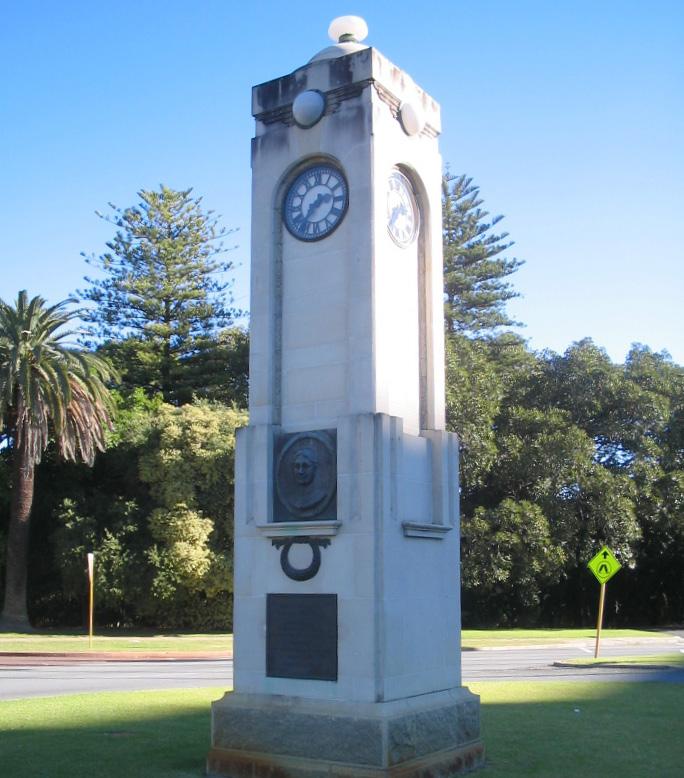
Edith Cowan was a campaigner for women's rights, the welfare and protection of disadvantaged women and children. In 1920, after Western Australia passed legislation allowing women to stand for Parliament, Cowan won a seat in the Western Australian Legislative Assembly in 1921, thereby becoming the first woman to hold a seat in any Australian Parliament.
Find out more about the Commonwealth's Parliament Buildings

The CPA's commemorative book features Parliament buildings at national, state, provincial and territorial level amongst the CPA’s membership and includes information about each Parliament, as well as over 350 photographs of their buildings and chambers.

Visit www.cpahq.org/cpa-online-shop to purchase a copy.
'Parliament Buildings of the Commonwealth' | Published by the Commonwealth Parliamentary Association | ISBN: 978-1-3999-0968-6
The Parliamentarian | 2023: Issue One | 100 years of publishing | 49
Québec national historic monument in 1985.
Image credit: National Assembly of Québec.
Image credit: Parliament of Botswana
Image credit: Wikipedia/Moondyne/CC license
VOLUNTARY ACTION CAN MAKE A HUGE DIFFERENCE IN THE WORLD
The first woman President of Rotary International outlines the work of a global voluntary organisation that is helping to achieve the Sustainable Development Goals and eradicating polio.
There’s no question that meeting the United Nations’ Sustainable Development Goals (SDGs) for 2030 is critical to the future of our planet and the well-being of humankind. But there’s a stark reality facing everyone less than seven years from the deadline for these goals – we are no longer making progress towards them.
The UN’s Sustainable Development Goals Report for 2022 said “cascading and interlinked crises are putting the 2030 Agenda for Sustainable Development in grave danger, along with humanity’s very own survival.” The report specifically mentioned the ongoing effects of the COVID-19 crisis and the risks created by climate change. To make matters even direr, Bill Gates said in January 2023 that the war in Ukraine has distracted attention away from reaching the 17 goals and has significantly increased the cost of food and fertilizer – and driven some European nations to start using coal for energy once again – all of which may lead across the world to significantly more spillover deaths from this war.
The Force for Good Initiative estimates that the cost of meeting the SDGs has risen to an astonishing US$176 trillion. This is coming at a time when governments worldwide are cutting spending and tightening their money supplies to bring down inflation rates. In the face of this massive and growing challenge, Rotary International believes there’s an opportunity for governments, Parliaments and non-governmental organisations to expand their partnerships with global service organisations like Rotary. This is because we are aligned to meeting the same goals and because our volunteer-led, personal service delivery approach can achieve results at a much lower cost than if governments or Parliaments acted alone.
We must look for new ways to restore progress because the Sustainable Development Goals are critical to our future. The UN accurately describes these goals as “an urgent call for action by all developed and developing countries in a global partnership. They recognise that ending poverty and other deprivations must
go hand-in-hand with strategies that improve health and education, reduce inequality, and spur economic growth – all while tackling climate change and working to preserve our oceans and forests.”
Rotary is in complete agreement on this score. Our top corporate goal is the eradication of polio, which aligns with the sustainability goals for good health and partnerships. When Rotary launched its PolioPlus program in 1985, a thousand children were paralyzed by polio every day in 125 polio-endemic countries. Today, just two countries are wild polio-endemic: Afghanistan and Pakistan.
Throughout this effort, Rotary has shown what we can do when we draw on the collective strengths of our partners and national governments. For example, Rotary has helped form a global partnership committed to eradicating polio, including the Bill and Melinda Gates Foundation, GAVI, UNICEF, the World Health Organization, and the U.S. Centers for Disease Control.
Our role in this partnership includes our members’ business expertise and our passion and commitment to the cause. Our persistence and dedication to the cause magnify our impact. Year after year, we keep fundraising and building awareness. This includes placing the cause of polio eradication on the front burner for governments, Parliaments and NGOs worldwide. And because of this, Rotary and our partners make an incredible impact. Rotary members have contributed more than US$2.6 billion and countless volunteer hours to the fight to end polio. Together with our partners, we immunize over 400 million children every year. And this effort has paid off dramatically. With just a handful of cases of wild poliovirus (WPV) reported in the two remaining endemic countries over the past two years, we have an unprecedented opportunity epidemiologically to stop wild poliovirus transmission.
By working together, Rotary and our Global Polio Eradication Initiative partners have made a far more significant impact than any individual partner could achieve alone. And, when we succeed in
Jennifer Jones is the President of Rotary International (2022-23), the first woman to be selected in the 117-year history of the organisation. She is the Founder and President of Media Street Productions, an award-winning media company in Windsor, Ontario, Canada. She is a member of the Rotary Club of Windsor-Roseland. Her work has strengthened Rotary's reach and impact as she has served in roles including Vice-President, Director, Rotary Foundation Trustee, and Co-Chair of the ‘End Polio Now: Make History Today’ fundraising campaign. Working alongside political figures, celebrities, and global leaders, Jennifer has raised awareness and hundreds of millions of dollars to eradicate disease, support peace, and provide clean water and sanitation.

ROTARY'S WORK IN THE COMMONWEALTH
50 | The Parliamentarian | 2023: Issue One | 100 years of publishing
eradicating polio, it will leave a lasting legacy for public health, not only because it will be only the second virus eradicated in history but also because we will have built a public health infrastructure worldwide that can help make progress towards many of the Sustainable Development Goals.

This is true for so much of the work that Rotary performs worldwide. For example, every year, the Rotary Foundation makes a significant grant of several million dollars through a competitive process to one Rotary-led project that will have a significant regional impact – what we call Programs of Scale. The first awardee was a partnership between Rotary, World Vision and the Gates Foundation and has a combined budget of US$6 million, with the goal of eliminating malaria in two large provinces in Zambia. Programs of Scale aims to take the lessons we’ve learned from polio eradication and apply them to important projects worldwide.
All of Rotary’s areas of focus – promoting peace, fighting disease, providing clean water, supporting education, saving mothers and children, growing local economies, and protecting the environment – span numerous UN SDGs. Many global organisations support projects in these areas. But what makes Rotary unique is the power of our volunteerism and the impact we can make whenever we activate our global networks.
According to a 2019 study by the Johns Hopkins Center for Civil Society Studies, with just 563 paid employees globally, Rotary International annually mobilizes volunteer effort equivalent to nearly 27,000 full-time paid workers. Moreover, the study reveals that the actions of Rotary volunteers save communities an estimated US$850 million in service costs per year. This study, entitled ‘The Scope and Scale of Rotary Volunteering’, presents ten key findings that powerfully demonstrate the significant renewable resource of volunteer effort that service organisations like Rotary are generating. For a world challenged to meet a demanding set of Sustainable Development Goals in the face of withering environmental catastrophes and limited governmental and philanthropic resources, the lesson from this report is clear: volunteer service may provide an enormously valuable contribution toward the achievement of the ambitious goals that the international community has set for itself.

This study was the first systematic, empirical analysis of the extent of volunteer activity generated by a significant global service organisation using the definition of volunteer work and survey methodology outlined in the International Labour Organization’s Manual on the Measurement of Volunteer Work.
“By applying these internationally-sanctioned tools, we now have the first solid, empirical data on the considerable scale of international volunteer effort stimulated by a leading global service organisation and the value of the services the resulting substantial army of Rotary volunteers contributes to the health, education, and welfare of communities across the world,” noted Dr Lester M. Salamon, director of the Johns Hopkins Center for Civil Society Studies and lead author on this report. This study makes concrete something we have known in Rotary for many years – that you cannot measure the full impact of our excellent work in the world purely by the dollar amounts of our grants and the direct contributions to service projects. In addition, because Rotary is in more than 200 countries and territories worldwide, we have an unusual ability to connect people, expertise and talents in a way that few organisations can.
A great example of how this all comes together can be seen in Ukraine's relief efforts. Last year, Rotary members contributed more than US$15 million to direct relief for those suffering the effects of the ongoing conflict. But these contributions were made even more potent because Rotary members are in neighboring countries where refugees fled – and in Ukraine itself. Rotary membership in Ukraine has increased since the conflict began. We estimate that at least double the number of funds have been donated directly to Rotary clubs for specific projects supporting Ukraine refugees and citizens suffering through the day-to-day wartime reality. And when you consider the multiplier effect of Rotary volunteers – as noted in the Johns Hopkins study – you begin to understand the real impact that our efforts are having. We identify immediate needs and connect those needs with people willing and able to help. And we do this with expertise and speed that few organisations on earth can match.
Taken together, what Rotary can accomplish day by day provides hope to everyone wishing to make renewed progress toward meeting the Sustainable Development Goals. By making a big impact on projects that matter most, and harnessing the full power of our 1.4 million members worldwide, Rotary is pointing the way towards future progress, and we do it with a proven track record of raising awareness and keeping the focus on continued progress over decades. This is the kind of commitment and tenacity the world will need to meet the SDGs – and Rotary is eager to do our part to make this a reality.
Rotary is a global network of 1.4 million neighbours, friends, leaders and problem-solvers who see a world where people unite and take action to create lasting change – across the globe, in our communities, and in ourselves. For more than 110 years, Rotary's people of action have used their passion, energy, and intelligence to take action on sustainable projects through its 46,000+ clubs worldwide. From literacy and peace to water and health, Rotary is committed to better our world, and we stay committed to the end. For more information please visit www.rotary.org
ROTARY'S WORK IN THE COMMONWEALTH
“
The Parliamentarian | 2023: Issue One | 100 years of publishing | 51
All of Rotary’s areas of focus –promoting peace, fighting disease, providing clean water, supporting education, saving mothers and children, growing local economies, and protecting the environment –span numerous UN SDGs.”
WATER IS (GOOD) POLITICS
The development of Parliamentary Water Caucuses on Water, Sanitation and Hygiene (WASH)
can bring vital attention to this vital global development goal.
Hon. Vicent Willie, MP is a Member of Parliament from Liberia in West Africa, and notably is the Co-Chair of Liberia’s Legislative Water, Sanitation, and Hygiene (WASH) Caucus. In March 2022, he gave a well-received keynote address at the World Water Forum in Dakar, Senegal, at a session called ‘Water Is Politics’. The first thing he did as he launched into his keynote was change the title of the session, and rightfully so, to ‘Water Is Good Politics’.
Every political leader across the globe wants her or his constituents to have safe, affordable and sustainable water. Political will is therefore not the challenge. The challenge comes in converting that political will into genuine political leadership, and the tangible prioritisation of climate-resilient water security in national and local policies, budgets and programs.
The opportunity that my fellow Members of Parliament across the Commonwealth (and beyond) are presented with is how to convert ubiquitous political will into the type of political leadership that leads to accelerated progress on water. As the Vice-President of the United States of America said at the recent launch of the firstever White House Action Plan on Global Water Security, “Water insecurity makes our world less safe. . . So let’s get in front of this. Let’s take it seriously.”
The good news is that almost six billion people on the planet have safe, affordable and sustainable access to drinking water. Yet the pace of progress is too slow, and we cannot continue down the same path and expect different results. Change is clearly needed in order to significantly accelerate progress if we are to meet the water needs of the remaining 2.2 billion by 2030.
One such impactful change could be the launch of Parliamentary Water Caucuses across the Commonwealth and beyond.
I had the honor of launching such a Caucus – The Uganda Parliamentary Forum on Water, Sanitation, and Hygiene – in my country in 2012, and am now carrying that mandate forward into my work as an elected Member of the East African Legislative Assembly (EALA). My ambition is that every country represented in EALA and the rest of Africa would have its own strong Parliamentary Caucus focused on water and climate, as would the EALA itself.
Many stakeholders have a role to play in accelerating progress on water security, climate resilience, sanitation and hygiene: Government Ministries (e.g. the Community Water and Sanitation Agency in Ghana), individual households and communities across the globe, bilateral aid agencies (e.g. U.S. Agency for International Development and the Swiss Agency for Development and Cooperation), non-profit implementing organisations, civil society leaders and networks, the private sector, the media and academia.
However, one constituency that is consistently under-weighted in these conversations are the senior elected officials across the globe, including Members of Parliament, state and provincial elected leaders (e.g. Governors), and mayors and city councils. These elected leaders are the most senior political authorities in their countries and have the ultimate budgetary and signatory authority over water, sanitation and hygiene, as well as all other development priorities in their countries. Their strong leadership for water and climate solutions will accelerate progress on both.
I propose that each country’s national Parliament should have a fully functioning Parliamentary Water Caucus, and that the collective voice of its Members would accelerate progress on water and climate security in each country. Each Caucus would be comprised of a number of Members of Parliament in a given country, advocating collectively for stronger policies and increased budgets for water and climate in their respective countries.
We are not starting from zero: Members of Parliament from several Commonwealth countries (and beyond) are pushing ahead individually and collectively on launching and strengthening Parliamentary Water Caucuses. These Caucuses are not formal Committees or Commissions. Rather, they are informal groups of Members or Deputies, creating opportunities for enhanced water security from within their respective Legislative Assemblies. Several Caucuses are up and running, including in Uganda, Liberia, India, Niger, Malawi, the USA and the UK, yet each one needs constant strengthening and there is room for many more. Efforts are also underway to launch such Caucuses in several other federal assemblies and local governing bodies.
Hon. Jacqueline Amongin, MP is an elected Member of the East African Legislative Assembly (EALA) from Uganda. She worked for the Pan-African Movement, before being becoming a Member of Parliament in Uganda in 2011 representing the Ngora District. In 2013, she joined the Pan-African Parliament and was re-elected in 2016. In 2018, she was awarded a Mandela Leadership Prize for ‘promoting good governance and development in Africa’.

PARLIAMENTARY WATER CAUCUSES IN UGANDA 52 | The Parliamentarian | 2023: Issue One | 100 years of publishing
Uganda’s experience
The Uganda WASH Caucus, technically the Uganda Parliamentary Forum on Water, Sanitation, and Hygiene (UPF-WASH), has been active since 2012 and now counts among its membership over 142 Members of the unicameral Ugandan Parliament. As the Founding Chairperson of the Forum, I worked with the active support of Ugandan civil society and international non-governmental organisations, including WaterAid, to launch the Forum, draft its initial terms of reference, recruit its initial quorum of Parliamentarians and identify staff support from within and beyond the Parliament Building.
UPF-WASH recently organised its fourth Symposium on WASH & Climate Change: Climate Change and WASH Services – ‘Exploring the Nexus and Urgency to Combat Climatic Disaster’. A report from that meeting asserted that: “[N]o sector can survive without WASH. It is time to ask questions. We cannot construct a road without water. A hospital cannot be run without water. Parliament cannot sit when there’s no water in the big house. A school cannot run without water.” Water is pivotal to every family, healthcare facility, school and constituent across the globe, and as the report also adds: “Climate change is no longer a myth but is a stark reality for all countries, and it may bring unprecedented devastation to the continent and world unless promptly addressed by the actors.”
This is not easy work, as there are many competing priorities in a national Legislature. However, the Members of UPF-WASH, working collectively within the Ugandan Parliament, have been able to work with their colleagues to pass new laws, strengthen the Ugandan regulatory environment, streamline coordination with the international donor community, and increase the domestic budgets for water over the years.
UPF-WASH conducts annual symposia convening high-level WASH stakeholders, parliamentary leaders and private sector players. At its most recent symposium, the Chairperson for the Natural Resources Committee of the Ugandan Parliament, entrusted by the Speaker to open the Symposium on WASH and Climate Change, “committed support on behalf of the Natural Resources Committee to ensure that the budget beginning with 2023/24 will take recognition of impact of climate change on WASH, and thus as we plan for many interventions, we need to factor in climate resilience measures.” He concluded by “affirming support towards WASH by advocating for appropriation of adequate resources and advocacy of UPF because this is a pro people, a pro poor forum that supports the very lower-level citizens of this country.”
Beyond its symposia, UPF-WASH works diligently to address shortcomings in the WASH sector in Uganda via a number of actions. For example, when I chaired UPF-WASH, I introduced a motion on the floor of Parliament on the state of menstrual management in schools, calling for all government schools to provide emergency sanitary towels in schools as a means of sustaining girls in school. UPF-WASH also issued a statement in the house of Parliament during World Toilet Day 2014 on the status of Sanitation in Uganda, tasking the Ministry of Works and Transport to include highway toilets alongside all new highway roads to limit open defecation practices.
The Forum also conducts its own research, including a recent comprehensive study on WASH in refugee host communities in Uganda. This research has helped to advocate for WASH funding
in host communities as opposed to only focusing on the refugees themselves.
Liberia’s Legislative WASH Caucus
Liberia’s WASH Caucus was launched in 2016 under the leadership of its Chair, Hon. Senator Jonathan Kaipay and its Co-Chair, Hon. Vicent Willie, MP in the National Assembly. Notably, the Legislative WASH Caucus has strong support from the commission in charge of implementing water and sanitation programming in Liberia, the National WASH Commission, and from a highly engaged civil society network including both Liberian and international stakeholders.
A successful Parliamentary Caucus is not an island. The three legs of the stool (elected Parliamentarians, technical Ministry officials and civil society leadership) support and push each other forward over the years. This type of collaboration in Liberia increases trust, strengthens the alignment between supply and demand of water services, streamlines communications with the international donor community and enhances accountability throughout the process. Most recently, the Liberian Legislative WASH Caucus has successfully contributed to the reforms of the WASH sector, leading to the establishment of the National WASH Commission of Liberia, the allocation of a WASH budget line in the National Budget and support for the establishment of Parliamentary WASH Caucuses across the globe.
Other Commonwealth examples
Each legislative body across the Commonwealth and beyond can launch, and strengthen, such a Caucus, in collaboration with civil society and other stakeholders. Most of these efforts will likely happen at national (federal) levels, but it is important to note that these Caucuses are also relevant and potentially transformative in subnational assemblies, e.g. State Houses and City Councils.
In fact, in December 2022, the Enugu State House of Assembly (Nigeria) announced the informal launch of its Legislative Caucus on WASH, with the initial support of over ten Members of the Enugu State House of Assembly. The Caucus’ initial stated priorities are to strengthen the relationship between the Enugu State House of Assembly and the State Commissioner of Water Resources regarding the challenges currently faced by the Commissioner. This state-level effort might be a good model for other countries including India, where one single state (Uttar Pradesh) has a population of over 200 million. Uttar Pradesh clearly merits its own state-level legislative water Caucus, complementing the efforts of the WASH Legislators Forum (WASH-LF) and others at Union level in New Delhi.
Launching a Parliamentary Water Caucus
There are several pivotal steps one can take as a Member of Parliament to launch a water Caucus. The first priority is to recruit members of the Caucus, ideally including Members or Deputies from both Chambers (if bicameral), representing multiple political parties, different parts of the country and diverse Parliamentary Committees, e.g. health, finance, water, economic development, climate, external affairs, infrastructure, gender and education. It is then important to begin working with civil society leaders and relevant water Ministries from day one. Early and frequent dialogues
The Parliamentarian | 2023: Issue One | 100 years of publishing | 53 PARLIAMENTARY WATER CAUCUSES IN UGANDA
amongst these key stakeholders will likely determine clear, appropriate and demand-responsive paths forward.
The Caucus members should quickly determine more specifically what the Caucus will do, over what period of time and how that work will get done. A successful Parliamentary Water Caucus requires human, financial and technical resources, including dedicated staffing provided by Parliament and/or civil society organisations. A Parliamentary WASH Caucus may require years to show meaningful progress, so each Member of the Caucus, and civil society leaders, should make multi-year commitments to the work of the Caucus from the beginning.
Caucus Members should determine their yearly priorities as early as possible in the legislative calendar. Should the Caucus aim for new laws, and/or more oversight of the Executive branch? Is more interagency collaboration called for? Is it realistic to advocate for increased federal budgets, and/or budgets more clearly targeted to the most WASH-poor households, healthcare facilities and/or schools?
Finally, the real work of the Caucus begins. A Caucus should focus immediately on the 1-2 priority items that are most likely to attract other Parliamentarians and ‘bear fruit’ during the current
legislative cycle. Is a hearing required? How about a series of ‘Town Halls’, or a briefing with civil society leaders? Or perhaps more trusted, quiet meetings in the hallways of Parliament with fellow Members/ Deputies about new laws and increased budgets? Throughout the process, the Caucus should constantly learn, celebrate successes and feed lessons back into previous steps, bringing in other stakeholders as appropriate (private sector, media, trade associations and donors).
What can a Parliamentary Water Caucus accomplish?
As a Parliamentary Water Caucus succeeds, the key beneficiaries of its work will be the people of that country. They will see increased, sustainable, equitable and affordable access to water security in their communities. The relevant Ministries (WASH, health, education and public works) will also likely benefit from increased budgets and stronger laws for water. It is of course up to the Members themselves, as representatives of their Constituents, what their Caucuses will prioritise.
Recent activities indicate that water and climate linkages are priorities for Parliamentary Water Caucuses (following on from COP27 and leading into COP28) as is a more concerted focus on the most vulnerable, marginalized populations within a country. New laws are being considered by Parliaments across the globe, as are increased financial resources from both domestic and international sources. Data from various providers is supporting and driving these initiatives, as are efforts to realise the human right to water and sanitation.
We clearly cannot keep undertaking the same activities in the water sector and expect accelerated results. We must broaden our outreach far beyond the water sector into the health, climate, gender and economic development communities. We must increase our work with senior elected leaders, country by country, province by province.
The potential of these Parliamentary Water Caucuses is encouraging. Once again, political will is abundant. A successful Parliamentary Water Caucus in every country may well help to convert that political will into meaningful political leadership, and thereby accelerate progress. Stronger and more sustained political leadership, country by country, is pivotal.
For more details about Parliamentary Water Caucuses in Uganda and beyond, please contact:
• Jackie Binen, Coordinator, Uganda Parliamentary Forum on Water, Sanitation and Hygiene (UPF-WASH): jbinen@yahoo.com

• Yunia Musaazi, Executive Director, Uganda Water and Sanitation Network: ymusaazi@uwasnet.org
• John Oldfield, CEO, Accelerate Global, Washington DC: John@AccelerateGlobalNow.com
Image credit:
Parliamentary Forum on WASH PARLIAMENTARY WATER CAUCUSES IN UGANDA 54 | The Parliamentarian | 2023: Issue One | 100 years of publishing
Uganda
Hon. Aogon Silas, MP, the Chairperson of the Uganda Parliamentary Forum for WASH joins a community clean-up exercise to highlight the importance of responsible rubbish disposal so that it doesn't contaminate clean water supplies.
FREEDOM OF EXPRESSION AND THE ROLE OF THE MEDIA IN GOOD GOVERNANCE
As Commonwealth Law Ministers adopt a new set of principles on freedom of expression, a member of the civil society working group that drafted them considers the next steps for their implementation.
At their recent meeting in Mauritius in November 2022, Commonwealth Law Ministers took a big step forward in adopting a comprehensive set of standards for Commonwealth jurisdictions in the field of freedom of expression. Law Ministers unanimously adopted a set of eleven principles on freedom of expression and the role of the media in good governance and recommended that Commonwealth Heads of Government consider these principles at their next meeting in Samoa in 2024.1
The Commonwealth Secretary-General, Rt Hon. Patricia Scotland, KC welcomed the Law Ministers’ decision, stressing that ‘the importance of the media, the fourth estate, to modern democracy cannot be overstated’.2 It is the first time that the Commonwealth has approved a comprehensive code of conduct which elaborates on the general commitment of all member states to freedom of expression, which is a key element of the Commonwealth Charter. With their endorsement by Commonwealth Law Ministers and recognition by the Commonwealth Secretariat, these media principles have achieved official status for the first time,
“ The endorsement of the principles in Mauritius is an important milestone on a seven-year journey which began in 2016 when the Commonwealth Journalists Association (CJA) decided to embark on the media principles initiative. That decision sprang from growing concern among CJA members at the increasing pressures and attacks on journalists and media workers in many Commonwealth countries and the need to do something about it. ”
and we hope that at the next CHOGM in Samoa they will become part of the fundamental values of the Commonwealth.
The endorsement of the principles in Mauritius is an important milestone on a seven-year journey which began in 2016 when the Commonwealth Journalists Association (CJA) decided to embark on the media principles initiative. That decision sprang from growing concern among CJA members at the increasing pressures and attacks on journalists and media workers in many Commonwealth countries and the need to do something about it. The following year the CJA and five other leading Commonwealth organisations – the Commonwealth Lawyers Association, the Commonwealth Legal Education Association, the Commonwealth Parliamentary Association, the Commonwealth Human Rights Initiative and the Institute of Commonwealth Studies – agreed on a common objective and set up a joint working group to draft a set of principles in consultation with Commonwealth and other expert opinion. Those twelve principles on freedom of expression and the role of the media in good governance were launched at Senate House in London, UK in April 2018 and were widely welcomed.3
The Commonwealth Secretary-General was very supportive of the initiative and made several positive public statements, stressing the importance of civil society as the third pillar of the Commonwealth and pointing to the parallel with the Commonwealth Latimer House Principles on the Separation of Powers, which had originated in a very similar manner before being adopted by the CHOGM at Abuja, Nigeria in 2003. Even so, it took almost three years of advocacy and discussions with the Commonwealth Secretariat and with supportive member states to find a means of putting the principles formally on the Commonwealth’s agenda. This finally happened in February 2021 when Commonwealth Law Ministers mandated the Commonwealth Secretariat to set up an expert working group of member states to review the media principles and to make recommendations. The working group of 26 member states under the chairmanship of Jeffrey Foreman of Jamaica conducted a very thorough review of the Media Principles in the second half of 2021 and made its recommendations in November of that year. It is that Committee’s revised version of the media principles which Commonwealth Law Ministers have now unanimously adopted.4
David Page is a Senior Research Fellow of the Institute of Commonwealth Studies and a member of the Commonwealth Journalists Association (CJA) UK Executive Committee.
The Parliamentarian | 2023: Issue One | 100 years of publishing | 55 THE ROLE OF THE MEDIA IN GOOD GOVERNANCE
As framers of the original principles, members of our working group were invited to participate in the review in an advisory capacity and witnessed some of the inevitable compromises involved in securing agreement among member states with very different track records in the media field. The revised document is not as strong as we would have liked it to be, something we made clear at the time. Compared with the original, it introduces phrases like ‘consider abolishing’ over-restrictive laws (principle 2) and ‘consider setting up’ independent and accountable oversight bodies (principle 11) instead of firmer commitments. But several of the original principles emerged substantially unchanged by the review process and reflect existing international best practice.
On the safety of journalists, principle 7 commits member states ‘to put in place effective laws and measures to establish a safe and enabling environment…’ and ‘to ensure that state organs and agents promote and respect international human rights obligations in relation to the safety of journalists’, which is a significant and welcome addition. But the original twelfth principle which called for collaboration between member states and civil society in the promotion and implementation of the principles was replaced by a looser reference to the role of civil society in the preamble. We were disappointed by that and feel it is essential that such a partnership is developed in the next stage of the initiative.
Now that the principles have been approved by Commonwealth Law Ministers, attention turns to next steps. The first and most necessary course of action is to publicise the media principles as widely as possible so that they can become a ready reference point for lawyers and civil society organisations around the

Commonwealth.5 We hope that the CPA, with its extensive network of Parliaments and Legislatures across the Commonwealth, will be able to play a key role in achieving that wide dissemination. Commonwealth Parliamentarians can also play their role in promoting the principles and ensuring their wide use.
We also hope that the Commonwealth Ministerial Action Group (CMAG) will find the media principles an authoritative reference point in its monitoring of freedom of expression and other freedoms in member states. After the launch of the original media principles in 2018, the then Vice-President of CMAG, Hon. Marise Payne, the Foreign Affairs Minister of Australia, acknowledged their value for her colleagues. But despite the expansion of its brief in 2011 to include ‘significant restrictions on the media or civil society’, CMAG has never commented publicly on the media situation in any member state. The Commonwealth’s preferred means of persuasion always seems to be discrete diplomacy, though civil society organisations are looking to CMAG to take a more active public stance in holding member states to account when they stray from the values they are pledged to uphold.
As a voluntary association of sovereign states, the Commonwealth lags behind other international membership organisations in monitoring the performance of its members against the values to which they are committed. In all important matters, the Commonwealth Secretariat takes its cue from the member states and only embarks on policy implementation if there is consensus, if not unanimity, among them. This has meant that in the field of human rights or democratic governance, almost no action at all has been taken to reverse the marked decline in standards across
THE ROLE OF THE MEDIA IN GOOD GOVERNANCE 56 | The Parliamentarian | 2023: Issue One | 100 years of publishing
many member states, which human rights organisations and others document annually.
The Institute of Commonwealth Studies recently produced a concise account of the state of ‘Media Freedom in the Commonwealth’, which makes it clear that in many countries the space for media freedom is increasingly restricted and there is an alarmingly high 96% level of impunity for those who kill or injure journalists.6 The Commonwealth Latimer House Group regularly issues press notes on severe breaches of the principles adopted by member states in 2003 with reference to independence of the Judiciary and of Parliament and the separation of powers. In many of these instances, it is partner, professional and civil society organisations who take the lead in drawing attention to serious breaches of the Commonwealth Charter’s obligations. The recent admission to the Commonwealth family of several new members without much apparent scrutiny of their adherence to the values enshrined in the Charter has raised fears that the organisation is moving away from its commitment to these shared values. The tenth anniversary of the Charter, which is celebrated this year, will be a valuable opportunity to assess where these trends are leading the organisation.
In this context, the Commonwealth Law Ministers’ adoption of the media principles must be seen as a hopeful sign – official recognition that more needs to be done to strengthen the Commonwealth’s performance in this field. But that will also require over the course of the next eighteen months, the development of a more detailed plan of action to address some of the key areas of present concern. The CJA in its response to the Mauritius decision has called on the Commonwealth to match its words with action: to review over-restrictive laws, to ensure the safety of journalists, to end the high incidence of impunity and bring those responsible for the killing or injuring of journalists to justice.
It also calls on the Commonwealth to align itself more closely with the UN Action Plan on the safety of journalists and to strengthen its implementation by member states.7 The working group of Commonwealth organisations which drafted the original principles has offered to work closely with the Commonwealth Secretariat to develop such a plan of action. Now that the Commonwealth Law Ministers have made their decision, we hope a stronger partnership can be developed to turn the media principles into a more positive reality.
Background
The Commonwealth Parliamentary Association is a member of the Working Group on Media and Good Governance which includes representatives from six Commonwealth organisations, including the Commonwealth Journalists Association, the Commonwealth Lawyers Association, and the Commonwealth Human Rights Initiative. In March 2018, the Working Group and its parent organisations agreed the Commonwealth Principles on Freedom of Expression and the role of the Media in Good Governance, which were launched the following month in London.
These Commonwealth Media Principles were developed as a response to the growing challenges to media freedom and to the critical role of the media in ensuring open public debate, fair elections and accountable democratic governance. They were developed after extensive consultation with senior figures from the Commonwealth Parliamentary Association, the wider Commonwealth legal and parliamentary community and other international experts. With their adoption by Commonwealth Law Ministers, they provide an agreed set of benchmarks to help the Commonwealth family improve its record on media freedom and accountable government in line with the Commonwealth’s strong commitment to the 2030 Sustainable Development Goals.
An earlier version of this article also appears in the latest newsletter from the Commonwealth Lawyers Association (CLA) - www.commonwealthlawyers.com.
References:
1 See Law Ministers’ outcome statement after the Mauritius meeting, paras 23-24 and para 50: https://tinyurl.com/yzbmcs79
2 https://thecommonwealth.org/news/commonwealth-secretary-generalwelcomes-law-ministers-unanimous-agreement-media
3 http://commonwealthjournalists.org/2018/06/10/the-12-principles-a-newcode-is-proposed-for-freedom-of-expression-and-the-role-of-media-ingood-governance-across-the-commonwealth/

4 Commonwealth Principles on Freedom of Expression and the Role of the Media in Good Governance.pdf (production-new-commonwealth-files. s3.eu-west-2.amazonaws.com)
5 Commonwealth principles and declarations are not enforceable in law but as texts to which member states subscribe, they have been used to strengthen legal arguments in court cases and other fora. See, for example, Peter Slinn, 'The Commonwealth and the law' in James Mayall, ed., The Contemporary Commonwealth, Routledge, 2010'
6 https://commonwealth.sas.ac.uk/research-projects/media-freedomcommonwealth/media-freedom-summary-report
7 http://commonwealthjournalists.org/2022/12/05/5015/
THE ROLE OF THE MEDIA IN GOOD GOVERNANCE The Parliamentarian | 2023: Issue One | 100 years of publishing | 57
ARTIFICIAL INTELLIGENCE
BEYOND CONTEMPORARY PARLIAMENTARY PRACTICE


Unfolding the institutional potential of Artificial Intelligence.
Parliaments can, with the use of Artificial Intelligence (AI), be less like mysterious black box institutions. In reality, they constitute complex rule-based organisations that perform a variety of institutional functions, influenced by a wide range of parameters such as people, culture, structure and processes. Moreover, Parliaments generate and process enormous amounts of data. Some of these are publicly accessible, many are not. In principle, they constitute large knowledge and legal data hubs among governance institutions.
Only recently have parliamentary stakeholders begun to understand that these data volumes need to be made more usable, both for Parliamentarians and the public. As a matter of fact, the public engagement dimension in Parliaments relies on the existence of open data, as also pointed out at the Global Parliament Report 2022 1 However, open, structured and validated legal data is not generated by chance or miracle but constitutes the product of specific digital frameworks, which may include several components such as a (digital) strategy, relevant operations, the necessary technology and transformation processes.2 Once parliamentary data becomes available, it can be further aggregated, processed and studied to create added value for the relevant stakeholders, within and outside the premises of Parliament. Here is where AI comes into play.
A partnership gains momentum
While not new as a concept, AI has found its way in recent years into mainstream applications. This provoked mind-bending questions among scientists regarding its ability to support Parliaments in performing their respective functions in more transparent, accountable and efficient ways. At this point, one should bear in mind that, firstly, AI is not a single technology and, secondly, that there are multiple potential applications of these technologies in
Dr Fotis Fitsilis has over 20 years of professional experience in science positions within both the private and the public sector. Since 2008, Dr Fitsilis has been the Head of Department for Scientific Documentation and Supervision at the Scientific Service of the Hellenic Parliament. He has been visiting professor for parliamentary procedures and legislative drafting at the Universidad Complutense de Madrid. In 2017, he founded the Hellenic OCR Team, a crowdsourcing initiative for the study of parliamentary data. Contact email: fitsilisf@parliament.gr
the parliamentary workspace. Hence, where to start and which parliamentary sectors, technologies and fields of application to study?
In order to provide answers to these (and more) prolific questions, an international cooperation was developed in late 2022 between two research organisations that excel in administrative science and legal informatics. One of them, the Hellenic Optical Character Recognition (OCR) Team,3 is based in Greece. Better known as the Hellenic OCR Team, it was identified as an innovative practice by the Inter-Parliamentary Union’s Centre for Innovation in Parliament4 and takes the form of a decentralised research network that specialises in the processing and study of parliamentary data. The other one, The Open Government Institute (TOGI) at Zeppelin University in Friedrichshafen,5 is based Germany and specialises in opening up administrative data and using smart technologies.
TOGI will cooperate with the Hellenic OCR Team to access specialised, distributed parliamentary know-how from a wide network of academic institutions, companies and researchers that spans across 13 countries on 4 continents. Vice versa, the Hellenic OCR Team will be able to make use of TOGI’s advanced analytical capabilities in the area of e-government and open government. Standing side-by-side both organisations will be able to jointly tackle the emerging challenges in legal and administrative informatics. This includes, not least, considering the entire life cycle of AI-based solutions in Legislatures without neglecting the ethical aspects. To their preliminary research goals belong, for instance, the addressing of problems arising from the public (in)accessibility of parliamentary data and the possibility of improving it through the use of new digital tools and services. This cooperation is an open one, which means that its scientific outcomes will be published and that additional actors can join at any time. Furthermore, at the technical scale, it includes the promotion and study of open parliamentary data and the
Professor Dr Jörn von Lucke is Professor and Chair for public sector informatics and business informatics as well as director of The Open Government Institute at the Zeppelin University in Friedrichshafen, Germany. He was the founding director of the Deutsche Telekom Institute for Connected Cities. His current fields of research are E-Government, Open Government Data, Open Societal Innovation, Portals & One-Stop Government, Smart Government, CPS and IoT in the public sector as well as Artificial Intelligence in the Public Sector. Contact email: joern.vonlucke@zu.de
INSTITUTIONAL POTENTIAL
OF
58 | The Parliamentarian | 2023: Issue One | 100 years of publishing
With thanks to Professor Ken Coghill, Editorial Advisory Board member for the CPA Australia Region for his assistance in facilitating this article for The Parliamentarian
development of electronic tools and services for parliamentary and government systems. Thus, the cooperation provides an important foundation for conducting studies, building capacity and providing technical and scientific support for advanced research efforts.
Exploratory workshops
A tangible outcome of this partnership has been showcased by conducting a couple of workshops in national Parliaments to gather empirical evidence for the future use of AI in the parliamentary workspace. The first one was implemented in April 2021 at the Hellenic Parliament, while the next was held in August 2022 at the Honorable Cámara de Diputados de la Nación Argentina (Honourable Chamber of Deputies of Argentina). These exploratory workshops are innovative experimental setups that rely on an original research scheme jointly developed by Zeppelin University and the Hellenic OCR Team researchers.
Members of Parliament, parliamentary employees and practitioners evaluate 210 AI-based technology proposals related to specific parliamentary competencies in terms of their priority and relevance for application in the respective parliamentary workspace. The proposals are classified in typical parliamentary thematic areas that, among others, include legislation, parliamentary control and diplomacy, parliamentary administration, research services and education. The analysis of such datasets offers significant insights for the prioritisation of disruptive technologies and the clustering of information needs. With the help of this analysis, digital strategies can be developed, and Parliaments can prepare for future institutional challenges. Early results were presented at specialised conferences in Wroxton,6 UK and Linköping,7 Sweden.
Parliaments of the Commonwealth are urged to consider the challenges related with the interaction of advanced algorithms and invited to organise similar exploratory workshops. The Legislatures that go through this process will not only gain early access to stateof-the-art AI technology and know-how, but also insights about its institutional application. Those, in turn, can be used in the development of in-house tools and solutions or the adaptation of open source ones into existing e-Parliament systems. Though the national dimension has been prioritised, there are also discussions about expanding the methodology to sub-national representative institutions.
Artificial Intelligence as game changer
An interesting dynamic regarding the broader use of AI developed following 30 November 2022, when OpenAI released ChatGPT,8 a powerful chatbot that relies on a language processing model called Generative Pretrained Transformer (GPT). The ChatGPT service reached one million users within only five days, showing a hugely impressive dissemination potential. Preliminary assessment seems to prove its characterisation as a ‘game changer for Parliament’, as over 80% of the 210 technology proposals mentioned above could be largely taken over by AI systems, according to an expert survey. Such systems still operate under the supervision of experts. Human intelligence should continue to be used to check their output for validity, plausibility and ethical aspects.
Nonetheless, one should be aware of the constant evolution of AI-based systems. ChatGPT is not the only such system available. There are many alternatives to it, vying for technological superiority and maybe striving for the so-called ‘technological singularity’,
INSTITUTIONAL POTENTIAL OF ARTIFICIAL INTELLIGENCE

the point at which technology aims to surpass (general) human intelligence. It remains debatable whether this is a hypothetical future scenario or not. All the parliamentary community can do for the moment is to prepare for the present and future challenges that are related with the introduction of AI in the institutional workspace of Parliaments. The partnership that was described above can provide support to individual Parliaments or groups of Parliaments to assess their capacities, train their legislators and professionals, and help them develop strategies for resilient future-proof institutions.
Background
• ‘The Open Government Institute’ (TOGI) is an institute of the Zeppelin University in Friedrichshafen, Germany, under the direction of Professor Dr Jörn von Lucke. It deals with administrative data and citizen participation processes and has a thematic focus on open government. Find out more at: www.zeppelin-university.com/institutes/togi/
• The Hellenic OCR Team is a decentralised crowdsourcing platform from Greece with members in Europe, North America, South America and Asia. It deals with the recognition, processing and analysis of parliamentary and governance data. Find out more at: https://hellenicocrteam.gr
References
1 Inter-Parliamentary Union, & United Nations Development Programme (2022) Global Parliamentary Report 2022: Public engagement in the work of Parliament. Geneva: Inter-Parliamentary Union. https://www.ipu.org/ file/14340/download
2 Koryzis, D., Dalas, A., Spiliotopoulos, D., & Fitsilis, F. (2021). Parltech: Transformation framework for the digital parliament. Big Data and Cognitive Computing, 5(1), 15. https://doi.org/10.3390/bdcc5010015
3 Hellenic OCR Team website: https://hellenicocrteam.gr
4 See Centre for Innovation in Parliament (2019) Hellenic Parliament: Making past parliamentary data usable through crowdsourcing. Innovation Tracker, 3. https://www.ipu.org/innovation-tracker/issue-3
5 The Open Government Institute: https://www.zeppelin-university.com/ institutes/togi/
6 Fitsilis, F., von Lucke, J. & Etscheid, J. (2022) Prioritisation of artificial intelligence technologies for the parliamentary workspace. Working paper at the 14th Workshop of Parliamentary Scholars and Parliamentarians, Wroxton, UK, 30-31 July 2022. https://wroxtonworkshop.org/wp-content/ uploads/2022/07/2022-Fitsilis-.pdf
7 von Lucke, J., Fitsilis, F., & Etscheid, J.(2022) Using Artificial Intelligence for Legislation –Thinking About and Selecting Realistic Topics. Proceedings of Ongoing Research, Practitioners, Workshops, Posters, and Projects of the International Conference EGOV-CeDEM-ePart 2022. Linköping, Sweden, 6-8 September 2022. https://dgsociety.org/wp-content/uploads/2022/09/ CEUR-proceedings-2022.pdf#page=46
8 ChatGPT: https://chat.openai.com
The Parliamentarian | 2023: Issue One | 100 years of publishing | 59
MAPPING AND CONNECTING PARLIAMENTARY RESEARCH SERVICES AROUND THE WORLD

Introduction
The importance of scientific and academic research to the policy process has been at the forefront of discussions within and between academic and policy communities for several decades. To date, the focus of much of the work on evidence-based (or evidence-informed) policy has been at the level of the Executive, with little attention paid to Parliaments as the users of research evidence. One of the issues, perhaps, is that academics do not fully understand or appreciate how Parliaments function or the role that research evidence can play in the debate and scrutiny of legislation and government policy. The relatively scant discussion that has so far taken place around the use of research evidence in Parliaments tends to focus on Northern Europe and America and has framed the topic as ‘science advice’ (e.g. Norton, 1997; Kenny et al 2017; Ouimet, et al, 2006). This has led to the impression, amongst certain parts of the research community, that most Parliaments do not routinely access and/or use the full breadth of academic research. Within the parliamentary community there is a much broader awareness of the potential value of academic research and how this can be harnessed. Well-known models for linking individual Parliaments with academic research include the UK’s Parliamentary Office of Science and Technology (POST) and Pakistan’s Institute for Parliamentary Services (PIPS), alongside network-oriented models such as the Commonwealth Parliamentary Research Service (CPRS) through the Commonwealth Parliamentary Association. Services like POST and PIPS have a long history of establishing bilateral relationships and exchanging knowledge with other Parliaments and their research services. Other opportunities for parliamentary research services to learn from one another include networks such as the European Parliamentary Technology Advice (EPTA) network and the International Parliamentary Engagement Network (IPEN). What is missing, however, is a global picture of where and how parliamentary scrutiny and debate are being supported with academic research. This is what we set out to achieve.

Background to our Fellowship
In early 2021, the UK’s Parliamentary Office of Science and Technology (POST) advertised a Parliamentary Academic Fellowship focused on understanding the global landscape of how ‘science advice’ was being provided to Parliaments. The fellowship presented us, university-based academics with backgrounds in evidence-based policy and knowledge mobilisation, with an opportunity to collaborate with and provide academic input to POST’s work. POST’s aims were: to understand how other Parliaments access and harness academic research; to identify different models of Parliament-academic knowledge exchange; to identify opportunities to learn from other Parliaments in order to improve and develop POST’s service and; to help international counterparts identify approaches relevant to their own context.
Our approach to mapping the landscape of parliamentary research services
We began our work on the project in September 2021 with a mapping exercise to scope the services – or mechanisms as we refer to them - used by Parliaments to access and harness academic research. We invited submissions of relevant mechanisms to an online mapping platform through various parliamentary and professional networks (e.g. Commonwealth Parliamentary Association, EPTA). Our global coverage from this exercise was patchy - several well-known mechanisms were missing and the map included organisations, departments and networks who primarily ‘pushed’ or disseminated research to government or other policy actors. As a result, we decided to focus on mechanisms for ‘pulling’ research into Parliaments and to fill the gaps in our map by searching the websites of all national Parliaments included in the Inter-Parliamentary Union (IPU) database for references to research services. Using this approach, we were able to identify 181 potential mechanisms across 125 countries.
The next phase of our project involved gathering documents from a sample of the potential mechanisms we had identified. We
Dr Vicky Ward works at the University of St Andrews in Scotland and is a Parliamentary Academic Fellow at the Parliamentary Office of Science and Technology (POST) at the UK Parliament.MAPPING PARLIAMENTARY RESEARCH SERVICES AROUND THE WORLD 60 | The Parliamentarian | 2023: Issue One | 100 years of publishing
Dr Mark Monaghan works at Loughborough University in England and is a Parliamentary Academic Fellow at the Parliamentary Office of Science and Technology (POST) at the UK Parliament.
focused on Commonwealth Parliaments for this work, reasoning that this would provide a suitably diverse set of countries and mechanisms and avoid duplicating ongoing work on Francophone Parliaments. We emailed 41 potential mechanisms situated in Commonwealth countries requesting information about the purpose, structure, activities and governance of the mechanism and the relationship to academic research. Some responses suggested that links with academic research were weak or limited, with mechanisms reporting the provision of evaluation and other forms of data or the collation of academic research. Others, however, described analysing, synthesising or producing academic research for parliamentary purposes and/or providing direct links to the academic community.
The final phase of our work involved a deeper dive into the minutiae of 12 research services through a series of in-depth interviews. These focused on the history and aims of the service, core activities and outputs, processes for accessing academic research (including relationships with the academic community) and the impact of the service and how this is assessed.
Key insights and a global map
Our three-pronged approach has enabled us to discover a range of things about the global landscape of parliamentary research services. First, most Parliaments have an established service for accessing and connecting with research. In many the focus is primarily on collating academic research and/or providing Parliamentarians with evaluation and other forms of data about pertinent policy areas. Others, however, go beyond this to analyse, synthesise or produce academic research for parliamentary purposes and/or provide direct links to the academic community.
Second, the literature documenting the process of evidencebased policy and the role of research evidence in parliamentary debate and scrutiny is heavily skewed towards the Global North, but there are Parliaments elsewhere that have large-scale and advanced infrastructure. For example, the Ghana Parliament Research Department employs 27 researchers and analysts across four research areas whilst the Pakistan Institute for Parliamentary Services (www.pips.gov.pk) has provided over 1,500 researchbased articles, technical and thematic papers to individual Members of Parliament, Parliamentary Committees and cross-party caucuses.
Third, there is an emerging network of knowledge exchange amongst those supporting parliamentary scrutiny and debate through the provision of research evidence. It is not uncommon for Parliaments (at both the national and sub-national level) to engage in visits to other Parliaments and organisations to share knowledge about the challenges and potentialities of delivering high-quality research to Members.
Finally, there are capacity issues. The volume of work and expected turnaround times are a common theme across parliamentary research services. It is unclear whether this is a product of more sophisticated and efficient ways of producing evidence for scrutiny that generates additional demand, or if this is associated with the volatility, uncertainty, complexity and ambiguity that characterises modern societies. Quite often research mechanisms are staffed by junior and senior research generalists. For them, subject specific knowledge can seem to
be compromised under the urgency of needing to provide timely advice. Other challenges concern the capabilities of Parliaments to offer parliamentary researchers clear career progression. Entry into parliamentary research services often stems from an almost idealist commitment to research as a public good whilst promotion into management roles requires researchers to become a step removed from the research process.
A global map of parliamentary research services
In November 2022, we launched our global map of parliamentary research services. The map is hosted by the International Parliament Engagement Network and currently includes 73 research services that appear to play a substantive role in linking Parliament with academic research (i.e. they provide the kind of ‘enhanced’ services outlined above). Whilst we do not claim that the map is a comprehensive representation of global efforts to link Parliaments with academic research, we hope that it is a first step towards increasing the visibility of this work and prompting dialogue between those who are carrying it out.
We invite you to explore the map and consider how you might use it to further your work. We also welcome further contributions to the map and would love to hear from you if you notice that something is missing or needs amending. During the final stage of our project, we plan to provide an opportunity for people working in parliamentary research services to connect with and learn from one another. Please get in touch if you would like an invitation.
To access the global map of parliamentary research services please visit https://ipen-network.org/global-mapping/ For further information about this project or to submit additional information please email: keu@parliament.uk

MAPPING PARLIAMENTARY RESEARCH
AROUND THE WORLD The Parliamentarian | 2023: Issue One | 100 years of publishing | 61
SERVICES
ADVANCING PARLIAMENTARY INNOVATION THROUGH POST-LEGISLATIVE SCRUTINY
Parliaments make and change laws. They also have a role in checking the implementation of laws and evaluating whether they achieve their intended outcomes. Implementation is complex and does not happen automatically. What is more, Parliaments and elected representatives often have little information on what happens after a law is adopted. So, Parliaments need mechanisms to effectively monitor the implementation of legislation.
Post-Legislative Scrutiny (PLS) is the practice of monitoring the implementation and evaluating the impact of laws. The aim is to ensure that laws benefit citizens in the way originally intended by lawmakers. Westminster Foundation for Democracy (WFD) has worked with Parliaments around the world in pioneering Post-Legislative Scrutiny practices. This article puts the spotlight on three recent significant initiatives: the indicators for Post-Legislative Scrutiny, a new course on innovations in this area and the Community of Practice.
The case for Post-Legislative Scrutiny

In its 2006 report1, the UK Law Commission outlined four main reasons for having more systematic Post-Legislative Scrutiny:
• to see whether legislation is working out in practice, as intended;
• to contribute to better regulation;
• to improve the focus on implementation and delivery of policy aims;
• to identify and disseminate good practise so that lessons may be drawn from the successes and failures revealed by this scrutiny work.
In addition, one can mention the need to act preventively regarding potential adverse effects of new legislation on fundamental rights, as well as, for instance, gender equality, the environment and climate, or on economic and social welfare.
Post-Legislative Scrutiny is often carried out by Parliamentary Committees and is a prominent feature of UK parliamentary democracy. As Post-Legislative Scrutiny is recognised as an integral part of the legislative cycle, it is emerging as a new dimension within the legislative and oversight role of Parliament.
Parliaments around the world have started to pay more attention to Post-Legislative Scrutiny, from introducing MPs to the practice to supporting Committees in piloting inquiries into PostLegislative Scrutiny. Two distinct approaches have emerged over the past years. The first is an institutional approach, focussing on strengthening Parliament’s capacity, structures and resources. The second is a thematic approach to Post-Legislative Scrutiny,
focusing – among others - on gender-sensitive2 and climate-proof3 legislation, which means assessing the effect of enacted legislation on women and men, or reviewing the impact of legislation on the environment and on achieving climate objectives.
Indicators for Post-Legislative Scrutiny
Westminster Foundation for Democracy (WFD), together with experts from 10 other democracy support organisations, has launched parliamentary and legislative indicators for Post-Legislative Scrutiny.4 Their overall objective is, firstly, to measure how effective a Parliament is in performing Post-Legislative Scrutiny and consider options for upgrading or strengthening practices and systems. The objective is, secondly, to assess, in a limited way, the law-making process, more specifically those aspects of effective legislation and the law-making process which are directly related to PostLegislative Scrutiny, such as - for instance - Impact Assessments and the inclusion of review clauses in laws. The indicators are designed as a tool for self-reflection and recording of current practice that will allow the exchange of good practice and experience. The PostLegislative Scrutiny indicators are structured in four categories.
• Framework indicators focus on the law-making process and on Executive-Legislative relations as the broader framework and context that enable scrutiny of individual laws. Framework indicators outline both drivers and challenges in the country’s governance system in the way it affects how Parliament can conduct Post-Legislative Scrutiny.
• Parliament system indicators focus on how Parliament is organised to conduct Post-Legislative Scrutiny, on the procedures, structures and resources dedicated to conducting it, and on how the Legislature exercises scrutiny as part of its legislative and oversight practices.
• Practice indicators analyse how Parliament applies its procedures, structures and resources to effectively conduct Post-Legislative Scrutiny. While parliamentary procedures and resources might enable Parliament to conduct these processes, the extent to which these are being used in practice and if there is political interest are analysed here.
• Thematic indicators analyse the Legislature’s good governance approach to Post-Legislative Scrutiny, and outline options for mainstreaming crucial horizontal lenses to scrutiny.
Franklin De Vrieze is Head of Practice Accountability at the Westminster Foundation for Democracy (WFD). He has over 30 years’ experience in the field of good governance, with a specific 20 years focus on parliamentary strengthening. He has worked with a number of organisations and projects including UNDP’s Global Programme on Parliamentary Strengthening, an OSCE Mission in Kosovo, European Union Delegations, the Swiss Development Cooperation (SDC), the National Democratic Institute (NDI) and the Inter-Parliamentary Union (IPU). Franklin is a published researcher and the author of several academic and policy publications.
62 | The Parliamentarian | 2023: Issue One | 100 years of publishing
POST-LEGISLATIVE SCRUTINY
Several Parliaments started applying the Post-Legislative Scrutiny indicators. For instance, the Scottish Parliament’s Convenors Group utilised the Indicators self-assessment as the basis for endorsing a new 10-points approach for scrutiny. This recognises that PostLegislative Scrutiny can take many different forms and is part of a continuous process of scrutiny and follow-up work. The Scottish Parliament intends to incorporate aspects of data gathering and review mechanisms into its scrutiny of a new Bill to make it easier to conduct Post-Legislative Scrutiny in later years. The Conveners Group also intends on playing a role in encouraging Committees to consider Post-Legislative Scrutiny as a core part of their mandate and how that can be built into work planning.
Several Parliaments in different continents are currently conducting a Post-Legislative Scrutiny Indicators assessment of their own. The methodology for this assessment has been aligned with the new IPU-led ‘Indicators for Democratic Parliaments’.
The CPA’s Recommended Benchmarks for Democratic Legislatures, which has been implemented by Parliaments across the Commonwealth, also added an additional benchmark in 2018 to ensure that the legislative process places sufficient attention on the consequences and impact of legislation through Post-Legislative Scrutiny - ‘ 6.2.4 The Legislature shall establish procedures for systematic monitoring of the effective implementation and consequences of legislation.’5
Innovations in Post-Legislative Scrutiny
Parliamentary practices evolve, often need to adapt, and consider innovations, as was the case during the emergency context of the COVID-19 pandemic. The Advanced Course on Post-Legislative Scrutiny in July 20236 will focus on innovations in this area and offers an in-depth exploration of the theory and practice as an oversight tool. The course adopts a holistic outlook that places Post-Legislative Scrutiny in the legislative cycle and delves into its practice piloting and innovations over the last few years. The annual course is an initiative by the Institute of Advanced Legal Studies (IALS) of the University of London and WFD.
A few new themes will be explored, such as triggers for PostLegislative Scrutiny, including sunset and review clauses, and statutory bodies / independent oversight institutions; parliamentary innovations, including Committee work plans, Parliamentary PostLegislative Scrutiny Centres, Rules of Procedure / Standing Orders; public engagement and data collection; thematic approaches to Post-Legislative Scrutiny, including scrutiny of economic, financial and public debt legislation; as well as Post-Legislative Scrutiny as a tool for civil society organisations.
Community of Practice on Post-Legislative Scrutiny
As more learning in this area comes to the forefront, a new Community of Practice on Post-Legislative Scrutiny will be established in early 2023. The Community will be a network of individuals who are familiar with or interested in Post-Legislative Scrutiny. The individuals may have a professional background as Member of Parliament, Parliament Secretariat or political staff of Parliament, legislative drafters and members of law drafting offices, members of parliamentary development organisations and democracy support foundations, academics, members of research institutions, think tanks, CSOs and professionals in monitoring and evaluation.
The Community of Practice will have the following 5 functions:
• Networking: At its core the Community of Practice is an opportunity for those working in the field of law making and evaluation to engage and build a network of associates from which collaboration, information exchanging, and learning can occur.
• Knowledge Sharing: The Community is an opportunity to share knowledge about how Post-Legislative Scrutiny works in one’s national context, its successes and challenges. It can contribute to peer-to-peer learning among practitioners and inform comparative studies and other knowledge products on PostLegislative Scrutiny.
• Standard Setting: Deriving from the knowledge sharing, the Community of Practice may also be an opportunity to define and promote standard practices in the area of legislative evaluation.
• Innovating: The Community can be an opportunity to consider innovative work on legislative evaluation and Post-Legislative Scrutiny. Examples of innovative approaches can be found in the work on gender-sensitive or climate-proof Post-Legislative Scrutiny.
• Communicating and Advocating: Communication initiatives will be developed in cooperation with AGORA7, a portal for parliamentary development, and the WFD Communications Team. In addition, the Community of Practice can be a venue for advocating for the role of Post-Legislative Scrutiny within the legislative cycle and within the legislative and oversight roles of Parliament, and for inquiries on specific legislation as relevant in a national or regional context.
In conclusion
Parliamentarians, parliamentary staff or researchers interested in joining any of the three initiatives - the indicators, the course on innovations or the Community of Practice – can reach out to the author of this article for further details. What the three initiatives have in common is that they aim to strengthen Post-Legislative Scrutiny as a form of legislative evaluation that both contributes to a Parliament’s knowledge of the impact of legislation, but also its know-how in ensuring legislation meets the needs of relevant stakeholders. Post-Legislative Scrutiny can thus encourage citizens to engage more with the Parliament and may reduce ambiguity and public distrust. In this way, Post-Legislative Scrutiny is not just an emerging parliamentary practice, but also increasingly an instrument for good governance and thus a public good.8
References:
1 UK Law Commission: Post-Legislative Scrutiny - https://www.lawcom.gov.uk/project/ post-legislative-scrutiny/
2 Gender-sensitive Post-Legislative Scrutiny report (2020) - https://www.wfd.org/ what-we-do/resources/gender-sensitive-post-legislative-scrutiny
3 Post-Legislative Scrutiny of climate and environment legislation: Guide for parliamentary practice (2021) - https://www.wfd.org/what-we-do/resources/postlegislative-scrutiny-climate-and-environment-legislation-guide
4 Parliamentary indicators for Post-Legislative Scrutiny - https://www.wfd.org/whatwe-do/resources/parliamentary-and-legislative-indicators-post-legislative-scrutiny
5 CPA Recommended Benchmarks for Democratic Legislatures - https://www.cpahq. org/what-we-do/institutional-parliamentary-strengthening/
6 2023 Advanced Course on Innovations in Post-Legislative Scrutiny - https://www. wfd.org/events/2023-advanced-course-innovations-post-legislative-scrutiny
7 AGORA Portal for Parliamentary Development - https://agora-parl.org/
8 Global Policy: ‘Why Post-Legislative Scrutiny may be considered a Public Good?’ - https://www.globalpolicyjournal.com/blog/16/03/2021/why-post-legislative-scrutinymay-be-considered-public-good
The Parliamentarian | 2023: Issue One | 100 years of publishing | 63
POST-LEGISLATIVE SCRUTINY
SASKATCHEWAN HANSARD CELEBRATES 75 YEARS OF PARLIAMENTARY REPORTING
A Commonwealth first at the Legislative Assembly of Saskatchewan.
While the tradition of a ‘substantially verbatim’ Hansard report dates back to the mid-19th century in England, the Province of Saskatchewan in Western Canada was the pioneering Commonwealth jurisdiction in the creation of a modern Hansard — that is, a verbatim report produced from an audio recording.
In the words of the Clerk of the Legislative Assembly of Saskatchewan, Greg Putz: “In 1946, the Assembly did something no other Parliament had done. Shorthand stenography was replaced by a Dictaphone Corporation recording system for Hansard reporting - as far as we know, a first in the Commonwealth.”
Following that initial experiment, the Legislative Assembly agreed that a formal transcription process should be established, and Saskatchewan Hansard was born. Gavel-to-gavel reporting of the Assembly’s deliberations has been available ever since.
What enabled that 1946 experiment? Modern technology in the form of wax recording cylinders. These cylinders, about the size and shape of a 200 ml can of Coke, have a surface that resembles that of a vinyl LP. The Dictaphone machine would capture the audio signal from one of several microphones placed throughout the Legislative Chamber and record directly onto the wax cylinder in the machine. A transcriptionist would then remove the recorded cylinder and play it back in a transcription machine, typing on a manual typewriter to create the written record of debates.
Best of all, these cylinders were reusable. Once the transcript was created, the recorded cylinder would have its surface shaved, thus rendering it blank and ready for further recording. This was one of the main benefits of wax cylinder recording, making it preferable to other technologies available at the time such as plastic belts.
Anyone interested in further details of the birth of audio recording-based Hansard transcription may wish to consult the fascinating article ‘ Machine-Made Hansard: Saskatchewan ’ published in the Journal of the Society of Clerks-at-the-Table in Empire Parliaments, Vol. XV, published in 1947.
Hansard Technology
In celebrating the 75th anniversary of this advancement, we at Saskatchewan Hansard took stock of 75 years of technological change. From the days of wax cylinders, recording switched to plastic belts by 1965, reel-to-reel magnetic tapes in 1971, and magnetic cassettes by 1977. Typewriters changed from manual to electric, and then were replaced by Wang Laboratories computers in 1983, VAXmate computers in 1988, and subsequent iterations of PCs. In 2002, physical recording devices were replaced with a
‘tapeless’ digital audio recording system. Saskatchewan Hansard uses digital audio recording technology to this day.
Getting the Hansard transcript into the hands of its readers is of course a primary aim of our work. Printing typewritten copies was onerous and expensive at first. The advent of stencil duplicating machines such as Gestetner presses made the task a little more efficient during the 1950s and 1960s, but it still took months before a day’s debate was reviewed by Members, typeset and published, and available to the public.

Advancements in the mid-1970s enabled the daily publication of Saskatchewan Hansard. The Speaker of the Legislative Assembly at the time, Hon. John Edward Brockelbank (Speaker from 1975–1982), when announcing the change, said: “The debates of one afternoon will be on the Member’s desk by 2pm of the next afternoon. The debates of that evening will be on the Member’s desk by the next evening. The Members and the public will now be able to follow the proceedings of the Assembly on a daily basis.
This new system will mean that there will be some changes for the Members as well. Members will no longer be requested to edit their own transcribed speeches. The Hansard Editors will edit all of the debates for spelling, punctuation and grammar. It must be remembered that due to the new time constraints the Hansard Editors will not be ‘polishing’ the speeches as much. The debates and proceedings will now be much closer to the direct verbatim record than ever before. Any Member upon seeing an error, any errors or misquotations in the debates may rise or may raise the correction in the Assembly before the Orders of the Day. Such a correction will then appear in the debates for that day.”
Daily printing at that time required photo-typeset paste-ups which were hand-pasted to carrier pages. Any edits were accomplished
Kari Olson is Acting Director, Parliamentary Publications at the Legislative Assembly Service of Saskatchewan, Canada. Contact hansard@legassembly.sk.ca for further details.
75 YEARS OF HANSARD PARLIAMENTARY REPORTING
64 | The Parliamentarian | 2023: Issue One | 100 years of publishing
Images: Kevin Drysdale.
by cutting out words with an X-acto knife before placing in corrected pieces with tweezers. The process is less onerous today: we publish daily in PDF format to the internet, and we have been doing so since 1997. Those who desire a print copy of Saskatchewan Hansard can simply hit print from their desk.
A Faithful Rendition
Having reporters working directly from a complete audio recording led to Saskatchewan Hansard developing a decidedly more verbatim style than the Hansard reports of other jurisdictions. The audio recording enabled Saskatchewan Hansard to capture Members’ comments in full, word by word. As the current Clerk of the Legislative Assembly, Greg Putz put it, “What makes Saskatchewan Hansard special is that we were one of the first to print what is said as faithfully as possible.”
While Members were originally given copies of each Hansard to review for errors, that practice was abandoned when the daily production schedule was instated in 1977. This led to an even closer transcription style. Saskatchewan was also an early adopter of live legislative TV broadcasting in 1983, which further contributed to a more verbatim editorial style. This style continues to guide our approach to committing the spoken word to a written document.
A Front-Row Seat to History
Part of the joy of Hansard reporting is having a front-row seat to observe the deliberations of legislative bodies. One Saskatchewan reporter in particular has seen a significant swath of our province’s history play out from her desk in the Hansard office. Sharon Baldwin has been a Hansard reporter since 1982, and has witnessed both editorial and technological change throughout her 40-year tenure.
When Sharon Baldwin began work at Hansard , she was employed as a transcript editor, red pen in hand, poring over pages delivered from the typists’ room. The first major change she encountered was the advent of word processing, which dismantled

the division between editors and typists. Sharon Baldwin and her fellow editors adapted handily, enjoying the privilege of Hansard reporting even when the nights were long. “I remember going home after the sun had come up, and having to be back at work by 9:00,” she remembers.
What kept her coming back, despite the long hours, for 40 years? Three things: enjoyable work that suited her, diverse and knowledgeable colleagues, and being on the ground floor of all the latest developments in politics. New generations of Hansard editors following in Sharon Baldwin’s footsteps are grateful for the knowledge and skill she continues to bring to our team day after day.
Celebrate 75 Years With Us
For those lucky enough to reside in Saskatchewan, a display of historical artifacts and publishing technology was presented in the magnificent Reading Room of our Legislative Library. Many observers enjoyed the sample wax cylinder, typewriter, cassette transcription machine, Linotron galleys, and historical photos in the display, while taking the time to page through copies of Saskatchewan Hansard from every decade of its existence so far.

Anyone in the world can visit our 75th anniversary webpage, which features a virtual timeline as well as some short and entertaining videos about Saskatchewan Hansard. Visit www.legassembly.sk.ca and look for the 75th anniversary logo.
We also welcome correction if we are indeed not the first Commonwealth jurisdiction to produce a Hansard publication from an audio recording, and we invite any further information on the subject from colleagues around the world.
Using digital audio technology and desktop publishing, Saskatchewan Hansard continues to produce fast and accurate parliamentary reports each sitting day. We look forward to the future technological developments that will further enhance our legislative service.
75 YEARS OF HANSARD PARLIAMENTARY REPORTING The Parliamentarian | 2023: Issue One | 100 years of publishing | 65
Images: Kevin Drysdale.
COMMONWEALTH WOMEN PARLIAMENTARIANS NEWS

KENYA WOMEN
FOCUS ON DRIVING CHANGE FOR WOMEN IN LEADERSHIP
Commonwealth Women
Parliamentarians from the Kenya Women Parliamentary Association (KEWOPA) attended a workshop on driving change for women in leadership from 12 to 19 January 2023.

The workshop was attended by the Speaker of the National Assembly of Kenya, Rt Hon. Moses Wetang'ula and the Speaker of the Kenya Senate, Rt Hon. Amason Jeffah Kingi, EGH along with Members of the Parliament of Kenya and Tanzania.
The Speaker of the National Assembly of Kenya said that achieving a two-thirds gender rule in Parliament is possible if more women choose to run or are nominated as candidates for election. He said: “Women leaders have since time in memorial been instrumental in propelling the socio-development agenda of our country. Since independence, we have seen and experienced a spirited but steady growth for women leaders in all levels of leadership in our nation and beyond. I cannot help but also agree with Michelle Bachelet who said ‘For me a better democracy is a democracy where women do not only have the right to vote and to elect but to be elected’.”
The Chairperson of KEWOPA, Hon. Gathoni Wamuchomba, HSC, MP said that the workshop was an opportunity for networking to create more experiences and opportunities for women. She noted that there was need to enhance policies and programs geared to supporting women, including the legislative agenda and expanding policy discourse for women.
The KEWOPA has been working for a number of years to effectively shape legislation on the women’s agenda through formulating and implementing programmes intended to facilitate the growth and development of women leaders. Its Members have contributed to key legislation including the Sexual Offences Act, Protection against Domestic Violence Act, and the Matrimonial Properties Act
NEW LAW IN SIERRA LEONE TO ENSURE GREATER WOMEN’S REPRESENTATION IN PARLIAMENT
The Parliament of Sierra Leone has passed a new law that will ensure that at least 30% of Parliamentarians are women as well as introducing similar quotas in other institutions including the Government, local councils, the diplomatic corps and the civil service. As well as in public institutions, the law also stipulates that at least 30% of jobs in the private sector should be held by women (for companies with 25 or more employees) and extends maternity leave from 12 to 14 weeks. On 19 January 2023, the new law, the Gender Equality and Women's Empowerment Act 2023, was signed by the President of Sierra Leone, H.E. Julius Maada Bio. The new law comes a few months before the country's next general election scheduled for July 2023.

The new law highlights the importance of mainstreaming a gender perspective and women’s participation in decision-making roles across all areas. The Commonwealth Women Parliamentarians (CWP) network has been working to help Parliaments across the Commonwealth to become more gender-sensitive institutions to strengthen democracy and representation. According to the IPU global rankings for women in Parliament, Sierra Leone is currently ranked at joint 157th with 12.33% as the proportion of women MPs.
The CWP Africa Region’s Hon. Kayanga Baroda, MP (Uganda) called for greater focus on gender inclusion and women’s participation in political, social, economic and development processes at the recent 52nd CPA Africa Regional Conference which was held in Sierra Leone in June 2022.

66 | The Parliamentarian | 2023: Issue One | 100 years of publishing
Images: Kenya Women Parliamentary Association (KEWOPA).
Images: Kenya Women Parliamentary Association (KEWOPA).
PARLIAMENTARIANS NEWS
CWP ‘CHAMPIONS FOR GENDER EQUALITY’ WORKSHOP PROMOTES EQUAL REPRESENTATION IN COMMONWEALTH PARLIAMENTS

Commonwealth Parliamentarians from 12 different jurisdictions came together in Canberra, Australia for the Commonwealth Women Parliamentarians (CWP) Workshop on Champions for Gender Equality held from 5 to 7 December 2022. Hosted by the Legislative Assembly of the Australian Capital Territory, the workshop was designed to equip male and female Members of Parliament with skills and resources to take action on gender equality to strengthen their roles as gender champions in their respective Parliaments.
Participants from the Australian Capital Territory, Bangladesh, Gauteng (South Africa), Jamaica, Kerala (India), New South Wales, Niue, Pakistan, Samoa, Kwazulu-Natal (South Africa), Queensland and Western Australia were welcomed to the CWP Workshop by the Speaker of the Legislative Assembly of the Australian Capital Territory, Joy Burch, MLA, who is also the Chairperson of the CPA Small Branches network. In her opening remarks, the Speaker empathised that “You can’t be what you can’t see. The prominence of women in political leadership is an important catalyst in motivating other women to become involved. Increased participation of woman has a snowball effect because the visibility of women in these positions encourages other women to become politically active and seek out these positions.”
Expanding on the work already being undertaken by the CWP network on gender-sensitive Parliaments (GSP), the CWP Workshop looked at how Champions of all genders can better address discriminatory practices, unequal access to resources and other issues that prevent the equal participation of women in Parliament.
Participants also discussed the importance of developing gender parliamentary caucuses and how they can be utilised to promote gender-sensitive Parliaments and gender equality.
Workshop participants also had the opportunity to hear from leading gender expert, Dr Sonia Palmieri as well as speaking with a range of Australian organisations engaged in promoting gender equality including The Global Institute for Women’s Leadership at The Australian National University and Equality Rights Alliance.
NEW GUIDE LAUNCHED TO INTEGRATE GENDER AND CLIMATE ACTION

The Commonwealth Secretariat has launched a new best practice guide that will assist policymakers and practitioners across the Commonwealth to integrate gender equality into national climate action. The Commonwealth Secretary-General, Rt Hon. Patricia Scotland, KC, unveiled the publication in the margins of the UN Climate Change Conference COP27 in Sharm El-Sheikh, Egypt. Titled ‘Gender Integration in Nationally Determined Contributions: A Commonwealth Best Practice Guide’, the handbook includes a range of detailed evidence-based approaches to incorporating gender equality within a country’s national climate plans, or ‘Nationally Determined Contributions’ (NDCs) under the Paris Agreement.
The aim is to ensure the engagement of all sections of society as positive agents of change, and to include them in all aspects of climate action, from decision-making to implementation across the Commonwealth.
CWP BRITISH ISLANDS AND MEDITERRANEAN REGION PLAN FUTURE ACTIVITIES
The Chair of the CWP British Islands and Mediterranean Region, Rt Hon. Dame Maria Miller, MP held a Regional Steering Committee meeting virtually in January 2023 to plan activities for the year ahead. Members attended from a diverse range of CPA Branches including Scotland, UK, Falkland Islands, Wales, St Helena, Guernsey, Jersey to share the best practice of Legislatures across the region.

The Parliamentarian | 2023: Issue One | 100 years of publishing | 67
COMMONWEALTH WOMEN
Image: Commonwealth Secretariat.
Image: CPA UK.
Image: CWP/Australian Capital Territory Legislative Assembly.
THE IMPORTANCE OF WORKING TOWARDS A GENDER-SENSITIVE PARLIAMENT: THE JAMAICAN EXPERIENCE
Although Jamaica is better known for producing the fastest man in the world in the form of Usain Bolt who was a prolific record breaker, what is less known is that this small country with a population of approximately 2.8 million people is also breaking records in its bid to achieve Sustainable Development Goal (SDG) 5. This goal seeks to achieve gender equality and to ensure women’s full and effective participation and equal opportunities for leadership at all levels of decision-making in political, economic and public life.
In 2020, a record 30 Jamaican women contested the September 3 elections. Of this number, 18 women were elected to serve as Members of Parliament, which means that the percentage of women in the House of Representatives currently stands at 29% - the highest it has ever been. Of these 18 exceptional women, 14 of these, including myself, are from the governing Jamaica Labour Party which is itself a record for any political party. The trend continued in the Upper House which saw eight women being appointed to serve in the 21-member Senate of Jamaica which at 38%, is the largest percentage of women to have served as Senators in the nation’s history. Also, for the first time, the critical leadership roles of Speaker and Deputy Speaker of the House are held by women.
This increased influx of women into the Legislature is important because extreme poverty rates are higher among women than men in Latin America and the Caribbean, and therefore the perspectives of women are important in securing prosperity for all. As former US Secretary of State, Madeleine Albright, puts it, women in power “can be counted on to raise issues that others overlook, to support ideas that others oppose, and to seek an end to abuses that others accept.”
An important role of Parliament is to provide a safe environment for women and girls as well as other marginalized groups in society. The current crop of Jamaican female Parliamentarians with their unique insights therefore provided meaningful input to the amendments to the Domestic Violence Act which will see, inter alia, an expansion of the category of persons who can apply for protection orders as well as higher fines for persons who breach
restraining orders. The Bureau of Gender Affairs presided over by Hon. Olivia ‘Babsy’ Grange, MP, our official Gender Champion, who is also the Minister of Culture, Entertainment, Gender and Sport, has been working assiduously to achieve greater gender equality and creating safe spaces for our women and girls and has also championed the Sexual Harassment (Prevention and Prohibition) Act which was passed in December 2021.
It is important for Parliaments to be gender sensitive and this was highlighted during the COVID-19 pandemic. Through a gendered lens, it becomes clearer that men and women are affected differently with the corollary that the needs and interests of women might not be met, leaving them disadvantaged. A stark example of this is the issue of Gender Based Violence (GBV), as one in every four women in Jamaica has faced violence or threats at the hands of her male partner. The pandemic, which brought with it lockdowns, meant that in some cases women and children were locked in with their abusers without access to family or friends. To help mitigate against this problem, the government built national shelters for victims of domestic violence so that Jamaican women now have a safe haven and can receive the necessary psychosocial support.
It is important that the Jamaican Parliament does the work to become a gender sensitive institution which is defined by the InterParliamentary Union (IPU) as: ‘A Parliament that responds to the needs and interests of both men and women in its composition, structures, operations, methods and work. Gender - sensitive Parliaments remove the barriers to women’s full participation and offer a positive example or model to society at large. They ensure that their operations and resources are used effectively towards promoting gender equality.’
The Commonwealth Women Parliamentarians (CWP) network is also an active advocate for women's representation in Parliament, seeking to ensure Parliaments are gender-sensitive institutions and has published a set of guidelines on Gender Sensitising
Hon. Tamika Y. Davis, MP is a first term Member of the Jamaica Parliament for the constituency of Western Hanover and the first woman to achieve this distinction. She is an Attorney at law with over 17 years’ experience including as a Clerk of Courts for the Family Court and practicing commercial law for the operators of the Sangster International Airport. She also established her private practice in Lucea. In Parliament, she currently sits on the following Parliamentary Committees: Privileges; Regulations; Ethics; Public Administration and Appropriations; House; and Standing Orders. She is devoted to public service having served on the board of two high schools and is a past President of the Lions Club in Lucea.

GENDER-SENSITIVE PARLIAMENTS: JAMAICA'S EXPERIENCE 68 | The Parliamentarian | 2023: Issue One | 100 years of publishing
Parliaments and a seven-step field guide to help Parliaments through the gendersensitisation process.
To this end, the Jamaica Parliament achieved a significant milestone in 2022 with the creation of a Bicameral Caucus of Women Parliamentarians as a Sessional Select Committee. Both Houses of Parliament will sit jointly to entrench the principles of gender sensitivity in the Jamaican Parliament by way of achieving the following objectives.
1. Facilitating networking, the building of solidarity, and the promotion of constructive dialogue on issues of importance among women Parliamentarians across party lines and Chambers.
2. Providing Caucus Members with professional development opportunities to further strengthen their leadership and their capacities to participate in the legislative process in a gender-responsive manner.
3. Raising awareness on gender equality and the importance of women’s leadership among all Parliamentarians and parliamentary staff, as well as among the general public, including by raising the visibility of women leaders in all spheres and sectors of society.

4. Supporting capacity building across the Parliament in gender mainstreaming and gender-responsive budgeting and costing, and to encourage the application of these tools in parliamentary work.
5. Undertaking reviews of select legislation from a gender perspective to understand their impact on gender equality themes or with differential impacts on individuals of different genders. Mindful of the need for partnership to truly advance the goal of gender equality across the length and breadth of Jamaica, the Minister of Culture, Entertainment, Gender and Sport, Hon. Olivia ‘Babsy’ Grange had this to say at the establishment of the Bicameral Women's Caucus: “As women, we value our men. We understand that the greatest potential for peace and stability within our communities resides in a robust partnership with our men as we strive for the common cause of sustainable prosperity for all our people. Women’s rights must never be seen as being in competition with the rights of our men. It must be anchored in the promotion of human rights for all,” she said.
One of the other initiatives undertaken by the government to achieve gender equality is to reach out and develop the next cadre of female leaders by fostering within them an interest in public leadership. As a result of this, Jamaica, for the first time, will host an all-female sitting of Parliament for young women, aged 18 to 23, to coincide with the observance of International Women’s Day 2023. This special sitting will be held under the Young Women’s Leadership (YWL) Initiative, which is a programme of the United Nations entity for gender equality and the empowerment of women (UN Women) and United Nations Volunteers (UNV) and is designed to support the women leaders of tomorrow by helping them to develop the requisite knowledge, skills, and networks that will prove helpful to them as current and future catalysts for change.
For a very long time, the responsibility of championing women’s rights and gender equality was shouldered mainly by women Members of Parliaments the world over but the focus of that responsibility has now shifted to the institution of Parliament itself as being representative of the interests of all citizens. This involves viewing the institution through a critical lens, recognising the hurdles that thwart the entry and full participation of women into political and other spheres of leadership and the taking of deliberate steps to ensure that the Parliament is one that is founded on gender equality.
There are several concrete steps that Parliaments the world over can take to help them become more gender sensitive. The first could be having quotas for women in the Parliamentary Committees to ensure broader representation and more diverse viewpoints in the legislative process. The other has to do with addressing the issue of violence against women in politics (VAW-P) which is faced by several countries across the world and can serve to deter women’s full participation in the political process. This phenomenon can either be in the form of in-person or via social media, and may range from micro-aggression to physical violence. The third could be the appointment of Parliamentarians as ‘gender champions’ who can play an active role in promoting gender equality and women’s empowerment within the Parliament and beyond.
Jamaicans have a saying that “we likkle but we tallawah” which means that though we may have a tiny size, we have outsized influence and punch far above our weight. Though we are fewer in numbers, female Parliamentarians are undoubtedly making their presence and impact felt in Parliament which has real world impact on the lives of every Jamaicans as well as implications for our journey towards full gender equality as a nation.
Symbolic representation does matter, and I will never cease to be amazed as I give talks to the youth in my constituencyespecially girls - and I discern within them their apprehending of a new reality that they too can come from humble beginnings and be able to have a national impact. There can be no nobler task than introducing individuals to the vistas of new possibilities and having a gender sensitive Parliament will go a long way in ensuring that every citizen irrespective of gender will have the opportunity to achieve their heart’s desires.
GENDER-SENSITIVE PARLIAMENTS: JAMAICA'S
Image credit: Legislative Assembly of Australian Capital Territory.
EXPERIENCE
The Parliamentarian | 2023: Issue One | 100 years of publishing | 69
Above: Hon. Tamika Y. Davis, MP from Jamaica (third from left) joined Commonwealth Parliamentarians from 12 different jurisdictions in Canberra, Australia for the CWP Workshop on Champions for Gender Equality in December 2022.
PARLIAMENTS FREE FROM SEXISM, HARASSMENT AND VIOLENCE AGAINST WOMEN: A CASE STUDY FROM PAKISTAN
“No nation can rise to the height of glory unless your women are side by side with you” - Father of the nation,
Muhammad Ali JinnahIntroduction
Quaid-e-AzamTen years ago, less than 20% of Parliaments reported having sexual harassment policies for Members of Parliament and parliamentary staff, so there was little awareness of the need for such policies. Female Members of Parliament frequently face harassment, sexist remarks or intimidation while carrying out their duties, which prevents them from engaging in political life fully and equally, and from expressing their opinions. Countries all over the world are now making deliberate efforts to not only increase the representation of women in Parliament but also to provide them with safe workplaces, which is a step in the right direction towards the realization of democratic principles.
Pakistan has increased women's representation in its Parliaments (at a national and sub-national level) while also providing protection through legislation. Gender-based discrimination is prohibited by Pakistan's constitution. Pakistan's Parliament has recently established a Parliamentary Committee to protect female MPs from harassment, sexism and violence. However, the country was ranked 95th in terms of political engagement in 2022.
The country's recent achievements are a step in the right direction, and the need of the hour is to keep this momentum going and take positive steps so that women can freely participate in the democratic process. The ‘gender sensitive’ reforms can encompass reform of the legislative processes, internal policies, frameworks and processes related to the workings of Parliament. Such changes necessitate strong political commitment and a mindset shift to ensure a safe workplace and a Parliament free of sexism and sexual harassment.
Parliaments all over the world are continuously changing to reflect societal changes. They need to set an example and be a role model for social relations that are pluralistic, peaceful, equal and tolerant. A rise in these elements has contributed to the dramatic increase in female representation in Parliaments around the world over the past few years, which is a significant step toward the realisation of democratic principles. Even though the increase in female representation in Parliaments is advantageous, male members of
society often resist it because it tends to upset the established order. Governments globally have recently worked to promote gender equity in almost every aspect of life, from the labour market to politics, as women's contributions to a country's development agenda are now widely acknowledged. The 2030 Agenda for Sustainable Development offers a significantly wider scope by consciously incorporating economic and environmental sustainability as well as the desire of many countries for a peaceful and inclusive society.
Sexual harassment policies for parliamentary staff and MPs were the least common type of gender policy in Parliaments ten years ago, with less than 20% of them reporting having such policies. Parliaments that are more sensitive to gender issues are now addressing the gender gap in Legislatures. In Parliaments today, the need to end gender-based violence, including sexism and other types of economic, psychological and physical abuse against MPs and parliamentary staff, is widely acknowledged and discussed. There is an easy way to explain what a ‘gender-sensitive Parliament’ is. It suggests a Legislature that takes into account both men's and women's needs and interests in all aspects of its operations, procedures and legislative work.
Barriers to Women’s Political Participation
Sexism and violence against women in politics weaken the foundations of democracy by preventing women from participating fully and equally in political life and expressing their opinions. Additionally, they limit women's access to voting and political participation, which weakens the legitimacy and representation of elected institutions. The IPU’s study on sexism, harassment and violence against women Parliamentarians concludes that harassment, sexist remarks or intimidation are frequent forms of resistance that female Members of Parliament encounter. It was once believed to be an inherent part of politics, but these practices are now being curtailed globally, and Parliaments are taking significant steps to ensure that not only women MPs, but also staff members working in these Legislatures and in other fields, have a safe workplace. The UN Convention on the Elimination of All forms of Discrimination Against Women provides protection to women’s right to participate in politics on an equal footing with men both as candidates and voters.1 Equal
Ms Tehseen Khalid is the Director (Research) at the Pakistan Institute for Parliamentary Services. She has over 14 years’ experience in academia, parliamentary research and parliamentary services. Recently, she has guided a team of young researchers working on Project Parliament@70. She manages the PIPS Research Service, which provides technical assistance to Members and Committees, and works as a trainer in various workshops and training courses. She has written for a number of publications on parliamentary research and other topics and is a sub-editor of PIPS monthly, Parliamentary Research Digest.
GENDER-SENSITIVE PARLIAMENTS: PAKISTAN'S EXPERIENCE 70 | The Parliamentarian | 2023: Issue One | 100 years of publishing
participation of women and their access to decision making positions is essential for a functioning democracy.
Aiming for a Gender-Sensitive Parliament: Recent Measures in Pakistan to enhance women’s representation
There have been several significant victories for women in Pakistan. Mohtarma Benazir Bhutto was the first woman to hold the position of Prime Minister of a Muslim country in 1988. Dr Fehmida Mirza was elected as the National Assembly of Pakistan’s Speaker for the first time in 2008, making history. At the provincial and federal levels, numerous women are in positions of leadership in important Standing Committees and Ministries.

Pakistan's Parliament passed an Act in 2010 to enhance protections against harassment and violence for women at work and to establish a safe environment for them there. This Act mandated the adoption of an internal code of conduct by all public and private organisations, as well as a complaint/appeals mechanism, in order to create a secure work environment free from harassment and abuse for all working women. A Committee of inquiry was established in each government office under this Act to investigate allegations of workplace harassment against women. There are three Members on this Committee, including at least one woman. The Committee is authorised to conduct an investigation and submit its findings and recommendations to the appropriate authorities within thirty days of the inquiry's initiation. The imposition of minor or major penalties as defined by the Act may be suggested by the Committee to the Competent Authority. The Act also led to the federal and provincial levels of government appointing ombudsmen to carry out investigations in accordance with the Act. The Ombudsman has the same authority as a Civil Court, under the
1908 Code of Civil Procedures.2 In order to more closely align the Act with the definition provided in the 2019 International Labour Organization (ILO) Violence and Harassment Convention (C190), which Pakistan has not ratified, the Act was once again amended in 2022 and enacted on 21 January 2023. This amendment expanded its scope to cover both formal and informal workplaces. The definition of harassment under the new law has been expanded to include "gender discrimination, which may or may not be sexual in nature." The term 'employee' also covers contract workers, parttime independent contractors, interns and domestic helpers.3
The National Assembly of Pakistan has implemented a number of measures to address the harassment incidents involving female Parliamentarians and Secretariat employees. The National Assembly Secretariat has a Committee on protection against harassment that handles cases of harassment involving the National Assembly Secretariat employees. Section 3 of the 2010 Protection Against Harassment of Women at Workplace Act, provided the legal basis for the formation of the inquiry Committee.
For the first time in history, the Speaker of the National Assembly of Pakistan has established a Special Parliamentary Committee to investigate cases of harassment of Parliamentarians and to protect female Parliamentarians.4 The Committee, formed in June 2022, will be headed by the Speaker of the National Assembly, while the Secretary of the National Assembly will also serve as the Committee's Secretary. The National Assembly's policies against workplace harassment form the cornerstone of its commitment to ensuring a secure and protective environment for everyone, including men and women. The gender sensitivity of the Parliament is also reflected in structural changes, such as separate sitting rooms for lawmakers, daycare facilities for women and well-trained parliamentary security staff that collaborates with the police and other security agencies to assist female lawmakers who have been threatened or attacked.
Aside from these reforms, Pakistan was one of the first countries to establish a cross-party Women’s Parliamentary Caucus led by women. The Pakistan Women’s Parliamentary Caucus is making an important contribution to the advancement of women's roles in the legislative process. As a result of their meaningful efforts, significant progress is being made in overcoming the obstacles of gender inequality and reforming a legal framework.
Despite these achievements, the country was ranked 95th in terms of political engagement in the World Economic Forum's most recent Global Gender Gap 2022 Report. Along with Qatar, Azerbaijan, China and India, Pakistan was one of five countries with a gender gap greater than 5%.5 The Government of Pakistan has taken many initiatives to close this gap. Women's representation on reserved seats was first implemented in Pakistan. From 2013 to 2018, the proportion of seats held by women in the national Parliament of Pakistan consistently lingered around 19%. The proportion of women in managerial roles increased from 2.7% to 4.53% between 2015 and 2019 (indicator 5.5.2).⁶
Gender sensitivity in Pakistan is not limited to the reservation of seats for female MPs, but also to protection from harassment, sexism and violence in the workplace. Gender-based discrimination is prohibited by Pakistan's constitution. Articles 25(3) and 34 encompass the two key provisions for women. The Pakistan Penal Code 1860 includes a number of sections that address harassment,
GENDER-SENSITIVE PARLIAMENTS: PAKISTAN'S EXPERIENCE The Parliamentarian | 2023: Issue One | 100 years of publishing | 71
Above: The Speaker of the National Assembly of Pakistan, Hon. Raja Pervez Ashraf and the Chair of the Women's Parliamentary Caucus (WPCPakistan), Hon. Dr Syeda Shahida Rehmani, MNA recently attended the 'National Convention of Women Parliamentarians' organized by WPCPakistan in collaboration with UN Women and the European Union. The event highlighted issues being faced by women in leadership positions under the theme of 'Empowering Women in Leadership'.
GENDER-SENSITIVE PARLIAMENTS: PAKISTAN'S EXPERIENCE

including Sections 509, 510, 294A, 354A, and 366A. The Prevention of Electronic Crimes Act of 2016 addresses harassment cases involving electronic or cybercrime. The Government of Pakistan has also established the National Commission on the Status of Women (NCSW), whose sole purpose is to examine policies, programs and other government-implemented measures for promoting women's development and gender equality.⁷
The aforementioned achievements in Pakistan, as well as the establishment of a special Parliamentary Committee to deal with harassment cases involving female Parliamentarians, demonstrate that the government is committed to safeguarding women's rights in the country. The need of the hour is to maintain this momentum and take positive steps so that women can freely participate in the democratic process.
The Way Forward
Equal participation of women and their access to decision making positions is essential for a functioning democracy, which can only be possible when women are provided with a workplace that is free from sexism, harassment and violence. Parliaments all over the world are enacting gender-sensitive reforms in order to empower women and increase their participation in political and public life. The gender sensitive reforms can encompass legislative processes, internal policies, frameworks and processes related to the working of Parliament. Such changes necessitate strong political commitment and a mindset shift to ensure a safe workplace and a parliament free of sexism and sexual harassment.
A number of international organisations like the UN Women and the IPU have provided research and measures for implementing gender equality. The Commonwealth Parliamentary Association (CPA) –through the Commonwealth Women Parliamentarians (CWP) network – is engaged in the promotion of women's representation in Parliament and is working to ensure Parliaments are gender-sensitive institutions. The CWP network is currently engaging with Commonwealth Parliaments to assist with the audit/assessment process for a gendersensitive Parliament (GSP). The CWP also has two complementary publications to help Parliaments through the gender-sensitisation process. The CWP’s Gender-Sensitising Parliaments: A Seven-Step Field Guide complements the GSP Guidelines and provides a blueprint for Parliaments interested in undertaking a gender sensitive review and making their institution more inclusive and representative.
Strengthening internal controls and promoting a zero-tolerance attitude toward sexual harassment, gender-based violence and other forms of sexism should be top priorities for Parliaments.
The Code of Conduct for National Assembly of Pakistan’s Members may include a specific prohibition against sexism, sexual harassment, sexual assault and sexual misconduct. The protection of the dignity of female legislators may also be added as a requirement. Parliaments can also create an internal complaint and investigation mechanism for women working in Parliaments to ensure that such cases are dealt with as top priority, while also ensuring that such mechanisms are confidential, fair and sensitive to victims' concerns. Additionally, it is crucial that a country's legal system encompasses all types of violence, including new forms like cyber-violence and online threats, and that the Committees and mechanisms in place to investigate such cases are capable of handling all types of violence against women.
In addition to implementing policies, Parliaments can concentrate on awareness-raising campaigns on these issues so that the women who work in the Parliament are aware of the confidential assistance and complaints system available to them and can access it. Workshops and seminars can be designed to promote zero tolerance policies as well as to discourage such practices within Parliaments.
The political parties must also make sure that their codes of conduct take gender equality into consideration so that women can freely exercise their rights to freedom of expression and equal participation in the political process without fear of harassment, intimidation or violence. A mindset shift is necessary to combat gender stereotypes, misogyny, patriarchy and the culture that tolerates and condones violence against women in politics. Women must be treated with respect, whether they are in power or the opposition. These stereotypes of women, especially lawmakers, are pervasive throughout the world, and once this phenomenon is recognised and understood, solutions can be developed. In simple words, they must be given safe spaces and may no longer face consequences for engaging in politics. Men must actively participate in programs to prevent and address sexism, harassment and violence against women in order to set a good example for others and serve as a role model for society.
Bibliography:
• Cheema, Abdur Rehman, Muhammad Kemal, Nadeem Ahmed, & Habib Hassan. Pakistan SDGs Status Report. Federal SDGs Support Unit, Islamabad, Ministry of Planning, Development and Special Initiatives, Government of Pakistan.
• IPU. Sexism, harassment and violence against women Parliamentarians. Geneva: IPU, October, 2016.
• World Economic Forum. Global Gender Gap Report. Geneva: WEF, 2022.
References:
1 IPU, Sexism, harassment and violence against women Parliamentarians, October 2016, http://archive.ipu.org/pdf/publications/issuesbrief-e.pdf
² The Protection Against Harassment of Women At the Workplace Act, 2010
³ Saroop Ijaz, ‘Pakistan’s New Law Aims to Protect Women in Workplace’, Human Rights Watch, 20 January 2022.
⁴ Asim Yasin, ‘MPs special panel on harassment at workplace formed’, The News, 18 June 2022. https://www.thenews.com.pk/print/967097-mpsspecial-panel-on-harassment-at-workplace-formed
⁵ World Economic Forum, Global Gender Gap Report, Geneva: WEF, 2022 https://www3.weforum.org/docs/WEF_GGGR_2022.pdf
⁶ Abdur Rehman Cheema et al., Pakistan SDGs Status Report 2021 (Federal SDGs Support Unit, Ministry of Planning Development and Special Initiatives GoP, 2021), https://www.sdgpakistan.pk/uploads/pub/ Pak_SDGs_Status_Report_2021.pdf
7 National Commission on the Status of Women, http://www.ncsw.gov.pk/
72 | The Parliamentarian | 2023: Issue One | 100 years of publishing


DID YOU KNOW THAT CPA HAS RESOURCES AVAILABLE FOR COMMONWEALTH PARLIAMENTS? DOWNLOAD CPA’S NEW PUBLICATIONS AND TOOLKITS Visit www.cpahq.org or email hq.sec@cpahq.org www.cpahq.org
PARLIAMENTS
SRI LANKA PARLIAMENT LAUNCHES CHILDREN'S BOOK AND WELCOMES RECORD NUMBER OF SCHOOL STUDENTS IN ONE DAY
The Speaker of the Parliament of Sri Lanka, Hon. Mahinda Yapa Abeywardana, launched a new children's book titled ‘Punchi Dupathe Kurulu Kathandaraya’ in November 2022 at the children's section of the Colombo Public Library. The book is published in Sinhala, Tamil and English, and it explains the role of representative democracy and the Parliament of Sri Lanka in simple and informative language designed for children.

The Secretary-General of the Parliament, Dhammika Dasanayake presented the first copy of the book to the Speaker who then presented the book to a group of children who participated in the event. The aim of the book is to give children an opportunity to learn about their environment and politics from an early age. The publication of the book was financially supported by the National Democratic Institute (NDI) and the copies of the book will be distributed to schools across the country.
In addition, the Parliament of Sri Lanka also recorded its highest number of school students visiting in one day. The Serjeant-at Arms, Mr Narendra Fernando announced that the largest number of school students in the history of the Parliament had visited on 1 December 2022. Special permission was given for over 5,000 students from 32 schools representing different areas of the island to visit the Parliament – making it a record breaking day amongst Parliaments in the world.
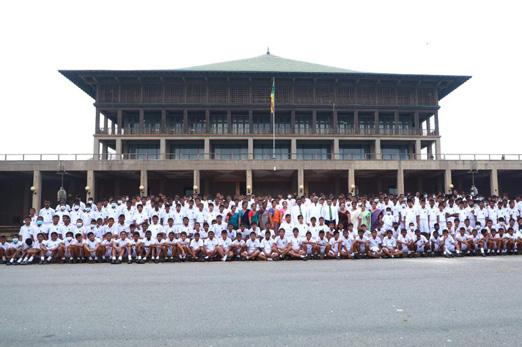

In total, more than 25,000 students representing schools across Sri Lanka have visited the Parliament building since 19 September 2022, after the Public Gallery, which was closed due to the COVID-19 pandemic, was reopened for school students.
CPA ISLE OF MAN BRANCH FUND SCHOOL VISITS TO OLDEST PARLIAMENT IN THE COMMONWEALTH
The Tynwald – or Parliament of the Isle of Man – is the oldest continuous Legislature in the Commonwealth with a fascinating history of over 1,000 years. It has two components, the Legislative Council and the House of Keys, which sit separately to consider legislation, but also sit together in the capital, Douglas, and annually at St John's, for other parliamentary purposes.

The Tynwald encourages educational visits by schools and other youth organisations suitable for all ages. Visitors tour the Parliament building and hear about how it works today. If the Legislature is not sitting, then students have the opportunity take part in their own sitting of the House of Keys in the chamber and conduct a ‘mock’ debate. The objective is to encourage children from all if the Isle of Man’s schools to visit the Legislative Buildings and to encourage students to become more engaged in their Parliament and increase their participation in democratic processes.
In order to increase the participation of young people across
school visits.
EDUCATION AND OUTREACH IN COMMONWEALTH
74 | The Parliamentarian | 2023: Issue One | 100 years of publishing
the island, the CPA Isle of Man Branch helps to fund the cost of transport for
Images: Parliament of Sri Lanka.
Image: Shutterstock_Legislative Buildings/Isle of Man.
PARLIAMENT OF TONGA CHILDREN'S BOOK SERIES AIMS TO EDUCATE, EQUIP AND EMPOWER FUTURE LEADERS

Take The Lead Tonga (TTL), is the Kingdom of Tonga’s first registered youth-led Non-Government Organisation, founded in 2017 by Elizabeth V. Kite. The NGO’s mission is to educate, equip and empower future leaders of Tonga and the Pacific to lead, and be catalysts of impactful change, today. TTL offers various leadership development programmes that are each one of a kind in Tonga, including TTL’s Leaders Mentorship Programme, She Leads Fale Alea ‘o Tonga (Parliament of Tonga), and leadership development resources including Youth of Tonga Vote Handbook, and most recently, the Parliament of Tonga children’s book series.
Written by the TTL Founder, Parliament of Tonga is a bilingual TonganEnglish children’s book series, launched to mark TTL’s 5th anniversary and published by Tiny Tongan Treasures. The children’s book is the first resource in Tonga created for children to learn about Tonga’s August House, its role and the responsibility of its Members. “This children’s book by TTL will introduce our youngest citizens to civic duties, functions and roles of our Parliament. Early engagement of our young people ensures that our Parliament is more inclusive and stays relevant to future generations” said Lord Fakafanua, the Speaker of the Legislative Assembly of Tonga.
TTL has partnered with the Ministry of Education, to ensure Parliament of Tonga children’s book series will be distributed to all state schools of Tonga, where it will be included as a teaching/learning resource under Culture and Language for classes 1-4. The Office of the Legislative Assembly of Tonga will also be using the book series as a teaching tool for its outreach programmes to communities across the Kingdom. “This children’s book series is very special, and it’s great that our children have access to this learning resource. I’m certain they will enjoy learning from it especially because it is written in both English and Tongan, and the written story is complemented with illustrations of real-life buildings and people of Tonga that our children are already familiar with” said Ms Seini Vaifo’ou, Tonga Side School Teacher. TTL is excited to be publishing the second volume of this book series this year.


EDUCATION AND OUTREACH IN COMMONWEALTH PARLIAMENTS The Parliamentarian | 2023: Issue One | 100 years of publishing | 75
Images: Elizabeth Kite/TTL/Parliament of Tonga.
With thanks to Elizabeth Kite from Take The Lead Tonga for providing this article and images.
COMMONWEALTH LEGISLATIVE NEWS
PARLIAMENTARY REPORTS AND THIRD READINGS FROM PARLIAMENTS AROUND THE COMMONWEALTH

CANADA
Federal Parliament changes and new Poet Laureate


Page 78
TRINIDAD AND TOBAGO
New President of the Senate and youth engagement
Page 84
UNITED KINGDOM
President of Ukraine’s address and EU Law Bill debate
Page 81
AUSTRALIA
Hosting Speakers from across the Commonwealth
Page 88
THIRD READING REPORTS
British Columbia Page 77
New Zealand Page 79
India Union Page 83
Australia Federal Page 86
BOOK REVIEW
Seventy-five years of democracy in India
Page 91
76 | The Parliamentarian | 2023: Issue One | 100 years of publishing
Bill 38, Indigenous SelfGovernment in Child and Family Services Amendment Act
Introduced on 26 October 2022, Bill 38, Indigenous Self-Government in Child and Family Services Amendment Act, transforms the statutory framework governing child welfare in British Columbia to enable Indigenous governing bodies to assume responsibility over child welfare services. The legislation follows the passage of the Declaration on the Rights of Indigenous Peoples Act in 2019. The Bill enables Indigenous governing bodies to develop coordination agreements with the provincial government regarding child welfare services. Once they assume jurisdiction, Indigenous communities will be able to provide child welfare services on their terms and in their communities, rather than having their children taken into care by the provincial child welfare system.
Prior to the introduction of the Bill, the proceedings of the Legislative Assembly were opened by a blessing given by Elder Shirley Alphonse of the T’Souke Nation. Following the First Reading of the Bill, the Assembly adopted a motion without notice to suspend proceedings in order that members of the First Nations Leadership Council could address the Legislative Assembly and allowed the comments to be transcribed and included as an appendix to the Official Report of Debates of the Legislative Assembly. Kukpi7 Judy Wilson, Chief Jerry Jack and Hugh Braker, KC each addressed the Assembly. The ceremony also included remarks by the Premier, Hon. John Horgan; Kevin Falcon, MLA, Leader of the Official Opposition; and Adam Olsen, MLA, Third Party House Leader and a member of the Tsartlip First Nation.
Hon. Mitzi Dean, Minister of Children and Family Development, discussed the historical and current context of government involvement in Indigenous child welfare, including through residential schools and the ongoing overrepresentation of Indigenous children in the child welfare system. Minister Dean shared that the Bill is one step in changing the colonial foundation of the Province’s child welfare laws and described how the Bill was developed in cooperation and consultation with Indigenous rights holders, modern treaty nations, Métis Nation BC and Indigenous partners. She
also indicated that, through amendments to the Adoption Act, the Bill will strengthen the involvement of Indigenous communities in adoption placements for Indigenous children.
Karin Kirkpatrick, MLA, Official Opposition Critic for Children and Family Development, supported the principles of the Bill but expressed concern about the level of detail. She emphasised that details about the financial framework should be in the Bill since resources will be necessary for Indigenous communities to assume jurisdiction. Kirkpatrick stated that the Bill must respond to the Truth and Reconciliation Commission’s Calls to Action, provide adequate resources to Indigenous communities, and ensure adequate training of social workers.
The Third Party House Leader stated that the Bill brings forward important changes to child welfare legislation, and thanked government as well as the Indigenous leaders who pushed for them. He emphasised the importance of implementation, including supporting Indigenous communities with sufficient resources. Olsen was critical of the process used to develop the Bill, saying that government withheld information and used non-disclosure agreements in the consultation.
The Indigenous Self-Government in Child and Family Services Amendment Act passed Third Reading on 24 November 2022.
Bill 43, Housing Supply Act
Introduced on 21 November 2022, Bill 43, Housing Supply Act, aims to address housing challenges by decreasing lengthy municipal approval processes
for building new housing. The Act will create a framework for the province to create housing targets, which will be determined through consultation, for specific municipalities where the need for additional housing is most acute. If housing targets are not met, the Bill empowers the Minister to amend or enact bylaws or issue or refuse to issue permits.

During the Second Reading debate, Hon. Murray Rankin, KC, Minister Responsible for Housing, highlighted issues of housing affordability in communities across British Columbia. He stated that the Bill will support the development of more affordable housing, which will help stabilise price and rent.
Mike Bernier, MLA, Official Opposition Critic for Housing, supported the Bill but criticised it for lacking detail. He emphasised that some local governments have already increased housing supply without provincial legislation. Bernier also expressed concern that the Bill will increase regulation in the sector and slow down the creation of new housing.
Sonia Furstenau, MLA, Leader of the Third Party, also supported the Bill but noted that the Bill does not specify what type of housing must be built. She encouraged the government to ensure that housing targets are not only met by market-rate developments, emphasising the importance of non-market, co-op, and not-for-profit housing. Furstenau noted that the Bill overlooks what she believes is the main driver of the housing crisis: the treatment of housing as an investment rather than a human right.
On 24 November 2022, the Housing Supply Act passed Third Reading.
The Parliamentarian | 2023: Issue One | 100 years of publishing | 77 THIRD READING REPORT BRITISH COLUMBIA
Third Reading Report by Mary Heeg, Legislative Assembly of British Columbia.
PARLIAMENTARY NEWS FROM FEDERAL PARLIAMENT OF CANADA
CHANGES IN THE SENATE
On 11 November 2022, Hon. Margo Greenwood joined the Red Chamber to represent the Province of British Columbia. An Indigenous scholar, she was a Professor whose research focused on health, especially Indigenous health and wellbeing. She joined the Independent Senators Group on 24 January 2023 after sitting as nonaffiliated following her appointment.
On 21 November 2022, three Senators were appointed to the Senate of Canada to represent the Province of Ontario. Hon. Sharon Burey was a pediatrician and health advocate prior to joining the Senate. As of 13 February 2023, she still sits as a non-affiliated Senator following her appointment. Before joining the Senate, Hon. Andrew Cardozo was President of the Pearson Centre for Progressive Policy, a think-tank, as well as a media columnist. As of 13 February 2023, he still sits as a non-affiliated Senator. Prior to her appointment, Hon. Rebecca Patterson was a Rear Admiral in the Canadian Armed Forces and is a registered nurse by training. She joined the Canadian Senators Group on 12 January 2023.
On 10 January 2023, Hon. F. Gigi Osler joined the Canadian Senators Group. She had previously been sitting as a nonaffiliated Senator since her appointment in September 2022.
In addition, three Senators have retired from the Senate of Canada since the previous issue of The Parliamentarian, including two on 31 January 2023. Senator Hon. Sandra Lovelace Nicholas had been representing the Province of New Brunswick since 2005. She was the first Indigenous woman to be appointed to the Senate of Canada to
represent one of the Atlantic Provinces. At the time of her retirement, she was a member of the Progressive Senate Group.
Senator Hon. Daniel Christmas had been representing the Province of Nova Scotia since 2016 and was the first member of the Mi’kmaw to be appointed to the Senate of Canada. At the time of his retirement, he was a member of the Independent Senators Group.
On 8 February 2023, Senator Hon. Dennis Dawson retired from the Senate. He had been representing the senatorial division of Lauzon, in the Province of Québec, since 2005. Before being appointed as a Senator, he was the Member of Parliament for the constituency of Louis-Hébert, also in Québec, between 1977 and 1984. At the time of his retirement, he was a member of the Progressive Senate Group.
As of 13 February 2023, the standings in the Senate were: Independent Senators Group 39, Conservative Party of Canada 15, Canadian Senators Group 13, Progressive Senate Group 12 and non-affiliated 11. Fifteen seats were vacant.
IN MEMORIAM
On 11 December 2022, Hon. Jim Carr, MP passed away following a long illness. He had been representing the constituency of Winnipeg South Centre, in the Province of Manitoba, since 2015. Over his time in the House of Commons, he had held multiple cabinet positions, such as Minister of Natural Resources, Minister of International Trade Diversification and Special Representative for the Prairies. Upon learning of his passing, the House of Commons held a moment of silence in his honour and adjourned early on
12 December 2022. In addition, many tributes were paid to him by his fellow Parliamentarians over the following days. Two former Senators died in recent months. On 18 November 2022, Hon. Jean Lapointe passed away. Appointed by Rt Hon. Jean Chrétien, he sat in the Senate of Canada between 2001 and 2010 representing the senatorial division of Saurel, in Québec. Mr Lapointe also had a rich career in the arts as a singer and actor and was involved in the fight against addictions. On 29 January 2023, Hon. Viola Léger passed away. Also appointed by Rt Hon. Jean Chrétien, Ms Léger represented the senatorial division of Acadie, in New Brunswick, between 2001 and 2005. She was also an award-winning artist who embodied on stage the famous Acadian character of La Sagouine for over 50 years.
CHANGES IN THE CANADIAN HOUSE OF COMMONS
The by-election in the constituency of Mississauga-Lakeshore, held on 12 December 2022 following the resignation of its sitting MP, was won by Charles Sousa, MP. Mr Sousa had previously been a member of the Provincial Legislature in Ontario between 2007 and 2018, where he held many positions in Cabinet such as Minister of Finance and Minister of Labour.
On 31 December 2022, Bob Benzen, MP retired from the House of Commons. He had been representing the constituency of Calgary Heritage, in the province of Alberta, since 2017. On 27 January 2023, Dave Mackenzie, MP retired from the House of Commons. He had been representing the constituency of Oxford, in Ontario, since 2004. No by-elections have yet been called for the seats currently empty in the Chamber.
The standings in the House of Commons as of 13 February 2023 were: Liberal Party of Canada 158, Conservative Party of Canada 116, Bloc Québécois 32, New Democratic Party 25, Green Party of Canada 2 and Independent 2. Three seats out of 338 were vacant.
LEGISLATION
House Government Bills tabled since the last issue of The Parliamentarian include Bill C-35: An Act respecting early learning and child care in Canada. Sponsored by Hon. Karina Gould, MP, the Minister of Families, Children and Social Development,

78 | The Parliamentarian | 2023: Issue One | 100 years of publishing PARLIAMENTARY REPORT CANADA
Parliamentary Report by Gabrielle de Billy Brown, Parliament of Canada.
the Bill means to establish funding to create a Canada-wide early learning and childcare system which would be “accessible, affordable, inclusive and of high quality.” It also creates the National Advisory Council on Early Learning and Child Care. Bill C-35 is currently being considered by the House of Commons Standing Committee on Human Resources, Skills and Social Development and the Status of Persons with Disabilities.
In addition, Bill C-39: An Act to amend An Act to amend the Criminal Code (medical assistance in dying) was sponsored by Hon. David Lametti, MP, the Minister of Justice. The Bill would extend the exclusion for persons suffering solely from a mental illness from accessing medical assistance in dying services in Canada. This exclusion will be until 17 March 2024. The medical assistance in dying system in Canada was modified in 2021 by the federal government to extended eligibility for persons whose death is not reasonably foreseeable following a decision from the Québec Superior Court. This raised concerns from experts on the potential abuse of the system due to the circumstances caused by mental illness. Bill C-39 is currently at Second Reading in the House of Commons.
In addition, Bill C-5: An Act to amend the Criminal Code and the Controlled Drugs and Substances Act, a House Government Bill which was sponsored by the Minister of Justice, received royal assent on 17 November 2022. This Bill removes mandatory minimum sentences of imprisonment for certain offences related to firearms and controlled drugs and substances and requires peace officers and prosecutors to consider treatment program referrals in the case of simple drug possession offences.
Bill S-223: An Act to amend the Criminal Code and the Immigration and Refugee Protection Act (trafficking in human organs), a Senate Public Bill sponsored by Senator Hon. Salma Ataullahjan, received royal assent on 15 December 2022. It creates new offences in the Criminal Code to address trafficking in human organs, as well as create provisions to prevent permanent residents or foreign nationals suspected of being active in such trafficking from entering Canada.
Also on 15 December 2022, Bill S-4: An Act to amend the Criminal Code and the Identification of Criminals Act and to make related amendments to other Acts (COVID-19 response and other measures), a Senate Government Bill sponsored by Senator Hon. Marc Gold, Government Representative in the Senate, received royal assent. The Bill addresses issues of efficiency, effectives and accessibility in the criminal justice system which have become evident since the beginning of the COVID-19 pandemic and aims to reduce delay in court proceedings. Among the changes included in the Bill are the expansion of the use of telewarrants, the broadening of the possibility for the accused to appear remotely and allowing the jury selection process to occur virtually.
RETIREMENT OF THE CLERK OF THE HOUSE OF COMMONS
On 7 December 2022, it was announced that Charles Robert, Clerk of the House of Commons, would retire from his position on 13 January 2023. He was appointed in June 2017. During the course of his parliamentary career, Mr Robert has worked at the Library of Parliament and the Senate as well. He served as interim Clerk of the Senate of Canada between 2015 and 2017, where he contributed to a revision of the Rules of the Senate and the writing of Senate Procedure in Practice
PARLIAMENTARY POET LAUREATE
Senator Hon. George Furey, Speaker of the Senate, and Hon. Anthony Rota, MP, the Speaker of the House of Commons, announced on 1 February 2023 the appointment of the tenth Parliamentary Poet Laureate, MarieCélie Agant. She succeeds Louise Bernice Halfe-Sky Dancer
During her two-year term, Ms Agant’s role may include composing poetry for use in Parliament, sponsoring poetry readings and advising the Parliamentary Librarian on the Library’s collection. The position of Parliamentary Poet Laureate was created in 2001 through an amendment to the Parliament of Canada Act.
NEW ZEALAND
Third Reading Report by Lizzie Hendy, Parliament of New Zealand.
Water Services Entities Bill
The Water Services Entities Bill was read for a third time on 8 December 2022. The Bill creates entities to maintain New Zealand’s stormwater, waste water and drinking water (“three waters”) infrastructure, which had previously been managed by councils. The Bill aims to create entities with the size and scale to better deliver water services and improve and upgrade New Zealand’s ageing water infrastructure, while also giving effect to the principles of Te Tiriti o Waitangi/the Treaty of Waitangi.
Deliberation was robust during the whole process, with the Select Committee receiving 88,383 written submissions. Local Government Minister, Hon. Nanaia Mahuta, MP (Labour) maintained her support for the Bill, saying “I will not stand by while New Zealanders continue to get sick from drinking tap water - tap water - and our tamariki (children) cannot safely swim at their local beach, rivers or lakes. I will not stand by and see our cities and towns stall because they cannot pay for vital infrastructure that they require to grow.”
Chris Bishop, MP (National) said the Bill took assets away from local communities: “The legislation takes assets that have been built up by ratepayers over many years, takes them off local council hands and gives them to these new four water service entities, which are a new creation.” Simon Watts, MP (National) said the governance structure of the new entities gave Māori an outsized voice in the management of the assets: “The National Party believes that co-governance of public services like water does not improve service delivery and cannot be justified otherwise.” Simon Court, MP (ACT) said the Bill “appears to be an improvised Treaty settlement dressed up as an infrastructure reform.”
One of the most consequential changes occurred during the Committee of the Whole House stage on 23 November 2022. Hon. Eugenie Sage, MP (Green) introduced a provision “entrenching” the ownership structure of the new entities in response to “public concern that we avoid privatisation of water services” This meant future Parliaments would require a 60% majority to overturn the relevant section. The only laws currently entrenched in this way are constitutional matters such as the voting age and the country’s mixed-member proportional parliamentary structure. Those provisions require a 75% majority to be overturned in Parliament. In this instance, the provision had been agreed to by 62% of MPs.
Although the provision and the way in which it had been passed were legal, academics such as Dr Dean Knight of Victoria University of Wellington raised concerns about the precedent it may set. New Zealand has no written constitution, so relies more heavily on conventions than do many other jurisdictions. Dr Knight said the provision risked
The Parliamentarian | 2023: Issue One | 100 years of publishing | 79
THIRD READING REPORT
“upsetting the traditions and expectations around entrenchment.” In response to these concerns, the House entered Committee once again on 6 December 2022 to recommit the Bill. This time, the motion to overturn the entrenchment provision passed by 104 votes to 10.
In response to the removal of the entrenchment provision, the Green Party withdrew its support for the Bill in the Third Reading. Hon. Eugenie Sage said, “The Green Party believes that public ownership and operation of three waters is absolutely critical, and that is why, without the protection that our SOP [Supplementary Order Paper] would have provided, we cannot support the Bill.”
Te Paati Māori also withdrew its support in the Third Reading. Debbie NgarewaPacker, MP (Te Paati Māori) said the debate around Māori representation in the governance structure of the entities “missed the central point entirely… [The reforms] do not even guarantee Māori representation, let alone iwi representation, on the actual governance entities.”
The Bill passed its Third Reading by 64 votes to 50 on 8 December 2022, and received the Royal Assent on 14 December 2022.
Smokefree Environments and Regulated Products (Smoked Tobacco) Amendment Bill
The Smokefree Environments and Regulated Products (Smoked Tobacco) Amendment Bill tightens tobacco laws in pursuit of New Zealand’s Smokefree 2025 goals. Currently, 4,500 people die each year in New Zealand from smoking-related illnesses. The Bill reduces the number of retail shops that can sell tobacco from 6,000 to 600, makes it illegal for people in New Zealand born after 1 January 2009 to buy tobacco products, and limits nicotine levels in tobacco products to make them less appealing and addictive.
The Minister of Health, Hon. Dr Ayesha Verrall, MP (Labour) began her Third Reading contribution by saying, “There is no good reason to allow a product to be sold that kills half the people that use it.” She went on to detail the tobacco-related harm she saw every day in her medical career. She noted that while New Zealand is very close to its ‘Smokefree 2025’ target of less than 5% of the population using smoked tobacco - currently 8% - she is concerned that Māori and Pasifika communities are overrepresented in that statistic. She
commented that this Bill would improve health, reduce hospitalisations and reduce the financial burden on New Zealand’s health system.
Chlöe Swarbrick, MP (Green) spoke in favour of the Bill, stating that “tobacco, perhaps unlike most other drugs - alcohol, for example - is a substance that most of its users want to stop using”, and supported ‘denicotinisation’ (limiting the nicotine levels in tobacco products). She also detailed the environmental harms of smoked tobacco products, particularly litter created by cigarette butts. However, she expressed concern that the fines introduced by the Bill may inadvertently criminalise marginalised communities who cannot afford to pay them.
Debbie Ngarewa-Packer, MP (Te Paati Māori) acknowledged the Government for “continuing the work of Tariana Turia and Hone Harawira”, both former Te Paati Māori MPs, on smokefree legislation. While she was in favour of the Bill, she expressed concerns that it could lead to an illicit tobacco market. She added that supply charges could be used to criminalise older siblings or family members who choose to supply to younger family members, undermining Māori communities.
Dr Shane Reti, MP (National) stated that while the National Party believes in nicotine reduction and the Smokefree goals - which were introduced by the 2011 National Government - the party does not believe that this legislation will be effective. Firstly, he pointed out that New Zealand did not reach its 2018 interim target rate of 10%, and noted that under the Bill, retail reduction does not begin until 2024 and ‘denicotinisation’ does not begin until 2025. Matt Doocey, MP (National) questioned why the Bill did not address the high rates of youth vaping, noting that many young
people are taking up vaping without having ever smoked before.
Brooke van Velden, MP (ACT) claimed that the Bill “is simply nanny-State prohibition that will cause more problems in our society because … it will create a large black market.” She argued that the Bill is “anti-competitive” and worried that “if you’re moving a store further and further away from someone, they either have the ability to drive further, take a bus even further, or walk further, or they can go to their local gang member and get it from there. … Illegal activity will increase.” She also felt that reducing nicotine levels could increase the amount of tobacco that smokers consume and, therefore, increase the amount of tar being inhaled.
The Third Reading of the Smokefree Environments and Regulated Products (Smoked Tobacco) Amendment Bill passed with 76 votes in favour and 43 votes opposed and received the Royal Assent on 16 December 2022.
Ngāti Kahungunu ki Wairarapa
Tāmaki nui-a-Rua Claims Settlement Bill
The Ngāti Kahungunu ki Wairarapa
Tāmaki nui-a-Rua Claims Settlement Bill passed its Third Reading on 13 December 2022. The settlement package includes an acknowledgment and apology by the Crown for its breaches of Te Tiriti o Waitangi/the Treaty of Waitangi, financial and commercial redress of NZ$115 million, and cultural redress including vesting of properties and place name changes. The iwi (tribe) has a population of approximately 12,000 people and is based on the lower east coast of New Zealand’s North Island.
The historical grievances of the iwi include the forced cession of land by the Crown 1845, and failure to act in good faith during land purchases in the 1850s. The Crown also

80 | The Parliamentarian | 2023: Issue One | 100 years of publishing
THIRD READING REPORT NEW ZEALAND
failed to fulfil its promises of land in exchange for the gifting of Wairarapa Moana in the lower North Island. Joseph Mooney, MP (National) said, “their tīpuna (ancestors) were forced to… sell the land. By 1854, the Crown had taken 1.5 million acres in exchange for very small sums. By 1900, 90% of their land within the Wairarapa and Tāmaki nui-a-Rua was gone. In the 20th century… They were rendered virtually landless, which is the position they are in now, and which this Bill seeks to address.”
A case had been heard in 2020 seeking compensation for an additional block of land taken by the Crown. Dr Shane Reti, MP (National) said, “We note that the passage of this Bill will extinguish the claims… And our team had a range of views on this very issue.” However, the Minister for Treaty of Waitangi Negotiations, Hon. Andrew Little, MP (Labour) noted that “the message from Ngāti Kahungunu ki Wairarapa, and, indeed, some fellow iwi across the motu (country), has been very clear: that it is time, Ngāti Kahungunu says, to move forward. Ngāti Kahungunu want to take back control of their destiny.”
Karen Chhour, MP (ACT) said “from what I understand, the settlement deed was agreed to in 2018. A majority of the tribe agreed and voted and agreed upon that, but, unfortunately, some groups did not agree and sought their own settlements, from my understanding. But, as a result of this, a new settlement was negotiated and there was an increase from the $93 million to $115 million and an offer of a further $5 million for enhancements of the lakes environment, and this was ratified, again, by the majority of the settlement trust members who voted.”
Rawiri Waititi, MP (Te Paati Māori) talked about the competing court case and said that “We know too well the divide and rule tactics of the Crown, ignoring the sidelining of whānau (family) and attempting to pit them against one another. There is only one party to blame for the division caused among our people, and that is the Government. … Kahungunu, your loss of whenua (land), loss of culture, and the severing of whakapapa (genealogy) has only been further entrenched in the Treaty settlement process. This mamae (pain) has only intensified in the last two years.”
Dr Elizabeth Kerekere, MP (Greens) agreed, saying “Unfortunately, the Crown has not stopped causing harm, and it has meant that Kahungunu has also been subject to dealing with claims within its claim. ….if people still want to have hui (meetings) and discuss those things that have been said, I am absolutely up for that, but we are hurting because of the broken connections caused by this process.”
The passage of the Bill was marked with a waiata (song) by members of the iwi in the public gallery. The Bill received the Royal Assent on 16 December 2022.

PRESIDENT ZELENSKY OF UKRAINE SPEAKS AT WESTMINSTER
On 8 February 2023, it was announced that the President of Ukraine, Volodymyr Zelensky, would be addressing the UK Parliament in Westminster Hall, the 11th century building within the Palace of Westminster where major ceremonies and speeches are often held. Members of both Houses of the UK Parliament as well as Parliamentary staff were invited to attend the speech, which was hosted by the Speaker of the House of Commons, Rt Hon. Sir Lindsay Hoyle, MP, and the Lord Speaker, Rt Hon. Lord McFall of Alcluith. This was President Zelensky’s first visit to another European country since the Russian invasion of Ukraine, and followed a visit to the United States in December 2022.
Prior to the speech, the weekly session of oral questions to the Prime Minister was held in the House of Commons. The Prime Minister, Rt Hon. Rishi Sunak, MP, told the House that “I am delighted that President Zelensky is here in the United Kingdom today. It is testimony to the unbreakable friendship between our two countries, and I am proud that we are expanding the training for Ukrainian forces to include jet pilots and marines, and ensure that Ukraine has a military able to defend its interests today and into the future.” The Leader of the Opposition, Rt Hon. Sir Keir Starmer, MP, said that “the House is honoured to be addressed today by President
Zelensky. From the outset of the war he has symbolised the heroism, the resolve, and the bravery of his people.”
GOVERNMENT RESHUFFLE AND NEW DEPARTMENTS
On 7 February 2023, the UK Government announced the merger and creation of a number of new Government departments, known as a Machinery of Government change. The three new departments to be created are the Department for Energy Security and Net Zero, the Department for Science, Innovation and Technology and the Department for Business and Trade. The functions of the existing Department for International Trade were merged into the new Business and Trade department, with Rt Hon. Kemi Badenoch, MP (formerly the International Trade Secretary) becoming its Secretary of State. The former Business Secretary, Rt Hon. Grant Shapps, MP, was reassigned to the Energy Security and Net Zero department, while the former Culture Secretary, Rt Hon. Michelle Donelan, MP, moved to the Science, Innovation and Technology department. She was replaced at the Department for Culture, Media and Sport by Rt Hon. Lucy Frazer, KC, MP.
The House of Commons Select Committee structure is intended to shadow that of Government departments, although it differs in some respects; for example, when the Department for International Development was merged into the Foreign and Commonwealth Office, an International Development Committee
The Parliamentarian | 2023: Issue One | 100 years of publishing | 81
PARLIAMENTARY REPORT UNITED KINGDOM
Parliamentary Report by Simon Keal, Parliament of the United Kingdom.
UK PARLIAMENTARY NEWS
Image credit: UK Parliament.
was retained to maintain separate scrutiny of Government aid and development policies. It has not yet been confirmed whether there will remain a separate International Trade Committee to scrutinise trade policy. It is expected that new Committees will be established to scrutinise the new Energy and Net Zero and Science, Innovation and Technology departments.
COMMONS AND LORDS DEBATE EU LAW BILL
On 18 January 2023, the House of Commons passed the Retained EU Law (Revocation and Reform) Bill. The Bill was announced in the May 2022 Queen’s Speech and follows the departure of the UK from the EU, at which point a large range of EU laws were transferred into domestic legislation. The Bill’s intention was to “repeal or assimilate” all retained EU laws by the end of 2023 and to remove their special features within the UK legal system. It also includes a sunset provision meaning that any laws not actively retained by the end of 2023 will automatically expire.
The Bill has attracted debate, with the Government arguing that it represented a further step to establishing full UK sovereignty after Brexit, while critics noted that the Bill gave wide-ranging powers to Ministers to amend laws with little Parliamentary scrutiny, known as ‘Henry VIII powers’. At report stage on 18 January 2023, Sir Robert Neill, MP asked whether the Government accepted that “it is constitutionally unacceptable to create what the Law Society described as a ‘devastating impact’ on legal certainty and business confidence?” He added that the Government’s use of Henry VIII powers “is not taking backing control but doing the reverse of what the Government seek to do.” In response, Government Minister, Nusrat Ghani, MP, said “he is fundamentally mistaken. We have undertaken a considerable amount of consultation with our courts and have worked with them consistently. It is absolutely right that we deliver Brexit by ensuring that laws made here are sovereign over EU laws.”
At report stage, three amendments were put to a division; the first, on moving the sunset provision from 2023 to 2026, was defeated by 297 to 239; the second, which restricted the sunset provision to exclude legislation within the competence of the Scottish Parliament, lost by 300 to 239; the third, which excluded certain provisions
from sunset relating to workers’ rights, lost by 301 to 238, and the fourth, requiring the UK Government to publish a list of all legislation subject to the sunset provision and for Parliament to have oversight over it, lost by 295 to 242. The Bill then passed its division at Third Reading by 297 votes to 238. The Bill then passed to the House of Lords, where a Second Reading debate was held on 6 February 2023.
UK GOVERNMENT DELAYS NEW ELECTIONS IN NORTHERN IRELAND
Since the Northern Ireland Assembly elections in May 2022, it has not been possible to form an Executive to run the government there. The election resulted in the Irish republican party Sinn Féin becoming the largest party for the first time, with the Democratic Unionist Party (DUP) finishing second. Under the ‘power-sharing’ arrangements between nationalist and unionist communities in Northern Ireland, the first-placed party nominates a First Minister while the largest party from the other community nominates a Deputy First Minister. However, the previous DUP First Minister resigned in February 2022 in protest at the post-Brexit trade provision known as the Northern Ireland Protocol, which provides distinctive trading arrangements for Northern Ireland separate to those for the rest of the UK. Following the election, the DUP has refused to nominate a Deputy First Minister until its concerns with the Northern Ireland Protocol are resolved.
Under existing law, the Secretary of State for Northern Ireland was required to set a date for a new election within 12 weeks if an Executive could not be formed by 28 October 2022. However, on 29 November 2022, a Bill to extend this process was introduced and taken through all stages in the House of Commons in a single day, with the same happening in the House of Lords on 5 December 2022. In introducing the Bill at Second Reading, the Secretary of State for Northern Ireland, Rt Hon. Chris HeatonHarris, MP, noted that “It retrospectively extends the period of Executive formation for two six-week periods. That means, subject to the agreement of this House and the other place, that if an Executive is not formed within those timeframes, the election duty placed on me will kick in after the second extension of six weeks, on 20 January 2023.” The Bill passed both the Commons and Lords without
division, becoming the Northern Ireland Executive Formation etc Act 2022
On 9 February 2023, the Secretary of State for Northern Ireland issued a written statement announcing that the UK Government would introduce another Bill, to extend the deadline to 18 January 2024. His statement noted that, following further consultation after the expiry of the original extension on 20 January 2023, “I have concluded that another election at this time is not the best course of action to facilitate the restoration of the Executive.” On 19 January 2024, if the Executive is still not restored, the Secretary of State would once again be obliged to call an election within 12 weeks.
The new Bill passed all stages in the House of Commons on 22 February 2023 without division. The same day, the House of Lords agreed to suspend its Standing Order 44 (no two stages of a Bill to be taken on the same day) so that all stages of the Bill could also pass on the same day, which was scheduled to take place on 27 February 2023.
RESIGNATION OF THE SCOTTISH FIRST MINISTER
On 15 February 2023, Rt Hon. Nicola Sturgeon, MSP, First Minister of Scotland since 2014, announced that she would resign from the position and as leader of the pro-independence Scottish National Party (SNP). She has served in the Scottish Parliament since it was first established in 1999 and had led the SNP in two Scottish Parliamentary elections in 2016 and 2021 as well as for three Westminster elections in 2015, 2017 and 2019. In each case, the SNP had won the most seats and she maintained the SNP in government in Scotland, where it has been the governing party since 2007. However, her requests to the UK Government for a Section 30 Order –which would enable the Scottish Parliament to legislate for a second independence referendum – have consistently been denied by the UK Government.
The SNP subsequently announced the process for a membership election to select the next party leader, who would be expected to be appointed as First Minister. Three candidates were nominated – Kate Forbes, MSP, the Cabinet Secretary for Finance and the Economy; Ash Regan, MSP, the former Minister for Community Safety; and Humza Yousaf, MSP, the Cabinet Secretary for Health and Social Care. The next leader is expected to be announced in late March 2023.
82 | The Parliamentarian | 2023: Issue One | 100 years of publishing
PARLIAMENTARY REPORT UNITED KINGDOM
The Anti-Maritime Piracy Bill, 2019
In today’s times, the menace of piracy is growing. The Gulf of Aden, which separates Somalia and Yemen and connects the Arabian Sea to the Red Sea and through the Suez Canal to the Mediterranean Sea, has seen a major spurt in attacks by pirates operating from Somalia since 2008. This route is used by about 2,000 ships each month for trade between Asia and Europe, and across the East coast of Africa. With the enhanced naval presence in the Gulf of Aden, pirates shifted their area of operations eastwards and southwards. This led to a flurry of piracy incidents towards the western coast of India as well.
India does not have a separate domestic legislation on piracy. The provisions of the Indian Penal Code pertaining to armed robbery and the Admiralty jurisdiction of certain courts have been invoked in the past to prosecute pirates apprehended by the Indian Navy and the Coast Guard.
Given the increasing incidences of piracy, including within India’s Exclusive Economic Zone, and the increasing number of pirates apprehended by the Indian Naval forces, the need was felt for a comprehensive domestic legislation on piracy, which is an outcome to the commitment made by India by signing the United Nations Convention on the Law of the Sea (UNCLOS) in the year 1982 and ratified in the year 1995.
Also, the United Nations Security Council Resolutions 1816, 1846, 1851, 1897, 1918, 1950, 1976, 2015, 2020, 2077, 2125 and 2184, inter alia, call upon all Member States to cooperate in determining jurisdiction, and in the investigation and prosecution of all persons responsible for acts of piracy, and further call upon all Member States to criminalize piracy under their domestic law, and to favourably consider the prosecution
of suspects and the imprisonment of convicted pirates.
Accordingly, the Anti-Maritime Piracy Bill, 2019, introduced in Lok Sabha on 9 December 2019, inter alia, provides for the following:
(a) to make the provisions of the proposed legislation applicable to all parts of the sea adjacent to and beyond the limits of Exclusive Economic Zone of India.
(b) to make the act of piracy on high seas as an offence punishable with imprisonment for life or with death.
(c) to provide for punishment for attempt to commit offence of piracy or being an accessory to the commission of offence.
(d) to provide for presumption of guilt in case certain conditions are satisfied.
(e) to make the offence extraditable.
(f) to enable the Central Government, in consultation with the Chief Justice of the concerned High Court, to specify certain courts as Designated Courts for speedy trial of offences of piracy under the proposed legislation.
Introducing the Bill, the Minister-in-charge, Shri S. Jaishankar remarked that India’s security and economic well-being was inextricably linked to the sea, and maritime security was a prerequisite with more than 90% of India’s trade with the world taking place through sea routes and more than 80% of our hydrocarbon requirements being seaborne. The security of our sea lanes and their communications channels are both critical to our national well-being. India was also one of the largest providers of seafarers in the world. India is a signatory to the UNCLOS, 1982 which was ratified in 1995. The passing of this Bill fulfils the expectations of this Convention for cooperation and repression of piracy in the high seas.
The Minister further stated that the Prime Minister of India had chaired a UN Security Council session in 2021 focused
exclusively on maritime security, outlining five principles for such cooperation. As such, this Bill is a logical follow up of India’s maritime initiatives, and will also enhance its maritime security including those of its trade routes, and the welfare of its seafarers in international waters.
During the debate, the Bill received support of all the Members participating in the discussion. Some of the point raised and suggestions proffered during the debate included:
• Between 2016 and 2020, there have been around 900 incidents of piracy globally.
• About 10% of crewmen and officers involved in merchant activity were of Indian origin and during the last 5-6 years, more than 500 Indians have been captured by pirates.
• A law providing for death penalty for an attempt on somebody’s life in the course of a piracy may not bring the kind of cooperation expected while operationalising this law.
• Shifting the burden of proof on to the accused may prove detrimental to the larger international cooperation in order to combat piracy rather than being an enabler.
• The Bill must provide for legal immunity for acts done in good faith.
• International cooperation on the issue of maritime piracy at various international platforms should be brought.
• India’s economic development is crucially dependent on the sea because of the criticality of sea-borne trade in an increasingly inter-linked world as well as the potential of vast economic sources of the ocean. The enactment of such a law will make India one of the leading nations in the collective fight against maritime piracy.
• There is a need to strengthen surveillance on the international border on the high seas and on the maritime border.
• Imparting special training to coastal maritime police is the need of the hour. Replying to the debate, which was held on 7 and 19 December 2022, the Ministerin-charge of the Bill, Shri S. Jaishankar expressed his thanks to all the Members across the House and stated that the Bill was a part of India’s international responsibilities. The Minister allayed the apprehensions of the Members regarding punishment clauses in the Bill and informed that there was a range of punishments which had been provided depending on

The Parliamentarian | 2023: Issue One | 100 years of publishing | 83
THIRD READING REPORT
INDIA UNION
Third Reading Report by Vinay Kumar Mohan, Lok Sabha Secretariat, Parliament of India.
THIRD READING REPORT INDIA
the gravity of the offence and extent of culpability. The Minister also stated that the whole purpose of the Bill was to promote international cooperation and it was conceived that India was seen as a responsible international player as far as piracy was concerned. The title of the Bill was changed to The Maritime Anti-Piracy Act, 2022 by an amendment.
The Bill was passed by Lok Sabha on 19 December 2022 and by the Rajya Sabha on 22 December 2022. The Bill, as passed by both the Houses, received the assent of the President of India on 31 January 2023.
The Energy Conservation (Amendment) Bill, 2022
The Energy Conservation Act, 2001 provides for the establishment and incorporation of the Bureau of Energy Efficiency and confers certain powers on the Central Government, the State Governments and the Bureau of Energy Efficiency to enforce measures for efficient use of energy and its conservation. The Act was amended in 2010 to address, inter alia, various new factors which emerged with the development of the energy market over a period of time.
With the passage of time and in the context of energy transition with a special focus on the promotion of new and renewable energy and the National Green Hydrogen Mission, a need arose to further amend the said Act to (i) facilitate the achievement of Panchamrit – as five nectar elements presented by India at COP26 held in Glasgow in 2021;
(ii) promote renewable energy and the development of a domestic carbon market to battle climate change;
(iii) introduce new concepts such as carbon trading and mandate the use of non-fossil sources to ensure faster decarbonisation of the Indian economy and help in achieving the Sustainable Development Goals in line with Paris Agreement and various other actions related to climate change.
The Energy Conservation (Amendment) Bill, 2022 was accordingly introduced in Lok Sabha on 3 August 2022 mainly with a view to:
(i) Mandate use of non-fossil sources, including green hydrogen, Green Ammonia, Biomass and Ethanol for energy and feedstock.
(ii) Establish carbon markets.
(iii) Bring large residential building within the fold of energy conservation regime.
(iv) Enhance the scope of Energy Conservation Building Code.
During around two and a half hours of debate, the Bill received wide support from almost all the sections of the House. Some of the comments and suggestions put forth by the Members included:
• India is committed to install 500 GW of nonfossil energy capacity by 2030, reduce emission intensity of GDP by 45% over 2005 levels, source
50% of electricity from non-fossil sources by 2030, reduce carbon emission by one billion tones till 2030, and achieve net-zero by 2070.
• Bringing large residential buildings within the fold of Energy Conservation Regime is a good step but constructing a green building is very expensive and so this aspect needs to be looked into particularly.
• Given the massive volume of savings that can accrue in terms of money as well as CO2 emission, the Bureau of Energy Efficiency must ensure full utilisation of allocated funds to achieve energy efficiency targets.
• India’s investment in the renewable energy sector needs to be doubled to meet the target of 450 GW of renewable energy capacity by 2030.
• India must shift to a low carbon energy, agriculture, transport and industrial world.
• India is the largest exporter of carbon credits, therefore, it makes obvious sense that it sets up our own national market and frame necessary regulations in this regard.
• Promotion of renewable energy conservation as well as efficient use of energy and carbon trading are the need of the hour to achieve the Sustainable Development Goals in line with the Paris Agreement.
• The terms such as carbon trading, carbon market, carbon credit scheme need to be defined for transparency.
Replying to the debate, the Minister-in-charge of the Bill, Shri R. K. Singh thanked all the Members who participated in the discussion and stated that per capita emissions of India were one-third, the lowest in the world, but despite that India had emerged as the only large economy and the only G20 country whose energy transmission was in consonance with the goal of maintaining a sub two-degree rise in global temperature.
The Minister further stated that India’s progress in renewable energy and energy transition was something to be proud of because not only the Government of India, but every Indian believes in the environment. India is the only society which worships nature, trees, water, sun – the giver of energy. The Minister also stated that India could emerge as the global supplier of green hydrogen and green ammonia. Clarifying the apprehension of the Members about bringing the large buildings within the fold of the energy conservation regime, the Minister stated that residential buildings having a connected load of more than 100 KW only will be covered within the purview of the Act. Therefore, the Act would not cause a heavy burden on middle-class families.
The Bill was passed by the Lok Sabha on 8 August 2022 and by the Rajya Sabha on 12 December 2022. The Bill, as passed by both the Houses, was assented to by the President of India on 19 December 2022.
ELECTORAL COLLEGE ELECTS NEW PRESIDENT
The Electoral College in Trinidad and Tobago elected Hon. Christine Kangaloo as the 7th President of Trinidad and Tobago on 20 January 2023. The Electoral College consists of the 41 elected Members of the House of Representatives and the 31 members of the Senate along with the Presiding Officer of the Senate and the Speaker of the House of Representatives. A mandatory requirement for the election of a new President is that: “A person shall not be a candidate for election as President of the Republic of Trinidad and Tobago unless nominated for election by a nomination paper which (a) signed by the candidate and by 12 members or more members of the House of Representatives, and (b) is delivered by the Speaker at least seven days before the election.” The governing party takes control of the election of the President of the Republic, and there is no debate as it is principally a ceremonial process.
The ruling People’s National Movement (PNM) has 22 elected Members, whilst the Opposition United National Congress (UNC) has 19 seats. The Senate comprises 16 Senators nominated by the ruling party, six from the Opposition and nine nominated by the President of the Republic.
The Government of Trinidad and Tobago’s nominee for the Presidency was Hon. Christine Kangaloo, who at the time of nomination was the President of the Senate. Criminal Attorney-at-law, Israel Khan was the Opposition’s nominee for the Presidency. The Government candidate received 48 votes with the
84 | The Parliamentarian | 2023: Issue One | 100 years of publishing
LEGISLATIVE NEWS FROM TRINIDAD AND TOBAGO PARLIAMENT

Opposition candidate receiving 22 votes and three spoilt ballots.
Following the vote, the President-elect, Hon. Christine Kangaloo said that she was humbled to serve her country, and that she was grateful to all those who participated in the electoral process. “I am grateful for the healthy public discourse that has taken place about the Office of the President, and the characteristics that our citizens feel should be demonstrated by persons who aspire to hold Office. Having heard all the concerns, I commit myself to discharging the duties of the Office of the President in a manner that will put those concerns to rest.”
The outgoing President is H.E. PaulaMae Weekes, a former Justice of Appeal in Trinidad and Tobago, and later in Turks and Caicos Islands. A new President is elected every five years.
NEW PRESIDENT OF THE SENATE ELECTED
Senator Nigel De Freitas, a former Minister in the Ministry of Agriculture, Lands and Fisheries, has been elected as the new President of the Trinidad and Tobago Senate. He takes over from Hon. Christine Kangaloo who was elected as President of the Republic of Trinidad and Tobago. Senator Richie Sookhai, President of the Chaguanas Chamber of Commerce, has been elected as a Senator replacing Hon. Christine Kangaloo.
OIL PRODUCERS EXPECT MORE INCENTIVES
A series of incentives is being considered to assist oil producers, suggested the Finance Minister, Hon. Colm Imbert as he piloted the Finance (Number2) 2022 Bill in Trinidad and Tobago’s upper House, the Senate.
The Minster noted that the energy sector recently provided 30% of the country’s GDP, aimed at increasing the need to sustain this sector to grow. He said that under the Bill, oil companies will only pay the Supplemental Petroleum Tax (SPT) when the global oil price reaches US $75 per barrel as opposed to the current threshold of US $50, adding that small oil producer companies would only pay SPT when their daily production level reaches 4,000 barrels, up from a current threshold of 2,000 barrels.
The Minister also announced new taxation measures for new wells in existing oil fields.
“We are trying to stimulate production. We are reducing taxes to motivate oil producers to drill new wells, whether in existing field or in new fields. That’s the whole point of all this”, he added.
Trinidad and Tobago exports 10 million barrels of oil to 16 Caribbean countries, according to the Minister of Trade and Industry, Senator Paula Gopee-Scoon in response to a question from Opposition Senator Jerlean John. The Minister noted that countries in receipt of the oil and oil products were: Guyana, Barbados, Jamaica, Suriname, St Kitts and Nevis, The Bahamas, Guadeloupe, Montserrat, Turks and Caicos, Martinique, St Martin, Haiti, St Vincent, Tortola, Saint Lucia and Grenada.
SCRAP METAL BILL PASSED
The Trinidad and Tobago Parliament has passed a new Bill aiming to modernise the regulation of the scrap metal industry, following a series of illegal transactions within recent months, including the theft of telephone and other communicationoriented metals. The Attorney-General, Hon. Reginald Armour said that the new Bill replaces the Old Metals and Marine Stores Act of 1904 and includes provisions to appoint scrap metal inspectors, to establish registers of licences granted and to exercise a regulatory making power. The scrap iron industry in Trinidad and Tobago is worth TT$245 million, while worldwide, the global trade was valued at TT$128 billion (in 2020).
The Attorney-General pointed out that, while the industry provided business opportunities for a number of small and
micro business, it also provided jobs, income and generated exports and foreign exchange, and as well a cleaner environment for locals with the removal of derelict items and hazardous waste.
Recently the Water and Sewerage Authority (WASA), the Trinidad and Tobago Electricity Commission (T&TEC) and the Telecommunication Services of Trinidad and Tobago (TSTT) were severely affected by the theft of cabling and pipes, while private sector companies had also been targeted.
INDEPENDENT SENATOR WANTS SCRAP METAL PARKS TO BE ESTABLISHED
In the Senate of Trinidad and Tobago, Independent Senator Deoroop Teemal has called for the establishment of scrap metal parks for small businesses, as the recent Scrap Metal Bill 2022 prohibits the use of dwelling houses for scrap metal operations. “We have a lot of current scrap metals, they are operating from their homes, their front yards. When we look at the details of this legislation, these persons are not going to be able to get any licences for their current operations”, he said.
The Senator called on the Government to consider establishing scrap metal parks in designated areas so that persons in the industry can have access to space. He added that these sites would go a long way into regularising the industry and ensuring that current operators, the small and microoperators, would still have a role to play in the future of the industry.
The Parliamentarian | 2023: Issue One | 100 years of publishing | 85 PARLIAMENTARY REPORT TRINIDAD AND TOBAGO
Parliamentary Report by Paras Ramoutar, Freelance Journalist based at the Parliament of Trinidad and Tobago.
TRINIDAD AND TOBAGO
Independent Senator Varma Deyalsingh noted that the scrap iron industry has become a lucrative, organised crime enterprise globally and is affecting many nations. He said that the Government had no choice but to intervene to stop the theft of electricity lines and other infrastructure that has disrupted services across the country.
NEW BUILDING GUIDELINES FOR FLOOD-PRONE AREAS
The Minister of Planning, Hon. Penelope Beckles has announced in the Trinidad and Tobago Parliament that new building guidelines are being drawn up relative to construction and development in flood-prone areas.
The Minister was responding to a question posed by Opposition Member, Ravi Ratiram, MP (United National Congress) in the House of Representatives in the wake of severe flooding in 2022 and complaints of unregulated and irregular building practices as one of the main contributing factors.
The Minister advised that the Ministry’s Town and Country Planning Division (TCPD), together with the municipalities and other Government agencies, endeavours to ensure that any unauthorized development is brought to the attention of the relevant agencies to take appropriate action. Measures include constant review and updating of land use policies, site development standards and spatial planning guidelines. She also said that the Ministry is empowered to undertake enforcement action to control the development of land and has been doing so through the issuing of enforcement notices.
7th COMMONWEALTH YOUTH GAMES
The Ministry of Sport and Community Development has disbursed TT$3.6 million towards the accommodation and hotels for the 7th Commonwealth Youth Games (CYG), which are set to take
place in Trinidad and Tobago from 4 to 11 August 2023.
“The hosting of these games will further position Trinidad and Tobago as a hub for sports tourism, providing a platform for Caribbean athletes to showcase their skills and will bring economic benefit to this country”, according to the Minister of Sport and Community Development, Hon. Shamfa Cudjoe. The Minister said that the government is pleased to support the Trinidad and Tobago Commonwealth Games Association through the disbursement of TT$3.6 million towards the down payment to secure 5,000 hotel rooms in six hotels. Some 1,000+ athletes from across the Commonwealth, aged between 14 and 18, will compete in seven sports – including swimming, athletics, cycling, netball, rugby sevens, triathlon and beach volleyball.
TRINIDAD’S SENATE PRESIDENT HAILS COMMONWEALTH YOUTH PARLIAMENT
The President of the Senate in Trinidad and Tobago has hailed the lessons from the 11th Commonwealth Youth Parliament held in November 2022. Senator Hon. Christine Kangaloo, who was also acting President of the Republic at the time, noted that youth participants had displayed lessons in deportment and respect to one another.
“Today perhaps more than any other time, the Commonwealth and the world need to be reminded of the fundamental tenets of the parliamentary democratic process that inspired Aristotle, that there needs to be a re-education about the essential nobility that lies at the heat of parliamentary participation,” she said.
The Speaker of the House of Representatives, Hon. Bridgid Annisette George told the youth delegates from some 31 Commonwealth jurisdictions that their experience should equip them as effective change makers to bring about real solutions.
Restoring Territory Rights Bill 2022
This Private Member’s Bill, the first that has passed since 2017, was introduced on 1 August 2022 in the Australian House of Representatives by the Member for Solomon, in the Northern Territory, Mr Luke Gosling OAM, MP (Australian Labor Party). The Bill amends the Australian Capital Territory (SelfGovernment) Act 1988 and Northern Territory (SelfGovernment) Act 1978 to remove the prohibition on legalising euthanasia.
The Bill was considered by the Parliamentary Joint Committee on Human Rights, which in its Report 3 of 2022 (7 September 2022) noted that: “The governments of the Northern Territory (NT) and the Australian Capital Territory (ACT) were created by legislation of the Federal Parliament. Their powers are set out in the Northern Territory (Self-Government) Act 1978 (NT Act) and the Australian Capital Territory (Self-Government) Act 1988 (ACT Act). Currently, both Acts provide that the powers of the NT and ACT Legislative Assemblies do not extend to the making of laws which permit the intentional killing of a person (euthanasia) or the assisting of a person to terminate their life. This Bill seeks to repeal the relevant provisions of the NT Act and ACT Act – the effect of which would be to enable the NT and ACT Parliaments to legislate in this area.”
Mr Gosling told the House that the Bill was “simple but long overdue.” He explained that the Bill “does not legislate voluntary assisted dying [but] restores the democratic
rights of citizens in the territories by removing a constraint on the legislative authority of their elected representatives which does not exist anywhere else in Australia.” Mr Gosling said that the Bill enabled the Parliaments of NT and ACT to “interrogate the issue in a time and in a manner of their choosing…[with] the full advantage of being able to draw on the legislative legwork done by all the Australian states, plus that of other nations.”
Co-sponsor of the Bill, the Member for Canberra, Ms Alicia Payne, MP (Australian Labor Party), said that “in 2022 our democracy is not equal, because some Australians don’t have the rights to debate a certain issue, simply because of where they live.” She added that “voluntary assisted dying is an issue with strong views on either side of the discussion and implications for many. It is a debate that we really need to have, and we should be allowed to have.”
The Member for Berowra, Mr Julian Leeser, MP (Liberal Party of Australia), strongly opposing the Bill, said that he had “great respect for the Member for Solomon, but I could not disagree with him more.” He argued that the Bill “endorses no other right than the right to kill his fellow Territorians. We hear a lot about territory rights. Well, I can’t think of any political movement in history that has asked for rights and freedoms in order to kill people. This is a perversion of what liberty is about, and we should be deeply troubled by the idea that we are crossing this line. Let me be clear: this Bill deals with only one right,
86 | The Parliamentarian | 2023: Issue One | 100 years of publishing
PARLIAMENTARY REPORT
and that is the right to pass euthanasia laws in the territories.”
In her contribution, the Member for Ryan, Ms Elizabeth Watson-Brown, MP (Australian Greens), said that “the 1997 decision by John Howard’s coalition government to prevent territory governments passing assisted dying laws was always cynical, undemocratic and inhuman.” Describing the Bill as “a basic question of equity”, she argued that “if citizens of the states are allowed to access voluntary assisted dying schemes, citizens of the territories should be allowed to do the same.”
The Second Reading was agreed to on the voices on 3 August 2022, and a conscience vote was then held on the Third Reading, which was resolved in the affirmative (99:37).
The Bill was introduced in the Australian Senate later that day. The Minister for Finance, and Senator for the Australian Capital Territory, Senator Hon. Katy Gallagher (Australian Labor Party) acknowledged the diversity of views on voluntary assisted dying but said that “this Bill is not about that; it’s about whether every Australian, regardless of where they live, should have the same right to self-determination.”
Senator Jacinta Nampijinpa Price, Senator for the Northern Territory, (Country Liberal Party), opposing the Bill, said that “the Constitution demands that every one of us, the elected Members of Federal Parliament, take greater responsibility for the territories within our nation than for our states.” She described the extreme disadvantage experienced by the populations of First Nations peoples
in the Northern Territory and argued that “voluntary assisted dying is incompatible with the Closing the Gap health and wellbeing targets…by 2031.”
Senator David Pocock, Senator for the Australian Capital Territory, (Independent) said that “this is not the Chamber to debate voluntary assisted dying, and no-one here is asked to do so. Senators are only being asked to allow the territories to have the debate for themselves.” Senator Pocock said that he had confirmed that draft legislation on the matter did not yet exist within either jurisdiction, adding that “both territories will engage in a rigorous consultation process in the formulation of any Bill, which will also be the subject of debate in the Legislative Assemblies.”
During the Committee of the Whole debate on 1 December 2022, Senator Nampijinpa Price moved two amendments which were disagreed to. The Bill was then agreed to and read a third time. The Bill received royal assent on 13 December 2022, making it only the 24th Private Member’s or Senator’s Bill to pass both Houses since Federation.
National Anti-Corruption Commission Bill 2022 and National Anti-Corruption Commission (Consequential and Transitional Provisions) Bill 2022
These Bills were introduced in the House of Representatives on 28 September 2022. The first Bill establishes the National AntiCorruption Commission to:
• investigate and report on serious or systemic corruption in the Commonwealth public sector;
• refer evidence of criminal corrupt conduct for prosecution and undertake education and prevention activities regarding corruption; and
• provide for oversight of the commission by establishing a Parliamentary Joint Committee on the National Anti-Corruption Commission and an independent Inspector of the National Anti-Corruption Commission.
The second Bill repeals the Law Enforcement Integrity Commissioner Act 2006 and amends 25 Acts to make consequential amendments, including to confer powers on the National Anti-Corruption Commissioner that had been conferred on the Australian Commission for Law Enforcement Integrity’s Integrity Commissioner and the Telecommunications Act 1997 to confer industry assistance powers on the National Anti-Corruption Commissioner.
The Attorney-General, Hon. Mark Dreyfus KC, MP (Australian Labor Party), told the House that the Bills “honour an election commitment…to establish a powerful, transparent and independent national anti-corruption commission [which] will have a full suite of powers similar to those of a royal commission.” The Attorney-General then outlined the commission’s prevention and education functions, independence, oversight and protections for whistleblowers and journalists, before acknowledging “the constructive engagement…from my cabinet and caucus colleagues, the opposition and crossbenchers…and the efforts of those who kept up the pressure in the last Parliament, particularly the Member for Indi.” Later that day, the House resolved to establish a Parliamentary Select Committee to inquire into the Bill.
On 22 and 23 November 2022, the Leader of the House, Hon. Tony Burke, MP (Australian Labor Party) successfully moved to suspend Standing Orders to enable the Second Reading debate on both Bills to occur together and the House to sit past 8.00 pm each evening to continue the Second Reading debate.
In total, 65 Members contributed. The Shadow Attorney-General, Mr Julian Leeser, MP (Liberal Party of Australia) informed the House that “the coalition supports the

The Parliamentarian | 2023: Issue One | 100 years of publishing | 87
THIRD READING REPORT AUSTRALIA
Third Reading Report by Fleur Hall, Parliament of Australia.
commission” but that there were “numerous safeguards... that would strengthen the Bill.” The Member for Indi, Dr Helen Haines, MP (Independent) told the House that she was proud that her Private Member’s Bill from 2020 “has served as a model for the legislation” but said that the Bill could be “better” and indicated her intention to move detailed amendments.
The Prime Minister, Hon. Anthony Albanese, MP (Australian Labor Party) observed that “the Commonwealth is the last jurisdiction to establish an anti-corruption commission” and that it “will change federal politics… and our democracy for the better.” In his contribution, the Member for Riverina, Hon. Michael McCormack, MP (The Nationals) said that it was important to “get the parameters of this legislation right such that we don’t get innocent people - who may be named or may be shamed, indeed, by association - dragged through some anti-corruption hearing, who are as honest as the day is long.” The Member for Brisbane, Mr Stephen Bates, MP (Australian Greens) said that his party had “argued strongly for a federal anti-corruption watchdog for years.” The Member for Clark, Mr Andrew Wilkie, MP (Independent) commended the government decision to progress the commission but said that media freedom laws and donation reform were also needed.
After the Member for Kooyong, Dr Monique Ryan, MP (Independent) moved an amendment to the motion ‘That the Bill be read a second time’, two further Members moved amendments to add text to Dr Ryan’s amendment. These were put in turn and negatived before the Bill was read a second time. During consideration in detail, 36 government amendments were made. Opposition and crossbench Members also moved detail amendments; none were agreed to. The Bill, as amended, was agreed to and read a third time.
In the Senate, Senator Jacqui Lambie (Jacqui Lambie Network) thanked the Member for Indi and said that the Bills were “a long time coming.” Senator Larissa Waters (Australian Greens) “there are few things the Australian community is more unified on than the need for a strong, independent, transparent and effective corruption watchdog.” Senator Hon. Sarah Henderson (Liberal Party of Australia) said her party’s support of the Bill was “consistent with our strong stand against corruption” but added that given the Bill’s broad powers and application, it was “critical…to get it right.” She said that her party’s proposed amendments comprised “appropriate” safeguards, including a strong public interest test when determining whether a retrospective inquiry will be held and to make all decisions of the commission subject to review under the Administrative Decisions Judicial Review Act 1977
The Second Reading was agreed to on 29 November 2022, and during the Committee of the Whole debate later that day, two amendments moved by Senator David Shoebridge (Australian Greens), to provide for real-time auditing and monitoring of the Commission’s workings, were agreed to. The Bill, as amended, was agreed to and read a third time. The House considered and agreed to the Senate amendments on 30 November and the Bill received royal assent on 12 December 2022.
26th CONFERENCE OF SPEAKERS AND PRESIDING OFFICERS OF THE COMMONWEALTH
After a postponement in 2022 due to the pandemic, the 26th Conference of Speakers and Presiding Officers of the Commonwealth took place at the Parliament of Australia from Tuesday 3 to Friday 6 January 2023.
The co-hosts of the Conference, Speaker of the House of Representatives, Hon. Milton Dick, MP, and the President of the Senate, Senator Hon. Sue Lines, welcomed Speakers and Presiding Officers and Clerks/Secretaries-General from The Bahamas, Barbados, Botswana, Cameroon, Canada, Eswatini, Ghana, Guernsey, India, Isle of Man, Jamaica, Jersey, Kenya, Kiribati, Malaysia, Malta, Mauritius, Nauru, New Zealand, Nigeria, Pakistan, Rwanda, Singapore, Sri Lanka, Tonga, Uganda, United Kingdom and Zambia. Also attending the conference as observers were the Presiding Officers and Clerks of several Australian states and territories: New South Wales, Queensland, South Australia, Tasmania and the Northern Territory, as well as the SecretaryGeneral of the Commonwealth Parliamentary Association, Stephen Twigg.
The Conference began with the traditional procession of Speakers and Presiding Officers, who were led into the Great Hall by Ngambri and Ngunnawal Custodian Paul Girrawah House, playing the didgeridoo, Ngambri and Ngunnawal Elder, Dr Aunty Matilda House-Williams, and dancers Ella House, Reuben House and George House. Paul Girrawah House then gave a Welcome to Country.
The Governor-General, His Excellency General the Honourable David Hurley AC DSC (Retd) gave welcoming remarks via video message, in which he noted that 2022 had been “a particularly momentous year for the Commonwealth, following the passing of Her Majesty Queen Elizabeth II, the Head of
the Commonwealth.” Reflecting on the nature of service, the Governor-General observed that: “As Speakers and Presiding Officers, you are true servants of the people of your nations and their institutions. You uphold, in your daily work for your Parliaments, those shared ideals which bind our Commonwealth: the commitment to free and democratic societies, the adherence to the rule of law and the promotion of peace and prosperity. You are custodians of long and proud traditions. Your role at the heart of parliamentary democracy is more crucial than ever.”
Over the course of the Conference, Presiding Officers discussed the lessons of the pandemic, the security challenges of balancing open and accessible Legislatures with the need to keep Parliaments and Parliamentarians secure from the threat of physical and cyberattacks, the potential for technology to better connect Parliaments and citizens and to allow greater participation in the parliamentary processes and the role of Speakers and Presiding Officers in leading parliamentary innovation.
On the final morning, a special plenary session on training for Members and Staff was given by the Speaker of the Australian House of Representatives (please turn to page 20 to read his presentation). The election of the Standing Committee for the Conference then took place. In the afternoon, Conference attendees participated in a cultural program: a tour of the Great Southern Land exhibition at the National Museum of Australia, and a tour of Australian wildlife at the National Zoo and Aquarium. The next Conference of Speakers and Presiding Officers of the Commonwealth will take place in Uganda in January 2024.
DEATH OF SENATOR FOR NEW SOUTH WALES
On 6 February 2023, the President of the Australian Senate, Senator Hon. Sue Lines, informed the Senate of the death, on 16 January 2023, of a serving Senator for New South
88 | The Parliamentarian | 2023: Issue One | 100 years of publishing THIRD READING REPORT AUSTRALIA
PARLIAMENT OF AUSTRALIA HOSTS SPEAKERS FROM ACROSS THE COMMONWEALTH
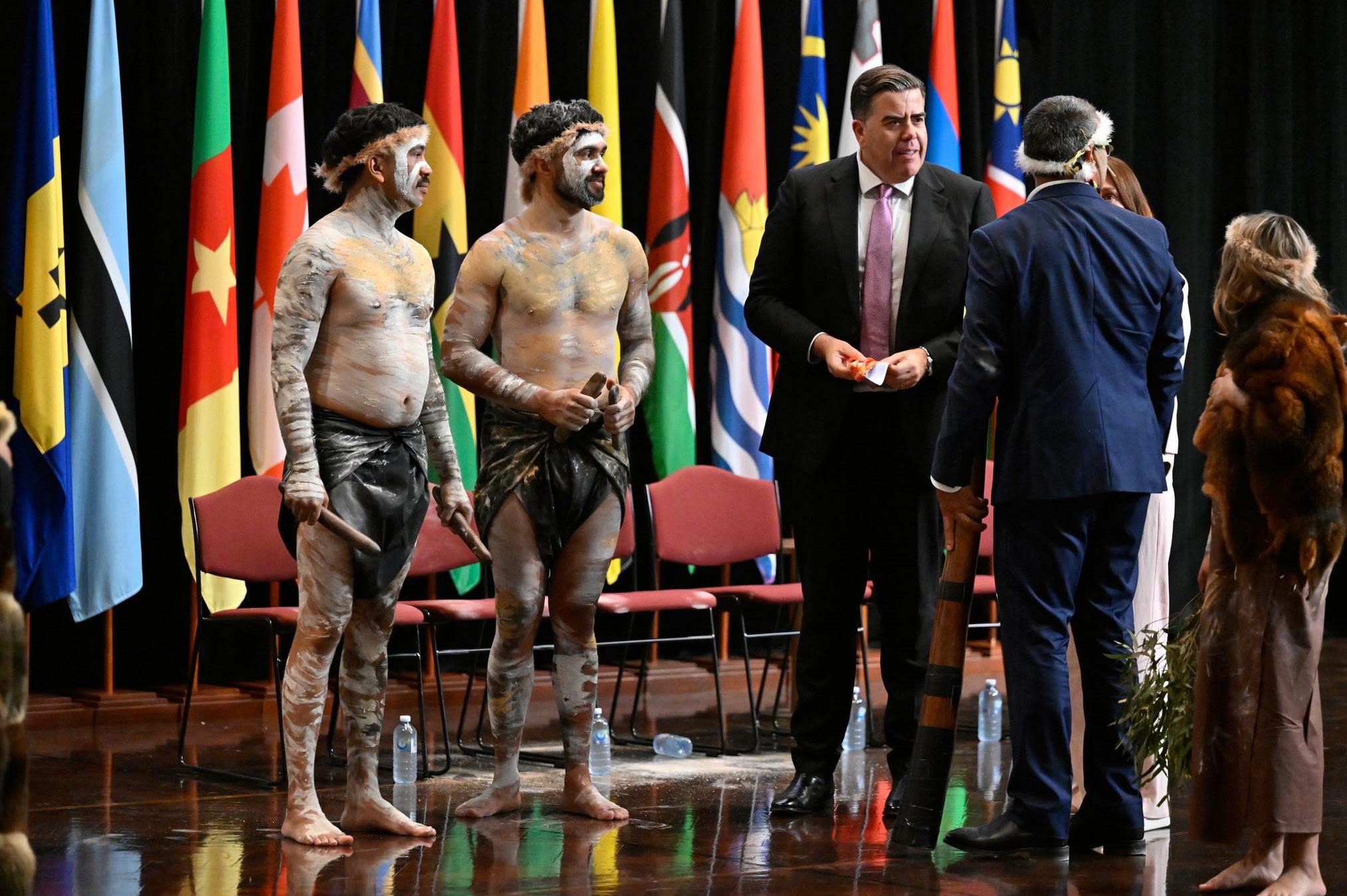
Wales, Senator Andrew James (Jim) Molan, AO DSC (Liberal Party of Australia).
The Leader of the Opposition in the Senate, Senator Hon. Simon Birmingham, by leave, then moved a condolence motion, during which he told the Senate that Senator Molan had “served Australia as a soldier, a diplomat, a Senator, a community volunteer and a strategist. He was a man of principle who was willing to make sacrifices for his beliefs and embodied the best of service to his nation.”
A further thirty-two Senators made contributions. The motion was supported, and all Senators present joined in a moment of silence. On the motion of Senator Hon. Katy Gallagher, the Senate adjourned until the following day at midday, as a mark of respect.
In the House of Representatives, a condolence motion was moved by the Prime Minister, Hon. Anthony Albanese, MP. The motion was seconded by the Leader of the Opposition, Hon. Peter Dutton, MP. Members rose in their places in silence as a mark of respect. The motion was referred to the Federation Chamber, where contributions were made, before being returned to the House and agreed to.
PRESENTATION OF REPORT BY JOINT SELECT COMMITTEE ON PARLIAMENTARY STANDARDS
The Joint Select Committee on Parliamentary Standards for the 47th Parliament was appointed by resolution of the House of Representatives on 26 July 2022 and resolution of the Senate on 27 July 2022. The Committee was established in response to the Australian Human Rights Commission’s Set the Standard: Report on the Independent Review into Commonwealth Parliamentary Workplaces (2021) to inquire into and report on matters relating to the development of codes of conduct for Commonwealth* parliamentary workplaces.
On 29 November 2022, the Chair of the Joint Committee, Ms Sharon Claydon, MP, presented the Committee’s final report. The report presents behaviour standards and codes which it recommends that the House and the Senate adopt into their respective standing orders in the first sitting week after the establishment of the Independent
Parliamentary Standards Commission. The Committee also recommends the adoption of interim behaviour standards. Making a statement by leave in connection with the report, Ms Claydon said that “recent reports of bullying, sexual harassment and sexual assault in our Parliament have justly shocked the nation and highlighted the need for urgent reform to ensure all parliamentary workplaces are safe and respectful places to work. Codes of conduct are a crucial part of that reform; they set clear and consistent standards of behaviour which will in turn help hold everyone to account.” Ms Claydon observed that the scope and responsibility of the Committee was “unusual” in that it had been tasked with not only considering how codes could work, their applicability and what other jurisdictions had done, but also with drafting the codes of conduct for Parliamentarians, Parliamentarians’ staff and for parliamentary workplaces.
Ms Claydon noted that the Committee had received 45 public submissions and that over 40 hours of evidence from individuals, organisations, Parliamentarians and staff had been gathered over a series of public and private hearings, focused discussion groups and in camera hearings. The Commonwealth Parliamentary Association Headquarters was one of the organisations that gave both written and oral evidence
to the Committee to share best practice and examples of parliamentary codes of conduct (see The Parliamentarian 2022: Issue Four page 302).
Ms Claydon said that the Committee had been able to reach a consensus which, she said, “should give this Parliament every confidence to move forward with these recommendations.”
Hon. Nola Marino, MP, a member of the Committee, also made a statement by leave in relation to the report, calling it a “significant piece of work”. She commended the Chair and the Deputy Chair, Senator Hon. Marise Payne, for their work, and told the House that everyone on the Committee had been “impacted by the evidence we received in its various forms.” She thanked the witnesses “for the courage they had to report to us and give us the information we needed to come to this report and the recommendations in it.”
The next day, on the first anniversary of the ‘Set the Standard’ report, the Speaker of the House of Representatives, Hon. Milton Dick, MP, made a statement updating the House on the implementation of responses to the 28 recommendations. Along with the proposed codes of conduct, the Speaker said that the “significant progress” included that:
• legislation had been amended to clarify duties in respect of
The Parliamentarian | 2023: Issue One | 100 years of publishing | 89
Parliamentary Report by Fleur Hall, Parliament of Australia.
PARLIAMENTARY REPORT AUSTRALIA Image credit: Parliament of Australia/AUSPIC. *In this context, Commonwealth refers to the Australian Federal Parliament and the Federal Government of Australia
Below: The ceremonial opening of the 26th Conference of Speakers and Presiding Officers of the Commonwealth (CSPOC) at the Australian Federal Parliament in Canberra.
employment, anti-discrimination and work health and safety;
• changes to the sitting calendar and hours of sitting now consider wellbeing, balance and flexibility;
• new Parliamentarians and their staff had been participating in refreshed induction processes;
• a feasibility study into a parliamentary health and wellbeing service was being conducted, with plans to improve services for Parliamentarians and staff, including general practitioner services, pharmaceutical and mental health supports;
• improvements to accessibility for those with disability had been made;
• the Parliamentary Workplace Support Service had been expanded; and
• the Senate and House Procedure Committees had been examining Standing Orders to improve levels of safety and respect in the Chamber to enhance wellbeing, balance and flexibility.
The Speaker said that, along with the President of the Senate, Senator Hon. Sue Lines, he acknowledged “the history of unacceptable behaviour in Parliament House” and restated the “commitment of the Parliament to making lasting changes.”
On 8 February 2023, the Prime Minister, Hon. Anthony Albanese, MP moved that the House:
(a) endorse the draft Behaviour Standards and Codes as presented in the Joint Select Committee on
Parliamentary Standards’ final report, pending the establishment of the advisory and enforcement regime, and the final adoption of Behaviour Standards and Codes for Parliamentarians, Parliamentarians’ staff and Commonwealth parliamentary workplaces; and
(b) recognise the contribution of the Parliamentary Workplace Support Service to improving the culture at Parliament House and its role in supporting Parliamentarians and their staff.

The Leader of the Opposition, Hon. Peter Dutton, MP, the Leader of the Nationals, Hon. David Littleproud, MP, the Leader of the Australian Greens, Mr Adam Bandt, MP and the Member for Warringah, Ms Zali Steggall, MP (Independent) all spoke on the motion. Resumption of debate on the motion was then declared referred to the Federation Chamber by the Leader of the House, Hon. Tony Burke, MP. On 9 February, ten Members spoke on the motion in the Federation Chamber, after which it was agreed that further proceedings be conducted in the House. Later, in the House, the Speaker reported the return of the motion, which was agreed to.
In the Australian Senate, on 8 February, a near identical motion was moved by the Manager of Government Business in the Senate and Minister for Finance, Senator Hon. Katy Gallagher (Australian Labor Party) and agreed to.
PARLIAMENTARY REPORTS: CPA AUSTRALIA REGION VICTORIA STATE ELECTION
The general election for Victoria was held on 26 November 2022. The incumbent Labor Government, led by the Premier, Hon. Daniel Andrews, secured a third term of majority government, winning 56 of the 88 seats in the Legislative Assembly. In his victory speech, the Premier said that Victorians had “re-elected in comprehensive terms a strong, stable, majority Labor government.” He acknowledged that the past few years had been “incredibly challenging…we have had to make some very difficult decisions….and Victorian families and businesses have had a very difficult time.” The Premier told his supporters that “hope always defeats hate” and, thanking his electorate of Mulgrave, said that he was “humbled to have been, yet again, comprehensively endorsed by my neighbours, my constituents, to be your voice in the Victorian Parliament.”
The Liberal-National Coalition won 28 seats, with their Leader, Hon. Matthew Guy, conceding defeat late in the evening. In his concession speech, Mr Guy told supporters that he had rung the Premier to offer congratulations, and said that it had been “a disappointing night.” The following morning, Mr Guy announced that he would resign as leader of the Liberal Party, and on 8 December, following a secret ballot, he was replaced by Mr John Pesutto
NEW SOUTH WALES ELECTION
An election will be held on 25 March 2023 to elect the 58th Parliament of New South Wales. New South Wales is divided into 93 state electoral districts, and voters in each district will elect one person to represent their district in the Legislative Assembly. Voters will also elect 21 of the 42 Members of the Legislative Council.
The Liberal-National Coalition has governed the state for the past 12 years. The Premier, Hon. Dominic Perrotet, MP, has been in the role since 5 October 2021, following the resignation of former Premier Hon. Gladys Berejiklian, MP. The Leader of the Opposition, Mr Chris Minns, MP (Australian Labor Party) has held that position since June 2021. The first Leaders’ debate took place on commercial radio on 9 February, which ended with both Mr Perrotet and Mr Minns agreeing they were open to having another debate.
90 | The Parliamentarian | 2023: Issue One | 100 years of publishing PARLIAMENTARY REPORT AUSTRALIA
Image credit: Parliament of New South Wales.
The Parliament of New South Wales in Sydney, Australia.
Seventy-five years of democracy in India
‘House of the People: Parliament and the Making of Indian Democracy’ by Ronojoy Sen (Published by Cambridge University Press)

Review by Rup Narayan Das, a former officer of the Indian Parliament. Previously, he was a senior fellow at India’s premier think-tank, the Manohar Parrikar Institute for Defence Studies and Analyses, and also a Senior Fellow of the Indian Council of Social Science Research; he was also a Taiwan Fellow in 2022. All views are personal opinions.
At a time when democracy the world over has been subjected to great stress and strain, the book ‘House of the People: Parliament and the Making of Indian Democracy’ by Ronojoy Sen is a welcome addition to the corpus of empirical and normative studies. Ronojoy, who did his Ph.D. at the University of Chicago under the supervision of Lloyd and Susanne Rudolph, acknowledged American scholars on India and has been closely following political developments including the workings of the Indian Parliament.
The book within a compass of 300-odd pages seeks to compress India’s tryst with democracy starting from the revolt of 1857 called the infamous Sepoy Mutiny that fired the first salvo of India’s yearning for self-rule and freedom till recent times. Ronojoy condenses India’s democratic sojourn removing the shaft from grain with great dexterity. Divided into five seamless chapters, the book is a continuum of India’s trials and tribulations of democracy.
In the first chapter, the author reconstructs certain landmark events in the evolution and development of representative institutions in British India after the passing of the Indian Councils Act of 1861 in response to the revolt of 1857. The colonial British government in India attempted to co-opt Indian elites like princes, rich landlords and other elites in the Legislative Council, created under the provisions of the Act. It was more of a strategy to arrest the rising tide of nationalism and demands for self-rule through the policy of ‘divide and rule’. Thirty years later, and seven years after the birth of the Indian National Congress, the British Parliament passed the Indian Council Act of 1892 to enlarge the space for representation. The British, however, insisted that like the 1861 Act, the 1892 Act was not a precursor to any sort of parliamentary government. However, several nationalist leaders found a place in the enlarged
council, including Gopal Krishna Gokhale, Rash Behari Ghosh and others. Sen writes that they often made forceful interventions, though without much effect on government policy. He also mentions Dadabhai Naoroji, regarded as the ‘Grand Old Man of India’, who believed in reforming British rule from within Westminster. In 1892, Naoroji contested from central London and won by a whisker of five votes. Naoroji, who was voted out in 1895, criticized the colonial policy on the floor of the House. He articulated his famous ‘drain theory’ and how the ‘evil of foreign rule involved the triple loss of wealth, wisdom and work’.
A notable aspect of the book is the study by the author of the participation and interventions by the Indian Members of the Legislative Council constituted under the Government of India Act, 1919 with regard to the welfare and well-being of the Indian people. Prominent Indian members of the Council raised a wide range of issues such as sharing expenditure on British troops, the Indianization of the Indian Civil Service, and the recruitment of engineers for the railways and public works department from India only. This chapter sheds light on the nature of British colonialism in India which is a mix of despotism, atrocities and benevolence. Although Britain never wanted to concede self-rule to India, the democratic and representative institutions, and parliamentary practices and procedures it created led to the unintended consequences of India’s ultimate freedom. An aspect of British colonialism was that the colonial administration was subjected to the scrutiny of the British Parliament, the sentinel of democracy.
The tradition and heritage of Parliamentary democracy also resonated in the omissions and commissions of the colonial administration in India, as elsewhere in other British colonies. This reviewer who has authored the book ‘Hong Kong Conundrum: Pangs of Transition’, the review of which is published in The Parliamentarian 2022:
Issue
Two, is impelled to draw parallel developments both in India and Hong Kong, although Hong Kong unlike India was under the treaty obligation to revert back to China. Now that Hong Kong has reverted back to China, there is what can be dubbed as ‘reverse colonialism’ under a despotic communist regime unaccustomed to democratic norms. That makes a huge difference between British colonialism both in India and Hong Kong and the ‘reverse colonialism’ of Hong Kong under the communist regime in China having no accountability.
The second chapter of the book titled ‘Protean Institution’ dwells on the ‘changing composition of Parliament’ in terms of ‘representativeness’. In this context, the author prefaces his exposition with the wisdom of some eminent political thinkers. He recalls John Stuart Mill who wrote that the basis of representative government was to ‘permit people to govern themselves, but not to prevent them from being misgoverned.’ He further quotes the French philosopher and the author of magnum opus Leviathan, who opined, ‘The English people believes itself to be free, it is gravely mistaken, it is free only during the elections of the Members of Parliament; as soon as the Members are elected, and the people are enslaved’. In the third chapter ‘Please take your seats’, the author throws light on the disruptions in Parliament which have sullied the image of the exalted institution. Regretfully the situation has deteriorated further over the years which the author has graphically demonstrated in the book.
Besides, these chapters, there is also a chapter on the Committee System in the Indian Parliament and a very illuminating conclusion. The conclusion of the book is very rich and insightful. Due to the paucity of space, it is not possible to review each chapter that otherwise merits attention; however the study is both insightful and analytical.
The Parliamentarian | 2023: Issue One | 100 years of publishing | 91 THE PARLIAMENTARIAN BOOK REVIEW
Commonwealth Parliamentary Association Office
Office Holders of the Commonwealth Parliamentary Association
CPA Executive Committee
Dates of membership below. Some Members are completing terms started by other Members. *TermdatesextendedasnoCPAGeneralAssemblyheldin2018,2020and2021.
CPA Officers
CPA PRESIDENT: (65th CPC to 66th CPC - 2022-2023): Rt Hon. Alban Bagbin, MP, Speaker of Parliament (Ghana)
CPA VICE-PRESIDENT: (65th CPC to 66th CPC - 2022-2023):
Hon. Matthew Mason-Cox, MLC, President of the New South Wales Legislative Council
CHAIRPERSON OF THE CPA EXECUTIVE COMMITTEE: (65th CPC to 68th CPC - 2022-2025):
Hon. Ian Liddell-Grainger, MP (United Kingdom)
CPA VICE-CHAIRPERSON: (65th CPC to 66th CPC - 2022-2023):
Hon. Osei Kyei Mensah Bonsu, MP (Ghana)
CPA TREASURER: (65th CPC to 68th CPC - 2022-2025): Hon. Shri Anurag Sharma, MP (Lok Sabha, India Union)
COMMONWEALTH WOMEN
PARLIAMENTARIANS (CWP)
CHAIRPERSON: (65th CPC to 68th CPC - 2022-2025): Hon. Dr Zainab Gimba, MP (Nigeria)
CPA SMALL BRANCHES
CHAIRPERSON: (65th CPC to 68th CPC - 2022-2025): Joy Burch, MLA, Speaker of the Legislative Assembly of Australian Capital Territory
COMMONWEALTH PARLIAMENTARIANS WITH DISABILITIES (CPwD)
CHAIRPERSON: (65th CPC to 68th CPC - 2022-2025): Hon. Laura Kanushu Opori, MP (Uganda)
The CPA Coordinating Committee comprises the CPA Chairperson, Vice-Chairperson, Treasurer, CPA Small Branches Chairperson and the Chairpersons of the Commonwealth Women Parliamentarians (CWP) and the Commonwealth Parliamentarians with Disabilities (CPwD) networks.
Regional Representatives
CPA AFRICA REGION
Hon. Dr Makali Mulu, MP, Kenya (63rd CPC to 66th CPC- 2017-2023)*
Vacant (63rd CPC to 66th CPC- 2017-2023)*
Hon. Osei Kyei Mensah Bonsu, MP, Ghana (64th CPC to 67th CPC - 2019-2024)* - Also CPA ViceChairperson
Rt Hon. Dr Abass Bundu, MP, Speaker, Sierra Leone (64th CPC to 67th CPC - 2019-2024)*
Hon. Solomon Lechesa Tsenoli, MP, Deputy Speaker of the National Assembly, South Africa (65th CPC to 68th CPC - 2022-2025)
Hon. Raymond Nkhata, MP, Malawi (65th CPC to 68th CPC - 2022-2025)
CPA ASIA REGION
Hon. Dr Lal Chand Ukrani, MPA Sindh, (63rd CPC to 66th CPC- 20172023)*
Hon. Mahinda Yapa Abeywardana, MP, Speaker, Sri Lanka (64th CPC to 67th CPC - 2019-2024)* Completing term started by another Sri Lanka Member.
Hon. Kazi Nabil Ahmed, MP Bangladesh (65th CPC to 68th CPC2022-2025)
CPA AUSTRALIA REGION
Vacant (63rd CPC to 66th CPC- 2017-2023)*
Senator Hon. Sue Lines, President of the Senate, Australia Federal (64th CPC to 67th CPC - 2019-2024). Completing term started by other Australia Federal Senators.
Hon. Mark Shelton, MP, Speaker of the Legislative Assembly, Tasmania (65th CPC to 68th CPC - 2022-2025)
CPA BRITISH ISLANDS AND MEDITERRANEAN REGION
Hon. Leona Roberts, MLA Falkland Islands (63rd CPC to 66th CPC - 2017-2023)*
Hon. Chris Elmore, MP, United Kingdom (64th CPC to 67th CPC - 2019-2024)* Completing term started by other UK Members.
Hon. Stuart McMillan, MSP, Scotland (65th CPC to 68th CPC - 2022-2025)
CPA CANADA REGION
Hon. Randy Weekes, MLA, Speaker of the Legislative Assembly of Saskatchewan (63rd CPC to 66th CPC- 2017-2023)* Completing term started by Nova Scotia.
Hon. Terry Duguid, MP, Canada Federal (64th CPC to 67th CPC - 2019-2024)* Completing term started by another Canadian Member.
Hon. Ted Arnott, MPP, Speaker of the Legislative Assembly of Ontario (65th CPC to 68th CPC2022-2025)
Holders
CPA CARIBBEAN, AMERICAS AND THE ATLANTIC REGION
Hon. Claudius J. Francis, MP Speaker, Saint Lucia (64th CPC to 67th CPC - 2019-2024)* Completing term started by another St Lucia Member.
Hon. Gordon J. Burton, MHA Speaker, Turks & Caicos (64th CPC to 67th CPC - 2019-2024)*
Completing term started by another Turks & Caicos Member.
Hon. Arthur Holder, MHA Speaker, Barbados (65th CPC to 68th CPC- 2022-2025)
CPA INDIA REGION
Shri Biswajit Daimary, MLA
Speaker, Assam (63rd CPC to 66th CPC- 2017-2023)* Completing term started by another Assam Member.

Vacant, India Union, (64th CPC to 67th CPC - 2019-2024)* Completing term started by another India Member.
Smt. Ritu Khanduri Bhusan, MLA
Speaker of Uttarakhand Legislative Assembly (65th CPC to 68th CPC2022-2025)
CPA PACIFIC REGION
Hon. Therese Kaetavara, MHR Deputy Speaker, Bougainville (63rd CPC to 66th CPC- 2017-2023)*
Completing term started by another Bougainville Member
Hon. Ratu Epeli Nailatikau Speaker, Fiji (64th CPC to 67th CPC2019-2024)*
Hon. Gerry Brownlee, MP, New Zealand (65th CPC to 68th CPC2022-2025)
CPA
SOUTH-EAST ASIA REGION
Hon. Lim Biow Chuan, MP Singapore (63rd CPC to 66th CPC2017-2023)* Completing term started by another Singapore Member
Hon. Dr Dato’ Noraini Ahmad, MP, Malaysia (64th CPC to 67th CPC - 2019-2024)* Completing term started by another Malaysia Member
Hon. Dato’ Law Choo Kiang, MLA, Speaker, Penang (65th CPC to 68th CPC - 2022-2025)
92 | The Parliamentarian | 2023: Issue One | 100 years of publishing
CPA Small Branches Steering Committee
CPA SMALL BRANCHES CHAIRPERSON
Joy Burch, MLA, Speaker of the Legislative Assembly of Australian Capital Territory
CPA AFRICA REGION
Hon. Churchill Gill, MNA Seychelles (2021-2024) - CPA Small Branches Vice-Chairperson
CPA AUSTRALIA REGION
Hon. Mark Monaghan, MLA Speaker, Northern Territory (20202023)
CPA BRITISH ISLANDS AND MEDITERRANEAN REGION
Hon. Juan Watterson, SHK
Speaker of the House of Keys, Isle of Man (2020-2023)
Commonwealth Parliamentary Association (CPA)
CPA CANADA REGION
Hon. Nils Clarke, MLA Yukon (2019-2022)
CPA CARIBBEAN, AMERICAS AND THE ATLANTIC REGION
Hon. Barbara Webster-Bourne, MHA, Speaker of the House of Assembly, Anguilla (2020-2023)
CPA PACIFIC REGION
Hon. Tofa Nafoitoa Talaimanu Keti, MP, Samoa (2019-2022)
CPA SOUTH-EAST ASIA REGION
Hon. Hamizan bin Hassan, MLA Perlis (2020-2023)
The CPA Small Branches Steering Committee comprises the CPA Small Branches Chairperson and seven Members who represent the seven out of the nine Regions of the CPA with Small Branches.
Commonwealth Women Parliamentarians (CWP) Steering Committee
CWP PRESIDENT
Hon. Patricia Appiagyei, MP Ghana (2022-2023)
CWP CHAIRPERSON
Hon. Dr Zainab Gimba, MP Nigeria (2022-2025)
CPA AFRICA REGION
Vacant (2022-2025)
CPA ASIA REGION
Hon. Selima Ahmad, MP Bangladesh (2021-2024)
CPA AUSTRALIA REGION
Hon. Kate Doust, MLC Western Australia (2022-2025)
CPA BRITISH ISLANDS AND MEDITERRANEAN REGION
Rt Hon. Dame Maria Miller, MP United Kingdom (2021-2024)
CPA CANADA REGION
Hon. Lisa Thompson, MPP Ontario (2020-2023)
CPA CARIBBEAN, AMERICAS AND THE ATLANTIC REGION
Hon. Valerie Woods, MP Speaker of the House of Representatives, Belize (2021-2024) - Also CWP ViceChairperson (2022-2023)
CPA INDIA REGION
Smt. Sunita Duggal, MP Lok Sabha, India (2020-2023)
CPA PACIFIC REGION
Hon. Selina Napa, MP Cook Islands (2020-2023)
CPA SOUTH-EAST ASIA REGION
Commonwealth Parliamentarians with Disabilities (CPwD) Regional Champions
CPwD CHAIRPERSON
Hon. Laura Kanushu Opori, MP Uganda (2022-2025)
CPA AFRICA REGION Vacant (2020-2023)
CPA ASIA REGION
Hon. Zill-E-Huma, MNA Pakistan (2020-2023)
CPA AUSTRALIA REGION
Hon. Liesl Tesch, MP New South Wales (2020-2023)
CPA BRITISH ISLANDS AND MEDITERRANEAN REGION
Hon. Paul Maynard, MP United Kingdom (2020-2023)
CPA Regional Secretaries
CPA AFRICA REGION
Ms Nenelwa Joyce Mwihambi, Parliament of Tanzania
CPA ASIA REGION
Mr Dhammika Dasanayake, Parliament of Sri Lanka
CPA AUSTRALIA REGION
Ms Alex Cullum, Parliament of Australia
CPA BRITISH ISLANDS & MEDITERRANEAN
Mr Jon Davies, Parliament of the United Kingdom
CPA CANADA REGION
Hon. Dan Coulter, MLA British Columbia (2020-2023)
CPA CARIBBEAN, AMERICAS AND THE ATLANTIC REGION
Senator Hon. Paul Richards Trinidad and Tobago (2020-2023) Also: CPwD Vice-Chairperson
CPA INDIA REGION
Smt. Supriya Sule, MP India (2020-2023)
CPA PACIFIC REGION
Hon. Viam Pillay, MP Assistant Minister for Agriculture, Waterways and Environment, Fiji (2020-2023)
CPA SOUTH-EAST ASIA REGION
Senator Ras Adiba Mohd Radzi Malaysia (2020-2023)
CPA CANADA REGION
Mr Jeremy LeBlanc, Parliament of Canada
CPA CARIBBEAN, AMERICAS & THE ATLANTIC REGION
Mr Pedro E. Eastmond, Parliament of Barbados
CPA INDIA REGION
Shri Utpal Kumar Singh, Parliament of India
CPA PACIFIC REGION
Ms Amber Walters, Parliament of New Zealand
CPA SOUTH-EAST ASIA REGION
Mr Nizam Mydin bin Bacha Mydin, Parliament of Malaysia
CPA Headquarters Secretariat
Stephen Twigg
CPA Secretary-General
Tel: +44 (0)20 7799 1460
Email: hq.sec@cpahq.org
Commonwealth Parliamentary Association, CPA Headquarters Secretariat, Richmond House, Houses of Parliament, London SW1A 0AA, United Kingdom
www.cpahq.org
Twitter @CPA_Secretariat
Facebook.com/CPAHQ
Instagram @cpa_secretariat
LinkedIn | YouTube
Hon. Alice Lau Kiong Yieng, MP Malaysia (2022-2025) A full A to Z listing of all CPA Branches can be found at: www.cpahq.org
InformationassuppliedbyCPABranchesandCPARegionstoCPAHeadquartersSecretariat


SUBSCRIBE TODAY THE PARLIAMENTARIAN To subscribe to The Parliamentarian, please email editor@cpahq.org Members of Parliament: Please contact your CPA Branch Secretary for print and digital copies. Individual subscriptions also available.