How

THE OSPREY The International Journal of Salmon and Steelhead Conservation Issue No. 105 Spring/Summer 2023
Salmons’ History Lesson
The
historical events and policy drivers affect PNW salmon ALSO IN THIS ISSUE: STATE OF CALIFORNIA CHINOOK SALMON • COLUMBIA RIVER POUND NETS REDUCE BYCATCH MORTALITY • MAJOR SOUTHERN CALIFORNIA STEELHEAD PASSAGE PROJECT • COLUMBIA RIVER SUMMER STEELHEAD FORECAST WORST EVER
By Robert T. Lackey
THE OSPREY
Chair Pete Soverel
Editor
Jim Yuskavitch
Editorial Committee
Pete Soverel • Dave Peterson • Greg Knox
Brian Braidwood •Rich Simms
Ryan Smith • Guy Fleischer

Scientific Advisors
Rick Williams • Jack Stanford
Jim Lichatowich • Bill McMillan
Bill Bakke • Michael Price
Design & Layout
Jim Yuskavitch
The Osprey is published by: Wild Salmon Rivers
16430 72nd Avenue, West Edmonds, WA 98026
Letters To The Editor
The Osprey welcomes letters to the editor and article proposals .
The Osprey
69278 Lariat Sisters, OR 97759
jyusk@bendcable.com
(541) 549-8914
By Michael O’Farrell,
and Steve Lindley
By Adrian Tuohy
The Osprey is a joint publication of not-for-profit organizations concerned with the conservation and sustainable management of wild Pacific salmon and steelhead and their habitat throughout their native and introduced ranges. This unique partnership includes The Conservation Angler, Fly Fishers International, Steelhead Society of British Columbia, SkeenaWild Conservation Trust, Wild Salmon Center and Wild Steelhead Coalition. Financial support is provided by partner organizations, individuals, clubs and corporations. The Osprey is published three times a year in January, May and September. All materials are copyrighted and require permission prior to reprinting or other use.
By Sandra Jacobson
By David Moskowitz
The Osprey © 2023
ISSN 2334-4075


2 The Osprey Contents Cover Photo by NASA; Cover Inset Image Courtesy Freshwater and Marine Image Bank, University of Washington Columns & News Columbia River Pound Nets Move Forward as an Alternative Model for Sustainable Salmon Fishing
A Bridge Runs Through It — An ambititous cooperative barrier removal project will allow southern California steelhead access to core spawning and rearing habitat
Field Report: The State of California Chinook Salmon Populations
Nate Mantua
The Salmons’ History Lesson — How historical events and policy drivers affect PNW salmon
6 12 10 15 2023 Columbia River Preseason Summer Steelhead Forecast Lowest Ever
18 Features
3 23 From the Perch — Editor’s Message Hits and Misses — Chair’s Corner Letters to the Editor Fish Watch: Wild Fish News, Issues and Initiatives 4 22
The Osprey History Issue
by Jim Yuskavitch
In his wonderful book “King of Fish: The Thousand Year Run of Salmon,” author David R. Montgomery delves into the four Hs — hatcheries, habitat, hydro and harvest — well-known to wild Pacific salmon and steelhead advocates as shorthand for the human endeavors that threaten their very existence. But Montgomery goes one better and adds another “H” to the mix — history — and, when it comes to wild fish conservation, how we have failed to learn from it.
He notes that the catastrophic decline of wild Pacific salmon and steelhead in the Pacific Northwest, “is a strikingly faithful retelling of the fall of Atlantic salmon in Europe, and again later in eastern North America.” It echos Pete Soverel’s Hits and Misses” column in the Winter 2023 issue of The Osprey and the truism that those who ignore history are doomed to repeat it.
So, in this issue, we have some history for you. Our cover story “The Salmons’ History Lesson” by Robert T. Lackey describes how a number of regional, national and world historical events — both natural and human-driven — have, like the “Butterfly Effect,” combined to change the course of wild Pacific salmon and steelhead fortune’s, mostly to their detriment.
There is a little bit of history embedded, in one way or another, in each of the articles in this issue. For example, the decline of California Chinook salmon from a host of human and climate-related factors or the potential return of historical indigenous methods for catching salmon in a more sustainable manner.
Pete Soverel’s Hits and Misses column, “The View from 1898” struck me in particular for its connections, through his steelheading mentor Ken McLeod, who was fishing the rivers of the Pacific Northwest well before the dams came in and wild fish populations plunged. It ocurred to me, while reading the column, that Pete, through that connection with Ken, is himself, in a way, also connected to those early days
when wild salmon and steelhead stilled filled the rivers of the West Coast.

It’s a bit like that game “six degrees of separation” where you connect yourself to other people you don’t know through your relationship with a person you know, and their relationship with others.
History is made up of connections between people, places and events through time. A family member of mine, when she was an infant, was living with her parents in the city of Vanport, Oregon on that Memorial Day in 1948 when the great flood struck. So there’s my connection to the early days and an event on the Columbia River that set off a profound change to the salmon’s future.
Give it some thought, and I am sure you will find yourself connected in ways that never ocurred to you to the wild salmon and steehead that we care so much about.
How The Osprey Helps Wild Fish
The Osprey has been bringing the latest science, policy, opinion and news stories to its readers supporting wild Pacific salmon and steelhead conservation and management for 35 years. But we are much more than a publication that you subscribe to because of your own interest in wild fish conservation. The funds we receive from our subscribers allows us to send The Osprey to wild fish conservation decision-makers and influencers including scientists, fisheries managers, politicians and wild fish advocates.
So when you subscribe/donate to The Osprey, you not only receive a subscription yourself, but you also help us put The Osprey into the hands of the people we need bring to our side to save our wild fish.
Please go to the subscription/donation form on page 23 or on-line at www.ospreysteelhead.org/donation and donate whatever you are able. Thank you.
Jim Yuskavitch Editor, The Osprey
FROM THE PERCH — EDITOR’S MESSAGE Spring/Summer 2023 • Issue No. 105 3
Sending The Osprey to decision makers is key to our wild fish conservation advocacy. Your support makes that possible.
Sockeye run at Katmai National Park, Alaska. It’s among the dwindling number of places on the planet that still has a semblence of historical salmon abundance. Photo Courtesy National Park Service
HITS & MISSES — CHAIR’S CORNER The View from 1898
And a mentor who remembered the days of abundance
By Pete Soverel
Ihave been a steelheader since January 1969, 54 years, about one-third of the angling history for West Coast steelhead. I joined the Steelhead Trout Club a year later which put me in contact with an early steelhead fly fishing pioneer, Ken McLeod (1898-1987). His progeny didn’t fall very far from the tree. His son, George and grandson, Ken, carried on his legacy of steelhead conservation which, altogether, spanned more than 100 years.

For reasons unknown to me, in 1970, Ken, who was often a bit stand offish, decided to help me in my quest to become a proficient steelhead fly fisher. Fortunately for me, in spite of precipitous declines in wild steelhead populations over his lifetime, there were still fishable populations of wild fish in the 1970s, but hardly like the “old days” of Ken’s earlier life.
In the year Ken was born, the US Fish Commission estimated the adult steelhead return to the Stillaguamish River in Washington State was at least 95,000 with almost 50,000 harvested by just six commercial fishers in the lower river. By the early 1970s, returns were probably about 5% of the 1898 return.
Nonetheless returns were still sufficiently numerous to provide excellent fly fishing, although for many years there were very few anglers who pursued winter steelhead in Washington with flies. I would often go years between encounters with other anglers.
downstream from the mouth of the Okanogan River, where hundreds of summer run steelhead ganged up before running up the Okanogan, mixed in with thousands of steelhead headed much further upstream into Canada. This, of course, pre-dated Bonneville Dam or any other mainstem dams. I doubt that more than 100 steelhead now make it back to the Okanogan and none make it past Grand Coulee dam. The North Fork Clearwater River in Idaho, hosted returns measured in scores of thousands through the 1950s until the construction of Dworshak Dam at its mouth creating a great recreational fishery for crappie. No — as in zero wild steelhead now return to North Fork Clearwater.
California was a bit different and was the epicenter for pioneering fly fishers. For example, through the mid-1950s the annual harvest of wild Eel River steelhead hovered between 35,000 and 50,000 fish! The latest returns of about 2,000 wild steelhead are ballyhooed with “they’re back!” — just 4% of the 1950s era harvest.
When Ken and I fished together (mostly on his home water, the North Fork Stillaguamish) or visited at STC meetings, he regaled me with stories from the pre-dam era. I once asked him for his favorite water. Without hesitation he said the mainstem Columbia River
Up and down the West Coast, managers/agencies sought easy ways to halt declines arising from more or less unconstrained commercial fisheries, liquidation of native forests, habitat degradation, dam construction, etc., etc. etc. Early efforts to supplement wild populations with artificial production were completely ineffective in spite of releasing scores of millions of alevins or juveniles. Few came back. Finally, in the late 1950s and early 1960s, the hatchery warriors discovered that if they reared incubated fish to smolt size, they realized return rates of about 4%-6%. Nirvana — problem solved! At last, they realized their dream best described by Jim Lichatowich in his landmark book “Salmon without Rivers”! No need to worry about harvest, habitat, dams, urbanization, water quality, and so on.
So for 60 to 100 years, US West Coast anadromous fish managers have pursued hatchery based management with dogged determination. We all know how that has worked out. From Baja California to Cold Bay, Alaska, salmon and steelhead are at very high risk of extirpation in thousands of watersheds. In spite of decades of data demonstrating the bankruptcy of this approach, there
Continued on next page
The Osprey
4
In 1898, the year Ken McLeod was born, the US Fish Commission estimated adult steelhead return to the Stillaguamish was at least 95,000.
This photograph, noting the rising popularity of steelhead fishing, was published in the Biennial Report of the Fish and Game Commission of the State of Oregon to the Governor and the Twenty-Ninth Legislative Assembly, 1917. Photo Courtesy Freshwater and Marine Image Bank, University of Washington
has never been a serious assessment of hatchery based management, alternatives to this failed model or threats posed by these practices to rapidly dwindling wild stocks. Consider the plight of wild chum salmon in streams in the Bella Coola watershed in British Columbia. For decades, Canada operated a large-scale chum hatchery at Snootli Creek in the lower Bella Coola River, releasing millions of alevins annually and authorizing intensive interception fisheries for returning adults. The outcome — wild chum throughout this region teeter on the brink of extirpation. The situation is so dire, that Fisheries and Oceans Canada (DFO) closed the marine commercial fishery that severely impacts wild chum stocks throughout the region.

Wild steelhead returns to the Columbia/Snake system when Ken fished there in the 1920s certainly numbered several million, and even more than in his father’s day, dating back to the middle of the 19th Century. Except for determined managers, we know how all this worked out. About 40% of the stocks are extinct. All the rest are at elevated risk of near-term extirpation. As I have noted many times before, any business or military leader with similar track records would have been dismissed. With fish managers, we weed out those who question the obvious and promote folks who insist the old way is the right way.


For flavor, consider this year’s projected wild steelhead return to the Columbia/Snake rivers is the lowest on record, continuing the increasingly steep slide towards oblivion. One of the small rivers in Kamchatka — about the size of Washington’s Tolt River — hosts more returning adults than the entire Columbia/Snake. The incomparable Thompson River steelhead run in British Columbia has been virtually eradicated and steelhead catch rates in BC have declined by 70% over the past 12 years. Let that sink in.
Pete Soverel is Chair of The Osprey Management and Editorial Committee and founder and President of The Conservation Angler, one of The Osprey’s supporting partner organizations. www.theconservationangler.org
Spring/Summer 2023 • Issue No. 105 5
Continued from previous page
The Columbia River above Cayuse Rapid, at approximately River Mile 135, in 1908 before the dams were built along with the hatcheries that were supposed to mitigate for the loss of wild salmon and steelhead caused by the dams. Photo Courtesy US Army Corps of Engineers
The Salmons’ History Lesson
How historical events and policy drivers affect PNW salmon
By Robert T. Lackey
Anyone who is aware of the precipitous decline of wild salmon and steelhead runs in California, Oregon, Washington, Idaho, and southern British Columbia is also aware of the primary factors driving those declines. These so-called proximal causes, usually expressed as the Four “Hs’ — Habitat, Hatcheries, Hydro and Harvest — is “old news” to folks familiar with the wild salmon story.
Behind those proximal causes of wild salmon and steelhead declines have been a series of decisions over many competing policy priorities. There are no heroes or villains in this story, but rather a series of difficult and unappealing choices that society has made over many decades.
No one was ever out to intentionally eliminate wild salmon runs. So it is not analogous to the declines of wolves, grizzlies, and cougars that many people wanted gone — and the sooner the better. So the wild salmon decline is all about competing policy priorities. In the political world, wild salmon runs are one of those many competing priorities. After all, policy making is all about picking “winners” and “losers” and this case study is no different. It is, perhaps, a perspective that is a bit different than what you typically hear.
While this paper focuses on wild salmon and steelhead, defining “wild” is not as simple as it might at first appear. Of course, salmon do not return to the stream of origin with 100% fidelity. The frequency of straying is often pretty significant, and a very handy survival trait. Further complicating the definition of “wild” is that most salmon runs these days are predominantly hatchery-origin fish — sometimes close to 100%. When such hatchery-origin salmon return how do you count the offspring from those that spawn in the wild? Their parents were from a hatchery so it might be a stretch to call the offspring “really” wild
Another wrinkle is that salmon from hatcheries were stocked in rivers and
streams for decades without regard to genetic considerations. Hatchery salmon in the late 1800s — and well into the 1900s — were planted pretty much everywhere. In short, the genetics of so-called wild salmon have been changed by such stocking in ways that no one really understands.
In addition to defining what a wild salmon is, “collapse” is another word that needs a more precise definition. What is exactly meant by invoking the word “collapse” to describe the decline of wild salmon runs or is this just hyperbole? For example, these days we all
trend oscillates between so called “good” ocean conditions and “bad” ocean conditions. These oscillations, the Pacific Decadal Oscillation and El Nino – La Nina, and their impacts, typically last roughly 10 to 30 years.
There is great variability in these estimated run sizes. However, the longterm trend is clearly downward. And now runs are typically from 0% to 3% of the 1800 level. Salmon no longer occur in approximately 40% of the original locations. Furthermore — most runs are primarily hatchery-origin salmon — not wild salmon. So, “collapsed”, the way I am using the word means wild runs somewhere between extirpated and 3%, which is almost all of the wild runs in these states and province So saying that wild salmon and steelhead populations are collapsing is no exaggeration.
Overall Trends in Wild Salmon Abundance
hear many policy issues routinely labeled as being “crises.” Thus, such a label no longer has a broadly accepted meaning. And even worse, it suffers from a bad case of over-use. Does a similar charge apply to the word “collapse?”
Let me offer my rationale for using the term “collapse” to describe to the long-term decline of wild salmon runs. We have a very rough estimate of the number of salmon in the region. In the early 1800s that number was approximately 50 million — it was not billions but it was not just a few million, either. I have arbitrarily set this level at 100%.
As you move through the years starting in 1800 there is a lot of variation in year-to-year runs. Even if we had very reliable data over this 200-plus year period there would be a lot of variability. Furthermore, the overall downward
Short-term trends are often misleading. For example, if you only had 20 years of run data showing a downwards trend, a naive salmon manager might sink into despair. Or, conversely, two-decades of run data describing an upwards trend may lead the same salmon manager to break into multiple choruses of “Happy Days are Here Again!” Beware of the allure of over interpreting short-term trends in salmon numbers. A few decades of data is often misleading when assessing the long-term status of salmon runs.
So what caused the runs to trend ominously downward since no one was out to deliberately eradicate salmon? What happened? The answer is found in the policy choices that society made when faced with a whole suite of real-world challenges. Political scientist typically label these choices “policy drivers.” Conversely, those of us who are scientists, managers, or policy advocates tend to focus on the so-called “proximal” influences. Proximal influences
Continued on next page
6 The Osprey
Policy choices are made by society in response to a whole suite of real world challenges. These choices are called “policy drivers.”
are the mechanisms that directly affect salmon runs. Most of us scientists tend to stay clear of policy drivers — and for good reason.
For example, supplemental hatchery stocking of salmon rarely, if ever, strengthens wild salmon runs. Scientists have worked this out pretty clearly. But such stocking continues. More science will not likely change anyone’s mind. Why? It has to do with policy drivers.
There are 10 primary policy drivers — the reasons — that caused the downward trajectory for wild salmon and steelhead abundance in California, Oregon, Washington, Idaho, and southern British Columbia. It goes back almost 200 years ago, soon after Lewis and Clark completed their epic journey.
Beaver Trapping
The first reason for the decline of wild salmon took place in the early 1800s and was largely the result of a fashion and business competition. The fashion was the beaver hat. And a main source of beaver pelts was western North America, particularly what is now Oregon, Washington, British Columbia, and Idaho.
lumbia, implemented a policy of aggressively trapping all beaver inhabiting the Columbia Basin and the surrounding area. The result was the so-called fur desert, an area devoid of beaver, and thus in theory, American trappers would shun these areas. And the plan worked as intended. There were no beavers left to trap, so why even go there?
Another consequence, however, was that beaver dams soon essentially disappeared from the region. With this ecological change, the rearing habitat for young salmon was diminished. How much did this change affect salmon numbers can’t be known. But it was certainly not a positive influence. Hence, this is the first reason why wild salmon numbers declined.
Gold Mining
Much better known, and the second reason for the decline of wild salmon and steelhead in California, Oregon, Washington, Idaho, and southern British Columbia, was gold mining. Starting in California, then moving to Idaho, on to Oregon, followed by Washington and eventually British Columbia, gold mining — along with silver and copper mining — greatly affected salmon runs.
And these areas rarely came back to anything close to their prior condition. The tailings and other legacies from these mines are still prominent today in California’s Central Valley rivers 170 years later. It was not a great surprise. As early as the 1850s, newspapers in California and elsewhere did report that salmon runs were being decimated by gold mining. But that was a trade-off people were willing to make and there was not a whole lot of opposition.
Food Preservation Technology
The third cause of the decline of wild runs was technology, and food technology in particular. A major constraint on the number of salmon that can be caught and sold is preserving the product.
tion of canning technology in 1864 commercial fishing and cannery operations could really take off. And they did!

Better yet, solid pack salmon could be shipped anywhere with the advent of railroads and it could be stored without refrigeration for years. As usual, starting in California, heavy fishing and the associated cannery operations moved northward to the Columbia River, then to the Fraser River and then on to the great salmon runs of Alaska. Canneries could now process and sell more fish than could be caught. Thus, for fishermen, the challenge was now to catch enough salmon to keep the canneries running at full capacity.
Aquaculture
Salmon are relatively easy to raise in captivity. They are easy to spawn and adaptable to artificial environments. Thus, it should not be surprising that
Politically, competition for the territory itself was intense between Great Britain and the United States. The Hudson’s Bay Company, in order to keep American trappers from moving northward into what is now British Co-
Prior to the great human depopulation in the 1500s, 1600s, and 1700s due to diseases, the indigenous populations in California, Oregon, Washington, Idaho, and British Columbia caught a lot of salmon. But preservation was a constraint. Fish drying worked to an extent, but there were practical limitations. However, with the introduc-

Spring/Summer 2023 • Issue No. 105 7 Continued from previous page Continued on next page
Trappers Starting for the Beaver Hunt, Alfred Jacob Miller. Commissioned by Willaim T. Walters, 1858-1860. Image Courtesy Walters Art Museum
American Can Company, 1918. Image Courtesy Freshwater and Marine Image Bank, University of Washington
Soos Creek salmon hatchery near Auburn, Washington. Circa 1910
supplemental stocking from hatcheries was implemented early. In 1877 to be exact.
By the latter part of the 1800s, salmon runs in the Columbia River had dropped precipitously. In fact, the head of the precursor to the National Marine Fisheries Service publicly acknowledged in the 1890s that Columbia River salmon runs were headed for extinction unless an aggressive hatchery program was implemented.
The first main-stem dam on the Columbia was not completed until 1933. Thus prior to this first dam, salmon runs were already reduced by roughly 80-90%. So if the public policy goal is to restore wild salmon runs, stocking from hatcheries clearly did not achieve this. Conversely, if the public policy goal was to sustain hatchery-supported runs at a level to support some fishing, then hatcheries achieved this. Like all tools in fisheries management, hatcheries are not inherently good or bad. It all depends on what one is hoping to achieve.
Stock Market Crash of 1929
The year 1929 turned out to be really bad one for salmon. The economy collapsed and a political response emerged that would have large and long-term effects on wild runs. Some economists, such as John Maynard Keynes, pushed the idea that government ought to aggressively stimulate the economy by funding massive public works projects. The idea was to put the unemployed to work and thus, the theory goes, jumpstart the recovery. In addition, the public pitch was that these projects would help improve long- term economic development. Irrigation projects were a favorite — and the largest of these was the Grand Coulee Dam.
Documents from the time make it very clear that scientists and policy makers understood the consequences for salmon — at least for wild salmon. There was some debate about how successful hatcheries would be in maintaining fishable runs but the consequences for wild salmon were obvious to all.
There were many public works projects all over the West and a good number had adverse effects on wild salmon runs. Was this a good public policy decision? As usual “it depends.”
World War II
The future of wild salmon in the late 1930s and onward were driven, in part, by events far away. In 1937, Japan invaded China and the Pacific War started, although the United States did not enter until 4 years later. In 1939, Germany invaded Poland and the European War started although the United States did not enter until 2 years after the invasion.
Senior officials in the U.S. Government, at least in private, assumed that the U.S. would be drawn in to these wars sooner or later. They also knew that aluminum would be a strategic material, and to process ore into aluminum requires massive quantities of electricity.
As a result, the U.S. Army Corps of Engineers was directed to identify options to retrofit dams for more electricity production. Hence, Grand Coulee, among many others, acquired some serious generation capacity. As a result, the Pacific Northwest became the main aluminum supplier to the massive Allied war machine. In fact, it is estimated that the electricity from Grand Coulee alone produced a third of the aluminum used for all Allied airplanes built during World War II.
How much concern was there for the future of wild salmon? It was not likely ever part of the discussion.
The Invention of Air Conditioning
Willis Carrier was an engineer who is credited with inventing the first commercially viable air conditioner more than a century ago. It took years for the technology to develop to the point where home air conditioners were a popular appliance. By 1960, however, home air conditioners were cheap, reliable, and they did the job. Nowadays, air conditioning is pretty much an expectation in most locations. Most of us
just take it for granted.
However, the result of all this is the greatly increased demand for electricity in summer — the least desirable time for hydropower from a wild salmon perspective. Furthermore, the integration of hydropower to the Westwide electric grid means that there is a high demand for electricity pretty much year around. And there are now massive transmission lines to make this all happen.
What were, and are, the effects on wild salmon of this increased summer demand for electricity? Speculation of course, but from a wild salmon perspective, it sure doesn’t help.
Flooding
There was a really large flood during the winter of 1861 - 62 that inundated most of the California Central Valley for months, creating an inland sea 300 miles long and 20 miles wide. It caused the State of California eventually declared bankruptcy. The same flood had a similarly devastating effect on the Pacific Northwest. Many of the original towns along the Willamette River were wiped out. Across from Corvallis, Oregon, for example, the town of Orleans was washed away completely and never rebuilt.
Another major flood struck in 1948. But this time it affected many more people and had a much bigger footprint. The effects were widespread and

serous. For example, the city of Vanport, located along the Columbia River and the second largest city in Oregon at the time, was totally wiped out. People demanded that “something be done.” And something was.

Starting shortly after the ‘48 flood, an
Continued on next page
The Osprey
8
Continued from previous page
Boeing B-29 Superfortress. Photo Courtesy United States Air Force
Vanport flood along the Columbia River, May 30, 1948. Photo Courtesy National Weather Service, Portland, Oregon.
aggressive four-decade dam building program was initiated in the Columbia Basin and elsewhere to avoid any repeat of the 1861 or 1948 floods.
The effects of dam construction on wild salmon runs was well understood. Everyone knows it is not good. But for hatchery-reared salmon the impacts were less clear-cut. For wild salmon, the resulting consequences were predicted by all. And the result pretty much followed expectations. Whether the choice to build these flood control dams or not was the right one is essentially a choice driven by human values and competing policy priorities.
Human Population Growth
In 1843, the first significant wagon train arrived in the Pacific Northwest. While many more followed, even in 1850 there were fewer than a hundred thousand people in the three states and one province. For perspective, the indigenous population in 1550 — 300 years earlier — was much larger, but most of those people died from Old World diseases.

By 1900 the regional population had shot up to 1 million. By 1950 it had reached 4 million. By 2000, it was hovering around 14 or 15 million. So what about the rest of this century? If you assume the annual growth rates since the end of World War II then the population would be over 100 million. A realistic expectation for the human population in 2100 would quadruple from the current 15 million to 60 million. Plug in your best guess, but it will be a big number under all realistic scenarios.
Imagine the demands of 60 million people for houses, roads, schools, electricity, food, ski resorts, airports, irrigation water, golf courses and much, more. It’s a dose of realism for the future. But without such hard assessment we run the risk of slipping into delusional reality.
Climate Change Over Time
The final reason why wild salmon and steelhead runs declined is climate. On the century time scale climate does change. This is not to say that the recent changes in climate today are not in part due to human activities. But when assessing the abundance of salmon, no one should expect climate to be static.
The Future
None of these reasons for the decline of wild salmon should be much of a surprise.
First, the long-term policy drivers that determine the number of wild salmon in California, Oregon, Washington, Idaho, and British Columbia are broadly known. Some folks may not like the policy drivers, but what is influencing wild salmon numbers per the longterm is pretty clear.
Second, to change any of these policy drivers would require major adjustments from the residents of the region. Engineering and other tweaks will not do it. Frustratingly, more money will only make a difference around the edges. Changes that would increase wild runs long-term would have to be major behavioral adjustments by people.
For example, in the California Central Valley starting around the year 800, the average temperatures were relatively warm for 400 or 500 hundred years — a period commonly called the Medieval Warm Period. This was not a great period for salmon in California and likely the Pacific Northwest. Runs would be low. This was the time of the megadroughts — droughts that lasted 100 years.

Around 1300 or so, average temperatures began to decline — a period labeled the Little Ice Age. This period lasted until approximately 1850. This was great for salmon in California and the Pacific Northwest. All things being equal, runs would have been large during this period. So when Lewis and Clark arrived in the very early 1800s ecological conditions for salmon were optimal.
Around the mid- to late- 1800s temperatures rose — the so-called Modern Warm Period. Some of this warming is likely due to human activities. Regardless, all things being equal, the climate is not currently optimal and it not great time for salmon. The climatic regime was similar to the Medieval Warm Period, which was another poor time for salmon in the Pacific Northwest, but one without much of a human footprint.
So the message is: regardless of human actions, over the century time scale, climate does affect the distribution and abundance of salmon runs. And temperatures will continue to increase and salmon will move northward. Look for big salmon runs in the Arctic Ocean later in this century.
Third, there are many species of nonnative, introduced fish, such as American shad, walleye, crappie, smallmouth bass, largemouth bass, bluegill, striped bass, and pike that are perfectly adapted to the current and future aquatic environment in this region. And these species are thriving. This was to be expected.
Nevertheless, for those who are involved in wild salmon and steelhead conservation, avoid the pull of pessimism, but also dodge the allure of delusional optimism. Rather, acknowledge honest and accurate, though perhaps unwelcome, scientific and policy reality.
Dr. Bob Lackey is professor of fisheries science in the Department of Fisheries, Wildlife, and Conservation Sciences at Oregon State University in Corvallis. In 2008, he retired after 27 years with the Environmental Protection Agency’s 350person national research laboratory in Corvallis where he served as Deputy Director, Associate Director for Science, and in other senior leadership positions. His professional assignments involved diverse and politically contentious issues, but mostly he has operated at the interface between science and policy. He has published several hundred peer reviewed scientific articles and reports and is a fellow of the American Fisheries Society and the American Institute of Fishery Research Biologists. Dr. Lackey currently teaches a graduate course in ecological policy at Oregon State University.
Spring/Summer 2023 • Issue No. 105 9 Continued from previous page
Photo by Jim Yuskavitch
Seattle, Washington. Photo by Rattlhed, English Wikipedia
Field Report: The State of California Chinook Salmon Populations
 By Michael O’Farrell, Nate Mantua and Steve Lindley
On April 6, 2023, the Pacific Fishery Management Council (PFMC) adopted a near-complete closure of ocean salmon fisheries south of Cape Falcon, Oregon. Management measures allow for no fishing in California, and minimal fisheries in Oregon, which will be primarily focused on hatchery coho.
The widespread closures for 2023 stemmed from very low abundance forecasts for two key stocks: Klamath River and Sacramento River fall Chinook salmon. Both stocks are major contributors to harvest in California and Oregon ocean fisheries, yet also frequently limit ocean fishing opportu-
nity. Figure 1 shows the highly variable but generally declining abundance of these stocks. The 2023 abundance forecasts (dots) are near record lows.
Why have abundances declined in recent years? A convergence of longterm stressors, climate extremes, and higher than anticipated ocean harvest, has brought us to this point.
California has recently been plagued by hot drought conditions. Droughts in 2012-2016 and 2020-2022 reduced stream flows and depleted water stored in reservoirs, resulting in warm temperatures and low flows during critical parts of the freshwater life stages. In the ocean, the California Current experienced heat waves from 2014-16 and
2019-21. Much of the Oregon and California coast featured poor conditions for salmon, while pockets of good conditions could be found in some coastal areas with localized upwelling. Widespread thiamine deficiency was discovered in Central Valley Chinook stocks in 2020, and has persisted into early 2023, coincident with, and likely caused by, record abundance of anchovies in central and southern California’s coastal waters. Additionally, the efficiency of the commercial salmon fishery in California has been anomalously high, with catches exceeding expectations for the past five years.
Continued on next page
10 The Osprey
Figure 1. Ocean abundance estimates for Sacramento and Klamath fall Chinook stocks (age 3+). Lines are postseason abundance estimates and dots indicate the 2023 abundance forecasts. See the PFMC’s Preseason Report I at pcouncil.org.
While the salmon fishery closures were brought about by low abundance of fall run stocks from the Sacramento and Klamath rivers, other California salmon stocks have experienced more pronounced declines over time. These stocks include winter, spring, and latefall run Chinook in the Sacramento Basin, and spring Chinook in the Klamath Basin. Coho salmon populations have also declined in California despite a ban on coho fishing since 1993.
The underlying causes of the longer term declines include habitat loss and degradation, in some cases due to unresolved conflicts over water management that intensify during droughts. Fish hatcheries are intended to mitigate these habitat problems and increasingly are relied upon to mitigate drought impacts, but they have some unintended negative effects. These include loss of phenotypic and genetic diversity, support of harvest rates that are likely unsustainable for naturallyspawning populations, and increased disease prevalence. In combination, these trends are increasing the reliance on hatchery production and the overall productivity of these systems has declined while becoming more volatile.
Despite the aforementioned issues, there may be a bump in abundance following California’s exceptional winter. A massive snowpack, saturated landscape, and full reservoirs after a cold and wet winter should dramatically improve this year’s freshwater conditions and up the odds for increased adult salmon and steelhead abundance 1 to 3 years from now. On the other hand, expectations for El Niño-related warming of the California Current later this year may limit ocean productivity in the next year or two.
California salmon are in a dire situation. Rebuilding populations and fisheries will require major actions to restore diversity and resilience in the freshwater production system. Continuing ongoing work to better align hatchery and harvest policies with long-term recovery goals will also be needed. Existing stressors that have been limiting the quality, quantity, connectivity, and diversity of habitat options needed to boost population resilience must be addressed if we hope to make space for California’s salmon to adapt to our warming and increasingly variable climate.
For more information:
Pacific Fishery Management Council salmon fishery planning documents: https://www.pcouncil.org/salmon-management-documents/
Thiamine Deficiency in California salmon:
https://www.fisheries.noaa.gov/featurestory/researchers-probe-deaths-central-valley-chinook-possible-ties-oceanchanges
Michael O’Farrell leads the Fisheries Assessment Modeling Team at NOAA’s Southwest Fisheries Science Center in Santa Cruz, CA and participates in the annual ocean salmon season setting process as chair of the Pacific Fishery Management Council’s Salmon Technical Team.
Nate Mantua leads the Landscape and Seascape Ecology Team at NOAA’s Southwest Fisheries Science Center in Santa Cruz, CA. This team is focused on science in support of salmon, steelhead and sturgeon recovery in California. Prior to 2013 he was at the University of Washington’s Climate Impacts Group for 17 years, with the last 6 on the faculty in the School of Aquatic and Fishery Sciences.
Steven Lindley is the Director of the Fisheries Ecology Division at NOAA’s Southwest Fisheries Science Center in Santa Cruz, CA. The Fisheries Ecology Division conducts science to support sustainable groundfish and salmon fisheries and conservation of protected fish species and the habitats upon which they depend. Much of his research at NOAA has focused on salmon, steelhead, and sturgeon that spawn in California’s Central Valley.
West Coast Salmon and Steelhead 5year Status Reviews:
https://www.fisheries.noaa.gov/westcoast/endangered-species-conservation/report-card-recovery-reviews-asse ss-28-salmon-and

Recovery Through Reintroductions for California’s Central Valley Salmon: https://www.fisheries.noaa.gov/westcoast/endangered-species-conservation/recovery-through-reintroductionscalifornias-central-valley-salmon
https://www.fisheries.noaa.gov/about/so uthwest-fisheries-science-center
Attention Wild Fish Researchers and Advocates
Previous issues of The Osprey, going back to 2008, are now available on our new website, providing access to years of in-depth science, policy and legal articles pertaining to wild Pacific salmon and steelhead, their management, research and conservation written exclusively for us by experts in their fields.
Access back issues of The Osprey at:
https://www.ospreysteelhead.org/archives
Older issues available by request.
Spring/Summer 2023 • Issue No. 105 11 Continued from previous page
California salmon are in a dire situation.
Rebuilding populations and fisheries will require major actions to restore diversity and resilience in the freshwater production system.
Chinook salmon. Photo Courtesy US Fish and Wildlife Service
Columbia River Pound Nets Move Forward as an Alternative Model for Sustainable Salmon Fishing
 By Adrian Tuohy
Any craftsman will tell you to use the right tool for the job, or you may do more harm than good. The same adage applies to fisheries management and the tools we use for commercial fishing. Across the North American West Coast, mixed-stock harvesting, fisheries bycatch, and unsustainable hatchery practices harm the recovery of wild Pacific salmonid (Oncorhynchus Spp.) populations listed under the U.S. Endangered Species Act (ESA) and Canada’s Species at Risk Act (SARA). Mostly to the detriment of wild salmonid population genetics and ecosystems, millions of hatchery fish are produced annually from federal, state, and tribal hatcheries to increase short-term harvest opportunities for industry. However, absent use of in-river fishing tools that can selectively harvest hatchery fishes (and/or other healthy and abundant stocks) while releasing threatened wild salmonids unharmed, neither hatcheries nor salmon fisheries can be managed effectively to achieve conservation or harvest objectives.
Mixed-stock salmon fisheries with non-selective fishing gears (e.g., troll, seine, and gillnet) occur in waters across the North American West Coast, affecting wild salmon populations as they feed in marine waters far from home, and as they migrate to natal
rivers and streams in efforts to reach the spawning grounds. The effects of mixed-stock harvesting are most indiscriminate and potentially damaging when fisheries occur farther from
rivers of salmon origin. In ocean fisheries of the North Pacific where salmon from watersheds up and down the West Coast co-mingle, fishermen have little to no means of determining the health of the stocks they are harvesting. For example, genetic evidence from the Pacific Salmon Commission suggests that up to 97% of the target species harvested in the southeast Alaska troll fishery for Chinook salmon (O. tshawytscha) represent potentially threatened stocks from rivers of British Columbia, Washington, and Oregon (of which ~50% originate from the Columbia River). Across the West Coast, indiscriminate ocean fisheries such as this damaging troll fishery cause mortality of wild salmon listed under the ESA and SARA, preventing orca whales (Orcinus orca) from securing the food they need for survival and diminishing salmon returns to the rivers our local communities have invested so much to protect and restore. Adding insult to injury, fishes harvested in these mixed-stock fisheries are often labeled as ‘sustainable’ by Marine Stewardship Council, providing price advantages and further incentive for fishers to maintain and advocate expansion of unsustainable fishing practices via troll, seine, and gillnet in the ocean.
For the fish that survive the gauntlet of unsustainable ocean fisheries, the mixed-stock fishery problem persists within their home rivers as they seek access to upriver spawning grounds. In the Columbia River, mixed-stock harvesting—compounded by hatchery production— contributed to the decline and extirpation of many of our wild salmonid populations. Although efforts have been made to reform both harvest and hatchery management, it is evident that these same management factors continue to compromise the recovery of wild salmonids. For example, the proportion of hatchery-origin spawners consistently, and often dramatically, exceeds biological thresholds necessary to protecting wild salmonid population
Continued on next page
The Osprey
12
Beginning in 2016, Wild Fish Conservancy initiated a project in the lower Columbia River to develop an alternative model for sustainable salmon fishing.
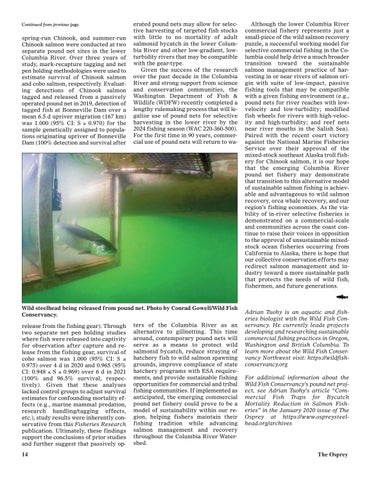
The Wild Fish Conservancy’s pound net on the lower Columbia River. Photo by Jamie Glasgow/Wild Fish Conservancy.
productivity and fitness throughout the watershed. Furthermore, mixed-stock harvesting with gillnets continues to impact ESA-listed wild fishes and severely constrain fishing opportunities to remove marked hatchery salmon that have been produced for the purpose of increasing short-term harvest opportunities. Clearly, management goals for wild salmonid conservation, harvest reform, and hatchery reform are not being achieved through the existing salmon management paradigm and not one of thirteen ESA-listed salmonid populations groups have recovered in the Columbia River.
Beginning in 2016, Wild Fish Conservancy (WFC) initiated a project in the lower Columbia River to develop an alternative model for sustainable salmon fishing. We were inspired by successes in the Salish Sea and rivers of British Columbia where commercial and First Nation fishers had returned to promising fixed-gears such as reef nets and fish wheels for selective harvesting. Recognizing that salmon fisheries are most sustainable when operating in or near rivers of salmon origin with lowimpact, passive fishing tools, we revitalized the pound net (often referred to as a ‘fish trap’) as a means for passive capture, live-sorting, and the release of wild salmonids within the lower Columbia River (an environment that is unsuitable for use of either reef nets or fish wheels due to tidal conditions, turbidity, and river flows). Too often, resistance to change in Washington and Oregon came from industry and management that claimed no other alternative method of fishing existed or was viable to replace status-quo mixedstock fisheries via troll, seine, and gillnet. In 2016, we teamed up with local commercial fishers to challenge this assumption and build a model of sustainability for replication elsewhere.
To identify a solution to the mixedstock fishery and hatchery management problem, commercial pound nets were retooled, implemented, and tested in the lower Columbia River to evaluate how a transition toward this in-river fishing method could allow fishers to selectively harvest hatchery produced fish with minimal mortality of co-mingling wild salmonids. Tagging studies conducted in 2017 for the original pound net prototype demonstrated that the fishing method could be used effectively to capture targeted hatchery produced Chinook salmon and coho salmon

Hand-colored photograph of a fish wheel on the upper Columbia River, circa 1910. Fish wheels, owned mainly by cannery companies, were used to harvest salmon on the Columbia River from 1879 to 1934, when they were banned due to political pressure from downriver commercial fishers and sport anglers who viewed them as unfair competition, and Native tribes for infringing on traditional indigenous fishing sites. Photo Courtesy US Forest Service

(O. kisutch) while releasing wild salmonids unharmed. Using a paired control-treatment tagging study design, our 2019 publication in the journal of Fisheries showed survival of summer steelhead (O. mykiss) and wild fall Chinook salmon bycatch ranging from 94.4% to 99.5% over a 2-week, 400 km upriver migration post-release from the fishing gear. In 2019, further research of a modified passive capture procedure with the pound net (published in the North American Journal of Fisheries Management in 2020) proved effective in achieving nearly 100% survival of sockeye salmon (O. nerka) bycatch through yet another controltreatment tagging study. These findings suggested that pound nets could be used effectively to improve the precision of commercial harvesting; hatchery fishes of a specific river could be selectively harvested to reduce the proportion of hatchery-origin spawners while wild salmonids could be effectively released to resume the spawning migration.
Building upon this promising research, our most recent publication in the journal Fisheries Research (“Maximizing
Salmonid Bycatch Survival with Passively Operated Commercial Fish Traps”) has provided the most simple and persuasive evidence to date that pound nets may be highly effective at reducing bycatch mortality and providing a means for resource managers to reduce straying of hatchery fishes within the lower Columbia River (for more information, view https://doi.org/10.1016/j.fishres.2022.106 495). Between 2019 and 2021, additional survival studies for adult coho salmon,
Continued on next page
Spring/Summer 2023 • Issue No. 105 13 Continued from previous page
Mortality is high for fish caught in gill nets, leaving little opportunity to release incidently caught wild or ESA-listed salmon and steelhead. Photo Courtesy US Fish and Wildlife Service
spring-run Chinook, and summer-run Chinook salmon were conducted at two separate pound net sites in the lower Columbia River. Over three years of study, mark-recapture tagging and net pen holding methodologies were used to estimate survival of Chinook salmon and coho salmon, respectively. Evaluating detections of Chinook salmon tagged and released from a passively operated pound net in 2019, detection of tagged fish at Bonneville Dam over a mean 6.5 d upriver migration (167 km) was 1.000 (95% CI: S ≥ 0.970) for the sample genetically assigned to populations originating upriver of Bonneville Dam (100% detection and survival after
erated pound nets may allow for selective harvesting of targeted fish stocks with little to no mortality of adult salmonid bycatch in the lower Columbia River and other low-gradient, lowturbidity rivers that may be compatible with the gear-type.
Given the success of the research over the past decade in the Columbia River and strong support from science and conservation communities, the Washington Department of Fish & Wildlife (WDFW) recently completed a lengthy rulemaking process that will legalize use of pound nets for selective harvesting in the lower river by the 2024 fishing season (WAC 220-360-500).
For the first time in 90 years, commercial use of pound nets will return to wa-
Although the lower Columbia River commercial fishery represents just a small-piece of the wild salmon recovery puzzle, a successful working model for selective commercial fishing in the Columbia could help drive a much broader transition toward the sustainable salmon management practice of harvesting in or near rivers of salmon origin with suite of low-impact, passive fishing tools that may be compatible with a given fishing environment (e.g., pound nets for river reaches with lowvelocity and low-turbidity; modified fish wheels for rivers with high-velocity and high-turbidity; and reef nets near river mouths in the Salish Sea). Paired with the recent court victory against the National Marine Fisheries Service over their approval of the mixed-stock southeast Alaska troll fishery for Chinook salmon, it is our hope that the emerging Columbia River pound net fishery may demonstrate that transition to this alternative model of sustainable salmon fishing is achievable and advantageous to wild salmon recovery, orca whale recovery, and our region’s fishing economies. As the viability of in-river selective fisheries is demonstrated on a commercial-scale and communities across the coast continue to raise their voices in opposition to the approval of unsustainable mixedstock ocean fisheries occurring from California to Alaska, there is hope that our collective conservation efforts may redirect salmon management and industry toward a more sustainable path that protects the needs of wild fish, fishermen, and future generations.
release from the fishing gear). Through two separate net pen holding studies where fish were released into captivity for observation after capture and release from the fishing gear, survival of coho salmon was 1.000 (95% CI: S ≥ 0.975) over 4 d in 2020 and 0.965 (95% CI: 0.948 ≤ S ≤ 0.969) over 6 d in 2021 (100% and 96.5% survival, respectively). Given that these analyses lacked control groups to adjust survival estimates for confounding mortality effects (e.g., marine mammal predation, research handling/tagging effects, etc.), study results were inherently conservative from this Fisheries Research publication. Ultimately, these findings support the conclusions of prior studies and further suggest that passively op-

ters of the Columbia River as an alternative to gillnetting. This time around, contemporary pound nets will serve as a means to protect wild salmonid bycatch, reduce straying of hatchery fish to wild salmon spawning grounds, improve compliance of state hatchery programs with ESA requirements, and provide sustainable fishing opportunities for commercial and tribal fishing communities. If implemented as anticipated, the emerging commercial pound net fishery could prove to be a model of sustainability within our region, helping fishers maintain their fishing tradition while advancing salmon management and recovery throughout the Columbia River Watershed.
Adrian Tuohy is an aquatic and fisheries biologist with the Wild Fish Conservancy. He currently leads projects developing and researching sustainable commercial fishing practices in Oregon, Washington and British Columbia. To learn more about the Wild Fish Conservancy Northwest visit: https://wildfishconservancy.org
For additional information about the Wild Fish Conservancy’s pound net project, see Adrian Tuohy’s article “Commercial Fish Traps for Bycatch Mortality Reduction in Salmon Fisheries” in the January 2020 issue of The Osprey at https://www.ospreysteelhead.org/archives
Continued from previous page 14 The Osprey
Wild steelhead being released from pound net. Photo by Conrad Gowell/Wild Fish Conservancy.
A Bridge Runs Through It
An ambitious cooperative barrier removal project will allow southern California steelhead access to core spawning and rearing habitat
 By Sandra Jacobson
Southern California is the prism through which endangered species, water supply, transportation, public safety, flood control, residential development, and tribal influence and cultural history converge on the central challenge of maintaining healthy waterways for people and wildlife in urbanized coastal California. The Interstate-5/Metrolink fish passage project on Trabuco Creek in Orange County has all of these wrapped up into a final design package to protect endangered Southern steelhead from extinction. The project embodies the complexities of restoring steelhead migration, but also the progress that is being made to enable these native fish to coexist with people in this highly altered landscape.
Steelhead, the anadromous form of rainbow trout, are particularly sensitive to in-stream barriers like dams, diversions and bridges that block their migration between the ocean and headwaters where they reproduce. Steelhead move during high flows in the winter when streams open during sandberm breaching to restore connectivity with the ocean. Steelhead then enter the river system and migrate upstream typically 30 miles to freshwater headwaters in the mountains where they persist. The fish passage project at the Interstate 5 Bridge Array and Metrolink Railroad Bridge crossing Trabuco Creek addresses one of the most significant fish passage barriers in Southern California. Trabuco Creek is the major tributary to San Juan Creek, designated a high priority Core 1 population in the National Marine Fisheries Services (2012) Southern California Steelhead Recovery Plan.
This fish passage project is regionally unique in that it combines the latest in hydraulic engineering and infrastructure stabilization, with restoration of sensitive riverine ecosystems and recreational access. Implementation will restore steelhead access to their historic habitats 15 miles inland to headwaters. At the project sites, reme-
diation of these barriers prevents further incision of the stream which threatens infrastructure, degrades aquatic and riparian habitat, and increases fine sediment loads downstream.
Over the past six years, this project has progressed through conceptual design, alternatives analysis, 65% development of the preferred alternative, physical model testing, and now into final design phase. The project team comprised of Northwest Hydraulic Consultants, Mike Love and Associates, Gannett Fleming, Stillwater Sciences
timate and a multi-year agency comment log. Funding has been provided by California Department of Fish and Wildlife, National Fish and Wildlife Foundation, and Wildlife Conservation Board; and their support has been essential for success.
and CalTrout, has extensive experience in solving challenging fish passage issues. Getting to final design is difficult both technically and operationally given the number of stakeholders with different viewpoints. The urban location adds complexity to address each party’s concerns for avoiding impairment of their mission or structures. The 90% design packages include a basis of design report, plans, technical specs, operation and maintenance manual (O&M), structural calculations, cost es-
The I-5 barrier is a leap and flow velocity barrier to aquatic species migration. The barrier extends 1,254 feet from the downstream drop within a natural channel, through a concrete double-barrel flood channel beneath an array of five bridges crossing Trabuco Creek, including the major artery, Interstate 5. As such, stakeholders are Orange County Flood Control District (OCFCD), California Department of Transportation (Caltrans), California Department of Fish and Wildlife (CDFW), National Marine Fisheries Service (NMFS), and local landowners. OCFCD and Caltrans priorities relate to public safety and property protection. Accordingly, their review focuses on maintaining flood conveyance and structural integrity of the concrete channel structure and the bridge piers. CDFW and NMFS priorities are wildlife protection, ecosystem integrity and regulatory compliance to achieve these goals. Their review focuses on design that maximizes passage and ecosystem integrity, and minimizes down-time for O&M.
Spring/Summer 2023 • Issue No. 105 15 Continued on next page
In southern California, steelhead live in a highly altered environment with a large human population. Photo Courtesy Mark Capelli, NOAA Fisheries.
The project embodies the complexities of restoring steelhead migration and the progress being made to enable these native fish to coexist with people in a highly altered landscape.
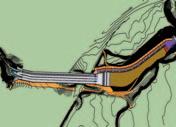
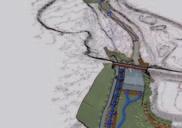
The I-5 fish passage solution is a 650foot-long bypass chute and pool roughened channel fishway, connected to a 675-foot fish transport channel in the left bay of the existing concrete channel that runs under the bridge array. The key to the hydraulic solution is the flow split at the top which diverts increasing flow into the fish transport channel, while pushing higher flows,
ing the limited time period of migration which can be as short as 72 hours over less than 10 days per year.
The Metrolink barrier is a total leap barrier due to the 30 ft drop created through years of high flow that deepened the scour hole downstream of the bridge. Stakeholders include Orange County Transportation Authority (OCTA), the fee owner for the Metrolink railroad bridge. OCTA is a member of Southern California Regional Railroad Authority (SCRRA), who reviews the fish passage design to ensure that the design or construction does not impact its structure, or create maintenance issues. This is the main railroad artery for coastal California, known as the Metrolink which is the entity that operates the line and maintains the right-ofway. The city of San Juan Capistrano owns parcels of land surrounding Trabuco Creek channel at this location, and has jurisdiction on the soft bottom and riparian area, including the trail system.

likewise utilizes state of the art hydraulic design. It features a 420-footlong pool and chute roughened channel fishway, 130-foot-long rock ramp and turning pool, replacement of the undermined grouted rock drop structure and spillway beneath the railroad bridge, while stabilizing the eroded west bank, and creating a new equestrian trail crossing. It also includes restoration of the one-half mile natural channel between the current barriers to stabilize the channel, removal invasive species and integrate into the recreational trail system.

There is also a residential development transaction in the mix in the vicinity of the Metrolink bridge. This transaction can help the City meet its affordable housing goals, and may contribute needed funds for long-term O&M for the fish passage project. Private landowners would provide construction access, and benefit from the stabilized channel that reduces channel erosion and loss of valuable property.
sediment and urban debris into the main concrete channel. The lower fishway runs along the river left side of the channel, and features selectively placed rocks of various sizes which create pools and chutes for fish to rest during swim-through. It is important to avoid sediment accumulation in the structure which impairs passage dur-
Moulton Niguel Water District has jurisdiction of its two greywater lines that run beneath the grouted riprap apron below the railroad bridge. Private landowners play a key role in providing construction access and legal documentation of deeds and easements. CDFW and NMFS review the Metrolink design package to ensure fish passage efficiency and regulatory compliance.
The Metrolink fish passage solution
It is an art to thread the needle on different missions held by parties directly invested in the outcome through the project. A Cooperative Agreement process is underway, led by CalTrout, involving up to 16 Parties and primarily involving Orange County. This Agreement lays out Roles and Responsibilities for each Responsible Party to provide passage through both I-5 and Metrolink barriers as they are jointly resolved. There are several new permitting pathways that offer expedited permitting for larger more complex restoration projects. One permitting pathway being pursued by our team is the State Water Board General Order, which is now being applied to several restoration projects statewide. This Order allows the lead agency to use their Programmatic Environmental impact Report (which discusses the impacts of a project in more general terms as opposed to a Project EIR), determine whether the project fits the Restoration Project definition, and determine avoidance and minimization measures compatible with the California Environmental Quality Act (CEQA). For California Endangered Species Act (CESA) Take coverage, an RMP (Restoration Management Permit) would be a good approach that CDFW can issue. It consolidates Take authorizations into a single permit, minimizing permit applications and fees, and authorizes Take during construction, implementation, O&M and ongoing
Continued on next page
The Osprey
16
Continued from previous page
I-5 fish passage barrier on Trabuco Creek beneath an array of five bridges including Interstate-5. Photo by Mike Wier/CalTrout
Metrolink Fish Passage barrier on Trabuco Creek, one-half mile below the I-5 barrier. Photo by Mike Wier/CalTrout
monitoring. The CalTrout-led petition for state listing Southern steelhead as an endangered species, currently under a one-year status review at CDFW, is further impetus to resolve these barriers now.
The fish passage project leverages concurrent removal of over 81 check dams in upper Trabuco Creek and San Juan Creek watershed. (See “Big Benefits from Small Dam Removal on the Cleveland National Forest” by Kirsten Winter, The Osprey, January 2022, https://www.ospreysteelhead.org/archiv es) Check dams are earthen and rock
in-stream structures about 15 feet high, built in the mid-1900s for recreation. They are barriers to localized movement for aquatic species in response to threats of climate change such as fire and drought, and upon removal also improve access of steelhead to historic spawning and rearing area. This coast to crest ecosystem restoration is reminiscent of others underway in Southern California to benefit Southern steelhead (see www.caltrout.org).
The project is a prime candidate for funding the construction phase through federal Infrastructure Investment and Jobs Act (2022) and the Inflation Reduction Act (2022), which contain large


2024-2025 on Metrolink and middle reach, followed in 2025/2026 on the I-5 site for a three-year construction period.

The Trabuco Fish Passage Project occurs on the traditional lands of the Acjachemen Nation, the Indigenous People who historically inhabited lands that became Orange County, and whose descendants currently reside in Orange County and environs. We seek to partner with the Acjachemen in all aspects to implement this fundamentally important fish passage project to benefit an endangered species.
carve-outs for climate change solutions. Awards from these sources can be used as cost share for funding from state fisheries and coastal resiliency grants programs. CalTrout is positioned to lead the funding campaign and construction, in a similar approach to the CalTrout-led $21 million Santa Margarita River bridge replacement and fish passage that began construction in 2023. The I-5 Metrolink construction would be phased, starting in
The Putuiden Village, adjacent to the I-5 barrier, is a silent and powerful reminder of wildlife and people that inhabited these coastal watersheds for thousands of years — and that breaking down barriers on all levels is needed not only to restore access and understanding of those that went before us, but to restore our watersheds for those that come after us. We’ve seen salmon and steelhead rebound in other parts of the country where barriers are removed and habitat is restored. There’s every reason to believe it will also work here.
Sandra Jacobson, Ph.D. is Director for the South Coast and Sierra Headwaters Region for California Trout. She also manages the South Coast Steelhead Coalition and works with regional partners for Southern California steelhead conservation and recovery. For more information about California Trout visit: https://caltrout.org

Continued from previous page
I-5 Fish Passage Solution: Fishways constructed along (L) side of channel and beneath I-5. Alternative 2 Conceptual Sketch Courtesy Mike Love and Associates.
The Putuiden Village built on part of an original tribal village inhabited by San Juan Capistrano’s first residents, the Juaneño Band of Mission Indians. The Village opened its gates in December 2021 with a ceremony led by Acjachemen descendants. Photo by Sandra Jacobson/CalTrout
Click on the images or read the QR codes with a smart phone to view 3-D animations of the I-5 (above) and Metrolink (below) proposed fish passage.
Spring/Summer 2023 • Issue No. 105 17
Animations by Travis James Mike Love & Associates
2023 Columbia River Preseason Summer Steelhead Run Forecast Lowest Ever
By David Moskowitz
The pre-season forecast for summer steelhead passing Bonneville Dam from April 1 through October 31 is predicted to be fewer than 68,000 adult hatchery and wild fish. While it is a pre-season forecast, it is the lowest preseason forecast ever, and lower than the previous actual lowest Columbia River steelhead return in 2021.
Forecasting accuracy has been wildly variable. In 2021, the pre-season forecast was nearly 100,000 steelhead while the actual run totaled about 70,000 hatchery and wild fish with wild steelhead returns fewer than 25,000 fish — a 30% over-prediction.
The 2022 Columbia River Return was predicted to be about 100,000 total steelhead, and nearly 124,000 total steelhead passed Bonneville — a 24% under-prediction — to the positive — but again demonstrating the variability and lack of accuracy.
Wild fish totaled nearly 30,000 adults but as many as 15% of these unmarked steelhead are actually unclipped hatchery-origin fish — and many others may be feral hatchery fish resulting from Hatchery x Hatchery or Hatchery x Wild mating, which also further depress productivity of wild fish.
The number of wild steelhead predicted to pass over Bonneville Dam in 2023 is less than 21,000 fish, for the entire Columbia and Snake River Basin
The 2023 wild steelhead forecast demands an open and careful review of the regulatory scheme in place for 2023. North of Falcon mainstem fisheries are considered and adopted independent of tributary fisheries but must be considered and assessed in conjunction with tributary fisheries in Idaho, Washington, and Oregon.
The Conservation Angler examined the impact of the extraordinary regulations put in place in 2021 and 2022, and it was clear that the reduction in angler effort and steelhead encounters made a
difference for wild fish reaching their spawning ground in greater numbers and in better shape.
However, grave concern exists with Oregon and Washington’s recreational fishery frameworks now in place — as they are reliant on wild steelhead return estimations from the 2022-23 spawning season (still underway) — because they will result in open seasons that began in May, at a time when wild fish often make up the majority of the early steelhead return. Based on the predicted return in 2023, sport steelhead seasons will close in tributaries when the majority of the hatchery fish return.
pected decline in returning steelhead and some rivers were closed to steelhead angling.
4 In early 2022, ODFW developed an outreach program with anglers to develop a series of Fishery Frameworks to provide more certainty for anglers — and protection for wild steelhead.
For these actions, TCA is grateful and it is clear that Oregon stands tall compared to neighboring states to the North and East. However, the Commission must continually re-examine its efforts.
Major Points of Contention with ODFW’s Deschutes Fishery Framework
What is the scientific justification for
1) allowing early fisheries that will impact the depressed wild run more than the hatchery component; and 2) opening fisheries based on adult returns from the previous year? We urge reconsideration of the framework and we urge the Washington and Oregon Fish and Wildlife Commissions to engage with the public on this issue now and not in July or August.
In the past, Oregon has taken proactive stances considering the wild steelhead decline, including:
4 ODFW and then the Commission created the Thermal Angling Sanctuaries at the Deschutes in 2018, and then permanent rules at three cold water refugia by 2020.
4 The Commission held a special meeting in August 2021 to address the unex-
1. Managing to Critical Abundance Threshold (CAT) does not meet the Precautionary Principle. ODFW needs to develop fishery targets, rather than rely on CAT, which is a critical threshold in abundance that should be avoided at all costs, rather than be utilized as a minimum fishery target. ODFW either needs an escapement goal that establishes a target based on how many fish it takes to utilize available habitat or a tiered harvest rate structure, like in Skagit, where there is a minimum threshold beyond which there is no fishing. That is 4,000 fish in the Skagit (watershed size is 2,370 square miles), not 625 fish. In either case, the minimum abundance target would be well above 625 fish for the Deschutes (watershed size is 10,000 square miles).
2. Using clipped versus unclipped fish does not account for unmarked hatchery-origin steelhead.
The CAT of 625 assumes all those 625 fish are wild. As it stands now, some significant portion of returning Deschutes unclipped fish is either H x W hybrids or feral offspring of H x H spawning in nature. We have not seen any mention of what proportion of the forecasted wild population consists of those hybrid or feral fish, because they
Continued on next page
18 The
Osprey
Agency fishery plans are not aimed to rebuild and recover Columbia River basin wild salmon and steelhead.
have much lower productivity than wild fish.
3. This is one of the best last remaining wild steelhead fisheries in the lower 48. The Deschutes River is one of the best last remaining wild steelhead fisheries in the lower 48 and ODFW probably makes more money off license sales from people fishing the Deschutes than any other Oregon stream above Bonneville (excluding mainstem Columbia). Considering its importance, ODFW needs to manage it more carefully. Currently, ODFW will allow fishing early in the upcoming season even though the forecast is expected to be dire and the worst on record. This doesn’t make any logical sense.
For example, if we had a salary of 30k last year, but forecasted a salary of only 15k for the upcoming year, we would be foolish to forecast expenditures under the presumption we would make 30k. That would result in huge loss of capital and eventually result in bankruptcy. The managers would be fired or the company would close.
Despite having such knowledge, ODFW is forecasting to over-spend and exceed their biological budget. Why should anglers trust ODFW to manage our fish populations sustainably when they manage these irreplaceable wild steelhead based on extinction thresholds and are willing to overspend well beyond their predicted budget?
4. There is no logical, biological, or ecological connection to opening a fishery on what is currently the lowest forecast for wild steelhead entering the Columbia River and currently beginning to pass over Bonneville Dam. The number of steelhead passing over Sherars Falls in 2022 should have no bearing on whether ODFW should be managing more conservatively for a very low 2023 return. It simply does not make sense. ODFW states it is not managing based on the pre-season forecasts — so we ask why do the agencies even come up with preseason forecasts? The Oregon Framework is based on a correlation between last year’s return and the following year as steelhead returns often “clump” — that is, bad and good years are often correlated, which in this case means another bad year is likely at hand.
While prior years may help provide information about upcoming years, it is
not a constant predictor, and there are commonly rapid swings in population size from one year to the next (from poor to good and vice versa) over time. If last year’s run size always predicted next year’s run size, steelhead management would be simple. But as indicated in the model run above, ODFW’s explanation proves out at about 50% of the time — meaning that there is another 50% that ODFW’s model does not prove out. In other words, it is a coin toss decision.
A model that predicts accurately half the time doesn’t provide enough evidence to open a fishery during a series of down years (since 2015) when wild steelhead are struggling to persist.
While ODFW uses real-time dam-passage data, the most effective way to use real-time data is to be conservative before opening a fishery and by monitoring dam counts in-season, then make a determination to open a fishery when the wild steelhead run size is actually large enough to absorb the impacts.
ODFW believes it can open the fishery for steelhead because its data shows that most encounters in the Deschutes occur after August 15th, and the framework provides opportunity early in the season but then allows for a closure if the return numbers are low so that they decrease the encounters when their data shows them to be most impactful.
While this may be true, our point is
that this framework ignores careful consideration for the early fish that are mostly wild. ODFW’s use of the 50/50 model discussed above indicates that 25% of the wild fish are caught prior to Aug 15. Since run timing is heritable, those fish are likely different genetically than the later entering fish. Do they not deserve the same protection? Why is it ok to put part of the population at more risk? Further, because the early fish have longer residence times in the river, they are likely to be encountered more times than fish that spend less time in their tributary rivers. This shifting fishing intensity (earlier on earlier fish) could directionally select against the early timed fish and that would have a population impact. Particularly if the effects are as strong as noted in the recent ODFW research on angler versus trap caught steelhead in the Alsea (Johnson et al. 2023).

Last, they are not accounting for any sublethal impacts nor are they accounting for the potential genetic uniqueness of the early fish, which means the fishery could be having population level impacts if continued over time.
ODFW argues that there isn’t directed sport harvest in the mainstem Columbia or in the tributaries, but there is indirect harvest via catch-and-release mortality (CnR). Thus, our point remains valid: Fish managers should not
next
Spring/Summer 2023 • Issue No. 105 19
Continued on
page Continued from previous page Below is the Oregon Department of Fish and Wildlife’s graphic supporting the correlation between past and present years:
ODFW Framework Graphic - 2022
be using CAT thresholds as surrogates for fishery decisions. Because even harvest-focused fisheries do not rely on CAT or have escapement goals that are handful of fish away from being considered at increased risk of extinction. Further, ODFW is not even attempting to account for potential sublethal impacts (for which there is already a large body of evidence on fishes), such as reduced reproductive success, reduced/altered movements, fungal infections (which can lead to reduced reproduction), etc. Additionally, CnR mortality is higher when water temperatures reach and exceed 68-70F. Is ODFW currently modeling the number of fish captured during the warm water events to ensure they have more accurate estimates of total CnR mortality? And what monitoring or research is being captured about the mortality risk for fish that are captured more than one time? How does ODFW account for that? In this context, by only considering direct CnR mortality (which ODFW only thinly does at the moment given their lack of modeling that includes potential for temperature and multiple encounters), ODFW conveniently ignores potential effects from high encounter rates during CnR, such as reduced reproductive success of fish that are CnR (particularly early fish that maybe caught multiple times) and eventual potential directional selection.
Here are the facts anglers should consider before fishing:
4 wild steelhead often comprise the larger component of the total early return April through July and at times, into early August.
4 Wild steelhead, even when outnumbered by hatchery steelhead, represent the majority of encounters in the sport fishery. They are more aggressive than hatchery fish and are caught more often even though they are outnumbered by hatchery fish in the river by the end of the season.
4 Anglers regularly catch wild steelhead in warm waters — increasing both the direct mortality risks but also the sublethal effects that diminish spawning productivity.
The Conservation Angler believes, after careful review, that the Deschutes River Fishery Framework is insuffi-
Comparative Passage Graphs – Columbia River DART

Passage of Summer Steelhead – April 1 to June 13 (2023) – There are 55 more steelhead than in 2021. Current 2023 steelhead passage is 23% of earlier periods of steelhead abundance (2001-2010).
Numeric Data is from the University of Washington Columbia River DART website:
https://www.cbr.washington.edu/dart/quick_look/adult_bon_stlhd
ciently conservative — especially considering the extremely low forecast. Managing down to the Critical Abundance Threshold (CAT) means we are over-spending our savings. The Framework provides a measure of certainty for anglers and managers — but contributes nothing but uncertainty to the rebuilding and recovery of wild Columbia River Steelhead.
Comparing 2023 Wild Summer Steelhead returning to the Columbia River above Bonneville Dam : April 1 thru August 1
4 67,800 combined hatchery and wild steelhead (H + W) are expected to pass Bonneville Dam
4 20,700 total wild, unclipped steelhead are expected to pass Bonneville Dam
We compare the current and past years to the current 10-year average (CTYA) steelhead passage (2013-2022) of 159,571 (combined hatchery & wild fish). The current 10-year average wild steelhead passage is 58,162 fish (includes unmarked hatchery fish). Comparing forecast passage with the CTYA from 2013-2022:
4 The forecast 2023 return of combined wild and hatchery steelhead is 36% of
the CTYA.
4 The 2021 forecasted wild steelhead return was 34% of its CTYA (20112020).
Hatchery steelhead are forecast to outnumber wild steelhead by 47,100 fish. It is critical to know that up to 15% of the adipose-intact steelhead are hatchery-origin steelhead with an adipose intact upon release even though it is contrary to federal law.
To avoid the declining baseline syndrome, agencies should compare current run-size with a longer period or with a more productive period to be able to identify the overall loss of wild steelhead productivity and abundance. We use the “best” 10-year average (BTYA) for steelhead, and with available data since 1984, the highest TYA occurred between 2001-2010 (410,370 H+W fish). The “best” 10-year average for wild steelhead also occurred from 2001-2010 (118,257 wild fish).
Thus, the current 2023 forecast of total hatchery and wild steelhead is 16.5% of the BTYA. The current 2023 forecast for wild steelhead run is 17.5 % of the BTYA.
Columbia River wild steelhead are not sustaining nor rebuilding their productivity, abundance, diversity, or spatial
Continued on next page
20 The
Continued from previous page
Osprey
distribution by any measure.
Sport Fishing Issues in Idaho, Washington, and Oregon
4 Anglers may use bait, barbed hooks, and treble hooks when steelhead fishing in rivers where wild fish must be released, though catch and release mortality rates for bait are higher than for artificial lures and flies.
4 Anglers fishing in boats may continue to fish even when they have taken their limit, increasing the number of wild steelhead that are encountered and caught, adding to more lethal and sublethal encounters and loss of energetics for wild fish encountered in mark-select fisheries. The power of each boat is boosted by the “Party Boat” rule and to address encounter rates during low abundance, this rule should be rescinded. However, Idaho does not allow party boat fishing.
4 Sport fishing on some tributary streams is allowed on other fish species but results in wild steelhead encounters and even targeted steelhead angling.
4 Wild steelhead are caught more frequently in most Columbia and Snake River fisheries even though by season’s end, hatchery fish regularly outnumber wild fish in mainstem and tributary fisheries.
4 Because most summer steelhead will not spawn until late winter through spring, their migratory behavior is less predictable and more likely to result in multiple angling encounters during their spawning migration. There is no analysis of the impact of multiple encounters of wild steelhead based on the simple creel survey database.
4 Fishing for steelhead is permitted throughout staging and spawning periods between February and June on rivers such as the John Day, Umatilla, Grand Ronde, Clearwater, Snake and Salmon Rivers, increasing the likelihood of multiple angler encounters of the same wild fish and resulting in known loss of productivity and spawning success.
4 Washington and Idaho permit night fishing for steelhead in multiple waters — enforcement is a major problem in these circumstances.
Meanwhile, Across the Columbia River
Washington State must revise its regulations to protect wild steelhead in
tributaries and in cold water refugia.
First, WDFW’s Cold Water Refugia report presented to the WA Commission is incomplete and weak. Recent explanations about the use and effect of cold water refugia in Columbia River angling regulation setting was not based on any empirical data — simply best professional judgement. This is inadequate to address the wild steelhead conservation crisis.
Second, WDFW return to the 3-steelhead bag limit for hatchery steelhead has no justification. There is little data on encounter rates on wild fish in those fisheries — effort, encounter rate and mortality rate are all “assumed” from models with little if any real-time modeling, nor does the rule account for water temperature impacts for fish hooked, played, and released in warmer water.
The retention by Oregon and Washington of the “party boat rule” is a travesty. Allowing all anglers in a boat to continue to deploy their gear even when individuals have retained a limit adversely increases the number of encounters and mortality. It is also inconsistent with the angling rules that apply to bank anglers or single anglers in a boat.
Allowing fisheries to continue by merely prohibiting “retention” of steelhead is much different than a rule that prohibits altogether “angling for steelhead.”
Finally, WDFW must not allow angling at night as enforcement is nearly impossible.
Tribal Steelhead Fishing
Columbia River Native American Tribes fish for steelhead for commercial, subsistence and ceremonial uses. The fish from platforms with traditional methods as well as with hook and line. Treaty Tribes also fish for salmon and steelhead using both set-nets anchored on the Columbia River bottom, as well as with drift gill nets.
In 2021, during the lowest steelhead return past Bonneville Dam in history, Columbia River Tribes reported har-
vesting over 3,400 hatchery and wild steelhead from their platform and gillnet fishing effort. This was about 5% of the total 2021 steelhead return — the second-lowest reported Tribal catch of steelhead based on records readily available.
Management agencies have applied a number of conservation measures to non-tribal fisheries, but so far, none to the Treaty Tribes. One short-term measure that Oregon and Washington could take is to limit or prohibit the sale of wild steelhead currently allowed for commercial fish buyers or direct-tocustomer fish sales.
Conclusion
Fish management agencies are placing the burden of conservation on the wild steelhead in the Columbia River. The framework being applied only has a 50% chance of actually being the right fit to the circumstances, and even if the agencies have made the right heads or tails call, the conservation burden is increased on the early-returning wild steelhead — fish that might have the best chance of surviving the climate change impacts on their migratory and spawning pathway.
Sport fishing closures certainly reduce encounters but the implementation of limited entry fisheries or specific gear restrictions could also reduce encounters in a manner that is enforceable and provides opportunity to the non-tribal fishing community This is no time for half-measures.
David Moskowitz is Executive Director of The Conservation Angler, one of The Osprey’s supporting partner organizations. This article is based on his testimony to the Oregon Fish and Wildlife Commission in April 2023. To learn more about The Conservation Angler visit: www.theconservationangler.org
Citations
ODFW Deschutes Steelhead Fishery Framework: https://myodfw.com/sites/default/files/202205/Deschutes%20Steelhead%20Framwork%205-3-2022.pdf
Columbia River Fishing Regulations: https://wdfw.wa.gov/fishing/management/north-falcon/summaries#columbia
EPA Cold Water Refugia Plan: https://www.epa.gov/columbiariver/columbia-river-cold-water-refuges-plan
Spring/Summer 2023 • Issue No. 105 21 Continued from previous page
Letters to the Editor
Skeena Steelhead by the Numbers
Dear Editor,
I am writing today in response to the 50 Year Perspective article (Hits and Misses) appearing in your Fall 2022 edition of The Osprey
In the article, author Pete Soverel claims that he fished the Skeena River system “pretty intensively from 19871993.” and that “This period coincided with the last fairly strong runs.”
In fact, those years (1987-1993) featured moderate returns of steelhead to the Skeena. Their numbers improved dramatically in the three decades after the period of perceived abundance the article claims were the “last fairly strong runs.”
I have included steelhead escapement estimates for the entire Skeena system below for reference. These numbers were provided by Kenji Miyazaki, Senior Fisheries Management Biologist, Ministry of Fisheries in Smithers, BC.
While 1988 was clearly a strong return year, the other years mentioned are well below the average run size (~30k). In particular 1991 was very low (9,695 fish) with the third worst steelhead return on record behind 2021 and 1957.
Skeena River System Steelhead Escapement 1987 - 1993
Here are the top 25 years of Skeena steelhead abundance over the past 7 decades. Of the years Soverel claimed were abundant, only one year(1988) appears on this list. However, starting in 1998 and up to 2018 there were 17 years (noted in bold) that appear on the top 25 list.
ational effort and impressive improvements in angler effectiveness and so on. Also, you do not account for the very heavy, but completely unreported, commercial interception in the Skeena estuary and marine approaches, include harvest in Alaska marine waters. These various interceptions harvested at least 50%-70% (i.e. 40,000-55,000 steelhead) of the pre-harvest return before the fish even entered the Tyee test fishery. Note: during the period I commented on, tribal harvest upstream of the Tyee fishery was minimal contrasted with very significant current tribal harvest. In this context consider the implications of tribal harvest on the 2021 Tyee count.
In his article, Soverel states:
“In the early 1990s, the Bulkley in particular had a very strong run of perhaps 50,000 steelhead.” In reality, during the 1990s the entire Skeena system had very low returns until the later part of the decade when things improved. Most years the return to the Bulkley/Morice will represent about 40% of the total Skeena steelhead return. So, given the sub-15,000 numbers attributed to the entire Skeena in 91, 92 and 93, the Bulkley run size at that time was actually closer to 5,000 than the 50k the author suggests.
Here is a breakdown of the 90’s for the Skeena system, note the abundance improvement at the end of the decade.
So why would Soverel not bother to check the official numbers for the Skeena, rather than going off his memory of past personal angling success?
Brian Niska
Terrace, British Columbia
Pete Soverel responds:
Brian:
As chair of The Osprey Editorial Committee, I have reviewed your detailed critique of my analysis of Skeena steelhead returns in my Hits & Misses column in the Fall 2022 issue, which I addressed Skeena River returns in the context of the broader problem of dramatic and continuing coast-wide wild steelhead declines that includes, sadly, Skeena populations. Tyee test fishery provides a long data set and can be a trend indicator. It is not, however, a reliable measure of pre-harvest abundance, sources of steelhead mortality or spawner abundance.The period I cited is radically different from current conditions that feature dramatically expanded native harvest fisheries, rough handling in the mark-tag-recapture program, very significant increase in recre-
Again, the main take away for the Skeena: returns are a very small fraction of the Skeena’s reproductive potential and an even smaller fraction of historic abundance. I stand by my basic premise: virtually all North American steelhead stocks, including the famous Skeena runs (especially the most recent 3-4 years), are small fractions of historical or even recent, abundance. For example, the 2021 Skeena Tyee enumeration was 70% below the historic; Thompson run has declined by 99%. These dismal statistics are reflected in angler effort over the period of my Hits & Misses: 130,000 angler days down to 40,000 province-wide now. All these indicators clearly confirm the reality that BC, along with all other West Coast steelhead populations, are in deep trouble.
Surely, papering over the dismal plight of Skeena steelhead does nothing to address the alarming state of wild Skeena steelhead populations, For the first time in history, the Skeena was closed by emergency regulation due to the worst return ever – 5,461 in 2021.
It doesn’t have to be this way. The smallest river I work on in Kamchatka (Snotalvayam), Russian Far East, has about half the volume of the Bear River but hosts a steelhead run of about 7,500, up from about 1,000 when I first started there in 1994. Imagine this tiny river hosting a return about 40% greater than the entire Skeena!
Respectfully,
Pete Soverel
22 The Osprey
1987 > 22,239 1988 > 41,322 1989 > 19,348 1990 > 23,503 1991 > 9,695 1992 > 12,750 1993 > 14,257 1991 > 9,695 1992 > 12,750 1993 > 14,257 1994 > 21,751 1995 > 19,639 1996 > 23,496 1997 > 12,848 1998 > 64,885 1999 > 47,727 2000 > 55,557 2004 26,056 1967 26,636 1970 27,583 2015 27,761 2003 28,937 2006 29,799 2014 31,821 1985 31,840 2001 32,178 1982 32,992 2011 36,079 1966 36,539 1986 36,838 2009 39,195 1988 41,322 2012 42,162 2018 44,078 2016 46,168 2008 46,442 1999 47,727 1984 47,748 2002 52,185 2000 55,557 2010 56,884 1998 64,885
FISH WATCH — WILD FISH NEWS, ISSUES AND INITIATIVES
Washington State Explores Locations for Land-Based Aquaculture Facilities
On April 11, Commissioner of Public Lands Hilary Franz signed a partnership agreement with Nova Scotia-based Sustainable Blue, a zero discharge, land-based salmon farming company, to identify opportunities for siting sustainable finfish aquaculture in Washington State.
This agreement represents an important step toward restoring finfish aquaculture in a sustainable, healthy way that does not pit farmed fish against the native salmon. The letter of intent launches an exploration of land-based sites
managed by the Washington State Department of Natural Resources (DNR) that would be suitable for closed-containment aquaculture on state-owned lands. DNR manages 2.6 million acres of state-owned aquatic lands on behalf of the people of Washington, along with 2.1 million acres of upland public lands.
The 2017 collapse of finfish aquaculture net pens off Cypress Island made clear the dangers that open water commercial finfish aquaculture facilities pose to native salmon and their habitat. Citing this event and other operational and maintenance issues that have been documented from the four open water net pen aquaculture facilities in Washington’s waters such commercial facilities are no longer leased on state-owned aquatic lands.
Sustainable Blue, founded in 2007 in Nova Scotia, Canada, is the longest-running commercial zero-discharge Recirculating Aquaculture System (zRASTM) in North America. The Sustainable Blue zRAS recirculates 100% of its salt water, creates zero discharge to local waterways and communities, eliminates any potential for escapes, and offers a value-added proven model for aquaculture. Waste solids are instead separated and used to generate electricity (with additional use cases currently being researched and developed). The wastewater is cleaned and returned back to the facility, all resulting in zero discharge back into the environment. Because Sustainable Blue’s system is fully self-contained, the salmon are free of sea lice and other fish diseases, meaning they require no antibiotics

Research for potential facility locations began in the spring. Visit https://www.dnr.wa.gov/news/commissioner-franz-partners-sustainable-blue-identifyopportunities-land-aquaculture-state and https://www.sustainableblue.com for more information.
SUPPORT THE OSPREY
To support our conservation mission and receive The Osprey three times per year, January, May and September, please fill out this coupon with your check made out to The Osprey - The Conservation Angler and mail to: The Osprey P.O. Box 13121
Portland, OR 97213
NAME

Yes, I will help protect wild salmon and steelhead
❏ $15 Basic Donation/Subscription
❏ $25 Dedicated Angler Level
❏ $50 For Future Generations of Anglers
❏ $100 So There Will Always Be Wild Fish
❏ $ Other Or donate at: www.ospreysteelhead.org/donation
Send My Copies By E-Mail q
Send My Copies by Standard Mail q
q
Spring/Summer 2023 • Issue No. 105 23
PHONE E-Mail CITY/STATE/ZIP
ADDRESS
Scan the QR code with your phone to support/subscribe to The Osprey
The tank room at a Sustainable Blue land-based aquaculture facility, which utilizes a zero-discharge Recirculating Aquaculture System.
Photo Courtesy Sustainable Blue
This is a gift subscription
THE OSPREY
P.O. Box 13121
Portland, OR 97213
Wild Salmon Rivers