Since 1992

FACTOIDS \\ TR E DAT \\ UNESCO WORLD HERITAGE SITES OF ARGENTINA
LEAST AFFORDABLE CITIES FOR RENTERS \\ REAL ESTATE F THE FU URE: NEOM SALARY NEEDED TO BUY A HOME \\ THE BOARDWALK AT BRICKTOWN \\ MASS TIMBER ARTCH TECTURE \\ TRENDI G: INFLATION \\ TOP GLOBAL RISKS IN 2024
THE FACTOR \\ BANISHED WORDS \\ THE MARIST MINDSET LIST \\ THINKING OUT LOUD OFFICE SPACE VACANCY RATE IS HIGHEST ON RECORD \\ WAYNE STATE WORD WARRIOR : BHARATHANATYAN ARANGETRAM \\ THE HUMOR OF BURNS & ALLEN IMPORTANT VOICES: THE IMPACT OF REAL ESTATE ON THE ISSUES OF TODAY
MARCH/APRIL 2024 / VOL 32 / ISSUE 2 $10.00

Aa
from the pages of

From Where I Sit
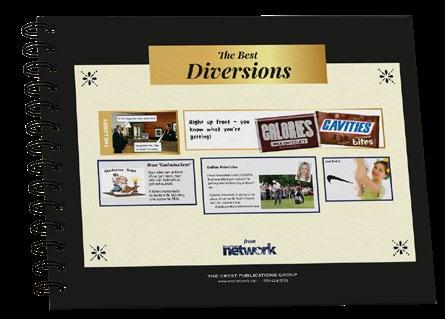
The Editor’s Page in is almost totally devoted to humor and wisdom and this is a collection of some of the best of them.

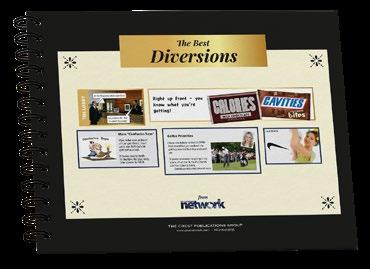
The Best Diversions
Give yourself the gift of smiles. J
A handsome, artbook-style volume with the best Diversions to appear in over the last decade. A compendium you will treasure for years to come.
"This collection is laugh-out-loud funny!"
Kirkland Review of Books
"Prescription: Read 3-4 pages a day for a month. It’ll brighten your day! And make it last a month."
Susan
Carnegie, The Montreal Voice
Vertical Lines I, II and III
Compilations of Sarcasm, Word Play, and Witticisms from the pages of
"This is simply genius. I kept on laughing the whole day when I read it."
Maria Tariq
"...absolutely hilarious! I laughed so hard that it brought tears to my eyes."
Randal Maynard

also from The CREST Publications Group
My Hand Book
"Incisive yet expansive - as if the psychology of R.D. Laing encountered the self-exploration of Hugh Prather to help readers delve into their own thought, experiences and behaviours."
The Rockford Tribune
"Curiously intense and ironic. This is a work that will make you think and feel and you will revisit it over and over.
Marion Danziger, The Toronto Town Crier
“An often off-color (but always entertaining and almost always hilarious) collection of jokes that you will read, enjoy – and probably tell –over and over.”
Joey Cousins, The Greenwich Times

Comingin March!

"It matters not who we have been, or why, with whom, or how. What matters is that we have met and who we are from now."
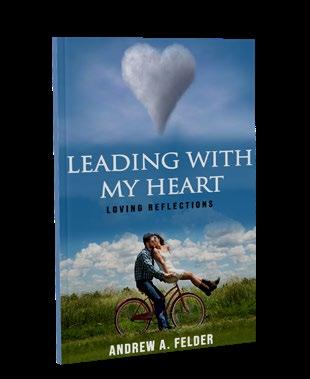
Original reflections on new love, its flame, intensity, and all-consuming spirit. Short, poetic expressions of heartfelt longing, passion, and desire. Intimate expressions of tenderness and adoration, accompanied by romantic pictures. A wonderful gift for someone you love.
“So simple. So eloquent and beautiful. Absolutely wonderful!”
Allison Templeton
Leading With My Heart A Book
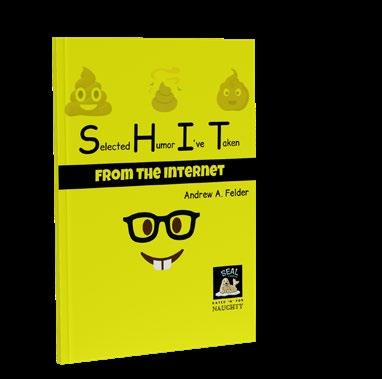
"A perfect companion to Vertical Lineshumor in bite-sized pieces.”
Ellen Campbell, Sinclair Book Reviews
"Dyslexics of the world, untie!”
unite! this!
Punsters of the world, read shit!"
L. Bartow. The Network Bookshelf

S.H.I.T. from the Internet Available at your favorite online bookstores Amazon, BarnesAndNoble, and in the Apple Book Store.
Get Networked The Archives Bookshelf 2024 Media Kit Sign-Up Contact Us
09


27 TR E DAT
PHILTRUM, TOILETS SEPARATED BY SEX, THE ANDREWS SISTERS, SPAGHETTIFICATION, CELL PRODUCTION, DOLPHINS, FILL YOUR FRIDGE, COTTON CANDY, CLOUDS, LBGTQQIP2SAA, CISHETEROSEXISM
11 GROUPS WE REACH
12 FACTOIDS
SNEAKERS VS. TENNIS SHOES, THE OLYMPIC FLAGS, WHERE THE BUFFALO ROAM, IDIOMATIC EXPRESSIONS, SUNGLASSES, WHAT’S IN A WORD

20
OUR

21
WAYNE
22
OUR
57
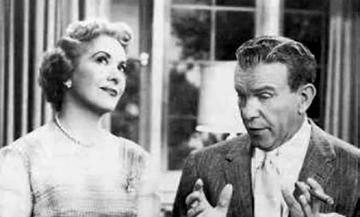
THE PAGE
MIRANDA V. ARIZONA—YOU HAVE THE RIGHT TO REMIAN SILENT




OUR
/ THE NETWORK / MARCH/APRIL 2024 - 4 -
note
07 Editor’s
BANISHED WORDS LIST
TIONS
THE
8TH YEAR OF REPORTING LAKE SUPERIOR STATE UNIVERSITY’S ANNUAL SELECTIONS FROM OVER 2000 NOMINA-
FROM AROUND
WORLD
BRINGING BACK GREAT WORDS
DATION
BE REVITALIZED
STATE’S ANNUAL RECOMMEN-
OF LONG-LOST WORDS THAT SHOULD
MARIST MINDSET LIST
12TH INSTALLMENT ON THE CULTURAL MILESTONES WHICH MOLD THE LIVES OF THE COLLEGE CLASS OF ’27
INB X | ON THE COVER
WRITERS 06 MASTHEAD
THE LINK MARKETPLACE, BIDDER’S LIST & DIRECTORY 48 – BHARATANATYAM CONTRIBUTING EDITOR ROXANA TOFAN LOOKS AT THE WHO? WHAT? WHY? WHEN? WHERE? AND HOW? OF THE INDIAN CLASSICAL DANCE
C NTEST NAME THAT TOON 62 BACKPAGE
08 CONTRIBUTING
60
63
ADVERTISERS, WINNERS FROM LAST’S ISSUES CONTEST, BOLO (COMING NEXT ISSUE)
CONTRIBUTING EDITOR ROSE-MARY RUMBLEY TELLS THE STORY OF THE TEXAS RANGERS—BOTH THE ONES WE ROOT FOR AND THE ONES WE REMINISCE ABOUT 37 THE DECADE SO FAR IN COVERS A LOOK BACK AT THE NETWORK COVERS OF THE LAST 3 YEARS 47 THINKING OUT LOUD CONTRIBUTING EDITOR T.J. EDWARDS EXAMINES THE RECENT HEALTH DISCLOSURES OF SECRETARY OF DEFENSE LLOYD AUSTIN IN ‘PRIVACY VS. TRANSPARENCY’ DIVERSI NS 50 ANTS, HEARING 61 McDONALD’S, ON THE JOB, SHOWER BAR, THE DYSLEXIC SHIRT, UTILITY FUTILITY 62 SCHOOL NURSES ARE UNDERPAID 15 FACTOIDS WHERE THE BUFFALO ROAM 32 ARTCH TECTURE KYLLI SPARRE’S DIGITALLY DANCING IMAGERY 58 THE HUMOR OF GEORGE BURNS & GRACIE ALLEN
56
12 IMPORTANT VOICES – THE IMPACT OF REAL ESTATE ON THE ISSUES OF TODAY AND AN INVITATION TO OUR READERS TO CONTRIBUTE THEIR THOUGHTS TO

18 TRENDI G
BIG U.S. CITIES WHERE IT’S MOST DIFFICULT FOR GEN Z TO BECOME HOMEOWNERS
THE BLUEPRINT
44 REAL ESTATE F THE FU URE NEOM ANNOUNCES NORLANA AS THE LATEST ADDITION TO THE EVOLVING REGIONAL DEVELOPMENT

19 TRENDI G

24 TRENDI G

BIG U.S. CITIES WHERE IT’S EASIER FOR GEN Z TOP BECOME HOMEOWNERS

OFFICE SPACE VACANCY RATE IS HIGHEST ON RECORD

29 UNESCO WORLD HERITAGE SITES PART 13 OF OUR PICTORIAL SERIES –THE DESIGNATED SITES OF ARGENTINA

36 OPTIMIZING ENERGY EFFICIENCY IN COMMERCIAL HEATING SYSTEMS



25 TRENDI G WHY SELF-STORAGE?
28 TRENDI G
THE BILL IS COMING DUE ON A RECORD AMOUNT OF COMMERICL REAL ESTATE DEBT, AND THE SHIFTING VIEW ON MALLS
54 THE FACTOR THE EIFFEL TOWER

34 THE U.S. CITIES WHERE THE AVERAGE SALARY CAN AFFORD TO RENT THE FEWEST PROPERTIES
35 SALARY NEEDED TO BUY A HOME IN THE 50 LARGEST U.S. CITIES


MARIA KESSLER OFFERS THE KEYS TO MAKING HEATING SYSTMES WORK SMARTER
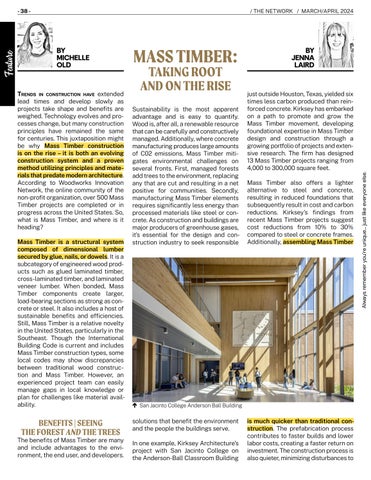
38 MASS TIMBER: TAKING ROOT AND ON THE RISE MICHELLE OLD AND JENNA LAIRD OF KINSEY ARCHITECTURE OPINE ON THE BENEFITS OF THIS SYSTEM OF CONSTRUCTION
41 THE HYBRID DESIGNER BENJAMIN BAPTIST INTRODUCES US TO UI/UX COURSES BRIDGING THE GAP BETWEEN DESIGN AND DEVELOPMENT

50 PROPERTY MANAGEMENT SOFTWARE EMILY JOHN SUGGESTS WAYS TO STREAMLINE YOUR OPERATIONS
51 TRENDI G INFLATION
52 TOP GLOBAL RISKS IN 2024 A VISUAL CAPITALIST GRAPHIC STUDY
THE FACTOR
42 THE TALLEST BUILDING IN THE U.S. (WILL BE IN OKLAHOMA CITY)

/ THE NETWORK / MARCH/APRIL 2024 - 5 -

ABOUT US
Now in our 32nd year, reaches millions of architects, engineers, developers, brokers, construction managers, property and facility managers, bankers, lawyers, appraisers, investors, service providers, and many more throughout the U.S. via subscription and social media! We proudly serve and service any and all real estate associations bimonthly. If your group would like to be included, please let us know. Email: aafelder@thenetworkmagazine.org or call the number above.
EXECUTIVE STAFF
ANDREW A. FELDER: Publisher/Managing Editor. aafelder@thenetworkmagazine.org
XENIA MONTERO: Associate Editor and Art Director. hello@agosto.studio
ANNETTE LAWLESS: Social Media Manager. annettelawless@hotmail.com
MARK ANGLE: Director of Business Development. mark@thenetworkmagazine.org
MARIA TARIQ: Technical Director, Book Division. mariatariq070213@hotmail.com
SHUMALIA REHMAN: Cover Designer, Book Division. shumailarehman3225@gmail.com
MUKUL TRIPATHI (SAM): Website Manager. sam@cypher-squad.com







CONTRIBUTING EDITORS
ROSE-MARY RUMBLEY: Herstory.
ANTHONY BARBIERI: Legal.
ROXANA TOFAN: 6Q –Who, What, When, Where, Why and How. T. J. EDWARDS : Whatever Happened To...?
J. Edwards





ADVISORY BOARD
LINDSEY KOREN, Director of Communications, American Society of Interior Designers.
JONATHAN KRAATZ, Executive Director, USGBC Texas. Rick Lackey, CEO, REAL Professionals Network.
AIMÉE LEE, National Accounts Director, Recycle Across America.
LESLIE ROBINETT, Marketing and Communications Manager, International Facility Management Association.
LAURA MACDONALD STEWART, RID, FASID, IIDA, LEED AP, Editor of Plinth & Chintz.
JESSICA WARRIOR, Director of Property Management, Granite Properties.
/ THE NETWORK / MARCH/APRIL 2024 - 6JANUARY/FEBRUARY
VOL 32 / ISSUE
publication of CREST Publications Group
Avenue,
Fax:
2024 /
2 A
2537 Lubbock
Fort Worth, TX 76109 Tel: 214-755-2277
817-924-7116 www.thenetworkmagazine.org
Copyright ©2024 The CREST Publications Group, 2537 Lubbock Avenue Fort Worth, TX 76109. All rights reserved. All information contained herein (including, but not limited to, articles, opinions, reviews, text, photographs, images, illustrations, trademarks, service marks and the like (collectively the “Content”) is protected by copyright and other intellectual property laws. The Content is the property of The CREST Publications Group and/or third party licensors. You may not modify, publish, transmit, transfer, sell, reproduce, create derivative work from, distribute, republish, display, or in any way commercially exploit any of the Content or infringe upon trademarks or service marks contained in such Content. GENERAL DISCLAIMER AND LIMITATION OF LIABILITY: magazine contains facts, views, opinions, statements and recommendations of third party individuals and organizations. The publisher does not represent or endorse the accuracy or reliability of any advice, opinion, statement or other information displayed and any reliance upon same shall be at the viewer’s sole risk. The publisher makes no guarantees or representations as to, and shall have no liability for, any content delivered by any third party, including, without limitation, the accuracy, subject matter, quality or timeliness of any Content. Change of address: Mail to address above or email editor@crestnetwork.com
Rose-Mary Rumbley
T.
Anthony Barbieri
Roxana Tofan
Andrew A. Felder Xenia Montero
Maria Tariq Mark Angle Mukul Tripathi (Sam)
Annette Lawless
WHAT
theNetworkMagazine CHECK US OUT ON SOCIAL MEDIA
Shumalia Rehman
OUR READERS ARE saying

"You do look good. OK, I'll do it."
Editor’s note
HICKORY DICKORY DOCK…
Lisa was compLaining to her girlfriend about the size of her breasts. "I know I may sound shallow, but they're so small. I just can't stand them!" she said.
"Look, don't get an operation or anything like that,” her girlfriend replied. “I had the same problem, and I went to Dr. Michaels, and he helped me a lot. Make an appointment."
So, she made the appointment and after the examination Dr. Michaels said, "Look… all you need is an exercise program and you’ll be amazed at the improvement. Here's what you do,” he said as he demonstrated. “Pull your shoulders back and push your chest out. Hold it for five seconds Then bring it back in and pull your shoulders back. Five seconds. Do this over and over for ten minutes every day. To help you with the rhythm, say this out loud, ‘Mary had a little lamb, his fleece was white as snow. If I do this every day, my breasts are sure to grow.’"
Lisa did this exercise faithfully every day, until one day, she was running late for work and she forgot. She was on the subway when she remembered that she hadn't done them that morning. She looked around, and very gently stuck her chest out and back and quietly said, ‘Mary had a little lamb, his fleece was white as snow. If I do this every day, my breasts are sure to grow.’
She was totally startled when a man came up to her and said, "Hey, you go to Dr. Michaels, don't you?"
"Why yes," she said, "how do you know that?"
He stood up and began gyrating his hips while reciting, “Hickory dickory dock...”


TWINS
A woman in Italy gave birth to identical twins. Sadly, she and her husband did not have the resources to provide for them, so they put them up for adoption. One was placed with an Egyptian family who moved to Alexandria and named him Amal. The other went to a young Spanish couple who moved to Barcelona and named him Juan. Years later, Juan sends a picture of himself to his mother, and she was elated. She told her husband that she wished she also had a picture of Amal. Her husband replied, “Why would you need that? They are twins. If you've seen Juan, you've seen Amal."
POLISH SAUSAGE
A customer asked, “In what aisle can I find the Polish sausage?”
The clerk asks, “Are you Polish?”
The guy, clearly offended, says, “Yes, I am. But let me ask you something. If I had asked for Italian sausage, would you ask me if I was Italian? Or if I had asked for German Bratwurst, would you ask me if I was German? Or if I asked for a kosher hot dog, would you ask me if I was Jewish? Or if I had asked for a Taco, would you ask if I was Mexican? Or if I asked for some whiskey, would you ask if I was Irish?”
The clerk says, “No, I probably wouldn’t.”
The guy says, “Well, then, because I asked for Polish sausage, why did you ask me if I’m Polish?”
The clerk replied, “Because you’re in Ace Hardware.”
INNER STRENGTH
If you can start the day without caffeine or pep pills.

If you can be cheerful, ignoring aches and pains.
If you can resist complaining and boring people with your troubles.
If you can eat the same food every day and be grateful for it,
If you can understand when loved ones are too busy to give you time.
If you can overlook people taking things out on you when, through no fault of yours, something goes wrong.
If you can take criticism and blame without resentment.
If you can face the world without lies and deceit.
If you can conquer tension without medical help.
If you can relax without liquor.
If you can always sleep without the aid of drugs. Then, you are probably the family dog.
 BY ANDREW FELDER Managing Editor & Publisher aafelder@thenetworkmagazine.org

ALL ABOARD
A man boarded an aircraft at London's Heathrow Airport for New York, and while taking his seat and settling in, he noticed a very beautiful woman boarding the plane. He realized she was heading straight toward his seat and, sure enough, she took the seat right beside him. "Hello," he blurted out awkwardly, “business trip or pleasure?"
She looked at him, smiled enchantingly, and said, "Business. I'm going to the annual nymphomaniacs’ convention in the United States." He swallowed hard. Here was this gorgeous woman sitting next to him, and she was going to a meeting for nymphomaniacs! Struggling to maintain his composure, he calmly asked, "What's your business role at this convention?
"Lecturer," she responded," I use my experience to debunk some of the popular myths about sexuality."
"Really," he smiled, "what myths are those?"
"Well," she explained, "one popular myth is that African American men are the most well-endowed. In fact, it's the Native American Indian who is most likely to possess that trait. Another popular myth is that French men are the best lovers, when actually it is the men of Italian descent… and we’ve also found that the best potential lovers in all categories are Jewish." Suddenly the woman became uncomfortable and blushed. "I'm sorry," she said. "I really shouldn't be discussing this with you, I don't even know your name!"
"Vinny Goldberg," the man said. "But my friends call me Tonto." n
/ THE NETWORK / MARCH/APRIL 2024 - 7If people are talking behind your back, just fart.

BENJAMIN BAPTIST (P. 41) is the Lead Growth Marketing Manager for Designerrs Academy. With a knack for innovative strategies, he drives business growth through data-driven campaigns. He is also an avid writer, having penned numerous articles on topics ranging from marketing trends to professional development.

EMILY JOHN (P. 50) is an arts teacher and freelance writer in the Village of Lanchester in Northern England. She is also an amateur astronomer and an artist who loves reading and believes that learning keeps you alive. She writes blogs for several websites.

MARIA KLESSER (P. 36) is a content marketing specialist for Paragon Service Pros, with a focus on creating informative and engaging articles about heating, ventilation, and air conditioning.

ADAM MCCANN (P. 40) is a personal finance writer for WalletHub who also helps produce WalletHub's weekly 'Best and Worst' studies. At Johns Hopkins University, he took a wide variety of classes in writing, English, economics, political science, history, and language, while working part-time in the Special Collections department of JHU's Milton S. Eisenhower library.
Contributing Writers

ROXANA TOFAN (P. 36) is the owner of Clear Integrity Group in San Antonio, Texas and the company’s principal broker in Texas, Ohio and South Carolina. Her main focus is multifamily commercial brokerage in San Antonio area and property management. She enjoys taking over nonperforming properties and turning them around. She is also a Contributing Editor of and her 6Q feature appears in every issue. In addition to her company, her passion is giving back to the community as she volunteers for various support organizations such as Boy Scouts of America, Special Olympics, Alzheimer’s Association and supporting the military. She loves to travel with her teenage children and supporting their extra-curricular activities.

JENNA LAIRD (P. 38) is the Communications Manager and a Senior Associate at Kirksey Architecture. She specializes in showcasing the expertise, projects, and firm culture at Kirksey and has been integral in the unprecedented growth of the firm over the last 10 years. With offices in Houston, Austin, and Dallas, Texas, Jenna leads Kirksey’s communication and strategic business development initiatives for all of the firm’s services and diverse market sectors. She also spearheads internal communications and the Culture Committee which focus on the firm’s greatest asset, it’s people.

BRIGADIER GENERAL
THOMAS J. EDWARDS (P. 36) recently retired from the Army after 30 years of service and moved to San Antonio, Texas in May of 2022. He is a life member of the Veterans of Foreign Wars, the American Legion, the Military Officers’ Association of America, and the 82d Airborne Division Association. He holds a bachelor’s degree from the University of South Carolina, and master’s degrees from Oklahoma University, the Naval War College, and the Army War College. He is also a Contributing Editor of thenetwork and his Whatever Happened to…? feature appears in every issue.
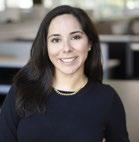
MICHELLE OLD, AIA (P. 38)
Design Principal and Associate Vice President at the Texas-based multidisciplinary firm, Kirksey Architecture. She has over 15 years of experience and is passionate about designing spaces that promote creativity, collaboration, and health. Michelle has developed an expertise in mass timber projects and was recently recognized as a 2023 Building Design + Construction 40 Under 40 recipient as was honored with the AIA Houston 2022 Ben Brewer Young Architect Award. Her work has garnered design awards from Texas Architect, AIA Houston, SCUP, and IIDA.

ROSE-MARY RUMBLEY (P. 48) holds a Ph.D. in communications from the University of North Texas. She is a wellknown speaker in Texas and enjoys researching each and every topic. She is a Contributing Editor of and Her-story appears in every issue.
THE UPSIDE OF DOWNTIME...
Fans of will love these compilations of humor from the last decade. The Best of Diversions is just that – the very best of the hilarious Diversions that have appeared on the pages of the magazine. There are now 3 books of Vertical Lines – wit, witticisms and sarcasm that have appeared between the pages (”in the gutter”, as they say). They are both available at your favorite online bookseller and you can see samples at the link here My Handbook is... well... look at the cover comments and a few sample pages. You’ll know soon enough if it’s for you.
bookshelf
on days off on off-days on rainy Sundays if you’re alone if you need a break to pass the time to brighten your day to sharpen your skills to open your mind to make you smile turn to thenetworkmagazine.org






I have loved her from afar for six months now — ever since she got that restraining order.


/ THE NETWORK / MARCH/APRIL 2024 - 8 -

That cover is amazing! Looking forward to reading. ��
EDDIE BLANCH, PROPERTY AND FACILITY MANAGEMENT INNOVATORS (VIA LINKEDIN)
Thank you! I especially enjoyed the article on Habitat 67. Wow is correct! Great photos as well.
BRUCE LYNGAAS, MAUMELLE, AR
Kudos for the impeccable layout and design of magazine. Each page is visually delightful, which really enhances the reading experience. It's truly excellent!
BRENDA PENNINGTON, LAS VEGAS, NV
What fun! A wonderful assortment of information and entertainment. (Is infotainment a word? It sure should be!)
COLLEEN NESBIT, SAN DIEGO, CA
I commend your magazine for its insightful articles and diverse perspectives. It's a beacon of knowledge and inspiration—and it’s funny! Keep up the exceptional work in informing and engaging your readers.
CHANCE CALDWELL, OAK PARK, IL
Is there going to be a Vertical Lines III?
ALEXANDRA CASTELANO, PENSACOLA, FL
ON THE COVER

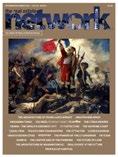
‘OBSTACLES’
by Kylli Sparre
“This image is one of my earlier works, when I wasn't quite sure of the direction I wanted to take. But I had an immense drive, resulting in surprising outcomes. This image specifically represented the determination and difficulty of achieving sometimes the most basic goals. A house as an impossible goal seemed like a perfect metaphor at the time. It had the energy and humor I needed to continue in my also seemingly impossible creative path.”
Ed. Thanks for asking! Yes – and very soon. Here’s a sneak peek at the cover. editor@thenetworkmagazine.org



/ THE NETWORK / MARCH/APRIL 2024 - 9They say with age comes wisdom, so therefore I don't have wrinkles, I have wise cracks. INB X
THE
LET’S RECYCLE RIGHT!
To choose the standardized labels that work for your recycling program visit:



The nonprofit organization, Recycle Across America created the first and only standardized labels for recycling bins. This simple solution is referred to as “one of the most important environmental fixes taking root today” by the New York Times.

EMANUEL
and volunteer advocate for Recycle Across America RECYCLING IS TOO IMPORTANT TO BE CONFUSING.
VAL
Actress
www.RecycleAcrossAmerica.org
SOLUTION:
The standardized labels on recycling bins make it easy for people to recycle right! It’s that simple.

Since 1992
OUR CROSS-SECTOR AUDIENCE
DISTRIBUTED+++ACCESSIBLE+++CIRCULATED+++READ+++ENJOYED By Association Professional and Associates/Affiliates
· American SeniorsHousingAssociation(ASHA)
· A m e r i c an InstituteofArchitectureStudents(AIAS)
· National OrganizationOfMinorityArchitects(NOMA)
erties(NAIOP)· NationalAssociation of Housing Cooperatives(NAHC)· AmericanRealE
· American Society of Heating, RefrigeratingandAir-Condi
Fam ilyHousingCouncil(NMHC)
· N a t i o n a l Mu l t i -
itedStatesGreenBuildingCouncil(USGBC) InternationalCouncilofShoppi
· A iarpp s a l I n s t itute ( A I ) · AmericanInstituteofArchitects
· Fannie Mae · FreddyMac · NationalAssociationofReal E
UrbanLandInstitute(ULI)N
· Itnitanrelano A s s o c i a t i o n o f Venue Managers(IAVM)· BuildingResearchEstablishment EnvironmentalAssessmentMethodology .(BREEAM)
PlaitnediseRfonoitaicossAlanoitaNtreporMyegana r s ( N A R P M )
laredeF gnisuoH AlanoitaN·)AHF(noitartsinimdAicossita
)BHAN(sredliuBemoHfonoitaifoyteicoS eciffO dna
nanceCounci l ( C R E F C ) · U .S peD
tnempoleveDnabrUdnagnisuoHfotnemtraIetatsElaeRfonoitaicossAlanoitaN tnemtsevn
)DISA(srengiseDroiretnIfoytei AsreknaBegagtroMicossita
)IBWI(etutitsnIgnidliuBLLEWlanoitanretnI
)AERAN(
noitcurtsnoCninemoWfonoitaicossAl
)NPR(krowteNslanoisseforPlaeR iseDroiretnIlanoitanretnIAngicossita no ( I I D A ) · A s s o c iate d Bu i l dersandContractors(ABC)
· f i t wel · R e c y c l e A c r sso remA)AAR(aci ·
srosivdAetatsElaeRfonoitaicossAlanoitaN
·
)PERHAN(slanoisseforPetatsElaeRci US. . CforebmahCneerG (ecremmoGSU C C )
+++ State and City Chapters of these and other associations, too numerous to list, as well as +++ the employees of leading local, regional, and national real estate management and brokerage firms, and +++ over 12 million on LinkedIn and Alignable

/ THE NETWORK / MARCH/APRIL 2024 - 11 -
onal A s s o c i a t i o n o f Hpsina
Nati
st
e B r o k e r s ( N
at
A )BER ·
ti
n gE n gi nee r s ( A S H R A E ) · aN t
oni
anoi
no fo I n d u s t r i a l a n d O f f ice Prop
)CIWAN( stateSoci et y ( A R E S ) emA r naci coS
)ABM(no
· National Association ofAppraisers(NAA)
T r u s t s ( N A R E I T ) · Un
n gCenters( I C S C ) N a t i o n a l cossA
·CREFi
ational pA a r t m e n t cossA)AAN(noitai
(nemo C R E W ) Ins t ituteofRealEstateManagement(IREM)·NationalAssoci a t i o n o aeRf)RAN(srotl
emmo r c i a l InvestmentMember(CCIMInstitute)·Couns e l o r s o )ERC(etatsElaeRf idliuB n g Ownersand ManagersA ss o c ai t lanoitanretnI)AMOB(noi F a c ilityManagementAssociat o n ()AMFI
)ROIS(srotlaeRlairtsudnI
WetatsElaeRlaicremmoC
CdeifitreC
us help you reach your target audience.’ mark@thenetworkmagazine.org 682-402-4434
‘Let
 BY ANDREW FELDER
IMPORTANT VOICES (AND AN INVITATION TO OUR READERS)
ReaL estate pLays a significant role in many important issues that are central to contemporary society. Its impact extends across various domains, influencing economic, social, environmental, and political aspects. As we say on the cover: ’real estate may be everywhere, but it isn’t everything.’ However, it does impact and intertwine with many of the pressing issues of the day—and it always has. In a broad sense, here are just some of the areas in which real estate considerations intersect with the various domains that effect our world
Housing Affordability and Homelessness: The shortage of affordable housing is a critical issue in many regions, leading to housing insecurity for a significant portion of the population. (See January-February 2024 issue.) Also. escalating property values and rents contribute to housing affordability challenges, often resulting in homelessness for vulnerable individuals and families.
Social Equity and Access to Housing: Real estate practices impact social equity by influencing who has access to housing, quality neighborhoods, and educational opportunities. Discriminatory practices in real estate (such as redlining) can contribute to systemic inequalities.
Climate Change and Sustainable Development: Real estate development and construction contribute to carbon emissions, deforestation, and other environmental issues. Sustainable real estate practices, including green building initiatives and energy-efficient designs, are crucial for mitigating the impact of climate change and promoting ecofriendly urban development.
Urbanization and Infrastructure: Rapid urbanization brings challenges related to infrastructure development, traffic congestion, and the need for sustainable urban planning. Real estate development influences the growth and layout of urban areas, impacting the quality of life for residents.
THE IMPACT OF REAL ESTATE ON THE ISSUES OF TODAY
Economic Inequality and Gentrification: Gentrification, driven by real estate trends, can contribute to economic inequality by displacing lower-income residents from their neighborhoods. Real estate investments and property values can widen the wealth gap between those who own property and those who do not.
Global Pandemics and Remote Work:
The COVID-19 pandemic has reshaped real estate trends, with an increased focus on remote work and changes in demand for residential and commercial properties. This, of course, influences the design and use of spaces.
Political Stability and Urban Planning:
Real estate development is intertwined with political stability, as policies and regulations shape the growth and structure of cities. Urban planning, influenced by political decisions, affects the resilience of communities to economic and environmental challenges.
Technological Advancements and Smart Cities: Technological innovations, such as smart building technologies and digital platforms, are transforming the real estate industry. Smart city initiatives leverage technology to enhance efficiency, sustainability, and the overall quality of life in urban areas.
In essence, real estate is a dynamic and influential sector that intersects with many of the pressing issues of our time. Addressing these challenges requires a holistic approach that considers the social, economic, and environmental dimensions of real estate practices and policies. As society evolves, the role of real estate in shaping our communities and addressing contemporary issues becomes increasingly vital.
ê Inadmissible aliens, some seeking asylum.


The relationship between real estate and illegal immigration at the southern border of the United States is a complex and multifaceted issue that involves economic, social, and political dimensions. As individuals and families cross the border in search of better economic opportunities, they contribute to the need for affordable housing, particularly and this increased demand often leads to rising property prices and rents,
On the dark side, smuggling networks and corrupt practices within the real estate sector (e.g., fraudulent documentation or exploitation of vulnerable immigrants) can contribute to the perpetuation of illegal immigration. And stricter immigration policies or border control measures could impact the real estate market by deterring potential buyers and investors.
Furthermore, the social dynamics of communities along the southern border are deeply intertwined with the real estateimmigration relationship. Tensions may arise as local residents perceive immigrants as competitors for resources, including housing. This can lead to social conflicts and contribute to a polarized atmosphere within these communities.
My boss is going to fire the employee with the worst posture. I have a hunch it might be me.
/ THE NETWORK / MARCH/APRIL 2024 - 12 -
é Migrants illegally enter the U.S. by crossing the Rio Grande in rubber boats near Los Ebanos, TX.
PUBLIC DOMAIN
Addressing the complex interplay between real estate and illegal immigration requires a comprehensive and nuanced approach, including consideration of the economic drivers of migration, the role of the real estate industry in shaping border communities, and the need for humane and fair immigration policies.
The relationship between real estate and global warming is a critical aspect of the broader environmental challenges facing our planet. Real estate development has significant implications for the environment, and its carbon footprint extends across various stages of construction, operation, and demolition. The construction of buildings, especially large-scale projects, often involves the emission of greenhouse gases due to the use of energy-intensive materials, transportation of construction materials, and on-site energy consumption. Additionally, the energy demands of buildings for heating, cooling, and lighting contribute to carbon emissions, especially if the energy comes from non-renewable sources.
One of the key contributors to global warming within the real estate sector is the widespread use of energy-inefficient buildings. Many existing structures lack proper insulation, energy-efficient appliances, and sustainable design features, leading to increased energy consumption and higher carbon emissions. Retrofitting existing buildings to meet more stringent environmental standards is crucial in mitigating the impact of the real estate sector on global warming.
Land-use changes associated with real estate development also play a significant role in contributing to global warming. Urbanization often leads to deforestation and the conversion of natural landscapes into built environments, reducing the planet's capacity to absorb carbon dioxide.

Moreover, the destruction of green spaces within urban areas diminishes the potential for carbon sequestration and exacerbates the urban heat island effect, contributing to local climate change.
On the flip side, the real estate industry is not immune to the adverse effects of global warming. Rising sea levels, extreme weather events, and changing climate patterns pose significant risks to coastal and low-lying properties. Increased frequency and intensity of storms, floods, and wildfires can lead to property damage, affecting real estate values and insurance costs. This creates a feedback loop where the impacts of global warming directly impact the real estate market.

Addressing the relationship between real estate and global warming requires a comprehensive and proactive approach. The adoption of sustainable building practices, including green building certifications, energy-efficient designs, and the use of renewable energy sources, is essential to reduce the carbon footprint of the real estate sector. Additionally, urban planning that prioritizes green spaces, sustainable transportation, and resilient infrastructure can contribute to mitigating the environmental impact of real estate development. As global efforts intensify to combat climate change, the real estate sector must adapt and contribute to a sustainable future for our planet.
An Invitation to readers of : As stated at the outset, real estate considerations impact and intertwine with many of the pressing issues of the day. You can add your perspective and voice to this important awareness by writing to us and telling us (and thereby our broad-based readership) how real estate factors into your personal and/or professional life. Contribute to the conversation. Just a few sample topics: Inflation and Interest Rates, Geopolitical Risk, Hybrid Work, Supply Chain Disruptions, Energy, War, Labor Shortage Strains, The Great Housing Imbalance, Regulatory Uncertainty, Cybersecurity Interruptions, ESG Requirements. The list is virtually endless. Email to editor@crestnetwork.com.
The relationship between real estate and homelessness in the United States is a complex and pressing issue that requires a nuanced examination of various factors contributing to housing insecurity.
At its core, homelessness is fundamentally tied to the availability and affordability of housing. The real estate market plays a pivotal role in shaping the housing landscape, and when market forces lead to rising property values and rents, vulnerable populations can find themselves on the brink of homelessness. The scarcity of affordable housing options, especially in urban areas with high demand, exacerbates the challenge for individuals and families struggling to secure stable living conditions.
Gentrification often results in the displacement of lower-income residents as neighborhoods undergo revitalization and property values rise. While gentrification can lead to economic development, it may simultaneously contribute to homelessness by pushing individuals in marginalized communities out of their homes and disrupting established support systems.
Government policies and the availability of social services also play a crucial role in the relationship between real estate and homelessness. Insufficient funding for affordable housing programs and social services can leave many individuals without adequate support, making them more susceptible to homelessness. And zoning regulations and land-use policies can impact the development of affordable housing options, further limiting the availability of homes for those in need.
Efforts to address homelessness must involve collaboration between the public and private sectors. Real estate developers and investors can contribute to the solution by engaging in socially responsible development practices, including the creation of affordable housing units and partnerships with organizations focused on homelessness prevention. Government intervention, through the allocation of resources for affordable housing initiatives and supportive services, is also crucial in addressing the root causes of homelessness. n
/ THE NETWORK / MARCH/APRIL 2024 - 13Alcohol! Because no great story started with someone eating a salad. Andrew Felder is the Editor and Publisher of . aafelder@thenetworkmagazine.org
é The Gaza Strip Today.
PALESTINIAN NEWS & INFORMATION AGENCY (WAFA) IN CONTRACT WITH APAIMAGES CC BY-SA 3.0 , VIA WIKIMEDIA COMMONS
FACTOIDS
SNEAKERS VS TENNIS SHOES
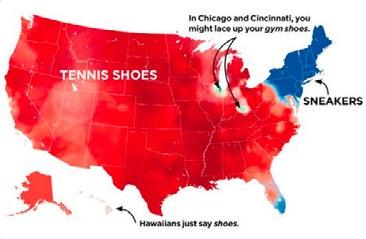
some peopLe say sneakeRs. Some people say tennis shoes. Some people use the terms interchangeably, while others say they mean completely different things. (In the UK, Brits call tennis shoes trainers.) Using the two to refer to exactly the same shoe isn’t exactly correct because of one critical detail—tennis shoes serve sport-specific purposes sneakers are more all-purpose and all-inclusive
The sole and tread pattern on tennis shoes is specifically designed to provide excellent traction on the court, which is essential for quick lateral movements and sudden stops. Tennis shoes also have a flat sole, which helps Okay. This is definitely not something that you need to know… but it is certainly something that’s interesting–astounding even.
WHERE THE BUFFALO ROAM
In the northeast corner of Brazil, at the mouth of the Amazon River, there’s an island called Marajó. It’s about the size of Switzerland and has a population of 440,000 people. It also has a huge population of water buffalo; in fact, there are more water buffaloes than there are people! And these are animals that are endemic to India and Southeast Asia, so how they got here is a bit of a mystery. What is clear is that the Asian water buffalo have taken to the tropical climate, and they live in a happy symbiosis with humans.
They are revered in local culture. They lead Marajó’s carnival and Independence Day processions, and local fes -
to keep the foot stable and prevent rolling.
Another thing setting apart tennis shoes and sneakers is durability. When you use athletic shoes for their intended purpose, they wear out quickly. According to the United States Tennis Association the midsole in tennis shoes wears out around 45-60 hours of play. Sneakers worn as regular apparel rarely see anything more intense than brisk walking. You might sometimes work out in them, but that is the exception, rather than the rule. The result is that they have a longer lifespan.
Extra: The city of Portland is a big deal in the world of sneakers — in fact, it's sometimes called the sneaker capital of America. (The area is home Nike's world HQ, the Adidas U.S. headquarters and a new Under Armour campus.)


tivals feature buffalo races. The island’s most beloved buffaloes even have their own Instagram pages with thousands of followers.
THE OLYMPIC FLAG
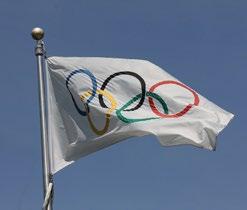
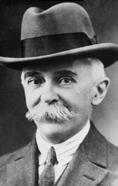
Baron de Coubertin (a French aristocrat) designed the Olympic flag in the early 1900s, and he was very purposeful with his creation. "A white background, with five interlaced rings in the center: blue, yellow, black, green, and red … is symbolic," Coubertin said in 1931. "It represents the five inhabited continents of the world, united by Olympism, while the six colors are those that (at least one of which) appear on all the national flags of the world at the present time."
They are also ubiquitous on restaurant menus, where buffalo burgers and steaks are served topped with buffalo mozzarella, and creamy cheese from the milk is followed by tangy buffalo ice cream. The people of Marajó have made every possible use of the creatures. Buffaloes (which can grow to 1800 pounds and over 8 feet long) help farmers in the fields, and serve as the island’s taxis, garbage trucks and delivery vans, hauling people and goods around the island. They are also employed as patrol animals by the military police in Soure (a town of about 24,000 people on the island’s northeastern tip), where heavily armed officers ride on their backs in specially adapted seats.
In the United States, many people have dogs as pets. In Marajó they have buffaloes. And even though the Islanders have a deep affinity for the buffaloes in their own backyards, they would happily eat someone else's.
I don't need a hair stylist. My pillow gives me a new hairstyle every morning.
/ THE NETWORK / MARCH/APRIL 2024 - 14 -
SAM FROM VANCOUVER, CANADA CC BY 2.0 VIA WIKIMEDIA COMMONS

IN MY WHEELHOUSE
[meaning within one’s area ofexpertise, interests, or abilities]
The phrase is thought to have originated in the nautical world. The wheelhouse is the enclosed area on a ship where the helmsman sits and controls the ship's direction. So, being "in the wheelhouse" means being in control and knowing what you are doing. It was first used in a figurative sense in the 1950s and became popularized by baseball announcers, who used it to describe the area of the strike zone where a batter is most likely to hit a home run. The phrase is now used to describe anything from a job interview to a new project. It’s a way of saying that you’re confident in your ability to handle something.
FOR CRYING OUT LOUD…
[is used to express frustration, annoyance, or exasperation]

The phrase is a euphemism for a more offensive expression (in this case, "for Christ's sake"). It was popularized by the cartoonist Thomas Aloysius Dorgan, who was known for his use of slang and colloquialisms. Dorgan first used the phrase in a cartoon in 1922, and it quickly became a popular expression.
A COUNTRY MILE
[means "by a very large margin" or "by a great distance"] Used to describe something that is much better, faster, or more successful than something else, the phrase is thought to have originated in the 16th century. One theory of its origin is that it comes from the fact that country roads are often winding and longer than city streets, so it can take longer to travel a mile in the country than in the city. Another theory is that the phrase comes from the fact that country people were often seen as being more informal and less precise than city people. So, when they said that something was "a country mile" away, they were really saying that it was a long way away, but they were also exaggerating a bit.
CHIT CHAT
[means to talk or converse casually]


Originating in the 17th century, the "chat" part of the word is thought to come from the Old English word "ceattan" (which also means to talk). The "ch" sound was added to the beginning of the word to make it sound more informal. The first recorded use of the phrase "chit chat" was in the 1710 book "Moral Essays" by Samuel Palmer, in which he the phrase to describe "idle or trifling talk". The phrase "chit chat" is now used to describe any kind of informal conversation, whether it is serious or not. It can also be used to describe gossip or idle talk.
century China. They were a crude slab of smoked quartz that was made to block out the light from the sun. The primitive frames were roughly shaped to hold them against the user's face. They were made only for the very rich, and did not correct vision or protect against UV rays, but they provided some relief from having the sun constantly shining into user's eyes; they were also used to hide emotions from others when speaking with them—which is actually how/why they were first invented — for Chinese judges of that time who routinely worn smoke-colored quartz lenses allowing them to seem emotionally detached from the topic being discussed and to conceal their feelings while questioning the accused
/ THE NETWORK / MARCH/APRIL 2024 - 15 -
Don't worry if plan A fails, there are 25 more letters in the alphabet. IDIOMATIC EXPRESSIONS











––
facilityfusion.ifma.org
View Sessions
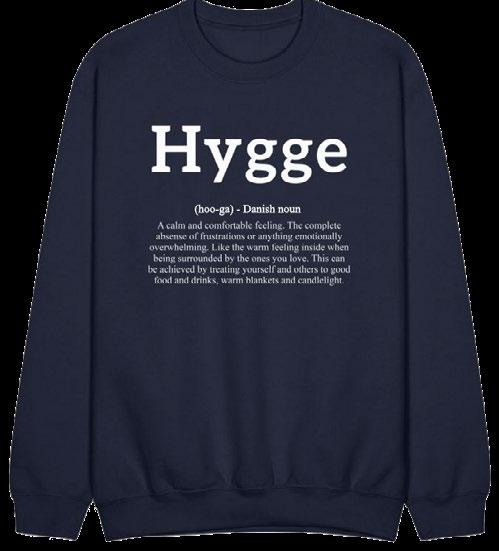
English has more words than any other language (around 219,000), but there are still some things that can’t be described in English. Often other languages have a word for which we have no equivalent.
actually means “I accidentally ate the whole thing.”
You know the feeling when you have to move hot food around in your mouth in an attempt to keep from burning yourself? In Buli (a language spoken in Ghana), there’s a word for that — pelinti
Thomas Wolfe wrote, “You Can’t Go Home Again,” meaning the place you may be longing for is not what it once was, or it no longer exists. The Welsh word hiraeth is the same idea (and loosely translates to intense homesickness or missing a place you can’t go back to.
Lihai is Mandarin Chinese for intense, bold, or aggressive. But it isn't a value judgment. It's doesn't imply whether something is good or bad, only that it is powerful. (A storm that tears down trees is lihai; a teacher that demands the most out of students is lihai; a spicy soup is lihai; lions are lihai.)
In Ireland, craic means good times, gossip, and the goodwill of a big night out. No one in Ireland can really define the word, but everybody knows that it means.
WHAT’S IN A WORD?
In the second issue of the year, we have a tradition of running 2 articles which are a tribute to the richness of the English language. On pages 20 and 21, we have Lake Superior State University’s List of Words Banished From the Queen's English for Misuse, Overuse and General Uselessness and the Wayne State List of Words that should be resurrected from virtual banishment. This is our contribution to playing with words.
The Brits often use ‘cheeky’ to describe someone who is shameless. But more fun is the Spanish word sinvergüenza. Literally, it means ‘without shame,’ but is commonly used to refer to someone who is being naughty or sassy.
Winnie the Pooh said, "If you live to be a hundred, I want to live to be a hundred minus one day, so I never have to live without you." In Arabic, the word ya’arburnee translates as ‘may you bury me.’ (That way, you’ll never have to live a day without them.)
Remember the Alka Selzer commercial — ‘I can’t believe I ate the whole thing.’ In Georgian, the word shemomedjamo
Portuguese, has a word for extreme, melancholic longing—missing your home, your love, and your life with no English equivalent: saudade
About twice a day, the Swedes take a break (a fika) when you grab coffee, a pastry, and a conversation. No devices allowed.
Japan has a beautiful history of wabi sabi, an aesthetic sense in which imperfections (e.g., the cracks in clay or wrinkles in skin) are signs of beauty. n










/ THE NETWORK / MARCH/APRIL 2024 - 17Supergrit® Type 231BF “Make Every Step a Safe One” Wooster Products Inc. 800-321-4936 www.woosterproducts.com sales@wooster-products.com PROUDLY MADE IN THE USA
TRENDI G
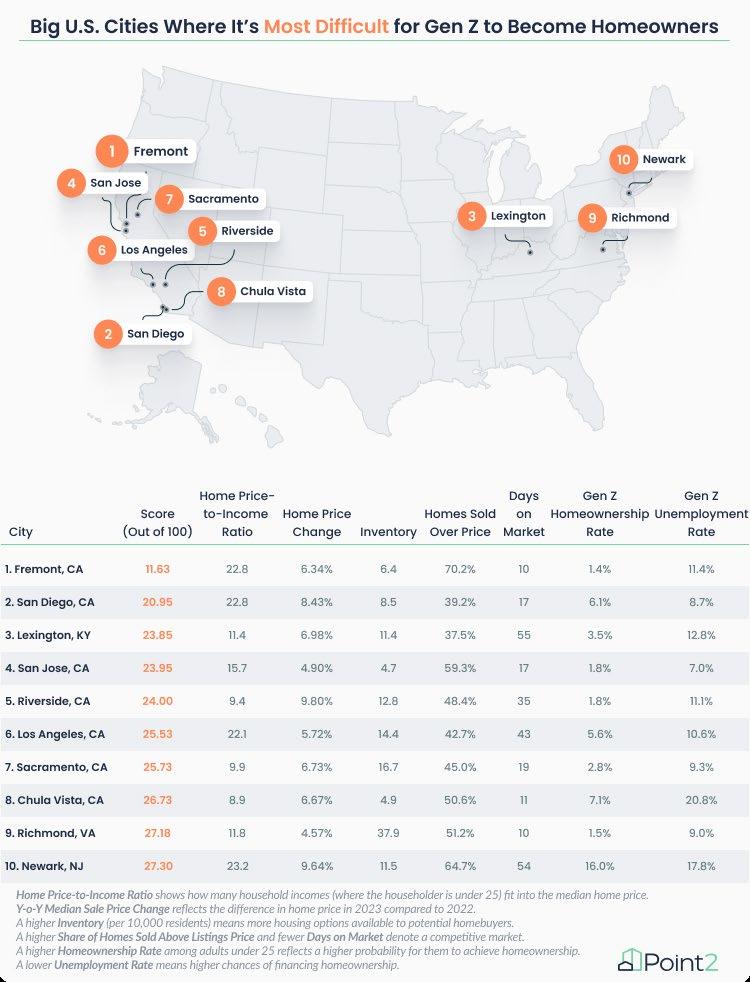
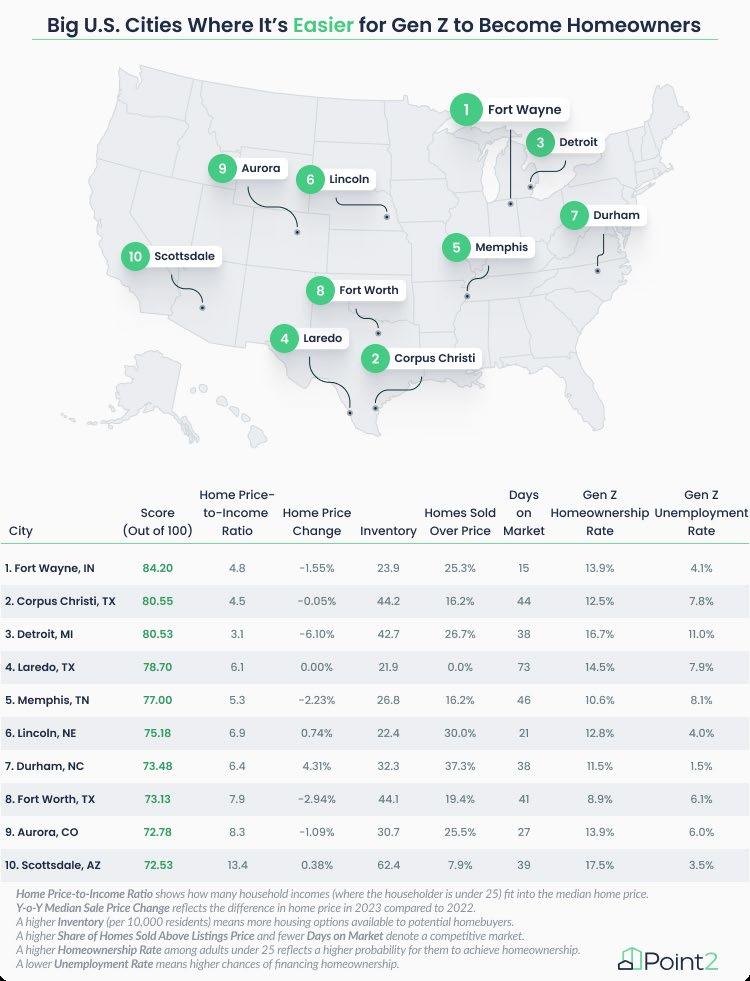
amid cRippLing infLation, histoRicaLLy high mortgage rates, and a turbulent economy, America's youngest also grapple with entry-level incomes, unemployment, and scarce housing options. Despite these hurdles, some young adults still dare to dream of homeownership. Born between 1997 and 2012, the number of Generation Z members is estimated at 69.58 million, or about 21% of the U.S. population. Point2, a division of Yardi Systems Inc. and an international real estate search portal assessed the feasibility of Gen Z homeownership in the country’s 100 major cities (including the five New York City boroughs).
/ THE NETWORK / MARCH/APRIL 2024 - 18 -
They ranked them based on seven metrics:1] Home Price-to-Income Ratio – to see how many household incomes (where the householder is under 25) would be needed to reach the median home price in a market; 2] Median Sale Price Difference – to understand how home 2023 prices are more impactful compared to 2022;3] Inventory (per 10,000 residents) –to evaluate how many housing options are available; 4] Share of Homes Sold Above Listing Price – to assess bidding wars and competitivity in a market; 5] Days on Market –to determine how quickly homes fly off the market and measure competitivity; 6] Homeownership Rate –to assess the real probability of adults under 25 achieving homeownership; 7] Unemployment Rate –to see where young adults have lower chances of financing homeownership. Explore the complete data set with interactive visuals <HERE>. n
/ THE NETWORK / MARCH/APRIL 2024 - 19 -


WORDS LIST
dynamic, ever-evolving entity. The banished words list recognizes the rapid changes in expression, encouraging a reassessment of the impact and relevance of our vocabulary. We think you will find this year’s submissions truly cringe-worthy.”
1. HACK
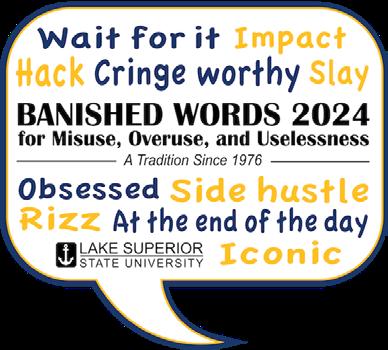
this is ouR eighth year presenting the lists you see on this page and the next. Now a New Year’s Eve tradition, Lake Superior State University (Michigan’s smallest public university) released its annual “List of Words Banished from the Queen’s English for Misuse, Overuse and General Uselessness” on December 31st. The tradition was started by the late W. T. Rabe, a public relations director at Lake Superior State University, on December 31, 1975. Though he and his friends created the first list from their own pet peeves about language, Rabe knew from the volume of mail he received in the following weeks that the group would have no shortage of words and phrases from which to choose. Since then, the list has consisted of nominations received from around the world throughout the year; it has been so popular among language purists that the university has kept it going. Over the decades, Lake State has received tens of thousands of nominations for the list, which now totals more than 1,000 entries. They copyrighted the concept, “to uphold, protect, and support excellence in language by encouraging avoidance of words and terms that are overworked, redundant, oxymoronic, clichéd, illogical, nonsensical—and otherwise ineffective, baffling, or irritating.”
This year, LSSU received over 2,000 nominations from around the world, including submissions from Australia, Bangladesh, Belgium, Canada, China, Croatia, Germany, Guam, Ireland, Lebanon, Namibia, New Zealand, Pakistan, Singapore, Switzerland, Thailand, Uganda, Ukraine, the United Kingdom, with the majority coming from the United States. Sheridan Worth, Director of Marketing at Lake Superior State University, said, “This season is marked by various joyful traditions, and the Banished Words List remains one of the most iconic, humorous, and quirky traditions in the region. The tradition provides a lighthearted opportunity to pause and reflect on the past year—our experiences, communication styles, and the phrases we commonly use. At the end of the day, it serves as a platform for considering how we can progress into the new year with a more mindful approach to language.”
Here is the list of the banished words and terms for 2024 and the reasons for their banishment. As they say on their website: “Language is a
The term “hack” has increasingly become a popular buzzword, frequently utilized to impart an aura of innovation or sophistication to various subjects. Its widespread adoption in multiple contexts, extending beyond its initial technological context, has the potential to lessen its inherent significance. Using it everywhere, even beyond its tech roots, could make it lose its magic.
2. IMPACT
Especially as a verb, why use this word when we have a perfectly good word that makes more sense: “affect”? Overusing it not only takes away its pizzazz but also robs other words of their spotlight.
3. AT THE END OF THE DAY
Sometimes a word needs to be re-banished, and this is one of them. Many comments note that it is overused and meaningless, often employed as a rhetorical device that attempts to encapsulate the complexities of a situation summarily, lacking nuance and depth.
4. RIZZ
Rizz, derived as a shortened form for “charisma,” gained prominence as Oxford’s word of the year and has become a familiar presence in the realm of social media discourse. The ubiquity of this term prompts contemplation on whether it retains its relevance. With language doing the cha-cha of change, we’re wondering if this word still rocks the charisma scene or if it’s time for a language remix.
5. SLAY
While perfectly acceptable in specific contexts, “slay” has transcended its original meaning and infiltrated situations where its usage no longer aligns with its intended significance. Its transition from a specialized term denoting excep-
tional accomplishment to a commonplace expression for any achievement prompts scrutiny into its misapplication, particularly in the characterization of routine or mundane actions. Now, it’s sprinkled everywhere—from wearing a stylish outfit to tackling the art of parallel parking.
6. ICONIC
This one appeared on the list in 2009, so perhaps it’s time for another attempt to point out its overuse and lack of meaning in most situations. Despite its initial recognition as a word worthy of distinction, its repeated application in contexts that don’t merit such acclaim challenges its genuine iconic status. It’s like that one-hit wonder playing on loop.
7. CRINGE-WORTHY
From the comments: “The use of this term is cringe-worthy.” The irony is served hot, as the very term “cringe-worthy” finds itself under the spotlight. It’s like a word caught in its own cringe-worthy moment. Now, as we usher in the new year, it’s time to decide if this linguistic drama deserves an encore or if we should bid “cringe-worthy” adieu to make room for fresh, less cringe-inducing expressions in 2024.
8. OBSESSED
The use of this word for things that are not truly being obsessed over makes it a good candidate for rethinking how we use the word. The casual use of “obsessed” to describe routine interests or preferences underscores a potential misappropriation of the term, prompting a reconsideration of its application. Should one be obsessed with a new kitchen gadget or a new shade of paint? This year’s contributors think not.
9. SIDE HUSTLE
The term “side hustle” has gained widespread use, prompting considerations about its impact on how we perceive economic challenges. It may be worth reflecting on whether its prevalence inadvertently downplays the genuine reality of the situation. While ‘sidehustle’ adds flair to our language, our contributors feel that the only hustle is the one needed to get to their second job.
10. WAIT FOR IT
If we’re watching the video, then we’re already waiting for it, right? While “wait for it” is trying to be the hype master, let’s question if it’s adding extra sparkle or just stating the obvious?
See all of the banished words since 1976, nominate a word for inclusion on the 2025 list, and/or learn more about Lake Superior State University <HERE>. n
/ THE NETWORK / MARCH/APRIL 2024 - 20A balanced diet means a cupcake in each hand. »»»»
2024
WAYNE STATE WORD WARRIORS
Looking for something to talk about at your next kaffeeklatsch? Want to quiet the rawgabbits and blatherskites in your social media circle? Impress them all by sprinkling the Wayne State University Word Warriors’ latest selections into your conversations.

now beginning its 15th year, Wayne State’s Word Warriors program aims to resurrect long-lost — but not completely forgotten — words. Its annual list is composed of submissions from both administrators of the website as well as the public; participants worldwide have seen their favorite words brought back from the brink of obsolescence at wordwarriors.wayne.edu. New entries are posted there — as well as on Facebook — weekly.
“Once again, our Word Warriors have provided a collection of words that makes our language a bit livelier,” said Chris Williams, assistant director of editorial services for Wayne State Marketing and Communications, and head of the Word Warriors program. “This year’s list is particularly evocative. I love to picture myself inhaling the petrichor after a summer thunderplump or listening to someone twankle away on a guitar. It’s really a great selection this year.”
You can see all of the great words selected over the years <HERE> or nominate a word for next year’s list. In the meantime, enjoy the 2024 Word Warriors’2023 list of eminently useful words that should be brought back to enrich our language, excerpted from the university’s website.

BLATHERSKITE
A person who talks at great length without making much sense.
The cable TV commentator was a blatherskite who produced 30 minutes of angry nonsense each night.
CURGLAFF
The shock felt when one first plunges into cold water. He dove into the pool without thinking and the curglaff caused him to shriek when he came up for air.
PETRICHOR
A pleasant smell that frequently accompanies the first rain after a long period of warm, dry weather. He walked outside after the storm, the petrichor lifting his spirits as he hiked around the campground.
PETTIFOGGER
An inferior legal practitioner, especially one who deals with petty cases or employs dubious practices.
He started with dreams of being a Supreme Court justice but in practice he was just another ambulance-chasing pettifogger.
RAWGABBIT
A person who speaks confidently but ignorantly.
My social media feed is filled with rawgabbits trying to explain everything from epidemiology to engineering.”
As the storm clouds gathered overhead, a petrichor-filled breeze wafted through the air, carrying the promise of impending rain. Gathering at the local kaffeeklatsch, a group of pawky individuals exchanged witty banter and dollops of laughter. Amidst the jovial atmosphere, a rawgabbit in the corner attempted to pettifog with elaborate tales, but the discerning group saw through the blatherskite. Suddenly, a thunderplump echoed through the sky, causing a collective curglaff among the coffee-sipping crowd. Undeterred, they continued their twankle of conversation, unfazed by the whims of weather or the antics of the verbose pettifogger.
DOLLOP
A shapeless mass or blob of something, especially soft food.
He sat down to enjoy a nice steak, grilled asparagus and a baked potato topped with a giant dollop of sour cream.
KAFFEEKLATSCH
An informal social gathering at which coffee is served.
After the kids got on the bus, the parents headed to the porch for their morning kaffeeklatsch.
PAWKY
Having a mocking or cynical sense of humor. He had a pawky wit that undercut his superiors' self-importance.
THUNDERPLUMP
A heavy fall of rain during a thunderstorm.
He'd hoped he could get home before the storm got too bad, but found himself instead jogging through a soggy thunderplump.
TWANKLE
To twang with the fingers on a musical instrument.
He sat on the porch as dusk rolled in, twankling an old childhood favorite on the banjo. n
/ THE NETWORK / MARCH/APRIL 2024 - 21Doing nothing is hard. You never know when you're done.

THE MARIST MINDSET LIST
the mindset List was created at Beloit College in 1998 to reflect the world view of entering first year college students. The list has garnered national and international media attention. In 2019, the list moved to Marist and became the Marist Mindset List. This is ’our 12th installment of the list- a glimpse of the cultural milestones which mold the lives of those who entered college in the fall of last year – the class of ’27.
The list for the Class of 2027 is the fourth iteration fully compiled by Marist. The team has established the list as “a cultural compass that tracks the challenges and celebrates the accomplishments of each incoming college class. The goal of the Marist Mindset List is to inspire thoughtful conversation. Excerpted the college’s website, what follows provides insight into the perspective of the Class of 2027.

JOURNALISM
Dan Rather and Ted Koppel both retired in 2005, effectively ending the reign of network news programs as the primary way younger Americans get their news. Eighteen years later, the class of 2027 will get their news primarily from social media sites like YouTube, Instagram and TikTok, according to the American Press Institute.
Leading Support: “The vast majority of Gen Z and Millennials get news daily (79%). Fully 96% report doing so at least weekly.
Leading Support: “The ocean is getting warmer as the climate heats up. The Intergovernmental Panel on Climate Change, a group of nearly 200 scientists who assess thousands of climate studies from around the world, has confirmed that climate change will likely deliver a future of more dangerous hurricanes.“ "4 ways hurricanes are becoming more dangerous and why"
Environmental Defense Fund: Vital Signs

FILM & TELEVISION
MUSIC
The online music site Pandora launched in 2005, the year many incoming students were born. Now, thanks to the availability of older music on sites like Pandora and Spotify, incoming students are just as likely to be listening to Led Zeppelin as Lana del Rey or Lil’ Baby on their phones.
Leading Support: “Old songs now represent 70 percent of the U.S. music market, according to the latest numbers from MRC Data, a musicanalytics firm. Those who make a living from new music—especially that endangered species known as the working musician—should look at these figures with fear and trembling. But the news gets worse: The new-music market is actually shrinking. All the growth in the market is coming from old songs.” "Is Old Music Killing New Music?" The Atlantic
Gen Z and Millennials, moreover, consume news from a wide range of sources. That mix includes traditional national and local news outlets such as newspapers, TV news stations, their websites, or apps. It also includes a wide range of social media platforms — including Facebook, YouTube, Instagram, TikTok, Snapchat, Twitter, Reddit, LinkedIn, Twitch, and Nextdoor. Indeed, on average, those surveyed consume news from about six different traditional sources or social media platforms at least weekly.” "The news consumption habits of 16-to 40-year-olds" American Press Institute

ENVIRONMENTAL SCIENCE
Incoming students have always lived in a world visibly affected by climate change. In 2005, Hurricane Katrina and Hurricane Rita brought unprecedented devastation to the southern United States, serving as warnings for extreme weather events which have become more frequent as ocean temperatures continue to rise.
Youtube launched in 2005, the same year TV programs American Idol, CSI and Desperate Housewives were the most-watched. Eighteen years later, the class of 2027 will almost exclusively watch their video content on Youtube and similar sites online.
Leading Support: “YouTube is one of the largest and most popular online video distribution platforms. It has more than 4 billion hours of video viewers monthly, and an estimated 500 hours of video content are uploaded to YouTube every minute. Since its origins in 2005, it has transformed itself from a showcase for amateur videos to one that distributes original content.” "A brief timeline of YouTube's history and its impact on the Internet" Interesting Engineering.
EDUCATION
The Class of 2027 will be the first to fully integrate ChatGPT or “Generative Pre-trained Transformer” into their college learning experience. ChatGPT will be “used by educational institutions to assist students with course material or answer general queries about university life more efficiently than before, which allows them to focus more time on other areas of importance like research projects or teaching activities instead of mundane administrative tasks.”
Leading Support: “Chat GPT was created by the artificial intelligence research firm Open AI. ChatGPT is a natural language processing (NLP) model that combines GPT-2, a transformer-based language model developed by OpenAI, with supervised and reinforcement learning techniques to fine-tune it (an approach
If you’re not supposed to eat at night, why is there a light bulb in the refrigerator?
/ THE NETWORK / MARCH/APRIL 2024 - 22 -
to transfer learning) on the GPT-3 group of large language patterns developed by OpenAI. The model enables users to interact naturally with an AI system through text-based conversations. It could be used for customer service applications and to create virtual assistants for voice and text conversations.” "A Review of ChatGPT AI's Impact on Several Business Sectors" Partners UniversalInternationalInnovationJournal (PUIIJ.)
MEDIA STUDIES
It has been said, “Gen Z’s active attention span is just 1.3 seconds.” But the Class of 2027 will engage in long-form content like books, video and podcasts that break through the noise of social media to capture their attention. For example, last year young-adult fiction sales increased by 31 percent in the United States while podcast listens increased by 62 percent. Leading Support: “The team from Mentionlytics share their social media trends in an infographic. Here’s what makes their list: TikTok, social listening, social ads, AR and VR, video, micro-influencers, shoppable media, social customer service, gamified content, and social audio. Check out the infographic for more detail.” "10 Social Media Trends to Follow in 2023" Social Media Today.
GAMES & EMERGING MEDIA
The Class of 2027 are interested in contemporary art that integrates video games or gamification to explore ideas of land, Indigeneity, the future body and counter-narratives to the dominant historical record. Hans Ulrich Obrist predicts, “Video games are to the 21st century what movies were to the 20th century, and novels to the 19th century. Today, it’s much easier for artists to develop their gaming environments.”
Leading Support: “In 2022, we witnessed a rise in neo-surrealist art, NFTs, and textile-based art practices. These were trends that were bubbling to the surface by the end of 2021, but weren’t fully realized until the spring of the following year. Now, many other styles are emerging as key genres that may have their moment this year.” "7 Leading Curators Predict the Defining Art Trend of 2023" Artsy.
STUDY ABROAD
For incoming students, studying abroad is increasingly appealing. Study abroad programs are using a post-pandemic world to reimagine global education experiences. Studying overseas might involve more hybrid or virtual opportunities to deliver courses and learn from different cultures.
Leading Support: “Student mobility is a cornerstone of internationalization efforts across higher education. This can take the form of study abroad, international student enrolments, research agenda-setting, formal institutional partnerships and more.” "Where are the post-CO-
VID opportunities for study abroad?" University World News

SPORTS COMMUNICATION
Incoming student athletes can now earn money with the NIL (Name, Image, and Likeness). Not all students will benefit from this, however; NIL is mostly prevalent in basketball, football, baseball and hockey. Critics are calling for regulations to provide guidelines to prevent favoring certain athletics programs over others. How will this change college sports in the years to come?
Leading Support: “Star athletes at Division I schools are earning big payouts from the NCAA’s interim name, image and likeness policy, while athletes playing minor sports at smaller schools struggle to make sense of it.” "Some College Athletes Cash In While Others Lose Out" Inside Higher Ed.


CINEMA STUDIES
Incoming students often quote the TV show “The Office,” although the program ended its run in 2013. The characters are omnipresent in today's college culture and the show is now a cultural phenomenon thanks to its rebirth via Netflix and short-form streaming services.
Leading Support: “Billie Eilish is a 17-yearold pop singer with wispy, blue-gray hair and an infectious, moody debut album, When We All Fall Asleep, Where Do We Go?... She’s got a pout worthy of a supermodel and a bonechillingly vacant stare…. She’s also obsessed with The Office, NBC’s American remake of an offbeat two-season British series that debuted four years after she was born.” "Why Is Gen Z Obsessed with The Office?" Vanity Fair. n




/ THE NETWORK / MARCH/APRIL 2024 - 23Don’t drink while driving –you might spill some. FIRST IMPRESSIONS COUNT! You deserve to work in an eco-friendly, clean, sanitized environment. Your carpet is your largest filter of allergens, dirt, bacteria, and viruses. When it is truly clean, your flooring promotes your health and that of your staff and clients. www.NextLevelKlean.com Jason@NextLevelKlean.com Jason Cox 214-991-2988
TRENDI G

Office Space Vacancy Rate is Highest on Record
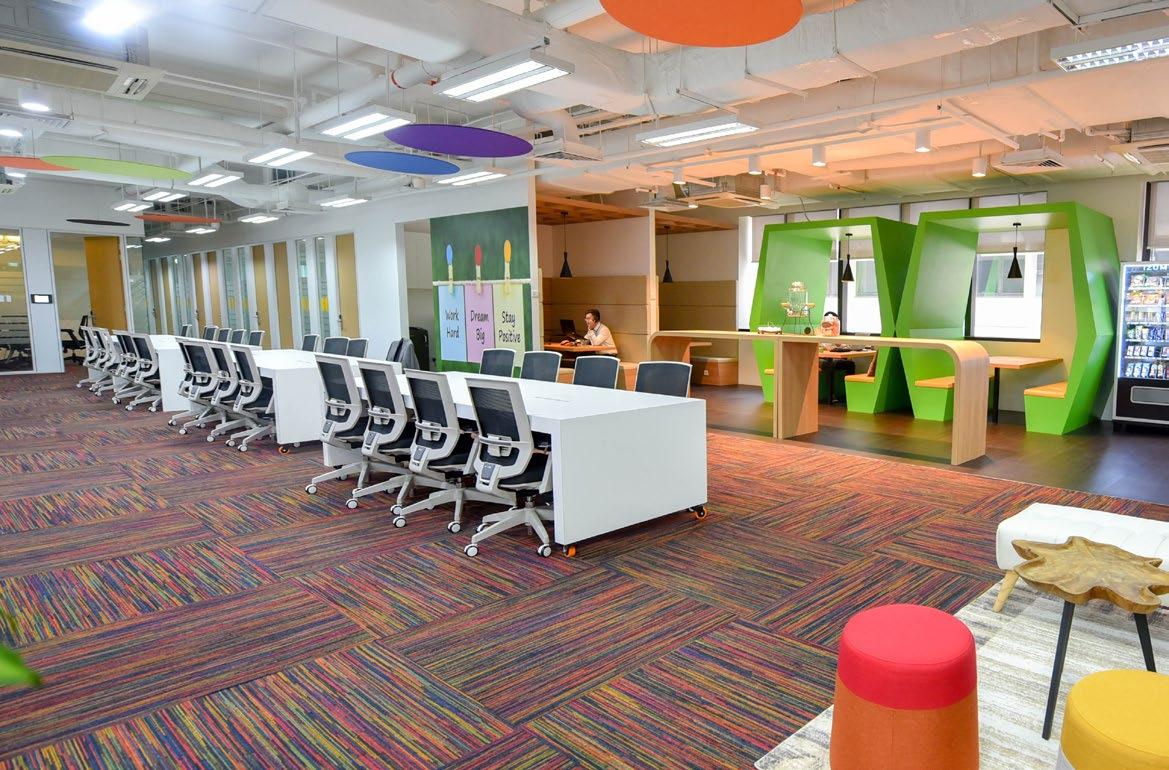
three major U.S. cities with the highest office vacancy rates. In tandem with this trend, companies aiming to curtail expenses began shifting from spacious private offices to open layouts and cubicles, necessitating less space per employee. The onset of the COVID-19 pandemic furthered this shift, prompting companies to realize they required even less physical space per employee due to the expansion of remote work.
the Landscape of u.s. offices has undergone a historic transformation, marked by the highest vacancy rates seen in at least four decades. The causes behind this phenomenon are multifaceted, stemming from prolonged overbuilding tendencies and shifting work dynamics that were accelerated by the COVID-19 pandemic. According to Moody's Analytics, a substantial 19.6% of office space in major U.S. cities remained unleased as of the fourth quarter—an increase from the previous year's 18.8%. This surpasses prior records set in 1986 and 1991, reaching the highest levels observed since at least 1979, based on Moody's data. (1979 is as far back as Moody’s data goes).
This record-breaking vacancy rate is a stark indication of how remote work has disrupted the office market. However, it's not the complete story. A significant portion of the current market's challenges can be traced back to the downturn in the '80s and '90s. Back then, the surge in office vacancies was due to years of excessive construction. Easy access to loans spurred a construction boom, especially in Southern regions where land was affordable, and bureaucratic hurdles were minimal. Financial institutions often funded speculative projects leading to a surplus of office space and a struggle to attract tenants when the economy recessed in 1990. This was compounded by the savings-and-loan crisis.
The repercussions of that surplus persist in today's office market, contributing to significantly higher vacancy rates in the U.S. compared to Europe or Asia. Many office complexes constructed in the '50s through the '80s grapple with occupancy problems, as companies either reduce their space needs or relocate to more modern-day structures. Again, according to Moody’s, the Southern regions bear the brunt of this issue, with Houston, Dallas, and Austin, ranking as the
While there are similarities between the '90s downturn and the current situation, there are also differences. The early '90s crisis concluded abruptly with an economic resurgence that led to a drastic drop in vacancies as companies expanded. In contrast, most analysts anticipate the current office vacancies to persist longer, attributing the situation more to the burgeoning preference for remote work than to economic cycles.
Moreover, the landscape of winners and losers has undergone a reversal. Cities like San Francisco, which had minimal office vacancies in 1991, now face considerable vacancy rates, primarily due to the tech sector's enthusiastic embrace of remote work. Conversely, places like Palm Beach and Fort Lauderdale, previously plagued with high vacancy rates, have significantly reduced their vacancies over the years. For instance, Palm Beach's vacancy rate decreased from 28.8% in 1991 to 14.2% in 2023—a substantial improvement. Fort Lauderdale experienced a similar drop (from 28.1% to 18.9%) during the same period.
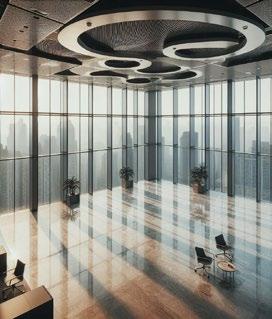
Notably, West Palm Beach, Florida, experienced a construction boom in the 1980s, leading to an oversupply of office space that took considerable time to fill. However, today, the area is witnessing another surge in office construction. Developers are now focusing on high-end, resilient offices equipped with outdoor amenities like landscaped terraces and sports facilities (think: pickleball courts). Unlike the previous era, West Palm Beach has become a magnet for major finance companies seeking favorable tax conditions and warm climates. This transformation has significantly altered the market dynamics and are indicative of a pivotal shift from the past. n
The worst time to have a heart attack is during a game of charades.
- 24 - / THE NETWORK / MARCH/APRIL 2024
I
Why Self-Storage?
amid a favoRabLe economic context, with consumer spending surging 16% in 2023 over the previous year, shrinking apartment sizes, and sustained enthusiasm for remote work, it's no surprise that self-storage is thriving. The total amount of new storage space delivered in 2023 reached 49.0 million square feet, a 15.6% increase over 2022’s additions. Widespread and unglamorous, perhaps, selfstorage tackles a quintessentially American challenge: effectively managing our belongings while maximizing living space.
Even as the pandemic-inspired surge in demand winds down, 18% of Americans reported being self-storage users with an additional 14% expressing their intent to use this service in the future, according to Storage Café’s annual survey which can be seen in its entirety <HERE>.
A few key takeaways:
• Millennials have surpassed Gen Xers in storage usage for the first time in four years, increasing their share among storage renters from one-fifth to one-quarter of the total.
• 42% of respondents cited lack of space at home as the primary reason for turning to
TRENDI G
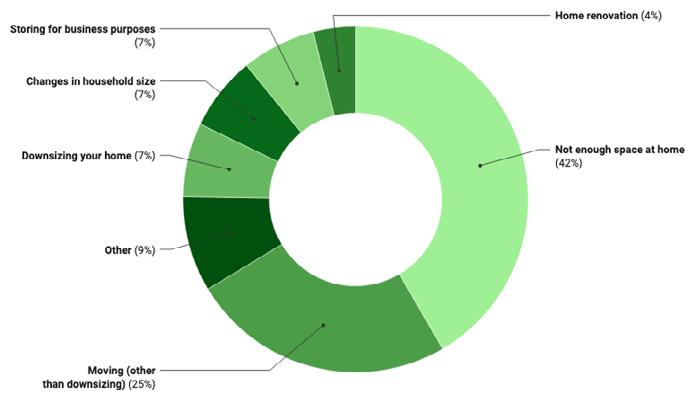
self-storage. While still a significant industry driver, moving has declined in popularity compared to the previous year (25% of respondents in 2023 vs. 34% in2022), aligning with the slowdown in local moves across the US.
• About one-third of Americans say they put furniture in self-storage. That is followed by clothing, home appliances, sporting items and hobby gear. 7% of survey respondents cited business purposes as their main motivation for renting self-storage, an increase from the previous year.
• Madison, WI, experienced the largest surge in self-storage, tripling year-over-year. Florida and Arizona, both notable as migration hubs, feature four and three cities respectively in the list of the top 20 cities for growth in storage use. n

StorageCafe® is a nationwide self-storage search website and a part of Yardi.






/ THE NETWORK / MARCH/APRIL 2024 - 25 -
refuse to answer that question on the grounds that I don't know the answer. Product Video
A NON-TRADITIONAL APPROACH TO BUSINESS COLLECTIONS

It’s easy as ABC
Accounts Receivable
Tracking them is good. Collecting them is better!
Business-to-business debts require special, focused expertise and finesse... and the selection of your commercial collection service is an important decision. It revolves around Service, Trust and Recovery. Rates are important, and recovery is the objective (the bottom line)... but there is more to it.
The company you choose will be handling your money, talking to your customers, and representing you in the marketplace. You want your money as soon as possible – but you don’t want to lose clients.
At Arsenal Business Collections (ABC), you’re never out-of-pocket for our services. We collect (at prearranged terms) and when – and only when – we succeed (i.e., once we collect money owed to you), do we get paid. There is no fee UNLESS and UNTIL we collect!
Our payment is contingent upon your recovery – so our success is integrally tied to yours.
As a privately-owned company, we make decisions based on what is best for clients, not shareholders or outside investors. Our focus is exclusively on improving your bottom line, and we have the knowledge and experience to deliver exceptional results.

/ THE NETWORK / MARCH/APRIL 2024 - 26 -
ARSENAL BUSINESS COLLECTIONS
Arsenal Business Collections 2537 Lubbock Avenue Fort Worth, TX 76109 Tel: 214-755-2277 Fax: 817.924.7116 www.thearsenalcompanies.com

The philtrum is the midline groove in the upper lip that runs from the top of the lip to the nose. The way the philtrum appears is determined genetically. In some syndromes this groove is shortened. The physical landmarks of the human face are very similar from one face to another.

The first law requiring that workplace toilet facilities be separated by sex was adopted in Massachusetts in 1887. New York was the second state, two months later.
CISHETEROSEXISM
THE SYSTEM OF OPPRESSION THAT VALUES AND CENTERS CISGENDER AND HETEROSEXUAL PEOPLE BY UPHOLDING HETEROSEXUALITY AND THE GENDER BINARY AS NORMAL AND NEUTRAL, WHILE MARGINALIZING, OPPRESSING, AND MAKING INVISIBLE LGBTQIA2S+ PEOPLE.
Every second, your body produces 25 million new cells. That means in 15 seconds, you will have produced more cells than there are people in the United States.

In astrophysics, SPAGHETTIFICATION (sometimes referred to as the noodle effect) is the process of things being vertically stretched and horizontally compressed as they near a black hole

Dentist William Morrison and confectioner John C. Wharton invented machine-spun cotton candy in 1897. It was first introduced at the 1904 World's Fair as "Fairy Floss." Then, another dentist, Josef Lascaux, reinvented the machine in 1921. He came up with the name "cotton candy," which replaced "fairy floss."
GARONZI STEFANIA CC BY-SA 4.0, VIA WIKIMEDIA COMMONS

The fuller the fridge, the more energy efficient it is An empty fridge wastes valuable energy. The more empty space in the fridge, the more cold air is displaced by warm air when you open the door, requiring the appliance to generate cool air to replace it. If the fridge is packed, less cool air escapes and less energy is required to replenish it.
Dolphins sleep with one eye open.

LGBTQQIP2SAA
IS AN ACRONYM THAT STANDS FOR LESBIAN, GAY, BISEXUAL, TRANSGENDER, QUEER, QUESTIONING, INTERSEX, PANSEXUAL, TWO-SPIRIT (2S), ANDROGYNOUS, AND ASEXUAL.

Clouds are not as light and fluffy as they appear. In fact, researchers have found that a single cloud weighs about 1.1 million pounds. That number is calculated by taking the water density of a cloud and multiplying it by its volume. The cloud can still "float" at that weight because the air below is even heavier.
- 27 - / THE NETWORK / MARCH/APRIL 2024
solve
problem, but neither does milk.
Alcohol doesn't
any
TR E DAT
emaleband
s
TheAndrews Sistes ae theoly a llf
to otsell the SpiceGil
DMITRY MAKEEV, CC BY-SA 4.0 VIA WIKIMEDIA COMMONS
TRENDI G: REAL ESTATE SHORTS
The Bill Is Coming Due on a Record Amount of Commercial Real Estate Debt
the commeRciaL ReaL estate market is facing the prospect of a wave of defaults as property owners may be forced to refinance at higher rates. According to New York City-based Trepp (a leading provider of data, insights, and technology solutions to the structured finance, commercial real estate, and banking markets) $541 billion in debt backed by office buildings, hotels, apartments, and other types of commercial real estate came due in 2023—the highest amount ever for a one-year period.
In 2022 and 2023, many owners exercised brief (1 or 2-year) extensions that were built into their original loans. Now, those extensions are expiring; the debt is coming due, and borrowers are being forced to confront a much higher rate lending environment, which, together with higher vacancy rates and weakening cash flows, is depressing property values. Some owners are also wrestling with the expirations of early-in-the-pandemic deals to temporarily delay payments. And, more than $2.2 trillion in commercial real estate debt is maturing between 2024 and 2027!
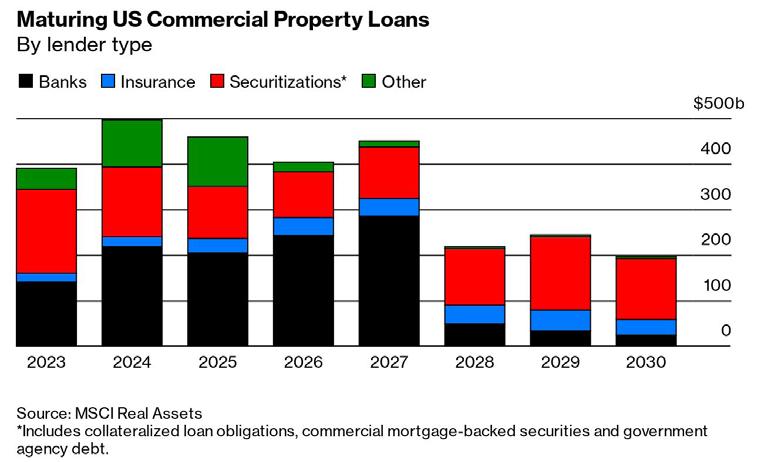
Unlike home mortgages, in which principal is paid off over time, commercial mortgages are usually interest only. When the debt matures (i.e., when it comes due), the borrower has to refinance or pay off the entire principal.
The impact of remote and hybrid work has been particularly harsh on officebuilding owners, but the repercussions extend across the commercial real estate sector. Vacancy rates are on the rise in some multifamily markets, posing challenges for landlords looking to increase rents to meet obligations on floating-rate debt. Even industrial space, once a Wall Street favorite for its role as an e-commerce hub, is exhibiting signs of vulnerability.
Losses for lenders on commercialproperty loans are experiencing a rise and are expected to escalate further.
According to Fitch Ratings (a leading provider of credit ratings, commentary, and research for global capital markets), the delinquency rate of commercial mortgage loans converted into securities is projected to reach 4.5% in 2024 and 4.9% in 2025—a significant increase (more than doubling the 2.25% rate in November 2023). Fitch projects that delinquencies in retail, hotel, and office sectors will all increase.
The weak property sales market has complicated workout negotiations between owners and lenders, who are often adversarial in trying to agree on what properties are worth. Borrowers typically hold a more optimistic perspective on property values compared to lenders, who frequently assess situations with a focus on worst-case scenarios.
The Shifting View on Malls

According to Green Street (an independent research and advisory firm concentrating on the commercial real estate industry in North America and Europe), foot traffic to malls in the U.S. was down 4% on average in 2023 from 2022, and about 12% lower than the 2019 level. This is why major retail chains are leaving malls in favor of alternative retail venues. Specialty retailers (e.g., jewelers and shoe stores) are shifting their focus to outdoor, non-mall settings such as groceryanchored shopping centers and strip malls. These decisions are driven by better performance and cost savings in these locations.
Visits to outdoor shopping centers and strip malls have increased since the pandemic (in part because the rise in remote work has given people the time and flexibility to run errands more frequently and closer to home). They also appeal to retailers who are increasingly allowing customers to pick up or return items bought online.

The increased demand for outdoor space has driven up shopping-center rents to nearly $24 a square foot, the highest level since Cushman & Wakefield began tracking the metric (in 2007). Even at those rates moving out of malls can still help retailers cut costs, particularly the common-area and maintenance (CAM) charges that landlords pass on to tenants to help pay for the property’s expenses. Owners of enclosed malls are saddled with a host of additional expenses compared with open-air shopping centers, such as cleaning public areas and bathrooms, security, heating, a/c, insurance, elevators, parking lot (or garage) maintenance, etc. n
My wallet is like an onion. When I open it, it makes me cry...
/ THE NETWORK / MARCH/APRIL 2024 - 28 -
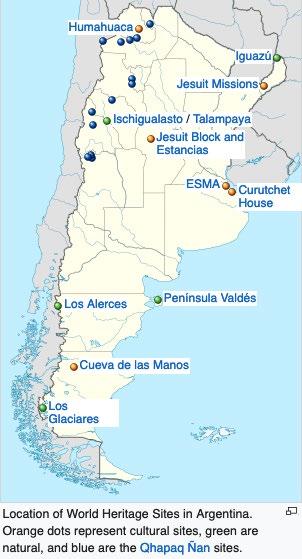
the united nations educationaL, Scientific and Cultural Organization (UNESCO) designates World Heritage Sites of outstanding universal value to cultural or natural heritage which have been nominated by countries that are signatories to the UNESCO World Heritage Convention, established in 1972. Cultural heritage consists of monuments (such as architectural works, monumental sculptures, or inscriptions), groups of buildings, and sites (including archaeological sites). Natural heritage is defined as natural features (consisting of physical and biological formations), geological and physiographical formations (including habitats of threatened species of animals and plants), and natural sites which are important from the point of view of science, conservation, or natural beauty.
As of 2023, there are 12 World Heritage Sites in Argentina, including five sites listed for their natural and six for their cultural properties. Three sites are shared with other coun-

ARGENTINA


UNITED NATIONS EDUCATIONAL, SCIENTIFIC AND CULTURAL ORGANIZATION
WORLD HERITAGE LIST



tries: the Jesuit missions are shared with Brazil, the sites of the Inca road system ( are shared with five countries, and the works of Le Corbusier with six countries. (The Inca road system [Qhapaq Ñan meaning "royal road" in Quechua] was the most extensive and advanced transportation system in pre-Columbian South America—about 25,000 miles long.) In addition, there are nine properties on Argentina’s tentative list 01/ Los Glaciares National Park covers an area of 2,806.68 sq mi, making it the
largest national park in the country. The largest ice cap in South America contains numerous large glaciers that feed into glacial lakes. The best known glacier is the Perito Moreno (pictured) that calves icebergs into the Argentino Lake.
I, LUCA GALUZZI, CC BY-SA 2.5, VIA WIKIMEDIA COMMONS
02/ Jesuit Missions of the Guaranis: San Ignacio Mini (pictured), Santa Ana, Nuestra Señora de Loreto and Santa Maria Mayor (Argentina), Ruins of Sao Miguel das Missoes (Brazil) In the 17th and 18th centuries, the Jesuits constructed several missions to the Guaraní people. The remains of five missions are listed as this World Heritage Site. The missions typically include the remains of churches and convents, plantations, and foundations of indigenous dwellings.
JUAN, CC BY 2.0, VIA WIKIMEDIA COMMONS
03/ Iguazú National Park is centered around the spectacular Iguazu Falls (pictured), created by the Iguazu River
/ THE NETWORK / MARCH/APRIL 2024 - 29Doesn’t expecting the unexpected make the unexpected expected?
é Perito Moreno Glacier, in Los Glaciares National Park.
é Ruinas de San Ignacio.
é A view of one of the falls in Parque Nacional Iguazu.
01
02
03

falling over basalt cascades that mark the border between Argentina and Brazil. The surrounding area comprises the Paranese subtropical rainforest, a part of the Atlantic Forest.
WIKIMEDIA COMMONS
04/ The Cueva de las Manos (the cave of hands) in Río Pinturas contains an exceptional assemblage of prehistoric cave art created by the hunter-gatherer communities. In additional to the many stencils of human hands, there are depictions of people, plants, hunting scenes, and animals, in particular guanacos (closely related to llamas) that are still present in the region. The oldest art in the cave dates to the 10th millennium BP.
PUBLIC DOMAIN
05/ The Valdés Peninsula, stretching off Patagonia into the Atlantic Ocean, is characterized by rocky cliffs, lagoons, shallow bays, dunes, mudflats, small islands. The area is important for conservation of marine mammals. It is the breeding ground for the southern
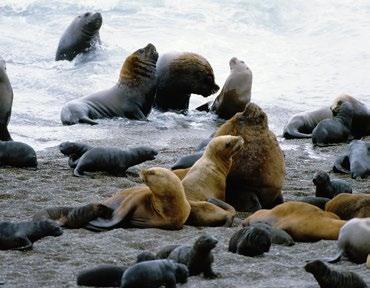
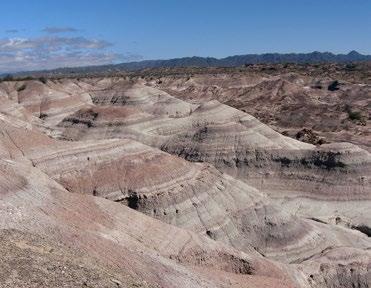

right whale and there are also colonies of southern elephant seals and South American sea lions (pictured)
REINHARD JAHN, MANNHEIM (NANOSMILE), CC BY-SA 2.0 DE, VIA WIKIMEDIA COMMONS
06/ Ischigualasto and Talampaya
Natural Parks contain six geological formations that cover the entire Triassic period (245-208 million years ago). The fossil record documents the complete sequence of animal and plant life over about 50 million years. The findings include the early dinosaurs, such as the
07/ The Jesuit Block and Estancias of Córdoba, the former capital of the Jesuit province, contains the church, the residential buildings, and the buildings of the National University of Córdoba. (For about 150 years in the 17th and 18th centuries, the Jesuits ran a series of settlements with a focus on missionary and educational work.)
I'm not clumsy — the floor just hates me; the table and chairs are bullies; and the walls get in my way.
/ THE NETWORK / MARCH/APRIL 2024 - 30 -
TOMFRIEDEL, CC BY 3.0, VIA
Eoraptor, reptiles, amphibians, ancestors of mammals, and fish. SILVIAANAC, CC BY-SA 4.0, VIA WIKIMEDIA COMMONS
NELSON
PÉREZ CC BY-SA 3.0, VIA WIKIMEDIA COMMONS
é Hands at the Cuevas de las Manos upon Río Pinturas, near Perito Moreno.
é Valle Pintado -Parque Provincial Ischigualasto (Valle de la Luna)
é Valdes Peninsula, Patagonia.
05
04
é Caption Alta Gracia.
07 06
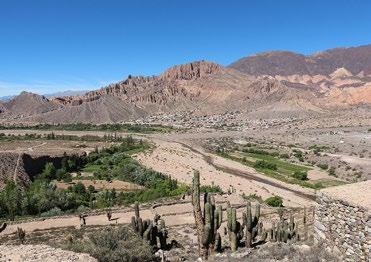
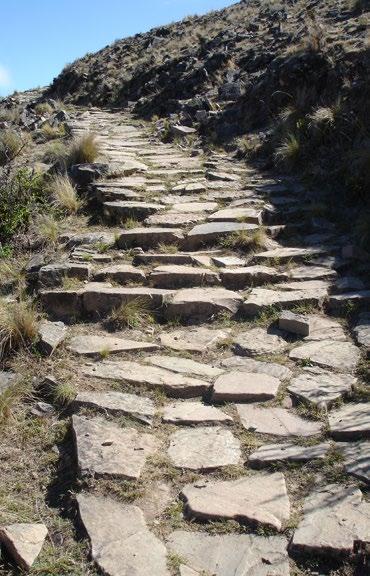

exchange of goods, as well as movements of messengers, travelers, and even armies. The site is shared with Bolivia, Chile, Colombia, Ecuador, and Peru.


08/ Quebrada de Humahuaca is a gorge created by the Rio Grande river. It starts on the cold desert plateau in the High Andes and ends about 93 miles to the south, in the plains. Over the past 10 millennia, the valley has been used as a trade route by different peoples, as the most important connection between the mountains and the plains. Material remains have demonstrated the use of the valley by the hunter-gatherer communities.
09/ Qhapaq Ñan is an extensive preIncan and Incan road system, spanning over 19,000 miles across the Andes. The roads connect high mountain peaks with rainforests, coasts, valleys, and deserts and was the lifeline of the Inca Empire, allowing transport and
10/ The Architectural Work of Le Corbusier is a transnational site (shared with Belgium, France, Germany, Switzerland, India, and Japan) encompassing 17 works of Franco-Swiss architect Le Corbusier an important representative of the Modernist movement
11/ Los Alerces National Park protects largely undisturbed sections of the Patagonian Forest, one of the five temperate forest types in the world. It is named after the Alerce tree, a conifer endemic to South America, and is known for its natural beauty, particularly around the Lake Menéndez.
12/ During the military dictatorship (1976-1983), the building of the Navy School of Mechanics (ESMA) served as the Clandestine Center of Detention, Torture, and Extermination. More than 5000 men and women were impris-
oned, tortured, and killed by the Navy. Pregnant women were kept alive until they gave birth, and the babies were stolen. In 2015, the building reopened as a museum. The quest to find the stolen babies contributed to the development of genetic testing to identify grandparents. n
/ THE NETWORK / MARCH/APRIL 2024 - 31Life is short. Smile while you still have teeth.
BERNARD GAGNON, CC BY-SA 4.0, VIA WIKIMEDIA COMMONS
MINISTERIO DE CULTURA DE LA NACIÓN ARGENTINA CC BY-SA 2.0 VIA WIKIMEDIA COMMONS
CONSUELOPUMARA, CC BY-SA 4.0, VIA WIKIMEDIA COMMONS
LITTLETROLL CC BY-SA 3.0, VIA WIKIMEDIA COMMONS
OWNWORK, CC BY-SA 3.0, VIA WIKIMEDIA COMMONS.
é Quebrada de Humahuaca near Tilcara.
é Casa Curutchet — Modernist house by Le Corbusier in La Plata.
é Lago Cisne -Parque Nacional Los Alerces in Chubut.
é ESMA, Navy Mechanics School. Clandestine Detention Center (CCD) between 1976-1983 in Buenos Aires.
09 10 11 12 08 »»
é Andean road system section Quebrada Grande–Las Escaleras.
ARTCH TECTURE
KYLLI SPARRE DIGITALLY
DANCING IMAGERY


Kylli Sparre is based in Tallinn, Estonia.
in heR woRk, kyLLi spaRRe desires to look beneath the surface, hear the unsaid words and study the rela-
tionships between people and their surroundings. Her background in dance is often influencing her images: the movements and the carefully observed bodies play a big part in her work. The artist tells you a story where the subject and surroundings can become one.
She uses a combination of her photography and digital
post processing. Images are usually built from different photos, taken at different times, combined digitally to achieve the end result. Some images are all done in one photoshoot, but others can be combinations of many different photos. The aim is not to make something clever or something with specific moral meaning, but rather a search for connec-
tion with some emotional undercurrents, not usually addressed or recognized in daily life
Although her work can be theatrical, there is a sense of peace emerging from it. Whether the images are surreal, dreamlike or symbolic, they come from her thoughts, observations and experiences. n
The only reason I'm fat is because a tiny body couldn't store all this personality.
- 32 - / THE NETWORK / MARCH/APRIL 2024
01
I'm jealous of my parents, I'll never have a kid as cool as theirs.

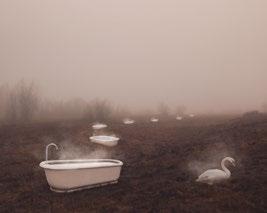
04

For prints and more images please visit
www.sparrek.org.
WHY ARTCH TECTURE?

05
01/ Revival
03/ Fine Time
04/ Wishbowl
05/ Unaware
06/ See You Soon
07/
09/

08
Great art is among the most sublime, meaningful, and redeeming creations of all civilization. Few endeavors can equal the power of great artwork to capture aesthetic beauty, to move and inspire, to change perceptions, and to communicate the nature of human experience. Great art is also complex, mysterious, and challenging. Filled with symbolism, cultural and historical references, and often visionary imagery, great artworks oblige us to reckon with their many meanings.

06
07


09
Architects and designers (many of our readers) have a lot of influence on the way we perceive the world. A structure often plays a significant part in how we experience a place. (Think of a restaurant, a museum, an arena, a stadium... even an office building - virtually anywhere!) The interior design impacts our sensory perception, our comfort, and our physical connection and there is also artistry in the exterior design. (That’s why we call it artchitecture.)
- 33 - / THE NETWORK / MARCH/APRIL 2024
03
02
02/ Minimal Amiss
The Sound of Deniance
08/ The Shape of Escape
Excusing Shadows
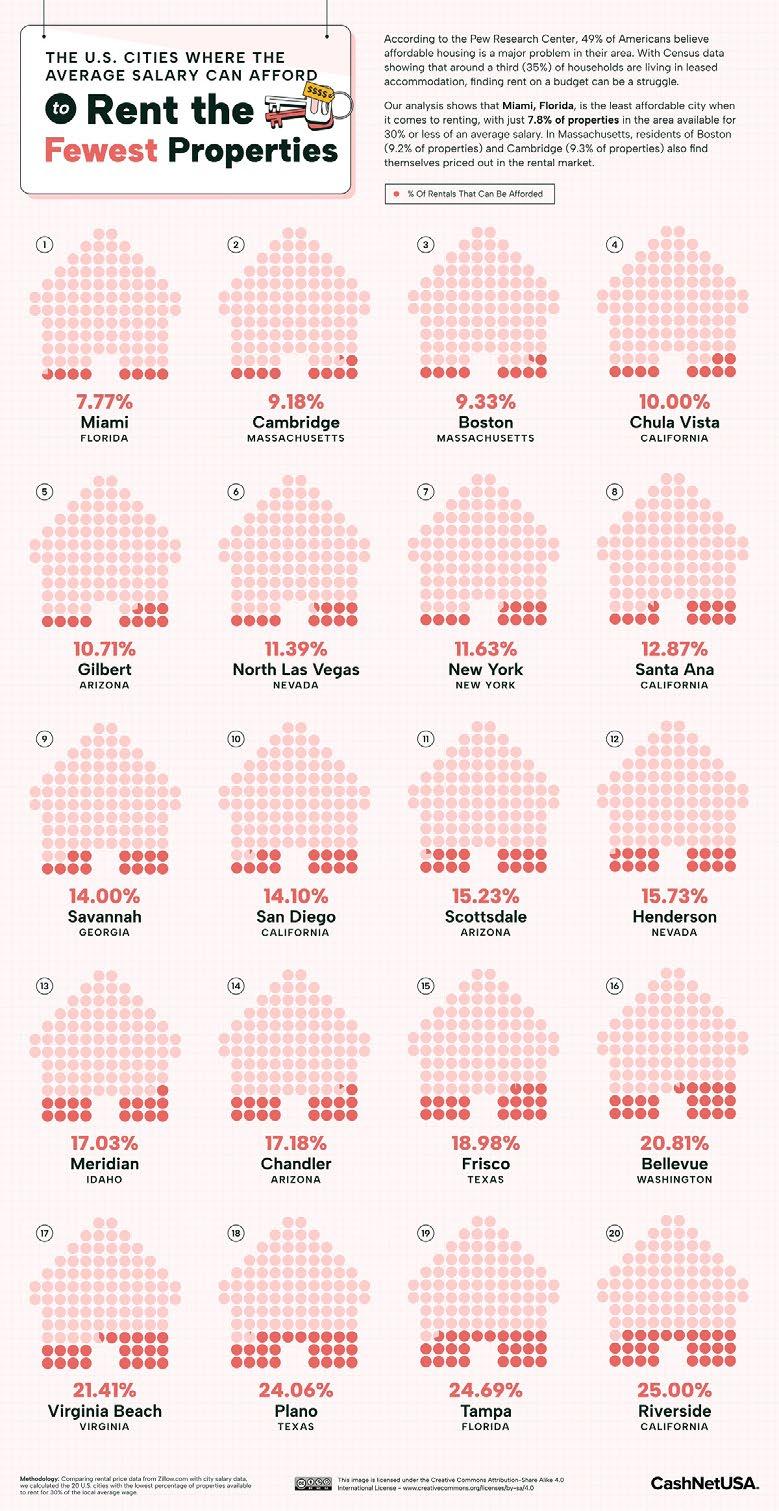
Buying –or–Renting
è
in 2023, 34% of the 131 million households in the U.S. lived in rented homes. But which U.S. cities are the least affordable to rent in? With runaway housing prices and local salaries struggling to keep up, some of America’s largest metros feel quite unaffordable. To answer the question more concretely, CashNetUSA found rental price data (as of August 2023) from Zillow.com and compared it to city salary data to calculate the percentage of properties available to rent for 30% or less of the local average income.
For context, Miami’s annual mean salary is close to $59,000, and the Boston-Cambridge area comes in at $80,000 a year. These places are also expensive for homeowners, with both Boston and Miami being in the 10 most expensive cities in the U.S. in which to buy a home. See the methodology for this study and search for your city <HERE>.

Between skyrocketing prices, stagnating wages, and now rising interest rates, the deck seems to be increasingly stacked against home ownership. Using May 2023 data tabulated by Home Sweet Home, Visual Capitalist mapped out the annual salary needed to afford a 30-year mortgage (at 6.37%) to buy a home in America’s 50 most populous metropolitan areas.
To afford a median-priced home in the country, an American needs to earn close to $100,000 a year (up from $75,500 in 2022) And even then, they would be priced out of owning a home in nearly half of the 50 largest cities in the country. See a chart of what you need to earn in the 50 largest cities in the United States. n

/ THE NETWORK / MARCH/APRIL 2024 - 34 -
DOMAIN
PUBLIC
D RAMEY LOGAN, CC BY 4.0 VIA WIKIMEDIA COMMONS
é Aerial view of Biscayne Bay, which separates Miami Beach and Miami, FL.
é Downtown San Jose, CA.
è
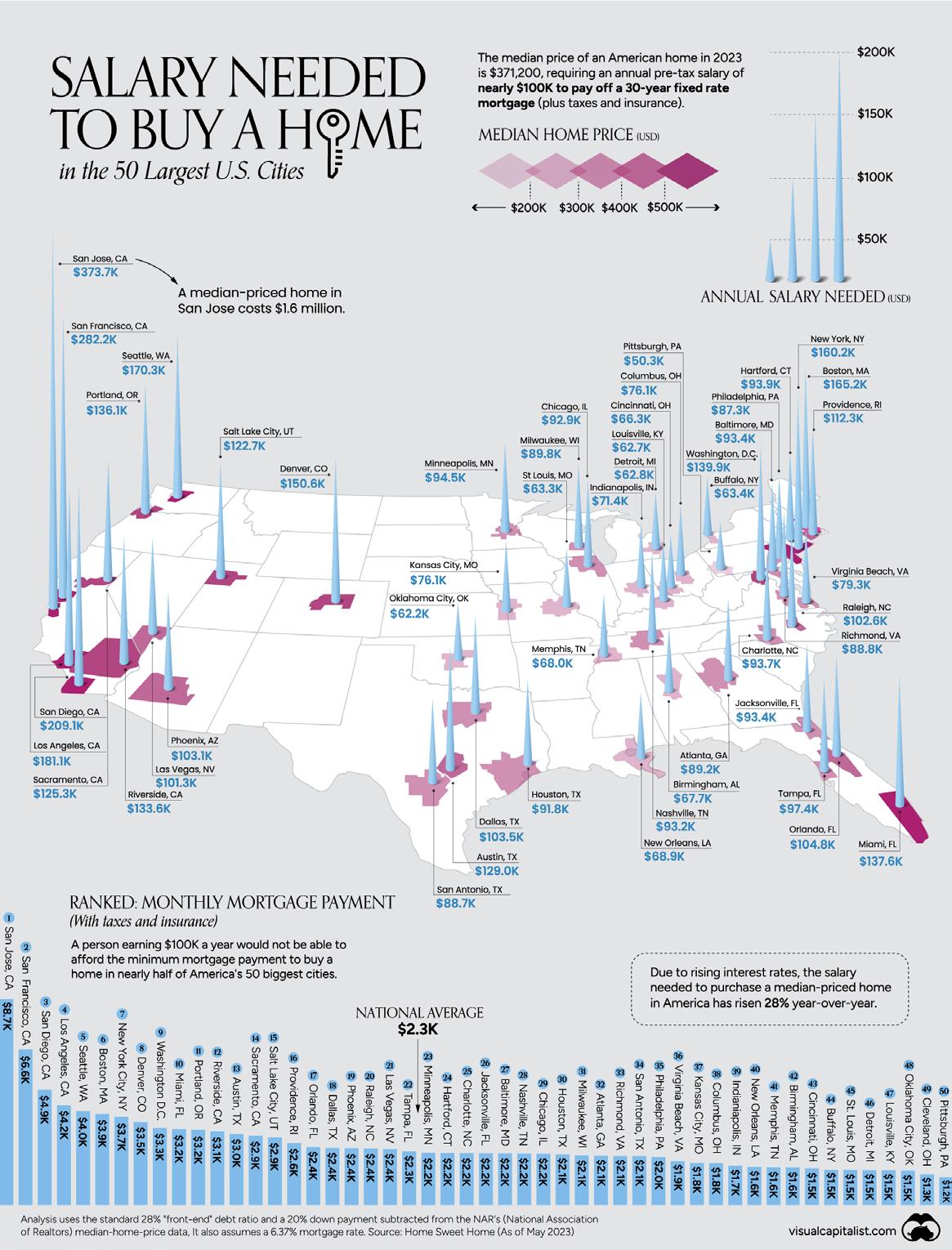
/ THE NETWORK / MARCH/APRIL 2024 - 35 -
 BY MARIA KLESSER
OPTIMIZING ENERGY EFFICIENCY IN COMMERCIAL HEATING SYSTEMS
heating systems, whiLe cozy, can quietly drain resources, straining budgets. Businesses rely on them for comfort but face rising costs due to inefficiencies. Making heating systems work smarter, not harder, is more than just good for the planet—it's good for business. Corporations that enhance energy efficiency on heaters maintain warmth while conserving resources.
Here are some tips on how to get the most out of commercial heating systems.
THE BENEFITS OF EFFICIENT COMMERCIAL HEATING
LOWERED EXPENSES: Saving energy reduces operating costs, and the sustainable energy use of heaters paves the way for growth and future investments.
SUSTAINABILITY ALIGNMENT: Meeting energy efficiency aligns with societal sustainability trends, enhancing a business's image and responsibility. Engaging in sustainable practices can attract consumers and partners who care about the environment.
EMPLOYEE WELL-BEING: Efficient use of commercial heaters creates comfortable work environments, boosting employee productivity and satisfaction. Feeling comfortable and at ease in the workspace creates a positive atmosphere.
EXTENDED EQUIPMENT LIFESPAN: Efficient heating systems experience less strain, leading to reduced wear and tear on equipment. This helps cut down on needing to replace or fix large things.
GOOD ENVIRONMENTAL IMPACT: Efficient heating systems contribute to a reduced environmental footprint by conserving energy resources and mitigating greenhouse gas emissions. This supports global sustainability goals and demonstrates that a business is a responsible contributor to a greener future.
There are many factors that contribute to energy efficiency in commercial heating
systems. It's not merely about the heat generated but also about utilizing that heat optimally. How a system is set up, the insulation, and the efficiency of the equipment can significantly affect how much energy is used. Doing energy check-ups helps identify system inefficiencies and plan improvements.
COMMON CHALLENGES OF HEATING SYSTEMS IN COMMERCIAL BUILDINGS
HEAT LOSS POINTS: In commercial heating systems, various areas (e.g., poorly insulated walls or windows) serve as avenues for heat to escape. This heat loss increases the workload on the heating system, demanding more energy to maintain desired temperatures.
INADEQUATE INSULATION: Insufficient or degraded insulation within buildings allows heat to escape more easily forcing heating systems to work harder to compensate, leading to higher energy consumption.
SYSTEM INEFFICIENCIES: Inefficient designs or setups within the heating systems themselves (such as improper sizing or faulty configurations) can hinder optimal heat distribution, resulting in higher energy usage.
OUTDATED OR POORLY MAINTAINED EQUIPMENT: These operate less efficiently and consume more energy to produce the same level of heat, contributing significantly to increased energy costs and usage.
INCREASED OPERATING COSTS AND CARBON FOOTPRINT: Cumulatively, these challenges lead to higher operating expenses due to increased energy consumption. Simultaneously, excessive energy use contributes to a larger carbon footprint, negatively impacting the environment.

BEST PRACTICES TO EFFICIENTLY ADDRESS THESE CHALLENGES
• Invest in modern, energy-efficient heating systems to reduce energy consumption.
• Implement zoning and programmable thermostats directing heat precisely where and when it's required, reducing unnecessary usage.
• Ensure timely heating maintenance and repairs to maintain system efficiency and prevent energy wastage.
• Integrate smart controls and automation for precise energy management and optimal usage.
• Improve insulation to minimize heat loss and retain warmth within the building.
• Ensure ventilation systems are balanced and functioning efficiently to avoid unnecessary heat loss or over-expenditure.
• Integrate renewable energy sources like solar or geothermal systems to supplement heating requirements.
• Regularly assess energy usage patterns, implement targeted solutions, and identify areas for improvement.
• Educate employees about energy-efficient practices to encourage responsible usage.
• Integrate energy-efficient design principles during building construction or renovation to maximize heating system performance.
THE IMPORTANCE OF SCHEDULED MAINTENANCE
Scheduled maintenance from a reliable contractor ensures heating systems operate optimally, reducing energy wastage. Routine inspections and cleaning prevent dust accumulation or mechanical issues that could hinder efficiency and prolongs heating system life by identifying and addressing potential breakdowns before they escalate. It minimizes wear and tear, reducing the need for early replacements and delivers consistent heat levels, avoiding fluctuations that could result from malfunctions. This ensures comfort for employees and operational consistency.
Regular inspections and fine-tuning are crucial for maintaining optimal performance in heating systems. This includes optimizing temperature settings, balancing air distribution, and calibrating controls—changes which are meant to help the heating system work better and use less energy without compromising the desired comfort.
Ideally, routine maintenance checks should occur at least once a year, preferably before the start of the heating season. However, certain systems may require more frequent inspections based on usage, age, and complexity. Sometimes, specific upgrades, like replacing older components or integrating smart controls, can significantly improve efficiency without necessitating an entire system replacement. Last, but not least: Employees are crucial in conserving energy. They can do this by simple actions like turning off equipment that is not in use, keeping doors and windows closed, and knowing the best temperature settings for comfort and efficiency.
Making commercial heating systems more energy efficient is a responsibility and a chance for progress. Sustainable practices help enterprises lessen their environmental footprint and lead to a future with greater profits. n
/ THE NETWORK / MARCH/APRIL 2024 - 36I'm not lazy, I'm just very relaxed.
Maria Klesser is a content marketing specialist for Paragon Service Pros (which services Arizona and Utah). maria@paragonservicepros.com



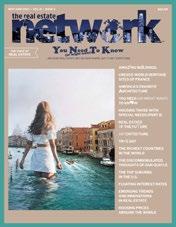




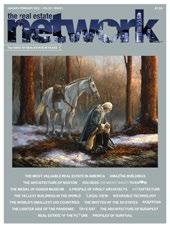

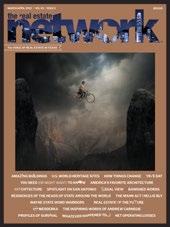




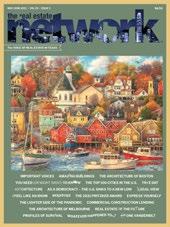
THE DECADE SO FAR IN
Inspiration and Innovation A Look Back

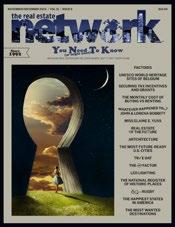

COVERS
 BY MICHELLE OLD
tRends in constRuction have extended lead times and develop slowly as projects take shape and benefits are weighed. Technology evolves and processes change, but many construction principles have remained the same for centuries. This juxtaposition might be why Mass Timber construction is on the rise – it is both an evolving construction system and a proven method utilizing principles and materials that predate modern architecture According to Woodworks Innovation Network, the online community of the non-profit organization, over 500 Mass Timber projects are completed or in progress across the United States. So, what is Mass Timber, and where is it heading?
Mass Timber is a structural system composed of dimensional lumber secured by glue, nails, or dowels. It is a subcategory of engineered wood products such as glued laminated timber, cross-laminated timber, and laminated veneer lumber. When bonded, Mass Timber components create larger, load-bearing sections as strong as concrete or steel. It also includes a host of sustainable benefits and efficiencies. Still, Mass Timber is a relative novelty in the United States, particularly in the Southeast. Though the International Building Code is current and includes Mass Timber construction types, some local codes may show discrepancies between traditional wood construction and Mass Timber. However, an experienced project team can easily manage gaps in local knowledge or plan for challenges like material availability.
BENEFITS | SEEING THE FOREST AND THE TREES
The benefits of Mass Timber are many and include advantages to the environment, the end user, and developers.
MASS TIMBER: TAKING ROOT
AND ON THE RISE
BY JENNA LAIRD

just outside Houston, Texas, yielded six times less carbon produced than reinforced concrete. Kirksey has embarked on a path to promote and grow the Mass Timber movement, developing foundational expertise in Mass Timber design and construction through a growing portfolio of projects and extensive research. The firm has designed 13 Mass Timber projects ranging from 4,000 to 300,000 square feet.
Mass Timber also offers a lighter alternative to steel and concrete, resulting in reduced foundations that subsequently result in cost and carbon reductions. Kirksey's findings from recent Mass Timber projects suggest cost reductions from 10% to 30% compared to steel or concrete frames. Additionally, assembling Mass Timber
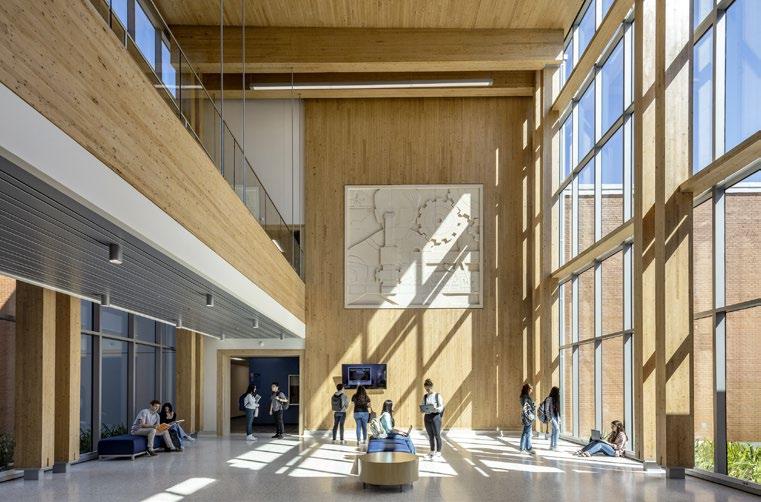
Sustainability is the most apparent advantage and is easy to quantify. Wood is, after all, a renewable resource that can be carefully and constructively managed. Additionally, where concrete manufacturing produces large amounts of C02 emissions, Mass Timber mitigates environmental challenges on several fronts. First, managed forests add trees to the environment, replacing any that are cut and resulting in a net positive for communities. Secondly, manufacturing Mass Timber elements requires significantly less energy than processed materials like steel or concrete. As construction and buildings are major producers of greenhouse gases, it's essential for the design and construction industry to seek responsible solutions that benefit the environment and the people the buildings serve.
In one example, Kirksey Architecture’s project with San Jacinto College on the Anderson-Ball Classroom Building
is much quicker than traditional construction. The prefabrication process contributes to faster builds and lower labor costs, creating a faster return on investment. The construction process is also quieter, minimizing disturbances to
/ THE NETWORK / MARCH/APRIL 2024 - 38Always remember you're unique… just like everyone else. Feature
é San Jacinto College Anderson Ball Building

In addition to the environmental and cost advantages, Mass Timber has the added benefit of biophilic aesthetics. Biophilia was coined in the 80s by biologist Edward O. Wilson and is defined as "the innate tendency to focus on life and lifelike processes." Biophilic research suggests people's connections to their physical environment are vital to human comfort. The wood element in Mass Timber fosters a warm, inviting atmosphere that evokes the natural world and can reduce stress, which results in an improved user experience. Each component of Mass Timber is thoughtfully designed to be an authentic expression and part of a showcase of the whole space. The natural aesthetic finish also offers an opportunity for cost savings.
"We want the people in our buildings to see a pure wood ceiling, uninterrupted by mechanical and lighting systems," notes Kirksey’s Director of Collegiate Projects and Mass Timber expert Steve Durham. "A symbolic forest of columns and a space illuminated with daylight so occupants can experience the wood's natural grain – a stark contrast to the coldness of concrete and industrial feel of steel."
GRASS-ROOTS GROWTH
Cutting down trees for use in Mass Timber projects might appear to be in direct conflict with conservation efforts, but it's a resource in combatting deforestation and forest fires. Mass Timber relies on managed forests, carefully grown and curated to supply
construction needs, and requires less energy to manufacture. The cost benefits and environmental advantages have seen a rise in Mass Timber projects nationwide and a growing industry of privately owned forests that has boosted local economies. In the southeastern part of the United States, a generous supply of Southern Yellow Pine created new Mass Timber manufacturing facilities. More manufacturing facilities and managed forests across the country can aid in reducing carbon in construction due to the proximity of materials to the job site.

Additionally, government entities and organizations often provide financial incentives to encourage the use of Mass Timber, ranging from grants to tax benefits for sustainable construction practices. Kirksey utilized their growing expertise to support three collegiate institutions in their quest to win the U.S. Department of Agriculture Forest Service's Mass Timber University Grant, awarded to 10 institutions in seven states. Kirksey's three clients were successful in their efforts, and funds were made available to support activities that are hurdles for new building projects using Mass Timber, such as design and engineering work, cost studies, and construction code review support for various building types.
BRANCHING OUT
Mass Timber benefits many project types, from institutional to private to developer-driven. One of the main advantages of a Mass Timber project is

how quickly it leases. Wood is typically a consistently priced commodity and offers significant savings over steel. With less time to erect frames, and despite a smaller crew and typically only one large crane on site, subcontractors can begin the installation process as soon as the deck and frame are installed. Also, because natural wood is often the finished product, additional detailing is usually unnecessary, and other engineering and consultant disciplines can get started quickly. The time savings during the different phases of the project mean a faster placement on the market.
The aesthetic appeal, quick construction, and sustainable nature are all attractive draws for tenants. Additionally, many firms and organizations are seeking opportunities to reduce their carbon footprint as part of their environmental and social governance strategies. The innate ability of Mass Timber buildings to sequester carbon is an immediate and quantifiable measure to help offset a corporation's carbon emissions
Determining whether Mass Timber is the right choice for a development is easy when working with an experienced project team. Kirksey Senior Project Manager and Mass Timber expert Darrell Whatley uses three questions to guide his clients to the answer. "Considerations such as project size, design requirements, and sustainability goals can help determine if Mass Timber is the right fit very early on in the process," he notes, "With the right leadership and a thorough understanding of the scope, we can put together a
/ THE NETWORK / MARCH/APRIL 2024 - 39You're born free, then you're taxed to death.
é Anderson Ball Building.
é Mass Timber Development, Phase 1, Designed by Kirksey Architecture.
é Mass Timber Development, Full Campus, Design by Kirksey Architecture. the community and surrounding environment.

project team and bring in the contractor and subcontractors very early on for informed coordination and to anticipate challenges."
Mass Timber has found a niche in the education sector, with universities and schools opting for sustainable construction practices. The modular nature of education environments works well with the systematic approach of Mass Timber design. In particular, public-private partnerships collaborate with universities on student housing developments and find Mass Timber a cost-effective and innovative solution to housing demands. From an education standpoint, educators can use the very building they are teaching in to convey the importance of sustainability and foster an appreciation for the natural environment.

The San
College chose Mass Timber for the Anderson-Ball Classroom Building for two reasons. First, it addressed the overbearing market concerns regarding the cost of structural steel, whereby the owner was not at risk of the fluctuating cost of structural steel for the 120,000-square-foot build-
ing. The second reason was to shorten construction time with the coordinated delivery of Mass Timber components that went right from the truck bed to the building site.
Rice University's Hanzen Residential College, a residence hall, utilized Mass Timber and leveraged the repetitive nature of student bedrooms to create a cost-effective solution for the structure, a five-story, 200-bed student housing complex. The project was the first mass timber student housing facility in Texas, and the sustainability benefits directly support Rice University's goal to be a carbon-neutral campus by 2030.
ON THE HORIZON
Mass Timber stands out as a game-changer as the construction industry evolves, offering a sustainable and innovative alternative to traditional building materials. The growth and potential of Mass Timber signal a shift towards a more environmentally conscious and efficient future in construction. If current data and trends are anything to go by, the number of Mass Timber projects nationwide will only continue to grow. Developers and builders looking to impact the environment positively and create beautiful spaces should undoubtedly explore the possibilities of Mass Timber construction. n

All pictures and renderings courtesy of Kirksey Architecture.
Photography by Joe Aker of Aker Imaging.

/ THE NETWORK / MARCH/APRIL 2024 - 40I am nobody. Nobody is perfect. I am perfect.
é Anderson Ball Building.
é Hanszen College.
é Anderson Ball Building.
é Rice University Hanszen College.
Jacinto
Michelle Old, AIA is a Design Principal at Kirksey Architecture. Jenna Laird is a Senior Associate at Kirksey Architecture.
I asked God for a bike, but I know God doesn’t work that way. So I stole a bike and asked for forgiveness.
THE HYBRID DESIGNER
UI/UX COURSES BRIDGING THE GAP BETWEEN DESIGN AND DEVELOPMENT
in the eveR-evoLving landscape of technology, the demand for seamless user experiences has become paramount. The collaboration between design and development has become increasingly crucial to meet these demands. A new breed of professionals, known as hybrid designers, is emerging to bridge the gap between the creative realm of UI/UX design and the technical intricacies of development. As a response to this industry need, a plethora of UI UX Design Courses have surfaced, aiming to equip individuals with the skills to navigate both worlds effectively.
them adept at navigating the entire product development lifecycle. These professionals understand the language of both designers and developers, facilitating smoother communication and collaboration between the two disciplines. The demand for hybrid designers has surged as companies recognize the advantages of having individuals who can seamlessly transition between the creative and technical aspects of a project. This shift has prompted the development of specialized UI/UX courses tailored to equip aspiring designers with a diverse skill set.
UI/UX COURSES TAILORED FOR HYBRID DESIGNERS:
Several UI/UX courses have emerged to address the growing demand for professionals who can straddle both design and development worlds. These courses are designed to provide a comprehensive understanding of user interface and user experience design, coupled with practical coding skills. Let's explore some key components of these courses.
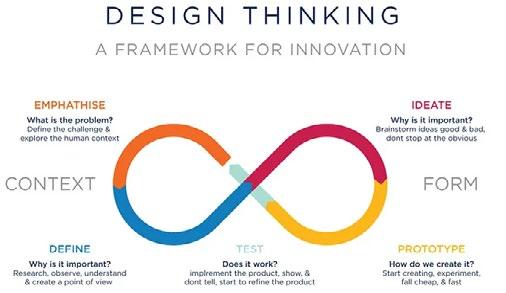
THE EVOLUTION OF DESIGN AND DEVELOPMENT COLLABORATION:
Traditionally, design and development were treated as distinct phases of the product creation process. Designers focused on creating aesthetically pleasing and userfriendly interfaces, while developers translated these designs into functional, code-based solutions. However, this siloed approach often led to communication gaps, resulting in delays, misunderstandings, and suboptimal user experiences.
The paradigm shift towards a more collaborative workflow brought about the concept of UI/UX design, emphasizing not only the visual appeal but also the overall user journey and satisfaction. This change necessitated a more cohesive integration between designers and developers, giving rise to the hybrid designer role.
A hybrid designer is someone who possesses both design and development skills, making
USER-CENTERED DESIGN PRINCIPLES: Courses often start by grounding students in the fundamentals of user-centered design principles. This includes understanding user personas, conducting usability testing, and incorporating user feedback into the design process.
Visual Design Techniques: Hybrid designers need a strong foundation in visual design. These courses cover topics such as color theory, typography, and layout principles, ensuring that students can create visually appealing and cohesive designs.
PROTOTYPING AND WIREFRAMING: An essential aspect of UI/UX design is the ability to create prototypes and wireframes. UI/UX courses for hybrid designers teach the tools and techniques for building interactive prototypes that simulate the user experience before development begins.
FRONT-END DEVELOPMENT SKILLS: To bridge the gap between design and development, these courses delve into front-end development skills. This includes HTML, CSS, and JavaScript, enabling hybrid designers to implement their designs into functional web interfaces.
RESPONSIVE DESIGN PRINCIPLES: With the prevalence of various devices and screen sizes, responsive design is crucial. UI/UX courses for hybrid designers emphasize the importance of creating designs that adapt seamlessly to different devices and resolutions.
BY BENJAMIN BAPTIST

COLLABORATION TOOLS AND PRACTICES: Effective collaboration is a cornerstone of successful design and development projects. Courses often introduce collaboration tools and practices, teaching students how to work seamlessly with cross-functional teams and communicate effectively with developers.
AGILE METHODOLOGIES: Given the iterative nature of design and development, understanding agile methodologies is essential. UI/UX courses for hybrid designers often incorporate lessons on agile principles, sprints, and iterative prototyping to prepare students for real-world project scenarios.
While the hybrid designer role brings numerous advantages, it is not without its challenges. Straddling both design and development domains requires a continuous commitment to learning and staying updated on industry trends. Additionally, striking the right balance between creativity and technical implementation can be demanding. However, the opportunities for hybrid designers are vast. They are well-positioned to take on diverse roles within multidisciplinary teams, acting as liaisons between designers and developers. Their ability to understand the entire product development process makes them valuable assets in creating cohesive and user-friendly digital experiences.
The convergence of design and development has given rise to the hybrid designer, a professional equipped with a unique skill set to navigate both creative and technical realms. UI/UX courses tailored for these individuals play a pivotal role in shaping their capabilities, covering everything from user-centered design principles to front-end development skills. As technology continues to advance, the demand for hybrid designers is likely to grow. The ability to bridge the gap between design and development is becoming a sought-after skill in the job market. Aspiring designers looking to embark on this hybrid journey have a wealth of educational resources at their disposal, empowering them to shape the future of digital experiences through a harmonious fusion of design and development expertise. n
/ THE NETWORK / MARCH/APRIL 2024 - 41 -
Baptist is the Lead Growth Marketing Manager for the Designerrs Academy. social@designerrs.com
Benjamin
Feature
THE FACTOR
THE TALLEST BUILDING IN U.S.
THE BOARDWALK AT BRICKTOWN WILL BE IN OKLAHOMA CITY
matteson capitaL, a muLtifaceted real estate investment and development company operating since 2004, and AO Architects, a leading full-service architecture firm with design expertise spanning the full commercial and multifamily real estate spectrum, announced in January that they will request a variance from Oklahoma City to increase the height for one of the towers in the already named development known as The Boardwalk at Bricktown. If approved, the height variance will make the structure the tallest building in the United States and seventh tallest in the world (because Jedda Tower will be added to the top of the list).
The ambitious development features a collection of three towers, each 345 feet, and a fourth striking supertall tower, referred to as Legends Tower, that will ascend to 1,907 feet, creating an impressive silhouette against the Oklahoma City skyline. The symbolic height honors the year that Oklahoma was admitted as the 46th state of the United States.
Spanning approximately 5 million square feet, the project is a mixed-use marvel, including: a 480-key Dream Hotel by Hyatt with 85 residential serviced condominiums in the Dream Tower; an additional 350-key Hyatt hotel with 100 serviced condominiums in the Legends Tower; 1,776 residential units ranging from market-rate to affordable workforce and luxury options; a vibrant retail and restaurant scene with over 110,000 square feet of space designated for commercial use, food and beverage; and a workforce development center for the community at the street and second levels. The top floors of the supertall tower will consist of a public observatory, restaurant, and bar where visitors will be able to enjoy the sweeping city views.
Notably, the design incorporates extraordinary public spaces that are poised to become central hubs for community engagement. Among these is an impressive 17,000 square foot lagoon and water feature surrounded by a boardwalk that adds a tranquil, yet lively, entertainment atmosphere to the development. Additionally, the project boasts several expansive roofdecks, providing residents and visitors with unparalleled views of the city and creating an urban oasis in the heart of Oklahoma City.
“Oklahoma City is experiencing a significant period of growth and transformation, making it well- positioned to support large-scale projects like the one envisioned for Bricktown,” said Scot Matteson, CEO of Matteson Capital. “We believe that this development will be an iconic destination for the city, further driving the expansion and diversification of the growing economy, drawing in investment, new businesses, and jobs. It’s a dynamic environment and we hope to see The

Boardwalk at Bricktown stand as the pride of Oklahoma City.”
Bricktown, in particular, has become a premier destination within Oklahoma City. Expanding this vibrant hub is a priority for the city with more professional sports, entertainment, and transit. The area already features attractions

Do not argue with an idiot. He will drag you down to his level and beat you with experience.
/ THE NETWORK / MARCH/APRIL 2024 - 42 -
such as: the Amtrak station; a movie theater; an NBA sports arena (home to the OKC Thunder); the recently renamed Oklahoma City Dodgers’ minor league baseball stadium; and a forthcoming soccer stadium. The public also voted to fund a $900 million bond to build the Thunder a new state of the art arena in the area. The recently completed convention center is another opportunity to showcase this catalytic project, which will further complement the Bricktown Entertainment District. The Boardwalk at Bricktown aligns perfectly with the city's trajectory of becoming a center for cultural and economic activity.
“We are excited to embark upon this pivotal undertaking with a carefully assembled team of talented and experienced architects and designers from within our ranks,” said Rob Budetti, AO managing partner. “Crafting a project of this significance is an honor, and
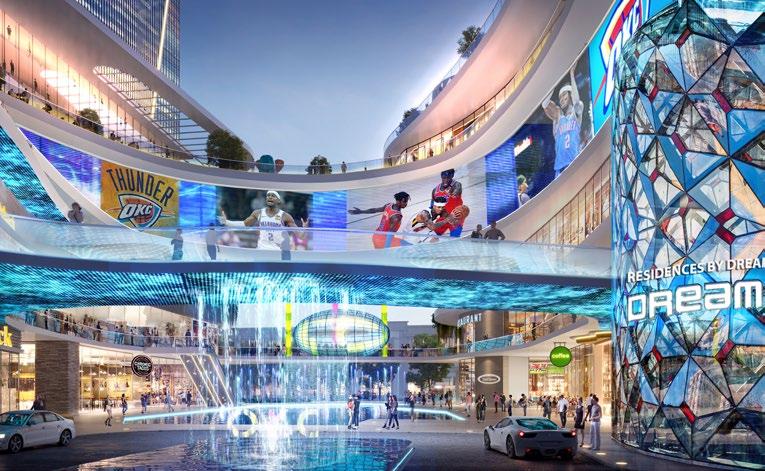
the collaborative process with the city, Matteson Capital, Hensel Phelps, and a top-notch team of engineers, consultants, and development partners has been exceptional. Managing the
THE TALLEST BUILDINGS IN THE WORLD
intricacies of such a project, ensuring seamless integration of all components, is a significant challenge. Fortunately, this aligns with one of AO's core strengths."
Construction on the first three towers (Phase 1) is expected to begin this summer and is expected to be completed in 24-30 months. The target date for completion is mid to late 2026. The first three towers include 700 units, 140 of which are currently designated to be workforce housing. Phase 2 –construction of the supertall tower will not begin until Phase 1 is completed. The estimated timeline of that construction is three additional years to complete.
A development of this magnitude requires the subject matter expertise of multiple parties. In addition to architectural firm AO and developer Matteson Capital the project team includes development partners, ThinkBox and Legends Capital Management; structural engineers, Thorton Tomasetti; civil engineers, Johnson & Associates; fire life safety and energy, Siemens; general contractor, Hensel Phelps; and hotel management companies, Hyatt and Dream. The finance team for the project includes BCREM Incorporated and Global Economic Strategies. The legal team is headed by Greenberg Traurig, LLP. n
All renderings courtesy of AO Architects.
/ THE NETWORK / MARCH/APRIL 2024 - 43Money
sure makes misery
can’t buy happiness, but it
easier to live with.
Building City/Country Height 1 Burj Khalifa Dubai, United Arab Emirates 2717 ft 2 Merdeka 118 Kula Lumpur, Malaysia 2227 ft 3 Shanghai Tower Shanghai, China 2073 ft 4 Abraj Al-Bait Clock Tower Mecca, Saudi Arabia 1972 ft 5 Ping An International Finance Centre Shenzhen, China 1966 ft 6 Lotte World Tower Seoul, South Korea 1819 ft 7 One World Trade Center New York, United States 1776 ft 8 Guangzhou CTF Finance Centre Guangzhou, China 1739 ft 9 Tianjin CTF Finance Centre Tianjin, China 1739 ft 10 China Zun Beijing, China 1731 ft 11 Taipei 101 Taipei 101, Taiwan 1667 ft 12 Shanghai World Financial Center Shanghai, China 1614 ft 13 Wuhan Greenland Centre Wuhan, China 1560 ft
Building City/Country Height Jeddah Tower Jeddah, Saudi Arabia 3304 ft One Bangkok Bankok, Thailand 1431 ft Greenland Jinmao International Financial Center Nanjing China 1640 ft Fuyuan Zhongshan 108 IFC Zhongshan, China 1634 ft
REAL ESTATE F THE FU URE
NEOM
neom is a Region in the northwest of the Kingdom of Saudi Arabia. NEOM means ‘new future’ and with more than 3,600 staff –from 97 countries –already living and working onsite, it has already become a home for people who dream big and want to be part of building a new economic model for the country and the world.

The ‘future loop’ logo represents the spirit of their mission – to create a ‘new future’ based upon five core principles: nature, technology, livability, sustainability and community.
NEOM is already being built and the first destinations will come online this year. The project is phased, with OXAGON also getting its first residents in 2024 and TROJENA (the mountain destination) becoming a place to live, work, and holiday in 2026. The first modules of THE LINE (the linear city) will also be activated in 2026 (see the September-October issue of )
and by 2030, some one million people will live in NEOM, rising to nine million in 2045.
NEOM’s sectors stretch across the knowledge economy verticals and include: Design & Construction, Education, Energy, Entertainment & Culture, Financial Services, Food, Health & Wellbeing, Manufacturing, Media, Mobility, Sport, Technology & Digital, Tourism and Water. They have already launched a number of subsidiary companies and that trend will continue.
NEOM is not a city. It is a place that will be made up of a number of regions – including a center for advanced and clean industries, Oxagon and a luxury island resort Sindalah.



As a community of pioneering dreamers and doers, NEOM is adopting and creating sustainability, advanced technology, and a new economic model. And with the coast, desert and mountains at its doorstep – this may well be the perfect place to work, live and play—a place for all people from across the globe to make their mark on the world in creative and innovative ways by offering its residents a compelling lifestyle paired with excellent economic opportunities.
/ THE NETWORK / MARCH/APRIL 2024 - 44Quantity is what you count. Quality is what you count on.
é Trojena
é Oxagon
é THE LINE
é Sindalah

At the end of 2023, The Board of Directors of NEOM has announced Norlana, an ultra-modern active lifestyle community, as the latest addition to the evolving regional development.

Situated on the Gulf of Aqaba’s coastline, Norlana creates a unique environment where an exclusive community of 3,000 residents will enjoy contemporary luxury fused with advanced technology, setting a pioneering standard for sustainable modern living. Within

this contemporary community portfolio of 711 residential properties, Norlana will offer deluxe mansions, spacious apartments and beach villas integrated with the surrounding dunes, bringing residents closer to serene nature.

Norlana will boast a state-of-the-art 120-berth marina that will serve as an international hub for superyachts, with water taxi services available for residents and guests. The superyacht members club will be a place where like-minded yachting enthusiasts can unwind and enjoy exceptional dining experiences and service while taking in stunning waterfront views.
A spectacular 18-hole golf course will be nestled among rugged mountains, with an equestrian and polo center with world-class facilities nearby. Norlana’s

/ THE NETWORK / MARCH/APRIL 2024 - 45 -
under construction.
The road to success is
always

amenities will also cater to a diverse range of water sports including sailing and diving, for residents and guests to immerse themselves in the breathtaking natural environment. The community has been designed to redefine contemporary and active living. With sport, health, and well-being at the core of this cutting-edge community, residents and guests will have every opportunity to experience their passions in a magnificent and environmentally sustainable setting.

Aligned with NEOM’s commitment to conservation, Norlana will complement its coastal location and be delivered innovatively and sustainably. With a focus on preserving the surrounding land and marine environments, it will


offer the pinnacle of ultra-luxury modern living through a harmonious blend of nature and technology.
News of the development follows the recent announcements of Leyja,

Epicon, Siranna, and Utamo which are also sustainable tourism destinations located in the Gulf of Aqaba. n
About NEOM
NEOM is an accelerator of human progress and a vision of what a New Future might look like. It will include hyperconnected, cognitive cities, ports and enterprise zones, research centers, sports and entertainment venues and tourist destinations. As a hub for innovation, entrepreneurs, business leaders and companies will come to research, incubate, and commercialize new technologies and enterprises in groundbreaking ways. Residents of NEOM will embody an international ethos and embrace a culture of exploration, risk-taking and diversity. For further information, visit www.neom.com
All
When you're wrong, no one forgets.
When you're right, no one remembers.
/ THE NETWORK / MARCH/APRIL 2024 - 46 -
photos/renditions courtesy of Neom.
If you can't see the bright side of life, polish the dull side.

Recent news about secRetaRy of Defense Lloyd Austin’s cancer diagnosis and ensuing hospitalization sparked a fascinating public discussion about the disclosure of personal health information. It's a clash between our desire for privacy, and the need for transparency, particularly in public figures like Secretary Austin. On one hand, individuals have a right to keep their health matters private, as it is a deeply personal aspect of their lives. However, when it comes to high-profile individuals holding positions of power and responsibility, there is an argument for the public's right to know about health conditions that may impact their ability to fulfill their duties effectively.
Lloyd J. Austin III assumed duties as Secretary of Defense on January 22, 2021 under President Joe Biden. A retired four-star Army general, he made history as the first African American in the United States to hold the position of Secretary of Defense (SecDef). His extensive military experience, leadership background, and a prior relationship with President Joe Biden were all important factors in his cabinet-level appointment.
I served with General Austin when he was the Vice Chief of Staff of the Army, and later Commander of U.S. Central Command (CENTCOM). According to a January 2024 VOX news article, Lloyd Austin’s military nickname was, “The Silent General”. He is also described as a very private person (vox.com/worldpolitics/24032216/defense-secretarylloyd-austin-disappearance-cancerhospital-biden / January 9, 2024). In my own experience, a better description for him is “precise,” rather than silent.
He was precise, in both words and deeds. He never over-shared informa-
THINKING OUT LOUD
PRIVACY VS TRANSPARENCY:
STRIKING THE RIGHT BALANCE
tion, nor did he ever talk just to hear himself talk (something not uncommon with senior leaders). Yes, he is a private person; however, he is better known for his remarkable judgement and complete discretion with sensitive information and matters. Austin’s voice is deep, powerful, and unambiguous. In confidence, I used to privately joke that General Austin reminded me of those old, “E.F. Hutton” financial commercials. Because whenever Lloyd Austin spoke, “people listened!”

So “why” did it take Pentagon officials over three days to notify President Joe Biden and other top National Security officials about Secretary Austin’s hospitalization? And ‘why” didn’t Secretary Austin confide his prostate cancer diagnosis discreetly and directly with the President? While there are 20 other cabinet leaders in the Biden Administration, Secretary Austin’s position is arguably the most critical person for our nation’s security, 24/7. The SecDef is also sixth in line for succession to the presidency
Things are “busy” at the Pentagon and in the world these days! Two on-going wars between Israel-Hamas and RussiaUkraine. And now, there is a new Department of Defense (DoD) Inspector General (IG) investigation underway to determine what needs to happen for future policies and procedures to transition authorities when senior leadership is unavailable.
To date, Austin has respectfully acknowledged, “I could have done a better job ensuring the public was appropriately informed. I commit to doing better.
But this is important to say: this was my medical procedure, and I take full responsibility for my decisions about disclosure.” President Biden has publicly stated that
BY T.J. EDWARDS

he maintains full trust and confidence in his Defense Secretary.
This debate raises questions about the delicate balance between personal privacy and the accountability that comes with being a public figure. It also highlights society's evolving expectations regarding transparency from our leaders. We all value privacy, but what happens when it clashes with transparency?
Related concepts
It's a delicate line to walk, especially for public figures like Secretary Austin. Should leaders share their personal health battles with the public, or is it their right to keep it private? As leaders are forced to disclose more and more personal information, will it have an impact on the willingness of future high-quality leaders to serve in such key national positions?
Maintaining privacy while being transparent puts public figures in a tight spot. The constant scrutiny and pressure can make it difficult for them to navigate through personal health battles without compromising trust or their own wellbeing. Perhaps Joshua Keating’s VOX article summarizes this situation best by stating, “Even the most powerful people in the world are still humans with bodies and families. They sometimes need to take time off, whether for medical reasons, personal matters, or just to recharge. But the people who rely on them still need to know where they are.” n
T. J. Edwards retired from the U.S. Army after 30 years of service. He is a Contributing Editor of tjedwardsjr23@gmail.com
/ THE NETWORK / MARCH/APRIL 2024 - 47 -
Feature
é Secretary of Defense Lloyd Austin. DEFENSE VISUAL
INFORMATION DISTRIBUTION SERVICE VIA PICRYL.COM. PUBLIC DOMAIN.
Conflicting concepts Transparency Accountability Confidentiality Privacy Relationship between transparency, accountability, confidentiality, and privacy
 BY ROXANA TOFAN
– WHO? WHAT? WHEN? WHERE? WHY? AND HOW?
BHARATANATYAM

When We Were invited to attend Shruti Sathish’ dance debut, we felt honored and excited to learn more about the Indian culture but had no idea what to expect. Shruti’s Bharatanatyam journey began at the age of six with Guru Dr. Sredhara Akkihebbalu, an accomplished artist and educator in the field of Bharatanatyam and Iyengar Yoga. Her grandparents flew from India along with family and friends from all over the country, joining her parents, brother Surya, local friends, and the community, to support and celebrate Shruti’s achievement, and to watch the performance she had been training for the last nine years.
Her gracefulness, the vibrant costumes, intricate jewelry, melodious music, elaborate choreography, and her intricate storytelling through expressive movements captivated all 550 guests during her 3.5-hour solo performance. Not only did she prepare for the dance, but also shared stories and reflections on her journey during a speech at the end of her night. Her guru, friends and parents were also a part of the program with speeches and stories between costume changes.
The Arangetram is no small undertaking for the student, nor the family. Girls start as early as age 3 or 4 studying anywhere from 8 to 10 years before teachers deem them to be ready for their Arangetram. Bharatanatyam Arangetram is typically performed by individuals who have undergone rigorous training in Bharatanatyam.
The Bharatanatyam Arangetram guru, or teacher, plays a crucial role in the dancer's
Bharatanatyam is an Indian classical dance that expresses South Indian religious themes and spiritual ideas, with its roots in Hindu mythology and spirituality. It often evokes deep emotional and spiritual connections, enhancing the overall experience for the audience.
Bharatanatyam Arangetram is a debut solo performance in the Indian classical dance. The Arangetram signifies a dancer's milestone achievement, representing the culmination of years of rigorous training and dedication for the dance. The performance showcases their proficiency in the art form and is a significant event in the dancer's journey. The length of a performance varies depending on the dancer and the choreography, but typically, it lasts for approximately two to three hours as an elaborate and formal performance showcasing the dancer’s mastery of the dance form.

WHAT WHO
journey. The guru imparts knowledge, teaches techniques, and guides the student in mastering the intricacies of Bharatanatyam. The relationship between the dancer and the guru is often deep and based on mutual respect. The guru not only imparts dance skills but also instills discipline, artistic expression, and a cultural understanding essential for the dancer's growth.

/ THE NETWORK / MARCH/APRIL 2024 - 48 -
you can’t live without me, why aren’t you dead yet?
If
HOW
Bharatanatyam Arangetram involves meticulous preparation by the dancer. The process includes mastering various dance compositions, perfecting intricate hand gestures, facial expressions, foot work, and body movements, all while understanding the nuances of rhythm
The dancer’s abilities to express emotion, convey stories, and captivate the audience with their grace and beauty are put on full display during the Arangetram. The dancer uses nine emotional expressions during the dance: love (shringaara), laughter (haasya), kind-heartedness or compassion (karuna), anger (roudra), courage (veera), fear (bhayaanaka), disgust (bheebhatsya), wonder or surprise (adbhutha) and peace or tranquility (shaantha).

The Arangetram typically begins with a traditional invocation to the Hindu gods and goddesses, followed by a series of dance pieces that showcase the dancer’s skills and mastery of the Bharatanatyam style. These pieces can include solo performances, group performances, and classical Indian stories brought to life through dance.
In addition to the dance performance, an Arangetram often includes speeches by the dancer’s guru, family, and friends, as well as performances by musical accompanists, such as singers and instrumentalists. Speeches play a crucial role in acknowledging the significance of the event, expressing appreciation, and providing encouragement to the dancer. The guru, parents, friends, and distinguished guests often speak about the dancer’s dedication, hard work, achievements, and offer gratitude to the community and blessings and encouragement for the future. The dancer also shares reflections on their journey, expressing gratitude, acknowledging challenges over-
come, and sharing their aspirations for the future.
Decoration plays an integral part of the event. Usually, religious themes and spiritual ideas are being depicted in the dance. It is a custom in Indian fine arts to set an alter that creates a divine atmosphere during performance. The altar is well lighted with a spotlight focusing on the brass Nadaraja idol, “God of Dance”, wrapped in traditional dothi. Usually, many other special decorations throughout the theater and lobby are set up.

The timing of Bharatanatyam Arangetram varies for each dancer based on their individual training and preparedness. It usually takes place when the dancer has completed the required training and is proficient in the techniques and repertoire of Bharatanatyam. The timing can vary for different dancers and is often scheduled when they feel ready to present a solo performance at a professional level.
WHERE
Bharatanatyam Arangetram originated from the Tamil culture in South India. The word Arangetram is derived from Tamil, where "it means ascending the stage. This debut solo performance tradition has deep roots in the history and culture of Bharatanatyam, which is one of the oldest classical dance forms in India. A description of precursors of Bharatanatyam from the 2nd century can be found in the ancient Tamil poem, while temple sculptures of the 6th to 9th century suggest dance was a refined performance art by the mid-1st millennium CE. Sadiraattam, which was renamed Bharatanatyam in 1932, is the oldest classical dance tradition in India.
WHY
The Arangetram is not only a personal achievement but also a cultural tradition that celebrates the preservation and continuation of this classical dance form. It provides an opportunity for the dancer to showcase her skills, artistry, and mastery of Bharatanatyam. It is often a community event, where friends, family, and well-wishers come together to support and celebrate the dancer's achievement, creating a memorable and supportive atmosphere.

Shruti’s strength, dedication and skill left a lasting impact. We left Shruti’s dance debut in awe of her grace, talent and having experienced an immersion into the rich cultural heritage of India that showcased century-old traditions and art forms. I could not wait to share my experience with my Indian friend from New Zealand. To my surprise, her daughter, Suchi Bakta, also trained for her Bharatanatyam Arangetram with her Guru Smt Bana Shastri Ramanath. I loved learning that Suchi, six years after her dance debut is now a junior pre-med student at the University of Texas in Austin and dances for Texas Zobha, having joined the group in her freshmen year.
The Bharatanatyam is a truly amazing and special dance as it combines cultural immersion, artistic expression, community celebration, and spiritual connection, leaving a lasting impact on both the audience and the performer. Whether you are a dancer, a music lover, or simply interested in experiencing the beauty of Bharatanatyam, attending an Arangetram is an unforgettable experience. n
Roxana Tofan is a commercial real estate and business broker and the founder and owner of Clear Integrity Group in San Antonio. She is also a Contributing Editor of roxana@clearintegritygroup.com
/ THE NETWORK / MARCH/APRIL 2024 - 49Don't tell me the sky is the limit when there are footprints on the moon.
»»
 BY EMILY JOHN
PROPERTY MANAGEMENT SOFTWARE STREAMLINING YOUR OPERATIONS
if you'Re Like most real estate professionals, you're always looking for ways to improve your business. As an agent who is responsible for managing multiple properties and clients, there isn't enough time in the day to get everything done. This can be especially true if you don't have the right tools at your disposal. Fortunately, software designed specifically for real estate professionals can help streamline operations and increase productivity so that you don't have to worry about doing everything manually anymore!
Real estate management can be used for a variety of purposes— managing property listings and tenants, tracking
expenses and revenue, and reporting on performance metrics just to name a few. It's important to pay attention to the infrastructure capabilities of the software; some programs allow you to set up a workgroup or collaborate with other users, others have a cloud-based architecture that allows access from anywhere. You can review some of the top providers at websites like G2.com (formerly G2 Crowd) or TrustRadius.
finding the right software to automate as many of the chores as possible will free up your time to enable you to be more effective. Software exists that will allow you to perform lease management, automate rent collections, manage third party contractors and payments, track maintenance work orders, calculate (and even invoice for) common area maintenance charges, and so much more.
And that software can be specialized by what sector of the industry you are working in (e.g., apartment rentals, office building management, hotel management, etc.) You want software that is robust, customizable, and flexible, one that has a single login for literally everything, so you don’t have to jump from page to page to deal with issues, one in which everything updates in real time, and in which customer service is amazing. Bottom line: you want a system which just makes everything easier.
The right software will help make your life easier as a real estate professional by automating many tasks that would otherwise have to be done manually or with spreadsheets. n
Property Manager : “That’s great, I’ll take two of them!”
Property management is a reactive business. Much of your time is spent responding to situations, which of course requires a broad base of knowledge and resourcefulness. So,
DIVERSI NS
ANTS

The other day, I found what must have been ten ants running around frantically in one of my properties. I felt bad for them, but they needed to be removed.
Fortunately, I found a cardboard box and made a sort of makeshift house for them. Now, I am their landlord and they are my... ten(ants).
Emily John is a arts teacher and freelance writer in Lanchester in the United Kingdom. emilyjon071@gmail.com
HEARING
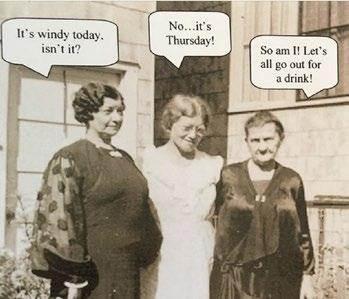
Salesman : “This computer will cut your workload by 50%.”
/ THE NETWORK / MARCH/APRIL 2024 - 50 -
Changes in Inflation by City
the u.s. infLation Rate hit a 40-year high after the pandemic but has since cooled significantly due to factors like the Federal Reserve rate hikes. The year-over-year inflation rate has moderated to 3.4% in December 2023, which is welcome news to the Federal Reserve as it considers the monetary policy outlook. The government may continue its interest rate hikes in the hope of reining in inflation further. Various factors, such as the war in Ukraine and labor shortages, are driving this relatively high inflation.

Inflation rates differ across the U.S., though. To determine how inflation is impacting people in different parts of the country, WalletHub compared 23 major MSAs (Metropolitan Statistical Areas) across two key metrics related to the Consumer Price Index, which measures inflation. They compared the Consumer Price Index for the latest month for which BLS data is available two months prior and one year prior to get a snapshot of how inflation has changed in the short and long term.
BY ADAM MCCANN

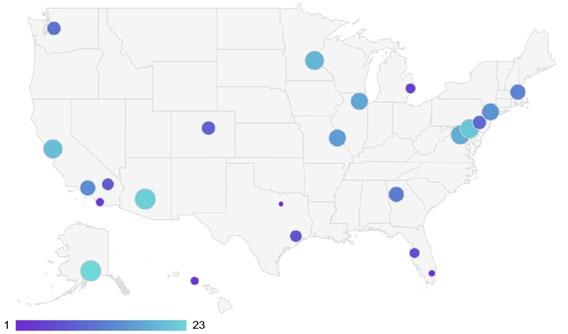
Cities With the Biggest Inflation Problem

<CLICK HERE> to see the methodology this was used, Consumer Price Index changes over the same period and read experts’ analyses of the main factors driving inflation and what the current rate tells us about the future of the economy. n
- 51 - / THE NETWORK / MARCH/APRIL 2024
don’t suffer from insanity. I enjoy every minute of it.
I
Adam McCann is a personal finance writer for WalletHub. TRENDI G
Rank Metropolitan Statistical Area Total Score Consumer Price Index Change (Latest month vs 2 months before) (Latest month vs 1 year ago) 1 Dallas-Fort Worth-Arlington, TX 93,59 0,90 % 5,20 % 2 Miami-Fort Lauderdale-West Palm Beach, FL 72,5 -0,20 % 5,70 % 3 Urban Honolulu, HI 70,58 0,80 % 3,60 % 4 San Diego-Carlsbad, CA 66,09 -0,20 % 5,20 % 5 Detroit-Warren-Dearborn, MI 62,12 0,00 % 4,50 % 6 Tampa-St. Petersburg-Clearwater, FL 61,09 -0,40 % 5,20 % 7 Houston-The Woodlands-Sugar Land, TX 59,62 -0,10 % 4,50 % 8 Riverside-San Bernardino-Ontario, CA 59,55 0,00 % 4,30 % 9 Denver-Aurora-Lakewood, CO 54,62 -0,30 % 4,50 % 10 Philadelphia-Camden-Wilmington, PA-NJ-DE-MD 54,42 0,00 % 3,90 % 11 Seattle-Tacoma-Bellevue, WA 53,33 -0,30 % 4,40 % 12 Atlanta-Sandy Springs-Roswell, GA 48,08 -0,10 % 3,60 % 13 Boston-Cambridge-Newton, MA-NH 45,19 0,40 % 2,40 % 14 Los Angeles-Long Beach-Anaheim, CA 41,8 -0,30 % 3,50 % 15 New York-Newark-Jersey City, NY-NJ-PA 36,6 -0,20 % 2,90 % 16 St. Louis, MO-IL 35,32 -0,20 % 2,80 % 17 Chicago-Naperville-Elgin, IL-IN-WI 34,23 -0,50 % 3,30 % 18 Washington-Arlington-Alexandria, DC-VA-MD-WV 32,82 -0,30 % 2,80 % 19 Minneapolis-St.Paul-Bloomington, MN-WI 30,32 -0,40 % 2,80 % 20 San Francisco-Oakland-Hayward, CA 27,76 -0,40 % 2,60 % 21 Baltimore-Columbia-Towson, MD 23,85 -0,30 % 2,10 % 22 Phoenix-Mesa-Scottsdale, AZ 16,54 -0,90 % 2,70 % 23 Anchorage, AK 0 -1,10 % 1,80 %
VISUALIZING THE TOP GLOBAL RISKS IN 2024
GLOBAL RISK PROFILE IN 2024
RecoRd gLobaL tempeRatuRes aRe leading to increasingly harmful impacts, a cost-of living crisis is making everyday life harder for people around the world, and escalating tensions in the Middle East have the potential to widen into a broader regional conflict. Meanwhile, in 2024 it’s expected to be the world’s biggest election year ever with 4 billion people casting a vote across 60 countries. Will threats such as misinformation and polarization loom large as people head to the polls?
This visualization shows the biggest risks for 2024, based on the World Economic Forum’s annual survey of leaders around the globe.
Here are the top 20 risks to the global economy, based on a survey of 1,490 leaders who were asked to choose up to five risks that are likely to present a material crisis on a global scale in 2024:
FUTURE GLOBAL RISKS
By 2034, leaders surveyed believe that environmental risks will be most concerning, making up five of the top 10 risks, by severity:
Extreme weather poses the biggest risk according to leaders surveyed. It also ranks second overall in terms of severity over the next two years. Global economies are widely unprepared for the consequences of acute weather, from shocks to food systems to large-scale infrastructure damage. In fact, some research shows that potentially irreversible changes to the planet could be reached by the 2030s if temperatures continue to rise.
Misinformation and disinformation is the second-biggest risk, which could diminish trust and deepen political divides. It also has the potential to undermine global elections, which are slated across the U.S., Russia, India, Mexico, and dozens of other countries. The threat of misinformation is especially clear given advancements in AI-generated content. It ranks first overall in terms of risk severity across the list.
Interlinked with misinformation is the risk of societal polarization. In the post-pandemic era, political divides have worsened, and these have been exacerbated by economic hardship and a lack of economic opportunity.
Additionally, the conflict in the Middle East is severely impacting the livelihood of millions of people, and the recent attack in Lebanon raises questions about the outbreak of a wider war. The escalation of interstate armed conflicts ranks as the eighth-highest risk for the global economy in 2024, and the fifth-most severe.
The technological risks of misinformation and the adverse outcomes of AI technologies also remain fairly dominant. AI has the potential to be highly destabilizing to society, presenting some existential risks due to its role as a “force multiplier”, which means that it can increase the effect of a country’s military systems, data analytics, and other capabilities.
From a broader perspective, key structural forces are influencing global risks looking ahead. They include technological acceleration, climate change, shifts in geopolitical power, and a widening demographic divide.
Source: The World Economic Forum’s Global Risks Report 2024 n
/ THE NETWORK / MARCH/APRIL 2024 - 522024 Ranking Risk Share of Respondents Category 1 Extreme weather 66 % Environmental 2 Misinformation and disinformation 53 % Technological 3 Societal polarization 46 % Societal 4 Cost-of-living crisis 42 % Societal 5 Cyberattacks 39 % Technological 6 Economic downturn 33 % Economic 7 Disrupted supply chains for critical goods and resources 25 % Economic 8 Escalation or outbreak of interstate armed conflict(s) 25 % Geopolitical 9 Attacks on critical infrastructure 19 % Geopolitical 10 Disrupted supply chains for food 18 % Economic 11 Censorship and erosion of free speech 16 % Societal 12 Disrupted supply chains for energy 14 % Economic 13 Public debt distress 14 % Economic 14 Skills or labor shortage 13 % Economic 15 Accidental or intentional nuclear event 12 % Geopolitical 16 Violent civil strikes and riots 11 % Geopolitical 17 Accidental or intentional release of biological agents 9 % Geopolitical 18 Institutional collapse within the financial sector 7 % Economic 19 Housing bubble burst 4 % Economic 20 Tech bubble burst 4 % Economic 2024 Ranking Risk Category 1 Extreme weather events Environmental 2 Critical change to Earth systems Environmental 3 Biodiversity loss and ecosystem collapse Environmental 4 Natural resource shortages Environmental 5 Misinformation and disinformation Technological 6 Adverse outcomes of AI technologies Technological 7 Involuntary migration Societal 8 Cyber insecurity Technological 9 Societal polarization Societal 10 Pollution Environmental
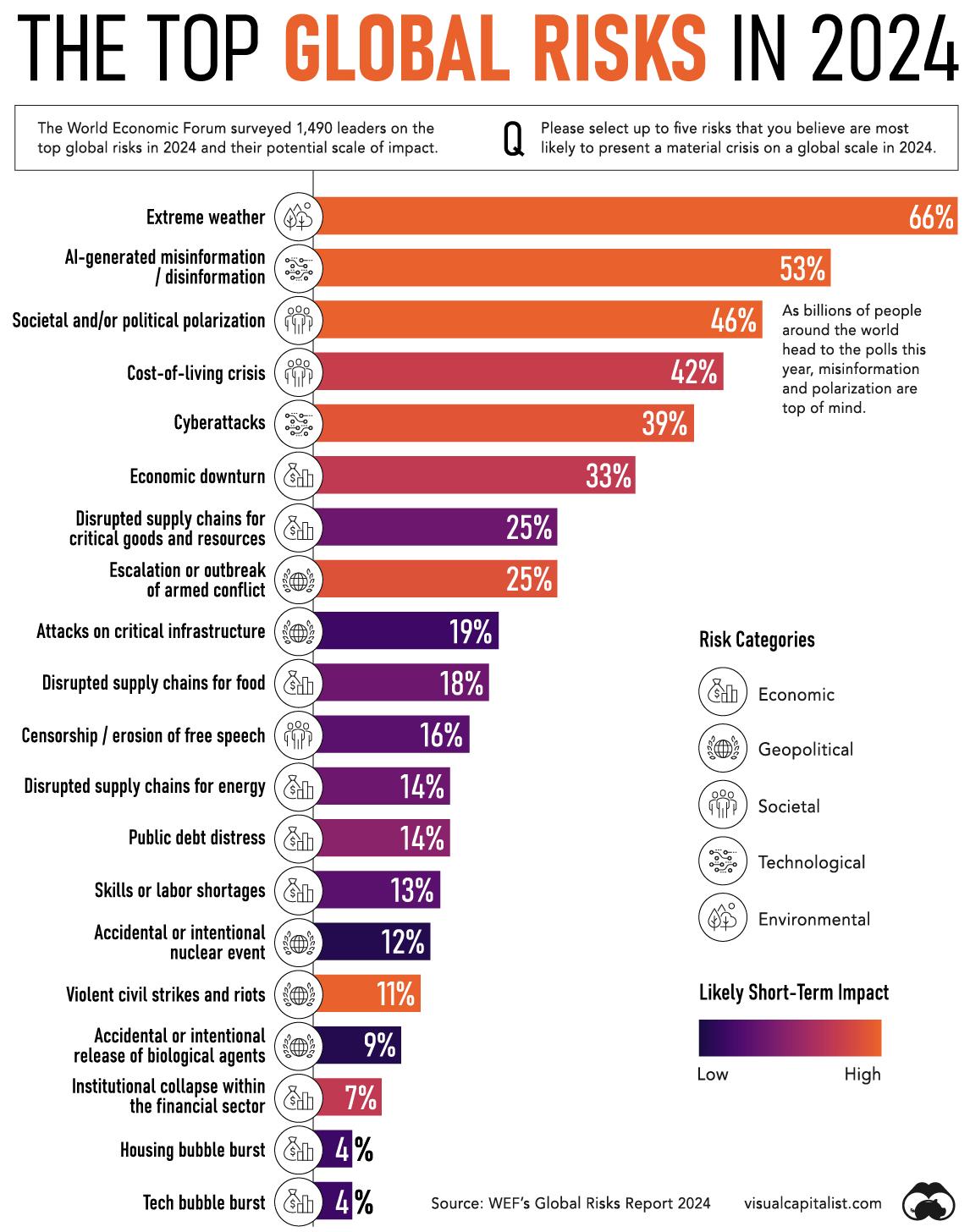
/ THE NETWORK / MARCH/APRIL 2024 - 53 -
theRe is an uRban myth or legend that the famous Eiffel Tower in Paris was originally offered to Barcelona - and that the city declined the offer (supposedly because of the size and cost of the project). In fact, the legend more prevalent than the truth. It claims that Gustave Eiffel had Barcelona in mind when he designed the tower and that it was planned to be the entrance to the 1888 Barcelona Universal Exposition (Spain's first International World's Fair).
An extensive search of all official planning documents for the Barcelona Exposition found no official offer from Eiffel, and he had already presented his plans for the Eiffel tower to the 1989 Paris World Fair before Barcelona had even chosen the site for its world fair. Barcelona considered two tower projects for the entrance, but neither were built, and instead, the Barcelona Arc de Triomf victory arch was built there and remains there today. Gustave Eiffel's tower was built in Paris as the entrance to the 1889 Paris World's Fair to celebrate the centennial of the French Revolution.
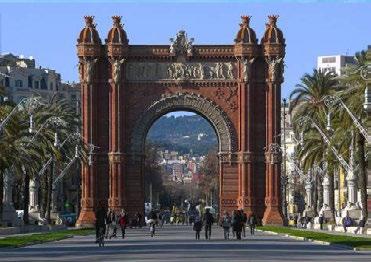
According to Eiffel, the inspiration for a tower came from the Latting Observatory (è) which was built in New York City in 1853. It was a 315 ft tall wooden tower built as part of the 1853 Exhibition of the Industry of All Nations and was located near what is now Times Square. It was the tallest building in the United States during its brief existence and was later described as "New York's first skyscraper."
THE FACTOR THE EIFFEL TOWER

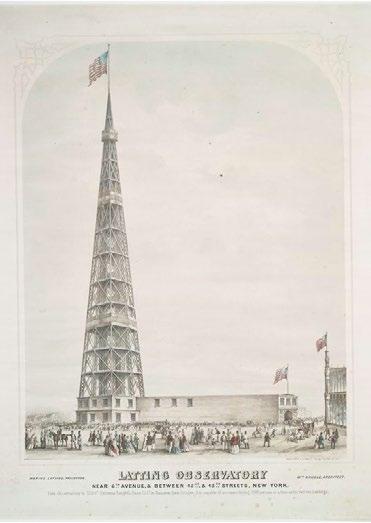
é Latting Observatory (New
Back to Paris’s premier landmark. The iron (í) Eiffel Tower has a fascinating history, playing a central role in strange tales of love, death, science, and war. First, the tower was never intended to become a permanent— the design competition rules by which Eiffel was awarded the design and construction of the tower stipulated that it would only stand for 20 years before being disassembled and sold for scrap.
Eiffel sought out the most celebrated scientists from around the world to repurpose the tower for things like meteorological observations and physics experiments. However, it was its valuable communication and broadcasting applications, especially the first successful wireless telegram tests, which would ultimately allow it to remain. In WWI, the French military was able to use the wireless station to intercept Nazi communications on several occasions. In 1914, they discovered the Germans were postponing their advance which allowed them to organize a successful counterattack in the Battle of Maine. Later, they intercepted coded messages between Germany and Spain which led to the capture of the Dutch exotic dancer and spy, Mata Hari.
STRANGER THAN FICTION
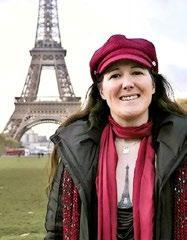
• American ex-soldier Erika “Aya” Eiffel (obviously attracted to inanimate objects) married the giant structure in a private ceremony in 2007. This was after her 20-year relationship with the Berlin Wall and a fling with a compound bow which would later help her become a world archery champion.
• The tower is constructed of a material called puddle iron, which is why it must be regularly repainted to prevent it
I get enough exercise pushing my luck.
/ THE NETWORK / MARCH/APRIL 2024 - 54 -
York)
é Eiffel Tower (Paris)
é Arc de Triomf (Barcelona)
JOHN SALATAS, CC BY-SA 4.0 VIA WIKIMEDIA COMMONS
from rusting. As a result, the tower has had many different color schemes over the years: Venetian red, reddish brown, several shades of yellow, a brownish red, and a bronzy brown, which is still used today for its harmony with the Parisian skyline. (Puddling, the process of converting pig iron to bar (wrought) iron, was developed in 1780s in Great Britain.) The tower gets repainted every seven years by a team of 25-50 specialist workers who apply 60 tons of paint by hand.
• The tower is estimated to be worth $500 billion today and helps Paris consistently rank among the most visited destinations in the world.
• With over 7 million visitors each year, the Eiffel Tower is among the most photographed monuments on Earth. However, it’s illegal to photograph it at night! EU law considers the 20,000 bulbs that light up the tower at night a copyright-protected work of art. Therefore, photographers must obtain permission before snapping a night-
time pic and/or sharing one through social media.
• Hot air balloons, zeppelins, and airplanes had already taken to the sky at the turn of the 20th century, and there was a race develop a low-altitude parachute. Partly inspired by a 10,000 Franc government reward, American tailor and inventor Franz Reichelt set about designing a parachute suit. In 1910, he decided to test it on himself from the top of the Eiffel Tower. Unfortunately, he plummeted to his death, much to the horror of onlookers below.
• Contrary to popular belief, the Eiffel Tower was not designed by the man whose name it bears. It was actually Maurice Koechlin and Emile Nouguier - two engineers who worked for his company.
• The tower’s height changes with the seasons. In summer, the tower is taller—because the iron structure expands up to 7 inches when temperatures rise. Iin winter, the cold causes the tower to shrink up to 6 inches, due to the iron contracting.
• During construction, Eiffel secretly included a private apartment within the tower. It is where he hosted famous guests like Thomas Edison. The space has since been transformed into a recreation of Eiffel's office, complete with wax figures of the main man himself, his daughter, and Edison.
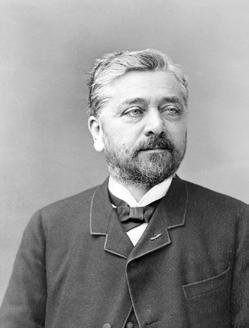 é Gustave Eiffel.
Much more than just a tourist attraction, the Eiffel Tower has become a fundamental pillar of French identity over the years. n

/ THE NETWORK / MARCH/APRIL 2024 - 55Sometimes I wake up grumpy; other times I let her sleep.
 BY ROSE-MARY RUMBLEY
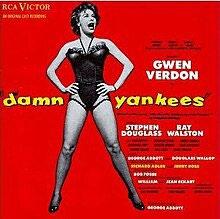
in 1955, dougLass waLLop wrote an entertaining novel entitled The Year the Yankees Lost the Pennant. The story of the book was presented later in a musical comedy on Broadway entitled Damn Yankees. The curtain opens and the audience sees an older man watching TV. His wife is in the room knitting.
The man tearfully cries out, "The Washington Senators will lose again!! I would give my soul to the Devil if the Senators would win just one game!!" Immediately, the Devil himself appears. "Your wish has been granted," the Devil shouts. The old man is transformed into a young, talented baseball player... and, yes, at the end of the show, the Senators win.
Of course, there is great music in between exciting action. The baseball coach sings to his team a super song, You Gotta Have Heart, Miles and Miles and Miles Of Heart. And then when the old (now young) man begins to miss his wife and wants to go back home, the Devil calls on his helper, Lola, who sings—you guessed it—Whatever Lola Wants, Lola Gets. She gets what she wants… he stays.
When the Senators win the pennant, the guy turns back into an old man, returns to his wife and his TV set. I think it's a great show. In my acting days, I appeared in Damn Yankees at the Casa Manana Theatre in Fort Worth as one of the baseball fans,
THE TEXAS RANGERS — ROOTING & REMINISCING
who also sings You've Gotta Have Heart. The Devil, really the star, was played by the 1940s movie star idol, Van Johnson. Great production!

Actually, this show has some truth in it. The Washington Senators were losers—until some baseball fans from Dallas bought the team, brought the guys to Dallas, and named them THE TEXAS RANGERS. One of those fans was George W. (I call him ‘Son’) Bush. Nifty people like Billy Martin played a great part in the Texas Rangers Ball Club, and the team became a winning team.
This year, the Rangers won the World's Series! Dallas loves the Texas Rangers! In fact, North Texas loves the Rangers so much, the fans built a new stadium for them—Ranger Stadium. And that stadium is special—just like the team.
There are other Texas Rangers around and they are law enforcement officers. One might meet one of these Texas Rangers on the highway if you’re stopped for speeding.
 Stephen F. Austin.
In 1823, Stephen Fuller Austin gathered his family around him and brought them to Texas, and assured them they would be safe in the new land. They would be safe because he was appointing men,
ten men to be exact, to act as Rangers–Texas Rangers. Their job description—KEEP US SAFE! And this they did.
They were armed with Samuel Colt's new gun—the Colt 45! There were many memorable men serving as Texas Rangers, Samuel Colt himself being one. Samuel Walker was another outstanding Ranger. He (with Samuel Colt) created the Walker Colt, another gun for people protection.
Samuel Walker was killed while fighting in the battle at Monterey. His last words were, "Bury me by the river in San Antonio." This they did. Many years later, some of the officials at the Texas Ranger Museum in Waco, thought it would be so appropriate to have Samuel Walker buried in the front yard of the Ranger Museum in Waco. A group went down to Monterey to move Samuel Walker to Waco. Not to be! A number of the Daughters of the Texas Republic stood on the grave of Samuel Walker. "You are not moving Samuel Walker," they shouted. Samuel Walker was not moved!
Another remembered Ranger is Frank Hammer. He became famous when he trapped and shot Bonnie and Clyde. The movie made about Bonnie Parker and Clyde Barrow glorified these two mean and violent killers. They were ugly too! They did not look like Faye Dunaway and Warren
Beatty. My mother, who was young in the 1920's, remembered that people cheered when the two murderers were killed by the Rangers. This was not brought out in the movie.

In fact, Bonnie and Clyde still have a following. I conduct tours and one of our stops it at the grave of Bonnie Parker. There is always some little token of love lying on her tomb stone. Some leave love notes. She's buried in a cemetery in North Dallas. On my tour we also stop at Clyde's grave. However, he is in a gated cemetery, so no little tokens of love!
Samuel Walker's gun, the Walker Colt, is in the museum in Waco, plus many great relics from the olden days of the Texas Rangers.
There was a Ranger Station at Fair Park when I was growing up in Dallas. There in front of the log house was a fine statue of a Texas Ranger. When the Ranger Station at Fair Park closed, the statue was moved to Love Field. There it stood proudly for years. Recently, racial issues concerning the Rangers were brought out, and the statue was removed. Nevertheless, the Rangers are still around. Don't speed. You may meet one on the highway. n
Rose-Mary Rumbley has written three books about her native city –Dallas. She has also written “WHAT! NO CHILI!” and a book about the 300th anniversary of the invention of the piano. She has appeared on the stage at the Dallas Summer Musicals and at Casa Mañana and was head of the drama department at Dallas Baptist University for 12 years. Today she is on the speaking circuit and teaches drama classes at Providence Christian School. Her loving views of Texas history appear in every issue of rosetalksdallas@aol.com
God created the world, everything else is made in China.
- 56 - / THE NETWORK / MARCH/APRIL 2024
Bonnie & Clyde.
Samuel Colt
ALLEN & GINTER CC0, VIA WIKIMEDIA COMMONS

YOU HAVE THE RIGHT TO REMAIN SILENT MIRANDA
VS. ARIZONA (1966)
sixty-one yeaRs ago (on March 13, 1963), police arrested 23-year-old Mexican immigrant Ernesto Miranda in Phoenix, AZ on charges of rape and kidnapping after he was identified by the victim in a lineup. During his twohour interrogation, officers informed Miranda that he had been positively identified by the victim, but they didn’t advise him about his constitutional right to an attorney and against self-incrimination. And they had him sign a confession affirming they he knew about these rights and admitting to crimes.
That confession led to a conviction on charges of rape, kidnapping, and an unrelated $8 robbery. The judge sentenced Miranda to a maximum of 55 years in prison. Miranda’s lawyer appealed the case to the Arizona Supreme Court, which confirmed the lower court’s decision that police had not violated Miranda’s constitutional rights in procuring a confession without the presence of a lawyer.
Three years later (on June 13, 1966), the U.S. Supreme Court ruled differently, holding that that using Miranda’s confession as evidence violated his constitutional rights under the 5th and 6th Amendments. (The 5th Amendment protects individuals from selfincrimination and requires the police to inform a detainee about his or her rights; the 6th Amendment guarantees criminal suspect’s rights to a personal or state-provided attorney. Chief Justice Earl Warren stated that confessions or self-incriminating statements in criminal trials are only permitted when suspects issued them deliberately and after police had informed of their rights.
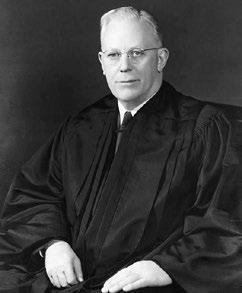
Phoenix bar fight and was stabbed to death during an argument over a card game. The 23-year-old man suspected of killing him (Eseziquiel Moreno Perez) was questioned briefly by the police but chose to exercise his right to remain silent after being read his Miranda Warnings. He refused to talk to the police and, due to a lack of witnesses or other physical evidence, was never charged with Miranda's murder. Ironically, a killer who did receive his Miranda rights stabbed Miranda to death.
THE FOUR MIRANDA RIGHTS/WARNINGS
1. You have the right to remain silent.
2. Anything you say can and will be used against you in a court of law.
3. You have the right to an attorney.
4. If you cannot afford an attorney, one will be appointed for you.
The Miranda rights are the rights that you, as an individual citizen of the United States, have. The Miranda warning would be when the officer or law enforcement personnel inform you of what those rights are There is really no distinction, and they (rights and warnings) are used interchangeably. The actual wording itself may vary from state to state. There's no actual official Miranda language which must be used.

After Arizona’s ruling was overturned, the state court retried the case without presenting Miranda’s confession to the jury; he was convicted of the same charges and sentenced to a maximum of 30 years in prison. He was released on early parole in December 1972, and in 1976 he ended up in a
In Miranda vs. Arizona, the majority opinion was written by Chief Justice Warren and joined by Justices Black, Douglas, Brennan, and Fortas. In a dissenting opinion by Justice Harlan, joined by Justices Stewart and White, it was noted that the Court's history of treating admissibility cases like the one before it had been determined on a case-by-case basis. n
- 57 - / THE NETWORK / MARCH/APRIL 2024 Birthdays are good for you. Statistics show that people who have the most live the longest.
é Chief Justice Earl Warren.
é Ernesto Miranda.
Gracie Allen
gRacie aLLen (1895 - 1964) was an American actress, comedian, and radio personality who left an indelible
My mind works so fast. When I think of something I say it, lots of times I say it even before I think of it.
When I was born, I was so surprised I didn't talk for a year and a half.
I often put boiling water in the freezer. Then whenever I need boiling water, I simply defrost it.
A friend asked her doctor if a woman should have children after thirty-five. I said, "Thirtyfive children is enough for any woman.
THIS RECIPE IS CERTAINLY SILLY. IT SAYS TO SEPARATE TWO EGGS, BUT IT DOESN'T SAY HOW FAR TO SEPARATE THEM.
I don't see what difference it makes what side it's [your bread] buttered on. I always eat both sides.
A platform is something a candidate stands for and the voters fall for. Never place a period where God has placed a comma.
Classic Recipe for Roast Beef: 1 large Roast of beef 1 small Roast of beef
Take the two roasts and put them in the oven. When the little one burns, the big one is done.
They laughed at Joan of Arc, but she went right ahead and built it.
Some people are amazed at my brain, but really, it's nothing.
This used to be a government of checks and balances. Now it's all checks and no balances.
mark on the entertainment industry with her wit, charm, and unique comedic style. With a career that spanned over four decades, she captivated audiences with her unparalleled ability to turn even the simplest of situations into a humorous masterpiece. In the early
1920s, Gracie Allen met the love of her life and future comedy partner, George Burns. As Burns and Allen, they went on to conquer various mediums, including radio, film, and television, becoming one of the most beloved comedy duos of their time.
I think there's so much good in the worst of us, and so many of the worst of us get the best of us, that the rest of us aren't even worth talking about.
Today millions of people are living who will never do it again. Millions are being born for the first time - and millions are doing nothing because it's the best offer they've had this week. It is for these people and many others that the Surprise Party is conceived and desecrated, founded upon the principle that everybody is just as good as anybody else, even though they aren't quite so smart.
The President of today is just the postage stamp of tomorrow.
Smartness runs in my family. When I went to school, I was so smart my teacher was in my class for five years.
Gracie: "Don't give up, Blanche. Women don't do that. Look at Betsy Ross, Martha Washington-they didn't give up. Look at Nina Jones."
Blanche Morton: "Nina Jones?" Gracie: "I've never heard of her either, because she gave up."
I read a book twice as fast as anybody else. First, I read the beginning, and then I read the ending, and then I start in the middle and read toward whatever end I like best.
Try to understand me. Nothing is impossible.
MY HUSBAND WILL NEVER CHASE ANOTHER WOMAN. HE'S TOO FINE, TOO DECENT, TOO OLD.
I'm the candidate who forgot to take off her hat before she threw it in the ring.
You've buttered your bread, now sleep in it.
A young boy shouldn't be given up for hopeless just because he's lazy, surly, and good for nothing. Don't be discouraged by those things - maybe he's just trying to be like his daddy.

As a well-known great man would have said if he had thought of it, "Don't go around offending people just because it can be done sitting down."
Every politician must be able to keep both feet on the fence with his ear to the ground.
Success is just a matter of luck. Ask any failure.
Never fight an inanimate object.
The mind is a terrible thing to waste on thinking.
A man's home is his hassle.
Conclusions are always at the end.
/ THE NETWORK / MARCH/APRIL 2024 - 58 -
geoRge buRns (boRn nathan biRnbaum (1896 – 1996) was an American comedian, actor, writer, and singer, and one of the few entertainers whose career successfully spanned vaudeville, radio, film and television. His arched eyebrow and cigar-smoke punctuation
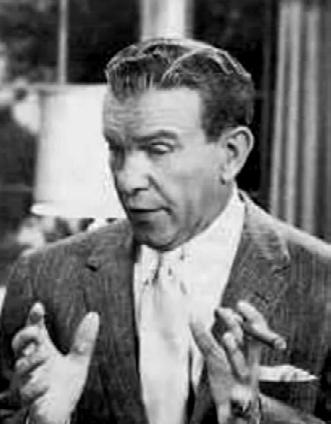
Gracie Allen and George Burns on the Burns & Allen TV Show (1950)
Watch a classic scene <HERE>.
I can remember when the air was clean and sex was dirty.
Too bad that all the people who know how to run the country are busy driving taxicabs and cutting hair.
You know you're getting old when you stoop to tie your shoelaces and wonder what else you could do while you're down there.
became familiar trademarks for over three-quarters of a century. He and his wife Gracie Allen appeared on radio, television and film as the comedy duo Burns and Allen.
Geoge Buns
You can't help getting older, but you don't have to get old.
Sex at age 90 is like trying to shoot pool with a rope.
I'm very pleased to be here. Let's face it, at my age I'm very pleased to be anywhere.
Everything that goes up must come down. But there comes a time when not everything that's down can come up.
I smoke ten to fifteen cigars a day. At my age I have to hold on to something.
The most important thing in acting is honesty. If you can fake that, you've got it made.
HAPPINESS IS HAVING A LARGE, LOVING, CARING, CLOSE-KNIT FAMILY... IN ANOTHER CITY.
I spent a year in that town, one Sunday.
I'd rather be a failure at something I love than a success at something I hate.
When I was a boy, the Dead Sea was only sick.
It takes only one drink to get me drunk. The trouble is, I can't remember if it's the thirteenth or the fourteenth.
Too bad all the people who know how to run this country are busy running taxicabs or cutting hair.
I'M AT THE AGE NOW WHERE JUST PUTTING MY CIGAR IN ITS HOLDER IS A THRILL.
The secret of a good sermon is to have a good beginning and a good ending, then having the two as close together as possible.
I look to the future because that's where I'm going to spend the rest of my life.
First you forget names, then you forget faces. Next you forget to pull your zipper up and finally, you forget to pull it down.
IF YOU LIVE TO BE ONE HUNDRED, YOU'VE GOT IT MADE. VERY FEW PEOPLE DIE PAST THAT AGE.
Retirement at sixty-five is ridiculous. When I was sixty-five, I still had pimples.
/ THE NETWORK / MARCH/APRIL 2024 - 59 -
»»» »»» »»»









- 60 - / THE NETWORK / MARCH/APRIL 2024 “Make Every Step a Safe One” Wooster Products Inc. Anti-slip safety stair treads & walkway products sales@wooster-products.com www.woosterproducts.com 800-321-4936 PROUDLY MADE IN THE USA Stairmaster ® Type 511 Flexmaster ® Type 311 LINK : MARKETPLACE, BIDDER’S LIST & DIRECTORY ASSET | PROPERTY MANAGEMENT & COMMERCIAL BROKERAGE PAVING JANITORIAL SERVICES FIRE AND SAFETY LEGAL


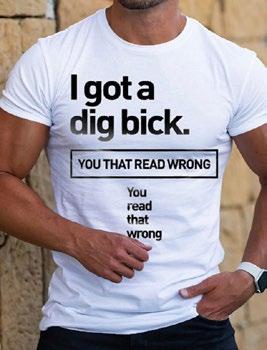




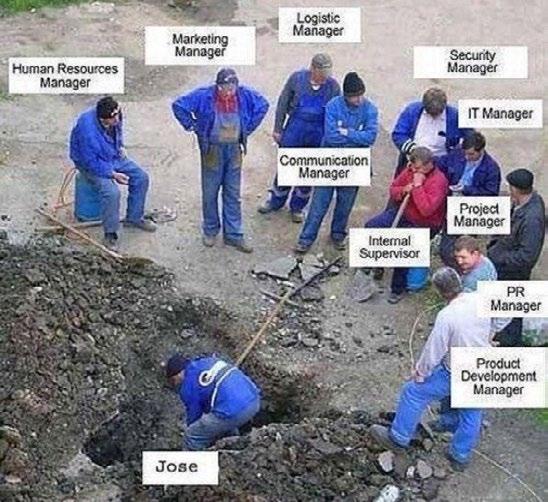
- 61 - / THE NETWORK / MARCH/APRIL 2024 REACH YOUR FOR LESS Links listings require a 4-issue (non-cancellable) commitment 1” Full Color ad .............. $300 per issue 2” Full Color ad .............. $375 per issue 3” Full Color ad .............. $445 per issue Your Ad Here! (Call 214-755-2277) DIVERSI NS PAVING WEB DEVELOPMENT ON THE JOB THE DYSLEXIC SHIRT UTILITY FUTILITY MCDONALD'S SHOWER BAR Recently, my property manager called, wanting to discuss my obscenely high heating bill over the last few months. “Come on by,” I told him. “My door is always open!”
THE BACK PAGE
ANSWERS FROM THE JANUARY/FEBRUARY CONTEST: I SHOT THE SHERIFF












CONGRATULATIONS TO ALL OF OUR CONTEST WINNERS!

BOLO (BE ON THE LOOK OUT) FOR WHAT'S COMING NEXT

Our cover and Artchitecture pages will be graced by Frieke Janssens, a Belgian photographer of surreal staged tableaux and group portraits, often originating in a specific concept, and almost always stemming from an inexhaustible interest in human diversity.
We’ll bring you pictures of the UNESCO World Heritage Sites of Chile. And Contributing Editor Roxana Tofan will visit the 82nd Airborne in 6Q –Who, What, Why, When, Where, and How? And Contributing Editor T.J. Edwards will provide insights into how to help your college-bound children select the best college for them
In Herstory, Contributing Editor Rose-Mary Rumbley will take us on a quick trip to Memphis and in History, we’ll examine the famous inmates of the Alderson Federal Prison Camp. Of course, we’ll have two more hilarious pages of quotations (most of which will also be in our Vertical Lines III book that will be available soon).

We’ll look at the Happiest Cities in America, the Best State Capitals, and we’ll chart the Median Down Payment for a Home in Each State. And we will present pictures of architectural giant MAD’s Train Station in the Forest (in Beijing), Skidmore Owings & Merrill’s Two Manhattan West (in New York City) and Terminal in a Garden (in the Kempegoda International Airport (in India).
Want more? Of course, there will be other specially contributed articles from various segments of the real estate industry as well as our affiliates, Factoids, Wow Factors, Real Estate of the Future, Visual Capitalist Graphic Charts, Diversions, Tru Dat, Vertical Lines, Trending, and much MUCH more. We get a lot into 64 pages!
DIVERSI NS
SCHOOL NURSES ARE UNDERPAID

- 62 - / THE NETWORK / MARCH/APRIL 2024 INDEX TO OUR ADVERTISERS AGF Manufacturing.................... 25, 62 www.agfmfg.com Anderson Paving 15, 60 www.andersonpaving.com Arsenal Business Collections 26 www.thearsenalcompanies.com Arsenal Companies, The Back Cover www.thearsenalcompanies.com Crest Publications Group .......... 3, 8, 9 www.thenetworkmagazine.online Clear Integrity Group ........................ 60 www.clearintegritygroup.com Cypher Squad 61 www.cypher-squad.com Image Building Maintenance 9, 60 www.imagebuildingmaintenance.com Kessler Collins 60 www.kesslercollins.com Master Construction & Engineering 61 www.masterconstruction.com Next Level Klean 31 www.nextlevelklean.com Recycle Across America ................... 10 www.recycleacrossamerica.org Reliable Paving ............................... 2, 60 www.reliablepaving.com Wooster Products ........................ 17, 60 www.woosterproducts.com
Paul Pflueger of Salt Lake City, UT Angela Ramirez of Tulsa, OK Audra Collinsworth of Jacksonville, FL Byron Hutchinson of Nashville, TN Kendra Sheffield of Austin TX All will receive a copy of Vertical Lines III
GIDEON MARKOWIZ / PHOTOGRAPHER: ISRAEL PRESS AND PHOTO AGENCY (I.P.P.A.) / DAN HADANI COLLECTION, NATIONAL LIBRARY OF ISRAEL / CC BY 4.0 VIA WIKIMEDIA COMMONS 13 10 5 6 7 9 15 11 14 2 3 8 12 1 4
C NTEST: NAME THAT TOON
The word cartoon comes from the Italian word cartone, which means paper. So, the word began as the word for the material on which a drawing was made; then it became the word for the drawing itself. Next (in the 1800s), it came to mean a comic drawing, a series of drawings, or animation.









Can you match the cartoon character with its name? Scan or copy this page and send your entry to editor@thenetworkmagazine.org or fax it to 817.924.7116 on or before March 31st for a chance to win a valuable prize.









Winnie the Pooh
Felix the Cat
Dick Tracy
Yogi Bear
Eric Cartman
Atom Ant
Stewie Griffin
Magilla Gorilla
Roadrunner
Betty Boop
The Grinch
Scooby Doo
Dagwood Bumstead
Krypto
Snagglepuss
Top Cat
Astro
Richie Rich
Elmer Fudd
Mr. Magoo

- 63 - / THE NETWORK / MARCH/APRIL 2024
01 09 05 13 17 03 11 07 15 19 02 10 06 14 18 04 12 08 16 20

ARSENAL BUSINESS COLLECTIONS
...BECAUSE SOMETIMES IT'S WHAT YOU KNOW
We Speak Real Estate
The Arsenal Companies are a diversified consulting, educational and publishing group, dedicated to service in the real estate industry. With national reach, regional strength and local sensibilities, we serve and service large and small companies as well as governmental entities in acquisitions, dispositions, leasing, licensing, contracting, procurement, insurance certificate tracking, educational program development, mediation services and collections.
Our Contracts and Procurement Services Division provides solutions and services that help real estate owners and companies effectively manage their contractual needs and commitments. We provide industry knowledge and we practice deal facilitation rather than obstruction. Whether you are a property, facility or asset manager, your functions are integrally related to real estate contracts. Quality management is all about contracts.
Leases are highly specialized documents. A few words can make a world of difference. Anyone with experience.
Leasing
Acquisitions, dispositions, renewals, surrenders, amendments, abstracting, administration, interpretation –our professionals are experienced in residential, commercial, industrial, professional and retail leasing issues of all kinds.
Don’t assume that problems won’t occur. Plan what you can do to avoid them. A small reduction in costs can be the equivalent of a substantial increase in value. We suggest ‘refinements’ to improve language and reduce direct and indirect costs. Our attorneys have successfully resolved leasing issues for both small and Fortune 100 corporations –effectuating $millions in savings.
Highly focused. Highly specialized. Highly respected.

Procurement
Supply Chain Management
Procurement Administration
Vendor/Supplier Resourcing
Vendor Reduction Programs
Supplier Recognition Programs
Customized Purchase Orders
RFI, RFP, RFQ Administration
Are the contracts for services and supplies which your organization uses prepared for your organization –or are they the vendor’s or contractor’s agreement forms? Wouldn’t you be better off if those agreements and purchase orders were revisited from your perspective? Isn’t it time you fortified your real estate related contracts?
Contract Negotiation and Drafting Services
Do you have contract issues that call out for review, interpretation and the advice of a specialist? Do you have a service contract which is about to expire and will need to be renewed or replaced? Do you have oversight of a real estate or facilities function which has been given savings targets? Have you considered ‘outsourcing’ this part of your real estate function but fear a loss of control?
We analyze the details of your proposed service contracts before they begin - while you still have leverage. Or, we can review your existing service contracts, help reveal cost efficiencies and/or savings opportunities. We look for pragmatic solutions that are sensitive to your business interests, anticipating issues that may arise, and we assist in minimizing those risks that cannot be avoided.
Arsenal Business Collections 2537 Lubbock Avenue Fort Worth, TX 76109
214-755-2277 Fax:
Tel:
817.924.7116 www.thearsenalcompanies.com