SEPTEMBER 2023
COVER: Sustainable choices from Spicers
 DIC A/NZ’s Kate Scott on Women in Print
Feature: Software and workflow MIS
FESPA Aust Open House at Cactus Imaging
LEADING THE INDUSTRY FOR OVER 70 YEARS IN PRINT | SPRINTER.COM.AU
DIC A/NZ’s Kate Scott on Women in Print
Feature: Software and workflow MIS
FESPA Aust Open House at Cactus Imaging
LEADING THE INDUSTRY FOR OVER 70 YEARS IN PRINT | SPRINTER.COM.AU
All my clients are sooooo happy with the quality and turnaround times with your printing. Many thanks!
Kaz
Just a quick THANK YOU to you and your team in getting the report out so fast. Deadlines are often “self-imposed” by clients, but in this case it was a real and hard deadline. As usual, you guys nailed it.
John
Thanks for the iMag link. It looks great and has gone across to the client for inclusion on their website.
Massive thanks to the HP team for the work on this year’s publication. Couldn’t pull it off without you all.
Karina
My honest feedback with my experience is that I can’t fault any part of it.
Your team and yourself were extremely helpful and professional and very understanding when I had a late change due to a client decision.
Shipping was extremely fast and easy to track.
Luke
Thank you so much, my client was happy with both quality and high speed of turnaround/ delivery. Will definitely be ordering again.
Jacqui
I just had a call from our customer regarding the digital booklets. She’s absolutely wrapped and rang us to say a big thank you.
I thought I should pass that thanks on as we didn’t have much to do with it at all!
So... good job!
Sarah
YOU
OF OUR NEW CLIENTS ARE REFERRALS
CAN SEE WHY... AUSTRALIA’S BEST TRADE PRINTER
SEPTEMBER 2023
6-14
NEWS: Australian Printer’s comprehensive industry news

16-18 SUSTAINABLE CHOICES MADE EASIER WITH SPICERS: Sustainability has been ingrained into the practices of Spicers Australia, and the company is on a mission to assist its customers and their clients on better understanding the sustainable options available
20 WOMEN IN PRINT: DIC A/NZ head of operations and supply chain Kate Scott

22-23 PEOPLE IN PRINT: Left Bank Art Group owner and director Toby Simm
24-25 FESPA OPEN HOUSE AT CACTUS IMAGING DRAWS IN THE INDUSTRY: The popular event showcased the new Durst 10-channel P5 350 HS D4 hybrid press, the first of its kind installed in the southern hemisphere

28-32 WORKFLOW/MIS: How workflow/MIS tools deliver on multiple fronts
28 Durst 32 Workflowz
30 HP
Advertiser’s Index
0410 582 450
41-45 WIDE FORMAT +PLUS: Australian Printer’s comprehensive wide format news, powered by Wide Format Online
46 PRINT DIARY: All the upcoming events
48-54 CLASSIFIEDS: The Australian print industry’s biggest marketplace
CONTENTS ABC Copier Solutions 48 Admag 53 All Work Crane Services 52 Allkotes 52 Bottcher Australia 46 Cactus Imaging 21 CTI Colour Printer 54 Currie Group 31 Cyber (Aust) 56 D & D Mailing 51 Dockets and Forms Australia 50 Durst Oceania 5, 29 Epson Australia 7 FESPA Australia 47 FUJIFILM Australia 9 Hero Print 2,3 Hilton Laminating 35 JTS Engineering 48 Label Line 52 manroland GOSS 13 National Auctions 54 Penrith Printing Museum 48 Periodical Press 50 Print Logistics 55 Printmac Corporation 48 ProPrint Awards 26,27 Screen GP (Aust) 15 Spicers Australia OFC, 16-19 Sprinter News 52 The Design Manual 49 Wholesale Magnets Insert Workflowz 33
carmen@proprint.com.au
To advertise call Carmen on
or
16-18 SUSTAINABLE CHOICES MADE EASY WITH SPICERS
20 WOMEN IN PRINT: DIC A/NZ’S KATE SCOTT
PRINT
POSTERBOY
reviews
MEQA
34 OFFSHORE TEAMS: Debunking myths for businesses setting up teams in the Philippines 36
AND VISUAL COMMUNICATION: Having optimism for the future of the industry 37
PRINTING: The role of graphic design in print 38 DEBORAH CORN: Here’s why print businesses should not dodge disastrous
39
SMITH: How to get more out of your team 40 FELLMAN CLASSICS: Three tips to avoid the ‘slow no’
SPRINTER.COM.AU 4 | AUSTRALIAN PRINTER SEPTEMBER 2023
24-25 FESPA OPEN HOUSE AT CACTUS IMAGING
PRODUCTION EXCELLENCE P5 TM High speed 3.5 m roll to roll LED printing system. P5 350 HSR Vertical and horizontal cutting system Automated mesh printing system Up to 670 sqm/h Multiroll features VOC FREE HEAVY METAL FREE REACH COMPLIANT For more information, please visit durst-group.com/p5350hsr
The saying, ‘you reap what you sow’ couldn’t be any truer. What you put into your business is the return on investment that you will receive.
And that’s exactly what many companies in the industry are doing. Gone are the days during COVID where spend was tightly controlled. Now, spend is measured and calculated, but with business leaders well aware of what opportunities arise from their investments. Be it in print hardware, software, staffing or even accreditations and certifications, these investments pivot a company in a new direction, making it more efficient than it was before.
In this issue, we take a deep dive into how some companies have built their businesses for success by investing in hardware, software and strategies such as sustainability.
This issue is also my last one for this year – I’ll be back next year following a few months of leave. My amazing colleague Piotr Wnuk will step in for the duration that I’m away. You’ll be in great hands.
We hope you enjoy this issue of Australian Printer.
Cactus Imaging’s growth contributes to oOh!media’s financials
oOh!media (ASX:OML) has released its financial results for the half-year ending 30 June 2023, reporting an adjusted NPAT of $20.5 million, which was slightly ahead of the previous corresponding period ($20.4 million in first half 2022).
oOh!media’s full revenue for the half year was up seven per cent to $296.6 million; however its adjusted EBITDA of $49.6 million was down four per cent for this period, with the company attributing it to increased fixed rent relating to renewal of some larger contracts and lower rental abatements.
Out of Home printing and production company Cactus Imaging has contributed to its growth, with oOh!media reporting that its Other business segment (which consists of Cactus) brought in $5.2 million in revenue for this period. This is a 41 per cent increase from the $3.7 million that oOh!media reported for its Other segment in the first half of 2022.
Cactus Imaging general manager Nigel Spicer said, “In the first half of the year, we’ve really been concentrating on our speed of turnaround, which is about lifting capacity and tightening our processes. In the Out of Home market, that is paramount.

“To complement digital, in terms of getting to market quickly, we want to be able to do the same with print.”
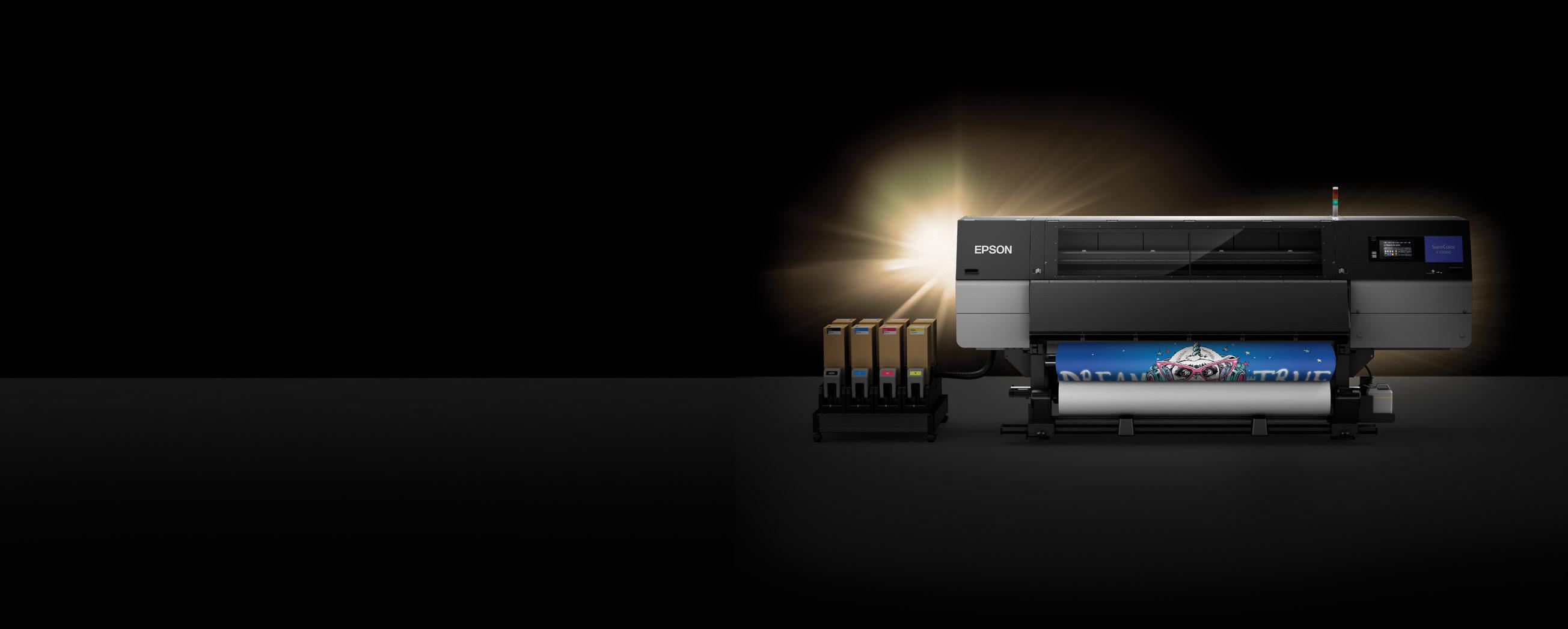
As part of that strategy, Cactus Imaging recently invested in a Durst 10-channel P5 350 HS D4 hybrid press – a first in the southern hemisphere.
“This investment has allowed us to grow into the sheetfed, flatbed market. So, there is a lot of exhibition and retail work that we’re starting to do,” Spicer mentioned.
Keith Ferrel agreed, adding that the company has been increasing its play in direct work and retail work.
“The sports and gaming segment is a big part of our business and we have continued to push the envelope in this space. Some of the biggest projects that we’ve worked on during that halfyear include the FIFA Women’s World Cup. On the Home side of business, we’ve also seen a lot of large clients put in campaigns,” he said.

“Total media spend across print and digital has increased quite substantially, so it’s not about digital replacing print but rather how they support each other. Our volumes have actually increased and with quicker turnarounds now, customers and clients are requesting for street furniture to be changed every two weeks or so, for example.”
Ferrel added that moving forward, the company will be looking to build on its automation capabilities to further support its growth momentum.

“We continue to look to invest in automation, because there’s no point in having all the firepower on the print if you can’t finish it. We’re looking to add to our print portfolio, but also now have a strategy in place about improving our front-end automation in terms of IT software. It’s only a matter of time before we deliver on it,” he said.
Australian Printer is published bi-monthly by Printer Media Group (a division of Charted Media Group and The Intermedia Group). This publication may not be reproduced or transmitted in any form in whole or in part without the written permission of the publishers. While every care has been taken n the preparation of this magazine, it is a condition of distribution that the publisher does not assume any responsibility or liability for any loss or damage which may result from any inaccuracy or omission in the publication.
DISCLAIMER
This publication is published by The Intermedia Group Pty Ltd (the “Publisher”). Materials in this publication have been created by a variety of different entities and, to the extent permitted by law, the Publisher accepts no liability for materials created by others. All materials should be considered protected by Australian and international intellectual property laws. Unless you are authorised by law or the copyright owner to do so, you may not copy any of the materials. The mention of a product or service, person or company in this publication does not indicate the Publisher’s endorsement. The views expressed in this publication do not necessarily represent the opinion of the Publisher, its agents, company officers or employees. Any use of the information contained in this publication is at the sole risk of the person using that information. The user should make independent enquiries as to the accuracy of the information before relying on that information. All express or implied terms, conditions, warranties, statements, assurances and representations in relation to the Publisher, its publications and its services are expressly excluded save for those conditions and warranties which must be implied under the laws of any State of Australia or the provisions of Division 2 of Part V of the Trade Practices Act 1974 and any statutory modification or re-enactment thereof. To the extent permitted by law, the Publisher will not be liable for any damages including special, exemplary, punitive or consequential damages (including but not limited to economic loss or loss of profit or revenue or loss of opportunity) or indirect loss or damage of any kind arising in contract, tort or otherwise, even if advised of the possibility of such loss of profits or damages. While we use our best endeavours to ensure accuracy of the materials we create,
to the extent permitted by law, the Publisher excludes all liability for loss
in this publication. Copyright © 2023 — Charted Media Group Pty Ltd
resulting from any inaccuracies or false or misleading statements that may appear
Cactus Imaging general manager of operations
NEWS SPRINTER.COM.AU 6 | AUSTRALIAN PRINTER SEPTEMBER 2023
Cactus Imaging general manager of operations Keith Ferrel
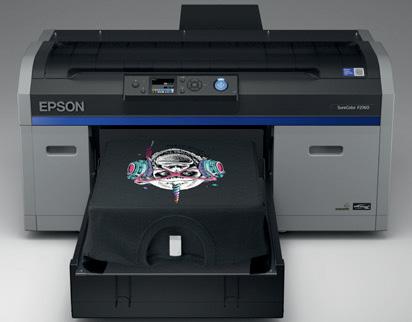
A unicorn in fabric and merchandise production
STUNNING FABRIC & MERCHANDISE PRODUCTION MADE SIMPLE
With unprecedented productivity and image quality, these advanced new models give you the power to say ‘yes’ to more work.
• Outstanding print speed with exceptional image quality



• Vibrant and consistent colour, job after job
• Industrial strength, user replaceable print heads*
• High capacity ink supplies with heavy duty media support


• Cloud-based production tool for managing your print business*
• Remote monitoring and diagnostics for pro-active service and support*
• On-site CoverPlus service packages up to 5 years
*Model dependent DIRECT-TO-GARMENT DYE SUBLIMATION 76 INCH WIDE, UP TO 255 M2/HR DYE-SUB DTG For more information visit: www.epson.com.au/fabric NEW 21 SEC PER SHIRT 24 INCH 44 INCH 64 INCH
Next Printing re-fits Grill’d
Sydney
Next Printing recently completed the re-fit of a Grill’d casual dining restaurant in Sydney, transforming it into Barbie’s Dreamburger Diner to coincide with the launch of the Barbie movie.

Next Printing head of sales Pranil Chandra said strategic brand and experiential agency Bastion Experience contacted the company in April with an extensive brief of the Grill’d The Galeries Sydney re-fit.
Barbie’s Dreamburger Diner was centred around the concept of immersing burger lovers in a pink dreamworld, where they could sit and enjoy pink burgers surrounded by fun Barbie-inspired ‘instagrammable’ décor.
“From the outset Bastion suggested Re-board as a primary component. As an engineered paperboard with the strength of MDF, it was a smart choice for a temporary fit-out that would need to withstand five weeks in a high-traffic restaurant environment. Along with Re-board, we utilised a range of other print materials to further transform windows, floors, tables and columns inside the space,” Chandra said.
“Initial site checks revealed many of the existing timber booth structures destined
Visual
promotes Sarah Moore to GM
Visual Connections has promoted Sarah Moore to a newly created role of general manager. Moore has been working for the association for 15 years and will now oversee the entire team and lead all initiatives.
Moore joined the association in 2008 as events manager. In early 2019, she was appointed business development manager working with the Sydney-based team to develop new opportunities as well as deliver on its member services.

Visual Connections CEO Peter Harper said, “As an organisation, we are excited by the challenges presented by today’s market, and we are very pleased that Sarah has agreed to step into this newlycreated role to help lead the organisation as we seek to deliver on our promises to members and to support and contribute
to be clad with Re-board were not perfectly square, a major consideration during the industrial design process. In addition, the number of high-profile stakeholders involved meant that a considerable approval process was required over a very short timeframe,” he said, adding that the entire re-fit had to be completed in just one night.
For production purposes, Next Printing broke the project into 10 jobs that corresponded with the main areas to be updated within Grill’d.
These areas included: The Façade, Bar, Cabana, Movie Wall/Column, Hedge, Drive Thru Diner, Dreamhouse, Bathrooms, Backwall/George Street Windows and Photo Frames/Lightbox Prints.
“Treating these as individual mini projects allowed for quicker approvals and movement through production. The items were then packed by area for speedy allocation and unpacking on-site,” he said.
Chandra explained that a team of six experienced installers was utilised and approximately 90 Re-board sheets, along with other substrates, was used, allowing Next Printing to assemble and build a variety of custom structures on site.
“Some items, for example the main Dreamburger entry feature, were pre-built prior to installation and transported to site to expedite the build. The entire installation was completed on time with the team from Bastion adding their own finishing touch with props and lighting,” he said.
to a sustainable future for the print, sign and graphics sector.
“Sarah has many years of event management experience, both in our industry and in others prior to joining Visual Connections. She has been instrumental in the success of events including PacPrint, PrintEx, Visual Impact and the Label & Packaging Expo, among others, and more recently has excelled in her business development role, working closely with our board and members
to create new opportunities and deliver on our vision and values.
“The success of recent exhibitions and other initiatives puts Visual Connections in a strong position and we are excited by the many potential opportunities we are exploring for the future. Capitalising on those opportunities will require strong leadership, and we are confident Sarah will shine in her new role and continue to brilliantly represent Visual Connections.”
NEWS
Next Printing transforms Grill’d Sydney into Barbie’s Dreamburger Diner
Connections
SPRINTER.COM.AU 8 | AUSTRALIAN PRINTER SEPTEMBER 2023 A true flatbed with a unique and exceptional design. heT IF Design dwarA winning Acuity Prime offers high quality printing on a range of rigid and flexible media ossacr five dedicated vacuum zones. Using our Uvijet HM LED UV inks and jettable primer, bold aphicsgr and fine text can be oducedeprr with variable opdr essiz omfr 7 to 12 espicolitr for near aphicotogrph qualit .y ehT wen tprineblu for ewid trmaof FUJIFILM and ujifilmF alueV omfr Innovation ear ademarkstr of FUJIFILM ation.Corpor 102©2 FUJIFILM ation.Corpor All rights eserr ved. Visit acuit yprimeseries.com for emor information or contact your local FUJIFILM esentativeeprr to equestr print samples and ganiseor a ation.demonstr FUJIFILM aliaAustr3001 650 450 FUJIFILM Business ationInnov aliaAustr 31 41 21 Sarah
Moore is now Visual Connections’ new general manager
The new blueprint for wide format
The new blueprint for wide format
The new blueprint for wide format
AS SEEN AT
Stand B10 Hall A1 | 23-26 May 2023 | Messe Munich

A true flatbed with a unique and exceptional design.
Fujifilm showcased the expanding Acuity range at FESPA 2023 with a new printer unveiled at the show and more details revealed of the historic FujifilmBarberan partnership.
A true flatbed with a unique and exceptional design.
Fujifilm to showcase expanding Acuity range at FESPA 2023 with a new printer to be unveiled at the show and more details of historic FujifilmBarberan partnership to be revealed.
The IF Design Award winning Acuity Prime offers high quality printing on a range of rigid and flexible media across five dedicated vacuum zones. Using our Uvijet HM LED UV inks and jettable primer, bold graphics and fine text can be reproduced with variable drop sizes from 7 to 21 picolitres for near photographic quality.
The IF Design Award winning Acuity Prime offers high quality printing on a range of rigid and flexible media across five dedicated vacuum zones. Using our Uvijet HM LED UV inks and jettable primer, bold graphics and fine text can be reproduced with variable drop sizes from 7 to 21 picolitres for near photographic qualit y.
Following the huge success of Fujifilm’s ‘New Blueprint for Wide Format’ appearance at FESPA 2022 in Berlin, Fujifilm will use FESPA 2023 to present developments to its existing Acuity models, as well as unveiling an entirely new machine in the line-up. Additionally, Fujifilm will present more details on its partnership with industrial manufacturer Barberan, to bring single-pass inkjet to the sign and display market.

Click on the QR code to obtain your discounted ticket to FESPA
Visit acuit yprimeseries.com for more information or contact your local FUJIFILM representative to request print samples and organise a demonstration.
Use code FESuewDLD75
Visit acuityprimeseries.com for more information or contact your local FUJIFILM representative to request print samples and organise a demonstration.
Visit fujifilm.com/au/en, scan the QR code or contact your local FUJIFILM representation to request print samples and organise a demonstration.
FUJIFILM Australia1300 650 504
FUJIFILM Australia1300 650 504
FUJIFILM Australia 1300 650 504
FUJIFILM Australia 1300 650 504
FUJIFILM Business Innovation Australia 13 14 12
FUJIFILM Business Innovation Australia 13 14 12
FUJIFILM Business Innovation Australia 13 14 12
FUJIFILM and Fujifilm Value from Innovation are trademarks of FUJIFILM Corporation. ©2021 FUJIFILM Corporation. All rights reserved.
FUJIFILM Business Innovation Australia 13 14 12
FUJIFILM and Fujifilm Value from Innovation are trademarks of FUJIFILM Corporation. ©2021 FUJIFILM Corporation. All rights reser ved.

Following the huge success of Fujifilm’s ‘New Blueprint for Wide Format’ appearance at FESPA 2022 in Berlin, Fujifilm also used FESPA 2023 to present developments to its existing Acuity models, as well as unveiling an entirely new machine in the line-up. Additionally, Fujifilm also presented more details on its partnership with industrial manufacturer Barberan, to bring single-pass inkjet to the sign and display market. FUJIFILM and FUJIFILM Value from Innovation are trademarks of FUJIFILM Corporation. ©2023
FUJIFILM and FUJIFILM Value from Innovation are trademarks of FUJIFILM Corporation. ©2023 FUJIFILM Corporation. All rights reserved.
FUJIFILM Corporation. All rights reserved.
Ricky Richards celebrates 40 years
Ricky Richards turned 40 years old this year, proudly celebrating the milestone with staff and guests. The company has come a long way over the last 40 years; its unchanging core values and exceptional team has helped make it what it is today.

Founded in 1983 by the late Norman Gottlieb, his father Eric and his brother Ron, the business has been committed to sales excellence, large stock holdings and customer satisfaction. This milestone marks a momentous journey of growth, success and above all else, trust.
Over the years, Ricky Richards has expanded from a modest family start-up to become one of Australia’s leading suppliers of specialised textiles and printable media.
Through the dedication and loyalty of its team, Ricky Richards has successfully launched its own brands, expanded into new markets and built relationships all over the globe.
Canon launches flagship V1350 Series presses
Canon Australia has expanded its imagePRESS V range with the launch of its flagship V1350 series, which offers a top speed of 135 pages per minute and handles monthly volumes of up to 2.4 million A4 pages.
Including an optional vacuum-feeding mechanism, a flatter paper transport path, the advanced Print on DemandSurface Rapid Fusing (POD-SURF) unit, and an integrated cooling system, the machine supports long, continuous periods of top-quality printing at high-speeds.
According to Canon, the new imagePRESS V1350 provides offset-like quality throughout the run length.
The Multi-D.A.T. colour correction system automatically preserves colour stability even during continuous runs, with the built-in, In-Line Spectrophotometric Sensor (ILS) automating accurate colour adjustments when needed.
The V1350 Series is designed to produce high-quality print applications such as brochures, leaflets, high-end mailings and cards.
With the Gottlieb family’s desire to pursue philanthropic initiatives, Ricky Richards has also formed partnerships with Sydney Children’s Hospital Foundation, Australian Skin Cancer Foundation and Melanoma Institute Australia, proudly donating over $500,000 to support their causes.
Over the years, the Gottlieb family has instilled in its team a work environment where employees were family-like – they enjoy spending time with each other, while helping the company grow.
“There is a ‘Ricky’ culture that we have cultivated since the very beginning,” Ricky Richards director Ron Gottlieb said.
“Trust plays a large part of our success, and we recognise the importance of people within the company, we treat them as an extension of ourselves. Our team are trusted and valued; we empower them to make decisions.”
Today the values and spirit of Ricky Richards remains the same. General manager Kathryn Polgar leads a team that is both passionate and reliable.
“As the company grew, it naturally split itself into three divisions – Technical Textiles, Sun Control Fabrics and Wide Format Printable Media, which has widened our market reach and given us the opportunity to extend our partnerships,” Polgar said.
“We are incredibly grateful for our loyal customers, suppliers, dedicated employees and friends, who have been integral to our success. Thank you for joining us on our ever-evolving journey.
“Whether you’re in search of high performing technical textiles, sun control fabrics that withstand extreme Australian conditions or wide format printable media products, Ricky Richards has a team and products you can rely on.”
Thanks to its advanced registration technologies, it offers a high level of accuracy in its class for front and back registration (0.5mm).
The V1350 Series also supports a broad media weight range between 60gsm and 500gsm for a colour toner press and a wide selection of paper types (including embossed and synthetic).
Offering full compatibility with the extensive range of in-line finishing equipment, the V1350 Series allows print providers to offer their customers digital runs of any length across a wide variety of print products.

The imagePRESS V1350 series is equipped with real-time colour consistency controls as well as other options, such as a Sensing
Unit to enhance the automation of quality control tasks.
Canon Oceania general manager for product marketing Yoshinori Moritaki said, “We are delighted to add the powerful V1350 to our imagePRESS V series family. This will enable both commercial and in-house print service providers to work better, faster and with greater scope. It also provides their customers with more high-value print products.
“The top-of-the-range V1350 has been built through a combination of proven patented technology and customer feedback. It brings a fresh perspective to digital toner press design and is an ideal solution for print service providers.”
NEWS
SPRINTER.COM.AU 10 | AUSTRALIAN PRINTER SEPTEMBER 2023
Canon’s flagship V1350 series offers a top speed of 135 pages per minute
Ricky Richards celebrated its 40th anniversary with staff and guests
Penrith Museum of Printing hits crowdfunding target of $5k
The Penrith Museum of Printing has achieved and surpassed its crowdfunding target of $5,000, ahead of the 30 September deadline it set itself, in raising funds to relocate an antique Heidelberg press that was used to print Australia’s last letterpress newspaper, the Don Dorrigo Gazette
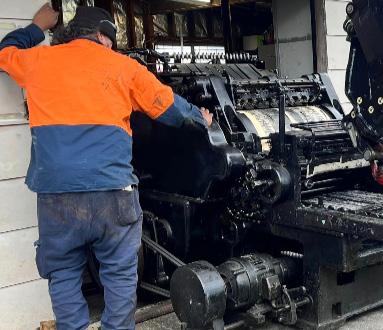
The Don Dorrigo Gazette, which was servicing the NSW mid-north coastal town of Dorrigo since the 1910s, recently ceased operation after running for more than 110 years because of the digital age taking over and mechanical failures.
The Heidelberg cylinder printing press used to print the Don Dorrigo Gazette was planned for relocation to the Penrith Museum of Printing, where it will continue to operate as a working press. However, due to the high costs of decommissioning and relocating the 1939 Heidelberg
New solutions from Jet Technologies and Screen

Jet Technologies, in partnership with Screen, will be bringing three new solutions to the Australian market.
These solutions, which will be launched at Labelexpo Europe 2023, include the Screen and Nilpeter joint hybrid printing solution, a new prototype in-line inkjet digital primer for Screen’s flagship Truepress LABEL 350UV SAI label printing press, and the Screen Truepress Pac 520P inkjet digital printing press.
Jet Technologies sales director David Reece said, “These latest printing industry advancements from Screen are a direct result of the company’s commitment to listening closely to requests from major clients, who have loved their L350UV SAI and have long-wanted to be able to use them for additional markets.
“Jet Technologies has a number of customers who are onto their second investment in the L350UV SAI and I have no doubt that our clients will be eager to take advantage of these new developments.”
cylinder letterpress machine, the museum set up a crowdfunding website with the help of Wide Format Online’s Andy McCourt.
Now that the museum has achieved its crowdfunding target, it has relocated the machine.
“On the day of uplifting the Heidelberg Zylinder Automat press from Dorrigo, the target of $5,000 raised for the freighting has been reached! All this in just 15 days when we thought it would take eight weeks,” the museum said in an update.
“An amazing weekend of donations from friends old and new, including a descendant of the Vincent family who started the Don Dorrigo Gazette in 1909, has allowed us to make this move.
“We’d like to say a huge thank you to all 40+ supporters – it’s an amazing achievement that we had planned to take until the end of September to complete this but we’re all but there already.”
Some of the companies that contributed towards the cause include Bright Print Group, JDA Print Recruitment, Hopscotch Press, The Milldean Press and Maxam Printing.
Following the arrival of the machine at the museum, its passionate pressmen were on the tools to strip the press down, add new rollers, clean and lubricate the machine, and replace any parts that look too worn.
The Penrith Museum of Printing added that the surplus from the $5,000 raised will go towards parts.
“This is a momentous occasion in Australian printing and we will continue to educate, entertain and preserve culture for many years to come.”
The Screen and Nilpeter joint hybrid printer aims to bring to the label and packaging market an innovative in-line solution that will meet the increasing demand for integrated digital printing and embellishment.
It combines the best of Screen’s new L350UV SAI technology with Nilpeter’s versatile FA-Line flexo platform, allowing any combination of flexo, screen, cold foil, hot foil, die cutting and more.
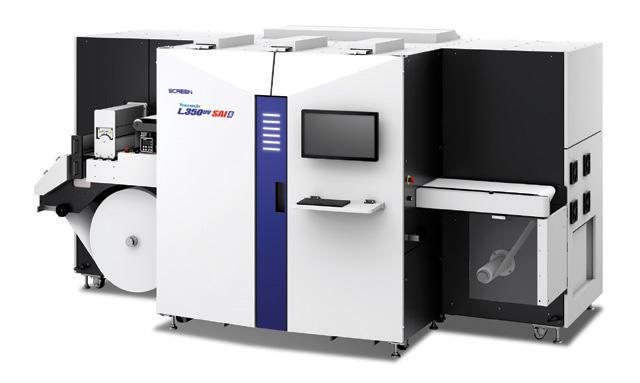
The L350UV SAI is able to print all manner of work at 60m/min (50m/min with opaque white), regardless of print repeat, number of colours and a range of other factors. A further enhancement for the L350UV SAI is the prototype development of an in-line inkjet digital
primer. With the new primer, the L350UV SAI machine will be able to prime directly beneath the printed image, rather than over the material.
In addition to the L350UV SAI innovations, Screen is also launching the Truepress Pac 520P inkjet digital printing press, a water-based press that is aimed at the paper packaging sector. The Pac 520P can print at the highest quality, at high speeds, onto a wide range of paper substrates at a maximum of 520mm width.
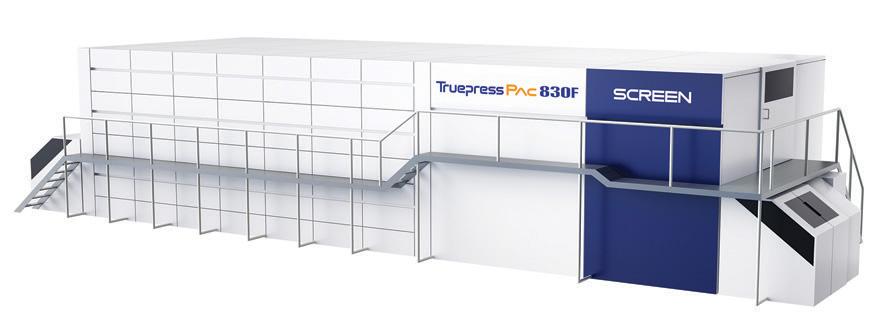
And for those wanting an even-wider press, there is the Pac 830F, similarly based on water-based inkjet and with end-use applications such as the shrink film and other flexible packaging sectors.
NEWS
The Heidelberg machine being relocated
SPRINTER.COM.AU AUSTRALIAN PRINTER SEPTEMBER 2023 | 11
Screen’s L350UV SAI with Nilpeter’s FA-Line flexo platform
Konica Minolta launches AccurioShine 3600 in Australia
Konica Minolta Australia has launched the AccurioShine 3600, its newest inkjet spot UV coater that incorporates innovative varnish technology by MGI, to the local market.
The AccurioShine 3600 enables digital spot UV varnishing and digital hot foiling in a compact solution that forgoes the need for screens, plates, or dyes. The fully digital solution features artificial intelligence (AI) registration technology and an eco-friendly LED curing system.
Konica Minolta Australia production and industrial print general manager Andrew Cocker said, “The AccurioShine 3600 is a testament towards Konica Minolta’s 2023 commitment for enhancing the local production print and industrial print industries.


“As digital printing becomes more prominent in the industry, more emphasis is being placed on digitalising prepress and post-press processes, as well as on-demand, short-run printing. The AccurioShine 3600 fulfils this need and is the ideal solution for printers to provide impactful, premium, short-run embellishments on day-to-day print jobs,
ABG collaborates with HP Indigo to automate V12 Digital Press
A B Graphic International (ABG) has teamed up with HP Indigo to develop non-stop winding technology, providing a significant enhancement in the automation capabilities of the V12 Digital Press, HP’s flagship narrow-web printer.
The new non-stop unwind and rewinding system from ABG integrates into the V12 production line as a single platform.
It has been designed with innovative guarding measures, ensuring operator safety and it offers capacity to reach speeds of up to 120m/min.
According to ABG, the new technology delivers the best tension control in the market, making it highly reliable for various applications.
adding value for their customers while differentiating themselves in the market.”
With its innovative technology and compact size, the new AccurioShine 3600 solution aims to let printers provide 2D and 3D gloss and digital hot foiling effects at a reasonable cost and without the complicated steps of conventional systems. It can be used from the prototyping stage to full production printing.
The AccurioShine 3600 also supports a large range of media sheet sizes up to a maximum of 750mm and is equipped to enhance printouts such as name cards, greeting cards, photobook covers, and packaging on demand. It also supports Variable Data Printing (VDP) to add more impact to tickets, personalised packages
and labels, invitations, and one-to-one marketing collateral, among other high visual print products.
In addition, the barcode scanner on the AccurioShine 3600 can read barcodes from a pre-printed sheet and instantly select the corresponding TIFF file already stored on the workstation. Used in combination with the VDP barcode scanner with automatic PDF file converter, the workflow is fasttracked by transforming files from PDF to the output tray in minutes.
Cocker said, “The value that the AccurioShine 3600 provides Australian printers with is a range of high impact finishing effects to offer customers while delivering high-quality outputs”.
Non-stop technology delivers several key advantages such as boosting the productivity of both printing presses and converting lines and enabling more efficient and streamlined workflows.
Moreover, the system contributes to an improvement in product quality, ensuring consistent and precise winding processes. And because of better tension control through its servo technology, it helps to reduce material waste.
The V12 technology has already been purchased by All4Labels and Eshuis in
Europe, as well as Brooke and Whittle in the US, as they aim to enhance their printing and converting operations.
ABG global sales director Matt Burton said, “Key to ABG’s leadership in print finishing is our ability to create solutions for the market as it evolves. With the addition of ABG’s non-stop winding technology, label printers will be able to maximise the potential of the V12 press”.
Currie Group is the authorised HP and ABG distributor in Australia and New Zealand.
NEWS
Konica Minolta’s AccurioShine 3600
SPRINTER.COM.AU 12 | AUSTRALIAN PRINTER SEPTEMBER 2023
The new non-stop unwind and rewinding system from ABG integrates into the HP Indigo V12 Digital Press
IVE integration of Ovato three months ahead of schedule
IVE Group (ASX: IGL) has released its 2023 financial year (ending 30 June 2023) results, where it reported that its integration of Ovato into its business is three months ahead of schedule.
IVE Group CEO Matt Aitken said the Ovato integration has proceeded smoothly, with all of its equipment now expected to be installed and operational in IVE’s sites by March 2024 –three months ahead of the previously advised timetable.

“Our focus in the coming 12 months will be on driving further organic growth and operational efficiency, and successfully executing the final phase of the Ovato integration,” Aitken said.
“All major customers and retained staff were successfully transitioned across to IVE, while inventory (largely paper) levels were prudently increased to ensure continuity of supply.
“The expanded business continues to perform well, meeting all customer expectations, with all core business functions integrated under one leadership structure.”
For its 2023 financial year, IVE reported record revenues of $967.4 million, up 27.5 per cent from the $759 million it reported in the previous corresponding period, an EBITDA of $119 million, up 23.1 per cent from the $96.6 million recorded in the previous corresponding period, and an NPAT of $39.7 million, up 19.8 per cent from the $33.1 million recorded in the previous corresponding period.
It added that its net debt of $124.2 million was up from $76.8 million at 30 June 2022, primarily reflecting the Ovato acquisition including the funding of strategically elevated inventory (paper) and integration costs. Following two consecutive years of growth on all key financial metrics, the company said it is “well-placed” to deliver healthy returns over the year ahead.

The group’s FY24 underlying earnings guidance range includes an EBITDA of $122 million to $127 million and an NPAT of $40 million to $43 million.
IVE also reported that its acquisition of Ovato is now expected to deliver “slightly reduced financial metrics”. This includes revenue of around $145 million, an EBITDA of around $25 million and an NPAT of around $13 million, as compared with the original transaction estimates of $160 million, $28 million and $15 million respectively.
According to IVE, Ovato contributed around $136 million of revenue, $11 million of EBITDA and $4 million in NPAT to its FY23 results, while Active Display Group and AFI Branding, both of which it acquired on 1 November 2021, contributed $25 million of additional incremental revenue over the previous corresponding period.
“Whilst Ovato revenue… generates a lower material gross profit margin than the group’s other divisions, the Ovato revenue contributed incremental EBITDA and NPAT and is expected to generate an uplift in the group’s EBITDA and NPAT margins once operating synergies are fully captured post-completion of integration,” Aitken said.
NEWS SPRINTER.COM.AU AUSTRALIAN PRINTER SEPTEMBER 2023 | 13 manrolandsheetfed.com The Evolution of Print. manrolandGoss - Australasia Tel: +61-2-9645-7900 info.au@manrolandgoss.com Technological powerhouse. ROLAND
The widely acclaimed ROLAND 700 EVOLUTION litho press deploys an array of innovative technologies to give unprecedented levels of efficiency, productivity and print quality. ManRo_PM_Leopard_88x258_23-08-19.indd 1 23/08/2019 17:02
700
IVE Group CEO Matt Aitken
Packaging printing boosts Heidelberg’s first quarter
Heidelberg has made a good start to its new financial year thanks to the recovery in Asia and growth in the packaging segment. The company has reported stable incoming orders and has registered strong growth in the digital label and packaging printing spaces.
Heidelberg’s sales in the first three months of the year (April 1 to June 30, 2023) climbed year-on-year from €530 million ($885.9 million) to €544 million ($909.3 million).
The adjusted operating result (EBITDA) of €42 million ($70.2 million) was around €18 million ($30 million) –up on the adjusted figure for the corresponding quarter of the previous year.
The corresponding EBITDA margin was 7.7 per cent. This is an increase from the 4.6 per cent it reported last year.
In addition, this year, the net result after taxes improved to €10 million ($16.7 million) from €5 million ($8.36 million) last year.
On a regional level, it said incoming orders grew strongly in Asia, but demand in other markets was rather muted.
In the packaging solutions segment, Heidelberg said it recorded particularly strong growth of around 25 per cent in incoming orders.
Heidelberg CEO Dr. Ludwin Monz said, “Heidelberg is
strategically well positioned in its core market of printing and can thus cushion restrained developments in other areas”.
Thanks to the new Boardmaster that was unveiled in May, the company also said that it already generated initial sales in the first quarter. The demand for the new digital label press, Gallus One, also confirms the market trend.

Free cash flow improved in the first quarter compared with the prior-year figure adjusted for special items but remained negative overall compared with the previous year at a loss of €27 million ($54.1 million). The reason for this was the absence of positive special items, as had been realised in previous years.
Heidelberg chief financial officer Tania von der Goltz commented, “The quarterly result shows that our value creation program, with which we aim to significantly increase our free cash flow, remains vital”.
Under the program, the company intends to continue to offset cost increases with price increases and maintain strict cost discipline.
“The newly agreed financing structure underlines the financial market’s confidence in the strategic approach we have adopted to further boost the company’s financial strength and step up our investments in growth areas,” von der Goltz added.
AMCOR SEP 2022 14 15 16 17 18 19 SEP 2023 NEWS CORP SEP 2022 22 24 26 32 30 28 SEP 2023 AGFA SEP 2022 2.0 2.5 3.0 3.5 4.0 SEP 2023 UPM SEP 2022 25 30 35 40 SEP 2023 BUSINESS NEWS
Amcor 14.87 2.82 19.03 14.45 IVE 2.37 0.19 2.76 2.00 News Corp 31.63 5.93 31.79 22.94 oOh!media 1.36 0.11 1.73 0.98 Redbubble 0.56 0.84 1.56 0.30 Adobe 520.60 94.03 552.94 274.73 Apple 179.80 14.88 198.23 124.17 Canon 25.50 0.00 – 27.49 21.27 Fujifilm 55.59 0.61 64.49 44.30 News Corp 20.79 0.15 21.86 15.15 Xerox 15.69 0.18 19.40 11.80 Agfa 2.38 1.09 3.85 2.419 Heidelberg 1.41 0.01 2.02 1.09 Koenig & Bauer 14.98 2.12 20.20 10.70 Metsa Board 7.50 1.04 8.98 6.26 UPM 29.39 2.43 37.14 26.62 NYSE (US$) ASX (AUD$) DAX (EURO) PRINT STOCK WATCH: AUG 01 TO SEP 01 Price Price Price Change Change Change Year High Year High Year High Year Low Year Low Year Low
XEROX SEP 2022 12 14 16 18 20 SEP 2023 FUJIFILM SEP 2022 45 60 55 50 65 70 SEP 2023 SPRINTER.COM.AU 14 | AUSTRALIAN PRINTER SEPTEMBER 2023
Heidelberg says it is strategically well-positioned in the dynamic packaging printing market


Labels, Flexible Packaging High Volume Digital ComputerTo-Plate Automated Workflow
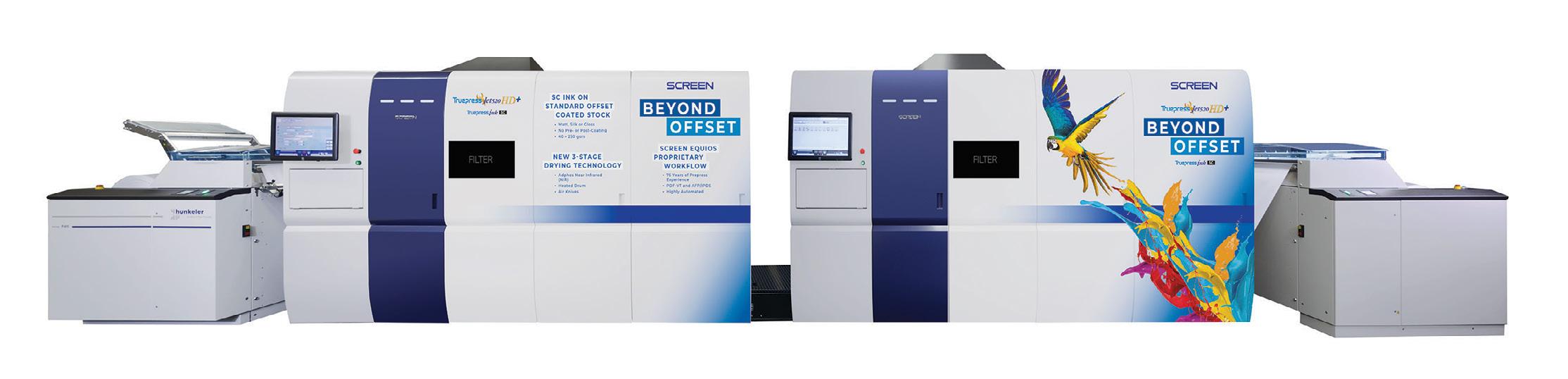
SCREEN Truepress Jet 520HD with SC inks – the digital inkjet press that prints superb colour on standard offset stocks.
SCREEN Truepress Pac 830F Digital flexible packaging using aqueous inks across 830mm web.
SCREEN Truepress Jet L350UV SAI digital label press. Up to 7 colours inc. White & High Opacity White. 60 m/min across 350mm web.
SCREEN GP Australia Pty Ltd Tel: +61-(0)2-9016-3400 • Toll Free: 1300 305 118 • sales@screenaust.com.au • www.screenaust.com.au
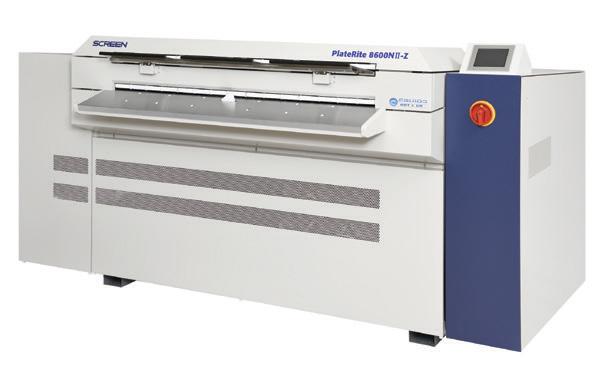
SCREEN PlateRite 8600NII New generation 8-page thermal CtP with fiber laser diodes. Up to 32 B1 plates/hour.
Sustainable choices made more easy with Spicers Australia
Sustainability has been ingrained into the practices of Spicers Australia, and the company is on a mission to assist its customers and their clients on better understanding the sustainable options available.

Major print materials and machinery supplier Spicers Australia has been one of the companies leading the way from early on when it comes to sustainability.
Sustainability has now become an integral part of the company’s strategy, and it has been ensuring that it conducts everyday business in a responsible and ethical manner that considers its employees, shareholders and the environment – now and into the future.
The company has been working towards achieving targets for energy consumption, CO₂ emissions and sustainable practices in its operations.
For example, 96 per cent of all lights in Spicers’ offices and distribution centres
have been upgraded to low power LED lighting. Sixty per cent of its national MHE/forklift fleet are now electric and 50 per cent of its distribution centres have solar panels installed, with more scheduled. It also has a goal to reduce electricity usage and greenhouse gases by 40 per cent this year.
“Our sites collect and recycle wastepaper, cardboard and other materials, such as wood, pallets, plastics, acrylic and PVC where possible,” Spicers Marketing and Design Manager Cyndi Setia said.
“We promote sustainable business practices across the organisation, ensuring that we conduct ourselves responsibly and ethically. Spicers is committed to operating sustainably. Our focus is on meeting the needs of today’s market without
compromising on the ability of future generations to meet their needs,” Setia said. As a solutions-focused company with a passion for supplying quality print, packaging, signage and architectural products, Spicers creates innovative and sustainable solutions for some of Australia’s leading brands.
“A key sustainability focus for Spicers is to continuously improve the supply chains of its operations. This encompasses resources used in fulfilling orders, conducting day-to-day business and waste management,” Setia mentioned.
“Spicers continues to promote responsible and sustainable business practices across the organisation, which positively impacts the company’s operational footprint.”
COVER FEATURE
SPRINTER.COM.AU 16 | AUSTRALIAN PRINTER SEPTEMBER 2023
Sustainability is an integral part of Spicers Australia’s strategy
Taking the environmental message forward
Responsible sourcing is one of the important parts of the company’s sustainability approach – Spicers conducts a comprehensive due diligence to ensure that its suppliers source wood fibre from legal and well-managed forestry or recycled sources. Whenever possible, it seeks to also offer recycled, and/or carbon-neutral product options.
“The environment is very important to Spicers and to our customers. With more and more of our customers leaning towards using sustainable solutions in their products for their clients, we have taken the decision to offer products from manufacturers and suppliers that are committed to smarter and greener practices,” Setia said.
“We make available the latest environmental and technical information on our products to customers, staff and stakeholders through training and education. The ongoing development of sustainable products and services assist our customers and their clients achieve their sustainability goals, print and production requirements.
“By thinking and acting sustainably, we strive to deliver excellent customer service and position the company and industry for a strong future.”
This is in line with what the industry wants – a Two Sides report found that 86 per cent of consumers say they check product information before buying to make informed and sustainable choices. In addition, 94 per cent of them said they feel recyclability is an important characteristic for environmentally responsible products.
Communicating the benefits of sustainability
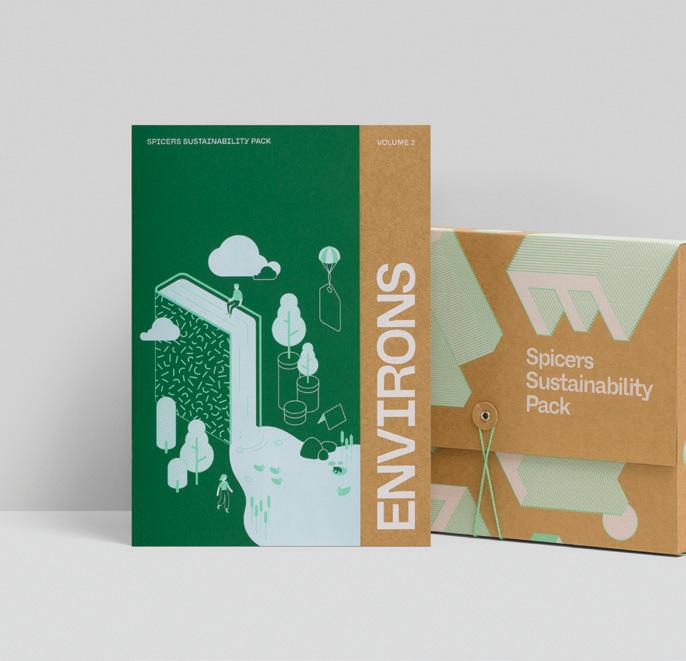
It’s no secret that Spicers has been providing a range of sustainable and environmentally-friendly solutions for printing requirements over several years. But to further facilitate that message, it created the first volume of its Environs promotion mid last year, focusing on the sustainability of its Visual Communications portfolio.
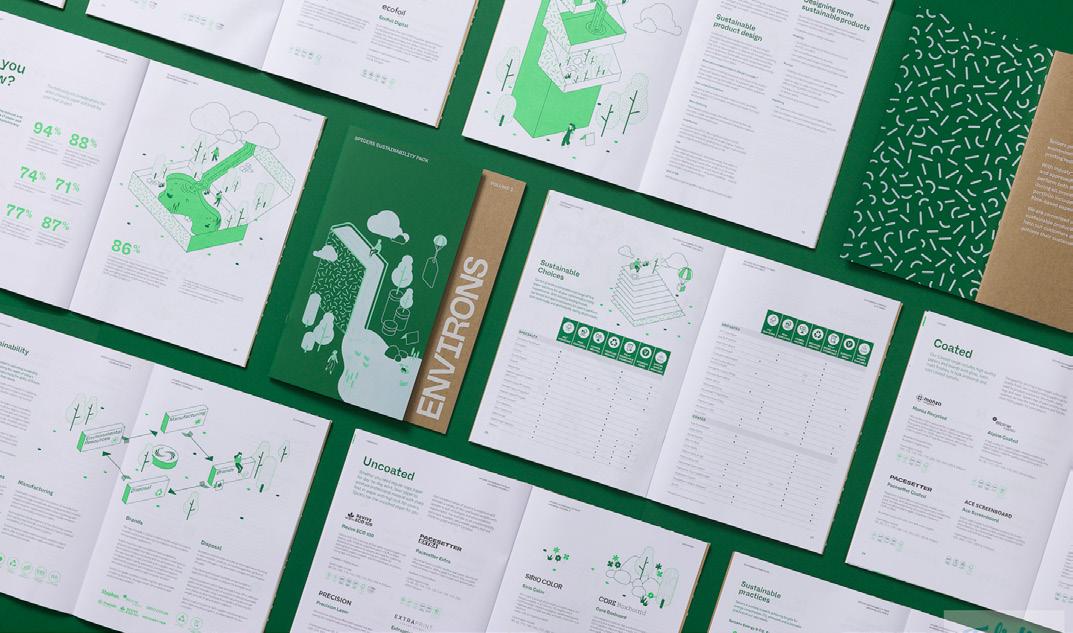
Volume 2 of Environs was released this year, at Visual Impact Sydney, focusing on the sustainability of its Commercial Print products. A quick-view chart in the middle of the volumes identify the products available from Spicers and a comparison of their green credentials.

“Both volumes consider products’ green credentials, such as Forest Stewardship Council (FSC) certification or Program for the Endorsement of Forest Certification
(PEFC). The Sustainable Choices charts communicate if our products are fully recyclable, have recyclable content, biodegradable, PVC-free and EcoVadis rated,” Setia said.
According to Setia, the series has become an educational resource for customers and their clients, as well as a tool for designers and brand owners.
“Our customers can use the Environs series to consider stock selection, and identify the environmental impacts of a product, and ways to reduce these impacts without compromising the products quality,” Setia said.
Environs by Spicers is a commitment to offering its customers sustainable options, making responsible choices easy.
Committing to partnerships
The Environs series also highlight to Spicers’ customers its partnership with FSC. Spicers Australia first achieved FSC Chain of Custody certification in 2005 and has continually upheld its standards and been an important part of the FSC community for more than 18 years.
“We are proud to be Australia’s first paper merchant to gain FSC Chain of Custody certification, and to be Australia’s secondlongest FSC Chain of Custody certificate holder in Australia,” Spicers General Manager of Products and Marketing Ken Booth said.
“Our customers and end users of our products can be confident that their paper, packaging, label and signage stocks are ethically sourced and FSC-certified.”
“The Environs series has also resulted in engaging and more insightful conversations with brands about their
role in improving the design of products to avoid waste, and to take these into consideration when designing and identifying requirements and appropriate applications,” Setia added.
In 2022, Spicers embarked on its journey towards carbon neutrality by partnering with Greenfleet. The not-for-profit environmental organisation protects the climate by restoring forests. The native and biodiverse forests that Greenfleet plants capture carbon emissions and help fight the impacts of climate change.
“Whilst Spicers has taken action through solar panels on some of our sites, LED lighting upgrades and movement to more electric forklifts, we still had some way to go to offset our carbon emissions. That’s why we are proud to have partnered with Greenfleet to take climate action and offset our carbon emissions through native reforestation,” Booth said.

COVER FEATURE
One of Spicers’ tree planting days as part of its partnership with Greenfleet
Environs Volume 2 focuses on the sustainability of Spicers’ Commercial Print products
SPRINTER.COM.AU AUSTRALIAN PRINTER SEPTEMBER 2023 | 17
“We can say our deliveries to our customers are carbon neutral. Offsetting our carbon emissions is just one way we are reducing our environmental impact. We continue to promote responsible and sustainable business practices across the organisation which positively impact the company’s operational footprint.”
As part of their partnership with Greenfleet, Spicers staff nationally have participated in tree planting days. Staff have helped plant trees in regional areas in Victoria, South Australia, and most recently in regional NSW.
“We are giving back to our environment and see the benefits of that in the decades to come as the forests planted will be protected beyond this century and will remove nearly 450,000 tonnes of carbon as they grow,” Booth said.
Greenfleet identified that in 2022, Spicers’ impact was 1,305 tonnes of carbon offset.
“Greenfleet is focused on delivering climate action and by offsetting emissions with us, Spicers is enabling the restoration
of native forests that will remove carbon from the atmosphere through the rest of this century. Thanks to the support of organisations like Spicers, Greenfleet can continue to grow our impact and work with groups committed to sustainability,” Greenfleet CEO Wayne Wescott said.
Different brand activations
“We developed the creative concept, designed and specified everything internally, then briefed the production house on what we were trying to achieve. We provided them with the stocks that they needed to print on and they helped us engineer and install it. Along the way, we’ve educated them about new products and inspired them to use it for other applications and offer a new sustainable solution to their clients,” Setia mentioned.
“When audiences visited the stand, they were amazed with the structures and displays created from Re-board as it can hold weight. It’s a fantastic display and representation of what our products can do, and how our products can be applied – that too in a sustainable manner.
“After the tradeshow finished, materials used to construct the stand were placed in the recycling bin.”
Spicers is continuously working to find sustainable and innovative solutions.
“This is a collaborative effort with our suppliers and customers to find solutions for new and different applications,” Setia said.
In an exciting stride towards a more sustainable and innovative future, Spicers is working towards producing Volume 3 in its remarkable Environs series. Spicers’ continuation of the Environs series signals a resounding assurance to its customers that the company is at the forefront of this shift towards responsible practices.
“As we eagerly anticipate the launch of Volume 3, we can be confident that Spicers’ unwavering dedication to environmental consciousness and innovation will set new standards for excellence in the print industry,” Setia said.

brilliant consistent results IN DYE SUBLIMATION
Spicers has also been promoting the sustainability of its partner brands by utilising some of their products at tradeshows. At Visual Impact Sydney this year, Spicers used these products to construct its stand.

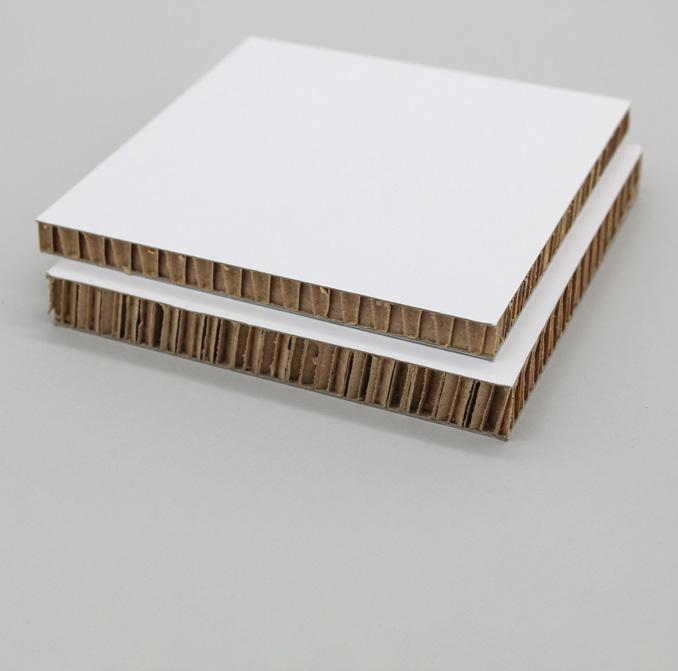
“The main structure of our stand was made using Re-board, which is a rigid, FSC-certified fluted board. It’s strong, lightweight and recyclable. You can construct a whole point of sale stand or make structures and walls, which is what we did,” Setia said.
The upcoming volume is not just a showcase of products; it’s a testament to a thriving industry that is adaptable, forward-thinking and determined to create a positive impact. With Spicers leading the way, it looks forward to a stronger and more sustainable future for the industry.
Our range of Dye Sublimation papers offer outstanding lay-flat performance, fast drying, brilliant image quality and exceptional consistency in quality for high speed and large volume applications. Ideal for a wide variety of applications from home textiles, fabrics, soft-signage, flags, sports apparel, ceramic mugs, tiles, polyester coated hard substrates such as glass, fiberglass and boards. Visit
Choose from a range of dye sublimation papers
Spicers worked in collaboration with Sydney-based Dashing for the production and construction of its Spicers Visual Impact stand.
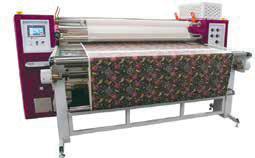
PENGDA / CALENDER OR HEAT PRESS PD-1800 RTR PENGDA / CALENDER OR HEAT PRESS
only highly engineered Heat presses and manufactured in China to European standards!
only highly engineered Heat presses
Model PD-1800RTR-420 Power Configuration Three-phase four-wire Voltage 24KW Heating Oil heating Drum diameter 420mm Printing width 1800mm Machine size 2700mm (length)*1560mm(width)*1490mm(height) Net weight 1800KG PD-585XD-B Three-phasefour-wire 22KW Oil heating 420mm 1800mm 1000mm 3100mm(L)*1500mm(W)*1830mm(H) Machine Specifications Machine Specifications
The
The
and manufactured in China to European standards!
our website for the
range and product information. For enquiries please contact your local Spicers representative. 1300 132 644 spicers.com.au Bauhaus S-Race Allround 130 Bauhaus S-Race Look 55gsm Bauhaus S-Race Allround 105gsm Bauhaus S-Race Vivid
full
COVER FEATURE SPRINTER.COM.AU 18 | AUSTRALIAN PRINTER SEPTEMBER 2023
Spicers won ‘Best Custom Stand’ at the 2023 Visual Impact tradeshow
Re-board, one of the fully-recyclable solutions available from Spicers, was used to construct Spicers’ stand at Visual Impact Sydney
Env irons Volume 1 focuses on the sustainability of Spicers’ Visual Communications portfolio
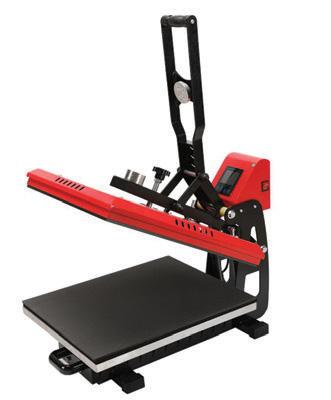
Master Heat - 480-3

PRINTERS - DYE SUBLIMATION
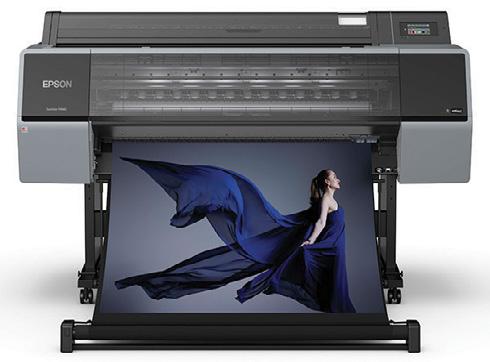
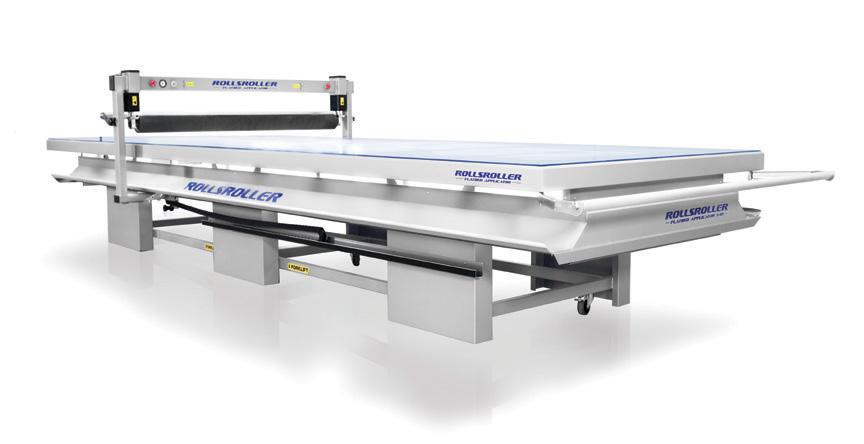
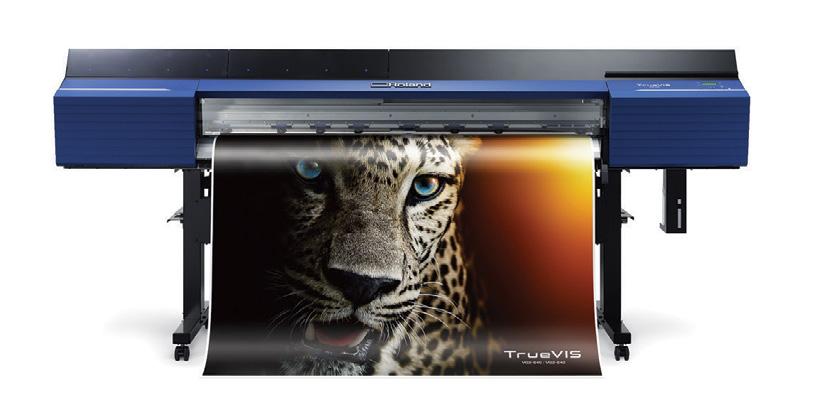


Master Heat - 1715
Master Heat - 3805

Most popular model Competitive price Stable quality Size: 38 x 38cm Packing size: 66.2 x 46 x 40cm Weight: 23KG Australian plug 240 v 12 Month Warranty RRP Price: $979.00 +GST
Most popu ar auto open design LCD controller Slide-out design Insert T-sh rt bottom plate Size: 40 x 50cm Packing size: 78 x 49.5 x 58cm Weight: 42KG Australian plug 240 v 12 Month Warranty RRP Price: $1415.00 +GST H gher pressure Suitab e for professiona transfer Drawer design with pull-out Size: 38cm x 38cm Packing size: 72 x 48 x 44cm Weight: 52kg Australian plug 240 v 12 Month Warranty RRP Price: $1633.00 +GST
CALENDER CALENDER and Calenders standards! and Calenders standards! PD-1800RTR-420 four-wire (length)*1560mm(width)*1490mm(height) Three-phasefour-wire 3100mm(L)*1500mm(W)*1830mm(H) 31
Creating a deep commitment to the printing industry
Seeing that Scott’s inspirations come from the people that she works with, it comes as no surprise that she looks to these peers as her sources of influence.
“There are people that I have worked with over the years who have invested in me and my development. They inspire me daily with their creativity and innovative approaches to print, and they allow me to draw inspiration from their work,” she said.
“My mentors have been invaluable in providing me with guidance, insights and constructive feedback. Learning how to take their feedback constructively is a skill I have worked on developing. They’ve shared their wisdom with me, encouraged me to embrace challenges and helped me refine my skills.
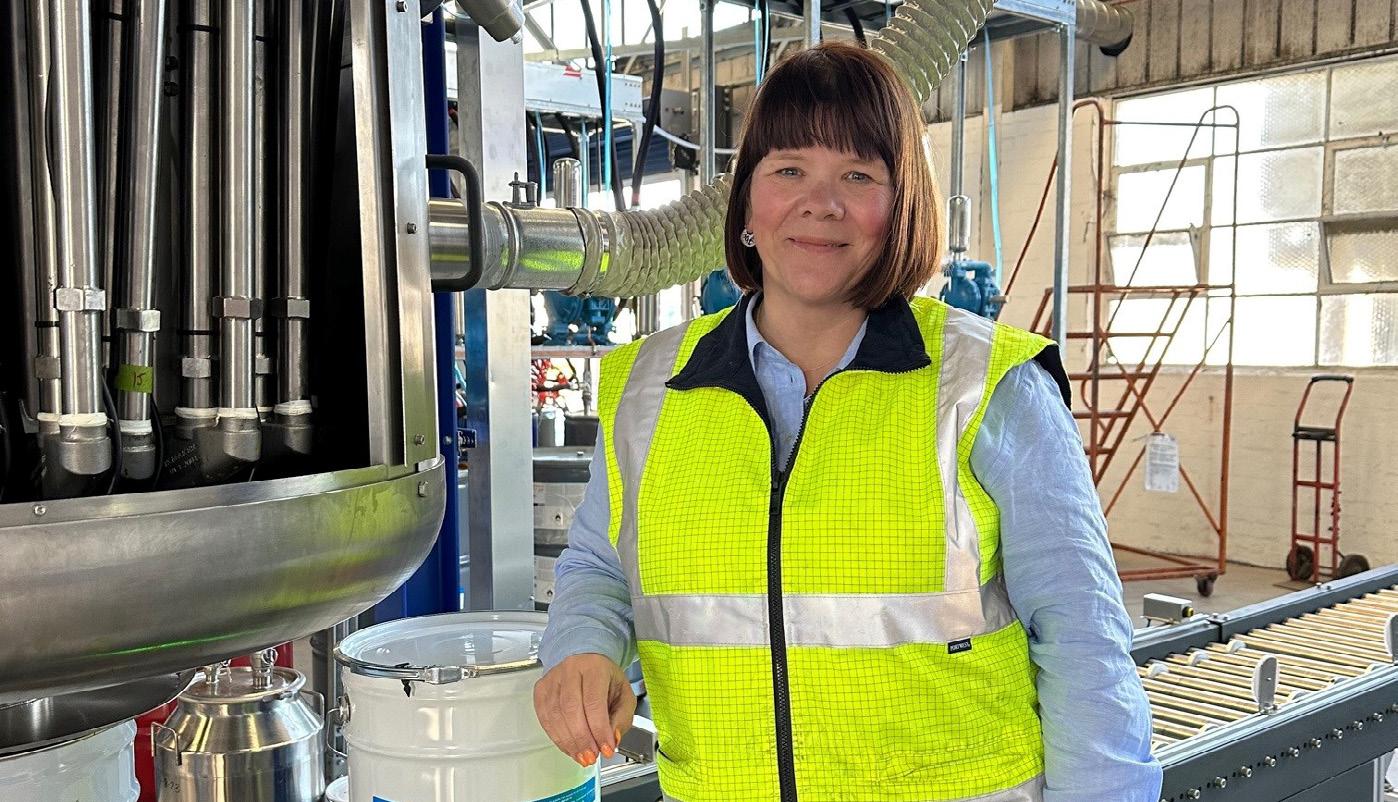
Kate Scott might have moved across countries and states, but her dedication to the printing industry has remained constant through the years. Currently working as DIC’s A/NZ head of operations and supply chain, Scott’s adventures in print started when she was just a teenager.
Scott was introduced to the print and ink industry at only 19 years old, when she took on a summer job as a QC technician in an ink lab in the north of England some 30 years ago. She spent 15 years at this company before joining DIC Australia in 2008, when she also made the move to Sydney.
“I have worked across many roles in the ink business and travelled and worked in many countries. I have been in Australia for the last 15 years and initially settled in Sydney, where I also raised my children,” she said.
“Within the printing industry, there are always challenges or different factors to consider when you are tasked to work with new people. The rate of change –as we embrace innovation and promote sustainability – means that these are very exciting times to work in print.”
Following DIC A/NZ’s move of its manufacturing facility into its plant in Moorabbin, Victoria, over the recent months, Scott relocated to the state for her role. Her long-standing tenure with DIC A/NZ has cemented her as one of the longest serving staff within the business.
Scott said her experience in the industry and within DIC has developed tremendously over the years.
“I focus on not only vertical career moves within the business but also on expanding my knowledge with some moves ‘sideways’ within the company. That has allowed me to build an end-to-end understanding of the business. I truly believe that having this deeper understanding has allowed me to make better decisions,” she said.
“The ability to travel and work within the Sun Chemical and DIC business globally has presented me with some huge opportunities. I also love the people that I work with. I love seeing DIC people develop, thrive and deliver into the business. Seeing others’ success gives me greater drive in the work that I do, and this results in a better sense of self-satisfaction.”
According to Scott, one of the most captivating aspects of her job in print is witnessing the transformation of ideas into tangibles.
“The dynamic nature of print, its ability to convey messages that align to the everchanging social and circular economies and the constant push for technological advancements keep me engaged and excited to explore new possibilities within this space,” she said.
“That’s why I love what I do and have remained in this industry for as long as I have.”
“Their support has not only shaped my professional capabilities but also instilled in me the confidence to overcome obstacles.”
Over her tenure, Scott said she has seen more women enter what was traditionally a male-dominated industry, but added that there is more room for female representation. DIC has also been a strong advocate for women in print, which Scott fully backs.
“Increasing the gender diversity across the business and encouraging more women into manufacturing and logistics roles is a key strategy for DIC – and should be for the whole industry. The shopfloor is a great place to find future leaders and we need more female representation,” she said.
“Women in print can give back by becoming mentors and role models, as well as sharing knowledge and experiences to inspire others. By empowering one another, we strengthen the entire industry.”
Looking ahead, Scott is determined to further push the boundaries of what print can achieve.
“Embracing innovation, sustainability and creative collaboration will be at the core of all my efforts moving forward. I aspire to contribute to the evolution of print as it is a powerful medium that continues to captivate and connect people in meaningful ways,” she said.

WOMEN IN PRINT
DIC A/NZ head of operations and supply chain Kate Scott has been in the print industry for more than 30 years, and has no plans of stopping anytime soon
SPRINTER.COM.AU 20 | AUSTRALIAN PRINTER SEPTEMBER 2023
DIC A/NZ head of operations and supply chain Kate Scott
Getting it down to a fine art
warehouse in Southport, eventually closing the shopfront and operating entirely from the warehouse from the mid-2000s.
Q: How did you end up joining the family business?
TS: In the mid-2000s, I graduated design college and got a job with a new Worldwide Online Printing franchise opening in Burleigh Heads. I worked there for three years, initially doing graphic design and customer service but my passion was for business and sales, so I was put through various training courses and mentorships within the company to groom my skills. I learnt so much about the print industry and how to run a business during this time.
In 2006, as a 22-year-old, I was ready for a change, so I went off indefinitely to Canada for the ski season with a bunch of mates. During the summer, I worked at a design agency on Vancouver Island, which was a fantastic learning experience. It was a small multi-disciplinary studio run by three men and they had a couple of other designers.
I then returned to Australia in mid-2008 and got a job teaching Photoshop at a local design college, whilst also building my freelance design business. My parents and I decided to buy a 44-inch Epson fine art printer, as their customers had been asking for canvas prints and photo prints. Now that I was home, it also seemed like a good idea for me to know how to run printers. We set it up in their garage and I would turn it on once or twice a week and run a few prints out for them.
More than 30 years of fine art printing, framing and artist representation services has seen Queensland-based Left Bank Art Group rise to the top of the industry ladder when it comes to delivering outstanding visual and commercial results. Toby Simm, the owner and director of Left Bank Art Group, reflects on the early beginnings of the company and how it has grown to become a ‘complete art partner’.
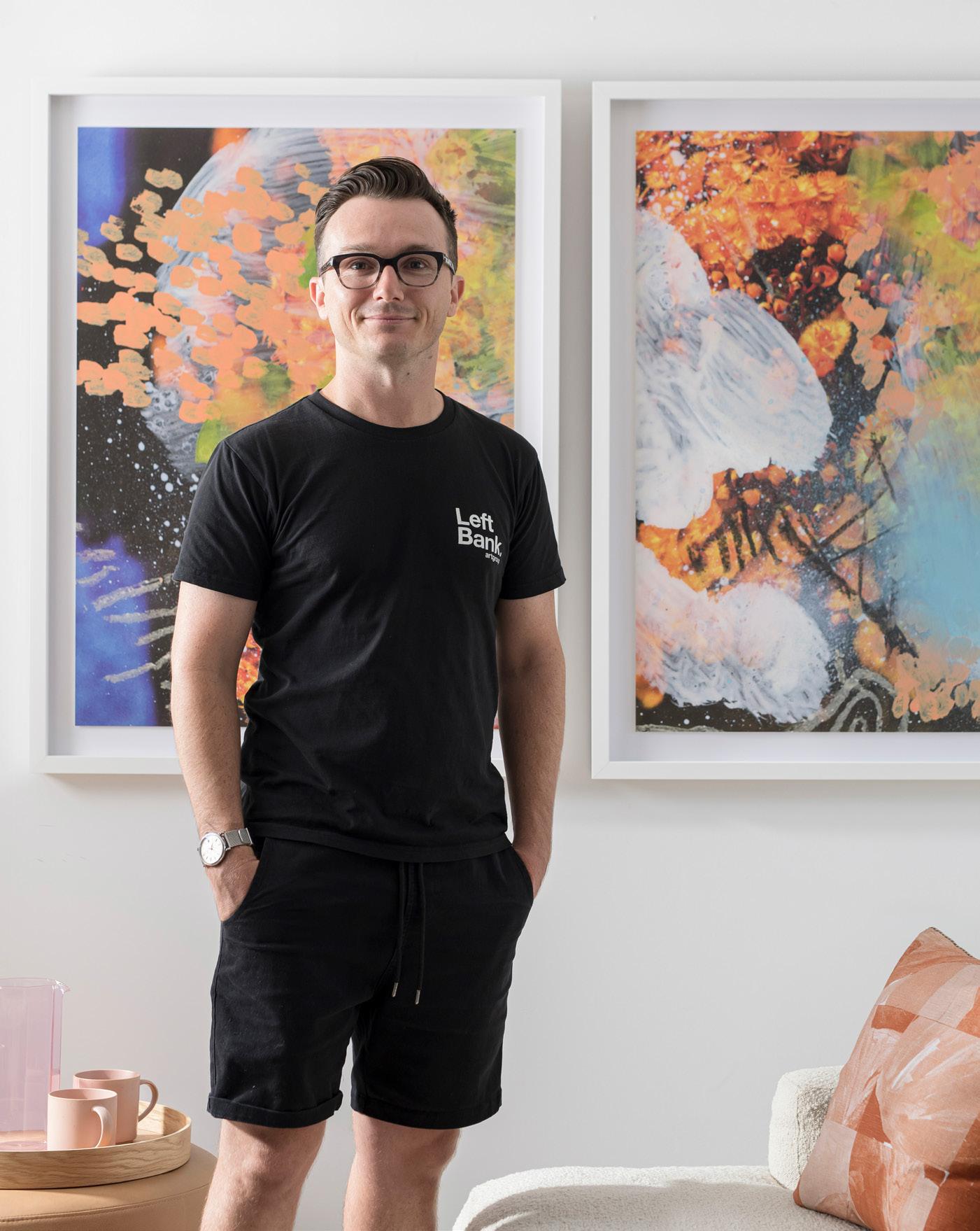
Q: How did Left Bank Art Group come into existence?
Toby Simm (TS): Left Bank was started in 1989 by my parents as Left Bank Gallery. It was a 60sqm picture framing shop in Main Beach, Queensland. They built the business through the 1990s to
become a well-recognised art and framing business on the Gold Coast.
I was a kid back then and I’d watch them work tirelessly but with so much passion for their craft and their customers. I believe this is where my entrepreneurial drive developed. On weekends, I would set up a bench on the front of their shop and sell little frames that I got dad to make out of offcuts. I’d cut up old print catalogues and paint clear gesso brush strokes over the artworks and pop them in the little frames. People loved them.
Fast forward to the early 2000s, they were awarded the contract to frame all the mirrors in the new Versace Hotel that was being built up the road. They needed more space, so bought a 200sqm
As business grew over the years, we moved the printer out of the garage and into their warehouse in 2010. I officially joined their business full-time in 2012. We purchased a 60-inch HP Latex machine at this time, as we’d been getting requests for bigger canvas prints, wallpapers and murals. In the mid-2010s I had embedded myself into Left Bank and it is now a fullyfledged printing and framing business.
Q: What has growth been like for the company?
TS: When we won a contract to print and frame 2000 pieces for a hotel in Perth around 2017, we employed more staff, bought a new 60-inch Epson printer and leased another warehouse. Looking back, this job put us on the map and gave me the confidence to scale the business.
PEOPLE IN PRINT
Left Bank Art Group owner and director Toby Simm has built on the business that was started by his parents, taking it to the modern-day era
SPRINTER.COM.AU 22 | AUSTRALIAN PRINTER SEPTEMBER 2023
Left Bank Art Group owner and director Toby Simm
This is probably the most memorable project that the company has worked on as it was a turning point for us and proved we could deliver a major project.
The business continued to grow from there but when COVID hit in March 2020 and the whole world went on pause, we had a few months of uncertainty. We made a couple of staff redundancies as we saw sales plummet. But, it didn’t take too long for the tide to turn and suddenly,

I was taking multiple calls daily from artists looking for a printing and framing fulfilment provider.
We were already fulfilling for a couple of artists – we were sending about 20 or so packages per month pre-COVID. During the back half of 2020, that industry exploded, and we were fulfilling around 500 orders per month. We invested in the HP R2000 flatbed at this time, as our old 60-inch HP was on its last days.
The R2000 allowed us to print canvas and wallpaper, quicker and at a better quality than before, plus opened the business up to new opportunities with rigid substrates like tiles and foamboard. We continued to grow during the ‘COVID bubble’ as more money was spent on people’s homes.
In mid-2022, we moved into a new 1500sqm warehouse at Yatala, near the Gold Coast. It was at this time that we also installed Australia’s first Kornit Presto, a direct-to-fabric pigment ink printer.
Q: What does Left Bank Art Group do as a company today?
TS: Today, we are an artwork fulfilment company. We print, frame and dispatch for hundreds of artists around Australia, and even a few internationally. We also still work in the commercial/interior design space, supplying framed artwork, wallpapers, tiles and fabrics to hotels, apartments and display homes.
Our focus on high-quality artwork reproduction has built a name for us Australia-wide and our team prides themselves on excellent service. This comes through in what we deliver, and in turn, this grows the business. I love working with our customers and partnering with them as it helps them grow their businesses and expand into new markets.

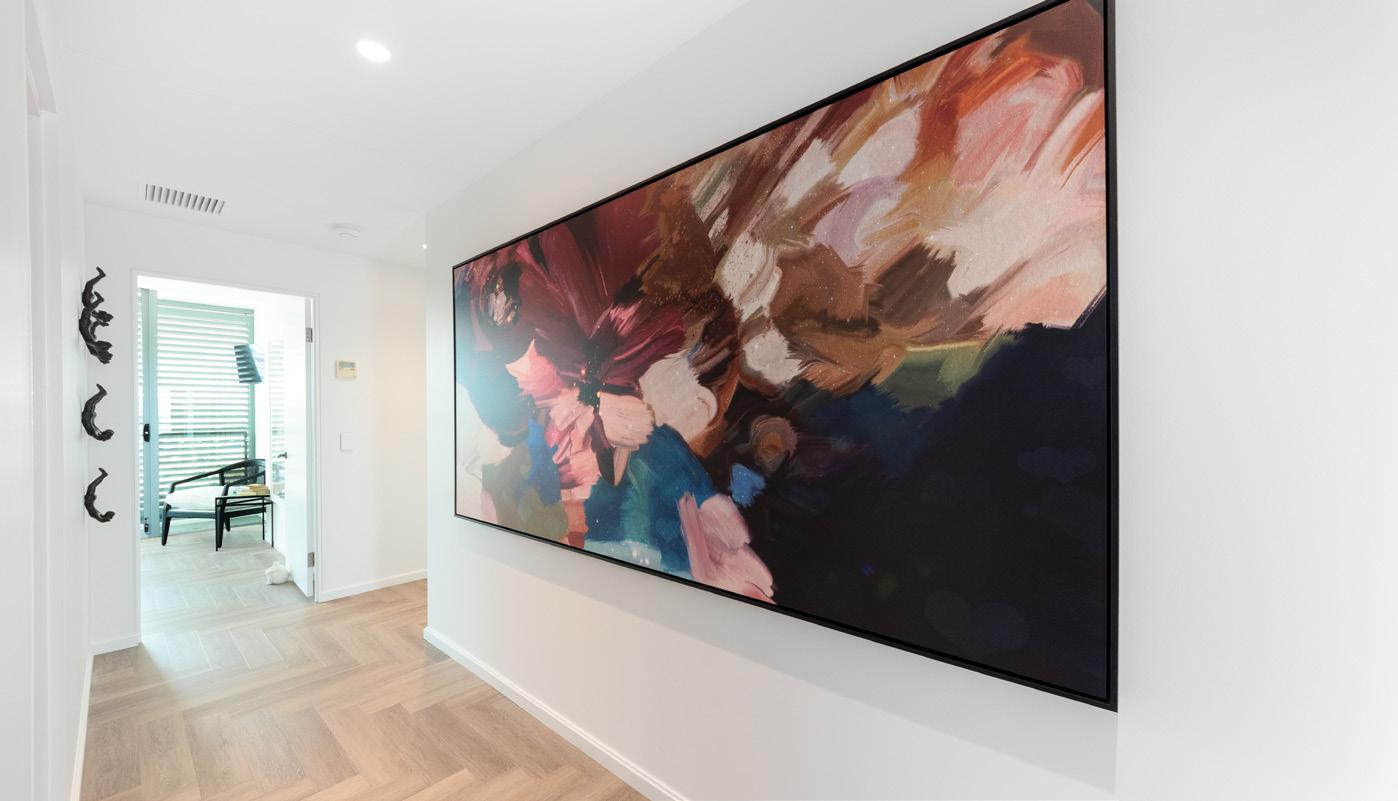
Q: What plans do you have for the business in the coming six to 12 months?
TS: Textile printing is currently the biggest growth area for Left Bank. We are expanding into the fashion industry, whilst also growing in the home décor space. Although the home décor industry is slowing down as less people spend money on their homes, our expansion into textiles is showing massive potential as brands and companies look to onshore their production.
We are in the process of setting up a ‘micro-factory’ within our premises to allow us to cut and sew standard garments and décor items in-house. This allows us to grow our offering of print-on-demand products like cushions, tea-towels, tablecloths and napkins, along with t-shirts, button-up shirts, tank tops and shorts.
I aim to have this ‘micro-factory’ up and running before the end of the year and as we settle into that, we’ll add more products to our offerings. I want Left Bank to be the ‘go to’ fine art fulfilment company in Australia, where artists and designers can choose from a wide range of curated, bespoke products that you can’t necessarily find anywhere else – at least as an ‘on-demand’ item.
PEOPLE IN PRINT
SPRINTER.COM.AU AUSTRALIAN PRINTER SEPTEMBER 2023 | 23
Growth in the home décor space is an area that the company is looking to develop
A wallpaper print that Left Bank Art Group created for a client in October 2019
The intricate details on a print that Left Bank Art Group created
FESPA Open House at Cactus Imaging draws in the industry with Durst first
The popular event showcased the new Durst 10-channel P5 350 HS D4 hybrid press, the first of its kind installed in the southern hemisphere
The FESPA Australia Open House event, recently hosted by grand format printing company Cactus Imaging, drew in the industry with almost 120 industry professionals attending.
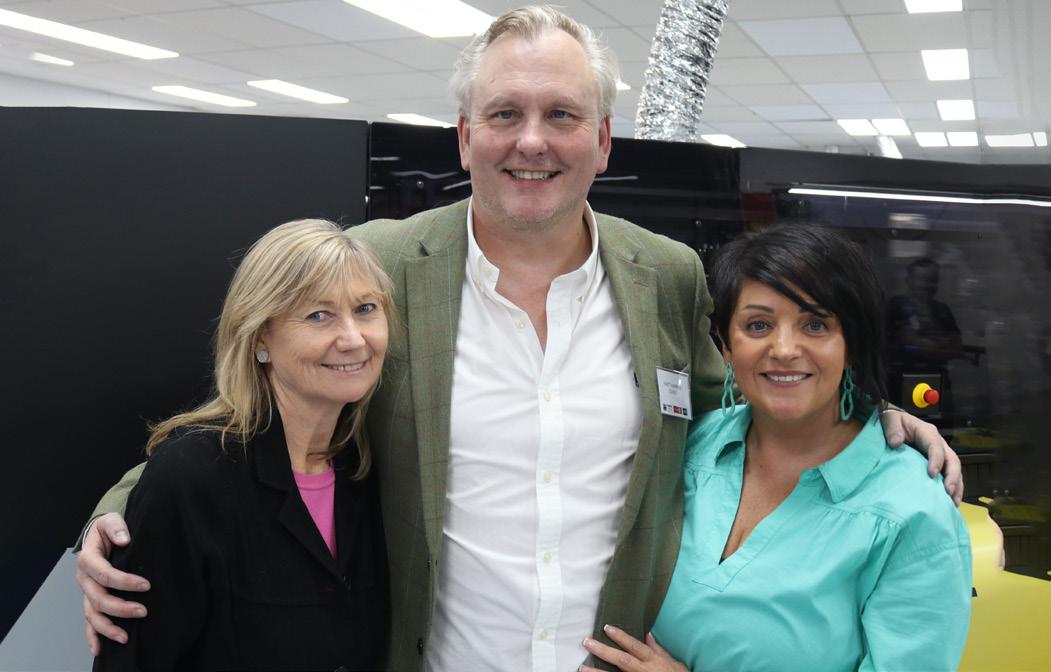
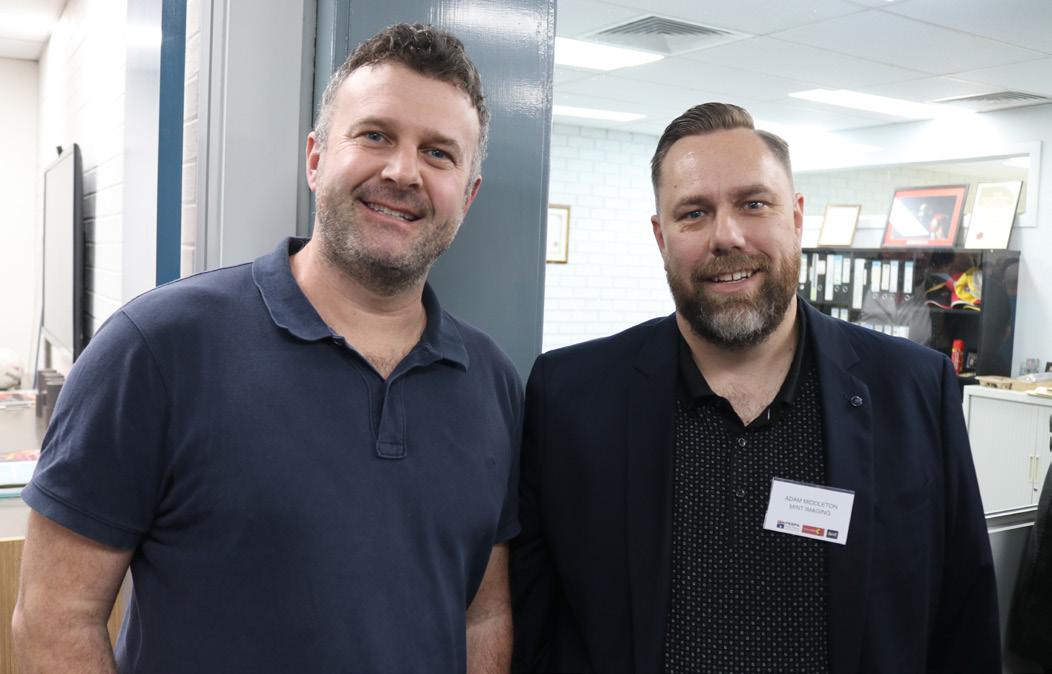
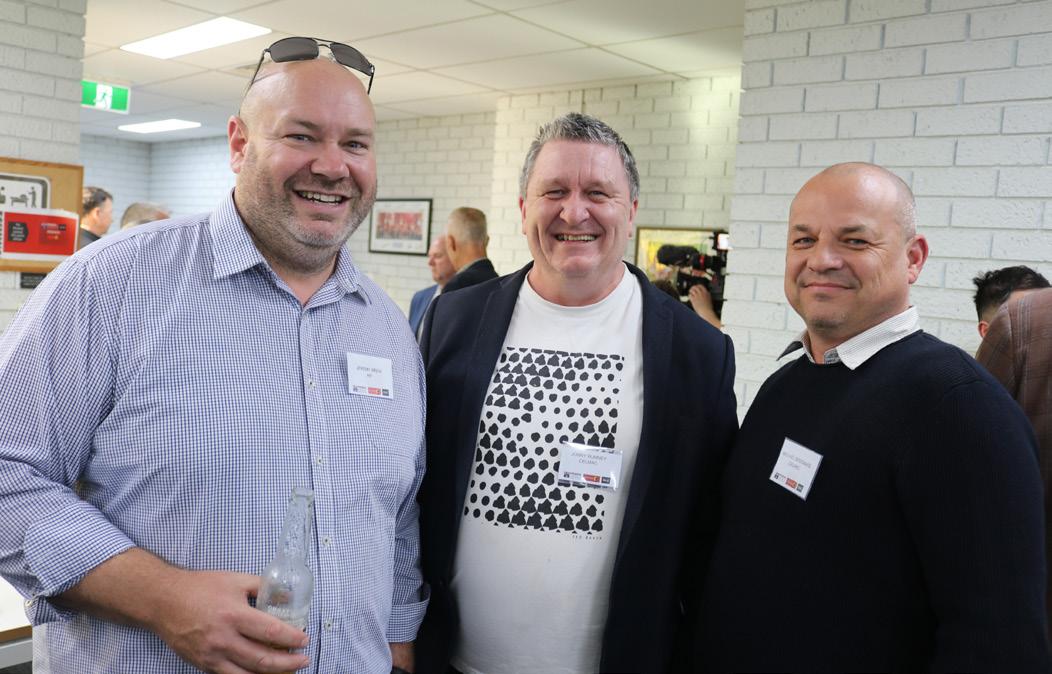
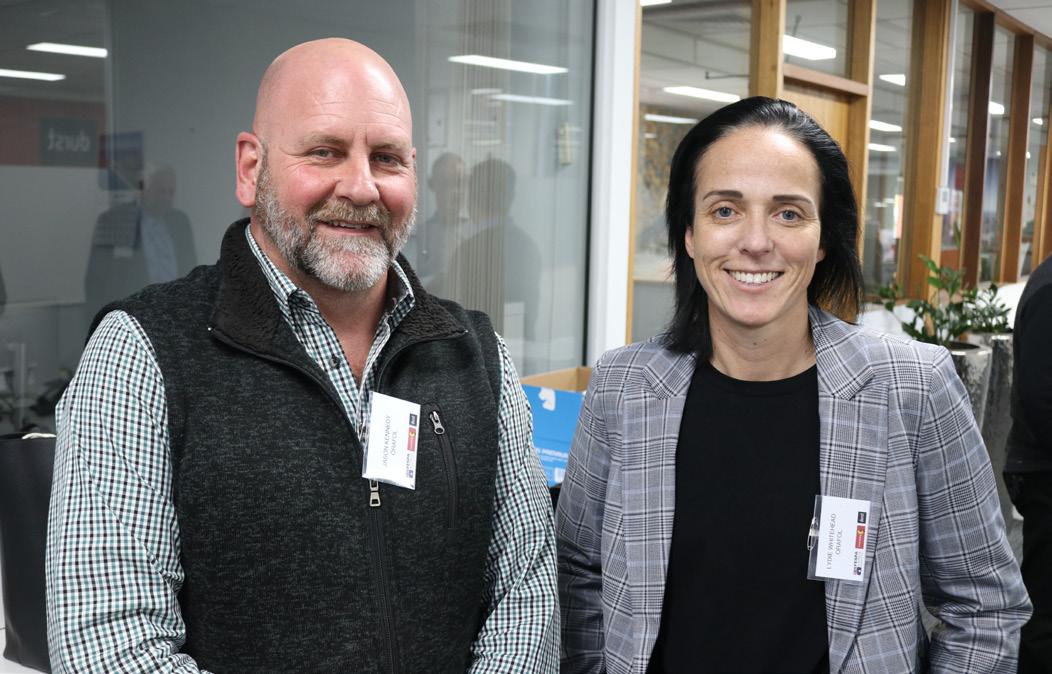
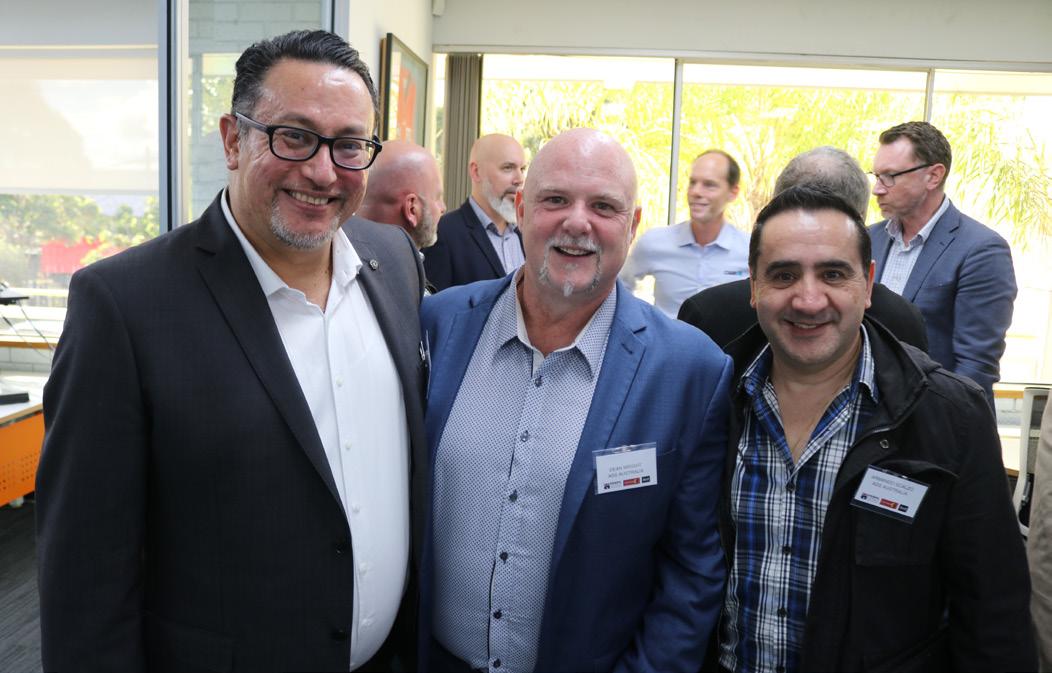
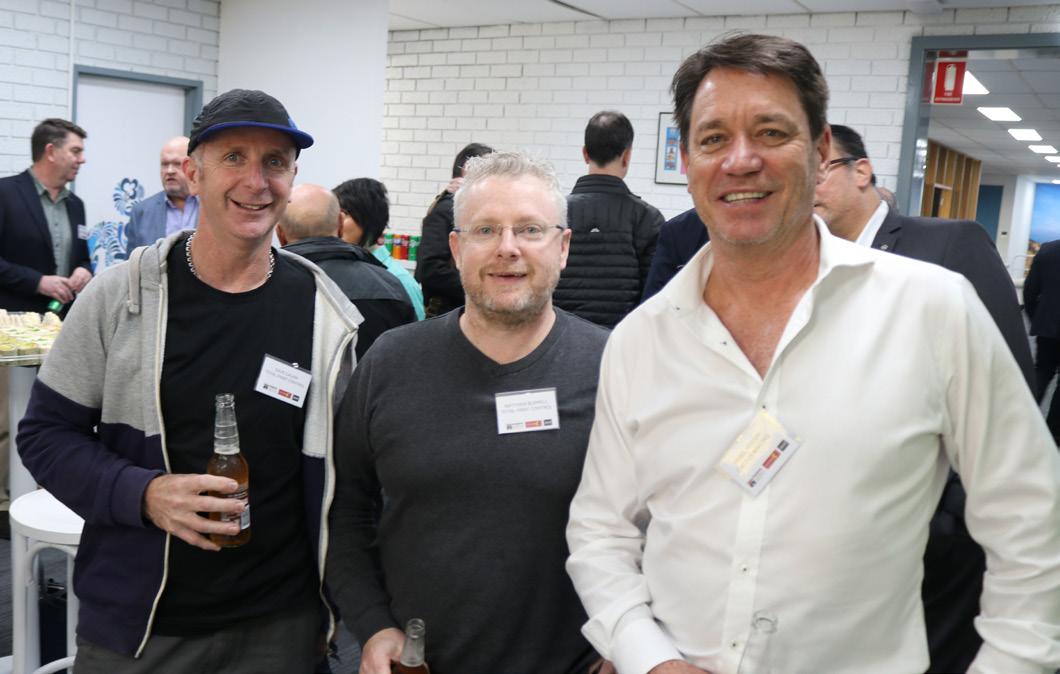
The event provided the perfect platform for attendees to have a sneak peek at the recently-launched Durst 10-channel P5 350 HS D4 hybrid press, the first of its kind installed in the southern hemisphere.
In addition, attendees were also able to immerse themselves in other one-on-one demonstrations of the vast equipment housed at Cactus Imaging’s Silverwater premises in western Sydney.
At the event, FESPA president Nigel Davies also announced the launch of the FESPA Australia Training Fund and introduced FESPA life members and trustees of The FESPA Training Fund, Bill Porteous and Trevor Cunningham, who collectively presented the fund with $94,000 of seed funding.
FESPA OPEN HOUSE GALLERY
SPRINTER.COM.AU 24 | AUSTRALIAN PRINTER SEPTEMBER 2023
Jeremy Brew (HP) with Jonny Rumney and Michael Boogaard (Celmac)
Julian Lowe (Durst) with Dean Wright and Armando Scalzo (ADS Australia)
Jason Kennedy and Lydia Whitehead (Orafol)
Dave Calkin and Matthew Burrell (Total Print Control) with Nigel Spicer (Cactus Imaging)
Ben Clarke (Cactus Imaging) and Adam Middleton (Mint Imaging)
Colleen Bate (ProPrint), Matt Ashman (Durst Oceania) and Carmen Ciappara (ProPrint)

FESPA OPEN HOUSE GALLERY SPRINTER.COM.AU AUSTRALIAN PRINTER SEPTEMBER 2023 | 25
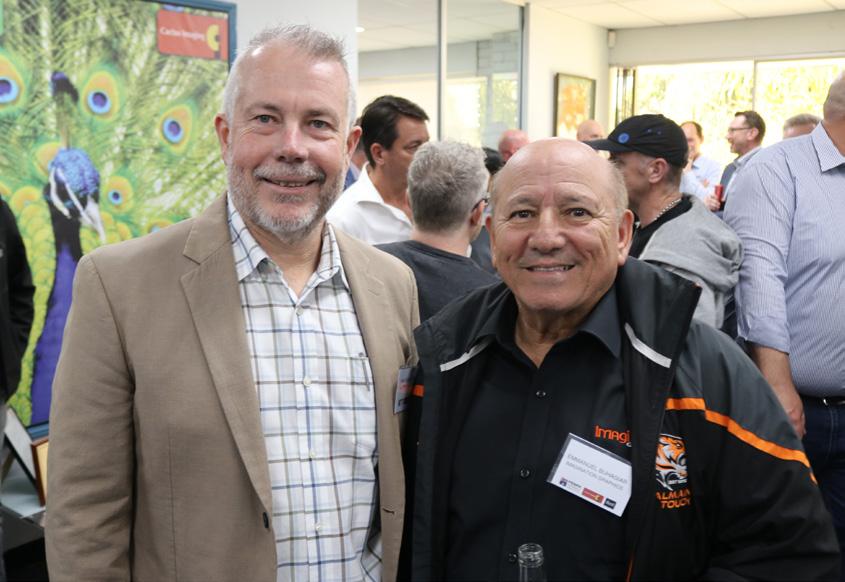
Grant Cunningham (Allprint Graphics) and Emmanuel Buhagiar (Imagination Graphics)
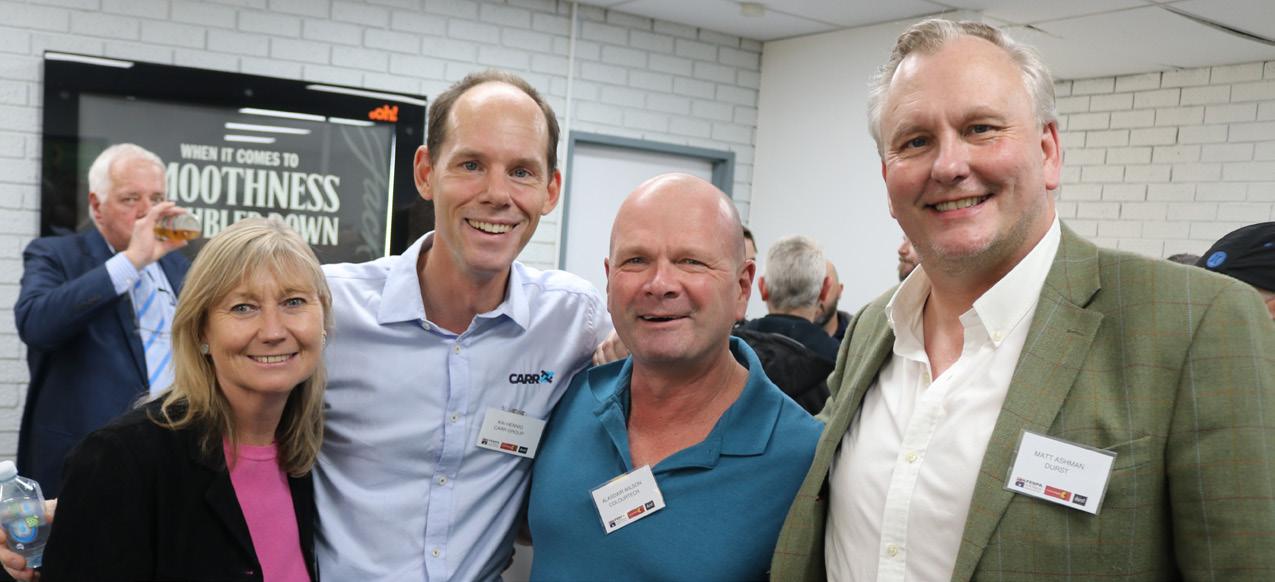
Colleen Bate (ProPrint), Kai Hennig (Carr Group), Alasdair Wilson (Colourtech) and Matt Ashman (Durst)
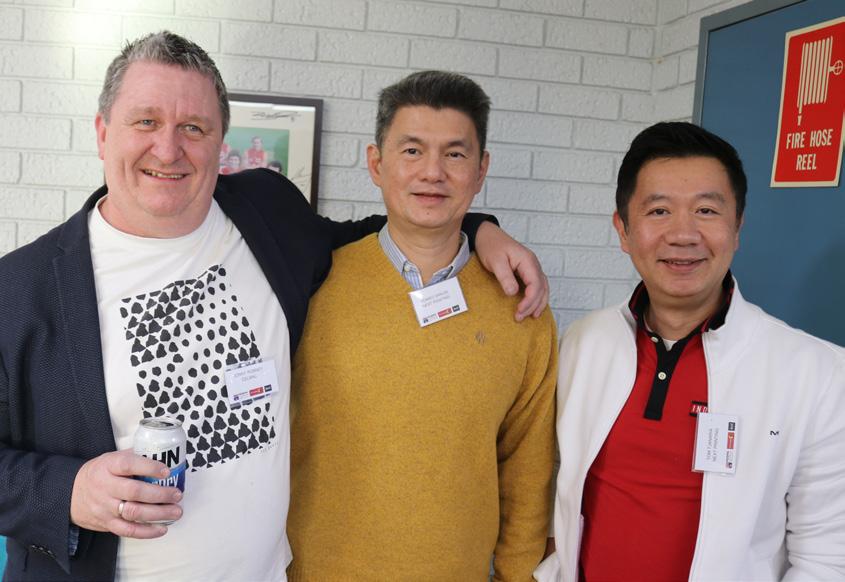
Jonny Rumney (Celmac) with Romeo Sanuri and Tom Tjanaria (Next Printing)
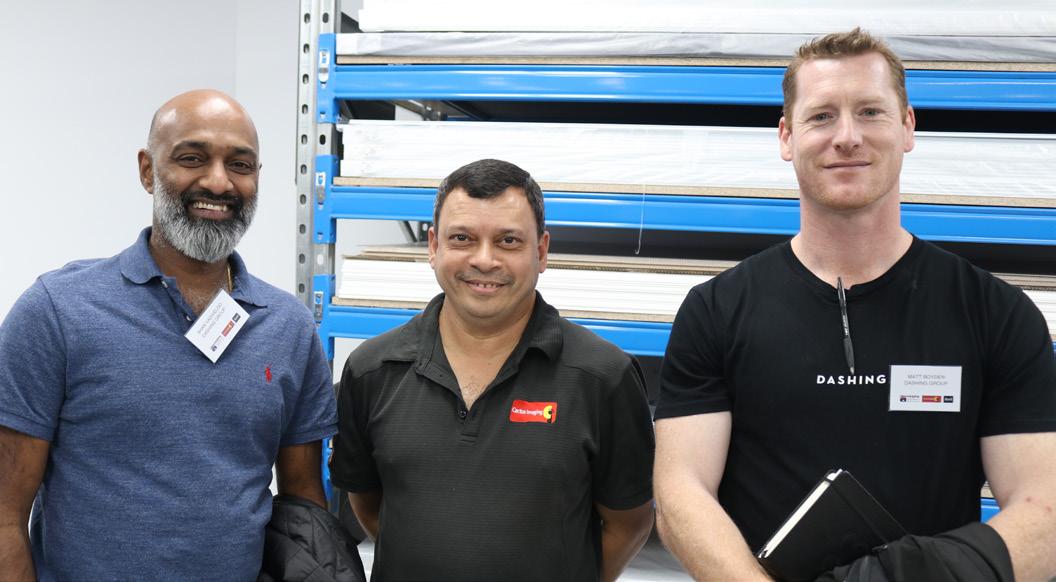
Shan Vadiveloo (Dashing), Kennith Miller (Cactus Imaging) and Matt Boyden (Dashing)
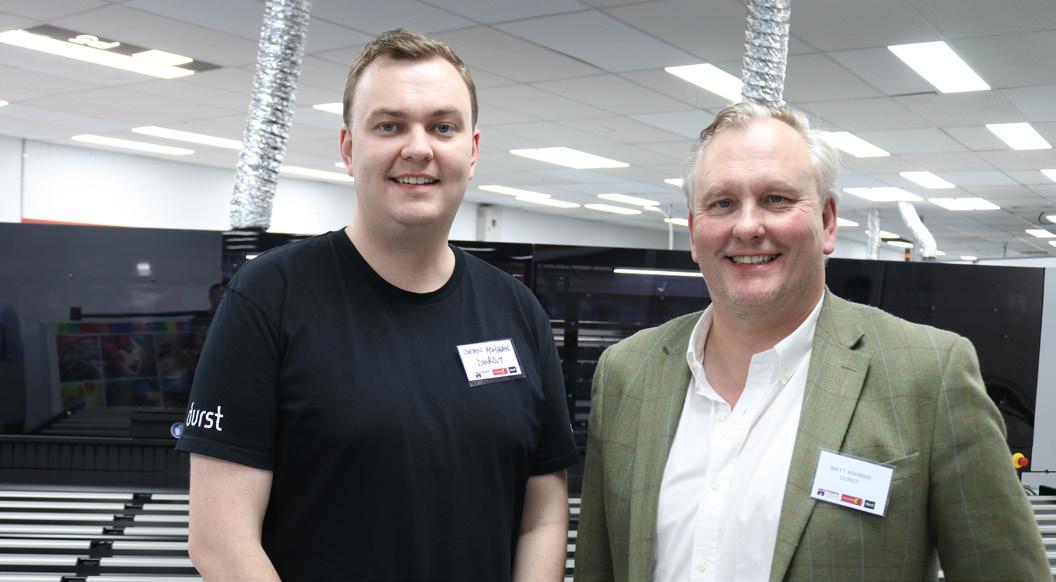
Sean and Matt Ashman (Durst Oceania)
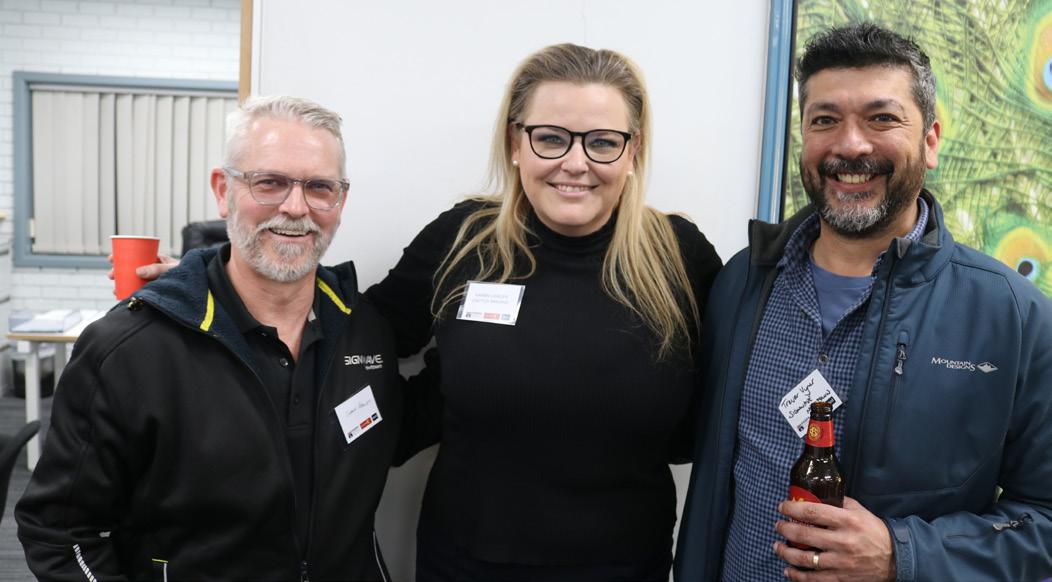
Shane Kealley (Signwave Newtown), Karen Lawler (Cactus Imaging) and Trevor Vyner (Signwave Newtown)
Michael Clare, Troy Neighbour and Luke Wooldridge (Fujifilm Australia)
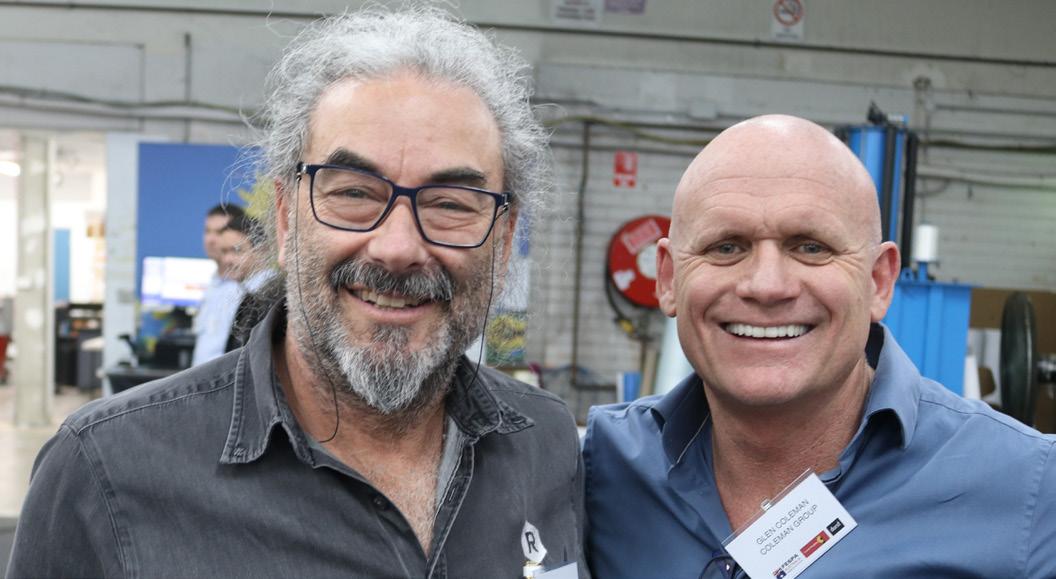
Ron Gottlieb (Ricky Richards) and Glen Coleman (Coleman Group)
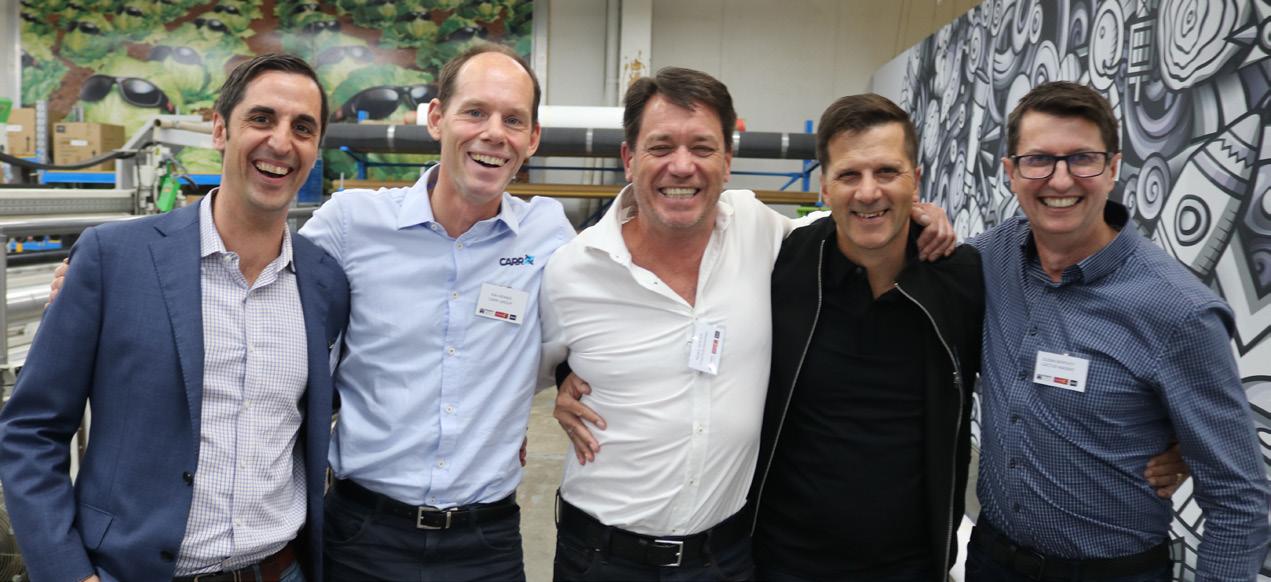
Rob Brussolo (Ball & Doggett), Kai Hennig (Carr Group), Nigel Spicer (Cactus Imaging), Glen Mackellin (HVG Graphics) and Glenn Moffatt (Cactus Imaging)
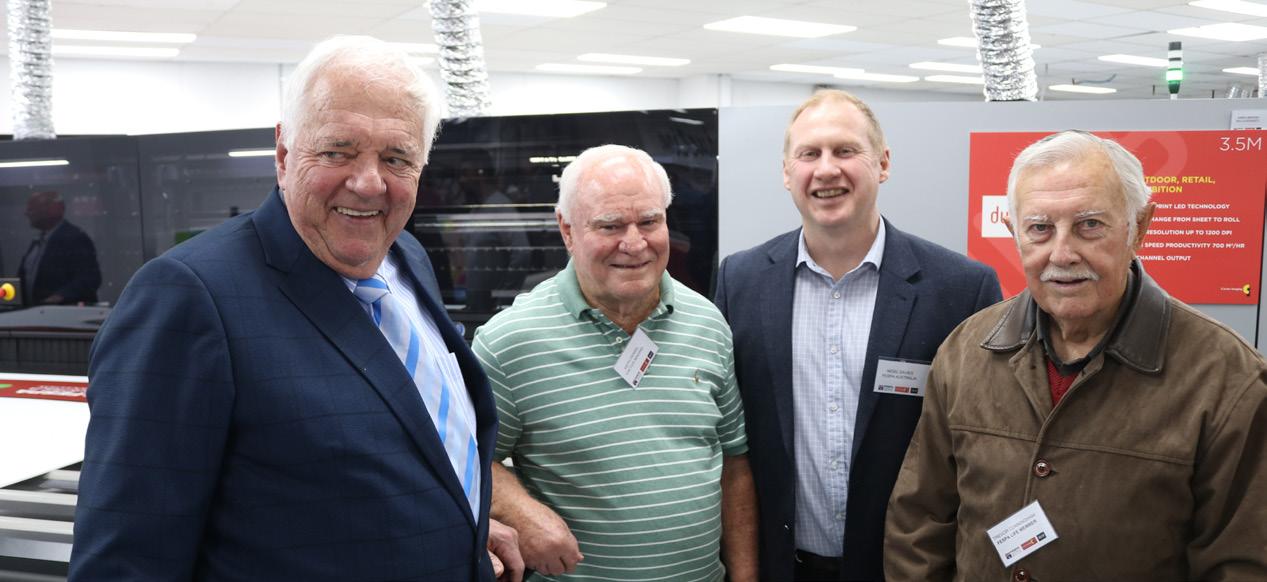
Bill Porteous (FESPA life member), Keith Ferrel (Cactus Imaging), Nigel Davies (FESPA Australia) and Trevor Cunningham (FESPA life member)
TICKETS SELLING FAST
Join us as we celebrate and acknowledge the achievements of the people in print across Australia at the ProPrint Awards 2023






Scan to secure your tickets now.


SPONSORS ANNOUNCED SO
Gold Sponsors



Silver Sponsors


Platinum Sponsor Auditing Partner


For sponsorship enquiries and to purchase tickets please visit: www.proprintawards.com.au

FAR
Durst delivers a complete and premium Web-to-Print solution
Durst’s versatile, flexible and unique Smart Shop solution has revolutionised – and continues to revolutionise – business for print service providers
labels and packaging market. The solution includes an online graphic editor to ensure the complete handling of custom print orders and sale of customisable products and services.
Durst Software & Solutions are tailored to help print service providers improve printing and simplify business
By Durst Oceania managing director Matt Ashman

Simply adopting a technology on the shop floor is no longer enough – it is critical to invest in the right software tools to ensure greater costeffectiveness of the printing business.
The digital printing landscape is constantly evolving. Today, digital printers have reached very high levels of productivity and quality.
In securing profitability, the greatest opportunities very often lie in improving the efficiency of production as well as sales processes.
Durst Software & Solutions provides smart and simple software solutions to streamline the process from ‘Pixel to Output’ and to maximise the print buying experience.
The solutions are especially tailored for digital printing, and come with accompanying consulting and training services, helping print service providers to improve printing and simplifying business.
Our portfolio includes:
• ERP/MIS software to streamline and automate every aspect of the print business, starting from receiving the quote until the product delivery

• Web-to-Print solutions designed to support print service providers in attracting leads, engaging customers and successfully selling products online
• Pre-press and production software for the simplified and automated management of pre-press and production tasks
• Analytic software that is designed exclusively for Durst printers to ensure complete handling of production data and increase the equipment efficiency.
Durst’s software is modular and adapts flexibly to any print service provider’s needs – from a stand-alone solution to a fully integrated and revolutionary software eco-system that covers all relevant aspects of their printing businesses.
Specifically, Web-to-Print is one of the areas that is on a growth trajectory. Research shows that the global Webto-Print software market size was US$1.187 billion ($1.8 billion) in 2021, and this market is expected to reach US$1.968 billion ($2.99 billion) in 2028, exhibiting a CAGR of 7.4 per cent during the forecast period.
As such, print service providers need to boost their businesses with Web-to-Print by introducing product personalisation capabilities to their online store fronts or any other web applications and streamline their order management processes.
To meet their needs, Durst has been building on its Smart Shop solution that enables them to see success with Webto-Print through individual solutions. Durst provides a comprehensive, premium solution for customisable print products. This allows print service providers the ability to give their customers the opportunity to construct a wide variety of products directly from their browsers and to view them in real-time – with the Durst Smart Shop in combination with the Durst Smart Editor.
Durst Smart Shop is a fully-managed Webto-Print solution for large format, graphics,
A company in Australia using Durst’s versatile, flexible and unique Smart Shop solution is Bathurst Signs. This regional signage company generates 60 per cent of its sales outside of the city in which it is based, including Sydney. Durst Smart Shop software ensures that its sales grow.
Bathurst Signs owner David Berry said Durst’s Smart Shop solution has revolutionised his business – and will continue to do so. He said it has done everything and more.
Over two years, the profits generated by his website has given the business more than a return on investment. Another benefit is customer loyalty – the software has allowed the company to become practically indispensable to their customers who also rely on them for training and other resources.
Bathurst Signs has now largely included government agencies and other regulated industries such as forestry and railroads into its portfolio. In the past, every order had to be changed at least in some way.
Durst Smart Shop software has simplified order processing. Adding to this is a fastgrowing online shop business, which also allows the public to order bespoke signs and other products directly through the site.
Bathurst Signs’ extensive online libraries are accessible via a powerful online search facility developed by Durst Professional Services. In addition, all drafts can be tailored to individual needs using Smart Editor, from Durst Professional Services in large format printing. Creator software is used to personalise banners, wallpaper, signs, billboards and posters, and flexible packaging. Bathurst Signs has since set up multiple sub-shops as a portal for larger customers.
Durst is a true partner for print service providers like Bathurst Signs. It is a company that is constantly investing and improving its software solutions and making improvements to them to meet the needs of the industry.
WORKFLOW/MIS
SPRINTER.COM.AU 28 | AUSTRALIAN PRINTER SEPTEMBER 2023
For
durst-group.com/workflow Automate your prepress and production tasks. DURST WORKFLOW
Prepress & production
& transparency ERP/MIS
more information, please visit
Web-to-Print
Data
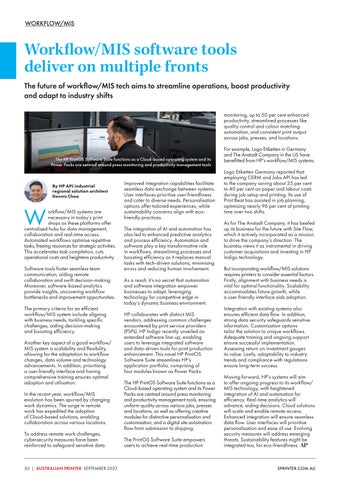
Workflow/MIS software tools deliver on multiple fronts
The future of workflow/MIS tech aims to streamline operations, boost productivity and adapt to industry shifts
monitoring, up to 50 per cent enhanced productivity, streamlined processes like quality control and colour matching automation, and consistent print output across jobs, presses, and locations.
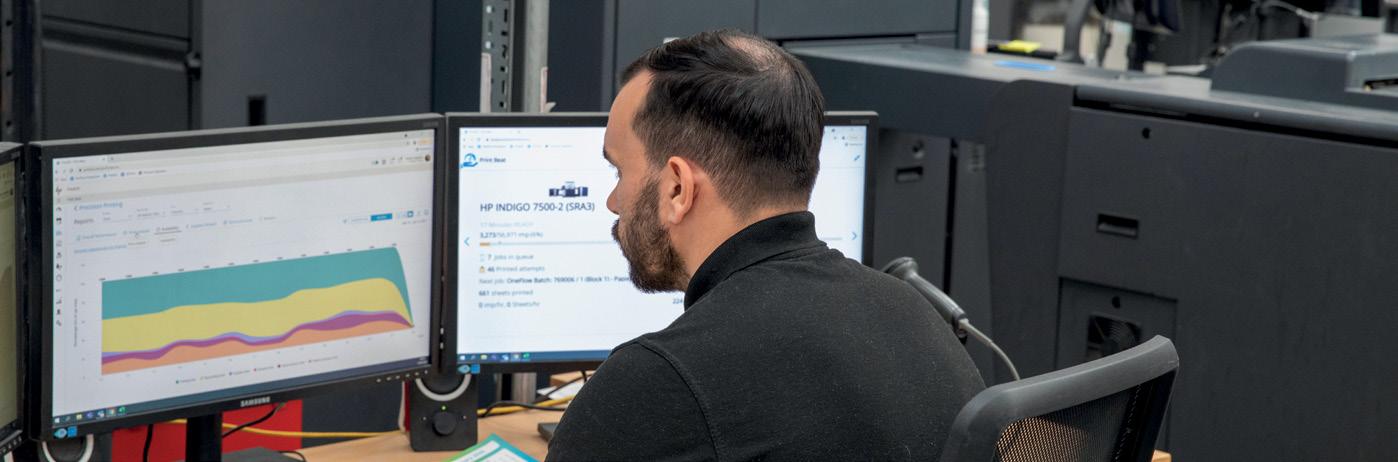
For example, Logo Etiketten in Germany and The Anstadt Company in the US have benefitted from HP’s workflow/MIS systems.
Workflow/MIS systems are necessary in today’s print shops as these platforms offer centralised hubs for data management, collaboration and real-time access. Automated workflows optimise repetitive tasks, freeing resources for strategic activities. This accelerates task completion, cuts operational costs and heightens productivity.
Software tools foster seamless team communication, aiding remote collaboration and swift decision-making. Moreover, software-based analytics provide insights, uncovering workflow bottlenecks and improvement opportunities.
The primary criteria for an efficient workflow/MIS system include aligning with business needs, tackling specific challenges, aiding decision-making and boosting efficiency.
Another key aspect of a good workflow/ MIS system is scalability and flexibility, allowing for the adaptation to workflow changes, data volume and technology advancements. In addition, prioritising a user-friendly interface and having comprehensive training ensures optimal adoption and utilisation.
In the recent year, workflow/MIS evolution has been spurred by changing work dynamics. The surge in remote work has expedited the adoption of Cloud-based solutions, enabling collaboration across various locations.
To address remote work challenges, cybersecurity measures have been reinforced to safeguard sensitive data.
Improved integration capabilities facilitate seamless data exchange between systems. User interfaces prioritise user-friendliness and cater to diverse needs. Personalisation options offer tailored experiences, while sustainability concerns align with ecofriendly practices.
The integration of AI and automation has also led to enhanced predictive analytics and process efficiency. Automation and software play a key transformative role in workflows, streamlining processes and boosting efficiency as it replaces manual tasks with tech-driven solutions, minimising errors and reducing human involvement.

As a result, it’s no secret that automation and software integration empower businesses to adapt, leveraging technology for competitive edge in today’s dynamic business environment.
HP collaborates with distinct MIS vendors, addressing common challenges encountered by print service providers (PSPs). HP Indigo recently unveiled an extended software line-up, enabling users to leverage integrated software and data-driven tools for print production enhancement. This novel HP PrintOS Software Suite streamlines HP’s application portfolio, comprising of four modules known as Power Packs.
The HP PrintOS Software Suite functions as a Cloud-based operating system and its Power Packs are centred around press monitoring and productivity management tools, ensuring uniform quality across various jobs, presses and locations, as well as offering creative modules for distinctive personalisation and customisation, and a digital site automation flow from submission to shipping.
The PrintOS Software Suite empowers users to achieve real-time production
Logo Etiketten Germany reported that employing CERM and Jobs API has led to the company saving about 35 per cent to 40 per cent on paper and labour costs during job setup and printing. Its use of Print Beat has assisted in job planning, optimising nearly 96 per cent of printing time over two shifts.
As for The Anstadt Company, it has beefed up its business for the future with Site Flow, which it actively incorporated as a mission to drive the company’s direction. The business views it as instrumental in driving customer acquisitions and investing in HP Indigo technology.
But incorporating workflow/MIS solutions requires printers to consider essential factors. Firstly, alignment with business needs is vital for optimal functionality. Scalability accommodates future growth, while a user-friendly interface aids adoption.
Integration with existing systems also ensures efficient data flow. In addition, strong data security safeguards sensitive information. Customisation options tailor the solution to unique workflows. Adequate training and ongoing support ensure successful implementation. Assessing return on investment gauges its value. Lastly, adaptability to industry trends and compliance with regulations ensure long-term success.
Moving forward, HP’s systems will aim to offer ongoing progress to its workflow/ MIS technology, with heightened integration of AI and automation for efficiency. Real-time analytics will advance, aiding decisions. Cloud solutions will scale and enable remote access. Enhanced integration will ensure seamless data flow. User interfaces will prioritise personalisation and ease of use. Evolving security measures will address emerging threats. Sustainability features might be integrated too, for eco-friendliness.
WORKFLOW/MIS
SPRINTER.COM.AU 30 | AUSTRALIAN PRINTER SEPTEMBER 2023
By HP APJ industrial regional solution architect Dennis Choo
The HP PrintOS Software Suite functions as a Cloud-based operating system and its Power Packs are centred around press monitoring and productivity management tools

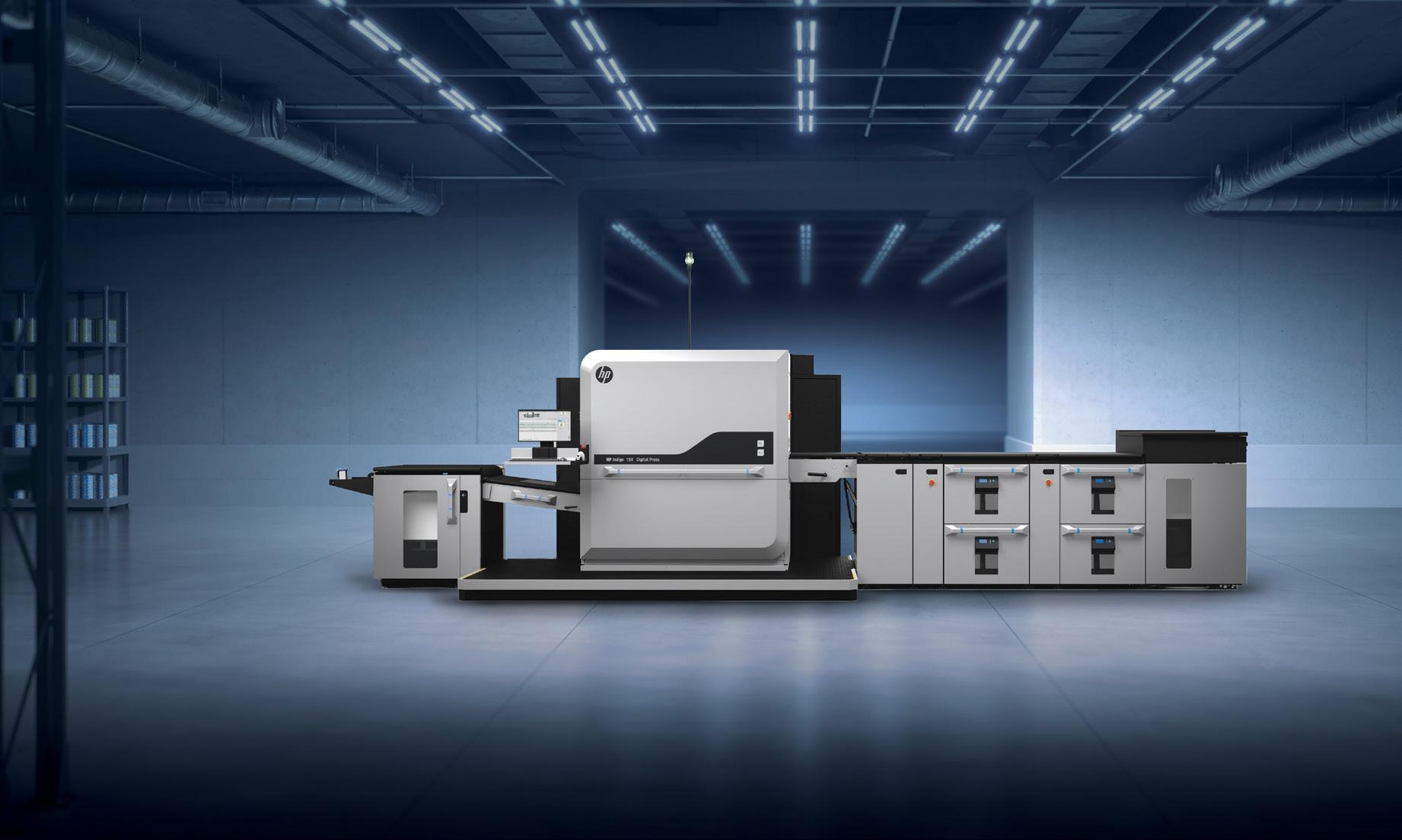
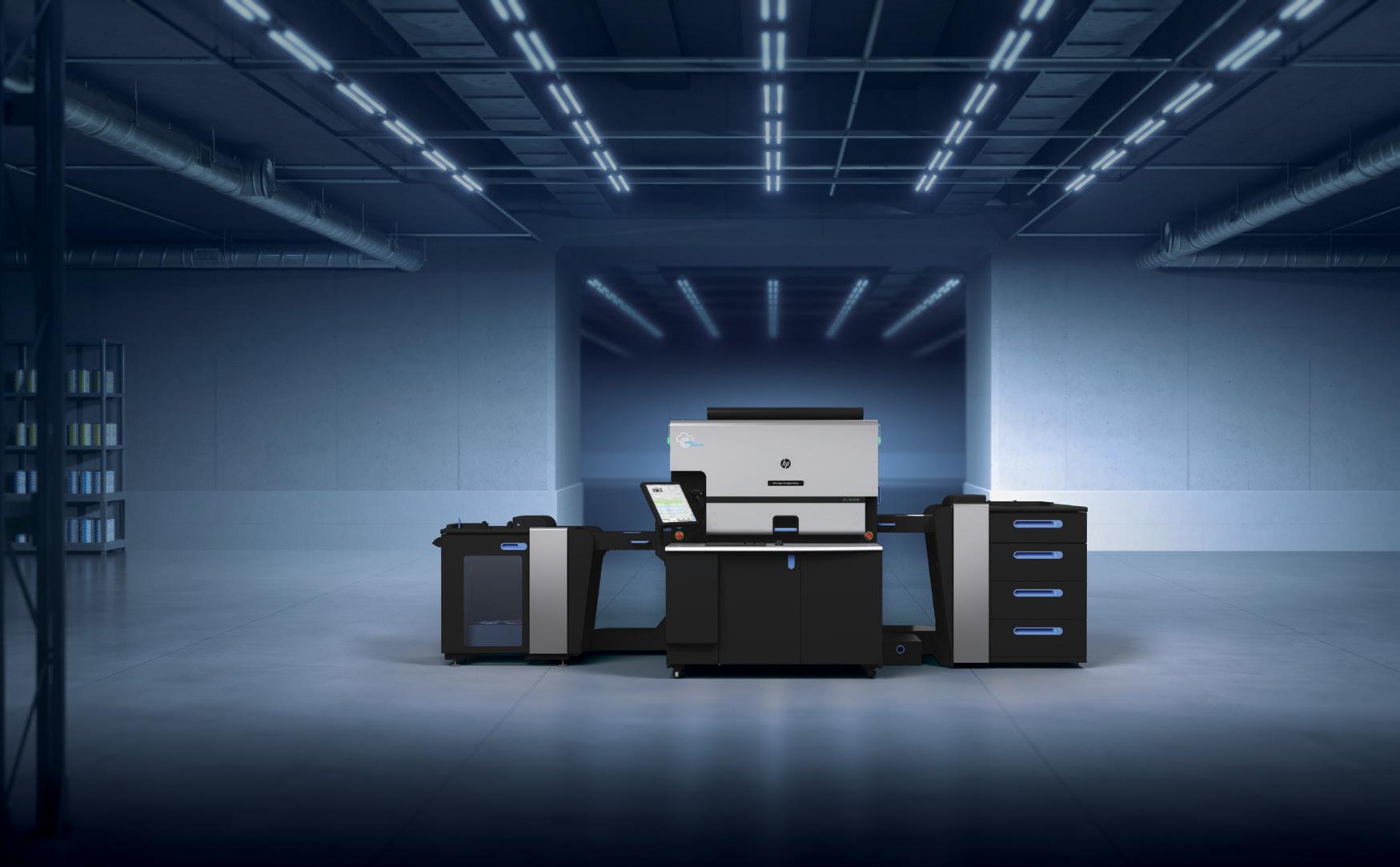
www.curriegroup.com.au
Enfocus solutions, available from Workflowz, stand out due to their focus on automating and optimising prepress and production processes
By Workflowz CEO and managing director Alan Dixon

Today’s customer requirements for workflow and MIS, in the context of printers, revolve around efficiency, automation, integration and analytics. Customers expect seamless workflows that enable streamlined document management, printing, and distribution.

In the past year, the evolution of workflow and MIS for printers has been marked by accelerated digitisation and enhanced user experiences. There’s been a significant shift towards cloud-based solutions, enabling remote access and collaboration.
In addition, the pandemic also initially led to workforce challenges in the Australian print industry, but it also prompted innovation and adaptation in response to changing market dynamics.
AI and machine learning integration have grown, allowing for predictive maintenance and automated troubleshooting. Integration with Internet of Things (IoT) devices has expanded, enabling real-time monitoring and data-driven decision-making. User interfaces have also become more intuitive and customisable, enhancing usability. Additionally, sustainability features have gained prominence, with systems offering tools to track and minimise environmental impact.
Enfocus solutions, available from Workflowz, stand out due to their focus on automating and optimising prepress and production processes. Enfocus offers a comprehensive suite of software tools, with Enfocus PitStop for PDF quality control, Enfocus Switch for workflow automation and Enfocus Connect for seamless file exchange.
Enfocus PitStop is a software solution designed for pre-flighting and editing PDF files in the graphic arts, printing and publishing industries. It’s widely used to ensure that PDF documents are printready and adhere to industry standards before being sent to production. PitStop can detect and flag issues such as missing fonts, incorrect colours, low-resolution images, and more, allowing users to make necessary corrections. Additionally, it provides tools for editing and manipulating PDF content, such as text and images. Enfocus PitStop plays a crucial role in ensuring the quality and accuracy of PDF files throughout the prepress process.
Enfocus Switch is a versatile automation solution, and the company regularly releases updates to improve its features, integration capabilities and user experience. Working from a heritage of being a leader in PDF flight-checking, Enfocus provides an open platform to reduce errors, alleviate bottlenecks and add value.
Enfocus PDF Review is a collaborative tool that simplifies and enhances the process of reviewing and annotating PDF documents.
It enables multiple users to mark up, comment, and approve PDF files in realtime, facilitating efficient collaboration among teams, clients and stakeholders. There are many Enfocus users processing hundreds of thousands of files a day across various market verticals. There is a diverse customer base spanning multiple sectors. For example, Avery needed a solution to help with its file preparation for label production including imposition. Billboard Media provides many services including POS and packaging, again with technical imposition requirements. Vivid Ads works predominantly in the large format space and has specific issues to address in its production pain points. All customers have come to rely on the Enfocus platform to help run their business consistently and reliably.
When incorporating workflow and MIS systems into their operations, printers should consider several key factors, including:
1. Aligning the chosen system with specific business needs and processes to ensure a seamless fit
2. Prioritising scalability to accommodate future growth and changing demands
3. Focusing on user training to maximise the system’s potential and ensure smooth adoption

4. Emphasising integration capabilities to ensure compatibility with existing tools and software
5. Prioritising data security to protect sensitive customer and business information, and
6. Regularly evaluating and updating the system to adapt to evolving industry trends and technological advancements, maintaining a competitive edge to ensure continuous optimisation and alignment with business objectives.
Moving forward, the print industry can anticipate MIS technology to deliver more efficient, data-driven and adaptable solutions that optimise workflows, enhance customer experiences and align with evolving market demands.
However, the MIS needs to be able to interact with the prepress touchpoints, and that is where Enfocus Switch can help to join the dots and add the smarts.
WORKFLOW/MIS
Having a workflow/MIS system that is not just scalable but extensible
SPRINTER.COM.AU 32 | AUSTRALIAN PRINTER SEPTEMBER 2023
Wit
h Enfocus automating workflows in the background, users can concentrate on other tasks
Enfocus integration experts, helping you to automate your way. sales@workflowz.com.au www.workflowz.com Tel: +61 2 8015 2996 when you automate it's no worries, mate
Debunking myths for businesses setting up teams in the Philippines
Expanding manufacturing operations beyond borders offers numerous advantages for Australian businesses, including access to resources and increased market potential
The Lamson Paragon Group CEO Rodney Frost is helping businesses with labour shortages and inflation through another of his companies, Integrated OS, which he started in 2008 with his business partner Grace Monteiro. Integrated OS supports Australian businesses via its boutique process from recruitment to employment, including quality offices to work from. This enables companies to set up their own offshore teams in the Philippines.
The labour market in Australia is as tight as it has ever been, so we all need to think differently to survive, compete and succeed.
Expanding manufacturing operations beyond borders offers numerous advantages for Australian businesses, including access to cost-effective resources and increased market potential. The Philippines has emerged as a prominent destination for establishing offshore teams, thanks to its skilled workforce, strong English proficiency and favourable business environment.
However, before embarking on this journey, it is essential to dispel common myths and understand crucial considerations that can contribute to the success of such ventures.
Myth 1: Lower quality output
One prevalent myth is that offshore teams in the Philippines produce lower quality output compared to domestic counterparts. However, this belief is flawed, as the country has a skilled and educated workforce.

Filipinos are known for their diligence, adaptability, and ability to quickly grasp new concepts. With proper training, guidance, and effective collaboration, offshore teams in the Philippines can deliver high-quality work that meets Australian standards. Our experience has showed that the output of tasks per day are higher in the Philippines.
Myth 2: Language barriers exist
Another misconception often encountered is the assumption that the language barrier will impede effective communication. In reality, the Philippines ranks highly in English proficiency indexes, making it easier to engage with the local workforce.
Moreover, many Filipinos have extensive experience working with international clients and possess excellent communication skills. Collaborative tools, such as video conferencing and project management software, further enhance communication and bridge any potential gaps. These tools put your extended team right at your fingertips, giving you total comfort.
Myth 3: Limited technological infrastructure
Some businesses hesitate to set up teams in the Philippines, fearing a lack of sufficient technological infrastructure. However, major urban centres such as Manila, Cebu and Clark boast state-of-the-art facilities, reliable internet connectivity, and robust IT support. These cities host numerous business process outsourcing (BPO) organisations, indicating the availability of advanced technology and the infrastructure required to support manufacturing operations effectively.
Debunking the myths regarding quality output, language barriers and technological infrastructure paves the way for successful collaboration. But setting up teams in the Philippines to support Australian manufacturing businesses should be approached with careful consideration and a realistic mindset. Here are some considerations to be aware of:
Consideration 1: Cultural alignment
Cultural alignment plays a crucial role in establishing effective and harmonious team dynamics. Australian businesses should invest in cultural awareness and training programs to bridge any gaps between cultures. Understanding Filipino customs, values and work ethics will foster strong relationships and promote a positive work environment. Encouraging open communication and respecting cultural differences will lead to improved collaboration and productivity.
Consideration 2: Legal and regulatory compliance
Before setting up offshore teams, Australian manufacturing businesses must navigate the legal and regulatory landscape of the Philippines. Familiarising themselves with local labour laws, taxation policies, intellectual property rights and data protection regulations ensures compliance with local requirements.
Engaging the services of legal advisors or partnering with reputable outsourcing firms will help navigate these complexities and ensure seamless operations within legal boundaries. There are companies and business models that assist and take this entire consideration off the table.
Consideration 3: Talent retention and development
Retaining top talent is crucial for the long-term success of offshore teams. Developing attractive employee benefits packages, career growth opportunities and training programs can help create a sense of loyalty and build a committed workforce.

Regular performance evaluations, reward systems and recognition programs also foster motivation and engagement. Moreover, investing in upskilling and continuous learning opportunities strengthens the skillset of the team and positions them as valuable assets. When partnering with a provider, the retention rate of their existing teams should be your number one area of focus.
As such, embracing cultural alignment, complying with legal requirements and prioritising talent retention and development are vital for creating a strong offshore team. By leveraging the advantages offered by the Philippines, Australian manufacturers can unlock new opportunities and drive growth in today’s interconnected world.

SPRINTER.COM.AU 34 | AUSTRALIAN PRINTER SEPTEMBER 2023 OFFSHORE TEAMS
Local manufacturers can drive growth by leveraging resources from the Philippines
now wegoloop-de-loop Rilecart double-loop binding spools now supplied by Hilton Laminating. rilecart@hiltonlaminating.com.au 03 8769 1666
Having optimism for the future
Matt Aitken and Kellie Northwood reflect on the PVCA’s 2022 financial year (1 January to 31 December 2022) and reveal what the industry can expect moving forward

benefits that our members can expect in the year ahead include:
Industry-specific workplace relations advice and legal services: We are committed to providing reliable and trusted workplace relations advice and legal services that are tailored to our industry. You can confidently seek guidance from our experts, ensuring compliance and fair treatment for your employees. We have also developed a sophisticated online resource centre, giving you access to valuable information and tools.
Matt Aitken – Through an era of growth, diversity and opportunity across the print industry in Australia and the region, we have reached a pivotal moment that calls for introspection, reflection and forwardthinking. The journey of uniting the two largest industry associations and embarking on a repositioning project has not been without its challenges. It has demanded honest discussions, uncomfortable questions and deep intelligence gathering to define our identity in the present and the future. Amidst the challenges, we find solace in the strength of our industry.
Together, we have moved beyond traditional print-centric language and positioning, recognising that our membership encompasses packaging, publishing, mail, warehouse and logistics, suppliers and producers – all as one industry. We are an interrelated industry, united by the end products we create using ink, engineering, craft, skills, workflow solutions and optimised distribution. Our new name is a steppingstone in this journey, a representation of our commonality and our unique manufacturing status within the Australian economic landscape. Our contribution to the economy remains significant, and in the coming year, governments at all levels will gain a deeper understanding of our
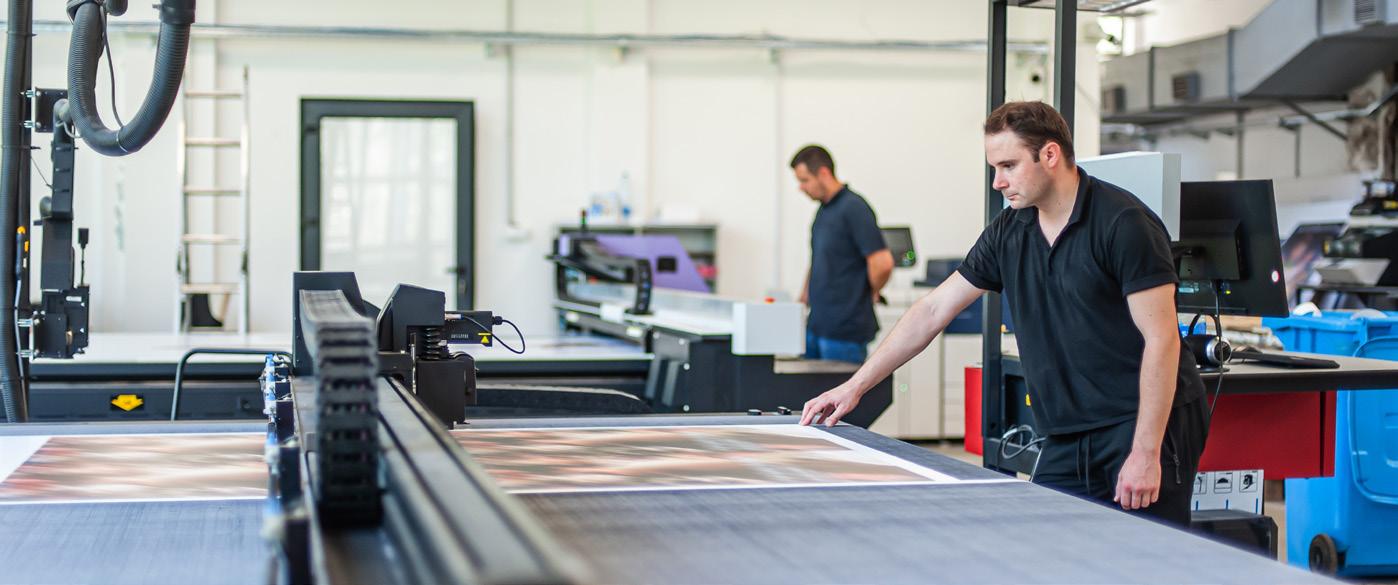
industry’s impact. With an $18.9 billion industry and employing approximately 258,000 Australians across the country, we proudly stand as one of the largest manufacturing employers, providing skilled and unskilled labour in both metropolitan and regional areas. Our commitment to driving economic growth and employment opportunities with improved skills and training programs, remains unwavering.
As we move forward, I want to assure you that our core commitment remains steadfast. We are dedicated to maintaining all levels of service and output while charting a new strategy that aligns with our evolving industry landscape. Our new strategic pillars, focused on Skills & Training, Engagement Leadership and Growth, IR/HR Advisory Policy and Governance, and Environmental Social Governance, will guide our efforts to meet the evolving needs of our members and drive industry-wide success. I am filled with optimism for the future of our industry. The challenges we face are opportunities for growth and innovation. Together, we will navigate the everchanging landscape, embrace emerging technologies and foster an inclusive and sustainable visual media industry.
Kellie Northwood – We recognise that our association’s strength lies in the collective efforts of our members. Our revamped strategic focus will empower our industry and drive positive change. Within these targets, the main

Skills and training revitalisation: Recognising the dynamic nature of the industry, we will look to offer workshops, seminars and webinars covering various aspects of print production, packaging, mail and distribution, technological advancements, design principles and emerging trends. We will also facilitate access to industry experts, government departments, tertiary facilities and more, all who can share their knowledge and experiences for your betterment. We also want to develop apprentice and certification programs that validate members’ expertise and proficiency across a common industry standard.
Industry collaboration and networking: By facilitating connections and encouraging idea sharing across a wide range of topics, we aim to create a vibrant industry community that propels growth and innovation.
Access to industry-specific standards and environmental social governance (ESG) programs: Members will have access to our industry-specific standards and programs, empowering you to implement sustainable practices, demonstrate social responsibility and uphold strong governance throughout your operations.
Better business tools: Our Better Business Tools programs offer a range of benefits, including discounts, resource portals, reports and incentives across various services. Take advantage of these programs to enhance your operations.
Advocacy across government: Through our proactive engagement with federal and state governments, we will work to ensure that policy supports a productive industry and that decision-makers understand the crucial role our industry plays in driving economic growth.
PRINT & VISUAL COMMUNICATION
PVCA president Matt Aitken and CEO Kellie Northwood address the what the industry can expect from the PVCA in the coming months.
SPRINTER.COM.AU 36 | AUSTRALIAN PRINTER SEPTEMBER 2023
Matt Aitken is the president of the Print and Visual Communication Association of Australia, while Kellie Northwood is the CEO of the Print and Visual Communication Association of Australia.
PVCA’s new strategy aligns with the evolving print industry landscape
The role of graphic design in print
to know where the print will be positioned, both physically in a location and theoretically in the sales funnel. Again, there are three categories:
• High-funnel – This will be encountered early in the sales funnel and is potentially a first touch point. The purpose is to make people generally aware of the product. They are physically placed off-site in locations surrounding the business. They could be flyers, corflute signs, banners, stickers or car wraps. The content should clearly communicate directional ‘how’ information. The secondary focus is brief but powerful ‘what’ information about the product. This could be just a few words like ‘sale’ as you want people to understand the message in a moment. Don’t be clever, be clear. Content balance priority is How, What, Who.
Daniel Edwards is the founder of Posterboy Printing. He has worked in the printing industry since 2002 and has worked on thousands of print jobs with hundreds of Australia’s top marketers. He is also the author of The Power of Print.

Graphic design is a field many managers stumble into with little understanding of getting the best out of print. Some outsource this to a graphic designer, but many will pinch pennies and use free online design tools.
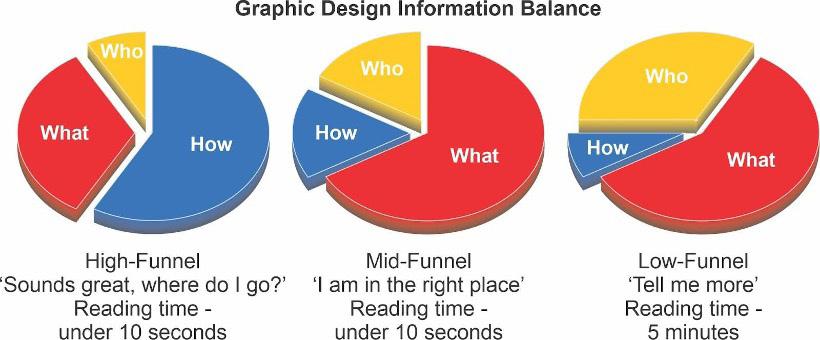
Generally, they want to put something together that ‘looks nice’. They are more likely to be hung up on colours or font choices than on making decisions that will impact the effectiveness of a design. The following steps will help managers and designers improve the ROI of their print or signage:
First, understand that every single piece of marketing collateral has the same single purpose: moving customers to the next step. Before beginning graphic design, the manager needs to know what the next step is.
After seeing this design, specifically, what do I want the reader to do? This will change from piece to piece – it might be to walk to the left, it might be putting a date in their diary, scan a QR code, or pick up a product from the shelf. Whatever form the
step takes, it is always projecting people towards the ultimate point of purchase.
Once we know the next steps, it is time to look at the content. The content of any graphic design falls into one of three categories:
• What is for sale? This includes information about the product, features and benefits, a detailed breakdown or maybe just an image of the product.
• Who is selling it? This includes information about the brand selling the product. Potential buyers need to know the seller to give them the confidence to make the purchase.
• How do people get the product? This tends to be functional. For example, the inclusion of a URL, a QR code, a directional arrow, a date, a time, an address and so on.
With content arranged into three categories, the next step is to balance it. To know the correct balance, we need
• Mid-funnel – This will be physically placed onsite a business, possibly surrounding the product, or offsite but directly outside the business. They might be posters hanging in the store, banners in the windows, stickers on the products or wobblers on the shelves. Their purpose is to tell customers that they are in the right place to get the product. The content briefly outlines the products while maintaining promotional branding colours, images and messaging. It is possible to use the same artwork used for high-funnel without the directional elements. Clarity of the message is key. Content balance priority is What, How, Who.
• Low-funnel – This will be physically very close to the product. Ideally, it can be read while within reach of the product. A customer at this point in the journey is very close to the purchase decision and they will probably have questions. If they want to know more, then this print will educate them. This could be a poster or a strut card next to a product or a multi-page booklet full of information and details. Don’t let people go to their phones to research because that will bring other brands and vendors into consideration. The best time to influence a buyer is when they are within arm’s reach of the product. The content should be focused on the product, answering frequently asked questions in detail. Include some information about your brand. Content balance priority is What, Who, How.
SPRINTER.COM.AU AUSTRALIAN PRINTER SEPTEMBER 2023 | 37 PRINT EXPERTISE
To design high-return print collateral, the function of the print and its position in the customer’s journey must be understood long before discussions of font and colour
Any graphic design should begin with defining the next steps, and then the physical context of where it will be deployed
Here’s why print businesses should not dodge disastrous reviews
The next time a disaster strikes, ask your customer for feedback on how you handled the problem, whether was it resolved to their satisfaction, and how you can do better in future
loyal customers about how you saved the day are testimonial gold – especially if the problem was “your fault” and you acknowledge that.
Fighting with printers over botched jobs is not uncommon. Since no professional print buyer with big clients will ever believe your work is error-free, highlighting your mistakes and how you fixed them gives this group peace of mind and a glimpse into what they can expect when things go wrong – no matter who is at fault.
On a recent episode of PrinterChat, a Podcasts from The Printerverse series co-hosted by me, Jamie McLennan, creative print strategist at US-based DMR Graphics and Will Crabtree, owner of US-based Tampa Media, discussed the topic of testimonials for print businesses.
The discussion came up when we spoke about finding, hiring, training and keeping sales stars with our guest Paul Castain, chief sales officer at New-York based sales training and coaching company Castain Training Systems.
The entire episode and part one of our discussion with Castain is worth a listen whether you are in sales or not.
“If you can dodge a wrench, you can dodge a ball,” Patches O’Houlihan said in theDodgeball: A True Underdog Story movie. Have wiser words ever been spoken?

Patches’ strategy for being prepared for the worst to master the best of circumstances applies to more than just wrenches and dodgeballs. It can be applied to your testimonial strategy to attract customers with more complicated needs, and bigger budgets.
In a recent podcast, I mentioned that in my agency days, I would provide recommendations and testimonials based on how a printer dealt with a crisis.

If there wasn’t a crisis to call upon, I focussed on how they resolved an issue. If the printer was lucky, we had experienced both and I had more to share about the recovery process.
“When something goes wrong, this company will make it right” … is the foundation of a testimonial that will attract agencies and print customers with big budgets who admittedly cause problems as well as get caught up in them.
A printing partner is crucial at this moment in time from the buyer’s perspective. Those testimonials will stand out and provide a broader range of customer experience perspectives than only sharing testimonials when everything goes right.
The next time a disaster strikes, ask your customer for feedback on how you handled the problem, whether was it resolved to their satisfaction, and how you can do better in future.
It’s incredible intel to share with your team, it can lead to proactive process changes and increased productivity, and the worst disaster stories shared by happy,
In part two, he shares some of the best interview questions applicable for any role in any company I’ve ever heard, and advice for hiring employees who will perform, and last. It was at that point in our conversation that testimonials came up.
Spoiler alert: Castain took this concept and morphed it into a winning sales strategy. It works especially when you are up against multiple companies for an account.
Scan this QR code to listen to part one of the episode

Scan this QR code to listen to part two of the episode

SPRINTER.COM.AU 38 | AUSTRALIAN PRINTER SEPTEMBER 2023 TALES FROM THE PRINTERVERSE
Deborah Corn is the Intergalactic Ambassador to The Printerverse at Print Media Centr, a Print Buyerologist, international speaker and blogger, host of Podcasts From The Printerverse, cultivator of Print Production Professionals, Head Girl in Charge at Girls Who Print, host of #PrintChat, the founder of International Print Day and the founder of #ProjectPeacock.
Patches O’Houlihan throwing a wrench in the Dodgeball: A True Underdog Story movie
How to get more out of your team
the field
and their work from a new perspective – your goal is to improve their individual levels of fulfillment and achievement at work so that you can improve everyone’s enjoyment at work and at the same time, increase their overall results.
3. Start out by reminding your team of your business’ reason for being. What is it that you’re all working so hard to do? How do you improve your customers’ lives? Or what change are you seeking to make in the world?
4. Then share some of your personal experiences in being able to play to your strengths in your role and the impact that it has had on you and your clients or colleagues.
5. Now ask each person to write down the answer to the question “What is unique about you that leads to your happiest times and best performance at work? Reflect on a specific time –perhaps on a job or perhaps at home – when you were acting the way you were ‘born to act’?”
To unlock profitability through emotional engagement in marketing and communications, Meqa Smith launched The Unforgettable Agency, which she currently heads as its strategist.

Everybody is feeling the pressure to do more with less at the moment. Margins are tight, costs are rising, customers are still looking for competitive pricing, talent is scarce and you don’t want to risk pushing your people too hard – but there’s no escaping the need to keep things in the black.
You don’t have much budget to work with, and you need things to improve as fast as possible. So, now is not the time to be hiring consultants or trying to implement training programs that could be expensive and results are not guaranteed.
What can you do?
Get creative and be resourceful. Try thinking like a coach and consider whether you’ve got all the right players in the right positions on the field, and whether they’re all feeling match-fit.
When people know where they play best, are leveraging their strengths and have a clear shared goal, they find it easier to do what needs to be done so you get better results and have happier people. Win-win.
But how do you get there?
The first thing you need to know is where intrinsic motivation comes from. It’s a part of our brain called the Seeking System and you activate it with the combination of these three things:
• A sense of purpose
• A sense of self-expression
• The ability to experiment
I can hear you thinking “Okay, thanks MacGyver, but what specifically can I do to activate this in my people?”
Here’s an exercise that has been tested by big corporations and delivered results – like an 11 per cent increase in customer satisfaction and a 32 per cent improvement in retention. It’s called “Best selves at work” and here are some strategies from the exercise:
1. Get your team together for a couple of hours of uninterrupted time in a room with no distractions.
2. Set the scene and explain to them that you’ll be going through a process that might seem strange but that it will challenge them to think about themselves
6. Then explain they need to pick someone in the team that they don’t work with often and introduce their best selves to each other. Depending on the size of the group, you could have everybody share with the entire group.
7. If you can, hand out something people can take away with them to cement the experience. It could be a company branded shirt, journal or maybe a team lunch where you take a picture to share digitally with each person and post somewhere others can see it.
This process will remind people of the business’ vision and help them to focus on their personal strengths. They’ll see each other in a different light and understand the capability they have individually and together.
Doing this will activate their seeking systems, improve their individual levels of performance and help them work more effectively together.
As their leader, it could help you to spot opportunities to move people around or offer additional support in a way that’s aligned with their strengths rather than focusing on their weaknesses.

Overall levels of employee engagement should improve across the board which should translate to improved results all round.
If you try it, I’d love to hear how it went. Good luck!
SPRINTER.COM.AU AUSTRALIAN PRINTER SEPTEMBER 2023 | 39 PEOPLE
Pushing them harder isn’t the solution – try thinking like a coach and consider whether you’ve got all the right players in the right positions on
When people know where they play best, they find it easier to do what needs to be done
Three tips to avoid the ‘slow no’
from you” or “This is not what I want from you”.
At this point, I would like us to separate the ‘slow’ from the ‘no’. If you can accelerate the process of getting to the final decision, you are probably better off. And you can often do that by setting expectations and accompanying timelines. “Can I ask you to let me know by (some specific date)?” is a fair question for a salesperson to ask.
Tip #2: Do not be afraid to manage your customers, with ‘firm’ being a key word. Yes, there is a line that you do not want to cross, but again, if you are unlikely to succeed, you want to know that sooner rather than later.
Probability of success
Now let us move from the ‘slow’ to the ‘no’ and give some thought to how you can actually measure your probability of success. On one hand, you can guess at it. On the other hand, you can simply ask the person who is most likely to know!
One of my clients introduced me to a new sales term. “The ‘slow no’ is the worst,” he said. “That describes the situation where you put a lot of time and effort into developing a new client and it drags on and on, and then you end up not getting anywhere. You would be much better off knowing right from the start that you are barking up the wrong tree.”
I agree, although I am not sure that you can always know right from the start. Still, any time that you are unlikely to succeed, especially in something that involves a long chase, you are better off figuring that out sooner rather than later.
Yup, it’s a duck!
One of my high school teachers introduced me to the Duck Test about 50 years ago. If it looks like a duck, swims like a duck, and quacks like a duck, then it probably is a duck. Here is how that applies to printing sales. If it looks like a poor use of time, based either on instinct or past experience, then it probably is a poor use of your time.

When I reviewed my client’s ‘slow no’ experience with him, he admitted that there were at least a couple of points during the long process where he should have realised that he was wasting his time. “I have definitely been there and done that,” he said, “but I guess I did not learn everything that I could have from the experience.”
Tip #1: Learn from experience, and recognise the patterns of both failure and success. When experience or instinct — tells you that you should be looking for a better opportunity, do just that!
Customer management
I remember a conversation I had with another client some years ago. We were talking about customer management. Her position, as I recall, was that firm customer management is critical because (a) it is part of great customer service, and (b) because it is the best way to keep your customers from making you crazy. This particular client seemed never to be afraid to tell a customer: “Here is what I need
This might be thought of as a ‘trial closing’ question, and it is a question you can ask at both at multiple times and multiple points in the selling process: “Based on where we are right now, what would you say are the chances that you will move forward with this project and that I will get the order?”

A high likelihood would suggest that you hang in there. A low likelihood suggests that you might be heading for a ‘slow no’. A high likelihood of the buyer moving forward with the project coupled with a low likelihood that you will get the order should at the very least get you thinking about what you could be/should be doing differently to increase your probability of success.
Tip #3: Don’t guess, ask! There is a huge difference between “I think I have a chance” and “I know I have a chance”. Remember, too, that this can be measured more accurately than just ‘good’ or ‘not-so-good’. I frequently ask my own prospects to give me a percentage, and I have learned that I can often sell myself into a 50 per cent likelihood but almost never into a 10 per cent chance. Just like you, I want more clients to say ‘yes’ than ‘no’, and especially ‘slow no’! Time is money. This all comes back to using your time wisely.
SPRINTER.COM.AU 40 | AUSTRALIAN PRINTER SEPTEMBER 2023 FELLMAN CLASSICS
Performance buyers are much better for your business than clients that are focussed on receiving the lowest pricing from you
Dave Fellman is the president of David Fellman & Associates, a consulting firm serving the graphic arts industry. Visit his website at davefellman.com.
Applying the Duck Test: If it looks like a poor use of time, it probably is

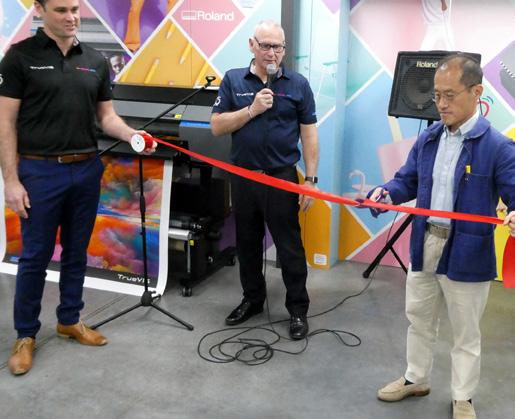

 Epson’s first quarter revenue up as profit falls
Oliver Luedtke takes over as CEO at ColorGATE
September 2023 I powered by Wide Format Online
Roland DG opens new Melbourne Creative Centre
Ricoh sales and profit increase in first quarter
Epson’s first quarter revenue up as profit falls
Oliver Luedtke takes over as CEO at ColorGATE
September 2023 I powered by Wide Format Online
Roland DG opens new Melbourne Creative Centre
Ricoh sales and profit increase in first quarter
Roland DG opens new Melbourne Creative Centre
In a move that was held up by COVID, Roland DG has now opened a fully operational showroom and Creative Centre for the first time in five years.
In attendance was its president and CEO of Korea, China and Oceania Chi Hun (Charles) Seo and local management, plus dealers and customers from all over Australia.
As Roland DG product and marketing Manager Greg Stone noted, “We were just about to sign a new lease when the first COVID lockdown happened. Naturally, that was put on hold, but we now have this fully functional Creative Centre to support our customers and resellers”.
The new centre is decorated, walls and doors alike, in Re-board recyclable fluted fibre panels from Spicers and printed, die-cut and converted by Melbourne shop Resolution Imaging.
Epson Q1 revenue up as profit falls
Epson’s reported revenue for the first quarter was ¥314.8 billion ($3.35 billion), an increase of 5.7 per cent year-on-year, while overall business profits were down 31 per cent year-on-year. Profit from operating activities was ¥19.7 billion ($0.21 billion), down 36.8 per cent from the prior-year period.
“Revenue in the commercial and industrial printing business sharply increased,” the company said, adding that “the global economy in the first quarter of the year under review showed stronger signs of a global economic slowdown, with ongoing high inflation and the tightening of monetary policy by countries around the world”.
“The slow pace of economic recovery in China has had a particularly significant impact on the global economy. Meanwhile, although US consumption has thus far remained firm, there are growing concerns about an economic downturn in Europe and North America.
“Moreover, the economic growth rate in emerging countries is also decelerating. Looking at the situation by product market, the device market, and the semiconductor market in particular, has entered an
Roland DG sales manager Shane Adams said, “Resolution created the whole décor as a custom job for us; they measured up, printed and CAD-cut everything to fit perfectly”.
Resolution uses both Eco-solvent and Resin (latex) Roland TrueVis printers.
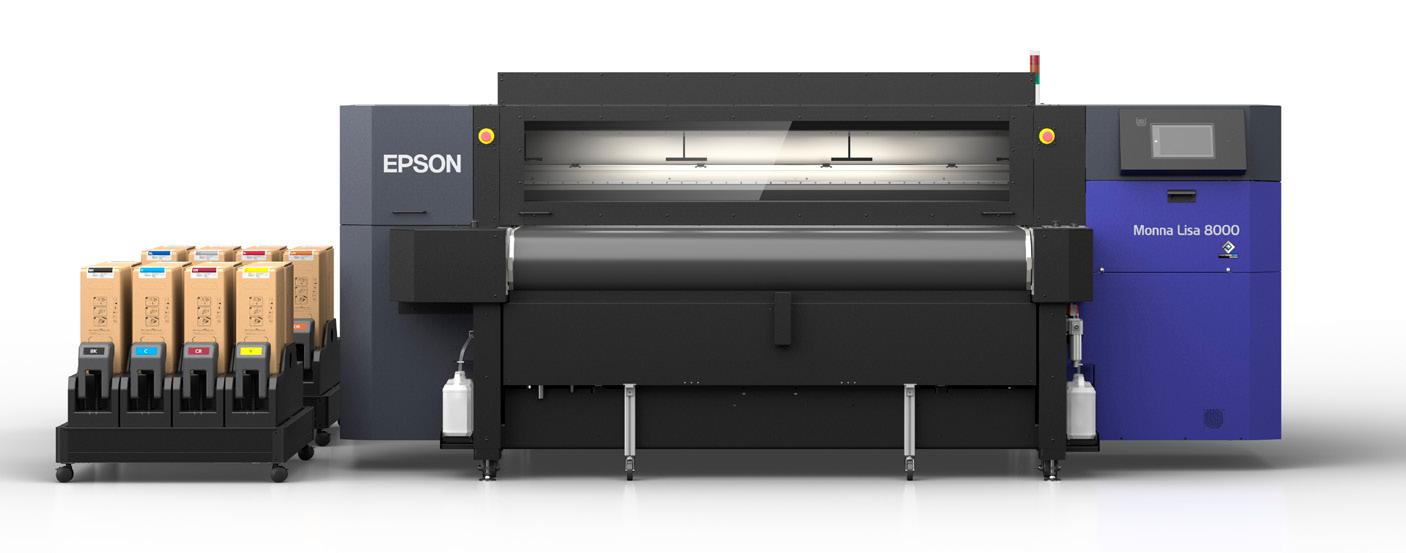
Present to celebrate the opening, joining Seo, Stone and Adams, was the company’s global strategy manager Conrad Birkett, who is based in Australia but spends a quarter of the year helping Roland branches throughout Asia-Pacific; as well as Roland dealers and customers.
Inside the centre, visitors see and train on a good range of Roland DG equipment, including milling and shaping. The partial list of machines in the centre includes the Versa UV LEF2-3000 printer, VersaStudio GS2-24, TrueVis VG3-540 printer, TrueVis MG-640 printer, TrueVis AP-640 resin printer, VersaStudio BN-20, CAMM-1 GR2-640 vinyl cutter and the DWX-42W and DWX-53DC DG Shape milling machines.
Located 30 minutes from Melbourne’s CBD at Nunawading, the Creative Centre is ideally located for access from all areas of Melbourne metropolitan and regional Victoria.
In cutting the ribbon to officially open the Creative Centre, Seo said “In opening this centre, we are delighted to welcome so many customers, dealers and trade media. It is another demonstration of Roland DG’s unceasing support for its products and customers”.
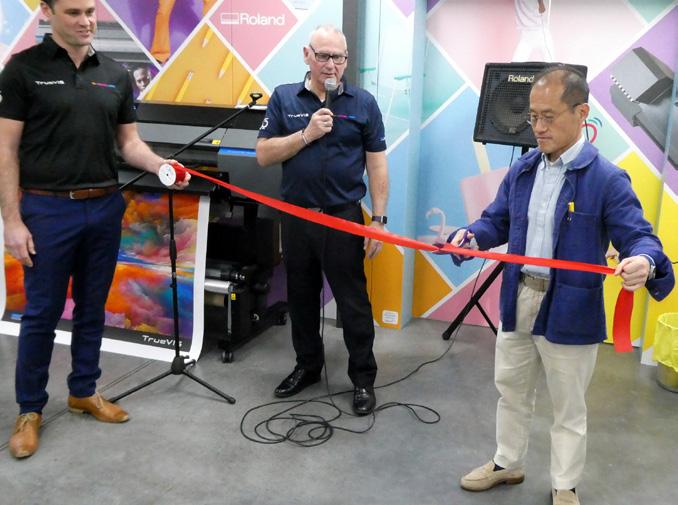
Roland DG managing director, who is also president of industry association Visual Connections, John Wall, could not make the opening due to illness.
inventory adjustment phase due to a decline in demand since the peak, and the market situation is deteriorating.
“As for the future, risks such as high global inflation and a protracted economic slowdown are ongoing, and the future is clouded by uncertainty. Epson will continue to closely monitor trends moving forward.”
The company mentioned that its printing solutions and visual communications segments were the primary beneficiaries.
It reported that its revenue in the office and home printing business increased. While unit sales of ink cartridge printers sharply decreased, inkjet printer revenue increased. Revenue benefitted from an
increase in unit sales of high-capacity ink tank printers in emerging markets, growth in sales of office shared inkjet printers with the launch of high-speed linehead inkjet multifunction printers, and positive foreign exchange effects.
Sales of inkjet printer consumables increased owing to growth in sales of ink cartridges, ink bottles for highcapacity ink tank printers and ink for office shared printers.
“As a result of the foregoing factors, revenue in the printing solutions segment was ¥215.1 billion ($2.3 billion), up 8.8 per cent from the prior-year period. Segment profit was ¥22.3 billion ($0.24 billion), up six per cent from the prior-year period,” Epson said.
WIDE FORMAT
SPRINTER.COM.AU 42 | AUSTRALIAN PRINTER SEPTEMBER 2023
Roland DG’s Greg Stone, Shane Adams and Charles Seo at the ribbon cutting ceremony
The Epson Monna Lisa ML-8000 textile printer
Trade shows booming after three-year “crisis”: report
Global trade show organiser Messe Frankfurt is on track for an estimated €600 million ($902 million) in sales revenue for 2023 and says the trade event business is “firing on all cylinders again”.
“The Group is able to operate at full force largely thanks to the decision by top management not to lay off any staff during the three-year crisis period,” Messe Frankfurt, organiser of hundreds of trade shows a year, said.
“Messe Frankfurt has been able to continue its growth course more quickly than anticipated and now expects a further increase in sales for the current financial year. Around 340 events are being held under the Messe Frankfurt umbrella in 2023. After a very dynamic first six months, projections for the second half of the year are also good.”
Messe Frankfurt’s tradeshow for the printing industry is Heimtextil. The next edition of this event will run from 9 to 12 January 2024.
Wolfgang Marzin, president and CEO of Messe Frankfurt, said, “Having the event business firing on all cylinders again with a high international component and high satisfaction levels demonstrates the commitment throughout all sectors.

“Financial year 2023 is well above our expectations. If everything continues in this positive vein, we expect another positive operating earnings performance in 2023.
“And we will be on track for an estimated €600 million ($902 million) in sales, even though the rotation of events means that a smaller number of Messe Frankfurt events are being held at our Frankfurt base this year.”
Kyocera Q1 sales and profit dip down
Kyocera said a decline in demand and increased costs saw sales revenue for the first quarter decrease by 2.5 per cent to ¥479.42 billion ($5.13 billion), which “more than off-set a positive impact from the weaker yen”. Operating profit was down 38 per cent.
“During the three months ending 30 June 2023, in addition to continuing uncertainty in the global situation, inflation progressed worldwide, resulting in unstable financial and foreign exchange markets,” Kyocera said.
Corporate watchdog the ACCC has published a new draft guidance to improve the integrity of environmental and sustainability claims made by businesses and protect consumers from ‘greenwashing’.
A recent ACCC survey found that 57 per cent of businesses were making potentially misleading environmental claims.
“As consumers become more environmentally conscious, businesses need to be honest and transparent when making environmental or sustainability claims so consumers are not being misled,” ACCC Chair Gina Cass-Gottlieb said.

“False or misleading claims can undermine consumer trust in all green claims, particularly when consumers are often paying higher prices based on these claims. Similarly, businesses that are taking genuine steps to adopt sustainable practices are put at a competitive disadvantage by businesses that engage in ‘greenwashing’ without incurring the same costs.
“Our draft guidance sets out what the ACCC considers to be good practice when businesses make environmental claims about their products
and services as well as making them aware of their obligations under the Australian Consumer Law.”
The draft guidance identifies eight practical principles which the ACCC encourages businesses to apply when making environmental claims. By following these principles, businesses are less likely to mislead consumers and contravene the Australian Consumer Law.
“Businesses must provide clear, accurate and trustworthy information to consumers about any environmental or sustainability claims and be able to provide evidence to back them up,” Cass-Gottlieb said.
“If you make a claim about the environmental or sustainability benefits of your product or service – make sure it’s right, and if you are unsure or can’t substantiate these claims, then don’t make the claim.”
Consultation for the draft guidance closed on 15 September 2023.
“Demand adjustments have continued in the semiconductor-related and information and communications markets, which are our principal markets. As a result, due mainly to the decrease in demand for our principal products, sales revenue for the first quarter decreased by ¥12.534 billion ($0.13 billion), or 2.5 per cent, as compared with the three months ending 30 June 2022, which more than off-set a positive impact from the weaker yen in pushing up sales revenue. Profit decreased as compared with the previous first quarter, due mainly to factors such as increases in the prices of raw materials and energy costs.”
In addition, Kyocera’s operating profit decreased by ¥15.75 billion ($0.17 billion), or 38 per cent, to ¥25.67 billion ($0.27 billion), profit before income taxes decreased by ¥18.23 billion ($0.19 billion), or 26.5 per cent, to ¥50.47 billion ($0.54 billion).
WIDE
FORMAT
Messe Frankfurt CEO Wolfgang Marzin
ACCC releases draft guidelines on ‘potentially misleading’ greenwashing
SPRINTER.COM.AU AUSTRALIAN PRINTER SEPTEMBER 2023 | 43
ACCC chair Gina Cass-Gottlieb
Printed signage expands despite ‘fierce competition’ from digital: report
The global printed signage market will surge from $US42 billion ($64 billion) in 2023 to $US45.8 billion ($70 billion) by 2032, according to a new report by Market Research Future.
“The market for printed signage is expanding primarily due to an increase in the use of printed signage in shopping centres, retail establishments and other locations,” the report said.
“Market expansion is once again being driven by ease of deployment without the requirement for additional maintenance expenses. In contrast to the software or electrical system powering a digital sign, print signage is dependable and unlikely to malfunction.
“Physical printed signs are very effective in signposting or branding when utilised correctly and with clear branding and content. Additionally, print signage is highly economical, particularly now that print technologies have evolved and material costs have decreased. In addition, because this sort of signage
Ricoh sales and profit increase in first quarter
Ricoh recorded a robust year-on-year sales increase of 16.4 per cent to ¥534.6 billion ($5.7 billion) in the first quarter of fiscal 2023 (April 1 to June 30, 2023), with gross profit up 13 per cent to ¥190.1 billion ($2 billion).
“Although concerns about the spread of COVID-19 and shortages of parts due to disruptions in global supply chains have improved, the global economy slowed down gradually due to the prolonged global inflation and the rise in policy interest rates,” Ricoh said.
“During the first quarter of this fiscal year, Japan’s social and economic activities were normalised as a result of the category shift of COVID-19 to Class 5 infectious diseases, and increased demand for products inbound. On the other hand, the future uncertainty continued due to soaring raw material
is so inexpensive, especially pop-ups, A-boards, vinyl tie-signs, and pull-up stands, several versions can be made for various events.
“The main factors aiding the printed signage market to endure in the face of fierce competition from the rising digital signage are the low deployment costs and longer lifespan of these types of signs.”
In 2022, the banner and background market was the largest in the world.
This is because of its extensive use in the retail industry. Particularly in the retail sector, these have a history of enticing customers to make impulsive purchases and attracting them into the business.
With respect to print technology, the printed signage market is segmented into screens, inkjet, sheetfed, and other print technologies.
In 2022, the global market was dominated by the sheetfed category. From 2023 to 2032, it’s anticipated that the Asia Pacific industry will experience significant expansion.
The availability of raw materials, population growth, entry into new end-user markets, increasing product innovation, rising product sales, expansion of the retail, office, healthcare, and hospitality sectors, as well as rising disposable income are all important market expansion drivers, according to the report.
The company’s sales for the first quarter increased by 16.4 per cent as compared to the previous corresponding period, to ¥534.6 billion ($5.72 billion).
It said sales increased mainly in the office service business due to the relaxation of restrictions on supplying products and merchandise experienced the first quarter of the previous fiscal year, the acquisitions in Europe and the Americas, and other factors.
Gross profit increased by 13.2 per cent as compared to the previous corresponding period, to ¥190.1 billion ($2.03 billion).
and energy prices and Yen depreciation. In the US, despite continued inflation, the economy remained firm against a backdrop of a favourable employment environment. Europe is experiencing a slowdown in its economic recovery due to the prolonged Russia/Ukraine situation, ongoing inflation and other factors. In other regions, economic recovery continued due to the normalisation of economic activity, including the lifting of the zero-COVID policies in China.”
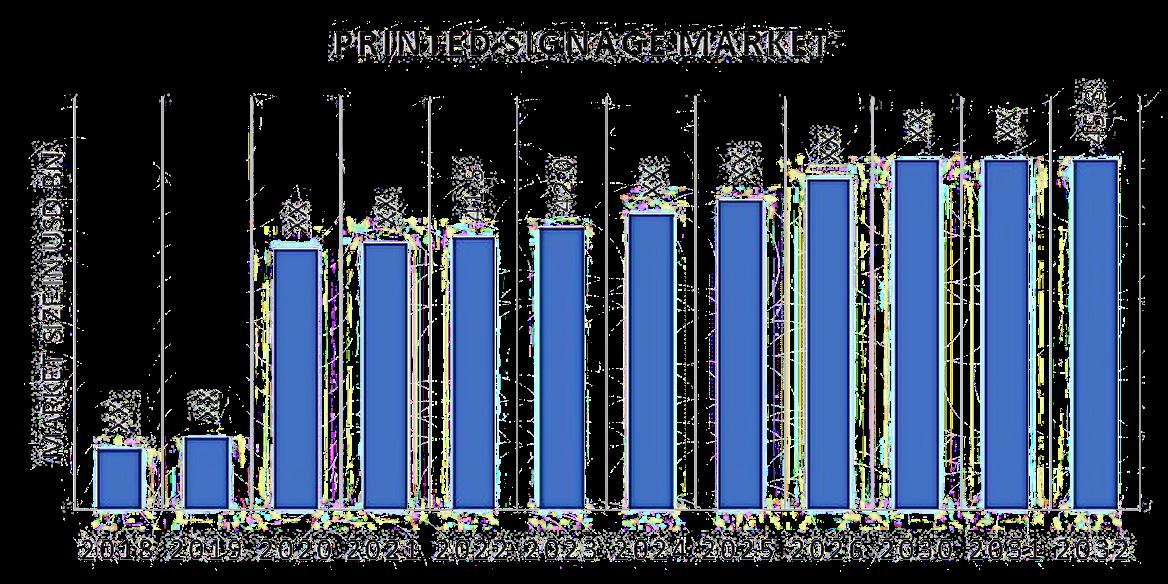
The company said its profit also increased due to Yen depreciation as well as the expansion of the office services business and increased sales of edge devices in the office printing business due to the relaxation of supply shortages.
In addition, Ricoh reported that its operating profit increased by ¥0.5 billion ($5.3 million) compared to the previous corresponding period, where it brought in ¥10.1 billion ($0.11 billion) in operating profit.
WIDE FORMAT
Mar ket size of the printed signage market over the years
SPRINTER.COM.AU 44 | AUSTRALIAN PRINTER SEPTEMBER 2023
Ric oh has recently released the new IP CW2200 digital colour wide format plotter
ASGA website offers industry staff support
The Australian Sign & Graphics Association (ASGA) is calling on all sign companies that are looking for new staff or apprentices to register their interest with the Careers section of the ASGA website.
“Following a very successful education program conducted over the past few months, we are pleased to advise that we have more than 100 students across Australia who are interested in pursuing a career in the sign and graphics industry,” the ASGA said.
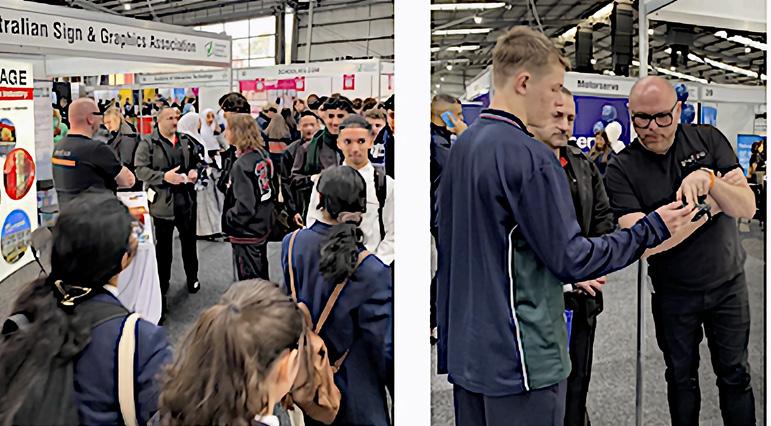
“With demand for new talent running at an alltime high across all industries, competition for these bright young people will be intense, so we want to make sure that we can place them within our industry for training and jobs. If you are looking for new staff or considering adding an apprentice to your team, this is your chance.
“By adding your details to this online resource, you will be providing all our student contacts with details of businesses in their area who are open to approaches from potential new team members. Once we have a better idea of the
Oliver Luedtke takes over as CEO at ColorGATE
ColorGATE Digital Output Solutions, a Ricohowned German software developer for global wide format and industrial printing markets, has appointed chief marketing officer Oliver Luedtke as the company’s new CEO.

Luedtke took over from Thomas Kirschner on July 1. After 25 years as the company’s founder and CEO, Kirschner will remain with ColorGATE as an advisor until January 2024.
“With more than two decades in the digital printing industry, Luedtke brings a wealth of experience and expertise to his new role. With a degree in printing technology, he has been part of the industry’s digitalisation journey since its beginning,” the company said.
“Luedtke joined ColorGATE in 2019 as chief marketing officer. Prior to his time at ColorGATE, he held senior positions at companies such as Heidelberg, Best GmbH, EFI and Kornit Digital.
“During his tenure as CMO, Luedtke successfully repositioned ColorGATE as a leader in sign and display printing, and also in various industrial applications like surface decoration, garment decoration, packaging, and ceramic printing. His forward-thinking approach and deep
demand, we will also be promoting this listing to all the students and teachers who registered with us at the recent Careers Expos.”
ASGA is already working with TAFEs and local RTOs to ensure all students have access to information about apprenticeships and training opportunities.
“It has been exciting to work with these young people to interest and engage them with our industry,” the ASGA said.
“Now, it’s vital we provide them with the opportunities they need to pursue that interest... and of course, take advantage of this opportunity to harness their talent and enthusiasm to provide the personnel we so desperately need. Don’t miss your chance to recruit new talent to your business.”
Xanita launches new Aspect board solution
Xanita, a sustainable fibreboard solutions company, has launched Xanita Aspect, a paperbased rigid board designed exclusively for the wide format printing industry.
“With a relentless commitment to environmental stewardship and customer satisfaction, Xanita Aspect sets a new standard for eco-friendly signage solutions, offering a superior alternative to conventional honeycomb boards,” South Africabased manufacturer Xanita said.
It is distributed in Australia and New Zealand by Allkraft.
“With Xanita Aspect, we have created a product that not only meets the demands of the printing industry but also aligns with our customers’ commitment to ESG goals,” Xanita CEO James Beattie said.
understanding of the market have enabled ColorGATE to demonstrate its expertise across a wide range of industries.”
Luedtke said, “I am excited to take the reins from a successful founder and CEO. The technology, coupled with the passion and drive of the team, provides a strong foundation from which we will venture into new opportunities and projects to further expand our horizons”.
Kirschner added, “It is with mixed emotions that I leave the company after an exciting 25 years. However, I am pleased to say that we have carefully planned this transition and I have the utmost confidence in Oliver. His in-depth knowledge of the company and its operations makes him the perfect choice for this role and will ensure that the quality of service to our customers is maintained”.
ColorGATE is distributed in Australia by Starleaton and Celmac.
Aspect Print is made from over 90 per cent post-consumer paper, while Aspect Kraft is made from 100 per cent post-consumer paper. As a testament to Xanita’s eco-conscious practices, Aspect contains no harmful chemicals or VOCs, making it a safe and environmentally-friendly choice for businesses.
“Leveraging the same ‘closed-cell’ core design as Xanita’s premium board products, Xanita Aspect delivers unmatched strength, durability, and rigidity. It delivers exceptional print results that leave a lasting impact on audiences,” Xanita said.
WIDE FORMAT
ASGA at a recent Careers Expo
Oliver Luedtke, new CEO of ColorGATE
SPRINTER.COM.AU AUSTRALIAN PRINTER SEPTEMBER 2023 | 45
PRINT DIARY
Got an event? Send an email to hosman@intermedia.com.au with all the details
* event dates correct at time of publishing
Printing United 2023
October 18-20, 2023
Georgia, US printingunited.com
2023 ProPrint Awards
November 3, 2023
Sydney, Australia proprintawards.com.au
FESPA Australia Conference
November 3, 2023
Sydney, Australia fespa.com/en
Labelexpo Asia
December 5-8, 2023
Shanghai, China labelexpo-asia.com
FESPA Annual BBQ
February 14, 2024
Melbourne, Australia fespaaustralia.org.au
FESPA Sydney Social
March 6, 2024
Sydney, Australia fespaaustralia.org.au
FESPA Global Print Expo 2024
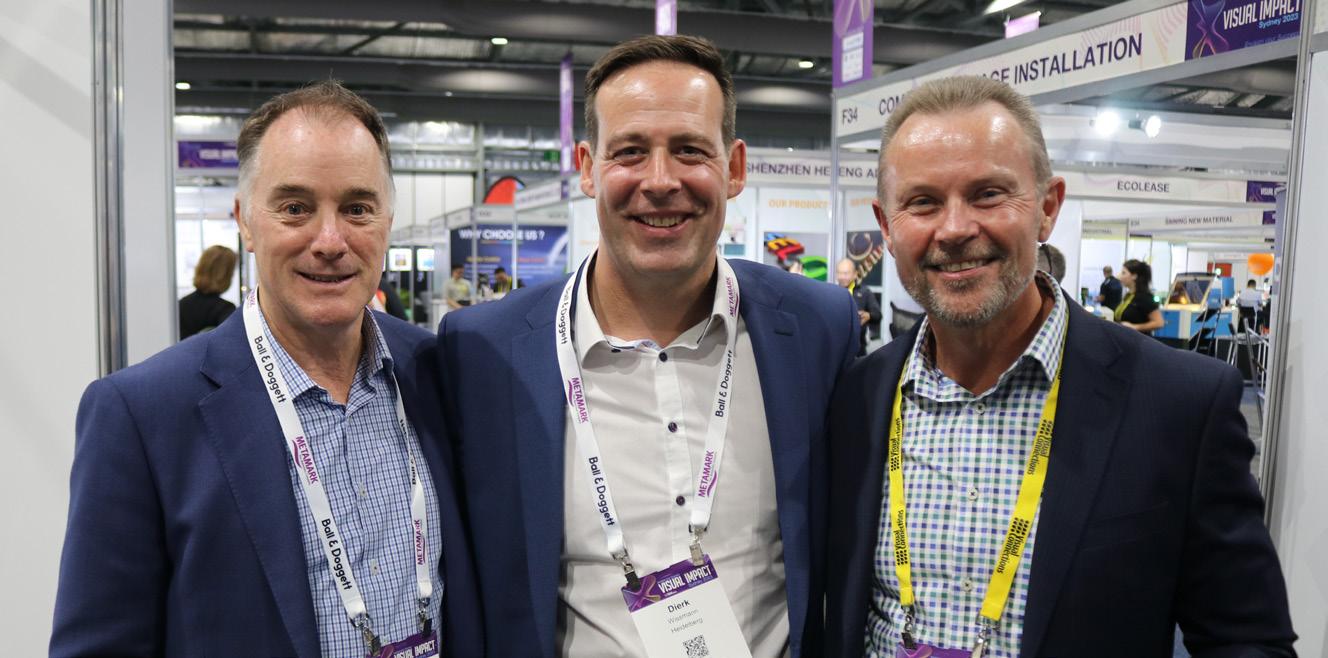
March 19-22, 2024
Amsterdam, The Netherlands fespaglobalprintexpo.com
drupa 2024
May 28-June 7, 2024
Düsseldorf, Germany drupa.com/
Visual Impact Brisbane
July 17-19, 2024
Brisbane, Australia visualimpact.org.au/
• Near total coverage of roller requirements for the graphic arts sector
• Wide range of rollers for printing and packaging, laminating, gluing, transport and nip

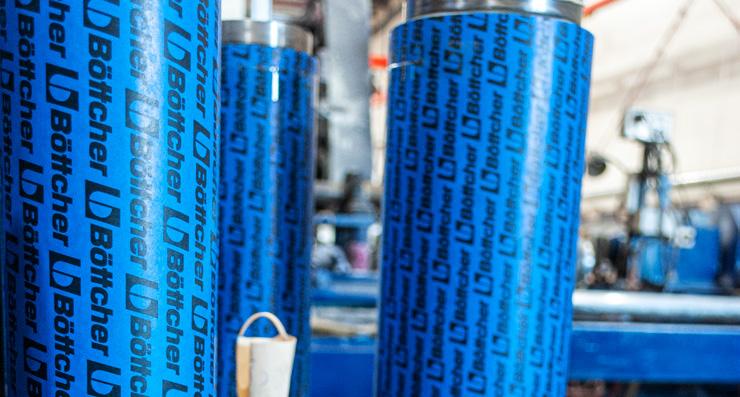
• Specialised services for non-standard applications
• In-house expertise to help you achieve your production goals
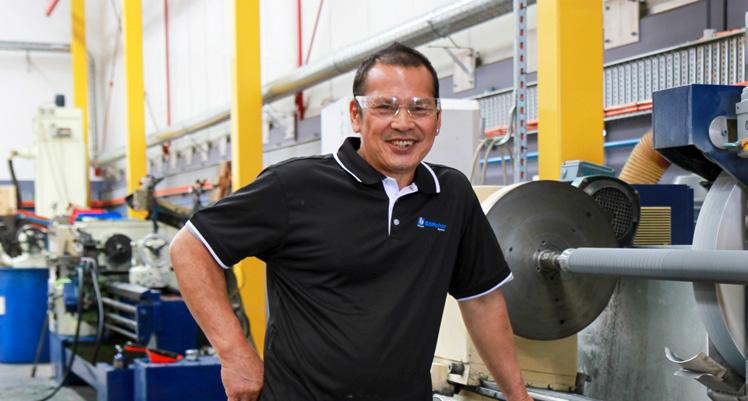
SPRINTER.COM.AU 46 | AUSTRALIAN PRINTER SEPTEMBER 2023 PRINT DIARY
your
on the
and we will put
event
page
Systems Printing
Australia: the experts in new rollers and replacements THE SMART WAY TO SAVE ON
to us about the range of services we offer for all your roller maintenance needs. National Free Call 1800 204 102 WWW. BOTTCHERSYSTEMS . COM.AU
Böttcher
ROLL ERS Talk
fespaaustralia.org.au/events/ 8.00am - 2.00pm
FESPA Australia Conference is back in 2023 and it’s going to be bigger and better than ever before!
Following on from the success of the inaugral conference in 2022, we’re bringing together leading industry events, suppliers, and business owners for a one-day event packed with insights, inspiration, and networking opporunities.

Hear from leading international industry experts who are already developing and demonstrating sustainability, leadership and other innovative practices to guide print companies into a better future.
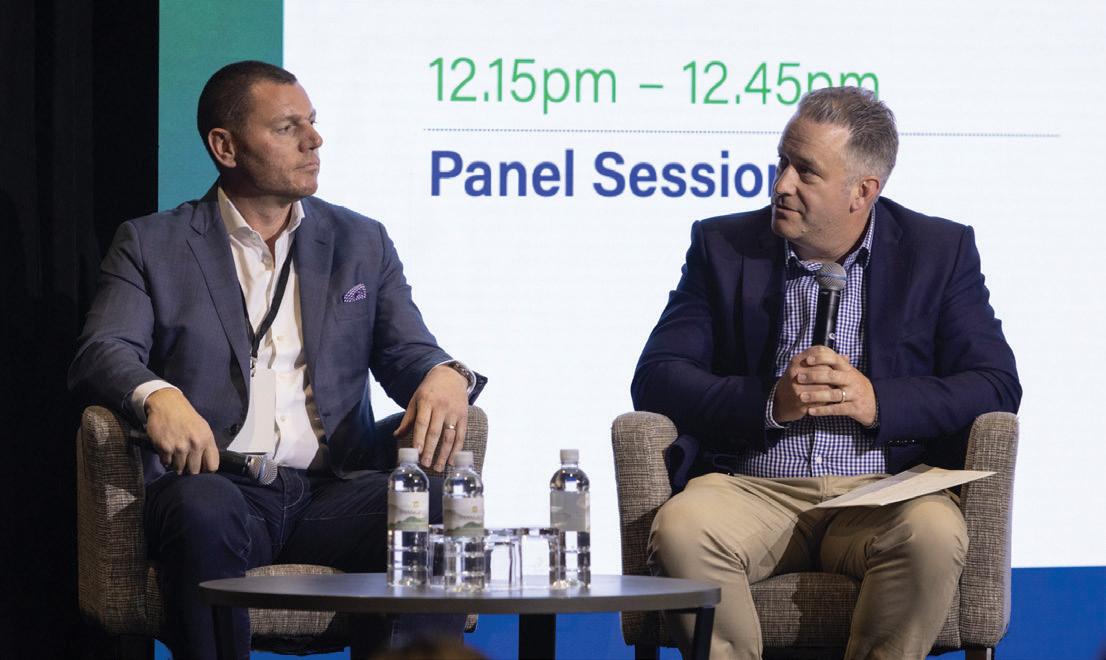
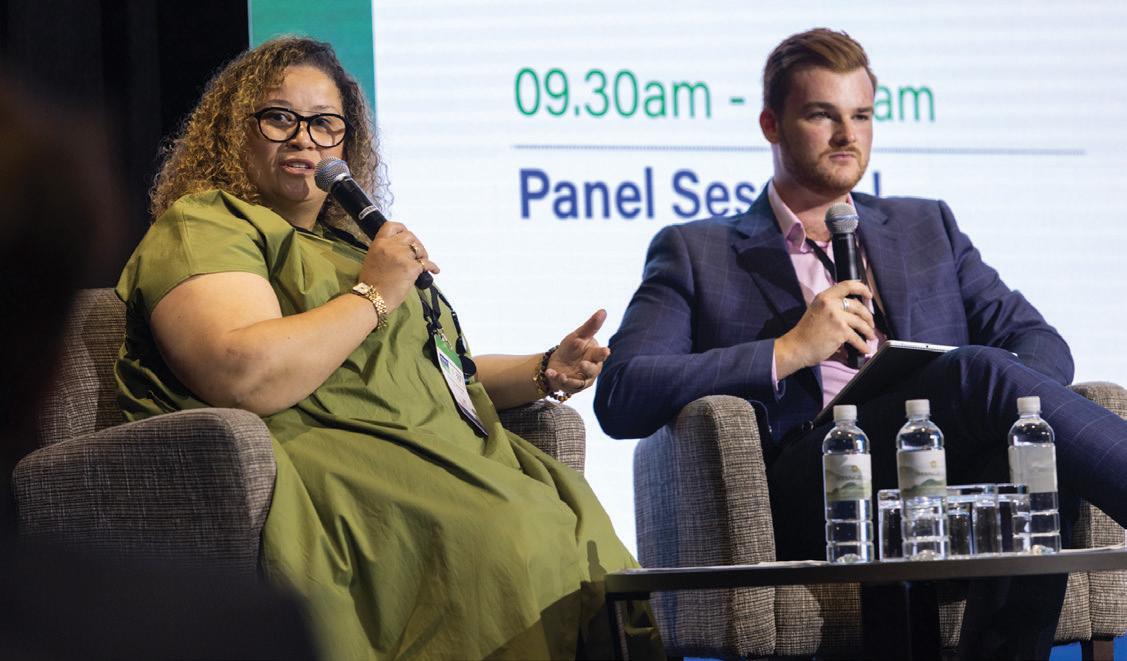
Once again co-located at the Shangri-La Sydney with the 2023 ProPrint Awards, commencing at 6.45pm.
To secure your tickets visit www.fespaaustralia.org.au


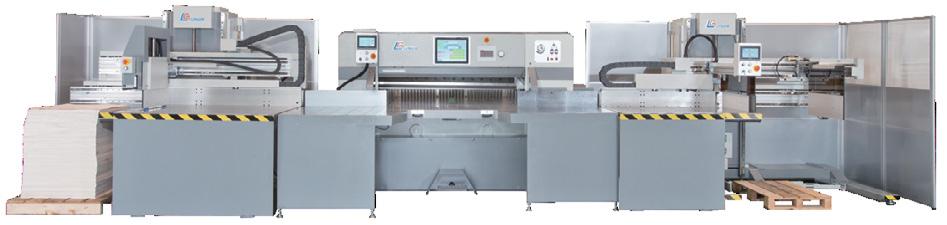

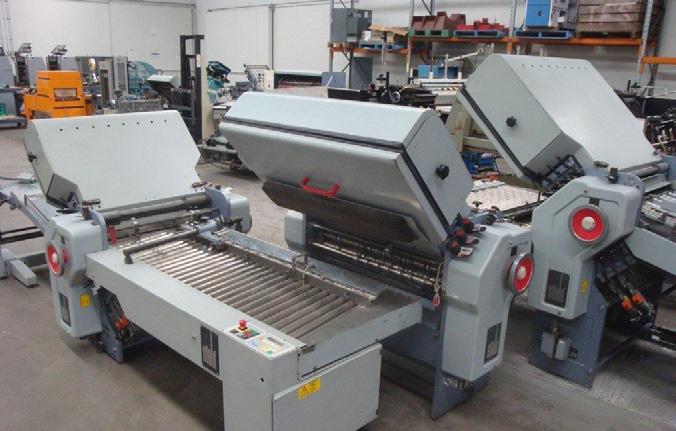

SPRINTER.COM.AU 48 | AUSTRALIAN PRINTER SEPTEMBER 2023 For enquiries, please contact: Carmen Ciappara, National Sales Manager Phone: 02 9833 4314 or 0410 582 450 | Email: carmen@proprint.com.au MARKETPLACE Volunteer or Sponsor help us grow! Come and see the extensive expansion and renovations. Need a venue for a function? Talk to us we can help. Visit https://www.printingmuseum.org.au/ Contact us anytime for all service and guillotine requirements JTS Engineering Services Pty Ltd Jim Strounis, Owner Mobile: 0433 100 243 Email: jim@jtsengineering com.au Scott Mohammed, Service & Account Manager Mobile: 0431 887 501 Email: scottm@jtsengineering com.au Unit 5, 80-82 Seville Street, Fairfield, NSW, 2165 Web: jtsengineering.com.au
Engineering
Co Ltd to
a specialised
of paper guillotines systems
high speed,
and
FOR SALE Late model Stahl Digital Folder, reconditioned with all new rollers and tapes Quality, a tradition since 1882 Finance available to approved purchases For more information contact Paul Carthew Phone 0418 239 303 Email printmac@iimetro.com.au Printmac Corporation Pty Ltd Unit 5, 9 Hume Road, Smithfield NSW 2164
JTS
servicing the industry for all machinery and engineering requirements, has partnered with Longer Machine Industrial
supply
range
featuring
precision
safety.


Great Australian print and design resource. Entirely rewritten. Practical hints. Useful tips. Checklists. BUY ONLINE NOW with discount code PRINT23 for only $75 (incP&H) www.TheDesignManual.com


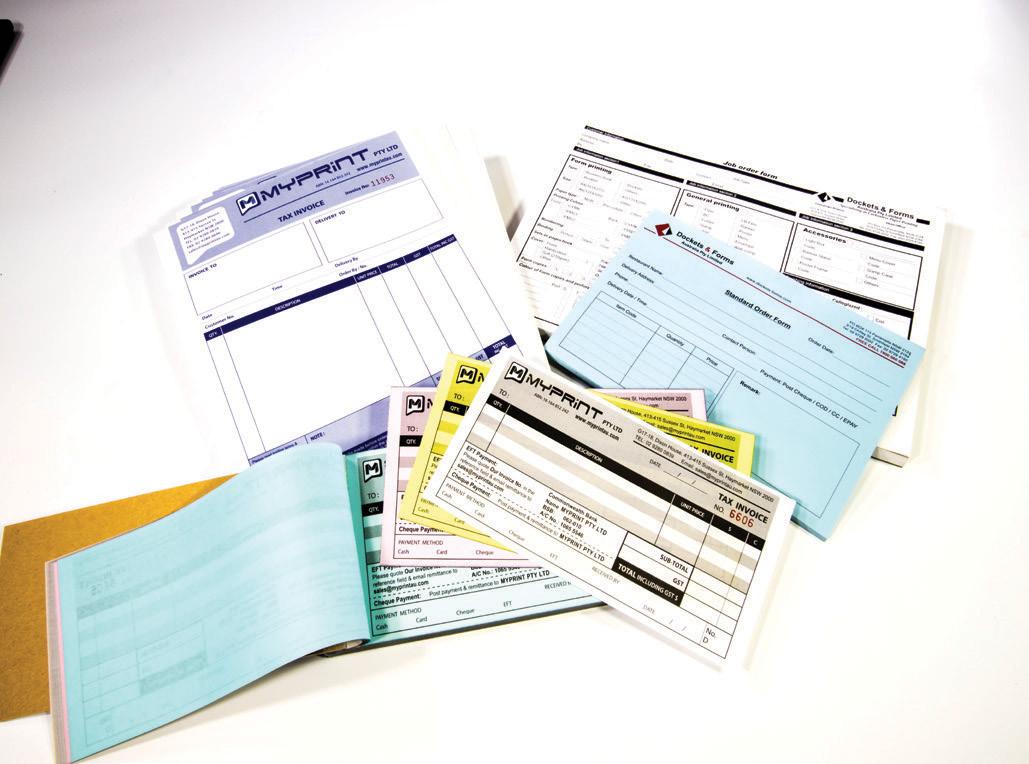




SPRINTER.COM.AU 50 | AUSTRALIAN PRINTER SEPTEMBER 2023 Freight Charge Per Order Your Printing Partners FREE CALL 1800 666 088 EMAIL: sales@dockets-forms.com AU Wide Delivery with Capped Freight Charge Trade Only www.dockets-forms.com Easy Online Quote & Order We are the Specialist in NCR Paper Printing Trusted by Printers Nationwide for Over 20 Years For enquiries, please contact: Carmen Ciappara, National Sales Manager Phone: 02 9833 4314 or 0410 582 450 | Email: carmen@proprint.com.au MARKETPLACE

Did you know that D&D Mailing Services is one of the largest mailing companies operating in Australia? D&D Mailing Services: High speed laser printing and print supply services Cost-effective parcel and postal distribution analysis Expertise in Australia Post regulations and services ‘Pick and Pack’ warehousing services Overseas mail inbound and outbound Specialised hand-finishing services D&D Mailing Melbourne 16 Elonera Road Noble Park VIC 3174 03 9790 5844 ddmail@ddmail.com.au www.ddmail.com.au D&D Mailing Sydney 1064 Canley Vale Road Wetherill Park NSW 2164 02 9725 2114 ddmail@ddmail.com.au www.ddmail.com.au D&D Mailing Services



















SPRINTER.COM.AU 52 | AUSTRALIAN PRINTER SEPTEMBER 2023 A4 Sheets of Labels • Over 21,000 options • Custom blank labels • Custom printed A3 / SRA3 Sheet Label Range • Gloss • Matt • Wine Stock • Fluoros • Synthetic • Blockout Labels on Rolls • Blank & Printed • Over 320 sizes/shapes P +61 3 9729 9511 Toll free 1800 000 612 E info@labelline.com BLANK & PRINTED The world’s largest selection of A4 self adhesive blank labels www.labelline.com.au E: ben@allworkcranes.com.au E: ben@allworkcranes.com.au Complete factory relocations: Specialising in a wide range of machinery from Engineering, Metal Work, Printing & Packaging Providing a full rage of services including: 3 Machinery handling 3 General crane hire 3 Forklift hire and transport 3 Packing and unpacking of containers Established 7 years. Serving a wide range of customers we pride ourselves on punctuality, reliability and customer satisfaction. All aspects of printing machinery Are you looking to skyrocket your brand’s visibility and connect with a highly-engaged audience featuring 1000’s of printers? LOOK NO FURTHER! Sprinter News is the leading online destination for delivering printing industry news FAST, twice a week. Boost your business like never before! To secure your spot today, contact Carmen Ciappara | 0410 582 450 | carmen@proprint.com.au
MARKETPLACE
For enquiries, please contact: Carmen Ciappara, National Sales Manager Phone: 02 9833 4314 or 0410 582 450 | Email: carmen@proprint.com.au






























gemoney 0428 4 3 751 4777 552 d Q li y Work At S sb e P ces S sible P ices St Mary B ild g M nt nan e We O Terry D
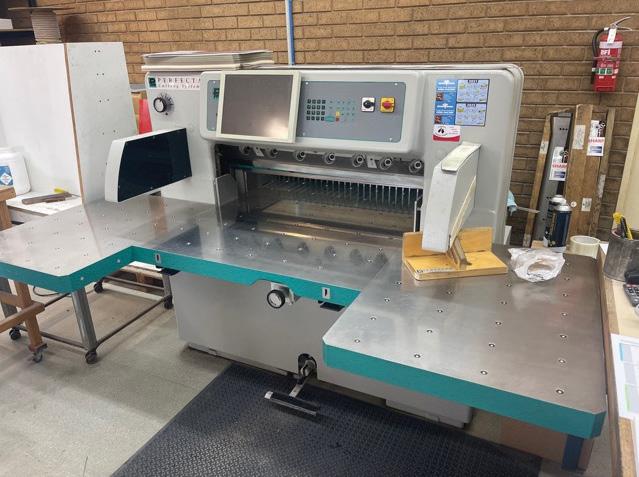
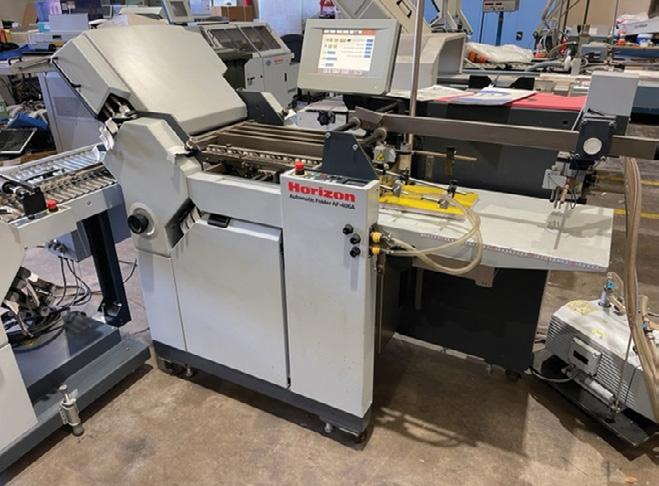
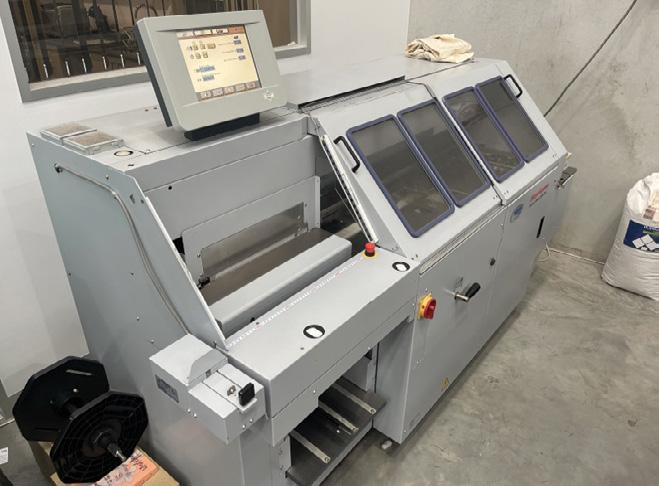
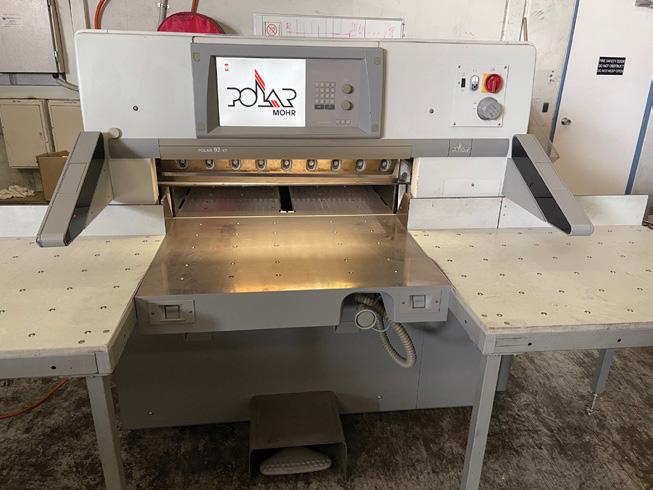
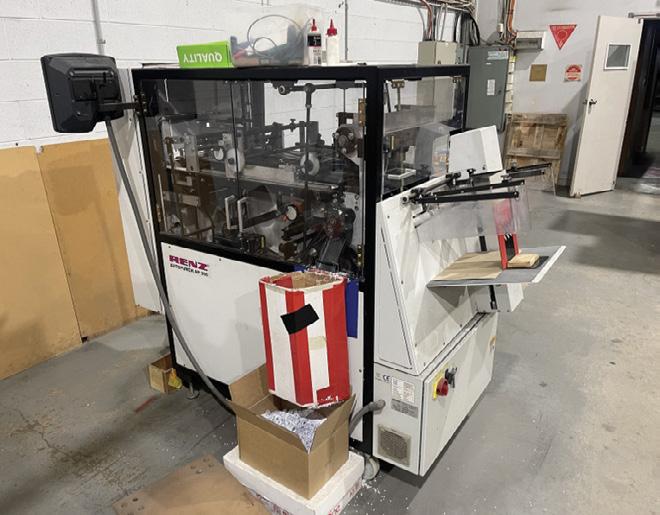
SPRINTER.COM.AU 54 | AUSTRALIAN PRINTER SEPTEMBER 2023 FULL COLOUR TRADE PRINTING Top Quality, Good Service, Lowest Prices! Need a quick turnaround & a reliable trade printer? Call or email us now! OUR SERVICES: • 5 Colour / Full Colour Printing from A3 up to A1 • UV Print / Digital Print • Celloglazing / Die Cutting / Folding / Creasing • Saddle Stitching / Bookbinding • Perfect Binding / Wire Binding OUR PRODUCTS: • Business Cards / Post Cards / DL Cards • Stationery / Brochures / Posters / Magazines • Presentation Folders / Promotion Cards • Docket Books / Pads • Outdoor Vinyl / UV Foil Print / Point Of Sale • Packaging / Boxes • Custom Products P: (02) 9790 9999 | E: info@cticolourprinter.com.au | www.cticolourprinter.com.au 126 Fairfield St, Fairfield East NSW 2165 VALUATIONS: PRINTING VALUATIONS FOR INSURANCE & SALE OF BUSINESS CONDUCTED AUSTRALIA WIDE MASTERCARD/VISA/AMEX ACCEPTED Please call Peter Brand on 0417 908 907 or email: peterbrand@nationalauctions.com.au WANTED: ALL PRINTING & BINDERY MACHINES, CASH PAID URGENTLY WANTED HEIDELBERG SM52, 74 & 102 MACHINES KOMORI 26, 28 & 40 MULTI COLOUR RYOBI & ROLAND 4,5 & 6 COLOUR POLAR, ITOH, WOHLENBERG & SCHNEIDER MULLER MARTINI 335, 321, 235, 1509 & PRIMA STITCHERS HEIDELBERG & STAHL FOLDERS, CYLINDERS ALL HORIZON FINISHING EQUIPMENT & BINDERS RENZ AP360 PUNCH 2009 PERFECTA 92 GUILLOTINE HORIZON 406 PHARMACEUTICAL FOLDER HORIZON BQ270 BINDER 2007 POLAR 92XT GUILLOTINE For enquiries, please contact: Carmen Ciappara, National Sales Manager Phone: 02 9833 4314 or 0410 582 450 | Email: carmen@proprint.com.au MARKETPLACE