


Welcome to the May 2023 edition of The Emergency Drone Responder Magazine. First and foremost, I want to express my gratitude to everyone who took the time to send in messages of support and congratulations for our inaugural issue. We are thrilled to have readers in over 40 countries and sincerely appreciate your ongoing support.
In each edition, our goal is to provide articles that enhance your professional work, sharing valuable information, technology, and learning opportunities. I extend my thanks to the talented editorial contributors who have produced excellent articles for this edition. The magazine's core purpose is to facilitate knowledge sharing among public safety drone professionals, and based on the feedback and readership levels, we are successfully achieving that.
As part of our commitment to delivering the best possible magazine, I am delighted to announce that Lee Newman has joined our team as the Group Technical Director. Lee will lead the technical direction and content of the magazine, as well as future shared learning projects.

One of our most important announcements is the upcoming EDR Live event on June 6th and 7th, 2024, at the Fire Service College in Moreton-in-the-Marsh, UK. (See advert on page 55.) This two-day practical event offers hands-on opportunities to witness drones in action during public safety scenarios. Attendees can participate in flyand-try sessions, interact with suppliers, and experience live demonstrations by experts from the Police, Fire, and Search and Rescue sectors.
We will be sharing more information and announcements on social media in the coming weeks and months, so stay tuned for updates.
Please note that this event is not for profit; however, we must cover our costs. If you are a supplier interested in promoting your products or services to the Police, Fire, and Search and Rescue drone professionals at this unique event, please reach out to us for further discussion.
As always, I extend my sincere gratitude to our Partners, Sponsors, and advertisers, whose support makes this magazine and our future projects possible.
If you have any suggestions, would like to contribute an article, or wish to advertise and reach our unique audience, please don't hesitate to get in touch.
Stay Safe, Paul Budgen.
Tel: + 44 (0) 1305 831 768
Email: pbudgen@edicogroup.net
The Emergency Drone Responder is a Bi-Monthly magazine wholly dedicated to Emergency Drone Operations, robotics and innovative new technologies that will assist Law Enforcement, Fire, Search and Rescue teams.
The primary aim of the Drone Responder Magazine is to report, educate, validate and promote the use of drones and emerging technologies in support of the work of the emergency services and Emergency Drone Responders worldwide.
The Emergency Drone Responder Magazine is the global voice for the operational Fire, Police, Search and Rescue, Counter UAS teams, and will cover and promote drone use & emerging technologies and robotics with input and opinions from experts from around the world promoting the use & value of operational drone teams within a fire, law enforcement and rescue arena.

Paul Budgen
Publisher & Advertising Sales
Tel: + 44 (0) 1305 831 768
Email: pbudgen@edicogroup.net
Lora Lammiman
Editorial Coordinator
Tel: + 44 (0) 1305 831 771
Email: lora.lammiman@edicogroup.net
Adam Long Design & Production
Tel: +44 (0) 1305 831 786
Email: adam.long@edicogroup.net
The Emergency Drone Responder MagazineTHE EMERGENCY DRONE RESPONDER

Capt. Vendelin Clicques - Firefighter officer, IEDO president, Drone specialist & Pink firefighter gives us valuable insight from his position as a leader in drone use for emergency service response.

Florida's Southern Manatee Fire Rescue Navigate the Boundaries Public Safety Agencies Face When Using Drone Technology in Hostile Environments
13 FLYING HIGH : DARRYL ASHFORD-SMITH
Providing Effective Training for Global Search and Rescue Teams: Insights from Darryl Ashford-Smith, Drone/Robotics Lead at Technical Rescue International.

Forging Collaborative Excellence: Uniting Northcentral Pennsylvania's Premier UAS Organizations to Deliver Unmatched Drone and Unmanned Services.
How Situational Awareness technology is empowering First Responders to save lives faster and more efficiently than ever before
Drones are increasingly becoming an essential tool for search and rescue operations. But how do we know if we are maximising their effectiveness and efficiency?
DRONERESPONDERS Presents a Remarkable UAS Event at Busch Gardens: Showcasing Revolutionary Technology and Insights for Public Safety and Emergency Missions
Simon Ritterband, Managing Director of Moonrock Drone Insurance discusses the Importance of Adapting Insurance Policies to Ensure Safe Drone Operations in Public Safety and Search & Rescue
London SAR Explores The Global Growth of Commercial UAS and Its Impact on Public Safety and Search and Rescue


40 LIFESEEKER MINI: A GAME CHANGER IN SEARCH AND RESCUE OPERATIONS WITH DRONES
Hector Estevez, CEO of Centum showcases the 'Lifeseeker Mini' a Product that is Revolutionizing Search and Rescue with Phone Location Technology
In part two of his article from the March edition, Brandon Karr discusses the challenges of establishing Pearland's Drone as a First Responder (DFR) program.
Enhancing Incident Response: DroneControl First Responder Revolutionizes Drone Operations with Secure Live Streaming and Remote Control

48 COUNTER-DRONE SOLUTIONS : WHAT OPTIONS DO FIRST RESPONDERS HAVE?

Sentrycs Explores the Capabilities and Limitations of Counter-Drone Solutions for First Responders
Enterprise UAV run us through a hand-picked selection of their comprehensive drone range

52 NASA's ADVANCED CAPABILITIES FOR EMERGENCY RESPONDSE OPERATIONS (ACERO) PROJECT
"NASA's ACERO Project is Advancing Drone and Aviation Technologies for Enhanced Wildland Fire Coordination and Suppression
As a way of providing shared learning to our community, The Emergency Drone Responder Magazine will be shining a light on select individuals who are at the forefront of drone use within emergency services. Our 'EDR Leaders' section offers a deep dive into their expertise, history and insights in the hope that their work and achievements will provide valuable knowledge and inspiration to a wider network of emergency drone responders.

Capt. Vendelin Clicques has been a firefighter officer since 2011, after initially training as an aeronautical maintenance engineer.
Vendelin has specialized in RPAS/UAV systems since 2015. Former drone team manager of Essonne fire dept (SDIS91), he is actually the UAS team manager of the Yvelines Fire dept (SDIS78). He is also part of the UAS national working group of French civil protection and the regional UAS advisor of Paris.
Since the 10th of June 2018, he has been the president founder of the IEDO, International Emergency Drone Organization, the world nonprofit association by and for Public Safety UAS specialists. This world association
regroups more than 800 members (firefighters, police, customs, coast-guards, doctors, paramedics, SAR associations,...) from 55 countries from 6 continents. The main objective of IEDO is to bring together first responders who use drones to save lives to share their knowledge and experience with each other on an international and national level.
EDR: The first thing I would like to ask you about is the Pink Firefighters Charity ; what is the charity, and how do you help support this?

Vendelin: In 2021, I founded the PINK FIREFIGHTERS association in France because I have a friend who had breast removal surgery as a preventive measure against breast cancer. This shocked and impressed me a lot. How can you voluntarily separate yourself from a part of your body? Inspired by her courage, I wanted to inform the public about breast cancer. Being very sporty and used to technical firefighter challenges, I decided to create a pink firefighter outfit to shock and create the question, why a firefighter in pink? Then carried by my individual success and my sponsors I founded the international association PINK FIREFIGHTERS to mobilize several firefighters in different countries to inform and prevent against breast cancer while surpassing themselves on the firefighter's challenges. Today, 2 years later, our association gathers 15 pink firefighters from France, the UK, Germany, Portugal and the Czech Republic. It's a project that is close to my heart because breast cancer concerns us all, mainly 1 woman out of 8, it's so much too much, and also us men because we all have a mother, a wife, a sister or a daughter in our life. Do you love her? Protect her by talking to her about screening, self-examination and mammography.
EDR: You are known as an important drone advocate for Public Safety; when
Vendelin: I will always remember. It was in 2015, a close friend was showing me his drone (from Christmas) and I fell in love with it. The spark ignited my brain. What a fabulous tool to discover, understand and apprehend an operational situation from the sky. It was a professional evidence. The following week, as a young lieutenant, I convinced the deputy chief of the necessity and the benefit of developing a drone program within my fire department. Two years later, I made the first drone flight on a violent building fire at nightfall.
One thing is for sure: developing and building a drone program is an obstacle course that starts with convincing your boss.
EDR: As an operational fire Captain in Paris region, how important are sUAS Drones in your day-to-day operations?
Vendelin: The awareness of incident commanders is growing about drones. Assigned to the dispatch platform, I managed to convince the operators of the usefulness of drones, in the field, the few officers who have benefited from the drone support of my team are convinced and regularly request air support. The activity of my drone team is growing.
EDR: What are the most valuable aspects of a Drone Program for your requirements?
Vendelin: Your many readers already know that the operational needs are the awareness of an operational situation, the search for victims and air support (lighting, guidance, dropping, sound alert). What is most interesting in a drone program in my opinion is its usefulness for incident commanders, which is proportional to its difficulty of management. All the operations that have benefited from drone support reveal the same thing: the great usefulness and benefit of the information collected for good management and decision support. But what few people know is that managing a drone program is riding a wave that never stops. It never stops because drone regulations are constantly evolving, technology is jumping extremely quickly while being more and more expensive, data regulations that must be followed, security events (crash, breakdown, breakage, incident) are significant and they require continual
Vendelin: analysis and information of the crews, the maintenance of the skills of the pilots is also to be monitored because it is essential. In short, the life of a drone program manager is not easy. And those who are full-time on this position are LUCKY. Because many are those who manage a drone program in parallel with a full-time position.
EDR: What are the Challenges of Public Safety drone use in a highly populated city such as the Paris region ?
Vendelin: Drone operations in ultraurbanized environments are decisive but very complex. These densely populated areas require rapid and efficient incident management because the population is demanding. Drones will be able to facilitate and accelerate important decisions and consequently limit human losses and damage. However, that is without forgetting all the additional difficulties caused by these densely populated areas. Indeed, the risks of interference and accidents are greater because of the density of the population. The flight zones are much smaller if you consider that you can only fly over the incident zone and avoid the population.
EDR: What new technological developments are making the most significant impact helping you carry out your role?

Vendelin: Technological innovations are numerous. The most basic ones are quickly appreciated such as the increase in battery life, camera performance,
miniaturization of components which facilitate a decreasing weight for the latest drones. All these elements provide greater comfort in our missions. And there are also ongoing strategic innovations, the development of AI which will facilitate the processing of data and technical manipulations. The DFR programs are impressive in their architecture and the acceleration of the integration of
an emergency situation. The future digitization of the sky, the U-space, is also coming extremely quickly. This is an innovation for civilian drones but it translates into a real challenge for emergency drones to manually integrate into an automated digital environment (geocaging, geofencing). As stated above, the wave does not don't stop, she's growing up.
EDR: In addition to the Pink FireFighters Charity, you are also President of the International Emergency Drone Organisation (IEDO). For those readers who are not aware of the IEDO, could you tell me its mission?

Vendelin: Of course with pleasure. The IEDO is an international non-profit association based in France which was founded in 2018. Its objective is to facilitate the exchange of knowledge and experience between drone pilots who save lives and to promote drones with security services. public and the population. Exchanges beyond borders and uniforms since the members are firefighters, police officers, customs officers, coastguards, SAR association, paramedics, doctors. The IEDO is the one and only global community made up of 100%
public safety drone pilots. Drone companies and their employees are not accepted as an IEDO member to maintain strong ethics against conflicts of interest. But for all that, the IEDO has many industrial partners and sponsors. The values within the IEDO are strong and driven by the principle of neutrality and fairness between our members, their societies and their countries. Strong egos have no place in our community; we advocate collaborative and collective work before individualities for the common good of all pilots. Our community represents more than 800 pilots from 55 countries on all continents.
IEDO has entered into two strategic partnerships with two major international associations: the International Police Association (IPA, representing 400k police officers) and the CTIF, international association of fire and rescue services (CTIF, representing 4 million firefighters). These 2 organizations support the IEDO in more and more projects.
EDR: What do you consider the key achievements of the IEDO are?
Vendelin: The first success of IEDO was, I think, to federate more than 800 pilots from 55 countries in only 4 years.
Second, I can tell you about several successes that have marked the history of IEDO.
In 2019, a British IEDO member informed us of the disturbing disappearance of a young tourist in mountainous regions in Peru. We alerted the first Peruvian member who had just joined IEDO, 24 hours later he deployed with his drone to the search area. This was the only international coordination operation that we carried out but if we are needed, we will be there.
In 2021, after 14 months of work and collaboration between 13 national working groups, IEDO published the International Report on Good Drone Practices for Fire and Rescue Missions, a 100-page report with best practices and advice collected from 13 countries. This huge and international project has been rewarded with the AUVSI award for public safety excellence. This project was a real collective success. I am proud of the 73 volunteer contributors. The updated V2 report was published in December 2022.
On December 12 and 13, 2022, our association organized its biggest project: a world conference on emergency drone in Paris at the Cité des Sciences. A rare and extraordinary
event that brought together more than 200 drone experts from 31 countries from the USA to Japan and Europe. 54 fire departments, 25 law enforcement agencies, 19 search and rescue associations, a coast guard service and a medical service were represented. Many international experts shared their experience (Beirut explosion, landslide in Norway, PD Pearland's BVLOS DFR program, Zagreb earthquake, etc.) and knowledge (Hazmat, DFR, NIST, etc.) such as Rich Gatanis or Brandon Karr. On this occasion, we announced the launch of the police drone commission, as we have the ambition to develop the police community within IEDO regarding all emerging topics (anti-drone, DFR program, indoor recon, etc.).

Vendelin: The next IEDO CONF will be held in 2024. We are actively working to finalize the creation of our Fire & Rescue Drone Commission which will support numerous technical working groups (hazmat, fire, USAR, regulations, etc). We also plan to develop a non-profit training division supported by volunteer trainers on national and international levels. A lot of ambition and international projects as usual for our non-profit association IEDO, that's why we are looking to develop and consolidate our financial partnerships, that's why we are launching an appeal to all patrons and generosity.

To find out more information about the International Emergency Drone Organization (IEDO). Please visit their website or reach out to them across social media.



into a flammable gas. As UAS are inherently non-intrinsically safe, we need to know what would happen. Therefore, we developed a test.
Testing an unmanned aerial system within a flammable atmosphere is no small task. We had to answer many variables before implementing the first test, not to mention the inherent danger in this type of testing. After conducting a series of smaller scale tests, we developed a repeatable and standardized test, known as "The Box." The Box was designed to be strong enough to withstand an explosion yet made of clear Lexan to allow us to see/video the test results. With some careful engineering, we had our box.

Imagine waking up to the sound of alert tones blaring through the fire station at 3:00 AM, accompanied with the announcement "All units be advised: reports indicate a large cloud of smoke or gas coming from the facility." In that moment, your heart rate surges from 60 to 120 beats per minute. When you hear the address come across the radio, you know that this is the call that you hoped would never come in during your career. The facility in question has one of the nation's largest stockpiles of anhydrous ammonia making it a uniquely dangerous situation. This is the nightmare scenario that keeps those in the hazardous materials (HazMat) industry up at night.
As the number of HAZMAT calls continues to rise, the team at Southern Manatee Fire Rescue (SMFR) is all too familiar with the challenges they present. Manatee County, Florida is home to hundreds of industrial facilities, many of which store a variety of chemicals, flammable liquids, and gases onsite. The potential for a "worstcase" scenario at these facilities poses a significant risk to both first responders and the citizens they protect. As a progressive HazMat agency, SMFR developed a UAS program to augment our hazardous
materials response. The goal is to use UAS to respond to situations like the one described above. However, introducing the idea of flying drones into hazardous environments presented a multitude of challenges to the traditional "hazardous materials response" mentality. Our ideas faced significant scrutiny from seasoned industry professionals, and rightly so. However, their challenges of our work to bring UAS to the forefront of HAZMAT response helped us develop and test the robust UAS/HazMat response matrix that we operate today.
One of the most important questions we had to answer was, "What happens when we fly a drone into a flammable atmosphere?" It was a critical hurdle to overcome since most of our missions put our aircraft into unknown atmospheres. The potential for us to introduce an ignition source into a flammable atmosphere is concerning. However, the ability to remotely send a piece of equipment into the scene to detect potential flammable gases is a game-changer. We clearly do not condone flying drones into flammable atmospheres. Our concern is in the utilization of drones during a HazMat event that could inadvertently place our aircraft
Let us revisit the "dangerous" part of this test. Placing potential ignition sources inside highly flammable atmospheres is something you might find on the hit television show MythBusters, not in the back parking lot of a fire station. We took this part seriously, putting months of thought into the safety of our tests before conducting the first test. Because we planned on filming our tests to share with other agencies, we decided to run our tests "MythBusters" style. The thought being that if the aircraft did not ignite the gas, what better way to demonstrate that the atmosphere inside the box was flammable than to blow it up in true MythBusters style?
In 2016, we conducted our first test using a DJI Inspire 1 drone in a box that we hastily built. Later on, we improved the design to make it reusable for future tests. We used LPG gas for the test, which was the easiest to obtain. The details of the test method and results (for all of our drone flammability tests) can be found on our YouTube channel SMFR911 - YouTube but what is important to note is that the test was a huge success. The drone passed the test, and we proved the atmosphere inside
the box was flammable by blowing up the drone. As our fleet expanded, we needed to test other aircraft. We pitted the DJI Matrice 210 and Mavic Pro against the newly redesigned box. Our testing gained recognition in the industry for being at the forefront of drones in hazardous materials response, catching the eye of DJI. This led to an R&D partnership with DJI to develop a system that meets the harsh requirements of hazardous materials response and better understand how unmanned aerial systems (UAS) can help HazMat teams. DJI even created a few "Use Case" videos and filmed our flammability tests on the M210 and Mavic. These tests were a huge success, which supported many agencies in the US and abroad to move forward with UAS programs to aid their HazMat teams. Our testing's popularity has created a lot of interest from equipment manufacturers that may not necessarily pass the Underwriters Laboratory (UL) threshold of intrinsic safety. Recently, Squishy Robotics, a new company that developed a drone-deployable flammable gas detector, decided to test their robot in "The Box." For manufacturers like Squishy Robotics, this testing proves they are on the right track towards their UL certification. Many other UAS manufacturers have also approached us to have their drones tested in our facility.


As public safety agencies begin to adopt the use of drones, there is a growing potential for these systems to be deployed in hostile and dangerous environments. Therefore, it is crucial to understand the limitations of the equipment when using them in such scenarios. Unmanned aerial systems (UAS) are relatively new to public safety and are being pushed to their limits, performing tasks never before imagined.

Consequently, grassroots testing is essential, given the rapid pace at which the industry is evolving, much faster than the traditionally slow-to-embrace fire service.
Rich Gatanis began his career in 2003 as a Firefighter/EMT/HazMat Technician with Southern Manatee Fire Rescue located in Manatee County, Florida. In 2015, Rich took on the role of UAS Coordinator at SMFR by creating a UAS program within his agency. His innovative and forward thinking led him to develop a device that allows a drone to carry chemical, gas, and radiation detectors into an area to remotely monitor the air in real time using on-board camera systems.
























Darryl, having previously served in USAR & ISAR in the London Fire Brigade, is currently a Mountain Rescue UAS Pilot in the Search & Rescue Aerial Association-Scotland, Scottish Mountain Rescue Training Support Officer and a Scottish Cave Rescue Organisation Training officer. Darryl is also the Drone/Robotics Lead for Technical Rescue International.
Technical Rescue International (TRI) specialises in the provision of technical rescue training and bespoke training packages for operations in high risk environments internationally. Drawing on their extensive experience with the Emergency Services, Military, Private Sector and Charitable Organisations both nationally and internationally, they work with clients to deliver practical risk based solutions tailored to their specific needs. actually use the drone in the respective
TRI is currently undergoing a range of research & development work (in partnership with the Edinburgh Drone Company) to establish how drones, or more aptly named robotics (drones for use in the air, on land, on or under water) can be used to enhance the outcomes of incidents involving technical rescue capabilities in real world environments and in particular, how they can be used to maintain first responder safety. TRI is driving to normalise the use of drones in technical rescue as opposed to a stand-alone team as for much of technical rescue work, the need is immediate and continuous.
TRI has noted that there is a current disconnect with many drone capabilities where organisations have drones, and can safely pilot them however, have no set formal or structured procedures on how to
discipline to the greatest effect. For example, on what basis have you established your drone assessment or search procedures and have they been validated by proof of concept? Or do you just 'pop' the drone up for a look?
Technical Rescue International have recently undertaken a capacity building mission in Nepal to deliver a range of training events to a number of differing organisations, all of which involved the use of drones. The first was a Level 3 Swiftwater and Flood Rescue Course and was delivered to the Nepali Army, the second, a search & rescue drone course (rural & mountains) to the Himalayan Rescue Organisation and the third, an urban search & rescue (disaster incidents and collapsed structures) course delivered to the Nepal Police Disaster Office.
Although the use of drones was not part of the course outcomes for this training event, TRI's Drone Instructors took the opportunity to further research and develop the use of small to medium size, commercial off-the-shelf (COTS) drones in a Swiftwater and flood environment. As you can imagine, if a Swiftwater & Flood Rescue Team have been deployed, then something has gone seriously wrong, either from a human perspective or from an environmental event. The types of incidents can range from being very dynamic and time critical to the aftermath of a flood with many casualties requiring locating and evacuating.

The drone needs to be with the team, it needs to be small, contained in a rugged and waterproof case (it may be carried for hours in the bottom of a rigid inflatable power boat) and ideally a platform that is weatherproof, has thermal image and zoom capabilities as a minimum.
It is obvious the drone will be used for search purposes and perhaps to mostly either search on banksides like in the image below for example or post flood assessment and search. Without the drone, a team may have to be committed in PPE (normally the last resort), in a boat, into moving water (again, way down the list of priorities in order of safety) to search the bank on slippery algae covered rocks and even then, responders may not be able to
Until a pilot is actually practising the specifics above, such as deploying the drone from a boat, on moving water, in the dark, they won't really get an appreciation of the difficulties which is why TRI are practising, developing and proving the concept in order to establish basic principles in each discipline.
The Himalayan Rescue Organisation

The Himalayan Rescue Association Nepal (HRA) is a voluntary non-profit organization with an objective to reduce casualties in the Nepal Himalayas, especially keeping in view the increasing number of Nepalese and foreigners who trek up into the remote wilderness. The HRA Nepal facilitates the Medical Camp at Everest Base Camp with the aim of providing medical support to the climbers, support staff and visitors as well as promoting safety in the Himalayas. The drone training delivered involved familiarisation with the starting of a search & rescue drone capability, pilot skills and search and rescue theory and practise.
The most important thing that the HRA did was to introduce a capability however small. Some teams even now still deliberate whether to start a capability or not however, those that do not will have a difficult job trying to catch-up as they won't have the experience and background as technology moves on quickly. The course emphasised safety all the way through and getting the attendees to be
process driven each time, every time by means of following a suite of checklists which didn't prove too difficult and was accepted readily.
Flying on search and rescue operations in mountainous environments has obvious difficulties, mostly relating to the weather, altitude and mountain features. The basic principles for each feature and each type of assessment or search task was covered as well as common terminology.
Attendees on the course included helicopter long-line specialists, mountain guides and rescue instructors. In addition to the training, the drone used for the delivery was also donated to the association and provided kindly by The Edinburgh Drone Company. The drone will be the first operational search & rescue drone located at Everest Base Camp. TRI continue to work with & support the HRA in bedding in and developing their drone capability.

Having already endured the Nepal earthquake in 2015 where approximately 9000 people were killed, many thousands injured and 600,000 structures damaged or destroyed in and around Kathmandu alone it can be seen that such an incident, as with the most recent example in Türkiye, is almost unthinkable to assess or manage.
One of the difficulties of such a disaster is making an effective assessment in order to direct the right resources to the right locations efficiently. If airports/ aerodromes/helipads are out of action or aircraft are unable to fly then making an assessment from the ground is extremely difficult and time consuming. In the image below of Kathmandu, it can be seen that structures are tightly packed together with narrow streets so to even make progress with a vehicle would be nigh on impossible.
Add the lack of buildings standards and other issues relating to safe structures, it is a foregone conclusion that should another earthquake happen, it will be an extremely difficult situation as it was in 2015.
In the image below at the 2015 earthquake, responders worked tirelessly for 3 days to secure a fallen clock tower hanging precariously over a hospital and causing it to close operating and treatment rooms which put even more pressure on already overwhelmed medical resources. To assess this type of damage did involve risk however, with a drone, that initial risk could have been almost completely removed.
It can be seen without doubt that incidents in ice fields such as on the Khumbu Glacier on one of Everests ascent routes would be extremely difficult to access and search on foot due to the complexity of the let alone the altitude. In addition, a new route may have to be laid to gain access to those in difficulty. To physically do this would obviously take a significant amount of time and effort however the use of a drone would prove invaluable in such conditions and save time.

Obviously drones will be useful however, with regards to the initial assessment, the area in these types of disaster is vast, small COTS drones would not be effective until it came down to assessing a worksite rather than the wide area. As technology develops and becomes less expensive, strategies will change.
Somewhere like Kathmandu which is still at great risk from another earthquake may benefit from a number of strategically located drones (rotor/fixed wing), in protective dock stations at earthquake safe locations that will deploy and fly a pre-set flight path in order to gather information that can be relayed to teams on the ground or on route.
This technology is here, it is now. The difficulty is getting this capability embedded in less developing countries where many difficulties stand in the way.
The training with the Nepal Police Disaster Management Division included familiarisation again, with starting a drone capability, pilot skills and search and rescue theory and practise but specific to wide area assessment, worksite assessment (both as defined by the International Search & Rescue Advisory Group) and the search of collapsed structures including the considerations and techniques for flying drones inside structures.

TRI have been researching and developing this area of work for some time and have created a set of robust, effective procedures which offer the best chance of success with regards to search but critically, enhancing responder safety.
TRI believes that drones could be more 'normalised' within the emergency services
and integrated within technical rescue units, stations or key individuals. As technology develops, the platforms will become lighter with greater capabilities however, we do not envisage that it is too far in future that technical rescue appliances will have an airborne drone that is weatherproof, has thermal image, zoom, ability to tether to the appliance and also to attach devices such as gas monitors.
Other drones depending on the teams capability may include a waterborne drone for surface rescue and possibly a wheeled drone used for assessment/monitoring on the ground or unstable surfaces such as ice. TRI is currently researching and developing all of these aspects in the drive to encourage robotics to be standard on technical rescue units.
info@technicalrescueinternational.co.uk

Darryl, having previously served in USAR & ISAR in the London Fire Brigade, is currently a Mountain Rescue UAS Pilot in the Search & Rescue Aerial Association-Scotland, Scottish Mountain Rescue Training Support Officer and a Scottish Cave Rescue Organisation Training officer. Darryl is also the Drone/Robotics Lead for Technical Rescue International.
The DRONERESPONDERS Global Public Safety Drone Map Dashboard was a result of a partnership with NASA AMES Research Institute and ESRI. The Map Dashboard was designed to serve as a way to share Public Safety Drone Program information between agencies around the world. It has also been used to help facilitate regional mutual aid cooperation and regional training The Map Dashboard is open to all public safety agencies and is managed by former Pearland TX Police Officer Brandon Karr This also allows for filtering by state, discipline and more


Here's a 3 minute survey to add your organization's info: https://bit.Lu/2RHlwyj
Here is the Map Dashboard link to nearly 1300 already participating: https://droneresponders.maps.arcgis.com/apps/dashboards/5dd2710f19e24
703823789eb9c2a7b70
My name is Paul Vavra. I am a Firefighter/ EMT and UAS Pilot at Duboistown Fire and EMS. Our department is a combination paid/volunteer department in Lycoming County, Pennsylvania. Our UAS program began in 2016 with a strategic plan that would be implented in 2017. We eventually purchased a brand new drone with a thermal imaging camera. In addition to having one FAA certificated Part 107 pilot we obtained a Certificate of Authorization for Lycoming, Tioga, and Sullivan counties. My fire department was the first and only with a drone program in all of Lycoming, Tioga, and Sullivan counties. We formed relationships with local Fire, Rescue, EMS, and law enforcement. Our second pilot, Joe Hope was the Chief of Police in Old Lycoming Township at the time. He is also a county detective, and life member at the
Old Lycoming Township Volunteer Fire Company where he is currently Deputy Fire Chief. Soon other departments recognized the value of having a drone program. Laporte Vol FD in Sullivan County and NCPA Unmanned Emergency Services in Tioga County started programs which helped eliminate the need for us to have a Certificate of Authorization for Tioga and Sullivan counties. We decided to be proactive and meet with them to form a working group to share ideas and also be available as a resource to support each other if need be. We have been fortunate to receive support from them and other organizations including the National Public Safety Drone Donation Program, Skydio, Pennsylvania Charitable Giving, and the Lycoming County District Attorney. In 2019 we received additional training from Sundance Media Group and in 2020 Wake Forest Fire Department. We were named
one of three departments in August 2020 to receive the DRONERESPONDERS Outstanding Public Safety Drone Program award. We also have contributed to the AVUSI Xcellence award winning Best Practices Report from IEDO. In 2022 we donated our Yuneec H520 drone to New Berlin FD. New Berlin is located in Union County, Pennsylvania. Our department as a result of that donation received an award from the National Public Safety Drone Donation Program. The original members of the working group met and welcomed New Berlin FD as our latest member. In the meantime we decided to purchase a ROV or underwater drone. It is the only one based out of our response area in Lycoming County. Our working group was also renamed Northcentral PA R.O.V.E.R. (Remote Operated Vehicle Emergency Response) and has meetings every other month here at Duboistown Fire and EMS.


My name is Kale Geiswite, Firefighter, EMSVO, Chief Pilot, and UAS Program Manager at New Berlin Fire Company in New Berlin, PA. New Berlin Fire Company is a small 100% volunteer fire department in central Union County that had a vision to bring new life saving technology to the first responders of Union, Snyder, and Northumberland counties. Our UAS drone program was first conceived from a thought in 2020 and came into existance in 2021 with 4 pilots and 6 team members after a lengthy paperwork process and training program with the FAA and NFPA on licensing and risk management was completed for all 6 members of the team. We gained full support from our Central 911 dispatch center and our county emergency management team. Through generous donations from NPS DDP (National Public Safety Drone Donation Program), Duboistown Fire Department, PA Skill, Cargill Corporation of Winfield, Harbor Freight, and Walmart we were able to gather enough funding to start the program. Our fleet currently consists of a response trailer, Yuneec and DJI Enterprise drones capable of thermal imaging as well as scene lighting from above and loudspeaker communications and screen casting to larger devices for viewing of incident commanders on emergency scenes and law enforcement personnel.
This technology was most recently used to assist the State Police with overwatch on an emergency scene minimizing risk to first responders at the scene and providing enhanced situational awareness. Our goal is to update and grow our program, educate other agencies on how we can assist them and provide community education on proper drone use, laws, and demonstrations to enhance public trust and understanding of this technology. We are proud to partner with like minded agencies to our north to create the Northcentral "ROVER" Remotely Operated Vehicles For Emegency Response Task Force. The goal of this Task Force is much the same as our own and we meet together and will train together to enhance our operational coverage and capability.
North Central Pennsylvania Unmanned Emergency Services
North Central Pennsylvania Unmanned Emergency Services (Aka: Tioga County Department 50) is a stand-alone emergency services department that

began in March of 2021. The department, located in Tioga County PA, serves a primary coverage area of over 2,000 square miles and is the only department in that area using unmanned technology (airborne and marine systems).
The department's motto is "Novus Optios" (Latin for "new options") and its mission statement is to Enhance the safety and effectiveness of Emergency Response operations through unmanned technology and aviation liaison services. Since March 2021, they have responded to over 40 Emergency calls, including searches, land rescues, water rescues, flood damage assessments, structure and wild fires, and law enforcement incidents. The department's ranks include pilots, combat veterans, LEO's, paramedics, and a variety of other professions that mesh to form an efficient, well-rounded balance of operational and support personnel. In addition to their operational mission, the department has recognized their unique position to influence future, tech-driven generations of volunteers and has made youth outreach and education a priority. A recent grant provided funding for an unmanned aerial simulator that is used to allow students to experience realistic drone operations and missions without any risk of crashing or damaging actual equipment.


Expanding from their unmanned operations mission, they've spent the last several months working directly with US Customs and Border Protection Air and Marine Operations to establish and develop a division that mirrors the AMO GTAC program. They are the first civilian agency to work directly with the GTAC program for this purpose; recently completing a several day workgroup session with a federal agent that was sent to PA to help guide and mentor the development process. The department leadership is a strong supporter of the North Central PA ROVER Work Group, which meets regularly to share ideas and best practices between several regional drone programs.
Hello, My name is Daniel Morrison, Fire Chief, EMT, Chief Pilot at Laporte Volunteer Fire Department located in Sullivan County, Pa. In 2020 we saw the benefits of having a Drone in our department. We serve 99 square miles with Fire, EMS and Rescue services as our primary coverage area.
Since starting our Drone team, we have been traveling to other counties such as Lycoming, Bradford, Columbia and Tioga to assist in aiding Fire Departments, Pa State Police and other agency's needing our assistance. Our team is made up as 4 Part 107 pilots and 6 support personnel giving us a total of 10 responders to assist with Operations, Logistics, Mapping and Aircraft Spotters. We started out program small with a DJI Phantom 3 donated by the NPS-DDP ( National Public Safety Drone Donation Program.) After 6 months we upgraded to a DJI Mavic Dual Enterprise with thermal capabilities. For the past 2 years we have been operating the Mavic to assist with missing individuals as well as, assist Pa State Police with tracking wanted fugitives. Our most recent success came from assisting law enforcement with a running fugitive in a heavily wooded area.
We launched the Mavic aircraft and within

10 minutes had the fugitive's location we then hovered to monitor the situation until law enforcement made contact and took the fugitive in custody. In March 2023 we purchased through donations made to our program the new DJI Matric 30T. Pilot training with the new system has begun, we hope to have this new aircraft in service soon.
These 4 departments are able to work together and also maintain their individual identities. The greatest benefit we experience is the ability to provide eyes in the sky for any department in need. We will continue to build upon the capabilities of our working group in Northcentral PA to use drones for good. Together we can make a difference.

Paul Vavra - Duboistown Fire and EMS
Kale Geiswite - New Berlin FD
Ron Warren - NCPA Unmanned Emergency Services
Dan Morrison - Laporte Vol FD
If TAK is not something you are acquainted with, you might be missing out on some valuable tools and information. But don't worry, I'll fill you in. TAK stands for Team Awareness Kit in the civilian version and Tactical Awareness Kit or Tactical Assault Kit in the military. Throughout this article, I'll refer to it as TAK regardless of the version or its use case. Although there are some minor differences, such as the renaming or removal of certain radial objects or toolbars, the core tool and application remain the same. So, let's delve into what TAK is, how it can help you in day-to-day operations and what you have potentially been missing out on.
What
TAK in essence is a geospatial situational awareness (SA) software suite that falls under the category of government off-theshelf (GOTS) products. It supports
various names on a multitude of operating platforms including Android, iOS, Ubuntu and Windows operating systems as well as a web-client interface.
At the heart of the ecosystem is the TAK Server which is a tactical information management platform that provides data access and encryption across disparate networks. TAK Server secures, brokers, and stores data in standalone and federated configurations. It is required whenever TAK clients are not operating in a peer-to-peer network or there is an operational need to encrypt and store mission data. Connected to the TAK server, are the various clients, or end-user devices (EUDs).
TAK connectivity predominantly relies on an 4G / LTE connection, however in environments where such connectivity is denied or not available, a variety of mesh and satellite communication options are
available.
TAK can be compared if you will to Google Earth, but with many enhanced capabilities and features. In fact, you may well have come across the term ATAK, which stands for Android TAK. The development of ATAK started around 2006-2007 by the United States Department of Defence's Defence Advanced Research Projects Agency (DARPA) for military and law enforcement use and was released in 2010 when it was adopted for development by the US Air Force Research Laboratory (AFRL). Its adoption by several special operations commands, led to the creation and development of WinTAK (Windows TAK) and iTAK (iPhone / iOS TAK). These versions of TAK have similar functionality to the original ATAK, but designed for different operating systems. By 2016, it had gained widespread acceptance in the military community, predominantly in the US and in

2020, TAK was released for public use. But enough of the history, why is it gaining so much popularity?
One possible reason for this is TAK's expansion beyond its original military centric situational awareness tool purpose, especially after it was adopted by law enforcement, emergency medical services, and other US federal governments. Additionally, TAK's impressive development, security, and operations pipeline, along with a vast array of plugins, makes it even more appealing to emergency services. Currently, there are over 120 plugins that can be used to enhance, enable, or create new functionality for the operational environments it is deployed on and this list is growing.
TAK utilises common iconography which is generally accepted within the military and government agencies in order to provide a familiar and intuitive user experience. By utilising common iconography, TAK can enhance the user experience by reducing the cognitive load required to interpret and understand the information presented. The iconography is typically used within the TAK software itself, as well as in associated documentation and training materials for consistency.
Additionally, TAK and its associated derivatives use a common messaging schema known as Cursor-On-Target (COT), which is an open standard eXtensible Mark-up Language (XML) for the exchange of real-time situational awareness data between different systems. COT provides a standardised format for exchanging data, such as position, status, and capability information, among different applications and platforms thereby enhancing interoperability.
By using a common messaging schema like COT, TAK can easily share and receive situational awareness data with other COT-enabled systems, such as other military units or first responders. This interoperability allows for better coordination and communication between different organisations, enhancing overall situational awareness and response capabilities.
Moreover, using a common messaging schema makes it easier to develop and integrate new features and capabilities
into TAK. Developers can build new plugins that use the COT format to communicate with TAK, allowing for greater flexibility and customisation.
The use of a common messaging schema like COT is of great benefit to TAK's future development, as it allows for greater interoperability, flexibility, and customisation, making it a more versatile and effective tool for situational awareness and communication in a variety of contexts.
TAK and its derivatives, offer a wide range of functionalities that can be useful in many different scenarios. Some of the main inbuilt functionalities of TAK include mapping and navigation, range and bearing, text chat, force tracking, geospatial markup tools, image and file sharing, live video and playback (figure 2), site surveys, plus many others.
Customization of the TAK platform is possible through the use of plugins that can either enhance or enable new functionalities for operational environments through a single common operating picture. This feature has made TAK an indispensable tool for a variety of emergency response operations. One such plugin that demonstrates this is the Uncrewed Aerial Systems (UAS) plugin which I'll come onto shortly.

The mapping and navigation feature allows users to view maps and aerial imagery to get a better understanding of the area
across many different hot-swappable map layers. Range and bearing is a tool that allows users to determine the distance and direction to a specific location (figure 3). Text chat is a messaging feature that allows users to communicate with one another in real-time. Force tracking is a feature that allows users to track the location of other team members or assets in real-time, which is especially useful in military or emergency response situations
Geospatial markup tools allow users to add various symbols and annotations to maps, such as symbols indicating areas of interest or areas to avoid. Image and file sharing allows users to share photos, videos, and other files with one another. Video playback allows users to view recorded video footage in real-time. Site surveys is a feature that allows users to collect data and information about a specific location, which can be useful in planning operations or making decisions. Overall, the wide range of functionalities offered by TAK make it a versatile and valuable tool for many different users and scenarios.
A summary of ATAK functionalities include:
• Online and offline mapping (most standard formats), with a blazing fast rendering engine
• Support for very high-resolution imagery (sub 1 cm resolution)
• Collaborative mapping, including points, drawings, locations of interest
• Extensive and customisable set of Icons
• Overlay Manager which allows the Import and display of KML, KMZ, GPX overlays,
maps and imagery including both online and offline sources with adjustable transparency. These overlays can be treated as Gridded Reference Graphics.
• Location marking, sharing, history
• Chat, file sharing, photo sharing, video sharing, streaming
• Navigation-walking / hiking, driving, also useful flying and air-ground coordination

• Elevation Tools, heat maps, computed contour maps, viewsheds, routes w/DTED, SRTM, including dynamic profiling
• Hashtags and Sticky tags
• Centre on Self, Centre on other objects (e.g. another person in the network)
• Range, bearing, and other measurement tools
• Network-aware geofences with triggers
• 'Bloodhound' destination tracking, including on moving objects
• Team Emergency Beacons
• Customisable Toolbar
• Radio controls and Integration
• Photo to map capability (aka Rubber Sheeting)
• Casualty evacuation tool
• Icon support for a wide variety of First Responder missions with further extensible Icons
• 3D perspective and ability to display 3D geospatial models
• Common schema across all TAK derivatives
Situational Awareness (SA) is crucial in many areas of operation, including military, law enforcement, search and rescue (land-based and maritime) and emergency response. It involves the ability to comprehend, analyse, and predict situations accurately, safely and quickly.
To make appropriate and timely decisions in the field, it is essential to share SA efficiently and securely between command centres and operational resources.
Sharing SA is a challenging task at the best of times as it often requires handling diverse and dynamic networks, managing resource constraints, the collection and dissemination of varying information across different platforms, whilst recording and displaying this information in an easy-touse and easy-to-read format. As a result, finding a mapping application that allows
teams to efficiently share geospatial information and communicate effectively, while providing a comprehensive overview for the command centre, can be the holy grail and has numerous potential applications.
One of the features of TAK is the ability to track the location of team members and assets in real-time, which can reduce radio traffic by eliminating the need to constantly ask where someone or something is.
Traditionally, team members would use radios to communicate their location and request the location of others. This can create a lot of radio traffic and can lead to confusion and delays in communication. With TAK, each team member's location is tracked using GPS and displayed on a map in real-time, also known as 'Blue Force Tracking'. This allows team members to see where everyone is located without having to ask for their location over the radio. Furthermore, each team member can be allocated a specific team colour and role, such as 'Team Member', Team Leader and 'Medic' etc. If enabled, the 'breadcrumb' feature can be used to map historically where an asset or person has been.
Furthermore, TAK allows team members to share other important information, such as photos, videos, and notes, which can further reduce radio traffic by providing a more complete picture of the situation. For example, if a team member comes across an obstacle or hazard, they can take a photo and share it with the rest of the team, who can then adjust their plans accordingly without having to ask for more details over the radio.
Overall, TAK reduces radio traffic by providing team members with real-time location tracking and a way to share important information without having to rely solely on radio communication. This can improve situational awareness, reduce confusion, and ultimately help teams work more efficiently and effectively.
With team members safety at the heart of TAK, alert features are included that can be used to enhance team safety in a variety of environments. The alert features are designed to quickly notify team members of potential threats or hazards in their area, allowing them to take appropriate action to stay safe.
There are several ways that the ATAK alert features can be used to enhance team safety:
1. Geofence Alerts: The ATAK app allows users to set up virtual geofences around specific areas, such as a perimeter around a base or an area where an operation is taking place. If a team member enters or exits the geofence, an alert is automatically sent to other team members, notifying them of the situation.
2. Panic Button Alerts: The ATAK app also includes a panic button feature, which allows team members to quickly signal for help in an emergency. When the panic button is pressed, an alert is sent to all team members, along with the user's location information, allowing for a swift response.
3. Hazard Alerts: The ATAK app can also be used to send alerts about potential hazards in the area, such as an incoming storm or a hazardous materials spill. These alerts can include important information, such as the location and severity of the
hazard, allowing team members to take appropriate action to stay safe.
4. Custom Alerts: In addition to the above alert types, the ATAK app also allows for custom alerts to be created based on specific needs or situations. For example, a team may create a custom alert for a missing team member or a suspicious vehicle in the area.
In summary, the ATAK alert feature offers an effective solution to improve team safety by providing prompt notification to team members of potential dangers or hazards present in their vicinity. With access to real-time information and location data, team members can respond swiftly and take necessary measures to ensure their safety during emergencies.
As an emergency first responder, every s econd counts when it comes to saving lives. ATAK and its UAS plugin have been
developed to help emergency responders improve their situational awareness and increase response times whilst utilising all the benefits of an aerial platform. If a DJI drone has a smart controller operating on an Android OS, TAK can be directly installed onto the handset.


The UAS Tool is a plug-in and networking capability for integration of small Unmanned Aircraft System (sUAS) for enhanced situational awareness. This includes the majority of DJI enterprise models of UAS. The UAS Tool allows the user to receive location, Sensor Point of Interest (SPoI), telemetry data and Full Motion Video (FMV) from the platform or other TAK Server connected UAS devices. In the example below, a marker of a potential sighting for a missing person has been placed onto TAK by a control room operator. When an emergency services resource arrives, the drone operator can view the marker overlaid on the geographic map and in augmented reality on the live video feed when the drone is launched.
The aircrafts full telemetry, pilots' position, live camera feed, camera field of view are also available to the control room operator for monitoring as the UAS conducts its flight. One of the core functionalities of the

UAS plugin is its ability to provide real-time video and full motion video (FMV) from drones, allowing emergency responders to gain a bird's eye view of the incident or area. This can help responders quicklyassess the situation, identify potential hazards, and locate victims or suspects. The UAS plugin also enables any connected responder to control the drone's flight path and camera settings remotely with the permission of the pilot in control, allowing them to focus on areas of interest and zoom in on specific details. The plug-in also supports basic object detection.

As such, the UAS plugin supports collaboration between multiple responders, allowing them to share real-time information and coordinate their efforts. This can be especially useful in complex emergency situations where multiple agencies and organisations are involved. In addition to real-time video feeds, the UAS plugin allows responders to access a variety of mapping data, such as satellite imagery, terrain models, and street maps. This information can be used to plan and coordinate response efforts, identify potential evacuation routes, and locate nearby resources such as hospitals and shelters.

TAK showcases its robustness through various usage scenarios. For instance, here are several hypothetical use cases to contemplate.
Police: TAK can be used by police departments to improve their response times and situational awareness. For example, during a pursuit (whether in a vehicle or on foot), officers can use TAK to track the suspect's movements and coordinate with other units in real-time a safe conclusion. In addition, TAK can be used to monitor large public events, such as concerts or protests, providing real-time information to officers on the ground which could include live CCTV feeds onto their devices from static cameras or a UAS. Fire: TAK can be used by fire departments to improve their response to wildfires, which can be unpredictable and difficult to manage. By using TAK, firefighters can monitor the spread of the fire in real-time and make informed decisions about where to deploy resources. In addition, TAK can be used to coordinate with other agencies,
such as law enforcement or search and rescue teams, in order to maximise the effectiveness of the response.
Search and Rescue: TAK can be used by search and rescue teams to locate missing persons or hikers in remote areas. By its integration with drones, TAK can provide real-time video feeds of the search area, allowing rescuers to quickly locate and extract individuals in need of assistance.
One such module utilised for SAR is the WASP plugin, which adds powerful search and rescue capabilities to ATAK.
The WASP (Wide Area Search Plugin) was developed by the National GeospatialIntelligence Agency (NGA) where the plugin allows users to search large areas quickly and efficiently, using a variety of data sources and filters. This is especially useful for search and rescue operations, where time is of the essence and the search area can be vast. The WASP plugin leverages multiple data
sources, including satellite imagery, aerial photography, and terrain data, to create a comprehensive view of the search area. Users can then apply filters to narrow down the search based on various criteria, such as time of day, weather conditions, and terrain features. The plugin also provides tools for creating search grids and assigning search areas to individual teams or assets.
One of the key benefits of the WASP plugin is its ability to integrate with other ATAK modules and third-party tools. For example, users can overlay real-time weather data, live video feeds, and other situational information onto the search area, providing a complete picture of the operation. They can also communicate directly with other ATAK users and external agencies, such as local law enforcement or fire departments, to coordinate their efforts.
The WASP plugin has been used in a variety of real-world scenarios, including natural
disasters, missing persons cases, and military operations. The plugin was used to locate a lost hiker in the mountains of Wyoming, who had been missing for four days. The search and rescue team used WASP to search a 30-square-mile area, and were able to locate the hiker using the plugin's grid search feature. After a disaster, it's important to assess the damage and track the progress of the response efforts. One way to do this is by using WASP feature for annotating and tracking markers that represent structures affected by the disaster. These markers can be used to track the progress of the recon primary and secondary search phases, and they can also be used to indicate the level of destruction and casualties using graphic symbols. Overall, the WASP plugin is a powerful tool for search and rescue operations, and adds significant value to the already impressive capabilities of the ATAK software suite.
Its ability to integrate with other modules and data sources makes it a versatile and adaptable solution for a wide range of scenarios.
Counter UAS: TAK can be used by CUAS teams to detect and track uncrewed aerial vehicles (UAVs) in restricted airspace. By using TAK, CUAS teams can coordinate their efforts and track multiple UAVs simultaneously, improving their ability to respond to potential threats. With the integration of mitigations, TAK can assist in the deconfliction of the airspace.
TAK is a powerful tool that can provide real-time situational awareness to police, fire, search and rescue, CUAS teams and other first responders. By improving communication, providing customisable map layers, and integrating with drones, TAK can help teams to make informed decisions and respond quickly to changing situations. As technology continues to advance, it is likely that TAK will continue to play an important role in emergency response and situational awareness for years to come.
If you would like to know more or arrange a live demonstration of TAK, please email info@aerial-defence.com


TAK, placing crucial information into the hands of emergency responders making critical decisions

At the age of twenty-one, following my training and qualification as an electronics engineer, I chose to embark on a career in law enforcement. Driven by my natural curiosity and fascination with technology, I pursued a path that was centred on technology and investigation throughout my professional life in roles including Roads Policing and Major Crime.
In 2010, I designed and built my first drone and this personal interest culminated in my appointment as a National Police Advisor for Drones and C-UAS within Counter Terrorism Policing. From 2015 to 2021, I led several technical and highprofile investigative initiatives aimed at combating the malicious and criminal use of drones.
Having completed a successful 30-year career in the Police Service, I decided to channel my knowledge and experiences towards helping organisations in the field of drones and counter drones. To this end, I established a consultancy company specialising in providing drone and counterdrone related services and solutions to such organisations. This work has provided
me with a unique opportunity to leverage my knowledge of drone technology and law enforcement to help safeguard critical infrastructure, prevent illegal activities, and ensure the safety of the public and my colleagues.
Contact Information
WEB: http://www.aerial-defence.com
Email: info@aerial-defence.com
Drones are increasingly becoming an essential tool for search and rescue operations. But how do we know if we are maximising their effectiveness and efficiency?
The United Nations World Food Programme has taken the lead on a global experiment to investigate.
By India Birrell, Toby Meredith, Patrick McKay and Ian GreatbatchIntroduction
Reports coming in from aircraft overflying flooded areas following cyclone Idai were ominous. Every time a pilot landed the size of the flooded area would increase by hundreds of square kilometers. Particularly chilling would be the reports of numerous people seen trapped on islands or in tree tops during an outbound flight, with the islands, trees and the people vanishing by their return. The World Meteorological Organization termed cyclone Idai "one of the worst weather-related disasters in the southern hemisphere".
In 2019, Mozambique was hit by two tropical cyclones, Idai and Kenneth, the first time that the nation had experienced two devastating natural disasters in a single season. UNICEF reported that the cumulative impact of cyclones Idai and Kenneth had caused unprecedented damage
and destruction; it was estimated that 2.5 million people needed humanitarian assistance across 50 districts. Given the large-scale damage and destruction evidenced across such a large area, speed was critical to target and reach affected populations. The World Food Programme, in collaboration with government-based stakeholders, served as first responders in the first 48 hours of Cyclones Idai and Kenneth.
By using drone technology to map the disaster zone, WFP were able to effectively coordinate and distribute resources to perform emergency search and rescue operations within the immediate 48 hours. The success of WFP's mission in Mozambique highlighted the role and value of technology based solutions to improve Search and Rescue (SAR) operations. Additionally, the case of Mozambique highlighted the need for humanitarianbased organisations to take on a more
productive role within emergency management activities so as to enhance the resilience of the nation state to face emergent and future disasters.
The operations in Mozambique was the first time the World Food Programme (WFP) had used drone technology in an emergency disaster setting, and was part of a broader UAS strategy by WFP within the region that was initiated in 2016, which served to converge three foundational pillars of WFP operations: specifically, imagery, delivery and connectivity.
This was evidenced in the fulfilment of coordination, search and rescue, aerial assessment, mapping and communications footage activities, which was shared with INGD, the Mozambique National Institute of Disaster Risk Management and Reduction(https://www.ingd.gov.mz),

the Portuguese National Republican Guard and other humanitarian partners to deploy resources to the areas hardest hit by the cyclones. The cumulative benefits of the use and effectiveness of drones in the post-disaster recovery response to Cyclones Idai and Kenneth highlighted the potential for drones to bolster every stage of the emergency management process.
Cyclone Idai didn't follow the regular pattern typical of tropical cyclones which usually peter out when they reach land. Insead, it dropped a huge amount of rainfall, causing a wall of water to flow from Malawi into Mozambique, devastating towns and leading to a flood so large it was described as an inland ocean. This not only damaged over 200 000 houses, but also left many people stranded in trees and on rooftops waiting for rescue. Due to the scale, drone pilots were also tasked to help in the search and rescue (SAR), alongside the aircraft and boats. With wide area SAR using drones being such a new field, the efforts were very ad-hoc, with no guidelines or best practices to follow. It is this knowledge gap which lead WFP to initiate a study on the use of drones for wide area SAR.
In 2022, WFP, with funding from the European Civil Protection and Humanitarian Aid Operations (ECHO) department initiated a research project to build on the lessons learnt during the operations. This research project constituted a multi agency global SAR experiment, incorporating drones, ground forces, machine learning and artificial intelligence (AI), in multiple countries and with over half a dozen organisations participating.
The main aim of this project is to quantify the effectiveness and success rates of drones for wide area search and rescue, comparing human interpreters and machine learning algorithms to identify humans.

Obviously, many emergency response agencies are already using drones for SAR operations, and it isn't hard to find reports of drones providing essential support when searching for missing persons or providing aerial situational overview data. However, there currently exists no standardised and evidence-based guidelines on best practices when using drones for SAR, in some way due to the lack of coordinated operational experimentation.
The experiment commenced in 2020, with two phases designed to provide peer reviewed scientific evidence on the effectiveness and utility of drones within the development and emergency management sectors. In the first phase, human targets were randomly situated across large areas. The targets were classified as either highly visible, neutral visibility, and low visibility. This visibility type consisted of either high-visibility clothing, neutral clothing (for which the targets were asked to bring their everyday clothes), or low-visibility clothing, using camouflage uniforms of military disruptive pattern material (DPM).
The targets themselves were all volunteers from the local civil defence unit, with the exception of two manikins constructed from overalls and empty plastic water bottles, for the water based targets. The rationale for this was that snakes, crocodiles and hippos presented a risk to humans.
The drones were programmed for grid flight patterns over the areas with photographs being recorded to cover the full area at an altitude of 400 feet, and again at 300 feet. This exercise remained in line with the best practices in Search and Rescue (SAR) activities as defined by the Institute of Search and Technical Rescue, which required the experiment to be repeatable, blinded where possible and designed to isolate specific elements.
This is in comparison to a typical large scale exercise, where operators act independently without following a strict routine of actions.
In total, twelve targets were created using a random point algorithm in ESRI GIS software. These targets were distributed throughout the six search areas, known as AOIs (areas of Interest). The AOIs themselves were selected based on ground cover types selected to provide a range of backgrounds against which targets could be identified. The targets were further randomly assigned the three noted visibility types. All areas were overflown using mapping flightpath software adapted to reduce the overlap between images to 0%, and at an altitude of 90m and 122m. To compare the relative visibility and prominence of targets using RGB and Thermal imagery, additional missions were flown over the same set of targets at a 60° angle and vertically.
Images were viewed after the flight (rather than during using FPV or an observer) based on the findings of Dourtchev et al 2017 (https://journalofsar.com/ wp-content/uploads/2018/01/v2i1emergency-urban-search.pdf). Additionally, this technique mirrored the real search practices during the 2019 cyclones.
The images collected from each drone over Phase 1 were imported into a file management system created by the University of Portsmouth and then posted in a simple online software viewer
developed inhouse by the WFP team. The viewer presented images to an interpreter, who then clicked a button to indicate if they thought there were any people in that image. The software recorded whether they got it right, and how long they took before giving an answer.
Once this had been done with over 100 people viewing the sets of images, the data was passed to multiple machine learning partners, who performed the same task - and critically recorded the same parameters:-
• Number of images correctly identified (successes)
• Number of images incorrectly identified as having people in them (false positives)
• The time taken to process each image.
A novel formula for effectiveness was developed for the experiment, which sought to consider the time taken to identify targets and use this as a penalty (or reward if done quickly); and so effect, treating a slow analysis like a false positive. This formula was expressed as follows:

One outcome of using a 'time-taken' analysis is that there is now a clear difference in the effectiveness scores of the two participants who detected all the targets, with only one of them now highlighted as being most effective in targets identified and time taken. The principle here is that effectiveness drops with excessive time taken; finding all the targets but taking too long to do so is of less operational use than finding most of the targets in a short time.
In broad terms, the preliminary findings indicate a weak but positive correlation between time taken and success (defined as number of correct images identified as a percentage of the total images collected), and time taken and classic effectiveness (number of correct images identified plus false positives as a percentage) and time taken and classic effectiveness (number of correct images identified plus false positives as a percentage). This means that the longer a participant takes to review all the images presented to them, the higher the success rate is, and consequently their classic effectiveness score. However, in the case of a humanitarian or natural disaster, time remains of the essence.
The preliminary findings produced by WFP and the University of Portsmouth indicate a substantive role for emerging and digital technologies to augment human capabilities to respond effectively in the immediate 48 hours of a disaster. The long-term value of the search methodology, and supporting formula is prefaced on its comparative assessment of the performance of future AI SAR applications, which will form a large component of the next phases of the research project. Secondly, the methodology presented may be used as a stand-alone method of determining detection effectiveness across a range of SAR research activities (for example, search dogs, detection of life signs in rubble piles or in maritime or riverine SAR). The implications of this research project elucidate a formative role for technology to augment existing human-based emergency management operations, and thus, improve the resilience and recovery efforts of local communities to bounce back after a destructive climatic event.
The organisation will release the findings of the trial later this year, which are expected to catalyse the widespread diffusion and normalisation of digital technologies as the predominant method to strengthen a nation's emergency management framework. Furthermore, if the most effective and efficient flight parameters can be identified it could have wide ranging benefits to future SAR operations and, potentially, inform the development of global guidelines, and most INSARAG approved SOPs.

India Birrell is a researcher on the use of drones for humanitarian and emergency management practices. Previously, India was the Commercial Programs Manager for the Australian drone logistics organization, Swoop Aero, where she led the integration and expansion of emerging technology into 8 new markets, working with the largest players in the global health and development sectors, including USAID, UKAID, World Food Programme, and VillageReach. She has a Master of International Relations from the University of Sydney, where she focused on the use of new and emerging technologies to design and enhance the delivery of humanitarianbased programs, including in the Middle East and Sub-Saharan Africa.
 Dr Ian Greatbatch FRGS, FInSTR, FICPEM Watch Commander, Organisational Intelligence.

Ian works on the "operations" side of Organisational Intelligence at WMFS and was previously a firefighter in the London Fire Brigade. He has also been an intelligence officer for the RNLI and was formerly an Associate Professor in a Geography Department of a UK university. He is part of the editorial team of the Journal of Search and Rescue and holds an emeritus academic position at the University of Portsmouth, UK.
Toby Meredith is a researcher on the use of drones for disaster management, with a particular focus on Search & Rescue. He is the lead drone pilot and safety officer at the University of Portsmouth and is leading the development of the drone programme for the NGO, Serve On. He has had multiple international deployments including to Dominica in the aftermath of Hurricane Maria. During the response to the earthquake in Turkey in 2023 Toby was part of the UK ops team for Serve On. He managed the drone operations and was responsible for generating essential maps of affected regions. Toby has been an integral part of the WFP experiment, designing and implementing the data management strategy, project manging the UK section of the project, presenting results at various conferences and continuing working with all stakeholders on the data analysis. In October 2023 he will be starting a PhD investigating the use of drones for SAR in UK waters.


Patrick McKay is the UAS Data Operations manager for the United Nations World Food Programme (WFP), as well as the Regional UAS Co-ordinator for the Southern African region, where he manages WFPs UAS competence centre (drone hub). Patrick joined WFP in 2004 as a mobile data collection specialist before moving into IT operations management followed by UAS operations. In 2019 he was the co-ordinator for the first official activation of drones for WFP during cyclones Idai and Kenneth.

DRONERESPONDERS Presents a Remarkable UAS Event at Busch Gardens: Showcasing Revolutionary Technology and Insights for Public Safety and Emergency Missions.
On March 14 & 15, 2023DRONERESPONDERS held an amazing UAS event at the Busch Gardens Theme Park in Williamsburg Virginia USA. The event venue, speakers, presentations and exhibitor demos resulted in a phenomenal event with 300 in attendance and 100 people on the waiting list. The event covered thermal imaging for public safety, first person flying for emergency missions, Drone as a


First Responder (DFR) updates, the future of SAR Drone Operations, operations in urban cities, drones in hazmat operations, integrating GIS and drone imagery, Counter UAS and much more.
The conference was filled with new Federal Aviation Administration (FAA)

waiver announcements on Wildfire
BVLOS operations, Obstruction Shielded BVLOS waivers and a new DFR BVLOS waiver. All of which greatly enhance public safety operations.
Next year's DRONERESPONDERS Conference will again be held at Busch Gardens in Williamsburg, Virginia on March 12 & 13 and will have some exciting new activities. More information coming soon.
There was also an exciting announcement on a partnership between UAS Norway and DRONERESPONDERS on an International DFR Initiative. In addition, this Interpol Drone Expert Summit will have a focus on DFR 2.0 and will be held in Chula Vista, California USA on October 23 & 24, 2023. This is in partnership with Chula Vista PD, Interpol, UAS Norway and DRONERESPONDERS. More info is forthcoming.

As a reminder, DRONERESPONDERS is the leading and largest UAS nonprofit to advance public safety UAS with over 7400 members, participation from 87 countries and membership is free at DRONERESPONDERS.ORG.


Simon Ritterband, Managing Director of Moonrock Drone Insurance

Moonrock have been specialising in drone insurance since 2015 and over the years seen exponential growth in the search and rescue sector, as drones rapidly became a valuable tool for public safety and search and rescue operations. They can quickly and efficiently cover large areas, provide real-time situational awareness, and assist in hazardous and challenging situations. However, as with any technology, there are risks involved, and its up to the insurance companies to better understand these risks to provide adequate coverage.
Insurance companies must understand the unique risks involved in drone use for public safety and search and rescue operations. One approach is to create specialized policies for these operations that cover the specific risks and liabilities involved. These policies should include coverage for 3rd party liability claims to property damage, personal injury, and privacy violations. Its common for most organisations operating in these environments to request £5m public liability cover, as opposed to the CAAs mandatory requirement of £1m (which conforms to EC 785/2004).
Public Liability risk: Protection against claims made by third parties for property damage or bodily injury resulting from drone operations.
Risks of Drone Use in Public Safety and Search and Rescue Operations:
Collisions: Drones can collide with other aircraft, buildings, and people, causing damage and injury.
Privacy: Drones equipped with cameras can violate privacy laws by capturing images and videos of individuals without their consent.
Technical malfunctions: Drones may suffer from technical problems such as software glitches, mechanical failures, or signal loss,
which can cause crashes or loss of control. Security: Drones can be hacked or hijacked, which could compromise sensitive information or endanger the public.
Insurance Considerations: Pilot training and competency, flight locations and operations.
The competency of the drone pilot has a direct impact on the safety of an operation and the potential for accidents, which in turn affects the risk profile for the insurance company.
The level of training and experience of the drone pilot can affect their ability to operate the drone safely, avoid collisions, and respond to unexpected situations. For example, a pilot with insufficient training or experience may not be able to recognize and respond appropriately to a technical malfunction or a sudden change in weather conditions, which could lead to an accident.
Insurance companies can also offer discounts or other incentives to drone operators who demonstrate a high level of pilot competency or who have completed specialized training programs. This can help to encourage safe and responsible drone operations and reduce the overall risk profile for the insurance company.
Unfortunately, over the years we have seen a higher number of claims proportionality from non-commercial operators as opposed to commercial operators. We attribute this to the view that operators are sometimes more thoughtless about the drone itself and believe that because its not actually their equipment any damage will simply be picked up by the insurance company. Whereas commercial operators take a view that any damage to the drone will have an impact on potential future operations and increase in premium rates.
Insurance companies need to ensure that organisations follow safety guidelines
and protocols established by industry organizations such as the CAA, specific emergency services and rescue teams. Insurance providers can also work with their clients to identify and mitigate potential risks.
In conclusion, the use of drones for public safety and search and rescue operations has rapidly increased in recent years, making it essential for insurance companies to adapt to the evolving risks associated with this technology. Insurance providers must create specialized policies that cover the specific risks and liabilities involved and promote pilot training and competency to encourage safe and responsible drone operations. Additionally, insurance companies need to ensure that organizations follow safety guidelines and protocols established by industry organizations. By doing so, insurance companies can effectively support the growth and safe utilization of drones in these critical fields.
Simon advises the UK government and industry stakeholders, including the Department for Transport, Civil Aviation Authority, and British Standards Institute Committee. Moonrock, a leading drone insurance provider, offers comprehensive policies in partnership with A-rated insurers. Their coverage includes privacy invasion, cyber-attacks, hull damage, noise incidents, and public liability insurance.
Contact Simon:
simon@moonrockdroneinsurance.com
Website: www.moonrockinsurance.com
PREPARING OUR EMERGENCY SERVICES FOR EVERY RESPONSE







With the introduction of UAS's (Unmanned Aerial System) at commercial level this type of remote aircraft relatively small in size and weight capable to be equipped with several types of payloads such as cameras, sensors and or utility devices, has now become an additional tool for many industries which is growing globally at a faster pace.
The Emergency Services and Search And Rescue have also paid much attention to the utility of UAS.
More informative decisions at operational level can be made to direct ground resources smartly and more efficiently having an aerial platform that can provide aerial situation awareness.
In fact, is now seen as a more costeffective method that provides aerial situation awareness with the use of optical and infrared cameras which until not a long time ago only an helicopter from SAR or RPAS could provide and a far more expensive cost.
London Search And Rescue (LONSAR) is a relatively new charity which supports the London community by assisting the Metropolitan Police PolSa (Police Search Advisers) to search for high risk Missing Person (MISPER) across London open
spaces and parks. The charity operates with professionally trained Search Technicians supported by specialist teams such as dogs, water, and bikes teams. The drone team was created just before the COVID pandemic.
Prior COVID, COPTRZ offered to the charity the PfCO (Permission for Commercial Operations) qualification for the future remote pilots. Unfortunately, the pandemic delayed members to start their training. With the introduction of the new specific category under the new UAS regulations which came into effect on December 31st 2020 this caused further delays.
Only in early 2021 LONSAR drone team started to effectively move forward after Tony Liparoti (see picture 1) was appointment as the new Drone Lead. Coming from a military and police background, Tony is a GVC and A2 CofC holder and also the business owner of Dronesync. All three skills have been paramount for LONSAR drone team to develop its strategic layout and become operational within months by facing several challenges.
The following is Tony Liparoti first-hand account of his challenges and successful outcomes.
The very first challenge was having a drone suitable for SAR purposes as the charity did not have one. The DJI Mavic Dual Enterprise which has a thermal camera, was then made readily available at no cost for the charity from my own fleet. This was the best option to start with until future funding would allow LONSAR to purchase his own drone.
After carefully considering what type of category LONSAR drone team should fly, the A2 Open Category was the most obvious as the drone weight is just under 2kg. The main challenge under this category when operating in open spaces and parks is to maintain 50m separation distance from people not involved. However, with the support of drone observers, we mitigate this challenge by alerting nearby members of the public by explaining what we are doing in a professional manner. By doing so the community impact response is always positive. .
The next challenge was ensuring professional development for LONSAR future remote pilots. I had extensive talks with COPTRZ and ultimately, they offered the GVC and A2 CofC training package free
of charge replacing the PfCO that was previously offered in 2020. The right applications to support drone operations are invaluable tools to help the remote pilot and his team to plan and execute drone operations efficiently and more important safely.


The planning and execution of drone operations is the most important aspect
when it comes to accountability. It requires time and effort in order to obtain vital information of the environment. In a real Search And Rescue deployments to search for a missing person which most of the time are vulnerable people, time is the essence.
To be deployable in a relevantly short period of time, Dronedesk is our go to
application. A flight plan can be generated between 30 to 45 minutes when familiar with the application after a pre-survey of the area of operation has been conducted. Dronedesk has a SAR version, and it has been provided to us by CEO Dorian Ellis free of charge. In return LONSAR drone team provides feedback which helps Dronedesk to create new features to make the planning faster and more efficient.
Dorianis a fantastic person who always listen to remote pilot's needs and a great supporter for SAR.


Altitude Angel is also a great tool that we use which is free of charhe. It is extremely important to notify to other remote pilots our operations in order to create a safe environment for all. Being visible on a online mapping system is also part of our accountability responsibility which for us is extremely important to maintained at the highest standards.
Another application we use is Air Data (see picture 2) which is a very useful drone flight management tool which automatically extracts drone flights and remote pilot data. It also serves as an early sign of problems such has batteries performance. The application extracts al the drone data from each flight and presents it in a format easy to read. What I really like it displays each flight path which in terms of accountability is a useful application. Literally is the drone black box. As we can be deployed in any open space or park anytime in and around London, some of these areas fall within an airport/ aerodrome Flight Restricted Zone (FRZ). NATS (National Air Traffic Services) has a straightforward online NSF
(Non-Standard Flight) permission request. NATS has been extremely supportive by understanding our mission and approved a 12 monthspermission which is renewable every year. The next challenge was obtaining similar permission from those airports who do not fall under NATS and therefore have their own submission process. After some hard work I am proud to say to have set in 2022 a Pan London aerial capability (open spaces and parks) which include: London City airport, London heliport, R157 - R158 - R159 areas, Heathrow airport, Biggin Hill airport, Elstree
aerodrome, RAF Northolt airport, Denham aerodrome, Stapleford Flight Centre (see picture 3).
As each airport/aerodrome have their own procedure, I have then created flash cards. Each card guides the remote pilot to contact the airport ATC (Air Traffic Control) and request sequence prior take off is granted. For some locations the police have to be informed too. This is probably my proudest achievement so far as London has a unique airspace due to so many airports and aerodromes and restricted areas (see map).
Our training started by learning how the drone team can support LONSAR Search Technicians and our other specialist teams (dogs, water and bikes). We simulated few scenarios with the dog team by placing a person a couple of hundreds of metres away surrounded by high grass in a field. At the end of the trial, it was clear that the drone was more effective during the search as a dog faces many challenges crossing high grass. In one of the trials the drone took 27 seconds to locate the MISPER. The drone scanned an area from a fix position from 60m of altitude and identified colours on the ground which required the remote pilot to make a closer approach which led to the finding of the missing person position (see picture 4).
In another trial, the drone flew across an open space with flat terrain and sporadic vegetation 350m long and 80m wide. A rucksack that was randomly placed on the ground and was spotted from 35-40m of altitude after visually scanning 2/3 of the assigned area 28 minutes after take-off. Search managers have confirmed that it would take approximately 1 hour and half to cover same size using 20 Search Technicians walking on an extended line.
Lowland Rescue Air Operations Directorate has made available the National Operational Standard which is available for all SAR drone teams. It sets the basics of drone best practice during a missing person search. However, each operation is unique, the environment and the weather conditions dictate how the drone can perform based also on the type of aircraft capabilities. I strongly believe that the best skill a remote pilot and search observer must have an inquisitive mind when searching.
Every clue spotted on the ground can potentially lead to a missing person. At the end of the day a drone is simply a tool, the real asset is who operates this tool.
A lot of effort has been put last year in the funding application to the National Lottery Community Fund which granted us £10,000 With COPTRZ support, we then purchased from them the DJI M3T Enterprise which has an amazing optical zoom camera and infrared camera in high resolution. The main challenge in this application for me was writing the supporting case document by explaining why we need a new drone and what benefits it will bring to the community.
One of our volunteers Dave Smithson has worked in previous successful applications and played an important role by putting the online application together. All my team members have in different ways contributed to different aspects of our growth and I am very proud of them.
The most difficult and challenging drone flight I even conducted was last February during a real MISPER search in Tottenham Marshes in north London whilst assisting the Metropolitan Police. This was a two men team (Remote Pilot and Drone Observer) operating over two days during day light time.
Our main role was to fly above water streams, canals, reservoirs and all those bush areas where access on foot was not permitted. What made it more challenging was the presence of high voltage power lines running across a portion of the search area. By constantly monitoring our search path we made sure to keep well away from those power lines which likely did not obstruct our designate area of search. At the end of the operation, PolSA suggested that two days of drone operation has covered possibly the equivalent of five days search with a full team on the ground. They were extremely pleased of the new drone performance and capability and the planning effort made to execute the aerial operation in such a complex environment.
Recently with the help of team members, we managed to create a direct live streaming video link from the drone to a dedicated Teams meeting channel which means the search manager can view the aerial footage from the drone directly on one of the screens inside our ICU vehicle (Incident Command Unit)
Our Search Observer that works next to the Remote Pilot uses a tablet which mirrors the drone smart controller screen therefore the Remote Pilot can focus on the flight and the Search Observer can focus on the aerial search and best guide the Remote Pilot (see picture 5).
To create a department from the ground up and make it operational, takes a considerably amount of time and effort especially if what you do is as a volunteer in your free time.
Constant work at strategic level is necessary to create a solid platform which then allows to manage operational needs more efficiently. I do believe that SAR drone operations is in constant evolution according to new technology becoming
available. What I strongly believe is that best practice and innovative solutions combined with the development of new aerial search techniques is paramount in search and rescue. There are few projects in the pipeline for 2023 which will bring new developments in our aerial operational capability. I am confident that this will make LONSAR drone team more efficient is such unique airspace.
Tony is the London Search and Rescue Drone Lead, responsible for developing and implementing drone-based search and rescue operations in the London area. With his expertise in drone technology and a commitment to public safety, he has helped to lead successful operations throughout the region.
Tony is also the owner of DRONESYNC, providing commercial drone operations, 360 virtual tours, and corporate videos to clients. He has built a strong reputation in the industry for his innovative and effective solutions.

As a strategic team member for KickOff@3, a community interest company that uses sport to engage young people and bring communities together, Tony has helped to develop initiatives that have had a positive impact on the local community.
Tony holds certifications in drone operations and stays up-to-date with the latest industry developments to provide the best possible service to his clients.
Contact: tony.liparoti@londonsar.com

Hector
Centum
In the world of search and rescue (SAR), time is of the essence. Every minute counts when it comes to locating victims and missing persons in emergency situations. To address this critical need, the innovative Lifeseeker Mini has emerged as a game-changing solution. This phone location system, designed for emergency personnel, first responders, and SAR teams, harnesses the power of everyday mobile phones, transforming them into emergency beacons.
The Lifeseeker Mini stands out with its low-SWaP (size, weight, and power) SAR payload, making it compatible with a variety of small unmanned aerial systems (UAS) platforms. By utilizing this innovative technology, SAR missions become more
efficient, saving manpower and optimizing operational costs. The Lifeseeker Mini allows large search areas to be thoroughly swept in just a matter of minutes, providing a significant advantage in timesensitive situations. Moreover, its ability to detect mobile phones buried under snow makes it particularly invaluable for avalanche rescue operations. At the heart of the Lifeseeker Mini is its state-of-the-art mobile phone detection system. This essential payload operates seamlessly day or night. It works across all network conditions, including 2G, 3G, 4G, and 5G (NSA) and no signal areas.
The Lifeseeker airborne hardware is enclosed in a small unit that is simple to integrate into the aircraft. Combined with CENTUM's proprietary algorithms, the system provides highly accurate
geolocation. The user interface is very straightforward to use and Lifeseeker can be operated using either a PC or a tablet. This impressive feature is made possible by the device's proprietary algorithm, enabling SAR teams to pinpoint the location of missing persons with great precision. Additionally, Lifeseeker Mini doubles as a communications relay, facilitating voice or SMS contact between the rescue team and the individuals in need.
Ease of use is a crucial aspect of Lifeseeker Mini's design. The device is controlled through an intuitive web-based interface that can be accessed via any tablet, laptop, or mobile phone. Its userfriendly system requires minimal training,
allowing any team member to operate it without the need for technical cellular communications knowledge. To further support SAR teams, Lifeseeker Center offers powerful simulation and debriefing software, enabling comprehensive training to maximize operational effectiveness.

Lifeseeker is making a significant impact on Search and Rescue (SAR) organizations, contributing to approximately 100 successful rescues involving more than 25 end users in recent months. This remarkable product has garnered feedback from top SAR organizations, including esteemed aerial rescue specialists like REGA. Through this collaborative approach, Lifeseeker remains at the forefront of search and rescue technology, constantly adapting to meet the evolving needs and challenges confronted by SAR teams worldwide.
In addition to the Lifeseeker Mini, the Lifeseeker family offers two other specialized form factors tailored for specific aerial platforms. The SAR version caters to helicopters, while the SAR XL variant is designed for fixed-wing aircraft and longer-range helicopters. These expanded options provide SAR teams with flexibility and compatibility across a wide range of missions and aircraft types.

 Hector Estevez, CEO


In part two of his article from the March edition, Brandon Karr discusses the challenges of establishing Pearland's Drone as a First Responder (DFR) program.
The greatest hurdle to navigate is gaining the approvals from the FAA to conduct DFR operations. To conduct DFR operations, approvals are needed for flights over people, airspace authorizations, and flights beyond visual line of sight. Operations beyond visual line of sight are the hardest authorization to obtain due to the inherent risks associated with not being able to observe the drone nor the airspace around its operations. After multiple meetings with the FAA, I am confident that the safety case and concept of operations to be presented are comprehensive enough to obtain the authorizations.
When deploying any type of camera system to monitor public operations, privacy should always be a concern. As with any program, transparency is key to ensuring the citizens of Pearland's privacy is not being violated. It is the City of Pearland Police Department's policy that all flights are in accordance with Federal and State laws and the logs of those flights are readily available for public review via the Pearland Police Department TXGC 423 report every odd year. The department policy also articulates retention procedures for any data that may be collected. Finally, social media pressers will be distributed highlighting its use and limitations. This will help reduce misinformation and concerns of the DFR program.
One challenge that each launch site will face is the logistical procedures to ensure ongoing DFR operations. For example, after each flight fully charged batteries will need to be installed into the drone to ensure ample flight time for each deployment. The logistical challenges would need to be manned until a 'drone in a box' solution is
accessible. Those positions could be tasked to personnel manning the launch locations or could be a new part/full time position. Tasks as a logistics technician would include but not limited to minor troubleshooting, battery replacements, launch location safety checks, etc.

The financial impact of the traditional DFR program is approximately $100,000 per year per launch site. We are trying to obtain the same benefits at a much lower cost per year per site. This will make the DFR program scalable and accessible for every agency nationwide, so long as they follow the same pathways we create.
DroneSense's piloting program allows for remote piloting of the aircraft to be used for DFR across the City. This system will allow for not only the remote piloting of the systems but also provide the live feeds of those systems for enhanced situational awareness.
Iris Automation Casia G is an AI integrated camera system that autonomously scans airspace, detects aircraft, and notifies the remote pilots of the aircraft's location and if it is a threat to the DFR operations. This type of airspace deconfliction is a requirement of the DFR program to ensure safe airspace operations.
Whitefox Stratus Drone Detection System instantly creates a virtual bubble of Protection to track drones and perform risk assessment in real-time. This will help ensure the Pearland DFR systems will not have an incursion while in flight from non-participating drones in the same area. This type of airspace deconfliction is a requirement of the DFR program to ensure safe airspace operations.

The flight system DroneSense is currently supporting for DFR is the DJI M300 system. The M300 system is one of the most advanced drone platforms on the market today. This system has routine flight times of 30 minutes. It also has long range zoom and thermal capabilities. This will provide the best opportunity to take advantage of its capabilities to reduce flight time, provide actionable intel through its camera systems, and is weather resistant.
Brandon Karr is a recognized expert in unmanned aerial systems (UAS) for public safety applications. He currently works as the Drone as First Responder Solutions Engineer for Drone Sense and previously served as a police officer, chief pilot, UAS program coordinator, and night shift patrolman for the Pearland Police Department.
Brandon is also a committee member on two subcommittees for the State of Texas, contributing his expertise to the implementation of small unmanned aircraft systems (sUAS) for major disasters or incidents. He is an international sUAS SME for public safety applications and a board member for LEDA and DRONERESPONDERS. Brandon's contributions have been pivotal in shaping the use of UAS technology for public safety and emergency response.

Enhancing Incident Response: DroneControl First Responder Revolutionizes Drone Operations with Secure Live Streaming and Remote Control
"Live streaming is the hottest topic amongst my colleagues responsible for drone operations in the UK fire service" This was Lee Newman, RPAS Manager at the London Fire Brigade when asked about how to improve drone operations across the emergency services. "Everyone is sharing their own solutions they have come up with - impressively ingenious using Microsoft teams and other such platforms - but with significant limitations to what we actually need".
This is the common feedback from Drone Solution providers and first responders across Europe. As drone usage increases and the value of this technology is more widely appreciated, further demands are being placed on how to integrate the technology into current incident response systems.
Ben Shirley, Training Development Manager,at heliguy™ commented "UAS Operators are now requiring a rapid, secure, robust and reliable video livestream from the drone without the need for external hardware".
One of the key benefits of DJI's M30 and M3E ranges launched last year was significantly improving launch time of drones at the incident site. Any extra hardware and increased set up time in highly stressful situations is not something that appeals to many first responders.

Lee echoes this statement "My aim is to find a solution that offers a simple, quick and secure live streaming capability without the need to carry additional kit in your bag"
The first and most obvious benefit is how a live stream connected to a command centre on site or at HQ can improve situational awareness. It enables data-driven decision-making for enhanced incident response and crew safety. Having the remote camera feed to concurrently monitor other systems such as live meteorological reports, online flight tracking services and NOTAM is of significant benefit. Particularly useful in rapid deployments where remote oversight can prove beneficial to operational safety.
Sharing the feed with individual team members in the field also allows immediate decision making on the ground, particularly when sharing the thermal camera feed in missing person operations
or when highlighting fire hotspots when tackling blazes.
How does adding remote control capability improve incident response?
Including the capability of remote control for both the drone and camera - the incident response becomes incredibly efficient as the command centre can position the drone and select the correct camera mode without requesting this from the pilot on site. This can also benefit organisatons that require a two-person operation when deploying their drone - the pilot and spotter. Using a geographically dislocated Camera Operator enables the Pilot to focus purely on aircraft control and therefore only needs to have one operator on site. This also results in strong logistical and cost benefits.
A soon to be published white paper, coauthored by industry experts also explores the benefits of remote camera control without any of the stress factors that a pilot would experience at the incident site. Reviewing the incident's video feed remotely, in a calm and more efficient environment drives stronger results. Objective decisions can be made, helping the teams on the ground respond and deal with the incident more effectively.
We know that with the evolution of BVLOS regulations, a need for full fleet management solutions as fleet sizes increase and adoption of drone-in-a-box, secure live streaming and remote-control capability will be critical. As drone response operations develop alongside technology and regulation advances, there will be other opportunities. One meaningful improvement to incident response is once the drone is in the air and control is taken from a command centre, the pilot can then assist on site, ultimately helping to protect more lives.
Whilst the benefits are obvious to see, data security remains a key barrier to many solutions. There is much concern within the IT departments of the various emergency services about the security and reliability of cloud servers. The widespread use of Chinese manufactured DJI drones is constantly debated by politicians and the media. "Our view is that hardware cannot transfer any data without software, so the more important discussion should be who is developing and tracking the drone software" remarked Jernej Jerin, CTO of Swiss based drone software company DroneControl. "That is why we are proud of our European developed software, where we have complete control of all channels
and can track where every single data parcel is being sent and received from"
DroneControl FirstResponder has recently been launched in the UK exclusively with heliguy™. This remote drone management platform is designed to benefit specifically public safety operations. The fully selfcontained app provides secure peer-topeer, real-time live streaming and remote drone control which is designed to replace the standard DJI Pilot 2 software.
This new software allows first responders to stream HD video and feed two-way audio from the scene of an incident to other team members or command centres anywhere in the world. Remotely located personnel can also independently monitor a developing situation by using virtual joysticks to take control of the drone/gimbal on-scene. Designed with data security in mind, DroneControl

FirstResponder utilises Google's WebRTC for a highly-secure and encrypted Peerto-Peer platform, without the need for plug-ins or external software. DroneControl
FirstResponder is compatible with the latest DJI Enterprise drones, such as the DJI M30 Series, M300 RTK, and Mavic 3 Enterprise Series. This enables operators to benefit from a range of insights, such as
visual, zoom, thermal, and laser rangefinder - depending on the aircraft.
The app layout mirrors DJI Pilot 2, preventing the need for additional retraining and familiarisation and the software has been designed in conjunction with emergency services across Europe to meet the specific needs of public safety drone programmes. It also includes what3words locations within the app to effortlessly identify and communicate critical information as part of incident responses.
Ben at heliguy™, said: "We are delighted to partner with DroneControl to offer the FirstResponder application to our clients, especially those in public safety and search and rescue".
"DroneControl FirstResponder enables live streaming without requiring additional hardware and facilitates a powerful remote monitoring and decision-making workflow for the emergency services."
"heliguy™ has been involved in the development of the app from its inception and the platform received positive feedback from public safety organisations following a period of Beta testing. The platform has tangible benefits for emergency response scenarios, and it will continue to evolve to make an even more dedicated and specialist application for public safety operators."
Thomas Ingold, CEO and Founder of DroneControl, said: "DroneControl FirstResponder sets a new standard in remote drone management, improving incident response and protecting more lives by equipping public safety drone teams with live streaming and remote control.
"We are proud to say that our solution works even in low data areas and at 4G upload speeds, FirstResponder delivers almost 30fps and full HD resolution to provide a clear and accurate video feed for better situational awareness.
"We are delighted that heliguy™ has become our UK partner. Their experience with supplying, supporting and training the emergency services has benefited the development of the app, and they are the perfect partner to help public safety personnel integrate DroneControl FirstResponder into their drone programmes."
Ben went on to comment "An additional key factor is the incredible user experience. All too often I've found SDK apps feel clunky, unfamiliar or worse still, absent of key functions and menus, but DCFR boasts a near-perfect replication of DJI Pilot 2, meaning that Remote Pilots are immediately familiar with the interface and can conduct all functional checks as normal"
While DroneControl FirstResponder has been developed with the emergency services in mind, it can be useful for any applications which require live streaming, remote monitoring, or remote control. This includes AEC/mining, security, and inspection.
DroneControl FirstResponder is also available in Germany and Austria through Globe Flight and Switzerland with Alltron. To active your free two week trial please contact one of DroneControl partners in your market or directly at DroneControl.c


The Emergency Drone Responder is the global voice for the Fire, Law Enforcement, Search & Rescue and cUAS teams. Promoting drone use and emerging technologies with input and opinions from public safety drone professionals from around the world
Subscribe to The Emergency Drone Responder and receive a magazine every 2 months packed full of essential information for the public safety drone responder delivered directly to your home, office, or station.


Each issue will include
• Leaders in Industry
• Regulatory updates
• Special reports
• Case studies
• Product reviews
When you subscribe to The Emergency Drone Responder, not only will you receive your magazine, but also 10% of the value of your subscription will be donated to provide equipment to voluntary organisations and self-funding public safety units, helping them obtain the drones and equipment they need to help their communities. Scan QR Code to Subscribe to The Emergency Drone Responder Magazine

• Drone team profiles
• Latest tech

Leveraging drone technology for emergency operations takes a fine balance to strike. From staying ahead of the latest drone advancements to understanding the unique environments and limitations in which drones operate and minimizing human and environmental threats.
It has become obvious that while using drones for search or rescue purposes, it is necessary to protect live operations from being shut down due to unauthorized drones hovering above emergency sites. That's where counter-drone systems come in.
The types of counter-drone capabilities generally fall under two overarching aims:
- Detection, tracking, and Identification (DTI) on one end,
- Threat suppression or Mitigation on the other end
That said an "all-in-one" and more advanced type of counter-drone solution has started being developed in more recent years and is proving extremely effective: it falls under the "Integrated Counter-drone Solutions" category.
Unlike traditional DTI and mitigation technologies (which often try to stretch their functionalities to adapt to drone threats), Integrated Counter-drone solutions have - by designed - been developed to safely takeover commercial drones.

In the world of drone detection, traditional methods have relied on radar, acoustic, optical, and radio frequency sensors. When an Unmanned Aerial Vehicle (UAV) is identified, the gathered data is swiftly processed and analyzed to provide real-time information about its location, altitude, and trajectory. This information is used to track the drone and determine the best course of action for averting the threat.
Radars although reliable in challenging conditions like poor lighting or adverse weather, require highly skilled personnel to properly operate them. Moreover, most radars fall short when it comes to distinguishing between identical drones, rendering them ineffective in allowing authorized drones to operate during live operations. They also often struggle to detect very small drones and can generate false alarms when picking up signals from non-drone objects like birds or cars.
Optical cameras offer an alternative approach, leveraging high-resolution or thermal imaging technology to capture images and videos of drones in flight.
Nevertheless, they come with their own limitations. Their line of sight is restricted, and their detection range is relatively short. Additionally, they face challenges in identifying the serial number of a drone or differentiating between identical drones, one authorized and the other not. The frequency of false alarms also remains a significant concern.
Electronic signals such as Wi-Fi or radio frequency (RF) signals are used to communicate between a drone and its remote control. By detecting and analyzing these signals, it is possible to determine the presence and location of a drone in the airspace. One significant constraint is that RF scanners share the same limitations as their electro-optical counterparts.
To empower first responders in their mission, it is crucial to explore advanced technologies that overcome these limitations and enhance drone detection capabilities. By harnessing cuttingedge innovations, we can provide first responders with the tools they need to swiftly and accurately identify and neutralize drone threats, ensuring the safety and security of our communities.
When it comes to preventing or stopping the unauthorized or harmful use of drones, various technologies exist but their shortfalls make them problematic in a emergency scenarios.
Jammer signals can potentially interfere with other electronic devices in the area, including communication systems, navigation systems, and emergency services. This can result in unintended disruption of critical services and communication networks. When it comes to first responders or dealing in emergency situations, jammers should be avoided.
While jammers work by blocking RF frequencies, spoofers send fake GPS signals that mimic legitimate ones. Here again, spoofing can create interference with other communication signals and create invisible collateral damage. Therefore, the same recommendation applies.
Laser weapon systems are currently under development in 18 countries. Despite the hype, it's worth mentioning that lasers cannot avoid creating collateral damage as they destroy the drones they are directed at, therefore it is difficult to see how they could become a valid option for most firstresponder user cases, especially in urban environments.
Designed to entangle the target drone and its rotors, nets can be deployed to capture drones in flight. Similarly to lasers, a drone tangled in a net falling from the sky above critical infrastructure or a mass gathering is unideal and should be avoided.
Integrated Counter-Drone Solutions offer an accurate and relible image by accurately locating both the drone and its operator, while effectively filtering out all false alarms. This eliminates operator fatigue, reduces unnecessary costs, prevents confusion and delays in responding to genuine threats, and upholds public trust in the solution's ability to safeguard against drone-related risks. These solutions also provide ample Detection, Tracking, and Identification (DTI) ranges tailored to operational requirements, typically ranging from over 1km to below 5km. With nearreal-time response times of just a few seconds, the effectiveness of Integrated Counter-Unmanned Aircraft System (Counter-UAS) solution is ensured.
These completely autonomous and userfriendly Integrated Counter-Drone Solutions operate seamlessly without the need for 24/7 supervision, or specialized expertise. They can be easily operated by anyone, eliminating the requirement for extensive training over months. Cost reduction encompasses not only the overall price but also factors in training time, ongoing maintenance, support, and lifetime replacement costs, such as software updates, licensing fees, and staff training.
Addressing diverse operational needs, Integrated Counter-Drone Solutions protect facilities, convoys, and large events. They offer remote operation capabilities and centralized management, allowing multiple systems to be controlled from a (potentially remote) single Command and Control (C2) center. Furthermore, they provide:
- Interoperability: Integration with existing security systems, such as cameras, radars, and command and control systems, to deliver comprehensive security solutions as required.
- Authorized Drone List: Recognition of authorized drones, ensuring regulatory compliance, reducing false alarms, and enhancing the user experience by allowing uninterrupted authorized drone operations. First responders can keep on using their own drones for emergency use cases, without any disruption.
- End-to-End Integration: Seamless integration of detection, tracking, and mitigation, eliminating the need for extensive customization and integration efforts.
These solutions can detect and identify unauthorized commercial drones, simultaneously track multiple drones, and locate their remote controls. They also possess the capability to safely override and land the drones in predefined zones, mitigating the risks associated with uncontrolled drone usage. The most advanced solutions are fully autonomous, requiring minimal training to operate. They are lightweight, enabling rapid deployment within minutes or even mounting on vehicles, ensuring readiness whenever needed. This flexibility allows for the protection of permanent or temporary perimeters, protest marches, or convoys.
Unlike traditional Counter-UAS mitigation technologies involving jamming or spoofing, these advanced Integrated Anti-UAS solutions employ protocol analytics technologies that are safe for any environment, be it civilian or otherwise. Key benefits include:

- Non-interference: No disruption to communication or Global Navigation Satellite Systems (GNSS), ensuring vital communication and coordination among crew members during first-response situations.
- Uninterrupted Authorized Drone Usage: Authorized drone serial numbers can be listed in the C-UAS software, allowing them to operate normally while unauthorized drones are detected, tracked, and mitigated.
- Safe Mitigation: Disconnection of drone communication with its remote control, flying the drone to a safe altitude, and either returning it to its designated 'Home' location or safely landing it in a predefined zone, facilitating easy retrieval by the crew.
However, ensuring a relevant and up-todate library of drones will be a crucial challenge to overcome, as the ability to swiftly support new drones entering the market becomes imperative.
Visit sentrycs.com to learn more.




The Parrot ANAFI USA is a durable and secure drone built to meet the needs of first responders, security agencies, surveying and inspection professionals, and search-and-rescue teams. It has a 32x zoom, 4K HDR video, and thermal imaging capabilities. The drone is made in the US and has high-end security features that comply with the European Union's General Data Protection Regulation (GDPR). The drone is easy to operate, and it can be deployed indoors without GPS. The drone is also quiet, with a flight time of 32 minutes and 3 battery packs included. ANAFI USA is ruggedized with water and dust resistance, and it has advanced flight features that are easy to use, including the ability to create a flight plan and an editable 'Return to Home' feature.

The design of the ANAFI Ai's obstacle avoidance system is inspired by the visual perception system of animals, which has evolved over millions of years to become the most efficient and widespread solution. Parrot's ANAFI Ai is a 4G robotic UAV with obstacle avoidance capabilities. It integrates a 4G radio module and can stream 1080p video with low latency anywhere in the world. The 4G module supports over 28 frequency bands and the system automatically switches between 4G and Wi-Fi to maintain a continuous connection. The drone also features an omni-directional transmission system and high power radio front-end for improved signal strength.

Recently Autel released the hotly anticipated Autel Max 4T, slotting neatly size wise in between a DJI M30T and a DJI Mavic 3 it has a IP43 rating, no geo fencing, mesh technology

Enterprise UAV are proud to be an authorised Autel Dealer and The Max 4T stock will be available in May!
We will have a permanent Max 4T demo model available for trials and we invite readers to contact us to apply
NASA's Advanced Capabilities for Emergency Response Operations (ACERO) project is utilizing drones and advanced aviation technologies to enhance wildland fire coordination and operations. Drones can extend the window for aerial suppression, allowing for safer and more effective firefighting. ACERO is developing airspace management technologies to share information between crewed aircraft, drone operators, and ground crews during wildfires, improving situational awareness and reducing safety risks. Credit: NASA
NASA's ACERO project uses drones and advanced aviation technologies to improve wildland fire coordination and operations, extending the window for aerial suppression and developing airspace management technologies for better communication between aircraft and ground crews. ACERO is also exploring drone use for prescribed burns, offering a safer, cheaper alternative to traditional methods.
Each year, thousands of wildfires release large amounts of planet-warming carbon dioxide into the atmosphere and burn roughly 1.5 million acres of forests and grasslands throughout the country, according to the U.S. Forest Service. Suppressing these blazes is a complex and costly operation - with suppression costs averaging $2.9 billion over a five-year period. Containing and responding to these fires also requires collaboration among
firefighters and ground crews, and the coordination of dozens of aircraft operated by multiple government agencies.
NASA's Advanced Capabilities for Emergency Response Operations (ACERO) project - led by the agency's Ames Research Center in Silicon Valley, California - is using drones and advanced aviation technologies to improve wildland fire coordination and operations.

Current aerial firefighting operations are limited to times when aircraft have clear visibility - otherwise, pilots run the risk of flying into terrain or colliding with other aircraft. That means aircraft are grounded during the night and during periods of heavy smoke. Drones can help expand the window of time available for aerial suppression because they can be safely operated by pilots on the ground. Using drones for aerial suppression operations would reduce safety risks to pilots and make aerial wildfire operations more effective.
Though drones and other aviation technologies have rapidly advanced over the last decade, emergency responders have been slow to adopt them. One significant barrier that continues to prevent this adoption is lack of tools and situational awareness for responders to see where firefighting drones are operating. To address this issue, ACERO is developing airspace management technologies to share information between crewed aircraft, drone operators, and ground crews during wildfire responses. These technologies will provide all responders with common situational awareness and ensure there are no conflicts with aircraft operations.
ACERO-developed aircraft safety software will also reduce the likelihood of encountering airborne hazards. Having this situational awareness will enable responders to safely integrate drones into wildfire operations and continuously
suppress and monitor a fire over its entire lifetime, which is not currently possible. ACERO's advancements in aerial communication and information-sharing tools and concepts will improve airspace management during wildland fires and provide response crews more timely information to support decision-making during emergency response. These advancements are critical for enabling new drone missions for aerial wildfire response, like fire suppression, delivering gear to ground crews, and providing communication relays in areas with limited connectivity.
Drones could also be used for prescribed burns, or fires set and controlled by experts designed to burn away the dead brush that acts as fuels and can lead to large-scale wildland fires. Currently, these types of burns are set by a combination of piloted helicopters, ground grew, and a very limited amount of drones. Remotely operating drones for these operations would be safer and cheaper than deploying ground crews and helicopters. It would also enable crews
to execute controlled burns over larger acreages of land each year.
ACERO is collaborating with other government agencies, the science community, and commercial industries to develop a concept of operations for the future of wildland fire management. The project's team leads an interagency working group to assess and identify the concepts and technologies needed to address the challenges ahead. ACERO will work with other government agencies to help integrate these technologies into wildland fire operations.
In the coming years, NASA will partner with industry and wildfire response agencies to perform joint field demonstrations of newly developed ACERO-led aviation technologies. These demonstrations will highlight developments from the agency's Aeronautics Research Mission Directorate,

Science Mission Directorate, and Space Technology Mission Directorate.
ACERO builds on previous NASA Aeronautics research including Scalable Traffic Management for Emergency Response Operations project and the Unmanned Aircraft System Traffic Management project. ACERO's aviation advancements for wildland fire operations support NASA's contributions to the U.S. goal of reaching net zero aviation greenhouse gas emissions by 2050. The project also supports the NASA's Advanced Air Mobility research, which will guide industry's development of electric air taxis and drones and assist the Federal Aviation Administration in safely integrating such vehicles into the national airspace.
ACERO is funded by NASA's Aeronautics Research Mission Directorate, managed by the agency's Airspace Operations and Safety Program.
Author:


The DJI Mavic 3 Pro drone is an exceptional tool for capturing stunning aerial footage and photos. With its Hasselblad camera and two tele cameras, it offers the ability to switch between shot compositions with just one tap, allowing for a wider variety of shots in less time than ever before. The drone features DJI's signature Omnidirectional Obstacle Sensing and APAS 5.0 to accurately sense obstacles from all directions and avoid them,
DroneSense, a company that provides drone operations software, recently announced its plans to launch a secure communications solution for public safety drone operations. This new software will help improve communication and coordination between different agencies involved in drone operations during emergency situations. It will also help in creating a safer and more efficient operation by providing real-time situational

BRINC has launched LEMUR 2, a drone designed for law enforcement and public safety. It features the BRINC Autonomy Engine with LiDAR sensors for 3D mapping, a sensor array with imaging and thermal capabilities, and AES-256 encrypted video and data transmission. LEMUR 2 integrates with the BRINC LiveOps platform for secure streaming. BRINC's focus on collaboration and public safety drives their mission to revolutionize emergency response technology.
awareness and enhancing the safety of drone pilots. The software includes features such as encrypted messaging, GPS tracking, and video streaming, which will help teams communicate and collaborate effectively during an emergency. The software is designed to work with multiple drone models and will be accessible from any device, making it easier for teams to communicate and share information. By providing real-time information and situational awareness, the software will help improve decisionmaking and enable emergency responders to respond quickly and efficiently during an emergency.
making automated flight experiences safer and easier. The Mavic 3 Pro's triple camera combination includes a 4/3 CMOS Hasselblad camera that supports shooting 12-bit RAW photos with a native dynamic range of up to 12.8 stops and image capture at up to 5.1K at 50fps or DCI 4K at 120fps. It also supports Apple ProRes 422 HQ, Apple ProRes 422, and Apple ProRes 422 LT encoding. With a maximum flight time of 43 minutes, the Mavic 3 Pro is an excellent choice for professional videographers, photographers, and content creators.
LEMUR 2, by BRINC, is a cutting-edge drone for law enforcement and public safety. Its autonomy engine, LiDAR mapping, and secure communication enhance situational awareness and tactical maneuvering.
With a commitment to innovation and collaboration, BRINC aims to improve emergency response and promote deescalation in public safety.
THE UAV & ROBOTICS PUBLIC SAFETY EVENT
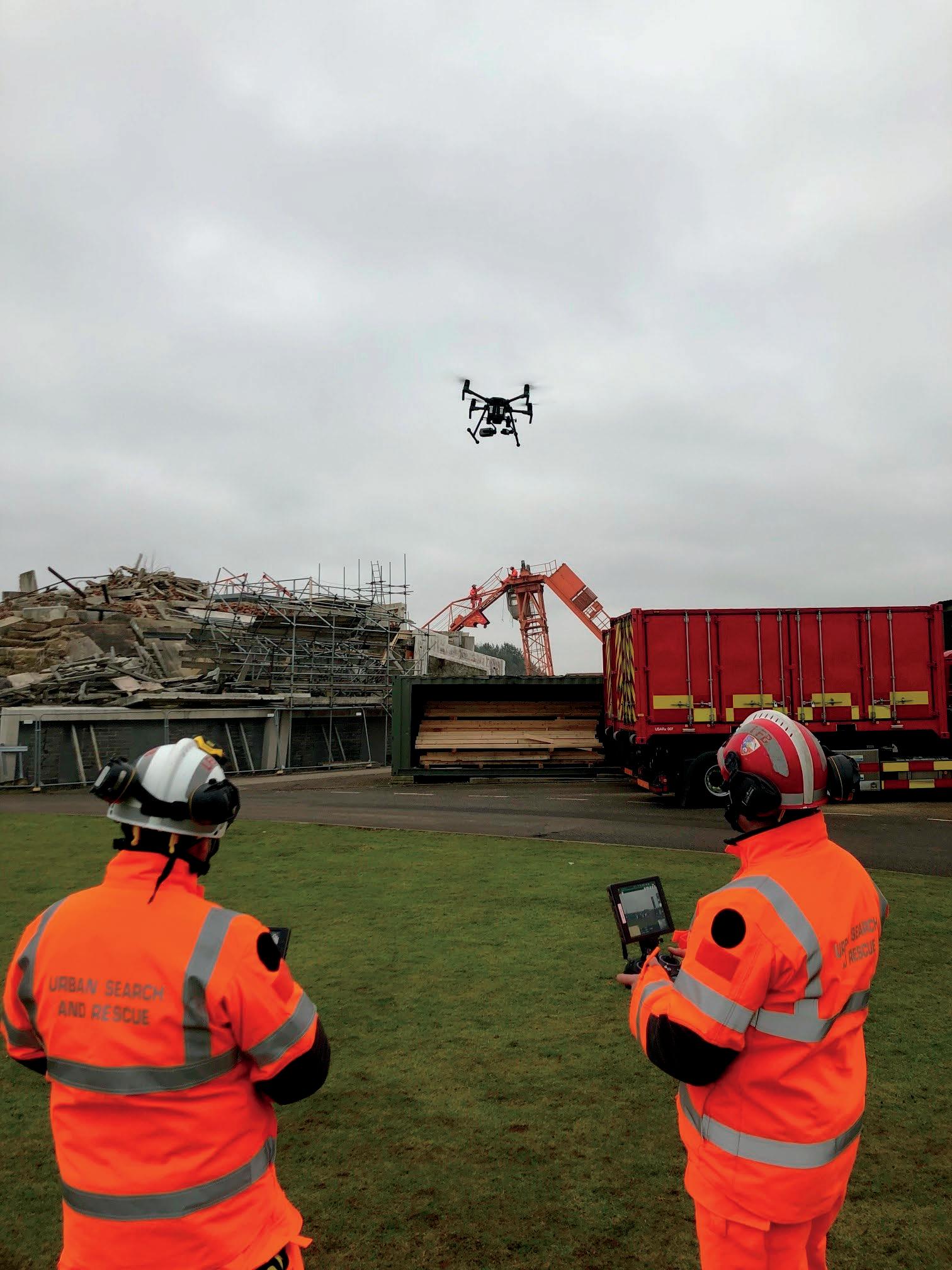
Fire Service College, Moreton-in-Marsh, UK.
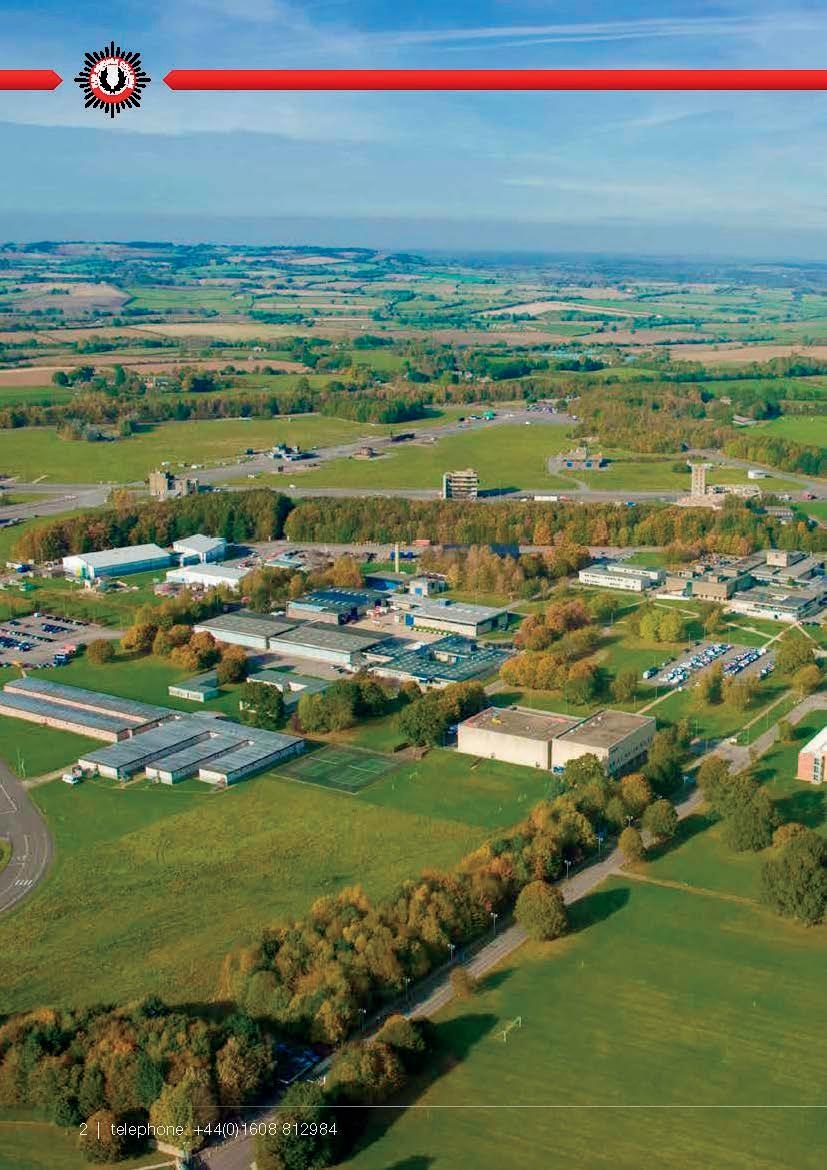
6 & 7 June 2024
Conference
Exhibition
SCAN TO REGISTER YOUR INTEREST

'Blue Room' Police Conference
Hands-on Masterclass Workshops
Fly and Try
LIVE Demonstrations from Police, Fire and Search & Rescue Specialists
LIVE Fly Scenarios Across 10
Incident Ground Venues
Spaces are limited to accredited emergency services personnel only No public attendance
SCAN THE QR CODE TO BOOK NOW


THE LATEST FROM