
ISSUE 96 MAY | JUNE 2023 CELEBRATING LUXURY & SUCCESS 9 771837 559009 COMPLIMENTARY DIGITAL ISSUE ELIZABETH DEBICKI INTERVIEW EXPLORE MORE BACK TO MOULIN ROUGE FOOD FEAST MARINE SHOWSTOPPERS BOAT SHOW EDITION Boat Rock the Win A GOLD COAST BROADWATER CRUISE
DA APPROVED CONSTRUCTION COMMENCING 2023 MOVE IN 2025
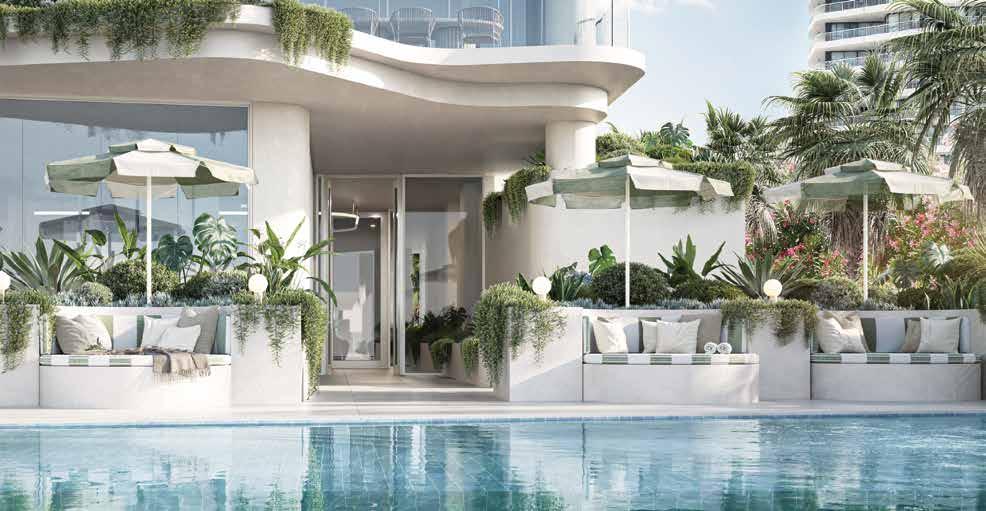
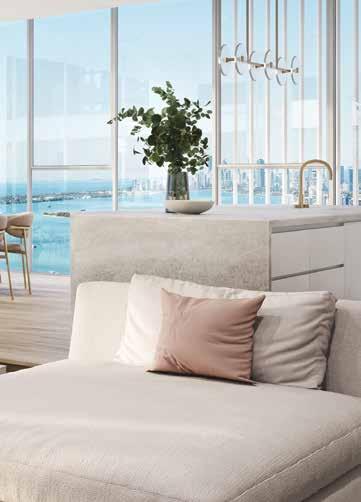
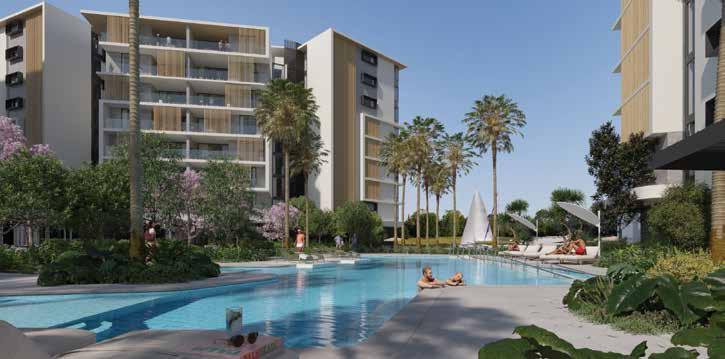
Wake up on the water every day with sweeping Gold Coast views. With unrivaled resort style amenities and access to your choice of world class marinas.
Only 31 full floor residences from $3.545m


Where everything
WATERFRONT POOL
2 3.5 3 + MPR 273m2
0420 102 733 belvue.com.au Visit on-site display Open 7 days, 10am to 2pm or by appointment 13 Bayview Street, Runaway Bay everything connects. Artists impressions and timelines are indicative only and are subject to variations in accordance with the contract terms.
FOR MORE INFORMATION Corey Gilmore — 0416 217 774 Duncan McInnes — 0418 761 822 ARTIST IMPRESSION VISIT THE DRIFT DISPLAY SUITE 18 Tedder Avenue, Main Beach Monday to Sunday, 10am-4pm
THE NEW BENCHMARK IN LUXURY
Unlock a Resort-Style Experience
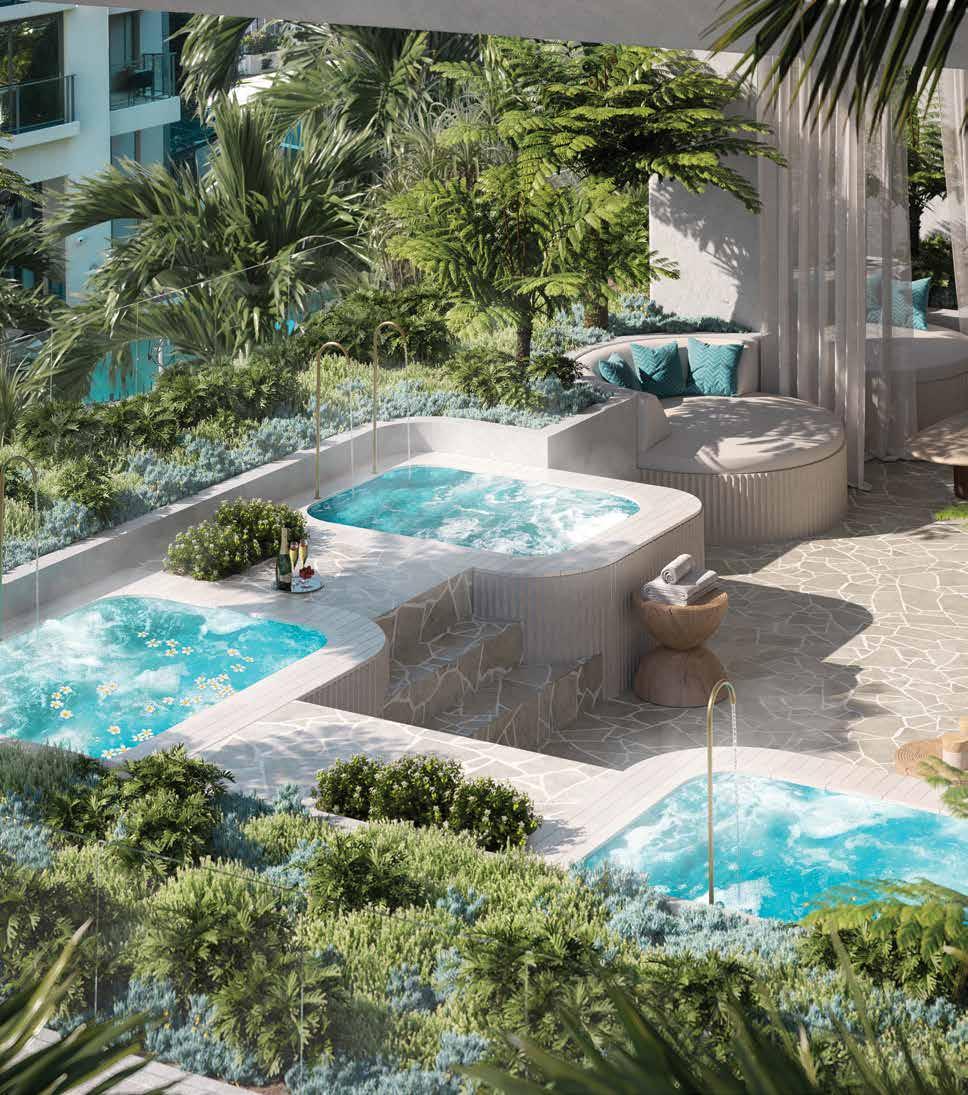
Caring for your health and well-being is a daily priority at Drift, where an enticing selection of carefully considered amenities awaits.
Drift residents enjoy the ultimate spa and health club experience with a full level of amenities focused on relaxation, rejuvenation, fitness and recreation in the comfort and privacy of your very own resort.
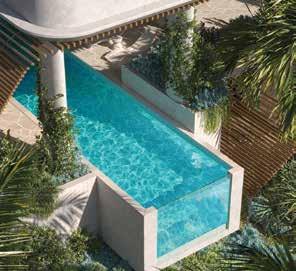
A stunning infinity pool offers a cooling retreat on balmy days, while hot and cold spas, an infrared sauna, and steam room reduce inflammation while improving mood and immunity.
Establish your own fitness and self-care routine with exclusive use of the gymnasium, a tranquil yoga studio, and massage rooms all without leaving home.
DRIFTRESIDENCES.COM.AU 16-18 HUGHES AVE. MAIN BEACH UNDER CONSTRUCTION
INFINITY POOL | COLD THERAPY POOL | INFRARED SAUNA | MAGNESIUM SPAS MASSAGE ROOM | GYM | SAND BAR ARRIVAL | RESIDENTS LOUNGE
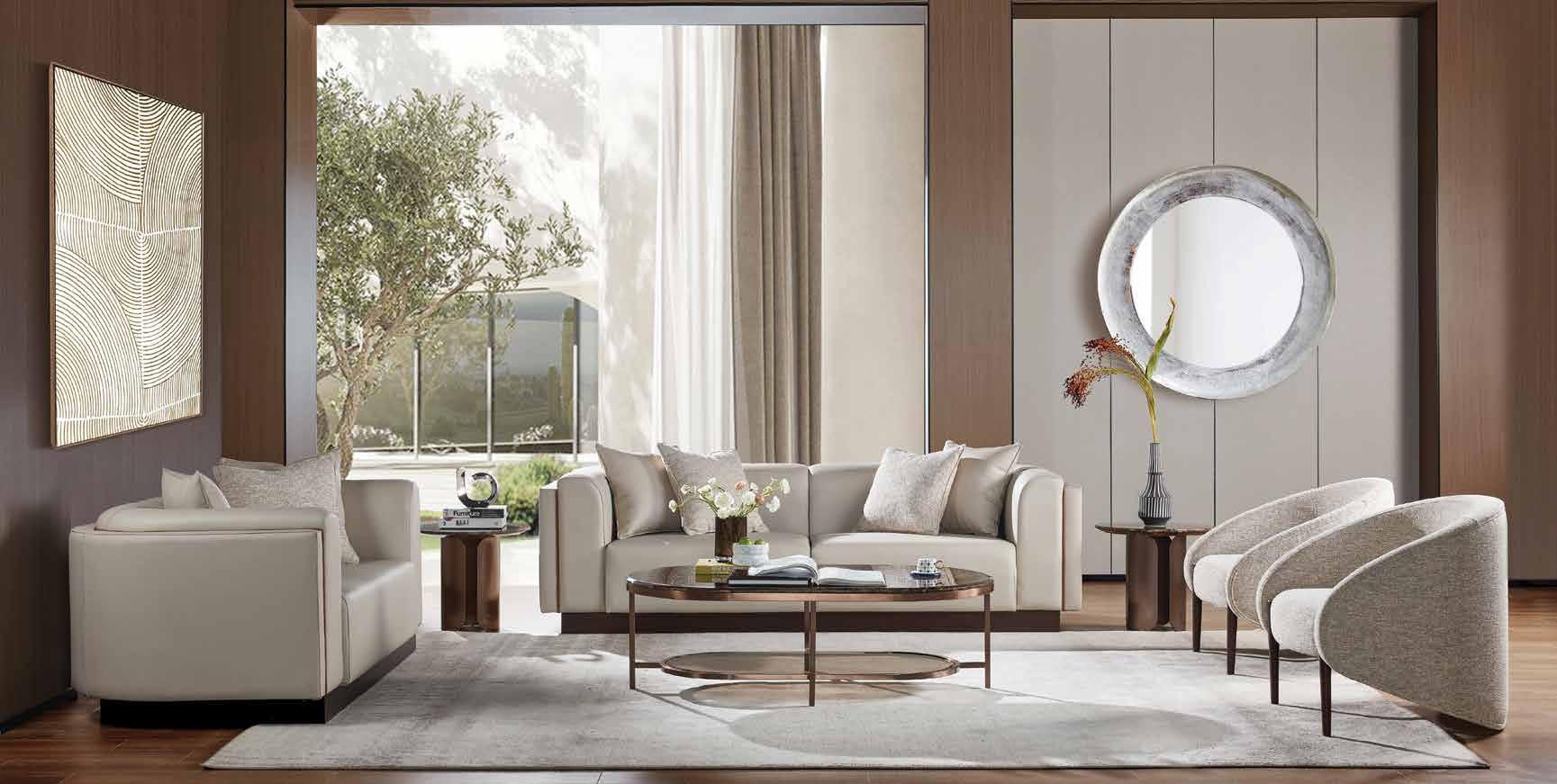
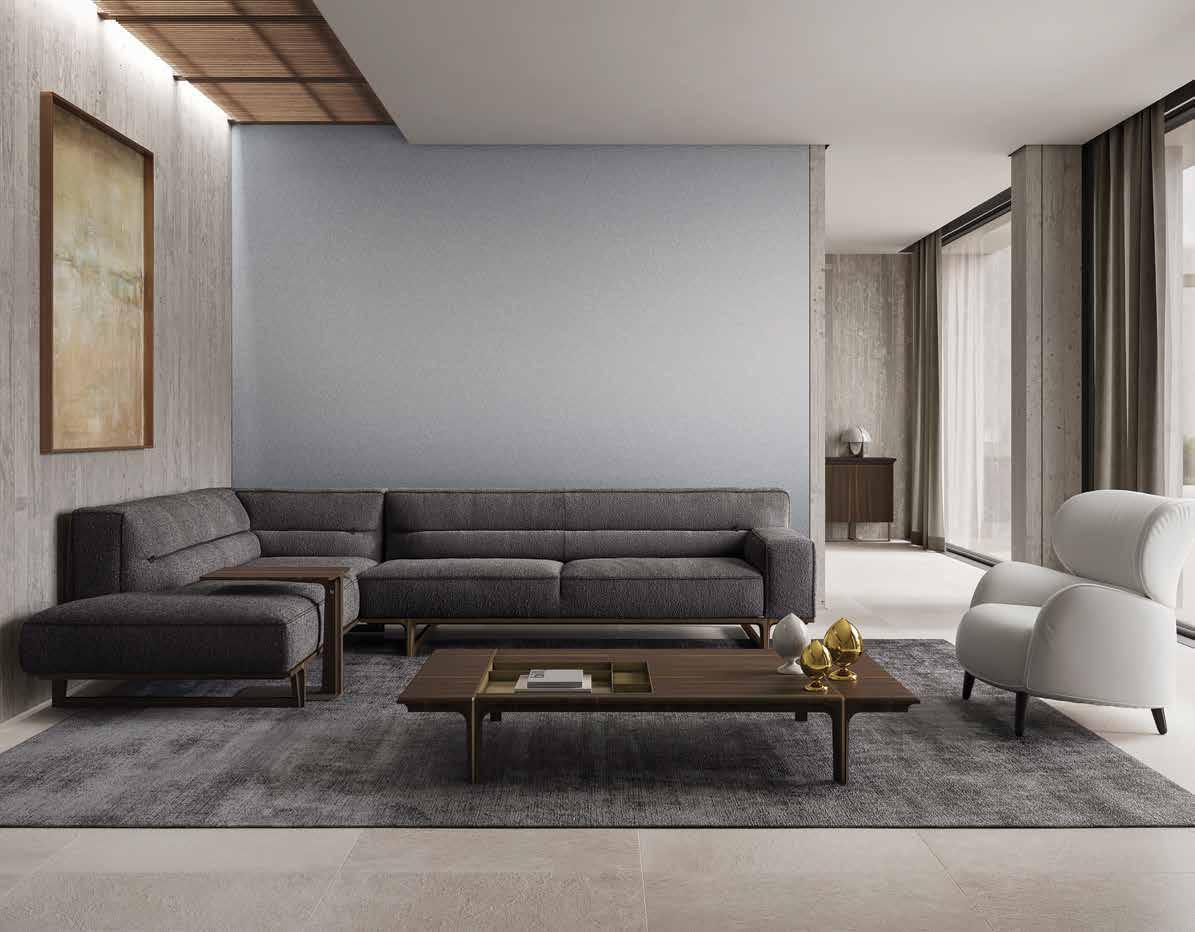
FURNITURE | ACCESSORIES | LIGHTING | ARTWORK | FABRICS | WALLPAPERS
Bundall’s leading design destination and furniture emporium - NOW OPEN IN BRISBANE Interior design service available by appointment. Fabulous ranges including one-off pieces to complement your style. Moran Furniture exclusive to Lynton & Forrester. lyntonforresterfurniture | lyntonandforrester.com.au | info@lyntonandforrester.com.au 112 Bundall Road, Bundall, 07 5646 9240 | 10 James Street, Fortitude Valley, 07 3021 6000 “JUST ONE PIECE CAN TRANSFORM A ROOM”
The Original Tummy Tuck in a Jar™
FIRM, TONE, BRIGHTEN AND EVEN OUT SKIN TONE ALL OVER LIKE NEVER BEFORE
The skin of your dreams starts here
Introducing best-seller, Frangipani and Lychee Body Crème, an intensely hydrating 4-in-1 Body Cream designed to reduce the appearance of cellulite, stretchmarks, ageing and sun damage.
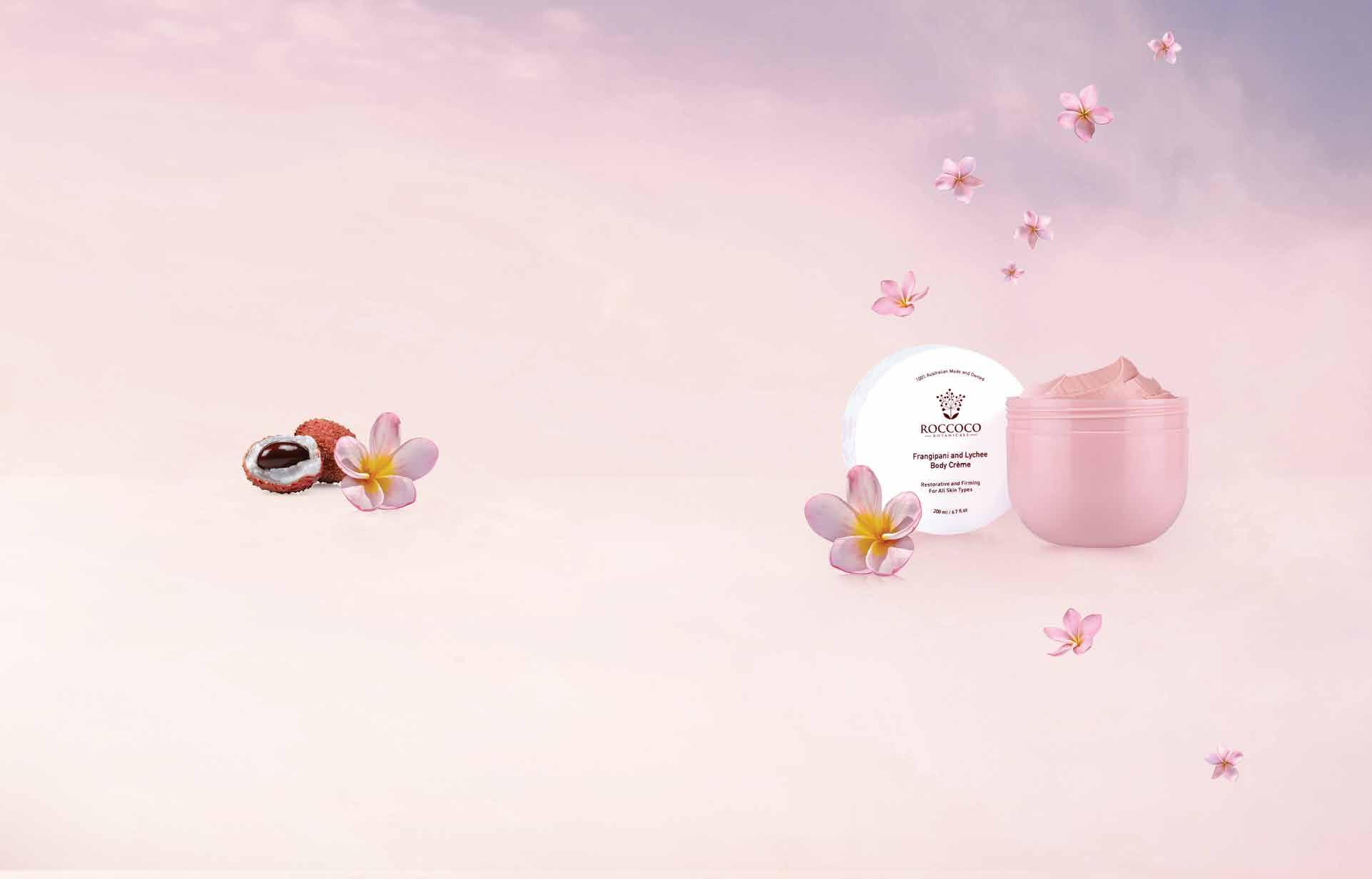
AU.ROCCOCO.COM NATURALLY BEAUTIFUL | NATIVELY AUSTRALIAN | BOTANICAL SKINCARE
Boosts Hyaluronic Acid by up to:
80%
CONTAINS 97% NATURAL ORIGIN INGREDIENTS
Reduces Melanin in Skin by up to:
20%
FOR SALE
DA + BA APPROVED DEVELOPMENT SITE
$6,500,000 plus GST
• 58-60 Siganto Drive is set on 3992m2* across two titles of prime M1 facing land in the sought after Siganto Drive commercial precinct.
• One of very few developable sites left in this desirable location.
• Development land is scarce in Helensvale and approved sites are rare.
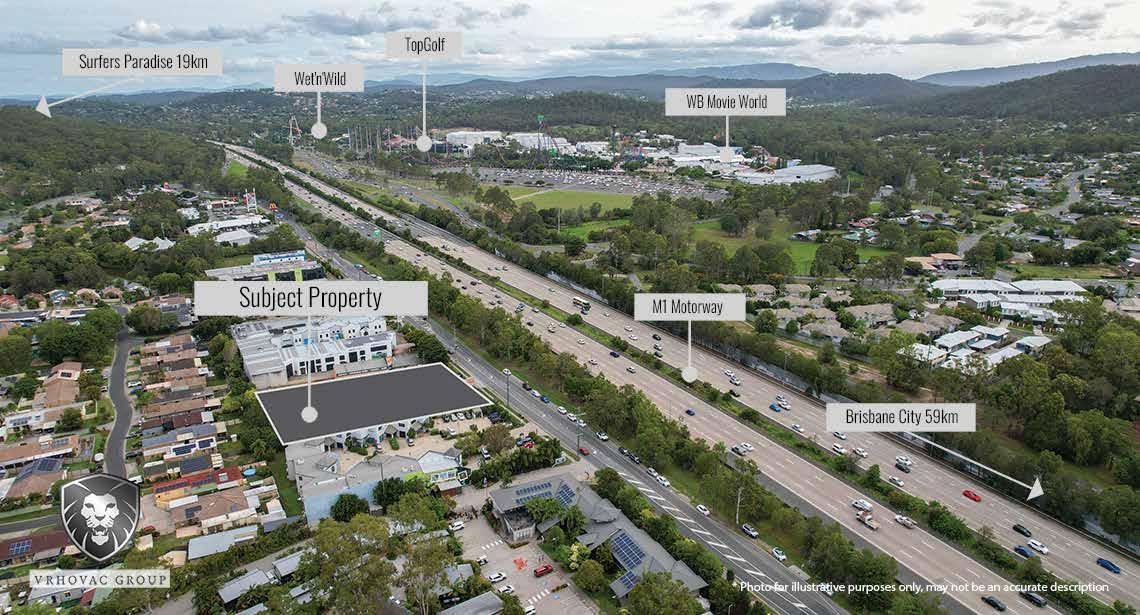
• Zoned Mixed Use – Fringe Business District.
• Concept plans for 48 x Man Cave units will be available in the due diligence package (available upon request).
• The site enjoys close proximity to the M1 Motorway and ease of access to a range of public transport options.
• Please contact Exclusive Marketing Agent Craig Perry of Craig Wayne Property for a copy of the IM.

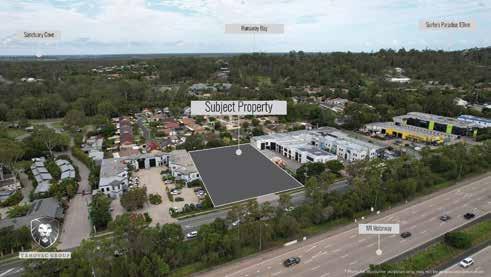
ANOTHER QUALITY PROJECT BY VRHOVAC GROUP PTY LTD For further information please contact Craig Perry (m. 0424 244 554) craigperry@craigwayneproperty.com.au 58-60 Siganto Drive, Helensvale QLD
MARINAWIDEBERTHS UPTO25M
LAST
AND
BEST WATERFRONT APARTMENTS
ADDRESS AT HOPE ISLAND RELEASED FOR SALE. STAKE YOUR CLAIM NOW!

• North to water aspects
• 25m indoor heated pool
• Resort style outdoor pool and spa
• Yoga/ Gym/ Residents Lounge
• Secured gated community
• Over 1 HA open landscaped space
• Mostly side by side carparks; car spaces with storage options.
We invite you to view Marina Point’s incomparable features via our virtual model and tour at our showroom: 93 Sheehan Avenue, Hope Island from 10am to 4pm Monday to Saturday, or call 1300 075 432 or email sales@marinapointapartments.com.au.
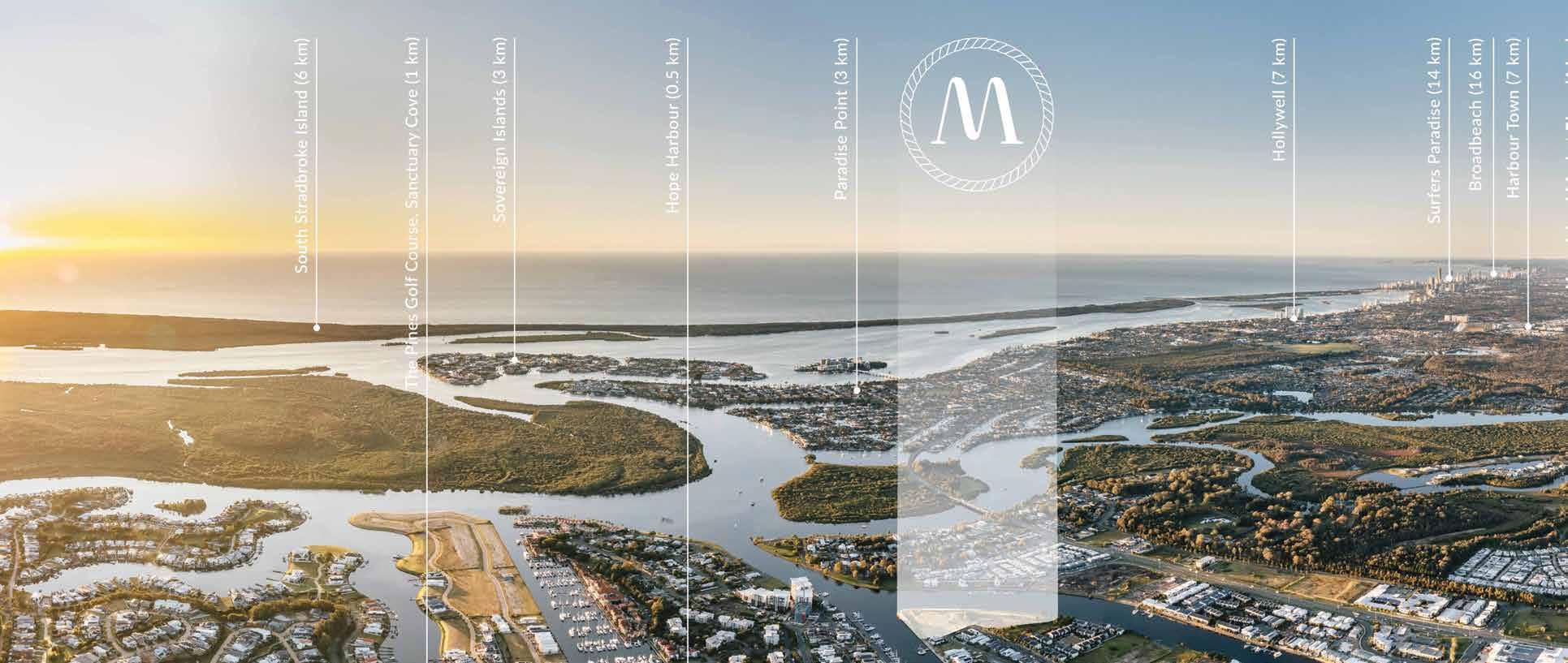
Prices from $995,000
Sizes from 153sqm - 205sqm


16 covemagazine.com.au – Issue 96 UP FRONT 20 - 24 Preview The latest news & views 26 Competition YOT Club Sunday Sunset Cruise 28 - 33 Feature Elizabeth Debicki Interview 34 - 35 City Icon Francesca Rubi LOOKING GOOD 36 - 38 Wish List Rule Breakers Decked Out 40 Time to Climb Montblanc watch collection 42 Sartorial Elegance Latest on-the-go looks CONTENTS 44 Skin Saver Target sun-damaged skin 46 Beauty Spot WELL TRAVELLED 48 - 50 My Mykonos A taste of the Mediterranean 52 - 53 Take the Train The Ghan rail expedition 54 - 55 Sydney Town A new home city CUISINE 56 - 57 A Feast of Seafood Our dining culture 58 Culture & Cuisine T’ang Court in The Langham Gold Coast 60 - 61 Decadent Dining Tweed River House 62 Chef’s Choice WINE CELLAR 66 Tasting Notes Fruit drops WHEELS & WATER 70 Seas the Day Sanctuary Cove International Boat Show 72 Elegance Afloat Leigh Smith Yachts 74 The Main Attraction Main Beach Superyacht Marina 76 Boating Reimagined Freedom Boat Club 78 - 81 Italian Jobs Stunning ultra-sportscars FACTS & FIGURES 82 Oh Buoy Who keeps the boat? 66 78 92 62 20
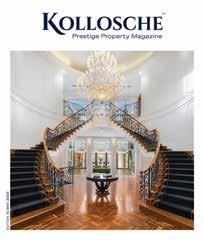
Issue 96 – covemagazine.com.au 17 ISSUE 96 | MAY | JUNE 2023 WELCOME HOME 40-page Kollosche Prestige Property magazine inside 84 Community Focus Your local bank with a difference 86 Care & Commitment Boutique family law firm 88 Innovative Investments Alternative solution for wealth generation PROPERTY PORTFOLIO 90 - 91 Balancing Act To lease or own? 92 - 93 A Haven of Good Health Drift Wellbeing Centre 94 - 97 Hyper-luxe Living Belvue Broadwater LUXURY LIVING 117 A World of Opportunity RSL Art Union 118 - 119 Virtual Viewing Marina Point Apartments 120 - 121 Upgrade Away Over-50s living 122 - 123 Home Style File Blue Hues ART DEPARTMENT 124 Simon Says Simon Burke on stage at QPAC ENTERTAINMENT 126 - 128 See & Be Seen Red Rose Foundation High Tea Louis Vuitton Launch Sweet Guts Launch Party 130 - 131 Event Calendar 132 Bookshelf 134 Brainfood 136 Stars 124 72 28 48
DISCOVER
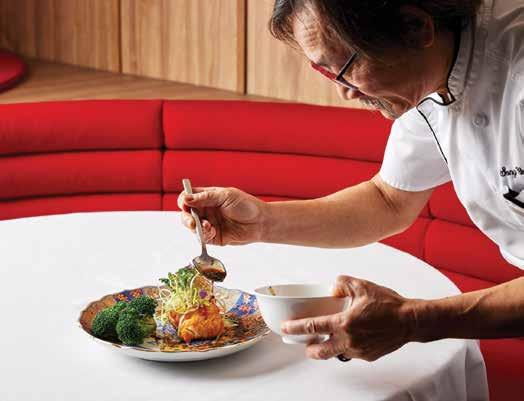
EDITOR’S LETTER TEAM + COVER
PUBLISHER Clare E. Urwin | Sanctuary Cove Publishing
GROUP EDITOR Rhonda Oxnam
GENERAL MANAGER Bryan Oram
BUSINESS DEVELOPMENT MANAGER Nathan Lister
BRAND AMBASSADOR & PRESENTER Brooke Lowther
ACCOUNTS MANAGER Kirsty Carberry
FOOD & WINE CONTRIBUTORS Tony Harper, Marj Osborne
MOTORING CONTRIBUTOR Chris Nixon
PHOTOGRAPHY Daniel McClifty, Steven Grevis, Luke Kenny
EDITORIAL CONTRIBUTORS Nick Nichols, Angela Oram, Natasha Poole, Sarra Davies
DESIGN listercreative
SOCIAL MEDIA DocRox Communication

IT’S ‘BOAT SHOW’ TIME AGAIN and the entire city is gearing up to welcome the thousands of visitors who attend this iconic event each year.
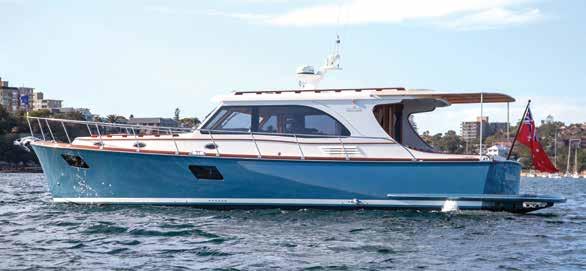
The month of May also marks the anniversary of Cove magazine so as we celebrate our 17th year of publication it seems fitting that this edition pays homage not only to all things nautical, but also to the Gold Coast region and the wonderful lifestyle we enjoy here.
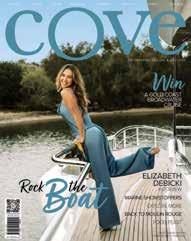
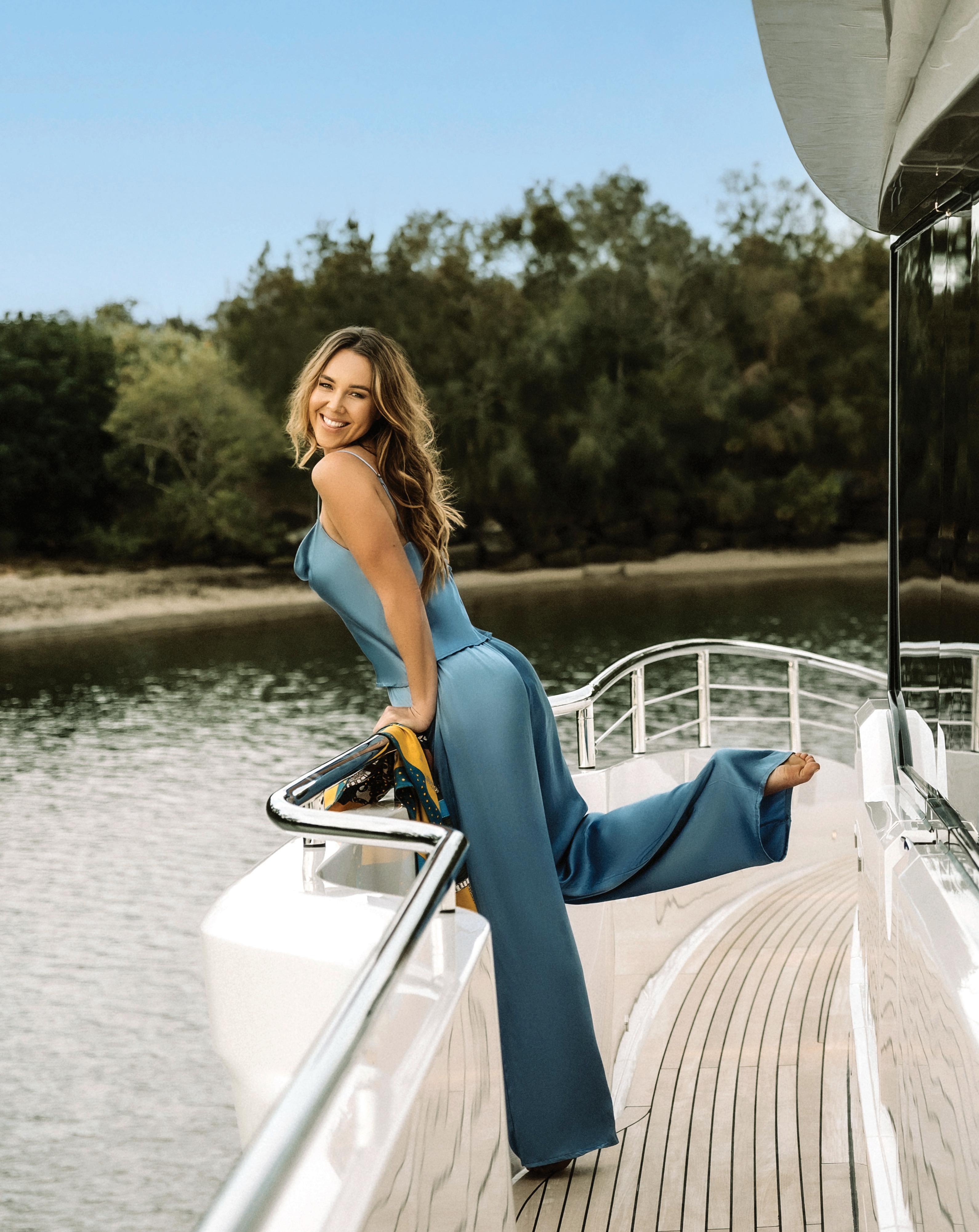
Let’s start with the cover and the fabulous Francesca Rubi who graces it.
Fresh from her role on Below Deck Caribbean Season 8, Francesca has now added Sanctuary Cove Marina Ambassador to her burgeoning C.V.
You can read more about her career and love of the superyacht industry in the City Icon profile.
The marine theme continues in our extended ‘Wheels & Water’ section which showcases everything from beautifully crafted yachts to state-of-the-art marina developments.
We also preview the upcoming Sanctuary Cove International Boat Show and test drive a couple of superfast supercars that are set to hit our roads later this year.
Those of you who prefer the land to the sea might wish to head straight to our cuisine and travel pages.
Our resident food writer, Marj, has excelled herself this edition, covering everything from the exotic flavours of T’ang Court at The Langham Gold Coast to the refined elegance of Tweed River House.
She has even tracked down some of the best seafood dining on the Coast for you.
Meanwhile, Angela has headed north to Myconos (the Sunshine Coast resort, not the island in Greece), Natasha has shared her first impressions of living in Sydney and I have (finally) ticked The Ghan off my bucket list.
Naturally, our competition has a seafaring vibe as well, with the team at the YOT Club giving you the chance to win an amazing Sunset Sunday cruise for 10 people. Details are on page 26.
So whether you are a sailor or a landlubber (or simply appreciate everything life has to offer), this edition has you covered.
Enjoy.
COVER
Photographer: Corrina Louise
Model: Francesca Rubi
Location: Horizon Motor Yachts, Sanctuary Cove Marina
18 covemagazine.com.au – Issue 96
Cove magazine is published and owned by Sanctuary Cove Publishing P.O. Box 252 Sanctuary Cove, Qld, Australia 4212 0410 820 621 | editor@scpublishing.com.au No responsibility is accepted by SCP for the accuracy of any statement contained in the text or advertisements. All material appearing in The Cove magazine is copyright© Views expressed by journalists are not necessarily those of the publisher. Printed by Printcraft. Join in the conversation on Twitter and follow us on Facebook and Instagram for the latest news from the Cove magazine.
Tesora
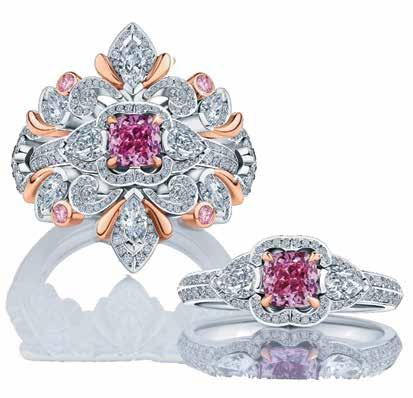
Unveiling a magnificent 0.64ct Fancy Vivid Purplish-Pink Argyle Tender Diamond™ ring featuring a removable jacket. With the closure of the Argyle mine, she is incredibly rare and highly collectable.

CALLEIJA | LONDON | GOLD COAST | SYDNEY
NEWS AND VIEWS
A taste for fashion
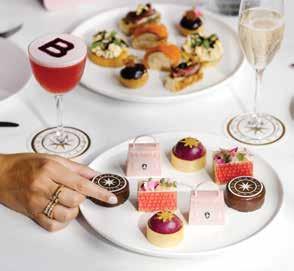
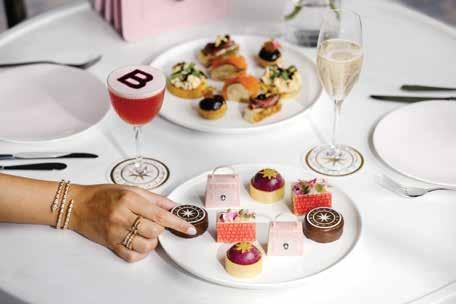
The Langham Gold Coast has partnered with Italian jewellery house Bulgari to present an opulent Afternoon Tea for the entire month of May. Set in the hotel’s light-filled Palm Court precinct, the Afternoon Tea will feature a decadent selection of Bulgari-inspired desserts including a miniature version of the Maison’s classic Serpenti Forever top handle bag. This exclusive experience is $129 a person. Bookings essential. langhamhotels.com
Circle of Harmony
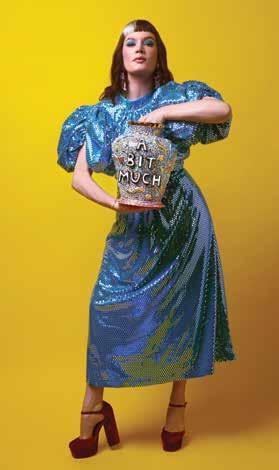
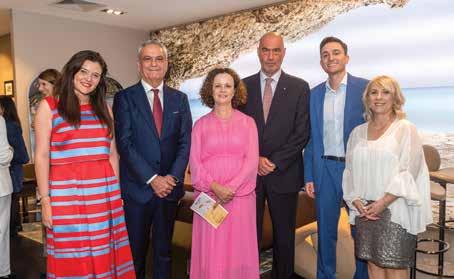
Natuzzi Oceania Director Jo Francis and new brand ambassador for Natuzzi Italia in Australia, Corrado Tinelli, hosted the Consul of Italy in Brisbane, Luna Angelini Marinucci and the Ambassador of Italy to Australia, Paolo Crudele, at the Natuzzi Italia Newstead store for the launch of the new Natuzzi ‘Circle of Harmony - 2nd Life Collection’. The event was held in partnership with Italian Business Women's Network, represented by Comm. Mariangela Stagnitti, with Nicola Care of the Italian Parliament also in attendance. natuzzi.com
Opens 13 May Clay: Collected Ceramics
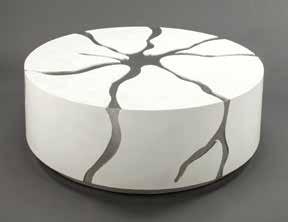
Spanning 60 years of creativity, this new exhibition at Museum of Brisbane is a celebration of early trailblazers and contemporary ceramics. Featuring newly commissioned works from cutting edge Brisbane ceramicists Bonnie Hislop, Steph Woods, Kenji Uranishi, Jane du Rand and Nicolette Johnson as well as works by ten renowned makers including Carl McConnell (1926-2003), one of Queensland’s most significant post -World War II potters, the exhibition runs until 22 October 2023. Free entry. museumofbrisbane.com.au
Transform your home
From sofas and buffets to rugs and occasional furniture, leading furniture emporium Lynton & Forrester stock a fabulous range of well-known brands and one-off pieces to complement your individual style. Lynton & Forrester also offer a variety of interior design services, from simple advice to a whole residence makeover. Discover the latest collections in store at 112 Bundall Road, Bundall or 10 James St, Fortitude Valley. lyntonandforrester.com.au
20 covemagazine.com.au – Issue 96 PREVIEW
Bonnie Hislop for Clay: Collected Ceramics at Museum of Brisbane 2023.
Photo: Macami.

GRAND VOYAGE S 20 25 & 20 26
NAGASAKI TOKYO BUSAN ISHIGAKI (SAKISHIMA ISLANDS) TAIPEI (KEELUNG) SYDNEY MELBOURNE BURNIE (TASMANIA) HOBART (TASMANIA) AUCKLAND BAY OF ISLANDS ROTORUA (TAURANGA NAPIER WELLINGTON CHRISTCHURCH (LYTTELTON DUNEDIN PORTLAND PENNESHAW (KANGAROO ISLAND) ESPERANCE ALBANY BUSSELTON GERALDTON BALI (BENOA) BALI (CELUKAN BAWANG) SINGAPORE KO SAMUI HO CHI MINH CITY BANGKOK SIHANOUKVILLE NHA TRANG CORON MANILA HONG KONG SHANGHA OSAKA PERTH (FREEMANTLE) NAGOYA • • • • • • • • • • • • • • • • • • • • AQABA SANTORINI LUXOR (SAFAGA) SUEZ CANAL SALALAH JEDDAH MUSCAT ATHENS (PIRAEUS) EPHESUS (KUSADASI) KHASAB DUBA CAPE TOWN MOSSEL BAY RICHARDS BAY TOLIARA PORT LOUIS NOSY BORAHA ANTSIRANANA (DIEGO SUAREZ) NOSY BE DAR ES SALAAM PORT ELIZABETH DURBAN MAPUTO MAYOTTE MAHÉ ROME (CIVITAVECCHIA) SALERNO TAORMINA (SICILY) CORFU GYTHION CHANIA (CRETE) MYKONOS KOS DEPARTS 12 FEB 2026 DURATION 64 NIGHTS UP TO 172 EXCURSIONS DEPARTS
2026 DURATION 61 NIGHTS UP TO 153 EXCURSIONS
LEGENDARY JOUR NEYS
12 JAN
May
The Great Sanctuary Cove Bake Off –Australia’s Biggest Morning Tea
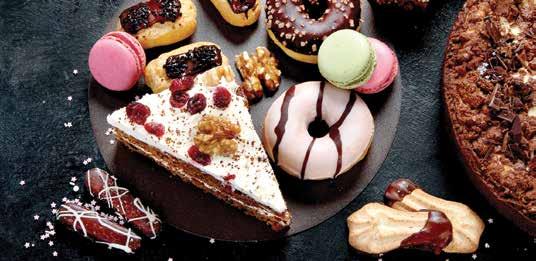
Sanctuary Cove Golf and Country Club invites Members and residents to join The Great Sanctuary Cove Bake Off in support of Cancer Council’s Australia’s Biggest Morning Tea. Guests will enjoy a glass of French rosé upon arrival, followed by tea and coffee and a delectable high tea buffet. Price: $55 Members, $65 non-members. The ticket price includes a donation to Cancer Council Australia, helping run the organisation’s vital support services, lifesaving cancer research projects and educational prevention programs. sanctuarycovegolf.com.au
World’s best car

Drivers wanting the world’s best electric car won’t go wrong with the Hyundai Ioniq 6 launched in Australia recently – it’s just been judged World Car of the Year, World Electric Vehicle of the Year and World Car Design of the Year. A jury of 100 automotive journalists from 32 countries chose the Ioniq 6 for the World Car of the Year Awards announced at the recent New York Auto Show. This was Hyundai’s second-straight triple honour – last year, the jury named the Ioniq 5 winner in the same categories.
Louis Vuitton Luxury
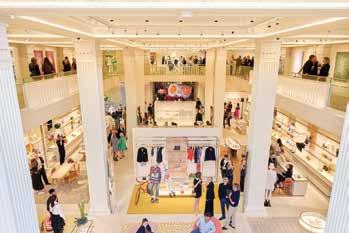
Taking inspiration from the timeless architectural concepts first featured in the Place Vendome store in Paris, Louis Vuitton has officially launched its new Brisbane store. Located on the iconic Queen Street Mall, the three-level boutique offers a broad selection of the Maison’s iconic women’s and men’s readyto-wear, shoes and leather goods together with a selection of accessories, watches and jewellery, fragrances, and Objets Nomades. In addition, Louis Vuitton has collaborated with artist Otis Hope Carey who has created an incredible mural inside the store while China Heights Gallery will exhibit various artists in the gallery space on the mezzanine. louisvuitton.com
Travel Champions
Congratulations to the team at Cove Travel who recently received the prestigious Campioni di Silversea 2022 award at a ceremony in Sydney. Pictured are Sara Puglia - BDM Queensland; Adam Radwanski - MD Asia Pacific; Susan Mallinson - Travel Manager Cove Travel; and Barbara Muckermann - CEO Silversea Cruises.
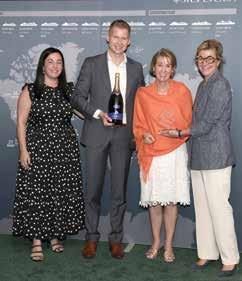
“‘Champions of Silversea’ is Silversea Cruises’ exclusive trade programme for their top 20 travel agencies in Australia and New Zealand and as a small boutique agency it is a huge honour for us to receive this recognition,” Susan said. covetravel.com.au
Byron getaway
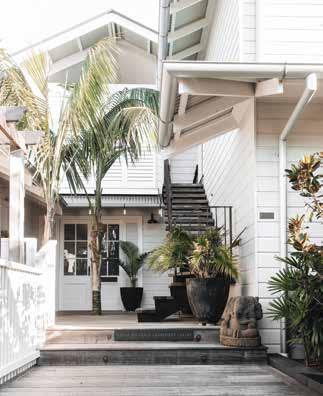
Congratulations to Zoe Binger who is the winner of our competition from issue 94. She has won a 3-night getaway at luxury guest house 28 Degrees, Byron Bay with a complimentary gourmet cheese platter and bottle of organic champagne on arrival plus 2 complimentary massages and a dinner for two at Italian staple Di Vino, Byron. 28byronbay.com.au
22 covemagazine.com.au – Issue 96 PREVIEW
30
sales@cotswoldfurniture.com.au - www.cotswoldfurniture.com.au SYDNEY 02 9906 3686 MITTAGONG 02 4872 2585 BRISBANE 07 3252 8488
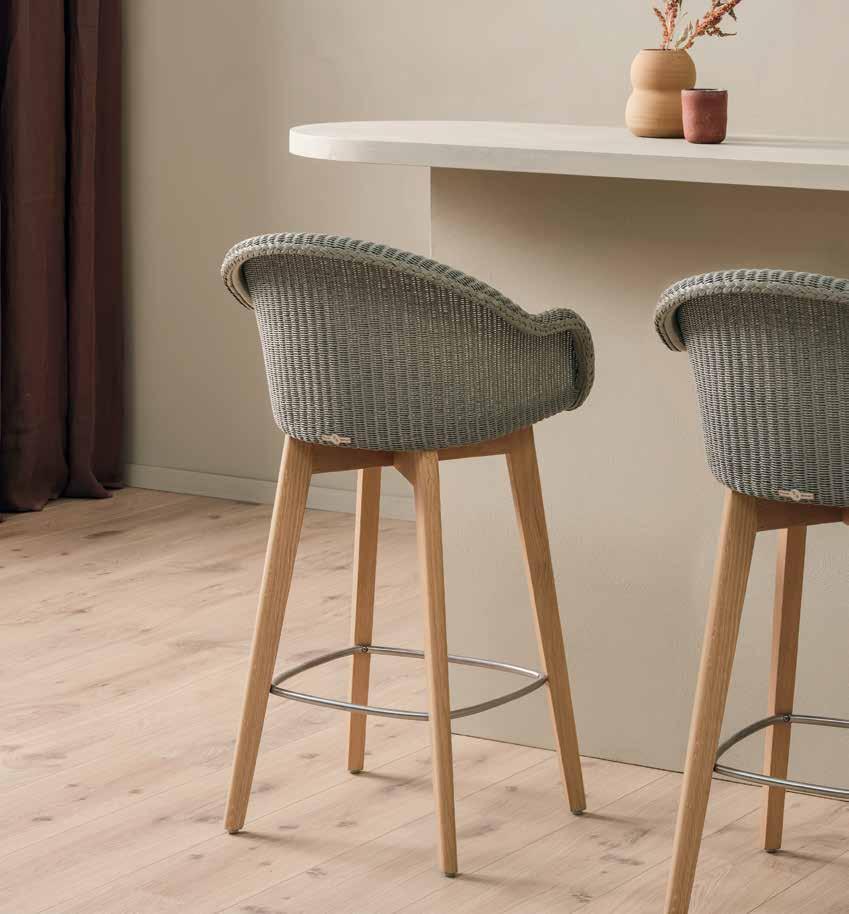
Avril Counter Stool By Vincent Sheppard
Mum’s recipe
Paying homage to sentimental homemade dishes that remind them of their mum, chefs at The Star Gold Coast invite guests to spoil their mothers and the mother figures in their lives and share fond memories over food, just as they did when they were young. Throughout May, Kiyomi, Cucina Vivo, Uncle Su and Garden Kitchen & Bar will introduce limited edition menus taking guests on a trip down memory lane, savouring fond childhood recipes passed down from their mothers, paired with a complimentary glass of Veuve Clicquot champagne. star.com.au/goldcoast
Special Forces
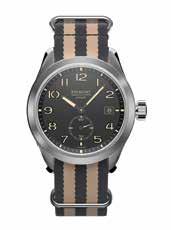
Based on the popular Broadsword design from the Armed Forces Collection, Bremont’s new Broadsword Recon is limited to just 200 pieces. au.bremont.com
Timeless elegance
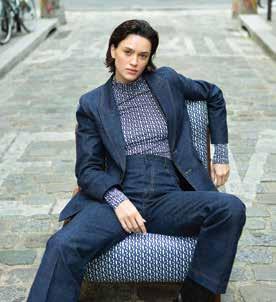
In 1984 Claudie Pierlot invented a look that is both chic and effortless, a wardrobe that was designed for everyday life. More than 30 years after their creation, the iconic Claudie Pierlot’s designs are constantly revisited, reinterpreted, and shifted.
davidjones.com/brand/claudie-pierlot
Aussie made
New venue
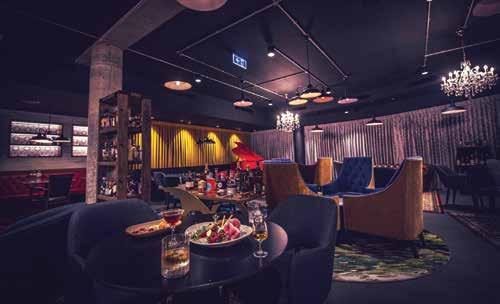
Discover Still & Barrel, a luxury, modern-day speakeasy hidden away in the heart of Twin Towns. Stunningly decked out with cosy leather armchairs, sofas and booth style seating, the new bar serves a premium range of over 400 spirits and popular single malts from world famous expert distillers. Whether you fancy the most famous drops from Scotland, rare whiskies from Japan, top-quality bourbon or gin or any of these delights, shaken or stirred into a decadent cocktail, you’ve found your new go-to venue. Insta-worthy gourmet grazing boards for two are also available to enjoy with your drinks. Open Thursday to Saturday, 8.30pm until late with live entertainment on Friday and Saturday nights.
twintowns.com.au
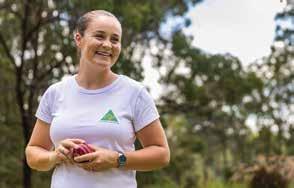
She’s a former Young Australian of the Year, an Australian Open, French Open and Wimbledon champion, and has excelled in other endeavours, including golf, cricket and as an author, role model and a proud Ngarigo woman. Now Ash Barty is serving one of her most patriotic points yet as the ambassador for Australian Made Week 2023 (15 - 21 May). Seeking out and buying products bearing the Australian Made logo supports local growers, producers and businesses and benefits the local economy so keep your eyes out for the green-and-gold logo, Australia’s most trusted, recognised and widely used country of origin symbol.
australianmadeweek.com.au
24 covemagazine.com.au – Issue 96 PREVIEW
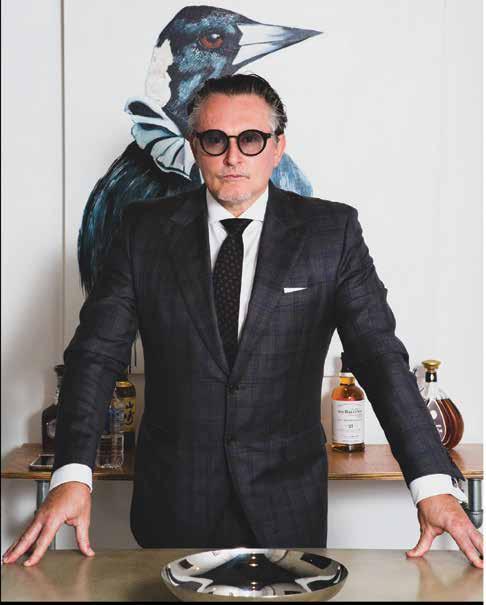
Adjunct Professor of Law Partner, Director of Family Law and Domestic Violence
JASON J. MURAKAMI
The family lawyer with the reputation for getting matters finalised quickly. Suite 2, Ground Level, H20, Cnr. Marine Pde. & Nind St., Southport, QLD 4212 Phone: (07) 5527 0686
Grab your crew and step aboard the YOT Club for the ultimate Gold Coast Broadwater Cruise. Delivering wow-factor ticketed and private charter events all year round, this luxurious superyacht is the perfect venue for any party, celebration or special occasion.
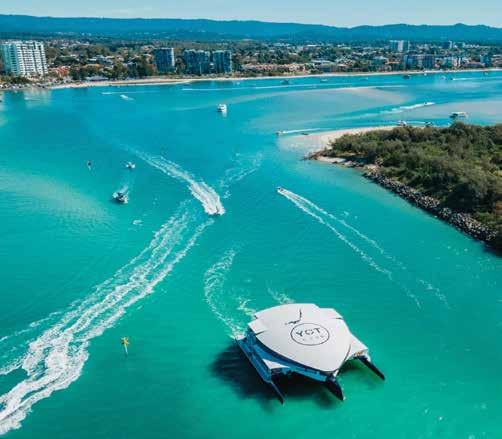
When you choose YOT Club, you’ll not only enjoy spectacular views, you will also get great service and drinks as you cruise thanks to the fully licensed bar.
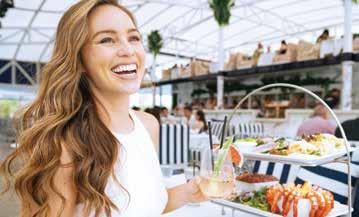
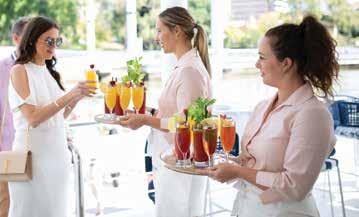

What could be better than sipping a cocktail on a luxury Gold Coast Broadwater Cruise as you watch the world go by? yotclub.com.au
PRIZE INCLUDES: 10 VIP Upper Deck General Admission tickets onboard a YOT Club Sunday Sunset charter with 10 x signature cocktails on arrival, one grazing platter for 10 guests, premium range of beverage inclusions, private wait staff with bottle service and reserved seating.
26 covemagazine.com.au – Issue 96 Enter online now. Simply visit ... covemagazine.com.au/competitions Terms & Conditions: Prize includes 10x Upper Deck General Admission tickets with Reserved Seating onboard one of the YOT Clubs Sunday Sunset charters with cocktail on arrival and grazing platter. Bookings essential. Subject to availability. Blackout dates apply. Not transferrable or redeemable for cash. One entry per person. Closing date for entries is 30 June 2023. Winner will be drawn 14 July 2023 and notified by phone and email. Winner’s name will be published in the following Cove magazine. By entering the competition you agree to receive information from Sanctuary Cove Publishing and The YOT Club.
COMPETITION
a VIP Sunday Sunset Cruise for 10 people onboard the YOT Club WIN
DISCOVER THE RUSH OF THE UNKOWN WITH SILVERSEA EXPEDITIONS

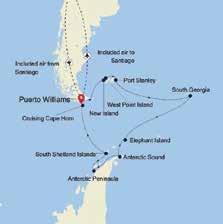
Go to the ends of the earth and discover the rush of the unknown with Silversea Expeditions. An expedition with Silversea luxury cruises is unlike any other form of travel — thrilling, awe-inspiring and humbling all at the same time.
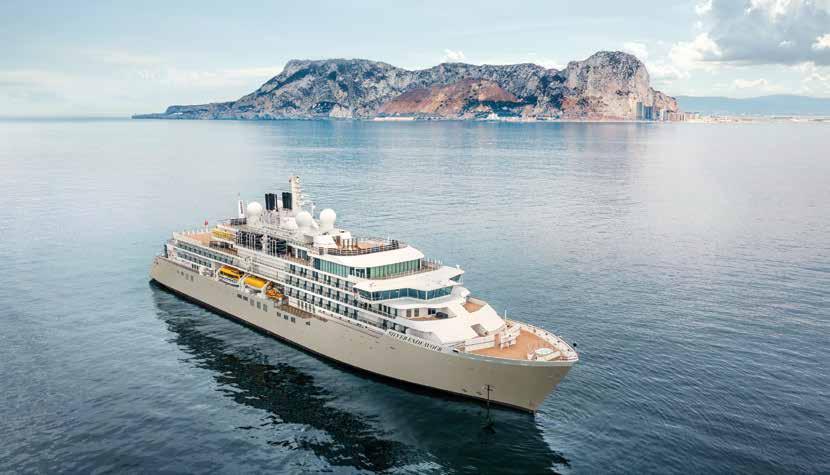
We take you to some of the planet’s most remote regions and show them to you intimately. Our cruises are for the curious traveller who longs to see an orang-utan in the wild or what lies behind the next mountain ridge. But it’s not just about wildlife or mountains. It’s about immersing yourself in the culture, landscape and habitat of a region with the help of experts who can illuminate your destination.
Our expedition ships sail to all seven continents so that you can experience everything from the lush rainforests of the equatorial Pacific to the polar extremes at the tip or toe of the world. Explore pelagic wonderlands, admire volcanic plateaus gushing with geysers, or enter the realm of the Polar Bear. But no matter where you go, you’ll enjoy a uniquely immersive experience, expanding your global perspective and prompting you to re-evaluate what really matters. And rest assured, no creature comfort will be denied on an expedition cruise with Silversea.
*Fares and itineraries vary by sail date. Offers are valid for new individual bookings made during promotional period and may be withdrawn at any time without notice. Valid for select gateways to guests from Australia only. Silversea reserves the right to select the air carrier, routing and departure airport from each gateway city. Deviations to air travel dates accepted; surcharges may apply. All fares, savings, offers, itineraries, and programs are subject to change without notice. Voyage highlights,
and
are subject to change and/ or cancellation without prior notice. All information contained herein is accurate and in effect as of 9 Feb 2023. Silversea reserves the right to correct any errors and omissions and to cancel any offered product or service
event
such error or omission. Additional restrictions may apply. For complete terms and conditions and promotional period dates visit
excursions,
enrichment programs
in the
of
silversea.com
CONTACT COVE TRAVEL +61 7 5577 9211 OR INFO@COVETRAVEL.COM.AU
Silver Endeavour Departure Duration EV241029018 OCT 29, 2024 18 days PUERTO WILLIAMS TO PUERTO WILLIAMS DOOR TO DOOR From $37,000PP* ANTARCTIC EXPEDITION
Voyage n.
28 covemagazine.com.au – Issue 96 FEATURE
For me, it’s quite simple in a way that it’s a really strange and beautiful experience playing a character that we know has a tragic end.
– Elizabeth Debicki
JEWEL IN THE CROWN
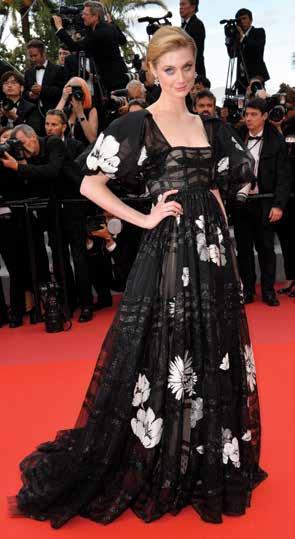
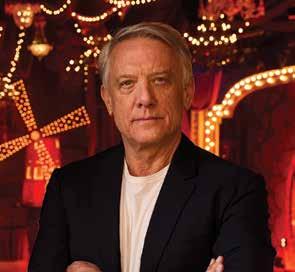
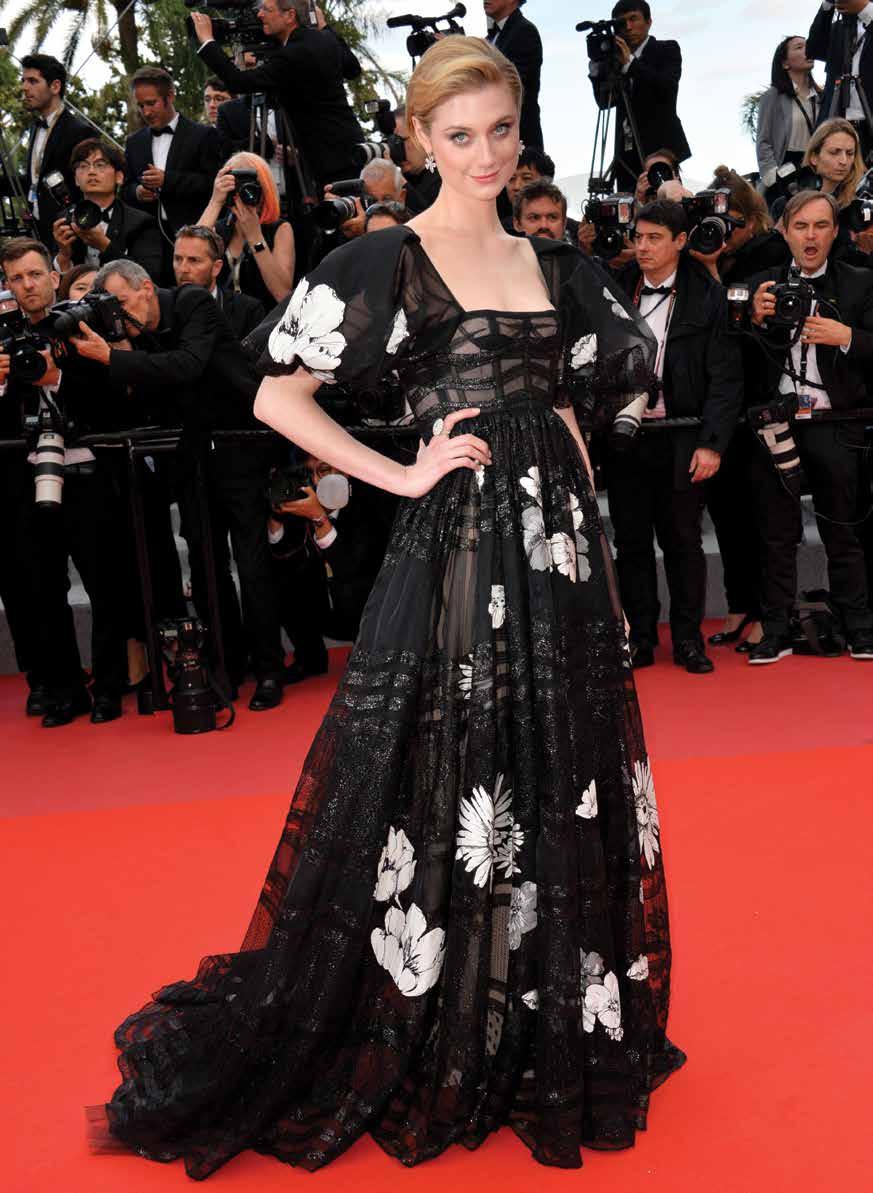
AUSTRALIAN ACTRESS ELIZABETH DEBICKI was nominated in the Best Female Actor in a Drama category at the 29th Annual Screen Actors Guild Awards for her portrayal of Princess Diana in season five of The Crown
While she lost out to the fabulous Jennifer Coolidge on the night, Elizabeth speaks about taking on the iconic role and the preparation she did for the part.
Everyone was new on the cast for season five of The Crown How did you approach that?
You know, it was really the strangest job of my life to date, without a doubt.
I kind of knew I was going to play it for a very long time, like nearly four or five years.
That’s a really weird challenge in itself, because it’s cooking somewhere in the back of your mind but you don’t want to come to it too early.
And then there’s a real, very deep responsibility we felt as a cast, you know, how do we uphold the standard of performance that we’ve been watching?
Then how do we create or work with this material, which is so imaginative, that’s based on these real people.
Australian star Elizabeth Debicki talks about her mesmerising performance as Princess Diana in season five of The Crown and how she felt about taking on the role of an icon. MONDAY
Hair
Massage
Waxing
Dermaplaning
Skin
Nails/Pedicures
Spa Packages
Couples Massages
High Tea Packages
By the time we came to play them, because season five is set in the ‘90s, there was this incredible wealth of archival footage we had access to, which is sort of like an abyss because it would go forever.
In a way, I did get sucked into that, but then you have to draw yourself out because you have to come back to the place of ownership and imaginative material and what is yours to create.
I think the conversations that we had going into it, and I suppose it was also clear to me from watching it, is that it’s never been about likeness or mimicry.
It’s about, I guess, essence and watching people sort of be possessed by these people.
There’s also a kind of funny line between who has ownership over these characters as well, especially getting into this season because a lot of actors are playing people who are still alive or people who they have very strong memories of.
So it was a highly complex task, for sure. >>
Issue 96 – covemagazine.com.au 29
TO SATURDAY
GOLF CLUB
LINKS
Springfield Drive, Hope Island, VIP Parking RELAX RECHARGE REJUVENATE
Styling
Foiling/Colour
Balayage Facials
Infusion
championshairbeautydayspa.com.au
Makeup 5577 8677
WORDS LUCY ALLEN / THE INTERVIEW PEOPLE
Of course, Princess Diana is so iconic. What were some of the things you avoided when it came to play her so that you could just capture the humanity of Diana?
I think all actors know that weird sort of trade between readiness and openness and preparedness – it’s a funny dance.
When I went into this job – and actually COVID played a big part as well – I had a lot more time than I’ve ever had to prep something.
And there’s this enormous amount of material available that the research departments give to you.
This amazing woman named Annie zoomed me, and she asked, ‘How much of it do you want?’ And I was super nervous and keen, so I said, ‘I want all of it’.
Then, of course, when it lands on my doorstep it’s literally volumes and volumes of archival boxes that you could spend 20 hours watching and you wouldn’t get through it.
One of the things that became clear to me though, with Diana, and the sort of things written about her, is that there are strong agendas there.
And it’s also about history and who owns the truth of it and who decides who somebody was.
One of the things that I learnt very quickly was I couldn’t really read anything people had written about her.
I’d get halfway through a book and then pull up and go, ‘Well you don’t know that!’ and I’d become very defensive of her and sort of realise that there was obviously an agenda and the agenda is to sell a book based on whatever angle.
So the things that I started looking for were the most raw versions of footage I could get, which is usually uncut newsreels.
I was like a crazy person watching somebody get out of a car, like 75 times.
As an actor you don’t always get the luxury of time but is there something in the TV process as opposed to film that allows you to sit with a character for a while?
Yeah. And I think also the beauty of TV is that you spend enough time doing the thing. The first few weeks there’s a part of your brain that is just thinking the whole time, ‘Does anyone buy this? Does anyone see a person there?’
And then you get to sit in it long enough, whether it’s six months or five years or whatever, and by the end of it, you don’t care if anyone else buys it, because it’s yours. But that takes time.
What did you see in Emma Corrin’s performance, who played your role previously, to use as a springboard for your Diana?

It’s really funny, that’s not really how I ever thought about it.
When I watched Emma, I watched it as an actor just extremely curious about choices.
And I watched both the technicality be so proficient but also the beautiful fluidity she had and the vulnerability and the openness.
I think I always knew that there was going to be a separation just inherently in a sense of age with the two Dianas.
But it would have been too hard for my psyche to think I have to take that and do something bigger or different.
I really allowed myself to just say, ‘That was that and it was extraordinarily beautiful. And now I have to sort of create a character almost as if she has a different name’.
It’s like I really had to build it from scratch.
And I think that was also my joy as an actor, because there’s so much already attached to that character, even just the delineation is really complex.
Even when I’ve talked about it in press it’s super complicated, because you hear yourself saying, Princess Diana, and then you think, ‘Oh, no, that’s wrong. I’ve got to say the character, or Peter’s creation, or the interpretation of …’
It became clear to me really early on that when you create a character, especially something that no one’s ever seen before, as in not an adaptation of something or something from a book, one of the glories of that is that you are the author of it, and you have this kind of ownership over it and you are the authority on who this person is, on how they feel, on what they think, on how they move … that’s your creation.
So, I guess I was working very hard to try to keep my Diana mine.
And Emma and I didn’t really speak a lot until afterwards.
The task was too mammoth and there were so many voices already in the conversation.
I constantly had to do this very intense blinker work to go, ‘I have to just create this somehow for myself’. >>
30 covemagazine.com.au – Issue 96 FEATURE







Your performance included the now infamous interview Diana did with Martin Bashir, who is played by Prasanna Puwanarajah. Can you talk about how you approached that?
Yeah, the ‘Panorama’ was a really wild thing to do.
It was kind of interesting that we had all this information that was relatively fresh about the way the interview was obtained.
When I came back to London to shoot season five, there was a documentary that uncovered the whole Bashir process of the manipulation, the lying about the bank statements and the forgery.
But again, it was twofold, which I think ‘The Crown’ always is, in a way.
I had to sort of break it into two places like, ‘What is it about that interview? Why did it affect people the way it did? And why did it have the knock-on effect?’
I mean, there were highly politically charged ramifications.
She sort of decided to use a platform to talk about the psychological issues she was going through, whether it was bulimia or post-natal depression or just the internal workings of The Firm, as she called it.
That was unprecedented … nobody had done that.
I feel like I’ve watched it around 100,000 times in many ways.
I learnt that I had to watch it but then I learnt that I had to just listen to it as well.
That happened by accident … I was cooking and I had it going in the background and then I heard a line that I’d watched 100 times and thought, ‘Oh wait a minute, there’s two completely different things happening here’.
It was a totally fascinating acting experiment …I loved doing it but it was a really strange day.
I came to work and the set was identical to what I’d been watching on my screen.
We had these big old ‘90s cameras that were filming us so that our very modern camera could pan over and that was the only time, playing this role, that I saw myself through a ‘90s lens.

But, yeah, it was very interesting and I think everyone was very nervous because it’s a very politically charged thing to tackle.
But we also felt it was very necessary because of the information that we’d learnt in the last year of shooting it.
Peter really wanted to tell that story and I hope that it had some effect in rewriting people’s sense of why she did it.
And this has never happened to me before but I did one take and Peter burst into the room
and started clapping and I remember thinking, ‘Well, that’s good, but now I have to do it another 52 times’.
But that did give me confidence because it really was one of those weird, almost like floating through space moments, where you just do a thing, and then it lands.
And Prasanna who plays Bashir was also extraordinarily, uncannily good.
Finally, what were the discoveries that you will take with you from playing this role?
Many plentiful discoveries. But I think, for me, it’s quite simple in a way that it’s a really strange and beautiful experience playing a character that we know has a tragic end.
And that there’s this inevitability of a thing that the person is moving towards and they’re living in you.
I always say this, that you can’t spend any time near that woman’s spirit and not be profoundly moved by what I think of as a kind of love ethic.
She was somebody who wanted to be loved so deeply …and she had so much love in her and she loved so many people.
And, of course, the effects of that still ripple in our collective consciousness today and also unconsciously.
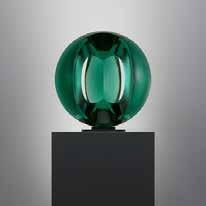
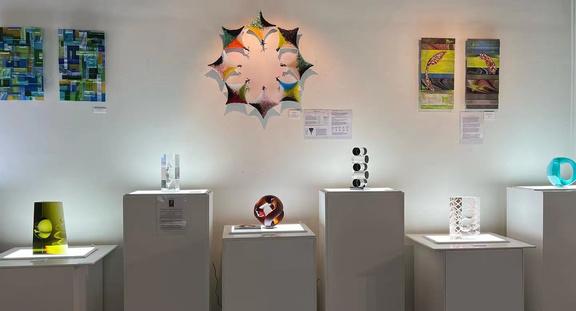
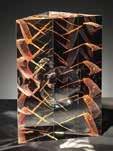
We have a selection of works by over 100s renowned international and national Art Glass artists.
renowned international and national Art Glass artists.
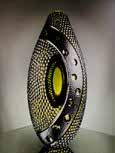

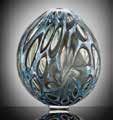
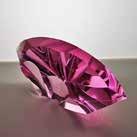
We have a selection of works by over 100s renowned international and national Art Glass artists.
FEATURE
32 covemagazine.com.au – Issue 95 R e d M o o n C o n t e m p o r a r y A r t G l a s s G a l l e r y 7 1 6 H i g h S t r e e t A r m a d a l e V I C 3 1 4 3 A u s t r a l i a 6 1 ( 0 3 ) 9 8 3 6 2 0 5 9 / 0 4 3 0 3 4 8 3 8 4 i n f o @ r e d m o o n a r t g a l l e r y c o m a u w w w r e d m o o n a r t g a l l e r y c o m a u We have a selection of works by over 100s
R e d M o o n C o n t e m p o r a r y A r t G l a s s G a l l e r y 7 1 6 H i g h S t r e e t A r m a d a l e V I C 3 1 4 3 A u s t r a l i a 6 1 ( 0 3 ) 9 8 3 6 2 0 5 9 / 0 4 3 0 3 4 8 3 8 4 i n f o @ r e d m o o n a r t g a l l e r y c o m a u w w w r e d m o o n a r t g a l l e r y c o m a u
R e d M o o n C o n t e m p o r a r y A r t G l a s s G a l l e r y 7 1 6 H i g h S t r e e t A r m a d a l e V I C 3 1 4 3 A u s t r a l i a 6 1 ( 0 3 ) 9 8 3 6 2 0 9 / 0 4 3 0 3 4 3 8 4 i n f o @ r e d m o o n a r t g a l l e r y c o m a u w w w r e d m o o r t g a l l e r y c o m a u
When we lost her, the world mourned in a way that’s completely unprecedented.
And you think, ‘Well, what did they lose?’ I think they lost somebody who loved them.
Of course, the tragedy of the story, of her story, is so much about the fact that that’s what she wanted to experience.
Being near that dichotomy for so long, and it’s been so deeply in my heart now, I just always think of this thing that she said, which is, ‘If you find somebody who loves you, don’t let it go. You have to work very hard to keep that. And it’s worth fighting for and it’s worth loving people’.
I think this business is fascinating and difficult and challenging and it’s such a gift to work as an actor and at the same time you can become tired and you can carry all the of funny ramifications of the job to the next job to the next job.

Sometimes you have to be reminded of this thing, which is that the ordinary is good and love is the thing.
RETREAT TO SIRROMET FOR YOUR NEXT CORPORATE EVENT

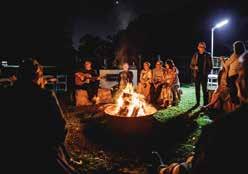
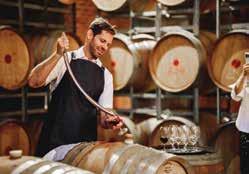
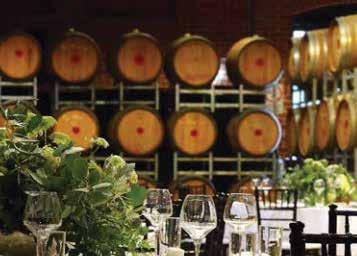
An inspiring venue for your next corporate retreat awaits. From product launches, small residential meetings, team building to wonderful immersive retreats. Sirromet’s glorious footprint offers infinite event possibilities. Be inspired by the glorious setting, the impressive facilities and superb catering which set the scene for new perspectives and future successes. Contact the team to discuss how we can assist you in bringing your event to life | E: wines@sirromet.com P: 07 3206 2999
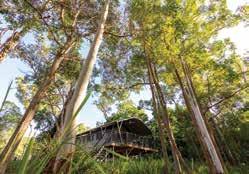
FEATURE Sirromet Winery - 850 Mount Cotton Road, Mount Cotton, Queensland, Australia 4165
PLAIN SAILING
The coveted role of Sanctuary Cove Marina Ambassador draws together Francesca Rubi’s yachting, event and presenting talents in one unique position.
FRANCESCA RUBI grew up on the Sydney beaches determined to live an adventurous life.
For eight years she worked in the marine industry as a Purser, including stints on two superyachts above 80 metres.
These experiences led to onscreen opportunities promoting enviable destinations and some of Australia’s leading yacht brands, before landing a role on Below Deck Caribbean Season 8 which brought her back to work on superyachts.
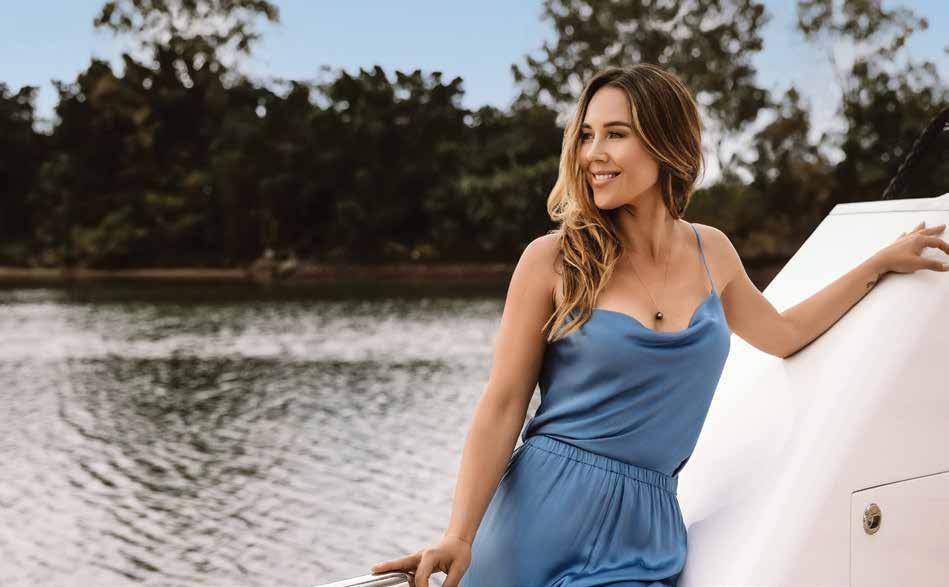
She has now added the role of Sanctuary Cove Marina Ambassador to her burgeoning C.V. and is looking forward to promoting this world-class facility to the marine industry.
How did you get involved in the marine industry.
I grew up on Sydney’s Northern beaches.
My family sailed every weekend with the local club, and my friends were always on the water, so I have always been surrounded by the yachting industry in some way.
I started working in celebrity event management, but superyachts was always going to be a natural extension, given my upbringing, and love for travel.
I had some friends who were already in the industry overseas, so I used my contacts which led me to my first role on an 80m new build yacht in Germany.
What do you love about it?
Working with people from all around the world.
Working on yachts is something really special and incomparable, only the crew that have worked on boats know this.
The industry is unique; it’s a love/hate relationship at times, with more love of course.
You work very hard while guests are on, so hard you don’t have time to think, and then you have all this time off and you are in a country you may not have been able to travel to or wouldn’t have thought of traveling to if you were just going on holiday yourself.
The people you work with become family, and then you have your holiday due, and you ring them and say 'hey I am coming to visit you'.
And, you can actually live like a local.
What are the downsides?
Missing friends and family at home.
A life or part life away from home, you do miss those special moments, birthdays, baby births, weddings.
You sometimes don’t have control of when you are home or not.
Though, when you do get home, it makes time so much more special and the appreciation and love for home increases tenfold.
How did your role at Sanctuary Cove come about?
I worked with the Sanctuary Cove team on an event last year and saw there was a bigger opportunity here.
I love this industry and I love Australia, so what better way to partner with a beautiful marina and share the opportunities this industry, and this marina, has.
The yachting industry is luxury, and Sanctuary Cove and I represent that, so it is a perfect fit.
What are you most looking forward to as the Ambassador?
I am looking forward to encouraging more superyachts to come and experience Sanctuary Cove.
Sanctuary Cove is such a stunning location and has everything crew and guests need.
It is close to everything; you have the luxe element for guests and the fun and exploration side for crew, and even if it’s not your home, you definitely feel at home here.
I have been to many marinas around the world, and this is one of the best.
The East Coast of Australia might be far away for some, but the beauty is unmatched, and is truly a must visit.
34 covemagazine.com.au – Issue 96
CITY ICON
WORDS RHONDA OXNAM
What are your interests outside of work?


I love to lean in to new personal challenges and tread my own path.
I enjoy Pilates and surfing and I am always trying something new.
At the moment I am learning the techniques of the golf swing so I can play at The Palms at Sanctuary Cove.
I enjoy learning about interior design, appreciating great architecture and value spending time with people who I love.
Do you enjoy the travel aspects of your job? Do you have a favourite destination?

I love the travel part of my job.
We don’t always get too much time off, and it can be challenging with languages sometimes, but it is honestly the best part. We have the world literally at our doorstep.
I now take two bags with me so I can go shopping and bring some locally made crockery back to my home, that’s my thing. Favourite destination – it changes all the time.
Barcelona is a city I visit often, I still don’t know every street, but it is a destination with so much culture and beautiful architecture, and you can never have enough Jamon.
What is still on your Bucket List?
Too many to choose from, but I have to go to Japan, Tahiti again, explore more of the US, Sweden, Lithuania, Amsterdam again, more of South Africa, Brazil, Mexico, and India again.
I know a few Indian chefs that work on superyachts, so it would be a pleasure to go and visit their home towns.
SANCTUARY COVE SUPERYACHT MARINA
Sanctuary Cove has become the home of superyachts with the launch of its new $3.5M Pier C development, adding a further 31 berths to the marina and taking the destination’s superyacht berthing capabilities to 39 in total.
The Pier C development by Mulpha is the next stage in Sanctuary Cove’s 2023 strategy to address the growing demand for permanent and transient superyacht berths in the Sunshine State.
It comes after the destination completed its $10M marina expansion in June 2021, which saw the addition of 61 new berths and the first undercover berths in the southern hemisphere.
“We are thrilled to officially unveil Pier C as part of our greater superyacht focused plans to address the growing desire from national and international superyacht captains to berth at Sanctuary Cove,” said General Manager of Mulpha Sanctuary Cove Marina Steve Sammes.
“The demand for more large-scale berthing opportunities in the South-East is increasing and there is an invaluable economic opportunity to invest in more super-yacht driven piers on our coastline. Sanctuary Cove is superyacht ready, now.”
Sanctuary Cove Marina was one of seven marinas who received its Superyacht Ready accreditation within days of the Marina Industries Association’s Gold Anchor and Superyacht Ready accreditations in December 2022, successfully meeting the suitability criteria of the marina’s infrastructure to accommodate superyachts, accessibility for superyachts, security measures and service availability.
santuarycove.com/marina/superyacht
Issue 96 – covemagazine.com.au 35 Issue 96 – covemagazine.com.au 35
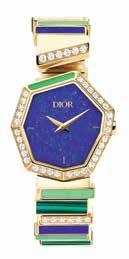
Dior
Gem watch in yellow gold, diamonds, ornamental stones and mother of pearl from Dior Timepieces. RRP $125,000 dior.com
RULE BREAKERS
Calleija
Adorned with blue sapphires and crafted in 18ct white gold, this pendant captures the glacial beauty of winter’s wonder. RRP $9,980 calleija.com
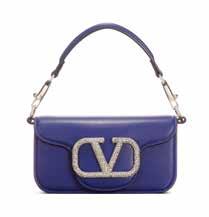
Valentino
Limited Edition V Locó Bag in azure blue. Available exclusively at the Valentino Boutique, 25 Martin Place, Sydney. RRP $5,020
02 8404 0888
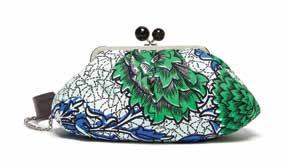
Weekend Max Mara Medium Pasticcino bag made of cotton canvas featuring an African Wax print with coffee brown leather details. RRP $800 au.maxmara.com
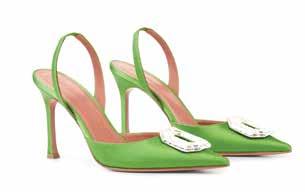
Amina Muaddi
Light Jungle Camelia slingback pump detailed with a sharp pointed vamp and crystal encrusted brooch. RRP $1,590 harrolds.com.au
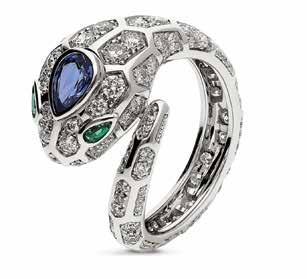
Bulgari
Serpenti 18ct white gold ring set with a blue sapphire on the head, emerald eyes and pavé diamonds. RRP $34,500 bulgari.com
Versace
Maxi Medusa Biggies sunglasses featuring wide tonal, Medusa-embellished temples and dark tinted lenses. RRP $404 versace.com
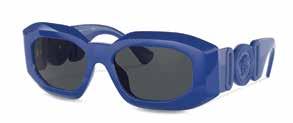
36 covemagazine.com.au – Issue 96
WISH LIST
Put a new spin on the old saying ‘blue and green should never be seen’ by adding some sparkle in between.

Bally
Kiro
DECKED OUT
Whether you are sailing the high seas or cruising through your local neighbourhood, these blue-hued accessories will have you looking ship shape.
George &
Tom
georgeandmatilda.com.au
Reversible

hugoboss.com/au
Montblanc
Masters
Hermès
Galatee
38 covemagazine.com.au – Issue 96
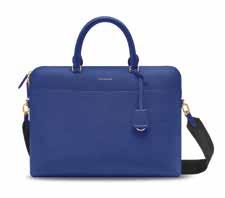
Maison de Sabré European leather laptop bag. Available in a variety of colours with complimentary personalisation. RRP $359 maisondesabre.com
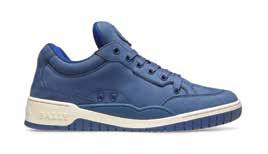
lace-up sneakers in blue neon crafted from nubuck and smooth leather. RRP $960 bally.com.au
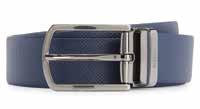
Hugo Boss
belt crafted in Italian palmellato leather. RRP $259
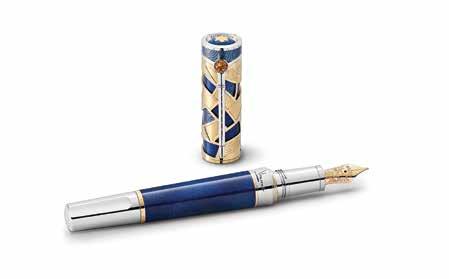
of Art Homage to Vincent van Gogh Limited Edition 888 fountain pen. P.O.A. montblanc.com
cufflinks in lacquered metal with palladium-plated hardware. RRP $695 hermes.com/au
Matilda
WISH LIST
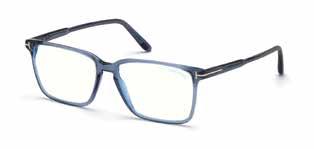
Ford shiny blue frames. RRP $585
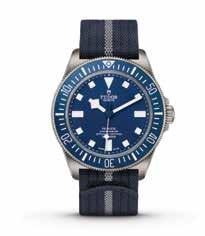
Tudor Pelagos FXD watch with navy blue fabric strap. RRP $5,790 tudorwatch.com








+61 437 662 934 24C 340 Hope Island Rd Hope Island QLD 4212 W W W . C I T Y C A V E . C O M . A U hopeisland@citycave com au @city.cave.hopeisland
TIME TO CLIMB
Montblanc’s latest watch collection is inspired by the majesty of the mountain.

MOUNTAINS ARE AT THE HEART OF MONTBLANC with the identity of the company taking its name from the famous Mont Blanc peak situated in the Alps.
From the company’s inception, its founders were inspired by this well-known mountain, choosing a bird’s eye view image of its peak, with the six glacier valleys that surround it, to become its emblem.
But the mountain is more than an image for the Maison: it has always been a strong symbol of adventure, challenge, strength, and spiritual elevation.
Now the luxury watchmaker has unveiled a new collection celebrating the majesty of the mountain.
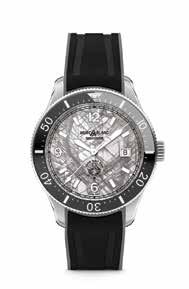
Following the success of the Montblanc 1858 Iced Sea Automatic Date launched in 2022 with its frozen dials, the Maison returns with a new dial colour in an elegant shade of grey.
This new grey glacier pattern dial was inspired by the ice of one of the Mont-Blanc mountain’s largest glaciers – the Mer de Glace.
In certain light, the glacial ice appears grey as it reveals the mineral deposits that have been captured in its structure for millennia.
This new Iced Sea edition comes in a 41mm stainless steel case with a caseback featuring a 3D engraving of an iceberg and a black scuba diver exploring the glacial waters below.
The new Montblanc 8000 Capsule Collection puts the world’s 14 highest peaks in the spotlight. These mountains – all measuring over 8000 metres above sea level – are challenging and dangerous to ascend as there is hardly enough oxygen for a human body to physiologically survive for more than a few hours.
All four of the Montblanc 1858 Zero Oxygen
The 8000 Capsule Collection models join the Maison’s series of ‘Zero Oxygen’” timepieces that feature several benefits for explorers who need their equipment to work in harsh environments.
Zero oxygen inside the case not only eliminates fogging, which can occur with drastic temperature changes at altitude, but also prevents oxidization.
Without oxygen, all the components last longer and will provide unfaltering precision over time.
Each timepiece comes with a certificate as proof of this special, yet invisible, technology and guarantees that it has been successfully encased without oxygen.
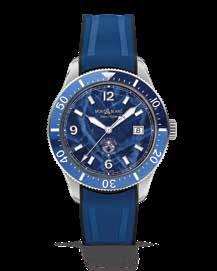
Joining the latest grey edition in the Montblanc 1858 Iced Sea Collection, the Maison is also unveiling a new Boutique Edition with a green glacier dial that gives the impression of looking into the depths of glacial ice.
While most glaciers are white or blue in colour, some also come in a deep emerald green thanks to iron oxides captured in the ice.
This is the second green edition in the Iced Sea collection, differing from the previous model thanks to its fitted black ceramic bezel (instead of the previous green one) and a 3D-engraved caseback featuring a larger scuba diver in green, subtly making this special Boutique Edition stand out even more. *Pre-customer Orders Required
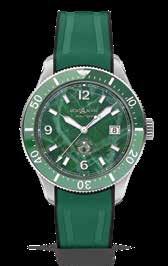
Montblanc introduces its very first limited-edition box set with three 1858 Iced Sea Automatic Date editions in green, blue, and grey, presented in a curated chest.
Limited to 191 pieces as a nod to the first three numbers of the date the Montblanc logo was created in 1913, the set includes two timepieces from last year – the green and blue editions – and the latest novelty from this year in glacier grey. Each model is different from previous editions, featuring a colored laser engraving of a different view of the Mont-Blanc: the blue model displays a picture of the Aiguille du Moine, the green one depicts Les Drus, and the grey model shows Les Grandes Jorasses.
40 covemagazine.com.au – Issue 96 LOOKING GOOD
INSPIRED BY ICE
THE EIGHT THOUSANDERS
CAPTURING GLACIERS
ICED SEA COFFRET
In the 2003 NRL Grand Final Scott Sattler ran 83 strides to execute one of rugby league’s most famous try saving tackles, securing his mighty Panthers the premiership.
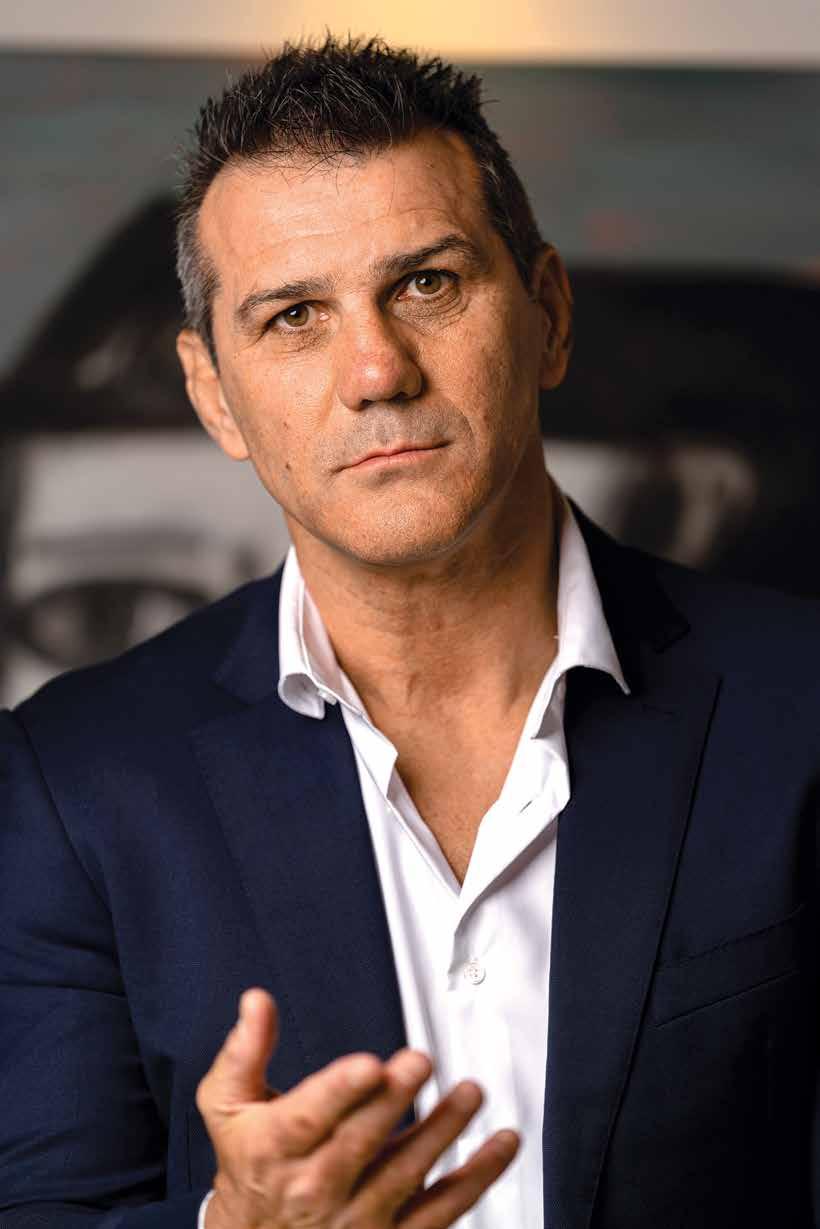
Arthritis is my biggest opponent these days. If it wasn't for the expert advice from Absolute Footcare's podiatrists I'd be sidelined.
- SCOTT SATTLER
“ “
SARTORIAL ELEGANCE
AS MONTBLANC continues reimagining its leather goods collections, the Maison has added a new dimension to its signature business collection.
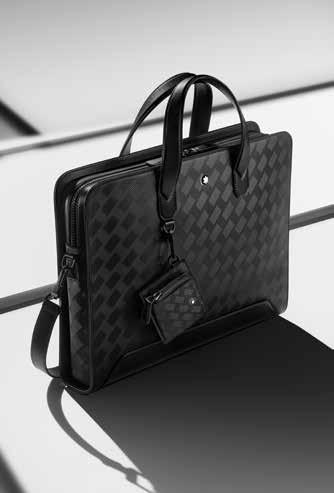
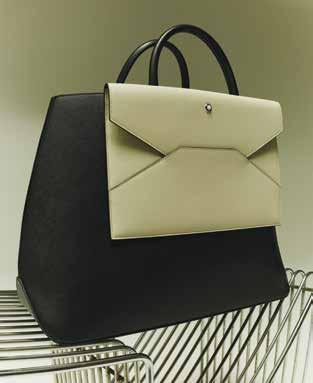
The redesigned Montblanc Sartorial Collection features bags and smaller accessories in softer leather with a deep two-tone effect, new colours and the introduction of a modularity system that allows small pieces to be attached to larger bags – creating new functionalities, styling options and many customisation possibilities.
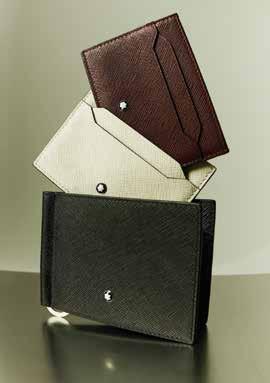
Inspired by the beauty and experience of handwriting, the design codes for Montblanc Sartorial are rooted in the Maison’s writing culture heritage.
Recognisable ink bottles from the Montblanc archive have inspired the triangular design of the handles, while the construction of the sides of the bags evoke the opening of an envelope with two overlapping pieces of leather.
The Maison’s Montblanc Extreme 3.0 leather collection also gets an update with new shapes and colours to complement its original leather designs.
Introduced originally in July 2022 to withstand the demands of everyday movement and balance functionality with sleek, contemporary style, the updated Montblanc Extreme 3.0 selection departs from the original black and British green colours with the introduction of two shades: an intense blue and a modern grey.
Accompanying the new colours are three new dynamic shapes: a compact envelope bag, a mini messenger bag, and two versions of a round pouch.
Alongside these novelties, the selection features classic pieces from the original Montblanc Extreme 3.0 collection in the two new colours, including a backpack and a thin document case, as well as an assortment of bracelets, wallets, mini pouches and notebooks.
The Montblanc Summit 3 Smartwatch also joined the extended collection in April 2023 with a new watchface and leather strap in the new grey colour that is compatible with all Summit generations.
To add a fascinating technical detail to the collection, the original M LOCK 4810 buckle has been redeveloped in transparent Plexiglas to expose the internal mechanism of the lock.
Inspired by closures used in the climbing world, the M LOCK 4810 buckle features a special mechanism that guarantees secure closure, but is equally easy to open when needed.
The Sartorial and Extreme 3.0 Collection both consist of a selection of different shapes, sizes and functions designed to fit the lifestyles of those for whom every day is not about routine but about adventure, whether at work or at play. montblanc.com.au
MONTBLANC LIFESTYLE BRAND IMMERSION
Celebrate the return of Autumn/Winter at this exclusive event.
Ahead of the new season, Montblanc has produced a curated selection of fine accessories, elegant leather goods and timepieces to refresh your wardrobe.
Explore the new wonders of Montblanc from the Van Gogh collection to the newest expedition of watches and leather lifestyle pieces while enjoying a glass of champagne and canapes.
2 June 2023 from 5:30pm - 7:00pm Limited to 30 guests only. Bookings essential.
trybooking.com/CHMZA
42 covemagazine.com.au – Issue 96
Montblanc introduces two new collections that add endless customisation possibilities to your on-the-go look.
LOOKING GOOD
A New Luxury Lifestyle Cruising Brand
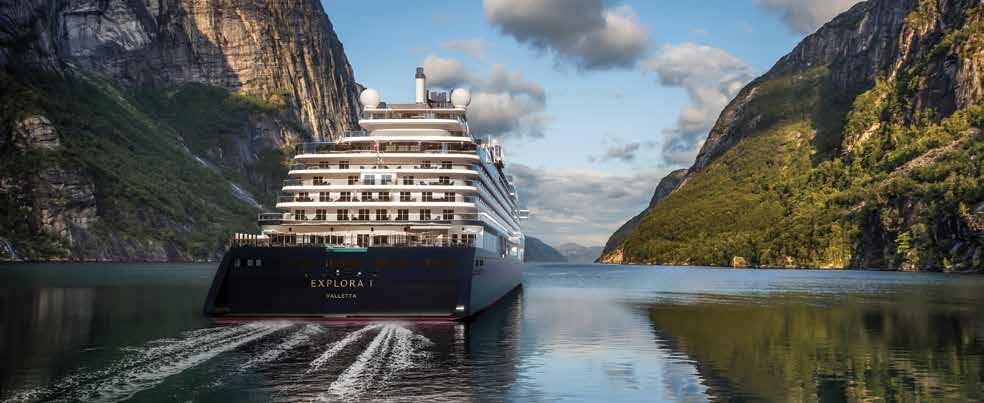
The MSC Group are defining the luxury cruise category with the launch: Explora Journeys. Guests aboard their first ship, the 461 all-suite (and all ocean-facing) Fincantieri-designed EXPLORA I , will benefit from the combination of the company’s centuries-old seafaring experience and superlative European refinement. The result is vibrant, cosmopolitan, relaxed European luxury at sea. What’s not to love about that?
The first of a fleet of four new ships, EXPLORA I sets sail on her maiden journey in July 2023 with an industry leading guest to team member ratio of 1.25:1 - almost guaranteeing an intuitive, knowledgeable service style that ensures guests can truly relax and let go when onboard.
All Journeys Include:
• An in-suite bottle of champagne and bottle of spirits, as selected by each guest
• Authentic, cultured and intuitive service from a team of hospitality experts
• Sophisticated, varied dining across nine culinary experiences, as well as in-suite dining
• Unlimited beverages, including in-suite mini-bar, fine wines and premium spirits, speciality coffees, teas and soft drinks, available anytime
• Wellbeing and fitness programmes on-board and at destinations
• Access to the thermal spa area
• Unlimited, high-speed Wi-Fi throughout the ship
• All on-board gratuities

• Shuttle services from port to city centre (where required/available)
7 Nights
European White Nights & Iceland
1 – 8 August 2023
Copenhagen to Reykjavik
$6,400 * per person from
10 Nights
Legendary
Cultures & Idyllic Islands
13 – 23 September 2024
Athens to Barcelona
$10,020 * per person from
Contact Cove Travel to request a quote on Explora Journeys. +61 7 5577 9211 or info@covetravel.com.au
Terms & conditions appl. Journey Fares are valid as at 27 April 2023 and are subject to availability. Fares are cruise only. Fare are in AUD and are per person based on twin occupancy of Suite. Fares are based on Ocean Terrace Suite Category OT1. Terms and conditions - https://explorajourneys.com/int/en/info/terms-and-conditions
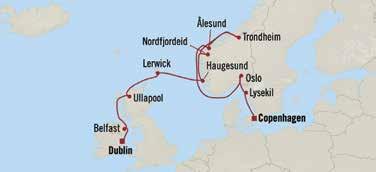
COPENHAGEN DENMARK LERWICK SHETLAND ISLANDS UNITED KINGDOM KIRKWALL REYKJAVIK ICELAND
GREECE ITALY SPAIN MALTA BARCELONA ATHENS PIRAEUS SIRACUSA SICILY KOS PAROS IBIZA GOZO TRAPANI
journey through Cove Travel by 12
2023 and
Credit
suite* Exclusive *conditions apply
Book your
June
receive up to €300 Journey Experience
per
SKIN SAVER
Roccoco Botanicals’ Frangipani and Lychee Body Crème targets sun-damaged skin.
NOTHING IS MORE appealing than the sunkissed skin glow from a long summer.
However, the devastating effects of sun exposure, such as a loss of elasticity and sagging skin, often don’t reveal themselves until you are in your late thirties.
One of the areas of the body that is affected in many women – and is not really talked about –is the loss of elasticity on the legs, resulting in skin crinkling just above the knees.
These are referred to in the beauty industry as ‘knee wrinkles’.
The cause is a breakdown in elastin and skin collagen from repeated exposure to sunlight.
The secret to transforming this area is hydration and hyaluronic acid, which is one of the key components of the skin structure.
Hyaluronic acid gives cushion and volume to the skin, however, the large surface area of the body means using it all over is not economical.
Now, the ever-innovative team at Roccoco Botanicals have developed a practical and pampering solution for this problem.
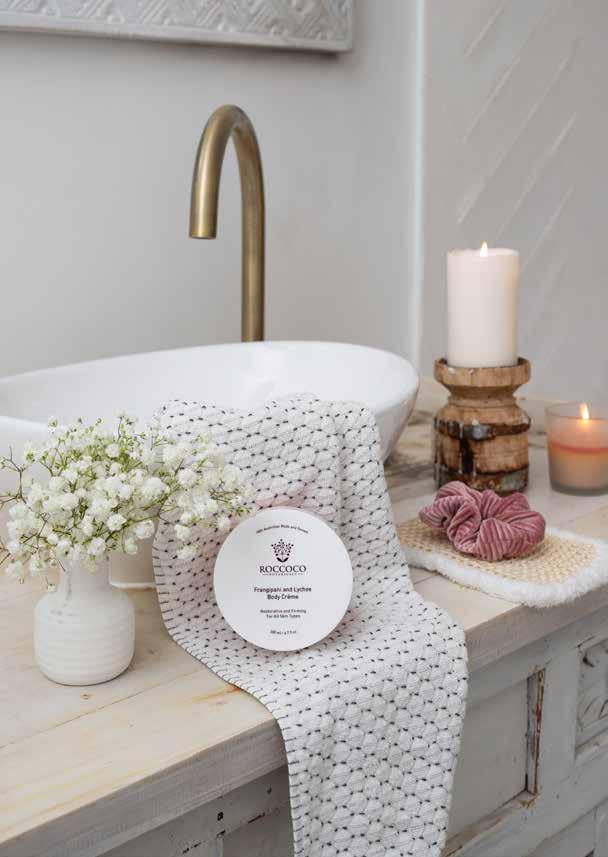
Their new Frangipani and Lychee Body Crème is enriched with Pracaxi oil and other botanical actives to fight loss of skin elasticity at its source.
Pracaxi oil is a natural oil derived from the seeds of the Pracaxi tree (Pentaclethra macroloba), which is native to the Amazon rainforest.
The oil has been used for centuries by indigenous communities in the Amazon for its various medicinal properties.
In recent years, it has gained popularity in the beauty industry due to its potential benefits for skin and hair health.
Some of the scientific evidence behind the benefits of Pracaxi oil include:
Moisturising Properties – Pracaxi oil has a high content of oleic, linoleic, and behenic acids, which give it emollient and moisturising properties.
These fatty acids help to restore the skin's natural moisture barrier and prevent water loss, making Pracaxi oil an excellent moisturiser for dry and damaged skin.
A study published in the Journal of Cosmetic Science found that a formulation containing Pracaxi oil improved skin hydration and barrier function in human volunteers.
It also has the ability to boost hydration by up to 4000 per cent for an unparalleled level of hydration and incredible skin softness.
Anti-inflammatory Properties – Pracaxi oil also has anti-inflammatory properties due to the presence of flavonoids, saponins, and tannins.
These compounds have been shown to reduce inflammation in the skin and improve wound healing.
According to a study published in the Journal of Ethnopharmacology, a topical formulation containing Pracaxi oil was found to reduce inflammation and significantly promote wound healing.
Anti-aging Properties – Pracaxi oil contains a compound called pentacyclic triterpenes, which have been shown to improve skin elasticity and reduce the appearance of fine lines and wrinkles.
The Journal of Cosmetic Dermatology published a study stating that a cream containing Pracaxi oil and other natural ingredients was found to improve skin elasticity and reduce the appearance of wrinkles in human volunteers.
As this research shows, knee wrinkles don’t have to be part of life.
You can simply firm the appearance of the skin naturally with Roccoco Botanicals Frangipani and Lychee Body Crème. au.roccoco.com
44 covemagazine.com.au – Issue 96 LOOKING GOOD
Noosa’s accommodation specialists
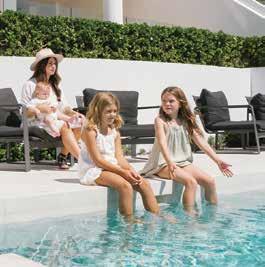
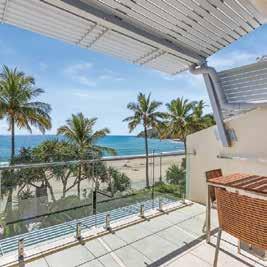
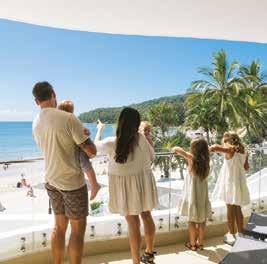
Accom Noosa has been assisting holiday makers to Noosa for over 40 years, providing a range of luxurious Noosa apartments, holiday houses and prestigious signature properties to suit your needs.
@accomnoosa
Shop 5, 41 Hastings St, Noosa Heads | p. 1800 072 078 info@accomnoosa.com.au
accomnoosa.com.au
|
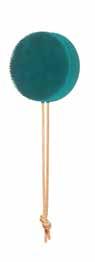
Powered by revolutionary T-sonic pulsations, the Foreo Luna 4 Massaging Body Brush helps improve the appearance of cellulite, smoothing out uneven texture. currentbody.com.au
BEAUTY SPOT
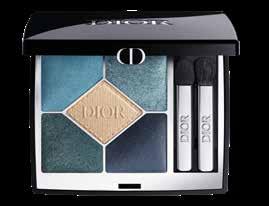
Each Dior 5 Couleurs Couture eyeshadow palette –corresponds to an iconic piece of the Dior wardrobe, offering a nuanced array of intense shades that are easy to use and combine. dior.com
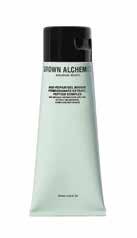
Grown Alchemist’s highly effective peptide-rich Age-Repair Gel Masque combats signs of ageing while hydrating, firming, and nourishing facial skin. grownalchemist.com/au
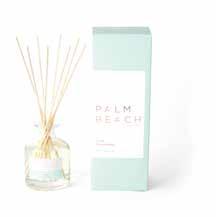
Featuring notes of bergamot, mint and cedarwood, the Palm Beach Collection Sea Salt Fragrance Diffuser is dedicated to ocean breezes and summertime. palmbeachcollection.com.au
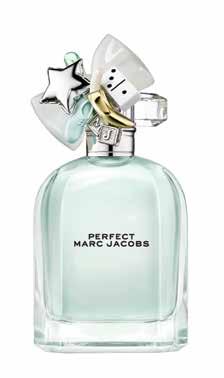
Uplifting and joyful, Marc Jacobs Perfect eau de toilette celebrates the power of being true to yourself. Available from Myer, David Jones, Sephora, Ultra Beauty and The Iconic.
ManukaRx Blemish Oil is formulated to help keep the skin free of bad bacteria, reduce the appearance of blemishes and diminish acne scars. manukarx.com.au

Enbacci Age Revitalising Eye Defence is a moisture enriching eye cream, with a lightweight formula jam-packed with hydrating and moisture boosting ingredients, including apple stem cells. enbacci.com
46 covemagazine.com.au – Issue 96
LOOKING GOOD
Rediscover Beauty
BECAUSE IT’S ALL ABOUT YOU
Dr. Umed Shekhawat
MBBS, FRACGP, DIPLOMA OF SKIN CANCER
DR Umed Shekhawat, is a top cosmetic Doctor residing on the Gold Coast who has helped thousands of patients over the years achieve their desired aesthetic appearance through facial cosmetic treatments.
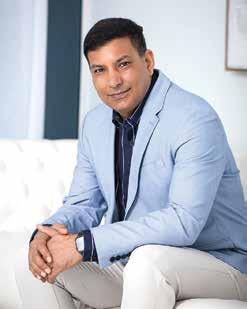

Dr Umed has also been a medical practitioner for over 20 years, spanning across several specialties. His vast experience and extensive training in the treatment of skin cancer gradually fostered a passion for Aesthetic Medicine. This led Dr Umed to study Aesthetic Medicine in Australia and Internationally. Soon becoming a well-regarded and renowned Aesthetic Physician, Dr. Umed has helped thousands of individuals successfully address their aesthetic concerns and face life with renewed self-confidence.
Dr Umed has always been committed to educating his clients about all treatments and procedures and is passionate in restoring the beauty and health of his clients in the best possible way.
Our Locations
Advanced training in Anti-Wrinkle Injections, Dermal Fillers, Thread Lift, Skin Treatments and Cosmetic Treatments are just some of his specialty skills.
With over a thousand successful procedures behind him, Dr Umed has the experience and expertise to help you achieve your health and skin-based goals. If you are considering a treatment and would like to know the most suitable options for you, Dr Umed is only a phone call away.
GOLD COAST: Shop 9B, 331 Hope Island Road, Hope Island, QLD 4212
GOLD COAST: 1 Vespa Crescent, Surfers Paradise, QLD 4217
LOGAN CITY: 3376 Mount Lindesay Highway, Regents Park, QLD 4118
BRISBANE: 131 Latrobe Terrace, Paddington, QLD 4064
SUNSHINE COAST: Shop 2, 32 Aerodrome Road, Maroochydore, QLD 4558
IPSWICH: 87 Brisbane Street, Ipswich, QLD 4305
MACKAY: 40 Pratt Street, South Mackay QLD 4740
Our Services
ANTI-WRINKLE TREATMENT
Transform from wrinkly to pixel-perfect silky skin.
DERMAL FILLER
Uplift your skin non-surgically to look fuller and youthful.
SKIN AND BEAUTY
Feel a visible difference in your skin tone, texture and radiance.
THREAD LIFT
Say goodbye to signs of aging with an amazing thread lift.
HALO
A unique skin revitalization treatment targeting sun spots, fine lines and enlarged pores.
CLEAR SILK
Designed to rejuvenate the skin, stimulate natural collagen production and Rosacea or stubborn redness.
BBL HERO
Treating skin conditions anywhere on the body associated with ageing, sun, and environmental aggressors.
CLEAR-V LASER
Treating problems such as spider veins, rosacea and even unwanted birthmarks.
BYRON BAY: Shop 5, 4 Bay Lane, Byron Bay, NSW 2481
SYDNEY: Shop 4, 110 Great North Road, Five Dock, NSW 2045
MELBOURNE: 424 Church Street, Richmond, VIC 3121
ADELAIDE: 34 Hindley Street, Adelaide, SA 5000
ADELAIDE: GAWLER. 112 Murray Street, Gawler SA 5118.
SYDNEY: BELLA VISTA: Q Central, Level 1, Suite 111, 10 Norbrik Drive, Bella Vista, NSW 2153
CONTACT 0407 194 519 drumedcosmetics.com.au
Email info@drumedcosmetics.com.au
MY MYKONOS
Enjoy a taste of the Mediterranean in the heart of the Sunshine Coast.
HANDS UP if you’ve just realised it’s mid 2023 and the summer in Greece you’ve been dreaming of may not happen this year.
Your Instagram feed is a constant stream of beautiful blue-roofed villas with light filled spaces, abundant curves and laid-back luxury from those lucky enough to be enjoying life on the other side of the world but you are still contemplating when and where you will go.
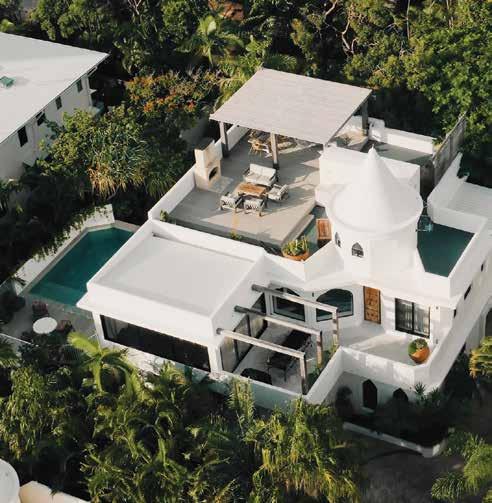
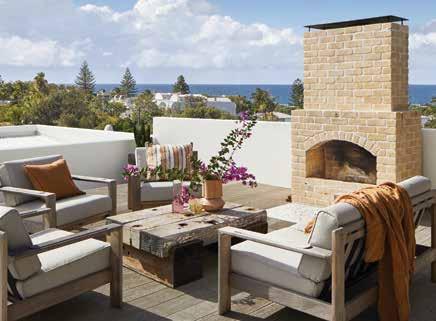
Well the 25-hour flight can wait, because you can experience a little piece of Mediterranean architecture at Mykonos Luxury Villa, Sunshine Beach. >>
48 covemagazine.com.au – Issue 96
WELL TRAVELLED
WORDS ANGELA ORAM


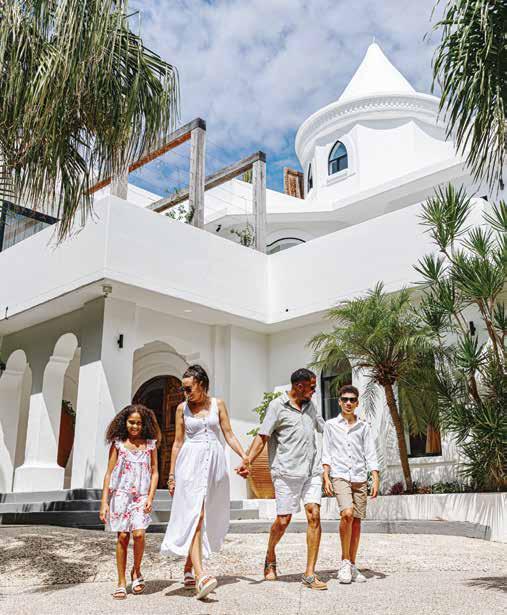
Issue 96 – covemagazine.com.au 49 Stay just moments away from the surf in beautiful Sunshine Beach. MYKONOS LUXURY VILLA 3 DAY SHORT STAYS NOW AVAILABLE FOR A LIMITED TIME mykonosluxuryvilla.au
Sunshine Beach has been growing in popularity for holiday makers and hubby and I have been keen to explore this tightly held pocket of the Sunshine Coast for some time.
Just a couple of hours drive from the Gold Coast, and even less from Brisbane, there was a welcoming laid-back feel to the village, with restaurants and the beach conveniently located just a short stroll down the road from our accommodation.
Speaking of our accommodation, Mykonos Villa is a finalist in this year’s Stayz Home of the Year and it’s easy to see why.
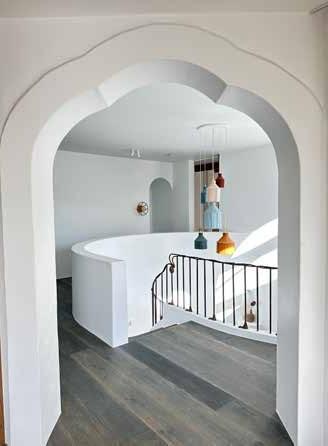
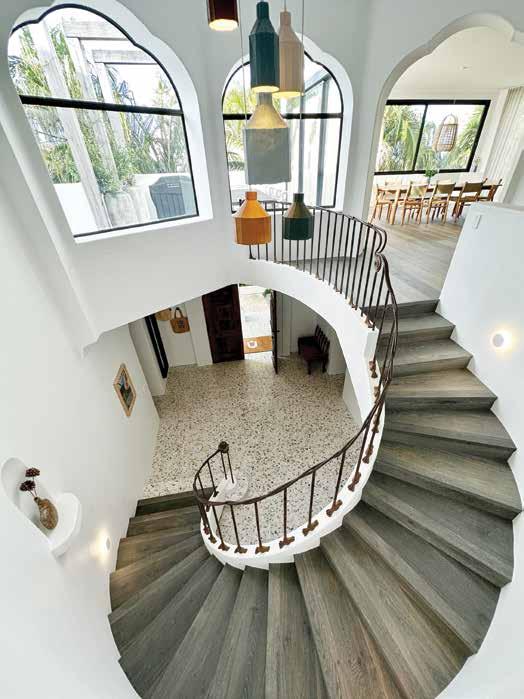
Once the beautiful barn doors opened, we were greeted with a spectacular winding staircase and wanted nothing more than to enjoy our little piece of Greece.
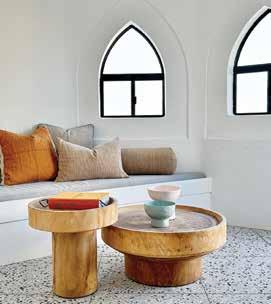
The property is unique, effortlessly elegant and the perfect place to relax with family and friends.
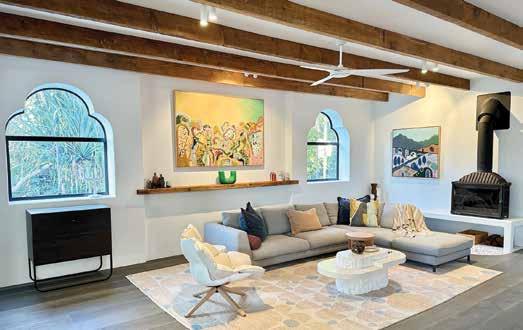
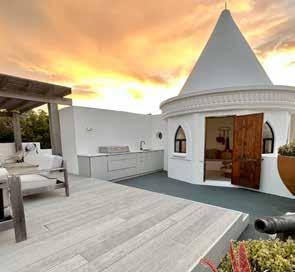
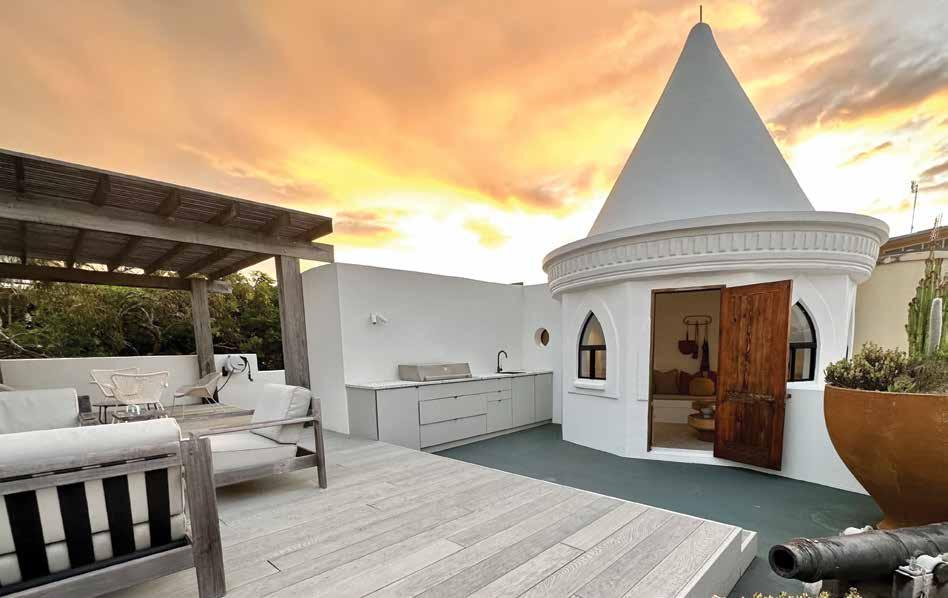
There are four spacious bedrooms with ensuites, a huge living room and, my favourite, the rooftop entertainment space, complete with fireplace. Creating memories and spending quality time together is easy with endless indoor/outdoor living options.
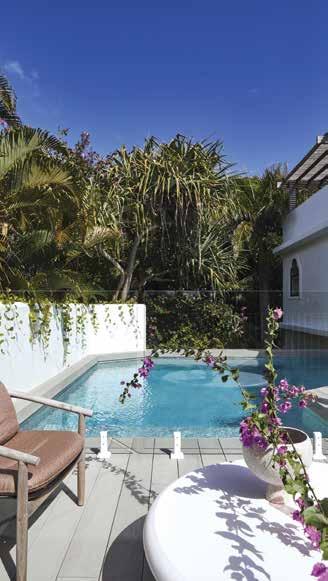
Relax by the pool, barbecue on the top deck and enjoy a wine by the fireplace, get competitive with board games and table tennis in the games room or escape to the turret and lose yourself in a book.
We are blessed with spectacular winters here in Queensland and with whale season approaching I can imagine soaking up the sun on the top deck and watching these magnificent creatures migrate north.
The heated pool captures the morning sun and is ideal for swimming all year round, and I would love nothing more than to enjoy a dinner party under the jasmine on the dining deck.
The owners have truly made this your home away from home with luxury linen, locally sourced bathroom products and concierge service at your disposal.
Your concierge can arrange onsite massages, tai chi, dinner party catering, picnics, transfers or any other services you might need to make this holiday one to remember.
mykonosluxuryvilla.au | 0409 767 766
50 covemagazine.com.au – Issue 96 WELL TRAVELLED
Discover your finest destination...
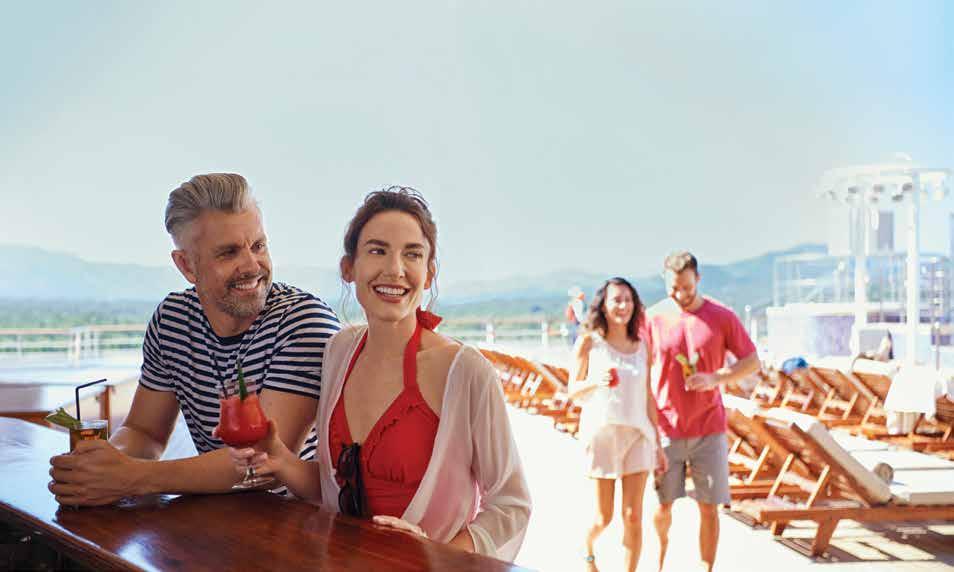
7 Nights
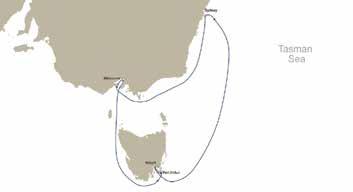
Voyage of Sporting Greats 2024
13 - 20 February 2024
Queen Elizabeth
Departs: Sydney, NSW
Arrives: Sydney, NSW
Immerse yourself in Australian history on shore and experience the inaugural Voyage of Sporting Greats on board, including cricketer Brett Lee. Meet other sporting legends, hear thrilling stories, and learn what it takes to become a sporting hero to millions.
Britannia Inside from $1,749 per person
24 Nights
Singapore to Yokohama
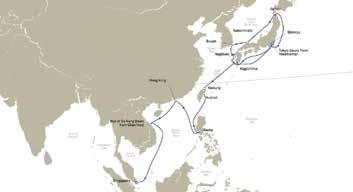
14 March - 7 April 2025

Queen Elizabeth
Departs: Singapore
Arrives: Tokyo (tours from Yokohama)
24 nights on Queen Elizabeth bring opportunities to explore enchanting scenery in Singapore, Vietnam, Hong Kong, the Philippines, Taiwan, and Japan. Meanwhile, on board, spend your time your way.
Britannia Inside from $8,199 per person
Contact Cove Travel +61 7 5577 9211 or info@covetravel.com.au
TAKE THE TRAIN
The Ghan rail expedition is a great way to discover the beauty of the Australian Outback.
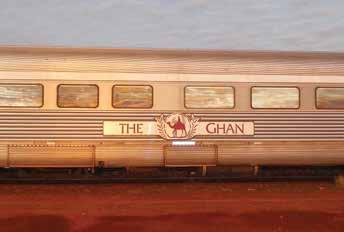
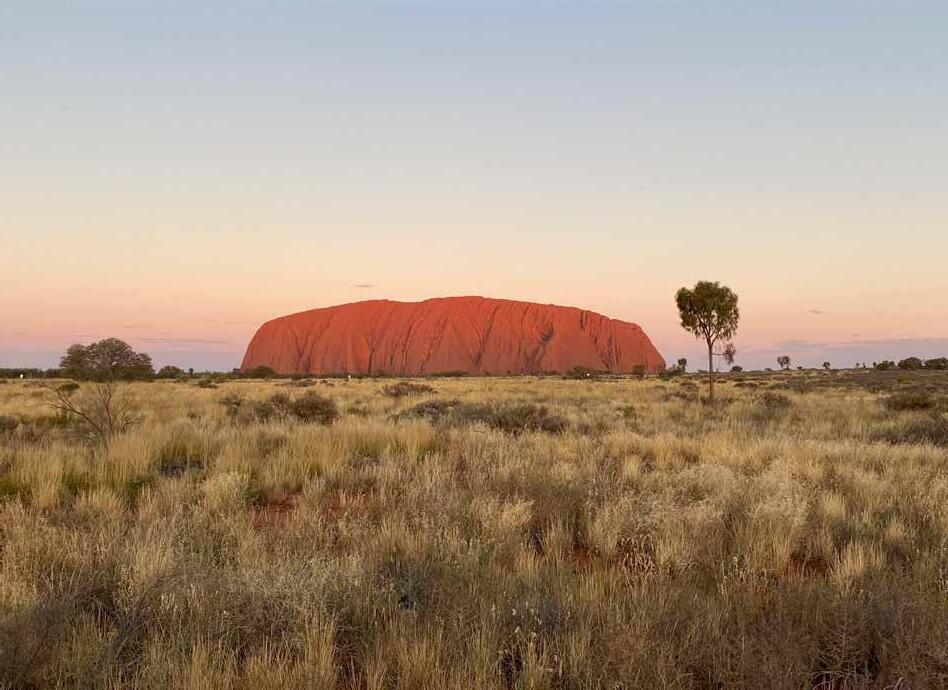
WHEN IT COMES TO TRAVEL I have a very long bucket list … and right at the top for many years has been The Ghan train journey between Adelaide to Darwin.
We had this trip booked for 2020 (and 2021), however, snap lockdowns and border closures in the midst of the pandemic put a hold on our plans.
Third time lucky, we were able to fly from Brisbane to Adelaide to begin our adventure.
We only had one night in the South Australian capital, but with our hotel conveniently located just around the corner from Chinatown we were able to wander down there to sample some of the delicious Asian flavours on offer.
The next morning we made our way to the station where we were greeted by the majestic sight of The Ghan waiting at the platform.
Most of the guests were of a certain vintage, however, the young staff were very friendly and welcoming, setting the tone for the rest of the journey.
Once on board, we quickly made ourselves at home and settled in for the next couple of days.
Although the cabin was very compact, it had everything we needed for a comfortable journey … and to be honest we spent a lot of our time in the Outback Explorer Lounge chatting to our fellow guests and watching the ever-changing scenery go by so the lack of space wasn’t a problem.
We also lingered over lunch in the elegant Queen Adelaide Restaurant and indulged in a decadent three-course evening meal that celebrated unique Australian flavours including kangaroo and saltwater barramundi.
After dinner, the rhythm of the tracks rocked us to sleep, before we woke early for our first off-train experience in the remote settlement of Marla.
With campfires warding off the freezing temperatures, and cups of tea and bacon sandwiches provided for sustanence, we watched dawn break over the horizon and the glorious colours of the sunrise paint the sky.
Still in awe of what we had just witnessed, we climbed back on board bound for Alice Springs.
We had decided to break the train journey here and spend a couple of days exploring the Outback.
There have been a few sights that have brought tears to my eyes when I’ve been travelling … my first glimpse of The Great Wall of China; standing on a cruise ship in the middle of Glacier Bay; the raw beauty of Fiji’s Turtle Island … and now I can add the majesty of Uluru.
This amazing monolith really does meet all expectations when viewed from a distance but it is up close that its true impact is felt.
You can almost feel the energy emanating from the rockface and the red earth seems to hum under your feet as you explore its many creases and crevices.
To conclude our tour we enjoyed a sunset cocktail on the viewing platform before returning to our accommodation at the Sails in the Desert hotel, where I bravely tried crocodile for the first (and possibly last) time.
The next morning it was another early start to take in the sunrise over ‘the rock’ before we boarded a coach for the short drive to Kata Tjua.
52 covemagazine.com.au – Issue 96
WELL TRAVELLED
WORDS RHONDA OXNAM
Also known as The Olgas, this stunning landmark was equally as impressive as its more famous counterpart and possibly even more moving.
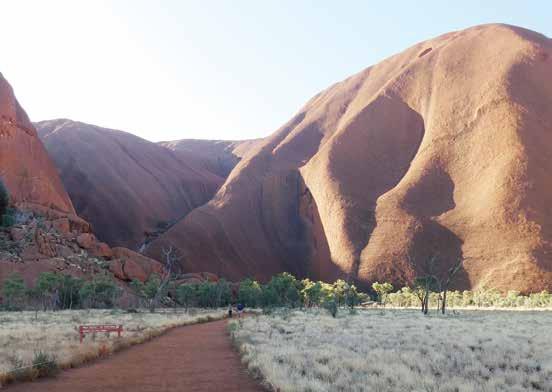

Alighting the coach, we joined the rest of the group for a walking tour though the very picturesque Walpa Gorge.
I must admit ‘Windy’ Gorge certainly lived up to its nickname, but the trek along the roughly hewn path was worth the effort … the views were amazing and that feeling of treading in the footsteps of the past was once again evident.
Back in Alice we took the opportunity to explore a little before we reboarded The Ghan, heading for Darwin.
The second leg of the journey was more of the same ... fabulous food, great company and scenery unlike anywhere else.
The hours flew by and, before we knew it, we were disembarking at the Northern Territory town of Katherine.

Having been told by friends before we left that if we had the opportunity to do a helicopter ride here we should take it, that is exactly what we did.
Luckily, there weren’t too many others who opted for this excursion so we were able to enjoy an extended flight over all 13 of the Nitmiluk Gorges.
From above, the beauty and vastness of this great land was simply spectacular and it was certainly time and money well spent.
Back on the ground, we joined our fellow train travellers for lunch by the water’s edge, where once again Native produce was the flavour of the day.
One final stint on the train saw us bidding a fond farewell to our hosts as we came to the end of the line in Darwin.
I had never been to the city before and was pleasantly surprised by the relaxed vibe and the strong sense of history.
Our few days were a real delight as we explored the underground WWII Oil Storage Tunnels, wandered through the popular Mindil Beach Markets and enjoyed fish and chips on the pier as the sun went down.
This is definitely a place I could visit again and again and again.
So while I may have ticked one item off my list, I have now added several more to it including a return trip to Darwin and a journey on The Ghan’s sister train, The Indian Pacific.
Let’s hope the borders stay open.
Issue 96 – covemagazine.com.au 53
SYDNEY TOWN
Natasha Poole shares her first impressions of her new home city.
AFTER RELOCATING from Queensland to New South Wales, I started to feel as though I had moved country; and considering that each state in Australia is around the size of a nation in Europe, this really was almost the case.
My first few days after the 9-hour drive were rather fortunately – and somewhat out of choice – not spent finding furniture, but instead exploring the sensational outdoor havens and beautiful beaches which Sydney has to offer.
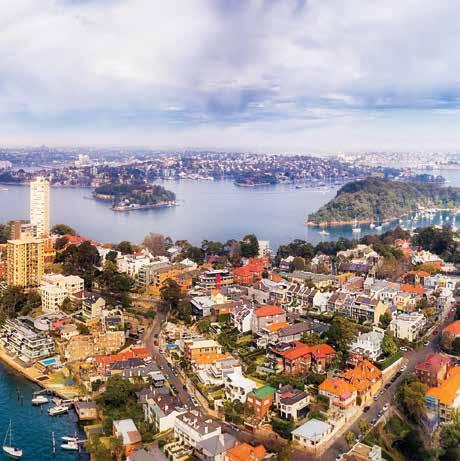
Not far from where I had moved to, I discovered headland walks, outstanding views of the harbour and the city, and a splendid array of restaurants and bars to frequent.
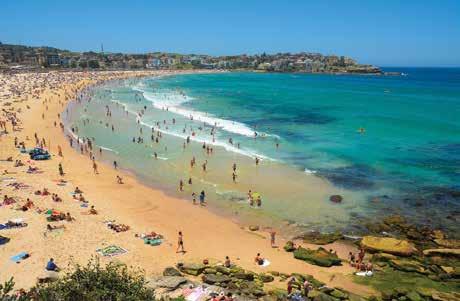
Christmas arrived before we all knew it and the day was spent with friends and family in Bondi, before we headed out on the water on Boxing Day to watch the start of the Sydney to Hobart race in the Harbour.
We sat on the edge of our seats and followed the fastest yachts. It was sensational.
On Christmas Eve, I had had the pleasure and privilege of singing in the St Andrew’s Cathedral Choir for the service.
We started late in the evening and sang into the early hours of Christmas morning – the cathedral was spectacular at night.
The sermon pointed us in the direction of a sustainable 2023 and provided food for thought in how we can all work together to play a part in preserving the beautiful planet we live on.
As another year drew to a close, I ventured into the countryside to the Blue Mountains and rural New South Wales is undoubtedly as stunning as its coastal cities are.
2023 kicked off to a fabulous start with a birthday on 1st January; the day was filled with laughter, fun, fabulous home cooked food and, last but certainly not least, excellent company.
By this stage, I had already fallen in love with Sydney…
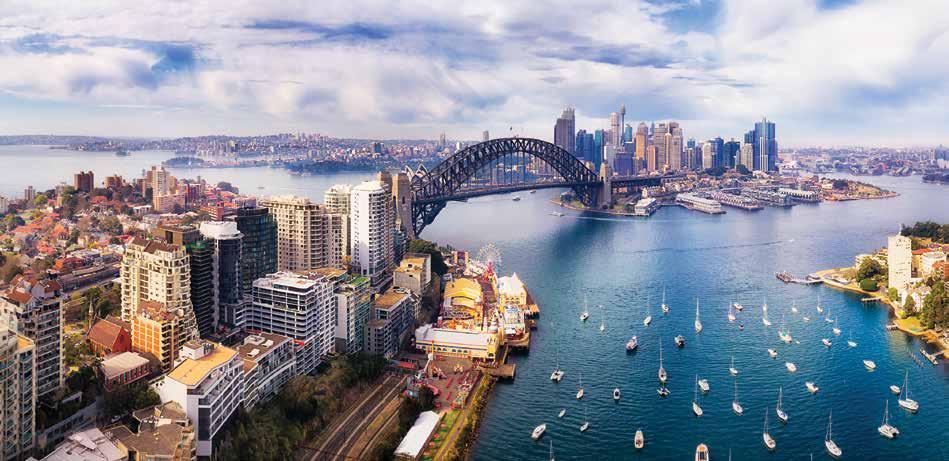
This city, upon first glance, seemed to be a mixture of the French Riviera, London and Venice, tastefully and internationally intertwined.
There was nothing so far to disappoint.
Not long after Christmas, commuting into the city commenced for the year and, wow, what a journey it is.
Travelling on the ferry feels like a fresh experience on every occasion and I am quite sure that the sea air is good for the soul.
I have adored accidentally finding all my favourite shops on my occasional scenic route back to Circular Quay and there is no shortage of places to stop for refreshments along the way – the Opera Bar, of course, is a brilliant spot.
I am told that the zoo, the museums and each and every individual suburb are all well worth visiting … the list of things to see and do unsurprisingly keeps expanding.
Being somewhat into sport, I also managed to join a local swim squad and ocean swimming group.
I entered the renowned Sydney Harbour Splash, which is held at Rose Bay, and I threw myself in at the deep end, racing the 5km.
It was a fabulous morning, the sun was out, the Bondi Surf Life Rescue were responsible for water safety and I was able to take the ferry over to the start line and back home again.
Overall, my first impressions of this cosmopolitan city could not have been better and the more time I spend here, the more grateful I am that I made the move.
Finally, and perhaps most importantly, I have been stunned by the warmth of everyone I have met and the sense of community that such a cosmopolitan city has to offer.
One might assume that a large place leads to the impersonal, nevertheless, Sydney is quite the opposite.
‘The sky changes, not the soul, for whom travels the sea.’ – Horace, Epistles, Book
54 covemagazine.com.au – Issue 96 WELL TRAVELLED
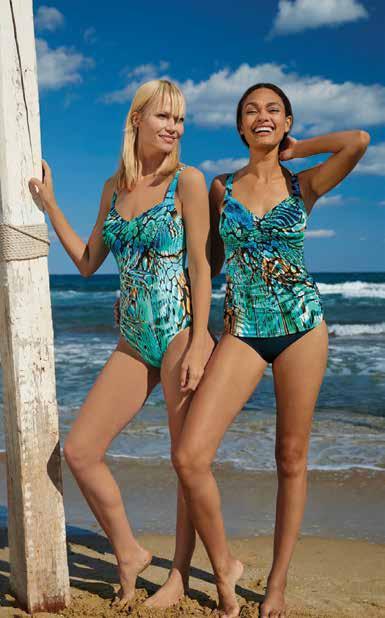

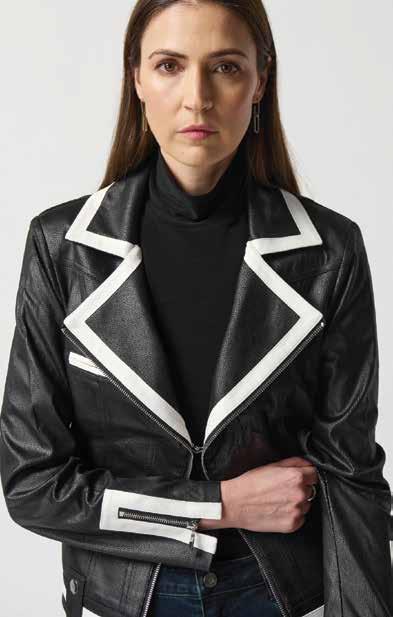

Issue 96 – covemagazine.com.au 55 new season swimwear in store now Sanctuary Resort Shoppe Quay St, Sanctuary Cove Open 9.305.00 daily telephone (07) 5577 8288 FASHION FOR ANY OCCASION. FEATURING INTERNATIONAL AWARD-WINNING BRAND JOSEPH RIBKOFF. INNOVATION, VERSATILITY, AFFORDABILITY AND QUALITY. Calypso –Resort & Swimwear FEATURES TOP EUROPEAN LABEL SUNFLAIR, WHICH SPECIALISES IN MATCHING KAFTANS, SHIRTS AND SARONGS IN BEAUTIFUL NEW SEASON COLOURS. Masthead Way, Sanctuary Cove Open 9.305.00 daily telephone (07) 5577 8981 INTRODUCING THE LATEST COLLECTION OF JOSEPH RIBKOFF TO SANCTUARY COVE
A FEAST OF SEAFOOD
WITH 52 KILOMETRES of coastline and around 860km of sparkling waterways, the Gold Coast has access to an abundance of fresh seafood.
From Sunday night fish and chips to freshly cooked prawns straight off the trawlers, we can enjoy a casual meal of seafood at home or dine out on marine delicacies with an outlook of breathtaking water views.
Traditionally, seafood buffets and platters laden with fresh and cooked options have boasted the abundance of produce we source from the sea.
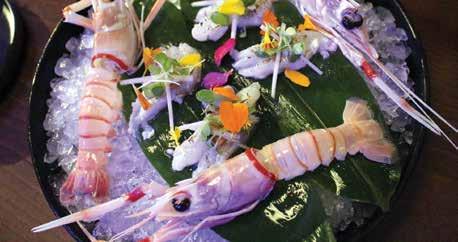
From simple to complex, most of our best restaurants have their own take on seafood, transforming staple dishes into works of art.
Many of these classic dishes are influenced by Mediterranean cuisine, their presentation enhancing stunningly fresh seafood as the star.
Surrounded by a menu of freshly shucked oysters, king scallops, Moreton Bay bugs and local trawler prawns, one dish at Shuck on Tedder stands out: their Signature Sand Crab Lasagne, the original recipe credited to Chef Gillian Hirst, who worked with Shuck’s founding owner Matthew Hill-Smith.
Seafood is a well-recognised pairing with pasta, however this flavour-driven dish reaches new heights.
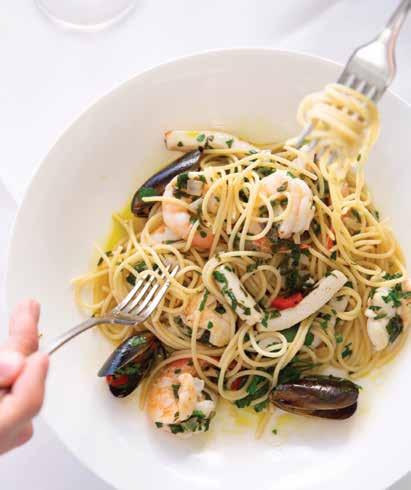
Sweet fresh sand crab meat is balanced by a delicious handmade tomato abalone cream – the secret to the dish, owner Anna Budgen tells us – then sandwiched between tender fresh pasta sheets.
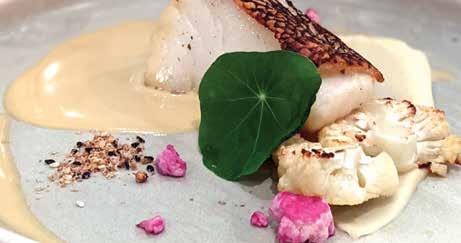
Koi presents their own Signature Sand Crab Lasagne with abalone cream sauce topped by tempura softshell crab.
Another favourite for many locals, Spaghetti Marinara is a classic Italian dish judged by its flavour and abundance of fresh seafood.
Laden with fresh prawns, Moreton Bay bugs, squid, scallops and mussels, our best seafood restaurants, such as Omeros Bros and Georges on Sorrento, offer the dish served in two ways.
Sautéed in wine and seafood stock, the fresh seafood is served with garlic, chilli, lemon, Italian parsley and extra virgin olive oil or infused with a Napoli sauce and basil.
Overlooking Currumbin Beach, Tommy’s Italian presents a delicious Bay bug spaghetti with garlic, chilli, capers and cherry tomato sauce.
Enveloped in pasta, or as a feature in risotto, more modern Italian classics include Orzo’s Signature Scampi Orzo coated in a rich roasted shell sauce with leek and mascarpone from owner/chef Matthew Jefferson.
At their sister venue, Social Eating House, the King Prawn Risotto is not to be missed, Matt’s luxe version finished with black truffle crème fraîche and caviar.
Indulgence continues at nearby Koi Broadbeach with Prawn and Clam Risotto including stracciatella, samphire and citronette.
While fine dining restaurant Little Truffle is undergoing renovations, there’s no need to miss out on Daniel Ridgeway’s famous Agnolotti with bug and prawn in lemon butter.
You’ll find it at another of his restaurants, Palm Beach Avenue, and it’s far too good to miss.
When cooked perfectly, whole fish is unbeatable.
Both Omeros Bros and nearby Glass Dining and Lounge Bar feature delicious Grilled New Zealand Whole Sole on their menu
Asian flavours, modern takes on favourites and the use of bush foods bring new dimensions to the textures and flavours of seafood.
56 covemagazine.com.au – Issue 96
CUISINE
& PHOTOGRAPHY
Delicious fresh seafood forms an integral part of our dining culture.
WORDS
MARJ OSBORNE
Settling on the ground floor of one of our most iconic locations, Burleigh Pavilion, Rick Shores boasts an uninterrupted view of the Gold Coast.
From its first day on the menu, Head Chef James Brady’s Fried Moreton Bay Bug Roll was an instantaneous hit with locals and movie stars alike.
What it lacked in size, it made up for in taste, a small, toasted brioche bun harbouring a delicate tempura bug dressed with kaffir lime and lemongrass with sriracha mayo and gem lettuce.
You’ll also find a Japanese version of this fusion dish at the humble Kemuri Kitchen and Catering.
In their delectable Tempura Bug Bao, deep-fried bug meat, rocket, crunchy eschalot and chipotle mayonnaise are sandwiched into a handmade bao bun.
Sashimi rates highly on many local menus, especially at our Japanese restaurants, with Kiyomi and Yamagen among the best.
From Sashimi Tacos to Spicy Tuna Rice, the delicacies at both restaurants are numerous.
Our advice is to choose an Omakase menu where you will taste a bit of everything.
Yamagen’s Friday lunch menu also offers a good selection of outstanding seafood.
As unlikely as the combination sounds, Crab Crumpet is a stayer on The North Room’s menu.
Owner chef Tim Stewart’s combination of mud crab, cultured cream and salted egg yolk on a bone marrow crumpet is one of our most inventive seafood creations.
“Some dishes come and go … and some dishes never leave,” co-owner Shannon tells us.
“The crab crumpet has been on our menu for over four years now… and [is] still the crowd favourite.”
One of the most luxe seafood available in Australia is toothfish.
Sourced from the inhospitable Heard Island in the Australian Territory, toothfish is recognised as the ‘white gold’ of Antarctica for its elegant balance of flavour and texture.
Our favourite has always been Miso Glazed Toothfish, as presented by Kiyomi at the Star, Yamagen and JW Marriott’s Citrique (made famous by the Fishhouse and Ten Japanese before them).
You will find a buttermilk-soaked version at Nineteen at The Star, and Asian-inspired toothfish at Etsu Izakaya.
If you’re still intent on doing a grand occasion seafood buffet, we recommend the JW Marriott’s Citrique’s weekend offering.
When staying in the hotel, you can even swim with fish in the resort’s lagoon.
And for a freshly made platter of seafood unadorned by a groundswell of chips, try Surfers Pavilion’s Oceanside seafood platter which features a decadent assortment of cold and hot seafood, a basket of chips on the side.
If you want to buy your own fresh seafood and the queue at the trawlers on the Spit is too long, head down to the Miami Fish Market.
From live oysters and sashimi grade fish to freshly steamed bugs and prawns, all the seafood is hand-selected.
Then, seek out a shady stretch of beach to enjoy your catch.
FROM LIVE MUSIC TO FASHION AND DINING EVENTS, MATT HOLLYWOOD’S MAGIC ILLUSION SHOW AND SO MUCH MORE. THERE IS ALWAYS SOMETHING ON AT SANCTUARY COVE.
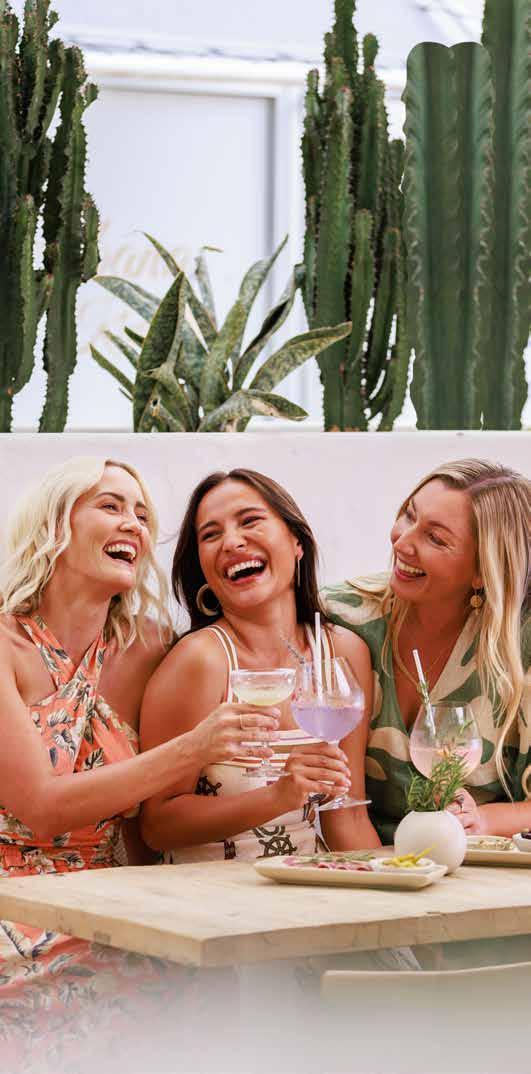
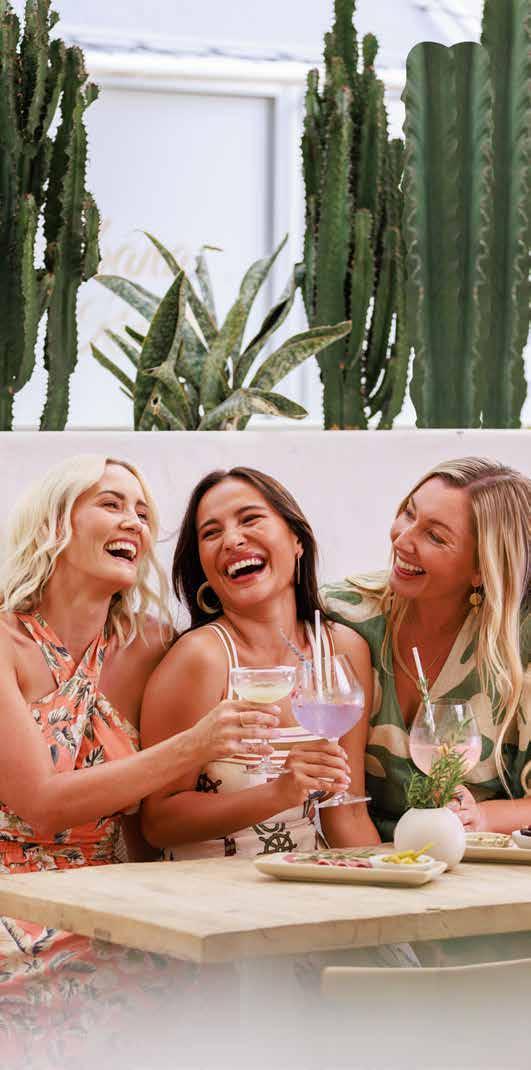
SCAN THE QR CODE TO DISCOVER A CALENDAR FULL OF EVENTS.

Issue 96 – covemagazine.com.au 57
CULTURE & CUISINE
T’ang Court in The Langham Gold Coast encapsulates the true flavours of Eastern cuisine.
SPECIALISING IN FINE CANTONESE FOOD
dating back to the Tang Dynasty, the ‘Golden Age' in China’s history, T’ang Court in The Langham Gold Coast brings a new international dimension to dining on the Gold Coast.
This premium destination hotel features a range of culinary concepts, its restaurants opening in succession like an unfolding flower.
The Langham’s signature dining experience, T’ang Court is the first in Australia, mirroring its six sister restaurants in Asia, most notably the highly esteemed T’ang Court Hong Kong.
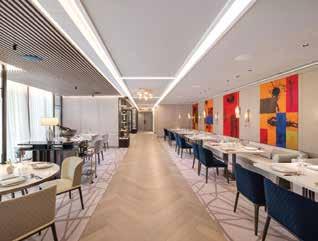
Opened over 30 years ago, Hong Kong’s T’ang Court has held Three Michelin Star status for seven consecutive years since 2016, denoting ‘Exceptional cuisine, worth a special journey!’
The Michelin Guide notes T’ang Court’s ‘comfort and luxury… plush fabrics, beautifully dressed tables and Chinese art’, all add to the diner’s experience.
Translating centuries of culture to a New World beachside location is a major achievement of the Langham Hospitality Group.
In its Gold Coast venue, the opulence of Hong Kong, founded in Eastern tradition, is lightened, seeking relevance to its locale.
Displaying timeless elegance reflecting its coastal location, T’ang Court’s understated décor is lit by accents of silver, gold, bronze and rose gold.
Bespoke abstract art pieces by AustralianChinese artist Lindi Li provide a flourish of Tang exuberance, fiery orange, red and blue mirroring a squad of lifesavers launching into the surf.
The resulting landscape is a combination of modern sophistication and beachside chic with flashes of Tang Dynasty opulence.
Seating 80, even the size of the restaurant is not immediately apparent, with intimate dining areas branching off behind doors and screens.
WORDS MARJ OSBORNE
This is a place to dine in privacy, rather than an indulgence in overt display.
Like Hong Kong’s T’ang Court, in this kitchen on the other side of the world Chefs Wai and Wesley preside over the creation of authentic Cantonese cuisine using top-tier local and seasonal ingredients, offered in a range of set menu or a la carte experiences.
"Diners at T'ang Court on the Gold Coast will be able to indulge in the same golden age Cantonese flavours that have … seen its many other award-winning sister restaurants across the world become highly-sought-after dining destinations," says Director of Chinese Cuisine for Langham Hospitality Group, Howard Lam, who has been responsible for the launch of award-winning T'ang Court restaurants across the globe.
Embarking on a 7-course Chef’s Premium Set Menu, it does not take us long to realise that this is Chinese food as we have never seen it before in Australia.
Elegant, scented and cooked to perfection, through each bite we begin to understand a little of the culinary legacy of the Tang Dynasty. Vegetables such as okra and bok choy remain vibrant, their skin gleaming, having barely touched the wok.
Seasonings such as ginger and garlic, saffron and cinnamon, so prized during the Tang Dynasty and traded on the Silk Road and by sea, are used sparingly to enhance and highlight the flavours of the main ingredient.
Fish maw soup, rich in collagen, is laced with shredded chicken, julienned fungi and bamboo shoots.
Fermented black garlic, drawing on ancient knowledge of the health benefits of fermentation, enhances the stir-fried M7 Wagyu.
Wok-flashed live Tasmanian rock lobster, scented with ginger and shallots, is served with E-Fu noodles and a hat of saffron, reminding us that China’s trade during the Tang Dynasty reached as far as India and Rome.
There are vegetables in abundance as well as a range of the best meats such as Cantonese duck and a wide range of seafood including abalone, lobster and pearl meat.
The highlight of our banquet, on this occasion, is steamed Glacier 51 toothfish served with superior soy sauce and a touch of oil.
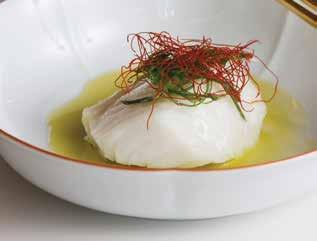
As the glossy fish flakes away at the touch of the chopsticks, each morsel reminds us that subtlety is everything, this dish the pinnacle of any dining experience.
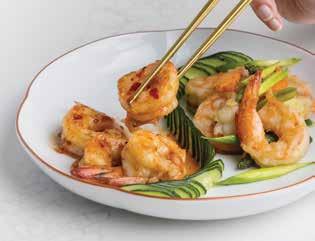
The Tang Dynasty had profound effects not just on Chinese cuisine, but on the tastes of the entire world, even to the present-day Gold Coast.
T’ang Court invites us to enjoy a feast for the senses, complementing our meal with cocktails or a bespoke wine experience paired to a banquet.
This is a journey through history, a unique Cantonese fine dining experience mirroring a Golden Age.
It is the jewel in The Langham Gold Coast’s culinary crown.
T’ang Court is located at The Langham Gold Coast, Level 3, 38 Old Burleigh Road, Surfers Paradise.
Opening times: Lunch – Friday - Sunday Dinner – Wednesday - Sunday Bookings recommended. tlgdc.dining@langhamhotels.com langhamhotels.com
CUISINE
58 covemagazine.com.au – Issue 96
Indulge
In A Tantalising Cantonese
Fine-Dining Affair
T’ang court has arrived on the Gold Coast. Honouring its michelin-starred sister restaurants through its authentic taste and flavours, T’ang Court presents elevated culinary masterpieces paired with a bespoke wine list. It’s a nod to a dynasty that shaped a nation.
langhamhotels.com/goldcoast
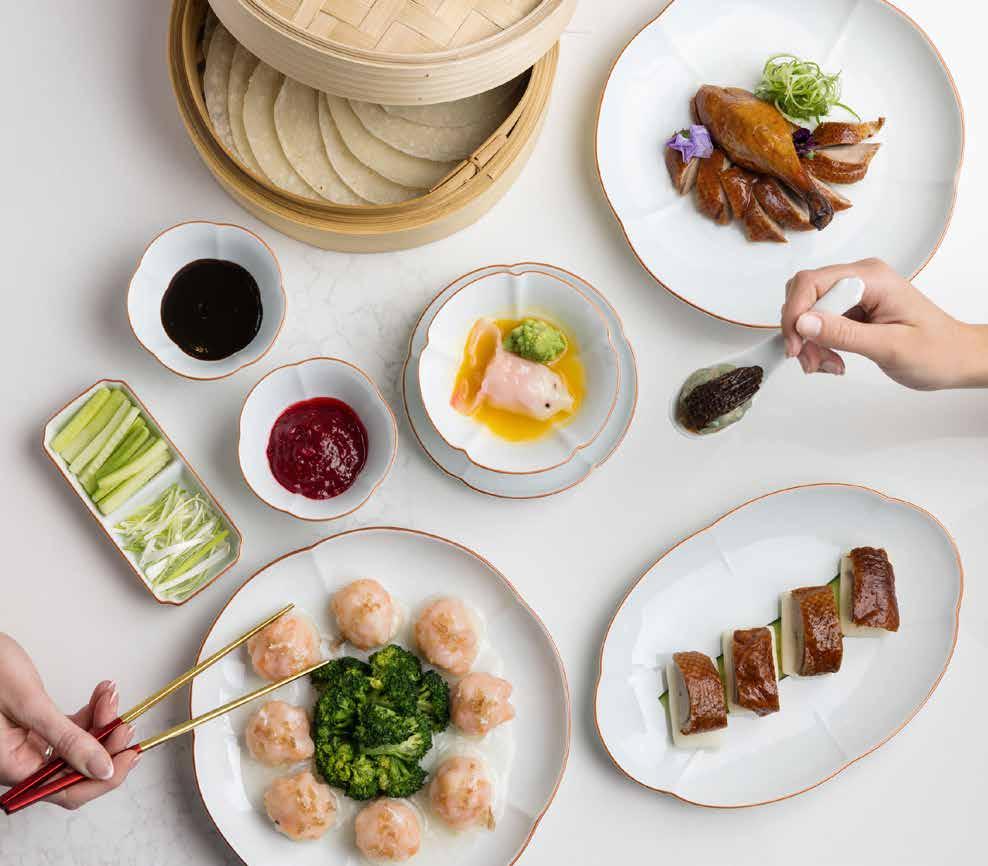
DECADENT DINING
Tweed River House, a culinary journey worth taking.
WITH ITS ELEGANT DÉCOR AND THEMING,
Tweed River House takes us back to a bygone era when expatriate life was at its peak.
Reflecting the colonial bastions of Raffles Hotel in Singapore or the East India Trading Company, when we cross the threshold the scene is set for long lingering lunches and evenings heralded in with twilight gin slings and martinis.
Having moved to the Northern Rivers in 2017, owners Gregory Lording and Phillip Hepburn looked past the languishing disrepair of the building, clearly seeing a possible future for their well-positioned ‘Tweed River House’.
Newly retired from an international career spanning the fields of travel, entertainment and logistics, Gregory took on the task of restoring the Tweed River House to its former glory, Phillip continuing his own stellar career in accounting and finance.
For the partners, the emerging bistro and bar became a mission of love.
Preserving its original character and charm, there’s a layering of historical tradition and exploration that adds beauty and charm to the grand interior.
From the emerald-green lushness of the private dining room with its glittering chandelier, pressed metal ceiling and well-chosen prints we move onto the verandah, travelling through history to the timelessness of landscape.
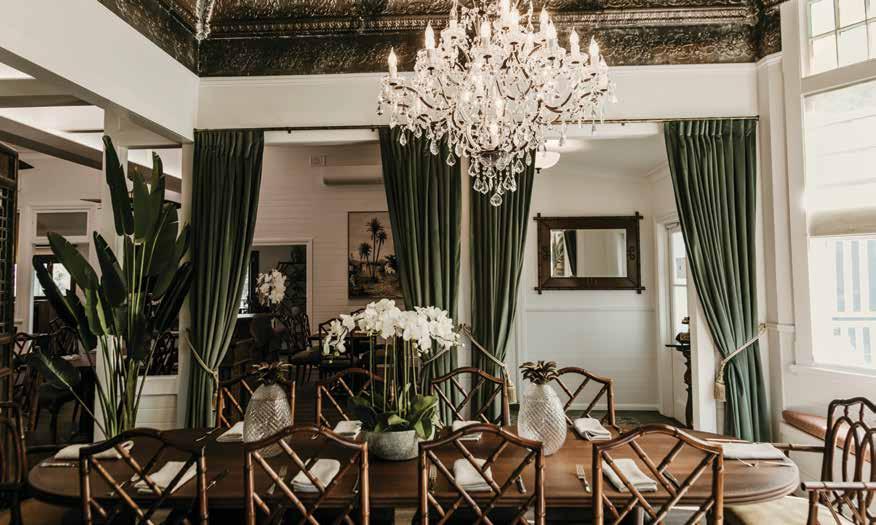
Before us is the Tweed River, as constantly in motion as time itself.
Beyond the foreground of cane fields, the majestic Wollumbin and Border Ranges unfold across the horizon, Mt Warning their crowning glory.
In a similar fashion, time and place are also delicately bound in our Tweed River House dining experience, the gentility of grander times intertwined with modern, culturally inclusive menus and welcoming, exemplary service.
“Old world hospitality is our keynote,” Gregory says.
“We want guests to feel immersed in the relaxed style of bygone eras – think Singapore’s Raffles and Penang’s E&O dining rooms and cocktails on the terraces of grand old homes in Australia’s tropical north.
“Our welcoming team will ensure you are enveloped into a time bubble – with the addition of modern, efficient service.”
With the kitchen in the capable hands of Irish-born Executive Chef Joseph McGrattan, the owners have tapped into a uniquely diverse experience base, with the restaurant awarded a Chef’s Hat in the 2023 Australian Good Food Guide Awards.
Having gained a classical European training, Joseph has worked with several Michelin star chefs, travelled extensively to more than 50 countries, and honed his use of indigenous food as Head Chef at Raugi’s Restaurant at the remote Kooljaman Resort on the Dampier Peninsula.
He is equally as ‘au fait’ with life as Executive Chef in a 5-star resort kitchen as he is cooking solo from a kitchen garden.
His love of fresh locally-grown produce, combined with his immense gastronomic talents brings us an exceptional dining experience.
The opening page of the menu gives us both an invitation and an introduction to the Tweed River House philosophy:
“Celebrate the best of the Tweed Shire’s growers, farmers, fishermen and providores on a seasonal journey as we recreate the great nouvelle cuisine classics of the provinces of France,” it reads.
“Every plate is an experience showcasing different preparations of a star ingredient, infused with touches of native Australian flora and the outstanding produce the Tweed caldera has to offer.”
Provenance is a key principle, with local providores listed on the menu’s introduction. Producers are also cited for each dish throughout menu, shining a spotlight on vibrant, seasonal flavours of locally grown, organic and indigenous ingredients from the Northern Rivers’ rich bounty.
Contrary to trending menus, Tweed River House follows a European tradition of diners ordering their own dishes from a two or three prix fixe menu, a five-course tasting menu and the nine-course degustation.
Pair dishes to a selection of international wines, choose your own by the glass or bottle, or sample a craft beer or cocktail to accompany your meal.
We enjoy lunch on the shaded verandah overlooking the exceptional view.
60 covemagazine.com.au – Issue 96 CUISINE
WORDS MARJ OSBORNE
Accompanied by saltbush focaccia and soda bread, we choose entrées of Australian scallops with Salumi nduja butter, lemon and parsley crumb and ink aioli, and Jake Hill confit rabbit and Salumi chorizo terrine.
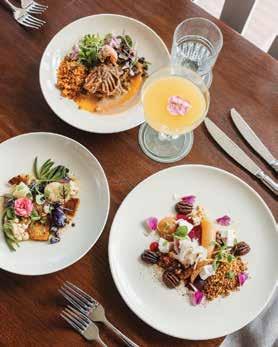
Both are beautifully presented, but not at the cost of flavour. For main course, the hero ingredient on my plate is Drake Creek duck à l’orange presented in three ways, the breast cooked pink, the leg confit, with a foil of crispy crackling.
With accompanying pickled cabbage and potatoes cooked in goose fat, the chef once more adds the bush food flavours of bunya nut and riberry translated through modern culinary techniques such as gels, purées and sauces.
My dining partner’s chargrilled snapper with flying fish roe comes in a modern niçoise style, fresh and vibrant with Tweed olives, green beans, white anchovies, caperberries and confit potato.
We complete the meal with the highly recommended ‘Buck’s Farm’ Davidson plum brulée and coffee before heading off in our separate directions.
A mere 60-minute drive from the Gold Coast, or 45 minutes from Byron Bay, it’s worth the short scenic drive to dine at Tweed River House.
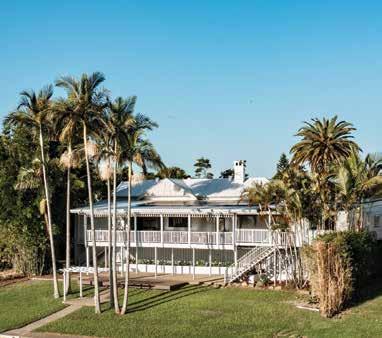
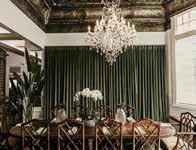
You will not only enjoy breathtaking scenery along the way, but there will also be a highly memorable dining experience waiting at the end of the journey.
Tweed River House, 131 River Street, South Murwillumbah.
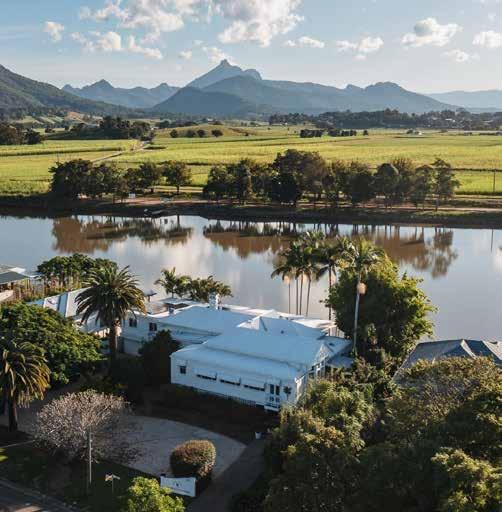
Lunch Thursday to Sunday
Dinner Friday & Saturday
Lawn Bar Saturday & Sunday
tweedriverhouse.com.au | 02 6672 5269
Perched on the banks of the Tweed River on Bundjalung Country in Murwillumbah, resides the award winning bistro, the Tweed River House. Savour our prix fixe menus, enjoying panoramic views om the River Verandah, or in the elegant Dining Room under pressed tin ceilings. For a drink or light bite try the riverside Lawn Bar.
TWEEDRIVERHOUSE.COM.AU @TWEEDRIVERHOUSE
Open Thursday to Sunday.
CHEF’S CHOICE
Add some sparkle
Introducing SodaStream's newest Sparkling Water Maker. Designed for the modern kitchen, the Terra model features Quick Connect technology and is available in four colours – calming blue, bright red, white and black. sodastream.com.au
Bold blue
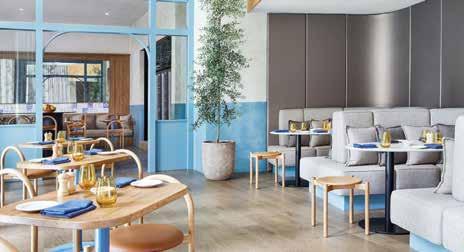
Coastal cuisine
Celebrated Australian chef Guy Grossi has officially opened his Amalfi Coastinspired restaurant at The Westin Brisbane. With a line-up of inventive dishes marked by his signature flair, Settimo is set to whisk diners away to the famed Italian coastline with daily service across breakfast, lunch and dinner. The menu celebrates both Italian and Australian food culture, with highlights such as Pasta al Limone, Scialatielli all’ amalfitana, Mozzarella di Bufal and Guy’s Papa’s Lamb. Alessandro Pizzolato has joined Settimo as Head Chef, Anthony Folio will manage the floor, while experienced Sommelier Deniz Hardman will guide guests through the extensive wine list. settimo.com.au
4-6 August
Moreton Bay Food + Wine Festival
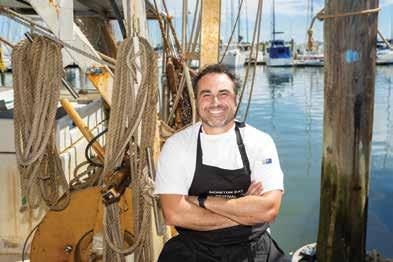
Celebrity chef, Miguel Maestre has officially launched the Moreton Bay Food + Wine Festival, South East Queensland’s largest, tastiest and most delicious celebration of food. Over three scrumptious days more than 15,000 people are expected visit the festival precinct to watch live cooking demonstrations, rub-shoulders with celebrity chefs, listen to live music and sample the delights of Moreton Bay’s amazing food bowl. Tickets are on sale now. moretonbayfoodandwine.com.au
Featuring an extensive range of enamelled cast iron cookware, ovento-table stoneware and accessories, Le Creuset’s new Azure collection is inspired by the mesmerising deep blue seas of the Mediterranean. Available to purchase at Le Creuset boutiques and online. lecreuset.com.au
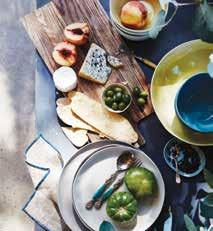
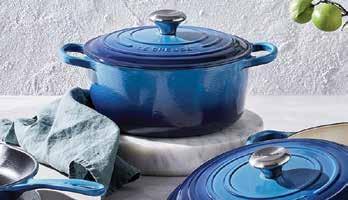
Sweet as
At last, a chocolate that's seriously good for you. Packed with gut-boosting prebiotic fibre, Sweet Guts™ Chocolate is a delicious sugar free treat you can enjoy without the guilt. Also high in fibre, this innovative new product is available in three mouth-watering flavours – chocolate, salted caramel and coconut. au.gevityrx.com
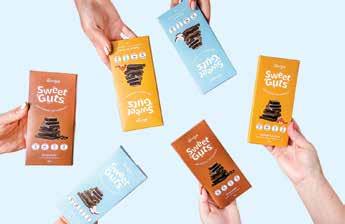
Top table
Marmoset Found’s signature Cloud range comprises earthy, minimalist tableware for elevated everyday dining. These standout pieces work on their own or as a collection with plates, jugs, cups, and tumblers in matching or contrasting shades. marmosetfound.com.au
62 covemagazine.com.au – Issue 96 CUISINE
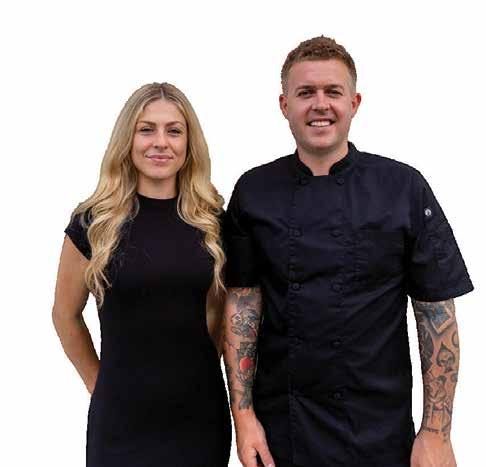
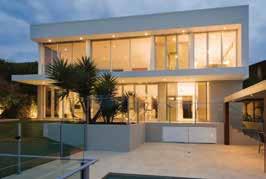
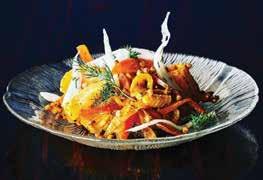
LAND BASED Do you require an exceptional cleaning service that will exceed your high expectations? Searching for a 7-star dining experience in the comfort of your owm home? Looking to impress your clients with custom corporate catering? LUXURY CLEANING PRIVATE DINING BESPOKE CATERING Land Based is a professional team with extensive experience onboard Super Yachts & in award-winning Restaurants. a SuperYacht Standard landbased.com.au 0403 206 777 info@landbased.com.au
LUXURY BEGINS HERE
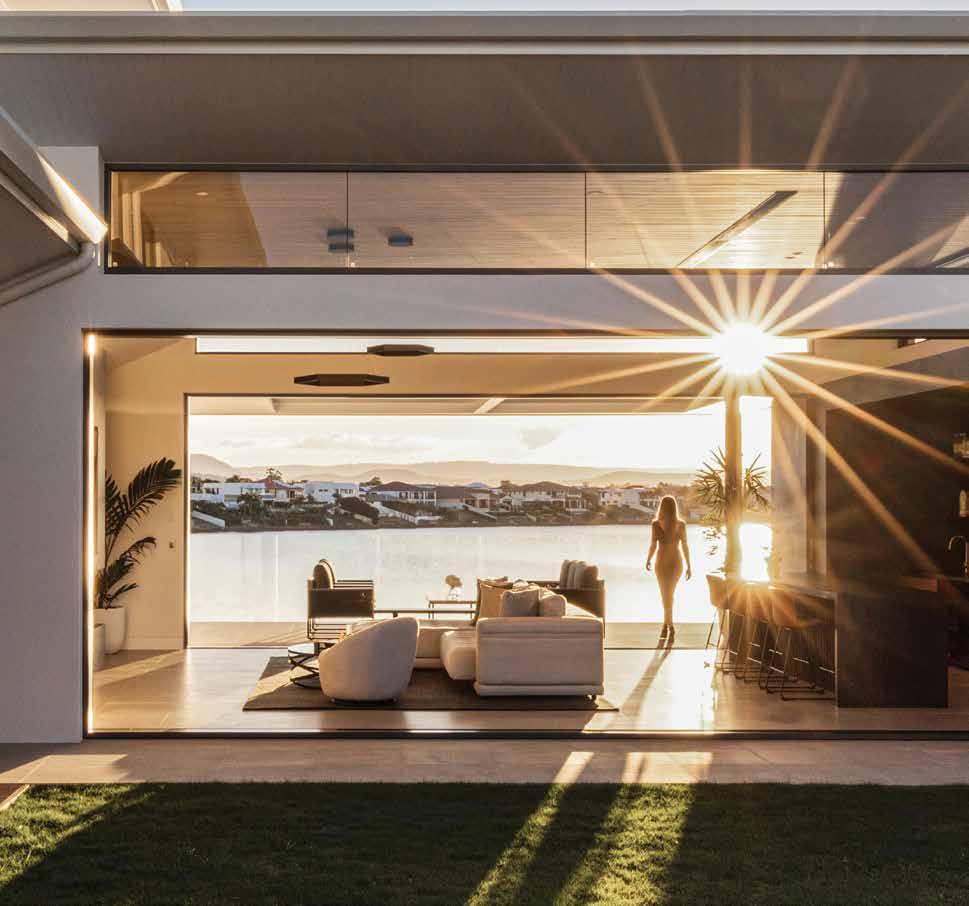
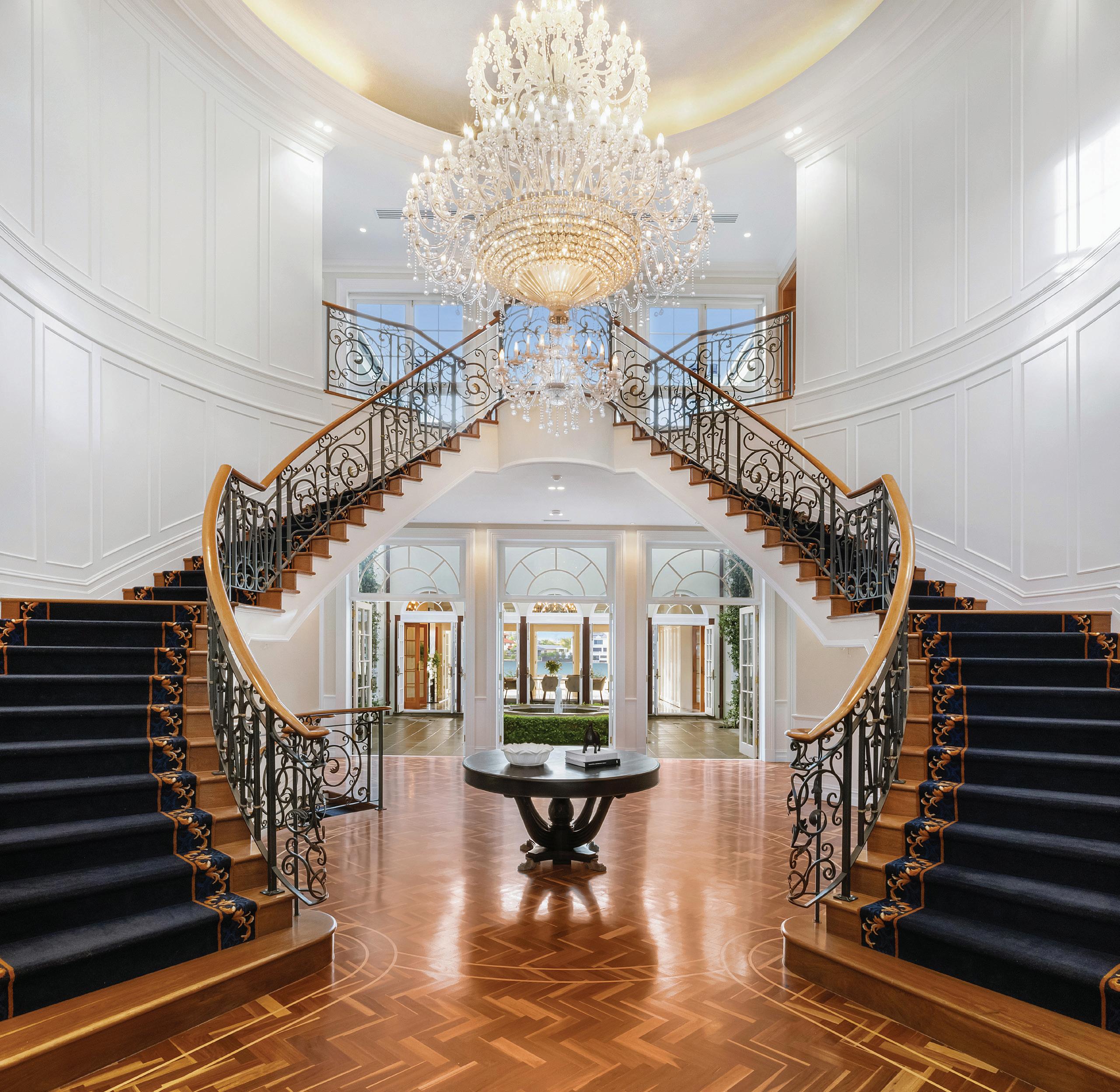
EDITION 32 MAY 2023
Prestige Property Magazine
A WORD FROM MICHAEL
Welcome to Kollosche’s new-look monthly prestige property magazine.
Its redesign formed part of a wider company rebranding, launched this month, known as Kollosche 2.0. The new branding better aligns with the evolution of the business from a prestige real estate agency into an innovative ‘attraction business’ that is focused on collaboration and serving our customers.
In this edition, we have a special feature article outlining the brand’s evolution and our vision for redefining real estate as we know it.
Keep informed and up-to-date with what is happening in the local and wider market through a selection of articles and analysis pieces that address the biggest shifts and latest trends based on data from leading industry analysts, agents and commentators. A snapshot of Kollosche’s most recent sales results and upcoming auctions will offer transparency around Kollosche’s performance within the wider market.
A new Q&A column - Meet The Teamgives candid insight into the people who work behind the scenes across all divisions of the Kollosche business and contribute to making it a success. In our first edition we turn the spotlight on sales associate James Roberts, who some may not know was a professional athlete and Olympian before joining the Kollosche ranks.
Details of some of the most prestigious properties we currently have on the market can also be found inside, including that of 5 McMillan Court, Southport, which is our prestigious cover property this month.
The waterfront home positioned on the Nerang River in the elite TSS precinct is a rare opportunity to attain a trophy home for your portfolio. It is open to expressions of interest. You can read more about it on the page opposite.
Whatever stage you are at along your property journey, I hope you find our new-look magazine an informative and useful resource.
MICHAEL KOLLOSCHE

Grand Riverfront Icon ON
Standing proud on the banks of Nerang River is the majestic European-inspired masterpiece known as ‘Alston’ - a unique and widely recognised Gold Coast landmark.
Spanning more than 3,442 square metres of prime riverfront land and covering a prodigious 2,451 square metres internally, the intensely detailed and immaculately kept mansion is a truly unique offering for anyone seeking to acquire a trophy home for their property portfolio.
Presenting a level of luxury difficult to match, the chateau-style home exemplifies stunning architectural features formulated by Michael Witty Architects, and has been upgraded over the years.
Settling on the most outstanding feature of this showcase home is almost impossible. For some it, may be the Victorian-inspired formal entrance where a grand Imperial staircase, crowned with an
elaborate crystal chandelier, beckons you into the inner-sanctum of the home.
For others it may be the tranquil internal courtyard, flanked by arched doorways allowing views towards the Nerang River and city skyline, or perhaps the majestic indoor swimming pool enveloped by glamorous Victorian windows.
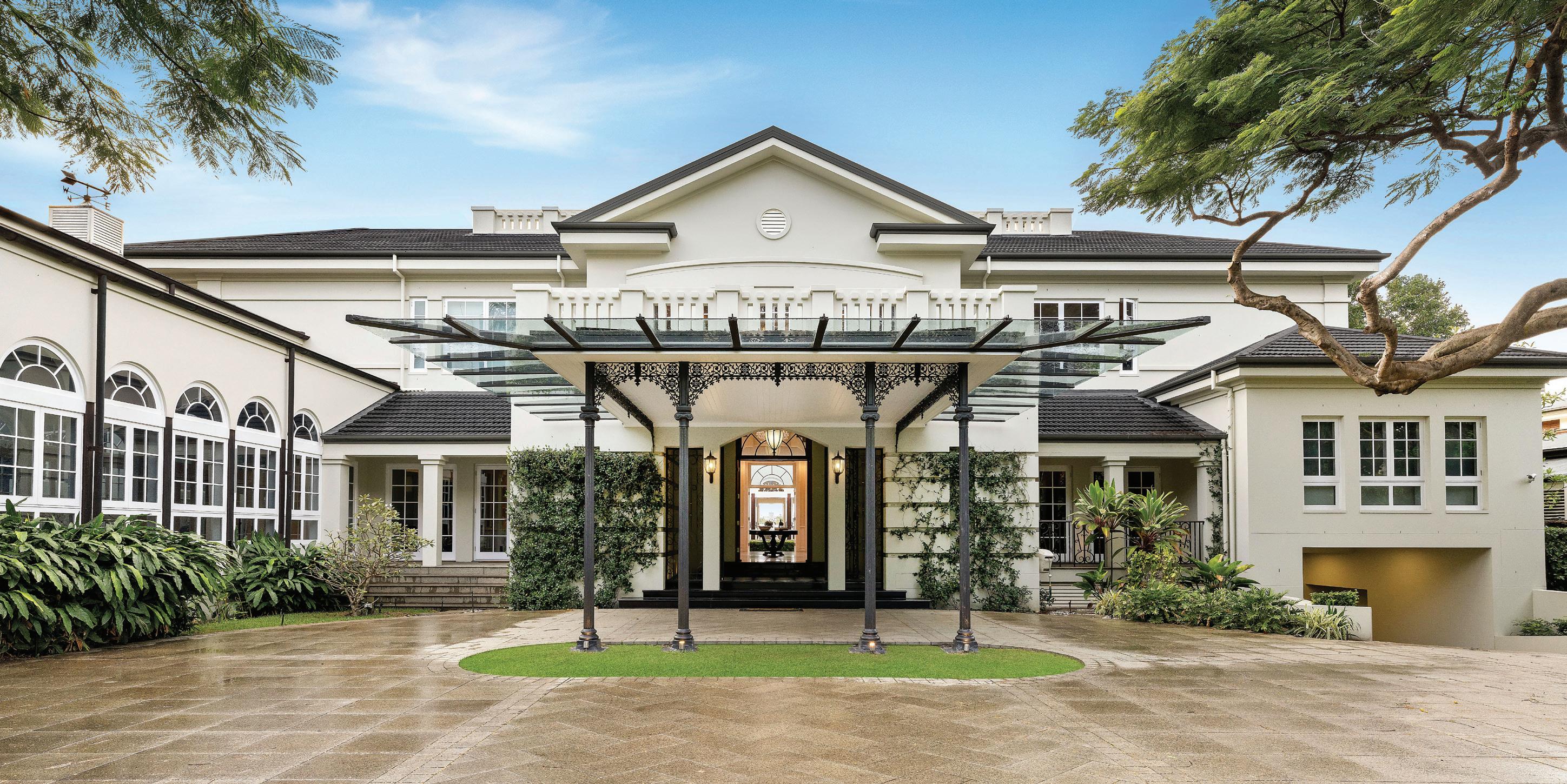
The estate is as opulent outside as it is inside, offering manicured gardens, a private sandy beach, pontoon and jetty.
Located in one of the Gold Coast’s most sought-after dress circles, McMillan Court captures a prime position along Main River and is near to respected schools.
The property is open to expressions of interest and is being marketed by sales agent Michael Kollosche in conjunction with Rebecca Moffrey of Ray White Burleigh Group.
THE COVER
5 MCMILLAN COURT, SOUTHPORT
REDEFINING REAL ESTATE
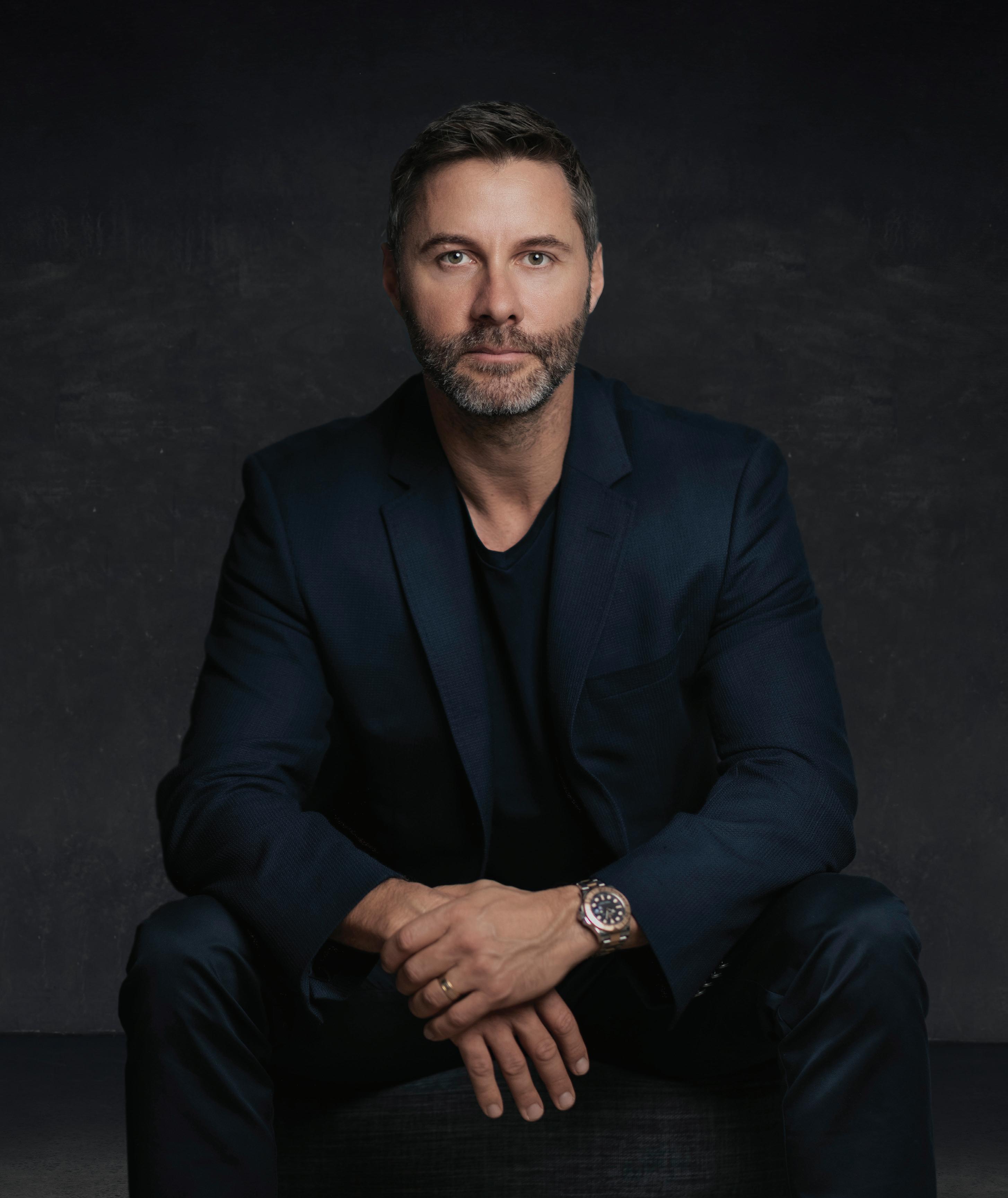
KOLLOSCHE 2.0 IS HERE
Unveiling a fresh new look for the agency that’s taking professional service and strategic advice to a whole new level.
WE’RE HERE TO SERVE YOU
Residential Sales | Commercial Sales | New Projects
Executive Leasing | Property Management
COLLABORATION | TRANSPARENCY INTEGRITY | INNOVATION | COMMUNITY
BEHIND THE NEW BRAND
The Next Level
Kollosche has unveiled a new brand that aligns with the company’s vision to redefine real estate as we know it.
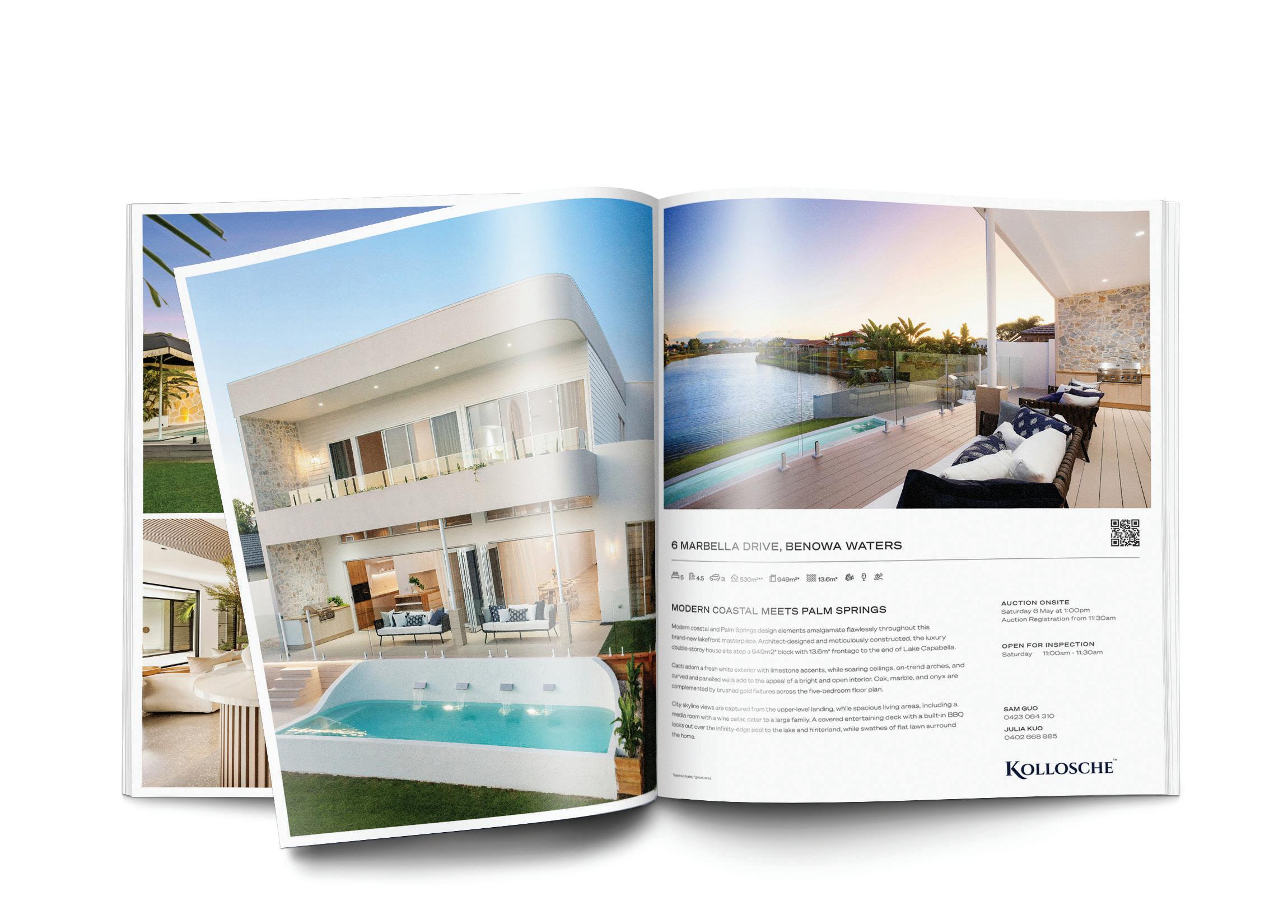
Kollosche has come a long way in the four short years since it opened its doors in Broadbeach with an eager team of nine.
Selling principal Michael Kollosche had already established himself as a highly successful agent in his own right. But even back then, the vision was always bigger than just listing and selling the Gold Coast’s most luxurious properties.
“The vision of the business for me has always been about the client experience and providing a six star service,” says Michael.
With that core focus in mind, Kollosche has expanded its offering significantly over time to serve its clients across the full spectrum of real estate.
Having gained market share in the prestige residential sector, Kollosche introduced commercial sales with the addition of successful father-and-son team Adam and Tony Grbcic. Executive leasing and property management followed soon after, further enabling the business to provide a holistic service to its long-term clients.
Off-the-plan luxury apartment sales is the most recent division to the Kollosche bow, with the Kollosche New Projects team now numbering 10 and growing.
To provide additional specialised support for Kollosche agents, vendors and property developers, last year
Kollosche established in-house media agency K Media Group. K Media hosts a talented team of creative and marketing professionals, providing copywriting, graphic design, photography, videography, digital and social media marketing, and PR.
A NEW BRAND LOOK

While the business has grown, so has the brand with Kollosche this week launching a fresh new look that’s been a year in the making for K Media and the management team.
“It’s important that the brand evolves with the business, which has really moved beyond what is expected from a traditional real estate agency,” says Michael.
“Over time we have evolved into a professional services agency where we act as strategic advisors to our clients with a long-term view.
“Sometimes, that advice might be not to sell, the best course might be to reposition an asset, to rent and hold a property –as long as the advice we offer is in the client’s best interests, it serves us all in the long run.”
The new brand, which launched across print, digital and social media platforms this month, reveals a timeless look that exudes effortless luxury.
K Media Group General Manager Alex Wallace says a specialist team of creatives led by Kollosche’s senior creative designer Vanessa Durrington and brand manager Filippa Nielsen, spent countless hours perfecting the brand.
“The brief was to build a brand that transcends real estate,” says Alex.
“The new brand look perfectly reflects the essence of the Kollosche ethos which places its focus on the client and showcases their property at its best.
“The consistency in presentation across platforms elevates the power of Kollosche as a brand and all that it stands for.”
Much like the new brand design, the process of building a service-led ‘attraction business’ that redefines real estate has required a deeper level of contemplation to unpack the values that drive the vision.
“We’ve really embraced transparency and integrity across the board,” says Michael.
“Our agents give vendors and buyers every bit of information they need to make an informed decision. This is somewhat unique in real estate and sets Kollosche apart.
“The simplicity of the new brand is symbolic of how we have focused on what’s important to better serve our clients. Kollosche 2.0 is a legacy we can all be very proud of.”
“The new brand look perfectly reflects the essence of the Kollosche ethos which places its focus on the client and showcases their property at its best.”
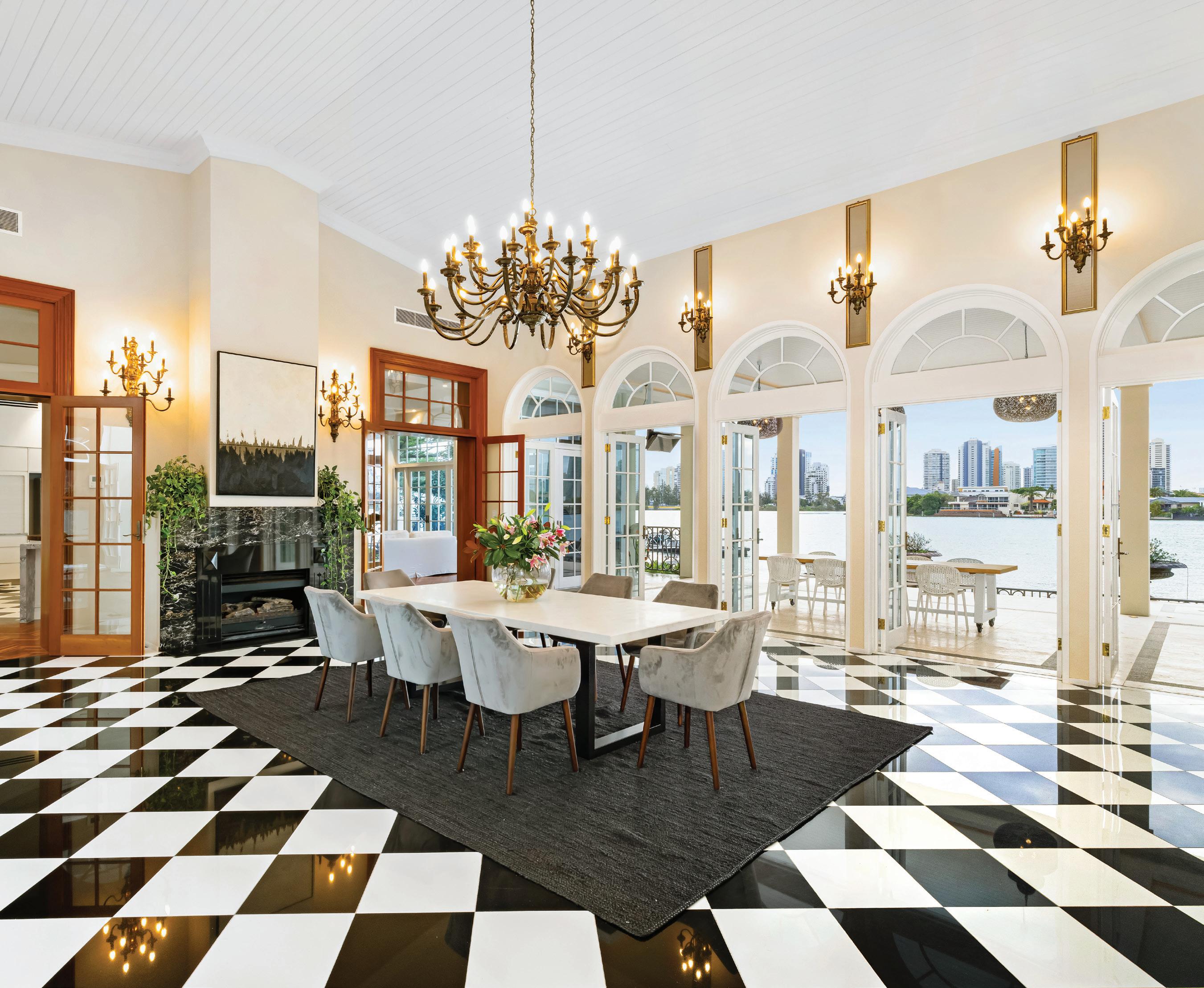
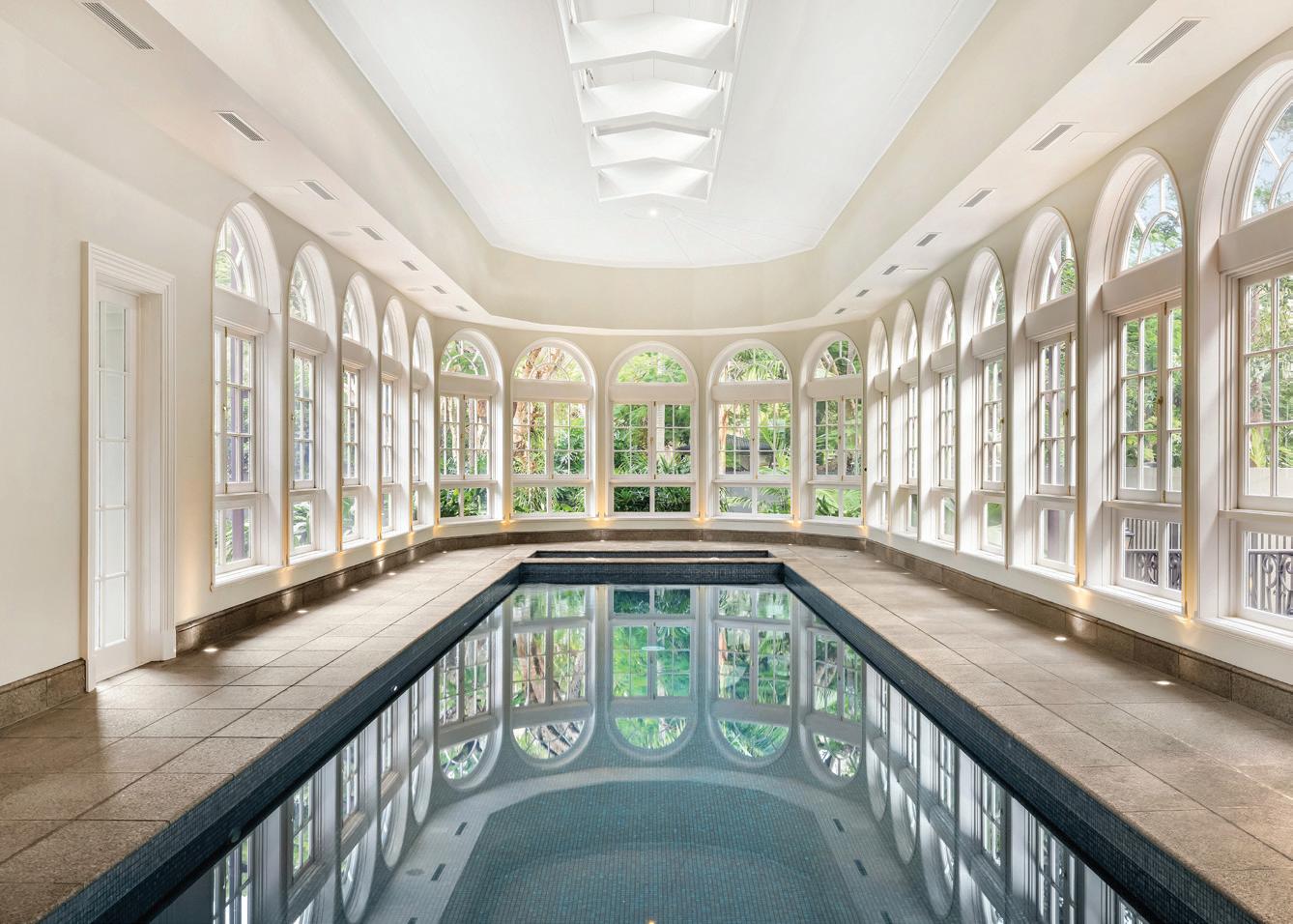
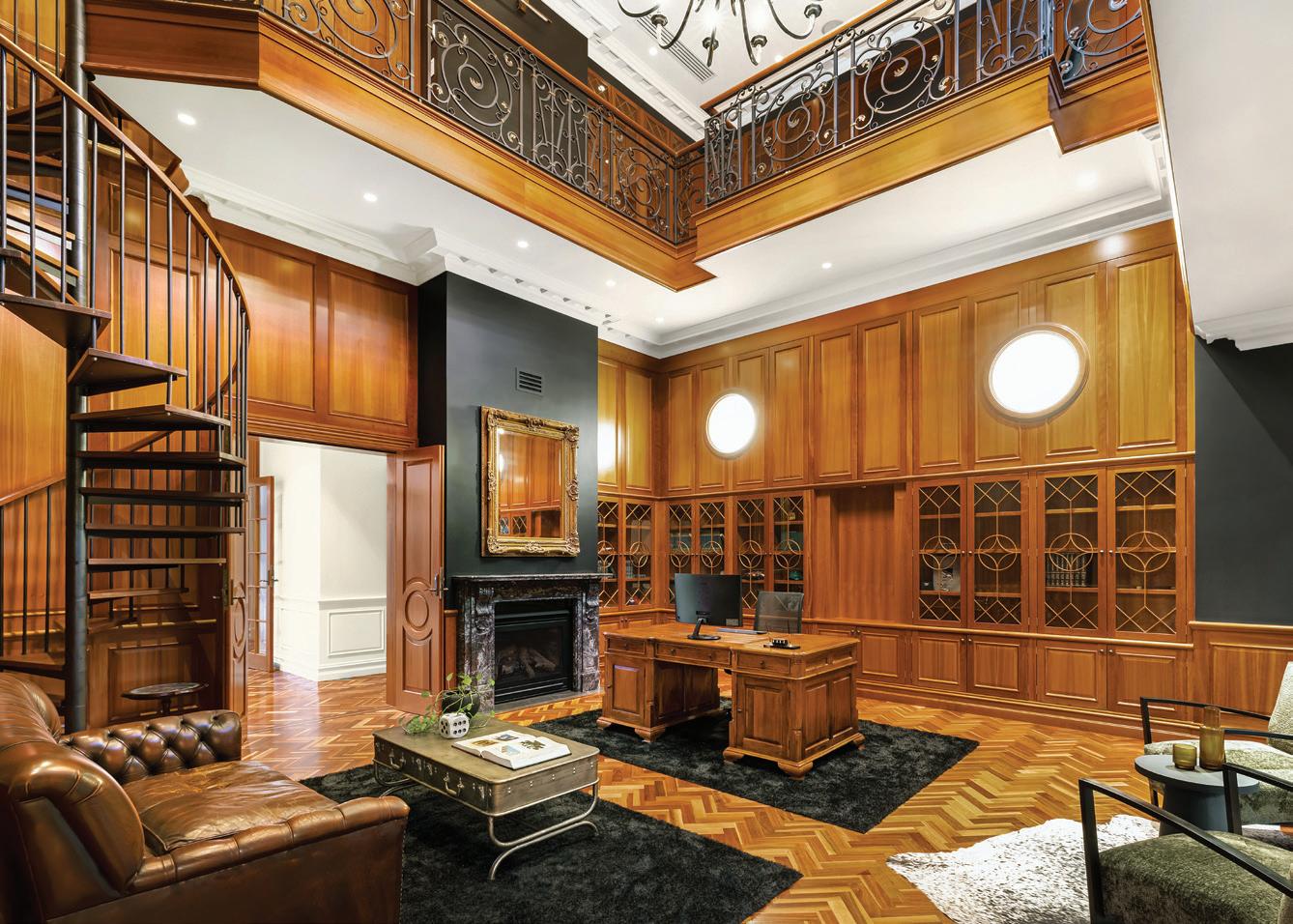
5 MCMILLAN COURT, SOUTHPORT
GRAND EUROPEAN MANSION INSPIRES ON MAIN RIVER EXPRESSIONS OF INTEREST Closing Wednesday 14 June at 5:00pm
Lavish Gold Coast waterfront living and entertaining finds a new benchmark inside ‘Alston’, a magnificent Main River estate set within the prestigious The Southport School precinct.
A rare 3,442m 2* waterfront allotment, with its private sandy beach and skyline vistas spanning Main Beach to Broadbeach, sets the stage for this stately French manor to shine.
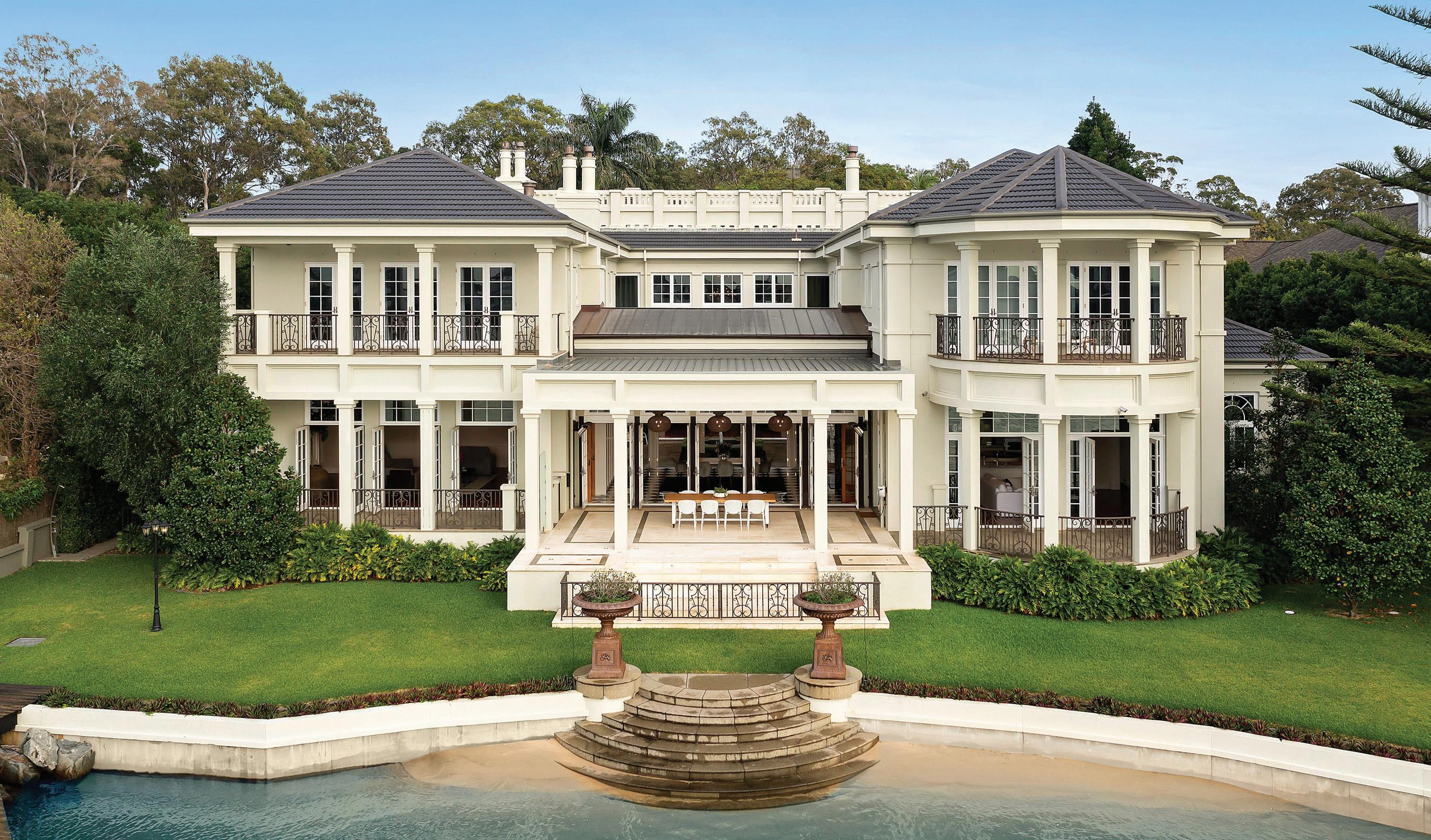
Designed by Michael Witty Architects and crafted to perfection, an exquisite tri-level residence boasts six bedrooms, seven bathrooms, a five-car garage and a long list of luxury inclusions.
An indoor lap pool, spa, gym, and sauna beckon, while entertainers will embrace a bar, wine room, cinema and billiards room. A rooftop viewing platform captures 360-degree views, while a deep-water pontoon with twin jet ski docks creates easy passage to the Broadwater, Marina Mirage and the Gold Coast Seaway.
FOR FURTHER DETAILS CONTACT
MICHAEL KOLLOSCHE 04111 888 15
REBECCA MOFFREY 0433 261 489 (RAY WHITE)
6 7 + 2 pdr 44.6m* 3,442m 2* 2,451m 2*^ 5 *approximate ^gross floor area
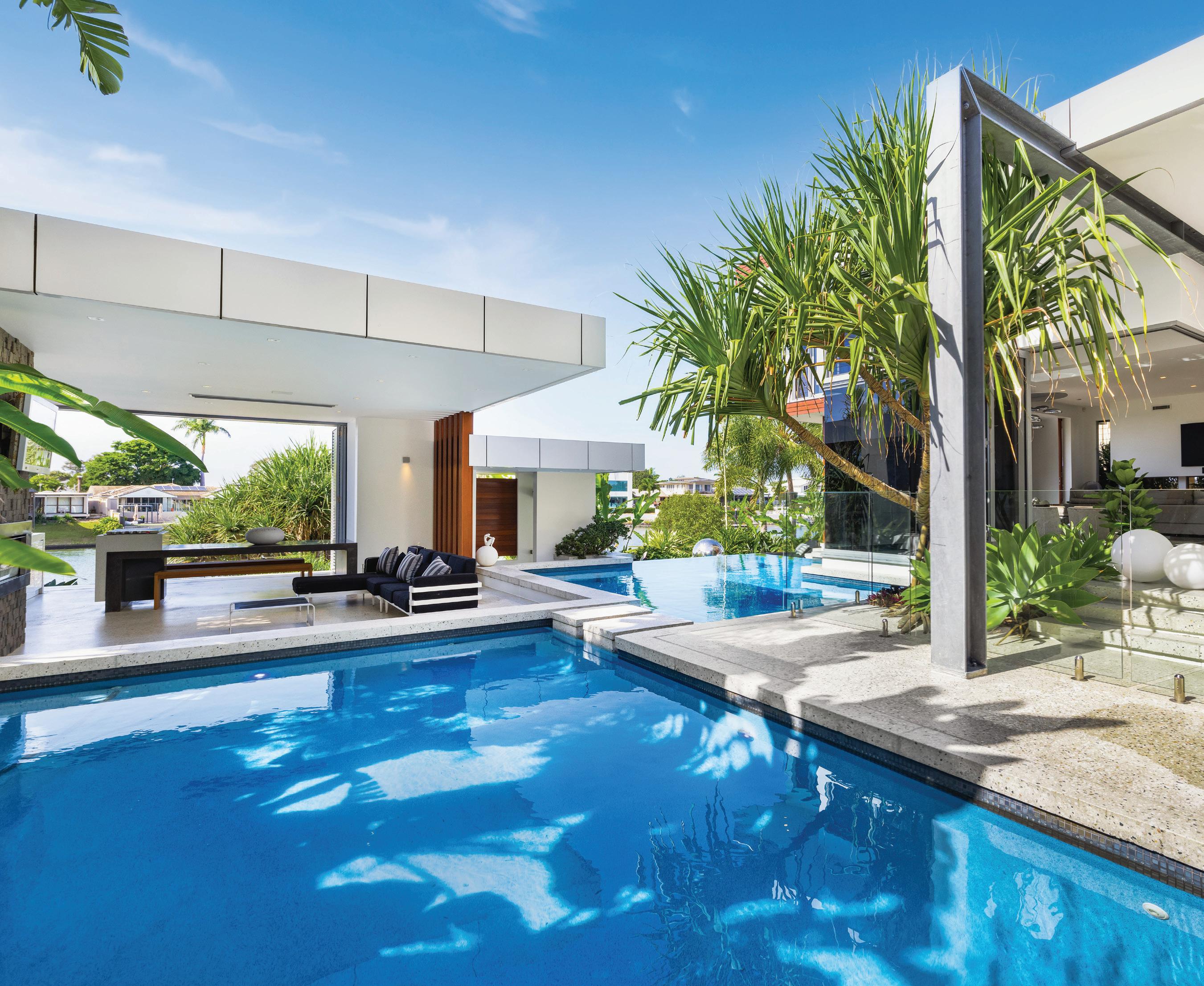
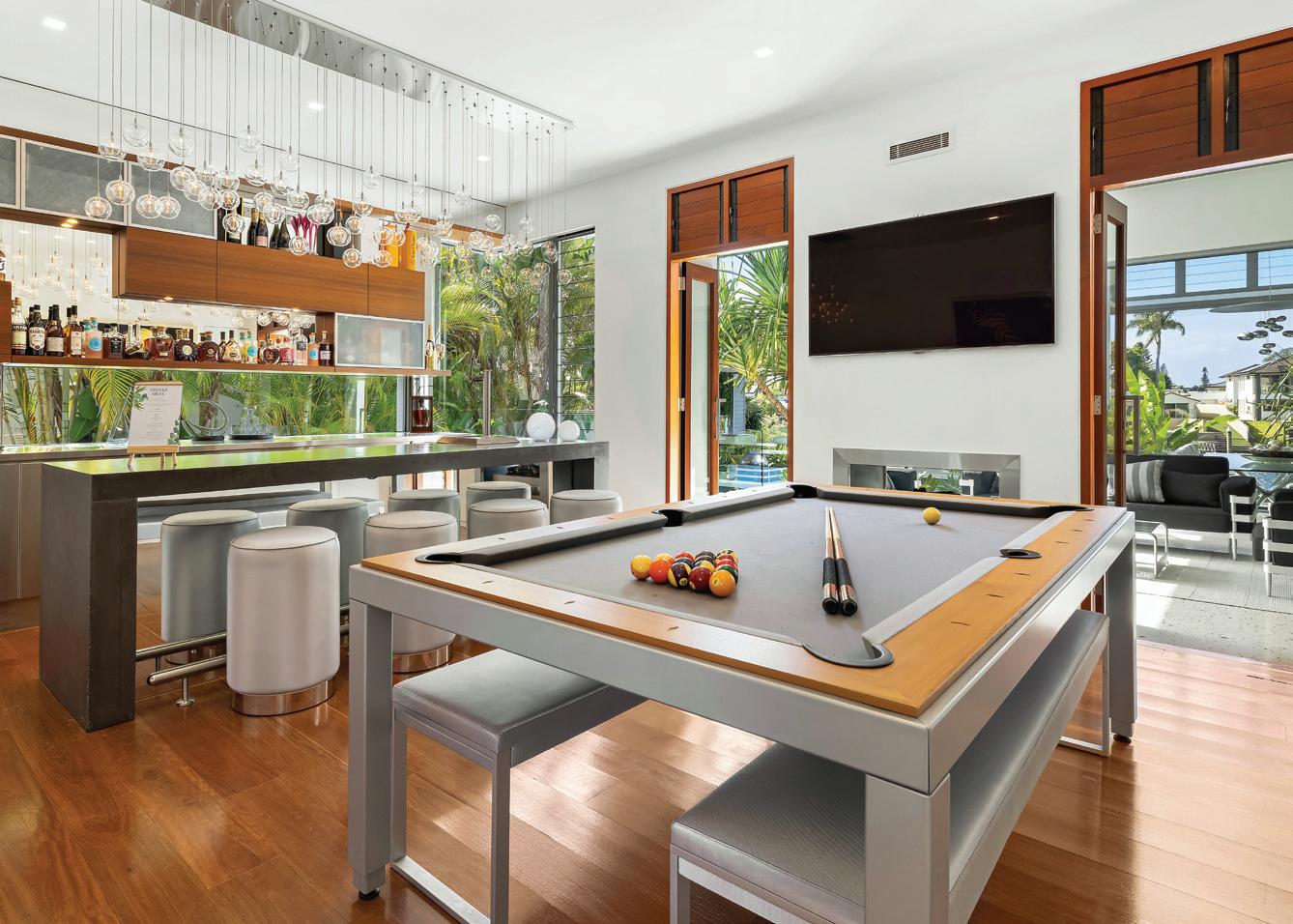
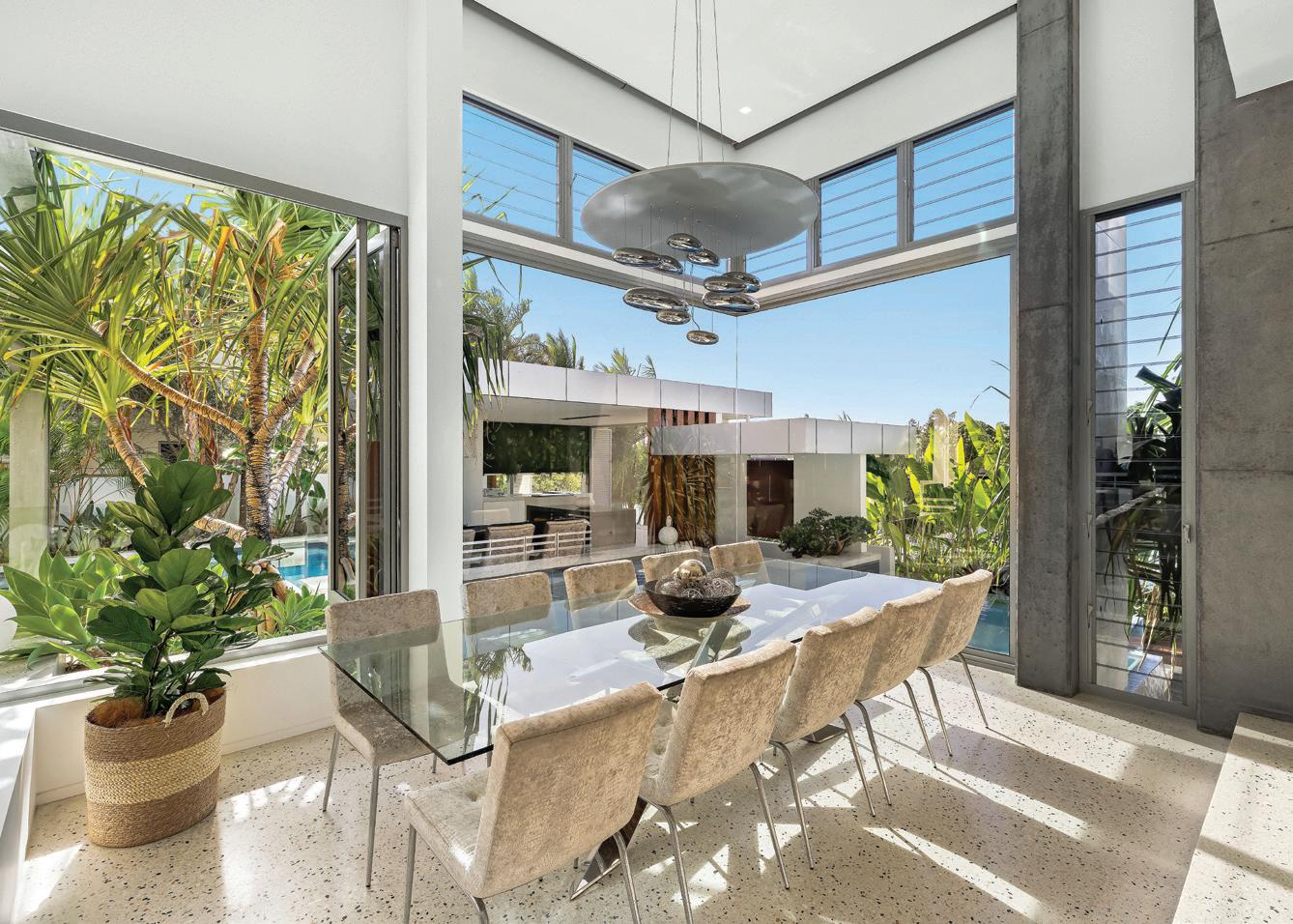
159
SIR
BRUCE SMALL BOULEVARD, BENOWA WATERS
ULTIMATE FAMILY
ON MAIN RIVER
This architect-designed entertainer holds a superior position in an exclusive Benowa Waters cul-de-sac, where it basks in city skyline views from atop a 1,111m 2* parcel with 29.4m/96.45ft * of frontage to Main River.
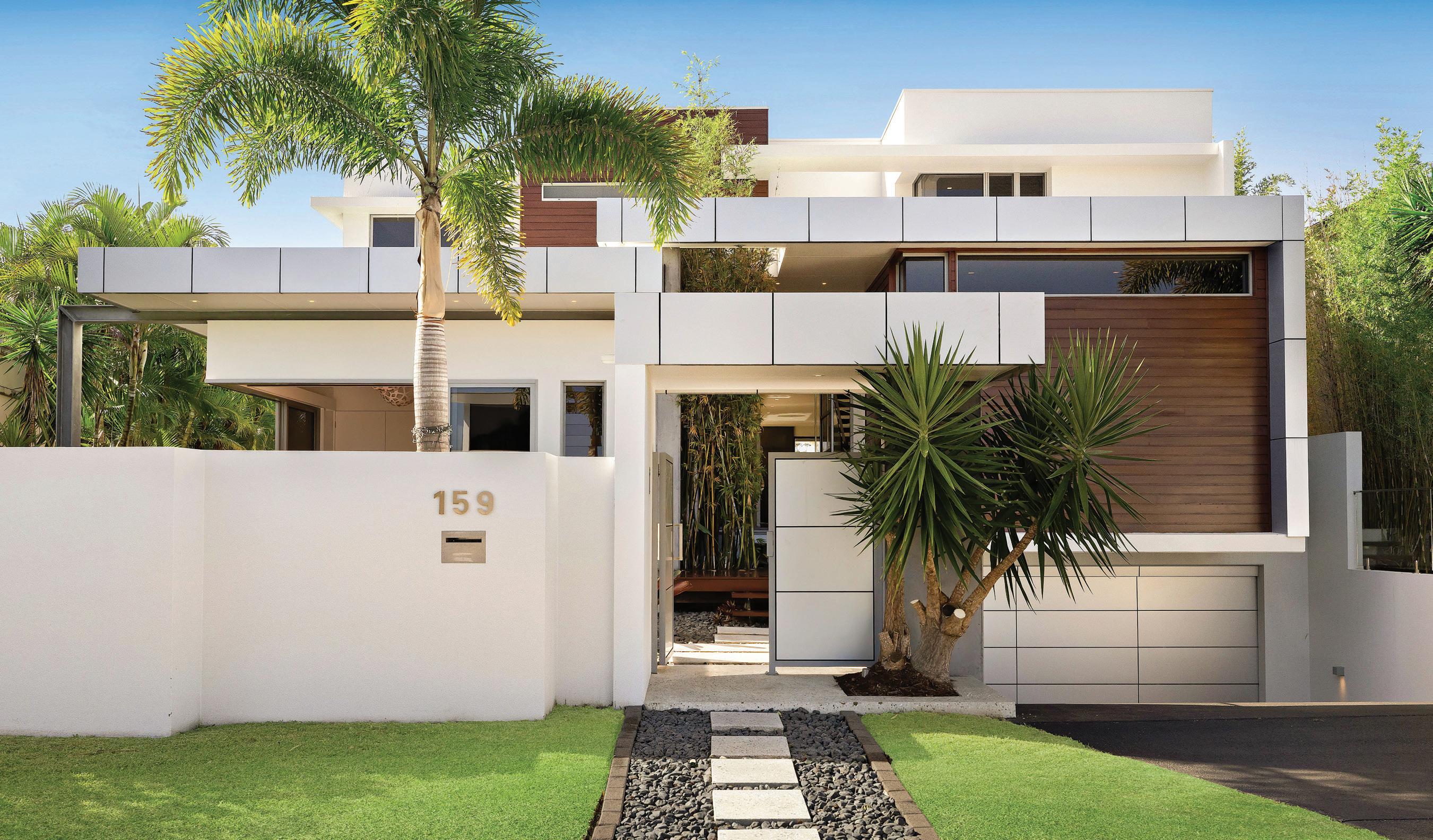
Covered alfresco areas featuring fireplaces, cooking facilities and a swim-up bar border a resort-level infinity-edge pool surrounded by thriving gardens. A 10m/32.8ft * pontoon opens up easy access to the Main River, where the highest bridge is 4.3m/14.10ft * at highest astronomical tide.
The quality solid concrete construction’s sumptuous appeal is championed throughout by soaring voids, glazing, pendant lighting and hand-crafted concrete and timber finishes. The floor plan features four deluxe bedroom suites, an office and a choice of living zones, including a family retreat, home theatre and entertaining room with a wet bar.
AUCTION ON SITE
Friday 26 May at 10:00am
Auction Registration from 9:30am
FOR FURTHER DETAILS
CONTACT
MICHAEL KOLLOSCHE 04111 888 15
JAY HELPRIN 0407 894 775
4 4.5 29.4m* 1,111m 2* 724m 2*^ 4
ENTERTAINER
*approximate ^gross floor area
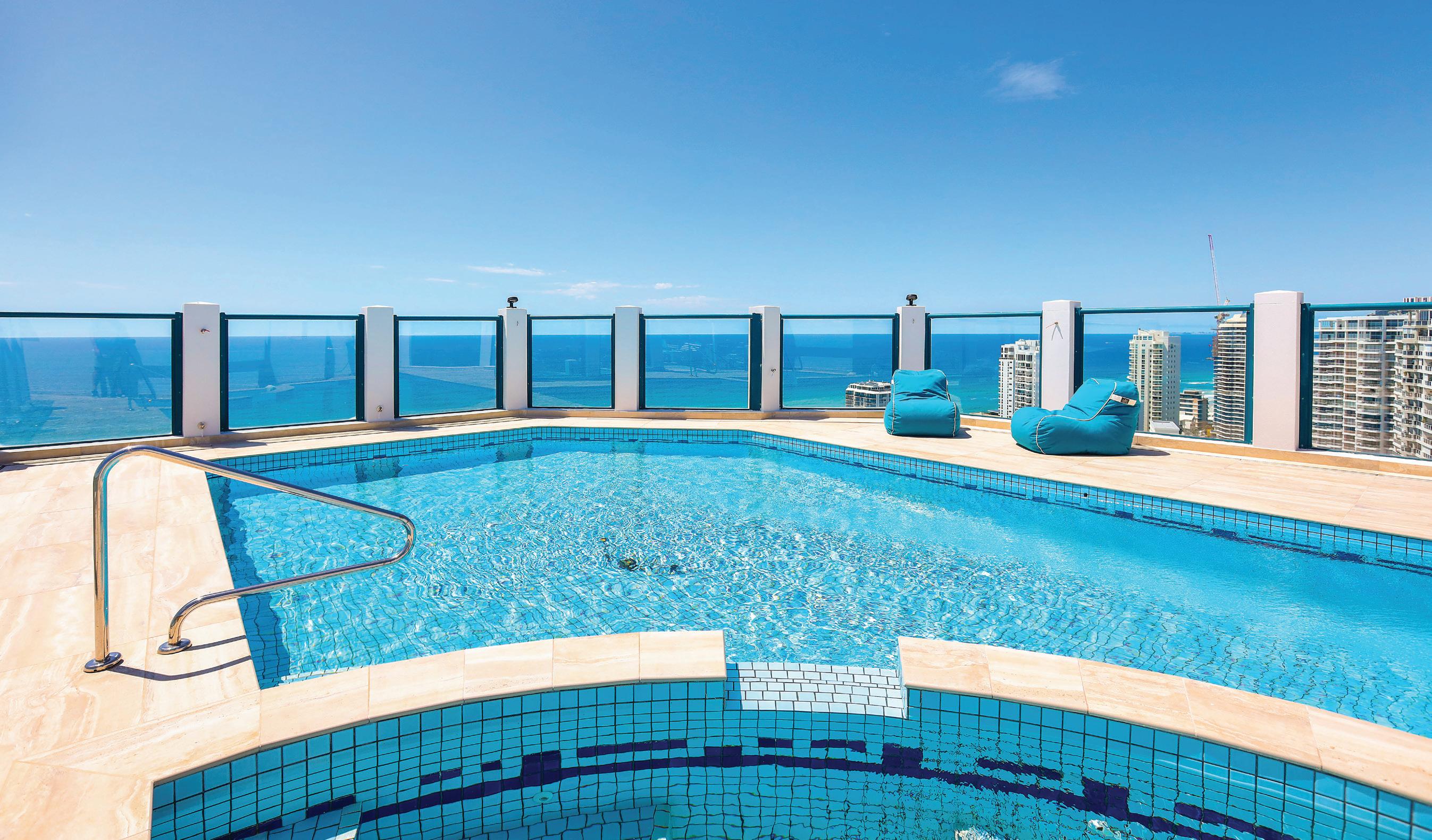
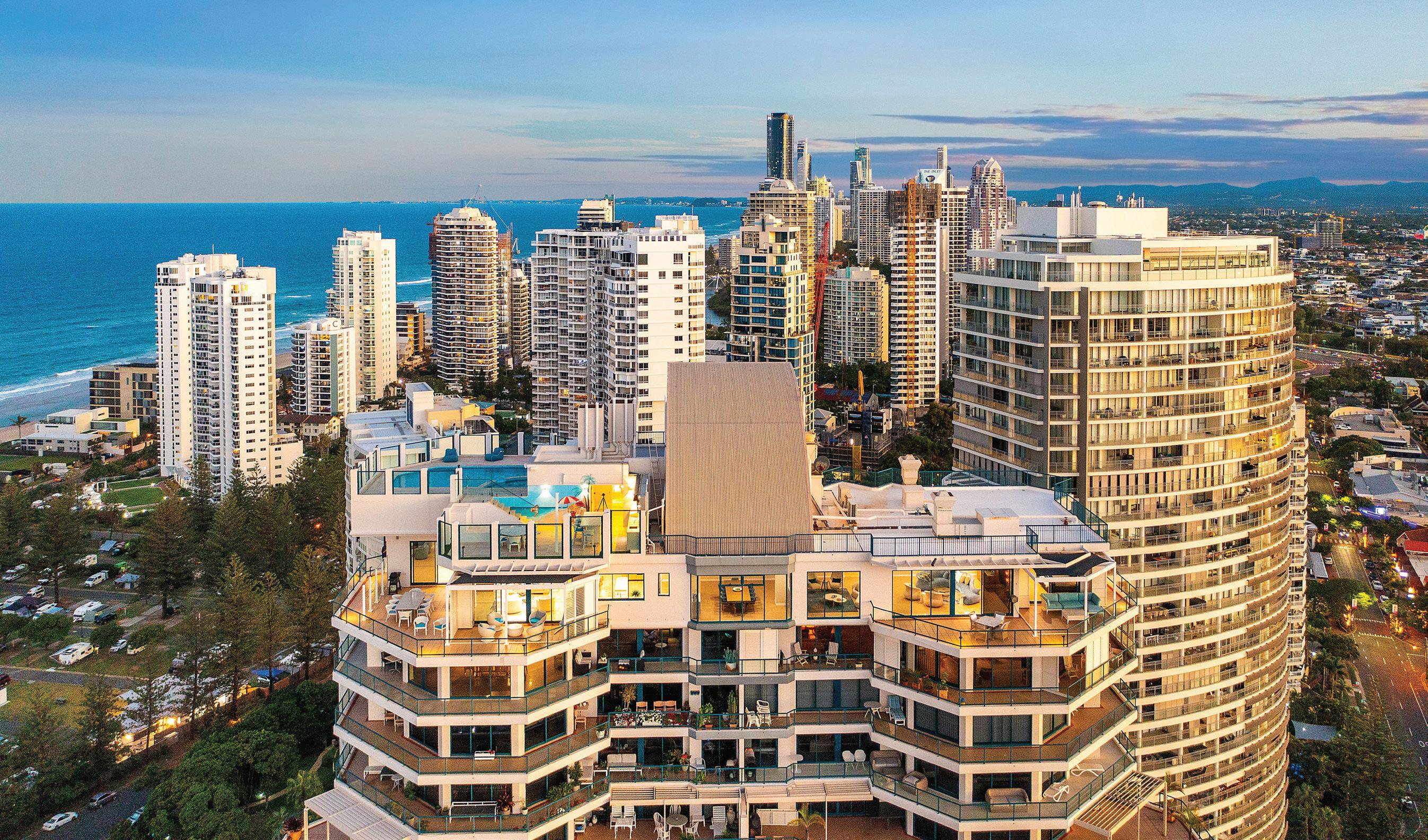
*indicative only
94/22 MONTGOMERY AVENUE, MAIN BEACH
ULTRA-LUXE PENTHOUSE IN PRIME POSITION
This ultra-luxe full-floor penthouse crowns ‘The Waratah’, a residential-only building on the corner of Tedder Avenue. A recent renovation has maximised the appeal of the northeastfacing residence, where extensive glazing captures ocean, Broadwater, hinterland and city skyline panoramas. The 360-degree outlook is best appreciated from a resort-style rooftop terrace, which has a pool, spa, steam room and entertainment area with wet bar, and is a supreme setting for gatherings.
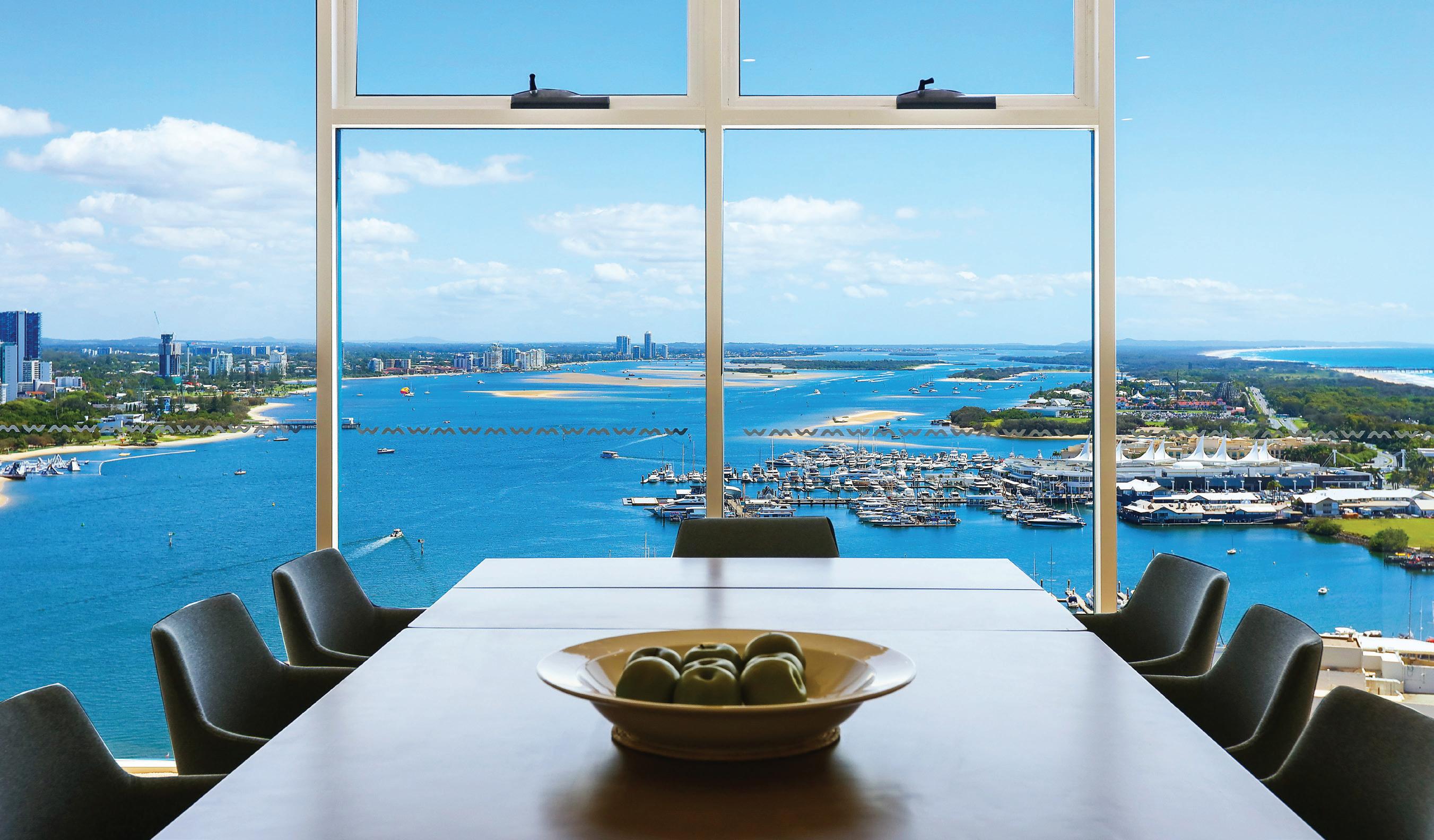
Marble tiles make an impressive statement in the private entry foyer, setting the stage for decorative features throughout. Four spacious bedrooms and a choice of formal and informal living areas open onto balconies, while Taj Mahal quartzite dresses the gourmet kitchen. The new owner will enjoy two car parks, a store room, on-site management and access to five-star amenities.
FOR FURTHER DETAILS CONTACT
DUNCAN LONGMORE 0419 611 792
MICHAEL KOLLOSCHE 04111 888 15
*approximate ^gross floor area
836m 2*^
4 3 + 2 pdr 2
Building Amenities: Apartment:
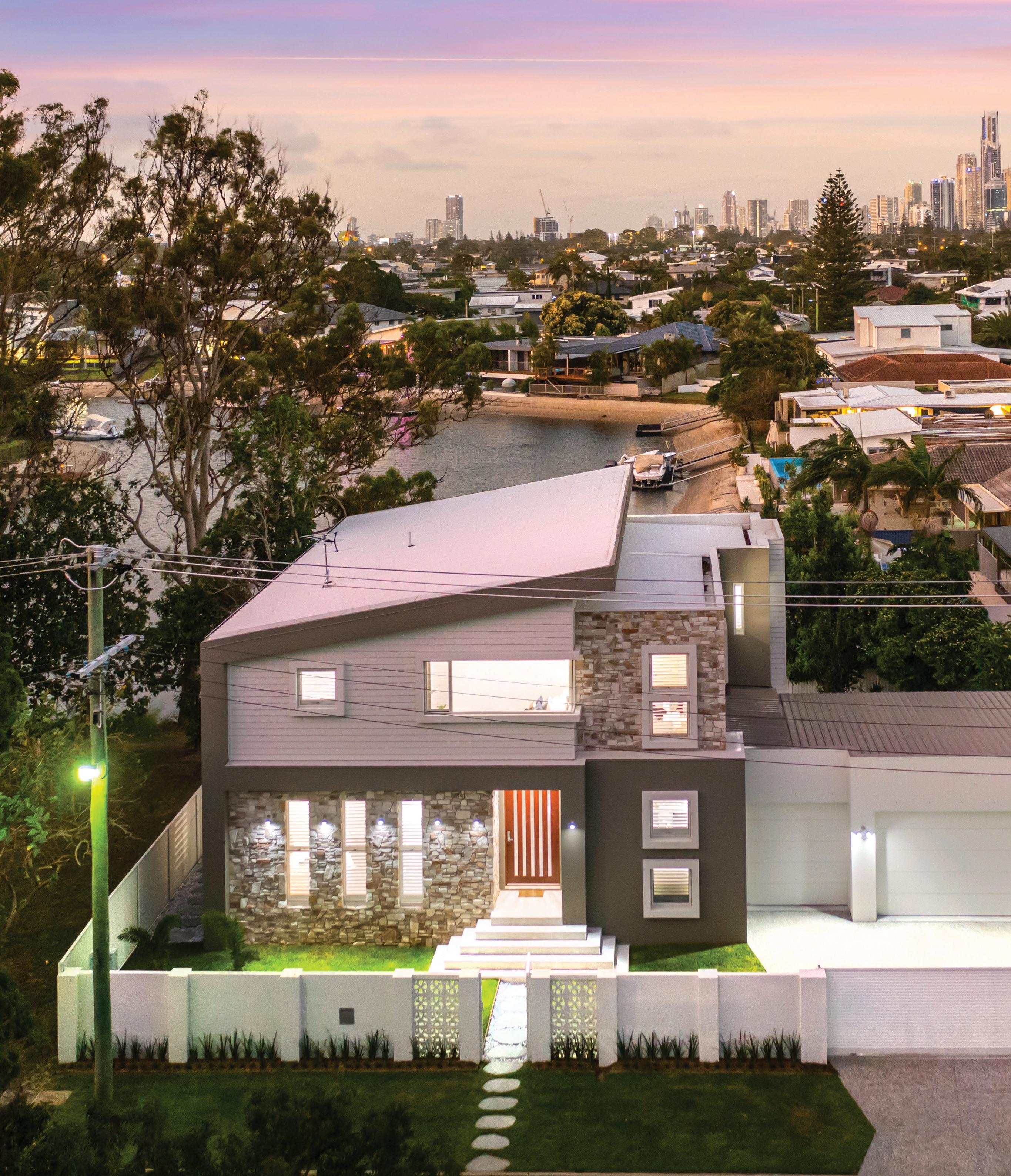
9
“Extremely happy with Matthew’s efforts in the sale of my newly built Broadbeach Waters property. He left no stone unturned to find qualified buyers and demonstrated great skill at building rapport.
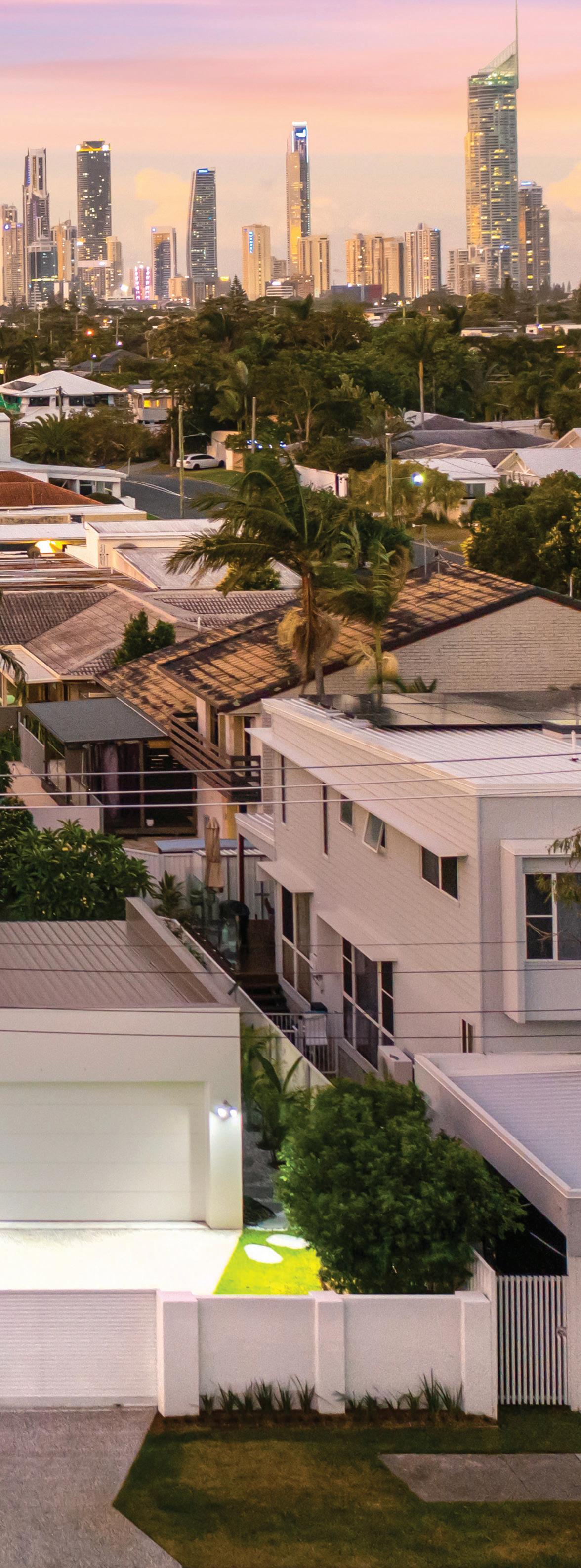

“Support behind the scenes from his highly experienced team gave me peace of mind throughout the entire sales process. We managed to achieve a great result in a shifting market, which is a testament to Matthew’s ability to follow effective processes and go the extra mile.
“Highly recommend his services especially for waterfront homes here on the Gold Coast.”
Lachlan - Seller
MATTHEW FOLLENT 0402 251 527 MICHAEL KOLLOSCHE 04111 888 15 SOLD $3,060,000 AT AUCTION
KALIMNA DRIVE, BROADBEACH WATERS
Enquiries
Inspections
15
127
80
Registered Bidders
TROY DOWKER
SOUTHERN BEACHES STRATEGIC ADVISOR

No one understands the southern Gold Coast prestige market better than Troy Dowker.
Backed by more than 20 years of experience, he has a proven track record and continues to reset the benchmark for premium sales from Mermaid Beach to Coolangatta. When it comes to selling your prestige property, Troy is a trusted voice and the natural choice.
“Expertise
can depend upon.”
you
AGENT OF THE YEAR AU STRALASIAN REAL ESTATE RESULTS AWARDS 2022 TROY DOWKER
0409 057 087 troy@kollosche.com.au
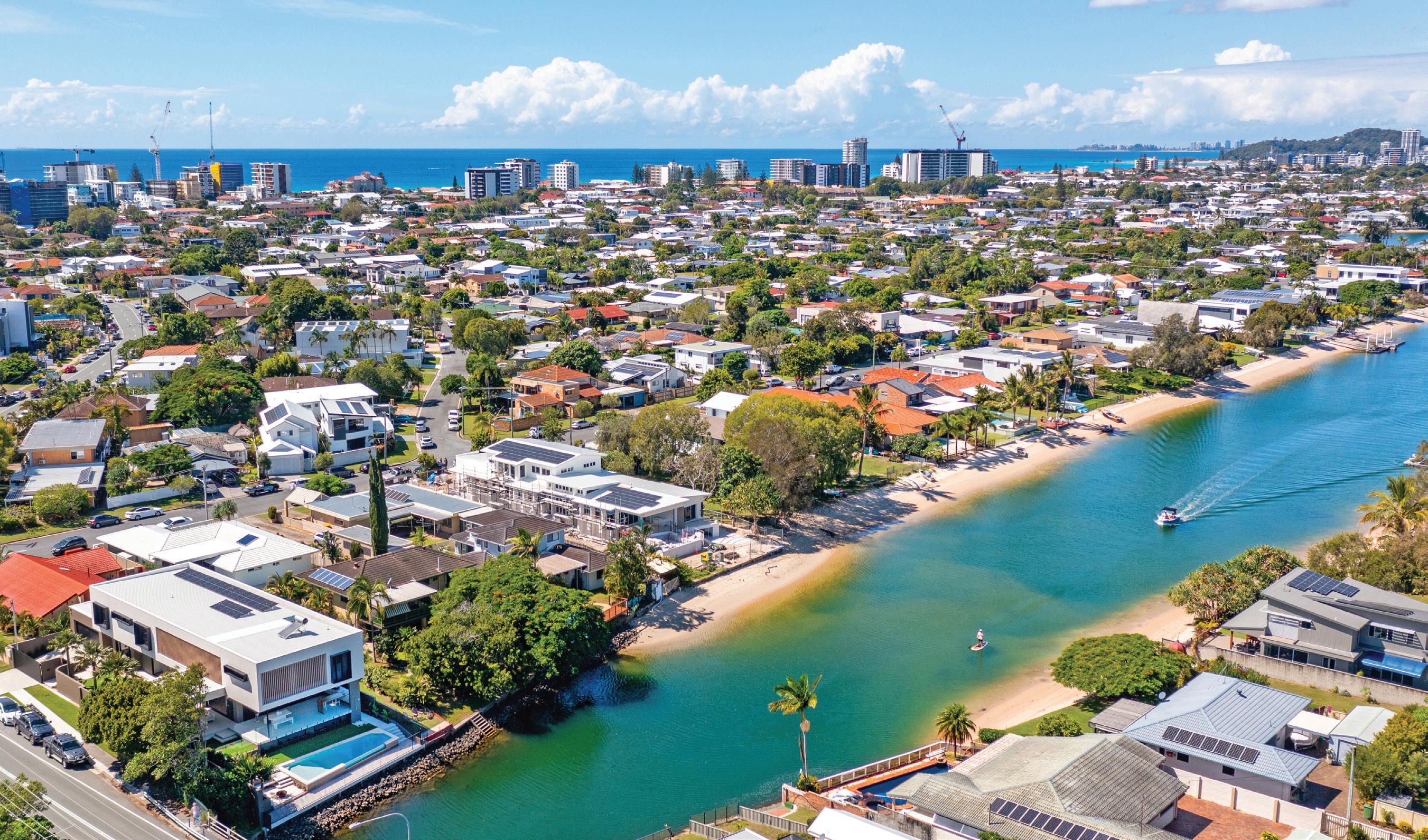
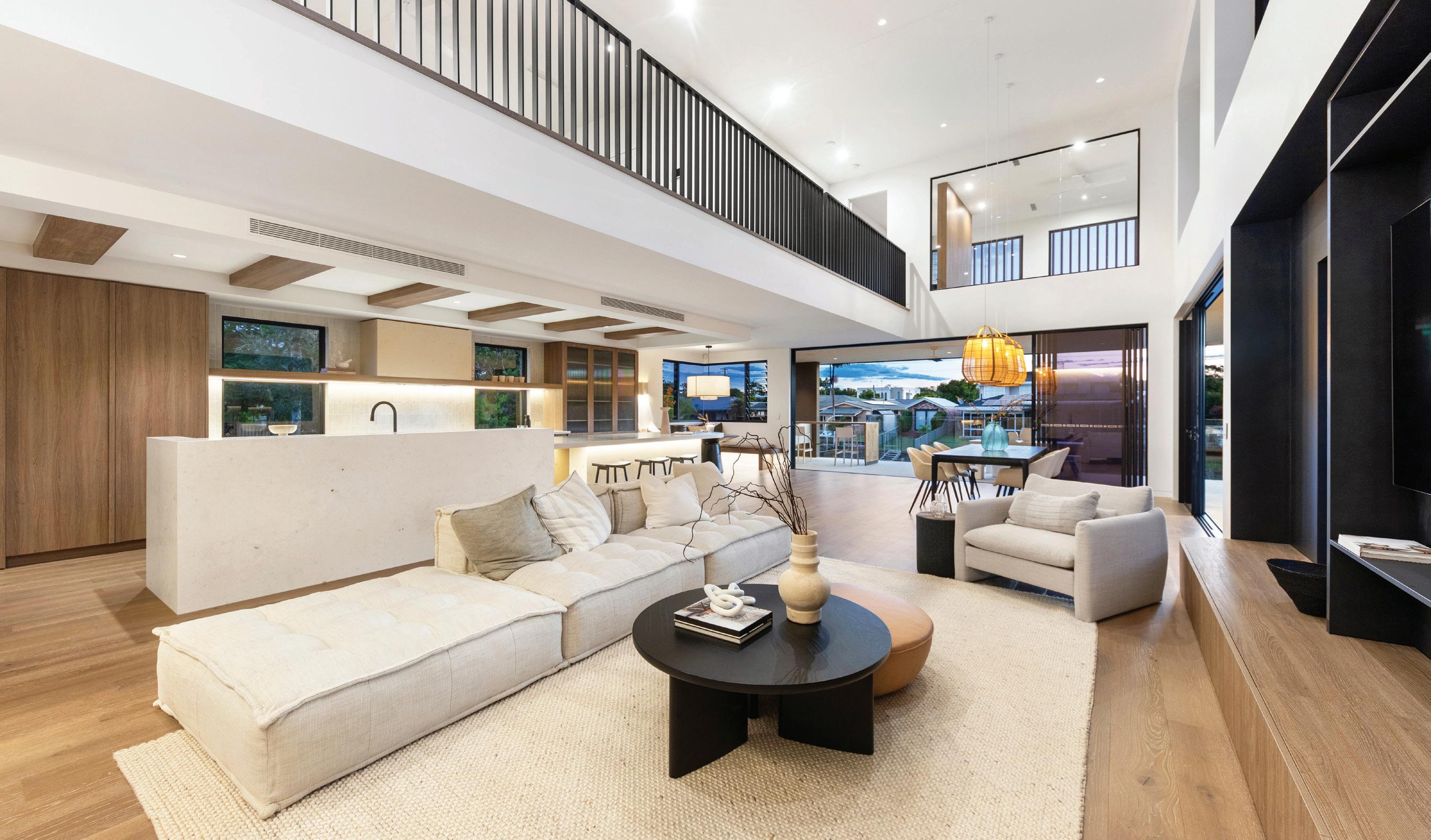
*indicative only
86 TALLEBUDGERA DRIVE, PALM BEACH
Friday 5 May at 11:00am
Making a statement along Tallebudgera Drive is this new-build residence conceived by leading designer Jayson Pate and offering a low-maintenance yet luxurious coastal lifestyle. Set only metres from the calm waters of Tallebudgera Creek and in the catchment for the highly sought-after Palm Beach-Currumbin High School, the five-bedroom family home spread across two storeys offers a peaceful, private oasis where the highest levels of innovation and technology deliver the ultimate in comfort.
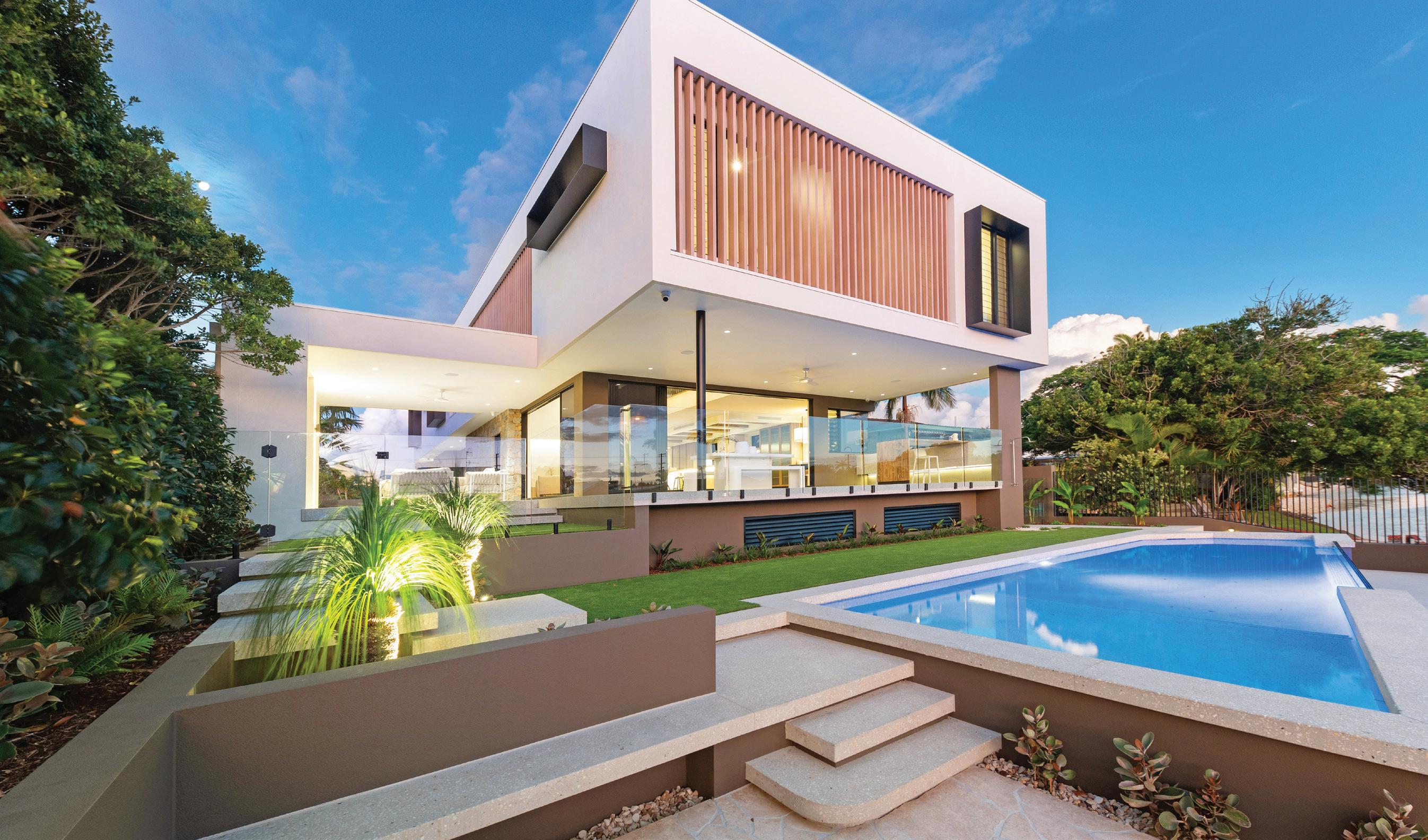
A cleverly designed floor plan maintains a high level of connection throughout, complemented by natural materials delivered in neutral tones. Cleverly curated alfresco areas capture all-day sun and water views down the length of Lake Awonga, while a fireplace and firepit make them usable year round. A short stroll will deliver you to patrolled beaches, cafes and amenities.
Auction Registration from 10:30am
FOR FURTHER DETAILS CONTACT
TROY DOWKER 0409 057 087
*approximate ^gross floor area
BRAND NEW CONTEMPORARY WATERFRONT HOME AUCTION ON SITE
5 5.5 17.1m* 708m 2* 619m 2*^ 4
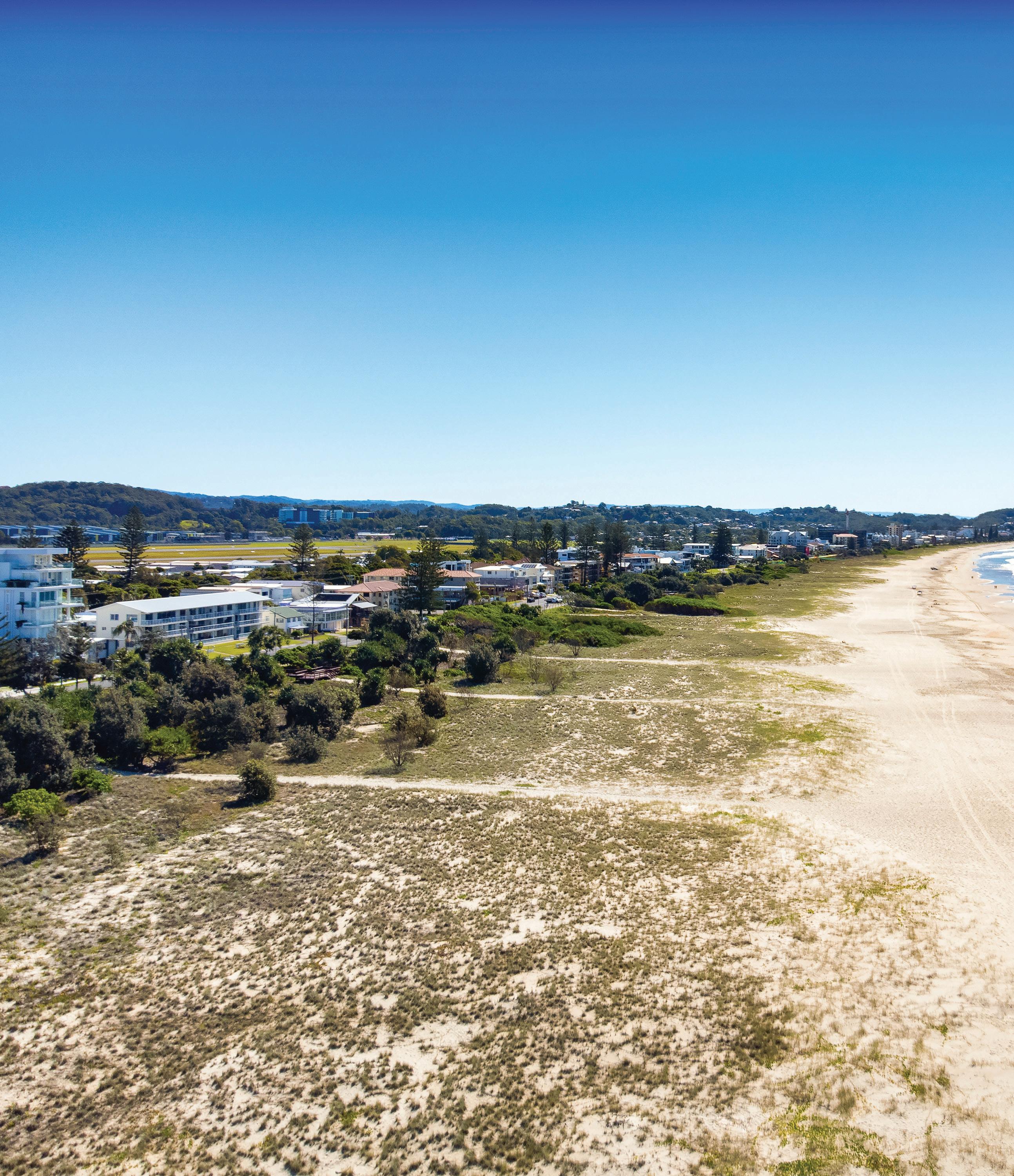
$6,800,000
204 PACIFIC PARADE, BILINGA
“Troy is a very professional, trustworthy agent, who assisted us in achieving a great result for the sale of our beachfront property.

“His local knowledge and capable team ensured that we had an exceptional offer in a very short period of time.
“I would highly recommend Troy to anyone looking to sell in the prestige beachfront market.”
Peter Torok - Seller
TROY DOWKER
SOLD
0409 057 087
PRIOR
TO AUCTION
MEET JAMES ROBERTS
SALES ASSOCIATE TO TROY DOWKER

How long have you been at Kollosche? I have been at Kollosche for two years.
What do you enjoy most about your job?
I love meeting new people, understanding their real estate needs and forming longterm relationships as they move through their property journey.
What did you do prior to joining Kollosche?
For many years I was a part of the Australian Dolphins Swim Team and have competed in two Olympic Games –London in 2012 and Rio in 2016, where I won a Bronze medal in the 4x100m freestyle relay. I also competed in the 2018 Commonwealth Games held here on the Gold Coast, taking out a Gold medal in the same event. I made it to three World Championships, in 2011, 2013 and 2017, taking home a Gold and Silver medal in the 4x100m freestyle relay and 4x100m medley relay at the 2011 meet.
Outline one thing people may not know about you?
I was afraid of the water until I was about 10 years old. To overcome my fear, my parents encouraged me to get involved in Palm Beach Surf Life Saving Club and become comfortable around the water. I never looked back.
What do you consider your biggest professional achievement?
Winning a Bronze medal at the Rio Olympics. Being able to stand on that podium for my country was an indescribable feeling and an immeasurable highlight in my swimming career.
What is your biggest personal achievement?
Overcoming two consecutive shoulder reconstructions, in 2014 and 2015, to be able to qualify for the 2016 Olympic Team. I never knew if I would compete professionally in swimming again after the surgeries, so to get through that and go on to win Bronze in Rio was a massive achievement for me personally.
If you had the chance to do any job in the world, what would it be and why?
I love sport so if I could have it my way, I would be a professional golfer. I try to play as often as I can, but I’m no professional.
Outline your ultimate day out on the Gold Coast?
I wake up every day at 5.15am and go for a walk along the beach. I love morning oceans swims, surfing and golf. A morning coffee is a must. My local favourites are Canvas Espresso or BSKT in Miami. To unwind, I immerse myself in hot and cold water therapy to recharge the batteries.
“I was afraid of the water until I was about 10 years old”
MEET THE TEAM
2102 THE CIRCLE, SANCTUARY COVE
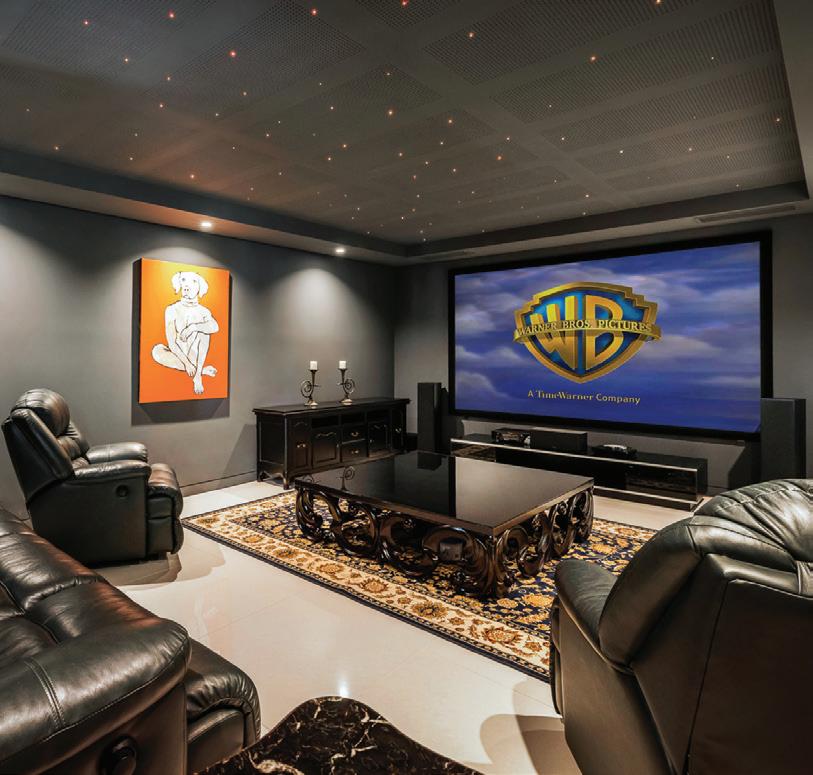
LUXURY ISLAND LIVING ON A GRAND SCALE
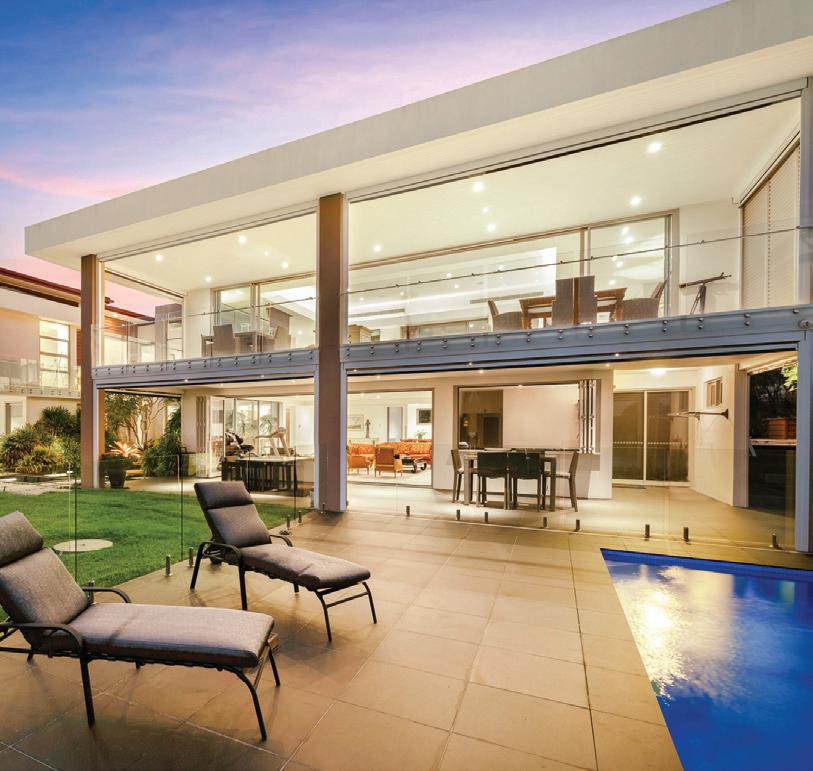
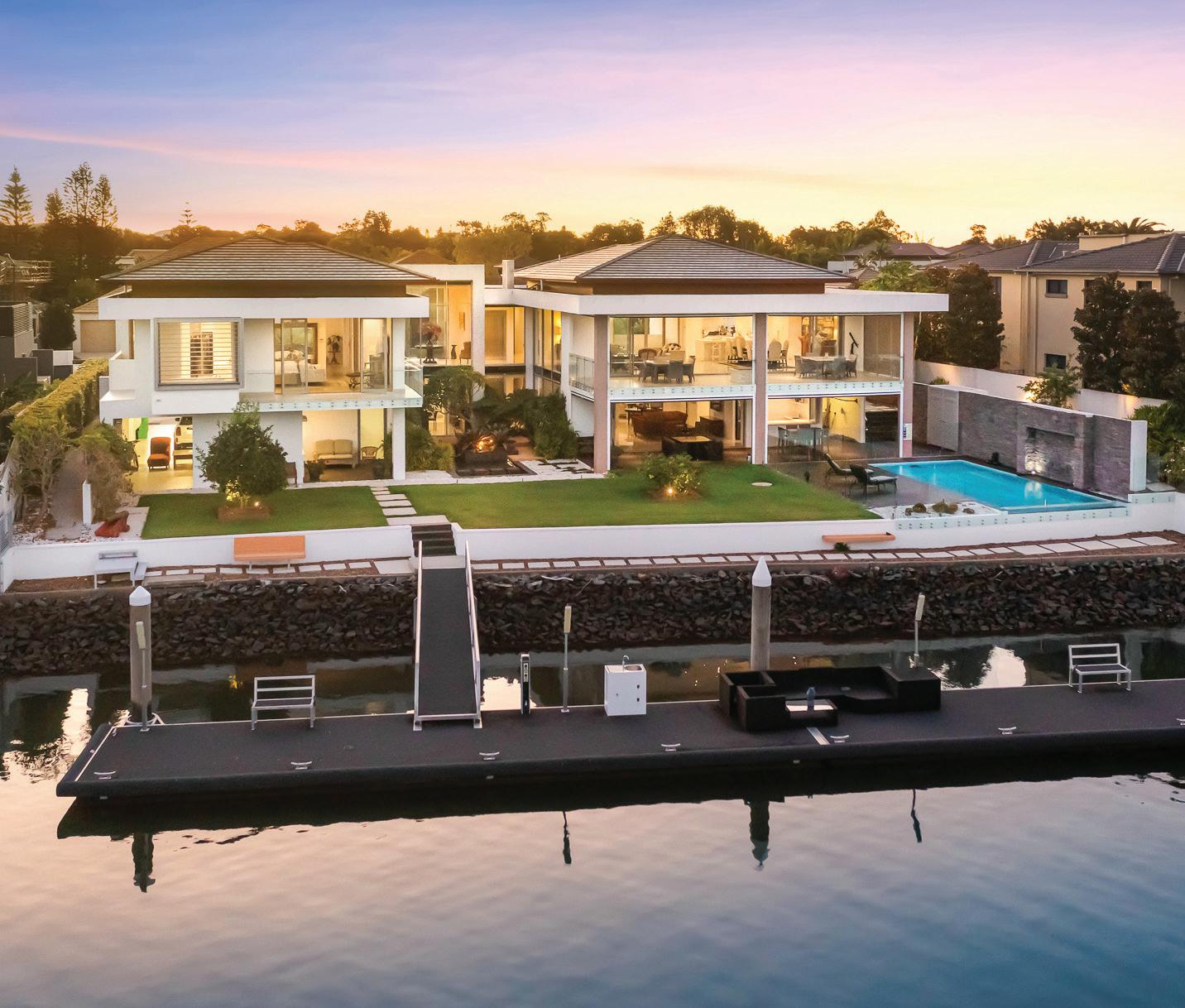
Sanctuary Cove’s exclusive Schotia Island provides a stunning natural setting for this distinguished mansion on a coveted 1,507m 2* holding.
Facing east to 37.2m* Coomera River frontage, boat owners will appreciate a 24m* pontoon while an eight-car garage accommodates large land toys. An architectural design with expansive glazing and covered patios exposes uninterrupted views over a central zen garden, swimming pool, the river and Coomera Island. Leisure, study and alfresco entertaining plays out over two luxury levels, with three indoor kitchens and an outdoor BBQ kitchen.
Find quiet retreat in five spacious bedrooms, four with ensuites, while a wing on the ground level can be given over to guests or teenagers seeking privacy away from the main living spaces.
EXPRESSIONS OF INTEREST
FOR FURTHER DETAILS CONTACT
DANIEL SHARP 0420 967 891
WILLIAM SARTI 0416 808 454
*approximate ^gross floor area
5 5.5 37.2m* 1,507m 2* 1,046m 2*^ 8
2
LEADING FROM THE FRONT
Strong leadership is crucial to the success of any business and Kollosche is fortunate to have some of the best in the industry leading the team.
Two of the most highly regarded are Kollosche General Manager Renae Hayek, and Alex Wallace, the General Manager of Kollosche’s in-house marketing agency K Media Group.
Renae and Alex have been integral cogs in the growth of the Kollosche business over the past four years and are exemplary in highlighting the depth of opportunity available for anyone wanting to pursue a meaningful career.
Presenting as role models for young women within the business and wider community, the expertise and dedication that Renae and Alex bring to their positions was recently recognised by their industry peers, with both named as finalists in the prestigious Real Estate Business Awards.
Renae is nominated for the Operations Manager of the Year award, which she won in 2022, and Alex for Marketing Professional of the Year. Winners of the 2023 awards will be announced in Sydney this month.

IN LEADERSHIP
WOMEN
ALEX WALLACE & RENAE HAYEK
RENAE HAYEK
Renae took her degree in marketing into real estate in 2000, where she led marketing departments for two boutique agencies in Brisbane.
In 2004 she accepted a job with real estate listings group REA, where she became an account manager and established the company’s first team on the Gold Coast. Her work ethic and constant drive for learning and development delivered a stellar 14 years with the group in state and national roles across sales and operations.
It was in the role of key account manager that Renae and Michael were first introduced and had the opportunity to work together, partnering on the realestate.com.au strategies.
In 2018 Renae made the decision to leave REA and join Michael as his executive assistant, undertaking Michael’s listing campaigns, client service management duties, as well as back-end and office management.
“Michael and I bring very different skill sets to the table and we trust each other implicitly in what we do. That is why our partnership works,” says Renae.
“We challenge each other to think beyond what may be possible and then we create a way to make it possible.
“I appreciate Michael for allowing me to take chances and make business decisions. If we make a mistake we see this simply as a learning opportunity. Identifying these learning opportunities, unpacking and then sharing them are what has allowed our business to go from strength to strength.”
As General Manager, Renae is responsible for overseeing the delivery of company objectives and leading a team of more than 130 staff to achieving those objectives - a huge undertaking in such a demanding environment.
“Kollosche is a high-performance company that prides itself on empowering people to have a career and is dedicated to providing the conditions and training that help to facilitate that, especially young women, who may think a career is out of reach,” Renae says.
Renae, who has two boys aged 11 and 13, knows what it takes to juggle a fastpaced career with a busy family life and is passionate about showing women that they can be successful at both.
“Kollosche gives me the flexibility to be a working mum. Michael knows that while I may not always be in the office I am still working above and beyond,” says Renae.
“It is about getting the job done to the highest of ability. Ensuring that the service we deliver to both our internal and external clients is paramount.
“Having said that, Kollosche has a highly collaborative culture, so we encourage people to be in the office. Building that internal support network is extremely important to the business.”
Always at the forefront of innovation, Renae says Kollosche is evolving into more than just a real estate agency, opening up opportunities for those seeking a career in a number of different fields.
“It’s not all about sales. Our business is so agile, the opportunities to pursue different paths are immense,” says Renae.
“We are all about nurturing and training people, to understand where they want to be in the next five years, so we can empower them to achieve their aspirations.
“There are a lot of people out there who have a job, and while a job is great, a career is beautiful.”
Two of Kollosche’s key female figureheads outline their roles within the business and explain why working at the agency is so much more than ‘just a job’.
ALEX WALLACE
Alex is the general manager of K Media Group, Kollosche’s in-house marketing agency. She oversees a team of more than 34 creatives in disciplines as varied as copywriting, photography, videography, design and digital media.
Alex, too, has always been creative, but was never quite sure where that creativity would take her when she began her career.
Training in Advertising and Visual Communications, Alex started in a boutique agency, moving up the ranks to become a creative director, overseeing assets such as advertising and brand placement for multinational companies.
Continuing to challenge herself, at the age of 24 she took on a marketing manager role and successfully built a sales team to capture ROI (return on investment) data.
“That tested my ability in terms of leadership, which I discovered is something I am passionate about,” says Alex.
“Onboarding and training people in how they can learn, develop and build their own skill sets is something I really enjoy. Bearing in mind I was quite young when I had that opportunity, it was nice to know that I could give that opportunity to others.”
Before joining the Kollosche fold, Alex held the position of head of marketing for
a large mutual bank in Brisbane where she realised, despite all the sales and analytical skills she had acquired, that her passion lay in the more creative side of marketing and advertising.
A decision to move to the Gold Coast, with her two young daughters in 2021, was expedited faster than expected after Alex landed the job at Kollosche, effective with an immediate start.
“I just packed everything up and within four weeks moved down, found a school and daycare, and started my role,” says Alex.
“At the time, the department was operating as an internal marketing resource. We had four employees. A year in we had 18, and just two years in we now have about 34 staff and have built divisions across four pillars of the business - residential, new projects, commercial and property management.”
Alex believes in leading by example and despite having a hectic daily schedule she can sometimes be found designing pages or copywriting in amongst attending high-powered meetings.
“I prefer to work as part of the team rather than ‘managing’, where direction comes only from the top down,” says Alex. “I hope that is inspiring for others.”
Fulfilling such a demanding role is not easy but, Alex says, it is attainable.
WOMEN IN LEADERSHIP
“Find your passion, stick to it and a career will follow - but be patient and committed.”
“It is challenging to juggle the role of mother and General Manager of K Media, but Kollosche is here to support me and there is definitely flexibility,” says Alex.
“I have two young girls and while I can’t always be at every assembly or school event, I try to educate them that I am working hard for the family. Hopefully they will grow to have that same work initiative and be able to find the balance with their own families one day.
“Some people often wonder how this is possible and as a young manager I didn’t think it was possible either, but when you are given an opportunity to do something and you put everything into it, it’s amazing to realise what you are capable of.”
Alex’s words of advice to anyone aspiring to pursue a career is: “Find your passion, stick to it and the career will follow - but be patient and committed.
“At Kollosche we look for people who are not only skilled but have the desire to provide an amazing service and work with others. We are so much more than just an estate agency, but everything we do at Kollosche is about collaboration, so if you have the desire and willingness to achieve, success will follow.”
Search current career opportunities at Kollosche
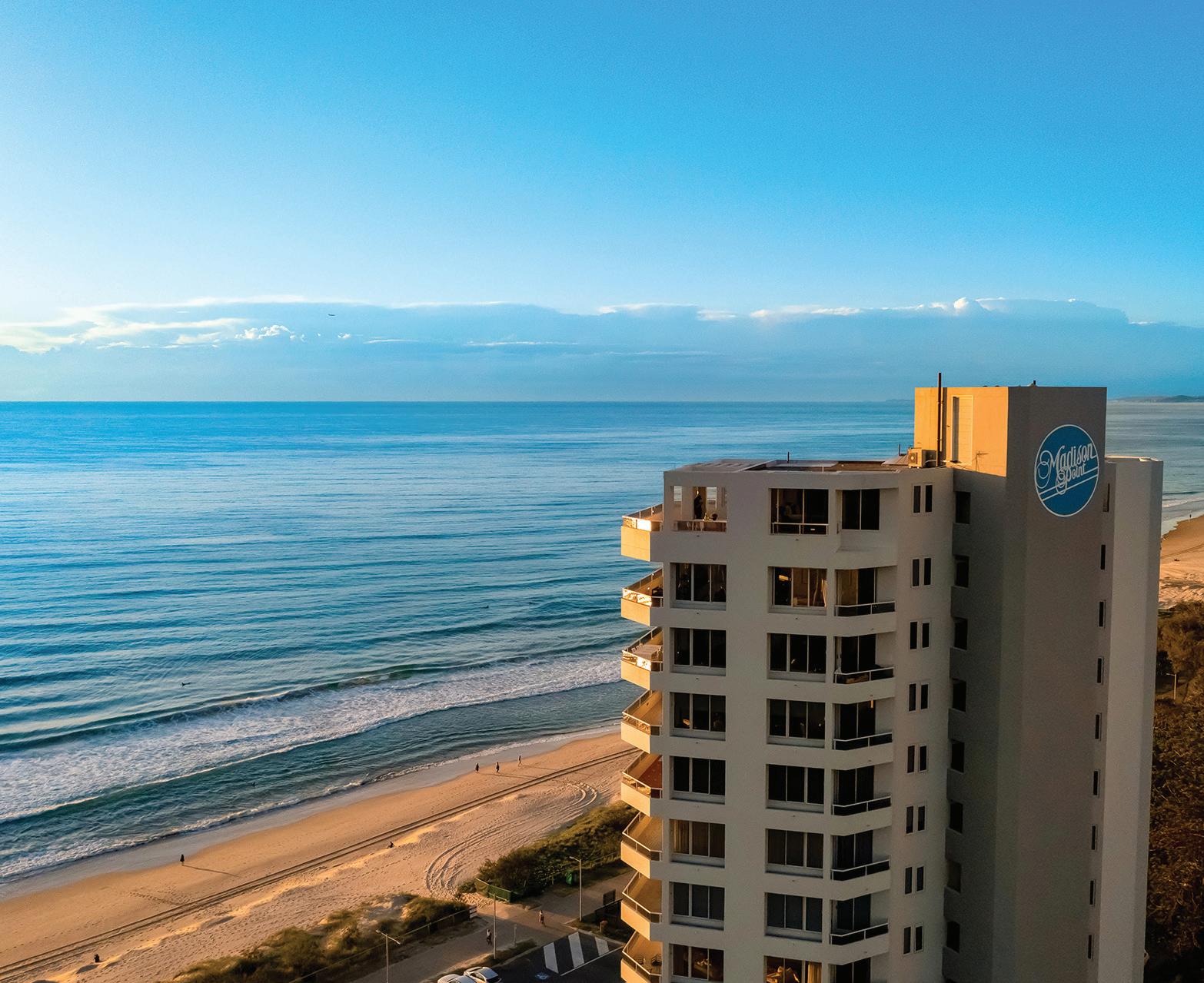
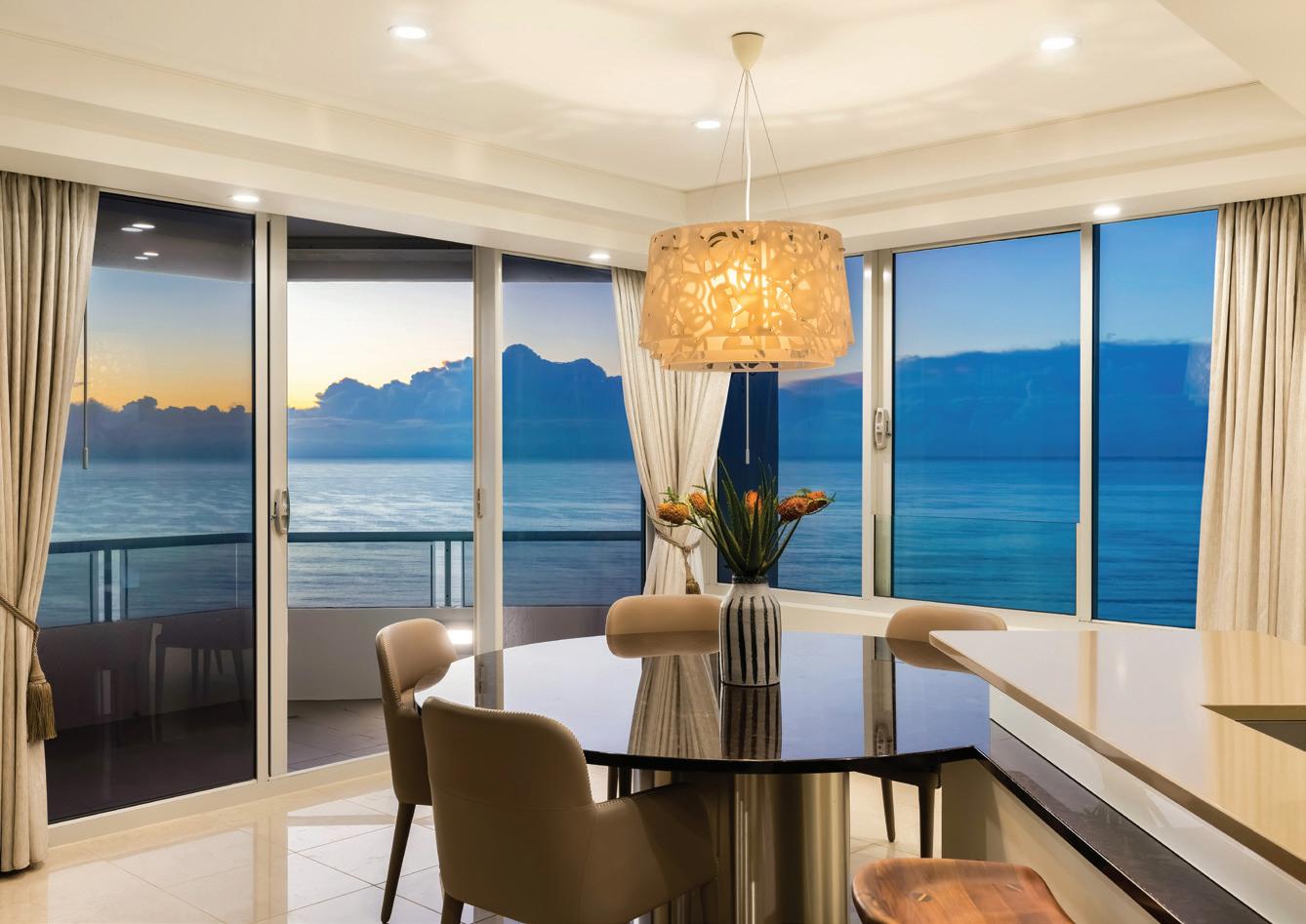
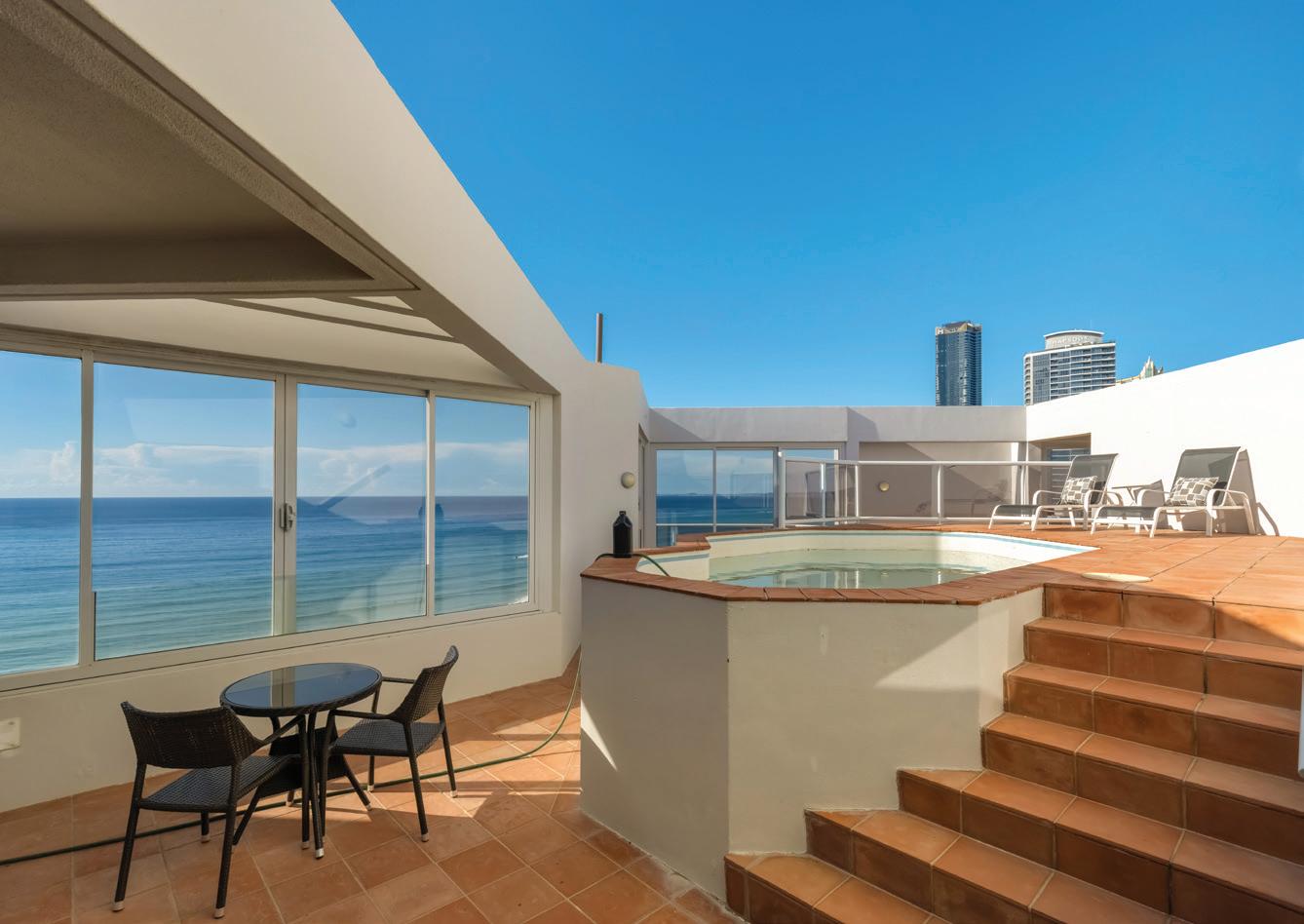
*indicative only
15/3478 MAIN BEACH PARADE, MAIN BEACH
TWO-LEVEL PENTHOUSE WITH PANORAMIC VIEWS
Wake daily to the sound of crashing waves in this luxurious two-level beachfront penthouse that captures panoramic ocean views that can never be built out. Spanning level 15 and 16 of the boutique ‘Madison Point’ complex, the designer residence offers high-end appeal from the outset.
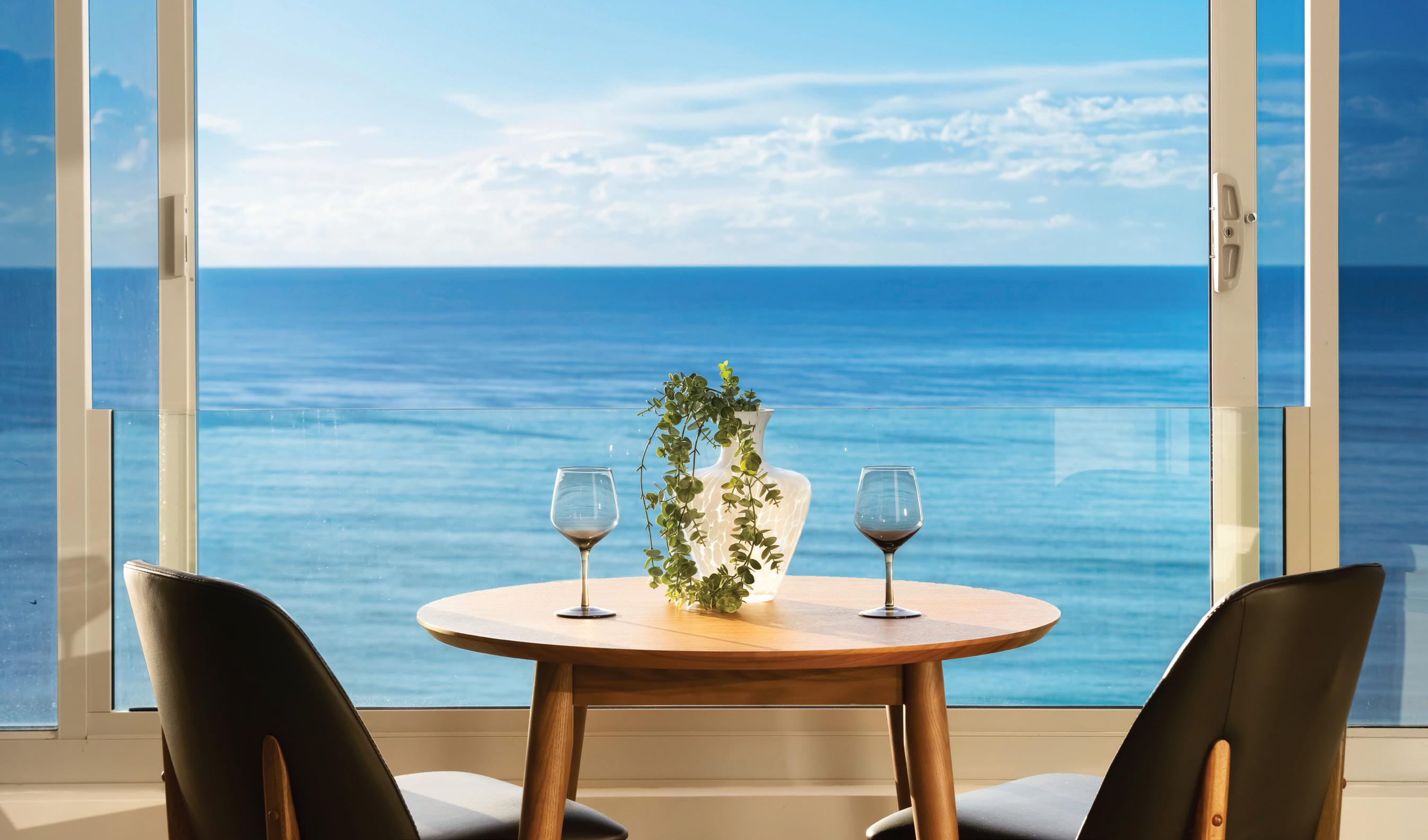
A deluxe kitchen invites chef-inspired meal preparation that can be served on the attached stone dining table. The main lounge is spacious and incorporates a built-in desk, also made of stone and timber.
Take the glass lift to a rooftop retreat, where a fourth bedroom and second lounge area that opens to an expansive terrace awaits. A plunge pool offers an inviting opportunity to unwind and is a prime vantage point from which to watch surfers take to the surf, while boaties will enjoy a private marina berth for easy access to Main River and the Broadwater.
AUCTION AT KOLLOSCHE HQ, BROADBEACH Wednesday 24 May at 2:00pm Auction Registration from 1:30pm
CONTACT FOR A PRIVATE VIEWING
SAM GUO 0423 064 310
JULIA KUO 0402 668 885
480m 2*^
Apartment: 4 3.5 2
Building Amenities:
*approximate ^gross floor area
9 NORTH QUAY DRIVE, BIGGERA WATERS
IDYLLIC WATERFRONT FAMILY HOME
Embrace an idyllic waterfront lifestyle in this renovated residence located within the exclusive ‘Harbour Quays’ precinct of Biggera Waters. Occupying a 742m 2* parcel with 19.9-metres* of north-facing water frontage, the double-storey home’s central location makes it a prime investment opportunity.
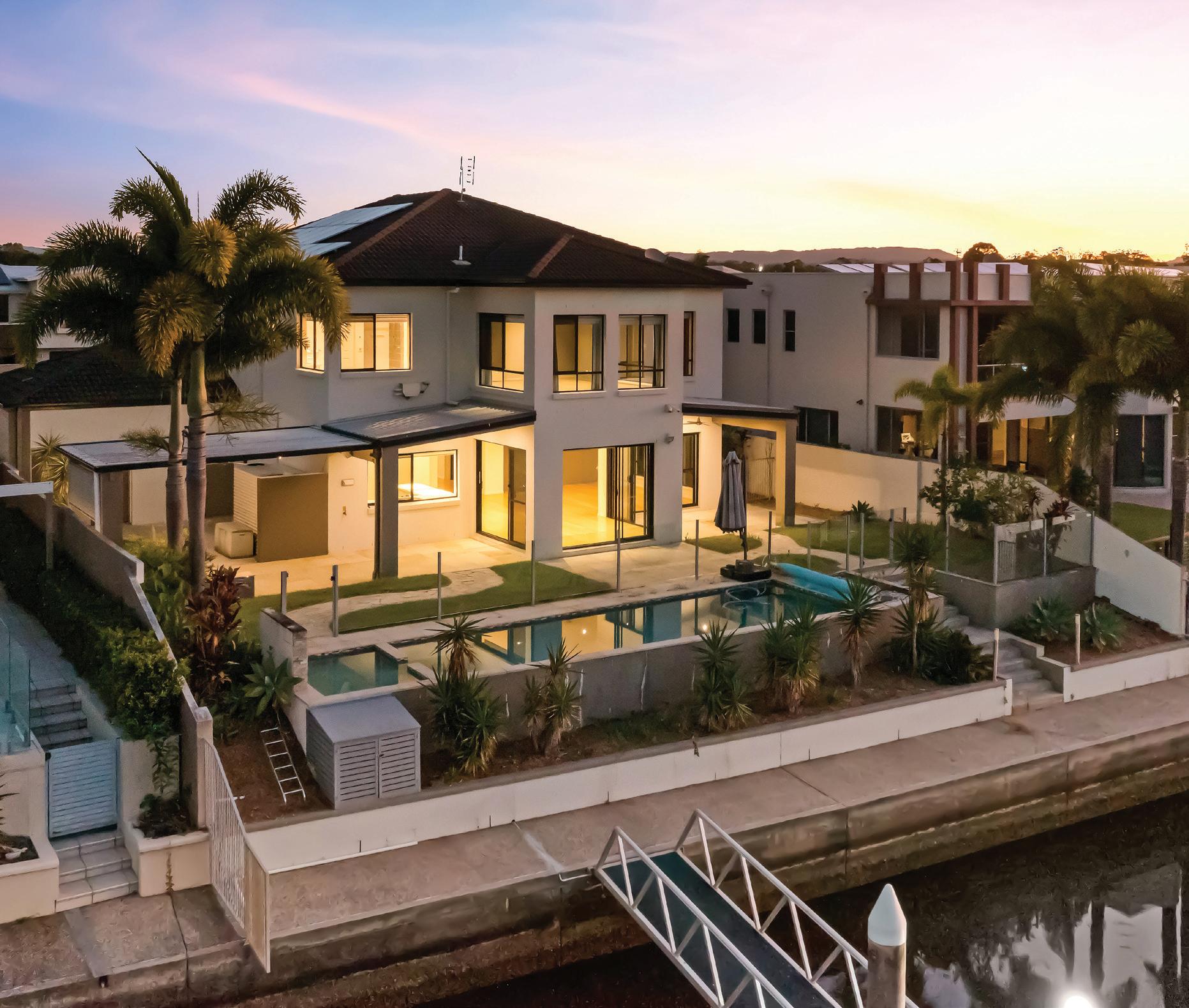
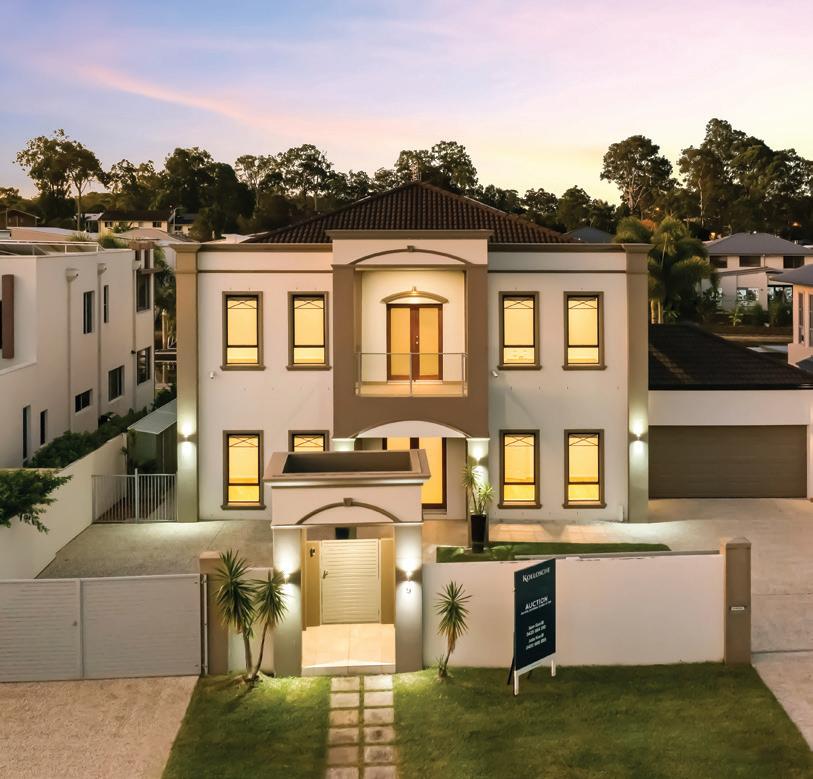
Its flexible floor plan delivers space and functionality optimised for a growing family. Outdoor areas overlooking a saltwater pool invite alfresco dining and boaties can launch a vessel with ease from the fully-serviced 10m pontoon.
An impressive entrance draws the eye toward the stunning waterfront vista and an elegant curved staircase leads to four bedrooms on the upper level, including an immense master suite.
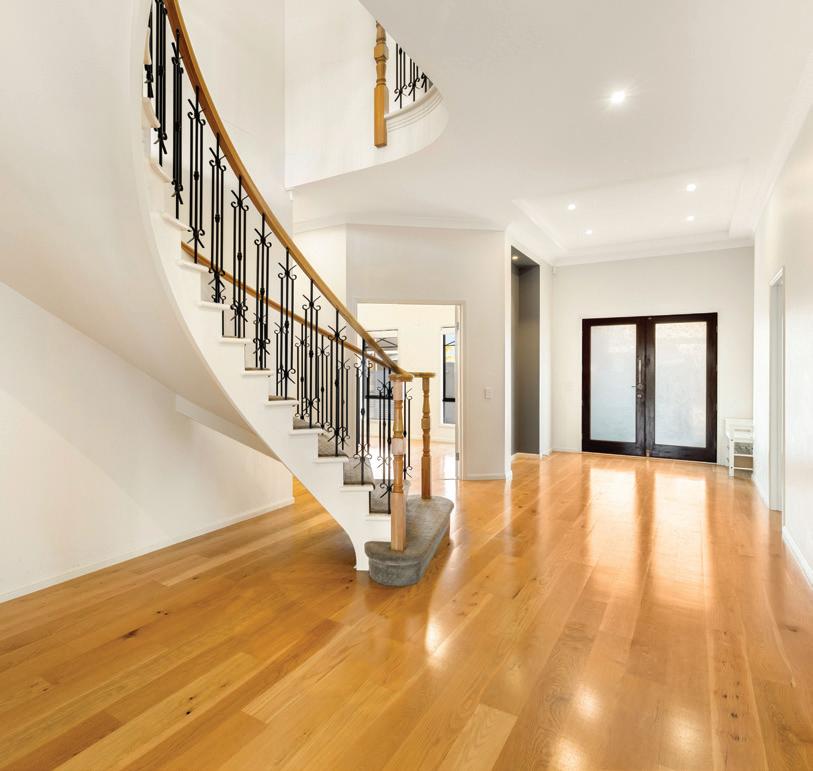
AUCTION ON SITE
Saturday 27 May at 11:00am
Auction Registration from 10:30am
FOR FURTHER DETAILS CONTACT
SAM GUO 0423 064 310
JULIA KUO 0402 668 885
*approximate ^gross floor area
5 3 19.9m* 742m 2* 464m 2*^ 2
SOLD FOR A PREMIUM PRICE
“Thank you Team Sam and Julia at Kollosche for the exceptional perseverance with the sale of our home in Benowa Waters. We know the team have done everything possible to achieve the best sale price for our family and have gone the extra mile every step of the way. We are extremely grateful to the team and now get to move onto our next chapter.”
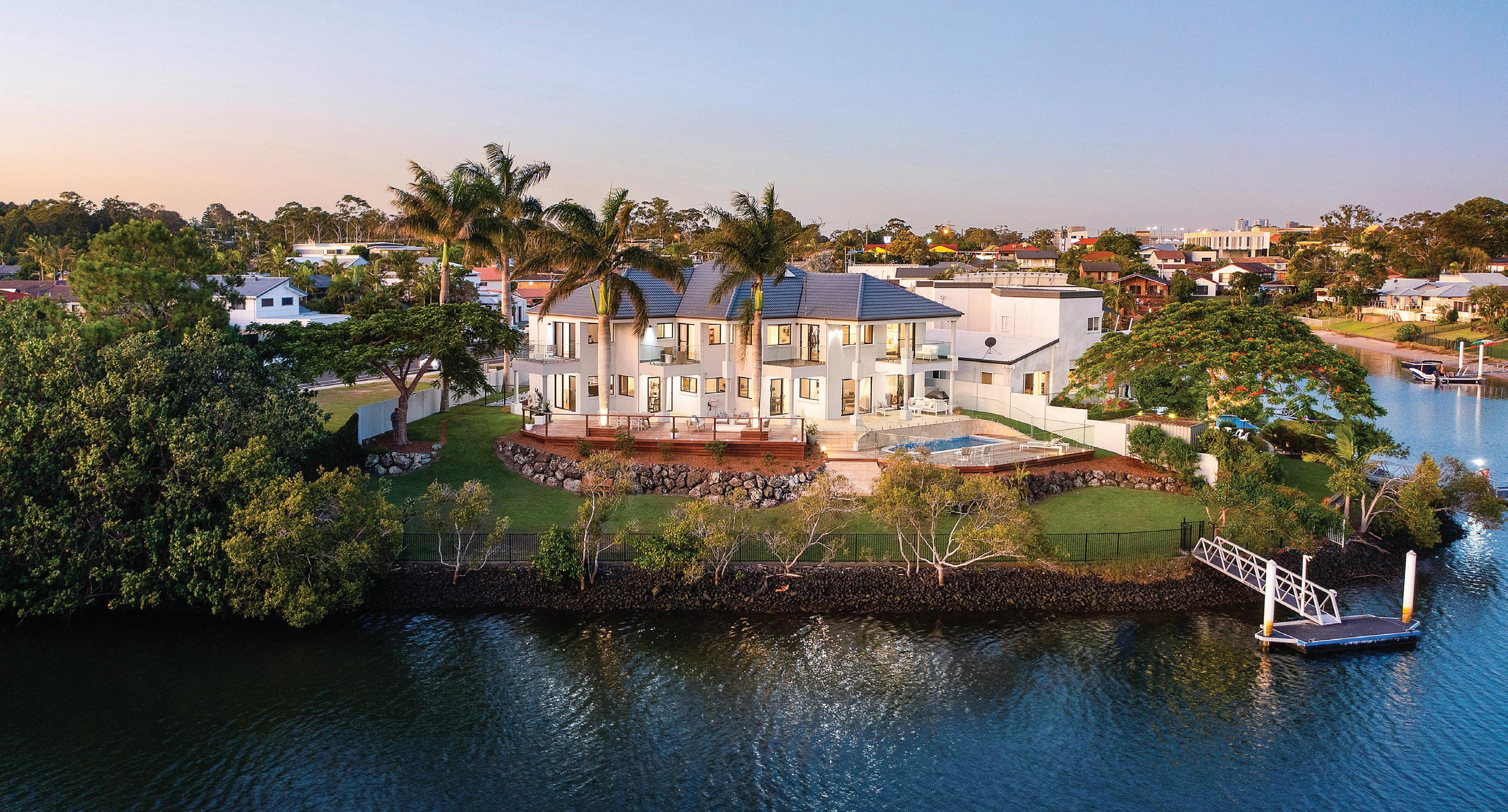
Sellers
400 BENOWA ROAD, BENOWA WATERS 66 Enquiries 56 Inspections 5 Written Offers SAM GUO AND JULIA KUO 0423 064 310 | 0402 668 885
DEVELOP WITH CONFIDENCE
YOUR STRATEGIC DEVELOPMENT PARTNERS
NEW PROJECTS REDEFINED
KOLLOSCHE NEW PROJECTS DELIVERS AN END-TO-END MARKETING AND SALES SOLUTION FOR DEVELOPERS WHO DESIRE A STREAMLINED JOURNEY FROM SITE ACQUISITION TO SETTLEMENT.
1. RESEARCH & INSIGHTS
Kollosche’s research arm identifies opportunities based on real market data to develop a product based on a detailed profile of your potential buyer and the local market.
2. SITE ACQUISITION
We identify blue-chip sites and handle the amalgamation process so that you can purchase a site with confidence.
4. STRATEGIC MARKETING
K Media Group has the expertise to create all of your marketing assets and implement a comprehensive campaign to nurture a pipeline of qualified leads.
3. BRAND DEVELOPMENT
Let in-house marketing agency K Media Group take the reins on developing a brand that will appeal directly to your buyer and outshine the competition.
5. STRATEGIC SALES
Kollosche New Projects sales team develops a strategy to set your project up for sell-out success and premium pricing results.
6. AFTER-SALES CARE
Kollosche’s six-star concierge service ensures buyers are nurtured from contract signing right through to settlement and beyond.
JAMIE HARRISON 0424 965 891
MICHAEL KOLLOSCHE
04111 888 15
Apartments outpace on price
Apartments are gaining favour among buyers with attached dwellings outperforming free-standing homes on price growth.
Quarterly data released by Core Logic shows that in the three months to the end of March, apartments registered median price growth of 2.4 per cent, compared with 0.4 per cent for houses.
Annual figures paint an even clearer picture, with the median apartment price rising 16.3 per cent in the 12 months to the end of March, surpassing house price growth of 10.9 per cent.
While the median house price on the Gold Coast dropped slightly over the past quarter from $950,000 to $947,250, apartments marched in the opposite direction rising from $614,500 to a high of $620,000.
It is unusual for apartments to outpace houses when it comes to price growth, but there are a number of contributors to the recent change in demand.
According to K Property Insights, Kollosche’s exclusive quarterly report on the Queensland housing market compiled in conjunction with veteran industry analyst Michael Matusik, the Gold Coast market is the most
undersupplied in southeast Queensland when it comes to new housing - by some 30 per cent.
This ongoing shortage of new-builds is lifting land prices and resulting in fewer new detached houses. The rise in development land values has also led to a dramatic increase in the demand for new attached dwellings and, in particular, well designed, positioned and appointed apartments.
Added to that are lifestyle factors where downsizers, interstate and international buyers, as well as those on the hunt for a lock-up and leave home, are now opting for the space, convenience and security of apartments, particularly boutique, residential-only offerings.
Kollosche has experienced heightened demand for both second-hand and off-theplan residential apartments, including in the yet to be built ‘Eternity’, which will rise at 14-18 Mary Street in Broadbeach.
Across the quarter, Kollosche made seven of the top 10 apartment sales on the Gold Coast with 4201/272 Hedges Avenue in Mermaid Beach changing hands for $12,000,000 to become the largest overall property sale in the state for 2023.
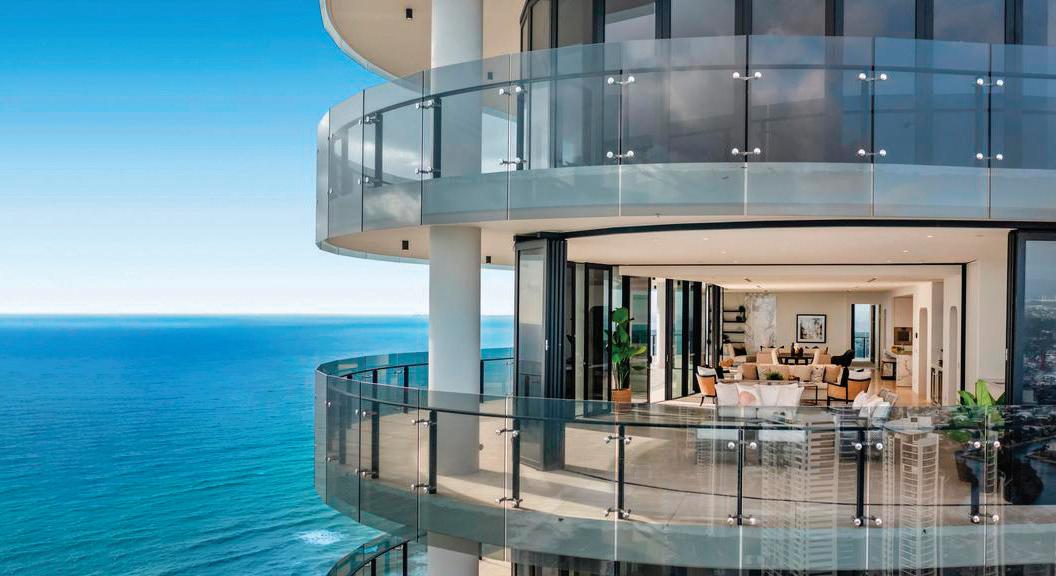
The unit market is taking off fuelled by changing lifestyle demands and a lack of new housing.
MARKET INSIGHTS
“Over the course of a month I thoroughly researched all local luxury estate agents before making a shortlist to interview only the best. I chose Rob within minutes of our first meeting for his open and honest communication plus his strong track record selling properties like my own.

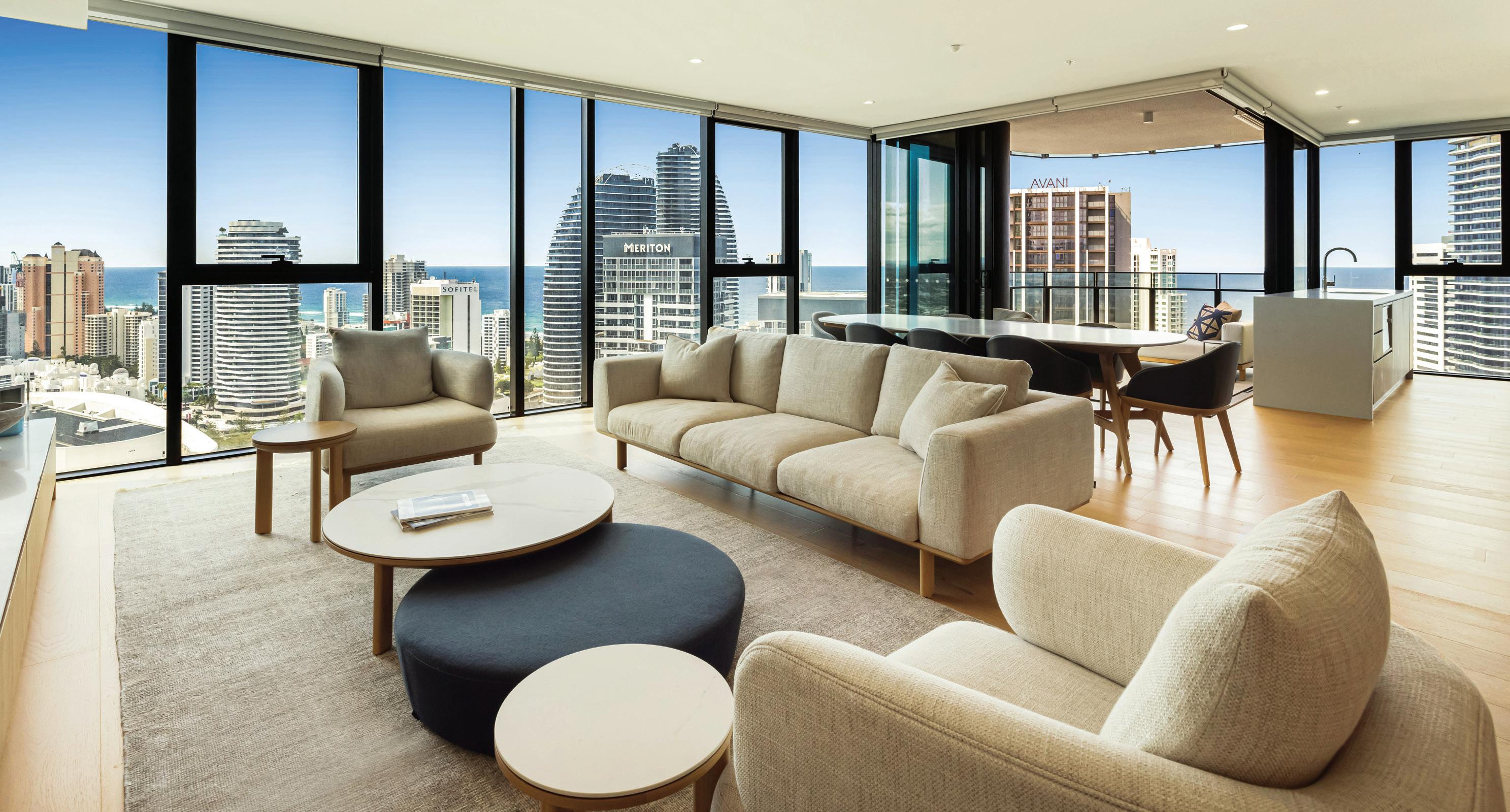
“My decision proved right and I have to say Rob was exceptional. He had a clear strategy and went above and beyond to ensure a smooth sale in nine days, which is a testament to his expertise and advice.
“To anyone thinking about engaging an agent I highly recommend contacting Rob Lamb. Thank you, Rob.” Seller
SOLD ROB LAMB 0405 608 601 $2,800,000 12803/5 THE DARLING AVENUE, BROADBEACH 9 Days on the Market 21 Enquiries 19,544 Online Views International Buyer
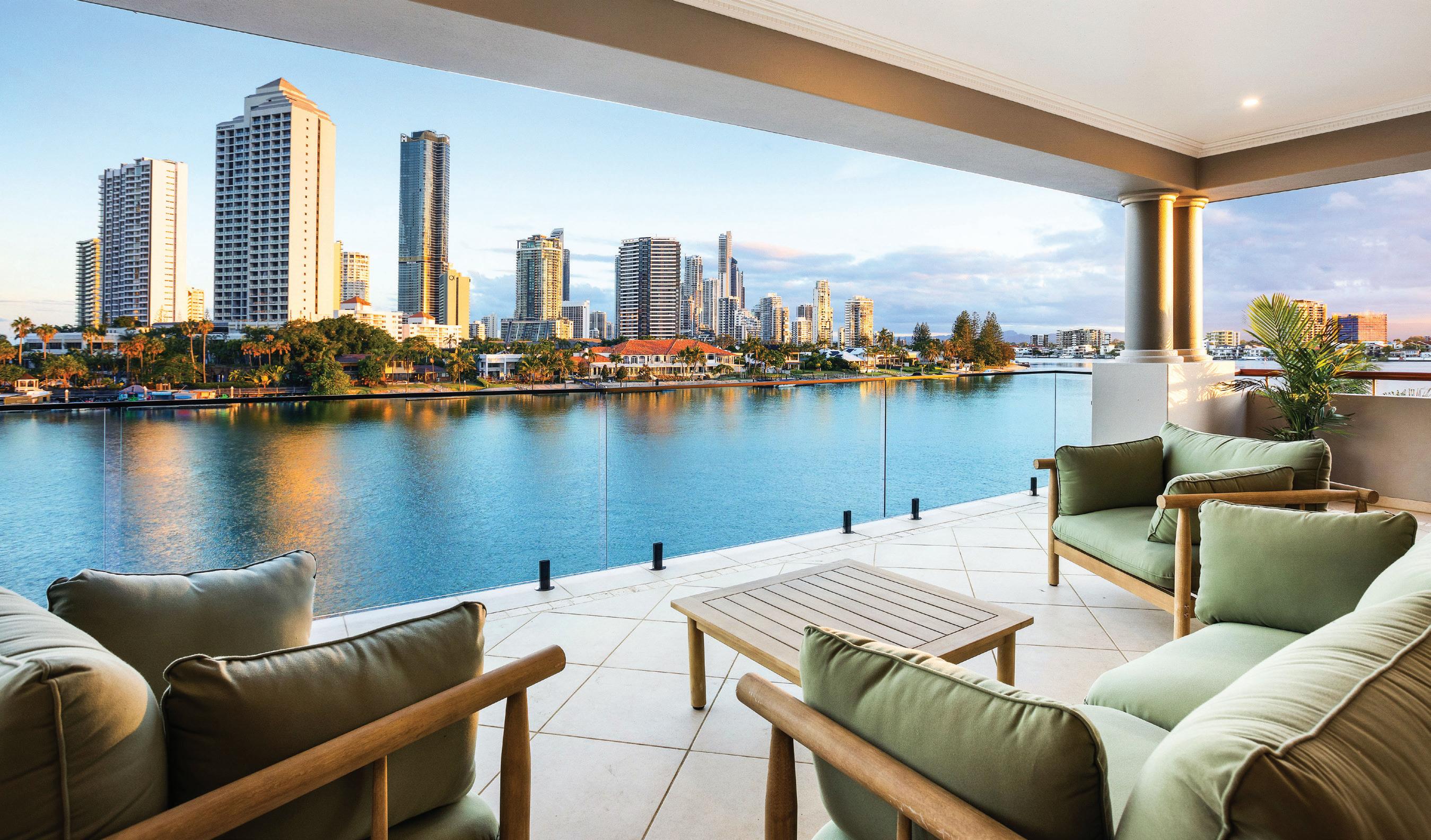
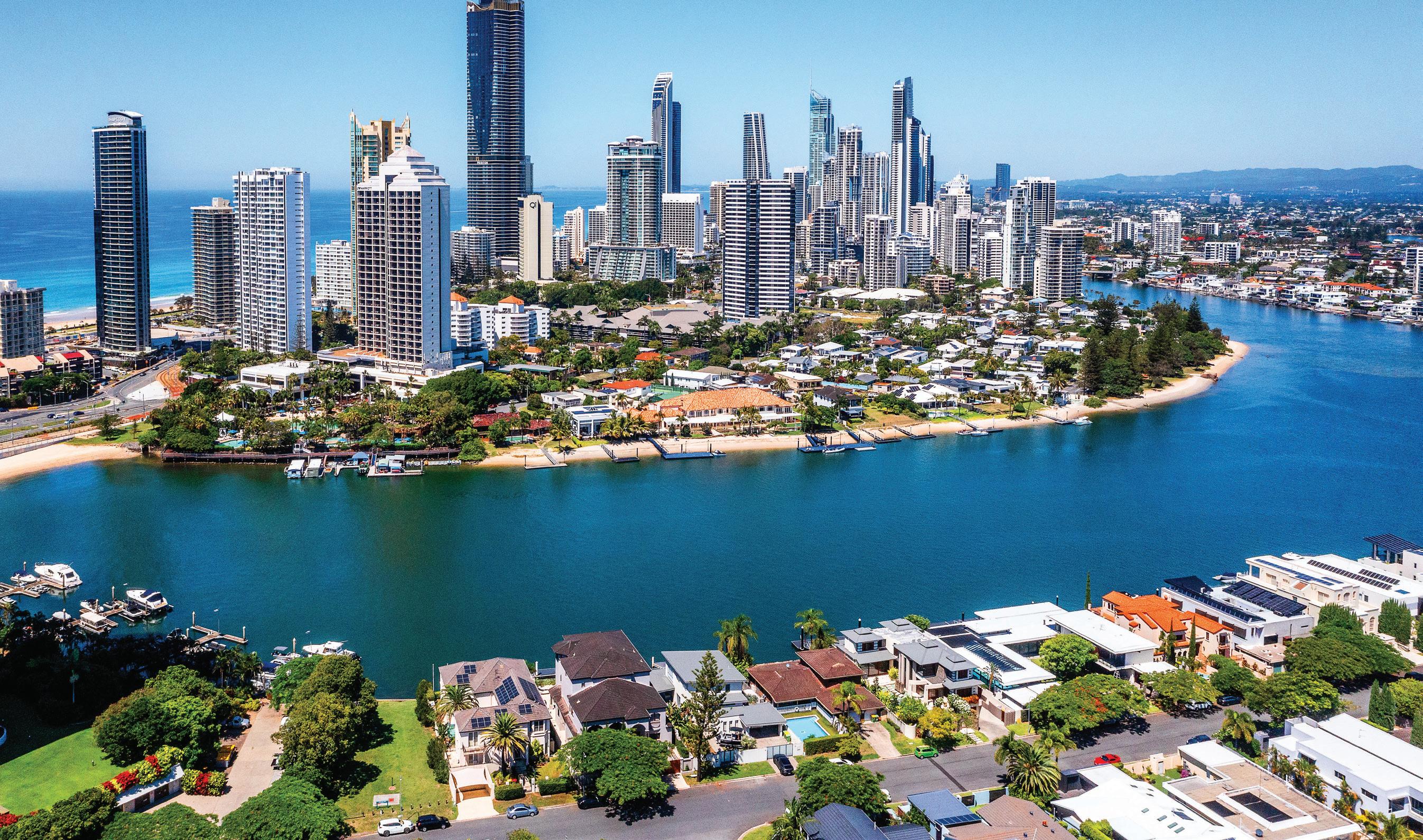
*indicative only
14 ADMIRALTY DRIVE, PARADISE WATERS
Set within walking distance of the beach and Tedder Avenue’s cafes and restaurants, this architect-designed Main River mansion holds a front-row view of the Surfers Paradise skyline. Classic European architecture is underpinned by decorative columns and arched glazing throughout, while rich timber and natural stone combine to create warmth.
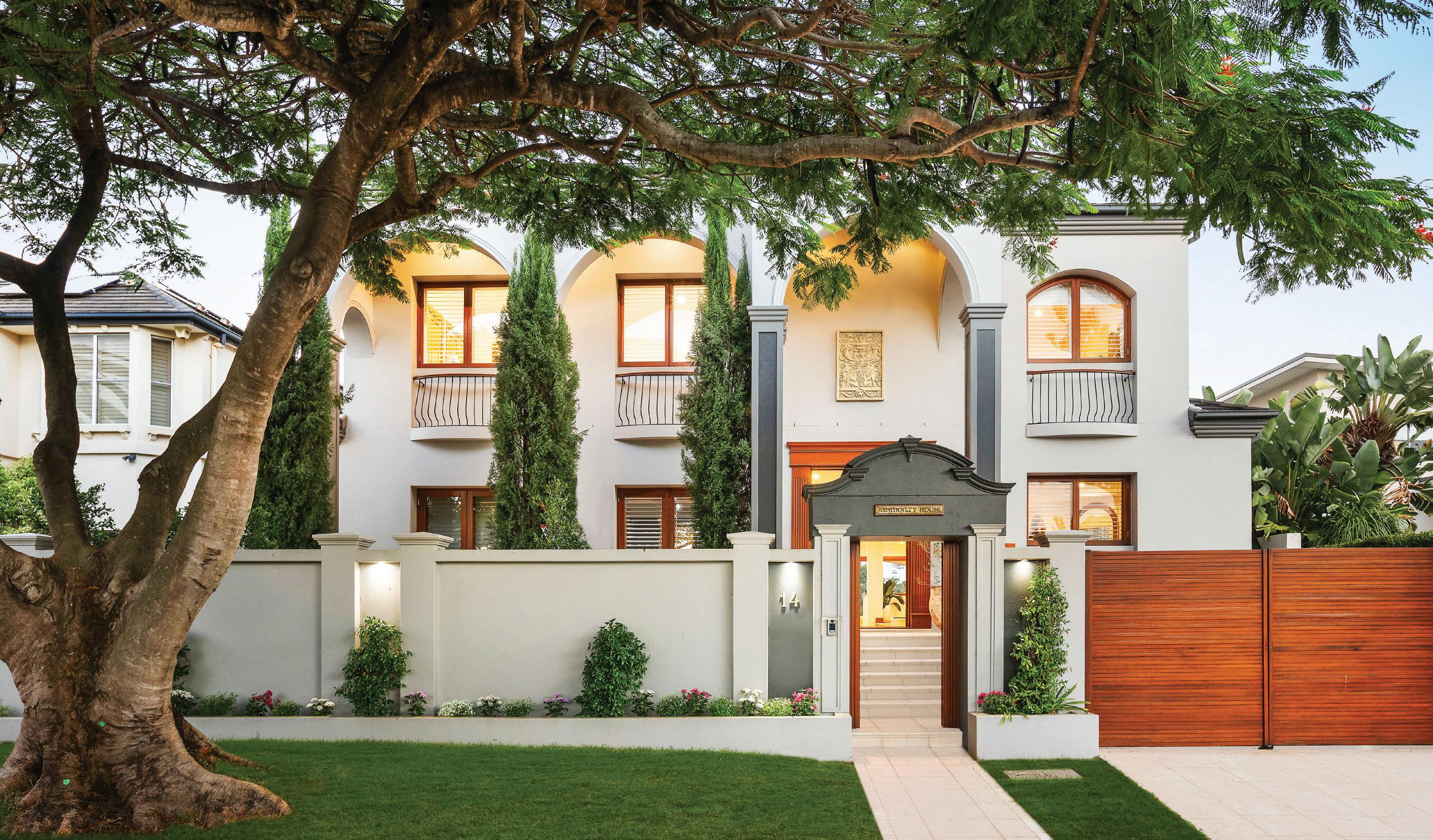
Living areas, an office and media room populate the ground floor, while the first floor hosts four bedrooms with ensuites, including a deluxe master with a riverfront balcony. The top level offers dual living potential, with an open kitchen, living and dining area, balcony and fifth bedroom. An entertaining patio overlooks the infinity-edge pool, wide water and cityscape and a pontoon provides access to the river, where deep water allows mooring for a large vessel. Car enthusiasts will relish an eight-car basement garage.
FOR FURTHER DETAILS CONTACT
RYAN WARD 0405 309 359
DARRYL BRIGHT 0410 808 063
MICHAEL KOLLOSCHE 04111 888 15
*approximate ^gross floor area
EXPRESSIONS OF INTEREST 5 5 + 2 pdr 18.3m* 678m 2* 1,226m 2*^ 8
PALATIAL MAIN RIVER MANSION WITH CITY VIEW
74 AMALFI DRIVE, ISLE OF CAPRI
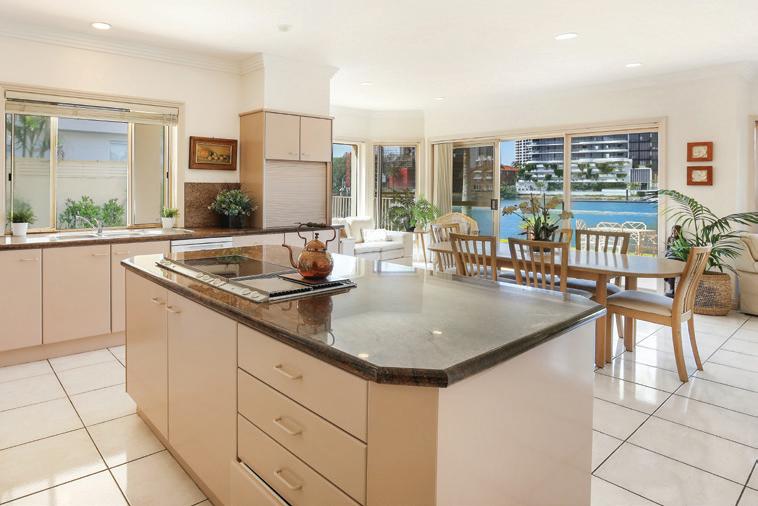
PRIZED POTENTIAL
Set against the backdrop of panoramas that stretch from Broadbeach to Surfers Paradise and boasting a prized Main River position, this is the blue-ribbon property opportunity you’ve been waiting for. Released for sale for the first time in 31 years, unlock the prime potential of this much-loved and meticulously maintained home.
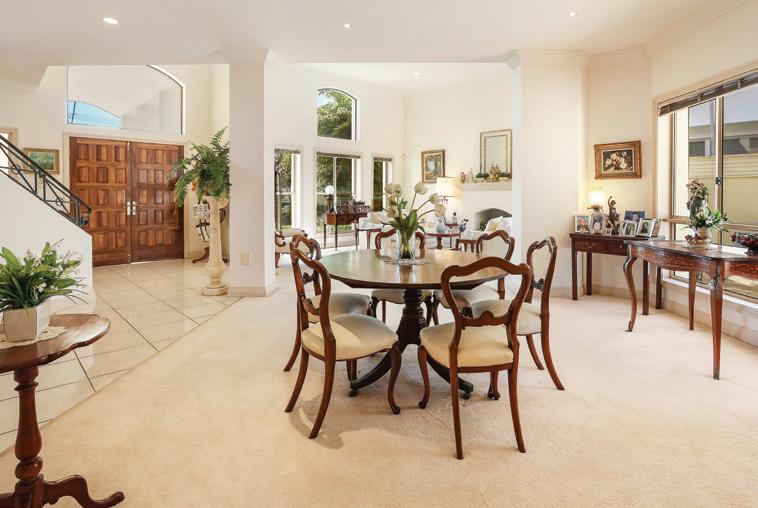
Spanning two storeys on a 783m 2* block, explore your options to renovate this 420m 2*^ solidly built residence or knock down and re-build your dream riverfront residence that capitalises on this sought-after outlook, aspect and location.
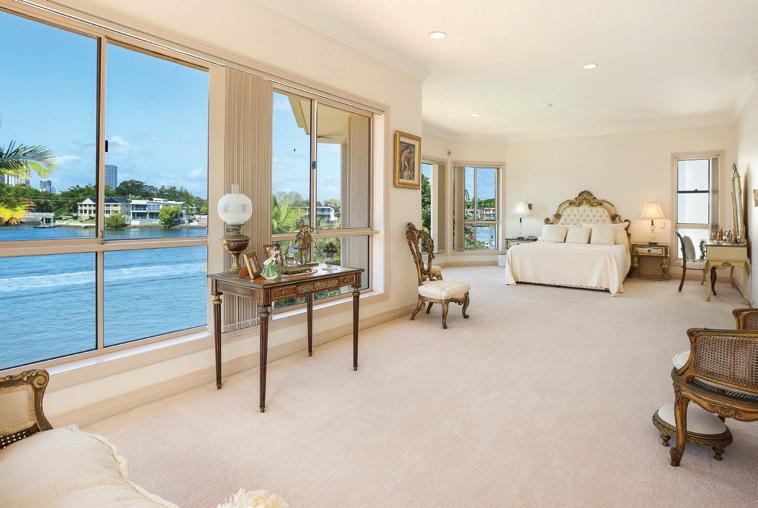
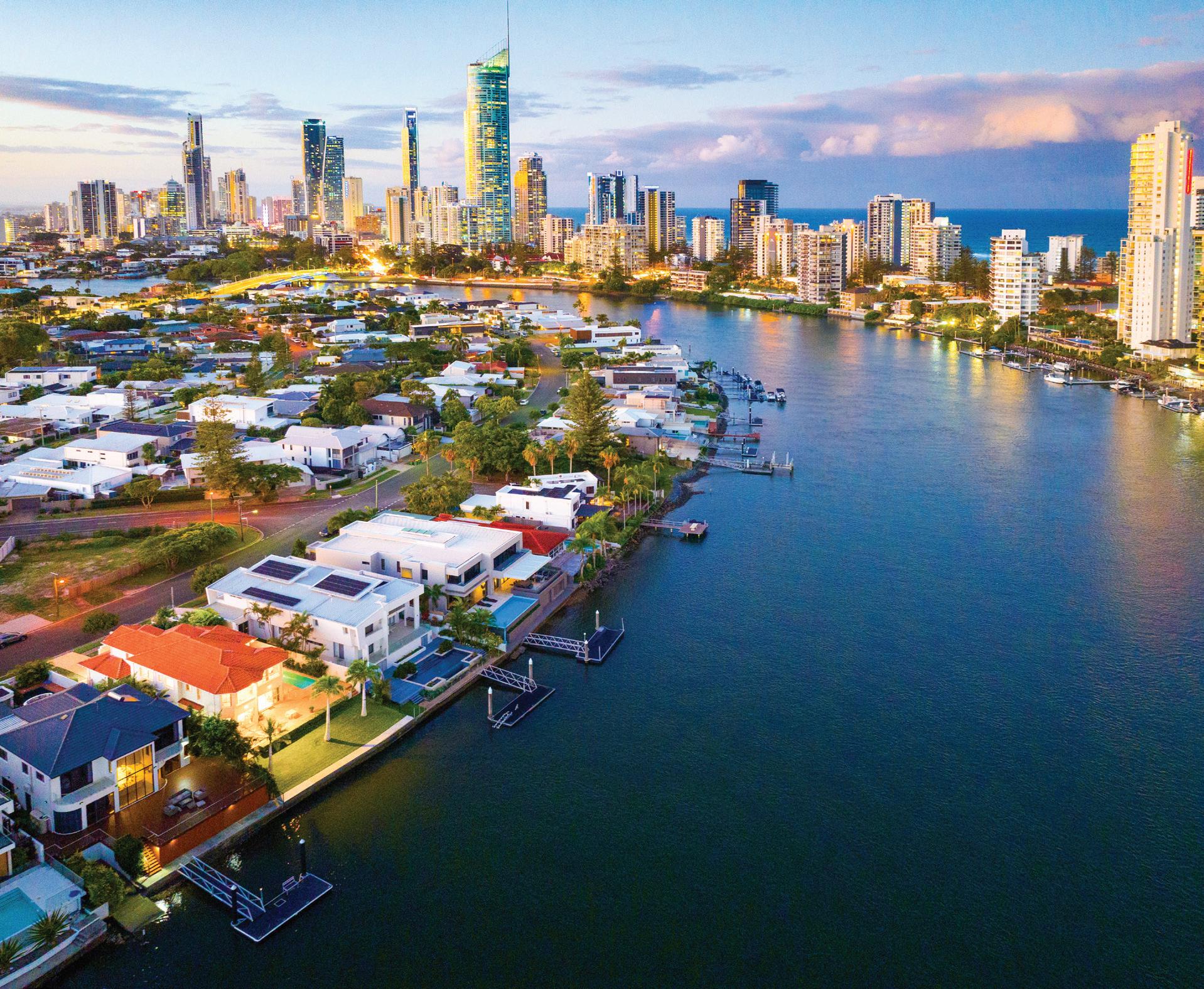
AUCTION ON SITE
Friday 26 May at 1:00pm
Auction Registration from 12:30pm
FOR FURTHER DETAILS CONTACT
EDDIE WARDALE
0408 881 678
*approximate ^gross floor area
5 3 19.2m* 783m 2* 420m 2*^ 2
*indicative only
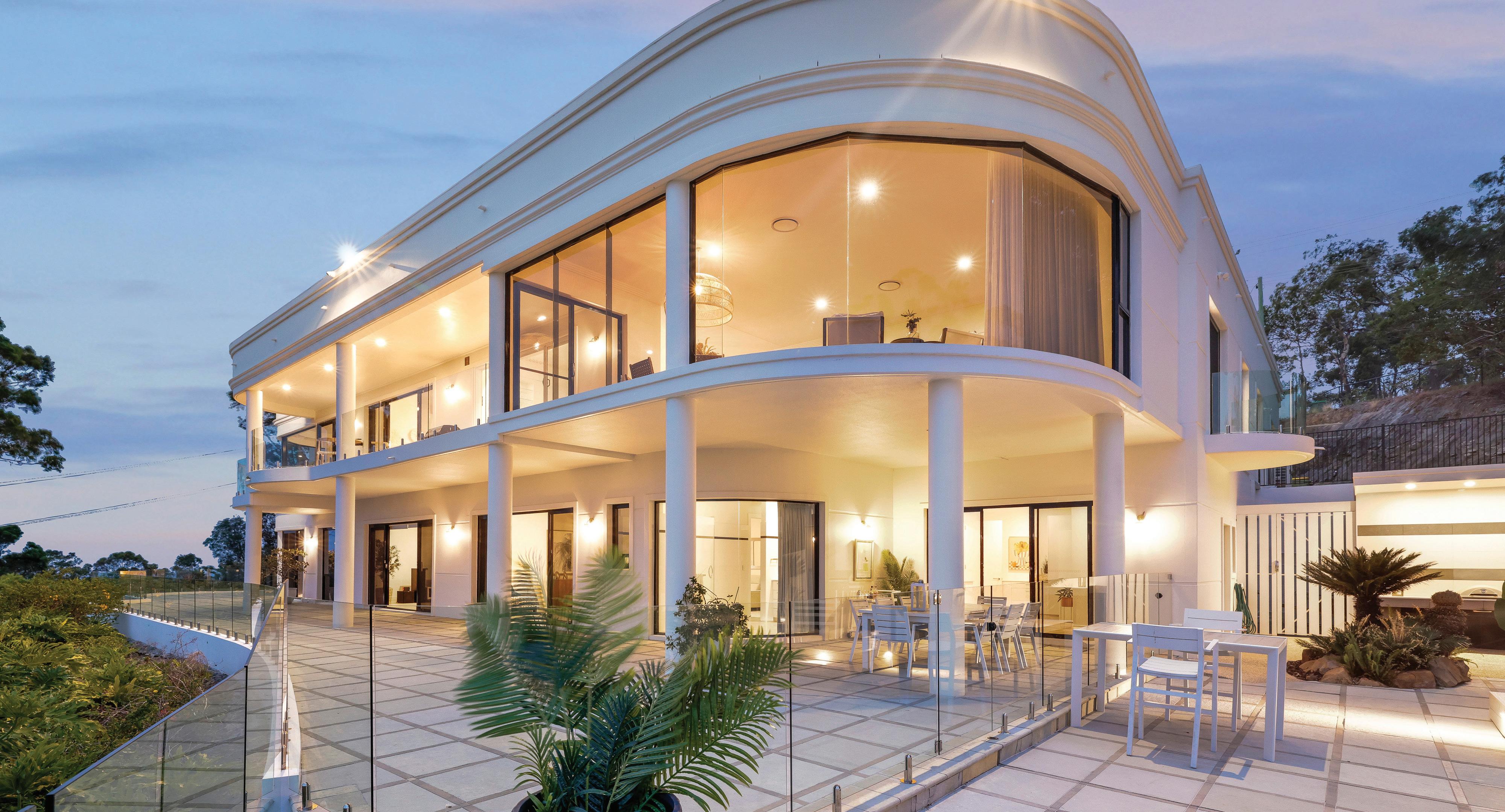

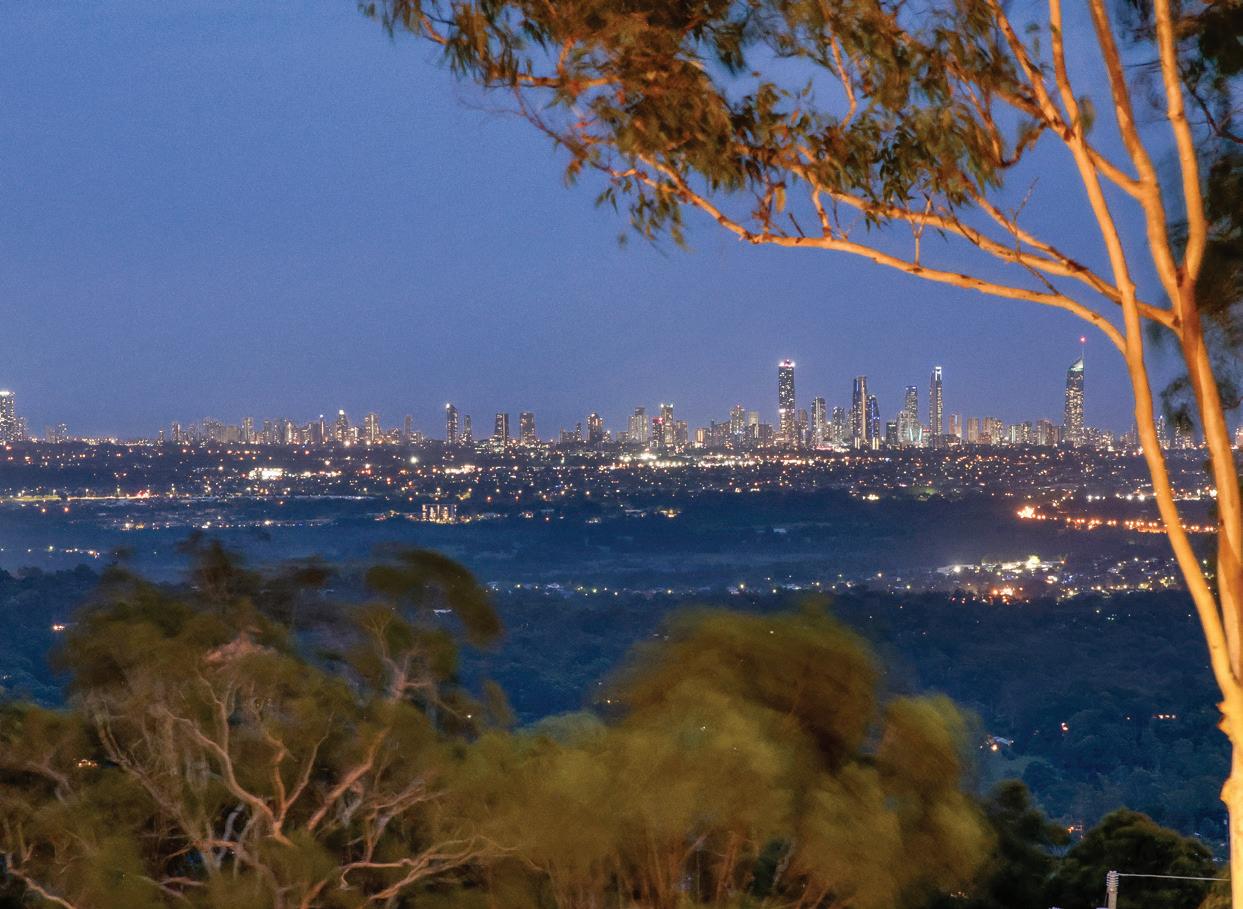
SOLD SAM GUO AND JULIA KUO 0423 064 310 | 0402 668 885 BRAD COYNE 0420 588 866 $4,120,000 AT AUCTION 233 THE PANORAMA, TALLAI 113 Enquiries 67 Inspections 4 Written Offers 3 Registered Bidders
GOLD COAST’S PRESTIGE PROPERTY SPECIALISTS
Riverfront Homes | Beachfront Properties | Luxury Apartments
Boutique Project Sales | Acreage Estates
Commercial Opportunities | Executive Leasing
1300 576 000
kollosche.com.au
REDEFINING REAL ESTATE
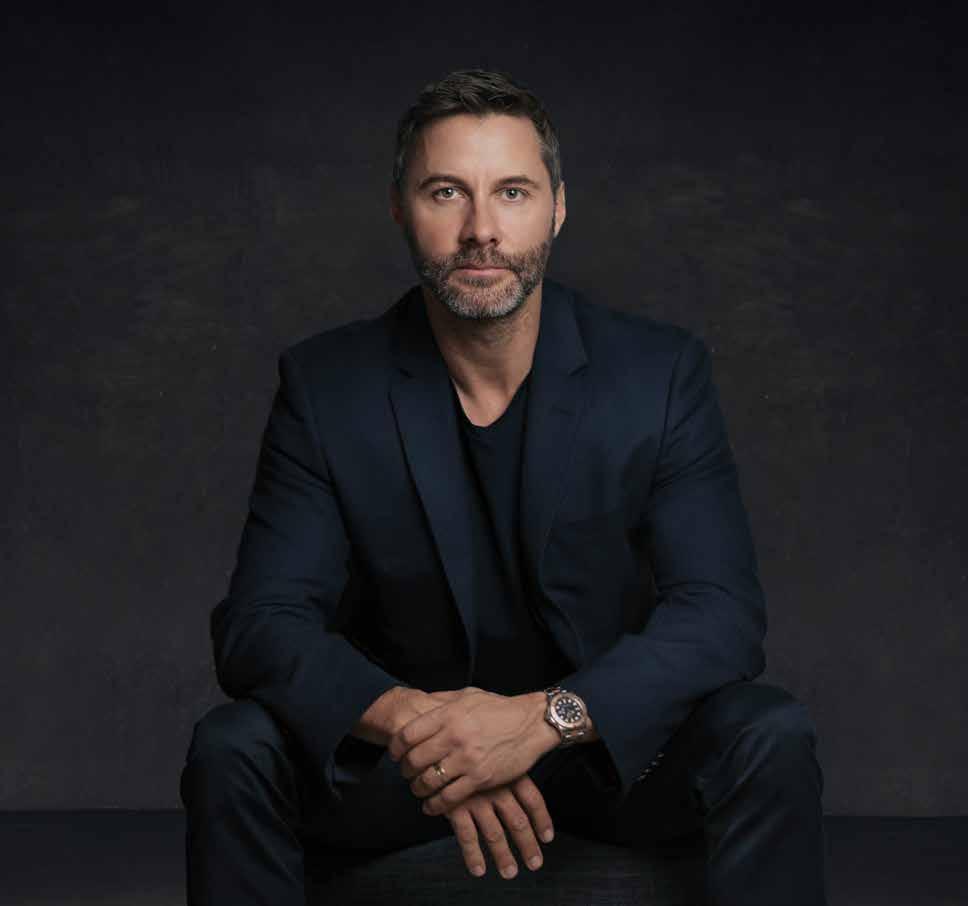
FRUIT DROPS
Premium product
The Coravin Lotus Red Timeless Six+ wine by the glass system enables wine lovers to pour a glass from any bottle, anytime, while preserving the remaining wine for months or even years. Rendered in a bloodshot red finished with rich gold accents, and packaged in an exquisite red gift box, this special premium set is sure to elevate your home bar setting. coravin.com.au
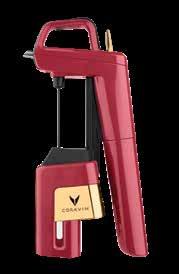
Love potion
Award-winning Gold Coast and Brisbane gin distillery Granddad Jack’s is all about filling the cups of Aussie mums this Mother’s Day. A labour of love hand-crafted by head distiller and company co-founder Luke Ridden, their Pink on Pink Gin is made from locally-sourced produce and due to the uncertain nature of what’s available, each batch cannot be identically replicated year after year. It is for this reason that this limited-edition gin has become a symbol of motherhood – one of a kind, each different in its own way. granddadjacks.com
Cocktails anyone?
Know someone who is enjoys a cocktail or has the perfect home bar? Treat them to the 5-Piece Copper Plated Cocktail Kit Gift Set which includes all of the essential pieces you need to whip up a delicious cocktail in seconds. dstill.com.au
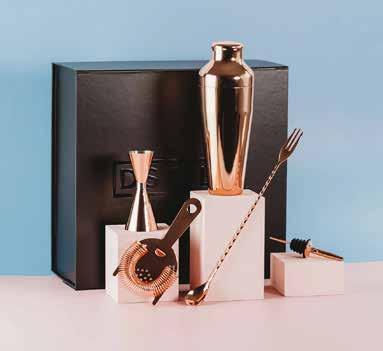
Fresh and zesty
Up your cocktail game with Manly Spirits Co.’s new Margarita Cello. Made with premium Aussie limes, three different citruses and its own triple sec, this perfectly balanced liqueur takes the hard work out of the ‘margie’ making process – just add tequila and pour. manlyspirits.com.au
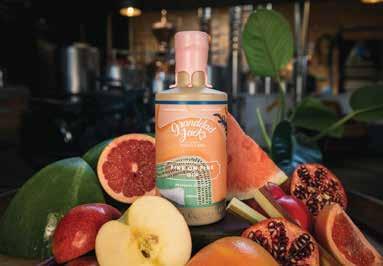
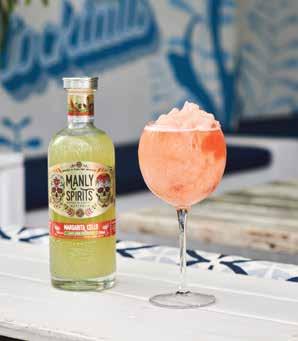
Light & bright
Bursting with berry flavours and citrusy notes, the Swanning Around Rosé is light and dry, and pairs perfectly with a cheeseboard or something spicy. For a little extra kick, simply cut up a fresh jalapeño and add a few slices to your chilled glass of rosé. Available at major and select independent retailers nationwide or online. liquorland.com.au
66 covemagazine.com.au – Issue 96 WINE CELLAR









Aboard Welcome
HERE IN SOUTH EAST
QUEENSLAND we are blessed with an abundance of beautiful weather and clean, clear waterways so it is no wonder we have one of the biggest boating communities in Australia.
Yacht brokers, boat clubs, superyacht marinas … you name it, the Gold Coast marine industry has it.
In May each year, many of these local enthusiasts join countless others from across the country and around the world to celebrate all things nautical at the Sanctuary Cove International Boat Show (SCIBS).
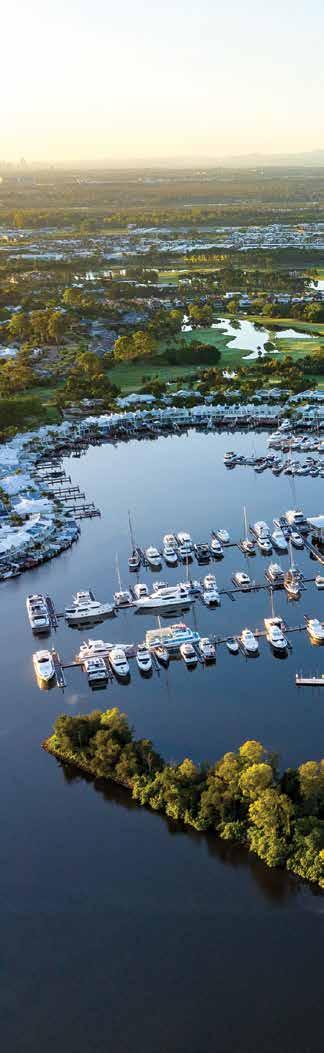
Attracting over 45,000 attendees and 300-plus exhibitors, SCIBS is Australia's largest boating and marine showcase, with around 600 boats and more than 1,000 marine products on display.
This iconic event celebrates its 34th year in 2023 and organisers are looking forward to another spectacular showing.
While SCIBS might put the spotlight on the region for four fabulous days, it is our reputation as an all-year-round playground that keeps people returning again and again.
If the boating opportunities aren’t enough, our kilometres of picturesque coastal and hinterland roads invite drivers to jump in the car and explore.
Naturally, the region has more than its fair share of luxury marques and supercars and there is no better place to just put the top down and drive.
Whether you are behind the wheel of a superyacht or sportscar, autumn on the Gold Coast is a simply glorious time of year, so make sure to enjoy it.
68 covemagazine.com.au – Issue 96 WHEELS & WATER
From the pristine waterways to the lush green hinterland, the Gold Coast offers a wealth of boating and motoring opportunities.
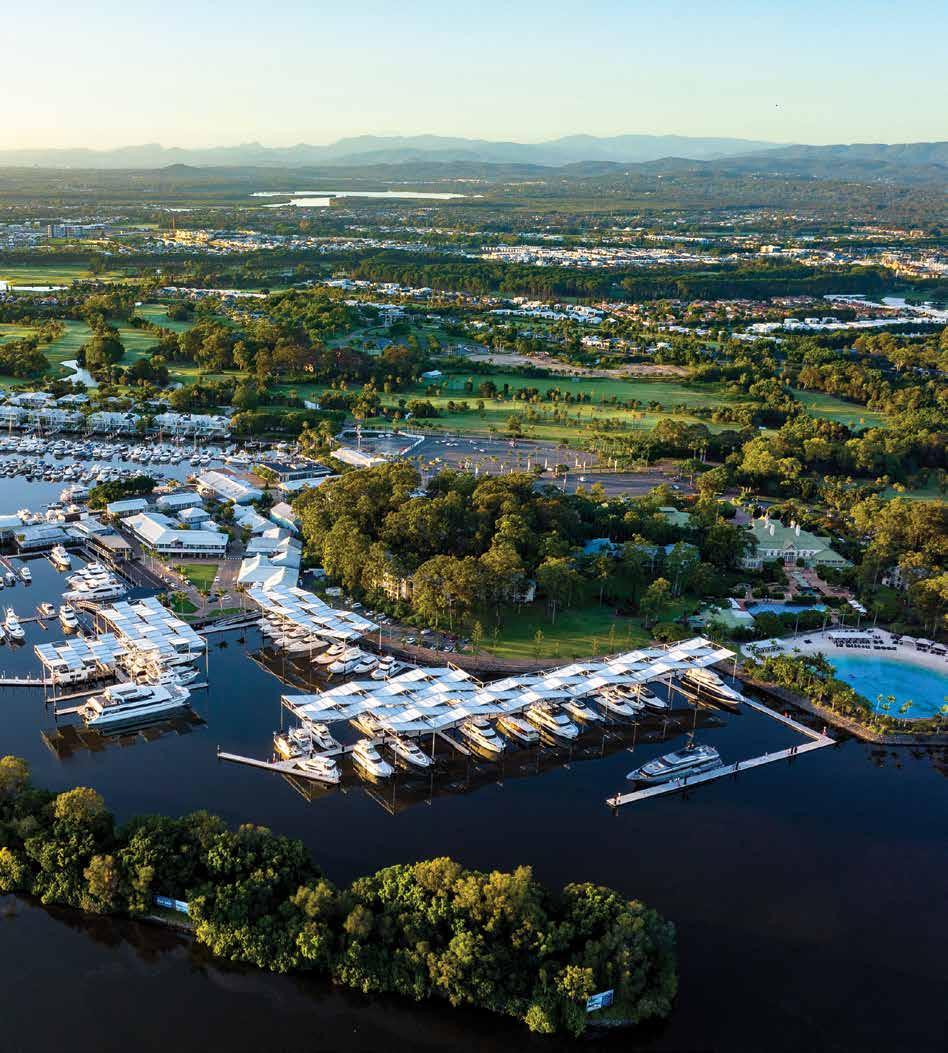
Issue 96 – covemagazine.com.au 69 WHEELS & WATER
SEAS THE DAY
2023 Sanctuary Cove International Boat Show set to be bigger than ever.
CLEAR THE DECKS and prepare yourself for all the boating action you can handle.
There’s so much going on at the 2023 Sanctuary Cove International Boat Show (SCIBS), you’ll need a speedboat just to keep up.
Exhibitor space is sold out, loaded with motor yachts, sailboats, pleasure craft, gear and gadgets, fashion, design and much, much more.
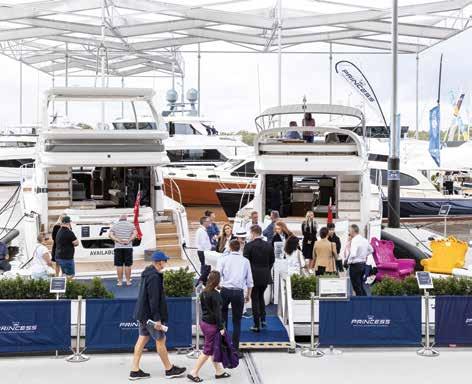
At this year’s Show there really is something for everyone with a host of national and international product launches, and exciting displays with everything from superyachts to fishing tinnies, SUPs to eFoils, boat accessories to water toys.
Attracting more than 45,000 attendees and 300-plus exhibitors, SCIBS is Australia's largest boating and marine event, showcasing around 600 boats and over 1,000 marine products across four spectacular days.
7News weather, boating and fishing expert Paul Burt has again been named official SCIBS Ambassador for 2023.
Paul will host an action-packed line up of events, including his much-loved cooking shows on the main stage, and the 2023 Live Bream Shoot Out – the deep-water fishing competition where amateur anglers compete for sensational prizes.
A VIP Pass offers visitors the ultimate boat show access including exclusive entry to The Lagoon Lounge.
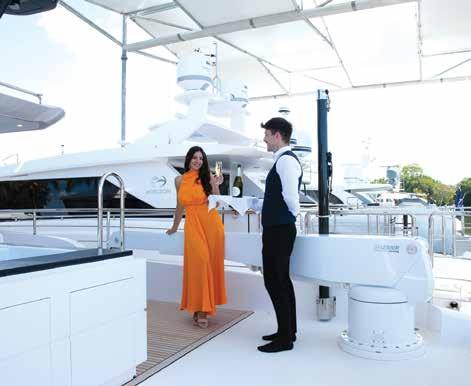
Overlooking the Superyacht Marina arm, and the adjourning iconic Lagoon Pool at the InterContinental Sanctuary Cove Resort, The Lagoon Lounge is the best way to make the most of your boat show experience.
The Lagoon Lounge offers a delectable all day grazing menu, alongside a range of premium beverages and bespoke tasting experiences, live music and entertainment, and of course access to all areas of the Show.
Mulpha Events, General Manager Johan Hasser said SCIBS 2023 would continue to delight and entertain event goers with show stopping moments, luxury experiences, and exhilarating displays.
“We are thrilled to be welcoming guests and exhibitors back to the beautiful location of Sanctuary Cove for our 34th annual event,” Johan said.
“This year’s program of events promises something for everyone.
“As well as the incredible marine displays, there will be food, bars, street entertainment and a family friendly kids’ area.
“The team is especially looking forward to showcasing a host of exciting new product launches on water and within the Sanctuary Cove precinct.”
WIN A $5K+ HOLIDAY
The 34th Sanctuary Cove International Boat Show is on from May 25-28, 2023.
This year, tickets are available online only –there will not be a box office at the Show. Early bird tickets are available until May 18 from $27 (kids under 16 enter for free with a paying adult).
Early bird ticket holders will also go in the draw to win a luxury escape to the InterContinental Hayman Island Resort in the heart of the Great Barrier Reef valued at over $5,000.
Free Park ’n’ Ride services will be operating from Warner Bros. Movie World, using a fleet of air-conditioned coaches, and there is also limited onsite parking at Sanctuary Cove, available to pre-purchase online with tickets.
The Sanctuary Cove International Boat Show is owned and operated by Mulpha Events and is proudly supported by the Queensland Government, Tourism & Events Queensland, City of Gold Coast, Major Events Gold Coast and Major Sponsor Bentley Brisbane & Gold Coast.
70 covemagazine.com.au – Issue 96 WHEELS & WATER
Scan the QR code or visit sanctuarycoveboatshow.com.au
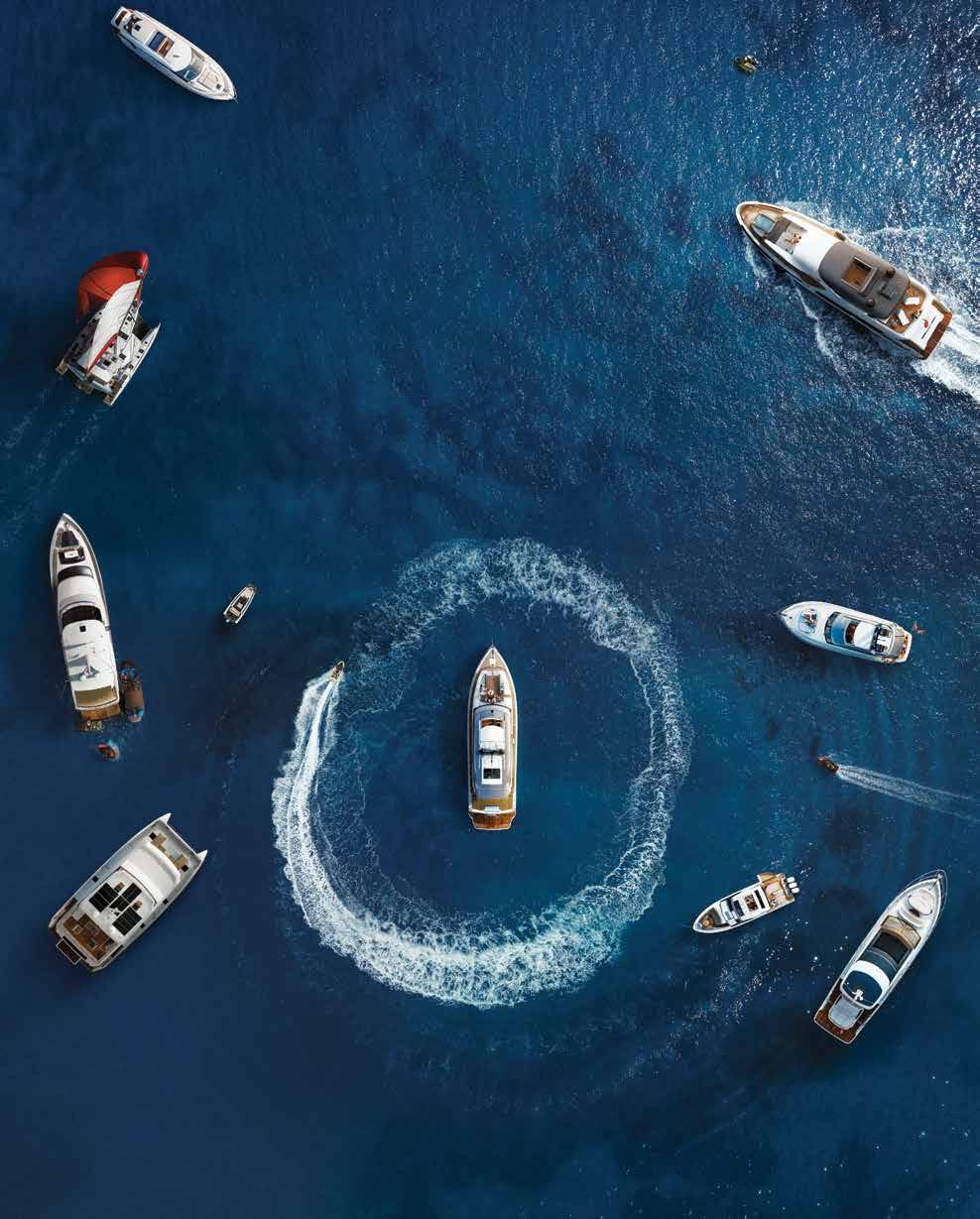


ELEGANCE AFLOAT
Vicem Yachts enters the Australian market.
VICEM YACHTS will enter the Australian market for the first time at this year’s Sanctuary Cove International Boat Show, with Leigh Smith Yachts displaying the stunning 2023 Vicem Classic 55 Sedan.
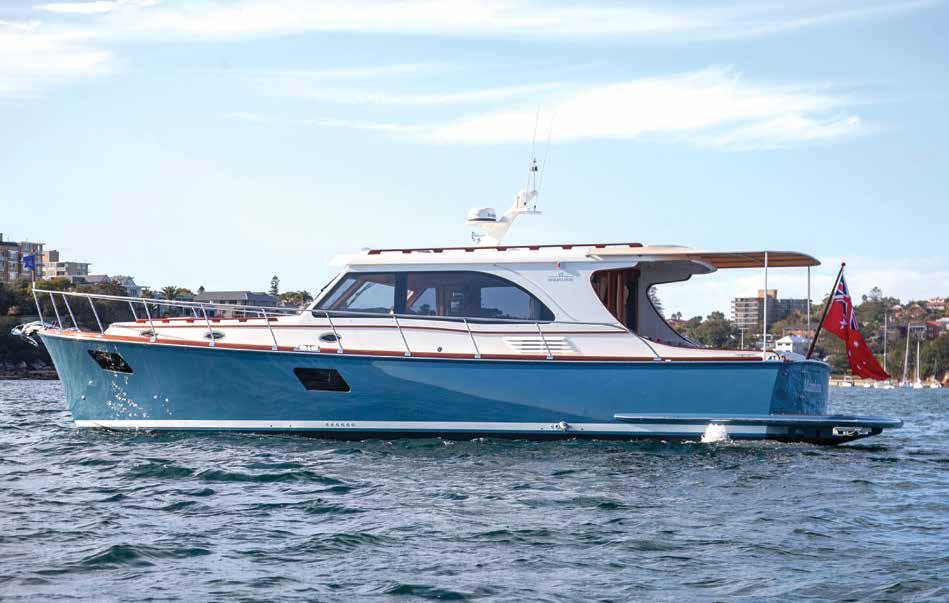
A beautifully crafted yacht that combines classic style with modern amenities, this vessel has been designed to provide a luxurious and relaxed cruising experience, with its sleek lines and spacious interior.
At 55 feet in length and with a 16 feet beam, the Vicem Classic 55 Sedan is spacious enough to accommodate up to six guests.
The yacht features three staterooms, each with its own en-suite bathroom, ensuring privacy and comfort for all onboard.
Interior spaces onboard are finished with high-gloss mahogany, providing a warm and elegant atmosphere.
The spacious cockpit of the Vicem Classic 55 Sedan features a teak dining table with ample seating for all guests, perfect for enjoying meals or cocktails al fresco.
The exterior of the yacht is equally impressive, with its classic lines and deep-V hull ensuring a smooth and stable ride, even in rough seas.
The teak decks and varnished mahogany trim give the yacht a timeless elegance that is sure to turn heads in any harbour.
The swim platform is also generously sized, providing easy access to the water for swimming, snorkelling or diving.
All interior and exterior spaces have highquality fabrics with expertly finished stitching and an overall level of fit and finish that rivals much larger yachts.
The top-tier woodwork with high-gloss varnish is an upgraded option the yard provides for an eye-catching finish.
Providing a top speed of 28 knots and a cruising speed of 22 knots, the Vicem Classic 55 Sedan is powered by twin IPS700 Volvo Penta Main Engines.
The yacht is also equipped with a bow thruster, making it easy to manoeuvre in tight spaces.
As you would expect, the vessel is equipped with all the latest technology, including a stateof-the-art navigation system, satellite TV, and high-speed internet.
There is also a powerful sound system, allowing you to enjoy your favourite music while cruising.
Overall, the 2023 Vicem Classic 55 Sedan is a stunning vessel that combines classic style with modern engineering and design.
Whether you're looking for a luxurious family cruiser or a stylish yacht for entertaining, this timeless, elegant lady is sure to exceed your expectations.
Contact your Vicem approved dealer, Leigh-Smith Yachts, for further specifications and to discover the latest high-quality picnic-style motor yacht from 36 feet to 140 feet.
Or make time to inspect the Vicem Classic 55 Sedan at the 2023 Sanctuary Cove International Boat Show which runs from 25 - 28 May.
The Leigh-Smith Yachts display is located on Pier D, behind George’s Paragon restaurant. leigh-smith.com | vicemyachts.com
72 covemagazine.com.au – Issue 96
WHEELS & WATER
THE TRUSTED NAME IN SALES OF NEW AND USED MOTOR YACHTS. AGENTS FOR: VICEM, HAMPTON, ENDURANCE AND ALASKA MOTOR YACHTS.
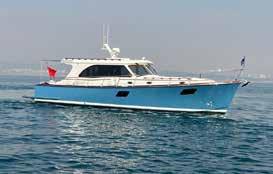
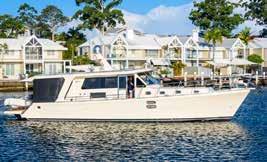
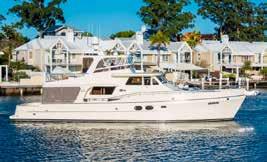
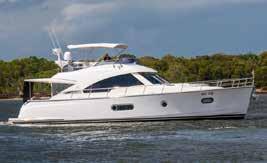
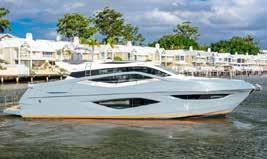
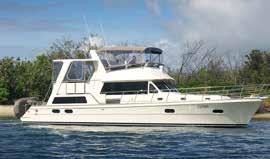
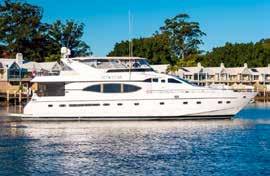
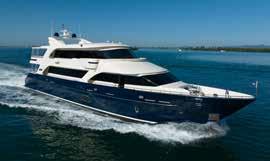
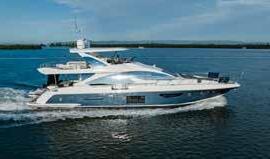


Ryan Leigh-Smith 0408 758 886 Carl Kellet 0408 758 099 Paul Banning 0432 758 758 Tony Tweedie 0408 758 830 42 Quay Street Sanctuary Cove, Qld sales@leigh-smith.com 07 5577 9200 www.leigh-smith.com 2016 Azimut 80 - $4,490,000 2018 President 115 Superyacht - $7,995,000 2001 Monte Fino 86 FB - $1,390,000 2013 Alaska 49 Aft Cabin - $899,000 2017 Numarine 62 - $2,190,000 2013 Belize 52 - $1,299,000 2011 Alaska 60 YF - $1,390,000 2013 Alaska 46 Sedan - $$893,000 Vicem Classic 55 - Immediate Delivery Endurance 658 Alaska 49 - Available March 2024 2002 Carver 570 Voyager - $699,000
THE MAIN ATTRACTION
Welcome to Gold Coast's most luxurious lifestyle precinct.
MAIN BEACH is set to play host to a new standard of luxury, welcoming the worldclass Main Beach Superyacht Marina in Spring 2023.
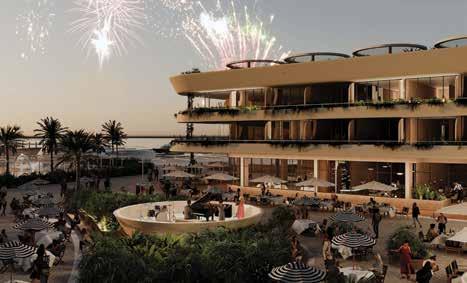
The state-of-the-art project is a global collaboration between industry-leading property development experts Pelligra Group and Giannarelli Group, along with prominent hotel brand portfolio Marriott International.
These powerhouse players have partnered to create a destination of innovative spirit and drive the evolution of Australia’s legendary prime coastline.
Built upon one of the Gold Coast’s most prestigious and sought after locations, Main Beach Superyacht Marina represents a new concept in nautical luxury.
Providing 6-star, white glove amenity in one Australia’s prime destinations, the exclusive Marina is now offering berths up to 73m for lease.
Each mooring features 24-hour berthing assistance, concierge services, maintenance amenities, high speed fuelling, filtered water to all berths and in berth pump out systems.
A valet parking service, high speed wi-fi and state-of-the-art security system is also included.
Further provisional services such as a marina helipad, Rolls Royce golf buggy service and access to 6-star hotel facilities on completion will be available to berth holders.
Main Beach Superyacht Marina will be anchored by a custom-built boardwalk that connects north to south of the development.
Housing 8000sqm of high-end food and beverage outlets and retail space, all with water facing views, this commercial hub will be a community drawcard that sets Main Beach Superyacht Marina apart from its peers. Also setting a new benchmark for sophistication on the Australian coast, Marriott
International have chosen to debut the globally renowned Ritz-Carlton brand on the Gold Coast at the Main Beach Superyacht Marina.
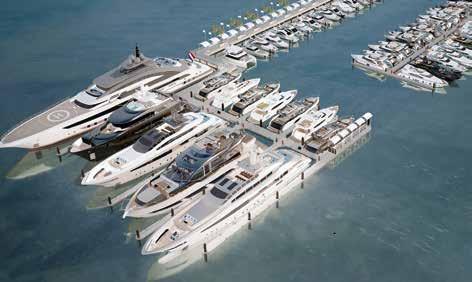
As one of the world’s finest hotel brands, The Ritz Carlton Gold Coast will feature 157 luxury suites, signature restaurant, all-day dining and lobby bar, a 50m rooftop pool, signature spa and wellness centre and expansive function and ballroom facilities.
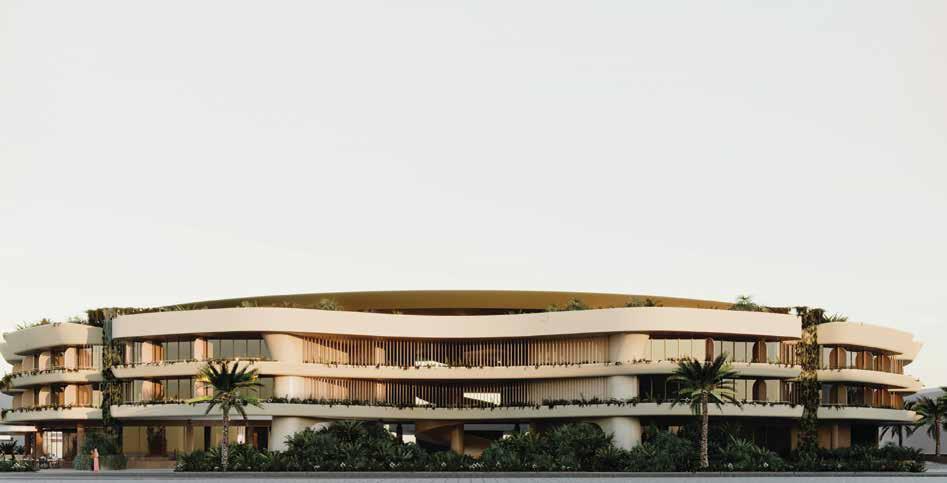
In addition to its own world-class facilities, Main Beach Superyacht Marina’s prime location allows berth holders convenient access to everything the Gold Coast has to offer, from fine dining experiences and pristine beaches to tourist attractions and themeparks.
Be among the first to view the new Main Beach Superyacht Marina development at their dedicated floated leasing suite. By appointment only. mbsm.com.au
WHEELS & WATER 74 covemagazine.com.au – Issue 96

SCAN QR CODE TO BOOK A BERTH OPENING LATE 2023 CONTACT 0409 892 615 | LEASING@MBSM.COM.AU WWW.MBSM.COM.AU 60-70 Seaworld Drive Main Beach QLD 4217 | 27° 97'S 153° 42'E 27° 97’S 153° 42’E MBSM.COM.AU AUSTRALIA’S MOST SOPHISTICATED MARINA IN THE HEART OF AUSTRALIA’S LARGEST PLAYGROUND
BOATING REIMAGINED
ESTABLISHED OVER 30 YEARS AGO, in Florida, Freedom Boat Club offers its members unlimited boating and access to over 5,500 boats and 380 locations around the world – with plans to open on the Gold Coast at Sanctuary Cove soon.
Freedom is the world’s largest boat club operator, offering decades of trusted experience to over 80,000 members worldwide with an effortless way to get out boating and maximise affordable leisure time.
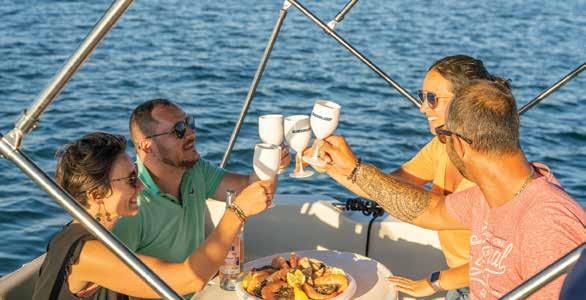
Freedom is proudly part of the Brunswick Corporation, the world’s largest marine manufacturer and home to over sixty marine brands including, Mercury, Sea Ray, SIMRAD, Lowrance, Quicksilver and BLA.
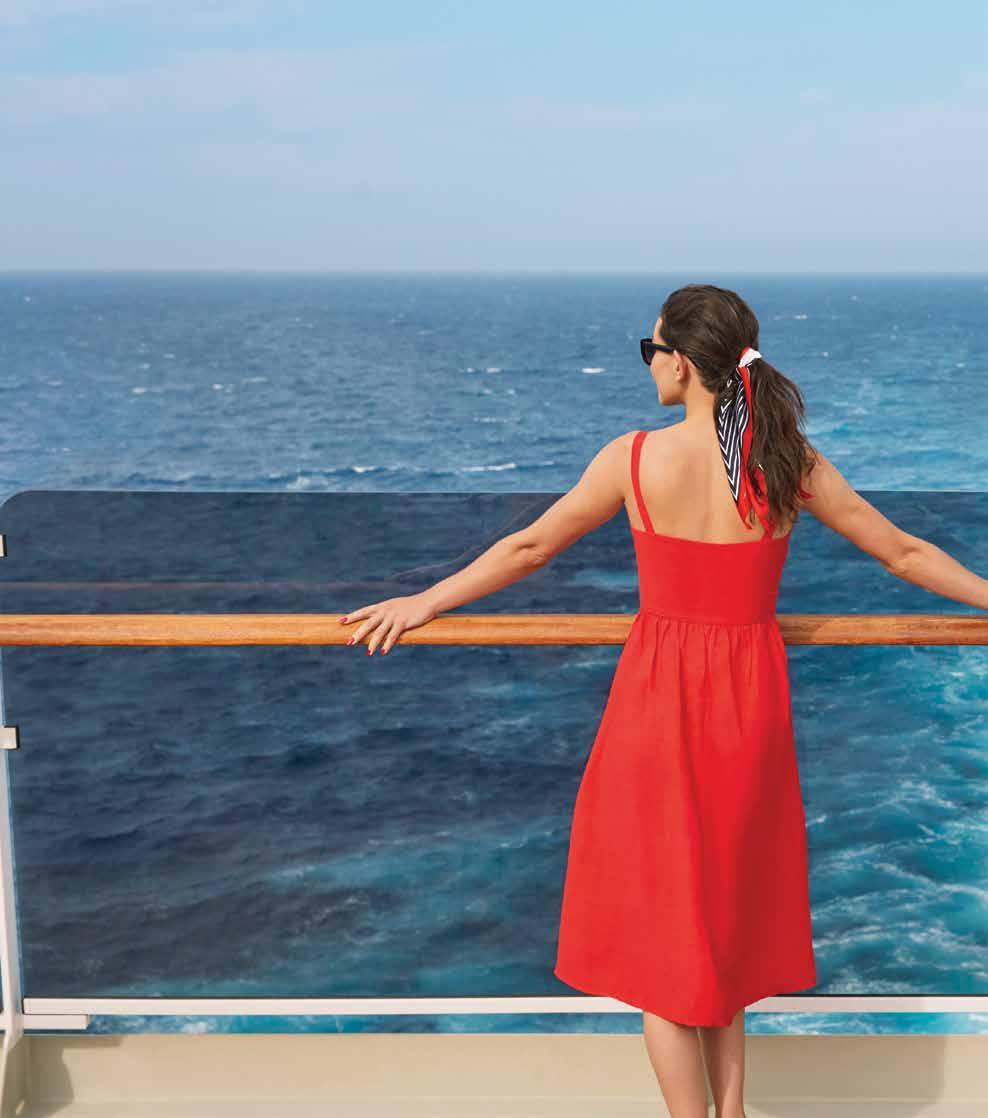
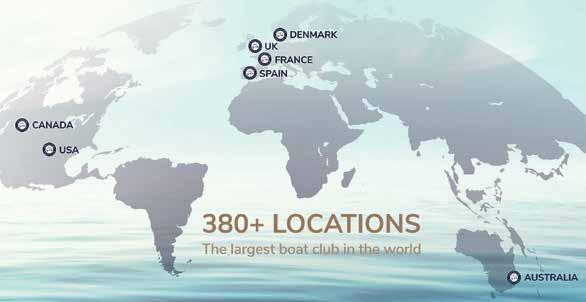
Now, in a significant and exciting announcement, Freedom Boat Club plans to open numerous locations in Australia this year, allowing all boating enthusiasts to join Freedom Boat Club and discover a simpler way to get out on the water.
Membership to the world’s largest boat club is easy – a simple one-time entry fee and low monthly payment grants members unlimited boating and a truly stress-free boating lifestyle, without the hassles of storage, maintenance, towing, cleaning, or insurance as Freedom Boat Club takes care of everything.
Members simply book online, and their boat will be waiting at the marina, fuelled and ready for adventure.
Freedom Boat Club offers a market-leading fleet for their members’ exclusive use, providing them with access to a variety of boats at each club location – over 5,500 boats and 380 locations worldwide.
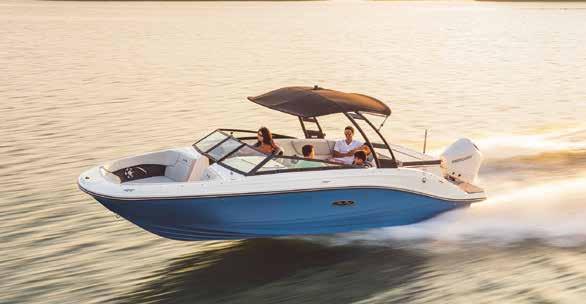
From leisure cruising to active boating lifestyles, Freedom maintains a modern variety of vessels to suit all manner of on-water pursuits.
Freedom Boat Club’s on-water training program, which is unique in the industry, allows members to go out with Freedom’s trained captains as often as they’d like to gain confidence in their boating skills.
Freedom Boat Club plans to open at Sanctuary Cove Marina soon.
To find out more about Freedom Boat Club’s new locations across Australia and how to become a member, visit the team at the Sanctuary Cove International Boat Show on Masthead Way, stand MH20, from 25-28 May 2023.
freedomboatclub.au | 0403 124 212
76 covemagazine.com.au – Issue 96 WHEELS & WATER
Freedom Boat Club brings the benefits of a global boating lifestyle to Sanctuary Cove – with none of the hassle.
Book and sail with confidence. www.cunard.com/en-au Inspiring journeys await you in 2023 and 2024. Contact Cove Travel +61 7 5577 9211 or info@covetravel.com.au
ITALIAN JOBS
Two stunning ultra sports are heading your way.
THERE’S BIG BUSINESS looming in the supercar showrooms, with wealthy car lovers itching to get their kid-leather driving gloves on two of the most exciting arrivals in a long time.
For purists, the most eagerly awaited undoubtedly is the Lamborghini Revuelto, which succeeds the 11-year-old Aventador at the pinnacle of the Italian maker’s line-up.
Therefore, by definition, it is already one of the world’s most coveted super-sports cars.

While the 1000-horsepower Revuelto will be a rare beast, especially in Australia where it’s likely to cost around $900,000 on the road from Q3 next year, I predict Ferrari’s Roma Spider will be racing out the door as fast as it can be shipped from Maranello.
The Spider complements the current Roma Coupe and replaces the Portofino, which itself replaced the California as Ferrari’s main convertible offering.
The Portofino was very successful for Ferrari during its five-year production life but, while an extremely fast and capable car, it struggled to earn the full praise of critics.
Reservation centred on the Portofino’s image as a ‘soft’ Ferrari for la dolce vita rather than la pista, but the slender, sportier-looking Roma should melt a few hearts.
It's a stunner and with its shark-like snout, long bonnet and short, high tail is a little reminiscent of the Jaguar E-Type, which no less than the late Enzo Ferrari himself lauded as the world’s most beautiful car more than 60 years ago.
The Roma Coupe costs $410,000 plus options and on-roads (and is the cheapest Ferrari in Australia), so the Spider should land here in a few months for less than $500,000.
The contest for technological and performance superiority at the top end of the supercar market is intense.
It establishes brand prestige among the world’s wealthiest drivers and, although there are arguably several makes that could challenge to be the best, only two stand out consistently as the benchmarks – Lamborghini and Ferrari. They make news.
So the flagship Revuelto, representing more than the sum of its parts, fronts up with all guns blazing. There is no mistaking its intention: with styling that deliberately evokes a jet-fighter theme plus a monster engine, it’s there to pound rivals into the tarmac.
It’s menacingly sleek; about the only round shapes on the Revuelto are on the enormous 355/25/22 Bridgestone tyres,
A weapons-grade technical specification features a one-piece moulded carbon-fibre central chassis, lighter and stiffer than the old Aventador’s conventional structure, promising enhanced road-holding.

78 covemagazine.com.au – Issue 96 WHEELS & WATER
WORDS CHRIS NIXON
Off the back hangs a new 6.5 litre V12 engine – a Lamborghini signature – complemented for the first time with a hybrid-electric system.
This is big news for Lamborghini as it negotiates its way into the electric era with a customer base long devoted to its charismatic non-turbocharged V12 and V10 internal combustion engines (ICEs).

The hybrid system comprises one electric motor at the rear and one at each front wheel which operate on demand, boosting the main engine and adding all-wheel-drive capability when needed for maximum performance, or running on their own for short distances, as when negotiating car parks, for instance.
Maximum firepower is claimed to deliver 0-100 kmh acceleration in 2.5 seconds and a 350 kmh top speed, performance among the fastest of any current road car.
Thus Lamborghini buyers are assured their cars have not lost any of their legendary speed –they have gained some, in fact – in the transition toward electrification. >>
Residential | Commercial | Industrial
Eco-Friendly Cleaning Using The Power Of Nature
Our Ultimate Citrus Cleaner is the perfect product for home, work or industrial use.
Some of the features of this universal cleaning product are:

• it comes as a concentrate - a little goes a long way
• it can be used as a degreaser as well as a residential cleaning product

• it has a “certified organic input” rating
• it is low in phosphate

• it is alcohol free
• it is food safe & once diluted is safe for septic systems
Issue 96 – covemagazine.com.au 79
CLEAN - GREEN - TOUGH 0407 472 713 CALL NOW
While the Lamborghini Revuelto will be a rare and exotic sight, you’re much more likely to catch a Ferrari Roma Spider outside the Sanctuary Cove Country Club.
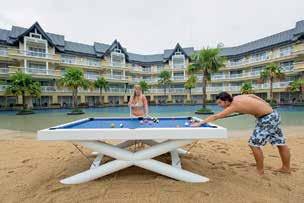
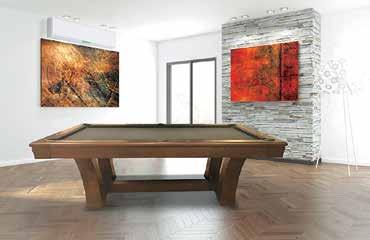
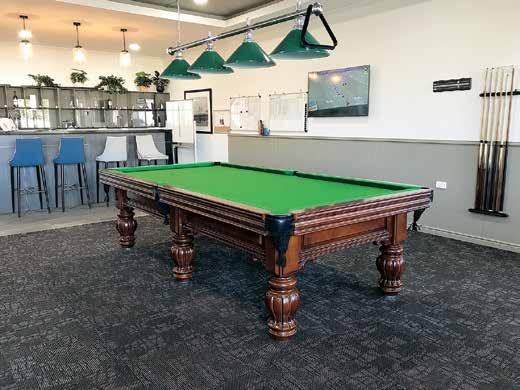
With the name Roma and a slinky, open-top profile, Ferrari’s latest promises to blend la nuova – new – dolce vita with sporting muscle fully worthy of the Italian brand.

It inherits the Portofino’s twin-turbocharged V8 of 3.9 litres, which was judged the world’s best engine a couple of years ago and rockets all the way to the supercar benchmark of 200 miles an hour (or 320 kmh; these days any vehicle not able to reach that extraordinary speed isn’t worthy of the term supercar).
After Ferrari made much of the convertible hard-tops of the California and Portofino, the Roma Spider reverts to a traditional soft-top –the first in the company’s front-engine line-up in 54 years.
It opens or closes in 13.5 seconds while the car is moving.

The two-tone fabric weave is offered in four colours to match the paintwork – this might be just the Ferrari to make red not necessarily the first choice.
Let John find

0409 782 636
Perkins) MANHATTAN Bringing family & friends together X-MEN MOOD GRAND DUKE
GOLD COAST: 2/83 Ashmore Road, Bundall Mobile:
(John
the
pool table for your luxury home surrounds. FREE CONSULTATION. BOOK TODAY. WHEELS & WATER
perfect
Roof up or down, the Spider has slinky, elegant proportions.
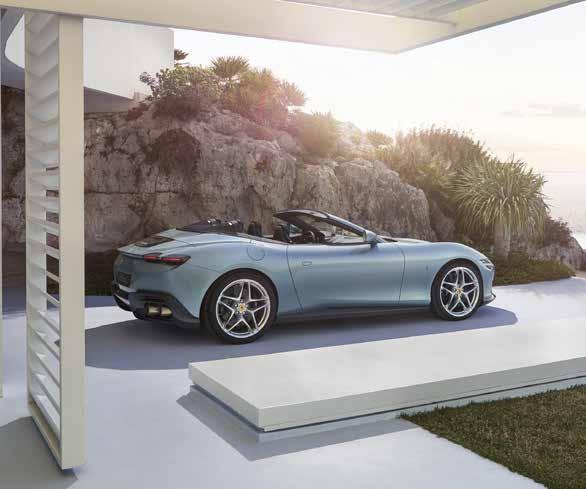
The designers have done an impressive job of hiding the roof when folded without raising the boot line or, importantly, compromising luggage space.
The car is described by Ferrari as a ‘2+’, but in reality that means it’s just a two-seater with room for a couple of grocery bags behind.
Indoors, the Spider retains the Coupe’s striking cockpit-style, wraparound compartments for driver and passenger.
I’ve been in a Coupe and the feeling is truly intimate, especially as the passenger also has use of a secondary digital dashboard to display whatever information or entertainment they wish.
Ferrari’s previous new model, the Purosangue four-door wagon, looks set to cost close to $1 million when options and on-road fees are included; the Roma Spider may be around half that amount but will certainly not be half the car.
I’ll have one for the family and the other for me, please.
Membership Privileges

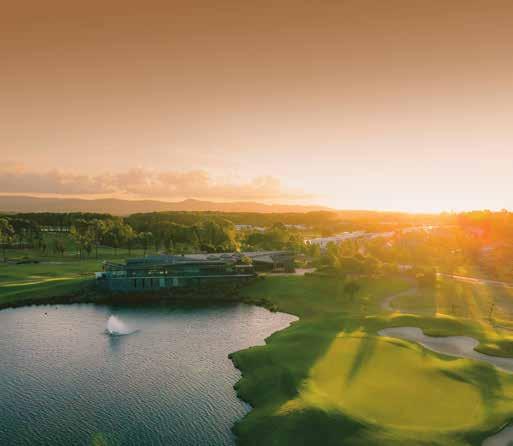
Enjoy two championship courses, world-class facilities and a lifestyle you can only find at Sanctuary Cove. For further information please contact Member Services on 07 5699 9000 or info@scgcc.com.au Sanctuary Cove Golf and Country Club The Parkway, Sanctuary Cove, Qld Australia www.sanctuarycovegolf.com.au *Conditions apply. A limited number of memberships are available. This is your opportunity to discover the unrivalled golfing lifestyle you can only find at Sanctuary Cove. Our membership includes unlimited rounds on Australia’s only Arnold Palmer Signature Course, The Pines golf course and our championship golf course, The Palms. Experience unrestricted access to the exclusive Clubhouse and prestigious practice facilities, complementing both top 100 ranked golf courses in Australia. Benefits include: - Access to The Pines and The Palms golf courses 7 days a week - Access to Sanctuary Cove Country Club facilities and gymnasium - Exclusive invitations to private Club events and tournaments - Reciprocal and affiliate golf club rights Only a limited number of memberships are available. Secure yours today.
SCGCC_CoveAd_148.5x240.qxp_Layout 1 1/2/22 9:05 am Page 1 WHEELS & WATER
OH BUOY
Who gets to keep the boat in the event of a separation or divorce?
 WORDS SARRA DAVIES
DESPITE THE INTENTION to sail away in the sunset, sometimes the inevitable reality of a relationship is separation, and alas stormy seas may follow.
So, 'yacht' exactly happens and who gets to keep the boat to navigate the choppy aftermath of separation?
The first step in a property settlement is to identify and value all of the assets, liabilities and financial resources that are owned by you and your former co-captain, aka spouse (in sole and joint names).
This is called the ‘asset pool’ and includes everything from the boat to your long-lost aunt’s vintage vase inherited all those years ago.
Identifying the asset pool is often achieved through the process of disclosure, where parties exchange all financial information in their possession such as bank statements, tax returns, valuations, and superannuation member statements.
The next step is to assess the contributions made by the parties at each stage of the relationship.
This includes financial and non-financial contributions (either direct or indirect), and contributions to the welfare of the crew, aka family (such as homemaker or parenting contributions).
So, whilst the Court will consider the financial contribution of the party who purchased the boat, the Court will also assess the non-financial contribution of the party who scraped the barnacles off the bottom.
In weighing up those various contributions, one party may receive credit for or an adjustment in their favour.
After the contributions are assessed (taking into account contributions made at the commencement of the relationship, throughout the relationship and in some circumstances, post-separation), the next step is to determine each party’s respective future needs.
For example, one party may receive an adjustment in their favour for having the primary care of the children post separation, thereby limiting their income earning capacity.
Oh Ship! Do I need to sell the boat?
The final step is to determine if the property settlement is ‘just and equitable’.
That is lawyer lingo for a fair outcome.
The Court will ordinarily ensure that there is a balance between superannuation and non-superannuation assets.
By way of example, if you are entitled to 60 per cent of the net asset pool, then your entitlement could comprise the boat, superannuation, and other assets/funds to make up that percentage.
The manner in which the items of property are divided between the parties and the timing in which you might receive the property varies case by case.
If you have recently separated and need assistance in navigating your property settlement and financial matters, the friendly crew at BGM Family Lawyers are on deck to answer any questions.
1300 246 529 | bgm.legal
82 covemagazine.com.au – Issue 96 FACTS & FIGURES
Need family law help? - FINANCIAL SETTLEMENTS - CHILD SUPPORT AND CHILD SUPPORT AGREEMENTS - PARENTING ISSUES - FINANCIAL AGREEMENTS - SPOUSAL MAINTENANCE - ALTERNATIVE DISPUTE RESOLUTION (MEDIATION, ARBITRATION) - APPLICATIONS FOR DIVORCE - SURROGACY WWW.BGM.LEGAL (07) 5510 4808 7/5 JOWETT STREET, COOMERA INFO.BGM@BGM.LEGAL #weknowfamilylaw PRE-NUPS CHILD SUPPORT PARENTING ORDERS SURROGACY DIVORCE PROPERTY SETTLEMENT
COMMUNITY FOCUS
BOQ Oxenford, your local bank with a difference.
IF YOU’RE LOOKING for a team who understands what it means to deliver great banking experiences and truly personal service, look no further than BOQ Oxenford.
Locally owned and operated, BOQ Oxenford is headed up by Owner-Manager, Matt Wilksch, who works alongside a dedicated long-serving team of professionals to support the personal and business banking needs of the Northern Gold Coast community.
“BOQ’s unique Owner-Manager model means I don’t just manage the branch, I own it too,” said Matt.
“Being an Owner-Manager means I am invested in the local community, and our customers’ success is my success.”
And it’s this commitment that shines through in everything BOQ Oxenford do.
“We’re a small, close knit family team, passionate about creating long-term relationships with our clientele.
“Our customers definitely aren’t just another number, we take the time to get to know them and their financial goals, providing them with tailored solutions for their circumstances.”
The Oxenford team includes Matt Batcheldor, Branch Manager, who has been with BOQ for 12 years, and Tony Kuskie, Business Development Manager, who has also been a BOQ team member for 12 years.
Tony is a mobile banker, so if you can’t make it in branch to visit the team, he can come to you at a time and place that’s most convenient.
In the lending space are Glenda, Kaylene and Bec.
All three have a wealth of lending experience with Glenda and Kaylene having been with BOQ Oxenford since the doors first opened over 20 years ago and Bec having just celebrated her 15-year anniversary.
And for your day-to-day banking needs, you can expect to see the friendly faces of Wendy, Karen and Julie in branch waiting to greet you. However, it’s not just banking they’re passionate about.
Matt and his team have also set down strong roots in the local community, supporting and championing local businesses, organisations and events that matter.
With competitive rates and simple, easy-tounderstand banking solutions, BOQ Oxenford are ready to help support your personal or business banking needs, whatever they might be.

So whether you’re looking to purchase your first home, are ready to refinance, are interested in opening an award-winning savings account, or want to chat business banking, be sure to reach out to the team.
To experience the BOQ difference, drop into 106 Old Pacific Highway, Oxenford or give the team a call on (07) 5671 9888.
84 covemagazine.com.au – Issue 96 FACTS & FIGURES
Matt Wilksch
Matt Batcheldor













CARE & COMMITMENT
family law firm, Richardson Murray, offers a private, personal service for their clients.
Boutique
ESTABLISHED BY WELL-RESPECTED family lawyers Anton Richardson and Stephanie Murray, Richardson Murray is a boutique family and relationship law firm with offices at the Wave Building, Broadbeach, and in the Habitat precinct, Byron Bay.
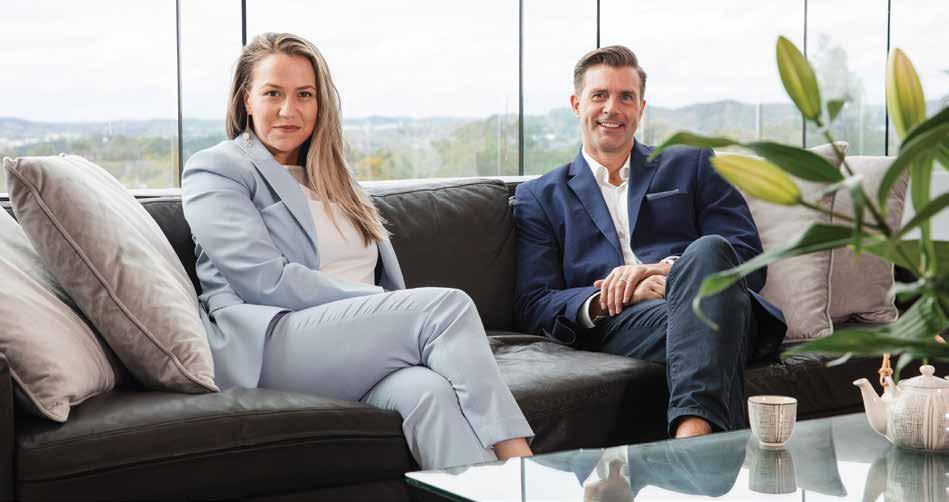
A market leader in the field, Richardson Murray provides private representation to individuals while offering them a shoulder to lean on through what is a sensitive and emotional journey.
The team at Richardson Murray are very proud of their approach to family law and are committed to achieving positive outcomes while minimising stress, limiting delays, and avoiding unnecessary legal expense.
“Over the years we have learned that clients want a family law firm they can trust, with lawyers who are best in class and committed to excellence,” says Anton.
“Clients want caring, understanding legal professionals who are sensitive to their needs.”
“In our view, family law is a specialised area that requires lawyers who practice exclusively in the field,” adds Stephanie.
“Our firm practices only in family law and we provide our clients with an exceptional quality of legal service and client care.”
Richardson Murray provides legal services to clients in Southeast Queensland and Northern New South Wales,
Both the Broadbeach and Byron Bay offices are centrally located for convenience, with ample free parking available.
As a Queensland Law Society Accredited Specialist in family law, Stephanie is well qualified to assist clients through every step of the journey.
“Our client’s interests are of utmost consideration, and we are fully committed to ensuring that their needs are met,” she says.
“We listen to our client’s story, advise as to the law, discuss options, and make recommendations.
“We develop a strategy that suits the client’s individual circumstances and we achieve results.”
Offering empathy and expertise, Richardson Murray guide clients through the maze of family law.
"Our clients are well informed from the outset as to the path we will take and what to expect along the way,” says Anton.
“We also take the emotion out of decisionmaking while still providing comfort and reassurance," Stephanie explains.
At Richardson Murray, anything less than excellence is not good enough.
“We go above and beyond to ensure results and client satisfaction so that you can move on with the next chapter of your life,” says Anton.
“The team here at Richardson Murray work under the philosophy ‘We Go Further’ and we will do everything in our power to live up to that promise.”
With personable experts, personalised service and a specialised approach, there is no doubt that Richardson Murray is setting a new standard for family law firms.
richardson-murray.law
86 covemagazine.com.au – Issue 96 FACTS & FIGURES

YOUR
TO US.
will stand beside you, provide a shoulder to lean on, shelter you from the stress, circumvent the delay and avoid the legal costs. We go further. www.richardson-murray.law P: 07 5619 5933 Gold Coast: 2016/89-91 Surf Parade Broadbeach, QLD 4218 Byron Bay: 42 Parkes Ave, Byron Bay, NSW 2481
FAMILY LAW MATTER, MATTERS
We
INNOVATIVE INVESTMENTS
NGS Crypto: a powerful alternative solution for wealth acceleration.
TURBULENT FINANCIAL CONDITIONS call for alternative ways to build wealth, and NGS Crypto offers a unique market offering to do just that.
With blockchain mining driving fixed-rate returns* ranging from 6-16% per annum, NGS Crypto assures members of steady returns regardless of the market's direction.
Economic uncertainty has put a strain on Australia's financial market, leaving investors anxious about their financial assets' performance.
Property values are falling, and with interest rates and the cost of living rising, many are looking for alternative investment options that can generate passive income.
NGS Crypto offers an innovative solution to this problem, providing a fixed-rate return* strategy that can cater to almost anyone looking to accelerate their wealth-building initiatives, diversify their income streams, and safeguard their lifestyle.
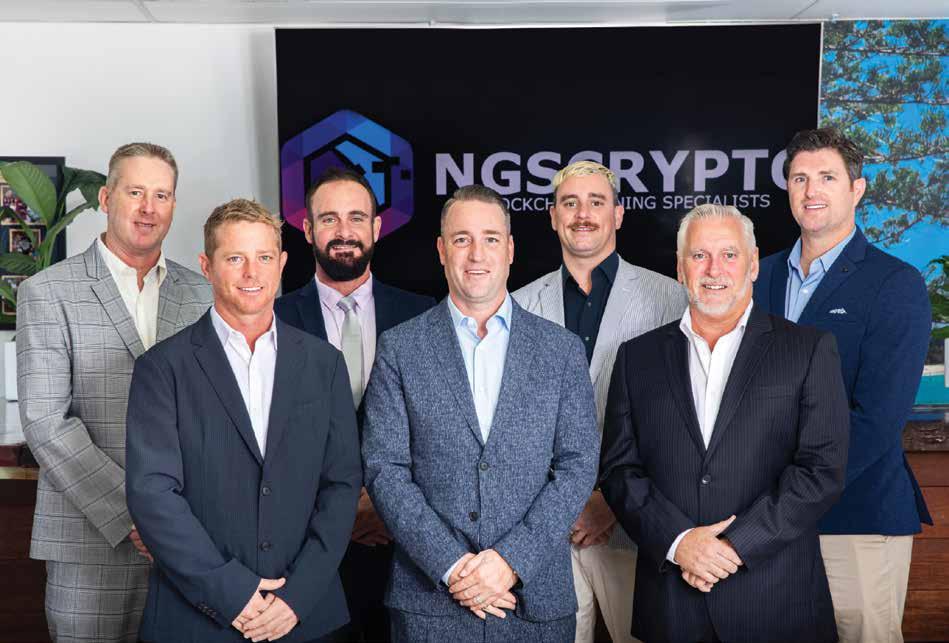
Blockchain mining is the backbone of NGS Crypto's innovation, with the company's
strategy focused on revenue based on global transactions of assets.
Subscribers enjoy varying returns on different subscription lifecycles, ranging from two to 10 years.
Returns* are generated passively and paid out daily, making it easy for subscribers to track their progress.
NGS Crypto charges no management fees, and at the end of the subscription term, members get their initial subscription amount back in full, assuring consumer confidence.
"As a blockchain mining company, our revenue comes from facilitating the transactions of assets across the world,” explains Co-owner and Director Brett Mendham.
"Market fluctuations have little impact on our ability to generate returns as transactions always require verification.
"Put simply, we act as a middleman in processing blockchain transactions."
This statement is a testament to NGS Crypto's commitment to helping Australians grow their wealth and achieve greater financial stability.
In conclusion, NGS Crypto is pioneering an innovative way for Australians to reach their wealth-building goals.
This fixed-rate return* strategy is reliable, innovative, and a welcome alternative to traditional options available to build wealth.
So whether you're saving for retirement or hedging against economic uncertainty, NGS Crypto is the perfect solution for wealth acceleration.
* In Blockchain Mining a return means fees for mining or validating transactions.
^ General information only. Please seek your own independent financial advice before investing.
88 covemagazine.com.au – Issue 96
FACTS & FIGURES
ADVERTORIAL PROMOTION
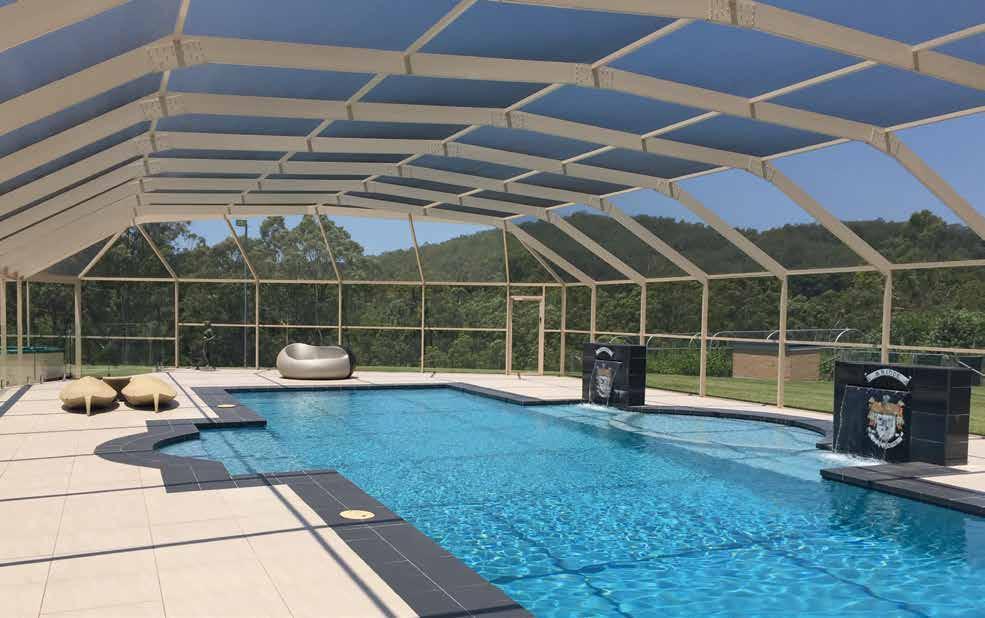
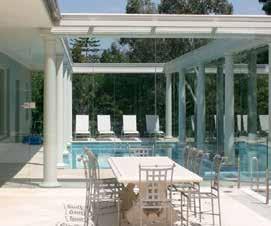
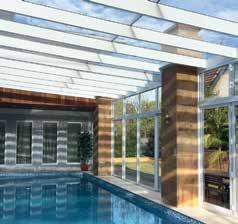
If you can imagine it, we can build it. We offer a complete design and construct service. Suncoast has built thousands of projects over the last 40 years ranging in size and scale for both residential and commercial properties. 1300 075 653 | sales@suncoastenclosures.net.au suncoastenclosures.net.au NSW 02 9477 2818 Qld 07 3180 3113 Vic 03 9720 5555 • Conservatories/Sunrooms • Pool Enclosures • Glass Roofs • Opening Roofs • Awnings • Screen Enclosures • Architectural Glazing • Commercial Our focus is to simply create better living. SERVICING ALL AREAS ACROSS THE GOLD COAST
BALANCING ACT
To lease or own? This is the question being asked by many who are balancing the cost of living with an ever-changing real estate market.

PROPERTY PORTFOLIO 90
EXPERTS FREQUENTLY WEIGH into the argument of whether it’s better to be a property owner or a tenant.
Ultimately, the reasons for choosing either path are entirely personal and likely will depend on financial and social circumstances.

However, it’s hard to dispute the long-term benefits of ownership.
During periods of high inflation, as we are currently experiencing in Australia, the cost pressures impacting both sides of the property fence make for sobering analysis.
Which side is hurting more from rising interest rates – property owners with a mortgage or tenants facing higher rents?
Despite rent prices rising an average of 10.1 per cent over 2022, it seems mortgage holders are definitely facing a tougher time of it, according to CoreLogic.
Simple mathematics will show that the cost of servicing a mortgage of $500,000 over the past year has risen by more than $1,000 a month, based on the Reserve Bank’s estimate that the average discounted home loan rate has risen from 3.65 per cent to 6.22 per cent.
That takes interest payable on a loan of this amount from $18,250 a year to $31,100 a year, representing an increase of more than 70 per cent in the annual interest bill – significantly higher than the inflation rate.
CoreLogic’s analysis of the average mortgage shows that the interest rate increases of 325 basis points by February this year –which doesn’t take into account subsequent cash rate rises – has added about $774 a month to mortgage repayments.
This compares with $225 a month in average rental increases over the same period.
This offers perspective to CoreLogic’s national analysis that shows homes in just 9.1 per cent of suburbs in Australia over the past year were cheaper to buy than rent, which is down from 30.2 per cent of suburbs a year ago.
“Despite a double-digit surge in rents nationally, exacerbated by a shortage of rental properties, record levels of net overseas migration and more people returning to major cities for work and studies, the proportion of suburbs where it’s cheaper to rent than buy has increased exponentially in the past year,” says CoreLogic’s research director Tim Lawless.
WORDS NICK NICOLS
“There is no doubt the cost to service a mortgage compared to rent is keeping people in rental accommodation, adding to the extreme pressure on rental demand at a time when supply levels have not responded.
“While many tenants might see home ownership as a way of breaking out of the rent cycle, it’s just not possible for many because the cost to service a mortgage has become even more onerous in the past year with the increase in repayments outstripping the increase in rents by some margin.”
Reserve Bank Governor Phillip Lowe, speaking at a Senate estimates hearing earlier this year, made the point that the central bank was not to blame for higher rents, arguing that a shortage of supply rather than higher interest rates were responsible.
Some might argue that higher interest rates have tempered construction activity, but property advisory group LongView and property settlements group PEXA have taken a deeper look at the reasons behind the relentless increase in housing costs in Australia with the release of a whitepaper earlier this year.
The analysis looked at Australia’s unique demographic and urbanisation profile and how this has led to a decades-long uptrend in house prices.
“Our analysis shows that the value of land alone accounts for most of the growth in property prices over the past 30 years in Australia,” says LongView’s executive chairman Evan Thornley.
“Land appreciates, buildings depreciate – and Australia’s population dynamics mean our land appreciates faster and more consistently than almost anywhere else in the developed world.”
The analysis explains that high population growth, and the concentration of half the population in Australia’s three largest cities with their high-density CBDs and expansive low-density suburbs, creates a shortage of supply of well-located land where people can live near jobs and services.
This summation of the property market may sound brutal, but for investors it does offer at least one compelling reason to enter the market.
Another is that the slowdown in price falls experienced at the end of 2022 has given way to price gains nationally in March this year.
CoreLogic’s national Home Value Index posted its first month-on-month rise since April 2022 by increasing 0.6 per cent in March.
Mr Lawless sees the upward price pressure being driven by multiple factors, including low advertised stock levels, extremely tight rental conditions and additional demand from overseas migration.
“Although interest rates are high and there is an expectation the economy will slow through the year, it’s clear other factors are now placing upwards pressure on home prices,” he says.
“With rental markets this tight, it’s likely we are seeing some spill-over from renting into purchasing, although, with mortgage rates so high, not everyone who wants to buy will be able to qualify for a loan.
“Similarly, with net overseas migration at record levels and rising, there is a chance more permanent or long-term migrants who can afford to will skip the rental phase and fast track a home purchase simply because they can’t find rental accommodation.”
Australia's population grew by 418,500 people to 26.12 million in the year to the end of September last year, led by net overseas migration of 303,700 people.
In the latest trends, Sydney has seen the biggest gains in home prices, driven by the upper end of the market which is typically unaffected by interest rate increases.
Melbourne, Perth and Brisbane all showed gains according to the Home Values Index, while the remaining capitals were all in negative territory.
Regional areas also rebounded, led by South Australia, Western Australia and Queensland.
PROPERTY PORTFOLIO
Issue 96 – covemagazine.com.au 91
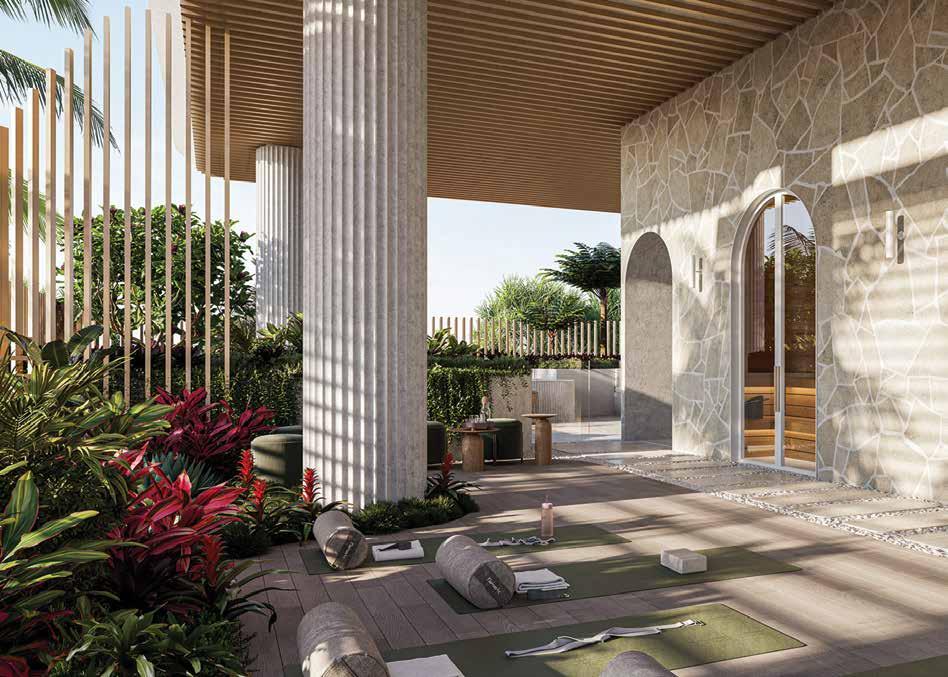
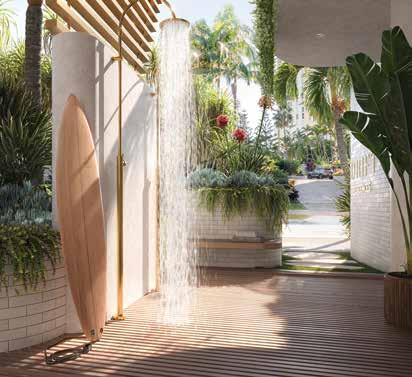
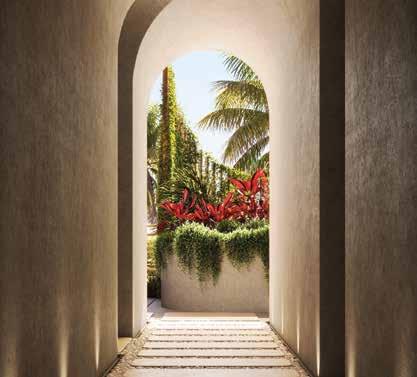

92 covemagazine.com.au – Issue 96 PROPERTY PORTFOLIO
A HAVEN OF GOOD HEALTH
WHEN DEVELOPER DEAN GALLAGHER and his team drew up their wish list of amenities for the landmark Main Beach project Drift, resident wellbeing was the top priority.
“Everything is there to support the relaxation, rejuvenation, and wellbeing of the residents, and further elevates the Drift living experience,” says Dean.
“We want residents to be able to unwind every day and have access to amenities that reduce stress, fatigue and injury while promoting health, healing and wellness.”
Drift rises 30 levels on a prime north-facing site at 16-18 Hughes Avenue, with Level 2 devoted entirely to resort-standard amenities inside the exclusive residents-only building.
Broadbeach-based Plus Architecture was engaged to deliver a timeless design with a strong focus on natural materials and amenities that meet the real needs of residents.
These carefully curated spaces present an idyllic atmosphere in which to recharge and refresh your body and mind, exclusively available to Drift residents.
SENSORY ENTRY PASSAGE: The light softens and the temperature lowers as you transition through an arched passage into the Wellbeing Centre, promoting calmness and relaxation from the moment you arrive.
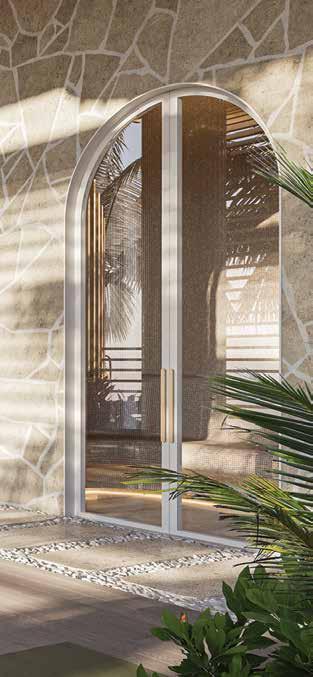
COLD THERAPY POOL: An ancient healing and rejuvenation practice, cold therapy water immersion is known to reduce inflammation, improve mood and activate the body’s immune system.
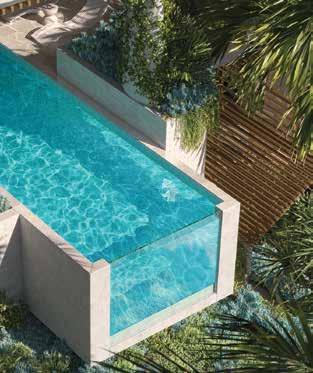
INFRARED SAUNA: The benefits of infrared saunas range from boosting the immune system to body detoxification, sore muscle relief, improved circulation, and general relaxation.
MAGNESIUM SPAS: Experience physical tension relief, elevated calmness and reduced muscle aches, as well as improved sleep and quality of life, with this luxurious magnesium spa experience.
GYNASIUM: This quality state-of-the-art facility will be fitted out with the latest Technogym equipment.
YOGA RETREAT: Surrounded by tropical planting to create a harmonious connection with nature, this peaceful space is dedicated to the calming practice of yoga and stretching.
HEATED POOL: The heated lap pool finished in glass and cantilevered over the front of the building line is not only the place for a refreshing dip, but also creates visual drama from the street.
MASSAGE ROOM: Reduce stress and pain while improving circulation and energy levels with regular massage practice in the dedicated therapy room at the core of Drift’s Wellbeing Centre.
SAND BAR ARRIVAL: With patrolled surf beaches moments from the doorstep, residents are encouraged to embrace beachside living with a separate entry where you can rinse the sand and salt from your feet, surfboards, and furry friends.
BIKE BAYS: Main Beach connects to the extensive beachside pathway network along the Gold Coast’s foreshore. Stow your bikes in the secure storage bay, conveniently located alongside the car wash for easy access to cleaning facilities.
Visit the Display Suite at 18 Tedder Avenue, Main Beach open Monday-Sunday, 10am-4pm. Kollosche New Projects driftresidences.com.au
PROPERTY PORTFOLIO Issue 96 – covemagazine.com.au 93
A carefully considered Wellbeing Centre means Drift residents will enjoy the ultimate spa experience without leaving home.
HYPER-LUXE LIVING
Lifestyle demographic drives new direction for luxury apartment design.
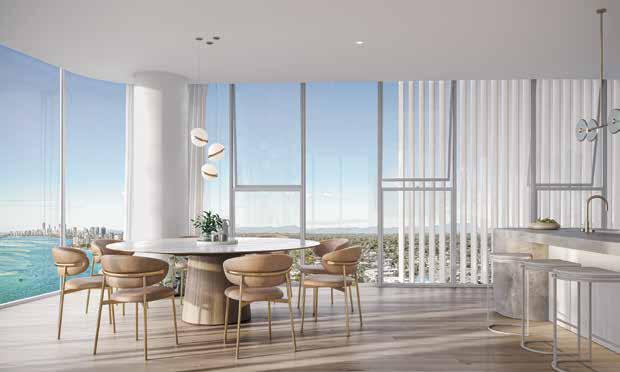
LEADING LOCAL AGENTS claim there is an undeniable demographic shift that is influencing the design of high-end new residential developments.
The emergence of the ‘lifestyle demographic’, as coined by demographer Bernard Salt in a recent report, has led to a rise in demand for lifestyle property, and according to NPA Projects Director Andrew Erwin that’s exactly what we are seeing on the Gold Coast.
“The movement towards more high-end, fullfloor apartment projects with luxe resort-style amenities on the Gold Coast has been largely influenced by the surge in interstate migration and locals, and savvy developers are tailoring

their designs to appeal to this new lifestyle demographic,” Andrew said.
“The lifestyle demographic covers people aged 56-64, generally semi-retired or early retired Australians pursuing both work and leisure.
“Many are not looking to downsize necessarily, but they are looking to reduce the level of maintenance and upkeep that goes along with a freestanding home.
“They still want to maintain a level of luxury and feel like they are in a separate dwelling.
“Buyers in this lifestyle stage also have higher expectations when it comes to amenities and communal facilities,” he added. >>
94 covemagazine.com.au – Issue 96 PROPERTY PORTFOLIO
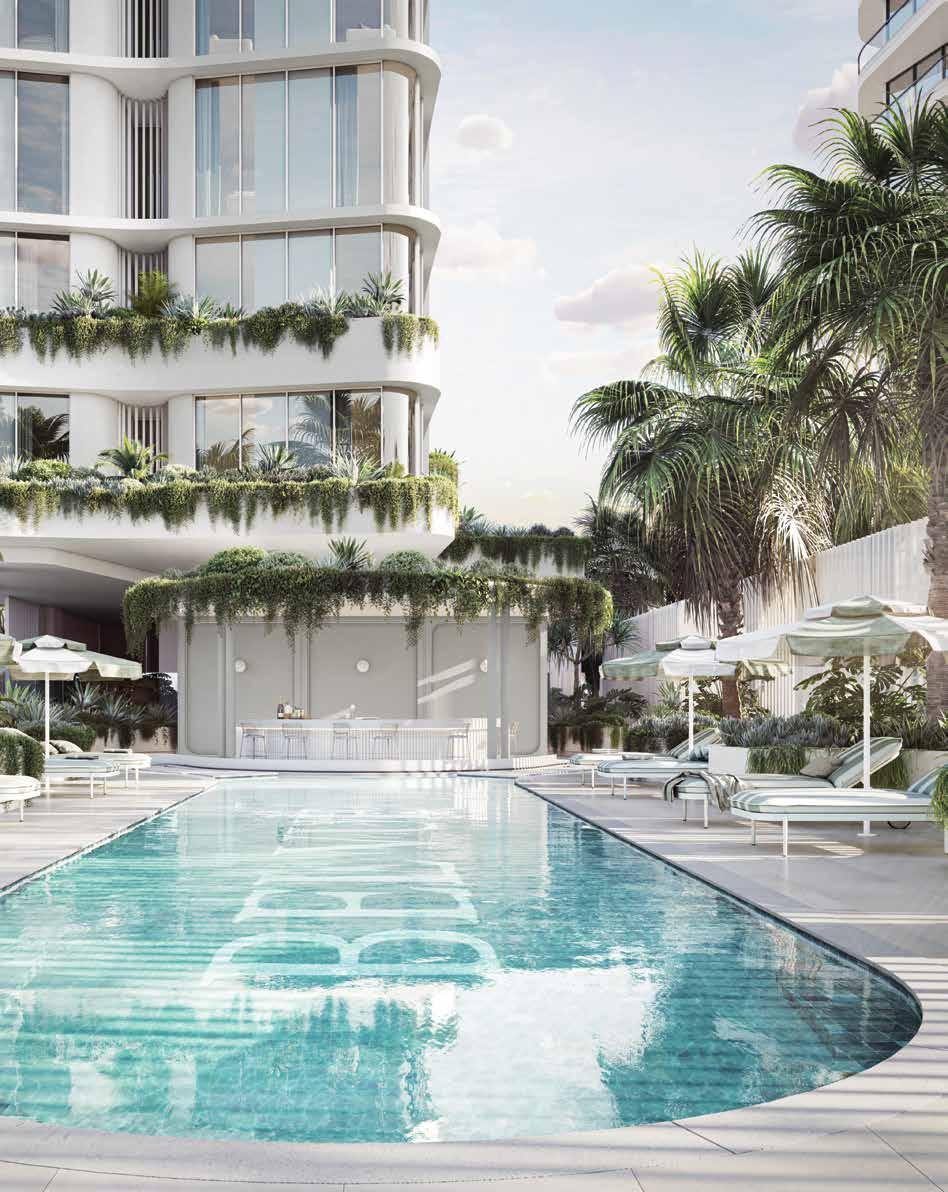
Issue 96 – covemagazine.com.au 95
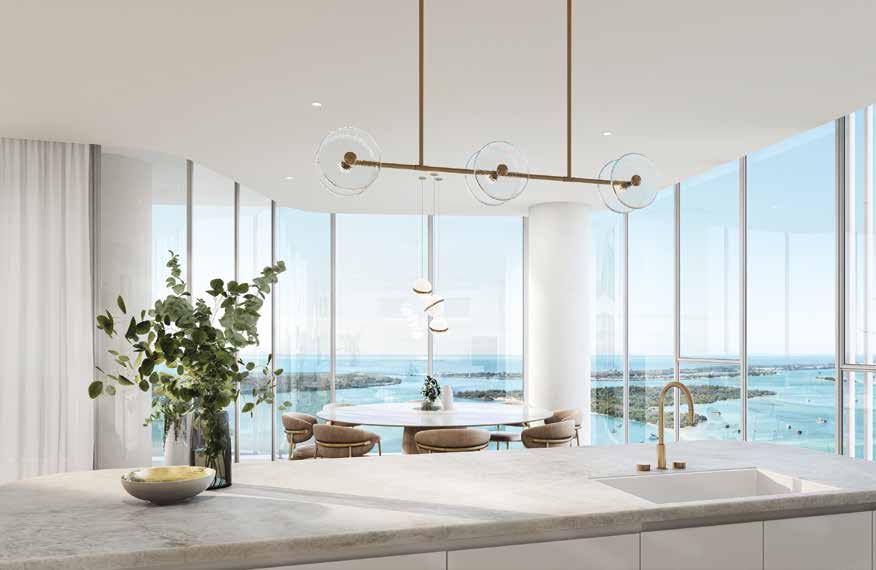
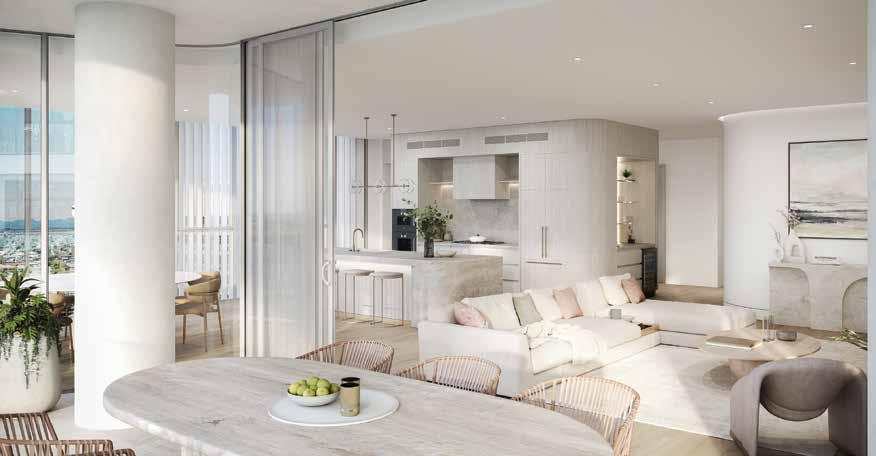
96 covemagazine.com.au – Issue 96
“If they are looking to elevate their lifestyle, the amenities need to not only match but surpass what they have grown used to.”
Belvue Broadwater at Runaway Bay is one project that is tapping into this market.
Being developed by Monaco Property Group (MPG), the luxury development comprises 31 full floor residences across 31 levels, with absolute Broadwater frontage and three tri-level fully detached luxury houses within a master planned, gated estate boasting unrivalled resort style amenities.
“Belvue Broadwater at Runaway Bay is the epitome of a lifestyle property and ticks every conceivable box for buyers in this lifestyle category,” Andrew said.
“Belvue offers a home in the sky with houselike proportions spanning 273sqm, with all of the amenities, luxury, and privacy these people are used to but without the maintenance.
“What really makes the project stand out is the expansive recreational areas; it’s like living in a 5-star resort with all the comforts of home.”
Plus Architecture has designed the building, its interiors and communal facilities, and director Danny Juric claims the configuration of the amenities has elevated Belvue to its ‘hyperluxe status’.
“Size does matter when it comes to recreational space,” Danny said.
“And the most outstanding thing about Belvue is that the recreation areas are not limited to one locality.
“Residents will have access to two distinctly different pool experiences, much like a resort.”
There is an infinity style pool on the waterfront that has the wet edge looking over the Broadwater and out to Stradbroke Island.
Then there is a long lap pool in the centre, surrounded by subtropical foliage and lush vegetation which is sheltered, comfortable and private with a barbeque pavilion, cabanas and daybeds.
“The wet edge pool which boasts absolute Broadwater frontage, offers views towards the east, set within a beautifully curated space with a yoga deck, ideal for a revitalising morning wellness experience,” Danny said.
“The pool and lounging areas that are located in the middle of the site are west facing and there is a pool house reminiscent of the swim up bars in resorts.
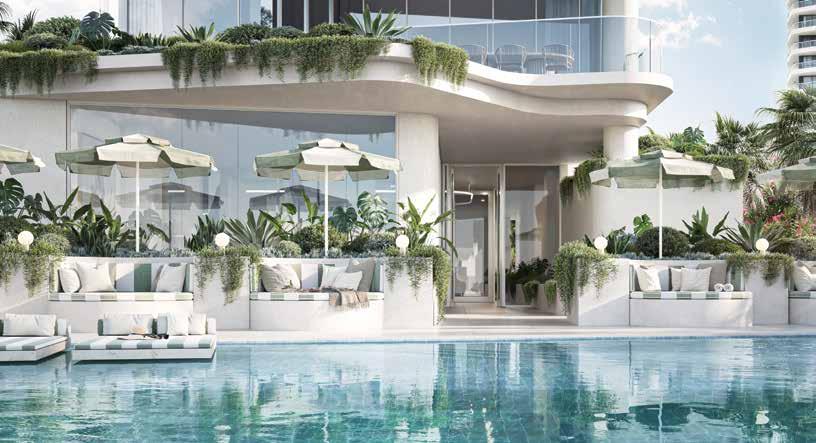
“This space has been designed to evoke feelings of tranquillity, like you’re on holiday, urging you to sit by the pool in a cabana, while the sun sets over you with a gin and tonic in hand.”
According to Danny, the intention was to create a lifestyle property that offered residents the feeling of being on holiday at home.
“We designed the recreation areas first and built the rest of the community around them, resulting in beautiful synergy between these stunning homes in the sky and two wonderful, curated environments for residents to recreate,” he said.
“Every aspect of the design at Belvue is considered, thoughtful and tailored to the people seeking a lifestyle upgrade.
“Residents will enjoy privacy and security in a low maintenance home of generous proportions surrounded by opulent facilities. What more could you want?”
The full floor residences offer uninterrupted, never to be built out Broadwater and Ocean views, priced from $3,545,000 in the first residential tower to be built in Runaway Bay in over 30 years.
The display suite, located at 15 Bayview Street, is open 7 days a week from 10 am to 2pm or by appointment. belvue.com.au | 0420 102 733
Issue 96 – covemagazine.com.au 97
FLAWLESS ELEGANCE
SHOWCASING A FLAWLESS fusion of classic and contemporary elegance, this magnificent waterfront estate in Sanctuary Cove promises the ultimate lifestyle of luxury and leisure.
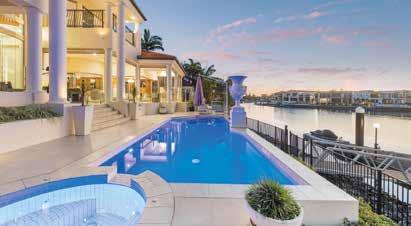
Presiding over a north-facing 1,054m2 block and enriched with romantic curves, soaring ceilings and quality finishes across three fully renovated levels, it's an opulent oasis of unparalleled living and entertaining.
Get set to host in style with a gourmet kitchen, a butler's pantry and bar area, complemented by a suite of superior options to gather with guests.
Come together in the formal lounge, crowned by a soaring 7m ceiling, and gaze out at the glorious water vistas, or take advantage of the living and dining zones that seamlessly integrate with the alfresco terrace.
Acting as a natural extension of the indoors, this expansive waterfront area is ideal for largescale celebrations.
Alternatively, retreat to a separate waterside entertaining pavilion for dusk drinks.
When it's time to relax, watch the passing parade of boats meander down the river from the alfresco terrace, soak up the sun by a 10m resort-style pool and spa or catch a movie in the modernised media room.
Five bedrooms also await, including a 6-star master suite with dual dressing rooms, a lavish spa ensuite and its own private outdoor sanctuary.
The home also boasts an executive office with bespoke cabinetry and a private entry, and a five-car basement garage with a lift to the ground floor.
Nestled within the sought-after Schotia Island precinct, this location also promises to be the ultimate boaties paradise.
Anchored on 38m of supersized and sheltered water frontage, not only is this one of the largest
in Sanctuary Cove, its position just off Main River is highly sought-after.
Enjoy immediate water access and views without any wake damage, plus an 18m pontoon that can accommodate up to a 70ft boat.
You will also enjoy the benefit of 24/7 security and access to Sanctuary Cove Country Club, the InterContinental Sanctuary Cove Resort and two of Australia's top 50 golf courses (The Palms and The Pines), as well as a world-class marina where specialty stores, restaurants and cafes line the water's edge.
Experience the superior style, space and quality of this stunning residence in one of the Gold Coast’s most prestigious enclaves.
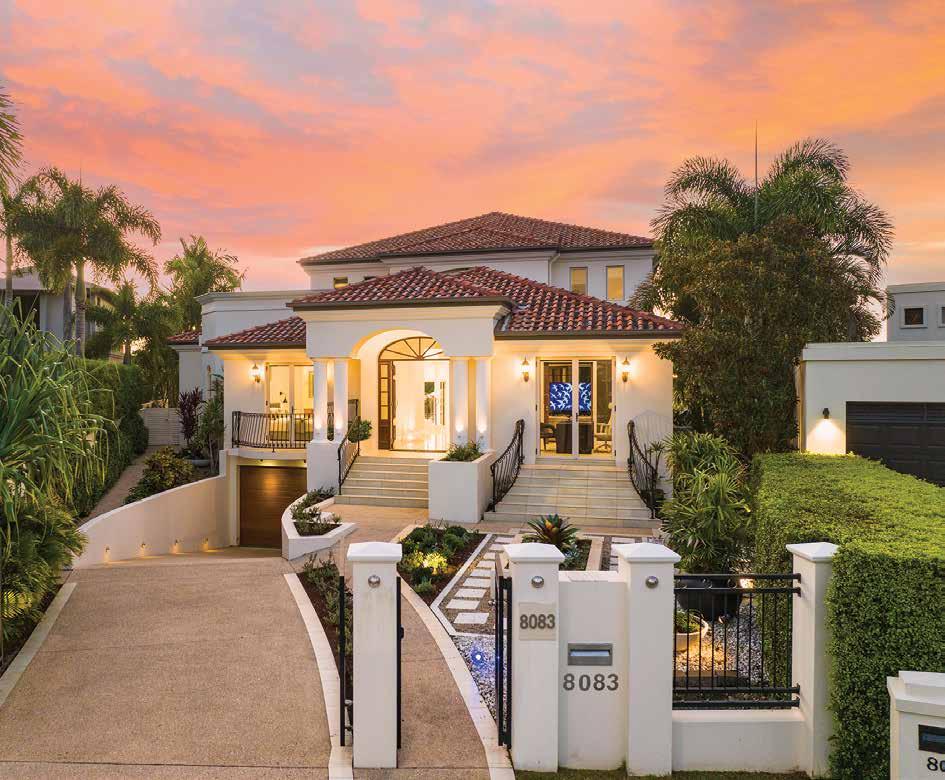
For more information contact Ivy Realty.
Ivy Wu 0433 103 586
Isaac Kim 0433 268 046
98 covemagazine.com.au – Issue 96 PROPERTY PORTFOLIO
Showcase home in a prized waterfront position.
8083 Riverside Drive


Sanctuary Cove
SHOWCASE OF CONTEMPORARY ELEGANCE IN A PRIZED WATERFRONT POSITION
Showcasing a flawless fusion of classic and contemporary elegance, this magnificent waterfront estate in Sanctuary Cove promises the ultimate lifestyle of luxury and leisure. Presiding over a north-facing 1,054m2 block and enriched with romantic curves, soaring ceilings and quality finishes across three fully renovated levels, it’s an opulent oasis of unparalleled living and entertaining.
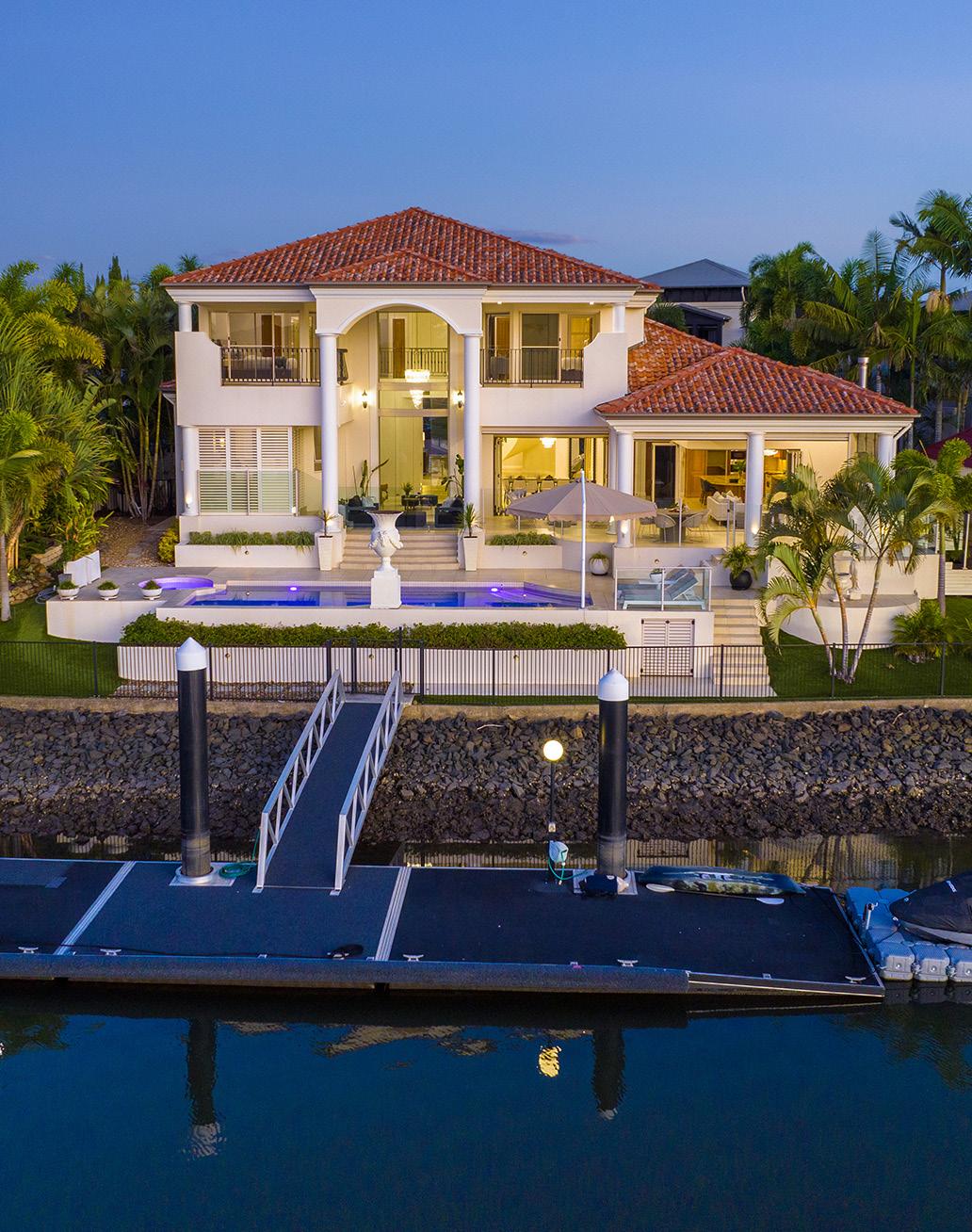
5
Ivy
吳 0433 103 586 Isaac
0433 268 046
4 5 1,054m2
Wu
Kim
ARCHITECTURAL ICON
Exceptional north-to-water home in Sovereign Islands.
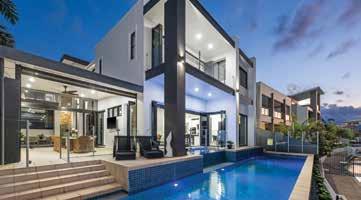
A FLAWLESS FUSION OF CLASSIC and contemporary design beckons with this tri-level architectural icon in Sovereign Islands.
Boasting a prized north-to-water aspect and presiding over a 716*m2 block, timeless natural finishes shine throughout the home, showcasing subtle sophistication in every room.
Enjoy the designer kitchen with Miele appliances, a light-filled living room that opens to the outdoors as well as a home cinema with screen, projector and surround sound.
Gather with guests for an unforgettable feast in the luxe dining room crowned by a stunning 6m* ceiling, or take the party to the all-weather alfresco area with outdoor kitchen amenities.
Afterwards, cool off in the waterside pool, soak away your stress in the spa or take advantage of your sheltered pontoon and 17.68m* water frontage with the Broadwater moments away.
Along with a six-car basement garage and games room, this masterpiece hosts five bedrooms, five bathrooms and an executive office.
Four bedrooms grace the upper level, including an opulent master suite with walk-in robe, private waterfront balcony and a divine spa ensuite.
The remaining 5th bedroom is downstairs, with an elegant ensuite attached.
Positioned on a sought-after Sovereign Islands’ street, this peaceful waterfront precinct fronts the lush greenery of Hampton Park while overlooking a protected canal at the rear.
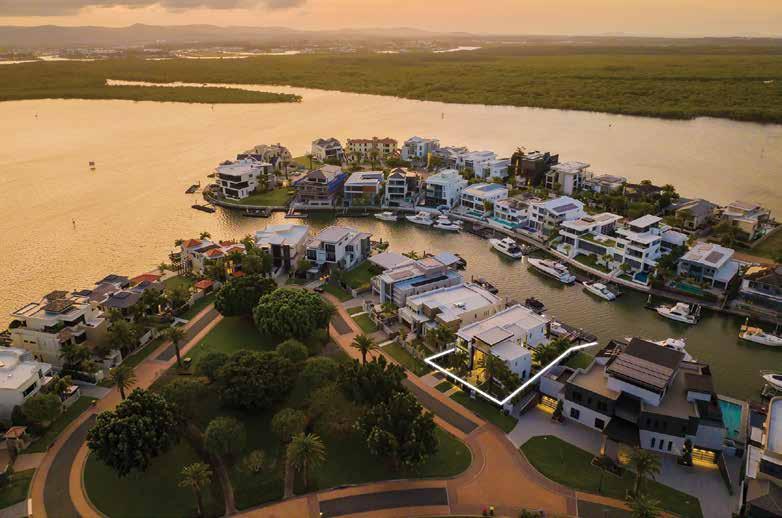
24-hour security presence affords residents absolute privacy and peace of mind, while the prime position allows you to make the most of being a short drive from the shops, cafes, restaurants, parklands and shoreline of Paradise Point.
This is a rare opportunity to secure a stunning trophy home in a prized waterfront location.
For more information contact Ivy Realty.
Ivy Wu 0433 103 586
Isaac Kim 0433 268 046
PROPERTY SPECIFICATIONS INCLUDE:
• Designer kitchen with Miele appliances.
• Combined butler's pantry/laundry.
• Luxe dining room crowned by a stunning 6m* void, with a wall of glass windows.
• Light-filled living room, opening to the outdoors.
• Cinema with screen, projector and surround sound.
• Five bedrooms, five bathrooms and office.
• Opulent master suite with walk-in robe, private waterfront balcony and a spa ensuite.
• Bedrooms 2 and 3 share a contemporary Jack'n'Jill bathroom, bed 4 with walk-in robe and ensuite.
• 5th bedroom (downstairs) with a Juliette balcony, built-in robe and an elegant ensuite.
• All-weather outdoor pavilion with BBQ, rangehood, bar fridge and bi-fold doors.
• Pool with waterfall feature and a central courtyard with spa and sunbathing area.
• Pontoon with power, 17.68m* water frontage.
• Six-car basement garage with adjacent pool room with bar.
*approximately
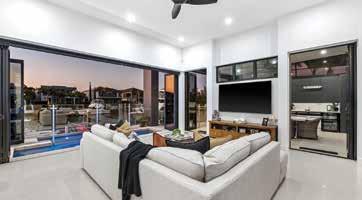
100 covemagazine.com.au – Issue 96 PROPERTY PORTFOLIO
21 Hampton Court Sovereign Islands
EXCEPTIONAL NORTH-TO-WATER ARCHITECTURAL ICON
A flawless fusion of classic and contemporary design beckons with this tri-level architectural icon in Sovereign Islands. Boasting a prized north-to-water aspect and presiding over a 716m2* block, timeless natural finishes shine throughout the home, showcasing subtle sophistication in every room. Enjoy the designer kitchen with Miele appliances, a light-filled living room that opens to the outdoors as well as a home cinema with screen, projector and surround sound. Gather with guests for an unforgettable feast in the luxe dining room crowned by a stunning 6m ceiling (approx.), or take the party to the all-weather alfresco area with outdoor kitchen amenities
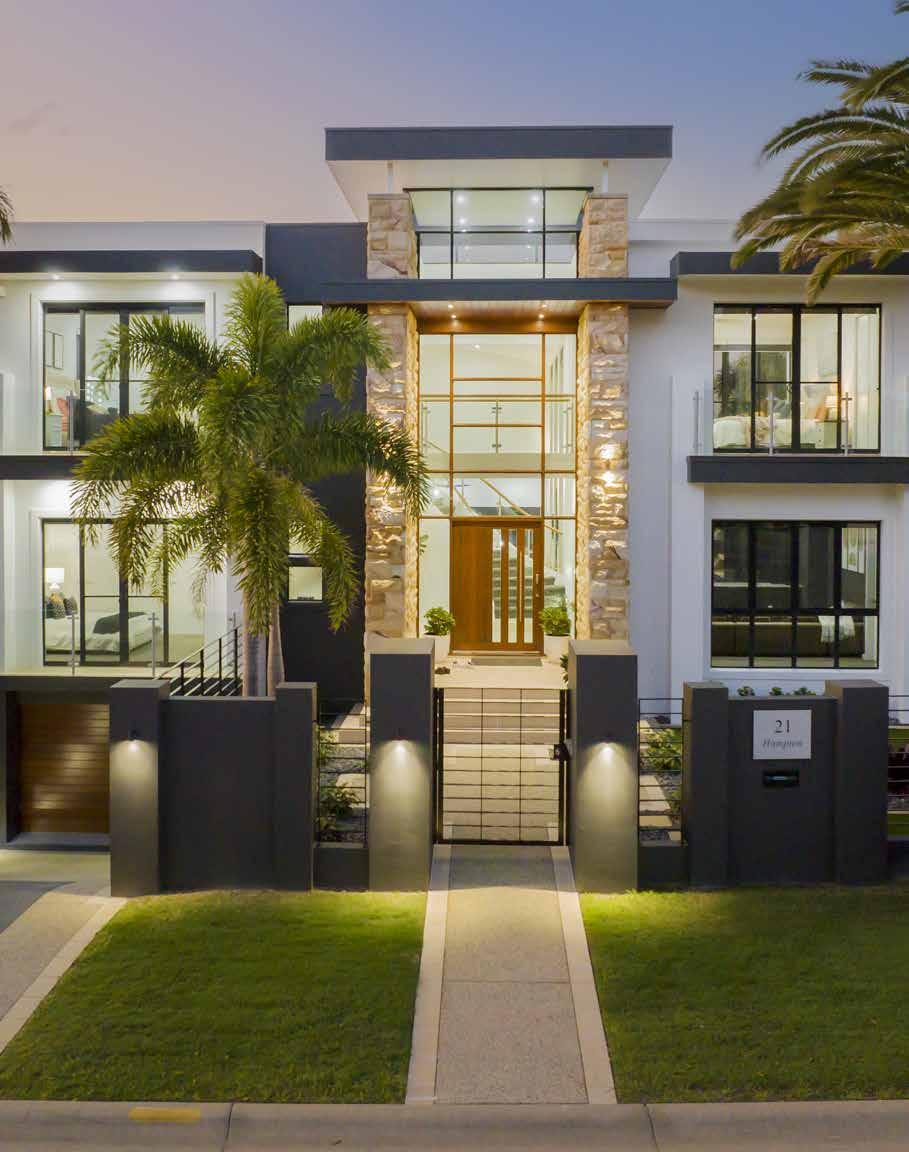
6 5 6
Ivy Wu 吳 0433 103 586 Isaac Kim 0433 268 046 AUCTION
716m2
13 th May 2023 , 10:30 am On-site
SHOWSTOPPER
Waterfront luxury and privacy on the Isle of Capri.
ARCHITECT-DESIGNED and offering superb river and skyline views, this showstopper promises 74 squares of unrivalled privacy and luxury living.
Taking pride of place on a 759m2 block, the stunning home is defined by meticulous attention to detail and quality finishes across two levels.
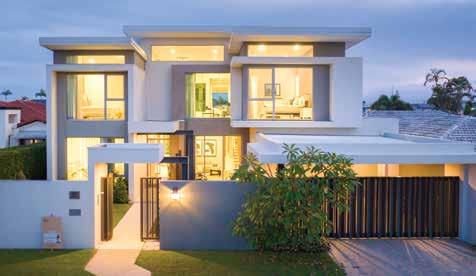
Natural light, sea breezes and picturesque panoramas dominate the interiors, with entertaining made easy via a wine room, gourmet kitchen with butler's pantry, plus multiple indoor and outdoor areas.
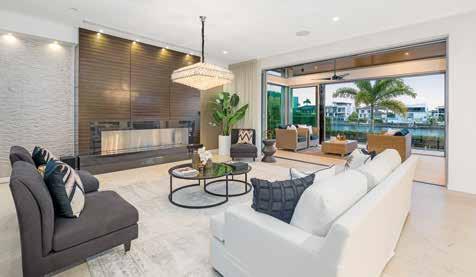
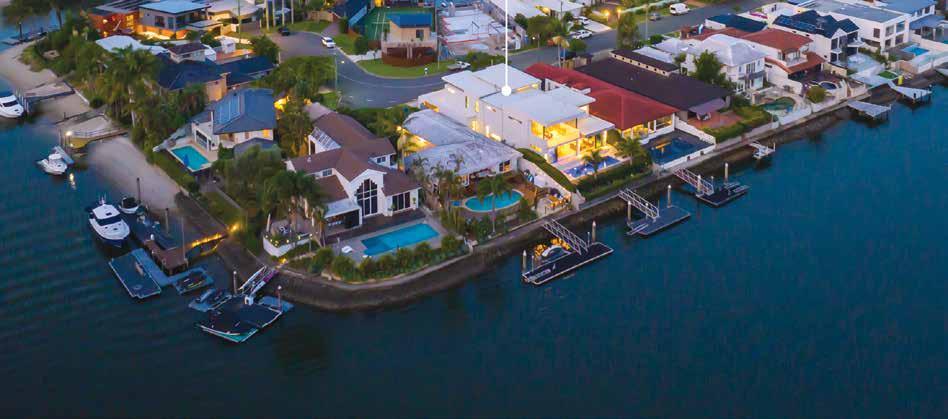
A seamless connection between the allweather alfresco terrace and kitchen, lounge and dining zone creates a sublime space for large-scale celebrations or casual catch-ups, with sparkling pool, river and city vistas lingering in the background.
Five bedroom sanctuaries grace the floorplan, the pinnacle being the sophisticated and oversized master suite.
Draped against skyline views, this sumptuous space is appointed with a custom dressing room, luxury ensuite and access to a riverfront balcony.
Three additional bedrooms with walk-in robes and elegant ensuites await on this upper level, along with a gym and sauna. Downstairs hosts the guest bedroom with ensuite, along with an executive office and powder room.
Positioned near the end of prestigious Amalfi Drive (with no through traffic), take advantage of being 850m from the popular Capri on Via Roma designer shopping and dining precinct.
Locals flock here for the boutiques, restaurants, cafes, health and medical amenities, as well as Harris Farm Markets – the Gold Coast's flagship store.
For a refreshing change of scenery, nearby Surfers Paradise or Broadbeach boast pristine beaches, delicious cuisine, ample shopping and non-stop entertainment.
Elite schools, TSS and St. Hilda's, are within a 6.6km radius, and the property also enjoys close proximity to HOTA – Home of the Arts and the Gold Coast Turf Club.
For more information contact Ivy Realty.
Ivy Wu 0433 103 586
Isaac Kim 0433 268 046
PROPERTY SPECIFICATIONS INCLUDE:
• Gourmet kitchen with butler's pantry, stone island and benches plus quality European appliances.
• Sprawling living and dining area with a bio-ethanol fireplace.
• Media room with surround sound downstairs plus upstairs lounge area.
• Sophisticated master suite with a dressing room featuring custom joinery, a luxe ensuite with freestanding bath and twin vanity, plus access to a riverfront balcony.
• Executive office with access to the central courtyard.
• All-weather alfresco entertaining terrace with built-in BBQ, overlooking the riverside pool.
• Private pontoon, wine room and powder room.
• Double garage with built-in storage solutions and internal access.
102 covemagazine.com.au – Issue 96 PROPERTY PORTFOLIO
ARCHITECT-DESIGNED SHOWSTOPPER, PROMISING WATERFRONT LUXURY AND PRIVACY
Architect-designed and offering superb river and skyline views, this showstopper promises 74 squares of unrivalled privacy and luxury living. Taking pride of place on a 759m2 block, it’s defined by meticulous attention to detail and quality finishes across two levels. Natural light, sea breezes and picturesque panoramas dominate the interiors, with entertaining made easy via a wine room, gourmet kitchen with butler’s pantry plus multiple indoor and outdoor areas. A seamless connection between the all-weather alfresco terrace and kitchen, lounge and dining zone creates a sublime space for large-scale celebrations or casual catch-ups, with sparkling pool, river and city vistas lingering in the background.
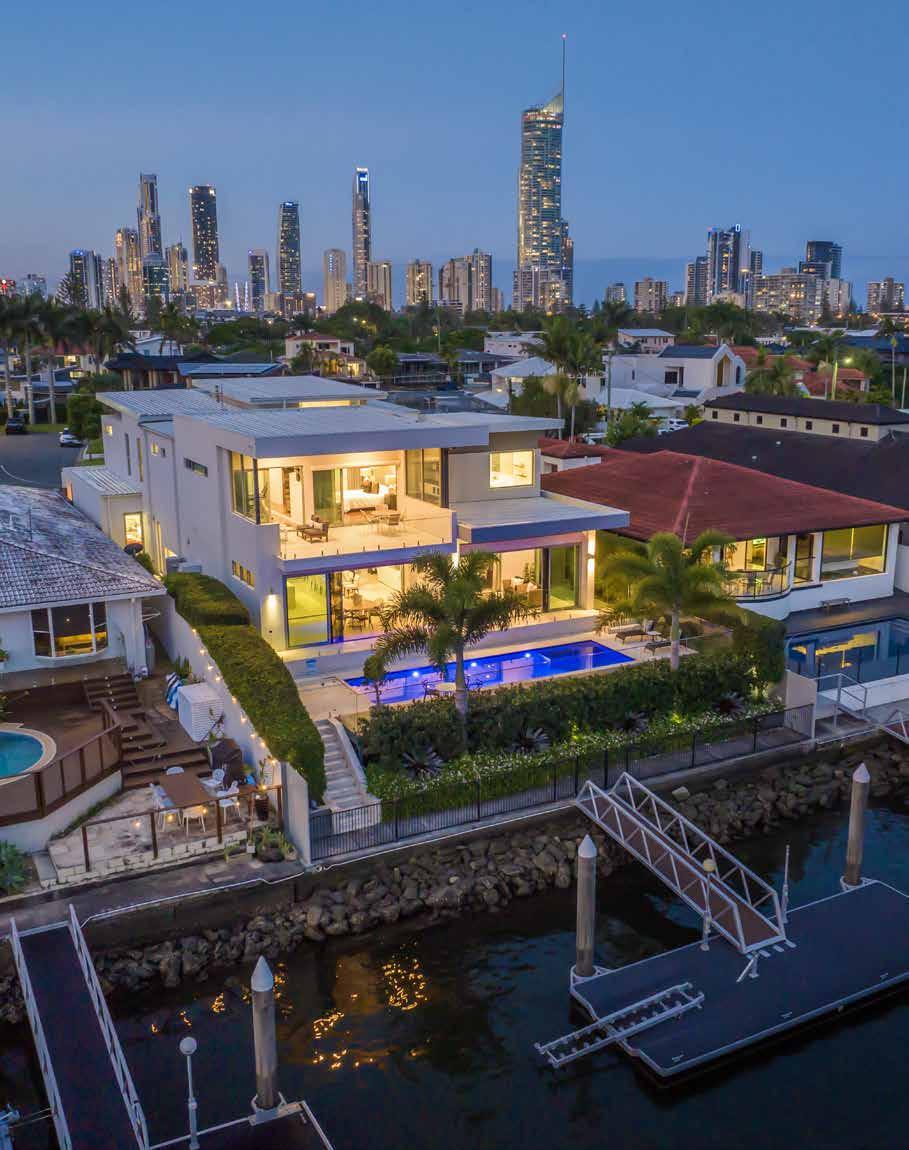
126 Amalfi Drive
Isle of Capri
5 6 4
吳
103 586
268 046
759m2 Ivy Wu
0433
Isaac Kim 0433
Ivy Wu
Awarded No.1 Agent


Paradise Point 2023
“Our clients are not just a number or transaction – they form the fabric of our business success. It’s why our relationships are genuine and long lasting, and why we are this area’s most trusted agents.” Ivy Wu, Principal, Ivy Realty.

A prestige property deserves a prestige agent, and Ivy Wu is proud to have represented Gold Coast’s finest luxury estates. For the exceptional sales experience and results you deserve, contact Ivy Wu on 0433 103 586 today.

07 5501 5564 | Shop 2 / 16-18 Falkinder Avenue, Paradise Point 4216 | ivyrealty.com.au
142 Paradise Parade Jacobs Well
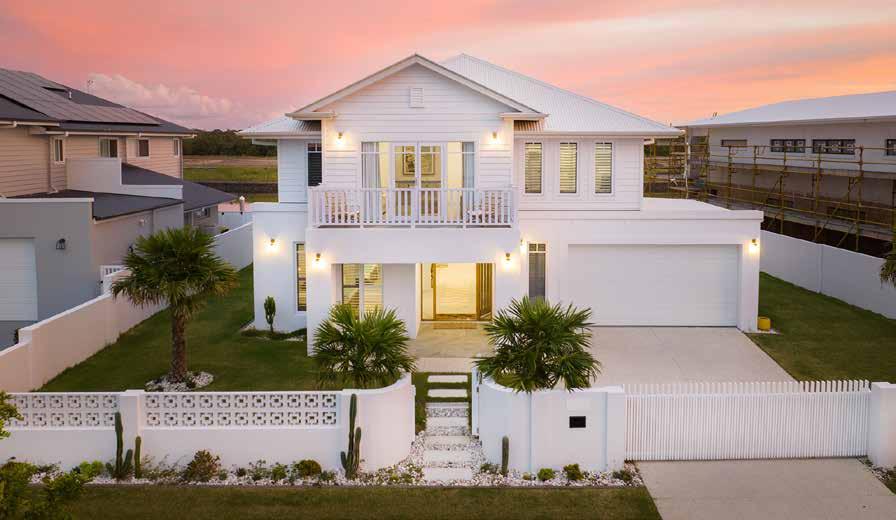
CONTACT AGENT


FLAWLESS FAMILY OASIS, OFFERING RELAXED WATERFRONT LUXURY
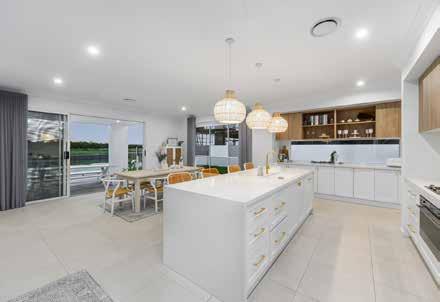
Life has never looked more enticing than at “The Bay”. Presiding over a 904m2 waterfront block in Calypso Bay, this exquisite family sanctuary epitomes relaxed luxury. Effortlessly light and bright throughout, it offers a flawless fusion of Hamptons and Palm Springs styles across two levels.
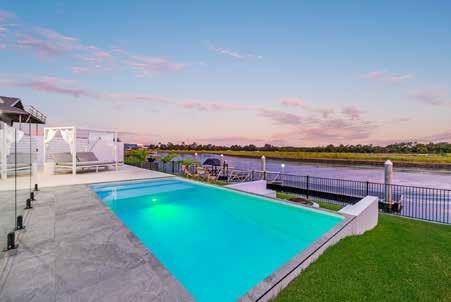
5 5 2 904m2
07 5501 5564 | Shop 2 / 16-18 Falkinder Avenue, Paradise Point 4216 | ivyrealty.com.au
Aidan Knox 0404 999 340 Ivy Wu 吳 0433 103 586
30-32 Brittanic Crescent Sovereign Islands
CONTACT AGENT

COVETED
PROPERTY OPPORTUNITY – BUY ONE OR BOTH BLUE-RIBBON WATERFRONT BLOCKS

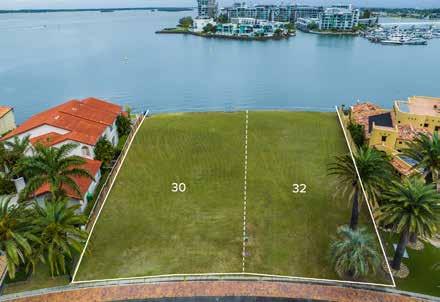
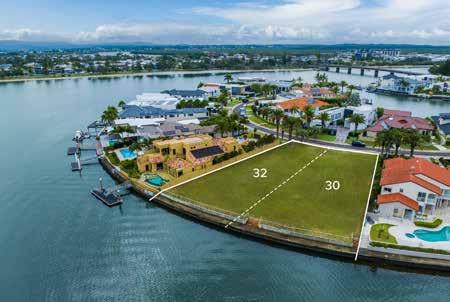
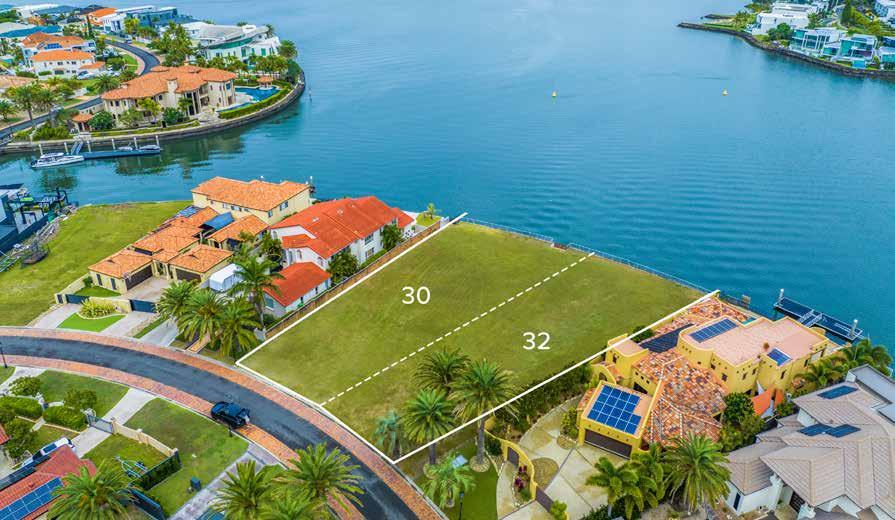
There’s no better place to build your dream waterfront residence than in the Gold Coast’s most exclusive estate, Sovereign Islands. Nestled within a peaceful and prestigious cul-de-sac, this blue-ribbon opportunity offers exceptional potential. Sprawled across two blocks, buy one or both coveted land holdings and create the ultimate luxury compound with extended views down the Broadwater to the iconic city lights.
2,120m2
07 5501 5564 | Shop 2 / 16-18 Falkinder Avenue, Paradise Point 4216 | ivyrealty.com.au
Ivy Wu 吳 0433 103 586
Isaac Kim 0433 268 046
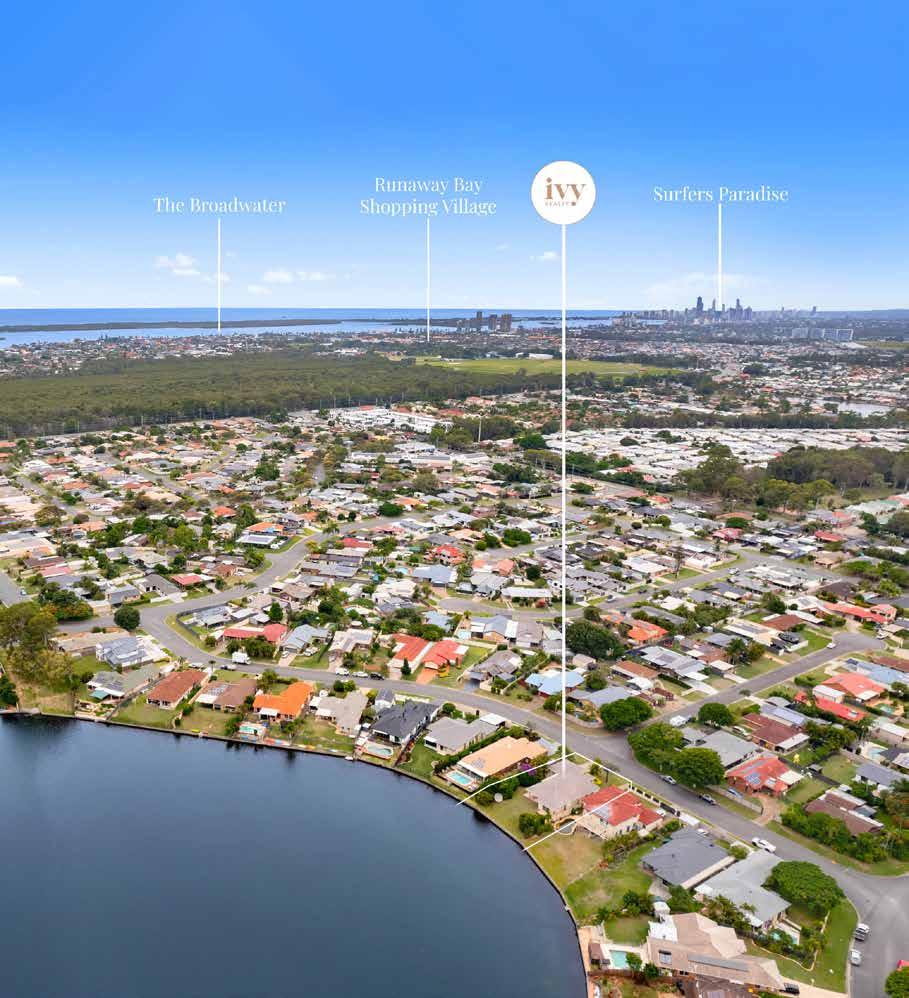



SOLD UNDER THE HAMMER $1,087,500 21 Lefroy Drive, Coombabah Teana Potter 0434 747 428 Ivy Wu 吳 0433 103 586 STREET RECORD PRICE 4 2 2 722m2
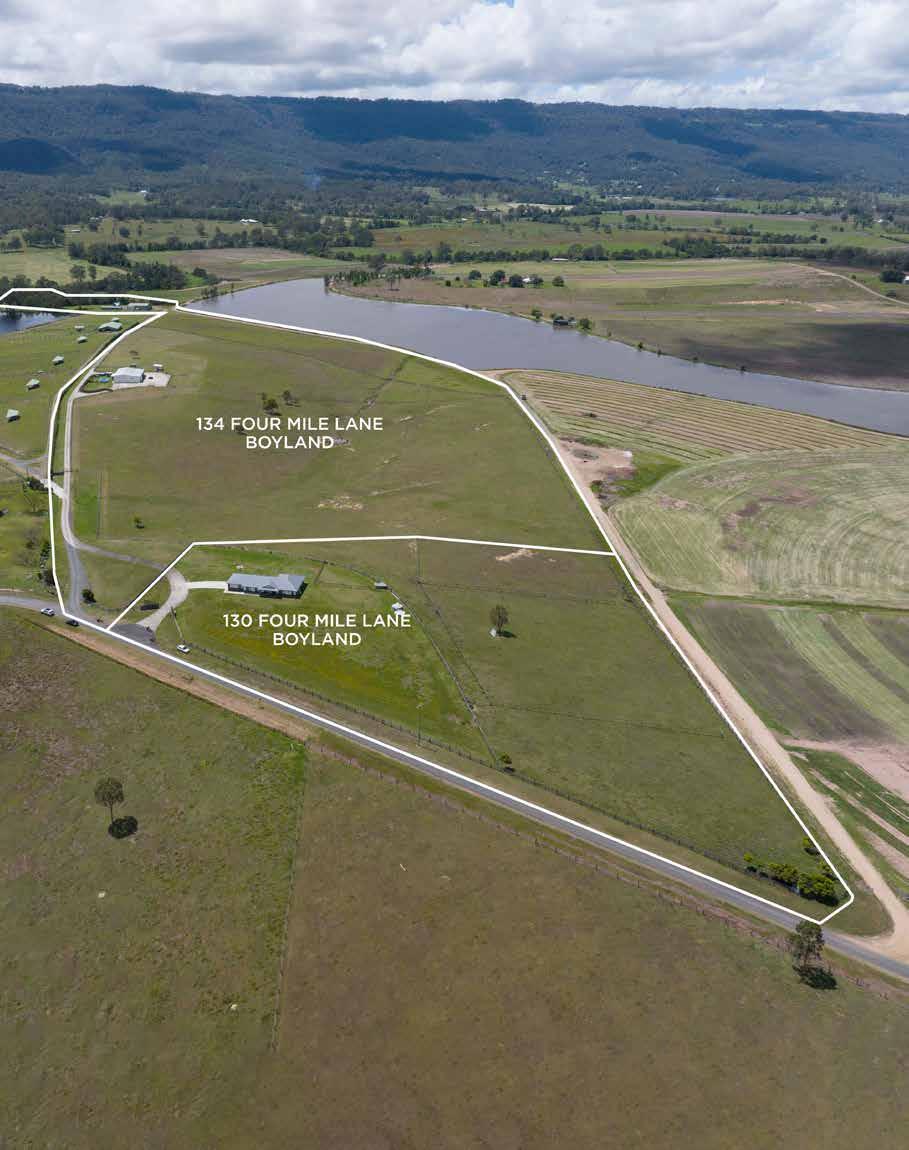



SOLD $3,300,000 130 & 134 Four Mile Lane, Boyland Dhi Vig 0402 401 888 Aidan Knox 0404 999 340 DREAM COUNTRY LIFESTYLE 4 2 2 2.6 Hectares
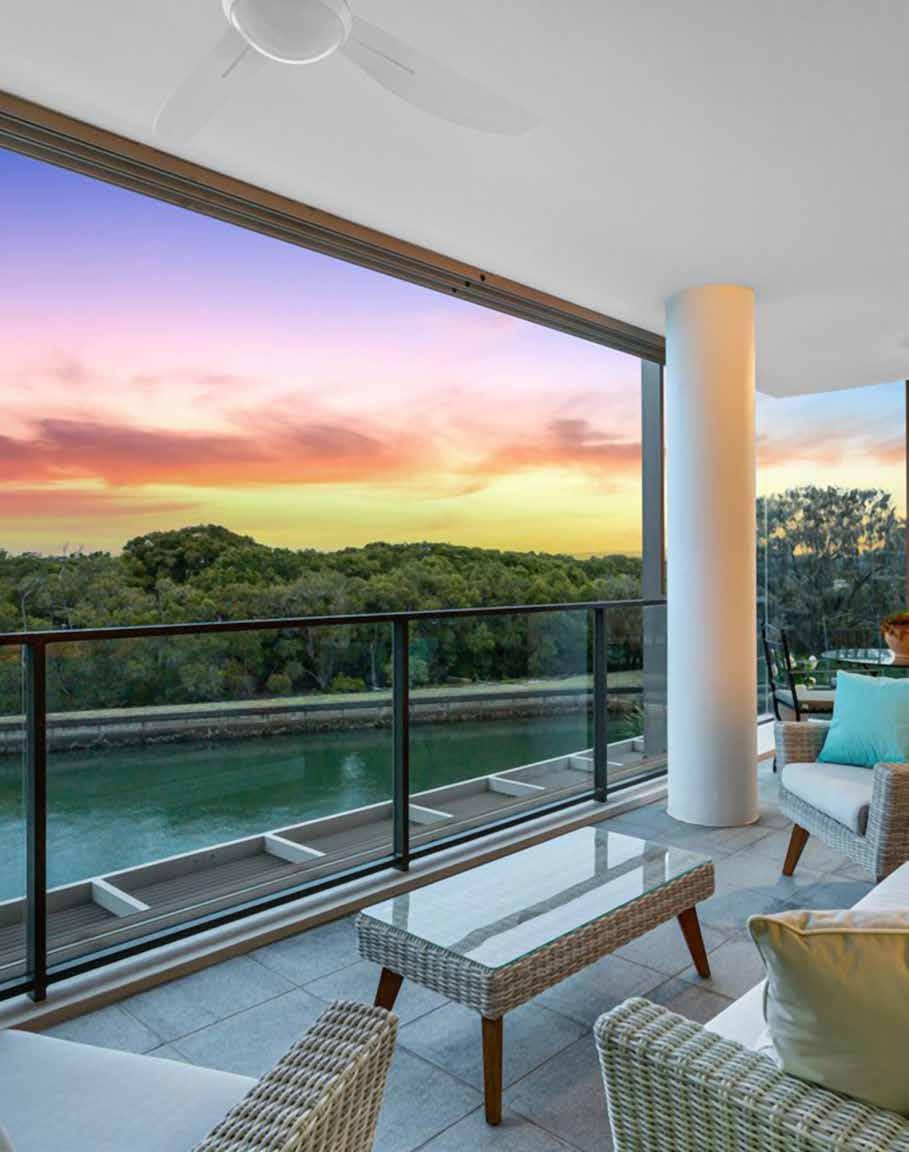


SOLD IN THREE WEEKS $1,428,000 29206/2 Ephraim Island Parade, Paradise Point Paige Dickason 0434 270 821 Ivy Wu 吳 0433 103 586 EXPANSIVE AND SECLUDED EPHRAIM ISLAND SANCTUARY 3 2 2 229m2
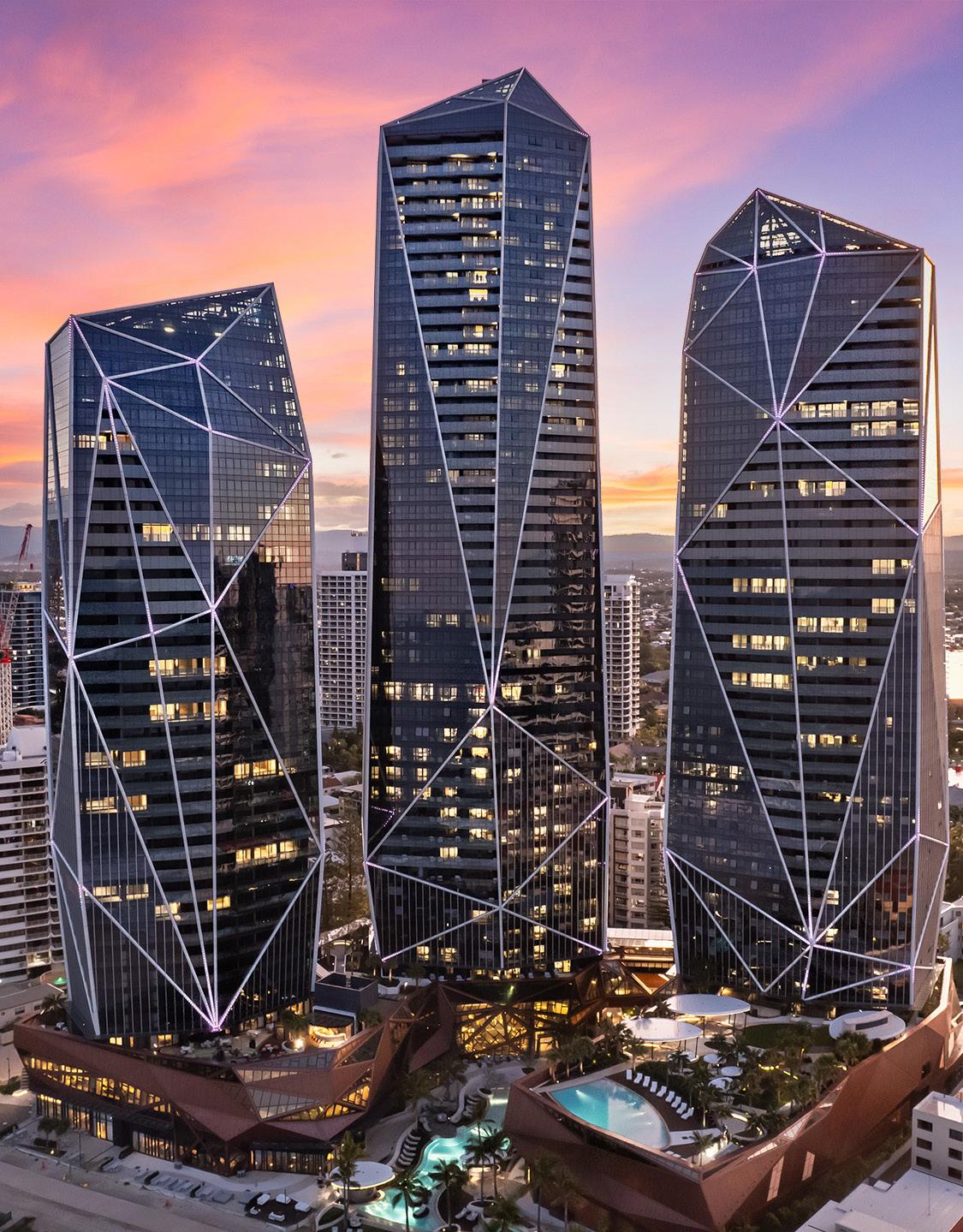

SOLD FOR A PREMIUM PRICE 11506/36 Old Burleigh Road, Surfers Paradise Ivy Wu 吳 0433 103 586 ABSOLUTE BEACHFRONT LUXURY IN ICONIC “JEWEL” 2 2 2 144m2 Dhi Vig 0402 401 888
7651 FAIRWAY BOULEVARD, HOPE ISLAND


Three things we love about 7651 Fairway Boulevard;

• Contemporary style family home with a great floor plan, on the gated and secure Fairway Island, Hope Island resort. Designed by award winning architect Stuart Osman.

• Light-filled spacious home built for entertainers- N/E facing
• The Ultimate privacy, waterfront facing with an extended view over the famous Links Golf Course
5710 OBSERVATION CRESCENT, SANCTUARY COVE

Three things we love about 5710 Observation Crescent:
• Stunning water views of the main river and harbour from throughout including the master suite, wrap-around balcony, and outdoor entertainment area
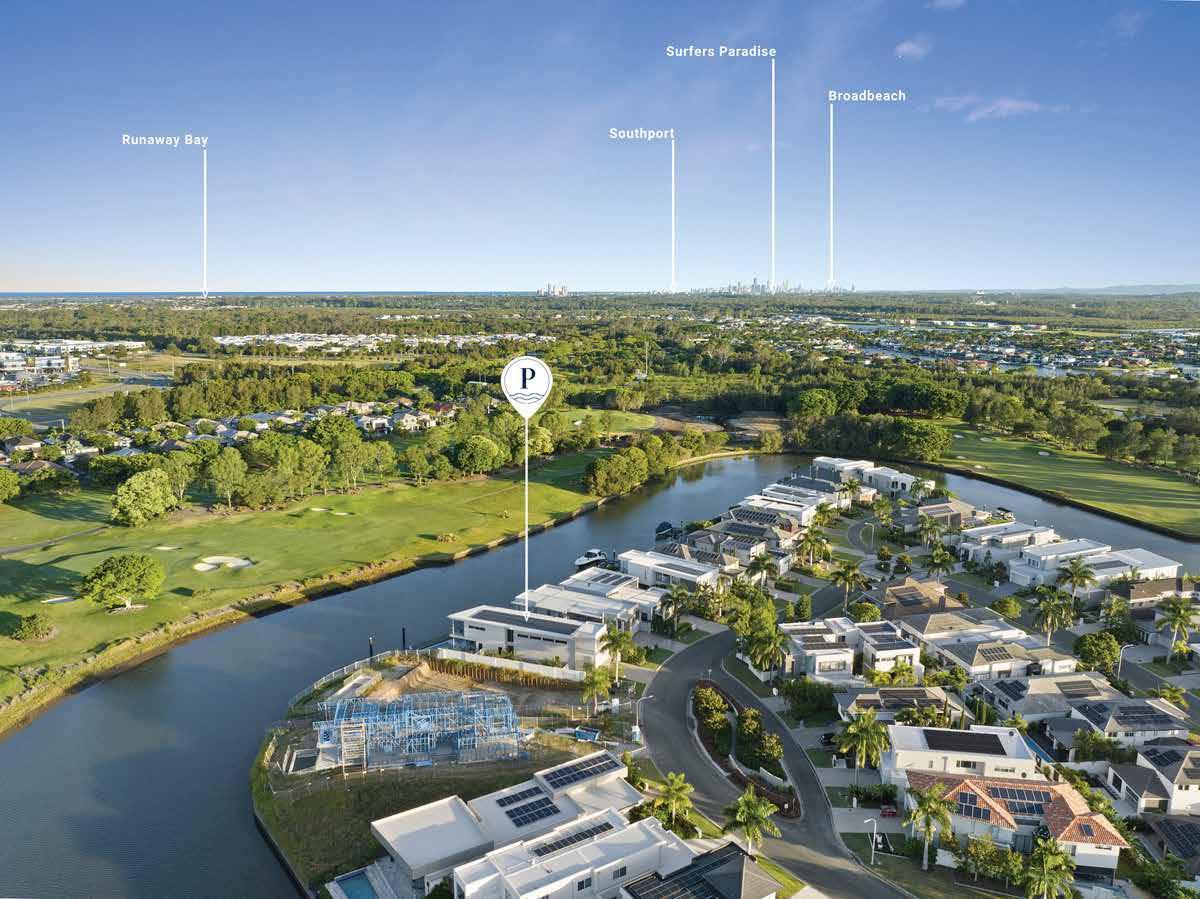
• The kitchen is a true masterpiece, featuring exceptional handmade woodwork decals, and high-end Smeg appliances
• This property spreads over three levels, with a massive outdoor entertainment area, a spacious pool, and a home cinema. The open plan living area and self-contained granny flat offer ample space for multi-generational living or for hosting guests.
4 4 2 ALEX PHILLIS 0411 600 300 JACOB LANNING
5 5 4 ALEX PHILLIS 0411 600 300 JACOB LANNING 0430 348 401
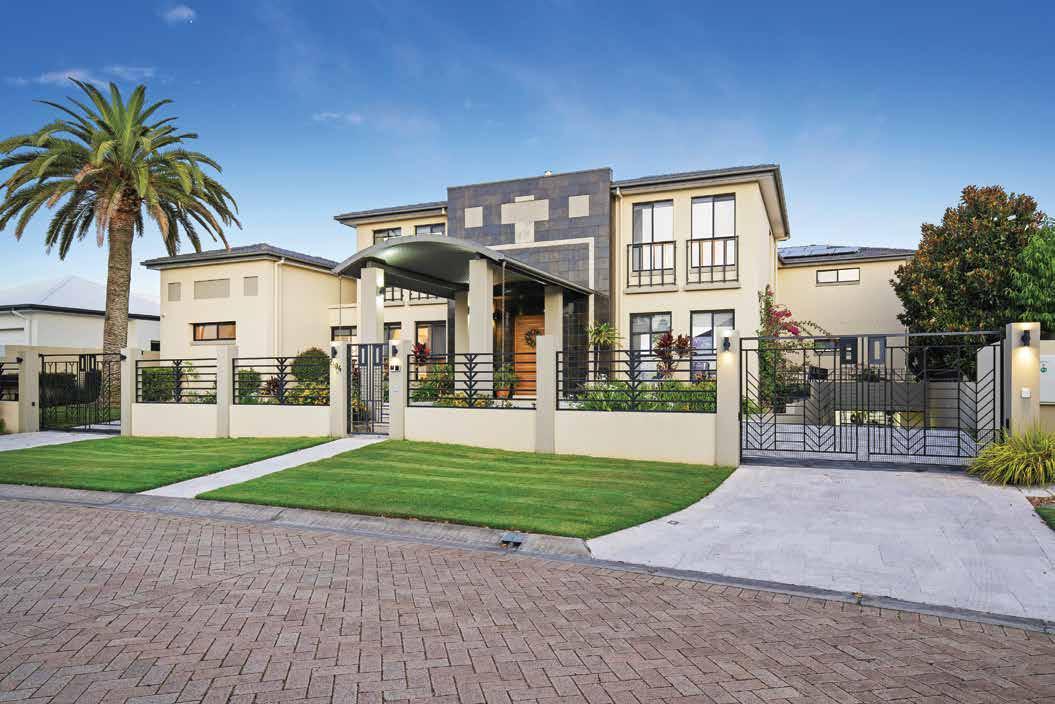
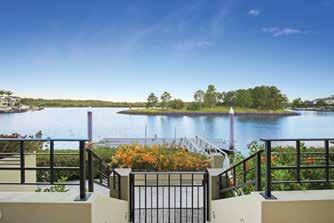
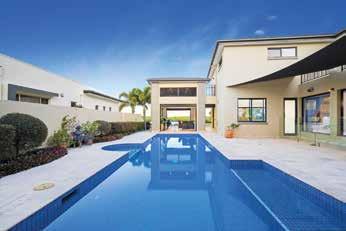

2104 THE CIRCLE, SANCTUARY COVE Three things you will love about 2104 The Circle: • Long Island inspired Mansion sprawling across 1,211m2 of prime north-east aspect, with 30 metres of waterfrontage over looking the Island and canal • Built by the current owners in 2007 featuring solid concrete and steel construction • 10-car basement, temperature-controlled wine cellar, home cinema, Otis commercial lift 5 6 10 ALEX PHILLIS 0411 600 300 alex@preqld.com.au
Prestige Property with a Personal Touch: Mercer & Cooper Expands Team

Mercer & Cooper have continued to expand their team to meet the growing demand for a personal and bespoke approach to real estate. The latest addition is Real Estate Agent Megan Smit, who joins the ranks alongside Sarah Boules, Donna Mercer, Candice Wootton, Lisa Megrath, Bernice Cooper and Matt Mercer. With a focus
on customised strategies and personal connections, the Mercer & Cooper team offers a unique approach to buying and selling prestige properties. As their reputation grows, the team is excited to welcome new clients and continue to provide unparalleled service in the heart of Paradise Point, Sanctuary Cove and beyond.
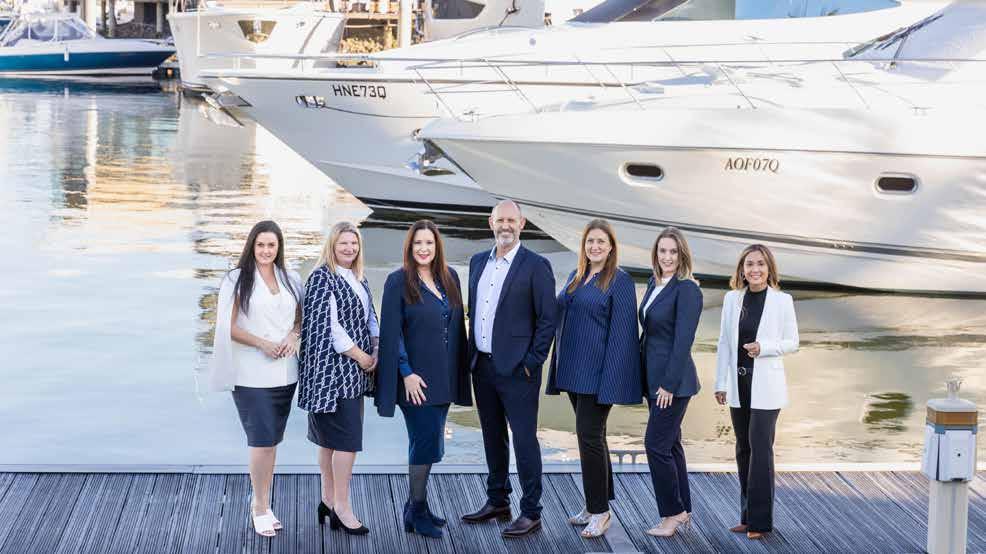
With Sanctuary Cove humming in the lead up to the Sanctuary Cove International Boat Show, it’s yet another occasion for Matt Mercer & Bernice Cooper to celebrate this enviable part of the world and welcome new homeowners to the region.
“I’ve been a resident in The Cove since 2012,” shares CoFounder Bernice, “There’s something truly unique about living here, you get to truly understand the appeal of the Northern Gold Coast that our clients appreciate.”
For the team at Mercer & Cooper, the Northern Gold Coast’s premier prestige property experts, it’s become even more apparent that both buyers and sellers in this market are seeking out a personal approach and customised strategy.
“We’re truly bespoke in how we relate to our clientswe’re the opposite of a large brand, and you will deal directly with myself and Bernice across the process,” explains Matt, “The one-size-fits-all approach simply doesn’t fit for prestige property. We’re dealing with emotions, connection, and a place to call home - it’s so much more than a few drone shots, staged photos, and a social media campaign.”
Not only are Matt & Bernice a formidable local duo in prestige sales and purchases, they’ve also acquired a multi-million dollar property portfolio between them, with their successful history of property development informing how they approach each client.
“We’ve developed and sold our own properties extensively - when you understand prestige property from this holistic angle, you’re looking beyond the figures,” Bernice adds, “It’s about a timely sale or purchase, consistent support and thinking outside the box.”
With a growing team of agents and property managers, the Mercer & Cooper offices are proudly positioned on Grice Avenue in the heart of Paradise Point, and there’s never been a better time to connect with Matt and Bernice for a coffee and a friendly and open conversation.
“Your property journey might just be getting started, or you could be at a different stage in your journey and we’re here to help you navigate the way forward,” shares Bernice, “Empowerment is all about choice, and we’re dedicated to giving every client (even before they decide to work with us) our honest advice and considerationsthat’s the very least that every client deserves.”
To discover what truly personalised and local property support feels like, visit Mercer & Cooper
Level 1, 12 Grice Avenue, Paradise Point. QLD, 4216
Call (07) 5626 9090
Bernice Cooper & Matt Mercer
YOUR LUXURY SALES SPECIALIST ON THE ISLE OF CAPRI HAS A NEW ADDRESS.
For more than a decade, locals on the Isle of Capri have been trusting luxury sales specialist, Sonja Smith with the sale of their home.
Sonja has built her reputation as a stand out prestige agent on care, compassion and tenacity to get the best deal for her clients.
We’re thrilled to have Sonja join the Harcourts Broadbeach | Mermaid team and our wider global network of 870 offices spanning 11 countries.
Two great brands have come together to create a powerhouse team set to dominate the Gold Coast prestige property market.
SONJA SMITH
0412 751 921
A WORLD OF OPPORTUNITY
Five beautiful Gold Coast apartments are up for grabs in RSL Art Union’s latest prize home giveaway.
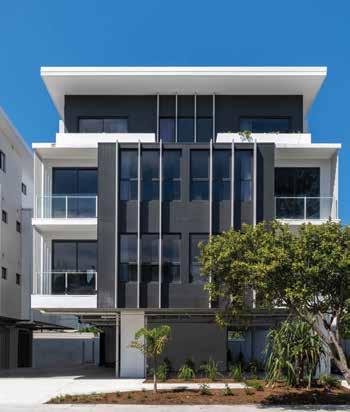
COULD FIVE STUNNING APARTMENTS just steps from the idyllic Bilinga Beach change your life?
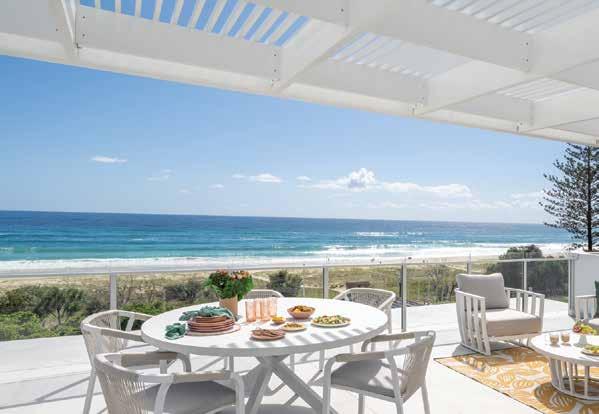
RSL Art Union thinks so.
One lucky winner could win the entire fivelevel apartment complex, and $500,000 in gold, simply by purchasing a $10 ticket to Draw 405 before 24 May.
With five beautiful apartments, featuring five different globally-inspired décor themes, you’ll feel like every day is a vacation.
Four apartments have two bedrooms and two bathrooms, with the fifth penthouse apartment sprawling two levels with four bedrooms, two bathrooms and an expansive rooftop entertaining area.
Apartment One – Vibrant Mediterranean: With white plaster walls forming the perfect canvas for luxe beachside living, the apartment’s airy spaces are playfully supported by accented colours to complement the views found beyond the balcony.
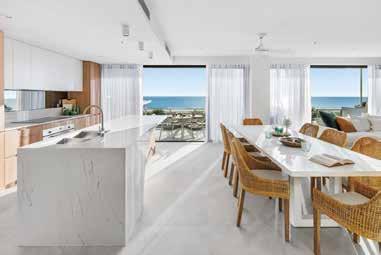
The detailed use of natural materials in finishes, furnishings and décor include wood, rattan, tile, ceramics, terracotta, linen, and cotton.
Apartment Two – Sophisticated Scandinavian: Highlighted with classic minimalistic style, the décor in apartment two features a blend of textures and soft hues to create a warm and inviting feel.
The neutral walls are complemented by ash and navy soft furnishings, while the modern furniture is warmed with blonde-wood accents to give the spaces a contemporary, yet organic presence.
Apartment Three – Exotic Moroccan: Step into apartment three and you will immediately notice the colour, textures and fluid lines inspired from the Moroccan landscape and Moorish culture.
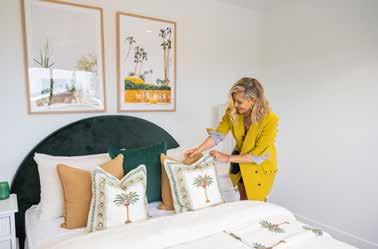
The beautiful décor features shapes and colours that lead your mind to the rolling sands of the desert, with vibrant pieces inspired by the bazaars of Marrakesh.
Apartment Four – New York Loft Chic: Bringing an industrial feel to the coast, the considered style in apartment four focuses on neutral tones for a distinctively clean and minimalist look.
The mix of materials coexists beautifully – wood contrasts with metal, while industrial style lamps support the abundance of natural light flowing from the balcony.
Apartment Five – Classic Palm Springs: The spectacular two-level penthouse oozes all the contemporary glamour that Palm Springs design is famous for.
Clean lines, luxurious pops of gold and ample sunshine can be found throughout this stunning penthouse, especially the spacious rooftop entertaining area which boasts breath-taking ocean views.
Each ticket sale for RSL Art Union’s Draw 405 works to support veterans and their families, with proceeds going back to the charity.
“We’re excited to be announcing yet another incredible prize with a spectacular five-level complex at Bilinga Beach up for grabs,” says
Deborah Pescott, General Manager Lotteries
Commercial and Investments at RSL Art Union.
“It’s initiatives like this that demonstrates RSL Art Union’s commitment to veterans who have served our country.
“Our end goal will always be to deliver critical funding to support returned soldiers in need.
“Money raised allows RSL Queensland to not only help veterans, it also assists in funding programs for veterans in need.”
In total, the winner will walk away with 12 bedrooms, 10 bathrooms, one powder room, five two-car tandem garages, one visitor parking spot, shared BBQ area, pool, and garden areas on a 506 sqm land block with picturesque sunrises and ocean views from the penthouse rooftop entertaining area.
In addition, the properties have been professionally styled with furnishings and appliances worth $425,213.
Draw 405 is open now and will close at 8pm AEST on Wednesday 24 May with the winner drawn at 10am AEST on Wednesday 31 May.
For more information on Draw 405 and the RSL Art Union, visit: rslartunion.com.au/prizes/draw405
T&Cs apply. Results & T&Cs at rslartunion.com.au
Issue 96 – covemagazine.com.au 117
LUXURY LIVING
VIRTUAL VIEWING
What's the view for you at Marina Point?
SETTING A NEW BENCHMARK for interactive technology, the virtual tour of Marina Point Apartments allows you to explore the apartments, facilities and views in brilliant 3D.
Discover the magic for yourself, with a walkthrough of the extraordinary new waterfront residences and complex facilities.
This state-of-the-art tour allow you to view all aspects of the project including:
• What the amenities will look like, including the fabulous resort-style pool and entertainment area and resident's waterfront lounge.
• The hectare of lush green space for fun and play.
• The design and layout of the complex.
• The exact view from the apartments.
The most exciting feature of the virtual tour is the sneak peek into the view you'll get as you relax on your secluded balcony or look out your bedroom windows as you wake in the morning.
From Marina Point, you have your pick of spectacular outlooks, with some floorplans offering two oversized balconies and views spanning both directions.
Do you prefer the sparkling Coomera River and its effervescent life of meandering boats and winding waterfront esplanades, or the Bali-style resort amenities filled with tropical trees and glittering pools?
The choice is yours … or perhaps you can enjoy both?
Flawlessly designed for space and comfort, the Marina Point apartments offer spectacular waterfront living and are available as two bedroom, two bedroom plus study or three bedroom configurations
You can view the virtual model and tour, floorplans and samples of the magnificent finishes at the Marina Point Showroom, 93 Sheehan Avenue, Hope Island. marinapointapartments com au 1300 424 127
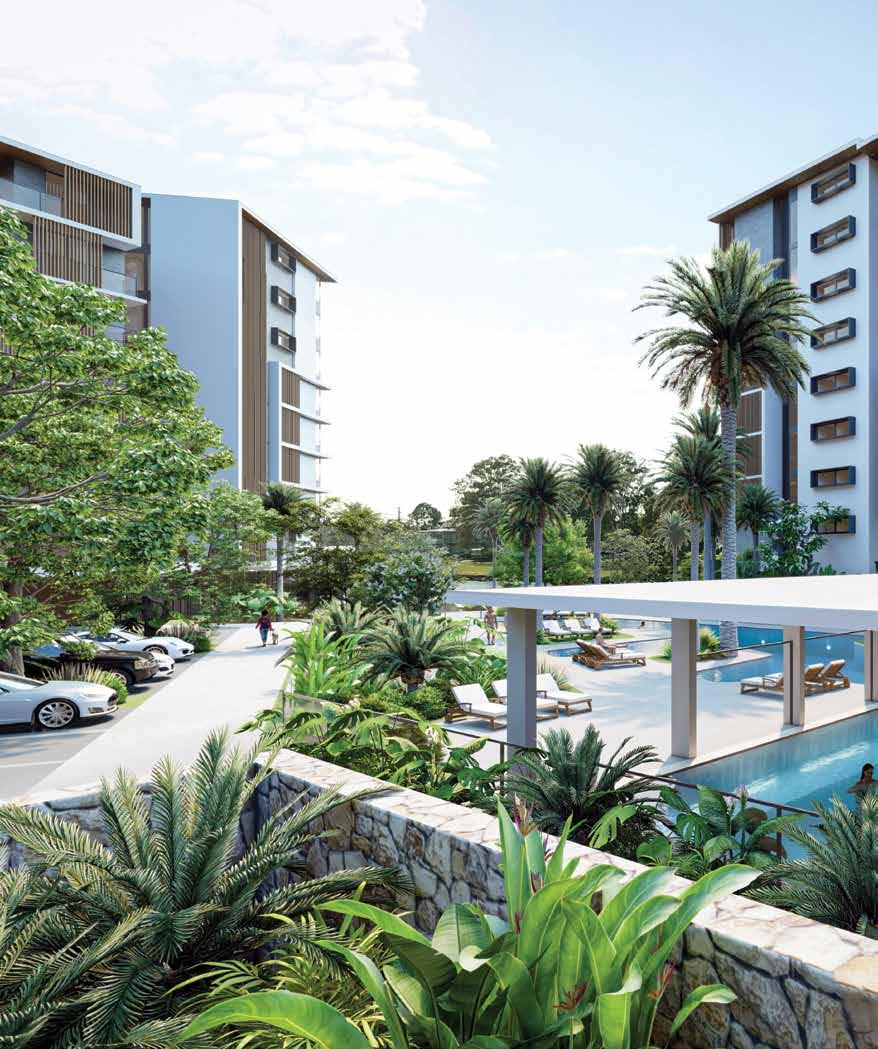
118 covemagazine.com.au – Issue 96 PROPERTY PORTFOLIO
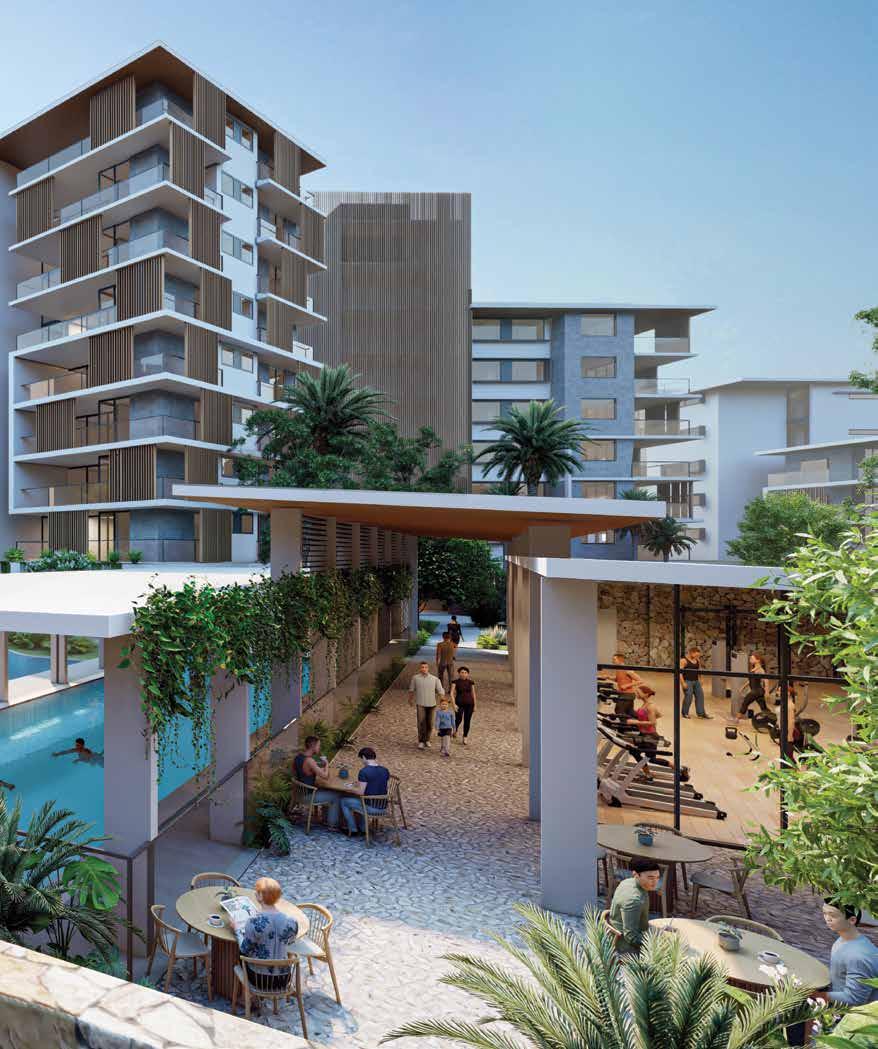
Issue 96 – covemagazine.com.au 119 PROPERTY PORTFOLIO
UPGRADE AWAY
Palm Lake Resort Pelican Waters offers an elevated level of over-50s living.
PALM LAKE RESORT PELICAN WATERS has just released its highly anticipated home designs and these abodes are something else.
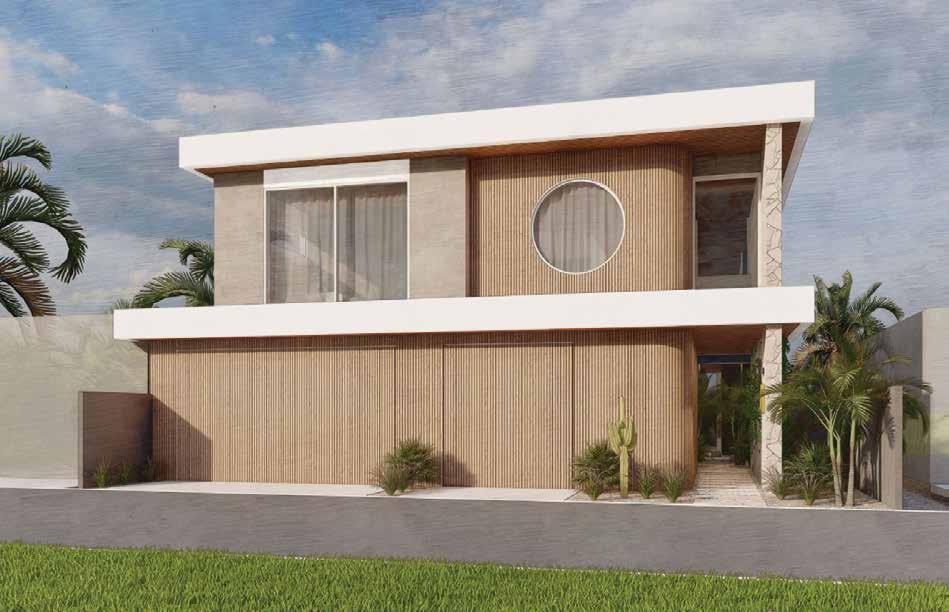
Unlike anything ever seen before across the Palm Lake Group portfolio, these homes will honour the sophistication and class that the resort’s muse, Palm Springs, does so well.
Inside, you’ll find a host of incredible features, again, not seen before across the Palm Lake Group.
And there’s a variety of optional upgrade packages available that will make life extra sweet for the lucky homeowners who get to call this exclusive Sunshine Coast address home.
Palm Lake Resort Sales Manager Alysia Nechvoglod says the home automation upgrade
package adds a host of extras such as built-in surround sound, for example.
There will also be upgrade options in the kitchen (including built-in coffee machines and a sommelier drawer to enhance your wine fridge) and you can even upgrade your laundry by opting to integrate your front-load washing machine/dryer into the cabinetry.
“All of our homes here at Pelican Waters will have soaring ceilings and over-sized doors to create a sense of vastness and space as soon as you step inside,” Alysia says.
“While every home has a main alfresco dining area, some also offer an additional courtyard, again, to enhance the feeling of space.”
The Palm Lake Group has also been fortunate to work alongside Billi Australia to commission a custom, one-of-a-kind Billi tap as standard for the kitchens of every Palm Lake Resort Pelican Waters home.
Featuring brushed brass and a unique gooseneck shape, you can access still water, sparkling water and boiling water all from the one tap.
Kitchen InSinkErators will also be standard at Palm Lake Resort Pelican Waters.
With design names like Cimarron, Avondale, Bermuda, Escena, Ivey, Mesquite and Santa Rosa, Palm Lake Group designers have channelled the Palm Springs aesthetic while listening
120 covemagazine.com.au – Issue 96
LUXURY LIVING
very carefully to the needs of the modern over-50s demographic.
These homeowners are often called on to support their children with the raising of their grandchildren.
This is also a much more social demographic than it once was and, for all those reasons combined, Palm Lake Resort Pelican Waters homes have been designed for optimum space and sharing.
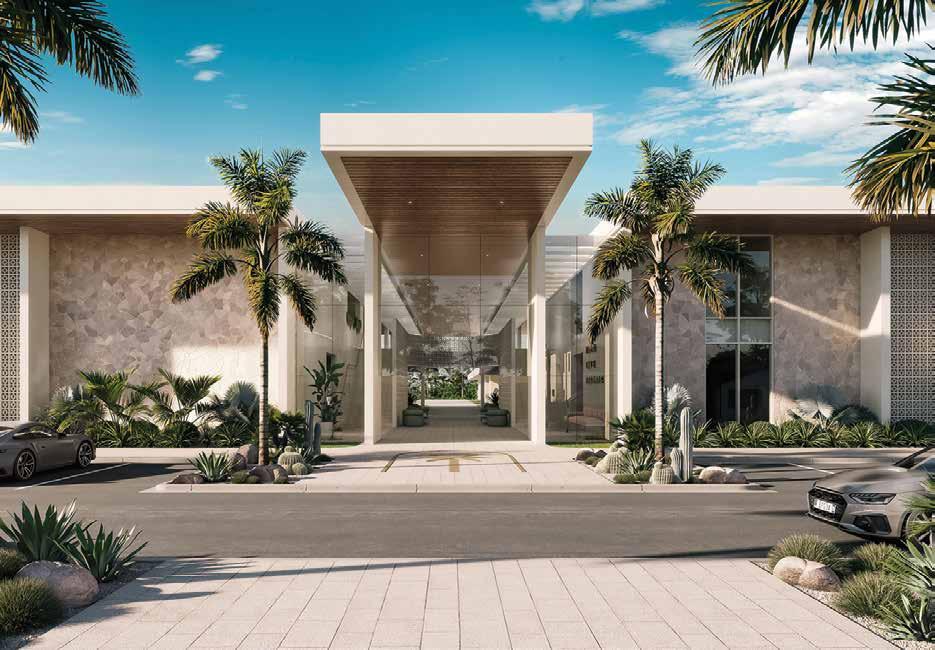
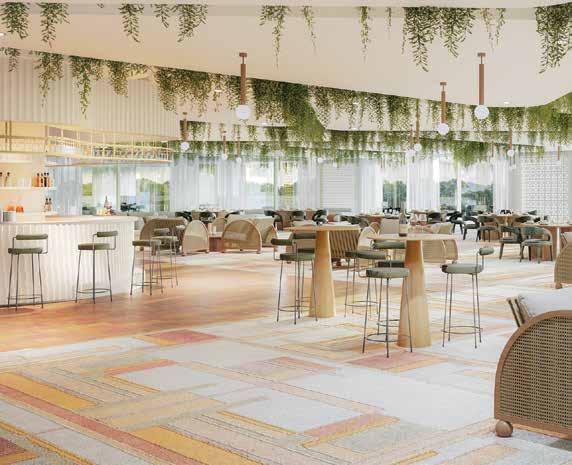
For example, the Cimarron is a three-bedroom (plus activity room), 3.5-bathroom abode where its dedicated guest room offers its own ensuite.
Some homes have master suites that are selfcontained spaces, offering their own kitchenettes for that convenient morning brew.
When complete, Palm Lake Resort Pelican Waters will feature 153 single-storey and 179 double-storey homes.
Homeowners will enjoy their choice of everything from waterfront to golf frontage home sites – and some of the luckiest homeowners will have access to both from their doorsteps.
The resort itself is nestled right alongside the award-winning, Greg Norman-designed Pelican Waters Golf Course on a swathe of stunning waterway behind the Sunshine Coast’s finest beaches.
It’s definitely a masterplan that’s already stirring immense interest, both here in Australia and internationally.
For expressions of interest, FREECALL the Palm Lake Resort Pelican Waters Sales Team on 1800 490 626
Issue 96 – covemagazine.com.au 121
Fun in the sun
The Safi collection by Vincent Sheppard offers timeless comfort and pleasure. Based on pure craftsmanship, the handwoven furniture adapts naturally to each environment and will enhance any rustic outdoor space. The range consists of sunloungers, lounge chairs, sofas, coffee tables and side tables in four colours and various fabrics. Available at Cotswold Furniture. cotswoldfurniture.com.au
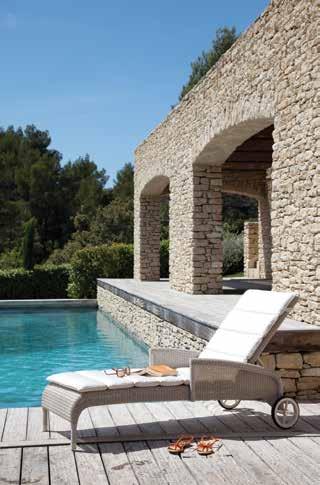
Gorgeous geometrics
Driven by colour and craftsmanship, the new Overlay Rugs by Danielah Martinez balance block shapes with textured layers for a modern geometric aesthetic. Carefully hand-tufted in India with quality New Zealand wool, Overlay is designed for long lasting comfort with playful timelessness and is available in five different styles, ranging from bright to neutral hues. designbythem.com
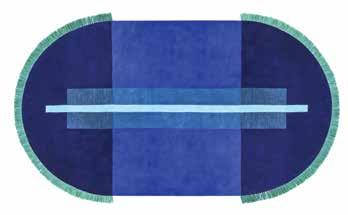
Embracing comfort
Exuding an air of lightness and harmony, Stressless Tokyo has a slim back with a comfortable and soft padded cushion. Add the well-known Stressless features and you get a modern-looking recliner with sublime comfort. This elegant, balanced pastel is available at Design Initial, Gold Coast and Brisbane. designinitial.com.au
BLUE HUES
Light it up
A design piece to complement any room, the Antonio light blue table lamp features contemporary curves and a classic colourway. earlysettler.com.au
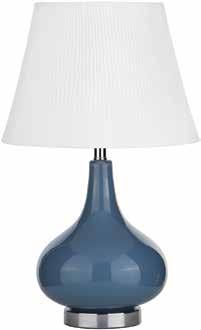
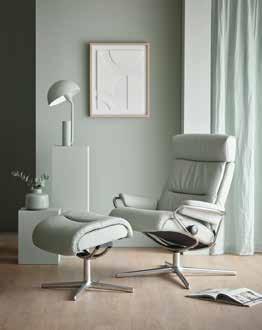
Painter’s prints
Megan Grant’s artworks are vivid and complex explorations of the language of paint – colour, texture and brushstroke. She works intuitively on canvas, with gestural mark making and layers built upon layers, every piece a journey of searching for balance and meaning out of chaotic beginnings. Each print is accompanied with a signed and numbered certificate of authenticity. fentonandfenton.com.au
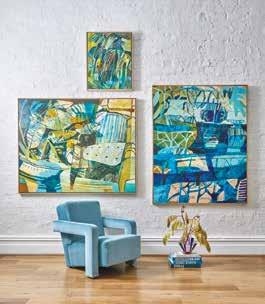
122 covemagazine.com.au – Issue 96 LUXURY LIVING
Curtain call
Featuring a classic colourway of deep blue and white, the Ikat Damask Ink Blue Curtains from the Sanderson collection will add a chic global element to your interior. Made from a soft linen-mix material and available with your choice of lining options, these curtains will look wonderful wherever you choose to place them. blindsonline.com.au | 1300 761 179
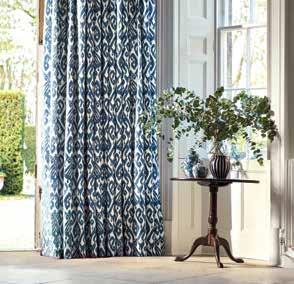

Starry sky
Floating on golden stainless steel rings, the Apollo 24 celestial globe features the meticulously mapped out Milky Way on printed and sheathed Swift calfskin. The golden print on the Prussian blue background recreates the starry sky and helps us read the constellations. RRP $36,645 hermes.com/au

Glass art
Circular Motion Diciotto-01 Blue Wave by Gaigher Giuliano (Murano Betro Italy). H42cm x W52cm x D10cm. Available from Red Moon Contemporary Art Glass Gallery. RRP $15,000
redmoonartgallery.com.au | 03 9836 2059
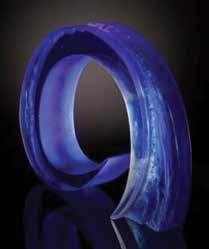
Issue 96 – covemagazine.com.au 123
SIMON SAYS
Simon Burke will take to the stage as club impresario Harold Zidler for the Brisbane season of Moulin Rouge! The Musical.
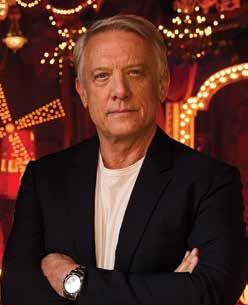
GET READY BRISBANE.
Having wowed audiences around the globe, Moulin Rouge! The Musical is set to open at Brisbane’s Queensland Performing Arts Centre in May.
Front and centre will be much-loved Australian actor Simon Burke, who plays the key role of club impresario Harold Zidler.
Tell us about your role in Moulin Rouge! The Musical. … what do you enjoy about it, what are the challenges?
Playing the role of Harold Zidler is endlessly satisfying for me as an actor … it ticks all the boxes.
Harold has such heart and passion and command of his world.
He’s comfortable in his skin, uncompromising, has a real dark side and temper, and he is FUNNY. And I get to sing Chandelier by Sia.
The challenge is that I have to start at 200 percent at the beginning of each performance and amp it up from there, eight times a week … but I love it.
The original movie holds such iconic status in Australia. What can Brisbane audiences expect when they see the stage show?
I can honestly say, having performed Moulin Rouge! The Musical over 500 times to date, that Brisbane audiences can expect to have one of the best nights they’ve ever had in the theatre.
You might know and love film, but nothing can prepare you for the entertainment that you will get from Moulin Rouge! The Musical.
How does Moulin Rouge! The Musical differ from the film?
There are some key differences.
Personally, for me, it’s the development of my character, Harold Zidler.
In the stage show, he’s front and centre and in charge of the ride that we take the audience on.
Also, there’s been over 20 years of music since the film was made, so many of the iconic songs and artists from this time have been added to our score.
The show celebrates over 160 years of music, including iconic songs from the movie as well as new additions from Adele, Katy Perry, Sia, Rihanna, Beyonce and more.
You have had a very successful and varied career. What is the secret to your longevity?
From the very beginning of my career, I have always tried to challenge myself as a performer; to take the role or the path that is not the easiest or most obvious.
Also, by diversifying quite early on, I found that it was harder for producers to pigeonhole me.
Most of all though, the secret to longevity is to be the best person you can off-stage or offscreen; nobody likes to work with a nightmare or a narcissist.
Stage, screen or TV … do you have a preference?
My preference is to have the luxury of being able to work in all areas of entertainment.
If the role and the project is of quality and challenging, where I get to work on it or the type of audience it reaches is not important.
Is there a role or a show that is still on your bucket list?
I think the show on my bucket list is the one that hasn’t been written for me yet.
Although I wouldn’t mind returning to PLAY SCHOOL once in a while.
Away from work, what are your interests and hobbies?
I am a huge political nerd.
I’m pretty obsessed with the inner workings of government.
I also love relaxing on the beach and doing nothing as much as possible.
Is there anything else you would like to share with our readers?
We can’t wait for Brisbane audiences to experience the spectacular of Moulin Rouge! The Musical.
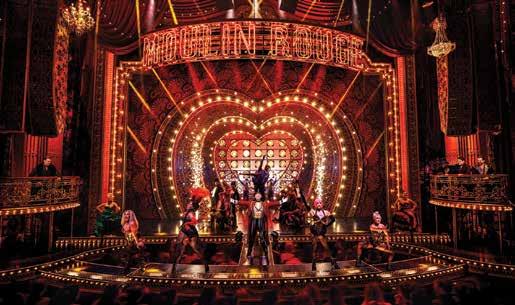
Come and see the show if you can get your hands on one of the last remaining tickets, you will really thank yourself afterwards for a wonderful night at the theatre.
MOULIN ROUGE! THE MUSICAL – BRISBANE Commencing at Queensland Performing Arts Centre on 16 May 2023 for a strictly limited Brisbane season, this 10-time Tony Award®-winning musical sees Baz Luhrmann’s revolutionary film come to life onstage. Tickets on sale now at: qpac.com.au
124 covemagazine.com.au – Issue 96
ART DEPARTMENT

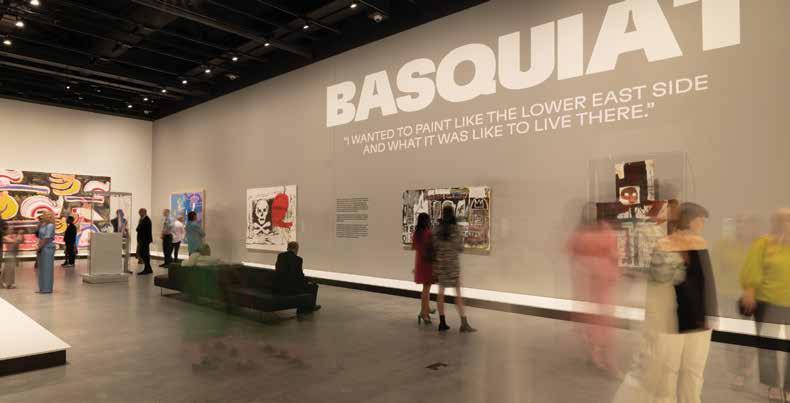
A WORLD EXCLUSIVE EXHIBITION HOTA.COM.AU BOOK NOW ART FROM THE MUGRABI COLLECTION, NEW YORK HOTA GALLERY | CLOSES 4 JUN Installation View –Pop Masters –Art for the Mugrabi Collection, New York at HOTA Gallery, Gold Coast
RED ROSE FOUNDATION HIGH TEA
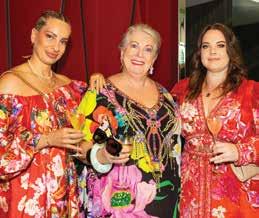
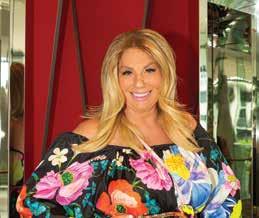
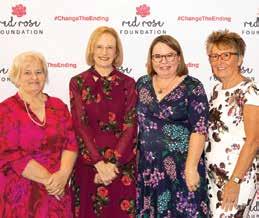
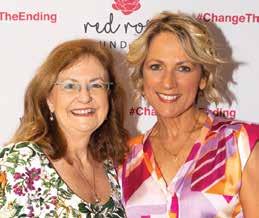
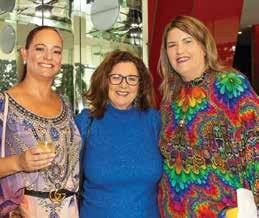
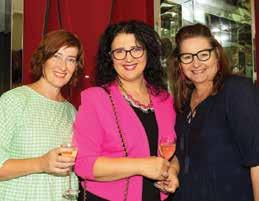

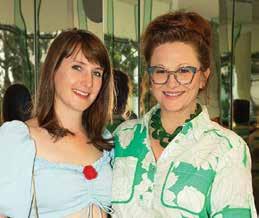
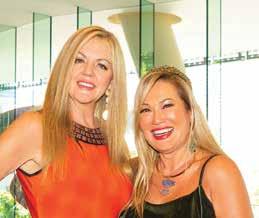

4 March – Emporium Hotel South Bank Frangipani Ballroom
South-east Queensland's charitable set came together to support survivors of domestic and family violence at the Red Rose Foundation Australia International Women's Day High Tea. Among the 220 guests were Governor of Queensland, Her Excellency the Honourable Dr Jeannette Young. The event raised critical funds for the Strangulation Trauma Centre and other essential programs the organisation runs to support DV victims.
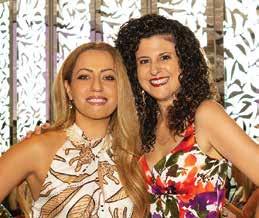
126 covemagazine.com.au – Issue 96 SEE & BE SEEN
Annie Stonehouse & Sonia Holiday
Nicole Richie & Yvonne Li
Emmy-Clare Rule & Erika La Budda
Connie da Cunha, Honey La Rosa Binny & Gina Luck
Cherie O'Brien, Dianne Scott & Jo Seligmann
Lynne Stoddart & Jade Stoddart
Kathy Bayldon, Janine Bauer & Kim Lindsay
Madonna King & Loretta Ryan
Please FOLLOW US to view more photos of this event.
Betty Taylor, Dr Jeannette Young, Tania Perske-Felstead & Di Macleod
Photography Lana Noir Photography
Liz Murrihy
Linda Lola & Joanne Rahn
Morgan Bayada, Michele Bayada & Anne Green
LOUIS VUITTON LAUNCH
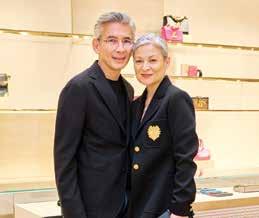
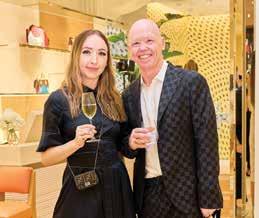
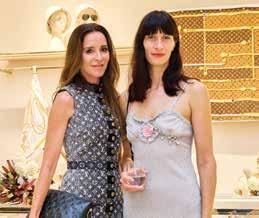
5 April – Louis Vuitton Brisbane
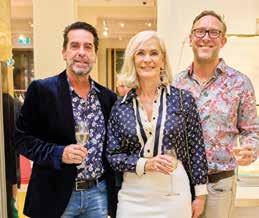
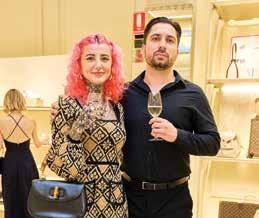
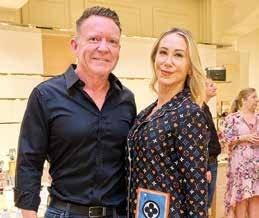
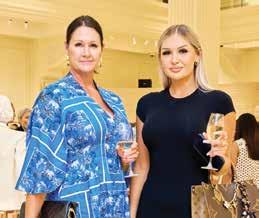
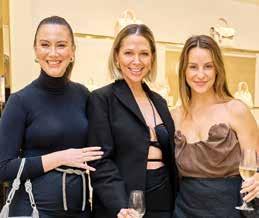
A fashion forward guest list gathered to officially launch the new Louis Vuitton store in Brisbane. The elegant cocktail soirée spread over all three levels of the emblematic National Australia Bank heritage building on the iconic Queen Street mall, which has been refreshed and refurbished to reflect the luxury label’s aesthetic. One of the highlights is LV’s collaboration with artist Otis Hope Carey and China Heights Gallery, which adds an artistic pop of colour throughout the store.
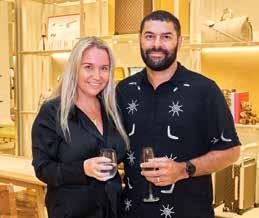
Please FOLLOW US to view more photos of this event.
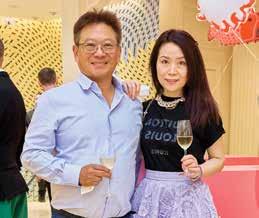
Issue 96 – covemagazine.com.au 127 SEE & BE SEEN
Al Graham, Annabel Falco & Astrid Taemets
Karen Allan & Georgia Allan
Darren & Sam Jansen
Andrew & Audrey Lee
Amanda Shadforth & Nina Treffkorn
Alexis Hepburn & Sam Saljooghi
Gypsy & Rory Togo
Michael Yusiw, Lee McLeod & Jerome Paige
Photography Joseph Byford Photography
Natasha & Michael Stewart
Sandy Aldrecht & Wayne Tolton
Joe Blommaert & Margie van Elten
Justin Nicholas & Joshua Jones
SWEET GUTS LAUNCH PARTY
April 5 – Roōm by IQ Studio in Mermaid Beach.
Local health brand GevityRx launched their ground-breaking Sweet GutsTM chocolate with a party on the Gold Coast. Featuring endless blocks of the sugar free, probiotic chocolate, and seltzers from Hard Fizz, those in attendance included a host of athletes, as well as influencers and special guests.
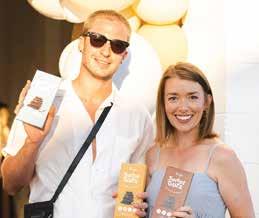

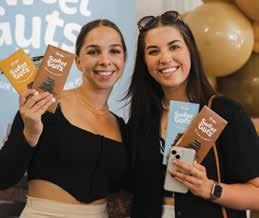
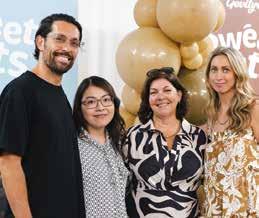
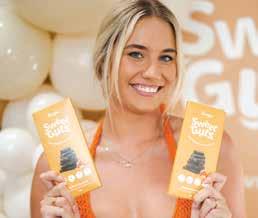
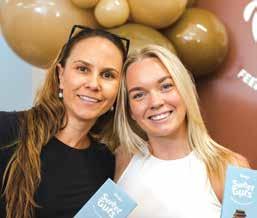
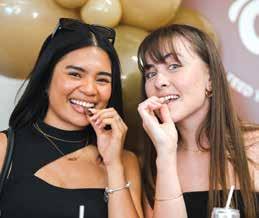

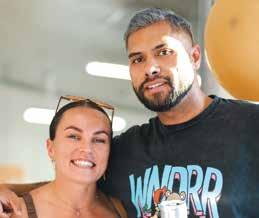

Please FOLLOW US to view more photos of this event. Photography
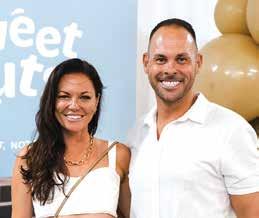
128 covemagazine.com.au – Issue 96 SEE & BE SEEN
Atlanta & Mark Fowler
Dr Andrew Firgaira
Tialeigh Paige & Brent Wallwork
Marcus & Bel White
Zaira Yzabelle & Taylah Hotham
Camila Griffin & Natasha Cowls
Nikkita Smith
Olivia Jackson & Shannon Cooper
Jordan Kahu
Hugh Simson, Rebecca Zhou, Julie de las Heras & Georgina Puglia De Cata Mel Fortuin & Caitlin Armstrong
Mckenna Lea
Lawrence Tredrea & Olivia Jacksonw
improving your performance with E-commerce solutions specifically tailored to Australian sports, fitness and recreation providers. SIGNONDAY provides online transactional technology to all Australian sports clubs, professionals and businesses. We enable upfront payments for your clients, customisable form configurations and comprehensive reporting and thats just the start!
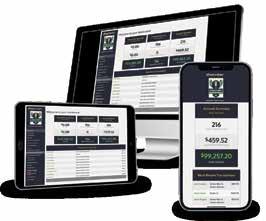
SIGN-ON MADE SIMPLE.

START
14 MAY Brushes and Blooms
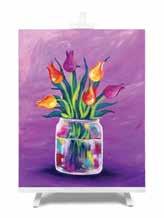
Celebrate Mother's Day with a special paint and sip session at Cork & Chroma. Invite your friends and family and enjoy quality time creating memories that you’ll cherish forever. Every painting will be completely unique and you can add your own spin by changing up the background colour or flower variety. Brisbane studios are located at 44 Montague Road, South Brisbane and 15A Little Stanley Street, South Bank. corkandchroma.com.au
14 MAY
Mother’s Day Classic
Start your Mother’s Day with purpose by suiting up, showing up, and standing up when Australia’s biggest fun run and walk for breast cancer research returns. Over 1.5 million people have participated in the Mother’s Day Classic over the past 25 years and this year supporters can take part at up to 70 event locations across Australia. If you’re unable to join in on the day you can still participate at your own time and place with MDC Anywhere. mothersdayclassic.com.au
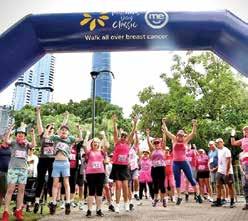
18 - 21 MAY Blues on Broadbeach
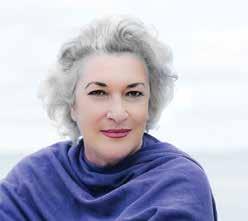
One of Australia’s largest music festivals, Blues on Broadbeach, is set to return for its 22nd year. Showcasing some legendary names in the Australian and international blues world, including Tommy Emmanuel, Don Walker, The Kevin Borich Express and The Turner Brown Band, this unforgettable four-day festival encompasses four blocks in the Broadbeach precinct, and will also be interspersed throughout the many vibrant streets, parks and venues of Broadbeach. bluesonbroadbeach.com
19 - 27 MAY Ishmael

Dead Puppet Society and QPAC present the return of acclaimed production Ishmael in the Cremorne Theatre. A reimagining of the timeless novel, Moby Dick , the production melds captivating storytelling with live action, live filmmaking, an original score and boundarypushing visual theatre. Three acclaimed actors will take up roles to tell this futuristic story; Ellen Bailey reprises the title role of Ishmael, Barbara Lowing returns as Captain Ahab and Karl Richmond rounds out the cast as Queequeg. qpac.com.au
27 MAY
Palette X Marco Pierre White
HOTA – Home of the Arts are bringing together the culinary forces of the world-renowned chef Marco Pierre White with Palette Executive Chef, Dayan Hartill-Law. For one night only, Marco and Dayan will co-curate a four-course menu embracing exquisite locally sourced ingredients. Paired with exceptional wines, this is your chance to be part of an exceptional five-star dining experience, exclusive to Palette. hota.com.au
31 MAY The Bigger Picture
Multi-talented storyteller, wordsmith and leader Sachém leads this compelling performance in the QPAC Concert Hall as part of Reconciliation Week. Joined by the award-winning 22-piece Matt Hsu’s Obscure Orchestra, Sachém anchors his contemporary sound in music and spoken word poetry, weaving in theatrical elements of dance, visual projection, and film to bring to life a hard-hitting, self-empowered theatre show that celebrates First Nations lives. qpac.com.au
130 covemagazine.com.au – Issue 96 MAYENTERTAINMENT
Australia’s most authentic food and farming event will extend to a month-long celebration of paddock to plate experiences in 2023. Enjoy an incredible line-up of on-farm celebrations, long lunches showcasing local produce, flavourfilled dinners, farm gate experiences, food walks, tastings, tours and talks, masterclasses, workshops and more. eatlocalmonth.com.au

3 JUNE
The Emerald Room
Get ready to experience an unforgettable evening of theatrical delights and incredible entertainment when Friends with Dignity proudly presents The Emerald Room – a masquerade gala at HOTA, Home of the Arts. From the jaw-dropping acrobatic performances to the delectable three-course banquet, every aspect of this event has been crafted to create a truly immersive experience that you won't soon forget – all for a great cause. friendswithdignity.org.au
In the winter of 2022, English pop star Conor Maynard disappeared from the spotlight leaving his 13 million+ social media followers scratching their heads. Now, following a brief stint away from the spotlight, the prolific songwriter and YouTube star returns with new music and his first ever Australian tour dates including an all-ages show at The Tivoli Brisbane. ticketmaster.com.au
4 JUNE James Reyne 'Way Out West'
His songs have provided the soundtrack to endless Australian summers, now James Reyne, along with special guest Ella Hooper, bring the 'Way Out West' Tour 2023 to Miami Marketta. Responsible for iconic songs such as Reckless, The Boys Light Up and Beautiful People, James will perform hits from Australian Crawl and his extensive solo catalogue with an 8-piece band, while Ella will showcase songs from her new solo album Small Town Temple along with a few other surprises. miamimarketta.com
OPENS 7 JUNE
Monet in Paris
Step back in time into the dazzling world of 19th century Paris where Monet and the impressionist masters are leading an unprecedented period in cultural and artistic growth. Featuring breathtaking artworks projected at enormous scale in an epic display of light, colour, sound and fragrance, this stunning new multi-sensory exhibition at Northshore Hamilton runs until Sunday, 6 August 2023. monetinparis.com.au

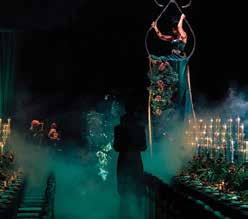
15 – 25 JUNE
Doyles Art Award Exhibition
Named after famous Australian artist d’Arcy William Doyle, the prestigious Doyles Art Award is the Gold Coast’s longest running painting prize. Originally established by dedicated volunteers in 2004, the Doyles Art Award exhibition at Mudgeeraba Memorial Hall will showcase a selection of entries including winning submissions across the three competition categories – Landscape, Figurative and Still Life. thedoylesaward.com.au
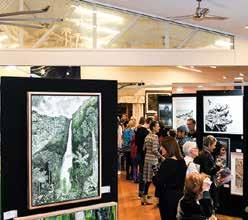
Issue 96 – covemagazine.com.au 131 JUNE ENTERTAINMENT
1 JUNE – 2 JULY
Scenic Rim Eat Local Month
3 JUNE Conor Maynard
Growing Grapes Might be Fun
By Deirdre Macken
An honest account of a couple's move to the country, this humorous memoir features larger-than-life characters, hard slog, sweet triumph and a deepening awareness of the rhythms of farming life. RRP $34.99 allenandunwin.com
Into the Night
By Fleur McDonald
When Detective Dave Burrows and his partner are called to Leo Perry's ravaged farm there's no sign of Leo anywhere. But when Dave and Bob begin their investigation, what they find makes no sense at all. RRP $29.99 allenandunwin.com
Harriet's Hungry Worms
By Samantha Smith and Melissa Johns
Packed with facts and inventive illustrations, this delightful story revolves around Harriet's compost worms who are on a mission to produce worm wee by munching through the family food scraps. RRP $24.99 ekbooks.org

BAKE: My Best Ever Recipes for the Classics
 By Paul Hollywood
From brilliant breads and classic cakes to savoury and sweet pastries, these are the only recipes you'll need to create perfectly delicious bakes time and time again. RRP $52 bloomsbury.com/au
Explore Australia 2024
 By Hardie Grant Explore
With handy maps, destination overviews and summaries of top attractions, this trusted travel guide makes planning easy. All of the information in this edition has been updated by travel writer Andrew Bain. RRP $55 hardiegrant.com/au
Dior Metamorphosis
 By Robert Polidori
Glowing with the aura of Dior style, Robert Polidori invites us on an exceptional private viewing of the secrets behind the scenes of 30 Montaigne, the House’s beating heart. RRP $280 dior.com
Boating Guide to Queensland
 By Fiona Harper
This guide provides inspiration, ideas and planning tips organised into six themed sections: short breaks, coastal hopping, marinas and harbours, islands, nature getaways and gourmet getaways. RRP $32.99
newhollandpublishers.com
Another Life
By Kristin Hannah
Angie DeSaria has spent years of her life trying to have a child. Now, adrift and alone, she returns to her childhood home to help try and rescue the beloved, failing family business. RRP $34.99 panmacmillan.com.au
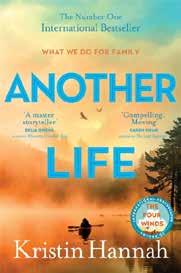
132 covemagazine.com.au – Issue 96
BOOKSHELF
• 2x Sand bottles and a large 6 can esky cooler
• Club/ball washer
• Rear golf bag canopy
• Electric automatic park brake
• Luxury padded diamond-stitched seat covers
• Powder coated steel bull bar
• Full LED lighting package
• Front full-length tidy tray basket
• Lithium Golf 105Ah AMPLUS© Series Battery with optimised on-board fast charger
• LED lithium speedometer & voltage meter
$15,990 inc. GST
• Raised lift kit suspension
• 20” Mud/o -road tyres
• 12” Mag “Venom” wheels
• Electric automatic park brake
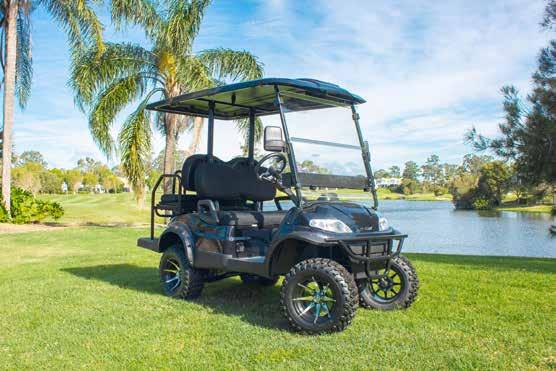

• Full set of removable & washable seat covers
• Powder coated steel bull bar
• Full lighting package

• Front full-length tidy tray basket
• Lithium Golf 67Ah AMPLUS© Series Battery with optimised fast charger on-board
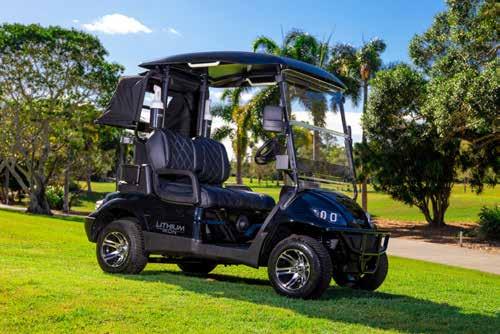
• LED lithium speedometer & voltage meter
inc. GST

*Please see website for shipping T&C ’s We do our very best to get your car t to you! FREE DELIVERY* AUSTRALIA-WIDE ON ALL NEW GOLF CARTS 1300 93 88 11 cartsnparts.com.au We also stock a wide range of Commercial Carts, Parts & Accessories - shop online 24/7. LITHIUM ‘627 LFT’ 4 SEAT PACKAGE ADD RAIN CURTAINS $999 TERRAINLIFTEDFORALLADVENTURES $16,990
LITHIUM
2 SEAT PACKAGE ADD RAIN CURTAINS $499 OURLATEST2023RELEASE ECAR GOLF CARTS ARE PROUDLY BUILT IN AUSTRALIA, AND HAVE BEEN FOR OVER 17 YEARS! ALL NEW GOLF CARTS COME WITH A LITHIUM BATTERY STOCK STANDARD! SAVING YOU OVER $3,199 RRP
‘IKON’
CRYPTIC CLUES

ACROSS
1 Demonstrators single out damaged trees (9)
6 Names everyone involved in case in an odd way (5)
9 Creative old Italian doctored non-radical video (8,2,5)
10 Novel is not written about one kind of spirit (8)
11 Criticise time taken in a strategic move (6)
13 The writer cross with one company in Spanishspeaking country (6)
14 Relative, one in need of a wash (7)
17 Feeding trough opened up by a supervisor (7)
19 First component of basic relay switched just (6)
22 To small pictures, subject matters (6)
24 Honour code adapted by class (8)
26 People in contest rush a complicated battle of wits (5,10)

27 One turning tail with pen is not very nice (5)
28 Close to Easter, reckless speeders may be kept in check (9)
DOWN
1 Cushion’s edge folded over and down (6)
2 Treat containing cold centre is special (4-3)
3 Chopper rising over excavation is doing an inspection (9)
4 Attempts to resolve AVO accepted by confused user (10)
5 Party expressed disappointment audibly (4)
6 Catlike animal caught by one person trained to look after animals (5)
7 Nothing tripped up four members of eager family (7)
8 Rank isn’t manipulated by one of high rank (8)
12 Little one screwed up and hit packaging material (6,4)
15 Get bubbly demonstrator, say, agitated on beat (9)
16 Typical facial expression, as far as I can see, upset one kid (8)
18 Young lifesavers rewound reel supporting small person (7)
20 Lazy people employed people in a bakery (7)
21 One kilobyte downloaded from corrupted diskette should be analysed (6)
23 Soft copper lacking selfconfidence (5)
25 Pelt, in a sorry condition, given an airing (4)
QUICK CLUES
ACROSS
1 Protesters (9)
6 Shouts (5)
9 Famous artist and inventor of the 15th century (8,2,5)
10 Novel (8)
11 Have a go at (6)
13 Country (6)
14 Dirty (7)
17 Business executive (7)
DOWN
1 Cushion (6)
2 Frozen treat (4,3)
3 Scrutinising (9)
4 Efforts (10)
5 Team (4)
6 Small, musky jungle mammal (5)
7 Blood line (7)
8 Reeking (8)
12 Packaging material (6,4)
TIME FOR TEN
time for ten
1. ‘Mashrabiya’ is an Arabic term to describe what type of architectural feature?
2. In what year did the first transfusion using human blood reportedly take place?
3. Who ‘dined on mince and slices of quince, Which they ate with a runcible spoon’?
4. What shape is rigatoni pasta?
5. Which does not belong to the order Hymenoptera: a) wasp b) bee c) ant d) termite?
6. CrimethInc. is a collective comprised of autonomous cells who promote what?
7. What type of seeds are used in the making of pesto?
8. The Hindu Kush mountain range extends through which three countries?
9. Name the most recent English-language album by Ricky Martin.
10. Who wrote the short story The Lady with the Dog?
134 covemagazine.com.au – Issue 96 1 2 3 4 5 6 7 8 9 10 11 12 13 14 15 16 17 18 19 20 21 22 23 24 25 26 27 28 No. 3011 39 4 15 72 9 67 89 21 2 643 438 7 52 87 36 97 56 8 71 56 9 529 4 1 485 378 638 591 7 4 875 sudoku Hard No. 856 Easy No. 857 May 2023 brainfood answers on stars page crossword
19 Just (6)
22 Subjects of discourse (6) 24 Embellish (8) 26 Board game competition (5,10) 27 Spiteful (5)
28 Under the thumb (9)
Layabouts (7)
Tried (6)
Easy (5)
Rain heavily (4) Pagination and Content Copyright © Pagemasters www.pagemasters.com.au
15 A salt of carbonic acid (9) 16 Keyboard character showing the writer’s mood (8) 18 Crabs’ claws (7) 20
21
23
25
CROSSWORD
BRAINFOOD
BUSINESS D irectory
Connecting you with specialists in their respective fields.
EXPERIENCE THE DIFFERENCE
Due to our integrity, professionalism and reliability, Evolution Group Carpet Cleaning and Pest Control are the first choice for residential, commercial and marine carpet cleaning, upholstery cleaning and all pest control services.
Covering the Gold Coast and surrounding suburbs, we have built a strong reputation for delivering timely services that are tailored to suit each individual’s needs and situations. We guarantee to do the best job possible and you can rest assured we will leave your home, boat and office; cleaner, fresher and healthier. Call Mark for an obligation free quote.
0431 836 551
PO Box 429, Sanctuary Cove
Services include:
• Carpet Cleaning

• Pest Control Treatments
• Upholstery & Mattress Cleaning
• Marine Carpet & Upholstery
Cleaning
• Commercial & Residential
• IICRC Certified Firm
Scan me

evolutiongroupcarpetcleaningandpest.com.au

PERSONAL SERVICE
One of the last remaining independent optometry practices on the Gold Coast, Sanctuary Cove Optical offer personal, professional service in a relaxed village environment.
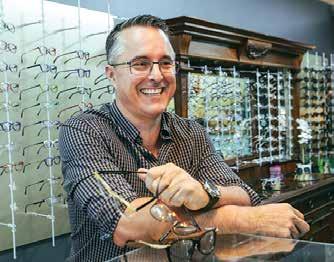
Optometrist and Practice owner Michael Jackson has almost 20 years’ experience in Optometry, with additional qualifications as an Ophthalmic Medicines Prescriber.
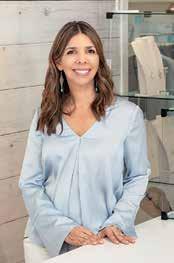

Focusing on patient eye health and quality eyewear, Michael and the team import unique, luxury frames from across Europe including a large range of prescriptible sunglasses for outdoor activities.
07 5514 8220
Shop 4A/2 Masthead Way, Sanctuary Cove sanctuarycoveoptical.com.au
INSURANCE MADE SIMPLE
Are you looking for an insurance broker who can truly support you with your commercial and domestic insurance needs?


If you don’t have a broker who understands your situation, you can end up either underinsured and heavily exposed if something happens, or over insured and paying way too much.
We are a privately-owned local business with over 100 years’ experience in the insurance industry, from broking to underwriting in large international insurers and small local brokers. Our team works closely together to guide you through the whole process, from getting to know you, matching you to the best products, handling your claims and everything in-between. Let our dedicated team talk insurance with you.
07 5500 3500
Insurance products include:
• Business Insurance
• Professional Indemnity
• Medical Malpractice
• Public & Products Liability

• Plant, Machinery & Fleet Vehicles
• Resident Unit Managers
• Strata Properties
• Commercial & Private Marine Vessels
• Home, Contents & Landlords Properties
• Commercial & Domestic Motor Vehicles
1H Jabiru House, Masthead Way, Sanctuary Cove info@proinsure.com.au proinsure.com.au
HANDPICKED GIFTS & HOMEWARES
Cabana is a Gift and Homeware store owned and operated by Liliana Rogers. Liliana is originally from Cartagena in South America – a beautiful coastal city located on the Caribbean Sea, with white sand beaches, palm trees and colonial architecture. Her Colombian background is the inspiration behind Cabana’s tropical coastal decor, which fits in perfectly with the relaxed Gold Coast lifestyle. Cabana has handpicked gifts and homewares from Australia and around the world. Our aim is to offer a relaxed and inspiring shopping experience with superior service.
07 5577 8762
Shop 4D Masthead Way, Sanctuary Cove cabanastore.com.au
Mark Kay - Proprietor
TAURUS 21 Apr – 21 May
Jupiter in your sign from May 17 brings abundance and good fortune. However, changes at the eclipse on May 6 may be intense, so take things easy then. Patience and good planning will be keys to success in May, and you must avoid rash decisions. The Taurus new moon on May 20 will kickstart a revitalising phase. June will be a good month to reorganise priorities at home.
ARIES 21 Mar – 20 Apr
Diplomacy will be a useful tool in your home life, as changes will occur in this key area. The months of May and June will bring the potential for a truly abundant time to enjoy adventure through such activities as travel and romance. However, from mid-May, you may be prone to overspending and overindulging, so early May will be a good time to set a budget in place.
GEMINI 22 May – 21 Jun
Communications may not be as easy as you prefer during May, but nevertheless, this will be a good period for reunions and developing a fresh platform at work. You will need be patient with delays. A tense period financially will lead to a fresh understanding of how to build lasting wealth. The last two weeks of June could bring someone new for singles, so be sure to mingle.
CANCER 22 Jun – 23 Jul
You'll appreciate the opportunity to press forward with your projects and to gain a sense of achievement. You will enjoy travelling or entering fresh territory, but you must plan your projects to avoid mix-ups. Be practical financially to avoid overspending. The end of June will be a particularly therapeutic time, so be prepared to plan healthy activities then.
STARS
Stars
by Patsy Bennett | For readings, see www.patsybennett.com
LEO 24 Jul – 23 Aug
The lunar eclipse on May 6 will kickstart a fresh phase in the way you share duties, finances and even investments. A fresh chapter will begin and, while this may appear slightly daunting, you will regain a sense of energy, vitality and purpose during the next two months. The new moons on May 20 and June 18 will be ideal for turning a corner with significant projects.
VIRGO 24 Aug – 23 Sept
Venus at the zenith of your chart during May puts your heart on your sleeve but luckily, it will also provide you with insight into your best way forward in your career and general status. Important decisions to do with shared investments of both an emotional and financial nature will require attention. The Gemini new moon on June 18 will help you kickstart fresh incentives.
LIBRA 24 Sept – 23 Oct
The lunar eclipse on May 6 may feel particularly intense for you as a shared circumstance, such as space at home or finances will need to be addressed. You may even be surprised by news which will merit careful focus. Luckily, you'll make decisions based on values, not expectations. Developments in June will encourage you to make changes at home or in your career.
SCORPIO 24 Oct – 22 Nov
This is a transformative month and the full moon on May 6 will provide deep insight into your options in your personal life if you were born before November 7 and at work and health-wise if you were born after November 7. Certain agreements will require renegotiation. Trust your intuition, as it is strong now. A fresh way to share commitments and duties can be arranged.
SAGITTARIUS 23 Nov – 22 Dec
This is a good month to consider how to maximise your potential workwise and to configure your daily schedule so that it works better for you and those you love, especially around the lunar eclipse on May 6. In June, a financial review will help to reboot your investments, and you'll gain the chance towards the new moon on June 18 to find more time for your personal life.
CAPRICORN 23 Dec – 20 Jan
Strong emotions may arise during May, so be sure to create a practical plan of action that enables you to make reasonable and rational arrangements in a personal, domestic or family context. Some Capricorns may enter fresh territory, so be brave. A reconfiguration of your daily routine in June will include the chance to boost health and to find more time for those you love.
AQUARIUS 21 Jan – 19 Feb
May will be a good month to turn a corner in a personal context and to alter your career or general direction in life if you feel stuck. Your efforts are likely to succeed, even if you sense an uphill climb. Mid-May you'll gain the encouragement you need to proceed, and communications will improve in June. A fresh link with a group or a close friend will blossom in June too.
PISCES 20 Feb – 20 Mar
Saturn makes some wonderful aspects in May. This means your personal and domestic life could truly progress now, so take action! If you feel life is a little intense around the lunar eclipse on May 6, be sure to work towards a practical outcome. A financial situation is likely to change mid-May, and this will offer you the chance to stabilise finances and career in June.
1.
2.
4.
9.
136 covemagazine.com.au – Issue 96
Bay window (specifically, oriel window)
1818. 3. The owl and the pussycat
Tubular 5. d) termite 6. Anarchy 7. Pine nuts 8. Afghanistan, Pakistan and Tajikstan
Life 10. Anton Checkhov
P I C K E T E R S C A L L S I H X N I I T L E O N A R D O D A V I N C L C M E E E E N O R I G I N A L A T T A C K W C N V B G M E X I C O U N C L E A N E N U B A G M A N A G E R B A R E L Y O I S L B O T T O P C S D E C O R A T E I P U P W N F S C H E S S T O U R N A M E N T O R H U A T R E N A S T Y R E P R E S S E D 378159624 813427956 735216489 162784593 259361748 926845317 594632871 647598132 481973265 Hard 974531628 687352491 721485369 815627943 132794856 596213784 263849175 459168237 348976512 Easy crossword sudoku time for ten
3011 No.
No.
No.
856
857


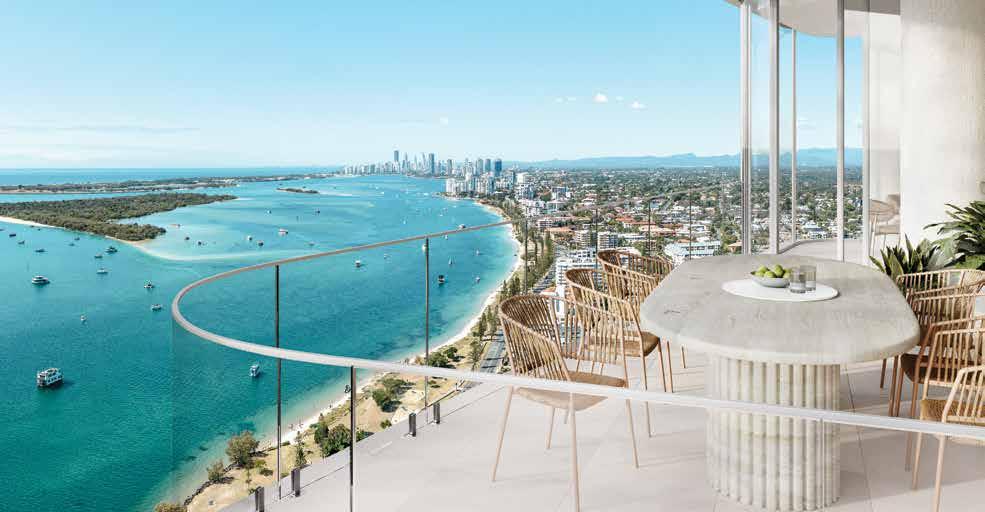
Your oceanfront lifestyle starts here. Only 31 full floor residences from $3.545m Wake up on the water every day with sweeping Gold Coast views. With unrivaled resort style amenities and access to your choice of world class marinas. 2 3.5 3 + MPR 273m2 0420 102 733 belvue.com.au Visit on-site display Open 7 days, 10am to 2pm or by appointment 13 Bayview Street, Runaway Bay DA APPROVED CONSTRUCTION COMMENCING 2023 MOVE IN 2025 Artists impressions and timelines are indicative only and are subject to variations in accordance with the contract terms.
