

Life and luxury in perfect balance.

Discover a boutique collection of architecturally perfected full floor residences uniquely positioned on the edge of Surfers Paradise and Broadbeach, delivering life and luxury in perfect 0480nineteenfirstavenue.com.auharmony.025402 ENQUIRE NOW TO SECURE YOUR PREFERRED LEVEL PRIOR TO RELEASE. 23.53 + MPR 280m 2


Right at the heart of this resort will be its Country Club. Palm Springs by theme, just like the rest of the resort, you’d be forgiven for thinking you were on a five-star international holiday while visiting here.
THE BEST IN OVER-50’S LIVING. THIS IS YOUR TIME.


Over 50’s premiere living
For Expressions of Interest, FREECALL 1800 490 626 40salespelicanwaters@palmlake.com.auMahoganyDrive,PelicanWaters
Palm Lake Resort Pelican Waters is edging closer to construction commencement and as it does, the architectural design enhancements are getting edgier and edgier, to cement this over-50’s community lifestyle resort at the peak of world-class opulence.


Sharing a location with the award-winning Greg Norman-designed Pelican Waters Golf Course on Queensland’s Sunshine Coast, Palm Lake Resort Pelican Waters will boast the kind of premier community facilities you’d expect from a resort this spectacular. Some are already labelling it “iconic”.

Palm Lake Group is very excited to be working along side the Greg Norman Golf Course Design team. They have done an amazing job redesigning the golf course with Greg Norman having a key role in the redesign.

Looking for a game-changing lifestyle resort that combines the ultimate in luxury over 50s homes and world-class resort facilities with a neighbouring Greg Norman designed Golf Course?


8 covemagazine.com.au – Issue 92 UP FRONT 12 - 16 Preview The latest news & views 18 TheCompetitionLanghamGold Coast 20 - 24 Feature Andie MacDowell Interview CITY ICON 26 - 27 Matt Hollywood Magic Matt LOOKING GOOD 28 - 30 Wish List Spring vibes Black to basics CONTENTS 32 - 33 Bring on the Sunshine New season swimwear 34 Stress Less Why wellbeing matters 36 - 37 Take a Break Maintain your fitness on holiday 38 Beauty Spot DREAM DESTINATIONS 40 - 41 Plan your Perfect Break 42 - 44 Fiji Time Lomani Island Resort FACTS & FIGURES 62 Myth Busters Sort fact from fiction TOP TECH 66 Creative Control Useful tools CUISINE 68 - 71 Fresh Approach Food trip to the Northern Rivers 72 Chef’s Choice WINE CELLAR 74 Perfect Pairing Tar & Roses vineyard 76 Tasting Notes High-end blends 90 78 7620 128


Issue 92 – covemagazine.com.au 9 ISSUE 92 | SEPTEMBER | OCTOBER 2022 WELCOME HOME 48-page Kollosche Prestige magazinePropertyinside WHEELS & WATER 78 - 79 F1-Upmanship Aston Martin Vantage F1 Edition 80 - 81 Sea Class Horizon Yachts FD90 82 Drift Away Drift Flotel PROPERTY PORTFOLIO 84 - 85 Rental Return Property investors are back 86 - 87 Moving North Developer news with Steve Hunt 88 - 89 Nineteen Reasons Why Nineteen First Avenue 90 - 91 Element of Exclusivity Penthouse living on the Gold Coast LUXURY LIVING 122 - 123 Game-Changer Palm Lake Resort Pelican Waters 124 Styled to Perfection Alfresco Emporium styling packages 126 - 127 Home Style File Relaxation mode ENTERTAINMENT 128 - 129 Event Calendar 130 Bookshelf 134 Brainfood 136 Stars 126 40 32 68


DISCOVER
of the publisher. Printed
DESIGN listercreative
Cove magazine is published and owned by Sanctuary Cove Publishing P.O. Box 252 Sanctuary Cove, Qld, Australia 4212 0410 820 621 | editor@scpublishing.com.au

EDITORIAL CONTRIBUTORS Nick Nichols, Steve Hunt, Angela Oram, Adam Berry
Views expressed by journalists are not necessarily those by Printcraft.
GENERAL MANAGER Bryan Oram
These days she is taking on a more taxing role, playing a bipolar character opposite her real-life daughter in the Netflix hit, Maid
Finally, for those of you looking for a little bit of star treatment right here on the Gold Coast we have a fabulous competition prize on offer.
SOCIAL MEDIA DocRox Communication

The lucky winner will enjoy a night for two at The Langham Gold Coast including a fabulous dinner in the T’ang Court restaurant.
FOOD & WINE CONTRIBUTORS Tony Harper, Marj Osborne
PUBLISHER Clare E. Urwin | Sanctuary Cove Publishing
BRAND AMBASSADOR & PRESENTER Brooke Lowther
Of course, when you are going on a holiday you need to dress the part, so we have a range of stunning new season swimwear for you, as well as a selection of colourful and quirky accessories for both men and women on our Wish List pages.
EDITOR’S LETTER TEAM + COVER
Having travelled the world perfecting his craft Matt is now firmly ensconced in The Village Theatre, Sanctuary Cove where he performs every Friday and Saturday night.
ACCOUNTS MANAGER Kirsty Carberry

Join in the conversation on Twitter and follow us on Facebook and Instagram for the latest news from the Cove magazine.
Who will ever forgot that iconic scene with Hugh Grant in Four Weddings and a Funeral ?
BUSINESS DEVELOPMENT MANAGER Nathan Lister
You can read more in our feature interview which starts on page 20.
accepted by SCP for the accuracy of any statement contained in the text or advertisements. All material appearing in The Cove magazine is copyright©

Coach Adam has some timely advice on how to stay fit while you are away (it’s really not as hard as you might think), while Angela will have you envious when you read about her recent stay at Fiji’s Lomani Island Resort, which is also showcased on theNowcover.let’s move from holiday mode to stage and screen.
Now that they are, that bucket list has just gotten longer, thanks in part to all the amazing options and itineraries featured in our special Dream Destinations feature in this issue.
Clothing: Billabong
Our City Icon is award-winning Master Illusionist Matt Hollywood.
This luxury stay is valued at $2,000 so be sure to get your entries in.
From Hollywood by name to Hollywood fame … Andie MacDowell is one of acting’s most endearing and enduring stars.
I’VE SPENT A LOT OF TIME over the past couple of years googling destinations and dreaming of places I’d like to visit if only the borders were open.
Photographer:NicholasSamuel Davies
COVER Location: Lomani Island Resort
PHOTOGRAPHY Daniel McClifty, Steven Grevis, Luke Kenny
MOTORING CONTRIBUTOR Chris Nixon
Model: Karri
No responsibility is
GROUP EDITOR Rhonda Oxnam
10 covemagazine.com.au – Issue 92
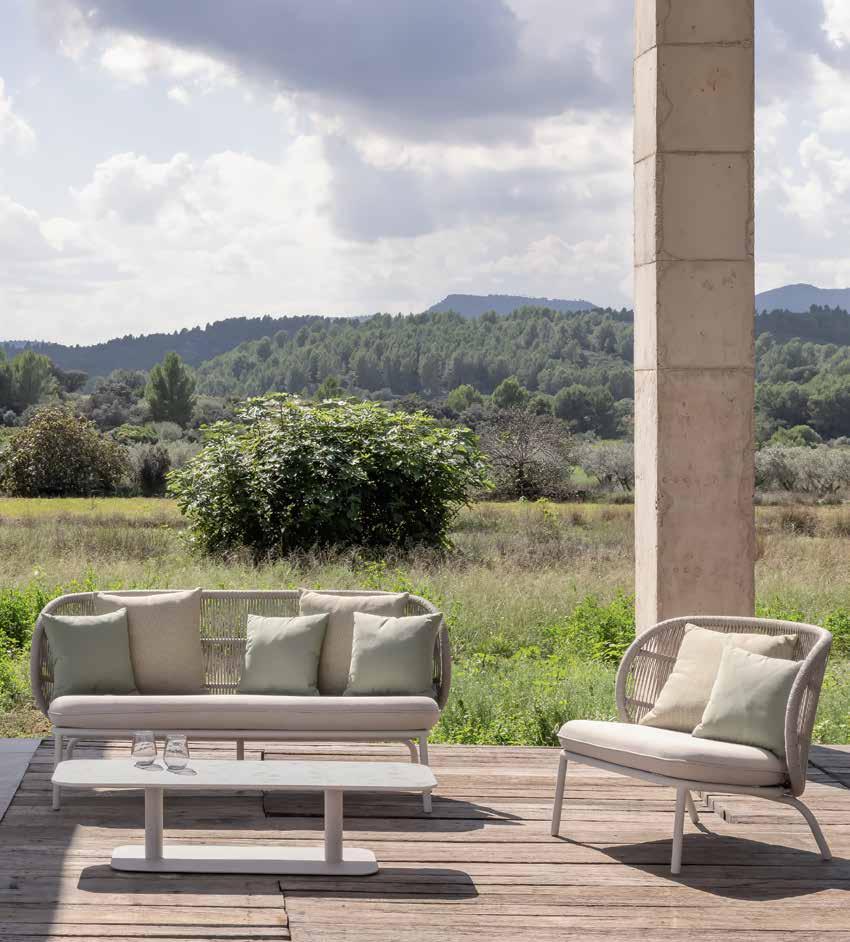
sales@cotswoldfurniture.com.au - www.cotswoldfurniture.com.au 07BRISBANE32528488 SYDNEY 02 9906 3686 02MITTAGONG48722585TheKodo Collection
Pop-Up Program
14 covemagazine.com.au – Issue 92 PREVIEW

Located at the newly opened Crocodile Hunter Lodge on the Sunshine Coast, Warrior Restaurant & Bar celebrates Australia’s rich and cultural trueblue cuisine and provides a fine dining experience to enjoy with your loved ones. Named by the Irwin family as a way of paying tribute to Steve Irwin who first coined the term Wildlife Warrior, and in honour of the next generation, Grace Warrior, the menu celebrates unique Australian produce paired with a carefully curated selection of wines, beers, ciders and cocktails. Using locally sourced ingredients including native flora such as karkalla and quandongs to create appetising dishes, Warrior also pays homage to the First Nation people and the plant life they have utilised for thousands of years. thecrocodilehunterlodge.com.au/dining
Inspiring Creativity
With so many options and styles available, the process of choosing tiles can sometimes be overwhelming and confusing. The team at Coco Tiles and Mosaics believe there is more to just picking a tile, it is understanding the space it will create and how you can elevate your home. Inspiring creativity through their exclusive tile range, collections are hand selected so you won’t be able to find them anywhere else. With their curated designs, Coco Tiles and Mosaics aim to create beautiful spaces that you will love and enjoy using time and time again. Everything is in the detail. cocotilesandmosaics.com.au

Ralph Lauren’s Create-Your-Own (CYO) Customisation program will be exclusively available at a number of pop-ups across Australia for the very first time. Customers will be able to purchase and personalise a selection of classic Ralph Lauren styles with their own name or initials and specially designed motifs. A range of Ralph Lauren patches will be also available to be stitched on to a suitable product on a desired location. Pop-Up locations include Pacific Fair Shopping Centre from 16 - 30 October and Indooroopilly Shopping Centre from 7 - 20 November. cuisine
ralphlauren.com.auTrueblue

New in town
GC Dental Solutions have welcomed Dr Alexander McDonald to the practice. Originally from the Whitsundays, he has practised dentistry around the country, including serving in the Royal Australian Navy for just over five years. Dr McDonald has a keen interest in the field of dento-facial orthopaedics and is currently studying a post graduate diploma in orthodontics, specifically related to aesthetic sequential aligners. He also plans to undertake further study in the relatively new field of dental sleep medicine with the Australasian Sleep Association. “I am passionate about aesthetic restorative and rehabilitative dentistry and my skills, knowledge and experience allow me to deliver high quality outcomes for my patients,” he says. gcdentalsolutions.com.au | 07 5573 1368

WELCOME TO BELVEDERE, YOUR NEW HOME Easy walking distance to the beach and Tedder Ave, Belvedere is set to deliver the ultimate in luxury living to Main Beach. Residents will enjoy indulgent resort style amenities including heated lap pool with views across the iconic coastline, luscious gardens and private dining spaces. BELVEDEREMAINBEACH.COM.AU Greg Washington 0488 033 233 Georgina Manton 0488 033 433 Sales Display - Shop 10, 14 Tedder Avenue Main Beach QLD 4217 2 Bedrooms 116m2 from $930,000 3 Bedrooms 2 car parks 190m2 from $1,610,000 Terrace Homes 2 car parks 279m2 from $2,250,000 Penthouse Level 23 427m2 from $5,490,000 Sky Home 2 Levels 23 & 24 600m2 from $8,750,000 Artist’s impression. Artist’s impression. UNDER CONSTRUCTION SinceNovember2021


The Cove will be focusing on dining, with a new menu and traditional pub style entertainment such as Sunday Live music from 1pm on the grassed areas in front of the Tavern; Tuesday Night Trivia hosted by Triple M’s Spida Everett and good old fashioned weekly Thursday Night Raffles.

A mesmerising array of rare Argyle Pink Diamonds™ and exquisite White Diamonds sparkle at the heart of Calleija’s 'Perfect Drop' earrings. From $39,900 calleija.com

16 – 18 September

A fresh take
A celebration encompassing three culturally rich days of food, wine, music and surf culture, this free event will take place at Justin Park, Burleigh Heads. A divine menu, beautiful wines, surf and beach entertainment will combine to champion this truly special part of the Gold Coast. The long-awaited delivery of such an event will draw an audience far outside the region and will highlight all of the amazing opportunities one can have on the Burleigh foreshore. burleighwinefood.hereagency.com.au
Discover Queensland

Mulpha has expanded its hospitality assets at Sanctuary Cove with the recent purchase The Cove Tavern and Anchor Buoy Restaurant & Bar.
Looking for somewhere to combine work and play in Queensland? Step off the front veranda and straight onto the beach at Rob’s Beach Shack, Port Douglas. Recharge with the calming powers of a balmy sea breeze, sprawl out on the daybed and feel the sand between your toes on a lunchtime walk along the beach. The ‘shack’ offers unrivalled views out to the Great Barrier Reef and is Wi-Fi connected with a coastal-chic outdoor dining table perfectly positioned for office ZOOM calls. queensland.com | airbnb.com.au
Josh Blair, Hospitality and Gaming Operations General Manager with Mulpha International, who also in charge of The Cove Tavern, said the group had exciting plans to re-develop the existing venues to cater for families and locals.

The Perfect Drop
There will be an upgrade to the Anchor Buoy Restaurant & Bar offering with new ‘Anchor Buoy Nights’ coming soon. A Nautical/Caribbean inspired menu will be available at nights and on weekends with a modern cocktail and drinks list to match. sanctuarycovetavern.com | anchorbuoy.com.au
Bespoke financial services firm Sedley Koschel are pleased to announce their success in obtaining their own Australian Financial Services Licence, My Wealth Garden Pty Ltd (AFSL No. 537415). My Wealth Garden has a goal to provide holistic, independent, financial advice to all Australians, efficiently, effectively and independently. By using the latest technology to deliver best interest advice when it suits you, in your own time, their team of advisers use a holistic method to look at your personal needs and goals and consider all types of strategies including taxation, investment, estate planning, superannuation and family situation to achieve the investment environment best for you. 1300 00 11 08 | sedleykoschel.com.au
16 covemagazine.com.au – Issue 92 PREVIEW
Growing Wealth
Burleigh Festival


Valued at $2,000. a Luxury Stay at The Langham Gold Coast. Valued at $2,000.WIN
the competition you agree to receive information from Sanctuary
phone and email. Winner’s
Bringing serene sophistication and coastal charm, The Langham Gold Coast is the epitome of beachfront luxury.
18 covemagazine.com.au – Issue 92 Enter online now. Simply visit covemagazine.com.au/competitions...
By
With 169 hotel rooms and 170 residences, the hotel offers a variety of rooms and suites, each presenting a stunning panorama of the Pacific Ocean or the Hinterland.

Terms & Conditions: includes a one-night stay at The Langham Gold Coast in a Deluxe Ocean King room including buffet breakfast at Akoya, dinner for two in T’ang Court and a bottle of champagne on arrival. Valued at $2,000. Valid for 6 months. Subject to availability. Blackout dates apply. Not transferrable or redeemable for cash. One entry per person. Closing date for entries is 31 October 2022. Winner will be drawn 14 November 2022 by name will be in the following Cove magazine. entering Cove Publishing and The Langham Gold Coast.
From Australia’s incredible natural bounty cooked simply yet elegantly, to award-winning Cantonese fine dining, The Langham Gold Coast offers the finest cuisines of the East and the West.

Prize
and notified
PRIZE INCLUDES: luxury one-night stay at The Langham Gold Coast in a Deluxe Ocean King room including buffet breakfast at Akoya, dinner for two in T’ang Court and a bottle of champagne on arrival.

A
published
Thoughtfully considered culinary concepts complete your stay.
COMPETITION
FEATURE

And I loved the deep personal scenes with my daughter and I’m sure she did, too.
Issue 92 – covemagazine.com.au 21 EXHIBITION ON NOW 18 JUNE – 6 NOVEMBER 2022 LEVEL 3, BRISBANE CITY HALL EXHIBITION PARTNERS EVENT PARTNER
Oh, wow.
ANDIEABOUTALL

I don’t know that I’ll ever feel that good and experience that again. Maybe I’ll get lucky. I could be in my 80s and be so surprised.
Metzler] writing, that writing. She gave me good humour.
She has recently been enjoying success on the small screen working alongside her real-life daughter Margaret Qualley in the hit Netflix series Maid
Yeah, it was all so much fun and I doubt I’ll ever have that much fun again. I know that’s terrible thing to say but I’m actually okay with it. I really am.


Maid has been a massive hit on Netflix. What was it about this particular project that you were drawn to?
John Wells [exec producer], who is a phenomenon. He’s just such a giftedMolly’sman.[Smith


MacDowell on her incredible career, working alongside her real-life daughter, and what she likes to do when she’s away from the camera.
GettingEverything.toworkwith my daughter, huge, the fact that she wanted to work with me was the most pleasing experience as a mother – that she actually thinks I’m good.
IT WAS NEARLY 40 years ago that Andie MacDowell made her big screen debut in Greystoke: The Legend of Tarzan, Lord of the Apes
I understand that disease really well, because I’ve had some deep first-hand experiences with it.

This world, this job is so hard. It’s so hard to get cast. And I’m 64, I’m not a baby.
But I’m satisfied. I really am. I’m so satisfied from this gift that was given to me.
WORDS JENNY DAVIS / THE INTERVIEW PEOPLE
It’s interesting because my only concern about my character is that people don’t understand the complexity of what it is to be manic depressive/bipolar.IthinkIworried that people would misinterpret it or her sexuality, to just think that she was a very needy woman that always wanted to be seen as sexy – but that’s the illness.
Andie>>
Since then, she has starred in many classic movies including Groundhog Day, Short Cuts and, of course, Four Weddings and a Funeral
When I was really young, I came from a small town and my mother took me to a play.
How did you first start acting?
So I was trying to like figure out, you know, how do you get me there?
But then I got Sex, Lies and Videotape, and that was a paradigm for me because I think it changed everybody’s mind.
>>
Let’s talk about Four Weddings and a Funeral Everything Richard Curtis has done has a very unique feeling, his sense of humour and the way he writes his characters in his dialogue.

I would just sit and run my lines all day long because I didn’t have anything else to do.
And that actually fit into my character because it made me feel kind of crazy. The density of everything, it was just intense.
So before Sex, Lies and Videotape I was questionable for sure, but afterwards, it changed.
But for the rest of the time, for eight months or whatever, seven months, I was alone.
22 covemagazine.com.au – Issue 92 FEATURE
It was such a poor town that I came from so it was a unique situation, but that really touched my Andheart.then when I went to college and started doing theatre, then I ended up modelling in New York and taking classes.
I don’t know how much it made but for the longest time, it was the number one British movie and it pulled in a lot of money.
That was the only time I was around people.
When I was in high school, I had gone to a facility that worked with children with disabilities.
I think it was made for $7 million.
Was there a moment where you thought, ‘oh, this actually could become something’?
My mother was a teacher, all three of my sisters got their degree as teachers and taught, so I thought I was going go into special education.
Then you become a commodity, you know, truly you’re seen as someone who’s valuable.
Because that’s what everybody wants, they want to be well-received critically and they want to make money … and it made a lot of money.
That’s when I realised that adults played make believe and I was thought to myself, ‘That’s me, that’s my favourite game. I can’t believe that adults get to play make believe’. [laughs]
I’m just very fortunate that it worked out because it’s hard to make it.
How did you shake off your character at the end of each day?
I did theatre when I was in school, ended up living in New York and started taking classes andSoauditioning.that’stheshort version of what happened.
There was a moment when I thought it wasn’t going to happen.
I was fortunate that I had time off to take care of myself.Ithink the hardest part was the loneliness because it was during COVID.
So always wanted to be an actress?
And I remember, when I did it, I had turned down something that was going to pay me a lot and my business manager stupidly asked me, ‘Why are you doing this movie for no money when you could have done that?’
I love that sort of British humour and the romance added to it just makes it that much more special.
It was a huge hit, a gigantic hit
I spent Christmas by myself … it’s weird … all by myself. I spent most of the time by myself, except for when I would go to work.
And then I kind of connected it watching TV, I was like, ‘So that’s what they’re doing. All these people playing make believe. That’s what I want to do’.Istarted talking to my parents about it and my dad knew someone from my town who had married someone that was a soap star but that was his only connection.
That’s what I ‘wanted’ to be, I just didn’t know I could be it, I didn’t think it was realistic.
It was right before I did Sex, Lies and Videotape and I felt like I was struggling so hard. I felt like I wasn’t going to make it.
When you are in a movie that is critically wellreceived and makes money, that’s it, that’s the gold mine, it really is.

YOU’D SEEN IT ALL FEELING THE VIBE?HOLIDAY SEA BREEZE THE FIVESOME KING OF KINGS PROSPERITY ARTSMOSAICTILESARTISTICTILESARTISTIC COCO
Express your character through our Artistic Tiles and Mosaic Arts
FOR THE PINK LOVERS PHOTO WALLS, WALLPAPER AND STATEMENT WALL TILES ARE TAKING OVER DESIGN YOUR DREAM ROOM WITH SOME BEAUTIFUL DEEP COLOUR TOUCHES CLEAN LINES, SIMPLE FINISHES AND BEAUTIFULSIMPLY TRANQUILITY BE BOLD WITH YOUR DESIGN IDEAS JUST
FEELING THE VIBE?HOLIDAY SEA BREEZE THE FIVESOME KING OF KINGS PROSPERITY ARTSMOSAICTILESARTISTICTILESARTISTIC

COCO
FOR THE PINK LOVERS PHOTO WALLS, WALLPAPER AND STATEMENT WALL TILES ARE TAKING OVER DESIGN YOUR DREAM ROOM WITH SOME BEAUTIFUL DEEP COLOUR TOUCHES CLEAN LINES, SIMPLE FINISHES AND BEAUTIFULSIMPLY TRANQUILITY BE BOLD WITH YOUR DESIGN IDEAS JUST


Tiles and Mosaics
We believe that tiles shouldn’t just be functional, but they should tell the story of who you are. Mosaics can transform any space into a work of art. With each piece handcrafted and customised to your style, you can create beautiful spaces that make a statement.
We believe that tiles shouldn’t just be functional, but they should tell the story of who you are. Mosaics can transform any space into a work of art. With each piece handcrafted and customised to your style, you can create beautiful spaces that make a statement.
cocotilesandmosaics.com.au THOUGHTYOU


cocotilesandmosaics.com.au THOUGHTYOUYOU’D SEEN IT ALL
Express your character through our Artistic Tiles and Mosaic Arts
Tiles and Mosaics

And I don’t want to retire because I like using my brain.
That’s kind of it – pretty boring.
But the story is remarkable and so, so well written.
24 covemagazine.com.au – Issue 92
FEATURE
I guess that’s what I’m most surprised about.
I want to get a horse.
I grew up in a town of like 5,000 people. I was probably the last person anybody expected to be in this position.
And it was that script. I mean, it was just perfect.
I am very conscious of my privilege, that’s why I continue to work and work hard because I want to give back mostly to my kids and hopefully, the world too because I know how fortunate I am to have such a great job.
I hate to use that word but there is a good part of it that I feel lucky.
I think it’s all a surprise, really it is.
You don’t have to take on anything hard or difficult or uncomfortable, it truly is joyful work.
So I’m just going to keep plugging along because I am lucky, you know.
And I’m happy that I was in this moment where romantic comedies were doing really well because I enjoy them and also they’re fun to work on.
I think my character was kind of hard to play because she was aloof and she didn’t choose the most charming man in the world.
And you have to make those choices, you have to be able to tell if something’s good or not.
When you look back at the trajectory of your career, is there anything that surprises you the most?
When you are not acting or in between jobs, how do you spend your time?
And I said, ‘because it’s fantastic’.
I hike a lot. I love to walk in nature, it gets me out of my head, and I love to exercise, so the combination is perfect for me.
I love creating, I love the art form, but I also feel privileged to have this job.
Not many people are in my position to be able to work, you know, there are actors that don’t get the jobs, right, and I can still get good jobs.
I haven’t had a horse in a while and I really want to get that back into my life, because I’ve been missing it.
“I love creating, I love the art form, but I also feel privileged to have this job.”
– Andie MacDowell
I do yoga. I love to cook. I love to cook healthy food. I love to eat healthy.


26 covemagazine.com.au – Issue 92
These days you will find the Master Illusionist much closer to home, performing regular Friday
In fact, it was a family member who inspired Matt’s initial interest in the world of magic when he was just a young boy.
“I’ve been very fortunate to play for some very high-profile guests such as Nicole Kidman, Robbie Williams, Arnold Schwarzenegger, Pamela Anderson and Gordon Ramsay, as well as a host of presidents, royals and public figures all around the globe,” he says.
“He would get a table and he would float it in the air.
“Sometimesacts.Iwould do eight flights a day and for three years I was Virgin Australia’s highest frequent flyer which resulted in me being their first ever Platinum member,” Matt recalls.
That fun included playing shows for everyone from princes to prime ministers.
“That’s the main reason I’ve based myself at Sanctuary Cove, to be close to my family.”
“I was doing gala dinners, business conferences, birthday parties, TV appearances, whatever came my way
and Saturday night shows at the Village Theatre Sanctuary Cove and savouring the time he gets to spend with his precious loved ones.
WORDS RHONDA OXNAM
“I might do a morning TV appearance in Melbourne, then a corporate booking in Sydney, back to Melbourne for a business lunch and then up to the Gold Coast for an evening show.
In the early days, Matt was taking up to 400 flights a year, crisscrossing the country and building a reputation as one of Australia’s most popular magic
Master Illusionist Matt thebrandbringsHollywoodhisspecialofmagictoGoldCoast.
MATTMAGIC
Known for his grand illusions, he has been named Australian Entertainer of the Year and International Merlin Illusionist of the Year, however, the road to success has not always been easy.
“Someone told me a long time ago to ‘pack small, play big’, so I learnt to do that very well and that’s what gave me the ability to do the shows in quick succession.
CITY ICON
“From travelling so much around the country, I realised the value of family,” he admits.
“While I still love performing, what matters most for me now is not money, it’s time … time with my kids, time with my partner, time with my friends.
WITH A CAREER than spans many continents and several decades, Master Illusionist Matt Hollywood is one of the Gold Coast’s most recognisable personalities.

“My great grandfather was a well-known magician back in the 1910’s and 1920s,” Matt“Whenexplains.Iwas around 10-years-old he showed me my first magic trick ever and it was amazing, I’ll never forget it.
“And for a long time I did a lot of television, from The Footy Show through to Rove, which set up my profile, so from there I cruised along and had fun.”
While that levitating table is still incorporated into every show, over the years Matt’s illusions have got bigger and bigger, and more and more dangerous.“Asamagician, the sky’s the limit, because you only have to think of something that may seem impossible and then figure out how to make it work.
“We change the illusions around every three to four months, with all the big Las Vegas effects, and because of that people come back again and again and again.
“And he made me promise that if I ever became a magician, I would do this trick.
Issue 92 – covemagazine.com.au 27Issue 92 – covemagazine.com.au 27

“So even though he’s not here anymore, I always include it because I strongly believe that if you say you are going to do something in life, it’s important to always keep your word.”
“But you have to keep lifting your game, it’s got to get bigger, it’s got to get scarier, it’s got to get more dangerous, more on the edge,” Matt explains.
As the only full-time magic show in Australia, Matt welcomes guests to The Village Theatre every Friday and Saturday night.
“I have a trick where I get locked, shackled and chained inside a trap with blades that are set on “I’vefire.got 30 seconds to escape before the rope burns through, and releases one of the blades which would result in absolute disaster.
“We do these big grand illusions and the audience is just ‘WOW’ but they are also laughing throughout the whole show, so they come out and they feel good because they have had such a great“Magictime.isthe ability to achieve the impossible, and a lot of people don’t realise that if you just add a bit of magic into your life and do something a bit different, it can have such a positive effect.”
“That trick is actually death defying because it is dangerous in every single way so at every performance, I have paramedics on standby should anything happen.”
“It’s amazing, every show is different because of what the audience do (or what they forget to do),” Matt says.
“We start at 6.30pm so it’s not too late for the kids and often the younger audience members become the stars of the show too, whether we make one of them disappear or play some crazy tricks with them.
28 covemagazine.com.au – Issue 92
Christian Dior Dioresort small brim hat in straw. RRP $1,500 dior.com

Maxmara Accessori
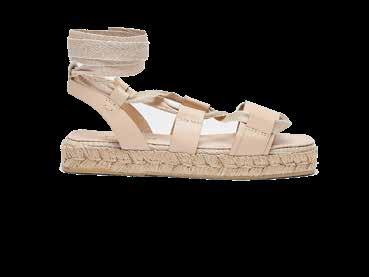
Nappa leather espadrille sandals featuring a soft herringbone ribbon ankle strap. RRP $615 maxmara.com
LogoVersaceHalo watch with a blue dial and orange details and interchangeable straps. RRP $2,040 versace.com

Finelines MulticolouredJewellersSapphire and Garnet ring set in Platinum. RRP $5,900 finelines.com.au

ToteBulgariBag in beige fringe raffia. RRP $3,970 bulgari.com

SquareGucci optical frame crafted from gold metal with removable heart-shaped charms. RRP $670 gucci.com/au

Hardy Brothers Pink Bi-Colour Tourmaline and Diamond ring in 18ct White Gold. RRP $14,980 hardybrothers.com.au

The change of season is blooming with colour and cuteness, especially when it comes to accessorising your wardrobe.
WISH LIST
SPRINGVIBES

INTERIOR STYLING 1021 Pittwater Road Collaroy NSW 2097 P: 02 9919 0601 • Cnr. Ashmore & Bundall Road, Bundall QLD 4217 P: 07 5619 8615 A home to fal in loe wit! alfrescoemporium.com.au alfrescoemporium
WISH LIST
RideBOSSthe Wave relaxed fit T-Shirt. Available in four colours. RRP $189 hugoboss.com.au

Pro watch with 39mm steel case and hybrid rubber and leather strap. RRP $5,010 tudorwatch.com


The embodiment of effortless cool, black accessories are always a stylish and versatile option.
Dior DiorbayMenrectangular shaped sunglasses in black marbled bio-based nylon with pink mirrored lenses. RRP $880 dior.com

Eau de Parfum. 100ml RRP $153 pacorabanne.com

BASICSBLACKTO
ExtremeMontblanc5.0 collection belt with sporty M LOCK 4810 closure. montblanc.com/en-au
TouringVictorinox2.0City Daypack constructed in special water- and abrasion-resistant fabrics. RRP $359 victorinox.com.au

BlackTudorBay
MonogramBurberry print cotton low-top sneakers. RRP $910 au.burberry.com

30 covemagazine.com.au – Issue 92
Paco InvictusRabannePlatinum

JASON J. MURAKAMI Adjunct Professor of Law Partner, Director of Family Law and Domestic Violence The family lawyer with the reputation for getting matters finalised quickly. Suite 2, Ground Level, H20, Cnr. Marine Pde. & Nind St., Southport, QLD 4212 Phone: (07) 5527 0686

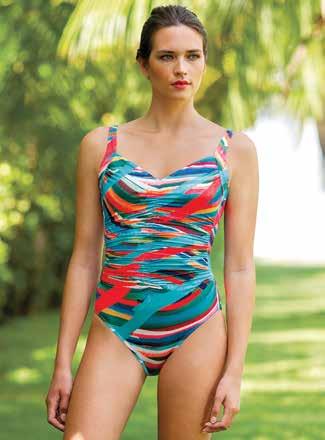
With virtually unbeatable fits in sizes 8 – 26, with some styles up to size 28 and cups A to H, Sunflair takes the intimidation out of buying swimwear, making it a fun and enjoyable experience.
Sunflair‘s bright, light and frivolous swim and resort collections are designed to shine.

French Rivera parasol prints and navy stripes, with touches of yachting elements like gold sailors' buttons and eyelet lace-ups, add a nautical vibe, or choose scarlet pinstripes that are anything but conservative, in twists of fabric and waterfall ruffles.
Sunflair is stocked in 80 stores across Australia and New Zealand including Calypso Resort & Swimwear in The Marine Village, Sanctuary Cove. sunflair.com
DESTINED TO BRING JOY back into your life, Sunflair‘s gorgeous new designs are inspired by chic European vacations, tropical islands and exotic animals.
The Summer 2023 season comprises 23 capsule swimwear collections, that mix, match and work together to create a complete holiday wardrobe, perfect for hitting the surf or endless days lazing by the pool.
From fuchsia pink and powder blue to whimsical florals, wild tiger stripes and rich jewel embellishments, the collection is the perfect combination of swimsuits with pretty capped sleeves, plunging lace ups, flirty ties and retro high-waisted briefs.
As well as being fashion conscious, Sunflair is fashion aware – dedicated to saving the environment and working towards a more sustainable planet, using recycled GREENbay® fabrics.
The polyamide fibre for GREENbay®'s outer fabric is made of 100% recycled material such as fishing nets (recovered from the sea), reducing waste in landfills and oceans so you can be earth aware and eco-friendly without compromising style.
Synonymous with quality and craftsmanship, Sunflair continues to innovate in the swim and resort industry with exciting new fabrics and clever design details.
On-trend designs include the new square silhouette or asymmetric off-the-shoulder, sexy cutaways, waterfall cuts, plunging necklines, and slimming high-rise briefs.
32 covemagazine.com.au – Issue 92
Then as the sun sets over the sparkling ocean, take your day to night with an exquisite range of coordinating dresses from Sunflair’s City & Beach.
LOOKING GOOD
BRING ON SUNSHINETHE
Pair your swimwear with complementing styles, from relaxed tees to elegant formal looks, made from suitcase-friendly, travelready fabrics that roll into neat crease-resistant bundles and are fast-drying and lightweight.
Issue 92 – covemagazine.com.au championshairbeautydayspa.com.au MONDAY TO SATURDAY LINKS GOLF CLUB Springfield Drive, Hope Island, VIP Parking 5577 8677 RELAX RECHARGE REJUVENATE Hair MakeupHighCouplesNails/PedicuresFoiling/ColourStylingBalayageFacialsMassageWaxingDermaplaningSkinInfusionSpaPackagesMassagesTeaPackagesandSprayTanning


Regularly exceeding the National Drinking Guidelines for alcohol intake, which is a maximum of two standard drinks per day, may indicate alcoholOthermisuse.symptoms include worrying about when you will be able to have your next drink, trying to hide alcohol consumption from those around you, and finding it difficult to relax without alcohol.
The research revealed enquiries seeking support for alcohol and prescription medication dependency treatments were also on the rise, and worryingly, enquiries for eating disorders increased by 78% in 2021 compared to 2020.
Alcohol addiction or dependency is characterised by an emotional or physical reliance on alcohol.
The programs operate from The Banyans Health Plus and offer patients the opportunity
The programs available include a mental health program, addiction program, stress management program, personal wellbeing coaching program and a nutrition program.
With the rising enquiries regarding mental health, dependency and wellbeing, Peter Hayton, Senior Psychologist at The Banyans, says that a busy schedule should not limit individuals who are struggling with these issues, and acknowledges the snowball effect that can occur when individuals feel
“Our programs are designed for those seeking treatment for their mental health, dependency or eating disorder concerns and symptomology.

STRESS LESS
IT’S NO SECRET that over the past few years, Australians have been doing it tough.
Now is more important than ever and taking that first step can help change your life and the life of those around you for the better. thebanyans.com.au/cove/
Off the back of these surges for mental health and dependency support, The Banyans is launching new specialist wellbeing programs delivered over six to eight weeks, with patients coming in once per week, seeing multiple practitioners each day.

The programs have been designed for people living with conditions including anxiety and stress to provide flexible support that works around existing priorities such as jobs, family life and otherWithcommitments.enquiriesincreasing, Ruth Limkin, CEO of The Banyans Healthcare Group, believes these programs will be an ideal way for SouthEast Queenslanders to address their wellbeing concerns while being able to continue with their busy“Welifestyles.understand that not everyone can have multiple days away from work and home to attend a residential program, and we would never want time to be a barrier for treatment,” she says.
“They bring together our medical professionals, allied health practitioners and therapy team to provide one-on-one programs delivered in a format that is flexible and effective.”
to address their specific health concerns in individually designed programs based on their needs – providing focussed and personalised steps towards improved health and wellbeing for Inpatients.thelast
“Whenoverwhelmed.youstart
“Whether that’s choosing an unhealthy dinner over something more balanced, or even what time we go to bed, this knock-on effect continues until we stop and shake ourselves out of a unhealthy cycle or routine.”
South-East Queenslanders are encouraged to reach out if they are struggling with any form of health issues, particularly if they are a busy professional, a working parent, or are simply struggling to prioritise their health.
The impacts of the COVID-19 pandemic have taken a toll on our financial, social, physical and mental wellbeing, and individuals are struggling to cope.Asa result of this, wellbeing enquiries to medical professionals have grown significantly, with people reaching out for support more than everNewbefore.data from The Banyans Healthcare Group reveals a significant increase in mental health enquiries, with anxiety, chronic stress and burnout seeing the most significant increases.
year alone, nearly half of Queenslanders struggled to manage their stress levels (49%) and a healthy weight (48%), with over half struggling to sleep properly (60%) and over a third (41%) failing to make healthy food choices.
Growing mental health enquiries demonstrate why wellbeing matters.
34 covemagazine.com.au – Issue 92 LOOKING GOOD
In fact, enquiries for anxiety have increased by 99% year on year in the first seven months of 2022 compared to the first seven months of 2021, with this increasing to 104% for females enquiring for Issuesthemselves.likechronic stress and burnout can eventually become a gateway into additional and sometimes more serious conditions, such as anxiety.Oneof the biggest symptoms for those experiencing an anxiety disorder is the presence of panic attacks, which can involve shortness of breath, dizziness, trembling of the hands, nausea andThesesweating.symptoms can have significant impacts on one’s ability to live a healthy and fulfilling life.
feeling stressed or anxious, it can make it hard to make healthy choices in other areas of our lives,” he explains.
NEED HELP WITH FAMILY LAW?
WE KNOW WHAT TO DO
HOW MUCH MUSCLE WILL YOU LOSE ON HOLIDAY?
According to the State of the Nation report by Roy Morgan in 2019 focussing on Tourism; the average Australian overseas holiday is 21.6 days which, is not a long time to abstain from training.

Exceptwait.for one thing … that nagging thought in the back of your mind that this well-earned break will undo all your progress in the gym.
DENTAL IMPLANTS • CROWNS AND COSMETIC DENTISTRY • ALL ON 4 • GENERAL DENTISTRY State of the art, purpose built facility. Offering quality dentistry in an opulent setting. GC Dental Solutions ~ Contact us to book an appointment (07) 5573 1368 | gcdentalsolutions.com.au | info@gcdentalsolutions.com.au GC North Medical Hub, 502 Hope Island Rd., Helensvale, Qld, 4212 LOOKING GOOD

HOW MUCH BODY FAT WILL YOU GAIN ON HOLIDAY?
‘Totally immobilise’ – now I am lazy on holiday, but I am not totally immobile.
This is a particular worry for those of you who are on a weight loss journey.
When I have a client who is relatively new to exercise, any movement helps them to get stronger – not just their gym workouts – and we make sure we focus on maximising other forms of movement.It’sthesame when you are on holiday … plus you just don’t lose that much muscle in 21 days.
Added to that, another study in the Journal of Sport Sciences found that over a 16 week period, beginners who completely ceased training only lost 5% muscle and 22% strength.
The answer is really straightforward.
When you are on holiday, you will have moments of complete rest, but you will also still continue to move – maybe more than when you are pinned to the desk in the office.
However, just because you aren’t in the gym, it doesn’t mean you aren’t preserving or continuing to build muscle.
You can build muscle by doing all sorts of activities like walking, hiking, surfing, jet skiing, horse riding, even the occasional dip in the resort pool – it’s not just about being in the gym.
TAKE A BREAK
So how will you stay fit on holiday and manage to enjoy yourself?
WORDS ADAM BERRY
You do not have to worry about it.
Dr. Michael Sempf is a leading Gold Coast dentist with advanced training and experience in dental implant therapy.
I come bearing good news here as well.
Keeping your muscle mass up is important, and if you can get one workout in a week on holiday you will see no noticeable changes as long as you get back on track when you return.
Maintaining your fitness while on holiday is not as difficult as you think.
The hotel has a fitness centre – but you don’t want to be ‘that’ person.

OUT OF OFFICE is on … suitcase is packed … dog is with the neighbour … passport is by the front door … you’re off on your holiday and you cannot
A study by Manchester Metropolitan University found that if you totally immobilise someone, they lose only 5-10% of muscle mass in 10-21 days.
Also, in terms of diet, keep the protein up to preserve your muscle mass but don’t fret it too much.
The study also suggests that if you keep the protein high, then the impact of fat gain is smaller.Andifyou eat more, you also move more – so that will help keep things in check as well.
It also found that the net gain of 61% of participants who put on weight on a holiday between one to three weeks was 300g and the average weight gain was 400g.
To conclude, your holiday doesn’t impact your fitness as much as you think it does.
According to research, in order to gain one kilogram of body weight you need to eat an extra 1,000 kcals a day over your maintenance level. That 7,000 extra calories a week is the same as 12 Big Macs or 50 cans of soda.
Half of each kilogram is body fat and half is water, therefore to gain one kilogram of body fat you need to eat double that amount … 2,000 extra kcals a day. Which is a lot.
You should enjoy your holiday period – because that is the point of a holiday – then when you get home, just slip back into your routine and the significance on your fitness will be inconsequential.
You can literally have your cake and eat it too and I think that’s pretty epic.
The main cause and effect in place here is that you think a holiday is having a greater impact on your fitness than it really is – and that leads to a lack of motivation to get back on track when your break is over.
Now I’m off to the travel agent …

You don’t need to stay fit while on vacation –because you don’t lose fitness when you're there.

The key part to this study is that is also showed ‘a decrease in physical activity in the weeks following vacation’.
The best in rehabilitationhealthpersonalisedtransformation,wellbeingmentalcare&private Regain control. Experience clarity. Find freedom. LEARN MORE 1800 861 214 | THE BANYANS.COM.AU The best in rehabilitationhealthpersonalisedtransformation,wellbeingmentalcare&private Regain control. Experience clarity. Find freedom. LEARN MORE 1300 226 926 | THE BANYANS.COM.AU
Housed inside recyclable zero-waste packaging, the seven natural deodorants in the FRANK + BARE range are easily applied, perfectly pH balanced and actively prevent odour causing bacteria from developing. frankandbare.com.au

38 covemagazine.com.au – Issue 92 LOOKING GOOD
Scented with warm mocha latte notes, Lük Beautifood’s Sweet Dreams Lip Mask hydrates the lips and melts away dead skin cells while you sleep. lukbeautifood.com

Designed to be blended in playful combinations, Gucci’s new Palette Beauté Des Yeux Gorgeous Flora includes 12 satin, matte, and metallic shades in a range of pinks, blues and neutral colours. Available instore and online from MYER, David Jones and Sephora.

The essence of fun fruity sweetness, Palm Beach Collection Watermelon Hydrating Hand Cream is enriched with shea and cocoa butter to perfectly pamper your skin. palmbeachcollection.com.au

SPOTBEAUTY
Infuse a drop of the tropics into your daily routine with We Are Feel Good Inc. Coco Body Milk, for soft, silky skin that smells as good as it feels. wearefeelgoodinc.com.au

A floral fragrance with a lush exotic heart, GUESS Bella Vita Rosa celebrates the playful and carefree side of the GUESS woman and creates an unforgettable feminine trail. guess.com.au

Fenty Icon Refillable Lipstick’s are available in a range of seven neutrals and three reds to allow you to choose your shade, choose your case, and create your own icon. fentybeauty.com


Again, unlimited possibilities and endless destinations.
If all this decision making has you exhausted and longing for a rest, perhaps a holiday closer to home is the answer. Beach or hinterland? Hotel or apartment? Food trail or winery tour? Weekend or mid-week?
Ok, so that’s the ‘at sea’ component sorted, now let’s move onto to air travel.
Do you want a tropical break, a visit to the colder climates? A river cruise, an ocean voyage? Are you taking the family, your partner or travelling solo?
Do you want to spend your days relaxing at sea, enjoying the onboard amenities?
Do you want an adventure packed journey where you can immerse yourself in the local culture?
DREAM DESTINATIONS
Is
DESTINATIONS
WITH THE WORLD reopening and holidays back on the agenda, it is time to dust off your passport and start planning where, when and how you want to spend your next break.
If cruising is your preferred method of travel, that opens up a whole new level of decision making.
Europe, Asia, Africa or America? Full tourist mode or off the beaten track? Guided tour or self-drive? Summer or winter? Autumn or spring?
40 covemagazine.com.au – Issue 92 Dream Dream
Luckily, the cruise industry has an itinerary to cover all of these and more.
This is just getting ridiculous, maybe it’s time to consult a professional travel agent who can not only help you plan your trip, they will also guide you every step of the way to ensure you meet the new Covid protocols and travelAndrequirements.ifallelsefails you can always go old school and throw a dart at the world map … expect a postcard from … Borneo? it time to start planning your perfect break?
Perhaps you would enjoy an all-inclusive cruise. Maybe a tropical escape is more your speed. Or possibly a local staycation could be on the agenda. Whatever your choice, there is an option out there to suit every taste and everybody.
Issue 92 – covemagazine.com.au 41


DREAM DESTINATIONS
The boutique nature of the accommodation means there’s no rushing to a secure your favourite spot and the ample space makes it perfect for social distancing or enjoying a little alone time.
Lomani Island Resort is an adults-only retreat with just 30 bures and suites, all with breathtaking ocean views and beach access.
OUR FIRST INTERNATIONAL HOLIDAY after the last two and a half years of, well you know what, was always going to be filled with anticipation, adventure and lots of rejuvenation.
WORDS ANGELA ORAM ON FIJI TIME
Think palm trees swaying in the soft breeze, beautiful white sand melting into clear blue water and warmth soaking into your skin, we were in heaven.
I know I had you at ‘adults-only’ but let’s continueSingingon.staff, ice cold coconut drinks and the most amazing ocean view you can imagine greeted us on arrival at the resort.
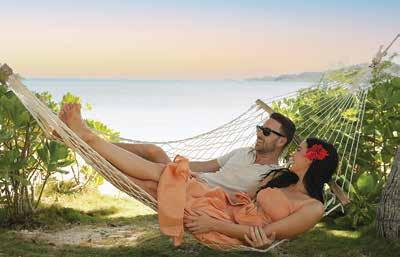
Discover the beauty of Lomani Island Resort –an adults-only Fijian paradise.

If you’re like us and you feel the need to explore and immerse yourself in the culture, aka wear yourself out, before disappearing under a cabana, there are plenty of activities on offer.
42 covemagazine.com.au – Issue 92
We were heading to Lomani Island Resort on Malolo Lailai Island in the Mamanuca Islands, and we were in no way prepared for the beauty and hospitality that was awaiting us.
The resort is perfect for relaxation and rejuvenation with daybeds, sunlounges and hammocks scattered throughout the beautifully kept grounds, on the beach and by the pool.
This time it was our turn and a short 3-hour flight from Brisbane with Fiji Airways got us on our way.
What I wasn’t expecting was so many pinchyourself moments and an overwhelming feeling of gratitude for the natural beauty so close to our ownForshores.years friends have shared their stories of escapes to tropical Fijian islands, snorkelling off the beach and reaching a level of relaxation that we rarely allow ourselves.
You can snorkel, kayak, SUP, join in a dolphin safari, guided village tour or basket weaving. >>
WHEN: Wednesday 5th October 2022 WHERE: The Sanctuary Cove Country Club TIME: 4:30 pm - 6:00 pm RSVP: 21st September info@covetravel.com.au20220755779211Refreshmentsprovided Invitation Cove Travel invites you to a special presentation and information event with Regent Seven Seas Cruises and Tauck. +61 7 5577 9211 info@covetravel.com.au | covetravel.com.au Sanctuary Cove, QLD 4212


It was obvious the chef knew exactly how to highlight their best ingredients.
We spent our first afternoon sipping cool drinks and swimming on Cloud 9, Fiji’s floating bar.
Candlelit dining on the beach, your private waiter and the ocean lapping the sand beside you is as close to a perfect evening as I think you can get.
The night we spent on the back deck of our bure was one of our pinch-yourself moments.

The staff were so incredibly welcoming and generous, it was obvious they enjoyed their work, making for an enjoyable guest experience.
There were two yellow pushbikes parked out the front of our bure, ready for our island exploring and it was great to see these being used by so many other couples on the island.
The food was beautifully presented, fresh and locally sourced, and we definitely felt we were able to enjoy the true tastes of Fiji.

After our afternoon of sun and fun, we were in full holiday mode and keen to see our accommodation.
Gardens separate the bures and the back deck is the perfect, private spot to watch the sunset, enjoy a coffee in the morning or sunbake during the day.
The music was pumping and the pizza oven was firing, it was a great spot to relax away a few hours.
When it comes to dining this was the perfect holiday experience.
I hadn’t heard of Fijian-Indian curries but I’m now recommending them to everyone and I could eat Fijian Kokoda, the national dish of Fiji, every day of the week.
Private dining experiences were organised while we were holidaying and they were very special.
If diving has been on your bucket list, courses for all levels and certification can be completed with a PADI instructor while on your holiday.
Bright pinks, red, yellow and orange fill the sky at night and there are so many ways to enjoy this special time of the day at Lomani – a sunset cruise, sitting by the bar, relaxing on the beach or chilling in your own backyard.

This was a great way to see to the many islands and had us to the airport in around 25 minutes.
By the time it came to leave we felt we had a resort full of friends.
Not only was the food amazing, it was wonderful how social the dining experience was.
For hubby and I, these few days at Lomani Island Resort were the perfect break to have some fun, reconnect and rejuvenate and we can’t wait to explore Fiji further.
We relaxed with our new friends on beanbags with drinks and canapes while our Fijian friend played the guitar and continued singing as the sun went down.
For the more adventurous, some of the best surf breaks in the world are just a 20-minute boat ride from the resort and there are 44 scuba diving sites to explore throughout the Mamanuca Islands.
DREAM DESTINATIONS 44 covemagazine.com.au – Issue 92
The sunsets in Fiji are spectacular.
The back deck leads onto a huge grassed yard that spills straight down to the beach.
The natural beauty of the island has been captured perfectly in the accommodation and surrounds.
Ensuring we could indulge in as much island time as possible was easy with an airstrip on the island, allowing us a quick transfer back to the mainland with Joyce Aviation.
The beachfront bures are very large, with a king bed and lounge area, huge bathroom and private outdoor shower.


There was live music each night, a wonderful duo with their guitars, taking requests and keeping guests in the open-air restaurant for hours after they’d finished their meals.
Bula.
Seabourn Odyssey December 5, 2022
Azamara Quest December 21, 2022
Viking Orion & Mars December 8, 2022
Oceania Regatta December 12, 2022
Coral Princess February 6, 2023
P&O Pacific Adventure March 6, 2023
Cruising Is Back, But Who’s Coming?
After two long years we can finally celebrate the lifting of the federal cruise ban, and start planning our next local sailing adventure. But where to begin? Well we think that knowing which ships are coming and when is a really good start, so we've listed them all in chronological order for you to peruse.
As always, we are here to help you decide which is the best cruise experience for you, both local and beyond, so contact us once you've narrowed down the list.
Royal Caribbean (Multiple Ships) October 21, 2022
Cunard’s Queen Elizabeth November 7, 2022
Holland America’s Noordam November 12, 2022
FOR ENQUIRIES CONTACT +61 7 5577 9211 info@covetravel.com.au | covetravelgc covetravel.com.au
Carnival Splendor October 5, 2022
Terms and conditions apply.
Silversea Silver Whisper December 12, 2023
APT’s Caledonian Sky Kimberley Cruising, 2023
Celebrity Eclipse October 22, 2022
A closer look at which ships are returning to Australia, and when.
Norwegian Spirit December 8, 2022
Regent’s Seven Seas Explorer December 29, 2022

DREAM DESTINATIONS

An Unrivalled Experience
REGENT SEVEN SEAS CRUISES
46 covemagazine.com.au – Issue 92
Issue 92 – covemagazine.com.au 47Issue 92 – covemagazine.com.au 47 Spotlight Voyage Journey to the Aegean – Rome to Athens – Seven Seas Grandeur™ 31 July 2024 | 14 Nights | Up to 96 Included Shore Excursions Savour a classic 14-night Mediterranean sailing onboard the brand new Seven Seas Grandeur™ Embarking in the eternal city of Rome, you’ll set sail for the Amalfi Coast, enjoying glamorous Positano, Taormina in Sicily and Crotone in Calabria. Continuing to Corfu and beautiful Dubrovnik, you’ll then enjoy an overnight in the pretty port village of Trieste before sailing onto Split, Kotor, Corfu, Katakolon, Santorini, Ephesus and your final port of call, Athens. For more information and bookings contact Cove Travel 07 5577 9211 | info@covetravel.com.au covetravel.com.au


DREAM DESTINATIONS 48 covemagazine.com.au – Issue 92
ExperienceTAUCKtheTauckdifference.

Issue 92 – covemagazine.com.au 49
The best travels bring the right kind of connections, with locals who share their daily lives along with cultural insights, secrets of nature, stories of the past that define the present, and special skills – and a journey becomes both enriching and everlasting.
TAUCK are a company, and a family, of passionate travellers.

With journeys across seven continents, in over 100 destinations and to 70+ countries, Tauck keep moving forward to find new ways to enhance travel experiences that will be memorable for a lifetime – and they are honoured to have the trust and guest satisfaction to be named on Travel + Leisure's ‘World's Best’ list for 25 consecutive years.
That go behind the scenes to take you into places not accessible to theThatpublic.show you the world differently than you could see it on your own and astonish you along the way.
Tauck’s Danube river cruises include wine tasting at private vineyards ... visits to medieval towns and riverside castles ... and private palace evenings that come alive with music and merriment. This picturesque ‘river of kings’ carves a winding path through a total of ten modern-day European nations with landscapes characterised by forested slopes, wine-producing villages and imposing fortresses that remain a testimony to kingdoms and culture ... regal, romantic and ready to welcome Tauck river cruisers. The Blue Danube – 12 days – Departs 17 July, 2023 Westbound on the MS Joy from AUD $9,420 pp* Exploring the Douro, plus Lisbon and Madrid – 12 days – Departs 16 August, 2023 on the MS Andorinha from AUD $10,130 pp* Christmas Markets along the Rhine – 8 days – Departs 29 November, 2023 Southbound on the MS Inspire from AUD $4,920 pp* *Terms & Conditions apply. Visit tauck.com.au for details. For more information and bookings contact Cove Travel 07 5577 9211 | info@covetravel.com.au covetravel.com.au
Unique and exclusive access create a journey unlike any other.
With Tauck you'll see the world differently thanks to their exclusive access in destinations the world over.
Authentic experiences that provide special access to hidden gems and must-see sights – at times of day when the crowds have gone.
Whether you're experiencing the Rhine or the Danube, the Douro, the Rhône, Seine, Maas or Moselle ... the magic of Tauck’s award-winning European river cruises goes far beyond the riverboat you're aboard or the landmarks you'll visit.


They're also about the little experiences you have along the way, those personal encounters and unexpected moments that make your visits – and your memories – extraordinary.
The Blue Danube
It's in the intimate ambiance and personalised service ... the places you'll discover off the beaten path ... and in the uncommon access to local culture and exclusive destination driven experiences you can't get on your own, as you enjoy a true slice of European life and return home transformed.
It's not just about the places you visit – it's how you experience them.
As a family-owned travel company for over 97 years, their values and vision remain true: always do the right thing and deliver more than what's expected.
Tauck invite you to see the world as you've never seen it before.
The most memorable trips aren't just about the grand sights you see.
SILVERSEA
50 covemagazine.com.au – Issue 92
Discover authentic beauty on a Silversea ultra-luxury voyage.
DREAM DESTINATIONS

From the stunning Milford Sound in New Zealand to the cosmopolitan capital of Hobart, Silversea invite you to explore a wealth of home-spun destinations in pampered comfort.
With cruises departing and arriving in Australia and a surplus of unique sights and flavours their idyllic itineraries, Silversea’s ultra-luxury cruises will have you in its thrall from day one.


Three further sea days will see you arriving on Australia’s west coast, with stops in Perth, Busslelton and Albany.
Issue 92 – covemagazine.com.au 51
Singapore to Sydney: Sailing from Singapore to Sydney, this voyage takes in the very best of Australasia.Beginningwith two days at sea, you’ll enjoy Bali’s fabled beauty and Lombok’s genteel way of life.
Sail this region on Silver Muse and enjoy one of the highest space-perguest ratios at sea as well as the pleasures of finely appointed suites featuring expansive ocean views and lavish amenities.
DISCOVER SILVERESEA’S INCREDIBLE VOYAGES
A fusion of big cities – Wellington’s tartan flare – Dunedin’s rolling vineyards – Hobart’s historical heart – and days at sea, this voyage is one the best bites the region has to offer.
Kangaroo Island’s rich diversity of flora and fauna – and eponymous wildlife – will keep nature lover’s happy, while the bustling cities of Adelaide, Melbourne and Sydney are perfect for
Issueurbanites.92– covemagazine.com.au 51 Your All Inclusive Voyage Includes: • Roundtrip flights* • Pre and Post Cruise Hotel Night/s or Day Use Hotel • Spacious ocean view suites, most with a private veranda • Butler service for every suite • Eight restaurants, with open-seating, so you can dine at your leisure, and be served whatever you desire, from casual snacks to gourmet cuisine • Complimentary 24 hour in-suite dining • All-inclusive Champagnes, wines, beers, spirits as well as specialty coffees, bottled water, juices and soft drinks, served throughout the ship. You also get your in-suite mini bar stocked with your preferred beverages • On board entertainment and enrichment programs • Included Wi-Fi for every guest on board • On board Gratuities • Transfers and luggage handling For more information and bookings contact Cove Travel 07 5577 9211 | info@covetravel.com.au covetravel.com.au
Experience the very best Australia and New Zealand on this amazing 12-day voyage that will take in stunning beauty, rugged shores, fascinating history and some very fine wine to boot.
What’s more, with overnights and late departures on every voyage, Silversea promises an opportunity to travel deeper, wherever you are.
Auckland to Melbourne:
DISCOVER THE AUTHENTIC BEAUTY in our own big backyard and beyond on a Silversea ultra-luxury cruise.
Silversea’s personalised butler service allows guests to indulge –attending to everything from unpacking luggage to serving a private breakfast, handling laundry requests, and shining shoes before dinner.

52 covemagazine.com.au – Issue 92
OCEANIA CRUISES

DREAM DESTINATIONS
Immerse yourself in award-winning itineraries, exquisitely crafted cuisine and small ship luxury.
OLife Choice*
Experience faraway places that you have always dreamed of aboard one of their 7 ships, including the newest fleet addition – Vista – setting sail in April 2023.
Each voyage is an invitation to discover your next travel story, see the world in new ways and reignite your passion for travel.
“With our 2024 Collection, we have set a whole new standard for destination innovation with an astounding mix of marquee destinations and exotic new locales blended together in creatively crafted voyage offerings.”
Savour your experience with imaginative insider tours that immerse you in the heart of the destination’s culinary and cultural traditions.
Issue 92 – covemagazine.com.au 53 Grand Mediterranean Tour 20-days from Rome (Civitavecchia) to Venice | Vista Departs 11 April 2024 Veranda Stateroom from AU$11,670pp* Welcome springtime amid Mediterranean masterpieces like Cinque Terre’s cascading villages, Barcelona’s mazelike Old Town and Ephesus’ stirring archaeological wonders. Rediscover your passion for exploration with Oceania’s new 2024 Collection featuring FREE Pre-Paid Gratuities plus one FREE OLife Choice* amenity. Choose from FREE Shore Excursions; FREE Beverage Package; or FREE US$1,200 Shipboard Credit (Amenities are per stateroom.) *Please visit OceaniaCruises.com for full offer details and complete Terms and Conditions. For more information and bookings contact Cove Travel 07 5577 9211 | info@covetravel.com.au covetravel.com.au
Immerse yourself in award-winning itineraries featuring over 450 alluringOceaniadestinations.Cruisesnew and boutique ports allow you to explore off-thebeaten-path places in the most desirable corners of the world.

The itineraries are available to preview online at OceaniaCruises.com and are open for reservations.

There are as many reasons to travel as there are travellers in this world.
Thousands of reasons – one passion.
It’s your turn to embrace your passion for travel with Oceania Cruises.
With OLife Choice guests can enjoy Free Pre-Paid Gratuities and Internet, plus choose one free amenity: FREE Shore Excursions; FREE Beverage Package; or FREE Shipboard Credit. With over 400 cruises included, there is a voyage for everyone.

“Next to our reputation for serving The Finest Cuisine at Sea, Oceania Cruises is widely acclaimed for developing the most enticing and destination-rich itineraries in the cruise industry,” said Jason Worth, Vice President - Oceania Cruises Australia & New Zealand.

SAVOUR THE WORLD with Oceania Cruises – taste The Finest Cuisine at Sea® whilst experiencing small ship luxury, catering for no more than 1238 guests.

2024 COLLECTION
The Collection encompasses more than 350 itineraries including over 130 Grand Voyages across seven ships and all seven continents.
Oceania Cruises has revealed its 2024 Collection of voyages to Europe, Alaska, Canada, Asia, Australia & New Zealand, Africa, South America, the South Pacific, and the Caribbean.
54 covemagazine.com.au – Issue 92
Get up close and personal with some of the world’s most exotic animals.

JAMALA WILDLIFE LODGE
DREAM DESTINATIONS
The menu changes regularly and depends on the availability of fresh food at theThesetime. offerings perfectly complement this once in a lifetime accommodation adventure.
A stay at Jamala allows guests to immerse themselves in one of the most unique experiences in the world and take on the thrill of a wild AfricanDuringsafari.theincluded tour, guests encounter some of the zoo’s most popular residents, such as rhinos, lions, tigers, giraffes, monkeys and meerkats for a special opportunity to connect with and learn about these incredible animals. jamala.com.au
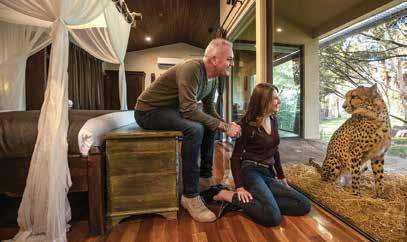
JAMALA WILDLIFE LODGE in Canberra offers you the opportunity of experiencing close encounters with some of the world’s most exotic and endangered animals, as well as relaxing in the atmosphere of its three individually designed five-star accommodation hubs: Giraffe Treehouses, Jungle Bungalows and uShaka Lodge.
Jamala Wildlife Lodge also offers 5-star dining included in the price.

The Jungle Bungalows provide guests the unique opportunity to bathe alongside sun bears, sleep next to a lion, check out a cheetah or admire a tiger from the 5-star comfort of their African inspired bungalow, as they get to know these beautiful creatures in the most personal and intimate way.
These African-inspired luxury suites lie in the heart of the National Zoo and Aquarium and are the epitome of style and comfort.
You start your evening with pre-dinner drinks and canapes, where some special guests, including white lions or hyenas, may join you.

While you are here, you can enjoy the company of the curious and captivating Colobus Monkeys and the graceful inhabitants of the 200,000-litre shark tank.
Jamala and Linger-LongerCanberraPackage 2 nights and 3 days of luxury, adventure and excitement including: • 2 nights in a uShaka Lodge room (upgrade available for a uShaka Suite) • Gourmet meals for 2 days – choice of dinner venues • Moet Champagne and fine wines • Late check-out at 12 noon • An additional lunch on the day of departure • Two exciting tours covering the National Zoo and Aquarium • Special face-to-face meetings with a giraffe, rhino, lion or tiger • An action-packed 3-day itinerary experiencing some of Canberra’s other treasures at your leisure Cost $787.50 per person per night ($3,150 total for 2 adults for 2 nights) For more information and bookings for this limited time package contact Jamala reception on 02 6287 8444.
The cornerstone of Jamala Wildlife Lodge is uShaka Lodge, decorated with stylish and luxurious furniture and African artefacts and artworks.


The six Giraffe Treehouse suites allow guests to mingle with the friendly animals that reside in a private garden setting.
Those staying at the Lodge can choose to spend the night within the habitat of some of the world’s most amazing animals.
Guests can also soak in panoramic views of the Molonglo River from the balconies, while meeting and hand feeding the resident giraffe.

To continue the African theme, you will be seated with other guests at large tables for a delectable, fun, 4-course gourmet dinner coupled with a selection of some of the best wines.
Issue 92 – covemagazine.com.au 55
DREAM DESTINATIONS
CelebrateCUNARDChristmasonboardQueenElizabeth.
56 covemagazine.com.au – Issue 92

Your table is reserved for breakfast, lunch and dinner in one of the sophisticated main restaurants on board.
From parties of one to family groups, you’ll find a variety of spacious staterooms and suites on board to make your voyage as comfortable as possible.
With time at sea the choice, as always with Cunard, is yours.
Cunard’s New Zealand Christmas and New Year 14-night cruise onboard Queen Elizabeth is no exception.

When evening falls, the curtains rise with a cast of talented performers ready to entertain you.
Imagine yourself indulging in fresh, local seafood, exploring one of the largest gingerbread villages at sea and standing under an oversized Christmas tree in Queen Elizabeth’s spectacular Grand Lobby; all while sailing through the beautiful Fiordland National Park on Christmas Day.

Infusing the festive season with tradition, style and sophistication, this special voyage is just one of a host of magical itineraries offered aboard the Cunard Queens.

Issue 92 – covemagazine.com.au 57Issue 92 – covemagazine.com.au 57
Prepare yourself for a truly remarkable voyage, as this stunning Queen invites you to an uncrowded world where spacious decks set the perfect backdrop for you to savour a flawless Cunard experience.
Enjoy croquet on her Games Deck, stunning entertainment in her Royal Court Theatre or relax in her elegant conservatory. The choice, as always with Cunard, is yours.
There is as much or as little to do as you please, with more possibilities than you have time to discover.
info@covetravel.com.au covetravel.com.au
Setting sail from Melbourne on the 22 December 2022, your festive getaway begins as soon as you step onboard.
Of course, Christmas dinner is the main event.
An overnight call to Auckland on New Year’s Eve is yet another highlight of this itinerary, allowing guests to be amongst the first in the world to kick off the 2022 farewell celebrations and welcome the new year.
Her art deco features and gleaming chandeliers blend with contemporary attractions to ensure a remarkable holiday.
Designed to be perfect in form and function, each accommodation option brings together the best in comfort and convenience.
Expect a feast of roast Norfolk turkey with all the trimmings and traditional Christmas pudding.
Watch the resident Royal Cunard Singers & Dancers stage dazzling West End style productions or abridged Shakespeare performances or enjoy the talents of a hand-picked line-up of vocalists and instrumentalists, aerial performers and illusionists, stand-up comedians and variety entertainers.
An ode to evocative elegance, Cunard’s Queen Elizabeth exudes charm, style and refinement.
For more information and bookings contact Cove Travel 07 5577 9211 |
CELEBRATING CHRISTMAS on board a Cunard Queen is a magical and memorable experience … one filled with fine traditions, special menus, festive entertainment and a carol or two in the main lobby.

About Cunard’s QueenElizabeth


Each is the home of deliciously imaginative menus, exceptional wines and impeccable service.
Immerse yourself in endless entertainment, luxurious accommodation and an array of dining choices.
AZAMARA
DREAM DESTINATIONS 58 covemagazine.com.au – Issue 92
'Change the Way You Sea' onboard Azamara’s newest ship.

Issue 92 – covemagazine.com.au 59 Close to Home Itineraries Azamara Onward ℠ | 11 Night | South Pacific Explorer Voyage | Papeete to Auckland | Departing 3 February 2024 | Segment of the World Voyage | 6 Ports – 1 Overnight (Bora Bora) Azamara Onward ℠ | 15 Night | Kiwis and Koalas Voyage | Auckland to Sydney | Departing 15 February 2024 | Segment of the World Voyage 11 Ports – 3 Late Nights (Napier, Wellington & Hobart), 1 Overnight (Hobart) Azamara Onward ℠ | 21 Night | Astounding Australia/Asia Voyage | Sydney to Hong Kong | Departing 1 March 2024 | Segment of the World Voyage | 9 Ports – 1 Late Night (Mooloolaba), 4 Overnights (Sydney, Cairns, Manila & Hong Kong) For more information and bookings contact Cove Travel 07 5577 9211 | info@covetravel.com.au covetravel.com.au
You can sip on a London Fog Martini, a Tuscan Delight, or the Heart of Azamara while dining on an exotic premium menu of small plates served hot andAlsocold.exclusive
Azamara Onward ’s℠ inaugural season will explore the Mediterranean, and in 2024, the ship will set sail for a new 155-night World Voyage.

For entertainment, Azamara has debuted four brand-new Signature Shows on Azamara Onward ℠ to keep you grooving all night long to a wide variety of music styles.
The new sister ship is home to the exclusive Atlas Bar, a speciality venue featuring innovative artisanal cocktails created using the latest techniques from smoking domes to nitro-infusions, with fresh squeezed juices and handmade syrups to create flavours inspired by destinations across the globe.


to Azamara Onward ℠ is a new Chef’s Table concept at speciality restaurant, Aqualina, where you can enjoy a seven-course culinary journey of beautifully presented dishes that capture the flavour and essence of some of the destination’s most authentic dishes.
This journey will include immersive experiences in the World’s Wonders, giving you such options as a three-night land excursion in Beijing with a visit to the Great Wall of China and a guided tour through the Forbidden City, or a shore excursion to Cairo, Egypt, where an Egyptologist will guide you through the Great Pyramids to the mysterious Sphinx, among others.
The World Voyage comes with over USD $22,000 in exclusive amenities, including the company’s signature AzAmazing Evenings® – designed to connect guests to the local culture of the destination, USD $7,000 in onboard credit, business class air travel, a pre-voyage hotel stay and gala, access to exclusive World Voyage events, a premium beverage package for two, and more.
AZAMARA – the upmarket cruise line and leader in Destination Immersion® experiences – unveiled its latest creative campaign earlier this year.
Change the Way You Sea, highlights the company’s one-of-a-kind cruising experience offering longer stays and overnights to fully appreciate a destination.
With more Country-Intensive℠ itineraries and land programs to choose from, you’ll find yourself completely immersed in everything the destination has to Theoffer.newest
Azamara’s fleet of four intimate-style ships dock in smaller, marquee ports, giving you unique access to hidden gems around the world.
member of Azamara’s four-ship fleet, Azamara Onward ℠ , launched this past May featuring exciting new itineraries and onboard venues.
The once-in-a-lifetime World Voyage will visit over 40 countries in six continents with 22 overnight stays and 27 late nights in port, giving you ample time to fully explore the rich culture and history of each destination.

FAIRSHORE NOOSA BEACHFRONT APARTMENTS
60 covemagazine.com.au – Issue 92


Something for everyone.
DREAM DESTINATIONS
This is the ideal spot for cooling off after a day at the beach or sitting watching the waves roll in while relaxing on your poolside chair.

Of course, the amenities in this tropical oasis are second to none, with an outdoor heated pool, wading pool and spa overlooking Noosa Main Beach.

Lining both sides of the street are fine dining restaurants, casual eateries and cafes, take-away stores and even a food court.
There are also three barbecue areas at the apartments for those wishing to enjoy the beachfront ambience while they eat.
Issue 92 – covemagazine.com.au 61
Making people’s holidays come true for 25 years, Accom Noosa take pride in assisting visitors to Noosa with a myriad of accommodation options. Whether you are after a relaxing family holiday, a romantic getaway or a catch up with friends, the holiday specialists can arrange a stay in a beachfront apartment, stylish boutique hotel suite or stunning home in picturesque locations on the river, beachfront and secluded areas from Hastings Street to Sunshine Beach. Stay for a week, a weekend or even longer and rest assured your accommodation needs will be well looked after. 1800 072 078 | accomnnoosa.com.au
Enjoy a family holiday with plenty of room for mum, dad and the kids, get a group of friends together for a relaxing weekend, or plan a romantic staycation for two in one of the most picturesque locations on the Sunshine Coast … the choice is yours.

Accom Noosa


An ideal combination of location and ambience, Fairshore Noosa Beachfront Apartments offer the perfect solution to your Noosa holiday accommodation fairshorenoosa.com.auneeds.
If the young ones need a break from swimming, you can keep them amused in the fully airconditioned games room with air hockey and TV, while the big kids can ensure their fitness is on track in the fully equipped gymnasium.
Modern and convenient, the two-bedroom, two-bathroom apartments are fully self-contained with glorious views from the private balconies.
IS THERE ANYTHING BETTER than sandy feet following a pathway to theAsshore?thename suggests, Fairshore Noosa Beachfront Apartments are situated right on Noosa’s Main Beach, offering direct access to this idyllic piece of Guestsparadise.canenjoy an early morning jog, ocean swim, or evening stroll along the boardwalk, with the beauty of the beach right on their doorstep.
Situated in the Hastings Street precinct, an area renowned for its cosmopolitan cafe culture, the apartments offer guests a bounty of choice when it comes to dining out.
The range of cuisines varies as well, from modern Australian and local seafood to Italian, Mexican, Asian and more.
Remember the possibility that actions like this might be taken into account when it is determining the final property and/or financial settlement or determining responsibility for legal costs.
There is no 50/50 ‘rule’ when it comes to dividing assets, regardless of how long the relationship lasted.
It’s more complicated when your relative loses the capacity to change their will – now, your inheritance

If you transfer an asset, it isn’t automatically excluded from the asset pool – the court can reverse the transfer, so ownership of the asset comes back to you, or it can still regard the asset as yours, even though it’s held in the name of a family member or friend.
It is not true that you only need to live together for six months to be considered a de facto couple.
So, you can have a de facto relationship much earlier than six However,months.for a financial claim to be made in respect of that relationship, it has to carry on for at least two years – unless you have children together, or if you
In those circumstances, the court will look at other factors such as how intermingled the relationship finances have been and whether the relationship has been ‘public’.
Nobody has an automatic entitlement – unless you’ve entered into a binding Financial Agreement specifying how your assets will be split should the relationshipOtherwise,fail.outcomes depend on the specific facts and circumstances of your individual case.
So, if you are concerned about an aspect of your family law situation, give them a call – chances are they’ve encountered that challenge before, and will be able to create an action plan to get you through it. bgm.legal | 07 5510 4808
make substantial contributions which it would be unfair to ignore (such as putting money into a property together), in which case that two-year rule goes out theIt’swindow.alsotheoretically possible for you to be considered as being in a de facto relationship, even if you don’t live together with your other half permanently.
62 covemagazine.com.au – Issue 92 FACTS & FIGURES
BGM Family Lawyers are on hand to sort fact from fiction when it comes to family law matters.
If you need to transfer significant items of property after separation, get advice about whether consent should be sought first.
MYTH BUSTERS
Not only is this myth false – but taking steps like this in an attempt to 'defeat' a property settlement claim by a partner could have negative consequences.
MYTH 1: WHEN A COUPLE SEPARATES, EACH PERSON AUTOMATICALLY GETS HALF THE ASSETS.
An inheritance which you haven’t received is not yet your ‘property’, so it can’t be divided.
If you are listed as a beneficiary in a relative’s will, but that relative still has the capacity to change their will, your inheritance isn’t guaranteed, and it will likely be ignored in any property settlement.
FAMILY LAW is complex, as no two cases are the same, however, that doesn’t stop countless myths from circulating at barbeques everywhere.
asset pool – this assessment covers contributions of a financial nature, and to running a household and caring for Thechildren.court also examines the circumstances of each party – their age and health; their incomes and earning capacities; and the ongoing responsibility for the care of children.Insome cases, this process of reasoning will produce an equal outcome; in others, a just and equitable outcome will be something different.
MYTH 4: FUTURE INHERITANCES CAN BE DIVIDED IN A PROPERTY SETTLEMENT.


From who gets what after a separation to what constitutes a de facto relationship, these myths can add confusion to what is already an emotional time – so it’s important to set the record straight.
The Family Law Act defines a de facto relationship as one between two people who’ve been living together on a ‘genuine domestic basis’.
The BGM Family Lawyers team has been dealing with scenarios like these for years.
Courts work out what each party should receive by analysing each parties’ contribution to the relationship’s
MYTH 3: YOU CAN KEEP AN ASSET BY TRANSFERRING IT TO A FRIEND OR FAMILY MEMBER.

becomes inevitable, so the court could take it intoForaccount.example, your partner could receive an increased share of the asset pool – excluding the inheritance – to take into account that you have an inheritance coming yourAnyway.adjustment will depend on the size of the inheritance and its ratio to the relationship property pool.
MYTH 2: YOU NEED TO BE LIVING TOGETHER FOR SIX MONTHS TO BE A DE FACTO COUPLE.
BRISBANE


ENDORSED Stressless® is the only seating brand endorsed by the Australian Chiropractors Association COMPLIMENTARY INTERIOR DESIGN CONSULTATION | Book an appointment today


Fortitude Valley Shop 2 / 27 Doggett Street (Opposite Space Furniture) T. (07) 3854 1688 www.designinitial.com.au GOLD COAST Bundall 91 Ashmore Road T. (07) 5511 7110 Stressless SUNRISE Recliner Chair with Signature Base Stressless® Emily Recliner Sofa in Paloma Cognac Leather on Black Metal Stressless® Toyko Low Back Recliner Chair in Paloma Cognac Leather on Chrome Metal
Calligaris SUNSHINE Extension Table with OLEANDRO Chairs










Kollosche and K Media Group ANNUAL AWARDS 2022 CELEBRATING EXCELLENCE IN SERVICE, MARKETING, BUSINESS & SALES RESIDENTIAL | COMMERCIAL | PROPERTY MANAGEMENT | NEW PROJECTS | K MEDIA GROUP 1. Tony Grbcic, Adam Grbcic & Michael Kollosche. 2. Julian Rivas, Sally Cran, Avenelle Harris, Julia Kuo, Sam Guo & Michael Kollosche. 3. James Roberts, Troy Dowker, Michael Kollosche & Isabella Burns. 4. Bree Bellhouse, Hannah Delre & Suzie Dorsett. 5. Rob Lamb & Michael Kollosche. kollosche .com.au 2. 3. 4. 5.


Welcome Home Prestige Property Magazine Edition 24 | September 2022

But interest rates are only one factor in a much bigger picture when it comes to assessing the health of the property market, now and in the long term.
Households have saved an average of 17.2% of income since the pandemic started, according to the national accounts released in December, which amounts to a whopping $260 billion in savings.
Spring Selling Guide
Key August Results
Rising interest rates and inflation have been grabbing media headlines for months, fuelling some fear among those who have not lived through these cycles in the past.
A Melbourne couple with plans to relocate to the Gold Coast secured a mega

19 Cronulla Avenue, Mermaid Beach
2216 Arnold Palmer Drive, Sanctuary Cove
Cash to Splash
Right now, anyone who wants a job has a job, which means few people are going to stop paying their mortgages.
One of the upsides of the Covid pandemic for many Australians has been two years of enforced savings due to the lack of opportunity to spend money.
The number one indicator of mortgage stress is whether you have a job that enables you to pay your home loan.
Unemployment in Australia is at its lowest in almost 50 years, wages are rising and a skills shortage is driving pay increases across many industries.
As the Treasurer at the time Josh Frydenberg summed it up, that’s “a damn lot of money” – and people are now spending it.
As the Spring selling season kicks off, Kollosche Managing Director and Selling Principal Michael Kollosche offers a big-picture perspective on the key factors impacting the market.
S
Coming into Spring this year, there is a raft of factors at play that make it an interesting time for those who are considering bringing their property to market.
The other factor set to impact Gold Coast property sales in Spring is the relationship between supply and demand.
The supply of prestige property remains low on the Gold Coast and the demand is there for good quality stock in key locations.
pring has long been regarded as the peak selling season for real estate across the country. The coldest days of the year are behind us meaning sellers and buyers are generally more motivated to take action on moving house.
All that being said, both sellers and buyers need to act with realistic expectations and a willingness to negotiate to reach a deal in this evolving market.
New Zealand buyers visiting Melbourne on business flew to the Gold Coast specifically to inspect 2216 Arnold Palmer Drive, Sanctuary Cove, and liked what they saw. An unconditional offer of $5,760,000 was made within an hour of inspecting the Joe Adsett design with marketing agent William Sarti.

Kollosche is working with high-net-worth individuals at the top end of town who have a lot of capital to deploy and they’re looking for opportunities to acquire new assets.

waterfront mansion at 10-12 Edgewater Place, Helensvale, with a post-auction offer of $4,100,000. William Sarti, Sam Guo and Julia Kuo wrapped up the deal.
A newly-completed designer house is stopping traffic at 10 Rio Vista Boulevard, Broadbeach Waters, thanks to a largescale, bespoke mural by renowned artist Cameron Scale. Jay Helprin and I are leading the campaign to auction on Friday, 9 September at 5pm.

Only 140m from the sand at 19 Cronulla Avenue in Mermaid Beach, a contemporary beach house designed by BDA
If you are considering selling in the coming months, reach out to our team for advice on the best marketing strategy to position your property for a desirable result.
Nearby in Broadbeach Waters, a concrete bar makes a statement inside the central courtyard of a new two-level contemporary house at 6 Beverley Crescent, listed by Jay Helprin and I, and set for auction on Friday, 16 September at 12pm.
Michael Kollosche10-12Elanora
Claire Dai and Gloria Wang secured a $4,600,000 contract on 33 Sir Bruce Small Boulevard, Benowa Waters, which went unconditional on 3 August.
Architecture is set for auction on Sunday, 11 September at 10am through Eoghan Murphy, myself and James Roberts.
Clear Island Waters, sold at auction for $3,383,000 with Sam Guo and Julia Kuo.
Kollosche’s first flush of Spring stock includes a string of sensational new builds and a one-of-a-kind blue-chip offering in Burleigh Heads.

A six-bedroom house fronting Clear Island Lake at 46 Clear Water Bay Avenue,
Drive, Burleigh Heads
Troy Dowker is marketing a sprawling residence at 10-12 Elanora Drive with views to Tallebudgera Creek and occupying the only double waterfront block in the tightlyheld Koala Park precinct of Burleigh Heads. The auction is set for Friday, 23 September at 4pm.
Spring Stock Shines Bright
A local family upgraded to a rare singlelevel residence at 33 Vespa Crescent, Surfers Paradise, which fetched a street record price of $4,730,000 through Sam Guo and Julia Kuo.
10 Rio Vista Boulevard, Broadbeach Waters

Attention to Detail
Her expert use of layering and texture introduced through the furnishings bring depth and warmth to the home’s spacious bedrooms and living areas.
rand plans to build a home that is a cut above are realised with this doublestorey waterfront property occupying a prime position in Broadbeach Waters.
Curved concrete walls and plenty of plants soften the main living spaces, while oak timber chevron flooring adds visual interest to the vast floor spaces. All four ensuite bedrooms feature fully tiled showers, again with curved walls.
The Beverley was constructed by Live Build and designed by Michael Smekel of SMEK Design, with Guech, who has a background in fashion, lending a close creative eye.
Guech says her passion for interiors means she is always on the hunt for statement pieces, and there are plenty of them in this property, such as the multi-tiered chandelier from Coco Republic that crowns the soaring 6m entryway.
“It was the first thing I bought for the house,” says Guech. “All the others I had seen looked too mid-century. This was the only modern one I could find.”
By Lisa Hughes
It’s not often you find a house that has it all, but The Beverley in Broadbeach Waters boasts position, style, form and function – and an epic central courtyard bar.

“The way the sun glistens on the water, it’s such a spectacular view,” says owner Guech Venville. “You could sit and watch it for Securinghours.”such a well-positioned block in this popular coastal suburb is not easy, with prime lots fiercely contested.
G
“There are blocks that have position and those that have aspect but finding one that has both is the ultimate prize, but competition for them is fierce,” says Guech.
The newly built residence has come to market through Michael Kollosche and Jay Helprin and will be auctioned on 16 SittingSeptember.onanear-point position canal-front block, which has been elevated and faces north to water in the prestigious ‘Golden Triangle’, the home’s location and aspect offer privacy and views of the city skyline along the canal.
Sleek fittings and fixtures such as the brass door handles and tapware, bespoke lighting, and hand-made chandeliers in the dressing room in the master bedroom, bring a luxury hotel-style feel to the home.
The industrial-style facade and pristinely set-out tropical gardens of 6 Beverley Crescent are a simple prelude to the elevated level of luxury and attention to detail that can be found behind its oversized, fluted-glass-fronted door.
The Beverley, 6 Beverley Crescent, Broadbeach Waters, goes to auction on 16 September at 12pm. Contact Michael Kollosche on 04111 888 15 or Jay Helprin on 0407 894 775.

“It could have been another living space or bedroom, but the courtyard opens the house up and allows a clear line of sight through to the waterfront.”

The outdoor areas of The Beverley are just as inviting as the indoor spaces, where a magnesium pool with a built-in daybed overlooking the water is the perfect place to cool off on a hot summer’s day. Water enthusiasts can moor their boat on the pontoon and there is also a secure boat shed with storage beneath the house.
“Having to spend more time at home since Covid, I really wanted a space that had the feel of a luxury holiday resort; a space where my family would be happy to be if we were plunged back into lockdown,” says Guech.
The showstopper feature of this home, however, has to be the central courtyard flanked by double-height glass and louvred windows that allow light to pour into the property. Easily accommodating up to 150 people, it is an ideal entertaining space, with a concrete bar, which was poured onsite in “a marvel of engineering”, taking centre stage.
“The width of the block allowed the courtyard to be included in the design,” says Guech.


Hotel-Level Luxury in the Golden Triangle


Located in the prestigious ‘Golden Triangle’, this recently completed waterfront property delivers a superior standard of contemporary luxury living. Design studio SMEK Designs and construction company Live Build have created an architectural masterpiece, just off Main River. Designed to reflect a high-end hotel, the waterfront home is an everyday vacation, with large light-filled spaces wrapping around a central courtyard with a statement concrete bar, making it ideal for entertaining. Fusing luxury and functionality, every element of this bold, modern home has been carefully considered and executed. Host friends on the north-facing patio or relax on the pool’s inbuilt daybed, while a pontoon encourages weekends on the water. Three bedrooms with ensuites are generous in size, while the deluxe master suite with ensuite enjoys magical water vistas.

For Further Details Contact Michael Kollosche 04111 888 15 Jay Helprin 0407 894 775 Scan for Listing 微信扫码 6 Beverley Crescent, Broadbeach Waters Auction On-Site, Friday 16 September at 12pm 18.3m34.54 764m 2768m 2*^ *approximate under roofline * indicative only


Contemporary Lifestyle Compound on Wide Water * indicative only

A grand sense of scale defines every aspect of this colossal inner-city compound set on a wide waterfront parcel just off Main River. A prime 1,105m2 point position offers 50.1m of water frontage where a north-east aspect captures morning sun and spectacular views across the river to the Surfers Paradise skyline. A modern mansion encompasses three luxury levels connected by an internal lift. Soaring ceilings and extensive glazing accentuate spacious living, dining and lounging areas with a view to water. Four oversized bedrooms cater for a large family who will appreciate a top floor recreation room with kitchenette, bathroom and balcony. A kitchen and butler’s pantry with servery windows connect to entertaining areas. A pontoon and boat ramp are positioned moments from Main River, while a swimming pool, steam room and fire pit encourage at-home recreation.

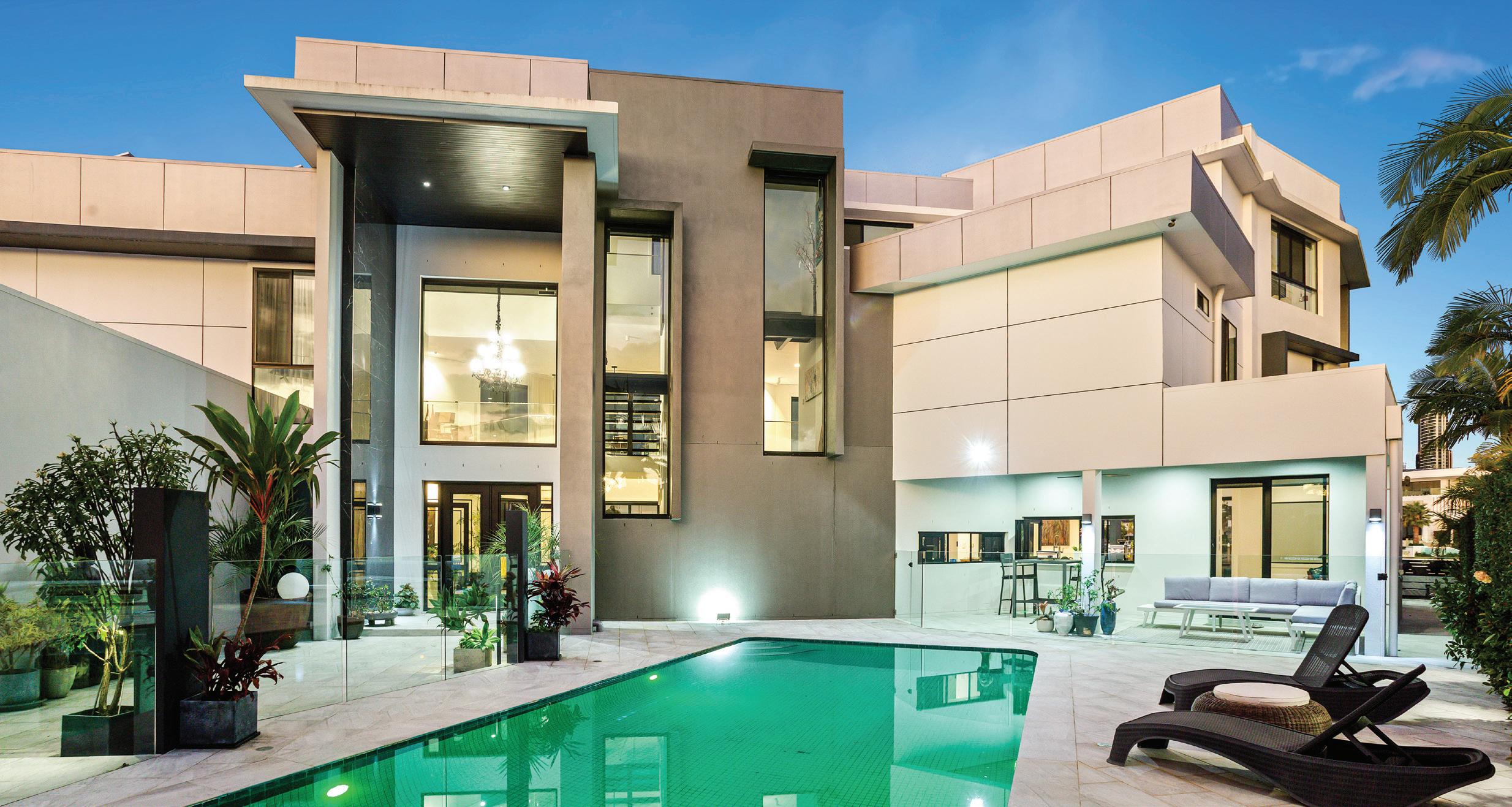
For Further Details Contact Sam Guo 0423 064 310 Julia Kuo 0402 668 885 Michael Kollosche 04111 888 15 Scan for Listing 41 Norseman Court, Paradise Waters Price $7,500,000 50.1m554 1,105m 2861m 2*^ *approximate under roofline

* indicative only
Modern Residence with Magical Lake Views


For Further Details Contact Michael Kollosche 04111 888 15 Brad Coyne 0420 588 866 Scan for Listing 微信扫码 128 Sir Bruce Small Boulevard, Benowa Waters Auction On-Site, Friday 16 September at 1pm 20.1m34.54 882m 2660m 2*^ *approximate under roofline


Experience all the benefits of luxury lakefront living in this sophisticated north-facing residence positioned on one of the city’s most prized streets. Full-height glass doors fold back to reveal a magical vista over Lake June, capitalising on 20.1m lake frontage. Designed with fuss-free family living in mind, a top-level family room, study, basement/billiards room and home cinema offer multiple spaces to unwind. Entertainers will appreciate the gourmet kitchen and formal dining room, while a sprawling living and lounge area flows to a water-view terrace. A private master bedroom with balcony witnesses spectacular sunsets, while three additional bedrooms with ensuites provide sanctuary for rest and relaxation. Soak the stress of the day away in a 17m magnesium pool and spa overlooking the lake, where kids will relish kayaking, paddleboarding and swimming.

Brand New
Sophisticated Home with Wow Factor


For Further Details Contact Jay Helprin 0407 894 775 Michael Kollosche 04111 888 15 Scan for Listing 微信扫码 10 Rio Vista Boulevard, Broadbeach Waters Auction On-Site, Friday 9 September at 5pm 16.6m466 731m 2667m 2*^ *approximate under roofline


This brand new designer build delivers a whole new level of wow to Broadbeach Waters. A bespoke wall mural establishes street appeal while a 5.8m-high entry is clad in charred timber. Steel-framed windows and sliding doors set a modern industrial tone softened by oak floorboards and linen curtains, while pendant lighting lends a touch of Beverly Hills glamour. Polished concrete is the hero of open-plan living and dining, while thick Dolomite features in a gourmet kitchen. A cantilevered balcony creates drama above waterfront alfresco entertaining where the eye travels over a deepwater pool to the iconic Jewel towers. Two master bedrooms wake to water views, three have ensuites, while a ground-level bedroom caters for guests. An air-conditioned garage has man cave potential and a wine-tasting room provides 216 reasons to linger. Store water toys on an 8m pontoon, just off Main River.

* indicative only
Boundless Potential Near Main River


For Further Details Contact Jay Helprin 0407 894 775 Michael Kollosche 04111 888 15 Scan for Listing 微信扫码 13 La Scala Court, Isle of Capri Auction On-Site, Friday 9 September at 11:30am 16.6m223 845m 2301m 2*^ *approximate under roofline


Relish an enviable waterfront vista and lifestyle from this quiet Isle of Capri cul de sac where a large holding offers boundless potential. With 16.6m frontage to a Main River inlet, this flat 845m2 block plays host to a well-maintained brick house, providing the opportunity to lease, renovate, or rebuild a brand-new luxury residence. Natural light floods an open living, dining and kitchen with water views and outdoor access. Three bedrooms enjoy privacy in their own wing, including a master bedroom where water views and outdoor access are offered. Play host to friends and family while overlooking the water from a partially covered deck. Cast a line in from the sandy shore or launch the boat from a private pontoon and boat ramp to explore the waterways. Stroll 650m to Lex Bell Park or cycle to the entertainment hubs of Surfers Paradise and Broadbeach.

* indicative only
Coveted Holding in Leafy TSS Precinct

For Further Details Contact Michael Kollosche 04111 888 15 Jamie Harrison
Relish the peace, potential and position on offer in this sprawling 1,225m2 estate ideally situated in the prestigious TSS precinct. A soaring window-lined void achieves natural light through the middle of an inviting single-level design. Polished timber flooring lends warmth to open-plan living and four generous bedrooms, three bathrooms and a six-car garage. Covered alfresco entertaining spills onto a large lawn ideal for backyard cricket followed by a swim in the pool. Just minutes from Southport Park Shopping Centre, Ferry Road Markets, Home of the Arts (HOTA) and Surfers Paradise beach, an abundance of weekend activities await. This address is a short drive from The Southport School (TSS) and St Hilda’s School.0424 965
891 Scan for Listing 微信扫码 14 Petersen Avenue, Southport Price $2,675,000 634 1,225m 2449m 2*^ *approximate under roofline


* indicative only
Palatial Main River Mansion


891 Scan for Listing 微信扫码 121 Sir Bruce Small Boulevard, Benowa Waters Contact Agent 24m35.54 977m 2711m 2*^ *approximate under roofline

For Further Details Contact Michael Kollosche 04111 888 15 Jamie Harrison 0424
Grand architecture and lavish finishes dazzle inside this palatial Main River mansion. Offered to the market for the first time in over a decade, an opulent trophy residence sits on 977m2 with 24m river frontage. Grand columns, marble accents and arches make a statement on entry, while soaring ceilings feature hand-painted frescoes reminiscent of the Sistine Chapel. An extravagant chandelier highlights formal dining while marble pillars line the path to spacious main living. Cook with gas in a well-equipped kitchen and share informal meals in a second dining and living. Four spacious bedrooms include a grand master suite with water view. Covered entertaining overlooks a glistening pool, where leisure and recreation options include a steam room and theatre room, ideal for a family movie marathon.965


A Clear Vision
The Strategies
Team Harrison includes Business Manager Stacey Harfield, who was recently named Client Service Manager of the Year at the Kollosche Annual Awards. Stacey keeps the vendor informed at every step and manages all aspects of marketing, administration and compliance.
“As an agent, you can sit back and wait for buyers to come along hoping for a great result, however, we prefer to actively seek out qualified buyers by implementing marketing strategies that align to the target audience of the property.”
Zac are extremely clear on their roles which allows me to focus on our clients, work with prospective buyers, mitigate any risks or roadblocks, and negotiate the best deal.”
Bespoke strategies start with the buyer in mind, are based on real-time data analysis, and provide the vendor with a clear roadmap that outlines the approach each step of the way.
“I’ve got a whole team behind me executing the strategy to the level required to deliver the best possible outcome for the client,” says “StaceyJamie.and
Since joining Team Harrison a year ago, Sales Associate Zac Palmer has proven himself a determined and empathic operator who supports Jamie by following up each and every enquiry, assisting at open homes, and facilitating the sales process.
“The risk for our client in taking a cookiecutter approach was to only attract buyers who were searching in Benowa Waters at a much lower price point,” says Jamie.
Jamie Harrison and his team have carved a reputation for bespoke marketing strategies for prestige properties that sit outside of the regular real estate box.
This year’s record-breaking sale of The Lakehouse in Benowa Waters is an excellent example.
hen most real estate agents prepare to list a property for sale, the road to get there is fairly well trod. But what happens when your property isn’t a mainstream offering; if it presents as a unique product or falls into a complex Kolloschecategory?leadagent
Jamie Harrison and his team design bespoke marketing solutions for those prestige property asset owners seeking a whole lot more than a signboard, an online listing and a sold sticker.
Professional Service
“Rather than rely on hope as a strategy, our team identifies the buyer profile from the outset and designs a strategy to draw those buyers to the property,” says Jamie.
Jamie and his team were engaged to market the one-of-a-kind designer new build in a suburb where the average house price is $1,450,000. A strategic approach secured an offer of $6,335,000 just two weeks into a four-week auction campaign.

“We designed a strategy that made sure this property was highly visible to $5,000,000-plus buyers to achieve a suburb record that exceeded even our client’s expectations.”
W
Team Harrison Success: The Lakehouse Sold April 2022 for $6,335,000
Zac Palmer, Sales Associate 0415 633 379 | zac@kollosche.com.au
The Innovation
Jamie received a slew of accolades at the Kollosche Annual Awards in August for his advertising presence on REA, Domain and the Kollosche Cove Magazine, as well as being named one of the top investors with marketing arm K Media Group.
“I work with a lot of repeat clients, and those relationships are built on trust and credibility,” says Jamie. “I’m honest with my advice on the market and what is achievable.
“People appreciate service and advice, but it’s also those results they keep coming back for.”
Stacey Harfield, Business Manager 0432 308 365 | stacey@kollosche.com.au
“We spend a lot of time understanding who the likely buyer will be and use those demographics as the basis for a digital strategy that puts us in front of the right buyers,” says Jamie.
“We proactively review the data which allows us to pivot during a campaign as needed without losing any time or traction. As the market restabilises, the cost to the seller if marketed incorrectly could be as high as 20-30% of the sale price. We simply don’t take that chance.”
“Our goal isn’t just to sell your house, the things we do differently get a property in front of those extra 20% of buyers to achieve the highest possible price in any market.
From left to right: Zac Palmer, Stacey Harfield, Jamie Harrison
SCAN HERE TO VIEW MORE
Jamie Harrison, Licensed Real Estate Agent 0424 965 891 | jamie@kollosche.com.au
While marketing plays a significant role in Team Harrison’s success formula, relationships and results are also key.
The success of each sales strategy is underpinned by innovative marketing, a major point of difference for Team Harrison, who design the campaign with a specific buyer in mind.
REACH OUT TO TEAM HARRISON FOR MORE INFORMATION

AND NO TEAM APPRECIATES THIS MORE THAN US.
THE
AVERAGE CLIENT RATING 5.0 YEARS OF EXPERIENCE 4 PROPERTIES SOLD 26 VALUE OF PROPERTY SOLD $49.4 AVERAGE SALE PRICE $1.9M KOLLOSCHE .COM.AU COREY BEDFORD 0432 282 COREY@KOLLOSCHE.COM.AU502 STACEY HARFIELD BUSINESS STACEY@KOLLOSCHE.COM.AUMANAGER
YOURDIFFERENCEHOMEISONEOFYOURMOSTVALUABLE ASSETS,
DIFFERENT?USMAKESWHAT
ABOUT COREY BEDFORD & KOLLOSCHE
“I’ve always had a passion for real estate and find it extremely rewarding to be able to achieve great results for my vendors.”
IT IS WHY OUR CLIENTS TRUST US.
At Kollosche, we have an uncompromising dedication to providing comprehensive real estate services for the prestige residential sector. This is based on a solid foundation established by our Principal prominent Gold Coast real estate expert, Michael Kollosche - and it is one that we continue to uphold proudly to this day.
As a leading, local boutique Real Estate Agency, we focus on catering to the specific needs of high-end residential homes like yours. Our team of experts understand that properties of this calibre require a bespoke approach, which is how we deliver the premium results that we are known for.
From innovative marketing campaigns, experienced advice, competent negotiations, and an aptitude to oversee every detail, we are reliable partners who you can depend on to assist you in achieving your property goals.
Licensed real estate agent Corey Bedford is a dedicated and disciplined member of the Kollosche sales team. Born and raised on the Gold Coast, Corey has in-depth local knowledge of the area that allows him to deliver the very best results for clients, while his passion for real estate has equipped him with the ability to help people achieve their property goals and assist them with their journey.
His standout commitment and ability to go above and beyond have led Corey to succeed in the real estate industry he loves. When not at work, Corey keeps active by enjoying the Gold Coast surf and playing AFL with Bond University AFL club.

36 T E PETERS DRIVE, BROADBEACH WATERS SOLD - $2,200,000COREY BEDFORD KNOWLEDGE | PASSION | RESULTS SPECIALISTWATERSBROADBEACH SCAN HERE FOR INFORMATIONMORE


"We are delighted to have listed with Corey and the team at Kollosche. They put together a strategy to get the best result and communicated that throughout the campaign to ease our stresses. His professionalism and market knowledge are the reason we would recommend selling with Corey." - Seller
"This was by far the most smooth and easy sale of our family home we have ever had. Corey from start to finish was attentive, available, provided the best advice and his communication was superb. I'm grateful to have entrusted Corey with our sale and recommend him highly!" - Seller
80 SAVOY DRIVE, BROADBEACH WATERS SOLD AT AUCTION - $1,450,000 4 DARNAY ROAD, BROADBEACH WATERS SOLD - $1,810,000 16 PALMETTO COURT, BROADBEACH WATERS SOLD AT AUCTION - $1,985,000

For Further Details Contact Duncan Longmore 0419 611 792 Michael Kollosche 04111 888 15 33 Palazzo Versace, 94 Seaworld Drive, Main Beach Contact Agent *approximate Immaculate Palazzo Versace Condo under roofline Scan for Listing 微信 扫码 222 265m 2*


Palazzo Versace is synonymous with Gold Coast glamour and luxury and now it’s your turn to immerse yourself in the decadence of this iconic location. Nestled in an exclusive waterfront setting, this two-storey condo in the prestigious south tower dazzles with opulent finishes and panoramic views. Basking in northern vistas that overlook the resort’s water gardens and Broadwater, these complement the bespoke furnishings and Italian craftsmanship throughout. Polished marble and parquetry flooring unites with custom bevelled mirrors, with the distinguished Versace furniture package showcased throughout this 265m2 offering. The ultimate indulgence awaits atop the gleaming spiral staircase, where a 123m2 rooftop terrace beckons. Complete with a built-in outdoor kitchen, gardens with LED lighting, spa with hydrotherapy jets and cabana, it’s the perfect place to entertain or soak up the luxury and lifestyle of this superior Versace condo.

106m 2*^
Relish an absolute beachfront position from this chic apartment where an east-facing aspect delivers a stunning ocean to city skyline panorama. This level 9 apartment inside ‘Golden Sands on the Beach’ has been renovated in a contemporary coastal style. Solid oak floorboards and blackbutt timber cladding combine with elegant finishes for laidback luxury appeal. A balcony offers up an uninterrupted vista spanning the ocean, Snapper Rocks, and cityscape. Entertain guests overlooking the ocean by day and a shimmering city skyline come nightfall. Cook, dine and relax with an ocean vista in a light-filled kitchen and main living. Watch the sun rise over the ocean from the beachfront master suite, or take in an ocean to city vista from an additional bedroom. Golden Sands boasts private beach access, resort-style amenities, and a walk-abouttown lifestyle.


BeachfrontEast-FacingApartment Scan for Listing under roofline * indicative only
Renovated
*approximate For Further Details Contact Sam Guo 0423 064 310 Julia Kuo 0402 668 885 901/3575 Main Beach Parade, Main Beach Auction On-Site, Saturday 3 September at 10am 122

Laidback Waterfront Luxury with Tallebudgera Creek Views
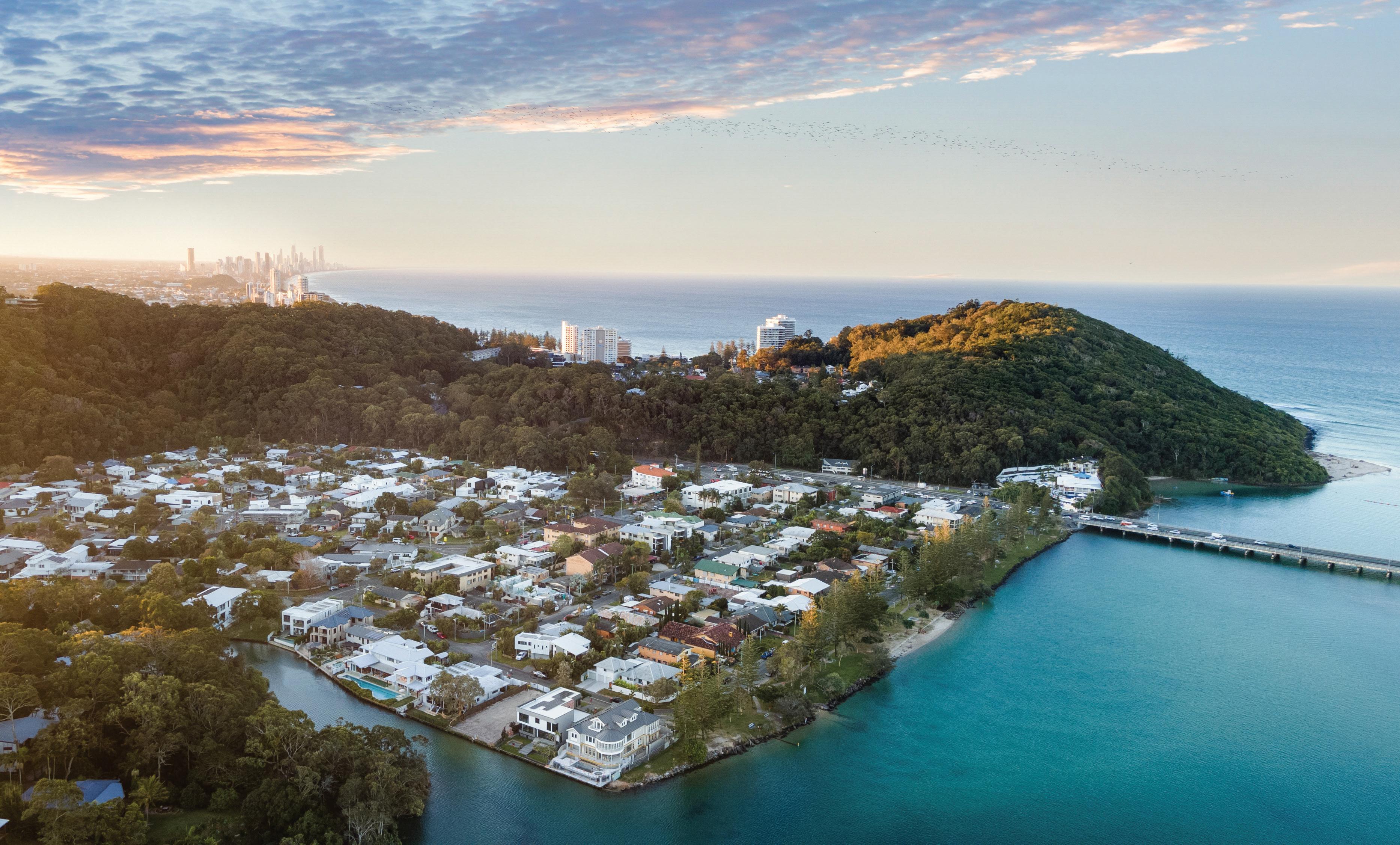
* indicative only
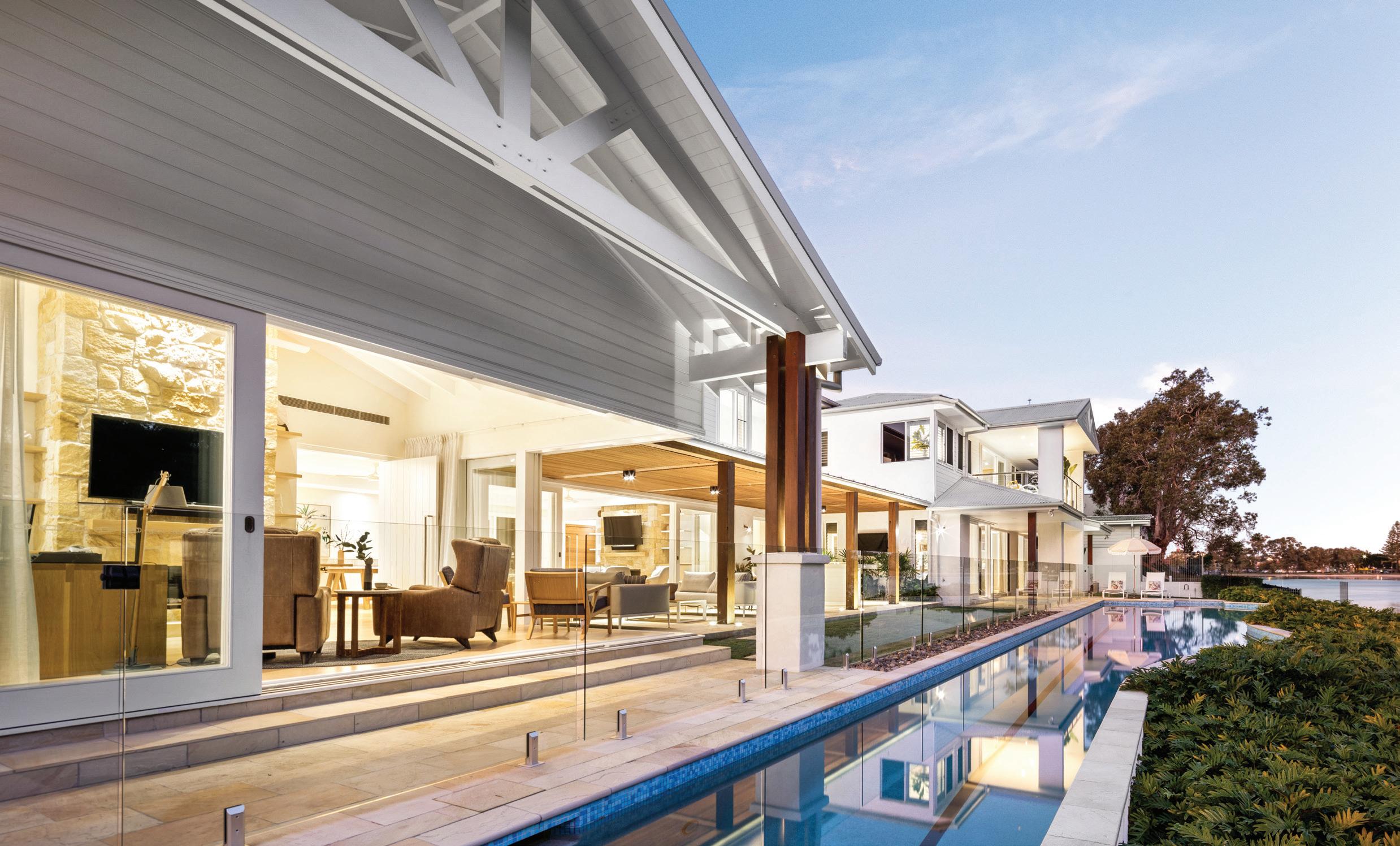
The only double waterfront parcel in tightly-held Koala Park provides an idyllic setting for this sprawling contemporary house surrounded by nature. Gold Coast architect Bayden Goddard has nailed the vision for a fully-functional family home with an easy indoor-outdoor flow. A two-level, five-bedroom design capitalises on 38.1m water frontage where the views extend to Tallebudgera Creek and a verdant shoreline. A thick stone island bench features in the kitchen with butler’s pantry, while glass sliders connect to alfresco entertaining with built-in BBQ. Enjoy living areas on both levels, plus a generous recreation room, gym, sauna, two offices and two double garages. A heated 25m lap and leisure pool looks to Tallebudgera Creek, where long hot summers will be spent paddle boarding, swimming and fishing.0409 057 087

For Further Details Contact Troy Dowker
Scan for Listing 微信扫码 10-12 Elanora Drive, Burleigh Heads Auction On-Site, Friday 23 September at 4pm 38.1m46.55 1,286m 2987m 2*^ *approximate under roofline


• No. 1 Apollo Auctions Agent of the Year

• No. 2 Highest Number of Sales
Troy Dowker and his team specialise in marketing strategies for luxury beachfront, beachside and waterfront property spanning Mermaid Beach to Coolangatta.
• No. 2 GCB Advertiser of the Year
Booms, downturns, rising markets, recessions, financial crises, peaks… with 19 years’ experience in real estate sales, Kollosche strategic advisor Troy Dowker has seen it all.
As the local property market continues to evolve, Troy Dowker has the depth of experience and expertise to guide homeowners on how to best position your asset for a premium price.
Troy Dowker
Isabella Burns Sales Associate 0421 331 isabella@kollosche.com.au015
• No. 1 K Media Advertiser of the Year
Licensed Real Estate Agent 0409 057 troy@kollosche.com.au087
• No. 3 REA Advertiser of the Year


SUPER DOWKERTEAM
• No. 1 Highest Gross Commission Income
• No. 1 Domain Advertiser of the Year
• No. 2 COVE Advertiser of the Year
Sell with Confidence
For tried and trusted advice to sell your prestige property with confidence, contact Team Dowker.
EXPERIENCE YOU CAN TRUST
James Roberts Inside Sales Assistant 0432 839 james@kollosche.com.au485
KOLLOSCHE ANNUAL AWARDS 2022
| EXPERIENCE | TRUST & INTEGRITY | ACCOUNTABILITY
From left to right: Isabella Burns, Troy Dowker, James Roberts

Modern Coastal Luxe in Burleigh Heads


Palm Springs cool meets Mediterranean charm in this newly-renovated residence in the heart of Burleigh Heads. Set on a 835m2 parcel, a two-level, four-bedroom design achieves a serene and sophisticated aesthetic. An open floor plan reflects the relaxed Burleigh lifestyle with seamless transition from indoors to out. Three upstairs bedrooms include a master suite with a grand walkin robe and ensuite. Outdoors is an entertainer’s dream - a covered alfresco area is fitted with a stainless steel pizza oven overlooking the pool, while drinks are served from an integrated indoor bar, and marshmallows are roasted around the fire pit. Cycle to the beach and James Street or walk to Tallebudgera Creek and Stocklands Shopping Centre.
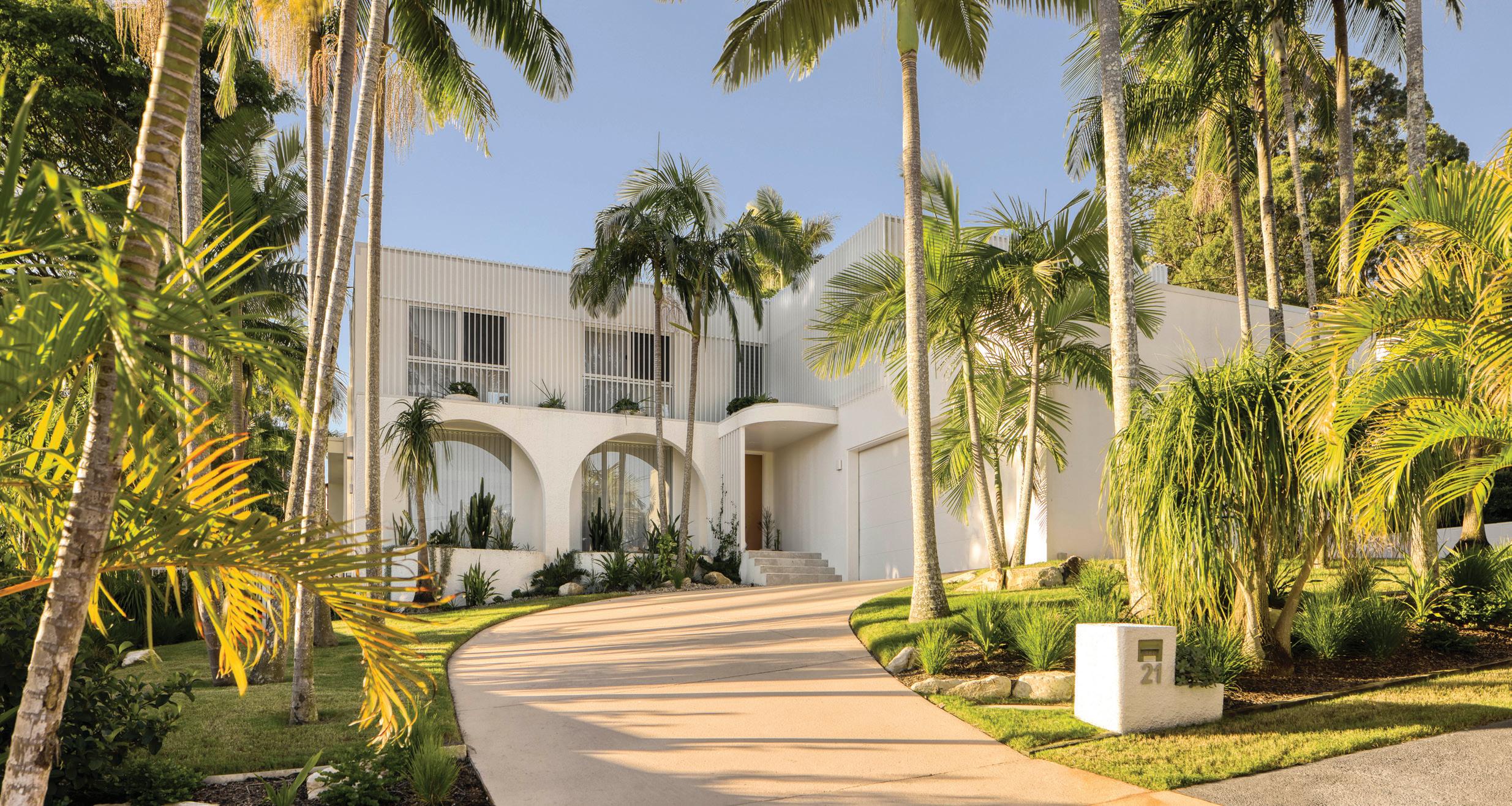
For Further Details Contact Eoghan Murphy 0421 197 720 Jay Helprin 0407 894 775 Scan for Listing 微信扫码 21 Page Parade, Burleigh Heads Price $2,895,000 234 835m 2366m 2*^ *approximate under roofline


33 Vespa Crescent, Surfers Paradise Sold $4,730,000 Sam Guo and Julia Kuo 0423 064 310 | 0402 668 samandjulia@kollosche.com.au885 "We had the superb experience of working with Sam and Julia and, true to form, they have been such outstanding professionals guiding us to a successful outcome in these uncharted markets. To us, Sam and Julia have set a very high benchmark for the competition to aspire to. I cannot recommend Sam and Julia enough for anyone looking for an agent who will go above and beyond your expectations to provide you with an exceptional, trustworthy, and never-give-up attitude. Along the way there were other agents who tried to sabotage our relationship; however Sam and Julia were the only ones who promised and delivered." H. Li (Seller)
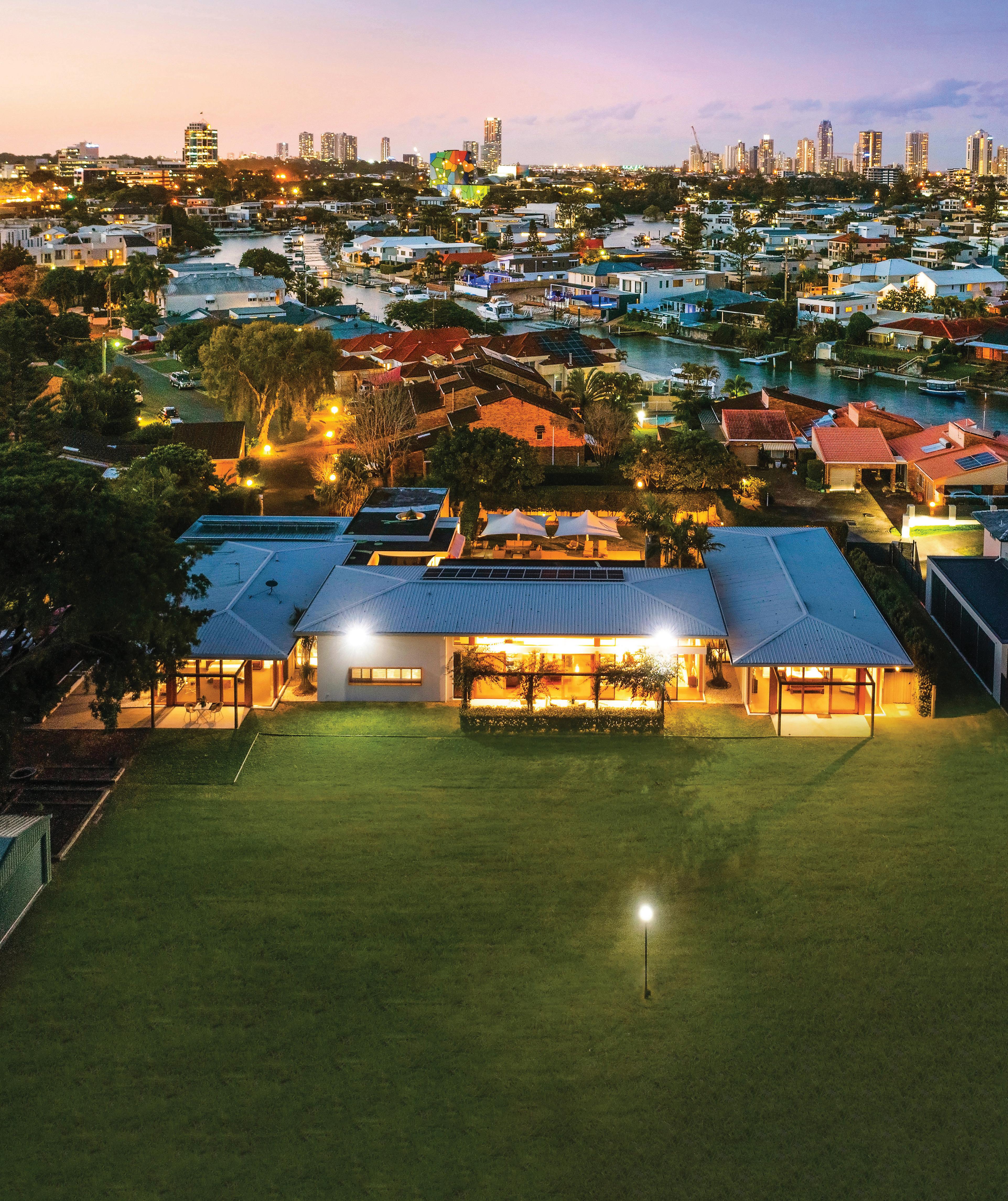
Sam Guo and Julia Kuo 0423 064 310 | 0402 668 samandjulia@kollosche.com.au885 "Sam and Julia are both industry leaders with a proven track record, who work tirelessly to achieve the best results for their clients. From start to finish, I was exceptionally happy with the quality of care I received from all members of the team, from the high-end marketing campaign, well attended open homes and detailed reporting, I knew I would achieve my desired outcome in Team Sam and Julia’s capable hands. I would highly recommend using Team Sam and Julia for any of your property endeavours." Q. Huang (Seller) 46 Clear Water Bay Avenue, Clear Island Waters Sold $3,383,000

Succeed with Kollosche SELL. BUY. LEASE. SEAMLESS SERVICE | EXPERT ADVICE | STRATEGIC SOLUTIONS | PREMIUM RESULTS

agents and 12
marketing assets for property owners, agents and the
Kollosche Commercial provides trusted advice and strategies to commercial property sellers and landlords in achieving their commercial real estate goals.
team of 30
residential
NEW PROJECTS SALES
creative professionals collaborate to deliver
Kollosche’s property management achieves rental pricing for property owners and builds trusted with valued
Kollosche’s residential sales lead sales provide to property owners from Coolangatta to Sovereign Islands.

prestige
K MEDIA GROUP of first-class Kollosche
COMMERCIAL SALES, LEASING & PROPERTY MANAGEMENT
tenants.
assist
ONE AGENCY FIVE KEY SPECIALTIES 120 TEAM MEMBERS
Kollosche’s New Project specialists understand the complex needs of both developers and buyers on the journey of selling luxury off-the-plan apartment projects.
premium
EXECUTIVE LEASING
prestige
brand. v Visit kollosche.com.au to learn more about each division and how we can help you.
RESIDENTIAL SALES
relationships
A talented team
team
six-star service
associates
K Dowker
REA
NFS REFERRER OF THE
AWARD Troy
K MEDIA AWARDS INNOVATION AWARD Vanessa Durrington SERVICE EXCELLENCE AWARD Insung Hwang MARKETING EXPERTISE AWARD Samantha Campbell K MEDIA MOST VALUED PLAYER Janelle Estreich


kollosche .com.aukollosche .com.au KolloscheAwards2022 CELEBRATING EXCELLENCE IN SERVICE, SALES, MARKETING & BUSINESS 1. 2. 5.4.
DOMAIN
MEDIA ADVERTISER OF THE YEAR Troy


APOLLO AUCTION Dowker
SUPPLIER AWARDS

ADVERTISER OF THE YEAR Jamie Harrison
ADVERTISER OF THE YEAR Troy Dowker GCB ADVERTISER OF THE YEAR Sam Guo & Julia Kuo COVE ADVERTISER OF THE YEAR Sam Guo & Julia Kuo
YEAR Rob Lamb
HIGHEST NUMBER OF SALES Sam Guo & Julia Kuo PM TEAM MEMBER OF THE YEAR Katie Dalton PM REFERRER OF THE YEAR Adam & Tony Grbcic HIGHEST GROSS COMMISSION INCOME Troy Dowker


AWARDS 5 YEARS OF CONSECUTIVE SERVICE AT KOLLOSCHE Duncan Longmore Eddie Wardale Kara DannyChristensenStanley View all winners LUXURY BEGINS HERE 3. 6. 7. 8. 9. 1. Jamie Harrison & Troy Dowse. 2. Vanessa Durrington, Michael Kollosche & Alex Wallace. 3. Tony Grbcic, Adam Grbcic & Michael Kollosche. 4. Rob Lamb & Alex Wallace. 5. Troy Dowker & Rob Doorey. 6. Marco De Vincentiis & Michael Kollosche. 7. Melissa Baker, Renae Hayek, Katie Dalton, Ashlee Gegg, Karen Ngo & Charlotte Conroy. 8. Sam Guo & Julia Kuo. 9. Michael Kollosche & Renae Hayek.
SALES AWARDS

TENURE
BUSINESS AWARDS

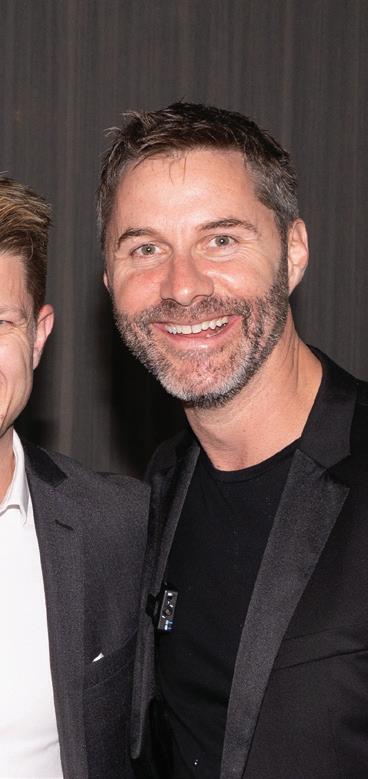
MOST IMPROVED SALES PERFORMANCE Adam & Tony Grbcic SALES ASSOCIATE OF THE YEAR Jay Helprin & Corey Bedford EMERGING AGENT OF THE YEAR Brad Coyne HIGHEST AVERAGE FEE Rob Lamb THE KOLLOSCHE AWARD MOST VALUABLE PLAYER Renae Hayek KOLLOSCHE CULTURAL EXCELLENCE Marco De Vincentiis EXCELLENCE IN OUTSTANDING SERVICE & SUPPORT Jenny McLean INSPIRATIONAL EXCELLENCE Aneta Siedlecka CLIENT SERVICE MANAGER OF THE YEAR Stacey Harfield OPERATIONAL SUPPORT PERSON OF THE YEAR Ricardo Mello LEADERSHIP EXCELLENCE Alex Wallace & Shona Tarulli

2216 Arnold Palmer Drive, Sanctuary Cove Sold $5,760,000 William Sarti 0416 808 william@kollosche.com.au454 "Will has a true passion for his work and is very dedicated to achieving positive outcomes and results. He is honest, reliable and always highly professional. His knowledge of the Gold Coast area is second to none and we would not hesitate to engage him again in the future." Nigel and Rozina (Sellers)


1664 Riverdale Drive, Hope Island Sold $3,800,000 "It was an absolute pleasure dealing with Will, Sam and Julia from Kollosche, who were extremely helpful in the whole process of selling. They advised in presale and preparation of the property and advised on the right advertising package for the property. Will, Sam and Julia really excelled in negotiating the right sale price when it came to crunch time and always kept us in the loop with what was happening with buyers and the local market. Will, Sam and Julia achieved a sale price record for the property and sold the property in a record time on the second inspection. I would highly recommend Will, Sam and Julia to any prospective seller and would use their services in the future without hesitation." Ged and Amanda (Sellers) William Sarti 0416 808 william@kollosche.com.au454 Sam Guo and Julia Kuo 0423 064 310 | 0402 668 samandjulia@kollosche.com.au885

William Sarti 0416 808 william@kollosche.com.au454 Sam Guo and Julia Kuo 0423 064 310 | 0402 668 samandjulia@kollosche.com.au885 10-12 Edgewater Place, Helensvale For a Suburb Record Sold $4,100,000

"I would highly recommend the team at Kollosche who are of the highest industry standards and well-regarded on the Gold Coast as the premium agency. Very happy with our results capitalising on our investment to move on to new opportunities this market will bring. Ryan, Sam and Julia were a pleasure to deal with and together make a formidable team with their buyer database and most up-to-date market knowledge. Thank you again to the whole team at Kollosche!" P. Zheng (Seller) 80 Admiralty Drive, Paradise Waters Sold $5,900,000 Ryan Ward 0405 309 ryan@kollosche.com.au359 Sam Guo and Julia Kuo 0423 064 310 | 0402 668 samandjulia@kollosche.com.au885 * indicative only


Despite 11 new projects launching during the March quarter, data continues to highlight the ongoing shortage of new apartments coming to market or making it out of the ground at all.
'I
off-the-plan projects game has never been for those with a faint heart or shallow pockets, even the most seasoned developers could be forgiven for baulking at the rollercoaster ride that played out during an unprecedented chapter in Australian real estate history.
“It’s been quite a journey to get here, but the original building on the site is ready to come down and Descon is locked and ready to begin construction on Aspire,” says Glenn.
Whileyear.the
The growth in apartment values grew during this period as well with almost a third of new apartments – about 31% – transacting at price points above $1,000,000.
t was the best of times, it was the worst of times…’, the famous line from Charles Dickens’ A Tale of Two Cities could well describe the development sector over the past
Data compiled by property consultancy Urbis shows new apartment sales hit an all-time high on the Gold Coast in 2021 – a record 2,492 new apartments sold across the year, easily eclipsing the 2015 record of 1,556 sales.

Only 411 new apartments remained for sale at the end of March this year – the lowest number recorded by Urbis since it began monitoring the new apartment market in 2014.

“We saw an opportunity in going ahead because we believe there will be a limited amount of stock available as
All Go On Aspire
Demolition is scheduled to move ahead this month at 9 Garfield Terrace, Surfers Paradise, where approval is in place for the 24-level Aspire, comprising 37 half and fullfloor luxury apartments plus one penthouse.
By Janelle Estreich
Glenn Reindel, of Garfield Developments, says a combination of factors put Aspire in a positive position as the project progresses towards construction.
At a time when the development sector is facing a raft of challenges, the developer behind Aspire Gold Coast explains why their project is moving full steam ahead.
Record-high demand was met by record-low supply, creating the most acute shortage of new apartments experienced on the Gold Coast.
From the highs of last year’s sell-out success, the construction industry was hit by soaring costs, supply chain issues and labour shortages with a major flow-on effect to new developments.
Garfield Developments has secured builder Descon Group Australia to complete a 22-month construction program following an eight-week demolition phase.
Confidence Drives Progress
While some developers have withdrawn their projects from the market, others are seizing the opportunity and breaking ground on new developments along the Coastline.
For Further Details Contact Simon andrew@kollosche.com.auodette@kollosche.com.ausimon@kollosche.com.au0412Worthington145551OdetteHumphreys0431746950AndrewRamsey0412022840
Open Monday-Sunday, 10am-4pm
Kollosche New Projects are on-hand to walk you through the project and a 3D tour of a three and four-bedroom apartment, the amenities and the building exterior.
The entire Northcliffe strip is undergoing a major revitalisation including a string of new developments and the newly refurbished Northcliffe Surf Lifesaving Club.
“It’s a significant milestone to have this project now moving into demolition, giving buyers the confidence and certainty they need to buy off the plan.”
“Aspire will be the first tower finished within the Northcliffe beachfront precinct and the fit-out is second to none,” says Glenn.
“Absolute beachfront apartments will not only hold their value but increase over time.”
“We believe in the need for the Aspire product in this particular area of the Gold
“ChangesCoast.to the town plan would make it impossible to achieve what we have in this development again.”
* all images are artist impressions
other developments stall or withdraw from the Confidencemarket.”isalso
The display showcases life inside an Aspire apartment including a full kitchen and bathroom as well as luxury finishes such as flooring, cabinetry and tapware.
Those wanting to get a first-hand look and feel of the finishes and facilities planned for Aspire are invited to visit the display suite, now open on the ground floor of Oracle at 4 Charles Avenue, Broadbeach.
Visit Aspire Display Suite
“One of the major selling points is that Aspire is a residents-only building. There is no holiday letting or AirBnb, the quality is high, the amenities support lifestyle living, so it ticks all of the big boxes.

According to Kollosche New Projects sales consultant Andrew Ramsey, buyers hunting a weekend retreat or a second home are leading the sales charge on Aspire.
drawn from the location – Aspire occupies a rare absolute beachfront site in the exclusive Northcliffe pocket of Surfers Paradise.

Ground Floor Oracle, 4 Charles Avenue, Broadbeach
“Aspire is particularly popular with downsizers and those wanting a weekend retreat or a second home, and that’s where we’re seeing the strength on the sales side,” says Andrew.
“Where else do you take one step from your building and be on the sand?” says Glenn.
See For Yourself
“The environment promotes a level of interaction and a positive culture that would be harder for a single business to generate on their Sanctuaryown.”is
already attracting a diverse range of end-users for its commercial spaces, which are priced from $470,000 and offer a 6% yield for those buying through an investment lens.
“Rather than micro-managing people and their time, workers enjoy the flexibility to take breaks when they need to and spaces are set up to make that downtime more enjoyable.”
“The modern workspace encourages more work-play balance to foster happiness, productivity and creativity among employees,” says Ben, who draws inspiration from companies such as Google, famed for its world-class company culture.
“There will also be a boardroom for hire and facility to purchase hot and cold refreshments to complement a high-end client experience,” says Ben.
The concept is tried and tested at Baja’s current Nerang headquarters, where a co-working office space is shared by industries ranging from investment advisory, to engineering and development, to accountants and psychologists.
The answer is a resounding ‘yes’, according to Gold Coast developer Ben McArthur whose vision for a modern workspace includes zones for workers to play, connect and interact.
Early adopters include family businesses, health and wellness practitioners, creative specialists, and even a podcast and photography studio. All were attracted to the quality and feel of the finishes which offer a more homely experience than your average commercial storage shed.
Construction on Sanctuary commenced this month with an estimated completion date of early 2024.
Sanctuary is exclusively sold and leased by Kollosche Commercial.

It’s a forward-thinking concept and one he’s investing heavily in with plans approved and pre-sales under way for an innovative project earmarked for a 5,542m2 site at 515 Olsen Avenue, BajaSouthport.directors
Graffiti art on the walls, racing car and flight simulators, big screen televisions, green walls, a fully-equipped kitchen and spacious dining area, and chic industrial finishes are among the features to be found in a happy workspace.
“We have a cooking challenge every Friday that gets everyone involved,” says Ben. “For events like the last State of Origin, the game was screened on the large TV and everyone pulled up a beanbag to settle in and watch the game.
Each multi-level space is air-conditioned and includes a kitchenette and bathroom with a shower and sleek black tapware. Full mezzanine levels will have timber flooring while ground floors are to be finished in a showroom-style epoxy resin.
Ben McArthur and Jordan Powell are the brains behind Sanctuary, which is set to become the Gold Coast’s largest ‘Man Cave’ community with 70 high-end industrial spaces, each offering 85m2 to 151m2 over three levels.
Walls and ceilings are painted with LED downlights throughout, and you can enter through a front door or via a discreet threemetre roller door suitable for larger prized toys and possessions.
Tony Grbcic 0407 968 tony@kollosche.com.au667 Adam Grbcic 0404 087 adam@kollosche.com.au772 Scan for Website
“The central Southport location with Olsen Avenue frontage will appeal to a wide range of users and there are 48 car parks to support businesses and their clients using those workspaces.”
Each business has its own defined area across a spacious floorplan with shared use of a central fully-equipped kitchen, dining room and interactive zones.
Approximately 766m2 of the Sanctuary precinct is devoted to co-working office space, to be leased on six or 12-month tenures to those who own a commercial space, as well as outside businesses seeking a clean, professional and positive workspace.
A Gold Coast developer is drawing a leaf out of the Google playbook by creating an office environment that boosts productivity and engagement through play and interaction.
All work and no play makes Jack a dull boy, as the saying goes, but should employees be encouraged to have more fun at work?
The Fun Future of Workspaces



From left to right: Volunteer Driver Lyn Cush, Kollosche Agent Kara Christensen, Kollosche Managing Director Michael Kollosche, Gold Coast Hospital Foundation's Development and Operations Manager Joe Hanlon
Kollosche is proud to support the Gold Coast Hospital Foundation’s Cancer Patient Transport Service, which provides a vital link between patients and their care.

A small fleet of three vehicles driven by volunteers makes approximately 6500 journeys each year, helping 1500 cancer patients who are too ill to drive or unable to afford “Kollosche’stransport.contribution will help 465 cancer patients get to hospital for lifesaving treatment this year,” says Gold Coast Hospital Foundation CEO Ben Cox.
The Cancer Patient Transport Service ferries local cancer patients to and from Gold Coast University Hospital from as far as Coolangatta and Coomera for

chemotherapy, radiation therapy, tests and appointments.
F
Kollosche is proud to support the Gold Coast Hospital Foundation’s Cancer Patient Transport Service with a $20,000 donation through its Kollosche Community Fund.
A Connection to Care
or those Gold Coast residents who are battling cancer, the ability to get to hospital can mean the difference between receiving life-saving treatment or not.
“Without that support, some patients make the heartbreaking decision to not attend treatment. The Kollosche family is helping these cancer patients in the fight for their lives.”
The Service was piloted and launched by former Gold Coast Mayor, the late Ron Clarke, in memory of his daughter Monique, who passed away from cancer in 2009.
By Janelle Estreich
“Rather than simply hand money over to a faceless corporation, we can see that these funds are going straight to helping these patients receive the treatment they need.”
Kollosche established the Community Fund in 2021 as a means for the business and its sales agents to support charitable causes within our local communities.

SCAN HERE for more information on the service
“Kollosche is privileged to support a range of causes, organisations and sporting groups to have a real impact on the lives of people within our local communities,” says Michael.
A percentage of every property sold by Kollosche goes into the Fund with additional donations from the business contributing to a goal of $500,000 for the 2022-2023 financial year.
“This morning I transported a beautiful gentleman who lives at Willowvale and had been spending $300 to get himself to treatment three times a week,” says Lyn.
SCAN HERE to learn more about Kollosche Community Fund or to nominate a cause
The cause holds special meaning for Kollosche lead agent and Kollosche Community Fund Board Member Kara Christensen who supported her mum through treatment.
Kollosche Managing Director Michael Kollosche says the Community Fund allows the business to channel funds directly to those who really need it.
“My mum was treated in this facility and went through quite a few rounds of radiation,” says Kara. “I know how important it is to have someone there to drive you to and from your treatment to feel supported when you’re on that journey.”
That sentiment is echoed by volunteer driver Lyn Cush who says patients are so grateful for the support and savings offered by the service, which welcomes a small contribution of $20 per trip.

“I find it awe-inspiring to transport these people who are going through so much and are so thankful for our service. Words really can’t explain it.”
Volunteer Driver Lyn Cush
kollosche.com.au Gold Coast Prestige Property Specialists Riverfront Homes | Beachfront Properties Boutique Project Sales | Luxury Apartments Commercial Opportunities | Executive Leasing 1300 576 000

RESIDENTIAL | COMMERCIAL | PROPERTY MANAGEMENT | NEW PROJECTS | K MEDIA GROUP 6. Melissa Baker, Ashlee Gegg, Michael Kollosche & Karen Ngo. 7. Duncan Longmore & Nicole Mayer. 8. Bec Southey, Victoria Mancini & Sam Guo. 9. Rachael Somervell, Sam Campbell & Janelle Estreich. 10. Michael Kollosche & Renae Hayek. 11. K Media Group - Team. 12. John Freeman, Alvin Roldan, Harry French & Julian Rivas. LUXURY BEGINS HERE View all winners kollosche .com.au 1. 6. 7. 10. 11. 12.8.9.


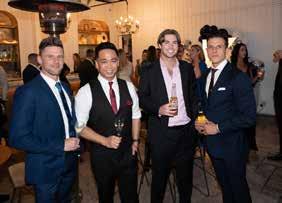


Designed for eco-conscious homeowners who want to complete an array of do-ityourself projects in and around the home, BLACK+DECKER’s new reviva™ range of sustainable power tools includes a Drill Driver, Detail Sander, Jigsaw and Screwdriver.

blackanddecker.com.au/solutions/revivaDynamicdesign
Designed for wall mounting, with a compact and solid design that emphasises a focus on dynamic music reproduction without sacrificing natural timbre, the two-way, Lyngdorf FR-1 Full Range Speaker offers a new level of performance. Available exclusively at Addicted to Audio. RRP $1,599 addictedtoaudio.com.au

In focus

66 covemagazine.com.au – Issue 92 TOP TECH
CONTROLCREATIVE
The Beolit 20 portable Bluetooth speaker provides up to 8 hours playtime at typical listening volumes, and can be used as an extra charge for your mobile phone and other compatible devices using its wireless Qi charging surface. RRP $1,045 bang-olufsen.com/en/au

Powerful sound
Touch & Go
Push the limits of your creativity with the Nikon Z 5, an innovative full frame mirrorless camera built around Nikon’s revolutionary Z mount. Whatever your skill level, the Z 5 delivers detailed imagery, precision autofocus and the tools you need to be as creative as possible. nikon.com.au/mirrorless-z-5

Sustainable solutions
Type anywhere you want, anytime you want, with the Logitech Keys-to-Go Portable Wireless Keyboard. Available in Blush, Blue or Black, this ultra-light, ultra-portable, wireless design is perfect for creators, or anyone who needs to work on the go. RRP $109.95 logitech.com

- SCOTT SATTLER “ “
If it wasn't for the expert advice from Absolute podiatristsFootcare's I'd be sidelined.
In the 2003 NRL Grand Final Scott Sattler ran 83 strides to execute one of rugby league’s most famous try saving tackles, securing his mighty Panthers the premiership.
Arthritis is my biggest opponent these days.
Bistro Livi is a portent of things to come, a growing sophistication of country towns as talent moves away from ‘tried and true’ locales into newNoterritory.matterhow it has happened, Murwillumbah has gained a rising star on its culinary landscape. bistrolivi.com
CUISINE
Scrambled eggs with local oyster and king brown mushrooms are topped with wattleseed chilli crisps finished with miso garum and porcini and barley soy giving a deep rounded vegetal hit of flavour, the chilli emerging after a few seconds.

For many locals, some of their fondest memories have been spending time at a winter solstice dinner in the fairy light studded barn, or a banquet beside the lake as evening descended on the Withrainforest.newowners taking over the property in 2021, on our return to Mavis’ Kitchen we can see physical changes to the property, with foliage opened up, cabins newly renovated, a new bar and storage area built downstairs (providing dining as an option for those with mobility issues) and a new marque is being built between the house and garden to provide a weatherproof area for Whenevents.chefSimon Liljeqvist (ex-Cucina Buca, Merivale, Lutyens, e’cco bistro) came on board recently, the food gained an added dimension.
It’s these centuries old East meets West techniques of gaining depth of flavour that are so interesting and rarely seen in our restaurants.
Instead, the restaurant’s floor to ceiling glass looks out on passers-by, artisans and local folks going about their daily lives.
The essence of Livi's food is simplicity, the share plate menu inspired by the classic dishes the trio discovered on their travels through Spain.
Each day brings a new menu with dishes informed by supply of the best produce the Northern Rivers has to offer, sourced by shopping at the weekly farmers’ markets on different days, and working directly with local farmers and producers.
The venue became a beloved spot for many, renowned for its stunning events as much as it was for its delicious rustic food.
Hopefully, a raft of magical memories is waiting to be created for a new generation. maviseskitchen.com.au
Take a foodie road trip to the Northern Rivers … you will not only enjoy breathtaking scenery, but there will be a highly memorable dining experience waiting at the end of the journey.
Our breakfasts are good examples of the complexity of flavours that these ferments bring.
BISTRO LIVI
Taking up one corner of the art deco Murwillumbah Arts Precinct, Bistro Livi is the sort of establishment one would expect to find in a capital city or a coastal tourist resort.
Danni’s twin sister, Nikky Wilson, who managed Movida for numerous years, oversees front of house.
WORDS & PHOTOGRAPHY MARJ OSBORNE
FRESH APPROACH
Visiting the restaurant, we see his ferments silently ageing in jars on top of the wine cabinet: Smoked Bunya Miso, Bonita Garum, Koji Bomba, and Prawn Garum.
Likewise, Baked Woodland Valley eggs in a cast iron pot with tomato, pigeon beans and spices include Koji bomba and garlic.
MAVIS’ KITCHEN Mavis’ Kitchen was founded in 2007 when Peter Clarke and Charlie Ebell moved their beautiful Queenslander from the Gold Coast to a property at the foot of Mt Warning.
With new events, menus and improvements on the horizon, Mavis’ Kitchen is moving into fresh territory while continuing the legacy established by its previous owners.
Like a breath of spring air in the heat of summer, Bistro Livi breezed into town, telling us that change is in the air.
68 covemagazine.com.au – Issue 92
Returning to their roots in the Northern Rivers to start their first restaurant, in the kitchen are Ewen Crawford and Danni Wilson, from Movida and the Carlton Wine Room respectively.
For an excellent weekend lunch, dine on freshly baked house bread to dip in fruity olive oil beside a smoky dish of Jervis Bay pickled mussels followed by the Venetian specialty, whipped salt cod slathered on crisp toast.

It’s a pleasant length journey to travel and indulge in an unhurried lunch, a wander through the surf shops, and even time to pick up produce from a farm stall as you head home. And who knows what adventures you’ll experience along the way.
Even their nostalgic take on a classic beach food of childhood, the fish finger sandwich, is genteel, defined by the shape of a cookie cutter to a petite delicate stack.
Oh, the joy of fried fish on fresh white bread.
In a climate where spring is warmed by the noonday sun, lunch at No.35 is perfection.

“We decided to open a place we would love to go to, serving food we would want to eat,” says Rachel Duffy, who co-owns the restaurant with chef Daniel Metcalf.
Issue 92 – covemagazine.com.au 69
The short menu of ten ‘small’ and ‘larger’ share plates plus a few sides and desserts, is pared right back from the duo’s days in the echelons of fine dining.

NO.35 KITCHEN AND BAR
There are no ‘frozen fingers’ to be seen, of course. Instead, medallions of golden crumbed local snapper are served with fine slaw, pickled cucumber and mayo, far tastier than cucumber sandwiches but equally as dainty.
number35.com.au

Instead, at No.35 we are reminded to dwell, share plates of ‘new world Italian’ food, making the most of the Northern Rivers’ bounty, sipping well-chosen Italian wine to accompany it.
Cabarita’s a sleepy town, its inherent laziness reminding us that city life can move too fast, leaving the enjoyment of ‘being’ churned up in its wake.
Yet, while dishes are explained in a deceptively simple manner, they are big on quality and flavour.
This is food to take your time with, to enjoy the texture and the interplay of flavour bite by bite.
It’s food to remember and salivate over.
Both Icebergs, Bondi alumni, it’s ironic that now they are working the restaurant rather than dining there.
After Bread Social sourdough slathered with an indulgent smoked butter, indulge in Beef tartare, bruschetta-style on toast with pickled mustard and reggiano, a lush mouthful of primePaperingredients.crispshards of cracker play host to smoked, whipped kingfish and tangy pickled green chilli, a play of opposing flavours, textures and acidity.
“The heat from the embers is unique in cooking, and the fire requires the use of all our senses to ensure our cooking is on point. Simplicity is key.”
Simple? Perhaps, but the effects of fire are not, adding tendrils of smoke, caramelisation and the complex layering of flavour that Santiago adds to away from the fire.
“There is so much more to do because fire is such a fragile and beautiful thing,” he says.
But with the arrival of new Head Chef Santiago Socrate, the elegant simplicity of Barrio’s menu has been raised to another level.

From the simple signature dish of cured kingfish with pink peppercorns to woodfire grilled baby octopus with chorizo and XO made in house from a 6-month fermented garum, it’s often one element that raises a dish to the next level.
Training at Osaka in Buenos Aires, and more recently Head Chef at Harvest Newrybar, Chef Santiago combines the traditional Argentinian fire and earth cooking methods from his homeland with European techniques and Australian flavours he has gathered on his culinary journey, fire and ferment enhancing and creating a layering of flavours.
Yet, humbly understated and grounded, Santiago describes himself and his work in just a few words.
Garnishing flavours from indigenous and traditional food sources, Santiago may just as readily experiment with coffee grounds to make pumpkin molasses glaze, or foods such as lemon aspen, Tasmanian pepper, or Davidson plum to enhance his dominant ingredient.
BARRIO EATERY & BAR

“I like to keep it local, seasonal and simple. So, I would say I am a simple guy.” barriobyronbay.com.au
The single page menu ranges through small to large share plates and vegetables, each as stunning as the next.
The oven and grill have always been the driving force of Barrio’s rustic cuisine, part of a culinary philosophy that respects and enhances the flavours of the produce, itself kissed by flame.
Despite its casual presentation, this epicurean adventure is a work of culinary artistry.

“I like to play with layers of flavour: acidic, bitter, salty, sweet …” he tells us, describing the vibrant piquancy he achieves through pickles and ferments we can see waiting in jars on the end of the bar.
He utilises every aspect of the wood fire, from the flames to the hot ashes, by using a complex arrangement of hooks, chains and flames that allow for simultaneous fast and slow cooking.

GOLD COAST: 2/83 Ashmore Road, Bundall Mobile: 0409 782 636 (John Perkins) MANHATTAN Bringing family & friends together X-MEN MOOD GRAND DUKE Let John find the perfect pool table for your luxury home surrounds. FREEBOOKCONSULTATION.TODAY. CUISINE


entrées of Australian scallops with Salumi nduja butter, and Jake Hill confit rabbit and Salumi chorizo terrine, mains include Drake Creek duck à l’orange presented in three ways, with accompanying pickled cabbage and potatoes cooked in goose fat, with bunya nut andTheriberry.iconic
Sanctuary Cove Golf and Country Club The Parkway, Sanctuary Cove, Qld Australia www.sanctuarycovegolf.com.au
MembershipPrivileges SCGCC_CoveAd_148.5x240.qxp_Layout 1 1/2/22 9:05 am Page 1
From the emerald-green lushness of the private dining room with its glittering chandelier, pressed metal ceiling and well-chosen prints we move onto the verandah, travelling through history to the timelessness of landscape.
Our membership includes unlimited rounds on Australia’s only Arnold Palmer Signature Course, The Pines golf course and our championship golf course, The Palms. Experience unrestricted access to the exclusive Clubhouse and prestigious practice facilities, complementing both top 100 ranked golf courses in Australia. Benefits include:
- Access to The Pines and The Palms golf courses 7 days a week

The kitchen is in the capable hands of Irishborn Executive Chef Joseph McGrattan, who has worked with several Michelin star chefs and honed his use of indigenous food as Head Chef at Raugi's Restaurant at the remote Kooljaman Resort on the Dampier Peninsula.
This is your opportunity to discover the unrivalled golfing lifestyle you can only find at Sanctuary Cove.
Michelin restaurant rating system was created by the tyre manufacturer to encourage drivers to travel further afield than usual, thereby boosting their tyre sales.
TWEED RIVER HOUSE
Provenance is a key principle, with local providores listed on the menu’s introduction.

Enjoy two championship courses, world-class facilities and a lifestyle you can only find at Sanctuary Cove.
-
Preserving its original character, the layering of historical tradition and exploration adds beauty and charm to the grand interior.
For further information please contact Member Services on 07 5699 9000 or info@scgcc.com.au
*Conditions apply. A limited number of memberships are available.
With its elegant décor and theming, Tweed River House takes us back to a bygone era when expatriate life was at its peak.
His love of fresh locally-grown produce, combined with his immense gastronomic talents, brings us an exceptional dining experience.
- Exclusive invitations to private Club events and tournaments Reciprocal and affiliate golf club rights
Only a limited number of memberships are available. Secure yours today.
New owners Gregory Lording and Phillip Hepburn took on the task of restoring the dilapidated Tweed River House to its former glory.
Time and place are delicately bound, the gentility of grander times intertwined with modern menus and welcoming service.
Producers are also cited for each dish on the menu, shining a spotlight on vibrant, seasonal flavours of locally grown, organic and indigenous ingredients from the Northern Rivers’ rich Contrarybounty.totrending menus, Tweed River House follows a European tradition of diners ordering their own dishes from a two or three prix fixe menu, a five-course tasting menu, and the nine-course degustation served in the private diningPairroom.dishes to a selection of international wines, choose your own by the glass or bottle, or enjoy a craft beer or cocktail from the selection on Followingoffer.
While Michelin star ratings don’t exist in Australia, the criteria could easily be fulfilled by Tweed River House: an establishment with 'excellent cuisine, well worth a journey'. tweedriverhouse.com.au
- Access to Sanctuary Cove Country Club facilities and gymnasium
Looking over the Tweed River to Mt Warning, for many years the mansion was a place of community celebration as Greenhills Reception.
RRP $169 sodastream.com.au
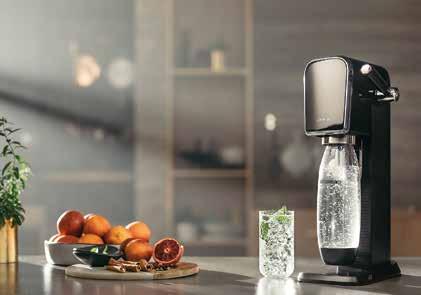
CHOICECHEF’S
Nourishing by Sally was founded by Dan and Sally Robbie, a local brother and sister duo on a mission to make healthy food delicious and accessible to everyone. Their range of plant-based treats includes energy balls, mini cakes, slices, choc bars and celebration cakes that are vegan friendly, gluten free, dairy free, refined sugar free and 100% tasty. Nourishing by Sally deliver to your door, offer a local collection option and also supply cafes, restaurants, health food stores and more.
nbscakes.com
SodaStream, the world’s #1 sparkling water brand, has launched its new ‘ART’ sparkling water maker in Australia. Available in both black and white to fit any kitchen aesthetic, this award-winning machine celebrates the art of making sparkling water at home and boasts the brand’s first carbonation lever.
sparkle
72 covemagazine.com.au – Issue 92 CUISINE
Nutritious and delicious
Festival of Food and Wine –Toowoomba Carnival of Flowers
Coastal cool
Award-winning Chef and Restaurateur Daniel Ridgeway and his wife Ruggie have opened the doors to their brand-new venue, Palm Beach Ave (PBA). Boasting a modern Australian menu, an art deco coastal feel and all-weather balcony with ocean views, PBA is open for breakfast, lunch and dinner Wednesday - Sunday from 7am until late.


fruit
A beautiful addition to a tabletop or kitchen worktop, the Paulette fruit bowl has an intricate cutout design that plays with shadow and light. Crafted in Italy’s Bassano region and finished with a solid Maioliche glaze, it is available in three colours to suit any decor. RRP $195

Available until 11.30am, breakfast operates in a ‘café style’ with guests able to order at the counter or via QR code from their table. The lunch menu kicks off at 12pm and runs till 4pm, with featured items including a prawn and bug roll, porcini mushroom arancini, salad and pizzas. Dinner service starts from 5pm and offers dishes such as sticky pork salad, prawn and bug agnolotti, and ragu bolognaise pappardelle, along with a full wine list and selection of signature cocktails. palmbeachave.com.au
9 11 September
Filltcof.com.auitwith
Much-loved MasterChef Australia winner, author, and champion of local flavours and real cooking styles, Julie Goodwin leads the line-up at this year’s Festival of Food and Wine at the Toowoomba Carnival of Flowers. The event will be home to more than 35 food and wine stalls, and will feature the exclusive Botanical Society area, The Tasting Room Bar, Farm to Fork Demonstrations, beer and cocktail bars, the BBQ Pityard and more.

Signatureaerin.com

4 Industrial Avenue, Molendinar QLD 4214 SHOWROOM OPEN 5 DAYS Monday to Friday, 8am - 4.30pm 07 5564 7600 | info@woodmarbleandwhite.com.au WOODMARBLEANDWHITE.COM.AU VISIT OUR STUNNING NEW SHOWROOM WOOD MARBLE & WHITE
The 2021 Chardonnay sits on the leaner, finer end of the Chardonnay scale.
NARELLE KING AND DON LEWIS met when Don was (and had been for a long time) in charge of winemaking at Mitchelton in Victoria’s Nagambie region.

Pinot Noir is a particularly tricky variety to workAnd,with.while Chardonnay is more forgiving, making top-notch Chardonnay requires understanding and skills that don’t necessarily dip into the same pool as those needed for Tempranillo, Nebbiolo, Pinot Grigio.
It’s the winery with the rather wonderful, very 1970’s tower; the sort of thing you want in miniature in your backyard if you like bead curtains and seriously funky 1970’s architecture (which I most certainly do).
It’s an absolutely cracking year for Mornington wines, so a lucky beginning for the Tar & RosesWheresiblings.exactly the source-vineyards are isn’t disclaimed … only ‘higher altitude Mornington Peninsula vineyards’.
Regardless,Probably.thewines are exceedingly good.
It has perfume, but also depth; structure, but also lightless and delicacy.
Tar & Roses is a vineyard with a rich history and an even richer selection of wines

The first release has landed, both wines from the 2021 vintage.
Then there’s the Pinot Noir, and it is an absolute belter.
And I think both wines – but the Pinot Noir particularly – have the capacity to shame many others that sell for much, much more.
At a time when many traditionalist Australian wine producers are looking to Mediterranean varieties to supplement our dependence on

(Is the Tar & Roses Pinot Grigio the best bang for buck in Australia? Quite possibly.)
classic French varieties (Chardonnay, Pinot Noir, Cabernet Sauvignon, etc) – given our climate it’s an entirely valid movement – Tar & Roses has progressed/regressed in the opposite direction, and released a pair of wines from the Mornington Peninsula; Pinot Noir and Chardonnay.
74 covemagazine.com.au – Issue 92 WINE CELLAR
But there is a whole lot of textural goings-on; a touch of mealiness, a lick of vanilla, a very slight oiliness.
He has joined Narelle in the Tar & Roses project, which says a great deal about the desire to get things right, and the lack of ego.
That’s for both wines, which suggests both multiple sources, and the Red Hill and Main Ridge sub-regions.
It reminds me of some of the wines that come off the Willowlake vineyard in the Yarra Valley (Oakridge particularly).
PAIRINGPERFECT
There’s a silkiness (the same sort of umami thing you get in a really good ramen), a layered complexity in both flavour and texture.
But Narelle has thrown a fly in the ointment.
Anthony has his own brand, Rising Wines, based in the Yarra Valley, and he has been practising his skills for the past 16 years with some of the best exponents of the two varieties in the country.
Again, it is a wine that will become better with age, but it is so delicious now I don’t foresee many bottles making 2024 or beyond.
Enter Anthony Fikkers.
Narelle landed a job at Mitchelton in 2001, and it sparked what would become a wonderful vinousTogetherpartnership.theyfounded Tar & Roses – an Australian based brand that specialises in Mediterranean varieties (Nebbiolo, Tempranillo, Sangiovese, Pinot Grigio) from the home base in Victoria, but also making wines in Spain. As you do Don,…unfortunately, passed away in 2017 leaving a void; he was a wonderful man and an exceedingly insightful winemaker.
I suspect it will open up and become more lavish with a few more years in a decent cellar.
WORDS TONY HARPER
Narelle – also a wonderful spirit and an equally gifted winemaker – has continued the Tar & Roses name, and its tradition of wines of extraordinary value.
Both of the wines sell for close to $40, which is at the high end for the Tar & Roses brand, but hardly creating a ripple when it comes to decent Mornington Peninsula Pinot Noir and Chardonnay.
Very classic French varieties.


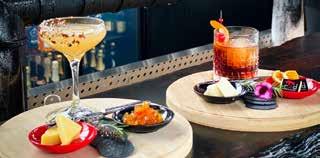


Whether you are just starting to your wine-tasting journey or have the palate of a pro, The Reserve Cellar will be your new favourite go-to to savour an exquisite drop and add to your collection.
RRP $65 per bottle. devilscorner.com.au
Crystalpatrontequila.comcut
RRP $1,200 thebalvenie.com

Located in Emporium Hotel South Bank, The Reserve Cellar is the new home of fine wines in Brisbane, with a menu featuring over 100 of the world’s best winemakers and 82% of the wine on offer scoring 90+ on the international wine score scale.

The Reserve Cellar is guided by the expert hand of personal wine concierge, Rowena Collings, who has conducted private wine tastings for the likes of Matt Damon, Stephen Fry and the staff of Buckingham Palace thanks to her time at Berry Bros & Rudd, Britain’s oldest wine and spirit merchant.
Rugged yet refined
BLENDSHIGH-END
Patrón Reposado Tequila is distilled in small batches and rested in a variety of oak barrels for up to five months, giving the liquid a light-gold colour – a beautiful tie in with its rich honey and fresh citrus tasting notes. Drink it neat, serve it over ice, or add it to elevate a fruit-driven cocktail recipe.

Add a unique touch to your bar with this classic crystal long drink glass set from Versace’s Medusa Lumière Rhapsody collection. Made in Germany, every piece is individually cut, milled and polished from the block of solid glass, with no two pieces ever exactly the same.
RRP $505 (set of 2) versace.com

Deep magenta in colour, Devil's Corner Mt Dove Pinot Syrah 2020 combines a rich and concentrated palate with vibrant aromas of pink peppercorn, bright berries and green olives.

Featuring a newly designed glass decanter and delicately engraved walnut wood stopper, The Balvenie Twenty-Five single malt whisky pays tribute to the long-time master blender and malt master for William Grant & Sons, David C. Stewart. Boasting exceptional flavours of bold vanilla oak, layers of toasted marshmallow and autumn fruits, and a long-lasting sweetness of crystalised ginger and raw sugar cane to finish, the complexity and structure of The Balvenie Twenty-Five makes it the perfect drink for whisky sommeliers and enthusiasts alike.
Tequila time
Bold blend

76 covemagazine.com.au – Issue 92 WINE CELLAR
reservecellar.com.au
The real deal
Reserve your place
Made in Australia from local ingredients, Drummerboy uses a blend of essences, extracts, and distillates to produce full flavoured, non-alcoholic spirits from scratch. Designed to be drunk neat over ice, with a classic mixer or as the base to your favourite non-alcoholic cocktail, the Drummerboy range features London Dry, American Dark, Mexican Agave, Italian Rosso and Italian Aperitivo and is available in 700mL size for $45 and a 200mL size for $20. drummerboy.com

Opening Hours: Monday - Sunday, 6am - 9pm 07 5514 8682 | 2D Masthead Way, Sanctuary Cove Marine Village IGA REWARD CARDS: Sign-up In-Store for Exclusive Deals, Discounts & Prizes ONLINE SHOPPING AVAILABLE • Click & Collect • Free delivery for all Sanctuary Cove Residents shop.leesiga.com.au • Locally Sourced Produce • Marine & Boating Supplies • Barista Coffee • Wide range of Gourmet Food • Weekly Specials SANCTUARY COVE MARINE VILLAGE


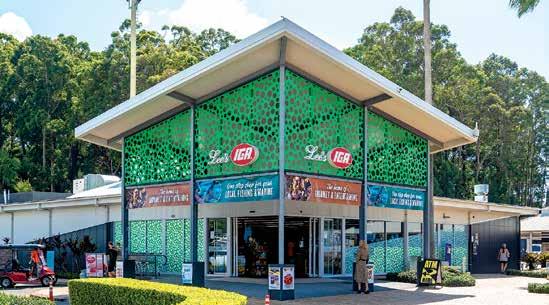

Unusually, the gearbox is mounted not behind the engine but on the front of the rear-axle differential.Asaresult, front-rear distribution of the Vantage’s 1570 kg kerb weight is 50:50, which race drivers will confirm is the perfect balance for accurate, high-speed cornering.
Premium, personalisation and limited editions are the name of the game if you want real exclusivity.Andthat counts for a lot, because surely no-one buys such cars for just their performance or luxury.
Wheels have been increased to 21 inches and wear bespoke Pirelli tyres.
So while you might think a ‘standard’ Aston Martin Vantage is the car of your dreams, I’m sorry to say someone is going to gazump you with the even flasher Vantage F1 Edition.
78 covemagazine.com.au – Issue 92 WHEELS & WATER
That’s the way it goes in the top-end car business.Virtually no super-luxury or super-sports car is sold in standard specification.
F1-UPMANSHI P
You will see this car performing official Safety Car duties in the Formula 1 World Championship*, (*The Aston Martin and the Mercedes-AMG appear at alternate F1 rounds), complementing Aston Martin’s participation as a team.
It’s a permanent, premium addition to the range with a $325,876 list price, $26,414 more than an ‘ordinary’ Vantage coupe.
There’s been work on the steering, suspension and wheels too.
Aerodynamics come next. Most obviously, the sleek Vantage now sports a rear wing for the first time.
IT IS HUMAN NATURE that if a product is offered in multiple grades, no-one will want to be seen to have bought the cheapest one.
This uprated performance surely helps when you’re pacing a field of impatient, snarling Formula 1 cars, for which 200 kmh is barely idling.
WORDS CHRIS NIXON
True – after the Australian Grand Prix last April, some F1 drivers complained the Vantage wasn’t fastNextenough.came the gearbox.
The car turns into corners more directly and rides bumps and crests better.
The Aston Martin Vantage F1 Edition is turning heads on and off the track.
Prestige doesn’t come much better than driving a replica of the F1 Safety Car, right down to the satin green paintwork, if you choose it.
Happily, the Vantage F1 Edition isn’t some marketing special tricked-up with leftovers from the parts bin.
78 covemagazine.com.au – Issue 92
The 8-speed automatic ZF unit changes gears faster, minimising any loss of momentum and giving the driver a more precise feel through the fingertip paddle shifters.
Considering the enhancements on this model, the extra money appears reasonable value.
‘F1’ means what it says.
Thinkcars.of it as an alternative to the Porsche 911, widely considered the benchmark in thisForcategory.theF1, Aston Martin firstly tweaked the power of the Mercedes AMG-based, twin-turbo 4.0 litre V8 to 393 kiloWatts.
The Vantage is the least expensive and most sporting model in the range of front-engine Aston Martin
Torque output is unchanged at 685 Newtonmetres, but it is now delivered over a broader rev range to make the car more flexible.

FULL ELECTRIC: These cars rely completely on large batteries connected to a charging point, which can take from minutes to hours to complete its job.
THE BUSINESS MODEL that charges monthly rent to stream TV shows and movies into your loungeroom is heading to your garage.
The Vantage is docile at town speeds, although the driver is aware constantly of avoiding kerbs, potholes, sharp road edges and those splitter-scraping wheel stops in parking bays.
Finally, the F1 Edition offers a comely visual makeover. Our test example was painted in the same green as the Formula 1 race car, with a wide grey central stripe from nose to Inside,tail.the grey Alcantara seats featured a lime-green stripe and stitching.
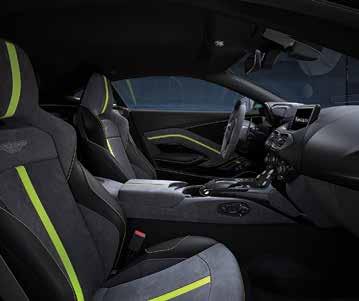
The concept: So many dynamic and comfort features of the modern car are computer-controlled that they can be simply switched on or off.
Driving the F1 Edition means pleasure and pain.
In America, Tesla has previously charged for power upgrades, although it is understood to have wound back the practice.
A conventional engine drives the car and also charges a battery for an electric motor that provides alternative or supplementary power at low speeds and for short Around-towndistances.petrolconsumption and emissions are reduced.
EVs offer high performance and low running and maintenance costs, helping to offset high purchase prices.
The seat and steering wheel are positioned perfectly to start the test drive.
Engine and damper modes offer Sport, Sport+ and TrackHandlingsettings.in corners is vice-free and tenacious, but the levels are so high they cannot be explored anywhere except on a race track in the hands of skilled drivers.
BMW builds-in a list of these features with its cars and charges a flat amount or a monthly subscription to enable them by remotely unlocking the software.

It’s exciting, of course, but that’s tempered with a visceral anxiety about steering something almost 2.2 metres wide, extremely powerful and extremely expensive.
Issue 92 – covemagazine.com.au 79
EV Update
Like the Hybrid, there are no limits on range when the petrol engine takes over from the electric.
At the front it’s complemented by a full-width splitter, small dive planes on the corners and underbody turning vanes.
The F1 Edition gives the Vantage a fresh stake in the sports car game after three years in production.
Range anxiety is disappearing as some EVs can drive for up to 500 kms and more charging points are installed around the country.
HYBRID: The oldest and most numerous type, popularised over 25 years by Toyota and Lexus.
BMW recently introduced its ConnectedDrive Store to Australia and other makes are certain to follow.
The car’s bulk shrinks around you with familiarity.
Lairy, yes, but if you’re pretending to be an F1 Safety Car driver who’s going to criticise?
The ‘standard’ Vantage remains on sale, but now there is also a version that exploits the car’s innate qualities with a comprehensive range of enhancements that truly make a difference.
Remote start? Click, ker-ching. Adaptive suspensipn? Click, ker-ching. Navigation update? Click, ker-ching. And so on.
PLUG-IN HYBRID: A bigger battery can be charged on the move by the conventional engine or by a wall socket, giving greater electric-only range of around 50 Around-townkms.petrol consumption and emissions are reduced.
Pay to use
Fast and winding roads are the Aston’s home ground.
BMW says the system will allow second-hand or subsequent owners to re-configure cars to their preference.
The controls are conventional enough and will not trouble a driver of any level, although they are tightly packed on the centre console and frankly the layout looks a little dated.
A BRIEF GUIDE to the three types of electric-powered vehicles.
When is your car not your own? (Answered easily by those on leasing deals –Concernnever.)about the maker remotely disabling features when subscriptions are in default is obvious.
All contribute to an extra 200 kg downforce at the F1 Edition’s 314 kmh top speed.
The Mercedes AMG V8, one of the best highperformance engines around, responds superbly and lets rip a mighty noise the faster it runs.
The concept may appeal to people who own their cars for relatively short terms, such as business users, but may concern those who prefer to own their cars outright and for a longer term.
For ordinary pedallers like me, it’s nonetheless a thrill to test my own limits – and survive – in such an exotic car.
NOTED FOR ITS STRIKING STYLE, appreciated for its well-planned layout, and praised for its exceptional stability and performance, the Horizon FD Series has taken the yachting industry by storm since being introduced to the world market in 2016.
The classification affords the new model the flexibility of operating either as a private or a charter
An increasingly popular model in the Cor D. Rover-designed high-volume yacht series, the new FD90 offers a five-stateroom layout with a semi-enclosed skylounge and a beach garage with a hydraulic swim platform.

WHEELS & WATER
Spacious crew quarters and a beach garage with freestanding furnishings are found aft of the engine
A spacious seating area with a wine cabinet and dayhead is positioned aft, while the dining area and galley with a privacy screen and full-height storage is amidships.
Specified for the Australian market, the FD90 has been built to meet the Australian Maritime Safety Authority’s new 2C Survey requirements for commercially-operated vessels.
To meet with increased demand, Horizon Yachts has announced the launch of a brandnew Fast Displacement (FD) yacht – the FD90.
An elegant brass and cast crystal pendant light fixture by Boyd Lighting highlights the 10-person dining table, and stardust backlit mullions serve as features in both the salon and dining areas.
Anotheraft.entertainment space is found on the foredeck bow area, which can be shaded by a sunTheawning.new Horizon FD90 was unveiled at a VIP launch ceremony in Sanctuary Cove and is advertised at $14,250,000 +GST. horizonyachtaus.com
SEA CLASS
“Horizonvessel.Yachts has seen record sales in the Australian market in the last year,” says Horizon Yacht Australia Director Mark Western.
Matte black hardware and anti-glare recessed lighting throughout the interior echoes a feeling of modern Situatedcomfort.furthest forward on the main deck, the full-beam master stateroom features a hisand-hers ensuite.
Entering via the aft deck, guests are welcomed to a spacious al fresco area, with fixed and freestanding furniture, a Hi/Lo table and a wet bar inviting dining or relaxation with coffee or a cocktail.Fullyopening sliding glass doors lead into the main salon, whose volume is further amplified through the signature full-height glass windows and opening glass doors to port and starboard in the dining Electricarea.honeycomb blinds minimise the natural light and provide privacy when needed.
Featuringroom. a Skyline configuration, the new FD90 has been designed with an enclosed wheelhouse area with a dayhead and three helm
“This latest FD90 not only provides an ideal high-volume interior with the amenities and staterooms of a superyacht, but as it is built to AMSA 2C Survey standards it also provides a great charter business opportunity.”
Four queen-sized VIP staterooms are situated on the lower deck and include mirrored staterooms amidships, another to port and the fourth in the bow.
Horizon Yachts’ new FD90 has been designed for the Australian market.
A semi-enclosed skylounge features a large lounge area with Hi/Lo tables opposite a bar with three fixed barstools, while a Jacuzzi tub with a bar counter, a grill area and an outdoor handshower are found
Highlighted by water-bleached walnut and dyed Koto as the feature woods, the salon features exquisite oak flooring in a herringbone pattern.
Thechairs.seating area in this space converts to a bed when needed.
80 covemagazine.com.au – Issue 92
Mirrored nightstands with quartzite trays and a sophisticated reeded quartzite feature wall above the headboard highlight the modern space.
Issue 92 – covemagazine.com.au 81 new inswimwearseasonstorenow ShoppeResortSanctuary CoveSanctuarySt,Quay daily5.00-9.30Open 82885577(07)telephone INTERNATIONALFEATURINGOCCASION.ANYFORFASHION LYMAN.FRANKBRANDAWARD-WINNING QUALITY.ANDAFFORDABILITYVERSATILITY,INNOVATION, Swimwear&Resort–Calypso SUNFLAIR,LABELEUROPEANTOPFEATURES SHIRTSKAFTANS,MATCHINGINSPECIALISESWHICH COLOURS.SEASONNEWBEAUTIFULINSARONGSAND CoveSanctuaryWay,Masthead daily5.00-9.30Open 89815577(07)telephone INTRODUCING THE LATEST COLLECTION OF FRANK LYMAN TO SANCTUARY COVE


Able to comfortably accommodate six people overnight or up to 12 people during the day, the vessel also boasts spacious balconies, a walkaround deck and a rooftop terrace complete with mini bar, ice machine and cocktail equipment for easy Settingentertaining.theFlotelapart from all other existing houseboats on the Coast is that it is permanantly
Simply step aboard to relax with friends and family (dogs are welcome too), enjoy some fishing, go swimming or just soak up the sun.
Sit back and enjoy light refreshments on board as you cruise through the beautiful local waterways and Southern Moreton Bay Islands National Park.

WELCOME TO DRIFT FLOTEL, the ultimate houseboat holiday experience on Queensland’s GoldStepCoast.aboard the newly refurbished, luxurious 3-storey, 12 metre, tri-hull boat and discover everything you would expect from a selfcontained luxury home including two bedrooms, two bathrooms, a fully equipped kitchen and a spacious lounge and dining area.
Or bring your own boat and use the drydock to pull up alongside, allowing you to invite more people out for a day-trip using the Flotel as yourDuringbase. your stay the host will be close by to help with any issues, including getting more supplies or navigating further cruises around theForislands.allbookings and enquiries please contact Brett or visit the Airbnb listing. driftflotel.com | 0411 633 432
Enjoy a relaxing getaway on Queensland’s first flotel.

When you arrive, the Flotel will be anchored in a picturesque location featuring 360-degree water and national park views.
This is the perfect getaway for those who want the houseboat experience without the hassle and stress.


anchored so guests don’t have to worry about operating the vessel and there is no need for a designatedDepartingdriver.from Horizon Shores Marina at Steiglitz near Jacobs Well, you will be transferred to your home away from home via a 40-minute journey on Wander, a 32-foot flybridge cruiser.
82 covemagazine.com.au – Issue 92 WHEELS & WATER
If you are feeling energetic, you could take the supplied tender to shore and explore nearby Kangaroo Island.
DRIFT AWAY
Monochrome Asset Management Pty. Ltd. ABN 80 647 701 246 (Monochrome) is the Investment Manager of the Monochrome Bitcoin Fund (the Fund). Monochrome is a Corporate Authorised Representative No. 1286428 of Non Correlated Capital Pty. Ltd. ABN 99 143 882 562, AFSL 499882 (NCC). NCC is the Trustee of the Fund. Level 22, Central Plaza 1, 345 Queen Street, Brisbane City, QLD 4000 MONOCHROME.CO | PHONE. (07) 3608 5599 | EMAIL. INFO@MONOCHROME.CO Bitcoin exposure, backed by experience. Regulated and secure exposure to Bitcoin without the complications of investing in the asset directly. Start a conversation with us today.


In short, property investors are returning to the market after many cashed in their chips during the pandemic – with some getting out early when
RENTAL RETURN
But there’s also another interesting forecast that offers promise for the premium end of the property
RISING INTEREST RATES inevitably bring out the property pessimists, and there are plenty having their say in the current climate.
While June saw a dip in investor loans, a much sharper fall than owner-occupier loans, the solid gain recorded over the year is another indication that the property market is finding its balance following the heady pandemic-induced boom.
WORDS NICK NICOLS
With aggregate lending volumes to investors and owner occupiers holding above $30 billion since April last year, and investor loans tracking at more than half of owner-occupier volumes throughout 2022, investors are seemingly taking up the slack of home-loan borrowers who have been rattled by interest rate increases.
Figures released by SQM Research showed vacancy rates nationally tightened further to 1 per cent in June this year, down from 1.7 per cent 12 months earlier.
That compares with a slide of 9.6 per cent in lending volumes to owner occupiers – a figure likely skewed by the spike in the 2020-21 financial year driven by government incentives.
The near-term trend for net arrivals is tracking higher.
Henley Global Citizens Report, multi-millionaires are on the move around the world and Australia is shaping up as one of the most sought-after destinations in 2022.

Notably, Australia is the second most popular market in the world for the mega-rich who have largely sat tight throughout the pandemic.
PROPERTY PORTFOLIO 84 covemagazine.com.au – Issue 91
Accordingmarket.tothe
measures were introduced to protect tenants from evictions and others taking advantage of big capital gains as the market peaked much later.
“While capital city rents continue to march higher, it’s possible we could be near the peak in the national rental crisis.”
One of the reasons, according to New World Wealth, is that Australia is rated one of the five safest countries in the world for 2021-22, along with Switzerland, Malta, Iceland and New Zealand.
The report expects Australia to experience a net gain of 3,500 high-net-worth individuals this year, just behind the United Arab Emirates at 4,000.These will be among the 88,000 wealthy individuals that Henley says will make the move to destinations including Singapore, Israel and Switzerland this year, increasing to 125,000 next year.
“The rental market remains significantly in favour of landlords,” says Mr Christopher.
Australia’s forecast gain for 2022 is more than twice the 1,500 affluent migrants expected to relocate to the US.
While volumes are still at less than half of those at the end of 2019, the most recent data from the ABS shows a net gain of more than 23,000 people in May.
Property investors are returning to the real estate market.
However, adding pressure to property demand is the number of net overseas arrivals to Australia.
Certainly, rising interest rates are having an impact on consumer sentiment, and that’s their purpose, but the extent of the hit to property prices remains a guessing game.
It’s important to note that the Real Estate Institute of Queensland considers a healthy market as one with a vacancy rate of between 2.6 and 3.5 per cent, so there’s still some way to go before these levels are achieved.
According to the ABS data, despite home loan commitments for investors falling 6.3 per cent in June to $10.5 billion, the figure is still 101 per cent higher than immediately before the pandemic hit in February 2020.
However, that doesn’t mean optimists are thin on the ground, especially when considering the number of property investors who have been getting into the market over the past year.
If the latter forecast is met, it will be the biggest migration of high-net-worth individuals globally in the past ten years.
The recent volatility of global share markets is touted as one reason for investors returning to the property sector, with investors attracted by persistently tight vacancy rates and rising rents offering attractive yields.
That may change in the near term, especially in regional areas, according to Louis Christopher, managing director of SQM Research.
“However, there are now signs of a peak in the rental market in regional Australia with a larger number of regions now recording rising rental vacancy rates and some falls in rents.
According to the most recent data from the Australian Bureau of Statistics, lending to property investors surged 17.3 per cent in the year to June 2022.

2022 MARKET
This increased interest in the Whitsundays from Southeast Queensland has resulted in a 25 per cent property pricing increase over the past 12 months, according to Mr Taylor.
This tightening of supply forced by these and other projects across the Gold Coast have pushed genuine buyers into other projects, facilitating great success for those which have already locked into construction contracts.
PROPERTY PORTFOLIO
Back to the Gold Coast, the industrious Sam Arnaout and Iris Capital has hit the jackpot in central Broadbeach with more than $200 million in sales since Colliers Gold Coast launched his $800 million V & A project to the market late last year.

Sam
With the unemployment rate at 3.5 per cent nationally, one only has to look at the M1 between Brisbane and the Gold Coast to see that most people have jobs, and most people can afford their rent.
That’s almost the consensus among experts in the property industry who have been quietly analysing the latest ‘slowdown’ in the market.
Firstly, I’m going to use the example of one apartment project in the southern suburb of Palm Beach as a perfect example of the yin and yang of the
Themarket.$140 million Alegria project on the central Palm Beach beachfront sold all of its apartments in rapid time during the height of the boom, and yet this project is no longer going ahead.
Why? The prices the developer sold the apartments for was too cheap under the backdrop of rising construction costs, making the project unviable.
It was subsequently shelved, with many disappointed purchasers handed their deposits back.
MOVINGUPDATENORTH
Slowdown is usually a word that implies things are not going well in any particular market or economy.
AccordingQueensland.toRobTaylor of Taylors Property Group, ‘the push from buyers in southern capitals into regional markets during the pandemic has significantly increased the exposure of the area with many looking for a lifestyle change’.
If you’re an investor, you’ll be rubbing your hands together with the rental vacancy rate in the Southeast corner at around one per cent.
I have already heard of prospects from Sydney, Melbourne and Southeast Queensland looking further north to the Sunshine Coast, Townsville and The Whitsundays for new investments.
It’s a constriction of new product supply to the market that is actually creating greater demand for the product currently in the market.
Migration will drive Queensland’s property market.
WITH STEVE HUNT | MEDIAHUNT.COM.AU

The $350 million Shute Harbour Marina project at Airlie Beach has reported increased inquiries from buyers who traditionally looked at Southeast
Let’s look at the Gold Coast, which was the centre of the Covid-inspired boom.
This, in effect, is protecting property values.
Just look at the rental market.
MIGRATION AND THE STATE’S VALUE proposition are set to be the key drivers of the Queensland property market over the next decade.
In the property and real estate sector this doesn’t seem to be the case, in Southeast Queensland at least. The reality is that many of my clients simply cannot keep up with the demand for their projects – demand that is being driven by sustained high migration and a ‘slowdown’ in the release of new projects. This slowdown is not really a slowdown at all.
To coin Mark Twain, any reports of the demise of the market are greatly exaggerated. Quite theThecontrary.slowdown in our economy when viewed through the prism of rising construction costs and a few construction companies going under is a mirage indeed.
These sales came as the market was ‘softening’ – or more to the point, returned to a more normal Arnaout.
Shute Harbour Marina has received over 600 expressions of interest amounting to $21.5 million in sales in less than two months.
cycle where sales were less frenetic and there were less projects in market.
With vacancy rates at an all-time low of 0.4 per cent further development must take place in order to accommodate the increasing demand.
Australia’s high-rise king Harry Triguboff has also poured cold water on the negative sentiment surrounding Southeast Queensland’s property market, doubling down to buy another site on the Gold
People have accelerated their lifestyle plans; they are fleeing the rat race of Sydney and the heavy-handed leadership of Dan Andrews in Victoria and looking for life in the sunshine, the Sunshine State.
With this migration comes enormous opportunity so don’t listen to all the doomsayers.
Marina.
This population increase is consistent throughout Queensland as we witness migration trends post Covid.
Recent reports by Colliers Gold Coast have indicated that the Gold Coast’s population is predicted to reach 800,000 by 2032, an increase of 143,000 to the city’s current population.
V&A
Census data shows that Queensland’s population has grown by more than a fifth in the lastWedecade.haven’t even touched on Brisbane, the home of the 2032 Olympics.
The much-maligned Queensland Government may be spending like drunken sailors, but the infrastructure investment is only going to increase the liveability and economy of the Southeast as we enter what I have termed a ‘golden era’ for theCrossregion.River Rail, the completion of the M1 to Tugun, the Coomera Connector and the light rail extensions on the southern Gold Coast
(love it or loathe it) are boosting our economy and our We’veliveability.reallygot the mindset of the pandemic to thank for our optimism.
Issue 92 – covemagazine.com.au 87
The stats don’t lie, and we are in a great position
The sales in V & A have confirmed a start to construction with demolition now under way on one of the most transformative projects seen on the Gold Coast since The Oracle.
Anyoneeconomically.whobuys a property in Southeast Queensland now will look back when the flame is lit at the 2032 Olympics and raise a toast to the wise decision they made to buy property in the region.
Awaken Residences.

Triguboff’sCoast.latest purchase is situated behind Meriton’s existing Ocean Apartments on The Esplanade, which has already sold out.


This equates to almost 15,000 newcomers to the Gold Coast per annum over the next decade.
They say following Harry in property is like following Warren Buffet in shares, so I’d be backing his Soinstincts.backto my point: lack of supply and high migration equals a very healthy Southeast property sector that may in fact defy the national market moving forward.
At the time we went to press, Media Hunt was set to announce a major project in Southport that will put the Gold Coast’s undisputed CBD back on the map – and on the national and international radar.
ShutePodium.Harbour
A contemporary, neutral palette with earthy tones and textures has been selected to harmoniously connect with your surroundings and evoke a sense of luxurious relaxation.
A NEW HIGH-END residential tower is set to be added to the Gold Coast skyline with Nineteen First Avenue recently receiving development approval.

Featuring a boutique collection of 33 full-floor apartments and an exclusive, customisable 4-bedroom penthouse with a private terrace and plunge pool, Nineteen is a showcase of oceanside sophistication, glamour, finesse and functionality unlike any other.
Each full floor residence features three bedrooms with ensuites, a multi-purpose room and a study, with a large 260sqm of internal floor space plus an additional 20sqm of outdoor balcony space.
All apartments also come with two secure basement car parks.
The lifestyle at Nineteen is one that’s unparalleled.Theamenities and design take the new ways of working and wellbeing into consideration to create a place where you truly feel right at home.
For those who enjoy a moment of Zen, the yoga space is a welcoming area to stretch out and the
Reflecting the natural movement and rhythm of the water, the way the waves break and create overlapping forms of foam and how the water meets the sand, this design is subtle yet refined.
You will be greeted by a world of calm the moment you arrive home at Nineteen.
88 covemagazine.com.au – Issue 92 PROPERTY PORTFOLIO
For those seeking activities in the great outdoors, the Surfers Paradise foreshore is a breezy 20-minute walk away with a beachfront boulevard vista that overlooks the stunning sand and sea.
REASONSNINETEENWHY
Nineteen features a pool, wet deck, spa, sauna and steam room for active residents who enjoy nourishing their bodies through movement.
Wake up to sunrise strolls by the water with the beach only 200m from your doorstep.
A flourishing entryway welcomes you in as an extension to the verdant streetscape and evokes a sense of intrigue and wonder for what lies beyond theInspiredgreenery.by the dynamic theatre of the ocean, the architecture of Nineteen is an ode to its surroundings.
Functional yet beautiful – this is the philosophy weaved into every detail of your new home.
Situated on an exclusive double corner block, Nineteen is located within the highly desirable beachside border precinct of Surfers Paradise andBorderingBroadbeach.the corner of First Avenue and Surf Parade, you’ll be tucked away in a tranquil and leafy residential street yet be within walkable distance to everything you could want and need
The facade features considered curves and fluted concrete at varying scales that represent the movement of the ocean plus expansive glazing that opens to the East, taking advantage of the views to the coastline.
Floor-to-ceiling windows grace your home, bringing in natural light and breeze, and a generous balcony allows you to embrace the best of indoor and outdoor living.
Perfectly positioned between Broadbeach and Surfers Paradise, Nineteen First Avenue offers life and luxury in perfect harmony.
Discover an epicurean’s dream list of gourmet delis, bistros and brasseries just a short walk from your home.
Enjoy walks with your furry friend at nearby Broadbeach Park, and pick up everyday needs at Pacific Fair and Oasis Broadbeach.
The interior experience is one that is expansive, allowing you to flow and move through life the way you want to.
Engineered timber flooring has been paired with soft wool carpets while natural roman travertine stone surfaces bring a sense of timelessness to a kitchen that’s brimming with state-of-the-art V-Zug appliances.
The interiors have been thoughtfully crafted and curated to perfectly match this exceptional address and bring residents a new chapter in luxury living that boasts elegance, convenience and comfort.
Each of the materials have been handpicked for longevity and influenced by the texture of the coastline that effortlessly fits into the local character.
The team brings over 25 years-experience in every aspect of the project – from architecture specification to project coordinating, product sourcing to special product development interior selections.
According to Amansi Projects Managing Director Ayrton Mansi, Nineteen First Avenue has been designed to offer the best of Gold Coast beachside living, in what is set to become one of the most boutique developments in the city.
Each project is individually crafted to reflect the unique location, lifestyle, and people, with interiors offering the highest quality materials and craftsmanship and lighting and fixtures featuring cutting-edge technology.
“This project was designed to meet the needs of the downsizing market from the surrounding local suburbs and interstate buyers looking for a luxurious, owner-occupier apartment with all the facilities and amenities to match,” says NPA Managing Director, Andrew Erwin.
NPA Projects have been appointed to market the new development which is set to hit the market in the coming months.
Interior Designer – Collective Interiors
“There is strong demand for large format, boutique full floor apartments along the coastal strip and in Broadbeach, this is hard to come by.

Collective Interiors are the experts at curating beautiful homes and new developments, creating luxury spaces that stand the test of time.
A dynamic master planning, architecture, interior design and visualisation practice, Plus Architecture is dedicated to delivering inspiring, impactful projects across Australia.
Plus continues to forge new territory through community-responsive, energyefficient, beautiful residential designs which are crafted around the habits and lifestyles of real people.
THE TEAM BEHIND THE DREAM
“I’d advise anyone who is looking for the ideal combination of location, luxury and lifestyle to register their interest as soon as possible.”
Designed for modern living, residents will also have exclusive access to ‘work-from-home’ suites and a boardroom.
Nineteen First Avenue has been skilfully crafted by a team of experts with a vision to create a functional yet beautiful space – this is the philosophy weaved into every detail of each full floor residence.
Founded in 2014, Amansi Projects represent the finest of residential living and have formed an experienced team of award-winning consultants with proven track records to deliver this luxury Gold Coast development.
communal lounge and library is perfect for hiding away with a good read.
“The position and aspect of the site inspired the design direction, resulting in a very special, one-of-a-kind, project that would be very hard to replicate on any other site in the surrounding areas,” he says.
Working collaboratively with their clients, Collective Interiors design custom solutions and supply the highest quality products while ensuring each project runs smoothly and is delivered to exceptional standards.
Nineteen also celebrates the love for atmospheric dining with an outdoor barbecue, dining and lounge space where you can spend weekends entertaining family and friends.
Developer – Amansi Projects
nineteenfirstavenue.com.au | 0402 618 515
Architect – Plus Architecture
Issue 92 – covemagazine.com.au 89
“The majority of our buyers who are looking at penthouses have built their own homes or bought off the plan in the past,” he says.
Some of the amenities people are requesting include work from home office spaces, rooftop bars and entertaining areas, indoor and rooftop swimming pools, magnesium plunge pools, and infrared
WITH ITS SKY-HIGH buildings and relaxed lifestyle, the Gold Coast has long been renowned as the capital of penthouse living in Australia.
and fittings expected in 'penthouse' living but in a space that is homely and liveable.
Now, as more boutique apartment projects come onto the market, livability, exclusivity and security are the prime factors for those considering purchasing one of these stunning homes in the “Penthousesky.living typically appeals to people who have been living in larger homes that want to move into an apartment but would still like a bigger footprint,” explains Andrew Erwin, Director of NPA Projects, who has seen interest from interstate buyers looking to live here part of the year as well as locals planning to retire.
PROPERTY PORTFOLIO
“They’ve been on that journey so they understand building, they understand architecture, they understand interior design, they understand materials.
“These offerings are increasing in popularity because it satisfies that purchaser who is looking for size without being at the top of the building,” says Andrew.
“If you get in early on a penthouse, we can often shape it to your desire and execute your vision to ensure we create a home to match your lifestyle.”
Penthouse living continues to reach new heights on the Gold Coast.
ELEMENTEXCLUSIVITYOF
According to Andrew, most new developments are creating penthouses that provide the luxury

Andrew says customisation is key for many penthouse buyers, especially on new projects.
NPA has penthouses on offer from Main Beach to Coolangatta with prices ranging from $8 million up to $20+ million.
Options include beachfront, beachside, double storey and triple storey designs.
“A penthouse gives them that like for like in terms of space but with the versatility to be able to share it with their extended family.”
90 covemagazine.com.au – Issue 92
“We’vesaunas.even had a ventilated cigar room, climate controlled shoe and handbag closets, stages for baby grand pianos, a double storey rotating wine stacker plus private basement car parking for multiple cars, motorbikes and jet skis added to some designs,” says Andrew.
“We call it a pent ‘house’ because it has homelike features … you are effectively buying that block of land but at an elevated level so you have security, privacy and all your own amenities,” he says.
Another concept that NPA has been working on with developers is the mid-level penthouse.
“A mid-level penthouse also breaks up the bulk and the scale of the building so that’s something that even if you don’t see it in market, we can discuss and bring to the project.”
Issue 92 – covemagazine.com.au 91
npaprojects.com.au | 0402 618 515
“Just because it’s not on the market doesn’t mean we can’t make it happen,” says Andrew.
Part of NPA Projects’ DNA is understanding their client's brief and then finding the best product to ensure the client is buying something they will love living in for as long as they choose.

“Some people just don't like heights so these mid-level options allow you to have all the luxury penthouse fixtures and fittings with the benefit of being lower down and more connected to the surrounding environment.
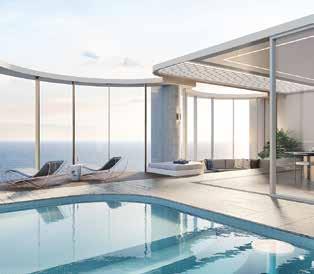

“We encourage people to contact us, describe their ideal penthouse concept and then we can work together to deliver that vision.”

Ivy Realty is built on a foundation of unrivalled customer service. Our point of difference is our genuine care, matched only by our determination to exceed all client expectations.
Over $97 Million Sold in 2022
SOLD $9,600,000 SOLD $5,650,000 SOLD FOR A PREMIUM PRICE SOLD $4,080,000 16-18 Parklane Terrace 11 Hampton Court 2601/2 Ephraim Island 74 Royal Albert Crescent 17 Knightsbridge Parade East SOVEREIGN ISLANDS SOVEREIGN ISLANDS PARADISE POINT SOVEREIGN ISLANDS SOVEREIGN ISLANDS 07 5501 5564 | Shop 2 / 16-18 Falkinder Avenue, Paradise Point 4216 | ivyrealty.com.au SOLD $6,200,000


Our clients are not just a number or transaction – they form the fabric of our business success. It’s why our relationships are genuine and long lasting, and why we are the Gold Coast’s most trusted agents.

SOLD $5,450,000 SOLD $3,150,000 SOLD $5,300,000 SOLD $4,210,000 SOLD FOR A PREMIUM PRICE 43 Knightsbridge Parade West 37 Quayside Drive 30 Hampton Court 8943 The Point Circuit 70 The Sovereign Mile SOVEREIGN SOVEREIGNHELENSVALEISLANDSISLANDS SANCTUARY COVE SOVEREIGN ISLANDS Isaac Kim 0433 268 046 Ivy Wu 吳 0433 103 586


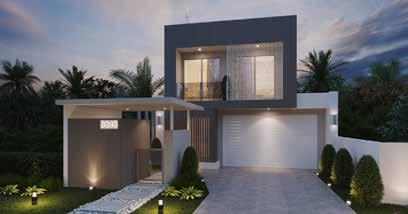
• Formal lounge with electric fireplace, 6m ceiling and floor-to-ceiling glass window framing water views
For more information please contact Ivy Realty.
• Man cave with custom wet bar, Travertine tiling and bi-folds opening to secure double carport.
• Alfresco deck with UV protected shelter, stone pitched columns.
Positioned on an 863m2 block, opposite parklands and part of the prestigious Sovereign Islands enclave, it's just a five-minute drive to Paradise Point cafes, shops, beaches and parklands.

FLAWLESS LUXURY
FEATURES INCLUDE:
This matches the sophistication of the sunsoaked master sanctuary, where a concealed drop-down ceiling TV, deluxe dressing room and a private Travertine-clad waterfront balcony await.
Complementing this is a gourmet kitchen, fitted with custom 2pac joinery, honed Carrara marble splashbacks, stone benches and a cleverly concealed oversize butler's pantry.
This truly is a home for all occasions.
This sets the tone of timeless elegance throughout this renovated waterfront residence, tempering modern interiors with classic design.
• Junior suite/bedroom 2 with walk-in robe and a luxe ensuite with circular freestanding stone bath.
The epitome of luxury, sparkling water vistas framed by a stunning floor-to-ceiling picture window greet you immediately upon entry.
• Gourmet kitchen with custom 2pac joinery, honed Carrara marble splashback, stone benches, coffered ceiling and oversize butler's pantry.

Fall asleep to the sound of the ocean, entertain with ease, or relax in king-size comfort, with the grand formal lounge sure to be a favourite place to unwind and take in the tranquil, private surroundings.
• Sun-soaked, sophisticated master suite with drop-down ceiling TV, deluxe dressing room with make-up vanity plus an opulent marble ensuite with dual showers and freestanding stone bath.
North-East facing solid concrete construction, enriched with superior attention to detail, this residence fuses flawless form and function, while offering unrivalled Commercial-gradeentertaining.bi-folddoors open up to create a seamless flow between indoors and out, with the internal living and dining zones melding with the waterfront alfresco areas.
Ivy Wu 0433 103 586
PREPARE YOURSELF for love at first sight –from the moment you step inside this exquisite Hamptons haven, you'll be smitten.
• Fully tiled infinity-edge pool plus protected pontoon with dry dock.
• Solid concrete construction with superior attention to detail, gleaming oak floors and commercial-grade inclusions.
Boaties will appreciate the protected pontoon and dry dock here too, sheltered from the elements.
Soak up the extended water views, where you'll often find dolphins or turtles at play, or bask in the sunshine by the infinity-edge pool.
16 THE PENINSULA, SOVEREIGN ISLANDS

All five bathrooms are adorned with individual honed Carrara marble tiles laid in a Herringbone pattern with marble skirting; the ground floor ensuite including a steam shower, while the upperlevel master ensuite is an opulent marble oasis with dual showers and a freestanding stone bath.
• Flawlessly renovated residence offering unrivalled entertaining.
• Large, fully-fenced front yard – a rarity on Sovereign Islands.
94 covemagazine.com.au – Issue 92 PROPERTY PORTFOLIO
Isaac Kim 0433 268 046
First-class Hamptons home in prestigious Sovereign Islands.
Five bedrooms feature across two levels, with a downstairs rumpus or sixth bedroom opening onto the spacious, manicured yard.

16 The SovereignPeninsulaIslands 5 5 4 FLAWLESS, FIRST-CLASS HAMPTONS LUXURY Prepare yourself for love at first sight – from the moment you step inside this exquisite Hamptons haven, you’ll be smitten. The epitome of luxury, sparkling water vistas greet you immediately upon entry, framed by a stunning floor-to-ceiling picture window. This sets the tone of timeless elegance throughout this renovated waterfront residence, tempering modern interiors with classic design. Ivy Wu 吳 0433 103 586 863m2 Isaac Kim 0433 268 046


The divide between the alfresco area and gourmet kitchen is almost invisible – as if this is one substantial space to cater or celebrate with guests – gifting you two full-scale kitchens and a butler's pantry.
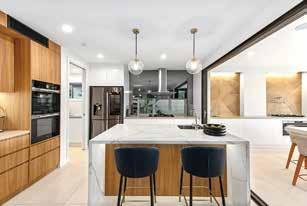
For more information please contact Ivy Realty.
Bi-fold doors invite in abundant light and create a seamless indoor-outdoor connection, maximising its enviable entertaining ability.
Nestled within the sought-after Schotia Island precinct of Sanctuary Cove, residents benefit from 24/7 security within this exclusive, gatedThereestate.isalso access to the Sanctuary Cove Country Club and the 5-star InterContinental Resort as well as a world-class marina where specialty stores, restaurants and cafes line the water'sGolfersedge.are in for a treat as well, with two of Australia's top 50 golf courses (The Palms and The Pines) within this award-winning masterplanned community.
RENOVATED TO PERFECTION, this north-to-water masterpiece is a symphony of beautiful simplicity.
Enriched with subtle interiors that embrace timeless elegance, the Sanctuary Cove home evokes luxury without compromising on warmth.
Isaac Kim 0433 268 046
Downstairs, the floorplan is cleverly configured to create a private wing for guests, comprising of a 4th bedroom with two-way ensuite and 5th bedroom/executive office with own entry.
A
Ivy Wu 0433 103 586
Close the automated privacy screens for a cosy ambience or elevate them for a resort-style dining experience, overlooking the glistening waterways, tiled pool and spa.

A waterfront terrace offering views towards the Coomera River also tempts you, perfect for a nightcap or morning coffee.

Multiple options beckon for relaxation, including a sophisticated living room with gas fireplace, a purpose-built media room with 85" TV and surround sound plus an upper-level retreat.
Outdoors, when you're not sunning yourself by the pool, enjoying drinks along the waterfront boardwalk or gathering around the custom concrete bar in the unrivalled alfresco area, take advantage of a protected courtyard, perfect for summerBoatiesBBQs.will also appreciate the refurbished pontoon, boasting bridge-free ocean access.
96 covemagazine.com.au – Issue 92 PROPERTY PORTFOLIO
Waterfront living in sought-after Sanctuary Cove.

Adorned with a double-door entry, it's appointed with a walk-in robe and ensuite with a deep soak spa, dual shower and vanities.
A host of exceptional schools are close by, and Sanctuary Cove does not require Foreign Investment Review Board Approval for international purchasers.
SYMPHONYOFSIMPLICITY
Three of the five supersized bedrooms feature on this floor too, including the master suite which channels high-end hotel glamour.

8059 Riverside Drive Sanctuary Cove 5 4 3 A SYMPHONY OF BEAUTIFUL SIMPLICITY Renovated to perfection, this north-to-water masterpiece is a symphony of beautiful simplicity. Enriched with subtle interiors that embrace timeless elegance, it evokes luxury without compromising on warmth. Bi-fold doors invite in abundant light and create a seamless indoor-outdoor connection, maximising its enviable entertaining ability. Ivy Wu 吳 0433 103 586 669m2 Isaac Kim 0433 268 046
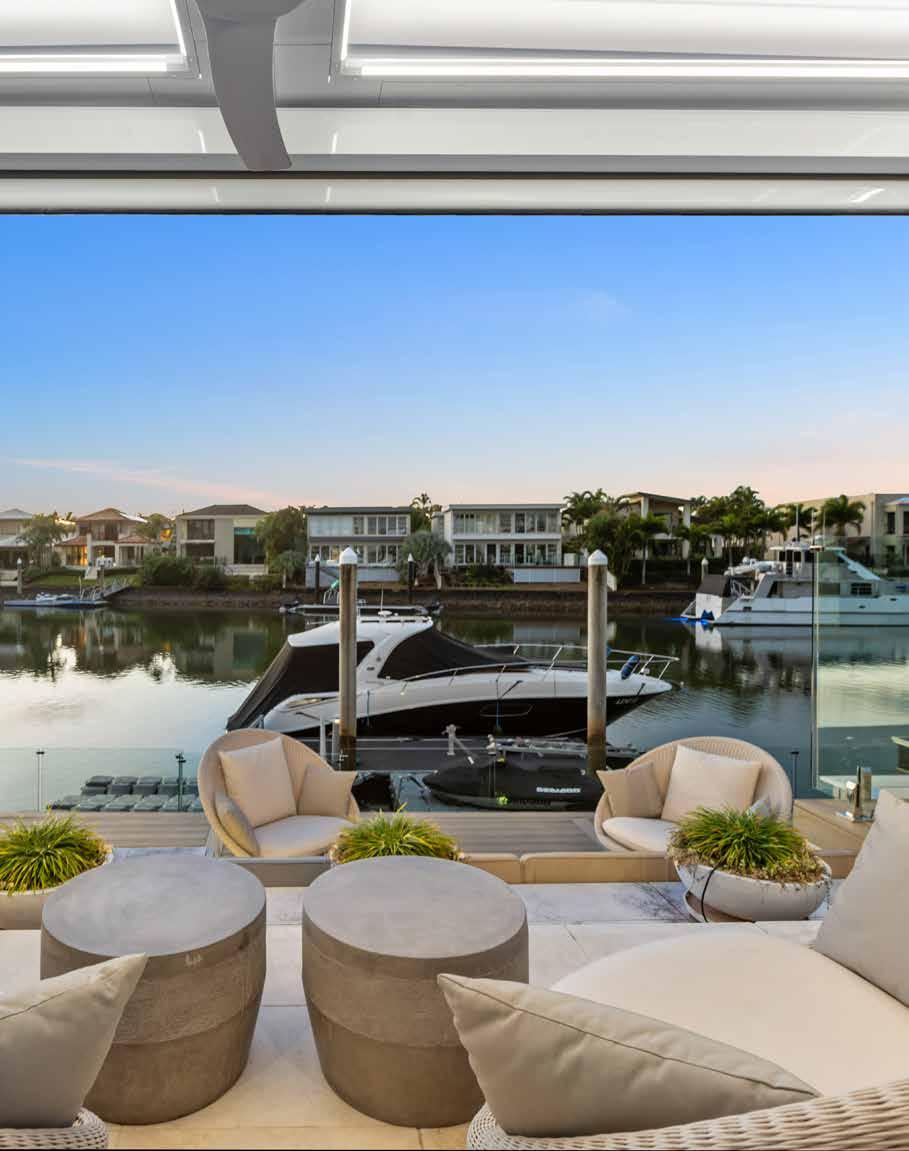
SOLD FOR A PREMIUM PRICE 74 Royal Albert Crescent, Sovereign Islands Isaac Kim 0433 268 046 Ivy Wu 吳 0433 103 586 6 6 4 UNRIVALLED TRI-LEVEL LUXURY ENTERTAINER 703m2


SOLD $6,200,000 11 Hampton Court, Sovereign Islands Isaac Kim 0433 268 046 Ivy Wu 吳 0433 103 586 4 7 5 TRI LEVEL NORTH FACING700mEXTRAVAGANZA2

100 covemagazine.com.au – Issue 92 PROPERTY PORTFOLIO
This leads to constant growth as interstate and overseas buyers continue to move to the region.
SPRING UPDATE
Throughout Winter we underwent an uncertainty in the market as we were introduced to factors such as the rises in interest rate and change of Howevergovernment.overthepast couple of weeks, as the shock of the changes in the economic environment have settled in, we have seen a large increase in local, interstate and overseas buyer activity and are still selling properties for premium prices
such as 8098 The Circle, Sanctuary Cove for $4.56 million and 10 River Cove Place, Helensvale for $3.075 million.

HERE AT PHILLIS Real Estate Queensland, we are used to dealing with fluctuating markets and changes within the real estate climate.

Although many media outlets will attempt to scare the general public with figures from Sydney and Melbourne, the Gold Coast will not experience the same drop due to the exceptional summer lifestyle on offer here.
Whether you are looking to buy or sell this Spring, the team here at Phillis Real Estate Queensland are on hand to answer all your enquiries. preqld.com.au
We are finding this is particularly strong this year with many interstate buyers still looking to be up on the Gold Coast before Christmas.
Spring has always been strong for the raise in market with buyers eager to find properties before summer comes around.
As a result we have seen a strong push in buyer enquiries and properties are being sold in a timely manner.
As the weather warms up, so does interest in the Gold Coast property market.

5697 ANCHORAGE TERRACE, SANCTUARY COVE
Located on the premier street address of Sanctuary Cove, a North facing single-level grand home featuring high-quality construction with architectural stunning designs that make this home unique and full of character, this home combines privacy with spectacular private river views. This is the first time in almost 2 years that a single-level home on Anchorage Terrace has been for sale, they don't last long so please book your inspection.
4 5 4 $5.75 MILLION ALEX PHILLIS 0411 600 alex@preqld.com.au300


LEVELS OF LUXURY
Sophisticatedrooms.elegance in the library flows through to the office with its own powder room.

The luxurious master suite is a private sanctuary with a lounge retreat and fireplace, study nook and an opulent ensuite complete with his and her walk-in dressing
PROPERTY PORTFOLIO
Every detail has been carefully selected and quality crafted in this stunning residence that is being sold fully furnished with the highest quality inclusions. Inspections are by appointment only.
Sprawling and well designed spaces flow throughout, seamlessly connecting formal and informal dining and living areas in this truly spectacular home.
A tremendous chef’s kitchen with butler’s pantry and preparation kitchen adjoining the laundry is completed with a walk-in cold room.
Masterful design and modern luxury are uniquely embodied in this one-of-a-kind home.
For more information please contact Phillis Real Estate.
On the first floor, the guest wing rivals the master in size and luxury with waterfront views, a lounge with fireplace and study nook, walk-in dressing room and magnificent ensuite with spa.

The double gated entry welcomes you to the grand porte-cochere entrance, graced by soaring ceilings, where the sweeping staircase draws you into an impressive layout made for entertaining.

THIS SOPHISTICATED and luxurious iconic home on Virginia Drive in Hope Island Resort reflects a perfect merging of inspiration and architecture.


The expansive estate across 3 land lots is a masterpiece of design and craftsmanship, featuring imported and hand cut marble flooring, exquisite crystal chandeliers and master crafted cabinetry by internationally renowned cabinet makers Wallace and Hinz.
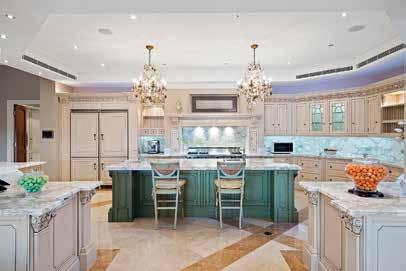
The 12-seater ‘gold lounge’ style cinema room will delight and entertain, while the dedicated and fully equipped bar complements the welcoming nature of this spectacular residence where it’s clear to see that entertaining with friends and family is a priority.
Alex Phillis 0411 600 300
The basement level features garaging for 12 cars with what can only be described as a 5 star hotel standard entrance through to the lobby with a custom built wine cellar to house over 3000 bottles of the most discerning wine lover’s collection.
An elevator is also available to transport you from floor to floor.
102 covemagazine.com.au – Issue 92
The first floor enjoys the full advantage of this lifestyle property.
A further three spacious bedrooms are all ensuited with walk-in robes and two enjoy the waterfront vistas.
Jun Yang 0423 275 701
Scan the QR

FIRB approved – Overseas buyers can purchase without a visa. code to take a 3D tour.
2620 - 2622 VIRGINIA DRIVE, HOPE ISLAND
5 8 12 OFFERS OVER $30 MILLION JUN YANG 杨俊 0423 275 701 ALEX PHILLIS 0411 600 300


Bespoke crafted Hope Island Mega Mansion which is set across three land lots totalling in 3,227m2. Only the highest quality imported materials have been used to create this sophisticated estate, with not a single detail overlooked. The home is a statement in luxury living on Hope Island. Every square metre of this home has been architecturally designed with a lifestyle for and entertaining in mind.
104 covemagazine.com.au – Issue 92
Alex Phillis 0411 600 300
Some of the outstanding features of the property include the extensive use of timber to add a warm, welcoming ambience; a stunning outdoor entertaining area with panoramic water views; and floor to ceiling windows that flood the home with light.
Originally owned by a Malaysian princess, the north facing home currently offers 4 bedrooms, 5 bathrooms and 4 car spaces along with multiple livingBoastingareas. wide water frontage and bridge free access to the Broadwater, the house has been built to the highest quality with an impeccable attention to detail.

Having being vacant for over 10 years, the property has generated interest among many of the locals who are keen to see this beauty restored to her former glory or reimagined as a completely new project.
SPRAWLING OVER TWO north facing blocks on prestigious Sovereign Islands, this grand Mediterranean style is perfect for those looking to create their dream home.


PROPERTY PORTFOLIO
FIT FOR ROYALTY
The opportunities offered here are endless ... you could buy and renovate to create your family's forever home; or you could purchase as an investment and watch your capital grow.

Amazing opportunity on Queen Guineveres Place, Sovereign Islands.
For more information please contact Phillis Real Estate Queensland.

Casa Verano 'The Summer House' in Spanish. This home & its North facing location was chosen and designed by the one owner to be different from other Sovereign Islands mansions. This home is the perfect home for a couple or a downsizing family who want a home that features character and soul. The owners choose this block because of its North facing orientation, a wide bay and neighbouring onto a 1-acre residents-only tropical park.
20 KING CHARLES DRIVE, SOVEREIGN ISLANDS


106 covemagazine.com.au – Issue 92
• A h uge 1309m 2 block on a prestigious established wide street.
For more information please contact Phillis Real Estate.
The resort’s 24-hour security and medical first responders throughout the estate offer peace of mind, while the marina, shopping facilities and Hope Island Links Golf Course are just some of the amenities located close by.
LOCATED ON RIVERLEIGH DRIVE, a quiet prestigious position within the exclusive Hope Island Resort, this large waterfront home has been extensively renovated and presents as an almost brand-new house.


The Hope Island Shopping Village, complete with Coles Supermarket, chemist, newsagency, butcher, cafes and restaurants, is also just a very short walk or buggy ride along the boardwalk.
• A mazing brand-new kitchen with stone benchtops and quality appliances.
• P rivate and maintenance-free gardens/ landscaping.
Freshly renovated family home in exclusive Hope Island Resort.
• 4 o versized bedrooms, Master with walk-in and elegant ensuite.

• 1 9 metres of waterfront.
• O pen plan living.
Situated on a large 1,309m2 block, with 19 metres of prime waterfrontage, the property is perfectly situated to take advantage of the breathtaking water views of the Main River.
Walk through the grand entrance and experience the feeling of freshness with new tiles, paint and carpet just a small degree of the extent of this major renovation.
The kitchen has been fully updated and features modern fixtures and fittings for easy entertaining.
With four oversized bedrooms and multiple living areas, the home has been designed with family in mind.
There is a large, low maintenance yard which is perfect for kids and dogs, while the easy water access is ideal for boaties.
You can enjoy great restaurants at both Hope Island Resort and Sanctuary Cove, which is just a short buggy ride away on a purpose-built buggy track.
BEAUTYWATERFRONT
PROPERTY PORTFOLIO
3131 RIVERLEIGH DR, HOPE ISLAND FEATURES:
Adam Phillis 0450 5000 10 Will Simpson 0413 102 555
• F ully renovated (including new tiles, paint, carpet and doors).
This
4715 THE PARKWAY, SANCTUARY COVE
ADAM PHILLIS 0450 5000 10 WILL SIMPSON 0413 102 555


is arguably one of the best built homes in Sanctuary Cove which was built to exacting specifications by the current owner. Built new in 2017. This North facing two storey home is built with a great floorplan with lots of light. A great place for a family. ALEX PHILLIS 0411 600 300 BRIAN PHILLIS 0411 600 100 3 2 4 OFFERS OVER 2.4 MILLION


Absolute Beachfront, Three levels of concrete construction, underground basement 5 car garage with private cinema and bar. Multiple living spaces that capture the views all with the ultimate privacy, 4 bedrooms plus a huge home office with murphy bed. Secure Island living just 20 mins from Surfers Paradise with 24-hour gated and patrolled security. Low body corporate fees, maintained gardens and facilities, on-site restaurant. Optional 15-metre marina berth in the private marina 400 metres from your Beach House. A walk across the bridge to great cafes, shops and supermarkets of Paradise Point.
‘THE BEACH HOUSE’ 24 EPHRAIM ISLAND, PARADISE POINT


4 5 5 ALEX PHILLIS 0411 600 alex@preqld.com.au300


The Ultimate Family compound with two single level homes separated by a full-size tennis court. Spread over 2,588m2 of prime waterfront real estate, in total 8 Bedrooms and 6 Bathrooms this compound is perfect for multi-generation and large families.
Located at the end of a quiet cul-de-sac, a prestigious position within Sanctuary Cove, an opportunity like this will not come along again. These properties can be purchased together or separately.
8 6 4 ALEX PHILLIS 0411 600 alex@preqld.com.au300

7302 -7306 BAYSIDE CLOSE, SANCTUARY COVE
The Parkway.
airy home spread over a large 894m2 elevated block, private courtyard, MasterChef quality kitchen and the large outdoor entertaining areas are just come of the premium features of this home. OFFERS OVER $2.4 MILLION OFFERS OVER $1.8 MILLION ALEX PHILLIS 0411 600 300 AMANDA BLAIR 0450 090 023
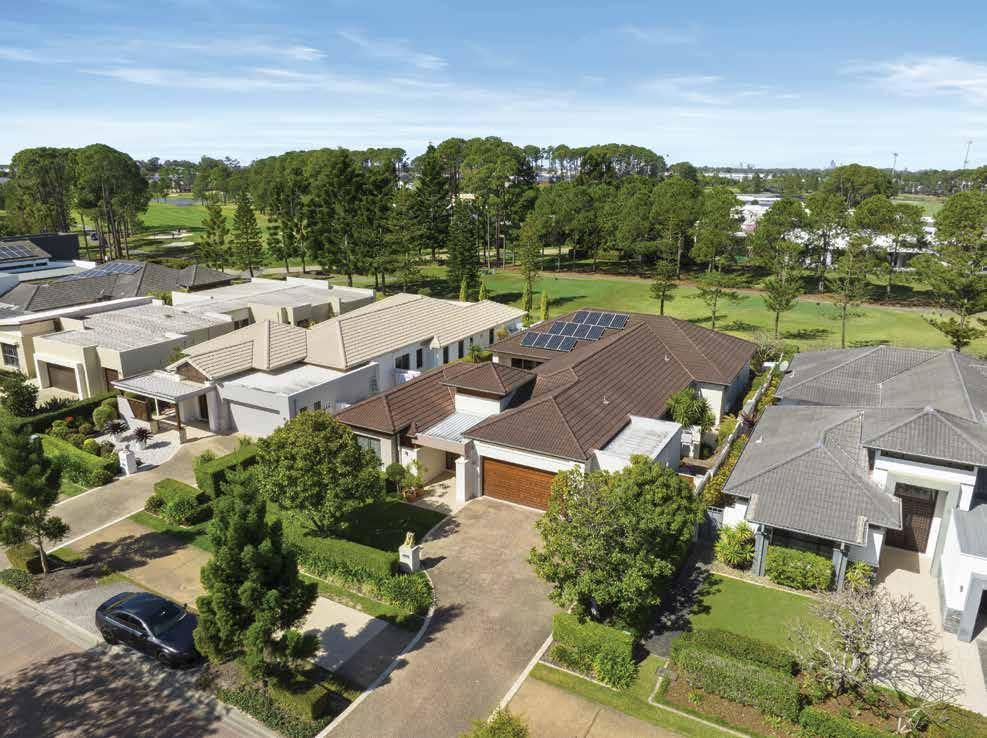

4733 THE PARKWAY, SANCTUARY COVE


Sundrenched
Grand contemporary style family home on
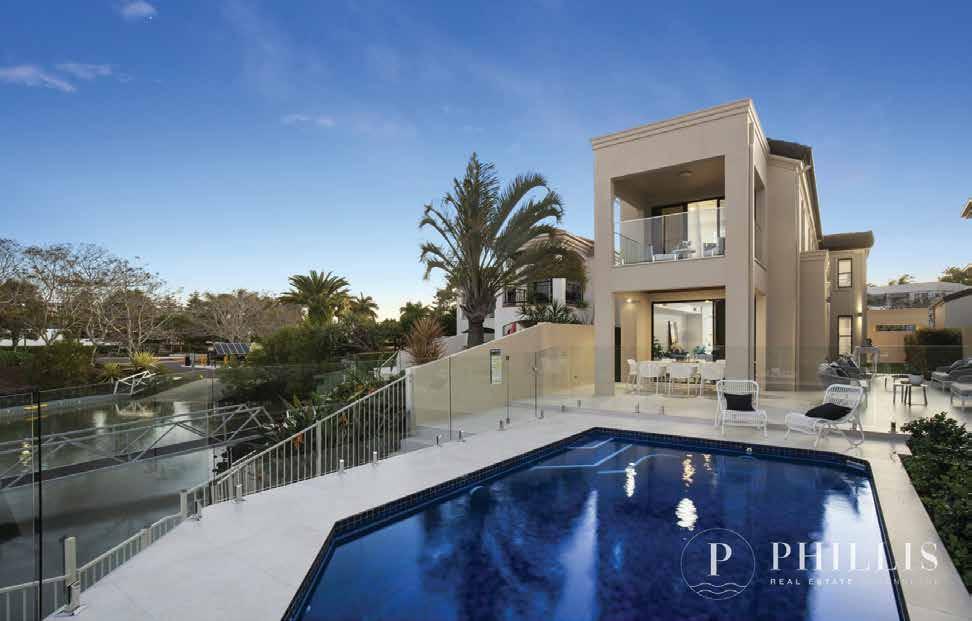
2209 THE PARKWAY, SANCTUARY COVE OFFERS OVER $2.6 MILLION4 4 3


8049 THE PARKWAY, SANCTUARY COVE


This immaculately presented 3-bedroom waterfront home faking north east offers the ultimate lifestyle. Spaciously designed over two levels with a modern contemporary twist, this recently renovated residence offers Luxury waterfront living.
7381 MARINE DRIVE EAST, SANCTUARY COVE ULTRA-RARE OPPORTUNITY TO SECURE SINGLE LEVEL STUNNER This luxury home is undeniably impressive and personifies the epitome of Queensland waterfront living; easy, relaxed and comfortability at its best! make no mistake, this property is selling! •Extensive & stunning renovation •Multiple living areas, high ceilings •Bridge free, deep water access “Alister’s tenacity and experience sealed the deal for my wife & I when selling our house for a stunning price. It didn’t stop there when relentlessly finding us a new home within weeks that we absolutely love. His patients, market advice and negotiation experience was crucial to making both deals happen. We can’t thank you enough Alister and wish you continued success for the future. Cheers" - Shane & Katrina ALISTER BILLINGSLEY 0419 795 alister@preqld.com.au219 39 ROYAL ALBERT CRESCENT, SOVEREIGN ISLANDS 15/76 BAYVIEW STREET, RUNAWAY BAY FOR$3,900,000SOLDSALE $1,850,000SOLD 4 4 2


This combination of a north facing, wide waterfront block with bridge free berthing access is highly sought after on the northern Gold Coast. This is absolutely a rare opportunity not to be missed!


4 2 4 2+ ALEX PHILLIS 0411 600 300 WILL DALEY 0401 883 789

7 VAN DIEMEN PLACE, HOLLYWELL
Sellers are moving overseas and have given us clear instructions that this property must be sold. Cancel your marina membership and bring all your toys, with 40 meters of quay line giving you over 100 feet of berthing in your back yard for your flybridge game fishing boat or family cruiser, just steps from the back door! At just 150 meters from the canal entrance, you could be on the Broadwater within minutes with bridge free open ocean access.
“I pride myself on my ability to identify the needs of different clients and apply them in my business.”Specialising in the FIRB approved locations of Hope Island and Sanctuary Cove, Jun has sold over $67 million in properties in the past financial year, cementing her place in the Australian and Asian real estate market.
Jun’s multi-lingual skills and ability to provide exceptional communication with clients from different cultural backgrounds has also given her the edge when it comes to buying and selling.

114 covemagazine.com.au – Issue 92 PROPERTY PORTFOLIO
“I’m a Mandarin and English-speaking real estate agent and developer based on the Gold Coast and am proud that I live, work and am raising my family here,” says Jun.
Agent and developer Jun Yung is bridging the gap between the Australian and Asian real estate market.
SELLING SUCCESS
A VALUED MEMBER of the Phillis Real Estate Queensland team, Jun Yang has been connecting wealthy investors and buyers from all over the world with local families on the Gold Coast for the past ten years.
Having helped hundreds of Chinese families immigrate to Australia, Jun is also passionate about giving back to the community.
“I have assisted in accommodating over 200 international students, allowing them establish their life and career in Australia,” says Jun.
“I can provide the X-Factor that other agents cannot access,” Jun says.
“Please feel free to contact me for an appraisal or to discuss all of your real estate needs.” 0423 275 701 | junyang@preqld.com.au
“They now work in important industries, helping Australia grow to be a stronger country.
“I am also part of the Chinese Zhejiang Chamber of Commerce Association, helping Australian business by acting as as a mediator between Chinese and Australian industries.”

For more information please contact Phillis Real Estate Queensland.
BANKSIA SHORES is an exclusive estate situated next door to a private park in Hope Island, one of the most prestigious suburbs of the Gold Coast.


Jun Yang 0423 275 701

BUILDING BLOCKS
These are the last remaining waterfront blocks in Hope Island, situated in a quiet street adjacent to a family-friendly park.
Only 6 lots available, land sizes from 592m 2 - 798m 2
116 covemagazine.com.au – Issue 92

Six waterfront land lots for sale in prestigious Hope Island enclave.
With stunning Broadwater views, Lots 1-6, 27-33 Crescent Avenue are north-west facing ensuring you are getting the beautiful sunshine all day.Build your dream home in your own exclusive enclave surrounded by luxury resorts and champion golf courses.
The deep-water access and wide water frontage make this a boat lovers paradise, while the proximity to nearby shopping and dining precincts ensures you can enjoy an enviable Gold Coast lifestyle.
YOUR GOLD COAST LUXURY REAL ESTATE SPECIALIST, JUN YANG. Are you looking for the perfect property that matches all your requirements? Let me find it for you! Are you looking to sell your property? Let me match you with the perfect buyer! Jun Yang 杨俊 0423 275 junyang@preqld.com.au701 junyangrealestate


66 OXLEY DRIVE, PARADISE POINT Set right on the water & in the heart of Paradise Point you find this beautiful home, complete with 4 spacious bedrooms, 2 living areas & 20m of water frontage! Paradise Point is the perfect, family-friendly place to live To spell it out, this home is less than a 5 minute drive to the Paradise Point Esplanade, where you can shop, eat, drink or spend a day on the water or beach! $1.65 MILLION4 3 4 J UN YA N G 杨 俊 04 2 3 2 7 5 7 0 1 J UN YA N G 杨 俊 04 2 3 2 7 5 7 0 1 1 SIR LANCELOT CLOSE, SOVEREIGN ISLANDS ombining extended canal views, East facing sunshine and a quiet street. This modern home has a great open plan floor plan and would suit a family or a couple ant a comfortable house that can hold family members when they visit. This ay be classic but it has so much potential and as they say 'they don't make ke this anymore’! OFFERS ABOVE $4 MILLION6 3 J UN YA N G 杨 俊 杨 俊 04 2 3 2 7 5 7 0 1 14-16 QUEEN GUINEVERES PLACE, SOVEREIGN ISLANDS Located on the exclusive and private 'Sovereign Islands’, you find this vacant land lot plus a spacious modern home You can stop imagining your dream home & build it on this rare to find waterfront vacant land! There is options to buy the house and land either together or separately, so if you have interest in just one of these properties, contact me! SUBMIT YOUR OFFERS!5 5 6 J UN YA N G 杨 04 2 3 2 7 5 7 0 1 26-28 ROYAL ALBERT CRESCENT, SOVEREIGN ISLANDS This is a once-in-a-lifetime opportunity that you cannot replicate! A North facing 'point' position with incredibly wide water frontage This home gives you lifestyle options with the block next door to hold a massive boat, build a tennis court, a second home the possibilities are endless. OFFERS ABOVE $7 MILLION5 5 8


“A three-storey atrium and recreational lobby along with an exclusive heated lap pool and stateof-the-art gym facilities,” Georgina explains.
Visit the Sales Display - Shop 10, 14 Tedder Avenue Main Beach.
World-class architecture combines with ambitious design to create an address that embraces its locale and elevates the every day.
With construction having commenced in November 2021 and with more than 90% of apartments already sold, Belvedere is well on the way to becoming a new beacon for luxury Main Beach living.

For more information contact: Greg Washington 0488 033 233 or Georgina Manton 0488 033 433
Greg Washington & Georgina Manton

Design features are indicative only. Images are artist's impression.
The expansive floorplan of the Penthouse allows for an extraordinary private, master suite.
“Dining options include a chef’s kitchen and a five-star grand dining table, along with casual dining areas and private lounges,” she adds.
Issue 92 – covemagazine.com.au 119
LOCATED IN MAIN BEACH , Belvedere is born in the concept of perfect harmony with seamless indoor and alfresco spaces that showcase the best of the stunning vistas.
Designed for entertaining, this one-of-a-kind luxury home features a private, north-east oceanfacing roof deck, comprising a pool, spa, dedicated steam room, entertainer’s kitchen, integrated barbeque, firepit and outdoor showering facilities.
Sky Home includes 4 bedrooms, 5.5 bathrooms, 4 car spaces, media room, private home office, and ample storage.
A well-proportioned retreat area flows to the king-sized bedroom that opens onto a southeastern facing private balcony.
“It doesn’t get much more beautiful than sunrise to sunset views over the ocean and Gold Coast hinterland,” says Georgina Manton of Belvedere MainTheBeach.name ‘Belvedere’ is derived from two Italian words, meaning ‘beautiful’ and ‘view’.
As the sun sets, this Level 24 vantage point is your private bar overlooking the nightlife of MainTheBeach.luxury
The luxury of living at Belvedere is felt indoors and out and the premium Penthouse and Sky Home are set to be the crowning jewels of this landmark development.
The Sky Home is a realisation of this vision taking the prime position on the top two levels, stretching over 600m2, with 240m2 of outdoor space to lounge, swim, recharge or entertain.
At Belvedere, residents will also have access to a suite of exclusive amenities.
The interiors are refined in palette, opting for muted tones, bringing a timeless elegance to the open plan
The full-height glazing ensures the panoramic ocean views merge seamlessly with the lofted double-height ceilings.
LUXURYEXECUTEDPERFECTLY
Joinery with wine storage flanks the living and dining areas, keeping in theme with the exceptionally appointed kitchen.
PROPERTY PORTFOLIO
Locatedliving.onLevel 23, Belvedere’s Penthouse boasts a generous 427m2 of living and outdoor space.The south-east fronting living room features floor-to-ceiling glazing to capture the views.
The signature design of refined interiors and a harmonious palette showcase the natural materials of oak floors, limestone tiling and stone benchtops.


DESTINED TO BE Palm Lake Group’s most opulent and luxurious over 50s resort project yet, Palm Lake Resort Pelican Waters is the perfect combination of location and lifestyle.
A three-lane tenpin bowling alley will also feature in the Eldorado, as well as an outdoor pool wrapping around the facility with a swim-up bar, private cabanas, sunken lounges and firepits.
GAME-CHANGER
Offering impressive, never-before-seen architectural details, these clever designs feature a distinct sense of spaciousness with their openplanBuggyapproach.paths have been integrated throughout the entire precinct, allowing you to throw the car keys away as soon as you enter the resort, and each home includes a golf buggy garage, so you never have to worry about parking.
This includes an impressive lakefront community centre with dedicated quarters, including the Eldorado sports club, Mirador wellness precinct, Cerante arts and leisure precinct and Sonora dining and social precinct.
122 covemagazine.com.au – Issue 92
Residents can also relax at the resort’s Cerante arts and leisure precinct, home to the craft room, library, music room and luxury movie theatre.
The over 320 architecturally designed homes proposed for this community will enjoy water frontage and direct golf course access, as well
The resort masterplan has been created to take advantage of both the Sunshine Coast’s impressive natural environment and wildlife-filled waterways and the stellar Pelican Waters Golf Course which has, for two years now, played host to the Isuzu Queensland Open.
LUXURY LIVING
The one- and two-storey designs mix opulent details with functionality and will be brand new to the Palm Lake Group.
The low maintenance nature of these residences allows their owners the scope to travel at a moment’s notice – or simply spend their days enjoying the golf course.
Naturally, the lifestyle amenities at Palm Lake Resort Pelican Waters are second to none.
as those world-class facilities that the Palm Lake Resort brand is renowned for.
aspect, Sonora will be home to the main lounge, dining hall and bar with a roof terrace overlooking the amazing water vistas.
Palm Lake Resort Pelican Waters is setting a new benchmark in over 50s community living.

Fromroom.asocial
Taking its inspiration from Palm Springs, the design theme stems from Palm Lake Group’s desire to create a residential resort that cultivates a relaxed state of mind while channelling midcentury modernism … think clean geometric architecture, natural material finishes and strategic pops of colour.
For those more active residents, there will be an eight-rink undercover lawn bowling green, tennis and pickleball precinct and golf simulator rooms along with a dedicated table tennis
To round out the community centre, Mirador will support residents’ wellness with a yoga room, Milon gymnasium, yoga and Pilates studio, salt therapy room, a sauna, an indoor pool and


The works are being completed under the watchful eye of Norman and his team to ensure the course retains its elite status in golfing circles.
Setting a new benchmark in over 50s living, Palm Lake Resort Pelican Waters is part of a greater luxury precinct emerging at Pelican Waters, which is cementing its place as a destination for the whole Sunshine Coast community. 490 626 | palmlakeresort.com.au
Norman, the course is undergoing an exhaustive reconfiguration with plans including a new pro shop and training academy, as well as mini golf, a short game area and driving range.


Issue 92 – covemagazine.com.au 123

Waters Golf Course is also part of Palm Lake Group’s portfolio and hugs the eastern boundary of the highly anticipated Palm Lake Resort Pelican Waters over 50s lifestyle

1800
Pelicanmore.
Designedcommunity.byGreg

124 covemagazine.com.au – Issue 92 LUXURY LIVING
A FAMILY OWNED, proudly Australian retailer specialising in warm, refined, and timeless pieces, Alfresco Emporium will soon be celebrating 25 years in business.
Followingcommunity.the incredible success of their Interior Styling Studio in Sydney, this highly sought-after service offers partial and full styling options to suit an array of clients and property styles.

Limited bookings are available for this styling service so enquire now.
Clients travel far and wide to visit their retail stores on the Northern Beaches of Sydney and Bundall here on the beautiful Gold Coast.
Alfresco Emporium are unique in offering various collections such as the newly released Nantucket along with popular styles including Australian Coastal, Chalet, Tropical Safari, Olive Grove, Singapore, Rustic Farmhouse and more.

A carefully curated selection of furniture, lighting, rugs, and accessories complements everyWithdesign.abackground in interior design, architecture, styling, and project management the Interior Styling team offer personalised styling services to suit every need and budget.
As part of the highly successful lifestyle furniture and homewares brand, they recently opened their Interior Styling studio at the Island Emporium precinct to provide both residential and commercial styling services to the Gold Coast
Collaborations with the iconic Kate Waterhouse, India Hicks, Chyka Keebaugh, and Karen Martini have helped to secure their position as a household name and a leader in the coastal furniture and homewares industry throughout Australia.
alfrescoemporium.com.au | 07 5619 8615
Delivering a selection of looks ensures your design proposal will be unique, bespoke, and truly inspired by your location and our designer’s vastToexperience.celebrate Christmas 2022 the team are also offering beautifully designed Coastal and Traditional Christmas Styling Packages complete
Imagine not having to lift a finger to decorate your home this year.
Services include an in-depth consultation followed by site visit and design proposal inclusive of mood boards, 2D & 3D floor plans, full specifications and a budget proposal to transform your space.
with fully decorated 8ft pre-lit tree, front door wreath, centrepiece and extra options that even include setting your dining table.


To find out more about Alfresco Emporium’s Interior Styling packages or secure your private consultation time simply visitinterior.styling@alfrescoemporium.com.auemailorthewebsiteformoreinformation.
STYLED PERFECTIONTO
Spring is here and it’s time to consider refreshing your home or office with a bespoke styling design by the talented team at Alfresco Emporium.
D
LA Y BIR


MENU


LA D Y BIR D


D
126 covemagazine.com.au – Issue 92 LUXURY LIVING
Comfy chair
glow
Photo Credit: Tommaso Sartori.
Meet Mora, a cordless outdoor lantern by Vincent Sheppard which features a solar panel as well as a rechargeable LED lighting unit. These stylish pieces are perfect to submerge your outdoor area in a warm glow as the evening draws in. Designed by studio segers, Moro is available in 3 sizes with prices starting from $585.


Discover instore at Design Initial, Gold Coast and Brisbane. designinitial.com.au
MODERELAXATION
Outdoor style
Vincent Van Duysen’s new Pablo Outdoor collection for B&B Italia delivers solidity and strength within a calm, relaxed form. Using teak, a material perfectly suited to outdoor environments for its structure, the collection of an armchair, sofa and footstool delivers a solidity and elegance rarely found in outdoor furniture. The Pablo Outdoor Collection is available from Space Furniture.

cotswoldfurniture.com.au
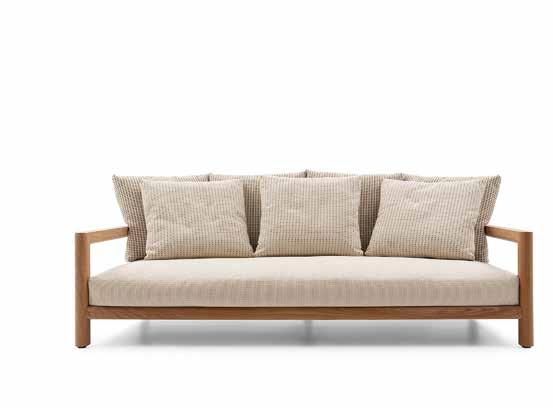
spacefurniture.com.auEvening
Working with intriguing materials and drawing on centuries-old ethereal,spacescreatesrefractionsglassblowers,teamdelicatelydirectorlight.thecompletelyADesignStudiotechniques,studiohasreimaginedtraditionalpendantDesignedbycreativeAlexFitzpatrick,andhandcraftedbyaofhighlyskilledlocalthebrilliant,oftheirpendantsvisuallydynamicandturnlightintopoeticartistry. adesignstudio.com.au
Shining light
Soft and yielding like a warm hug, Comfy is the ultimate solution for those times you just want to lean back and switch off. Just sink in, close your eyes and let go. With a minimalist contemporary aesthetic, an ergonomic design and a generous frame, it is made up of three padded parts and will give the word restfulness a new meaning. With a shell crafted from cold-foam polyurethane set on a characterful cross-over metal base, Comfy also boasts a swinging mechanism.
Pair OZ Design Furniture’s cool and comfortable Whitehaven sofa and armchair with the Airlie side and coffee tables, Allure rug and Weave floor lamp to create a relaxed coastal setting in your home or holiday house.


Go coastal
earlysettler.com.au
Create a luxurious outdoor escape with the elegant and comfortable Alfresco Emporium Hampton outdoor armchair in white with soft grey (ecru) cushions. RRP $1,095

Interiors reminiscent of the 60’s & 70’s are set to bring the groovy back. Early Settler has a selection of retro-esque beauties, such as this mod-look mirror, that show why going back in time is so forward thinking.

Issue 92 – covemagazine.com.au 127 QUALITY SHUTTERSCUSTOM&BLINDS GOLD COAST SHOWROOM: T. 07 5593 4031 F. 07 5593 8429 12 Hutchinson St, Burleigh Junction BRISBANE SHOWROOM: T. 07 3367 2499 F. 07 3368 3038 Proudly Australian owned & operated info@newportshutters.com www.newportshutters.com.au Design & Manufacture of
elegance
alfrescoemporium.com.auMirrorimage
ozdesignfurniture.com.auEasy
SEPTEMBER ENTERTAINMENT
WONDERWONDERSEPTEMBERreturnstoHOTAthis
2 – 24
sea of pink as Australia’s largest community fundraiser raceday celebrates its 15th year at the Gold Coast Turf Club. The Sky Racing Pink Ribbon Raceday, featuring the Coastal Demolitions Pink Ribbon Cup, is premier event on the turfing calendar and raises much-needed funds for the National Breast Cancer Foundation. gctc.com.au
Deni Ute Muster

128 covemagazine.com.au – Issue 92
parklands to theatres, celebrate the city in a blaze of colour at this year’s Brisbane Festival. With more than 580 theatre, music and arts performances that enliven, inspire, delight and disrupt, and festival hubs in South Bank, Northshore Brisbane, West Village and the suburbs, there is feast of fun-tivities for the whole family at BrisFest this September. brisbanefestival.com.au
11
spring. Spend precious time with friends and family, while being wowed by spectacular art in the great outdoors including the world premiere of Alcazar, a brandnew outdoor art installation by Sydney design studio Atelier Sisu. This palace of colour and light will play backdrop to a program of live music, dining under the stars, artist talks and kid friendly experiences. hota.com.au

17
BrisbaneSEPTEMBERFestivalFromtherivertorooftops,

30 SEPTEMBER & 1 OCTOBER
DottedSWELLSEPTEMBERSculptureFestivalalongCurrumbinBeach,this

celebration
Delivering fun for all the family from sunup to sundown, the Deni Ute Muster is set to return with a full program of music and entertainment. Already confirmed to grace the Muster’s Main Stages are international country superstar Brad Paisley, as well as a bunch of respected country/pop artists including Jessica Mauboy, John Williamson, Shannon Noll, Sara Storer and Shane Nicholson. deniutemuster.com.au
EnsembleSEPTEMBERQpresents Septet
AquisPinkSEPTEMBERRibbonRacedayParkwillbecomea

16 – 25
of art and ocean features over 70 large scale contemporary sculptures from local and international artists as well as a range of unique experiences including guided twilight walks, live music, comedy, masterclasses, artist talks and workshops. You can also experience pop up exhibitions across the Gold Coast including, easterlySWELL at Chevron Island, industrialSWELL at The Boatworks, Coomera and northerlySWELL at Helensvale. swellsculpture.com.au
Guenther,Robert Bullshark ImagesPBRPhotography
9 – 18
Queensland Performing Arts Centre (QPAC) has announced a new partnership with Brisbanebased chamber music group, Ensemble Q. Led by Co-Artistic Directors clarinettist and acclaimed composer Paul Dean and cellist Trish Dean, the nationally acclaimed ensemble’s first QPAC program will feature the much-loved Beethoven Septet matched with Paul’s own brand-new Septet for the same instrumentation. qpac.com.au

nitrocircus.com/nitroworldgames
Gold Coast Open House
The eighth annual Gold Coast Open House will open the doors to some of the Gold Coast’s most extraordinary buildings, spaces and places including the Pimpama Sports Hub by Place Design and Liquid Blu and Banksia House by Aphora Architecture. The 2022 program will also feature a diverse range of architect-led building tours, self-guided tours, photo competitions, public panel discussions, topical documentaries, industry events and more. goldcoastopenhouse.com.au
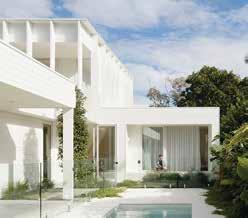
GroundwaterOCTOBERCountry Music Festival

ArchitectsMileSevenbyBrandononHouse OddsAtRavensStrugar,NikolasPhotographer:
CurdinPhotographer:
28 – 30
AdamikPeterbyPhotoPhillips.Peter
groundwatercmf.com

Get ready to be treated to three epic days of free live country music in the heart of Broadbeach. With the iconic Gold Coast skyline as the festival backdrop, the 2022 bill features an incredible line-up of home-grown and international talent plus an exciting selection of up-and-coming artists including Fanny Lumsden, Travis Collins, Brooke McClymont & Adam Eckersley, Gina Jeffreys and Kirsty Lee Akers.
With new big air formats, breakthrough ramp technology and innovative judging criteria, Nitro World Games Brisbane will draw elite athletes from across the globe to Suncorp Stadium. Produced by Nitro Circus in partnership with Tourism and Events Queensland and the Brisbane Economic Development Agency, the event will see the best in FMX, BMX, skateboarding and scooter battle for championship honours while pushing the limits of progression with recordbreaking attempts.
OneTheOCTOBERGrassIsGreenerofQueensland'smostadored
22 OCTOBER TO 11 DECEMBER MARY POPPINS

Issue 92 – covemagazine.com.au 129 ENTERTAINMENT OCTOBER
Nitro World Games Brisbane

of Renaissance vocal music’, The Tallis Scholars are stopping by the QPAC Concert Hall for one night only with a sublime program of sacred choral music. Led by Director Peter Phillips, the Music for the Sistine Chapel program explores the elite world of great Renaissance composers including Josquin des Prez, Giovani Pierluigi da Palestrina, Cristobal de Morales and Tomás Luis de Victoria. qpac.com.au

One of the world’s most loved musicals is coming to QPAC. With acclaimed Queensland musical theatres stars Stefanie Jones as Mary Poppins and Jack Chambers as Bert leading a brilliant all-Australian cast, this magical stage adaption includes dazzling choreography, incredible effects and the unforgettable songs from the original film as well as new songs and additional music by Olivier award-winning George Stiles and Anthony Drewe. qpac.com.au
22
BoudDanielPhotography
15 – 16 OCTOBER
26 KnownTheOCTOBERTallisScholarsas‘therockstars
and art festivals will be kicking off at Doug Jennings Park with a range of global superstars taking to the stage. Continuing its pledge of creating memorable moments for regional audiences, this year the festival features multiple themed stages, adventurous activations and a renewed VIP package program that will provide festival goers with an unforgettable experience. thegrassisgreener.com.au
22 – 23 OCTOBER
music, food
By Kirsty Manning
Described as ‘essential and extraordinary reading’ for caregivers and educators, this deeply personal part-memoir, part-parenting guide explores neurodiversity and how children learn – or fail – to read. RRP $29.99 booktopia.com.au
By Julia Donaldson Illustrated by Sharon King-Chai
Set in pre-war Paris, and featuring infallible hero, journalist Charlie James, this stylish, sensual mystery hums with intrigue and passion as it takes readers on a suspenseful ride filled with twists and turns. RRP $32.99 allenandunwin.com

ByJapanSteveWide and Michelle Mackintosh
Colours, Colours Everywhere
By Sally Rippin
Sew It Yourself
Milly and The Mulberry Tree

By Vikki Conley and Deb Hudson
‘You are a small thing, and you must learn to fight’. Poignant, hilarious and deeply moving, Fight Night is a girl's love letter to the women raising her and a tribute to one family's fighting spirit. RRP $29.99 allenandunwin.com

A stunning book about colours full of gorgeous breathtaking landscapes, with amazing flaps to lift and holes to peep through, this is an absolute must for the family bookshelf. RRP $29.99 panmacmillan.com.au

By Stefan Szymanski and Tim Wigmore
An engaging tour of the modern game, from changing demographics to statistical analysis, this incisive book will entertain and surprise all cricket lovers. It might even change how you watch the game. RRP $32.99 bloomsbury.com/au
This beautifully illustrated picture book for children aged 4-8 features figurative language and is crammed with teachable moments around the environment, celebration, and cross-cultural family connections. RRP $24.99 ekbooks.org
Crickonomics: The Anatomy of Modern Cricket

With 20 pattern-free projects (and infinite variations) to make your dream wardrobe, this is a colourful, size-inclusive and inspiring book for sewers of all stages and abilities, beginners included. RRP $32.99 hardiegrant.com/au

Packed with cultural insights and stunning photography, and featuring a tightly curated list of must-see places and experiences, this eclectic guide takes you on a deeper journey into Japan. RRP $44.99 panmacmillan.com.au

130 covemagazine.com.au – Issue 92
Wild Things

By Miriam Toews
Fight Night
By Daisy Braid
BOOKSHELF
The Paris Mystery
BBL HERO
Our Services
HIFU
GOLD COAST: 1 Vespa Crescent, Surfers Paradise, QLD 4217
ADELAIDE: 34 Hindley Street, Adelaide, SA 5000
MBBS, FRACGP, DIPLOMA OF SKIN CANCER
CONTACT 0407 194 519 drumedcosmetics.com.au
With over a thousand successful procedures behind him, Dr Umed has the experience and expertise to help you achieve your health and skin-based goals. If you are considering a treatment and would like to know the most suitable options for you, Dr Umed is only a phone call away.
DR Umed Shekhawat, is a top cosmetic Doctor residing on the Gold Coast who has helped thousands of patients over the years achieve their desired aesthetic appearance through facial cosmetic treatments.


TOWNSVILLE: Shop 6, 203 Kings Road, Pimlico, QLD 4812
Improve the appearance of your upper eyelids.
Dr Umed has also been a medical practitioner for over 20 years, spanning across several specialties. His vast experience and extensive training in the treatment of skin cancer gradually fostered a passion for Aesthetic Medicine. This led Dr Umed to study Aesthetic Medicine in Australia and Internationally. Soon becoming a well-regarded and renowned Aesthetic Physician, Dr. Umed has helped thousands of individuals successfully address their aesthetic concerns and face life with renewed self-confidence.
BRISBANE: 131 Latrobe Terrace, Paddington, QLD 4064
BECAUSE IT’S ALL ABOUT YOU
Dr. Umed Shekhawat
UPPER BLEPHAROPLASTY
GOLD COAST: Shop 9B, 331 Hope Island Road, Hope Island, QLD 4212
THREAD LIFT
ANTI-WRINKLE TREATMENT
Dr Umed has always been committed to educating his clients about all treatments and procedures and is passionate in restoring the beauty and health of his clients in the best possible way.
IPSWICH: 87 Brisbane Street, Ipswich, QLD 4305
CANBERRA: Shop 5, O’Hanlon Place, Gold Creek Village, Nicholls, ACT 2913
Transform from wrinkly to pixel-perfect silky skin.
MELBOURNE: 424 Church Street, Richmond, VIC 3121
SKIN AND BEAUTY
DERMAL FILLER
Treating problems such as spider veins, rosacea and even unwanted birthmarks.
Treating skin conditions anywhere on the body associated with ageing, sun, and environmental aggressors.
SYDNEY: Shop 4, 110 Great North Road, Five Dock, NSW 2045
SUNSHINE COAST: Shop 2, 32 Aerodrome Road, Maroochydore, QLD 4558
Our Locations
Say goodbye to signs of aging with an amazing thread lift.
MACKAY: Shop 1, 25 Harbour Road, North Mackay, QLD 4740
Utilise ultrasound technology to improve your skin’s tone, texture and elasticity.
BYRON BAY: Shop 5, 4 Bay Lane, Byron Bay, NSW 2481
Feel a visible difference in your skin tone, texture and radiance.
LOGAN CITY: 3376 Mount Lindesay Highway, Regents Park, QLD 4118
Advanced training in Anti-Wrinkle Injections, Dermal Fillers, Thread Lift, Skin Treatments and Cosmetic Treatments are just some of his specialty skills.
CLEAR-V LASER
Email info@drumedcosmetics.com.au
Rediscover Beauty
Uplift your skin non-surgically to look fuller and youthful.
• Budget analysis
Suite1300service.87605532,Masthead
Dennis Clark
With experience built over 35 years in the furniture industry, the Hotel Interiors team provide total flexibility and choice, taking projects from the initial concept through to delivery and installation. They also provide a full installation service, freight management, transportation, commercial warranties and professional after sales
This modern treasure trove in Sanctuary Cove showcases a wide selection of Nautical, Aeronautical and Motoring models as well as a range of stylish homewares. New in stock is the Edge Sculpture Collection by artist Matt Buckley. Featuring statement figures such as the Bull Terrier, Owl and Rearing Horse, these striking modern masterpieces command attention with their detailed craftmanship and contemporary aesthetic. Ranging from small figural works to large busts, each piece perfectly captures the emotion and grace of the subject, making them the ideal addition to your home, office or outdoor space. Decorum Gifts for all your contemporary gifting and décor needs.
• Commercial manufacturingfurniture
07

proinsure.com.auinfo@proinsure.com.au INSURANCE MADE SIMPLE Insurance products include: • Business Insurance • Professional Indemnity • Medical Malpractice • Public & Products Liability • Plant, Machinery & Fleet Vehicles • Resident Unit Managers • Strata Properties • Commercial & Private Marine Vessels • Home, Contents & Landlords Properties • Commercial & Domestic Motor Vehicles

Specialising in furniture for hotels, motels, serviced apartments and resorts, Hotel Interiors offer expert knowledge and superior service.

Services include:
DÉCORUM GIFTS
• Procurement
• Furniture design
07 5514 8220
07 5514 8099
One of the last remaining independent optometry practices on the Gold Coast, Sanctuary Cove Optical offer personal, professional service in a relaxed village Optometristenvironment. and Practice owner Michael Jackson has almost 20 years’ experience in Optometry, with additional qualifications as an Ophthalmic Medicines Prescriber. Focusing on patient eye health and quality eyewear, Michael and the team import unique, luxury frames from across Europe including a large range of prescriptible sunglasses for outdoor activities.

Are you looking for an insurance broker who can truly support you with your commercial and domestic insurance needs?
If you don’t have a broker who understands your situation, you can end up either underinsured and heavily exposed if something happens, or over insured and paying way too much. We are a privately-owned local business with over 100 years’ experience in the insurance industry, from broking to underwriting in large international insurers and small local brokers. Our team works closely together to guide you through the whole process, from getting to know you, matching you to the best products, handling your claims and everything in-between. Let our dedicated team talk insurance with you.

BUSINESS D irectory
1H Jabiru House, Masthead Way, Sanctuary Cove
• Project management Delivering your project with confidence.

Way, Marine Village, Sanctuary Cove hotelinteriors.com.auinfo@hotelinteriors.com.au

Connecting you with specialists in their respective fields.
SUPERIOR INTERIORS FROM CONCEPT TO COMPLETION
PERSONAL SERVICE
Shop 4A/2 Masthead Way, Sanctuary Cove sanctuarycoveoptical.com.au
5500 3500
EEV also stocks Mariana Jewellery, a high quality, handcrafted collection of timeless and unique designs inspiring women to feel more confident and to express their own EEV’sindividuality.experienced and dedicated sales team offer exceptional service and look forward to welcoming you to browse in the relaxed atmosphere.
07 5577 8762
KIDS CLOTHING, GIFTS, FURNITURE & DÉCOR

Covering the Gold Coast and surrounding suburbs, we have built a strong reputation for delivering timely services that are tailored to suit each individual’s needs and situations. We guarantee to do the best job possible and you can rest assured we will leave your home, boat and office; cleaner, fresher and healthier. Call Mark for an obligation free quote. 836 551
Due to our integrity, professionalism and reliability, Evolution Group Carpet Cleaning and Pest Control are the first choice for residential, commercial and marine carpet cleaning, upholstery cleaning and all pest control services.


Scan me

Our aim is to offer a relaxed and inspiring shopping experience with superior service.

Sanctuary Cove 5649
sales@eevfashion.com.aueevfashion.com.au8794

(Corner Masthead Way)
PO Box 429, Sanctuary Cove
HANDPICKED GIFTS & HOMEWARES
0431
Shop 35, Quay Street
with specialists in their respective
For a unique shopping experience visit EEV Fashion in Sanctuary Cove. The stylish boutique offers a selection of renowned Australian and European brands, including Camilla, Monari, Joey the Label, Verge, Dolcezza, Raw by Raw and Ruby Yaya to name a few.
NEW SEASON FASHION & JEWELLERY

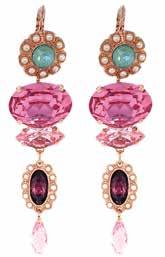
Mark Kay - Proprietor

Shop 4D Masthead Way, Sanctuary Cove cabanastore.com.au
Cabana Kids was created out of a desire for beautiful simple products and calm soothing spaces. Think warm natural tones, responsibly sourced materials, quality organic garments, cute clothing and accessories. We can’t wait to welcome you in our beautiful store and help you create dreamy nurseries and kids bedrooms with blankets, furniture, décor, toys and books. There is little doubt such spaces will positively impact your baby’s life by creating a calm and cosy backdrop for play, studies and sleep. Our products are hand-picked, affordable and Australian. We also offer free gift wrapping.

07 5514 8549
Connecting you fields.
BUSINESS D irectory
EEV Fashion offer: • Local & international brands • Handcrafted jewellery • A range of accessories • Dedicated & friendly team

07
Shop 37B Masthead Way, Sanctuary Cove cabanakids.com.au
EXPERIENCE THE DIFFERENCE Services include: • Carpet Cleaning • Pest Control Treatments • Upholstery & Mattress Cleaning • Marine Carpet & Upholstery Cleaning • Commercial & Residential • IICRC Certified Firm evolutiongroupcarpetcleaningandpest.com.au
Cabana is a Gift and Homeware store owned and operated by Liliana Rogers. Liliana is originally from Cartagena in South America – a beautiful coastal city located on the Caribbean Sea, with white sand beaches, palm trees and colonial architecture. Her Colombian background is the inspiration behind Cabana’s tropical coastal decor, which fits in perfectly with the relaxed Gold Coast Cabanalifestyle.hashandpicked gifts and homewares from Australia and around the world.
3 Carefully consider cut played through part of the offside (4,4)
1ACROSS
16 Pound chewy stuff (4)
23 A humiliating failure (6)
15 A parish, transformed by one head of church, is sanctimonious (9)
27 Instruction (9)
29 Family members (7)
6 Check polish again (6)
Compartment (7)
14 Expressed disapproval (10)
29 One showing external signs of stress disturbed experienced carers (7)
26 Time instrument used for stretching line (5)
9 Element Mg (9)
4 Throw out overturning of prison sentence (4)
22 See virtually all corrugated iron become prevalent (3,2)
17 Dance nuts changed passes over (9)
2
4
15
26 Tail (5)
11 Hospital in no way rescheduled carelessly (6)
7 Neon pumped into unstable turbine’s gas cylinder (5,4)
1ACROSS
10 Exchange (5)
3
23 Group in mafia’s company is a complete failure (6)
20 Computer system used by transporters of stock cars (4,6)
13
21
8
21 Single out the French food containing preservative (6)
Youngster sprayed lice in a small compartment (7)
C
17
18
14 Something done about relaid carpet is frowned on (10)
8 Religious song used mostly in the middle of free verse (5)
1DOWNSpecial forces (9) Loose (5) Mull, think about (4,4) Discharge (4) Farmhouses (10) Snub (6)
22
24 Contemptible person is first to see red, say (5)

19 Rock was shifted close to boundary (4)
11 Haphazardly (6)

12 Refocus misaligned end of telescope and apply pressure (3,5)
9 Metal bottle containing ecstasy is put back (9)
M Y CM MY CY CMY K
16 Pound (coll.) (4)
22 Confused excitement provided by old friend’s grass (8)
5 Horse-trainer, losing notes, re-evaluated fast runner (7)
19 Dominion (4)
22 Native grass (8)
6
10 Crooked trade (5)
7 Tyre component (5,4) Jingle (5) Defining factors (10) Relating to the Pharisees (9) Deductions from normal prices (9) Breaks (8) Preserve (6) Place (3,2) Wretches (5) Tooth beds (4)

5 Leaders, accepting award, established accommodation on farms (10)
12 Apply pressure (3,5)
20 Four-wheel drive cars (4,6)
18 One kept in custody, say, spoilt vacation (8)
27 Culture valued coin, one restored in time (9)
25
13 Talk up newfangled steamer with limiting factors (10)
Pagination and Content Copyright © Pagemasters www.pagemasters.com.au 1. What type of food are gyoza? 2. Gerard Way is a member of which band, with younger brother Mikey Way? 3. Where was the Titanic built? 4. In what year was Pompeii famously destroyed? 5. The movie Inferno, starring Tom Hanks, is based on a novel by which author? 6. The Addams Family, starring Anjelica Huston, was released in Australia in which year? 7. What is the capital of Papua New Guinea? 8. Which British royal was born on June 21, 1982? 9. The Office character Jim Halpert is played by which actor? 10. Which New Zealand city is the sister city to Adelaide? CROSSWORDTIMEFORTEN BRAINFOOD
24
28 Core group manipulated uncle in front of us (7)
28 Central part (7)
134 covemagazine.com.au – Issue 92 1 2 3 4 5 6 7 8 9 10 11 12 13 14 15 16 17 18 19 20 21 22 23 24 25 26 27 28 29 No. 3007 49 6 38 15 2 79 62 1 14 2 3 7 41 6 98 17 3 15 8 694 1 87 462 9 54 8 837 2 6 142 29 8 7 416 sudoku Hard No. 848 Easy No. 849 September 2022 brainfood answers on stars page timecrosswordfortenCRYPTIC CLUES QUICK CLUES
5
2 Horse, swimming in cove, is puffed out (5)
25 Superior picked up native trees (4)
5 Jet named for breed of hawk (7)
1DOWN
Highly-skilled military personnel, leaders of new divisions overseas (9)

AQUARIUS 21 Jan – 19 Feb
CANCER 22 Jun – 23 Jul
Early September will be ideal for focusing on health and work and for creating a schedule that balances the two. You may revisit an idea or venture, enabling you to fine-tune your plans. A surprise in your personal life is likely midSeptember, and the best way to boost your love life will be to show someone close extra care and attention, as a refreshing chapter will begin.
ARIES 21 Mar – 20 Apr
SAGITTARIUS 23 Nov – 22 Dec
September is a good time to reconfigure your daily schedule so that it suits you better. Commitments you must make will come to a head mid-month. And, if you prefer to be adaptable, you'll gain the chance to review how you wish to move forward over the ensuing weeks. The solar eclipse on October 25 will help you turn a corner, as you will be increasingly led by your values.
September is ideal for reconsidering your finances. The full moon on the 10th will illuminate where you could rein in spending, especially if you have miscalculated your overheads. It's a good time to re-evaluate your loyalties and for a reunion and a trip to an old haunt. The solar eclipse on October 25 will kickstart a new agreement with someone or at home or with family.
PISCES 20 Feb – 20 Mar
GEMINI 22 May – 21 Jun
Take developments at home one step at a time and, as a result, you will build a strong framework both at work and financially. You'll enjoy improving your home and environment and will appreciate beautiful surroundings. A trip or change of schedule will open doors, so be prepared to embrace new opportunities, especially in your career at the new moon on September 26.
LEO 24 Jul – 23 Aug
September has a nostalgic quality. You may enjoy a reunion or the chance to reconstruct your home or personal life, letting go of a past situation. Developments may be slow, so ensure you pace yourself. Avoid feeling disappointed by others; find ways to be positive despite their circumstances. You'll gain an increasing sense of balance from mid-October onwards.
SCORPIO 24 Oct – 22 Nov
You'll enjoy spending time with someone special early in September. You may be drawn to travel and/or to alter your environment in constructive ways. In your personal life, you're ready to let go of someone who gives you mixed messages and to create more stability in your life. Keep an eye on finances over the next two months and consider reviewing your expenditure.
TAURUS 21 Apr – 21 May
Developments will bring focus to your personal life and your creativity, encouraging you to look for stability and security from your ventures. September will be excellent for paying closer attention to the details of your arrangements and to avoid over-analysing your emotions. The solar eclipse on October 25 will kickstart a fresh work and daily routine; be prepared.
September is a good month to improve your health and wellbeing. But Mercury retrograde means you must be careful with communications and finances until mid-October. The new moon will be in Libra on September 26, so the last week of September is best for implementing change. Your love life will improve from midOctober onwards, so organise treats for then!
3007 No. 848 No. 849No.
STARS
You'll be drawn to reconnect with old friends, travel, re-learn some of your skills and pick up a venture where you left off. Key work or health news early in September will enable you to plan ahead. Mercury retrograde may slow the pace, but the solar eclipse end of October signals transformation both financially and in your love life, so be prepared!
The sun in Virgo until the 23rd will be revitalising. But from the 10th onwards, you're best to pay special attention to finances and must avoid underestimating your budget. Venus could improve your love life, so take the initiative! Take things one step at a time in October as old vulnerabilities may emerge. Luckily, communications will improve from mid-October onwards.
136 covemagazine.com.au – Issue 92 1. Dumplings 2. My Chemical Romance 3. Belfast, United Kingdom 4. 79 AD 5. Dan Brown 6. 1991 7. Port Moresby 8. Prince William 9. John Krasinski 10. Christchurch Stars C U B I C L E H A R R I E R O A H M O E N H M A G N E S I U M B A N D Y M G W T E U E M A N Y H O W U S E F O R C E N V P T F T D E P R E C A T E D Q U D O H R R A H B I S W A Y L A N D R O V E R S R P M S L C S P N F E X F I A S C O E S C T G D W U T R A C K E D U C A T I O N L R M Y N T N U C L E U S S S T E R S 824351976 963724851 135647289 379462518 587193642 748239165 651978423 412586397 296815734 Hard 972185346 286593417 613827594 345672189 594718632 458936721 861349275 137264958 729451863 Easy crossword sudoku time for ten
by Patsy Bennett | For readings, see www.patsybennett.com
CAPRICORN 23 Dec – 20 Jan
VIRGO 24 Aug – 23 Sept
September is a go-ahead time – if you can avoid feeling frustrated by the relatively slow or erratic pace after the 10th. The effects of Mercury retrograde until mid-October will spotlight the logistics of some of your plans. If you find plans lacking, you'll get to adjust them. Prepare for personal and family transformations after the solar eclipse on October 25.
LIBRA 24 Sept – 23 Oct
You'll enjoy a sociable, fun start to the month; you may reconnect with someone special. Be sure to remain practical and positive mid-September, as the full moon on the 10th may bring out your vulnerabilities. You may be surprised by new work opportunities over the next two months, but must be careful with communications with groups and organisations until mid-October.


PENTHOUSEEMERSON Completion Late 2023 Price on Enquiry Call 0402618 515 Elevated above the beach, looking through a frame of elegant Norfolk Island pines, the Penthouse at Emerson is a peaceful haven just moments from the raw thrill of the ocean and the elements. Superb panoramic views maximise the sense of space and bring the beach, the ocean, vibrant sunrises and sunsets and the distant towers of the Gold Coast shimmering on the horizon into everyday perspective. PERFECTLY DISTINCTLYCRAFTED,KIRRA. 44.56 495m2
