A CALL FOR PRAGMATISM: REASSESSING THE CAP ON ADULT SOCIAL CARE COSTS
Our lead story will come as no surprise to those in the sector; the County Councils Network (CNN) has called for a delay in the introduction of the cap on adult social care costs citing overwhelming funding uncertainties, surging demand for services and a persistent workforce crisis
This call underscores a deeper long-standing issue within our social care system an issue that has been perpetually deferred since the Dilnot recommendations in 2011
The proposed cap aimed at limiting the financial burden on individuals requiring long-term care has faced repeated postponements Initially hailed as a progressive step towards equitable care it now seems increasingly implausible without substantial additional funding
Basic economics dictates that implementing such a cap requires closing the resultant financial gap
Without this essential funding the implementation of the cap is quite simply an impossible task
When previously delayed, the then Shadow Chancellor Rachel Reeves, now serving as the Chancellor branded the postponement another broken promise after 12 years of Tory failure on social care ”
This critique adds a layer of political accountability raising the question of what longterm plan Labour might propose should they remain in power
Parallel to this ongoing dilemma in social care reform the recent findings from the public inquiry into the Covid-19 pandemic paint a rather harrowing picture
The UK government and every devolved administration were deemed to have "failed their citizens by being woefully unprepared
Baroness Hallett, chairing the inquiry, highlighted a significant failure of leadership, explicitly naming former health secretaries Matt Hancock and Jeremy Hunt This verdict underscores a disconcerting truth: our system was ill-prepared then and alarmingly, providers say remains ill-prepared now
The Independent Care Group (ICG) Chair Mike Padgham expressed a grave concern:
“My worry is that five years down the line after so many lives were tragically lost and care workers fought the virus heroically on the front line we are no better prepared than we were ”
His warning comes amidst reports that social care is understaffed by approximately 131,000, with an additional 540,000 care workers needed by 2040 to meet rising demands
The care sector was undeniably caught in the eye of the Covid storm with catastroph-
ic mistakes that must never be repeated The pandemic laid bare the vulnerabilities within our readiness to deal with a pandemic and vulnerabilities within our care system highlighting an urgent need for reform and preparedness
Given this context the call for a delay by the County Councils Network should not be seen merely as a setback, but rather as a pragmatic recognition of the current systemic inadequacies

It s a clarion call for a Plan B a comprehensive strategy that addresses the root causes of the crisis This strategy must as leading organisations and providers say include significant investment in workforce development, sustainable funding models, and robust contingency planning to safeguard against future crises
The journey towards a fair and effective social care system is, and has been during the 20 years I have been editing THE CARER fraught with challenges but it is a journey we must undertake with a sense of urgency and purpose The findings of the public inquiry into the Covid-19 pandemic serve as a stark reminder of the consequences of inaction and ill-preparedness
Over the coming months we will be inviting the sectors leading voices to share their views so please do watchout in forthcoming issues and do sign up for the sectors ONLY weekly digital care title by visiting www thecareruk com
At THE CARER, we are calling on our readers for help.
Since 2004 we have been sending out THE CARER to our readers free of charge
Unfortunately, changes to mailing processes and surging print costs mean we now need your support to continue these are costs we cannot pass on to valued clients who have supported us for so long We are asking for just a £6 per year contribution toward postage ensuring you will still receive the UK s best care publication directly to your door
While other publishers in this sector have abandoned print, we remain committed to providing you with a print issue For details on how to contribute please visit www thecareruk com/subscriptions/


The reforms were originally the result of an independent commission led by economist Andrew Dilnot, which reported in 2011, with its proposals enacted in the Care Act 2014
The then government had proposed to implement the changes in 2016 but this was then delayed until 2020 before the idea was shelved in 2017 under Theresa May s premiership before being revived by Boris Johnson in 2021
Labour s Prime Minister Sir Keir Starmer since inherited the proposals following an election campaign in which social care was scarcely mentioned despite ongoing issues including funding and staffing within the sector which has campaigners say pushed it to brink of collapse
The £86 000 cap was originally due to come into effect in October 2023 accompanied by a more generous means test that would ensure anyone with assets worth less than £23 250 would not pay for their care at all
However the previous Conservative administration delayed rollout by two years, leading to challenges of how to fund it Health secretary Wes Streeting committed to introducing the cap during the election campaign but the promise did not appear in Labour s manifesto
DELAY A FURTHER YEAR
CCN is urging the Health and Social Care Secretary to make an urgent decision and delay the reforms for further year at least due to a combination of funding uncertainty demand for services and a persistent workforce crisis
Announced in 2020 and encompassing a cap on care costs a more generous means-test and a new fair cost of care for providers Wes Streeting said during the election it was ‘the plan’ to introduce the reforms in October 2025, while more recently, he said he asked officials in his department to provide a ‘progress update on the reforms Whilst councils are supportive of the plans, local authorities in the CCN have raised the alarm: warning that unless the government finds tens of billions in additional resources over the next decade, the reforms would be unfunded The Institute for Fiscal Studies has recently confirmed that there is no existing funding set aside for the reforms Therefore, it would need to come from existing budgets of local or central governments or raised via tax rises
In late 2022, the previous government postponed the reforms until 2025 and instead re-prioritised funds for the changes to address dayto-day pressures for councils in delivering social care, worth £1 9bn a year The survey shows that councils have become ‘dependent’ on this annual funding boost with any attempt to redirect to these resources to pay for the reforms potentially having ‘devastating’ consequences
for care services
The new survey and financial modelling are contained in CCN’s new report Adult Social Care Charging Reform which illustrates the challenges faced by councils in implementing the reforms
Due to a combination of inflation and demand the updated analysis by Newton shows that the minimum total cost of the reforms over the nine-year period analysed now stands at £30bn The costs of the flagship element – the cap on care and extended means test – has risen 34% from £13 9bn to £18 6bn
Councils in county and rural areas are most exposed to these costs with 63% of the entire costs of the means-test and cap within these areas Regionally councils in the South East South West and East of England combined account for 61% of the total minimum cumulative cost of these elements
With no money currently allocated to the reforms funding was councils biggest concern about implementing the reforms All bar one (97%) of councils said they were very concerned about a shortfall in funding In addition eight in ten said they were very concerned about implementing the changes in the current timescales whilst six in ten said they were very concerned about recruiting the numbers of staff to carry out extra assessments
Because of these funding staffing and timescale concerns nine in ten (86%) of councils said they were not well prepared for the reforms with nine in ten (92%) supporting a delay of at least a year or more
Since the delay in 2022 and with uncertainty on the future of reforms after the election preparations have been totally paused nationally and locally while the analysis shows over 5 000 additional staff would need to be recruited
INFLATIONARY COSTS
Every council said adequate funding was necessary to make the reforms workable Nine in ten also said the current system must be sustainable before introducing reform
The £1 9bn this year in funding re-prioritised from the reforms in late 2022 has kept the show on the road for day-to-day adult social care services Nine in ten (86%) councils spent the money offsetting inflationary costs whilst half (54%) used it to commission more care packages and recruit more social workers
If the government was to instead use this funding for reform there could be significant consequences Without this funding eight in ten (80%) of councils said it was likely they would not fulfil their statutory duties in adult social care and six in ten (57%) said they would have to consider issuing a S114 Notice
Keeping services at a level as they are now and investing in work-
force capacity is the top priority for councils over the next Parliament
All bar one council (97%) said ensuring there is enough funding to deliver the same amount of care services at present was their top priority, followed by workforce recruitment and retention (94%) Just a quarter (24%) said introducing the charging reforms were a high priority with less than one in ten (9%) believing the introduction of a national care service’ should be a priority
SERIOUS CONCERNS
Cllr Martin Tett, Adult Social Care Spokesperson for the County Councils Network said:
We are just over 15 months away from the introduction of seismic reforms in adult social care and the new government must make an urgent decision on their future Councils have serious concerns over their deliverability: these new estimates show the costs have increased significantly to £30bn over the next decade while currently the reforms are totally unfunded The political hiatus before the election also meant preparations have been suspended nationally while locally councils have been focused on day-to-day services, and still face major shortages in social workers ”
As a result nine in ten local authorities are not well prepared to implement the reforms in October 2025 To put it bluntly it will be impossible to implement these reforms next Autumn in the current timescales and with no funding committed to the reforms Equally, the government cannot take money currently being spent on day-to-day adult social care services for these reforms with our survey showing it will have devastating consequences for councils and the thousands of people who rely on local authority care ”
“We have always supported the principles of the reforms as they will make the system fairer But if the government is to proceed with the reforms then it must delay them by at least a year – but likely more – to reassess the real costs and set out a way to fully-fund them We understand yet another delay will be frustrating for campaigners, but the under current circumstances introducing them next year could have some serious consequences
NEW DEAL
A Department of Health and Social Care spokesperson said: We know that people are suffering without the care they need, and we are committed to ensuring everyone lives an independent, dignified life
We are going to grip the social care crisis starting with the workforce by delivering a new deal for care workers
“We will also take steps to create a National Care Service underpinned by national standards delivering consistency of care across the country ”

By Mariana Bocaneala,

In the realm of healthcare, the pursuit of clinical excellence is a continuous journey that requires unwavering dedication a passion for improvement, and a steadfast commitment to delivering the highest quality of care to those we serve As a Clinical Lead I have had the privilege of witnessing firsthand the transformative power of this journey and the profound impact it has on the lives of our residents and their families
At the heart of clinical excellence lies a fundamental shift in mindset – a transition from merely providing good care to striving for "great" care This shift demands a deep understanding of the unique needs preferences and aspirations of each individual we support It calls for a person-centred approach that places the resident at the very core of all decision-making processes ensuring that their voice is heard their choices are respected and their well-being is always the top priority
To embark on this journey towards clinical excellence it is essential to foster a culture of continuous learning and improvement within our care setting This involves investing in the ongoing professional development of our staff, providing them with the knowledge, skills, and tools necessary to deliver evidencebased best-practice care By empowering our team with the latest advancements in clinical practice we not only enhance the quality of care we provide but also cultivate a sense of pride and purpose among our dedicated professionals
Effective communication and collaboration are vital components of the journey towards clinical excellence By promoting open transparent and respectful dialogue among staff residents and their families we
create an environment where concerns are promptly addressed, ideas are shared and solutions are co-created This collaborative approach ensures that all stakeholders feel valued heard and actively involved in the care process, fostering a sense of trust and partnership that is essential to achieving optimal outcomes
Another critical aspect of the journey towards clinical excellence is the implementation of robust quality assurance and improvement processes By regularly assessing our practices identifying areas for enhancement and implementing data-driven interventions we can continuously elevate the standard of care we deliver This involves embracing a proactive approach to risk management incident reporting and root cause analysis, allowing us to learn from any challenges and implement preventive measures to mitigate future occurrences
The journey towards clinical excellence also requires a strong focus on holistic care, recognising that the well-being of our residents extends beyond their physical health By integrating comprehensive assessments personalised care planning and a wide range of therapeutic interventions we can address the psychological social and spiritual needs of our residents This holistic approach enables us to create a nurturing environment that promotes healing resilience and a sense of purpose ultimately enhancing the overall quality of life for those we serve As a Clinical Lead I am deeply honoured to be part of this transformative journey at Sutton In The Elms Care Home working alongside a dedicated team of professionals who share an unwavering commitment to excellence in all that we do
Measuring and celebrating progress is an integral part of the journey towards clinical excellence By establishing clear, measurable goals and regularly evaluating our performance against recognised benchmarks we can track our progress and identify areas for further improvement Celebrating the successes and milestones achieved along the way is equally important as it reinforces the value of our efforts and motivates us to continue striving for excellence


On Friday, 5th July 2024, Hales Group (“Hales”), a key provider of homecare in the UK kicked off its 25th anniversary with a nationwide celebration across the whole group The occasion saw staff, clients and local authorities come together to celebrate 25 years of Hales Group s exceptional service in homecare and recruitment
A day of celebration at Hales Group
From festive parties to fun activities including games and quizzes for staff and service users, the celebration highlighted the
Nicola
Seeing how much everyone enjoyed the celebrations and how all of the hard
our people put into decorating the office and baking sweet treats as well as picking up service users and organising games so everyone had the best possible time, made it really special
“The party sums up I feel what we achieve at Hales Group everyday teamwork hard work and putting the service users and care workers first Seeing everyone enjoy it and seeing that side of our business was amazing to me
Hales Home Care Swaffham hosted two parties, bringing together colleagues, service users and their families partners and community members to mark this significant milestone
Donna Nally, Deputy Manager Hales Home Care Swaffham, shared:
The gathering provided an excellent opportunity for our colleagues at Universal Pharmacy to understand more about Hales and the essential services we offer It was a wonderful time to chat, share a bite to eat, and strengthen our partnership
Swaffham
Councillors Steph Cooper David Braithwaite and Graham Edwards joined the party to extend their best wishes and express their appreciation for the vital work that Hales does in the community
Donna Nally added Their presence added a significance to the event as it allowed us to showcase our
work and further establish our role within the local community
Another Hales Group care worker commented: It was really nice to actually meet all the other carers from across the Group The party was great The cakes were lovely!”
Staff and service users at Ashby Meadows in Scunthorpe also enjoyed a wonderful day of celebrations
Laura Wootton, Registered Manager at Hales
Ashby Meadows shared:
“The service users

The
of our staff present Happy 25th Anniversary!”
It was a lovely celebration we had in honour of the 25th anniversary of Hales Group It was truly amazing and I was glad to be a part of it,” said Care Worker Iwantha
Care Worker Wasantha also commented: Hales reaching

The UK government and every devolved administration ‘ failed their citizens by being ill-prepared for the Covid pandemic according to the distressing first conclusions of the ongoing public inquiry into the pandemic
The Chair Baroness Hallett made clear there was a failure of leadership across the board however named two former health secretaries Matt Hancock and Jeremy Hunt in her summary
There were over than 235 000 deaths involving COVID-19 throughout the UK up to the end of 2023 and the report published today (July 18) says some of the “financial and human cost may have been avoided” had the country been better prepared for the catastrophic outbreak in March 2020
Despite warnings of the potentially devastating impact of Covid-19 on care homes, the first wave of the pandemic saw an extraordinary number of excess deaths among residents
The then government’s policy of discharging untested patients into care homes from hospital in England at the start of the Covid pandemic was ruled unlawful by the High Court and in January this year research led by Northumbria University academics revealed the impact of moving patients from hospitals to care homes leaving staff traumatised and distressed, and feeling powerless to stop the spread of Covid-19 as it tore through care homes leaving dehumanised residents feeling ‘imprisoned’ and some facing death in isolation
During the first peak of the coronavirus pandemic – between March and June 2020 – more than 66 000 people died in care homes with a third of those deaths attributed to Covid-19
The report is the first of nine reports to be published by the UK COVID-19 Inquiry and examines the state of the UK’s structures and procedures in place to prepare and respond to a pandemic detailing several significant flaws” including preparing for “the wrong pandemic”
Baroness Heather Hallett has called for radical reform making a series of recommendations:
IN SUMMARY HER RECOMMENDATIONS ARE:
A radical simplification of the civil emergency preparedness and resilience systems This includes rationalising and streamlining the current bureaucracy and providing better simpler Ministerial and official
structures and leadership;
A new approach to risk assessment that provides for a better and more comprehensive evaluation of a wider range of actual risks;
A new UK-wide approach to the development of strategy, which learns lessons from the past and from regular civil emergency exercises and takes proper account of existing inequalities and vulnerabilities
Better systems of data collection and sharing in advance of future pandemics, and the commissioning of a wider range of research projects
Holding a UK-wide pandemic response exercise at least every three years and publishing the outcome;
Bringing in external expertise from outside government and the Civil Service to challenge and guard against the known problem of ‘groupthink ;
Publication of regular reports on the system of civil emergency preparedness and resilience;
Lastly and most importantly, the creation of a single, independent statutory body responsible for whole system preparedness and response It will consult widely, for example with experts in the field of preparedness and res lience and the voluntary community and social sector and provide strategic advice to government and make recommendations
Lady Hallett has called for urgent and fundamental reform warning of overwhelming evidence that another pandemic which could be even more transmissible and lethal is likely in the near to medium future
“It is not a question of ‘if’ another pandemic will strike but ‘when’ ” she cautioned calling on the government to place preparations for another health crisis in the same way we would with defence planning for potential war
“The primary duty of the state is to protect its citizens from harm It is therefore the state s duty to ensure that the UK is as properly prepared to meet threats from a lethal disease as it is from a hostile force Both are threats to national security she said
And yet the UK was “ill prepared” and “lacked resilience ” Lady Hallett s report reveals highlighting that public services including health and social care were running close to if not beyond capacity with a slowdown in health improvement and widening health inequalities
The Inquiry has no hesitation in concluding that the processes planning and policy of the civil contingency structures within the UK government and devolved administrations and civil services failed their citizens ”
Lady Hallett who has listened to more than 100 hours of evidence travelled the country, received 20,000 responses to a consultation, and whose team has scoured 103 000 documents said the UK believed it was one of the best prepared countries in 2019
In reality the UK was ill-prepared for dealing with a catastrophic emergency let alone the coronavirus (Covid-19) pandemic that actually struck ”
Lady Hallet said there had been a failure within the planning to account for pre-existing inequalities and deprivation and to appreciate the impact of such a crisis on ethnic minority communities and others with poor health or vulnerabilities
Adding: The Secretaries of State for Health and for Health and Social Care who adhered to the strategy the experts and officials who advised them to do so, and the governments of the devolved nations that adopted it all bear responsibility for failing to have these flaws examined and rectified
“This includes Mr Hancock, who abandoned the strategy when the pandemic struck by which time it was too late to have any effect on preparedness and resilience
“Today the Inquiry has published its first report after examining the resilience and preparedness of the United Kingdom to respond to a pandemic My report recommends fundamental reform of the way in which the UK government and the devolved administrations prepare for whole-system civil emergencies ”
If the reforms I recommend are implemented the nation will be more resilient and better able to avoid the terrible losses and costs to society that the Covid-19 pandemic brought ”
!I expect all my recommendations to be acted on with a timetable to be agreed with the respective administrations I and my team will be monitoring this closely ”
Dr Alan Wightman from North Yorkshire, lost his mother in early-May 2020 to Covid-19 that she had acquired in her care home in Fife Scotland
He said: “My Mum was an 88-year-old widow, a dementia sufferer and a cancer survivor She had been settled and looked after in her well-run home for 11 months before Covid got in despite the best efforts of the staff A number of the home’s residents were taken by Covid ”
I congratulate Baroness Hallett and her Inquiry team for reaching this substantive milestone of issuing findings and recommendations from Module 1 To be at this point a mere 13 months after witnesses started giving evidence in this Module is very impressive To have achieved that whilst simultaneously completing Module 2 and its three satellite Modules, plus having Module 3 ready to launch within the next three months is truly exemplary ”
Since 2004, we have been delighted to provide you with The Carer free of charge, delivering quality news, industry insights, and expert commentary right to your doorstep However, due to surging postal costs, we must make a change to continue maintaining the high standards you expect from us
Starting from September, we will be asking for your help with a £6 per year contribution for postage on the printed issue of The Carer
This decision was not made lightly. Our priority has always been to offer you the best content without burdening our valued advertisers with increased costs. To sustain our quality delivery, we now need your help.
We are asking you, our loyal readers, to contribute toward postage costs only
Your support will ensure that The Carer continues to reach you without compromising on the quality and depth of information you rely on
Thank you for your understanding and continued support
Warm regards, The Carer Team


The
pursuit of professional development They are lifelong learners always seeking to improve their knowledge and skills to provide the best possible care Their commitment to excellence is inspiring as they adapt to new challenges and embrace innovations in healthcare
Moreover Adult Social Care Nurses are advocates for systemic change They work to influence policies and practices that improve the quality of care for all Their voices are crucial in shaping a healthcare system that values and respects the needs of the elderly and those who use social care services
During Care Home Open Week Zoe Fry and Scarlett MacDonald, chair and co-chair of the South East Social Care Nursing Advisory Council (SESCNAC), facilitat-
ed a wonderful visit to Broadbridge Park Care Home in Sussex This special event was a celebration of the 30th anniversary of Caring Homes and the introduction of the newly formed SESCNAC It featured various co-production activities including the VIVALDI Social Care project and the prestigious presentation of two Gold Chief Nurse Awards
The event was graced by several distinguished guests including Deborah Sturdy Chief Nurse for Adult Social Care; Amanda Partington-Todd Deputy Director of Adult Social Care; representatives from the Nursing and Midwifery Council (NMC); the VIVALDI Social Care team led by Kate Meacock; Rights for
Residents; and other council members Their presence underscored the significance of the occasion and the collective commitment to advancing the Adult Social Care sector
Deborah said of the SCNACs: “It is good to see progress of the SE Social Care Nursing Council and how building local relationships and regional networks is having a positive impact on the voice and profile of social care nursing To attend an event which exudes such positivity demonstrates those partnerships through the UCL Vivaldi Study expansion and Caring Homes commitment to that along with leadership of The Outstanding Society is heartening”
Hosted by Scarlett MacDonald and Zoe Fry the day included heartfelt speeches from the founders of Caring Homes and an insightful presentation on the VIVALDI Social Care project A standout moment was when Deborah Sturdy presented the Gold Chief Nurse for Adult Social Care Awards to Julie Mason, Director of Operations and also to Scarlett New Commissioning Manager Caring Homes Group recognising their outstanding contributions to the field
Amanda Partington-Todd said: “It was my pleasure to be invited to come to Care Home Open Week celebrations at Broadbridge Park and many thanks to their staff, residents and leadership team for making me feel welcome It was a celebratory atmosphere not only of the amazing contribution and care that their staff have delivered over their 30 year history but also of all that they are looking forward to in the future such as participation in the Vivaldi Social Care research project ”
Following this event, Zoe Fry and Scarlett MacDonald held their first Council meeting for the South East
They thanked all members for their enthusiasm and support highlighting a shared dedication to the integration of Health and Social care in the region This marks the beginning of an exciting journey promising innovation and enhanced care for the sector
Zoë Fry – OBE BSc – RN Chair of South East Regional, Social Care Nursing Advisory Council
Executive Director, The Outstanding Society CIC
Scarlett MacDonald – RN Co-Chair of South East Regional Social Care Nursing Advisory Council
New Commissioning Manager, Caring Homes
Tewkesbury Fields care home in Tewkesbury were delighted to donate bags of food items to Tewkesbury HAF Club – Holidays Activities & Food
This is an amazing organised free club in Bishops Cleeve for children 8year-olds and upwards Alongside offering wonderful activities and crafts they also provide all children with lunch, this is of great benefit for many children throughout the summer holidays
Tewkesbury Fields Care Home was happy to take a list from organiser Libby Cheal and provide groceries to give them a healthy start to the

•
•
•
•
•
•
•
•

launch of this summer club that is expecting between 15-20 children per session
Tewkesbury Fields Care home has built up excellent reputations within its local community regularly holding events and activities for residents and surrounding neighbours and are always looking to support charities
Edrianne Baluyut General Manager at Tewkesbury Fields Care Home said: “We are always keen to show as much support as we can to local charities and we were delighted to support the Tewkesbury HAF Club”



Record numbers of people are being diagnosed with dementia in England NHS figures show
Latest data shows a record
487,432 people in England in June had a diagnosis
While dementia diagnosis rates are the highest since the start of the pandemic at 65 0% the NHS has more to do to meet its ambition to diagnose 66 7% of the total number of people that estimates suggest are living with a form of the disease
NHS staff across the country are proactively assessing care home residents to support identification of people who may have dementia to boost numbers further for patients and their families
England has one of the highest dementia diagnosis rates in the world with high-income countries typically in the range of 20-50%
A timely diagnosis for dementia is vital so more people get the support and care they need to live with the illness
England’s top dementia doctor today praised the hard work of staff in their efforts to boost diagnosis but acknowledged there is still more to do
The NHS is encouraging people to come forward and get checked if they have any common early signs or symptoms of dementia
Dr Jeremy Isaacs national clinical director for dementia NHS
England said “Getting a diagnosis of dementia is the first step in supporting people with a wide range of NHS services able to help NHS staff have worked hard to recover services with the number of people with a diagnosis rising significantly over the last year and now at a record level but there is more work to be done “Thousands more individuals are being diagnosed each month and
more medication reviews are being done within 12 months
Common early symptoms of dementia include forgetting bits of information saying the same thing repeatedly, struggling to follow a conversation or find the right word and being confused about time and place Usually these problems will be more obvious to the person’s family and friends than to the individual themselves
If you have noticed that someone has symptoms please encourage them to visit their GP for an assessment – the sooner someone is seen the quicker the NHS can help
Dr Alex Osborne, Policy Manager at Alzheimer s Society, said: It s great to see the progress being made on diagnosing more people with dementia in England and we welcome the NHS’s acknowledgement that there’s still more to do
An early accurate diagnosis is vital for unlocking care support, and treatment
A third of people living with dementia in England don t have a diagnosis, meaning they’re missing out on the benefits it can bring There s also significant regional variation in diagnosis rates This needs to change
Thanks to a concerted effort we re close to meeting the existing target of a 66 7% diagnosis rate – so now we d like to see bold ambitious but achievable new targets set for the future to ensure everyone gets the diagnosis they need
We fully support the NHS’s work to get more people diagnosed and want to help in any way we can We encourage anyone worried about their memory, or the memory of a loved one to speak to their GP Our dementia symptoms checklist which is endorsed
Twinnies Petting Farm brought animals for some therapeutic fun A clown performed songs and Danny Jukebox got everyone dancing and singing with music from different decades There were henna tattoos, crafts from Arty Farthy and Bella’s Jewellery, and stalls from Kim Sharp Candles and knitted goods
The Sensory Stall provided engaging experiences, while Amber s Creations showed off artistic talents Bath Dogs and Cats Protection highlighted the benefits of animal therapy Everyone loved the ice cream treats and a flame-throwing show by Jamie Landgridge one of the home’s carers!
It was incredible to see so many from the community come in to support the event making it an unforgettable day


The dust has settled
Secretary of State for Health and Social Care
The past few weeks have brought some significant developments for everyone working in adult social care Not only did the country elect a new Labour government on 4th July but we’ve also seen the launch of a new Adult Social Care Workforce Strategy and the publication of a report into the size and structure of the sector’s workforce
The report is helpful and confirms what we already knew: vacancy levels in adult social care are much higher than the national average recruitment and retention continues to be a challenge and recruiting workers from overseas is not sustainable in the long term
Armed with this new report Skills for Care launched its workforce strategy focusing on the three key themes of Attract and Retain, Train and Transform
Now that we have a new government in place the sector can look to the future and concentrate on the challenges and opportunities within adult social care There s a lot for us all to do
So far a clear plan is yet to materialise which is disappointing as was the scant mention of adult social care in the King’s Speech which set out the new government’s legislative programme However, an optimist might see this as an opportunity for us to work with the new govern-
ment and influence the agenda
Reform of adult social care cannot wait – we need to move quickly to recognise and value our workforce This will require a clear plan and some fresh investment We would welcome a cross-party approach to the sector, as suggested by the Lib Dem leader Sir Ed Davey, to enable a thorough review of the challenges, but the urgent issues cannot wait
There’s talk of a Royal Commission to look into the issues facing the sector but how many reports do we need before action is taken? Our strong recommendation would be to learn from the many previous investigations and to talk to the sector about what s required
We’re looking forward to working with Wes Streeting the new Secretary of State for Health and Social Care We will be advising him to look beyond the NHS and recognise the importance of working with those who provide social care – not just the local authorities – to achieve an improvement in hospital capacity
We re also excited to be working with the new Minister for Social Care Stephen Kinnock and all our new MPs and helping them to find out more about the wonderful world of social care Many providers have invited their constituency representatives to visit care homes and services – I hope that they take up the invitations

It will come as a surprise to no one that care is approached differently, in different parts of the world Cultural differences make an enormous difference In France there are dementia villages without boundaries to the surrounding town but through design the residents stay put and people from town come in to enjoy shared experiences with them In Japan, where there are simply not enough younger people to look after the elderly they have devised clever design strategies which allow them to operate with lower staff ratios than we generally employ in the West The concept of an information hub related specifically to care retirement and dementia interiors led to the development of the ThirdAge Design podcast and website with listeners in 63 countries Why was this necessary?
UNLOCKING RESEARCH
The breadth of this topic is enormous and operators designers and architects are generally time-poor
The Universities of Sterling, Newcastle and Hertfordshire are well-respected in conducting research, but a wider breadth of information available from other countries which we might adapt to suit UK needs Generally this must be accessed via individual academic portals to which you must subscribe which can be both time consuming and expensive Simply put the research tends not go to the people who can implement the work
INTERNATIONAL INSIGHTS
Supported by Wissner-Bosserhoff, The Third Age Design (TAD) provides an interactive international community hub for care retirement and dementia design with transcripts translated into 12 languages in addition to English The hub subscription is free by signing-up at www thirdage design where the podcast can also be accessed in addition to all usual podcast platforms Topics include the impact of AI on care settings, elegant bariatric design, and ‘Design Rules and How to Break Them’ Each episode also has Innovation Spotlight focused on cutting-edge global innovations in the sector Available through www thirdage design and all major podcast platforms See the advert on page 11

PETERLEE care home residents have been collaborating with a group of primary school children to record their memories of growing up and working in County Durham
The People of Peterlee project has seen elderly residents at Bannatyne Lodge Care Home, on Manor Way, being recorded by Year 5 pupils from Dene House Primary School
The pupils edited the recordings and overlaid them with historical photographs of the area before publishing them on YouTube – part of a growing digital archive of stories from the region
The initiative is being run by social enterprise Digital Voice for Communities, which was commissioned by The Story, a heritage archive and visitor attraction at Mount Oswald in Durham and part-funded by the Sir James Knott Trust
Gay Hudspeth 93 Derek Sinden 85 Ann Hall 84 and Florence Wilson 85 were among the residents who spoke with the school pupils all aged 10 and 11 Derek spoke about growing up on Camden Road in Hartlepool and his career as a gas fitter when he went to Peterlee for work and often visited his mother-in-law on his lunch break He
the children with photos from his personal albums to use in the final edit of the inter-
10-year-old Ebony was one of the pupils who interviewed the residents She said: It was so interesting to talk to the residents and hear about their lives My favourite was when Florence talked about what it was like during the war And how they didn’t have bathrooms or toilets in their houses ”
Julie Nicholson managing director of Digital Voice for Communities, said: “The Digital Voice team has loved being involved in this project coproducing lovely digital stories with residents of the care home and supporting children from Dene House Primary School to develop the skills needed to tell them in this way
“It s fantastic to see the impact of this type of intergenerational work The older people were delighted to see their stories brought to life and the children really enjoyed meeting them and developing the skills needed to be creative with those stories “

Julie Armstrong home manager at Bannatyne Lodge Care Home said: Residents got so much out of this project Working in collaboration with the children was priceless
The video outcomes were phenomenal Intergenerational interaction is so important Residents have told me they loved telling their stories to a new generation







By Anders Forsberg,

Two years ago, the Health and Social Care Committee declared that the sector was facing the greatest workforce crisis in [its] history ’ In 2022/23, the adult social care workforce experienced a turnover rate of 28 3% and a vacancy rate of 9 9% This translates to 152 000 unfilled positions across the UK with a vacancy rate three times the national average
Addressing these issues requires a multifaceted approach While salaries working conditions and immigration policies are significant factors in these statistics, understanding why 28 3% of employees leave annually is crucial It's a classic case of a leaking bucket While discussing salary improvements flexible schedules and employee recognition are common have you considered upskilling? THE POWER OF UPSKILLING
A recent McKinsey article highlights that 94% of employees would remain longer in their roles if their employer invested in upskilling and productivity could increase by up to 12% Upskilling could be the antidote to high turnover rates and a boost to productivity So the question is why isn't everyone embracing it? According to our recent study State of Frontline Worker Training scheduling time for employees to complete training is one of the employer s biggest pain points cited by 75% of respondents As such the lack of upskilling and personal development likely contributes to the high turnover rates in social care and
other frontline industries such as hospitality and retail TRAINING STAFF WITHOUT DISRUPTING OPERATIONS
So how can we upskill busy frontline employees who may lack access to a computer or company email? Sending employees to a training facility or classroom and closing operations for two days is impractical and can cost companies significantly The solution lies in employee s pockets or bags: mobile phones
Mobile-based training offers an untapped opportunity to provide on-the-go learning The elderly care sector often lags in adopting technological solutions that could streamline operations including mobilebased training Other industries already use mobile phones to train their staff eliminating the struggle to find training time The elderly care sector stands to gain significantly by embracing such technologies
One of the main benefits of mobile-based training is that it fits seamlessly into employees schedules allowing training during their down periods All that’s really needed is 20 spare minutes each time to complete a course Plus providing training that employees enjoy boosts engagement and well-being at work
Approximately 95% of people prefer gamified learning over traditional training methods, leading to better retention fewer incidents at work and increased productivity
In Sweden, large healthcare companies like Ambea, with 31,000 employees, are already training their staff using mobile-based gamified courses This innovative training method has received positive feedback from both managers and employees who love the engaging learning format INVEST IN
Investing in your staff is crucial for retention Perhaps your CFO might ask What happens if we invest in our staff and they leave?" A good CEO will counter, "What happens if we don’t?" The elderly care sector can t afford to neglect its staff Investing in a training format that engages employees is essential
Embrace mobile-based training and watch your workforce thrive, reducing turnover rates and boosting productivity The future of elderly care depends on it
A Coventry home is calling on the community to send it their postcards to add to their world map collection
MHA Abbey Park have been collecting postcards family members businesses and schools have been sending into the residents
The home has displayed a world map and will be matching the postcards to the location and hope to receive cards from as many countries as possible
They are calling for members of the community to either send in or drop off any postcards they have
MHA Abbey Park provides residential residential dementia general nursing and nursing dementia care for 84 residents
Tina Turner home manager said: The postcard collection started a few years ago when we had a resident who got postcards and suggested we do something with them
Having a world map displayed with the postcards is a good way to remind us of the journey the postcard has made

Currently we have 16 postcards from various places including London Romania and some from schools, at galleries and places that the residents family members have visited
“Sometimes we have family members who live in different parts of the UK or even the world so for our residents it s important to have a reminder they are still in the thoughts of the family members
“We are asking for members of the community to get involved and get behind our initiative
“The map contains postcards from this year and last year and the plan is to keep it up until the end of the year
“It will be interesting to see how many we end up with and which parts of the country or world they are from and I m sure the residents will be quite keen to see them ”
Should you wish to get involved you either drop off any postcards to the home or post them to MHA Abbey Park 87 Humber Rd Coventry CV3 4FE
A new campaign to raise awareness of dementia and offer help for those whose lives have been affected by the condition has launched this month
‘Let’s talk Dementia’ - www letstalkdementia co uk, which is organised and funded by Luye Pharma Ltd, offers information about the condition as well as resources that individuals community groups and carers can access It covers everything from types of dementia and what the symptoms are through to advice on nutrition staying active and guidance for carers
There are currently more than 944 000 people in the UK who have dementia1 and one in three people will care for someone with the condition at some point in their life 2 By 2040 it is estimated that up to 1 7 million people could be living with dementia in England and Wales 3
The launch of Let s talk Dementia comes following a survey with 1,000 people4, carried out by Luye Pharma Ltd, which showed there is concern about access to dementia information 57% think there is not enough available, while 22% are unsure

Contributing to www letstalkdementia co uk are partners and support groups with expertise in the dementia field They include GP and media medic Dr Rosemary Leonard the movement education specialist Joël Kruisselbrink who creates exercises and games for the elderly and nutritionist Jane Clarke who
support group Tide (www tide uk net) which offers support and advice to those caring for someone with dementia
Said Dr Rosemary Leonard who worked with Luye Pharma Ltd as a consultant

By
issues that could affect the sale

Selling a care home can be a complex and daunting task As a legal expert at Knights I have acted on both sides of corporate transactions for more than 18 years, guiding many clients of various scale and investment needs including numerous transactions in the health and social care sector By focusing on implementing proper processes preparing for due diligence and being open and transparent you can maximise the attainable value of your business
PROPER
The foundation of a successful social care business sale is having robust processes that reflect your commitment to delivering high quality care This begins with thorough preparation well before the sale One of the most significant challenges that sellers face is balancing the ongoing operations of the care home with the demands of the sale process As a seller you will likely find yourself working long hours, often during weekends and nights, to meet the demands of potential buyers and their legal advisors
To alleviate some of this pressure it is crucial to be well-organised from the outset This means having all essential documents such as agreements with commissioning authorities employment contracts financial statements and regulatory compliance records readily accessible By having these documents in one place ideally an online data room, you can respond quickly to enquiries and demonstrate that your care home is well-managed and compliant with all necessary regulations
To ensure proper processes are followed, it is strongly advised to engage with a team of sector specialist advisors as early as possible including a regulatory lawyer and corporate finance advisor A knowledgeable advisor can help you navigate the complexities of the sale identify potential buyers and ensure that your care home is presented in the best possible light
DOING YOUR DUE DILIGENCE
Due diligence is a comprehensive appraisal of the care home s business to establish its assets and liabilities to evaluate its commercial potential and identify any risks that could threaten value This process is typically initiated by the buyer who will scrutinise every aspect of your business to ensure there are no hidden
Legal due diligence involves a detailed examination of various elements including real estate regulatory compliance and employment practices For instance if your care home operates on leased premises it is essential to understand the terms of the lease and any liabilities that may arise at its expiration A common pitfall during due diligence is inadequate preparation particularly concerning employment practices Issues such as non-compliance with national minimum wage laws improper holiday pay calculations and lack of proper right-to-work checks can all be red flags for potential buyers It is therefore vital to address these issues proactively and ensure that your business practices are above reproach
BEING OPEN AND TRANSPARENT
Transparency is key to a successful sale Buyers are investing significant sums often running into tens of millions of pounds and they need to be confident that they are making a sound investment Being open about your care home s strengths and weaknesses can foster trust and facilitate a smoother transaction
Misrepresentation or attempting to gloss over issues can lead to serious consequences including legal action for breach of warranty It is far better to be upfront about any problems and provide a clear narrative of how you have addressed them For example if there have been regulatory issues in the past (or a service rated as requiring improvement), explain the steps you have taken to rectify them and improve your care home s operations
In addition to fostering trust transparency can also positively impact the valuation of your care home Investors are generally willing to pay a higher
and
SECURING A SMOOTH TRANSITION
Selling a care home requires meticulous planning and a commitment to transparency By having proper processes in place addressing all aspects of due diligence and being open and honest about your business you can navigate the complexities of the sale process and achieve a successful outcome
It is never too early to consider how your business would fare in a due diligence process It doesn’t need to be part of a sale and arguably it is better to take a holistic approach before a sale is even planned Clients who have done this have identified areas that could affect value, made substantial business improvements and reduced the stress by being well prepared for a sale diligence process
With the right approach, you can not only secure a favourable sale price but also ensure a smooth transition for both your staff and the service users who depend on your care





From July 31 it will be an offence in England to use glue traps for rodent control unless it is done under a licence and only for certain situations The ban on glue traps will have several implications for care homes, ranging from regulatory compliance to resident wellbeing
This article will give you the insights you need to ensure you are prepared for the ban and do not get caught out
REGULATORY COMPLIANCE
A key consequence of the ban for care homes is that they will need to ensure their pest control practices comply with the new regulations There is currently no restriction on who can purchase and use glue traps in England However to use them following the ban a licence needs to be issued and will only be issued to professional pest control specialists
This means care homes which often accommodate vulnerable populations, need to avoid the use of glue traps by non-trained personnel Otherwise it could face potential penalties if found to be in violation of the new regulations
However pest technicians servicing care homes can apply for individual licences if there is a significant public health and safety risks that cannot be managed by alternative pest control methods
To be eligible for a licence the technician must demonstrate that other control methods have been tried and proven ineffective The application process involves detailed documentation including evidence of the attempted alternative methods and the risk to people or the site from the rodents
Once granted a licence the care home must assist with strict conditions that the pest technician must adhere to such as access to the site to regular monitor the glue traps and a prompt response to activated traps to minimise animal suffering INCREASED COSTS
At a time when budgets are tight prevention of pest infestations is becoming increasingly important Should a care home suffer from a pest infestation it is likely that the pest control efforts will cost more
The ban will make the use of glue traps more costly for pest technicians and in turn their customers due to the price of application for a specific licence to use glue boards
More importantly, glue trap treatments will have to be heavily planned in some cases as users will not be able to use them on an ad hoc basis or to assist with quickly driving down a high population of rodents at a site IMPACT ON HEALTH
Adopting alternative pest control methods will be key for care homes
Without the use of glue traps some sites may be at risk of closure if the rodent population grows too large and there is a risk to human health This is crucial in care homes as elderly residents most likely having compromised immune systems
If residents are more susceptible to infections and likely to suffer more severe health consequences from rodent borne diseases its imperative care homes overcome the loss of traps with alternative methods The potential cost of not doing so could be fatal
RESIDENT WELLBEING
Adopting humane pest control methods aligns with broader ethical standards and can improve the care home’s reputation among residents families and the broader community
Therefore the ban could help increase resident wellbeing as residents with a strong sense of empathy or ethical concerns, may feel more comfortable knowing that the care home uses humane pest control methods
As with before the ban seeing or knowing about trapped pests in distress can be distressing for residents Alternative methods that are less visible and more humane could reduce such psychological impacts
PREVENTION BETTER THAN CURE
The reduction of options to cure a pest problem only increases the importance of prevention
Ensuring there is a focus on prevention such as improving sanitation sealing entry points, and using repellents will help make a pest control strategy more effective
Overall the glue trap ban will require care homes to rely on preventative pest control strategies to protect residents invest in training and new equipment and ensure compliance with the new regulations

to lead with both strength and empathy have left an indelible mark on this organisation
Blueleaf Care is promoting best practice in continence care to help care homes deliver better outcomes for residents and help reduce their environmental impact through the choice of products they purchase During Continence Care Week Blueleaf partnered with global leading continence brand TENA to run Learning Circles for carers across 16 care homes Each of the sessions included discussion on best practice for care home staff with TENA experts explaining the health and sustainability benefits of using the right products for its intended purpose With two out of three people in care homes requiring continence care, best practice can deliver the dual benefit of increasing a resident s quality of life while reducing a care home s environmental impact
In addition to the education sessions Blueleaf and TENA are also marked World Continence Week by hosting a series of Bloom & Grow activity workshops for residents providing sunflower seeds for them to sow in pots for their rooms or around the home These sessions were designed to support the care home’s commitment to provide social activities which are beneficial to residents cognitive function; so too is connecting with nature by handling soil watering and tending flowers Ellen Brown Sales and Marketing Director of Blueleaf Care says encouraging best practice is a priority for
We wish you all the best in your retirement May it be filled with joy adventure, and the fulfilment of dreams long postponed Above all, may you continue to inspire and uplift those around you just as you have done here ” The entire Tabley team supported with the event the catering team provided a wonderful BBQ and a very special cake for Karen The garden set up was supported by the maintenance and activity teams Rachel Burke the deputy manager added: As well as a fantastic leader and role model, Karen has been a constant in our lives with her open door policy
“She has supported cried with consoled and hugged at some point most of us here today I am sure on some days that office is busier than Crewe station and none of us can imagine the office without her in it especially me
On behalf of all the staff past and present we couldn t have wished for a better person to have guided us through all the challenging sad, but mostly happy days at Tabley We wish her nothing but happiness and relaxation in her retirement days!

Blueleaf “Well managed continence care improves a resident’s quality of life considerably preventing avoidable accidents which can result in further health complications but it

Health and care provider, Turning Point has teamed-up with Learning Disability England to produce an updated version of an information pack designed to guide and educate people on do not resuscitate decision making processes
During the pandemic Turning Point noticed an unprecedented increase in the number of people it supported that were subjected to a do not attempt cardiopulmonary resuscitation (DNACPR) recommendations that cited learning disability as the reason NHS guidelines state that learning disabilities should never be a reason for a recommendation not to attempt CPR
Staff also noticed that many DNACPR decisions were made for people without consulting the person or those that know them best - their family or support workers
At the time Turning Point and Learning Disability England urgently mobilised to put together a guide to ensure that as many people as possible – whether that was selfadvocates family members or support workers - felt confident to challenge an inappropriate DNACPR
The Care Quality Commission (CQC) review of DNACPRs during the pandemic found a general lack of awareness and confidence among people families and care workers about what a DNACPR recommendation meant, and how to challenge this With inappropriate DNACPR recommendations still being made for people with learning disabilities Turning Point and Learning Disability England decided to update the original guide working with self-advocates family members support workers and experts to make sure the guide was accurate accessible and engaging Expertise was also provided by academic specialists, the National Mental Capacity Forum, CQC and NHS England
The updated resource includes information on:

DNACPR recommendations - when DNACPR might be the right recommendation and what should happen when a DNACPR recommendation is made
• DNACPR and the law
The DNACPR Checklist - what the doctor should tell a person about a DNACPR recommendation and what a person should tell a doctor if they have been thinking about DNACPR
Useful resources including examples of DNACPR forms and a letter template that can be used if someone
wants to raise a concern about a DNACPR recommendation Where to get help or find out more about DNACPR on other websites
The most recent LeDeR report found that where a DNACPR was in place at the time of death DNACPR documentation and processes were not correctly completed and followed in over one third of cases
One of Turning Point’s core aims is to reduce health inequalities This includes unequal access to healthcare which may be borne of stigma or prejudice or lack of knowledge
The organisation utilised the knowledge and skills of the people it supports to create the DNACPR information pack which includes video clips of people who have successfully challenged inappropriate DNACPRs and a poster with some Top Tips on DNACPR from people with lived experience that can be printed out The information pack takes the form of an interactive online resource but there is also the option to download a pdf version for those who prefer
Mel a support worker at Turning Point, who was involved in designing the pack said
“Sometimes we don’t know how to challenge and it’s really important we understand what to do about it and who to go to Lou who is supported at Turning Point’s Sycamore House in Carlisle was one of the people who was involved She said
Often what gets put on the certificate the cause of somebody s death is learning disability Well for heaven’s sake, you don’t die from a learning disability, you die from something else!”
Turning Point chief executive Julie Bass said:
“People with learning disabilities or autism have the same rights as anyone else to be fully involved in decisions about their own lives including in matters of life and death
“We are proud to have worked alongside Learning Disability England to create this vital information pack that give self-advocates and families access to the relevant information to make an informed decision on DNACPRs
The link to the information pack is available on the Turning Point and Learning Disability England websites and at: https://mytp me/dnacpr-info

An RAF pilot who was serving in Cyprus when it was rocked by fighting has remembered the conflict 50 years after it broke out Richard Haven had been based on the Mediterranean island for four years before fighting broke out between Greek and Turkish communities
The 92-year-old was speaking ahead of the 50th anniversary of Turkey s intervention in Cyprus, on 20 July 1974
Richard now lives at Royal Star & Garter in High Wycombe The Home provides loving, compassionate care to veterans and their partners living with disability or dementia and has also launched new services into the community
Richard joined the RAF in 1950 and served for 27 years rising to the rank of Squadron Leader
He was based at RAF Akrotiri in Cyprus with his family when conflict broke out on the island His tour had officially ended and he was due to leave the island on 21 July 1974 Richard had spent months organising a road trip with his family through Europe to return home, but instead plans were cancelled at the last minute and he worked at the evacuation centre carrying out administrative work to help repatriate British citizens
He said: People on Cyprus were worried and concerned about what was happening on the island The British community were happy to be sent back home given the circumstances It was quite a violent time ” The great-grandfather continued “It was a time of great uncertainty for people living on Cyprus I imag-
ine the British community felt a great relief to escape the island and return home to Britain People were very grateful to us for helping them escape what was essentially a war zone I think the majority of them flew home in RAF aircraft ”
Among those that left the island was Richard’s wife Emma, and their four children Richard said: It must have been a very difficult time for them as well but it was a great relief for me when they returned home from Cyprus My wife always supported me and she was a very special and important person in our family

Richard himself stayed on in Cyprus a little longer, before being stationed at RAF Strike Command in High Wycombe He said: The only British people that remained on the island were service personnel because so much was going on there, and maybe a few civilians as well ”
Richard moved into Royal Star & Garter in 2021 Speaking of the Home he said: In my whole life this is one of the happiest times I’ve had I think it’s absolutely terrific I d recommend it to anybody who’s able to come here I love it here and I feel very happy ”



Roma Davies a resident at RMBI Care Co Home Albert Edward Prince of Wales Court, in Porthcawl, has recently celebrated her 103rd birthday
To mark this milestone resident Roma visited a local beauty retailer with support from the Home’s staff, to have her ears pierced Why? “My original ear piercings had healed over but I really wanted them redone so I could wear earrings again!” she explains Rome chose some sparkling studs
Later on the day Albert Edward Prince of Wales Court s staff helped Roma come to the Home’s main lounge where many residents were waiting “As she entered the room we all shouted ‘surprise’ and sang ‘happy birthday’ to her! She was visibly moved says Nicky Osborne one of the Home s Activities Coordinators
Roma Davies enjoyed a celebration complete with cake party food and a live performance by Paul Harvey, one of the Home’s Activities Coordinators, who played the guitar for her
“I can’t believe how many people have been sitting here waiting for me Thank you everyone; I am overwhelmed ” said resident Roma to all the attendees One of the guests was a staff member s daughter who is only three There is a whole century between them Roma looked at her reflectively and added: “It’s surprising how things have changed since I was a little girl
An eventful existence
Roma was born on 26 June 1921 in Hakin Milford Haven where she went to school and lived with her parents her sister and her great aunt She was taught to knit at aged three and had just turned 18 when the Second World War started She recalls: “There was no food and clothes had to be altered I remember making pillow cases out of old sheets

Although Roma spent her entire childhood in the same area soon after she would see the world When she married Frederick who was an inspector for the Naval Ordinance they moved to Kenya where they spent three years The couple travelled extensively around East Africa and even walked the foothills of Mount Kilimanjaro the highest mountain in the continent Shortly after, the couple had three children: Richard, Peter and Freda On their return from Kenya, Roma
and her family would enjoy camping all around Great Britain This led her to take a post in the Girl Guides where she stayed for 15 years starting as a Lieutenant and then becoming a Captain
A tireless activist throughout her life, Roma joined the National Federation of Women s Institute at 65 and became a founding member of the Women s Institute in Milford Haven She arranged many activities to advance the education of women and girls and even became president on several occasions
Her involvement in such initiatives led Roma to win an award in her home town which recognised her outstanding contributions to Milford Haven




Our secur
ed busin
rt fr s sta n ess loa oud t e pr e’r nk, w
in d, so o y in min dustr
kNorth Ba t Oa A a s, oper wner
nts, a eside s, r tor om £500,000 a sect o support a ommunities c d whole c n
e built with the c r d a n t supports other or tha an are s.
Get fun aster ded f
Unlik c our a ds in y eet ba e high str eeks ount in w c
ve n ha a e c s, w nk
the fun
le oject our pr ngth of y
i m he h t it g w “Havin e of ou ou upda p y ee d k n eeting a d le r k ide O longs d a orke he c ted d t i r b
ume h on n t akNor t d e home i , w ransactions s t rou o hi . T hole m y i el ug e h er e w ade d presse
he ide m t the w ou n Gr oncer e C ar Johal, ar g p undin l f a ou g now p t s ates r l r for ou tne n s a nes us asebac d le n le a a us n are otla n Sc t i c oje k pr s m s a w y a r ”nd.
O of C CE et Manpre
on y Get start ding journ
Orchard Care Homes catering teams across the North and Midlands have been channelling their inner ‘master chef,’ showcasing their skills with iconic foods from around the UK
For the past five weeks the care group set a challenge to their 23 homes based around the foods of the UK regions alongside imaginative themed activities and unique surprises for the people who live in the homes
The “Cruise Around Britain” competition saw the homes take a virtual tour to different culinary destinations across the British Isles with themed events taking place each week for residents
This project is part of Orchard’s mission to provide truly individualised care tailored to each person
Their specialist dementia care model, Reconnect, is available at a number of homes across the group These Reconnect Communities are centred on people rather than dementia and the focus is on bringing pleasure to the people who live there through meaningful engagement inclusion and choice

On week one (England) people who live at the 23 homes were treated to a choice of a heritage tomato soup with cheesy croutons or an asparagus and bacon salad as starters The main course was a slowcooked steak pie or bangers and mash with gravy and dessert was apple crumble or syrup sponge and custard
Chatsworth Lodge in Chesterfield got the entire home involved in decorating following an English theme they even turned their drinks trolley into a red double decker bus Ashlea Mews Care Home in South Shields transported their people to London using VR headsets where they enjoyed strolling the streets and looking at landmarks Thornton Hall and Lodge in Liverpool celebrated with a traditional British tea party in their tea room
Week two (Scotland) saw cullen skink or leek and tattie soup as starters Haggis neeps and tatties or Scottish salmon, herby new potatoes and whisky cream sauce were offered as main courses, while desserts were a choice of sticky toffee pudding or raspberry cranachan
Residents enjoyed performances from bagpipers at Three Bridges Nursing Home in Warrington
CO-PRODUCTION remains at the heart of one of Scotland’s leading disability charities multi-million-pound purpose-built project as it launches a fresh set of workshops with service users, family, stakeholders and staff
Scheduled across the summer Capability Scotland is hosting a series of workshops in conjunction with Architecture and Design Scotland (A&DS) to demonstrate the progress that has been made to date on the charity’s upcoming exemplar care building at Bertha Park in Perth
The workshops will focus on the community's feedback and demonstrate how their contributions from an initial consultation last year have so far shaped the design of the project – which has been named Our Inclusive Community Project (OICP)
Capability Scotland s Chief Executive Brian Logan said: Our commitment to co-design ensures that the voices of the people we support are at the heart of the new facility These workshops are vital for us to show that we are delivering on our promises and creating a truly inclusive environment
Penwortham Grange and Lodge near Preston and Lansbury Court Care Home in Castletown Even a Loch Ness monster, made by the people of the home stopped by for an appearance at Middleton Park Lodge near Leeds!
Week three (Wales) saw Welsh rarebit or broad bean salad as starters, followed by roasted Welsh lamb, creamed leeks and seasonal veg or Cawl (Welsh stew) finished off with a choice of Welsh cakes with butter and jam or bara brith with custard Green Park Nursing Home in Warrington was visited by some sheep to mark this special occasion while at Archers Court Nursing Care Home in Farringdon colleagues dressed up to take part in their very own racing competition around the home grounds with residents placing bets on who would win At Langfield Care Home in Middleton a native Welsh speaker sang songs in the local dialect to the delight of those living there
On week four (Ireland) boxty with creme fraiche and chives or cheesy Guinness bread were served up as starters followed by Irish stew with colcannon mash or traditional Irish bacon and cabbage Dessert choice was Irish apple cake with ice cream or Bailey’s cheesecake
The final week saw Devon and Cornwall as the theme Yarg cheese and squash soup or seafood platter were the starters; followed by Cornish pasties, new potatoes and vegetables or fish and chips as main courses Apple pie with clotted cream ice cream or scones with cream and jam were offered as desserts In the end the first prize went to Paddock Stile Manor in Houghton-le-Spring Second prize went to Eaton Court Nursing Home in Grimsby while third prize went to Middleton Park Lodge
Julie Thompson Home Manager at Paddock Stile Manor was over the moon to win the competition She said: “Wow! Thank you so much to the judges we are all ecstatic! We have all absolutely loved the whole process and we are continuing with monthly destinations starting with Italy for our Italian resident Hayden Knight, CEO of Orchard Care Homes, said “A massive well done to every team that took part We have been blown away by your dedication; you ve all been brilliant and have made the last five weeks so memorable for the people who live in our homes, which is of course what matters most ”
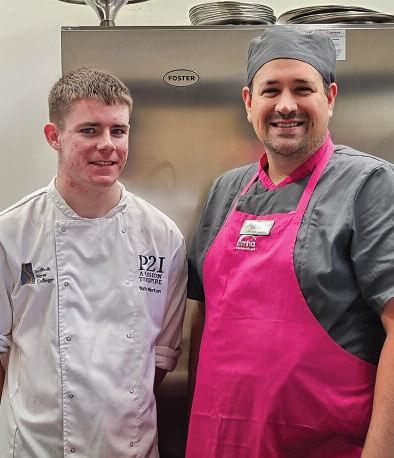
when I was offered the job, I was over the moon I start my new job at the end of August and have a mixture of nerves and excitement
Marc added: It wasn t a shock when Nathan told me but a nice surprise Working at MHA Norwood was great for his development and even then you could see how focused he was at becoming a chef and his passion was there for everyone to see
“With all my kitchen assistants I make it my job to work with them outside of work hours by arranging team building activities and I feel that's very important
He has a great and bright future ahead of

The first workshop took place on June 26 focussing on residential services while the second session which will take place in the Autumn will address the community hub and day service aspect of the project
Steve Malone, Principal Architect at A&DS, added: “It's been an incredible journey supporting Capability Scotland Seeing how the community s feedback has been integrated into the design is a testament to the project's commitment to inclusive and sustainable development ”
The sessions will involve hands-on group work feedback sessions and the use of visual aids to explore and refine the design concepts
During these workshops participants will discuss key aspects such as site layout arrival experience living
spaces and shared outdoor areas, ensuring every detail aligns with the community s needs and preferences
Brian emphasised the importance of these sessions: “We are committed to creating a facility that truly reflects the aspirations of the people we support Their involvement from the start has been crucial and these sessions are an opportunity to

We are excited to announce this new round of investment and how it will impact large Social Care organisations and their employees

Together with my fellow co-founders, Oli Johnson and Ben Dixon, we’d like to thank Felicis who led the financing with participation from Northzone, Google s AI-fund Gradient, SpeedInvest, Antler, BAG Ventures, and the numerous notable angels who participated in the round
When we founded Sona in 2021, we wanted to solve the unique challenges of frontline work with technology that empowers every employee, on every level of a large organisation
Two years later, Sona is doing just that for over 100,000 people We are grateful to the many organisations who have chosen us to support them on their digital journey, including Community Integrated Care, iVolve, Affinity, Yorkshire Care, Greensleeves Care, Cartrefi Cymru, and Livability, helping them deliver almost 5 million seamless shifts We’d also like to thank our partners who share in our vision for an integrated tech landscape for Care, including Nourish, Radar Healthcare, and Lottie

Some of the most talented and motivated people around have joined us to make this possible, and I d like to give a particular shout-out to Hayley Horwood and Richard Upshall Together, they have more than 25 years of experience in the Care sector and their insights have guided us every step of the way
This deep involvement has taught us that the complexity associated with multi-location, 1000+ staff operations is coupled with the pressure and responsibility to provide the best care possible Social Care demands a state-ofthe-art solution, built with the kind of technology that isn’t just the latest right now, but that is flexible enough to continue being state-of-the-art ten years from now and later into the future
The financing is a big step on our journey to becoming the go-to WFM for large Social Care groups, but - more importantly - it is an investment in the sector as a whole
Over the past year, we ve seen demand for a nextgeneration solution like Sona increase fourfold Our
partners are looking to make their operations more efficient and reliable, improve staff satisfaction, and become financially sustainable organisations that can easily grow and support more people
The fact that we can confidently say Sona is a solution that pays for itself - and then more! - is something we’re incredibly proud of because it provides organisations with a new revenue source they can re-invest into employee wellbeing and a better experience for the people they care for
So, what does this mean for the Care sector?
1. A truly intelligent AI-driven solution
We want to empower Social Care enterprises to forecast their staff needs based on what is best for the people they support with maximum accuracy and automatically tailor their operations accordingly This will help organisations speed up their scheduling, gain real-time views of their shift runs, and encourage growth in a way that tech simply hasn’t in the last decade Previously, the focus was mostly on digitising paper-based processes, but as many organisations are now starting a vendor-replacement cycle, we want to provide them with a real nextgeneration solution
2 Automated HR processes
Our HR solution is already closely linked to Scheduling and communicates seamlessly as solutions built to work together from day one should The next step is to bring automation to the HR processes that currently take up the most time and are heavily prone to errors Our goal is to make the data we feed into our Payroll engine as accurate as possible and remove the potential for mistakes to snowball, leading to drops in employee satisfaction, more admin time, and even legal risks down the line
3. User-first technology
One implementation challenge organisations have experienced with legacy software is low tech adoption rates from frontline staff But what oftentimes is seen as fear of change, is actually a natural reaction to employee apps which were not designed to be accessible The Sona mobile app - together with all our interfaces - is built with usability in mind and consumer-grade standards We want to enrich this experience with even more features that make user life more efficient and increase satisfaction, particularly around self-service and onboarding new staff We believe the first impression new employees get of their organisation and its processes is key to their retention
4 High-quality research and contributions to Social Care in the UK
The feedback we’ve received for our industry-leading reports, webinars, and other research activities has always been incredible and we re only looking to add more Social Care is first and foremost about the people and the community We plan to continue reporting on the pulse of the sector, bring together leaders and visionaries to share their insights, and always spotlight the many opportunities Care offers At the same time, we want to expand our existing charitable contributions and make sure that we’re always giving back to those on the frontline
committed our Customer Success and Implementation teams are to always going the extra mile, helping them optimise and grow their business We want to make sure that as we grow ourselves, we only improve this experience and provide even more comprehensive support every step of the way For that we’ll be on the lookout for the best talent available

Overall, with Sona, I like to think of it as building the “selfdriving car of running a Care business The last 20 years of workforce management were dominated by legacy point solutions that digitised simple paper processes Sona is building the next generation of WFM with a truly intelligent platform that enables organisational leaders in complex, multi-location enterprises to put the right people, in the right place, at the right time; and to seamlessly manage their workforce end-to-end
We believe we can deliver this because our exponential growth has been driven by tangible factors: speed of product delivery, high configurability, and sector expertise
Unlike legacy platforms, Sona’s technology has been built from the ground up for real-time data processing and insights Leveraging the Elixir programming language and large language models - similar to what powers tools like ChatGPT - we offer AI-powered real-time actionable feedback which helps drive intelligent decision making and leads to real workforce productivity gains The trust of our investors so far has yielded a total of £30 millionfunds that we see contributing to the development of the sector as a whole
“We are proud to lead Sona's Series A round and support its mission to empower frontline enterprises with cuttingedge workforce management solutions We believe in Sona s potential to redefine how businesses [ ] manage their workforce, and we re excited to be part of their journey towards reshaping the future of work Ben, Oli, Steffen and the Sona team have already helped over 100,000 frontline workers schedule shifts, and we know so many more will appreciate smarter software that enables their work ”
Niki Pezeshki, General Partner at Felicis

As we continue to innovate, our mission remains clear: to transform the outdated tools that have hindered Care enterprises in the past and usher in a new era of intelligent WFM that drives efficiency, employee wellbeing, and, ultimately, the delivery of exceptional care
Steffen Wulff Petersen Sona CEO and Co-Founder
5. A trustworthy partnership for all our UK customers
Our partners have consistently highlighted how

Langdon
the Mayor of Cambridge join us in the festivities A heartfelt thank you to everyone who attended and participated and to our own team who worked tirelessly to make the day unforgettable for our residents and guests
We're delighted to announce that between running a stand at the Chesterton Festival and our Fun Day we raised
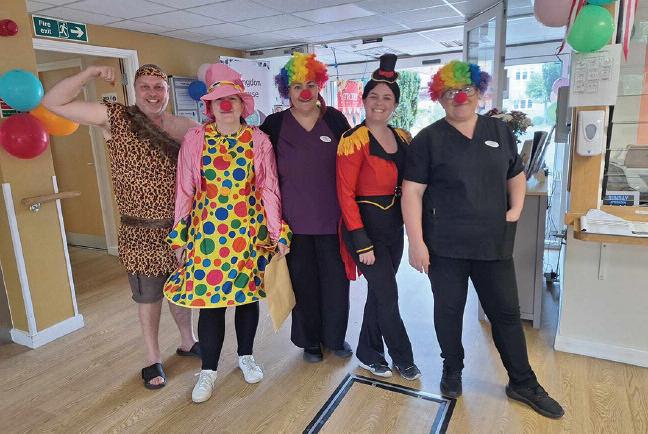

events at all our homes we showcased that our care homes are not only places of excellent care but also hubs of community connection Athena Chief Operating Officer Mandy Cockram said We always have a lot going on at Athena, but it was exciting to see the plans come together in the run-up to Care Home Open Week Our homes planned several events to appeal to various audiences and the circus event at Langdon House was truly spectacular “Great weather allowed us to spend time in our lovely grounds and I want to thank everyone involved in making the week a success for Athena Events were well attended by guests friends families and local
A resident at a Blackpool home celebrated his 101st birthday with two cakes to mark his special day Jack Rothwell lives at MHA Pennystone Court and the home arranged a birthday party consisting of entertainment, a song and dance and two birthday cakes Jack spent the morning with his family and the rest of the day singing along to some 50 s ballroom and organ music, his favourite type of music MHA Pennystone Court offers 36 places for dementia and residential care Jack was born in Leigh on the 2nd of July 1923 and his earliest memory is playing rugby he left school and began to help tuning the church organs he then worked at cable works
“We
“Jack
In
We


The
There

We
In

other nominees Bob Dennis, Head of Maintenance said: “It’s an honour to have won this for Lindum House The residents and activities have helped, it s been a team effort and were all so proud” As the winner for North NE division Lindum House is through to the national finals in which the overall winner is decided They will join winners from across the UK at a special awards event in October to celebrate their outstanding achievements and discover if they have won a national award

General Manager, Jayne Clarke, said: “This is an amazing achievement and the whole home is supporting Bob Dennis We are so proud of him He s put so much work, time and effort into our gardens at the residents and activities coordinators request

A museum-led dementia awareness programme, House of Memories, is marking 10 years since its memory activity app launched at the House of Commons
The free My House of Memories app co-created with people living with dementia was launched two years after the creation of the wider House of Memories programme which is led by National Museums Liverpool The aim of the app is to develop connections and conversations between people
The House of Memories team also offer bespoke dementia awareness and app training to organisations which work with or support people living with dementia, from the likes of residential and nursing homes to housing associations and groups offering support services
Sarah Wright Project Coordinator at Gairloch Museum in northwest Scotland runs a Whatever the Weather Wednesday reminiscing group and recently worked with House of Memories to

which can help to spark memories of days gone by Users can also save favourite objects to a digital memory tree digital memory box or timeline, and add their own photographs to the ‘My Memories’ feature on the app Over the last decade, objects on the app have been interacted with more than a million times
Throughout the years House of Memories has worked with a range of museums organisations and communities around the world to create content for the app to provide a choice of objects to resonate with as many people living with dementia as possible Recent partnerships have included collaborating with Welsh Government and 14 museum partners across Wales to develop dual-language content for the app and working with the Chelsea Pensioners at the Royal Hospital Chelsea to create a collection of hospital and British Army memories
In order to support professional carers working with people living with dementia as well as families and friends House of Memories also provides online and in-person training where you can learn how to use the My House of Memories app and hear about
dementia activities and resources The in-person training
MOWOOT II – proven solution to chronic constipation without medication
Developed by a team of doctors and other healthcare professionals, MOWOOT II performs gentle abdominal massage to speed up intestinal passage in people experiencing chronic constipation
Clinically proven, safe and effective relaxing and sideeffects free, MOWOOT II

Abdominal Massage Therapy System combats constipation and provides soothing relief to affected people
Easy to use and comfortable the MOWOOT II treats and manages constipation in people with spinal cord injuries multiple sclerosis sufferers
Parkinson’s Disease patients and people with constipation related to prescription medication MOWOOT II also helps to relieve idiopathic constipation experienced by menopausal and post-menopausal women
and older and elderly people In clinical studies
MOWOOT II increased evacuation frequency softened stools, improved regularity, reduced gasses relieved bloating and eased off abdominal discomfort 10 to 20 minutes daily of relaxing abdominal massage with MOWOOT II rapidly reduces symptoms of constipation Evident results are experienced only a few days after the first treatment Regular abdominal massage with MOOWOOT II ensures lasting health benefits and better quality of life
MOWOOT II – effective solution to chronic constipation for better quality of life!
Supplied by Win Health Medical Ltd - 01835 864866 - www win-health com
See page 3 and the front cover of this issue for other Win Health products

C&S
With

A museum-led dementia awareness programme House of Memories, is marking 10 years since its memory activity app launched at the House of Commons
The free My House of Memories app co-created with people living with dementia was launched two years after the creation of the wider House of Memories programme, which is led by National Museums Liverpool The aim of the app is to develop connections and conversations between people living with dementia and their families and carers through digital collections of objects Together people can explore pictures of museum objects and everyday items – which range from a Singer sewing machine to a 10 shilling note – and discover things which resonate with them Images are brought to life with sound, music and descriptions which can help to spark memories of days gone by Users can also save favourite objects to a digital memory tree digital memory box or timeline and add their own photographs to the ‘My Memories’ feature on the app
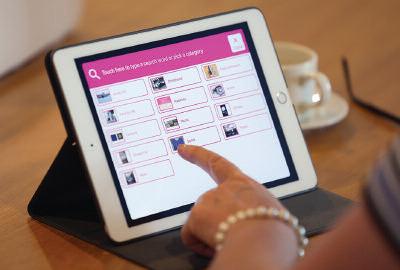
with people living with dementia as well as families and friends, House of Memories also provides online and in-person training where you can learn how to use the My House of Memories app and hear about other dementia activities and resources The in-person training takes place in Liverpool every month, while online training –made up of 31 expert videos across four modules –can be completed at any time
The House of Memories team also offer bespoke dementia awareness and app training to organisations which work with or support people living with dementia from the likes of residential and nursing homes to housing associations and groups offering support services
The My House of Memories app is available to download for free on iOS devices via the App Store and on Google Play for Android devices Information about in-person online and bespoke training is available on the House of Memories website
As you get older your penis and testicles may get slightly smaller One reason is the build-up of fatty deposits in your arteries reducing blood flow to your penis This can cause withering of the tissue cells in the spongy tubes of erectile tissue inside your penis making it awkward to stand at urinal to urinate – but having incontinence on top of this can make matters very difficult to manage

Over the last decade objects on the app have been interacted with more than a million times In order to support professional carers working
Find out more about the House of Memories programme on their website at www liverpool museums org uk/house-of-memories
If you suffer from Penile Retraction and Incontinence – Men’s Liberty has you covered: Men s Liberty is the discreet dignified dependable alternative for urinary incontinence that you have been looking for It is made of a gentle skinfriendly material called hydrocolloid a proprietary adhesive that softly stretches and moves with a man as he changes position Unlike diapers that

vated and gives the operator the correct position for dis-assembly after use
The six core elements- four identical legs and two identical back sections- quickly and easily click-fit together with no risk of incorrect assembly The occupant is fully supported throughout the process and kept stable and safe with use of the integral adjustable seat belt
with each charge of the battery capable of deliver-
can cause diaper rash yeast infections and dermatitis
Men’s Liberty attaches to the tip of a man s anatomy directing urine to a discreet collection pouch It s comfortable, unnoticeable to others and -best of all secure
Male External Catheter Designed for everyday use
Directs urine away from the skin
A completely external urine collection system
One size fits most anatomy
One Men s Liberty keeps you dry and comfortable for up to 24 hours Available on NHS
observes Peter Wingrave, AAT Director “This is no reflection of the standard of care given It does leave the resident and care staff exposed to risk in safely getting the resident back up again particularly with the growth in obesity among residents 3 Only 4% of falls
Raizer II works by visiting www aatgb com/raizer-lifting-chair/ where you can also book a free virtual or actual assessment and ask any questions via LiveChat Alternatively email sales@aatgb com or telephone 01978 821875
Dry Steam cleaning fights the battle against bacteria and viruses on three fronts with thermal and chemical disinfection and decontamination by mechanical action of surface penetration and extraction to eliminate contaminants The innovative design and cutting-edge dry steam technology can help tackle the risks of transmissions both inside healthcare settings and outside where you need to offer the safest and cleanest environments

Dry Steam penetrates common surfaces that are porous – like unvarnished wood and/or have non-smooth textured and rough surfaces that harbour and hide biofilm and soil Where manual cleaning isn’t possible, the Dry Steam Vapour reaches those areas and delivers a hygienic environment and peace of mind that it s free from risks of infection Scientific studies by OSPREYDDEEPCLEAN TNO and UCLH -
University College London Hospital-, focusing on the efficacy and removal of all biofilms and microbiological decontamination demonstrated that Dry Steam Vapour performed equal to or better than other disinfection practices While the use of water and an approved detergent provides an environmentally friendly and effective alternative to more toxic disinfectants
Dry Steam is also ideally suited to be combined with Microfibre cleaning regimes and SteamMops are available as optional accessories
Further Laboratory evaluations using OspreyDeepclean steam cleaning/sanitising machines establish the destruction of hospital infection strains - including the antibiotic resistant superbugs MRSA and VRE - in less than 2 seconds
Angloplas are a UK manufacturer who specialise in producing dispensers for the health and hygiene industry Although these are designed to keep the workplace tidy and uncluttered they are, more importantly built knowing the control of healthcareassociated infections (HCAIs) are a priority for healthcare providers and who are employing a combination of infection prevention and control strategies including hand hygiene cleaning training and the adoption of new technologies to tackle the problem As a result, a wide range of infection control products and technologies are emerging on the market including antimicrobial technology Angloplas’ range of dispensers are produced in the

world s first proven Antimicrobial PVC with silver ion technology and which is exclusive to Angloplas This helps reduce the risk of cross infection by stopping the growth of bacteria and mould and works continuously for the lifetime of the product reducing levels of bacteria such as MRSA E Coli, Legionella Salmonella and mould by up to 99 99% For non-clinical environments Angloplas has recently launched its new Budget Range of products which are made to the same exacting standards as the antimicrobial protected ones but with lower price tags You can order Angloplas products directly from its website by going to www angloplas co uk


A new set of menu planning and food service guidelines for care homes catering to older people has been launched
The Food Services Specialist Group and Older People Specialist Group of the British Dietetic Association (BDA) and the National Association of Care Catering (NACC) have worked in collaboration to launch these guidelines under the title Care Home Digest
The Care Home Digest is the first of its kind providing menu planning and food service guidelines to support care homes to provide high quality food and drink services for residents
No such resource currently exists in England and this document should complement existing dietetic guidelines available in the other nations of the UK
The overall food and dining experience can have a huge impact on quality of life for residents and is often one of the highlights of the daily routine Undernutrition dehydration and other nutrition related health concerns which often impact those living in care or residential homes mean that providing appropriate and appetising meals that meet nutritional requirements can be more challenging
With many care homes unable to access a food service dietitian service the Care Home Digest allows homes to access the information to support them to plan nutritionally balanced and appropriate menus to meet both the nutritional needs and preferences of their residents

By having a clear set of standards and guidance that provides consistency and clarity in the approach for eating and drinking in care homes managers nurses care and support staff and caterers will better understand what they should be providing as part of their overall food service
Helen Ream Healthcare and Food Service Dietitian at Compass Group UK & Ireland and Vice-Chair of the BDA’s Food Services Specialist Group says,
It has been a privilege to chair the working group of dietitians and NACC colleagues to develop these guidelines I hope they will be the ‘go to’ resource for care home teams to support them to understand what their food services and menus should include to support residents to have a great mealtime experience whilst also meeting their nutritional needs
Mealtimes play an essential role in the wellbeing of some residents They allow residents to connect with each other as well as with carers and family members and give moments of happiness or reflection when there are cultural or religious celebrations
Chapters in the Digest include delivering a positive mealtime experience menu planning and design and catering for special diets
Helen who is also a member of the NACC says “The Care Home Digest builds on the work of the BDA s Nutrition and Hydration Digest a resource for all those involved in the provision of food and drink services in hospitals and which forms part of the National Standards for Healthcare Food and Drink Until now no similar national food service standards have existed to support care homes for older adults to meet the nutritional needs of their residents We hope these guidelines will be widely used and become a nationally trusted resource in the same way ”
The information and checklists within the guidelines are intended to support care homes to review their services to understand what they are already doing well and where improvements could be considered and made
Neel Radia National Chair of the NACC says The National Association of Care Catering is proud to have been working in collaboration with the BDA for this unique Care Home Digest
“This document is a welcome and necessary publication to enable consistency across the care home sector A multidisciplinary team bringing hospitality and nutrition together is the best solution for an all-encompassing approach to meeting residents nutritional needs This is a must-have document for all catering teams in care homes, from induction through to ongoing reference and review No care home for the elderly should operate without this
“Thank you to Helen Ream and the entire team who have worked so hard in putting this together and I wholeheartedly recommend it to everyone in the care sector
Founded by Preston Walker and James Ball, globally recognised experts in texture modification and culinary applications for modifying food OHK is your specialist partner for Dysphagia management
Our mission is to provide comprehensive training programs and implementation support that empowers healthcare providers to deliver safe nutrition and reduce risk across the care setting We work in collaboration with you and your teams to secure a better quality of life for individuals with specialised diets Because everyone deserves the right to safe nutrition WHY CHOOSE OHK?
We offer validated and clinically endorsed training programs ensuring your setting complies with current best practices and standards Our courses are mapped to the Eating Drinking and Swallowing Competency Framework from the Royal College of Speech and Language Therapists and delivers best practice guidance reflecting the globally recognised International Dysphagia Diet Standardisation Initiative (IDDSI)

OHK provides high quality cost-effective eLearning modules tailored to dysphagia training needs These modules are available as bundles or individual courses which can be accessed via OHK s or your own Learning Management portal, providing flexibility to meet your organisation’s requirements For advanced training needs we also offer in-person courses
MORE THAN JUST A TRAINING PROVIDER
OHK assists you in establishing a safe, auditable process and internal framework, helping to enhance your specialist catering solutions Whether you have 1 or 100+ beds we have a solution for you that is cost-effective accessible and scalable
Our courses are developed and maintained in collaboration with East Sussex Healthcare NHS Trust ensuring the highest quality and accuracy of guidance Expert Dysphagia Consultancy
OHK s expertise has attracted partnership from a range of organisations including Norse Care, Belong Villages and numerous NHS Trusts, including East Sussex Healthcare NHS Trust, Ayrshire and Arran NHS and the States of Guernsey OHK provides Care England with care catering expertise to support its members and improve standards in the sector
At OHK we are more than just a training provider; we are your partners in delivering excellence in dysphagia care Together we can help you transform your healthcare setting and ensure safe enjoyable nutrition for all
Call Us Today 01572 337188
Email us info@oakhouse-kitchen com
Or visit www oakhouse-kitchen com
It is hoped this document will also support the Care Quality Commission and other nations’ inspectorates to know what they should be assessing and checking for during their visits to care homes and further influence the development of improved standards in such a vital aspect of care After the successful launch of
group of suppliers selected through the Open Doors Programme Aimed at small food and beverage suppliers the Open Doors Programme identifies the most innovative businesses trying to establish themselves within the industry and raises awareness of their products so they can make their mark in wholesale
Despite the recent deceleration in inflation the share of small businesses aspiring to grow


Dysphagia or difficulty swallowing is a condition that can significantly impact the quality of life for many individuals particularly residents in health and social care facilities Addressing the needs of those with, or at risk of developing, dysphagia is crucial for enhancing their daily experiences and ensuring high standards of care to ultimately improve their quality of life
To achieve this, it's essential to establish Eating Drinking and Swallowing (EDS) competencies across whole care teams, to fully equip the multidisciplinary team (MDT) with the expertise needed to provide comprehensive support

EMBEDDING EATING, DRINKING AND SWALLOWING COMPETENCIES – A QUICK DIGEST
Establishing EDS competencies involves identifying the specific knowledge and skill sets required for each role within the care and catering teams as outlined in the Eating Drinking and Swallowing Competency Framework (EDSCF) This approach ensures that every team member from carers and nurses to caterers and managers possesses the necessary competencies to support residents effectively Fundamental to this is adherence to the International Dysphagia Diet Standardisation Initiative (IDDSI) Framework which details the exact methods for preparing high quality nutritious meals and drinks that are tailored to residents specific swallowing needs
Supporting a sustainable implementation of EDS competencies involves addressing staff turnover accommodating new staff members, managing role changes and providing ongoing training Clear objectives and straightforward management protocols are essential for maintaining these standards over time Additionally, regular feedback mechanisms should be established to continually assess and improve the care provided ensuring that residents receive the best possible support to enhance their quality of life and reduce the risks associated with dysphagia
IMPLEMENTING EDS AT SCALE: IS IT ACHIEVABLE?
Implementing EDS competencies at scale has been successfully demonstrated in various regions and care settings across the UK with adoption globally too Examples of this include East Sussex NHS Healthcare Trust South Tyneside NHS Trust, the States of Guernsey, Ayrshire and Arran NHS Trust along with private settings Norse Care & Catering and Belong Villages Between 2 000 and 6 000 staff from each organisation across a wide spectrum of care catering and management roles, enrolled and completed EDS and IDDSI specific training schemes In all settings integration of EDS training and systems has significantly benefitted the care facilities and their residents TANGIBLE RESULTS DEMONSTRATE EFFICACY AMONG MDTS.
Following an EDS training pilot with South Tyneside NHS community settings 74% of participants reported they would change the way they would work as a result of completing the programme, with 34% stating they were more confident in knowing how to refer residents for assessments
In East Sussex NHS Healthcare Trust 86% of staff stated the catering for dysphagia diets course helped them in the way they work due to improved knowledge which positively impacts quality of life food safety and the choice that can be offered to patients in these settings
Similarly the States of Guernsey implementation report, showed that both the kitchen services and an acute stroke ward demonstrated an improvement in the production of foods for the IDDSI Framework, and the understanding and confidence in all staff to support patients with dysphagia
Norse Care & Catering and Belong Villages have also seen improvements following engagement with a IDDSI and EDS-specific training programmes Norse noted that 84% of attendees to the onboarding sessions felt they left with a good or strong understanding of supporting people with eating, drinking and swallowing difficulties Belong also
attested to training s efficacy in improving confidence in compliance and quality practices
THE POTENTIAL OF SUSTAINABLE INTEGRATED EDS TRAINING IS HUGE.
The outcomes of implementing sustainable, integrated EDS training and systems are substantial The pilot with East Sussex NHS Healthcare Trust led to reductions in incidents, increased confidence among staff, higher quality referrals as well as improved food quality Specifically an initial drop in incidents of 85%, with a year-on-year reduction of 33% in incidents on the unit until end of 2022 Since the introduction of this training there has been just one incident in 2023 and no never events or near misses A value that cannot be underestimated
Staff now also have a deeper understanding of the challenges faced by patients with dysphagia, enabling more compassionate and effective support to patients resulting in meaningful impact on their lives
Systematic catering systems provide numerous additional benefits
The States of Guernsey audit report highlights improvements in staff efficiencies consistency in service delivery effective and speedy problem solving and enhanced due diligence processes For example all chefs undertaking IDDSI level specific food training responded very confident’ or ‘extremely confident’ for all IDDSI food production levels Fiona Gardiner Specialist Speech & Language Therapist commented following the pilot; “Guernsey has embedded training throughout levels 1 and 2 of the EDSCF The dysphagia modules support all levels of staff to meet their competency on the framework and this training has meant that risks for people with dysphagia have significantly been reduced In addition we have used IDDSI catering training throughout the hospital catering departments, which has inspired the chefs ” IMPROVING QUALITY OF CARE FOR THE LONG TERM.
These systematic approaches improve the immediate care environment and through robust data capture highlighting better outcomes can help provide confidence to organisations aiming to invest in a strong dysphagia management strategy Establishing and maintaining EDS and IDDSI competencies across care teams is what’s needed to enhance the quality of life for residents with dysphagia and ensure long term sustainability and resilience in care standards


The Textile Services Association (TSA) recently presented a new standardised test protocol for evaluating the disinfection efficacy of laundry wash processes at its spring conference This marks the latest stage in the ongoing partnership between the TSA and De Montfort University (DMU) The research aims to provide accurate information and usable methods of ensuring hygienic cleaning of textiles particularly in relation to sectors more vulnerable to infection such as healthcare
The new protocols were developed following a four-year research project led by Professor Katie Laird at DMU which was funded and supported by the TSA and other national associations from Europe and America Professor Laird and her team have extensive experience in studying healthcare textiles and have previously investigated the survival of microorganisms on textiles and specific wash processes required to decontaminate laundry, among other topics
The importance of creating an effective standardised test for evaluating hygienic cleaning is something that Simon Fry owner of specialist
laundry firm Micronclean Ltd and a TSA board member has been focussing on since joining the TSA over eight years ago The idea for this project came about when manufacturers began introducing chemicals for cold washing he says While it s a great idea in terms of energy saving it can introduce risks in terms of less effective disinfection which is compounded if the traditional tests being used weren t giving accurate results
You could almost pick the test to get the results you wanted, says Simon I realised that we would need something that accurately showed the kill rates of bacteria, which could be used by all stakeholders to deliver data that allows everyone to work on a level playing field "
The TSA reached out to Professor Laird and began funding research with the aim of creating standardised testing protocols that definitively measure how many pathogens are killed by laundry washing processes
In order to achieve this the DMU team needed to study existing infection controls and the current processing methods for healthcare laundry They also needed to understand the attitudes and knowledge of healthcare staff in terms of infection control policies and how these apply to textiles Alongside funding the research the TSA also organised surveys of both its members in the UK as well as overseas to help build a clearer understanding of the landscape
The test developed by Professor Laird and her team accurately demonstrates the disinfection efficacy of laundry during a wash process-
es in a way that can be used throughout the healthcare sector whether it is in outsourced laundries or on-premise laundries The test involves placing a sample of inoculated fabric within a membrane, which looks similar to a teabag that allows water and chemicals through but stops bacteria from escaping meaning that the effectiveness of the decontamination of the laundry process can be properly evaluated This allows for a like-forlike comparison of different washing methods and equipment types and how effectively they kill bacteria present on textiles helping to ensure that infection control standards are maintained
Being able to measure disinfection accurately within a working laundry is paramount in managing textiles as a transmission route for infections particularly in healthcare settings" Professor Laird
"The publishing of these test protocols is an important milestone in our ongoing research collaboration says David Stevens CEO of the TSA The next phase we will see the test methodology incorporated within best practice standards driven by the other national associations this will include working with the TRSA in America and ETSA in Europe
Professor Laird's team will continue their research into improving hygiene in laundry focussing on spores that aren t killed thermally and biofilms that form inside laundry equipment
For more information on the new testing protocols visit tsa-uk org
Brewer and Bunney proud to be the best in the South West for over 40 years provides specialised laundry services and equipment specifically tailored to the needs of healthcare facilities including NHS and private hospitals Emphasising the critical importance of infection control and legislative compliance, Brewer and Bunney aligns its offerings with standards such as the Department of Health HTM 01-04 guidelines They equip hospitals with advanced energy-efficient laundry machines designed to meet the rigorous demands of hospital environments
Brewer and Bunney offers comprehensive services including expert consultation installation and ongoing maintenance ensuring that hospital laundry operations are both efficient and effective in maintaining high hygiene standards crucial for patient care and safety For NHS facilities Brewer and

also provides specialised solutions like mop
and
In addition, Brewer and Bunney supports healthcare facilities in setting up inhouse laundry operations, helping hospitals regain control over their laundry processes This approach optimises costs and improves quality and compliance with health standards By bringing laundry services in-house hospitals can ensure consistent high-quality outcomes that meet the specific needs of healthcare environments including effective infection prevention 0808 500 8093 brewerandbunney co uk enquiries@brewerandbunney co uk


Timeless Presents are an award winning husband and wife team working to connect and engage those living in the later stages of dementia Inspired by a father s journey with Alzheimers Timeless Presents have created innovative activities and engagement solutions that can be used to engage in the later stages to the benefit of the user the carer and the caring organisation Their innovative approach combines familiar traditional pastimes with design features that enable users with late dementia to easily engage Their first three products have all been accredited as Dementia Inclusive by the world leading Dementia Services Design Centre at Stirling University and have also achieved an Innovation award at the recent Dementia Care Awards 2024 Drawing from their personal experiences and informed by the current understanding of cognitive issues faced by those with dementia Sharon and Chris Daltrey have embarked on a mission to make a difference in the lives of individuals currently living with dementia Forbury Residential Home had this to say “Our residents really enjoyed them The
zles and colouring books Thank you so much for giving our residents a better quality of life ”
In a significant milestone Timeless Presents recently achieved accreditation from the internationally renowned Dementia Services Development Centre (DSDC) for three of its products, being the first time that they had assessed activities of any sort This accreditation underscores the company s commitment to creating dementia-inclusive products that meet the highest standards of quality and effectiveness They also recently exhibited at the Alzheimers and Dementia Show at London Excel in June 2024 to a warm reception from industry professionals including occupational therapists Activity Co-Ordinators and Admiral Nurses who all commended their products

With a focus on affordability accessibility and impact Timeless Presents aims to empower individuals with dementia and their caregivers to navigate the challenges of dementia with dignity and joy Through their innovative approach and dedication to excellence Timeless Presents is shaping the future of dementia care one meaningful interaction at a time
07936 408 941 connect@timelesspresents com www timelesspresents com
Focus Games are the leading game developers focused on education for healthcare staff and patients
Game-based learning is an innovative approach to education that leverages the principles of games to create engaging and interactive learning experiences This approach has gained popularity in recent years due to its ability to motivate learners and improve retention rates Healthcare staff can benefit significantly from game-based learning as it can help them acquire new knowledge and skills in a fun and engaging way The key benefits of game-based learning for all healthcare staff are:
1 Enhanced engagement
2 Improved knowledge retention
3 Safe learning environment


Tired of the same old song and dance when it comes to planning engaging activities? Well, fear not! Activities to Share is here to sprinkle some excitement into your daily routine
If you ve been feeling like you re stuck in a creative rut we've got the antidote Picture this: a wonderland of activity ideas free downloads that are basically the golden ticket to fun and a treasure trove of products that'll make your heart skip a beat (in a good way)
We get it – after a while, even the most fantastic activities can start feeling a bit blah That s why we ve scoured the corners of creativity to bring you fresh fabulous ideas that ll have you and your crew grinning from ear to ear
Our website activitiestoshare co uk is your go-to haven for all things fun and engaging Need a burst of inspiration? We've got your back Looking for activities tailored to different abilities? We ve got that covered too!
But wait there s more! We ve teamed up with carers and activity coordinators across the land to ensure that every product and idea we offer is top-notch and practically oozing with

fun And if you ve got a creative itch that needs scratching, we're here to help you bring your unique ideas to life!
So, don't let boredom sneak in Join us on this adventure of going the extra smile because let s face it smiles are the best currency around here
See all of the above here at www activitiestoshare co uk

In today's fast-paced world, maintaining mental agility and memory sharpness is crucial, especially for our beloved seniors
Gone are the days when traditional quizzes and bingo were the only options for mental stimulation Hashtag Quiz and Bingo software brings a fresh tech-savvy twist to these beloved activities making them more accessible and enjoyable for the elderly This software offers a plethora of features designed specifically to cater to the needs and preferences of seniors ensuring that everyone can participate and benefit

MEMORY RECALL AND BRAIN EXERCISE
One of the most remarkable benefits of using Hashtag Quiz and Bingo software in care homes is its positive impact on memory recall and cognitive health
Regular engagement with quizzes and bingo games has been shown to stimulate various parts of the brain, enhancing memory retention and recall abilities The software includes a wide range of quiz topics, from history and geography to music and movies, allowing residents to tap into their long-term memories and share their wealth of knowledge
Bingo on the other hand promotes concentration and mental alertness As residents listen for their numbers and mark their cards they are unknowingly participating in a fun yet highly effective brain exercise This dual approach of quizzes and bingo ensures a wellrounded cognitive workout keeping the mind sharp and agile
A SENSE OF COMMUNITY AND BELONGING
Beyond the cognitive benefits Hashtag Quiz and Bingo software fosters a sense of community and belonging among residents The interactive nature of

these games encourages social interaction, teamwork, and friendly competition
Whether it s a lively quiz session or a thrilling bingo game residents come together share laughs and create lasting memories This social engagement is essential for emotional well-being reducing feelings of isolation and loneliness that can sometimes affect seniors
EASY TO USE AND HIGHLY CUSTOMISABLE
The software is highly customizable allowing caregivers to tailor the difficulty levels and content to match the preferences and abilities of each resident This adaptability ensures that everyone regardless of cognitive ability can enjoy and benefit from these activities
A WORTHY INVESTMENT FOR EVERY CARE HOME
Investing in Hashtag Quiz and Bingo software is an investment in the health happiness and well-being of our residents The blend of cognitive stimulation social interaction and sheer enjoyment makes it a valuable addition to any care home's activity repertoire As we continue to prioritize the holistic health of our residents, incorporating such innovative tools will undoubtedly pave the way for a brighter, more engaging future
Hashtag Quiz and Bingo software is more than just a game; it is a gateway to a more vibrant connected and mentally active life for our seniors We encourage all care homes to consider integrating this exceptional software into their daily routines Let s unlock joy and vitality one quiz and bingo game at a time!
Find us TODAY and access your FREE 7-day trial at: https://hashtagquiz co uk/quiz-for-the-elderlyand-seniors/


One Call Systems have developed one of the most reliable streamlined wireless nurse call systems on the market The rechargeable technology, water-resistant casings, and long-range radio capabilities set us apart
At the heart of the innovative Nursecall system is the One Call Display Panel which runs on an efficient internal radio network Designed to provide the highest level of performance and reliability The Display Panel allows staff to view live calls instantly Qualified installers will set up your system quickly and efficiently ensuring minimal disruption and maximum benefits
With the ability to connect to the internet you can easily monitor your Home's call records from anywhere The panel is completely configurable from the display allowing you to customize your Home's settings to your preferences Trust our innovative system to provide the safety and efficiency your Home’s needs
The One Call Room Units are designed to withstand the rigours of your busy care environment There are five alternative versions - Pear push lead Pull Cords Out of Bed Door monitor and Leadless Units that you can choose from that best suit your needs
Watertight casings and fitted rechargeable batteries mean that you can rest assured that the units can be easily washed and will provide reliable service for up to 2 years on a single charge
The Call Logging system is designed to meet the safety and care requirements of Care Homes and nursing facilities The digital solution ensures complete and accurate logging of every call to prove evidence of care This invaluable tool ensures the safety of your residents
The Call Logging system is a must-have for any Care Home that wants to ensure they are providing the best possible care
Onecall provides the ability to monitor response times attendance duration and which Carer has attended which call You can be sure that you have complete oversight of your care provision Not only does this system provide valuable evidence of care, but it also helps to motivate and encourage staff to continue providing an exceptional level of care Please email info@onecallsystems co uk or call 01252 448137

With care homes increasingly oversubscribed and resources as stretched as ever, Sharon Bye, Director of Care for Central and Cecil Housing Trust (C&C) and Aster Group, highlights how new smart technology can allow providers to have greater oversight of specific resident care and maximise efficiency Readers will be well acquainted with the operational challenges facing the care sector
An ageing population combined with limited resources and a persistent skills shortage has left the sector under increasing pressure Having celebrated the 95th birthday of Central and Cecil Housing Trust (C&C) in 2022 we are well aware that these are by no means novel challenges and our past experience has provided us with useful lessons for navigating these headwinds However it s critical that we as care providers take every opportunity to tackle these challenges With the support of integrated care services and unified technology, we ve seen firsthand how its enabled
managers is the ability to deliver joined up effective services with less resources By adopting proven technologies and developments in the integration of care services, care home managers can critically refocus their efforts on delivering the best in care services Technology is the enabler to help drive efficiencies throughout operations without compromising the quality of
where we provide specialist care for people with advanced dementia in tandem with the North Central London Integrated Care Board (NCL ICB) Our work at the home has validated how the roll-out of integrated care systems and new digital technology can improve and reshape care provision
Examples of the technology we use on site include a motion sensor and acoustic monitoring system called Ally to help care teams monitor residents who may be at risk of falls and movement difficulties Carers are made aware of sudden motions and alerts pinpoint when it s necessary to intervene with professional assistance to prevent undue falls or distress for those residents
This has subsequently allowed for better sleep hygiene for the residents with night checks now taking place every two hours for most residents and every three hours for a few more depending on their needs and risks In the case of one resident we ve been able to track a significant decrease in overnight falls – none since December 2023 – and significantly reduce the need for staff members to visit her throughout the night with the motion sensor system allowing us to monitor from afar without unnecessary disruptions This means care staff can focus on residents who require hands on care during the night
We ve also utilised the ‘Whzan Blue Box’ early warning system which monitors and stores information on vital signs It automatically and immediately notifies a wider team of geriatricians clinicians and care home staff of any risks concerning results or medical attention needed When clinicians or paramedics do attend they are able to compare the resident’s readings to wider historical data on the system to establish a baseline In many cases this is preventing unnecessary medical treatment and significantly reducing the number of unplanned hospital trips for residents
In one case a resident presented with what appeared to be low oxygen saturation levels but when medics arrived they were able to look back at the range of recorded observations and conclude this wasn’t out of the ordinary for him A hospital admission was avoided, and the resident didn’t have to receive off-site treatment that could unduly displace and distress them The software unifies historic data, allowing staff to make clearer diagnostic and more specifically informed decisions about treatment based on past experiences with individual patients
The benefits of integrated care services and digitalisation are not just limited to inside the care home either with shared patient diagnostics helping to ease pressure on local emergency services as well as GP practices Rather than assessments being isolated a more cohesive integrated system enables heightened accuracy and a quicker response
Rathmore House has also been utilising a new connected triaging system named Silver Triage Installed in 2022 in collaboration with the NCL ICB as well as local NHS and ambulance trusts Silver Triage is designed to reduce unnecessary hospital trips and ease the burden on ambulance services, while enabling geriatricians to remotely assess, advise and guide ambulance paramedics attending patients in care homes where needed Doctors using the service can also help access
After over 30 years, care charity Imagine, Act and Succeed finally swapped their paper rotas and timesheets for a digitised system to help manage their 85 locations and 460+ staff
Emma Hobbs Payroll Officer at the charity grew frustrated over the inaccuracies and errors of this cumbersome process - especially when it led to wages The system was often outdated and staff frequently missed shift changes This led to lost time money and patience for both managers and employees
So, how can turning to digital systems like RotaCloud improve this?
The information is accessible to us in payroll straight away which is an absolute godsend Being able to see instantly where someone is working, what shift they ve actually done the clock-in and clock-out records are just - it s made our payroll side so much more streamlined to what it was beforehand ” - Emma Hobbs, Payroll Officer

Accuracy is the biggest benefit for Emma and her team There s no more chasing people for paperwork or last-minute runs for payroll Managers can instantly access live reports from labour costs to attendance with clocking-in data automatically feeding to timesheets When clocking in and out is as simple as a click or tap via mobile, web, or a terminal, employees (and Emma) can trust that all wages are correct
Communication has also improved By having everything at their fingertips from shifts to requests everyone works from the same page It has made staff s lives much easier and saved managers time Enabling notifications also means any updates to the rota annual leave requests or available shifts are immediately
PASS supports over 1 000 care providers every day giving them access to market leading care management tools hand in hand with unlimited 24/7/365 support from our dedicated and friendly PASS team

Assured by NHS Transformation Directorate PASS provides a secure platform that allows you to plan record and evidence the care you deliver The only assured solution built specifically for the home care sector, it provides comprehensive real-time functionality and allows you to share progress against outcomes with customisable exportable reports
CARE PLANNING AND ROSTERING FROM A SINGLE PLATFORM
To meet the wider needs of the PASS community All-in-one PASS
sent to the appropriate staff No more sending out WhatsApp updates, missed messages or stress trying to find cover
Before RotaCloud, Imagine, Act and Succeed managers sat down for two days
has recently been launched bringing advanced rostering functionality to our established digital care planning platform As a result advanced staff scheduling payroll and invoicing functionality is now seamlessly linked with care planning and reporting reducing the technical complexity risk and overhead associated with integrating two separate systems
As a result PASS now provides an all-in-one suite of digital care management tools, available from a single platform, designed to: Save you time
Increase the efficiency of your teams
Improve the quality of care
Deliver better outcomes

Our commitment to the continual evolution of PASS is further illustrated by the addition of GP Connect The first product of its type to offer this feature, PASS is still one of only a handful of digital care
management solutions to have completed this NHS Digital integration and is the only one offering it to the home care market PASS GP Connect provides authorised social care staff with realtime access to their client’s GP records It makes medical information available when and where it is needed leading to improvements in both care safety and outcomes:
Visibility of allergies vaccinations and medications especially useful for clients unable to reliably share their personal information
Using medical information to inform care planning
Ensuring that the right medication is delivered to the right person in the timeliest manner In one case this allowed the administration of antibiotics on a Friday evening, aiding the service user s swift recovery from infection
Available to all PASS users at no additional cost PASS GP Connect is significantly more efficient than waiting for a GP response It’s also a positive step forward on the path to the DHSC s goal for widespread digitally enabled care and is in full alignment with their ambition for joined up care for everyone
Get in touch: www everylifetechnologies com hello@everylifetechnologies com