
1




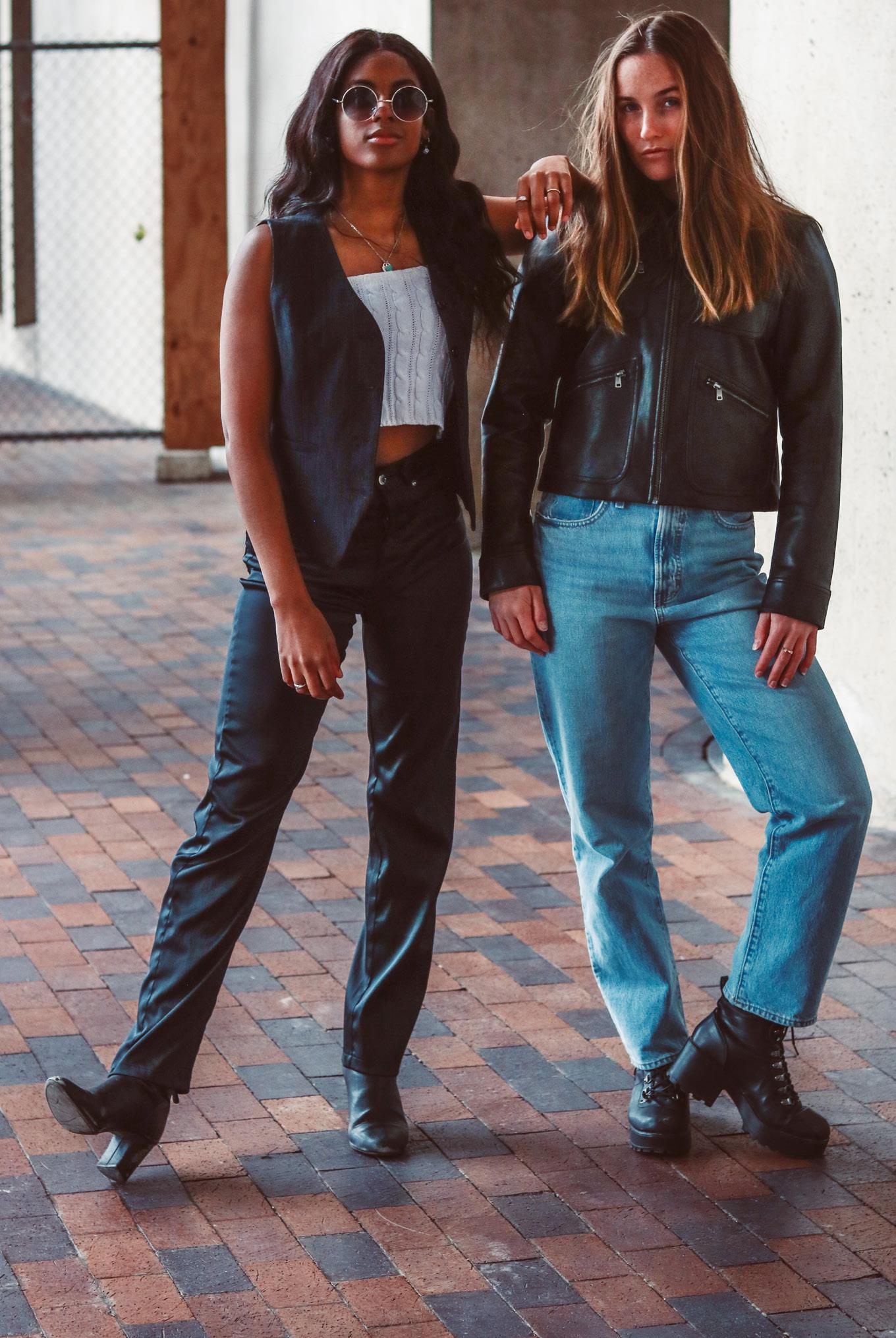





Have you ever wandered around campus and encountered students wearing skimpy outfits in Boston’s winter season? I have. Whenever I walk past people in crop tops or shorts, I always exclaim to my friends in awe: “They look amazing, but aren’t they cold?”
In a recent study conducted in 2021 discovered that people who focus on their appearance do not feel colder when wearing less clothing, because they have lower awareness of bodily sensations. Thus, according to the study, women high in selfobjectification report not feeling cold at all when exposing more skin. However, I don’t think women who pay extra attention to how they look should be classified as self-objectifying people. Can’t girls dress to define and please themselves?
“It’s unfair to ridicule women who are trying to assimilate to unrealistic beauty standards. A lot of women can’t help but feel they need to sacrifice comfort for fashion because a lot of how women are treated in society is based on appearance,” said Ariyana Aghazadeh-Bonab (CAS ‘24).

Society often places a high value on appearance, and can create pressure on women to conform to certain beauty standards. This pressure can lead some prioritizing their appearance over warmth, even if it means sacrificing comfort. One can geuss
that women who sacrifice warmth for beauty in the winter probably feel external societal pressure to be beautiful.
It is also important to note that for some people, fashion and style are important aspects of their identity. Believe it or not, the clothes you wear each day can have a great impact on your self-esteem. Going around in a snazzy outfit on campus helps people build the confidence that needed to look and feel the part. Those who dress for their best self might not always want to cover it with a big puffer jacket.
“Honestly, it’s not even that cold if you commute to school in a shuttle or the T. Compared to feeling cold for a few minutes outside, I need that self-confidence in classrooms and studios,” said Claudia Zhu (CAS ‘24), who feels like her outfit is an integral part of her. However, bundling up for winter doesn’t always mean dressing up like a marshmallow — one of her favorite jackets looks thin but blocks so much wind.
In the end, fashion is ultimately a form of self-expression. Whether people choose to prioritize beauty or comfort is really their own decision, but it’s also important to have in mind the clothes’ practicality and your personal well-being before diving into your wardrobe for the “perfect” outfit. Staying stylish and warm is certainly not mutually exclusive.
Photography by Andrew Burke-Stevenson
In 1973, the United States Supreme Court ruled in favor of women and the freedom of choice; after the anonymous Jane Roe’s threeyear legal battle, Roe v. Wade allowed women to experience the beauty of freedom. However, it’s now 2023 and the fight for bodily autonomy, defined as the right to govern one’s own body, is back on. For 29 years, lawmakers and citizens alike knew the deal. There was plenty of argument among political parties and organizations, but the law was the law: abortion was protected under the Fourteenth Amendment of the United States Constitution.
The Supreme Court’s Roe v. Wade decision remains one of the most landmark decisions in the history of this country. In the court’s majority opinion, they stated that a woman’s right to an abortion is protected under the Due Process Clause of the Fourteenth Amendment, and a state law which infringes upon this right without regard to the woman’s stage of pregnancy is unconstitutional, according to Oyez. In a 7-2 split in favor of Roe, the Supreme Court secured a woman’s right to bodily autonomy.
I grew up in Georgia, and despite the state’s deep south reputation, I absolutely loved every minute of it. Whether you’re thinking about civil rights, music, or art, Atlanta is undeniably a city full of culture. I can confidently say that I would not trade my hometown experience for anything, but there was always one fear in the back of my mind: if the federal government did not protect the woman’s right to choose, my state’s government would do everything in its power to infringe upon that right.
To nobody’s surprise, my fear came to fruition late last year. When a licensed abortion clinic in Mississippi filed a lawsuit in response to the state’s new abortion restrictions, the case took four long years to move all the way from district court to the Supreme Court. In a 6-3 decision, the court ruled that Roe v. Wade lacked ground in Constitutional text and precedence. Following Dobbs v. Jackson Women’s Health Organization, the Mississippi abortion restrictions stood, and the national abortion scene was completely shaken. The right to an abortion was no longer protected by the federal government.
The Georgia state legislature signed the “Fetal Heartbeat” bill into law in 2019, three years before abortion precedent in the United States changed. The bill prevented abortion past the six-week mark in a woman’s pregnancy, which is the time a fetal heartbeat can be detected. The bill disproportionately affects women of color and those in low-income communities, who “are least able to access medical care and least able to overcome the cruelties of this law,” according to an abortion lawsuit filed by the SisterSong Women of Color Reproductive Justice Collective. The minute Roe v. Wade lost precedence in the United States was the minute my state had the right to place these disgusting restrictions on the women of Georgia. I, like most women in conservative states, was scared. Society was moving in the wrong direction.
Only 20 years ago my mom had the freedom to make a medical decision that best benefitted her personal health. Two years prior, my parents almost lost both children in the premature birth of twins.

After realizing she was carrying twins again, she, along with a a medical professional, decided that she could not safely carry both.
“[The decision] was very hard, but I am glad we made it. I was able to carry our daughter to 38 weeks and she was born healthy,” my mom said. “I am very thankful that this happened in a time when we, with the support of our doctors, were free to make our decision.”
Having the right to a safe abortion stripped away was tolling on both me and my mom. “It is really upsetting that the legislature in the state of Georgia thinks it should be able to determine what is best for women’s health over women and their doctors,” she added. “It makes me really angry that, should my daughters move back to Atlanta, they would have to leave the state for medical care in the same situation I was in.”
Amid all my fear, I moved to Massachusetts. Sometimes, I miss the fight; after all, there’s beauty in such a strong group of people banding together for our freedom. There is nothing quite as powerful and inspiring as an angry woman. The problem is, that the fighting never ends. Whether the issue is gun control, racial justice, or women’s rights, there is no peace at home. Although I can never completely relax in my safe-haven state while there are thousands of people who don’t have the same option to leave, Boston has been a breath of fresh air.
One thing I did not realize about Boston University before making my decision to attend was the university’s deep rooted dedication
to reproductive health and freedom. Attending the Students for Reproductive Freedom’s Plan B relaunch party opened my eyes to the safety net Boston University provides to sexually active students. The night was complete with special guest Ayanna Pressley, representative for Massachusetts 7th congressional district, who voiced her support for the progressive efforts of the club and the university.
The relaunch party showed me that reproductive rights were not only accepted but also celebrated at Boston University. There was an environment of happiness and freedom surrounding reproductive rights that night that I had never experienced before. No matter their personal choices, it was a beautiful celebration of all reproducing people.
Beyond the Plan B vending machine on the basement floor of the GSU, Boston University also provides all types of condoms through Student Health Services. The “Condom Fairy” allows sexually active students to discreetly practice safe sex habits. Instead of shaming students, the university allows for them to make personal decisions safely.
Moving from the South to Massachusetts, I have learned how to live without the terror of my stripped-away freedoms. From my safe haven at Boston University, I will continue Georgians’ fight to give reproducing people the ability to experience the beauty of bodily autonomy that I have grown accustomed to.

Do you know the answer? Yes? Maybe?
I’m not sure. No, never mind.

I have seen (and experienced) this exact encounter within the classroom too many times to count. The timid hand raise, the staring professor, the uncertainty… frequently, they all seem to accumulate into a crescendo of female self-doubt.
This is not to say that everyone does not struggle with hesitancy at one point or another, or that the
Uncovering the dated notion of female uncertainty in academia while offering tips on how to succeed in the classroom and own every room you walk into.
issue is completely encapsulated by a gender binary. Nevertheless, the narrative surrounding positions of uncertainty often points to women. These stereotypical tropes are seen everywhere in movies, books, and our minds. A story where women are assumed to be timid, small, and quiet. Does this still fit the structure of our classrooms and students in this generation?
Personally, throughout high school I struggled with finding confidence in academic settings. At my school, classes tended to be male-dominated and female students were overlooked or frequently seen as less intelligent. I even had a moment in my sophomore year chemistry class where a boy
laughed after I asked an “obvious” question. When I was transitioning into college, I was nervous for the same learning culture that my high school embodied that strangled my academic experience. I was quickly surprised when it was almost the opposite. All of the sudden, the boys–who were once loud and overtaking–were quiet and neglectful of participation. It was the girls that took control of the room and were more involved with the classroom activities.
I was happily surprised to discover this, but I was still confused as my higher education experience was not mirroring the narrative I was continuing to hear about the lack of female confidence.
“theyall seem t o accumulate i n to a crescendoof female self- d oubt”
One popular article by The Atlantic titled The Confidence Gap emphasizes this disconnect that continues to persist.
Writers Katty Kay and Claire Shipman reference many studies which all come to the conclusion that “men overestimate their abilities and performance, and women underestimate both.” Yet, “Their performances do not differ in quality.”

And while I do not think this is completely inaccurate, I do believe there is a new wave of female fortitude which has empowered women in higher education to become more selfassured while simultaneously giving them the space to do so.
In the BU community, many female students feel at home in the classroom.
One stem-oriented student, Jontae Sanchez (Sargent ’25) said, “I do not think that men dominate classroom settings. As a woman who dominates the classroom herself I feel like most girls tend to take the lead and they actually feel more confident than men in most cases. I feel like that’s been pretty common in academia recently.”
Another female student, Jordan Brooks (Hospitality ’25) spoke similarly, “I think more girls participate than boys in my classes.”
It was gratifying to hear that other women have been noticing the leadership of female students in BU classrooms, but no experience is completely ubiquitous.
One student took a more neutral approach: “I think in college as opposed to high school everyone is a lot more hesitant to ask questions,” spoke Lea Chen (CAS ’24).
Another student had a different experience:
“I wouldn’t say it’s the same at every college at BU, but I’m in Questrom and sometimes I do feel like boys do dominate the conversation. I’ve noticed that a lot of my professors are more inclined to call on boys and I will sit with my hand up for a while and not be given the chance to speak,” voiced Tiare Valenzuela (Questrom ’25).
Tiare’s experience is a familiar one, but it seems as though it is becoming less common. More and more women are seeking higher education, and the amount of college educated women in the workforce is also rising, allowing women to dominate within the labor force according to Pew Research Center. I am hopeful that the classroom will continue along this thread of equality so that encounters such as Tiare’s become the rarity and not the assumed normality.
How can we ensure this upward trend and cultivate a place for each and everyone one of us to belong in the classroom? Here are four helpful tips:
It is incredibly intimidating to raise your hand without complete certainty of the answer in your head, or without planning word for word what

Although they seem intimidating, all of them have been in our position before and most are quite understanding. Tell them if you struggle with anxiety or imposter syndrome; maybe they will accommodate you in the classroom or help you overcome your struggles.

Fervent at the chance to move my restless body, exercise as a little girl meant entering the playground— sprinting to my friends, tackling my favorite slide, and mastering the art of the monkey bars. Exercise was ease. Exercise was play.
As an older girl, exercise was replaced with sports practice and chasing InstagramWW photos on the treadmill. Exercise meant lonely discipline; the gym was a place to get smaller and leave emptier. I was trapped beneath the propagation of beauty equating thinness.
The promotion of exercise for women is rooted in a history of restriction. Corsets, vibrating belts, diets and other confining methods were dubbed the tools used to create the “ideal” female body. Writer Sophie Gilbert notes in her article For Women, is Exercise Power? that female fitness has been regarded “less as a practice that could make women strong, and more as one that could keep them young and make them beautiful.” Exercise, Gilbert


adds, is “inextricable from diet culture and beauty culture and everything else built on the truism… to help a woman feel bad about herself.” And like many teenage girls maturing in the rise of social media influence, I adopted this notion.
What once animated joy soon became a punishment that left me a shell of abandoned youthful play. Terrified of bloated breakfast bellies and people hearing me gasp for air as I ran, I did everything to mute and diminish myself. I desperately chased the idealized figure until I no longer had muscles to run the next mile. The gym became a furnace that melted me away, and I ultimately saw how my life dripped off of me too. Grieving my vitality, I knew the only option was to abandon my sexist definition of exercise entirely—smash it to pieces and construct a new mindset.
Progressively, my body acclaimed my quest for strength. I ditched the treadmill and found
little girl approaching the playground climb wall. There I was in a male-dominated free weight room, eager to pick up a plate and find my confidence. Enamored with this feeling, I made the weight room my own jungle gym. Squat racks, leg press, and pulldown machines soon became the tools to build my once eroded muscles and confidence back together—higher. Every pound lifted reflected every measure of mental power I was gaining back. I fed my body properly to lift more the following week and break the mental weights that constrained me. I found a new community as I looked to the strong women around me, not to compare but to empower myself. I mimicked their powerful tenacity and I loudly grew back into myself, bursting through the once hollow shell. Now, I make noise by slamming my deadlift PR down, I feed my body the fuel it needs to amplify my muscles, and I. Take. Up. Space. I claim my equipment: ready to grow, and ready to play.
“THE PROMOTION OF EXERCISE FOR WOMEN IS ROOTED IN A HISTORY OF RESTRICTION”Photography by Will Chapman

 by Sophia Blair | Design by Emma Hill
As we grow older, we tend to lose touch with the sense of childlike wonder, boundless creativity, and the passion for play that once came so naturally to us. However, these aspects of ourselves, collectively known as the “inner child,” continues to influence us as adults. Although new life experiences begin to shape us and those past aspects of the self inevitably fade with the passage of time, we can still ignite and reconnect with the childlike attitudes we carry deep at our core.
As human beings, we are on a lifelong journey of self-discovery. Re-discovering and re-connecting to our “true nature” is an enlightening and profound part of the human experience, and often the wisdom we seek can be found in our youth. The concept of “true nature” is the antithesis of the concept of the “ego”. “Ego” describes the sense of self that is constructed by the mind and social systems. Things like material possessions and social status cloud people’s perception of reality. “True nature,” on the other hand, conveys the idea of oneness with the universe, self realization, and the deep inner peace that people often awaken to.
The view that being “childish” is a negative trait is misguided, and emphasizes the need to get back in touch with ourselves. Connecting with yourself can, in turn, open the gates to connection with those around us and the universe.
The term “inner child” encompasses the memories, beliefs, emotions, and experiences from our childhood that continue to influence us as adults. Our relationships, with our environment and the people in our lives, at a young age create an identity that serves as the foundation for who we believe we are for the rest of our lives. The persona we solidify as children stays with us.
As children, we approached life through a lens of passionate and wonderous curiosity, and were unaffected by our perceived imposed limitations. We embraced ourselves and others without judgment and had limitless creativity. We prioritized play because enjoying life was far more important to us than
conquering it — we can learn from ourselves and this mindset, rather than conforming to the capitalism idea of “adulting.”
The “inner child” does not just refer to childhood happiness. Though curiosity, creativity, and play are all positive aspects of the inner child, the inner child also carries the negative experiences and feelings we may have endured in early life that we have since subconsciously buried. As we grow up, we develop coping mechanisms to protect us from that negativity. It can cause us to shy away from our inner child.
Thus, connecting with your inner child produces twofold results: happiness and healing.
Traumas endured in early life are suppressed to our subconscious and are held by the “inner child.” So, healing inner child wounds helps us heal our present selves. The first step to healing your inner child is recognizing and validating your inner child’s feelings; acknowledge the pain and emotions that you experienced as a child, and validate them by giving yourself permission to feel. Crying is a really important factor in connecting with our inner child.
Identify your inner child’s unmet needs, such as the need for love, attention, validation, or safety. Then, find ways to fulfill them in your adult life. Nurture yourself and tend to your needs; treat yourself like someone you love, because you deserve it.
Give yourself the space and grace to heal. Healing takes time and mistakes are a part of the growth. Healing your inner child is a journey that takes patience, compassion, and commitment, so keep in mind that self care is vital and you should seek support if necessary. Healing has the potential to transform and improve your self-concept.
Anything blocking one’s ability to freely express their true nature, such as stress, fear, societal expectations, limiting beliefs, negative self-talk, and insecurity, inhibits them from bringing out their inner child. True nature refers to expressing one’s authentic way of being, without any walls up or fear of judgment. Essentially, connecting back to one’s inner child is connecting back to one’s true nature, or their unfiltered self. Children are more in tune with their true nature because they are far less influenced by the impositions of society — they live authentically and for themselves.
You don’t become one with yourself at the flip of a switch. Connecting to your inner child is a skill that you can develop over time by doing things like…
1. Cultivate a playful mindset! Play! Infuse playfulness into your way of being by making jokes, playing games, doing the things you loved to do as a child, or trying new things. Be curious, and never stop learning from the world around you.
2. Embrace creativity! Do art, express yourself creatively!
3. Practice non-judgment and selfcompassion. Judgment is a result of societally imposed conventions, nonjudgement is us reverting back to being kids when we didn’t have an ego. Self compassion entails self-care and self-love in a non-judgmental way.


4. Reconnect to nature – the idea of true nature is echoed again. Pure awe and wonder of the natural world is ignited when we are in nature.
5. Practice mindfulness/meditation –Take some time to sit quietly and focus on your breath or a calming image. This can help you connect with your inner self and cultivate a sense of inner peace. Be here now. Be present, be receptive, be open. Live with intention and live in the now.
6. Listen to music – Listen to music that you loved as a child or that reminds you of happy memories. This can help you access your emotions and connect with your inner child.
7. Journaling/self-reflection – Write about your memories and experiences from childhood, or write a letter to your younger self. This can help you tap into your inner child and process any unresolved emotions from your past.
Whether or not you are aware of it, the inner child is a fundamental emotional and psychological part of you. The pursuit of freeing the inner child requires patience and introspection, but leads to a deeper sense of self, allowing joy, creativity, and fulfillment to flow more easily into your life. Connecting with your inner child is a powerful tool for self-discovery and personal growth, as it allows us to heal subconscious wounds and enjoy life in a more authentic, joyful way. Most importantly, uncovering and honoring these aspects of ourselves expands our perspective of reality in a way that increases the compassion we have for ourselves and others.
Here’s a challenge – reflect on what you loved to do as a child, such as drawing, playing sports, or reading. Recall the thrill of chasing your friends in a game of tag, the satisfaction of making lanyards at summer camp, or the exhilaration of running through the sprinklers on a hot summer day. Whether it was playing video games, making “your mom” jokes, finger painting, throwing snowballs, building forts, or tapping someone on the shoulder then looking away. Sing, laugh, cry, explore. Do things that make you feel so beautifully human. Try to reconnect with yourself through these activities and see how they make you feel!
 by Eva Fournel
Supermodel glamor and heroin-chic thinness is back. Minimalism, in more than one sense, is back. The sleek, chic, and timelessly feminine Prada and YSL girls have returned, with a slight edge of more experimental brands like Prada’s younger sister brand, Miu Miu, Rick Owens, or Acne Studios, while also toned down with the grunge, laidback essence of Diesel and 90s Calvin Klein. High fashion brands and marketing executives have had to take notice of social media’s ability to create fashion it-girls out of instagrammable depop-selling young women. This fashion evolution has provoked a new yet familiar wave of aesthetics with today’s influential consumers and social media feeds.
In the 2010s, “slim-thick” seemed to be all the rage, with the Kardashians showcasing a new ‘ideal’ body type to social media–a body type to aspire to, perfect for slim fitting high waisted jeans and crop tops. Today, the Kardashians seem to be obsessed with weight loss, making it a frequent conversation on their show. Moschino’s fashion designer, Jeremy Scott, praised Khloe Kardashian’s measurements for being smaller than some of his models, while Kim Kardashian boasted about her extreme weight loss process she endured to fit into Marilyn Monroe’s dress for the Met Gala. The kicker: Rumors have speculated of Kim Kardashian getting her BBL removed! While this all may sound like ridiculous pop culture fanaticism, it would be naive to deny the level of influence the Kardashians have on today’s beauty standards, or at least their up-to-date participation in promoting those standards.


The glamor of the early 1990s supermodel highlights the glamor of the pieces themselves- clean and dewy makeup, sleek and natural hairstyles, and minimal accessories. During the COVID-19 pandemic and the early 2021 readaptative postpeak pandemic, maximalism thrived as people were missing the opportunities for creativity and going out, and soon after lockdown, relishing in them once again and with a BANG! This period was highly inspired by early 2000s hyper-feminine fashion girls, showcasing items that screamed Y2K, like bedazzled jeans and belts, quirky baby tees, and pink. Now, we’ve regressed back to an era of the 90s and early 2000s, that showcased supermodels and high fashion mystery girls, as opposed to campy caricature inspirations like Paris Hilton, Britney Spears, or even Snooki. Instead we turn to glamorous icons like Naomi Campbell, Carla Bruni, and Christy Turlington.
However, the pandemic also bred the ‘That Girl’ trend was an aspirational lifestyle that romanticized the simpler parts of life in lockdown as it promoted illusions of wellness and selfimprovement in the forms of diet, fitness, skincare, and ‘fulfilling habits’ like reading or journaling. If the ‘That Girl,’ alluding to the aesthetics of brands like Aritzia, Brandy Melville and Djerf Avenue, had a baby with the hyper-feminine pro-maximalist, collecting inspiration from brands like Babyfat and Juicy Couture, it would be the girl who aspires for the ‘Supermodel Glamor’ look–sleek, clean, and sophisticated, but up to date with her fashion history knowledge. While I apologize for categorizing it like I see it, consider that as an oversimplified generalization of how trends can birth or rebirth at the same time and meet in the middle to create a ‘new’ trend that will inevitably undergo the same process.
the trend cycle is vicious, yet predictable.
The ‘Supermodel Glamor’ aesthetic is attached to the conventional ‘supermodel’ look. We may be regressing. In 2022, brands like Old Navy and Loft ditched their plus-size collections, and numerous other brands continue to under-prioritize their plus-size customers. In 2016, when plus-size model Ashley Graham landed her 2016 Sports Illustrated swimsuit cover, I think we had some hope for increasing size inclusivity in the modeling industry. It looked as though plus-size models were finally being considered and booked for more runways and campaigns. However, it’s moments like these that make these women appear tokenized and those big steps in the industry, seem insincere, although necessary.
Heroin chic is back. A simple white wife beater with a pair of low rise jeans and a bare face conveys the look. Beyond that, there’s extreme thinness, dark undereye circles, pale skin, and thin hair aligning with the mid-1990s rise in heroin usage. At the time, while heroin was initially being used in more lower class society, it started going up the ladder, becoming purer and being marketed as a party/escapism drug to the middle class. It appealed to the grunge scene which reflected depression, self-loathing, and pain, while also appealing to the 90s supermodel party girl scene, like the infamous Kate Moss, nicknamed “Cocaine Kate,” or other models like Jaime King and Gia Carangi.
The ‘toxic’ misunderstood femme fatale is a seemingly growing genre in popular media. Today, we are rereading novels like The Bell Jar, Girl Interrupted, and My Year of Rest and Relaxation and we listen to Lana Del Rey and Fiona Apple (very well great novels and great artists). Social media often has a way of grouping niche interests like the fashion, music, literature, and media we consume or aspire to consume into subcategories to define a female identity. It’s almost as if our mental health was so inexplicable even to ourselves, that we grip on to these cultural trends as a way to implicitly ‘come out’ about our mental health or even just our interests to society- we somehow find community or a sense of personal validation in something as deranged as our ‘vibe’.
We have TikTok edits iconizing Effy from Skins or Amy Dunne from Gone Girl- we romanticize mental health issues and suffering and have a fascination with the media’s poster girls for it. Emotionally, these characters can be compared with some level of deeper analysis. Physically, it doesn’t take long to spot the patterns. Take a look at Susanna from the movie, Girl, Interrupted, and Effy, from Skins, or Mia Wallace from Pulp Fiction. Thin, white, european features, and tired. While these characters don’t all necessarily do heroin, heroin chic groups together emotional and physical characteristics into an aesthetic. Social media has algorithmically assigned these characteristics to certain fashion and lifestyle trends which inspire consumers and create influencers that see the trend’s algorithm, appreciate it, and inevitably promote it.
Kate Moss’s iconic Calvin Klein campaign could parallel Bella Hadid’s viral spray-on Coperni dress– a minimalistic look highlighting the thinness and structural features of the model.

The minimalism presented in the glamor of ‘don’t let the dress wear you, you wear the dress’ and the heroin chic style of ‘I just woke up like this’ is bred in thinness. Minimalism is frequently praised, but often refuted with the ‘is in an outfit or is she just skinny’ argument.
This resurgence of 90s model thinness ties in with minimalism because minimalism emphasizes foundations– the foundation is the body underneath that plain white wifebeater of that plain black mini dress. As chronically online as this may sound, I recently saw a TikTok discussing a growing trend of not wearing necklaces. What would this kind of minimalism highlight? Collarbones. What would low rise jeans and a wife beater highlight? A flat stomach, waist, long arms, and collarbones. Minimizing accessories emphasizes bone structure.
Weight loss pills like Ozempic (initially a drug used to treat diabetes) have gained mass popularity in Hollywood and online. On TikTok, #Ozempic has over 612.4 million views. Vanity Fair covered Ozempic’s popularity with A-list celebrities in an interview with a registered dietitian who has seen clients in Hollywood for over 25 years, and she revealed that the pill’s demand had risen with celebrities who required no medical assistance pertaining to severe weight or health issues. Beyond diet and fitness, people are seeking extreme outside methods to achieve thinness.
2014-2018 was the peak of makeup gurus like Jaclyn Hill and Nikkietutorials, promoting heavy, matte makeup looks. Then, the pandemic saw a peak in experimentation with colorful eyeliner colors, wing liner, and the early 2000s overlined lip liner look. Now, Instead of funky makeup looks, we want to appear to have almost no makeup on at all. Dewey, not matte. Brushed brows with no products or small thin brows, not boxy. With the emphasis of the foundation, skincare has become more important than ever. The ‘That Girl’ trend from the pandemic was an early sign, with an overload of skincare routines and collections. It-girls traded in their MAC foundation for The Ordinary’s hyaluronic acid and Drunk Elephant’s Babyfacial mask.
I suppose it’s easier to say ‘less is more’ when society already praises you for having less. Less fat, or even less acne. Saying that 90s Model thinness is back is perhaps an exaggeration, because ‘thin’ has been a predominant beauty standard long enough. Although, I encourage us to be mindful of the role ‘thin’ plays– how predominant is thinness in the fashion trends we admire, in the media we consume, or in the women we iconize? I encourage us to reflect not only on thinness’s presence and rising influence in our consumed media or on our feeds, but further, its presence in our self-image, aspirations, and identity. If we aren’t careful, we may inevitably be no more than products of our influences- perhaps that’s inevitable.

 by Cam Heffernan | Design by Emma Hill
The Cayman Islands are home to the famous Cayman Turtle Centre for Green Sea turtles, the largest land-based tourist attraction in the world. However, beneath the beauty of engaging with such a beautiful sea creature, there is a terrifying underbelly where the turtle farm breeds and sells turtle meat to locals.
The Cayman Island Turtle Centre harbors hundreds of endangered green sea turtles and welcomes about 200,000 visitors yearly. However, with consistent claims of cruelty, a controversy has erupted surrounding this tourist trap and whether this center is protecting or harming this species.
In addition to the turtles being bred and sold as meat to locals, they are held in tanks much too small for their safety. The overcrowding creates a violent environment where the turtles are “constantly fighting to get to the surface to breathe,” leaving injuries and bite marks, according to former employee Amy Souster.
These are evidently cruel conditions; however, is selling the meat a productive way to protect the species? The Cayman locals culturally revere these turtles, and their meat is a delicacy. Farming these turtles in a controlled environment lowers the demand for poachers to go into the wild and capture wild sea turtles.
India Narcisse-Elliott, the Chief Marketing Director at the Turtle Centre, claims all of their efforts are dedicated to protecting wild turtles. She asserts that the center offers a learning opportunity for the public to better understand the endangered species and that a captive-bred source of turtle meat will lead to long-term protection of wild turtles.
The locals on the Cayman Islands won’t change their culture, so if this conservatory didn’t exist, poachers would turn to the endangered wild population of green sea turtles. With this turtle farm, the center is able to control the amount of
meat going to the locals, thus protecting the wild population.
Despite this twisted logic, could Ms. Elliot have a point? Can this turtle farming help save this species? For this to be true, the turtle farm will need a serious revamping to portray itself as a center made to “serve” the sea turtles they are farming.
There is a gross misunderstanding between the tourist and the center. On the one hand, people think they are visiting to see turtles living in refuge when in reality, it is quite the opposite. The center is a romanticized slaughterhouse, where these turtles are used as tourist traps and meat. As tourists, we must reconcile with the truth during our travels.

Deep in the Himalayas, between China and Nepal, looms Mount Everest: the world’s tallest mountain, standing 29,031 feet high. In the midst of its obvious natural beauty lurks extreme temperatures, dangerous avalanches, and deadly terrain.
Geographically, Mount Everest consists of six glaciers: The Kangshung Glacier, the East, Central, and West Rongbuk Glaciers, the Pumori Glacier, and the Khumbu Glacier. Naturally, with its elevation, Everest is prone to extreme temperatures, ranging from -2 degrees Fahrenheit in July to -76 degrees Fahrenheit in January.
While captivating, these glaciers pose their own risks. In 2015, a 7.8-magnitude earthquake caused an avalanche, killing 19 people at Everest’s base camp. The temperatures that maintain these
glaciers have also been a leading cause of death to hikers who did not prepare correctly.
Despite these extreme conditions, Everest attracts a whopping 35,000 tourists per year, creating a mass tourism opportunity for the Nepalese locals. Attractions on the mountain include skiing, safaris, mountain climbing, camping, hiking, gondola rides, biking, and water rafting.
Although the mountain is a mecca for thrill-seekers, Mount Everest is not all fun and games. In fact, Everest is equally famous for the many adventurers who fall prey to its harsh and unpredictable conditions. Each year, the mountain takes the lives of four to five people, culminating in a total of 310 deaths as of 2022, according to the Climbing Kilimanjaro website.
Some of the most famous deaths are those of Rob Hall, George Mallory, and Mallory’s climbing partner Andrew Irvine.
Robert Hall, a seasoned climber from New Zealand, acquired funding for his expedition by advertising his goal to climb all of the Seven Peaks in just seven months. However, on one of his Adventure Consultant expeditions, disaster struck.
On May 11, 1996, Hall was separated from members of the group, leaving him stranded on the Southern Peak of the mountain with a broken oxygen mask and severe frostbite. He famously called his wife, Jen Arnold, just before his death, telling her, “Sleep well, my love. Please don’t worry too much,” according to Golden.com.
Another famous death is that of English climber George Mallory and his younger, less-experienced partner, Andrew Irvine. On June 8, 1924, the two men mysteriously went missing after departing from their camp, and their bodies have still yet to be found.
The bodies of those taken by Everest are extremely difficult to remove and become preserved due to the severe temperatures, making them landmarks to climbers who test their luck on the mountain. The most famous of these markers is the unidentified body of a climber that has earned the name “Green Boots” for his bright green shoes. While the body has not been officially identified, it is believed to be that of a climber named Tsewang Paljor, who died in 1996.
If the markings of dead bodies littering the mountainside aren’t enough to turn you away, at about 26,000 feet, climbers enter what is known as the “death zone.” An
adequately given name, this climbing area has extremely limited oxygen levels, impairing one’s judgment, killing the body’s cells, and bringing about severe altitude sickness.
While the terrain poses lethal threats to tourists, those who venture to Everest cause destruction to the mountain as well. Tents, cans, human waste, and even human remains have littered the mountain’s base and peaks, some of which will never be fully restored. Excessive consumption of resources coupled with over-grazing by wildlife has damaged the mountain’s animal habitats as well.
In an effort to combat these effects, the International Climbing and Mountaineering Federation, also known as the UIAA, has been awarding organizations from different countries with the UIAA Mountain Protection Award since 2013 to promote initiatives to combat climate change.
This past September, an organization from Peru called Asociación 7a Escalada, dedicated to beautifying and cleaning the climbing area, was honored with the award, making it the first project from South America to achieve this.
Despite the natural beauty that Mount Everest emanates, visitors should remain wary of the dangers that go hand-inhand with braving an expedition to the summit, as well as their own impact on the landscape. Alternatively, tourists can enjoy activities from Everest’s base camp or even appreciate views of the mountain from many other sites in Nepal.
With all of this in mind, one question remains: Are you still willing to brave a climb to the top?

The “Get Ready With Me” videos, the product placement, the perfect photos, and the exotic destination—all key staples of what we know as Brand Trips. These luxurious vacations include traveling to beautiful destinations worldwide with models decked out to the nines. Brands fund these trips as a form of advertising to sell their products, but what are they really selling? This ideal life is out of reach for many consumers and thus often makes the brand feel out of reach.
Brand trips have become not only a sensational part of social media but an industry of their own. The trips exude opulence and draw in viewership but, in some cases, can lead to a brand’s demise.
Flashback to 2019: the rise of tiny accessories, striped tube tops, and a new wave of influencers. From Hannah Meloche to Emma Chamberlain, these Gen-Z girls took over YouTube with their vlogs. The “It-Girls.” One brand, in particular, saw an opportunity that would both capitalize off these influencers and catapult them into overnight success. The brand was “Dote,” an online shopping platform labeled the “Online Mall” with over 150 stores ranging from “Forever 21” to “Princess Polly.” This app also encouraged influencers to go live and shop in real-time among users. With special discount codes exclusive to the app, many teenage girls gawked over this online shopping platform.

The brand’s popularity catapulted when Dote began pairing with a growing generation of YouTubers for all-expense paid, lavish brand trips—a trip to Fiji with personal photographers and free clothes to wear. We watched our favorite influencers hang out with each other and become best friends in a matter of days through YouTube videos and perfect Instagram photos of the girls dressed effortlessly trendy while laughing together on the beach. With each post, the influencers would thank Dote, leading their audiences to quickly download and shop on the app in the hopes of resembling their favorite influencers.
After the Fiji trip, Dote attempted to hold on to the spotlight for as long as possible by funding more brand trips, including a trip to Texas and Coachella (one of the hottest festivals in the world). The Coachella trip became so sensationalized in the media that fans called it “Dotechella” because of all the partnership posts. On all these trips, Dote continued to invite back the same girls, so much so that they became known as “The Dote Girls.” The influencers whom fans idolized became the new face of the brand.

The branding of the influencers as “Dote Girls” marked the beginning of the end for this brand. The influencers that Dote associated with were all white, thin, and fitting Eurocentric beauty standards. Many customers began to point out the lack of diversity within the brand’s close circle, and even if there were minorities on the trip, they were not advertised as


highly as their white counterparts. Kianna Naomi, a black influencer and the only minority invited on the Dote Fiji Trip, revealed that the photographers did not want to take her photo and would prefer to photograph the other girls.
“I didn’t speak up because I was protecting a company that didn’t care about my well-being in the slightest. I thought that I could be a representation for black girls all over the world. But for me to feel like the token black girl on two trips in a row; it’s dead. I don’t want to do it anymore,” Naomi said in a 16-minute YouTube video. The few photos of her on the trip were circulated on all Dote platforms, which read as tokenism and performative action.
Dote attempted to combat these concerns by inviting more girls of color to “Dotechella;” however, the truth about the brand’s actions behind the scenes quickly came to light. Daniella Perkins, another black influencer, filmed a video similar to the other girls attending Dotechella but explained how she felt like she didn’t fit in. Through the vlogs of the other YouTubers, viewers discovered that the white influencers were staying together in large beds on one side of the house. Meanwhile the non-white influencers stayed on the other side of the house in couches and pull-out beds. Dote claimed that they would never intentionally segregate. However, viewers and Varena Sayead, a minority influencer on the trip, got a different impression when there was a separate photoshoot for the white girls and the girls of color.
“As a minority, you’ve gone through things, and it’s easy to pick up on things…They shot all the white girls together and then all the minorities together—it felt very weird,” Sayead said.
The brand trips that put Dote on the map also created its demise. Dote tried to bounce back from this brand trip scandal by offering “Dote Coins” (coins that customers could exchange for cash value for clothes through the app), but after that expired, the brand built on brand trips had nowhere to turn. They closed down, removed themselves from the app store, and deactivated their Instagram account.
Photo by Maya Geiger “Dotechella”More recently, the world of Covid-19 put the concept of brand trips in a new position. Consumers wondered if this type of marketing is even ethical anymore. With the pandemic ravaging the world, excessive and opulent traveling was often viewed as “out of touch.” Influencers gain popularity for being “relatable” to their audience. However, it is difficult to remain relatable when jet-setting to the Bahamas while, at the same time, others are being laid off from their jobs or losing loved ones because society failed to quarantine. As a result of the pandemic, brand trips have lost most of their appeal, while brands and influencers that focus on activism are receiving high praise.
Today, with most travel restrictions loosening and the immediate aftermath of the pandemic diminishing, brand trips are on the rise again.
If you opened TikTok in early 2023, you’ve heard about the “Tarte Dubai Trip.”

Tarte, the cosmetic company, took 50 of TikTok’s hottest influencers on an all-inclusive trip to Dubai. This included an Emirates business class flight and a private villa at the Ritz-Carlton Ras Al Khaimah, Al Hamra Beach, for all guests and their plus ones. These influencers included Monet McMichealand and Alix Earle, amongst others. These influencers once again rose to popularity for their “relatability” on screen to young girls through “Get Ret Ready With Me”s. This video style shows influencers getting ready for nights out or just going to class. Tarte capitalized on this by paying these influencers to film GRWM’s with Tarte products.

The internet immediately latched onto this brand trip, and you couldn’t escape the content no matter where you turned. Between the overwhelming amount of content from the 50 influencers, whether positive or negative, Tarte got people talking. Questions on how they afforded this trip and why influencers who previously didn’t wear Tarte products suddenly claimed that a new contour stick was a “must have” and would “absolutely change your life” began circulating.
With all this money funneled into the trip and the press the trip garnered, the company didn’t reap monetary benefits in sales as they had likely hoped. In fact, a job for the senior marketing
manager for Tarte opened up soon after the brand trip ended.
While the lavish trip grabbed attention from followers, there was also backlash against Tarte. Tarte, much like Dote, was called out for its lack of inclusivity, especially in its shade ranges.
“If Tarte has this much money to spend on a trip, they can spend the money to expand their shades,” one TikTok user said.
Others are also upset that only a small handful of the 50 girls were girls of color. Others think the trip proved how out of touch both the brand and influencers are: “I kind of feel like they’re being a little tone deaf. In this economy, it’s so unrelatable,” says Lindsey Brown, a TikTok creator with 21,000 followers.
Brown tapped into one of the deep-rooted problems with brand trips; they are simply unattainable for the average person. Brands sell the idea of beauty and luxury through their products. However, when brands go on trips, this idea of beauty and luxury is associated with the new destination or the picture-perfect influencers representing them. This leaves consumers feeling inadequate. The image these brands sell becomes out of reach to the everyday individual. By equating these lavish trips with beauty and the brand’s message, it continues to propagate unrealistic standards in the eyes of the public.


The elegant and opulent fashion of the Victorian Era is usually defined by one staple piece: the corset. The structure of the first corsets was supported by baleen, the bones that make up a whale’s jaw. There are several reasons for the popularity of the corset; some historians believe they were a status symbol, limiting the mobility of wealthy women who were able to delegate housework to servants. Others believe they controlled a woman’s physical desires — women were meant to be straightlaced.
Photography by Will ChampmanThe corset is now the unofficial uniform of the femme fatale, a woman who uses her power for the demise (literally or figuratively) of her suitors. Designers such as Viviene Weestwood and Jean Paul Gaultier transformed the corset into a fashion piece that has empowered women to enhance their natural curves. Madonna’s infamous cone bra corset from her Blonde Ambition tour in the 90s created shock waves in the fashion industry, leading to trends as recent as the popular Urban Outfitters Corset top.
weird and often narcissistic, but the true roots originate from society’s standards of conventionality.

Indeed, to be conventional in any sense is a massive privilege. Society has been inherently built to suit people who follow the traditional norms of attractiveness, whether it be in the realm of face, body weight, hair, skin, or style. It’s no wonder there seems to be a collective struggle among people to achieve these expectations. After all, who wouldn’t exchange a little financial irresponsibility and pain for a lifetime of convenience?
As the growth of consumerism has reached an alltime high over the last decade, one thing is clear: the pursuit of beauty is no longer a trend, but rather a lifestyle.
You hear it denounced by a random plethora of studies that pop up on Google once a month: “Social Media Is Rotting Your Brain: Here’s How.”, “Is Social Media Bad for your Mental Health?”, “The Impact of Social Media on Teens.” Increasingly, we are warned about the long-term impacts that stem from this culture of influence, however, we can’t avoid the very in-your-face exposure that comes from apps that become practically integrated into everyone’s daily routine. Influencer culture has come to be defined by individuals who actively seek to leverage their social media followings through behaviors and viewpoints that encourage consumptionism on behalf of their primary audience. These people have built their credibility on expertise in a specific topic, such as makeup, skincare, clothes, or cosmetic surgery, among others.
I bet you know some of these people: Kylie Jenner, Charli D’Amelio, Ariana Grande, Addison Rae, James Charles, and practically every person
 Photography by Ria Huang
bearing the coveted “Kardashian” last name. And, those are just some of the famous ones; uncounted are the millions of micro-influencers making their presence known across all different social media platforms. Every advertisement, sponsored post, or paid post you see while scrolling through your feed or before watching a YouTube video has likely disseminated from what has become a career of consumptionism.
It’s easy to fall down the rabbit holes of lies some of them weave — think about all the tops, makeup products, and accessories that you’ve shelled out a quick buck for because someone on the internet told you that you HAVE to have it?
“If you don’t have L’Oreal’s Telescopic Mascara, then what are you doing?”, “If you want clear skin, you must try the new Tarte face mask.”, “If you want good style, you have to shop at Skims.”
It feels like the list of pushy ads and sponsorships is never-ending. While some may ask, “why even care?” the solution is more complex than to just scroll past and ignore the commercial. Sure, it’s the integrity of the influencer that’s on the line when they choose to promote a product that may be misleading, but behind them stands an even larger corporation that is doing every ounce of research possible to follow the trends they are certain people will buy into. In essence, the pursuit of beauty is literally killing us — whether that be from excess consumerism depleting Earth’s supply of natural resources, or exposure to harmful chemicals.
A not-so-fun fact from a National Institute of Health study confirms that women who straighten their hair or use relaxers regularly are at a largely increased risk of developing uterine cancer. Another study from the University of Colorado found that exposure to the toxins emitted from acrylics and other nail polishes exposes workers and even regular customers to dangerous levels of volatile organic
compounds that can lead to respiratory diseases and, in some cases, cancer. Another eye-opening perspective comes from the novelty “Not So Pretty” Netflix docuseries, where a woman named Corrin Ortillo shares how she developed mesothelioma from makeup containing asbestos. The point? Don’t follow every new beauty fad you see on social media; these brands’ spokespersons are rarely knowledgeable about the real side effects of their products.
In the world of fashion, influencing can have just as great a consequence. Think long and hard about all the micro trends that have disappeared as fast as they arrived, and prompted a new pattern of spending in their midst. Through each revival, we seem to curtail our own aesthetic and sense of style in favor of one that is deemed to be more popular. It is estimated that 11.3 trillion tons worth of textiles end up in U.S. landfills every year, and, given that 60% of all clothing contains microplastics, we are only contributing to the long, slippery slope that is climate change.
Think about every top, brand of jeans, shoes, or bag that you purchased because you saw someone else wearing it or noticed it was trending. Now consider how much you actually used the item, if at all. Of the already wasted textiles, 92 million tons of it is sourced from unworn, unused, or returned clothing. Even if you left that dress or pair of jeans to collect dust in the back of your closet, chances are the store you purchased it from has quadrupled the amount sitting in theirs that will inevitably end up in a landfill.
There is such a narrow definition of beauty that permeates society that people are willing to spend any dime or endure any discomfort to achieve it. While in recent years we have inched away from having one specific archetype of the stand-alone picture of all that is the perfect human being, as a collective we are still
predominantly drawn to those whose features are embedded in those same values.
So, how do we, in practice, resolve the crisis created by the desire to be conventional? How do we tackle monumental issues with self esteem and once and for all prove to people that their value is not ascertained by how many goods and products they have? Perhaps in the same way we have given rise to the “influencer,” there is space for a deinfluencing culture.
No, I don’t mean that to “de-influence” yourself, that you should turn to another subtly sponsored video featuring some person telling you what not to purchase but what to buy in its place — there are loads of videos similar pervading the TikTok algorithm, and to be frank, there’s no difference between them and the influencers they’re criticizing.
It sounds cliche, but we really do have to go down the route of self-acceptance to achieve this kind of success. Avoiding these kinds of ads will be virtually impossible, and while I can stress that you do your research before purchasing, the reality is that the joy that results from indulging is far too satisfying. So really, what is there to do?
For as much as I love shopping, the one thing that has made me reconsider pressing that “confirm order” button or impulsively checking out at Sephora has been this one sentiment: “Admire someone else’s beauty without questioning your own.”
There is always going to be this desire to buy more makeup, lose more weight, or change your appearance in an effort to resemble someone you adore. However, that’s a very one-sided way of thinking about things. It’s hard to conceptualize on paper, but if you truly learn to love yourself more, you’ll be able to find greater comfort in things other than new products and clothes.
“THERE IS SOMETHING INHERENTLY FREEING ABOUT KNOWING THAT THERE IS NO ONE WAY TO BE “BEAUTIFUL”. IT IS THIS EXACT IDEA THAT KEEPS US ALL MOTIVATED IN THE PURSUIT OF BEAUTY.”
At some point, we all have to learn that what makes a person isn’t their makeup or their outfits — that is merely what defines their “shell.” Humans have so much more depth. While I’m not saying that buying these items makes you shallow - by all means, treat yourself to what makes you happy - I want you to remember that some of the products you see being pushed in your face on Instagram or Tiktok are part of a larger business. Yes, maybe that mascara will make your eyelashes look longer, or maybe it won’t: that’s not what’s really important. It’s sad to say, but as long as the company is making a profit, little to nothing else matters — so it only makes sense for them to use enticing words, dramatic acting from paid partners, and celebrity endorsements to catch your eye.
It may seem like this endless crusade for beauty we are all on is the issue, but I would argue that it’s perfectly natural. Despite how society may misinterpret the need to feel beautiful as being high maintenance, there is nothing wrong with wanting to feel beautiful. The primary issue lies with the constant and unavoidable insinuation that material items are our one “fast-pass” ticket to both looking and feeling better.
In this struggle to accept the person we see staring back at us in the mirror, we have to realize that beauty is subjective. No matter how much we buy, spend, and manipulate ourselves to fit into society’s box of what is conventional, there is no guarantee we will be up to everyone’s standards. To consider the fact that we can’t please everyone is scary, especially with something as malleable as our looks, but at the same time, it is liberating. There is something inherently freeing about knowing that there is no one way to be “beautiful”; it is this exact idea that keeps us all motivated in the pursuit of beauty. We are continually reshaping and changing to become the best versions of ourselves overall, not just the prettiest we can be.
The way we allow consumerism to affect us collectively depends on how satisfied we are with the person hiding behind all the masks of our clothes, cosmetics, and filters. Beauty is a concept that will always have the intrinsic capacity to both terrify and empower us — but as an exterior depiction of value, it does not have the means to ever define us.

If you have Netflix, you’ve likely heard about Ginny and Georgia. As the Netflix original series remained on the top of the charts for weeks, viewers around the globe were enthralled with its modern day take on a mother-daughter coming-of-age show.

The show explores many topics, including sex, domestic abuse, LGTBQ+ relationships, femininity, and friendships. However, one theme that became extremely apparent to me personally, as a viewer, was the idea of “beauty as a weapon.”
The program follows Georgia, a young mom, who had Ginny, her first daughter, at the age of 15. Later on, Georgia had Austin, a younger son, both of whom have different fathers. Georgia grew up in a very unhealthy, abusive, and dark environment. She was homeless for a while, was taken in by a biker gang, and even went on the run for a while. She did not grow up with any money or support system, so she was determined to give her kids the opportunities she never got. Georgia wanted to give them the life she never had, no matter what it took.
In the series, Georgia is often referred to for her beauty and “power” she has over men. Georgia is an extremely beautiful woman, but the thing that makes her even more attractive as a character is the way she knows how to use her looks to her advantage.
The show tells the narrative of a girl who had been beaten down, abused, and taken advantage of by men her entire life, and how that eventually shaped her to grow and look for her inner strength and desire to take the power back— and that she certainly did.
She often tells her daughter Ginny, “for a woman, life is a battle… and beauty is a machine gun.”
Coming from a broken home and finding herself in troubling relationships, Georgia quickly gained a “survival of the fittest” mentality. She did not have much money, but what she did come to realize was the wealth she held in her looks. With trial and error, Georgia began to learn the dangers and power of beauty.
This fuel for a resurgence and change allowed her to take advantage of what she did have — looks and street smarts. Though her methods may have been dark and insane at times, I believe that is exactly what the show was going for.
The show provides the message of don’t mess with a woman, which is also incredibly empowering as a woman to watch. Georgia is a bad-ass, and she shows viewers that a woman can be femininity and power are not mutually exclusive in the slightest.
The show shows the depth of beauty — that is one of a complex, multi-faceted, deeper nature than we often make it out to be. It isn’t just an appearance, it is a tool, it is a danger, it is a weapon.
Beauty can be viewed in so many different ways. Nowadays, beauty standards terrorize people into taking actions on their body they may not have otherwise taken. The program shows many of the different
ways beauty can both be perceived and used.
Ginny and Georgia takes back the narrative. Instead of beauty being a way for men to judge women, the show uses beauty as a way for a woman to control a man.
The show by no means is aiming to send the message of following in Georgia’s footsteps or mindset, but it does show the way we as women can take back the power and use beauty as a tool for confidence rather than insecurity.
Ginny and Georgia provides a dark, new, and encapsulating take on feminism. As a viewer, I certainly felt like more of a badass after watching. Georgia is strong. Though she makes mistakes, and sometimes gets overly-passionate… nothing can take away from her strength and intelligence.


BEAUTY WHICH IS UNSUSTAINABLE OWING TO CONTRADICTORY IMPULSES BECOMES TERROR: IT BECOMES A THREAT TO LIFE ITSELF.
 Yanfei wears a burgundy Ralph Lauren Garima gown, with Topshop gold heels, and tulle green gloves.


In the sphere of the fashion world, exists the seldom discussed phenomenon that beauty and pain operate symbiotically. To be fashionable, on trend, and beautiful- one must sacrifice something and experience some form of pain- whether physical or emotional. The suffocating fit of a corset, or the tight humidity of wearing latex, even the exposing discomfort of sheer items- the pursuit of fashionable beauty comes at a cost.


The Buzz’s spring 2023 issue spotlights beauty in its purest form. Through our hoop skirts, ties, and tulle everywhere, we are drawing eyes to the vulnerability we all experience in our pursuit of relevance, expression, and being included. No matter how different our desired looks, regardless of if you choose to dress simply or extravagantly, we all are saying something with our fashion choices. The decision you make when picking between a sweater or a printed tee in the morning decides for youdo you want to blend in or be seen?


When curating and sourcing our looks for this semester, I highlighted the aspects of fashion we attribute to glamour and wealth. I created looks that are complete with jewels and lots of minuscule details, and purposely verge on over the top. Oftentimes we attribute extravagance and wealth with happiness- but rather, our theme “beauty is terror” stems from the idea that those who care most about beauty are often drowning in the pursuit.
Editor


An ancient grain to add variety to what you eat. Also a source of fiber, protein, and vitamins.
A quick and balanced meal that includes chicken, two types of rice, Swiss chard, and olives.

A dairy-free version of dal makhani, an Indian dish. Includes black lentils, tomatoes, and cumin.
Nutritious and versatile. A source of healthy fats, vitamins, and minerals, including omega-3 and potassium.


A simple, minimally-processed snack and a potential alternative to potato chips. Offers a lot of protein and fiber.
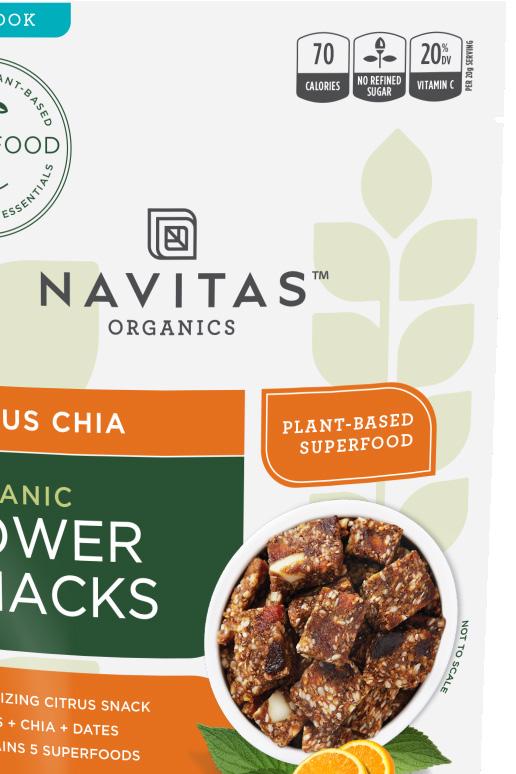
The healthy options in both stores can add beneficial nutrients to your diet, and it is nice to have a fairly diverse range of healthy foods right on campus. But convenience unfortunately comes with a cost: the food in these stores is a lot more expensive than what you can find off-campus. I came across a cereal brand in City Co and Buick Street Market that was sold for $9.89 per bag, but if I were to venture a mile away from BU, I could buy the same product for $7.99.
Despite the price tags, the on-campus stores are a good choice if you want to buy food quickly, if you don’t feel like leaving campus, or if you have extra convenience or dining points to use up before the end of the year.
The Buick Street Market is located at 10 Buick Street at the bottom of Stu-Vi-1. City Co has locations at Warren Towers, the George Sherman Union, and Sleeper Hall. All of the stores accept convenience and dining points.
Over the past couple of years, there has been a rise in international food trends. Social media platforms such as Tik Tok and Instagram have brought light to popular cultural treats around the world. Here is a list of some of these popular food trends in Boston, and places you must try:
According to a blog by Far Out, a popular New Zealand ice cream spot in Brookline, the ice cream is made with frozen fruit that is blended together by a special machine, giving it an ice cream-like texture. It can be a great healthy alternative to someone looking to increase fruit
Mochi has been popularized in many different forms including, with ice cream, a bean paste, and in donut form. Mochi donuts are a special delicacy, made with tapioca or rice flour, instead of regular flour. These ingredients create a chewy donut texture that you will never forget. Lucky for you, these tasty donuts can be found near campus at Pon de Joy, on Brighton Ave.
If you’re on social media, chances are you have seen an array of videos where people pull apart a crispy-fried outer layer, revealing a satisfying cheese pull. Korean corn dogs consist of a thickly battered hot dog or sausage, and sometimes with a layer of cheese. One of the closest places you can try this delicacy at is kimchipapi kitchen, located on Harvard Ave.

This stretchy ice cream was popularized a few years ago by an Insider YouTube video, which showcased the Republic of Booza in Brooklyn, New York. According to a Vogue article, the

Boba, also known as bubble tea, is a popularized Taiwanese tea-based dessert. Boba can be made with tea, or coffee, with milk, and the tapioca pearls soaked in a sugary syrup. The tapioca pearls are what boba is known for, as the balls add an additional chewy texture when you drink it. You can get boba on campus at Beijing Cafe, or off campus at Kung Fu Tea at one of its many Boston locations.


Social media is a very powerful tool. It connects people with friends and family all over the world. It is a place to store memories and share ideas, but it also creates unrealistic expectations. People often believe they must look or behave a certain way because of how people present themselves online. It is very easy to make your life seem perfect through a screen, and different platforms have made it easy to present these unrealistic features. For example, face tune and photoshop are often used on many influencers’ posts showing idealistic body types that are not real. Yet, they credit their features to new workouts, healthy diets, or trendy products. These photos across platforms make it even easier for people to compare themselves to these so-called beauty standards. When someone is dishonest about how they obtained a specific look and encourages their followers to try a certain product that may not work, those individuals spend time, money, and effort on something that may not show results or could potentially harm their physical and mental well-being.
Celebrities and influencers live fascinating lives that captivate their audience. Whether it is wealth, elaborate events, or once-in-a-lifetime opportunities, these unique characteristics capture the attention of others to keep them coming back to their social media accounts to

hold over their followers, where they can promote a product in a simple Instagram story and thousands of people will feed into the impulse and immediately buy a product they may not need. If someone is promoting a product like a supplement that will help you lose weight, it sounds enticing. Drinking one glass of water and powder every morning and see results in a couple of weeks, how easy is that? However, the reality is that these influencers are getting paid to say these wonderful things, so how do you know if it is even true?
The popularity of TikTok has increased the power of influencer marketing. However, these short-form videos only show 30 seconds, one minute, or three minutes of someone’s life. Reality is easily cut out. Many accounts post healthy recipes or easy workouts, guaranteeing that their chosen method will produce results as it did for them. There are multiple issues with most of these videos on TikTokl; these people are not just doing this one workout or eating the same meals every day, they are doing a combination of things to stay healthy in order to showcase their fit aesthetic. Even if they are only doing the service they are promoting, just because it works for them does not mean it will work for you — everybody is different.
can twist the truth behind eating habits, I thought back to the lifestyle Youtubers I would constantly watch during the 2010s, such Bethany Mota, Alisha Marie, and Rclbeauty101, just to name a few. Many YouTube trends at the time included what I eat in a day videos and five-minute healthy breakfast, lunch, or dinner ideas. While it may not be the intention of these videos, at a very young and impressionable age, I started looking at what I was eating every day and comparing it to their “healthy” routines. I would then continue to try and make their different snacks for myself, under the impression that I would be like them if I ate like them. Social media can easily shape the minds of young children and adults just by self-comparison. However, these types of videos can be easily edited, and the audience never really knows if this is exactly what they are eating or if it is just a video idea to get more views.
One supplement brand I have tried is Plexus Slim, a powder you mix with water 30 minutes before your meal to suppress hunger, which they market for weight loss benefits. This was a product I enjoyed using because it tasted yummy, and I felt good when using it. However, the price is a large downside to these types of products, even if they work. Depending on where you purchase the product, Plexus Slim can range from $80 to $100. It is incredibly expensive for just 30 packets, and if you enjoy it, you run the risk of spending hundreds of dollars. I have also tried ActivateYou Morning Complete, a daily wellness drink. This product retails for $80 on their website, but you get a large amount of product compared to Plexus Slim. However, the flavor of this product is apple cinnamon, and I could only consistently take it for a week until I got sick of chugging it as fast as I could because I could not stand the taste. I definitely did not take it long enough to see any results.

Supplement culture is another sector that constantly gets promoted on social media. Five minutes rarely go by while I am scrolling on social media, where I do not see an ad for a nutrition supplement. One that I see more than others is Bloom Nutrition. I have never tried Bloom Nutrition, but influencers promote the powder as if it is the holy grail item of a healthy lifestyle. I am not interested in trying the item, because I worry that it will be easy to develop an unhealthy fixation with the product solving all my problems regarding healthy eating. Even if it is beneficial, you still need to do a plethora of other things to maintain a healthy life.
Everyone’s relationship with food and a healthy lifestyle is different. The most important thing is ensuring you are doing things correctly, so you are not accidentally harming yourself. When we first went into lockdown for the COVID-19 pandemic, my TikTok page, like others, was filled with different at-home exercises, daily walks, and healthy alternatives to different dishes. A couple of weeks into being at home, I kept seeing one term when it came to losing weight, and that being a calorie deficit. The general idea of being in a calorie deficit is that you burn more calories than you consume throughout the day. There is a

healthy way to do this, and it is how you can successfully lose weight. However, anyone can post on social media, not just professionals. I would see different accounts explaining how to calculate your personal calorie deficit properly, but they would contradict each other. I picked a random video and tried it for myself, but this led to under-eating. I would skip meals if I felt like I did not exercise enough, which meant I was not burning enough calories, and in my head, I needed to eat fewer calories. From here, I started reading the calories in everything I ate and tracking what I consumed in an app. I regret listening to TikTok and doing a calorie deficit in this way, because it changed my appetite for a while. At times of the day when I would typically get hungry, I no longer did because I was training myself not to eat full meals. These trends can cause severe damage. If you are trying to lose weight, tone your body, or just eat healthily, make sure you are doing it in the right way, and talk to a professional if you need guidance, do not just look at social media.
Social media can be a great tool, and many people use their platforms to share helpful information and give a voice to those struggling to be heard. However, it can be a place of negativity through online bullying, passing judgment, and sharing misinformation. When it comes to your health and eating habits, it’s crucial to ensure you are doing it correctly so you do not harm yourself. Trends come and go. People want to share their own journey and what helped them, but their motive may be to gain followers, not to help people’s physical or mental well-being. I have been through my fair share of ups and downs trying the new “best” workout and eating as clean as possible, but for some people being so strict makes it even more complicated when you have those cheat meals, and you feel guilty for doing something that was not recommended. The relationship between food and social media can be fun to explore through new recipes and encouragement to try new cuisines you have never tried before. However, trends and editing can create a hostile and unrealistic space, so it is essential to recognize the fabrication that takes place behind the screen.

For most, the transition from the end of one month to the start of the next is insignificant. Not for me. The 1st of every month marks an important day: the creation of a new “monthly playlist.”
It is quite a simple task. The playlist is titled the current month, and its cover image, as well as the selected soundtracks, are chosen to encapsulate the creator’s emotions throughout the span of those 30 days. For example, your “August” playlist may have an image of yourself at the beach with sand in your hair, and the songs may be upbeat and carefree, eliciting sensations of hot summer night drives or the intoxicating smell of sunscreen. In contrast, your “October” playlist may feature an image of a poorly carved pumpkin accompanied by melodic

tunes that evoke that first sip of hot coffee or cable-knit against your skin. As you add more and more songs to your playlist, you end up with the soundtrack of your life for that month.
There is more merit to monthly playlists than just an easy go-to choice when choosing music for a road trip or a stroll to class—it provokes memories. Just like journaling, writing down what happens to you for purposes of recollection or personal reinvention, monthly playlists allow you to look back on your mental state, emotions, and memories tied to song. I know that if Mitski made up 90% of my monthly playlist then it was a rough one…
Interestingly, monthly playlists don’t have to be a solo pursuit. One of my best friends and I have spent many car rides listening to each other’s picks of the month, exchanging songs with one another and backstories as to why they made the cut. I have her to blame for Yung Gravy’s appearance on my “July” playlist.
Monthly playlists have changed my life. Now as a freshman in college, I’m appreciative that I can skim through the playlists I created in high school and see how much I have evolved, how much I have learned, and how much I have stayed true to heart. If I were to click on any song last “June” it would transport me right back to the time of graduation—a state of utter ease, excitement for my next chapter, and gratitude for the last moments with my hometown friends. “September,” on the other hand, was a bit of a Mitski month.
Next time the first of the month strikes, begin to add your favorite current songs to your platform of choice (I personally recommend Spotify). As the month progresses, add more and more songs that represent you at this time in your life. You’ll end up with a memory-packed gift for your heart, soul, and ears that you can listen to for years to come.
Photo by Amanda HessWhen artists like Phoebe Bridgers and Mitski reach the mic, the result is terrifying — and, for their fans, comforting and beautiful.
by Addison Schmidt Illustration by Katie Tarnutzer Design by Emma HillI saw Phoebe Bridgers live in concert at the Governors Ball Music Festival in Randall’s Island, New York at the very end of the summer of 2021. Bridgers, while popular, had not quite reached the level of fame that she has today. Her stage was timed around the same slot as Megan Thee Stallion and Aminé, and I figured, naively, that the crowd would be relatively thin. I was wrong—bodies filled the crowd, packing my friends and I hundreds deep, thronging towards the front of the stage. Teenage girls and confused parents and reluctant boyfriends pressed into each other as the countdown to Bridgers’ appearance began.
I glanced to my right: a girl my age, crouched down on her heels, a pair of wired headphones in her ears as she pressed play on “Motion Sickness,” one of Bridgers’ most popular songs. She was doing the kind of crying that most people would reserve for a private moment: full, heaving sobs as she pressed her hands over the earbuds. The second Bridgers appeared on stage, she sprang to her feet, ripped her earbuds out and began to sobscream along to the song.
I glanced to my left: three bewildered twenty-something men looking around at the crowd, clutching their beer cans like lifelines to the practical world. One of them looked at the girl, then at the stage, then at me, before finally turning to his friend and yelling over the crowd: “Dude, why the fuck is everyone crying?” It was only then that I realized I had tears in my eyes too.
Bridgers concluded her first song and stepped up to the mic exclaiming, “This one is for
anyone who’s ever had to call Child Protective Services on their parents!” We all—the girl, the three boys, my friends, myself— shared a collective glance and screamed back.
This is not to rag on my parents who I, quite fortunately, never did have to call CPS on nor to simply relive the memory of the concert, but to call upon a phenomenon that has enveloped a new generation of musicians: the use of terror within music as a means of connection. Donning skeletal costumes and her trademark haunting voice, Bridgers brought the crowd through a frightening range of emotional introspection, employing fear and grief to both lower and heighten the crowd. The lyrics of her songs, as well as their toned-down melodies, offered a paradoxical existence to the experience that was her show. We were reveling in her tragedy all at her request.
Bridgers is one of many in this newly popular wave of musicians, all of whom seem to call upon a specific subset of their lives for divine inspiration: personal tragedy. So many artists lay down their souls for the sake of a heart-wrenching track, including Bridgers in the band boygenius, her collaboration with fellow alternative artists Julien Baker and Lucy Dacus. They bare their souls to the listener but also invite the listener to do the same, offering lyrics rich with metaphors and devastating introspection. Artists such as Mitski and Elliot Smith—Bridgers’ inspiration behind the title track of Punisher— employ similar tactics within their music. No emotion is off limits. No amount of vulnerability is too much. No fear is left untouched.
Mitski said in an interview with The Guardian in Feb. 2022. This metaphor can be explored further—the “black holes” of these artists have become more than dumping grounds for surface-level emotions, tears over an ex-fling or other petty rejections. Their complexities delve deeper as artists like Mitski and Bridgers have become otherworldly beings, unintentional deities guiding a growing number of fans through one of life’s most difficult processes: the tragedy of simply existing. This tactic is what sets these artists apart from other musicians within the pop-alternative genre. There is a twisted kind of comfort in listening to Dacus’ wail in “Night Shift,” or Bridgers’ scream in the final minute of “I Know the End,” the apocalyptic finale of Punisher. One can interpret her song in a physical way, as an evaluation of both the fantasy of the Wizard of Oz, and the grueling challenge of getting older. But it’s almost more enjoyable to allow these songs to envelop you in


another way—to hear their unbridled cries and their grief and interpret them as uninhibited catharsis. To use them as a shield to see you through whatever emotional ill is plaguing you.
It is easy to write these artists off for what they present at the surface level—to market Bridgers’ “I Know the End” as discomforting, Mitski’s “I Bet on Losing Dogs” as bleak. The first time I played my mother “Miss Misery,” by Elliot Smith, she turned it off with an unpleasant frown. There was already enough misery in the world and she didn’t need to listen to someone singing about it. And maybe there is a point to that perspective. There’s no problem with equating music to a facilitation of comfort, a means of escape from the very subjects musicians such as Bridgers explore. But what if these artists have stumbled upon a method of dealing with the grief of their lives in a way that actually contradicts many popular opinions held about their music? Consider this instead: through the songs of artists like boygenius and Smith, fans can cope with sadness by following a route that goes through its processes, not over or around. This confrontation of terror is a challenge, to ourselves and to the outside forces that threaten to terrify us into submission.

It’s far from relaxing, I can’t say that listening to “Funeral” feels like a warm blanket, but these songs discomfort the reader in a way that renders the terrifying uniquely beautiful. In this way, the listener is able
to accept their heartache as the artist has. Grief takes on a melody and suddenly, the unavoidable feels far more acceptable. If you listen hard enough, their tragedy might just allow yours to feel harmonic too.
no emotion is off limits. no amount of vulnerability is too much. no fear is left untouched.
“I’m like the black hole where people can dump all their shit, whether it’s a need for love, or it’s hatred and anger,”
 by Erica MacDonald | Design by Emma Hill
Lisa Marie Presley: daughter of the King of Rock ‘n’ Roll, musician in her own right, philanthropist, and the eponym of one of the first privately-owned celebrity jets. Her name deals in legend and legacy. Born the closest thing to American royalty, Lisa Marie was never afforded anonymity nor the bliss of the mundane—heavy is the head that wears the crown.


It may seem impossible to think of father and daughter in their own, separate rights. Elvis is a global, multigenerational household name; he is one of the most famous people to ever live.

The Presley’s family home, Graceland, has been meticulously preserved and
spawned a modern pop-culture Disneyland across the road. Devoted fans, tourists, and local Memphians can see everything from Elvis’s stables, to his army fatigues, to his final resting place in the meditation garden. Likewise, Lisa Marie’s entire life has been memorialized—her early years turned to placards on the walls of Graceland, her career and philanthropy advertised in exhibits, and her personal tragedies followed at less-than-arm’s-length by the media. In January of 2023, Lisa Marie tragically died from cardiac arrest. She had just attended the Golden Globes to celebrate the Elvis movie, and was present at Graceland for the commemoration of what would have been her father’s 88th birthday. Although her family
had never disappeared from the limelight, in the months preceding her death they were headlining with a higher frequency than they had in years.
With the Baz Luhrmann film a hit with critics, audiences, and tiktok users trolling for AustinButler-accent content, the Presleys were fresh in everyone’s mind. Which meant the blow fell all the harder on the adoring public when Lisa Marie died at a mere 54 years of age.

Lisa Marie’s life was too often waylaid by loss. Before she was ten, her father died—sending her family and the world into mourning. Such immense grief often has nowhere to go, and when it’s paired with celebrity, it can mean a lifetime of headlines, memorials, re-released tracks, collector’s editions, and public anniversaries. For the family, and Lisa Marie the sole heir of her father’s property and fifteen percent of Elvis Presley Enterprises, there was no reprieve from the fame and the name. It’s no surprise that Elvis has the most gold records of any artist (101) or that he’s in multiple music halls of fame, but his honors supersede the music industry—he was posthumously awarded the Presidential Medal of Freedom in 2018. Both things are true: Elvis died too young, and Elvis is immortal. Both things are true: Lisa Marie lost a father, and the world lost a music idol.
Lisa Marie was married four times and had four children, two by Daniel Keough (her daughter Riley and her son Ben), and twins by Michael Lockwood (Harper and Finley). Her second marriage was to pop icon Michael Jackson, and when her ex-husband passed in 2009, Presley was gutted. Her love for him survived their divorce, even though the drugs and doctors that occupied great space in Jackson’s life reminded her of the traumatic conditions of her father’s final years. Regrets about their relationship—things she didn’t try, calls she didn’t make—followed Lisa Marie. Jackson’s passing was yet another heartbreak.


Lisa Marie is survived by her three daughters. Her son, Benjamin Keough, tragically committed suicide in 2020, and now rests across from her father in Graceland’s meditation garden. Lisa Marie, in an article she wrote for People, said “My and my three daughters’ lives as we knew it were
completely detonated and destroyed by his death.” The loss of her child was unimaginable. At the time of her death, Lisa Marie was very much still grieving, and her ex-husband Daniel Keough had moved into her Calabasas home while they mourned their son. Keough performed CPR on Lisa Marie the day she died.
Despite the immense losses she suffered, Lisa Marie was a survivor. She made a family for herself. She grappled with the addictions that plagued her father. She had a music career to be proud of. She created The Presley Foundation, a philanthropic non-public organization. And sadly, she had hoped to do so much more, personal friend and grief counselor David Kessler told Rolling Stone.
It’s hard to talk about Lisa Marie without addressing the dark clouds that haunted her life—they’re fearsome and famous. But Lisa Marie herself was never one to run, not from the weight of her father’s legacy nor the tragedies that followed her most of her life. “Lights Out” from her 2003 debut album To Whom It May Concern foretells:
“Someone turned the lights out there in Memphis Ooh, that’s where my family, They’re buried and gone, oh yeah Last time I was there I noticed a space left, oh Next to them there in Memphis, yeah
In the damn back lawn.”


As women in college, there’s one closet staple that’s instantly recognizable, always referenced, and constantly sought out: the going-out top. Regardless of where that outing is—a club, a concert, a sweaty basement on Pratt Street—the shirt’s purpose remains the same. Maybe it’s well-fitted with a sleek high neckline or dips low with draping silk fabric. It should be flattering, perhaps revealing, and generally slutty. When we, as college girls, look for a top to go out in, we might not explicitly say it aloud, but that is what everyone’s looking for. And after much internal debate and struggle, I’ve decided that no one should be ashamed of that.
I remember a conversation I had with a friend last summer before we moved to our respective college towns, and “going out” clothes came up. She candidly told me she would “never be one of those girls” who sacrifice a cute outfit for something slutty. From an aesthetic perspective, I understood. Fashion is
fashion no matter the situation, and style, to some, will always be a priority. However, something was striking about the tone and the almost finger-pointing hidden in her words. When I came to college myself and the time came to “go out,” her words remained in the back of my mind. I wanted to dress in a flattering way, but if I went over the top or wore something that looked just slutty and not chic or interesting in any other way, that was wrong. Wearing something physically revealing just for the sake of it was just embarrassing, I thought deep down. A cute pair of jeans and a flattering tank top were cool and stylish, but a corset top with lace and a built-in pushup bra was too much. It was easy.
My friend is not alone in her feelings, of course. Some may even call her more of a feminist than I am. However, the idea that women can be “too slutty” or “too much” — even when, like in a party setting, it’s culturally appropriate — comes as a defensive measure from the oppressive male gaze. If you’re putting yourself out there physically, you’re conceding to what men want, and thus, you look ridiculous. You are silly, desperate, and some may even say, setting women back. No one will take us seriously if we can so easily surrender to what the male gaze begs of us, some feminists think.
However, this message fails to acknowledge the actual feelings and thoughts of the women wearing the clothes themselves. I can’t argue that the male gaze does not exist and that when college girls wear a lace corset to go to a fraternity party, they’re not playing into something much bigger than them. Of course, they are.

But, contrarily, how does the woman herself feel? That matters. That feeling exists in a much larger, more complicated series of constructs and history, but the individual’s emotions exist.
The reality is that the male gaze has infiltrated our lives. I don’t know what it means to be a woman or feminine in the absence of the male depiction of femininity because the female image is constructed solely by men, to begin with.
I don’t mean to play feminist theorists, but it’s not hard to see how our lives are deeply affected by the male gaze in ways we don’t realize. Our perceived self-confidence is fashioned directly by years of understanding what is praised and unacceptable or praised and glared at.
I was discussing this with a friend not long ago, and she
Photo by Sophia Kyselagave the perfect example: sleeping in something more revealing for comfort, not to impress another. “I always sleep in a tank top because I just feel better about myself,” she said. “It’s not that I’m sleeping with someone else or I’m trying to look good or something. It just makes me feel good.”
Some may argue that resisting these urges and accumulated influences is worth it and that by leaning into the male gaze, you’re perpetuating objectification.
First and foremost, objectification, by definition, requires another party. Sleeping in a tank top or silk pajama set is not objectifying to oneself the same way it’s not objectifying to take a shower naked. Further, if I receive any response to an outfit from another, it’s the fault of the other party and that party alone. Just as an assault victim’s outfit cannot be blamed as the cause of their assault, I cannot be blamed for the reactions of another. If a shirt is offensive, arousing, or disturbing to someone,
those feelings are the other person’s feelings to cope with.

Secondly, resisting the male gaze requires active work, and frankly, that work can often feel insignificant and uncomfortable. If I were to say, choose to dress androgynously to a frat party, it would feel odd and out of place given the trending styles. More importantly, the quantitative impact of that statement would be impossible to measure. Even if my entire sorority, for instance, were to ditch the little tops for something more conservative, what would the impact be? Would we be looked at any less as potential hook-ups by the men we mingle with?
Most importantly, I question the feminist language that looks down upon sluttiness in the first place. When women describe others as slutty, too revealing, or too much, is there not an underlying message that women need to be contained? Why should I, a young woman in my so-called prime, contain my sexuality, skin, and body parts? Any message
that suggests women should be bound should, I believe, be questioned for its roots. Internalized misogyny is a real and powerful force, and we should analyze even the most devout feminists for their real intentions in liberating women.
As young, aware women, we should cut ourselves some slack. Sexual liberation in a misogynistic world is difficult, if possible at all. We can only take on so much. Our physical appearances are powerful and always hold political meaning, but dismantling the male gaze is not possible with the actions of the individual. If an item of clothing feels right and good, I say wear it. Everything we do as women is influenced and constructed by the male gaze. At the end of the day we might as well embrace it. All the while educating ourselves and becoming the best women we can be.
“Just as an assault victim’s outfit cannot be blamed as the cause of their assault, I cannot be blamed for the reactions of another.”
Maybe a year or so ago, in a candid but light conversation with my boyfriend, I asked at what age he realized what masturbation was. He looked puzzled. “Jerking off is in movies and shows and everywhere,” he replied casually. “There’s no ‘figuring it out.’ I always knew.”

This conversation may have been nothing to him, but to me, it was a revelation. I had assumed it took everyone a long time to understand their bodies. My close girlfriends and I had always laughed about figuring ourselves out as young teens and the guilt we had carried for feeling at all sexual. One friend of mine even told us once, dying of laughter, that after experimenting with masturbation just slightly, she sobbed to her mom that she felt so awful about it that she wanted to harm herself. It’s awful, and a little morbid, but I always figured this sexual shame and misunderstanding had to be a common human experience.
But, no. Even in our supposed progressive, “girl-power world,” generations of women continue to grow up with little understanding of their bodies due to a disproportionate purity culture that treats the female body as though it’s built to expire. If our goal is to progress and defy this dominating culture, our media, education, and intrapersonal dialogues must evolve rapidly.
Women are often not taught about the inner workings of their bodies and sexualities due to what’s considered taboo; however, when what’s taboo for women is not the same for men, that seems to indicate that taboo stems from misogyny. In this case, it is.
Historically, women were encouraged to be “virgins” to promote loyalty to their husbands and prevent adultery. In the Bible, the image of Mary, who gave birth to Jesus supposedly without having sex, is celebrated and idolized — an impossible and enduring standard ingrained in society for generations. The aesthetics and morals associated with a nonsexual woman giving birth to history’s most powerful figure continue to show themselves in our world. Western societies expected women to devote themselves entirely to their husbands, just as Mary did to God.


A woman devoted to her husband, thus, should do so entirely to that impending life partner. Therefore, she should not have sex until she is married. Laws held this societal standard in place through property and inheritance legal protocols that ensured women only gave birth to their husband’s children.
We may not have these outdated laws today, but virginity culture still has a chokehold on our lives. The idea of the young, virgin girl is sexualized heavily in songs, media, and, of course, pornography. The language surrounding virginity is almost always

negative. Additionally, the ways in which people view losing one’s virginity: when heteronormative, reproductive sex occurs, is out-of-date. To many, virginity is limited to traditional confines and is only relevant to women. However, there is many different types of sex that exist between many people.

Regardless, virginity culture continues to find steam, most notably during the rise of purity culture in the 1990s. With intense fear circulating the AIDS epidemic and teen pregnancy rates, the evangelical church took hold of impressionable teens with the allure of purity. Church purity pledges encouraged teens to save themselves for their future spouses. Many young people wore purity rings as an indicator of chastity. Celebrities like Miley Cyrus, Demi Lovato, and The Jonas Brothers even sported them through the 2000s. The estimated reach of the movement was over 2.5 million teens worldwide, according to the New York Times.
This culture is damaging, and the values instilled by purity culture often impact women for the rest of their lives. Even those who eventually denounce the church and its values find it hard to stop associating sex and sexuality with the principles they internalized early on.

Linda Kay Klein, the author of Pure: Inside the Evangelical Movement that Shamed a Generation of Young Women and How I Broke Free, explained in a 2018 interview with Elle that purity culture teaches women to be entirely non-sexual until marriage and then become incredibly sexual to reproduce and to meet her husband’s needs.
“People don’t have a light switch,” Klein explained. “You can’t have internalized all of this deep sexual shame your entire life and then all of a sudden, snap your fingers… Releasing all of that shame takes a tremendous amount of hard work.”
It’s fair to assume, though, that many do not do the hard work to correct past teachings and that many men and women never end up believing purity is wrong in the first place. Our world has become infiltrated with these ideals and their remnants. Many no longer refrain from sex until marriage or use the word “virginity” with as much emphasis, but we all —women in particular — feel the weight of sexual shame on our shoulders. We don’t yet live in a world where sexuality, sex, and masturbation are celebrated or even talked about neutrally. If anything, purity culture has made discussing sex and sexuality all the more taboo. Those who are truly progressive and care about ensuring a better experience for our children must look at this truth head-on and figure out what a world without our current connotation of sex looks like.

The most powerful tool to combat our sexually frustrated world is undoubtedly education. Sex education in the United States is unbelievably lacking for a country that’s supposed to be the world’s trailblazer.
According to Planned Parenthood, only 39 states mandate some form of sex education in their curricula, and within each state, individual school districts decide when and how to teach sex education. Of those 39 states, 37 require some mention of abstinence as a means of preventing pregnancy. Teachings about birth control is a requirment in only 18 states. Encouraging abstinence as the only means of birth control has been not only proven to be ineffective but also shown to be unethical and shame-inducing, according to Columbia’s Mailman School of Public Health. And, of course, the burden of birth control falls on the shoulders of women, even when their state can’t do them the decency of educating them on it.
Sex and sexuality are a part of our wellness as humans. The culture we exist in should not be allowed to dominate this fact all of the time.
The CDC recommends schools to instruct on 20 general topics, and less than half of high schools and fewer than 20% of all middle schools touch on all 20. These subjects are not revolutionary in the slightest; basic information on STDS, puberty, and intercourse is not reaching teens nationwide at a proportional rate or even at all. The scariest part is that sex education is now statistically worse than in the 1990s, coincidentally when purity culture reignited.

Sex education within schools must improve. There is no other feasible way for our culture to evolve to be sex-positive or sex-neutral. When we decide whether these topics are taboo, sensitive, or private, teenagers fail to learn about their bodies and become at much higher risk for sexual assault, pregnancy, and sexuallytransmitted diseases — especially young women. Sexual education does not necessarily need to be nationally standardized, but it needs to be taught everywhere with some degree of thoroughness.
The legislative future is not promising, but the dialogue surrounding sex education can and should evolve. We should all make the individual choice to change the way we’re used to talking about sex and the way we teach our children about sex. According to the American Academy of Pediatrics, only a third of American teenagers have ever been asked about sexual wellness by their doctor. And those conversations usually last less than 40 seconds. Why are we so scared to talk about sex?
When a child asks about something related to sex and receives an answer communicating some hesitancy, they’re learning that something they’re asking must be wrong. When a child is taught nicknames for their body parts, they perceive that the real names for their organs are too vulgar to be said aloud. Sex and sexuality are a part of our wellness as humans. The culture we exist in should not be allowed to dominate this fact. A sense of honesty surrounding sexual dialogue could do wonders for the individual’s experience with sex and wellness if only we allow it.

Women do not share a common sense of sexual guilt because it is inherent; we share it because it is taught. Compounded over centuries and all the fads within them, women — and men, to an extent — receive the message that sex is unnatural and undiscussable. But it’s not. We must acknowledge this reality and actively choose to raise a new generation educated on their bodies and the true beauty they are capable of.


It’s no secret that “pretty people” have a bit of an upper hand in our world, as opposed to those who don’t necessarily check all the beauty standard boxes. But what defines that standard? Is it someone’s hair? Their skin? Body type? What about facial features?

The establishment of what is conventionally attractive in Western society today dates back to the lives of the celebrities who seem to be setting the bar in its impossibly high current location. In the 1600s, a French physician named François Bernier conducted work that sociologist Sabrina Strings explains in her book, Fearing The Black Body, as “the attempt to pin down fundamental physical differences between Europeans and non-Europeans, with an intense focus on the women in various categories. These differences were to serve as proof of European superiority.”
As you can imagine, an idea like this ever established as science would have extensive impacts, even four centuries in the future. Even at the beginning of the 20th century, cosmetics and beauty very closely meant whiteness. Companies in the beauty industry emphasized being thin, blonde, having untextured skin, and narrow features. These standards are considered “ideal” in our society not because every white person looks this way but because it allows for the exclusion of non-white people.
Beauty is subjective and influenced by the values of one’s cultural background; someone cannot be objectively good or bad looking, but our society has done well to overpower this truth by teaching there is a true physical ideal. This “ideal” was carefully constructed to serve as a weapon of white supremacy. In her book Thick, Tressie McMillan Cottom shares an

experience that I think highlights beauty as a social construct; she writes, “Unlike home, where much of my social world was filtered through my mother’s preference for African American history and culture, at school I learned that nothing was more beautiful than blond…A whole other culture of desirability had been playing out just above and beyond my awareness.”
It is true that, to some degree, beauty standards have changed over time, but only to allow a subtle shift in power for those already a part of the hierarchy. Only in ways small enough to ensure that non-white people remain on the outside, looking in.
The system does not allow for the nonwhite parts of someone to be contributing factors to their beauty. As Strings points out in her discussion of Bernier, “Nevertheless, he certifies Black women’s attractiveness by using the existing standard for white women: ‘aquiline nose, small mouth, coral lips, ivory teeth, large bright eyes, gentle features.’ In this way, the Black women who were good-looking could lay claim to that title only because of their similarity to the neoclassical ideal of Venus.” It is a person’s proximity to whiteness that is most influential in determining if they are “conventionally” attractive.
Studies have shown that “pretty” people are most likely to be perceived as intelligent, capable, and overall likable, earning the respect of others much faster than someone who is not considered “pretty.” This has tangible outcomes in daily life, including education opportunities, job offers and promotions, and even reduced prison sentences. So, it’s vitally important that we acknowledge and understand where the roots of our definition of beauty lie and that we’re careful not to brush over occurrences of white privilege
by offering a different title for it.
In the workplace specifically, it is very common that these biases are overlooked and mislabeled in this way. Black employees’ natural and protective hairstyles are so often perceived as “unprofessional,” that law had to be created banning hairstyle discrimination. Meanwhile, I have shown up to work in the messy bun I slept in and received nothing but compliments. My coworkers and friends who I spoke with about this have attributed it to my “pretty privilege,” but I know if my hair was a different color and texture, my unkempt look would not have evoked the response that it did.
To beclear, acknowledging what you find beautiful about someone who happens
There’s something about the obsession we develop with our ex’s new girlfriend. The obsession is never really about the girl; more likely it’s about you and your insecurities.

As an insecure person, being dumped made me obsessed with pinpointing the exact quality that made me disposable. I thought I could find that explanation in his new girl. It makes sense, right? He didn’t want to date me, but he wanted to date her; meaning, there is some quality I lack that she doesn’t. So, being a logical person, I tried to identify my fault so I could improve upon it.
I looked her up on Instagram.
It’s weird; I didn’t even feel threatened by her. I was just confused; she looked nothing like me. Was I even his type?
I am undeniably Black; I have kinky hair, ethnic features, and dark brown skin.
She was… Black? She had loose curls, Eurocentric features, and light skin. She’s what Pop Smoke meant when he said, “I like my b—--es redbone … Lightskin, yellow.” I only knew she was Black because she attends an HBCU.
My friend said it best: “She’s not prettier than you; she’s just racially ambiguous.”

That’s when I realized that I didn’t lack anything, rather I had an abundance of something: melanin. And when a boy goes to an HBCU, surrounded by a ton of other colorist Black men who feel the same way, attaching attractiveness to lack of pigmentation, that boy succumbs to peer pressure. He dumps his girlfriend for a fucked-up status symbol.

My ex made it clear throughout our entire relationship that he, like most Black men, is a colorist. Colorism is a phenomenon in which lighter skin people are treated more favorably, especially within an ethnic group.
One time he held me, looked at me like I was the most beautiful thing in the world, and called me his “little light skin.”
I am not light skin. However, in that particular lighting, I suppose I looked light. In that particular lighting, he thought I was beautiful and felt the need to mention my skin tone because he associates skin tone with beauty.
Black men’s colorism stems from internalized racism and selfhate.
My ex always got offended and defensive when someone called him darkskin — as if it was an insult. One time he showed me a baby picture of him, in which he looked super light because he hadn’t gotten much sun yet, and said, “I miss light-skin baby me.”
My ex’s friend said he wanted to loc his hair, and my ex told him not to, saying, “Don’t do it. You have ‘good hair.’” Good hair is an offensive term describing hair that is looser curled as more desirable and implying kinky hair is bad. My ex has locs. So, he must think his kinky hair is “bad” enough to loc.
Photography by Chika OkoyeHow Black Men’s Internalized Racism is Ruining Black Women’s Self Esteem.
she’s not prettier than you, she’s just That’s when I realized that I didn’t lack anything, rather I had an abundance of something: melanin.
Many Black men feel this way. Think about the number of Black men who have significant others who are darker than them. Think about the rap lyrics that praise light skin women. Think about how Chris Brown reportedly denied Black women entrance into a nightclub for being too dark. Consider America’s trendsetters: the Kardashians. The Kardashians have fetishized racial ambiguity by producing an entire generation of mixed-race babies.
The examples are endless.

I care about Black men’s bad self-esteem because they project it onto Black women, and that makes Black men just as bad as the white people who set Eurocentric beauty standards.
Black men are making Black women insecure about their Blackness. It bothers me that Black men are making Black women feel the same way white people make Black people feel when they say our hair is unprofessional or compare our ethnic features to monkeys. I care that my ex made me insecure about something I was never insecure about before; he made me afraid I was too Black to be loved. During our whole relationship, I was

“Your nose is so big and long for your face,” kids would say to me on the bus in elementary school, referring to my hooked, aquiline nose. Wait, but I was white. American. Just like them. Why did my features stick out? And why did they stick out negatively? Why was I being made fun of when I looked just like them? I mean...we had the same skin color after all.
When I was a little girl, I never understood the concept of European ethnicity in America. I thought that white people were just...American–the standard, true-blood American. And anyone who didn’t have my skin color must have originated from another culture. Those people have non-American ethnicities, I thought because they didn’t look like me.
Growing up white it was easy to fall victim to the mental trap that the default American is Caucasian, regardless of their European ethnicity. In my juvenile mind, all European ethnicities were just blended to create what an American should look like, and any people of color were “foreign” to the United States. It never crossed my mind that the Americans that didn’t match my race were not the only ones to have ethnic backgrounds, “non-American” ethnic backgrounds, to be precise.
I eventually learned that white Americans have German or Italian or French roots, and therefore, none of us are “trueblood” – but didn’t we all look more or less the same? Similar to how most white Americans struggle to distinguish between various Asian nationalities and subconsciously stereotype all Asians as being one, united race, I thought that all white people in America were also lumped together as one.
My nose is Jewish. I am ethnically Jewish. Jewish people identify as white. White is what I thought was the default American.
Why was I being ridiculed for my physical appearance when I thought all Americans of European descent were in the same boat? It never made sense to me, how only the Indigenous people of America were truly American, yet somehow certain European ethnicities look more
“American” than others. After this realization, I pondered the thought: What does it even mean to look American, then?
The psychology behind me being mocked for my physical appearance is that I didn’t match the beauty standard for a classic American. My features stuck out. Being of white European descent, my characteristics should have corresponded to the ideal of beauty, but America is built on irony and hypocrisy. Why are Americans of Jewish origin treated as less of an American than those of Italian or Irish or Swedish descent?
I then realized I wasn’t just picked on on the elementary school bus, I was racially profiled with anti-semitic motivations.
You may be thinking, how can you label a naive, little kid as having morals backed by racial discrimination? Through my cultural exploration journey, I have learned that it all starts with the racial morals taught at home. It starts with how white America has created false narratives of social norms that claim
that all white people share the same beliefs about their race.
Parents rarely think about the implications of their white children’s words to other white children about their cultural features. I don’t even think all parents understand that their white children can have cultural features. They think, how is it possible for my kids to discriminate against their own race? Aren’t they the same amount of “American?”
According to a survey by the Pews Research Center, more than 90% of American Jews think there is at least some anti-Semitism in the country, and 75% say it is worse now than it was five years ago. Among the Jews who claim anti-Semitism has increased, the more typical explanation is that Americans who hold these views now feel more free to express them, rather than the belief that the actual number of Americans who hold these views has increased.


With every year that passes, it is becoming more and more normal in the US to openly treat Jewish Americans as less. I am not even religiously Jewish myself and have still experienced anti-semitism solely based on my physical traits. I still get snickers from people my age when I tell them that I have a strong Jewish origin as if they don’t take me seriously. They make me feel ashamed for my ethnicity even though they aren’t fully educated on Jewish values, morals, or culture. They stereotype me based on the image that Germans created about Jews, and the US adapted. It never made sense to me. I never understood how I can instantly be targeted for my culture in a derogatory way when I always thought I exemplified what an American should look like. Then, the narrative flipped.
“Your features are so interesting. What’s your ethnicity?” I would get asked 10 years later, once my innocent, child face developed into a woman’s.
“Are you Jewish? You’re beautiful,” I was told by an Orthodox Jew this summer at work. That wasn’t the first identification of my Jewish origin I’ve experienced. I was honored to hear people of my culture validate my features and acknowledge me as one of them. In those moments, I felt I was proud to ethnically stick out. I will never confidently say that I am proud to be an American, but I will always say that I am proud to be an American with such identifiable physical traits from my cultural heritage.
When the perception of my physical being evolved in the public eye, my internalizations of what beauty represents in America did as well. I realized that my ethnicity does have the ability to help define my physical beauty. I finally began to believe that I had the right to embrace my characteristics after feeling detached from and alone inside my race for so long. Now, I take pride in being told that my features are interesting. I feel empowered when people tell me that I look
“unique” for a white person. I feel seen, heard, and appreciated. I don’t want to fit a mold. I don’t want to be classified as “traditional.” I always had the drive to stand out in some way, and feeling acknowledged and even celebrated for my ethnic background allows me to feel that way. I feel giddy when another Jew lights up in realization of a distant genetic connection.
Today, I often think to myself: if kids that have the same skin color as me couldn’t appreciate or at least normalize what I look like, that’s fine. I never needed their approval. Being validated by my ancestors is the only approval I need and ever will need. When I think back on my path to self-acceptance, I realize that I was letting my confidence erode more and more with each time I was teased as a child for having “larger than average” features. All of those years, I allowed external forces to control my self-perception and destroy my self-esteem. I never understood for so long why I was made to feel isolated because of my physical presence when in my head, I looked just like the people that were making fun of me. It always seemed like the most counterproductive psychological loophole that I’ve ever encountered. I mean, how can anyone justify bullying a kid, let alone targeting their physical appearance, let alone falling victim to racial prejudice without even realizing it?


I grasped that every time I was being ridiculed, I was experiencing the ethnic stereotyping and profiling that white America is built on – the type of behavior that is not taught at home or in school but is already injected into kids’ veins. The United States of America is historically built on racism and ethnic discrimination. White Americans haven’t been able to shake their biases for centuries, which is why the following generations are also capable of racial profiling. As a result, white kids on the bus tease other white kids that look like me, without realizing any fault in their actions. It is plain wrong to bully a kid in general, but when it is done with racially discriminatory motives that go unnoticed, it becomes clear that America has a lot to internalize.
I still don’t know what it means to look American or to have “traditional features,” but at least I’ll always know that I don’t think of myself as “more American” now that my features have started to be perceived positively. I also know that every American has a cultural and ethnic background that deserves to be acknowledged, understood, and embraced. On this land, no one is any less American than another. Most of us that are currently breathing American air and standing on American soil are not indigenous. We can’t claim any culture to be our own. America is not one-size-fits-all. We are an influx of everything and everyone, and we should have pride in that.
The US has a long way to go and a lot to unlearn during the quest to reverse subconscious racism. But I believe in a tomorrow where there is no model of what an American should look like.
“I believe in a tomorrow where there is no model of what an American should look like.”

A look inside the Museum of Fine Art’s Art in Bloom Festival and its warm welcome to the spring season.

 by Sydnie Smith
Spring in Boston is a cherished feat. As the city awakens from a drowsy winter, Bostonians begin to emerge from their homes with the excitement of better weather, fewer layers, and outdoor living. Despite new forms of life taking hold, Boston weather seems to follow its own meteorological calendar and is less anxious to leave the clouds and cold behind. Luckily, the city makes up for its unpredictable weather patterns with a slew of indoor activities that provide a first glimpse into brighter days ahead. Nothing is more symbolic of spring transformations than the Museum of Fine Arts’ “Art in Bloom” festival.
This spring, the Art in Bloom festival returned to the MFA from April 28 to April 30 for its 47th debut. The annual event has brought a breath of fresh air into Boston since 1976 and recommenced last year following a three-year hiatus during the pandemic. This year’s celebration incorporated the floral masterpieces of 45 designers and gardening clubs across New England, whose creations complemented pieces of contemporary and historic artwork across existing MFA exhibits and greeted wide-eyed viewers eager to embrace the new season.
Visitors had the opportunity to stroll through galleries and admire the brilliant hues of modern floral design while absorbing the never-ending beauty of endless paintings, sculptures and 500,000 other pieces of art from the museum’s collections. Additionally, seasoned designers and curious curators alike attended special master classes, demonstrations, and lecture series on all-things floral design. Attendees could also bring the art home and put their potting skills to practice with self-design floral kits and colorful planters, the perfect way to liven up any space or windowsill regardless of the weather unfolding outside.
Art in Bloom is more than a one-weekend event: it’s a sign that the spirit of spring has returned with passion. Bringing together regional artists, community volunteers, and visitors within and outside of Boston, Art in Bloom puts the city’s vibrancy and creativity on full display. With so many mediums of human creativity blooming in one space, the festival is a genuine testament to local life forms waiting to burst from their winter dormancy. Whether or not winter coats find their home in storage bins and flowers descend from the Common, spring in Boston has already started at the MFA.
 by Grace Hawkins | Design by Emma Hill
When living in Boston, the MBTA is a daily part of everyone’s lives. Whether it be the T, the various bus lines, or the commuter rail, they are all essential to getting around the city. But, the glaring issues that plague the system have become more apparent in recent months.
In August 2022, the entire Orange Line, which averages 101,000 riders per day according to the MBTA, shut down for a month. Safety hazards and maintenance caused riders to seek alternate methods, like buses or bikes.
Recently, it was revealed that the Green Line moved so slowly in some spots, that it is possible to be outrun, moving at speeds of 3 miles per hour near Fenway Station on the Riverside Branch. These slow zones are supposed to be temporary during construction periods, but they have lasted for over 2 years.

It seems that every week in the news, there is some story about the failures of the MBTA. It’s been service disruptions, safety hazards at stations, and many other mishaps that have placed the transit system in the bad graces of Boston’s citizens.
Public transportation is meant to be a quick, relatively inexpensive, and effective way to bring people around their cities. It is clear that the MBTA is failing to fulfill these basic needs.
The Green Line runs straight through BU’s campus, alongside various bus routes, so BU students witness these issues on a daily basis.
“It’s really slow and takes forever to go from stop to stop,” said Danielle Witter (CGS ‘22, COM ‘24).
Witter also mentioned long wait times as another qualm with the transit service: “It should not be a 20-minute wait for the next train to come.”
Since the T is a common mode of
transportation for many students, it can also get overcrowded on train cars.
“I hate when it’s super packed and they open the doors anyways,” said Witter.
Public transport can also be a large cost for many. BU offers a semester pass at $320 for unlimited rides, but many choose to opt-out. Still, at $2.40 for a one-way ticket, it can add up.
There have been many solutions proposed to help make the MBTA more accessible and to ensure that it runs smoothly.
These include the recent shutdowns of various lines to try and improve their conditions. Also, Mayor Michelle Wu proposed making transit free during her campaign. Her administration also lowered fares on three bus lines that serve lowerincome communities, predominantly populated by people of color.
While these solutions would definitely be welcomed, there is still a lot of work to be
done. Compared to other transit systems in the U.S., like New York or Washington D.C., the MBTA has fewer riders, but often more delays.
“With policy,” said Maddie Starkey (COM ‘25), “I believe it can be fixed.”
One thing that could certainly help would be to expand the car sizes. Green Line trains often only have two cars, and sometimes even operate with just one. This can lead to overcrowding and an overall unpleasant riding experience.

A (very) recent change that has been made to the MBTA is that a new general manager has been appointed. Phillip Eng, who is an engineer with work experience in other transit systems, will take on the position and the issues the organization faces.
Even more maintenance is scheduled to begin on multiple lines of the MBTA in the coming months, but a lot more has to be done to fix this broken system.

“When Claudia looks back on that winter (as New Englanders can’t help doing), the days fuse together in her memory…She had no sense, at the time, of forces aligning, a chain of events set into motion. Like everyone else, she was distracted by the snow.”
In many ways, Boston is a city that lives in the past. Each day, countless Bostonians bustle down streets named after Franklin, Hancock, and Washington. We pass statues and buildings dedicated to figures of the past that jumble together like the glossary of a history textbook. For the populace in a city steeped to its cobblestones in history, what does it mean to live in the present? What can we see when we turn our gaze from the Boston of yesterday to the Boston we live in today? What troubles pervade our dear city, what are our collective hopes and dreams? Local author Jennifer Haigh seeks to illuminate these provoking questions in her new novel, Mercy Street.
Claudia, the story’s central protagonist, works at an abortion clinic in downtown Boston fielding phone calls and checking in patients. She makes her way each morning through a cluster of protestors before spending the day surrounded by expectant mothers and their loved ones. This was not the life she originally planned; she entered the working world as an assistant editor of a lifestyle magazine, a job provided by her boyfriend’s mother. Within a decade, she was divorced and working at Women’s Options on Mercy Street. This drastic lifestyle change, and what precipitated it, are contemplated throughout the book.
As an unmarried woman approaching middle age, Claudia struggles to find a purpose for her life in a society that highly values youth, fertility, and motherhood as cornerstones for the feminine ideal. Ever conscious and almost afraid of the impact her decisions can have on the overall trajectory of her life, Claudia is overly calculating when it comes to matters of her heart. After an unstable childhood, she prefers to live her life in organized steps, but this all changes upon her mother’s death just before the novel’s start. Without Deb, Claudia is unmoored. She seeks comfort in an old collegiate vice, marijuana, and is soon connected with Timmy, whose porch light is on even in the darkest hours of the night.
Photo from GoodReadsLocal author Jennifer Haigh discusses abortion, substance abuse, and mental illness in her latest novel.
Timmy, Claudia’s friend, confident, and pot dealer, quickly becomes another main character in Mercy Street. Absent father to a son in Florida, Tim’s life revolves around procuring, selling, and smoking marijuana. Spending most of his days under the influence, he lounges in an armchair across from his television and tells stories of his life to a revolving door of customers. Inspired by whatever daily news segment catches his attention, Timmy recounts adventures from his time in the Navy, laments about unpleasant vacation experiences, and gives updates on his car remodel that may never get finished.
In 2015, Timmy is an endangered species since Massachusetts lawmakers are set to legalize the sale and use of marijuana within the year. Both logistical and personal barriers stand between Timmy and a clean lifestyle, but with the imminent loss of his profession, he has no choice but to face these blockades head-on.

Haigh shows impressive strength in her character development capabilities through both Claudia and Timmy. Not only did she create compelling histories and storylines for the pair, but she plays on their personalities during the events of the novel in ways that make you root for their bond. Reading their thoughts and witnessing their interactions is like watching two asteroids float toward collision. The result: a brief but powerful burst of light followed by drastic destruction and rebirth as two beings are forever changed.
Claudia’s resilience and intelligence are evident through the way Haigh writes her speech; even the descriptions in Claudia’s chapters adopt her straightforward tone. A well-written female character should possess rough edges and imperfect attitudes, and Haigh successfully stepped up to this challenge. In her quest for control and social acceptance, Claudia constantly attempts to smooth out or hide these perceived imperfections to little avail. With Timmy, however, she is able to drop her guard.
In the places where Claudia is tough, Timmy is gentle. Some might say that spending his nights and days in a recliner has made him too soft to succeed in his line of work, but for Claudia and his other clients, Timmy’s serenity is the source of comfort they desperately need. Despite this, Timmy is often trying to mask his softness behind a gruff exterior. He mirrors Claudia in his struggle to fit within the bounds of “masculinity” prescribed by society. Haigh’s description of this shared experience turns Mercy Street into a commentary on the emotional distress caused by trying to live within the confines of social standards for those who naturally deviate from the norm.
As both main characters struggle with life changes and look to find a purpose, Haigh paints the city around them to be in the grips of its own identity crisis. Barely over a decade after The Boston Globe exposed the abuse scandal in the Catholic Archdiocese of Boston, Mercy Street depicts its lasting effects

on the population of “the most Catholic city in America.” Saddled with this heavy legacy, Bostonians must figure out how to return their home to the right side of history.
The concepts of legacy and history are frequent guests in Haigh’s writing. Prior to Mercy Street, Haigh’s 2016 novel Heat and Light received glowing reviews for its nuanced insight into the effects of fracking on a small Pennsylvania coal town. When summarizing her career as a writer in its review of Mercy Street, The New York Times describes Haigh to be “peering deep into the heart of lost America, sketching characters whose interests are at cross purposes but whose deep-seated deprivation binds them together.” Thus, readers who are looking to reflect on underrepresented areas of American society will find their perfect match in the stories of Claudia and Timmy.

With this in mind, the progression of the plot toward the end of the novel left much to be desired. Upon the introduction of Victor, the book’s supposed villain, Haigh deviates from her original characters to provide him with adequate exposition. In theory, this practice should help the novel move forward, but she leaves Claudia’s perspective untouched for too long. By the time the narrative returns to her perspective, the emotional connection between Claudia and Haigh’s audience has severely diminished.

This sacrifice might have been worthwhile if Victor’s storyline was as compelling as the other characters, but this was not the case. Haigh’s intentions with Victor are clear in keeping with her tradition of exploring many perspectives on “hot-button” issues. However, she tries to conceptualize the pro-life movement into one person, a feat impossible to achieve. This causes Victor to appear over-dramatic with drastic reactions that vastly outweigh their causes. His sudden obsession with Claudia after seeing her face in a cell phone video is the perfect example of this phenomenon.
Additionally, the thwarting of his plans at the conclusion of the novel by a devastating car accident lacked the desired feelings of triumph and justice that normally accompany the defeat of a story’s villain. Leaving the fate of the characters in the hands of nature and circumstance cost Haigh an adequate climax for such an interesting subject and introductory plot.
While disappointing, the conclusion of Mercy Street does not discount the significance of telling this story. One of the many purposes of literature is to reveal the harsh realities of daily life. Haigh’s reflections on the emotional intricacies of abortion, complicated familial relationships, the pressure to succeed in American society, mental illness in this modern world, toxic masculinity, and darker corners of the internet in Mercy Street help us readers to context ualize our world. It will be exciting to see what shadowed alleyways Haigh decides to traverse next.
“One of the many purposes of literature is to reveal the harsh realities of daily life.”
Jennifer Haigh by The Patriot Ledger


CAMPUS
Bella Chiarieri
Jenny (Yihan) Gan
Julia Goujiamanis
Siena Griffin
Ruby Lynch
Allyn Tucker
WELLNESS
Sophia Blair
Eva Fournel
Natalie Hickey
Richa Jindal
Allie Richter
Joy Xu
FOOD
Tyler Davis
Alicia Hamm
Amanda Healy
Mia Parker
Sophia Pasquale
Caterina Tomassini
CITY
Hannah Eaton
Grace Hawkins
Danielle Miller
Anna Ruby
Hollie Shuler
MUSIC
Carolyn Kravets
John Maniace
Andrea Morales
Addison Schmidt
Juliette Shea
Katie Tarnutzer
Analise Bruno
Rachel Dirksen
Anna Giblin
Manuela Garcia
Caroline Kawabe
TRAVEL
Caroline Faubert
Cameron Heffernan
Estee Langbord
Meg McKenzie
Zainab Zaman
CULTURE
Abby Balter
Chloe Jad
Amanda Healy
Avery Hellberg
Caroline Kawabe
Annie Levy
Anamaria Popovska
Rachael Dionisio
Sophia Falbo
Alejandra Jimenez
Anna McClean
Anna Thornley
Tess Adams
Lila Berger
Emily Chiu
Emma Hill
Polina Kharenko
Chelsea Kuo
Annie Levy
Stephanie Liu
Lauren Mann
Madison Mercado
Anvitha Nekkanti
Riley Pavelek
Tamar Ponte
Karina Yang (Chih-Ting)
Charlotte Wang
Valentina Vidal Carbrera

Andrew Burke-Stevenson
William Chapman
Xinyi (Cindy) Fu
Maya Geiger
Amanda Hess
Ria Huang
Sophia Kysela
Mark Michelini
Avani Mitra
Alex Neuman
Mia Peterman
Chang Xu Weir
Sally Zheng
Aditi Bharti
Tyler Best
Miguel Feliciano
Alyssa Doemling
Yanfei Li
Nylah Mulzac
Anvita Reddy
Maeve Sherlock
Xiaoyi (Kelly) Tang
Tia Perkins
Kyle Chen
Yasmine Vakili