Spring 2023

Issue 3








. . . . . . . . . . . . . . . . . . . . . . . . . . . . . . . . . . . . . . . . . . . . . . . . . . . . . . . . . . . . . . . . . . . . . . . . . . . . . . . . . . . . . . . .
For Launch: Read about SpaceX’s Crew-6 mission on pages
this issue.
Seamus Hunter Lyons / The Avion
Go
8-9 of
HIGHLIGHTS OF THIS ISSUE
LIFE AS A FLIGHT EXAMINER
An exclusive interview with Designated Pilot Examiner Ken Luckett.
CREW-6 BLASTS TO THE ISS
A look at SpaceX and NASA’s most recent crewed flight to the International Space Station.
THUNDERBIRDS ARE GO
The United States Air Force Thunderbirds visit Daytona for the annual Daytona 500.

14
DAYTONA 500
Reliving the memories of the 65th annual NASCAR spectacular.

16
A DIFFERENT RACING VIBE
Join our Staff Reporter, Tucker Lehtonen, for his look on dirt racing at Volusia Speedway Park.
19
THETA PHI ALPHA’S CUTIE PIE
A look at one of our Greek life organizations’ largest philanthropy event of the year.
19, 2023.
PHOTOGRAPH BY COLIN DAILY (@planesofcarolina)
FRONT COVER
Taken at the Daytona International Speedway, the USAF Thunderbirds perform their signature flyover during the national anthem during the Daytona 500 on Feb. 19, 2023.
PHOTOGRAPH BY ABBEY SPENCER (@aviation abbey)
BAC K COVER
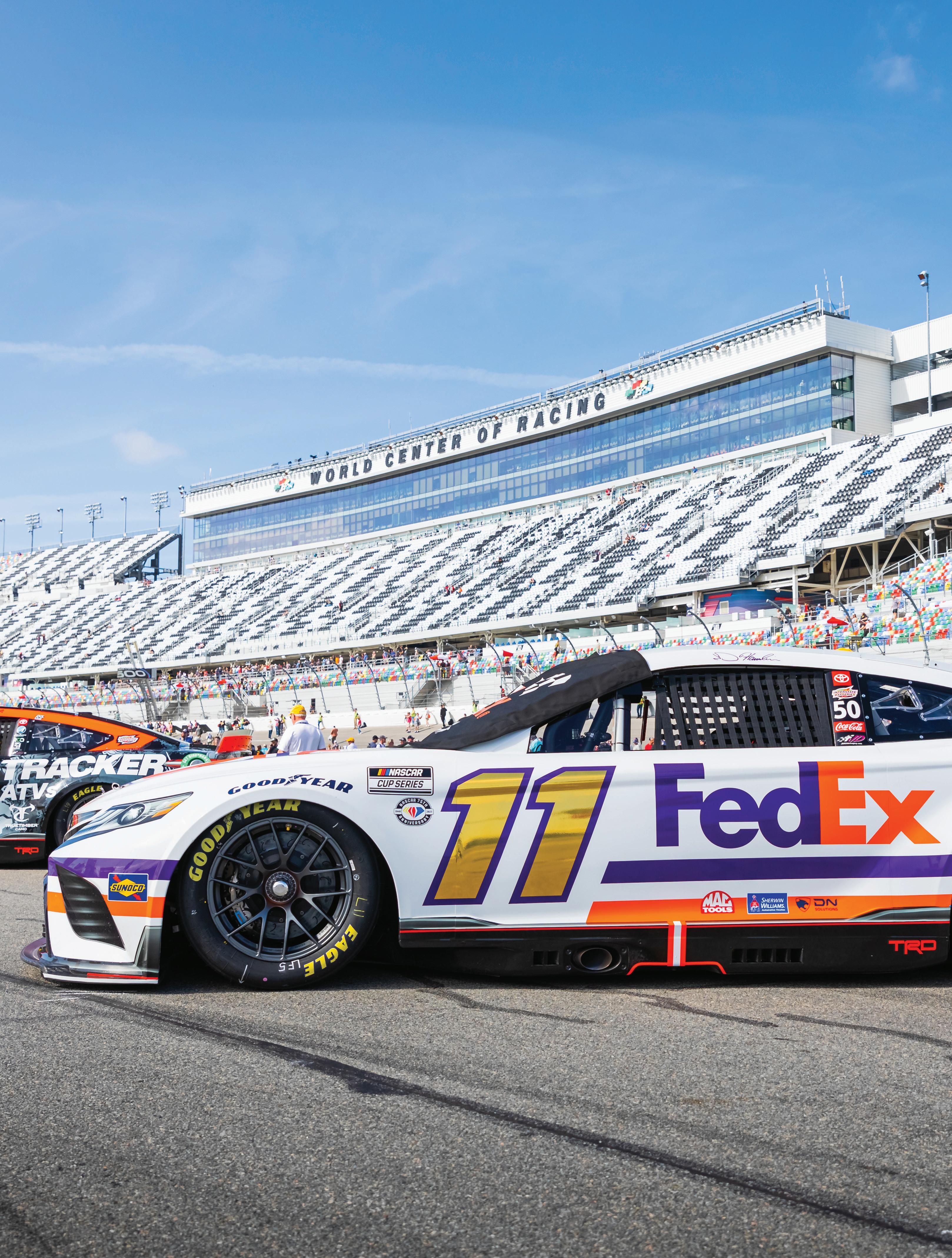
Denny Hamlin’s #11 Toyota Camry bathes in the sun while sitting on pit road before the start of the 2023 Daytona 500 on Feb.
04 08 12
ARTICLE BY SEAMUS HUNTER LYONS / Correspondent

 PHOTOS BY SEAMUS HUNTER LYONS / Correspondent
DESIGN BY SALIM ROIG / Senior Reporter
PHOTOS BY SEAMUS HUNTER LYONS / Correspondent
DESIGN BY SALIM ROIG / Senior Reporter






Ken Luckett can be requested by commercial applicants for their DE rides. You can contact him at 386-235-8378 or email him at FlightExams@aol.com. The Avion thanks Mr. Luckett for his time. Page 5
Seamus Hunter Lyons / The Avion
ARTICLE BY JACOB RAINERSON / Sta Reporter

A er a yearlong hiatus due to a quality problem in manufacturing, Boeing’s 787 delivery resumed last August (2022). Since then, the aerospace giant has delivered 21 of the jets. Now, delivery is once again being halted due to an analysis error by a supplier, related to the forward pressure bulkhead. Boeing is working directly with the FAA to ensure this “analysis error” is addressed, and the FAA will have the ultimate say on when Boeing will be allowed to restart deliveries.
It is important to note that this pause is only in deliveries, and Boeing stated that they plan to continue manufacturing the jet during the delivery halt. ey still hope to deliver 70-80 Dreamliners this year, which is on par with previous projections. e company also reiterated that safety for the active eet is not a concern, and airlines and passengers alike should have no concerns boarding a 787.
Airlines receive the bulk of the cash for each airframe at the time of delivery. Despite Boeing’s commitment to keep production going during this latest delivery pause, the company will no-doubt su er a nancial loss. e 787 ranges in price from $248 million for the -8 variant, to as much as $338 million for the -10. Due to the 737MAX grounding, and now continuous issues with the 787, Boeing has reported losses of more than $26 billion over the last four years. is latest news has caused the company’s stock to drop nearly another 5%.

Hope for the continued success of the 787 was bolstered recently, when United announced they would buy at least 100 of the jets by 2032. ere is no telling how long this delivery pause will last. e previous pause was not expected to last nearly as long as it did, and the FAA rejected Boeing’s certi cation package on multiple occasions. is latest news is just another example of continuous issues that have caused headaches for Boeing in recent years, in many sectors of their business.

 Air Premia 787-9 on short nal for Los Angeles’ 24R. Photo taken on Jan. 6, 2023.
Qantas 787-9 on short nal for Dallas’ 18R. Photo taken on July 28, 2022.
American Airlines 787 taking o from Miami. Photo taken on Nov. 12, 2022.
PHOTOS BY COLIN DAILY AND ABBEY SPENCER
DESIGN BY A. AKIE OLESZEWSKI / Sta Designer
Air Premia 787-9 on short nal for Los Angeles’ 24R. Photo taken on Jan. 6, 2023.
Qantas 787-9 on short nal for Dallas’ 18R. Photo taken on July 28, 2022.
American Airlines 787 taking o from Miami. Photo taken on Nov. 12, 2022.
PHOTOS BY COLIN DAILY AND ABBEY SPENCER
DESIGN BY A. AKIE OLESZEWSKI / Sta Designer
US-Mexico Market Stifled by Low Safety Rating
ARTICLE BY JAVIER MORALES / Staff Reporter
PHOTOS IN THE PUBLIC DOMAIN
DESIGN BY JACOB RAINERSON / Staff Reporter
In the spring of 2021, the FAA downgraded Mexico’s safety rating from Category 1 to Category 2, imposing additional restrictions on the country’s airline industry. Currently, Mexican airlines are barred from adding flights to the United States beyond their current schedule, and they can’t codeshare with American airlines. Mexico is the largest international airline market for the United States. It grew significantly during the COVID-19 pandemic because of increased leisure traffic and more people visiting friends and relatives. Yet, much of that demand has gone untapped due to the downgrade. Mexico is currently making the well-needed changes required by the FAA to restore its Category 1 status. Until then, many key markets on both sides of the border will remain underserved.
Before the downgrade, Allegiant Air announced a Commercial Alliance Agreement with a fellow low-cost carrier, VivaAerobus of Mexico. This alliance would allow the two airlines to lower fares and more effectively compete on transborder routes while stimulating traffic for their domestic networks.

Per Allegiant Air’s DOT application, a partnered Allegiant and VivaAerobus would’ve added more than 250 new connections between underserved destinations in the US and Mexico with their combined strength. However, though this partnership was approved by Mexican regulators and is slated to be approved by the US Department of Transportation, it won’t be implemented until Mexico regains its Category 1 status. Existing commercial partners, Delta/Aeromexico
and Frontier/Volaris are also limited in how they can work together and capitalize on growing demand.
Mexico’s domestic aviation industry is currently in turmoil, partly due to the country’s airlines’ inability to expand profitable service to the United States while also bearing the cost of implementing belated safety measures. The Mexican carrier Aeromar already filed for bankruptcy this past February. The Mexican government is currently exploring the possibility of creating a new military-run airline or granting cabotage, or the ability for foreign airlines to establish domestic routes in Mexico, to increase connectivity. Moreover, in Mexico City, the government is forcing airlines to switch from the main international airport, Benito Juárez (MEX), to the newer and purportedly safer Felipe Ángeles airport (NLU) by restricting capacity at Benito Juárez. Volaris has alleged this transition has negatively impacted its business since the new Felipe Ángeles airport is too undeveloped and far from the city center to serve as a viable alternative for short-haul, low-cost flights.
Until Mexico can implement the proper systems and processes to ensure safety across its aviation sector and regain Category 1 status, these problems will persist. However, given the growing pent-up travel demand between the United States and Mexico, passengers do have a lot to look forward to. Once safety concerns are resolved and Category 1 status is restored, passengers will undoubtedly see a flurry of new routes, codeshare agreements, and lower fares practically overnight. Let’s stay hopeful and see what the future holds.
Page 7
ARTICLE BY JACOB RAINERSON / Sta Reporter


 PHOTOS BY SEAMUS HUNTER LYONS AND H. PRESTON LUNIEWSKI


 DESIGN BY MIKYLA BERISH / Managing Editor













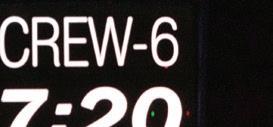

































 waiting in the background, while a countdown slowly ticks down in front of it.
Page 9
The Falcon 9 rocket just moments after lifto , carrying the Dragon Crew Capsule on March 2nd, 2023.
The Future of the Flight Line?
An Interview with Walter Da Costa, TECNAM’S Chief Sales Officer
ARTICLE BY SEAMUS HUNTER LYONS / Correspondent
PHOTOS BY TECNAM
DESIGN BY SALIM ROIG / Senior Reporter
With the Embry-Riddle Flight Department considering options for replacing the current fleet of Diamond DA-42s, multiple aircraft types have been rumored. While no official decision has been made on what will replace the DA-42, there was a unique visitor to campus last month — the Tecnam P2006T. This high-wing twin-piston trainer is popular with many flight schools worldwide and could be Embry-Riddle Daytona’s new multi-trainer. I was lucky enough to tour the aircraft and meet the Chief Sales Officer, Walter Da Costa. I asked Mr. Da Costa some open-ended questions to better understand what Tecnam has to offer.
The Avion (TA): How was Tecnam formed?
Walter Da Costa (WDC): Tecnam’s history dates back to the mid-1940s when Giovanni and Luigi Pascale unleashed their passion for aviation by funding the Partenavia Aircraft Company in 1948. Since that date, a 75-year history of dedication to the aviation industry continues today, with the second and the third generations of leadership with a growing passion, to create and deliver hundreds of General Aviation masterpieces all over the world, every year.
In addition to being a fully approved supplier to the commercial aviation sector, Tecnam has delivered more than 7,500 aircraft just in the last 30 years, propelling it to world leadership within the aviation community. Tecnam Aircraft operate in over 60 countries supported by more than 170 dealer and Tecnam Service Centers. Tecnam’s position in aviation has grown around the globe. The company’s dedication to the piston and training segment is proven by the innovation.
In 10 years, Tecnam has certified six clean sheet aircraft through EASA / FAA Certifications including an 11-seat piston commuter twin, the P2012 Traveller. Tecnam’s focus on piston aircraft demonstrates that the company will continue to offer the widest range of General Aviation airplanes in the market today and in the future.
Tecnam has three strategic locations to support
all customers around the world. In Italy, the entire development, design, certification, and production activity is located around the Naples area with three facilities of 413,000 square feet and 42,000 square feet under construction. In the USA, the management of North American sales, deliveries, and spare parts at Sebring, Florida [are located]. And Australia — management of Oceania sales, deliveries, and spare parts. Tecnam’s main assembly plant is located in the town of Capua, in the beautiful countryside of Southern Italy, just north of Naples, in the millennial-history region where people travel from all over the world to enjoy Pompei, Capri, Positano, and the Amalfi Coast while absorbing the Italian land and culture.
Employing more than 500 skilled artisans, today, Tecnam is one of the top three manufacturers of piston aircraft in the General Aviation market according to the General Aviation Manufacturers Association (GAMA).
TA: What is Tecnam’s Mission?
WDC: Tecnam’s mission is to support customers’ business by condensing 75 years of aviation expertise to produce the safest, best flying quality, and most efficient airplanes. What Tecnam has been doing is to provide new and modern aircraft to the General Aviation community that incorporate the latest certification standards, engineered at their finest to achieve the best reliability, safety, performance, efficiency, and sustainability while
providing the highest level of customer support. As a family business, Tecnam’s mission is also kind of personal; the “P” on the tail of every airplane signifies that every single aircraft is personally inspected and often flown by Paolo and Giovanni, Tecnam CEO and Managing Director, respectively. This is something that you will not find in any other aviation manufacturer in the world.
TA: What are some of the popular applications for Tecnam aircraft outside of flight training?

WDC: Flight Training is certainly one of our main drivers. All Tecnam trainers have been designed with flight schools in mind, and their flying qualities, along with parts, commonality, and superior support are what our customers like the most.
With a complete, single-source solution for flight schools, ranging from the only worldwide available IFR-certified two-seater (the P-Mentor) to the renowned P2008 up to our four-seat P2010 (single engine available with three engine options) and P2006T (the most efficient twin-engine trainer in the world), Tecnam can support Flight Schools with a single source fleet solution. Tecnam not only means training, but it is also the only aircraft manufacturer in the world with a catalog ranging from light sport models to an 11-seat regional airline aircraft. These offerings help to serve the widest end-user requirements.
In addition, Special Mission applications with our aircraft are a constantly growing opportunity with our aircraft as well. Tecnam “SMP” variants of our
P2006T and P2012 enhance extremely profitable law enforcement, patrolling, and aerial imagery businesses for hundreds of US and Worldwide customers. Today, flight training represents 55% of our market share in terms of sales. Then, we have 15% from private owners and 30% from commercial operators.
TA: What are some of the unique features of the P2006 aircraft?
WDC: The P2006T has numerous unique features and benefits beginning with its sleek aerodynamic design which provides pilots with precise and predictable flight operations. The wing, fuselage, and tail components are constructed of alloy metal, which allows for operation in a rugged environment while incorporating the latest FAA Certification and design characteristics that support the safety of flight and reliability. The P2006T is certainly one of Tecnam’s most successful designs; it has been elected by independent organizations, including NASA, as the most fuel-efficient, and most sustainable General Aviation Twin engine platform currently available in the marketplace. The P2006T was designed around the engines, and this supports its reputation of aircraft of choice for the most innovative flight schools.
Thousands of pilots have gained their Multi-Engine Rating with the Tecnam P2006T, due to its flying qualities, reliability, and with its fuel consumption as low as 4.5 US gallons per engine per hour. For allowing VFR/ VFR Night / IFR / MEP/ IR / PBN (LNAV-VNAV, LPV), the P2006T is a complete training solution for complex training.
11
The Tecnam P2006T flying during one of its test runs. Page







 Thunderbird 5 on a low short nal for Runway 25R.
WORDS BY A. AKIE OLESZEWSKI / Sta Designer
PHOTOS BY COLIN DAILY, PETER CUTHBERT, AND ABBEY SPENCER
DESIGN BY A. AKIE OLESZEWSKI / Sta Designer
Thunderbird 5 on a low short nal for Runway 25R.
WORDS BY A. AKIE OLESZEWSKI / Sta Designer
PHOTOS BY COLIN DAILY, PETER CUTHBERT, AND ABBEY SPENCER
DESIGN BY A. AKIE OLESZEWSKI / Sta Designer









 All six Thunderbirds in the delta formation performing practice maneuvers in preparation for the 2023 Daytona 500.
An Air Force C-17 Globemaster III with the callsign of “THBRD14” on short nal for Runway 7L.
Thunderbird 5 accelerating down Runway 25R, beginning its practice ight in preparation for its performance at the 65th Daytona 500.
Thunderbird 6 accelerating down Runway 7L beginning its practice ight in preparation for the squadron’s performance.
Commander Justin Elliott in Thunderbird 1 lands in Daytona after the squadron practiced for their performance.
All six Thunderbirds in the delta formation performing practice maneuvers in preparation for the 2023 Daytona 500.
An Air Force C-17 Globemaster III with the callsign of “THBRD14” on short nal for Runway 7L.
Thunderbird 5 accelerating down Runway 25R, beginning its practice ight in preparation for its performance at the 65th Daytona 500.
Thunderbird 6 accelerating down Runway 7L beginning its practice ight in preparation for the squadron’s performance.
Commander Justin Elliott in Thunderbird 1 lands in Daytona after the squadron practiced for their performance.





 The USAF Thunderbirds performing their classic yover during the national anthem of the 65th Daytona 500.
X nity Series driver Josh Williams tries to keep up with the pack in his #98 Chevy Camaro in the 2023 “Beef. It’s What’s For Dinner. 300” at the Daytona International Speedway.
ARTICLE BY KYLE NAVARRO / Photo Editor
PHOTOS BY COLIN DAILY, KYLE NAVARRO, AND ABBEY SPENCER DESIGN BY YOSIF MLADENOV / Correspondent
The USAF Thunderbirds performing their classic yover during the national anthem of the 65th Daytona 500.
X nity Series driver Josh Williams tries to keep up with the pack in his #98 Chevy Camaro in the 2023 “Beef. It’s What’s For Dinner. 300” at the Daytona International Speedway.
ARTICLE BY KYLE NAVARRO / Photo Editor
PHOTOS BY COLIN DAILY, KYLE NAVARRO, AND ABBEY SPENCER DESIGN BY YOSIF MLADENOV / Correspondent


 Members of Christopher Bell’s team completing a tire change.
Ryan Preece in the #41 Haas Tooling Ford Mustang drags along the apron after having been involved in a crash in the 2023 Daytona 500 on February 19th.
The pit crew of the Team Penske Ford Mustang, driven by Ryan Blaney (#12), attemps to x the damage done to the front right of the car during the 2023 Daytona 500.
The team of JTG Daugherty Racing celebrate winning the 2023 Daytona 500.
Jimmie Johnson greets and interacts with fans during driver introductions of the 2023 Daytona 500.
Kevin Harvick greets and interacts with fans during driver introductions of the 2023 Daytona 500.
The eld comes to the green ag to o cially markthe beginning of the 65th Daytona 500.
ARTICLE BY TUCKER LEHTONEN / Sta Reporter PHOTOS BY TUCKER LEHTONEN / Sta Reporter DESIGN BY DAVID GUERRA / Sta Photographer
Members of Christopher Bell’s team completing a tire change.
Ryan Preece in the #41 Haas Tooling Ford Mustang drags along the apron after having been involved in a crash in the 2023 Daytona 500 on February 19th.
The pit crew of the Team Penske Ford Mustang, driven by Ryan Blaney (#12), attemps to x the damage done to the front right of the car during the 2023 Daytona 500.
The team of JTG Daugherty Racing celebrate winning the 2023 Daytona 500.
Jimmie Johnson greets and interacts with fans during driver introductions of the 2023 Daytona 500.
Kevin Harvick greets and interacts with fans during driver introductions of the 2023 Daytona 500.
The eld comes to the green ag to o cially markthe beginning of the 65th Daytona 500.
ARTICLE BY TUCKER LEHTONEN / Sta Reporter PHOTOS BY TUCKER LEHTONEN / Sta Reporter DESIGN BY DAVID GUERRA / Sta Photographer
If you know anything about me, you know I love to watch races. I enjoy listening to them, I enjoy the rumble that sits deep within your chest, I love the smell of fuel in the air, and every related aspect of the sport. It’s a great reminder to show how close you can ride the ragged edge and still have to do better than everyone else and with the luck that tires haven’t popped, or radiator hoses haven’t burst, etc.
is leads me to di erent races and tournaments that I’ve experienced. I went to the Rolex 24 hour race at the Daytona International Speedway. I couldn’t help to feel as if the teams there were just rich snobs driving their supercars around a track for 24 hours. I felt unsatis ed because of the lack of humanity. It just did not feel right.



Just a er the Rolex 24, I got a phone call from my grandfa-

ther and he invited me out tothe Volusia Speedway Park in De Leon Springs. I took him up on this o er and I went out. My cousin was also there at the time, as he does photography and interviews on the dirt racing series. I watched sprint cars and modi eds race around the track.

I got special pit access and got up close and personal with all the cars, and victory lane. It was an entirely di erent vibe, here it was regular people who built their car and go and race on the weekends. Everyone in the sport is close, which I admire.
It was a culture shock, and I
fell in love with this sport. I appreciated that I, a regular Joe, was able to walk up to the drivers a er the races and have a conversation with them.
I was able to talk with Travis
Pastrana (he just raced in the Daytona 500).
I also got to talk directly to Justin Allgaier who races in the in nity series (7).
Overall, it was a memorable experience that I plan on revisiting soon.

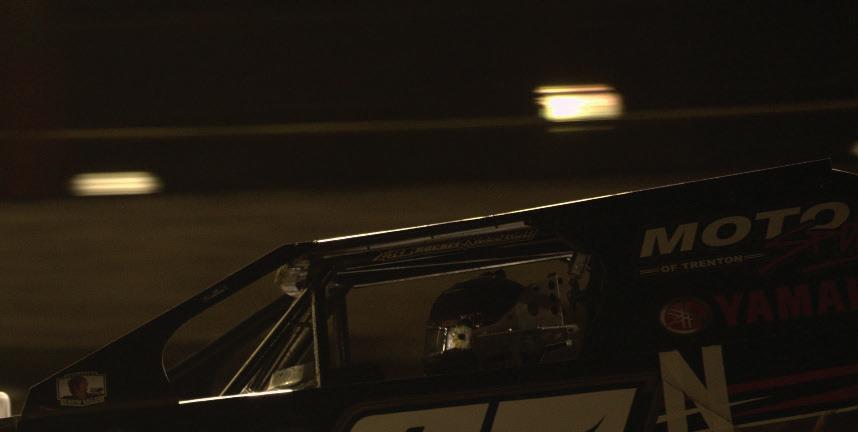


“When it comes to dirt racing its all about the heart and soul...”
Justin Allgaier -----
ARTICLE BY SALIM ROIG / Senior Reporter

 PHOTOS BY JONATHAN SAIER / Correspondent
DESIGN BY DYLAN KOWLESSAR / Editor-in-Chief
PHOTOS BY JONATHAN SAIER / Correspondent
DESIGN BY DYLAN KOWLESSAR / Editor-in-Chief


 Event guests and murder investigators discover a box that contained more clues to help solve the mystery.
Event guests were welcomed to tables prepared with starting clues and materials to get them through the night.
ARTICLE BY JORDAN KILPATRICK WILLIAMS / Correspondent
PHOTOS BY GREAT BAH / Correspondent
Event guests and murder investigators discover a box that contained more clues to help solve the mystery.
Event guests were welcomed to tables prepared with starting clues and materials to get them through the night.
ARTICLE BY JORDAN KILPATRICK WILLIAMS / Correspondent
PHOTOS BY GREAT BAH / Correspondent

 DESIGN BY A. AKIE OLESZEWSKI / Sta Designer


 A student showing o her sorority pride with a Theta Phi Alpha banner.
A group of contestants dancing for the performance part of the competition.
One of the contestants celebrating his win of one of the awards for his performance at the Cutie Pie Competition Night on Feb. 19.
ARTICLE BY DR. GEOFFREY KAIN / Correspondent PHOTOS BY H. PRESTON LUNIEWSKI /
A student showing o her sorority pride with a Theta Phi Alpha banner.
A group of contestants dancing for the performance part of the competition.
One of the contestants celebrating his win of one of the awards for his performance at the Cutie Pie Competition Night on Feb. 19.
ARTICLE BY DR. GEOFFREY KAIN / Correspondent PHOTOS BY H. PRESTON LUNIEWSKI /
e Honors Program was established on the Daytona Beach campus in 2003. One of the bene ts o ered to Honors Program students has been the Honors Series. is program focuses on hosting both speakers and performers with national, and o en international, notoriety.


e Honors Series has now featured more than 100 such events over the years, and on Feb. 22 the Honors Series welcomed Winona LaDuke to campus.

Ms. LaDuke is a famed Harvardeducated Native American activist, economist, author, and spokesperson for indigenous and environmental rights in the United States. She is a two-time US vice-presidential candidate (in 1996 and again in 2000) alongside Ralph Nader on the Green Party ticket, a 2007 inductee into the National Women’s Hall of Fame,
Ms magazine’s Woman of the Year (1997), one of Time magazine’s 50 most promising leaders under forty (1994), and now serves as executive director of the Honor the Earth organization.
Her most recent book publication, To Be a Water Protector (2020), details the challenges faced across the globe due to dwindling access to clean, fresh water in the face of increasing contamination from industrial agriculture, mining, oil pipelines, chemical spills, etc. More speci cally, the novel details her headto-head battles with the multinational Canadian energy corporation, Enbridge.
Enbridge’s dogged insistence on expanding their Line 3 tar sands oil pipeline across water-rich northern Minnesota—near and through waters and wild rice habitat sacred to LaDuke’s Anishinaabe (Ojibway) people (she is a long-time resident and leader on the White Earth Reservation)—brought her and many Water Protector protestors out to face o with the company over their oil pipeline. Her talk at EmbryRiddle re ected her book title: “What Does it Mean to be a Water Protector… in Florida?”
A large number of environmentallyconcerned individuals from across Volusia County, and even from as far away as Gainesville and Ft. Myers, traveled to hear her speak. Mr. Jim Durocher, East Central Regional Director of the Florida Rights of Nature Network and active proponent of the “Florida Right to Clean Water” movement, commented that LaDuke “can take understatement, mix it with indigenous wisdom and spirit, and turn it to profound logic.” His sentiments were echoed by many,
including a number of the Florida Right to Clean Water members who attended. LaDuke pointed to signs of diminishing investment in what she calls “late-stage fossil fuel addiction”, while turning toward more viable, realistic, clean solutions for the future.



For her own part, aside from struggling on site for several years to blockade Enbridge in northern Minnesota, LaDuke is investing heavily in non-chemical, regenerative farming techniques, as well as solar and wind energy projects. She has also begun expansion of her hemp farming commitment, from its current 40 acres to nearly over 400 acres. She has labeled this latter e ort the “New Green Revolution,” citing hemp’s multiplicity of uses; from fabrics to insulation, to construction materials (as hempcrete), etc. While it requires far less water than other row crops, it is a premium carbon-sequestering plant, requires no pesticide application, and even holds promise for the emerging electric vehicle battery market (research on hemp biochar as base is proving exceptionally encouraging).
On her White Earth Reservation locale, they are using horse manure for fertilizer and—given the present size of the farm—horses also provide the power for plowing, etc. LaDuke sees their operation as a model, and one that she encourages as a highly desirable alternative to plastics-based materials and oil/gas-dependent farming methods. She works with other indigenous communities on economic development, and she sees many of the indigenous communities getting excited and on board quickly. As she wryly puts it, “We are the tip of the spear.”
Sta Photographer DESIGN BY A. AKIE OLESZEWSKI / Sta Designer
ARTICLE BY SALIM ROIG / Senior Reporter
 PHOTOS BY YOSIF MLADENOV / Correspondent
DESIGN BY MIKYLA BERISH / Managing Editor
PHOTOS BY YOSIF MLADENOV / Correspondent
DESIGN BY MIKYLA BERISH / Managing Editor


[RUX Corner ]

We are graduate and undergraduate students in the Research in User eXperience (RUX) Lab in the Department of Human Factors and Behavioral Neurobiology. RUX investigates the usability and user experience of technology in our everyday world. This is a regular column that explores different technologies typically used by Embry-Riddle students.
Dark Patterns: The Psychology of Mass Manipulation?
ARTICLE BY REID SANTIAGO / Correspondent
PHOTOS BY POLYGON AND REID SANTIAGO DESIGN BY DYLAN KOWLESSAR / Editor-in-Chief
Have you ever spent a concerning number of hours scrolling on social media? Have you ever spent more money than you meant to on in-app purchases or microtransactions in a video game? I am willing to bet that even if you haven’t experienced one of these occurrences specifically, you’ve had another experience with social or entertainment media that left you feeling uncomfortable. These are only a few examples of the ways that psychology principles have been used by the UX designers to manipulate consumers. In 2010, cognitive psychologist Harry Brignull coined a term to describe this phenomenon: Dark Patterns.
In his 2019 book, “Digital Minimalism: Choosing a Focused Life in a Noisy World”, computer scientist Cal Newport says that the developers of platforms like Twitter, Instagram, and Facebook are in the business of designing features which prioritize user engagement at all costs. Each of these platforms contain familiar elements that drive our behavior. Like buttons have evolved from simple expressive interactions to a social currency with real power. Social media feeds have evolved from mere collections of content from followed creators to endlessly curating streams of data. Paid extras in video games have become an increasingly predatory market for compulsive buying. These elements use subtle psychological tactics to modify and influence the behavior of users.
Studies in digital addiction have been conducted for decades, but in the last ten years, studies have surfaced which focus on habit-building tactics in user experience. Cal Newport’s book was my first introduction to this topic, and in Dr. Shawn Doherty’s Human Factors in
Entertainment Systems course, I learned the term Dark Mechanics, another name for Dark Patterns.
For Dr. Doherty’s course, I annotated 14 studies that examined Dark Patterns in video games and the role of UX in addiction to games.
Page 22
. . . . . . . . . . . . . . . . . . . . . . . . . . . . . . . . . . . . . . . . . . . . . . . . . . . . . . . . . . . . . . . . . . . . . . . . . . . . . . . .
. . . . . . . . . . . . . . . . . . . . . . . . . . . . . . . . . . . . . . . . . . . . . . . . . . . . . . . . . . . . . . . . . . . . . . . . . . . . . . . .
Raids in Destiny 2 require six players to play sessions that often last up to five or six hours.
A study by Dr. Mark Griffiths and Dr. Filip Nuyens found that many Massive Multiplayer Online Role-Playing Games (MMORPGs) use operant conditioning in their activity structures. In psychology, operant conditioning is a type of learning that trains behavior through reward and punishment. In an MMORPG, that might look like requiring players to play regularly with a dedicated group of other players in order to progress efficiently. This system rewards players for committing to longer, more frequent sessions and punishes them for playing casually or alone. Griffiths and Nuyens call this form of habit-building user experience player entrapment.
Another example of Dark Patterns in games is in microtransactions and in-game purchases. One of the most widely known models for in-game purchases is the Loot Box A Loot Box is a virtual consumable that players can purchase and redeem to earn randomly determined rewards. These random rewards vary widely in value. Countless big industry games employ this model in some form: the Overwatch Loot Box, the Fortnite Supply Llama, and the Apex Legends Apex Pack, to name a few. In many cases, the only way to acquire desirable items is to gamble on redeeming however many Loot Boxes it takes to get the item. Loot Boxes have been scrutinized by the European Union and thirteen other nations as a form of digital gambling, which motivates compulsive behavior in players.

recently explored the on-campus banning of TikTok at the University of Florida. The class was charged with doing interviews with Riddle students to gauge their feelings on this ban and on social media apps in general.
Though the sample size of each of these studies was too small to generalize the results, patterns in the cumulative results of the class were consistent with my research back in Dr. Doherty’s course. Interviewees reported feeling that they spent too much time mindlessly scrolling or repeatedly checking their apps. Increased screen time seems to catalyze negative emotions like guilt, frustration, and concern. Current research says that this trend occurs because social media interfaces are designed to train us using operant conditioning. Every time we’re rewarded with a like or new content that piques our interest, we’re conditioned to engage further. These rewards are usually spaced out just enough to maintain our interest and attention. TikTok is a strong example of this. Every participant in my group’s study reported engaging in undesirably long TikTok sessions due to the stimulating, short-form nature of the platform.
Human Factors specialists and researchers in UX are working to identify ways to mitigate the effects of Dark Patterns. Paying close attention to your digital habits may reveal the ways your everyday tools are impacting your behavior, and there are already tools out there to help.
Both iPhone and Android offer screen time diagnostics for the purpose of monitoring personal habits. Apps such as unGlue and AirDroid exist for the same purpose and even offer features which set limits on app usage. Dr. Harry Brignull, the UX specialist who created the term Dark Patterns, has called on Twitter users to share screenshots of examples they encounter, tagging the offending brand and using the hashtag #darkpattern.

Business practices in video games have grown increasingly manipulative, but Dark Patterns have existed in social media for far longer. Major publishers of social media apps tend to prioritize user engagement over brand integrity. Dr. Barbara Chaparro’s Human Factors in Systems Design course
If you want to learn more about Dark Patterns and ways you can avoid them, I strongly recommend looking into the works of Brignull, Newport, and other researchers who are working hard to expose them.
In 2019, Overwatch Loot Boxes generated over a billion dollars.
Page 23
Apple Screen Time allows users to schedule downtime and establish app limits.
ARTICLES COMPILED BY ALISON SMALLING / ERAU Athletics Director of Sports Information

Freshman Mikaela Miles made Embry-Riddle Women’s Track & Field history on Saturday, becoming the rst student-athlete to be named an All-American in the triple jump.


Competing at the NCAA II Indoor Track & Field Championships, Miles nished 11th overall, four spots higher than where she was seeded, to earn second team All-America recognition. On her third attempt of the day, she posted a mark of 12.12m (39-9 ¼) which was both a personal and Embry-Riddle indoor record.
Miles joins teammate Ukeyvia Beckwith as the only two ERAU women to achieve NCAA II indoor All-America status.
. . . . . . . . . . . . . . . . . . . . . . . . . . . . . . . . . . . . . . . . . . . . . . . . . . . . . . . . . . . . . . . . . . . . . . . . . . . . . . . . . . . . . . . . . . . . . . . . . . . . . .
PHOTOS BY MAGGIE ALLEN, KYRIN MAYFIELD, TAVANA MERCADO, AND WEN WU
DESIGN BY DYLAN KOWLESSAR / Editor-in-Chief
For the rst time since the 2015 Bash at the Beach, the Embry-Riddle men’s golf team stood alone at the top of the leaderboard at the end of the nal round. e Eagles used a 286, tied for the tenth-lowest round in program history, to jump from twelve shots back in eighth to rst during round three to claim the 2023 Daytona Beach Spring Invitational, a tournament that included 17 NCAA I teams. It was the lowest round from any team in the tournament. Including rst and second round scores of 303 and 290, the Eagles needed just 879 strokes to play through 54 holes, tied for the seventh lowest three-round

score in the history of the program. Play was held at LPGA International and hosted by Eastern Kentucky.
Embry-Riddle nished one stroke ahead of LoyolaChicago (294-297-289=880) and Longwood (296-292292=880). North Dakota State (292-299-290=881) and Long Island (293-288-302=883) rounded out a tightlypacked top ve.





Ryan Hart (69-68-70=207) of Florida was the top individual.








When the nal Eagle traversed the 18th hole, the Eagles were still three shots out of the lead in fourth, although all teams ahead were still playing. However, due to the tough nature of the course, ERAU’s de cit began to shrink.
e squads in front started to slide back until EmbryRiddle was in second, one stroke behind Longwood with a few holes le to play. A double bogey on the 17th from a Lancer put the Eagles ahead for good to claim the tournament title.
Heinrich Adriaanse headlined the Embry-Riddle men’s track and eld performances at the Embry-Riddle Spikes Classic meet came to an end.

Adriaanse topped the podium in the decathlon winning the shot put (12.90m (42-4)), high jump (1.89m (6-2.25)) and discus (35.95m (117-11)) on the way to a point total of 6,378. In addition to winning the event, Adriaanse also hit the NCAA II provisional qualifying standard.
Adam Landen (21.72), Bradon Black (21.78) and Dedrick (22.09) all had career-best races in the 200m.
. . . . . . . . . . . . . . . . . . . . . . . . . . . . . . . . . . . . . . . . . . . . . . . . . . . . . . . . . . . . . . . . . . . . . . . . . . . . . . . . . . . . . . . . . . . . . . . . . . . . . .
. . . . . . . . . . . . . . . . . . . . . . . . . . . . . . . . . . . . . . . . . . . . . . . . . . . . . . . . . . . . . . . . . . . . . . . . . . . . . . . . . . . . . . . . . . . . . . . . . . . . . .
Flight Certifications
SPRING 2023
Congratulations to those who received their certification!
Serin Kim
Seungwon Ham
Shashank Bharadwaj Begur
Siarm Cho
Sihyun Lee
Simon Foster Lovely
Siwoo Song
Son Min Choi
Sophie Marie Arlette Chanoux
Steven Wei Han
Sung Joon Park
Sunghoon Lee
Sungmin Kim
Suzanne Caitlyn Stevens
Sydney Linnane Pilling
Tae Min Kim
FLIGHT INSTRUCTOR SINGLE ENGINE (417A)
Brandon Kotaro Yamamoto
Changsoo Han
Hae Joon Lee
Hi Jun Cho
Jimin Ahn
Joao Lucas De Castro Alves
John William Barile Jr
Jonathan David Spangler
Joseph Michael Kerr
Juan Diego Iturri Del Aguila
Juan Jose Manzueta Reyes
Jung Ho Kim
Justin Tyler Parks
Kaimin Mao
Kee Hyuk Choi
Kent Taguri Ura
Kevin Leigh Myers Jr
Ki Wan Kim
Kiana Marie McQuade
Kwang Mu Lee
Kyle Daniel Barbour
Lauren Kelly Nalson
Marcus Daniel Leonard
Matthew Ramon Diaz
Matthew Ryan Kennedy
Maurice Alexander Gauthier
Michael Fitzpatrick Heffernan III
Michael Joseph Taylor Jr
Myunghun Yoo
Nicholas Andrew Emer
Paul Egan
Riley Banks Weathersby
Riley Jonah Montondo
Robert James Luzzi
Ryan Philip Tardona
Salim Mohammed Taher
Samuel Schlanger
Sangbeom Woo
Se Min Hong
Sebastian Eric Robert Wood
Seong Bok Jeon
Timothy Paul Skelf
Valerie Melissa Varona
Viktor Dziuba
Wonseok Na
Yanni Vardis Alatzas
Yejin Kang
Yoo Hyun Han
Yoon-Seob Kim
FLIGHT INSTRUCTOR INSTRUMENT (417I)
Adlynn Elwood Lay
Allison Rose Tiano
Alyssa Angela Farruggio
Andre Anthony Mitchell
Anna Waid Maurer
Arron DeJesus
Bodan Choi
Bongkyun Park
Brandon David Paterson
Bryce Morgan Davis
Bumkyu Koh
Byung Hun Kang
Carter Jeffery Evans
Changwook Baek
Christopher Monroe Haak
Chungwoo Lee
Clay Burton Moates
Cullen Tyrone Young
Dawson
Frederick Schriner
Dominic Michael Barbagallo
Eiki Matsuyoshi
Emily Catherine Arnold
Gabriella Szucs
Grant James Garrison
Hayden Chase Williams
Heinrich Adriaanse
Hoang-Long Jonathan Nguyen
Hyeok Heo
Hyeong Su Lee
Hyo Chang Yoo
Hyuk Jun Kwon
Ian Yj Park
Inho Song
Jaehyun Kim
Jaemin Son
Jake Edward Daubert
James Robert Imundo
Jimin Ahn
Joao Lucas De Castro Alves
John William Barile Jr
Jonathan David Spangler
Jordan Kyle Szeto
Juan Diego Iturri Del Aguila
Juan Jose Manzueta Reyes
Jung Ho Kim
Justin Tyler Parks
Kaimin Mao
Kee Hyuk Choi
Ki Wan Kim
Kyle Allan Tarbox
Lauren Kelly Nalson
Liam Patrick McKenna
FLIGHT INSTRUCTOR SINGLE ENGINE (417A)

Aditya Prashant Mody
David Francisco Ortiz Garcia
Eunji An
Irfan Hisamuddin Parkar
Sooyong Jeong
Tiago Dikerts De Tella
Victor Jean Sparacia
Weihao Zeng
Cornnell Chu / The Avion
FROM THE PAST: Training airplane N869ER sits near the Q Hangar during the Fly-In/ Static Display for Homecoming 2022.

PUZZLES Issue 3, Spring 2023 Finished all of the puzzles for this issue? Be the first to email us a picture of your solutions to business@theavion.com to get a prize! Scan here for crossword clues!
Interested in joining The Avion and making this magazine happen? Scan to join our Discord server. Go Eagles!

The Avion is produced bi-weekly during the spring term. The Avion is produced by a volunteer student staff. Student editors make all content, business and editorial decisions. The editorial opinions expressed in The Avion are solely the opinion of the undersigned writer(s), and not those of Embry-Riddle Aeronautical University, the Student Government Association, The Avion, or the student body. Letters appearing in The Avion are those of the writer, identified at the end of the letter. Opinions expressed within are those of the identified writer. Letters may be submitted to The Avion for publication, provided they are not lewd, obscene or libelous. Letter writers must confine themselves to less than 1200 words. Letters may be edited for brevity and formatted to newspaper guidelines. All letters must be signed. Names may be withheld at the discretion of the Editor-in-Chief. The Avion is an open forum for student expression. The Avion is a division of the Student Government Association. The Avion is a member of the Associated Collegiate Press. The costs of this publication are paid by both the Student Government Association and through advertising fees. The Avion distributes one free copy per person. Additional copies are $0.69. Theft of newspapers is a crime, and is subject to prosecution and Embry-Riddle judicial
without
No portion of
print
action. This magazine and its contents are protected by United States copyright law.
this publication may be reproduced, in
or electronically,
the expressed written consent of The Avion.
