Fall 2023



Issue 1


























A Letter from the Editor-in-Chief






My name is Andrew Harker, and I am the Editor-in-Chief of . If this is your rst semester walking down Legacy or your last semester preparing to walk across the stage, regardless of where you are - welcome.

I started my journey at Riddle in a world drastically di erent from where we are today. I grew up in Northern Illinois for the majority of my life and moved to Florida in the Fall of 2020. As I walked across campus a er being dropped o by my Uber driver from the SU to NR1 with two suitcases and a backpack while wearing a facemask in 90-degree weather, I knew the page had been turned into the next movement of the symphony of the life I was in. e words and feelings of being terri ed, excited, nervous, cautious, and eager to start my life simply do not begin to capture the many feelings at that moment. Life has drastically changed in the three years I have been able to be here. I have drastically changed in these past three years, as well.
Change is scary. It feels unnatural at times as it forces you to step out of what is your norm and comfort. Yet, change is normal and o entimes necessary. It doesn’t matter where you are on your journey through life; change will happen whether you are ready for it or not. If you asked me three years ago where I thought I would be today, I would’ve told you that I’d be engaged, ready to move on with my degree and into the next chapter. However, in reality, allowing change to happen brought me on a journey I would never want to give up. Losing relationships and being on my own brought me to many low points; however, the change also brought new things and joy. A core group of dear friends who are the most amazing and important people I have ever met, opportunities I would never have imagined, a faith that is becoming my own, and a duty to ful ll serving the student body in my position as EIC at , to name a few.
As you walk your own path and let the symphony play out, I encourage you to say yes to new opportunities, look at di erent perspectives, listen more than you speak, don’t let yourself get stuck in a cycle of being comfortable, speak out for what you believe is right, VOTE, treat people with kindness and remember, at the end of the day — whether you’re a student, faculty, or professor — we are all humans and make mistakes; give grace. None of us are perfect, but we are trying to be better and learn.
Again, welcome to Riddle and . I do hope you nd something in one of our many channels of media that resonates with you. Have a wonderful semester that I am sure will be full of new changes and challenges.
God Bless,
Andrew Harker Editor-in-Chief,

HIGHLIGHTS OF THIS ISSUE
COKE ZERO 400
Check out one of the best ways to rev up into the Fall semester.
A FLORIDA RESIDENT'S STAYCATION GUIDE
Plan an exciting weeked away in Florida with this staycation guide.
A LETTER HOME
Get a glimpse into a perspective from a student moving away from home and entering life at Riddle and thoughts and feelings since.
OSHKOSH; A RECAP
Take a peak into or relive some memories as we recap OshKosh 2023!
WING-MOUNTED PYROTECHNICS
Learn about what goes into planning a nightime airshow and keeping people safe.
EMPLOYEE SPOTLIGHT:
CHRIS AT CFA!
Get to know a fan favorite at our very own CFA here at Riddle.
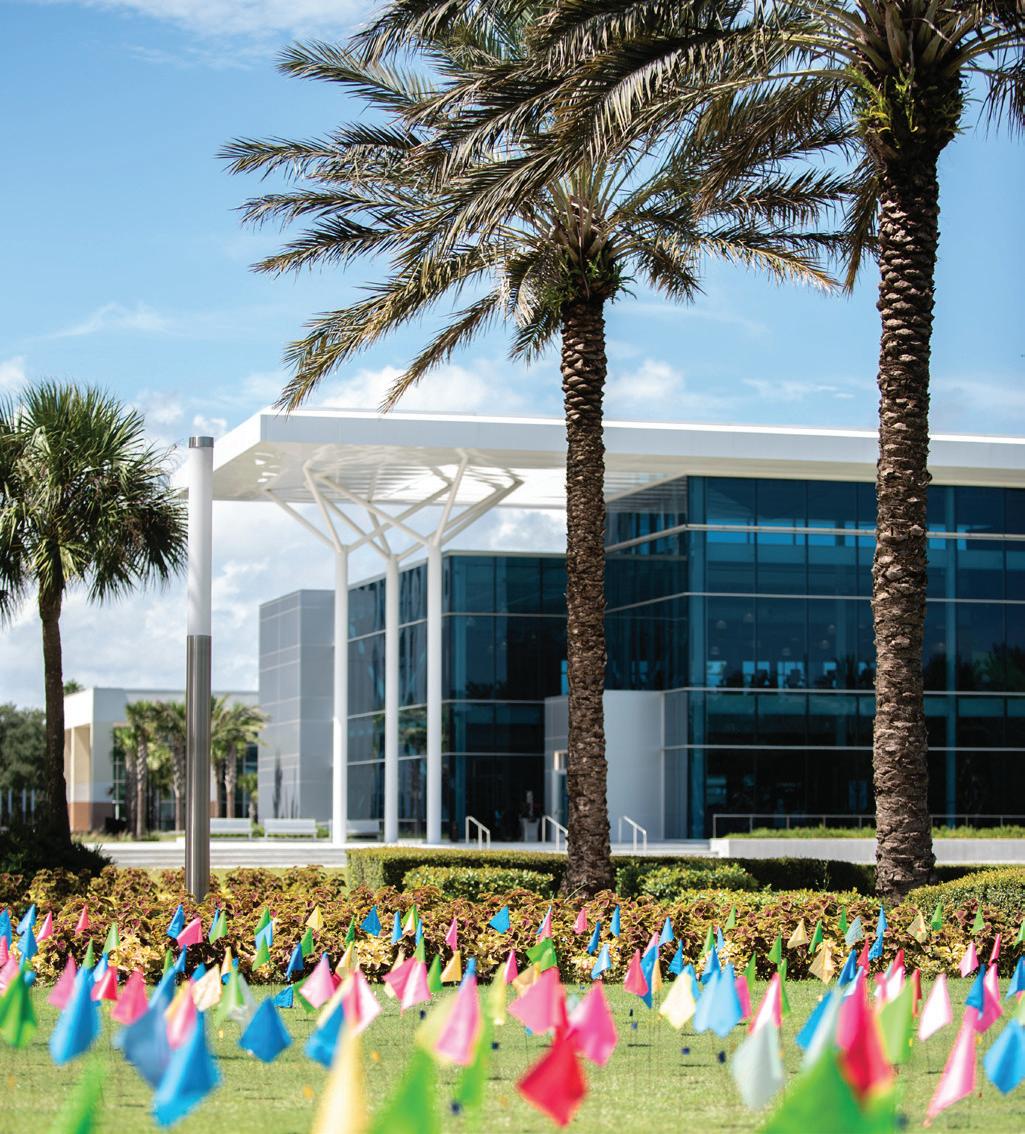
The field of inspiring messages infront of our new gym!
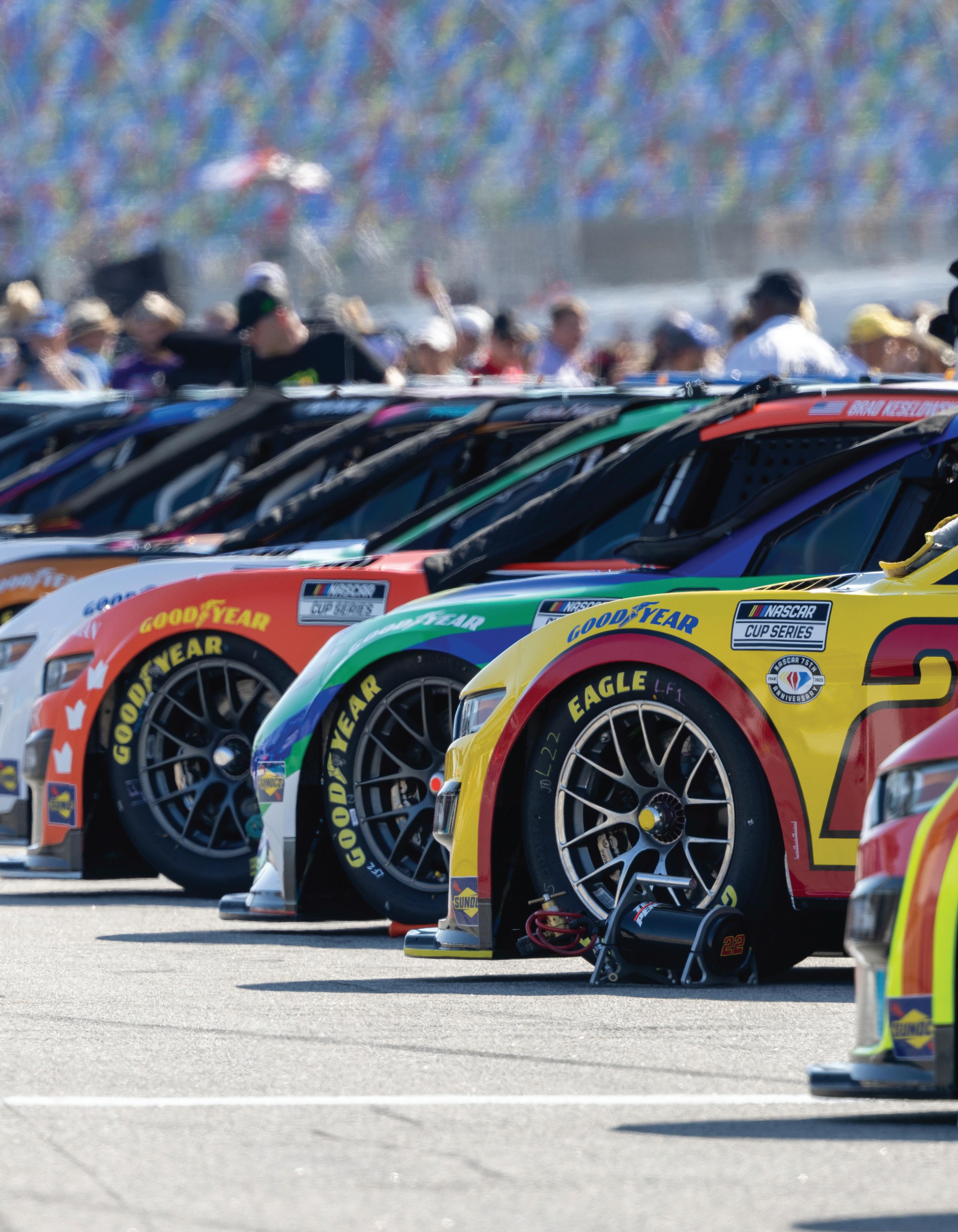
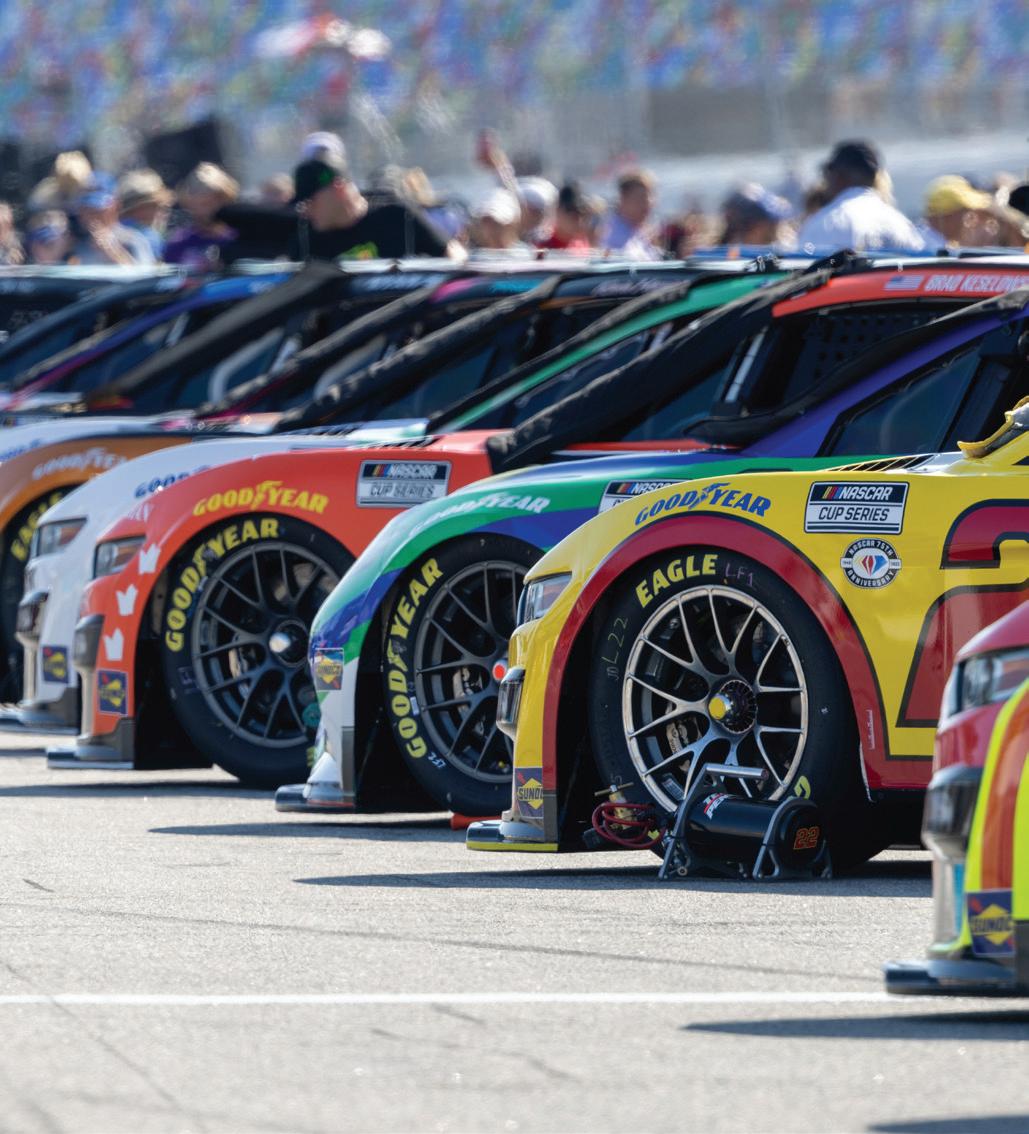
Cars wait lined up on the grid before the 2023 Coke Zero Sugar 400.
PHOTOGRAPH BY KYLE NAVARRO (@kylenavarrophoto)
 FRONT COVER
PHOTOGRAPH BY BRANDON BADRAOUI (@brandonbadphoto)
BAC K COVER
FRONT COVER
PHOTOGRAPH BY BRANDON BADRAOUI (@brandonbadphoto)
BAC K COVER
03 08 13
20 22 30
Once again, the famed Daytona International Speedway did not disappoint. e fans sitting in person at the speedway were treated to quite the show from well before the race started right up to the very end.






ings kicked o with the pre-race concert performed by Niko Moon. He performed his latest single, “Better with You,” along with his other great hits, electrifying the crowd the entire time. Fans sang along and crowded onto the front lawn of the speedway to enjoy the show and get ready for the racing to come.
Shortly a er the pre-race show concluded, the Coke Zero Sugar 400 events got underway. With this race being the last of the regular season and only one playo spot remaining, the anticipation for the race was unmatched as 14 drivers were competing for the nal playo spot of the season. Fans barely had any room to breathe as they crowded as close as they could to get a glimpse of their favorite driver being introduced.
As the engines started and the pace laps began, fans were cheering on the start of the last regular season race. Once the green ag fell and the drivers started roaring around the oval, the intensity picked up even more. Stage one of the race started calm, with no crashes or major incidents happening, but as stage two began, the chaos followed. Racing became three-wide as drivers
jostled for position. Lead changes came lap a er lap, with stage two ending with e Big One. is crash knocked out many drivers hoping to clinch the last spot in the playo s, narrowing the eld and closing the competition. As the race’s nal stage got underway, the racing got even harder and harder. e remainder of the race remained clean and exciting until lap 156, when Ryan Preece ended up airborne on the back straight in a huge crash, ipping 10 times before coming to a stop. Luckily, he came out with no serious injury and was able to get out of the car on his own.
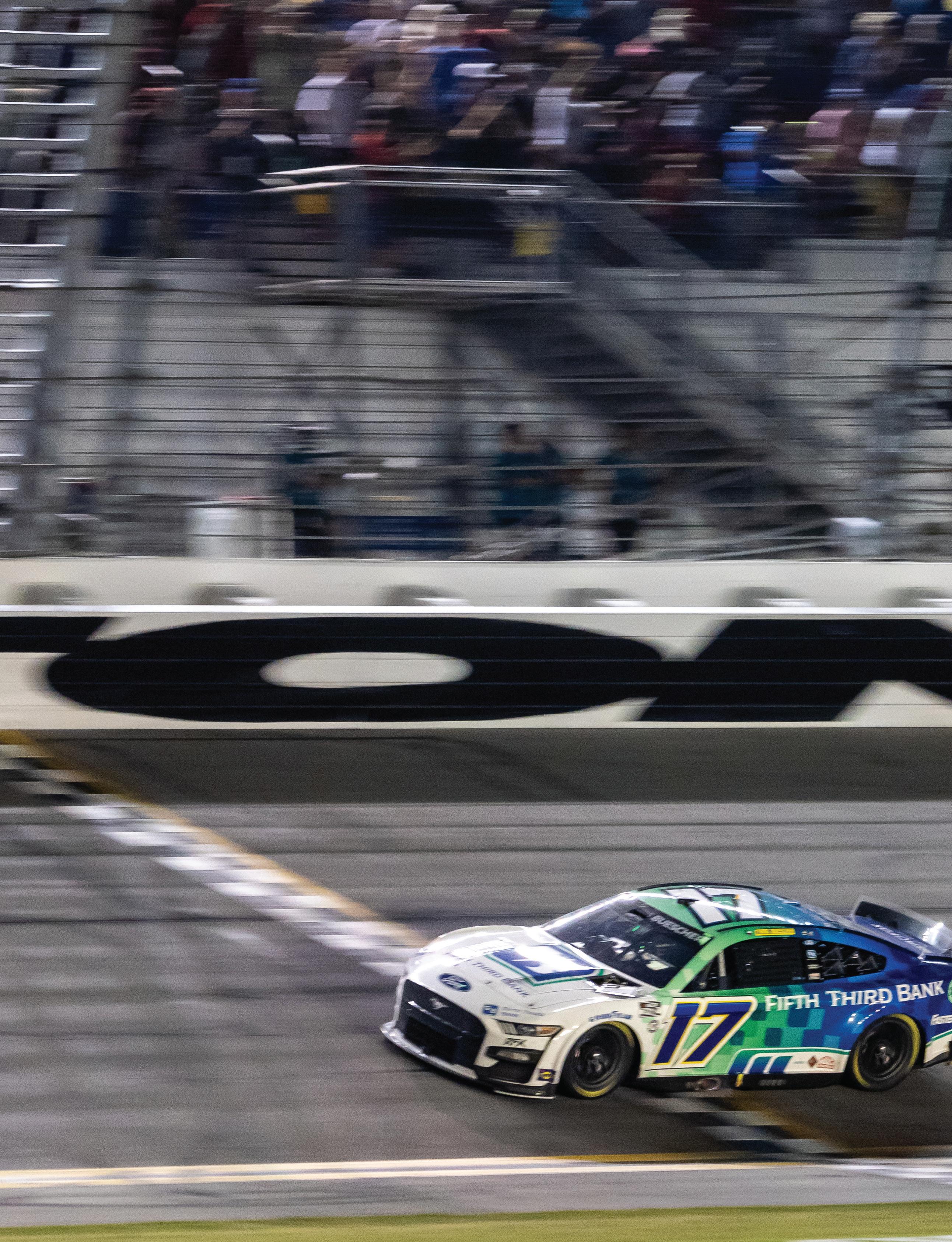
Two laps of overtime was all that remained of the race once the yellow ag period ended. As the green fell and the drivers took o , Chris Buescher took the lead and could hold it the full two laps, coming in right ahead of the pack to clinch the victory. Bubba Wallce nished in 12th, giving him the nal spot in the playo s. With the regular season over and the playo grid set, make sure you stay tuned to see who comes out on top.

Page 4
/ / /
The #17 RFK Racing Ford of Chris Buescher comes across the finish line to win the 2023 Coke Zero Sugar 400.
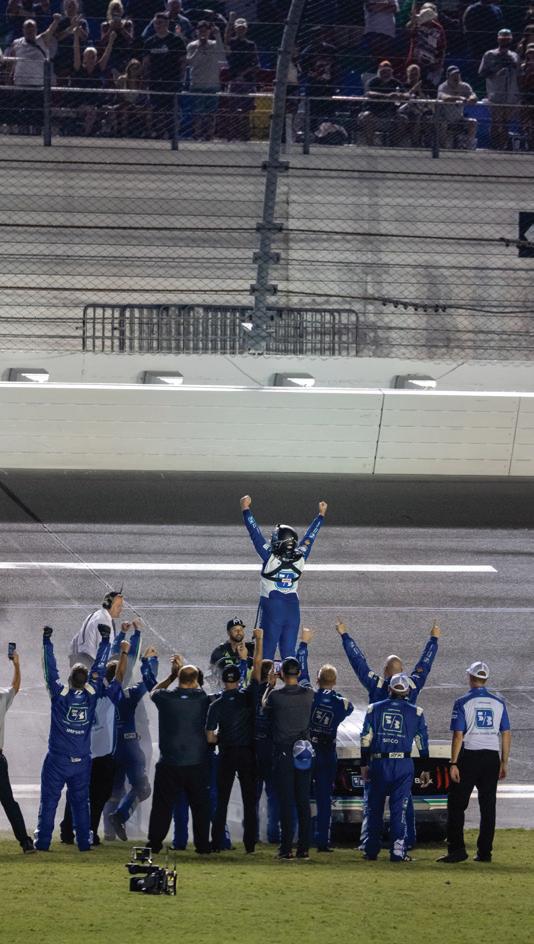
 Chris Buescher celebrates with his team and the fans at Daytona International Speedway after winning the 2023 Coke Zero Sugar 400.
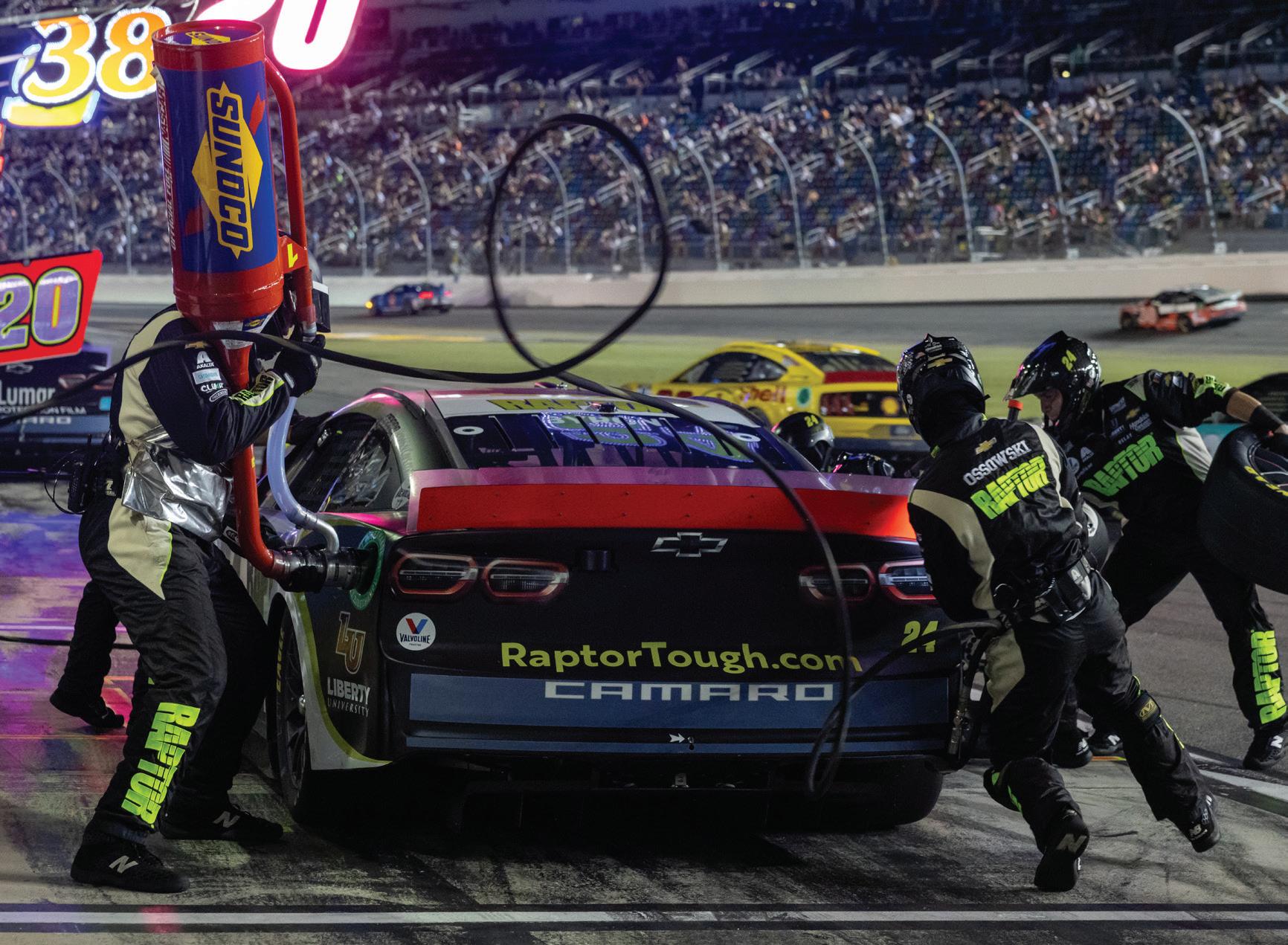
The pit crew for the #24 of William Bryon works quickly at the end of stage 2 to service his Hendrick Motorsports Chevy as the race comes to a close for the 2023 Coke Zero Sugar 400.
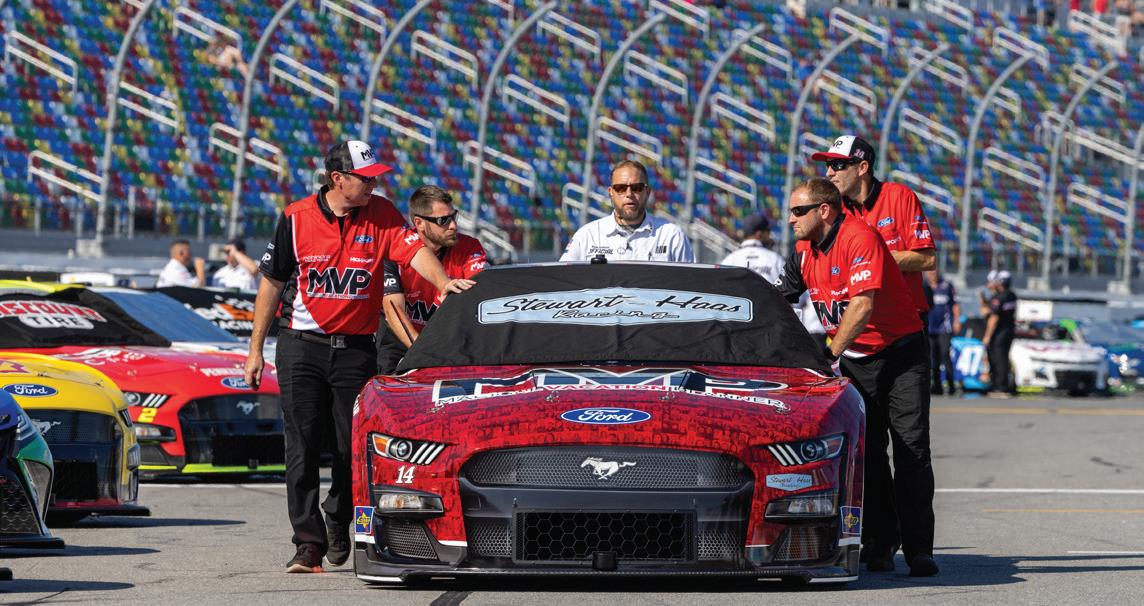
Polesitter car #14 of Chase Briscoe is rolled out onto the starting grid for the 2023 Coke Zero Sugar 400.
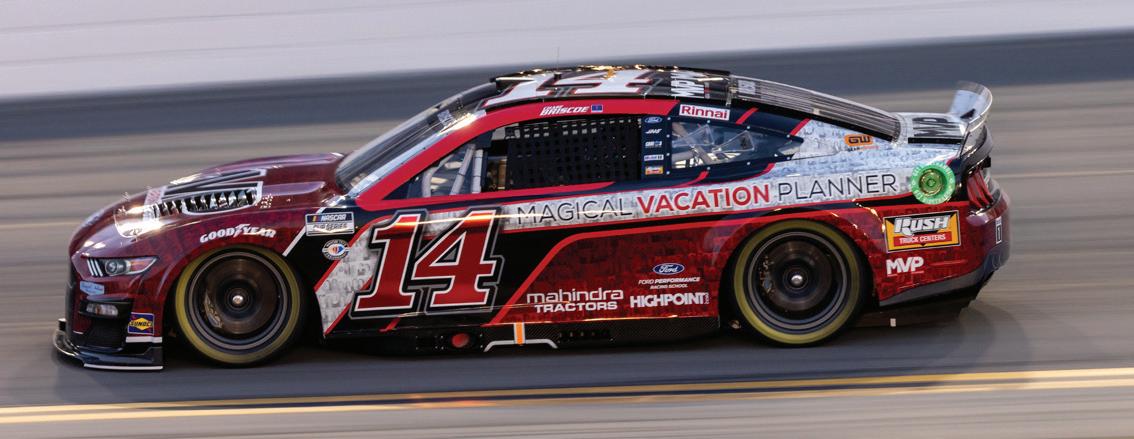
Chase Briscoe comes around the tri-oval of Daytona International Speedway in his Stewart-Haas Racing Ford during the Coke Zero Sugar 400.
Chris Buescher celebrates with his team and the fans at Daytona International Speedway after winning the 2023 Coke Zero Sugar 400.
The pit crew for the #24 of William Bryon works quickly at the end of stage 2 to service his Hendrick Motorsports Chevy as the race comes to a close for the 2023 Coke Zero Sugar 400.
Polesitter car #14 of Chase Briscoe is rolled out onto the starting grid for the 2023 Coke Zero Sugar 400.
Chase Briscoe comes around the tri-oval of Daytona International Speedway in his Stewart-Haas Racing Ford during the Coke Zero Sugar 400.
Page 5
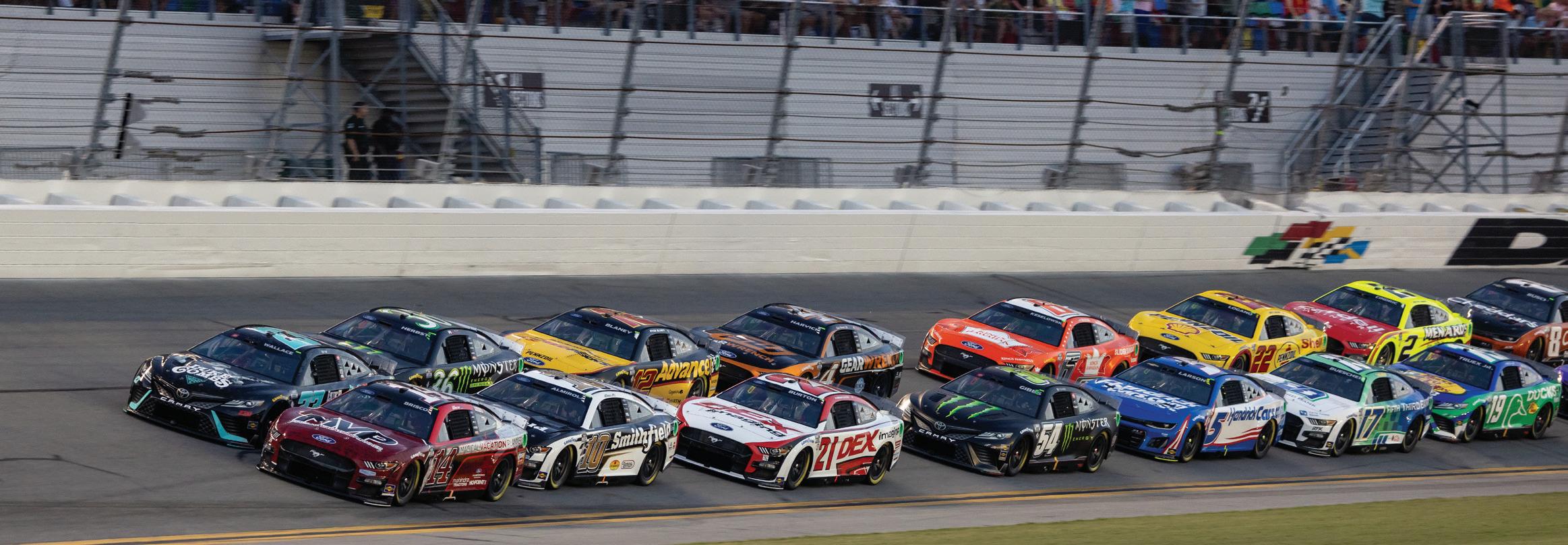
Drivers come flying by the grandstand at the end of lap one of the 2023 Coke Zero Sugar 400.

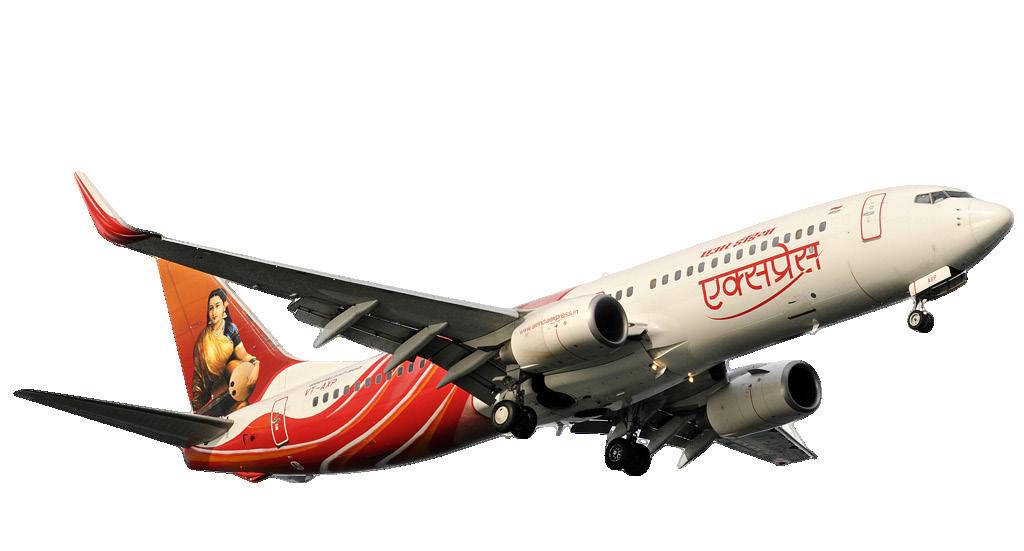
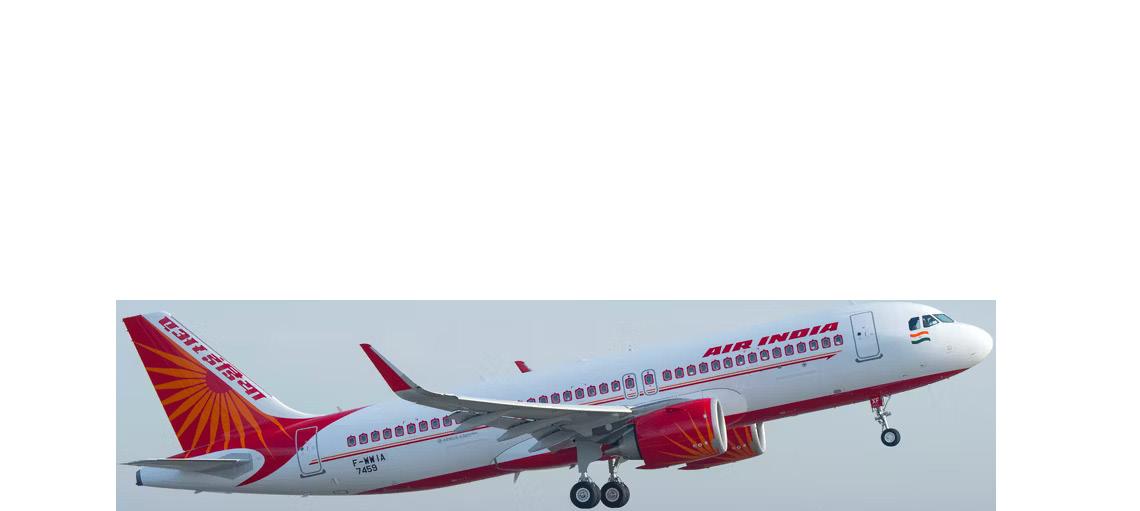
Double Merger Revitalizes Air India, Air India Express
 ARTICLE BY Javier Morales / Staff Reporter
DESIGN BY Ayman Bustillos / Correspondent
ARTICLE BY Javier Morales / Staff Reporter
DESIGN BY Ayman Bustillos / Correspondent
On Sept. 1, the Competition Commission of India approved the merger of Air India and Vistara, signaling the start of a new Air India.
Back in January of 2022, the Tata Group, India’s largest conglomerate, acquired Air India and Air India Express for $2.4 billion. The flag carrier was sold by the country’s government due to a lengthy record of unprofitability, with billions in debt on the books and roughly $2.6 million in losses every day. However, the purchase of Air India came with some enticing assets, making the deal worthwhile in the eyes
pilots, and a fleet of 120 aircraft.
At the time of Air India’s purchase, the Tata Group already owned airlines Vistara — a joint venture with Singapore Airlines — and AirAsia India, a joint venture with AirAsia. Now that government approval has been granted, the company plans to combine all its airline holdings into one unified firm flying under the historic Air India brand to dominate India’s aviation market.
The Tata Group will merge Vistara into Air India with Singapore Airlines,
already begun. The Tata Group has unveiled new branding, aggressively recruited pilots, and announced modernized cabin interiors.
As for the Tata Group’s other airline, AirAsia India, the company has already bought out AirAsia’s stake in the airline and has started to merge it with Air India Express, Air India’s low-cost subsidiary, after receiving government approval for this integration over the summer. The two carriers’ reservations system and customer interface have
already been combined. AirAsia India is currently
aviation market (behind the United States and China) and is expected to grow by 5.8% annually per IATA. Air India placed one of the largest aircraft orders in history earlier this year, 470 planes —250 Airbus, 220 Boeing — valued at $34 billion to capitalize on that growth. This fleet expansion will more than double Air India and Vistara’s current combined fleet of around 180 aircraft.
After the Vistara brand is discontinued, Air India will be the country’s only full-service airline. Air India Express will only have three main domestic competitors — Akasa Air, raising antitrust concerns. Air India is the secondlargest domestic airline — after IndiGo — and the largest international Indian
 PHOTOS COURTESY OF Airbus and KWsideB (flikr)
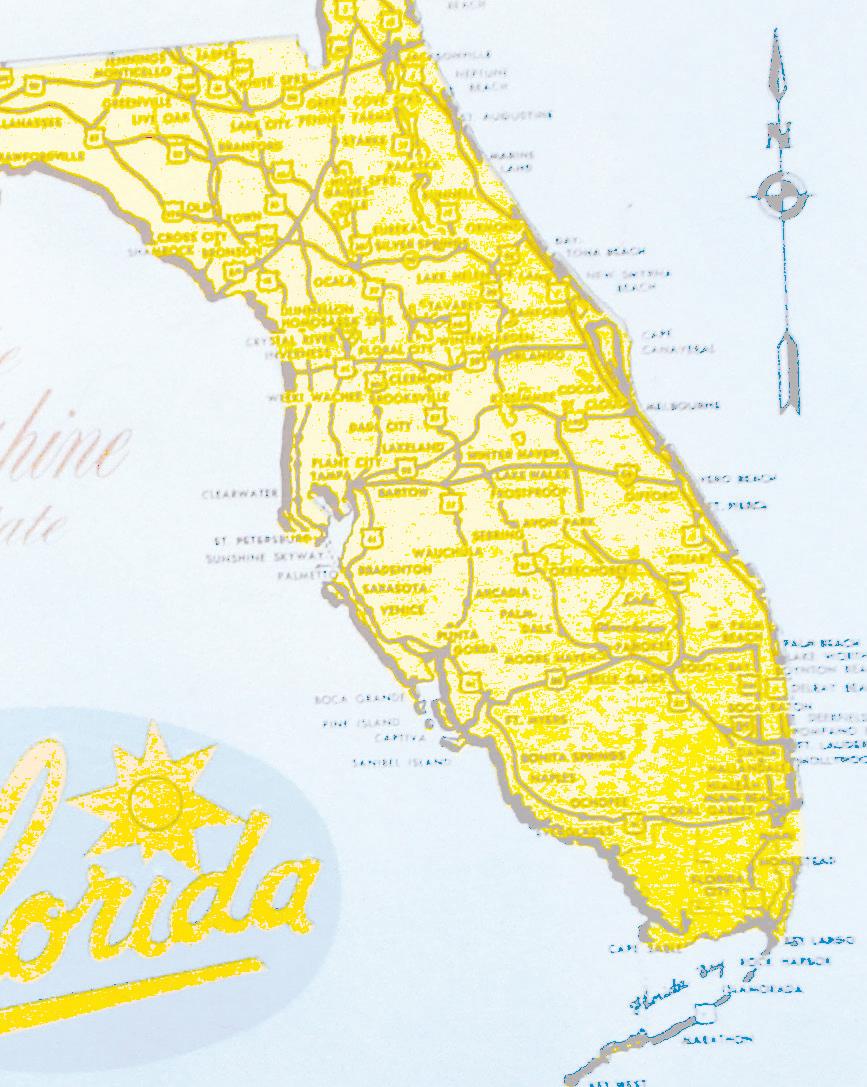
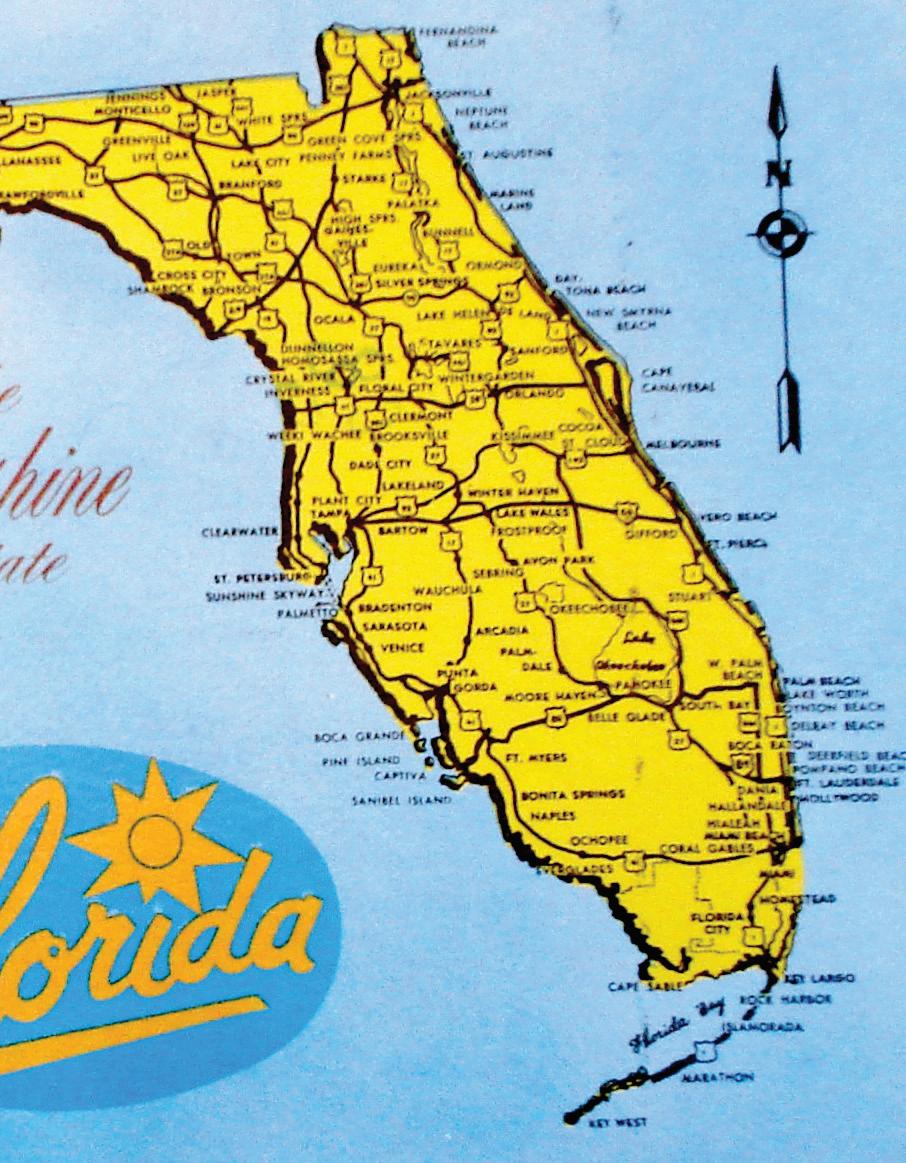
A Florida Resident’s Staycation Guide
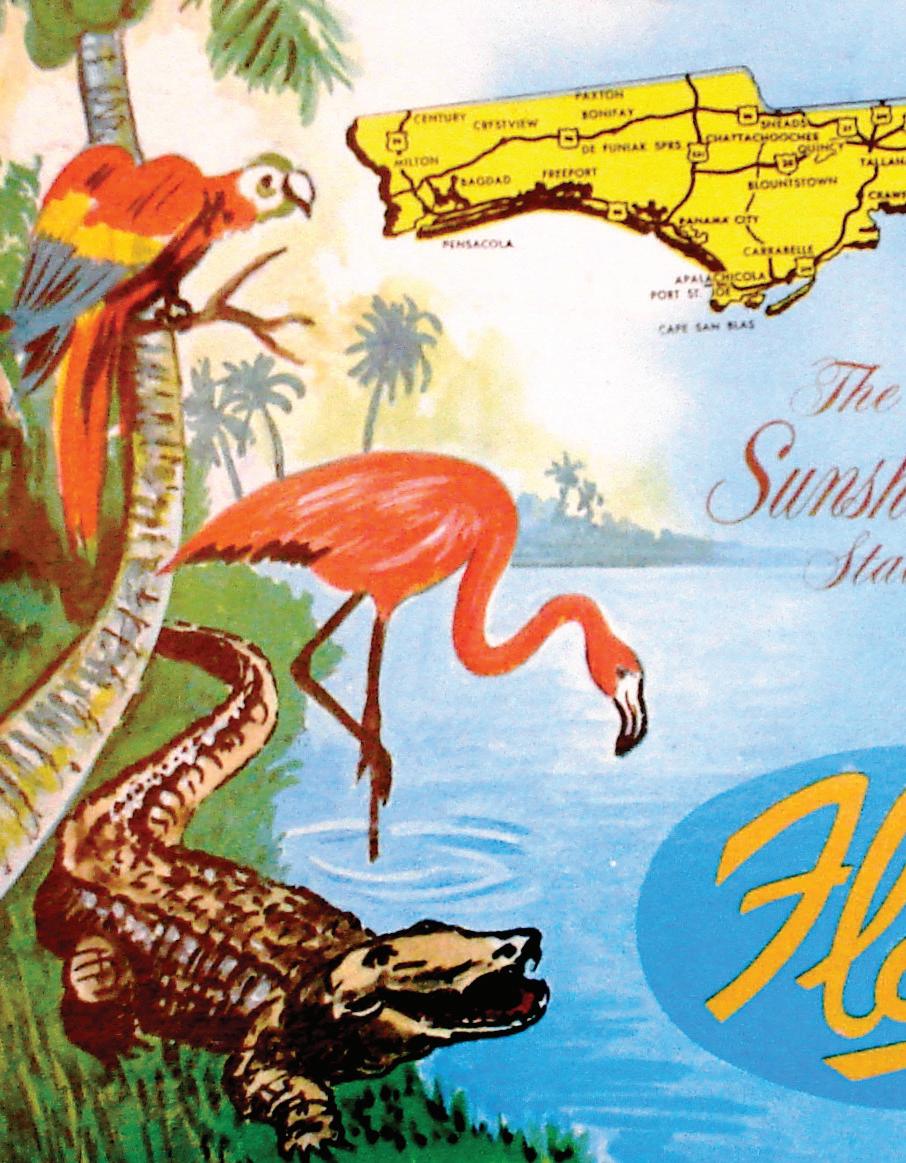
is location marks where Spanish explorer Ponce de Leon rst landed in 1513. Ponce de Leon has always been associated with the story of searching for the fountain. However, he never actually wrote about anything involving the search for the fountain. It was biographers who wrote about how the fountain was his motivation behind his expedition to Florida. No matter the story, come and visit and have an actual drink and see if you stay young forever.
Florida is known to be a at state. However, come visit the highest point in Florida and the lowest high point in the country. Florida’s highest point is 345 feet. However, your friends don’t need to know the details, just say you did it!
If you notice you start aging, perhaps the St. Augustine Fountain of Youth didn’t work. You should try this hidden gem in Punta Gorda. ere are believers out there that think that Ponce de Leon’s mystical fountain lies beneath under a public drinking fountain. e sign outside the fountain reads “Use Water at Your Own Risk.” In the 1920s, many assumed this fountain could prevent aging based o the unique taste that came from it. However, when the EPA tested it and found that it contained double the acceptable level of radioactivity, they tried to shut it down, but locals weren’t having it. Drink at your own risk.
Have you ever wanted to own a piece of Walt Disney World History? Were you upset that you could never ride Splash Mountain again, but wanted a piece of the ride to remember it? en come on down to a shop full of antique and vintage Disney merchandise and shop your heart out. Prices tend to range from $1 to $200. Items that were once sold in Disney parks are up for grabs people!
It’s a bird! It’s a plane! It’s a cake? You have an opportunity to see and visit a water tower that is shaped like a Publix cake sitting above the Florida skyline. According to Hydrostorage, Inc., this cake can deliver 250,000 gallons of water per minute. is cake lights up and holds 11 candles! Each of the 10 candles represents ve years of Publix history, and the eleventh one in the middle represents years to come! Go visit and take a picture of it!
is park is the only place in Florida where you can visit caves! ese caves were once submerged underwater, and when the water level fell, the shells and coral hardened and became limestone. You don’t get to see limestone o en! It’s also possible to see fossils like a nautilus, shark tooth, and sh vertebrae trapped within the limestone walls.
Come visit omas Edison and Henry Ford’s adjacent winter homes in Fort Myers, Florida. eir homes are open to the public and are accompanied by a historical museum of their work and a 17-acre botanical garden. omas Edison also built his own laboratory where he and his team invented over 1,000-plus inventions we have and use today.
If you’re into the paranormal experience, come visit this haunted shop to purchase haunted trinkets for your collection. If you’re not in the mood to shop, you can take ghost tours and even conduct your own paranormal investigation with your own EMF meter.
Florida is known for the unique shells the state’s beaches o er. Come visit the largest shell factory in the world! is factory is an old-school roadside attraction featuring a museum of shells from all around the globe. Not only that, but this tourist attraction has a year-round Christmas shop, botanical gardens with animals, and the largest taxidermy in North America. Also, if you see any shells you like on display, you can buy shells at this factory!
Have you ever wanted to walk through the Solar System? Here on Earth, you can walk only one mile and “practically” get the same experience. is walk is a four-billion-to-one scale model of the solar system and provides facts and history on each celestial body you pass by. is walk was created in 2002, so if you still believe Pluto is a planet, this is the place for you.
Have you ever wanted to eat pasta at McDonald’s? What about pizza? Belgian wa es? You may want to stick to your Big Mac, but check out this monster-sized McDonald’s! is 19,000-square-foot fast-food restaurant is three stories tall, with over 100 arcade games.
Do you believe in mermaids? Come visit the deepest naturally formed spring in North America and spot a few mermaids in the process. is popular destination is known for its live mermaid shows, where performers swim and dance in their underwater theater. A er watching the show, take a dip in the Springs and enjoy the crystal-clear refreshing water.
is jungle houses about 400 primates in 30 di erent species, including orangutans, gibbons, howlers, and more. e monkeys are not caged! e humans are caged! What? Yes, humans walk through a tunnel where the monkeys jump and play all around us.
ese are just a few places to explore here in Florida. To nd more hidden gems like these, visit Atlas Obscura’s “ e Atlas Obscura Guide To 359 Cool, Hidden, and Unusual ings to Do in Florida.” Happy Adventuring!

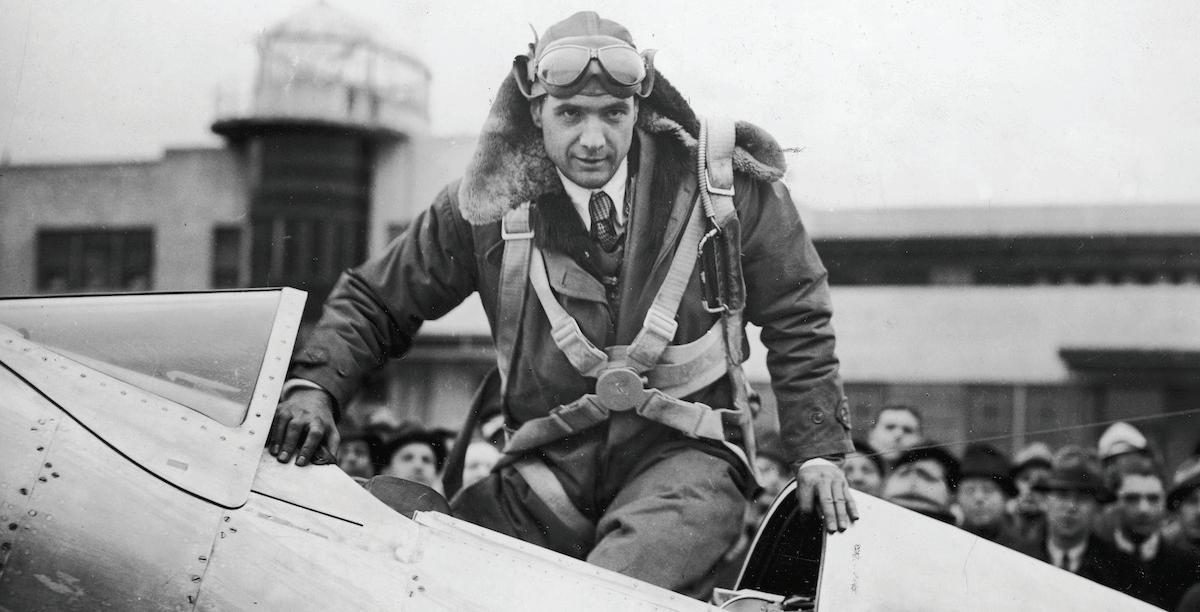
 Howard Hughes climbs into the cockpit of his Northrop Gamma aircra in preparation for breaking his own speed record
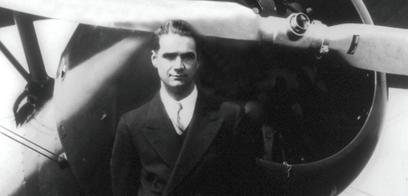
Howard Hughes poses in front of his new Boeing Army Pursuit Plane
Howard Hughes climbs into the cockpit of his Northrop Gamma aircra in preparation for breaking his own speed record
Howard Hughes poses in front of his new Boeing Army Pursuit Plane

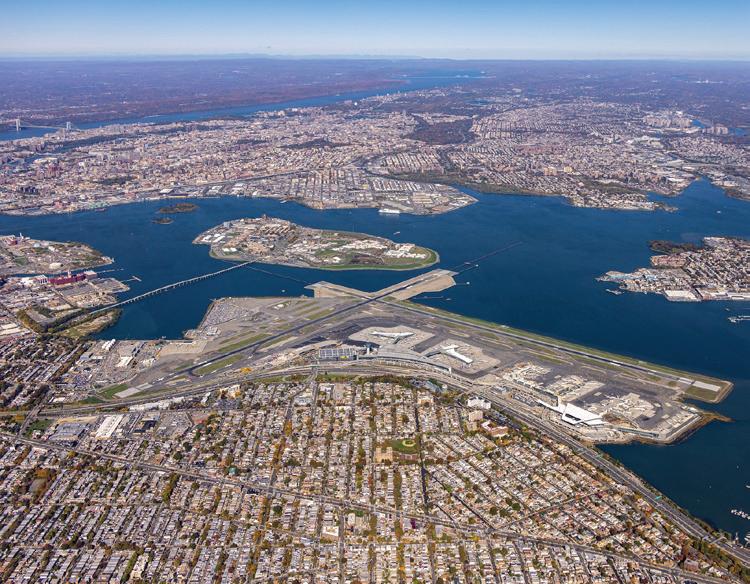 Aerial shot of LaGuardia Airport.
The wreckage of SAS Flight 901’s DC-10, after overruning Runway 4R at John F. Kennedy International Airport.
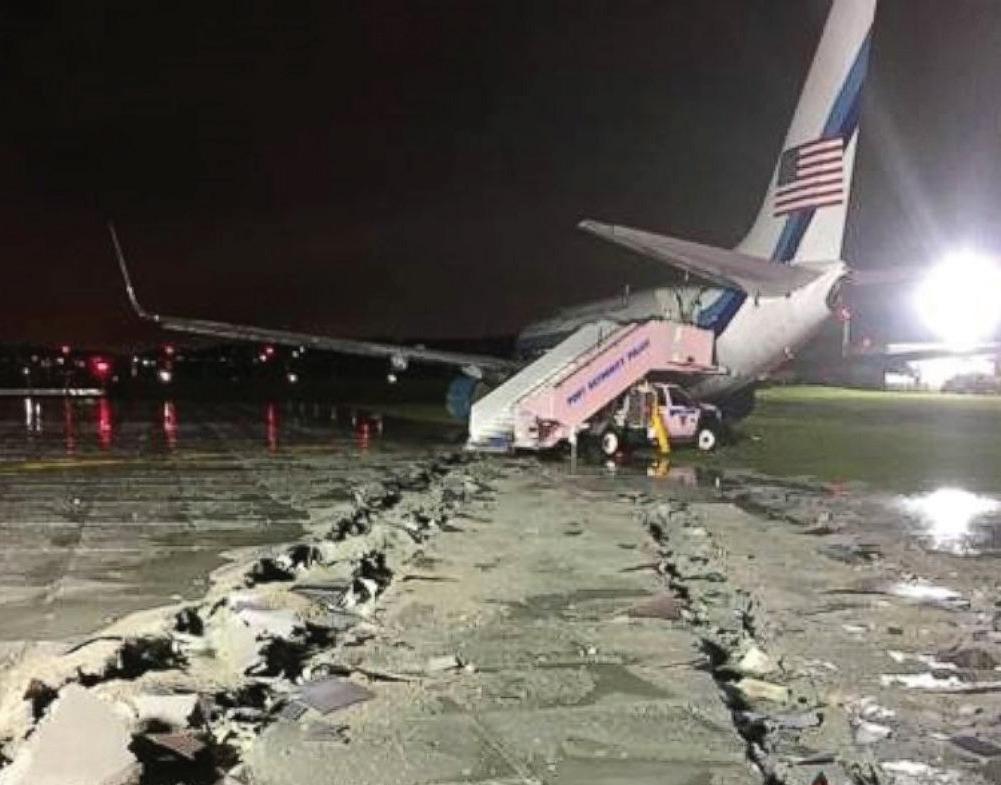
EMAS collapsed under the weight of Mike Pence’s plane, safely halting the 737 before the Grand Central Parkway.
Aerial shot of LaGuardia Airport.
The wreckage of SAS Flight 901’s DC-10, after overruning Runway 4R at John F. Kennedy International Airport.
EMAS collapsed under the weight of Mike Pence’s plane, safely halting the 737 before the Grand Central Parkway.
College life is a journey of selfdiscovery, growth, and exploration. For many of us, it’s something we’ve looked forward to for years. However, college can also be a time of immense stress, pressure, and mental health challenges. As students strive to nd their place in the world, they o en struggle with anxiety, depression, and other mental health issues in silence.
In its 10th year, Field of Hope, held on Sept. 12, has again demonstrated the power and impact of unity, compassion, and the importance of mental health awareness. is annual event, hosted by our campus’s Counseling Center, brings together students, faculty, sta , and the wider community and serves as a reminder that nobody is alone in their battles. Members of the community are invited to write messages on thousands of colored ags, which are then planted on the Student Union lawn. In the 10 years Field of Hope has been at EmbryRiddle Aeronautical University (ERAU), nearly 4,000 ags have been lled with messages of hope, inspiration, and encouragement for those who may need extra love and support – a true testament to the strength of the ERAU community and our commitment to fostering a campus culture that prioritizes mental well-being.

e Avion spoke with Ashley, an Aerospace Engineering senior, who shared that she has been participating in this event since she was a freshman.
“I relate to being in a time where I needed someone to talk to… someone who could be my guide out of the dark and lonely hole that is depression,” she said. “I know how much Field of Hope has helped me, and it’s important to continue upli ing others – in public and in private.”






One of the counselors at the Counseling Center, Jen Pattison, reminded students that the Counseling Center is open to all and encouraged students to explore the resources available through the Center. e Center’s free services expand even beyond its physical location. Linked at the end of this article is the TELUS Health Student Support Services app, which provides free, con dential mental health and well-being support 24/7 for ERAU students.
e thousands of ags planted on the Student Union lawn send a powerful message to the ERAU community. It shows that there is a network of people who genuinely care about their well-being and are willing to stand by their side through di cult times. Field of Hope is not just an event; it’s a promise that we will continue to strive for a campus where mental health awareness is at the forefront and no one feels they have to face their struggles alone. It’s a reminder that Eagles soar together and that where there is hope, there is life.
A L���� H���
H���,




I’� ��i��n� y�� ��i� ����� �us� t� s�� h�� �u�� I �is� y��. I �is� w����n� d��� ���
�i��w��� �ha� I ����� w���e� d���. I �is� ��� w�� �ha� ��� ���i�i�� w��l� �i� ������n��� �h�� ����. T�� �e���� �ha� ���r��n�e� �� ��� ������n�, to�. I h��� �� ma�� ��� las��n� c���ec�i�n� �e�, �u� I �� st���n� t�, �h�u��.







I �n�� �ha� I ��� ���ng� ��n� � � �es�, �u� I �n�� �ha� y�� ���� fi���� i� ��� �u�. I ��� � �i�� ����n� �us� s� I c��l� fo�u� �� �� ���. I �i� ����, st���n� �u� � ��nd�� �i�� � ����� ����, wat���n� ��� ��� �i�� �n� �e� ea�� d�� �us� ���� I w��l� ba�� �����, �u� i�’� ������n� ����. N�bo�� ���l� y�� �ha� t� �����, �ha� t� d�, �� �ha� t� s��. N�bo�� ���l� y�� ��� ���ng� �ha� y�� ��e� t� �n��; ���� �us� �e� y�� �� y��� w��. I �i�� �ha� I c��l� �h��� ��� �� a���n���e� �i�� y��, �u� i� �us� w��l��’� �� ��� s���. I �i�� �ha� I c��l� �� �����, �u� I’� ����; I �n�� �ha� I ��� � ��e�� � �� ����n� ba�� �����. A�� I h��� ���� i� ��� ��m���e� � y�� t� u�� �� �� j������ �ha� ��e� ��ea�. I �n�� I wa� ���� ���p��e�; y�� �i� ��� y�� c��l�, �u� I �n�� I’�� �� ba��, �us� �� a� ��� a� I w�n� t�. I’� � l�n� w�� �r�� y��, y�� �n��. I�’� �� � ��i�� �����, �u� I’�� m��� i� ba��, �n� h��e�����, ����n� ���� h��� �h�n�e� ���� I d�. T�� ��� � ��m���e� �n� l�u�h���, ��� �e���� ��n��n� d��� ��� �i��w���, ��� �id� �l���n� �� ����� y�rd�, i�’� s��e���n� I ���� ��������, �u� �r�� n�� ��, I c���� �is� ���n� ����� a� �u��. I h��� t� m��� ��.
H���, I’� ���� t� ���� y�� �ha� I’�� �� ������ h��� d��� ����. I’�� �� ������ st��� t� ���� �n� t� ��ea��, �n� I h��� t� ���� i�; �����i��, I w��’� �� g��n� ���� f�� �� �i��. I h��� t� d� ��i� ���n� c���e� c���e��. I’�� ��w�y� h��� y�� �� �� �e��, �u� I c��’� h��� y�� �� �� ��n�.

Y�� ��� �� �l���.
My friends took my car late on Sunday, Sept. 3 to Merritt Island to watch Starlink 612 take-o from historic launch site, Launch Pad 39A.
Coming Oct. 27, 2023, is the movie adaption of Scott Cawthon’s “Five Nights at Freddy’s” indie game series. If you aren’t familiar with this series, it’s about a pizzeria in the 1980s-90s that has been closed twice, with the second closing due to an accident in 1987. e player in the game is a security guard, hired in the summer of 1993 to keep an eye on the animatronics. According to the Wiki Fandom Page, it’s “cheaper to hire [the player] as a security guard than to nd a repairman.” During the ve nights he works there, the animatronics come to life, and the player comes into danger as the animatronics don’t recognize him. Because of this, the player must try to avoid getting jump scared by paying attention to the cameras and acting accordingly.




e description above is mainly for the rst installment, “Five Nights at Freddy’s I.” Still, the next two installments are rather similar to the rst, up until the fourth and beyond, which are di erent approaches to gameplay and lore development. According to the movie synopsis and trailer on the o cial movie website, “ venightsatfreddys.movie”, created by Universal, the movie seems to follow the rst game’s story, but not very closely. In it, the main character, Mike, takes a position as a night security guard at Freddy Fazbear’s Pizzeria and “soon discovers that nothing is as it seems.”



Based on the comments on the “Five Nights at Freddy’s - O cial Trailer II” on YouTube, posted by Universal, the larger audience seems to be excited about its release, commenting on how good it looks and the character designs. As the movie has yet to be released, there are no o cial reviews from critics. Since the audience’s comments are mostly positive, I’d say the movie will be worth the watch.


As a reminder, the movie will be released this October on the 27th. Be sure to give it a watch whether you’re familiar with the series or not!

Will the Movie Live Up to the Fans Expectations?
is piece means a lot to me, I wanted it published because it represents an important part of my pilot journey. Many pilots will never forget their rst airport, their rst plane and their rst ight instructor. e experiences that any pilot gains from their rsts live with them forever. is drawing is the plane I rst got my license on, N316AS. It is taking o from Runway 24 at the airport I learned to y at, Greenwood Lake Airport in West Milford, New Jersey. e memories I have made at Greenwood Lake Airport will follow me forever and remain something I can fondly look back upon. I feel like this is something many pilots relate to, and this piece of art is an ode to all those pilots missing the airport where they rst got their wings and learned how to soar.







Carmen and Brandon are graduate researchers in the Research in User eXperience (RUX) Lab in the Department of Human Factors and Behavioral Neurobiology. RUX investigates the usability and user experience of technology in our everyday world. This is a regular column that explores different technologies typically used by Embry-Riddle students.
Hurricane Hunters: Spotlight on Human Performance and User Experience in Weather Research
 ARTICLE BY BRANDON DRESLIN AND CARMEN VAN OMMEN
PHOTOS BY JAKE BARLOW (CBS) AND JOSH WADLER
DESIGN BY JACOB RAINERSON / Senior Reporter
ARTICLE BY BRANDON DRESLIN AND CARMEN VAN OMMEN
PHOTOS BY JAKE BARLOW (CBS) AND JOSH WADLER
DESIGN BY JACOB RAINERSON / Senior Reporter
Dr. Josh Wadler joined ERAU in 2022. He currently does research on hurricanes, but is also interested in human performance during turbulence. Members of the RUX lab met with Dr. Wadler to learn more about his research and why human performance and usability is important when studying hurricanes.
RUX: Can you tell us about what you research?
Dr. Josh Wadler (JW): My research focuses broadly on hurricanes and things that affect hurricanes. We are looking at collecting data in the lowest layers of the atmosphere where there is energy transfer from the ocean, because that makes the storm as big and as strong as it gets.
RUX: What was the purpose, what do you hope to find?
JW: The data we collect from that region is important, because the models used to predict or depict the hurricane have to use an estimate of the energy transfer. If we don’t have enough measurements, those making the models would just have to guess and they wouldn’t know if the models were valid. Our goal is to improve the model of physics to improve future model forecasts.
RUX: What does data collection look like?
JW: Data collection is mostly done through field work. When there is a storm coming, we will make a plan and coordinate meeting up with research partners for a mission. It’s very important to spend a lot of time in meetings beforehand to make sure the companies and research partners understand the mission. When we meet up, we will take the NOAA P-3 Orion hurricane hunter, fly into the storm, and take a lot of measurements.
We generally have three scientists on board doing different job duties. Some of these jobs include releasing a drone and coordinating with the drone companies. We also collect data from radars, profilers, instruments that measure the surface winds, and ocean instrumentation such as SailDrones.
When on the plane, there is a lot of evaluation and decision making happening. The mission rarely goes to plan and you have to be flexible. Usually, the storm doesn’t behave exactly as you think it will. For example, in Ian, the eye was collapsing so we had to get out of there. It’s very helpful to have been on the mission so that you understand the context of the measurements or data you collect when you are at home analyzing later.
Page 16 [RUX Corner ]
. . . . . . . . . . . . . . . . . . . . . . . . . . . . . . . . . . . . . . . . . . . . . . . . . . . . . . . . . . . . . . . . . . . . . . . . . . . . . . . .
. . . . . . . . . . . . . . . . . . . . . . . . . . . . . . . . . . . . . . . . . . . . . . . . . . . . . . . . . . . . . . . . . . . . . . . . . . . . . . . .
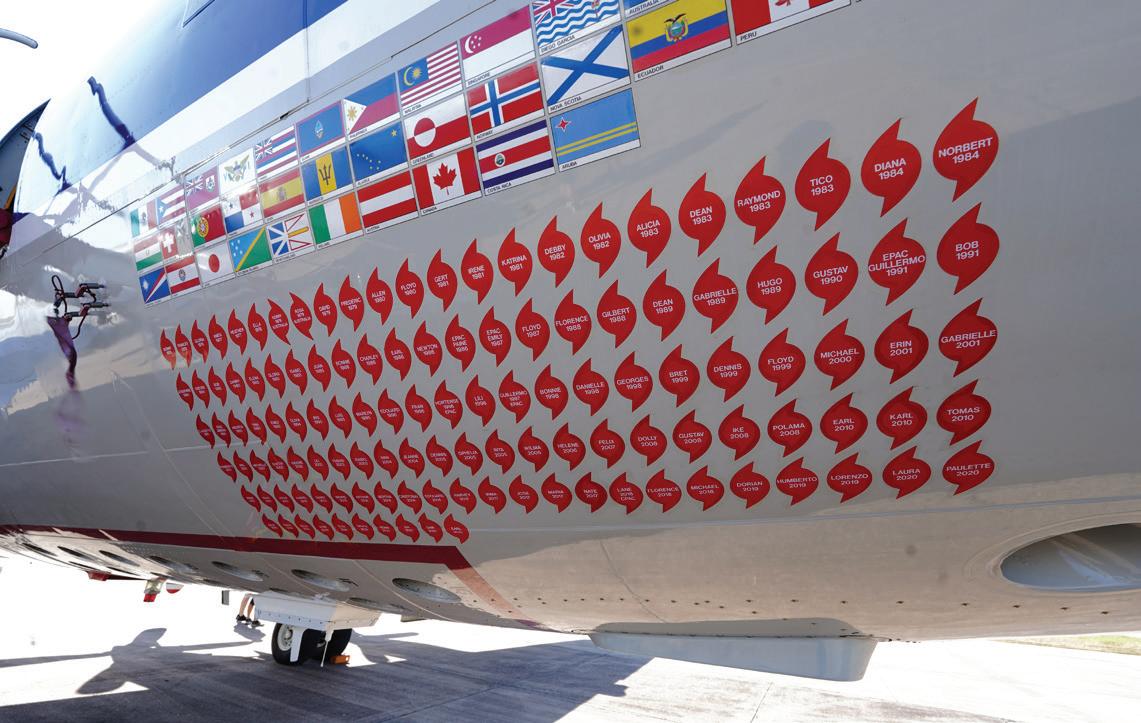
NOAA plane with stickers showing hurricanes flown in.
RUX: What other research opportunities are you interested in?
JW: I’m also interested in defining a “bumpiness” index. This idea started out as a fun conservation, because the flight during Hurricane Ian was the bumpiest I have ever experienced. I would like to see how “bumpiness” or turbulence affects human performance and decision making. For example, when you are a scientist in a plane, can you really make a good judgment about whether your equipment is collecting accurate data when you are being shaken around? Though it was motivated by being in a hurricane, I could see how it could apply to many other forms of aviation, from cargo to military. Current measurements of turbulence do not describe the human experience, only the atmosphere, and the human experience is effectively what matters to us. Turbulence may feel different in a big plane than a small plane, and while one of the current measures, the eddy dissipation rate, is supposed to take that into account, it doesn’t really reflect what humans would actually experience.
RUX: It’s interesting that you also want to research the user experience of weather, as our lab is focused on how people interact with technology or systems from a usability or user experience perspective. How does the usability of your equipment affect human performance, such as collecting data in a hurricane?
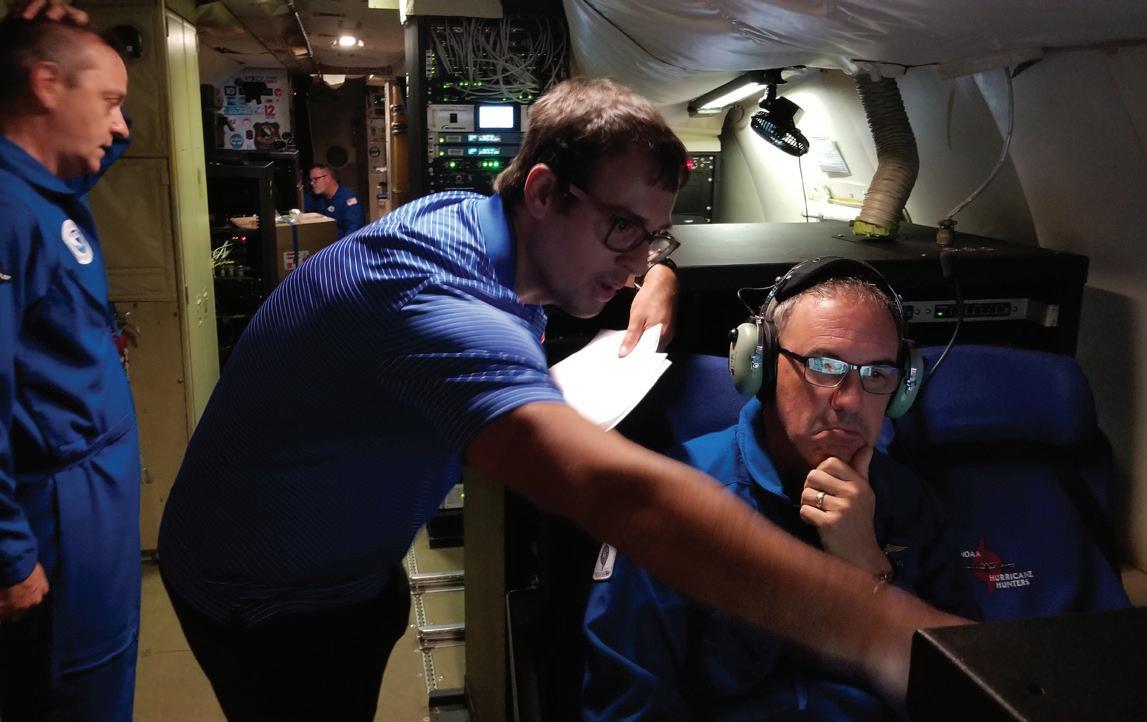
JW: It’s very easy to get task-saturated in a hurricane. We have a lot of jobs to do simultaneously. Usability can help optimize the experience. If our interfaces are inefficient, it just adds to how many tasks we have to do. After flying in a few missions, you get better at interacting with your interfaces, but it can take some time.
RUX: How could students get involved in your research or research similar to yours if they were interested?
JW: You can always talk to me about my research or find someone else who does what you are interested in and talk to them. When I was a student, I wanted to fly on a plane, so I talked with someone who flies on a plane, and now I’m doing that type of research. Most people in this field like giving back. I know what we’re doing is super cool so I always try to get students involved. I currently have two ERAU students I am working with who went on a plane last March.
RUX: What would the role of a student researcher/ assistant look like?
JW: Students would mainly be involved in data analysis. We currently have an ongoing project to look at the turbulence structure of Ian. Students could look at radar data from that, or from other instrumentation. I try to cater projects to what students want to do, so student projects could have some flexibility.
17
Page
Crew monitoring insturments on the C130.
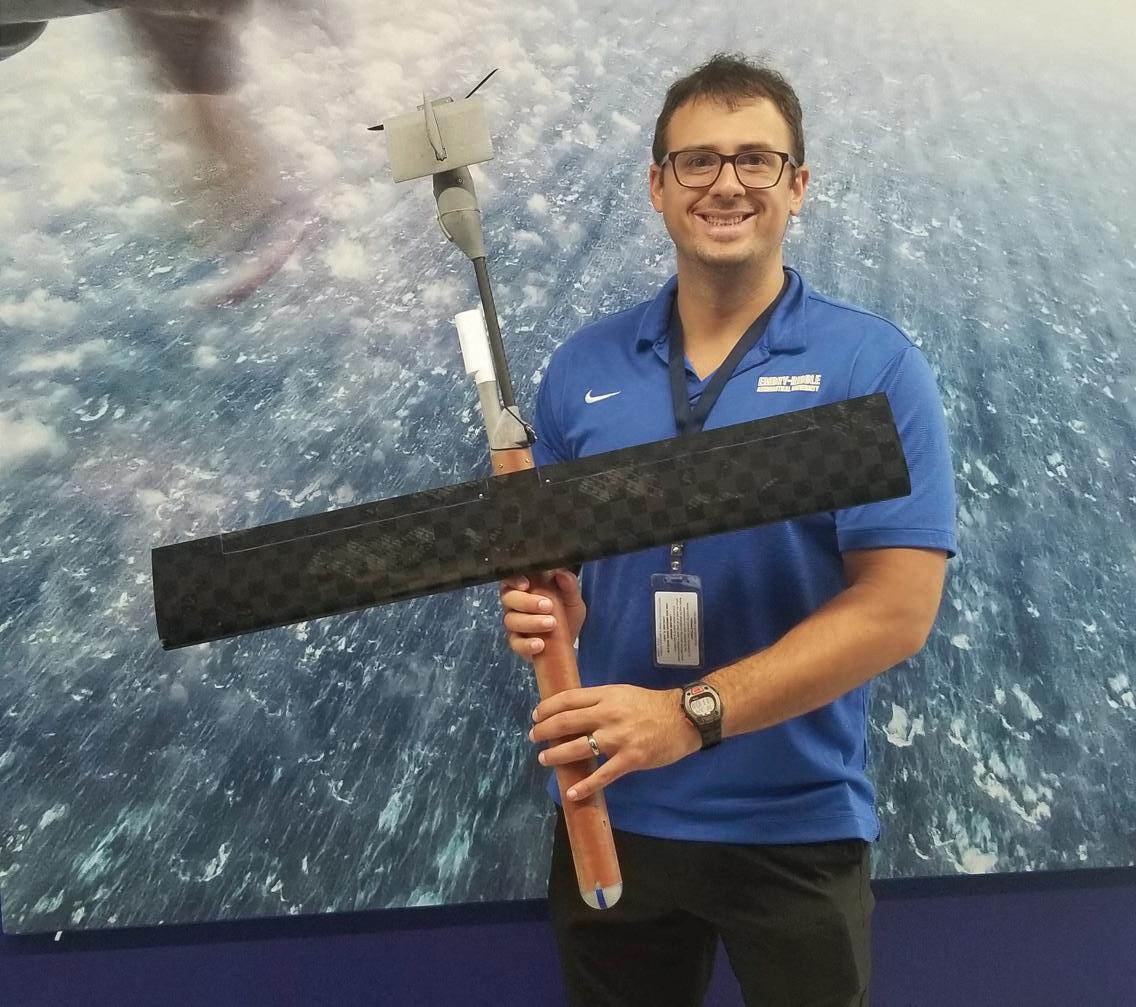
Dr. Wadler holding a data collection drone.
OFFSHORE RACING: WHAT IS CLASS ONE?
 ARTICLE BY KYLE NAVARRO / Photo Editor
PHOTOS BY KYLE NAVARRO / Photo Editor
DESIGN BY LIAM JOHN / Correspondent
ARTICLE BY KYLE NAVARRO / Photo Editor
PHOTOS BY KYLE NAVARRO / Photo Editor
DESIGN BY LIAM JOHN / Correspondent
The world of offshore powerboat racing is something that your everyday person probably has no idea about. Generally, when people our age and in our area hear about racing, it has something to do with NASCAR or IMSA holding a race at Daytona International Speedway. If you are more local, maybe a race at New Smyrna Speedway is something you’d think of. Powerboat racing, specifically Class I, is something that has gone on for decades, yet nobody knows what it is.
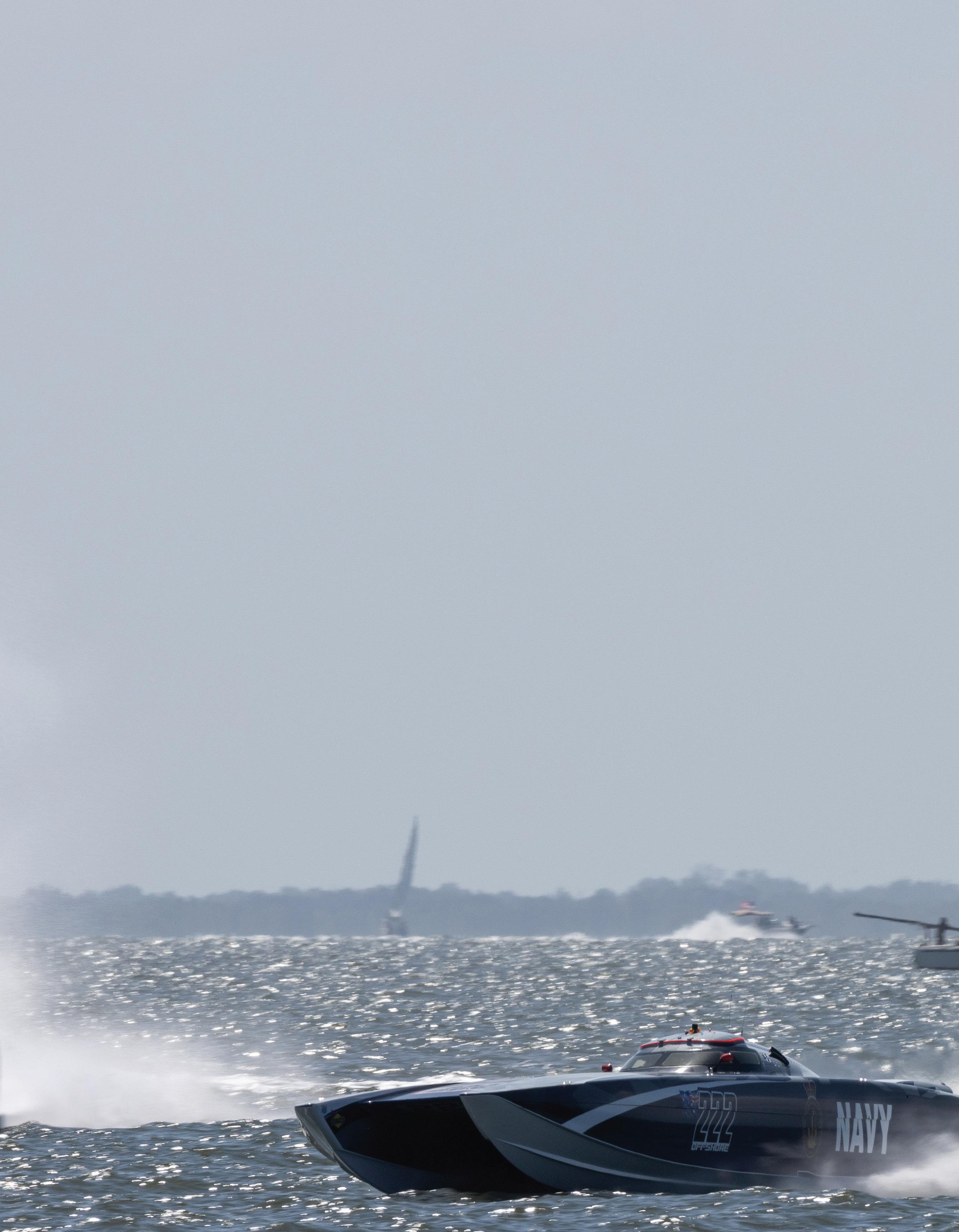
Class I has been around since the 1900s, with the first sanctioned world championship being held in 1964. Boats then were sure not quite what they are now, but it was still a spectacle to be seen. Now, these boats are 40-50 foot catamarans built with carbon fiber and the latest technology. They fly along at over 160 miles per hour, powered by twin Mercury Racing 1100 hp engines. Six teams come from all over the world to compete for the championship title.
If you have never had the chance to go to an offshore boat race, you’re missing out. Being able to interact and see these crazy machines up close is quite a unique experience. All teams open up during the day, and you can stop by, take a picture and say hi to the crew and the drivers. At pretty much all of the races, boats fly along the beachside, allowing you to catch the action up close and personal while relaxing in some beautiful scenery.
Class I is growing and attracting some big names, too. Travis Pastrana has recently been driving for the Huski Ice Spritz Class I team, stepping in for the Saint Petersburg race on Sept. 3. Monster Energy also recently signed a deal with Class I and is the title sponsor for the newest Class I boat in the fleet.
Unfortunately, the Class I season is over for this year, but it will return next May. If you haven’t made it to a race, I suggest you check it out!
Page 18
Driving Innovation
Ohmio Autonomous Shuttles Revolutionize Transportation
 ARTICLE BY NOAH COOPERMAN / Staff Reporter
PHOTOS BY NOAH COOPERMAN / Staff Reporter
DESIGN BY NOAH COOPERMAN / Staff Reporter
ARTICLE BY NOAH COOPERMAN / Staff Reporter
PHOTOS BY NOAH COOPERMAN / Staff Reporter
DESIGN BY NOAH COOPERMAN / Staff Reporter
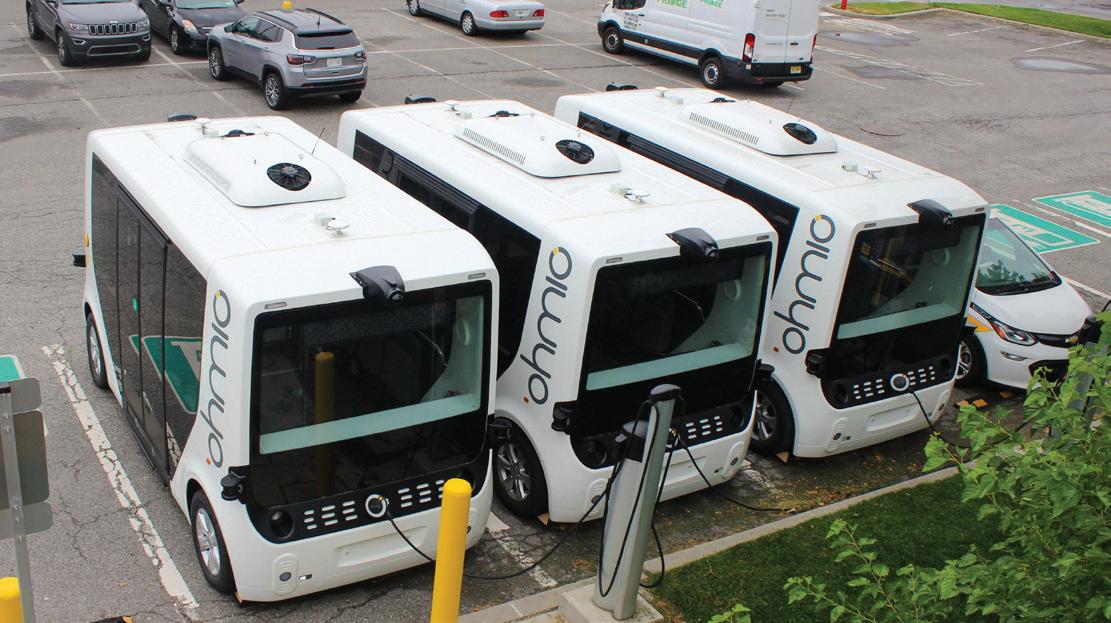
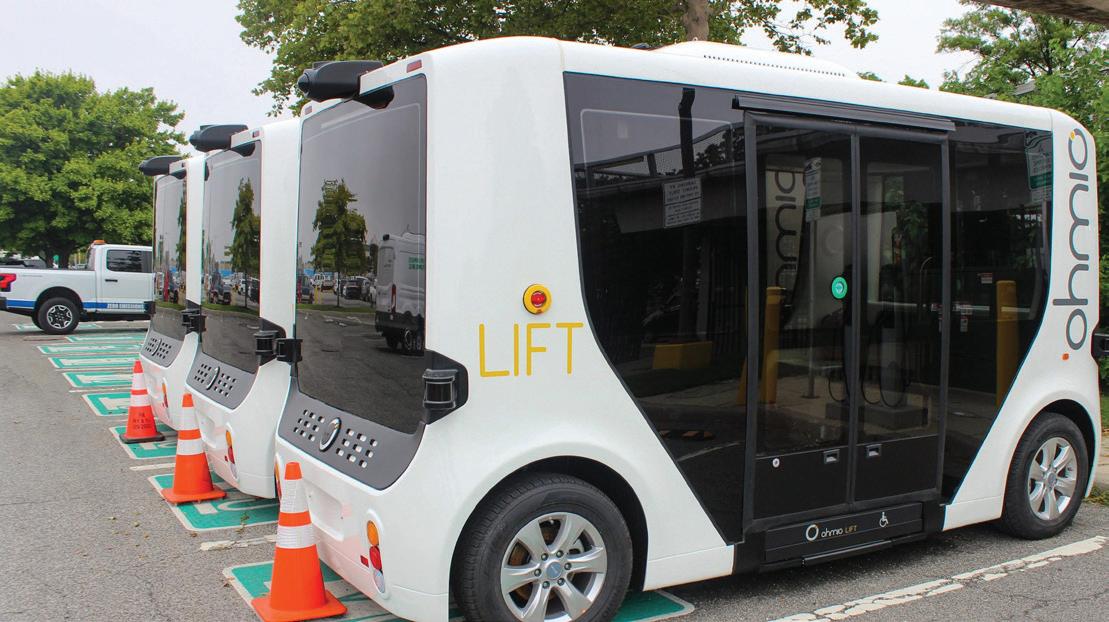
Imagine effortlessly boarding a driverless shuttle at an airport, knowing it will swiftly and securely transport you to your terminal. This is now a reality, thanks to Ohmio Automation, an innovative New Zealand startup specializing in Intelligent Transport Systems (ITS). Their game-changing innovation centers around the “people movers” – the Hop and the Lift –compact, 3D-printed vehicles set to redefine transportation within controlled environments like airports, campuses, and urban centers.
Ohmio’s commitment to safety is driven by the 2011 tsunami in Japan, highlighting the need for improved emergency response in transportation. Founder Mohammed Hikmet believes such confusion could have been prevented, potentially saving countless lives. He aptly expressed, “Every 24 seconds, someone loses their life in the world due to a transportation incident. We have the capacity to enhance transportation, make it safer, and reduce its environmental impact.”
The Hop accommodates four to six passengers, while the larger Lift carries up to 20. Their standout feature is inclusivity. All-wheel steering ensures agility and dual motors guarantee a smooth ride. With their low positioning, these shuttles offer easy wheelchair accessibility, promoting universal mobility for up to eight hours.
But what truly sets Ohmio’s people movers apart is their absence of drivers. Equipped with lidar sensors, stereovision cameras, odometry, and 5G connectivity, they achieve Level 4+ autonomy, making them a cutting-edge autonomous transportation solution. They are fully electric, aligning seamlessly with the global shift toward eco-conscious transportation alternatives. Several cities around the world have already recognized their efficiency.
Ohmio’s technology empowers these vehicles to navigate predefined routes with precision. Additionally, they communicate with each other, as demonstrated during a live broadcast at JFK Airport. In “Platooning Mode,” three Ohmio vehicles maintain a mere six-to-seven feet of separation, promising streamlined transportation in congested areas. Expansion plans include Newark Liberty International Airport, LaGuardia Airport, and the Lincoln Tunnel’s Express Bus Lanes (XBL), marking a significant step toward redefining urban transportation.
Safety remains paramount. Human attendants oversee each vehicle as a failsafe, although manual operation is not possible. Each vehicle is equipped with essential safety features, including an emergency brake button, a fire extinguisher, and seatbelts. With a maximum cruising speed of 23 mph, collisions are designed to have minimal impact.
Charging Ohmio’s buses is like plugging in a smartphone. At JFK Airport, ChargePoint chargers provide electricity from solar panels, ensuring that Ohmio shuttles operate on clean, sustainable power. Photos of the shuttles charging can be seen below this article.
Rick Cotton, the Port Authority’s executive director, backs autonomous vehicle platooning, highlighting its potential to enhance capacity, service, and reliability in public transit and airports. Hikmet shares this commitment to innovation and passenger-centric solutions.
In summary, Ohmio Automation’s people movers are poised to revolutionize transportation with safety, inclusivity, autonomy, efficiency, and sustainability at their core. Their expansion plans promise a future where these shuttles seamlessly connect travelers to their destinations while leaving a minimal environmental footprint.
Page 19
2023 kicks o the 70th Anniversary of the Experimental Aircra Association’s (EAA) annual AirVenture, more commonly known in the aviation community as simply OshKosh, as this is the city the airshow is based in. ose who were lucky enough to get tickets for the week, or even for just a day, would be in for a treat no matter what day they were there.
Once a week during the year, Wittman Regional Airport in OshKosh, Wisconsin, becomes known as the World’s Busiest Airport and the World’s Busiest Air Tra c Control. e airport received these nominations because of the sheer number of aircra constantly ying in and out for the airshow. In 2023, a record-breaking 3,365 aircra were registered for ying into the show. e number includes vintage aircra , homebuilt aircra , warbirds, ultralights, seaplanes and amphibious aircra , aerobatic aircra , and rotorcra . OshKosh tourists also had the privilege to be a part of aerial tours in various aircra , speci cally, the Ford Tri-Motor 5-AT-B, the B-25 Berlin Express, and the Bell 47 Helicopter.
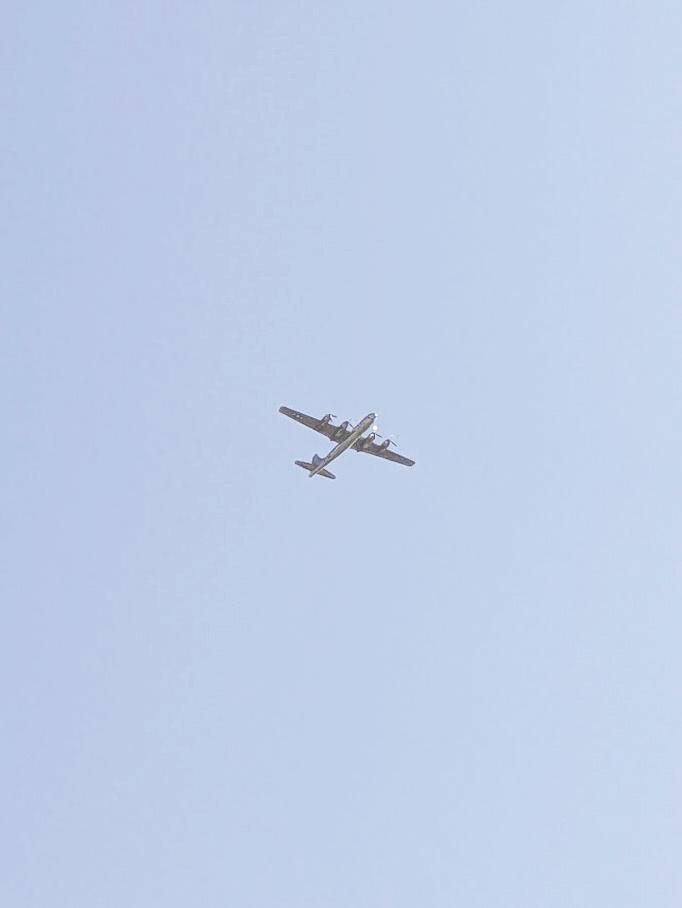
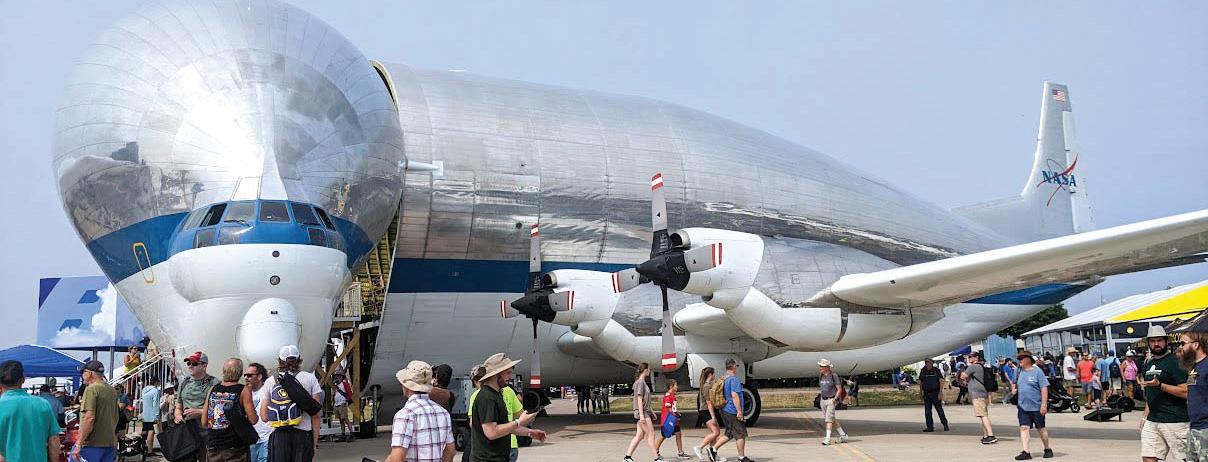
Visitors were in for a treat with the wide selection of unique aircra on static display for them to walk up to and take pictures. Some more interesting aircra included NASA’s last Super Guppy, a Boeing Dreamli er, a C-5 Galaxy, a V-22 Osprey, and much more.
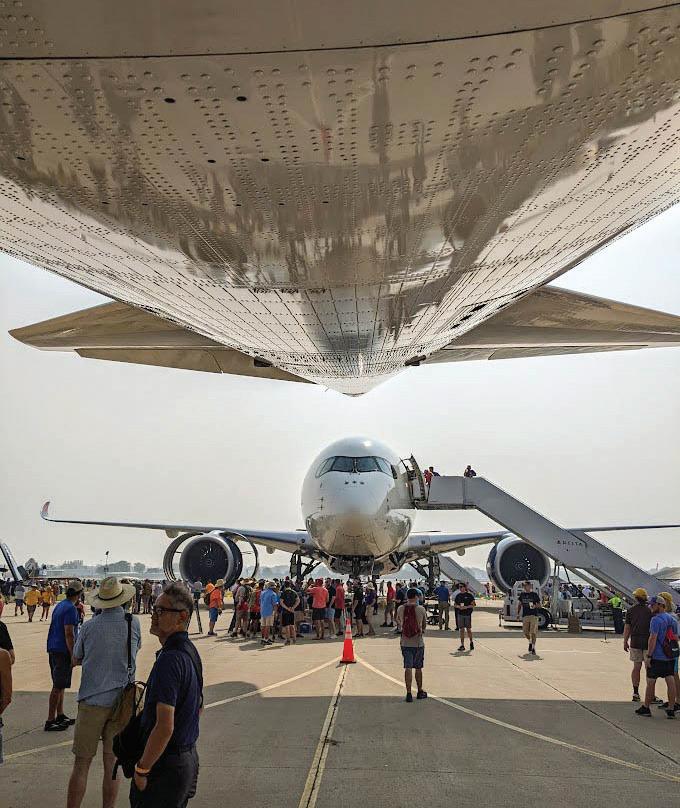
Maryland’s National Guard sent one of their A-10 Warthogs to y in for static display, and Wisconsin’s National Guard o ered a KC-135 Stratotanker. But it was not just the military who ew aircra for static display; commercial airlines also sent some of their eet. Southwest Airlines ew in one of their Boeing 737 Max 8’s, and Delta Airlines ew in an Airbus A350. Both aircra were open for walkthrough exhibitions. If you’re more into vintage aircra , don’t worry because a plethora is available for viewing.
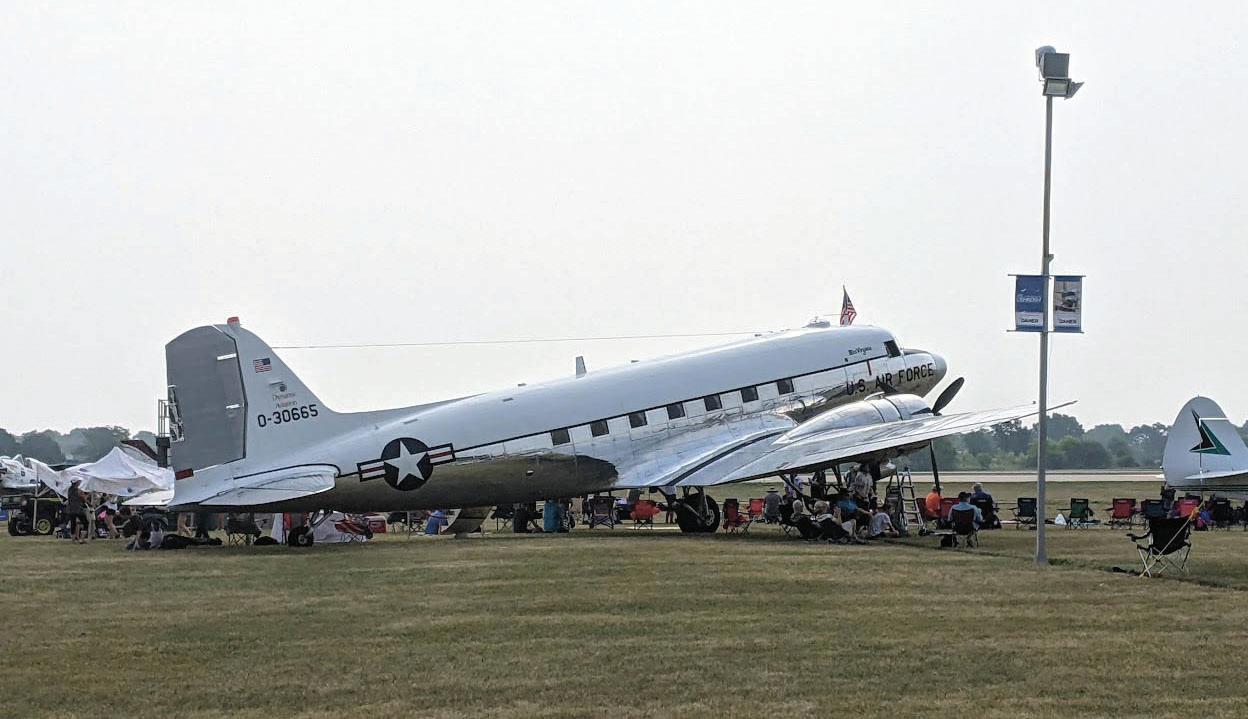
One of these vintage aircra was a C-47A named the Miss Virginia. is aircra is particularly unique, as it is one of the few remaining that ew in the D-Day invasion of Normandy during the Second World War. It has since been modi ed into the civilian DC-3C and now ies into airshows to share her history. Not only were aircra available to look at, but vehicles, too. Striker Volterra, an OshKosh local company, had one of their new hybrid Airport Rescue and Fire Fighting (ARFF) trucks on display. anks to the battery and diesel fuel combination, this truck is a game changer. e battery allows for the Striker Volterra ARFF trucks to have a continuous stream of power for their re ghting equipment, and the fuel tanks provide the power for the drives to the danger zone. e Striker Volterra, hybrid ARFF trucks, are already being shipped out to small regional airports, and the company hopes to ship them to major airports in the future.
NASA’s Super Guppy looks down upon OshKosh’s visitors to the Boeing Plaza.
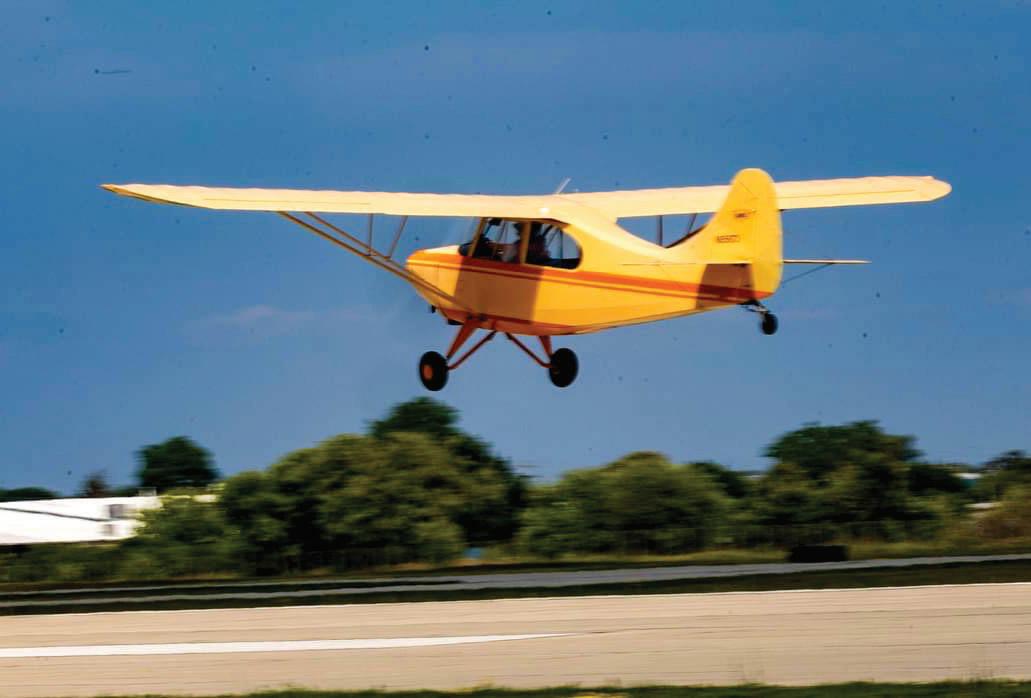
Static displays weren’t the only way visitors could see these aircra . Once a day, every day, the a ernoon airshow would commence. All sorts of military ghters, vintage aircra , and warbirds would y in impressive displays. e ghter jets and warbirds included an F/A 18 Hornet, MiG 17F, F-22 Raptor, T-6 Texans, P-51 Mustangs, F4U Corsairs, T-28 Trojans, Hawker Sea Fury Mark 11, and the Sukhoi SU-57. Vintage aircra included a Beechcra Model 18, Jet Waco, Piper Cub, and several Pitts S-2S. Aerobatic General Aviation aircra included a Van’s RV-8, Aerobatic Beechcra Bonanza, Extra 330LX, American Champion Decathlon, Extra 300 SHP, Beech Baron, Zivko Edge 540, and a Taylor Cra . ere were also two experimental aircra performing: a Rutan Long-EZ and a Super Salto Jet Sailplane. Only one helicopter, a BO 105, was performing. During the night show that occurred on Wednesday and Saturday, performers truly captured the audience’s intrigue with wing-mounted pyrotechnics, rework displays, and smoke trails. Two of these aircra were the Super Chipmunk and the MX-2.



OshKosh’s 70th anniversary, and the airshow overall, was a delight for both aviation nerds and those who just think airplanes are really cool. ose who got the chance to be at the airshow should consider themselves lucky, as OshKosh is truly a one-of-a-kind experience, with memories that will last for a lifetime.
Delta Airlines Airbus A350, as seen from under the tail of the Boeing Dreamli er, draws a crowd at the Boeing Plaza
 e “Miss Virginia,” a C-47A that has been converted to a DC-3 cargo variant, parked in the vintage aircra section



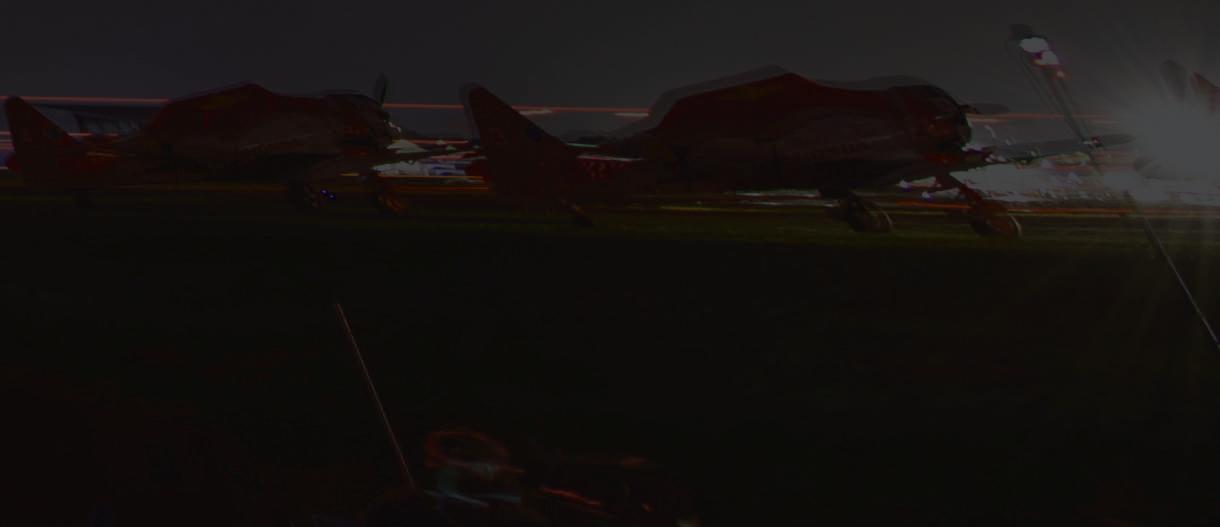





























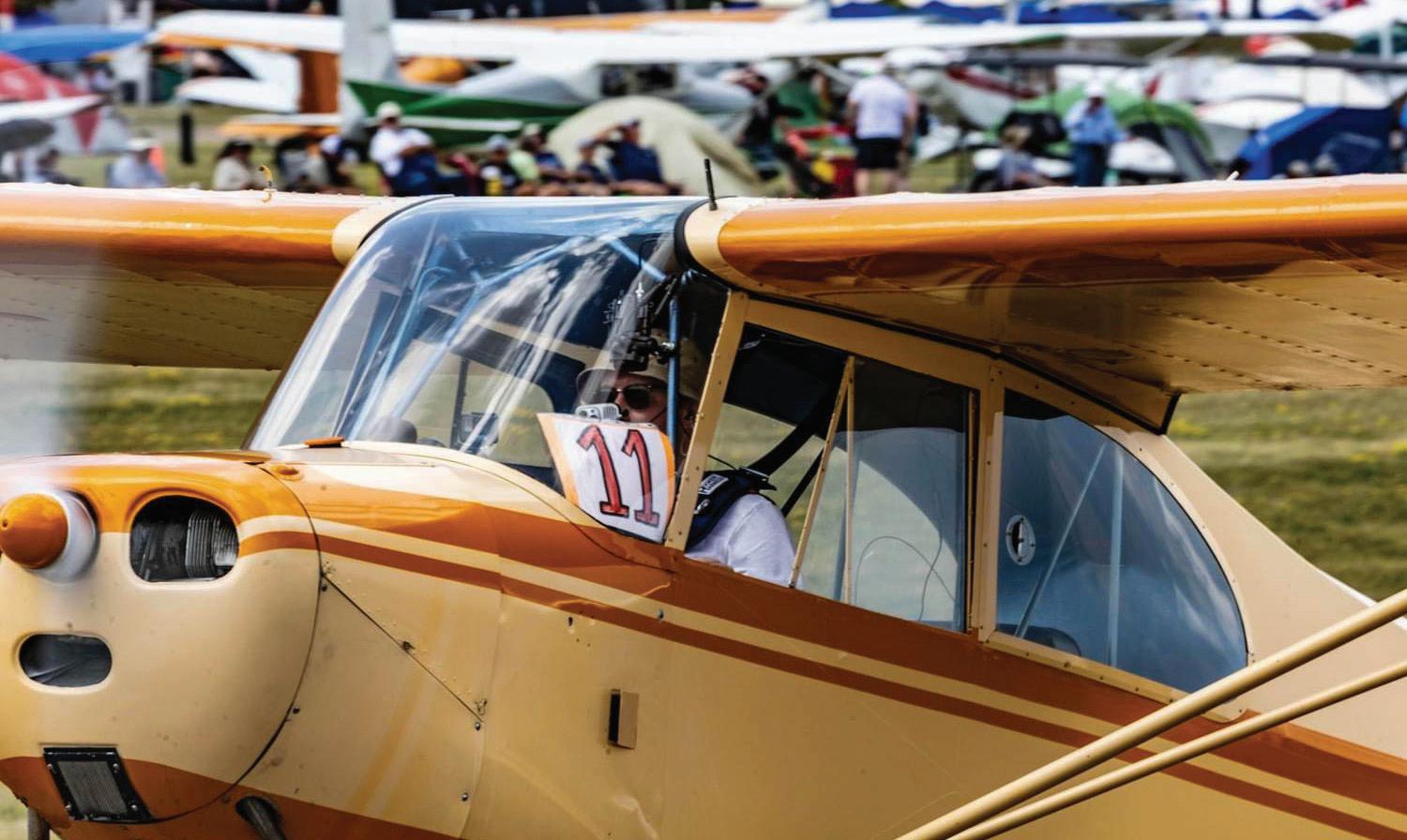 Sherrow waiting to take o to join the airshow.



Flight Certifications
SPRING to FALL 2023
Congratulations to those who received their certification!
Drew Nathaniel Smedley
Drew Patrick Waterhouse
Dulce Nathalie Can Pineda
Dylan Joseph White
Dylan Riley Cornejo
Elijah Benjamin Stein
Emily Constance Brenning
Emin Ali Gun Sazak
Emma Olivia Fleming
Emma Riley Foust
Eric Wilhelm Nicholas Arp
Erik Jozef La Flamme
Ethan Wade Cox
Evan Anthony Vaughan
Evelyn Victoria Itzkowitz
Ezra Richard O’Connell
PRIVATE PILOT (121)
Adam Maher El-Kara
Adam Michael Matherne
Adam Nabeel M Alim
Alex James Venkatesan
Alex Joseph Nutter
Alexander Marcial Velazquez-Quintana
Alexandra Nicole Keyser
Alexis Morgan Brochtrup
Alice Camila Balkin
Alleya Jonni Williams
Allison Emma Fownes
Andriy Borovykh
Anna Lynn Maddox
Ava Aline Vickery
Bahn Seuk Kang
Benjamin Luca Rodegra
Boyi Li
Bradley Unger Stanton
Brandon Anthony Bryce
Brandon Joseph Walter
Carly Amosa Sollenberger
Carys Pia Miner
Celeste Brianna Gibson
Cesar Leonidas Adams
Chanjong Baek
Charles Alex Cegan
Christian Hong
Christopher David Negron
Cody Buford Brown
Colden Edward Gotobed
Cole David Arthur
Cole William Strandberg
Connor Mullane Chadwick
Daniel Alejandro Gutierrez
David Lu
De Hi Han
Dean Virender Hunsberger
Devin Roy Garrett
Donald Anthony Schaeffer
Donggeun Oh
Donghyeon Lee
Dongseog Lee
Forrest Houghton Pritchett
Gilhoon Park
Gino Daniel Larocca
Harrison Gardner Wade
Hayden Anthony Heffner
Hojin Kim
Hyeonjin Kim
Hyunjun Kim
Jace River Honeycutt
Jackson Roy Nadeau
Jacob William Metzger
Jade Kijima Chandler
Jaehyun Chung
James Davis Goggins III
Jarod Richard Baker
Jason Benjamin Mainolfi
Jason Michael Misner
Jason Taylor Vaughan
Jason Todd Holden
Javier Nicolas Contreras
Jayden Nicholas Yawkey
Jeongho Hwang
Jeongmin Cho
Jessica Lynn Garribot
Jesung Lee
Jiho Kim
Jihun Jung
Jihun Moon
Jinwoo Gil
Joelys Hernandez Serrano
John Donald Wesson
Johnny Alexander Fong Liu
Jonathan Edward Anderson
Jonathan Quinones
Joshua Dewayne Daugherty
Juhyeon Song
Jun Bum Huh
Kaden Velasco Solomon
Kate Nicole Kershner
Ke-Huan Huang
Kevin Nelson Williams
Kevonne Kevin Miller
Landon Alexzander Hillenbrand-Eckenrode
Levi Wilkin Weir
Lleyton Acuna Ale Haft
Logan Connor Houck
Logan Harle Easter
Lucas Abraham Piedra Pantosin
Lucas Calogero Gruttadauria
Luis Alberto Posadas
Luke Musalen Jones
Luke Richard Meldrum
Madison Bailee Watson
Madison Belle Muragaki
Mallory Elizabeth Grace Zike
Marin Elizabeth Sutter
Marina Frances Zockoll
Mark Edward Kelly
Marlen Martinez-Chavez
Matias Simon Mera Landazuri
Matthew Tyler Schroeder
Max Bernard Hatch
Max Oliver Devore
Maxence Samuel Musy
Michael Gabriel Sena
Michal Karel Dasek
Mikaela Nicole Miles
Milo Scott Nicolls
Min Kim
Mohammad Rafey
Abbey Spencer/ The Avion
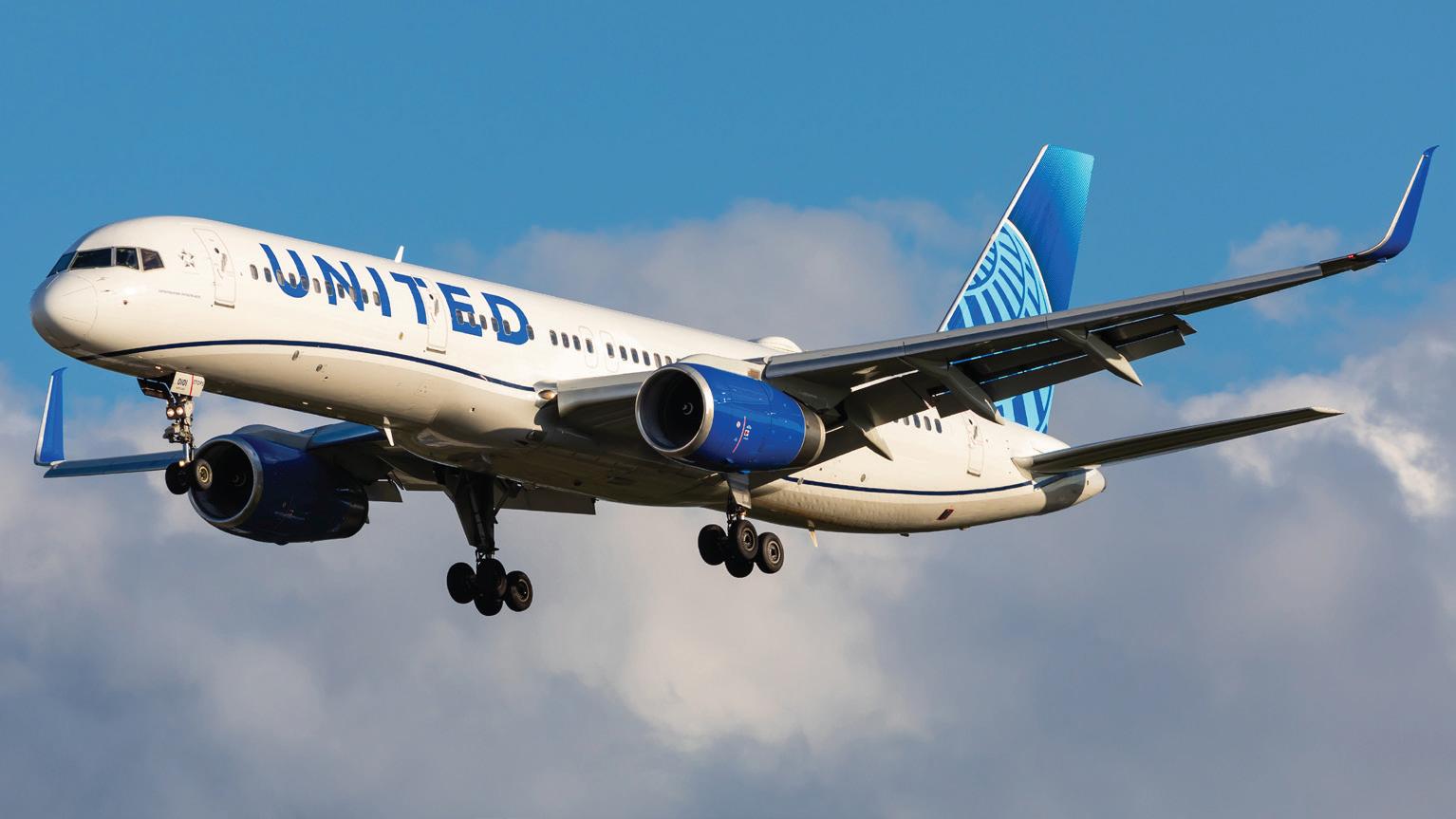
A United Airlines Boeing 757-200 on approach to Orlando International Airport (MCO).
INSTRUMENT RATING (221)
Aaron Jacob Kevitch
Abdullah Saeed A Alsarhan
Abdulmajeed Ahmed A Basharaheel
Abdulrahman Mohammed T Tayeb
Abhi-Bejhra Aphaiphuminart
Abilasha Paudyal
Aidan Patrick Reese
Aiken Santana
Aldric Omar Johns Jr
Alfred Cruz Quezada III
Alice Camila Balkin
Alwaleed Fuad A Bafakih
Andre Albert Lemaire
Andrew Edward Kharab
Andrew Marc David
Angelica Dawnmarie Diedrick
Anuj Joseph Berry
Ashton Neal Blalock
Ayumu Goto
Benjamin Jon Withrow
Benjamin Peter Calhoun
Benjamin Scott Taddei
Bethanny Oliver Roy
Billie Paige Laird
Blake Alexander Kasparian
Bradley O’Neill Toro Mercado
Brandon Michael Wilkes
Brian Anthony Tavoulareas
Brian F Zhou
Brock Joseph Davis
Bum Chang Bae Byounguk Park
Carlo Miguel Francavilla
Carson Ryan Mann
Cary Jordan Drucker
Celimar Ortiz Rivas
Chad Gregg D’Crus
Christopher Ryan Villano
Cinbee Chun
Clifford Charles Page
Cody Tyler Schrock
Cody William Wortley
Cole Alexander Smith
Colin Bryce Mccormack
Cory James Benni
Cristian Jordan Cobarrubia
Dakota Robert Paul Uhl
Daniel Joseph Mcintyre
Daniel Lawrence Raupp
Daniele Matias Delsalto Vitola
David Alexander Kohn
David Lane Ratley
Diana Hoyt Croft
Diego Alberto Nieves Salva
Dohyeon Kim
Dong Hyun Oh
Drew Elizabeth Szlasa
Duhyen Kil
Dylan Patrick Pfeiffer
Elizabeth Briann Gomez
Emmanuel Kiplimo Kumbu Chipi
Eric David Isaacs
Erik Ants Tomson
Erik Lawrence Tieman
Essam Omar A Alzubaidi
Ethan Dean Travers
Ethan Robert Benne
Eun Ji Hong
Eyad Abdullatif A Mominkhan
Faisal Hsham A Alkowaileet
Gavin Carl Weinheimer
Gilberto Avelino Millares
Giovanni Bisi Gunderson
Haejoo Song
Henry Richard Reedy
Hope Ariel Houseknecht
Hossam Ahmed Mohamed Elsawaf
Hunter Fitzgerald Lisle
Hussain Mohammed M Ajeeb
Hyejung Choi
Hyeongyong Kim
Ian James Wilson
Iram Rai
Isabella Marie Colasurdo
Jack Henry Meier
Jack William Farley
Jackie Lynn Pryor
Jackson William Ural
Jacob David Skertich
Jacob Joseph Clark
Jacob Michael Zielinski
Jacob Warren Patterson
Jacoby Calvin Hendricks
Jaime Francisco Arizaga Mackliff
Jangkun Kim
Jason Todd Holden
Jean Lucas Kutuka Kamisendu
Jeong Hyun Kim
Jeongjea Cho
Jeremy James Ficsor
Jerry Dean Sartin II
Jett William Morris
Aycha Ersoz
Emily Elizabeth Medina
Joaquin Arturo Duque Balarezo
Jonathan Thomas Grindem
Jonathon Glen Patterson
Joonha Lee
Jordan Nathanael Walters
Juan Elias Ortiz Mercado
Julian Fernando Segovia
Jun Bum Huh
Junsung Seo
Junwon Kim
Kate Nicole Kershner
Kim Leng Chea
Kristian Richard Gausman
Kylin Brook Olinger
Lacey Renee Bozzuto
Landon Scott Cone
Lauren Nicole Fuller
Liam Patrick Gavigan
Lillian Alayna Carver
Brandon Berkoff / The Avion
Seamus Hunter Lyons / The Avion
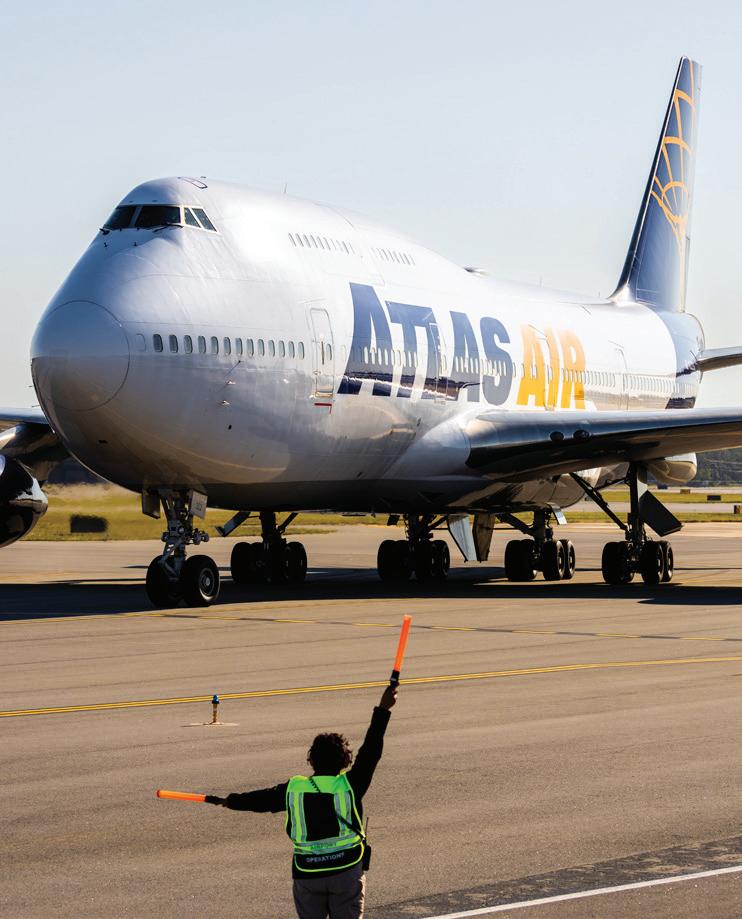
FROM THE PAST: An Atlas Air 747-400 flew into Daytona Beach during the week of the 2023 Spring Career Expo.
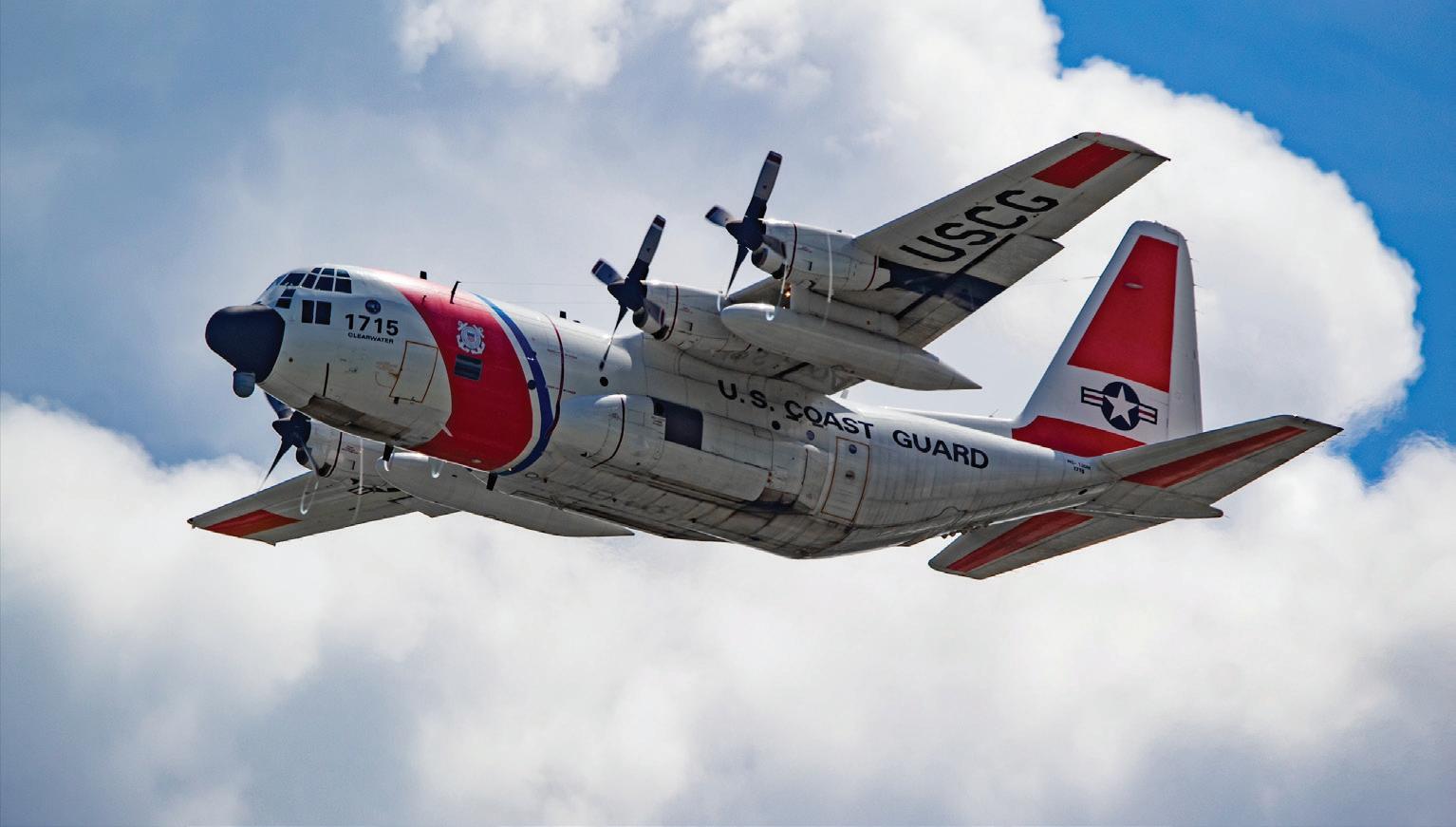
A U.S. Coast Guard C-130 on final approach to Daytona Beach International Airport on Sep. 16, 2023.
If you’ve been to Chick- l-A on campus, it is no secret that you have probably had a bad experience. Whether it’s the line that wraps around the union, the 20-minute wait for your nuggets, or the greasy sandwich on a hard bun, we have all been there at least once. What you may have noticed, though, is the friendly face of one employee. She takes your order with a smile, she asks you how your morning was, and she’s just awesome! Her name is Chris!






I recently had a chance to sit down with Chris to ask her how her job and summer were going. I really got to understand more about why she does what she does. Chris has worked on campus here for 10 years! Most of us never saw the old Student Union, but Chris worked in the Chick- l-A there before the new Student Union was even a thought. She thinks the way the campus has transformed is awesome, and she loves the new Student Union.
She has worked at Chik-Fil-A her entire time here on campus, and when asked about why she keeps coming back, her answer was, “the students.” Chris loves the student body, and that alone keeps her coming back every year. What does she dislike about her job? Chris says the machinery breaking down puts a damper on her day, but they always nd a way to work around when things break.
As a Chick- l-A employee, Chris says her favorite menu item is easily the CFA Nuggets. She says not only are they her favorite menu item, but she lays the bold claim that CFA Nuggets are the best chicken nuggets of any food chain! CFA sauce is her go-to (I would agree), and CFA sauce goes well with pretty much anything.
Over the summer, Chris takes time o to relax and recharge before another busy school year. is past summer, she spent some time dog-sitting and taking day trips wherever her mind took her. Her summer job is “unemployment.”
One last thing Chris has for us all. She says, “Don’t take me at face value.” When I asked her to explain further, she said, “People think I’m just a little old lady, but the students always have my back.” If you have ever had your order taken from Chris, I think you would agree. She knows how to do her job, doesn’t like when people get in her way and loves interacting with all of us students!

PUZZLES Issue 1, Fall 2023 Finished all of the puzzles for this issue? Be the first to email us a picture of your solutions to business@theavion.com to get a prize! Scan here for crossword clues!
The Avion is produced monthly during the fall term. The Avion is produced by a volunteer student staff. Student editors make all content, business and editorial decisions. The editorial opinions expressed in The Avion are solely the opinion of the undersigned writer(s), and not those of Embry-Riddle Aeronautical University, the Student Government Association, The Avion, or the student body. Letters appearing in The Avion are those of the writer, identified at the end of the letter. Opinions expressed within are those of the identified writer. Letters may be submitted to The Avion for publication, provided they are not lewd, obscene or libelous. Letter writers must confine themselves to less than 1200 words. Letters may be edited for brevity and formatted to newspaper guidelines. All letters must be signed. Names may be withheld at the discretion of the Editor-in-Chief. The Avion is an open forum for student expression. The Avion is a division of the Student Government Association. The Avion is a member of the Associated Collegiate Press. The costs of this publication are paid by both the Student Government Association and through advertising fees. The Avion distributes one free copy per person. Additional copies are $0.69. Theft of newspapers is a crime, and is subject to prosecution and Embry-Riddle judicial action. This magazine and its contents are protected by United States copyright law. No portion of this publication may be reproduced, in print or electronically, without the expressed written consent of The Avion
Interested in joining The Avion and making this magazine happen? Scan to join our Discord server. Go Eagles!