

Fall 2022 Issue 2

























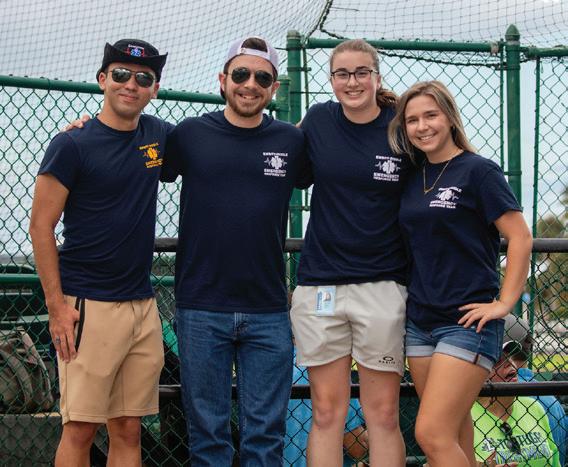
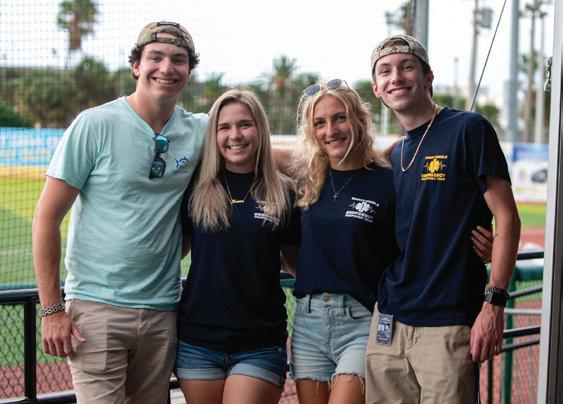
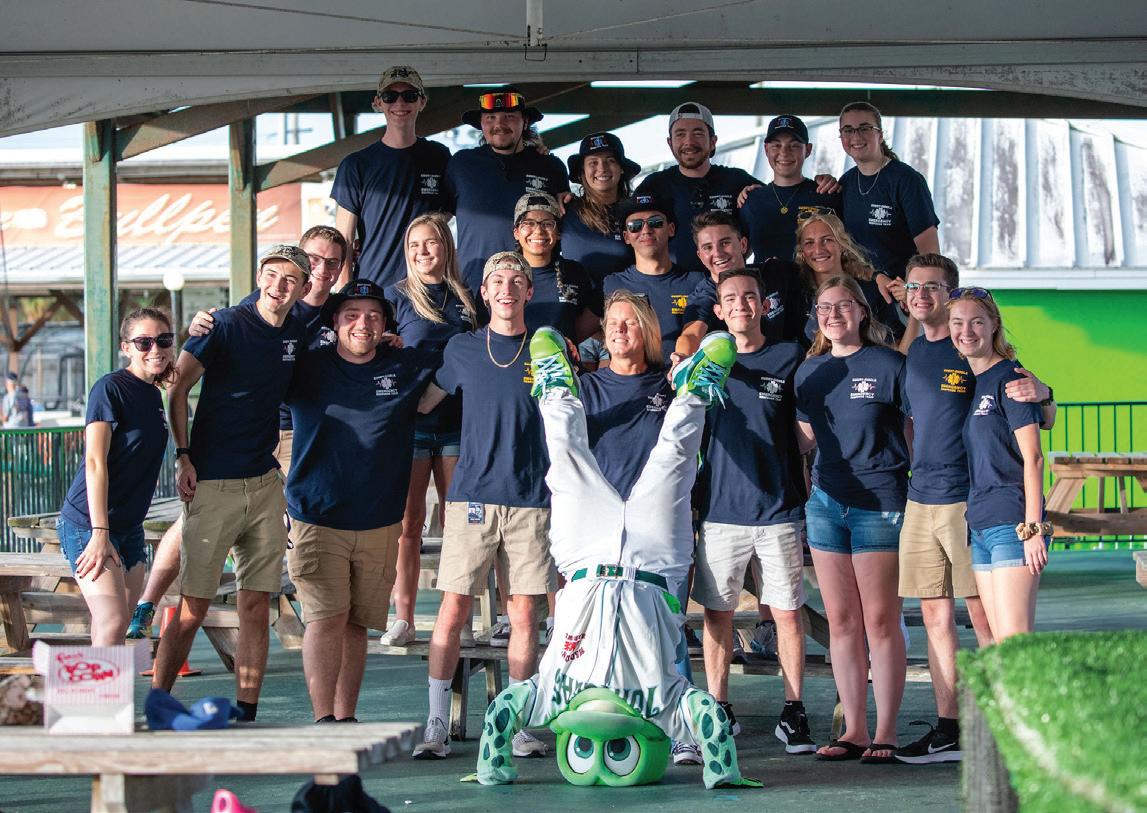
 Caelyn Jarrett Emergency Response Team

 Alisa Tiselska Copy Editor
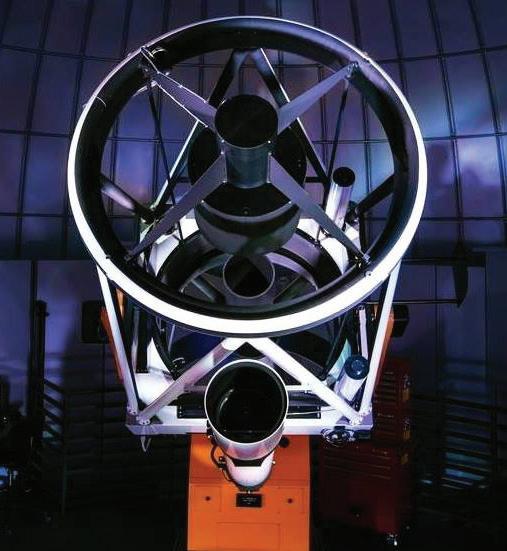
Are we the only living organisms in the universe? Most of us believe that we are not alone, and we may be right. On Oct. 23, Dr. Jay Farihi, who works for the Department of Physics and Astronomy Astrophysics at the University College London, gave an engaging public lecture at the ICI auditorium. At the end of the talk, the audience – mostly Embry-Riddle professors or Physics majors –asked him a few questions.
The audience was shocked to discover that together with a group of scientists, Professor Farihi found a planet located in the so-called Goldilocks Zone. In other words, the region of the Milky Way that could potentially be suitable for life.
What are the next steps for determining whether there is life on this planet? First, astronomers must find out if there is water on this planet. This would take many years of observation. Unfortunately, this planet is about 120 light years away from us. But, the good news is that we may have some distant neighbors! Let’s hope that they have friendly intentions.

Although Professor Farihi studies faraway Earth-like worlds, he also does research related to the astrochemistry of the universe. Did you know that oxygen is the most abundant element in the atmosphere? Professor Farihi said it best, “the fact that we breathe in a gas that we are made up of is so weird.” This oxygen paradox keeps us, our planets, and other planets alive. Dr. Farihi mentioned that the Sun’s core consists of all elements in the Periodic Table of Elements. However, we do not know what 70 percent of the Earth’s crust consists of. We simply do not have the names for these unknown mysterious elements.
Astronomy is the oldest science, and our knowledge of the universe keeps expanding as I type these words. We have yet to add new chemical elements to the Periodic Table, and we have yet to meet our neighbors. The universe is infinite, and so is our curiosity.

For more information about future open houses put on by the Astronomy Club, scan the QR code provided
 Embry-Riddle Observatories / Facebook








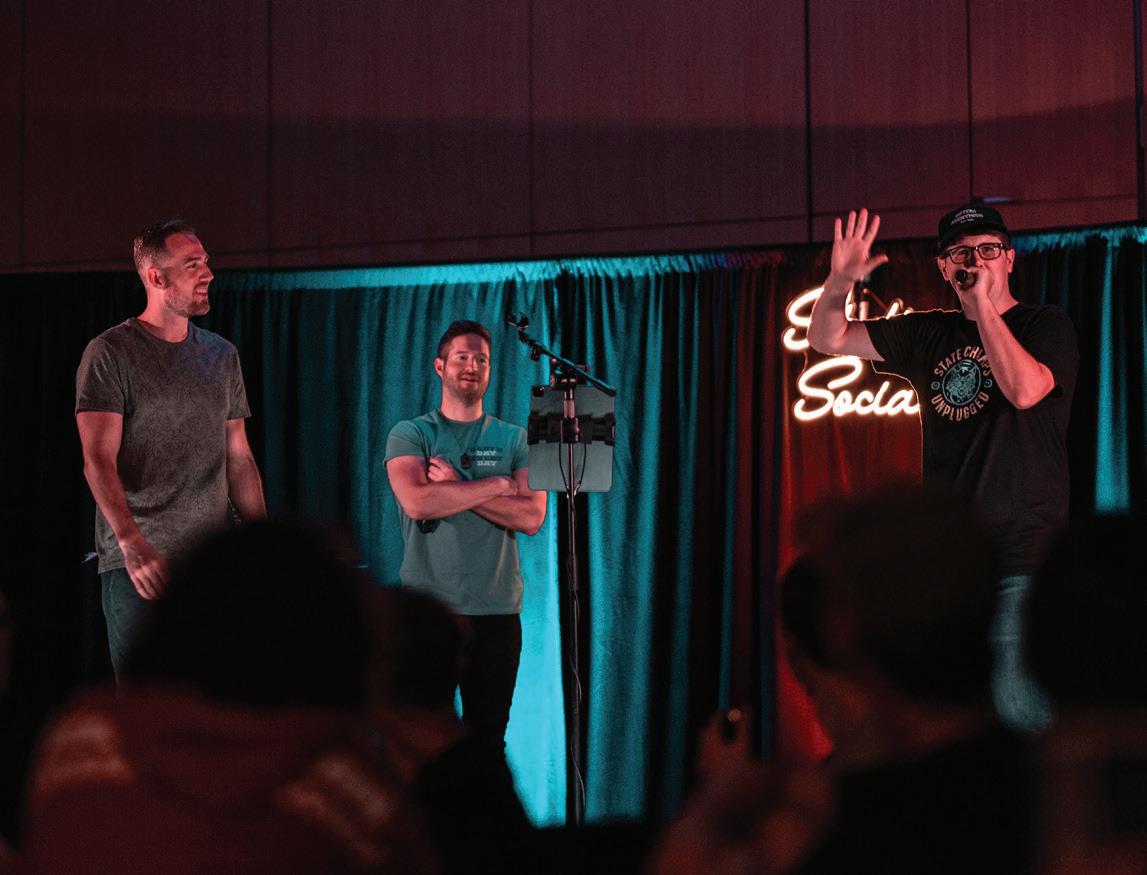
Do you like comedy? Do you like Rap? Do you like Improv? If you answered yes to any of those three, then you would have loved the “Free Daps Comedy Music Special”, hosted by Touch-N-Go Productions. e special was a two-part concert that took place in the Event Center on Sept. 9. e venue had a dazzling series of lights that made it seem like you were hanging out with your friends at an outside musical plaza.
e opening act was the famous electric violinist, Alex Ahn. Ahn is mostly known for his ability to make Electric Dance Music, as well as EDM covers of famous songs, using the classical violin instrument. During his performance in the Comedy Music Special, he focused more on the music aspect of the night. His performance was deep and sensational. Whenever he played the violin, you could sense the passion and love he had for modern music and the violin. With every song he played you felt as if you were listening to a night club remix of a classical song, even though the was performing the songs live and that he was playing modern songs with a classical twist. e most impressive part of Ahn’s performance would have to be that on top of all his numerous skills, he could play any song that the audience requested. In other words, he was able to improvise on the spot. Sometimes, Ahn would turn songs that he never heard before into a beautiful classical EDM remix.
Once the opening act was over it was time for the headliners, Free Daps. ey entered the venue and explained that their goal was to write comedic songs using the art of improv. eir rst song required the audience to grab an item and raise it over their heads as the trio walked across the venue. en, they’d use the items as inspiration to roast the person holding them. is was an amazing performance, the ow and rhythm they had never held back the insanely hilarious roasts of each audience member. Once they nished their rst performance, they grabbed a random audience member and asked him a series of questions. en they recorded and auto-tuned each of his responses, before using those sound bites to make an inspirational rap song about our university. A er this, they ended the night by grabbing six audience members and asking them to write a random word on a piece of paper. en Free Daps had to make a rap song using each word. All in all, their performance was one of the best rap concerts and stand-up comedy specials I’ve ever seen. If you ever have the chance to see them live, I would highly recommend doing so as it is a must-see experience.
You can nd Alex Ahn on Instagram @alexahnviolin and Free Daps @freedaps, and as always if you ever get a chance to see one of Touch-N-Go Production’s events I highly recommend them. A er all, you never know what hidden talent you’ll nd.














 Danielle Van Pelt News Editor















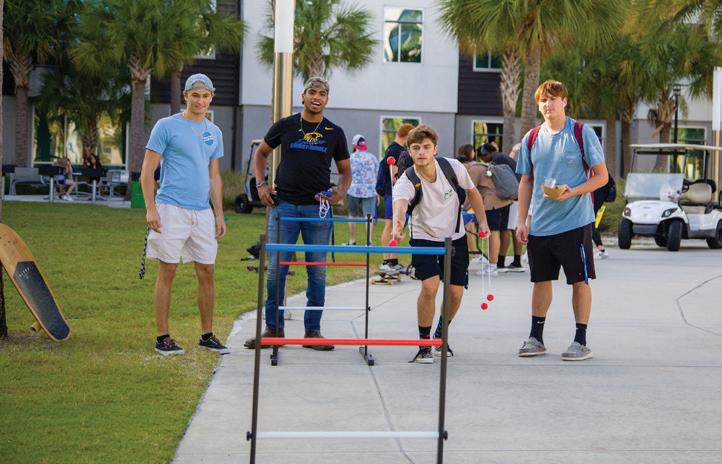
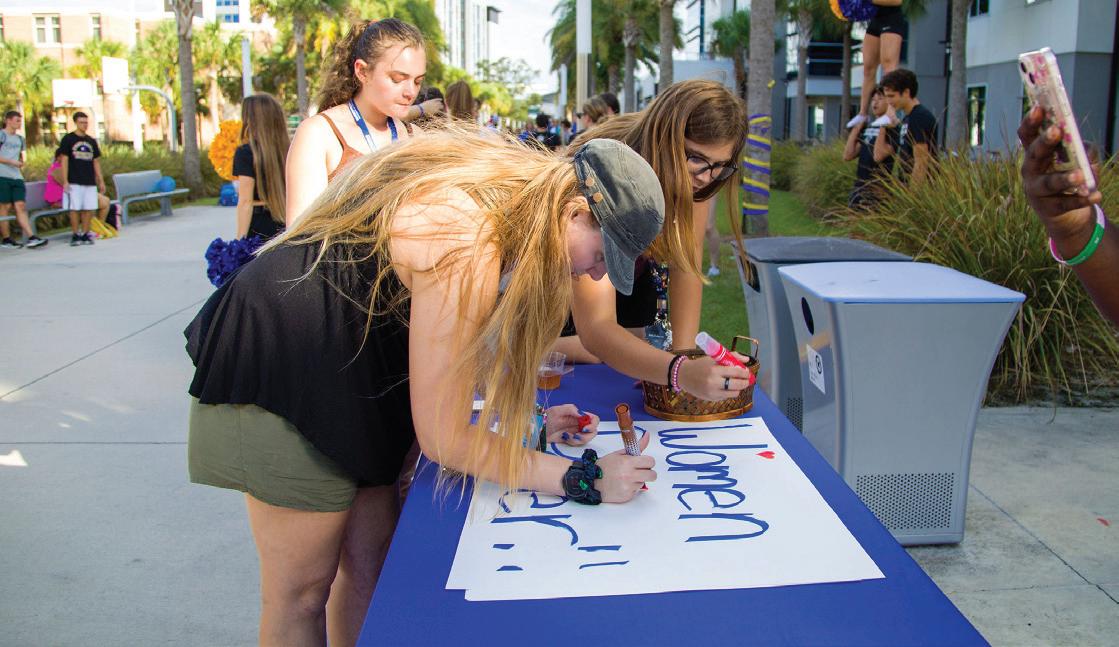
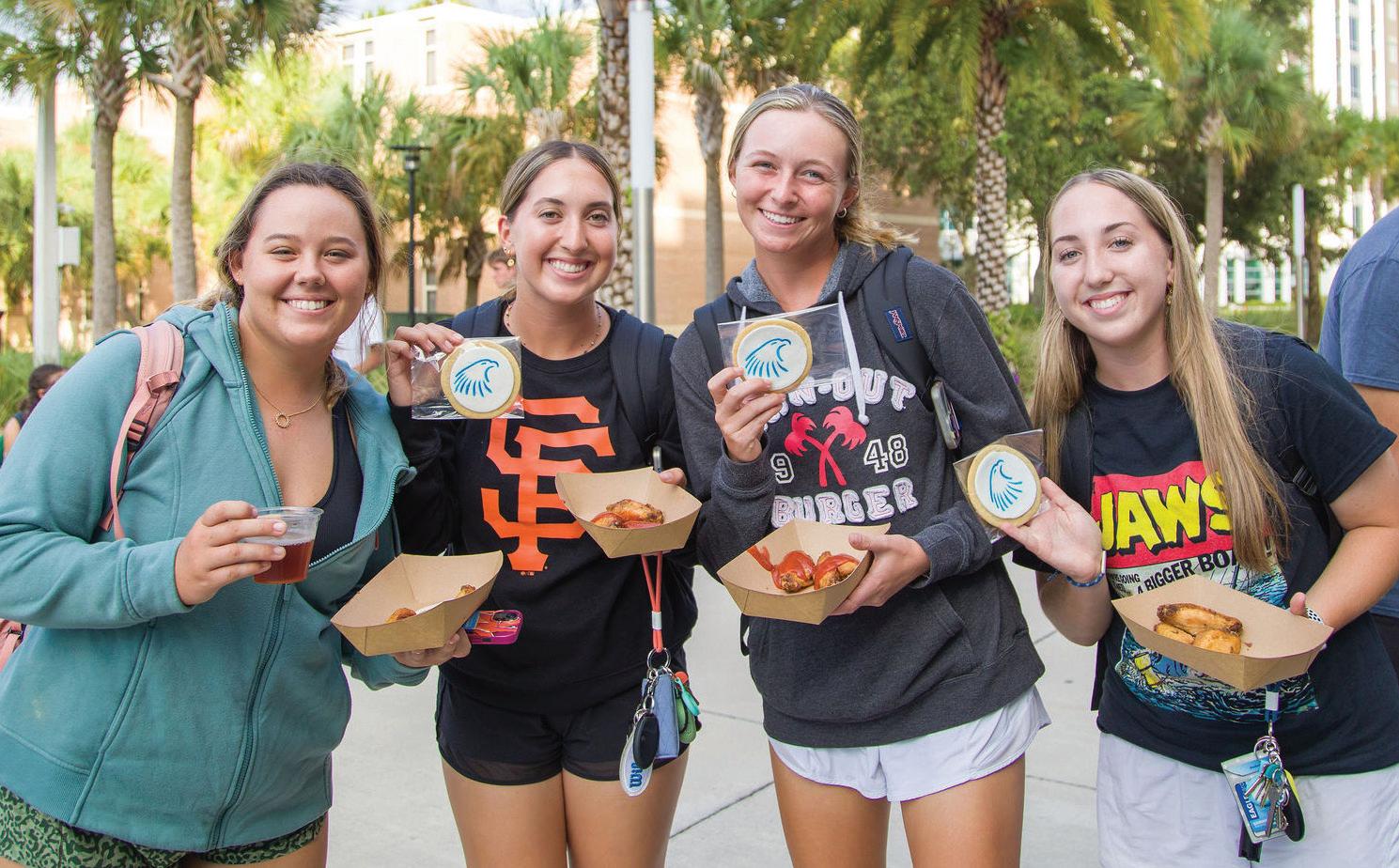
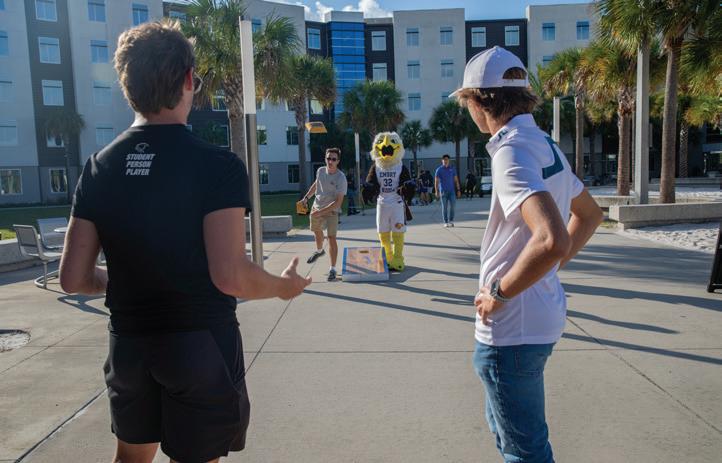
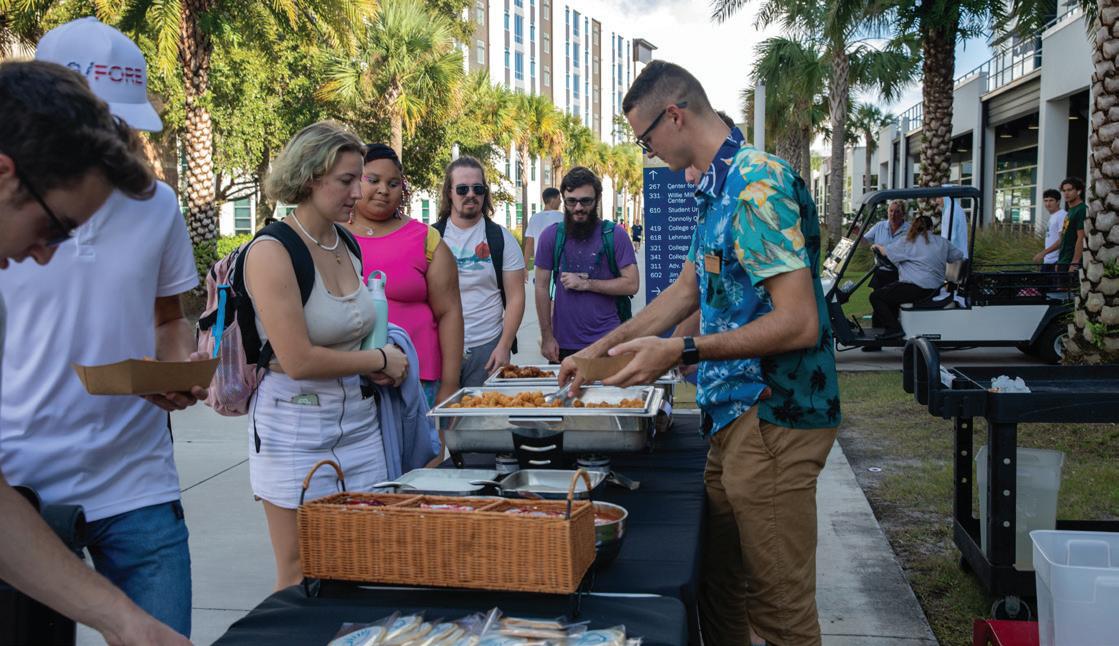
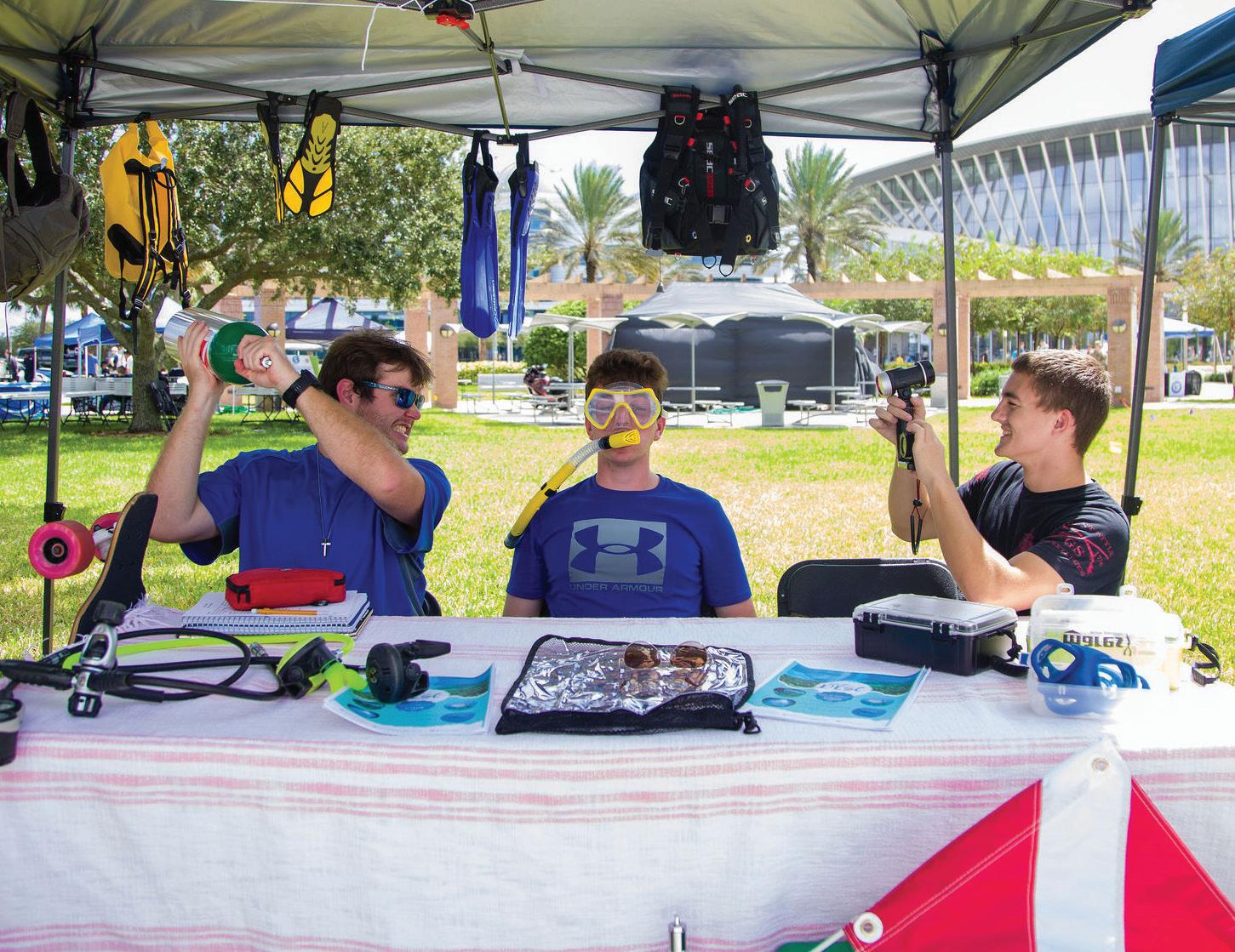
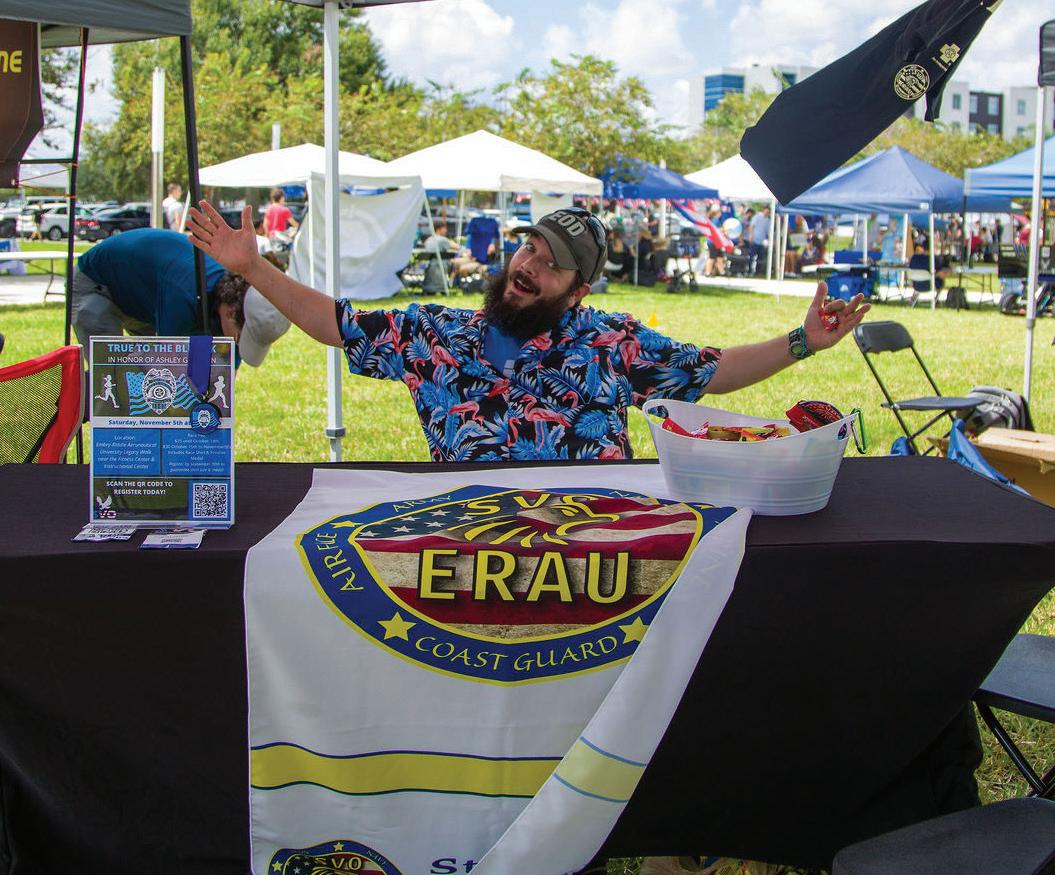
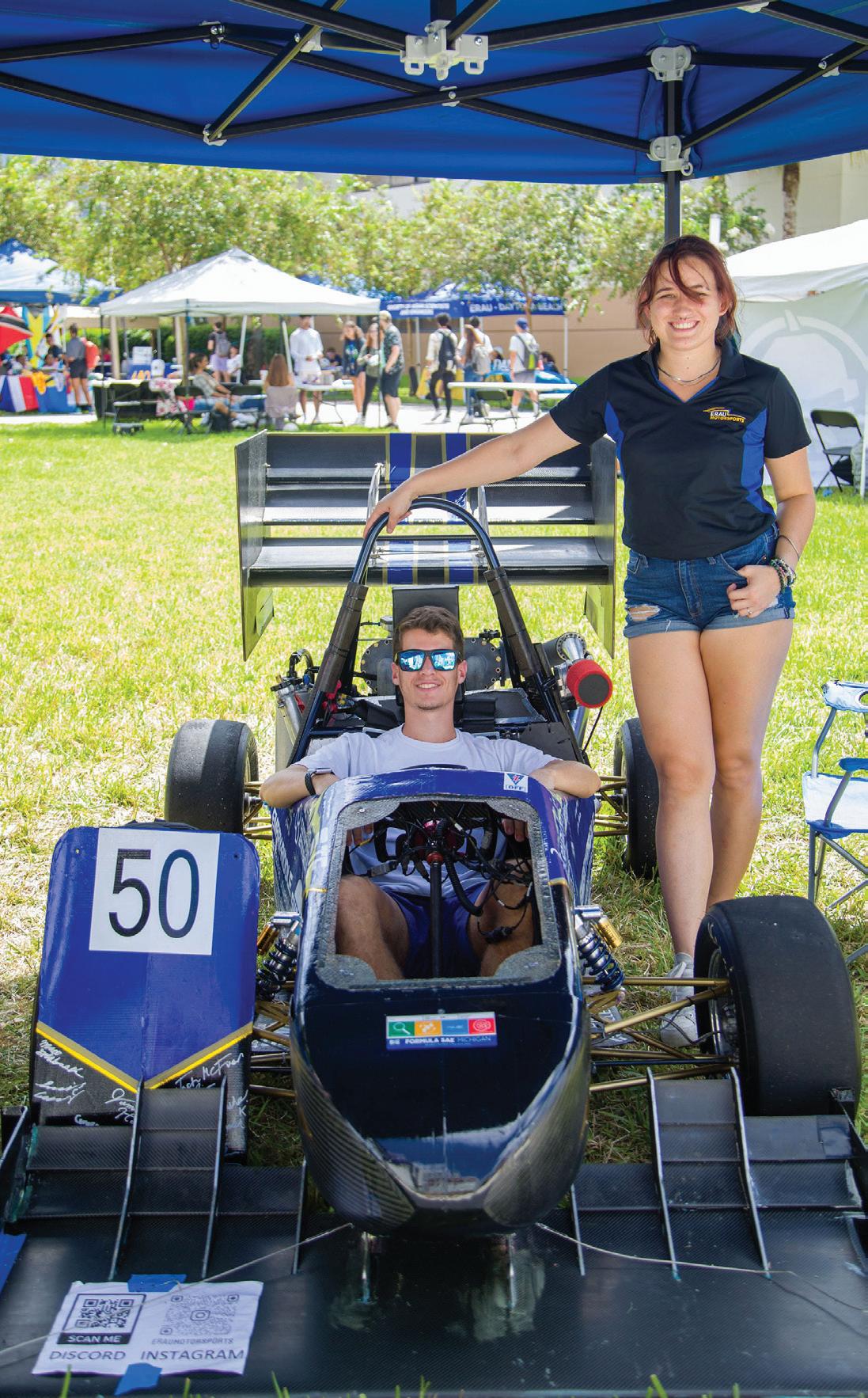
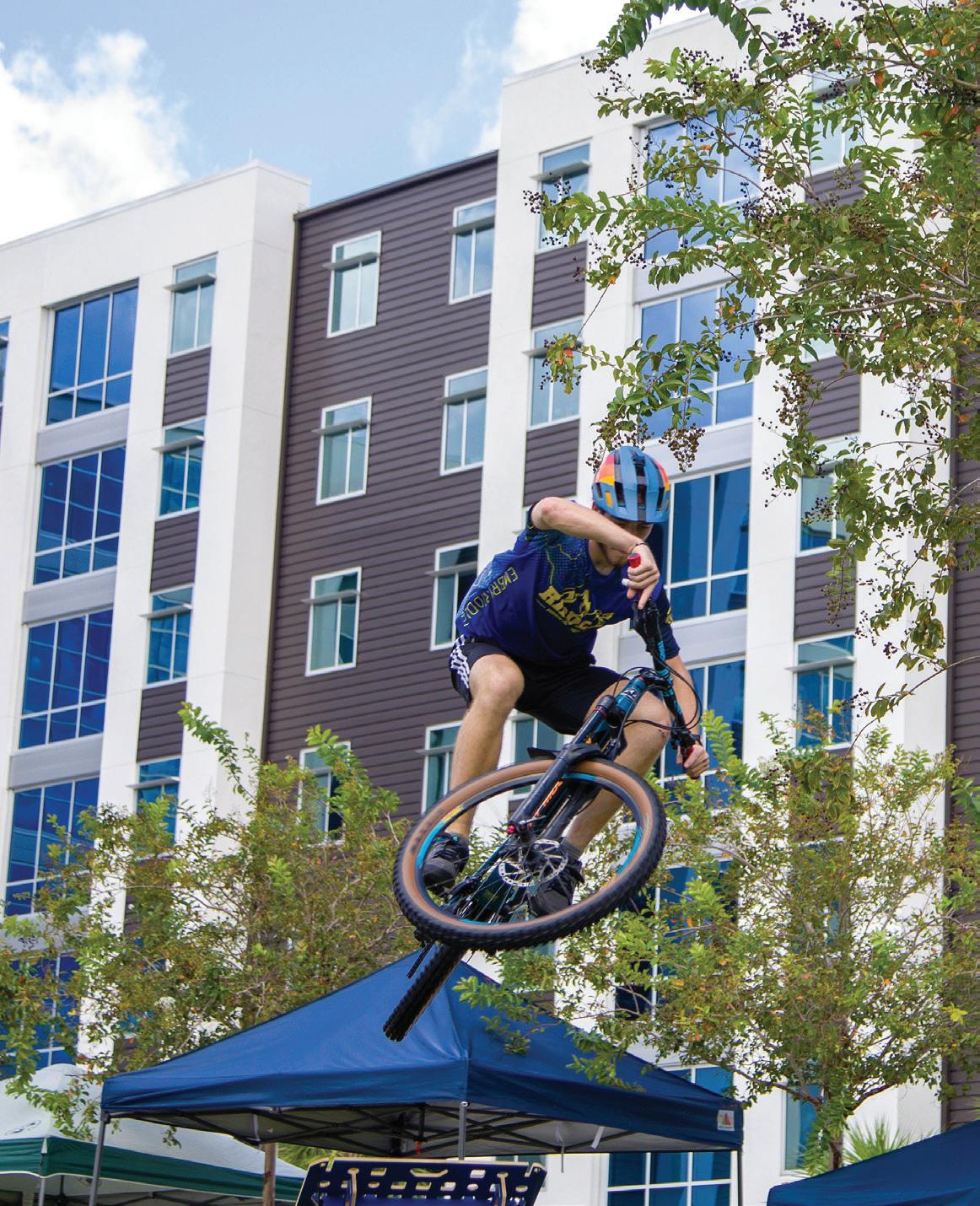
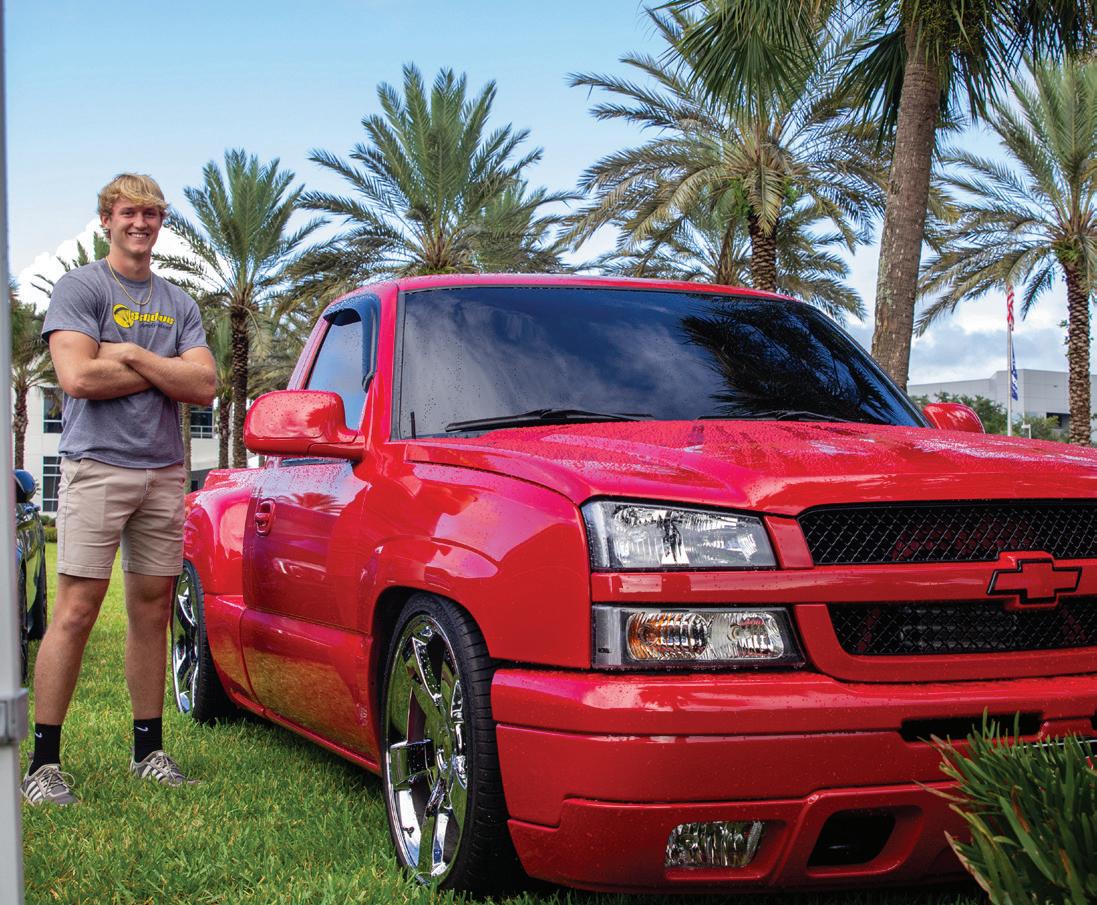
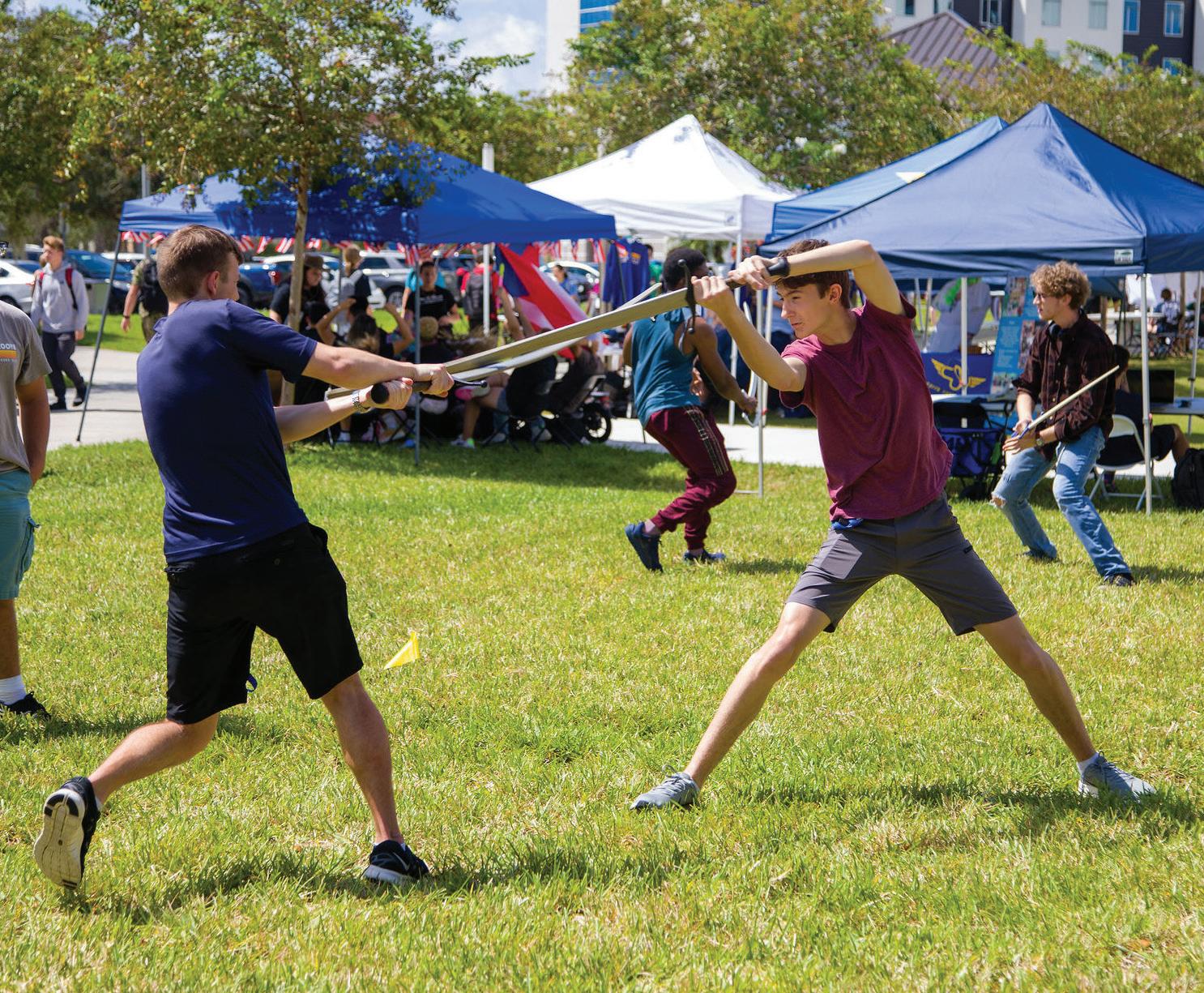
Every semester, Embry-Riddle hosts their annual Activities Fair where over 250 organizations on campus have the option to participate. With so many student groups, it’s not hard to nd something you’ll enjoy. Extracurricular involvement helps contribute to student success and can help you get involved with what you love to do. Hundreds of students have joined an organization already and the Activities Fair was a great contributor to continue welcoming student to the Embry-Riddle experience.
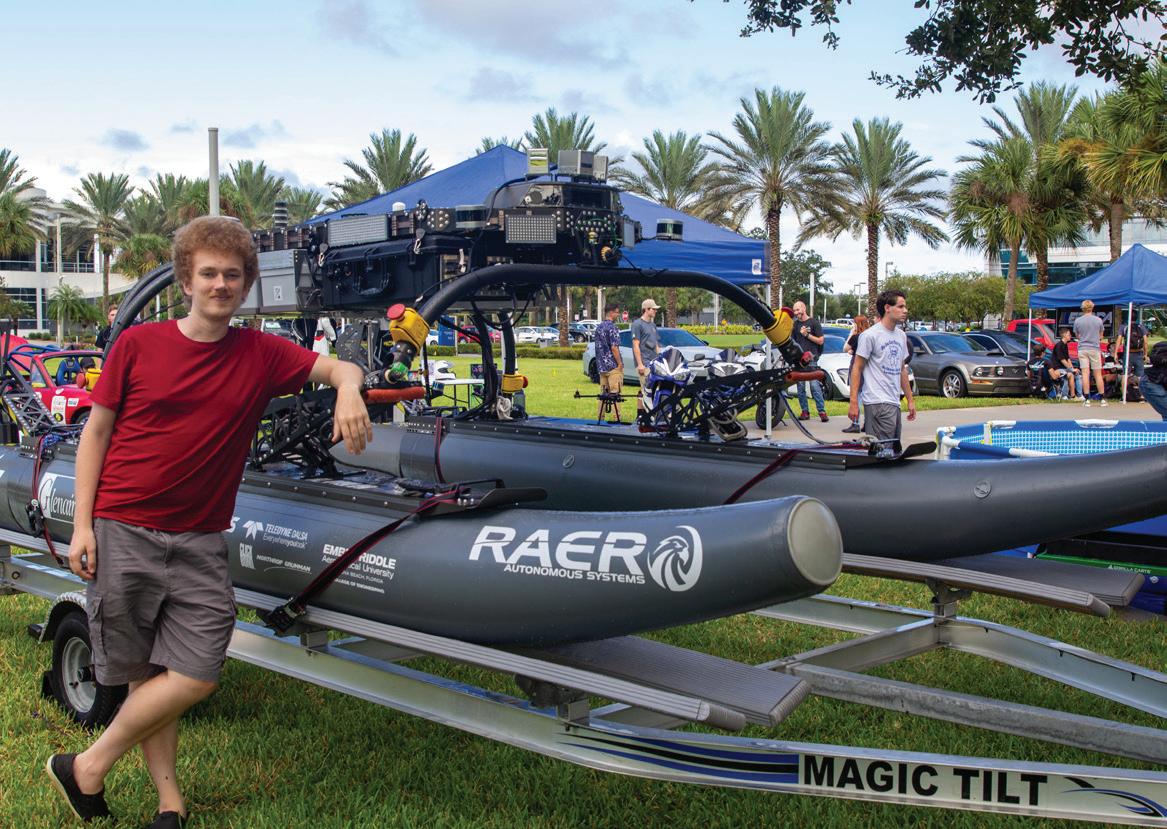









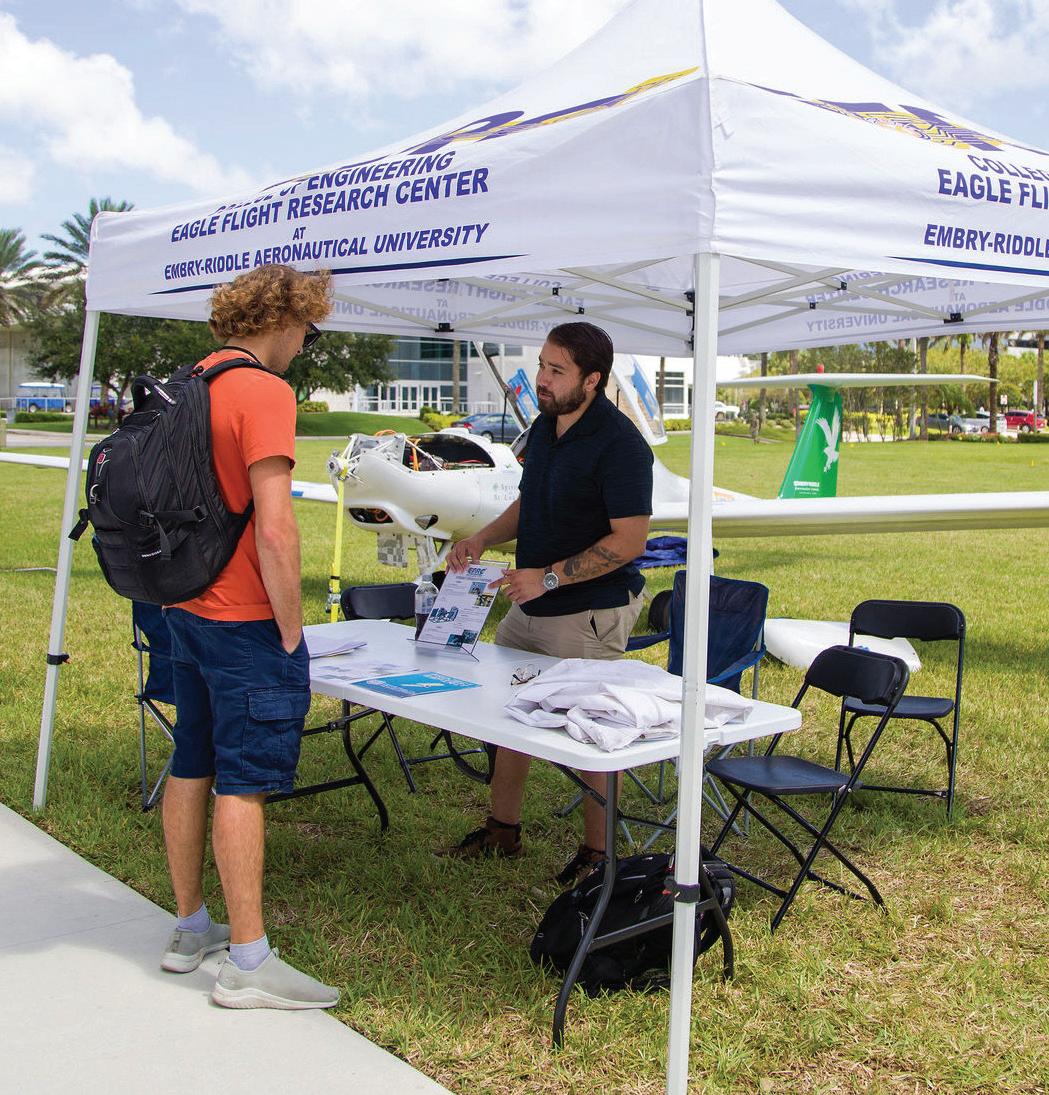
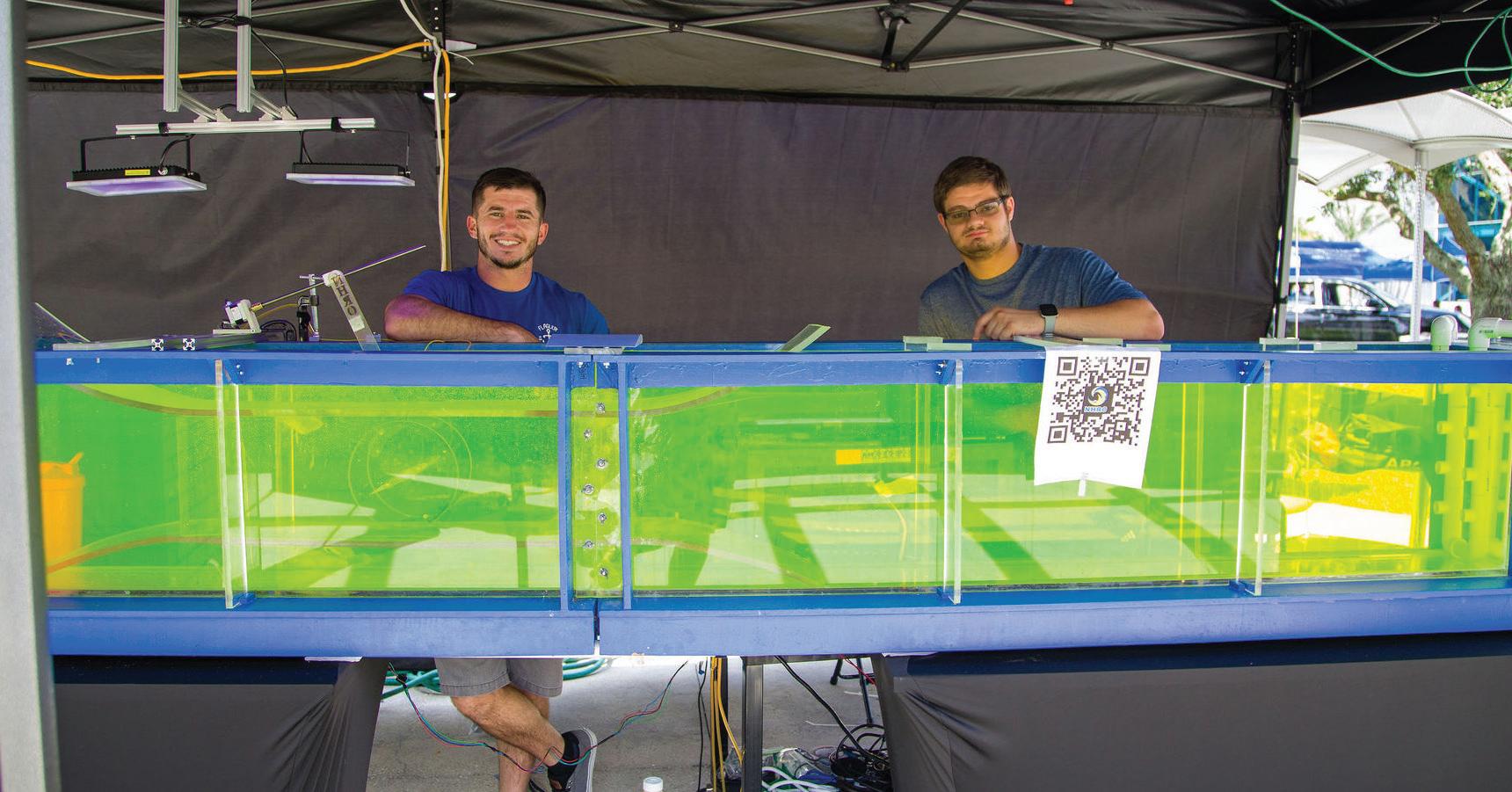
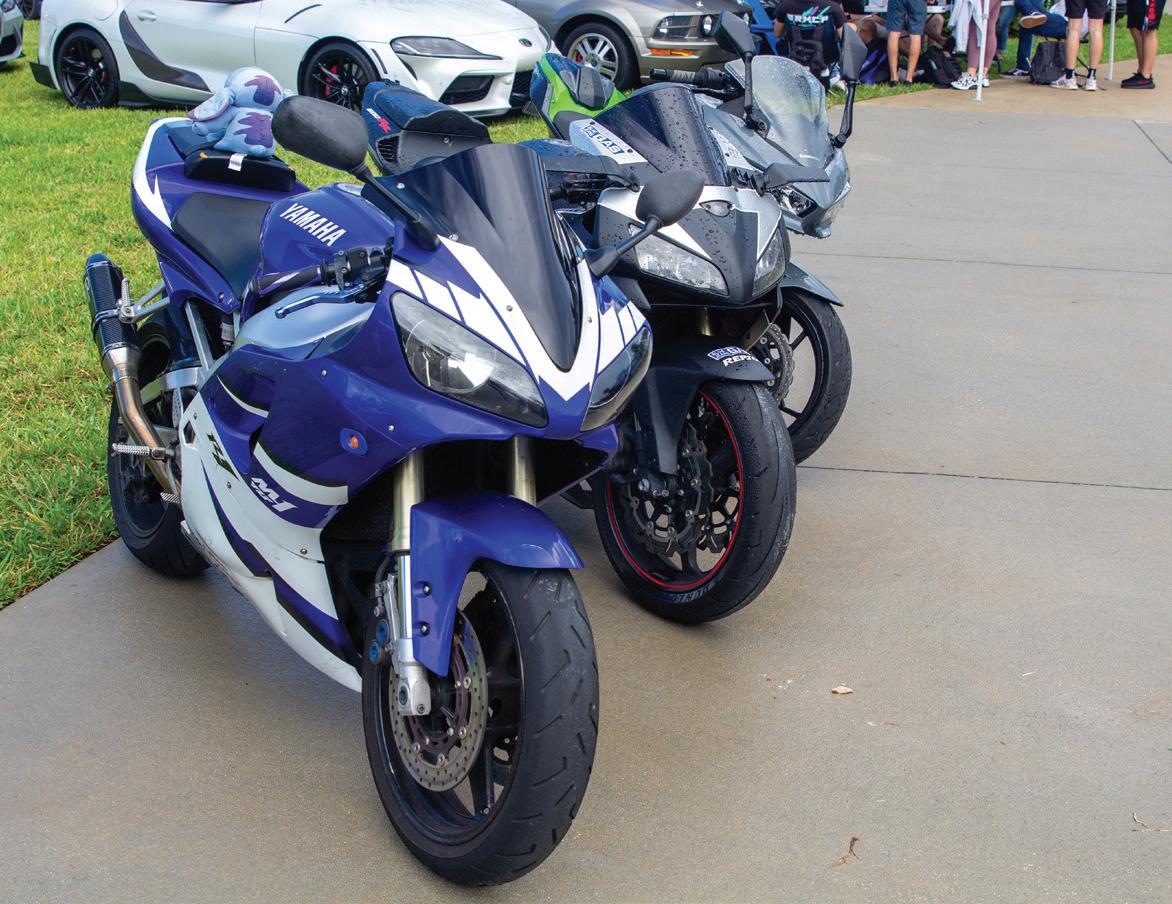
e O ce of Undergraduate Research and the Department of Humanities and Communication are excited to announce another year of its CLIMBING Program at Embry Riddle’s Daytona Beach campus. CLIMBING is an exciting opportunity for second year students to work with a cohort of peers to expand their campus network, develop key skills connected to their sense of purpose and well being, and explore experiential learning opportunities around sustainability. In addition, CLIMBING o ers students a chance to improve their communication skills, expand their research abilities, and re ne their writing capabilities.
e CLIMBING program is speci c to second year Daytona Beach students (enrolled at ERAU during Summer 2021, Fall 2021, or Spring 2022). roughout the semester, CLIMBING students will participate in social events, community building retreats, and innovate sustainability workshops. ere is also the chance to join the Alternative Spring Break program during the week of Mar. 13-17. Fall events include an Opening Dinner on Oct. 18, from 6 to 7p.m.; a Pumpkin Carving Halloween Extravaganza on Oct. 28; and a Campus Clean Up on Nov. 10, from 2:30 p.m. to 4:30 p.m. Spring events and activities will be announced shortly.
p.m. the Marine Science Center, doing landscape and maintenance projects. ese activities led to studentextends from any major or eld of study o ered at ERAU with research about sustainability in our
is year’s events were inspired by the success of last year, which focused on the theme of environmentalism. CLIMBING students participated in a Beach Clean Up and Bon re, and they visited the Derbyshire Community Garden. Students worked on composting and learned about growing practices through a soil workshop. ey also volunteered at both Halifax Urban Ministries, doing food recovery, and the Marine Science Center, doing landscape and maintenance projects. ese activities led to studentbased Research Grant proposals, discussing the important topic of environmentalism. is year’s CLIMBING theme of Innovative Sustainability extends the goals of last year’s program. Innovative Sustainability allows students to combine their interests from any major or eld of study o ered at ERAU with research about sustainability in our local community and environment.
If you’re interested in CLIMBING at ERAU for the 2022-2023 academic year, contact Ronnie Mack via email mackr7@erau.edu or phone 386226-7526. Applications to become part of this year’s CLIMBING cohort are due Sunday, Oct. 7; so don’t wait!


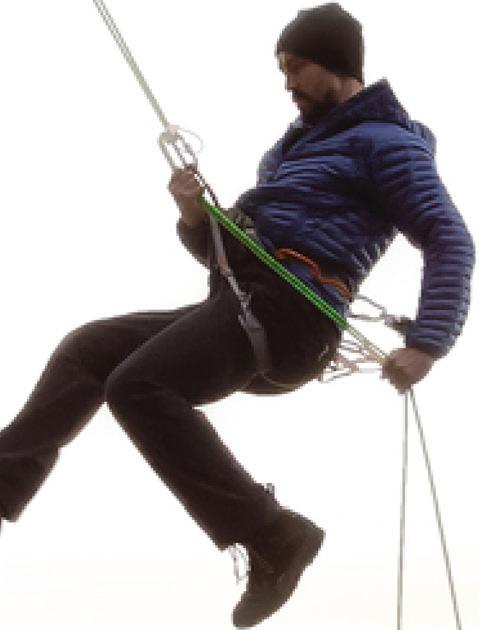

386-
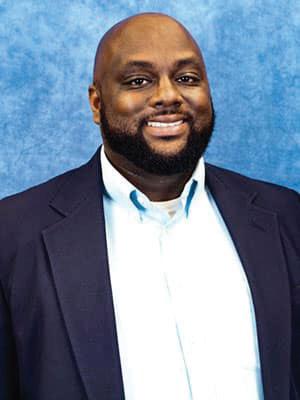
















On Sept. 18, 2021, I was struck on my motorcycle by an impaired driver while on my way to my apartment. I was thrown 40 feet, resulting in lifethreatening injury. I was awake throughout the whole traumatic incident. I remembered trying to get up after being hit and thrown off my motorcycle, but I could not move. There was a hot sensation and tingling over my body, as I laid waiting for the ambulance, wondering if I would ever see my loved ones again.
The doctors said it was uncertain if I would ever be able to walk again. I was told that even if I could, my movement would be highly restricted and would rely on a walker. While in the hospital, I endured six surgeries, with one almost taking my life for the second time.
As I approached my discharge into rehabilitation, I started to think about the crossroad I was at. I was faced with two choices; I could either abandon my responsibilities after being a victim of a tragedy, or I could use this as an opportunity to beat the odds. This gave meaning to my life, made me recognize the opportunity I had to change my perspective, and helped me think more positively.
As a Homeland Security and Intelligence major at Em bry-Riddle, with a minor in Unmanned Aircraft Systems and Business, I have a lot of re sponsibility. My biggest respon sibility and the person I care about the most is my threeyear-old daughter Maya. Due
to my accident, I had to prior itize my family and my health to keep myself from feeling like I was not going to accomplish the things I had set out to do. I felt it was my responsibility to be a role model and provide for my daughter, and all these adversities halted my progress as a student.
Throughout my recovery, Dean Kollar, Dean Hall, and the staff from ERAU Health Services all worked diligently to make sure I was able to take the time I needed to rest and, eventually, return to school. Health Services communicated frequently with the ERAU student insurance partner, UHCSR, to ensure that my medical expenses were taken care of and accounted for. Without their help, my recovery would have been stunted.
Dean Kollar and Dean Hall would contact me weekly to hear about my status or to just catch up on things. Hearing from them motivated me to want to keep a positive attitude and recover faster. I greatly appreciated their encouragement as I worked to get back on track.
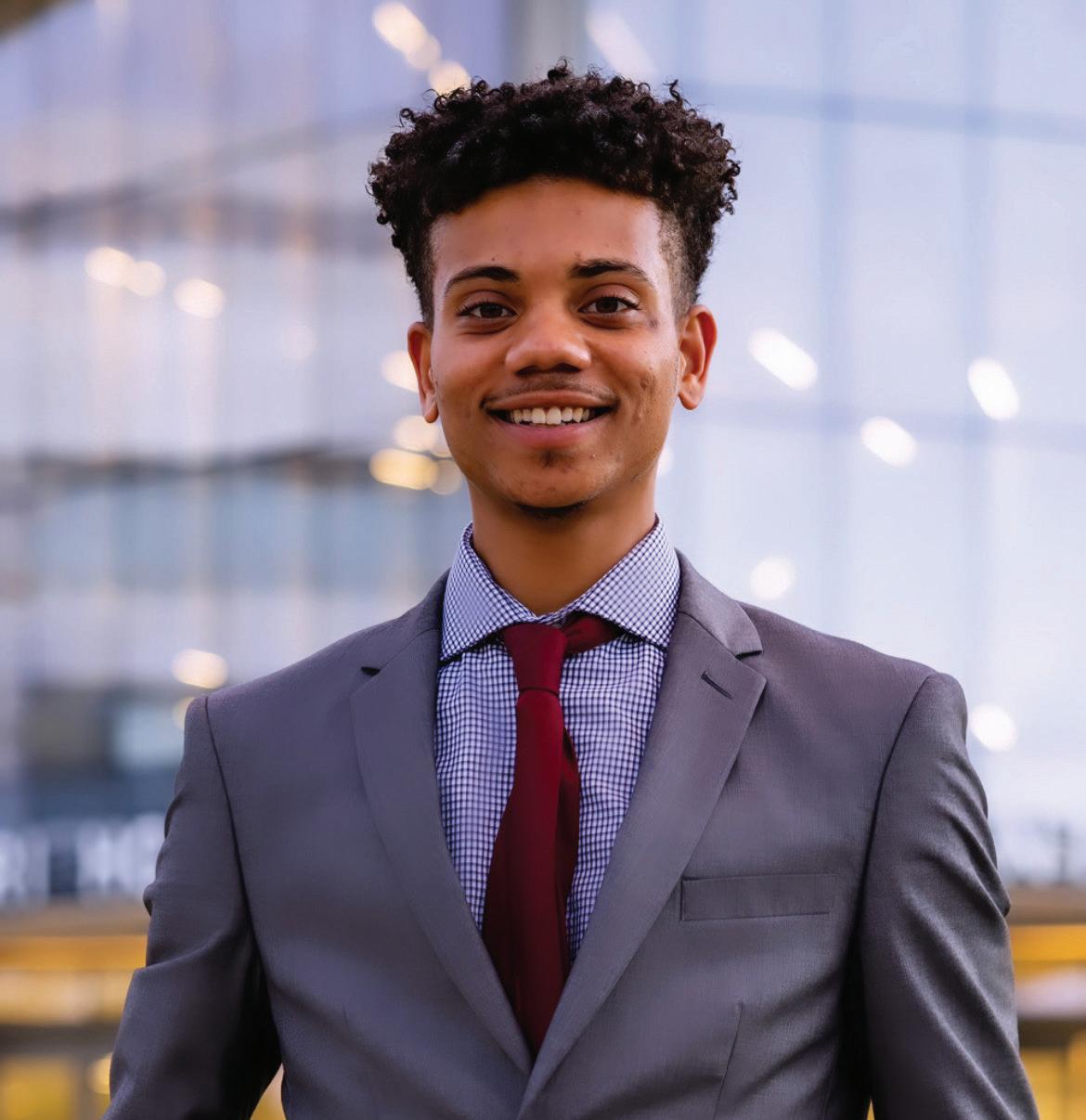
In Spring 2022, I returned to Embry-Riddle, free of my medical bills, which were paid for by the insurance offered to students. UHCSR is a Choice Plus Plan that students have the option of signing up for every year. I used the insurance to further finance my vigorous physical therapy, which ultimately resulted in me being able to walk without the assistance of an aid. Without
this insurance plan and all the support from Dean Hall, Dean Kollar, and Health Services, I would not have been able to come back to school.
When Dean Kollar and Dean Hall heard the good news about me being able to run again, they suggested I run a 5K marathon. The race they inspired me to train for is the ‘True to the Blue 5K’, an event that honors the life of Ashley Guindon, a Marine Corps veteran, who was killed in the line of duty on her first day as a police officer.
The meaning behind the race and my determination to beat the odds inspired me to participate in this race this November.
I continue to beat the odds up to this day. I have remained committed to becoming a glob
al thought leader in commer cial aviation excellence. I ended the Spring semester with a 3.6 GPA while interning. I was a Junior Engineer for Leading Edge Aerial Technologies, spe cializing in the development of Unmanned Aircraft Systems for agricultural use. I have also been responsible for leading a community outreach program by helping underprivileged youth find a start in the aero space industry.
I feel it is now my responsibility to give back to my community, considering how a terrible situation led to a positive change. If I have learned anything from this experience, it’s that the only thing I can’t do is quit.
Photo provided by Stanley Tucker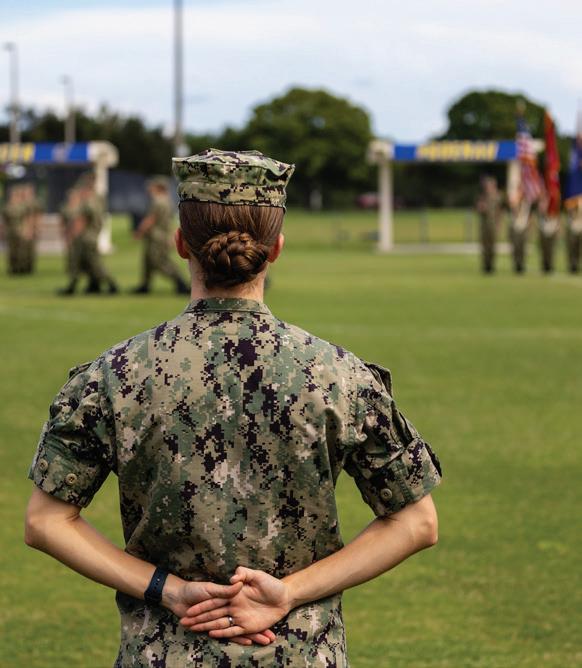
 Andrew Harker Business Manager
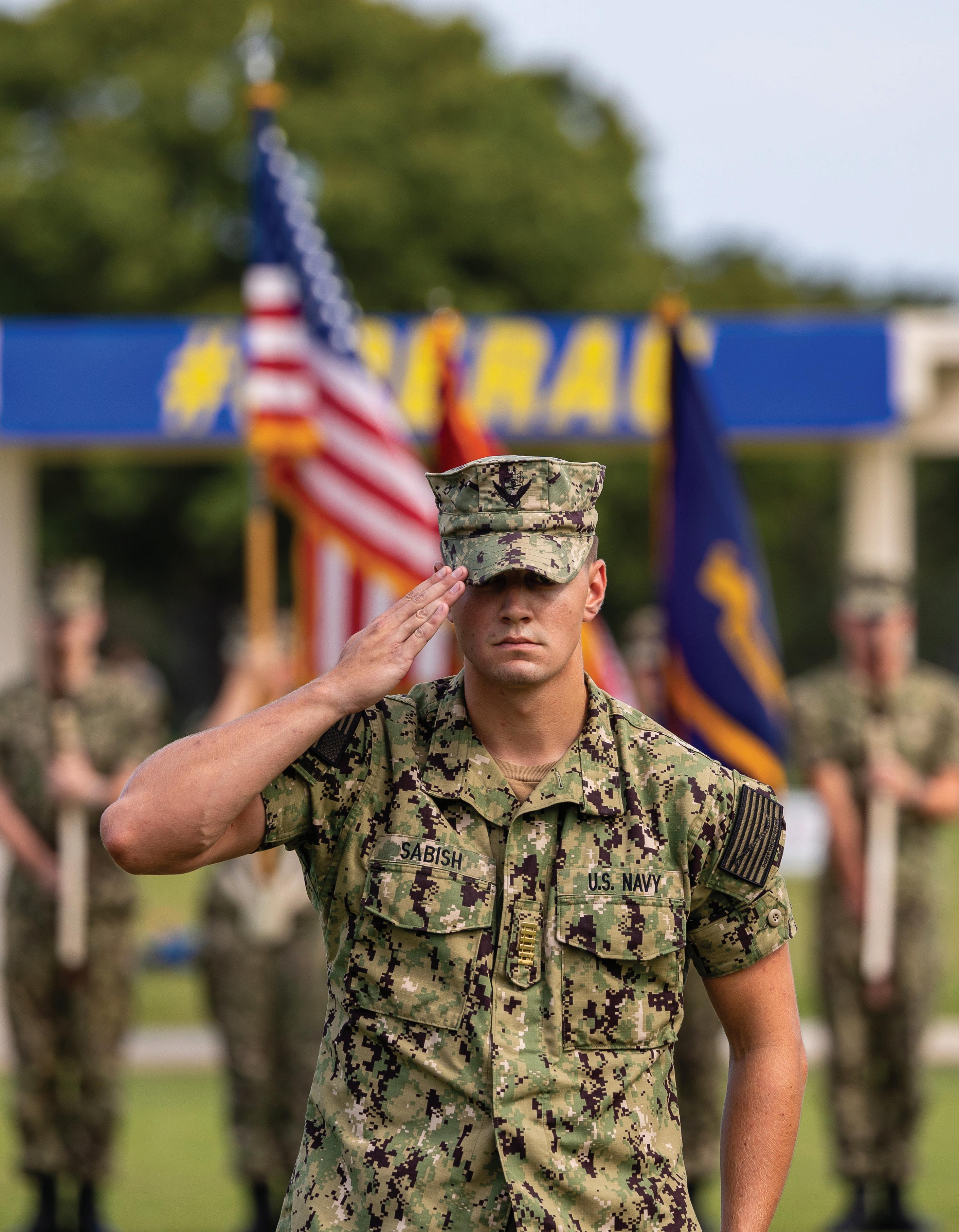
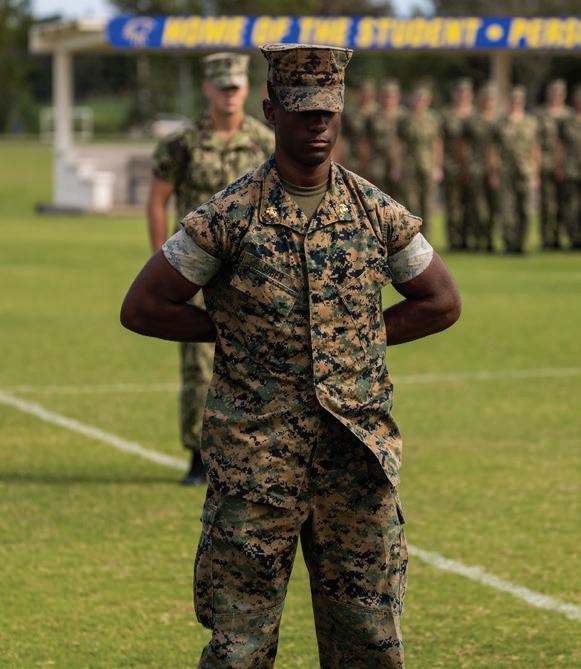
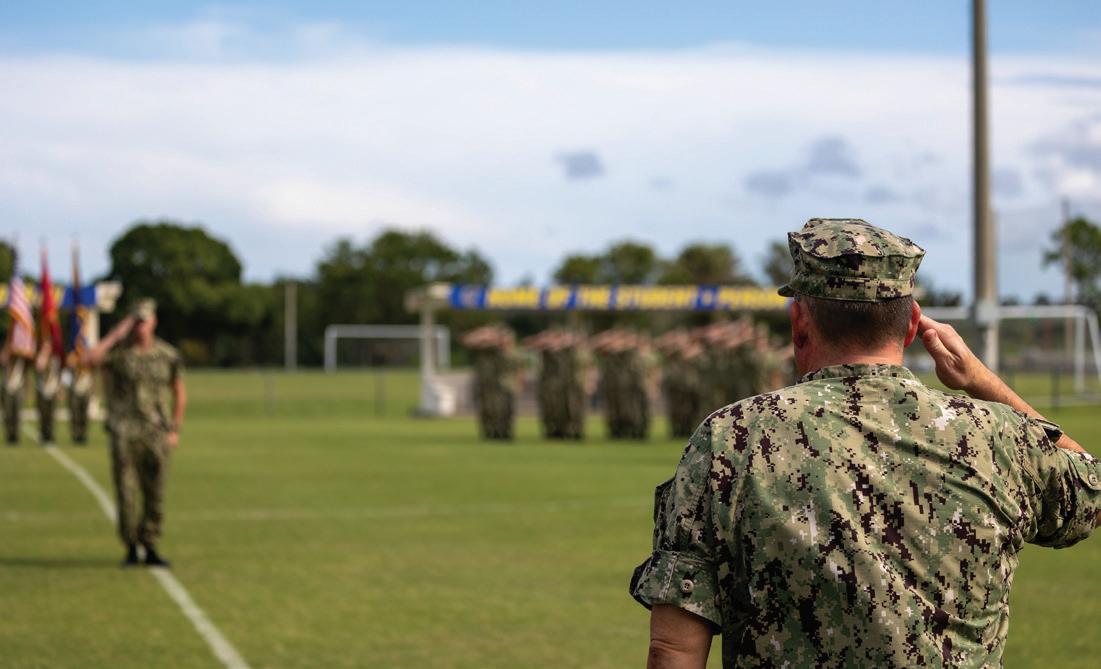
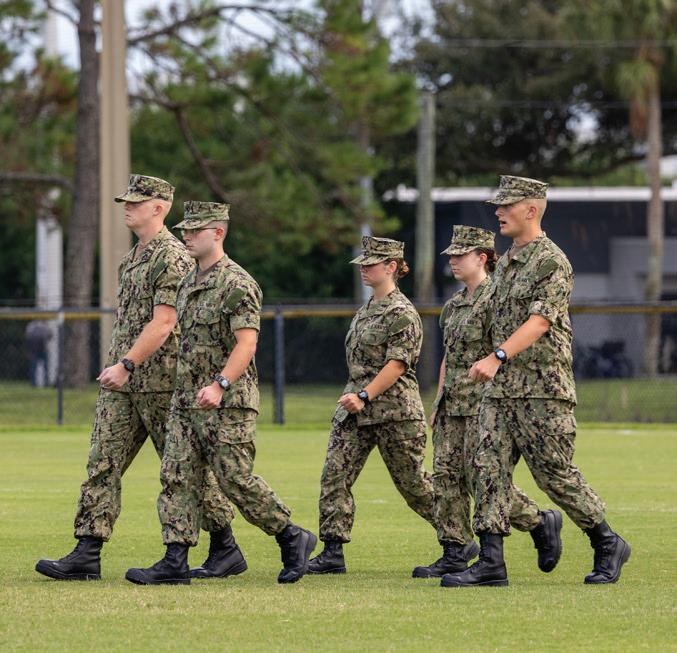
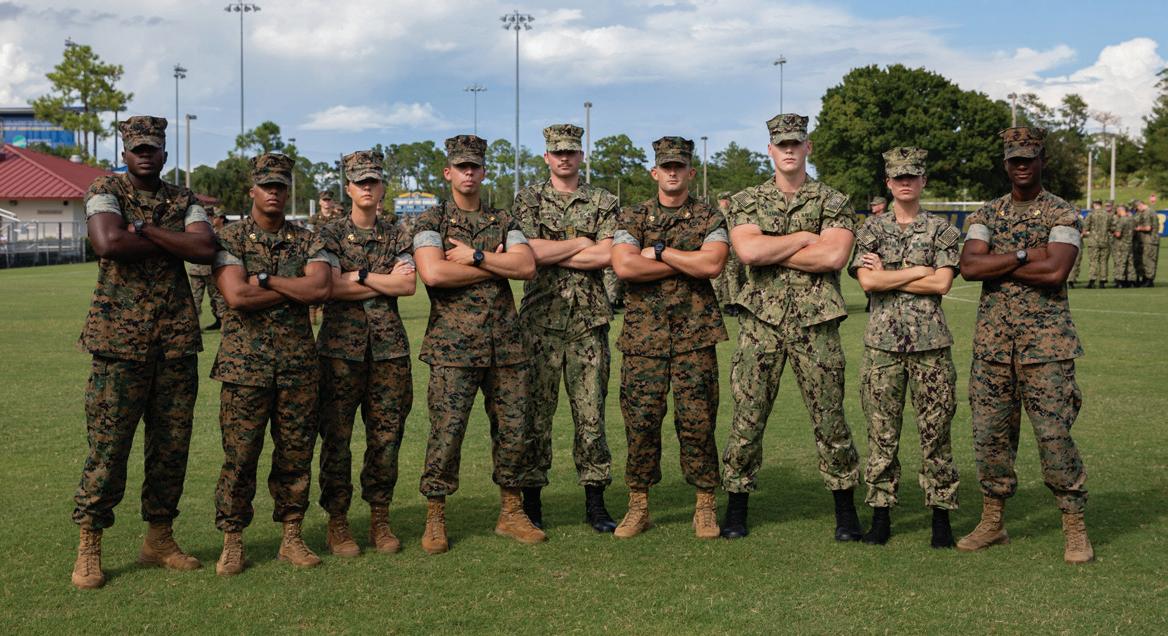
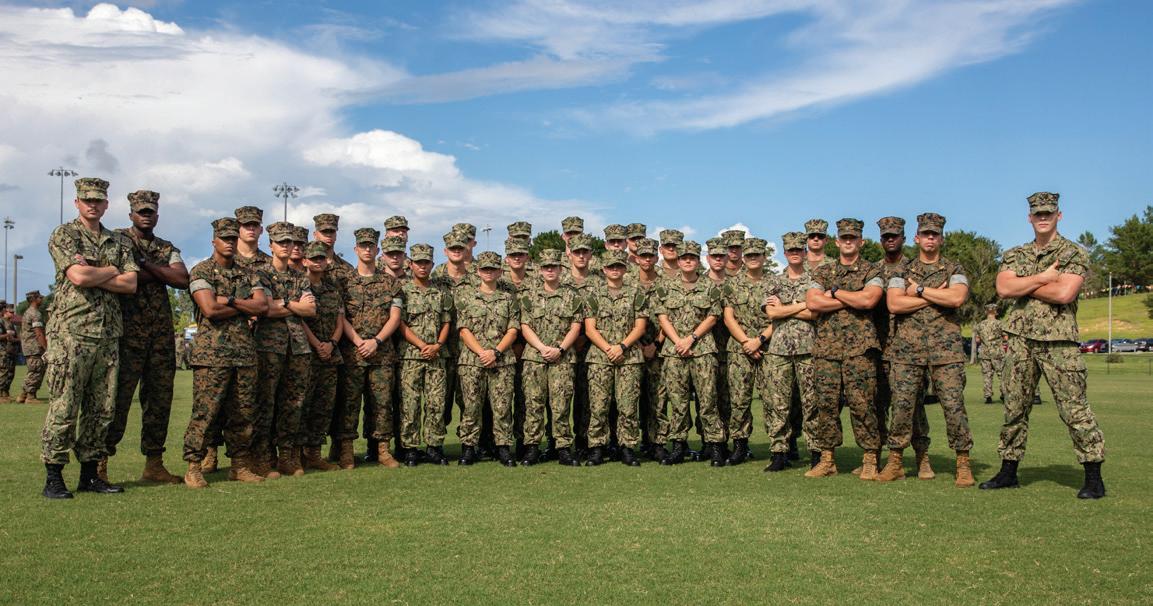
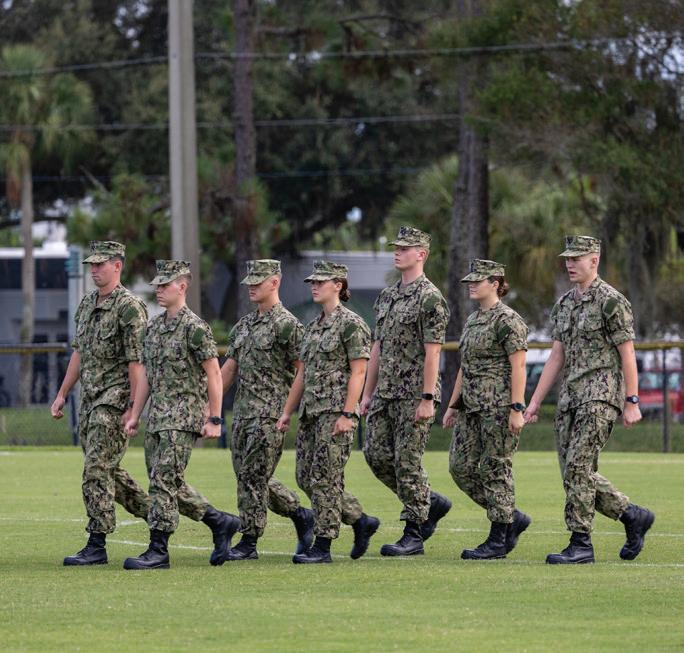
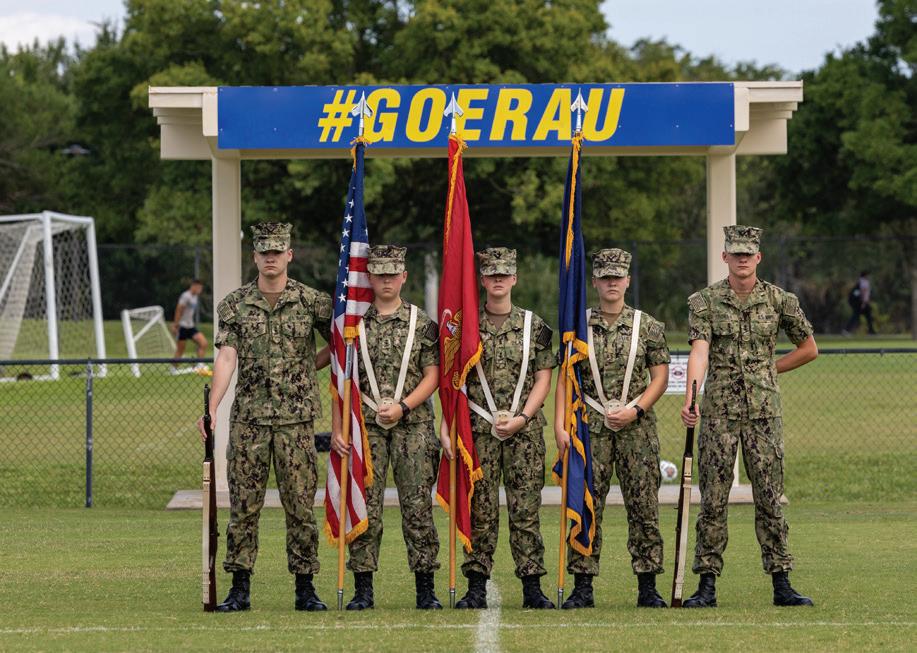
On Thursday, Sept. 15, 2022, the Naval ROTC battalion conducted its first annual Freshmen Integration Ceremony. Like any ceremony, much preparation is required to complete and integrate the fourth class into the battalion. At the start of this semester, the incoming class began three weeks of incredibly intensive training. This training consisted of several early morning Physical Training (PT) sessions, close-order drills, swim qualifications, and class time, focusing on military and Naval traditions, history, customs, and courtesies. It was an intense high-stress environment. Once they passed, the ceremony could commence.
The ceremony itself was short, but the importance was and is long-lasting. As the fourth class is now integrated with the rest of the battalion; their role changes to match their new position. They are now sponges; their purpose this year is to absorb information about ROTC, leadership, and the ways of life and standards. This may sometimes come as a challenge, as they are also required to continue being good and dedicated students. Yet, with the help and guidance of the upperclassmen and those who walked before them, they are in good hands to rise up and become leaders in their posts come graduation.






















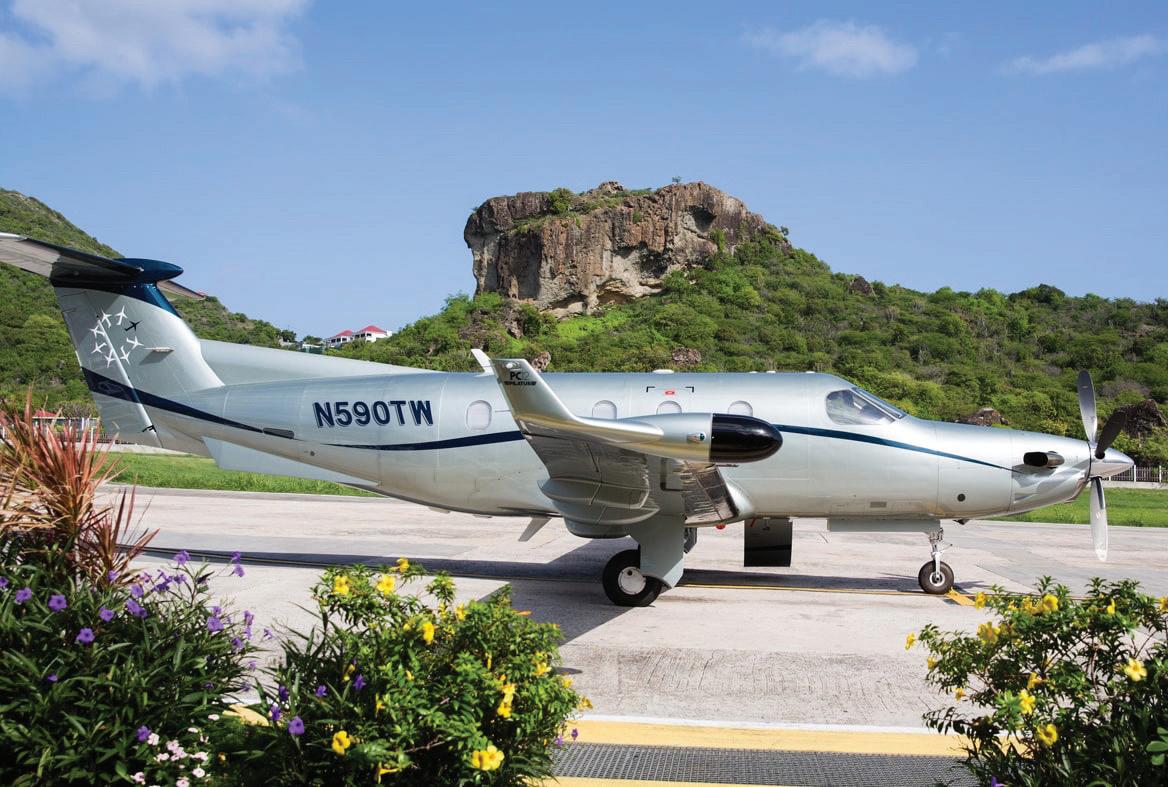



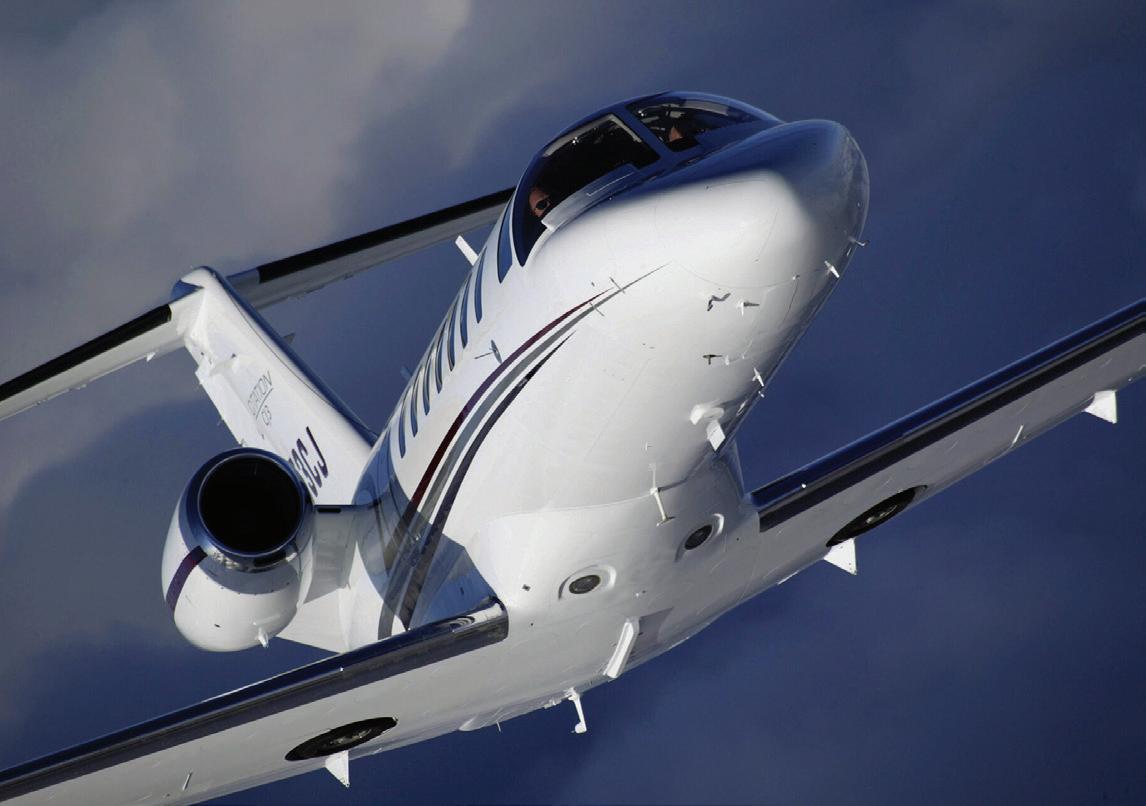
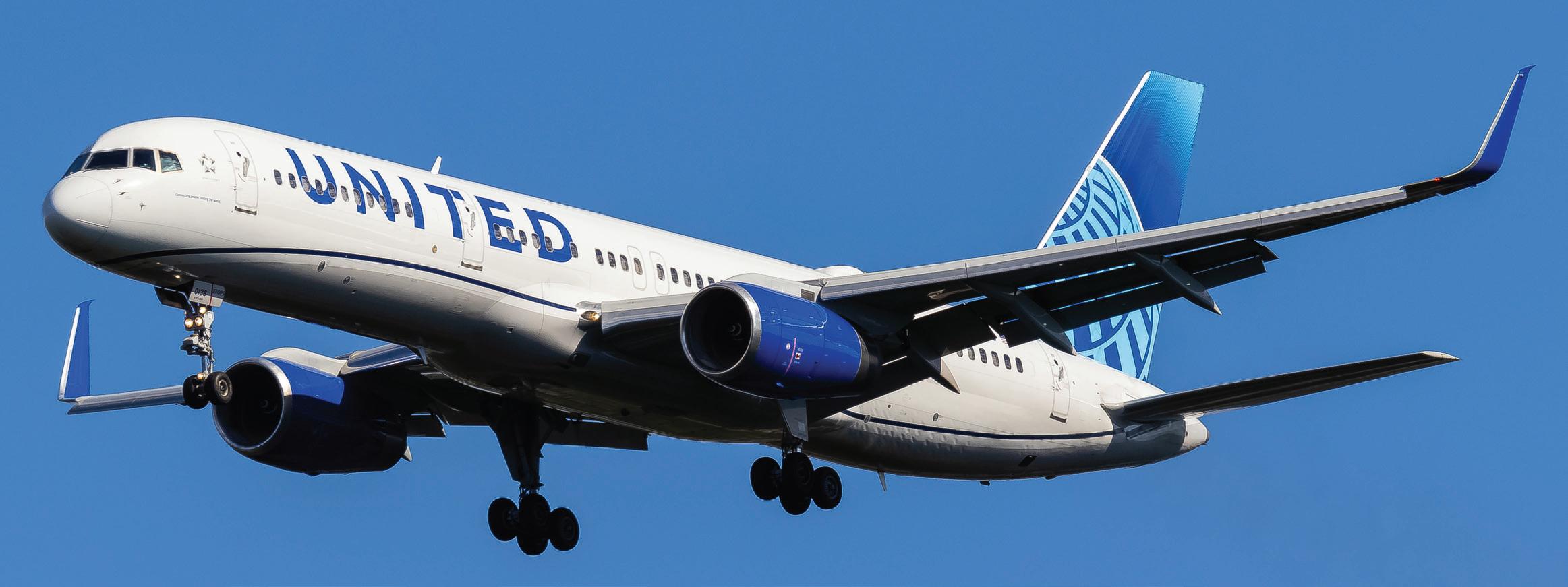
In November, United Airlines will begin code sharing with their former rival Emirates. Though the scope of this agreement is limited for now, this could potentially be the first step in Emirates eventually joining the Star Alliance.
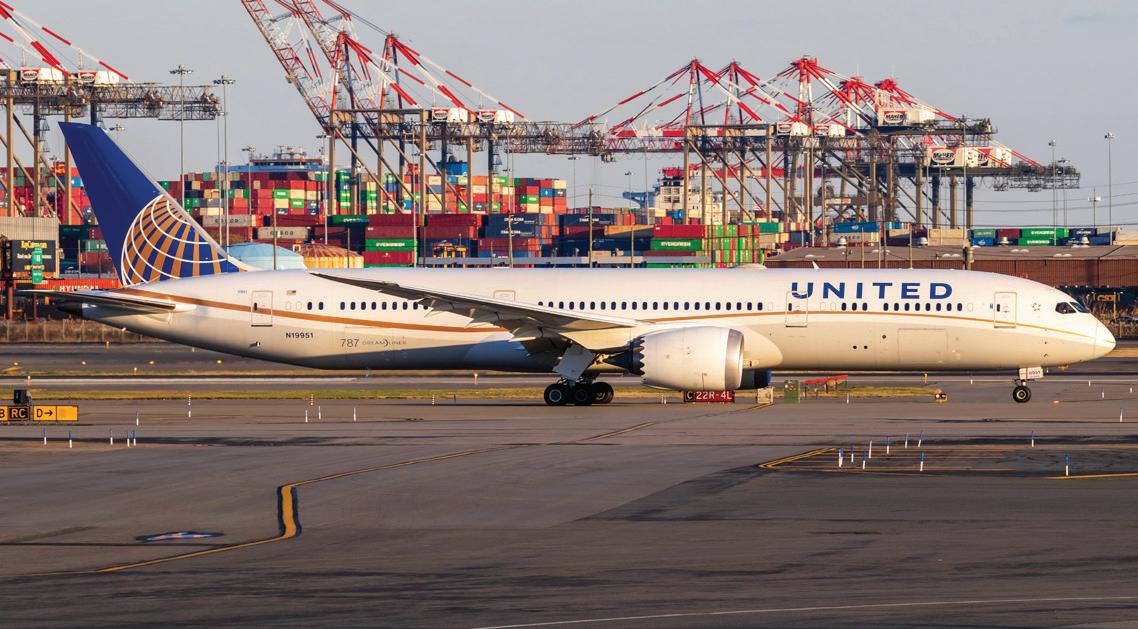
The “big three” legacy carriers of the United States, the US3 (American, Delta, & United) have long feuded with the three primary carriers of the Middle East, the ME3 (Emirates, Etihad, & Qatar Airways) over allegations of illegal government subsidies. However, American Airlines changed course in 2020. They began a code sharing agreement with fellow One World alliance member Qatar Airways, in order to re-enter the Middle Eastern market. Now, it appears United Airlines is positioning itself for a similar relationship with Emirates in order to compete with American.
If United is able to secure regulatory approval, it will gain direct access to the Middle East. It will be able to route passengers bound for flights operated by Star Alliance partner Air India via Dubai, bypassing current restrictions over Russian airspace.
In 2015, Emirates CEO Tim Clark dismissed the idea of Emirates joining an alliance. During a speech to the International Aviation Club in Washington, D.C., Clark said “It is our view that the major alliances do not always operate in the interests of the traveling public.”
However, after the Emirates-United code share was announced, Clark told Aviation Week in an interview that he hoped Emirates’ relationship with United would continue to grow, possibly into a joint venture agreement in the near future.
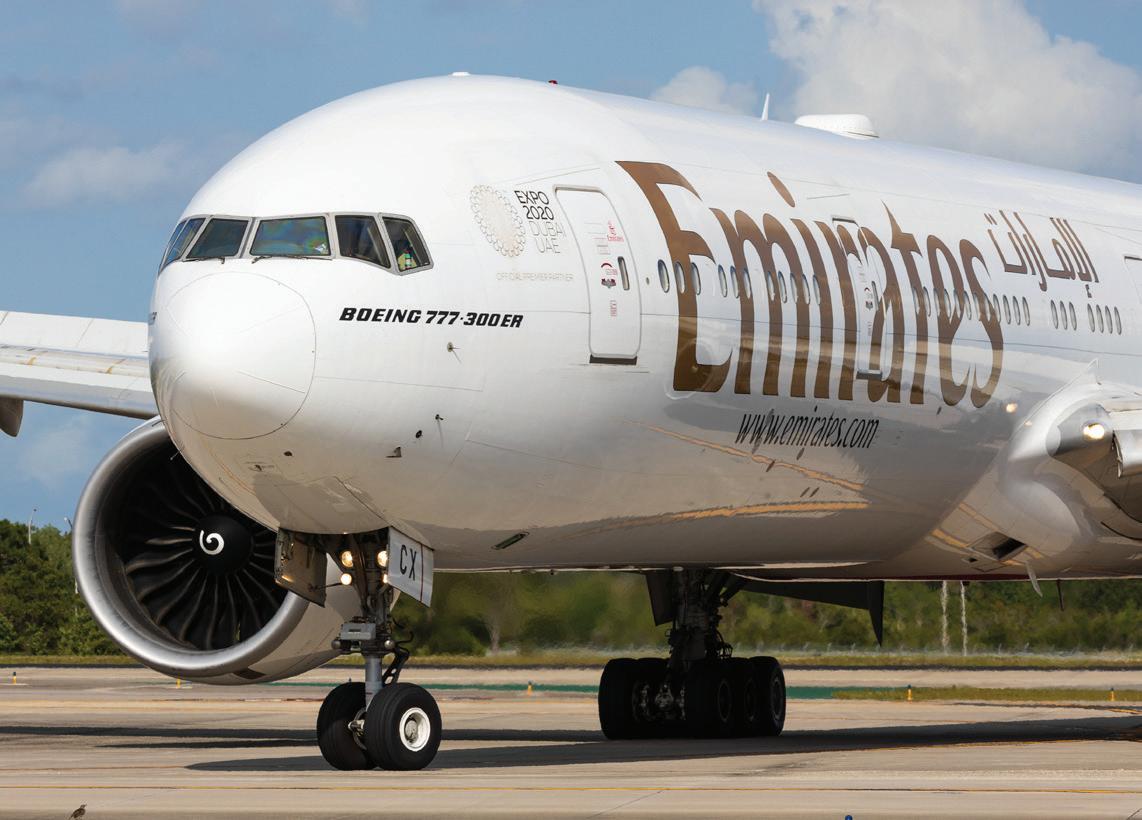
Emirates ended its relationship with JetBlue prior to joining with United; and the airline already partners with Star Alliance members Aegean Airlines, Copa Airlines, South African Airways, TAP Air Portugal, Thai Airways, and, beginning later this year, Air Canada. If Emirates can flip from fighting United to code sharing with them, a change of heart regarding the Star Alliance may be on the horizon as well.
As for Delta, the fiercest critic of the ME3, with Emirates and Qatar Airways tied to United and American Airlines respectively and Etihad bolstering its relationship with JetBlue, they may now be stuck without a needed partner in the region. However, nearby Saudi Arabia is currently planning to launch its own new airline to rival the existing ME3. As a SkyTeam partner of current Saudi Arabian flag carrier Saudia, Delta would be uniquely positioned to enter into a code sharing agreement with this new airline to catch up to United and American.
We are graduate and undergraduate students in the Research in User eXperience (RUX) Lab in the Department of Human Factors and Behavioral Neurobiology. RUX investigates the usability and user experience of technology in our everyday world. This is a regular column that explores different technologies typically used by Embry-Riddle students.
With the astounding number of projects and studies conducted throughout all the labs on our campus, it can be difficult to keep up with all the breakthroughs and discoveries being made every semester.
The Research in User eXperience lab is no exception. In the fall of 2021, a study examining the effects of background noise on user experience and the performance of mixed reality voice dictation was conducted (Sinlapanuntakul et al., 2022).
In an era where imagined future technologies are becoming the reality of our modern world, mixed reality (MR) is a technology that is now well-developed. Moreover, it is currently being integrated into many different sectors of life including industry. MR overlays virtual elements over the real world and allows the user to manipulate those elements as needed.
This study used the Microsoft Hololens 2 (HL2), a mixed reality headset to examine how effective its voice dictation feature was in three different noise conditions. The primary objective was to find out whether it was viable to use the device’s voice dictation feature in noisy settings, such as a manufacturing floor.
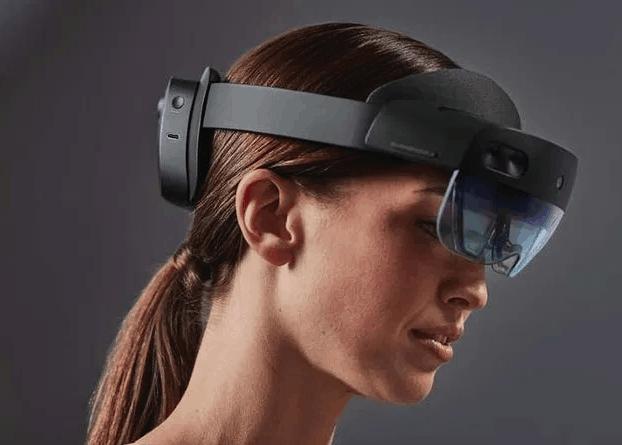
The secondary objective of this study was to compare its results to a past study, conducted by the RUX lab, called “We Didn’t Catch That.” Throughout the course of the study, researchers investigated the voice dictation performance of the original Microsoft Hololens (HL1).
Twenty participants with ages ranging from 18-25 participated by using the features provided with the HL2. Prior to each session, a briefing was conducted to help participants become more familiar with the HL2.
During each session, participants repeated a variety of words and phrases, provided through the speechto-text dictation tool under a background noise. More specifically, the sound, measured in decibels, had three different settings. The first setting was low (40 decibels), or the equivalent of library ambient noise; the second setting was medium (55 decibels), or the noise level of an electric toothbrush; and the last setting was high (70 decibels), or the noise level of a vacuum cleaner.
For each participant, User Experience (UX) tools, such as the Simulator Sickness Questionnaire (SSQ) and the NASA Task Load Index (NASA-TLX), were used to measure the participants’ sickness, discomfort, and overall workload when performing tasks, using the HL2. Researchers also measured the participants’ performance through Word Error Rate (WER) to measure each participants’ text input speed and accuracy. These methods helped track overall participant performance in environments with little to no noise as well as environments with crowded and loud noises. Researchers were able to observe any physical or psychological factors that the HL2 had on the participants as well.
Another important finding comes from the perceived workload. Participants reported higher levels of mental demand in the high noise conditions compared to the low noise conditions. It was also found that participants felt more rushed to finish the task in the high noise condition than the medium and low noise conditions. Effort was also significantly higher in the high noise condition than the medium and low noise conditions.
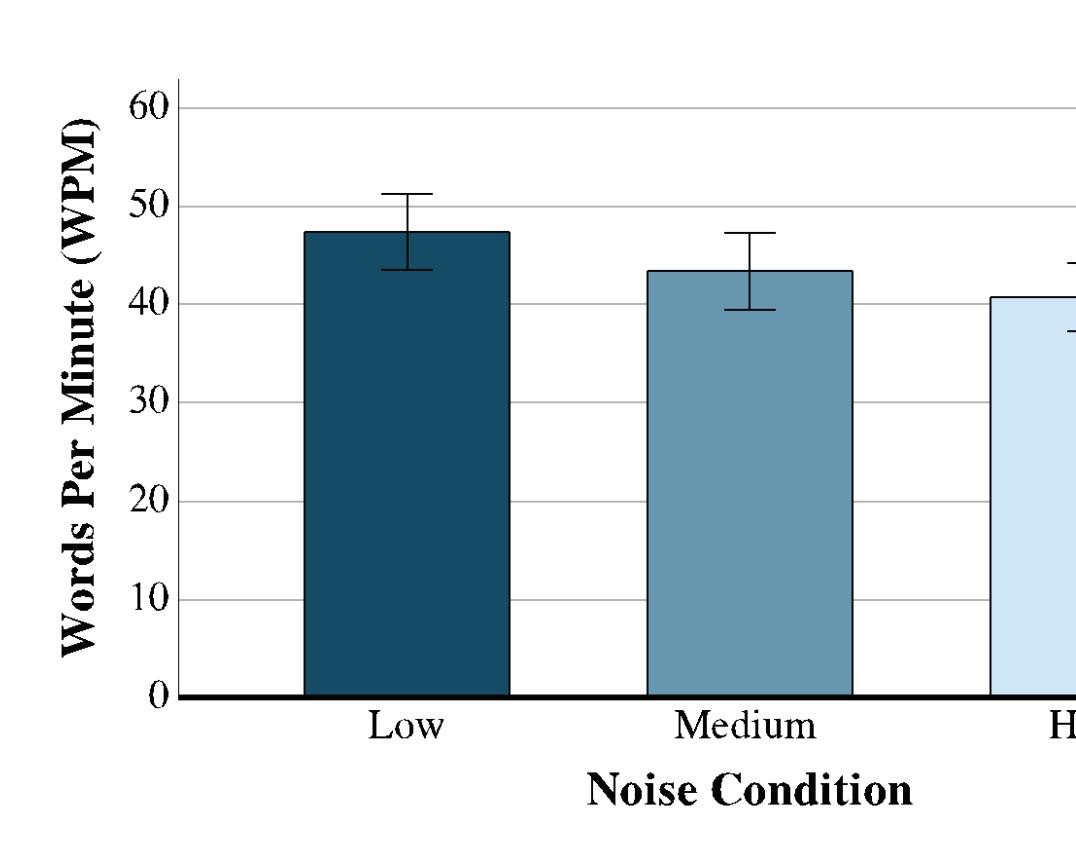
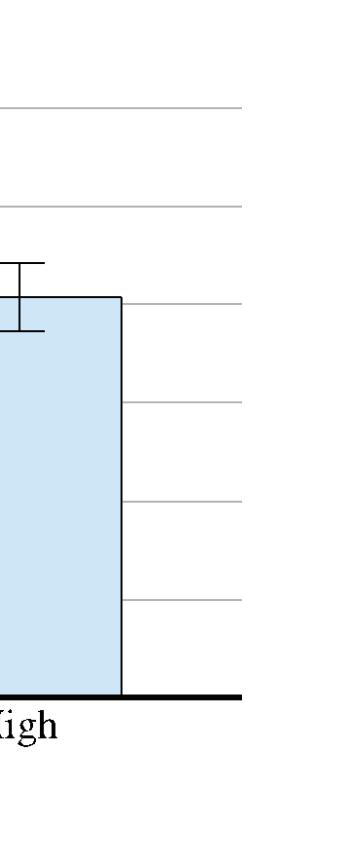
In comparison to the HL1, the HL2 proved to be much more accurate with voice dictations, regardless of the noise condition. For example, in the high noise condition, the HL2 had a word error rate of five percent, while the HL1 reported closer to around 50 percent. However, text input speed for the HL1 performed much better than HL2, with participants typing nearly 25 words-per-minute faster in the high noise condition.
This study found that overall, participants found the HL2 to have good usability. Even so, there was a significant difference between the high noise condition and the low and medium conditions. The device was found to be more usable with the low and medium conditions. Although participants rated usability as high, user feedback indicated that there were still frustrations with the new technology.
WER, or text input accuracy, performed very well in all noise conditions, while text input speed struggled in the high noise condition compared to the low and medium noise conditions.
With voice dictation being a significantly less effortful way of inputting information than the HoloLens floating keyboard, it is important for it to work effectively in all environment types. This study showed that while the HL2’s voice dictation feature’s accuracy has significantly improved compared to the previous study of the HL1’s, it came at the cost of its speed. Most likely, this is due to an improved sensitivity system that takes longer to accurately detect speech in noisy environments and autocorrects the words and spellings as the user dictates them. This is good news for those who may want to use these types of devices in an industrial environment with loud background noise. What they dictate will now be picked up, even if it may be a little slow. However, it also goes to show that improvements like this technology still come with some sort of trade-off.
As time goes on, MR technology can only continue to improve and reach a stage where it can help enhance the lives of all those who use it. For now, MR tech is a far cry from “we didn’t catch that’” to “okay, we hear you!”
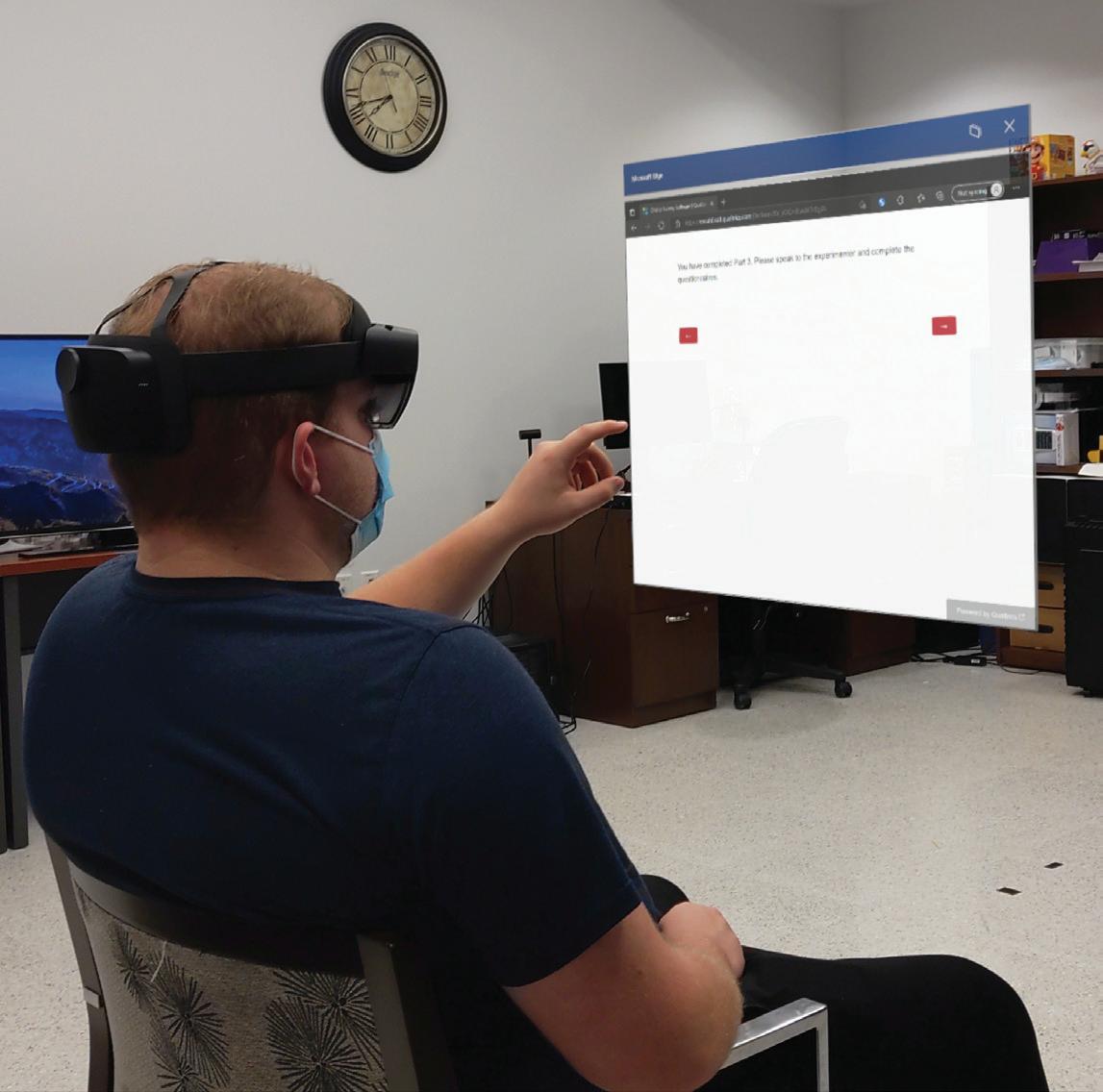 Participant doing the study
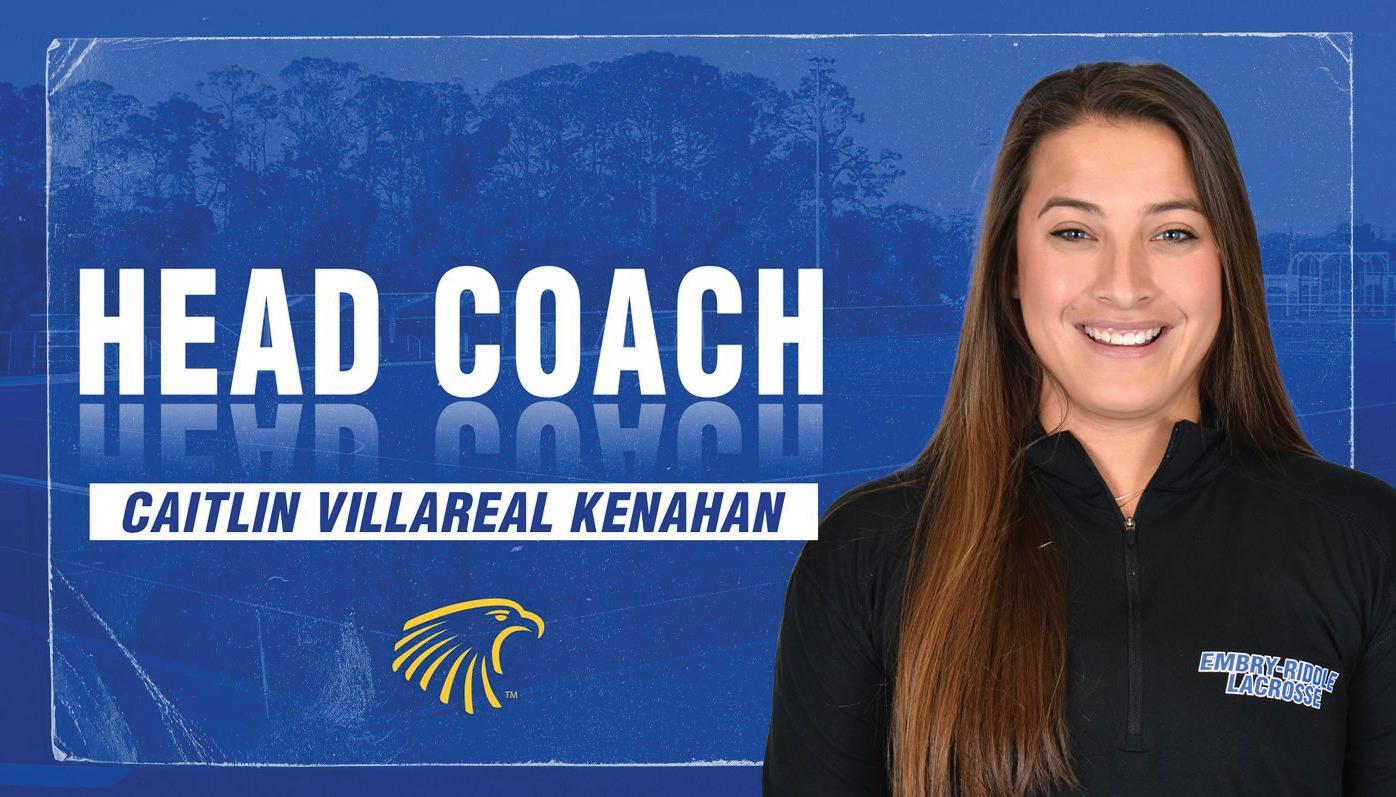
Caitlin Villareal Kenahan has been named the head coach of the Embry-Riddle women’s lacrosse program. As assistant coach and o ensive coordinator for ERAU Women’s Lacrosse for the last two seasons, Villareal Kenahan was given an interim head coach designation in August before being cemented as the program’s third head coach on Sept. 22.
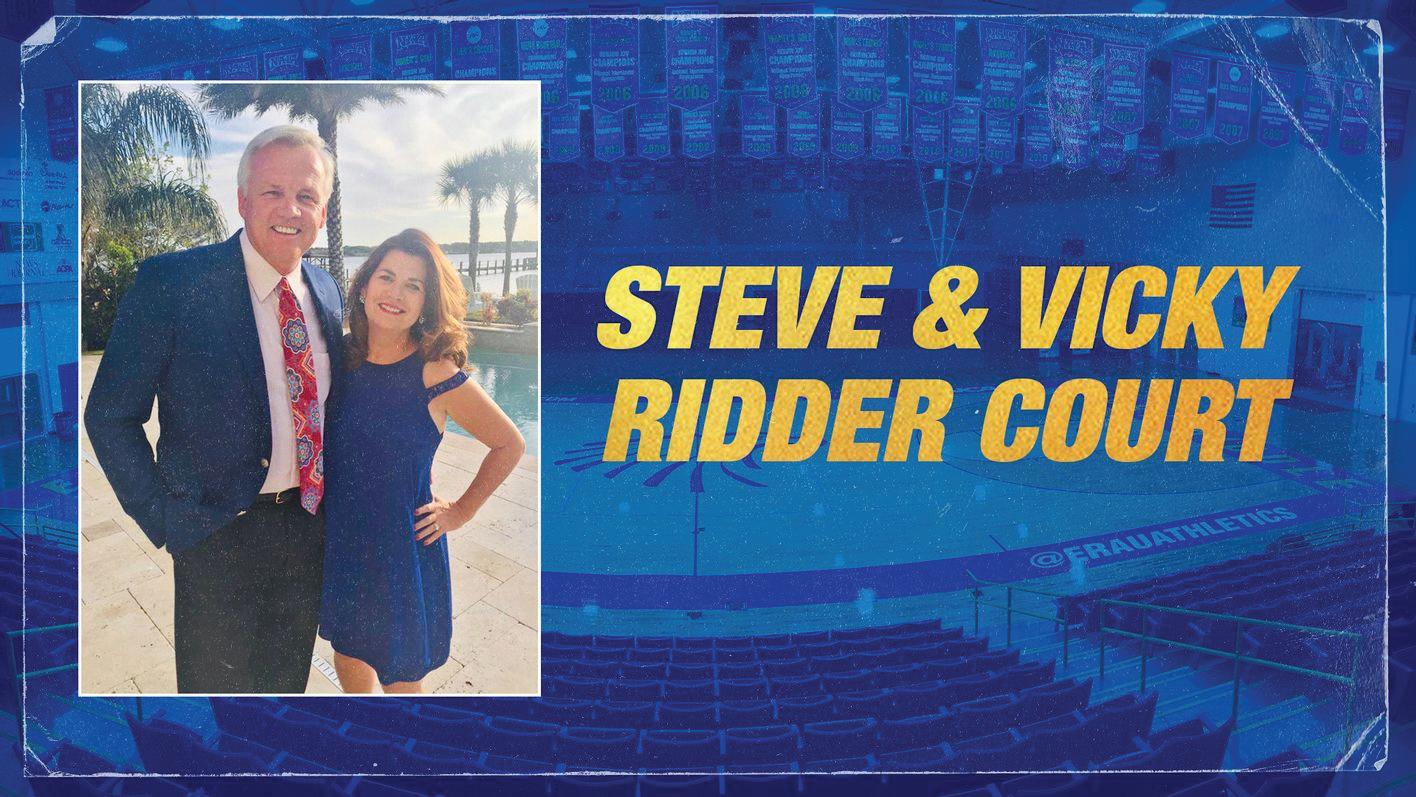
The women’s soccer team vaulted to the No. 2 spot in the United Soccer Coaches national rankings on Sept. 20. The Eagles went undefeated in their first seven games of the season, including a 1-0 win against then No. 15 Columbus State.
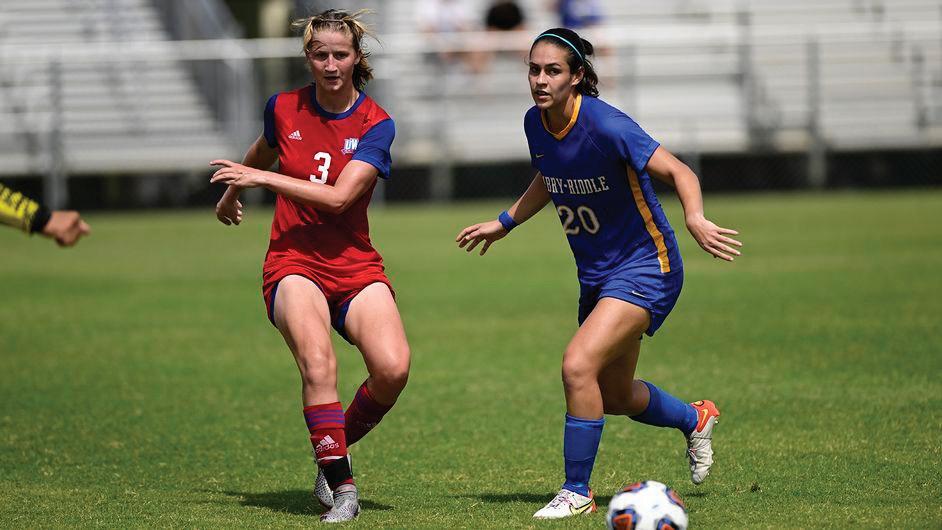
Marie Myhrvold Seim is the Eagles’ leading scorer with 18 points on eight goals and two assists.
The Embry-Riddle volleyball team returned to the win column on Tuesday, Oct. 4, with a 3-0 (25-22, 25-20, 2523) sweep of Saint Leo in Sunshine State Conference play. Playing just their third match at home this season, the Eagles improved their overall record 10-5 and moved to 4-4 in the league.
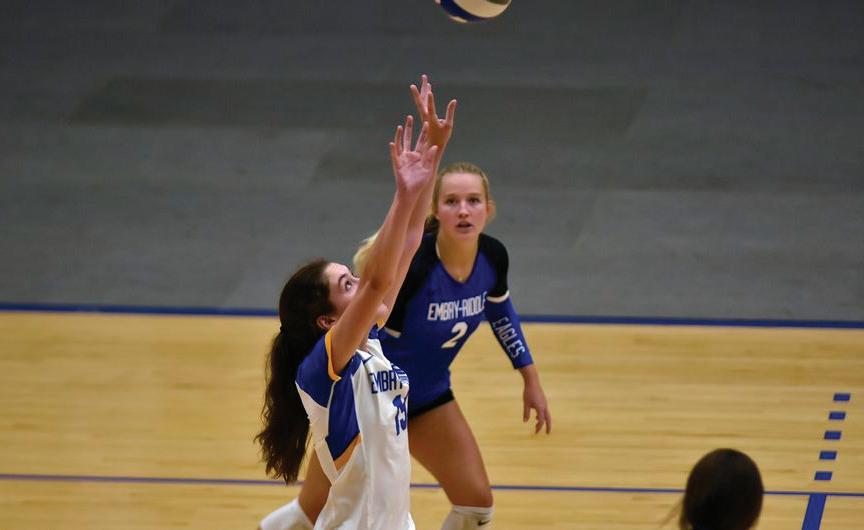
After a few matches in Hoover, Alabama, the Eagles return to Daytona Beach on Oct. 18 for a game against Florida Tech.
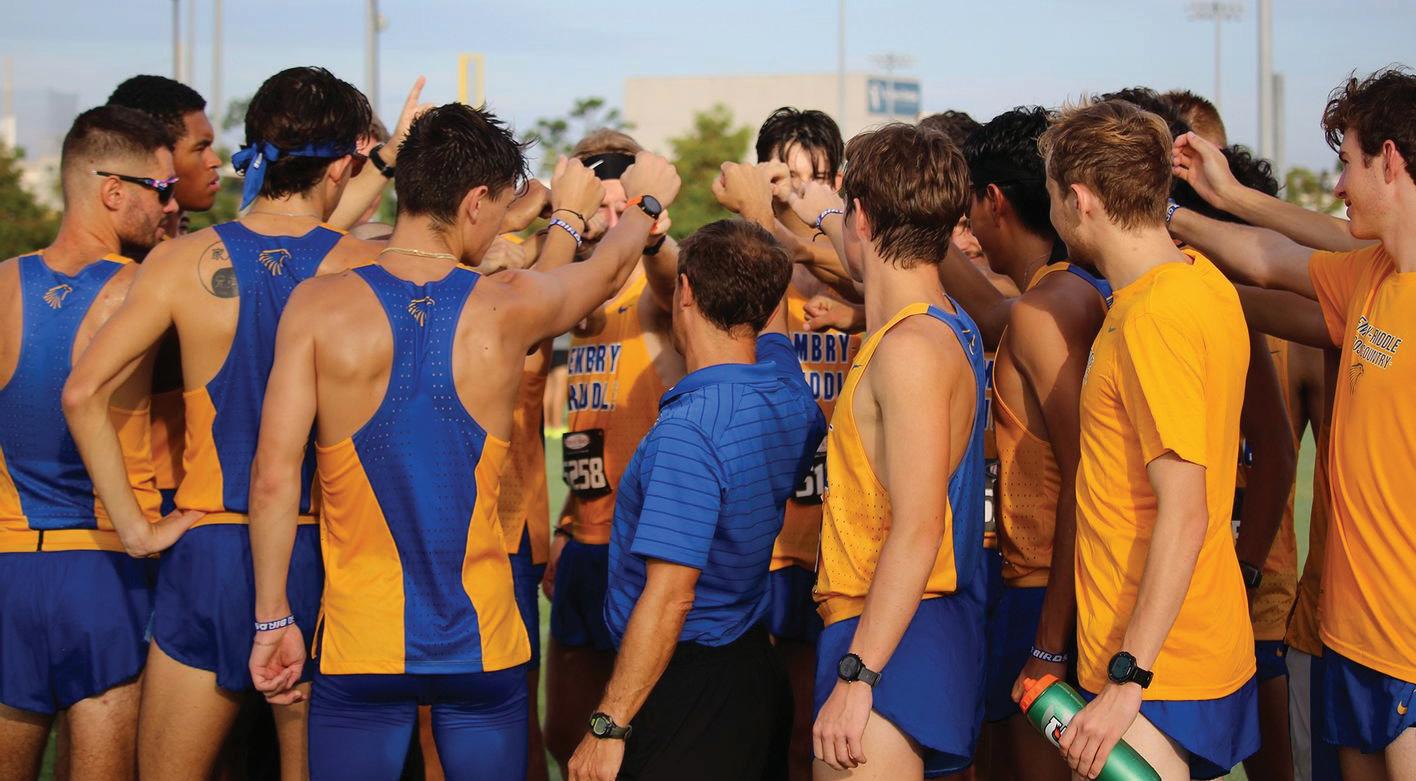
The men’s cross country team has won each of its first three meets of the season. The Eagles opened the season with a win at the Eastern Florida State Fall Classic, then held off Tampa by one point to win the Embry-Riddle Asics Classic. On Saturday, Sept. 24, the Eagles made it three in a row by winning the Saint Leo Abbey Invitational.
Paul Kraemer has led the Eagles as their top finisher at each meet. The Eagles will hope to continue their winning performance at the South Florida Invitational meet in Tampa on Oct. 14, then to Huntsville, Alabama on Oct. 22 for the UAH Invitational.
to those who
Bodan Choi Boogun Cho
Boreas Wu
Bradon Michael Black Brandon Anthony Perras Bryce Matthew Lehrer
Byung Hun Kang
Abdulmajeed Jameel A Homsi Abdulrahman Saleh M Orebi
Abigail Grace Kienast
Adam Abram Hochella
Adrian Colin Debrah
Aldreaka Battle Alex Oi Alexander Fernandez III
Alexander James Ilibasic Alexander Joseph Kargman Alexander Thomas Dantzman Ali Jubran A Alqahtani
Allison Rose Tiano
Amy Christine Whelan
Ander Turueno Garcia Andrea Van Vlaanderen Andrew David Chiariello
Anthony Joseph Dimaggio II
Aron Nicholas Zbick
Ashby Conrad Barnette Austin Maybury Downs
Austin Tyler Sanders
Benjamin Schwartz Muenzer
Bill Deng Pan
Cameron Marco Langone Casey Ryan Geist Casey Taylor Radli Chance Knowlton Changsoo Han Changwook Baek Charles Joseph Fusco Chloe Sahara Billman Christopher David Rumsey Christopher Fontaine Richardson Christopher W Cai Chungwoo Lee Daniel Anthony Nell Daniel Enrique Acevedo Traverso Daniel Liu Richardson Daniel Min Darron Lawrence Mortimer Jr David James Killian David Matthew Blash Diane Marie Aucoin Diego Bruce Dunning Sanchez Diogo Soares Horta Domenico Charles Rizzo Dong Hwan Kim Donggyoon Kim Doyeon Kwon Drake Douglas Stutesman Dyress Tavone Batten Eden Manuel Roshberg Emily Elsbeth Meide Enrique Rafael Nazario Eric Robert Nguyen Burritt Ethan John Matteson Faisal Alghamdi Gage Samuel Altrock Gal Hadar Iny
Garrett Sayre Koch George Campbell Skinner
Gerard Antonio Gieowarsingh Gisuk Lee
Hae Joon Lee
Hanlin Liu Haye Gong Helen Alexandra Carey Henrique Ullmann
Hi Jun Cho Ho Jin Jung Hunter Michael Haas
ADD-ON (323)
Alexander Ali Amirhamzeh Alexis Nicole Deichmann Amy Louise Burch
An-Kuo Peng Anthony Michael Chimino Brendan Thomas Calvert Cesar Angel Castro Guerrero Christopher Monroe Haak Connor Jack Kelly Deokhyun An Donghun Ha Donovan Jr Everton Twiddle
Inho Song
Jacob Alexander Davis Jacob William Morin Jainishkumar Jayantkumar Shukla Jamel Michael Andrew Ramsook Jayden Evan Jozef Barre Jinkai Hu Joshua Daniel Teotico Asiaten Juan Diego Iturri Del Aguila Julian Santiago Nicasio Jung Ho Kim
Interested in joining The Avion and making this magazine happen? Scan to join our Discord server. Go Eagles!
The Avion