Survive &
EIC Insight Report 2026
Interested in EIC membership?
For over 80 years, the EIC, a not-for-profit organisation, has devoted it’s time to working closely with energy industries around the world. With over 950 members worldwide, we help companies, large and small, to maximise business opportunities – sourcing or supplying goods and services across the globe.
We are experts in tracking global projects, energy assets, and supply chain capabilities, across multiple energy sectors and producing quality market intelligence.
This means companies operating in the competitive energy marketplace can rely on our invaluable resources to develop their businesses.
Contact us
Any enquiries about
We build relationships with buyers and suppliers worldwide, bring them together to discuss projects and capabilities, and help them to make contacts that will generate new business. Beyond this, we also build powerful networks across all stakeholders, including governments.
For more details, e-mail us: membership@the-eic.com Or access: www.the-eic.com
EXPORT | DIVERSIFY | GROW
THE VOICE OF THE ENERGY SUPPLY CHAIN
MARKET INTELLIGENCE
covering all energy sectors globally AWARD
17,000 projects
47,000+ assets
11,300+ suppliers
WINNING
• 2023 King’s Awards for Enterprise: International Trade
• 2023 OWI Market Intelligence Platform of the Year
• 2021 Best National Pavilion at ADIPEC
160+ events, pavilions and delegations per year
ENERGY AGNOSTIC MEMBERSHIP SERVICES
We are uniquely positioned to help our members and other stakeholders to understand global energy markets and grow.
Energy Market Expertise
Events & Networking 950+ member companies forming a powerful global community
• Market Intelligence Databases
• Industry Insight and Country Report
• Consult - data driven bespoke consulting service
• EIC Podcasts
• Founded in the UK in 1943
• Energy-agnostic since 1981
• Global membership since 2017
• 110 in-person events and conferences p.a.
• 50 webinars p.a.
• UK and EIC pavilions, and trade delegations
• Event and podcast solutions
• EICTV
Profile Raising and Influencing Supply Chain Expertise
97% expressed direct or indirect added value from EIC membership
* *of 100 members surveyed in August 2023
“ORION HIPPS (part of the ORION Group) has found EIC to be a valuable partner in supporting our international business development. Through its global network, market intelligence, and industry events, EIC has helped us increase our visibility, connect with key EPC contractors, and end users across the O&G sector. We appreciate EIC’s commitment to fostering business opportunities and look forward to continuing our collaboration.

• Advocacy
• Forums and committees
• EIC Media Centre for news, magazines, press releases and articles
• Attend, speak, sponsor and exhibit
• Survive & Thrive Insight Report
• Bankable Energies Report
• World Energy Supply Chain Awards (WESCAs)
• Supply chain capability mapping
The EIC has been a valuable partner for Bureau Veritas, providing high‑quality market intelligence, access to decision‑makers and a platform to showcase our capabilities across traditional and low‑carbon energy. Its events and networks help us stay close to emerging opportunities and collaborate more effectively across the global energy supply chain.
Flavio Ricotti, Jérôme Lepine,
Executive Managing Director


Vice President
Industry Asia-Pacific
BECOME A MEMBER
Book a demo with our experts to learn what EIC can do for you.
Membership categories
Global
Renewables
Worldwide coverage of EIC products, services and facilities
Global Renewable Energy
Global Renewable Energy with Energy Transition
EMEA: Europe, Middle East, Russia, Caspian & Africa
Americas: North, Central and South America
Asia Pacific: East Asia, Australasia, Russia and the Indian sub-continent
United Kingdom, Brazil, Gulf of Mexico, Africa, Gulf Cooperation Council, ASEAN
For detailed information, please access: www.the-eic.com
“We are proud to be part of EIC and value the opportunity to connect with trusted industry partners from around the world. Organizations like EIC play an important role in strengthening collaboration, relationships, and growth opportunities within the global logistics community.”

Homero Hauque
CEO, Global Cargo Corporation

LOCATIONS
EIC’s global network of members is supported by 135 staff speaking 21 languages in 6 regional hubs
“Reflex Marine finds that the EIC is the best value for money market data and events pro vider in the world. The data is relevant, useful and very well presented. The events are timely, global and in line with energy trends and market adjustments.”

Sandra Antonovic
COO, Non-Executive Director at the EIC











01 Executive SUMMARY
The 2026 Survive and Thrive findings draw on interviews and case studies from 136 energy supply-chain companies across the UK & Ireland, Europe, the Middle East & Africa, Asia Pacific, North America and South America. Companies entered 2026 from a position of strength, but with greater caution about where they are willing to take risk.
Three quarters of respondents described 2025 as a record year, with average growth of 23%. A further 91% expected growth in 2026, forecasting an average increase of 32%. But this confidence has not removed concern about policy change, high costs, geopolitical uncertainty and uneven project pipelines. Companies are responding to that by strengthening their operations rather than assuming current conditions will continue. This is reflected in their chosen growth strategies: Optimisation accounted for 19% of the case studies submitted this year, while Resilience rose to 18%, from 8% in 2025 (see full Comparison Table on page 4).
Artificial intelligence is now widely used across the supply chain in every region surveyed, but its commercial value is yet to be proven. Nearly 90% of companies reported using AI internally, and 44% are using it externally as a service (see Figure 1). When integrating the technology, 42% reported creating new capabilities to use AI in their business. Many companies are still working
out where AI can improve their own operations before offering it to customers or building it into a wider commercial proposition. Data centres are also becoming a more material market, with 45% of companies surveyed reporting some involvement.
The report points to a more diversified investment picture. Oil and gas continue to serve as the main revenue base for the supply chain with 94% of companies active in the sector, which accounts for 60% of reported revenue on average. At the same time, Diversification accounted for 25% of this year’s case studies, up from 21% in 2025, as companies look beyond a single sector or region. Fewer companies reported activity in renewables, down to 48% from 59% last year, while non-energy markets featured more prominently among investment priorities in several regions (see Apendix: Overview of Companies).
EICDataStream project data provides context for that caution. Across projects currently under development, around one in four upstream, midstream and downstream projects has reached final investment decision (FID), compared
Stuart Broadley Chief Executive Officer at EIC
with 14% of renewables projects, 10% of hydrogen projects, 8% of carbon capture and offshore wind projects, and less than 1% of floating offshore wind projects. The figures point to a large pipeline in several transition sectors, but a much smaller share of projects that has moved into committed development (see full FID global data on Table 1).
Exports continue to underpin the global supply chain. Average export share rose to 56%, the highest level in the four-year series (see Figure 2). Yet companies are generally building on established international positions rather than entering wholly new markets. New export market development has remained among the least-used Survive and Thrive growth strategies across the report’s ten editions, despite the growing importance of overseas revenue. The Middle East and Asia are the main targets for future export activity, but companies are most likely to pursue markets where they already have customers, partners or previous delivery experience.
The findings describe an industry with continued growth expectations, but a more guarded investment stance. Companies are prioritising efficiency, resilience, diversification and familiar international markets, while approaching new technologies and new export markets with greater care.
FIGURE 1 – HOW COMPANIES ARE USING AI
02 More exports, FAMILIAR MARKETS
The global energy supply chain is earning more of its revenue outside domestic markets, with the average export share rising to 56% in 2026, from 49% in 2025, the highest level recorded in four years (see Figure 2). Yet this doesn’t mean there is a wider appetite for entering new markets. Across the ten editions of Survive and Thrive, developing new export markets has consistently been the least favoured growth strategy.
This isn’t a distinction without a difference, far from it. Companies are increasingly relying on international work, but they are usually doing so by expanding within markets they are already familiar with, selling more to existing customers, following established project pipelines, or expanding activity in countries where they already understand the commercial and regulatory environment. Export growth is happening, but it is rarely being driven by a broad push into new markets and unfamiliar territories.
Europe remains the most established export market for many respondents,
while the Middle East and Asia are the most frequently named targets for future growth. The Middle East was identified by 45% of respondents as a priority market for new export activity, followed closely by Asia at 44%. Africa, Latin America and Europe also feature prominently. Again, these aren’t necessarily new destinations for the companies involved. In many cases, they are markets where firms already have customers, partners or previous project experience and see room to deepen their position.
The regional figures show how far international exposure already shapes the supply chain. European respondents reported an average export share of 72% in 2026. The figure was 64% for UK & Ireland respondents and 59% for companies in the Americas. Middle East & Africa respondents reported an average export share of 55%, while Asia Pacific stood at 30%. What these numbers point to is that international revenue is central to the business model of many energy supply-chain companies.
Export growth is happening, but it is rarely being driven by a broad push into new markets and unfamiliar territories.”
At the same time, our data suggests that companies are cautious about the cost and risk of building entirely new export markets. New market entry takes time, requires local knowledge and can depend on relationships that are difficult to establish quickly. Where companies have established routes to work internationally, they appear more likely to build on those routes than commit resources to a new geography. This helps explain why export revenue can rise even when New Export remains one of the least used Survive and Thrive strategies.
That caution is accompanied by a wider effort to spread risk across sectors. Oil and gas remain the supply chain’s main revenue base. Ninety-four per cent of companies surveyed are active in the sector, which accounts for an average 59% of reported revenue (see Apendix: Overview of Companies). Its role is strongest in South America and the Middle East & Africa, though it remains significant in every region covered
FIGURE 2 – AVERAGE EXPORT SHARE THROUGH THE YEARS (GLOBAL)
*Source: EICDataStream / Excludes China, Russia, North Korea, Iran.
by the report. Oil and gas continue to provide much of the work, revenue and delivery capacity that companies use to support activity elsewhere.
EICDataStream project data provides a reality check. Across projects currently under development, around one in four upstream, midstream and downstream projects has reached final investment decision (FID). The comparable proportions are lower in several transition sectors (see full global FID data on Table 1), with 14% for renewables, 10% for hydrogen, 8% for carbon capture and offshore wind, and less than 1% for floating offshore wind. The figures don’t measure company sentiment but rather show the difference between a large project pipeline and a pipeline that has moved into committed development.
The picture in renewables is more mixed. The proportion of companies active in renewables fell to 48% in 2026, from 59% in 2025. However, the average renewable share of revenue rose from 10% to 13%. Energy-transition activity has also become more widely represented over time, appearing in 42% of company portfolios in 2026, compared with 15% in 2022 (see Apendix: Overview of Companies). Its average revenue share remains relatively modest. These relatively low revenues point to one thing the supply chain businesses have been raising over and again and that our FID data presented here confirm: there isn’t enough cleantech work reaching the supply chain.
This is compounded by diversification beyond energy. Companies reported an average non-energy share of 31% (see Figure 4), with particularly high levels in
the UK & Ireland, Europe and Asia Pacific. This reflects the use of engineering, manufacturing, digital, logistics and service capabilities in adjacent markets. For some companies, non-energy work provides a way to retain people and specialist facilities while larger energy projects move through long development and approval cycles.
What these findings show is a global energy supply chain that is increasingly international, but selective about where it takes risk. Companies are earning more overseas yet generally prefer familiar markets over wholly new export development. They are also widening their portfolios across oil and gas, renewables, energy-transition activity and non-energy sectors. In some cases, that shift could reflect a search for more stable or accessible work where energy project pipelines remain uneven.
Table 2: Which sectors are top priorities for your company’s new investments and growth in 2026?
Table 1: H1 2026 Energy Project CAPEX Final Investment Decision (FID) stats*
03 A Decade of SURVIVING AND THRIVING
The Energy Industries Council (EIC) is proud to announce the 10th edition of our Survive and Thrive report What began in 2016 to understand how companies reacted to the 2014 oil crisis has grown into a truly global initiative. In our first year, we analysed 26 companies exclusively in the UK. Now, a decade later, we are celebrating a milestone commemorative edition.
This year reflects the EIC’s commitment to going global. We are listening to the supply chain worldwide to better understand the energy sector in each specific region,
exchanging experiences and being the voice of the supply chain. Our regional representation has broadened significantly. Participation in the Middle East has jumped by 150%, growing from 10 companies to 25. The Asia Pacific (APAC) region saw an increase, rising from three to 13 companies, while Europe grew from 11 to 29. In the Americas, we are now splitting our analysis to provide deeper insights, featuring nine companies from South America and 12 from North America (see Figure 3).
Over the past 10 years, the energy market has experienced deep changes,
but it remains very challenging. Through Survive and Thrive, we have tracked how the supply chain adapts to these shifting global conditions. We have seen strategies evolve from a focus on resilience and optimisation during the Covid period, to the development of long-term services and solutions in boom markets. We have also seen companies embrace diversification. Initially, this meant moving from oil and gas into renewables. Now, members are branching into a much wider range of sectors in energy and non-energy to remain agile and risk-averse.
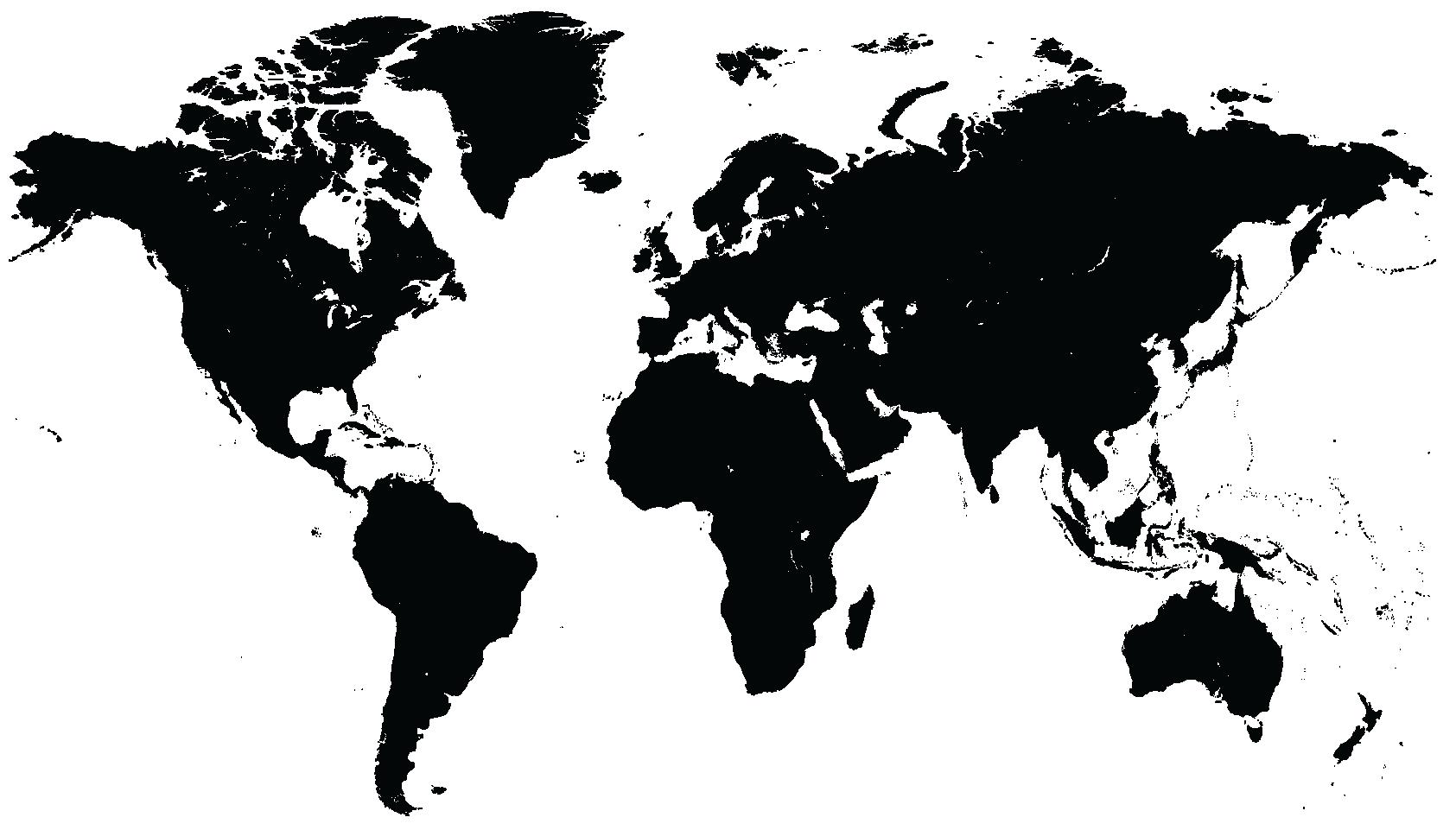
Figure 3: Number of stories per region:
More categories have been added over the years as company success stories adapt to changing market conditions. For this 10th edition, companies will compete across 15 categories, showcasing successful case studies of how they are surviving and thriving in this environment. ‘Service & Solutions’ and ‘Innovation’ were the most popular categories this year (see Comparison Table). The supply chain is willing to serve clients the best way they can, being creative and highly innovative to provide the right solutions to keep the energy sector flowing and moving forward.
This year features a dedicated section on data centres and AI. We heard what
companies are doing today and what they are aiming for in the future. Digital and AI stories grew from 9% last year to 17% this year. This trend shows that companies are starting to advance on this strategy and integrating new technologies into their business. Furthermore, we are seeing that the use of AI is remarkably balanced across all global regions.
A defining feature of the Survive and Thrive report is our interview process. Our research is both qualitative and quantitative, interviews conducted directly with the EIC members by the EIC senior team. We do not simply ask for a marketing summary; we don’t expect companies to fill in a questionnaire on a
website. Instead, we ask leaders to tell us their success story in person, including the difficulties and stresses in order to then deliver the eventual success.
This approach allows us to learn firsthand what businesses are really doing to survive and/or thrive, not just what the press release says. We interviewed so many companies around the world from across all energy sectors and representing all types of companies in a diverse energy supply chain, we are uniquely able to analyse which strategies are most successful, most popular and are changing year-on-year. Conversely, we also learn the growth strategies which are least used and are therefore the hardest.
Celebrating Success Through WESCA
As the report evolved, we saw that the stories told were so good they should be winning awards. In 2017, the common story categories officially became award categories. Today, when a company shares its story, it is automatically entered into the World Energy Supply Chain Awards (WESCA) at no cost. We are incredibly proud to confirm that WESCA is now the world’s largest energy awards programme in terms of the quantity of companies entered. To mark our 10th
anniversary, we are excited to expand our awards ceremonies beyond our normal five cities to include Berlin and Milan for the first time.
Participating in Survive and Thrive offers EIC members a massive promotional benefit that lasts for years. It builds incredible loyalty, with 97% of participating companies remaining in membership for at least the next three years. We are so glad we started this journey 10 years ago, and we look forward to the next decade of celebrating the global supply chain.



04 Comparison TABLE
* not including People & Competency

05 Paranoia in the good times
In 2026, the global energy supply chain is facing a peculiar paradox. While companies are enjoying record financial years and strong pipelines of work, a deep sense of ‘paranoia in the good times’ is keeping leadership awake. This anxiety is not without merit. Amidst geopolitical conflicts and shifting regulations, this unease is actively driving strategic decisions as businesses spread their risk.
The good times are undeniable, with many supply chain companies reporting consecutive years of record revenues and double-digit growth rates. This year, the Survive and Thrive survey showed that more than 90% of companies are expecting a record year in 2026, after many of them having a record year in 2025. However, this financial prosperity is playing out against a storm of external pressures that has effectively become the new normal. An ongoing war in Europe, high domestic energy costs, escalating conflicts in the Middle East and evolving complexities of the net zero transition have created a highly volatile landscape where leaders never truly know what tomorrow brings. Consequently, it is becoming exceptionally difficult to confidently plan long-term capital investments or clearly define future operations. Even fundamental tasks, such as preparing recruitment drives and securing the talent needed for the years ahead, are fraught with hesitation when the horizon remains so unpredictable.
To navigate this uncertainty, the supply chain is embracing a dual mandate: balancing business transformation with operational resilience. According to the latest Survive and Thrive survey, the proportion of companies telling Transformation stories has climbed, reaching 24% in 2026. Simultaneously, the immediate focus on Resilience has surged, more than doubling from 8% last year to 18%, while core Optimisation strategies have also increased to 19% (see Comparison Table). Driven by
external conflicts, companies are actively using this period of financial stability to overhaul their operations, integrate artificial intelligence and reshape their services, ensuring they are fully prepared to weather future disruptions.
It makes no sense to repair a ship during a storm. Across the supply chain, businesses are focusing on solving complex problems rather than competing solely on price. This transformation is underpinned by optimisation, with leadership teams embedding cost discipline, bringing outsourced manufacturing back in-house, and deploying software at the earliest project phases to eliminate rework. These are just examples of the strategies companies have been using to prepare their business for this uncertain political climate. Rather than simply waiting out market turbulence, the supply chain is proactively adapting. As one industry executive advised: ‘In challenging times, don’t just manage the crisis — transform the business, stay focused and adaptable, and communicate clearly while keeping teams aligned and engaged.’
To alleviate this paranoia and confidently make capital infrastructure investments, the industry requires governments to provide policy consistency and long-term clarity that transcends short-term political cycles. Leaders are unified in their call for regulatory environments that move beyond electoral timeframes, allowing businesses to plan with certainty rather than reacting to constant policy shifts. This involves expediting infrastructure development to unlock capacity, reducing bureaucratic and creating integrated energy strategies that support both energy security and the transition. Furthermore, the supply chain is urging policymakers to incentive technology deployment, providing projectbacked financing for SMEs, and ensuring fiscal frameworks remain stable enough to attract long-term capital and protect domestic industrial capabilities.


Imagine a dog race where one competitor consistently pulls ahead, race after race, even as the crowd increasingly cheers for the newcomers. For the global energy supply chain, oil and gas is that undisputed frontrunner. The traditional hydrocarbon sector continues to outpace alternative markets, despite enduring decades of heavy public and political backlash. This criticism is tied to the industry’s historical contribution to global greenhouse gas emissions. Furthermore, even as the sector actively integrates advanced technologies to drastically clean up its operations, these innovations such as carbon capture, modular engineering, or methane mitigation are seen as an attempt to prolong the fossil fuel era. However, supply chain companies must operate within commercial realities. They are certainly not ignoring the transition, but when it comes to protecting margins and
keeping factories open, they are placing their capital where the commercial finish line is guaranteed.
This commercial dominance is not an isolated trend limited to a handful of corporations. The distribution of market shares heavily favours oil and gas universally, looking very similar across every geographic region worldwide. The latest data starkly illustrates this reality. While policymakers advocate for a rapid shift away from fossil fuels, 94% of supply chain companies remain active in oil and gas in 2026. This sector alone commands 60% of average supply chain revenues globally. By contrast, the proportion of companies venturing into renewables has dropped over the past year, falling from 59% to 48%. Interestingly, while the remaining players in the green space have seen their average revenue share increase, the broader supply chain is

consolidating its efforts into the security of traditional contracts (see Apendix: Overview of Companies).
The permanent winner always attracts criticism, but trying to mandate a premature finish line carries severe consequences. Forcing the industry to pivot too quickly ignores the reality of at least a 10-year gap between the decline of heritage oil and gas roles and the rise of equivalent clean energy jobs. Companies are actively warning governments that shutting down domestic oil and gas prematurely directly harms energy security and stifles the existing supply chain. As one of our interviewees noted, ‘Support the energy transition but be pragmatic about oil and gas.’
Finally, the EIC FID data continues to confirm that the sector with the highest level of FID is oil and gas.

Europe’s energy security: the compounding crises forcing a structural reset 07
Europe increasingly finds itself being pulled in different directions.
While the global energy supply chain enjoys rising exports and growing confidence, European businesses face a more complex reality. Competitiveness, energy security and decarbonisation are pulling the region in different directions, exposing a growing vulnerability.
Energy security is the main concern for the region today. The war in Ukraine and subsequent instability in the Middle East exposed Europe’s dependence on imported energy. These events proved how rapidly geopolitical shocks can disrupt supply chains, inflate costs and stall investment decisions, turning an energy transition challenge into a severe security crisis.

Yet, this vulnerability has shown that security and resilience, while vital for managing geopolitical risks and facilitating trade, are tools. True independence and long-term economic stability can only be achieved by securing energy sovereignty first. Sovereignty means having the domestic capacity to protect against worst-case scenarios, ensuring that international reliance cannot dictate the region’s economic and industrial fate.
Alongside security, Europe faces intertwined competitiveness and decarbonisation challenges. Despite average export revenues hitting a record 56%, companies struggle against regions (see Figure 2).
With lower costs and stronger investment momentum. Frustrated by windfall taxes and high logistics costs, the supply chain
is urging policymakers to protect local manufacturing from low-cost dumping, with many businesses now looking beyond Europe for future growth. At the same time, commercial reality is challenging the region’s ambitious climate objectives. The proportion of businesses identifying the energy transition as a primary growth driver dropped from 46% in 2025 to 38% in 2026. Instead, European investment in hydrocarbons sharply increased from 18% to 43%, while clean energy capital remained flat, clearly demonstrating that decarbonisation cannot be pursued in isolation from market competitiveness and security (see Table 1).
As one interviewee observed, “certainty remains critical for long-term investment.” How Europe navigates these conflicting pressures will determine whether it remains a leading destination for energy capital in the years ahead.
08 Lessons LEARNED
Lessons for C-Level
To thrive in today’s volatile energy sector, CEOs must abandon the race to the bottom. Competing price alone is a losing strategy; the future belongs to organisations that move up the value chain by delivering customised, lifecycle-value solutions. This strategic shift requires engaging with clients at the earliest preFEED stages to proactively shape projects, rather than bidding on rigid scopes.
However, true business transformation is fundamentally human. The most resounding message from industry leaders is the need to build a “people-first” culture. Technology is an enabler; empowered, motivated teams are the actual drivers of progress. This workforce must be guided by a clear strategy that translates from the boardroom down to the frontline. Without disciplined execution and verifiable governance, vision is just a headline.
Lessons for young talents
The energy industry is changing rapidly, but the main advice for young talent is to stay curious. Across the Survive and Thrive interviews, curiosity emerged as the most common piece of advice, closely followed by continuous learning and adaptability. As AI, digitalisation and the energy transition reshape the sector, companies value people who are willing to ask questions, embrace change and continuously develop new skills.
Learning, however, extends far beyond the classroom. Young professionals are encouraged to step outside their comfort zones, take ownership early and seek hands-on experience through projects, site visits and client engagement. The strongest careers are built by solving real problems, not waiting for the perfect opportunity.
Resilience now demands ecosystemwide collaboration and deliberate diversification. Silos must be dismantled in favour of supply chain partnerships, open data sharing, and risk distribution. By diversifying across regions and sectors, companies can protect their revenues against geopolitical shocks.
Finally, as the industry rushes toward AI and digital transformation, leaders must first pause to establish robust data foundations. Concurrently, safety, quality, and risk governance must be elevated from operational cost centers to board-level strategic assets. Ultimately, sustained market leadership hinges on combining technical excellence with commitment to understanding and solving your customers’ most complex challenges.
1. “Invest in your people”
2. “Stop competing on price alone”
3. “Collaborate across the supply chain”
4. “Communicate a clear strategy”
5. “Engage early” (Shape the game)
6. “Build resilience through diversification”
7. “Embrace AI and data, but start with the foundations”
8. “Stay close to the customer”
9. “Prioritize execution and discipline”
10. “Elevate safety and quality to board level”

The interviewee leaders also caution against becoming “tech lazy”. AI will become an essential tool, but it should accelerate learning rather than replace critical thinking, sound engineering principles or commercial judgement. Mastering the fundamentals remains the strongest foundation for long-term success.
Finally, leaders remind young professionals that successful careers take time. Building trusted relationships, learning from experienced mentors and developing resilience through setbacks consistently emerged as hallmarks of long-term success. Those who remain curious, adaptable and willing to keep learning will be best positioned to grow alongside an industry that never stands still.
1. “Stay curious” / “Be curious”
2. “Keep learning” / “Continuous learning”
3. “Stay adaptable” / “Embrace change”
4. “Take initiative” / “Take ownership”
5. “Step out of your comfort zone” / “Take risks”
6. “Build relationships” / “Find a mentor”
7. “Gain real-world experience” / “Practical skills”
8. “Be resilient”
9. “Master the fundamentals”
10. “Be patient” / “Success takes time”
Lessons for policymakers
The findings of EIC’s 10th Survive and Thrive report show that companies need policies reflecting actual project delivery, while helping them invest, retain capability and win work without adding unnecessary cost, delay or uncertainty.
A consistent message from the senior business leaders interviewed is the need for greater policy stability. Energy projects, manufacturing investment and workforce planning all extend beyond electoral cycles. Yet companies are often expected to make long-term commitments while policies and regulations change unexpectedly and sometimes in rapid succession. Governments must set clearer directions, make decisions with a proper understanding of commercial conditions and ensure practical delivery. This is why some policy commitments require greater continuity across terms of office and changes of government.
A first step is a credible pipeline of investable projects. Access to finance must improve, while permitting, grid connections and approval processes must accelerate. The report’s project data show that several transition sectors have substantial development pipelines, but a small proportion of projects have reached final investment decision. It shows that ambition and even pre-frontend engineering and design (pre-FEED) and front-end engineering and design (FEED) studies are not enough if projects do not move into construction and create work for the supply chain. When the supply chain does not have work coming
UK & Ireland
• “Provide long-term policy stability”
• “Support domestic oil and gas”
• “Invest in skills and the workforce”
their way, they are left with three options: move to new markets, draining capability from their home market; diversify into new sectors; or, at worst, close down.
Even when projects manage to pull all the commercial components together, infrastructure remains a bottleneck. Companies need ports with the right equipment and capacity, grids capable of absorbing generated power or supplying sufficient electricity, pipelines, digital networks and logistics systems. When businesses are already calling for infrastructure investment, bottlenecks are usually no longer a future risk. They are affecting delivery now. Delaying infrastructure action increases costs and makes projects harder to execute.
Governments must take a practical energy mix. The growth of cleaner technologies should not depend on phasing out domestic oil and gas activity before replacement capacity is ready. Oil and gas continue to support energy security, employment, public revenue and much of the commercial and technical base on which the wider supply chain depends. The transition pace must reflect what can be financed, built and operated. These commercial and practical constraints shouldn’t be disregarded simply to meet targets set under different market conditions.
Also, domestic capability should remain a priority. Support for local engineering, manufacturing and specialist skills can strengthen industrial capacity without closing markets or weakening international competitiveness. At the same time,

Europe
• “Reduce bureaucracy and harmonize regulation”
• “Provide long-term policy stability”
• “Combat de-industrialization and support local champions”
APAC
• “Propel local businesses globally”
• “Expedite clean energy infrastructure”
• “Streamline approvals for economic growth”
Middle East & Africa
• “Drive export-led industrial growth”
• “Protect in-country value and talent”
• “Fund practical technology deployment”
governments should be prepared to respond where low-cost competition is demonstrably unfair and threatens strategically important parts of the supply chain.
Stronger domestic capability must be matched by better export support. The report shows that companies are increasing overseas revenues, but much of that growth is coming from markets where they have long been established. Entering a new country remains difficult and expensive, especially for smaller firms. Better export finance, fewer trade barriers and stronger support for market intelligence and building local relationships would make that expansion more achievable.
Small and medium-sized companies also need funding that reflects the way energy projects are delivered. General business finance is often a poor fit for long project cycles, delayed contract awards and the working-capital demands of major projects. More accessible project-backed finance and export support would help capable firms invest and secure larger contracts.
These findings support the EIC’s Five Golden Rules: a consistent pipeline of bankable projects, access to funding, a role for all technologies, stable policy and regulation, and a sustained drive to export. These rules are based on our project data and extensive engagement with supply-chain companies. Countries that provide those conditions will be better placed to retain supply-chain capability, attract investment and turn energy policy into completed projects.
North America
• “Prioritize sovereign supply chains”
• “Grow the domestic engineering workforce”
• “Accelerate digital infrastructure regulation”
South America
• “Accelerate fair tax reform”
• “Modernize labour and regulatory frameworks”
• “Invest in infrastructure and education”



09 Strategies AT A GLANCE
Collaboration
Working with partners to bring your strategy to life.
Culture
Where business success is largely due to the beliefs and behaviours that determine how employees and management interact internally and with stakeholders.
Digital & AI
The application of digital, data & AI systems, analytics and technology to innovate and optimise.
Diversification
Expanding existing capabilities into other sectors, such as from oil and gas to offshore wind.
Energy Transition
The next wave of technologies, beyond mature renewables, that will deliver the 2050 net zero carbon goals of the UK.
Environmental Sustainability & Social Impact
Taking responsibility, as part of your business strategy, to conserve natural resources and protect global ecosystems and communities.
Export
The development of new business growth by focusing on exporting and internationalisation in new countries/ regions.
Innovation
Enhanced products, services and strategies to meet specific client needs and build differentiation.
Optimisation
The focus on improving internal decision making, costs, processes, agility, structures and enhancing competitiveness.
People & Competency
The development, recruitment, training, retention and competency of skilled people, regarded as the key enabler of company growth, and also the biggest challenge to address.
Resilience
The capacity to adapt and recover quickly from challenging market pressures and events.
Scale Up
The increase of a company’s revenues and/or size, in a marked, rapid and continuous way, above normal growth rates.
Service & Solutions
The focus on adding value to customers in their OPEX and O&M value chain, and the specific broadening of scope of work to provide a one-stop-shop or customer centric approach.
Technology
Refers to the specific development and proven use of new or enhanced engineered technology to solve client’s problems.
Transformation
Company-wide step change actions, taken as part of a strategic approach to reposition.
10 Success STORIES



AAL is a breakbulk, project heavy lift, steel and dry bulk commodity carrier that has delivered competitive shipping solutions for the world’s most dynamic industry sectors since 1995. It is one of the multipurpose shipping sector’s top five carriers by total fleet DWT and has built a reputation for dependability and going the extra mile for its customers. AAL Shipping is a multiple award-winning premium carrier.
ABL Group is a leading global independent consultancy delivering energy, marine, engineering and digital solutions to drive safety and sustainability in energy and oceans.
AVC is a specialist technical advisory and AI-enabled solutions company serving the energy, industrial and public sectors. It delivers asset integrity, risk management, energy efficiency and digital transformation services, with advanced AI tools that optimise asset performance and decision support.
AIG Holdings is a global Engineering, Procurement, Maintenance, Construction and Modification (EPMCM) contractor with a strong focus on the energy, marine and utilities sectors. We deliver safe, highquality asset life extension, digital twin integration, retrofitting and brownfield modification solutions for complex offshore and industrial assets
AIS is a global leader in advanced material science technology, specialising in the design and delivery of high-performance solutions for the protection of critical infrastructure. By leveraging cutting-edge engineering and materials innovation, the company safeguards assets across extreme environments, ensuring extended lifecycles.

Alpha Subsea is a Brazilian subsea robotics and engineering company specialising in electric ROV systems, driverless inspection solutions and subsea integrity services for offshore assets. Its work combines in-house R&D, field operations, bespoke tooling and data-driven inspection workflows to reduce offshore execution time, improve safety and support assetintegrity decision-making.

Ampelmann is a leading global provider of safe and efficient access solutions for the offshore energy sector. Operating worldwide, the company uses a full-service model, offering trained operators, 24/7 support and digital management tools to maximise efficiency across the oil and gas, wind and floating wind markets.

Apave is an international group with over 150 years of experience in technical, human, environmental and digital risk management. Apave has an international presence in nearly 60 countries, providing inspection, certification, technical training, testing and measurement, and consulting services to private companies and public authorities.
Arup is a global consultancy shaping the future of the built environment through extensive technical and advisory expertise. With nearly 300 professionals in the Philippines, the company delivers integrated, multidisciplinary engineering and financial solutions to support the transition toward reliable, efficient and sustainable energy systems.
ASCO is a leading full-service logistics, materials and operations management specialist. Combining highlevel strategy with hands-on delivery, the company optimises operations across critical industries. By fully managing materials, resources and processes endto-end, ASCO ensures complex, high-value capital projects progress without delay.
Asia Waterjet Equipment (AWE) designs and supplies high-pressure hydrojetting systems for industrial cleaning and maintenance. Serving energy and industrial sectors across MENA, Caspian and Southeast Asia, the company delivers engineered solutions, local assembly and specialist services backed by strong regional expertise.

Asset55 is a software engineering technology company with an integrated team of highly experienced industry engineers and leading software developers driving real and positive change within the energy sector. Aligned across two divisions, Operations and Projects, Asset55 enables change through a portfolio of execution-specific software, improving safety and productivity to clients.

Atlantic is a Brazil-based consultancy specialising in tax advisory, global mobility and software development services. Combining technical expertise with a people-first culture, the company supports expatriate professionals and businesses through customised tax, regulatory and HR-focused solutions while prioritising employee wellbeing and long-term sustainability.
ATPI is the world’s leading specialist travel management company operating in over 170 countries around the world. ATPI is a critical partner to the energy sector, managing the movements of people to rigs, assets, business meetings globally by air, land and sea.
Since its founding in 1975, Beamex has been a trusted partner for calibration excellence, helping its customers to continuously improve efficiency, ensure compliance, and increase safety in their operations. The company is a global leader in the provision of a seamless and digital calibration experience for improving quality and efficiency, with over 15,000 companies across more than 90 countries using its solutions.

Bureau Veritas is a world leader in testing, inspection and certification. Its mission is at the heart of key challenges: quality, health and safety, environmental protection and social responsibility. Through its wide range of expertise, impartiality and independence, the company foster confidence between companies, public authorities and clients.
Cargostore Worldwide is a leading supplier of DNV 2.7-1 certified offshore containers and ISO shipping containers for offshore and onshore projects worldwide. The company provides specialist transport, storage and logistics equipment supporting offshore wind, oil & gas, renewable energy, catering, mining, defence and remote-site operations.

CECO Environmental is a global provider of industrial air quality and emissions control solutions. Founded in 1966 and headquartered in Addison, Texas, the company delivers engineered systems and integrated technologies that help customers improve environmental performance, operational efficiency and regulatory compliance across industrial and energy markets.
Established in 1994, Cekap Technical Services is a Malaysian engineering and technology company providing integrated technical, digital and workforce solutions to the energy, petrochemical, power, utilities and marine sectors.

Cokebusters is an international business specialising in the cleaning and assurance of tubes, pipes and pipelines. With over 20 years of experience, the company delivers mechanical cleaning, decoking and patented intelligent pigging inspection services globally. Uniquely independent, Cokebusters designs, builds and maintains all its own equipment for the energy sector.
Colson Valves trading as Colson X-Cel Ltd is a UK-based valve manufacturer established in 1991, specialising in high-integrity solutions for critical applications. The company designs, machines, assembles and tests all products in-house, delivering reliable, innovative valve technology to major global operators across a wide range of demanding industrial sectors.
Commerciale Tubi Acciaio is an international steel materials distributor serving the energy sector. Formed through the integration of four acquired companies, the group supplies pipes, fittings and flanges in multiple steel grades to projects worldwide, supporting oil and gas, power, hydrogen and carbon capture industries across 11 countries.
Connectwell is an organisation with over four decades of experience manufacturing high-quality electromechanical and electronic industrial components. Operating in more than 80 countries with over 15 international approvals, its ISO-certified systems deliver reliable electrical connections across various global industries.
Based in Dubai, Crescent Engineering provides process design, detail engineering, manufacturing and supply of skid-mounted modular solutions for water and gas processing, catering to energy, industrial and municipal sectors. Established in 2015, the company specialises in customised processing plants and packages, supported by expertise in engineering, core process design and project management for clients worldwide.

Crowcon is a global manufacturer of fixed and portable gas detectors and air quality monitors. Part of the FTSE 100 Halma group, the company drives innovation through a problem-powered approach to safety. Operating from UK and China facilities, Crowcon protects people and operations through worldwide specialist partnerships.
Cutting & Wear is a leading producer of hardfacing consumables and downhole drilling tools. The company supplies the global oil and gas drilling industry with hardfacing consumables, hardfacing systems and training, as well as the design, manufacture and testing of downhole drilling tools.


DAPIN is an international engineering execution partner headquartered in Madrid, deploying senior technical bandwidth and workshare capacity for major energy, petrochemical, defence and infrastructure projects worldwide. Founded in Venezuela in 1991, the company serves Tier-1 EPC contractors and operators across Europe and the Middle East.
Daya Singa is a Malaysia-based provider of safety services and engineered solutions for the energy industry. Alongside its legacy safety business, the company has expanded into engineered solutions, analytics and control, and training to support long-term resilience and operational value.

As a multidisciplinary firm, DDG brings together eleven integrated service lines: civil engineering, program management, architecture, landscape architecture, coastal engineering, water resources, environmental services, surveying, structural engineering, funding advisory, and transportation. This broad skillset allows us to support our clients with a seamless, holistic approach. DDG’s work is grounded in their values: Respect, Integrity, Client Satisfaction, and Excellence. They approach each project with a true partnership mindset and are committed to provided client’s with quality services.

DEEP Manufacturing is a UK-based advanced manufacturing company specializing in the rapid production of large-scale, safety-critical metal components using Wire Arc Additive Manufacturing (WAAM). The company now provides its cutting-edge metal 3D-printing capabilities to the broader maritime, energy, aerospace, and defense sectors. By operating one of the world’s largest concentrations of WAAM systems, they offer a faster, less wasteful alternative to traditional metal forging and casting.

Deepsea Technologies UK specialises in designing, building and installing pressure-containing equipment and remotely operated vehicle (ROV) tooling tailored for the harshest offshore environments. Deepsea Technologies UK forms part of a global group which delivers comprehensive package subsea solutions, including controls distribution, production equipment, and full subsea structures.


deugro is a specialist project freight forwarder with over a century of experience handling complex, difficult-totransport cargo and turn-key projects for the energy sector. Today, the company delivers highly bespoke logistics solutions and is rapidly expanding across the global renewables market.
Diverse Resourcing LLC is a specialist workforce solutions provider across energy and maritime sectors, supporting global projects within engineering and infrastructure. Headquartered in the UAE, the business delivers high-impact talent solutions, project resourcing, and compliance support to multinational clients operating in complex, high-growth markets.
DLC Group provides complete solutions for high- and medium-speed engines, turbochargers, nitrogen generation, compressed air, diesel generators, battery storage systems and fuel monitoring systems. With dedicated branches, we deliver customised onshore and offshore services to the energy, marine and oil and gas sectors, acting as authorised Distributors for renowned international equipment manufacturers.
Dräger Safety UK is an international leader in medical and safety technology. Since 1889, Dräger products have protected, preserved and saved lives.

The Engineering Construction Industry Training Board (ECITB) is the statutory skills organisation for the engineering construction industry (ECI) in Great Britain. A non-departmental public body sponsored by the Department for Work and Pensions (DWP), the ECITB works with employers and governments to attract, develop and qualify the engineering construction workforce in a wide range of craft, technical and professional disciplines.
Endress+Hauser Muscat SPC is the Omani subsidiary of Endress+Hauser, specialising in industrial process measurement and automation solutions. Established in 2021, the business was created to strengthen the group’s direct presence in Oman through local leadership, service capabilities, and customer-centric solutions across multiple industrial sectors.

EPIC Berhad is a Terengganu government-linked company providing integrated oil and gas solutions across upstream and downstream value chains. Operating from a strategically located hub on the South China Sea, the group offers offshore supply base services, port management, marine engineering, maintenance solutions and renewable energy technologies.
EquipSea is a Brazilian manufacturer of welded, machined, and coated parts as well as turnkey tested sets that include seals, and hydraulic and electrical components. EquipSea has expertise in the energy and oil and gas sectors but is not limited to them
ERM is the world’s largest pure-play sustainability consultancy, helping clients integrate sustainability into strategy, operations and capital projects, it combines advisory and technical delivery through its AdviseEnable-Deliver model, supporting decarbonisation, ESG performance and resilient project development from concept to long-term operations.


ERSG is a global staffing and recruitment consultancy specialising in the energy sector, delivering workforce solutions across renewables, power, infrastructure and engineering markets.
Exact Analytical Sdn Bhd is a Malaysian oil and energy company specialising in analytical analyser systems, continuous emission monitoring and fire and gas detection. Moving beyond standard trading to provide complete solutions, the firm offers full-scope supply, installation, commissioning and calibration services to optimise industrial efficiency.
Established in 1986, Fibron has become widely recognised as a leading supplier of bespoke umbilicals, cables and terminations to some of the most complex and challenging projects across the globe. Fibron has broad experience across many different sectors and a particular strength in the development of prototypes.
Fifth Ring is a B2B marketing agency with deep and wide energy expertise. For over 30 years, it has helped major operators and service companies navigate the complexities of the market with precision. With offices in Europe, Asia and America, Fifth Ring delivers scalable, consistent results worldwide.

Forsyths is a family-owned fabrication and engineering company delivering distillation equipment, modular process systems and industrial solutions for oil and gas and energy sectors, expanding into offshore wind and hydrogen.
Franco Tosi Meccanica SpA is an Italian engineering company with roots dating back to 1881, specialising in rotating equipment for power generation and process industries. The company delivers high-performance solutions and lifecycle support to global energy, oil & gas and industrial clients.

GAC Philippines provides world-class integrated shipping, logistics and marine services. With 44 operating teams across 7,100+ islands, the company delivers critical, end-toend logistics support for the energy, pharmaceutical, fastmoving consumer goods (FMCG) and industrial sectors while currently driving a highly successful operational transformation and scale-up strategy.
Genesis is a market-leading advisory company focused on providing high-value technical and engineering services for the energy industry. By cultivating extraordinary talent across more than 15 global locations, it employs new and dynamic thinking using digital tools, embracing change and constantly seeking new opportunities to make a real and lasting impact.
Global Cargo is a Miami-based freight forwarding and logistics company specialising in customised international transportation, project cargo, and warehousing solutions. With strong operational expertise across the US and Latin America, the company supports complex and time-sensitive shipments through a highly personalised approach.
Gutor is the leading international Solutions and Services provider of uninterruptible power supply systems for industrial applications. Established in 1946, and leveraging 80 years of experience, we deliver reliable, end-to-end secure power solutions, custom-tailored to meet each customer-specific need, and designed to support business continuity in harsh industrial environments.
Hausthene is a 100% Brazilian company with over 40 years of experience. Hausthene provides the national and international markets, including the oil and gas sector, with high-quality parts.
Hugh Fraser International (HFI) is a Dubaiheadquartered legal and consulting firm supporting international energy companies across the Middle East and Eastern Mediterranean. Founded in 2017, the company specialises in market entry, cross-border ventures, restructuring and energy transition advisory, combining regional expertise with integrated legal and commercial support.
High Supply Energy has specialised in renting equipment for explosive atmospheres and confined spaces, alongside torquing and hydro-blasting services. Driven by a commitment to quality, excellence and innovation, the company ensures agility, compliance and personalised support to drive client success.
The HIMA Group is a global independent provider of safety-related automation solutions for the process and rail industries that protects people, assets, and the environment from harm. Founded in 1908, the family-owned company is headquartered in Brühl, near Mannheim, (Germany). The HIMA Group employs approx 1100 employees in 22 group companies worldwide.

HKA is a leading global consultancy in dispute resolution, expert witness services, litigation support and risk mitigation. As trusted independent experts, consultants, and advisors, the firm is a leading source of expertise to help clients manage compliance, risk, disputes, and uncertainty on complex, contracts, investigations and challenging projects.
IEP Process Solutions WLL is a Qatar-based analyser system integration company specialising in engineering, fabrication, integration, installation and commissioning services for gas and liquid measurement systems. Through its in-country facility, IEP delivers analyser, metering and monitoring solutions for LNG, petrochemical, pipeline, fertiliser, power and industrial applications.

IK Trax is a global technology company specialising in pipeline monitoring and tracking solutions for the energy sector. It designs and manufactures advanced equipment, including pig tracking and data logging systems, supporting safe, efficient and reliable pipeline operations across global oil and gas markets
iNet is a premier provider of advanced, managed connectivity solutions purpose-built for industrial, remote, and offshore environments. Its core mission is to deliver resilient, intelligent, and high-performance networks where conventional infrastructure falls short.
Intertek Inform delivers standards and regulatory intelligence through an AI-enabled, API-first platform that integrates compliance directly into customer workflows. With access to over 1.6 million global standards, it enables faster decision-making and risk management, supported by Intertek’s global assurance, testing, inspection and certification network.
iPS Powerful People is an international recruitment and payroll company operating in over 15 countries. Drawing on a database of 50,000 candidates, the company connects skilled professionals with projects across the maritime, renewables, offshore, tunnelling, civil and oil and gas sectors, offering tailored crossborder employment and staffing solutions.

ISIS Fluid Control supplies valves, actuators and fluid control solutions for the oil and gas sector. Through technical expertise, customer collaboration and responsive service, the company has expanded into new export markets and subsea applications.
JBP is a UK-based supplier of piping and valve solutions, providing pipes, fittings, flanges, valves and structural products to energy and industrial sectors worldwide. Part of the International Bianco Group, it combines extensive stockholding with deep technical expertise to support projects across more than 50 countries.
Jo Bird & Co Ltd designs and manufactures specialist cabinets to store and protect fire-safety and lifesaving equipment in harsh industrial and offshore environments. With more than 40 years of experience, the company combines technical reliability with a growing focus on sustainability, reducing emissions while supporting global sectors including offshore wind and energy.

Johnson Controls is a global leader in smart, healthy and sustainable facilities. The company transforms environments across industries such as healthcare, education, marine & navy and manufacturing. Through its OpenBlue digital platform, it provides the world’s largest portfolio of building technology, software and service solutions.
Kent designs, builds and maintains the assets that power the world for today and make it future-ready for tomorrow. With 100 years of know-how, it works across the asset lifecycle from consulting to design, build, commissioning and start-up through to maintenance and decommissioning.
Kinectrics is an integrated lifecycle management services company providing testing, inspection, certification and engineering consulting for the electric power generation, transmission, and distribution markets worldwide.
® KOIL Energy is a leading energy services company offering subsea equipment and support services to the world’s energy and offshore industries. The company provides innovative solutions to complex customer challenges presented between energy sources and the production facility.
Koso Parcol is global leader in severe service control valves and steam desuperheating systems, designing and producing high-performance equipment for critical applications in power generation, nuclear, oil and gas, chemical, and process industries worldwide, with full lifecycle support from engineering to aftermarket services.



With over a hundred years of experience, the KROHNE Group is today a global manufacturer of process instrumentation, measurement solutions and services. As a full-service supplier, it offers all major technologies for flow rate, level, pressure, temperature and process analytics and can deal with projects of any size thanks to our local presence in over 100 countries.
L. Quintella Advogados is a Brazilian law firm specialising in labour law and immigration services. The firm advises domestic and international clients on employment regulations, expatriate management and international contracts, providing tailored legal solutions to support companies operating in Brazil.
Lever Srl specialises in designing and manufacturing industrial uninterruptible power supply (UPS) systems, rectifiers, battery chargers and inverters. Generating approximately £12.9m in revenue, the company provides bespoke, digital power solutions for the oil and gas, utilities and industrial sectors.
Levidian is a British advanced materials company that converts methane into high-value graphene and hydrogen using its patented LOOP technology. By transforming carbon into performance materials, it enables industrial partners to improve durability, efficiency and sustainability while strengthening commercial outcomes.
LR is a leading provider of classification and compliance services to the marine and offshore industries. From early-stage concept and design through construction, commissioning, operations, life extension and decommissioning, LR provides rigorous advisory, assurance, certification, and risk-management services that ensure assets are safe, reliable, compliant, and optimised for long-term value.
LRQA is the leading global risk management partner, helping clients turn risk into opportunity through connected risk management solutions.
Mapei is a global manufacturer of chemical products for construction and infrastructure. Operating through 98 subsidiaries across 59 countries, the company is committed to innovation and sustainable building. It supplies high-quality solutions for major architectural works and features a dedicated wind division providing specialist grouting and waterproofing systems.


For over 40 years, Masterwatt has been committed to the design, development and manufacturing of industrial electric heating solutions. Thanks to its deep expertise and vertically integrated production process, the company delivers fully customised systems designed around specific process requirements, ensuring the highest standards of quality and backed by international certifications.
Mint Selection is an insight-led energy transition talent and advisory partner, supporting clean energy businesses across energy storage, renewables, hydrogen, nuclear and transmission. Through a consultancy-led and relationship-driven approach, the company helps clients secure talent, scale operations and support long-term growth
Monaco Engineering Solutions (MES) is an international consultancy serving high hazard and mission critical industries. Founded in 2006, MES is headquartered in Leatherhead, UK, and operates 12 client service centres across Far East Asia, Middle East, Central Asia, Europe and the Americas.

N2 Solutions is a U.S.-based nitrogen services provider supporting midstream, downstream and LNG operators. Founded in 2016, the company specialises in project management, logistics and industrial services, delivering safe, efficient and data-driven solutions across complex operations, with a strong focus on operational transparency and client performance.



Navitrans is a global logistics group supporting the energy and industrial sectors, with a strong focus on Africa. Operating across +25 countries, the company delivers integrated logistics solutions tailored to complex, infrastructure-constrained environments.
NexEra GP is a Dubai-based digital twin and enhanced reality company focused on practical, fast-deployment solutions for industrial facilities across the energy and utilities sectors.
NEXT COOLING is a global leader in cooling technologies, with offices in Switzerland, South Africa, India, Australia and Italy, delivering cooling towers, air-cooled condensers, and aftermarket services worldwide.
Oceaneering is a global technology company delivering engineered services and products and robotic solutions to the offshore energy, defense, aerospace, and manufacturing industries.
OGC Energy is a UK-based consultancy specialising in materials engineering, corrosion management, and asset integrity for the energy sector. The company supports complex projects across oil and gas and emerging areas such as carbon capture and hydrogen, helping clients maintain safe, reliable, and efficient operations.
Øglænd System, part of the Hilti Group, is a global provider of multidiscipline support systems, cable ladders and trays. With 40 years of offshore experience, the company delivers cost-efficient, durable solutions across the oil and gas, shipbuilding and renewables sectors.
OMB Valves makes engineered valves for oil & gas, wider energy sector and water too.
Orion Group was founded in 1987 and has grown to become one of the largest, independent, and family-owned, international recruitment companies. We have a network of 200 employees working from 24 offices, delivering a range of services – Completions & Commissioning, Global Workforce Solutions, Materials Management, Recruitment Outsourcing Services, Retained Search and Talent Acquisition – across 68 countries.
ORION Valves was born from a simple but ambitious idea: build valves that others could not—larger, stronger, faster, and safer. Starting from Italy in 1954, ORION grew by focusing on engineering excellence, extreme-duty applications, and uncompromising quality for the energy markets.

Orion develops robotic NDT inspection solutions for challenging pipelines and structures. Backed by expert engineering and data analysis teams, the company delivers highly customised services across the oil and gas, petrochemical, mining, maritime, nuclear and renewable energy sectors.

Parker Hannifin is a global leader in motion and control technologies. Operating across 43 countries, the company enables engineering breakthroughs by helping customers solve complex challenges through deep expertise in electromechanical systems, filtration, fluid and gas handling, hydraulics, pneumatics and process control.
Penta Global is an established international EPC contractor with two decades of rich experience. It strives to deliver innovative and sustainable solutions to the ever-evolving energy sector across the Middle East, Southeast Asia and beyond.
Pinsent Masons is a purpose-led global law firm featuring a highly agile Middle East Energy practice. Operating across the GCC, it combines deep legal expertise with innovative, technology-driven solutions, including its Vario alternative legal services hub to help clients navigate complex regulatory environments and volatile energy markets.
Posidonia is a Brazilian Shipping Company focused in high standards, having two main business divisions, one dedicated to traditional shipping (tankers, general cargo and drybulk) and another for offshore.

Powertherm Contract Services delivers specialist multidisciplinary industrial services across the UK. With over 35 years of experience, the company provides end-to-end turnkey packages including insulation, scaffolding and rope access, protective coatings and trace heating for the power, petrochemical, nuclear, defence and industrial processing sectors.
Proserv is a global controls technology leader delivering solutions for critical infrastructure across the energy sector. Proserv’s mission is to harness its expertise and experience to innovate technologies that will improve the reliability, optimise the performance and ultimately extend the operational life of key assets.
Raba Kistner is an engineering consulting and programme management firm supporting the full lifecycle of energy infrastructure. The company provides geotechnical engineering, environmental consulting, materials testing and construction quality assurance across the oil and gas, transmission and renewable energy sectors.
Reactive Downhole Tools provides industry-leading swellable isolation tools and bespoke wellbore solutions to the global oil and gas sector. Having recently expanded its international footprint and workforce by nearly 40%, the business rapidly converts concepts into high-end, fit-for-purpose solutions alongside launching its new CHIMERA wellbore cleanup product line.


RelyOn delivers end-to-end solutions within applications, simulation technology, managed services, consultancy, and learning for safety-critical industries.
REMBE is a global specialist in process safety, pressure relief and explosions safety. As the inventor of the buckling pin rupture disc or flameless venting systems, the company protects diverse industrial processes across more than 70 countries. REMBE provides unrivalled engineering support, consultation and advanced manufacturing to deliver optimal safety solutions worldwide.
Roxtec is a global leader in modular cable and pipe sealing solutions, protecting infrastructure and equipment from fire, water, gas and other risks. Its flexible systems support safety, reliability and compliance across industries including infrastructure, marine, offshore, energy and process sectors.
RSK Group is a global leader in environmental and engineering solutions. Now comprising over 230 companies and 17,500 employees, the group delivers an unrivalled breadth of integrated, multidisciplinary services and innovation to address complex sustainability challenges worldwide.





S3 ID Ltd develops digital mustering, POB and tracking systems for the energy sector, primarily oil and gas, ensuring people are accounted for during emergencies in hazardous and highly regulated environments.
Safelift Offshore is a UK-based specialist in offshore lifting and mechanical handling, delivering equipment and solutions for global energy projects.
SB Lawyers provides corporate legal services to organisations navigating the Saudi regulatory landscape. It bridges global ambitions with local expertise, delivering foreign investment, mergers and acquisitions, dispute resolution and contract management across the oil and gas, maritime and energy sectors.
Score is the world’s future-focused provider of advanced engineering technology services in the fields of valve and emissions management, gas turbines, surface technologies, energy, defence, aerospace and beyond.
For over 13 years, Select Offshore has delivered specialist workforce solutions to the global offshore energy sector, supporting marine, subsea and wind operations across traditional and renewable projects by supplying individual specialists or fully managed crews, delivering safe, compliant contract and permanent services.
SGS is the world’s leading testing, inspection and certification company. Supported by over 100,000 professionals across a network of 2,500 laboratories in 115 countries, the Swiss firm leverages 145 years of excellence to help organisations achieve the highest standards of quality, compliance and sustainability.
SHM Shipcare Malaysia is a maritime services company providing marine, offshore, ship care, safety, and compliance solutions across Southeast Asia. It supports vessel operators and offshore industries with reliable, safety-critical services, positioning itself as a trusted solutions partner through strong technical capability and customer focus.
Located in 90 countries, Siemens Energy operates across the whole energy landscape. From conventional to renewable power, from grid technology and storage to electrifying complex industrial processes. Its mission is to support companies and countries with what they need to reduce greenhouse gas emissions and make energy reliable, affordable and more sustainable.

Specialist Services is a global supplier of modular buildings and packaging solutions for people and equipment in the energy and utility industries. Specialist Services has developed an international capability in design, engineering, manufacture, installation and support across a broad range of products and services.
Speedcast is a global communications and IT services provider delivering mission-critical connectivity solutions for remote and complex operations across energy, maritime, mining, government, and enterprise sectors.
For nearly 150 years, SPP Pumps has been a leading manufacturer of centrifugal pumps and associated systems, a global principal in the design, supply and servicing of pumps, renowned fire pump packages and high-quality equipment for a wide range of applications and industry sectors.

Sterling TT is a UK bespoke heat exchanger designer and manufacturer. Established in 1904, it delivers heat exchange solutions across industry sectors such as renewables, power generation, power distribution, oil and gas, defence, marine, recycling and industrial.
Superheat is the global leader in on-site industrial heat treatment for the energy, industrial and infrastructure markets. Combining technical expertise with wireless remote operation and digital technologies, the company provides safe, advanced solutions for critical welding and fabrication activities to improve quality, reduce risk, save time and ensure complex projects are executed with confidence.

Founded in 2016 and headquartered in Aberdeen, THREE60 Energy is a global lifecycle solutions provider delivering integrated engineering, operations and systems across the full asset lifecycle, from design to decommissioning across oil and gas, decommissioning, new energy, defence and industrial sectors
Torquemeters is a specialist engineering business providing innovative solutions for the aerospace, oil and gas, automotive and industrial sectors. Now a majority employee-owned enterprise, the UK-based company designs, manufactures and supports phaseshift torquemeters, specialist couplings and bespoke driveline solutions for a global client base.
Trelleborg Marine and Infrastructure is a global leader in optimising gas transfer operations. The company specialises in the entire gas transfer process, from liquefaction through delivery operations and is centred around four core areas: operational optimisation, advanced equipment systems and specialised crew training that empowers teams to operate safely and effectively.
Established in 1984, TRS operates globally, connecting talent with businesses that design, build, operate, maintain and support critical industrial and energy projects. Its services span every phase of project activity, from planning and engineering through construction, operations, maintenance and decommissioning.
Turner & Townsend is a global professional services company with over 23,000 people in more than 60 countries. Working with clients across real estate, infrastructure, energy and natural resources, Turner & Townsend specialises in major programmes, project, cost and commercial management, net zero and digital solutions, in markets around the world.
TÜV Rheinland Middle East is part of TÜV Rheinland Group, a global leader in independent testing, inspection, and certification. Across the Middle East, it supports key stakeholders in rail engineering and operations through specialized services and consultancy.

The Unger Steel Group, established in 1952, is an Austrian group of companies in the construction industry with 1,600 employees in over 20 countries. The group’s core business is structural steel design, fabrication and installation services from three facilities located in Austria, Germany and the UAE. These facilities give the Group a total annual fabrication capacity of 100,000 tonnes for energy, industrial and commercial projects.
Vanzetti Engineering is an Italian specialist in cryogenic pumps and systems for LNG, industrial gases and emerging clean fuel applications. Founded in 1984, the company designs centrifugal and reciprocating cryogenic pumps for marine LNG, industrial gas, automotive LNG refuelling and hydrogen applications, combining deep technical expertise with innovation and international growth.
Vysus Group is an engineering and technical consultancy, offering specialist asset performance, risk management and project management expertise across complex industrial assets, energy assets (oil and gas, nuclear, renewables) and energy transition projects.

Wave is an award-winning, national water retailer. The company helps businesses drive down water use and lower utility bills. Formed from Anglian Water Business and NWG Business, Wave’s heritage in the water industry means it’s got the specialist expertise to help clients get the most out of the open water market in England.
Zelim transforms maritime safety by shifting from reactive search and rescue to early detection and rapid response. The company provides a connected safety ecosystem, featuring the AI-enabled ZOE detection system, the Swift rapid recovery device and Guardian, the world’s first remotely operated rescue vessel.

Zoppas Industries Heating Element Technologies is a global Italian manufacturer of electric heating elements, thermal systems and temperature control solutions. Operating across more than 200 industries, the company designs and delivers customised thermal management solutions for sectors ranging from household appliances and automotive to aerospace, energy, HVAC, industrial processing and data centres.
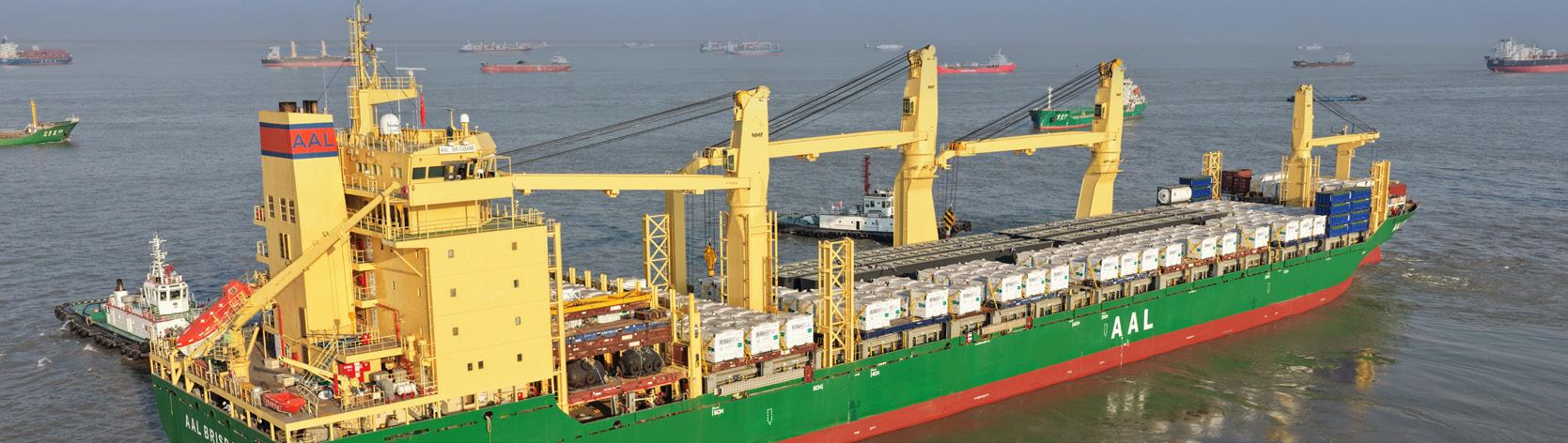
AAL Shipping (AAL)
Seizing the first-mover advantage in project heavy lift transport for battery energy storage

John Pittalis Global Head of Marketing & Communications at AAL
How is AAL Shipping (AAL) thriving?
AAL has established itself as a leading multipurpose vessel carrier for battery energy storage systems (BESS), completing 30 sailings and transporting more than 3,000 units worldwide in 2025 alone. By working closely with Chinese port authorities and terminal partners to develop the regulatory and operational frameworks required for this emerging cargo class, the Singapore-based carrier has secured a strong position in one of the fastest-growing segments in heavy lift shipping.
The challenge - Established in 1995, AAL operates one of the multipurpose sector’s largest and youngest fleets. The company connects global cargo flows across energy, renewables, and industrial markets through chartering solutions, liner services, and dedicated trade routes.
One of the latest challenges created by the energy transition has been the rapid growth of battery energy storage systems. As BESS units increased in size and weight, many could no longer be transported in standard containers. The International Maritime Organization’s reclassification of BESS as Class 9 dangerous goods added further complexity, introducing stricter requirements for packaging, fire protection, cargo handling, crew training, and port infrastructure.
The solution - The opportunity was identified by Jack Zhou, AAL’s General Manager and Chief Representative in China, who recognised in late 2023 that the regulatory shift created demand for a specialist heavy lift carrier. AAL’s first step was a trial voyage to determine whether it could meet the stricter operational and safety requirements. Following its successful completion, the customer immediately requested regular shipments.
AAL then worked with port authorities, the Maritime Safety Administration, and terminal stakeholders to develop the infrastructure and operational framework required to support BESS transport at scale. Central to this was Taicang International Container Terminal, which AAL helped establish as a major breakbulk gateway for BESS cargoes carried on multipurpose vessels. The terminal intro-
duced formal handling procedures, upgraded cargo capabilities, and implemented specialist training, storage, and movement protocols.
On the vessel side, AAL invested significantly in safety systems and operational readiness. Enhanced fire protection systems, flammable gas detection, temperature and humidity monitoring, portable thermal cameras, and high-capacity submersible pumps were introduced across vessels operating BESS routes. Mandatory crew drills are conducted before every shipment, while strict stowage, lashing, and transit procedures ensure compliance with IMO Dangerous Goods regulations. Contingency planning for fire scenarios, cargo spillage, and BESS-specific emergencies is integrated into every voyage.
The result has been a series of industry-leading developments. AAL became one of the first multipurpose vessel operators to establish regular BESS sailings from Taicang and played a key role in helping shape the operational standards governing this emerging trade. Its Super B-Class vessels provide the crane capacity and cargo flexibility required to handle units beyond the capabilities of conventional container shipping.
A landmark shipment in early 2026 demonstrated the scale of the operation: 192 BESS units transported from Taicang to Newcastle, Australia, as part of a wider series totalling 720 units supporting one of Australia’s largest grid-connected battery projects. In less than two years, AAL expanded from a single trial voyage to 30 sailings and more than 3,000 BESS units transported globally.
New IMDG regulations introduced in January 2026 are expected to create further opportunities. The rules require on-deck stowage for BESS cargoes, reducing volumes per voyage while potentially increasing associated freight revenues. Third-generation BESS units, forecast to reach approximately 57 tonnes from 2027, are also expected to further reinforce the role of specialist heavy lift operators in this market.
Story type
#collaboration (main category)
#diversification #export #energy transition #service & solutions
Benefits
▸ Early investment in BESS transport capability positioned AAL as a first mover in a rapidly expanding clean energy market.
▸ Collaboration with Chinese authorities and terminals helped establish new operational standards for large-scale BESS shipping.
Key findings
For young people
▸ Stay adaptable and look for opportunities in emerging industries before markets become crowded.
For industry
▸ Early collaboration with regulators and infrastructure partners can create major competitive advantages in new markets.
For government
▸ Clear and consistent regulatory frameworks are essential to scaling emerging energy transition supply chains safely.
AAL Shipping (AAL) at a glance:
Key products and services: project heavy lift and breakbulk carrier.
Main industries served:
▸ Oil and gas
▸ Conventional power
▸ Nuclear power
▸ Offshore renewable energy
▸ Onshore renewable energy
▸ Hydrogen
▸ Carbon capture
▸ Energy storage
▸ Others (energy)
▸ Others (non-energy)
Headquarters: Singapore
Year established: 1995
Number of employees: 130
Revenue: £332m
Revenue from exports: 100%
ABL
Building resilience through a focus on people, diversification and entry into new markets

How is ABL thriving?
Reuben Segal Chief Growth Officer at ABL
Despite a static 2025 in revenue terms, ABL, the energy and marine consultancy arm of ABL Group, has maintained margins of between 18 and 20% through one of the most turbulent periods in recent memory for both oil and gas and offshore wind. With a 2030 growth strategy launched in 2025 and eight new office locations opened in the past 18 months, the business is entering the next phase of its development from a position of commercial strength and geographic breadth.
The challenge - ABL provides specialist marine warranty surveys, marine consultancy, casualty response, asset integrity management and related services to the offshore energy and maritime sectors. The division operates across more than 40 countries, drawing on a heritage that spans Braemar’s origins in 1856, LOC’s marine warranty survey work from 1979 and the founding of ABL itself in 2012. Its 649 full-time staff serve independent oil companies, NOCs, EPCs, drilling companies, vessel operators and insurers across an industry where trust and track record matter more than almost any other factor.
The external context of the past two to three years has been difficult to navigate. Oil and gas capex spend has been relatively flat, FIDs on larger projects have been deferred and the rig market has tracked these dynamics closely. Offshore wind, which represented a significant growth opportunity, has faced headwinds in Europe, policy reversals in North America and auction delays in South America, even as Asia Pacific continued to build momentum. Layered over all of this is a geopolitical backdrop (conflict in Ukraine, the Middle East and elsewhere) that creates volatility for clients and complicates operations in affected regions. In the face of this, ABL’s ambition has remained consistent – to be first or second in every market it enters, and to remain a strategic partner rather than a transactional supplier.
The solution - The 2030 strategy, launched in 2025, gave a formal structure to what had in many respects already been ABL’s operating philosophy. Its three pillars are sustaining market-leading positions in core services, diversifying into adjacent offerings and expanding geographically to be wherever clients need the business to be.
On the first pillar, ABL’s foundations in rig moving, marine warranty survey and marine casualties remain its most commercially significant anchors. The business has used them as platforms from which to reach into adjacent services, asset integrity management being the clearest example. Here, ABL has moved from handling a niche element of this discipline to offering a broader, more comprehensive service to clients whose risk profiles are evolving as infrastructure ages and new geographies emerge. Marine operations has followed a similar trajectory, with ABL pursuing more turnkey engagements that give clients a complete solution rather than a specialist input.
The Hydromod Centre of Excellence, which specialises in marine spatial planning and numerical modelling for offshore wind construction, represents another build-out of a boutique specialism identified, resourced and positioned ahead of the demand curve.
Geographically, in the past 18 months alone, ABL has opened offices in Romania, Senegal, Namibia, New Zealand and Poland, each driven by a specific pipeline of confirmed or anticipated opportunity. Romania, entered 1824 months ago, has already become a growth hub, with work there opening doors for other parts of the wider group. Brazil, where headcount has grown 30% in 2026, has become one of the most commercially active markets in the portfolio. Vietnam, once a breakeven operation, now runs at a 20% margin alongside Malaysia at 20% and Brazil at 30%.
Underpinning all of this is a focus on people. ABL runs an Engineering Development Programme that brings graduates in on multi-year tracks, and several of its current country managers and regional directors came through this route. A shadow board, running a dozen participants at a time, gives emerging leaders exposure to senior decision-making and keeps the culture of ambition infectious across the organisation. The mix of long-tenure experts alongside younger talent is viewed as one of the business’s structural advantages.
Tight cost discipline has been the counterbalance to this expansion. ABL’s leadership has not allowed growth to outpace control, and the consistency of margins through a difficult cycle reflects that. In a market where
Story type
#resilience (main category) #collaboration #diversification #service & solutions
Benefits
▸ Expanded into new international markets while maintaining strong EBIT margins through market volatility.
▸ Diversified into adjacent consultancy and asset integrity services to build a more resilient business.
Key findings
For young people
▸ Long-term growth comes from combining technical expertise with adaptability and global experience.
For industry
▸ Diversification and strong local teams help businesses remain resilient during market volatility.
For government
▸ Energy security requires balanced support for both traditional energy and renewables.
ABL at a glance:
Key products and services: marine and engineering consultancy, surveying, loss prevention, asset integrity management, and loss management.
Main industries served:
▸ Oil and gas – 67%
▸ Offshore renewable energy – 11%
▸ Others (non-energy): maritime – 22%
Headquarters: London, UK
Year established: 2012
Number of employees: 2,000
Revenue: £263.7m
turbulence has been the norm rather than the exception for the past several years, the ability to navigate it without sacrificing either people or profitability is the clearest measure of the resilience the business has built.

Add Value Consultancy (AVC)
Championing the energy sector’s AI-enabled evolution

Hossam Aboegla CEO at Add Value Consultancy
How is Add Value Consultancy thriving?
Add Value Consultancy (AVC) is transforming from a specialist technical advisory consultancy into an AI-enabled asset excellence and industrial intelligence company. By combining deep engineering, risk and energy-sector expertise with advanced AI, the company is helping energy and industrial clients turn complex technical data into live insight, better decisions and measurable business value.
The challenge - For energy sector companies seeking specialist technical advisory and AI-enabled solutions, AVC is becoming a go-to partner. Today, the firm provides a variety of services spanning asset integrity management, risk management, HSE and process safety, energy management, sustainability and digital transformation.
Leveraging this base of expertise, the firm has long delivered complex technical and consultancy assignments for major operators and industrial clients. However, it has also seen shifting customer demands, with greater emphasis being placed on practical, sustainable, data-driven solutions.
Today, operators are challenged with managing ageing assets, costs, energy transition demands, ESG expectations, safety and integrity obligations, data overload and a shortage of specialist expertise. As a result, many are investing in digital transformation and artificial intelligence. However, many AI solutions lack real engineering depth and sector context.
AVC has recognised this shift, understanding its clients’ needs for solutions capable of helping them make faster decisions, manage risk continuously, improve asset performance and convert technical knowledge into measurable business value. AVC therefore saw a need to do something different: to transform its technical consultancy knowhow into AI-enabled solutions for energy and industrial clients. The aim was not to follow the AI trend, but to create a defensible, differentiated business model that combines domain expertise, engineering judgement, data and advanced AI models.
The solution - Rather than building generic AI tools, AVC has since been focused on developing practical, industry-specific AI applications that address real problems faced by asset-intensive clients. Crucially, this strategy has four key components.
First, AVC is codifying its technical knowledge into structured methodologies, frameworks and digital workflows. This includes asset integrity, risk-based inspection, ageing asset management, HSE governance, process safety, energy management, maintenance optimisation and technical assurance. Second, the company is using its project experience and sector data to identify repeatable pain points where AI can create measurable value. These include predictive maintenance, inspection optimisation, technical risk prioritisation, asset performance improvement, HSE compliance support, energy efficiency and decision support for operators.
Third, it is now developing AI-enabled offerings that can sit alongside existing consultancy services. This allows the company to serve clients in a more scalable way. Its consultancy services help to diagnose potential problems, and its AI-enabled tools then form the foundations of the solution. Finally, and overarchingly, the company is actively positioning itself for a future where energy and industrial clients will need dedicated AI infrastructure, structured data environments and advanced models trained on sector-specific technical knowledge. Indeed, it is the latter that underpins the longer-term ambition of building a specialist AI-powered data centre and knowledge platform for energy and industrial sectors.
AVC has implemented this strategy progressively over the last two years, culminating in the development of two core applications. The first is AVC’s Agentic Risk Based Inspection intelligence (RBI), now in development, which acts as an intelligent decision-support layer for asset integrity teams. It structures inspection data, degradation mechanisms, risk rankings, inspection histories, operating conditions, anomalies and recommendations into a more dynamic system. The objective is to support better inspection prioritisation, improve visibility of high-risk equipment, reduce unnecessary inspection effort and help operators move from periodic RBI studies towards continuous integrity management.
The second is Agentic Process Safety Management intelligence (PSM), now in development. It helps organisations create a more connected and intelligent process safety management environment, supporting users in understanding requirements, tracking assurance gaps, connecting process safety studies to operational barriers, identifying recurring weaknesses and improving visibility of major accident hazard controls.
Indeed, the company is now moving from concept to practical commercialisation, with its strategy already yielding results. AVC’s
Story type
#digital & AI (main category) #transformation
Benefits
▸ Launched industry-specific AI applications that turn complex data into live insights for energy and industrial clients.
▸ Drove revenue growth and opened investment conversations by strengthening its market position as an AI-enabled business.
Key findings
For young people
▸ Build technical competence and learn industry fundamentals, using AI as an amplifier of your capability rather than a substitute.
For industry
▸ Pairing deep domain expertise with AI creates a defensible source of differentiation that generic AI tools cannot replicate.
For government
▸ Support specialist SMEs combining industrial expertise with AI to secure the future competitiveness of asset-intensive sectors.
Add Value Consultancy at a glance:
Key products and services: technical advisory and AI-enabled solutions for assetintensive operations.
Main industries served:
▸ Oil and gas – 40%
▸ Energy storage – 5%
▸ Others (non-energy): petrochemicals, fertilisers and mining – 55%
Headquarters: Aberdeen, UK
Year established: 2020
Number of employes: 25
Revenue: £5m
market position has strengthened and its competitive differentiation has improved. The strategy has opened new conversations with clients, partners and investors, with AI now firmly embedded in AVC’s growth narrative alongside its established technical services. Revenue has grown 25% over the last two years, the active pipeline has expanded to £30m, and AVC now serves 10 clients across the energy and industrial sectors. With proprietary AI applications now in development with 2 operators, the trajectory is expected to continue as AVC establishes itself as an industry leader in AI enablement.
AIG Holdings
From conventional offshore contractor to engineering-integrated asset life-extension partner

Mohd Fadli Mohd Noor CEO at AIG Holdings
How is AIG Holdings thriving?
Malaysian EPMCM contractor AIG Holdings’ success story is rooted in transformation during uncertainty. After the pandemic period and market downturn exposed the limits of traditional execution-based contracting, the firm reinvented itself, strengthening its engineering capabilities, embracing digital twin technology and expanding into new offshore markets. In doing so, AIG shifted from a manpower provider to a strategic asset integrity partner, fuelling rapid growth and positioning itself for long-tem relevance in the industry undergoing profound change.
The challenge - AIG Holdings has faced the brunt of offshore energy industry challenges in the past five years. The turning point for the company came during the 2020-21 industry downturn, when the pandemic, oil price volatility and supply chain disruptions exposed the vulnerabilities of traditional contractor models that rely heavily on execution-based work. At the same time, AIG Holdings recognised that operators were extending the operational life of floating production storage and offloading vessel (FPSOs) beyond their original design life, creating new challenges related to structural fatigue, class compliance and integrity management.
As an EPMCM contractor heavily involved in offshore maintenance and repair and life extension (RLE) campaigns, it was directly impacted by these pressures. Margins were tightening, competition was intensifying, and clients were looking for smarter, data-backed engineering solutions.
The firm faced rising material costs, logistics constraints and increased compliance requirements. Project approvals became slower, and cost-sensitive clients demanded predictive insight and higher technical justification for every repair, rather than reactive work. The offshore environment also grew more complex. Ageing FPSO and FSO assets required deeper structural assessments, beyond surface-level steel renewal, while class scrutiny and documentation standards tightened.
Execution alone was no longer sufficient, and engineering depth became critical. The industry was evolving, and AIG Holdings needed to move with it. Competing purely on manpower and price became unsustainable. The company recognised that if it did not differentiate, it would be vulnerable to commoditisation.
The solution - Indeed, this exactly what AIG Holdings has done in the past half decade, working to move the firm up the value chain and redefine its role in the offshore energy ecosystem. Recognising that the industry was shifting toward data-driven asset integrity and life extension, particularly for ageing FPSO and FSO fleets, the firm pivoted towards a strategy underpinned by three key pillars.
The first pillar of improving its engineering-led execution became AIG Holdings’ primary focus during 2021 and 2022. Critically, the company strengthened its engineering capability to complement offshore execution. As a result, instead of simply executing repair scopes, the firm is now able to contribute to repair methodology, structural assessment and long-term integrity planning.
From 2023, the firm then focused on the second pillar: digital twin integration. It established collaborative relationships with digital twin technology partners and began integrating high-fidelity structural modelling into asset life-extension discussions. Crucially, this helps operators better understand structural behaviour, optimise repair scopes, and make more informed class decisions.
These efforts continued in 2024, where the firm made digital twin integration became part of its engagement strategy with clients, particularly for repair and life extension (RLE) campaigns and complex structural assessment. At the same time, it also turned attentions to its third strategic pillar of strategic geographic expansion, establishing a greater foothold in emerging energy markets beyond Malaysia, such as Guyana, so that AIG could position itself early in rapidly growing offshore basins.
A multi-year long process, the overall strategy has been transformational. Indeed, the firm has transitions from being execution-driven to engineering-integrated, combining offshore repair capability with digital structural modelling, life-extension strategy and predictive maintenance approaches. Its focus on digital twin integration has marked a shift in how it engages with clients, which has paid dividends. Indeed, revenue has increased every year since 2020, from RM3.5m to RM18m in 2024 – remarkable figures under the circumstances, with AIG having grown significantly during the pandemic period.
However, the firm’s success is not defined only by revenue growth, but also by increasing relevance. Indeed, it has evolved from a contractor to strategic asset partner, strengthening its market position and gaining increased involvement into RLE campaigns, as well as technical and engineering discussions.
Story type
#transformation (main category)
Benefits
▸ Grew revenue year-on-year to RM18m in 2024 by transitioning to a strategic engineering partner.
▸ Expanded into Guyana and secured higher-value projects by integrating digital twins into asset life-extension strategies.
Key findings
For young people
▸ Build fundamental skills and resilience; successful careers are built by tackling difficult challenges.
For industry
▸ Stop competing solely on cost; invest in technology and solve complex problems.
For government
▸ Support local companies expanding internationally by facilitating access to networks, financing and trade initiatives.
AIG Holdings at a glance:
Key products and services: offshore asset life extension, piping and structural renewal, skid fabrication, maintenance campaigns and digital twin integration.
Main industries served:
▸ Oil and gas – 85%
▸ Conventional power – 3%
▸ Offshore renewable energy – 2%
▸ Onshore renewable energy – 2%
▸ Hydrogen – 2%
▸ Carbon capture – 2%
▸ Energy storage – 1%
▸ Data centres – 1%
▸ Others (non-energy) – 2%
Headquarters: Cyberjaya, Malaysia
Year established: 2000
Number of employees: 185
Revenue: £3.8m – £5.7m
Revenue from exports: 20%
Now tackling more complex, higher value projects in a range of markets internationally, the firm is well placed to continue to expand and thrive further moving forward. Indeed, industry pressure has proven to be a blessing in disguise for the company, serving as the catalyst for its transformation into an engineering-integrated asset life-extension partner.
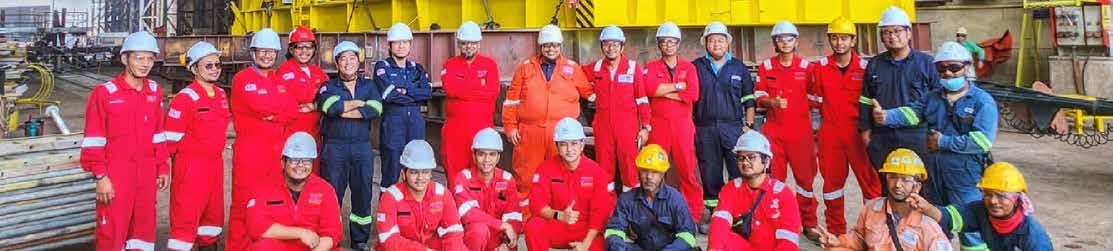
AIG Holdings
From conventional offshore contractor to engineering-integrated asset life-extension partner
Mohd Fadli Mohd Noor CEO at AIG Holdings
How is AIG Holdings thriving?
Malaysian EPMCM contractor AIG Holdings’ success story is rooted in transformation during uncertainty. After the pandemic period and market downturn exposed the limits of traditional execution-based contracting, the firm reinvented itself, strengthening its engineering capabilities, embracing digital twin technology and expanding into new offshore markets. In doing so, AIG shifted from a manpower provider to a strategic asset integrity partner, fuelling rapid growth and positioning itself for long-tem relevance in the industry undergoing profound change.
The challenge - AIG Holdings has faced the brunt of offshore energy industry challenges in the past five years. The turning point for the company came during the 2020-21 industry downturn, when the pandemic, oil price volatility and supply chain disruptions exposed the vulnerabilities of traditional contractor models that rely heavily on execution-based work. At the same time, AIG Holdings recognised that operators were extending the operational life of floating production storage and offloading vessel (FPSOs) beyond their original design life, creating new challenges related to structural fatigue, class compliance and integrity management.
As an EPMCM contractor heavily involved in offshore maintenance and repair and life extension (RLE) campaigns, it was directly impacted by these pressures. Margins were tightening, competition was intensifying, and clients were looking for smarter, data-backed engineering solutions.
The firm faced rising material costs, logistics constraints and increased compliance requirements. Project approvals became slower, and cost-sensitive clients demanded predictive insight and higher technical justification for every repair, rather than reactive work. The offshore environment also grew more complex. Ageing FPSO and FSO assets required deeper structural assessments, beyond surface-level steel renewal, while class scrutiny and documentation standards tightened.
Execution alone was no longer sufficient, and engineering depth became critical. The industry was evolving, and AIG Holdings needed to move with it. Competing purely on manpower and price became unsustainable. The company recognised that if it did not differentiate, it would be vulnerable to commoditisation.
The solution - Indeed, this exactly what AIG Holdings has done in the past half decade, working to move the firm up the value chain and redefine its role in the offshore energy ecosystem. Recognising that the industry was shifting toward data-driven asset integrity and life extension, particularly for ageing FPSO and FSO fleets, the firm pivoted towards a strategy underpinned by three key pillars.
The first pillar of improving its engineering-led execution became AIG Holdings’ primary focus during 2021 and 2022. Critically, the company strengthened its engineering capability to complement offshore execution. As a result, instead of simply executing repair scopes, the firm is now able to contribute to repair methodology, structural assessment and long-term integrity planning. From 2023, the firm then focused on the second pillar: digital twin integration. It established collaborative relationships with digital twin technology partners and began integrating high-fidelity structural modelling into asset life-extension discussions. Crucially, this helps operators better understand structural behaviour, optimise repair scopes, and make more informed class decisions.
These efforts continued in 2024, where the firm made digital twin integration became part of its engagement strategy with clients, particularly for repair and life extension (RLE) campaigns and complex structural assessment. At the same time, it also turned attentions to its third strategic pillar of strategic geographic expansion, establishing a greater foothold in emerging energy markets beyond Malaysia, such as Guyana, so that AIG could position itself early in rapidly growing offshore basins.
A multi-year long process, the overall strategy has been transformational. Indeed, the firm has transitions from being execution-driven to engineering-integrated, combining offshore repair capability with digital structural modelling, life-extension strategy and predictive maintenance approaches. Its focus on digital twin integration has marked a shift in how it engages with clients, which has paid dividends. Indeed, revenue has increased every year since 2020, from RM3.5m to RM18m in 2024 – remarkable figures under the circumstances, with AIG having grown significantly during the pandemic period.
However, the firm’s success is not defined only by revenue growth, but also by increasing relevance. Indeed, it has evolved from a contractor to strategic asset partner, strengthening its market position and gaining increased involvement into RLE campaigns, as well as technical and engineering discussions.
Story type
#transformation (main category)
Benefits
▸ Grew revenue year-on-year to RM18m in 2024 by transitioning to a strategic engineering partner.
▸ Expanded into Guyana and secured higher-value projects by integrating digital twins into asset life-extension strategies.
Key findings
For young people
▸ Build fundamental skills and resilience; successful careers are built by tackling difficult challenges.
For industry
▸ Stop competing solely on cost; invest in technology and solve complex problems.
For government
▸ Support local companies expanding internationally by facilitating access to networks, financing and trade initiatives.
AIG Holdings at a glance:
Key products and services: offshore asset life extension, piping and structural renewal, skid fabrication, maintenance campaigns and digital twin integration.
Main industries served: ▸ Oil and gas – 85% ▸ Conventional power – 3% ▸ Offshore renewable energy – 2% ▸ Onshore renewable energy – 2% ▸ Hydrogen – 2%
▸ Carbon capture – 2%
▸ Energy storage – 1%
▸ Data centres – 1%
▸ Others (non-energy) – 2%
Headquarters: Cyberjaya, Malaysia
Year established: 2000
Number of employees: 185
Revenue: £3.8m – £5.7m
Revenue from exports: 20%
Now tackling more complex, higher value projects in a range of markets internationally, the firm is well placed to continue to expand and thrive further moving forward. Indeed, industry pressure has proven to be a blessing in disguise for the company, serving as the catalyst for its transformation into an engineering-integrated asset life-extension partner.
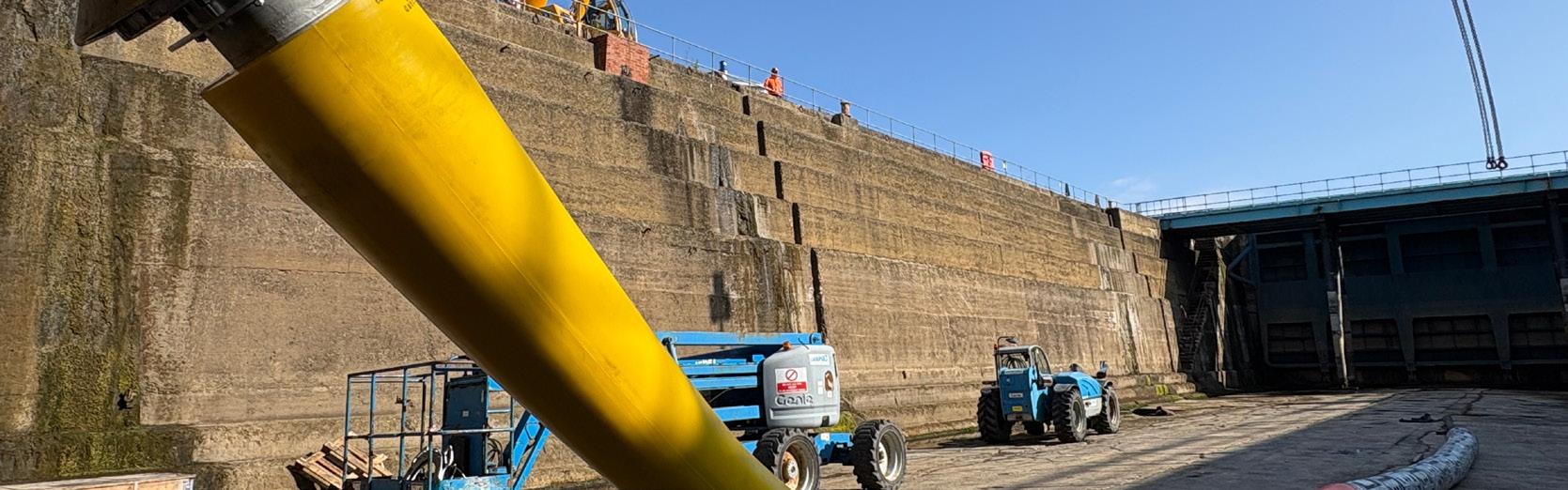
AIS
How is AIS thriving?
Andy Smith Head of Sales at AIS
AIS has transformed its position in offshore wind through the savvy and strategic development of NjordGuard – a purpose-built cable protection system (CPS) that specifically addresses the costly failures associated with legacy designs in the industry. Through early investment, significant engineering R&D, and strong customer engagement, the company is now delivering its reliable, lower-risk solution on a broad basis, serving several major offshore wind operators.
The challenge - Over the past three years, AIS has operated through major change across both the offshore energy sector and its own business. Like many engineering businesses with roots in oil and gas, the company recognised the need to accelerate diversification into renewables. Offshore wind offered significant opportunity, but success required more than adapting existing oil and gas products. The technical, operational and commercial demands of offshore wind differ substantially, particularly around dynamic loading, thermal performance, installation efficiency and environmental impact.
Here, subsea power cables represented both a challenge and an opportunity, being one of the most critical and vulnerable elements of offshore wind infrastructure. Repairs are costly, slow and highly disruptive, often leading to prolonged downtime and reduced power generation. As a result, developers have become less tolerant of legacy solutions that carry technical risk or require later intervention.
Market analysis and collaboration with operators highlighted a clear gap. Most cable protection systems were adapted from oil and gas designs and were not optimised for offshore wind’s long design life, dynamic seabed conditions or thermal requirements. Many relied on rock dumping or sacrificial anodes, adding cost, complexity and environmental disturbance. High-profile failures reinforced the consequences of inadequate protection and revealed the need for a fundamentally different approach.
The solution - In response, AIS recognised that incremental improvement was not enough. Through its subsidiary CRP Subsea, the company invested in developing NjordGuard, a purpose-designed cable protection system engineered specifically for offshore
wind. This required deeper upfront engineering, site-specific modelling and closer collaboration with developers to challenge accepted norms. The result was a solution that addressed the technical weaknesses of legacy systems while aligning with the sector’s demand for reliability, lower lifetime cost and reduced environmental impact.
In tandem with its investments in NjordGuard, AIS focused on establishing itself in the market by increasing value and driving down overall cost of ownership.
Drawing on 30 years of CPS design and manufacturing in oil and gas, this strategy enabled AIS to gain traction as the market sought alternatives. When failures occurred, operators recalled AIS’ earlier warnings and turned to NjordGuard as a credible, ready solution.
AIS also repositioned operationally. It invested in in-house modelling to perform full global and local analyses previously done by customers. It designed and manufactured its own connector system, removing reliance on external suppliers, and invested £1.5m in a dedicated NjordGuard production cell to increase efficiency and speed.
Abrasion resistance was a major concern with existing CPS solutions, often requiring costly seabed rock stabilisation to reduce cable movement – interventions can cost up to seven figures per system. Here, NjordGuard’s improved abrasion resistance reduced, and in many cases eliminated, the need for these measures, saving operators substantial cost and removing a major risk.
By redesigning the interconnections (between adjacent polyurethane sections) to remove rotational alignment and improve speed of installation, NjordGuard also reduced handling complexity offshore. This shortened installation time by up to 40 minutes per CPS section, equating to savings of up to €7,200 per section at typical vessel day rates. With projects requiring up to 1,000 sections of CPS, the savings were significant. By making these changes, AIS is looking to transform industry standards across the board, not just on a one-off project.
Thermal bottlenecking, where protection systems trap heat around power cables, was another critical challenge. Under high load, this can create hot spots that reduce turbine output. Here, NjordGuard’s redesigned geometry balances thermal and mechanical performance, keeping cables up to 10C cooler, enabling higher current loads and supporting long-term reliability.
Ultimately, NjordGuard has transformed AIS’ position in offshore wind, establishing the company as a trusted supplier. As confidence in existing CPS solutions fell, AIS was

Story type
#innovation (main category) #diversification #service & solutions
Benefits
▸ Generated approximately £25m in sales from the NjordGuard system in last FY alone, driving overall company revenue growth from £47.2m in 2021 to £151m in 2025.
▸ Reduced offshore installation time by up to 40 minutes per section and improved thermal efficiency by 10C, saving operators thousands of pounds while removing costly seabed stabilisation requirements.
Key findings
For young people
▸ Embrace curiosity, take ownership of your career and proactively seek out mentorship and new challenges to develop your skills.
For industry
▸ People are your most important asset, and apprenticeships offer a hugely valuable way to develop your next generation of talent.
For government
▸ Support smaller companies in developing technology. Don’t just push it all on supply chain, but work with the supply chain.
AIS at a glance:
Main industries served:
▸ Oil and gas - 68%
▸ Offshore renewable energy - 17%
▸ Others (non-energy): battery protection, leisure, marine – 15%
Headquarters: Gloucester, UK
Year established: 2007
Number of employees: 786
Revenue: £151m
Revenue from exports: 72%
ready with a tested, reliable alternative. The business has grown accordingly, with seven full-time engineers now supporting NjordGuard, alongside a dedicated four-person product team and 21 factory staff.
NjordGuard generated approximately £25m in sales within the last year alone, while overall company revenues have risen year on year since 2021, growing from £47.2m to £151m in 2025. To add to this, one of the larger CPS projects awarded to AIS in 2023, had a value of approximately £10m.
Indeed, NjordGuard is the outcome of AIS’ strategic decision to respond proactively to market change, turning external pressure and internal transition into a differentiated, successful solution for a fast-growing sector.
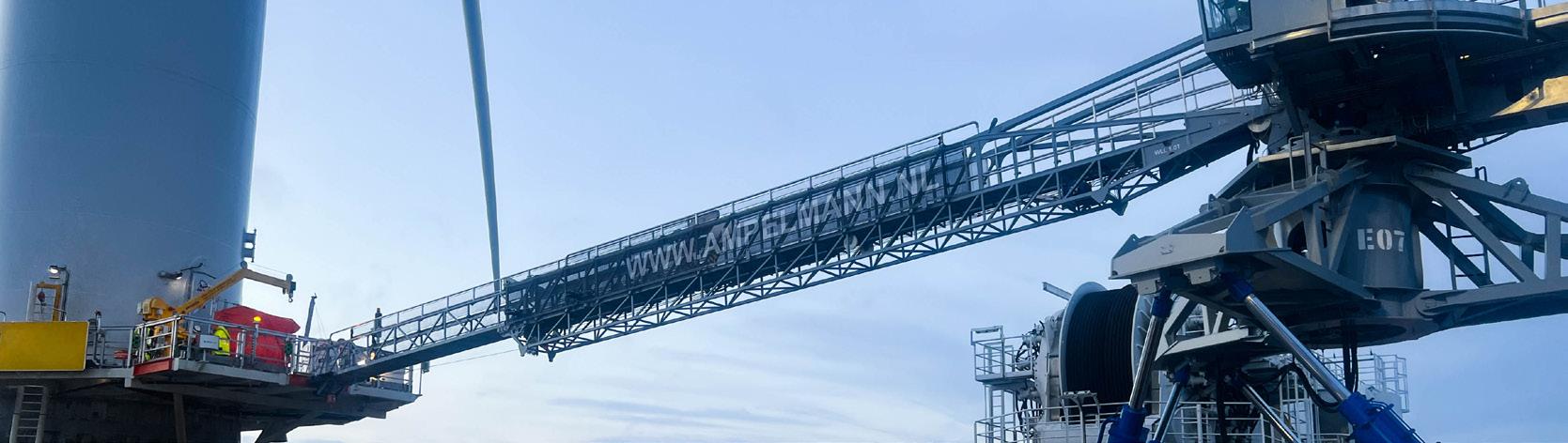
Ampelmann
The founder who returned to revitalise his company
Jan van der Tempel CEO at Ampelmann
How is Ampelmann thriving?
Ampelmann, the Dutch offshore access specialist founded in 2007, has completed a decade-long transformation under the leadership of its returning founder and CEO, Jan van der Tempel. Having come back in 2017 to a company that had grown rapidly but was loss-making and operationally misaligned, Van der Tempel executed a disciplined restructuring – decentralising operations, redesigning products around modularity and electrification, and codifying the business under a strategy called Shifting Winds. Revenues reached €107m in 2025 with an EBITDA margin of 32%, a record year for the company.
The challenge - Ampelmann designs, manufactures and operates a fleet of motion-compensated gangway systems for offshore crew transfer, cargo operations and decommissioning across oil and gas and offshore wind markets. Founded from a PhD research project, the company grew rapidly in its early years as both sectors embraced its technology. By 2013 it had attracted private equity backing; by 2015, with the oil price crash hitting revenues and a scaling organisation stretching its management model, Van der Tempel had departed as CEO.
When he was asked to return in 2017, what he found was a company that had become, in his words, a large-small company rather than a small-large one. Global offices had been established in Singapore, Brunei, Houston, Aberdeen and Hamburg, driven by client activity. But critical functions such as crewing, the Operational Control Centre, engineering and warehousing had remained centralised in Delft. The company had scaled its footprint without scaling its operating model to match.
The solution - Van der Tempel spent his first year back observing before acting. In 2018 he began making changes with management buy-in; by 2019 the strategy had been named, written down and communicated to all staff. Shifting Winds was built around three principles: owning the market, building modular and shifting from a rental-only to a sell-and-service model.
The biggest operational change was decentralisation. The Operational Control Centre, which monitored gangways around the
clock and had become a bottleneck of latenight calls across time zones, was distributed into three regional hubs – Delft, Brunei and Houston. Crewing, previously managed entirely from the Netherlands, was localised into Brunei and Providence in the US, placing people who understood local languages, cultures and regulations closer to the vessels they were supporting. Warehousing followed: a central facility near Rotterdam was supplemented with regional stores in each geography, with Brunei, the company’s largest client pool, prioritised first.
Engineering required a different kind of change. Ampelmann had 100 qualified engineers who excelled at building bespoke, holistic systems for individual clients. Van der Tempel challenged them to shift towards a modular approach with standard parameters, standardised spares and reusable components that could be maintained in regional warehouses rather than requiring custom parts flown in from the Netherlands. It was, he acknowledged, a significant mindset shift for people whose professional identity was tied to bespoke design. But it made the business more scalable and the product more reliable in the field.
Alongside the operational restructure, Ampelmann undertook a product transition. Its gangway fleet had run on hydraulic, diesel-powered systems with high emissions. The company redesigned around fully electric actuation – systems that not only eliminated diesel emissions but could generate electricity in reverse operation during descent. Since the shift, 25 new systems have been built entirely electric, reducing emissions by 80% compared to the legacy fleet. Conversion of older diesel units is also under way. The environmental credentials have proved meaningful commercially, particularly in offshore wind where sustainability requirements are increasingly embedded in procurement decisions. Culturally this has been impactful too, with a generation of engineers motivated by working on cleaner technology being drawn to the company.
The Covid-19 period, which might have derailed the transformation, instead validated it. Because operations had been localised and regional teams empowered, the business was able to continue working through border closures and travel restrictions that would have paralysed a centrally dependent model. The uptime target of 98.5%, a key performance metric for clients who depend on gangway availability to keep offshore operations running, was maintained throughout.
Story type
#transformation (main category) #culture #environmental sustainability & social impact #innovation #optimisation
Benefits
▸ Achieved a record financial year in 2025, reaching €107m in revenues and a 32% EBITDA margin through structural efficiency.
▸ Reduced fleet emissions by 80% using fully electric systems while maintaining a 98.5% operational uptime despite global disruptions.
Key findings
For young people
▸ Focus on finishing your studies, mastering your trade and seizing opportunities with an open mind.
For industry
▸ Transformation demands persistent patience and communication; if your frontline staff cannot repeat the strategy, it will not succeed.
For government
▸ Drastically reduce EU bureaucracy, maximise existing free trade agreements and allocate more funding to scale up offshore hydrogen development.
Ampelmann at a glance:
Key products and services: modular gangways and full-service operational support for the Walk to Work industry.
Main industries served:
▸ Oil and gas – 55%
▸ Offshore renewable energy – 45%
Headquarters: Delft, The Netherlands Year established: 2007
Number of employees: 450
Revenue: £91m
Revenue from exports: 90%
By 2025, the company had reached its first record revenue year since the transformation began, with EBITDA margins that reflect the structural efficiency that eight years of disciplined change have built into the business. Van der Tempel’s advice to the next generation of leaders, shaped by his own experience, is ‘persistent patience’. Building a €100m company took decades, and there are no shortcuts in the scaling of something that works.
Apave
How a 150-year safety specialist reinvented itself as a UAE risk intelligence hub
Shivakumar Kulkani
Regional Manager (ME&I), Risk Consulting at Apave
How is Apave thriving?
Founded in 1867 and operating across 17,500 people and nearly €1.9bn in revenues globally, Apave has spent 150 years building its reputation in industrial risk management. Its Middle East and India division, with 1,100 engineers across 13 locations and more than 1,500 clients in six countries, has taken that heritage and used it to build something the region had not previously seen: a fully integrated risk intelligence hub in the UAE, accredited by the Abu Dhabi Department of Energy as a House of Expertise (HoE) and capable of delivering every safety study discipline under one roof. Group revenues grew 36% in 2025, from €1.4bn to €1.9bn, with a further 20% targeted in 2026.
The challenge - Apave’s Middle East operation provides third-party inspection, non-destructive testing, material testing, technical training, certification and risk consultancy to energy and infrastructure clients across the Gulf, with oil and gas accounting for approximately 60% of activity. Its core differentiator in the region is an integrated safety studies capability covering everything from HAZOP and PHSER through to 3D fire and gas mapping and RAM analysis – disciplines that most competitors deliver as separate, fragmented commissions.
By the early 2020s, that fragmented model was becoming a problem for clients. Projects in the Middle East were growing in scale and complexity, FEED timelines were tightening, and the cost of misalignment between safety disciplines was rising. Operators and EPCs wanted a single technical authority, accountable from the start of FEED, running shared data and consistent assumptions across every workstream. Apave had the expertise to do this. What it needed was the formal standing to say so – and to prove it on a project of sufficient scale and visibility that the model would be taken seriously across the region.
The solution - The first step was accreditation. Apave spent 12 months working through submissions and audits with the Abu Dhabi Department of Energy to earn House of Expertise (HoE) status– the formal recognition that gave it ADNOC-approved
standing to operate as a Technical Authority rather than a service contractor. Only one other TIC firm holds this accreditation.
The second step was rebuilding how the division worked. Eight specialists were hired across HAZOP, fire and gas modelling, integrity engineering and reliability. New project controls, mandatory peer reviews and shared digital twins for fire and gas data were embedded in every workflow – the objective being to run studies as a single integrated process rather than a series of vendor handoffs.
The third step was proving it. In 2025, Apave was engaged on the ADNOC SALT FEED project: a greenfield, integrated facility for chlor-alkali, EDC, VCM and PVC production in the Ta’ziz Industrial Chemical Zone, Abu Dhabi. Thirteen distinct safety studies ran across two parallel sub-projects, each supported by a separate Tier 1 FEED contractor (TechnipEnergies and thyssenkrupp Uhde) covering workshop disciplines such as HAZOP, PHSER, Human Factors Engineering and Inherently Safer Design Review, alongside desktop studies covering 3D fire and gas mapping, RAM analysis, vent dispersion and noise abatement.
Apave ran all 13 as one workflow, the process was characterised by shared data, unified facilitation and a single technical authority accountable to both EPCs and ADNOC. When workshops clashed or dispersion models needed reworking under FEED deadline pressure, the same team absorbed and resolved the issue. The Result: All 13 studies achieved 100% Code 1 acceptance on the first submission with zero rework, earning written commendations from both EPC partners.
The UAE hub is now the blueprint. A parallel technical delivery team is being built in India for asset integrity and corrosion engineering, and the next hub in Saudi Arabia is in development, requiring its own accreditation process with Saudi Aramco. Each hub, once established, carries the credibility of the last – the SALT record is already opening conversations with operators in Qatar, Oman and Kuwait. AI-assisted fire and gas modelling is in pilot, with early results showing a 40% reduction in modelling time at equivalent accuracy.
Ultimately, the ambition is not to be the biggest TIC firm in the Middle East, but to be the one operators call when the FEED schedule is tight and the cost of getting it wrong is too high to accept. The last year or so has certainly placed Apave in a strong position to be that go-to partner.
Story type
#service & solutions (main category)
Benefits
▸ Achieved a 36% increase in global group revenues to €1.9bn in 2025 after securing highly exclusive House of Expertise accreditation.
▸ Delivered 13 integrated safety studies for the ADNOC SALT project on first submission with zero rework and written partner commendations.
Key findings
For young people
▸ Do not wait for the perfect role but seek depth of experience, combining curiosity and grit to make an impact in a transforming energy sector.
For industry
▸ Stop treating safety studies as a cost centre and embrace them as decision accelerators that protect margins and eliminate rework through unified risk intelligence.
For government
▸ Make technical sovereignty a national mandate and require House of Expertise firms for all major energy projects to ensure safer plants and faster operations.
Apave at a glance:
Key products and services: third-party inspection, NDT, testing, certification, training and risk consultancy.
Main industries served:
▸ Oil and gas – 60%
▸ Conventional power – 40%
Headquarters: Courbevoie, France
Year established: 1867
Number of employees: 17,500
Revenue: £1.64bn
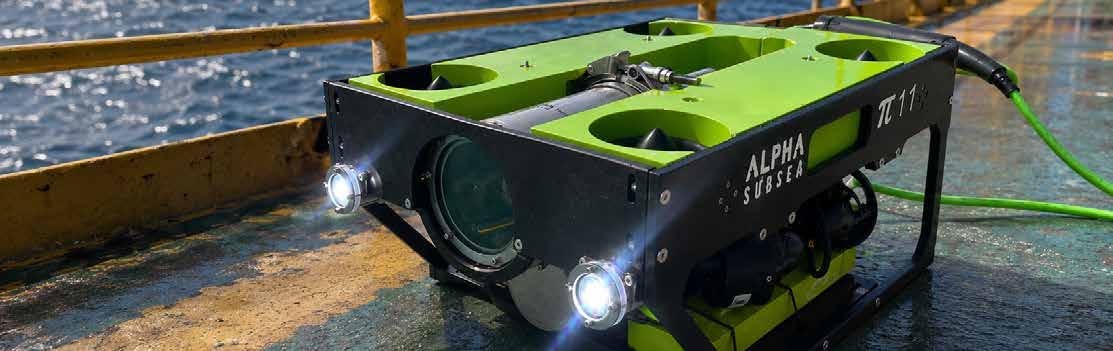
Alpha Subsea
Transforming subsea inspection through remote innovation

Gabriel Rosa CEO and Head of Development at Alpha Subsea
How is Alpha Subsea thriving?
Alpha Subsea has rapidly established itself as a credible and innovative player in the offshore subsea market, leveraging proprietary ROV technology to deliver safer, more efficient inspection solutions. The combination of inhouse engineering expertise with a differentiated remote inspection model has enabled the firm to dramatically improve offshore operational safety for its clients, while also increasing data quality and productivity. Having secured multiple contracts with Petrobras, the firm is a shining example of a startup driving innovation in the Brazilian energy industry.
The challenge - Now celebrating its 10th anniversary year, Brazil-based Alpha Subsea has grown quickly in the space of a decade. Today, the firm employs 175 staff globally, 145 of which are based in Brazil, providing subsea robotics and engineering solutions including electric remote operated vehicle (ROV) systems, driverless inspection solutions, and subsea integrity services for offshore assets.
Crucially, the firm owns its own proprietary ROV technologies, including electric models designed for operations up to 500 metres that can complete a range of tasks, from underwater cleaning and thickness measurement to cathodic-protection reading, visual inspection and customised interface tooling.
Establishing such an innovative company is never easy. Indeed, Alpha Subsea was born with the challenge of building knowledge, technical structure and credibility in a sector with significant barriers to entry, high technical requirements and rigorous compliance, audit and qualification processes.
During its early years, the company invested in research and development, bringing together a team of experienced professionals, many of whom had already spent 15 to 20 years working offshore. And in 2024, the major turning point came: a Petrobras tender for ballast tank inspections on FPSOs, the aim of which was to reduce human exposure in high-risk operations.
Alpha Subsea took part in the tender with a proposal that had a clear differentiator: ROVs with technology capable of carrying out part of the operation remotely, via satellite. The off-
shore team would be responsible for launching the robot, while data capture, inspection, processing and analysis would be monitored by an onshore team. With this model, the company would be able to reduce personnel on board without compromising inspection quality.
Even with this proposal, Alpha Subsea initially placed fifth in the tender. As the process advanced, however, other proposals did not meet all the technical and commercial requirements, and the company moved forward in the bid.
The team still had to prove their technical capability and demonstrate that they could deliver the service at the proposed price. They also faced resistance as a company from Minas Gerais operating in the offshore sector, a market traditionally occupied by larger and more established players.
Building the equipment was another significant challenge. Development required self-funded investment, technical adaptation and a chain of specialised suppliers. The company structured stages for sealing, high-complexity welding, electrical and electronic R&D, assembly, testing and the supply of components such as floats and stainless-steel parts. The adaptation deadline was also tight – four months for the smaller ROV, and six months for the larger one.
The solution - Despite the initial questions, the solution proved successful. An operation that previously required five people offshore began to be carried out with only one person on board. In addition, instead of around 50 thickness measurements per day, Alpha Subsea’s ROVs began performing approximately 500 daily measurements.
The inspection, which had previously depended more heavily on the physical presence of offshore teams, began to be monitored in real-time by a pilot and an inspector. The data is transmitted, classified and analysed during the operation itself. Even before the inspection begins, the plan has already been processed, with the expected thickness for each location and the points previously integrated into the technical drawing.
When something outside the expected standard is identified, the team can alert their cli-

Story type
#innovation (main category) #technology
Benefits
► Enhanced safety by reducing on-board personnel for high-risk inspections from five to one.
► Increased productivity to 500 daily measurements, enabling real-time alerts and same-day reporting.
Key findings
For young people
► Challenges will always exist, but they are there to be overcome. Do not be discouraged by setbacks. Stay persistent.
For industry
► Map as many repetitive activities as possible and leverage AI to optimise processes For government
► Advocate for increased support and greater focus on social initiatives and vulnerable communities, with the aim of giving back to society.
Alpha Subsea at a glance:
Key products and services: subsea robotics and engineering.
Main industries served:
► Oil and gas – 100%
Headquarters: Pouso Alegre, Brazil
Year established: 2016
Number of employees: 175
Revenue from exports: 30%
ents in real-time and show the damage while the ROV is still inside the tank, with reports delivered the same day or the following day.
In addition to ballast tank inspections, the company also secured contracts related to vessel hull inspections on the external areas of FPSOs. Today, it holds contracts with Petrobras spanning different operational fronts — across ballast-tank and hull-inspection scopes — with dedicated ROV systems and the capacity to serve multiple platforms. For Alpha Subsea, the contract with Petrobras represents more than commercial growth. It has brought stability, technical validation and the opportunity to demonstrate that a Brazilian company could compete in a highly demanding market.
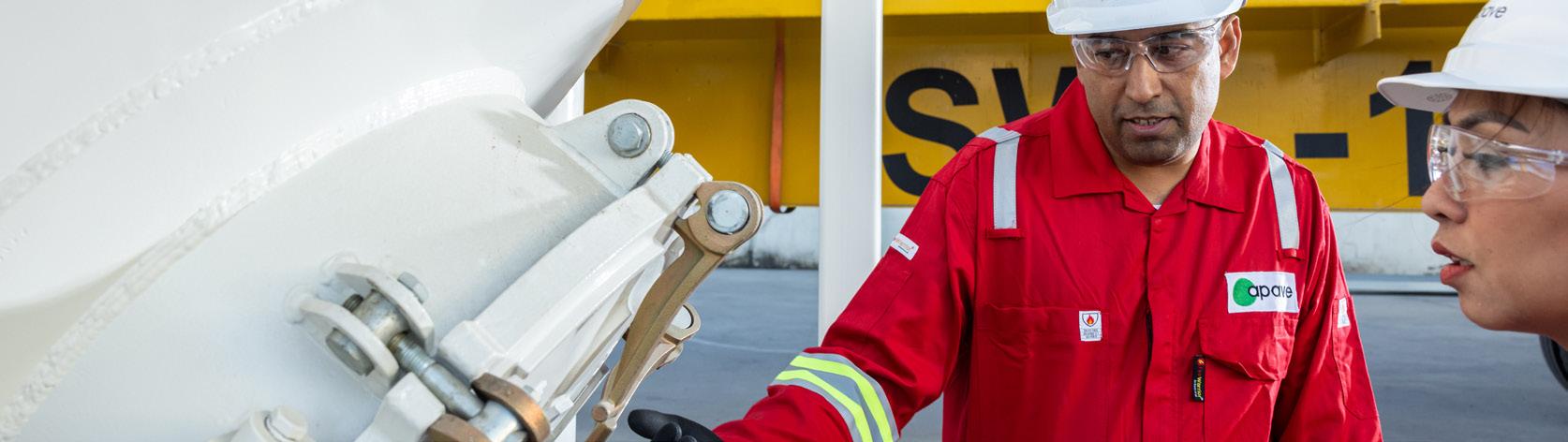
Apave
How a 150-year safety specialist reinvented itself as a UAE risk intelligence hub
Shivakumar Kulkani Regional Manager (ME&I), Risk Consulting at Apave
How is Apave thriving?
Founded in 1867 and operating across 17,500 people and nearly €1.9bn in revenues globally, Apave has spent 150 years building its reputation in industrial risk management. Its Middle East and India division, with 1,100 engineers across 13 locations and more than 1,500 clients in six countries, has taken that heritage and used it to build something the region had not previously seen: a fully integrated risk intelligence hub in the UAE, accredited by the Abu Dhabi Department of Energy as a House of Expertise (HoE) and capable of delivering every safety study discipline under one roof. Group revenues grew 36% in 2025, from €1.4bn to €1.9bn, with a further 20% targeted in 2026.
The challenge - Apave’s Middle East operation provides third-party inspection, non-destructive testing, material testing, technical training, certification and risk consultancy to energy and infrastructure clients across the Gulf, with oil and gas accounting for approximately 60% of activity. Its core differentiator in the region is an integrated safety studies capability covering everything from HAZOP and PHSER through to 3D fire and gas mapping and RAM analysis – disciplines that most competitors deliver as separate, fragmented commissions.
By the early 2020s, that fragmented model was becoming a problem for clients. Projects in the Middle East were growing in scale and complexity, FEED timelines were tightening, and the cost of misalignment between safety disciplines was rising. Operators and EPCs wanted a single technical authority, accountable from the start of FEED, running shared data and consistent assumptions across every workstream. Apave had the expertise to do this. What it needed was the formal standing to say so – and to prove it on a project of sufficient scale and visibility that the model would be taken seriously across the region.
The solution - The first step was accreditation. Apave spent 12 months working through submissions and audits with the Abu Dhabi Department of Energy to earn House of Expertise (HoE) status– the formal recognition that gave it ADNOC-approved
standing to operate as a Technical Authority rather than a service contractor. Only one other TIC firm holds this accreditation.
The second step was rebuilding how the division worked. Eight specialists were hired across HAZOP, fire and gas modelling, integrity engineering and reliability. New project controls, mandatory peer reviews and shared digital twins for fire and gas data were embedded in every workflow – the objective being to run studies as a single integrated process rather than a series of vendor handoffs.
The third step was proving it. In 2025, Apave was engaged on the ADNOC SALT FEED project: a greenfield, integrated facility for chlor-alkali, EDC, VCM and PVC production in the Ta’ziz Industrial Chemical Zone, Abu Dhabi. Thirteen distinct safety studies ran across two parallel sub-projects, each supported by a separate Tier 1 FEED contractor (TechnipEnergies and thyssenkrupp Uhde) covering workshop disciplines such as HAZOP, PHSER, Human Factors Engineering and Inherently Safer Design Review, alongside desktop studies covering 3D fire and gas mapping, RAM analysis, vent dispersion and noise abatement.
Apave ran all 13 as one workflow, the process was characterised by shared data, unified facilitation and a single technical authority accountable to both EPCs and ADNOC. When workshops clashed or dispersion models needed reworking under FEED deadline pressure, the same team absorbed and resolved the issue. The Result: All 13 studies achieved 100% Code 1 acceptance on the first submission with zero rework, earning written commendations from both EPC partners.
The UAE hub is now the blueprint. A parallel technical delivery team is being built in India for asset integrity and corrosion engineering, and the next hub in Saudi Arabia is in development, requiring its own accreditation process with Saudi Aramco. Each hub, once established, carries the credibility of the last – the SALT record is already opening conversations with operators in Qatar, Oman and Kuwait. AI-assisted fire and gas modelling is in pilot, with early results showing a 40% reduction in modelling time at equivalent accuracy.
Ultimately, the ambition is not to be the biggest TIC firm in the Middle East, but to be the one operators call when the FEED schedule is tight and the cost of getting it wrong is too high to accept. The last year or so has certainly placed Apave in a strong position to be that go-to partner.

Story type
#service & solutions (main category)
Benefits
▸ Achieved a 36% increase in global group revenues to €1.9bn in 2025 after securing highly exclusive House of Expertise accreditation.
▸ Delivered 13 integrated safety studies for the ADNOC SALT project on first submission with zero rework and written partner commendations.
Key findings
For young people
▸ Do not wait for the perfect role but seek depth of experience, combining curiosity and grit to make an impact in a transforming energy sector.
For industry
▸ Stop treating safety studies as a cost centre and embrace them as decision accelerators that protect margins and eliminate rework through unified risk intelligence.
For government
▸ Make technical sovereignty a national mandate and require House of Expertise firms for all major energy projects to ensure safer plants and faster operations.
Apave at a glance:
Key products and services: third-party inspection, NDT, testing, certification, training and risk consultancy.
Main industries served:
▸ Oil and gas – 60%
▸ Conventional power – 40%
Headquarters: Courbevoie, France
Year established: 1867
Number of employees: 17,500
Revenue: £1.64bn

Arup
Arup
late‑stage reviewer to early‑stage guide in the Philippines’ renewable energy boom
From late-stage reviewer to early-stage guide in the Philippines’ renewable energy boom


Lynn Dimayuga Associate Director, Business leader at Arup
Lynn Dimayuga Associate Director, Business leader at Arup
How is Arup thriving?
energy
growing fast, with international developers and engineering, procurement and construction (EPC) contractors being drawn into a complex local landscape. Housing nearly 300 professionals and 35 years of in-country presence, Arup has capitalised on this moment by repositioning itself as an early-stage guide for those international players, combining deep local knowledge with the resources of a global £2.16bn firm. The result has been a 65% revenue increase in a single year.
The Philippines’ renewable energy sector is growing fast, with international developers and engineering, procurement and construction (EPC) contractors being drawn into a complex local landscape. Housing nearly 300 professionals and 35 years of in-country presence, Arup has capitalised on this moment by repositioning itself as an early-stage guide for those international players, combining deep local knowledge with the resources of a global £2.16bn firm. The result has been a 65% revenue increase in a single year.
The challenge - The Philippines is one of Southeast Asia’s most active renewable energy markets, but developing infrastructure there demands more than engineering expertise. The country’s exposure to typhoons, significant seismic activity and complex geotechnical conditions sets it apart from the environments that most international engineering firms know well. When EPC contractors from Japan, China and Korea began entering the market in growing numbers, they typically brought design standards and assumptions shaped by their home countries – ones that customarily conflicts with Philippine codes and site realities.
The challenge - The Philippines is one of Southeast Asia’s most active renewable energy markets, but developing infrastructure there demands more than engineering expertise. The country’s exposure to typhoons, significant seismic activity and complex geotechnical conditions sets it apart from the environments that most international engineering firms know well. When EPC contractors from Japan, China and Korea began entering the market in growing numbers, they typically brought design standards and assumptions shaped by their home countries – ones that customarily conflicts with Philippine codes and site realities.
owner’s engineer on major projects, the sharp these discussions. Design review processes became protracted, language differences obscured technical intent, and rework was common when local compliance issues emerged late in the engineering cycle. The underlying problem was structural: Owner’s Engineers were being engaged too late to prevent misalignment from taking root, and reactive checking was proving costly and inefficient for all parties involved.
As owner’s engineer on major projects, Arup Philippines found itself at the sharp end of these discussions. Design review processes became protracted, language differences obscured technical intent, and rework was common when local compliance issues emerged late in the engineering cycle. The underlying problem was structural: Owner’s Engineers were being engaged too late to prevent misalignment from taking root, and reactive checking was proving costly and inefficient for all parties involved.
The solution - The response to the challenge has centred around a deliberate repositioning from late-stage reviewer to early-stage enabler.
The solution - The response to the challenge has centred around a deliberate repositioning from late-stage reviewer to early-stage enabler.
Arup began pushing for engagement before EPC contractors had advanced their engineering, rather than after. The practical mechanism was a basis-of-design document prepared at the project outset: a technical reference setting out Philippine codes, environmental conditions and local requirements that EPC teams were expected to work with-
Arup began pushing for engagement before EPC contractors had advanced their engineering, rather than after. The practical mechanism was a basis-of-design document prepared at the project outset: a technical reference setting out Philippine codes, environmental conditions and local requirements
that EPC teams were expected to work within from the start. On the tendering side, the firm also took a more active role in shaping bid packages, building the right assumptions into the documentation before international contractors even submitted proposals.
in from the start. On the tendering side, the firm also took a more active role in shaping bid packages, building the right assumptions into the documentation before international contractors even submitted proposals.
Crucially, the firm turned to its own network to bridge cultural and language gaps. It collaborated with Arup offices in Japan, China and Korea, company hubs that often have existing relationships with the international players entering the Philippines. The team was therefore able to align engineering philosophies across borders, streamline technical coordination and reduce the friction that language differences had previously caused. Where design disagreements did arise, experienced construction teams were brought in to identify practical solutions that remained fully compliant yet constructible, turning potential disputes into process improvements.
Crucially, the firm turned to its own network to bridge cultural and language gaps. It collaborated with Arup offices in Japan, China and Korea, company hubs that often have existing relationships with the international players entering the Philippines. The team was therefore able to align engineering philosophies across borders, streamline technical coordination and reduce the friction that language differences had previously caused. Where design disagreements did arise, experienced construction teams were brought in to identify practical solutions that remained fully compliant yet constructible, turning potential disputes into process improvements.
The breadth of Arup’s in-house capability has reinforced this. Because the Manila team works across planning, permitting, engineering and construction, its advice tends to reflect how a project gets built rather than how it looks on paper.
The breadth of Arup’s in-house capability has reinforced this. Because the Manila team works across planning, permitting, engineering and construction, its advice tends to reflect how a project gets built rather than how it looks on paper.
The approach has been tested on some of the country’s most significant recent renewable energy developments.
The approach has been tested on some of the country’s most significant recent renewable energy developments.
On the 90MW Cayanga-Bugallon Solar Power Project in Pangasinan, developed by AboitizPower across a 196-hectare site, Arup delivered a raft of services. These included concept design, yield assessment, procurement support and construction monitoring, the latter spanning energy-yield modelling and EPC tender documentation through to commissioning.
On the 90MW Cayanga-Bugallon Solar Power Project in Pangasinan, developed by AboitizPower across a 196-hectare site, Arup delivered a raft of services. These included concept design, yield assessment, procurement support and construction monitoring, the latter spanning energy-yield modelling and EPC tender documentation through to commissioning.
In Zambales, meanwhile, the 283MW San Marcelino Solar project earmarked for expansion to 700MW, experienced severe damage to site access infrastructure after successive typhoons. Here, Arup was appointed to supervise restoration works, a project which served as an important illustration of why local knowledge supplemented by international experience matters.
In Zambales, Arup was engaged to supervise restoration works for a solar project following severe typhoon damage to critical site access infrastructure. The project highlighted the importance of pairing local insight with international experience to navigate complex challenges and enhance resilience.
The firm has also worked closely with major development finance institutions, among them the Asian Development Bank, the World Bank, UK-PACT and the Asian Infrastructure Investment Bank. Those relation-
The firm has also worked closely with major development finance institutions, among them the Asian Development Bank, the World Bank, UK-PACT and the Asian Infrastructure
Story type
Story type
and solutions (main category) #culture #energy transition #people & competency
#service and solutions (main category) #collaboration #culture #energy transition #people & competency
Benefits
Benefits
▸ Increased revenue by nearly 65% in a year, growing from PHP44.9m in 2023 to PHP74.3m in 2024 through early-stage project engagement.
Increased by nearly 65% in a growing from PHP44.9m in 2023 to in 2024 through early-stage project engagement.
▸ Streamlined technical coordination for international EPC contractors, successfully bridging cultural and compliance gaps on major renewable developments.
Streamlined technical coordination for international EPC contractors, successfully bridging cultural and compliance gaps on major renewable developments.
Key findings
Key findings
For young people
young people
Never learning remain curious. thoughts concept is ever small ate new possibilities.
▸ Never stop learning and remain curious. Do not be afraid to share your thoughts and ideas, as no concept is ever too small to create new possibilities.
industry
For industry
art of active listening. close to the people around you, even the smallest nuggets of inspiration can help the future.
▸ Practice the art of active listening. Pay close attention to the people around you, as even the smallest nuggets of inspiration can help shape the future.
For government
▸ Expedite infrastructure development to unlock clean energy capacity. Accelerating these investments will strongly boost investor confidence and attract international developers.
government infrastructure development to unstrongly boost investor confidence and attract international developers.
Arup at a glance:
Arup at a glance:
Key products and services:
integrated engineering, advisory, operational and financial solutions.
Key products and services: integrated advisory, operational financial solutions.
Main industries served:
▸ Offshore renewable energy - 40%
▸ Onshore renewable energy - 40%
▸ Energy storage - 20%
industries served: Offshore energy - 40% Onshore renewable energy - 40% Energy - 20%
Headquarters: London, UK
London, UK
Year established: 1946
Number of employees: 298
Revenue: £2.16bn
ships have opened the door to earlier-stage work – policy advice, market readiness assessments and technical guidance that shapes the ground before commercial developers arrive.
Finances also look promising. Revenue grew from PHP44.9m in 2023 to PHP74.3m in 2024, a near-65% jump, and repeat work and referrals from banks, funders and developers have followed. Offshore wind and battery energy storage are the next target areas for growth, and both are gathering pace in the Philippines.
Investment Bank. Those relationships have opened the door to earlier-stage work – policy advice, market readiness assessments and technical guidance that shapes the ground before commercial developers arrive. Finances also look promising. Revenue grew from PHP44.9m in 2023 to PHP74.3m in 2024, a near-65% jump, and repeat work and referrals from banks, funders and developers have followed. Offshore wind and battery energy storage are the next target areas for growth, and both are gathering pace in the Philippines.

ASCO
Driven to deliver for complex projects
How is ASCO thriving?
Mike
Pettigrew CEO at ASCO
ASCO has undergone a major transformation in recent years, growing internationally, broadening its offering, and building a stronger operating model. While energy remains at the heart of the business, ASCO’S expertise in complex, high-risk environments is being applied successfully across renewables, pulp and paper, industrial manufacturing, defence and critical infrastructure.
Through supply base management, materials, warehousing, environmental logistics, fuels, lifting assurance, workforce solutions and training, ASCO supports clients where supply chains must perform with precision, resilience and reliability.
ASCO stands apart due to the infrastructure behind its: global logistics hubs, operational control centres, fleet, facilities and enabling technology that give clients greater visibility, control and continuity. But the real value lies in how it combines strategic thinking with handson delivery to keep critical operations moving.
The challenge - ASCO’s challenge lay in markets evolving in increasingly complex and consequential ways. Across the sectors ASCO serves, shifting demand, geopolitical uncertainty and sharper priorities around energy security, national security and economic resilience were reshaping the operating landscape. These pressures were not uniform; regions moved at different speeds, facing distinct risks and political, regulatory and economic realities. With nearly 60 years’ experience helping clients de-risk capital projects, ASCO already had the capability. The question was how to apply it more broadly, and how to position the business to deliver it with greater clarity and impact.
The solution - The solution began with recognising that customers needed more than individual services. They needed a partner to look beyond operational symptoms, identify underlying constraints and improve overall performance. ASCO’s unique ability to combine high-level strategy with boots on the ground delivery turns that insight into practical action.
Following Mike Pettigrew’s appointment as CEO in 2023, ASCO put growth at the centre and began implementing a focused three-part strategy: strengthening the core, expanding internationally and extending its capabilities into adjacent sectors. In the UK, that meant
growing market share and deepening existing customer relationships. Internationally, it meant targeting markets including the Middle East, Namibia, Guyana, Suriname and West Africa, where ASCO could support both existing and new customers. The business also applied its expertise in logistics, materials management and operational transformation more widely across offshore wind, industrial manufacturing, metals, defence, and infrastructure, as well as highly specialised areas including nuclear new build, small modular reactor projects.
Having already provided long-term support and solutions for a diversified customer base including the world’s eighth largest aluminium producer, global fashion retailers and the aquaculture industry, ASCO continued to scale into other verticals. At Teesworks, ASCO supports the redevelopment of the former Redcar steelworks site, providing logistics and materials management services for major infrastructure projects, including offshore wind manufacturing and carbon capture and storage. Since 2024, ASCO has deployed a team of 90 personnel on site, with its management of quayside operations and the movement of structures playing a critical role in the successful project delivery.
ASCO also needed to present itself in a way that matched its scale and breadth. In December 2025, the business launched a new visual identity and brought its acquired brands - NSL, Seletar, NORM Solutions and OBM - more clearly under the ASCO name, creating a simpler and more unified proposition. Delivering growth also meant strengthening the business from within. For an organisation operating across more than 70 locations globally, this requires structural, commercial and cultural alignment to deliver at scale. A strong focus was placed on improving visibility and connection to ensure strategy and performance are clearly understood.
Communication helped creating consistency, share progress and connect regional teams. It reinforced that every employee plays a meaningful role in the business’s success, from operational delivery through to commercial performance.
ASCO continued to reinforce the principles that underpin the business, with a strong emphasis on its core obsessions: safety excellence, service excellence and sustainability. They are embedded in how the business thinks, acts and measures itself across the world. With the transformation strategy taking hold by 2024, ASCO secured over £450m in multi-year contracts, demonstrating strong customer confidence in ASCO’s capabilities. Over the last five years, EBITDA

Story type
#diversification (main category) #culture #export #scale up
Benefits
▸ Secured over £450m in 2024 longterm contracts and delivered a 63% EBITDA increase, driven by international expansion and diversification.
▸ Expanded beyond oil and gas heritage, growing non-oil activities to 15% of UK operations and 30% of Norwegian business.
Key findings
For young people
▸ Energy remains a dynamic sector to build a career in offering highly transferable skills that open opportunities across wide-ranging industries.
For industry
▸ Create real value for clients, stay close to their changing needs, and have the confidence to apply proven expertise in new markets.
For government
▸ Adopt evidence-led energy policy and take a long-term view to support the grid stability, energy security and sustainable economic growth.
ASCO at a glance:
Key products and services: full-service logistics, materials and operations management.
Main industries served:
▸ Oil and gas – 85%
▸ Offshore renewable energy – 10%
▸ Others (non-energy): mining, industrial manufacturing – 5%
Headquarters: Aberdeen, UK
Year established: 1967
Number of employees: 1,500
Revenue: £481.11m (2024)
Revenue from exports: 26%
has increased by 63%, driven by international expansion, diversification and improved operational performance.
Diversification is now becoming a meaningful driver of scale and growth for ASCO. Work outside of oil and gas now accounts for around 15% of UK operations and 30% in Norway, with continued growth expected. Energy will remain central to the business, but ASCO’s growing presence across multiple sectors strengthens resilience and broadens future opportunities.

Asset55
A small software team solving one of energy’s most persistent problems

Daniel
Cahalarn
Director at Asset55
How is Asset55 thriving?
Asset55 is a software engineering company that pairs industry-experienced engineers with software developers to tackle data and execution challenges on major energy capital projects. By shifting its focus upstream and engaging clients at the design phase rather than the completions stage, the company has grown its capital projects division by 300% in five years, from supporting two concurrent projects in 2020 to eight in 2025. Today, clients include ExxonMobil, Shell, Equinor and Modec.
The challenge - Asset55 develops execution-specific software designed to improve safety, efficiency and productivity across the full asset lifecycle. Organised across two divisions (Capital Projects and Operations), four products cover the project journey: Validate automates data validation; Execute provides visualisation, analytics and completions enablement; Calculate handles bolt load and flange management; and Operate supports workflow collaboration for shutdowns and turnarounds.
The challenge Validate and Execute was built to address is one the energy industry has struggled with for decades. On major capital projects, the last 25% of physical progress routinely consumes more than 50% of the overall schedule. Fabrication yards, where around 80% of major energy assets are built, tend to be strong in construction but weak in data. Sub-contractors operate independently on spreadsheets, with no shared environment for collaboration. The result is fragmented data that makes the completions phase chaotic and unpredictable. Even though a relatively small SME, Asset55 set itself the objective of developing software to significantly improve delivery performance on the world’s biggest projects.
The solution - Historically positioned as a completions enabler, the company recognised that the real opportunity, and the real value, lay in engaging at the design phase and before the chaos of late-stage execution takes hold. Asset55 therefore made the strategic decision to move further up-
stream. Getting involved early means cleaner data from the outset, fewer design revisions, more accurate material take-offs and a structured environment where all stakeholders can collaborate throughout.
The commercial logic of earlier engagement was equally compelling. A software process that runs across three years or more provides greater revenue predictability than one brought in at the later stages of a project. It also entrenches solid client relationships and creates natural opportunities to expand the product footprint.
To open doors with new clients, Asset55 developed a proactive, low-barrier approach. This has involved offering free pilots and proof-of-concept deployments, typically lasting two to three months, that demonstrate measurable value within weeks. The pitch is grounded in data, presenting clients with analysis of what fabrication yards with similar profiles typically do well or poorly and showing how the company’s software can mitigate those specific risks. This positions Asset55 as an industry expert with software, rather than simply a software vendor seeking a sale.
Internally, the company has pursued relentless automation and efficiency improvement, which has enabled its small core capital projects team to support multiple concurrent major projects. When time permits, the team invests in product development and capability building rather than standing still, giving the model flexibility and scale.
The impact has been tangible. Across 12 of the 14 major capital projects where Asset55 has supported the completions phase, the last 25% of progress was completed in 25% or less of the overall schedule, directly inverting the industry norm. In six of seven cases where the company was brought in reactively after 50% construction completion, it delivered measurable schedule improvements. In four of five projects where it was engaged from the design phase, the project was delivered on or ahead of the original baseline.
The ExxonMobil Uaru FPSO, one of the largest FPSOs ever constructed, illustrates what early engagement can achieve. Over three years, Asset55’s Validate solution drove early alignment of P&IDs and 3D models, resulting in fewer design revisions, more accurate material take-offs and zero technical queries during sub-system walkdowns in the fabrication yards. Execute then pro-

Story type
#optimisation (main category)
#collaboration #digital & AI #transformation
Benefits
▸ Drove 300% growth in its capital projects division over five years by engaging clients at the design phase rather than late-stage execution.
▸ Inverted industry norms on major capital projects, completing the final 25% of physical progress in 25% or less of the overall schedule.
Key findings
For young people
▸ Step out of your comfort zone quickly, ask relentless questions and find a mentor.
For industry
▸ Avoid rushing early decisions on capital projects; success demands robust data foundations before funding.
For government

▸ Review how mineral, oil and gas licenses are managed to better serve national needs.
Asset55 at a glance:

Main industries served:
▸ Oil and gas – 80%
▸ Offshore renewable energy – 10%
▸ Carbon capture – 5%
▸ Others (energy) – 5%
Headquarters: Sunderland, UK
Year established: 2012
Number of employees: 33
vided a shared collaboration environment throughout construction – this created clear status visibility and work front availability. All topside modules were completed six weeks ahead of baseline schedule, with the project on track to be delivered early overall.
With between 70 and 75% revenue growth targeted for the coming year, a pipeline of new framework agreements secured, and machine learning capability in development to generate insights across its four products, Asset55 is building on a foundation that has been carefully and deliberately constructed, one early engagement at a time.


Asset55 Completions
Enablement™
saves Major Operator over 1.5 million manhours and $150 million in capital costs.
Validate Execute


Enabling predictable delivery of complex FPSO projects through Digital Project Assurance and Completions Enablement™
Data Foundation and Validation

Optimal Planning & Systemisation
Controlled Execution | Delivery Phase
Proven FPSO Experience
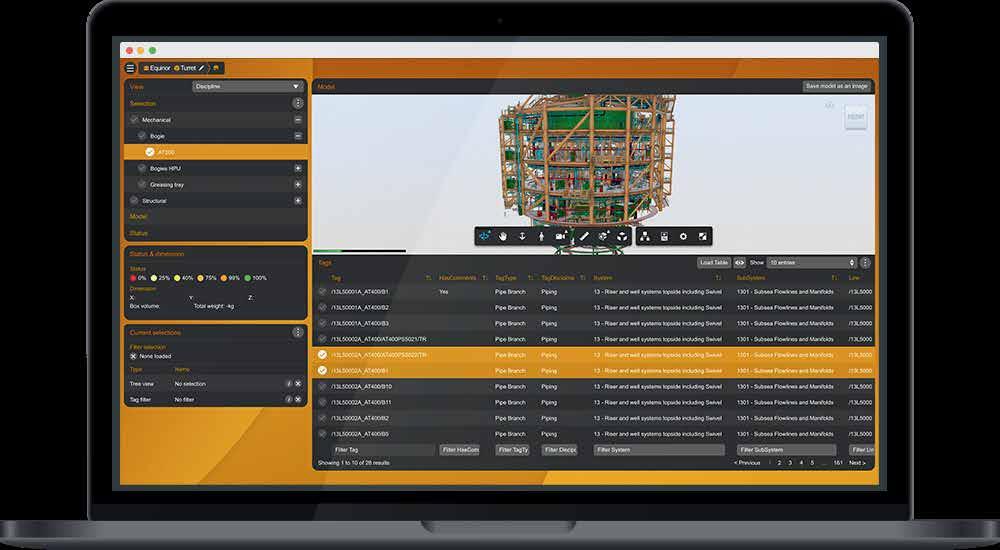
Asset55 has supported multiple major FPSO and offshore projects, including those of ExxonMobil, Equinor, Shell, and MODEC.
Real Results:
Topside modules completed 10 weeks ahead of baseline schedule.
Over 1.5 million manhours saved, and approximately $150 million in capital cost savings realised.
Integration phase finished 3 months ahead of schedule.
Zero data-driven technical queries at mechanical completion walkdown.


Asia Waterjet Equipment
From pandemic challenges to diversified revenue increases

Sam Norris Managing Director at Asia Water Jet
How is Asia Waterjet Equipment thriving?
Asia Waterjet Equipment (AWE) is solving some of the hardest industrial cleaning problems in the Middle East. For more than 20 years, it has engineered customised systems and deployed robotic technology supporting clients operating in hazardous environments. With a commitment to practical expertise, strong relationships, and proximity to clients, the firm has grown steadily and is set to hit the AED100m revenue milestone for the first time in 2026.
The challenge - As a specialist in the design, assembly and supply of industrial high-pressure hydrojetting pump systems for industrial cleaning and maintenance applications, AWE – by its own admission – has been permanently exposed to the cycles of shutdowns and turnarounds. Recently the company also began to see how the traditional pump supply model could be commoditised. Having been built as a local packager and distributor of the best international products for industrial cleaning, it recognised it was always just one cheaper competitor away from losing business and understood the need to differentiate as a system provider and focus on a few areas of diversification.
In 2020, when the pandemic quickly presented challenges as demand dropped sharply and amplified the usual summer dip AWE was forced to reduce costs. Testament to their teamwork, all staff agreed to take a temporary salary reduction to ensure no single person lost their job – reductions that were all paid back in full when business picked up again.
The solution - Determined to innovate in the face of varied exposures and challenges, AWE prioritised three core focus areas to ensure it would not only survive but thrive for the long term.
The first centred on the firm’s physical presence in Saudi Arabia. Despite being its largest market, it had been served from Dubai. In 2020, the firm began assembling its pump systems locally – a move that changed its competitive position.
Very quickly, AWE went from a capable foreign supplier to a genuine local partner. As a result, Saudi Arabia now represents over 50% of total revenue, more than double what it was in 2018. It proved that proximity matters. In an industry where breakdowns happen, an in-country team is worth more than any specification sheet or cheap offer.
AWE’s second ambition was to become an engineered solution provider. Having been primarily a pump and accessory supplier, the firm used its engineering depth to move up the value chain, designing and delivering complete systems rather than components.
This didn’t take long. In 2021, the company delivered its first fully automated NORM scale decontamination system, marking a stepchange for the region. The technology allowed clients to process higher volumes with fewer personnel, in a safer way than manual methods. Since then, the firm has delivered three units across Oman, Kuwait and Saudi, with projects ongoing in the UAE and Asia Pacific.
Thirdly, the company also sought to hone its rental and robotic service offering. Instead of selling technology into a conservative, safety-critical market, the firm opted to prove it through a service-led rental model. Specifically, it introduced hydro demolition robots for removing concrete while leaving the rebars intact, magnetic crawlers for blasting crude oil tanks and ship hulls, and Zone-0 rated robots that can operate inside crude oil tanks without sending personnel into hazardous environments.
This created recurring revenue, built a genuine track record, and opened conversations it would have otherwise not had. As a result, rental and specialist services now represent over 20% of the firm’s total revenue, up from less than 5% a few years ago.
On all three fronts, the firm has had significant successes, driving up revenue significantly. In 2026, it also anticipates group revenue will exceed AED100m for the first time.
Story type
#diversification (main category) #service & solutions #transformation
Benefits
▸ Establishing a local presence in Saudi Arabia strengthened market position, driving over 50% of total revenue and accelerating growth in its key market.
▸ Shifting to engineered solutions and service-led models reduced commoditisation risk, created recurring revenue, and supported growth towards AED100m in 2026.
Key findings
For young people
▸ Start in hands-on roles to understand how things work in practice. Learn from strong leaders, focus on real value, and build skills that compound early.
For industry
▸ Diversify early across markets, products and services before you are forced to. Invest in technology and build strong, aligned teams to stay competitive and resilient.
For government
▸ Provide project-backed financing for SMEs and introduce incentives for technology deployment, not only development, to support growth, innovation and a stronger non-oil economy.
Asia Waterjet Equipment at a glance:
Key products and services: high-pressure hydrojetting systems; dewatering pumps; robotic cleaning, surface preparation and waste handling; and pump rental and specialist services.
Main industries served:
▸ Oil and gas – 75%
▸ Conventional power – 5%
▸ Others (non-energy): marine and construction – 20%
Headquarters: Dubai, UAE
Year established: 2006
Number of employees: 60
Revenue: £21.5m Revenue from exports: 40%

Atlantic
Prioritising people and purpose as well as profit

How is Atlantic thriving?
Daniel Pires CEO at Atlantic
Atlantic’s story is proof that in business, it is possible to do things differently for the benefit of employee wellbeing. The company has transformed form a project-dependent consultancy into a stable, growing business by combining technology innovation with a people-first culture. By diversifying into software development and rethinking how work should operate, the firm has built both predictable revenue streams, an exceptionally engaged team, and a model that proves performance and wellbeing can go hand in hand.
The challenge - Established in 2008, Atlantic is a consultancy firm that operates across tax, advisory and software development, supporting businesses and expatriate professionals with tax, regulatory and international mobility matters.
The firm is no stranger to hard times. Having been founded at the outset of a global financial crises, the company has long demonstrated resilience in hard times and has continues to adapt and reinvent itself as the market has shifted and evolved.
In its early years, for example, Atlantic struggled to maintain regular revenue, as much of its work was project-based. In addition, during the 2015 and 2016 crisis, the company, which works mainly with clients in the O&G sector, also faced challenging moments and had to drastically reduce its team.
The solution - These periods of hardship laid the groundwork for the firm’s focus on continual diversification.
In 2018, Atlantic began strengthening its software development, expanding beyond traditional tax services. From 2019 onwards, it began reaping the benefits of these investments, namely through the development of a tool to control the tax residence of foreign nationals. Having demonstrated the success of its new solution with SBM, other firms began to adopt it in tandem, providing new foundations for stable growth.
A new project was then secured with SBM in 2020, requiring an expansion of the existing team that had previously consisted of just one
employee and two interns. Navigating this growth process amidst the pandemic was no easy task. Previously, there had been a need to be physically close to the company’s server. However, through operational migration to the cloud, remote working became more viable, allowing Atlantic to maintain its activities even in a context of great uncertainty.
As isolation measures began to ease in 2021, Atlantic further sought to expand its team and restructure further, establishing clearer departments, internal policies and HR. Here, Atlantic spent considerable time exploring what kind of company it wanted to be. The answer came from the partners’ own vision: to offer employees the same quality of life they wanted for themselves.
It was from this reflection that the idea of a four-day week emerged, with the desire to show that it was possible to do things differently while maintaining strong financial results.
Between 2021 and 2022, Atlantic implemented the four-day week policy and consolidated its home working model. Today, the team meets in person every two weeks and works remotely on the remaining days.
This culture has since become a significant differentiator, enabling the company to attract and retain industry-leading talent. The firm now has a team of 10 people, many of whom have come from a background of working for the ‘Big Four’, in highly demanding corporate cultures.
Atlantic offers a different path, providing a working environment centred around trust, quality of life, balance and well-being. Holding these values at the core of the company has led to employee satisfaction survey results, with 100% of its staff having stated they were completely happy. Even with some points for improvement, everyone said they would not leave – not even for twice the salary.
To date, there have been no cases of burnout or leave of absence, and the firm’s internal satisfaction also benefits its servicing of clients. Having a stable team with strong retention has enabled easier onboarding of more clients, an improved retention of major projects, and significant investments in employee development.

Story type
#culture (main category) #people & competency
Benefits
▸ Improved employee retention and satisfaction through a four-day workweek and remote working model
▸ Diversified revenue streams through software development and technologydriven solutions
Key findings
For young people
▸ Stay curious, flexible and open to learning from different experiences and perspectives.
For industry
▸ Strong company culture and employee wellbeing can drive retention, productivity and long-term growth.
For government
▸ Tax and political reform could help businesses operate more efficiently and sustainably.
Atlantic at a glance:
Key products and services: tax advisory, global mobility support, software development and HR solutions.
Main industries served:
▸ Oil and gas – 93%
▸ Others (non-energy): Pulp and paper – 7%
Headquarters: Rio de Janeiro, Brazil
Year established: 2008
Number of employees: 11
Further, in the field of technological tool development, the company has managed to optimise processes to the point where it can look at other areas, such as tax, and consider new types of software. Its own experience with the four-day week also provides the opportunity to reflect on HR solutions based on the company’s lived experience.
It is through these combined efforts that Atlantic has continually strengthened its position, combining technical expertise, software development and a culture centred on quality of life. Between 2019 and 2025, the company achieved a revenue of 58.18%, moved towards a more concentrated client portfolio and increased its team from one to 10 employees.
Indeed, its Atlantic’s story is proof that significant success can come from balancing the wellbeing of people and purpose with profit.

ATPI Travel
A culture that puts people at the heart of performance

Lynn Coutts
Managing Director Middle East at ATPI Travel
How is ATPI Travel thriving?
Global travel management company and workforce mobility solutions specialist ATPI Travel has successfully navigated a period of disruption. From global travel shutdowns to sector consolidation, the firm has combined its global scale and deep sector expertise with accelerated technology adoption and a greater emphasis on culture. ATPI has delivered exceptional growth while strengthening employee engagement and client trust.
The challenge - The global travel industry has faced unprecedented disruptions, forcing organisations to adapt rapidly. For companies supporting sectors like energy, marine and offshore operations, the challenge was even greater, as clients still required critical workforce movements despite constantly shifting global restrictions. As the market recovered, new pressures emerged. Aviation and hospitality capacity constraints drove up costs, while energy clients faced operational complexity driven by mergers and the energy transitions. Simultaneously, consolidation within the travel management sector reduced the number of global providers, intensified competition and raised client expectations.
For ATPI, this period coincided with a pivotal transformation. The company recognised culture as a foundation and the complexities clients faced required one source of truth, solutions to pain points and gaps felt managing people movement, cost, safety and security as well as operational cost acquisition. In the Middle East, rapid growth across energy, infrastructure and major projects, particularly in the UAE and Saudi Arabia, drove demand for specialist travel and workforce logistics. ATPI needed to scale quickly without compromising service quality or culture.
The solution - ATPI’s response was deliberate and values led. This included the adoption of Avenir, Direct Travel’s global travel platform, to improve visibility and control for clients operating in high complexity environments. Redesigning the user/traveller personalisation of booking travel, providing solutions to fragmented content and enabling the visibility of this in one environment moving from a legacy old system and completely redesigning a new solution to overcome gaps and challenges while providing one source of truth through consistency
while managing cost, and safety, visibility and control. Proprietary technology to mage crew travel, approval, workflows and enhanced data as well as online booking tools and safety/security visibility, alerts, tracking and management enabling clients to work more efficiently while reducing operating cost and actual cost of travel.
Technology was only seen as part of the solution. At ATPI Middle East, leadership ensured performance never come at the expense of people, treating culture as a strategic asset. By shifting from hierarchy-driven to collaborative leadership, the culture has become more inclusive and people-focused. Diversity and inclusion became lived realities, empowering teams to take ownership. Rather than relying solely on formal programmes, ATPI created pathways for diverse leadership by identifying employees who demonstrated a desire to grow, granting them broader business exposure.
Wellbeing was also positioned as a business imperative. ATPI introduced flexible working, a 4.5 day working week and structured health programmes. During regional instability, leadership implemented real time culture and wellbeing monitoring, daily check ins and access to professional support, incentives for employees going above and beyond, and a path where internally the company trains, develops and promotes the workforce.
One defining moment came when a team member’s daughter had been diagnosed with a life threatening illness. ATPI arranged immediate travel home, mobilised global support and provided financial assistance, while colleagues privately offered portions of their own salaries to help, without expectation or recognition. It’s an incredible culture – one that has delivered clear, measurable outcomes. ATPI Middle East has achieved 97% employee retention, with 92% of employees reporting they can be their authentic selves at work. The regional leadership team is fully female, internal mobility is strong, and referral based hiring reinforces trust. The culture flows through to the client for exceptional service and sector expertise reflected in 98% client retention rate and is a catalyst to the year-on-year growth.
Client feedback consistently highlights ATPI’s responsiveness, professionalism and peopledriven approach. The successful integration with Direct Travel was delivered without client disruption, demonstrating operational resilience at scale. Revenue growth has accelerated, reflecting both market expansion and ATPI’s ability to scale reliably in complex environments. This includes 57% revenue growth in 2021, 99% growth in 2022, 107% growth in 2023, and 39% growth in 2024.
Story type
#culture (main category) #technology
Benefits
▸ Revenues in the Middle East grew by 57% in 2021, 99% in 2022, 107% in 2023, 39% in 2024 and 10% in 2025.
▸ ATPI Travel achieved 97% employee retention and successfully integrated with Direct Travel without client disruption.
Key findings
For young people
▸ Stop overthinking and take action to build practical skills, focusing on strong relationships, curiosity, and resilience rather than just job titles.
For industry
▸ Embrace disruption as an opportunity to reinvent your operating model, using a people-first culture to drive resilient, scalable growth.
For government
▸ Support the UAE’s growth by investing in local talent, regional partnerships and smart, locally driven travel solutions.
ATPI Travel at a glance:
Key products and services: workforce mobility solutions.
Main industries served:
▸ Oil and gas – 60%
▸ Others (non-energy): finance, consulting, sports, IT, retail – 40%
Headquarters: Dubai, United Arab Emirates Year established: 1999
Number of employees: 3,900 (Group) 181 (Dubai)
Revenue: £6.27bn
Elsewhere, partnerships have been established with organisations such as the Sparkle Foundation and Kindness Circle, alongside sustainable travel initiatives and Net Zero commitments, ensuring that ATPI’s commercial success will continue to deliver value beyond the balance sheet. ATPI has proven it can grow rapidly without losing its identity. In a region where speed often leads to burnout and turnover, ATPI has scaled while strengthening culture, using it as the engine behind performance, innovation and long-term success.
Beamex
Winning over a cost-driven sector with cloud calibration and a trusted advisor approach to business

Mark Nicholls
Business Development Manager at Beamex
How is Beamex thriving?
Founded in Finland in 1975, Beamex is a leader in calibration technology, providing field and workshop calibration equipment, calibration management software and related services to more than 15,000 customers across 140 countries. Its LOGiCAL cloud-based calibration platform, adapted in response to a specific client challenge in the energy from waste sector, has become the company’s first multisite cloud contract. So far, it has delivered a significant revenue uplift in that sector and opened doors to further multisite opportunities across power generation and beyond.
The challenge - Beamex’s calibration solutions underpin accurate measurement, regulatory compliance and operational safety across some of the most demanding industrial environments in the world, including oil and gas, nuclear, power generation, pharmaceuticals, chemicals and energy from waste. In the UK energy from waste sector specifically, the company had built a long-standing presence supporting operators running 24/7 incineration facilities that convert household waste into steam and electricity.
Energy from waste is a tightly regulated, cost-driven industry. Operators are audited by the Environment Agency, and permit excursions carry significant financial penalties. Despite this, facilities typically ran lean on staffing, with engineers covering calibration alongside mechanical and electrical responsibilities. Investment in new technology was viewed with caution. Legacy calibration systems were deeply embedded, and the prospect of migrating to something new, particularly something cloud-based, raised concerns about cost, cybersecurity and the impact on existing workflows. Changing minds in this environment required patience persistence.
The solution - Beamex had been working with one of the UK’s leading energy from waste operators, for many years before the conversation turned to software. When a key contact at the client moved into a national role covering all 12 of its geographically dispersed UK sites, it created an opportunity to think about calibration management differently. The existing approach was fragmented and site by
site, with different practices and no central visibility across the estate. A server-based centralised solution had been discussed previously but rejected on cost grounds.
The answer was LOGiCAL, a cloud-based calibration management platform that Beamex had been developing since around 2019 to 2020. Accessed through a web browser rather than requiring local server infrastructure, LOGiCAL provides centralised data management, live instrument performance trending and full audit trails at a price point that makes it viable for a cost-conscious operator. It was is compatible with the handheld MC6 calibrators already in use across the client’s sites, reducing the hardware disruption of moving to the new platform. Deploying it across 12 sites was not straightforward. Each site had its own culture and its own engineers, and a technology that introduced multifactor authentication and a new data environment required careful handling. Beamex worked through the rollout one site at a time, spending time with engineers to address concerns directly, particularly around what digitisation might mean for their roles. The message was consistent: the platform made their jobs more efficient and their compliance position stronger, not more precarious. Cybersecurity alignment with the client’s IT teams was a significant workstream in its own right, with multifactor authentication ultimately developed as a bespoke feature by Beamex’s R&D team in response to the client’s requirements.
The order was placed in 2023. The first sites went live that year, and the final site was onboarded in 2026. The benefits are clear. Centralised oversight allows the client’s control and instrumentation engineers to make informed decisions across all 12 sites from a single platform. Performance trending over time has enabled the business to extend its annual instrument calibration and maintenance outages from 12 months to 18 months, and now to two years, generating significant savings in both direct costs and planning time. Compliance confidence has improved, and the data generated is being explored for further use cases.
For Beamex, the project established LOGiCAL as a proven multisite cloud platform and generated a significant revenue uplift in the energy from waste sector. It has since become the template for similar approaches with power station clients, and inbound enquiries from IT and engineering contacts at other operators have grown.

Story type
#digital & AI (main category) #innovation #optimisation
Benefits
► Delivered a significant revenue uplift in the energy from waste sector.
► Enabled extension of calibration cycles from 12 months to up to 24 months, reducing operational costs.
Key findings
For young people
► Stay curious, keep learning and be adaptable in a constantly evolving industry.
For industry
► Treat calibration as a strategic function and use data, technology and processes to drive operational excellence.
For government
► Invest in infrastructure and support energy-from-waste soluti ons to improve waste management and accelerate energy generati on.
Beamex at a glance:
Key products and services: calibration equipment, calibration management software, and calibration services.
Main industries served:
► Oil and gas
► Nuclear power
► Others (energy)
► Others (non-energy)
Headquarters: Pietarsaari, Finland
Year established: 1975
Number of employees: +300
Looking ahead, the company sees data centres as a growing adjacent opportunity, with temperature calibration requirements aligning closely with its existing capability. Globally, Beamex continues to expand its reach through +80 partners in over 90 countries, supported by offices across 12 locations, from Finland to India.

Bureau Veritas (APAC)
Rethinking what a TIC company can offer as Southeast Asia’s energy mix shifts

Jérôme
Lepine Vice President Industry Asia-Pacific at Bureau Veritas
How is Bureau Veritas thriving?
With over 84,000 employees across 140 countries and group revenues of €6.47bn in 2025, Bureau Veritas is one of the world’s leading testing, inspection and certification (TIC) companies. Its Southeast Asia division has capitalised on the region’s accelerating energy transition by shifting from a service-line model to an integrated, solutions-led approach – winning complex, multi-country frameworks and growing its share of wallet with strategic clients across the region.
The challenge - Bureau Veritas is a world leader in testing, inspection and certification and provides independent assurance services that help clients manage quality, health and safety, sustainability and regulatory compliance across their operations. Its Southeast Asia division serves operators and developers across oil and gas, renewables, infrastructure and data centres, combining global technical expertise with strong local presence and knowledge across the region.
For much of its history in Southeast Asia, Bureau Veritas delivered TIC services project by project, sector by sector. By 2020–21, it was clear this model was no longer sufficient. Energy price volatility, pandemic disruption and mounting pressure to decarbonise were reshaping client priorities across the region. Operators and developers were no longer asking for discrete inspection or certification services. Instead, they wanted integrated partners capable of supporting full transition journeys – combining technical assurance with ESG advisory, digital tools and multi-year frameworks.
At the same time, a rapid build-out of renewables, grid infrastructure and data centres was creating demand for capabilities Bureau Veritas had not yet fully organised itself to deliver. Internal silos, a predominantly oil and gas-oriented mindset and the uneven pace of energy transition across different Southeast Asian markets all added to the complexity of what needed to change.
The solution - Drawing on its global LEAP | 28 growth strategy, launched in 2024, the Southeast Asia division reorganised its commercial teams around sectors and key accounts rather than service lines—enabling it to pursue larger, more complex engagements across disciplines and geographies.
Central to this was the expansion of its Transition Services offer: ESG advisory, decarbonisation roadmaps and assurance services aligned with shifting client priorities. Alongside this, the division expanded its Green Objects solutions—covering renewables, low-carbon fuels and greener assets—to respond to the surge in clean energy activity.
The shift required significant change management. Reorienting teams from a service-line mentality to solutions-led, sector-focused selling was not straightforward, and different Southeast Asian markets required tailored approaches. Attracting and upskilling talent in ESG, new energies and data-driven services added complexity. Bureau Veritas addressed this by investing in digital tools and innovation centres, leveraging its global transition capabilities and adapting them for local markets.
The results are visible in the projects now secured. A recent owner’s engineering contract for a floating solar plant in Malaysia with EDRA Energy illustrates this shift. Bureau Veritas represented the client across the supply chain—overseeing EPCC delivery and ensuring compliance with specifications, standards and timelines. This reflects the integrated, high-responsibility work the previous model could not support.
More broadly, the division has seen revenue and margin growth from transition-related services, higher bid success rates where sustainability and innovation are key, and a growing share of wallet with strategic clients across multiple countries. Data centres have also become a major contributor, with services provided to operators including Microsoft, AWS and Vantage Data Centers.
Crucially, Bureau Veritas’s existing footprint in oil and gas and infrastructure enabled it to cross-sell new energy and ESG solutions, rather than build credibility from scratch.
Group revenues reached €6.47bn in 2025, up 6.5%, with Southeast Asia contributing €1.1bn. Clean energy remains the division’s top priority for growth, with significant opportunity across the region.
Story type
#service & solutions (main category)
Benefits
▸ Shift to an integrated, solutions-led model has increased revenue, margins and win rates in complex, multi-country projects.
▸ Expanded transition and digital capabilities have strengthened client relationships, driving higher share of wallet and growth across clean energy and data centre sectors.
Key findings
For young people
▸ Older generations have taken much from the planet, so younger people must engage in energy issues or face the consequences without influence.
For industry
▸ Trust is key to successful business relationships, and TIC companies help build that trust with partners.
For government
▸ Standards and regulations are essential for safety but must remain practical and focused on real issues, especially health and safety.
Bureau Veritas at a glance:
Key products and services: testing, inspection, certification, audit and compliance services.
Main industries served:
▸ Oil and gas – 30%
▸ Onshore renewable energy – 20%
▸ Conventional power – 10%
▸ Nuclear power – 10%
▸ Offshore renewable energy – 5%
▸ Energy storage – 4%
▸ Hydrogen – 2%
▸ Carbon capture – 1%
▸ Others (energy)– 3%
▸ Others (non-energy): mining, chemicals and manufacturing – 15%
Headquarters: Paris, France
Year established: 1828
Number of employees: 16,000 (APAC)
Revenue: £952m (APAC)

Bureau Veritas (UK & Ireland)
A partner for complex regulations, operations and sustainability ambitions

Dawn Robertson
Global Oil & Gas CAPEX & Decommissioning Director at Bureau Veritas
How is Bureau Veritas thriving?
For nearly 200 years, Bureau Veritas has been the trusted partner for complex regulations, operations, and sustainability ambitions. Today, the company is fundamentally reimagining how inspection, monitoring, and asset management create value by combining deep technical expertise with advanced technology to deliver immediate results and long-term strategic intelligence.
Bureau Veritas operate in complex and high-risk environments where safety, compliance, and performance are not optional but fundamental.
At the heart of this transformation is a clear belief: technology should not replace expertise but enhance it. Bureau Veritas passionately believes in empowering Tech-Augmented Inspection with the vast knowledge, expertise, and essential best practices that exist globally across their energy sector professionals. This ensures that human expertise remains central to every decision, strengthening the interpretation of data-driven insights while providing critical oversight to verify, challenge, and validate digital outputs, safeguarding accuracy, reliability, and regulatory compliance.
Listening to clients and meeting market demands has been pivotal in shaping Bureau Veritas’s strategy. Clients demanded real-time visibility into asset health, predictive intelligence to prevent failures, integrated data ecosystems that eliminate silos, and scalable solutions that maintain rigorous standards across geographically dispersed operations. These market signals prompted a fundamental pivot from bespoke, field-centric services to standardised, technology-enabled solutions.
The challenge - The energy sector faces a critical inflection point. A significant proportion of experienced Oil & Gas professionals are approaching retirement - the industry’s “Great Crew Change” – threatening to erode decades of accumulated knowledge and operational continuity. Simultaneously, clients increasingly expect real-time asset visibility, predictive failure prevention, and seamlessly integrated data platforms that operate consistently across dispersed global operations, all while maintaining uncompromising safety and compliance standards.
This convergence of workforce transition and rising client expectations demands more than incremental improvement. Organisations must capture and embed expert knowledge into
scalable digital systems while ensuring that technological advancement never diminishes human oversight or engineering judgement. The stakes are particularly high in energy infrastructure, where regulatory compliance and asset integrity are non-negotiable.
The solution - Bureau Veritas’s Tech-Augmented Inspection approach delivers both immediate value and long-term strategic benefits. Automated workflows and IoT-enabled inspection tools replace manual documentation cycles, while digital twins and cloud platforms enable continuous monitoring. The results are tangible: accelerated data capture and streamlined report generation have enabled 25% faster project delivery and smarter decision-making, while remote inspections have reduced site visits by up to 40%, minimising personnel exposure in hazardous areas. Advanced analytics have delivered 99% accuracy in compliance reporting, including API 653 applications, ensuring confidence in asset fitness-for-service determinations. In comparison, real-time multi-inspector collaboration and automated punch lists have reduced defect resolution times by 30%.
These advancements are not solely technology-driven, but are underpinned by the integration of experienced inspectors, engineers and specialists whose expertise is augmented through digital capabilities. This ensures that speed and efficiency never come at the expense of engineering judgement or regulatory compliance.
Beyond inspection, Bureau Veritas delivers a permanent, intelligent digital asset that compounds value throughout its lifecycle. 3D point cloud baselines create a permanent digital reference for future inspections and precise trend analysis, while integrated advanced NDT provides a spatial framework for layering inspection data to create a holistic view of asset integrity. Engineering analysis-ready data can be seamlessly exported to structural modelling software, accelerating engineering decisions, while accurate as-built documentation provides a permanent record of facility configuration for future modifications or decommissioning. API-driven integration delivers a single source of truth across enterprise tools, eliminating data fragmentation.
The digitalisation of processes enables clients to visualise, assess and optimise critical infrastructure with precision and confidence. Predictive maintenance and advanced analytics translate into smarter, data-driven decisions, increased safety, improved operability and reduced downtime and costs. By combining advanced analytics with deep domain expertise, Bureau Veritas ensures that insights are not only data-driven but context-rich and actionable. By placing people at the centre of its technological
Story type
#transformation (main category) #digital & AI #innovation #people & competency #optimisation
Benefits
▸ LEAP 28 accelerated Bureau Veritas’ shift from traditional inspection services to technology-enabled environmental compliance and sustainability solutions.
▸ New methane measurement, monitoring and verification capabilities strengthened the company’s position in supporting clients’ decarbonisation and regulatory compliance goals.
Key findings
For young people
▸ Build adaptable technical and digital skills that can evolve alongside the energy transition.
For industry
▸ Standardised, technology-enabled services can improve scalability while maintaining technical quality and regulatory compliance.
For government
▸ Clear and consistent environmental regulations are essential to support investment in emissions reduction and energy transition technologies.
Bureau Veritas at a glance:
Key products and services: testing, inspection, certification, audit and compliance services.
Main industries served: ▸ Oil and gas – 60% ▸ Nuclear power – 15% ▸ Onshore renewable energy – 10% ▸ Offshore renewable energy – 5%
Energy storage – 3% ▸ Hydrogen – 2%
Carbon capture – 2% ▸ Others (energy) – 3%
Headquarters: Paris, France
Year established: 1828
Number of employees: 82,000
Revenue: £5.5bn
transformation, the company ensures that innovation strengthens, rather than replaces, the human expertise that underpins safe, reliable and compliant operations. This approach positions Bureau Veritas as a trusted partner for the future of asset integrity.
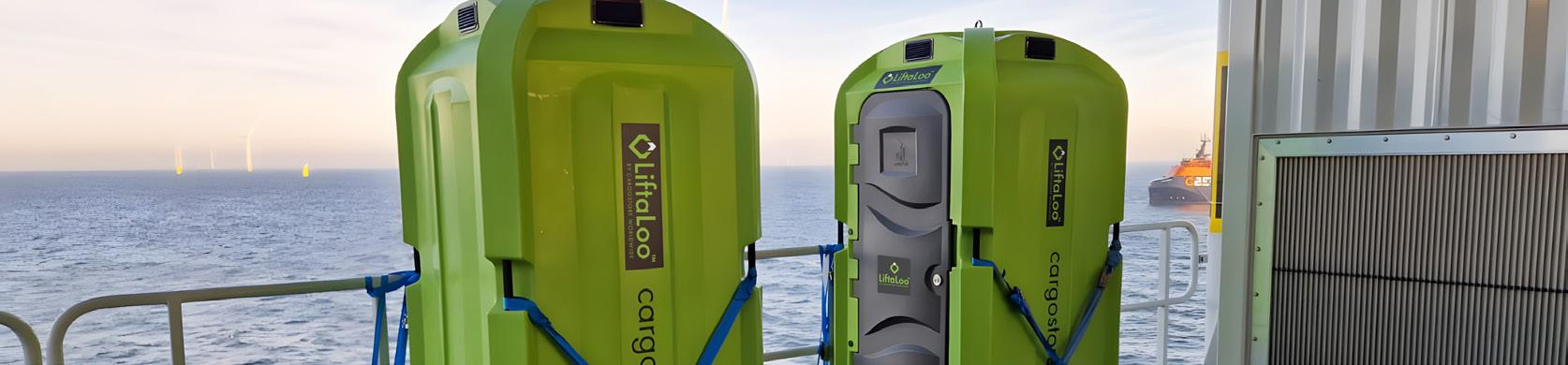
Cargostore Worldwide
Building resilience by diversifying beyond oil and gas
Andrew Hart CEO at Cargostore Worldwide
How is Cargostore Worldwide thriving?
Having strategically diversified beyond its traditional oil and gas base, Cargostore Worldwide has strengthened its position as a global leader in specialist offshore logistics equipment. Leveraging its expertise in DNV-certified offshore containers, the company has expanded into offshore wind, broader renewables, infrastructure and industrial sectors, growing its international footprint. Alongside this, Cargostore has extended its innovation into offshore welfare with the LiftaLoo™, the world’s first certified single-point lift, drop-tested offshore toilet and welfare unit for platforms and turbines, addressing safety, productivity and inclusion challenges in the field. The combination of disciplined diversification and customer-led product development has helped increase revenues from around £8.8m in 2020 to approximately £14.5m in 2024.
The challenge - Cargostore Worldwide is a leading supplier of DNV 2.7-1 certified offshore containers and ISO shipping containers, providing specialist transport, storage, and logistics equipment globally. While traditional oil and gas markets remain important, customer requirements have evolved. For Cargostore, the risk was clear: over-reliance on any single sector would limit long-term growth and expose the business to market volatility. Ensuring sustainable expansion meant deliberately broadening its focus into a wider range of industries, particularly offshore wind and other energy transition markets.
As Cargostore expanded into the offshore wind sector, operational and ethical challenge appeared. By 2021, the industry faced a severe lack of adequate sanitary and welfare facilities for technicians. Out of approximately 8,700 wind turbines across the UK and Europe, only around 500 possessed adequate toilet facilities. Improvised sanitation solutions, such as retrofitted portaloos, were unhygienic, while returning crews to support vessels for breaks proved highly inefficient, time-consuming, and costly. Working offshore without basic sanitary facilities negatively impacted hydration, health, and standard dignity. The industry required a reliable, scalable, and certified solution.
The solution - Cargostore adopted a phased approach, identifying sectors where its logistical expertise could solve complex operational problems. The challenges faced in renewable energy mirrored those in offshore oil and gas,
providing a solid foundation for expansion. The company embarked on a product development journey. In September 2024, at Wind Energy Hamburg, the team met inventor John Aldiss, who had conceptualised a purpose-built offshore toilet. Recognising the product’s potential, Cargostore formed a partnership to bring the concept to market, reviewing the first prototype in Germany by December 2024.
Realising that high-volume manufacturing required specialised capabilities, Cargostore partnered with Tharsus, a technology and manufacturing firm. This tripartite collaboration combined Aldiss’s conceptual design, Cargostore’s market knowledge and asset-leasing expertise, and Tharsus’s manufacturing efficiency.
The LiftaLoo™ is a certified, hygienic offshore welfare unit engineered for harsh marine environments. It features a world-first LOLER-certified single-point lift system, allowing for safe crane use over railings. The unit incorporates removable waste tanks, enabling the toilet to remain in situ while tanks are swapped. Additional specifications include battery-powered hands-free hot water, an anti-legionnaires water filtration system, magnetic toilet lids, solar lighting, and a C-marked smart battery solution suitable for airfreight.
After board-level CAPEX, the team refined the units through further R&D in late 2025. By Easter 2026, the next generation of units entered the market. To deploy the units, Cargostore utilised a “one crew, one loo” leasing model, meaning the welfare unit moves from turbine to turbine alongside the principal maintenance crew. As awareness of the welfare and productivity benefits has grown, some operators are now exploring a ‘one turbine, one loo’ approach, further raising standards and creating additional demand for units across their fleets.
Cargostore has achieved revenue growth alongside the successful rollout of its new product lines. The LiftaLoo™ has seen rapid adoption across the UK, Europe and the Americas. Driven by strong initial orders, the product line is currently projecting a revenue trend of nearly £1m in its first year, with an expectation of 230 units on rent by the end of 2026.
Beyond offshore wind, the LiftaLoo™ has generated demand in the decommissioning sector, where fixed facilities are frequently taken offline early in the process. It has also gained traction in the UK onshore construction market, where improving site welfare facilities is viewed as a step to attract a more diverse workforce, including increasing female representation. The smart capabilities of the newer units even allow for direct feedback from technicians, enabling ongoing product refinement.
By pairing British manufacturing with targeted innovation, Cargostore has cemented its exist-

Story
type
#innovation (main category) #collaboration #service & solutions
Benefits
► Achieved steady revenue growth from £8.8m in 2020 to £14.5m in 2024 through diversification and product innovation.
► Expanded global operations, enabling the deployment of certified logistical and welfare assets worldwide.
Key findings
For young people
► Embrace the industry’s career and equality opportunities with an enquiring mind and strong work ethic.
For industry
► Improve collective communication regarding the energy sector’s impactful role and what it needs from society.
For government
► Establish cross-party policies ensuring the sector remains investable for 30 years, rather than just two.
Cargostore Worldwide at a glance:
Key products and services: offshore containers and ISO shipping containers for global projects.
Main industries served:
► Oil and gas– 45%
► Offshore renewable energy – 25%
► Onshore renewable energy – 5%
► Conventional power – 5%
► Nuclear power – 2%
► Hydrogen – 2%
► Data centres – 2%
► Carbon capture – 1%
► Energy storage – 1%
► Others (energy) – 2%
► Others (non-energy): defence, mining, infrastructure, construction and remote-site operations – 10%
Headquarters: London, UK
Year established: 1993
Number of employees: 24
Revenue: £14.5m
ing client relationships, entered entirely new markets, and established a pipeline for future developments. With strong repeat business and continuous investment in new capabilities, the firm’s ambition to scale sustainably remains firmly on track.
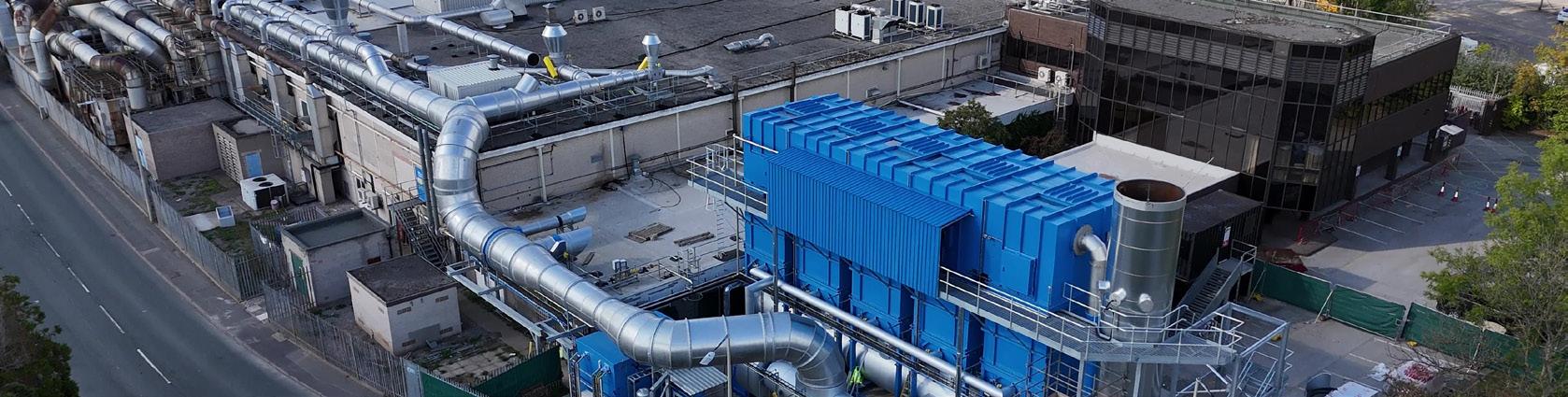
CECO
How a new CEO, strategic acquisitions and a cultural reset broke a 20-year growth plateau

Michael Patterson President, Industrial Air Solutions at CECO
How is CECO thriving?
Five years into a transformation launched by incoming CEO Todd Gleason, CECO Environmental has broken through two decades of near-flat performance to become a highgrowth integrated solutions leader. EBITDA has grown from US$25m to nearly US$90m, typical deal sizes have expanded from approximately US$2m to US$15m and above, and the company secured its largest-ever purchase order of US$135m as revenues rose 37% in 2025.
The challenge - Founded in 1966 and headquartered in Addison, Texas, CECO Environmental provides engineering services across the complete lifecycle of industrial air pollution control systems – from initial process analysis and system design through fabrication, installation, commissioning and long-term maintenance. With around 1,540 employees worldwide and revenues of US$774.4m, the company operates across oil and gas, power generation, data centres and a broad range of industrial end markets.
For much of its history, however, the business fell significantly short of its potential. Revenue growth remained largely flat for 15 to 20 years, a period during which the company operated as a collection of largely independent brands with minimal collaboration and limited cross-selling. A conservative, risk-averse culture had taken hold which was geared towards maintaining stability rather than pursuing growth, and investment in the business remained modest. The portfolio contained genuine technological depth, but with units working in isolation and critical capability gaps preventing fully integrated solutions, that depth went somewhat unrealised.
The solution - Todd Gleason’s appointment as CEO in early 2021 marked the turning point. His mandate was clear: unlock the potential of a portfolio of best-in-class brands that had long operated in silos, and build CECO into the integrated, end-to-end solutions provider the market was increasingly demanding.
The cultural transformation that ensured has been as significant as any structural change made in the organisation. Where the previous culture had been characterised by caution and independent decision-making, the business has adopted a mindset of
innovation, experimentation and calculated risk-taking by empowering teams to pursue growth, back well-reasoned investments and iterate quickly when approaches need adjusting. Long-tenured employees accustomed to autonomous ways of working have been brought into a more collaborative model, and as cross-functional working has delivered tangible results, the shift has become self-reinforcing. Collaboration, as one leader has put it, has become infectious.
Structurally, CECO has consolidated from 13 independent brands into four clearly defined platforms under a Strategic Business Group model. This has created the scale, coordination and shared resources needed to pursue larger and more complex opportunities. Alongside this, a targeted acquisition programme has added around 20 new technologies to the portfolio over five years, with three acquisitions completed within a fivemonth period in late 2024 alone. New teams have entered without legacy constraints –they proactively engage other business units and are helping to embed the cultural pivot across the organisation.
The commercial impact of moving from product sales to integrated, plant-wide solution delivery has been noticeable. Where a US$2m project was once considered significant, the pipeline now regularly features opportunities at US$15m and above. The power of cross-business collaboration is illustrated by a single engagement in which an initial US$1.5m industrial air opportunity expanded to US$9m through integration of capabilities from across the CECO group – a nearly sixfold increase from a single client relationship.
The data centre and power generation markets have provided further proof of CECO’s transformed scale and ambition. Working alongside major industry players including GE and Siemens, the company secured a US$135m purchase order in 2025, exceeding what that business unit had historically generated in an entire year.
Financially, the results have been promising. EBITDA has grown from US$25m to nearly US$90m, revenues have risen more than 20% cumulatively over four years and 37% in 2025 alone, and stock has virtually doubled over the same period. A further 25% revenue increase is targeted in 2026.
Story type
#scale up (main category) #service & solutions
Benefits
▸ Expanded from siloed product businesses into an integrated solutions platform delivering larger, higher-value projects.
▸ Combined acquisitions and cultural transformation to accelerate growth, cross-selling and environmental impact.
Key findings
For young people
▸ Stay adaptable, embrace innovation and build careers around purpose, collaboration and continuous learning.
For industry
▸ Long-term growth depends on combining strategic investment, collaboration and integrated solutions delivery.
For government
▸ Clear and consistent environmental policy is essential to support investment, innovation and long-term industrial growth.
CECO at a glance:
Key products and services: industrial air quality and emissions control solutions.
Main industries served:
▸ Oil and gas – 29%
▸ Conventional power – 26%
▸ Others (non-energy) – 45%
Headquarters: Addison, US
Year established: 1966
Number of employees: 1,540
Revenue: £575m
Beyond the financial metrics, CECO’s environmental contribution has scaled in tandem. More than 32,000 air pollution control systems have been installed globally, with the capacity to eliminate over 4.4bn pounds of pollutants annually, the equivalent of removing more than 50m passenger vehicles from the road.
Future years should see this momentum gather further still. CECO’s ambition is clear: to keep pushing the boundaries of what integrated air quality solutions can deliver, at scale, across global markets.
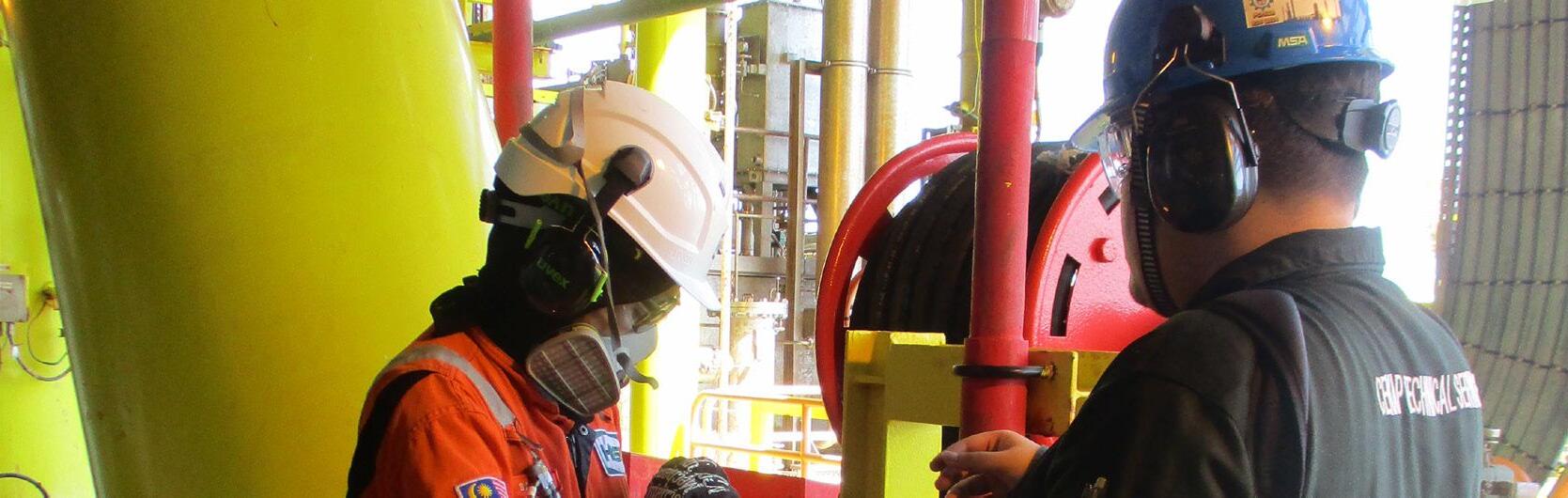
CMP Products
Built on quality since 1957 and still finding new ways to prove it
Cekap Technical Services Sdn Bhd
Cekap
Story type
Story type
#resilience (main category) #digital & AI
#service & solutions (main category)
Benefits
Benefits

▸ Strengthened client trust and specification rates through certified training and consultant engagement.
A story of resilience in a challenging market
be swayed by a cheaper alternative, because they know what is being sacrificed.
Fahad Karim Khan Areas Sales Manager at CMP Products
Sofiyan Yahya Chairman at Cekap
How is CMP Products thriving?
How is Cekap thriving?
CMP Products is a specialist manufacturer of cable glands, cable cleats and accessories and enjoyed a record year in 2024. Supplying high-specification solutions to clients across oil and gas, power generation, renewables, nuclear, data centres and hydrogen from its Newcastle headquarters, the business continued to perform strongly in 2025 against a more demanding set of targets. Currently, it is navigating a live set of geopolitical logistics challenges in the Middle East while continuing to grow its footprint across more than 180 countries.
Established in 1994, Cekap Technical Services has evolved into a resilient and forward-looking organisation shaped by three decades of continuous adaptation. Its success is defined by a proactive embrace of digital solutions and AI, enabling the company to stay ahead of industry shifts while strengthening its technical foundations. Today, Cekap stands as a story of resilience in a challenging market, built on agility, innovation and an unwavering commitment to meeting changing client needs.
▸ Maintained stable annual revenues of around £17m despite market uncertainty, demonstrating strong resilience and a diversified service model.
▸ Increased market share in hydrogen and data centre projects through reliabilityfocused solutions.
The challenge - Founded in 1957 and part of the British Engines Group, CMP Products serves Tier 1 EPCs, OEMs and operators in some of the world’s most demanding industrial environments. Its solutions are specified for use where failure is not an option, such as offshore platforms, hydrogen facilities, nuclear plants and hyperscale data centres. Its brand recognition, built over nearly seven decades, is one of its most commercially significant assets.
The challenge - Cekap Technical Services has become renowned as a leading providing of integrated technical and digital solutions across the energy, petrochemical, power, utilities and marine industries over the past three decades.
With an expansive value proposition, the firm’s core capabilities span project management consultancy, asset integrity and reliability, E&I and telecommunications, metocean and weather intelligence, digital and data solutions, technical workforce solutions for projects and operations, training, certification and competency development, and mechanical maintenance and industrial supply, including certified explosion proof/industrial lighting.
By combining engineering expertise, digital intelligence and on-the-ground execution, Cekap helps asset owners reduce interface risk, improve safety and reliability, and make better decisions across the full asset lifecycle—particularly in complex and aging environments.
That recognition is under pressure from two directions. The Middle East, central to CMP’s growth strategy, has no regulatory mechanism for price harmonisation, creating intense competition from rivals who achieve lower cost points through technical shortcuts rather than operational efficiency. At the same time, geopolitical instability is causing serious logistics disruption, with shipments held up at ports and supply chain delays affecting revenue realisation despite a strong order book. The solution - CMP’s response to price pressure is to make it almost an irrelevance for clients. The strategy has two pillars, both built around getting to clients earlier and deeper than the competition.
With that said, a growing focus area for the company today centres around bringing its deep engineering and asset lifecycle expertise together with practical digital solutions built on real operational data. By aligning technical understanding and data driven visibility, the firm is helping asset owners make more informed decisions.
It’s brought a shift in strategy, with Cekap Technical Services focused on maintaining long-term viability through meeting evolving market needs. The company recognised the need to pivot toward AI and digital solutions as a differentiated offering, while retaining project services as its stable base business.
The first is specification-stage engagement. Here, CMP works directly with consultants and designers at the point where products are being written into project specifications, providing the technical expertise necessary to embed its solutions into designs before competitors have even been considered. When a product is specified by name at the design stage, the later procurement conversation is markedly different. Engineers who understand why CMP’s cable glands and cleats are designed as they are will not easily
The second pillar is training and certification. CMP’s CPD-certified presentations allow consultants to earn up to two hours of professional development credits, a service competitors largely do not offer. Certified installation training accompanies every supply contract as standard, resulting in fewer failures and a body of documented evidence that supports CMP’s case when cheaper alternatives are being evaluated.
However, that strategic pivot hasn’t been without its challenges. While global political and economic uncertainty is impacting the company’s ability to market overseas, it is also facing a degree of reluctance from prospects in adopting AI due to several core barriers.
Many customers hesitated to disclose operational problems or share data, creating a long gestation period for digital transformation. Additionally, AI-driven solutions often require relationship-building, trust and deep contextual understanding – elements that take time to establish.
That evidence has been put to effective use. When low-price competition emerges, CMP conducts a technical gap analysis of the rival product and runs targeted awareness campaigns with consultants and contractors. Those findings go into contractors’ lessons-learned logs, making the cost of a failed installation visible in a way that a purchase price comparison never can.
Key findings
▸ Development of AI-driven solutions – including predictive maintenance and inventory optimisation tools – is generating early industry interest and opening new digital service opportunities.
For young people
Key findings
▸ Focus on long-term, sustainable career growth and use your time purposefully.
For young people
For industry
▸ In an AI-driven world of open information, pursue opportunities widely and follow your interests.
▸ Technical quality and reliability deliver greater long-term value than low-cost alternatives.
For industry
For government
▸ Globalise ambitions and embrace collaboration to overcome capability gaps and accelerate growth.
▸ Greater pricing stability and improved logistics resilience would support industrial growth and supply chain continuity.
For government
The Air Products Green Hydrogen plant at NEOM in Saudi Arabia, the largest green hydrogen facility of its kind in the region, illustrates what this can deliver. CMP’s specification-stage work with the consultants on the project resulted in its products being embedded in the design from the outset –this created a landmark reference site in one of the fastest-growing clean energy markets in the world.
The solution - Despite several challenge, the change in strategy has come naturally for Cekap Technical Services, with the company having long placed significant emphasis on continual improvement and innovation. Having started out as a project management company, tackling challenges head on remains firmly embedded within the firm’s DNA, putting it in a strong position to adapt to market developments and new opportunities as needed. As a result, the company has a strong track record of proactively reinventing its services and offerings as demand has shifted.
CMP Products at a glance:
▸ Create an environment that encourages partnerships and international collaboration to help local companies expand globally.
Key products and services: cable glands, cable cleats, installation training and technical consultancy.
Cekap at a glance:
Main industries served:
▸ Oil and gas – 40%
▸ Data centres – 15%
Data centres represent an equally important growth story. Hyperscale facilities operating at Tier 4 standards have non-negotiable quality requirements – the switching loads in these environments are considerable, and the consequences of component failure are severe. CMP’s solutions are engineered specifically for these conditions, and its growing presence in the sector reflects both the quality of its products and the credibility it has built with EPCs who specify for the most demanding environments. Data centres now account for 15% of revenues, a share that continues to grow as development activity in the Middle East accelerates.
Already, the company has developed two core AI initiatives under its new strategy – a sensorless predictive maintenance solution for equipment, and an AI inventory and optimisation tool. Despite some market hesitancy in relation to AI adoption, both solutions have already generated early interest among industry players, validating the strategic direction.
Implementing this renewed strategy required speed, agility and timely decision-making. Cekap’s leadership emphasised that modern business environments demand continuous responsiveness rather than slow, traditional processes. Fortunately, the company’s 30-year-old management culture that’s built on adaptability, rapid problem-solving and hiring for multitasking capability supports fast service shifts and efficient rollout of new offerings. Staff are encouraged and empowered to grow into new responsibilities, enabling the organisation to transition quickly as market needs evolve.
Key products and services: engineering services, asset integrity, digital and AI solutions, technical workforce and maintenance.
▸ Offshore renewable energy – 10%
▸ Onshore renewable energy – 10%
Main industries served:
▸ Hydrogen – 8%
▸ Conventional power – 5%
▸ Oil and gas – 60%
▸ Nuclear power – 5%
▸ Conventional power – 20%
▸ Energy storage – 5%
▸ Marine ports and terminals – 10%
▸ Onshore renewable energy – 5%
▸ Carbon capture – 2%
▸ Others (energy) – 3%
▸ Others (non-energy): water and sewage – 5%
Headquarters: Newcastle, UK
Year established: 1957
Headquarters: Kuala Lumpur, Malaysia
Year established: 1994
Number of employees: 150
Revenue: £88m
Number of employees: 500
Revenue: £23.9m
Revenue from exports: 10%
Revenue from exports: 10%
Despite market instability and shifting customer expectations, Cekap has maintained annual revenues of approximately RM100m for multiple years. Indeed, its resilience is rooted in its multidisciplinary capabilities, allowing the firm to adjust its delivery model in response to changing demand.
Internally, the British Engines Group has developed BELLA, a proprietary AI platform now integrated across CMP’s operations to improve efficiency and support technical workflows. Looking ahead, the immediate focus is managing the logistics volatility created by geopolitical disruption, with CMP and its regional distributors building up local stock profiles to ensure product availability regardless of shipping delays. The strategy is the same one that has sustained the business for nearly 70 years: be present early, technically credible, and show how choosing CMP offers the greatest value.
By combining deep engineering expertise, practical digital solutions and a proven ability to navigate uncertainty, Cekap has positioned itself for sustained relevance and growth. Despite challenges, the company’s latest strategic pivot is enabling it not just to respond to change, but to stay ahead of it.
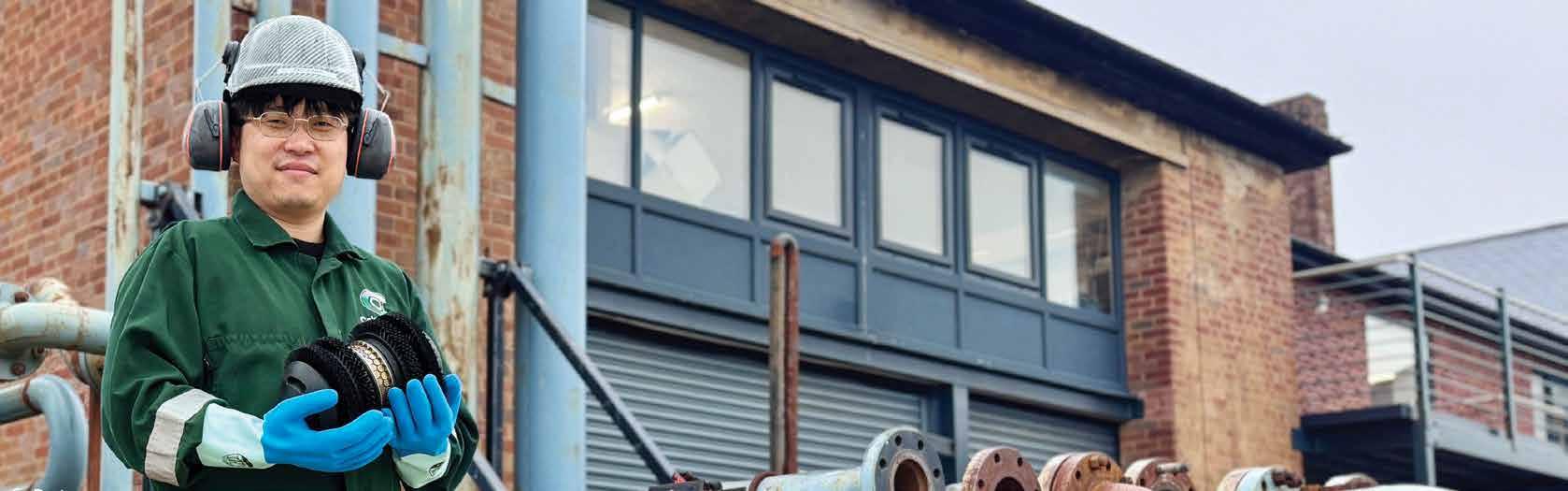
Cokebusters
Reaping the rewards of a highly lucrative academic partnership

Nick Bettley Director of Technology at Cokebusters
How is Cokebusters thriving?
Through its Knowledge Transfer Partnerships (KTPs) with the University of Strathclyde, Innovate UK and the Welsh Government, inspection services specialist Cokebusters has bolstered its technical expertise and strengthened their intellectual property portfolio. These developments have improved inspection tool resolution and accuracy, with its 2026 prototype also delivering total pipe wall coverage. The firm is strongly positioned to diversify the application of their inspection solutions for years to come.
The challenge - As early pioneers in mechanical pipeline cleaning and inspection, Cokebusters has spent more than two decades developing and delivering intelligent pigging solutions to assure asset integrity of pressurised systems across the energy and utilities industries. With their patented single module smart pigs and one of the largest inspection test loops in the UK, the company has long been regarded as a craft leader. By the early 2020s, Cokebusters determined a further technology step change was needed.
With the introduction of AI and advances in sensors and electronics, the market for innovative intelligent technologies was becoming increasingly competitive. Operator expectations swifter analysis, more detailed insights and lower costs were on the rise. Cokebusters existing smart pig technologies could rapidly inspect a high proportion of the pipe wall surface; but there was room for improvement. To retain their leading edge, the firm needed to accelerate its research and development, as recognised by development engineer Nick Bettley during the pandemic. The company also determined it needed access to the latest ultrasonic engineering techniques and expertise.
The solution - The turning point came in 2021 after Managing Director James Phipps joined the business, bringing experience in academic collaboration. Through his links with the Research Centre for Non Destructive Evaluation (RCNDE), a consortium of 30 to 40 supply chain companies, he opened dialogue with the University of Strathclyde, a renowned centre for ultrasonic research.
Initial exploratory discussions in March 2022 quickly revealed a robust partnership potential. By December 2022, Cokebusters had formally
Gordon Dobbie
Professor Ultrasonic Engineeing at University of Strathclyde
applied for a Knowledge Transfer Partnership (KTP) with Strathclyde, supported by the RCNDE, UK Research & Innovation (UKRI) and the Welsh Government. With access to funding and cutting edge academic and industrial expertise, in conjunction with superior research facilities the partnership would help Cokebusters in developing the next generation of smart pigs.
The KTP, which began in early 2023, established a structured development programme enabling the extended teams to challenge existing assumptions and revisit early design concepts. Several engineering models were explored and progressively discounted, based on the constraint that the single body tool must be retained. Strathclyde University’s extended technical team and simulation environment proved invaluable. Through these efforts, a new acoustic transducer design was prototyped, tested and validated. Electronics were also extensively iterated, whilst device software was strengthened to handle up to 60,000 wall thickness measurements per second. The partnership delivered against stringent technical and commercial milestones. Cokebusters internal technology group, now led by Bettley, expanded to accommodate additional personnel, supported by a new development office space. Furthermore, a patent was filed in January 2024 and published in July 2025.
By the end of the first programme, in June 2025, the KTP was awarded a Grade A (Outstanding) by UKRI, validating both the technical progress made and the strength of the collaboration. Encouraged by the success, Cokebusters had already launched a second KTP with Professor Dobbie at Strathclyde, focused on data science and software.
Now, nearing the end of the second KTP newly developed machine learning algorithms are proving transformative in terms of the interpretation speed of inspection ‘A-scan’ assessments. The technology is releasing precious time and reducing human error. The new code has already been incorporated into the inspection platform enhancing the probability of detection of defects. The impact of both these KTP projects has been profound. Cokebusters now has a 2026 prototype on track to deliver 100% tube wall coverage using a single body tool, where competitors often require two or three. As well as optimum coverage the ability to detect much smaller defects has also emerged.
Story type
#collaboration (main category) #innovation #technology
Benefits
► Delivered a 2026 single-body prototype achieving 100% tube-wall coverage and improved defect identification.
► Expanded its internal technology group with R&D specialists and strengthened its intellectual property portfolio through a successful university partnership.
Key findings
For young people
► Consistency is key, as is showing up. Don’t try to grow too quickly, understand the basics and build a strong foundation before you look to progress.
For industry
► Invest in training great people and leverage university partnerships to boost productivity and global competitiveness.
For government
► Maintain the investment in science and technology. Keep focus on the SME community where results can often be brought to market more swiftly.
Cokebusters at a glance:
Key products and services: mechanical
tube cleaning, cleanliness verification, patented intelligent pigging and asset integrity inspection.
Main industries served:
► Oil and gas – 98%
► Onshore renewable energy – 2%
Headquarters: Chester, UK
Year established: 2005
Number of employees: 100
Revenue: £15m
Revenue from exports: 95%
With more robust technology, a stronger inspection service and the company’s intellectual property portfolio substantially expanded, Cokebusters is well positioned to continue leading the market it helped establish back in 2000. The new Mark 7 technology is already queued for delivery to our waiting refinery customers in the USA (Q4 2026) where deeper insights on critical assets are required.
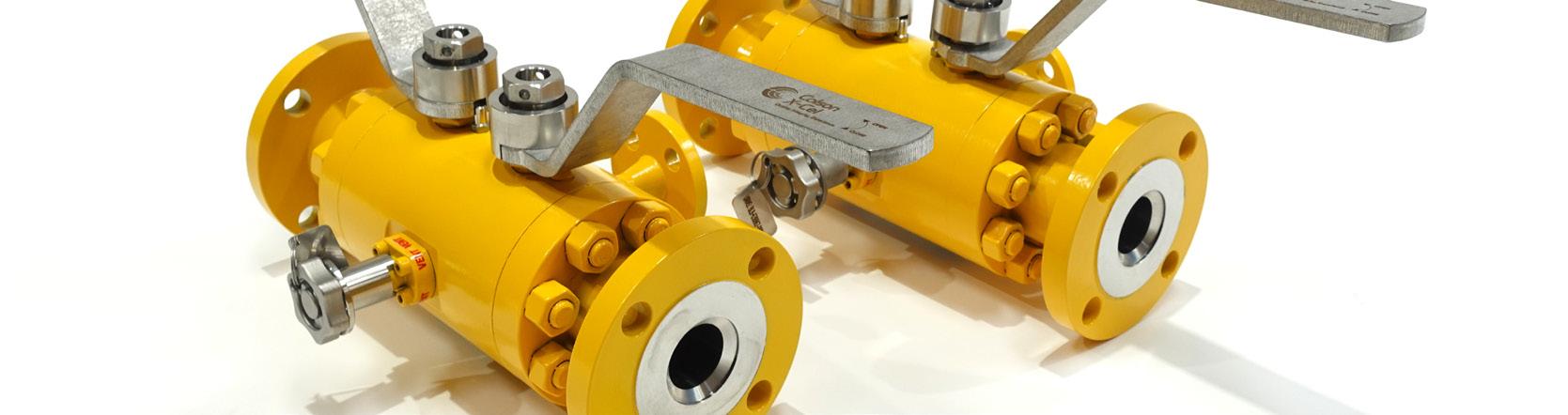
Colson Valves
New factory, new regions, and three new R&D programmes
James Hinchliffe Sales Director at Colson Valves
How is Colson Valves thriving?
Through continued investment in R&D, operational optimisation, and strong collaboration with clients and end users, Colson Valves is driving targeted global expansion in key markets. The business has strengthened its partner network, expanded its team, unified operations, and continued to invest in staff development.
Following the successful transition into its new, fully operational facility, the company is now better equipped than ever to support growth and enhance its product portfolio. As a result, revenue has nearly doubled over the past six years, profitability is positive, and Colson Valves is well-positioned for the next phase of expansion.
The challenge - Established in 1991, Colson has built a reputation as a leader in valve technology, designing and manufacturing double block and bleed and instrument valves from its UK facilities.
23 years later, it was acquired by Indus Holdings AG, now within their Advanced Flow Technologies division, marking a period of transition
Between June 2024 and March 2026, the business successfully delivered a full factory relocation while navigating fluctuating oil and gas markets. During this time, it has laid the foundations to broaden its market focus, with targeted development into hydrogen, sustainable aviation fuels (SAF), nuclear, carbon capture, and defence/marine sectors.
This required maintaining strong communication. Alongside its presence in regions such as Italy, Colson Valves also expanded into new markets, including Newfoundland, Canada and Azerbaijan.
Within oil and gas, the company also faced evolving compliance requirements and changing customer expectations, including demand for smaller, faster batch orders.
The solution - Early on, Colson Valves recognised that agility would be essential. With operators becoming more demanding around cost control, health and safety and specifications, the company prioritised flexibility, fast turnaround, and continuous value delivery.
Open communication became central to this approach, both internally and with clients and end users. Regular dialogue helped build a stronger understanding of customer needs across the business, highlighting where changes were required and where competitive advantages could be realised. This, in turn, supported a more strategic sales approach.
The strategy built naturally on development work undertaken pre-merger during the pandemic, when the business first began moving into more project-based work. This was further accelerated following the acquisition, driving increased investment in R&D. Today, Colson is progressing three major programmes: subsea valves, hydrogen, and a low-emissions range.
Investment continues across training, development, and capital equipment, supported by the successful transition into a new, fully operational facility and an ongoing rebrand, all strategic developments designed to support future growth.
Operational optimisation has also played a major role. The company has strengthened its partner network, establishing a distributor in Singapore and refining its Italian distribution structure. Targeted hires across key markets have reinforced this progress, including a dedicated US sales manager appointed in July 2025, alongside the company’s established Middle East presence.
This focused approach has delivered tangible results. In Brunei, for example, Colson X-Cel Valves had a long-standing distributor but lacked formal approval with a major end-user operator. Following proactive engagement during a customer visit to the factory, approval was secured, converting previously anecdotal sales into hundreds of thousands of pounds in revenue.
Securing approvals has also proven fundamental. Product qualification testing, subjecting valves to extreme conditions over several weeks, combined with robust procedures and supporting documentation, has strengthened customer confidence and enabled further growth.
Internally, the culture has evolved significantly. Open communication and regular meetings are now embedded, while the move to a single facility has further unified operations. The business has also continued to strengthen its talent base, with new hires, a dedicated business development team, ongoing investment in training, employees enrolled in the BVAA Future Leaders programme, and two apprentices progressing within the company.
Story type
#scale up (main category) #culture #people & competency #service & solutions
Benefits
▸ R&D investment, operational optimisation and strategic hires strengthened global positioning, enabling expansion and a stronger partner network.
▸ Improved client engagement and a strategic sales approach increased approvals and revenue opportunities, supporting scalable growth with revenue nearly doubling in six years.
Key findings
For young people
▸ Be enthusiastic, keep learning and work hard—companies will support and invest in you.
For industry
▸ Prioritise collaboration with SMEs through long-term contracts and better payment terms to support the economy.
For government
▸ Support a pragmatic energy transition by recognising the North Sea’s role, incentivising investment and strengthening UK skills and supply chains.
Colson X-Cel at a glance:
Key products and services: design and manufacture of double block & bleed and instrument valves.
Main industries served:
▸ Oil and gas – 80%
▸ Others (non-energy): marine and defence – 20%
Headquarters: Rotherham, UK Year established: 1991
Number of employees: 44
Revenue: £6m
Revenue from exports: 49%
The focus has been on building from core strengths in oil and gas, while positioning the business to enter adjacent markets aligned with its solution-led approach. Where the business was previously weighted 60% towards the UK and Europe and 40% export, it is now actively targeting broader international growth.
Today, that strategy is delivering clear momentum. Revenue has nearly doubled over the past six years, profitability is positive, and Colson Valves is well-positioned to capitalise on its investments, strengthened capabilities, and expansion plans for the future.
Connectwell
How solving a Ventilation System problem in a Control Panel opened a new door towards global oil and gas market
Gurpreet
Singh
VP META Region at Connectwell
How is Connectwell thriving?
Three years after launching its Fan Monitoring and Control Device, Connectwell Industries has grown that product’s revenues from an initial US$250,000 to more than US$1m, achieved a 20% year-on-year sales growth rate since the product’s introduction, and used its success to open the broader Connectwell product range to major automation contractors across the Middle East and Africa. The Maharashtra-based electrical component manufacturer, which produces more than 2.5m components daily for clients across 80 countries, has found in the oil and gas sector a new market.
The challenge - Connectwell Industries manufactures electrical connection and automation solutions across terminal blocks, power supplies, interface solutions and cable management. Its products serve the oil and gas, power, process automation, transportation and data centre sectors, with 30% of revenues coming from export markets. The META region (Middle East, Türkiye and Africa) accounts for 40% of that export revenue, with the Americas and Asia Pacific making up the remainder.
Breaking into the oil and gas process industry had been the central commercial challenge for years. Major automation contractors, which act as system integrators for the large national oil companies and operators that dominate the sector, had long-standing relationships with well-established European and American component manufacturers. For Connectwell with equivalent or superior technical capability, gaining a foothold required more than competitive pricing.
The solution - Three to four years ago, a key oil and gas end user in the Middle East raised a recurring problem with its automation contractors. Each component inside an Automation Panel located at remote sites, emitted its own heat and the temperature inside the panel raised to a non-desired level and external atmospheric temperature even raised it by some degrees. As a traditional method louvres were used to dissipate the heat and improve ventilation, but it was not the best solution. The cooling fans in remote control panels were failing at high rates, and each failure was taking more than seven days to diagnose and fix. At offshore
and remote onshore installations, that downtime was costing millions of dollars per incident.
This was a huge concern, as this generated heat was hampering the working efficiency of the panel. What was more concerning was to protect the critical components from getting overheated as these components were extremely valuable. Monitoring and dissipating this generated heat was now an important matter to be taken care of. Connectwell had been in regular contact with major automation contractors and understood the problem well. The company committed to solving it and, following six to eight months of intensive research, development and customer testing, launched the Fan Monitoring and Control Device in 2023.
Connectwell addressed the above challenges with a unique solution called the Fan Monitoring and Control Device “CFMCD”. This microprocessor-based device not only monitors the temperature levels inside the panel but also controls the working of the fans installed. A completely factory-built and pre-calibrated product helped the customer to keep the panel temperature at desired levels and this in turn improved the working efficiency of the automation panel.
Customer testing confirmed a 70% cost reduction compared to existing solutions, with a saving of at least US$600 per panel on implementation. Across the thousands of control panels on a single facility, that figure scales rapidly. The automation contractors found an additional benefit: the device consolidated several previously separate components into one, simplifying procurement and installation. The product passed technical approval after detailed review with the client, and the first major deployment confirmed the results.
The commercial success soon followed. All major automation contractors in the region took interest following the first deployment, and confidence in Connectwell’s innovation capability translated directly into appetite for the wider product range. Far more than a product sale, it prompted a relationship reset both with contractors who had previously defaulted to established European and American suppliers now actively engaging Connectwell across a broader set of requirements. A second significant contract followed at the Dangote Petroleum Refinery in Nigeria, extending the product’s reach into Africa.
Connectwell now holds 15-plus international certifications including UL, CSA, VDE and ATEX, which enables it to meet the compliance requirements of markets that had previously been inaccessible. Meanwhile, the data centre
Story type
#innovation (main category) #optimisation
Benefits
► Grew Fan Monitoring and Control Device revenues from US$250,000 to over US$1m, achieving a 20% year-onyear sales growth rate.
► Expanded its product range to major automation contractors and diversified into the data centre market, which now accounts for 20% of revenues.
Key findings
For young people
► Upskill with AI tools to harness your familiarity with data and ensure you channel information effectively.
For industry
► Bridge the gap between leadership and the incoming generation to adapt to fast-changing cultures.
For government
► Create transparent supplier pre-qualification processes for emerging sectors like data centres, matching the standards of established industries.
Connectwell at a glance:
Key products and services: manufacturer of electrical connection and automation solutions.
Main industries served:
► Oil and gas – 40%
► Conventional power – 40%
► Data centres – 20%
Headquarters: Dombivli, India
Year established: 1978
Number of employees: +1300
Revenue from exports: 30%
market has emerged as a new growth opportunity and already accounts for 20% of revenues, with the same technical credibility that opened oil and gas doors now being applied to a sector with similarly demanding specifications. Revenue in the META region grew 15 to 17% in 2025, a reflection of a consistent upward trajectory that began with a single product.
Crescent Engineering FZE
Committed to creating energy solutions for a sustainable world

Hardik Mody
Sales Manager at Crescent Engineering FZE
How is Crescent Engineering FZE thriving?
Crescent Engineering FZE continues to stand out in the process package industry through its flexible, innovative, and partnership-led approach. By moving beyond one-size-fits-all solutions and truly understanding client needs, the firm has recently delivered a highly effective bespoke solution in the paper mill industry, leveraging its expertise in treating complex industrial water challenges to secure repeat business and upon up new growth opportunities.
The challenge - Founded in 2015, Dubaibased Crescent Engineering FZE has established itself as an acclaimed process engineering, system integrator and package supplier for water treatment and oil and gas separation in the past decade. Today, the firm provides a range of end-to-end solutions spanning segments such as industrial water treatment, gas dehydration, gas filtration and separation, fuel gas conditioning and carbon capture systems.
At its core, the firm is committed to creating energy solutions for a sustainable world, working closely with clients to push boundaries and provide innovative solutions to complex challenges. Of late, that has included supporting an industrial firm in Abu Dhabi facing significant hurdles.
For Crescent, it was a challenging project in a novel sector. The client was a reputed white paper manufacturer in Abu Dhabi that was planning to scale up its paper production capacity. With the planned expansion, the client also needed an efficient solution for treating the increased volume of effluent water generated from the process.
The customer had already hit several stumbling blocks. Prior to approaching Crescent, it had been in discussions with several traditional suppliers who primarily offered standard catalogue solutions designed only to match the required effluent flow rate. However, the proposals lacked the necessary customisation to address the specific process requirements of the plant, or to optimise the treated water quality to meet the environmental specifications for land-based liquid discharges to the marine environment in Abu Dhabi.
With the client looking for a custom solution, Crescent set out exploring how it could apply its process engineering expertise in a new industrial segment while maintaining the same engineering and project execution standards that it has become renowned for.
The solution - Leading with its “partnering for solutions” mantra, Crescent explained its focus on carefully understanding unique challenges and working closely with clients to develop the most effective and sustainable solutions. Through this emphasis, and detailed break-even calculations and a clear assessment of the environmental impact, the client was convinced to move forward.
With the client onboarded, Crescent understood that it had to move beyond a standard product approach and develop a tailor-made engineering solution aligned with both the client’s operational needs and the stringent environmental discharge requirements.
As part of its assessment, the firm conducted detailed water sampling and carried out a thorough review of the applicable local discharge regulations. It also drew on its previous experience in handling significantly larger volumes of hydrocarbon-contaminated water with high levels of suspended solids in the oil and gas sector. This enabled it to apply similar engineering principles to address this challenge.
In turn, the company developed and simulated a treatment process flow scheme that integrated conventional membrane systems with biological separation, supported by carefully optimised chemical dosing. It was an approach that enabled it to achieve efficient treatment performance while minimising brine discharge and ensuring compliance.
It was a highly effective, custom solution –one that has helped the company in going from strength to strength in recent years. Indeed, the project has opened the door to a new segment of clientele in the paper mill industry, which is a predominantly high water-consuming sector facing increasing challenges in meeting the latest stringent local environmental standards.
It’s flexible, innovative approach has driven a notable increase in revenue through both new client acquisitions and repeat business, rising from AED10m in 2021 to AED 75m in 2024. Meanwhile, several of its clients also won notable awards at COP 28, in part thanks to the innovative solutions that Crescent has helped to deliver.
Story type
#diversification (main category) #enviromental sustainability & social impact
Benefits
▸ Revenue growth from AED10m (2021) to AED75m (2024).
▸ Expansion into a new industrial segment (paper mills).
Key findings
For young people
▸ Take initiative, stay adaptable and actively build relationships.
For industry
▸ Move beyond standard products and invest in customised, value-driven engineering solutions.
For government
▸ Support innovation and sustainable technologies through funding, infrastructure and clearer regulatory frameworks.
Crescent Engineering at a glance:
Key products and services: design and supply of modular packages for water treatment, gas separation and carbon capture, with engineering support.
Main industries served:
▸ Oil and gas – 65%
▸ Carbon capture – 10%
▸ Others (energy) – 15%
▸ Others (non-energy): industrial water treatment – 10%
Headquarters: Dubai, UAE
Year established: 2015
Number of employees: +50
Revenue: £20m
Revenue from exports: 80%
Client surveys and feedback have shown positive results, as have the firm’s employee engagement efforts and retention rates –strong foundations from which the firm can continue to excel moving forward.

Crowcon Detection Instruments
A
story of market consolidation through innovation

Jamie Dyer
Technical Director at Crowcon Detection Instruments
How is Crowcon thriving?
Crowcon Detection Instruments’ success stems from a consolidated market position, research-driven innovation and revitalised product lines. Faced with a stagnating portable segment and growing competitive pressures, the company chose to invest in redevelopment rather than retreat. Through deep customer insight, extensive product re-engineering and a renewed focus on serviceability, usability, and connectivity, Crowcon rebuilt its portable offering, strengthening market share and momentum.
The challenge - Since 1970, Crowcon has manufactured fixed systems for site-wide protection and portable wearable devices that protect workers. Historically balanced across fixed, portable and aftermarket products, Crowcon noticed its portable segment declining while fixed detection grew. This raised a question about whether the business should move away from portable products or reimagine it’s offering to protect its long-standing position.
The market environment made this challenge more acute. New disruptors were entering the space with wearable devices, offering more complete worker safety solutions. At the top end of the market, these systems were raising expectations beyond the capabilities of Crowcon’s existing devices. Meanwhile, at the compliance-focused end, new entrants were driving increased competition and eroding Crowcon’s traditional value led position. The company was squeezed between more advanced premium offerings and a growing number of lower cost alternatives. Furthermore, COVID-19 component shortages forced costly product redesigns and recertifications, highlighting structural weaknesses in older architectures and the need for long-term resilience.
The solution - Crowcon decided to invest in innovation at its portable product line. Early internal discussions centred on the need for substantial change rather than incremental adjustments. The company initiated extensive market research to understand how customers were using devices and where improvements would deliver meaningful value.
The most significant insight to emerge was the challenge of asset management. Large organisations were operating thousands of devices across multiple sites, each requiring calibration every six months. For workers, the detector simply needed to function reliably to carry out their jobs safely. For the organisations managing them, however, overseeing large fleets was labour intensive and inefficient. The research highlighted that Crowcon had long focused on hardware alone, while the market now required integrated hardware and software capabilities.
A key development was a modular design that allowed the sensor module to be separated easily from the device. This made calibration and sensor replacement far simpler, eliminated the need for extensive buffer stock and ensured workers were not left without equipment. As one customer put it, “It’s the fact we’d have your trays on our shelves and in our trucks…it’s an instant swap instead of waiting four weeks”. It also enabled the business to match the most appropriate sensor technology to each application, increasing uptime and improving logistics for customers managing large operational fleets.
Connectivity became another core focus. Bluetooth integration allowed devices to communicate with asset management systems, providing clearer information about device status, allocation and performance. NFC technology was added across the portfolio to enhance speed and ease of use with the mobile app. Alongside the devices, the company redesigned its all-in-one docking station, concentrating on customer pain points such as bump and calibration turnaround times, and data transfer. The goal was to deliver the fastest and most intuitive experience available.
Crowcon overhauled its internal processes. Customer consultations were outsourced to ensure impartiality and rapid prototyping enabled the team to refine specifications continually based on feedback. A strengthened product management team developed formal business cases, while new roles were created across certification, research and development and mechanical design. Crowcon also invested in its software team in India to support the connectivity features.
Crowcon has now launched and is shipping its new IQ portable range, featuring extended battery life, modular sensors, and seamless connectivity to enhance safety. The range is delivering strong commercial performance, with a 25% return on investment achieved within

Story type
#innovation (main category) #collaboration #digital & AI #service & solutions
Benefits
▸ Delivered strong commercial performance, achieving a 25% return on investment within the first three months, with a further 25% in the current pipeline and overall ROI tracking ahead of target.
▸ Drove growth through the launch of extended-life portable devices and modular, field-proven wearables, increasing revenues (including a 5% uplift in portable sales), winning new customers, and regaining market share in key sectors such as utilities.
▸ Recognised for design excellence with a Red Dot Design Award.
Crowcon at a glance:
Key products and services: manufacturer of gas detectors and air quality monitors.
Main industries served:
▸ Oil and gas – 23%
▸ Energy storage – 13%
▸ Hydrogen – 1%
▸ Others (non-energy): water and wastewater, marine, petrochemical, chemical, food and drink, mining, steel and pharma – 63%
Headquarters: Abingdon, UK
Year established: 1970
Number of employees: 260
Revenue from exports: 62%
the first three months and a further 25% represented in the current pipeline (as of April 26).
Sales of the new area monitor, DetectiveIQ, are up 59% compared to the same period for the legacy product, contributing to a 5% uplift in portable revenues last fiscal year and reversing a previous decline. The launch has also helped secure new customers, deepened engagement and regain market share in key sectors such as utilities.
In recognition of its design excellence, the DuoIQ range has also been awarded a Red Dot Design Award. With an expanded and future-ready range of portable solutions, including its IQ range, Gas-Pro line and its further enhanced single-gas and multi-gas detectors, the firm has restored momentum in a critical part of its business, and created a strong foundation for future growth.
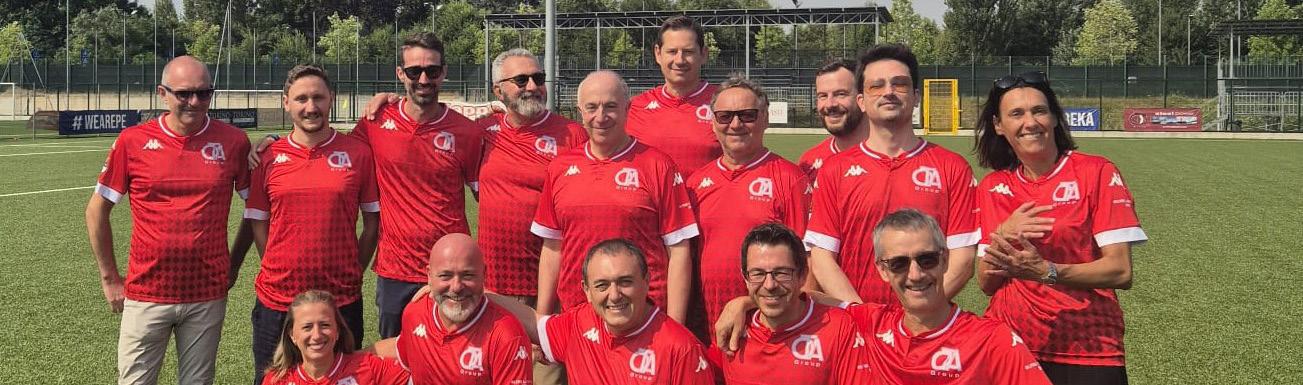
CTA Group
Crowcon Detection Instruments
A
story of market consolidation through innovation
The rebrand bringing unity, clarity and ambition to a fast-growing global group
Jamie Dyer Technical Director at Crowcon Detection Instruments
Carlo Kielland Project Sales Director at CTA Group
How is Crowcon thriving?
How is CTA Group thriving?
Crowcon Detection Instruments’ success stems from a consolidated market position, research-driven innovation and revitalised product lines. Faced with a stagnating portable segment and growing competitive pressures, the company chose to invest in redevelopment rather than retreat. Through deep customer insight, extensive product re-engineering and a renewed focus on serviceability, usability, and connectivity, Crowcon rebuilt its portable offering, strengthening market share and momentum.
With a bold new group identity launched in January 2026, Italian steel materials distributor CTA Group is consolidating four acquired businesses into a single, coherent international force. Inventory has been rationalised by 30%, a UAE facility merger has tripled available warehouse space at no additional cost, and cross-selling across the group’s full product portfolio is gaining momentum – all underpinned by a cultural integration programme that is measurably shifting how the group’s people work together.
The challenge - Since 1970, Crowcon has manufactured fixed systems for site-wide protection and portable wearable devices that protect workers. Historically balanced across fixed, portable and aftermarket products, Crowcon noticed its portable segment declining while fixed detection grew. This raised a question about whether the business should move away from portable products or reimagine it’s offering to protect its long-standing position.
The challenge - Founded in Turin in 1959, Commerciale Tubi Acciaio S.p.A. (CTA Group) has built over six decades of expertise distributing pipes, fittings and flanges in stainless, alloy, carbon and exotic steel grades to the energy sector. Between 2015 and 2023, the company completed four strategic acquisitions – Sideco, TAD, ALCO and Raccortubi – transforming from a single Italian stockist into a multi-company group operating across 11 countries.
Yet growth brought complexity. Each acquired business retained its own brand, identity and commercial culture, creating fragmentation that risked confusing clients and fuelling internal competition. As customer expectations for clarity and consistency intensified, it became clear that CTA’s external image no longer reflected the scale and ambition of what the group had become.
The solution - The answer CTA identified boiled down to a major rethinking of how the group presents itself to clients, partners and its own people.
The market environment made this challenge more acute. New disruptors were entering the space with wearable devices, offering more complete worker safety solutions. At the top end of the market, these systems were raising expectations beyond the capabilities of Crowcon’s existing devices. Meanwhile, at the compliance-focused end, new entrants were driving increased competition and eroding Crowcon’s traditional value led position. The company was squeezed between more advanced premium offerings and a growing number of lower cost alternatives. Furthermore, COVID-19 component shortages forced costly product redesigns and recertifications, highlighting structural weaknesses in older architectures and the need for long-term resilience.
Planning began in 2023, with the new unified identity officially launched on in January 2026 at CTA Group’s annual Convention in Turin. The occasion was deliberately symbolic: gathering all group companies under one roof to unveil a shared logo, a shared vision and a shared sense of purpose. The tagline – New Energy. The Steel Way. – captures the dual ambition at the heart of the programme: honouring CTA’s steel heritage while signalling its readiness to serve the evolving energy landscape.
The solution - Crowcon decided to invest in innovation at its portable product line. Early internal discussions centred on the need for substantial change rather than incremental adjustments. The company initiated extensive market research to understand how customers were using devices and where improvements would deliver meaningful value.
The most significant insight to emerge was the challenge of asset management. Large organisations were operating thousands of devices across multiple sites, each requiring calibration every six months. For workers, the detector simply needed to function reliably to carry out their jobs safely. For the organisations managing them, however, overseeing large fleets was labour intensive and inefficient. The research highlighted that Crowcon had long focused on hardware alone, while the market now required integrated hardware and software capabilities.
The philosophy guiding the process is ‘Many stories, one story’ – an acknowledgement that each acquired business brought genuine expertise and history that deserved recognition rather than erasure. The new identity was designed to include and elevate those individual stories, not replace them. This proved critical to internal acceptance, with staff across the group seeing themselves reflected in the new brand rather than absorbed by it.
A key development was a modular design that allowed the sensor module to be separated easily from the device. This made calibration and sensor replacement far simpler, eliminated the need for extensive buffer stock and ensured workers were not left without equipment. As one customer put it, “It’s the fact we’d have your trays on our shelves and in our trucks…it’s an instant swap instead of waiting four weeks”. It also enabled the business to match the most appropriate sensor technology to each application, increasing uptime and improving logistics for customers managing large operational fleets.
Crucially, the cultural work ran in parallel with the visual rebrand. An external coach was appointed to facilitate inter-company relationships, surface invisible barriers and build the trust and empathy needed for genuine collaboration. Through structured meetings and cross-company engagement, teams that had previously operated in silos began to find common ground – a shift captured in CTA’s internal rallying concept, ‘Beyond The Peak’: climbing together and guiding each other down the other side.
Operationally, the integration is already delivering tangible results. Inventory has been centralised and rationalised from three stockholding points to one, producing a 30% reduction in inventory value and eliminating €5m of duplicated stock. In the UAE, two separate facilities have been merged into a single site, tripling the available footprint from 8,000 to 20,000 sqm at no additional cost. Alongside this, cross-selling between group companies is beginning to unlock new commercial value – clients who previously engaged only one CTA business are now accessing the group’s broader range of materials and grades.
Connectivity became another core focus. Bluetooth integration allowed devices to communicate with asset management systems, providing clearer information about device status, allocation and performance. NFC technology was added across the portfolio to enhance speed and ease of use with the mobile app. Alongside the devices, the company redesigned its all-in-one docking station, concentrating on customer pain points such as bump and calibration turnaround times, and data transfer. The goal was to deliver the fastest and most intuitive experience available.
Crowcon overhauled its internal processes. Customer consultations were outsourced to ensure impartiality and rapid prototyping enabled the team to refine specifications continually based on feedback. A strengthened product management team developed formal business cases, while new roles were created across certification, research and development and mechanical design. Crowcon also invested in its software team in India to support the connectivity features.
The structural integration of the four businesses into a single operating entity remains ongoing, with completion targeted by the end of 2026. Revenue and gross profit synergies are not yet fully flowing – those are projected to materialise from 2027 – but the foundations are firmly in place. What CTA has achieved is arguably the harder part, which is building the shared culture, shared identity and shared operational infrastructure from which commercial performance can grow.
Looking ahead, the group is targeting expansion across North America, the Middle East, Africa and Asia, backed by a portfolio spanning oil and gas, conventional power, nuclear, hydrogen and carbon capture. With revenues of €220m, 315 employees and a presence
Crowcon has now launched and is shipping its new IQ portable range, featuring extended battery life, modular sensors, and seamless connectivity to enhance safety. The range is delivering strong commercial performance, with a 25% return on investment achieved within
Story type
Story type
#culture (main category) #optimisation #transformation
#innovation (main category) #collaboration #digital & AI #service & solutions
Benefits
Benefits
▸ Inventory rationalisation and warehouse consolidation reduced duplicated stock by 30% and expanded UAE storage capacity from 8,000 to 20,000 sqm without additional cost.
▸ Delivered strong commercial performance, achieving a 25% return on investment within the first three months, with a further 25% in the current pipeline and overall ROI tracking ahead of target.
▸ A unified group identity launched in 2026 is accelerating cross-selling across the portfolio, enabling clients to access the full range of materials and grades across CTA’s international network.
Key findings
▸ Drove growth through the launch of extended-life portable devices and modular, field-proven wearables, increasing revenues (including a 5% uplift in portable sales), winning new customers, and regaining market share in key sectors such as utilities.
For young people
▸ Recognised for design excellence with a Red Dot Design Award.
▸ Treat mistakes and problems as assets: mistakes drive improvement, and problems create opportunities.
Crowcon at a glance:
For industry
Key products and services: manufacturer of gas detectors and air quality monitors.
▸ Focus on developing talented people. The potential of motivated teams is unlimited.
Main industries served:
For government
▸ Oil and gas – 23%
▸ Energy storage – 13%
▸ Hydrogen – 1%
▸ Lead with authenticity and conviction—real belief in policies and actions is essential to inspire trust and progress.
CTA Group at a glance:
▸ Others (non-energy): water and wastewater, marine, petrochemical, chemical, food and drink, mining, steel and pharma – 63%
Headquarters: Abingdon, UK Year established: 1970
Number of employees: 260
Key products and services: Stock and distribution of stainless, alloy and carbon steel materials, manufacturing of bw fittings and project management.
Revenue from exports: 62%
Main industries served:
▸ Oil and gas – 65%
▸ Conventional power – 25%
▸ Nuclear power – 3%
▸ Carbon capture – 3%
the first three months and a further 25% represented in the current pipeline (as of April 26).
▸ Hydrogen – 2%
▸ Others (energy) – 2%
Headquarters: Grugliasco, Italia Year established: 1959
Number of employees: 315
Revenue: £178.5m
Revenue from exports: 80%
Sales of the new area monitor, DetectiveIQ, are up 59% compared to the same period for the legacy product, contributing to a 5% uplift in portable revenues last fiscal year and reversing a previous decline. The launch has also helped secure new customers, deepened engagement and regain market share in key sectors such as utilities.
In recognition of its design excellence, the DuoIQ range has also been awarded a Red Dot Design Award. With an expanded and future-ready range of portable solutions, including its IQ range, Gas-Pro line and its further enhanced single-gas and multi-gas detectors, the firm has restored momentum in a critical part of its business, and created a strong foundation for future growth.
across 11 countries, CTA Group is positioning itself to compete as one coherent international force – a goal that, just a few years ago, was seemingly beyond its reach.

Cutting & Wear Resistant Developments
How a modest post-pandemic recovery plan became a global growth engine

Story type
#export (main category) #optimisation #service & solutions
Benefits
▸ UAE distribution centre reduced Middle East lead times from over six weeks to next-day delivery, significantly boosting regional sales.
How is Cutting & Wear thriving?
Cutting & Wear’s move to open a UAE distribution centre as part of its post-pandemic recovery strategy has slashed regional lead times from six weeks to next-day delivery, unlocking a surge in Middle East sales. The expansion has since opened doors to major global operators, accelerated growth across new markets from North Africa to China, and sparked a manufacturing shift that’s made the business more effective, efficient, and futureproofed for further global growth.
The challenge - Cutting & Wear is an industry-leading producer of hardfacing consumables and downhole drilling tools, delivering its products and services to a wide base of customers in the oil and gas drilling sector around the world.
Having been founded in 1968, the firm has built its reputation as a globally recognised, innovation-driven manufacturer of high-performance solutions, providing end-to-end design and production solutions backed by patented technologies, exceptional product quality.
With that said, even established firms like Cutting & Wear encountered several challenges during the pandemic. With Covid drive a market slowdown, and the firm being hit doubly hard due to the downturn in oil and gas, the firm sought to explore ways in which it could bounce back in the post-pandemic period.
Resultantly, from 2021 onwards, the firm developed a renewed five-year recovery strategy centred around promoting growth, continual development and increasing market share.
The solution - Here, ambitions were focused in international markets, with 60-80% of Cutting & Wear’s business already driven by exports. Specifically, the firm had identified the Middle East and Norway as regions where business had seemed to continue as normal and opportunities remained abundant even during market downturns. As a result, they were made priority target areas for the firm’s recovery strategy.
For Cutting & Wear, the market opportunity in the UAE for hardfacing products was particularly intriguing, and an obvious place in which the firm could begin to try to increase its market share. Indeed, the firm began to build awareness with prospects in the region, attending ADIPEC to engage potential clients.
Business Development Executive at Cutting & Wear
Matthew Cooper Ben Whitehouse Managing Director at Cutting & Wear
During these discussions, the firm ascertained why potential clients would be reluctant to work with Cutting & Wear, understanding that lead timings and the availability of products locally was a core priority. While the firm’s reputation for quality was well recognised, the firm’s long regional lead times compared to competitors were proving a barrier to obtaining business in the Middle East. These findings were pitched to the board in 2023, with Cutting & Wear having built up about the market opportunities, and the changes it would need to make to become a Middle East market contender that potential customers would genuinely consider.
There were a range of considerations, from cost, pricing and stock to logistics, storage and more. The firm also recognised that it needed to find a suitable partner it could trust to aid support its distribution. Here, the company encountered Geodis at Offshore Europe 2023, identifying them as a firm that could meet its needs.
Through market planning, the firm saw that its market entry would be relatively low risk. Critically, it would be able to redistribute and sell its stock in other markets globally should uptake be lower than anticipated in the Middle East. Equally, the expansion could be serviced by existing staff members that had established key connections in key regions.
By July 2024, Cutting & Wear’s new Middle East distribution centre became fully operational in the UAE. The impact was immediate and transformative. Lead times for customers in the region fell dramatically, dropping from more than six weeks to next-day availability. In turn, regional sales volumes have increased significantly, giving the firm confidence to begin exploring expansion in other key regions.
New opportunities have since been realised in North Africa, India and China, where Cutting & Wear is now working with a growing number of clients across both its core hardfacing lines and additional service offerings. Kuwait, a market where the business previously held only a modest presence, has now become a thriving region with dozens of active customers. Encouraged by this momentum, the firm is also now preparing exploratory visits to Malaysia, Australia and other high-potential regions. Internally, the Middle East expansion has also led to several significant operational and
▸ Expansion unlocked new international opportunities, accelerating growth across markets including North Africa, India and China.
Key findings
For young people
▸ The energy sector offers diverse opportunities where any skill set can contribute to evolving technologies and innovation.
For industry
▸ Promote the value of “Made in Great Britain,” particularly its reputation for quality.
For government
▸ Support domestic oil and gas production in the UK, following the example set by Norway.
Cutting & Wear at a glance:
Key products and services: hardfacing consumables, downhole drilling tools, hardfacing systems and training.
Main industries served:
▸ Oil and gas – 100%
Headquarters: Sheffield, UK
Year established: 1968
Number of employees: 70
Revenue: £12m
Revenue from exports: 80%
cultural improvements. The need to support international growth prompted a re-examination of long-standing manufacturing practices, some of which had remained unchanged for half a century. As the business adapted to new global expectations around speed, flexibility and consistency, teams embraced new processes that improved resilience, strengthened supply chain agility and enhanced overall efficiency.
Ultimately, the move into the Middle East has accelerated Cutting & Wear’s ambition to be recognised as a truly global business. What began as a pandemic-era recovery initiative has become a defining strategic pivot – opening new markets, broadening customer relationships and embedding a forward-looking mindset across the company.
Looking ahead, the firm now stands better positioned than ever to pursue sustainable, international growth.
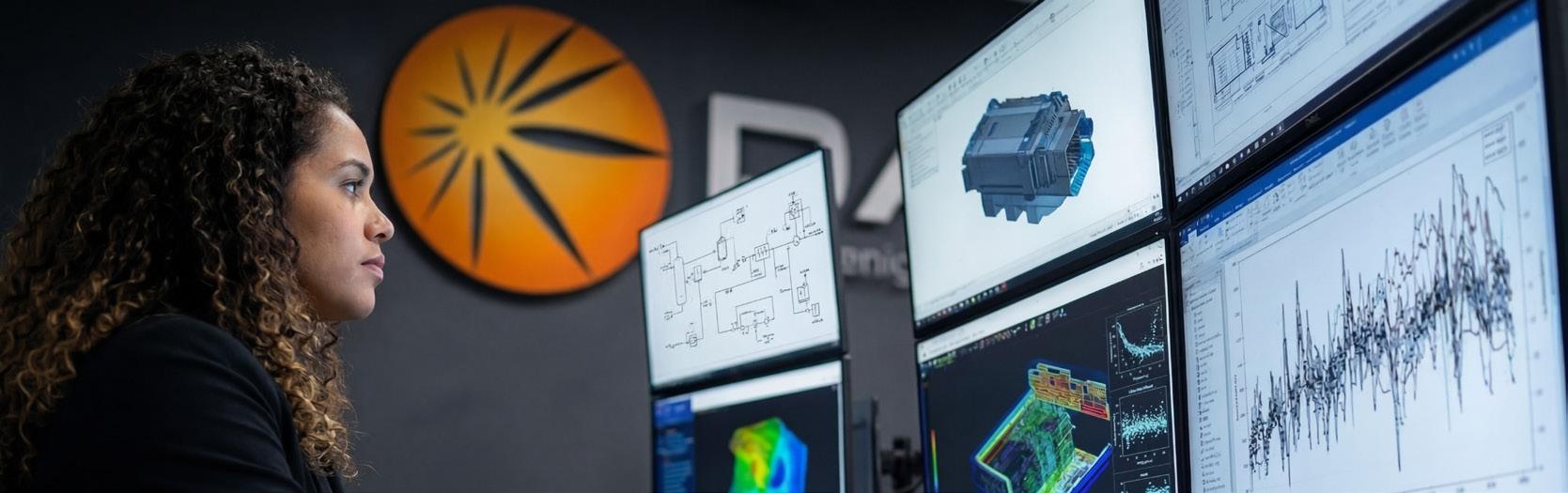
DAPIN
A methodical push into the Middle East begins to open doors
Story type
#people & competency (main category) #culture #export
Benefits
▸ A deliberate EPC-embedded entry strategy generated €6.5m in regional workshare revenue in 2025, with direct operator engagement advancing in 2026.
Alessandro Carmo dos Santos Commercial Director at DAPIN
How is DAPIN thriving?
Founded in Venezuela in 1991 and headquartered in Madrid, DAPIN is an engineering execution partner that deploys senior technical bandwidth and absorbs workshare packages under a structured delivery model. The proposition spans sectors — LNG, oil and gas, petrochemicals, energy transition, defence and infrastructure — with execution certainty as the constant. After a disciplined build-up in the Middle East, the model is scaling. Revenues grew 50% in 2025 to €12.7m, with the Middle East generating an estimated €6.5m through EPC workshare packages, and direct operator engagements advancing in 2026.
The challenge - Market access is necessary but not sufficient. Energy clients — particularly at operator level — reward incumbency and retain partners who deliver predictability under scrutiny. The challenge was not capability. It was proving execution certainty at pace: fast mobilisation, clean interface ownership, documentation discipline — without adding coordination debt to EPC delivery teams under schedule pressure.
The solution - DAPIN’s response was patient and deliberate. From 2019, the company built the foundations systematically: regional partnerships, vendor qualification, and a growing delivery footprint as an EPC-embedded execution partner on major operator programmes — the deliberate route into a market that rewards proven incumbency.
ADNOC vendor qualification was completed in early 2022. From that point, DAPIN deepened its presence within ADNOC-programme EPC structures — generating approximately €4.5m in 2023 and €6m in 2024 — establishing delivery credentials on operator-grade programmes while progressively positioning for direct engagement. What differentiates DAPIN is not the availability of engineers, but how they are deployed. The company runs a structured delivery operating system — the DAPIN OS — built around fast mobilisation (typically 2–4 weeks; 4–6 for scarce senior roles),
named interface ownership, upstream QA gates and audit-ready documentation. The result: added capacity that improves predictability rather than creating churn.
The appointment of Alessandro Carmo as Commercial Director in June 2025 marked a strategic inflection point. Under his leadership, DAPIN reoriented its commercial approach toward securing a framework agreement with ADNOC — a harder target than vendor approval, but one that unlocks sustained direct engagement at operator level. That process is active.
Alongside the Middle East, DAPIN has maintained strong European momentum. Indirect revenues grew from €1.5m in 2024 to €4m in 2025 — a near-tripling reflecting a multi-region model operating simultaneously, not sequentially.
Underpinning everything is a distinctive talent model. DAPIN sources senior engineers from Venezuela, Colombia and across Latin America and relocates them with their families. Relocation is managed end-to-end as a controlled execution workstream: compliance, housing continuity, structured onboarding, family integration and a personalised life transition programme — so engineers perform at full capacity from week one. The output: a workforce with 92–96% retention and delivery continuity across project cycles.
“The industry has a headcount bias,” says Alessandro. “EPCs scale bodies and call it bandwidth. But the real constraint is always senior decision bandwidth — the people who own interfaces, close gaps and hold the delivery line under pressure. When you engineer that into the operating model, execution becomes predictable. That is the only thing clients are actually buying: the recipe, not the ingredients.”
That logic holds across sectors. LNG, petrochemicals, energy transition, offshore, defence — the execution physics are the same: senior bandwidth, interface governance, mobilisation speed. DAPIN’s model is sector-portable because it is built on those constants, not on project type.
Looking ahead, DAPIN is targeting 25% revenue growth in 2026. With a proven delivery operating system, a growing cross-sector track record and a commercially focused senior leadership team, the company is positioned to move from trusted EPC-embedded partner to strategic counterpart on major operator programmes across the Middle East and Europe.
▸ A proprietary talent model — senior Latin American engineers relocated and stabilised through a full life transition programme — delivers 92–96% retention and sustained delivery continuity across project cycles.
Key findings
For young people
▸ Master the execution layer, not just the technical one. Interface ownership, documentation discipline and delivery cadence are what separate engineers who advance from those who plateau. Show up with governance instincts, not just skills.
For industry
▸ Treat mobilisation as an execution workstream — not a resourcing transaction. Interface ownership, QA gates and delivery cadence convert headcount into predictability. Bandwidth without governance increases coordination debt. The real bottleneck is almost never junior capacity — it is senior decision bandwidth.
For government
▸ Talent mobility is an execution asset. Policies that enable fast, compliant cross-border deployment of senior engineers for critical energy and infrastructure programmes strengthen national delivery capacity — not just the firms that benefit directly.
Dapin at a glance:
Key products and services: senior engineering deployment, workshare package delivery, project execution support — oil and gas, LNG, petrochemicals, energy transition, defence, infrastructure.
Main industries served:
▸ Oil and gas – 70%
▸ Offshore renewable energy – 5%
▸ Others (energy) – 5%
▸ Others (non-energy) – 20%
Headquarters: Madrid, Spain
Year established: 1991
Number of employees: 100
Revenue: £10.9m
Revenue from exports: 15%
Daya Singa
Choosing long-term credibility over short-term wins
Jonathan Chia Executive Director at Daya Singa
How is Daya Singa thriving?
An established provider of safety services and solutions in the oil and gas industry, Daya Singa has deliberately avoided diluting its core purpose despite rising competition and cost pressures. In safety and life saving, reliability outweighs price – solutions used in the field must perform when it matters most. By staying true to these principles while expanding into engineered solutions, analytics and control capabilities, and training rooted in real operational needs, the firm has positioned itself to keep delivering meaningful value to the energy sector for years to come.
The challenge - The 2020s have been a difficult decade for Daya Singa. 2024 was the only year in which the firm saw the safety service industry regain momentum post-COVID, and much of that activity came from a backlog of deferred work from 2020 onwards.
For an SME like Daya Singa, activity at the operator and maintenance level directly translates into opportunities, and it’s during these periods that enquiries turn into serious conversations and, ultimately, firm orders.
The company is heavily reliant on clients who see them as long-term partners and value that relationship beyond a purely transactional approach. However, 2025 and into 2026 reflected a noticeable slowdown, alongside shifts in clients’ strategies and purchasing behaviours.
Softer oil and gas prices led operators to become far more selective in awarding work, with a stronger push toward cost optimisation. In some cases, this became quite aggressive, placing significant pressure on the OGSE supply chain, and forcing Daya Singa to rethink how they plan, operate, and position themselves.
The firm was conscious that it had seen just one year of strong activity since COVID, and had only just recovered from the 2015 oil price crash before the pandemic. It saw its vulnerability long term and, as a result, took the decision to look beyond oil and gas and Malaysia into adjacent energy sectors and geographies.
The solution - The key for Daya Singa was being honest with themselves early on, with a willingness to adapt without losing sight of its core values.
Indeed, safety solutions is not a space in which the firm feels comfortable competing purely on price. Therefore, the question wasn’t whether to change their values, but how to grow without compromising them.
Here, the focus was on careful diversification. The firm started small, setting up a new Engineered Solutions Division that was lean, practical, and focused on solving real problems rather than chasing big, high-risk ideas.
From there, the business also added a new Analytics & Control Division and later a Training Division. These weren’t trendy areas of expansion but were necessary steps to take to broaden and enhance its offering, build resilience, and offer more value to both new and existing clients.
One example of this diversification was an engineered isolation solution from Holland, co-developed with an international oil major, that we had partnered with in 2019. Designed to safely isolate passing valves while reducing downtime, emissions and operational risk, the solution faced significant setbacks following the COVID-19 pandemic, resulting in almost 7 years without revenue for the engineered solutions division. Despite this, Daya Singa continued investing in the capability, securing PETRONAS Technical Readiness Level 7 certification via the iG@P system in 2022 before eventually delivering its first successful campaign for a downstream plant in Malaysia in early 2026.
Alongside these diversifications, another major priority for Daya Singa was investment in its people. The past two years have seen a focus on upskilling, both from a technical perspective as well soft skills, including leadership. As an SME, Daya Singa operates with a relatively flat structure, and so empowering its employees to be creative and take ownership has become central to the firm’s success.
Financial discipline has accompanied these strategic priorities. Open conversations with peers and learning from industry groups like MOGSC and EIC have paid dividends in this area, with Daya Singa listening closely to its clients to understand where it could realistically and responsibly expand without overextending. Indeed, cash flow, timing, and sustainability have been just as important as growth.
As the industry has slowed again in 2025 and 2026, this combined approach has proven a smart one. By staying grounded and taking deliberate, logical, and informed decisions, the firm has built its capabilities
Story type
#people & competency (main category)
Benefits
▸ Diversified beyond traditional safety services into engineered solutions, analytics and control, and training.
▸ Investing in people, practical capabilities and measured expansion supports sustainable growth.
Key findings
For young people
▸ Focus on building practical skills, staying adaptable and developing strong longterm professional relationships.
For industry
▸ Sustainable partnerships and balanced commercial decisions help protect capability and resilience across the supply chain.
For government
▸ Stronger SME participation pathways can help maintain a healthier and more sustainable industrial ecosystem.
Daya Singa at a glance:
Key products and services: safety services, engineered solutions, analytics and control, and training.
Main industries served:
▸ Oil and gas – 90%
▸ Others (energy) – 5%
▸ Others (non-energy): general industry and manufacturing – 5%
Headquarters: Sarawak, Malaysia Year established: 1986
Number of employees: 42
Revenue: £2.5m
Revenue from exports: 3%
step by step through savvy investments and diversification, choosing long-term credibility over short-term wins.
Indeed, backing its people and adapting thoughtfully while staying true to its mission and values have been critical in changing the firm’s fortunes after several difficult years.
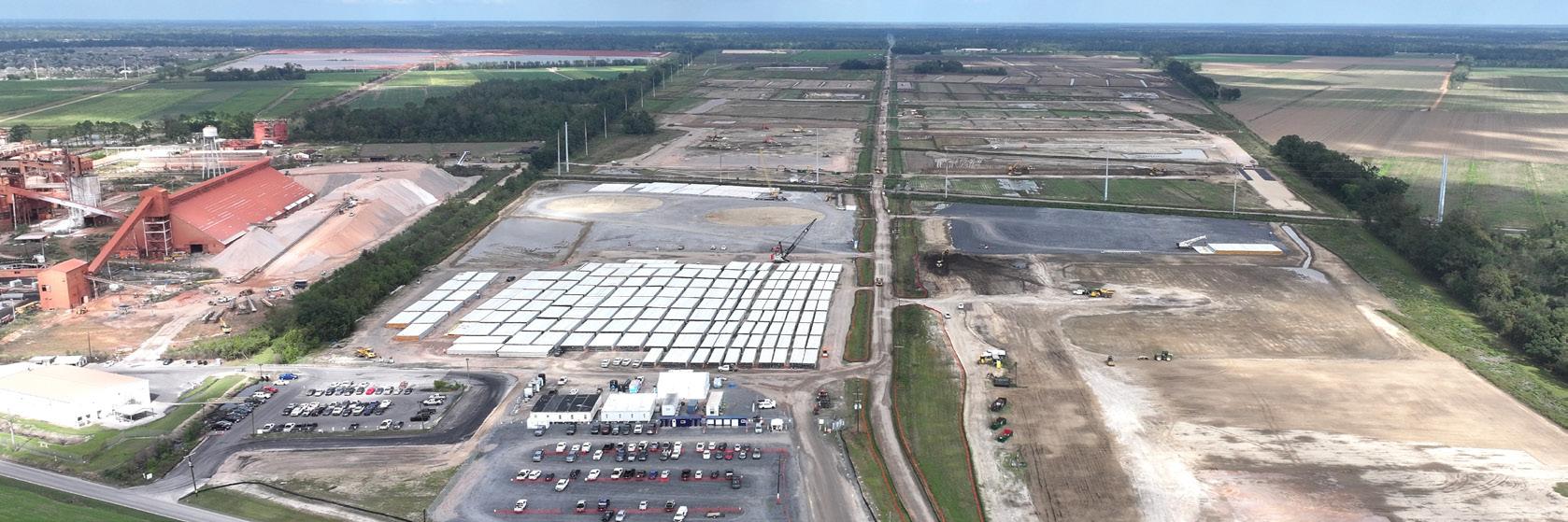
DDG
How a landmark project transformed a multi-disciplinary firm from the inside out

Brandon Ballard
Civil Engineering Lead and Associate at DDG Group
How is DDG thriving?
Having restructured from a siloed, discipline-focused organisation into a fully integrated delivery model, DDG has doubled in size since 2022, grown revenues from US$30m in 2024 to US$45m in 2025, and maintained employee retention above 90% throughout a period of rapid expansion. A single, landmark client engagement was the catalyst, and the full-service partnership it became has positioned DDG for continued growth.
The challenge - DDG is a multi-disciplinary design firm offering civil engineering, architecture, surveying, landscape architecture, coastal engineering, water resources, environmental and regulatory, transportation engineering, funding advisory, structural engineering and programme management across nine offices. Its 228-strong team serves diverse clientele that spans some of the largest infrastructure projects in the US Gulf Coast region.
For much of its history, however, the business operated with teams focused primarily within their own disciplines. Each service line functioned with a degree of independence, and while individual capabilities were strong, the siloed model limited DDG’s ability to pursue and deliver the kind of large-scale, fully integrated projects that increasingly defined the market. The question of how to scale effectively, without sacrificing quality, coordination or culture, had not yet been fully answered.
The solution - DDG’s relationship with Air Products began in 2021, when the firm was engaged to provide localised regulatory and environmental permitting support for the Louisiana Clean Energy Complex, an 800acre development spanning a wide range of technical disciplines. The initial engagement was an hourly contract delivered by a small team with a defined scope. But as DDG consistently demonstrated technical depth, local knowledge and a real commitment to client outcomes, the relationship expanded. What started as targeted support evolved into a comprehensive partnership covering virtually every service DDG offers.
The turning point came in 2022-23 as the project moved into detailed design and the scale of delivery accelerated. Nine concurrent design packages, extensive drainage studies, complex regulatory and environmental permitting, levee district approvals and hundreds of parallel workstreams had to be managed simultaneously. The initial team dedicated to this project was no longer sufficient for the increased project scope. DDG realigned their efforts to expanding their talent pool and improved their work-sharing operations between offices to meet the needs of this client and the project scope.
DDG committed to the “One DDG” mindset, which encompasses a mindset of their people to not only focus on their particular office or service line’s growth but the growth of the company as a whole. Motivated by their core values, DDG’s team members increased collaboration and thought of a growth with a different perspective. Even with so much change, employee retention remained above 90%. This was a remarkable achievement as the company doubled in size and the pace of change was accelerated. The internal culture that DDG’s leadership has long championed, which is characterised by treating clients’ problems as their own and showing up with a whatever-it-takes mindset, proved to be the connective tissue that held the organisation together as it scaled.
The commercial results have followed on from this. Revenues have grown from US$30m in 2024 to US$45m in 2025, with US$60m projected for 2026. The Air Products partnership has demonstrated to the wider market what DDG is capable of delivering. Meanwhile, the firm has entered the data centre sector with strong momentum, participating in multiple large-scale and mega-site developments as demand for supporting infrastructure accelerates across the Gulf Coast.
Looking ahead, DDG’s integrated model and deep coastal engineering expertise (the company has the largest soft sediment marsh creation project in the world) position it well for the complex, environmentally sensitive projects that will define the next phase of Gulf Coast energy and infrastructure development.
Story type
#collaboration (main category) #optimisation #people & competency #scale up
Benefits
► Grew revenues from US$30m in 2024 to US$45m in 2025.
► Maintained employee retention above 90% while doubling the size of the business and re-entering the data centre sector.
Key findings
For young people
► Stay curious and don’t be afraid to ask questions or make mistakes, this is essential for learning and career growth.
For industry
► Invest in your team and lead by example, remaining intentional about your culture and the relationships that drive success.
For government
► Implement regulatory improvements, infrastructure readiness and streamlined processes to attract major projects and long-term capital investment.
DDG at a glance:
Key products and services: multi-disciplinary design firm.
Main industries served:
► Oil and gas – 10%
► Carbon capture – 12%
► Hydrogen – 10%
► Data centres – 7%
► Nuclear power – 1%
► Others (non-energy): infrastructure, retail, coastal restoration – 60%
Headquarters: Houston, US Year established: 1997
Number of employees: 228
Revenue: £44.68m

DEEP Manufacturing
large-scale production with additive manufacturing
Story type
#innovation (main category) #optimisation #scale up
Benefits
Peter Richards CEO at DEEP Manufacturing
How is DEEP Manufacturing thriving?
Since launching in 2024, DEEP Manufacturing has established itself as a leader in Wire Arc Additive Manufacturing, operating 20 systems at its Avonmouth facility, which is one of the world’s largest concentrations of this technology. Since then, the company achieved DNV Approval of Manufacture for pressure vessels for human occupancy – a global first. With 100% revenue growth in 2025 and US expansion accelerated by a year, DEEP Manufacturing is revolutionising supply chains across energy, maritime, aerospace and defence sectors.
The challenge - Launching a manufacturing business in 2024 presented DEEP Manufacturing with the challenge of establishing credibility and market confidence through what was a radically different approach to producing products. As part of the DEEP Group, which also produces subsea habitats and runs the DEEP Institute for subsea testing and training, the manufacturing division needed to prove that Wire Arc Additive Manufacturing could meet the exacting standards demanded by safety-critical industries.
Traditional casting and forging methods, although proven, created significant supply chain bottlenecks, particularly in energy and defence sectors facing unprecedented demand driven by geopolitical events and the energy transition. The company needed to convince customers accustomed to conventional manufacturing methods to trust a new modus operandi, all while scaling operations at breakneck speed to meet growing market demand across the world.
The solution - DEEP Manufacturing’s transformation from concept to market leader centred on three strategic pillars: uncompromising certification standards, significant capital investment in scale, and building exceptional technical expertise.
The certification journey began with the company’s internal requirement to manufacture recovery modules for subsea operations – pressure vessels for human occupation. Partnering with DNV, DEEP Manufacturing achieved comprehensive three-tiered certification covering materials, facilities and products. By summer 2025, the company secured DNV Approval of Manufacture for pressure vessels for human occupancy, becoming the only manufacturer in the world to hold such certification. This achievement has
since provided the foundation for commercialisation across the oil and gas, maritime and defence sectors.
Investment in scale has distinguished DEEP Manufacturing from competitors. At the start of 2024, the company installed 20 Wire Arc Additive Manufacturing systems at its Advanced Manufacturing Centre, creating the largest concentration of this technology in Europe. The facility operates 24/7, with individual robotic arms producing components up to 2.8m in diameter and 3.2m in height. The revolutionary Hexbot system, utilising multiple coordinated arms, extends production capacity to 6.2m in diameter, addressing the most demanding large-scale requirements.
The company’s privately held structure has enabled rapid decision-making and substantial capital deployment. The DEEP Group committed US$100m to US expansion and tens of millions of pounds to its UK operations, providing the financial foundation for aggressive growth.
Building the right team also proved critical. DEEP Manufacturing’s technical development team, with an average age under 30, brought fresh perspectives to applying century-old welding processes. The company grew from a single employee in 2023 to 50 by 2025 and is targeting 100 globally by end of 2026. Strong reliance on university interns transitioning into full-time roles, combined with a new apprentice programme and ISO 9001 certification, will ensure consistency of quality as the organisation scales.
The manufacturing advantages have delivered tangible results. Component lead times reduced by approximately two-thirds – exemplified by a two-metre hull component manufactured in 14 days versus four to five months through conventional processes. Indeed, hybrid manufacturing capabilities allow DEEP Manufacturing to add complex geometries to traditionally cast parts, delivering both speed and enhanced robustness.
Entry to the US, originally planned for 2027, was accelerated by a year due to unprecedented defence sector demand and favourable tariff considerations. By mid-2025, the Houston facility was greenlit for 2026 operations, with recruitment beginning in December 2025.
The market response has been strong. Throughout 2025, the company secured multi-million dollar contracts, laying the groundwork for exponential growth into 2026. Concurrently, significant contracts for pressure vessel components have transitioned into full production, while an Innovate UK consortium project continues to drive innovation in marine propeller redesign.
▸ Multimillion contracts – pressure vessels market components manufacturing market, now in production.
▸ Redesign and production of marine propellors.
▸ Internal use case – multipurpose module produced, unprecedented speed, 14 days vs 4-5 months.
Key findings
For young people
▸ Be impatient to learn and grow but also be patient about recognition and the outcome. Do excellent work consistently, and that builds the value, it’s important to manage this.
For industry
▸ Technology and innovation are key, but people make the difference. It’s how you manage and develop the technologies as to how you drive your business forward.
For government
▸ There needs to be consistency of energy policy, to allow companies to build a plan and grow. Democracies need to give consistency for critical infrastructure.
DEEP Manufacturing at a glance:
Key products and services: wire arc additive manufacturing (WAAM) and design optimisation for large-scale metal components.
Main industries served:
▸ Oil and gas – 48%
▸ Nuclear power – 6%
▸ Offshore renewable energy – 6%
▸ Others (non-energy); maritime and aerospace, defence – 40%
Headquarters: Bristol, UK
Year established: 2024
Number of employees: 50
Inbound enquiries are growing consistently, emanating from the likes of the UK, US, Japan, Middle East and Asia-Pacific.
Looking ahead, developing a strong footprint in the US market, the Middle East represents the next high priority market, followed by Asia-Pacific regions including Japan, Malaysia and South Korea for shipbuilding opportunities. Engagement with offshore wind turbine designers on monopile manufacturing is also a priority as the firm explores ongoing diversification opportunities across various energy subsectors.
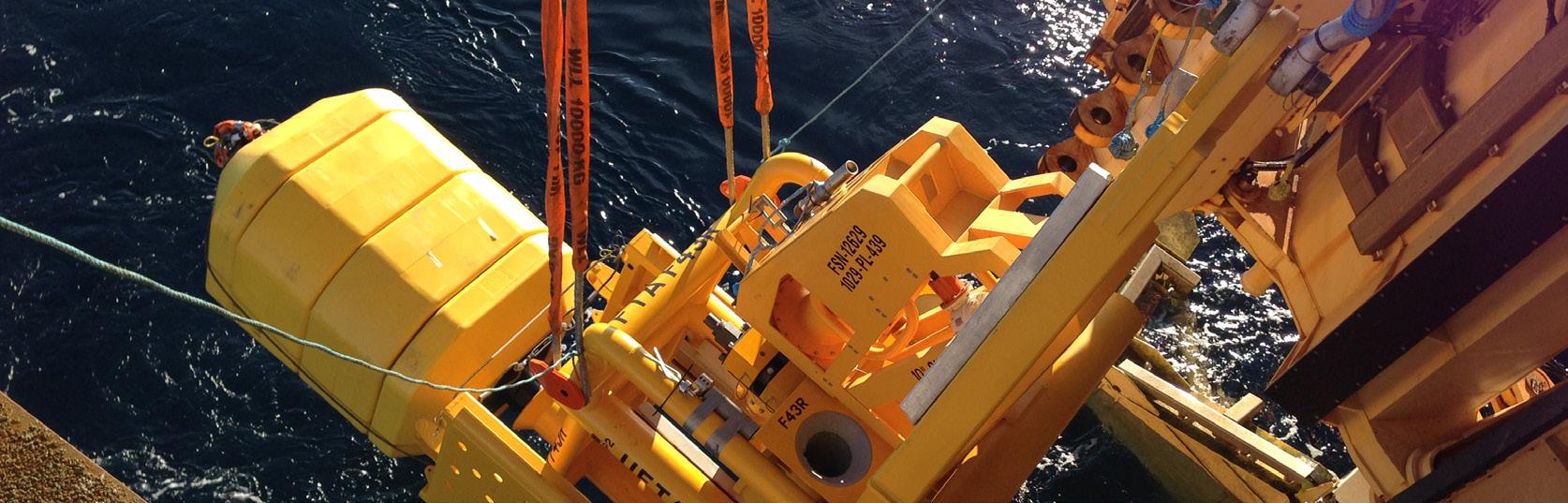
Deepsea Technologies
Turning market headwinds into a platform for global growth

Story type
#diversification (main category) #export #innovation #service & solutions
Benefits
► Countered a 15-20% revenue drop by transitioning to a full-service model and establishing a profitable Aberdeen base.

Robert McWilliams Managing Director at Deepsea Technologies
How is Deepsea Technologies thriving?
Deepsea Technologies’ UK division, headquartered in Bromborough, with a recently established presence in Aberdeen and an engineering office in Woking, specialises in subsea pipeline connectors and Taper-Lok flanges for diver and ROV installation across oil and gas, hydrogen, carbon capture and decommissioning applications.
After navigating a period of UK market uncertainty following changes to offshore licensing policy, the division has responded by broadening its service offer, investing in research and development for a new global product and building a profitable second base. Now, it is primed for international growth across the Americas, Europe, Asia and beyond.
The challenge - Deepsea Technologies’ UK operation designs and manufactures solutions where standard off-the-shelf products from Tier 1 OEMs are either unsuitable, too slow or too expensive. Its core products, including ROV-installed subsea pipeline connectors and Taper-Lok compact flanges, are used in some of the world’s most demanding offshore environments, with around 70% of UK revenues generated from export markets such as Norway, Brazil, Canada, Angola and Australia.
The business joined the wider Deepsea Technologies group in 2022, bringing with it the integration challenges that typically accompany any change of ownership. At the same time, shifts in UK energy policy, specifically the halting of new offshore licensing rounds, began to affect the steady flow of repeat orders from UK and North Atlantic operators that the division had relied upon. Revenue fell by 15 to 20% in 2025 as a result.
The solution - Deepsea Technologies’ response centred on three moves: deepening what it could offer existing clients, establishing a new operational base in Aberdeen, and investing in a new product capability designed to unlock international markets beyond the UK.
The first shift was from hardware supplier to full-service partner. Where the division had previously focused on delivering connectors and installation support, it began offering cli-
ents a more comprehensive service – taking subsea distribution components and control equipment, refurbishing them, building them into tested packages and delivering them ready for deployment on the quayside. Working with an existing major operator client, it demonstrated it could take equipment through the full cycle of evaluation, refurbishment, flushing, testing and quayside readiness. That model is now being extended to other clients and assets. It also brought the division into decommissioning and asset life extension work, areas growing in importance as North Sea infrastructure ages and operators look to manage costs without replacing assets wholesale.
The Aberdeen base, established in 2024, was a deliberate response to both the market shift and the strategic direction of the wider group. Beyond giving the division a presence in the heart of the UK subsea market, it has enabled broader service capability, including controls and distribution equipment refurbishment, and provided a platform for attracting new technical talent. The base reached breakeven in its first year and moved into profitability in its second.
Alongside the service expansion, the division has invested significantly in research and development for a Vertical Type Connector. This is a diverless pipeline connection system designed for vertical installation, a method that is standard in the Gulf of Mexico and widely preferred in international markets. The system uses the same core engineering building blocks as the division’s established connector range but addresses the specific alignment and misalignment demands of vertical subsea installation. Full-scale prototype testing, including deliberate misalignment scenarios, was completed in 2025. The system is now being demonstrated in the US and is the subject of active tenders across several major international oil and gas markets.
Crucially, Deepsea Technologies’ existing expertise has translated well into emerging sectors. Its leak-free Taper-Lok flanges have found traction in hydrogen compression skid applications, and the connectors’ inherent suitability for chemically demanding environments makes them a natural fit for carbon capture infrastructure. These diversification efforts are early-stage and commercially contingent on market pace, but they give the division a foothold in segments that are likely to grow significantly over the medium-term.
Looking ahead, the combination of a proven full-service offer, a qualified new global product and a team that has grown in both head-
► Prepared for global expansion through R&D, including developing a Vertical Type Connector and adapting technology for hydrogen and carbon capture.
► Group products and capabilities introduced to UK market.
Key findings
For young people
► Prioritise diverse experiences over immediate salary increases; financial rewards will follow as your expertise grows.
For industry
► Avoid defaulting to standardised solutions to large EPIC contracts, as this limits innovation and potentially overlook effective bespoke alternatives.
For government
► Take a holistic view of the energy mix. Ensure transition policies accelerate infrastructure without stifling SMEs or losing vital industry expertise.
Deepsea Technologies at a glance:
Key products and services: subsea production packages, including oil and gas pipeline equipment and controls distribution.
Main industries served:
► Oil and gas – 90%
► Hydrogen – 5%
► Offshore renewable energy – 1%
► Carbon capture – 1%
► Others (non-energy) : decommissioning – 3%
Headquarters: Liverpool, UK
Year established: 1980
Number of employees: 500 (Group) 50 (UK)
Revenue from exports: 70%
count and capability, gives Deepsea Technologies’ UK division a stronger base from which to pursue growth.
deugro
Multiplying capacities to master the rapid energy transition

Kasper Heiselberg Head of Global Wind Renewable Energy at deugro
How is deugro thriving?
Through strong investments and the strategic adaptation of its Global Wind Renewable Energy (GWRE) division, deugro has multiplied its capacities many times over. Within just three years it significantly expanded its expert teams, substantially increased the number of major global key accounts—successfully meeting the increasingly diverse requirements of clients across both onshore and offshore renewable energy sectors.
Today, a substantial share of deugro’s business is derived from offshore and onshore renewable energy projects, including longterm contracts with renowned global GWRE players. With over a century of experience in successfully managing traditional energy projects, the family-owned company has firmly established itself in the renewable energy industry as a trusted end-to-end logistics service provider.
The challenge - For over a century, deugro has operated as a specialised project forwarder, managing complex turnkey projects and difficult-to-transport cargo movements for the energy sector that most other forwarders consider too demanding.
Despite this strong foundation, deugro’s GWRE team recognised that, until 2023, revenues in the renewable energy sector still offered substantial growth potential—further amplified by Russia’s attack on Ukraine and the resulting acceleration of the global shift toward renewable energy.
To fully unlock this potential and to position deugro within the renewable energy sector—with all its diverse subvertical—as one of the leading providers of end-to-end logistics solutions and a trusted partner for the successful delivery of complex turnkey projects and shipments, the existing strategy needed to be further refined and adapted.
Meeting growing and increasingly diverse client demands across the various sectors and individual cargo—from wind blades and tower sections to subsea structures, cables, and substations—required substantial investments in expanding specialised teams by hiring further experts for each sector and cargo type, developing further tailored services, and implementing a more structured commercial approach.
The solution - In November 2022, deugro hired Kasper Heiselberg as Head of Global Wind and Renewable Energy. Heiselberg
brought sharp focus: a small number of target clients, a clear product strategy and a structure built around the specific needs of GWRE clients and their individual supply chains.
The first 18 months were spent entirely on building foundations. Dedicated vertical leads were appointed for subsea cables, offshore wind structures and onshore wind and cables. Commercial leads and supply chain specialists were brought in. Crucially, Heiselberg drew on two decades of industry relationships to identify where the real pain points lay and which opportunities were within reach. Rather than spreading effort thinly across the market, the team concentrated on a handful of wind OEMs and major supply chain companies where deugro could make an immediate and demonstrable difference. Early wins with those clients generated both revenue and credibility, creating the platform for longer-term product development.
What set deugro apart was its willingness to invest in genuinely bespoke solutions rather than adapting standard logistics offerings. The evolution of offshore wind turbines to 15MW units presented a case in point. Turbines of that scale require up to 10 separate project cargo movements per unit, demanding a level of coordination and specialisation far beyond conventional freight forwarding. Here, deugro designed integrated solutions to manage this complexity end-to-end, taking full control of component coordination across every stage of the logistics chain.
Moreover, deugro developed specialised cable carousel solutions to address supply chain constraints and took on operational management of two German ports to support the country’s rapid onshore wind expansion. Each initiative reflected the same underlying philosophy: understand the client’s problem deeply, then build something that genuinely solves it.
That approach was validated in early 2026, when deugro was awarded a long-term contract by a leading global GWRE player, selecting the specialist forwarder over larger general cargo logistics providers and carriers. The decision reflected what deugro had spent three years demonstrating – that industry specific products, agility and a client-first mindset can outweigh scale.
Being family-owned proved a meaningful enabler, allowing longer return-on-investment cycles and faster decision-making, giving the GWRE division the runway it needed to build properly, without the pressure of short-term financial targets undermining a long-term strategy.
For this year and beyond, deugro will continue to strengthen its presence and standing in the European renewable energy market

Story type
#service & solutions (main category) #diversification
Benefits
▸ Successfully grew renewable energy revenues, capabilities and client base in just three years to become a trusted partner to the renewable energy industry.
▸ Secured a landmark four-year contract with a leading global player in the GWRE sector and delivered bespoke logistical solutions, including operationally managing two German ports.
Key findings
For young people
▸ Embrace a new mindset — don’t be afraid to take risks and work hard. Jump straight into the water and learn how to swim.
For industry
▸ Think long-term on supplier choices. Safeguard Europe’s supply chain from external dominance, build a strong, local network you can trust.
For government
▸ Encourage closer European relationships, joining forces to re-industrialise and safeguard against intense global competition.
deugro at a glance:
Key products and services: project freight forwarding.
Main industries served:
▸ Conventional power
▸ Offshore renewable energy
▸ Onshore renewable energy
▸ Oil and gas
▸ Nuclear power
Headquarters: Pfäffikon, Switzerland
Year established: 1924
Number of employees: +1,660
and will further invest significantly in expanding the expertise and capacity of its GWRE teams. At the same time, deugro will remain closely aligned with the dynamic renewable energy market to develop and deliver additional tailored solutions, including battery storage and green hydrogen.
Whether measured by the volume of successfully delivered projects; their significant and steadily increasing share of the company’s revenue; or by the rapidly expansion of its expert teams—deugro’s Renewables Division is no longer a young experiment. It has become a solid and firmly established pillar of the business.
Diverse Resourcing LLC
From startup to sustainable growth engine
Story type
#scale up (main category) #people & competency
Benefits
▸ Generated an additional US$1m in annual revenue by transitioning to a more structured and sustainable business model.

Jamie Marland CEO at Diverse Resourcing
How is Diverse Resourcing LLC thriving?
UAE-headquartered specialist workforce solutions provider Diverse Resourcing has evolved from a startup launched during the pandemic into an award-winning structured, multi-vertical workforce solutions business. Over the past year, the company has delivered over US$1m in additional revenue, completed a full shareholder buyout, and launched a new maritime division projected to generate approximately US$3m in its first year. With the target having been sustainable growth, the company is well-positioned for long-term success across its core energy and maritime markets.
The challenge - In the past 12 months, Diverse Resourcing has focused on tackling one core challenge: building on its foundations as a high-growth startup in order to become a more structured and strategically positioned business operating across energy and maritime markets.
It’s been a phase that’s represented a significant shift from its focus on rapid growth and towards a more controlled and strategic form of scaling that prioritises long-term sustainability.
The firm has sought to move beyond its previously opportunistic growth model. While early growth was driven by speed and opportunity, the firm recognised that its longterm viability and success will depend on greater control, structure and diversification. Resultantly, focus has shifted towards revenue quality over volume, stronger financial control and cash flow management, and building deeper, long-term client relationships.
Actioning these changes has naturally resulted in a period of both changes that has brought some turbulence to Diverse Resourcing. It has faced several key challenges, including maintaining growth momentum while restructuring ownership, managing cash flow during expansion and continuing to deliver in a highly competitive, talent-constrained market.
The solution - In striving for greater sustainability, Diverse Resourcing’s strategic pivot has centred around several core distinct axes. The completing of the shareholder buyout has been key, for example, with holistic ownership and control of the firm enabling it to action decisions at speed.
Leading on from this, the company launched its new maritime division in the UK on 1 January 2026, diversification that aims to reduce its reliance on a single core market and unlock new revenue streams aligned with its existing expertise. For Diverse Resourcing, it’s seen as a long-term, logical play, building on the business’s competencies in a high-growth vertical.
Here, an industry leader with 15 years’ experience and strong client relationships has been identified to spearhead the firm’s maritime ambitions, with Diverse Resourcing having already hired two additional experts to further bolster capabilities within its new division.
It’s been a significant change in strategy. However, through the completion of the shareholder buyout, launch of the new division and reallocation of focus toward key clients and sectors, the firm is already looking at a more futureproofed strategy.
The results to date speak volumes. In the space of just 12 months, the firm has realised an additional US$1m in annual revenue through the existing business. Further, it is now anticipating significant further growth moving forward through its new maritime division, with approximately US$3m in revenue projected for its first year. Already, the company is on track to achieve these targets.
Between other promising results spanning everything from increased client retention, a growing proportion of repeat business, new terms of engagement signed with new clients, and stronger overall market positioning as a strategic partner, Diverse Resourcing’s aim to establish more secure and sustainable foundations has been nothing short of a success story.
▸ Launched a new Maritime division to diversify revenue streams, projecting approximately US$3m in its first year.
Key findings
For young people
▸ Be proactive, stay curious and take ownership early to build real skills rather than just accumulating experience on paper.
For industry
By its own admission, the firm is seeking to grow at the right pace, at the right time. In sticking to that mantra, Diverse Resourcing will clearly remain a case of watch this space for the coming years. the
▸ Shift from chasing revenue to building a structured, repeatable model by making difficult decisions early and focusing on execution.
For government
▸ Support scaling businesses by improving access to funding and streamlining cross-border compliance to reduce friction.
Diverse Resourcing at a glance:
Key products and services: workforce solutions for energy and maritime sectors.
Main industries served:
▸ Oil and gas – 90%
▸ Offshore renewable energy – 10%
Headquarters: Sharjah, UAE
Year established: 2020
Number of employees: 8
Revenue: £2.8m
Revenue from exports: 80%
The business is now more resilient, better structured and positioned for long-term growth. However, the firm isn’t finished here. Moving forward, it’s now planning to scale the business further while not only maintaining but expanding upon its skillsets that have served the firm so effectively to date.
DLC
How a Brazilian family business rebuilt itself to post record growth
Story type
#diversification (main category)
#innovation
Benefits
Claudio Ramalho Business Development Manager at DLC
How is DLC thriving?
Set up in 1996 by brothers Luiz and Dario Caporali, DLC began as a bus and lorry maintenance business in São Paulo before finding its way into Brazil’s oil and gas sector in the early 2000s. After near-collapse during the 2014-17 oil crisis, the company adopted a diversification strategy that has transformed it into a multi-sector engine services, equipment distribution and fuel management business. Revenues have grown consistently for five consecutive years, with growth of 35% in 2024 and 50% in 2025, making last year a record for the company.
The challenge - By the time the oil price collapsed in 2014, DLC had built a strong position in the oil and gas sector, but that concentration had become a vulnerability. Between 80% and 95% of its revenues were tied to a single sector and, to a significant degree, a single manufacturer. As contracts were cancelled and operations halted across Brazil’s oil industry, the company was forced to cut its workforce from approximately 100 employees to roughly 50. Dario Caporali had died in 2010, leaving Luiz to navigate the crisis alone. The decision he made during those difficult years would define the next chapter of the business: retain the technical team at almost any cost, because expertise was the company’s only durable advantage.
The solution - The recovery began with a recognition that DLC could not grow sustainably by deepening its dependence on oil and gas. The company’s core business was maintenance, spare parts and technical support for high and medium-speed engines, turbochargers and diesel generators – capabilities with clear applications beyond the sector that had originally shaped them.
From 2015 onwards, DLC pursued a structured diversification across maritime, mining, thermoelectric power, agroforestry and leisure marine, expanding its authorised distributor relationships with international manufacturers to match. Partnerships with companies including Napier, IHI Niigata, Perkins, Fueltrax, Parker, Atlas Copco and Bosch extended both the product portfolio and the range of markets DLC could credibly serve.
Caterpillar certification, achieved through years of rigorous technical work and con-
firmed through the certification of DLC as an AMD (Authorized Marine Dealer) by Sotreq & CAT in 2007, became a true commercial passport throughout this process. Because Caterpillar’s approval process is extremely demanding, holding this certification demonstrated a level of quality that opened doors with other international manufacturers.
▸ Revenues grew by 35% in 2024 and 50% in 2025, enabling the company to expand its workforce to approximately 300 employees.
▸ Diversification reduced oil and gas reliance to 65%, while new technology cut fuel consumption by 30% and avoided 550m kg of carbon emissions.
Bosch, for example, appointed DLC in 2022 as its first Brazilian distributor for injection systems focused on the Oil & Gas market, and within only two years of the partnership, DLC became one of Bosch’s leading distributors worldwide for this segment. Atlas Copco followed the same path in 2024, adding nitrogen generation, compressed air, diesel generators, and battery energy storage systems to DLC’s portfolio.
A significant part of this strategic pivot was the move from pure maintenance services towards data-driven operational efficiency. The partnership with Fueltrax, the US-based fuel monitoring specialist, was particularly important. Here, DLC became the certified Brazilian distributor for Fueltrax’s remote fuel monitoring system, which transmits consumption data every 15 seconds directly to clients or to control centres in Houston. It has delivered up to a 30% reduction in fuel consumption and is estimated to have avoided approximately 550m kg of carbon emissions across its deployments.
Internationally, DLC identified a gap in how oil companies procured equipment. Import incentives meant clients often sourced parts directly from abroad even when DLC had done the technical specification work. The response was to establish DLC International operations in Miami, Uruguay and Panama, and more recently a joint venture in Guyana, operating as Real Marine in line with local content requirements.
of built
Internally, the transformation has required investment in leadership and culture. Luiz Caporali’s view is that business is built on people rather than transactions. Average staff tenure is around 15 years, and a formal mentoring and leadership development programme has been put in place to sustain that institutional knowledge as the company grows.
All of this work is paying off. Oil and gas now represents 65% of revenues, down from a peak of 95%, with the balance spread across maritime, mining, power and other sectors. The company employs approximately 300 people and is growing. After a decade of rebuilding, DLC enters 2026 with a target of at least 25% further revenue growth, a deepening international footprint and a portfolio that would have been unrecognisable to the business that almost did not survive 2016.
Key findings
For young people
▸ Invest in education and personal development, seeking strong mentors and maintaining the humility to learn from others.
For industry
▸ Embed people development into your culture to empower employees and establish clear governance and succession structures.
For government
▸ Accelerate tax reform and reduce bureaucracy to improve Brazil’s business environment and boost international competitiveness.
DLC at a glance:
Key products and services: engines, turbochargers, air compressors, energy generators, lighting systems, nitrogen generation, battery storage systems, filtration systems and fuel monitoring systems.
Main industries served:
▸ Oil and gas – 65%
▸ Conventional power – 15%
▸ Others (energy) – 10%
▸ Others (non-energy) – 10%
Headquarters: Rio das Ostras, Brazil
Year established: 1996
Number of employees: 335
Revenue: £32.86m
Revenue from exports: 15%

Dräger (Norway)
How a decade of wireless innovation saved an oil major nearly US$140m in a single project
Story type
#innovation (main category) #digital & AI #technology
Benefits

Adne Olsen
Global BDM Wireless Safety at Dräger (Norway)
How is Dräger (Norway) thriving?
A request from Norwegian operators for a faster, cheaper offshore fire and gas systems upgrade led to the world’s only wireless detection solution capable automatic platform shutdown, a capability previously exclusive to hardwired systems. The technology’s landmark validation came through a Chevron platform upgrade in Israel, completed in eight weeks with zero production downtime and nearly US$140m in total savings.
The challenge - Founded in Germany in 1889, Dräger is a global safety technology leader with over 16,000 employees protecting lives across multiple industries. In 2015, Dräger acquired Norway’s GasSecure. As the creator of the first wireless infrared hydrocarbon gas detector, GasSecure now drives Dräger’s wireless product development for safety-critical environments.
For decades, offshore brownfield fire and gas safety upgrades followed a laborious model: hardwired systems requiring extensive cabling, infrastructure, permits and platform shutdowns. As upgrade costs grew, the industry sought alternatives. In 2012, ConocoPhillips and Equinor approached Dräger Norway with a challenge – to develop a wireless fire and gas solution that could match the speed of response and executive action capability of a hardwired system, all while eliminating the installation burden that made upgrades so costly and time-consuming.
The solution - Adne Olsen, Dräger’s global lead for wireless fire and gas systems, spearheaded this decade-long mission. The result is an unprecedented end-to-end wireless system where devices communicate through encrypted, redundant loops, matching hardwired response times and executive action capability. This enables automatic platform shutdown in an emergency without reliance on a wired network.
Depending on site conditions, the system uses conventional wired devices, hybrid interfaces, or fully battery-powered wireless devices (with a minimum one-year battery life). These integrate into a single unified system, maximising flexibility and minimising installation infrastructure.
The technology’s most compelling proof of concept came through Chevron’s Tamar platform off the coast of Israel, acquired from Noble Energy in 2022. A safety inspection revealed significant gaps against Chevron’s own
standards, creating an urgent three-month window in which a new fire and gas detection system had to be installed – this, or the platform would face a nine-month shutdown at a production loss of approximately US$500,000 per day, totalling an estimated US$137m.
Chevron exclusively used hardwired systems. To gain approval, Dräger accepted full contract risk, committing to revert to a wired system at no cost if the phase one wireless installation didn’t meet expectations after 12 months of operation.
Phase one was completed in eight weeks, against the original nine-month projection, with zero production downtime. Eliminating extensive engineering, cable trays, and junction boxes drastically reduced work permits, simplifying the installation. One Dräger engineer installed and commissioned 63 hydrocarbon point gas detectors in just six days offshore. The system subsequently passed two rigorous cybersecurity assessments conducted by a top-tier external testing firm, with cyber compliance a particular priority given the platform’s location in Israel.
After 12 months of uninterrupted, faultfree operation, Chevron formally approved the technology and granted an exemption to its standard hardwired policy. Phase two followed in early 2023. This involved a completely new redundant fire and gas control system with full executive action capability, incorporating 133-point gas detectors and 17 hybrid line-of-sight detectors. It was completed without shutting down the platform and delivered a 60% reduction in installation time, 50% reduction in cost and a further US$1.3m in savings for Chevron. Phase three, launched in mid-2024, adding 63 flame detectors using the existing infrastructure, saving a further US$700,000. Still pending due to the delays in the region due to the current political situation.
Across all three phases, total client savings have reached nearly US$140m. For Dräger, the Tamar project has become the global reference case for wireless executive action, and the foundation from which Adne Olsen and his team are now working to have wireless systems specified at FEED stage across new developments worldwide.
Dräger’s fixed gas detection systems protect people and assets across demanding industrial and offshore environments. Combining advanced sensor technologies with GasSecure’s unique wireless capabilities, the portfolio delivers seamless, cost-effective safety architectures ideal for brownfield sites where cabling is impractical. Together, Dräger and GasSecure provide a strong fixed gas detection offering that combines global
▸ Reduced installation time and costs by eliminating extensive cabling, achieving a 60% faster deployment and 50% cost reduction.
▸ Zero production downtime during system upgrades, avoiding a ninemonth shutdown and delivering nearly US$140m in total client savings.
Key findings
For young people
▸ Be curious, find something you’re passionate about and look for what you want to achieve with enthusiasm and curiosity.
For industry
▸ Become more open minded when doing FEED studies and use new technologies to optimise cost, time and safety.
For government
▸ Seek more business advice when doing clean tech policies – they oversimplify.
Dräger at a glance:
Key products and services: gas detection, respiratory protection and specialized safety systems.
Main industries served:
▸ Oil and gas
▸ Conventional power
▸ Nuclear power
▸ Offshore renewable energy
▸ Onshore renewable energy
▸ Hydrogen
▸ Carbon capture
▸ Energy storage
▸ Data centres
▸ Others (non-energy): chemicals, general industries, pharmaceutical
Headquarters: Lubeck, Germany
Year established: 1889
Number of employees: 55 (Norway)
16,687 (Global)
Revenue: £3bn
Revenue from exports: 77%
safety technology experience with specialist wireless gas detection expertise. This enables customers to select the most practical and cost-effective detection concept while maintaining a high focus on safety, reliability and long-term system performance.
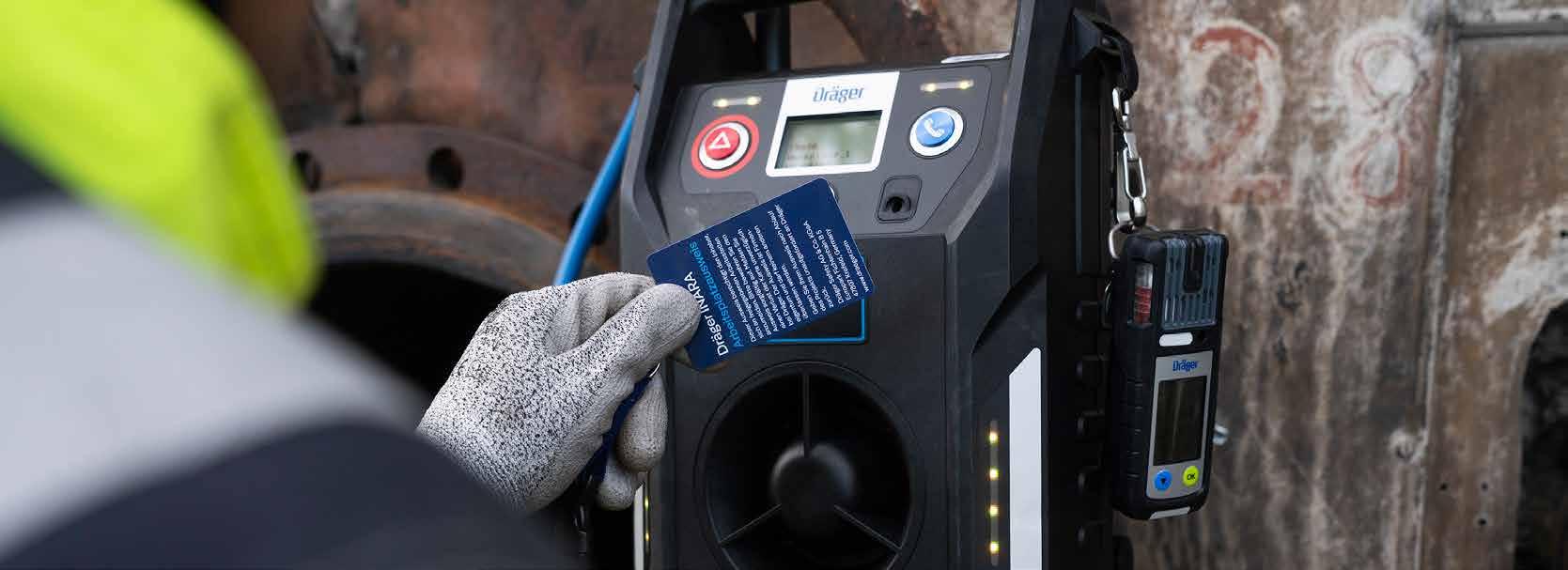
Dräger (UK)
Generating impact with a solution that has been 12 years in the making

Euan McIntosh
Industry Account Manager, Oil and Gas at Dräger
How is Dräger (UK) thriving?
Founded in Lübeck in 1889 and now operating with more than 16,000 employees in over 190 countries, Dräger is a global leader in medical and safety technology. Its UK Safety division, headquartered in Blyth and its Global Centre of Excellence for manufacturing and design, serves operators, EPCs and service companies across oil and gas, renewables, utilities, defence and the fire and rescue services. After 12 years of development, the Dräger has brought INARA to market – a first-of-its-kind digital confined space monitoring service that is now live across the UK, Germany, Spain, the US, Australia, the Netherlands and Portugal.
The challenge - For decades, the standard model for confined space monitoring in the energy industry had remained essentially unchanged. A standby guard would be positioned outside the confined space, manually logging workers in and out, with limited visibility of what was happening inside. The system relied on scaffolding setups, required significant time to establish and decommission and produced paper-based records that were difficult to interrogate or audit.
As organisations ran leaner and regulatory expectations around safety data tightened, the limitations of this model became harder to ignore. At the same time, Brexit had reduced Dräger UK’s access to the continental labour pool that the German arm of the business had long drawn upon for manpower-intensive monitoring services. A better solution was needed – one that improved safety outcomes rather than simply reducing costs.
The solution - The concept that became INARA had been in development since 2014. The product launched commercially in the UK in 2025 after more than a decade of iterative R&D – a timeline that reflects both the complexity of the engineering challenge and Draeger’s commitment to getting it right before going to market.

Neil Shepherd
Marketing Manager at Dräger
INARA is a digital, wireless safety monitoring system designed for confined space entry and other critical on-site work including hot works. Weighing around 8kg and deployable in approximately 15 minutes, it provides qualified monitoring personnel with real-time audio, video and gas detection data from inside a confined space, streamed to a control room that can be based on site. Two-way communication, camera feeds, gas readings and alarm capabilities are linked through a mobile router and connected to the cloud, with all data recorded and stored in full GDPR compliance. The system can be daisy-chained to cover multiple work sites simultaneously, and a low-resolution camera mode was developed specifically to address sites with limited mobile signal – a refinement that emerged directly from field trials.
INARA is a service and is available on a rental-only basis, making it an operational expenditure rather than a capital one for clients. Dräger manages, services and maintains the full equipment pool from its UK stock, with backup in Germany. There is nothing else like it certified to ATEX standards on the market.
The go-to-market approach was deliberately methodical. Here, Dräger worked with a forward-thinking existing client to run the first UK trial, beginning in October 2025 – the kind of partner willing to pioneer new technology rather than wait for others to validate it first. European rollout had already begun through a series of customer webinars and deployments in Germany, Spain and Australia preceded the UK commercial launch. Trials with manufacturing and utilities clients are also currently ongoing, extending the system’s reach beyond its oil and gas origins.
Many obstacles were encountered along the way. Changing long-established client mindsets, the instinct that safety in confined spaces must remain in human hands, required sustained demonstrations to show impact. Market conditions in 2024, including
Story type
#service & solutions (main category) #innovation #technology
Benefits
▸ Improved safety through real-time monitoring and reduced reliance on manual confined space guards.
▸ Enhanced data capture (audio, video, gas readings) enabling better decisionmaking and compliance.
Key findings
For young people
▸ Show a proactive, can-do attitude and be open to learning.
For industry
▸ Adopt digital and automated safety solutions to improve efficiency and reduce risk.
For government
▸ Support energy sector stability and skills development to sustain industry growth.
Dräger (UK) at a glance:
Key products and services: supply and rental of safety systems, including gas detection and protection, firefighting, rescue and digital monitoring.
Headquarters: Lübeck, Germany
Year established: 1889
Number of employees: 498 (UK) Revenue: £45m
a shift towards mini outages rather than full shutdowns, delayed revenue that had been anticipated for that year. But the pipeline is now building. A new business development manager role has been created specifically for INARA and the system has opened conversations with clients across sectors that Draeger had not previously engaged in this way. AI-based autonomous reporting is in the development roadmap for deployment over the next three to five years.
More broadly, INARA sits within Dräger’s Connected Safety ecosystem alongside Gas Detection Connect (GDC), ConHub mobile routing and Fireground telemetry for fire services – a suite of real-time, data-connected technologies that are reshaping what safety monitoring can mean in practice. In a sector where the standard has long been a person standing outside a hatch with a clipboard, this is a meaningful shift in practice.
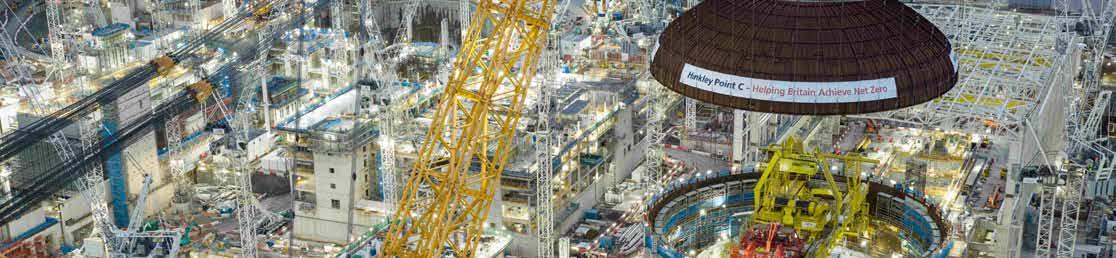
ECITB
How
a first-of-its-kind
Story type
#innovation (main category) #collaboration #service & solutions
Story type
Benefits
forecasting tool is shaping engineering construction’s workforce planning
How a first-of-its-kind forecasting tool is shaping engineering construction’s workforce planning
#innovation (main category) #collaboration #service & solutions
Benefits

Andrew Hockey CEO at ECITB
Rachel Sweeney CEO ECITB Executive Personal Assistant at ECITB
erate decision to maximise uptake. As employers saw what the LFT could do with their data, participation in the ECITB’s triennial Workforce Census grew sharply – from 54% in 2021 to 78.8% in 2024.
▸ The Labour Forecasting Tool provides clear, data-driven visibility of workforce supply and demand, enabling better hiring, training and investment decisions across the industry.
▸ The Labour Forecasting Tool provides clear, data-driven visibility of workforce supply and demand, enabling better hiring, training and investment decisions across the industry.
ECITB thriving?
How is ECITB thriving?
As the statutory skills body for Britain’s engineering construction industry, the Engineering Construction Industry Training Board (ECITB) invests more than £30m annually in training, supporting employers across oil and gas, nuclear, renewables, chemicals and more. Its Labour Forecasting Tool (LFT), launched in 2023 and now embedded in workforce planning, has positioned the organisation as a key intelligence source.
As the statutory skills body for Britain’s engineering construction industry, the EngineerConstruction Industry Training Board (ECITB) invests more than £30m annually in training, supporting employers across oil and gas, nuclear, renewables, chemicals and more. Its Labour Forecasting Tool (LFT), launched in 2023 and now embedded in workforce planning, has positioned the organisation as a key intelligence source.
The challenge - As the statutory, Industry-led skills organisation for the engineering construction industry (ECI) in Great Britain, the ECITB is funded by a levy from employers and reinvests this into training and workforce development. The ECI spans critical infrastructure sectors including oil and gas, nuclear, renewables, carbon capture, power generation, chemicals, pharmaceuticals and water treatment.
The challenge - As the statutory, Industry-led skills organisation for the engineering construction industry (ECI) in Great Britain, the ECITB is funded by a levy from employers and reinvests this into training and workforce development. The ECI spans critical infrastructure sectors including oil and gas, nuclear, renewables, carbon capture, power generation, chemicals, pharmaceuticals and water treatment.
However, the industry lacked reliable workforce data. There was no consistent way to track labour supply and demand, identify shortages or anticipate future skills gaps linked to major projects. This limited confident hiring decisions, targeted training, and the ECITB’s ability to represent industry needs to government as large-scale energy projects emerged.
However, the industry lacked reliable workforce data. There was no consistent way to track labour supply and demand, identify shortages or anticipate future skills gaps linked to major projects. This limited confident hiring decisions, targeted training, and the ECITB’s ability to represent industry needs to government as large-scale energy projects emerged.
The solution - The ECITB’s response has been to build something entirely new to the sector. Working with Whole Life Consultants and a technical reference group of key industry stakeholders, it developed the Labour Forecasting Tool – a first-of-its-kind platform for the ECI providing workforce supply and demand predictions across ECI regions and ECI sectors up to 2035.
The solution - The ECITB’s response has been to build something entirely new to the sector. Working with Whole Life Consultants and a technical reference group of key industry stakeholders, it developed the Labour Forecasting Tool – a first-of-its-kind platform for the ECI providing workforce supply and demand predictions across ECI regions and ECI sectors up to 2035.
Launched in November 2023, the LFT drew initially on data from the ECITB’s 2021 Workforce Census alongside live project data. Its findings were striking: demand for new workers was significantly higher than previously understood, with an estimated shortfall of 40,000 additional workers needed for major ECI projects by 2028.
Launched in November 2023, the LFT drew initially on data from the ECITB’s 2021 Workforce Census alongside live project data. Its findings were striking: demand for new workers was significantly higher than previously understood, with an estimated shortfall of 40,000 additional workers needed for major ECI projects by 2028.
For an industry that had long discussed skills shortages in imprecise terms, this was a watershed moment – concrete, quantified evidence of the challenge ahead. The tool is updated quarterly and is free to use, a delib-
For an industry that had long discussed skills shortages in imprecise terms, this was a watershed moment – concrete, quantified evidence of the challenge ahead. The is updated quarterly and is free to use, a deliberate decision to maximise uptake. As employers saw what the LFT could do with
That richer dataset fed directly back into the tool, enabling the ECITB to publish its most detailed predictions yet in May 2025. The updated forecast confirmed the 40,000 shortfall but revised the timeline: peak demand has shifted to 2030, reflecting project delays, converging activity and an approaching wave of retirements in key roles. The ECI workforce – currently around 114,000, up from 101,000 in 2023 – may need to grow to more than 135,000 within five years, an increase of 19%.
their data, participation in the ECITB’s triennial Workforce Census grew sharply – from 54% in 2021 to 78.8% in 2024.
That richer dataset fed directly back into the tool, enabling the ECITB to publish its most detailed predictions yet in May 2025. The updated forecast confirmed the 40,000 shortfall but revised the timeline: peak demand has shifted to 2030, reflecting project delays, converging activity and an approaching wave of retirements in key roles. The ECI workforce –currently around 114,000, up from 101,000 in 2023 – may need to grow to more than 135,000 within five years, an increase of 19%.
The roles in shortest supply span mechanical and electrical engineers, scaffolders, project managers, pipefitters, welders and instrument and control technicians. Crucially, the 2025 update introduced scenario planning functionality, allowing users to model workforce impacts of project delays or cancellations – addressing an early limitation and giving industry a more nuanced basis for planning decisions.
The roles in shortest supply span mechanical and electrical engineers, scaffolders, project managers, pipefitters, welders and instrument and control technicians. Crucially, the 2025 update introduced scenario planning functionality, allowing users to model workforce impacts of project delays or cancellations – addressing an early limitation and giving industry a more nuanced basis for planning decisions.
The impact has been widely felt. Mark Riley, Senior Advisor – Transformation at Phillips 66 Humber Refinery and a member of the LFT’s original technical reference group, said: “For the first time we can visualise this key industrial infrastructure skill base where supply and demand are spread across multiple regions and sectors. The LFT provides a valuable tool to support discussions and decisions around key skills and, as the ECITB continues to work with industry to refine the underlying data and assumptions, the quality of information will only improve.”
The impact has been widely felt. Mark Riley, Senior Advisor – Transformation at Phillips 66 Humber Refinery and a member of the LFT’s original technical reference group, said: “For the first time we can visualise this key industrial infrastructure skill base where supply and demand are spread across multiple regions and sectors. The LFT provides a valuable tool to support discussions and decisions around key skills and, as the ECITB continues to work with industry to refine the underlying data and assumptions, the quality of information will only improve.”
The LFT supports discussions and decisions around key skills and, as the ECITB continues refining data and assumptions, the quality of insight will improve. More broadly, LFT and ECITB Census data have fed into government thinking at the highest levels – contributing to the national infrastructure and construction pipeline, regional skills improvement plans, and the UK Government’s Clean Power 2030 Action Plan.
The LFT supports discussions and decisions around key skills and, as the ECITB continues refining data and assumptions, the quality of insight will improve. More broadly, LFT and ECITB Census data have fed into government thinking at the highest levels –contributing to the national infrastructure and construction pipeline, regional skills improvement plans, and the UK Government’s Clean Power 2030 Action Plan.
▸ Stronger industry and government alignment on skills planning has improved workforce strategy, supporting long-term growth and delivery of major energy and infrastructure projects.
Key findings
▸ Stronger industry and government alignment on skills planning has improved workforce strategy, supporting long-term growth and delivery of major energy and infrastructure projects.
For young people
Key findings
For young people
▸ Huge opportunity in engineering and construction – take the opportunities when you are given them. Don’t pigeonhole yourself.
For industry
▸ Huge opportunity in engineering and construction – take the opportunities when you are given them. Don’t pigeonhole yourself.
For industry
▸ Use our data forecasting tool and continual feedback loop to help inform your workforce strategy and skills planning.
For government
▸ Use our data forecasting tool and continual feedback loop to help inform your workforce strategy and skills planning.
For government
▸ Strengthen collaboration across industry and government to address skills shortages, while improving access to data to support workforce development and the energy transition.
ECITB at a glance:
▸ Strengthen collaboration across industry and government to address skills shortages, while improving access to data to support workforce development and the energy transition.
Key products and services: qualifications and training.
ECITB at a glance:
Key products and services: qualifications and training.
Main industries served:
Main industries served: ▸ Nuclear power – 39.2% ▸ Oil and gas – 35.2% ▸ Offshore and renewable energy – 6.2%
▸
▸ Conventional power – 1.9%
▸ Oil and gas – 35.2%
▸ Carbon capture and storage – 1.2%
▸ Offshore and renewable energy – 6.2%
▸ Hydrogen – 1.1%
▸ Others (non-energy): chemicals, water treatment, food and beverages, pharmaceutical – 15.2%
Headquarters: London, UK
Year established: 1964
▸ Others (non-energy): chemicals, water treatment, food and beverages, pharmaceutical – 15.2%
The ECITB has also drawn on the tool in parliamentary select committee evidence and cross-industry collaborations on nuclear, carbon capture and green jobs delivery. Looking ahead, the intelligence gathered through the LFT has directly shaped the ECITB’s new 2026–30 strategy, launched
The ECITB has also drawn on the tool in parliamentary select committee evidence and cross-industry collaborations on nuclear, carbon capture and green jobs delivery. Looking ahead, the intelligence gathered through the LFT has directly shaped the ECITB’s new 2026–30 strategy, launched in September 2025 after wide consultation with industry, helping meet workforce challenges with data-driven decisions.
Headquarters: London, UK
Number of employees: 120 Revenue: £40m
Year established: 1964
Number of employees: 120
Revenue: £40m
in September 2025 after wide consultation with industry, helping meet workforce challenges with data-driven decisions.
Endress+Hauser Muscat SPC
Building a local presence to unlock growth in Oman
Haitham AL Rawahi
Country General Manager at Endress+Hauser Muscat SPC
How is Endress+Hauser thriving?
Established in 2021, Endress+Hauser Muscat SPC – the Omani subsidiary of industrial process measurement and automation specialist Endress+Hauser – was created to build the group’s regional presence, enabling it to move beyond a partner-led model to strengthen market access, customer relationships and sector diversification. Five years on, significant progress towards these goals has already been made. By investing in local leadership, service capabilities and customer-centric, value-based solutions, the regional subsidiary has gone from market entry to a multi-million-OMR operation and positioned itself as a trusted technology and services partner across Oman’s evolving industrial landscape.
The challenge - The strategic decision to strengthen Endress+Hauser’s presence in Oman stems from 2019, when the firm identified the market as being one with significant long-term potential across various sectors including oil and gas, water and wastewater, mining, power and energy, food and beverage, pharmaceuticals and more.
The COVID-19 pandemic then delayed the execution of this local vision, with the entity subsequently set up in 2019.
Prior this, Endress+Hauser had historically operated in Oman through assigned partners. And while that model provided coverage, it limited direct exposure to customers, reduced control over service delivery and constrained the company’s ability to grow beyond project-based equipment sales. As the market evolved, it was an approach that was becoming insufficient in an increasingly service- and solution-driven environment.
At the same time, the wider industry context was becoming more challenging. Market volatility, pricing pressure, extended payment cycles, growing digitalisation demands and increasing competition for skilled talent all added complexity.
For a newly established legal entity, the challenge was taking a company from basic commercial registration to a sustainable, multi-million-OMR business at speed, all while building credibility, capability and customer trust.
The solution - The establishment of the Oman division was supported by the recruitment of a local General Manager with significant understanding of both the market and customer landscape. Indeed, it was a decision that proved critical in helping to navigate local business practices, build relationships and align the organisation internally and externally.
Rather than spreading too thinly, the initial plan was to concentrate on two core sectors in oil and gas and water and wastewater while building a strong in-country team. Sales capability grew steadily, beginning with sector specialists, with this team later bolstered with additional sales engineers and supporting functional staff as the organisation scaled.
A key strategic shift was the decision to position service as a product rather than an add-on. Endress+Hauser Muscat sought to move beyond being just an equipment supply and instead develop sustained, long-term customer relationships built around lifecycle support, measurement reliability, and operational performance. This customer-centric, value-based approach has proven crucial. Indeed, it has differentiated the business in a market traditionally driven by projects and price.
In parallel, the company has expanded its digital offering, enabling customers to engage through e-commerce channels and digital tools. Early engagement in energy transition, water infrastructure and industrial diversification projects has also enabled the business to align with Oman’s broader economic priorities while broadening its sector exposure.
Internally, the investment has continued, with a major focus on change management and capability building. Establishing a new entity required the recruitment of the right people, and also local alignment with Endress+Hauser’s global standards. Here, clear internal communications and hands-on leadership have ensured the team have remained on the right track.
Through all these efforts, Endress+Hauser Muscat is already thriving in the Omani market. Having received its first order in 2021, valued at approximately OMR 200,000, revenue quickly increased to around OMR1m in 2022, OMR1.5m in 2023, and OMR1.8m in 2024, with OMR2m forecast for 2025.
Customer reach has expanded significantly, with around 30 new customers onboarded. Critically, the company actively works with local SMEs, including Riada-supported businesses, strengthening local supply chains and capability. And from its initial focus on two sectors, Endress+Hauser Muscat now operates across eight industries.
Story type
#diversification (main category) #service & solutions
Benefits
▸ Revenue increased from an initial OMR 200,000 order in 2021 to approximately OMR1.8m in 2024, with OMR2m forecast for 2025.
▸ Expanded from two core sectors to operations across eight industries while onboarding around 30 new customers.
Key findings
For
young people
▸ Build strong fundamentals, stay curious, and embrace technology.
For industry
▸ Focus on people, partnerships, and longterm value creation.
For government
▸ Support industrial digitalisation and the energy transition through clear, stable regulations and incentives, while encouraging the localisation of international companies.
Endress+Hauser at a glance:
Key products and services: process measurement, automation and support services
Main industries served:
▸ Oil and gas – 50%
▸ Conventional power – 10%
▸ Onshore renewable energy – 10%
▸ Hydrogen – 5%
▸ Others (non-energy): water, pharma, mining, data centres – 25%
Headquarters: Muscat, Oman
Year established: 2021 Revenue: £3.5m (2024)
Beyond commercial performance, Endress+Hauser Muscat has established a strong CSR record, including support for the Special Olympics, helping fund and send Omani athletes to international competitions where they have achieved medal success.
It’s a true success story – one that is has centred around combining global expertise and local knowledge and investments to build a direct presence, a capable team and a diversified, service-led business model that continues to gain momentum.
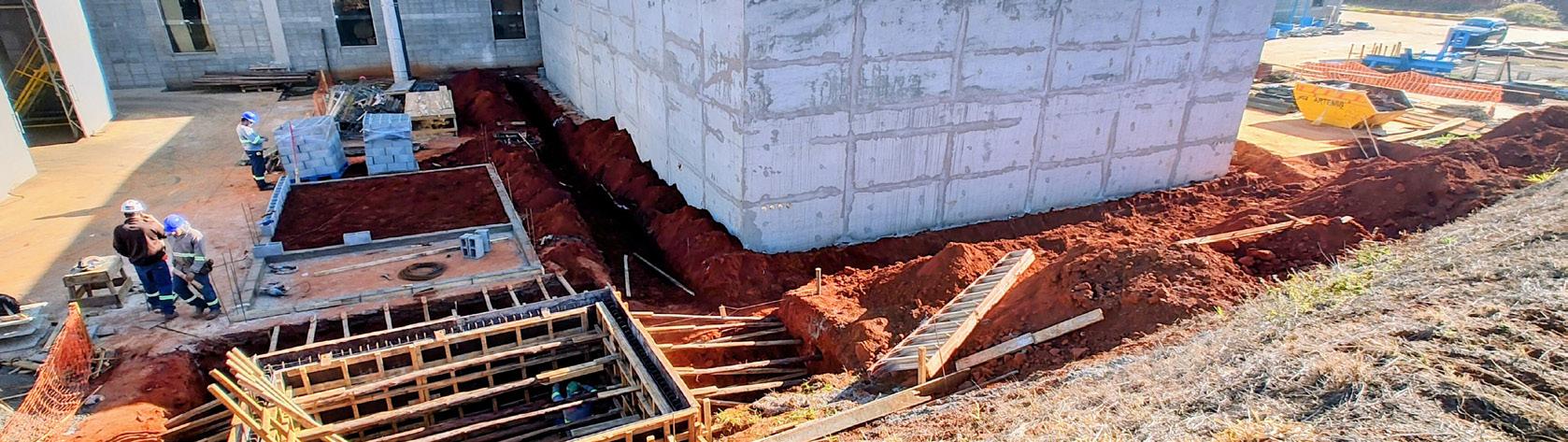
EquipSea
Investing in advanced testing infrastructure to secure major projects

Claudio Evangelista
Chief Commercial Officer at EquipSea
How is EquipSea thriving?
Having realised that it was at risk of being excluded from major subsea projects, EquipSea took the bold decision to expand its hydrostatic and gas tests capacity, by adding a totally new 240 m² testing bunker to support the larger, complex equipment requirements of its clients, before limited to its existing 25 m² one. Despite the financial risks involved, the firm is now able to deliver fully integrated, turnkey solutions for global players such as OneSubsea, TechnipFMC, Baker Hughes and Prysmian. With new contracts, the firm not only expects to recoup its investment, but gather further momentum for years to come.
The challenge - The Brazilian firm EquipSea’s challenge centred around limitations in its ability to deliver solutions for certain equipment sizes. Previously, the firm’s 25m² bunker for hydrostatic and gas tests of up to 30,000 psi couldn’t meet the requirements of larger projects, such as pipeline end terminations (PLETs), umbilical distribution heads (UDHs) and manifolds.
Many companies previously opted to purchase these structures and carry out assembly within their own facilities. However, demand has recently changed, with many companies now seeking suppliers capable of delivering more complete solutions.
As a result, EquipSea’s limitations stood to prevent it from participating in projects that required larger structures. Without a solution, the firm would be left unable to meet its clients’ needs in full, hindering its long-term growth prospects.
Another limitation was the capacity to machine large and high precision parts. Although EquipSea possessed large boring, milling, and vertical lathe machines, it recognised that modernising this equipment was necessary to significantly increase overall capacity.
The solution - The need to expand the testing bunker, and the potential benefits this would bring immediately became clear. Soon thereafter, the firm’s client, OneSubsea, also explicitly requested the construction of a bunker capable of performing tests in a submerged pit for pressures exceeding 30,000 psi.
Despite this, however, the proposed bunker expansion brought some risks. The investment would be substantial, and there was no certainty that market demand would be sufficient to justify the expenditure. Although some members of the OneSubsea team recognised the potential value of the expansion, others viewed it with caution.
At the same time, EquipSea was also starting and strengthening its relationship with Baker Hughes, TechnipFMC and Prysmian. With Baker Hughes, the initial contact had been established during OTC 2025, where EquipSea participated in the EIC pavilion. Through these interactions, the company recognised the importance of expanding its testing infrastructure, as Baker Hughes indicated that it was seeking a supplier in Brazil with the ability to deliver fully integrated solutions.
While there were uncertainties surrounding the investment, EquipSea decided to move forward with the new bunker, recognising that its ability to meet the needs of existing clients was significant, and that it could ultimately attract new contracts through the development.
With demands for a larger facility having emerged in May 2024, the decision to proceed with the expansion was taken in the first quarter of 2025, with civil construction beginning in May. Since then, EquipSea has successfully increased the capacity, now with 2 bunkers, the first 25m² one and the new 240m² one, with an expected testing pressure of up to 30,000 psi for hydrostatic tests, as well as 10,000 psi for gas tests using a newly incorporated steel tank. The total investment amounted to US$1.2m, and the company expects to recover the investment within three to four years.
Initial tests are expected to be conducted under provisional conditions in the spring. However, the facility stands out in comparison with other existing structures. The bunker expansion is now partially operational and has already resulted in approximately US$3m worth of new contracts from companies such as OneSubsea and Prysmian that require a more advanced testing infrastructure.
Looking ahead, EquipSea is planning additional investments for the bunker’s final configuration, including a 10-ton gantry crane to eliminate the need to rent expensive crawler cranes for most of the assembling operations, and an electrically operated retractable roof to enable year-round operations under all weather conditions, infrastructure that almost no other bunker provide. The facility is already camera-monitored and

Story type
#scale up (main category) #service & solutions
Benefits
► Secured approximately US$3m in new contracts from major players by successfully expanding its testing bunker capacity from 25m² to 240m².
► Increased company revenues from US$3m to US$18m while positioning for continued growth with a US$2m investment in new CNC equipment.
Key findings
For young people
► Study hard, do not skip steps and maintain your integrity; continually invest in your education and face challenges with resilience.
For industry
► Be bold and do not fear challenges; actively invite clients to push your limits, treating complex demands as opportunities to grow.
For government
► Implement fair tax reform, reduce logistics costs, improve infrastructure and increase investment in technical and higher education.
EquipSea at a glance:
Key products and services: welded, machined and coated parts, turnkey sets that include seals, and hydraulic and electrical components.
Main industries served:
► Oil and gas – 95%
► Others (energy) – 5%
Headquarters: Piracicaba, Brazil
Year established: 2017
Number of employees: 241
Revenue: £9.57m
fully operated from a safe control room outside the high-pressure environment.
To address its machining bottlenecks, EquipSea is investing approximately US$2m to acquire new computer numerical control (CNC) equipment, including a boring and milling machine, a gantry-type machining centre, two horizontal machining centres and a lathe. With the company’s revenues having increased from US$3m in 2020 to US$18m in 2023, this latest venture will stand it in good stead to maintain such an impressive growth trajectory moving forward.
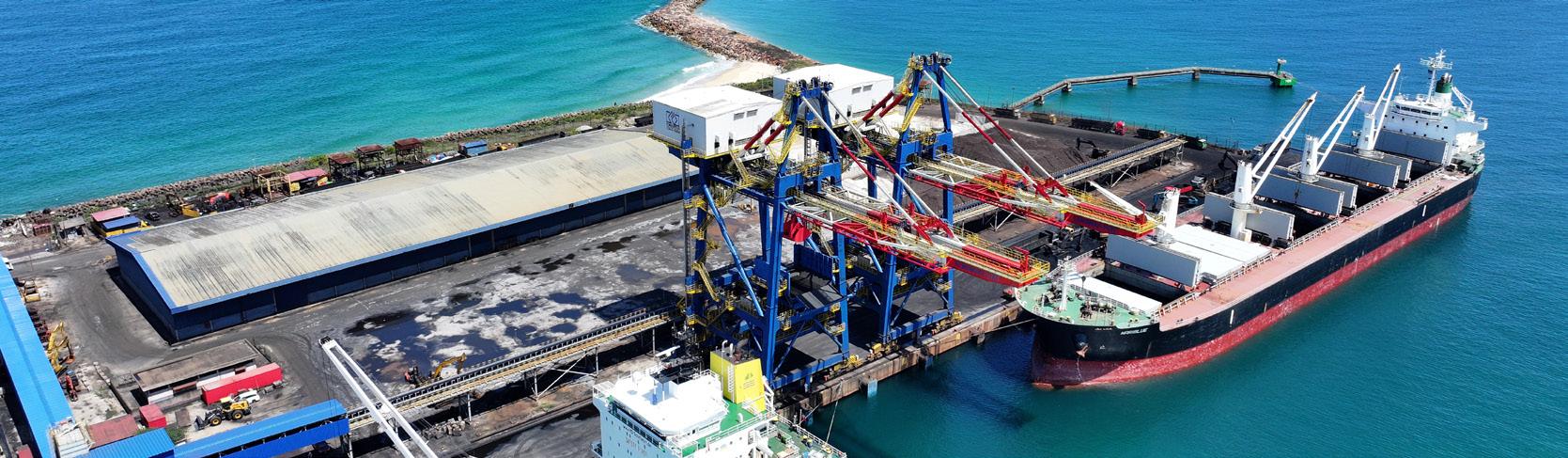
EPIC Berhad
Breaking down silos, building a performance culture and delivering record results in Malaysia

Dr. Muhtar bin Suhaili
Group Chief Executive Officer at EPIC Berhad
How is EPIC Berhad thriving?
EPIC Berhad is an integrated oil and gas solutions provider serving the upstream and downstream value chains through five core business areas: supply base operations, port management, marine engineering and services, engineering and maintenance, and renewable energy and green technology. Following a sustained internal transformation, the group has delivered two consecutive years of record revenues (RM403.8m in 2024 and RM409.4m in 2025), with profit growing from RM8.9m in 2023 to RM19.7m in 2025.
The challenge - EPIC Berhad’s business is built around the Kemaman Supply Base, the largest oil and gas supply base in the Malaysian peninsula which expanded from 30 to 200 hectares and is uniquely licensed under the Royal Customs Petroleum Supply Base scheme. Alongside this, it carries out port management operations capable of handling Cape-size vessels and has a growing engineering and maintenance division serving offshore operators such as ExxonMobil and PETRONAS.
For all the strength of these foundations, the group entered the early 2020s with serious internal challenges. Two of its operating subsidiaries were loss-making: EOG Sdn Bhd recorded a loss of RM9.5m in 2021, while EOS Sdn Bhd posted losses in three consecutive years. The group’s overall profit during this period ranged between only RM2.8m and RM4.5m annually. The underlying causes were structural. Employees spent entire careers within a single subsidiary, creating silos where knowledge was hoarded and best practices never travelled across the group. Bonus structures reinforced this insularity, tying individual rewards to the performance of a single unit rather than the group. A culture of complacency and limited accountability had taken hold.
The solution - Indeed, the transformation EPIC Berhad pursued was as much cultural as operational. It has been underpinned by a clear strategic direction captured in two guiding frameworks: a business tagline of ‘Shaping the Growing Future’ and a cultur-
al slogan, BFACT, standing for better, faster, competitive. Together, these set the tone for a group-centric model built on three pillars: people-centricity, performance-based management and competency development.
The most immediate priority was reversing the losses in EOG and EOS. At EOS, this meant a right-sizing exercise that reduced headcount from 80 to 50, the disposal of unused machinery, a reassessment of yard rental areas and the redeployment of surplus workforce to other parts of the group during low-production periods. At EOG, the focus was on restructuring employment contracts onto a purchase order basis to improve margin visibility, establishing benchmark rates for all new hires and renewals and upgrading tradesman grades to improve margin per head. Overhead costs were cut by relocating offices into EPIC-owned space.
Alongside these operational fixes, the group undertook a deeper structural shift. The subsidiary-centric model, in which general managers and employees operated in isolation for their entire careers, was replaced with a group-centric setup that encourages cross-subsidiary mobility, shared services and the deliberate transfer of talent and best practices between units. Bonuses and incentives were realigned to reflect group performance rather than individual subsidiary results.
Performance management was also overhauled. KPIs are now set early and objectively, with clear consequences for underperformance. Leadership also introduced a consequence management framework to address both complacency and active resistance to change – a process that required removing individuals who were unwilling to align with the new direction. Cultural change was reinforced through a sustained programme of staff engagement: monthly walkabouts, town halls, open-door sessions, sports hours and flexible working arrangements, all designed to rebuild morale and demonstrate that the new direction came with genuine investment in people.
The results so far look promising. EOG recovered from its RM9.5m loss in 2021 to a profit of RM4.2m in 2024. EOS turned from a RM2.1m loss in 2023 to a RM4.2m profit in 2024. Group profit, meanwhile, has more than doubled in two years, from RM8.9m in 2023 to RM19.7m in 2025. Client recognition followed: EOG’s performance on ExxonMobil projects improved from a three-star rating in 2022 and 2023 to a four-star rating in 2024.
Story type
#people & competency (main category)
Benefits
▸ Achieved two consecutive years of record revenues, peaking at RM409.4m in 2025, and more than doubled overall group profit.
▸ Returned two loss-making subsidiaries to profitability by implementing a group-centric model and performancebased management.
Key findings
For young people
▸ Improve yourself by building a strong network of mentors, technical advisors and good people.
For industry
▸ Lead by example to inspire your workforce and drive your business forward.
For government
▸ Foster a stronger environment for investment and economic growth while focusing on delivering clear benefits for citizens.
EPIC Berhad at a glance:
Key products and services: oil and gas solutions provider.
Main industries served:
▸ Oil and gas – 54%
▸ Onshore renewable energy – 5%
▸ Others (non-energy): port management, marine services, engineering and maintenance – 41%
Headquarters: Kemaman, Terengganu, Malaysia
Year established: 1981
Number of employees: 1,984
Revenue: £76.5m
Revenue from exports: 5%
Looking ahead, EPIC Berhad is investing in growth beyond its core operations. A RM1.8bn port capacity expansion targeting 30m metric tonnes per year is under development, solar farm and rooftop licensing programmes are extending the group’s presence in renewables, and early-stage international conversations are under way in Indonesia and the Middle East. The group’s target for 2026 is revenues of RM441m, an 8% increase on its current record, as it continues to build on newly strengthened foundations.


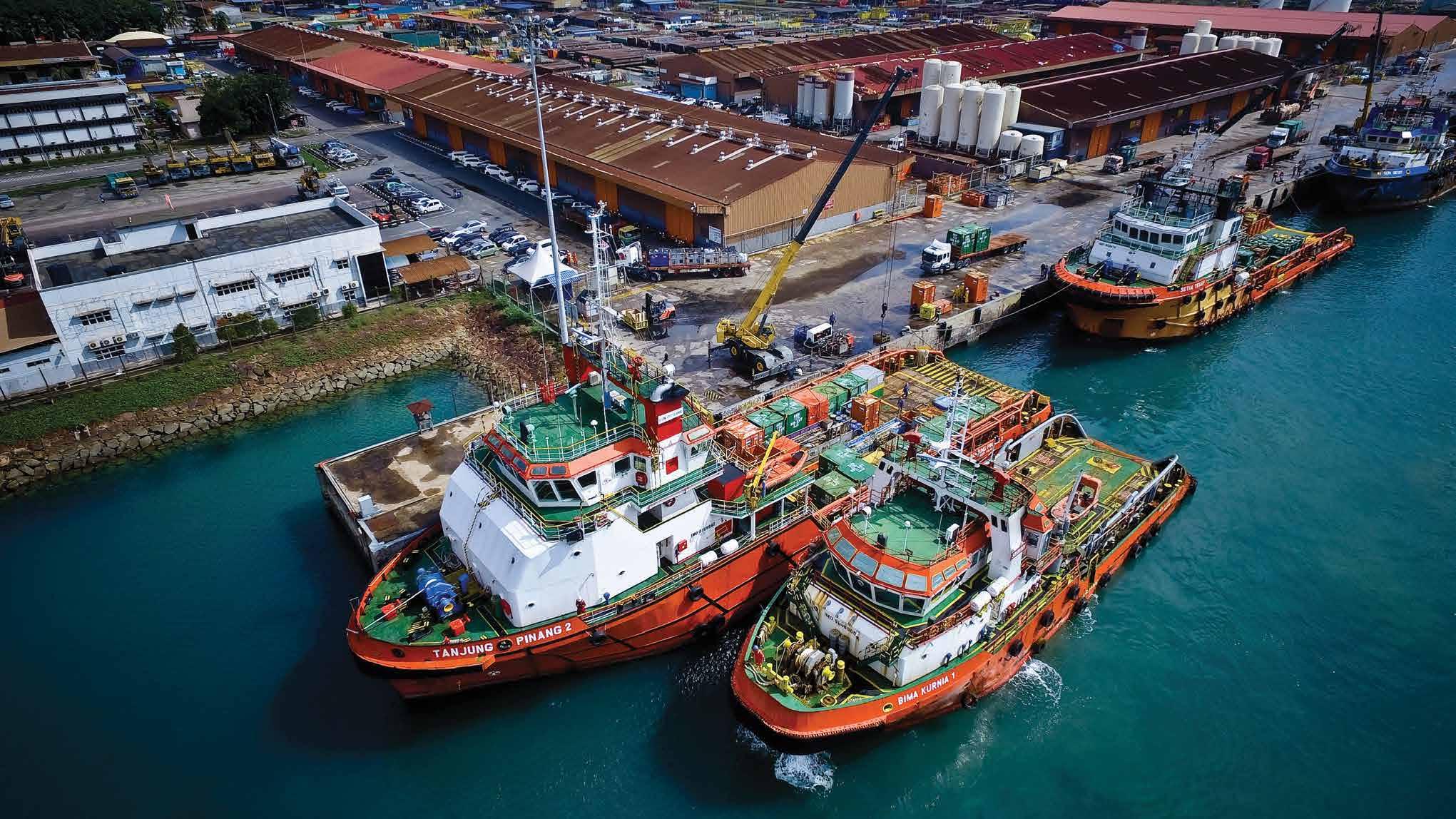
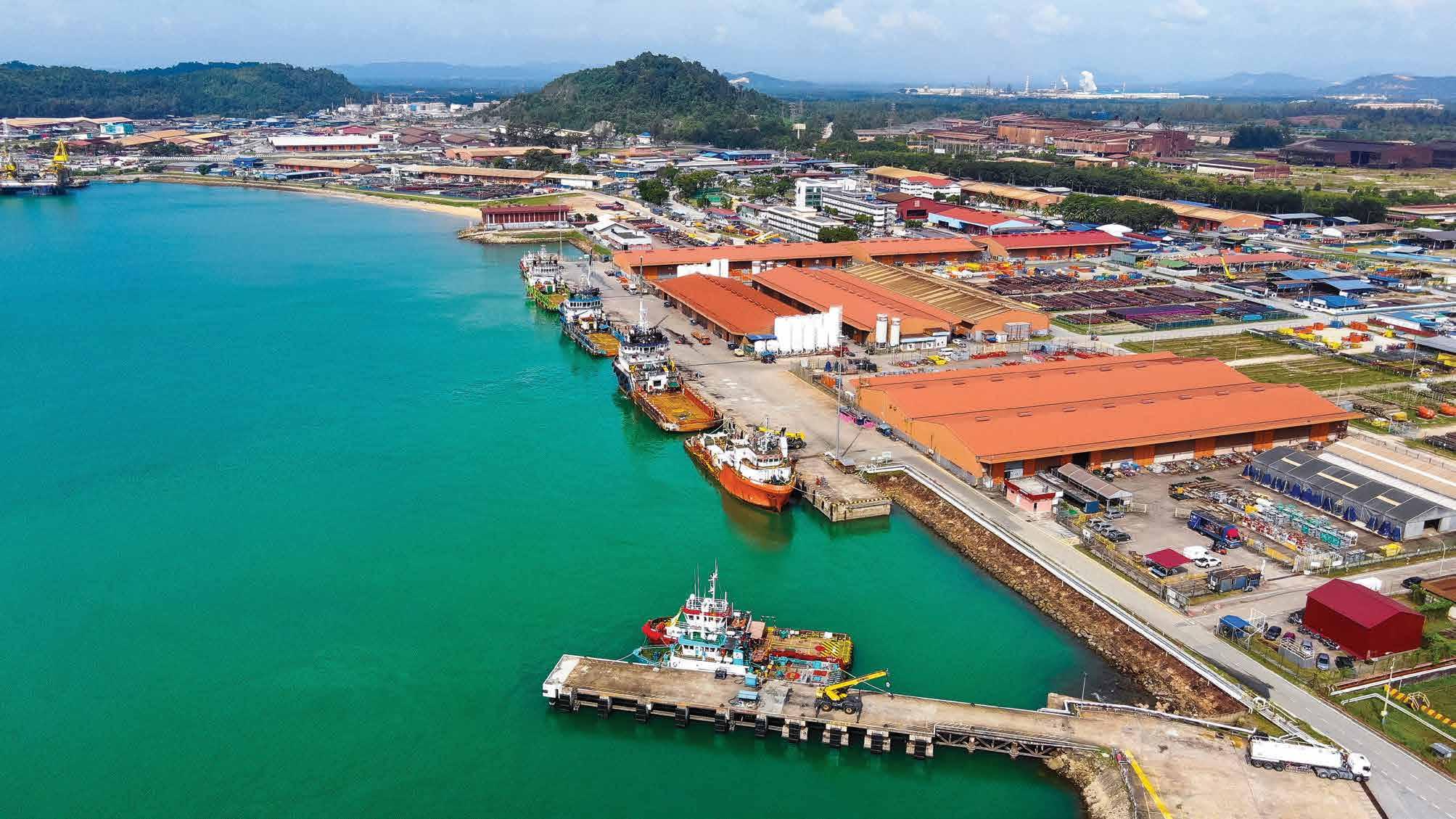


ERM
Confronting the real reason energy projects stall, and building a model to fix it as a professional problem solver
Story type
#culture (main category) #enviromental sustainability & social impact #energy transition #resilience #transformation
Benefits
► Integrated Advise-Enable-Deliver model has improved project success rates by addressing non-technical risks early, reducing delays and stalled investments.

Amy McDonald
Global Industry Lead for Diversified Energy at ERM
How is ERM thriving?
As the world’s largest pure-play sustainability consultancy, ERM, through its 8,000 people globally, advise energy companies on decarbonisation, climate risk and ESG performance while enabling and delivering projects from concept through to long-term operations. Having diagnosed a systemic failure in how major capital projects are developed and responded with an integrated Advice-Enable-Deliver model, ERM has grown revenues by around 10% year-on-year.
The challenge - With 55 years of technical expertise and a presence across major energy markets, ERM has long been involved in the capital projects underpinning the global energy system – close enough to see why so many were failing.
The energy transition has driven major project ambition, but in recent years many technically sound, fully funded projects have stalled. Permitting timelines have expanded dramatically – in some cases, pipeline permitting costs exceeded three times the cost of the pipe itself. Community opposition, legal challenges, construction constraints and supply chain pressure have all slowed delivery, preventing capital from converting into operating assets at the pace required. ERM, working across these projects globally, needed to respond.
The solution - The diagnosis was clear: energy projects were no longer failing on technical grounds. They were failing because non-technical risks such as permitting, social licence, regulatory complexity and community opposition were being treated as compliance steps rather than major design and investment constraints. ERM had been a thought leader on non-technical risk for more than 15 years. The moment had arrived to convert that insight into a fully integrated response.
The company made three deliberate and reinforcing strategic shifts. The first was elevating permitting and social impact assessment from a downstream compliance milestone to an upstream design signal. Rather than asking ‘can we get a permit?’ after a project concept is fixed, ERM began bringing political, social, regulatory, land, water, grid-capacity and institutional considerations into the earliest decisions. By surfacing fatal flaws at the concept stage, the company helps clients design assets
Neeraj Nandurdikar
that are genuinely permittable – and to judge whether phased development might be more viable than a single large build, for instance.
The second shift was formalising ERM’s presence across the entire capital project journey. Clients increasingly needed fewer specialists and more partners willing to stay with them from idea through operations. ERM built an end-to-end model spanning early viability and capital allocation, permitting and stakeholder engagement, construction support, assurance and operational readiness, and long-term compliance – underpinned throughout by digital capability and informed by board-level strategy.
The third move involved investment in digital and AI-enabled workflows to address the industry-wide capacity crunch. Here, ERM deployed platforms that automate site-selection, regulatory interpretation, obligation tracking and real-time permitting visibility, freeing experts to focus on higher-value advisory work. AI tools also help clients anticipate regulatory changes over the multi-year development and multi-decade operational life of assets. Experienced industry experts were integrated into project teams early to ensure design decisions reflect operational realities, with climate resilience and emissions modelling embedded from the outset.
There has been cultural change, too. Internally, technical specialists had to see the connected nature of capital projects rather than operating in discipline silos. On the client side, ERM had to engage new stakeholders (project directors and capital portfolio owners) rather than relying solely on traditional permitting or HSE contacts.
► Strong demand for end-to-end sustainability and project support has driven consistent revenue growth (~10% YoY) and deeper client partnerships.
Key findings
For young people
► The future of energy will be led by professionals who combine technical knowledge with adaptability and execution skills.
For industry
► Energy projects succeed when sustainability, permitting and execution are integrated from the beginning. For government
► Faster permitting and clearer regulation are essential to accelerate energy infrastructure delivery.
ERM at a glance:
Key products and services: sustainability consulting, ESG advisory and project delivery support.
Headquarters: London, UK
Year established: 1971
Global Service Lead for Capital Projects at ERM lection, bring
The impact is visible. Clients who once engaged ERM for discrete scopes now treat it as a partner with a voice in shaping how work is done – inviting the company to embed new EHS and sustainability approaches into governance frameworks and stage-gate systems. Water stewardship, once a niche concern, has become a critical project decision factor, and ERM’s fingerprints are on that shift in how companies define responsible investment criteria.
Looking ahead, the integrated model is proving equally well-suited to data centres, where permitting complexity, power access,
Number of employees: 8,000
Revenue: £862,300
community engagement and sustainability planning mirror the challenges ERM has been solving in energy for decades. The same Advice-Enable-Deliver framework that helps a renewables developer navigate a hostile planning environment is equally applicable to a hyperscaler racing to bring capacity online. The model, it turns out, travels well.

ERSG
Turning political uncertainty into new market opportunities

Michael James Ryan CEO at ERSG
How is ERSG thriving?
When internal pressures and uncertain political and regulatory policies cast doubt on ERSG’s ability to progress in key markets, the company reset its foundations and refocused its global strategy. As a result, the global recruiting specialist streamlined operations and pivoted to supporting grid infrastructure projects – one of the largest areas of energy transition investment. Through these changes, the company achieved strong financial gains, delivering a refined offering in high-potential markets.
The challenge - Founded in 2008, ERSG is a global staffing and recruitment consultancy specialising in the energy sector, with a strong focus on renewables, onshore and offshore wind, power generation, transmission and distribution, subsea and marine, and built environment and technology markets.
The company provides specialist recruitment across permanent, contract and freelance roles, supported by global candidate pools and technical expertise. Despite this footprint, ERSG faced several challenges by 2025.
Internally, back-of-house operations needed improvement to unlock global scalability, while growth was also hindered by uncertain political and regulatory environments.
The United States was a key concern. While ERSG had built strong pipelines in Boston and other locations, the offshore wind market—critical to growth—became increasingly exposed to federal decision-making. This contrasted with previous cycles focused on state-driven onshore wind, which was more insulated from political change. As a result, reliance on these projects posed commercial risk.
At the same time, the global energy marketwas shifting. While renewable generation expanded, the grid infrastructure needed to support it lagged behind. Across the UK, Europe and the US, transmission and distribution systems required urgent reinforcement and modernisation.
As a result, ERSG recognised the need to stabilise operations, reduce exposure to geopolitical volatility and shift towards areas of long-term, structurally driven growth.
The solution - By summer 2025, ERSG took the decision to reposition strategically.
In an effort to capitalise on grid upgrade programmes in the UK, the firm expanded its regional desk that had long covered transmission and distribution work from three specialists to seven. Similarly, changes were made in Europe, with the firm adding two specialists for Germany, and building a team of three focused on grid opportunities in the US.
Likewise, in response to uncertainty in US offshore wind, the firm also moved to reduce its dependence on federally driven projects. Hiring individuals with deep market knowledge helped the business adapt its approach, ensuring it could capture gridrelated roles that were less vulnerable to federal policy shifts. Meanwhile, the Seattle office continued its steady growth and diversification by supporting both existing offshore markets and emerging opportunities in battery energy storage systems.
The company’s global footprint played a major role in enabling this pivot. With operations spanning the UK, Europe, the US, Taiwan, South Korea and Australia, ERSG could follow clients internationally and deliver talent wherever projects were emerging. This international reach remained a significant advantage, allowing the business to monitor political shifts, anticipate regulatory changes and move quickly into high potential markets.
Internally, meanwhile, ERSG also focused on strengthening its operational backbone, streamlining systems, upgrading software and investing in support functions. As a result, margin conversion improved substantially, rising by more than 14% between FY23 and FY25. The firm’s EBITDA also increased by 56% from FY24 to FY25 and had grown 135% since FY23, with a further increase forecast for FY26.
ERSG’s repositioning has also strengthened client partnerships. In one case, the company has delivered more than 480 hires for a single major client across Denmark, the UK, Germany and the Netherlands since 2016, securing preferred supplier status in the process. In the grid space specifically, ERSG also saw the potential for significant growth. One offshore client with a £2bn generation budget was investing £9bn into grid upgrades, illustrating the sheer scale of opportunity.
With a target to grow grid work from 2-3% to around 15% of revenue, the sky could be the limit for ERSG moving forward as it begins to capitalise on its new strategic remit.
Story type
#scale up (main category) #diversification #export
Benefits
▸ Strategic repositioning towards grid infrastructure reduced exposure to political risk and unlocked new growth opportunities in high-demand markets.
▸ Operational improvements and global expansion strengthened margins, increased EBITDA and enhanced longterm client partnerships.
Key findings
For young people
▸ Be interested in your work, don’t be intimidated by seniority, and always show up early.
For industry
▸ Be prepared to adapt in a volatile geopolitical environment and avoid rushing major decisions.
For government
▸ Provide stronger, more accessible export funding, as current options are limited, costly and not fit for purpose.
ERSG at a glance:
Key products and services: recruitment, staffing and workforce solutions.
Main industries served:
▸ Offshore renewable energy – 55%
▸ Onshore renewable energy – 22%
▸ Energy storage – 6%
▸ Carbon capture – 6%
▸ Nuclear power – 6%
▸ Hydrogen – 2%
▸ Others (energy) – 10%
Headquarters: Bromley, UK
Year established: 2008
Number of employees: 183 Revenue: £167.3m

Exact Analytical
Banking on quality and trust while the competition competes on price
David Tey Hwee Yee Executive Director at Exact Analytical
How is Exact Analytical thriving?
By holding firm on product quality, technical excellence and long-term client relationships in the face of aggressive low-cost competition, Malaysian instrumentation specialist Exact Analytical has grown revenues from RM22.5m in 2021 to RM29m in 2025, while steadily expanding gross profit margins from 23% to 36% over the same period. A deliberate shift towards rental equipment, investment in staff development and a culture built around six core values are together laying the foundations for sustained and profitable growth.
The challenge - Founded in Selangor in 2001, Exact Analytical supplies analytical analyser systems, continuous emission monitoring systems, and fire and gas detection systems to oil and gas, power and manufacturing clients across Malaysia and the wider region. For more than two decades, the company has competed on the depth of its technical expertise and the reliability of the solutions it delivers.
That positioning has come under increasing pressure. Chinese manufacturers have entered the market with aggressive pricing strategies and a heavy exhibition presence, making it harder for established suppliers to win purely on product merit with cost-conscious procurement teams. The temptation for clients to opt for cheaper alternatives is real, even when the long-term cost implications are significant – a pattern the company has observed repeatedly, with many lowcost products requiring replacement within one to one-and-a-half years of installation.
Adding to the external pressure is an internal challenge: retaining skilled instrumentation engineers in a market where new graduates require five to six years to reach full technical competence, and where larger multinationals are willing to poach experienced staff with higher salary offers.
The solution - Exact Analytical’s response has been to double down on the qualities that differentiate it, rather than attempt to compete on terms that would undermine its core proposition.
On the commercial side, the company has invested in upgrading the capability of its sales engineers to articulate the full value of
its offering. Rather than defending on price, the team is trained to reframe procurement conversations around performance, track record and total cost of ownership – making the case that a higher upfront cost is more than offset by reduced downtime, lower maintenance expenditure and longer product life. The message is reinforced by the observable experience of clients who have cycled through cheaper alternatives and returned seeking something more reliable.
Alongside this, Exact Analytical has developed a rental equipment model as a deliberate strategic response to the capital expenditure constraints many clients now face. With around RM2m of rental assets under management, the model allows clients to access high-quality instrumentation without large upfront commitments, at the same time generating more predictable, recurring revenue for the business. It is a pragmatic adaptation to market conditions that also deepens client relationships over time.
The people strategy is equally central. Executive Director David Tey personally leads inductions for every new employee, walking them through the company’s six core values – integrity, initiative, continuous improvement, dedication, customer first and teamwork – from day one. This reflects a genuine belief that shared values are the foundation on which technical excellence and client trust are built. Training investment is substantial, with engineers sent to overseas principals’ factories to deepen product knowledge and ensure that Exact Analytical’s technical support capability remains a genuine differentiator.
Career development is structured and visible. The company offers clear progression pathways and actively promotes from within, with promoted staff becoming advocates and mentors for those coming through behind them. The approach has meaningfully improved retention in a market where experienced instrumentation engineers are persistently in demand and difficult to replace.
The results reflect the cumulative effect of these commitments. Gross profit margins have grown from 22% in 2019 to 36% in 2024, a trajectory that reflects both the improving quality of the revenue mix and the commercial discipline of the sales approach. Revenue grew 12% in 2025, with a further 9% targeted for 2026. The company is also exploring gas detection opportunities in Malaysia’s fast-growing data centre market, where its existing technology has clear application in cooling and air-conditioning environments.
Story type
#people & competency (main category)
Benefits
▸ Grew revenue from RM22.5m in 2021 to RM29m in 2025 and expanded gross profit margins to 36% by firmly prioritising technical excellence over low-cost competition.
▸ Established a rental equipment model managing RM2m in assets, generating recurring revenue while helping clients bypass upfront capital constraints.
Key findings
For young people
▸ Understand that building a successful career takes time and dedication. There are no shortcuts to overnight wealth.
For industry
▸ Build customer confidence by providing complete solutions and backing your words with a proven track record of actionable results.
For government
▸ Streamline agency approval processes by eliminating repetitive regulatory requirements to significantly improve overall efficiency.
Exact Analytical at a glance:
Key products and services: analytical analysers, continuous emission monitoring and fire and gas detection systems.
Main industries served:
▸ Oil and gas – 45%
▸ Conventional power – 10%
▸ Others (non-energy): manufacturing, services – 45%
Headquarters: Puchong, Malaysia
Year established: 2001
Number of employees: 47
Revenue: £5.5m
Revenue from exports: 5%
More broadly, Exact Analytical’s story is one of conviction – a belief that in markets where price pressure is relentless, sustainable success belongs to those who invest in quality, develop their people and give clients good reason to stay.
Fibron
Setting the net zero example in its 40th anniversary year
Hugh
Moss
Marketing Manager at Fibron
How is Fibron thriving?
Fibron has regularly invested in its people and factory over the past four decades. By combining technical expertise with a versatile manufacturing capability, the company has successfully diversified its product and service offering across multiple offshore sectors, from remotely operated vehicles (ROVs) and diving to oil and gas, renewables, defence, and more.
That diversification has been key, helping Fibron avoid over-reliance on any single sector and enabling incremental sales and profitable growth. Across all these verticals, the company remains committed to being ‘Easy to do Business With’. Its focus on manufacturing flexibility, product quality and operational efficiencies makes for a compelling offering, with short lead times and competitive costs. The combination of strong customer service, technical expertise, open communication and agile manufacturing provides firm foundations for future success, as the firm embarks on its latest challenge of achieving net zero.
The challenge - The crux of Fibron’s challenge centres around its ambitious sustainability targets. After being acquired by Hexatronic Group in 2023, Fibron set out to align with its parent company’s goal of achieving net zero in scope 1 and scope 2 operations by 2030.
It’s a shift that’s important to Fibron CEO, Phil Ashley, who feels a personal responsibility to make the business as environmentally responsible as possible. It also aligns with shifting market demands, particularly in the renewable energy sector, where being a supplier of sustainably produced products and services increasingly serves as a competitive advantage.
The ambition is clear. Yet working towards net zero is a complex project that undoubtedly requires significant time, expertise and resources to make consistent and notable progress. By Fibron’s own admission, the project was daunting. Yet by breaking it down into a series of milestones that would combine to make a big difference, the project became more manageable.
The solution - Hexatronic’s acquisition of Fibron has helped, providing access to experienced and well-informed sustainability experts, as well as a greater appetite for longer-term investments than might have been expected under private equity ownership. That said, Fibron’s own QHSE team have taken the lead
on this project, aligning with the ISO 14001 Environmental Management Standard.
From a commercial perspective, the firm recognised it was important to ensure that its net zero strategy and initiatives made good business sense, supporting the company’s value proposition of providing cost-competitive solutions for clients without compromising on quality or lead-times. Under these parameters, several key changes have been made that have had a significant impact.
The introduction of a range of waste separation initiatives has seen the company more than double its recycling since 2023, up from 60 tonnes to 137 tonnes (marking a 128% increase). Fibron has also changed its energy tariff to ensure it’s only using electricity from renewable sources, while all company cars are now EVs, with the firm offering incentives to employees to switch their private vehicles to low-emission or zero-emission models. This scheme has been backed by the introduction six EV charging points at the firm’s head office.
In addition, the company has upgraded its forklifts to electrified models, helping to further reduce its carbon emissions, save on fuel costs, and improve on-site air quality.
The biggest single investment, however, has been the installation of 1,428 solar panels on the factory roof – forming a 714kWp system with a forecast annual yield of 617,610kWh. Over the 25-year life of this system, it’s estimated that it will save 2.8m kg of carbon. 68% of the electricity generated is expected to be used on site and the remaining 32% will be exported to the national grid as green electricity for others to use. With annual savings of around £100,000, the payback for this investment is less than four years.
These initiatives haven’t been without their challenges. The factory roof had to be surveyed and repaired prior to installation of the solar panels, for example, while the introduction of its new waste separation processes required clear communication to ensure full buy-in among employees.
However, through hard work, Fibron has been certified to ISO 14001 – an internationally recognised standard for environmental management systems. Its scope 1 and scope 2 emissions are already close to net zero, and the team has identified several other initiatives for 2026, including wood recycling, science-based targets, expanding EV incentives, carbon offsetting initiatives, and more. At the same time, Fibron will continue to provide its customers with market leading products and service delivery, maintaining Complete and On Time Delivery above 95%.

Story type
#environmental sustainability & social impact (main category) #resilience
Benefits
▸ Reduced carbon footprint and achieved ISO 14001 certification through a 714kWp solar system, 100% green electricity, and doubled recycling rates.
▸ Delivered strong financial returns, including an expected £100,000 in annual savings from the solar panels with a 3–4 year payback period.
Key findings
For young people
▸ Choose your industry carefully; as you become more senior, it is important to build relevant industry experience.
For industry
▸ The supply chain comprises small and large businesses; without SMEs, it would fall apart. Smaller companies are equally important despite smaller voices.
For government
▸ Fibron welcomes government support across all energy sector areas.
Fibron at a glance:
Key products and services: design and manufacture of cables and umbilicals.
Main industries served:
▸ Oil and gas – 33%
▸ Offshore renewable energy – 7%
▸ Others (non-energy) – 60%
Headquarters: Hoddesdon, UK
Year established: 1986
Number of employees: 137
Revenue: £40m
Revenue from exports: 70%
As Martin Charles, COO and Interim CEO at Unique Group says, “Here at Unique Group, as an agnostic subsea engineering technology provider, we rely on and expect our portfolio of key supply chain partner suppliers to apply focus on sustainability initiatives which are aligned to Unique’s values and ESG objectives. We are delighted that Fibron, a strong partner of choice, truly embraces and demonstrates commitment to these values”. Indeed, this commitment to providing access to sustainable solutions, while also maintaining its lower-cost approach and not compromising on quality or lead-times, will ensure Fibron continues to excel in its 40th anniversary year and beyond.

Fifth Ring
Reaping the rewards of innovation and diversification as a professional problem solver
Story type
#diversification (main category) #culture #resilience
Benefits
► 179% increase in inbound enquiries and 264% growth in deal value through Predictive Revenue.
Steve Milne
Group Director of Strategy at Fifth Ring
How is Fifth Ring thriving?
Fifth Ring’s story is a strong example of resilience through diversification. In pursuing a two-pronged strategy of deepening its commercial value with existing clients and extending its expertise into a new high-growth sector, the firm has taken strides forward in difficult market conditions. The rollout of its Predictive Revenue solution as a client service helped drive a 179% increase in inbound enquiries, a 264% rise in deal value, and £688,000 in closed revenue. Its expansion into the semiconductor space, an extension of its energy expertise, has also delivered £236,000 in its first year.
The challenge - Founded in 1991, Fifth Ring is a B2B marketing agency with extensive energy-sector expertise. For more than three decades, the firm has helped major operators and service companies establish highly effective brands while navigating industry complexities. Of late, however, that has been a particularly turbulent task.
By Fifth Ring’s own admission, 2025 and 2026 have tested the limits of cyclical brand planning strategies. While the firm regularly helps clients expand into new markets, rapid shifts in US trade and tariff policy and sustained geopolitical instability have resulted in widespread hesitancy in relation to international expansion.
As a marketing firm, Fifth Ring has felt the impact. When energy market confidence softens, discretionary spend is reviewed first, and marketing typically sits in that category. It tends to be treated as expendable.
Fifth Ring recognised that this perception had to change. It needed to make sure that the services it was delivering were more closely tied to commercial outcomes. Further, it also identified a structural opportunity, with internal marketing functions having failed to keep pace with the increasing speed of operational modernisation.
In addition, the company began to ask hard questions about its own trajectory. While its core energy market was strong, there were increasing signs of market saturation. Fifth Ring
therefore began to explore where its next meaningful growth opportunity might come from.
The solution - This latter consideration led it to pursue two parallel strategies simultaneously. The first was the development and launch of Predictive Revenue: a methodology and mindset designed to connect marketing directly to sales pipeline, revenue forecasting, and commercial outcomes.
Designed to work across CRM environments, Predictive Revenue moved Fifth Ring from a being solely a campaign delivery partner and deeper into commercial conversations. Insvtead of reporting on outputs, the firm began reporting on pipeline performance. As well as talking to clients about reach and engagement, it began talking to them about deal velocity, pipeline coverage, and revenue predictability.
Predictive Revenue was introduced as a formal client service from early 2024, with the firm thereafter focused on fine-tuning it and ensuring it could work reliably, at scale, and across different client environments. Quickly, it earned HubSpot Platinum Partner status – a marker of the depth of its CRM capability. Further, the company has been focused on training teams to have genuinely meaningful conversations with clients, enabling them to see the value of marketing as a revenue engine.
The second strategy was deliberate sector diversification into semiconductors and the broader data centre supply chain. This push began in earnest during the 2025/26 period, with the firm driven to make semiconductors a meaningful part of its portfolio within three years. However, within a year, the firm had secured a significant client win in the sector, was generating inbound enquiries, and had active conversations with multiple serious prospects.
Predictive Revenue helped deliver record EBITDA for Fifth Ring in 2024. Further, the productisation of Predictive Revenue and entry into the semiconductor market through 2025 has delivered impressive results. Since launch, it has generated £1.13m in cumulative pipeline, converting to £688,000 in closed won revenue. In the 2025/26 financial year alone, £561,000 in new pipeline was opened and £542,000 won – a close rate that reflects the quality of opportunities the methodology generates, not merely the volume.
Predictive Revenue has also driven a 179% increase in inbound enquiries and a 264% increase in the value of inbound deals won. New logo business grew 11.26% year on year be-
► £236,000 new revenue generated in semiconductors within the first year of market entry.
Key findings
For young people
► Be proactive, develop your own perspective, and don’t wait until you feel “ready”.
For industry
► Treat marketing with the same rigour as engineering, linking it clearly to measurable outcomes.
For government
recognition
► Increase support and recognition for services exports as key drivers of international growth.
Fifth Ring at a glance:
Key products and services: brand strategy, demand generation, Predictive Revenue, CRM marketing.
Main industries served:
► Data centres – 3%
► Others (energy) – 27%
► Others (non-energy) – 70%
Headquarters: Aberdeen, UK
Year established: 1991
Number of employees: 42
Revenue: £5.8m
tween 2024 and 2025. And in its first year of committed, strategic market entry into semiconductors and the data centre supply chain, the firm closed £236,000 in won business. By every measure and every metric, Fifth Ring is a considerably stronger outfit today than it was just two years ago. Undoubtedly, it’s a company to watch for the coming months.
Forsyths
How a 135-year-old fabricator doubled its revenues and positioned itself for the offshore wind boom
Story type
#collaboration (main category) #diversification #energy transition #scale up
Benefits
▸ Revenue doubled from £52m (2020) to £101m (2025).
▸ £25m investment in new quayside facility enabling offshore wind growth.
Mike Smith Operations Manager at Forsyths
How is Forsyths thriving?
Founded in 1890 and still family-owned, Forsyths has grown from a Speyside coppersmith into a £101m precision engineering and fabrication business operating across distillation, energy and infrastructure. In 2025 the company broke the £100m revenue barrier for the first time (up from £52m in 2020), having diversified into decommissioning, hydrogen and offshore wind while sustaining its world-leading position in whisky distillery design and fabrication. Investment in a new quayside facility, marks the next stage of a long-term transformation.
The challenge - Specifically, Forsyths designs, fabricates and installs a wide range of engineered products such as copper stills, pressure vessels, process pipework and modular skid packages from facilities in Rothes and Aberdeen. It is the last company in the world that manufactures copper still pots using traditional re-hardening methods, making it the go-to fabricator for whisky distilleries globally, with 97% of distillation revenues from export. Its energy business covers oil and gas, decommissioning, hydrogen and offshore renewables, serving Tier 1 EPCs, developers and operators.
The challenge facing the business four to five years ago was structural. High energy prices were squeezing margins in a fabrication operation that relies on large volumes of electricity. Oil and gas project volumes were declining, and the offshore renewables pipeline, while growing in ambition, had not yet translated into fabrication contracts of the scale and specification that Forsyths could pursue. Crucially, the company recognised early that without direct quayside access for large offshore structures, it would be excluded from the most significant wind fabrication opportunities regardless of its capabilities. Something had to change.
The solution - Forsyths tackled the challenge on multiple fronts, treating diversification, collaboration, facility investment and capability development as interdependent rather than sequential priorities.
The investment will result in a facility which will provide the deep-water quayside access that offshore wind fabrication demands. With construction expected to start in summer 2026 the timing is key – offshore wind fabrication demand is expected to build significantly from 2030 to 2032, and the facility needs to be operational and proven before that window opens.
Alongside the facility, Forsyths has built a three-way collaboration with THREE60 Energy and Dron & Dickson following their joint engagement in the Fit for Offshore Renewables programme. The three companies have submitted five tenders as a group, with each contributing specific expertise to bids that none could have won independently. The strongest live opportunity is the AYM project, involving offshore transformer modules for four wind farms, where the consortium is confirmed as best in price with Siemens Energy and awaiting final confirmation.
Forsyths has also partnered with Kent Engineering and Aquaterra to win a three-year contract for hull repairs on the Ithaca assets and signed a memorandum of understanding with Robert Bosch as its preferred UK fabricator for Bosch’s hydrogen containerised solution using the Bosch electrolysis stack.
The internal transformation has been equally visible. Six team members completed a production efficiency programme through the University of Derby. Cobot welding, five-axis machinery and an on-site blasting and coating capability are being incorporated into the new facility. A digital twin system models fabrication throughput and gives developers visibility of production rates – directly addressing a key concern among offshore wind developers evaluating new supply chain partners.
In October 2025, Forsyths completed its Science Based Targets initiative (SBTi) submission, achieving full CIB compliance. The accreditation signals credibility to offshore wind developers with sustainability obligations embedded in their procurement decisions, and supports local content conversations with Tier 1 EPCs looking to demonstrate responsible supply chain choices.
With a new Sales and Marketing Manager and Business Development Manager in post, a growing pipeline of collaborative tenders and a facility designed to handle the structural scale of offshore wind, Forsyths is building a business that looks markedly different from the one that turned over £52m five years ago.
Key findings
For young people
▸ Don’t be scared to ask for advice or help, most people will want to help you.
For industry
▸ Focus on a clear strategy that drives culture-led leadership and effective communication across the organisation.
For government
▸ Strengthen support for UK businesses through local content policies, prioritise energy security and ensure long-term, stable energy strategy.
Forsyths at a glance:
Key products and services: turnkey distillery design, pressure vessels, pipework, modular skids and large-scale fabrication.
Main industries served:
▸ Oil and gas – 20%
▸ Offshore renewable energy – 5%
▸ Onshore renewable energy – 5%
▸ Others (non-energy): distillation/fabrication – 70%
Headquarters: Rothes, UK
Year established: 1890
Number of employees: 555
Revenue: £101m
Revenue from exports: 40%
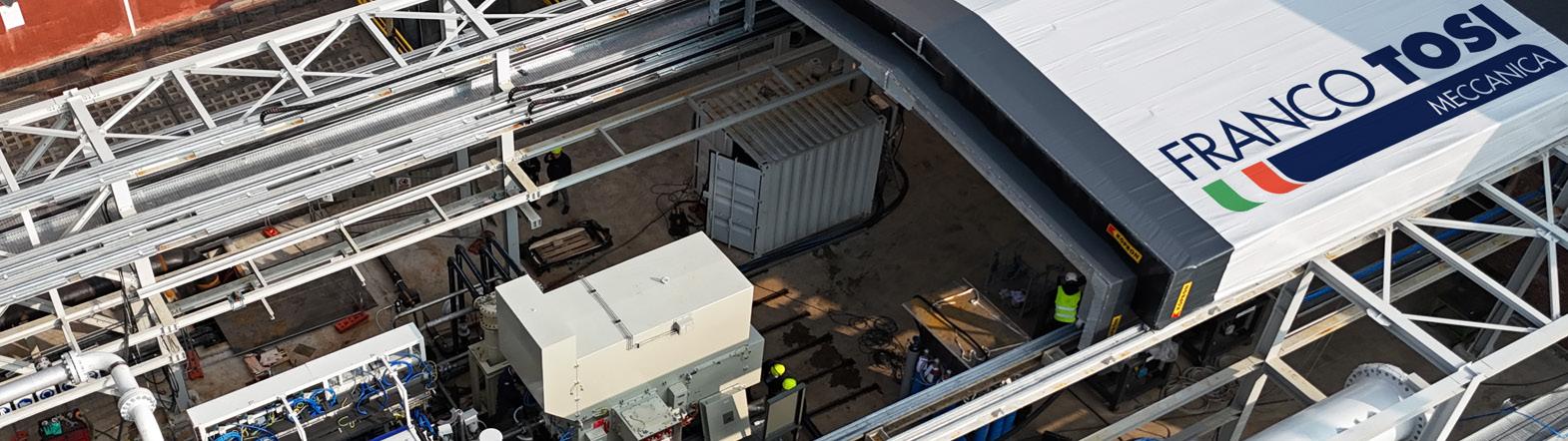
Franco Tosi Meccanica SpA

Matteo Sturaro Head of Compressors Division (M.S.) at Franco Tosi Meccanica
How is Franco Tosi Meccanica SpA thriving?
Franco Tosi Meccanica SpA has reignited its historic strengths, rebuilding its gas compressor business after years of instability and near-bankruptcy. Strategic investment, renewed leadership and targeted market focus have led to over €100m in contracts, improved capabilities, and workforce expansion. With revenues nearly doubling between 2022 and 2024, the company has re-established itself and is now poised for sustained growth in global compression markets.
The challenge - Few firms can claim to match a legacy as impressive as Franco Tosi. Established in 1881, the brand name has become synonymous with the world of gas compression and power generation, with its product portfolio including steam turbines up to 600 MW and hydraulic turbines up to 60 MW.
Alongside its vast range of power generation machinery, Franco Tosi Meccanica SpA has historically delivered compression trains to serve a range of process industries. However, today, the firm now offers a broad portfolio of equipment and services to customers across the oil and gas, petrochemical, industrial gases and energy markets.
Such an extensive company journey hasn’t been without its hurdles along the way. Through more than a century, the business has been acquired multiple times, contributing to different operational strategies, commercial decisions, product portfolio changes and market shifts, some of which hadn’t been as successful as first planned or anticipated.
A crunch point came near the turn of the millennium. Franco Tosi Meccanica SpA found itself in a position where it was close to bankruptcy, leading the owner at that time to take the decision to stop the firm’s production of centrifugal gas compressors.
Only 15 years later, when Franco Tosi Meccanica SpA was acquired by Bruno Presezzi SpA Group and entrepreneur Mr. Alberto Presezzi, did the company restart centrifugal gas compressor production. However, by that time, the market has become highly mature, with many large competitors. Finding room to be successful in the space would, therefore, be challenging.
The solution - The good news for Franco Tosi Meccanica SpA was that it didn’t take long to secure its first contract, supplying two nitrogen booster compressors for an Italian chemical group in 2018.
From that moment, a new programme of investment in personnel and tools began. A new business unit director was hired in late 2020, with a business development plan then prepared.
Within this strategy, the key focus areas included markets and regions where gas compressor demand was high, and where the firm could engage new clients and prospects. These efforts were concentrated in the Middle East, with a focus on local oil companies such as ADNOC and Petronas.
From 2021 to 2024, the entire compressor team focused on participating in tenders to re-establish the company’s reputation as a leading compressor manufacturer globally, alongside its power generation expertise. Many key relationships were established with EPCs, including Maire Tecnimont SpA, Progetti Europa e Global SpA and SICIM SpA. With knowledge of the Franco Tosi Meccanica SpA legacy, these EPCs awarded contracts for 19 gas compressors worth more than €120m.
It was a real payoff. Franco Tosi Meccanica SpA invested €14m in a new test rig capable of performing SME PTC10 type 2 and type 1 tests, while new balancing machines were also purchased to support production and testing. The firm’s headcount expanded from 180 employees to more than 200, with plans for further growth.
By 2025, the firm’s compressor ambitions had started to come to fruition, with its first units of this new era leaving the Franco Tosi Legnano factory. With new clients, new contracts, and significant revenue growth (from €50m in 2022 to over €80m by 2024), the company is moving beyond its near-bankruptcy as it re-establishes strong foundations.
Moving forward, the goal is to consolidate this position, using initial contracts as proof points for further success.
Story type
#diversification (main category) #scale up #technology
Benefits
▸ Strategic investment, renewed leadership and targeted market focus have secured over €100m in contracts, re-establishing market credibility and strengthening global positioning.
▸ Rebuilding capabilities, including new testing infrastructure and workforce expansion, has enabled scalable growth, with revenues nearly doubling between 2022 and 2024.
Key findings
For young people
▸ Stay true to your values and use them as leverage to achieve your goals—don’t be afraid to take risks, fail, and start again.
For industry
▸ Focus less on finance and more on real industrial growth—invest in developing regions, create new markets, and act responsibly with global resources.
For government
▸ Set a clear long-term power strategy, support local technology developers against global competitors, and improve salaries to retain young talent.
Franco Tosi Meccanica SpA at a glance:
Key products and services: steam and hydraulic turbines, centrifugal compressors, and rotating equipment services.
Main industries served:
▸ Oil and gas – 40%
▸ Conventional power – 40%
▸ Nuclear power – 5%
▸ Onshore renewable energy – 5%
▸ Carbon capture – 5%
▸ Energy storage – 5%
Headquarters: Legnano, Italy
Year established: 1881
Number of employees: 200
Revenue: £80m
Revenue from exports: 95%
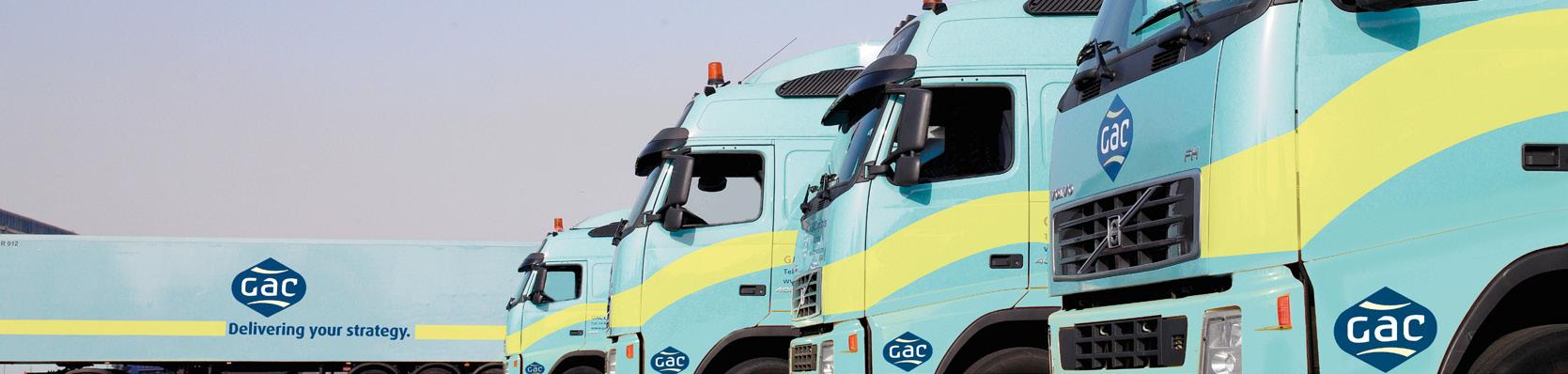
GAC Philippines
Unfurling the sails of progress – from testing waters to smooth voyages

Joseph Casimiro
Managing Director at GAC Phillipines
How is GAC Phillipines thriving?
After five consecutive years of logistics business losses and a pandemic-era crisis that pushed its logistics business to the brink, GAC Philippines has engineered a remarkable turnaround. In executing an effective transformation strategy and doubling down on high-growth, high-potential markets, the company has reversed its fortunes. With 150% growth achieved in 2025, and performance now ten times stronger than pre-pandemic, GAC Philippines is now entering a new ambitious era.
The challenge - GAC is renowned for providing world-class integrated shipping, logistics and marine services built on quality, safety and sustainability in over 50 countries around the world. Supported by a global network of over 300 offices, the organisation brings extensive expertise in managing highly specialised, end-to-end logistics needs.
Despite these strong foundations, GAC Philippines entered 2020 in a difficult situation. Crucially, the firm’s logistics division had already been operating at a loss due to contract losses and the arrival of aggressive new market competitors for about half a decade before the pandemic. By the time the pandemic hit, the logistics arm of the regional subsidiary had been unprofitable for around five consecutive years, pulling down the performance of an otherwise strong shipping division, and placing the entire business under mounting pressure.
With the logistics arm on the brink, preventing bankruptcy or total loss became a central concern for leadership. However, the onset of COVID-19 only made the situation more difficult, creating a cutthroat commercial environment. Mounting challenges only seemed to grow further as budgets tightened and market uncertainty climbed, while foreign exchange fluctuations added further financial strain and unpredictability to operating costs.
These financial issues were compounded by talent shortages. In the specialised markets GAC Philippines operates in, talent pools remain small while demand remains high. As a result, the company faced operational constraints at what can only be described as an unfortunate time, creating a perfect storm that truly put GAC Philippines’ resilience to the test.
Maintaining the status quo was no longer viable. What was needed was not only a turnaround strategy but a structured, multi-phase transformation capable of stabilising the business, restoring profitability and building a platform for long-term, sustainable growth.
The solution - The conversation around a logistics turnaround began in early 2020, as leadership acknowledged that the core issues confronting the business pre-dated the pandemic. Market pressures such as aggressive low-price entrants, inflationary pressures and the narrow scale of pharmaceutical logistics had weakened margins and exposed the business to contract concentration risk. Recognising these deeper root causes was essential to shaping an effective strategic response. In doing so, the company was able to respond by focusing on areas where it already held strong capabilities and expertise. GAC doubled down on pharmaceutical logistics, strengthened its customs brokerage services and expanded its cold-chain logistics offering. At the same time, it moved aggressively into energy and project logistics – segments with higher margins and less competitive crowding. This diversification was designed to create a more resilient and scalable portfolio. Throughout this process, management remained mindful of its limited resources, deliberately leveraging GAC’s established brand reputation to scale growth efficiently.
To drive and manage this transformation, GAC Philippines adopted a structured “Survive, Thrive and Grow” strategy, implemented across three clear phases.
During the Survive period (2020 to 2022), the priority was stopping the bleeding and consequently, stabilisation. The company focused on managing the operational and financial impacts of the pandemic, reducing logistics losses, tightening cost controls and strengthening cash flow. However, the process was not without obstacles. Several operational challenges resulted in financial setbacks, including slow resolution of system gaps, limited agility in reducing fuel and maintenance expenses for idle trucks, and delays in operational data being submitted to the finance department. Despite these hurdles, the key objective – survival – was achieved.
With the business stabilised, GAC Philippines shifted toward improving operational efficiency and reinforcing financial discipline in its Thrive phase (2023 to 2025), largely building on its reputation as a top-tier customs brokerage and vessel agency firm.
These efforts delivered strong results. 2025 marked a transformative year. The company achieved 150% growth compared to 2024
Story type
#transformation (main category)
Benefits
▸ Achieved 150% growth in 2025, performing 10 times above pre-pandemic levels to attract top talent, markets and service providers as a leading integrated logistics partner in the Philippines.
▸ Successfully reversed five consecutive years of logistics losses by diversifying into high-margin energy and project logistics to restore profitability.
Key findings
For young people
▸ Don’t refuse work – be the hand that rises up in difficult situations
For industry
▸ Hire people who know how to get things done, – avoid over-reliance on consultants, and build internal managers who can execute rather than only analyse.
GAC Phillipines at a glance:
Key products and services: shipping, logistics and marine services for energy, offshore and reclamation projects, pharmaceutical and fastmoving consumer goods brand.
Main industries served:
▸ Oil and gas – 60%
▸ Others (non-energy) – pharma and others - 40%
Headquarters: Makati City, Phillipines Year established: 1998
Number of employees: 80
and, in terms of bottom-line metrics, nearly 10 times its pre-pandemic performance – a significant rebound that demonstrated the effectiveness of its diversification efforts and operational reforms.
Moving forward, the company is now embarking on its grow phase (2026 to 2030) that will focus on long-term expansion and scalability. Annual revenue targets have been set between US$8.6m and US$12.9m, with a clear goal of reaching US$17m by 2030. Growth will be supported by continued sector diversification, strengthened capabilities and more efficient integrated shipping and logistics operations. A key growth area is concentrating more on offshore and onshore energy and infrastructure projects. Having successfully navigated the testing waters of recent years, GAC Philippines has truly unfurled the sails of progress and is well positioned for a smooth voyage toward its 2030 ambitions.

Genesis (Americas)
Strengthening Market Position in the US
Story type
#transformation (main category) #optimisation #people & competency #service & solutions
Benefits
▸ Clearer positioning and targeted engagement have driven revenue growth, improved margins and increased order intake.

Edward Hernandez Head of Country at Genesis US
How is Genesis thriving?
Genesis is a market-leading consulting company with a global presence across 15 locations, providing high-value advisory services to the energy industry. In the US, Genesis has strengthened its market position by sharpening how its capabilities are communicated and aligning its operating model around a consulting-led approach. Today, the team is focused on articulating the depth and breadth of its offering across the upstream, downstream and sustainable energies sectors, delivering tailored advisory rather than standardised outputs.
These efforts, combined with targeted client engagement, have contributed to improved financial performance, consistently high client satisfaction (9+/10) and increased order intake. Employee engagement has also improved over the last two years. This has helped the company establish a strong internal identity and clear strategic direction.
The challenge - For more than three decades, Genesis has supported clients’ investment decisions with pragmatic, highly specialised advisory services, covering upstream development, debottlenecking, brownfield optimisation and decarbonisation. The company’s value is rooted in multi-disciplinary engineering and deep regulatory understanding, allowing it to provide bespoke solutions that closely align with client objectives.
Genesis is a subsidiary of Technip Energies, which was formed in 2021 from the spin-off of Technip and FMC Technologies. This transition has influenced Genesis’ position in the subsea market, with a growing emphasis on partnering with clients to support sustainable energy projects.
At the same time, subsea remains a core strength of Genesis’ business, underpinned by deep technical expertise and a global footprint. As a trusted advisor, Genesis supports clients in addressing market challenges and navigating the evolving energy mix, applying a consistent, end-to-end methodology across all projects.
In parallel, Genesis’ successful diversification into downstream and sustainable energies impacted public perception around the company’s core offering. In response, Genesis has taken steps to clarify external messaging, highlighting its consulting expertise and continued leadership in hydrocarbon advisory.
The solution - Overall, Genesis remains a leader in the subsea and upstream markets, with an established track record of supporting both fossil and sustainable energy projects. Targeted industry events, focused client engagement and consistent messaging helped the business address misconceptions about its capabilities. Internally, the organisation conducted a deep audit of its capabilities to understand which skills differentiated the business, where further development was needed and where gaps were preventing full deployment of resources.
With a clearer view of internal strengths, Genesis shifted its attention to accessible external markets. A thorough assessment highlighted where demand aligned with existing expertise, including opportunities in brownfield refining projects along the Gulf Coast. To capitalise on these opportunities, Genesis strengthened its team with individuals who had strong existing industry relationships and a deep understanding of client needs. Hiring efforts helped open doors and supported the company’s commercial transformation, while the business development team refocused on areas most closely aligned with Genesis’ technical strengths and strategic priorities. Company messaging also became clearer, and participation in events became more targeted, ensuring effort was directed where it would have the greatest impact.
These coordinated steps led to significant, tangible results. Financial performance improved markedly, with stronger margins, revenue growth and increased order intake. The firm successfully retained existing clients while adding new ones, with a global client satisfaction consistently averaging above 9 out of 10. Today, Genesis has a highly engaged workforce aligned with the company’s renewed strategic direction. Having overcome perception challenges and navigated significant change, the advisory business is well-positioned to maintain its momentum for years to come.
▸ Talent focus and flexible resourcing have improved utilisation and agility, with client satisfaction above 9/10.
Key findings
For young people
▸ Build diverse skills and commit to continuous learning.
For industry
▸ Prioritise employee well-being and culture to attract and retain talent.
For government
▸ Strengthen STEM education to grow the domestic engineering workforce.
Genesis at a glance:
Key products and services: energy consulting and engineering advisory services.
Main industries served:
▸ Oil and gas – 85%
▸ Offshore renewable energy – 5%
▸ Carbon capture – 5%
▸ Hydrogen – 4%
▸ Conventional power – 1%
Headquarters: London, United Kingdom
Year established: 1988
Number of employees: 100 (US)
Revenue from exports: 60%

Genesis (Global)
Keeping
Story type
#resilience (main category) #digital & AI #enviromental sustainability & social impact #people & competency
Benefits
▸ Order intake increased by 50% between 2022 and 2025.
William Pilkington Managing Director at Genesis
How is Genesis thriving?
Over the last four decades, Genesis has established itself as a market-leading consulting company, delivering high-value advisory services to the energy industry. With more than 15 locations globally, the company supports clients in shaping early-stage and front-end decisions across oil and gas, carbon capture, hydrogen, downstream and power projects.
Following its 2022 restructuring, Genesis has returned to profitability and grown order intake by 50%. This performance reflects the organisation’s sharpened focus and strengthened foundations.
In a market defined by uncertainty, Genesis continues to adapt with clear priorities and strong execution—investing in people, advancing digital and AI capabilities, and evolving alongside clients. By combining deep engineering expertise with pragmatic, decision-led advisory, the company remains a trusted partner in navigating an increasingly complex energy landscape.
The challenge - Genesis advises clients on decisions that shape projects from concept and field development through to FEED, decarbonisation strategy, brownfield optimisation and decommissioning.
Today’s energy landscape is fast-moving and increasingly uncertain. Clients face a dual imperative: to decarbonise while maintaining energy security. At the same time, geopolitical disruption continues to reshape regional dynamics, making long-term planning increasingly complex.
In 2026, uncertainty became more pronounced. Key markets changed rapidly, and clients became more cautious about their strategic investments. For a people-driven advisory business, where value depends on deploying the right expertise at pace, this creates structural pressure.
Sustaining performance in the current environment requires more than technical excellence. It demands agility and flexibility, and an organisation able to absorb change while continuing to deliver consistent, high-quality advice as client needs evolve.
The solution - Genesis has responded with a clear, structured and resilient approach built on three priorities: people, strategic breadth and digital capabilities.
People: Genesis continues to invest in people as its key differentiator. In 2026, the company focused on hiring in environmental and sustainability roles, strengthening power systems capability and continued investment in graduate recruitment.
At the same time, the profile of talent is evolving. Genesis is building digital and AI capability from the ground up, with mandatory online AI training and offsite bootcamps aimed at embedding these tools into project delivery. The focus is to strengthen expertise, enabling people to work more efficiently and deliver greater impact.
Clear and consistent communication has been critical in maintaining alignment and momentum. Through regular town halls, ongoing communications and face-to-face meetings with leadership at all offices, Genesis has reinforced a shared sense of direction and stability across the organisation.
Strategic breadth: As client needs shift, Genesis continues to expand its capabilities across the energy value chain. This includes growth in power systems, ESG, due diligence and owner’s engineer services, alongside continued strength in brownfield and decommissioning, particularly in the UK, US and Malaysia.
Projects such as the Stanlow terminal reflect the integrated approach, combining resilience planning with CCUS and sustainable aviation fuel (SAF) facilities. Genesis continues to align closely with its clients, adapting its offer as their strategies evolve.
Digital and AI: Digital capabilities are being embedded across the company’s workflows. AI is applied to improve tendering processes and enhance technical outputs, alongside the development of next-generation cost estimating tools that draw on nearly 40 years of proprietary data.
This transformation is driven from within. Through programmes such as the Delta initiative, employees take clear ownership of continuous process improvement. Those closest to the work are responsible for identifying, designing and implementing improvements, ensuring changes are practical, adopted and embedded in day-to-day activities.
▸ Returned to profitability following 2022 restructuring.
Key findings
For young people
▸ Be resilient, keep learning and invest in yourself to stay relevant in a changing market.
For industry
▸ Embrace AI while continuing to invest in people, talent and long-term capability.
For government
▸ Provide clearer, more joined-up energy policies to support both energy security and transition.
Genesis at a glance:
Key products and services: advisory and technical consulting services.
Main industries served:
▸ Oil and gas – 55%
▸ Carbon capture – 20%
▸ Conventional power – 7%
▸ Hydrogen – 5%
▸ Offshore renewable energy – 2%
▸ Offshore renewable energy – 1%
▸ Others (energy) – 10%
Headquarters: London, UK
Year established: 1988
Number of employees: +600
Revenue from exports: 50%
The Impact: The impact of these decisions is already being felt. Client satisfaction and staff engagement are at record levels, reflected in the highest-ever response rate to the annual My Voice survey in 2025. Attrition remains low, and the business continues to grow in a challenging market with strong win rates. Genesis is profitable, stable and continues to hire in a year when many advisory competitors are not.
Genesis is using the current period to strengthen internal capabilities, positioning itself to move with confidence as the market evolves and to lead when investment momentum returns.
Gutor
A newly independent force in the UPS world

Johann Fontaine Vice President Marketing & Business Growth at Gutor
How is Gutor thriving?
When Gutor was carved out from Schneider Electric in August 2023, it became one of the most significant moments in the company’s 80-year history. Freed to operate with its own strategy, leadership and commercial focus, the Swiss manufacturer of industrial uninterruptible power supply (UPS) solutions has since accelerated fast: growing revenues by 14% in 2025, winning a Sizewell C nuclear contract and extending its position across key industrial markets in the Middle East.
The challenge - Gutor had long been a quiet leader in a demanding niche. With more than 35,000 systems operating globally across oil and gas, nuclear power, conventional power and carbon capture applications, the company’s engineering heritage and reliability record were well established. But operating as part of a large group had shaped the business in particular ways – decision-making was layered, commercial focus was diffuse, and the full potential of a 35,000-strong installed base remained somewhat untapped.
The carve-out changed the terms entirely. Becoming a standalone company meant building operational autonomy at pace – finance, IT, procurement and HR systems all required independence. At the same time, external pressures were intensifying. Customers were demanding lifecycle value and digital monitoring alongside equipment, supply chains were volatile, and competition in the industrial UPS market remained strong. The transformation had to happen quickly, and it had to happen while the business kept running.
The solution - Gutor’s leadership set about the challenge by focusing on four priorities: accelerating commercial expansion across regions, enhancing service operations and lifecycle monetisation, diversifying into new growth segments, and reinforcing the organisational identity of a standalone global leader. The service model was central. Gutor’s installed base of systems worldwide represented a significant and underleveraged source of recurring revenue, and the company moved deliberately to address that. Lifecycle services – preventive maintenance, life extension programmes, digital monitoring and condition-based interventions – were expanded and more actively commercial-
ised. The shift from selling equipment to managing assets over their full operational life gave customers greater continuity, and at the same time provided Gutor with a more resilient revenue mix.
Diversification ran alongside this. The company identified gas and LNG as a growth segment where its industrial UPS expertise translated directly and strengthened its position in nuclear – a sector where Gutor’s certifications and track record represent a genuinely high barrier to entry. That long-term positioning proved its value in 2025 when Gutor secured the contract for Sizewell C, EDF’s second EPR reactor project in the UK. The win followed directly from Gutor’s successful delivery on Hinkley Point C, first awarded in 2016, and illustrated how deep technical credibility in safety-critical environments multiplies in value over time. In the Middle East, long-standing customer relationships built over more than a decade continued to generate significant project wins throughout 2025.
Geographically, the focus has been on building commercial momentum in regions where structural demand is strongest. Asia accounts for roughly 40% of revenues, the Middle East and Africa for a further 30%.
Underpinning the commercial expansion is a sharper organisational identity. Independence from Schneider Electric required Gutor to rebuild itself operationally from the ground up – establishing its own finance, IT and procurement systems – while simultaneously reorienting its culture. Operating within a large group had provided stability, but it had also diffused ownership. Standalone status changed that. With clearer accountability, faster decision-making and a more direct line between individual performance and company outcomes, teams across the business developed a stronger sense of shared purpose.
The transition energised rather than unsettled the organisation, and that internal momentum has been as important to the transformation as any commercial initiative. The continuation fund closing in March 2026 – representing renewed investor confidence in the company’s trajectory – provided external validation that the strategy is working.
Story type
#service & solutions (main category) #diversification #resilience
Benefits
▸ Achieved 14% revenue growth in 2025 and secured a continuation fund by expanding lifecycle services for recurring revenue.
▸ Accelerated global growth by securing the Sizewell C nuclear contract, strengthening industrial market positions in key regions.
Key findings
For young people
▸ Master fundamental skills, volunteer for responsibility and seek international exposure in environments where purpose accelerates performance.
For industry
▸ Build resilience early, shift from product to lifecycle value thinking and align with structural megatrends to ensure longterm endurance.
For government
▸ Accelerate policies that strengthen industrial resilience and reliable energy infrastructure, supporting local champions to boost national competitiveness.
Gutor at a glance:
Key products and services: industrial secure power solutions and services.
Main industries served:
▸ Oil and gas – 55%
▸ Power generation – 30%
▸ Others – 15%
Headquarters: Wettingen, Switzerland
Year established: 1946
Number of employees: +650
Revenue: £176.6m
Looking ahead, electrification, decarbonisation and the growing reliability demands of digital infrastructure all point in the same direction: the need for secure, industrial-grade power is increasing, not diminishing. With 80 years of engineering heritage now operating under its own momentum, Gutor is well placed to meet that demand.


Global Cargo
Building a differentiated model centred on bespoke, client-focused solutions

Homero Hauque CEO at Global Cargo
How is Global Cargo thriving?
In response to sustained global supply chain disruption and rapidly evolving customer expectations, freight forwarding and logistics specialist Global Cargo has built a differentiated model centred on bespoke, client-focused solutions and underpinned by deep operational expertise. Through investment in its people and collaborative relationships with clients and international partners, the firm is delivering agile, tailored logistics solutions that address complex, time-critical challenges across global markets.
The challenge - In recent years, the logistics industry has faced significant disruption, from supply chain instability and changing market conditions to increasing costs and capacity challenges. At the same time, customer expectations have evolved significantly, with clients demanding faster communication, more flexibility, and more customised logistics solutions.
Like many companies in the logistics industry, Global Cargo has had to navigate market volatility, changing carrier conditions, and increasing operational complexity.
As a company operating heavily between the US and Latin America, Global Cargo recognised early on that it could not rely on a traditional transactional approach to freight forwarding. Instead, it needed to evolve, strengthening its operational capabilities, expanding its network, and maintaining the personalised service that clients were looking for, positioning itself as a responsive, transparent and reliable partner for challenging times.
The solution - It was this realisation that pushed Global Cargo to become more agile, improve its communications, and continue investing in experienced personnel, technology, employee training, and strategic growth opportunities.
The firm’s strategy was centred around adaptability, relationships, and operational expertise. Rather than trying to compete solely on price, it focuses on providing highly personalised services and building long-term relationships based on trust and reliability.
The inspiration for this came from stepping away from a market that had become transactional and automated, recognising the
need for bespoke client services. It viewed freight forwarding as increasingly commoditised, with large firms competing primarily on price through digital platforms.
Global Cargo made a deliberate strategic choice to move in the opposite direction: to double down on the human element, building bespoke solutions tailored to each client’s specific needs. The company saw an opportunity to position itself as a true logistics partner rather than a provider – one that understands a client’s supply chain holistically, anticipates challenges before they arise, and brings genuine expertise and personal accountability to every shipment.
This new approach was formally initiated in 2021 and rolled out in phases up to 2024.
In 2023, the company expanded into Houston, establishing a warehouse and operations hub to serve the energy, industrial, and project cargo sectors concentrated along the Houston Ship Channel. Investment in people has also been a cornerstone of the strategy, with headcount growing from 61 employees in 2021 to 92 today. Key hires included a dedicated Project Cargo Manager with carrier-side experience from Houston and New Orleans, a Houston operations team, and additional customer service and sales personnel across Miami.
Employee retention improved significantly, with annual turnover declining from approximately 22% in 2020 to under 9% by 2024, reflecting a stronger internal culture. On the technology side, the company also invested in an upgraded TMS (Transportation Management System) in 2022, introduced automated shipment tracking and client visibility tools in 2023, and began integrating AI-assisted tools for document processing and rate optimisation in 2024. These investments collectively reduced average shipment processing time by approximately 18% and improved on-time documentation accuracy to 97%.
Stronger cross-departmental communication has been achieved through weekly operational syncs, a shared digital dashboard visible to all teams, and a restructured account management model. Client satisfaction scores, measured through quarterly surveys, increased from an average of 7.2 out of 10 in 2021 to 9.1 out of 10 in 2024.
Further, beyond Houston, Global Cargo also consolidated its position as the number two US freight forwarder exporting to Brazil, and expanded agent relationships across Europe, the Middle East, and Asia.
Story type
#service & solutions (main category) #collaboration #people & competency
Benefits
▸ Strengthened long-term client retention through highly personalised logistics solutions.
▸ Improved operational efficiency and shipment visibility through investment in technology and internal communication.
Key findings
For young people
▸ Stay curious and learn every part of the business, as relationships and problem-solving are highly valuable in logistics.
For industry
▸ Trust, communication, and adaptability remain essential for long-term success in a fast-changing market.
For government
▸ Greater investment in infrastructure and trade efficiency can strengthen global commerce and economic growth.
Global Cargo at a glance:
Key products and services: international freight forwarding, project cargo, warehousing, and logistics solutions.
Main industries served: ▸ Oil and gas – 38% ▸ Conventional power – 8%
Offshore renewable energy – 6%
Onshore renewable energy – 5% ▸ Data centres – 3% ▸ Hydrogen – 2% ▸ Energy storge – 2% ▸ Carbon capture – 1%
▸ Others (non-energy) - 35%
Headquarters: Florida, US Year established: 1996
Number of employees: 92 Revenue: £31.8m
The success of the firm’s strategy has been reflected in multiple ways. Between 2020 and 2024, client retention rates increased from 71% to 89%, average client tenure increased from 2.8 years to 4.6 years, and the number of clients generating over US$500,000 in annual revenue grew from four to 11. Revenue also grew from US$19.2 million in 2020 to US$41.4 million in 2024, representing 115% growth over four years. By every measure of every metric, the company hasn’t just survived, but continued to thrive.
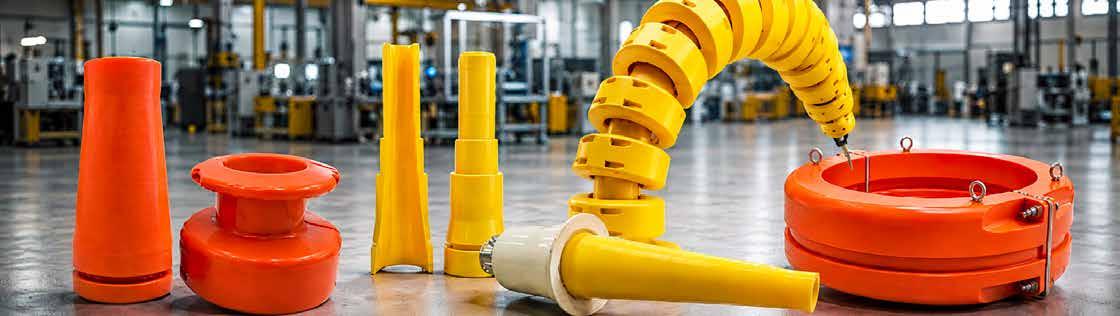
Gutor
Hausthene
A newly independent force in the UPS world
Leveraging AI to leverage its technical knowledge more effectively
Story type
Story type
#service & solutions (main category) #diversification #resilience
#digital & AI (main category) #optimisation
Benefits
Benefits
▸ Achieved 14% revenue growth in 2025 and secured a continuation fund by expanding lifecycle services for recurring revenue.
▸ Reduced homologation engineering time by 66% through AI-supported technical analysis.
How is Gutor thriving?
Paulo Tezza
Johann Fontaine Vice President Marketing & Business Growth at Gutor
Thais Tezza CEO at Hausthene Partner and Director at Hausthene
How is Hausthene thriving?
When Gutor was carved out from Schneider Electric in August 2023, it became one of the most significant moments in the company’s 80-year history. Freed to operate with its own strategy, leadership and commercial focus, the Swiss manufacturer of industrial uninterruptible power supply (UPS) solutions has since accelerated fast: growing revenues by 14% in 2025, winning a Sizewell C nuclear contract and extending its position across key industrial markets in the Middle East.
Founded in 1982 and based in São Paulo, Hausthene Polyurethanes is a Brazilian specialist in high-quality polymer and elastomer components for the oil and gas, steel, glass, packaging and mining sectors. Over the past 10 months, the 40-person company has implemented a programme of AI agents and AI-supported systems designed to address a structural capacity problem, with measurable results already emerging.
The challenge - Gutor had long been a quiet leader in a demanding niche. With more than 35,000 systems operating globally across oil and gas, nuclear power, conventional power and carbon capture applications, the company’s engineering heritage and reliability record were well established. But operating as part of a large group had shaped the business in particular ways – decision-making was layered, commercial focus was diffuse, and the full potential of a 35,000-strong installed base remained somewhat untapped.
The challenge - Polymer and elastomer components for the oil and gas sector require a high degree of applied engineering knowledge. Hausthene has built that knowledge over four decades, but as a small business it faces a persistent challenge. Hausthene has built that knowledge over four decades, but as a small business it faces a persistent Specialist knowledge concentrates at leadership level, and the training pipeline for qualified technical staff is too slow to resolve that quickly.

ised. The shift from selling equipment to managing assets over their full operational life gave customers greater continuity, and at the same time provided Gutor with a more resilient revenue mix.
knowledge base. An applied engineering specialist for polymers in the oil and gas sector is partially in use by the engineering team, and has already demonstrated its impact on one strategically significant process. Finally, a strategic planning specialist is under development, with an eventual role supporting board-level decision-making – giving the leadership team, for the first time, something closer to an always-available analytical resource at the table.
Diversification ran alongside this. The company identified gas and LNG as a growth segment where its industrial UPS expertise translated directly and strengthened its position in nuclear – a sector where Gutor’s certifications and track record represent a genuinely high barrier to entry. That long-term positioning proved its value in 2025 when Gutor secured the contract for Sizewell C, EDF’s second EPR reactor project in the UK. The win followed directly from Gutor’s successful delivery on Hinkley Point C, first awarded in 2016, and illustrated how deep technical credibility in safety-critical environments multiplies in value over time. In the Middle East, long-standing customer relationships built over more than a decade continued to generate significant project wins throughout 2025.
▸ Improved maintenance efficiency and reduced machine downtime with AIdriven systems.
▸ Accelerated global growth by securing the Sizewell C nuclear contract, strengthening industrial market positions in key regions.
Key findings
Key findings
For young people
For young people
▸ Be proactive, accountable and genuinely interested in your work.
For industry
▸ Master fundamental skills, volunteer for responsibility and seek international exposure in environments where purpose accelerates performance.
▸ AI can help small technical companies scale expertise and improve efficiency.
For industry
For government
▸ Modernising labour regulations could improve employability and business flexibility.
▸ Build resilience early, shift from product to lifecycle value thinking and align with structural megatrends to ensure longterm endurance.
Hausthene at a glance:
For government
Key products and services: polyurethane parts.
The carve-out changed the terms entirely. Becoming a standalone company meant building operational autonomy at pace – finance, IT, procurement and HR systems all required independence. At the same time, external pressures were intensifying. Customers were demanding lifecycle value and digital monitoring alongside equipment, supply chains were volatile, and competition in the industrial UPS market remained strong. The transformation had to happen quickly, and it had to happen while the business kept running.
For partners Paulo and Thais Tezza, this created a difficult dynamic. Operational and technical demands pulled them deep into day-to-day activity, leaving limited bandwidth for commercial development and client relationships. As the company’s ambitions grew, that constraint became more acute. Growing the team was part of the answer, but not a fast enough one. A different kind of leverage was needed.
The solution - Guidance from the company’s advisory board, combined with external perspectives on how rapidly AI adoption was accelerating, prompted a decision around 18 months ago to explore what AI could do for a business of Hausthene’s profile. Implementation began around 10 months ago, and has been gathering momentum ever since.
The solution - Gutor’s leadership set about the challenge by focusing on four priorities: accelerating commercial expansion across regions, enhancing service operations and lifecycle monetisation, diversifying into new growth segments, and reinforcing the organisational identity of a standalone global leader.
The service model was central. Gutor’s installed base of systems worldwide represented a significant and underleveraged source of recurring revenue, and the company moved deliberately to address that. Lifecycle services – preventive maintenance, life extension programmes, digital monitoring and condition-based interventions – were expanded and more actively commercial-
The company chose to build specialised AI agents, each trained to operate within a specific domain of the business. Four have been developed or are in progress. A consultative specialist agent supports commercial, fiscal, accounting and legal analysis. An elastomers and engineering plastics specialist is being progressively rolled out across commercial and engineering teams to create a shared
The applied engineering agent has produced the clearest quantified result. Homologating a polymer component with a major industry player is a technically intensive process – prior to AI, the required studies took between eight and twelve months, demanding an estimated 864 hours of work. With the trained agent supporting high-level technical interactions, the same process has been completed in around three months and around 288 hours, which translates into a reduction of 66% in working time and an estimated cost saving of R$115,200. The product being homologated has a projected annual revenue potential of between R$3m and R$5m, reinforcing the commercial significance of the efficiency gain.
Geographically, the focus has been on building commercial momentum in regions where structural demand is strongest. Asia accounts for roughly 40% of revenues, the Middle East and Africa for a further 30%.
Underpinning the commercial expansion is a sharper organisational identity. Independence from Schneider Electric required Gutor to rebuild itself operationally from the ground up – establishing its own finance, IT and procurement systems – while simultaneously reorienting its culture. Operating within a large group had provided stability, but it had also diffused ownership. Standalone status changed that. With clearer accountability, faster decision-making and a more direct line between individual performance and company outcomes, teams across the business developed a stronger sense of shared purpose.
The transition energised rather than unsettled the organisation, and that internal momentum has been as important to the transformation as any commercial initiative. The continuation fund closing in March 2026 – representing renewed investor confidence in the company’s trajectory – provided external validation that the strategy is working.
Alongside the agents, Hausthene has implemented or is developing a range of AI-supported systems. A manufacturing maintenance system, now operational, is expected to reduce machine downtime by between 20% and 30% and has already brought the mean time to repair down by more than half. Meanwhile, a project analysis system in use is reducing project control workload from around 64 hours per month to 24, a saving of roughly 62%. Alongside these functions, quality control, human resources, costing and engineering calculation systems are at various stages of implementation or development. In terms of financial outcomes, revenue roughly doubled between 2019 and 2025, and the company deliberately narrowed its client base from 225 to 170 in 2025 to improve service quality and profitability while holding revenues stable. The AI programme is designed to support the next phase of growth, with 20% revenue growth targeted for 2026.
▸ Accelerate policies that strengthen industrial resilience and reliable energy infrastructure, supporting local champions to boost national competitiveness.
Main industries served:
▸ Oil and gas
Gutor at a glance:
▸ Others (non-energy): steel and metals, glass, mining, packaging and automotive sectors
Key products and services: industrial secure power solutions and services.
Headquarters: Mauá, Brazil
Main industries served:
Year established: 1982
▸ Oil and gas – 55%
Number of employees: 40
▸ Power generation – 30%
Revenue: £2.8m
▸ Others – 15%
Revenue from exports: 1%
Headquarters: Wettingen, Switzerland
Year established: 1946
Number of employees: +650
Revenue: £176.6m
Hausthene, through this exercise, has shown that in a knowledge-intensive business where headcount alone cannot solve a capacity problem, AI agents trained on deep technical expertise can extend what a small, highly capable team can do.
Looking ahead, electrification, decarbonisation and the growing reliability demands of digital infrastructure all point in the same direction: the need for secure, industrial-grade power is increasing, not diminishing. With 80 years of engineering heritage now operating under its own momentum, Gutor is well placed to meet that demand.

Hugh Fraser International (HFI)
Branching
out to Cyprus to unlock new opportunities
Hugh Fraser Managing Partner at HFI
How is Hugh Fraser International (HFI) thriving?
Having delivered 100% revenue growth in 2025, its strongest year since re-establishing itself, Hugh Fraser International (HFI) is now extending its reach beyond the Gulf with the opening of a regional company based in Cyprus. Incorporated in May 2026, the move positions HFI to serve a fast-developing Eastern Mediterranean energy market while strengthening its offer to international clients for whom an EU-based, neutral holding company environment is an increasingly attractive proposition.
The challenge - Founded in its current form in 2017 and headquartered in Dubai, HFI is a legal and consulting firm supporting international energy companies expanding across the Middle East. Led by Managing Partner Hugh Fraser, a Scottish corporate and energy lawyer with more than 33 years of regional experience, the firm provides advisory services covering acquisitions and divestments, market expansion, manufacturing ventures, technology licensing, dispute resolution and managed exits.
The GCC has long been HFI’s core market, but the region has become increasingly complex. Regulatory demands have intensified and relationship dynamics in some Gulf markets have created new challenges for international operators. At the same time, HFI identified a major opportunity in the Eastern Mediterranean, where strong IOC activity, a more advanced energy transition agenda and a more familiar regulatory framework have made the market increasingly attractive to international clients.
The solution - The company’s response has been characterised by the same pioneering instinct that defined HFI’s earliest moves in the region. Hugh Fraser was among the first practitioners to establish a presence in Dubai in 2003, well ahead of the wave of international firms that followed. The decision to open in Cyprus follows the same logic –move early, back the assessment and build before the market becomes crowded.
The case for Cyprus is compelling for many reasons. The Cyprus office supports HFI’s objective to widen its regional focus across Eastern Mediterranean energy markets. Cyprus will serve as a hub spanning Italy (recognising the role of ENI and SAIPEM), Greece, Israel, Egypt, Libya and Tunisia.
From a jurisdictional perspective, Cyprus offers a stable EU legal environment, eurozone access, a strong foreign investment regime and a competitive tax system. It also provides strong connectivity between the Middle East, North Africa and Europe, making it an attractive base for regional energy companies.
At the same time, the Eastern Mediterranean presents a different market dynamic from the Gulf. While Gulf markets have traditionally been dominated by national oil companies, the Eastern Mediterranean has seen strong IOC activity.
Energy markets are increasingly prioritising diversification of supply, infrastructure and transit routes, increasing strategic and investment interest in the Eastern Mediterranean. EIC DataStream currently tracks approximately 107 major regional projects across upstream oil & gas, refineries, petrochemicals, nuclear and renewables, representing more than US$585bn in opportunities.
HFI’s Cyprus entity was incorporated in May 2026, with the office opening at the same time. Hugh Fraser retains overall leadership, with Sally Reeves assuming the role of Chief Commercial Officer. Suzanne Labib, a consultant based across Cairo and Limassol, provides in-market presence and Arabic-language capability – a significant asset in a region where language and cultural fluency remain important differentiators. Local legal and corporate services support has already been identified and contracted, ensuring continuity of service from day one.
Looking ahead, the target is to generate group revenues toward US$3.6m in 2026 rising to US$4.8m in 2028 with the Cyprus office contributing 25% of group sales in 2027. On the strength of recent momentum and a track record of backing the right markets at the right moment, HFI has good reason to be confident.
Story type
#export (main category) #diversification #scale up
Benefits
▸ New Eastern Mediterranean presence broadens HFI’s exposure to energy transition and IOC-led projects beyond its traditional GCC markets.
▸ Cyprus expansion gives clients access to an EU-based, regional company environment for cross-border energy ventures.
Key findings
For young people
▸ Stay adaptable, embrace new technologies like AI, invest in relationships and commit to continuous learning.
For industry
▸ Treat each GCC market individually, stay ahead of regulation and invest in people to build long-term resilience.
For government
▸ Support balanced energy policies that protect North Sea investment, jobs and supply chains while enabling the energy transition.
HFI at a glance:
Key products and services: legal and consulting services for the energy sector.
Main industries served:
▸ Oil and gas – 99%
▸ Carbon capture – 1%
Headquarters: Dubai, UAE
Year established: 2017
Number of employees: 15
Revenue: £1.8m
Revenue from exports: 100%
Working with advanced technology and know-how businesses in the energy sector, HFI is a driving force for International business expansion in the Middle East & Eastern Mediterranean region.
What we do
Our legal and consultancy services include:-
ACQUISITIONS & DIVESTMENTS NEW TERRITORY EXPANSION & LOCAL PARTNER VENTURES


Where we do it
We work within these key territories:-

RESTRUCTURINGS, DISPUTES RESOLUTION & MANAGED EXITS



Contact Sally Reeves our Client Relations Manager by scanning the QR code

SAUDI

High Supply
Adding value for clients through key partnerships and a broadened

portfolio
Alexandre Bastos CEO at High Supply
How is High Supply thriving?
High Supply has strengthened its position in Brazil’s offshore market by identifying safer, more efficient alternatives to conventional welding. Its exclusive partnership with Lokring introduced cold-welding technology that significantly reduces installation time, risk and operational disruption, while enabling a more flexible, service-led business model. With expanded capabilities, the firm has deepened relationships with major operators and positioned itself as a provider of integrated industrial solutions.
The challenge - Founded in 2009, Brazil-based High Supply is a renowned supplier of reliable and innovative industrial solutions for operational efficiency, safety and productivity.
Through the rental and sale of technical equipment for a range of applications, the firm identified a critical need among its clients to address several challenges related to welding services, particularly in offshore environments and classified areas. Specifically, these services often involve operational shutdowns and the mobilisation of many people, often requiring specific permits, training, inspections and presenting additional risks.
Recognising the challenges facing its client base, High Supply set out searching for a technology that would ease its customers’ burdens, making welding services faster, safer and more cost-effective.
The solution - It was in this context that the company began collaborating with Lokring. The partnership stemmed from a trade fair, where High Supply learned about Lokring’s cold-welding solution, and recognised its potential for the Brazilian market.
Lokring’s technology enables the application of connections, such as couplings and flanges, through a mechanical cold-welding process. Unlike hot welding, the solution does not generate sparks, does not involve melting metal, and does not alter the structural integrity of the pipe, making it particularly suitable for areas where operational safety is critical. The main benefits of the technology include an approximate 60% reduction in installation time, a lower need to mobilise personnel, reduced operational time, lower risk in flammable areas, reduced need for inspection as the integrity of
the material is not altered and, in some cases, the possibility of carrying out the service without interrupting the production line.
For High Supply, it was a breakthrough. In practice, projects that might previously take approximately 10 days using conventional welding can now be completed in approximately four days. In addition, while a traditional service might require a team of approximately six people, the new solution can be carried out by just two. Through the partnership, High Supply became Lokring’s exclusive partner in Brazil. Previously, clients interested in this technology had to import the tool, import the connections, and deal with the entire bureaucratic process of bringing them into the country. Now, High Supply keeps the tool available locally and provides certified labour to operate the solution, while also offering training for its clients’ personnel.
The result has been the establishment of a new business model for the firm. Clients can contract the full service, purchase the connections, rent the tool or receive training to qualify their own team. Further, the technology has also enabled High Supply to expand its presence among marine service operators (MSO) and maintenance and offshore service companies. While Lokring was already known in the international market, including by companies such as Equinor, access to the technology in Brazil was made difficult by bureaucracy. With High Supply as the local partner, this process has become simpler, faster and more competitive.
Having been signed in March 2025, High Supply’s partnership agreement with Lokring has already proven savvy. Following a threeto-four-month adaptation period, the company expanded its client portfolio, strengthened existing relationships and established new contacts with larger oil and gas clients, with Lokring’s technology present on the vessels of SBM, BW, MODEC, Karoon and Equinor.
Financially, the partnership already represents an estimated increase of 20% to 25% in the company’s revenue. Yet beyond the financial impact, the main strategic gain has been the possibility of directly accessing major operators and consolidating High Supply as a provider of innovative solutions for the offshore market.
More recently, High Supply also established a strategic partnership with Onze Offshore
Story type
#technology (main category) #service & solutions
Benefits
► Increased revenue by an estimated 20% to 25% and expanded its client portfolio to include major oil and gas operators.
► Reduced installation times by approximately 60% and expanded operational capacity to offer complete industrial solutions.
Key findings
For young people
► Prioritise continuous learning and specialisation, using courses and books to open new perspectives and create career opportunities.
For industry
► Seek business improvements and follow market movements to maintain growth even when the company is already well positioned.
For government
► Reduce bureaucracy and make it easier for entrepreneurs to bring valuable new technologies into the country.
High Supply at a glance:
Key products and services: rental and sale of high-performance industrial equipment.
Main industries served:
► Oil and gas – 80%
► Conventional power – 20%
Headquarters: Rio das Ostras, Brazil
Year established: 2009
Number of employees: 55
– a calibration laboratory that also has a broad industrial services structure, including metal fabrication, painting and welding. This collaboration began in August 2025 and has improved High Supply’s agility and operational capacity, helping the firm to offer new services such as large-scale hydro-blasting work. Indeed, both partnerships have been significant success stories. Not only has High Supply expanded its range of services and started promoting joint solutions to clients, but the firm now also stands as a provider of complete solutions – particularly for clients requiring onboard maintenance or complementary industrial services.

HIMA Group
A trusted partner in delivering comprehensive functional safety and OT security solutions
Story type
#service & solutions (main category) #collaboration #digital & AI #technology
Benefits
Jörg de la Motte CEO at HIMA Group
How is HIMA Group thriving?
Established in 1908, family-owned HIMA Group has long been renowned as a leading global provider of safety solutions, consistently transforming deep in-house know-how into market-ready, customer-centric solutions. Most recently, that has involved the opening of its Customer Solutions Center (CSC) in 2022 and its expansion through the Security Lab in 2023 – a shift in strategy that has enabled it to take a decisive step beyond its product-centric business and towards becoming a true, holistic solutions provider.
The challenge - HIMA Group has been facing a distinct challenge in recent years in which many of its customers increasingly focus on core business activities while their internal resources continue to shrink. In tandem, functional safety and OT security have gradually become more complex, driven by digitalisation, connectivity, and regulatory requirements.
Traditional project approaches – where customers specify requirements upfront and manufacturers implement them – are no longer wholly reliable, as project lifecycles have shortened, changes occurring later, and late-stage modifications being both costly and risky.
The company has also faced challenges because innovation is often risky and therefore limited in manufacturing plants. Customers and manufacturers alike need protected, realistic environments where new concepts, architectures, and technologies can be developed, tested, and refined without jeopardising operations. In this context, manufacturers must provide platforms for collaboration, innovation, and risk reduction, beyond delivering individual products.
The solution - In response to these challenges, HIMA created its new Customer Solutions Center (CSC) as a physical and digital collaboration tool. Crucially, this combines five disciplines (Consulting, Applications, Academy, Experience Room, and Security Lab) in one platform.
HIMA’s solution delivers flexibly configurable rooms with state-of-the-art technology-enabled workshops, training, system tests, partner events, and customer-specific simulations. The environment is designed not only for technical excellence but also to foster creativity, exchange, and trust.
A key aspect of the CSC is its modular, customer-centric setup. Safety automation architectures can be rebuilt and tested exactly as they will later be implemented. In close on-site collaboration, HIMA and its customers develop standard concepts that can then be individually adapted.
Following an initial ramp-up phase, HIMA’s partners increasingly approached HIMA themselves, providing equipment and solutions that could be integrated into the CSC. Over time, these relevant and innovative additions have helped to turn it into an increasingly comprehensive ecosystem.
In 2023, the CSC’s expansion with the supplementary Security Lab marked another major milestone.
Developed in cooperation with IT security specialist genua, this is a dedicated space that reflects the growing importance of OT security. Specifically, the Security Lab brings beginners and experts together to experiment with security zones and IEC 62443-aligned architectures under realistic conditions.
Owing to the development of the CSC, and the addition of the Security Lab, HIMA has created completely new opportunities to experience, test, and further develop safety and security solutions together with customers, creating wholly new opportunities for innovation, collaboration, and value creation.
Classic showrooms have been replaced by an interactive, modular environment where customer-specific applications can be realistically reproduced. Meanwhile, equipment, trainers, consultants, test environments, and application experts are all located under one roof, close to HIMA’s headquarters in Brühl – locally rooted, yet globally accessible via secure remote access.
In CSC workshops, customers can identify risks, address them directly, and validate solutions on the spot, such as testing whether large data volumes can be securely handled. This significantly reduces project risks, minimises customer-specific uncertainties, and leads to faster Factory Acceptance Tests (FATs), fewer surprises during commissioning, and substantial cost savings on the customer side.
It’s a concept that has garnered significant attention. Indeed, last year alone, HIMA wel-
▸ Launched the Customer Solutions Center to strengthen collaborative safety and automation solutions development.
▸ Expanded OT security and testing capabilities to reduce project risk and accelerate implementation.
Key findings
For young people
▸ Gain experience across different parts of the business and international teams.
For industry
▸ Continuous improvement and integrated safety and security are essential for longterm success.
HIMA at a glance:
Key products and services: global independence provider of safety-related automation solutions.
Main industries served:
▸ Oil and gas – 76%
▸ Other (non-energy): rail and embedded solutions – 24%
Headquarters: Brühl, Germany
Year established: 1908
Number of employees: 1100
Revenue: £161.9m
Revenue from exports: 70%
comed 2,000 external visitors to the CSC. And moving forward, the firm is optimistic about maintaining momentum in this newfound solutions-centric direction.
For HIMA, the structural changes have already led to larger project scopes, new customer acquisitions, and a growing demand for digital safety and security solutions. The CSC has also strengthened customer partnerships and improved internal collaboration and culture by bringing all customer-facing experts together at one location.
With the CSC’s secure remote access making it globally scalable, the future undoubtedly looks bright as demand for its new concept continues to grow.

HKA Global
Turning over 40 years of forensic dispute expertise into a real-time risk prevention tool


Toby Hunt
Michael Konieczka Partner, Client Lead International at HKA
How is HKA thriving?

Tyler Monson
Managing Director at HKA Director at HKA
technology division, HKA Tech, and its expertise with PMWeb – a leading project controls platform. The firm combined this with more than 40 years of forensic insight into claims and disputes to create a solution that competitors without this dual capability could not replicate.

Story type
#service & solutions (main category) #collaboration #digital & AI #innovation
Benefits
▸ Constrains major contracts cost growth via rigorous change management entitlement assessments.
▸ Mitigates claims and extension of time (EoT) requests using real-time schedule analysis.
Key findings
For young people
▸ Be open-minded, stay relevant and step outside your comfort zone.
For industry
HKA has transformed over four decades of dispute resolution expertise into developing a forward-looking, real-time risk-prevention platform. Developed by HKA and its subsidiary HKA Tech during COVID-19 lockdown, the Contract and Claims Management Tool (CCMT) enables clients to identify and mitigate risks earlier, reduce cost overruns and improve project certainty.
On one multi-billion US dollar project, the tool helped deliver estimated savings of more than 15% and has now been developed and embedded across 80% of a major energy company’s global capital projects. This innovation drove 10% revenue growth for HKA Tech in 2025, with 10 to 20% growth projected for 2026.
The challenge - When COVID-19 lockdowns severely restricted international travel in 2020, HKA’s clients faced some major challenges. HKA traditionally assists clients during the execution phase of major capital projects to deliver them on time and budget. These restrictions meant international energy companies struggled to gain full visibility of project risks, manage delays and disruption, control cost escalations and effectively handle subsequent claims. The construction and engineering sectors have long shown a troubling pattern – capital projects typically experience significant time and cost overruns. HKA needed to enhance its consulting model to remain effective when physical presence became impossible, all while addressing clients’ frustration at spending significant sums resolving disputes retrospectively.
The solution - HKA’s response centred on harnessing their extensive forensic dispute expertise to create a forward-looking risk prevention platform, changing how clients engaged with the firm’s knowledge.
During lockdowns, HKA hosted live client demonstrations. Several key clients expressed interest, with one international energy company commencing a comprehensive review in 2022 that spanned 14 months, focusing on functionality, usability and security. HKA leveraged its internal
The resulting CCMT provides secure dashboard interfaces viewable on any device, ensuring global oversight and compliance. The CCMT tracks performance trends across project portfolios by capturing, collating and analysing contract and commercial data, delivering insights to facilitate recommendations managed through review and approval processes.
HKA’s CCMT has been further developed to create a bespoke tool for Shell for its global capital works portfolio. The system has been designed for user-friendliness, configurability and seamless integration with other systems. It excels in tracking performance trends across project portfolios in real time. This produces valuable lessons learnt and form a foundation for standardisation and continuous improvement.
Built atop PMWeb’s platform, HKA developed customised features through configuration to meet specific client needs. A critical addition was WalkMe – digital adoption software that guides users through processes overcoming the tendency to ignore contract manuals. WalkMe also provides prompts to ensure information is recorded correctly, creating consistency for audit purposes while eliminating the need for manual documentation.
Implementation has demonstrated well-managed change orders, succinct responses eliminating confusion, transparent contract entitlement assessments, prompt correspondence management and real-time variation analysis.
The artificial intelligence (AI) dimension is increasingly important. By maintaining data in a single location, HKA has created cleaner models for AI applications, helping to reduce hallucinations and improve output quality. HKA remains AI agnostic, enabling the firm to stay at the forefront as new tools and technologies evolve.
Internally, HKA offers three service levels: implementing and training; implementing, training and auditing; or fully managing the solution. This flexibility allows clients to operate leaner teams without compromising on effectiveness.
▸ External consultants add value; robusts systems and software ensure successful execution.
For government
▸ Long-term policy clarity is vital to secure massive infrastructure investments.
HKA Global Ltd at a glance:
Key products and services: dispute resolution, expert witness, risk/compliance, commercial advisory.
Main industries served:
▸ Oil and gas – 29%
▸ Conventional power – 24%
▸ Nuclear power – 14%
▸ Offshore renewable energy – 12%
▸ Onshore renewable energy – 7%
▸ Hydrogen – 4%
▸ Others (energy) – 10%
Headquarters: Warrington, UK
Year established: 2017
Number of employees: 1,025
Revenue from exports: 85%
Moving forwards, a key priority will be addressing broader challenges of market adoption. This will largely centre on education – while the energy sector readily embraces technology innovation, commercial process innovation requires overcoming the persistent ‘this won’t happen to us’ mindset around cost and time overruns.
HKA will also continue to evolve the CCMT tool, developing AI-powered extraction to create detailed chronologies that support robust and defensible positions.

IEP Process Solutions WLL
Building Qatar’s first integrated analyser facility to fill a market gap

Anantha Narayanan
General Manager at IEP Process Solutions WLL
How is IEP Process Solutions WLL thriving?
After pivoting from a product trading model to a fully integrated analyser system solutions provider, IEP Process Solutions WLL (IEP) has doubled its revenue from £1.5m in 2023 to £3m in 2025 through 50% yearon-year growth. Delivering projects for QatarEnergy, QatarEnergy LNG, QAFCO, ENI and NNPC, the company has positioned itself as a trusted partner for mission-critical analyser and metering system integration.
The challenge - Established in 2022 and headquartered in Doha, IEP is a joint venture between Petrocon ECC WLL and Centena Group, specialising in engineering, integration, installation and commissioning of analyser system packages for gas and liquid measurements. Its origins, however, lay in a traditional OEM representation and trading model, which COVID-19 exposed as increasingly vulnerable. Project delays, supply chain disruption and compressed margins highlighted the limitations of pure product trading, while Qatar’s energy sector was moving towards integrated, locally executed solutions with stronger in-country value. At the time, Qatar lacked an open analyser system integration company with full local engineering, fabrication and testing capability, forcing operators to rely on overseas system houses that added cost, schedule pressure and coordination challenges.
The solution - In 2022, IEP was established as Qatar’s first open analyser system integration company with a dedicated in-country facility capable of delivering design, detailed engineering, procurement, fabrication, integration, factory acceptance testing and commissioning entirely within Qatar. Rather than aligning with a single OEM, IEP adopted a vendor-neutral approach, integrating technologies from Endress+Hauser, ABB, Sick, Yokogawa, Hach and Mitchell to deliver best-fit solutions for each application.
The JV structure with Petrocon ECC WLL, a well-established Qatari EPC contractor, proved critical in accelerating growth. Petrocon’s client relationships, regulatory knowledge and existing project pipeline gave IEP immediate credibility and supported faster pre-qualification with major operators.
The company’s capabilities have since been validated through increasingly complex project delivery. At Qatar Fertiliser Company (QAFCO), IEP supplied 67 liquid analyser systems across 19 cabinets and 28 field rack systems, upgrading ageing steam monitoring infrastructure to improve reliability and prevent boiler corrosion. To meet hazardous area classification requirements, the team developed custom HAC cabinet designs tailored to the client’s specifications.
For QatarEnergy LNG’s Wastewater Recycle and Reuse Project, IEP delivered 12 liquid analyser systems supporting environmental compliance and wastewater quality targets. During execution, the company developed a bespoke 100-cycle repeatability test for liquid analysers and sampling systems — a procedure normally used for gas analysers — becoming the first integrator in Qatar to perform the test successfully. On QatarEnergy LNG’s NFPS Compression Project, IEP supplied metering system analyser packages incorporating natural gas chromatographs, dew point analysers and hydrogen sulphide analysers, all engineered to QatarEnergy LNG and Shell DEP standards for Zone 1 environments.
International expansion has followed alongside growth in Qatar. For ENI in Iraq, IEP delivered a CEMS analyser shelter with HVAC for the Zubair Mishrif facility expansion. In Nigeria, the company supplied two metering system analyser packages to NNPC for the Escravos-Lagos Pipeline System, engineered to NNPC standards, Shell DEP and API RP 555 for Zone 2 conditions.
Today, around 40% of IEP’s revenue comes from exports, with Libya, Algeria, Iraq, Kuwait and Kazakhstan identified as priority growth markets. ADNOC pre-qualification has also been secured. With a strong backlog entering 2026 and 15-20% growth targeted for the year ahead, IEP has demonstrated how building genuine technical depth locally can create a scalable platform for international expansion.
Story type
#transformation (main category) #service & solutions
Benefits
▸ Built Qatar’s first open analyser system integration facility, reducing reliance on overseas system houses and improving local execution capability.
▸ Doubled revenues from £1.5m in 2023 to £3m in 2025 through 50% year-onyear growth and expansion into regional export markets.
Key findings
For young people
▸ Build practical engineering, instrumentation and process control skills to create long-term career opportunities in the energy sector.
For industry
▸ Building local engineering, fabrication and FAT capability can improve project delivery, reduce coordination risks and strengthen long-term client relationships.
For government
▸ Localisation and in-country value policies can accelerate the growth of domestic engineering capability and create sustainable industrial expertise.
IEP Process Solutions WLL at a glance:
Key products and services: integrated analyser and process measurement solutions.
Main industries served:
▸ Oil and gas – 70%
▸ Conventional power – 5%
▸ Others (energy): fertilisers and petrochemicals – 25%
Headquarters: Doha, Qatar
Year established: 2022
Number of employees: 21 (Qatar)
Revenue: £3m
Revenue from exports: 40%
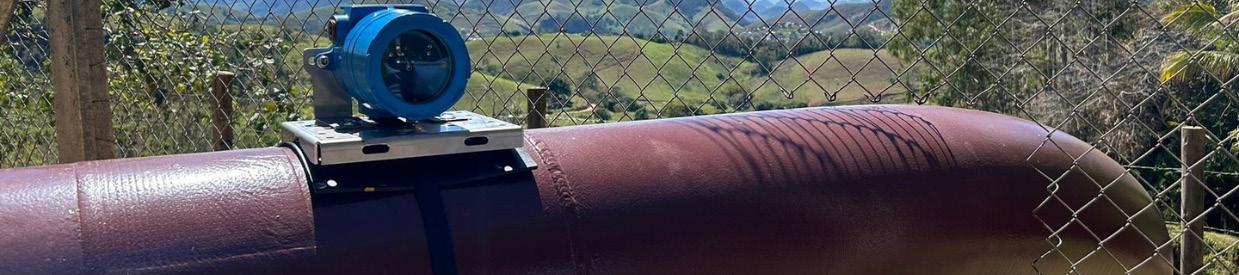
IK Trax
A business rebuilt for sustainable success

Charlotte Hope
Vice President and Managing Director at IK Trax
How is IK Trax thriving?
Having faced a real risk of closure in 2023, IK Trax is now a stable, commercially successful operation, delivering revenue growth of around 56% between 2023 and 2025. A £1 million loss in 2023 has been transformed into a profitable business generating £7m in revenue by 2025.
This turnaround was driven by coordinated change across the organisation. Through tighter financial control, structural improvement, commercial discipline, cultural renewal and a refreshed brand identity, IK Trax has become a resilient, efficient and forward-focused business with strong momentum.
The challenge - IK Trax entered 2023 in a fragile position. The business had been loss-making for some time, and its long-term viability was under active review. Although market conditions began to stabilise between 2022 and 2023, with projects previously on hold starting to move forward again, the internal structure of the business presented several challenges.
The business had many strengths including strong, differentiated products and a workforce with sound technical capability. However, there were clear gaps in structure and process. As the business grew over time, systems had not always been embedded consistently, creating challenges around standardisation, visibility and accountability, particularly within sale and commercial activity.
While the business had developed a strong presence in the Middle East, geographical diversification beyond the region remained limited. This concentration increased exposure to regional fluctuations and constrained its growth. Financially, working-capital pressures were emerging, with client debt levels having a knock-on effect on supplier relationships.
Charlotte Hope joined IK Trax as Sales Director in February 2023 and formally stepped into the role of Vice President in November 2023, with a clear objective to stabilise the business and define a sustainable path forward.
From the outset, Charlotte recognised the potential of the business. However, the challenge to rebuild the business into a stable, commercially viable operation with a clear identity and long-term direction was significant.
The solution - The subsequently implemented turnaround strategy was built on three core pillars, the first being financial and operational discipline.
Stronger financial governance was introduced, with clearer controls and greater consistency in spending processes across the business. Further, the previous mindset, where any win was considered, a good win, shifted to a more disciplined focus on securing the right type of customers and commercially sustainable work.
As part of a wider review, loss-making products were removed through consolidation of the product line. Client debt was also addressed through refinancing, enabling the company to resolve supplier debt while embedding improved processes and controls to prevent recurrence.
The second pillar focused on repositioning the business.
Formerly trading as Online Electronics (still the legal entity), the company was rebranded as IK Trax, reflecting its evolution as a technology-focused organisation. All collateral was updated to present a more professional, corporate identity and signal a clean break from the past.
The final pillar centred on people, culture and long-term capability. All employees were re-onboarded, particularly those who had previously joined without formal onboarding. The aim was to ensure inclusion, alignment and understanding across the organisation. Retention and development also became central priorities, with structured development plans introduced.
In addition to these three pillars, several other changes have been made.
New global partners have been identified and onboarded. While IK Trax operates globally, partner selection has become more selective and strategically aligned, enabling reach without compromising service quality.
The business has also invested heavily in systems to support consistency and customer experience, including a new ERP system, an aftersales ticketing system and updates to the QMS. Targeted efforts have also been made to re-establish relationships withcustomers who had previously disengaged from the business. Culturally, values have been reshaped from the bottom up. Critically, the culture has evolved toward addressing root causes, encouraging openness and learning from experience rather than short-term fixes.
Having made so many significant changes, the company has reaped the rewards. While the firm recorded a near £1m loss in 2023, it has
Story type
#transformation (main category) #culture #diversification #resilience
Benefits
▸ Business turnaround from loss-making in 2023 to profitable growth, with revenue increasing to £7m by 2025.
▸ Stronger structure, systems and culture improved performance, customer retention and operational efficiency.
Key findings
For young people
▸ Gain real-world experience, stay curious, be patient and build strong foundations while learning from others.
For industry
▸ Stay adaptable, build organisations that can pivot quickly and lead with clarity and honesty in uncertain times.
For government
▸ Remove barriers such as windfall taxes to encourage investment and protect jobs in the energy sector.
IK Trax at a glance:
Key products and services: pipeline tracking, locating equipment, data loggers and communication systems.
Main industries served:
▸ Oil and gas – 100%
Headquarters: Stavanager, Norway
Year established: 1996
Number of employees: 36
Revenue: £7m
Revenue from exports: 81%
become a profitable business generating £7m in revenue by the end of 2025.
Long-standing clients such as STATS Group have increased their engagement, adopting IK Trax’s tracking and signalling equipment in greater volumes and across additional global offices. And internally, the change is equally clear. Collaboration between teams has strengthened, morale has improved, and feedback from visiting colleagues confirms a more positive, unified culture.
It’s a true success story. Indeed, IK Trax is no longer fighting to survive. It is now stable, commercially focused and positioned to grow.
Intelligent Pipeline Technology
Integrated Pipeline Solutions from Topside to Subsea
Our cutting-edge pig locating, pig signalling and pipeline sampling and data logging equipment elevates assurance across the full pipeline lifecycle.
Results? Innovative and flexible solutions. Guaranteed total confidence in the performance of your pipeline commissioning and pigging operations. Smarter Data. Efficient Operations. Lower Costs. Whether you’re monitoring pipelines onshore, offshore or subsea, we make sure that no pig passage goes unrecorded.
That’s reassuring.
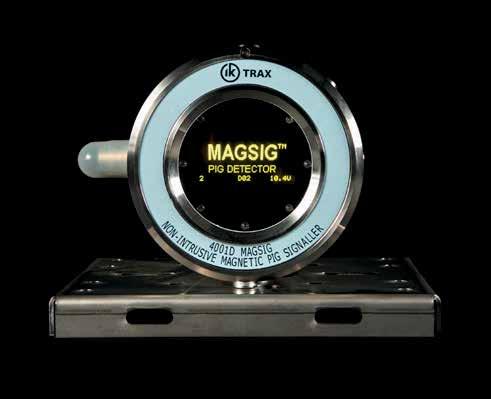

iNET

Hector J. Maytorena Senior Vice President, Customer Success at iNET
How is iNET thriving?
iNet has transformed from a traditional connectivity provider into an intelligent, managed edge network partner that integrates satellite, private LTE and SD-WAN into unified, technology-agnostic architectures for industrial operations. Now connected to around 75% of drilling rigs in the US and Canada, the company has nearly quadrupled its revenue from US$12m in 2020 to US$46m in 2025, while expanding into utilities, municipalities and critical infrastructure across the globe.
The challenge - Founded in Houston in 2011, iNet delivers managed connectivity solutions for remote, industrial and offshore environments where traditional infrastructure cannot reach. The company initially built its business on LTE-based networks across the Permian Basin. But as LEO satellite providers like Starlink entered the market and low-cost resellers increased pricing pressure, margins compressed by up to 60%. At the same time, customer demand shifted toward real-time data, video monitoring, secure SCADA and AI-driven edge analytics.
The solution - Rather than compete on price, iNet made the decision to move up the value chain, shifting its identity from connectivity reseller to end-to-end intelligent edge partner. The transformation has been executed in phases since 2022, guided at every stage by close customer collaboration and a technology-agnostic philosophy that has become central to the company’s differentiation.
The first and most significant shift has been architectural. Where legacy models relied on single-technology connectivity, iNet has built multi-access network architectures that combine Starlink LEO satellite, private LTE and Intelligent SD-WAN into unified, application-aware platforms. Pooled data models have replaced rigid, site-specific plans, giving customers greater flexibility, cost control and deployment speed. Pre-configured field kits and rapid deployment capabilities have reduced the time and complexity of getting remote assets connected, while centralised NOC monitoring has given operators real-time visibility across distributed environments.
Strategic partnerships have been central to this. Relationships with Starlink, Hughes OneWeb, Juniper and Axis Communications have enabled iNet to integrate new technologies rapidly without starting from scratch. Crucially, the company has avoided over-investment in any single technology, retaining the agility to select the right combination of tools for each deployment rather than forcing customers into predefined models. Security has emerged as an equally important dimension of the offer. As remote assets have become more connected, exposure to cyber threats has grown significantly. In response, iNet has engineered secure Layer 2 and Layer 3 VPN connections that link directly into customer networks, bypassing the public internet entirely. This combines the resilience of LEO and multi-access networks with private VPN, segmented connectivity to ensure the performance gains of modern satellite infrastructure do not come at the cost of security.
The model has also extended well beyond oil and gas. Recognising strong operational parallels across power transmission, water, wastewater and flood management infrastructure, iNet has expanded into utilities and municipal sectors. A pilot with Harris County, the largest flood district in the US, has demonstrated the potential of edge-based sensing and early warning systems in critical public infrastructure, an area where connectivity has historically been under-deployed.
Meanwhile, AI has become an increasingly important layer across both iNet’s internal operations and its customer-facing offer. Within its networking platforms, AI enables dynamic path selection, real-time traffic optimisation and predictive failover across satellite, LTE and terrestrial networks. In video and security systems, AI-driven edge analytics transform surveillance into actionable intelligence –this supports safety monitoring and anomaly detection without eating up excessive bandwidth. Internally, AI is being integrated into customer portals and commercial workflows to surface real-time insights, reduce manual reporting and improve responsiveness across sales, engineering and operations.
All of this work is bearing fruit. Since April 2024, iNet has deployed more than 5,000 connected solutions across remote fleets. In a flagship engagement with a major US energy operator, consolidating connectivity and field IT services under a single iNet contract delivered an 80% reduction in remote site resolution time and a 64% increase in end-user satisfaction.
Story type
#transformation (main category) #digital & AI #technology
Benefits
▸ 80% reduction in remote site resolution time through integrated connectivity and field support.
▸ 64% increase in end-user satisfaction across remote and mission-critical operations.
Key findings
For young people
▸ Work hard, stay adaptable and build trust through consistency and integrity.
For industry
▸ Reliable digital infrastructure is now essential for safe, efficient and resilient operations.
For government
▸ Faster regulation and support for digital infrastructure can accelerate innovation and global competitiveness.
iNET at a glance:
Key products and services: provider of advanced connectivity and OT/IT solutions.
Main industries served:
▸ Oil and gas – 80%
▸ Conventional power – 5%
▸ Onshore renewable energy – 5%
▸ Others (non-energy): remote industrial, municipal and retail sectors – 10%
Headquarters: Houston, US
Year established: 2011
Number of employees: 120
Revenue: £36m
Revenue from exports: 13%
In addition, the company now supports connectivity across approximately 75% of drilling rigs in the US and Canada – a position built not on price but on the reliability, intelligence and managed support depth that larger, less specialised providers have been unable to match. Revenue has reflected that differentiation, growing from US$12m in 2020 to US$46m in 2025.

Intertek
Turning a library of 1.6m standards into an AI-powered compliance engine

Phil Kingham Global Commercial Director at Intertek
How is Intertek thriving?
Intertek is a global Total Quality Assurance provider with 45,000 employees and revenues of £3.4bn, serving clients across the energy, manufacturing, construction and automotive sectors. Its Inform division, which provides standards and regulatory intelligence to organisations worldwide, has completed a transformation from content aggregator to AI-enabled, platform-led technology business in the four years since it joined the group. Inform was the fastest-growing division within Intertek in 2025, with revenue up 37%, and is targeting a further 24% growth in 2026.
The challenge - Intertek Inform is a standards and regulatory intelligence business with a library of more than 1.6 million standards from over 360 publishers, including ISO, IEC, ASTM and BSI. Its clients span Tier 1 EPCs, operators, OEMs and service companies across energy, manufacturing, construction and automotive – organisations that depend on accurate, up-to-date standards intelligence to operate safely and compliantly.
Historically, standards management in the energy industry relied on static document libraries, manual interpretation and siloed processes. For a sector undergoing transformation across renewables, hydrogen, carbon capture and electrification, that model was becoming a bottleneck. The volume and complexity of applicable standards was growing, project environments were increasingly global and multi-jurisdictional, and clients were beginning to expect the kind of intelligent, automated support that AI was making possible in other domains. Competing on content access alone was no longer sustainable.
The solution - Intertek began to make moves around 2022 to 2023 following the Intertek Inform acquisition and the arrival of new leadership with a technology background. Their ambition was straightforward: not to be the best standards provider in the market, but to be the only one doing what they were building. The guiding principle was to reposition Inform’s i2i platform from a standalone application to a standards infrastructure layer, embedded directly in customers’ engineering, quality and compliance workflows.
The technical foundation was an API-first architecture. Rather than asking clients to log
into a separate system to consult a standard, Inform built webservices APIs that allow standards to be searched, retrieved and integrated directly into the enterprise systems clients already use, from engineering platforms to quality management and document control environments. Standards became real-time system inputs rather than reference documents consulted separately.
Alongside this, Inform introduced AI capabilities to address the growing complexity of regulatory change. An AI-powered comparison tool identifies what has changed between versions of a standard, interprets the significance of those changes and summarises the impact for a specific use case. Intelligent search provides contextual understanding rather than simple keyword matching, and automated alerts notify users of relevant changes as they happen. The combined effect is to transform standards from static documents into dynamic assets that reduce risk and accelerate decision-making.
The commercial model evolved in tandem. Here, Inform shifted from product-led selling to solutions-led engagement, moving towards enterprise, multi-year relationships focused on measurable outcomes. A global market access function was established to coordinate across Intertek’s wider business lines and open doors to the group’s 400,000-strong customer base, while strategic account management was built out as a core capability. Meanwhile, headcount is planned to grow by a further 20 sales and account services staff in 2026 to support the expanding pipeline.
Crucially, Inform’s position within the Intertek group is a differentiator no competitor can replicate. No other standards business has a global testing, inspection and certification network behind it. This creates a unique opportunity to connect standards intelligence with real-world assurance data, giving clients a more complete compliance proposition than a standalone platform could offer.
The results so far are tangible. Three-figure numbers of new enterprise clients were onboarded across the Americas and EMEA in 2025, including several large-scale global organisations. A European legal platform launched in late 2025, with further regional coverage planned through 2026. The fiveyear Ignite strategy, created in September 2025, sets out how Inform will extend its platform into new sectors and geographies while continuing to deepen AI capability, with the AI comparison tool moving towards full commercial release. In a domain that has changed little in decades, the division is moving fast.

Story type
#transformation (main category) #digital & AI #innovation #scale up #service & solutions
Benefits
▸ Revenue grew 37% in 2025, making Inform the fastest-growing division within Intertek.
▸ Onboarded a three-figure number of new enterprise clients across EMEA and the Americas.
Key findings
For young people
▸ Keep learning in any way you can and stay adaptable — the world of work is constantly evolving.
For industry
▸ Make AI a core part of your workflows, fully integrated into your strategy rather than an add-on.
For government
▸ We need a clear, coordinated approach to compliance and regulation to accelerate digital and AI adoption.
Intertek at a glance:
Key products and services: standards intelligence platforms, AI solutions, API integration, advisory and technical consulting services.
Main industries served:
▸ Oil and gas – 20%
▸ Conventional power – 5%
▸ Onshore renewable energy – 5%
▸ Carbon capture – 1%
▸ Data centres – 1%
▸ Others (non-energy): manufacturing, constructi on, electronics, automoti ve – 68%
Headquarters: Milton Keynes, UK
Year established: 1885
Number of employees: 45,000
Revenue: £3.4bn
Revenue from exports: 65%

iPS Powerful People
A proactive, future-focused workforce partner aligned with Saudi Arabia’s Vision 2030
Ali Al Ghanim Founding Partner &
Regional General Manager at iPS Powerful People
How is iPS Powerful People thriving?
As a proven, international workforce solutions provider supplying skilled professionals to sectors including energy, oil and gas, maritime and large-scale construction, iPS Powerful People continues to find new ways to serve clients more effectively. Most recently, that has seen the firm shift from a reactive approach to manpower supply to a strategy centred around proactive, digitally enabled workforce planning. As a result, the firm has significantly improved speed and reliability for clients in Saudi Arabia. Mobilisation times have reduced by up to 80%, compliance performance has reached 100%, and client retention stands at 100%.
The challenge - Founded in 1988, iPS Powerful People operates in some of the world’s most highly regulated and operationally demanding environments.
The company’s value proposition includes 24/7 availability, full MLC 2006 certification, internationally recognised quality standards (including OHSAS 18001 and ISO 9001:2018), access to over 80,000 qualified professionals worldwide, more than 45 payroll solutions, and a transparent open-book policy.
However, while these are undoubted strengths, iPS hasn’t been immune to challenges. Internally, the organisation had historically evolved within traditional, hierarchical structures. Teams were accustomed to reactive workflows, with decision-making slowed by multiple approval layers. Further, information did not always flow efficiently across departments.
This created resistance to change, slowed mobilisation, and limited the organisation’s ability to respond quickly to shifting client demands.
Externally, Saudi Arabia’s Vision 2030 has had a significant bearing. Sectors such as tourism, entertainment, logistics and renewable energy are booming alongside large-scale giga-projects such as NEOM, the Red Sea Project, and Qiddiya. At the same time, government-led digitalisation initiatives have raised expectations around speed, transparency, automation and data-driven services.
Regulatory complexity has increased in tandem. Frequent updates to Saudisation requirements and taxation policies have made workforce planning more challenging and raised compliance risk. In this environment, the firm’s reactive approach was contributing to missed opportunities.
Clients themselves, meanwhile, are increasingly expecting proactive workforce planning, enabling the quick deployment of specialised talent, and digital visibility, rather than last-minute sourcing.
Without change, iPS risked both entering highgrowth sectors too late, as well as being perceived by the market as a traditional manpower supplier as opposed to a strategic partner.
The solution - To remain competitive and future-ready, iPS has undergone a holistic transformation, shifting its operating model from one of reactive manpower supply to proactive, digitally-enabled workforce partnerships that align with Vision 2030.
iPS is now using forecasting models to anticipate manpower requirements based on project pipelines, regulatory trends and sector growth. Ready-to-deploy talent pools have been established, comprising specialised skills aligned to priority sectors such as giga-projects, logistics, tourism and renewable energy. Such efforts accelerated mobilisation times, allowing the firm to reliably support its clients early in project lifecycles.
The company has also introduced digital platforms across recruitment, onboarding and workforce tracking, improving transparency of its operations and real-time reporting. Compliance documentation and workforce data have also been centralised, improving accuracy and reducing regulatory risk.
Additionally, iPS is now actively targeting high-growth sectors. Rather than focusing solely on execution, the firm has begun engaging clients at the planning stage, supporting workforce strategy alongside delivery and further repositioning it as a strategy partner instead of a transactional service provider.
Compliance and Saudisation planning are at the core of this proactive model. By planning localisation well in advance and investing in Saudi talent pipelines, iPS has successfully minimised last-minute hiring pressures, strengthening its long-term competitiveness. Internally, teams have been upskilled on the use of digital tools, forecasting and client management, providing the foundations for a more effective, agile and scalable organisation. No stone has been left unturned, and the firm’s transformation has delivered clear, effective results. Mobilisation times for specialised manpower have fallen by up to 80%, with candidate shortlists typically being delivered within 48 hours. Local mobilisation now occurs near-immediately, while global onboarding typically takes 20 to 25 days.
In response, client satisfaction has risen significantly, reflected in 10/10 feedback scores, 100% repeat business and full contract re-
Story type
#service & solutions (main category) #resilience
Benefits
► Mobilisation times fell by up to 80%, with candidate shortlists delivered within 48 hours and operational costs lowered through digitalisation.
► Increased client satisfaction, resulting in 100% repeat business, full contract renewals and 100% compliance audit results.
Key findings
For young people
► Stay curious, take initiative, build real skills and embrace change — your career will grow faster than you expect.
For industry
► Lead proactively, invest in people, embrace data and move faster than their competitors.
For government
► Streamline regulations for specialised manpower and collaborate on forecasting and developing Saudi talent pipelines to support Vision 2030 goals.
iPS Powerful People at a glance:
Key products and services: personnel supply and recruitment services.
Main industries served:
► Oil and gas – 68%
► Others (non-energy): construction, maritime – 32%
Headquarters: Al Khobar, Saudi Arabia
Year established: 1988
Number of employees: 300 (Group) 65 (Saudi Arabia)
Revenue: £95.1m (Group) £14.7m (Saudi Arabia)
newal rates. Compliance performance has also benefitted, with 100% audit results and consistent achievement of localisation targets. And operational efficiency has improved through digitalisation, reduced manual processing and a fully systemised global candidate database, lowering costs and increasing productivity. Indeed, the shift from reactive delivery to proactive client partnership has paid dividends across the board. Undoubtedly, iPS Powerful People is faster, more compliant and better positioned to capture growth across Saudi Arabia’s high-potential sectors, something that will benefit it for years to come.
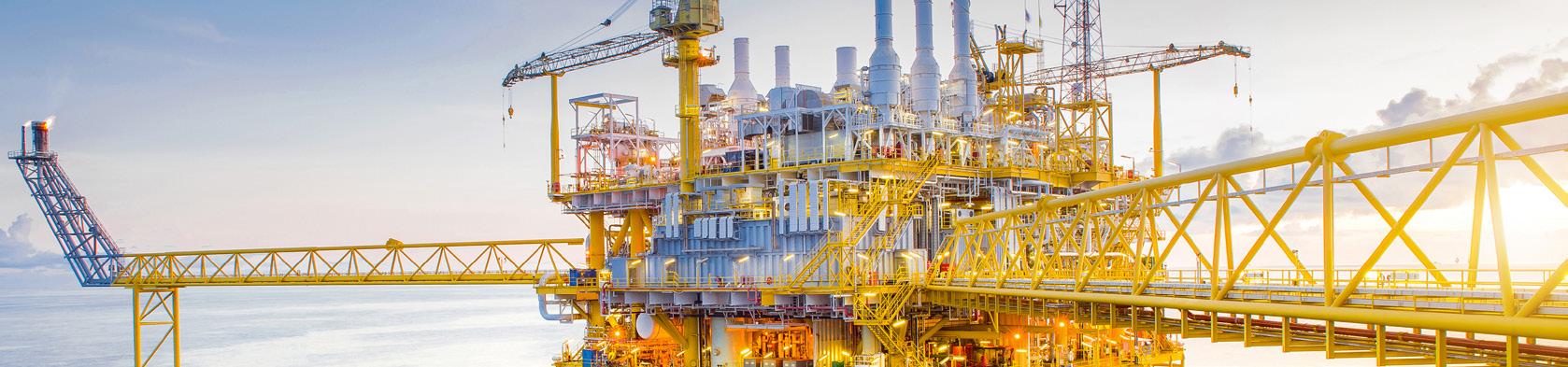
ISIS Fluid Control
Taking its opportunity in Africa to help double revenues

Dan Strzelecki Sales Director at ISIS Fluid Control
How is ISIS Fluid Control thriving?
ISIS Fluid Control’s energy division has more than doubled its revenues since 2020, growing from £14m to a peak of £32m in 2024, with exports rising from around 20% to 40% of the total over the same period. The Chipping Norton-based valve and fluid control specialist has driven that growth by following its client base into Africa (Angola, Equatorial Guinea and Nigeria in particular) while expanding from topsides into technically demanding subsea applications, building a reputation for asking the questions that others often don’t.
The challenge - Chiefly, ISIS Fluid Control supplies valves, actuators and associated fluid control products to oil and gas operators, OEMs and EPCs, with its energy division accounting for around £16.5m of the group’s £30m in revenues. Operating in a market where competition on price is intense and margins are under constant pressure, the business recognised early that fighting for the same work as its competitors was not a sustainable growth path. The risk was clear – a saturated domestic market, limited differentiation on standard product supply and a ceiling on growth if the business stayed where it was.
The solution - Dan Strzelecki joined the business around 12 years ago and set about systematically broadening the firm’s customer base and geographic reach. The early work focused on moving further up the supply chain, engaging directly with EPCs and end users rather than relying on skid fabricators as the primary route to market. As those relationships developed, they began to pull the business into new geographies.
Africa became the defining opportunity. Around 2020, ISIS Fluid Controls identified the continent as an area of structural growth and began investing in the relationships and local knowledge needed to operate there. The springboard was a contract with a major US end user in Angola – a greenfield platform project that ISIS delivered successfully, which opened the door to a brownfield scope discussion with the same client. That pattern repeated, with good delivery on one project leading directly to larger opportunities. The second Angola engagement was twice the size of the first. After that, word spread within
the client’s procurement network, and work in Equatorial Guinea followed.
The engagements also illustrate what ISIS Fluid Controls means by asking the questions others won’t. On one brownfield project, a client placed an order for a process-critical blowdown valve. Rather than simply processing the order as placed, the team queried the specification and identified that the valve as specified would have required structural steel cutting to install – a costly and disruptive intervention. By raising the question early, ISIS Fluid Controls ensured the right solution was supplied, saving the client significant time and cost. It is a small example of a larger principle that runs through the business, in that the primary goal is solve client problems.
Alongside the expansion into Africa, the business has extended its product scope. Subsea was historically limited to shallow-water, simple valve applications. Now, ISIS Fluid Controls supplies 48-inch subsea actuated valves and 16-inch high-pressure valves to depths of 910 metres, a transition that required investment in staff training and quality processes to ensure the supply chain could meet the more demanding specifications. The business also worked with clients on mooring buoys and FPSO applications, each project deepening both capability and credibility.
In the domestic market, the same relationship-led approach has produced its own dividends. End users at facilities including Sullom Voe are now actively recommending ISIS Fluid Controls to the skid manufacturers they work with. That word-of-mouth credibility has begun to open doors in the Middle East through the same word of mouth process.
Staff count has also grown from around 45 in 2020 to 60 today. This represents a measured pace of headcount expansion that reflects the company’s view that culture and service quality are easier to maintain when growth is managed carefully. A new business development manager has been added, targeting oil and gas, carbon capture, hydrogen and mining. They will be influential in hitting targets for 2026, the primary one being 10% revenue growth, and to build on foundations that have been laid one honest conversation and one well-executed project at a time.
Story type
#service & solutions (main category) #collaboration #export #scale up
Benefits
▸ Doubled revenues since 2020 through export growth and stronger end-user relationships.
▸ Expanded into complex subsea applications through technical investment and staff training.
Key findings
For young people
▸ Understanding your market and building strong communication skills helps create long-term career opportunities.
For industry
▸ Long-term growth is built through customer trust, technical support and reliable delivery — not price competition alone.
For government
▸ Supporting domestic energy production and export activity can strengthen energy security and industrial growth.
ISIS Fluid Control at a glance:
Key products and services: valves, actuators and fluid control solutions for oil and gas and industrial applications.
Main industries served:
▸ Oil and gas – 95%
▸ Hydrogen – 5%
Headquarters: Oxfordshire, UK
Year established: 1991
Number of employees: 60
Revenue: £30m
Revenue from exports: 40%

JBP
Reinvented valve offering helps to double the countries reached in five years
How is JBP thriving?
Mark Anderson Sales Director at JBP
In its 50th year in business, Aberdeenshire-based JBP has reached a landmark of its own: active exports to more than 50 countries. The milestone year has also seen the company formalise a reinvigorated valve offering under dedicated specialist leadership, grow valve sales and post 10% revenue growth with a further 20% targeted for 2026.
The challenge - JBP is a complete piping and valve solutions provider supplying pipe, fittings, flanges, valves, structural steel, GRP access and flooring products to clients across oil and gas, power, food and drink, construction, rail, marine and water treatment. Now part of the International Bianco Group, the business holds extensive stock across all material grades and brings more than 500 years of combined technical experience across its 48-person team.
The past four to five years have been somewhat turbulent. Oil price volatility, Brexit, the pandemic and more recently the impact of UK energy fiscal policy on domestic demand have created a market that has required the business to remain in constant motion. Alongside these external pressures, a structural shift has been unfolding across the industry – as organisations have run leaner, specialist technical knowledge, particularly in valves, has quietly left the sector through retirements and redundancies. This has created a gap that experienced suppliers are increasingly being asked to fill, and for JBP, this was both a challenge and an opportunity.
The solution - The company’s response has been built on a strategy it has practised for decades: diversification across products, sectors and geographies. But the past 18 months have sharpened that strategy in two specific areas.
The first was valves. The company had been watching valve sales grow consistently for two to three years, driven partly by the gap in technical expertise across its client base. The business had the capability, but leadership felt the offering lacked the visibility and focus it deserved.
In early 2025 JBP created a dedicated valve business function, investing in a new Valve
Business Manager – a specialist role requiring rare combination of deep technical knowledge, commercial acumen and managerial capability. Finding the right person took several months of careful searching, supported by a specialist recruiter. Once in post, the team was built out by developing existing employees: one internally trained team member took on a more senior role, another was assigned to manage supplier and manufacturer relationships. The valve team has grown from three to five people, and the roll-out has been natural rather than forced – technical expertise and sales are integrated rather than separated, with the knowledge offer woven into the commercial relationship rather than presented as a standalone service.
The second focus has been international growth. Exports have more than doubled in country reach over five years, and the approach is consistent across markets. This involves following clients and contractors, building local partnerships and earning a place on approved vendor lists in territories where direct relationships matter. A partnership with a Tunisian firm established in 2017 has supported growth across North Africa. Meanwhile, newer activity is building in Suriname, Guyana and the wider Caribbean, with a specific focus on the FPSO market. Getting onto AVL registers in those markets has been a defining milestone, and JBP has learnt to be patient about the process.
Domestically, the company has moved into water treatment and expanded its activity in fuel storage, including fuel terminals and aviation fuel, leveraging existing supplier relationships and targeting both UK and international opportunities. A rebrand from John Bell Pipeline to JBP reflects the broader ambition. Indeed, the business does far more than pipelines, and the name now signals that to new markets and new clients.
Crucially, the business has managed all of this while keeping service standards high. A self-imposed KPI of responding to all customer enquiries within 24 hours has been achieved in more than 90% of cases – a meaningful differentiator in a market where, as one recent client confirmed, JBP was able to quote, process an order and deliver valves before a competitor had even responded.
Story type
#diversification (main category) #export #people & competency #resilience
Benefits
▸ Faster response times, with over 90% of enquiries answered within 24 hours, improving client decision-making.
▸ Expanded global reach and technical support, enabling clients to access integrated solutions across +50 countries.
Key findings
For young people
▸ Build experience over time, stay patient, and keep learning—expertise develops through real-world exposure.
For industry
▸ Invest in technical expertise and diversification to address skills gaps and remain resilient in volatile markets.
For government
▸ Provide stable energy policies and support domestic production to strengthen supply chains and investment confidence.
JBP at a glance:
Main industries served:
▸ Oil and gas – 70%
▸ Others (energy) – 20%
▸ Others (non-energy): construction, marine and water treatment - 10%
Headquarters: Aberdeenshire, UK
Year established: 1976
Number of employees: 48
Revenue: £16m
Revenue from exports: 20%
With 25% of staff developed through school leaver, graduate or internal training routes, an average staff tenure of 12 years and a pipeline of strategic partnerships in development, JBP enters the next 50 years with the foundations it has spent the first 50 building.

Jo Bird & Co Ltd
Proving that SMEs can prosper while prioritising sustainability

Guy Atkins
Chairman at Jo Bird
How is Jo Bird thriving?
Jo Bird & Co Ltd is building long-term resilience through environmental sustainability. After reducing energy use and decarbonising its Scope 1 and 2 emissions, the company is now tackling Scope 3 by reviewing raw materials, packaging, and components to reduce value-chain impact. As it celebrates 40 years in business, Jo Bird demonstrates how a company can respect its legacy while embracing sustainable growth – proving environmental responsibility and financial sustainability can go hand in hand.
The challenge - For more than 40 years, Jo Bird has specialised in designing and manufacturing cabinets engineered to store and protect fire-safety and lifesaving equipment in some of the world’s harshest environments. Its bespoke, customer-specific products, backed by Lloyd’s Register and ABS type test approvals, have built a reputation for durability, reliability and technical excellence across demanding global sectors.
Like many companies, Jo Bird faced significant challenges during the pandemic. However, by 2024 the firm had regained momentum, strengthened by its successful expansion into the offshore wind sector in 2021/22. In a short time, offshore wind grew from around 5% to 17% of total revenue.
Leadership transition accompanied this evolution as Guy Atkins, formerly Managing Director, stepped into the role of Chairman in November 2024. The move marked a new chapter while reinforcing continuity and longterm direction. At the same time, the company intensified efforts on its journey to net zero.
Having already committed to targets by signing the Net Zero Charter in 2021, Jo Bird has faced the challenge of advancing ambitious emissions reductions – no easy feat for a smaller manufacturer.
The solution - Naturally, this journey to net zero has already required significant change across Jo Bird’s operations.
A major early focus was obtaining accurate data to measure the company’s carbon footprint, with its Scop 1 and 2 emissions being the starting point.
This began with a full energy survey of the company factory, reviewing insulation, heating systems and potential renewable-energy options. The business installed its first photovoltaic panels 12 years ago, additional panels three years ago, and more last year, which collectively generate around 40% of its onsite electricity. Alongside this, physical upgrades such as a new insulated roof, improved building fabric and the shift to electric heating in offices and workspaces have reduced energy demand and supported incremental decarbonisation efforts.
Measurement efforts includes, business travel and employee commuting, enabling the firm to build a more complete picture of emissions.
As customer expectations evolved, the company has also adapted its offering. As several clients began to ask for the specific carbon footprint of Jo Bird’s products, the firm set out to understand both the CO2 generated during production and the embedded carbon in raw materials and components.
Today, carbon calculation has now become part of the design process for new products, while the firm is also working to reduce the carbon footprints involved in those products. Indeed, a trial is currently underway using an alternative resin to assess potential CO2 reductions, with the firm recognising that small changes in design and procurement can drive substantial improvements.
The overall transition has been a true team effort. As a small company with an agile structure and a stable management team, decisions can be made quickly and acted on without delay. Mandatory environmental training for all staff, introduced around three years ago, also helped to improve sustainability thinking across the organisation.
To date, Jo Bird’s progress has been significant. So much so, that the company was awarded the Future Net Zero Gold-Certified Standard for reporting its carbon emissions for 2023–2024.
Indeed, the company is demonstrating that environmental responsibility and financial sustainability are not mutually exclusive. Even as a small manufacturer, Jo Bird has shown that it’s entirely possible to make sustainability improvements while continuing to grow and compete successfully in a demanding market. With strong progress across Scopes 1 and 2, attention has now shifted to Scope 3, with the firm now gathering detailed information on raw materials, packaging, and components. Working closely with suppliers has become es-
Story type
#enviromental, sustainability & social impact (main category) #resilience
Benefits
▸ Durable, certified protection for critical safety equipment in offshore and industrial settings.
▸ Supports customers’ sustainability goals through lower-carbon manufacturing and materials.
Key findings
For young people
▸ Gain broad experience early, explore different opportunities, and proactively pursue what interests you.
For industry
▸ Investing in environmental improvements can create competitive advantage and long-term business benefits.
For government
▸ Policymakers should better understand the realities and challenges faced by small businesses when shaping policy.
Jo Bird at a glance:
Key products and services: protective storage cabinets for fire-safety and lifesaving equipment.
Main industries served:
▸ Oil and gas – 40%
▸ Offshore renewable energy – 17%
▸ Others (energy) – 5%
▸ Conventional power – 0.5%
▸ Nuclear power – 0.5%
▸ Others (non-energy): commercial marine, coastal marine, defence – 37%
Headquarters: Highbridge, UK
Year established: 1986
Number of employees: 25
Revenue: £3m
Revenue from exports: 65%
sential, ensuring the supply chain is engaged and aligned with the company’s direction.
Committed to Net Zero 2050, and already making significant progress, Jo Bird is an undoubtedly a shining industry sustainability success story that other companies – and particularly SMEs – can look to.

Johnson Controls
Introduce advanced condition-based monitoring and reporting for metering systems

Susan Ritchie Metering Manager at Johnson Controls
How is Johnson Controls thriving?
Johnson Controls’ Aberdeen-based metering division has developed Metering Insights, their first digital metering monitoring system, it has been deployed in the oil and gas space. Built on digital expertise borrowed from the wider Johnson Controls group’s connected buildings work, the system developed in conjunction with their North Sea client is expected to be rolled out to the wider industry in 2026.
The challenge - The metering division of Johnson Controls provides bespoke, independent measurement services covering fiscal, allocation and environmental flow measurement across oil and gas, petrochemical, CCUS and power generation sectors. Working across all OEM equipment, the division’s independence is a core part of its service. Ensuring that all advice and assurance stand up to regulatory, commercial and environmental scrutiny without the conflict of an equipment sales interest behind it.
For the last 40 years, offshore metering operated on a fixed time-based model. Metres and associated equipment were inspected and maintained on a fixed cycle regardless of their condition, meaning that metres performing correctly were removed, transported onshore, tested and reinstalled. This generates costs, emissions through venting and pressure testing, and unnecessary safety exposure for personnel breaking containment. Meanwhile, a broader set of pressures was building, the first being a reduction in competent measurement personnel across the industry. This, along with limited bedspace offshore and increasing regulatory scrutiny of environmental emissions, made the case for doing things differently. Indeed, what was needed was a way to monitor metering system health continuously and make evidence-based maintenance decisions.
The solution - The insight that unlocked Metering Insights came from within Johnson Controls itself. The company’s digital team had spent years building connected monitoring systems for buildings and vessels, and the metering team recognised that the same underlying capability around streaming data, condition-based algorithms and real-time system health displays could be applied to offshore measurement infrastructure.

Kenny Wallace
Metering Technical Authority at Johnson Controls
Development began in 2024. The system captures streaming data from flowmeters and associated equipment, processes it through condition-based monitoring algorithms and presents the results in a user interface that shows metering system status at a glance. The system flags measurement issues early and allows engineers to assess impact and plan intervention. Reporting is automated, which eliminates the manual process of compiling information from multiple systems.
In terms of the system architecture, decisions around on-premise versus cloud hosting, data ownership, security interfaces, data residency and access controls all had to be worked through before a single data point could flow. Johnson Controls ultimately settled on a cloudbased solution. Data security in the oil and gas environment is a high bar, and the company’s existing software and security expertise from its buildings work proved critical in meeting it.
The first deployment came through a contract with a major North Sea operator, won in October 2022. The contract covers a full maintenance responsibility for measurement systems. On the first installation Seven measurement systems feed data into the platform, with 30,000 data points now in the datalake and further wellhead measurement will be added in summer 2026, bringing the total linked metering systems to 15.
Measurable benefits are already emerging. By monitoring metre performance continuously, the division can identify which metres are operating correctly and extend their maintenance intervals well beyond the standard 6 - 12 months – in some cases to 72 months or beyond. Fewer unnecessary removals are helping to lower costs, cut venting and pressure testing emissions and reduce personnel safety exposure offshore. The division forecasts total asset efficiency savings of approximately £300,000 per annum for the client. Early detection of measurement issues has already been reported by engineers using the tool.
Internally, the transition has required sustained change management. Technicians accustomed to site visits and hands-on maintenance needed to understand what condition-based monitoring meant for their roles. Third-party consultancy was used to facilitate honest con-
Story type
#digital & AI (main category) #service & solutions
Benefits
► Continuous monitoring extends maintenance intervals to 72 months, reducing costs, venting emissions and offshore personnel exposure.
► The system secured a long-term metering contract and forecasts approximately £300,000 in yearly asset efficiency savings for the client.
Key findings
For young people
► Pursue work you genuinely enjoy, remain curious and proactive, and embrace diverse opportunities without fearing the unknown.
For industry
► Prioritise and invest in mission-critical systems like HVAC and security, treating them as strategic assets for long-term resilience.
For government
► Commit to sustained research and development investment and foster open, data-driven discussions on energy security and lifecycle emissions.
Johnson Controls at a glance:
Key products and services: specialist measurement services.
Main industries served:
► Oil and gas – 98%
► Conventional power – 2%
Headquarters: Cork, Ireland
Year established: 1885
Number of employees: 105,000
Revenue: £17.3bn
Revenue from exports: 15%
versations about the change, and extensive communication and training followed.
Now, the division sees potential to expand Metering Insights to other North Sea operators and to extend it into carbon capture and emissions monitoring, sectors where measurement integrity and environmental compliance are increasingly intertwined. Digital revenues currently represent approximately 1% of the metering business. The target is 10% within five years.

Diversifying into data centres and decommissioning to build long-term resilience

Marcello Stroppa
Senior Vice President M&A and Corporate Development at Kent
How is Kent thriving?
With over 100 years of experience, 13,000 employees and operations spanning the Middle East, the Americas, UK and Europe, and Asia Pacific, Kent is one of the world’s leading integrated engineering services businesses. Building on its strong foundations and longterm growth ambitions, the company completed two landmark acquisitions in 2025, thereby entering the data centre market and strengthening its decommissioning capability. This strengthened Kent’s capability across the full energy asset lifecycle while expanding its position into high-growth digital infrastructure markets, helping the company close the year with a record backlog of US$3bn.
The challenge - Kent designs, builds and maintains energy assets across the full lifecycle – from advisory & consulting, engineering and project delivery through to asset performance, late-life management and decommissioning. Founded in 1919, the business combines decades of experience with evolving capabilities across conventional energy, low carbon and renewables, recognising that resilience requires breadth and adaptability.
The energy landscape it operates in has always been shaped by external forces, geopolitical instability, shifting political priorities and cycles of investment. The energy transition continues at an uneven pace, shaped as much by economics as by ambition. Meanwhile, two structural trends have been building quietly but with growing force. The rapid rise of AI is driving unprecedented demand for data centre infrastructure, placing new pressure on power and engineering capacity. In addition, the ageing of global oil and gas infrastructure is creating a sustained and largely non-cyclical wave of demand for decommissioning and late-life asset services.
For Kent, this was not a moment of disruption, but a moment of clarity. With strong foundations in traditional energy markets and a global delivery model already in place, Kent recognised a clear opportunity to build a more balanced, future-facing business. One that could capture growth across both estab-
lished and emerging sectors, while increasing resilience to external volatility.
The solution - Under new ownership from Nesma & Partners, the company formalised a fiveyear corporate development programme, which it refreshed in 2024. This is built around targeted acquisitions in high-growth, high-margin markets, combined with continued investment in organic growth and geographic expansion. Critically, the strategy places equal emphasis on integration and acquisition. Kent, itself a business built through acquisition over its century-long history, has made sure any acquired businesses are embedded, scaled and supported over time rather than left to operate at arm’s length.
The first major move was the acquisition of Sudlows Consulting in February 2025, a specialist data centre design and engineering firm with operations across Dubai, India, Saudi Arabia and South Africa, and a track record of over 100 projects delivered across 20 countries. The acquisition gave Kent a strategic entry into a sector experiencing a 16% compound annual growth rate between 2017 and 2024, driven by cloud adoption, AI and data sovereignty requirements. By November 2025, Sudlows Consulting had been fully integrated and rebranded as Kent Data Centres – a business of over 400 specialists now backed by Kent’s global engineering platform and able to pursue significantly larger projects than would have been possible independently. In March 2026, Kent Data Centres expanded into the UK market, its next step in building a truly global capability in digital infrastructure.
The second acquisition was Exceed, which completed in October 2025. Exceed is a world-class provider of well management, sub-surface and decommissioning engineering services headquartered in Aberdeen, with operations across more than 40 countries. The company brought two decades of specialist experience, a track record of over 150 wells decommissioned, and a position as one of only three licensed UK well operators. Crucially, the business is also already active in repurposing reservoirs for carbon capture and hydrogen storage, extending the strategic value of the acquisition well beyond conventional decommissioning.
Together, these two acquisitions added a meaningful contribution to group EBITDA. The logic in both cases was consistent: identify markets aligned with long-term structural demand, acquire businesses with genuine specialist capa-
Story type
#scale up (main category) #diversification
Benefits
► Expanded into high-growth data centre and decommissioning markets through two strategic acquisitions.
► Achieved a record US$3bn project backlog, strengthening its growth trajectory and building a more resilient, future-ready business.
Key findings
For young people
► Remain curious, adaptable to change and focused on building strong fundamental skills that translate across evolving industries. For industry
► Prioritise deliberate, strategic growth over speed, treating post-M&A integration as a core capability rather than an afterthought. For government
► Establish long-term policy stability in the energy and infrastructure sectors to encourage confident and effective investment.
Kent at a glance:
Key products and services: end-toend asset lifecycle services, corporate development and M&As.
Main industries served:
► Conventional – 55%
► Low carbon, renewables and data centres – 21%
► Process and chemicals – 24%
Headquarters: Dubai, UAE
Year established: 1919
Number of employees: 13,000
Revenue: £1.18bn
bility and strong client relationships, then use Kent’s global footprint and engineering platform to accelerate their growth into new geographies and larger project scopes. The global decommissioning market is expected to grow from around US$8bn per year today to approximately US$16bn per year by 2035. The data centre sector shows no signs of slowing.
This year, Kent expects continued revenue growth, supported by the integration and scaling of its newly acquired businesses. The ambition is not simply a larger Kent, but a more resilient one – better balanced across sectors, geographies and the energy lifecycle.
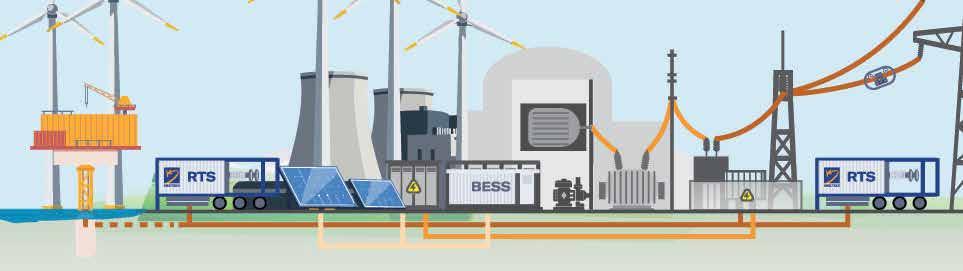
Kinectrics
Scaling capability at speed to power the future of transmission
Mark Fenger Executive Director at Kinectrics
How is Kinectrics thriving?
Founded in 1908, Kinectrics through its predecessor Ontario Hydro Research Division, has spent more than a century delivering lifecycle management solutions to the power generation, transmission and distribution industries. Yet that longevity hasn’t led to complacency. Anticipating major shifts in power transmission demand, the company made key operational changes early – investing in infrastructure, scaling its equipment and workforce, and formalising high-quality training programmes. Through these proactive investments, Kinectrics has emerged as an agile, innovative, future-ready business, equipped with the capacity, capability and confidence to support the energy transition.
The challenge - Like many service companies, Kinectrics faced challenges during the Covid pandemic. Faced with travel restrictions, yet determined not to lay off any employees, the company pivoted to find solutions for deploying staff and provide training courses on short notice to continue supporting client essential services, maintaining continuity in even the most constrained conditions.
Fundamentally, Kinectrics is and always has been a solutions-oriented company, taking a safe, sustainable and stable approach to the business’s long-term viability. Coming out the other side of Covid largely unscathed was one thing, the company is now battle-tested and thriving, shifting from shortterm response to long-term transformation. Come 2023, the company recognised that demand for power transmission was going to change both rapidly and significantly. Cable manufacturers had foreseen this and had begun preparing themselves, but much of the industry had not. Kinectrics itself recognised that it needed to adapt to ensure it was ready.
The solution - With these conversations having begun internally in 2023, by 2024 the company had developed its strategy and outlined its capital investment plans, aligning leadership around a clear path to scale. Kinectrics recognised it needed to bolster its
equipment to meet scale up demand, particularly regarding offshore export cables and array cables systems. These also needed to be tested properly to ensure proper risk mitigation, with failure of solutions simply not being an option given the critical nature of the infrastructure involved.
To achieve these goals, the company had to reach out to a variety of equipment vendors that were experiencing significant bottlenecks. Here, consistent communications and proactive supply chain management were key to prevent delays. Kinectrics also worked closely with end-grid developers to get ahead of testing bottlenecks.
Through these pre-emptive investments, Kinectrics has seen a scale up in its transmission and distribution equipment by a factor of four – the single biggest in the history of the company.
In tandem, it has also had to invest significantly in its workforce, proactively hiring given the 18–24-month period that it typically takes to fully upskill its people.
The company formalised its training process, moving from smaller programmes to larger ones with internally appointed trainers. Further, the company has also formalised its in-house global training centre, located in Middlesborough, UK, which is certified for high voltage testing, helping to ensure consistency in skills and standards globally.
Undoubtedly, Kinectrics has undergone significant internal operating changes in the past two years, that included being acquired by BWX Technologies Inc. Yet the company is now confident that it has built something that will pay dividends for years to come, with a larger pool of skilled employees, and ever-improving trust and relationships with its clients, underpinned by a more scalable operating model.
The transmission related services of the firm expect significant growth through 2026 and forward reflecting both increased demand and expanded delivery capacity.
Story type
#scale up (main category) #people & competency
Benefits
▸ Substantial revenue growth, from 2024 to 2026.
▸ Expanded delivery capacity, scaling equipment by a factor of four.
Key findings
For young people
▸ Stay curious and honest, allow yourself to continuously improve, and persistently apply your technical skills to solve problems.
For transmission and distribution industry
▸ Master market sensing and actively address the single biggest grid problem: a lack of qualified and experienced personnel.
Kinectrics at a glance:
Key products and services: testing, inspection, certification and engineering consulting.
Main industries served within our transmission and distribution division of the company:
▸ Offshore renewable energy
▸ Data centres
▸ Conventional power
▸ Oil and gas
▸ Nuclear power
▸ Onshore renewable energy
▸ Energy storage
▸ Others (energy)
Headquarters: Toronto, Canada
Year established: 1908
Number of employees: 1400
By investing ahead of demand, strengthening its capabilities, and doubling down on talent and partnerships, Kinectrics has positioned itself not just to keep pace with industry change, but to be a world leader in the delivery of lifecycle management services across the electricity industry.
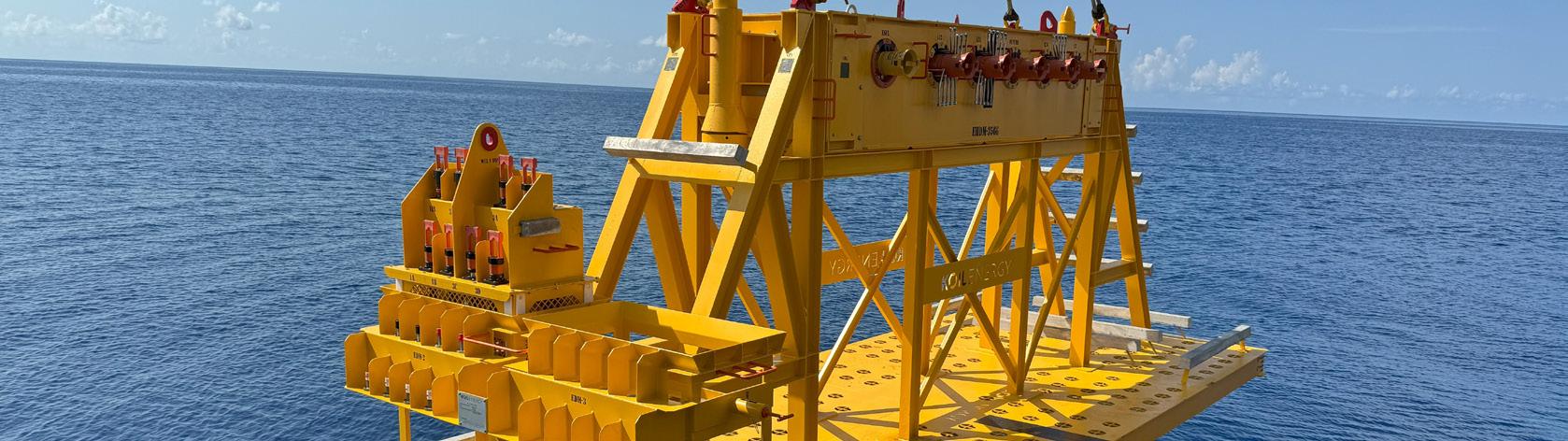
KOIL Energy
Building
a new
company-wide framework to unlock record growth in 2025

Erik Wiik CEO at Koil Energy
How is KOIL Energy thriving?
KOIL Energy has formalised its identity, values and operating principles into a structured framework that has changed how the company executes projects and scales. Having moved from consecutive years of negative margins to a 16% net profit margin, achieved a 100% on-time delivery rate across nearly 200 projects, and expanded into both offshore wind and Brazil, the Houston-based subsea specialist has demonstrated what clarity of purpose can yield.
The challenge - Founded in Texas in 1997, KOIL Energy Solutions provides subsea equipment and services to the global energy industry. Its 79-strong team delivers end-toend integrated solutions spanning engineering, fabrication, testing and offshore installation, designed to minimise interfaces, reduce execution risk and accelerate clients’ path to first production.
Yet for several years prior to 2025, performance had been volatile and largely flat. Revenue fluctuated between US$12.98m and US$18.92m over six years, with net margins in negative territory for much of that period. The cyclical nature of oil and gas was an ever-present external pressure, but the deeper challenge was internal – the company had never formally articulated its own identity. Its culture, strengths and operating principles existed in practice but hadn’t been codified. Without that clarity, scaling consistently and sustainably remained elusive.
The solution - A company-wide initiative called the Business Canvas Model was launched in 2025. Rather than a top-down restructure or a change in strategic direction, it was a concerted effort to formalise what already existed, capturing KOIL Energy’s identity, values and operating principles into a clear and actionable framework. Input was gathered from across the organisation, from leadership through to frontline teams, ensuring the model reflected the reality of how the company operates in reality as opposed to an aspirational ideal.
Bringing together expertise from services,
projects, sales and finance, the process defined KOIL Energy’s core strengths, differentiators and operating principles. The result was a unified framework embedded at every level of the organisation that guides how opportunities are assessed, projects are executed and value is delivered to clients. Crucially, this has not been a conceptual exercise. The model was systematically deployed through senior leadership and middle management into frontline execution, and this made it an active operating system from day one.
A central operational outcome was the development of the ‘pull-in method’. Rather than allowing client-driven schedules to dictate pace, KOIL Energy adopted an urgency-driven approach, consistently targeting early completion across every project. The logic behind this pivot is sound, in that completing work ahead of schedule frees up internal resources more quickly and enables the company to take on additional work, scale operations and maximise growth potential. In the past year alone, KOIL achieved a 100% on-time delivery rate across nearly 200 projects – a level of performance which will cause the wider industry to take note.
The model has also been instrumental in preserving and scaling KOIL Energy’s culture during a period of rapid growth. With a workforce spanning long-tenured employees and newer hires, the framework provides a consistent reference point, defining what the company stands for and ensuring new team members are integrated without diluting the qualities that have always driven success. That culture is one of shared ownership and cross-functional collaboration, where individuals work across role boundaries to achieve collective outcomes and take genuine pride in delivery.
The financial impact has been significant. Having posted net margins of -7% and -6% in 2022 and 2023 respectively, KOIL Energy recorded a 16% net profit margin in 2024, with revenues reaching US$22.73m (up from US$12.98m two years prior). 2025 then delivered a record year, with revenues reaching US$24.05m on the back of 6% year-on-year growth. Alongside this, a physical office in Brazil has been established, and
Story type
#transformation (main category) #culture #scale up
Benefits
▸ Business Canvas Model improved profitability and project delivery performance.
▸ The ‘pull-in method’ increased efficiency and supported international growth.
Key findings
For young people
▸ Career growth comes through hard work, accountability and consistently delivering value over time.
For industry
▸ Clearly defining a company’s culture and operational “DNA” can unlock scalable growth and stronger execution.
For government
▸ Stable, long-term energy policies are essential to support offshore investment, supply chain confidence and energy security.
KOIL Energy at a glance:
Key products and services: subsea equipment and support services to the world’s energy and offshore industries.
Main industries served:
▸ Oil and gas – 97%
▸ Offshore renewable energy – 3%
Headquarters: Houston, US
Year established: 1997
Number of employees: 79
Revenue: £17.8m (2025)
Revenue from exports: 19%
the company has successfully delivered a major offshore wind project in a cold-weather environment far removed from its typical conditions, demonstrating the model’s reach beyond core markets.
Looking ahead, AI is becoming an increasingly important enabler. Project data books that previously took two weeks to produce can now be generated in minutes, and resource forecasting up to two months in advance has replaced reactive workforce planning. These capabilities extend the operating blueprint into the company’s digital future.
Koso Parcol
Striving for outstanding performance that is repeatable

Nadia Maria Robbiani Managing Director at Koso Parcol
How is Koso Parcol thriving?
Koso Parcol (KP) has successfully navigated through half a decade of significant energy industry turbulence. By embedding a CFO-driven mindset of cost discipline, transparency and operational rigour, the firm has not only stabilised following consecutive loss-making years but strategically pivoted into key markets such as nuclear. For KP, earnings before tax (EBT) doubled between 2023 and 2025 – foundations that the firm can begin to thrive from moving forward.
The challenge - KP has long been established as an Italian manufacturer specialising in the design, production and commercialisation of control valves, desuperheaters, safety valves and ball valves, with its products marketed under the distinct Parcol and Koso brands.
With more than 70 years of global presence and a strong reputation in mission-critical applications across energy, fertiliser, chemical and petrochemical sectors, the company operates in a niche where reliability, safety and technical compliance are essential.
For KP, meeting these rigorous standards while operating effectively from a commercial perspective has become increasingly difficult in recent years. Covid-19 triggered widespread disruptions to supply chains, caused shortages across key components, and forced companies worldwide to accelerate digitalisation, automation and reshoring. Traditional forecasting became unreliable as budgeting models gave way to rolling forecasts, liquidity buffers and scenario-based planning.
Even as the pandemic’s effects persisted, the Russia-Ukraine war in 2022 sharply increased energy and raw-material costs, compressed margins and intensified efforts to improve sourcing resilience. Conflicts in the Middle East have also further destabilised global trade routes, extending shipping times and pushing up freight and insurance costs.
In tandem, the industrial valve market has become more competitive, with strong pricing pressure and increasing consolidation among EPCs. For KP, the result of this volatile cocktail was recorded losses in FY2021 and FY2022, with the firm’s former general manager resigning in October 2022.
The solution - At that point, Nadia Maria Robbiani stepped in as Managing Director, transitioning from a longtime CFO role. For
Robbiani, it was immediately clear that KP needed a different approach, differentiating in critical sectors such as nuclear and fertiliser, where proven reliability, quality and track record outweighed pricing pressures.
Incremental change would not suffice in an environment defined by uncertainty and rising complexity. KP needed cost awareness, efficiency, capital discipline and rigorous prioritisation. A CFO-mindset, led by Robbiani, was at the core of the firm’s renewed strategy. This is built on the idea that awareness enables control: only what is understood, measured and made visible can be improved.
The new strategy focused on cost transparency, workflow tightening, stronger internal procedures and cross-functional coordination. Implementation began immediately in October 2022 with a phased, execution-led approach. With losses mounting, the priority was rapid diagnosis and stabilisation – understanding operational realities, validating data and challenging long-standing assumptions.
Q4 2022 marked the formal start of the transformation, with the strategy moving from planning to action in 2023.
Here, KP deliberately pivoted toward high-criticality sectors, particularly nuclear, where customers value compliance, traceability and proven capability. The company strengthened quality assurance, documentation and process rigour, and continued investing in people, technology and production autonomy.
A major milestone came when the firm achieved ISO 19443 accreditation – the nuclear-specific quality standard, enabling KP to participate with a leading OEM in the construction of a small modular reactor.
Cultural realignment accompanied these changes. Through regular communication, employees were encouraged to understand not just what was changing but why. The transformation was designed as a continuous journey rather than a fixed programme, allowing market feedback and financial results to guide adjustments.
To reinforce control over quality and lead times, KP accelerated vertical integration, bringing back in-house manufacturing activities that had previously been outsourced. Customer proximity also improved with the opening of a representative office in Korea, strengthening relationships with globally active EPCs.
The changes have been overarching. No stone has been left unturned, and the results speak for themselves. EBT more than doubled from €2.1m in 2023 to €4.1m in 2024 and reached €4.7m in 2025. Equally, net cash flow improved from negative
Story type
#optimisation (main category) #culture #diversification
Benefits
▸ More than doubled earnings before tax from €2.1m in 2023 to €4.7m in 2025 and improved net cash flow to €6.6m to significantly strengthen liquidity.
▸ Achieved ISO 19443 certification to partner on a small modular reactor and opened a Korean representative office to strengthen relationships with globally active EPCs.
Key findings
For young people
▸ Learn how things really work, ask good questions, master the fundamentals and embrace challenges by leaving your comfort zone to accelerate growth.
For industry
▸ Collaborate across companies, supply chains and sectors, as synergies accelerate innovation, reduce risk and make growth far more sustainable.
For government
▸ Provide a clear, long-term commitment to industry through stable policies, predictable regulation and concrete support for manufacturing and exports.
Koso Parcol at a glance:
Key products and services: severe service control valves, steam desuperheating systems and pneumatic automation equipment.
Main industries served:
▸ Conventional power – 70%
▸ Oil and gas – 5%
▸ Nuclear power – 3%
▸ Others (non-energy): fertiliser – 22%
Headquarters: Canegrate, Italy
Year established: 1954
Number of employees: 144
Revenue: £28.8m
Revenue from exports: 55%
€0.5m in 2024 to €6.6m in 2025, significantly strengthening liquidity and supporting future investment.
Looking ahead, KP remains committed to its newfound focus on disciplined growth, customer intimacy and data-driven execution, and will increasingly look to leverage digital tools and AI in these efforts. For the firm, the ambition is clear: to make outstanding performance repeatable, not exceptional.
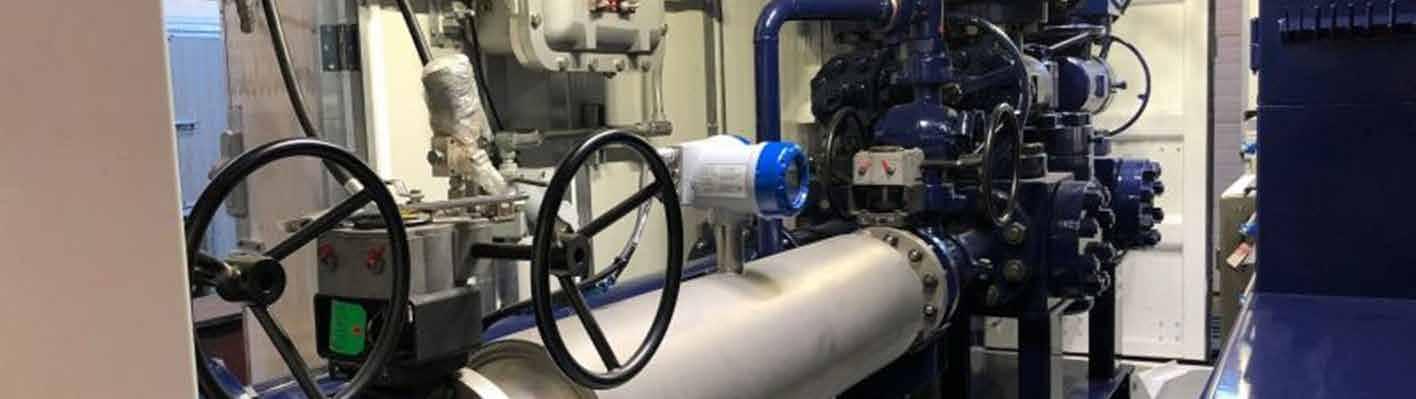
KROHNE Group
30 years of customer‑driven innovation delivers industry’s most adaptable flowmeter
How is KROHNE thriving?
Stefan Kranz
Since launching large diameter straight-tube Coriolis flowmeters in 2015, German instrumentation manufacturer KROHNE has established the technology as the field-proven standard on offshore platforms and FPSOs.
The OPTIMASS series now represents the company’s best-selling product in oil and gas, delivering more than twice the margins compared to in other industry applications. With major energy operators adopting the technology and cross-selling effects driving system-wide sales, KROHNE’s energy division, established just a few years ago, has positioned the 103-year-old company as a formidable competitor to industry giants.
The challenge - When oil and gas customers began requesting straight-tube Coriolis flowmeters in 1995, KROHNE faced a major technical challenge. Whilst bent-tube Coriolis metre s delivered excellent mass flow measurement independent of density, temperature and pressure, the design created problems for energy operators. Bends trapped solids and gases, increased wear, required larger installation footprints and limited installation orientation flexibility – critical issues for space-constrained offshore platforms and FPSOs.
However, producing straight-tube metres with equivalent performance to bent-tube designs proved extraordinarily difficult. The company needed to capture and eliminate unwanted pressure and temperature effects while maintaining accuracy across the entire capacity range up to 16 inches – a challenge that initially seemed impossible.
The solution - KROHNE’s story spans three decades and is built on a foundation of patient incremental innovation and deep customer engagement.
The journey began in the 1980s when KROHNE Limited was founded with in-house expertise in the Coriolis principle developed in Wellingborough. By the early 1990s, the company had created its first prototype single straight-tube metre, launching market-ready small diameter versions in the early 2000s. These initial products, protected by partial patents, established KROHNE as the first manufacturer to commercialise straight-tube designs.
The small diameter success provided invaluable learning. KROHNE discovered that while scaling up to high-capacity metres initially seemed impossible, experience gained showed the path forward. With knowledge accumulated over more than a decade producing smaller metres, the company developed additional sensors and temperature-calibration techniques to enable the production of straight-tube metres across the entire capacity range – all while matching or exceeding bent-tube performance.
The 2008 launch of large diameter straighttube flowmeters represented the breakthrough that unlocked the oil and gas market. After years of conservative operators resisting adoption despite articulating the need in the 1990s, the industry finally recognised the technology’s value for offshore applications.
The OPTIMASS series offered compelling advantages. The straight path acts as part of the pipework, resulting in only little no pressure loss. The design handles difficult media including shear-sensitive, highly viscous or abrasive liquids and slurries containing solids, as bends that cause excessive wear are eliminated. Natural self-draining and easy cleaning made the metres ideal for diverse applications. Advanced entrained gas management algorithms maintain stable measurements even with up to 100% entrained gas.
Installation flexibility has proven transformative for offshore operators. The straight design allows adaptable orientation in confined spaces, enables compact installations, reduces wear and tear, directly measures mass flow and delivers lighter weight. As competitors reduced bend angles attempting to meet client needs, KROHNE eliminated the bend entirely for larger diameter applications.
Deployment with an operator of offshore platforms in the Kaspian Sea provided to be a key milestone for offshore adoption. Straighttube Coriolis metres are now the reliable standard on platforms and FPSOs where space constraints previously limited options, replacing traditional flow technologies.
Indeed, the large diameter product soon became KROHNE’s best-selling offering, with all major energy clients now purchasing high-capacity units. Cross-selling effects emerged as clients selected optimal tube orientations for larger integrated systems. The energy division, established only a few years ago, has positioned KROHNE as a serious player in the market.
Story type
#technology (main category)
Benefits
▸ Oil and gas projects deliver 25% margins vs 10% wastewater.
▸ Expanding into hydrogen, carbon capture, and data centre cooling.
Key findings
For young people
▸ Do a solid education, in the basic engineering disciplines. Don’t get tech-lazy because of AI.
For industry
▸ Follow your strategy, sometimes it takes decades and you can’t see the goal, but keep climbing.
For government
▸ Stop craziness of hindering economic growth.
KROHNE at a glance:
Key products and services: industryspecific products and solutions for E&P including offshore.
Main industries served:
▸ Oil and gas – 68%
▸ Conventional power – 20%
▸ Offshore renewable energy – 3%
▸ Data centres – 3%
▸ Onshore renewable energy – 2%
▸ Carbon capture – 2%
▸ Hydrogen – 1%
▸ Energy storage – 1%
Headquarters: Dusiburg, Germany
Year established: 1921
Number of employees: 4,200
Revenue: £700m
Revenue from exports: 83%
This is also proving to be a profitable endeavour. Today, oil and gas projects deliver more than twice the margins compared to other industry applications. The company has 4,200 employees on its books and is projecting 7% revenue growth in 2026.
Looking ahead, KROHNE is targeting clean energy applications such as hydrogen custody transfer, carbon capture and storage with high-pressure CO2 measurement, and data centre cooling systems. The company is also seeking to expand its footprint across North America, Asia and the Middle East.
Global Industry Divison Manager Energy Industries at KROHNE

L. Quintella Advogados
Diversifying to meet the migration demands of energy sector clients

Leonardo Quintella Founding Partner at L. Quintella Advogados
How is L. Quintella Advogados thriving?
After facing increased national competition and an unclear diversification strategy, Quintella Advogados realised that the biggest growth opportunity lay in migration services— an area first uncovered while helping a client bring an executive and employee from the US to Brazil. A strategic shift toward B2B clients, a new coordinator and active participation in industry events helped the firm overcome initial branding missteps and build a migration practice that grew four times in a year and now accounts for nearly half its team. This repositioning has opened doors in Brazil’s energy and offshore sectors, turning the firm into a far more versatile and competitive legal partner.
The challenge - As a highly specialised firm providing tailored legal representation and advisory services, L. Quintella Advogados has established itself as an energy market specialist, supporting clients in areas such as immigration and residency permits in Brazil, consulting on labour laws for foreign companies, and related legal services.
A continual willingness to adapt and innovate has been critical in establishing the firm’s reputation to date. In response to the 2017 labour market reform, Leonardo, the founding partner of Quintella Advogados, recognised the need to diversify services. Then, following the pandemic, the company faced increased competition due to fully online processes and hearings, especially from large law firms in São Paulo and Rio de Janeiro.
Faced with these challenges, Quintella Advogados received demand from a client for legal consultation on bringing an executive and employee from the US to work in Brazil. It recognised a significant opportunity to expand into the migration sector as a high-potential growth market.
The solution - Initially, there were difficulties in promoting and marketing this new service due to rules imposed by the Brazilian Bar Association. The partners also noticed resistance from clients, driven by misconceptions that using law firms for such services would make the process more costly.
To address this and attract more clients, Quintella Advogados launched a new brand: LQI, where they began their labour consulting services. However, two years after its creation, the strategy was failing to achieve the expected results.
Many clients became confused and believed the firm and LQI were competitors rather than parts of the same organisation. In addition, this attempt did not attract as many new clients as expected. Quintella Advogados recognised that the credibility and security of its own brand name was a major selling point, and therefore chose to close LQI and continue providing both its labour and migration services directly.
Despite this change, the firm still needed to promote its offering within OAB rules, intensifying its B2B-oriented strategy alongside its B2C operations. A new coordinator was brought on board, helping achieve more direct results not only in migration but also in other services. However, adapting to a B2Bled approach presented cultural challenges, as lawyers are not typically accustomed to actively seeking new business.
Nevertheless, the team adapted. Entering this new segment helped grow other areas of the firm, as it became easier to generate additional business with the same clients.
As a result, Quintella Advogados’ migration service now accounts for 40% of the firm’s associates, with direct marketing efforts leading to fourfold growth between 2024 and 2025. Companies supporting offshore platforms have largely driven this growth.
The firm’s ambition to attract more clients also led it to become an EIC member, after consulting PRINER on the value of membership in expanding its energy sector offering. It has since gained value by participating in EIC breakfasts, exhibitions and events such as OTC, improving visibility and fostering partnerships.
Overall, Leonardo Quintella acknowledges that without these changes, the firm would likely have remained just a boutique labour law practice. Instead, it can now offer a wide range of services to much larger clients. Having successfully diversified, the firm is well placed to capitalise on emerging opportunities.

Story type
#diversification (main category) #transformation
Benefits
▸ A shift into migration services drove rapid growth, with the practice expanding fourfold in one year and now representing around 40% of the firm’s associates.
▸ Repositioning to a B2B model strengthened client relationships and unlocked cross-selling opportunities, boosting competitiveness and expanding presence in the energy and offshore sectors.
Key findings
For young people
▸ It is essential to understand the process, remain resilient and recognise that success takes time but comes with consistent effort.
For industry
▸ Never settling is key to growth, as constant vigilance and evolution help prevent challenges before they arise.
For government
▸ The State must act as a facilitator by reducing fiscal and regulatory barriers so businesses can grow and create wealth
L. Quintella Advogados at a glance:
Key products and services: labour law advisory and litigation, immigration and residency services, expatriate and international contract consulting.
Main industries served:
▸ Oil and gas – 20%
▸ Offshore renewable energy – 20%
▸ Onshore renewable energy – 20%
▸ Others (energy) – 20%
▸ Others (non-energy) – 20%
Headquarters: Rio de Janeiro, Brazil
Year established: 2012
Number of employees: 8
Revenue: £290.000
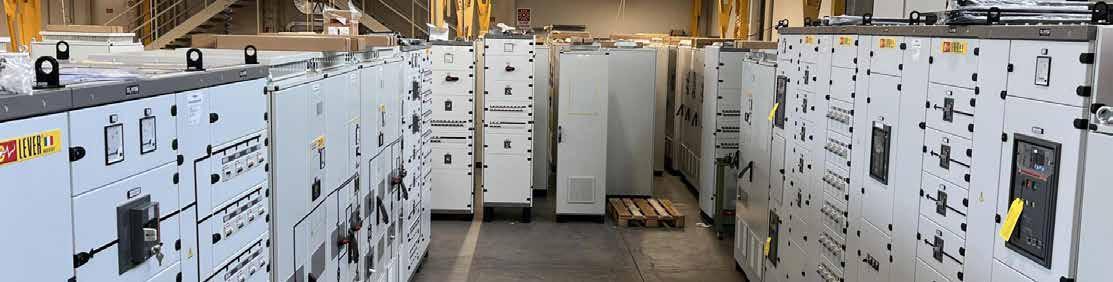
Lever
How radical simplification turned a diluted business back into a reputed specialist
Gregorio Giuliani Sales Director at Lever
How is Lever thriving?
After making the bold decision to cut its product range from 30 lines to just four and exit non-energy markets entirely, Italian power electronics manufacturer Lever has grown revenues from €6m to €15m in three years. Win rates have more than doubled, from 5% to 12%, and seven major end-user approvals have been secured in oil and gas and power utilities, including Abu Dhabi National Oil Company (ADNOC), thereby validating the return to a project-based identity on which the company was founded.
The challenge - Lever was established in Verona in 1973, building a reputation over the ensuing decades for customised, high-engineering UPS systems, battery chargers, rectifiers and inverters for complex industrial projects. In 2008, the introduction of its UPS product range opened new international markets, particularly in oil and gas. But in 2012, the company began adding standard, commercial UPS lines – sold through distributors, at lower margins, to a much wider range of end markets including hospitals, retail and municipalities.
Turnover grew, but the reverberations were damaging. Spread across 30 product lines and dozens of sectors, Lever’s identity blurred. It was no longer clearly a specialist, and clients accustomed to its high-engineering pedigree began to struggle to distinguish it from the commodity suppliers it had started to resemble. By 2020, during the pressures of the Covid-19 pandemic, the business was losing competitiveness and, critically, losing its sense of purpose.
The solution - The diagnosis was clear, even if the remedy was initially an uncomfortable one to enact. In 2021, Lever’s Sales Director Gregorio Giuliani – part of the second generation of the family now running the business – took the decision to reverse course entirely. Commercial, standardised product lines were discontinued. The company’s focus was narrowed to oil and gas and power utilities exclusively. Of 30 product models, 26 were cancelled, leaving four in its portfolio.
The immediate consequences were significant. Revenue fell by approximately 30%, eight redundancies were made and a sub-
stantial number of distributor and partner agreements were wound down. But the rationale was sound: Lever knew how to do project-based work exceptionally well, and the commoditised path had been pulling it away from that strength for nearly a decade. The priority now was to rebuild on solid ground rather than recover lost commercial volume.
Rebuilding took patience and persistence. The most pressing task was restoring Lever’s standing with its target clients – returning to original customers, re-establishing project-based relationships and getting back onto approved vendor lists. This meant absorbing short-term commercial pain to secure longterm positioning, including taking on early contracts at unfavourable terms simply to rebuild trust and track record. Partners and distributors were also rationalised, with those not aligned to the new specialist focus replaced by like-minded collaborators who shared Lever’s project-based philosophy.
Alongside this, Lever invested heavily in the foundations that would make the refocused business genuinely competitive. Manufacturing capacity doubled over five years, supported by a €2m factory expansion that took floor space from 2,000 to 5,000 sqm. The in-house research and development team of 10 engineers continued developing proprietary power electronics technology, a move which has given Lever full control over its product performance and customisation capability. Delivery times, meanwhile, have been reduced to as little as 20 weeks against a typical competitor lead time of a year – this has become a key commercial differentiator. This capability was recently demonstrated in the supply of replacement equipment for the ADNOC Rich Gas Field Development project, where Lever managed to deliver within just 20 weeks from purchase order while adapting the equipment to the space constraints of an existing plant.
The results so far have more than vindicated the strategy. In the three years since revenues bottomed out at €6m in 2022, the company has built back up to €15m turnover, with a further 8% growth projected for 2026. Win rates have climbed from 5% to 12%, with a target of 15% well in sight. Seven significant end-user approvals have been secured, including ADNOC, and this has opened a pipeline of sustained work across the Gulf Cooperation Council (GCC) region. Indeed, Lever is now pre-specified on the approved lists of a growing number of Tier 1 EPCs, meaning its equipment is recommended before tenders are even issued.

Story type
#transformation (main category) #optimisation #resilience #service & solutions
Benefits
▸ Increased revenues from €6m to €15m in three years and more than doubled project win rates from 5% to 12%.
▸ Secured seven major end-user approvals and reduced product delivery times to just 20 weeks.
Key findings
For young people
▸ Use technology as a helpful tool, but don’t let it think for you. Strive to achieve something meaningful so you can look back on a life well-lived.
For industry
▸ Create a supportive environment for domestic talent to thrive, preventing the ongoing brain drain of skilled workers moving abroad.
For government
▸ Establish a clear strategy to support business growth and address the worrying trend of manufacturing de-industrialisation.
Lever at a glance:
Key products and services: design and production of UPS, battery chargers, rectifiers and inverters.
Main industries served:
▸ Oil and gas – 30%
▸ Conventional power – 30%
▸ Data centres – 14%
▸ Carbon capture – 9%
▸ Energy storage – 9%
▸ Nuclear power – 4%
▸ Others (energy) – 4%
Headquarters: Negrar di Valpolicella, Italy
Year established: 1973
Number of employees: 40
Revenue: approximately £12.9m
Revenue from exports: 80%
More broadly, the business has regained the clarity of identity that made it worth building in the first place. With its scope of work unambiguous, its client relationships deepening and its manufacturing capability expanding, Lever is well placed to continue growing as the specialist it originally set out to be.
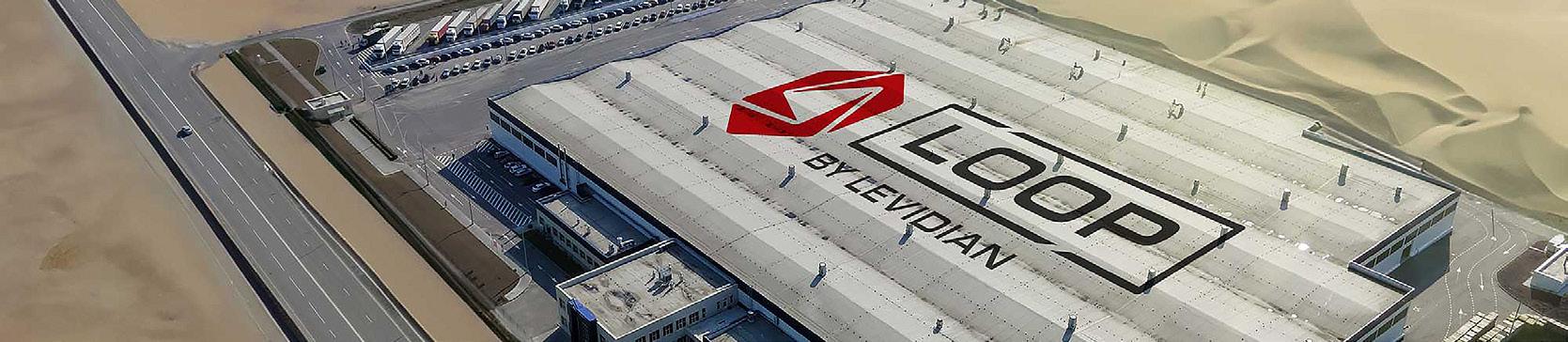
Levidian
Taking a step back to build stronger foundations for future growth

Colin Elcoate Managing Director MENA at Levidian
How is Levidian thriving?
Advanced materials company Levidian reset its business in 2025, strengthening operational discipline and aligning delivery more closely with deployment reality. This business reset enabled the progression of industrial pilots with Dana Gas and other strategic partners across the Middle East, Southeast Asia, Europe and the Americas, building continued commercial momentum into 2026.
The challenge - Levidian converts hydrocarbon gases, principally methane, into graphene and hydrogen using its patented LOOP technology. However, the market adoption of graphene has historically been slowed by inconsistent quality, limited scalability and sector-wide over-promising.
As a deep-tech company scaling from research into commercialisation, Levidian faced familiar pressures: ambition outpacing operational maturity, too many parallel initiatives and insufficient delivery discipline.
Crucially, the company recognised the need to clarify its market positioning. While initially framed primarily as a decarbonisation technology, market feedback showed the strongest commercial pull came from customers seeking advanced materials that deliver performance and economic value, with sustainability as an additional benefit.
This required a clear strategic shift - from positioning as a decarbonisation solution provider to operating as an advanced materials company.
The solution - Rather than wait for external pressures to force change, Levidian’s leadership chose to be proactive. Throughout 2025, the company made three strategic shifts to pivot towards an advanced materials specialist.
First, Levidian prioritised applications where its graphene delivers tangible performance, durability and economic benefit, including construction materials, polymers, coatings and industrial processes. Decarbonisation remains critical, but increasingly as an outcome of materials transformation rather than the primary value proposition. In regions including the Middle East, Southeast Asia, Europe and the Americas, long-term strategic plans with industrial partners for advanced materials accelerated this shift. Market signals were clear, and Levidian responded by aligning more closely with customer demand.
Second, an organisational reset streamlined the structure to improve accountability, reduce
duplication and better align capability with delivery. The organisation now operates more efficiently with approximately 50 employees maintaining presence across Europe, the Middle East and North America, with growing partnerships in Southeast Asia and Latin America.
Third, an execution-first culture now measures success by shipments, pilots, trials, partner progression and commercial traction rather than plans alone. The company rebuilt around three priorities: real customers, real deployments and real commercial outcomes. This cultural shift has materially changed both internal behaviour and external perception.
The transformation required rigorous self-assessment, restructuring and disciplined prioritisation. Throughout the process, Levidian benefited from three advantages: LOOP systems deployed in live environments with graphene actively shipped and evaluated; credible strategic partners, including major industrial and energy organisations, whose engagement reinforced practical industrial relevance; and a core group willing to support the reset.
As the company strengthened operational discipline and aligned commercial milestones more closely with deployment reality, several programmes progressed more gradually than initially anticipated, shifting associated revenue into later periods. This approach reduced near-term revenue in 2025 compared to 2024, while strengthening the quality and repeatability of the commercial pipeline.
The Cambridge-based company has secured significant graphene orders globally, including multiple tonne-scale orders from the Middle East and early demand from Brazil, as industrial customers evaluate graphene in real operating environments. The company is also progressing multiple industrial pilots with Dana Gas and other regional industrial partners to validate performance, economics and scalability. The consistent feature across these engagements is sustained partner commitment of time, technical resources and internal qualification processes.
In March 2026, the company completed its first tonne-scale graphene shipment to the Middle East, with further tonne-scale orders currently in production.
Alongside progress in the Middle East, the company is also advancing collaborations in Southeast Asia, Europe and Brazil, reflecting growing global interest in graphene-enabled materials and methane-to-value technologies. Taken together, these deployments mark the early stages of a globally distributed industrial platform for methane-to-value materials.
Internally, the organisation operates with greater focus and accountability, and the commercial pipeline is increasingly grounded in deployment rather than exploration.
Story type
#transformation (main category) #collaboration #energy transition #resilience #scale up
Benefits
▸ Secured tonne-scale graphene orders globally delivering the first shipment early 2026 and advancing industrial pilots with Dana Gas and strategic partners.
▸ Streamlined the organisation to improve efficiency and delivery while retaining core technical expertise.
Key findings
For young people
▸ Seek environments where responsibility comes early and performance is visible. Real-world complexity builds judgement, differentiating strong leaders.
For industry
▸ Companies rarely struggle because the opportunity is weak; they struggle when leaders delay confronting reality. Strategy requires focus, discipline and execution.
For government
▸ Treat advanced materials and industrial decarbonisation as strategic infrastructure. Create regulatory clarity and streamlined approvals.
Levidian at a glance:
Key products and services: graphene production, hydrogen generation, proprietary methane conversion technology (LOOP process) and industrial deployment.
Main industries served:
▸ Oil and gas – 40%
▸ Hydrogen – 15%
▸ Carbon capture – 10%
▸ Others (non-energy): aluminium and construction – 35%
Headquarters: Cambridge, UK
Year established: 2020
Number of employees: approximately 50 Revenue: approximately £1m
Revenue from exports: 50%
Looking ahead, Levidian expects significant revenue growth in 2026, driven by progression of existing pilots into expanded programmes, increased graphene shipments linked to active customer trials, and strengthening Middle East activity. The most important change is not just the scale of growth, but its nature: repeatable, partner-led, grounded in deployment and built on long-term commercial quality.

Lloyd’s Register
Building a new energies advisory business on the foundations of 260 years of technical trust

Neil Arthur Director, LR Energies at Lloyd’s Register
How is Lloyd’s Register thriving?
After spending more than two and a half centuries earning the confidence of the world’s most demanding engineering clients, Lloyd’s Register (LR) is putting that heritage to work in a new way. The formal establishment of LR Energies, which unifies more than 300 energy-focused professionals into a single, purpose-driven business community, has begun generating early commercial returns.
The challenge - LR is one of the world’s leading professional services organisations working with the maritime, offshore and energy industries. With 4,500 employees and group revenues of £800m it is wholly owned by the Lloyd’s Register Foundation, a UK-registered charity dedicated to research and education in science and engineering. Its core offer centres on classification, certification and assurance – in other words, ensuring that crucial assets are safe, fit for purpose and compliant with regulations.
Within the energy sector, the firm’s model has historically been anchored in compliance: technically rigorous, deeply trusted, but increasingly exposed to pricing pressure as the market has commoditised. Clients have come to rely on LR for regulatory adherence, but their needs have broadened significantly – now, they are after CAPEX, operational performance improvement, risk management across the energy transition and performance insight drawn from the vast data flowing through assets under LR oversight. The opportunity to serve those needs more completely required a fresh response.
The solution - That response took shape at the end of 2025. It has been driven by a combination of new top-down strategic direction, direct market and client feedback, and the recognition that artificial intelligence was beginning to open new possibilities for service enhancement. A series of internal workshops, run across LR’s global regional structure, brought together the energy-focused professionals distributed throughout its matrix organisation.
The outcome was the creation of LR Energies, an internal business community of more than 300 professionals, established with its own
director, strategic plan, region-specific growth targets and a clearly articulated purpose. Neil Arthur, based in Aberdeen, was appointed Director of LR Energies at the start of 2026.
The logic behind the new entity is clear. LR wants to be the go-to partner of choice for compliance, advisory and performance services. The new offer spans the full asset lifecycle. At the design stage, LR works to reduce technical uncertainty and build stakeholder confidence in engineering decisions. Through construction, it provides quality and safety assurance. In operations, the focus shifts to performance improvement, cost reduction and reliability.
LR has streamlined its operational focus, aiming to foster consultative client relationships built on flexibility, trust, and value creation. This enhanced agility has enabled the organisation to respond more effectively to evolving client needs, reinforcing a client-centric approach across its business. A formalised Key Account Programme has been central to this initiative. Long-standing clients with multiple business streams across different geographies have been identified as strategic accounts for elevation and development. The objective is to consolidate relationships that were previously managed in silos and transform them into broader, more integrated advisory partnerships. Through closer collaboration, LR aims to deliver practical, tailored, and value-driven solutions that support clients’ strategic objectives while strengthening long-term relationships.
In parallel, a new target client list has been developed, focused on operators gaining prominence in emerging energy markets beyond LR’s traditional oil and gas base. The Energies division currently serves oil and gas clients (75% of its portfolio) and offshore wind operators (25%), and the advisory push spans both.
Early results have been encouraging, demonstrating strong market demand for the advisory offering and validating the strategic direction of the business. LR has successfully secured new clients specifically on the strength of its advisory capabilities, while existing clients have continued to deepen their engagement and are increasingly recognis-

Story type
#transformation (main category) #optimisation #service & solutions
Benefits
► Positioned the business as a full lifecycle strategic partner, prompting existing compliance clients to benefit from LR’s advisory services.
Key findings
For young people
► Remain open to new opportunities, the transferability of your skills is greater than you might realise.
For industry
► Treat compliance and assurance as future investments rather than costs and improve CAPEX decision-making to positively impact long-term operations.
For government
► Provide clearer industrial and energy strategies, particularly for transition projects, to make promoting the UK internationally easier.
Lloyd’s Register at a glance:
Key products and services: classification, certification and advisory services for ships and offshore assets.
Main industries served:
► Oil and gas – 75%
► Offshore renewable energy – 25%
Headquarters: London, UK Year established: 1760
Number of employees: 4,500
Revenue: £800m
Revenue from exports: 75%
ing the value of advisory support alongside traditional services. And for the first time, LR’s website carries dedicated energies and offshore content. This is a visible signal of a business that is no longer content to operate quietly in the background of its clients’ compliance requirements but actively asserting its place as a strategic partner across the full energy project lifecycle.

LRQA
The Future of Fuel: Beyond Certification

Leanne Halliday

Story type
#diversification (main category) #collaboration #energy transition
Benefits

How is LRQA thriving?
LRQA is a global risk management business with over 6,000 people, revenues exceeding £500m and tens of thousands of clients across more than 150 countries. Over the past five years it has strengthened and expanded its climate and energy transition capabilities, building deeper expertise in biofuels, Sustainable Aviation Fuel (SAF), hydrogen and lifecycle assessment through a series of targeted acquisitions and strategic capability investments.
One of the most significant of these, the 2025 acquisition of EcoEngineers, marked a step change in LRQA’s ability to offer technically grounded support in some of the most highly scrutinised areas of decarbonisation, particularly renewable fuels, lifecycle emissions and regulatory compliance.
The challenge - Five years ago, LRQA identified growing demand for more specialised expertise across renewable fuels and low-carbon energy markets. As regulation and scrutiny increased, clients needed support from strategy and implementation through to independent assurance and verification, particularly in areas such as lifecycle assessment, feedstock traceability and regulatory compliance.
Biofuels in particular had become a complex regulatory and technical battleground. In the EU, ambitious blending targets for sustainable fuels in transport were accompanied by stringent greenhouse gas thresholds, indirect land use change requirements and labour standards, all of which needed to be independently verified. Fraudulent feedstock cases had damaged confidence in parts of the market. The message from clients was clear. The challenge was not ambition – it was demonstrating credibility, traceability and compliance at scale.
The solution - LRQA built a strategy around gap analysis, developing internal capabilities and complementing that with targeted acquisitions. The gap analysis confirmed that while the business had strong credibility in assurance and inspection, clients increasingly required deeper technical expertise in areas such as biofuels, lifecycle assessment and low-carbon fuel compliance. Certification and verification alone were no longer enough, and lifecycle assessment, carbon market advisory and regulatory navigation were becoming essential parts of the offer.
EcoEngineers Managing Director, Europe at LRQA
Urszula Szalkowska Head of Sector, Energy and Renewables at LRQA
The first acquisitions, Reset Carbon and Ergon Associates in late 2024, added additional capability in carbon markets and the social auditing market respectively. The most significant move came in 2025 with the acquisition of EcoEngineers, a US-founded pioneer in biofuel, renewable natural gas and sustainable aviation fuel certification with around 100 specialists. EcoEngineers had spent two decades helping clients navigate the first US renewable fuel regulations, building expertise in lifecycle emissions calculation, feedstock verification and regulatory compliance that few other organisations could match. In Europe, where the regulatory framework was in some respects more demanding than in the US, that expertise was exactly what the market needed.
The combined offer is greater than the sum of its parts. LRQA brings independence, scale and risk management credibility across more than 150 countries. EcoEngineers brings the deep technical and regulatory knowledge to verify that a biofuel, SAF or green hydrogen claim stacks up. Together they can take a client from understanding what the regulations require, through advisory on how to meet them, to independent certification and ongoing verification – the full journey rather than a single point within it. The growth in hydrogen associated business illustrates what the combined model can achieve. Between 2024 and 2025, LRQA’s hydrogen business grew 40% year on year, driven by increasing client demand for assurance services as the sector moves from pilot projects to commercial scale.
Biofuel and lifecycle assessment work has expanded in tandem, with Europe a particular growth market as the regulatory environment tightens. Here, a major international operator has engaged LRQA and EcoEngineers jointly on mass balancing of fuels across multiple European regions, an assignment that brings both teams’ capabilities to bear and provides the kind of transparent, verifiable reporting the client needs to stand behind its own sustainability claims. Looking ahead, LRQA also sees the convergence of energy and digital risk as a significant opportunity to support clients managing operational, environmental and cybersecurity risks together rather than in isolation. Data centres, for example, require energy management, environmental auditing and cybersecurity assurance simultaneously, and LRQA’s connected risk management model is well suited to clients who need all three.
▸ Achieved strong YoY growth across renewable energy assurance services as demand for credible verification increased.
▸ Expanded into biofuels, SAF and hydrogen through targeted acquisitions and deeper technical expertise.
Key findings
For young people
▸ Learn directly from industry and stay open to different career paths and opportunities. For industry
▸ Focus on credible, verifiable outcomes rather than ambition and headlines alone.
For government
▸ Provide long-term, consistent energy policies and regulatory stability beyond political cycles.
LRQA at a glance:
Key products and services: climate performance, quality assurance, safety excellence, responsible sourcing, cybersecurity
Main industries served:
▸ Oil and gas
▸ Nuclear power
▸ Offshore renewable energy
▸ Onshore renewable energy
▸ Hydrogen
▸ Carbon capture
▸ Energy storage
▸ Conventional power
▸ Other (energy) - biofuel, biogas
Headquarters: Birmingham, UK
Year established: 2021
Number of employees: 6,000
Revenue: £500m
AI assurance, including the ISO 42001 standard, is also an emerging service line where LRQA is already supporting clients seeking independent validation of the AI systems they are deploying.
Through its connected risk management model, LRQA helps clients navigate increasingly complex operational, sustainability and digital risks while turning risk management into a source of competitive advantage.

Mapei
Breaking into the wind turbine chemicals business

Simone Barile
Corporate Coordinator Wind
How is Mapei thriving?
Founded in Milan in 1937 and now generating €4.4bn in annual revenues across 13,200 employees worldwide, Mapei is one of the world’s leading manufacturers of chemical products for the construction and infrastructure sectors. In 2022 it created a dedicated wind turbine division from nothing, developing specialist grouting, waterproofing and structural protection products for onshore wind installation and renovation. Having heard ‘no’ persistently from a market dominated by established players. Following a successful market entry, the division achieved a 5% market share in 2025 and aims to expand its position to between 15% and 20% market share by 2026.
The challenge - Mapei’s core business spans chemical solutions for the building industry, infrastructure and large-scale architecture, with a product portfolio covering adhesives, sealants, concrete repair systems, waterproofing membranes and specialist grouts. Present in markets and countries across the world, the company had long served the infrastructure sector but had no presence in wind energy. By the late 2010s, however, existing clients were increasingly asking Mapei about products for the installation of wind turbines.
The wind turbine chemicals market was well established and deliberately closed. OEMs and Tier 1 EPCs worked with trusted, long-standing suppliers who had accumulated technical approvals, certified product specifications and embedded relationships over many years. For a new entrant, no matter how large or well-resourced, there were barriers to entry. Indeed, the market had no particular reason to try something new when what it already had was working.
The solution - Mapei began approaching clients and OEMs in 2022 to understand what performance standards their products would need to meet.
Research and development began in 2023, starting from zero, with no existing wind-specific formulations, no certified product range,
and no track record in the sector. The strong development investment and a team of specialists were committed with full board support, driven by the conviction that Mapei’s existing quality and R&D culture gave it the foundations to compete, even as a latecomer.
The product development process was shaped entirely by what OEMs required rather than by what was easiest to make. Each OEM had its own unique specification requirements, and Mapei worked through them methodically, developing, testing, refining and seeking approval product by product, client by client. The standards demanded were high, and the rejection rate, initially at least, was also high. The team had to get used to answers of ‘no’ in the early stages, from potential clients who saw no reason to take a risk on an unproven supplier when established alternatives were available. Crucially, each rejection was treated as a reason to improve rather than withdraw.
The formal launch came at Wind Energy Hamburg in 2024, where Simone Barile, the division’s Corporate Coordinator, presented Mapei’s wind turbine line to the market for the first time. The event marked the beginning of a sustained push into the sector, with demonstrations playing a central role in converting scepticism into trust. Rather than relying on reputation alone, Mapei put its products in front of OEM technical teams directly, showing rather than telling. Small contracts followed, providing the track record that made larger ones possible.
Logistics required equal attention. Onshore wind installations are typically remote, and Mapei built its delivery and site support capability from scratch alongside the product range. Momentum is certainly building after a quiet start. From no wind revenues in 2024, the division reached 5% of the market share in 2025 across grouting and waterproofing system sales, with Nordex among its clients. It reached profitability in its second year, and the 2026 target of 15%-20% of the market share represents a further doubling, supported by a client base that grew from
Story type
#resilience (main category) #diversification
Benefits
► Entered a highly closed wind turbine chemicals market through R&D-led, client-driven innovation despite strong incumbent competition.
► Achieved rapid growth and profitability, scaling from €0 to 5% of the market share in 2025 and targeting 15%-20% m in 2026 with a growing global client base.
Key findings
For young people
► Be curious, keep learning continuously and stay resilient, even when facing setbacks early in your career.
For industry
► Even in difficult market conditions, resilience and long-term preparation are key to capturing future growth opportunities.
For government
► Accelerate renewable project approvals to strengthen domestic energy production and reduce reliance on imports.
Mapei at a glance:
Key products and services: supply of grouting, waterproofing and protection systems for wind turbines
Main industries served:
► Onshore renewable energy – 100%
Headquarters: 1937
Year established: Milan, Italy
Number of employees: 13,200
Revenue: £4.4bn
Revenue from exports: 70%
zero to 50 between 2024 and 2026 and a growing footprint across Germany, Canada, China and emerging markets in Latin America, Eastern Europe and Asia.
The wind division has demonstrated something of wider value within Mapei. Its platform of global presence, R&D capability and manufacturing quality is transferable into new sectors, even those that are established and resistant to new entrants, provided the commitment to product excellence and vclient service is sustained.
Turbine Linevv at Mapei
Masterwatt
Evolving the organisation to support larger opportunities

Francesco Ravazzolo Managing Director at Masterwatt
How is Masterwatt thriving?
Electric heating solutions manufacturer Masterwatt has repositioned itself to compete for energy transition projects exceeding €10m. The ‘New Masterwatt Way’ programme has delivered impressive results over five years: revenue increasing 2.4x from €9.74m in 2020 to €23m in 2025, net profit rising 20-fold to €3.10m by 2024, and net margins expanding from 1.6% to 15.2%. Ontime delivery has improved from below 40% to over 90%, with evidence showing 33% increased output while maintaining lead times.
The challenge - By 2022, Masterwatt faced a paradox. The Italian company produces electric heaters, heat exchangers, control panels and skid-mounted heating systems for industrial processes. This positioned it for the energy transition, as steel, food and chemical companies switching from gas to electric heating required works valued at €10m or more.
However, Masterwatt’s traditional family-owned structure needed to evolve to compete for larger and more complex projects. Clients increasingly required suppliers with stronger organisational capabilities to deliver large-scale projects within demanding timeframes. The concentrated decision-making, informal processes and small company mindset highlighted the need for a more structured organisation to support larger projects. Financially, project values exceeded what Masterwatt could risk. Operationally, clients questioned the company’s ability to manage higher levels of complexity and production volumes, as it had historically delivered projects on a much smaller scale
The solution - Masterwatt recognised that growth without structural change would increase risk rather than create opportunities. In 2024, the company launched ‘The New Masterwatt Way’, a LEAN transformation exercise executed in partnership with external consultant AUXIELL.
The programme ran with intensity. Office employees dedicated two days per week to LEAN training covering problem-solving, project management and value stream mapping, while blue-collar workers committed one full day a week. This effort throughout 2024 reshaped how Masterwatt operates.
Alongside this, the company moved from centralised family decision-making to a
multi-functional team structure. New expertise joined the organisation, widening decision-making processes and reducing dependency on one or two individuals. Each team received their own problem-solving targets and key performance indicators to inject accountability throughout the organisation.
Process transformation emphasised visibility, reliability and waste elimination. Production planning improved, internal handling reduced movement, and operations were standardised across departments. Flow between production phases has smoothed as well, with digital tools enabling better process control and coordination as complexity increases.
As the company has grown and evolved organisationally and managerially, it has remained anchored in its core values, while strengthening visibility through project completion tracking systems that provide real-time oversight.
Also important to note is how the organisation has maintained its technical identity and family-ownership advantages (i.e. proximity in decision-making and long-term perspective). As it built industrial-scale operational capabilities, this could easily have been sacrificed along the way.
An analysis of output between February and December 2025 provides evidence of the transformation’s impact.
In February 2025, order CO 3824/2 represented historical performance: three containers produced with 10-day elements lead time, 10-day welding lead time and 25-day armoured batteries lead time, totalling 35 days. This aligned with historical averages.
By December 2025, with LEAN principles fully embedded, order CO 3580 showed improvement in these metrics. Despite producing four containers (33% increase), total lead time increased only marginally to 38 days. Elements lead time decreased 40% from 10 to six days. Welding turnaround improved 10% from 10 to nine days. The growth in the armoured batteries phase (28 days) reflected absorption of additional workload as the process pacemaker. The result: higher productivity without proportional time growth.
More broadly, on-time delivery has improved from below 40%, with a target of exceeding 90% by the end of 2026. This reliability has proved essential for winning and executing energy transition projects that had been inaccessible.
All of these enhancements have fed into strong financial results. Revenue grew from €9.74m in 2020 to €20.40m in 2024, with 2025 projected at €23m (12% growth) and
Story type
##culture (main category) #collaboration #optimisation #resilience #transformation
Benefits
▸ The ‘New Masterwatt Way’ LEAN programme repositioned the company to win energy transition projects exceeding €10m.
▸ Revenue grew 2.4x from €9.74m in 2020 to €23m in 2025, with margins rising to 15.2%.
Key findings
For young people
▸ Build competence early, take responsibility, and embrace complex challenges.
For industry
▸ Don’t wait to feel ready—adapt and drive change in fast-moving markets.
For government
▸ Invest in technical education and engineering skills to support industrial growth.
Masterwatt at a glance:
Key products and services: industrial electric heaters, heating systems, control panels and customised engineering solutions.
Main industries served:
▸ Oil and gas – 50%
▸ Nuclear power – 1%
▸ Onshore renewable energy – 4%
▸ Others (non-energy): steel, food, chemical plants – 45%
Headquarters: Pianezza, Italy
Year established: 1982
Number of employees: 107 Revenue: £19.7m
Revenue from exports: 40%
22.5% growth budgeted for 2026. Net profit expanded from €0.15m in 2020 to €3.10m in 2024, a 20-fold increase. Net margins grew from 1.6% to 15.2%, a tenfold increase driven by the company’s ability to execute complex, high-value projects reliably.
Masterwatt now competes for and wins large-scale energy transition projects that were unattainable – steel plants, food processing facilities and chemical operations switching from gas to electric heating.
With a subsidiary in the UK and an active commercial presence in Spain and the Middle East, the company is now eyeing expansion into Germany, Saudi Arabia, the UAE and Latin America as it pursues new opportunities in energy transition projects.

Mint Selection
How a lifestyle business became a market-leading clean energy talent partner

Charlie
Giblin MD and Founder at Mint Selection
How is Mint Selection thriving?
Founded in 2016 by Charlie Giblin with no external investment, Mint Selection has grown from a one-person lifestyle business into a 25-strong energy transition talent and advisory firm recognised as a market leader in clean energy recruitment. The business has delivered consistent double-digit revenue growth year on year, posted 20% growth in 2025 and is targeting significant further expansion in 2026 - having worked with 200 clients across Europe and placed people at the most senior levels of some of the sector’s most ambitious organisations.
The challenge - Mint Selection is an insight-led recruitment and talent advisory business focused exclusively on the energy transition, covering energy storage, onshore renewables, grid balancing, bioenergies, transmission and distribution, hydrogen and nuclear. It serves independent power producers, developers, investors and funds across the UK and Europe, taking a consultancy-led approach to talent that goes well beyond filling individual roles.
Charlie founded the business after recognising a gap in how the clean energy sector was being served. Recruitment in the space was largely transactional – volume-driven, technology-generalist and disconnected from the strategic realities of growing a business in a fast-moving sector. The early years were lean. Between 2016 and 2019, Mint Selection was a small, nimble operation learning the market and building its first client relationships. By 2022, with seven staff, most of whom had less than a year’s experience, the business had reached a point where ambition was outpacing infrastructure. Something had to change.
The solution - The shift from lifestyle business to professional services firm began in earnest in 2022. Charlie made three key decisions: invest in experienced hires, professionalise the infrastructure behind the business, and hold firmly to an upper-quartile service standard even if that meant turning work away.
In 2022 the average experience level across the team was under a year. By 2025 it was over seven years, with several consultants bringing 10 to 15 years of specialist market knowledge. The hiring philosophy shifted
to prioritise depth over volume. Each new consultant was onboarded through a rigorous programme covering sector knowledge, technology landscapes and the commercial realities of the clients they would be serving.
The approach to clients evolved in tandem. Here, Mint Selection built its model around long-term partnerships instead of transactional placement, taking an investor-led view of the companies it works with and growing alongside them as they scale. The fee structure reinforced this. Now performance-linked, it is assessed at the end of a hire’s first year based on their contribution to the business, and has aligned Mint Selection’s commercial interests directly with its clients’ outcomes. Unusually for a recruitment business, Mint Selection also turned away work, referring clients elsewhere when a role they were asking for was not right for the business. This is a practice which has consistently generated trust and reciprocal referrals, with 90% of new clients today coming through inbound enquiries or recommendations.
Work with Statera Energy illustrates what this model can deliver. Mint Selection began working with Statera in 2017, when the business made its first hire. Statera comment on the partnership: ‘We have relied on Mint Selection as our go-to talent partner since our first year of trading. When we first engaged with them, we were a team of four. As we approach two-hundred FTE’s, up to 80% of our headcount has come through their recruitment processes, including all senior appointments. Mint Selection has consistently operated as a true extension of our business, not just as a supplier. They have supported us through every stage of growth, providing high-quality market insight, shaping our hiring strategy, extending our reach into specialist talent pools, supporting benchmarking, and helping us make informed decisions as we have scaled into new markets. Their understanding of the energy transition market, combined with their ability to represent our business with credibility and care, has made them an invaluable partner. We trust Mint Selection to deliver not only the right candidates, but the right advice - and their contribution has played a meaningful role in the growth of Statera Energy.’
At its first capital event, Statera generated a significant multiple on equity invested. Mint Selection now applies the same approach across its client base, working with founders, operators and investment funds who understand that talent, far from being a cost to be minimised, is key to an ambitious business’s ability to succeed.

Story type
#scale up (main category) #people & competency #service & solutions
Benefits
▸ Achieved consistent double-digit growth through long-term client partnerships and specialist expertise.
▸ Built a leading grid balancing position while expanding across Europe organically.
Key findings
For young people
▸ Build a career in a sector you are genuinely interested in and keep developing expertise.
For industry
▸ Specialist knowledge and long-term partnerships create stronger results than transactional recruitment.
For government
▸ Stable energy policy and infrastructure investment support long-term industry growth.
Mint Selection at a glance:
Key products and services: executive search and talent solutions.
Main industries served:
▸ Energy storage – 40%
▸ Onshore renewable energy – 30%
▸ Nuclear power – 5%
▸ Hydrogen – 5%
▸ Others (energy): bioenergy, transmission and distribution, C&I energy system – 15%
Headquarters: London, UK
Year established: 2016
Number of employees: 25 Revenue from exports: 30%
Operational investment has been equally meticulous. Here, Mint Selection set about building systems, processes, finance, HR and back-office functions with scope to significantly scale headcount. That foresight has helped Mint Selection maintain service quality and culture through a period of sustained growth. Today, European expansion is a priority, with native-speaking consultants already placed across key markets and a pipeline of international clients building. Transmission and distribution has been identified as a major growth area, alongside energy storage, where Mint Selection holds its strongest market position. For a business built without external investment, on relationships and referrals rather than marketing spend, the next chapter will be shaped by the same principles as the first.
Monaco Engineering Solutions
Leveraging decades of process safety expertise into the energy transition’s most complex challenges


Story type
#energy transition (main category)
#diversification #innovation #people & competency
Benefits
▸ Strengthened client trust through specialised engineering expertise and knowledge-sharing initiatives.

How is Monaco Engineering Solutions thriving?
Based in Leatherhead (UK), Monaco Engineering Solutions (MES) is a technical engineering consultancy specialising in process safety, human factors, computational fluid dynamics (CFD), risk assessment and asset integrity management for high-hazard industries. Approaching its 20th year with 220 employees spread across multiple international offices, MES has spent the past three years repositioning its expertise for the energy transition. With new energy sectors now accounting for more than a third of its global business, group revenues were up by 18% in 2025.
The challenge - MES built its reputation over two decades supporting oil and gas operators and EPCs with some of the most technically demanding safety and risk assessments in the industry. That heritage gave it deep credibility, but it also posed a challenge as the energy transition accelerated – chiefly, how to carry that expertise into hydrogen, carbon capture and other new energy applications where the technical challenges were novel, the regulatory frameworks were still forming, and the commercial modelling tools did not exist.
One of the main difficulties was a lack of data and validated methodology. In conventional oil and gas, decades of incident data, established codes and peer-reviewed models underpin safety assessments. In hydrogen and ammonia applications, those foundations are largely absent. Clients arriving at MES with complex new energy projects were facing real unknowns, and needed a partner willing to work at the edge of what was technically established.
The solution - MES’ response was to lean into its core engineering expertise. The business had always differentiated on technical curiosity and rigour, and the energy transition created a context where those qualities mattered even more. To take advantage of the opportunity, the company invested in three areas:
The first was people. MES invested in recruiting specialists with expertise in hydrogen, ammonia and carbon capture, while creating the conditions for existing engineers to develop into these areas. Continu-
UK Operations Manager at Monaco Engineering Solutions
Pablo Giacopinelli Alexandre Lebas Head of CFD at Monaco Engineering Solutions
ing Professional Development (CPD) is embedded into management expectations, and cross-project knowledge sharing is structured, with teams presenting learnings from new-energy projects to colleagues in other sectors. CFD engineers who spent years modelling major hazard scenarios in oil and gas can now transition their skills into novel design with strong institutional support.
The second focus area was R&D. Where commercial tools were inadequate/limited to model certain complex scenarios, MES developed their own. The clearest example came through a commission from one of the UK’s largest oil and gas operators, which was developing a facility intended to become one of Europe’s largest clean hydrogen producers – manufacturing 100,000 tonnes of hydrogen per year via an ammonia-to-hydrogen process. The project required a loss-of-containment assessment covering refrigerated ammonia release, spillage, evaporation, dissolution and dispersion during a tanker ship offloading, a scenario for which no adequate CFD tool existed in the commercial market.
MES went back to first principles. The team revisited the foundations of energy and mass balance, built a bespoke model from scratch coupled with CFD modelling and validated it through rigorous testing. The work took several months from initial scoping to final delivery. The output gave the client a clear picture of toxic ammonia concentration profiles under different failure scenarios, serving as critical input for its risk management framework and regulatory submissions.
Crucially, MES did not treat the tool as proprietary. Results were presented at FABIG, a specialist fire and blast engineering forum, and a technical paper was submitted for peer review at Loss Prevention, a globally recognised conference in the field of Process Safety. The knowledge was shared with the industry, reflecting the firm’s view that progress in new energy safety depends on collaboration.
This feeds into the third move, external positioning. By publishing technical work and presenting findings at specialist forums, MES has raised its profile in energy transition networks.
▸ Expanded into hydrogen and carbon capture through bespoke CFD and risk modelling capabilities.
Key findings
For young people
▸ Technical curiosity and continuous learning create opportunities in emerging energy sectors.
For industry
▸ Existing oil and gas expertise can accelerate the safe development of new energy technologies.
For government
▸ Clear long-term policy and stronger export support would help UK engineering SMEs grow globally.
Monaco Engineering Solutions at a glance:
Key products and services: consultancy services.
Main industries served:
▸ Oil and gas – 65%
▸ Carbon capture – 15%
▸ Hydrogen – 10%
▸ Energy storage – 5%
▸ Others (energy): BESS – 5%
Headquarters: Leatherhead, UK Year established: 2006
Number of employees: 220 Revenue from exports: 90%
This has generated credibility and inbound interest from clients who recognise the firm’s willingness to tackle novel problems.
All of this is paying off in company performance. New energy revenues have grown from a small fraction of the business to around a third, and client relationships built in oil and gas are now extending into hydrogen and carbon capture scopes with the same operators. A new engagement in the cement industry’s carbon capture programme reflects how the process safety expertise transfers across industrial sectors and energy sources. With revenues up around 18% in 2025 and the pipeline building in the Middle East and North America, MES enters its next chapter with a stronger,
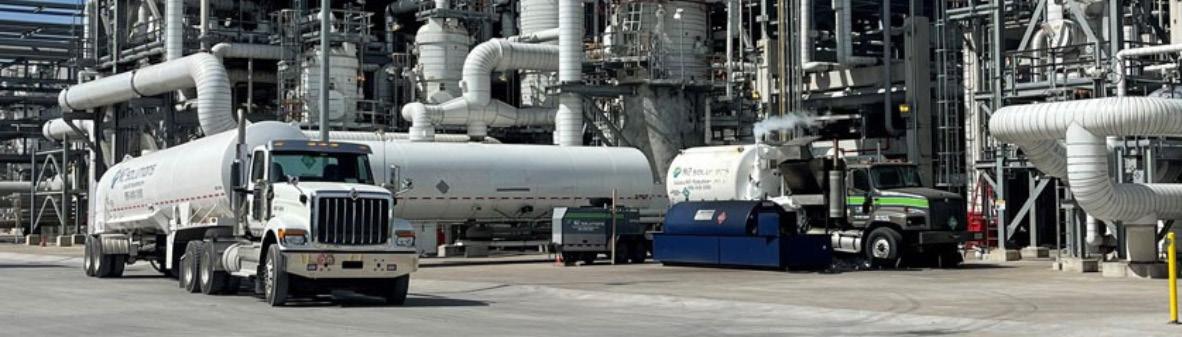
N2 Solutions
Rebuilding from the inside out to seize the US LNG opportunity
Jake Garber President/COO at N2 Solutions
How is N2 Solutions thriving?
After overhauling its sales, operations and project management functions from the ground up in 2023, N2 Solutions has achieved back-to-back years of exceptional growth, with revenues up by around 80% in 2024 and more than 65% in 2025. This has been driven by a surge in US LNG activity, a disciplined data-led pursuit model and the integration of new pipe-freezing capabilities through acquisition. The Louisiana-based nitrogen services specialist has also more than doubled its headcount in two years and continues to target further growth in 2026.
The challenge - N2 Solutions is a US-based specialist in nitrogen services for the midstream, downstream and LNG sectors, providing purging, inerting, pipe freezing and related services for operators and Tier 1 EPCs. The company differentiates on project management, logistics and daily operational transparency – tracking cost and scope in real time and keeping clients informed throughout.
By 2022-23, growth had flatlined despite years of organic expansion. Leadership concluded that adding equipment and entering new markets was no longer enough: the company lacked forecasting discipline, a way to separate winnable opportunities from noise, and the organisational structure needed to scale. A reset was needed.
The solution - The turnaround began with a clear-eyed assessment of what needed to change and the discipline to change it systematically. N2 Solutions rebuilt its processes across every division – operations, project management and sales – documenting end-to-end workflows and ensuring that work was performed safely, consistently and to the same standard every time.
In sales, the company reinstated the fundamentals. Structured activity targets were introduced for calls, meetings and emails, and a formal set of written criteria was established to qualify opportunities – focusing effort where the team estimated at least a 50% chance of success. The close rate moved from roughly 18% to around 38% in the first year. Leadership’s view was simple: ‘people buy from people’, and the reset was as much about relationship discipline as process discipline. Here,
long-standing sales leader Liz Guidry was elevated into a national accounts role to extend her network and relationship-building techniques across the broader team, which turned out to be an important move.
Also central to the new pursuit model has been EIC DataStream. N2 Solutions integrated EIC project intelligence into its internal ‘Master Master’ database and total available market process, tracking opportunities through to EPC award and engaging once funding was approved and FEED was complete. EIC project numbers were linked directly to HubSpot records, pushing assignments to the relevant sales representative by territory. This tight loop – from market signal to forecast to CRM to pursuit – created a clear and repeatable line of sight on winnable work, particularly in LNG, where major projects acted as multi-year revenue anchors.
In 2024, the company acquired PFS, adding pipe-freezing capabilities and assets. Effective January 2025, PFS was fully merged into N2 Solutions, creating a single operating entity while preserving contractual continuity. The acquisition opened new markets such as mechanical contractors, hospitals and federal organisations, and enabled in-service pipe repairs on static lines without full system shutdowns. Headcount more than doubled over two years – with each new pump truck and transport requiring multiple operators, the expansion has created a multiplier effect in workforce growth.
The company has also shifted to a regional sales coverage model, which has enabled fewer salespeople to manage larger volumes more efficiently. At the same time, N2 has also introduced new service lines such as tightness testing and helium leak detection.
The project management discipline that underpins all of this – daily tickets, nitrogen usage curves, PO-linked variance tracking, and engineered calculations from initial scope to final invoice – is what N2 Solutions describes as its wheel of success. On repeat projects, historical consumption curves allow the team to predict ramp-downs, scale labour and equipment accordingly, and demonstrate measurable cost savings to clients. That transparency, the company says, is what turns a first project into a long-term relationship.

Story type
#scale up (main category) #service & solutions #transformation
Benefits
▸ A data-led sales and pursuit model has significantly improved win rates (from ~18% to ~38%), driving strong revenue growth and more predictable project pipelines.
▸ Operational standardisation and new capabilities, including pipe-freezing, have expanded market reach and enabled scalable growth, supporting a doubling of headcount and entry into new sectors.
Key findings
For young people
▸ Build strong relationships and networks—balancing digital communication with real human connection is key to long-term success.
For industry
▸ Don’t lose sight of fundamentals: data supports growth, but trust, relationships and consistent engagement win business.
For government
▸ Strengthen local supply chains by prioritising and empowering homegrown companies in major industrial and energy projects.
N2 Solutions at a glance:
Key products and services: nitrogen services, pipe freezing and isolation, testing and leak detection, pipeline support, and project management/logistics.
Main industries served:
▸ Oil and gas – 85%
▸ Hydrogen – 5%
▸ Data centres – 5%
▸ Energy storage – 5%
Headquarters: Louisiana, US Year established: 2016
Number of employees: 82
Revenue: Revenue: £22.7m
With further growth targeted in 2026 and data centres emerging as the next frontier, not least because this is where the piping, inerting and tightness testing requirements closely mirror those of LNG, N2 Solutions has moved decisively from a traditional nitrogen contractor towards being a full project delivery platform.

Navitrans
Connecting continents, simplifying logistics
David Eustace Regional Manager at Navitrans
How is Navitrans thriving?
Navitrans has transformed into a fully integrated, multi-country logistics partner across Africa. Having built a repeatable market-entry model that allows international operators to launch and expand operations in the space of just weeks, the firm has gone from strength to strength, growing 10% year-onyear while expanding its geographical footprint from four to 20 countries. Such success has captured the attention of major organisations, with Navitrans now also partnering with DP World, Abu Dhabi Ports, the United Nations, and World Food Programme.
The challenge - Navitrans is a leading logistics group serving the industrial and energy sectors, with operations across more than 25 countries and a strategic focus on Africa. Its mission is to enable and simplify logistics across Africa and the Middle East by delivering flexible, reliable solutions rooted in strong local expertise and operational excellence.
Indeed, operating in Africa’s most complex, high-growth markets brings inherent challenges. For Navitrans, the combination of demanding projects and infrastructure constrained environments had brought about several.
The firm recognised that African markets require a fundamentally different approach from traditional logistics models. It understands that standard agency-based freight forwarding alone is insufficient when operating across remote locations, sensitive borders, limited infrastructure, and high-risk jurisdictions. However, rather than constraining growth, these unique conditions became the catalyst for the company’s rapid expansion.
Between 2016 and 2020, Navitrans significantly broadened its geographical reach in Africa, opening offices in Côte d’Ivoire, Congo, Gabon, Ghana, Angola, Cameroon, Senegal, Equatorial Guinea, and the DRC. Its goal was to position itself closer to key clients and project sites, ensuring it could embed local knowledge and insights into its operations.
From 2022, new operations were then established in the United Arab Emirates, Rwanda, Burundi, and Uganda, followed in 2023 by Mozambique, and more recently Kenya, with Tanzania set to follow.
In less than a decade, Navitrans has grown from operating in four countries to more than 20 across the region. However, that rapid scaling naturally introduced some difficulties, increasing operational complexity, and placing greater demands on governance, compliance, service consistency, communication, and talent development.
The solution - During its expansion, the company has embraced a strategy underpinned by three core pillars: integration, localisation, and specialisation.
Central to this has been investment in strong on-the-ground teams, providing it with greater control over operations as well as the ability to respond quickly to client needs. At the same time, Navitrans has shifted earlier into the project lifecycle. By engaging with clients, EPC contractors, and OEMs at the planning and tender stages, the company moved beyond execution into a strategic advisory role. Through these efforts, the firm was able to establish itself as a true logistics partner with a clear specialism in African markets. Through significant operational improvements, the firm now operates as a single coordination hub across jurisdictions, integrating permits, compliance, transport, marine logistics, and on-the-ground execution into one coherent service.
It’s been an incredibly effective strategy, with the company having seen consistent growth of approximately 10% year-on-year. However, for Navitrans, success is not solely defined by figures, but by its ability to enable rapid market entry and regional scaling for its clients.
Here, it has excelled. The company has built a repeatable Africa market-entry model that allows international operators to launch and expand operations in weeks rather than months, without needing to establish local infrastructure of their own.
Recent examples include multi-country logistics support for Astro Offshore across Nigeria, Ghana, Angola, and Côte d’Ivoire, achieving 20-30% faster clearance and turnaround for cargo and personnel. Navitrans also enabled Ocean Centre Middle East’s rapid entry into Angola through full compliance and local support for a 300-PAX accommodation floatel, and supported Bulk Tainer Logistics and Intermodal Tank Transport in expanding specialised tank container operations into Namibia and Côte d’Ivoire. Global Feeder Shipping’s operational rollout in the DRC and Republic of Congo further demonstrated Navitrans’ ability to operate reliably in highly constrained environments.
Story type
#export (main category) #service & solutions
Benefits
▸ Enables fast market entry and scaling across complex African markets through integrated logistics solutions.
▸ Strong local presence improves reliability, reduces risk and supports efficient multi-country project delivery.
Key findings
For young people
▸ Be curious, adaptable, and resilient. Learn across functions and build connections.
For industry
▸ Adapt to complex markets, invest in local expertise, partner early with clients, and empower your people.
For government
▸ Invest in infrastructure and streamline trade processes to enable safe, efficient and timely delivery of complex projects, supporting growth and job creation.
Navitrans at a glance:
Key products and services: provision of marine agency, freight forwarding, chartering, procurement, vessel operations and integrated project logistics across Africa.
Main industries served:
▸ Oil and gas – 60%
▸ Offshore renewable energy – 5%
▸ Onshore renewable energy – 5%
▸ Others (energy) – 15%
▸ Others (non-energy): aid and relief – 15%
Headquarters: Nyon, Switzerland
Year established: 1979
Number of employees: +500
Revenue: £130m
Revenue from exports: 30%
The firm has developed strong repeat business, expanded scopes of work, and long-term partnerships across multiple countries. Further, it’s proven model is now extending beyond core energy logistics through collaborations with partners such as DP World and Abu Dhabi Ports, and into humanitarian logistics through work with the United Nations and World Food Programme. That diversification will only further consolidate its position as a highly effective, integrated logistics solutions specialist on the African continent for years to come.
NexEra
Building practical digital twins tailored to the way operators work
How is NexEra thriving?
Ahmed Alaa Managing Director at NexEra
Founded in 2024 and headquartered in Dubai, NexEra GP is a digital twin and enhanced reality specialist focused on industrial facilities across oil and gas, utilities, hydrogen and water treatment. In its first two years, the eight-person business has secured contracts with Hunting and Metichem in the UAE, signed an MOU with PTTEP in Thailand with the first project scope approved for delivery in mid-2026, and built a growing pipeline across the Middle East, Southeast Asia and beyond.
The challenge - NexEra builds digital twin solutions that overlay an operational digital layer directly onto real physical assets – this allows operators to visualise their facilities, access procedures and asset information, and improve situational awareness without being on-site. The company competes in a market dominated by established platforms from AVEVA, Hexagon and Bentley, and serves operators and service companies across the energy and utilities sectors.
The opportunity NexEra identified was hiding in plain sight. Digital twin technology had generated enormous interest across the energy industry, but adoption on the ground remained slow. Most available solutions were either too complex for operations teams to use day-to-day, too slow to deploy or too disconnected from how facilities ran. Indeed, many solutions looked impressive in a presentation but required months of integration and specialist knowledge to operate. Here, NexEra had an opportunity create a system that directly addressed operator needs.
The solution - NexEra’s founding team came from the industry rather than from software, and that shaped everything about how the company approached its route to market. The starting point was to consider what operators needed – something they could see, understand and act on quickly, without adding complexity to already demanding roles.
The startup also knew it had to show value before it could consider talking about scale. Rather than pitching large deployments, NexEra began with focused pilot projects
built around specific use cases, capturing real site environments and constructing digital layers around real operational workflows. Each pilot was fast by design, with deployment timelines significantly shorter than competing platforms. This speed was itself a differentiator. In markets where technology adoption is often slow, a client that could see a working solution within weeks rather than months was far more likely to commit to a broader rollout.
Indeed, this method was validated when the company secured first contracts. With Hunting, an energy services company with UAE operations, NexEra delivered a digital twin that gave the client better facility visibility and easier access to procedures and asset data. With Metichem, a utilities sector client, the same approach was adapted to a different operational context. In both cases the feedback was consistent – what was being offered was simple, clear and immediately useful.
Meanwhile, NexEra’s engagement with PTTEP, the upstream oil and gas arm of PTT Group, Thailand’s state-owned energy company, has illustrated how the model can be applied across borders. Here, NexEra positioned the solution as practical rather than theoretical, with a focus on real operational value. Following the signing of an MOU, the first project scope is approved and delivery is expected in mid-2026. Further afield, the company is now building up presence and generating interest in Malaysia, Oman and Egypt alongside its UAE base.
Internally, the NexGen operation remains tightknit. With a team of eight, the business is careful about which opportunities it pursues, prioritising those where it can demonstrate the most value quickly and build a relationship with a client willing to grow the engagement over time. In a market where the dominant players have spent years building complex and expensive platforms, a company that can deliver something useful in weeks and iterate from there has a more agile path to trust than most of its competitors.
Looking ahead, hydrogen, renewables and mining projects are in the pipeline for the second half of 2026, and further international expansion in Asia is a priority. NexEra is a business still in its earliest chapter, but the evidence from its first two years suggests the gap it identified was a tangible one, and that the approach it chose to fill it is working.
Story type
#digital & AI (main category) #transformation
Benefits
▸ Secured international traction through practical digital twin deployments focused on operational usability.
▸ Built a growing pipeline across energy, utilities, hydrogen and water treatment sectors.
Key findings
For young people
▸ Start small, prove value quickly and build trust through delivery.
For industry
▸ Digital twin adoption increases when solutions are practical, fast to deploy and easy for operators to use.
For government
▸ Simplifying international business setup processes could help smaller technology companies expand faster.
NexEra at a glance:
Key products and services: digital twin and enhanced reality solutions for industrial facilities.
Main industries served:
▸ Oil and gas – 60%
▸ Others (non-energy): utilies/water treatment – 40%
Headquarters: Dubai, UAE
Year established: 2024
Number of employees: 8 Revenue from exports: 50%
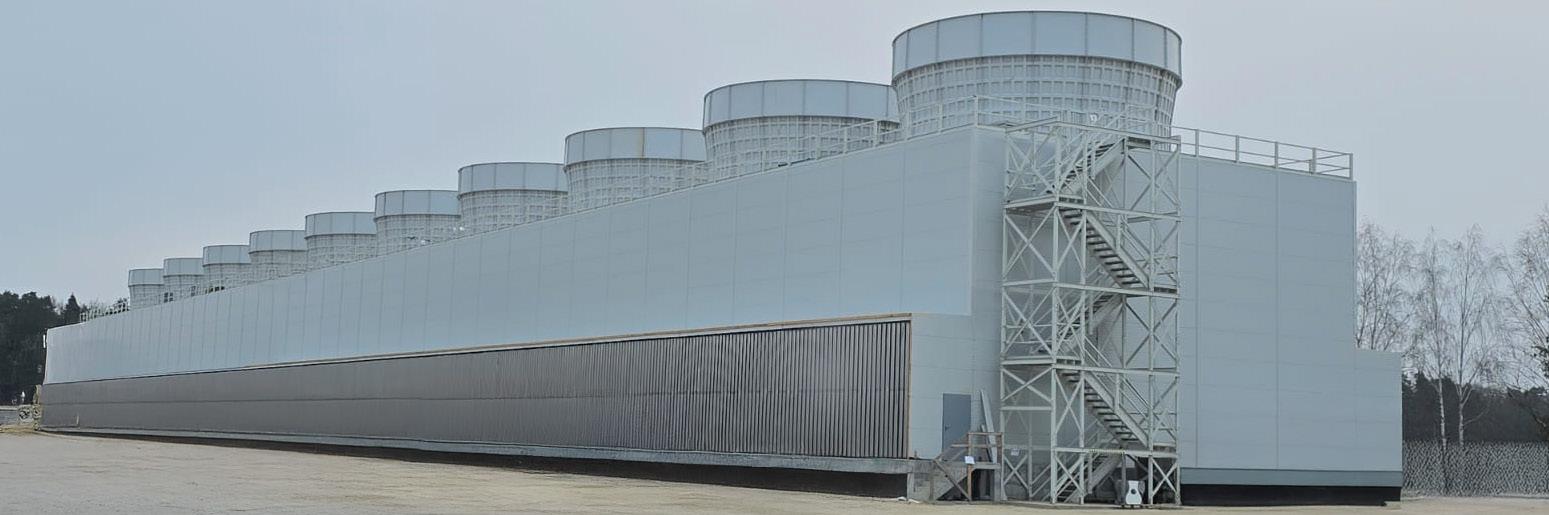
NEXT COOLING
From start-up to €75m revenue in just 5 years

Luigi Zanzi CEO & Founder at NEXT COOLING
How is NEXT COOLING thriving?
Established in 2021, NEXT COOLING SA has made real progress in five short years. From defining the true meaning of the word startup, the firm has grown into a recognised global supplier of cooling towers, air cooled condensers and aftermarket services – supported by a 130 strong workforce across Switzerland, South Africa, India, Italy, Spain and Australia. With rising profitability, a growing list of repeat clients and a reputation now firmly established, the company is entering its next phase with a unified global structure and plans for further expansions.
The challenge - NEXT COOLING Group was formed through a shared vision between parent company Nooter/Eriksen (a global leader in HRSG technology) and Luigi Zanzi, who saw an opportunity to build a new cooling systems business that would develop its own technology, expertise and culture. Although the team brought more than 100 years of industry experience, NEXT itself had no brand, no installed base, no organisational infrastructure and no market legacy.
Launching a new global engineering brand from zero was a formidable challenge. Clients in the cooling tower and air cooled-condenser (ACC) market were accustomed to large, longstanding suppliers, and while the NEXT COOLING management team had credibility as individuals, NEXT still needed to prove it could deliver large, technically complex projects reliably. The cooling market was in need of reliable suppliers. This created opportunity, but it also elevated client expectations. Companies wanted strong, well funded, stable partners capable of stepping in.
NEXT COOLING also faced the challenge of building an international footprint from the outset. The vision was never to concentrate operations in Switzerland; Zanzi’s plan capped the Swiss team at around 50 employees, with growth to be driven by international hubs across the word. Establishing these regional clusters, aligning them culturally and technically, and achieving consistent global standards would require strong leadership and careful integration.
The solution - NEXT COOLING combined the agility of a startup with the structural strength of Nooter/Eriksen. The parent company’s expertise in contract execution, financial discipline and global networking provided an invaluable foundation, enabling fast decisions and strong governance while allowing the firm to develop its own identity and technical direction.
The journey began in 2021, when Zanzi assembled a core management team of five specialists who had spent decades delivering cooling towers and ACC systems. The team had deep client relationships and credibility built over 30 years. Throughout 2021 and 2022, they met many clients around the world. Their pitch was simple and compelling: the expertise lived in the people, not the legacy brand.
NEXT COOLING secured its first contract with Italian EPCs for a Polish and Turkish projects and quickly established itself as a notable player. An integrated QHSE certification followed, supporting credibility, while the group’s engineering and design expertise began to be supported by a global supply chain capable of executing full projects.
A major strategic step came in 2024 with the acquisition of IWC in South Africa. The deal expanded the Group’s workforce by 35 people, added strong African market references (mainly Natural Draft Cooling Towers, complementing Europe’s Mechanical Draft ones) and an established relationship with Stellenbosch University providing valuable, research-based insight.
Critically, the IWC Engineering Manager Hanno Reuter became NEXT COOLING’s research and development director, while experienced leaders took charge of regional operations in Africa, and India where NEXT COOLING is now working to fully consolidate and further strengthening the cluster.
NEXT COOLING is now working to integrate the regional clusters, processes, tools, engineering standards and accounting systems have been harmonised across the group, with work now underway to implement a single global QHSE system by 2026.
Indeed, the progress achieved in five years has been remarkable. NEXT COOLING has grown from zero revenue to €75m, with profitability steadily improving. Critically, the company now works with 15 major clients and has secured repeat business.
Story type
#people & competency (main category) #scale up
Benefits
► Scaled from a 2021 start-up to a global business generating €75m in revenue and improving profitability.
► Built a unified 130-strong global workforce across three hubs, empowering acquired specialists to drive research and development.
Key findings
For young people
► Stay curious, never take things for granted and continuously strive to learn more.
For industry
► Nurture your people as the key to success and measure project outcomes at completion, not just at the start of CAPEX.
For government
► Foster a stable real economy, reduce bureaucracy and support international growth to keep Europe competitive.
NEXT COOLING at a glance:
Key products and services: cooling towers and air-cooled condensers.
Main industries served:
► Conventional power – 50%
► Oil and gas – 20%
► Others (energy) – 30%
Headquarters: Mendrisio, Switzerland
Year established: 2021
Number of employees: 130
Revenue: £65.2m
Revenue from exports: 90%
What began as a new idea has become a fast-scaling global cooling-technology business – one that is well positioned to expand into new regions and deepen its technical capabilities in the years ahead.

Oceaneering

Kristen Fraser
Software Operations Manager at Oceaneering
How is Oceaneering thriving?
Oceaneering’s software has become a real leverage point in helping clients operate more efficiently. They’ve continued their over 60year legacy of innovation and problem-solving to transform complex inspection and integrity data into clear, actionable insight, helping users make faster decisions and adopt predictive integrity strategies. Oceaneering is focused on what their clients need and provides a digital asset management solution that enables faster, smarter and safer operations across the full asset lifecycle.
The challenge - Aging assets and rising operational demand are exposing the pitfalls of fragmented, siloed, and poor-quality asset integrity data. Many operators rely on disconnected systems and incomplete or outdated records, making it difficult to access accurate information when it matters most. There is a growing need for real-time visibility, shared data environments, and 3D visual context to support collaboration and decision-making. These capabilities are critical to maintaining asset integrity, improving confidence in asset-related data, and safely extending operations beyond an asset’s original design life.
The solution - Oceaneering developed a comprehensive digital asset integrity platform that brings governed data, engineering insight and real-time visualisation into one connected environment.
Built on decades of inspection and integrity engineering experience, Inform™ Asset Integrity Management Software was designed by engineers for engineers. The secure, cloud-based system of record integrates complementary modules that streamline data collection, asset hierarchy, risk-based assessment, anomaly management, inspection and predictive analytics to support consistent, defensible decision-making.
The company further enhanced its engineering capabilities in late 2024 through the acquisition of Global Design Innovation Ltd. (GDi), a UK-based provider of digital
and software services. The acquisition added Vision™ 3D Data Visualization Software to Oceaneering’s portfolio. Vision moves beyond traditional digital twins by capturing engineering-grade data, including from live operations, and transforming it into dynamic 3D visualisations that show asset condition and change over time. This creates a more intuitive and interactive approach to understanding asset performance, enabling teams to collaborate more efficiently, access real-time insight and act with greater confidence. For operators, this represents a significant shift in how integrity data is used to improve efficiency and reduce risk.
Both Inform™ and Vision™ deliver value independently and, when combined, create a powerful digital asset integrity platform focused on ensuring safe and efficient operations. Applicable across offshore, onshore and subsea operations, the platforms are supported by more than 45 in-house developers alongside a global Oceaneering team continuously improving workflows and integration across use cases.
Vision™ has also earned formal recognition for its inspection capabilities and holds UKAS accreditation to ISO/IEC 17020, making Oceaneering and GDi the only companies certified to conduct remote visual inspections. This enables inspection data and ultrasonic testing readings to be collected while reducing the number of offshore personnel required.
The impact has been both practical and measurable. Automated workflows and digital tools have delivered proven results, including reducing reporting time by 60% through mobile data capture, cutting corrosion monitoring locations by 40% using Inform predictive analytics software, and supporting a pipe replacement programme with a 99.9% success rate. By reducing manual input requirements and improving data access, the platform enables engineers to focus on analysis and decision-making, helping operators improve efficiency, strengthen integrity assurance and safely extend asset life.
Story type
#digital & AI (main category) #culture #innovation #optimisation #service & solutions
Benefits
▸ Inform and Vision reduced offshore reporting time by 60% and corrosion monitoring locations by 40%.
▸ Integrated digital workflows achieved a 99.9% success rate in pipe replacement modelling.
Key findings
For young people
▸ Embrace continuous learning and stay open to new opportunities and technologies.
For industry
▸ Digital transformation succeeds when people, processes and technology are aligned.
For government
▸ Policy and regulation should evolve faster to support digital modernisation in the energy sector.
Oceaneering at a glance:
Key products and services: engineered projects and services.
Main industries served:
▸ Oil and gas – 83%
▸ Others (non-energy): aerospace and defence – 17%
Headquarters: Houston, US
Year established: 1964
Number of employees: 13,000
Revenue: £2.8bn
Revenue from exports: 55%

OGC Energy
Building the engineers of tomorrow as a strategy for long-term success

Sofia Filioki Marketing and Partnerships Lead at OGC Energy
How is OGC Energy thriving?
By making talent development a core pillar of its business strategy rather than a peripheral activity, Sheffield-based materials and corrosion consultancy OGC Energy has built a resilient, high-performing team capable of delivering on increasingly complex energy projects. Revenues have grown from £283,000 in 2023 to £500,000 in 2025 (a 42% increase in a single year), while a steady pipeline of interns has matured into engineers now leading work on major energy transition initiatives.
The challenge - Founded in 2014 by Ivan Gutierrez, a specialist with deep experience in oil and gas corrosion and asset integrity, OGC Energy built its early reputation on technical depth and close client collaboration. As project complexity grew from 2018 onwards, so did the demand for broader engineering input, faster delivery and a wider range of specialist skills.
The wider market added further pressure. The energy industry’s rapid pivot towards CCS and hydrogen generated significant optimism but was followed by a slowdown driven by rising capital costs, policy uncertainty and immature value chains. Many projects proved harder to finance and execute than initially anticipated. For a small consultancy operating at the technical frontier of the energy transition, the gap between market ambition and market reality created a difficult operating environment.
Crucially, the slowdown also exposed a structural challenge: the skills and mindset developed in traditional oil and gas are not always straightforwardly transferable to the emerging energy transition space. New technologies require engineers who can operate in uncertainty, think across disciplines and develop solutions where no clear blueprint exists. Finding and developing that kind of talent, as opposed to simply recruiting for immediate readiness, became a major priority.
The solution - OGC Energy’s response was to embed talent development directly into its operating model, treating it as a long-term investment in the company’s capability and culture.
From 2018, it began building structured partnerships with local universities – primarily Sheffield Hallam University and the University of Sheffield – to create a consistent pipeline of high-potential engineering students. Rather than offering passive, observational placements, OGC gave interns meaningful responsibility on live projects in areas including asset integrity, corrosion, materials engineering, CCS and hydrogen. Clear professional standards were set from day one, with expectations around technical quality and accountability consistent with those applied across the wider team.
Mentorship was woven into project delivery. Experienced engineers provided handson guidance and technical oversight, with regular feedback sessions and progression planning ensuring that development was structured and transparent. The selection process reflected the same philosophy: instead of prioritising academic performance alone, OGC looked for curiosity, resilience and a genuine appetite to take on responsibility in a demanding technical environment.
The results have been tangible. More than 20 interns have passed through the business between 2018 and 2025 – significant for an organisation of eight people. Several have transitioned into full-time roles, with one former intern rising to lead engineer level and subsequently playing a central role in OGC’s contribution to the Net Zero Technology Centre’s Hydrogen Backbone Project. A new summer intern joined the same project team, benefiting directly from leadership shaped through the same development pathway – a continuity that illustrates how the model pays dividends over time.
External recognition has followed. A team member who began as an intern received the Aungier Award for Best Presentation by a Young Professional from GPA Europe. Another secured second place in the EIC Rising Star Award, earning a 50% scholarship for an MBA in Sustainability and Energy Transitions at Robert Gordon University.
OGC has also continued to offer internships even during quieter periods, resisting the temptation to pause development when project volumes ease. This consistency is central to the strategy: talent pipelines require patience, and the benefits of early investment take time to materialise. The company’s slogan, we help you to do more, applies as much to its people as it does to its clients.
Story type
#people & competency (main category) #collaboration #culture
Benefits
▸ Embedding talent development into the business model built a skilled team capable of delivering complex energy transition projects.
▸ University partnerships and hands-on internships created a sustainable talent pipeline, supporting revenue growth from £283k in 2023 to £500k in 2025.
Key findings
For young people
▸ Stay adaptable, keep learning, build strong relationships, and be bold in pursuing opportunities.
For industry
▸ Foster innovation, collaboration, sustainability, and invest in developing your people.
For government
▸ Support SMEs and work in partnership with industry to achieve net zero goals.
OGC Energy at a glance:
Key products and services: materials engineering, corrosion management, and asset integrity consultancy for the energy sector.
Main industries served:
▸ Oil and gas – 70%
▸ Offshore renewable energy – 10%
▸ Carbon capture – 10%
▸ Hydrogen – 5%
▸ Others (energy) – 5%
Headquarters: Sheffield, UK
Year established: 2014
Number of employees: 8
Revenue: £500,000
Revenue from exports: 60%
Looking ahead, OGC is targeting continued revenue growth of 5-10% in 2026, with expanding international work in North America and the Middle East. With a team shaped by years of deliberate development, the consultancy is well positioned to take on greater complexity – and to keep growing the next generation of engineers alongside it.
Øglænd System
Innovating to capitalise on new energy markets

Rodrigo Lima Head of New Energies at Øglænd System
How is Øglænd System thriving?
Having been acquired by Hilti Group in 2017, Øglænd System’s story is proof of the benefits that can be realised by proactively repositioning its offering for new energy markets. With a focus on hydrogen, CCUS and power-to-X, the firm has adapted and innovated its cable management offering to more effectively serve evolving industry needs. With revenues from new energies set to increase 1,000% in just two years, and an impressive future project pipeline, the company has ensured it’s well placed to capitalise on emerging opportunities for years to come.
The challenge - Established in 1977, Øglænd System (the offshore and new energies division of Hilti Group) is rapidly approaching its half century anniversary, having spent the past 49 years delivering specialised cable management and support solutions for industrial and energy applications.
Its business model has long been built on the goal of providing faster, safer, more efficient solutions, reducing CAPEX and OPEX spend for clients through the delivery of leading class hardware and engineering solutions. However, achieving that amidst recent market changes driven by the energy transition, geopolitical uncertainty and supply-chain volatility has come with its difficulties.
With new energy markets such as hydrogen and Power-to-X having emerged at speed, Øglænd System recognised it needed new approaches to doing business, namely centred around improving its early client engagement and flexibility in project delivery. The challenges were clear. The company had to navigate the transition from mature oil and gas projects to emerging energy segments, alleviate cost pressures while increasing focus on CAPEX optimisation, and manage risk and uncertainty in early-stage developments. Doing so, however, required Øglænd System to adapt its strategy.
The solution - The need for change was identified in 2023 following conversations about how markets were changing in the previous year, with the firm seeking to pivot into new energy segments as an early market mover.
It was at this point that the firm’s CEO set up a new team to look at new energies, hiring three employees initially in Norway, the US and Denmark to craft a globally aligned strategy. It was a move that paid off. By the end of 2024, the Øglænd System Board had signed off for investment into the new energies strategy.
Conversations with clients and new stakeholders continued, with Øglænd System engaging with OEMs specialising in new technologies such as electrolysers, engineering specifiers businesses and others. These discussions helped to inform its strategy, enabling the company to identify where it could best cater to client needs in evolving markets.
Here, the firm recognised that while its existing cable solutions were suitable for most new energy projects, it needed to reposition itself to be specified in new energies projects that needed simpler, more cost-effective solutions. Here, innovation has been critical in driving down costs.
Øglænd System also began hiring several international business developers in 2025 – so much so, that by the end of the year, the team had grown to 15 strong, comprising project managers, account managers and engineers.
Through this expanding team and increasing innovation, the firm’s venture into new markets has proven successful. Having not served a single new energy project in 2023, the firm worked on 10 in 2024, 25 in 2025, and is now targeting a further 100% increase with 50 projects in 2026.
It’s a realistic target, with the firm’s 0-12-month pipeline comprising 15m Swiss Francs (£14.18m), its 12-24-month pipeline totalling 38m Swiss Francs (£25.91m), and its 24-36-month pipeline standing at 50m Swiss Francs (£34.09m).
Such a healthy pipeline has been established through a proven track record. Among Øglænd System’s most successful projects to date have been the delivery of multi-disciplinary support, including miscellaneous equipment, to a new pilot platform for Northern Lights – the world’s first cross-border CO2 transport and storage facility.
Engagement on such renowned projects has paid dividends, with the firm’s revenue deriving
Story type
#energy transition (main category)
Benefits
► Set to increase new energies revenue by 1,000% over two years, supported by a healthy future project pipeline totalling £44.82m
► Expanded from zero new energy projects in 2023 to 25 in 2025, with a target to double this to 50 projects in 2026
Key findings
For young people
► Focus on core soft skills like communication, networking and sales. Stay adaptable and actively learn from real industrial projects.
For industry
► Act early, stay close to your people and customers and design your organisation to handle uncertainty.
For government
► Create stable, long-term frameworks that enable industrial companies to invest confidently in the energy transition.
Øglænd System at a glance:
Key products and services: cable management and support solutions for industrial and energy applications.
Main industries served:
► Oil and gas– 55%
► Offshore renewable energy – 21%
► Others (energy) – 5%
► Others (non-energy): shipbuilding –19%
Headquarters: Klepp, Norway
Year established: 1977
Number of employees: 34,430 (Hilti Group)
Revenue: £5.9m (Hilti Group)
Revenue from exports: 70% (Hilti Group)
from new energy project having increased significantly – up from 1m Swiss Francs (£0.94m) in 2024 to 4m Swiss Francs (£3.78m) in 2024. Further, the firm anticipates this to increase again to 10m Swiss Francs (£9.44m).
It’s an incredibly promising revenue trajectory that, if continued, will stand Øglænd System in good stead to further consolidate its position in high potential markets as they continue to evolve.
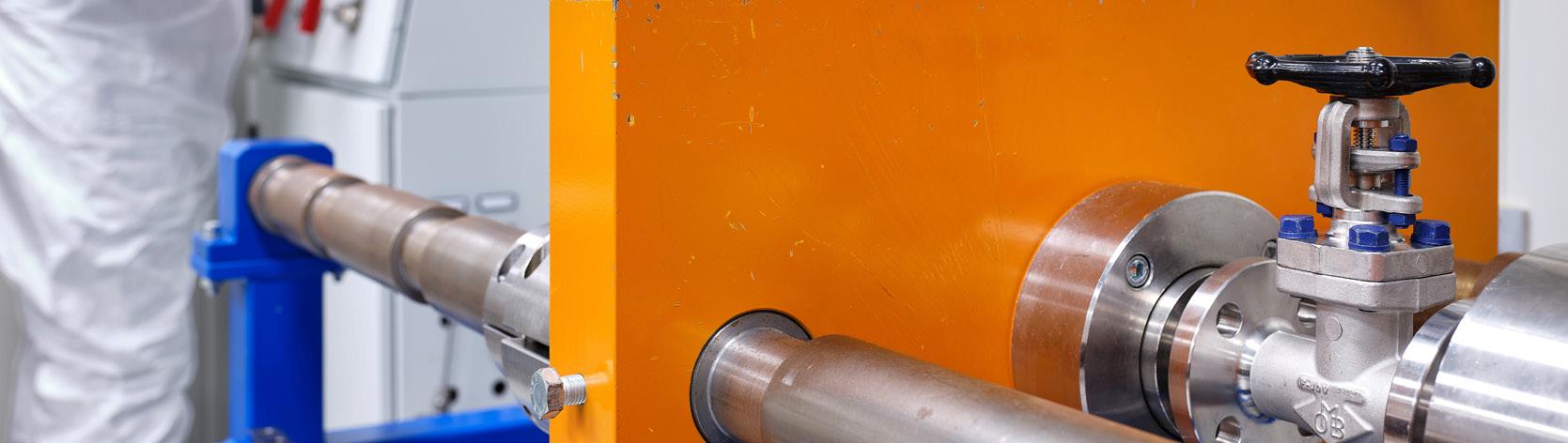
OMB Valves

Simone Brevi Group Managing Director at OMB Valves
How is OMB Valves thriving?
By establishing its BUTI Research centre in 2019 and investing 25% of profits into R&D, Italian valve manufacturer OMB Valves has transformed from a commodity supplier into an innovative solutions provider. The €3m investment in a liquid hydrogen testing facility, made without a contract, has catalysed remarkable growth, with BUTI generating €25m in 2025 and representing 80% of the company’s revenue growth. Since 2019, OMB has grown from €95m to €192m revenue while diversifying into several other sectors, including aerospace and new energy.
The challenge - As a second-generation, family-owned valve manufacturer established in 1973, OMB Valves faced a cultural challenge by 2017. After 30 years of producing the broadly the same products, the engineering team needed fresh inspiration and change to feed off. The organisation had become overtly risk averse, and that was preventing it from fully exploring new opportunities.
Indeed, despite possessing strong engineering capabilities fully integrated into business processes, OMB struggled to develop new solutions, trapped in a commodity mindset that limited growth potential. The company needed to transform its culture and market perception to unlock the talent within its ranks and position itself for long-term, sustainable growth in rapidly changing energy markets.
The solution - OMB Valves began to turn a cultural corner in 2017, despite having no immediate business crisis forcing it to change.
The firm hired Paolo De Angelis as General Manager, who brought with him experience from a more solutions-focused company. His appointment signalled a strategic shift from manufacturing standard products to solving complex client problems. By 2019, OMB established a dedicated R&D group initially staffed by two experienced engineers – this quickly grew to a five-person team.
The R&D centre was named ‘BUTI’ in memory of founder Simone Brevi’s father, who passed away in 2021. Internally, BUTI translates to ‘use us, everyone else is useless’ – a playful expression keeping the founder’s memory alive while embodying the team’s confidence.
A contract with Air Products was a key milestone. When the hydrogen developer expressed scepticism about OMB’s liquid hydrogen capabilities, the company saw an opportunity rather than an obstacle. During discussions, OMB identified that no suitable liquid hydrogen valve testing facility existed. The engineering team thus proposed accessing the Higher Institute of Nuclear Physics facility that manages CERN, utilising its vacuum chamber with cryo-cooler technology.
A critical decision came when Air Products acknowledged the approach would work but remained uncommitted. Here, OMB invested €3m in a new facility containing specialised testing capabilities and white clean room conditions, without a signed contract – purely to prove the concept was viable. This risk-taking represented a major departure from the company’s historically conservative approach to doing business.
In 2023, OMB designed a new hydrogen valve product and developed comprehensive test protocols. By 2024, the gamble had paid off spectacularly – OMB booked €9m in revenue from 30 customers worldwide for hydrogen valve solutions. Indeed, the Air Products relationship validated OMB’s transformation from commodity manufacturer to trusted partner for complex engineering challenges. The cultural shift that made this possible did prove challenging internally. Manufacturing teams questioned whether OMB could handle new work types and resisted design changes. Leadership addressed this resistance through transparency, explaining the new approach while acknowledging the initial uncertainty. Crucially, OMB’s established reputation provided credibility during the transition.
Financial commitment underpinned the strategy as well. From 2020, OMB channelled 25% of profits into R&D rather than distributing dividends in a clear demonstration of the ownership’s long-term commitment. This sustained investment enabled BUTI to develop new products across multiple sectors at speed.
The results exceeded expectations. BUTI revenue grew from zero in 2022 to €2m in
Story type
#innovation (main category) #culture #diversification
Key findings
For young people
▸ Build passion through hard work, stay curious, and never hesitate to ask questions and keep learning.
For industry
▸ Sustainable growth depends on making fast decisions and investing in people for the long term.
For government
▸ Businesses need clearer long-term economic direction so they can plan, invest and grow with confidence.
OMB Valves at a glance:
Key products and services: engineered valves for oil and gas, for the wider energy sector and water.
Main industries served:
▸ Oil and gas – 60%
▸ Conventional power – 10%
▸ Hydrogen – 10%
▸ Others (non-energy): water, hydropower, aerospace - 20%
Headquarters: Bergamo, Italy
Year established: 1973
Number of employees: 430
Revenue: £165m
Revenue from exports: 95%
2023 (2% of total), €9m in 2024 (7%) and €25m in 2025 (12%). Overall company revenue climbed from €95m in 2019 to €192m in 2025 – a 25% increase in the last year alone. The transformation has also enabled diversification beyond OMB’s traditional 60% oil and gas base into hydrogen (10%), conventional power (10%), aerospace including SpaceX (10%), and water/hydropower (10%).
Beyond financial metrics, the transformation has revitalised company culture. Teams previously engaged in repetitive work now tackle innovative problem-solving for prestigious clients, with employees now recognising the company’s forward momentum.
Now, OMB will continue pursuing nuclear sector opportunities while managing the complexities of operating globally. Today, some 95% of revenue is generated outside Italy across manufacturing facilities in Italy, USA, Singapore, China and Saudi Arabia.
How a €3m bet on hydrogen testing turned into a game changing move

Orion Group
Building a £100m outsourcing business in under a decade

Story type
#service & solutions (main category)
Benefits
Ross MacRae Rory Black
Deputy MD at Orion Group Group Sales & Marketing Director at Orion Group
Mark Donison
Regional Director, ME, Caspian, London, part of North Africa at Orion Group
How is Orion Group thriving?
Transforming from a transactional recruitment firm to a provider of comprehensive outsourced solutions, Orion Group has grown its outsourcing revenue from 1% in 2021 to 33% in 2025 – £100m of £300m total revenue.
The Inverness-headquartered, family-owned technical recruitment specialist now operates 15 outsourced programmes around the world, with contract lengths extending from 1-3 years to 3-5 years. This strategic pivot has positioned Orion as a leading independent energy recruitment company, demonstrated by the fact it is achieving a 100% re-award success rate on outsourced contracts.
The challenge - As one of the world’s largest, independent, international technical recruitment companies in the energy industry, Orion faced existential challenges during the 2014 oil price collapse and COVID-19 pandemic. The 2014 crisis triggered a 25% fall in revenue, while COVID dealt a further blow of around 20%. Both events exposed the vulnerability of the company’s traditional UK-focused, oil and gas-concentrated business model.
Recognising the UK market limitations years earlier, Orion had begun a globalisation exercise around 2010, but the severity of these downturns accelerated the imperative for deeper transformation. The company needed to reimagine its service delivery model while maintaining the long-term client relationships and cultural values that differentiated it from larger competitors.
The solution - Orion’s transformation centred on shifting from transactional call-off recruitment to a full set of outsourced solutions – a clear change in how the company engages with clients.
The outsourcing journey began in 2017 when Orion secured its first managed services contract. Having observed recruitment outsourcing trends in aviation and manufacturing, management recognised that energy clients would increasingly demand integrated workforce solutions. The company followed a key client to develop a bespoke service, in what was a new approach for both parties. That inaugural contract remains active and successful today, providing both validation and a foundation for future arrangements.
Rather than simply filling roles, Orion began offering end-to-end workforce management solutions, encompassing recruitment, immigration, housing, welfare, mobilisation, HSE, security and logistics. This addressed the complexity clients faced managing large, geographically dispersed workforces in challenging operating environments.
A contract with BP in Azerbaijan and Georgia, awarded in July 2024, exemplifies the transformation’s impact. This £60m, three-year programme, required Orion to triple its in-country team, expand office facilities, procure 200 laptops and coordinate comprehensive workforce support. The contract leveraged a 20-year relationship with BP in the region, demonstrating how Orion’s partnership approach created opportunities for expanded engagement.
Geographic diversification complemented the service model transformation. While maintaining its UK base, Orion expanded strategically into regions where major upstream oil and gas CAPEX is concentrated, such as the Middle East and Africa. The company now generates 45% of revenue outside the UK, with top markets including the US, Azerbaijan, Qatar, Canada, and the Netherlands.
Sector diversification has balanced geographic expansion. Although oil and gas remains the core at 70% of revenue, Orion has branched out into other sectors including onshore and offshore renewables, nuclear, life sciences, manufacturing, and construction. The company is also well positioned to capitalise on emerging opportunities in data centres, carbon capture, and battery storage.
Cultural attributes have been critical to success. Family ownership has enabled long-term strategic decision-making without short-term financial pressures. Flat management structures accelerated decisions, and an entrepreneurial culture has encouraged tailored services to meet individual client requirements. Staff tenure averaging nearly 10 years per country has provided deep local knowledge and continuity of relationships. Quality and compliance systems, combined with central expertise supporting in-country recruiters, are differentiating Orion from smaller competitors.
The results to date have been impressive. Orion now manages 15 outsourced programmes compared to zero a decade ago. Contract characteristics have shifted from undefined call-off arrangements to clearly scoped solutions, from 1-3 year terms to 3-5 year relationships, and from transactional fees to substantial defined contract values. Critically, Orion has never lost an outsourced contract re-award.
▸ Outsourcing revenue grew from 1% in 2021 to 33% in 2025, securing longerterm, higher-value contracts.
▸ Expansion beyond the UK and oil & gas diversified revenue, and reduced exposure to market downturns.
Key findings
For young people
▸ Specialise while staying open-minded to remain resilient in fast-changing careers and disruptive technologies like AI.
For industry
▸ Don’t underestimate business transformation — manage workforce transition, outsourcing, and technology with clear planning and timelines.
For government
▸ Slow regulatory change and address barriers such as the North Sea EPL and restricted access to skilled EU trades.
Orion Group at a glance:
Key products and services: recruitment company.
Main industries served:
▸ Oil and gas – 70%
▸ Offshore renewable energy – 8%
▸ Nuclear power – 4%
▸ Onshore renewable energy – 2%
▸ Carbon capture – 1%
▸ Others (non-energy): life science, construction, infrastructure and manufacturing – 15%
Headquarters: Inverness, Scotland Year established: 1987
Number of employees: 200
Revenue: £300m
Revenue from exports: 45%
Meanwhile, client relationships have deepened through the embedded partnership model, which has helped to improve win rates and create opportunities for parallel contracts. The company’s scale (200 employees managing £300m revenue) positions it among the 5% of UK recruitment firms with more than 150 staff, establishing credibility for mission-critical workforce programmes. Looking forward, Orion is targeting growth in data centres, carbon capture and battery storage, as well as expansion in Middle East and African markets where large-scale energy infrastructure demands more comprehensive workforce solutions.
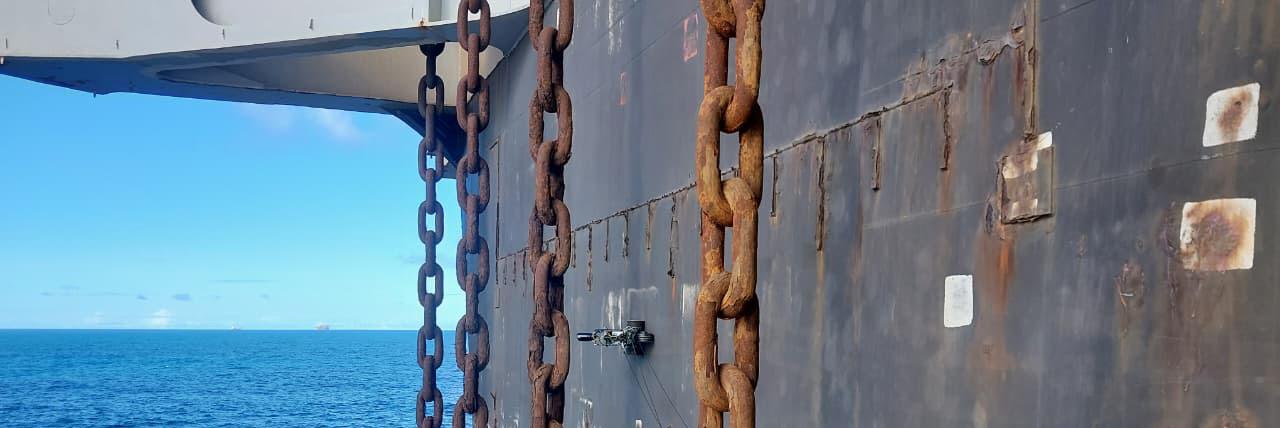
Orion Group
Building a £100m outsourcing business in under a decade

Story type
#service & solutions (main category)
Story type
Benefits
#innovation (main category) #service & solutions
Ross MacRae
Orion Inspeções e Consultoria
Turning a Petrobras pilot into a market-changing

Rory Black Mark Donison Deputy MD at Orion Group Group Sales & Marketing Director at Orion Group
product
Benefits
▸ Outsourcing revenue grew from 1% in 2021 to 33% in 2025, securing longerterm, higher-value contracts.
Felipe Oliveira
Regional Director, ME, Caspian, London, part of North Africa at
CEO at Orion Inspeções e Consultoria
Orion Group
How is Orion Group thriving?
Transforming from a transactional recruitment firm to a provider of comprehensive outsourced solutions, Orion Group has grown its outsourcing revenue from 1% in 2021 to 33% in 2025 – £100m of £300m total revenue.
How is Orion Inspeções e Consultoria thriving?
Founded in 2021 and based at the Coppe/UFRJ startups accelerator in Rio de Janeiro, Orion Inspeções e Consultoria is a 17-person robotics specialist applying remote inspection technology to pipeline, confined space and submerged area operations, with the goal of reducing or eliminating human exposure in hazardous environments. What began as a limited contract through Brazil’s Public Procurement for Innovative Solutions programme has produced a magnetic robot capable of visual inspection, END solutions such as thickness measurements and cleaning across submerged and above-waterline environments. It is a platform that has opened relationships with major offshore operators and driven threefold revenue growth between 2021 and 2024.
The Inverness-headquartered, family-owned technical recruitment specialist now operates 15 outsourced programmes around the world, with contract lengths extending from 1-3 years to 3-5 years. This strategic pivot has positioned Orion as a leading independent energy recruitment company, demonstrated by the fact it is achieving a 100% re-award success rate on outsourced contracts.
The challenge - As one of the world’s largest, independent, international technical recruitment companies in the energy industry, Orion faced existential challenges during the 2014 oil price collapse and COVID-19 pandemic. The 2014 crisis triggered a 25% fall in revenue, while COVID dealt a further blow of around 20%. Both events exposed the vulnerability of the company’s traditional UK-focused, oil and gas-concentrated business model.
Recognising the UK market limitations years earlier, Orion had begun a globalisation exercise around 2010, but the severity of these downturns accelerated the imperative for deeper transformation. The company needed to reimagine its service delivery model while maintaining the long-term client relationships and cultural values that differentiated it from larger competitors.
The challenge - Orion’s model spans research and development, equipment sales and service provision, always using robotic tools and always with adaptability as its core commercial proposition. The offshore inspection market it operates in is dominated by largescale equipment designed for specific functions – drones that struggle in wind and wave conditions above the waterline, traditional ROVs that are either too unstable or too expensive in the 0 to 50-metre depth range below it. For a small start-up competing in this environment, finding a way to demonstrate its technology on a significant real-world project, and then finding ways to make that technology do more than originally intended, was essential to building the credibility needed to reach larger clients. Portability and modularity were the key factor looked for.
The solution - Orion’s transformation centred on shifting from transactional call-off recruitment to a full set of outsourced solutions – a clear change in how the company engages with clients.
The solution - The opportunity came through Brazil’s CPSI programme, which allows innovative technology to be contracted outside traditional tendering processes.
Orion won a contract to supply a Deep Trekker, one of it’s core and exclusive technical partner, a magnetic robot for submerged and emerged visual inspection on Petrobras vessels, partnering with the Canadian manufacturer for the initial scope. The equipment arrived in March 2024 and the first pilot took place in June 2024 at Petrobras Research Center, followed by Replan Refinary and then the P-33 platform at the
The outsourcing journey began in 2017 when Orion secured its first managed services contract. Having observed recruitment outsourcing trends in aviation and manufacturing, management recognised that energy clients would increasingly demand integrated workforce solutions. The company followed a key client to develop a bespoke service, in what was a new approach for both parties. That inaugural contract remains active and successful today, providing both validation and a foundation for future arrangements.
Rather than simply filling roles, Orion began offering end-to-end workforce management solutions, encompassing recruitment, immigration, housing, welfare, mobilisation, HSE, security and logistics. This addressed the complexity clients faced managing large, geographically dispersed workforces in challenging operating environments.
Port of Açu – a controlled environment, below the waterline, on a clean metallic surface.
The pilot succeeded, but within weeks Orion’s team saw that the technology could do more. Petrobras had a different requirement on the P-55 vessel, where biofouling made the surface harder to navigate. Here, Orion increased the crawlers magnetic strength, allowing it to operate stably on unclean surfaces. That adaptation opened a second application.
A contract with BP in Azerbaijan and Georgia, awarded in July 2024, exemplifies the transformation’s impact. This £60m, three-year programme, required Orion to triple its in-country team, expand office facilities, procure 200 laptops and coordinate comprehensive workforce support. The contract leveraged a 20-year relationship with BP in the region, demonstrating how Orion’s partnership approach created opportunities for expanded engagement.
Geographic diversification complemented the service model transformation. While maintaining its UK base, Orion expanded strategically into regions where major upstream oil and gas CAPEX is concentrated, such as the Middle East and Africa. The company now generates 45% of revenue outside the UK, with top markets including the US, Azerbaijan, Qatar, Canada, and the Netherlands.
Then a third requirement emerged. Petrobras needed more than visual inspection above the waterline, with thickness measurement using ultrasonic technology emerging as another need. Operating out of water removed the coupling medium that ultrasonic measurement requires, so Orion developed a gel pump and special actuator – a solution developed with Firjan’s IEL technical team through the ConectaLab Program: a remotely operated gel-dispensing mechanism, initially tested with electric window motors before settling on windscreen wiper motors, which provided better control. A 3D-printed protective casing, capable of withstanding pressure to 50 metres, enclosed the assembly.
The entire development and tests took three weeks. What had begun as a device for close visual inspection in controlled submerged conditions was now a multifunctional platform capable of operating across surfaces with up to 10mm of incrustation, carrying additional loads of up to 4.5kg and switching between functions in around two hours. Following laboratory validation and field testing, supported by CENPES, the solution reached the maturity required for class inspections, delivered through a partnership with companies as Ambipar and Oceanica.
Sector diversification has balanced geographic expansion. Although oil and gas remains the core at 70% of revenue, Orion has branched out into other sectors including onshore and offshore renewables, nuclear, life sciences, manufacturing, and construction. The company is also well positioned to capitalise on emerging opportunities in data centres, carbon capture, and battery storage.
Cultural attributes have been critical to success. Family ownership has enabled long-term strategic decision-making without short-term financial pressures. Flat management structures accelerated decisions, and an entrepreneurial culture has encouraged tailored services to meet individual client requirements. Staff tenure averaging nearly 10 years per country has provided deep local knowledge and continuity of relationships. Quality and compliance systems, combined with central expertise supporting in-country recruiters, are differentiating Orion from smaller competitors.
The commercial impact was significant, with Orion entering a market segment it had not previously operated in and establishing relationships with PRIO, SBM Offshore and BW Offshore. Revenue grew around threefold between 2021 and 2024, with the robot contributing a 6% uplift in that period. Onshore industrial applications have since emerged alongside the offshore work, with the robot now operating on elevated structures of up to 65 metres even in adverse wind conditions, demonstrating a versatility that the initial contract had not suggested.
Looking ahead, Orion is exploring scraping, removal of invasive species and further functional integrations for the platform. AI tools are being developed to reduce video inspection analysis time from six hours to one hour, and to automate
The results to date have been impressive. Orion now manages 15 outsourced programmes compared to zero a decade ago. Contract characteristics have shifted from undefined call-off arrangements to clearly scoped solutions, from 1-3 year terms to 3-5 year relationships, and from transactional fees to substantial defined contract values. Critically, Orion has never lost an outsourced contract re-award.
▸ Expansion beyond the UK and oil & gas diversified revenue, and reduced exposure to market downturns.
► Grew revenue threefold between 2021 and 2024 by transforming a visual inspection robot into a multifunctional platform.
Key findings
► Expanded operations into onshore industrial markets, securing contracts with major players like PRIO and SBM Offshore.
For young people
Key findings
▸ Specialise while staying open-minded to remain resilient in fast-changing careers and disruptive technologies like AI.
For young people
For industry
► Understand how the market works and prioritise patience and loyalty over immediate financial gain.
For industry
▸ Don’t underestimate business transformation — manage workforce transition, outsourcing, and technology with clear planning and timelines.
For government
▸ Slow regulatory change and address barriers such as the North Sea EPL and restricted access to skilled EU trades.
► Persevere through challenges and remain open to support, recognising that effective leadership involves knowing when to ask for help.
For government
Orion Group at a glance:
Key products and services: recruitment company.
► Reduce import bureaucracy, standardise expatriate work and ensure continuity in public policies to improve logistics infrastructure and safety.
Main industries served:
▸ Oil and gas – 70%
▸ Offshore renewable energy – 8%
Orion Inspeções e Consultoria at a glance:
Key products and services: NDT inspection solutions.
Main industries served:
Headquarters: Inverness, Scotland
Year established: 1987
Number of employees: 200
Headquarters: Rio de Janeiro, Brazil
Year established: 2021
Revenue: £300m Revenue from exports: 45%
Number of employees: 17
Revenue: £530,000
Revenue from exports: 5%
Meanwhile, client relationships have deepened through the embedded partnership model, which has helped to improve win rates and create opportunities for parallel contracts. The company’s scale (200 employees managing £300m revenue) positions it among the 5% of UK recruitment firms with more than 150 staff, establishing credibility for mission-critical workforce programmes. Looking forward, Orion is targeting growth in data centres, carbon capture and battery storage, as well as expansion in Middle East and African markets where large-scale energy infrastructure demands more comprehensive workforce solutions.
defect classification. With headcount planned to grow from 13 to 22 and a 20 to 30% revenue increase targeted for 2026, the company is building on the foundations that have been laid in those three weeks of intensive engineering work on the banks of the Porto de Açu.
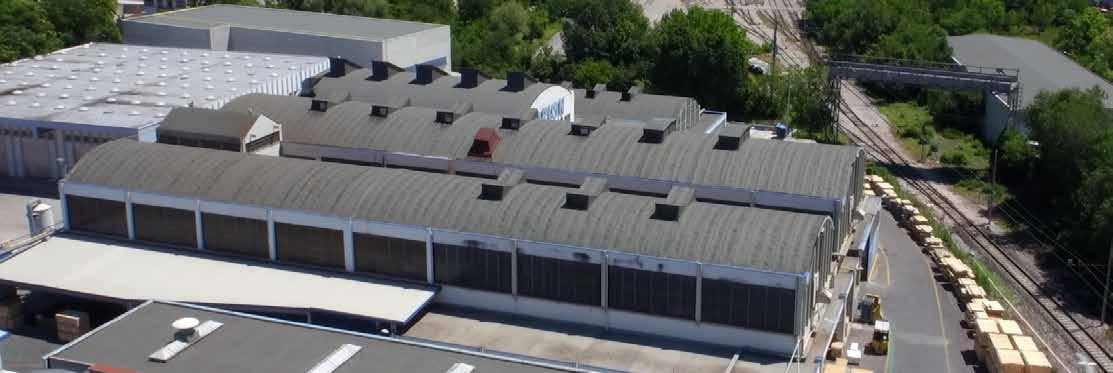
ORION Valves
Setting new standards in HIPPS

Flavio Ricotti
Executive Managing Director and HIPPS Co-Founder
How is ORION Valves thriving?
Established in 1954, ORION Valves was born from a simple but ambitious idea: build valves that are larger, stronger, faster and safer. While the firm has become a Guinness World Record holder for building the world’s largest wedge gate valve, it has continued shaping the market by solving complex engineering problems and delivering solutions where others hesitate.
Through these efforts, ORION has become a trusted name for high-integrity pressure protection systems (HIPPS), onshore and offshore projects, and mission-critical shutdown applications, delivering valves and integrated solutions to leading operators and EPCs.
The challenge - In recent years, ORION has faced several industry challenges, including global logistics disruptions, raw material price increases and long lead times for critical components. Geopolitical instability has also impacted project planning and execution.
At the same time, clients have raised expectations around SIL certification, functional safety, documentation quality and execution schedules, particularly for HIPPS and safety-critical packages. EPCs increasingly expect suppliers to act as full solution providers rather than component manufacturers, taking responsibility for integration, risk management and lifecycle support.
Local content initiatives such as MIITE in the UAE and IKTVA in Saudi Arabia have also required companies to adapt manufacturing, service and project management models. These pressures increased execution risk, cost pressure and operational complexity.
The solution - In a rapidly changing market, ORION recognised that competing on price alone was unsustainable. As a result, the company shifted focus toward high-complexity, high-value, safety-critical applications where engineering depth and execution capability differentiate.
Growing demand for production optimisation and asset protection created an opportunity to lead in HIPPS. Here, the firm has proven its ability to develop extreme valves sized up to
114 inches – its Guinness World Record winning solution for the AMIRAL petrochemical complex, under construction in Jubail, Saudi Arabia, by ARAMCO and TOTAL ENERGY –and integrate safety packages into its offering. ORION has invested heavily in engineering, functional safety, testing and project execution, enabling it to take full package responsibility rather than being limited to a fragmented scope. As part of this, it adopted a sourcing and execution model, remaining flexible on components (valves, actuators, instrumentation) to leverage partner strengths while keeping ORION accountable for performance and results.
Last year, ORION delivered its latest HIPPS systems to ADNOC for installation at the Habshan Oil and Gas Processing Complex in the UAE. It is the largest HIPPS system ORION has supplied to date.
This strategy, inspired by experience, evidence and opportunity, has been implemented progressively over recent years, with the firm ramping up once it confirmed that market shifts were structural rather than temporary.
Having built a new HIPPS Company from the ground up since 2019, the firm has established itself as a specialist in this space. Internal competences have grown, with added expertise in areas such as instrumentation and software design expanding its capabilities. In 2025 it also established a new operation in Abu Dhabi, alongside sites in Italy and Saudi Arabia.
There have been challenges. Upfront investments, a shift in company culture and greater supply-chain dependency for its sourcing model required adaptability. Yet ORION’s commitment to operational innovation has paid off.
Project wins in high-complexity scopes now account for more than 10% of revenue, with ORION securing strategic awards in HIPPS and critical valve packages, confirming market acceptance of its integrated model.
In 2025, the company made 42 HIPPS – up from 20 in 2024. It has also established itself in FEED and early-stage projects, now trusted by clients to set HIPPS specifications. Indeed, 30% of inquiries now relate to FEED work, demonstrating growing recognition of ORION’s technical leadership, with the firm having rarely been engaged on this front previously. While many KPIs have improved, it is revenue that tells the clearest story. It has increased ev-
Story type
#scaleup (main category) #service & solutions
Benefits
▸ Shift to high-complexity, safetycritical solutions strengthened market differentiation and demand for integrated HIPPS packages.
▸ Revenue growth accelerated from €51m (2019) to a forecast over €180m (2025), with increasing recognition as a technical leader in HIPPS and critical valve systems.
Key findings
For young people
▸ Choose complexity, not comfort and stay close to the customer – visit early and listen carefully.
For industry
▸ Engage at FEED and pre-FEED. If you enter late, you compete on price. If you enter early, you shape the game
For government
▸ Help companies compete globally by reducing risk, time, and complexity for high-value industrial exports.
ORION Valves at a glance:
Key products and services: engineered steel valves.
Main industries served:
▸ Oil and gas – 80%
▸ Others (energy) – 8%
▸ Hydrogen – 5%
▸ Carbon capture – 5%
▸ Energy storage – 2%
Headquarters: Lecce, Italy
Year established: 1954
Number of employees: +450
Revenue: £166m
Revenue from exports: 85%
ery year since 2019 and is forecast to exceed €180m in 2025 – up from €51m at the start of this period. Looking ahead, growth is expected to continue. The HIPPS Company is already contributing close to €20m in revenue, with strong indications this will rise further. ORION is a company to watch.

Penta Global
Championing wellbeing with Mind Matters in Construction
Sujay Nair Executive Director at Penta Global
How is Penta Global thriving?
In recent years, Engineering, Procurement and Construction (EPC) service provider Penta Global has grown rapidly, scaling its contracting and fabrication capabilities that support energy sector firms across the UAE. However, rather than allowing that growth to dilute its standards or culture, Penta Global has focused heavily emphasising responsible leadership. Through its prioritisation of health, safety and wellbeing, as demonstrated by the publication of its Mind Matters in Construction report, Penta Global has reinforced its culture, and positioned itself as a leading values-led contractor aligned with the changing expectations of clients, regulators, and the industry.
The challenge - Pental Global’s rapid growth in recent years has been underpinned by strong demand across the UAE’s energy and construction sectors. As the volume and complexity of projects have increased, the company in turn expanded its workforce to meet delivery requirements across multiple sites.
That growth created a distinct challenge. The firm had to scale its people and performance, but without compromising quality, health, safety and environmental (QHSE) standards on which the business had built its reputation.
Rapid onboarding increased the risk of inconsistencies in safety behaviours, operating standards, and ways of working across teams and projects. At the same time, the intensity of delivery placed greater strain on the workforce. Construction remains one of the most physically and mentally demanding sectors, characterised by long working hours, tight deadlines, and high safety exposure. As teams grew quickly, Penta Global recognised a heightened risk of fatigue, stress, and declining wellbeing – factors that directly affect safety outcomes, quality of work, and long-term retention.
The importance of these priorities were also affirmed by evolving industry expectations. Clients and stakeholders increasingly expect contractors to demonstrate strong ESG performance, meaningful social impact, and alignment with UAE In-Country Value (ICV) priori-
ties. Efforts in these areas were therefore seen as core measures of long-term credibility.
The solution - Rather than addressing wellbeing as sidenote or standalone issue, Penta Global chose to double down, embedding it at the very heart of its operational culture. Safety, quality and wellbeing were positioned as inseparable.
Meanwhile, looking beyond its own workforce, Penta Global also identified an opportunity to influence industry thinking through the launch of an initiative focused on delivering industry insight. This culminated in launch of Penta Global’s Mind Matters in Construction report in June 2025.
The research explored the current state of mental wellbeing in construction, industry-specific drivers of stress, gaps in awareness and support, and the commercial and human impact of inaction. To ensure it was grounded in evidence rather than advocacy, Penta Global partnered with Marmore MENA Intelligence to develop a robust research base.
The report shines a spotlight on statistics such as the fact that at least 37.5m productive days are lost per year due to untreated mental illness in the GCC, which is equivalent to US$3.5bn. It spotlighted the fact that workers putting in more than 8 hours per day were about 2.7 times more likely to report depression. Fear of repercussions, language barriers, and cultural stigma were also identified as major obstacles preventing blue-collar workers from seeking help.
The report laid the foundations for Penta Global’s wider Mind Matters in Construction initiative, in which the company convenes with senior industry stakeholders, hosts high-level roundtables, and engages credibly with media across construction, energy, business, HR, and health and safety. In total, the initiative generated nine pieces of media coverage, elevating Penta Global’s status to an industry thought leader.
Crucially, the initiative was also designed to deliver tangible community impact. Through a partnership with the Authority of Social Contribution, Ma’an, Penta Global donated US$10,000 to support initiatives providing nutritious meals for blue-collar workers, while more than 1,500 people engaged with the company’s #PunchWithPurpose activation. The partnership also led to the development of a platform for ongoing community contribution.
Story type
#environmental sustainability & social impact (main category) #people & competency
Benefits
▸ Strengthened workforce wellbeing and QHSE culture while supporting rapid business growth.
▸ Positioned Penta Global as a values-led industry leader through measurable community and mental health initiatives.
Key findings
For young people
▸ Say yes to opportunities but prioritise your wellbeing and long-term health. For industry
▸ Mental wellbeing should be treated with the same importance as physical safety in construction and energy projects. For government
▸ Further support for mobilisation processes and local talent development would help energy sector businesses scale more efficiently.
Penta Global at a glance:
Key products and services: EPC provider.
Main industries served:
▸ Oil and gas – 95%
▸ Onshore renewable energy – 5%
Headquarters: Abu Dhabi, UAE
Year established: 2004
Number of employees: 4,260
Revenue from exports: 15%
Internally, Penta Global has likewise reaped the rewards, with its Mind Matters in Construction campaigning having helped to strengthen awareness, openness, and engagement around mental wellbeing. Such commitments were further formalised through the introduction of a dedicated Welfare and Wellness Officer, ensuring sustained focus and accountability as the business continues to grow.
Overall, Penta Global has made wellbeing not just a soft issue, but a strategic one, setting a shining example that other industry players can look towards.

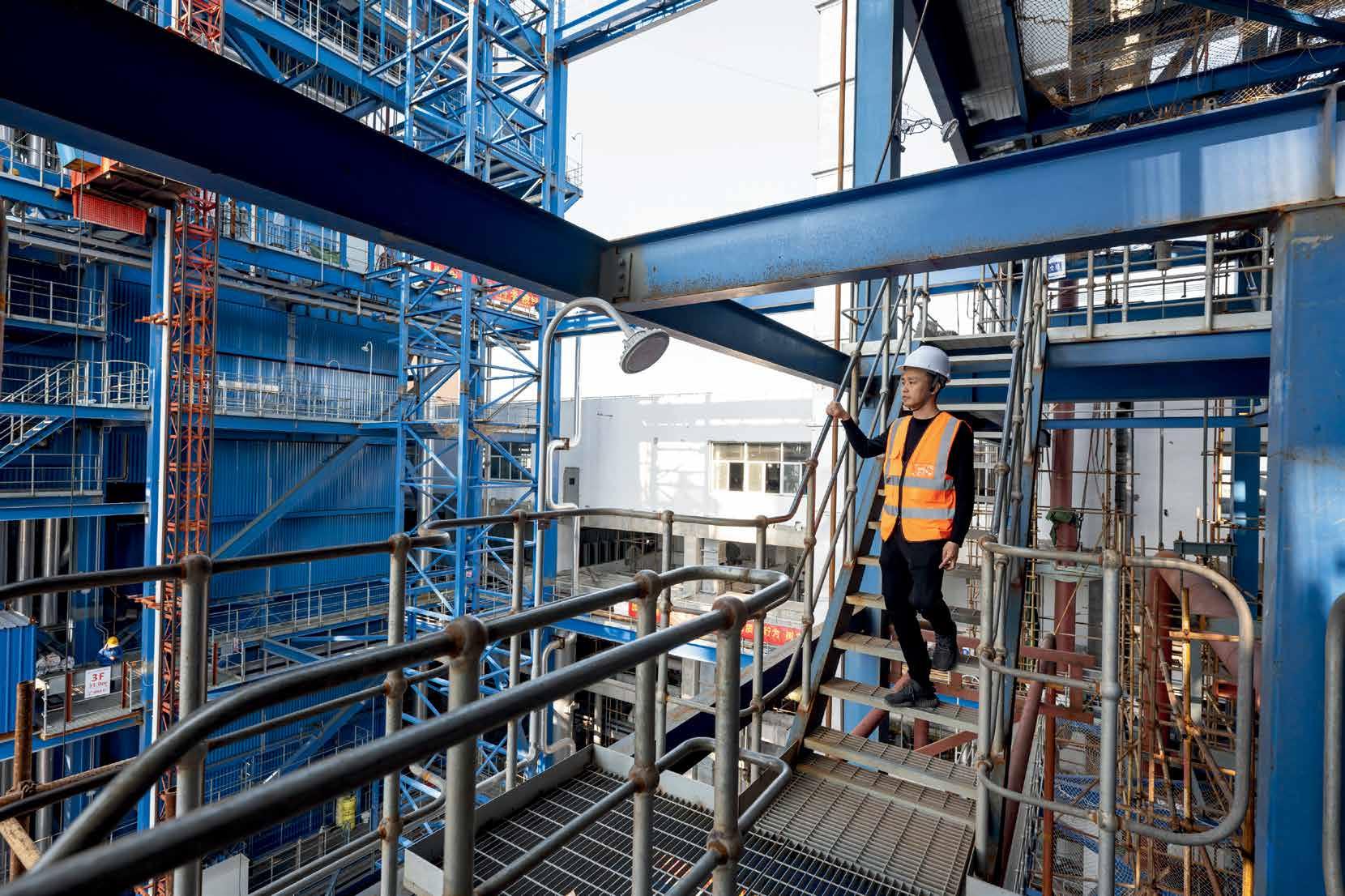








Parker Hannifin
Making the complex FPSO supply chain work in the North Sea
Deborah Pollard Business Development Leader at Parker Hannifin
How is Parker Hannifin thriving?
As FPSO supply chains have grown more fragmented and geographically dispersed, global motion and control technology leader Parker Hannifin has developed a coordinated capital projects capability to help clients manage the complexity. The approach was put to the test on a major North Sea FPSO redevelopment, where Parker coordinated more than 20 vendors and skid builders across 10 countries, secured bulk supplies of scarce corrosion-resistant materials, and ensured all milestones were met. The vessel was delivered on time, to budget and built for a 35-year operational lifetime.
The challenge - The offshore oil and gas industry has long relied on floating production, storage and offloading vessels to unlock some of its most demanding fields. But the way those vessels are procured and built has changed significantly. Where FPSO scopes were once granted to a single yard – with sub-assembly, fabrication and supply concentrated in one place – clients have increasingly spread risk across multiple vendors and countries simultaneously. For components suppliers operating across that fragmented landscape, the implications are considerable.
Parker Hannifin, whose corrosion-resistant instrumentation, tubing, fittings, valves and manifolds are specified across critical systems on FPSO vessels, recognised the shift in 2021. Projects that were once relatively straightforward to supply were becoming multi-country coordination challenges, with dozens of skid builders working in parallel, each requiring the right materials at the right time. A missed delivery or specification mismatch anywhere in the chain could cascade into multi-million-dollar daily penalties for the client. The margin for error was effectively zero.
The solution - Parker’s response was to build a dedicated capital projects capability, appointing specialist project managers to take coordinating ownership of complex FPSO scopes from the outset. Rather than reacting to client and EPC requirements as they emerged, the team worked proactively
by engaging early with project stakeholders, obtaining full sub-contractor lists upfront and establishing framework agreements that aligned specifications and commercial terms across all parties before fabrication began. That approach was central to Parker’s role in the redevelopment of a field in the Northern North Sea, where a leading global energy company required an FPSO vessel engineered for one of the world’s most demanding offshore environments. The project called for corrosion-resistant components across multiple critical systems – process fluid measurement, process line, air distribution, pump systems, water and fire control – with a system lifetime requirement of over 35 years. The supply chain spanned more than 20 vendors and skid builders across 10 countries.
A key early decision was to secure bulk quantities of Inconel® 625 tubing before the market could constrain availability. The material was not readily accessible and carried long lead times – by purchasing at scale in advance, Parker removed a significant source of delay for skid builders who would otherwise have faced disruption sourcing small quantities individually. The move also delivered economies of scale that benefited the wider project.
Standardisation across all skids was another critical element. Operating under an Enterprise Framework Agreement with the client, with pre-agreed terms in place with the EPC contractor, Parker was able to streamline procurement, eliminate negotiation delays and ensure consistent specification throughout. Standardisation on a single supplier also removed the risk of unsafe intermixing of components – a meaningful safety benefit in a highly regulated offshore environment.
Training and local expertise were built into the delivery model. Parker’s sales team and approved distributors delivered installation training in local languages at fabrication yards across the project’s global footprint, ensuring that the quality of assembly matched the quality of the components themselves. A single point of contact within Parker maintained communication coherence across what was, by any measure, an exceptionally complex project.

Story type
#optimisation (main category) #collaboration
Benefits
▸ Successfully coordinated over 20 vendors across 10 countries to deliver a major FPSO vessel on time and to budget.
▸ Secured bulk quantities of scarce materials early to avoid supply delays, delivering economies of scale and ensuring an operational lifetime of over 35 years.
Key findings
For young people
▸ Pursue a career path that genuinely makes you happy but be prepared to put in the hard work required to reach your goals.
For industry
▸ Collaborate with your suppliers and subcontractors to achieve the best outcomes— they bring valuable expertise and are here to support you in delivering the best results.
For government
▸ Prioritise energy security and sovereign resource access through a “Built in the UK” approach that reduces international reliance and supports UK industry and jobs.
Parker Hannifin at a glance:
Key products and services: advanced motion and control technologies.
Headquarters: Cleveland, US Year established: 1917
Number of employees: 56,000
Revenue: £14.9bn
The outcome spoke for itself. The sail-away date was achieved, all contractual milestones were met and the FPSO was delivered on time and to budget. The corrosion-resistant components specified for the project are expected to extend system life, reduce operational expenditure and simplify long-term maintenance for the vessel’s multi-decade working life in the North Sea.
Looking ahead, Parker is applying the same coordinated capital projects model to further FPSO and complex offshore and onshore scopes as well as expanding into other market sectors.

Pinsent Masons
A leading advisor to the Middle East’s energy transition

Pamela McDonald Partner, Head of Doha Office at Pinsent Masons
How is Pinsent Masons thriving?
Over the last five years, Pinsent Masons’ Middle East Energy law practice has undergone a period of significant transformation. Operating across the Gulf Cooperation Council (GCC) region, the firm has navigated considerable market and geopolitical turbulence. However, instead of retreating, it used this period as a catalyst for deliberate and bold strategic reinvention, emerging stronger, more agile and more deeply integrated into the region’s energy landscape than ever before.
The challenge - Like every firm, Pinsent Masons had to navigate the COVID-19 pandemic, seeking to support clients through unprecedented challenges. With major projects halted overnight, cross-border transactions constrained and oil prices dropping below US$20 per barrel, extreme financial pressures were placed on governments and energy developers across the Gulf.
When markets began to stabilise, the region faced significant price rebounds, inflationary pressures, supply-chain imbalances and shifting global demand patterns driven by the Russia-Ukraine war. Pinsent Masons’ clients were forced to constantly pivot, deferring projects one year and fast-tracking multi-billion US dollar developments the next.
Concurrently, regulatory complexity intensified. Legal reforms in the United Arab Emirates (UAE), Qatar’s post-blockade reintegration and the landmark opening of Saudi Arabia’s legal market in 2023 transformed how global law firms could operate. In response, Pinsent Masons saw that its clients needed clearer, broader, more agile and more proactive support to navigate these hurdles.
With energy security becoming a defining theme of government and corporate strategy, Pinsent Masons recognised the need to strengthen its cross-border capability to support shifting investment corridors. However, with the firm embarking on its most significant internal transformation in a decade, delivering this strategic growth in the Middle East needed to be balanced with these emerging internal priorities.
From 2019 onwards, the firm’s global leadership adopted a purpose-led professional services model, investing in innovation, technology and diversified legal service offerings – moves that were strategically essential for evolving the firm to meet the needs of today and tomorrow, but which tested its operational capacity in a challenging external environment.
The solution - The firm knew its clients’ needed partners that could go beyond delivering legal advice and become strategic partners providing integrated services, flexible delivery models and on-the-ground presence in core GCC markets.
Recognising that innovation was becoming essential as client expectations evolved, the firm launched Vario in the Middle East in 2024 –the group’s alternative legal services provider which offers flexible legal staffing, managed legal services, paralegal support, legal project management and technology consultancy.
Quickly, the Dubai Vario hub became the central resource base for GCC clients. Within a year, it secured more than 10 clients, while advanced delivery teams supported over 20 regional matters, delivering measurable efficiencies such as 15% budget savings and 20% faster contract negotiations for clients.
At the same time, Pinsent Masons’ Middle East teams adopted AI-driven document review, virtual collaboration tools and legal project management – additions that significantly improved efficiency, allowing the firm to handle large-scale disputes and complex transactions seamlessly, freeing up lawyer capacity to provide more strategic, commercial advice.
Geographic expansion and localisation have further strengthened the firm’s position. The opening of offices in Abu Dhabi in 2024 and Riyadh in 2025 created on-the-ground capability in key energy hubs. Continued investment in Doha and the recruitment of Arabic-speaking lawyers has also provided deeper regulatory familiarity and closer access to government stakeholders, often a decisive factor in securing mandates.
With Pinsent Masons continuing to emphasise trust, transparency and long-term partnerships, its Net Promoter Score has also risen, with 94% of clients willing to recommend the firm for its expertise, responsiveness and commercial understanding.
The firm has remained cohesive, grown larger and become more diverse and multidisciplinary, with non-lawyers playing key roles in client delivery. And as a result, the financial results have been significant.
Revenues grew in 2023 to 2025, reaching record levels, supported by new service lines such as Vario, Managed Legal Services and consulting and a stronger presence in highgrowth markets such as Saudi Arabia and Abu Dhabi. Regionally, FY2024 marked the best year ever for the Middle East practice, with revenues growing approximately 14% yearon-year and far surpassing pre-strategy levels. The firm’s presence on an increasing number of big-ticket energy projects, such as Rabigh Solar and Dubai Solar Park, further reflected a notable rise in market share and deal value.
Story type
#service & solutions (main category) #culture #people & competency #resilience #scale up
Benefits
▸ Delivered 15% budget savings and 20% faster contract negotiations by launching a Vario hub and AI-driven legal project management tools.
▸ Achieved record regional revenues with approximately 14% year-on-year growth in 2024, driven by strategic expansion and a 94% client recommendation rate.
Key findings
For young people
▸ Step outside your comfort zone, take risks and embrace opportunities abroad early.
For industry
▸ Build resilient, locally aligned supply chains and transparent contracting models ensuring fair risk distribution.
For government
▸ Establish consistent risk allocation and clear contracting pathways to attract international investment.
Pinsent Masons
at a glance:
Key products and services: professional services business with law.
Main industries served:
▸ Oil and gas – 30%
▸ Conventional power –15%
▸ Nuclear power – 1%
▸ Offshore renewable energy – 2%
▸ Onshore renewable energy – 20%
▸ Hydrogen – 5%
▸ Carbon capture – 2%
▸ Energy storage – 2%
▸ Data centres – 8%
▸ Others (energy) – 10%
▸ Others (non-energy): PPP, infrastructure – 5%
Headquarters: London, UK
Year established: 1769
Number of employees: +4,000
Revenue: £680m
Indeed, the last five years have tested Pinsent Masons’ Middle East Energy practice. External volatility and internal transformation forced the firm to rethink its model, invest boldly and innovate continuously. However, having used challenging conditions as a springboard for exceptional growth, the practice is now more agile, more client-centric and more strategically positioned than ever before.
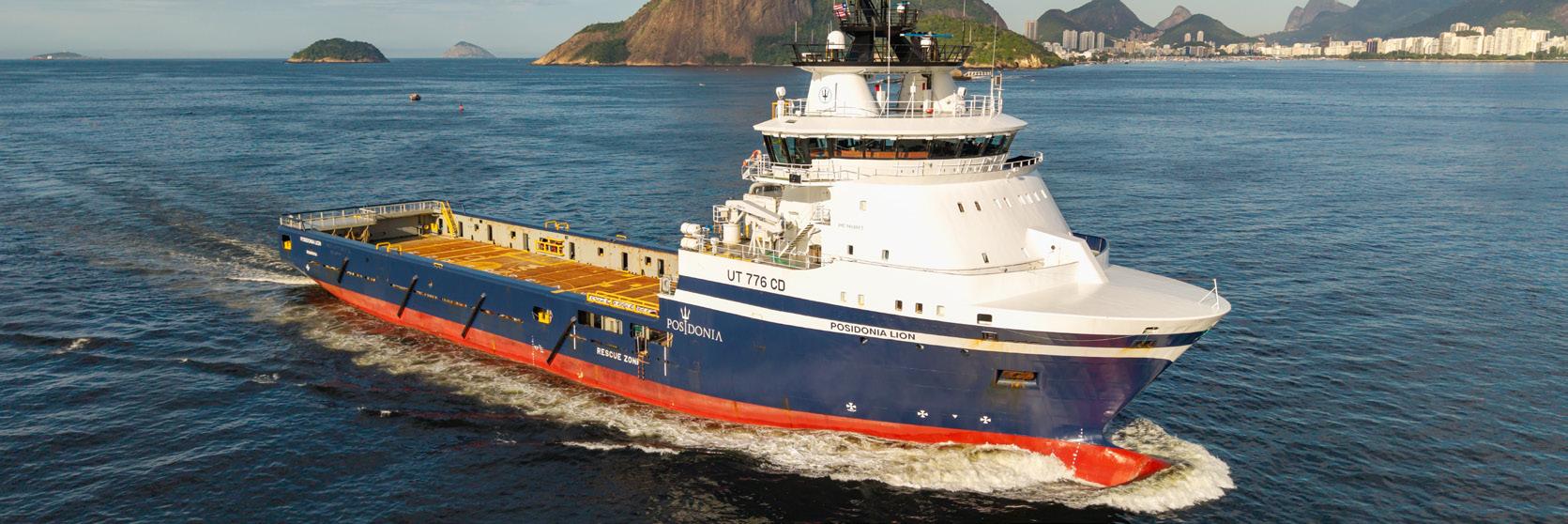
Posidonia Shipping
From cabotage to offshore: a growth story of strategy and timing
Story type
#diversification (main category) #transformation
Benefits
► Transformed into a diversified maritime business by investing US$200m to acquire 8 vessels and build a relevant offshore fleet.
Alex Ikonomopoulos COO at Posidonia Shipping
How is Posidonia Shipping thriving?
By combining market foresight with a willingness to take calculated risks, Posidonia Shipping has successfully entered and scaled within Brazil’s offshore sector. Strategic acquisitions of eight vessels between 2023 and 2026, combined with investments talent and structure, have enabled the company to transition from a primarily cabotage-focused operator to a diversified, comprehensive maritime business.
The challenge - With more than 700 employees, Brazil-based Posidonia Shipping has grown rapidly since its foundation in 2010, now established as an industry-leading maritime cargo transportation, offshore operations and ship management specialist, providing comprehensive maritime logistics solutions.
Originally, the company was set up through a partnership of different shareholders, with its name originating from a maritime trade fair held in Greece. Early on, much of its focus was on cabotage. However, in 2014, with the arrival of Dalton Schmitt – former president of Astromaritima and Offshore Director at Posidonia – the firm’s ambition to expand into the offshore market emerged.
At that time, conditions were not favourable, with the sector undergoing a strong downturn. As a result, the firm recognised it needed to adopt a strategic approach, observing the market while preparing internally for a future entry.
The solution - This strategy began to materialise in 2021, when the offshore market in Brazil started showing signs of recovery. Posidonia began actively pursuing business opportunities, with its entry into offshore coming through an existing strategic relationship with a German shipowner, UOS.
This led to the firm’s first contract in the segment with Karoon. From then on, the company intensified its activities, expanding its business development efforts to eventually become part of Petrobras’ supplier base.
In 2023, Posidonia participated in and won a Petrobras tender. Shortly after, they entered a new tender, but this time faced additional challenges. After negotiating a vessel to sup-
port their proposal, the shipowner withdrew from the deal in the final stage of the process, forcing the company to quickly find an alternative. It was in this context that Posidonia identified the OOC Tiger – a vessel that would become a milestone in the company’s history. Here, the owner was not willing to charter the vessel and would only consider a sale. Posidonia obliged, taking the strategic decision to acquire the vessel, backing it with the Petrobras contract. In doing so, it assumed greater financial risk but ensured the viability of the contract. With this vessel, Posidonia went onto secure another Petrobras contract, and also participated in the same tender with another vessel, Mestre dos Mares, winning an additional contract.
This gradual but strategic entry into the offshore market began to open up new business opportunities for Posidonia but also brought greater scale and complexity to its operations. While the company had previously operated with a horizontal structure, the business had to be reorganis ed into two distinct units – cabotage and offshore.
Challenges continued to arise. Vessels that had been previously negotiated became unavailable at the final stage, requiring agility, adaptability and decision-making under pressure to ensure contract continuity. However, for Posidonia, this only further highlighted the importance of developing a domestic fleet – particularly when accounting for the limitations imposed on the import of foreign vessels and the tonnage restrictions related to chartered ships.
Between 2023 and 2026, the company acquired eight vessels, in a movement that totalled approximately US$200m (£150m) in investments. These were complex, and at times risky. The acquisition of assets from bankruptcy proceedings required long due diligence periods before completion, for example, but proved to be opportunistic purchases of Brazilian tonnage that could support the company’s growth.
The firm has also had to expand its team at pace to meet these expanding operational needs, growing its office employees from 60 to 190 people, while also hiring hundreds of new crew members and investing in additional processes and systems.
However, these acquisitions and investments have paid off significantly. In January 2023, Posidonia was the technical managers and Owners of just two barges and a small tugboat. By March 2026, it had already built a relevant offshore fleet, in addition to a consolidated
► Expanded office headcount from 60 to 190 employees and successfully diversified operations so offshore now represents 40% of revenue.
Key findings
For young people
► Remain curious and continuously seek to deepen your understanding of the sector in which you operate. Maintain a strong willingness to learn.
For industry
► Remain resilient; no investment or restructuring plan is easy, so it is essential to remain patient.
For government
► Guarantee the immutability of industry laws and regulations for 15 years to create a more stable market.
Posidonia Shipping at a glance:
Key products and services: maritime cargo transportation, offshore operations and ship management.
Main industries served:
► Oil and gas – 80%
► Others (energy) – 10%
► Others (non-energy): dry bulk, general cargo – 10%
Headquarters: Rio de Janeiro, Brazil
Year established: 2010
Number of employees: 700
Revenue: £293.6m
cabotage operation and were also the technical managers of 4 newly built bulk carriers, backed by a cohesive team aligned to its identity and way of operating. The scale of its talent is reflected in its results. Indeed, offshore has now come to represent approximately 40% of revenue – a diversified business model that is undoubtedly poised for further growth and future success.
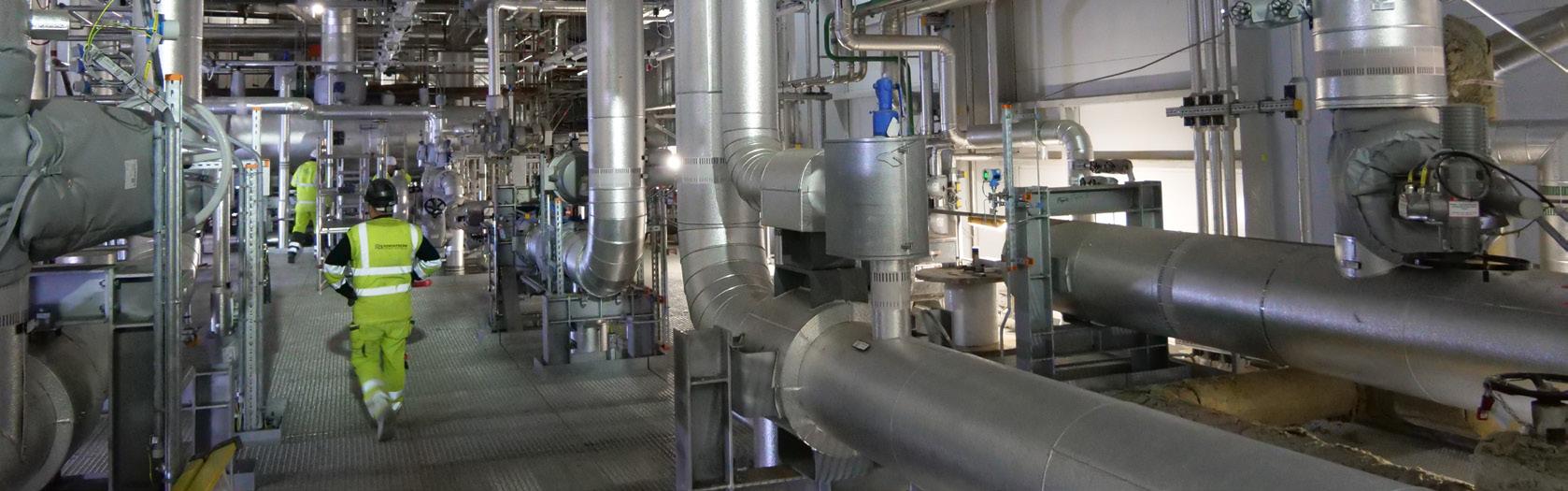
Powertherm
Becoming a Tier 1 one-stop shop without losing the family business ethos

Bill Blakey Operations Director at Powertherm
How is Powertherm thriving?
Powertherm Contract Services grew from approximately £10m in revenue at the start of its five-year growth plan in 2021 to £46.4m in 2025, a record year representing 30% growth versus 2024. The Sheffield-based industrial services provider has achieved this by professionalising its operations, broadening its service offering and investing in people and capacity, all while maintaining the direct, approachable culture that has been central to its identity since its founding in 1989.
The challenge - Powertherm had built a solid reputation over three decades as an industrial insulation specialist, serving clients across power, oil and gas, energy from waste and a wide range of industrial sectors. It’s over 350-strong workforce delivers insulation, scaffolding, rope access, electrical trace heating, protective coatings, industrial cleaning, refractory lining, sheet metal fabrication and flexible insulation jackets, providing the kind of integrated service that clients increasingly preferred to manage through a single provider.
The ambition that shaped the 2021 strategy was to become precisely that for Tier 1 contractors: a one-stop shop capable of winning and delivering the larger, more complex frameworks that had previously been out of reach. To compete at that level, the business needed the accreditations, systems and professional infrastructure that Tier 1 procurement teams demand. At the same time, it also needed to scale without losing the responsiveness and directness that clients valued.
The solution - Paul Ashton, as Managing Director, led the strategy with a clear view of what needed to change and what should remain. The family business model, characterised by direct lines of communication, senior accessibility and an investment in people, was not to be traded away in the pursuit of scale. Indeed, the idea was to preserve it as a differentiator, even as the business grew to look and operate more like a larger company.
Accreditation was an early priority. Powertherm already held ISO 9001 and 18001 certifications, but achieving ISO 14001 and 45001, alongside becoming accredited for fit for nuclear and carbon capture schemes, required a sustained effort to standardise
processes and embed quality disciplines across every part of the operation. Robust inspection processes were introduced in the fabrication shops to raise awareness of quality at every level, a move which signalled something of a cultural shift in how work was understood and valued.
Investment in people has run alongside this. Powertherm maintained an average of 40 apprentices each year for the last 5 years and have also put 66 members of supervision and staff through our leadership and skills training courses. External leadership has been brought into the senior management team to complement the homegrown talent. Meanwhile, a supplementary training scheme has been developed for the fabrication shop – this runs alongside the industry apprenticeship for insulation and sheet metal cladding. Commercial, HSE and employment law training has also been extended across the wider team. Staff retention stands at approximately 97% of full-time employees, a figure that reflects both the quality of the employment offer and the strength of the culture behind it.
Employees are also benefitting from improved equipment and technology. For instance, a £1m investment in laser and semi-automated sheet metal fabrication equipment has increased capacity in the fabrication facility by approximately 30%, giving the company one of the largest sheet metal operations of its kind in the UK. In addition, an updated ERP system has enhanced commercial control and reporting discipline, providing the visibility across projects and margins that larger framework contracts require. These investments have allowed Powertherm to broaden its service offering. Scaffolding, protective coatings, trace heating and fabrication have all expanded significantly as both standalone capabilities and components of integrated packages. A long-standing maintenance contract worth approximately £7m per year illustrates what the integrated model can deliver – consistent work, stable margin and a client relationship deep enough to support joint working on energy efficiency improvements, including Technical Insulation Performance Checks (TIP Check) that identify insulation degradation and generate measurable energy, emissions and cost savings. Through improved insulation systems, phase 1 of this project identified over £250,000 cost savings and greater than 1,000 tonnes of emissions, per year.
Nuclear has emerged as a new sector for the business, growing from nothing to 5% of revenues and representing one of several

Story type
#transformation (main category) #optimisation #people & competency #scale up
Benefits
► Grew revenue from £10m in 2021 to £46.4m in 2025 by professionalising operations and expanding its in-house service offering.
► Maintained a 97% staff retention rate while investing £1m in fabrication equipment to increase capacity by approximately 30%.
Key findings
For young people
► Be patient, remain open to changing career paths and learn from experienced colleagues while respectfully challenging ideas. For industry
► Tailor your business to market needs by fostering a collaborative culture where teams work together to deliver goals. For government
► Support UK oil and gas to protect energy security and skilled employment, while closing the PA7 loophole to prevent the misuse of overseas labour.
Powertherm at a glance:
Key products and services: multidiscipline industrial service solutions provider.
Main industries served:
► Oil and gas – 35%
► Conventional power – 10%
► Nuclear power – 5%
► Hydrogen – 1.3%
► Carbon capture – 1.3%
► Energy storage – 1.4%
► Others (energy) – 15%
► Others (non-energy) manufacturing, pharmaceuticals, defence, water treatment – 30%
Headquarters: Sheffield, UK
Year established: 1989
Number of employees: +350 Revenue: £46.4m
growth sectors targeted for the next phase alongside hydrogen, carbon capture and defence. With 2026 revenue expected to soften due to project delays rather than structural market decline, and a pipeline that reflects the breadth of sectors the business now serves, Powertherm is positioned to continue building on the foundations laid since 2021.
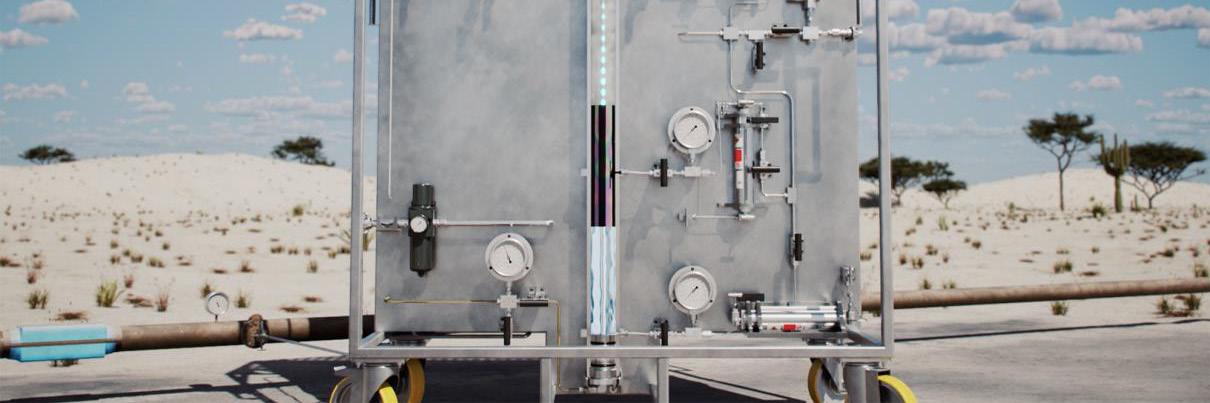
Proserv
Championing smarter, safer sampling
Richard Barr
Technical Assurance and BD Manager, Sampling Solutions at Prosev
How is Proserv thriving?
Proserv’s culture of innovation has had a major impact within the Sampling Solutions segment of the business. Through a “eureka” moment, the team developed the firm’s new patented PhaseCatcher solution – a revolutionary multiphase sampling system that integrates advanced radar technology with 30-plus years of piston cylinder expertise. For customers, the result is a smarter, safer approach to sampling, enhancing accuracy while prioritising safety and environmental responsibility. For Proserv, it’s been a catalyst for growth.
The challenge - Proserv’s Sampling Solutions business traces its origins back to the 1970s, when the company was founded in Norway to manufacture a specialised sampling cylinder for the national oil company.
What began as a single product gradually evolved into a much broader offering, as Proserv expanded from the original cylinder into the design and manufacture of complete sampling systems supporting the full hydrocarbon chain – from reservoir to refinery – including downhole, subsea and topside applications.
Despite establishing itself as a market leader in oil and gas sampling, Proserv has continued to challenge itself to innovate, solving real operational problems, and driving both the company and the industry forward.
The industry’s demand for safer, more efficient sampling solutions is well understood. The opportunities for further meaningful innovation remain clear. The question for Proserv has always been how to unlock them.
The solution - The company’s culture of continuous learning and development has proven to be a real asset in the post-covid period. Indeed, a customer request sparked a new breakthrough, providing a eureka moment for the firm to consider combining its advanced radar technology and piston cylinder expertise into a single integrated solution.
The team began by evaluating whether the concept was commercially viable, carrying out background market research and securing support. Following this, a prototype was developed within three months and success-
fully tested at the National Engineering Laboratory in Glasgow.
This early success triggered full new product development activity through 2022 and 2023, including deeper market research, competitor analysis and engineering design. By 2023–24, Proserv had established the full manufacturing process.
This product development journey has culminated in the launch of PhaseCatcher – a new, revolutionary multiphase sampling system.
The PhaseCatcher system incorporates patented technology that eliminates venting and the release of toxic fluids into the atmosphere, significantly enhancing operator safety and environmental compliance. By maintaining samples at flowline conditions, PhaseCatcher preserves the integrity of the sample’s chemistry, providing accurate data essential for calibrating multiphase flow meters without relying on potentially erroneous PVT modelling.
A key feature of the PhaseCatcher is the integration of Digital Guided Wave Radar Technology into Proserv’s piston sample cylinders. This advancement allows operators to verify that sufficient volumes of individual phases – oil, gas and water – are collected during sampling. Additionally, the system enables sub-sampling of individual phases directly from the multiphase flowline, streamlining the sampling process and reducing manual handling.
Extensive field trials have since been completed: synthetic testing in 2024, then two major trials in 2025, one with a national operator in the Middle East and another in the North Sea. These campaigns revealed additional secondary and tertiary features, some of which are now being developed into primary system capabilities.
An industry first, PhaseCatcher is now patented in the US, UK and Saudi Arabia, with further jurisdictions pending. For Proserv, the result is not only a successful product but an entirely new service and revenue stream for Proserv, with significant tender opportunities already in progress.
The product is testament to the firm’s focus on internal collaboration, involving engi-
Story type
#innovation (main category) #technology #service & solutions
Benefits
► Developed the patented PhaseCatcher multiphase sampling system, eliminating toxic venting to enhance safety and environmental compliance.
► Created a completely new service and revenue stream for the business, securing patents in the US, UK and Saudi Arabia to drive global expansion.
Proserv at a glance:
Key products and services: solutions across the drilling, production and decommissioning market sectors.
Main industries served:
► Oil and gas– 95%
► Offshore renewable energy– 5%
Headquarters: Aberdeen, UK
Year established: 1975
Number of employees: 850 (Group) 334 (UK)
neers, measurement specialists, marketing teams and external technology partners across the UK, Norway and the Middle East.
PhaseCatcher represents a complete innovation lifecycle: identifying a customer problem, validating the need through research, inventing a novel solution, securing patents, conducting rigorous field trials and bringing a world-first technology to market – all in a remarkably short timeframe.
Indeed, the success of the solution is helping Proserv grow the business unit, win new customers, and expand into new territories. It’s nothing less than a powerful example of how forward-thinking technology can better serve clients, delivering on Proserv’s promise: Smarter. Safer. Sampling.
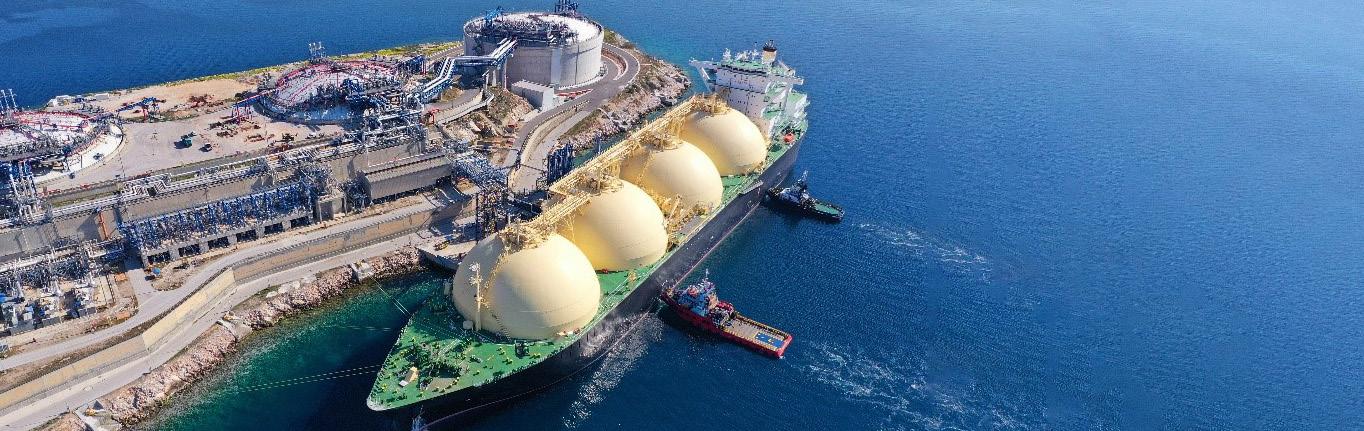
Raba Kistner
Building a new division from scratch to capture the LNG megaproject boom

Vice President at Raba Kistner
How is Raba Kistner thriving?
In five years, Raba Kistner has grown its Gulf Coast energy operation from a standing start to nearly US$19m in annual revenue. It has established itself as a trusted construction quality partner to some of the largest LNG developments in the world, including projects for Bechtel, Worley, Fluor, Zachry and Venture Global. Key to this has been a multi-pronged strategy built around resilience, strategic acquisition and disciplined diversification which has allowed the firm to thrive in one of the most volatile project markets in the energy sector.
The challenge - Raba Kistner is a highly experienced engineering consulting and programme management firm. Today, it provides geotechnical engineering, environmental consulting, materials testing and construction quality assurance across energy, infrastructure and industrial projects. Its parent company, KIWA, employs more than 10,900 people globally, while Raba Kistner’s US division counts 850 professionals across multiple disciplines.
When the decision was made in 2021 to pursue the Gulf Coast LNG market in earnest, the firm had no established energy client base in the sector. What it did have was a highly capable technical workforce, a strong reputation in construction materials testing, and an early relationship with Bechtel that opened the door to its first major LNG contract. What followed was rapid growth, but in a market defined by extreme peaks and valleys. LNG megaprojects are multi-billion-dollar programmes deeply sensitive to political, geopolitical and environmental factors. Project schedules shift without warning, mobilisation windows compress to days, and workforce demand can swing from surplus to shortage almost overnight. Managing that volatility without breaking the system became the central challenge.
The solution - Faced with a market that refused to run on predictable timelines, Raba Kistner set about building its new Gulf Coast energy division with a new operating model. For instance, strategic acquisition has been central to scaling at pace. The purchase of Braun Intertec’s Gulf Region operation expanded Raba Kistner’s technical capabilities and brought its energy division workforce to around 130 professionals, providing the resource depth to

Alex Brochard
Principal Engineer at Raba Kistner
pursue large, complex projects with confidence. Alongside this, the firm has built a network of trusted partner firms, including Thompson Engineering and Fugro, to create a hybrid delivery model that combines in-house expertise with external capacity. This has allowed Raba Kistner to fill capability and geographic gaps without overextending its own resources – a critical advantage in a market where overcommitment carries significant risk.
Technical differentiation has reinforced that positioning. Rather than offering traditional inspection services alone, Raba Kistner has embedded geotechnical engineering expertise directly into construction execution, particularly in the challenging saltwater marsh environments that define much of the Gulf Coast. By integrating engineering insight with field delivery, the firm has helped EPCs navigate complex ground conditions, reduce construction risk and improve quality outcomes on some of the most demanding project sites in North America. This depth of capability has established Raba Kistner as far more than a materials testing provider.
The firm has also developed a proactive field intelligence capability. Despite operating downstream of the key scheduling decisions that drive project pace, Raba Kistner’s teams have become adept at reading early signals from within the field, anticipating phase transitions before they occur and identifying emerging risks ahead of formal notification. This ability to forecast disruption from the ground up has become a real differentiator in client relationships. Alongside this, diversification of the broader portfolio has provided an important counterbalance to any risk associated with concentrating heavily on LNG. Recognising the danger of over-reliance on a small number of large projects, Raba Kistner has expanded into power generation, data centres and environmental services – this has created a steady baseline of work that sustains workforce utilisation during inevitable project gaps. Data centre developments have emerged as a natural fit for the firm’s construction quality and geotechnical capabilities, with the same EPC clients now drawing on Raba Kistner across multiple sectors.
Indeed, active engagements include Corpus Christi LNG and Port Arthur LNG with Bech-
Story type
#resilience (main category) #collaboration #diversification
Benefits
► Grew its Gulf Coast energy division from zero to nearly US$19m in annual revenue over five years by securing major LNG megaprojects.
► Expanded its workforce to approximately 130 professionals through strategic acquisitions and diversified into data centres and power generation.
Key findings
For young people
► Choose mentors carefully and build a broad foundation of diverse experiences across the business before specialising. For industry
► Transition to integrated delivery models by engaging the supply chain early in project planning to align schedules and lower risks. For government
► Implement a structured communication framework for major projects to ensure alignment across stakeholders and the supply chain.
Raba Kistner at a glance:
Key products and services: engineering consulting and program management firm.
Main industries served:
► Oil and gas – 80%
► Hydrogen – 15%
► Carbon capture – 5%
Headquarters: San Antonio, US
Year established: 1968
Number of employees: 10,900 (Group) 850 (US)
Revenue: £965m
tel, Rio Grande LNG, and Venture Global’s Calcasieu Pass I and II with Worley, among others spanning Texas and Louisiana. In terms of revenue, the Gulf Coast energy division has grown from nothing to nearly US$19m in annual revenue in five years. Across the company as a whole, turnover has grown from US$121m in 2022 to US$146m in 2024, with operating margins consistently above 14%. A record year in 2025, with 7-8% growth, has carried strong momentum into 2026, where a further 15% increase is targeted.
H. Mickey Barrett
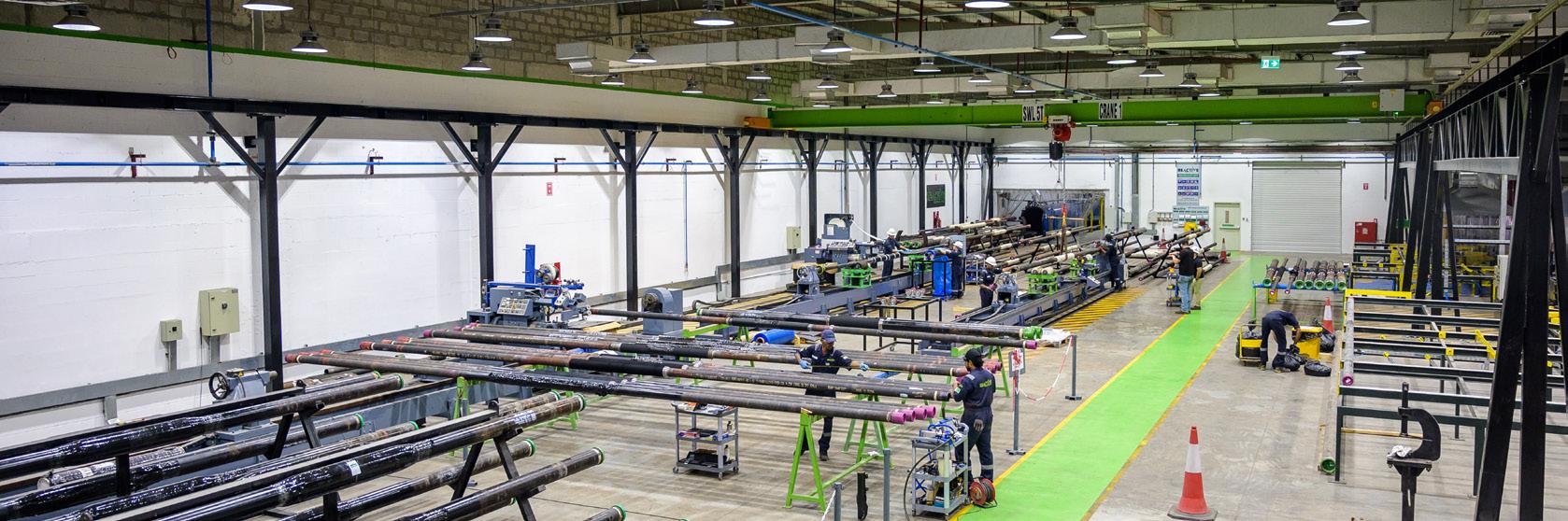
Reactive Downhole Tools Middle East
Developing a global export manufacturing hub in just two years
Story type
#export (main category) #scale up Benefits
► Expanded into international markets including Oman, Qatar, Malaysia and Indonesia, with exports now accounting for 30% of the UAE facility’s revenue.
► Transformed its UAE facility into a globally certified export hub in just two years.

Niall Urquhart
COO at Reactive Downhole Tools Middle East
How is Reactive Downhole Tools Middle East thriving?
Reactive Downhole Tools (RDT) Middle East has transformed its UAE operation from a start-up facility into a globally certified, zero-defect manufacturing hub in the space of just two years. By building a local workforce from scratch, achieving API Q1 certification, and supporting ADNOC as a foundation customer, it has established credibility and scaled internationally. Today, the facility exports to multiple regions, with these activities accounting for 30% of its revenue, demonstrating how local capability can successfully drive global growth.
The challenge - RDT has had an impressive start to life. Founded in 2012 as a specialist downhole tool manufacturer focused on swellable elastomer technology, the firm has differentiated itself by providing fully bespoke engineering approach. In designing and manufacturing swellable packers tailored to each customer’s needs, it delivers high-performance, application-specific solutions.
Prior to 2020, RDT supported its global operations from a Houston-based manufacturing facility. However, rapid growth in the Middle East highlighted the need for a local manufacturing presence to support regional demand. Resultantly, the UAE facility was commissioned in 2021, yet this was under difficult circumstances. Indeed, Covid-19 restrictions limited the firm’s ability to deploy experienced personnel during the facility’s setup.
In addition to commissioning, a key challenge was the lack of a mature secondary supply chain within the UAE. While major operators such as ADNOC had successfully attracted primary contractors into the region, the supporting supply chain for smaller, specialised manufacturers remained underdeveloped. This created difficulties in sourcing materials in smaller volumes and constrained early operational flexibility.
As a result, initial operations were heavily dependent on ADNOC, which provided essential stability but created a concentration risk. In parallel, supply chain limitations and operational constraints restricted the facility’s ability to scale and support broader markets. This high-
lighted the need to develop a more resilient local supply chain and transition towards a model capable of supporting international exports.
The solution - With strong demand for RDT’s technology across international markets, and the firm’s need to reduce reliance on a single domestic customer base, the company set out in pursuit of an export-driven localisation strategy, transforming its UAE facility into a regional hub supporting both domestic delivery and international markets.
The project was executed in two phases. Between 2021 and 2023, the focus was on supporting ADNOC as its core customer, all while establishing and stabilising operations at the Abu Dhabi facility. In tandem, RDT began developing a local supply chain, recruiting and training a fully new workforce while embedding the company’s quality and technical standards. Through these efforts, the firm achieved API Q1 certifications and underwent audits from international customers, demonstrating the facility met global standards.
Phase 2 then followed from 2023 onwards, with RDT leveraging these certifications and its audited platform to expand into export markets. In tandem, the firm scaled production to support international demand, all while continuing to roll out its delivery of tailored solutions to customers across the Middle East and Asia.
By its own admission, RDT possessed several advantages which made this strategic shift easier. While the firm’s proprietary swellable elastomer technology enabled the delivery of customised solutions, its flexible-engineering approach was also adaptable to different global markets. Its strong relationships with operators and Tier 1 service companies, as well as the UAE’s infrastructure supporting efficient logistics and export operations, were also key.
Indeed, approximately 30% of the UAE facility’s revenue is now generated from exports, having facilitated significant expansion into several international markets including Oman, Qatar, Malaysia and Indonesia. The facility’s in-country value (ICV) score has increased year-on-year, while its achievement of API Q1 certification has also validated global manufacturing standards. Indeed, to date, the facility has recorded 18 consecutive months without a single manufacturing defect.
The successful development of a trained local workforce from scratch has also paid dividends, with RDT’s people having become instrumental to the success of the facility. The company has
Key findings
For young people
► Be adaptable and open to learning in a rapidly evolving energy industry, developing strong technical and problem-solving skills to position yourself for success.
For industry
► Invest in local capabilities and people despite short-term challenges, as building a strong foundation creates a platform for sustainable international growth.
For government
reduced reliance on any one single customer, improving its resilience by internationalising. Thanks for concerted efforts in these departments, and with RDT’s focus on delivering its bespoke engineering approach to deliver tailored solutions across multiple geographies, the UAE facility successfully evolved from a start-up operation into a globally certified, export-capable manufacturing hub in the space of just two years. Looking ahead, the facility will remain a trusted international supply base that will be a pivotal asset to the global energy sector for years to come. strong
► Invest in the local industrial ecosystem and secondary supply chain to support smaller businesses and enable sustainable export-led growth.
Reactive Downhole Tools Middle East at a glance:
Key products and services: swellable packers, elastomer technology and bespoke downhole isolation solutions.
Main industries served: ► Oil and gas – 100%
Headquarters: Abu Dhabi, UAE Year established: 2012
Number of employees: 50 Revenue from exports: 30%
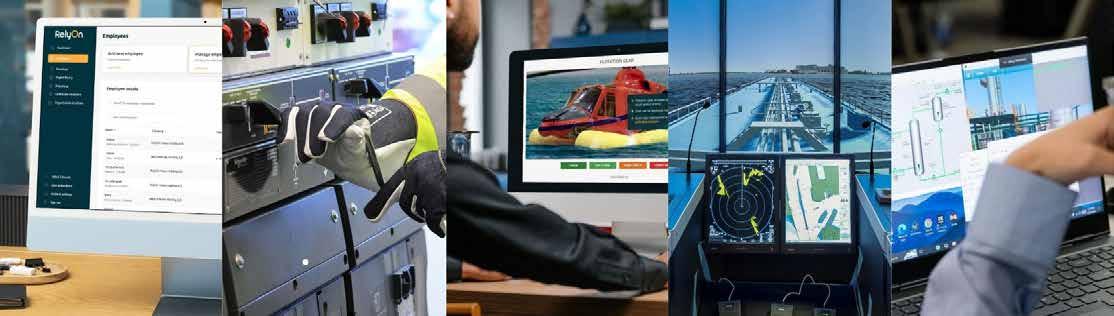
RelyOn (Denmark)
How
a safety training specialist
rebuilt
itself as a global workforce competency business
Marco Vanin Senior Vice President at RelyOn Denmark
How is RelyOn thriving?
Having undergone a sustained transformation spanning two ownership changes, a series of targeted acquisitions and a fundamental rethinking of what it offers, RelyOn has grown from a compliance-focused safety and survival training provider into a global workforce competency platform serving high-risk industries across renewables, utilities, maritime, oil and gas utilities, public and defence and beyond. Annual revenue is now more than €260m, and digital services account for 20% of the total.
The challenge - RelyOn is a global provider of safety, competency and workforce performance solutions, operating across 1,500 employees and serving operators, developers and Tier 1 contractors in over 20 countries. Its heritage lies in physical safety and survival training for the oil and gas industry – the kind of certificated, compliance-driven instruction that keeps offshore and industrial workers safe in high-risk environments.
That heritage was also a constraint. As recently as 2015, upstream safety training for oil and gas accounted for 90% of revenues, leaving the business exposed to the cyclical swings of a single sector. Competition in the compliance training market was intensifying, quality detreating and price sensitivity was high – there was limited room to differentiate when the core offer was a standardised set of courses delivered from a network of regional training centres, each operating under different brands and with different approaches. The business needed greater scale, broader sector reach and a richer offer if it was to grow sustainably.
The solution - The transformation began with a cost restructuring in 2016 and 2017 and picked up speed under the ownership of the Nordic private equity player Polaris. With a sharp focus on growth and a strategic transformation the company integrated to operate as one coherent global company rather than a loose collection of regional training centres. A rebrand followed, along with the first steps towards building a digital capability through acquisition.
Between 2020 and 2024, a series of acquisitions expanded both the company’s geographic footprint and its service range. The pace accelerated significantly in 2024, when Mubadala Capital took ownership –bringing with it the resources and appetite to execute a further 12 acquisitions in rapid succession. Each was chosen to add a specific capability or deepen a specific market. The acquisition of Competency Alliance, for instance, created the Petro-Skills Academy, bringing in-depth technical and engineering energy sector expertise. The acquisition of a series of electrical training companies was integrated into an Electrical Academy. The acquisition of Simwave - a globally recognised Centre of Excellence for Maritime education, meanwhile, deepened the company’s maritime sector knowledge and simulation capabilities and built the foundation of a global Maritime Academy.
Those academies – five in total, covering Leadership, Electrical, Fire, Maritime and Petro-Skills – are central to how RelyOn has repositioned itself. Rather than a pool of generalist instructors delivering compliance courses, the academies represent genuine centres of excellence with deep subject matter expertise. The shift is clear: from a company that provided safety training because regulations required it, to one that builds performance-ready workforces because clients want better outcomes.
A new three-way matrix structure, introduced in 2025, reflects this ambition. RelyOn now organises itself across industries (renewables, utilities, maritime, oil and gas, public and defence), products and services spanning training, digital, managed services and consultancy, and its five academies. The structure is designed to enable cross-selling and integrated delivery at scale, turning what had previously been a complex integration challenge into a commercial advantage.
The digital transformation has been equally significant. From a standing start in 2018, digital now represents 20% of revenues. Software-as-a-service revenues grew 267% in 2025; digital learning grew 55% in the same year. The company is now deploying agentic AI to build a next-generation personalised training platform – moving from content delivery to adaptive, performance-focused learning that responds to individual needs in real time.

Story type
#transformation (main category) #diversification #service & solutions
Benefits
▸ Diversification across industries has reduced reliance on oil and gas (from >90% to <40%), improving resilience and unlocking new growth markets.
▸ Digital transformation and acquisitions have driven strong revenue growth (20% YoY), with scalable services like SaaS (+267%) and digital learning (+55%).
Key findings
For young people
▸ Do something you are passionate about, embrace change and new technology.
For industry
▸ Make sure you value your organisation’s human capital at the start, including your company’s culture.
For government
▸ Be pragmatic on energy policy – still key role of all technologies, including oil and gas.
RelyOn at a glance:
Key products and services: safety and training, competence and compliance company.
Main industries served:
▸ Oil and gas – 60%
▸ Offshore renewable energy – 15%
▸ Conventional power – 13%
▸ Onshore renewable energy – 2%
▸ Others (non-energy): municipalities, defence - 10%
Headquarters: Copenhagen, Denmark Year established: 1968
Number of employees: 1,500
Revenue: £150m
Revenue from exports: 95%
The sector diversification numbers speak to how far the transformation has travelled. The historically safety training for Oil and gas, once more than 90% of revenues, now accounts for less than 40%. The Electrical and Renewable Academy alone grew revenues by 65% in 2025. With further organic and inorganic expansion targeted across the Americas, Europe, Southeast Asia and the Middle East RelyOn has put considerable distance between the business it was and the business it is becoming.
RelyOn Malaysia
Adapting in the face of adversity

Saif Annuar Bin Ahmad Saifuddin Director, Corporate Services at RelyOn Malaysia
How is RelyOn thriving?
Challenging markets don’t just test a business model. They test a company’s courage to transform.
In 2024, as competition intensified and oil and gas training demand slowed, RelyOn Asia made a decisive decision to diversify beyond oil and gas, elevate its service excellence, and strengthen cost discipline to protect performance. The transformation is ongoing, but it has already made the company more resilient, more competitive, and firmly positioned for sustainable growth and long-term leadership in safety training across Asia.
The challenge - Headquartered in Copenhagen, the RelyOn Group has a deep history in delivering compliance, safety and competence services going back over 50 years, helping its customers protect their people, assets and the environment around the world.
Under the RelyOn Group umbrella, RelyOn Malaysia was established at the turn of the millennium with the aim of providing safety training and consultancy services to a variety of industries and public sector bodies throughout Asia. However, despite strong foundations, the regional subsidiary has faced several difficulties in recent times.
Externally, the firm has faced increasing market competition, uncertainty in global market conditions, and reduced oil and gas activities that directly impacted demand for its safety training solutions in Malaysia. Internally, meanwhile, the firm has had to confront revenue stagnation as well as employee retention and engagement issues, the latter having impacted overall performance productivity.
Faced with these issues, the firm saw a clear need to adapt and reposition itself to enhance its long-term market viability and sustainability. By overhauling its strategy and successfully diversify its revenue sources, the firm would be able to reduce reliance on a sector with dwindling demand, whilst also improving its overall competitiveness.
The solution - Determined to drive its own change in fortunes, RelyOn Malaysia adapted, implementing a three-pronged strategy from 2024 that has been driven by its managing director, led by the commercial department, and supported by the firm’s training and operations team as well as support services.
The first goal was to bolster revenue through market diversification, with RelyOn Malaysia strengthening its commercial team in order to more proactively expand the business’s reach outside of its traditional base of oil and gas clients.
Implementation kicked off with a clear roadmap that pinpointed the industries and sectors ripe for expansion. As the company has broadened its presence across several onshore markets, its attracted strong interest from a diverse mix of prospective clients – including government bodies and higher education institutions – all while continuing to nurture and strengthen relationships with its existing client base.
Second, RelyOn Malaysia also aimed to build additional capabilities and improve service excellence by restructuring its customer relations function to ensure faster response times for inquiries and bookings.
Here, the regional subsidiary’s ability to draw on additional expertise and specialised services from the wider RelyOn Group has proven to be a major advantage, strengthening its capacity to deliver a broader range of solutions with greater efficiency. Indeed, the firm has resulted enhanced its offering across several key areas, including competence development for petroleum professionals, safety leadership programmes, digital learning solutions and electrification training.
With this broader offering, RelyOn Malaysia has become a more extensive partner for clients, supporting them not only as a safety training provider, but a broader learning and capability development partner. Further, with its third strategic ambition, the company has also realised cost efficiency improvements, with its procurement and support services teams working closely with the commercial team and training centres to manage operational expenses more effectively.
Now two years in, RelyOn Malaysia’s new strategy continues to be implemented and refined, with the business focused on long-term transformation driven by ongoing improvements. Even so, the results so far have been highly encouraging.
Having secured a number of early wins, the priority is now to sustain this momentum, expanding into new markets, further diversifying its client base, and continually enhancing both its value proposition and service quality.
With a long-term ambition to become Asia’s leading provider of safety training, the future looks bright for a firm committed to adapting, evolving, and meeting client needs as they shift.

Story type
#transformation (main category) #scale up #service & solutions
Benefits
▸ Market diversification beyond oil & gas has reduced revenue dependency, improving resilience and unlocking new client segments including government and education.
▸ Enhanced service offering and operational efficiency have strengthened competitiveness, improving customer responsiveness, retention and overall performance
Key findings
For young people
▸ Continuous development, especially in embracing technological changes happening now. Instil in yourselves effective habits and behaviours that can produce meaningful and beneficial outcome and result.
For industry
▸ In challenging times, don’t just manage the crisis—transform the business, stay focused and adaptable, and communicate clearly while keeping teams aligned and engaged.
For government
▸ Collaborate with industry to develop training facilities that support workforce development, while championing policies like standardised safety certification and incentives for companies investing in safety.
RelyOn Malaysia at a glance:
Key products and services: safety and training, competence and compliance company.
Main industries served:
▸ Oil and gas – 60%
▸ Conventional power – 20%
▸ Offshore renewable energy – 5%
▸ Offshore renewable energy – 5%
▸ Others (energy) – 10%
Headquarters: Copenhagen, Denmark
Year established: 1968
Number of employees: 137
Revenue: £9.7m
Roxtec (Middle East)
Driving regional diversification through a locally global business model and proactive project engagement

Firas Kafafi Managing Director at Roxtec Middle East
How is Roxtec Middle East thriving?
Roxtec Middle East FZE has achieved strong growth by evolving from a centralised sales structure into a locally global business model, placing technical expertise closer to customers and nearer the early stages of project development.
This multi-year strategic transformation has become a key driver of recent success, enabling early engagement, stronger customer relationships and successful entry into new sectors such as energy, defence and data centres. This approach has delivered sustained results over time, with 2025 revenues increasing by 40% year-on-year and overall performance continuing to grow compared to previous years.
This shift demonstrates how proximity to the market translates into sustainable commercial growth and positions Roxtec not simply as a supplier, but as a trusted technical advisor supporting critical infrastructure across the region.
The challenge - For Roxtec Middle East, operating from Dubai, the challenge was structural. The business had historically been managed through a centralised model, with the UAE accounting for most activity. While this provided stability, it limited the company’s ability to expand across the wider region.
Entering markets such as Iraq and Morocco was more challenging without local presence, while project engagement often happened too late – at stages where decisions were driven more by price than technical value. Meanwhile, growth sectors such as defence, data centres and infrastructure required early-stage technical involvement and market-specific knowledge that a UAE-centric model could not easily provide.
The opportunity was clear: to align Roxtec’s global expertise with local market presence.
The solution - Roxtec Middle East responded by transforming its go-to-market model around local technical presence in key growth markets, reflecting one of Roxtec’s core values: “Locally Global”. Rather than serving the region primarily from one lo-
cation, the company invested in specialists embedded closer to customers, consultants, EPCs and end users—combining global expertise with local market understanding.
In Abu Dhabi, the technical expert presence was doubled, with one specialist focused on oil and gas opportunities including ADNOC, and another dedicated to defence and data centre projects. This increased technical capacity supported earlier engagement in major developments including TA’ZIZ, helping shape specification requirements where safety and reliability are critical. Roxtec also contributed to the Stargate 200 MW hyperscale data centre, a flagship AI-driven project developed by Khazna (G42) in collaboration with OpenAI, Oracle and NVIDIA.
In Iraq, local representation improved visibility, customer access and partner alignment, strengthening engagement with key stakeholders and leading to a breakthrough with ROO (Rumaila Operating Organisation), where Roxtec secured its first direct order for an oil field water injection project.
In North Africa, a dedicated representative was appointed in Tunisia to oversee regional market development, strengthening partner alignment and enabling Roxtec to identify and support a specialist partner in Morocco, leading to successful entry into the rolling stock sector through engagement with Alstom and Motherson, supporting specifications with ONCF, and closer collaboration with local suppliers.
Further expansion into Qatar and Egypt is planned, reflecting confidence that the model is working and can be replicated elsewhere.
By strengthening its local presence, Roxtec increased engagement at the FEED stage, working with customers early in the project lifecycle to influence specifications and demonstrate technical value. This strategic shift has improved project execution and reinforced Roxtec’s role as a trusted long-term technical advisor.
Across these markets, early engagement has strengthened responsiveness, technical support and customer trust, enabling customers to accelerate delivery schedules and ensure compliance with safety and operational requirements.
Building on this momentum, Roxtec Middle East FZE will continue expanding its regional footprint, further strengthening its locally global operating model and supporting rising demand for reliable energy and industrial solutions across the region.
Story type
#diversification (main category) #scale up
Benefits
▸ A locally global model has strengthened relationships, increased specification influence and enabled entry into new sectors and markets.
▸ Sustained regional growth has been supported by strong customer engagement, fast response times and early project involvement, contributing to 40% year-on-year revenue growth in 2025.
Key findings
For young people
▸ Stay curious, be open to learning and take ownership early. Strong fundamentals and a willingness to step outside your comfort zone create long-term opportunities.
For industry
▸ Stay close to your customers and markets. Understand local needs, engage early in the value chain and invest in technical capability to remain agile.
For government
▸ Support sustainable development and industrial growth through efficient regulation, aligned standards, and policies that encourage early stakeholder engagement, localisation and regional partnerships.
Roxtec at a glance:
Key products and services: modular cable and pipe sealing systems for safety, protection and infrastructure integrity.
Main industries served:
▸ Oil and gas – 60%
▸ Offshore renewable energy – 15%
▸ Conventional power – 7%
▸ Onshore renewable energy – 3%
▸ Carbon capture – 3%
▸ Hydrogen – 2%
▸ Energy storage – 2%
▸ Others (non-energy): OEMs and data centres – 8%
Headquarters: Karlskrona, Sweden
Year established: 1990
Number of employees: 22 (MENA)
Revenue: £10.6m
REMBE
Doubling revenue by investing in digital and growing a global footprint

Stefan Rüsenberg Chief Performance Officer at REMBE
How is REMBE thriving?
Founded in 1973 and still family-owned, REMBE GmbH Safety+Control has grown from a specialist German manufacturer into a globally connected industrial safety business. Revenues have risen from €45m in 2019 to €85m in 2025, with 10% growth forecast for 2026 and a target of more than €100m by 2030. That trajectory is being driven by a deliberate, dual transformation: building genuine manufacturing capability in key international markets and digitising the business from the ground up.
The challenge - REMBE is a specialist in pressure relief and explosion safety, providing rupture discs, venting systems and explosion protection solutions to customers across the chemical and petrochemical, food and pharmaceutical, oil and gas, and nuclear industries. Its products are passive safety systems – engineered to protect people, plants and equipment by relieving dangerous pressure build-up before it causes harm. All products are engineered in Germany and backed by consulting, engineering and service capabilities across the full plant lifecycle.
For most of its history, REMBE’s international presence meant sales offices: a regional network of commercial representations but no meaningful manufacturing outside Germany. That model had served the business well, but it had clear limits. Local content requirements were growing in key markets. Supply chain resilience, powerfully reinforced as a lesson by the disruptions of the Covid-19 pandemic, demanded a presence inside the borders of priority markets rather than dependent on cross-border logistics. And the ambition to grow towards €100m and beyond required a different kind of global reach than a predominantly export-based model could provide.
The solution - REMBE responded with a long-term structural commitment. The company had spent the 2000s establishing sales satellites and the 2010s building technical capability within them. The current decade is its global manufacturing decade.
The most advanced example is the United States. In 2022, REMBE opened its first new building outside Europe in Fort Mill, South
Carolina, transforming what had been a sales office of seven people into a growing manufacturing operation. The site now employs 23 people across sales, production, finance and management. Two engineers relocated from Germany to Fort Mill in 2026 to accelerate the transfer of technical knowledge and systems. The build-out plan is phased and substantial: a further US$6m investment in additional production capacity from 2027 to 2028, a third phase of growth including testing and storage from 2029 to 2030, and an eventual site footprint of 15,000 square metres by 2035. The total US commitment is between US$25m and US$30m. Italy and Brazil have followed a similar path, with Singapore and China planned next.
The second pillar of the transformation is digital. REMBE is four pillars deep into a programme it calls REMBE Digitalisation, investing at least €2m per year and targeting completion by 2030. The four elements are an ERP system, a CRM and product configurator built around the client relationship, a manufacturing execution system that creates a full digital twin of the production process, and a product information management platform. The ambition running through all four is to give every REMBE product a digital passport – a complete, accessible record of its specification, certification and history that travels with the product throughout its lifecycle and is accessible to clients worldwide.
With seven lighthouse implementation projects already under way, the digital programme is more than an internal efficiency initiative. It is the infrastructure that makes the global manufacturing model possible – as a result, technical knowledge developed in Brilon can be accessed, applied and maintained consistently in Fort Mill, São Paulo or Singapore without quality or compliance being compromised by distance.
The obstacles have been human as much as technical. Aligning processes, systems and ways of working across different countries and cultures requires sustained effort and a deliberate approach to knowledge transfer. REMBE has addressed this partly through mobility and sending experienced engineers to new sites, and partly through a culture that treats change not as an occasional disruption but as an embedded expectation. The company’s own framing captures it: the goal is not to react to change, but to shape it. Looking ahead, the combination of global manufacturing presence, a digital backbone and a

Story type
#transformation (main category) #digital & AI #export
Benefits
► Grew revenue from €45m to €85m by shifting to global manufacturing to build supply chain resilience.
► Investing at least €2m annually in digitalisation to create digital product passports and maintain global quality.
Key findings
For young people
► Stay curious, take early responsibility and develop a global mindset to seize opportunities.
For industry
► Embrace change, build resilient organisations and invest in the people driving true transformation.
For government
► Harmonise international regulations to reduce complexity, accelerate innovation and support the energy transition.
REMBE at a glance:
Key products and services: cross-industry safety concepts for plants and equipment.
Main industries served: ► Oil and gas – 22%
Nuclear power – 7%
Conventional power – 4%
Offshore renewable energy – 0.33%
Onshore renewable energy – 0.33%
Hydrogen – 0.33% ► Carbon capture – 0.33% ► Energy storage – 0.34%
► Data centres– 0.34%
► Others (non-energy): chemical, petrochemical, food and pharma – 65%
Headquarters: Brilon, Germany
Year established: 1973
Number of employees: 350 (Group) 290 (Germany)
Revenue: £78.3m
Revenue from exports: 55%
50-year heritage in safety-critical engineering is positioning REMBE to pursue larger, more complex contracts in more markets. With revenue on course to double from 2019 levels and the infrastructure to support further scale, the transformation is still in motion.









































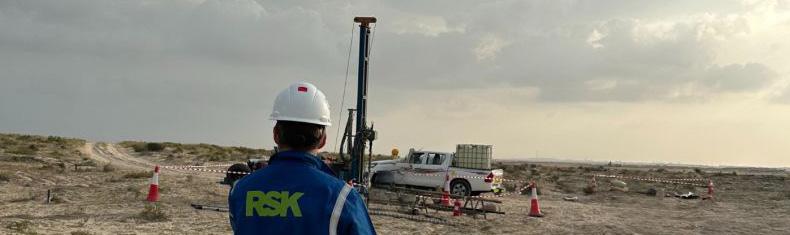
RSK Group
From fragmented services to one powerful, integrated offering

Louis Jacobs MEA Region Divisional Director at RSK Group
How is RSK Group thriving?
In the Middle East and Africa, RSK Group has gone from strength to strength, having harnessed market pressure into a growth springboard and expanded its regional oil and gas offering. Through strategically shifting to a one-group model that combines specialist technical specialism with local knowledge, presence and expertise, the business has moved away from fragmented bids and towards a coordinated offering for its clients. The result has been the deepening of strategic client relationships and securing of additional contracts across new geographies and diverse energy projects.
The challenge - With a global workforce of more than 17,000 employees, RSK Group is well regarded as a leading provider of multidisciplinary environmental, engineering, social and technical services. However, in the Middle East and Africa, the firm has encountered challenges in recent years. In seeking to strengthen and expand its regional oil and gas offering, the firm was confronted with challenges that have stemmed from an increasingly complex and demanding operating environment.
Between 2024 and 2025, multiple pressures converged. Clients faced tightening budgets, creating downward pressure on pricing, while simultaneously raising expectations around ESG performance, regulatory compliance and local content delivery. Energy projects themselves were also becoming more complex, requiring fully integrated solutions spanning environmental, engineering, HSSE and social disciplines delivered seamlessly and at scale. Winning work increasingly depended on the right balance of technical capability and strong long-term client relationships, with the ability to demonstrate consistent delivery across multiple geographies. This was particularly critical when working with major operators and national oil companies, where approval processes, cybersecurity requirements and vendor registrations present further barriers.
Meanwhile, regional market conditions were also complicated, spanning everything from foreign exchange volatility, regulatory change and intensifying competition in markets such as South Africa. Ultimately, RSK Group faced an abundance of pressures that were complicating already challenging bid
cycles. Meanwhile, internally, the breadth of RSK’s capabilities, while a strength, risked becoming fragmented if not effectively coordinated, with different parts of the business pursuing opportunities independently rather than as a unified offering.
The solution - RSK’s response was to fundamentally rethink how it could operate across the region more effectively, moving towards a more cohesive one group model. Rather than competing internally or pursuing fragmented bids, the focus shifted to presenting a single, coordinated offer to the market. At the heart of this transformation was a recognition that clients were no longer buying individual services, but confidence in delivery, compliance and local execution. To meet customer needs, RSK implemented a set of five interconnected strategies.
First, it established clear client ownership across strategic accounts, ensuring consistency in engagement and strengthening long-term relationships. Second, it developed bundled service offerings that combined environmental, social, engineering and HSSE capabilities into integrated solutions tailored to client needs. Third, it placed greater emphasis on local content and lender compliance, ensuring alignment with increasingly stringent regional requirements.
Fourth, the business prioritised export-led growth, expanding into new and adjacent markets to diversify its regional footprint. And fifth, it introduced tighter governance around registrations, account intelligence, case studies and cross-selling. This five-pronged strategy was brought to life through practical initiatives including coordinated account mapping, shared opportunity reviews and clearly defined contributor roles across bids and delivery. Rather than building new capabilities, RSK focused on better connecting the strengths it already had, including technical depth and existing client relationships.
The impact has been significant. Through this renewed approach, RSK has secured and expanded work across key markets including Iraq, the UAE, Tanzania, Uganda, Angola, Gabon and Ethiopia, while strengthening relationships with major clients such as bp, Total (EACOP), ADNOC, Shell and PUMA. Critically, its project portfolio now reflects repeatable, integrated delivery across complex, multidisciplinary scopes.
Financially, the results have also been significant, with revenues more than doubling between 2022 and 2024, from £796m to £1.86bn. More broadly, the business has built a stronger, more resilient pipeline, improved contract wins rates and enhanced its ability to deliver at scale. Indeed, through taking market
Story type
#people & competency (main category) #innovation
Benefits
► Massive financial growth, with revenues more than doubling from £796m to £1.86bn in two years.
► Deepened strategic relationships and an expanded footprint across key markets, including Iraq, the UAE and Uganda.
Key findings
For young people
► Be curious and adaptable, building technical and people skills to collaborate across disciplines, borders and culture.
For industry
► Prioritise integration over isolation by building delivery models that combine local presence with specialist strategic partnerships. For government
► Create transparent frameworks for investment and procurement to enable business investment and local job creation.
RSK Group at a glance:
Key products and services: multidisciplinary environmental, social, engineering, HSSE and technical services.
Main industries served: ► Oil and gas – 55% ► Conventional power – 5% ► Onshore renewable energy – 5%
Nuclear power – 0.8%
Offshore renewable energy – 0.8%
Hydrogen – 0.8%
Carbon capture – 0.8%
Energy storage – 0.8% ► Data centre – 0.8%
► Others (energy) – 30%
► Others (non-energy) : water, infrastructure, built and natural environment – 5%
Headquarters: Helsby, UK
Year established: 1989
Number of employees: 17,000
Revenue: £2.5bn
Revenue from exports: 30%
pressure and using it as a unifying force, RSK has not only strengthened its position in the Middle East and Africa, but also created a model for sustainable, integrated growth, aligned to its long-term 2030 strategy and the evolving demands of the global energy sector.

S3 ID
Fresh leadership and a reset exercise lay the foundations for the next chapter

How is S3 ID thriving?
Garry McCord Managing Director at S3 ID
Having confronted a period of strategic drift head-on, Rotherham-based digital safety technology specialist S3 ID is emerging from a deliberate transformation with a modernised technical platform, a diversified product offering and a clearer sense of direction. The company, which designs, manufactures and deploys integrated mustering, personnel tracking and access control systems for energy sector clients around the world, is targeting 50% revenue growth in 2026. This is a key goal as part of a structured one-, three- and five-year roadmap and reinvigorated commercial approach that is already opening doors in markets which haven’t been engaged for several years.
The challenge - Founded in 2003, S3 ID has built a strong international reputation for integrated safety systems in hazardous and highly regulated environments. With 100% of its revenue derived from exports across major oil and gas regions such as the Middle East, Asia and Australasia, the company has long competed on the strength of its fully integrated hardware and software platform, designed and built entirely in-house. That end-to-end ownership remains a genuine competitive differentiator in a market where multi-vendor complexity creates reliability risk.
Yet by the early 2020s, the business had begun to drift. Products had not evolved at the pace the market expected. Clients were increasingly demanding richer data, more sophisticated reporting and greater platform interoperability, and those expectations were not being fully met. The hardware offering, while technically excellent, had become expensive relative to a market growing more cost-conscious. The question was no longer whether change was needed, but how to shape it without destabilising a business built on precision engineering and hard-won trust.
The solution - The arrival of Garry McCord as Managing Director in 2025 provided the catalyst the business needed. Bringing a fresh perspective and a commercially minded approach, McCord initiated a thorough review of the company’s technical platform,
product strategy and market positioning, asking not just what S3 ID was doing, but what it needed to become.
The technical review centred on modernising the software architecture, moving towards more scalable systems and exploring how APIs could enhance integration capability and futureproof the digital offering. In parallel, the hardware strategy was reassessed – rather than maintaining a single premium-priced portfolio, the company began developing alternative, more cost-effective product configurations designed to serve the same core requirements at accessible price points. Crucially, this had to be done without compromising the reliability standards that define the brand. Certification requirements make hardware evolution slow by necessity, but the process is now firmly underway.
The reset has been shaped by direct engagement with clients. Conversations with customers in Singapore and Malaysia surfaced specific feedback on pricing and product fit, providing the external perspective needed to validate internal assumptions and refine priorities. That outward orientation has also driven a broader commercial push: a new Sales Director was appointed, the company’s website was overhauled to better communicate its capabilities, and LinkedIn activity was ramped up to raise the profile of the business and the people behind it.
Alongside this, S3 ID is investing in deeper partnerships with Telecom Systems Integrators, the intermediaries through which the company typically reaches EPCs, to ensure its integrated offering is better understood and more actively promoted through the channel. A new product is also in development for the existing market, adding further momentum to a pipeline that had previously stalled.
Internally, the transformation has had a galvanising effect. The team is energised by the challenge of reshaping the business, and there is strong alignment around the growth objectives set out in the roadmap. McCord is clear that the strategy is a living document, reviewed and adjusted continuously as market conditions evolve.

Story type
#transformation (main category) #resilience
Benefits
▸ Platform modernisation and scalable software architecture improved integration capabilities and long-term product competitiveness.
▸ Diversified hardware strategy and renewed commercial focus reactivated dormant markets and rebuilt the global sales pipeline.
Key findings
For
young people
▸ Work hard, stay curious, be kind and pursue your ambitions.
For industry
▸ Regularly review your strategy, be honest about challenges and keep adapting.
For government
▸ Protect UK energy security and engineering capability with a clear transition plan.
S3 ID at a glance:
Key products and services: personnel tracking, electronic mustering and access control systems.
Main industries served:
▸ Oil and gas – 100%
Headquarters: Rotherdam, UK Year established: 2003
Number of employees: 25
Revenue from exports: 100%
Overall, 2025 was a year of investment and repositioning. In terms of growing revenues in the coming period, the pipeline is rebuilding, engagement is returning in previously dormant regions, and the structural work that will support sustained performance is now in place. With a target of 50% revenue growth in 2026 and expanding ambitions in offshore wind and refinery environments alongside its core oil and gas base, S3 ID is well positioned to turn a period of honest self-examination into a platform for its next phase of growth.
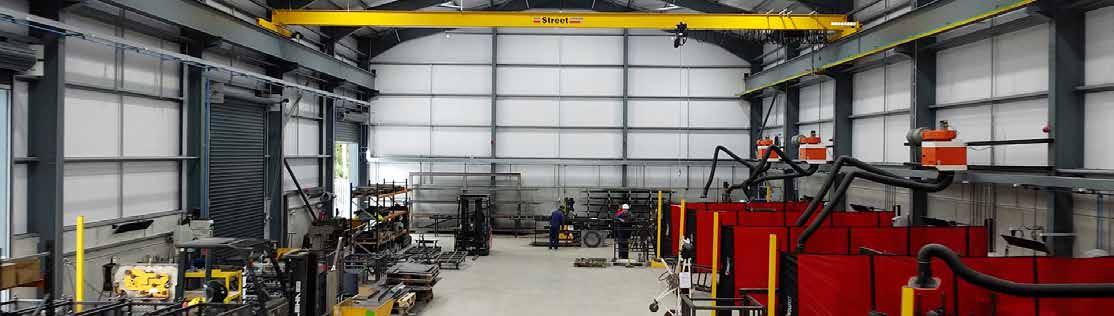
Safelift Offshore
From the quiet before the storm to record contract wins

Steven Simpson Managing Director at Safelift Offshore
How is Safelift Offshore thriving?
A year ago, Safelift Offshore was building for growth: investing in a new fabrication facility, restructuring around a dedicated projects team and steadily growing its renewables and export mix. The storm it was preparing for has now arrived. The Aberdeenshire lifting and handling specialist has secured the largest contract in its 30-year history, grown its renewables share from 20% to 40% of revenues, made its first entry into carbon capture, and is targeting revenue growth of around 50% in its current financial year.
The challenge - Safelift Offshore designs, manufactures and supplies mechanical handling and lifting equipment for the global offshore energy sector, serving oil and gas operators, wind farm developers, FPSOs and heavy lift vessels. Its offer ranges from its own DNV-certified and ATEX-rated equipment through to full mechanical handling packages assembled with carefully selected alliance partners – giving clients a single-source solution for greenfield projects from FEED through to completion.
The context for its current growth chapter is a UK market that has been genuinely difficult. Changes to offshore licensing policy slowed the steady flow of repeat orders from North Sea operators that had long anchored the business. With domestic opportunity constrained, the company faced a choice familiar to many UK energy SMEs: wait for conditions to improve or build for markets that were moving. Safelift chose the latter, and the groundwork laid over the previous two to three years, including the fabrication facility investment and the shift to a more project-oriented commercial model, meant it was positioned to act when opportunities arrived.
The solution - The payoff came in June 2025, when Safelift secured what is by some distance its largest ever contract – a £4.5-5m package for the Balwin4 & LanWin1 offshore wind substation project awarded through McDermott, an existing relationship the team had nurtured over two and a half years.
The contract is a strong illustration of Safelift’s packaged model – taking responsibility for the full mechanical handling specification, sourc-
ing and certification to save the end client significant time and coordination effort. One element of the delivery required Safelift to develop and manufacture a new davit crane product line, a first for the company, which has since expanded its product catalogue. Alongside the wind work, the company made its first move into carbon capture and utilisation, winning a contract on the Rosetti Marino Liverpool Bay CCU project. This connection with the client began with an existing relationship from previous work in Argentina and was developed with the support of EICDataStream intelligence. The CCU entry reflects a broader evolution in Safelift’s diversification strategy – offshore wind has been the primary renewables focus for several years, but hydrogen and carbon capture are now being incorporated alongside it.
Exports have been another area of deliberate acceleration. With 70% of revenues now coming from international markets, up from 42% the previous year, the company has been spending significantly more time on the ground in the Middle East, Vietnam and Malaysia. This has involved building relationships with the large EPC contractors that increasingly govern access to major projects in those regions. A Polish wind contract won through a Vietnamese connection illustrates how this networked, patient approach is beginning to generate results. Indeed, the company now holds approvals from major operators such as Total, Chevron, bp, ExxonMobil and Shell, and is actively targeting larger FPSO and wind farm substation projects across these markets for the next 12 months.
Internally, the new fabrication facility opened in May 2025 has boosted both production capacity and market credibility, with McDermott and TenneT both completing facility audits on site. A former graduate who first joined the business years earlier has returned to lead the new project delivery team, and additional roles in project engineering and documentation are being filled as the pipeline builds.
Currently, Safelift is targeting further large wind farm substation and FPSO contracts and is continuing to develop its presence in Europe, West Africa and Asia. The patience
Story type
#resilience (main category) #diversification #export
Benefits
▸ Diversification into renewables and international markets increased resilience, with renewables growing from 20% to 40% of the business.
▸ Major contract wins and export expansion strengthened revenue growth, positioning Safelift for a projected 50% increase in 2026.
Key findings
For young people
▸ The energy sector offers strong opportunities—stay curious, keep learning and explore different paths, including apprenticeships.
For industry
▸ Strong collaboration across the supply chain is essential, with greater focus on partnerships rather than price alone.
For government
▸ Support a balanced energy transition by maintaining domestic oil and gas alongside new energy to avoid industry decline.
Safelift Offshore at a glance:
Key products and services: mechanical handling, lifting equipment, rental solutions and bespoke engineered systems.
Main industries served:
▸ Oil and gas – 60%
▸ Offshore renewable energy – 40%
Headquarters: Aberdeenshire, UK Year established: 1994
Number of employees: 38
Revenue: £5.2m
required to play a long game in renewables, where project timelines run to years and certainty of award is never guaranteed, has been one of the defining tests of the strategy. The results of the past 12 months suggest the plan is now bearing fruit.

Engineered Handling and Lifting Solutions for the Global Energy Sector
Specialists in lifting, mechanical handling, container, and access solutions for the energy industry.
We design, manufacture and supply mechanical handling and lifting equipment for the global offshore energy sector, serving a wide range of operators, developers, vessel owners, and service companies.
DESIGN MANUFACTURE
SUPPLY
HIRE SERVICE INSPECTION

SB Lawyers
Turning Vision 2030’s legal upheaval into a platform for growth
Dr. Bader Al Busaiyes Founder & Managing Partner at SB Lawyers
How is SB Lawyers thriving?
SB Lawyers has repositioned itself from a traditional local practice into a strategic business partner for international clients navigating Saudi Arabia’s rapidly evolving legal landscape. By moving away from generalist, price-driven work and into high-value niche sectors including aviation, maritime, fintech and renewable energy, the Al Khobar-based firm has built a distinctive offering in one of the world’s most dynamic regulatory environments, achieving 9% revenue growth in 2025 with 15% targeted for 2026.
The challenge - Thanks to its proximity to the Kingdom’s major industrial players, SB Lawyers has long positioned itself as a critical legal gateway for the oil and gas industry in Saudi Arabia. Yet from 2023 onwards, the firm found itself navigating a period of unprecedented disruption. Saudi Vision 2030 brought sweeping legislative reform – most significantly the introduction of the Civil Transactions Law and New Companies Law, which shifted the Kingdom’s legal foundation from uncodified Sharia principles to a structured civil law system.
The pace of change was relentless and required a rapid re-education exercise across the firm. At the same time, a saturated market of more than 1,800 registered law firms was driving intense fee compression, while recent regulatory changes allowed foreign legal practices to operate in the Kingdom without a local partner for the first time. This brought major international practices into direct competition with established local entities.
The solution - Faced with a choice between competing on price or competing on expertise, SB Lawyers chose the latter and has not looked back since.
In doing so, the firm undertook a repositioning, shifting from reactive legal advisors to proactive strategic business partners. Key to this has been focusing on the areas where deep local knowledge and niche specialisation could command greater value.
Diversification into new sectors has been central to this. While oil and gas had always formed the core of the firm’s work, SB Lawyers
expanded into areas such as aviation, where it developed expertise in General Authority of Civil Aviation compliance. In maritime, it now handles complex contract disputes and debt recovery. In fintech and venture capital, the firm is capturing the emerging new economy of Saudi start-ups, and in renewable energy, it is aligning with the Saudi Green Initiative. Insolvency and bankruptcy services have also been developed to support businesses navigating economic uncertainty – a timely addition given the volatility of the period.
Crucially, the firm also enhanced its dispute resolution capability. With the rise of the Saudi Center for Commercial Arbitration, SB Lawyers has moved decisively toward Alternative Dispute Resolution, recognising that international clients require the speed and confidentiality of Alternative Dispute Resolution (ADR) over traditional litigation in high-value commercial matters. This shift reinforced the firm’s positioning as a practice that understands international commercial expectations as well as Saudi law.
Alongside this, SB Lawyers pursued an extensive programme of international integration. Active membership in more than 30 international legal associations has extended the firm’s reach across borders and enabled it to handle complex cross-border transactions, acting as the essential local bridge for international firms seeking a grounded, experienced Saudi partner. This network has proven particularly valuable as foreign direct investment into the Kingdom has accelerated, with the firm well placed to guide new entrants through the specific cultural and regulatory demands that global practices unfamiliar with the Saudi market frequently underestimate.
Internally, the firm has embraced digital transformation and AI integration. AI-driven tools now handle document review, contract management and regulatory monitoring – scanning evolving Saudi legislation and judicial precedents to provide faster synthesis of new laws. Administrative workflows have been automated as well, which is reducing human error and freeing the firm’s legal team to focus on high-value strategic work rather than process. The results to date reflect a firm that has turned disruption into differentiation. Rather than being undermined by the entry of global law firms, SB Lawyers has positioned itself as their preferred local partner, offering the onthe-ground knowledge and sector-specific expertise that larger generalist practices cannot replicate. Clients now include an Aramco subsidiary, GCC state-owned companies and ma-

#service & solutions (main category)
Benefits
► Achieved 9% revenue growth in 2025 with a 15% target for 2026 by repositioning as a strategic business partner for international clients.
► Positioned as a preferred local partner for global law firms by diversifying into highvalue niche sectors and integrating AI.
Key findings
For young people
► Develop deep specialisation alongside broad knowledge, prioritise digital fluency and build a global network to become a strategic problem-solver.
For industry
► View evolving regulations as a growth roadmap, build partnerships and overcome digital inertia by scaling technology.
For government
► Promote local professional services as a key national export by including them in trade missions and creating a global entry programme.
SB Lawyers at a glance:
Key products and services: legal consultancy services.
Main industries served:
► Oil and gas – 20%
► Others (energy) – 15%
► Others (non-energy) : retail, construction, maritime, health, petrochemicals – 65%
Headquarters: Al Khobar, Saudi Arabia
Year established: 2006
Number of employees: 10
Revenue: £790,000
jor international oil and gas operators. Looking ahead, the firm is targeting continued diversification into clean energy and non-energy sectors, with growth ambitions extending across the Middle East, Europe and Asia.
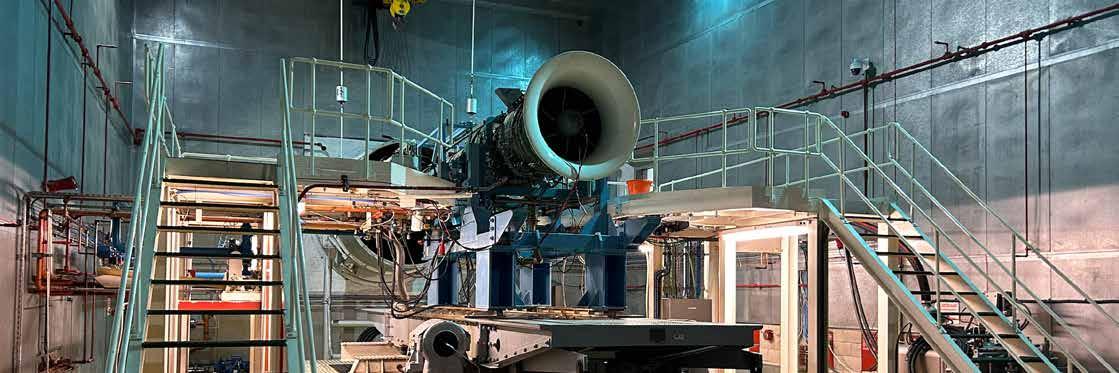
Score
From cultural reset to record revenues in three years
Paul Stein Managing Director of Gas Turbines at Score
How is Score thriving?
Score’s Gas Turbines division has doubled its revenue and trebled its EBITDA since 2022, growing from 150 to 260 people and setting new monthly revenue records as recently as December 2025. The Peterhead-headquartered division is part of the wider Score Group, a 2,300-strong international engineering specialist in valves, emissions management and turbomachinery, and has achieved this through cultural transformation, lean process investment, strategic acquisition and a relentless focus on people as the primary driver of performance.
The challenge - When Paul Stein joined as Managing Director in 2022, Score’s Gas Turbines division had the technical credentials but not the culture to match its growth ambitions. The division specialises in repair, overhaul and engineering support of industrial gas turbine components, with OEM certifications from multiple manufacturers and a client base spanning oil and gas, power generation, defence, aerospace and mining. The order book was growing, but processes were inefficient, communication was poor and the team lacked the shared sense of direction and accountability that sustained performance demands. The organisation was not yet equipped to capitalise on the opportunity in front of it.
The solution - The transformation began with culture. Stein brought in an external consultant in 2022 to work on soft skills and leadership in a deliberate signal that this was not going to be a cosmetic exercise. Two guiding principles emerged from the process and have since been embedded across the business: ‘assume positive intent’ and ‘better never stops’. The first established a baseline of trust. The second made continuous improvement an expectation.
The infrastructure for that improvement was built methodically. An anonymous feedback mechanism was introduced for process improvement suggestions, with every submission reviewed and outcomes shared at regular town halls.
On top of that, fortnightly roundtables gave every team member direct face time with leadership, aligning messaging and generating ideas
at all levels. A Future Leaders programme was also developed to build the next tier of management from within. Physical restructuring of staff locations in the workshop improved day-to-day communication in ways that process changes alone could not. The result was a team that began to take genuine ownership, both of their own roles and of the metrics and outcomes that those roles fed into.
Lean process investment followed alongside. Bottlenecks were identified and removed, and an ERP system was integrated across the business, with AI tools for purchasing and planning in development. Capital investment in equipment has run to between £3.5m and £4m per year, with facilities in Peterhead being repositioned as a Centre of Excellence for manufacturing. In Houston, the company is looking to double its capability to serve US customers locally.
On the commercial side, the sales approach has shifted from reactive to proactive. Structured targets, account management and a broader strategy to widen the OEM relationship base have brought new clients into the portfolio.
Meanwhile, a strategic acquisition of a product line, which gave Score ownership of the IP, has opened a significant new relationship with a major turbine OEM that has since opened further doors. Elsewhere, the acquisition in 2025 of Drake Controls, a premium Woodward channel partner with approximately 60 staff, made Score a platinum-level Woodward distributor and significantly broadened the division’s controls offering. Woodward products are now available to the turbomachinery market through Score’s global network.
Recruitment has also required a creative response. As demand for specialised welding skills continues to grow, the division has supplemented its local workforce through international recruitment, with more than 40 highly skilled employees joining from the Philippines, a country well known for its strong welding expertise.
In parallel, the apprenticeship programme has expanded from 10 apprentices to between 40 and 50, reflecting Score’s continued investment in developing the next generation of turbomachinery engineers. During this period, revenue has doubled, EBITDA has trebled and the division has beaten its own internal targets for three or four consecutive months as of late 2025. December, historically a quiet month due to high annual leave, was a record. Score’s parent company, SCF, cited the Gas Turbines division as a flagship business at its annual

Story type
#scale up (main category) #culture
Benefits
► Doubled revenue and trebled EBITDA since 2022, beating internal targets and setting new monthly revenue records.
► Grew the workforce from 150 to 260, while expanding the apprenticeship programme and international recruitment.
Key findings
For young people
► Ensure a managed transition that supports both oil and gas and renewables, providing the certainty to maintain a strong UK supply chain. For industry
► Ensure your people are motivated, on board and understand business’s strategic direction. For government
► Embrace the energy sector as a valuable learning environment that offers opportunities to develop skills and transition across industries.
Score at a glance:
Key products and services: engineering specialist focused on valves, emissions management and gas turbine services.
conference. The ambition now is for the Gas Turbines division to reach the current size of the entire Score Group within the next few years – a target that, three years ago, would have been difficult to visualise.
Score (Italy)
Story type
#resilience (main category) #export #service & solutions
Benefits
▸ Building a local, service-led operation helped Score secure framework agreements with major Italian operators and achieve 45% order intake growth in 2025.
Paolo Buono Head of Continental Europe at Score
How is Score thriving in Italy?
Score’s thriving operations in Italy are a powerful example of how the strategy, resilience and an appreciation for local requirements can turn a challenging market into a cornerstone of long-term business success. With a focus on delivering a service-led, partnership approach with significant competitive advantages beyond price, the regional business has secured its position in a crowded market, with consistent growth in Italy having become vital to Score’s wider European and global operations.
The challenge - Score’s presence in Italy, established in 2006 as part of a wider ambition to expand into Continental Europe, has become a cornerstone of its European growth story. Today, it is an established engineering specialist focused on valves, emissions management and actuators, and plays a key role in supporting Score’s operations in the Netherlands and Denmark. However, building a sustainable presence in Italy was far from straightforward.
Upon Score’s entry, the Italian valve market was already mature, highly competitive and deeply entrenched, with established trading practices and long-standing supplier relationships. Score, at the time, had limited brand recognition in Italy and Continental Europe compared to its stronger presence in other regions.
The firm faced several challenges. Customer procurement decisions were largely driven by cost, with valves typically supplied by generalist traders offering limited technical support or aftercare. This created a race to the bottom on price, leaving little room for differentiation, and making it difficult to communicate the value of a more specialised, service-led approach.
Internally, Score recognised that it could not simply replicate the model that had proven successful elsewhere. Further, structural market differences were also significant. While its successful UK operations were largely focused on offshore upstream activity, the Italian market was predominantly downstream, with different technical requirements, regulatory pressures and customer expectations.
The solution - The turning point came through a locally driven, insight-led approach spearheaded by Paolo Buono, who today stands as Score’s Head of Continental Europe. Having trained within Score in Peterhead, Scotland, Paolo felt early on that the opportunity in Italy could only be realised through a stronger local presence and a deeper understanding of the market.
Therefore, in 2006, he relocated to Italy in the aim of building the regional business from the ground up, setting out to identify potential clients, engage directly with local trades and EPCs, and develop an understanding of local market nuances.
Crucially, this insight informed a deliberate shift in strategy. Rather than applying Score’s existing model, the team adapted its approach to meet the specific needs of the Italian market.
In contrast to competitors focused on price, Score positioned itself as a service-led partner. The emphasis was on delivering tailored, site-specific solutions, backed by technical expertise and reliability. Rather than competing solely on price, Score focused on helping customers understand the longterm operational and commercial benefits of a more specialised, service-led approach.
The early years proved to be a challenge, with slow traction and limited immediate results. However, with the team doubling down on its approach, listening to clients and understanding gaps in existing service provision, the results eventually started to come.
Today, Score has secured framework agreements in Italy with all major operators in its market, having grown to a team of 24 employees and achieved stable, profitable growth, including a 45% increase in order intake in 2025 compared to 2024.
Beyond local successes, the Italian division has also become a key strategic asset and the team in Italy now serves the wider European market. It’s a true success story marked by resilience and perseverance. In Italy, Score’s commitment to long-term value over short-sighted, cost-driven offerings is now being recognised, alongside its technical excellence, local insight and the expertise of its people.
Key findings
For young people
▸ Stay curious, invest in learning and focus on long-term development rather than immediate rewards.
For industry
▸ Long-term partnerships, technical expertise and local presence can create stronger value than competing purely on price.
For government
▸ Reducing bureaucracy around hiring and employment in Italy would help companies scale faster and invest more in people.
Score at a glance:
Key products and services: engineering specialist focused on valves, emissions management and gas turbine services.
Main industries served:
▸ Oil and gas – 62%
▸ Conventional power – 8%
▸ Others (non-energy): mining, defence and aerospace – 30%
Headquarters: Peterhead, Scotland
Year established: 1982
Number of employees: 2,300
Revenue: £450m
Revenue from exports: 70%
Select Offshore
Chartering planes, crewing vessels and quadrupling revenue as a professional problem solver

Mike Tann
Managing Director and Co-Founder at Select Offshore
How is Select Offshore thriving?
Select Offshore has grown revenue from £10.3m in 2021 to £44.5m in 2025, a more than fourfold increase driven by a pivot from transactional recruitment to end-to-end workforce delivery across the offshore energy sector. The Essex-based business has won a Queen’s Award for Enterprise in International Trade, a King’s Award in 2024 and a Sunday Times Top 10 Best Places to Work ranking, while growing its contractor base towards a target of 2,000 and expanding its sector mix with offshore renewables now accounting for 50% of revenues.
The challenge - Founded in 2013, Select Offshore is a specialist workforce solutions provider for the offshore energy sector, placing marine, subsea and wind personnel, from specialists to fully managed teams via its TotalCrew service. The business operates globally with 82% of revenues coming from export markets and clients spanning Tier 1 EPCs, vessel owners and operators across oil and gas, offshore wind, nuclear, energy storage and data centres. As the business scaled internationally, it encountered a period where global mobility became more complex and less predictable. COVID-19 restrictions and changes to UK–EU labour access exposed how fragile traditional mobilisation models could be and a realisation for a business competing in a market where most providers looked the same on paper, the question was whether these disruptions were a threat or an opportunity to demonstrate something different.
The solution - Select Offshore’s response to COVID-19 came quickly and carried real commercial risk. One of its clients was running operations in Trinidad and Tobago when the government closed the country’s borders for 18 months. With 10 people on its own staff at the time, Select Offshore identified marine vessels in the region, built a crew change proposal involving the Ministry of National Security and arranged a two-week quarantine programme in Amsterdam, complete with doctors conducting temperature checks and PCR testing at a private terminal.
A chartered Boeing 787 flew crew into Trinidad. What began as a one-off emergency solution
became a monthly charter operation running for the duration of the border closure. Indeed, such was the impact of the operation, a Queen’s Award for Enterprise in International Trade was received in 2020. It marked a turning point for the business, with a lasting impact on how it operates today. Rather than positioning itself as a recruitment agency that fills roles, Select Offshore began investing in the infrastructure to solve the problems that others treat as somebody else’s responsibility. Legal counsel was brought inhouse. A compliance team was built to navigate the growing complexity of global mobility, particularly Brexit’s impact on sourcing and mobilising European crew for UK projects. New technology and systems were integrated to support scale.
The first full TotalCrew project win came in 2022. A Middle East based jack-up vessel owner securing a five-year contract on a UK wind farm needed a partner capable of providing over 60 UK-compliant crew with full vessel management responsibility. Select Offshore navigated the visa processing complexity, maintained continuity of senior crew critical to operational efficiency and took end-to-end responsibility for crewing the vessel throughout.
Further long-term contracts followed. A Liverpool Bay project win and a three-year contract in Singapore each reinforced the value of the full-project model over transactional placements, and the business now has over 1,000 contractors active across its global network. Select Offshore has grown to deliver a broader range of workforce solutions across multiple sectors, and continues to provide innovative solutions to support the challenges of navigating the global mobilisation of offshore and onshore workers.
While continuing to build on its established offshore expertise, the business now also supports onshore projects, operating under the wider Select umbrella. Today, key focus areas include marine, subsea and wind, with data centres emerging as an additional area of growth. Revenue grew 11% in 2025, with 30% targeted for 2026 as Project 2,000, the ambition to reach 2,000 active contractors, builds momentum. Meanwhile, a net promoter score of 81 among contractors in 2025 and recognition as Recruitment Agency of the Year in 2024 reflect a strong people-first culture. And the future looks bright. Select Offshore’s internal career progression framework, which has seen individuals progress from apprentice to divisional manager, reflects a svustained investment in growing capability from within. For a business with bold growth targets over the coming years, that pipeline of home-grown tal-
Story type
#scale up (main category) #collaboration #resilience
Benefits
► Quadrupled revenues to £44.5m by pivoting to end-to-end workforce delivery, with renewables now generating 50% of income.
► Scaled to 700 active contractors while earning a King’s Award and maintaining an award-winning, people-first culture.
Key findings
For young people
► Don’t rush: your 20’s are for learning, your 30s are for earning.
For industry
► Ensure you have the right team members in place and align them with your strategy before you start working on a project.
For government
► Reconsider the policy on new oil and gas licenses; maintaining support for renewables does not require an either/or approach.
Select Offshore at a glance:
Headquarters: Billericay, UK Year established: 2013
ent is critical. At the same time, Select Offshore continues to evolve, embracing AI and automation to drive efficiencies while remaining firmly committed to a people-first approach that preserves the personal relationships and human touch at the heart of its service.
SGS
Moving upstream to change the face of quality assurance in wind
Story type
#service & solutions (main category)
Benefits
► Leveraged a global network of over 2,500 facilities across 115 countries to successfully embed APQP4Wind quality frameworks into multi-country supply chains.
How is SGS thriving?
Soumen De
Global Technical Consultant at SGS
SGS is strengthening its leadership in the wind sector by combining its trusted traditional inspection services with a strategic move upstream. At SGS, the company introduced structured quality risk management to help suppliers prevent defects before production begins. This proactive approach enhances SGS’ core inspection activities by building quality in early and verifying it through rigorous on-site inspection. SGS delivers a comprehensive assurance model that improves consistency, reduces rework, and reinforces stakeholder confidence across the entire wind supply chain.
The challenge - Global wind expansion is accelerating, bringing increased complexity and variable supplier maturity across international supply chains. As the wind industry’s capacity grows and timelines tighten, inconsistencies in manufacturing quality can lead to delays, rework and elevated warranty exposure. Lenders and investors are placing greater emphasis on traceability, assurance, and long-term reliability.
For SGS—an organisation with a long heritage in inspection and testing—these shifts highlighted the need for a more integrated approach. Inspection remains essential, but clients also require proactive measures to prevent issues before they reach fabrication. SGS identified an opportunity to build on its core strengths and deliver a more comprehensive model that supports both early quality governance and precision inspection throughout the supply chain.
The solution - SGS introduced APQP4Wind as an extension of its existing service offering, enhancing upstream quality planning while maintaining the vital role of traditional inspection. Adapted from high discipline sectors such as automotive, the APQP4Wind framework strengthens supplier qualification, harmonises production controls and embeds risk mitigation before manufacturing begins.
When combined with SGS’ established inspection expertise at fabrication sites, the result is a seamless, end-to-end quality as-
surance model. Suppliers gain structured guidance early in their processes, and clients benefit from both proactive risk prevention and trusted independent verification where it matters most.
SGS implemented its enhanced model through a structured, phased roll-out. Global and regional leadership aligned on a clear strategy, followed by capability building across technical teams and regions. Comprehensive training, harmonised methodologies and cross-regional collaboration ensured consistent delivery across multi-country supply chains.
supply
As with any transformation, change management was essential. Inspection teams expanded their scope while retaining their core role, integrating new risk-prevention practices alongside their established responsibilities. Clear communication with clients ensured that APQP4Wind complemented existing systems rather than competing with them.
SGS’ longstanding presence in the wind sector—supported by robust historical data, strong OEM relationships and deep technical expertise—provided a solid platform for this evolution.
SGS has strengthened its position in the wind energy ecosystem by offering a unified assurance approach that supports clients from early planning through final inspection. Traditional inspection continues to safeguard the quality and compliance of critical components, while APQP4Wind enhances upstream control, reducing variability and improving supplier performance.
This combined model increases project reliability, supports bankability and provides stakeholders with greater confidence in both the development and operation of wind assets. As the sector expands across regions including India, China, Australia and Vietnam, SGS is well positioned to support emerging supply chains with a proven, scalable assurance framework—built on the same principles of independence, accuracy and quality that define the SGS brand.
► Utilised 145 years of inspection expertise and a team of 100,000 professionals to shift the wind energy sector from reactive testing to defect prevention.
Key findings
For young people
► Look beyond the technology itself. Success in the wind sector requires a deep understanding of the entire system, including the risks and responsibilities of all players involved.
For industry
► Recognise that risk governance, rather than turbine technology, is the industry’s real constraint. Elevate quality from a mere cost centre to a board-level priority.
For government
► Mandate structured quality governance frameworks for major publicly funded wind projects. Incentivise suppliers to adopt these systems to protect public investment.
SGS at a glance:
Key products and services: inspection, testing, certification and technical assurance for industrial assets and infrastructure.
Main industries served:
► Energy – 25%
► Energy (non-energy) – 75%
Note: “SGS does not publish Energy
Headquarters: Baar, Switzerland
Year established: 1878
Number of employees: 100,000
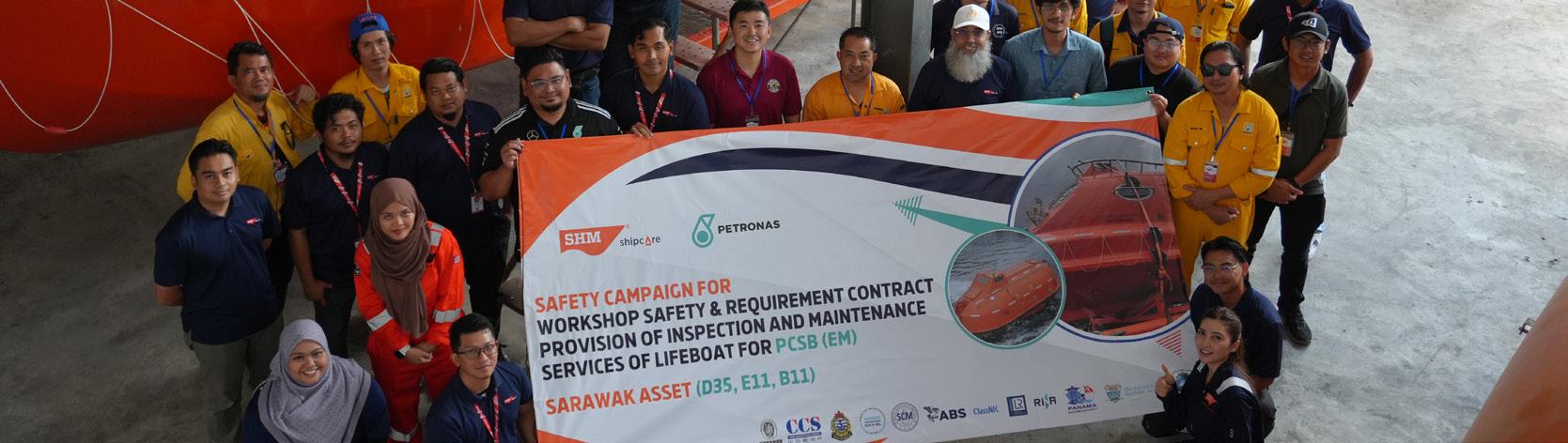
SHM Shipcare Malaysia
Recognising repeat business as the ultimate endorsement
Datuk Huzefa Zainuddin Executive Chairman at SHM Shipcare Malaysia
How is SHM Shipcare Malaysia thriving?
SHM Shipcare Malaysia’s story is one of resilience, discipline, and strategic maturity in a demanding maritime environment. Despite the rising tide of industry pressure, the firm has surmounted significant challenges and realised significant growth by strategically strengthening service capability, improving margins, enhancing leadership visibility, and building long-term customer trust. In a sector where safety, readiness, and reliability matter most, SHM has positioned itself not just to survive market challenges, but to grow through them, and thrive beyond them.
The challenge - Serving as the Group’s Southeast Asia headquarters, SHM Shipcare Malaysia provides maritime services spanning marine, offshore, ship care, safety, and compliance-related support to clients across the region.
Over the years, the firm has established a reputation as a being a true solutions partner to its clients. Yet despite past successes, the firm has been faced with several challenges in recent times.
By its own admission, the market hasn’t been easy for SHM Shipcare Malaysia in the last few years. Externally, the firm has had to navigate cost pressures, tighter compliance requirements, increasing competition, rising customer expectations for faster turnarounds, and stronger demand for dependable technical support.
Internally, it has also encountered hurdles. As the firm has grown, it started to recognise that technical capabilities only formed part of what made a successful entity. Long term, the firm knew it would need stronger internal structuring, sharper positioning, better market visibility, and clearer alignment across business development, operations, and support functions. These would form the foundations for the company to continue to operate as a trusted maritime solutions partner, rather than simply being a capable service company.
It is for these reasons that the SHM sought to change strategic direction. It was a deliberate a move. By opting to make proactive, positive improvements, the firm would be able to position itself for long-term regional growth. Conversely, standing still would not mean stability – in a difficult market, it would lead to decline.
The solution - The crux of SHM’s strategy was simple: strengthen the firm’s core, while preparing the business for broader growth.
This was enacted in several crucial stages, the first of which centred around reinforcing the firm’s critical maritime services – particularly in areas where safety, compliance and operational readiness are essential. For any firm operating in a sector where trust is built through a shared understanding of the seriousness of the work, this is crucial.
Second, SHM opted to place greater emphasis on its solutions-driven approach. Rather than marketing its services individually, the firm sought to explore how it could reposition SHM as a broader maritime support partner with the capability to serve various client needs.
Thirdly, the firm also sought to expand its overall visibility and market presence. It recognised that while a company might have the best skills and best offering in the market, that can mean very little if the market clearly does not understand its value. Without visibility, growth will always be limited. So, SHM worked to improve how it presents itself, how it engages clients and how greater confidence could be built in the SHM brand.
In addition, improving internal alignment was also seen as vital. For SHM, successful growth is not defined by simply winning more business, but by having the people, structure, communication, and discipline to deliver consistently.
In every sense, the company has undergone a significant strategic overhaul, reinforcing its offering, emphasising its solutions-led offering, expanding its market presence and structuring internally. It’s been a significant undertaking, yet one that has allowed the firm to leverage market pressures as a catalyst for improvement, becoming more focused, more trusted, and more futureproofed.
SHM has strengthened in both substance and perception. Commercially, it has seen stronger momentum and improved positioning. Operationally, it has improved in terms of readiness and coordination. From a brand and leadership perspective, the firm has become clearer, more visible, and more confidently represented in the market.
The results speak volumes. From a margin perspective, SHM has shown an overall positive upward trend from 2019 to 2024, with an estimated increase of approximately 18% to 25% overall across the period, subject to final management confirmation. This is despite the impacts of the pandemic period, which resulted in widespread economic contraction and a slow recovery.
Story type
#service & solutions (main category)
Benefits
▸ Margin improvement of ~18–25% from 2019–2024, despite pandemic disruption.
▸ Higher customer trust and repeat business driving more stable long-term growth.
Key findings
For young people
▸ Start with humility, discipline and consistency.
For industry
▸ Do not confuse activity with progress. In difficult times, companies succeed not because they are busy, but because they are clear, disciplined and trusted.
For government
▸ Continue strengthening Malaysia’s position as a maritime and offshore hub by improving visibility, support and international growth access for capable local companies.
SHM Shipcare Malaysia at a glance:
Key products and services: marine services, offshore support, ship care, safety and compliance solutions.
Main industries served:
▸ Oil and gas – 50%
▸ Others (non-energy): marine servicing — 50%
Headquarters: Selangor, Malaysia
Year established: 2014
Number of employees: 56
Revenue: £2.9m
From 2022 onwards, the firm’s growth trajectory has become stronger and more encouraging, reflecting a healthier recovery, improved market activity, and better operational positioning. However, success for SHM is not measured simply by financials, but also by customer trust, repeat opportunities, margin improvement, stronger demand, market confidence, and the company’s ability to sustain growth while maintaining standards.
Having found that customers have continued to trust them with work that makes a pivotal difference, SHM has obtained what it considers to be the ultimate endorsement from numerous clients, setting up for longterm success moving forward.
Siemens GB&I
Connecting the hydrogen supply chain from molecular modelling to grid-scale demonstration
Andy Lane
Hydrogen Lead at Siemens GB&I
How is Siemens GB&I thriving?
Siemens’ UK hydrogen team has built a dedicated strategy assembling a supply chain collaboration model and supporting the development of technologies that are now reaching real-world demonstration. A trial at Centrica’s Brigg Energy Park undertaken in 2025 was an important milestone. The UK’s first use of hydrogen to decarbonise peak power generation supplying electricity directly to the grid, it has provided crucial evidence supporting hydrogen as a viable fuel source for businesses.
The challenge - Despite significant ambition and government support, the UK hydrogen industry has struggled to turn pipeline into projects. Final investment decisions have been delayed, planning timelines have stretched, and the supply chain has remained fragmented, with machine builders, electrolyser manufacturers, compression specialists and control system providers each working in relative isolation. Siemens had seen this dynamic first-hand – in the early phase of the UK’s first wave of green hydrogen projects, it offered components rather than complete solutions, and some EPCs went overseas for integrated support rather than assembling it domestically.
The solution - The team responded with a dedicated hydrogen strategy and a clear conviction that the supply chain’s fragmentation was the opportunity. By connecting the value chain digitally and collaborating upstream with developers and Siemens, it can help projects move faster and reduce the risk that made developers cautious about committing.
The relationship with HiiROC, which began in 2020, is the clearest illustration of how this works in practice. HiiROC has developed Thermal Plasma Electrolysis (TPE), a proprietary hydrogen production process that uses around a fifth of the electricity required by conventional water electrolysis, produces no CO2 and generates solid carbon as a commercially valuable by-product. The technology is modular and designed to work within existing infrastructure, making it particularly relevant for industrial decarboni-
sation and distributed energy applications. Siemens’ involvement spans the full technology stack. It began with molecular modelling, building a digital twin that simulates the behaviour of the hydrogen molecule through HiiROC’s process and feeds into the control system. From there, Siemens provided specialised power supply equipment designed to handle the arc fluctuations inherent in the plasma process, alongside a complete control and automation system and a cybersecurity framework meeting the robust standards required for hazardous industrial environments. The Siemens Xcelerator platform, which connects hardware, software and services into an integrated digital thread, underpins the entire architecture.
Mike Plant, Head of Engineering at HiiROC, described the collaboration: “Partnering with Siemens has allowed us access to a wide product range of solutions for the hazardous and demanding environment we operate. Not only that but the support and industry-leading knowledge Siemens has been able to provide on topics such as cybersecurity and software development is crucial to the product development and future upscale and production of our technology, which ultimately makes hydrogen an economically sustainable fuel source for millions of businesses worldwide.”
The Centrica trial, completed in September 2025 at the Brigg Energy Park in North Lincolnshire and supported by the Net Zero Technology Centre, demonstrated HiiROC’s TPE-produced hydrogen blended at 3% into a gas-fired peak power plant in a one-hour live trial. The result confirmed that existing gas infrastructure can operate on a hydrogen blend and deliver low-carbon electricity to the grid – a proof point with implications for the UK’s fleet of plants that provide flexible grid capacity at times of high demand.
Alongside the HiiROC work, Siemens has relationships with organisations such as the Manufacturing Technology Centre, Strathclyde Institute and the UK Atomic Energy Authority, spending time developing technologies and bringing ideas to the point where they can support R&D through
Story type
#collaboration (main category) #culture #digital & AI #innovation #optimisation
Benefits
▸ Connected hydrogen developers, OEMs and operators through a fully integrated digital and industrial solution.
▸ Supported hydrogen scale-up through digital modelling, automation and supply chain collaboration.
Key findings
For young people
▸ Engineering offers the chance to work on technologies shaping the future of energy.
For industry
▸ Hydrogen projects require a more connected and collaborative supply chain approach.
For government
▸ The UK hydrogen sector needs stronger support for local supply chains and integration.
to serial production. An expert hydrogen team has been established, with specialists supporting developers and owner-operators across different regions. HAR1 project specifications have been won, and HAR2 engagement is under way.
The broader lesson Siemens draws from this work is about collaboration. Hydrogen will not scale if each part of the supply chain works in isolation. Connecting machine builders, developers, compression specialists and end users through a shared digital thread is essential for hydrogen technologies to cross from demonstration into deployment at a meaningful scale.
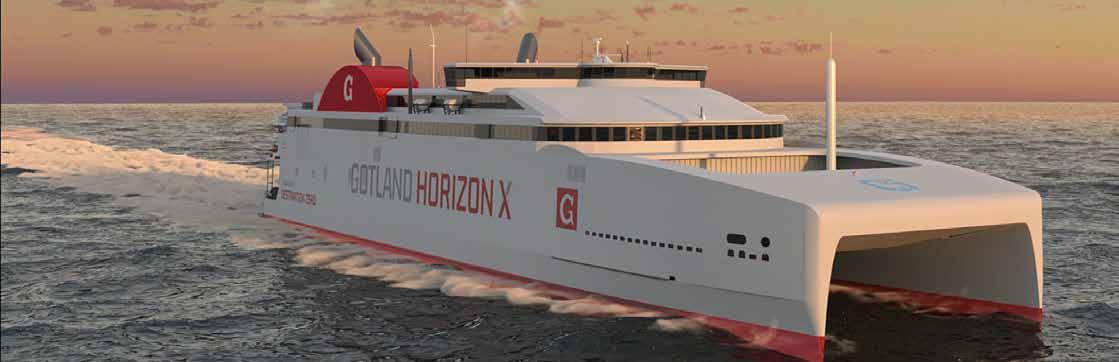
Siemens Energy (Lincoln)
Building the world’s first hydrogen-ready fast ferry propulsion system

Michael Welch
Industry Marketing Manager at Siemens Energy (Lincoln)
How is Siemens Energy (Lincoln) thriving?
When a Swedish ferry operator set out to decarbonise its island crossings without committing to a single fuel pathway, Siemens Energy’s Lincoln site delivered a solution that had not previously been implemented in this configuration. The turbine order was secured in March 2025, shipyard construction is now under way, and further inquiries have since been received from around the world who are interested to learn more about what Lincoln has achieved on this project.
The challenge - Siemens Energy’s Lincoln facility is the company’s global centre of excellence for small-to-medium industrial gas turbines, covering the full lifecycle from design and manufacturing through testing and servicing for units ranging from 5 to 15MW. With 1,400 employees and a significant share of output exported worldwide, Lincoln’s SGT-series turbines are known for class-leading reliability above 99% and the ability to blend up to 100% hydrogen by volume.
The project that would test those capabilities to their limit began with a Swedish ferry operator seeking zero-carbon crossings between the Swedish mainland and its islands. Battery technology was ruled out early – crossings exceed three hours, beyond the viable range for battery-electric propulsion at the required capacity. Hydrogen was the obvious alternative, but supply infrastructure at the volumes needed was not yet available. The operator needed a solution that could begin operations on available fuels and transition progressively toward hydrogen as infrastructure matured, all without a major refit. No such propulsion system existed.
The solution - The Lincoln team had been exploring marine applications for its gas turbines since 2016, identifying the sector as a potential avenue for diversification beyond its core industrial and oil and gas client base. That work gained fresh momentum in 2019 through the EU-funded HyflexPower project examining operation on 100% hydrogen and hydrogen/natural gas blends, which brought Lincoln’s capabilities to the attention of the ferry operator. Initial meetings took place in 2021, and over the following year the concept was refined and a shipyard selected.
Keiren Lake
Corporate Account Manager at Siemens Energy (Lincoln)
The solution that emerged is highly innovative. A combined-cycle gas turbine propulsion system has been engineered to run on LNG from day one, with the ability to switch progressively to bioLNG, methanol, advanced biofuels and ultimately hydrogen as each becomes commercially available at scale – all using the same powertrain and without the need for major retrofitting. This fuel flexibility is central to the operator’s business case. With energy prices volatile and emissions regulations tightening, the ability to switch to whichever emissions-compliant fuel is most cost-effective at any given time provides long-term resilience that a single-fuel solution could not offer. The system also meets IMO Tier 3 NOx requirements as required, without the large-scale retrofit that compliance would otherwise demand.
Delivering on the concept required close collaboration across multiple organisations and geographies. The ferry is being built by Austal at its Philippines shipyard, with the steam turbine element supplied from Italy and combined-cycle, electrical and automations system integration led by Siemens Energy’s Norway team, drawing on its experience in marine as well as Siemens Energy’s experts on combined cycles around the globe. Within Siemens Energy, the project has brought together multiple business entities across gas turbine, electrical, controls and systems integration disciplines, with the Lincoln team coordinating the complete scope from turbine to shaft power.
The engineering challenges were considerable, not least because space aboard a fast ferry is at a premium, and every system had to be accommodated without reducing passenger or vehicle capacity. What’s more, at low power, the turbine had to be proven capable of delivering immediate, high-volume power to the vessel’s water jets on demand – a requirement that involved extensive testing of fuel flow, power response and emissions performance. Space has also been reserved within the vessel’s design for future hydrogen storage, ensuring the pathway to full decarbonisation remains open without structural modification. The commercial case was made on lifetime value rather than upfront cost. The operator accepted a cost premium for using low carbon construction materials and the fu-
Story type
#energy transition (main category)
Benefits
► Opens a new global marine market, securing a landmark turbine order and generating further commercial interest.
► Provides long-term resilience against fuel price volatility, fuel availability and carbon taxes via an unprecedented, fuelflexible powertrain.
Key findings
For young people
► Help adapt gas turbine technology for a low carbon future rather than assuming it is an obsolete fossil fuel technology or solely an emitter.
For industry
► Take a collaborative approach with suppliers by allowing sufficient time and sharing ideas and goals rather than simply imposing a specification from day one.
For government
► Provide commercial development funding for first-of-a-kind projects to bridge the gap between early risk tests and full commercialisation.
Siemens Energy (Lincoln) at a glance:
Key products and services: small-to-mediumsized industrial gas turbines.
Main industries served:
► Oil and gas
► Conventional power
► Hydrogen
► Data centres
► Others (energy)
Headquarters: Lincoln, UK
Year established: 1866 (Gas Turbines 1948)
Number of employees: 1400
Revenue from exports: ~90%
el-flexible propulsion system, justified by the avoidance of future retrofit expenditure and the protection it provides against escalating carbon taxes. DNV approval in principle has been secured for the marine gas turbine configuration, with full certification to follow 2,500 operating hours once the vessel enters service, which is expected in spring 2029. For the Lincoln team, the project represents the opening of a potentially significant new market and a reference that positions Siemens Energy strongly in this emerging segment.

Siemens Energy (Norway)
Yggdrasil
O&G
field
in the North Sea, High-tech solutions for Operations and Support

Jan Forsell Head of Sales, Oil & Gas and Chemicals, North and West Europe at Siemens
How is Siemens Energy Norway thriving?
Siemens Energy is supporting Aker BP in redefining offshore operations as a strategic partner in the Yggdrasil development in Norway – a major offshore oil and gas development project in the North Sea, Norway. Here, Siemens Energy is delivering Electrical, Instrumentation, Control Systems, and Telecommunications solutions for three offshore platforms, remotely operated from an Integrated Operations Centre onshore in Stavanger. With advanced control systems, new technologies and a unique digital ecosystem, Aker BP is enabling a step change in remote operations, setting a new standard for low-manned and unmanned platforms and efficient offshore production that will be a game changer on how offshore facilities will be operated and maintained.
The challenge - Siemens Energy is a global energy technology company operating across oil and gas, power generation and energy transition technologies. In Norway, its activities span turbomachinery, compression, offshore electrification, carbon capture, hydrogen and grid technologies.
The Yggdrasil development, operated by Aker BP, presented a new level of complexity. The project redefines offshore platform operations through increased automation and fully remote operations managed from an Integrated Operational Centre, IOC, in Stavanger.
Achieving this required a major shift in how core processes, including production startup, are managed. Offshore start-ups are traditionally manual, complex and resource-intensive, often requiring large teams and several days to complete safely. Replicating this in a fully automated environment while maintaining safety and operational integrity created a significant technical challenge.
The project targets to do the startup twice as fast. For Siemens Energy, the challenge was developing an automated system capable of safely managing thousands of interdependent processes to achieve these goals.
The solution - Siemens Energy has had a vital role within the Yggdrasil project, working closely with Aker BP and Aker Solutions. An alliance was established between the three
companies, namely the Fixed Facilities Alliance, FFA, which was formed to run major projects with deeply integrated collaboration between the three parties, sharing common goals and incentives
One vital task is to develop the fully automated One Button Start-up system, OBS. Each partner in the Fixed Facilities Alliance brought key expertise to the table. While Aker BP defined the operational vision and targets, Aker Solutions contributed detailed process and system knowledge, and Siemens Energy led the development of the control logic, algorithms and digital systems required to bring the concept to life. Similar work was also performed outside the FFA with supplier Aibel for the Munin platform, to integrate Munin with Hugin and the overall Yggdrasil control system.
Beginning in 2025, the FFA alliance began to develop the highly sophisticated sequencing engine, designed to manage a large number of individual sequences controlling all systems and equipment, spanning from reservoir to export. Developed by a dedicated Siemens Energy team in Norway and Brazil, the automated system ensures that every step of the production start-up process is executed both safely and in the correct order.
Such is the complexity of the project; the Siemens Energy Brazil team are working in partnership with Siemens Energy Norway.
Siemens Energy has started to develop AI solutions for supporting the One Button Start-up functionality.
The Yggdrasil platforms are currently being tested and commissioned before sail-away from the yards during 2026. Production start is planned in 2027.
The potential is significant. Indeed, the One Button Start-up system is expected to reduce start-up time by half. OBS will also contribute to controlled ramp-down to ensure the plant is parked in a safe state prepared for the next start-up. It also includes operational sequences for integrity testing and equipment change-overs.
Undoubtedly, the project represents a major milestone, not just for Siemens Energy, but for
Story type
#transformation (main category)
#collaboration #digital & AI #innovation
Benefits
▸ Advanced automation is supporting remote operations,low and unmanned operations, and improved production efficiency in Aker BP’s Yggdrasil.
▸ Alliance between Siemens Energy, Aker BP and Aker Solutions is delivering part of the foundation enabling a new benchmark for digitally operated offshore platforms in Yggdrasil.
▸ Advanced digital solutions enabling a strong foundation for use of AI and machine learning.
Key findings
For young people
▸ Skills in automation, AI, digital systems and cross-disciplinary collaboration will be increasingly important in the future energy industry.
For industry
▸ Combining automation, AI and remote operations can significantly improve offshore productivity, safety and operational efficiency.
For government
▸ Supporting digitalisation and advanced industrial technology development can strengthen competitiveness and accelerate lower-emission energy production.
Siemens Energy (Norway) at a glance:
Key products and services: compression systems, electrification technologies and industrial energy solutions
Headquarters: Berlin, Germany
Year established: 2020 (Siemens Energy formation)
Number of employees: 1280 (Norway) Revenue from exports: 70%
the wider industry. Through automation, digitalisation and collaboration with alliance partners Aker BP and Aker Solutions, the company is helping to turn an ambitious vision into a major offshore innovation that could completely transform how operations are done in the future, not limited to the oil and gas industry.

Siemens Energy Compression Business
Surviving downturns to deliver core technology that enables our customer to achieve a world-first in net-zero LNG

Roshan Joseph Director, Sales and Business Development at Siemens
How is Siemens Energy thriving?
When Woodfibre LNG in British Columbia comes online, expected in late 2027 or early 2028, it will be the world’s lowest emissions LNG export facility: the first LNG export facility anywhere in the world to achieve net-zero status, powered at its core by Siemens Energy’s eLNG (all electric motor-driven compression) technology. That achievement follows years of sustained focus through market collapse, pandemic disruption, and the resulting organizational changes, and stands as proof that staying the course through the worst of conditions can ultimately produce outcomes of global significance.
The challenge - Siemens Energy’s Compression Business was formed through the acquisition and integration of Dresser-Rand and Rolls-Royce Energy in 2016 into the existing Siemens Gas and Power Division, bringing together complementary technology legacies for gas compression into a single business. Now headquartered in Duisburg, Germany, it forms part of Siemens Energy, which employs more than 104,500 people across 90 countries and generated €39.1 billion in revenue in 2025.
The timing of the integration proved deeply challenging. Almost immediately after the transaction, the oil and gas market collapsed under excess shale supply, compressing margins and reducing project activity across the sector. After a brief recovery in 2018, COVID-19 followed in 2020, driving a further sharp contraction in energy demand. That same year, Siemens Energy became an independently listed company – this introduced the additional pressure of demonstrating financial discipline and profitability to public market shareholders. The cumulative effect was daunting. Difficult decisions regarding portfolio simplification and organisational restructuring needed to be made. The key challenge was to define the strategic focus needed for the future and whether the core capabilities required to compete in the different gas compression market segments such as LNG could survive intact.
The solution - Siemens Energy Compression ensured its long-term resilience by protecting what mattered most. Through the most difficult years, the business prioritised retaining key engineers and preserving product capa-
bilities and specialised manufacturing knowhow, recognising that the institutional knowledge they carried would be irreplaceable in any recovery. Investment in technology continued, including the development of knowledge-based impeller families that improved compressor efficiency and maintained a technical edge for the eventual market rebound.
A core focus that emerged during this period was electric motor-driven compression. While LNG main refrigerant compressors have traditionally been driven by steam or gas turbines burning fossil fuels, electric motor-driven alternatives draw power from the grid and can utilise renewable or low-carbon sources. Siemens Energy already had proven expertise in this area, while its broader portfolio of transformers, substations, grid technologies and electrical systems integration capabilities enabled an integrated value proposition that gas turbine-focused competitors could not replicate. As decarbonisation moved up the agenda for LNG developers, that combination became increasingly attractive.
The opportunity to deliver this integrated solution materialised through Woodfibre LNG, a project owned by Pacific Energy Corporation and Enbridge Inc. in British Columbia, Canada. Siemens Energy was first selected in 2019, but the lead EPC contractor filed for bankruptcy, delaying the project for around two years. A new EPC was appointed in 2021 and a formal purchase order issued in 2022. By then, Siemens Energy had already been working with BC Hydro, Pacific Energy Corporation and later McDermott to demonstrate that its electric-driven design could satisfy BC Hydro’s strict grid requirements. A comparable project, LNG Canada, had been forced to revert to gas turbines when those requirements could not be met. Siemens Energy stayed the course.
Project execution brought further complexity. The remote location and limited labour availability required a fully modularised plant design. Pacific Energy Corporation also required a full-load, full-speed factory acceptance test prior to shipment to minimise site risks. This required drawing 47.5MW from the German grid at Siemens Energy’s Duisburg facility and close coordination across project management, engineering and operations. Successfully completed in 2025 on the first attempt, the test had not been carried out at that scale in Duisburg for many years and required extensive coordination with multiple business units and the German grid operator. Compressor trains have since been shipped to site, with installation and commissioning underway.
Story type
#resilience (main category) #environmental sustainability & social impact #scale up
Benefits
▸ Electric-driven LNG compression technology enabled Woodfibre LNG to become the world’s first net-zero LNG facility.
▸ Long-term investment in engineering expertise and integrated technologies strengthened profitability, margins and LNG market positioning.
Key findings
For young people
▸ Building deep technical expertise while remaining adaptable to new technologies creates long-term career resilience in evolving energy markets.
For industry
▸ Early collaboration between developers, OEMs and utilities is essential to accelerate complex energy projects and reduce execution risk.
For government
▸ Harmonised and predictable regulatory frameworks are critical to accelerating LNG investment, energy security and emissions reduction goals.
Siemens Energy at a glance:
Key products and services: gas compression systems and services, and industrial energy solutions.
Main industries served:
▸ Natural gas
▸ Hydrogen
▸ Carbon capture
▸ Energy storage
▸ Others (energy): air separation, chemicals and petrochemicals, decarbonised heat
Headquarters: Munich, Germany
Year established: 2020 (Siemens Energy Formation)
Revenue: £33bn
Siemens Energy’s Compression business has delivered its strongest LNG performance every year since 2022, with order intake and margins improving significantly. For a business that endured a decade of disruption, Woodfibre LNG represents more than a commercial milestone. It validates a long-term commitment to people, technology and a clear view of where the energy transition is heading.
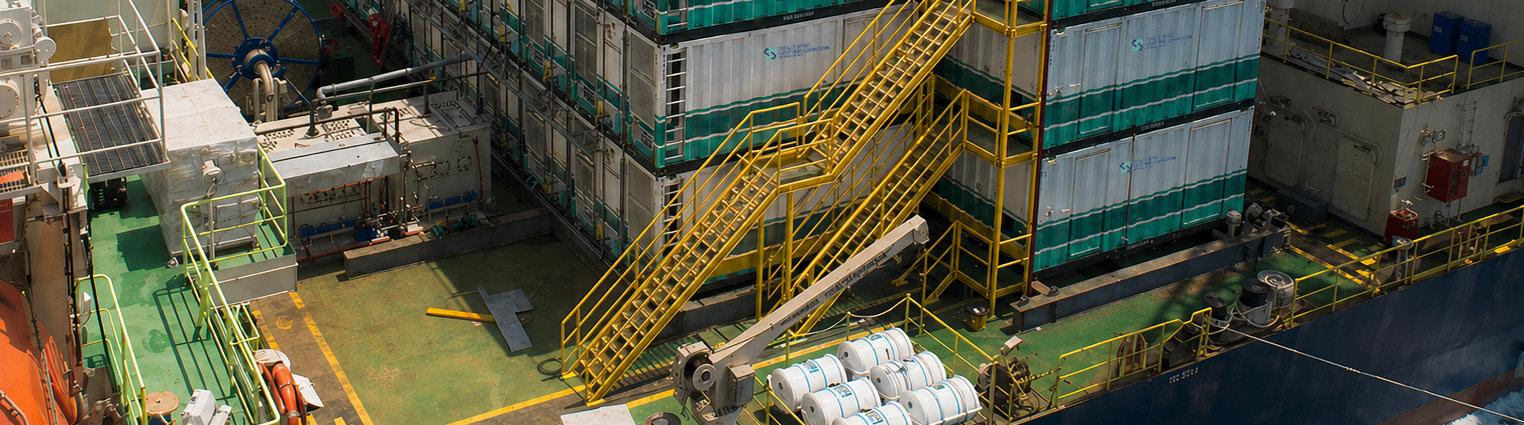
Specialist Services
How a modular engineering business rebuilt itself for stability and scale
Chris Ridley President of MENA+ at Specialist Services
How is Specialist Services thriving?
Founded in 1982, Dubai based Specialist Services is a modular solutions business with more than 40 years of engineering heritage. However, despite such a formidable legacy, the company has undertaken a deliberate transformation in recent years, moving from a reactive, project dependent operator to a more diversified, stable platform business. Through the redesign of its operating model, Specialist Services has reduced its exposure to short cycle volatility, broadened its sector mix and built the organisational depth required to embrace and grow through change.
The challenge - For much of its recent history, Specialist Services has operated around a familiar model defined by 8 to 12-week bidding cycles, aggressive pricing and revenues that both arrives in peaks and disappears in troughs.
While the business was successful, visibility rarely extended beyond the next contract, such is the reality of project-led work. Further, at the same time, the market was changing.
EPC consolidation had begun to reshape buyer behaviour. Offshore renewables were accelerating. Defence demand was rising. And hydrogen and digital infrastructure were emerging from concept into reality. Industry opportunities were abundant, yet so were the risks of standing still.
Internally, Specialist Services was also managing operational issues. Without structural alignment, the business risked fragmentation, duplicated effort and continued dependence on short-cycle project work.
That reliance on cyclicality was a concern, leaving the business and its employees exposed to inherent instability. While the firm knew its margins would continue to be up and down, and it would have to navigate downturns, it was also conscious of the knock-on effects of this way of operating on internal careers, staff retention and the ability to preserve hard-won capability.
The solution - The decision was subsequently taken to redesign the Specialist Services model rather than manage volatility. Ironically, this realisation came during a period of strong performance. Growth was increasing operational strain, but the firm’s structural stability was lagging. What followed was four years of deliberate, staged evolution that centred around four
clear stages: Foundation, Expansion, Efficiency and Focus. Each phase built on the last, shifting the business from reactive delivery toward a more resilient, diversified platform.
Beginning in 2023, the Foundation phase involved leadership consolidation, cost discipline and facility expansion in tandem with the introduction of long-term framework contracts to provide baseline revenue stability alongside project work.
In 2024, the focus then moved to Expansion. The business diversified decisively into offshore renewables, defence, hydrogen and digital infrastructure, while continuing to serve core oil and gas clients. Rental fleet capacity increased, layered service offerings were added across all six solution areas, the firm’s manufacturing footprint was doubled, and significant CAPEX investment was made in facilities, equipment and assets. An acquisition in Europe further extended capability and market access.
In 2025, attention turned to Efficiency. Operational optimisation, stronger margin discipline and improved financial visibility were prioritised. Digital tools were integrated to enhance planning and execution, supported by the implementation of a new ERP system that facilitated AI-enabled workflows.
And most recently, this year, Focus phase has kicked in. Here, the business has been structured into six clearly defined verticals, with specialist skills being allocated and onboarded. Investment in people remains a priority, with the objective throughout each of these phases – to build a business that does not depend on a single favourable market to perform – having remained consistent.
It’s a shift in mindset that has delivered. At the start of the Foundation phase, Specialist Services’ projects pipeline stood at approximately US$53m. By the end of 2025, this pipeline had increased to approximately US$400m, driven by broader sector exposure, improved contract stability and a deliberate reduction in dependence on short cycle project work.
Within this mix, defence and offshore renewables have grown from a standing start into meaningful contributors. Hydrogen packages are being produced for European markets, and early successes have been secured in offshore wind. Importantly, expansion into these additional verticals is complementing rather than replacing the firm’s legacy strengths. Indeed, oil and gas remains a growing and important part of the business.
Total headcount has also increased significantly, with yard based staff expanding from approximately 100 to around 600, and office based roles growing from 260 to approximately 380. Through

Story type
#diversification (main category) #people & competency
Benefits
► The projects pipeline increased from US$53m to US$400m by 2025, driven by broader sector exposure and improved contract stability.
► Yard-based staff expanded from 100 to 600 and office roles from 260 to 380, alongside improved internal promotion rates and workforce diversification.
Key findings
For young people
► Stay curious and versatile. Tackle challenging work and understand the wider business to thrive in a rapidly changing world.
For industry
► Increase engineer resilience during strong cycles by diversifying exposure, building recurring revenue and maintaining financial discipline.
For government
► Work with industry to build internationally recognised manufacturing credentials that enhance the UAE’s credibility in global procurement.
Specialist Services at a glance:
Key products and services: modular solutions.
Main industries served:
► Offshore renewable energy – 40%
► Oil and gas – 35%
► Data centres – 10%
► Hydrogen – 5%
► Others (non-energy): defence – 10%
Headquarters: Dubai, UAE Year established: 1982
Number of employees: +2,400 (Group) +1,000 (UAE)
Revenue from exports: 55%
this expansion, internal promotion rates have improved, workforce diversification has increased, and female representation across technical and professional roles has grown measurably.
Additionally, the firm’s rental fleet capacity has expanded, and layered service offerings are in place across all six solution areas.
Having set out to build a business capable of withstanding cyclicality, Specialist Services has undoubtedly succeeded in its goals. The scale of its pipeline, diversified sector mix and strong internal capabilities is all clear evidence of a strategy that is delivering long-term stability and sustainable growth.
Speedcast
Speedcast
An established leader in fully‑managed low‑Earth‑orbit and hybrid satellite connectivity
An established leader in enterprise-managed low-Earth-orbit satellite connectivity


Osama Oulabi Vice President of Sales, Middle East
Osama Oulabi General Manager, Middle East at Speedcast
How is Speedcast thriving?
How is Speedcast thriving?
In of significant industry brought by the arrival of (LEO) satellite constellations, Speedcast stronger emerging LEO technologies as Starlink and Eutelsat OneWeb early, rather than resisting them, the firm has strengthened its role as a trusted technology partner, and global, hybrid integrator capable digitalisation of some of most complex and remote operations.
In the face of significant industry disruption, brought about by the arrival of low-Earth-orbit (LEO) satellite constellations, Speedcast has emerged stronger than ever before. By embracing emerging LEO technologies such as Starlink and OneWeb early, rather than resisting them, the firm has strengthened its role as a trusted technology partner, and a global, hybrid network integrator capable of supporting the digitalisation of some of the world’s most complex and remote operations.
challenge - For more than 25 years, Speeda key provider of critical communications and IT services, connecting 10,000 vessels with market-leading positions in offshore energy and offshore support vessels.
The challenge - For more than 25 years, Speedcast has been a key provider of critical communications and IT services, connecting over 10,000 vessels with market-leading positions in offshore energy and offshore support vessels.
across the maritime, oil and media, government and enterprise the company long not for connectivity, supporting customcontinuity and performance.
Operating across the maritime, oil and gas, mining, media, government and enterprise sectors, the company has long positioned itself as a trusted partner, responsible not only for connectivity, but for supporting customers’ operational continuity and performance.
However, the pace of technological change accelerating. While technology had historically evolved of three the arrival of satellite constellations – particularly Starlink disrupted this pattern entirely.
However, the pace of technological change was accelerating. While communications technology had historically evolved in cycles of roughly three years, the arrival of LEO satellite constellations – particularly Starlink – disrupted this pattern entirely.
Connectivity expectations changed almost overnight. Data consumption across energy, maritime and industrial operations surged. Customers demanded real-time connectivity to support automation, remote operations, IoT integration and the early adoption of AI.
These demands were not limited to bandwidth alone. Operational technology (OT) networks required secure, private and predictable connectivity, with guaranteed uptime. Further, regional nuances also added complexity, with Saudi Arabia’s efforts to accelerate national digitalisation having created immediate demand for in-country infrastructure, operational licences and local delivery capability. Indeed, customers increasingly expected global providers to be locally present, compliant and operationally embedded.
expectations changed Data consumption across energy, industrial operations Customers demanded real-time connectivity support automation, remote operations, IoT integration and early adoption of AI. demands limited to bandalone. Operational technology (OT) required secure, private and connectivity, uptime. Further, regional nuances also added complexity, with Saudi Arabia’s efforts to accreated demand for in-country infrastructure, operational licences local delivery capability. Indeed, customers increasingly exglobal providers be locally and operationally embedded.
Collectively, these left Speedcast crossroads. Without transformation, there was real risk of losing market share, with customers exploring connectivity options.
Collectively, these changes left Speedcast at a crossroads. Without transformation, there was a real risk of losing relevance and market share, with customers exploring new connectivity options.
solution - Speedcast chose to rather than fight it. The company an early adopter of LEO technologies, partnering directly with Starlink OneWeb their limitations and long-term potential.
The solution - Speedcast chose to embrace disruption rather than fight it. The company became an early adopter of LEO technologies, partnering directly with Starlink and OneWeb to understand their capabilities, limitations and long-term potential.
Speed, readiness and flexibility became central to Speedcast’s strategy, requiring proactive work around licensing, regulation and logistics across multiple geographies to ensure rapid deployment when services became commercially available. Here, the firm worked closely with Starlink to share customer requirements and operational realities. However, quickly it found that it would also need a more agile, technology-forward strategy centred around hybrid networking, intelligent edge management and stronger local presence in key regions.
This strategy was implemented in phases over several years.
Speed, readiness flexibility central to Speedcast’s strategy, requiring proactive work around licensing, regulation and logistics across ensure rapid deployment when services became commercially Here, firm Starlink to share requirements and operational quickly it it would need more agile, technolstrategy around intelligent edge and stronger local presence in key regions. strategy was implemented in years.
First, Speedcast its ence in high-growth regions. Saudi flagship example, where the comsecured its ISP, operations licences, built in-country teleport invested teams. This enabled compliant, supported for one world’s fastest-growing energy markets.
First, Speedcast strengthened its local presence in high-growth regions. Saudi Arabia became a flagship example, where the company secured its ISP, operations and provisioning licences, built an in-country teleport and invested in local management and field service teams. This enabled fully compliant, locally supported delivery for one of the world’s fastest-growing energy markets.
Second, Speedcast accelerated LEO and hybrid-network integration. Between 2022 and 2025, Starlink, Starlink Dedicated Service (formerly known as Starlink HTS), Starlink and Eutelsat OneWeb were fully integrated into Speedcast’s global service portfoRather than offering standalone connectivity, these technologies were combined into managed hybrid solutions, ensuring continuous performance for mission-critical applications. Enterprise SD-WAN capabilities were layered on top, allowing customers to optimise traffic across multiple networks.
Second, Speedcast accelerated LEO and hybrid-network integration. Between 2023 and 2025, Starlink, Starlink HTS, Starlink PNI and Eutelsat OneWeb were fully integrated into Speedcast’s global service portfolio. Rather than offering standalone connectivity, these technologies were combined into managed hybrid solutions, ensuring continuous performance for mission-critical applications. Enterprise SD-WAN capabilities were layered on top, allowing customers to optimise traffic across multiple networks.
These developments were further anchored by the rollout of SIGMA, Speedcast’s intelligent edge management platform. SIGMA allows customers to blend multiple networks with full redundancy, unified security and automated traffic orchestration, delivering guaranteed uptime even in remote or hostile environments. Through SIGMA, Speedcast moved decisively beyond connectivity provision, offering intelligent, application-aware network control.
These developments were further by the rollout of Speedcast SIGMA, which is Speedcast’s intelligent edge management platform. SIGMA allows customers to blend multiple networks with full redundancy, unified security and automated traffic orchestration, delivering guaranteed uptime even in remote or hostile environments. Through SIGMA, Speedcast moved decisively beyond connectivity provision, offering intelligent, application-aware network control.
Through these changes, Speedcast has established itself as a global leader in enterprise-managed LEO connectivity. It was the first provider to deploy Starlink across an entire cruise fleet, and the first to introduce OneWeb to the offshore maritime sector.
Through these changes, Speedcast has established itself as a global leader in enterprise-managed LEO connectivity. It was the first provider to deploy Starlink across an entire cruise fleet, and the first to introduce
Story type
Story type
#collaboration (main category) #innovation #scale up
(main category) #innovation up
Benefits
Benefits
▸ Expanded global leadership in LEO and hybrid connectivity for mission-critical operations.
Expanded global leadership in LEO and hybrid connectivity for mission-critical operations.
▸ Strong revenue resilience through diversified sectors and reduced dependence on single markets or customers.
▸ Strong revenue resilience through diversified sectors and reduced dependence on single markets or customers.
Key findings
Key findings
For young people
For young people
▸ Learn fast, stay curious, and don’t be afraid to take on challenges that feel bigger than you.
▸ Learn fast, stay curious, and don’t be afraid to take on challenges that feel bigger than you.
For industry
For industry
▸ Lead with honesty—because transparency is the foundation of progress, partnership, and long-term resilience.
▸ Lead with honesty—because transparency is the foundation of progress, partnership, and long-term resilience.
For government
For government
▸ I would ask for greater clarity, consistency, and transparency in regulatory processes related to connectivity, satellite communications, and digital infrastructure.
▸ I would ask for greater clarity, consistency, and transparency in regulatory processes related to connectivity, satellite communications, and digital infrastructure.
Speedcast at a glance:
Speedcast at a glance:
Key products and services: fully managed connectivity, hybrid satellite networks, Speedcast’s proprietary network management platform solution - Speedcast (SIGMA), mission-critical communications.
Key products and services: managed connectivity, hybrid satellite networks, edge platform (SIGMA), mission-critical communications.
Main industries served:
▸ Oil and gas
▸ Conventional power
industries served: Oil gas power
▸ Offshore renewable energy
Offshore renewable energy
Onshore energy
▸ Onshore renewable energy
Headquarters: Texas, US
Year established: 1999
Number of employees: +50 (MENA)
Texas, US Year 1999 of +50 (MENA)
OneWeb to the offshore maritime sector.
Indeed, today, the firm is recognised as the number-one LEO connectivity provider to the global maritime market. Through SIGMA, customers achieve 100% uptime, improved operational efficiency, enhanced crew welfare and stronger network security through private interconnects. Growth in Saudi Arabia has also validated Speedcast’s investment in local infrastructure, driving increased project wins and deeper customer engagement.
Indeed, today, the firm is recognised as the number-one LEO connectivity provider to the global maritime market. Through SIGMA, customers achieve 100% uptime, improved operational efficiency, enhanced crew welfare and stronger network security through private interconnects. Growth in Saudi Arabia has also validated Speedcast’s investment in local infrastructure, driving increased project wins and deeper customer engagement.
By embracing technological disruption early, the firm has reinforced its position as a trusted partner helping customers navigate, adopt and maximise next-generation connectivity.
By embracing technological disruption early, the firm has reinforced its position as a trusted partner helping customers navigate, adopt and maximise next-generation connectivity.
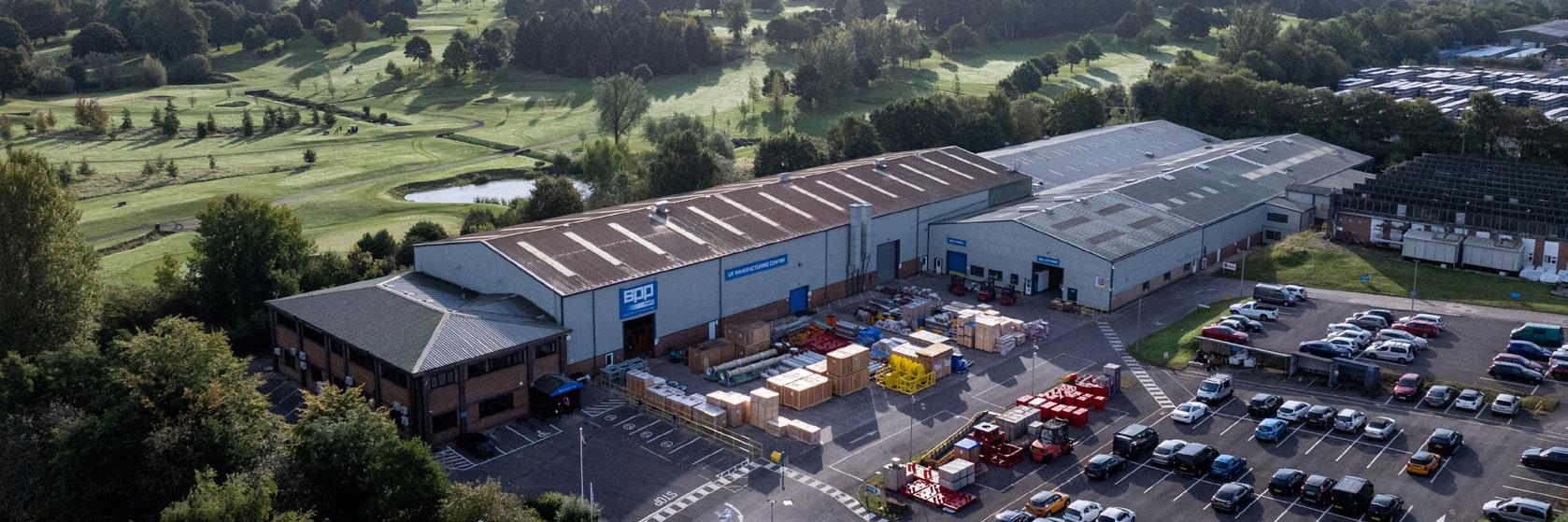
SPP Pumps
A 150-year-old
business flying the flag for innovation
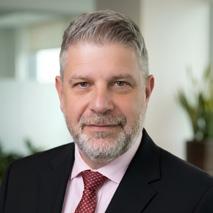
How is SPP
Robert Tichband Chief Operating Officer at SPP Pumps
Pumps thriving?
Originally founded in 1875, SPP Pumps is by no means stuck in its ways. Today, the company is setting an example in terms of a successful digital strategy through the proactive, relevant and practical adoption of technologies designed to improve efficiency, streamline processes, and strengthen overall business resilience. The results speak for themselves, with the business having achieved over 25% growth last year, and significant future growth projected for the coming years.
The challenge - Few firms can claim to have survived from the 19th century through to today. Yet that is exactly what SPP Pumps has achieved, doing so through a proactive mindset and change-ready culture.
Renowned as a leading designer, manufacturer and service provider for centrifugal pumps and pumping solutions, the firm has simply had to stay innovative to remain competitive. Lately, that focus has centred on using cutting-edge technologies such as artificial intelligence and augmented reality as a means of improving its offering and streamlining operations to effectively respond to increasingly complex customer requests.
Without embracing the need for operational progress in this manner, the firm may have left itself open to being unable to serve the needs of its clients.
The solution - SPP Pumps’ technological investments have ramped up significantly in the last two years, in large part catalysed by the recruitment of its new Chief Information Officer. Important changes have been made across the business. In the IT department itself, software developers have been brought in house and upskilled significantly. In tandem, systems have been reviewed extensively in the aim of eliminating operational pain points through bespoke and custom solutions.
Challenges are now openly discussed, creating a clear mandate for progress, with the business now able to leverage in-house expertise to design solutions that address genuine operational needs. As part of this, emerging technologies such as AI and AR are being explored not as
novelties, but as practical tools to support efficiency, accuracy and customer value.
A key early step was improving the visibility of shop-floor data, providing far greater insight into how customer specifications are delivered in practice. Initially deployed within manufacturing and service centres, this solution has since been extended into engineering and is now the company’s most mature system. It has helped optimise timings, ensure 100% time booking, improve safety and deliver tangible cost-saving benefits.
Building on this foundation, SPP Pumps developed Colligo – a growing suite of data-collection systems. Originally introduced to support the service business, Colligo enables structured inspections, unified reporting and faster quotation turnaround for customers. Its success has led to expansion into core product areas, with plans to extend it into customer-facing software solutions, ensuring every development delivers clear value based on direct customer input.
Apollo represents another step forward, addressing the ability to manage high volumes of complex customer specifications. While the least mature of the systems, it is already delivering benefits for sales teams by improving compliance, reducing risk and helping prevent margin erosion caused by missed specification details.
Importantly, the people using these platforms have been involved in their development from the outset, driving adoption, ownership and continuous improvement. Each challenge solved creates a stronger foundation for tackling the next, from document management and cross-team collaboration to asset tracking and customer data management within the service operation.
The impact has been significant. Turnover has grown to approximately £70m, with systems playing a critical role in both top-line growth and profitability. Further, looking ahead, SPP Pumps is now targeting growth of up to 40% by 2026 while largely maintaining its existing cost base. With achievements like these, it is little surprise that the firm has been named Manufacturer of the Year at Pump Industry Awards for four consecutive years.
The business has strengthened its competitive position in UK manufacturing, improved its ability to win data-driven service contracts, and increased its attractiveness to the next generation of engineering tal-
Story type
#digital & AI (main category) #optimisation #resilience
Benefits
► Over 25% business growth in the last year driven by digital systems and operational improvements.
► Turnover increased from £70m to £90m, supported by reduced margin erosion and improved specification accuracy.
Key findings
For young people
► Whatever industry you are in, whatever you are doing, just make sure you are making a difference.
For industry
► Buy British – back UK supply chains and homegrown specialist companies and value pragmatic engineering expertise.
For government
► Rethink North Sea and energy security policy, with stronger backing for domestic production to reinforce energy security.
SPP Pumps at a glance:
Key products and services: design, manufacture and service of pumps and pumping solutions.
Main industries served:
► Oil and gas – 50%
► Hydrogen – 10%
► Conventional power – 5%
► Others (non-energy): water utilities, data centres – 35%
Headquarters: Coleford, UK
Year established: 1875
Number of employees: 300 (UK)
Revenue: £70m (UK)
Revenue from exports: 70%
ent – all while remaining proud to be a leading UK pump manufacturer.
While SPP Pumps already has a formidable legacy, these recent strides will only help to ensure the firm continues to build on its reputation as a true industry innovator for years to come.

Sterling Thermal Technology
Investing in people, process and performance
Story type
#people & competency (main category) #culture #resilience
Benefits
► Maintained operational stability and competitiveness despite supply chain disruption, cost pressures, and skills shortages.

Alan Taylor
Aftermarket Director at Sterling Thermal Technology
How is Sterling Thermal Technology thriving?
Sterling Thermal Technology (STT)’s story is one of resilience and evolution in the face of multiple geopolitical, economic and industry-centric challenges. By staying close to customers, protecting quality, supporting its people and remaining focused on practical engineering value, the business has continued to strengthen its position while helping customers improve efficiency, reliability and long-term performance. STT has further strengthened its capabilities by the very recent acquisition of Unit Superheater Engineering (USE) in Swansea.
The challenge - Founded more than 120 years ago, STT is a company that has seen the full scope of energy industry innovation, evolution and reinvention, having both navigated and spearheaded decades of technological change, market shifts and manufacturing advances. Today, the company is renowned as a UK-based designer and manufacturer of high-quality, bespoke heat exchangers. However, even the most established industry names continue to be confronted with fresh hurdles.
The current economic and geopolitical environment has presented STT with a series of strategic and operational challenges. Ongoing conflicts have impacted both the cost and delivery of critical materials, while rising energy prices have had a major bearing on its energy-intensive operations. Simultaneously, skills shortages have made it increasingly difficult to attract and retain specialist talent, while changing customer requirements have required the business to become increasingly agile, with a sharper focus on efficiency, responsiveness and delivering solutions aligned with evolving sustainability expectations.
The solution - In the face of these mounting challenges, STT has not stood still. In the last three years, it has proactively adapted, balancing day-to-day operational performance and quality expectations with long-term investment in talent, capability improvements and innovation to ensure it can remain competitive and responsive to evolving needs. Early in this period, the company closed its Birmingham facility. Here, the focus was on supporting staff and retaining key capabilities, with some employees transferring into other roles and other moving to home-working arrangements. Since then, STT has continued to build long-term resilience in its workforce in other ways, such as expanding
its apprenticeships programme as a means of developing specialist expertise internally, rather than relying solely on external hires.
Recruitment processes have also been optimised, broadening the talent pool to include adult returners and candidates with transferable skills that are each supported with structured training once onboarded. Through these efforts, the firm’s shop floor headcount has been increased to bolster capacity and reduce reliance on overtime, with this being one cultural improvement among many.
Employees have been encouraged to take ownership of their work, share feedback across teams and learn openly from mistakes. The company’s appointment of a permanent HR manager has also signalled a long-term commitment to its people and cultural development. The implementation of a formalised performance review process has also helped, with these now informing tailored training and development plans.
Alongside its focus on culture, operational capabilities have improved significantly. The appointment of a new Procurement Manager has driven a more commercially focused mindset and improved internal negotiation skills. It’s led the firm to engaging more openly with new companies and exploring different avenues in the market. Further, the procurement and quote process has also been scrutinised, with STT reemphasising the need for transparency with customers.
The recently appointed Operations Director is committed to driving operational excellence, reducing lead times and fostering an inclusive culture that aligns teams behind the STT’s vision and strategic objectives. Here, STT is consistently reviewing the way in which handovers take place once a purchase order is received, with pre-qualification meetings having been introduced before a PO is accepted. These involve various department stakeholders, allowing concerns and feedback to be gathered from across the business. Customer support has also been enhanced by an expansion in headcount, which has had a direct and positive impact on manufacturing lead times. This is no coincidence. Indeed, through its cultural and operational improvements, the firm is better equipped than ever to attract, develop and retain the right people capable of strengthening its performance. Its investment in people is paying dividends. The firm’s team have embraced aftermarket support, providing an industry-leading customer service. It’s also able to engage new suppliers effectively, responding at speed while working with partners to introduce efficiencies in a selective, tailored manner.
With an open culture centred around proactively exploring solutions to internal and
► Aftermarket business grown to approximately £7m, creating a new revenue stream and improving long-term customer value.
Key findings
For young people
► Stronger and more consistent government support is needed to enable investment, innovation and global competitiveness in UK manufacturing.
For industry
Business
► Business success depends on leadership that is adaptable, people-focused and committed to long-term growth.
For government
► Career development is driven by curiosity, continuous learning and hands-on experience.
Sterling Thermal Technology at a glance:
Key products and services: heat exchanger designer and manufacturer with aftermarket support.
Main industries served:
► Oil and gas – 25%
► Nuclear – 15%
► Conventional power – 10%
► Hydrogen – 3%
► Carbon capture – 2%
► Others (non-energy: defence, marine, food/industrial) – 45%
Headquarters: Aylesbury, UK
Year established: 1904
Number of employees: 121 Revenue: £16m
Revenue from exports: 40%
customer-related issues daily, the firm is wellplaced to continue to innovate and deliver operational continuity, customer satisfaction and service reliability for years to come. The acquisition of USE further enhances the skillset and capabilities of the business by providing new revenue streams, reducing lead times increasing capacity,

Superheat
From flying
visits to
a
permanent fixture in the GCC heat treatment market

Steve McDonnell Regional Manager UK, IRE and Middle East at Superheat
How is Superheat thriving?
Three years after opening its Abu Dhabi office, Superheat has established itself as the GCC’s leading provider of advanced on-site heat treatment, enabled by wireless remote operation and digital technologies. Since 2023, the company has achieved consistent 20% year-on-year growth in the region, with global clients following its proven methods into new markets and local teams now embedded in some of the Gulf’s most technically demanding energy projects.
The challenge - Superheat is a global leader in on-site industrial heat treatment, specialising in weld preheating, post-weld heat treatment and advanced induction heating for clients across the energy, industrial and infrastructure sectors. Its proprietary digital platform, including the Superheat SmartCenter™, enables real-time remote monitoring and control of heat treatment operations, replacing a traditionally labour-intensive, low-tech discipline.
Despite its capabilities, Superheat faced a market that had made few advancements over the past decades. In the GCC, heat treatment was routinely treated as a low-priority, price-driven afterthought – one of the last contracts awarded on any project, with clients defaulting to deploying large numbers of personnel rather than investing in smarter methods. The risks are real: poor heat treatment can compromise weld integrity and cause significant long-term operational problems. For over 13 years, Superheat had served the region by flying specialists in and out, knowing that to genuinely change mindsets, it would need to be permanently embedded on the ground.
The solution - When Superheat opened its UAE office in Abu Dhabi in 2023, it did so with a clear purpose: to be present and integrated locally, changing how heat treatment was perceived and procured across the GCC.
The strategy had two interlocking elements. The first was proving, in the region rather than just talking about it, that Superheat’s digitally enabled approach delivered measurably better outcomes. The second was building local capability alongside it, training and embedding GCC-based teams in its methods rather than relying on imported expertise.
Central to both was the SmartCenter platform, which enables operators to remotely monitor and control heat treatment activities in real time. Through their companion Superheat SmartView™ digital project management and quality assurance platform, field staff can upload wrapping specifications, track live heat cycle data and access QA documentation from any location, replacing the traditional model of stationing large numbers of expat technicians on site. Their SmartWrap™ service extended this further, enabling client workforces to self-perform heat treatment under Superheat’s remote supervision, guided through virtual training and supported throughout by the SmartCenter team.
The approach had already proven itself under pressure. When an international contractor in Abu Dhabi required solution annealing on complex pipework during the height of the Covid-19 pandemic, travel restrictions made it impossible to deploy Superheat’s own personnel. Instead, the company shipped its SmartPoint™ heat-treating consoles to the site and trained the contractor’s workforce virtually – multiple live camera streams, mockup piping exercises and real-time feedback from Superheat’s UK team. After 11 days of intensive remote preparation, the client’s newly formed on-site team completed the turnaround with a 100% weld success rate, earning a formal commendation that rated Superheat across every measure as ‘superior’.
That project demonstrated what Superheat could offer well beyond a straightforward service contract. Crucially, it also illustrated the in-country value opportunity. By equipping client workforces with the skills and tools to self-perform heat treatment to a world-class standard, Superheat enables GCC operators to build genuine local capability, something increasingly valued across the region and aligned with broader nationalisation ambitions.
Alongside its digital offering, the company undertook targeted demonstration projects and bespoke trials conducted within existing yards to provide stakeholders with clear, practical evidence that the digitised approach delivers measurable efficiency gains. Some resistance remained: outdated attitudes take time to shift, and heat treatment contracts are still often awarded on price alone. But the results spoke for themselves. Global clients who had experienced Superheat’s methods on projects elsewhere began requesting the same approach in the UAE, with purchase orders following the company into the region.
Story type
#export (main category) #service & solutions
Benefits
▸ Achieved consistent 20% year-on-year revenue growth since establishing a permanent Abu Dhabi office in 2023.
▸ Completed a complex turnaround project with a 100% weld success rate by using digital platforms to virtually train the client’s on-site workforce.
Key findings
For young people
▸ Believe in yourself, take the initiative and never wait for opportunities to come to you.
For industry
▸ Be adaptive and embrace innovation.
For government
▸ Support evidence-based change and stand with organisations that invest in their technology and their people, giving them a voice.
Superheat at a glance:
Key products and services: The Superheat SmartWay™, weld preheating, post-weld heat treatment, induction heating services and equipment leasing, rentals and sales.
Main industries served:
▸ Oil and gas – 55%
▸ Conventional power – 25%
▸ Nuclear power – 15%
▸ Offshore renewable energy – 5%
Headquarters: New Lenox, US
Year established: 2000
Number of employees: +500
The growth figures reflect this momentum. Since establishing its Abu Dhabi office, Superheat’s GCC region has achieved 20% year-on-year revenue growth consistently, with 2025 another record year and 2026 forecast to match it. With 16 staff now permanently based in Abu Dhabi and further expansion into Saudi Arabia, Qatar and Bahrain in its sights, the company has moved decisively from a periodic presence to a longterm, sustainable force in the region.
THREE60 Energy
From nimble challenger to global lifecycle solutions provider in under a decade

Story type
#service & solutions (main category) #collaboration #diversification #scale up #transformation
Benefits
► Revenue growth of 36% (2023–2024) driven by diversification and acquisition strategy.

Walter Thain Group CEO at THREE60 Energy
How is THREE60 Energy thriving?
Founded in Aberdeen in 2016, THREE60 Energy has grown from a nimble challenger into a global lifecycle solutions provider with revenue rising from £47m to £181m by 2024. In 2025, the company secured a record £400m decommissioning contract and built a £650m backlog, giving it around three and a half years of future work. Today, THREE60 employs 1,100 people and operates across hubs in the UK, Norway, Malaysia, the Americas and the Middle East.
The challenge - THREE60 was created in response to a market need for more agile, focused and customer-led energy services. Walter Thain founded the business on the belief that clients wanted partners able to respond quickly and tailor solutions to specific operational needs. Early progress was tested by the 2016 oil price downturn, which constrained investment and slowed organic growth across the sector.
The Covid-19 period added further pressure, but it also accelerated a strategic shift. Rather than retreat, THREE60 used the disruption to diversify more deliberately, reducing its dependence on any single market and building resilience through a broader industry and geographic footprint.
The solution - Its response was a disciplined buy-and-build strategy, supported by an internal growth framework known as Dream, Leap, Fight, Climb and Arrive. This gave the business a shared language for growth and helped align teams through repeated transformation while keeping an entrepreneurial mindset at the centre of the organisation.
Between 2022 and 2024, THREE60 completed five acquisitions, taking the total to nine since launch. These deals broadened capability across wells, pipelines, subsea, facilities, operations, decommissioning, wind, nuclear, defence and industrial markets. They also expanded the company internationally, creating a lifecycle offer that now spans subsurface through to decommissioning.
The model was designed to preserve the entrepreneurial energy of acquired businesses while scaling the group internationally. This approach has supported expansion from Southeast Asia into Norway, the UK and beyond, while strengthening credibility with customers across the full asset lifecycle.
Revenue increased by 36% between 2023 and 2024, and the company has gained industry recognition, including OEUK Supply Chain Gold Awards. THREE60 is now focused on continuing growth in the Middle East and Americas while preserving the agility, responsiveness and customer focus that have defined its success to date.
► £650m backlog secured, representing approximately 3.5 years of future work and strong market visibility.
Key findings
For young people
► Be adaptable and open to change, as careers will evolve alongside shifting energy markets and new opportunities.
For industry
► Challenge traditional delivery models and embrace collaboration to better meet client needs and drive growth.
For government
► Support a stable, investment-friendly environment to enable diversification and long-term growth in the energy sector.
THREE60 at a glance:
Key products and services: integrated lifecycle solutions across subsurface, wells, subsea, EPCC and decommissioning.
and enable decommissioning.
Main industries served:
► Oil and gas – 80%
► Others (energy) – 9%
► Others (non-energy): defence and industrial – 11%
Headquarters: Aberdeen, UK
Year established: 2016
Number of employees: 1,100 Revenue: £181.6m

Torquemeters
Adapting a mature technology for new markets, and nearly doubling revenues in the process

Geoff Robinson
Joint Managing Director at Torquemeters
How is Torquemeters thriving?
Founded in 1951 by a member of Sir Frank Whittle’s original jet engine team, Torquemeters has spent 75 years refining its expertise in precision torque measurement on rotating equipment used for aerospace, oil and gas, automotive and industrial applications. By adapting that expertise for new markets (most notably e-motors), expanding its service offer and investing in people and process, the company has grown revenues from £6.8m in 2020 to £11.3m in 2024, with earnings up threefold over the same period.
The challenge - Torquemeters designs and manufactures phase-shift torquemeters, specialist couplings, bespoke driveline solutions, permanent magnet motors and turnkey test rig systems from its facility in Ravensthorpe, Northamptonshire. Its products are used by leading aviation, oil and gas, automotive and Formula 1 organisations to measure torque with precision across some of the world’s most demanding engineering environments – from gas transmission pipelines to jet engine test beds.
For a business built on deep technical specialism and long-standing relationships, the challenge was not sudden disruption but gradual, compounding change. The OEMs Torquemeters had long supplied were evolving – adopting new driveline architectures, tightening quality and safety frameworks, and shifting towards e-motor-driven compression drivetrains, as well as exploring new fuels and fuel mixes. Long-serving engineers carrying decades of institutional knowledge were retiring, making the documentation of bespoke processes more urgent. And customers who had historically been centrally located were becoming more dispersed, requiring new approaches to staying close to them.
The solution - Torquemeters’ response was to pursue a clear five-year plan set out in 2019 and revisited in 2023 – one focused on broadening the company’s market reach, deepening its service offer and building the internal resilience to sustain growth over the long term.
The most significant market driver across several sectors was the electrification transition. The shift towards electric drivetrains in the automotive, aerospace and, to a degree, the oil and gas sectors has created fresh demand for precision torque measurement in applications where Torquemeters’

Craig Holmes
Business Development Manager Oil & Gas at Torquemeters
technology has long been deployed. Adapting a well-proven instrument for a new context required engineering work, including overcoming a technical challenge around spark resistance requirements and the ability to line components with aluminium and brass, to ensure Torquemeters’ continuous-duty torquemeter enduring support for both IGT and e-motor drivetrains. But the result was a capability that opened the door to a new category of customer and application, and success in e-motor/e-propulsion applications has since become one of the company’s headline growth stories.
In oil and gas, the picture was one of expanding the value Torquemeters could offer to existing clients rather than simply supplying instruments. New emissions reporting regulations – including requirements in Italy where torquemeter data was needed to underpin accurate, evidence-based regulatory submissions – created demand for a more active support role. The company developed its ability to help customers meet these obligations, providing not just the measurement equipment but the documentation, certification and ongoing support needed to use it effectively. Periodic inspection and certification services have become a growing part of the business and reflects the oil and gas sector’s strong culture of traceability and quality assurance.
Alongside these external moves, Torquemeters has also invested in its internal processes and people. Greater standardisation of production methods has supported profitability, while headcount has grown from the mid-50s to 63, with productivity per employee rising significantly. The company has leaned into apprenticeship and graduate routes to address the generational shift in its workforce, ensuring that the bespoke engineering knowledge built up over seven decades is properly documented and transferred to the next generation of engineers.
Customer engagement has also evolved. With large-scale events yielding diminishing returns for a business whose customers are often technical specialists rather than procurement contacts, Torquemeters has shifted part of its business development investment towards digital channels. Now, the company is reaching decision-makers in a more targeted way and maintaining relationships with a more geographically dispersed client base. Looking ahead, hydrogen and carbon capture represent the next frontier. The same torque mea-
Story type
#transformation (main category) #optimisation #resilience #scale up
Benefits
► Grew revenues from £6.8m in 2020 to £11.3m in 2024, with earnings up threefold, while generating 85% of revenues from international exports.
► Successfully executed a five-year transformation plan that boosted peremployee productivity, standardised production methods and secured critical engineering knowledge.
Key findings
For young people
► Do something you enjoy, don’t be afraid to make mistakes or get stuck in and remember that continuous learning is essential to your career.
For industry
► Build a clear vision that resonates internally and externally, focus relentlessly on your customers and create an environment where your people can succeed.
For government
► Appropriately fund the energy transition, better support UK export ventures and encourage the next generation into STEM roles and engineering apprenticeships.
Torquemeters at a glance:
Key products and services: phase-shift torquemeters, specialist couplings, bespoke driveline solutions, permanent magnet motors and turnkey test rig systems.
Main industries served:
► Oil and gas – 35%
► Others (non-energy): aerospace, automotive, industrial, aftermarket-split – 65%
Headquarters: Ravensthorpe, UK
Year established: 1951
Number of employees: 63
Revenue: £11.3m
Revenue from exports: 85%
surement principles that underpin gas turbine efficiency monitoring have clear application in emerging clean energy infrastructure, and Torquemeters is positioning itself to move into these markets as project activity grows. With 85% of revenues already coming from exports and a presence across the US, Europe, Japan, the Middle East and Asia, the platform to do so is well established.

Trelleborg Marine and Infrastructure
Optimising gas transfer complexity through one integrated approach

How is Trelleborg thriving?
Sales Director at Trelleborg
Trelleborg’s involvement in gas transfer is a story of continuous evolution. As global LNG infrastructure expands at pace, the transfer interface has become one of the most critical, and risk-sensitive, points in the energy value chain. By integrating deep, specialist capabilities into a single, unified offering, Trelleborg has strengthened its ability to support complex, end-to-end gas transfer operations while improving collaboration, operational efficiency and long-term customer value.
The challenge - Trelleborg’s Gas Transfer solutions are a core part of Trelleborg Marine & Infrastructure, within the wider Trelleborg Group. With a focus on enabling safe, efficient and reliable gas transfer across global maritime and energy markets, Trelleborg supports LNG and other gas transfers across ship to ship, ship to shore and terminal operations. Its remit spans the full lifecycle, from system design and operation through to optimisation, servicing and training.
This niche has proven to be incredibly fruitful in recent times, with external market factors driving rapid LNG growth. Indeed, LNG capacity is expected to reach 665m tonnes per annum by the end of 2028, significantly increasing the scale, complexity and regulatory scrutiny of gas transfer operations.
With this growth has come heightened interface management challenges. The transfer interface – where receiving vessels, delivering vessels, terminals, storage and crews intersect – represents a critical operational and commercial risk point. Even minor issues can result in costly delays, safety concerns or disruption to supply chains.
Customers increasingly operate in highly regulated environments and across multiparty projects, often involving multiple suppliers, vessels, and terminals. At the same time, maritime decarbonisation is accelerating, with LNG playing a dual role as both cargo and transition fuel. Against this backdrop, customer expectations are also evolving. Rather than engaging multiple niche providers for different elements of the transfer process, operators began looking for holistic partners capable of supporting the entire interface across the full operational lifecycle.
The solution - For Trelleborg, the opportunity was clear. The gas transfer interface had become the “golden nugget” connecting all the critical components of LNG operations, and customers wanted a single partner capable of optimising it end-to-end.
From 2024 onwards, Trelleborg brought together established capabilities across engineering expertise, services, operations, and equipment systems - each proven globallyinto a single, integrated offering for customers across the gas transfer value chain. These capabilities have always been strong. The objective was not to build something new, but to coordinate what already existed more closely across regions and project phases, enabling consistent support wherever customers operate.
A unified operating model allows Trelleborg to implement expertise at scale while retaining the local knowledge that is essential in regulated, time-critical environments. By presenting these capabilities as an integrated proposition, Trelleborg’s expertise is now simpler and easier for customers to understand and engage with - offering a cohesive offering designed for long-term performance.
The market context made this direction clear. Customers were increasingly seeking end-toend lifecycle support, from project inception and engineering design through to long-term operations and maintenance. Broader developments across the sector, from the growth of LNG as a marine fuel to the rise of FSRUs and FLNG assets and the increasing complexity of offshore transfer operations, pointed to the same conclusion: the industry needed a more integrated engineering partner. Trelleborg had the breadth of capability to be exactly that.
At the core of the model sits a four-pillar framework: operations optimisation, equipment systems, service and support and crew training. Historically, customers engaged with Trelleborg across individual products or services, reflecting the depth of specialist capability across gas transfer operations. Today, Trelleborg engages as an end-to-end gas transfer operations partner, bringing these capabilities together in a single, clearly defined offering. Teams operate from a closer shared foundation, drawing on the full strength of multi-disciplinary expertise across products, services, and regions to deliver seamless support at every stage of a project.
The results speak for themselves. Customers now engage with a single interface, supported by global hubs located in seven key regions, offering 24/7 service, inspection, maintenance and operational support. At Gastech

Story type
#transformation (main category) #optimisation #service & solutions
Benefits
► Integrated end-to-end model optimises complex gas transfer interfaces, improving operational efficiency and reducing risk across multi-party LNG operations.
► Unified offering enhances customer value through lifecycle support, enabling safer, more reliable transfers and stronger collaboration across global projects.
Key findings
For young people
► Be curious about the future of energy and understand the role of multi-fuel solutions.
For industry
► Listen to customers, challenge traditional models and build integrated, collaborative solutions.
For government
► Strengthen LNG and alternative fuel regulation to unlock growth and support energy transition.
Trelleborg Marine and Infrastructure at a glance:
Key products and services: Ship-Shore Link (SSL), hoses, filtration systems, emergency release systems, fenders systems, docking and mooring solutions and SafePilot P3.
Headquarters: Dubai, UAE
Year established: 1905
Number of employees: 17,237
Milan 2025, the integrated approach was met with strong validation from both suppliers and receiving-side customers.
The impact has been significant. Trelleborg has delivered the world’s first fully integrated ammonia transfer and ammonia bunkering project, providing customers with a complete end-to-end solution through a single point of responsibility. Its installed base now covers over 90% of LNG terminals, having increased by approximately one third.
By consolidating expertise and aligning around a shared mission, Trelleborg is now actively shaping the future of the gas transfer industry.
Matt Richardson

TRS Workforce Solutions
Finding a new edge through predictive talent intelligence

Paul Mudd BD Director at TRS Workforce Solutions
How is TRS Workforce Solutions thriving?
Established in 2022 as a business line of TRS Staffing Solutions, TRS Workforce Solutions has spent four years building its presence in the energy sector as a managed service provider and recruitment process outsourcer. In 2025 it launched its Talent Market Insights, an AI-supported workforce forecasting report that is already generating new client wins with measurable savings of 19%+. As a result, their spend under management has grown from £250m in 2025 to a predicted $556m in 2026.
The challenge - TRS Workforce Solutions helps operators, developers and Tier 1 EPCs manage their contingent workforce more efficiently. Its services span direct attraction and onboarding, supplier management, compliance, reporting and offboarding, underpinned by vendor management technology that automates key stages of the recruitment lifecycle. Its client base spans offshore and onshore renewables, nuclear, oil and gas, energy storage and data centres.
The challenge the business faced was structural. At four years old, TRS Workforce Solutions was competing against MSP and RPO providers with far longer track records, established brand recognition and deeper incumbent relationships. In early bids for large contracts, it found itself losing work not on capability but on market confidence, with risk-averse clients gravitating towards well-known brands.
Feedback from the market was clear. Many organisations knew they needed a managed workforce approach, but were uncertain how to articulate or present that need internally. Meanwhile, the broader labour market was making things harder for everyone – skills shortages in engineering disciplines were deepening, IR35 regulatory changes were adding complexity, and clients were struggling to plan for workforces they couldn’t yet clearly see.
The solution - Rather than simply competing harder on the same terms as its rivals, TRS Workforce Solutions chose to change the narrative. The business set out to build something that would help clients get ahead
of their challenges, and in doing so, reposition itself as a strategic partner rather than a transactional supplier.
The result was the Talent Market Insights Report, launched in 2025. The report combines traditional labour market data with AI modelling to give clients a detailed, forward-looking picture of workforce supply and demand for specific disciplines in specific locations, up to 12 months before a project goes live. Each report covers skill availability and future shortage risk, which roles are most vulnerable to automation or AI displacement, cross-skilling opportunities from adjacent disciplines, salary benchmarking, and diversity and inclusion data including gender and ethnicity breakdowns. Crucially, it goes beyond presenting data to recommending the next steps, a distinction that separates it from the expensive equivalents produced by large consultancies.
The product moved from conception to external deployment at speed. It was tested internally first, then with a select group of existing clients, before being taken into the wider market. The first major deployment was with RWE, initially covering one location and expanding from there. Across the 10-12 reports completed to date, the tool has already delivered £750,000 in workforce cost savings in 6 months for one client, cut time-to-fill by up to 40% for others, and generated new business from clients who had not previously engaged Workforce Solutions in a particular market or geography.
Beyond its direct client value, the report has become a business development tool. Bid processes in the energy sector increasingly require contractors to demonstrate how they will source local labour, meet diversity targets and manage skills risks – questions Talent Market Insights is designed to answer with evidence. This turns workforce data into a bid-winning asset for clients and a door-opening conversation for TRS.
The broader positioning matters too. The business has reframed its offer from MSP, a category that can feel technical and transactional, to Talent as a Service – a holistic model covering planning, sourcing, mobilisation and full lifecycle delivery that is easier for clients to understand and act on. For a four-year-old business competing against decades-old rivals, having something genuinely new to offer has proved more effective than competing on brand recognition alone.
Story type
#optimisation (main category) #digital & AI #innovation #service & solutions
Benefits
▸ AI-supported workforce forecasting improved hiring visibility and strategic workforce planning.
▸ Talent Market Insights Reports helped clients reduce hiring timelines and identify workforce cost savings.
Key findings
For young people
▸ Building adaptable skills across energy, technology and workforce planning will create long-term career opportunities. For industry
▸ Predictive workforce intelligence is becoming essential for managing skills shortages and project delivery risks. For government
▸ Earlier investment in skills development and cross-skilling is critical to support future energy workforce demand.
TRS Workforce Solutions at a glance:
Key products and services: workforce solutions and talent intelligence services.
Main industries served:
▸ Offshore renewable energy – 40%
▸ Nuclear power – 20%
▸ Oil and gas – 15%
▸ Onshore renewable energy – 10%
▸ Energy storage – 10%
▸ Data centres – 5%
Headquarters: London, UK
Year established: 2022
Number of employees: 11
Revenue: +£250m
Revenue from exports: 95%
With projected spend under management set to grow two to threefold over the next three years, and a 2026 request from a nuclear client for a sector-specific report already in hand, TRS Workforce Solutions is building a position in the market that is difficult for longer-established competitors to replicate quickly.

Turner & Townsend
Leading the AI‑innovation charge in the energy sector

David Shepherd
Director, Head of Performance Analytics Hub (Energy) at Turner & Townsend
How is Turner & Townsend thriving?
Turner & Townsend is redefining how performance intelligence is created and shared across the energy sector. By combining decades of benchmarking expertise with cutting-edge, AI-enabled analytics, the firm is transforming fragmented project data into actionable insight. Its ongoing work is setting a new standard for how industry players use data to drive better decisions, faster delivery and greater confidence in capital investment.
The challenge - A consultant that has established a reputation for excellence since its founding in 1947, Turner & Townsend’s primary challenge centres on its Performance Forum (PF), a membership group of 23 oil and gas operators.
Over more than 30 years, the PF has seen several iterations, starting out as regular, paper-based distributions and evolving to become online, digitised and live. In more recent times, however, the focus has been on the next phase of AI-enabled datasets.
Specifically, Turner & Townsend is working with the PF members to explore AI applications in collecting data for offshore assets and to apply a prototype of its proprietary AI-enabled tool (The Hive), which will evolve the role of the PF to serve as a performance analytics hub for onshore assets across LNG, hydrogen, carbon capture and more.
The solution - As industry focus on digital transformation increases, a recent initiative within a Project Forum (PF) onshore programme has explored how AI can address longstanding data challenges across complex project environments. A key issue identified was the fragmentation of project data, often built up over many years across multiple systems, organisations and legacy structures.
Across large capital programmes, data is typically dispersed, inconsistent and unstructured, limiting the ability to generate insight, benchmark performance and support confident decision-making. This often results in reliance on manual processes, with limited ability to effectively leverage historical data.
To address this, an AI-enabled solution form-

Asa James
Director, Head of Estimat‑ ing and Data (Energy) at Turner & Townsend
ing part of the HIVE platform was introduced to transform how project data is captured, structured, and used. The approach focuses on automating the ingestion, processing, and structuring of large volumes of project information within a secure cloud environment.
A repeatable AI driven workflow has been developed to ingest structured and unstructured data from multiple sources at scale, cleanse, standardise and classify information and identify and prioritise relevant project data. Furthermore, it extracts critical elements across scope, cost, schedule, resources and risk, maps outputs to recognised industry taxonomies and consolidates results into a structured, centralised database.
A key feature of the solution is its human-in-the-loop governance model, ensuring automated outputs are validated and controlled. This balances efficiency with accuracy, maintaining strong data quality and assurance.
The solution is now being developed into a minimum viable product (MVP), with data progressively transformed and integrated into a coherent and accessible environment through The HIVE platform. This marks a significant shift from fragmented and siloed datasets to a structured data ecosystem capable of supporting advanced analytics, benchmarking and portfolio-level insight across the PF.
This approach represents a step change in how organisations manage and utilise project data, delivering measurable benefits. It improves data accessibility, unlocking previously underutilised historical information and reduced manual effort, through automation of labour intensive processing activities. Also, it enhanced decision making, supported by consistent and reliable datasets, while delivering greater transparency, enabling improved governance and performance tracking. Finally, the approach strengthened benchmarking capability, through structured and standardised data and increased confidence in forecasting, risk assessment and investment decisions.
The next phase focuses on scaling the solution across the Onshore PF and enhancing user interaction through The HIVE. This includes the development of an intuitive interface to
Story type
#digital & AI (main category)
Benefits
▶ Secured a strategic AI contract, positioning the business at the forefront of data-driven performance analytics.
▶ Processed over 14,000 files of complex data; enabling improved traceability, standardisation and transparency of project data, while establishing the foundations for future AI-driven analytics, reporting and enterprise-wide knowledge management capabilities.
Key findings
For young people
▶ Explore, make mistakes and engage with AI — it will change every job.
For industry
▶ Start with a data strategy before adopting AI and don’t be afraid to share your data, openness will provide much better results.
For government
▶ Digital playbooks need to go beyond guidance and become more robust; AI ethics must be clarified.
Turner & Townsend at a glance:
Key products and services: consultancy business in the real estate, infrastructure, and energy and natural resources segments.
Main industries served:
▶ Energy – 5%
▶ Others (non-energy) : real estate and infrastructure – 95%
Headquarters: Leeds, UK
Year established: 1947
Number of employees: 23,866
Revenue: £2.64bn
Revenue from exports: 65%
enable better visualisation and analysis. With that, users will be able to interact with data dynamically and explore insights through dashboards and visual tools. Also, it will be possible to drill down into detailed information and adjust variables and see impacts in real time.
This initiative demonstrates how AI, combined with platforms such as The HIVE, can transform fragmented project data into structured, actionable insight, enabling organisations to move from reactive, manual processes to proactive, insight driven decision making.

TÜV Rheinland Middle East LLC
Story type
#service & solutions (main category)
Benefits
▸ In the post-pandemic phase, the strategy broadened service offerings and expanded into infrastructure, reducing dependence on the volatility of oil and gas markets.
Fadi Al Attar Managing Director at TR Middle East LLC
How is TÜV Rheinland Middle East thriving?
TÜV Rheinland Middle East continues to thrive by remaining agile, forward-thinking, and firmly committed to building a sustainable future. When the COVID-19 pandemic disrupted industries worldwide, the organisation did not simply adapt - it transformed. Through strategic diversification and expansion into the infrastructure sector, it enhanced resilience and reduced reliance on any single market.
At its core, TÜV Rheinland combines deep technical expertise with advanced technologies and strong industry collaboration. This integrated approach enables the delivery of future-ready solutions aligned with evolving client needs and the global transition towards cleaner energy.
What truly differentiates TÜV Rheinland is its people and purpose. With a strong emphasis on quality, empowered teams, and responsible growth, the organisation continues to build trust as a reliable partner - supporting businesses in navigating change and unlocking new opportunities in a dynamic energy landscape.
The challenge - With more than 150 years of heritage, TÜV Rheinland has established a strong global reputation in testing, inspection, certification, and verification, supported by a network of 25,900 experts across 600 locations. With this global footprint, the Middle East has emerged as a key growth region, where the Industrial Division plays a critical role in delivering technical solutions across energy and infrastructure, oil and gas, nuclear, renewables, water and wastewater, as well as emerging hydrogen and ammonia projects.
However, this growth has not been without challenges. In recent years, the Industrial Services and Cybersecurity Division has operated within a landscape shaped by fluctuating demand, geopolitical uncertainty, and evolving economic conditions. As the portfolio expanded – particularly through acquisitions - resource allocation became increasingly complex, compounded by a global shortage of skilled engineering and cybersecurity professionals.
Simultaneously, evolving regulatory frameworks and rapid advances in automation, digitalisation, and AI have raised expectations for both compliance and capability. With clients demanding faster, integrated, end-to-end solutions, TÜV Rheinland has continuously adapted its delivery models while maintaining its established standards of quality and technical excellence.
The solution - In response to these market developments, TÜV Rheinland Middle East proactively redefined its strategy to strengthen long-term resilience. Following the pandemic’s impact on traditional sectors such as oil and gas, the organisation intensified its focus on diversification, operational agility, and future-oriented services.
In late 2021, cross-functional teams collaborated to develop a clear strategic roadmap, formally launched in early 2022. The strategy centred on three priorities: expanding into infrastructure, strengthening technical capabilities, and delivering more integrated solutions. This transition was supported by targeted investments in workforce upskilling, alongside the adoption of advanced technologies and modern methodologies.
Strategic partnerships played a pivotal role in accelerating this transformation, enabling faster execution and more comprehensive, client-centric offerings. By broadening its focus beyond traditional markets and prioritising infrastructure and renewable energy, TÜV Rheinland successfully diversified its revenue base and reduced dependency on oil and gas.
The results have been measurable. Growth in infrastructure-led services, increased client acquisition, and a more balanced portfolio have strengthened overall business stability. At the same time, higher levels of employee engagement and retention reflect the effectiveness of its people-centric approach.
Today, TÜV Rheinland Middle East operates on a stronger, more diversified foundation, well-positioned to drive sustainable growth and support the transition towards a cleaner, more resilient energy future.
▸ Diversification and capability investment drove strong regional growth.
Key findings
For young people
▸ Follow your passions, commit to lifelong learning, build meaningful connections, and remain resilient and adaptable.
For industry
▸ Prioritise investment in sustainable energy and foster collaboration through clear, consistent policies.
For government
▸ Embrace innovation, integrate sustainability, stay agile, and harness data and technology to drive effective outcomes.
TÜV Rheinland Middle East at a glance:
Key products and services: testing, inspection, certification and training services.
Main industries served:
▸ Oil and gas – 50%
▸ Onshore renewable power – 20%
▸ Conventional power – 10%
▸ Energy storage – 10%
▸ Hydrogen – 5%
▸ Offshore renewable energy – 2%
▸ Carbon capture – 2%
▸ Nuclear power – 1%
Headquarters: Cologne, Germany
Year established: 1872
Number of employees: +30,000
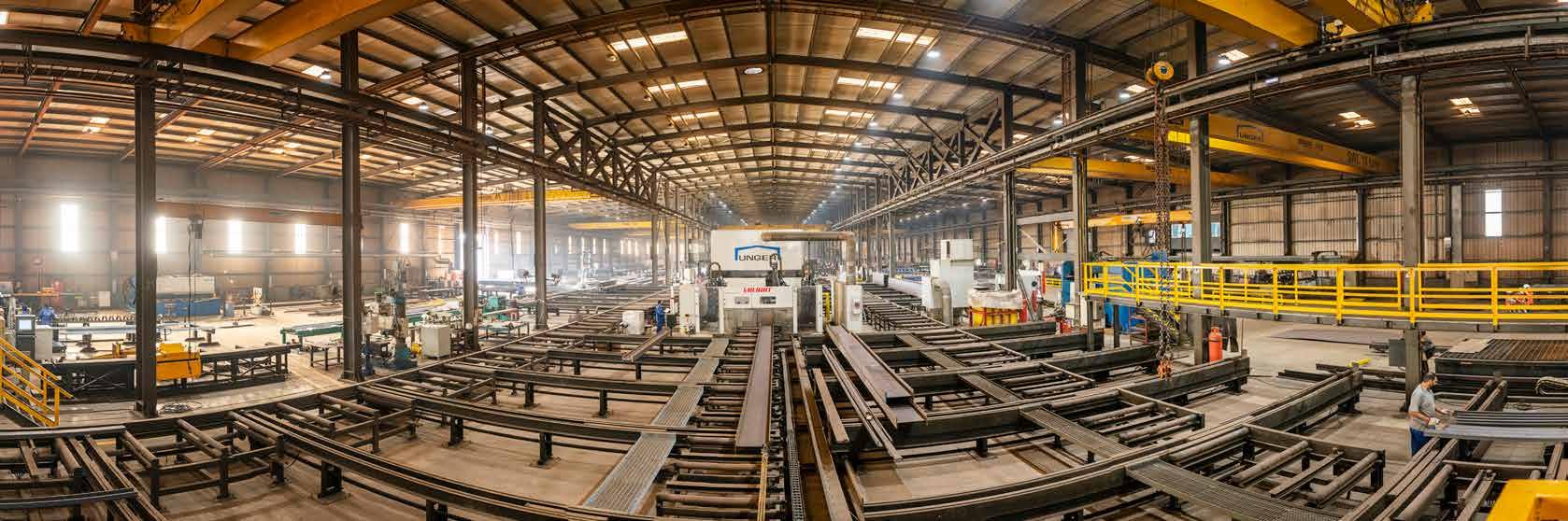
Unger Steel
Investing in people to hit record production levels
Tom Pashley
Chief Commercial Officer at Unger Steel
How is Unger Steel thriving?
Through workforce development, equipment upgrades and facility expansion, UAE-based Unger Steel has scaled monthly production from under 1,000 tonnes in 2022 to 4,500 tonnes and is targeting 6,000 tonnes following an expansion at the end of 2025. The company has also maintained zero non-conformance across 140,000 tonnes delivered since early 2023. And with 50% revenue growth in 2025 and 20% growth projected for 2026, the finances look promising too. Key to this is Unger’s support for over 200,000 tonnes of steel across three major LNG projects in the US for its joint venture partner Bechtel.
The challenge - When Unger Steel established a joint venture with Bechtel in May 2024, the company faced an unprecedented scaling challenge. Market demand had increased significantly, and Bechtel required monthly production capacity of 4,500 tonnes to satisfy project requirements – a 350% increase from the 1,000 tonnes per month the Sharjah facility was fabricating in 2022.
The challenge intensified thanks to labour shortages in a highly competitive market and the substantial capital investment required for more efficient equipment to increase throughput. Failure to achieve these targets risked losing project opportunities, undermining the joint venture partnership, and generating insufficient revenue to cover expanded overheads from the salary increases and capital investments required for expansion.
The solution - Unger Steel faced up to the challenge head on by targeting three major priorities, the most significant being investment in its workforce. Building on that foundation, the company has also channelled energies and resources into optimising production processes and physically expanding its production footprint.
The catalyst for this expansion exercise came from exceptional performance on the Corpus Christi CCL Stage 3 project for Bechtel. Delivering 37,500 tonnes on time, within budget, with zero non-conformance reports and strong safety performance enabled Bechtel to commission LNG Train 1 six months ahead of schedule. This
success gave the ownership of Unger Steel the confidence to invest in long-term growth.
The workforce strategy comprised multiple initiatives. Unger increased recruitment drives for qualified expatriate labour, establishing international training schools to develop fabrication and welding talent. This ensured steady input of qualified workers who were further developed through a new in-house training centre at the UAE facility. By demonstrating investment in employee development, Unger has dramatically reduced labour turnover while maintaining its high certification standards.
The next priority, production optimisation, required reimagining facility workflow. Here, Unger Steel changed shop floor layouts and invested in state-of-the-art sizing equipment that have increased speed and efficiency at the start to the production cycle. This allowed the facility to feed more material through, with every action along the production line requiring output increases to prevent bottlenecks.
The third priority centred on facility expansion. After recognising sustained long-term demand in 2023 rather than short-term opportunity, Unger converted its painting facility into additional fabrication space. In Q4 2025, the company invested in a new facility to restore painting capability and enable production to reach new heights – 6,000 tonnes of monthly output is targeted.
Technology has also played a key role. This has included automated steel cutting and drilling lines which extract data directly from Tekla 3D models into machines without manual interference. Future developments may include AI robotic welding, which could increase throughput and eliminate manual inspections.
Supporting this expansion required a willing joint venture partner prepared to invest in longterm sustainability. Here, Bechtel’s backing provided confidence for the capital requirements.
Results have validated the strategy. In Q4 2025 and Q1 2026, Unger exceeded monthly requirements, supplying steel in advance of on-site needs. The company also maintained its impressive zero non-conformance record across 140,000 tonnes delivered since early 2023. Key performance indicators showed improved margins, revenue and safety.
The company currently supports Bechtel exclusively on the Gulf Coast of the USA across three major projects: CCL3 (nine trains), Rio Grande LNG (five trains) and Louisiana LNG
Story type
#scale up (main category) #optimisation
Benefits
► Scaled fabrication output from under 1,000 to over 4,500 tonnes per month by late 2025, ensuring consistent supply ahead of schedule.
► Delivered 37,500 tonnes of steel for Bechtel’s project on time and budget with zero defects, enabling LNG Train 1 commissioning six months early.
► Boosted revenue and margins while maintaining excellent safety records, and reduced labour turnover through strategic investments in in-house training.
Key findings
For young people
► Be patient, stay adaptable to evolving technologies like AI and learn to embrace change to create your own opportunities. For industry
► Avoid relying solely on regional markets; expanding beyond your home region diversifies exposure, stabilises revenue and positions the business for sustainable growth For government
► Restrict the low-cost dumping of raw materials and add tariffs to imported fabricated steel that undercuts the market and undermines in-country value (ICV).
Unger Steel at a glance:
Key products and services: fabrication and coating of structural steel for onshore oil and gas pipe racks, mining and heavy industrial projects.
Main industries served:
► Oil and gas – 98%
► Others (energy) – 2%
Headquarters: Sharjah, UAE Year established: 2007
Number of employees: 1,250
Revenue: £120m
Revenue from exports: 100%
(three trains), representing over 200,000 tonnes. Revenue grew 50% in 2025, with 2026 set for a further 20% growth.
Looking ahead, Unger seeks to diversify into nuclear power, metals and mining and data centres to avoid over-reliance on income from the oil and gas sector.
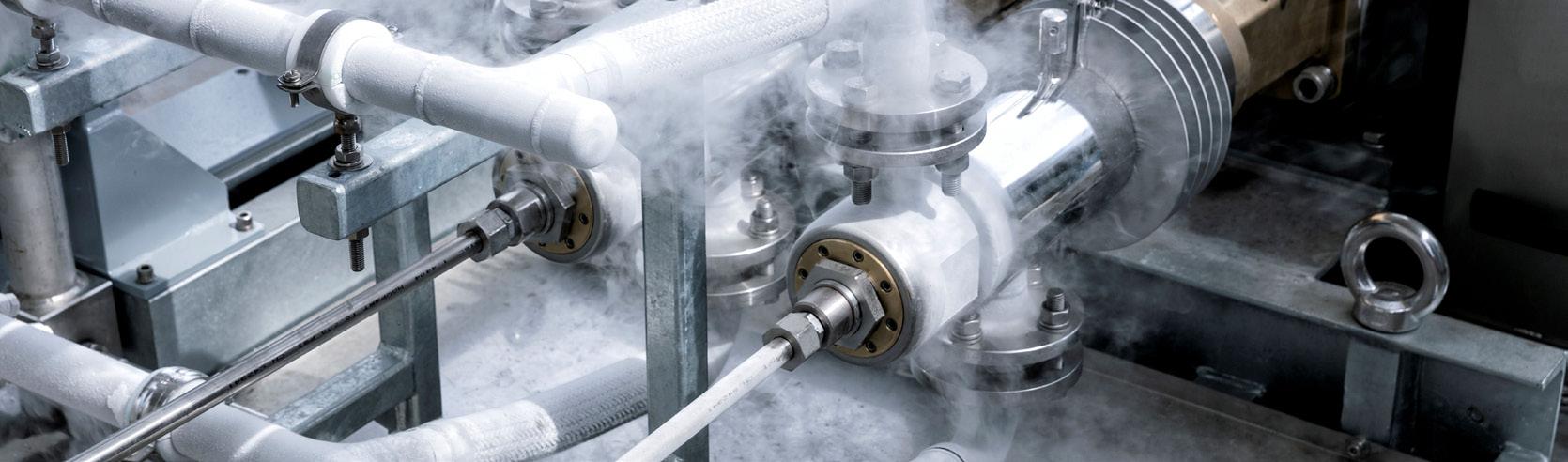
Vanzetti Engineering
Engineering the future of cryogenic innovation
Story type
#diversification (main category) #energy transition #export #innovation #people & competency #service & solutions
Benefits
Andrea Capuani Chief Commercial Officer at Vanzetti Engineering
How is Vanzetti Engineering thriving?
Vanzetti Engineering has built long-term growth by strategically diversifying beyond traditional cryogenic markets into highgrowth sectors such as marine LNG and, more recently, green aviation. By combining deep technical expertise with forward-looking investment in emerging energy applications, the company has successfully scaled its capabilities while maintaining profitability and global competitiveness. The result is a resilient, innovation-led business positioned at the forefront of the energy transition.
investment
The challenge - Founded in 1984, Vanzetti Engineering S.p.A. has established itself as a highly specialised manufacturer of cryogenic pumps for LNG and industrial gas applications. With over 40 years of experience, the company operates in a niche market defined by deep technical expertise and high barriers to entry.
However, this specialisation also presented a strategic challenge. Traditional industrial markets, while stable, offered limited growth potential. In contrast, emerging sectors such as marine LNG and, more recently, hydrogen and green aviation, represented significant opportunities but required substantial investment, innovation and international expansion.
For Vanzetti, the risk was clear: without diversification, long-term growth would be constrained. At the same time, entering new markets brought its own complexity. Scaling production and engineering capabilities to meet the demands of fast-growing sectors, particularly marine, required both operational transformation and sustained investment.
The marine market, in particular, introduced new commercial hurdles. Success depended on building credibility with shipowners, gaining approval on stringent vendor lists, and proving product performance through extensive testing and trials. Competition was also intensifying, particularly from lower-cost Asian manufacturers, putting additional pressure on pricing and margins.
Looking ahead, the company, on top of the legacy industrial market (such as Air Gas and Industrial applications) also identified green aviation (specifically hydrogen) as a
long-term opportunity for diversification. However, this market comes with high entry barriers, including significant R&D costs, infrastructure requirements and long development timelines. Balancing investment in this future-facing sector while continuing to strengthen core operations presented a further strategic challenge.
The solution - Vanzetti’s response has been defined by deliberate, phased diversification supported by continuous investment in technology, people and international expansion. The journey began in 2010 with entry into the automotive LNG refuelling market, marking the company’s first step beyond its traditional domains. This was followed in 2017 by a more ambitious move into the marine sector, aligned with the growing adoption of LNG as a cleaner marine fuel. Recognising the scale of the opportunity, Vanzetti prioritised the development of new technologies and product families tailored to marine applications.
A key focus was achieving market credibility. The company worked closely with shipowners, EPCs and key industry stakeholders to secure positions on approved vendor lists – an essential step in unlocking commercial opportunities. Early progress was gradual, in a robust design approach, requiring persistence and a willingness to invest in pilot technologies, testing and validation.
This long-term approach began to pay off in 2022, when Vanzetti secured its first major marine contracts following successful trials and customer validation. From there, growth accelerated rapidly. The company also introduced a scalable product family, enabling customers to use the same core pump design across different vessel sizes, simplifying maintenance and reducing operational complexity.
In parallel, Vanzetti expanded its international footprint, entering key markets such as China, Singapore, Korea and Japan. To support this growth, it invested in local service capabilities, including dedicated marine service operations in Asia, alongside the recruitment and development of specialised talent.
The results have been significant. Marine revenues have grown from zero to €35m in just eight years, with Vanzetti capturing around 20% of its addressable market by 2025. The company has secured 20-30 major new clients, expanded into multiple international markets and maintained protected margins despite increasing competition.
▸ Strategic diversification into marine LNG and green aviation strengthened longterm growth and reduced reliance on mature industrial markets.
▸ Investment in scalable cryogenic technologies and international service capabilities enabled rapid market expansion and protected margins.
Key findings
For young people
▸ Staying open to change, continuous learning and emerging technologies is essential for long-term career growth.
For industry
▸ Diversification into adjacent high-growth markets can strengthen resilience and unlock new revenue streams.
For government
▸ Balanced, pragmatic energy transition policies are needed to support industrial competitiveness and long-term investment in cleaner fuels.
Vanzetti Engineering at a glance:
Key products and services: cryogenic pumps and cryogenic systems for LNG, industrial gases and hydrogen applications.
Main industries served:
▸ Oil and gas – 95%
▸ Hydrogen – 5%
Headquarters: Cavallerleone, Italy
Year established: 1984
Number of employees: 90
Revenue: £44m
Revenue from exports: 95%
By combining technical depth with strategic diversification, Vanzetti has not only strengthened its position in established markets but also built a platform for longterm growth in emerging sectors, ensuring it remains competitive, relevant and resilient in a rapidly evolving energy landscape.
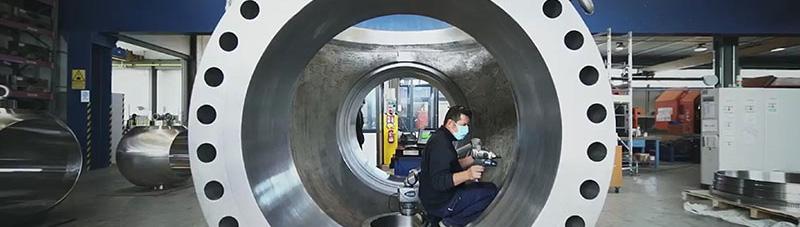
Velan ABV
An eight-year turnaround of diversification and expansion
Emanuele Rivolta Vice President at Velan ABV
How is Velan ABV thriving?
Part of the Velan Group, Velan ABV has undergone a remarkable turnaround in less than a decade.. Following a series of declining years culminating in a difficult 2017, the business has since expanded, diversified, and returned to strong performance, Its revenues have since jumped from €30m to €75m , with orders now stemming from multiple markets including China, KSA, Singapore, Malaysia, India, the UAE, Qatar and Europe, and no single client accounting for more than 20% of its business.
The challenge - Having been founded just prior to the turn of the millennium, oil and gas valve specialist Velan ABV has experienced significant ups and downs in the 27 years since its inception. One of those troughs was experienced in 2017. When Emanuele Rivolta (now the company’s Vice President of Upstream) joined the business that year, the firm was in a difficult period. Critically, the firm had become vulnerable both through an overreliance on one key customer that accounted for 70% of its revenue, and through solely serving Floating Production, Storage, and Offloading (FPSO) firms. It was a position that left it at the mercy of the market.
As a result, by the end of previous fiscal year in February 2017, the firm closed its accounts as a loss-making business.
The solution - From 2018 onwards, the immediate focus was on survival. Specifically, the company set out to find new clients and target new markets, as well as secure more sustainable and favourable agreements with existing customers. The company also restructured its sales team, bringing in more experience and instilling a more driven culture.
These changes contributed to the development of a new overarching strategy centred around three core pillars: a greater focus on the LNG valves and cryogenic market; the development of new designs of a commodity-level valve range to be sold through Velan Group’s distribution network; and the opening of a new office in the UAE.
The latter was seen as a particularly significant opportunity. While Velan ABV had his-
torically paid most attention to the Americas and the FPSO market, the Middle East was recognised as a market in which the firm had no previous foothold.
From 2019 onwards, the firm began looking at the KSA market. Those ambitions were delayed by the impacts of COVID-19 through 2020. However, by 2021, the company began winning new business in both the UAE and KSA, with its dedicated sales team helping to secure new orders long before its facility opened in the region.
From 2022, Velan ABV signed a joint venture with a local partner in KSA, and by 2023, the firm had secured a location for its facility. Through a muti- million CAPEX investment, this was then prebuilt and by 2024 the facility had been fully refurbished, with final approvals secured with Aramco in 2025.
Subsequently, the company has made 15 hires in KSA with two additional FTEs in the UAE. People were selected based on their attitude, proactive mindset, entrepreneurial approach and proven productivity.
These overseas expansions haven’t been without their teething problems. By the firm’s own admission, a year was lost in which Aramco was ready for an assessment audit, but Velan was not, largely due to unexpected complexity in the documentation processes.
However, the venture has more than paid off. To date, Velan ABV has secured tens of millions in new orders since opening in KSA, while its total Middle East orders are now in the three-digit million range.As a result, the company’s revenue has increased over 2.5 times, in the space of just eight years.
Customer diversification across various countries spanning Europe, the Middle East, China, the Americas and beyond has further future-proofed the business, with no single customer responsible for more than one fifth of overall revenue. By contrast, back in 2017, 70% of its revenues were driven by one client in just two countries – Singapore and the US.
The firm isn’t done here either. It is now planning a new facility in KSA that will be four times larger than its current one, with plans to move in by 2027.
Story type
#export (main category)
Benefits
▸ Revenue growth 2.5 times between 2017 and 2025 through international expansion and customer diversification.
▸ More than €100m in Middle East orders secured, reducing reliance on a single customer and strengthening long-term business resilience.
Key findings
For young people
▸ Speak up, believe in your ideas and keep pace with technology — AI will be your daily life, don’t ignore it, embrace it instead.
For industry
▸ Look to your capable, young people, with the right mindset, as they can really transform your business.
For government
▸ Strengthen international cooperation, particularly in the Middle East, to help unlock new market opportunities.
Velan ABV at a glance:
Key products and services: industrial valves for oil and gas upstream and midstream applications.
Main industries served:
▸ Oil and gas – 90%
▸ Others (non-energy): defence – 10%
Headquarters: Lucca, Italy
Year established: 1999
Number of employees: 140
Revenue: £64.5m
Revenue from exports: 95%

Vysus
Reshaping from the inside out to compete in a changing market

Story type
#transformation (main category) #culture #scale up
Benefits
► Improved performance across key metrics, in particular orderbook and profitmargin, alongside reduced attrition and higher engagement.

Thomas Aas Saethre CEO at Vysus
How is Vysus thriving?
When Vysus Group emerged from Lloyd’s Register Energy in 2020 and came under private equity ownership, it brought with it nearly a century of technical credibility but also need to deliver as a separate company from LR and a competitive market. The work to change how we view the world has defined the past three years. Today, the 200-person consultancy operating across 17 offices in 13 countries is delivering stronger performance across all key metrics, despite being part of a organisation that has divested business along its journey and that is now about 50% the size of what it was in 2023. The company is now targeting 10 to 15% revenue growth in 2026.
The challenge - Vysus carried into its early years a powerful legacy – deep regulatory knowledge, Lloyd’s Register pedigree and a reputation for rigorous, independent assurance across nuclear, oil and gas, renewables, power systems and infrastructure. The company also inherited a commercial model that had relied on the front end of LR. Work used to arrive inbound, sustained by institutional affiliations and a semi-regulatory market position. When those affiliations no longer guaranteed the pipeline, the business found itself without the commercial reflexes to replace what was disappearing.
The energy landscape compounded matters. Offshore wind, a significant growth area, slowed sharply from 2024 across Europe, North America and Asia. Political uncertainty in the US created volatility, with clients deferring and cancelling work faster than in previous cycles. Nuclear, meanwhile, was accelerating as a global priority. Lessons from the Middle East made clear that bidding from afar was not enough – instead, success required sustained local presence and trusted partnerships.
The solution - In 2023, the company’s leadership made a choice to preserve what made the business credible and radically change what was holding it back. This, in short, involved a significant cultural transformation as the teams realised what was required to properly scale up and succeed as a leaner business with more autonomous and accountable teams.
Arguably the most significant shift was to move from a reactive operating model to a
proactive, front-end commercial one. Previously, business development intensified when delivery teams had capacity to spare, meaning client engagement followed opportunity rather than creating it. That cycle made sustainable growth difficult or at best the business would flow up and down with the wider market movements. A structured consultative-sales approach introduced in 2024 embedded disciplined behaviours around pipeline visibility, relationship continuity and funnel management.
A CRM system, initially resisted the teams, became a core tool once it became clear that visualising future work made selling feel like the pathway to more interesting projects as opposed to an administrative burden.
Clarity of roles mattered as much as process. Expecting individuals to manage projects, lead teams, sell work and handle admin had proved inefficient and unsustainable. To rectify this, dedicated commercial roles were established, thereby freeing consultants and engineers to focus on delivery while accountable growth resources managed the front end. Celebrating success, previously understated in a culture that valued technical rigour over self-promotion, became deliberate policy. Teams that recognised wins consistently outperformed those that did not.
None of this was painless, however. Through 2023 and into early 2024, the shift created resistance. But leadership held its course, and by mid-2024 the data had begun to validate the plan, with KPIs improving month on month and quarter on quarter.
Now, three growth bets are shaping the next chapter. Nuclear is a core global pillar, driven by energy security concerns and an accelerating renaissance across Europe, North America and Asia. In North America, where Vysus has been building local capability since 2024, major contract awards are emerging that could materially scale the business over the next two years.
Alongside this, digitally enabled risk management is becoming a commercial reality. The dHAZOP platform, which automates labour intensive risk assessments previously delivered through large workshop-led teams, is in production use across multiple projects. Also upcoming as a fully Dynamic Risk Assessment tool for all process industries due to be launched hopefully by end of year. This is an incredibly exciting product that will change both how risk assessments are delivered and maintained throughout an asset’s lifecycle.
Lastly, Vysus is also seeing a comeback on bigger improvement projects on operating assets for all our services, with major customers in North America, Europe and the Mid-
► Transitioned to a proactive commercial model targeting 10 to 15% revenue growth in 2026 and rolling out digital risk platforms.
Key findings
For young people
► Build strong fundamentals in STEM and remain adaptable — energy transition will require multidisciplinary expertise.
For industry
► Invest in long-term technical capability and regulatory credibility, not just shortterm growth.
For government
energy
► Commit to the energy transition by investing in low carbon technologies and create stable regulatory frameworks that can scale clean energy infrastructure.
Vysus at a glance:
Key products and services: technical and advisory engineering consultancy.
Main industries served:
► Oil and gas – 40%
► Nuclear power – 20%
► Renewable energy – 20%
► Hydrogen – 20%
Headquarters: Westhill, UK
Year established: 2020
Number of employees: 200
Revenue: £22m
dle East. The knowledge base and expertise in being an owners engineering for Energy companies will be a key growth driver for the years to come. Attrition has fallen sharply, engagement has improved and the pipeline is increasingly proactive rather than reactive. For a business shaped by nearly a century of Lloyd’s Register heritage, this newfound commercial posture is already proving itself as central to its long-term success.

Wave
Partnering with Anglian Water to address water scarcity through efficiency-first audits

Oli Shelley Director of Water Efficiency Services at Wave
How is Wave thriving?
Wave has partnered with Anglian Water on a pioneering trial, targeting some of the UK’s largest water consumers with three key goals. To help large water users understand if their practices are efficient, to encourage water efficiency by changing processes and behaviours if there is water being wasted, and to demonstrate efficiency to their Wholesaler. To achieve this, Wave conducted water efficiency audits with 14 major companies using expert process engineers and a traffic light scoring system.
The trial led Anglian Water to launch a new tariff structure in January 2026 across its region. It strengthened Wave’s relationships with its large customers, and the new tariff will provide opportunities for Wave achieve revenue growth and support the Water Efficiency division.
The challenge - England is in danger of running out of water. By 2050, the country will face a deficit of 5m litres per day, driven by population growth, climate change and over-extraction. Business customers account for approximately one-third of total water demand, with the top 1% consuming half. However, evidence indicated that 25 to 30% of all business water usage represents wastage.
Wave wants to help customers decrease their usage, minimise waste and support wholesale water companies who have been targeted with reducing business demand by 9%, but typically lack customer relationships and knowledge of water use after the metre.
Additionally, many of these companies are pursuing projects linked to the UK’s net zero ambitions, which often requires an increase in water usage. Therefore, making significant progress demands more than traditional measures.
The solution - In early 2024, Wave began engaging with Anglian Water around a different approach to water efficiency. The company proposed a trial focusing on the largest water consumers, minimising waste and using expert process engineers to conduct detailed audits and establish baseline data.
However, without customers, there would be no results. Wave has invested heavily in its industrial specialist account management team, developing a deep understanding of customer operations across health, safety and environmental requirements. This human factor proved crucial in secur-
ing participation from the 14 companies Wave and Anglian Water identified from the 1% club of high-water users. In addition, the company needed to overcome perception challenges around why a free trial was being offered and build trust that the findings would be used for learning.
The trial launched in early 2025, running for approximately 12 months and concluding in December 2025. It included companies Wave believed were efficient alongside others with improvement potential. In doing so, the trial sought to cover a balanced and representative sample, that could deliver a true idea of the levels of efficiency across different organisations within the region to help prove the need for this change, as well as help shape future trials in other wholesale areas.
The audit for each organisation varied in depth, lasting from a single day to three days, depending on site complexity. Process engineers analysed operations in detail, producing comprehensive reports of 10 to 12 pages featuring engineering data and findings. The entire engagement for each company spanned several months, including onsite assessment, analysis and final report delivery.
A traffic light scoring system was developed to categorise water efficiency measures. Green indicated actions expected from responsible consumers. Amber signified efficiency-focused improvements. Red denoted large capital expenditure requirements that might be unreasonable to mandate broadly. Crucially, this framework provided clarity on reasonable expectations versus aspirational targets.
Throughout the trial, Wave balanced customer demand with contractor availability for audits whilst maintaining its day-to-day business operations. The company-maintained transparency with participants about objectives and data usage, which helped to build credibility through honest engagement. Following completion of the water efficiency trial, Anglian Water began discussions with retailers about tariff structures. This resulted in a ‘tariff trial’ launched in January 2026, which will run through to 2030. The structure includes a 16% surcharge of £0.25 per cubic metre for large users which do not undertake efficiency audits and implement identified actions. All large users in Anglian Water’s region have until November 2026 to comply, with surcharges applying from 2027.
Wave currently has 89 customers who fall within the tariff criteria, including the 14 which have already participated in the initial trial. Further customers have expressed strong interest in participating.
The trial has shifted conversations with customers. Rather than leading with ‘use less water’ as wholesalers traditionally do, it supports Wave’s message to drive companies to be more efficient

Story type
#optimisation (main category) #collaboration #environmental sustainability & social impact
Benefits
► Completed pioneering water efficiency audits for 14 major consumers, establishing best practice and engaging 89 large customers to adopt sustainable usage through a new tariff trial.
► Achieved 30% revenue growth for its water efficiency division in 2025 and is now targeting 95 to 100% growth for 2026.
Key findings
For young people
► Be ambitious, dream and challenge those status quos as what we think we can do.
For industry
► Recognise that hitting net zero and achieving waste efficiency are absolutely linked and must be tackled together.
For government
► Address UK water and energy security challenges holistically by ensuring policy integrates these interconnected resources rather than reviewing them separately.
Wave at a glance:
Key products and services: potable water and wastewater services.
Main industries served:
► Oil and gas – 5%
► Conventional power – 5%
► Others (non-energy) : public sector, industrial, multi-site commercial, retail, property management – 90%
Headquarters: Durham, UK
Year established: 2017
Number of employees: 337
Revenue: £554m
with their water usage. The approach encourages accountability within businesses, opens eyes to production efficiency alongside water efficiency and establishes best practice.
Wave is eager to understand if the model can be adopted by other wholesalers as a framework for collaboration and a catalyst for process improvements across other large water users. The company’s water efficiency division, which saw 30% revenue growth in 2025, is now targeting 95 to 100% growth in 2026 – supported by expanded audit activity and the new tariff structure creating more sustained demand for water efficiency services.

Zelim
Story type
#digital & AI (main category) #innovation #technology
Benefits
The AI system changing how the maritime industry detects man overboard
Chartering planes, crewing vessels and quadrupling revenue as a professional problem solver
▶ Achieved world-first certification for its man overboard detection system, driving planned growth from 7 to 10 installations by the end of 2026.


Barry Park
Regional Director APMEA at Zelim
underlying problem – even the best rescue equipment cannot be deployed effectively if the incident is not detected immediately. This prompted a shift in focus.
▶ Deployed its connected safety ecosystem across the offshore and cruise sectors, achieving a 97% detection rate at up to 337 meters.
Key findings
For young people
How is Zelim
thriving?
How is Zelim thriving?
Founded in 2017 by a mariner who lost two colleagues at sea, Zelim has developed a connected maritime safety ecosystem that combines AI-enabled detection, rapid rescue conveyors and unmanned rescue craft. The solution is winning customers across offshore energy, cruise, ferry and defence. Having achieved world-first ISO certification for its ZOE detection system, the Edinburgh-based company has moved from R&D into commercial deployment, with ZOE installations set to grow from 7 to 10 by the end of 2026.
Founded in 2017 by a mariner who lost two colleagues at sea, Zelim has developed a connected maritime safety ecosystem that combines AI-enabled detection, rapid rescue conveyors and unmanned rescue craft. The solution is winning customers across offshore energy, cruise, ferry and defence. Having achieved world-first ISO certification for its ZOE detection system, the Edinburgh-based company has moved from R&D into commercial deployment, with ZOE installations set to grow from 7 to 10 by the end of 2026.
The challenge - Many overboard incidents at sea are defined by a brutal time pressure. Once someone enters the water, the vessel continues to move, visibility deteriorates and the chance of a successful recovery diminishes with every passing minute. In complex maritime environments with changing sea states, large deck areas, limited crew and poor visibility all potential challenges, incidents can go unwitnessed for several minutes before anyone raises the alarm.
The challenge - Many overboard incidents at sea are defined by a brutal time pressure. Once someone enters the water, the vessel continues to move, visibility deteriorates and the chance of a successful recovery diminishes with every passing minute. In complex maritime environments with changing sea states, large deck areas, limited crew and poor visibility all potential challenges, incidents can go unwitnessed for several minutes before anyone raises the alarm.
Standard procedures rely entirely on human observation to locate and track a casualty in the water: a task that is severely compromised in darkness, heavy weather or high sea states. The maritime sector had long recognised the problem. What it lacked was a technology capable of solving it reliably enough to meet the rigorous safety standards that operators and regulators demand.
Standard procedures rely entirely on human observation to locate and track a casualty in the water: a task that is severely compromised in darkness, heavy weather or high sea states. The maritime sector had long recognised the problem. What it lacked was a technology capable of solving it reliably enough to meet the rigorous safety standards that operators and regulators demand.
The solution - Zelim was founded by Sam Mayall, who left his career as a North Sea offshore worker after losing two friends at sea in quick succession. His ambition was not to improve existing rescue methods incrementally but to remove the search from rescue entirely – using technology to detect incidents the moment they happen and get a response under way before precious time is lost.
The solution - Zelim was founded by Sam Mayall, who left his career as a North Sea offshore worker after losing two friends at sea in quick succession. His ambition was not to improve existing rescue methods incrementally but to remove the search from rescue entirely – using technology to detect incidents the moment they happen and get a response under way before precious time is lost.
The company began by developing hardware for the recovery phase of rescue. This includes Swift, a rapid rescue conveyor that retrieves casualties without exposing crew to additional risk, and Guardian, an unmanned fast rescue vessel capable of reaching a person in the water quickly in challenging conditions. But operational experience and industry engagement pointed to a greater
The company began by developing hardware for the recovery phase of rescue. This includes Swift, a rapid rescue conveyor that retrieves casualties without exposing crew to additional risk, and Guardian, an unmanned fast rescue vessel capable of reaching a person in the water quickly in challenging conditions. But operational experience and industry engagement pointed to a greater
The result was ZOE, an automated monitoring and detection system that uses computer vision and video analytics to watch continuously across a vessel’s entire perimeter. Trained on a proprietary dataset of more than 9.5m annotated maritime objects, ZOE’s AI models can detect a person falling overboard and begin tracking them in real time, automatically alerting the bridge and providing geo-location data, a mayday script and an actions checklist. It does not blink, lose concentration or depend on someone happening to be looking in the right direction at the right moment.
underlying problem – even the best rescue equipment cannot be deployed effectively if the incident is not detected immediately. This prompted a shift in focus.
The result was ZOE, an automated monitoring and detection system that uses computer vision and video analytics to watch continuously across a vessel’s entire perimeter. Trained on a proprietary dataset of more than 9.5m annotated maritime objects, ZOE’s AI models can detect a person falling overboard and begin tracking them in real time, automatically alerting the bridge and providing geo-location data, a mayday script and an actions checklist. It does not blink, lose concentration or depend on someone happening to be looking in the right direction at the right moment.
That said, achieving the credibility needed to sell into a conservative, safety-critical industry required more than a working product. Here, Zelim invested over £1.5m in R&D and worked closely with Lloyd’s Register to achieve ISO 21195:2020 certification – the first company in the world to do so for a man overboard detection system. It is a significant moment, not least because the ISO standard triggers a legislative requirement that, once technology meeting the standard is available, vessels over a certain size must install it. Zelim has crossed that threshold.
That said, achieving the credibility needed to sell into a conservative, safety-critical industry required more than a working product. Here, Zelim invested over £1.5m in R&D and worked closely with Lloyd’s Register to achieve ISO 21195:2020 certification – the first company in the world to do so for a man overboard detection system. It is a significant moment, not least because the ISO standard triggers a legislative requirement that, once technology meeting the standard is available, vessels over a certain size must install it. Zelim has crossed that threshold.
Commercial deployments are now building the evidence base. ZOE was installed aboard the Valaris Stavanger jack-up drilling rig in the North Sea, making it the first deployment of AI-enabled man overboard detection in the offshore oil and gas sector. Glen Spearman, Offshore Installation Manager aboard the vessel, noted that ZOE always provides 360-degree visibility around the rig, reducing response time and improving the chances of a successful rescue in the event of a person overboard. The system achieved a 96.8% detection rate at distances of up to 337 metres.
▶ The energy and maritime industries are evolving rapidly, creating opportunities to solve complex real-world challenges.
For industry
▶ Focus on solving real-world problems, build an ethical culture and invest in long-term innovation to improve safety.
For government
▶ Update regulatory frameworks to support the faster deployment of proven safety technologies that protect lives at sea.
Zelim at a glance:
Key products and services: AI-enabled situational awareness systems, rapid rescue conveyors and unmanned vessels for maritime safety and security. Main industries served:
Headquarters: Edinburgh, UK Year established: 2017
Commercial deployments are now building the evidence base. ZOE was installed aboard the Valaris Stavanger jack-up drilling rig in the North Sea, making it the first deployment of AI-enabled man overboard detection in the offshore oil and gas sector. Glen Spearman, Offshore Installation Manager aboard the vessel, noted that ZOE always provides 360-degree visibility around the rig, reducing response time and improving the chances of a successful rescue in the event of a person overboard. The system achieved a 96.8% detection rate at distances of up to 337 metres. Meanwhile, in the cruise sector, Ambassador Cruise Line became the first cruise operator to install ZOE aboard its Ambition vessel, following Lloyd’s Register type approval tests in which the system recorded a 97% man overboard detection rate.
Meanwhile, in the cruise sector, Ambassador Cruise Line became the first cruise operator to install ZOE aboard its Ambition vessel, following Lloyd’s Register type approval tests in which the system recorded a 97% man overboard detection rate.
Together, Swift, Guardian and ZOE form a connected safety ecosystem designed to cover every stage (detection, alerting, tracking and recovery) in a way that no single technology previously could. With installations growing rapidly, further expansion across offshore
Together, Swift, Guardian and ZOE form a connected safety ecosystem designed to cover every stage (detection, alerting, tracking and recovery) in a way that no single technology previously could. With installations growing rapidly, further expansion across offshore energy, defence, cruise, ferry and commercial shipping under way, and regulatory momentum building behind the ISO standard, the case Zelim has spent nearly a decade making is now being heard.
energy, defence, cruise, ferry and commercial shipping under way, and regulatory momentum building behind the ISO standard, the case Zelim has spent nearly a decade making is now being heard.
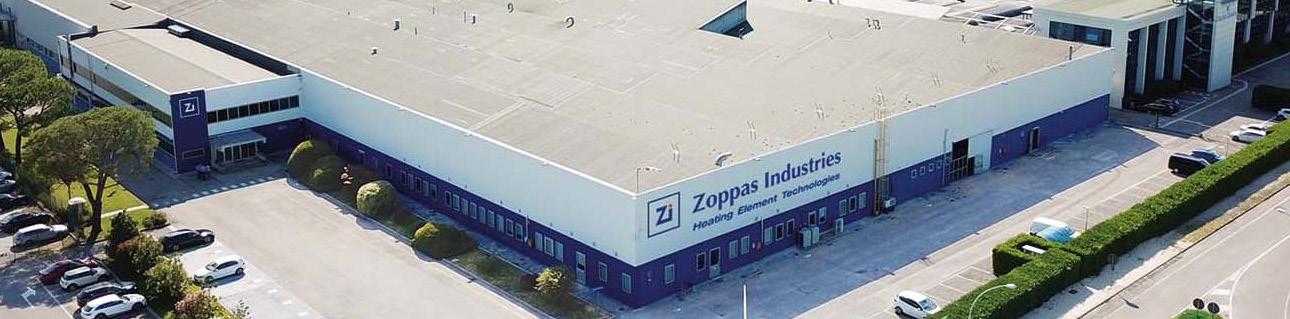
Zoppas INDUSTRIES
A
true solutions provider across 200+ sectors
Federico Zoppas Chief Executive Officer at Zoppas Industries
How is Zoppas Industries thriving?
Zoppas Industries Heating Element Technologies (Zoppas Industries) has achieved sustained growth by transforming itself from a traditional component supplier into a global solutions provider serving over 200 industries. Through an extensive diversification strategy, the business has established itself in new markets, optimised its processes around central-local-global structures, and cultivated an enthusiastic culture of continuous learning. The result is a resilient, innovation-led organisation with improving profitability and a strong position in both established and emerging sectors.
The challenge - Founded in 1950, Zoppas Industries has grown to a formidable company with more than 8,000 employees globally. Having started out specialising in household appliances, it has since become a leading Italian manufacturer of electric heating elements, thermal systems, and temperature controls for highly regulated, extreme environments.
Today, it supplies the European Space Agency (ESA) and NASA with components used in over 400 satellites and the Artemis lunar missions, for example. However, in total, the firm designs and delivers custom thermal management solutions for over 200 industries.
As the business expanded, both organically and through acquisitions in Germany, the UK and France, Zoppas Industries has continued to bolster its technical foundations. Further, it’s also established an increasingly global footprint, having relocated production to regions such as Serbia, Romania, China and Mexico over the years.
However, this expansion has come with its challenges. Indeed, managing the firm’s successful diversification into more than 200 industries has been no easy feat, each presenting their own unique technical demands, regulatory requirements and customer expectations.
While the firm has found new opportunities, it has also had to maintain consistently high standards, and avoid fragmentation across global operations.
The solution - To compete effectively across each of these sectors, Zoppas Industries recognised the need to move up the value chain, shifting from being just a manufac-
turer to becoming a true partner capable of solving complex customer challenges.
Rather than simply manufacturing to specification, the company began working much more closely with customers through a “buildto-spec” model, engaging in concurrent engineering to co-develop tailored solutions that addressed specific operational challenges.
From 2012 onwards, the firm has organised its teams in a centralised manner, from application engineers to product specialists. Since then, the firm has operated with strategic business units aligned to different markets, combined with a centralised R&D function.
It’s a structure that enables Zoppas Industries to standardise processes while also encouraging knowledge sharing across sectors. Indeed, lessons learned in highly demanding industries such as aerospace can be cross-pollinated across others. For example, flexible heating systems originally developed for space applications have since been adapted for use in automotive applications.
Indeed, from 2018 onwards, the firm made its switch from a technology provider to a solutions company, adding value beyond commoditised products that can be easily replicated by competitors by working with customers closely to solve their challenges in a tailored manner.
Zoppas Industries in turn has had to bolster its project management and process controls to achieve this, ensuring that it can support increasingly complex production requirements. Company culture has also played a significant part, with the firm’s expansive workforce proactively exploring new trends, technologies, equipment, materials and regulatory changes, and cross-pollinating innovations from sector to sector.
It is these various strategic changes that have led Zoppas Industries to being renowned as a successful industry innovator, and enabled the business to expand into fast-growing sectors including data centres and space. Indeed, the latter is an area where it holds a particularly strong position, accounting for approximately 92% of the European market for satellite thermal balancing systems and supporting major programmes such as ESA missions.
Globally, the company has achieved steady revenue growth of 3-5% CAGR over the past five years, and has also realised improvements in profitability. Its diversification across more than 200 industries, meanwhile, has reduced reliance on any single market, while its move into solutions has strengthened customer relationships and protected margins.

Story type
#optimisation (main category) #culture #diversification #service & solutions
Benefits
▸ Diversification across more than 200 industries has reduced reliance on any single market and strengthened resilience.
▸ Moving from component manufacturing to build-to-spec solutions has improved customer relationships and protected margins.
Key findings
For young people
▸ Building cross-sector technical knowledge and staying adaptable creates long-term career opportunities.
For industry
▸ Cross-pollinating technologies and expertise between sectors can unlock innovation and improve competitiveness.
For government
▸ Supporting advanced manufacturing, R&D and industrial innovation helps companies compete globally and strengthen exports.
Zoppas Industries at a glance:
Key products and services: heating solutions, electric heating elements, thermal systems and temperature controls.
Main industries served:
▸ Oil and gas – 10%
▸ Conventional power – 5%
▸ Others (energy) – 5%
▸ Others (non-energy): domestic consumer goods, automotive and heavy industries – 80%
Headquarters: Veneto, Italy
Year established: 1963
Number of employees: +8,000
Revenue: £585m
Revenue from exports: 95%
By combining global scale with local execution, and technical depth with cross-sector insight, Zoppas Industries has built a business that is not only more resilient, but also better equipped to capture opportunities across an increasingly complex and evolving industrial landscape.
13 Appendix: overview OF COMPANIES
13 Appendix: overview OF STRATEGIES
Dräger (Norway)
Dräger (UK)
Endress+Hauser Muscat SPC
EXPORT | DIVERSIFY | GROW