new mexico next door! I ndoor d I n I ng s o utdoor r ooftop C ant I na d I n I ng & B ar Serving Dinner Tues-Sat 5-9pm 807 William Hilton Parkway in Plantation Center For Reservations Call 843.785.3838 santafehhi.com
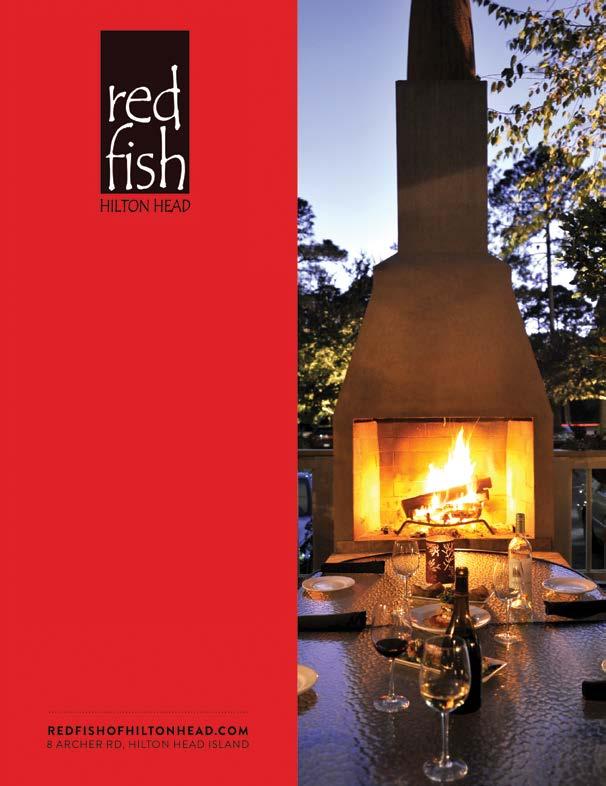
......................................................... 843-686-3388
FEATURES
REILLEY’S GRILL & BAR
Forty years of the Island’s favorite hangout.
BOWDIE’S CHOPHOUSE
A mainstay of Michigan cuisine makes its first foray south of the Mason-Dixon line.
A WORLD OF PURE IMAGINATION
For forty years, locals and visitors have been following their sweet tooth to The Island Fudge Shoppe.
FIND THE TIME
Health and Fitness Tips from Christy Baroni.
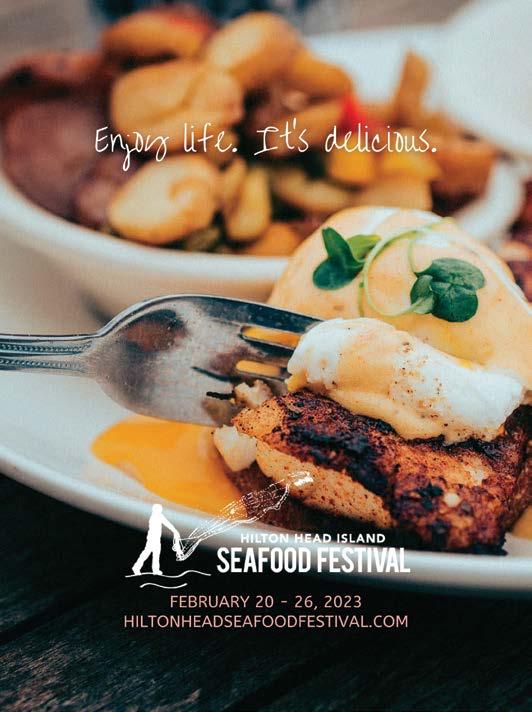
HILTON HEAD ISLAND SEAFOOD FESTIVAL
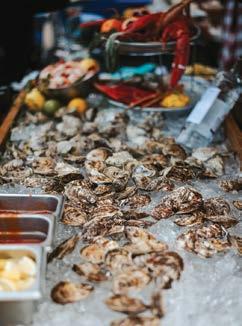
The island’s preeminent celebration of the Lowcountry’s delicious bounty returns.
A TASTE OF GULLAH
Enjoy and learn about local Gullah cuisine.
HOLIDAY HAPPENINGS
Don’t miss these festive holiday events.
TASTEOFHILTONHEAD.COM 6 12 16 24 30 38 42 54 Contents IN EVERY ISSUE 8 PUBLISHER’S NOTE 10 TASTE OF DINNER 46 TASTE OF LUNCH 53 TASTE OF RECIPES 58 TASTE OF BREAKFAST/BRUNCH 62 TASTE OF NIGHTLIFE/LOUNGES 68 TASTE OF SERVICES & SWEETS 69 TASTE MENU GUIDE 106 ADVERTISING DIRECTORY/MAP
12 38
PUBLISHER’S NOTE
If there’s one thing I’ve learned in my years in publishing, it’s that nothing beats experience. Sure, the energy of youth can be a wonder to behold and there’s something to be said for the optimism that only seems to exist when you’re just starting out in the world, but the knowledge that can only come through years of triumphs and failures is just about irreplaceable.
And you need both. Think back to when you were first starting out in whatever calling you’ve pursued. Your wins taught you what you were doing right. Your losses showed you where you needed to improve. And that made you better. At everything – business, relationships, sports, whatever. Putting in the work and learning from every experience inched you closer to success.
So what does this have to do with the vibrant restaurant scene on Hilton Head Island? Everything. If you want to taste what years of experience can do to do a dish, or to enjoy what it can do for an overall night out, you have an embarrassment of riches here. For such a small island, we have a wealth of restaurants that put 20, 30 and even 40 years of experience into their restaurant. Staying power is never easily earned, but the difference it makes is easy to see.
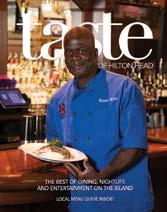
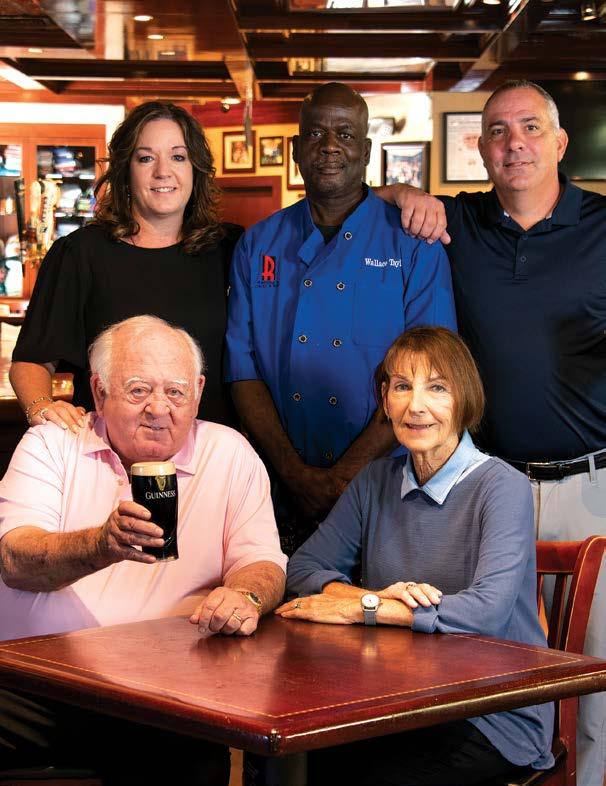
In this issue, we’ve put the spotlight on a couple of local legends who have demonstrated that kind of enduring popularity. For 40 years, the island’s sweet tooth has been satisfied by the freshly made fudge, chocolate and confections of The Island Fudge Shoppe. Also celebrating its 40th anniversary this year, Reilley’s Grill & Bar has been a defining element of our restaurant scene, launching a family dynasty along the way that has never been stronger. We couldn’t have picked a better salute to this longevity than to feature chef Wallace Taylor on our cover, someone who has been with Reilley’s since the beginning.
These are businesses that exemplify the difference that experience can make. They also show the enduring appeal of Hilton Head Island, something we’re proud to showcase for you with every issue.
David Mudwilder Publisher

TASTE OF HILTON HEAD
VOLUME XVIl, ISSUE 4
PUBLISHER
David Mudwilder
ART DIRECTOR Kim Bowen
CONTRIBUTING PHOTOGRAPHER Rob Kaufman
CONTRIBUTING WRITERS
Karla Angel
Christy Baroni Allyson Jones Barry Kaufman
DISTRIBUTION
Brandon Duffner Gray Mudwilder
TASTE OF HILTON HEAD
3 Cardinal Court #572 Hilton Head Is., SC 29926 (843) 384-2014 mud@atasteofhiltonhead.com
@TasteHHI
TASTEOFHILTONHEAD.COM 8
ABOUT THE COVER
Chef Wallace Taylor of Reilley’s Grill & Bar. Photography by Rob Kaufman.
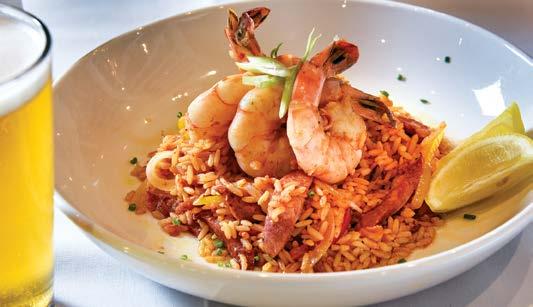
ALEXANDER’S RESTAURANT AND WINE BAR
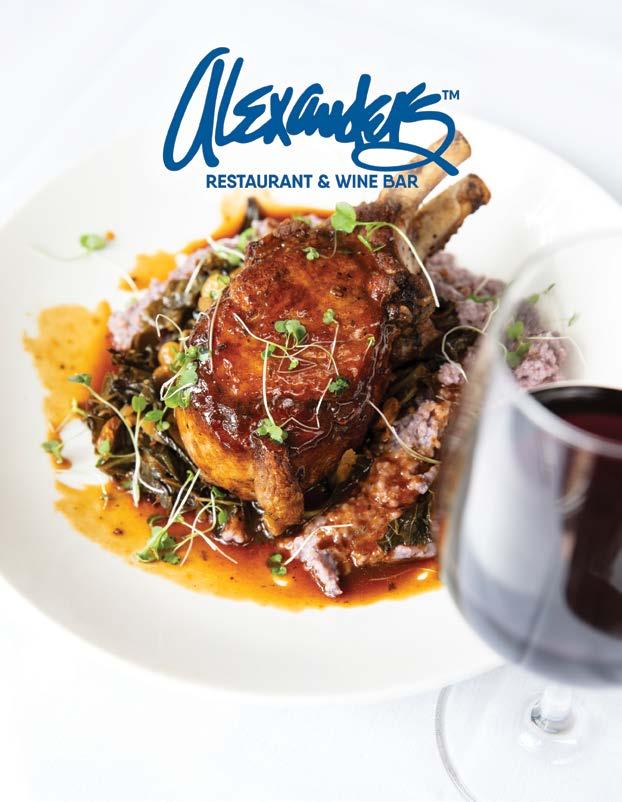
Located in Palmetto Dunes at 76 Queens Folly Road adjacent to the General Store, Alexander’s Restaurant & Wine Bar is an upscale seafood restaurant featuring locally-caught seafood and many locally sourced ingredients creating a menu which pays tribute to classic lowcountry and Alexander’s favorites such as Shrimp and Grits and Wiener Schnitzel. Dinner daily 5 p.m. until 9 p.m. Early Dining menu daily from 5 - 5:45 p.m. Reservations are highly encouraged, although walk-ins are welcome. Call (855) 300-5976 or visit www.AlexandersRestaurant.com for more information.
A LOWCOUNTRY BACKYARD
Located at 32 Palmetto Bay Road in the Village Exchange. Capture the true essence of the island while enjoying local and regional inspired cuisine featuring family recipes. Choose from Potato chip meatloaf, Charleston fried green tomato sandwich, shrimp & grits, the Bischick and a wide selection of other lowcountry favorites. Dine in or outside in the comfortable backyard. Experience the island, love the food! Serving lunch Monday - Saturday 11 a.m. - 3 p.m., and dinner 4:30 - 9 p.m., Monday - Saturday. Call (843) 785-YARD (9273) or visit us online at www.hhbackyard.com.
AMIGO’S CAFÉ Y CANTINA
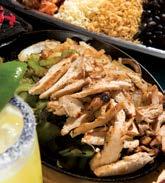
The original Amigo’s is located at 70 Pope Avenue in the Circle Center. Under new local ownership. Casual healthy Mexican food prepared fresh daily. Featuring the best burrito outside of Baja, quesadillas, tacos, amazing BBQ chicken
salad, World Famous Margaritas and ice cold beer. This local favorite has been serving islanders and visitors for over 26 years. Dine in, take-out or curbside delivery available. Open for lunch and dinner, Monday thru Saturday from 11 a.m. until 8:30 p.m. Call (843) 785-TACO (8226) or online at www.amigoscafehhi.com or check us out on Facebook.
AUNT CHILADAS EASY STREET CAFE
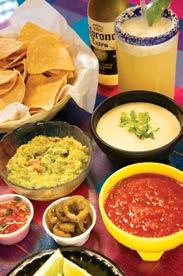
“Not your everyday Mexican!” Located on the south end of the island at 69 Pope Avenue, Aunt Chilada’s offers unique tacos such as Firecracker, Steakhouse, and more, plus Tex-Mex staples like sizzling fajitas, burritos, and enchiladas plus amazing apps and dips! The extensive tequila menu has all your favorites. Dine indoors or on the huge, covered outdoor patio, perfect for enjoying the sea breeze with a hand-crafted, fresh margarita, listening to live music. Serving from 3 p.m., happy hour is 4 - 7 p.m. Member of the Coastal Restaurants and Bars family since 1988. Call (843) 785-7700 or visit auntchiladashhi.com.
BIG BAMBOO
Located upstairs in Coligny Plaza, Oceanside. A 1940’s themed restaurant with reasonable prices and huge portions. Our extensive menu features steaks, award-winning ribs, local seafood, burgers, salads, fresh fish tacos, pizza and more. Fantastic kid’s menu available. Early Bird menu from 4 - 5:45 p.m. includes entree, house salad or soup of the day and a glass of house wine or house beer. Serving lunch from 11:30 a.m. until 4 p.m. and dinner from 4 until 10 p.m., Monday thru Saturday. Call (843) 686-3443.
TASTEOFHILTONHEAD.COM 10 TASTE OF DINNER
(continued on page 18)
FORTY YEARS
of the Island’s Favorite Hangout
Reilley’s Grill & Bar, the restaurant that started it all, rings in its 40th year on Hilton Head Island.
 BY BARRY KAUFMAN
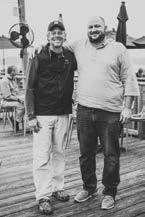
Before Tom Reilley will talk about the 40th anniversary of the restaurant that bears the name, before he’ll even comment on the enduring legacy his family has created and their massive impact on Hilton Head Island, he wants to get one thing straight.
“You see that guy on the cover? That’s Wallace Taylor. And he has been an essential part of our success since he started 40 years ago minus 3 days so 39 years and 362 days.”
For 8 years Wallace worked in the kitchen watching Tom’s wife, Diane, cooking specials every day and helping however she could. Diane was also raising a family, but her time in the kitchen kept the restaurant going in the beginning years. Wallace took notice of what it took to be a success and went from dishwasher to line cook to sous chef to kitchen manager. And he drives about an hour to work every day.
Speaking to Taste from the road, driving with son-in-law and managing partner, Jamie Booth, Tom wanted to make it clear that while 40 years is a massive accomplishment, it is one that only happened because of people like Wallace.
Booth chimed in from the road trip to reiterate saying, “He’s part of our family. We don’t know what we’d do without him.”
In 2000 Tom and Diane’s three oldest children, Keith, Erin, and Brendan became their partners.
Erin and Jamie married in 2003 and took over the day-today operations. The two of them have become a great team and run a great restaurant. And, by the way, with the help of Wallace. Taylor deserves all the praise and credit the Reilley family bestows on him for his 40 years of loyal service to the restaurant, but there’s far more to this enduring legacy than one person. Reilley’s is, in the simplest definition, a restaurant, and it’s an integral part of our community’s tapestry.
“When I moved here in 1977, there was only one red light. Look at the Island now,” Tom said.
In 1982 Tom found himself needing to make a change and started looking for something different to challenge himself and Diane. They found a nice small restaurant for sale, and Serge Pratt and Peter Kenneweg loaned the two the money to buy the old Gallery Café. The rest is history.
“We did crazy things in the beginning that no one else had done. We served white cheddar cheese with horseradish and Ritz crackers. We had pull tabs where you got a one in five chance to get your drink for 10 cents, and we also had a telephone at almost every table, long before mobile phones,” remembered Tom. “I can assure you, everything we did was by the seat of our pants, and for the most part it all worked.”
Already famous for their improvisation, the Reilley family truly made its mark starting the Hilton Head Island St. Patrick’s Day Parade in 1983. It started in the rain, with no permit, and about 20 islanders wanting to do something a little different. “We did it not knowing what to expect but as the parade ended there were about 300 people cheering us on and having a lot of fun.” Tom noted. Since that first rainy day the St. Patrick’s Day Parade Committee has put on the parade, and about 30,000 spectators come out to enjoy the day each year.
After 40 years, Tom and Diane have a lot to be proud of. The restaurant business has grown to nine concepts and the Reilley’s Mortgage Network Match Play Championship is a premier event on the island every November, donating to several very deserving charities each year.
Of course, as is their way, the Reilley’s credit much of their success to all the valuable employees over the years, people like Wallace Taylor.
REILLEY’S GRILL AND BAR
Reilley’s Plaza, just off Sea Pines Circle (843) 842-4414 reilleyshiltonhead.com
TASTEOFHILTONHEAD.COM 13
A NEW STEAK OF MIND
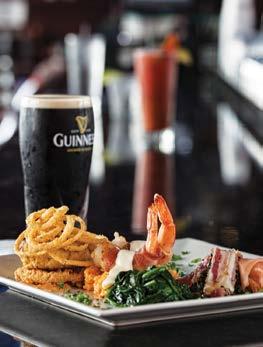
Bowdie’s Chophouse, a mainstay of Michigan cuisine, makes its first foray south of the Mason-Dixon on Hilton Head.
 BY BARRY KAUFMAN • PHOTOS BY ROB KAUFMAN
Other than a vague sense of dissatisfaction with the state of Ohio and a close geographic resemblance to an item of clothing, there’s not much that the state of Michigan has in common with Hilton Head Island. And yet, the state shaped like a mitten has recently established a unique bond with the island shaped like a shoe. For the first time, its famed Bowdie’s Chophouse will head outside the state of Michigan with a Hilton Head Island location.
“We’d always kind of talked about it, and if we were going to expand outside the Midwest, why not Hilton Head Island? And what better time than now?” said Tyler Bowdish, who is spearheading the Southern branch of the Bowdish family empire.
The first Bowdie’s Chophouse came about from founder Scott Bowdish’s love affair – some might say obsession – with fine dining. For a quarter of a century, the elder Bowdish built an empire of cellular stores across the Chicagoland area, sampling the rich array of culinary options the Windy City offered. Homing in on that greatest of midwestern exports, rich juicy steaks, he decided to try his own hand at a high-end chophouse.
The first Bowdie’s Chophouse opened in 2014 in the Bowdish family vacation retreat, Saugatuck, Michigan. Their approachable take on sophisticated steak and upscale cuisine was an immediate hit, giving Scott Bowdish a chance to build yet another empire with locations in Grand Rapids and Lansing.
And when Tyler Bowdish found himself with a severe case of wanderlust during the pandemic, the seeds were sown for Bowdie’s Chophouse to make its out-of-state debut on the island.
TASTEOFHILTONHEAD.COM 16
“Michigan was completely shut down for 176 days, so my wife and I got in the car, came down here and started looking at spaces,” he said. As a longtime visitor with family friends who lived on Hilton Head, he knew the island well. He also knew that the family restaurant’s atmosphere would mesh perfectly with Hilton Head’s upscale-yet-relaxed vibe.
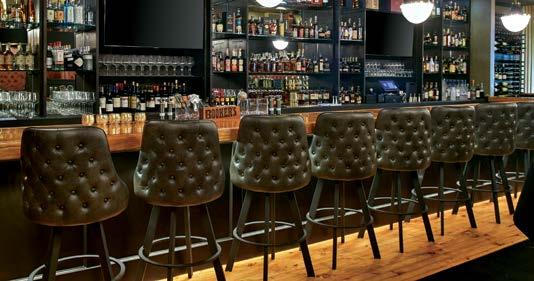
“It’s about all the guest experience. There’s a midwestern kind of hospitality that we thought could bring a different energy here,” he said. “It’s almost like a clubhouse-style restaurant where it becomes a hangout for people. I thought that would bring something really cool to the island.”
With the family’s blessing, Tyler brought not only the concept to the island, but key members of the staff who had made Bowdie’s Chophouse an institution up north. Bar manager Nick Brown, Front of House guru Melanie Rosenberg and chef Patrick Resta followed him down, and are prepared to introduce the island to a little bit of pure Michigan.
“It’s really great to have them,” he said. “We don’t have to completely start from scratch.”
At least not with the staff. When it comes to the food, starting from scratch is a point of pride at Bowdie’s Chophouse.
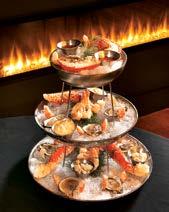
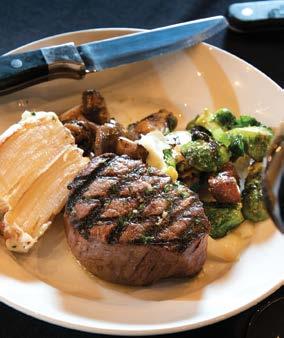
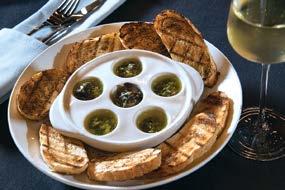
“It’s a one-page menu,” said Tyler. “You have our five steaks, seasonal
dishes, Farrow Island salmon, market fish, starters, soups and salads. But we keep it all very simple and fresh, with just a few ingredients to really let everything speak for itself.”
The key is in the quality and simplicity, something that not only elevates the food to another level, but also finds its way into the ingenuity of the cocktail menu. Across 26 different inspired creations, the Bowdish family has unleashed the creativity of their master mixologists, offering traditional prohibition-style cocktails that skew decidedly modern.
“It’s a lot of classics that people have forgotten about or drinks you might not be expecting,” he said. Take, for example, their signature Manhattan, which starts with Madagascar vanilla beans soaked in cask-strength bourbon. Infused with the flavor of Kentucky’s finest, the beans are scraped into a simple syrup that lends a remarkable softness to the bit of the bourbon.
“A lot of these are 100-year-old recipes, but with our twist,” said Tyler.
Complementing the cocktail menu is the extensive wine list, which borrows a litany of varietals that have flowed since Bowdie’s Chophouse first opened, and adds a few selections hand-picked by sommelier Patrick Brennan. “I gave him our list from Michigan, highlighted what had to stay, and then just let him run wild,” said Tyler.
“His expertise in Italian wines added some really special items to the menu. He’s taught me a lot.”
But ultimately, what made Bowdie’s Chophouse a Great Lakes State institution is the inimitable experience it offers. All the sophistication of a mid-town Manhattan steakhouse. The mouth-watering flavor of midwestern beef. And a little touch of that Michigan attitude.
“People are expecting a fine dining experience, which is the standard we train our servers to. But we also want it to be an upbeat environment,” said Tyler. “We want it to be that hang out spot rather than some place that feels stuffy.”
BOWDIE’S CHOPHOUSE
11 Palmetto Bay Rd #104 843-715-2807 bowdieschophouse.com
TASTEOFHILTONHEAD.COM 17
BOWDIE’S CHOPHOUSE
Located at 11 Palmetto Bay Road, #104. Experience the type of elegance you would expect to find in downtown Chicago. We serve only the highest quality food paired with exceptional drinks all served by the best-in-class staff. Private dining (up to 30), wine lockers, bar seating, and booth and table seating available. Open Sunday thru Thursday from 5 until 10 p.m. and Friday and Saturday from 5 until 11 p.m. Call (843) 715-2807 or online at www.Bowdieschophouse.com.
BRITISH OPEN PUB
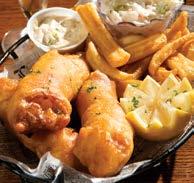
Located in The Village at Wexford and Sheridan Park in Bluffton. Authentic English fare served in an attractive pub-style atmosphere with golf art, memorabilia, and the only bar by Titleist. Great nightly specials including BBQ Baby Back Ribs, Prime Rib, Angus Ribeye, Fish and Chips, 1/2 lb. Angus Burgers, Lobster Pot Pie and more. Full bar, extensive wine list and beers, ales and stouts from around the world. Kid’s menu available. Serving lunch and dinner Tuesday thru Sunday from 11 a.m. Brunch served Saturday, 11 a.m. - 2 p.m. and Sunday 9 a.m. until 2 p.m. Call Hilton Head (843) 686-6736 or Bluffton (843) 815-6736.
BROTHER SHUCKER’S BAR & GRILL
Located at 7D Greenwood Drive, just off Sea Pines Circle. Hilton Head’s newest contemporary Raw Bar featuring fresh
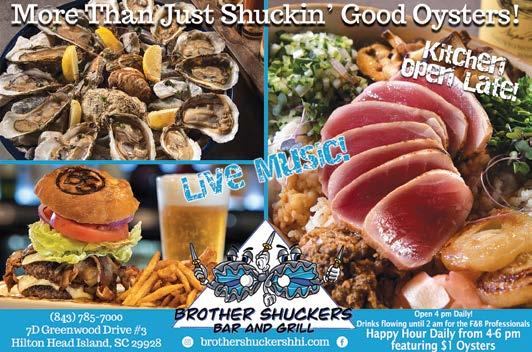
seafood including raw oysters, shrimp, clams and more. Tasty appetizers, salads, soups, burgers (beef and bison) and wings are also available. Dine inside in the newly remodeled dining room or outside on the comfortable deck. Happy hour available from 4 until 6 p.m. and full menu is served until midnight. Offering live music. Call (843) 785-7000 or check us out on Facebook.
CAPTAIN JOHN’S GALLEY
AT THE SALTY DOG CAFE
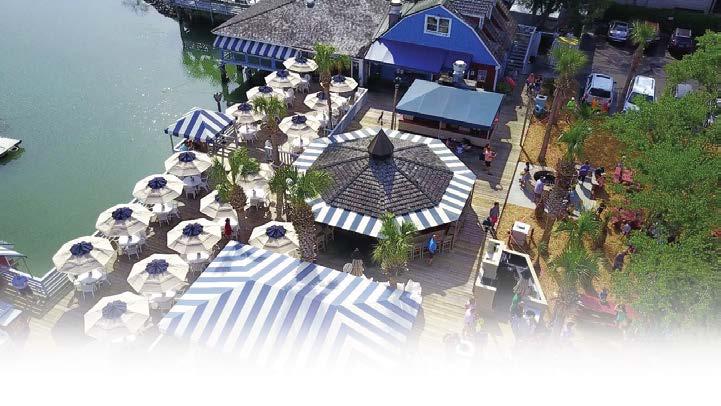
Located at South Beach Marina in Sea Pines. Enjoy seafood right out of the ocean and onto your plate while overlooking beautiful Braddock’s Cove. The legendary captain serves up fresh seafood, steaks, pasta and more in this fun, nautical atmosphere. Early bird dining special, 10% off from 5 until 6:30 p.m. Full bar and kid’s menu available. Call (843) 671-CAFE (2233) for seasonal hours.
CAROLINA CRAB COMPANY
Home of “The” Carolina Crab Cake, “C3” at Palmetto Bay Marina has become the spot to anchor! C3 is revered for its steaming shellfish boils, amazing seafood, steaks, and fresh daily oyster selections. But it is “The” Carolina Crab Cake that will have you planning another visit after your first bite. Come (continued on page 20)
TASTEOFHILTONHEAD.COM 18
for happy hour and enjoy a Funcoction! Serving from 3 p.m. inside and out, they offer dine-in, take-out, and online ordering. Come by boat - it’s Free to dock while you dine! Member of the Coastal Restaurants and Bars family since 2014. Call (843) 842-2016 or visit carolinacrabco.com.
CATCH 22 FRESH SEAFOOD & GRILL

Located at 37 New Orleans Road in Orleans Plaza. We cut our USDA Prime Beef and fillet our fresh Catch of the Day in house. Friendly atmosphere and delicious menu choices such as Handmade Ravioli with Scallops, the Three Onion Encrusted Pork Chop, The Char braised Short Rib and the Seafood Sampler make us a favorite with the locals and visitors alike. Dinner from 5 p.m, Monday –Saturday. Early Dining 5 - 5:45 p.m. Visit Catch22hhi.com for Seasonal Promotions, Bar Seating Happy Hour Specials, Wine & Dine Specials, & Reservations or call (843) 785-6261. Dine In or Take Out. Items & Pricing are subject to change.
CELESTE COASTAL CUISINE
Located at 20 Hatton Place. This new south style restaurant is Hilton Head Island’s newest dining experience offering Fresh Catch Local Fish, Certified Steaks and menu items with a touch of Cajun and Creole style preparations. Full bar, extensive wine selections, weekend music and patio dining. Open from 5 p.m. daily. Call (843) 802-4744 or visit www.celestehhi.com for more information.
CHARLIE’S COASTAL BISTRO
Located at 8 New Orleans Rd., just off Hwy. 278. The only restaurant on the Island that writes its entire menu daily based on the freshest local seafood available. Our epicurean dinner menu offers an array of Fresh Fish, Rack of Lamb, Filet Mignon and many other delights. Our wine list, The Best of Wine Spectator “Award of Excellence”, offering half off all bottles of wine under $100 on Monday nights. Serving dinner Monday thru Saturday from 5 p.m. and lunch Monday thru Friday from 11:30 a.m. until 2 p.m. For reservations call (843) 785-9277 visit us online at www.charliesgreenstar.com.
CHOW DADDY’S
Two locations - 14B Executive Park Road, just off Pope Avenue and Belfair Towne Village in Bluffton. One of the areas newest and most creative restaurants offers a healthy alternative using local and organic ingredients whenever possible. Menu items include amazing Pork Nachos on house-made potato chips, Kale and Quinoa Salad, Tuna Poke Bowl, Fried Chicken Tacos, Spicy Shrimp Tacos, Chicken Verde, and incredible Burgers ground in house daily. Full bar, extensive wine selection and great cocktails. Open 7 days a week for lunch and dinner from 11:30 a.m. until 10 p.m. Outdoor seating and ping pong available on our terraces. For reservations call (843) 842-CHOW (2469) or (843) 757-CHOW (2469) or online at www.chowdaddys.com.
TASTEOFHILTONHEAD.COM 20
(continued on page 22) Reserve a table online or call: 843.785.9277 CharliesGreenStar.com 8 NEW ORLEANS ROAD HILTON HEAD, SC #EATLOCAL @CHARLIESOFHILTONHEAD Lunch Monday – Friday 11:30 a.m. – 2:00 p.m. Dinner Monday – Saturday 5:00 p.m. – 9:00 p.m. Bar Monday – Saturday 5:00 p.m. – 9:00 p.m. CASUAL FINE DININ G AT ITS BEST COASTAL BISTRO
CQ’S RESTAURANT
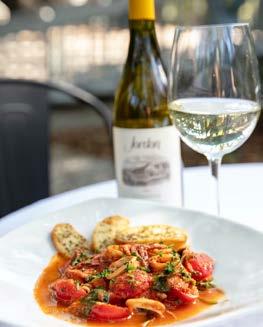
Tucked under the Live Oaks and Spanish Moss of Harbour Town, CQ’s Restaurant remains an island favorite for nearly 50 years on Hilton Head Island. Exuding character, charm and sense of history, generations of families make it a ‘must-visit’ during their trips to the Lowcountry. Executive Chef Ferenc Bukta’s passion for locally sourced foods from the sea, land and fields yield elevated dishes that are sure to please the most discerning palate! Handcrafted cocktails, extensive wine list and decadent desserts round out the total dining experience at CQ’s. Offering curbside takeout, outdoor patio dining and private party room. Open nightly at 5 p.m. For reservations call (843) 671-2779 or visit CQsRestaurant.com for online reservations.
CRANE’S TAVERN STEAKHOUSE & SEAFOOD
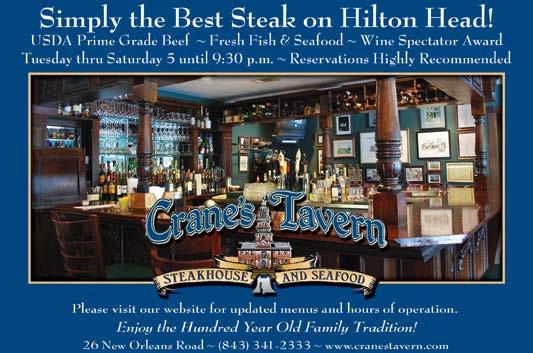
Located at 26 New Orleans Rd. A family tradition of excellence in quality and value for over 100 years. The destination for steak and seafood lovers offering all USDA Prime Grade beef, including our Famous Prime Rib. Fresh selection of seafood, pastas, soups and salads as well as tantalizing desserts. Wine Spectator “Award of Excellence” for a wine list comprised of over 500 selections. AAA Three diamond award. Bar menu available at bar only. Open Tuesday thru Saturday 5 until 9:30 p.m. Reservations suggested. Call (843) 341-2333.
THE CRAZY CRAB HARBOUR TOWN
Located in Sea Pines overlooking Harbour Town Marina. The “Islander’s place for fresh seafood for over 35 years,” The Crazy Crab restaurant is a fun, casual, family-friendly atmosphere adjacent to a convenient playground for kids and loved by generations of visitors. Abundant fresh local seafood selections (voted Best Crab Legs on the island for many years) plus steaks, chicken, ribs, salads, and fantastic apps. Serving daily from 11 a.m. Member of the Coastal Restaurants and Bars family since 1986. Call (843) 363-2722 or visit thecrazycrab.com.
THE CRAZY CRAB JARVIS CREEK
Near mile marker 1 on Hwy. 278 with a panoramic view of Jarvis Creek. The “Islander’s place for fresh seafood for over 35 years,” The Crazy Crab has a fun, casual, family-friendly atmosphere. There’s a playground for kids and a scenic fire pit to gather near the water. Fresh local seafood selections (voted Best Crab Legs on the island for years) plus steaks, chicken, ribs, salads, and apps. Enjoy their large covered deck, and live, local music (seasonally). Serving daily from 11 a.m. Member of the Coastal Restaurants and Bars family since 1986. Call (843) 681-5021 or visit thecrazycrab.com.
DEANO’S
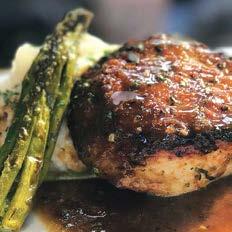
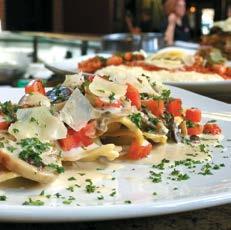
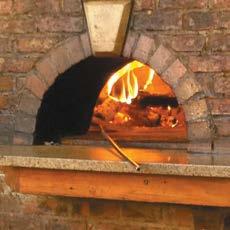
Opening this December 2022. Located at 7C Greenwood drive in Reilley’s plaza. Featuring authentic Italian cuisine, Wood Oven pizza, steaks, seafood and more. Voted Georgia’s best pizza by USA Today, Best Shrimp and Grits by Magnolia Midlands and Paula Deen’s top 10 Pizza Hot Spots. Indoor and outdoor dining
TASTEOFHILTONHEAD.COM 22
(continued on page 26)
A WORLD OF PURE Imagination
For forty years, locals and visitors have been following their sweet tooth to the Island Fudge Shoppe.
BY BARRY KAUFMAN • PHOTOS BY ROB KAUFMAN
Cast your mind back to your happiest childhood memories. Those salad days that linger in the back of your mind, waiting to be dusted off when you’re feeling nostalgic, don’t they always just smell a little sweeter? Those days you’ll never forget, don’t they carry with them the hint of slow-simmering chocolate, pralines dusted with sugar and the exhilarating aroma of candy?
If you’ve been around the island long enough, your treasured childhood memories might just smell like that because they were formed in the quaint surroundings of The Island Fudge Shoppe. For 40 years, they’ve been serving locals and visitors alike with a dizzying array of sweets, from prepackaged treats to sugary delights made right in front of your very eyes.
“A lot of times parents will come in with their kids thinking they’re going to get something for the kids, but really they’re getting something for themselves,” said Gus Robinson, who has owned The Island Fudge Shoppe for the last 32 years with his wife Maureen.
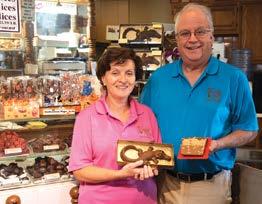
“And sometimes the kids will come in just to grab free samples, but that’s OK,” added Maureen. “They usually bring the parents back with them.”
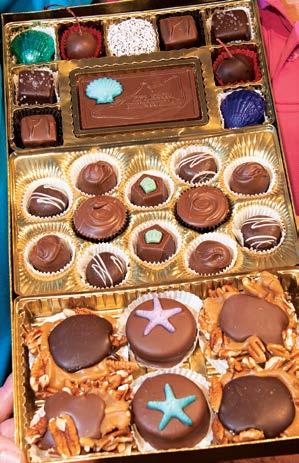
wasn’t enhanced by visits to The Island Fudge Shoppe, stepping in is the next best thing to reliving those delicious days. A throwback in every sense of the word, the towering stacks of candy surround you when you walk in, tantalizing the senses and ensnaring the sweet tooth with a kaleidoscope of tasty delights. Behind, on top and within the wide counter a bewildering blend of fudge flavors presents a difficult decision – do you go with the classic chocolate, dabble in some peanut butter or tempt yourself with one of the seasonal varieties like red velvet, pumpkin or key lime?
Why not take advantage of the long-standing policy of offering free samples as well as “buy four slices get the fifth free.” Feel free to use the coupon in this magazine.
“People like that because they can pick out different flavors. I know I couldn’t pick a top three, so it helps to narrow it down a little,” said Gus with a laugh.
But don’t fill up on the fudge. You have to save room for the iconic chocolate alligator and of course some of those famous pralines.
TASTEOFHILTONHEAD.COM 24
“People ask me all the time what’s in the pralines, and I tell them, ‘Well, let’s see, there’s sugar… sugar… and oh yeah, did I mention sugar?’” said Gus. The pralines are such a big seller that people often work their schedules around “Praline Day” every Friday when Gus puts the “fresh pralines today” sign in the window, fires up the kettle and prepares the week’s batch.
“We get a flood of people coming in at 10 o’clock when we open, so I have to get in here early,” he said.
It’s an enduring popularity that the couple has curated since purchasing the shop 32 years ago. At the time, neither one of them knew the first thing about making candy, but thankfully the original owner was able to show them the ropes. Today, Gus is in charge of making the fudge, while Maureen makes the custom-molded chocolate creations.
“I’m not lifting all those heavy bags of sugar,” Maureen laughed.
In the intervening decades, the couple has not only finetuned their candy making craft, they’ve added to the enormous selection, using every inch of their modestly sized Coligny Plaza storefront. The same machine that makes the pralines is also used to make toffee and peanut brittle – in fact, Gus was trained on it by the manufacturers themselves, spending three days in a Chicago laboratory where he perfected his toffee.
“I had made all this toffee, and they told me to take it with me, so here I am passing out toffee and business cards on the Chicago subway,” said Gus.
The expanded offerings don’t represent the only new tricks the Robinsons have learned in their decades behind the counter at The Island Fudge Shoppe. During the pandemic, their son decided he was going to give their online presence a much-needed upgrade, opening a whole frontier in c-commerce that has kept his parents busier than ever.
“Last year was our best summer that we’ve had in 32 years,” said Gus. “And this summer was better than that.”
Online and in their store, the Robinsons have been moving some serious sugar lately. And that’s to say nothing of the massive orders they’ll usually see around Christmas and Valentine’s. Custom corporate gifts have been a huge seller for them; boxes of chocolates crafted in a mold of the company’s logo that make a sweet gift for clients. One client purchased 900 pounds of fudge to be delivered to customers.
And of course, there’s few better ways to celebrate the one you love than by gifting them some of the deliriously sweet chocolate that has made The Island Fudge Shoppe an institution over the last few decades.
“We get a lot of locals coming in for Valentine’s,” said Maureen, adding with a laugh, “and a lot of guys coming in on February 13th.”
But whether it’s to pick up that last-minute gift, part of your standing Friday morning fresh praline fix or just a stop to revisit treasured childhood memories, The Island Fudge Shoppe has been an indelible part of experiencing Hilton Head Island for the last 32 years. Stop in, and discover what sweet memories you’ll make.
TASTEOFHILTONHEAD.COM 25
available as well as a late-night weekend menu. Open daily for lunch and dinner from 11 a.m. until 9 p.m. Call (843) 301-0929 or visit www.deanoshhi.com.`
THE DRYDOCK SEAFOOD GRILL & SPIRITS

All new location at 840 William Hilton Pkwy. Go where the locals go for fresh seafood, cold drinks and good times. We are easy to find, but hard to leave. Choose from a wide variety of fresh seafood, signature sandwiches, salads and more in a casual and comfortable atmosphere. Dine inside or enjoy the outdoor patio. Open 7 days for lunch and dinner from 11:30 a.m. Call (843) 842-9775.
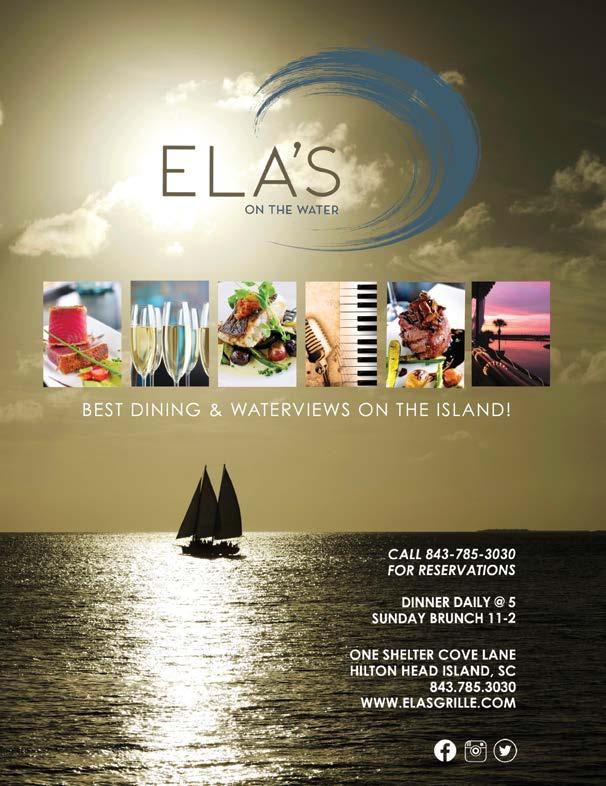
ELA’S ON THE WATER
Located at One Shelter Cove Lane. Featured in Bon Appetit and winner of numerous Open Table awards, Ela’s offers fresh catch seafood and prime cut steaks of the highest quality, all prepared by our culinary team of experts and complimented by an extensive boutique wine selection. Known for the best water views on the island, we have a casual intimate interior, wrap around dining patio exterior and nightly entertainment. Private parties, rehearsal dinners and special events welcome. Open for lunch Monday thru Friday, 11 a.m. until 2 p.m., Sunday Brunch from 11 a.m. until 2 p.m. and dinner nightly from 5 p.m. Reservations recommended. Call (843) 785-3030 or online at www.elasgrille.com.
FISHCAMP ON BROAD CREEK
Located on Broad Creek at 11 Simmons Road is Hilton Head’s favorite elegant but relaxed waterfront dining destination. The elevated Lowcountry cuisine includes fried green tomatoes, an array of fresh shellfish, and an exceptional variety of seafood plus prime steaks and luscious desserts. Dine indoors, or soak in the Lowcountry lifestyle on the spacious, pet-friendly patio and bar with a backyard, fish camp style ambiance complete with a fire pit and stunning sunset views. Serving daily from 11 a.m., bar open late. Member of the Coastal Restaurants and Bars family since 2016. Call (843) 842-2267 or visit fishcamphhi.com.
FLATBREAD GRILL
Located at Coligny circle oceanside in the Beach Market Center. This upscale casual dining sensation is sure to be a favorite of both visitors and locals. Enjoy Neopolitan pizza cooked in our open-hearth oven or choose from fresh pasta, gourmet salads, wraps, sandwiches, specialty burgers, wings and more. Friendly and comfortable lounge offering a nice selection of appetizers and cocktails while viewing your favorite sporting events on our HD TV’S. Take out and kid’s menu available. Open daily from 11:30 a.m. for lunch and dinner. Call (843) 341-2225 or online at www.flatbreadgrillhhi.com. (continued on page 28)

TASTEOFHILTONHEAD.COM 26
Voted Islands Best All Around Restaurant 2012 Best Bar/Tavern 2015 and Best Fish & Chips 2011, 2012, 2013, 2014, 2015, 2016, 2017, 2018, 2019!!! Happy Hour from 4 until 7 p.m. Our Famous Ribs Fish & Chips HILTON
Village at Wexford 843.686.6736 Open for lunch and dinner, Tuesday thru Sunday 11 am til 9 pm Serving Brunch Saturday 11 am til 2 pm and Sunday 9 am til 2 pm
for Breakfast, Lunch and dinner Tues.
to 9 pm
pm and Sunday
til
pm
HEAD
BLUFFTON Sheridan Park 843.815.6736 Open
thru Fri. 8 am
Serving Brunch Saturday 9 am til 2
9 am
2
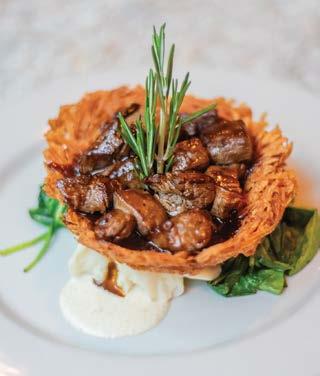
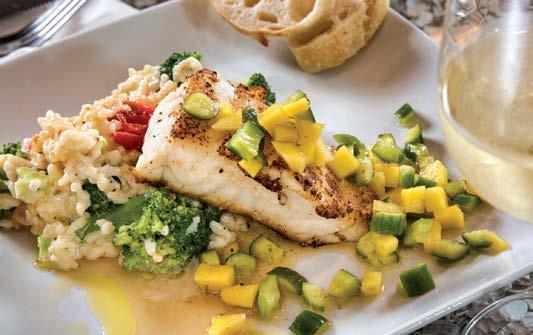
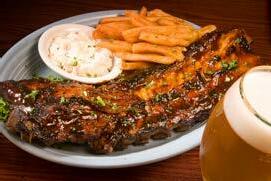
TASTEOFHILTONHEAD.COM 27 Catch22hhi.com Seasonal Promotions Bar Specials Reservations 843.785.6261 Serving Dinner Monday - Saturday 5-9 pm, • Early Dining 5-5:45 • Dine In, Take Out or Curbside Pickup 37 New Orleans Rd. • Orleans Plaza “Where the Locals Dine” Fresh “Off the Boat” Catch Hand Cut USDA Prime Beef
THE FROSTY FROG CAFÉ
Located in Coligny Plaza. A comfortable, casual atmosphere offering a “web-footed lickin” menu and an enormous amount of frozen daiquiris by the glass (16 oz., 24 oz. and 32 oz.). Outside seating with retractable roof, fire pit, beach area and tiki bar. Live music nightly. Black angus burger, pizza, prime rib sandwich, salads, subs, wraps, appetizers and of course fried frog legs. 28 HD TV’s for great sports viewing as well as a kid’s menu. Open for lunch and dinner daily from 11 a.m.until 10 p.m. Call (843) 686-FROG (3764) or online at www.frostyfrog.com.
GUSTO RISTORANTE
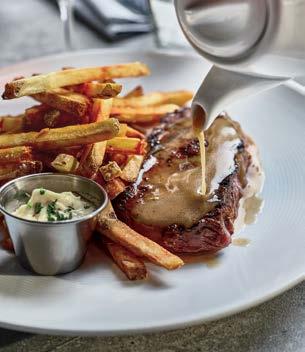
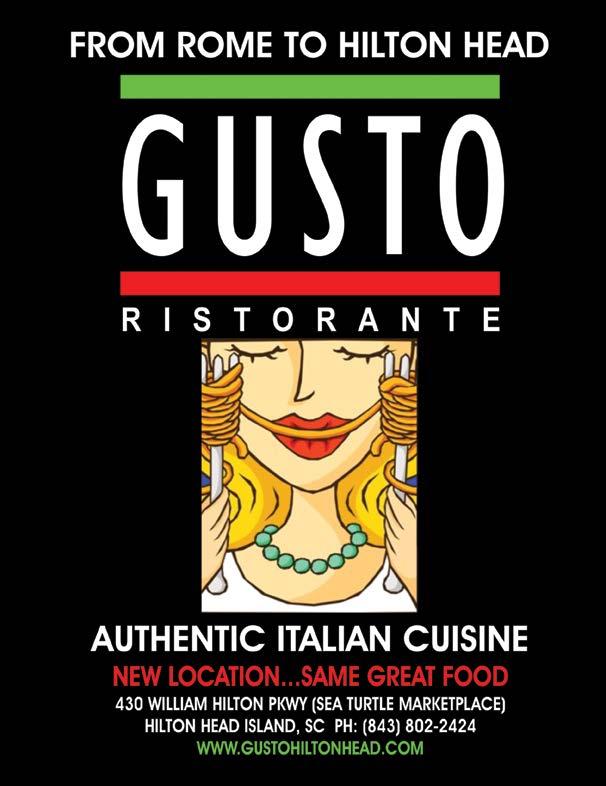
Located North end of the island at the Sea Turtle Marketplace, Gusto Ristorante is an upscale Northern Italian Restaurant bringing the authentic flavors of Rome to Hilton Head. Enjoy dining in a beautiful Tuscan setting or al fresco on the garden patio. Full bar and extensive wine list available. Dinner is served Monday thru Thursday from 4 until 9 p.m. and Friday and Saturday from 4 p.m. until 9:30 p.m. Closed Sunday. Call (843) 802-2424 or visit gustohiltonhead.com for more information.
HAROLD’S DINER
Located at 641 William Hilton Parkway at Singleton Beach. An island icon for decades, this diner serves up the best made to order food fast and with attitude. Breakfast favorites include Omelettes, Pancakes, French toast, and Steak and Eggs. For lunch choose from Burgers, Dogs, Pulled Pork, Philly
Cheesesteaks and more. Open for breakfast Mon. thru Sat., 7:30 a.m. until 11 a.m. and lunch 11 a.m. until 3 p.m. Call (843) 384-7855 or online at haroldsdinerhiltonhead.com.
HINOKI JAPANESE
RESTAURANT AND SUSHI BAR
Located at 37 New Orleans Road in Orleans Plaza. Enjoy traditional Japanese dishes such as teriyaki, tempura, a variety of noodle dishes and soups, tofu, grilled vegetables, daily specials, plus fabulous, sushi and sashimi. The very extensive menu includes dozens of appetizers to share, combination dinners with fresh fish, chicken, steak and over 20 entrees from which to choose. Three intimate dining rooms, a sushi bar and a cocktail lounge offers something for everyone. Early Bird specials until 6:30 p.m. and carry-out available, as well as online ordering on their website. Open for Dinner 5:30 until 10:00 p.m., Monday thru Saturday, and Lunch, 11:30 a.m. until 2 p.m., Tuesday thru Friday. Call (843) 785-9800 for reservations (taken during regular business hours). Visit hinokihhi.com and facebook.com/hinokihhi.
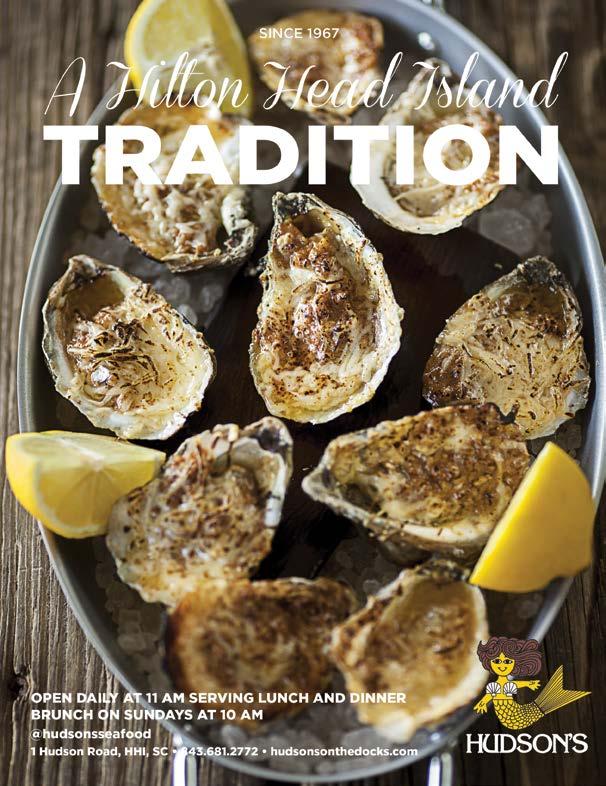
HUDSON’S SEAFOOD HOUSE ON THE DOCKS
Sitting right at the edge of Port Royal Sound, all of the tables in our waterfront restaurant feature extraordinary views for a truly special low-country dining experience. Hudson’s uses one of only two remaining local fishing fleets on Hilton
on page 32)
TASTEOFHILTONHEAD.COM 28
(continued
luckyroosterHHI.com 841 William Hilton Pkwy Unit A Hilton Head Island, SC 29928 843.705.3215 Delicious

TASTEOFHILTONHEAD.COM 29 Opening December 2022 -Wood Oven Pizza-Steaks-SeafoodVoted Georgia’s Best Pizza by USAToday! Best Shrimp and Grits by MagnoliaMidlands! Paula Deen’s Top Ten Pizza Hot Spots 7C Greenwood Drive In Reilley’s Plaza Hilton Head Island, SC (843) 301-0929 www.deanoshhi.com Authentic Italian Cuisine
Find The Time
BY CHRISTY BARONI • PHOTO BY ROB KAUFMAN
People ask me regularly when I find the time to workout. There are the regular demands of kids, jobs, church, extracurriculars, and this time of year the added pressure of the holidays. It often feels as if having the time to dedicate an entire hour to just me every day feels indulgent. Maybe selfish. Even unnecessary.
A friend recently recommended a phrase to try: instead of saying “I don’t have time for ___” try replacing it with “____ is not a priority right now”. Let’s try it out:
intervals to get started. The only equipment you need is a clock or stopwatch, and yourself!
Tabata Workout
A Tabata workout is made up of 4 intervals that are 4 minutes a piece. If you are pushing yourself it will be the most intense 4 minutes of your day! It goes like this: 8 rounds of maximum effort for 20 seconds followed by 10 seconds of rest. Choosing 3 - 4 movements into this routine can give you a whole body workout in less than 20 minutes. Try this one to start: air squats, followed by push-ups, then sit-ups, and finish with jumping jacks. Remember the goal is for each 20 second interval to be max effort, so start strong and keep pushing.
Whoa. And ouch.
The physical benefits of a regular workout routine are well known; increased muscle tone, revved up metabolism, etc. But the mind-body connection is strong and in my opinion the mental benefits far outweigh the physical.
But all those reasons still exist and especially in the colder months it can be tough to get out and get moving. Luckily science has proven over and over again that a simple universal principle holds true: the intensity of your exercise matters far more than the duration. And there are many options you can do right in the comfort of your house with little to no equipment.
For example, doing 10 rounds of :30 sprint intervals on a rower or stationary bike will have a greater impact on your endurance than doing 30 minutes at a steady pace. That’s right, higher intensity leads to greater results.
If this is a new concept for you, consider trying a few of these
15 minute HIIT (High Intensity Interval Training)
This workout routine has you completing 5 rounds of 3 exercises where you alternate 30 seconds of max effort with 30 seconds of rest. Best bet is to keep the exercises simple to start. Consider trying 5 rounds :30 max effort, :30 rest of burpees, walking lunges, and plank jacks. This will elevate your heart rate and fatigue every part of your body.
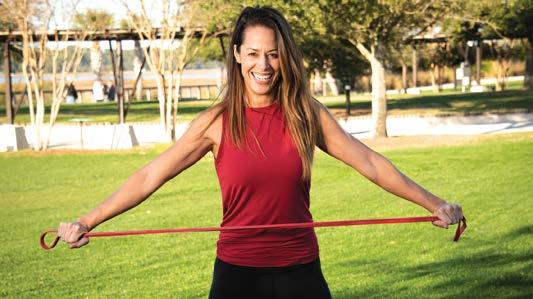
To get the most out of your workout follow up with a meal consisting of lean protein and fast acting carbohydrates. This allows your body to burn fat and build muscle, giving you a lifetime of feeling strong and energetic. Let’s keep longevity, vitality, wellness, and health a priority. Now and always.
Christy Baroni is a Nutrition Specialist and certified Personal Trainer. She is a military spouse, a mother of two, and is dedicated to helping people cultivate the daily habits to build the body and life of their dreams. For more healthy living ideas or to create your own fitness and nutrition plan contact her today at 843-290-5803 or ChristyBaroni@gmail.com.
TASTEOFHILTONHEAD.COM 30
My wellness is not a priority right now? My mental clarity is not a priority right now? My longevity and vitality are not priorities right now?
Head Island to bring in fresh-caught seafood straight to our docks and to your table. Our guests often get to share the excitement as fishing crews unload thousands of fresh oysters, shrimp and soft shell crabs from each day’s catch. Bring your family and friends for a special low-country seafood feast that has been a Hilton Head Island tradition for over 50 years! Open daily at 11 a.m. serving lunch and dinner. Brunch on Sundays at 10 a.m. Call (843) 681-2772 or online at www.hudsonsonthedocks.com.
THE JAZZ CORNER
Located in the “corner” of The Village at Wexford. One of the top “100 Great Jazz Rooms” in the world, Downbeat Magazine. Our intimate, elegant atmosphere is the perfect setting to enjoy an evening of world class entertainment enhanced by our innovative southern flavors menu and impeccable service. The Jazz Corner offers a signature martini menu, extensive wine list, full bar and late-night menu. Open nightly from 6 p.m. Reservations are recommended. Call (843) 842-8620 or check us out online at www.thejazzcorner.com.
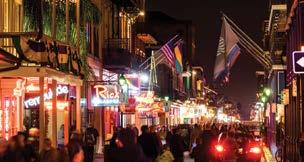
KENNY B’S FRENCH QUARTER CAFÉ
Located in Circle Center, just off Pope Avenue. Enjoy Creole cuisine with a Low country influence. Find an appealing choice of Cajun fare such as Shrimp Etoufee, Crawfish Etoufee,
Jambalaya, N’awlins Po Boy’s, Red Beans & Rice and authentic Gumbos. Great soups and salads, as well as a kid’s menu and take-out service available. Also, cold beer and awesome desserts. Open Wednesday thru Sunday for Breakfast, lunch and dinner. Call (843) 785-3315.
LAND’S END TAVERN
Located at South Beach Marina in Sea Pines. Featuring great seafood, steaks, sandwiches and salads. A casual atmosphere with a pirate theme ensures fun for the whole family. Great kid’s menu and desserts. It’s a bounty of treasure waiting to be plundered. Call (843) 671-5456 for seasonal hours.

LUCKY ROOSTER KITCHEN + BAR
Located at 841 William Hilton Parkway in South Island Square. An American bistro with Southern soul serving refined comfort food to please all palates. Our menu changes and evolves with seasons, tides and our inspirations. Dine inside or enjoy the island breeze on our spacious outdoor patio. Open Tuesday thru Saturday from 4 until 10 p.m., and Sunday brunch from 10:30 a.m. until 2:30 p.m. Enjoy Happy Hour 4 - 6 p.m. Reservations and more information at luckyroosterhhi.com or call (843) 715-3215. (continued on page 34)
TASTEOFHILTONHEAD.COM 32
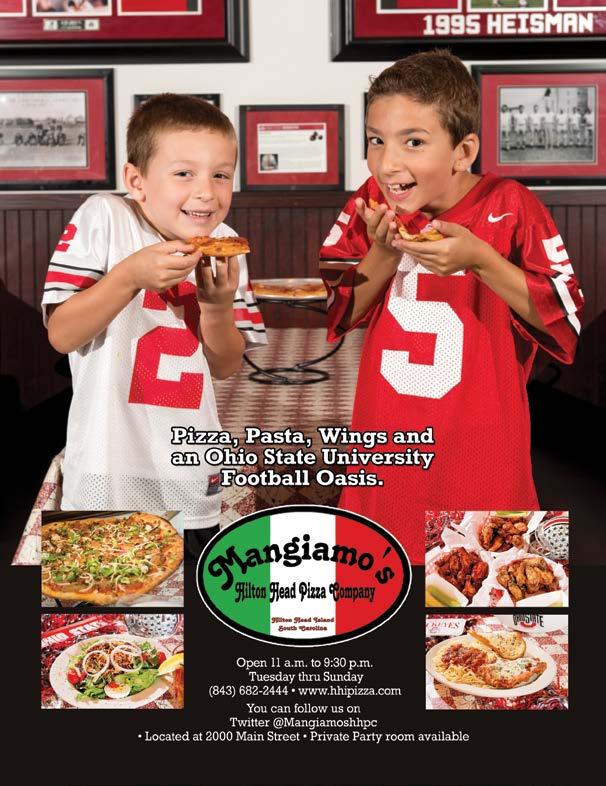
MANGIAMO
Located at 2000 Main Street. A comfortable and cozy atmosphere featuring outstanding pizza, subs, salads and pasta. Beer and wine, kid’s menu, and daily specials offer something for everyone. Enjoy half price cheese pizza from 3 until 4 p.m. Dine inside, on the patio or take it to go. North Island delivery available. Your home away from home for The Ohio State Buckeyes. Open 11 a.m. to 9:30 p.m. Tuesday thru Sunday. Call (843) 682-2444.
THE MARKET CAFE AT MICHAEL ANTHONY’S
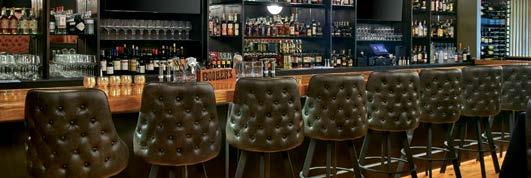
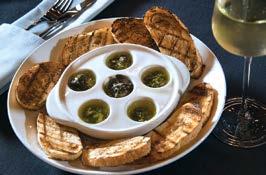
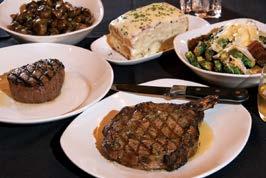
Located at 37 New Orleans Road in Orleans Plaza. Located just across the breezeway from Michael Anthony’s, The Market Cafe is an Italian market and a casual small plate restaurant joined together in one! “The Market” offers a wide array of prepared “heat and serve” dishes, house-made sauces, pasta and imported Italian meats, cheeses and sundries. “The Cafe” features a lunch menu of salads, sandwiches, pizza and pasta available 11:30 a.m. - 2 p.m. In the evening, The Market Cafe is a local gathering spot with an inviting cozy atmosphere featuring fresh artisan pasta, personal sized pizzas with quality ingredients, plus a selection of small plates and the chef’s daily creations. The Market Cafe is open Monday – Saturday from 10 a.m. - 9 p.m. Call (843) 785-6272 for reservations or visit www.michael-anthonys.com.
MELLOW MUSHROOM
Located in Park Plaza on Hilton Head and at 878 Fording Island Rd. in Bluffton. If you’re looking for a fun and lively place for the whole family, this is it. Specializing in great pizza and calzones, monumental hoagies and fresh salads all in a comfortable and casual setting. Kid friendly and affordably priced menu for both lunch and dinner. Over twenty-four beers on tap, fifty more by bottle and a full bar available. Dine inside or outside on the patio. Open daily from 11 a.m. Call (843) 686-2474 (HHI) or (843) 706-0800 (B-Town).
MICHAEL ANTHONY’S
Located at 37 New Orleans Road in Orleans Plaza. Offering classic Italian cuisine. Homemade gnocchi, succulent veal dishes and creative fish preparations are offered nightly. The versatile wine list offers a broad selection designed to satisfy the novice or seasoned enthusiast. Reservations are suggested. Weekly cooking classes offered in the Tuscan inspired demonstration kitchen. The adjacent Italian Market offers a wide array of Italian wines and gourmet foods. Open Monday thru Saturday beginning at 5:15 p.m. Call (843) 785-6272 or visit www.michael-anthonys.com.
THE OLD OYSTER FACTORY
Located on Broad Creek at 101 Marshland Road, this iconic (continued on page 36)

TASTEOFHILTONHEAD.COM 34
High quality food paired with handcrafted cocktails! • (843) 715-2807 • 11 Palmetto Bay Rd #104 • bowdieschophouse.com

Open 7 nights a week • Dinner 5:00 - 9:00 p.m. • Early Dining 5:00 - 5:45 p.m. Reservations recommended, call 855.300.5976 after noon daily or visit AlexandersRestaurant.com Located in Palmetto Dunes • 76 Queens Folly Rd • Hilton Head Island ASK ABOUT OUR SEASONAL MENU, UPCOMING WINE DINNERS & COOKING DEMOS SCAN TO RESERVE A TABLE
waterfront restaurant has stunning views of the Lowcountry. Serving fresh local seafood since 1989, Chef’s Lowcountry cuisine is featured along with your favorite seafood and landlovers entrées. The expansive raw bar offers locally sourced and East Coast oysters. Try the infamous SeaCuterie Board! The decks and outside patio bar offer intimate sunset views while dining on the water. Serving from 11 a.m. daily, Brunch on Sundays. Established in 1989, a member of the Coastal Restaurants and Bars family since 2019. Call (843) 681-6040 or visit oldoysterfactory.com.
THE PEARL KITCHEN & BAR
Located at 55 Calhoun Street in the historic art district of Bluffton. The Pearl brings a fresh approach to dining focusing on a complete sensory experience offering fresh “clean eating”. Contemporary food preparations utilizing the best fresh catch seafood, certified steaks and local produce available. Live music Thursday thru Saturday. Open for dinner daily at 5 p.m. Reservations recommended, call (843) 757-5511.
RED FISH
Located at the corner of Palmetto Bay Rd. and Archer Rd. Serving Innovative Cuisine in a unique and inviting atmosphere. Offering local seafood, steaks, salads and nightly specials. Attached retail wine shop and bar with over 1,000 selections
of fine wines. Outdoor seating available. Serving dinner daily from 5 p.m. For more information call (843) 686-3388 or online at www.redfishofhiltonhead.com.
REILLEY’S GRILL & BAR
Located in Reilley’s Plaza, just off Sea Pines Circle, Reilley’s is a true local favorite, family-owned and operated for nearly 40 years. With a sophisticated warm ambiance, this family-friendly Island institution is the best place to enjoy nightly specials, excellent seafood, amazing salads, signature steaks, burgers, sandwiches, and classic Irish pub favorites. Voted Island’s Best Sports bar! Dine indoors or on their beautiful, spacious garden encircled patio and covered bar. Serving daily from 11:30 a.m. Member of the Coastal Restaurants and Bars family since 1982. Call (843) 842-4414 or visit reilleyshiltonhead.com.
RUAN THAI HUT
Located at 1107 Main Street. Serving Authentic Thai fare using the freshest ingredients available. Mild to very hot, you can choose the spice level of your meal. Appetizers, soups, salads, desserts and kids meals round out an extensive menu with something for all ages. Sit inside or outside on the comfortable patio. Open Monday thru Saturday for lunch and dinner. Call (843) 681-3700. (continued on
TASTEOFHILTONHEAD.COM 36
page 40)
TASTEOFHILTONHEAD.COM 37
Three Reasons You Cannot Miss
This Year’s Seafood Festival
The island’s preeminent celebration of the Lowcountry’s delicious bounty returns, with a few surprises that will have you bellying up for seconds.
 BY BARRY KAUFMAN • PHOTOS PROVIED BY HILTON HEAD SEAFOOD FESTIVAL
Every year, the island’s massive culinary scene comes to a delicious crescendo with the launch of the Hilton Head Island Seafood Festival. Running this year from February 20-26, the event continues its expansion as it explores epicurean excellence on sea and on dry land. But then, making each iteration of this monumental event an experience unto itself is kind of the point.
“This year is a little bit different, not only because of the talent involved, but because there are just so many more events,” said Festival Director Kelly Smith. “We have restaurants that are opening up special pop ups, and a lot of collaboration between really talented chefs. We’re really excited about that.”
Having been given a taste of the exquisite food and drink that will be served up during this year’s festival, we have to say we’re excited as well. Here are a few reasons why you should be, too.
TASTEOFHILTONHEAD.COM 38
THE TALENT
One thing the Hilton Head Island Seafood Festival has always done well is provide a platform for the supremely talented chefs that call our area home, while attracting chefs from around the world. This year, that tradition continues with a stellar lineup of some of the culinary world’s best. Along with area favorites like Orchid Paulmeier, BJ Dennis, Brandon Carter and Clayton Rollison, you’ll also sample fare from some of the southeast’s favorites like David Carrier, James Beard winner Ricky Moore and James Beard nominee Matthew Raiford.
Joining them this year are a few chefs whose talent has taken them to the pinnacle of Top Chef, Brother Luck and Nini Nguyen. “We have folks coming in who are regulars at some of the biggest food festivals in the country,” said Smith. “And they’re coming here because they want to work with our local chefs.”
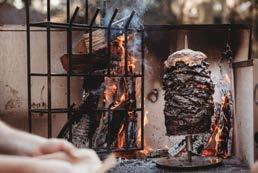
barbecue and oysters picked fresh from the bed and steamed fresh.
“One of the sleeper events is the Secrets of the Pitmaster,” noted Smith. This event, which allows one-on-on access to the pitmasters as they slowly barbecue their pork to perfection, is like backstage access for foodies. “You get to go behind the scenes, talk to the chefs, find out about the process and try the sauces.”
New this year, February 23 will see the debut of “Zero Forks Given” at the Omni Oceanfront Resort. A casually elegant openair affair, this event will feature dishes from Brother Luck and Nini Nguyen that take fusion and seafood in bold new directions. “We wanted it to be more of experience of culture ties to what you’re eating rather than a formal sit-down,” said Smith. Wine pairings will complement the selection of Asian and African influenced dishes, along with the 18-foot-long “Seacuterie” table.
THE CAUSE
The heart of the Hilton Head Island Seafood Festival has always been one of charity, giving back to the community via the David M. Carmines Memorial Fund. Named for the late brother of event founder Andrew Carmines, this fund has done immeasurable good in our community thanks to the festival’s largesse over the years.
“Since its inception, our goal has been to provide a world-class culinary event and gathering place for the community to enjoy while raising money for local non-profits. Last year we donated our millionth dollar to the community,” said Andrew Carmines.” We feel so fortunate to have such a passionate culinary community and loyal attendees. This year we are also providing more opportunities to attend a wide range of events inside and outside our local restaurants, bringing more celebrity guest chefs, artists and tastemakers to the schedule than ever before.”
As if you need any more reason to treat yourself to the finest food in the world from some of the hottest chefs around, now you can feel good about the difference you’re making. To find out more or to purchase tickets, visit hiltonheadseafoodfestival.com.
THE EVENTS
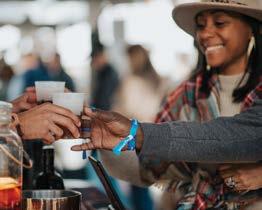
Obviously, the main tentpole event of the festivities will be the Saturday Seafood Festival on February 25. Held at Shelter Cove Marina, this collection of more than 100 different food vendors will pair some of the area’s most popular restaurants with live cooking demonstrations, tastings with master Sommeliers, mixologists, winemakers and brewmasters and live music from JoJo Squirrel.
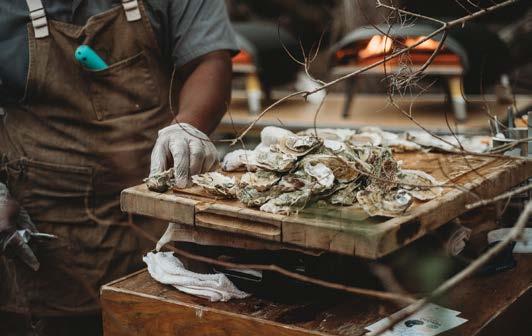
But joining the main event this year are a slew of amazing events that celebrate the many forms of creative expression that food can take. The Pig Pickin’ + Oyster Roast on February 24 is a salute to the dual pinnacles of Southern cuisine – slow-roasted
TASTEOFHILTONHEAD.COM 39
Celebrating 33 Years!
Head’s
Italy”
Family owned since 1989
Early Dining Special $23.95 • Gluten Free Menu • Children’s menu Curbside Takeaway and Carryout Available! 15 Executive Park Drive (off Pope Avenue) • 843.785.7006 Serving from 5 pm • Monday - Saturday

SAGE ROOM
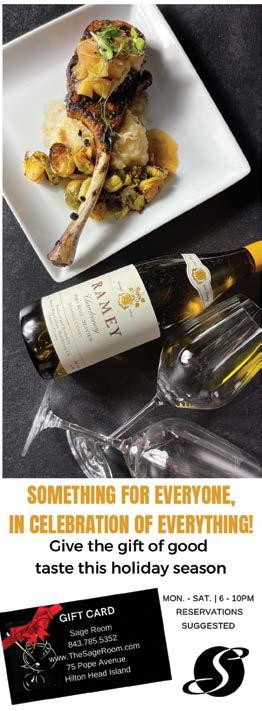
Located at 75 Pope Avenue in Heritage Plaza. Enjoy fine dining in a casual atmosphere with unique appetizers, diverse cuisine and nightly innovative specials. Elegant palate pleasing fare is prepared in our open kitchen which highlights the restaurant. An extensive wine list, full bar and fantastic service, complete a perfect night out. Open for dinner Monday thru Saturday from 6 until 10 p.m. Reservations are recommended. Call (843) 7855352 or check us out online at www.thesageroom.com.
THE SALTY DOG CAFE
Located at South Beach Marina in Sea Pines. Great food, frozen drinks and live entertainment from the island’s favorite outdoor cafe. Enjoy beautiful waterfront views overlooking Braddock’s Cove in a fun and casual atmosphere. Happy Hour daily with a full menu available, plus an outdoor cookout, Salty Dog Ice Cream and Jake’s Pizza during the season. Call (843) 671-CAFE (2233) for seasonal hours.
THE SANDBAR
Located at 101 Pope Avenue in historic Coligny Plaza just steps away from Coligny Beach. The Sandbar always has something delicious cooking. With its beach inspired decor, comfortable seating and laid back atmosphere, they are serving up signature dishes such as Hurricane Shrimp, Jamaican Jerk Tacos and Parmesan Crusted Grouper. The Sandbar is a great place for families and friends to enjoy the outdoor bar and patio and share amazing foods and drinks. Children will also feel welcome with their own menu and special children’s table. Call (843) 342-SAND (7263) or visit us online at www.sandbarhhi.com.


SANTA FE CAFÉ
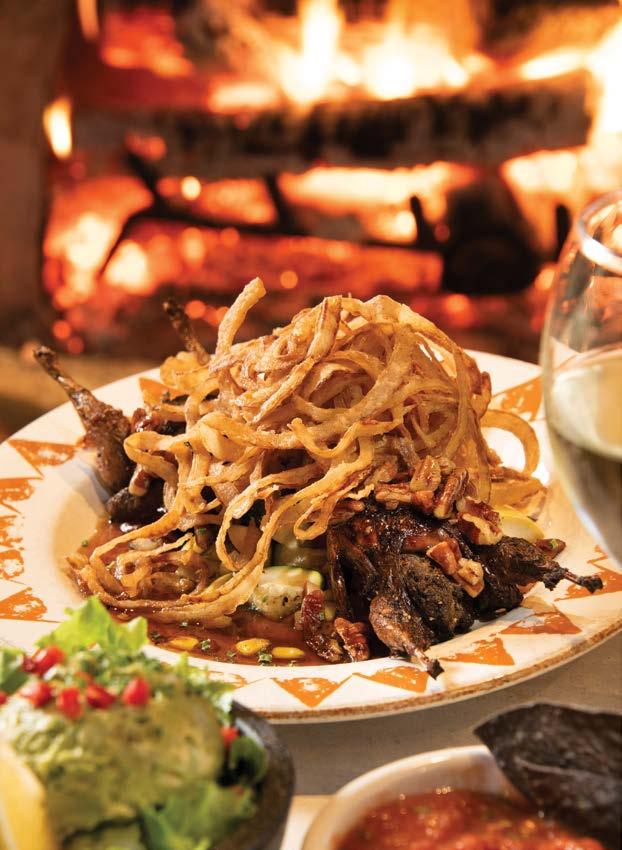
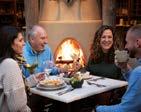
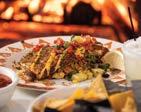
Located at 807 William Hilton Parkway near the entrance to Palmetto Dunes. Our elegant yet casual, cozy atmosphere captures the spirit of New Mexico. Innovative southwestern cuisine features dinner favorites such as Tortilla Crusted Salmon, Wood Roasted Quail, Grouper, 30 oz. Ribeye and many more great selections including vegetarian items. Excellent wine list, imported beers and full bar. Early dining menu from 5 until 6 p.m. Live entertainment Tues. thru Sat. Take-out available. Reservations are “gladly” accepted. Open for dinner Tuesday thru Saturday from 5 until 9 p.m. Call (843) 785-3838 or www. santafehhi.com.
SKILLETS CAFE

Located just off the beach in Coligny Plaza. An excellent choice for the whole family since 1994. Wonderful selections including burgers, jambalaya, grilled, broiled and fried seafood and build your own pasta dishes or our extensive salad bar. Gluten Free menu as well as vegan dishes available. Full bar and wine list available. Kids menu and take-out. Dine inside or on the patio (Dog Friendly). Open daily from 7 a.m. until 10 p.m. Call (843) 785-3131 or check us out online at www.skilletscafe.com.

TASTEOFHILTONHEAD.COM 40
Hilton
“Little
New York/New Jersey Italian Cuisine
STELLINI ITALIAN RESTAURANT
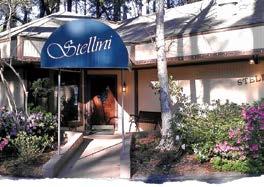
Located at 15 Executive Park Dr., just off Pope Avenue. Celebrating 33 years! Voted the Island’s best Italian restaurant, Stellini features popular menu items from the Little Italy section of New York and northern New Jersey. Choose from items such as Clams Casino, Veal Saltimbocca, Zuppa di Pesce, Osso Buco, Lasagna and more. Chefs specialties created nightly. Extensive wine list, Early Bird specials, children’s menu and take-out available. Serving dinner Monday thru Saturday from 5 p.m. Call (843) 785-7006 for reservations.
STREET MEET
Located in Port Royal Plaza. This Family Tavern & Restaurant is HHI’s Ohio Bar and Home of the HHI Browns Backers. Kitchen serving food from 11:30 a.m. until 11 p.m. 7 days/week. Offering a wide range of homemade, from scratch American food at reasonable prices and have been voted Island’s Best Wings, Best Fish and Chips, Best Burger and Best Hotdog (“Hofmann from Syracuse, NY). Featuring a complete Healthy Menu that includes GlutenFree, Paleo, & Vegetarian options plus more. Full bar with daily drink specials and happy hour as well as indoor & outdoor seating plus a new dining room that is great for large parties or groups. Kids pay what they weigh on Saturday! Call (843) 8422570 or online at www.streetmeethhi.com.
SUNSET GRILLE
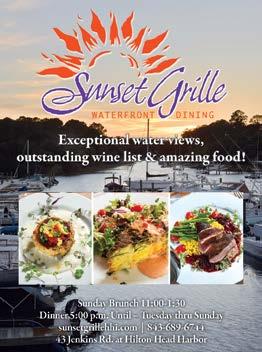
Located on the Intracoastal Waterway at Hilton Head Harbor, 43 Jenkins Rd. The Grille offers a casual fine dining experience with breathtaking sunset views. The creative menu features house specialties such as Hugh’s famous hot smoked salmon, shrimp & grits, grilled sea scallops & braised lamb shank all prepared to perfection. An extensive wine list, craft beer selection and full bar available. Call (843) 689-6744 for reservations or visit sunsetgrillehhi.com. Dinner is served Tues.-Sat. 5 p.m. until.
TRUFFLES CAFE
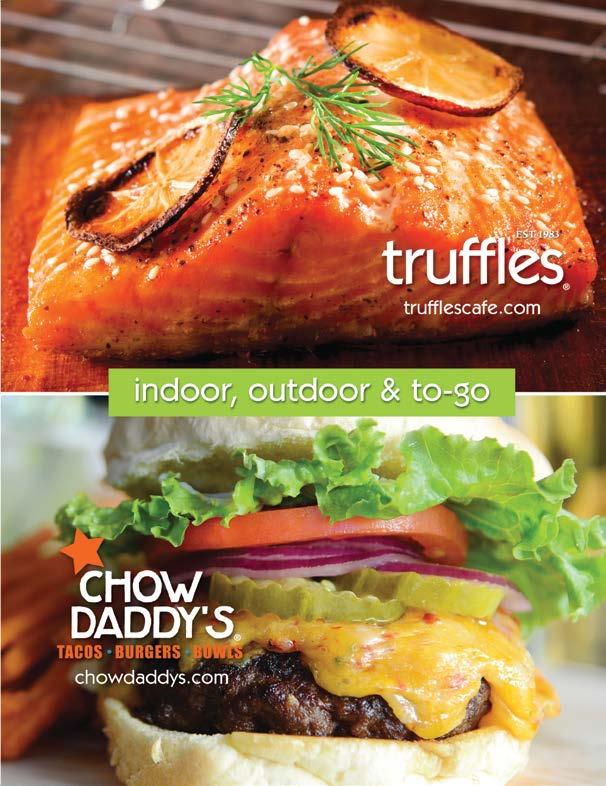
Located in Sea Pines Center and Belfair Towne Village in Bluffton. Enjoying our 39th year of offering casual upscale dining in a friendly and relaxed atmosphere. Our menu features fresh seafood, Black Angus steaks, baby back ribs, homemade soups, fresh and flavorful entree salads, house ground burgers, delicious pasta, and amazing homemade desserts. Outside seating is available at both locations. Full bar and fine wines by the glass or bottle. Private dining available for 6 to 100 people. Serving lunch and dinner 7 days a week from 11:30 a.m. - 10 p.m. Call (843) 671-6136 (Sea Pines) or (843) 815-5551 (Bluffton) or go to www. trufflescafe.com to make reservations.
THE WRECK OF THE SALTY DOG
Located at South Beach Marina in Sea Pines. Enjoy a casual and fun atmosphere in the same spirit as The Salty Dog Cafe. Serving a full bar with excellent food and waterfront view overlooking South Beach Marina and Braddock’s Cove, The Wreck offers excellent Happy Hour drink and appetizer specials. Available for private parties. Call (843) 671-SEAS (7327) for seasonal hours.
TASTEOFHILTONHEAD.COM 41
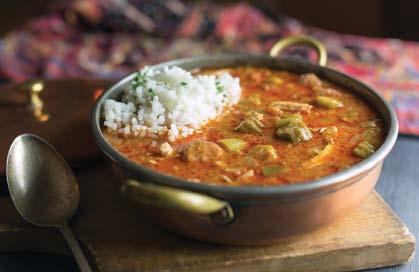
Several of the South’s signature dishes have flavorful roots steeped in the distinctive West African Gullah culture of the South Carolina and Georgia coast.
From shrimp (or fish) and grits and okra stew or gumbo served over rice to boiled peanuts (a.k.a.”goober peas”) and deviled crab, Lowcountry cuisine is an edible legacy currently being celebrated and carried on by Gullah chefs through cookbooks, catered events and food festivals.
To understand the culinary contributions of Gullah culture, it is important to look at the past.
According to Sciway.net, “Rice production in South Carolina
A Taste of GULLAH
BY ALLYSON JONES
increased dramatically after 1705. In the late Colonial period, rice profitability also increased. West Africa resembles South Carolina in both climate and landscape, and rice had long been cultivated there.”
Many enslaved West Africans were brought to South Carolina plantations specifically for their knowledge of rice cultivation.
The labor-intensive farming required transforming swampland into rice plantations with sweetgrass baskets – now South Carolina’s State Handicraft – originally used as fanners to winnow rice and to collect vegetables from the fields.
“The Gullah Geechee people are descendants of Africans who were enslaved on the rice, indigo and Sea Island cotton plantations of the lower Atlantic coast,” notes the Gullah Geechee Cultural Heritage Corridor Commission on their website. “Many came from the rice-growing region of West Africa. The nature of their enslavement on isolated island and coastal plantations created a unique culture with deep African retentions that are clearly visible in the Gullah Geechee people’s distinctive arts, crafts, foodways, music, and language,”
TASTEOFHILTONHEAD.COM 42
PHOTO PROVIDED BY DISCOVER SOUTH CAROLINA
“The traditional Gullah Geechee diet consisted of items available locally such as vegetables, fruits, game, seafood, livestock; items imported from Europe, items imported from Africa during the slave trade (okra, rice, yams, peas, hot peppers, peanuts, sesame ‘benne’ seeds, sorghum and watermelon), and food introduced by Native Americans such as corn, squash, tomatoes and berries. Rice became a staple crop for both Gullah Geechee people and whites in the southeastern coastal regions.”
“Making use of available food (or rations), making a little go a long way, supplementing with fish and game, leftovers from butchering and communal stews shared with neighbors were African cultural practices. African cooking methods and seasonings were also applied in Gullah Geechee homes and plantation kitchens. Because plantation cooks were primarily enslaved women, much of the food today referred to as ‘Southern’ comes from the creativity and labor of enslaved cooks.”
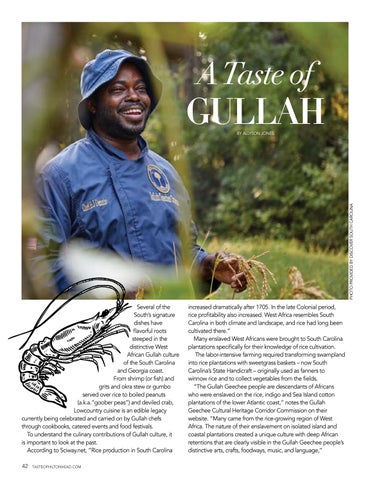
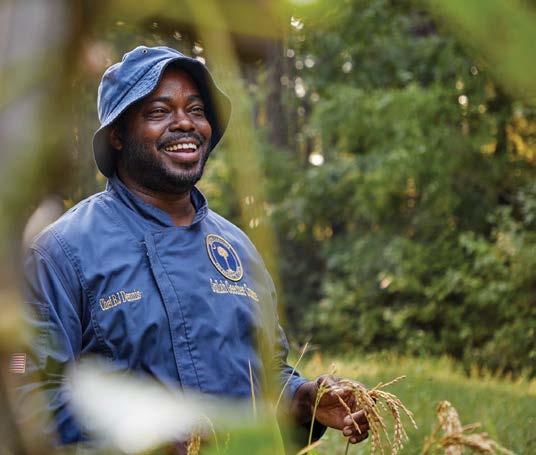
Born and raised in Charleston, South Carolina, caterer and personal chef BJ Dennis is an unofficial ambassador of Gullah Geechee culture and cuisine with fresh interpretations of traditional dishes served at his pop-ups and special events around the Holy City.
Although he earned a culinary degree and worked at some of Charleston’s finest restaurants, it was not until Dennis spent several years in the Caribbean and returned home that he decided to focus on the Gullah influence on popular “Southern” dishes using heirloom crops, fresh seafood and traditional cooking techniques.
Accolades soon followed and he was written up in Bon Appetit, The New York Times and multiple other local, regional and national publications.
In January of 2021, Chef Dennis was named Culinary Director of Bluffton’s new Lowcountry Fresh Market & Café. With a mission of “cultivating community,” the market features the freshest produce and fruits from farmers who have tilled the land on Saint Helena for generations, as well as other Lowcountry farmers, local seafood directly from the docks, a scratch bakery, prepared foods, cooking classes, a demonstration kitchen and cook at home meals. The café is open daily for breakfast and lunch.
While in the area, Dennis promoted and popped up at
various events, including the monthly Bluffton Gullah Market and February’s Hilton Head Island Gullah Celebration.
He returned to Charleston earlier this year continuing his catering business and is said to be creating his own book of recipes. But, first, he assisted 89-year-old Emily Meggett with writing and facilitating her New York Times bestselling cookbook, “Gullah Geechee Home Cooking: Recipes from the Matriarch of Edisto Island” published in April.
Dennis is also reportedly creating a Gullah-inspired menu for the café in Charleston’s International African American Museum scheduled to open in January of 2023 and catered a dinner in early October for the Philadelphia 76ers at The Avery Research Center for African American History and Culture while the basketball team was in town.
According to his bio on the Charleston Wine + Food Festival website, “Dennis infuses the techniques of his ancestors, learned from four years of study in St. Thomas, as well as the lessons of his grandparents about eating from the land, to create fresh interpretations of local dishes focusing on in-season, locally sourced vegetables and seafood. Recent trips to Trinidad and Tobago, Haiti, Barbados, Dominica, U.S. Virgin Islands, Angola, Bahamas and Benin has brought his work full circle, connecting the people and cultures of the African diaspora through food.”
As part of the 2023 Charleston Wine + Food Festival, Dennis will host the “Rice Fields + Winnows: The West African Connection” program, an exploration of rice, grains, and the African agrarian influence in the Lowcountry on March 2nd. Follow Chef BJ Dennis on social media to learn more about Gullah culture, its culinary heritage and find out where he will turn up next. For a taste of Gullah closer to home, find the complete schedule of events for the February Hilton Head Island Gullah Celebration online at gullahcelebration.com.
TASTEOFHILTONHEAD.COM 44




TASTEOFHILTONHEAD.COM 45 Celebrating Over 21 Years of Bringing the Bayou to the Beach! Thank You Hilton Head! Celebrating Over 23 Years of Bringing the Bayou to the Beach! Thank You Hilton Head! Breakfast • Lunch • Dinner • Circle Center, Pope Ave. • (843) 785-3315 Breakfast • Lunch • Dinner • Circle Center, Pope Ave. • (843) 785-3315
A LOWCOUNTRY BACKYARD
Located at 32 Palmetto Bay Road in the Village Exchange. Capture the true essence of the island while enjoying local and regional inspired cuisine featuring family recipes. Choose from Potato chip meatloaf, Charleston fried green tomato sandwich, shrimp & grits, Southern Belle salad and a wide selection of other lowcountry favorites. Dine in or outside in the comfortable backyard. Experience the island, love the food! Serving Lunch Monday - Saturday 11 a.m. - 3 p.m., and Dinner 4:30 - 9 p.m., Monday - Saturday. Call (843) 785-YARD (9273) or visit us online at www.hhbackyard.com.

AMIGO’S CAFÉ Y CANTINA
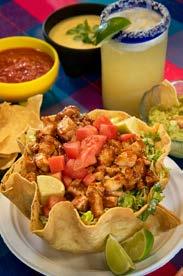
The original Amigo’s is located at 70 Pope Avenue in the Circle Center. Under new local ownership. Casual Mexican food prepared fresh daily. Featuring the best burrito outside of Baja, quesadillas, tacos, amazing BBQ chicken salad, World Famous Margaritas and ice cold beer. This local favorite has been serving islanders and visitors for over 26 years. Dine in, takeout or curbside delivery available. Open for lunch and dinner, Monday thru Saturday from 11 a.m. until 8:30 p.m. Call (843) 785-TACO (8226) online at www.amigoscafehhi.com or check us out on Facebook.
AUNT CHILADAS EASY STREET CAFE
“Not your everyday Mexican!” Located on the south end of the island at 69 Pope Avenue, Aunt Chilada’s offers unique tacos such as Firecracker, Steakhouse, and more, plus TexMex staples like sizzling fajitas, burritos, and enchiladas
plus amazing apps and dips! The extensive tequila menu has all your favorites. Dine indoors or on the huge, covered outdoor patio, perfect for enjoying the sea breeze with a hand-crafted, fresh margarita, listening to live music. Serving from 3 p.m., happy hour is 4-7 p.m. Member of the Coastal Restaurants and Bars family since 1988. Call (843) 785-7700 or visit auntchiladashhi.com.
BAD BISCUIT
Located at 19E Dunnagans Alley off Arrow Rd. The island’s newest breakfast spot features fresh handmade biscuits with a variety of toppings including sausage gravy and shrimp stew. Create a biscuit sandwich with egg, cheese, veggies, crab cakes and other offerings. Also serving homemade soups, salads, desserts, coffee and juices. For the adventurous appetite, try one of our delicious grit bowls. Open daily from 8 a.m. until 2 p.m. Call (843) 785-2323 or check us out online at www.bad-biscuit.com.
BIG BAMBOO
Just steps from the beach, the Big Bamboo is located in Coligny Plaza on North Forest Beach Drive. Featuring fresh seafood, fish tacos, delicious salads and the build your own burgers, the Big Bamboo provides an all American menu in a laid back beach atmosphere. Thirsty? Try a famous margarita as you sit amongst the WWII memorablia and the Bamboo inspired island vibe. Full bar and kids menu available. Serving lunch Mon-Sat. 11.30 a.m. to 4 p.m. Call (843) 686-3443.
TASTEOFHILTONHEAD.COM 46
TASTE OF LUNCH
BRITISH OPEN PUB
Located in The Village at Wexford and Sheridan Park in Bluffton. Authentic English fare served in attractive pub-style atmosphere with golf art, memorabilia, and the only bar by Titleist. Featuring our famous Fish n’ Chips, Lobster Salad or Sandwedges like the Aberdeen Burger, Clubhouse Classic, Wexford Reuben, English Dip and Lobster Roll. Full bar and beers, ales, and stouts from around the world. Serving lunch and dinner Tuesday thru Sunday from 11 a.m. Brunch served Saturday 11 a.m. - 2 p.m. and Sunday 9 a.m. until 2 p.m. Call Hilton Head (843) 686-6736 or Bluffton (843) 815-6736.
CAROLINA COFFEE & CRUMBS
Located at 101 Pope Avenue in historic Coligny Plaza just steps away from Coligny Beach. Hilton Head’s newest locally owned coffee shop serves homemade sweets as well as your favorite lunch items. Signature items will include paninis, wraps, chopped salads and homemade soups. Make sure to check out our daily specials as well as our homemade desserts. Dine inside or outside on our terrace. Open from 7 a.m. Call (843) 342-4800 or visit us at www.carolinacoffeehhi.com.
CAROLINA CRAB COMPANY
Home of “The” Carolina Crab Cake, “C3” at Palmetto Bay Marina has become the spot to anchor! C3 is revered for its steaming shellfish boils, amazing seafood, steaks, and fresh
daily oyster selections. But it is “The” Carolina Crab Cake that will have you planning another visit after your first bite. Come for happy hour and enjoy a Funcoction! Serving from 3 p.m. inside and out, they offer dine-in, take-out, and online ordering. Come by boat - it’s Free to dock while you dine! Member of the Coastal Restaurants and Bars family since 2014. Call (843) 842-2016 or visit carolinacrabco.com.
CHARLIE’S COASTAL BISTRO
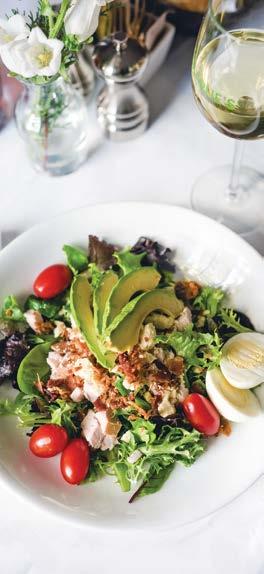
Located at 8 New Orleans Rd., just off Hwy. 278. Casual dining at its best. One-of-a kind Cobb salad piled high with crispy bacon, turkey and cheese, dressed with Essie’s homemade sweet tomato vinaigrette that has kept the locals hooked for more than 30 years. Fish Cakes, Sauteed Flounder and an array of salads for anyone on the run. Dine-in or Takeout. Open for lunch Monday thru Friday from 11:30 a.m. until 2 p.m., and dinner Monday thru Saturday from 5 p.m. Call (843) 785-9277 or check us out online at www.charliesgreenstar.com.
CHOW DADDY’S
Two locations - 14B Executive Park Road, just off Pope Avenue and Belfair Towne Village in Bluffton. One of the areas newest and most creative restaurants offers a healthy alternative using local and organic ingredients whenever possible. Menu items include amazing Pork Nachos on house-made potato chips, Kale and Quinoa Salad, Tuna Poke Bowl, Fried Chicken Tacos,
TASTEOFHILTONHEAD.COM 47
Open Mon.-Sat. 11 a.m. - 8:30 p.m • Happy Hour 4-6 daily • Eat in, Take out or Curbside service 70 Pope Avenue in Circle Center • (843) 785-8226 • www.amigoscafehhi.com Home of the World Famous Margaritas and Killer Burritos!! Casual Mexican prepared fresh daily!
Spicy Shrimp Tacos, Chicken Verde, and incredible Burgers ground in house daily. Full bar, extensive wine selection and great cocktails. Open 7 days a week for lunch and dinner from 11:30 a.m. until 10 p.m. Outdoor seating and ping pong available on our terraces. For reservations call (843) 842CHOW (2469) or (843) 757-CHOW (2469) or online at www.chowdaddys.com.
THE CRAZY CRAB HARBOUR TOWN
Located in Sea Pines overlooking Harbour Town Marina. The “Islander’s place for fresh seafood for over 35 years,” The Crazy Crab restaurant is a fun, casual, family-friendly atmosphere adjacent to a convenient playground for kids and loved by generations of visitors. Voted Best Crab Legs on the island for many years, they offer fresh local seafood dishes and boils, plus sandwiches and salads for lunch. Serving daily from 11 a.m. Member of the Coastal Restaurants and Bars family since 1986. Call (843) 363-2722 or visit thecrazycrab.com.
THE CRAZY CRAB JARVIS CREEK
Located near mile marker 1 on Hwy. 278 with a panoramic view of Jarvis Creek. The “Islander’s place for fresh seafood for over 35 years,” The Crazy Crab has a fun, casual, family-friendly atmosphere. There’s a playground for kids and a scenic fire pit to gather near the water. Voted Best Crab Legs on the island for years, they offer fresh local seafood, plus lunch sandwiches and salads. Enjoy their large covered deck, and live, local music (seasonally). Serving daily from 11 a.m. Member of the Coastal Restaurants and Bars family since 1984. Call (843) 681-5021 or visit thecrazycrab.com.
DELISHEEYO
Located at 32 Palmetto Bay Rd. in The Village Exchange. The Island’s health food kitchen features organic juices, smoothees, salads, wraps, bowls and healthy snacks. Offering food that makes you feel good, choose from raw, vegan or gluten free options. Open Monday thru Saturday from 8 a.m. until 6 p.m., and Sunday 10 a.m. - 2 p.m. Call (843) 785-3633 or order online at www.delisheeyo.com.
THE DRYDOCK SEAFOOD GRILL & SPIRITS


All new location at 840 William Hilton Pkwy. Go where the locals go for fresh seafood, cold drinks and good times. We are easy to find, but hard to leave. Choose from a wide variety of fresh seafood, signature sandwiches, salads and more in a casual and comfortable atmosphere. Dine inside or enjoy the outdoor patio. Open 7 days for lunch and dinner from 11:30 a.m. Call (843) 842-9775.
ELA’S ON THE WATER
Located at One Shelter Cove Lane. Featured in Bon Appetit and winner of numerous Open Table awards, Ela’s offers fresh catch seafood and prime cut steaks of the highest quality, all prepared by our culinary team of experts and complimented
TASTEOFHILTONHEAD.COM 48
by an extensive boutique wine selection. Known for the best water views on the island, we have a casual intimate interior, wrap around dining patio exterior and nightly entertainment. Private parties, rehearsal dinners and special events welcome. Open for lunch Monday thru Friday, 11 a.m. until 2 p.m., Sunday Brunch from 11 a.m. until 2 p.m. and dinner nightly from 5 p.m. Reservations recommended. Call (843) 785-3030 or online at ww.elasgrille.com.
FISHCAMP ON BROAD CREEK
Located on Broad Creek at 11 Simmons Road, a local historic landmark, is now the Island’s favorite elegant but relaxed waterfront dining destination. Enjoy raw bar favorites, salads, sandwiches, burgers, and amazing lunch entrées. Dine indoors, or soak in the Lowcountry lifestyle on the spacious, pet-friendly patio and bar with a backyard, fish camp style ambiance complete with a fire pit and stunning sunset views. Serving daily from 11 a.m., bar open late. Member of the Coastal Restaurants and Bars family since 2016. Call (843) 842-2267 or visit fishcamphhi.com.
FLATBREAD GRILL
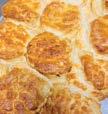
Located at Coligny circle oceanside in the Beach Market Center. This upscale casual dining sensation is sure to be a favorite of both visitors and locals. Enjoy Neopolitan pizza cooked in our open-hearth oven or choose from fresh pasta, gourmet salads, wraps, sandwiches, specialty burgers, wings and more. Friendly and comfortable lounge offering a nice selection of appetizers and cocktails while viewing your favorite sporting events on our HD TV’S. Take out and kid’s menu available. Open daily from 11:30 a.m. for lunch and dinner. Call (843) 341-2225 or online at www.flatbreadgrillhhi.com.
THE FROSTY FROG CAFÉ
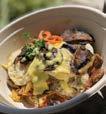
Located in Coligny Plaza. A comfortable, casual atmosphere offering a “web-footed lickin” menu and an enormous amount of frozen daiquiris by the glass (16 oz., 24 oz. and 32 oz.). Outside seating with retractable roof, fire pit, beach area and tiki bar. Live music nightly. Black angus burger, pizza, prime rib sandwich, salads, subs, wraps, appetizers and of course fried frog legs. 28 HD TV’s for great sports viewing as well as a kid’s menu. Open for lunch and dinner daily from 11 a.m. until 10 p.m. Call (843) 686-FROG (3764) or online at www.frostyfrog.com.
GRINGO’S DINER
Located at 6 Lagoon Rd., near the beach in Coligny Plaza. This cozy and comfortable diner serves breakfast and lunch all day. The food and service makes for the perfect stop for visitors and locals alike. Enjoy contemporary American and Mexican food in a warm atmosphere with friendly service. Enjoy fantastic lunch selections like our yummy homemade burgers, sandwiches, B.L.T’s, hot dogs, fried baskets, awesome Philly cheesesteaks and famous hand cut French
TASTEOFHILTONHEAD.COM 49
Breakfast | Brunch | Lunch Lowcountry & Southern Specialties, Handmade and Homemade. Always! Serving Breakfast and Lunch Daily. Open daily from 8 AM to 2 PM 19E Dunnagans Alley off Arrow Rd. 843-785-2323 • www.badbiscuit.com
fries. Now serving cold beer. Dine inside or outside. Take out is available. Open for breakfast and lunch from 8 a.m. Call (843) 785-5400.

HAROLD’S DINER
Located at 641 William Hilton Parkway at Singleton Beach. An island icon for decades, this diner serves up the best made to order food fast and with attitude. Breakfast favorites include Omelettes, Pancakes, French toast, and Steak and Eggs. For lunch choose from Burgers, Dogs, Pulled Pork, Philly Cheesesteaks and more. Open for breakfast Mon. thru Sat., 7:30 a.m. until 11 a.m. and lunch 11 a.m. until 3 p.m. Call (843) 384-7855 or online at haroldsdinerhiltonhead.com.

HINOKI JAPANESE RESTAURANT AND SUSHI BAR
Located at 37 New Orleans Road in Orleans Plaza. Enjoy traditional Japanese dishes such as teriyaki, tempura, a variety of noodle dishes and soups, tofu, grilled vegetables, daily specials, plus fabulous, sushi and sashimi. The very extensive menu includes dozens of appetizers to share, combination dinners with fresh fish, chicken, steak and over 20 entrees from which to choose. Three intimate dining rooms, a sushi bar and a cocktail lounge offers something for everyone. Early Bird specials until 6:30 p.m. and carry-out available, as well as online ordering on their website. Lunch is served from 11:30 a.m. until 2 p.m., Tuesday thru Friday, and Dinner 5:30 until 10 p.m., Monday thru Saturday. Call (843) 785-9800 for reservations (taken during regular business hours). Visit hinokihhi.com and facebook.com/hinokihhi.
HUDSON’S SEAFOOD HOUSE ON THE DOCKS
Sitting right at the edge of Port Royal Sound, all of the tables in our waterfront restaurant feature extraordinary views for a truly special low-country dining experience. Hudson’s uses one of only two remaining local fishing fleets on Hilton Head Island to bring in fresh-caught seafood straight to our docks and to your table. Our guests often get to share the excitement as fishing crews unload thousands of fresh oysters, shrimp and soft shell crabs from each day’s catch. Bring your family and friends for a special low-country seafood feast that has been a Hilton Head Island tradition for over 50 years! Open daily at 11 a.m. serving lunch and dinner. Brunch on Sundays at 10 a.m. Call (843) 681-2772 or online at www.hudsonsonthedocks.com.
KENNY B’S FRENCH QUARTER CAFÉ
Located in Circle Center, just off Pope Avenue. Enjoy Creole cuisine with a Lowcountry influence. Find an appealing choice of Cajun fare such as Shrimp Etoufee, Crawfish Etoufee, Jambalaya, N’awlins Po Boy’s, Red Beans & Rice and authentic Gumbos. Great soups and salads, as well as a kid’s menu and take-out service available. Also, cold beer and awesome desserts. Open Wednesday thru Sunday for breakfast, lunch and dinner. Call (843) 785-3315.

TASTEOFHILTONHEAD.COM 50
Breakfast | Lunch | Dinner
See Menus, Hours, Specials, and Take Out & Delivery Options at SkilletsCafe.com
LAND’S END TAVERN
Located at South Beach Marina in Sea Pines. Featuring great seafood, steaks, sandwiches and salads. A casual atmosphere with a pirate theme ensures fun for the whole family. Great kid’s menu and desserts. It’s a bounty of treasure waiting to be plundered. Call (843) 671-5456 for seasonal hours.



MANGIAMO
Located at 2000 Main Street. A comfortable and cozy atmosphere featuring outstanding pizza, subs, salads and pasta. Beer and wine, kid’s menu, and daily specials offer something for everyone. Enjoy half price cheese pizza from 3 until 4 p.m. Dine inside, on the patio or take it to go. North Island delivery available. Your home away from home for The Ohio State Buckeyes. Open 11 a.m. to 9:30 p.m. Tuesday thru Sunday. Call (843) 682-2444.
THE MARKET CAFE AT MICHAEL ANTHONY’S
Located at 37 New Orleans Road in Orleans Plaza. Located just across the breezeway from Michael Anthony’s, The Market Cafe is an Italian market and a casual small plate restaurant joined together in one! “The Market” offers a wide array of prepared “heat and serve” dishes, house-made sauces, pasta and imported Italian meats, cheeses and sundries. “The Cafe” features a lunch menu of salads, sandwiches, pizza and pasta available 11:30 a.m. - 2 p.m. In the evening, The Market Cafe is a local gathering spot with an inviting cozy atmosphere featuring fresh artisan pasta, personal sized pizzas with quality ingredients, plus a selection of small plates and the chef’s daily creations. The Market Cafe is open Monday – Saturday from 10 a.m. - 9 p.m. Call 843.785.6272 for reservations or visit www.michael-anthonys.com.
MELLOW MUSHROOM
Located in Park Plaza on Hilton Head and at 878 Fording Island Rd. in Bluffton. If you’re looking for a fun and lively place for the whole family, this is it. Specializing in great pizza and calzones, monumental hoagies and fresh salads all in a comfortable and casual setting. Kid friendly and affordably priced menu for both lunch and dinner. Over twenty-four beers on tap, fifty more by bottle and a full bar available. Dine inside or outside on the patio. Open daily from 11 a.m. Call (843) 686-2474 (HHI) or (843) 706-0800 (B-Town).

THE OLD OYSTER FACTORY
Located on Broad Creek at 101 Marshland Road, this iconic waterfront restaurant has stunning views of the Lowcountry! Dine inside or on the outdoor decks - perfect for lunch on the water. Serving fresh local seafood since 1989, Chef’s creations feature elevated Lowcountry cuisine with raw bar favorites, salads, sandwiches, and entrées for both seafoodies or land-lovers. The back deck with an outside patio bar is a great dolphin-spotting location. Serving from 11 a.m. daily,
TASTEOFHILTONHEAD.COM 51
Food with an Attitude! Eat here or we both starve. Open for breakfast and lunch. HaroldsDinerHiltonHead.com 641 William Hilton Parkway, Hilton Head Island, SC
Brunch on Sundays. Established in 1989, a member of the Coastal Restaurants and Bars family since 2019. Call (843) 681-6040 or visit oldoysterfactory.com.
PALMETTO BAY SUNRISE CAFE
Located in Palmetto Bay Marina off Helmsman Way. Serving breakfast and lunch all day. Awesome sandwiches, burgers, salads, soups, chicken, seafood and daily blue plate specials in cozy and comfortable atmosphere. Beer, wine and liquor available as well as take-out and childrens menu. Eat inside or relax on the outside patio. “One of the Best Breakfasts on Hilton Head”, Southern Living magazine. Open Wednesday thru Sunday from 6 a.m. until 2 p.m. Call (843) 686-3232 for more information.
PLANTATION CAFÉ & DELI
Located South Island at 81 Pope Avenue in Heritage Plaza, North Island at Port Royal Plaza and 20 Discovery Drive in Bluffton. An Island favorite since 1974. From soups and salads to sandwiches and Blue plate specials, we have something for everyone. Choose from a great selection of meats and sides and a wide array of salads, soups and sandwiches, all served at moderate prices. We promise you will not leave hungry. Beer, wine and Bloody Marys available. Open for lunch Monday thru Saturday at 11:30 a.m., and Sunday brunch from 7:30 a.m. until 2 p.m. Call (843) 785-9020, (843) 342-4472 or (843) 815-5550.
REILLEY’S GRILL & BAR
Just off Sea Pines Circle in Reilley’s Plaza, this family-friendly local favorite is your choice for a great lunch. Serving entrée salads, a wide selection of elevated pub sandwiches, burgers, and home-inspired dishes such as Chicken Pot Pie, Cottage Pie, and Fish & Chips, you can dine indoors or on their beautiful, spacious garden-encircled patio covered bar. Serving daily from 11:30 a.m. Member of the Coastal Restaurants and Bars family since 1982. Call (843) 842-4414 or visit reilleyshiltonhead.com
RUAN THAI HUT
Located at 1107 Main Street. Serving Authentic Thai fare using the freshest ingredients available. Mild to very hot, you can choose the spice level of your meal. Appetizers, soups, salads, desserts and kids meals round out an extensive menu with something for all ages. Sit inside or outside on the comfortable patio. Open Monday thru Saturday for lunch and dinner. Call (843) 681-3700.
THE SALTY DOG CAFE
Located at South Beach Marina in Sea Pines. Great food, frozen drinks and live entertainment from the island’s favorite outdoor cafe. Enjoy beautiful waterfront views overlooking Braddock’s Cove in a fun and casual atmosphere. Happy Hour daily with a full menu available, plus an outdoor cookout, Salty Dog Ice Cream and Jake’s Pizza during the season. Call (843) 671-CAFE (2233) for seasonal hours.
THE SANDBAR
Located at 101 Pope Avenue in historic Coligny Plaza just steps away from Coligny Beach. The Sandbar always has something delicious cooking. With its beach inspired decor, comfortable seating and laid back atmosphere, they are serving up delicious food such as homemade burgers, amazing tacos, and tons of fresh seafood. The Sandbar is a great place for families and friends to enjoy the outdoor bar and patio and share amazing foods and drinks. Children will also feel welcome with their own menu and special children’s table. Call (843) 342-SAND (7263) or visit us online at www.sandbarhhi.com.
SKILLETS CAFE
Located just off the beach in Coligny Plaza. An excellent choice for the whole family since 1994. Wonderful selections including old-fashioned lunches, great sandwiches, burgers, jambalaya, fried seafood or our extensive salad bar. $10 lunches, Monday thru Friday only. Gluten Free menu as well as vegan dishes available. Full bar and wine list available. Kids menu and takeout. Dine inside or on the patio (Dog Friendly). Open daily from 7 a.m. until 10 p.m. Call (843) 785-3131 or check us out online at www.skilletscafe.com.
STREET MEET
Located in Port Royal Plaza. An American style tavern, select from our $9 lunch menu, paleo bowls, or choose from popular items like our NY Hofmann hot dogs, butcher ground burgers, homemade black bean wraps, homemade Italian wedding soup or the island’s best fish and chips. Enjoy a cold beer or cocktail after a day at the beach in an atmosphere that welcomes the entire family (Penny a pound for kids on Saturday). Serving from 11 a.m. until 11 p.m. Call (843) 842-2570 or online at www. streetmeethhi.com.
TRUFFLES CAFE
Located in Sea Pines Center and Belfair Towne Village in Bluffton. Enjoying our 39th year of offering casual upscale dining in a friendly and relaxed atmosphere. Our menu features fresh seafood, Black Angus steaks, baby back ribs, homemade soups, fresh and flavorful entree salads, house ground burgers, delicious pasta, and amazing homemade desserts. Outside seating is available at both locations. Full bar and fine wines by the glass or bottle. Private dining available for 6 to 100 people. Serving lunch and dinner 7 days a week from 11:30 a.m. - 10 p.m. Call (843) 671-6136 (Sea Pines) or (843) 815-5551 (Bluffton) or go to www.trufflescafe.com to make reservations.
THE WRECK OF THE SALTY DOG
Located at South Beach Marina in Sea Pines. Enjoy a casual and fun atmosphere in the same spirit as The Salty Dog Cafe. Serving a full bar with excellent food and waterfront view overlooking South Beach Marina and Braddock’s Cove, The Wreck offers excellent Happy Hour drink and appetizer specials. Available for private parties. Call (843) 671-SEAS (7327) for seasonal hours.
TASTEOFHILTONHEAD.COM 52
CHICKEN CACCIATORE
Courtesy Chef Karla
Ingredients
1 tablespoon Olive oil, divided
1 each Onion, diced
2 tablespoons Garlic, minced
1 each Eggplant, diced, skin-on
3 each Tomatoes, diced
2 tablespoons Olives, green, quartered
1.5 pounds Chicken thighs, skin-less, bone-in, trim excess fat
1 cup Red wine
2 tablespoons Sage, fresh
2 tablespoons Thyme, fresh
1/2 tablespoon Rosemary, fresh
1/2 tablespoon Salt, divided
1/4 teaspoon Black pepper, ground
• Preheat a large sauté pan to medium-high heat.
Method:
• Add 1/2 tablespoon of olive oil.
• Liberally season chicken thighs with salt and pepper.
• Place chicken thighs in hot sauté pan, and sear each side until caramelized, about 10-15 minutes, flip and repeat searing.
• Remove chicken thighs from the sauté pan and set aside.
• Add remaining 1/2 tablespoon of olive oil to sauté pan, adjust heat to medium.
• Add onion, garlic, eggplant, tomatoes, and olives. Sauté until caramelized and softened, stirring occasionally, about 10 minutes.
• Adjust heat to low, nestle the chicken thighs back into the pan with the vegetables, add red wine and fresh herbs.
• Allow to simmer for 1 hour, uncovered.
• Garnish with fresh basil and parmesan. Serve over pasta or roasted potatoes.

Serves: 4 Serving Size: 4 ounces chicken + ~ 1 cup sauce
Calories: 390 Fat: 18 grams
Carbohydrates: 18 grams Fiber: 4 grams Protein: 30 grams
Chef’s Note: A rustic poultry-vegetable hunters’ stew, the perfect cozy meal to warm your soul this Winter.
Karla is owner of Chef Karla LLC specializing in creating crave-worthy and good-for-you cuisine. Karla provides nutrition coaching, personalized prepared family meals, and small group catering. For more healthy recipes and wellness tips visit www.chef-karla.com or connect directly at Karla@chef-karla.com.

TASTEOFHILTONHEAD.COM 53
Holiday Happenings
BY ALLYSON JONES
It’s the most wonderful time of the year and the perfect time to shop local and share a love of the Lowcountry with friends, family and co-workers. From traditional foods and handcrafted merchandise to holiday decorations and one-of-a-kind finds, celebrate this special season and pick up meaningful gifts for everyone on your list at some of these area events and markets.
Festival Of Trees
November 17 through December 3, Hilton Head Preparatory School hosts its Annual Festival of Trees at the Marriott Hilton Head Resort & Spa in Palmetto Dunes. In addition to creatively themed Christmas trees sponsored and decorated by local organizations, businesses and individuals, the Island’s longest running holiday event also offers an assortment of wreaths, centerpieces, garland and other holiday décor available for purchase with proceeds benefiting Hilton Head Prep’s tuition assistance program. Several special events, such as “A Night at the Orchestra” showcasing Hilton Head Preparatory School’s String Orchestra on December 3rd, are scheduled throughout the festival. For details or to shop the online store, visit hhpfestivaloftrees.com.
First Thursday Art Market
Painters, photographers, sculptors, potters, textile artists and musicians from around the world can be found on Thursday, December 1, during The Shops at Sea Pines Center’s First Thursday Art Market. Meet the artists and shop the Market from 4-7 p.m. while enjoying the specialty stores, unique galleries or gathering with friends over a delicious meal at this center located on Lighthouse Road near Harbour Town. (843) 363-5699 or theshopsatseapinescenter.com/ events.
Lowcountry Made
Created by marketing professional Katie Silva to promote Lowcountry makers, connect them with shoppers, and promote business to business collaboration, Lowcountry Made began by creating popup markets during the pandemic to provide a safe platform for makers to engage with shoppers.
After facilitating more than 40 events across the Lowcountry with a rotating list of quality vendors, there are several special markets planned during the holiday season.

The Bluffton Night Bazaar takes place on December 1, the first Thursday of the month, in the courtyard of Burnt Church Distillery on Bluffton Road from 5-8 p.m. Admission is free for this evening event featuring local artists, live music, food and drink.
On Sunday, December 4th, a
TASTEOFHILTONHEAD.COM 54
OFFICIAL SOUTH BEACH TREE LIGHTING
OFFICIAL SOUTH BEACH TREE LIGHTING

Friday, November 25th | The lights go on at dusk!
Friday, November 25th | The lights go on at dusk!
SOUTH BEACH CHRISTMAS VILLAGE
SOUTH BEACH CHRISTMAS VILLAGE
Daily | November 25th - January 1st
Daily | November 25th - January 1st
SANTA & S’MORES SATURDAYS
11/26 • 12/3 • 12/10 • 12/17
SANTA & S’MORES SATURDAYS
11/26 • 12/3 • 12/10 • 12/17
Give back with us all season long!
Give back with us all season long!
CHILI DECEMBER
CHILI DECEMBER
For every cup and bowl of soup or chili enjoyed, Salty Dog will donate a canned food item to Deep Well Project to help feed neighbors in need
For every cup and bowl of soup or chili enjoyed, Salty Dog will donate a canned food item to Deep Well Project to help feed neighbors in need


SOUTH BEACH OYSTER ROAST
Saturday, February 25th | 12 pm
SOUTH BEACH OYSTER ROAST
Saturday, February 25th | 12 pm
Enjoy buckets of fresh roasted oysters, loads of tasty oyster creations, and of course, live music on the waterfront!
Enjoy buckets of fresh roasted oysters, loads of tasty oyster creations, and of course, live music on the waterfront!

Plan your visit at
Plan your visit at
Holiday Artisan Market takes place on the May River Lawn in Palmetto Bluff from 12-5 p.m. followed by the regularly scheduled Lowcountry Made Market on the third Saturday of the month at Bluffton’s Buckwalter Place Park from 9 a.m.-1 p.m. For details on these and other upcoming events, visit lcmade.com.
Holiday Craft Fair
Head over to Hilton Head Island Beach & Tennis Resort, December 3-4, for the 3rd Annual Holiday Craft Fair. Open from 10 a.m. - 4 p.m. on Saturday and Sunday, admission is free for this annual event featuring handmade gifts from local artists and artisans including Full Spectrum Studio, plus sweets, treats and more. 40 Folly Field Rd. (843) 842-0029 or hhibeachandtennis.com.
Hilton Head Island Community Market
Hilton Head Island’s newest market opened in October and offers fresh local foods from farmers and vendors, such as Island-inspired blends from Hilton Head Island Coffee Company, as well as handcrafted goods on Saturdays from 9 a.m.-noon in Shelter Cove Community Park. Each month, a portion of the proceeds from vendor booth fees is donated to a different local non-profit. Operation Turbo, a volunteer-run organization founded by Dyan Zurick Smith which sends “Boxes of Home” to all branches of the military around the world, was the designated non-profit in October and November. For details and vendor information, visit the Market’s Facebook page.
Hilton Head Island Farmers Market
Local farmers, producers and artisans can be found at the Coastal Discovery Museum at Historic Honey Horn every Tuesday from 9 a.m.-1 p.m. Plan the perfect holiday meal with farm-fresh produce, eggs, meats and honey or pick up prepared foods such as chips, dips, hot sauces, coffee, baked goods, charcuterie, pizza and other flavorful items. Artisans offer handcrafted soaps, hand poured soy candles, notecards, jewelry, pottery and artwork. Can’t make it to the Market? The Museum’s Gift Shop is open daily with a selection of books by local authors, toys, games, puzzles, artwork, sweetgrass baskets and more. (843) 689-6767 or coastaldiscovery.org.
Winter Wonderland Festival at Shelter Cove Community Park
The Winter Wonderland Festival will be held at Shelter Cove Community Park December 3 from 4-7 p.m at 39 Shelter Cove Lane. There will be carnival games, a children’s parade, bounce houses, and more! For more information (843) 681-7272 or www.islandreccenter.org.
Hilton Head Choral Society presents The Many Moods of the Season
“The Many Moods of the Season” Decenber 9 at 7 p.m. in the First Presbyterian Church. The holiday season is one of nostalgia for many. This year’s program will celebrate from a more traditional standpoint the many moods of the season as the Choral Society presents the Christmas portion of Handel’s classic, Messiah, and Robert Shaw’s The Many Moods of Christmas. Come celebrate the season through a variety of perspectives, cultures and traditions. To purchase tickets call (843) 341-3818 or visit www. hiltonheadchoralsociety.org.
Gregg Russell Christmas Concert
Relish the spirit of the holidays with an evening in Harbour Town December 23, 7:30 - 9 p.m. Listen as Gregg Russell plays his guitar and sings songs of the season for children and adults. Following the concert, enjoy a special visit from Santa Claus. For more information, (843) 842-1979 or www. seapines.com.
Holiday Boat Lights Display
This December, take a stroll through our version of a winter wonderland, as Shelter Cove Harbour and Marina transforms into a colorful affair. Stroll the boardwalk, where the marina and boats will be decorated with holiday lights, and enjoy everything a Lowcountry “winter” has to offer.

TASTEOFHILTONHEAD.COM 56

TASTE OF BREAKFAST / BRUNCH
BAD BISCUIT
Located at 19E Dunnagans Alley off Arrow Rd. The island’s newest breakfast spot features fresh handmade biscuits with a variety of toppings including sausage gravy and shrimp stew. Create a biscuit sandwich with egg, cheese, veggies, crab cakes and other offerings. Also serving homemade soups, salads, desserts, coffee and juices. For the adventurous appetite, try one of our delicious grit bowls. Open daily from 8 a.m. until 2 p.m. Call (843) 785-2323 or check us out online at www.bad-biscuit.com.
BRITISH OPEN PUB
Located in The Village at Wexford and Sheridan Park in Bluffton. Fabulous Brunch served in an authentic English style pub. Choose from Watson’s Steak & Eggs, Eggs Faldo (Benedict), Old Tom Morris Omelette, Pancakes, Bananas Foster French Toast and more. Serving bottomless Mimosa’s and made from scratch Bloody Mary’s. Breakfast served at Bluffton location Tuesday thru Friday from 8 until 11 a.m. Brunch served Saturday 11 a.m. - 2 p.m and Sunday 9 a.m. until 2 p.m. Call Hilton Head (843) 686-6736 or Bluffton (843) 815-6736.

CAROLINA COFFEE & CRUMBS
Located at 101 Pope Avenue in historic Coligny Plaza just steps away from Coligny Beach. Hilton Head’s newest locally owned coffee shop serves fresh baked pastries as well as your favorite breakfast items. Our hand selected organic single origin coffee is roasted to perfection for the perfect cup every time. Omelets, bagels and breakfast sandwiches are staples on the menu everyday as well as featured homemade daily specials. All day coffee and breakfast from 7 a.m. Call (843) 342-4800 or visit us online at www.carolinacoffeehhi.com.
THE CRAZY CRAB JARVIS CREEK
Near mile marker 1 on Hwy. 278 with a panoramic view of Jarvis Creek - perfect for a Sunday Brunch and cocktails with water views. The “Islander’s place for fresh seafood for over 30 years,” The Crazy Crab has a fun, casual, family-friendly atmosphere with a playground for kids. Sunday Brunch options include crepes, chicken & waffles, crab cake Benedict, and omelets. Dine inside or enjoy their large covered deck. Serving daily from 11 a.m. Member of the Coastal Restaurants and Bars family since 1984. Call (843) 681-5021 or visit thecrazycrab.com.
DELISHEEYO
Located at 32 Palmetto Bay Rd. in The Village Exchange. The Island’s health food kitchen features organic juices, smoothees, salads, wraps, bowls and healthy snacks. Offering
food that makes you feel good, choose from raw, vegan or gluten free options. Open Monday thru Saturday from 8 a.m. until 6 p.m. and Sunday 10 a.m. until 2 p.m. Call (843) 785-3633 or order online at www.delisheeyo.com.
ELA’S ON THE WATER
Located at One Shelter Cove Lane. Featured in Bon Appetit and winner of numerous Open Table awards, Ela’s offers fresh catch seafood and prime cut steaks of the highest quality, all prepared by our culinary team of experts and complimented by an extensive boutique wine selection. Known for the best water views on the island, we have a casual intimate interior, wrap around dining patio exterior and nightly entertainment. Private parties, rehearsal dinners and special events welcome. Open for lunch Monday thru Friday, 11 a.m. until 2 p.m., Sunday Brunch from 11 a.m. until 2 p.m. and dinner nightly from 5 p.m. Reservations recommended. Call (843) 785-3030 or online at www.elasgrille.com.
TASTEOFHILTONHEAD.COM 58
FISHCAMP ON BROAD CREEK
Located on Broad Creek at 11 Simmons Road, Hilton Head’s favorite elegant but relaxed waterfront dining destination offers an elevated Sunday Brunch menu with fresh Maine Lobster Hash, Steak & Eggs, Smoked Salmon Avocado Toast, and more set in a backyard, fish camp style ambiance with stunning water views. Dine indoors, or enjoy the spacious, pet-friendly patio and bar while soaking in the Lowcountry lifestyle. Sunday Brunch from 11 a.m. - 3 p.m. Member of the Coastal Restaurants and Bars family since 2016. Call (843) 842-2267 or visit fishcamphhi.com.
GRINGO’S DINER
Located at 6 Lagoon Rd., near the beach in Coligny Plaza. This cozy and comfortable diner serves breakfast and lunch all day. The food and service makes for the perfect stop for visitors and locals alike. Enjoy contemporary American and Mexican food in a warm atmosphere with friendly service. We offer tremendous pancakes, breakfast burritos and tacos, omelettes, chimichangas, and more. Now serving tasty mimosas. Dine inside or outside. Take out is available. Open daily from 8 a.m. for breakfast and lunch. Call (843) 785-5400.
HAROLD’S DINER
Located at 641 William Hilton Parkway at Singleton Beach. An island icon for decades, this diner serves up the best made to order food fast and with attitude. Breakfast favorites

include Omelettes, Pancakes, French toast, and Steak and Eggs. For lunch choose from Burgers, Dogs, Pulled Pork, Philly Cheesesteaks and more. Open for breakfast Mon. thru Sat., 7:30 a.m. until 11 a.m. and lunch 11 a.m. until 3 p.m. Call (843) 3847855 or online at haroldsdinerhiltonhead.com.
HEALTHY HABIT
Located in Park Plaza just outside of Sea Pines Resort. Voted Hilton Head’s Best lunch, takeout, counter service and salads every year since 2017! This local favorite serves up award winning bowls, salads, wraps, smoothies, juices and more. Fast casual dining with a modern design offers inside and outside seating. Online ordering, catering and takeout are available. Serving breakfast, lunch and dinner daily from 8 a.m. until 8 p.m. Call (843) 686-5600 or visit us online at HealthyHabitHHI.com.
HUDSON’S SEAFOOD HOUSE ON THE DOCKS
Sitting right at the edge of Port Royal Sound, all of the tables in our waterfront restaurant feature extraordinary views for a truly special low-country dining experience. Hudson’s uses one of only two remaining local fishing fleets on Hilton Head Island to bring in fresh-caught seafood straight to our docks and to your table. Our guests often get to share the excitement as fishing crews unload thousands of fresh oysters, shrimp and soft shell crabs from each day’s catch. Bring your family and friends for a special low-country seafood feast that has been a Hilton Head
TASTEOFHILTONHEAD.COM 59
C ELEB R ATING Y E A RS 20
Island tradition for over 50 years! Open daily at 11 a.m. serving lunch and dinner. Brunch on Sundays at 10 a.m. Call (843) 681-2772 or online at www.hudsonsonthedocks.com.
KENNY B’S FRENCH QUARTER CAFÉ
Located at Circle Center, just off Pope Avenue. Enjoy Creole cuisine with a Lowcountry influence. Our Cajun style dishes range from Eggs N’awlins, French Quarter French toast and Mississippi tall stack pancakes to creole omlettes, café au lait and of course beignets. For the regular folk, choose from eggs benedict, scrambled eggs, pancakes, grits, fruit, bacon, sausage and more. Open Wednesday thru Sunday for breakfast, lunch and dinner. Call (843) 785-3315.
LAND’S END
Located in Sea Pines at South Beach Marina overlooking beautiful Braddock’s Cove, Land’s End Tavern is one of the few Hilton Head Island restaurants with a spectacular, waterfront view. Complete with a broad selection of breakfast favorites, plus Lowcountry staples like Crab Cake Benedict and Shrimp and Grits. Land’s End Tavern is a casual atmosphere with a pirate theme that the whole family will enjoy. Call (843) 671-5456 for seasonal hours.
LUCKY ROOSTER KITCHEN + BAR
Located at 841 William Hilton Parkway in South Island Square.
An American bistro with Southern soul serving refined comfort food to please all palates. Our menu changes and evolves with seasons, tides and our inspirations. Dine inside or enjoy the island breeze on our spacious outdoor patio. Open Tuesday thru Saturday from 4 until 10 p.m., and Sunday brunch from 10:30 a.m. until 2:30 p.m. Enjoy Happy Hour 4 - 6 p.m. Reservations and more information at luckyroosterhhi.com or call (843) 715-3215.
OLD OYSTER FACTORY
Located on Broad Creek at 101 Marshland Road, this iconic waterfront restaurant has stunning views of the Lowcountry while you enjoy their Sunday Brunch menu from 11 a.m. to 2 p.m. Serving fresh local seafood since 1989, you’ll find elevated classic brunch favorites along with Chef’s Lowcountry cuisine lunch entrees. You’ll have an amazing dining experience from intimate to large parties. Serving from 11 a.m. daily, Brunch on Sundays. Established in 1989, a member of the Coastal Restaurants and Bars family since 2019. Call (843) 681-6040 or visit oldoysterfactory.com.
PALMETTO BAY SUNRISE CAFE
Located in Palmetto Bay Marina off Helmsman Way. An Islander favorite for breakfast and brunch featuring eggs benedict, omelettes, french toast, pancakes, quiches, daily specials and more. Enjoy a bloody mary, mimosa, coffee or

TASTEOFHILTONHEAD.COM 60
your favorite beverage while dining inside or on the patio. “One of the Best Breakfasts on Hilton Head”, Southern Living magazine. Open Wednesday thru Sunday from 6 a.m. until 2 p.m. Call (843) 686-3232 for more information.
PLANTATION CAFÉ & DELI
Located South Island at 81 Pope Avenue in Heritage Plaza, North Island at Port Royal Plaza and 20 Discovery Drive in Bluffton. An Island favorite since 1974. Offering fresh breakfast items such as omelettes, crab cake benedicts, skillet dishes, pancakes, waffles, French toast, biscuits & gravy and much more, all at moderate prices. Also a wide variety of sides and Bloody Marys and Mimosas to complete any meal. Open for breakfast, Monday thru Saturday from 6:30 a.m. until 11:30 a.m. and Sunday 7:30 a.m. until 2 p.m. for breakfast and brunch. Call (843) 785-9020, (843) 342-4472 or (843) 815-5550.
REILLEY’S GRILL AND BAR
Located in Reilley’s Plaza, just off Sea Pines Circle, this family-owned local favorite serves an award-winning Sunday Brunch from 11:30 - 2:30 p.m. featuring champagne. Homeinspired classic dishes such as Crab Cake or Eggs Benedict, Pancakes, French Toast, Steak & Eggs, plus the lunch menu is available for a casual Sunday Funday with friends. Voted Best Brunch and Best Sports Bar for years! Dine indoors or on their beautiful, spacious garden encircled patio and covered bar. Serving daily from 11:30 a.m. Member of the Coastal Restaurants and Bars family since 1982. Call (843) 842-4414 or visit reilleyshiltonhead.com.
SKILLETS CAFE
Located just off the beach in Coligny Plaza. A breakfast favorite of both visitors and islanders alike since 1994. Try one of our famous layered dishes prepared in a porcelain skillet. Also offering steak and eggs, pancakes, french toast, omelettes, eggs benedict, Belgian waffles and too many others to mention. Gluten Free menu as well as vegan dishes available. A wide beverage variety including fresh coffees, juices, bloody marys, and more. Dine inside or on the patio (Dog Friendly). Open daily from 7 a.m. until 10 p.m. Call (843) 785-3131 or check us out online at www.skilletscafe.com.
SUNSET GRILLE
Located on the Intracoastal Waterway at Hilton Head Harbor, 43 Jenkins Rd. The Grille offers a casual fine dining experience with breathtaking sunset views. One of the best brunches on Hilton Head. Offering Linda’s deep dish-quiche, fried chicken & biscuits with bacon gravy, filet mignon over bleu cheese grits, crab cake benedict and many more island favorites. Voted one of the best bloody mary’s in the Southeast by Garden & Gun Magazine. An amazing brunch with an amazing view. Call (843) 689-6744 for reservations.unday Brunch is 11 a.m. - 1:30 p.m. Online at www.sunsetgrillehhi.com.
TASTEOFHILTONHEAD.COM 61
TASTE OF NIGHTLIFE / LOUNGES

A LOWCOUNTRY BACKYARD
Located at 32 Palmetto Bay Road in The Village Exchange. A true Lowcountry experience offering a full bar complete with beer, wine and cocktails served in a relaxed and comfortable atmosphere. Try our South Carolina moonshine, moonshine punch or lemonshine for a unique twist from the norm. Enjoy live entertainment on the outside stage (please call for schedule). Open Monday thru Saturday for lunch and dinner. Call (843) 785-YARD (9273) or online at www.hhbackyard.com.
AMIGO’S CAFÉ Y CANTINA
Located at 70 Pope Avenue in the Circle Center. Under new local ownership, Amigo’s offers casual healthy Mexican food prepared fresh daily. Join us for Happy hour from 4 until 6 p.m. daily and enjoy $4 World Famous Margaritas, as well as $1 off all wine, beer and liquor selections. Free chips and salsa with every order. Open for lunch and dinner Monday thru Saturday from 11 a.m. until 8:30 p.m. Call (843) 785TACO (8226) online at www.amigoscafehhi.com or check us out on Facebook.
AUNT CHILADAS EASY STREET
Located on the south end of the island at 69 Pope Avenue, visit Aunt Chilada’s for fresh margaritas, unique tacos, Tex-Mex faves, and more! The huge, covered outdoor patio is perfect to enjoy the sea breeze while listening to live, local music with a hand-crafted, fresh margarita. The extensive tequila menu has all your favorites. Serving from 3 p.m., happy hour is 4 - 7 p.m. Member of the Coastal Restaurants and Bars family since 1988. Call (843) 785-7700 or visit auntchiladashhi.com.
BIG BAMBOO

Located upstairs at Coligny Plaza, Oceanside. The Island’s finest selection of imported and microbrewed draft beer in a unique 1940’s themed bar. Awesome happy hour with Margarita Madness, $3 appetizer menu and many other specials. Live music daily March thru October. Call for late night entertainment schedule. Full menu available. Open from 11:30 a.m. until late, Monday thru Saturday. Call (843) 686-3443.
BOWDIE’S CHOPHOUSE
Located at 11 Palmetto Bay Road, #104. Experience the type of elegance you would expect to find in downtown Chicago. We serve only the highest quality food paired with exceptional drinks all served by the best-in-class staff. Private dining (up to 30), wine lockers, bar seating, and booth and table seating
available. Open Sunday thru Thursday from 5 until 10 p.m. and Friday and Saturday from 5 until 11 p.m. Call (843) 715-2807 or online at www.Bowdieschophouse.com.
BRITISH
OPEN PUB
Located in The Village at Wexford and Sheridan Park in Bluffton. Hilton Head’s first true golfer’s pub featuring the only bar by Titleist. A wide selection of beers, ales, stouts and wines from around the world. Awesome appetizer selections, brilliant martini list and full menu available. Blarney is invited, singing encouraged and good humor admired. Happy hour from 4 until 7 p.m. Open Tuesday thru Saturday from 11 a.m. Brunch served Saturday 11 a.m. - 2 p.m. and Sunday 9 a.m. until 2 p.m. Call (843) 686-6736 or Bluffton (843) 815-6736.
BROTHER SHUCKER’S BAR & GRILL
Located at 7D Greenwood Drive, just off Sea Pines Circle. Hilton Head’s newest contemporary Raw Bar is the perfect place for fresh seafood, late night eats, adult beverages and good times. Enjoy the island’s best oysters with a cold drink and take in your favorite sporting event or just relax on the outdoor deck. Great Happy Hour daily from 4 until 6 p.m. and full menu is served until midnight. Offering live entertainment. Call (843) 785-7000 or check us out on Facebook.
TASTEOFHILTONHEAD.COM 62
(continued on page 64)



Over 100 Frozen Daiquiris Live acoustic music, great outside seating, beach area with tiki bar. 28 HD tv’s for all the best in college and professional sports featuring game day specials! Great Food, Too! Menu items include Crab Legs and Ahi Tuna. Also serving 10 oz. Black Angus Burgers, bacon wrapped scallops, fried shrimp, mahi, grouper, pizza, appetizers, salads, subs, wraps, sandwiches, fried frog legs and Gluten free pizza. New dog friendly menu and veggie menu! Located in Coligny Plaza 843.686.FROG (3764) www.frostyfrog.com After a long day in the sun, come have some delicious fun! Visit the new Frosty Frog Xpress on River Street, Savannah Ga. Open daily from 11 am to 10 pm for Lunch & dinner. Bar Open Late! Check out Frosty’s Closet for Wide Selection of Frosty Frog Apparel!
CAPTAIN JOHN’S GALLEY AT THE SALTY DOG CAFE
Located at South Beach Marina in Sea Pines. Step up to Jake’s raw bar for some of the Island’s finest seafood and good times. Enjoy spectacular views of Braddock’s Cove while selecting from steamed oysters, shrimp, crab legs and more. Full bar available and the frozen drinks are made with fresh fruit. Happy hour from 4 until 6 p.m. Call (843) 671-CAFE (2233) for seasonal hours.
CAROLINA CRAB COMPANY
Home of “The” Carolina Crab Cake, “C3” at Palmetto Bay Marina has become the spot to anchor! C3 is revered for its steaming shellfish boils, amazing seafood, steaks, and fresh daily oyster selections. But it is “The” Carolina Crab Cake that will have you planning another visit after your first bite. Come for happy hour and enjoy a Funcoction!
Serving from 3 p.m. inside and out, they offer dine-in, take-out, and online ordering. Come by boat - it’s Free to dock while you dine! Member of the Coastal Restaurants and Bars family since 2014. Call (843) 842-2016 or visit carolinacrabco.com.
CATCH 22 FRESH SEAFOOD & GRILL
Located at 37 New Orleans Road in Orleans Plaza. The choice for some of the Island’s best Bar Seating Happy Hour Deals from 5 until 6:30 p.m. Domestic Bottled Beer $3.50, Well Liquor $5, House Wine $4.50. $2 off all Appetizers & Snow Crab Cluster for $11. Martini “Madness” Monday, Tuesday, & Wednesday 5 p.m. - 8 p.m. $5 Gordon Vodka or Gin Martinis. Visit Catch22hhi.com for Seasonal Promotions, Bar Seating Wine & Dine Specials, & Dinner at the Bar Reservations or call (843) 785-6261. Items & Pricing are subject to change.
CELESTE COASTAL CUISINE
Located at 20 Hatton Place. This new south style restaurant is Hilton Head Island’s newest dining experience offering Fresh Catch Local Fish, Certified Steaks and menu items with a touch of Cajun and Creole style preparations. Full bar, extensive wine selections, weekend music and patio dining. Open from 5 p.m. daily. Call (843) 802-4744 or visit www.celestehhi.com for more information.
CHARLIE’S COASTAL BISTRO
Located at 8 New Orleans Rd., just off Hwy. 278. Casual yet sophisticated atmosphere. Relax on the leather couch or sit at the bar with Jeff and try one of his famous real chocolate martinis or one of his other unique concoctions. Full bar, extensive wine and beer offerings, and happy hour specials including half price wines by the glass, from 5 until 7 p.m. Select bar menu and full dinner menu available at the bar. Open Monday thru Saturday. Call (843) 785-9277 or check us out online at www.charliesgreenstar.com.
CHOW DADDY’S
Located at 14B Executive Park Road, just off Pope Avenue and Belfair Towne Village in Bluffton. One of the island’s newest and most creative restaurants is the perfect place for delicious and healthy food, fine cocktails and good times. Choose from an extensive selection of beer and ales, creative cocktails, delicious martinis and fine wines. Happy hour is available daily from 4 to 6 p.m. Open 7 days a week for lunch and dinner from 11:30 a.m. until 10 p.m. Outdoor seating and ping pong available on our terrace. Call (843) 842-CHOW (2469) or (843) 757-CHOW (2469) or online at www.chowdaddys.com.
CQ’S RESTAURANT
A classic gathering spot for locals and visitors alike in Harbour Town, CQ’s bar has been an island staple for nearly 50 years. Enjoy handcrafted cocktails such as the CQ’s Peach Madras or the Classic “Blue” named after the legendary Blue Lady ghost who has been rumored to frequent the grounds. Choose from small batch bourbons, whiskeys, classic malts, brews, extensive wine list and shareable appetizers including Fried Green Tomatoes, Jumbo Shrimp Cocktail, Calamari Puttanesca, Prince Edwards Island Mussels and more! Southern Hospitality at its finest! Open nightly at 5 p.m.. For reservations call (843) 671-2779 or visit CQsRestaurant.com for online dining reservations.
THE CRAZY CRAB HARBOUR TOWN
Located in Sea Pines overlooking Harbour Town Marina. The “Islander’s place for fresh seafood for over 35 years,” The Crazy Crab restaurant is a fun, casual, family-friendly atmosphere adjacent to a convenient playground for kids and loved by generations of visitors. Abundant fresh local seafood selections (voted Best Crab Legs on the island for many years) plus steaks, chicken, ribs, salads, and fantastic apps. Serving daily from 11 a.m. Member of the Coastal Restaurants and Bars family since 1986. Call (843) 363-2722 or visit thecrazycrab.com.
THE CRAZY CRAB JARVIS CREEK
Near mile marker 1 on Hwy. 278 with a panoramic view of Jarvis Creek - perfect for a relaxed evening enjoying cocktails on their large heated and covered deck, or in front of the scenic water-side fire pit. Come for happy hour, or in the evening for seasonal live, local music. Serving daily from 11 a.m. Member of the Coastal Restaurants and Bars family since 1984. Call (843) 681-5021 or visit thecrazycrab.com.
DEANO’S
Opening this December 2022. Located at 7C Greenwood drive in Reilley’s plaza. Featuring authentic Italian cuisine, Wood Oven pizza, steaks, seafood and more. Voted Georgia’s best pizza by USA Today, Best Shrimp and Grits by Magnolia Midlands and Paula Deen’s top 10 Pizza Hot Spots. Indoor and outdoor dining available as well as a late-night weekend menu.
TASTEOFHILTONHEAD.COM 64
Open daily for lunch and dinner from 11 a.m. until 9 p.m. Call (843) 301-0929 or visit www.deanoshhi.com.

ELA’S ON THE WATER
Located at One Shelter Cove Lane. Featured in Bon Appetit and winner of numerous Open Table awards, Ela’s offers fresh catch seafood and prime cut steaks of the highest quality, all prepared by our culinary team of experts and complimented by an extensive boutique wine selection. Known for the best water views on the island, we have a casual intimate interior, wrap around dining patio exterior and nightly entertainment. Private parties, rehearsal dinners and special events welcome. Open for lunch Monday thru Friday, 11 a.m. until 2 p.m., Sunday Brunch from 11 a.m. until 2 p.m. and dinner nightly from 5 p.m. Reservations recommended. Call (843) 785-3030 or online at www.elasgrille.com.
FISHCAMP ON BROAD CREEK
Located on Broad Creek at 11 Simmons Road is Hilton Head’s favorite elegant but relaxed waterfront dining destination. The elevated Lowcountry cuisine includes fried green tomatoes, an array of fresh shellfish, and an exceptional variety of seafood plus prime steaks and luscious desserts. Dine indoors, or soak in the Lowcountry lifestyle on the spacious, pet-friendly patio and bar with a backyard, fish camp style ambiance complete with a fire pit and stunning sunset views. Serving daily from 11 a.m., bar open late. Member of the Coastal Restaurants and Bars family since 2016. Call (843) 842-2267 or visit fishcamphhi.com.
FLATBREAD GRILL

Located at Coligny circle oceanside in the Beach Market Center. This upscale casual dining sensation is sure to be a favorite of both visitors and locals. Happy hour specials include $5 appetizers and discounted drink specials from 4-6 p.m. Catch your favorite sporting event on one of our HD TV’S located throughout the restaurant including both outside bars. Offering fantastic menu selections including pizza, pasta, salads, wraps, sandwiches, burgers, wings and more. Take out and kid’s menu available. Open daily from 11:30 a.m. for lunch and dinner. Call (843) 341-2225 or online at www.flatbreadgrill.com.
THE FROSTY FROG CAFÉ
Located in Coligny Plaza. A comfortable, casual atmosphere offering a “web-footed lickin” menu and an enormous amount of frozen daiquiris by the glass (16 oz., 24 oz. and 32 oz.). Outside seating with retractable roof, fire pit, beach area and tiki bar. Live music nightly. Black angus burger, pizza, prime rib sandwich, salads, subs, wraps, appetizers and of course fried frog legs. 28 HD TV’s for great sports viewing as well as a kid’s menu. Open for lunch and dinner daily from 11 a.m. until 10 p.m. Bar open late. Call (843) 686-FROG (3764) or online at www.frostyfrog.com.
TASTEOFHILTONHEAD.COM 65
GUSTO RISTORANTE
Located North end of the island at the Sea Turtle Marketplace, Gusto Ristorante is an upscale Northern Italian Restaurant bringing the authentic flavors of Rome to Hilton Head. Enjoy dining in a beautiful Tuscan setting or al fresco on the garden patio. Full bar and extensive wine list available. Dinner is served Monday thru Thursday from 4 until 9 p.m. and Friday and Saturday from 4 p.m. until 9:30 p.m. Closed Sunday. Call (843) 802-2424 or visit gustohiltonhead.com for more information.
HUDSON’S SEAFOOD HOUSE ON THE DOCKS
Sitting right at the edge of Port Royal Sound, all of the tables in our waterfront restaurant feature extraordinary views for a truly special low-country dining experience. Hudson’s uses one of only two remaining local fishing fleets on Hilton Head Island to bring in fresh-caught seafood straight to our docks and to your table. Our guests often get to share the excitement as fishing crews unload thousands of fresh oysters, shrimp and soft shell crabs from each day’s catch. Bring your family and friends for a special low-country seafood feast that has been a Hilton Head Island tradition for over 50 years! Open daily at 11 a.m. serving lunch and dinner. Brunch on Sundays at 10 a.m. Call (843) 681-2772. www.hudsonsonthedocks.com.
THE JAZZ CORNER
Located in the “corner” of The Village at Wexford. One of the top “100 Great Jazz Rooms” in the world, Downbeat Magazine. Our intimate, elegant atmosphere is the perfect setting to enjoy an evening of world-class entertainment enhanced by our innovative southern flavors menu and impeccable service. The Jazz Corner offers a signature martini menu, extensive wine list, full bar and late-night menu. Open nightly from 6 p.m. Reservations are recommended. Call (843) 842-8620 or check us out online at www.thejazzcorner.com.
LUCKY ROOSTER KITCHEN + BAR
Located at 841 William Hilton Parkway in South Island Square. An American bistro with Southern soul serving refined comfort food to please all palates. Our menu changes and evolves with seasons, tides and our inspirations. Dine inside or enjoy the island breeze on our spacious outdoor patio. Open Tuesday thru Saturday from 4 until 10 p.m., and Sunday brunch from 10:30 a.m. until 2:30 p.m. Enjoy Happy Hour 4 - 6 p.m. Reservations and more information at luckyroosterhhi.com or call (843) 715-3215.
MELLOW MUSHROOM
Located in Park Plaza on Hilton Head and at 878 Fording Island Rd. in Bluffton. A fun and lively place with great food, beer and service. Over twenty-four beers on tap, fifty more by bottle and a full bar all in a comfortable and casual setting. Specializing in great pizza and calzones, monumental hoagies and fresh
salads. Plenty of TVs to view your favorite teams. Win prizes at live team trivia Wednesday nights (HHI) at 9 p.m. (Tuesday’s at 9 p.m. in Bluffton). Happy Hour from 3 until 6 p.m. everyday. Open daily from 11 a.m. Call (843) 686-2474 (HHI) or (843) 706-0800 (B-Town).
OLD OYSTER FACTORY
Located on Broad Creek at 101 Marshland Road, this iconic waterfront restaurant offers intimate dining or just cocktails experiences for date night or gathering with friends. Choose from a secluded table near floor-to-ceiling windows, outdoor patio seating on the water, or at the new gorgeous, largestraw-bar-on-the-island, where you can share locally sourced oysters and elevated seafood snack innovations like their unique SeaCuterie Board. Seasonal live music. Happy Hour is 4 - 6 p.m. nightly, in the bar and lounge only. Established in 1989, a member of the Coastal Restaurants and Bars family since 2019. Call (843) 681-6040 or visit oldoysterfactory.com.
THE PEARL KITCHEN & BAR
Located at 55 Calhoun Street in the historic art district of Bluffton. A fresh approach to dining featuring contemporary food preparations utilizing the best fresh catch seafood, certified steaks and local produce available. Relax in our cozy and comfortable bar or at one of the high tops and enjoy top shelf liquors, fine wines or a great selection of beer. Live music available Thursday thru Saturday. Open for dinner daily at 5 p.m. Call (843) 757-5511 or online at www.thepearlbluffton.com.
RED FISH
On the corner of Palmetto Bay Rd. and Archer Rd. Serving Innovative Cuisine in a unique and inviting atmosphere. Our unique bar and retail wine shop offers a contemporary, yet casual atmosphere for the wine connoisseur. Over 1,000 hand-selected wines from all over the world are available as well as a full bar selection. The wine shop is open Monday thru Saturday at 10 a.m. Dinner is available daily from 5 to 10 p.m. Call (843) 686-3388 or online at www.redfishofhiltonhead.com.
REILLEY’S GRILL AND BAR
Voted Island’s Best Sports Bar, this family-owned and operated institution is located in Reilley’s Plaza, just off Sea Pines Circle. With 27 TVs throughout the inside and covered outside patio bar, watch your favorite sports games or enjoy seasonal live music on the spacious garden-encircled deck. Serving daily from 11:30 a.m. - happy hour from 4 - 7 p.m. Member of the Coastal Restaurants and Bars family since 1982. Call (843) 842-4414 or visit reilleyshiltonhead.com.
THE SALTY DOG CAFE
Located at South Beach Marina in Sea Pines. Great food, frozen drinks and live entertainment from the island’s favorite outdoor cafe. Enjoy beautiful waterfront views overlooking
TASTEOFHILTONHEAD.COM 66
Braddock’s Cove in a fun and casual atmosphere. Happy Hour daily with a full menu available, plus an outdoor cookout, Salty Dog Ice Cream and Jake’s Pizza during the season. Call (843) 671-CAFE (2233) for seasonal hours.

THE SANDBAR

Located at 101 Pope Avenue in historic Coligny Plaza just steps away from Coligny Beach. The Sandbar is a great place to enjoy Happy Hour daily from 4 until 6 p.m. Serving up your favorite island cocktails along with a great selection of local beers. Indoor and outside bars featuring seasonal live entertainment as well. Call (843) 342-SAND (7263) or visit us online at www.sandbarhhi.com.
SANTA FE CAFÉ

Located at 807 William Hilton Parkway near the entrance to Palmetto Dunes. Capturing the spirit of New Mexico in an elegant yet casual, cozy atmosphere. Our outdoor rooftop cantina is the perfect setting for one of our famous margaritas, sangrias or an imported beer. Enjoy Happy Hour from 5 until 7 p.m. and live entertainment Tuesday thru Saturday. Open Tuesday thru Saturday for dinner from 5 p.m., Call (843) 785-3838 or www.santafehhi.com.


STREET MEET


Located in Port Royal Plaza. Relax in our newly expanded American style tavern and enjoy our wide selection of beer, wine, and full bar libations. Join us for happy hour from 4 until 7 p.m. featuring daily drink specials. Serving our full menu til 11 p.m. nightly. DirecTV programming for your team and home of the Hilton Head Brown’s Backers club. Open daily from 11:30 a.m. until 11 p.m. Call (843) 842-2570 or online at www.streetmeethhi.com.
TRUFFLES CAFE

Located in Sea Pines Center and Belfair Towne Village in Bluffton. Offering delicious homemade soups, fabulous salads, sandwiches, burgers, pasta and fresh seafood. Enjoy casual dining in a friendly and upscale atmosphere featuring the freshest food and finest service for over 39 years. Full bar and fine wines available by the glass or bottle. Don’t forget to try one of our outrageous desserts. Outside seating available. Serving lunch and dinner daily 7 days a week from 11:30 a.m. - 10 p.m. Call (843) 671-6136 or 815-5551 or go to www.trufflescafe.com to make reservations.

THE WRECK OF THE SALTY DOG
Located at South Beach Marina in Sea Pines. Enjoy a casual and fun atmosphere in the same spirit as The Salty Dog Cafe. Serving a full bar with excellent food and waterfront view overlooking South Beach Marina and Braddock’s Cove, The Wreck offers excellent Happy Hour drink and appetizer specials. Available for private parties. Call (843) 671-SEAS (7327) for seasonal hours.
TASTEOFHILTONHEAD.COM 67
2022 – 2023 A
pajamas, a maniacal department store Santa, and a triple-dog-dare to lick a freezing flagpole are just a few of the distractions that stand between Ralphie and his Christmas wish. “A JOYOUS CHRISTMAS MIRACLE.” - The Associated Press 3 TONY AWARD NOMINATIONS Including Best Musical $5 OFF AN EXTRA Theater Series or Great Performance Ticket FREE TICKET EXCHANGES $4 savings per ticket LOBBY BAR DISCOUNTS save on your favorite concessions DECEMBER 7 – 31 PACKAGE SAVINGS Up to $9 OFF each single ticket price BENEFITS THEATER SERIES $275 Savings Up to $35 $330 Savings Up to $42 $432 Savings Up to $64 $530 Savings Up to $90 ARTSHHI.COM/SUBS DIMENSION DANCE MAR 24 2023 TWITTY & LYNN APR 11 2023 THE POLICE EXPERIENCE SEP 2 - 3 2023 THE ULTIMATE IN FLEXIBILITY & VALUE! Purchase and redeem in any combination for any Theater Series and/or Great Performances! Subscribe & Save DEC 7 – 31 2022 FEB 1 – 19 2023 APR 26 – MAY 28 2023 JUN 28 – AUG 20 2023 A great time for the whole family, sure to warm hearts this holiday season! EMMET CAHILL MAR 2 - 3 2023 LINDA RONSTADT EXPERIENCE MAR 9 - 10 2023 &
Christmas Story: The Musical chronicles young and bespectacled Ralphie Parker as he schemes his way toward the holiday gift of his dreams. Meanwhile, an infamous leg lamp, outrageous pink bunny
TASTE OF SERVICES & SWEETS
CAROLINA COFFEE & CRUMBS
Located at 101 Pope Avenue in historic Coligny Plaza just steps away from Coligny Beach. Hilton Head’s newest locally owned coffee shop serves homemade desserts, pastries and all of your favorite treats. Come join us on our patio for Bloody Mary’s, Bellini’s and boozy coffee cocktails. Open daily from 7 a.m. Call (843) 342-4800 for more information.
DELISHEEYO
Located at 32 Palmetto Bay Rd. in The Village Exchange. The Island’s health food kitchen features organic juices, smoothees, salads, wraps, bowls and healthy snacks. Offering food that makes you feel good, choose from raw, vegan or gluten free options. Open Monday thru Saturday from 8 a.m. until 6 p.m., Sunday from 10 a.m. until 2 p.m. Call (843) 7853633 or online at www.delisheeyo.com.
ISLAND FUDGE SHOPPE

Located in Coligny Plaza. The best homemade confections anywhere. Offering16 flavors of fudge made fresh daily, 8 flavors of saltwater taffy and a large variety of hand dipped chocolates sure to please even the sweetest tooth. Gift baskets and shipping available. Locally owned and operated. Senior citizens receive a 10% off discount. Call (843) 842-4280 for more information or check us out online at www.islandfudge.com.
PIGGLY WIGGLY
Located at 1 North Forest Beach in Coligny Plaza, near the beach. A full service grocery offering fresh seafood, full deli, beach accessories, beer, wine and our famous Piggly Wiggly T-shirts. Locally owned and operated for over forty years. Call (843) 785-3881 or online at www.pigglywigglycoligny.com.
RITA’S ITALIAN ICE
Celebrating our 27th year on Hilton Head. Featuring real soft serve custard and Italian Ices made fresh daily on premise with real fruit. Cool off with Rita’s Famous Gelati, an amazing combination of Italian Ice and Frozen Custard layered to perfection. If it’s just old-fashioned Frozen Custard you want, we have Vanilla, Chocolate or Twist available on a cone, in a shake, in a sundae or our Blendini. And you can’t beat the heat better that with our frozen Lemonades. Two locations in Coligny Plaza. Call (843) 341-5587 or 686-2596.
TOBACCO ROAD
Located at 119 Arrow Road, Suite B. An impressive array of cigars, perfect humidification and a well trained staff will meet all your needs. Hilton Head’s oldest smoke shop has catered to locals and tourists alike for over ten years. Offering a complete selection of fine cigars, domestic and imported cigarettes, and a comfortable smoking lounge in which to enjoy them. Open Monday thru Friday from 10 a.m. until 6 p.m. and Saturday from 10 a.m. until 3 p.m. Call (843) 341-6265 or online at www.hiltonheadcigars.com.

TASTEOFHILTONHEAD.COM 68
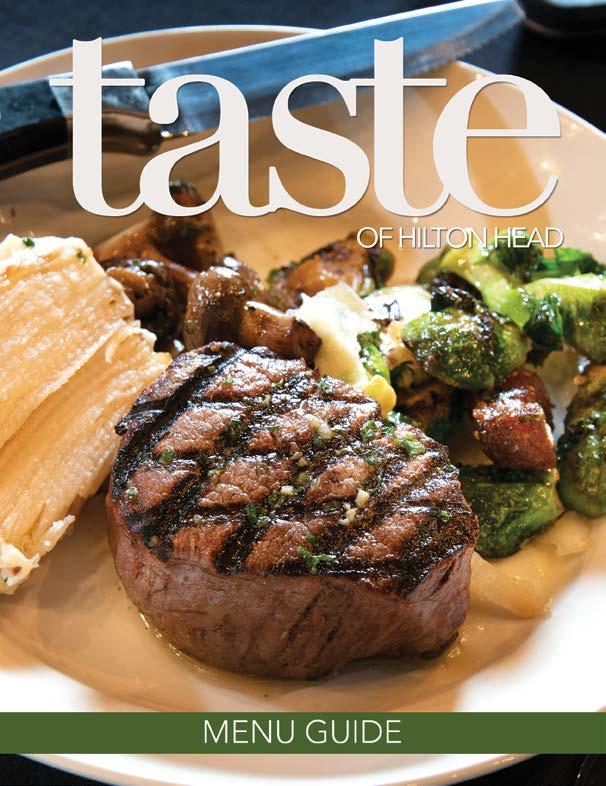
A LOWCOUNTRY BACKYARD Menu pg. 87 American/Southern • L/D/N (843) 785-YARD (9273)
AMIGO’S CAFÉ Y CANTINA Menu pg. 91 Mexican • L/D (843) 785-TACO (8226)
AUNT CHILADAS EASY STREET CAFE Menu pg. 92 Mexican • D/N (843) 785-7700
BIG JIM’S BBQ, BURGERS & PIZZA Menu pg. 74 American • BR/L/D (866) 420-4478
BRITISH OPEN PUB Menu pg. 79 American/British • BR/L/D/N (843) 686-6736 or (843) 815-6736
CAROLINA CRAB COMPANY Menu pg. 95 Seafood • L/D/N (843) 842-2016
CATCH 22 Menu pg. 83
American/Seafood • D/N (843) 785-6261
CELESTE COASTAL CUISINE Menu pg. 99 American/Seafood • D/N (843) 785-6261
CHARLIE’S COASTAL BISTRO Menu pg. 85 American/Seafood • L/D/N (843) 785-9277
CHOW DADDY’S Menu pg. 73
American • L/D/N (843) 842-CHOW (2469) or (843) 757-CHOW (2469)
CQ’S Menu pg. 82
American/Seafood • D/N (843) 671-2779
CRANE’S TAVERN STEAKHOUSE & SEAFOOD Menu pg. 103 Steak/Seafood • D/N (843) 341-2333
THE CRAZY CRAB Menu pg. 93 Seafood • BR/L/D/N (843) 363-2722 or (843) 681-5021
DELISHEEYO Menu pg. 81 American/Health • B/L (843) 785-3633
THE DRYDOCK SEAFOOD GRILL & SPIRITS Menu pg. 86 American/Seafood • L/D/N (843) 842-9775
ELA’S ON THE WATER Menu pg. 100 Seafood • BR/L/D/N (843) 785-3030
FISHCAMP ON BROAD CREEK Menu pg. 94 Seafood • BR/L/D/N (843) 842-CAMP (2267)
THE FROSTY FROG CAFÉ Menu pg. 71 American • L/D/N (843) 686-FROG (3764)
GUSTO RISTORANTE Menu pg. 89 Italian • D/N (843) 802-2424
HUDSON’S SEAFOOD HOUSE ON THE DOCKS Menu pg. 101 Seafood • BR/L/D/N (843) 681-2772
KENNY B’S FRENCH QUARTER CAFÉ Menu pg. 80 American/Cajun • B/L/D (843) 785-3315
THE OLD OYSTER FACTORY Menu pg. 96 Seafood • BR/L/D/N (843) 681-6040
PALMETTO BAY SUNRISE CAFE Menu pg. 77
American/Breakfast • B/BR/L (843) 686-3232
THE PEARL KITCHEN & BAR Menu pg. 104 Seafood • D/N (843) 757-5511
PLANTATION DELI Menu pg. 76
American/Breakfast • B/BR/L (843) 785-9020, (843) 342-4472 (843) 815-5550
RED FISH Menu pg. 98 Seafood • D/N (843) 686-3388
REILLEY’S GRILL & BAR Menu pg. 84 American/Seafood • BR/L/D/N (843) 842-4414
THE SALTY DOG CAFE Menu pg. 78
American/Seafood • B/L/D/N (843) 671-CAFE (2233)
THE SANDBAR Menu pg. 88 Caribbean/American • L/D/N (843) 342-SAND (7263)
SANTA FE CAFÉ Menu pg. 102 Southwestern • D/N (843) 785-3838
STELLINI ITALIAN RESTAURANT Menu pg 90 Italian • D (843) 785-7006
STREET MEET Menu pg. 75 American • L/D/N (843) 842-2570
SUNSET GRILLE Menu pg. 97 Seafood • BR/D (843) 689-6744
TRUFFLES CAFE Menu pg. 72 American • BR/L/D/N (843) 671-6136 or (843) 815-5551
MENU GUIDE COVER
The Filet Mignon from Bowdie’s Chophouse. Photography by Rob Kaufman.
TASTEOFHILTONHEAD.COM 70
B=Breakfast/BR=Brunch/L=Lunch/D=Dinner/N=Nightlife —————— TASTE MENU GUIDE CONTENTS ——————

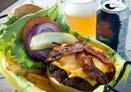
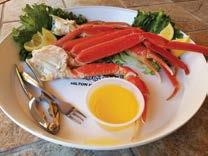
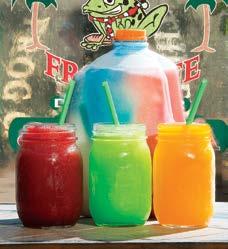
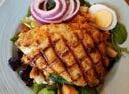
TASTEOFHILTONHEAD.COM 71 —————— TASTE OF AMERICAN —————— Menu Items and Prices are subject to change. Located in Coligny Plaza • 843.686.FROG (3764) • www.frostyfrog.com Delicious Daiquiris! 100’s of Daiquiris 28 HD TV’s for Sports Full Bar, Beer & Wine New Expanded Outside Patio with Retractable Roof, Beach Area, Tiki Bar and Live Acoustic Music Seasonal Dylan’s N/A Daiquiris Strawberry N/A • Pina Colada N/A • Tidal Wave N/A Brown Dog Daiquiri Bar Sm • Med • Large (80,151,190 Proof) Strawberry • Pina Colada • Sex on the Peach • Rum Runner Hurricane • Margarita • Jump Start • Banana Cream Strawberry Shortcake • Orange Crush • White Russian Wicked Apple • Strawberry Kiwi • Crowd Pleaser Southern Lemonade • Grape Danger • Fruitloop Jungle Juice • Dirty Monkey • Pond Water • Tropical Thunder Creamsicle • Tropicolada Peppermint Patty Also Burgers, Scallops, Crab Legs, Grouper, Mahi, Shrimp, Ahi Tuna, Wraps, Salads, Pizza and Kid’s menu. New Dog friendly menu and veggie menu available.
SHAREABLES
SPINACH & ARTICHOKE DIP served warm with tortilla chips 13
TUNA WONTON* cooked to medium rare, asian slaw, crispy wontons, sesame drizzle 17
FRIED COCONUT SHRIMP with honey mango sauce 16
SOUP & SALAD
TOMATO DILL our creamy tomato soup 9
FRENCH ONION seasoned chicken stock, garlic croutons, emmentaler swiss 10
HOUSE CAESAR chopped romaine, garlic croutons, pecorino, creamy caesar dressing 10

BLT BIBB hydroponic bibb, crispy bacon, grape tomatoes, blue cheese, roasted kahlua pecans, blue cheese vinaigrette 14
ENTREE SALADS
SOUTHWESTERN grilled cajun dusted chicken breast, fresh corn, black beans, romaine, red onions, grape tomatoes, jack and cheddar cheese, tortilla chips, southwestern dressing 19
TUNA NAPA fresh tuna grilled to medium rare, napa cabbage, toasted almonds, crunchy oriental noodles, toasted sesame seeds, sesame ginger dressing 25
CHOPPED grilled chicken breast, romaine, crispy bacon, jack and cheddar cheese, grape tomatoes, chopped egg, avocado (seasonal), red onion, honey mustard dressing 20
FISH

GRILLED TUNA* blackened with sesame seeds, sesame ginger sauce, basmati rice, fresh vegetable 34
FRIED COCONUT SHRIMP crispy coconut breaded shrimp with honey mango sauce, fries, fresh slaw 27
JUMBO LUMP CRAB CAKE wasabi mayonnaise, creamy mashed potatoes, fresh vegetable 29
GRILLED SALMON* mango glaze, fresh pineapple chutney, basmati rice, fresh vegetable 34
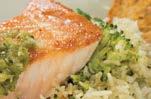
ROASTED WILD COD* parmesan glaze, pesto, creamy mashed potatoes, fresh vegetable 34
GRILLED SHRIMP* wasabi rice, sesame drizzle, fresh vegetable 27
GRILL
BABY BACK RIBS award winning recipe, tangy barbeque sauce, slaw, fries half rack 27 full rack 38
MEATLOAF grilled, bbq glaze, vidalia onion chutney, buttermilk smashed potatoes, seasonal vegetable 22
CLASSIC BURGER* fresh certified angus chuck, lettuce, tomato, red onion, pickles, mayonnaise and mustard, choice of cheese 18
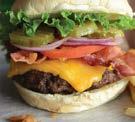
FILET* grass fed, 8 ox center cut, creamy horseradish, mashed potatoes, fresh vegetable 43
CHICKEN & PASTA
GOURMET CHICKEN POT PIE tender breast meat, carrots, mushrooms, sweet bell peppers, broccoli, peas, white wine cream sauce, puff pastry 20 GRILLED CHICKEN parmesan glaze, pesto, fresh vegetable, mashed potatoes 27
SESAME CHICKEN wasabi rice, sesame ginger, fresh vegetable 26
PASTA NEW ORLEANS grilled chicken breast, tasso ham, sweet bell peppers, spicy cream sauce, parmesan cheese 26
PESTO PASTA WITH SHRIMP creamy pesto, grilled shrimp, basil roasted tomatoes 29

TASTEOFHILTONHEAD.COM 72 Menu Items and Prices are subject to change. —————— TASTE OF AMERICAN —————— ® b e l f a i r l o c a t i o n l u n c h & d i n n e r s e r v e d S u n T h u r s 1 1 : 3 0 a m 9 p m , F r i S a t 1 1 : 3 0 a m 9 : 3 0 p m s e a p i n e s l o c a t i o n l u n c h M o n S a t 1 1 : 3 0 a m 2 p m , d i n n e r S u n T h u r s 5 9 p m , F r i S a t 5 9 : 3 0 p m
Menu prices and items are subject to change MANY OF OUR DINNER MENU SELECTIONS: The Shops at Sea Pines Center 843 671 6136 Belfair Towne Village 843 815 5551 o n l i n e o r d e r i n g t r u f f l e s c a f e . c o m d i n e i n | d i n e o u t | t o g o l a r g e o u t d o o r d i n i n g g a r d e n s truff taste menu ad 1-22_fish market menu 03 1/14/22 9:40 AM Page 1
chow Da d dy ’s
t a c o s
S H A R E A B L E S
CorNBread warm buttermilk and jalapeno cornbread served with creamy chipotle 9
street CorN fresh corn, creamy chipotle, cotija cheese 8
PoBlaNo Queso with corn tortilla chips 9 5
guaCamole & CHiPs 12 5
NaCHos poblano queso, fresh corn, smoked pork, cilantro, and house pickled peppers choose pork or chicken 15 75
G G G G G
S A L A D S
aVoCado arugula, tomato, corn, mango, with citr us vinaigrette 13 5
triPPy taCo fresh corn, romaine cabbage kale fresh herbs, jack and cheddar cheese, black beans, grape tomatoes, guacamole, crispy corn tortillas, cilantro ranch 13
CHoPPed romaine, crispy bacon, toasted almonds, grape tomatoes, jack & cheddar cheese, avocado, creamy chipotle dressing 13 75
add oNs



Pulled CHiCKeN +5
grilled sHrimP* +11
G G G G G
PoKe* kosher wild caught AA raw tuna, avocado, rice, mango, sesame ginger dressing, fresh mint, cabbage, kale 20
b u r g e r s
TA C O S homemade corn tortillas
Fried CHiCKeN garlic aioli, slaw, avocado, fresh jalapeno, sriracha aioli 7 5
smoKed PorK house smoked, fresh corn salsa, jack cheese, creamy chipotle 7
grilled FisH* mahi, slaw, garlic aioli, avocado, peppadew sauce 8
smoKed CHiCKeN guacamole, fresh corn salsa, shredded lettuce, jack cheese, homemade bbq sauce, pickled peppers 7
Fried FisH crispy fried mahi, creamy chipotle, shredded lettuce avocado, fresh cilantro 8 5
BBQ musHroom green slaw, guacamole, roasted bbq mushrooms, homemade bbq sauce, fresh cilantro 8
grilled sHrimP* avocado, peppadew sauce, sriracha aioli 9
steaK* sliced sirloin, cotija cheese, shredded lettuce, creamy chipotle and pickled peppers 9
b a r
B U R G E R S
our blend of choice brisket and chuck ground daily in our kitchen, served on warm brioche with shoestring fries

CHow daddy’s* havarti cheese, arugula, garlic aioli, dijon, caramelized onions 18
BaCoN & CHeddar* crispy bacon, aged cheddar, dijon, lettuce, garlic aioli 18 5
G G G G G
Fried CHiCKeN BuN pimento cheese, sriracha aioli, pickles, slaw 16
steaK BuN* sliced sirloin, creamy havarti, caramelized onions, garlic aioli, slaw, fresh jalapeno 18
PorK BuN house smoked and hand pulled, white barbecue sauce, pickles 14
soutHerN CHiCKeN open face on grilled jalapeno cheddar cornbread, house smoked chicken, peppadew chèvre, green slaw, avocado, pickled peppers 16
G G G G G
D I N N E R B O W L S
smoKed Fried CHiCKeN double boneless, skinless coleman farms breast, sriracha aioli, with fries and fresh slaw 20
grilled maHi* grilled mahi with cajun spices, lemon garlic butter rice and roasted vegetable 22
roasted VegetaBles seasoned ricotta, roasted mushrooms, rice, roasted vegetables, fresh corn, black beans greens pickled peppers 18
TASTEOFHILTONHEAD.COM 73 —————— TASTE OF AMERICAN —————— Menu Items and Prices are subject to change. 15 towne drive, belfair towne village, bluffton 843.757.CHO Sunday Thursday 11:30 am 9 pm, Friday Saturday 11:30 am 9:30 14b executive park road, hilton head island 843 842 CHOW Monday Saturday 5 9 pm dine in | dine out - large outdoor dining gardens | to go
•
•
chowdaddys.com
®
order online chowdaddys.com Some of our favorite menu items menu items and prices subject to change chow daddys taste menu ad 7-22_Layout 1 7/12/22 9:07 AM Page 1
LOCATED AT THE JONES CLUBHOUSE IN PALMETTO DUNES
WE ALSO SERVE BREAKFAST DAILY
FROM 7:00 - 10:30 A.M.
Appetizers
Nachos
Corn tortilla chips topped with baked beans, zesty queso, pico de gallo, jalapeños, sour cream & your choice of smoked chicken or pulled pork 15
BBQ Crispy Spring Roll
Pulled pork, pickled seasonal vegetable, chow chow & sweet & spicy dipping sauce 11
Sweet Chili Crispy Shrimp
Flash-fried shrimp tossed in creamy sweet Thai chili sauce 13
Seasonal Hummus
Served with cucumber, carrots & naan 10
Big Jim’s Fish Tacos
Grilled and blackened grouper served in two flour tortillas filled with cheddar cheese, lettuce, black bean relish, chipotle & garlic aioli 13
Fried Pickles
Served with spicy ranch dressing 9
Pretzel Bites
Salted & served with beer cheese dipping sauce 9
Hot Wings
Hot, mild, cajun or sweet chili sauce Half Dozen 8 Dozen 17
SALADS
Caesar Salad
Crisp romaine, shredded parmesan & croutons tossed in Caesar dressing 8
Resort Salad
Iceberg & romaine lettuce, red cabbage, roma tomatoes, carrots & shredded cheddar cheese 9
Chopped Chef Salad
Mixed greens, ham, turkey, bacon, tomatoes, hard boiled egg, cheddar cheese & cucumber with your choice of dressing 11
Top Your Salad
Fried or grilled chicken +4 Grilled shrimp +6
Dre ings
Russian, blue cheese, honey mustard, ranch, 1000 island, balsamic vinaigrette
PIZZAS
Classic Cheese Pizza
Mozzarella cheese & marinara 14
Caprese Pizza
Olive oil & garlic base, mozzarella, spinach, roma tomatoes & balsamic glaze 16
Big Jim’s Special
Red sauce, mozzarella, pepperoni, sausage, onions, bell peppers & mushrooms 17
Buffalo Chicken Pizza
HAPPY HOUR MONDAY - FRIDAY,
4:00 - 7:00 P.M.
CALL FOR TAKE OUT & CATERING!
BURGERS / SANDWICHES
SERVED WITH FRENCH FRIES, SWEET POTATO FRIES ARE AN ADDITIONAL 1 ADD ONE SIDE FOR 2
Big Jim’s Classic Cheeseburger
Choice of cheese, lettuce, tomato & onion 14
19th Hole Burger
8oz prime burger, mushrooms, swiss cheese & bacon on a pretzel bun 16
Big Jim’s Bacon Cheeseburger
BBQ Chicken Pizza
Buffalo ranch sauce, mozzarella, fried chicken, red onions, bacon & sprinkle of blue cheese crumbles 17
Red sauce with mozzarella, pulled chicken, bacon, red onions & BBQ sauce drizzle 16
Veggie Pizza
Red sauce, mozzarella, baby spinach, onions, mushrooms, bell peppers & tomatoes 16
SPECIALTIES
ALL ENTREES ARE SERVED WITH YOUR CHOICE OF TWO SIDES
Smoked Ribs
Slow-smoked to a perfect caramelized finish Full rack 30 Half rack 23
Pulled Pork Platter
Slow-smoked pulled pork 20
Smoked Chicken Platter
A mixture of white & dark meat chicken slow-smoked to perfection 18
Homemade Crispy Chicken
Tender Platter
NEW! NEW!
5 hand-breaded & fried chicken tenders 19
Combo Platter
Pulled pork, white & dark meat pulled chicken & three ribs slow-smoked to perfection 25
Sides
Collard greens, baked beans, corn on the cob, steamed broccoli, french fries, coleslaw or mac & cheese +2 each
8oz prime burger, applewood-smoked bacon, cheddar cheese, lettuce, tomato & onion 15
Birdie Patty Melt
8oz prime burger, coleslaw, swiss cheese & russian dressing 15
Southern Burger
8oz prime burger, fried green tomatoes, pimento cheese & applewood-smoked bacon 16
Black & Blue Burger
NEW!
8oz prime burger, blackening seasoning, blue cheese, sautéed mushrooms, lettuce, tomato & onion 17
*Turkey Burger available upon request
Pulled Pork or Chicken Sandwich
Smoked chicken or pork topped with coleslaw & a pickle 14
Prime Rib Sandwich
Shaved prime rib, cheddar cheese, crispy onions & horseradish cream on a hoagie. Served with au jus 14
Nashville Hot Chicken Sandwich
Breaded & fried boneless chicken breast, served on texas toast with cayenne pepper oil & pickles 14
Po’ Boy
Fried shrimp, shredded lettuce, diced tomatoes & remoulade 15
House Smoked Turkey Club
Turkey, bacon, tomato, lettuce, swiss, cheddar cheese & chipotle mayo 13
Fried Green Tomato BLT Bacon, lettuce, pimento cheese & fried green tomato. Served on sourdough bread sliced thin with bacon jam 14
Grouper Sandwich
Fried or grilled, topped with lettuce, tomato & chipotle mayo 16
7 Trent Jones Lane • 866-420-4478
BigJimsBBQCatering.com

*Items & pricing are subject to change
Menu Items and Prices are subject to change.
TASTEOFHILTONHEAD.COM 74
—————— TASTE OF AMERICAN ——————


TASTEOFHILTONHEAD.COM 75 Menu Items and Prices are subject to change. —————— TASTE OF AMERICAN —————— DINE-IN • TAKE OUT • FULL BAR KITCHEN ALWAYS OPEN LATE! ONLINE ORDERING PICK-UP OR CURBSIDE TAKE-OUT APPs & Sliders PULLED PORK NACHOS 12.75 BUFFALO PIROGIES 9.5 CRAB PRETZEL 12.75 HOT PRETZEL 6.75 add cheese 1.75 SLIDERS Mini Hand-Pattied Burgers 7.75 Fried Chicken Sliders 7.75 Pulled Pork Sliders 7.75 A dd bacon 1.75 | cheese 1.75 | marinara 1.75 Wings & fingers SOUL KITCHEN 22 WINGS ~ Chipotle Ranch | Red BBQ | Spicy Southwest BBQ | Carolina BBQ | Lemon Pepper | Thai Chili | Cajun | Garlic Parmesan | Hot | Plain BONE IN (6) 12 (12) 23 (20) 36 BONELESS (6) 10 (12) 19 (20) 30 CHICKEN TENDER BASKET 14 BUFFALO CHICKEN TENDER BASKET 16 SOUL CHICKEN TENDER BASKET 17 Baskets & sides SOUL FRIES Basket 7.75 | Side 5.75 | Sub 3.75 CHILI CHEESE FRIES 7.75 | 5.75 | 3.75 CAJUN FRIES 7.75 | 5.75 | 3 HOMEMADE ONION RINGS Basket 7.75 | Side 5.75 | Sub 2.75 HOMEMADE POTATO CHIPS 6.75 | 4.75 CRISPY CUT FRENCH FRIES Basket 6.75 | Side 4.75 | Sub 2.75 SALADS & Bowls GARDEN SALAD 10 | 6 CAESAR SALAD 10 | 6 GREEK SALAD 12 | 7 SKINNY BOWL 15 POWER BOWL 16 Add bacon | egg | guacamole | cheese | veggies | grilled pita 1.75 HOT DOGS Single 7.5 | Double 13 NATHAN’S FAMOUS HOFMANN’S GERMAN FRANK HOFMANN’S SNAPPY GRILLER VEGGIE DOG BRATWURST 8.5 | 15 TOPPINGS: Dill or Sweet Relish • Onion • Tomato • Cucumber • Cheese Sauce • Chili • Cole Slaw • Sauerkraut • Bacon • Jalapenos • Guacamole • Sauteed Onions SOUP Cup 5 | Bowl 6 | Qt. to go 16 HOMEMADE WEDDING SOUP Hot Dogs, Burgers, Sandwiches and Wraps served with Homemade Potato Chips or Creamy Cole Slaw Sub or Add: Fries, Onion Rings, Soup, Salad or Grilled Veggies for an additional charge VOTED ISLAND’S BEST HOT DOGS! KIDS HOT DOG • CORN DOG HAMBURGER • GRILLED CHEESE CHICKEN FINGERS POPCORN SHRIMP $4 Served with chips. Sub fries or raw veggies 1 HOUSE BURGER 13 ELK BURGER 16 PITTSBURGER 17.75 PRIMUS BURGER 17.75 JEROME BURGER 17.75 PRIME RIB CHEESESTEAK 17.75 SPICY ITALIAN SAUSAGE 14.75 CLEVELAND POLISH BOY 14.75 SHRIMP PO’BOY 15.75 FISH SANDWICH 15.75 GROUPER SANDWICH 18.75 GYRO Beef & Lamb, or Chicken 13.75 CUBAN 13.75 THE TURKEY JONES 14.75 PULLED
TAVERN PLATES with crispy cut fries and cole slaw FISH ‘N CHIPS 22 • SHRIMP PLATTER 22 DUO Fish & Shrimp 22 • FISH DINNER 22 GROUPER DINNER 26 $9 LUNCH MENU Mon. ~ Fri. 11:30~2pm HOME OF THE FRIED TWINKIE WINGFEST WINNER! BURGERS, SANDWICHEs & Wraps Add a Protien Chicken • Smoked Pork Turkey • Burger • Gyro Meat Prime Rib • Elk • Fish Grouper • Shrimp • Salmon Tofu • Veggie Burger 843.842.2570 • 95 MATHEWS DRIVE • PORT ROYAL PLAZA • OPEN DAILY 11:30AM STREETMEETHHI.COM HILTON HEAD’S OFFICIAL BROWN’S BACKERS BAR Prices and options subject to change VOTED BEST BAR READERS CHOICE AWARDS Fried Twinkie • Fried Oreo • Warm Brownie Sundae • Homemade Carrot Cake ~ 7 VOTED BEST FISH N’ CHIPS!
PORK SANDWICH 13.75 VEGGIE GYRO 13.75 VEGGIE BURGER 14 BBQ WRAP Chicken 13.75 | Shrimp 15.75 BUFFALO WRAP Chicken 13.75 | Shrimp 15.75 SALMON BLT WRAP 16.75 BLACK BEAN WRAP 13.75
BREAKFAST All Day
Bread Choice: White, Wheat, Sourdough, Raisin, Rye, English Muffin, Biscuit, Bagel
*Meat Choices: Applewood Bacon, Sausage Patties, Sausage Links, Turkey Sausage, Canadian Bacon, Substitute Country Ham

TRUE COUNTRY BREAKFAST*
2 Eggs, hashbrowns or grits, choice of meat, choice of bread and 2 pancakes topped with powdered sugar
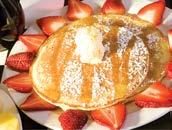
PLANTATION BREAKFAST*
2 Eggs, hashbrowns or grits, choice of meat, choice of bread
SHORT STACK OF PANCAKES
(2) or Belgian Waffle Both are topped with powdered sugar
BREAKFAST SANDWICH*
Bacon or sausage, 2 eggs topped with cheddar cheese, lettuce and tomato served on a grilled croissant with hashbrowns or grits
SHRIMP & GRITS*
8 Sautéed wild caught shrimp, topped with bacon bits, green peppers and onions on top of cheddar cheese grits
Country BLUE PLATES
MEAT AND 3 VEGGIES*
Served with a side of bread and your choice of the following meats: pot roast, homemade meatloaf, country fried steak, chicken salad, tuna salad, chicken breast, crab cake, fried shrimp, ribeye steak or grouper filet.
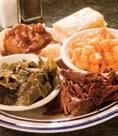
VEGGIE PLATE 4 VEGGIES
Served with a side of bread
BLUE PLATE SIDES
Green Beans Sweet Potato Casserole
Collard Greens Fried Okra
Potato Salad Pasta Salad
Coleslaw
Macaroni & Cheese
Cinnamon Apples Sliced Tomatoes
Baked Beans Cheese Grits Squash and Onions
Mashed Potatoes and Gravy
SALADS
WHISTLE STOP BLT SALAD*
Mixed greens, tomatoes, boiled egg, Jack and cheddar cheese topped with bacon and fried green tomatoes
COBB SALAD*
Mixed greens, grilled chicken, hot bacon, boiled egg, black olives, slivered almonds and crumbled blue cheese
GREEK SALAD
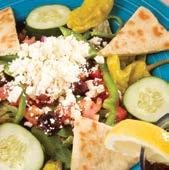
Mixed greens, tomatoes, cucumbers, red onions, green peppers, Salonika peppers, kalamata olives, topped with feta
SPINACH SALAD*
Baby spinach with fresh mushrooms, egg, tomatoes and sunflower seeds. Served with our house made hot bacon dressing
CARIBBEAN SALAD*
Mixed greens, salsa, pineapple and jerk chicken topped with fried tortilla strips. Served with our own honey lime dressing
WALDORF SALAD*
Mixed greens with grilled chicken, red onions, granny smith apples, raisins, walnuts, and crumbled blue cheese
TASTEOFHILTONHEAD.COM 76
—————— TASTE OF AMERICAN/BREAKFAST ——————
Menu Items and Prices are subject to change.
**For full menu, visit
South Island Location 14-A Heritage Plaza • 81 Pope Avenue 843-785-9020
Island Location Port Royal Plaza 843-342-4472 Bluffton Location 20 Discovery Dr. • In front of Kroger 843-815-5550
plantationcafeanddeli.com
North
br e a k fast all da y
a Sampling of our Menu
We start with two poached eggs on a toasted English muffin topped with homemade hollandaise, served with hash browns or grits
City Ham the original Crab Cake
Smoked Salmon
Sun Rise Benedict with avocado, grilled red onion and sliced tomatoes
Shrimp and Spinach
Smoked Salmon Served with cream cheese, capers, onions, cornichons and a toasted bagel
Biscuits and Gravy Homemade and topped with sausage gravy
Pancakes Served with choice of bacon or sausage patties/links
French Toast Texas toast with cinnamon sugar and vanilla – served with choice of bacon or sausage patties/links
Quiche It takes a real man to eat quiche… and a really big man to laugh at him for doing it. Recipe changes; so ask your server what’s in the “du jour” today – served with hash browns or grit
Strata It’s a layered egg, sausage, onion and cheese baked dish with our own chili sauce – served with hash browns or grits
eggs benedict classics eggs and more eggs

The Incredible Edible and…Two eggs cooked to order served with hash browns or grits, choice of toast and a New York strip
Handmade crab cake
Fried frog legs
Bone in city ham steak
Breakfast Burrito Scrambled eggs, sausage, peppers, onions and cheddar wrapped in a flour tortilla with homemade salsa and hash browns or grits
Hamptons Brunch Two eggs any style with NY strip and sliced tomatoes
Shrimp Hash Sautéed shrimp, peppers, onions, broccoli with hash browns, topped with two eggs and hollandaise
Create an Omelet A three egg omelet served with hash browns or grits and choice of toast. Prepared with your choice of three ingredients: ham, bacon, sausage, tomatoes, jalapeños, onions, mushrooms, bell peppers, spinach, American, cheddar or Swiss
Low Carb Scram Scrambled eggs with ham, cheddar, onions, peppers, mushrooms served with side of bacon or sausage patties/links
Ask about our daily blue plate special
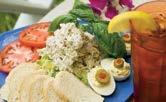
l e t’ s d o lunc h
Black Bean Burger Pan fried with cheddar, homemade salsa and guacamole
Tuna Melt Albacore tuna salad with tomato and cheddar on toasted English muffin
Turkey With avocado, sprouts, cucumber and mayo on your choice of bread
Leslie Burger Topped with green olives, cream cheese, bacon and mayo
Chicken Wrap Tortilla with grilled chicken, Swiss and roasted red peppers
Grilled Chicken Club With lettuce, tomato, bacon and cheddar on a bun
Crab Cake On a bun with lettuce, tomato, onion and side of tartar
Shrimp Scampi Grilled garlic shrimp, melted asiago on open faced roll Ham ’n Cheese Grilled ham with cheese and tomatoes and choice of bread
Veggie Tomato, lettuce, sprouts, avocado, havarti dill with roasted garlic aioli Egg Salad Melt Egg salad with a touch of horseradish topped with bacon and melted Swiss on a toasted English muffin
Potato Crusted Flounder Served atop a chive horseradish cream served with saffron rice and broccoli
New York Strip Hand cut strip served with crinkle cut fries and broccoli
Shrimp Provençal Shrimp sautéed with tomatoes, garlic, mushrooms and white wine served with broccoli and salad on plate
Southwest Chicken Grilled chicken breast with homemade salsa and melted cheddar with broccoli and salad on plate
Chicken Fingers Served with crinkle cut fries and honey mustard dressing
Tiny Chopped Salad With cheese, lettuce, tomatoes, sunflower seeds, radishes, bacon bits, tossed with choice of dressing with chicken, shrimp or crab cake
Caesars As you know it et tu chicken et tu shrimp or crab cake
TASTEOFHILTONHEAD.COM 77 —————— TASTE OF AMERICAN/BREAKFAST —————— Menu Items and Prices are subject to change.
break f a s t and lun c h se rv e d all da y
www.palmettobaysunrisecafe.com Full Bar • Palmetto Bay Marina • Wednesday thru Sunday, 6 a.m. Until 2 p.m. • 843.686.3232





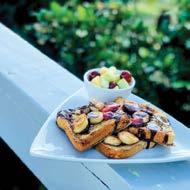
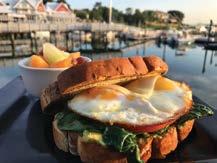
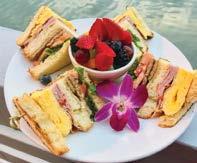

TASTEOFHILTONHEAD.COM 78 Menu Items and Prices are subject to change. —————— TASTE OF AMERICAN/BREAKFAST ——————

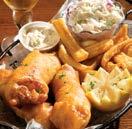
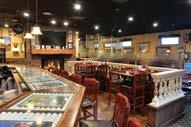

TASTEOFHILTONHEAD.COM 79 Menu Items and Prices are subject to change. —————— TASTE OF AMERICAN/BRITISH —————— Sheridan Park Center Bluffton • 843-815-6736 britishopenpubhhi.com Village at Wexford Hilton Head • 843-686-6736 britishopenpubhhi.com STARTERS SANDWEDGES FROM THE GARDEN TRADITIONAL BRITISH FARE Pub’s Lobster Salad Cobb Salad Seve’s Mediterranean Sarazen’s Veggie Salad Classic Chicken Caesar Salad Bobby Jones Bbq Chicken Salad Player’s Chef’s Salad Hogan’s Black N Bleu Salad Troon’s Banger & Mash Royal Liverpool’s Liver, Bacon & Onions Carnousties Chicken Pot Pie Royal Birkdale’s Steak & Mushroom Pie Royal Lytham Beef Cottage Pie Muirfield Chicken & Chips Turnberry Shrimp & Chips St. Andrew’s Fish & Chips The best “this side of the pond” Irish Spring Rolls Local Pretzels Scotch Egg Pub Wellingtons B.O.P. Chicken Wings Garlic Shrimp Parmesan Quesadilla Pub Nachos Baked Brie English Dip Crab Cake BLT Grilled Chicken Fajita Wrap Wexford Reuben Grilled Vegetable English Cod Melt Lobster Roll Double Eagle Tuna Melt “The Scoe Daddy” Burger Patty Melt THE PRESTWICK TABLE DINNER SPECIALS Available from 5:00 pm - 10:00 pm Certified Angus Beef Ribeye Certified Angus Beef Pub Steak Angus Beef Chopped Sirloin Baby Back BBQ Ribs Mum’s Meatloaf Royal Herb Roasted Chicken Orange Glazed Salmon Broiled Seafood Platter Sarazen’s Grouper Lobster Pot Pie Lunch & Dinner: Tuesday - Sunday 11am - 9pm Brunch: Saturday 11am - 2pm | Sunday 9am - 2pm LUNCH - DINNER - SATURDAY & SUNDAY BRUNCH
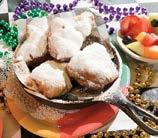
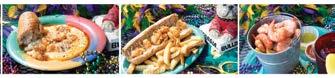
TASTEOFHILTONHEAD.COM 80 —————— TASTE OF AMERICAN/CAJUN —————— Menu Items and Prices are subject to change. Hilton Head Islands only Cajun Creole Restaurant Hilton Head Islands only Cajun Creole Restaurant Laissez les le bons temps rouler! Celebrating over 20 years of bringing the bayou to the beach!! Circle Center, just off Pope Avenue • (843) 785-3315 Wednesday thru Sunday, 8:30 a.m. until 8 p.m. Closed 11-12 and 3 to 4:30 —————— TASTE OF CAJUN —————— Menu Items and Prices are subject to change. BEIGNETS SERVED ALL DAY Laissez les le bons temps rouler! Celebrating over 20 years of bringing the bayou to the beach!! Circle Center, just off Pope Avenue • (843) 785-3315 Wednesday thru Sunday, 8:30 a.m. until 8 p.m. Closed 11-12 and 3 to 4:30 BREAKFAST SAMPLES Whistlestop Benedict Swamp Hash Lafayette Hash Eggs New Orleans LUNCH AND DINNER SAMPLES Muffulettas Po-Boys Crawfish Etoufee Voo-doo Pasta Bubbas Shrimp Boat Crawfish Parade Shrimp and Grits Fait Do Skillet Jambalaya Red beans & Rice Blackened Redfish Atchafalaya FRIED BASKETS Shrimp, Clams, Oysters, Flounder, Soft Shell Crabs, Crawfish, Chicken, Scallops KIDS MENU AVAILABLE
SALADS
Fatoosh: tomato, cucumber, sweet pepper, onion, feta, kalamata olive, pita chips, fig vinaigrette
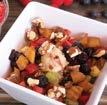
Super Salad Sampler: hummus, tofu egg, sprouted nut salad, mixed greens, avocado, tomato, alfalfa sprouts, crostini
Chef C’s R: mixed greens, sautéed tofu, crushed crostini, scallion, nutritional yeast, avocado, lemon sunshine dressing
Massaged Kale: kale, almond, blueberry, blue cheese, fig, orange squeeze, balsamic glaze, fig vinaigrette
Hummus Yummus Plate: hummus, kalamata olives, sliced apple, feta, pita chips, crostini
SMOOTHIES
8oz. / 12oz. / 20oz.
Sunshine Cream carrot, orange, pineapple, lemon, froyo
Green Detox Smoothie kiwi, avocado, lime, ginger, pineapple, kale, parsley, celery, apple, lemon, froyo
Turbo-10 Smoothie pineapple, kiwi, cinnamon apples, bee pollen, maca, spirulina, goji berries, cacao, froyo, mango nectar
Super-6 Smoothie froyo, mango nectar, oats, almonds, chia , choice of 2 fruits, choice of 1 superfood


“Build It” Smoothie choice of 2 fruits froyo, mango nectar add-ons encouraged
JUICES
Great Green kale, parsley, celery, apple, lemon
Orange Sunshine orange, pineapple, carrot, lemon
Old School carrot, beet, apple, ginger
WRAPS
Small (8 in.) / Large (12 in.) Whole wheat or (GF) Rice paper
So-Cal: jack cheese, cucumber, avocado, carrot, sunflower seeds, goji berries, alfalfa sprouts, fred’s apple cider vinaigrette
Yom Roll: (one is a snack, two is a meal) chives, alfalfa sprouts, edamame, sautéed tofu, beet, carrot, avocado, fred’s apple cider vinaigrette
Happy Wrap: alfalfa sprouts, mixed greens, beet, carrot, avocado, fred’s apple cider vinaigrette
Chill Island: cucumber, feta, sweet pepper, tomato, hummus, mixed greens, onion, kalamata olive, fig vinaigrette
Rhapsody: pumpkin seed, tofu egg protein, beet, edamame, alfalfa sprouts, onions, Fred’s Apple Cider Vinaigrette
Lil’ Guy: house-made nut butter, banana, local honey, choice of fruit
BOWLS
Buddha Bowl quinoa, lentils, cashew butter, vic’s sauce, choice of 3 toppings
Acai (Açaí) Bowl
mixed berries, acai, chia, avocado, topped with goji berry, pumpkin seed, bee pollen, granola, coconut, mixed berry, local honey
Big Bang Cereal Bowl choice of 2 fruits, granola, chia, pumpkin seeds, bee pollen, goji berries, choice of almond, coconut or macadamia milk
Smoothie Bowl choice of 2 fruits for the blend, chia, froyo, avocado, choice of 3 toppings
Sweet Buddha Bowl quinoa, lentils, cashew butter, mixed nuts, choice of 2 fruits, choice of almond, coconut or macadamia milk
TASTEOFHILTONHEAD.COM 81 —————— TASTE OF AMERICAN/HEALTH ——————
Menu Items and Prices are subject to change.
32 Palmetto Bay Rd. in The Village Exchange • (843) 785-3633 Open Monday thru Saturday from 8 a.m. until 6 p.m. Sunday 10 a.m. until 2 p.m. Order online at delisheeyo.com!
STARTERS
Fried Green Tomatoes Calamari Puttanesca
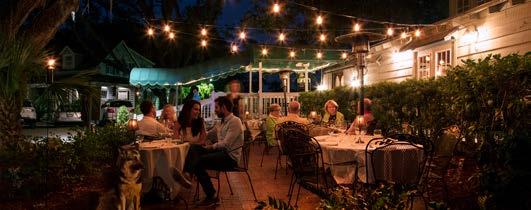
Prince Edward Island Mussels Jumbo Shrimp Cocktail
CQ’s She Crab Soup
Roasted Beets & Arugula Salad
Traditional Caesar Salad Iceberg Wedge
ENTREES
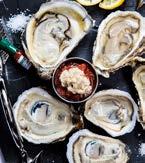
Marinated Grilled Shrimp
Lump Crab Cakes
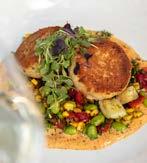
Seared Ahi Tuna Grilled Atlantic Salmon
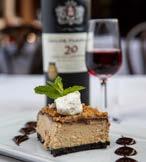
CQ’s Shellfish Pasta Pan Seared Sea Scallops
Springer Mountain Farms Chicken Breast Grilled Bone-In Pork Chop Grilled 8 oz. Filet Mignon
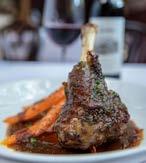
TASTEOFHILTONHEAD.COM 82 —————— TASTE OF AMERICAN/SEAFOOD —————— Menu Items and Prices are subject to change.
3 Onion Crusted Pork Chop + Smoked Gouda grits, green beans, and a Smithfield ham bourbon glaze 29
Beef Tips Au Poivre Filet mignon sautéed with cracked pepper, garlic & demi-glace cradled in a potato nest, served with garlic whipped potatoes, sautéed baby spinach and a horseradish cream 29
Salmon 8 oz. salmon filet, baked, and served over a five-grain salad, topped with a apricot siracha glaze and a lemon aioli drizzle 32
Carolina Trout Dusted in cornmeal then flash fried, served with garlic whipped potatoes and 3 onion slaw, finished with a roasted red pepper aioli 27
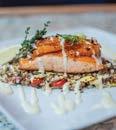
Eggplant Napoleon Eggplant layered with tomato & mozzarella, served with a parmesan risotto and spinach, accompanied by a basil pesto 23
Chicken Parmesan Lightly breaded chicken breast, homemade marinara sauce andmozzerella cheese served over pasta du jour 24
Sea
Fried Seafood Plate Fried shrimp, Daufuskie hush puppies & Carolina cornmeal dusted trout served with 3 onion slaw, garlic whipped potatoes, cocktail & tartar sauce 31
Cracked Pepper Tuna Sashimi grade tuna seared rare, served with garlic whipped potatoes, sautéed spinach & a horseradish cream 29
Local Favorites
Fresh Catch of the Day Daily Specials Market Price
Pasta Du Jour Daily Specials Market Price
Osso Buco 12-14 oz pork shank, served with green beans and scalloped potatoes, topped with a mushroom demi glace 32
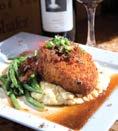
Pan-Seared Scallops & Ravioli Served with sweet onion, spinach, shiitake mushrooms and goat cheese ravioli, with sautéed spinach and a prosciutto cream sauce 38
Char-Braised Short Rib Tender beef short rib braised then char-grilled with caramelized onions, served with garlic whipped potatoes & 3 onion slaw 39
Land Seafood Sampler
Crispy Roasted Half Duck Half duck oven-roasted until crisp and golden, scalloped potatoes, sautéed green beans & a sun-dried cherry sauce 36
Garlic Basil Broiled Maine Lobster Tail(s) 4-5 oz. tail topped with a garlic basil butter sauce oven broiled, garlic whipped potatoes & asparagus (2) 53 (1) 30
USDA Prime Rib Eye Steak Seasoned and served with scalloped potatoes, sauteed green beans & cabernet reduction sauce 14 oz. 54
USDA Prime Filet Mignon Served with parmesan risotto, asparagus and a house made fresh herb butter 8 oz. 49
Broiled Maine Lobster Tail (4-5 oz.), Pan Seared Scallops, and Shrimp Scampi served with garlic whipped potatoes and sauteed green beans 49
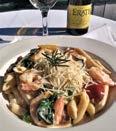
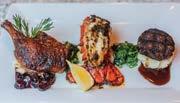
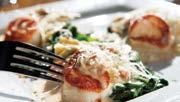
TASTEOFHILTONHEAD.COM 83 —————— TASTE OF AMERICAN/SEAFOOD —————— Menu Items and Prices are subject to change. Catch22hhi.com for Seasonal Promotions, Bar Specials & Reservations. 843.785.6261 Mon-Sat. Serving Dinner 5-9 pm, Early Dining 5-5:45, Dine In or Take Out, 37 New Orleans Rd., Items & Pricing are subject to change.
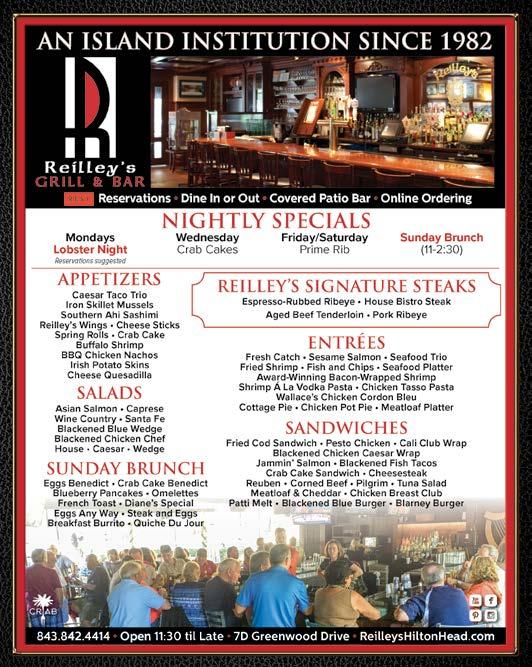
TASTEOFHILTONHEAD.COM 84 —————— TASTE OF AMERICAN/SEAFOOD —————— Menu Items and Prices are subject to change.
The
The dinner menu changes daily but maintains the same format
S oup Du Jour 7.50
P ate Mais on 9
Cr ab S alad, Avo c ado, & Remoulade S auce 14
DINNER
Fre sh Moz z arella, Tomatoe s, & B a sil Pe s to 9.5
Smoke d Maine S almon 12
Appetizers
Soup of the Day ................................................................................$6
E s c ar got à la B our guignonne 10.50 P an Roa s te d Bluf f ton O y s ter Stew
13
Pate Maison ..................................................................................$8.50
Or served as a sandwich with Fruit and Fries
Crab Salad, Avocado, and Remoulade Sauce .................. $10
Fresh Catch Salad 16
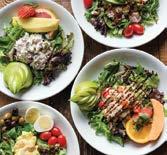
Fresh Mozzarella, tomatoes, and Basil Pesto $8.50
A ll e nt r é e s in c lud e a h o use s ala d, an d ar e a cco mp anie d wi t h p o t ato e s au gr at in an d a ve g e t abl e m e dl ey
C hevre S alad wit h Brea s t of Duc k 24
C har lie’s Bis t ro Bur ger 18
Fresh Catch Sandwich 18
Smoked Maine Salmon $10.25 Escargot a la Bourguignonne $9 $9.50
At lant ic C o d S autée d in P ar me s an Cr us t 28

L o c al Flounder S autée d Meunière 34
Les Entrees
Snapper, Wild Mushroom 38
All entrees include a house salad, and are accompanied with potatoes au gratin and a vegetable medley
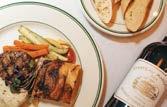
C hic ken Crêpe s 14
At lant ic S almon, Gr ille d wit h B a sil Pe s to 32
Gr ille d Tuna, C he f ’s Shr imp S als a 33
Atlantic Cod Sauteed in Parmesan Crust ........................... $27

L o c al Flounder S autée d Meunière 26
Blac kene d Re d fish, K P aul ’s L ouisianne 38
Local Flounder Sauteed Meuniere ....................................... $32
Brea s t of Duc k 26
Fresh Catch Entree 22
B e e f Stew 15
Local Swordfish, Grilled with Anchov y Caper But ter 34
Grilled Grouper with wild mushroom sauce ................... $34 Atlantic Salmon, grilled with Basil Pesto ............................ $28 Grilled Tuna, Chef ’s Shrimp Salsa .......................................... $31
Fish C ake s 18
S er ve d on a be d of mixe d gre ens 16
Quic he du Jour 14
L o c al Mahi, Gr ille d wit h Mango V inaigre t te 37
File t Mignon, B our sin Fine s Her be s 48
Brea s t of Duc k , Ra spber r y Demi glace 35
Steak Frites, grilled Hanger Steak, Bernaise sauce
Sea Scallops, grilled with tomato coulis ............................. $34 .... $30
Local Mahi, grilled with Mango Vinaigrette $28 ....................................... $38
Breast of Duck, Raspberry Demi glace $32 Domestic Rack of Lamb, Rosemary au jus ........................ $46


Crème C ar amel | Caramel Cake 9 Pave au Chocolat
Spe c ial De s s er t 9.50
Les Desserts

Pave au Chocolat Bread Pudding, Crème Anglaise Carrot Cake, Spiced Frosting Crème Caramel • Caramel Cake
Key Lime Pie • Biscotti with Fine Muscat All desserts are $9
TASTEOFHILTONHEAD.COM 85 —————— TASTE OF AMERICAN/SEAFOOD —————— Menu Items and Prices are subject to change. —————— TASTE OF AMERICAN/SEAFOOD —————— ................................................................................ $5.50 ........................................................................................ $8 ................................................................................... $8 hes rge”$16
K Pa l s Louisianne Salmon Salad...........................................$16 ...................................................................$12 ............................................................... $11 ................................. $12 ................................................. $11 ...........................................$18 ...................................................................$15 ........................................................$12 $13 ench preparation: $18 $20 ..............................................................$12 ...........................................................................................$12 ..........................................................................................$15 ........................................$12 .............................................................................. $11 $7 $8 L B isso Iced Tea, ............................................... $2.5 ier .$4.5, Aqua Panna (1L) .$8 ......................................................................... $2.75 cc ...............$4 Latte ................. $5.5
Petite $12
dinner menu changes daily, but maintains the same format.
.............................. $36
•
TASTEOFHILTONHEAD.COM M17 Menu Items and Prices are subject to change
Y 11:30AM – 2:00PM
DINNER: MONDAY – SATURDAY 5:30PM – CLOSE AR HOURS: MONDAY – SATURDAY 5:00PM – CLOSE leans Road, Hilton Head Island, SC 29928 (843) 785-9277
S oup Du Jour 7 P ate Mais on 9 Fr uit & C he e s e 12 C obb S alad Tur key L ar ge 16 | Pé t ite 12 C urr ie d Shr imp S alad 15 C har lie’s C hic ken S alad
P avé au C ho colat | Bread Pudding Crème A nglais e | C ar rot C ake w/ Spice d Fros t ing Crème C ar amel | C ar amel C ake | Key L ime Pie Bis cot t i wit h Fine Mus c at all are 10 T H E G R EE N S T A R ! L U N C H D I NN E R L U N C H Monday Friday 11:30am - 2pm D I N NE R Monday Saturday 5:00pm BA R O PE N S 5pm daily 8 N E W O RL EA NS R O AD | H I L T O N HE A D , S C 843.785 9277 l’étoile verte!” @charliesofhiltonhead Ice d Tea & L emonade So da Perr ier S an Pelle gr ino (1L) 9 A qua P anna (1L) C of f e e & Hot Tea C appucc ino E spre s s o L at te Add local fish 26 14 13 9 38 9 3 3 3 5 6.5 5 7.5 CASUAL FINE DININ G AT ITS BEST COASTAL BISTRO
SERVING LUNCH AND DINNER 7 DAYS A WEEK
Lunch 11:30AM - 3PM
Dinner 3 - 10 PM
LAND APPETIZERS
$3.50 - $9.95
Grover’s Fries
Hand Cut French Fries topped with Blue & Feta cheeses, crumbled bacon and Balsamic Reduction Bull’s Bites
Blackened beef tenderloin tips topped with crumbled Blue Cheese & Balsamic Reduction Thin Crispy homemade Onion Rings
Chicken Wings
Your choice of Lowcountry Dry Rub, Buffalo or BBQ flavors Hot Shot Chicken lightly breaded chicken tossed in our Asian “Hot Shot” sauce
SEAFOOD APPETIZERS
$7.25 - $11.50
Crab Dip served with warm tortilla chips Hot Shot Shrimp Lightly breaded shrimp tossed in our Asian “Hot Shot” sauce Mussels or Clams in garlic and wine sauce served with garlic bread
BBQ Mahi Mahi Bites
Shrimp steamed, blackened, Buffalo Fried, BBQ or Carribean Jerk Fried Calamari
SOUPS & SALADS
$4.50 - $15.75
She Crab Soup
Lowcountry Seafood Gumbo House Garden Salad Chicken Garden or Caesar Salad (can also be topped with your choice of seafoodgrilled, blackened or fried)
BASKETS
$8.75 - $14.75
Fish & Chip Basket Shrimp, Clam or Oyster Basket
BBQ Mahi Mahi Basket
Chicken Finger Basket (all served with choice of Fries, Tater Tots, or Cole Slaw)
SIGNATURE SANDWICHES
$9.50 - $14.75
8 oz. Angus cheeseburger Land Sliders burger, chicken, BBQ pork)
Philly Cheese Steak
Southern Fried Chicken Sandwich
Boneless chicken breast topped with cheese, bacon, pickles, Lettuce & tomato (all served with your choice of French Fries, Tater Tots or Cole Slaw)
SEAFOOD SANDWICHES
$11.75 - $16.50
Grilled, Blackened or Fried Grouper Sandwich
Fried Shrimp, Oyster or Clam Po’ Boy
Ahi Tuna Burger
Seafood Sliders Grilled Mahi Mahi, Fried Shrimp, Fried Clams (all served with your choice of French Fries, Tater Tots or Cole Slaw)
840 William Hilton Parkway 843-842-9775
This is a sample of our extensive selections, Price ranges and availability are subject to change.
STOCKYARD DINNERS
$14.75 - $27.75
BBQ Baby Back Ribs
Full or Half Rack (served with your choice of 2 sides) Steak and Shrimp
12 oz. N.Y. Strip, with or without shrimp (served with your choice of 2 sides)
Vickie’s Chicken
Blackened Boneless breast topped with sauteed onions, peppers, mushrooms, cheese with balsamic reduction on a bed of greens
SEAFOOD DINNERS
$18.75 - $28.75
Steam Pot
Cluster of snow crab legs, 2 Jonah crab claws, mussels, clams, shrimp, smoked sausage, corn on the cob & cole slaw Your choice of Grouper, Mahi Mahi, Yellowfin Tuna, Shrimp or Oysters choosed your cooking method (served with 2 sides)
Vickie’s Grouper
Blackened Grouper topped with sauteed onions, peppers, mushrooms, cheese with Balsamic Reduction on a bed of lettuce
Fried Seafood Platter Fried shrimp, oysters, clams & grouper with cole slaw hushpuppies & french fries
Menu Items and Prices are subject to change.
TASTEOFHILTONHEAD.COM 86 —————— TASTE OF AMERICAN/SEAFOOD ——————
32 Palmetto Bay Rd. at The Village Exchange
Lunch, Mon.-Sat. 11 a.m.- 3 p.m.
Dinner, Mon.-Sat. 4:30 p.m.- 9 p.m.
THE SANDWICH BOARD
All meals served w/ homemade sweet pickles & ONE SIDE DISH.
Nancy’s Fresh Tomato Sandwich SC tomatoes with sea salt, crushed black pepper, lettuce and cucumber-dill sauce.
Lowcountry Crab Cake Sandwich Lemon dill sauce, lettuce & tomato.
Charleston Fried Green Tomato BLT Fried SC green tomatoes on grilled flatbread, with romaine lettuce, applewood bacon and homemade ranch dressing.
Potato Chip Meatloaf Sandwich Seared and brushed with moonshine BBQ sauce, topped with caramelized onions. Served on grilled flatbread.
Backyard BBQ’d Chicken
Slow marinated boneless chicken breast, grilled and topped with bacon, homemade pimento cheese, lettuce & tomato.
Grilled Homemade Pimento Cheese On white, wheat or flatbread.
SALADS
Southern Belle Salad
Mixed greens with sunflower seeds, mandarin oranges, tomatoes, sweet onion, glazed pecans and feta cheese with a side of raspberry vinaigrette.
Backyard 1 Bean Salad Mixed greens, tomatoes, kidney beans, mixed cheese, avocado, black olives, tortilla chips & green onions, homemade cilantro infused dressing.
Shrimp BLT Salad
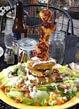
Grilled shrimp & fried green tomatoes layered with candied bacon over mixed greens with grilled com, red tomatoes and house made ranch dressing.
(843) 785-YARD www.hhbackyard.com

Full Bar with Beer, Wine and Moonshine!
Indoor & Outdoor Seating
Gluten
Backyard Burger 1/2 lb. fresh ground burger, grilled to your choice of temperature, with American cheese, 1,000 island dressing, lettuce, tomato & onion and a grilled bun.
Lowcountry Burger
1/2 lb. fresh ground burger, grilled to your choice of temperature, with fried green tomato, lettuce, sweet pickles, pimento cheese and ranch dressing and a grilled bun.
Lowcountry Shrimpburger
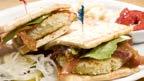
With green tomato tartar sauce, lettuce and tomato on a kaiser roll.
Todays Catch Sandwich
Fresh fish of the day, sometimes marinated or grilled, often blackened, occasionally fried, always good. Ask your server for todays preparation. Served on choice of bread w/ green tomato tartar sauce. Priced daily.
Susie Q’s Blackened Tofu Melt Backyard style, that is. Blackened tofu, alfalfa sprouts, mustard, provolone cheese, lettuce, tomatoes, black olives and avocado, with ranch dressing.
LOWCOUNTRY FAVORITES
Lowcountry Boil 1 lb shrimp, smoked sausage, corn on the cob, fried potatoes, seasonal crab, Old Bay Butter.
Potato Chip Meatloaf Our own creation! We use potato chips instead of bread crumbs. Delicious! Fresh ground pork and beef meatloaf, skillet grilled and brushed with moonshine BBQ sauce. Served with your choice of two side dishes.
Shrimp & Wild Mushroom Cobbler Wild mushrooms, sauteed shrimp, cream & sherry baked in a cast iron skillet with cheddar cheese & a biscuit crust. Choose one side dish.
Seafood Purloo Pan sauteed shrimp & smoked sausage over red rice topped with our grilled or blackened fresh fish of the day, ranch sour cream and sweet chili sauce.
Backyard Sampler
Fried Green Tomatoes, Shrimp & Grits, Potato Chip Meatloaf, choice of 2 side dishes.
The Bischick Marinated chicken breast, lightly breaded & fried, over a homemade biscuit, topped with lowcountry gravy. Served with choice of one side dish.
Shrimp & Grits Pan sauteed shrimp, smoked sausage and shaved green onion over applewood bacon cream sauce and creamy grits.

Island Crab Cakes Sauteed lump crab cakes topped with a lemon dill sauce. Choice of two side dishes.
Vegetable Plate Pick any three side items with cornbread and butter.
SEE OUR FULL MENU AT WWW.HHBACKYARD.COM
TASTEOFHILTONHEAD.COM 87
FAMILY STYLE MEALS (for 2)
—————— TASTE OF AMERICAN/SOUTHERN ——————
=
Free Options Available Menu Items and Prices are subject to change.
SOFT PRETZEL WITH BEER CHEESE
Huge
SANDBAR NACHOS
Homemade
ULTIMATE MEXICAN STREET CORN DIP
Our
SWEET POTATO TOTS
RAJUN CAJUNS
CHIPS &
Tortilla
SANDBAR WINGS
Tossed
LOADED HUSH PUPPIES
Southern
QUESADILLA
Cheddar
SOUTHERN SHE CRAB SOUP
Thick and rich…Sandbar’s secret recipe. 10
SANDBAR SALAD
Romaine and spring mix topped with scallions, tomatoes, cucumbers, shaved parmesan and granola. 8
SANDBAR CAESAR
Chopped romaine tossed with bacon, shaved parmesan and homemade croutons. 8
QUINOA AND RICE BOWL
Brown rice with quinoa topped with cucumbers, red and green peppers, tomatoes, cranberries and Mandarin oranges. Finished with our homemade Asian dressing. 12
SUPERFOOD SALAD
Romaine and spring mix topped with honey smoked salmon, dried cranberries, blueberries, Mandarin oranges and granola. Served with our homemade country raspberry vinaigrette. 16
SEAFOOD SALAD
Romaine and spring mix topped with scallions, tomatoes, cucumbers, shaved parmesan, grilled shrimp and cold blue crab. 16
Tacos
TACOS DE CARNE
Marinated
TACOS DE PESCADO
Blackened
JAMAICAN JERK TACOS
ISLAND SHRIMP TACOS
LOWCOUNTRY TACOS
Pulled
ALL AMERICAN BURGER
2 Angus beef smashed burgers topped with bacon, lettuce, tomato and your choice of American or Swiss cheese. Served with our homemade onion rings and bacon jalapeño dipping sauce. 14
SON OF A BUN BURGER
2 Angus beef smashed burgers topped with American cheese, pickles, sautéed onions and our signature burger sauce. Served with our homemade onion rings and bacon jalapeño dipping sauce. 14
COASTAL CRAB CAKE SANDWICH
Homemade southern style crab cake sautéed and served on a toasted brioche bun with lettuce and tomato. Served with french fries. 18
CUBAN
Pulled pork and sliced ham smothered in Swiss cheese, Creole mustard and sliced pickles on a grilled hoagie roll. Served with rench fries. 13
DIRTY BIRD
GROUPER SANDWICH
Fried grouper on a toasted brioche bun with lettuce, tomato and our homemade Jamaican tartar sauce. Served with french fries. 16
LOWCOUNTRY PULLED PORK SANDWICH
Slow roasted pulled pork smothered in our signature BBQ sauce with Caribbean slaw on a toasted brioche bun. Served with french fries. 13
RAJUN CAJUN SANDWICH
Marinated and blackened beef tenderloin with sautéed peppers and onions and smothered with Swiss cheese on a toasted hoagie roll. Served with french fries. 17
SMOKED SALMON BLT
Honey smoked salmon with applewood smoked bacon, lettuce, tomato and our homemade honey mayo. Served with french fries. 16
VEGETARIAN SANDWICH
Grilled marinated tofu topped with our signature BBQ sauce, lettuce, tomato and caramelized onions. Served with french fries. 10
WITCH DOCTOR
pineapple salsa. 12
VEGETARIAN TACOS
Marinated tofu with lettuce and pico de gallo. 10
SHRIMP
FRESH SHRIMP COCKTAIL
1/2
CHO CO SHRIMP
sautéed coastal shrimp covered in our homemade Cajun cream sauce. Served on a toasted baguette. 15
NASSAU SHRIMP
Lightly breaded and fried shrimp tossed in a mango pepper sauce. 14
COCONUT SHRIMP
5 large shrimp covered in coconut and perfectly fried. Served with our Caribbean slaw and orange marmalade sauce. 11
6oz. organic southern fried chicken breast on a toasted brioche bun with lettuce, tomato and our homemade honey mayo. Served with french fries. 13
CRAB CAKES
2 southern style crab cakes sautéed and served with jasmine rice, fried plantains and homemade mango salsa. 28
CARIBBEAN
FISH & CHIPS
8oz.
GROUPER
Grilled
OYSTERS ON THE HALF SHELL
Fresh
CHARGRILLED OYSTERS
Fresh shucked oysters on the grill with pecorino pepper butter. Served with a toasted baguette. MKT OYSTERS
SANDFELLER
Blackened shrimp, green peppers, onions and smoked sausage on a toasted hoagie roll. Served with french fries. 14
HURRICANE SHRIMP
Lightly
JAMAICAN
Linguine
JERK PASTA
PARMESAN CRUSTED GROUPER
Baked
RIBS
Tender
SHRIMP & CHIPS
1/2 lb. of coastal shrimp perfectly breaded and fried. Served with our homemade cocktail sauce, Jamaican tartar sauce and our french fries. 22
SEAFOOD
PASTA
Sautéed coastal shrimp and scallops tossed with white wine, garlic, fresh spinach and grape tomatoes over linguine. 20
TASTEOFHILTONHEAD.COM 88 —————— TASTE OF CARIBBEAN/AMERICAN —————— Menu Items and Prices are subject to 101 Pope Avenue, Coligny Plaza • 843-342-SAND (7263) • sandbarhhi.com BEACHSnacks &
Plates
Sandwiches
SALADS Soups
Beach
shucked in house. Served with our homemade cocktail sauce. MKT
THE World IS YOUR Oyster
Fresh shucked oysters baked with spinach, bacon, onion and topped with hollandaise. 11
beef tenderloin with lettuce, sour cream, cheese, pico de gallo and green apple slaw. 14
mahi mahi with lettuce, sour cream, Sriracha mayo and our Caribbean slaw. 14
lettuce, sour cream
pickled
13
Organic jerk chicken with
and
peaches.
shrimp
lettuce,
Lightly sautéed
with
Sriracha mayo and our cucumber wasabi slaw. 14
pork
our signature BBQ sauce
lettuce, sour cream
in
with
and
soft pretzel served with warm beer cheese. 9
tortilla chips topped with our beer cheese, guacamole, sour cream, pico de gallo and Mexican street corn. 12 Add Chicken - 4 // Add Steak - 6 Add Pulled Pork - 5
peppers and cream cheese. Served with tortilla chips. 10
twist on Mexican street corn combining corn, chipotle
tots made with sweet potatoes and tossed in a mango pepper sauce. 10
Tater
sized beef tenderloin marinated and blackened. 13
Bite
SALSA
chips served with our homemade salsa roja. 5 Add queso - 3 Add guacamole - 4
in your choice of homemade sauces: Buffalo, Jamaican Jerk, Sticky Asian, BBQ 6 Wings - 9 // 12 Wings - 13
fried hush puppies topped with warm beer cheese, bacon, sautéed onions and drizzled with ranch dressing. 10
honey butter. 8
*Available plain with
and jack cheeses combined in
flour tortilla. 8 Add
4 // Add Steak - 6
a
Chicken -
lb. of large, coastal shrimp tossed in Old Bay and served with our homemade cocktail sauce. 15
favorite! 1/2 lb. of
Sandbar
CHICKEN 2 organic chicken breasts grilled and topped with our Caribbean sweet and sour sauce. Served over jasmine rice with fried plantains and our homemade mango salsa. 18
beer battered cod served with our hand cut french fries and our homemade Jamaican tartar sauce. Single 14 // Double 22
or blackened grouper served over jasmine rice, fried plantains and our homemade mango salsa. 25
breaded shrimp tossed in a spicy mango pepper sauce served over jasmine rice with fried plantains. 22
pasta tossed in our homemade Alfredo sauce and topped with jerk chicken. 18
grouper topped with our parmesan cheese blend. Served over jasmine rice with grilled seasonal vegetables. 26
ribs smothered in our signature BBQ sauce. Served with our french fries. 1/2 Rack - 13 // Whole Rack - 24

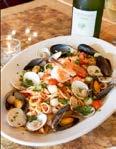

TASTEOFHILTONHEAD.COM 89 —————— TASTE OF ITALIAN —————— Menu Items and Prices are subject to change.
ITALIAN RESTAURANT
Pasta
Linguini with Meatballs or Sausage ... 18.95
Rigatoni Bolognese, meat sauce ............ 19.95 Lasagna ............................................. 19.95 Capellini Marinara, meatless red sauce ... 16.95 Eggplant Parmigiana ............................ 19.95 Capellini Pomodoro.......................... 18.95
Freshly diced tomatoes, basil, garlic and olive oil Add Chicken........25.95 Shrimp or Scallops......29.95
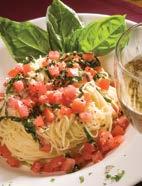
Manicotti................................................ 17.95 Filled with ricotta, baked in marinara with mozzarella Fettuccine Alfredo ................................ 18.95 With Chicken........25.95
Fettuccine Carbonara ........................... 19.95 Cream sauce with pancetta bacon and onions Tortellini alla Panna ............................. 19.95 Cheese tortellini, tomato cream sauce
Linguini with Red or White Clam Sauce .................................. 20.95
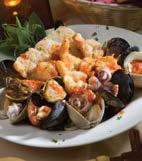
Penne with Vodka Sauce ................. 19.95 Pasta Primavera .................................... 18.95 With Chicken......25.95 With Shrimp or Scallops......29.95
Gnocchi .................................................. 20.95 Bolognese, Tomato Cream or Pesto
Carne
Chicken Parmigiana .............................. 25.95 Breaded breast of chicken baked with marinara and mozzarella cheese
Chicken Pancetta ............................... 25.95 Sherry cream sauce with pancetta and broccoli over capellini
Chicken Cacciatore................................ 25.95 Onions, peppers and mushrooms in marinara sauce over capellini
Stuffed Pork Chop................................. 33.95 Prosciutto, mozzarella, spinach and sausage over mushroom risotto, brandy cream sauce
Lamb Shank “Osso Buco” Style ....... 35.95 Braised lamb shank in a red wine, tomato demi
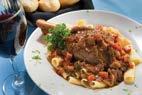
Veal Parmigiana ..................................... 26.95 Breaded veal cutlet topped with mozzarella and marinara
Veal Piccata or Marsala......................... 26.95
Veal scaloppine sautéed with white wine, lemon and capers or marsala wine and mushrooms
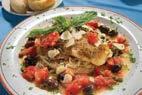
Veal Saltimbocca ................................ 26.95
Veal scaloppine rubbed with sage, topped with prosciutto and mozzarella in a mushroom marsala wine sauce over sautéed spinach
Veal Romano .......................................... 26.95
Veal scaloppine topped with prosciutto and mozzarella, white wine sauce and green onions and mushrooms Sicilian
Sea Bass Naples Style
TASTEOFHILTONHEAD.COM 90 —————— TASTE OF ITALIAN ——————
Menu Items and Prices are subject to change.
Grouper........................ 29.95 Tomatoes, bell peppers, onions and garlic, olive oil, white wine Zuppa di Pesce ..................................... 33.95 Grouper, clams, shrimp, scallops, mussels and calamari in
sauce over linguine
................................ 27.95
and
baked in vodka sauce, topped with
Fra
Baked
marinara
Seafood Canneloni
Shrimp
scallops,
mozzarella Shrimp and Scallops
Diavolo....... 27.95
......................
wine, capers and kalamata olives Scallops Napoli ..................................... 29.95 Scallops, lobster butter, spinach, roasted tomatoes & kalamata olives, white wine butter sauce Tuscan
29.95 served over cannellini bean, spinach, tomato, garlic
tossed with capellini Celebrating 33 Years! 15 Executive Park (off Pope Avenue) • 843-785-7006 • Full menu available at www.stellinihhi.com $23.95 3-Course Early Dining Menu Available 5-5:45 pm. • Curbside Takeaway and Carryout Available! • Stellini’s Signature Dishes
Appetizers Crabmeat Ravioli, Clams Casino, Mozzarella in Corrozza, Mussels Marinara, Mozzarella Stuffed Meatballs All entrees served with house salad and pasta.
29.95 Crumb topping, garlic, tomatoes, white
Grouper.....................................
sautee,
Pesce Sampling of
TACOS
Carne Asada ~ Marinated pieces of steak, grilled and placed in two corn tortillas with black beans, cilantro, and onions 5.75
Carnitas ~ Tender pieces of pork, shredded and placed in two corn tortillas with black beans, cilantro, and onions 5.75
Pollo Asado ~ Charbroiled, marinated chicken, placed in two soft corn tortillas with black beans, cilantro, and onions 5.75
Baja Fish Taco ~ Traditional Fish Taco, batter fried and placed in two soft corn tortillas with cabbage, cilantro, pico de gallo, hot sauce and a squeeze of lime. Now that’s an authentic fish taco! .......................................................................................... 5.95
Low Country Oyster Taco ~ Oysters, batter fried in two soft corn tortillas with cabbage, cilantro, pico de gallo, hot sauce and a hint of lime ....................................................................................... 6.95
ENSALADAS
Taco Salad ~ Crisp flour tortilla, topped with lettuce, beans, pico de gallo, guacamole, cheese, sour cream and olives 8.95 with Chicken or Steak 12.95
BBQ Chicken Salad ~ Amigo’s Famous BBQ Salad. Grilled BBQ chicken breast and chopped tomato served on top of lettuce, black beans, corn, tortilla strips, cheese and cilantro. Tossed in a Ranch dressing and served in a crisp flour tortilla 12.50
Jenny Salad ~ no chicken, sautéed veggies instead 12.25 Fish or Oyster Salad ~ Same as our BBQ Chicken Salad but topped with either fried fish or fried oysters. Served in a crisp flour tortilla fish....................13.25 oyster 13.95
Shrimp Salad ~ Romaine lettuce, mixed with corn and black beans, topped with almonds, cheese, tomatoes, chopped hard boiled egg and our zesty shrimp, accompanied with buttermilk ranch. Served in a crisp flour tortilla 13.95
QUESADILLAS
Flour tortilla filled with melted cheese ~ sour cream and pico served on the side.
Cheese 8.25
Shrimp and Veggie 12.75
Vegetarian 11.25
Chicken 11.25
Shrimp 11.95
Oyster 11.95
Carnitas (pork) 11.25
Chorizo (Mexican sausage) 11.25
Carne Asada (steak) 11.25
Menu Items and Prices are subject to change.
KILLER BURRITOS
Steak Fajita Burrito ~ Tasty pieces of grilled steak with peppers, onions, rice, black beans, sour cream, cilantro, tomatoes and cheese 13.25
Chicken Fajita Burrito ~ Charbroiled chicken, sauteed with peppers, onions, rice, black beans, sour cream, cilantro, tomatoes and cheese 13.25
Pollo Asado ~ Skinless chicken breast, grilled with cilantro, and sour cream, rice, black beans and cheese 12.75 w/ BBQ sauce 12.95
Carnitas ~ Amigo’s famous pork carnitas with rice, black beans, sour cream, cilantro, cheese and guacamole 12.95
Carne Asada ~ Charbroiled marinated pieces of steak with rice, black beans, sour cream, cilantro and cheese 12.95
Veggie ~ This will turn you into a vegetarian. Bell peppers, mushrooms, zucchini, onions, rice, black beans, sour cream, cilantro, tomatoes and cheese 12.95
Fish ~ Battered fried fish with cabbage, rice, black beans, pico de gallo, hot sauce, cilantro and cheese. ........................... 13.25
Low Country Oyster ~ Amigo’s is the home of the original oyster burrito. Battered fried select oysters with cabbage, hot sauce, pico de gallo, rice, black beans, cilantro and cheese 13.95
PLATTERS
Sizzling Fajitas Platter ~ Your choice of chicken, steak or pork. Served with sauteed onions and peppers, Spanish rice, black beans, guacamole, pico de gallo, sour cream and corn tortillas 23.95
Sizzling Combo Platter ~ Chicken, steak and shrimp served with sauteed onions and peppers, Spanish rice, black beans, guacamole, pico de gallo, cheese, sour cream and corn tortillas 25.95
STARTERS & SIDE ORDERS
Chips, Salsa and Queso Dip 7.95
Chips and Salsa 3.25
Nachos ~ Heaping plate of our famous chips, covered with beans, cheese, jalapeno peppers, tomatoes, sour cream, guacamole and olives. ......................................8.95 add meat 12.95
Kids menu, Take out and Curbside Pick-up available!
TASTEOFHILTONHEAD.COM 91 —————— TASTE OF MEXICAN ——————
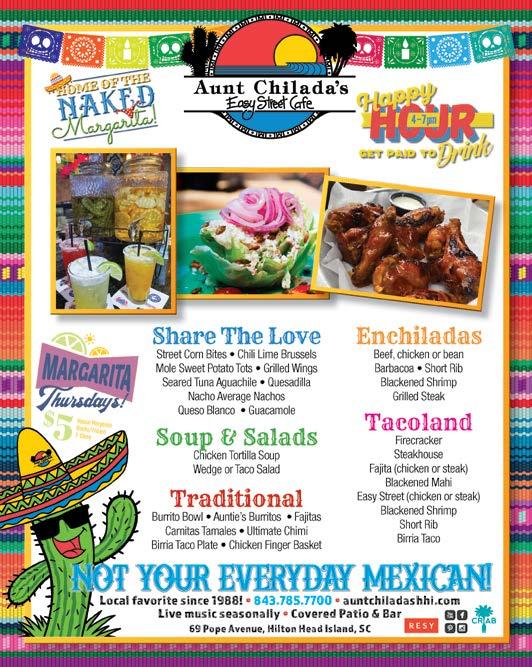
TASTEOFHILTONHEAD.COM 92 —————— TASTE OF MEXICAN —————— Menu Items and Prices are subject to change.
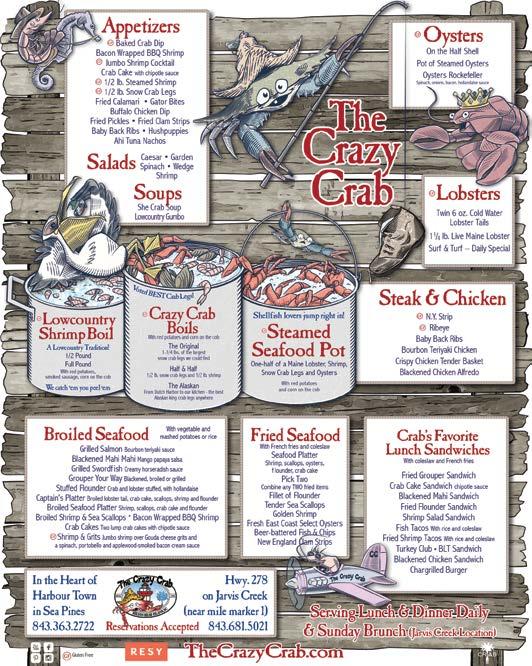
TASTEOFHILTONHEAD.COM 93 —————— TASTE OF SEAFOOD —————— Menu Items and Prices are subject to change.
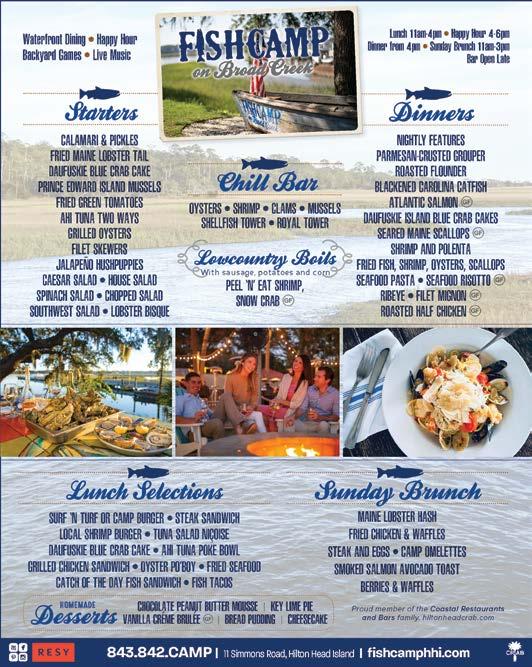
TASTEOFHILTONHEAD.COM 94 —————— TASTE OF SEAFOOD —————— Menu Items and Prices are subject to change.
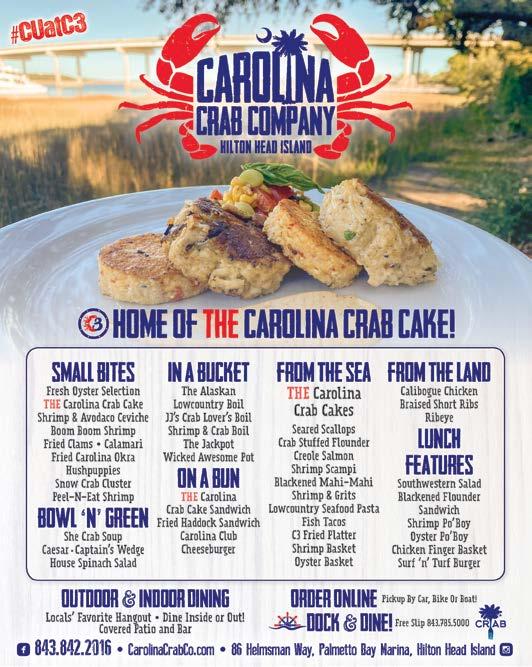
TASTEOFHILTONHEAD.COM 95 —————— TASTE OF SEAFOOD ——————
Menu Items and Prices are subject to change.
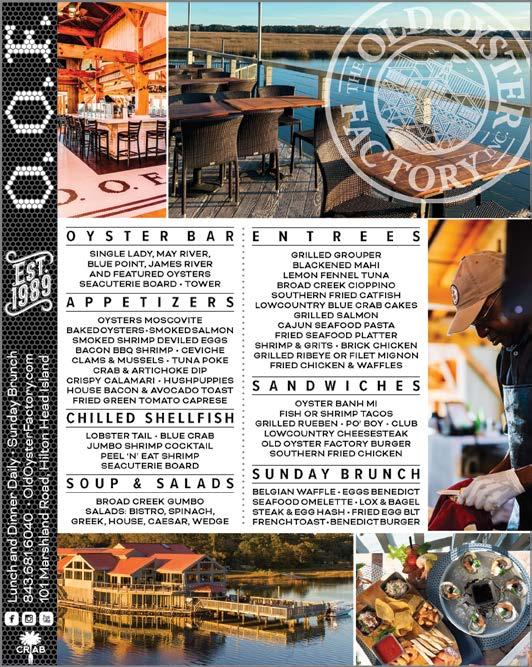
TASTEOFHILTONHEAD.COM 96 —————— TASTE OF SEAFOOD —————— Menu Items and Prices are subject to change.
Dinner, Tuesday-Sunday 5:00 Until | Brunch, Sunday 11:00 am-1:30 pm | Closed Monday’s 43 Jenkins Road, Hilton Head Island, SC 29926
~ Sunday Brunch ~
Deep Dish Quiche ~ MKT price
Sunset Grille’s signature deep-dish quiche, a Sunday favorite
Shrimp & Grits -18
Cajun sautéed shrimp over white Cheddar grits w/andouille sausage, peppers, onions & a duo of sauces ~ roasted red pepper & smoked poblano purees
*Beef Tip Hash – 17
W/poached eggs & whole grain mustard cream sauce
Grilled Cheshire Sausage Links – 15
Cheddar cheese grits, fried eggs & Hugh’s smoked poblano sauce
*Filet Mignon – 20
Gorgonzola grits, wilted spinach & a poached egg
Country Ham Benedict – 16
English muffin, fig preserves, tomato, poached eggs & hollandaise
Fried Chicken & Biscuit – 16
Country fried chicken, buttermilk biscuit, bacon gravy & fried eggs
Shrimp & Crab Cake Benedict – 20
Toasted Croissant, wilted spinach, poached eggs & hollandaise
Belgium Waffles w/Caramelized Apples – 15
Applewood smoked bacon & walnuts
Smoked Salmon Benedict – 18
English Muffin, wilted spinach, poached eggs & hollandaise
Champagne Basil Shrimp Salad – 16
Artisan greens, tomato, bacon, red onion, avocado & white Cheddar in champagne basil vinaigrette w/grilled shrimp
*Cajun Fried Oysters – 18
Gorgonzola grits, spinach, poached egg & a touch of hollandaise
Hugh’s Hangover From Hell Sandwich – 13
A gourmet grilled cheese w/bacon, tomato, onion, American & Provolone cheeses ~ add a fried egg ~ 1.50
Grilled Scallop & Beet Salad – 18
Grilled scallops, roasted beets, Feta cheese & toasted almonds tossed in Dijon vinaigrette
Buttermilk Fried Pork Chop - 16
Bacon Jam, Cheddar grits & fried eggs
Ham & Cheese Croissant– 16
Grilled Black Forest ham, American cheese & fried egg on a toasted croissant w/Dijonnaise sauce
~ Dinner ~
Appetizer Selections
Bleu Cheese Salad – 12

Artisan greens, tomato, bacon, onion, buttermilk blue cheese dressing
Champagne Basil Salad – 11 Artisan greens, cucumber, red onion, tomato & white cheddar, Champagne basil vinaigrette
Farmers Salad – 13
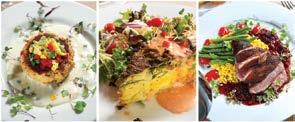
Roasted butternut squash, apples, beets, red onion, pepitas, Chèvre & artisan greens in herb Dijon vinaigrette
Baked Brie – 13 Fig preserves & candied nuts
Wild Mushroom & Leek Tart - 13
Caramelized leeks & wild mushroom tart w/ ricotta & thyme
Smoked Duck Sausage – 12
Grilled duck sausage, braised red cabbage, cornichons & whole grain mustard
*Cajun Fried Oysters – 15
Gorgonzola cream sauce & balsamic reduction
Smoked Seafood Platter – 15
House smoked seafood w/pickled onions, capers, eggs & herb Dijon
Tomato Bruschetta – 11
Entrée Selections
Smoked Scottish Salmon – 34
Stone ground grits, wilted spinach, diced red peppers & dill crema Shrimp & Grits – 29
Cajun sautéed shrimp over white Cheddar grits w/andouille sausage, peppers, onions & a duo of sauces ~ smoked poblano pepper & sweet roasted red pepper
*Scallop Risotto – 34
Creamed kale & bacon risotto topped w/seared sea scallops
*Grilled Duck Breast – 39 Red wine, thyme, lingonberry reduction, rice & vegetables
Pork & Wild Mushroom Ragu
– 29
Slow braised pork shoulder in a rich tomato sauce w/wild mushroom & pappardelle Chicken & Sweet Potato Hash – 27
Boneless fried chicken thighs over sweet potato hash w/house made sausage, poblanos & onions, finished with a hot honey drizzle
Seafood Cakes – 30
2 delicious cakes made with crab, shrimp & fresh catch w/roasted red pepper cream sauce, rice & vegetables
*Grilled Veal Chop – 44
Caramelized shallot, blue cheese & port wine butter, mashed potatoes & vegetables
Braised Short Ribs – 34
Roasted garlic Marsala gravy, mashed potatoes & glazed carrots
*consuming raw or under cooked proteins can cause food borne illness
Ricotta cheese toast points, topped with sun dried tomato, caper & black olive tapenade For full menu visit sunsetgrillehhi.com
Menu Items and Prices are subject to change.
TASTEOFHILTONHEAD.COM 97 —————— TASTE OF SEAFOOD ——————
—————— TASTE OF SEAFOOD ——————
| 843.689.6744 | www.sunsetgrillehhi.com
Appetizers
rich and creamy, served with tortilla chips and pressed Cuban bread 13
Blue Crab Dip rich and creamy, served with tortilla chips and pressed Cuban bread 15
Cornmeal Crusted Fried Oysters grilled corn, pico de gallo, remoulade sauce 16
Asian Lettuce Wraps sesame ginger pork meatballs, pickled cucumber and carrot with Kung Pao sauce 12.5
Blue Crab Dip Shrimp Spring Rolls
Crispy Calamari crispy calamari rings and cherry peppers served with smoked paprika cherry pepper aioli 12 Asian Lettuce Wraps pork meatballs, pickled vegetables and Thai chili aioli 10 crispy spring rolls with spicy sambal and basil oil 11
Shrimp Spring Rolls crispy spring rolls with sweet chili sauce and basil oil 13
Soups / Salads
Entrées
Cuban Black Bean Soup 9
Goat Cheese 13
Cuban Black Bean Soup 8 Goat Cheese mixed greens, roasted beets, shaved red onion, fried goat cheese, candied pecans & citrus vinaigrette 11
mixed greens, roasted beets, shaved red onion, fried goat cheese, candied pecans & basil vinaigrette
RedFish Wedge 13
Crispy bacon, heirloom cherry tomatoes, red onion, blue cheese crumbles, buttermilk blue cheese dressing
Southwestern Chopped Roasted corn, pico de gallo, avocado, smoked cheddar and tortilla straws served with chipotle ranch dressing 11
Shrimp and Grits local shrimp, Boursin stone ground grits, sauteed kale, fried okra, smoked sausage creole sauce 35
Shrimp and Grits local shrimp, Boursin stone ground grits, sauteed kale, fried okra, chorizo gravy 27
Grilled Sea Bass MSC-certified Chilean Sea Bass finished with a wasabi cream sauce and soy glaze, served on a bed of udon noodles with wakame salad MP Seared Jumbo Scallops lobster macaroni and cheese, asparagus, and crispy prosciutto MP
Grilled Sea Bass MSC-certified Chilean Sea Bass finished with a wasabi cream sauce and soy glaze, served on a bed of udon noodles with wakame salad MP
Seared Jumbo Scallops lobster and shrimp mac & cheese, asparagus, and crispy prosciutto MP
Jumbo Lump Crab Cakes
hand cut Cajun truffle fries, cilantro lime slaw, chipotle romesco 30
RedFish Ribs
(full rack) sweet potato fries, cilantro-lime slaw and Guava BBQ sauce 38
8 oz. Natural Center Cut Filet Mignon Blue cheese crust, potato croquettes, haricot verts, port wine demi 38
8 oz. Natural Center Cut Filet Mignon blue cheese potato gratin, grilled broccolini, au poivre 46
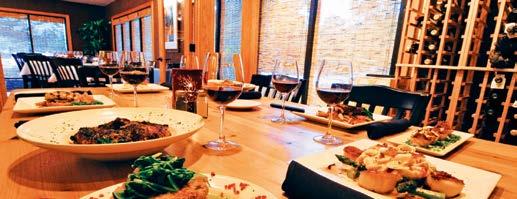
TASTEOFHILTONHEAD.COM 98 Menu Items and Prices are subject to change. —————— TASTE OF SEAFOOD —————— 8 Archer Road, Hilton Head Island 843.686.3388 | redfishofhiltonhead.com Dinner 5-9pm Nightly Please note that this is a small sampling of our regular menu. Prices and items may vary.
best destination for
The
wine lovers!
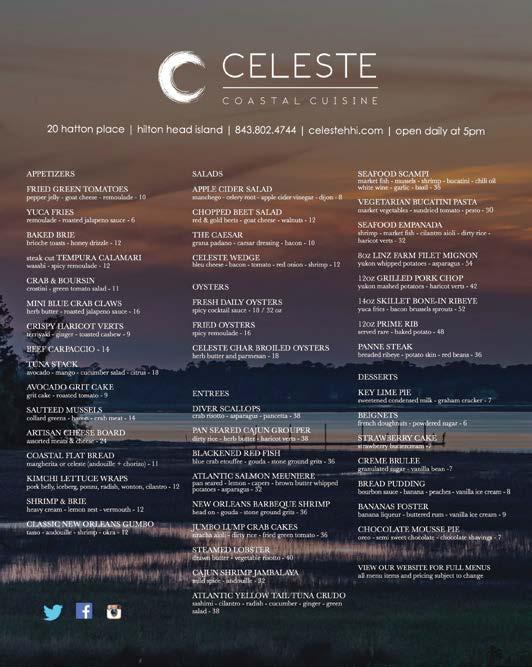
TASTEOFHILTONHEAD.COM 99 Menu
—————— TASTE OF SEAFOOD ——————
Items and Prices are subject to change.
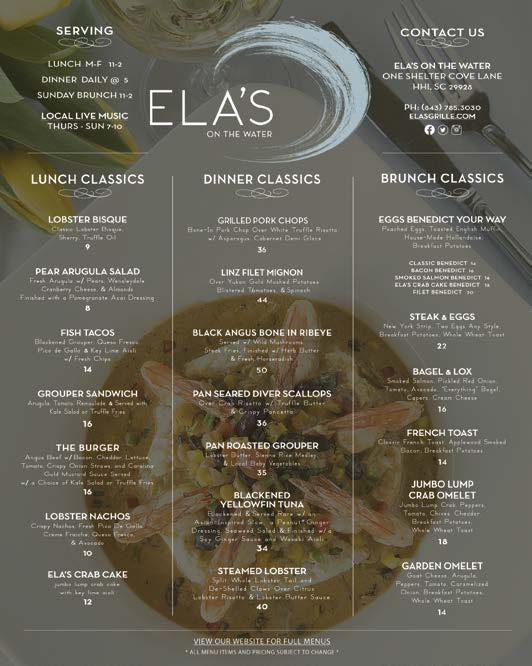
TASTEOFHILTONHEAD.COM 100 —————— TASTE OF SEAFOOD —————— Menu Items and Prices are subject to change.
SEAFOOD SPECIALTIES
FISH N’ CHIPS - 19
Fat Tire beer batter, malt vinegar, tartar sauce
LOCAL SHRIMP GF - 21
Butterflied fried, pan sautéed, broiled or blackened STUFFED SHRIMP - 28
Large shrimp, stuffed with crabmeat, lemon shallot butter, broiled or fried ATLANTIC SALMON GF - 24
Fresh grilled Atlantic Salmon, seasonal topping SEAFOOD PASTA - Priced daily
Chef’s choice. Ask your server about today’s preparation. Served with garlic bread and hushpuppies. À la carte.
Substitute the seafood for chicken - 16 FLOUNDER FILLET GF - 23
Freshly-caught and skinless—fried, pan seared, broiled, or blackened STUFFED FLOUNDER - 31
Fresh flounder stuffed with our famous jumbo lump crab mixture.
Broiled and served over shrimp Creole sauce OYSTERS - 24
Plenty of oysters – breaded and fried NEPTUNE’S SEAFOOD PLATTER GF - 36
A veritable feast consisting of oysters, scallops, shrimp, deviled crab and seasonal fish—fried, pan seared, broiled, or blackened Upgrade the seasonal fish to flounder for $3 ALMOND CRUSTED GROUPER - 32
Pan seared almond crust, lemon shallot butter SCALLOPS GF - 28
Sweet, tender and delicious—fried, pan seared, or blackened CATCH OF THE DAY* - Priced daily
“The best of today’s fresh catch.” Filleted in house
LANDFOOD
HUDSON’S GROUND BRISKET BURGER* - 8 OZ.
Single ½ lb - 14, Double 1 lb - 24; Add bacon - 1
Angus ground brisket and chuck. Pan grilled and served with lettuce, tomato, onion, pickles, and choice of american, cheddar, swiss, provolone or blue cheese
FILET MIGNON* - 8 OZ. GF - 34
Angus, grilled to your preference, blue cheese compound butter
NEW YORK STRIP STEAK - 14 OZ. GF - 29
Certified Angus, grilled to your preference, shitake mushroom, red Zinfandel demi-glace
CHICKEN PARMESAN - 19
Grilled or fried 8 oz. Claxton chicken breast topped with marinara and provolone cheese
VEGETARIAN RAVIOLI - Priced daily Chef’s choice. Ask your server about today’s preparation. À la carte.
*As required by the State of South Carolina, we provide this information. "Advisory: The consumption of raw or undercooked foods such as meat, fish, shell fish, and eggs which may contain harmful bacteria, may cause serious illness or death."
1 Hudson Rd., Hilton Head Island, SC 29926 • 843.681.2772 • hudsonsonthedocks.com
Menu Items and Prices are subject to change.
Open Daily at 11 am Serving Lunch and Dinner Brunch on Sundays at 10 am
APPETIZERS
LOCAL FRIED GREEN TOMATOES - 13
Bacon and onion jam, tomato chutney, goat cheese, arugula, balsamic glaze
SHRIMP COCKTAIL GF - 11
Local shrimp steamed and served chilled PEI MUSSELS MARINIÈRE GF - 18
White wine, butter, herbs, lemon, onions, tomatoes, cream, garlic-toasted French baguette BLING BLING SHRIMP - 13
Local shrimp, Sambol aioli, Asian slaw, toasted sesame seeds, lettuce REEL DEAL SHRIMP - 16.5
Local beer-braised shell-on shrimp, garlic, New Orleans BBQ broth, butter, bell peppers, onions, French baguette OYSTERS ON THE HALF-SHELL SHUCKED TO ORDER See daily specials menu OYSTERS HUDSON - 10
One half-dozen select oysters wrapped in bacon and deep fried. It is very popular, and you’ll love them!
OYSTERS ROCKEFELLER - 13
First prepared in 1899 by the chef at Antoine’s Restaurant in New Orleans – called Rockefeller because of the very rich taste CAN'T DECIDE SAMPLER - 17
Two of each item listed: oysters hudson, oysters rockefeller, beer-battered shrimp, mini crab cakes, and blackened scallops
À LA CARTE
STEAMED COMBO GF - 26
Local shell-on shrimp, local littleneck clams, local cluster oysters and corn, steamed with OLD BAY® Seasoning and served with cocktail sauce, butter and horseradish. When local cluster oysters are out of season, choose extra local clams or shrimp
LOCAL LITTLENECK CLAMS GF Dozen 12
Local clams, steamed or raw SNOW CRAB LEGS GF - Market price


Half or full pound
LOW COUNTRY BOIL GF - 16
Steamed local shell-on shrimp, smoked sausage, corn, potatoes, OLD BAY® Seasoning
SOUPS & SIGNATURE SALADS
SHE CRAB SOUP - Cup 7.5, Bowl 9
A tradition at Hudson’s SEAFOOD GUMBO - Cup 7.5, Bowl 9
A Cajun-style gumbo made with dark roux and loaded with fresh seafood, sausage and vegetables SPINACH AND PEAR SALAD - Small 6.5, Large 8.5 Baby spinach, candied Georgia pecans, poached pears, blue cheese crumbles, port wine vinaigrette
Due to the seasonal nature of our local seafood, Please inquire about our menu additions and nightly features. This is a sample menu, prices and availability are subject to change.
TASTEOFHILTONHEAD.COM 101 —————— TASTE OF SEAFOOD ——————


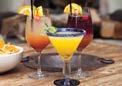
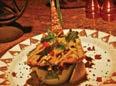
TASTEOFHILTONHEAD.COM 102 —————— TASTE OF SOUTHWESTERN —————— Menu Items and Prices are subject to change. TOSTIDAS Y SALSA 3 CHILE CON QUESO 10 GUACAMOLE EN MOLCAJETE Mkt CHICKEN QUESADILLA 11 QUESO FUNDIDO 10 OYSTERS 13 SHRIMP COCKTAIL 12 YUCATAN CEVICHE 12 OUTRAGEOUS CHIMICHANGA 26 SANTA FE PLATO COMBINATION 24 BURRITO 21 RIBEYE BURRITO 32 appetizers mexican favorites BLACKENED REDFISH 26 GROUPER 36 seafood HERB-ROASTED FREE RANGE CHICKEN 26 GRILLED PORK TENDERLOIN 27 WOOD ROASTED SOUTH CAROLINA QUAIL 29 RIBEYE Cowboy Cut 47 Wrangler Cut 28 FILET MIGNON WITH SHRIMP ENCHILADA 45 PORK CHOP VERDE 26 grill MESQUITE GRILLED FILET MIGNON 41 MESQUITE GRILLED CHICKEN 28 MESQUITE GRILLED SHRIMP 27 MESQUITE GRILLED VEGETABLES 18 fajitas RED CHILE ONION RINGS 5 ROASTED GARLIC MASHED POTATOES 5 SWEET POTATO FRIES 5 SOUTHWESTERN VEGETABLES 5 SPICY BLACK BEANS 5 MEXICAN RICE 5 side dishes BBQ CHICKEN TACOS 18 SHRIMP TACOS 20 FISH TACOS 25 tacos PAINTED DESERT SOUP 10 GREEN CHILE STEW 8 SANTA FE SALAD 11 CAESAR 10 soups & salads Serving Dinner Tuesday-Saturday 5-9pm santafehhi.com 807 William Hilton Parkway in Plantation Center For Reservations Call 843.785.3838 new mexico next door!
SOUPS
French Style Onion Soup ................................................................. 10
Served with Crusty Croutons Provolone & Gruyere Cheese Soup du Jour ....................................................................................MP
The Chef’s daily creation with the finest ingredients
STARTERS
Traditional Shrimp Cocktail ............................................................ 17
Large Shrimp, Cocktail Sauce, and a Wedge of Lemon Bloody Good Cocktail ..................................................................... 20
Large Shrimp steamed and chilled, served adorning our Homemade Bloody Mary Fried Green Tomatoes ...................................................................... 13
Topped with Bacon Jam Onion Rings ...................................................................................... 10
A hearty order of Beer Battered Onion Rings
*Oysters ............................................................................................. 17
Chef’s Daily Preparation
*Sashimi Tuna 16
Served with a Chiffonade of Spinach adorned with Crispy Wontons, & served with a Spicy Soy Dipping Sauce
*Crab Cake ........................................................................................ 18
Pan Seared and served with a Sherry Cream Sauce
*The Tavern Roll ............................................................................... 14
Shaved Beef blended with Blue Cheese & Caramelized Onions, rolled and baked in a Delicate Puff Pastry served with a Choron Sauce Cheese Curds 13
Lightly fried and served with a choice of Bacon Jam, Barbecue citrus, or Buffalo dipping sauce
A LA CARTE SALADS
Garden Salad ...................................................................................... 9
Mixed Greens, Sliced Tomato, & Sliced Cucumber dressed with a choice of Balsamic Vinaigrette, Raspberry Vinaigrette, Blue Cheese or Ranch Dressing Caprese 16
Jumbo Vine Ripe Tomatoes, Fresh Mozzarella, & Shaved Red Onion tossed with a Fresh Pesto Dressing
Spinach Salad .....................................................................................13
Fresh Leaves of Spinach with Crispy Bacon, Red Onion & Blue Cheese Crumbles with a Raspberry Vinaigrette
* The Traditional Caesar 13 Crispy Romaine Lettuce, Parmesan Cheese, & Croutons tossed with a Classic Caesar Dressing
The Classic Wedge ............................................................................ 14
Crisp Wedge of Iceberg Lettuce served with a medley of Marinated Grape Tomatoes, Bacon, and Shaved Red Onion with a Blue Cheese Dressing Add Anchovies or Crumbled Blue Cheese $2.50
THE STOCK YARDS
CRANE’S SERVES ONLY THE BEST USDA PRIME GRADE STEAKS
All Stock Yard Selections are served with a choice of Mashed Potatoes, French Fries, or Scalloped Potatoes and a choice of Creamed Spinach or the Chef’s Vegetable du Jour *Prime Rib 12 Oz. 42 16 Oz. 49 22 Oz. 59
*Rib Eye 12 Oz. 45 18 Oz. 56
*Filet Mignon 6 Oz. 45 10 Oz. 59
*NY Strip 14 Oz. 49
*Sautéed Calves Liver & Onions 22 Smothered Meatloaf .......................................................................... 23
SAUCES & SIDES
Add to Any Stockyard Selection A Single Lobster Tail Market Price Crab Cake 18 Au Poivre 5 Sauteed Button Mushrooms 4 Blue Cheese Sauce 5 Jack Daniel’s and Mushroom Demi~Glace 5 *Choron Sauce 5
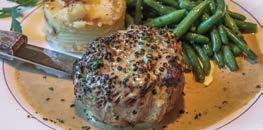
THE CHEF’S SELECTIONS
Chef’s Selections are served with the Chef’s Vegetable du Jour Portabella Mushroom & Spinach Ravioli ...................................... 23 Tossed with Grape Tomatoes in a Pesto Cream Sauce Add Grilled Chicken or Shrimp 28
* Low Country Shrimp .................................................................... 27 Shrimp lightly sautéed & served over White Cheddar Grits with Creamy Corn, Bacon & Green Onion *Mahi 35 Over Pasta . Pearls with Wilted Spinach, Butternut Squash and Pecorino Romano *Salmon .............................................................................................29
North Atlantic Salmon Roasted with Maple Mustard Glaze & Bread Crumbs with Rice & Roasted Mushrooms
*Sesame Tuna .................................................................................... 35 Sashimi Grade Tuna Steak Sesame Crusted, Seared Rare & Served over Rice Pilaf with an Edamame Purée and Soy Syrup *Lobster Tails .................................................................. Market Price Your choice of One or Two Lobster Tails lightly seasoned, broiled & served with Rice Pilaf & Drawn Butter
* Scallops ........................................................................................... 38 Seared & Served over Bucatini Pasta & tossed with a Red Pepper Purée and Crumbled Blue Cheese
*Crab Cakes ...................................................................................... 39 Pan Seared and served with Rice Pilaf and a Sherry Cream Sauce Chicken .............................................................................................. 24
Boneless Chicken Breast Grilled and served with Rice, and a Toasted Walnut Sage Butter
*Pork Chop........................................................................................ 34 Grilled and served over Mashed Potatoes with a Jalapeño Apple Chutney Braised Beef .......................................................................................29 Sirloin Tips slowly braised with Root Vegetables in a Red Wine Reduction s erved over Mashed Potatoes
TASTEOFHILTONHEAD.COM 103 —————— TASTE OF STEAK/SEAFOOD —————— Menu Items and Prices are subject to change. A Family Tradition of Excellence in Quality and Value for over One Hundred Years. 26 New Orleans Road ~ (843) 341-2333 ~ www.cranestavern.com
Menu Items and Prices subject to change due to Supply Issues. Please visit our Website for all Current Menu Information.
HOURS
DINNER DAILY @ 5
LOCAL LIVE MUSIC THURS - SAT NIGHT
THE DINNER MENU
55 CALHOUN STREET BLUFFTON, SC 29910

PH: 843.757.5511 WWW.THEPEARLBLUFFTON.COM
FIRSTS SOUPS + GREENS
CALAMARI wasabi aioli, red pepper remoulade 15
PRINCE EDWARD ISLAND MUSSELS
spicy marinara, fresh tomatoes, garlic, toast points 16
JUMBO LUMP CRAB CAKE panko fried, ginger dill aioli, green tomato & poblano chow chow, micro cilantro 16
AHI TUNA POKE* ponzu, pineapple, avocado, sesame, wonton chips 16
FRIED GREEN TOMATOES
roasted red pepper coulis, sweet + spicy jelly, goat cheese, balsamic 13
KIMCHI LETTUCE WRAPS
crispy pork belly, ponzu drizzle, kimchi, radishes 13
BEEF CARPACCIO*
filet mignon, arugula, lemon and truffle oil, capers, parmesan 16
HAND SELECTED OYSTERS* cucumber mignonette, lemon, cocktail sauce market price
MAINS
GROUPER CASINO ancient grains, baby spinach, bacon, andouille, cremini mushrooms, blistered cherry tomatoes, thyme + whole grain mustard cream sauce 36
LOW COUNTRY SHE-CRAB local crab roe, sherry, lemon aioli 12
TRADITIONAL WEDGE red onion, cherry tomatoes, crumbled bacon, house made bleu cheese dressing 12
PICKLED BEET micro arugula, heirloom baby carrots, pickled beets, almond crusted goat cheese, blackberry balsamic vinaigrette 12
TRADITIONAL CAESAR grilled romaine, croutons, parmesan, in-house caesar dressing 12
SPINACH + ARUGULA pears, red onion, candied walnuts, goat cheese, bacon vinaigrette 12
BURRATA CAPRESE fresh mozzarella, burrata, cherry tomatoes, lemon + basil vinaigrette, sweet balsamic reduction, grilled ciabatta 13 ADLUH GOUDA GRITS | SPINACH 6
SIDES
LOBSTER THERMIDOR
parmesan potato puree, lemon beurre blanc 45
PISTACIO ENCRUSTED AHI TUNA* sesame rice, radishes wasabi + edamame puree, pickled ginger vinaigrette 35
SHRIMP + GRITS
cognac bechamel, haricot verts, coastal shrimp, Adluh Far m’s grits, trinity of peppers, onions, tasso ham gravy 28
CRAB + SHRIMP PICCATA romesco, toasted almonds, gouda grits, asparagus 34
DESSERTS
CHOCOLATE TORTE gluten free, chocolate curls, vanilla ice cream 12
CARAMEL CHEESECAKE
dolce caramel sauce 12
PEACH + BANANA BREAD PUDDING
candied bacon, vanilla ice cream 13
VIEW OUR WEBSITE FOR FULL MENUS * ALL MENU ITEMS AND PRICING SUBJECT TO CHANGE *
Menu Items and Prices are subject to change.
TASTEOFHILTONHEAD.COM 104
INFO
DIVER
tomatoes,
potatoes,
14 OZ NEW YORK STRIP + FRITES TRUFFLED FRIES | WHIPPED POTATOES | GARLIC HARICOT VERTS 7 BROWN BRUSSELS + PROSCIUTTO | ASPARAGUS 8 7 OZ EMBER GRILLED FILET MIGNON
spinach, blistered cherry tomatoes, whipped potatoes, carmelized shallot + gorgonzola compound butter 65 PAN SEARED
SCALLOPS romesco, gouda grits, asparagus, toasted almonds 36 SHRIMP ETOUFFEEAdluh Farm’s stone grits, coastal shrimp, andouille + blue crab etoufee 34 CABERNET BRAISED LAMB SHANK roasted baby carrots, blistered cherry
truffle whipped
bordelaise creminis, 45 grass fed beef, demi, truffle and parm frites, brown brussels sprouts, horseradish aioli 55
CARROT CAKE cream cheese frosting, fresh carrot 13 STRAWBERRY CAKE cream cheese frosting, strawberries 13
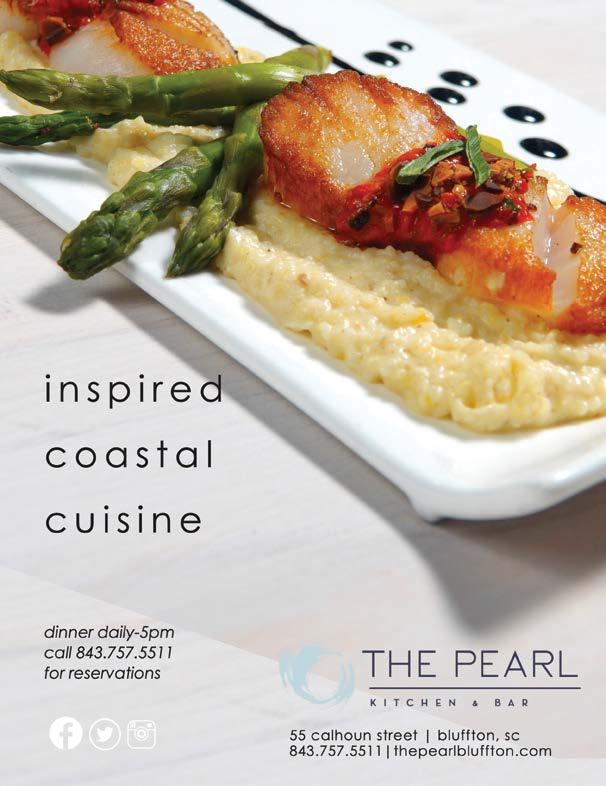
A TASTE OF ADVERTISERS / MAP LOCATION
1. ALEXANDER’S RESTAURANT AND WINE BAR (855) 300-5976
2. A LOWCOUNTRY BACKYARD (843) 785-YARD (9273)
3. AMIGO’S CAFÉ Y CANTINA (843) 785-TACO (8226)
4. AUNT CHILADAS EASY STREET CAFE (843) 785-7700
5. BAD BISCUIT (843) 785-2323
6. THE BIG BAMBOO CAFE (843) 686-3443
7. BIG JIM’S BBQ, BURGERS & PIZZA (866) 420-4478
8. BOWDIE’S CHOPHOUSE (843) 715-2807
9. BRITISH OPEN PUB (843) 686-6736 or 815-6736
10. BROTHER SHUCKER’S BAR & GRILL (843) 785-7000
11. CALLAHAN’S SPORTS BAR & DELUXE GRILL (843) 686-POOL (7665)
12. CAPTAIN JOHN’S GALLEY AT THE SALTY DOG CAFE (843) 671-CAFE (2233)
13. CAROLINA COFFEE & CRUMBS (843) 342-4800
14. CAROLINA CRAB COMPANY (843) 842-2016
15. CATCH 22 FRESH SEAFOOD & GRILL (843) 785-6261
16. CELESTE COASTAL CUISINE (843) 802-4744
17. CHARLIE’S L’ETOILE VERTE (843) 785-9277
18. CHOW DADDY’S (843) 842-2469 or 757-2469
19. CQ’S RESTAURANT (843) 671-2779
20. CRANE’S TAVERN STEAKHOUSE & SEAFOOD (843) 341-2333
21. CRAZY CRAB (843) 363-2722 or 681-5021
22. DEANO’S (843) 301-0929
23. DELISHEEYO (843) 785-3633
24. THE DRYDOCK SEAFOOD GRILL & SPIRITS (843) 842-9775
25. ELA’S ON THE WATER (843) 785-3030
26. FISHCAMP ON BROAD CREEK (843) 842-2267
27. FLATBREAD GRILL (843) 341-2225
28. THE FROSTY FROG CAFÉ (843) 686-FROG (3764)
29. GRINGO’S DINER (843) 785-5400
30. GUSTO RISTORANTE (843) 802-2424
31. HAROLD’S DINER (843) 384-7855
32. HINOKI JAPANESE RESTAURANT & SUSHI BAR (843) 785-9800
33. HUDSON’S SEAFOOD HOUSE ON THE DOCKS (843) 681-2772
34. ISLAND FUDGE SHOPPE (843) 842-4280
35. THE JAZZ CORNER (843) 842-8620
36. KENNY B’S CAJUN SEAFOOD HUT (843) 785-3315
37. LAND’S END TAVERN (843) 671-5456
38. LUCKY ROOSTER KITCHEN + BAR (843) 715-3215
39. MANGIAMO (843) 682-2444
40. THE MARKET CAFE (843) 785-7272
41. MELLOW MUSHROOM (843) 686-2474 or 706-0800
42. MICHAEL ANTHONY’S (843) 785-6272
43. THE OLD OYSTER FACTORY (843) 681-6040
44. PALMETTO BAY SUNRISE CAFE (843) 686-3232
45. THE PEARL KITCHEN & BAR (843) 757-5511
46. PLANTATION CAFE & DELI (843) 785-9020, 342-4472 or 815-5550
47. RED FISH (843) 686-3388
48. REILLEY’S (843) 842-4414
49. RUAN THAI HUT (843) 681-3700
50. SAGE ROOM (843) 785-5352
51. THE SALTY DOG CAFE (843) 671-CAFE (2233)
52. THE SANDBAR (843) 342-SAND (7263)
53. SANTA FE CAFE (843) 785-3838
54. SKILLETS CAFE (843) 785-3131
55. STELLINI ITALIAN RESTAURANT (843) 785-7006
56. STREET MEET (843) 842-2570
57. SUNSET GRILLE (843) 689-6744
58. TOBACCO ROAD (843) 341-6265
59. TRUFFLES CAFE (843) 671-6136 or 815-5551
60. THE WRECK OF THE SALTY DOG (843) 671-7327
TASTEOFHILTONHEAD.COM 106