Publication of the Texas Association of School Boards | Volume 43, Number 3 | June/July 2025

TEXAS PUBLIC ED GUIDES STUDENTS
BRIGHT FUTURES
Publication of the Texas Association of School Boards | Volume 43, Number 3 | June/July 2025
TEXAS PUBLIC ED GUIDES STUDENTS
BRIGHT FUTURES

TASB Officers 2024-25
Rolinda Schmidt, President, Kerrville ISD
Tony Hopkins, President-Elect, Friendswood ISD
Mary Jane Hetrick, First Vice President, Dripping Springs ISD, Region 13B
Dan Micciche, Second Vice President, Dallas ISD, Region 10C
Sylvia Sánchez Garza, Secretary-Treasurer, South Texas ISD, Region 1B
Armando Rodriguez, Immediate Past President, Canutillo ISD
TASB Board of Directors 2024-25
Moises Alfaro, Mathis ISD, Region 2
Rose Avalos, Aldine ISD, Region 4A
Carlos Bentancourt, Slaton ISD, Region 17
Lynn Boswell, Austin ISD, Region 13A
Darlene Breaux, Alief ISD, Region 4B
Steve Brown, Ector County ISD, Region 18
Marlene Bullard, Tornillo ISD, Region 19
Kevin A. Carbó, Mesquite ISD, Region 10D
Crystal Carbone, Pearland ISD, Region 4C
Justin Chapa, Arlington ISD, Region 11C
Julie Cole, Hurst-Euless-Bedford ISD, Region 11A
Thomas Darden, Cooper ISD, Region 8
Dynette Davis, Frisco ISD, Region 10E
Angela Lemond Flowers, Houston ISD, 4D
Rebecca Fox, Katy ISD, Region 4E
Ginger Friesenhahn, East Central ISD, Region 20A
Linda Gooch, Sunnyvale ISD, Region 10B
Angie Hanan, Fort Bend ISD, Region 4G
Carol Harle, Northside ISD-Bexar County, Region 20B
Bryan Holubec, Thrall ISD, Region 13C
Mark Lukert, Wichita Falls ISD, Region 9
Raymond P. Meza, San Felipe Del Rio CISD, Region 15
Steven Newcom, Eagle Mountain-Saginaw ISD, Region 11D
Nicholas Phillips, Nederland ISD, Region 5
Quinton “Q” Phillips, Fort Worth ISD, Region 11B
Margaret Pruett, Victoria ISD, Region 3
Tony Raymond, Sabine ISD, Region 7
Keri Roberts, Goldthwaite CISD, Region 12
Alison Busse Savage, Lyford CISD, Region 1A
Rich Sena, Boerne ISD, Region 20D
Cindy Spanel, Highland Park ISD-Potter County, Region 16
David Sublasky, ESC 19, ESC Representative
Greg Welch, Clyde CISD, Region 14
Beth Whittington, New Caney ISD, Region 6A
TASB Legal Services: 2025 TASB Post-legislative Seminar for the Texas Council of School Attorneys —
1 • TASB Community College Services: 2025 TASB/TACCA Post-legislative Seminar for Community Colleges and Their Attorneys — Austin
SEPTEMBER 11-14 • txEDCON 2025 — Houston
OCTOBER 13-14 • TASB HR Services: HR Academy — Austin 22-24 • TASB Conference for Administrative Professionals and BoardBook Training — Austin
We want to hear more about what is going on in local school districts around Texas and invite you to send us submissions for our occasional feature, District Voices. Do you have an interesting program to discuss? Lessons learned as a school board member? For submissions or questions, contact managing editor Laura Tolley at laura.tolley@tasb.org. We look forward to hearing from you and your district!
For more information about these events or deadlines, visit the TASB website at tasb.org or call TASB at 512-467-0222 or 800-580-8272 toll-free.
The Texas Association of School Boards promotes educational excellence for Texas schoolchildren through advocacy, visionary leadership, and high-quality services to school districts.
Texas Lone Star • Volume 43, Number 3
Texas Association of School Boards P.O. Box 400 • Austin, Texas • 78767-0400 512-467-0222 • 800-580-8272
Laura Tolley • Managing Editor
Shu-in Powell • Graphic Designer
Lalo Garcia • Photographer Prisma • Printer
Contributors: Sylvia Wood, Beth Griesmer, Mary Ann Lopez, Savanna Polasek, Theresa Gage-Dieringer, Sara Butler, Brianna Garcia
Cover design: John Pyle
Texas Lone Star (ISSN 0749-9310) is published six times a year by the Texas Association of School Boards.
Copyright© 2025 by the Texas Association of School Boards (TASB). All rights reserved. Reproduction, adaptation, distribution, and exhibition in whole or in part are prohibited under penalty of law without the written license or permission of TASB. Copies of Texas Lone Star are mailed to trustees of TASB member school boards and their superintendents as part of their membership. Subscriptions are available to nonmembers for $36 (1 year), $69 (2 years), and $99 (3 years). Single copies are $5.
Address changes should be sent to Michael Pennant, TASB, P.O. Box 400, Austin, Texas 78767-0400.
Articles in Texas Lone Star are expressions of the author or interviewee and do not represent the views or policies of TASB. Permission to reprint should be emailed to communications@tasb.org or addressed to the Managing Editor, P.O. Box 400, Austin, Texas 78767-0400.
Texas Lone Star does not guarantee publication of unsolicited manuscripts.
Postmaster: Send address changes to TASB, P.O. Box 400, Austin, Texas 78767-0400.


Whether

by Rolinda Schmidt
Student success is at the heart of our work as school board members, and nothing is more exhilarating than celebrating that success.
We all spent time this spring attending graduation ceremonies, end-of-school events, and other activities marking the official finish to another important year in our students’ education journey. It’s one of the best parts of our jobs as trustees, right?
In the June/July issue of Texas Lone Star, we also are honoring our students and public education in Texas. Throughout the pages of this special edition, we highlight and celebrate some of the great achievements of our students this past year.
These stories offer shining examples of how Texas schoolchildren are achieving and succeeding on so many levels — in academics, career and technical education, sports, the arts, leadership activities, and more.
Our students are doing great work at school and in their communities. I also want to acknowledge the skill, hard work, and dedication of school leaders and educators who ensure that students have a wide range of educational opportunities to pursue. We are all fully focused on preparing them to be the leaders of tomorrow.
Beyond the classroom, there are a myriad of initiatives that are changing the lives of students as well as their communities. These include partnerships, community engagement, cross-campus mentorships, and after school programs, to name a few.
Our teachers, staff, parents, and communities support our students in their endeavors by providing resources, both tangible and intangible. It starts in the classroom, where strong relationships are cultivated and nurtured between teachers and students. At the campus, district, and community levels, needs and

Rolinda Schmidt
opportunities are identified and creative and impactful solutions are developed to give students bright futures.
We are always on the lookout for ways to expand learning opportunities and improve everyday life for schoolchildren. And our students also are sharpening their problem-solving skills.
In Kerrville ISD, one of our amazing students established a program called Project Period. As a junior at Tivy High School, Lulu Stebbins saw a need for access to feminine products for students and decided to do something about it. Stebbins began collecting donations of feminine products from her church and worked with school administrators to provide these products at her campus. Community support for the project is strong. Donations have come from a local executive women’s club and other organizations, leading to an expansion of the program into the middle school, and recognition with a Kerrville Kindness Award bestowed by Kerrville City Council.
While Stebbins graduated in May, the project garnered enough support from fellow students and the community to be continued even after she heads to Texas Tech University in the fall. Great job!
While the 2024-25 school year may be over, the work of school boards continues through the summer. We’re busy approving budgets, ensuring campuses are fully staffed for the fall, and fulfilling our own training requirements.
The summer months are a great time to catch up on our required training. Training opportunities include TASB’s Summer Leadership Institute, held in June in San Antonio and Fort Worth. Sessions and keynote speeches covered a number of timely topics, including the legislative session.
Other training opportunities are available online, and a list of available courses can be accessed at onlinelearning.tasb.org. And don’t forget that txEDCON will be held Sept. 11-14 in Houston! Hosted by TASB and the Texas Association of School Administrators, this flagship gathering offers trustees and other school leaders the opportunity to network, connect, and access in-depth programming.
Enjoy your summer and let’s continue to honor the hard work and achievements of our students and educators. The new school year is just around the corner, and I know we all will be excited for students to return. And we will be ready to take on the challenges that come with them as they begin or continue their public school journey.
We are honored to help ensure that their journey is filled with vital learning opportunities. Their education, well-being, and safety are our top priorities. As the new school year approaches, we are filled with hope and optimism for the new year.H Rolinda Schmidt, a Kerrville ISD trustee, is the 2024-25 president of TASB.

by Laura Tolley
When colleague Beth Griesmer told me about a small rural school district high up in the Panhandle that operated its very own cattle company, I smiled and thought: Only in Texas. And only in Texas public schools.
You can read Griesmer’s interesting story that begins on page 9, but I just have to recap a few highlights of this one-of-akind initiative.
Wildorado ISD, with a student population of about 200, developed this ambitious program after the district built a high school back in 2016. Based in a sprawling agriculture community, school leaders wanted to develop a meaningful career and technical education program that focused on student needs and tapped into area expertise and resources. And thus, the Wildorado Cattle Co. was born.
“The school board had a vision and a heart for the community,” remarked Brody Russell, the Wildorado ISD ag teacher. I’ll say!
It’s a unique program for sure. But what isn’t unique is the dedication, ingenuity, determination, and passion school board members have when it comes to serving their districts. Across the state, trustees bring their A-game to the job of providing the best education possible to their students. And when they do that, students respond with winning results.
This special “Good News” issue of Texas Lone Star honors the tremendous work being accomplished in Texas public schools today. We gave the cover the title “Success Across the Board: Texas public education guides students to bright futures.”
It begins with the story about the Wildorado Cattle Co. and rides off from there, telling stories about a range of achievements accomplished by students

Laura Tolley
in Texas public schools this past year.
It’s one of my favorite issues to work on because there is nothing better than learning about and then spreading the good news about Texas public schools and students. We get submissions from districts in all parts of the state. TASB staff members find stories about student success. I also love hunting around for articles on school district websites and social media pages because it gives me the opportunity to learn more about all the incredible programs and activities districts are offering their students.
There is no shortage of student success stories in Texas public schools. However, the magazine’s page count limits us to the number we can run in the issue. That’s the only downside.
We know your students accomplished great things this school year. We know your board, teachers, and staff are working hard to serve your students. We know that, for every story in this issue, there are many similar stories left untold. Well, except for that Wildorado ISD one!
What this issue aims to do is tell the overall story of how Texas public schools are succeeding today by showcasing a few individual stories in districts. Stories
come from all parts of Texas and include small, medium, and large districts.
Achievements abound in the classroom, but students also are making strides in serving their schools and community.
For example, senior Grant Walling was the student representative this year on the Bellville ISD school board. The district is located in the small town of Bellville, which is about 65 miles west of Houston. The role was created because Bellville ISD trustees wanted the student perspective and voice on their board. Mary Ann Lopez, a senior communications specialist at TASB, talked to Walling about his experiences serving in that important role for a Q&A article that begins on page 26.
Way up north near the Oklahoma state line, little Henrietta ISD’s Bearcat Ambassador program involves high school students who advocate for student needs and give their input on big issues in the district of fewer than 1,000. They also were instrumental in communicating the importance of passing a bond last year to build a new high school. Savanna Polasek, communications specialist at TASB, writes about the many activities and responsibilities of Bearcat Ambassadors in a story that begins on page 14.
My sincere thanks to Griesmer, Lopez, Polasek, and other TASB staff members for their hard work on this issue. I also want to give a big shout-out to communications departments in districts across the state for their contributions — and for their tireless efforts in touting their students’ many accomplishments. Bravo!
I hope you enjoy the issue.H

by Beth Griesmer
The students carefully studied the seedstock catalog before heading to a sale 30 minutes down the road from Wildorado ISD with a list of six bulls they liked. Five of the breeding cattle were definitely not within their budget. But the students were patient — they had goals and genetic aspirations for the bull they wanted to buy that day. When senior Hollis Albracht’s bid on bull #22 was accepted, all the students cheered.
The Wildorado Cattle Co. is a studentrun seedstock operation in the 200-student Panhandle district west of Amarillo. This one-of-a-kind career and technology education program imparts a wide variety of skills to the students involved.
“The cattle are simply the tool,” said Brody Russell, the Wildorado ISD agriculture teacher. “We could be raising anything. The key is getting kids the experience to learn those skills.”
Some of those skills include learning how to communicate with people in the
cattle community, marketing the company, and planning an auction held in March each year. Not to mention all the animal science, genetics, and math they are learning along the way.
Russell, a certified teacher from Pampa, knew about the program from consigning his own bulls to be sold through the Wildorado Cattle Co. before joining the district three years ago. He is the second teacher to lead this unique program that started after the district built a high school in 2016.
“The school board had a vision and a heart for the community,” Russell said. “Most small communities, you let the school go and it doesn’t take very long for the rest of it to go with it. It was very important to keep a school.”
Shannon Leavitt was the board president when Wildorado ISD passed a bond by two votes to build a new facility. Previ-
ous to that bond, the last class to graduate from Wildorado High School was in 1951.
“I lived in this community my whole life,” Leavitt said. His family, like everyone else in the community, attended school in Wildorado through the fifth grade and then went to neighboring Vega ISD for middle and high school.
Facing the challenges of declining enrollment and passing a deficit budget each year, Leavitt knew from his decades of service on the board that they needed to do something bold. He said the community was split down the middle about building a new school.
“But from the minute we passed that bond, every single member of the community has supported this.” Three of the 1951 alumni attended the 2021 graduation ceremony, the first one in 70 years.
The school board knew that just building a new 400-student facility would


not be enough to attract students and increase enrollment.
“We had to change the mindset of being a school board with students to being a business that is creating an educational product that customers wanted to come to,” Leavitt said.
The product they decided to focus on was to find the best agriculture CTE teacher and do something no one else in Texas, let alone the nation, was doing — establish a cattle company run entirely by students.
“We’re an ag community and the school sits in the middle of a wheat field,” he noted.
The cattle company is structured into several student-led departments, including directors of communications, events, finance, and herd management. After an initial investment from the district, the company is now self-funded through the annual bull sale. They sold seven of their own bulls in March and sold an additional 41 consigned bulls.
“The fact that we have consignors come back year after year — myself being one of them — is a testament to the work that these kids put in and how seriously they take it,” said Russell, referring to the stock of bulls owned by others but sold through the Wildorado Cattle Co.
“We’ve invested in genetics this year, and the kids are putting in some embryos,” he said. “I’m really hopeful that we are walking to the end of the diving board to make a splash. They already made a splash everywhere they go.”
Russell has 90 students in the grades 8-12 agricultural program, with about 65 of those students working directly with the cattle company. Some of the courses he teaches include the principals of agricultural, small animal management, equine science, agriculture mechanics,
and livestock production with a variety of certifications.
Out of the classroom, Russell and the students have an eye on the future of the company’s reputation in the seedstock community. The Wildorado Cattle Co. has earned industry respect and impressed customers with their dedication and attention to detail. But they want to be known for the quality of their product, not just the novelty of being a student-run operation.
Leavitt and the board wholly support these efforts. “Anything of value, anything of real credibility can never be content where it is today,” he said. “It always has to have the vision of where it’s headed.”H


The Wildorado Cattle Co. sits behind the school in the wide-open Panhandle landscape.
B Buyers look through the Wildorado Cattle Co. seedstock catalog before the March sale as students stand by ready to assist.
C Students help prepare the bulls before the March sale.
D Senior Cacy Cornwell, events director for the cattle company, organizes tags before the March bull sale.
E Students perform a number of duties in the day-to-day operations of the cattle company.
Students at El Paso ISD’s Jefferson Silva High School took the lead this school year in improving community health with the first-ever Health Care Fest.
The event, held in February in the school’s cafeteria, was designed to provide the community with accessible health resources and vital information. It was organized by the school’s Health Occupation Students of America chapter in partnership with the West Texas Medical Reserve Corps.
The student-led initiative focused on providing the community with the tools and knowledge to live a healthy lifestyle. The district serves about 49,000 students in El Paso.
“We realized the main problem with our community is that we don’t know where to go for important things like health services, and we wanted to bring knowledge to our community about the services available to them,” said Nayubi Sosa, a senior at Jefferson Silva High School.
Health Care Fest featured a variety of workshops, presenters, and interactive sessions. Attendees learned about CPR techniques, fire evacuation plans, and emergency preparedness, and they even got tips about driving.
“We noticed a lot of car crashes going on here in our city, and we want to educate our community about driver safety tips and why they’re important,” said Amiya Bhakta, a senior who helped organize the event.
The event brought together local organizations such as the El Paso Fire Department and area clinics, which offered resources that extend beyond physical health.
Attendees also participated in resume workshops, mental health sessions, and free vital sign checks, including blood pressure, pulse, and oxygen levels. Dental
students also were on-site to teach children how to brush their teeth properly.
“Health is about more than just shots and check-ups,” Sosa explained. “We wanted to take a holistic approach and include resources like mental health services and therapy, as well as practical life-saving skills like CPR.”
The Health Care Fest is a testament to the students’ dedication to their community. As participants in Jefferson Silva’s Patient Care Technician program, these students are preparing for futures in healthcare and beyond. Bhakta plans to attend the bachelor of science in nursing program at Texas Tech University Health Sciences Center El Paso, while Sosa aims to study international business in Rome before pursuing medical school.
“El Paso ISD is all about promoting its students to become leaders,” said Jefferson Silva Principal Edgar Rincon. “I tell my students that I love it when they come to me with their ideas because we always want to have a student voice and student leadership.”
Health Care Fest was free and open to people of all ages. It provided a one-stop opportunity for the community to explore the many resources El Paso has to offer.


“We want people to leave knowing what’s available to them in their own city,” Bhakta said. “This is a chance for us to make El Paso a better place and to create awareness about the tools and resources that can improve lives.”H
This story is courtesy of El Paso ISD.
Improving community health was the mission of a student-run Health Care Fest held in February at El Paso ISD’s Jefferson Silva High School. Organized by the school’s Health Occupation Students of America, the initiative featured a variety of workshops, presenters, and interactive sessions. Attendees learned about CPR techniques, fire evacuation plans, and emergency preparedness, and they even got tips about driving.
Photos courtesy of El Paso ISD
by Beth Griesmer
Turning a low-performing school around and charting a new path to academic success doesn’t come down to one thing — and it doesn’t happen overnight. But if Gilbert Trevino, superintendent of Floydada Collegiate ISD, had to pinpoint a moment when he knew change was possible, it was when he saw the A.B. Duncan Elementary TEAM Playbook.
Change came under the leadership of Monica Smith, the school’s principal and a former teacher in the 600-student district northeast of Lubbock. Smith got right to work on a plan to transform the culture at the D-rated elementary campus in Floydada when she took the helm at the end of the 2019-20 school year. By developing routines and procedures with widespread support from staff and parents, Smith implemented a plan that brought the Texas Education Agency accountability rating from 68 in 2019 to 89 in 2022.
“The handbook provided a minuteby-minute vision for each part of the school day, and it established systems that enabled teachers, students, and staff to know what they should be doing with a high level of detail,” said Trevino. “Once I read through the handbook, there was no doubt in my mind that, under Mrs. Smith’s leadership, we would turn the campus around.”
One of the first things Smith did was sit down with lead teachers on the campus to get feedback about needed changes. This led to the creation of the handbook with detailed routines and procedures that were scripted and then rehearsed by staff before the start of the school year.
“Get the buy-in from staff to create a culture for student success,” Smith said. Everyone on campus had a voice, from the bus drivers to the teachers.
Smith intentionally built a positive campus culture through monthly staff luncheons and T-shirts, emphasis on routines, and regular reviews of procedures. Through the handbook and dedicated meeting times, teachers had a unified system for handling behavior and tracking progress, making collaboration and support between grade levels more seamless.
At the heart of the transformation at A.B. Duncan Elementary was the student data folder initiative. Each student, from kindergarten through fifth grade, tracked their own academic progress in folders with graphs and goal sheets. This helped the students visualize their growth in reading, math, and other subjects. Teachers guided students regularly to review their data, helping them understand where they excelled and where they needed to improve.
“When you put the students in the driver’s seat and give them that responsibility,” Smith said, “they become selfmotivated.”
The data folders didn’t sit on a shelf in the classrooms until the next time students filled them in. Instead, they were used during student-led conferences where students could verbalize their academic progress and areas for growth directly to their families, using the folders as a reference.
Participation in parent conferences went up dramatically when the students took center stage, according to Smith. With their data folders in hand, they confidently shared their academic journey with their families, even reflecting honestly on their behavior.
“The big thing in this was to engage parents in the academic process,” said Trevino.
As a district in the collegiate system,

leadership also built in college and career awareness.
“We have so many people, students and definitely their parents, who cannot see beyond the city limits,” Trevino said. “That’s something we try to do. We try to change how we educate our students and offer opportunities to bring the outside world into Floydada and let them dream beyond the city limits.”
Students regularly articulate what they are learning, reflect on their progress, and confidently discuss their academic success with the adults in their lives, said Trevino.
When Smith tells the students over the loudspeaker, “Whirlwinds rise,” you can hear echoing loud and clear through the hallways, “To the skies!”H
Beth Griesmer is a staff writer for Texas Lone Star.
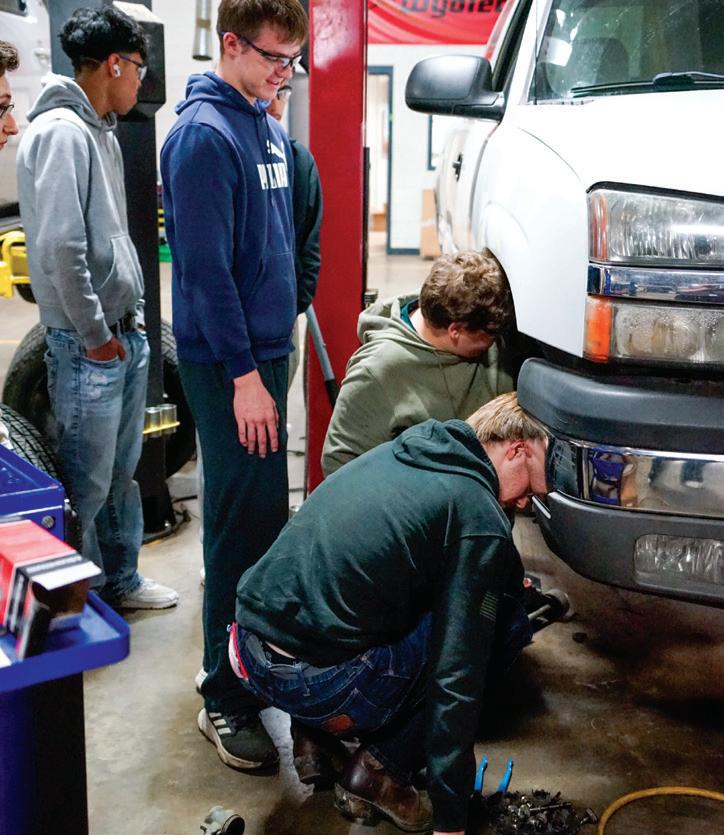
At the back of Frenship High School, the auto shop is always buzzing with activity as students roll up their sleeves and get hands-on experience fixing cars. With more than 100 students across eight classes, the Frenship ISD’s Automotive Technology CTE program is steering the next generation of mechanics toward success.
The Auto Tech program at Frenship High School is structured to educate students over three years, starting with the fundamentals. In the Automotive Basics class, students learn the essential principles of the automotive industry, emphasizing shop safety, EPA and OSHA guidelines, basic vehicle maintenance, and electrical fundamentals.
As students progress to Auto 1, they dive into the diagnostic side of auto repair. They focus on brakes, steering, and suspension. They also begin to broaden electrical knowledge, introducing electronic systems and electrical diagnosis. Auto 2 shifts things into high gear, allowing students to work on actual vehicles.
Frenship ISD serves more than 11,600 students at 16 campuses across the Lubbock and Wolfforth communities. Dana Vinson, the Auto Tech teacher at Frenship High School, explained that many of these vehicles belong to community members and staff.
Since joining the program in 2017, Vinson has operated the auto shop like a real auto repair facility, encouraging staff and community members to reach out for repairs. This approach not only provides practical experience for students but also strengthens their knowledge and application of automotive skills. The class services around 100 staff and community vehicles each year.
As a part of the genuine auto shop experience, Vinson explained that the students are required to diagnose the problem, create their own repair estimates including
looking up parts, and implement a repair.
“We are able to run an all-encompassing program,” said Vinson. “One that not only satisfies all of the required knowledge and skills but also begins that important exposure to how a repair shop operates.”
The student auto shop can cover most repairs with the exception of engine replacement and some transmission repairs. They do not offer any body shop services such as dent repair or painting.
Frenship’s Auto Tech program further emphasizes the district’s dedication to preparing students for careers through CTE education. Every course throughout the Auto Tech program prepares students for careers in the automotive industry.
In addition to providing students with real work experience through the service shop, students in the Auto 2 class can earn industry certification. They have the opportunity to take the Automotive Service Excellence Entry Level exams
At Frenship High School, students have the opportunity to get hands-on experience learning about and repairing vehicles. The auto shop program, which had more than 100 students this year across eight classes, is structured to educate students over three years, starting with the fundamentals.
Photos courtesy of Frenship ISD
to earn automotive repair technician certification, which is accepted across the nation as the industry standard.
They can also achieve an EPA 609 certification, which allows them to service air conditioning systems.
Across the nation, the automotive industry faces a significant shortage of skilled professionals. Frenship ISD is working to combat this vacancy by equipping students with the knowledge and skills needed to enter the workforce upon graduation.H
This story is courtesy of Frenship ISD.

to our generous sponsors for their invaluable support in making Governance Camp and Summer Leadership Institute a success.
Your support helps us empower Texas school leaders to shape the future of public education.


Recognizing the best of Risk Management Fund
Save the date for the Excellence Awards ceremony at the Fund Members’ Conference, April 26-28, 2026, at Kalahari Resorts and Conventions, Round Rock, Texas.
by Savanna Polasek
Bearcat Ambassadors are the voice of the student body at Henrietta ISD, a small school district of fewer than 1,000 located about 50 miles from the Oklahoma border. These high school students weigh in on key district issues, advocate for student needs, and communicate important information to the Bearcat community.
Ambassadors stay informed by attending school board meetings, facility committee meetings, and meetings with their superintendent and leader of the Bearcat program, Jaime Clark. They share what they’ve learned with the public as they attend ceremonies, parent information nights, and meetings. They hand out brochures, welcome people, and speak on stage with Clark.
“Every time we attend an extracurricular event, we are representing our school,” said freshman Allison Ryan, a Bearcat Ambassador. “Our ambassadors are informed of recent news students may want to hear so we can share that information with parents and students, and anyone who has questions.”
They also come back with recommendations based on student feedback, making communications a true two-way street.
“One of the main things we do is advocate for the students at Henrietta,” said Ryan. “We hear [from students] about new things that can be added to school and improvements that can be made. We then relay that information to our superintendent, Ms. Clark, about how we can make our school better.”
So far, the program has been incredibly successful. Students are confident with sharing their perspective at board meetings, and board members now ask students for their input on proposals, leading to valuable feedback on various issues, including the new high school the district is building.


Ambassadors were instrumental in communicating the importance of passing a bond issue in 2024 to build a new high school. The plan calls for the old junior high school, built in 1928, to be transformed into a new high school and football stadium by 2026. The current high school will then become the junior high school.
To help residents gain a better understanding of the need for the bond, Henrietta ISD hosted community information nights and tours at the old junior high school. Ambassadors were on hand to help by answering questions, passing out brochures, and sharing their enthusiasm for the plans.
After the community overwhelmingly passed the two bonds, totaling $36 million, the student ambassadors had the
opportunity to discover how the financing process works when they visited Hilltop Securities in Dallas to see the bond go live. They saw the issuance of bonds, which is when the bonds are released for investors to purchase. Then, they were able to watch the purchases come through.
“They know John, our financial advisor,” said Clark. “They know his name! When we went to Hilltop, he came out and did a presentation for the students so they knew what was going on. So, when the bond went live, they were literally sitting there watching it happen.”
“They were so good about breaking it down for us,” said Allison Bowles, an ambassador and a senior at Henrietta High. “It was a once-in-a-lifetime opportunity. I got to go and watch our bond go live, and I got to see those companies pour into our community to build a better school.”
Ryanne Vicars, an ambassador and senior, said the experience helped the group understand the process and explain it to fellow students.
“Students hear it from us and [better] understand what we’re going through instead of hearing it from a committee,” Vicars said.
To prepare the ambassadors for future discussions with other students and the community on the features and needs of the new school, Clark took the group on an eye-opening field trip to Sherman and Godley ISDs. At Sherman ISD, they were impressed by the learning stairs,

which are extra-large stairs that facilitate learning and collaboration outside of the classroom. At Godley ISD, they found ideas for career and technical education class spaces.
Throughout the process, Clark has remained cognizant of the students’ ages and backgrounds and has found different ways to empower them and build up their leadership capacity so they can truly be the voice in every room, even the facility committee.
“We’re not going to have [another] bond for years to come in Henrietta,” said Clark. “We need to get this right. We need to serve the needs of our athletic department, our school, and our community. We had to see some of those things in Godley ISD to think outside the box to see how a building can do many things. They went on these school tours, and they became the expert.”
Bowles said the tours came after a few district facility meetings where details of the new school were discussed.
“It was so much fun. One of the things we’re going to try to incorporate in our school that we saw in Sherman ISD is having our high school logo on the cafeteria tables,” Bowles said. “It’s the little things you would never think of, and we’re a part of that. We’re the voice for the students for these decisions.”
On a windy day in March, the Henrietta community gathered together for the new high school groundbreaking ceremony. The ambassadors and board members posed with hard hats and shovels before gathering with the entire athletic department and band.
The band played the school fight song as Andrea Evangelista, an ambassador, cut the ribbon for the new site. It was a full circle moment for the students who had been working together for their new school and following the process every step of the way.
“It was amazing to see how many people were there to see this happen,” said Evangelista. “It was really heartwarming for me to see this happen because I was born and raised in Henrietta. Everyone was so in tune, supportive, and respectful of what was happening. I could see the love flourishing out from our community.”
With construction underway, the ambassadors are helping keep their peers safe. They attend facility committee meetings and hear construction updates at each board meeting to help understand the project’s overall timeline, milestones, and safety needs.
“Our goal is to update the student body on the timeline of the project and the effects that come with it,” said Ryan. “Even though this is a highly anticipated and exciting project, we want to make sure students are safe during the construction process. The best people to advocate for students are students.”
Vicars and Bowles won’t attend the new school, but both said they have learned so much from the experience of helping to make it a reality and from the overall program.
“I will take these experiences through life with me,” said Vicars. “When I grow up and have children, I’ll know what’s going on.”
Bowles added, “I’ve gained so much from this. I’m so confident today, but at the beginning, I would not have been okay with any public speaking whatsoever. I have branched out so much and I’ve gained so much, in terms of leadership.”H
Savanna Polasek is a staff writer for Texas Lone Star
Henrietta ISD offers these tips for establishing an ambassador program in your district:
1. Create an easy, streamlined application process. At Henrietta ISD, applications are open to all high school students. The application has one question: Why do you want to be a Bearcat Ambassador? This encourages a diverse range of participants.
2. Allow for a big group. There are 15 ambassadors, ranging from freshmen to seniors. The large group allows for enough ambassadors to attend significant meetings while juggling academics and extracurriculars.
3. Prep students as much as possible before board meetings and big events. Help them break down topics and form insightful questions.
4. Take care of students during meetings. Clark makes sure to feed her students before each meeting and gives them snacks to eat during them. Students have their own nameplates so that everyone in the room knows they are leaders in their own right.
5. Think about how students can learn and grow from this experience. When can your students create a presentation or practice public speaking? What connections can they make? How can you help them build their leadership skills?
One thing about Arlington ISD FFA Wildlife Team and FFA advisor Tanner Smith — they’re going to go above and beyond.
That’s why the team hosted its first-ever wildlife contest in partnership with River Legacy Nature Center this spring. In previous years, students had to travel outside the Dallas-Fort Worth Metroplex to compete, but last year, they decided to organize a contest of their own.
The event was a major success, drawing 12 teams and 51 students from across the state.
“I am so proud of the turnout of the contest,” Smith said. “My team was incredible; they were group leaders and helped set up every bit of the contest and take it all down to make sure River Legacy was left in the same shape as we got it.”
The contest featured several challenging sections: plant identification, biological facts, habitat evaluation, fish and game laws, safety, and techniques. In the biological facts section, students took a multiple-choice test covering native Texas wildlife species, including white-tailed and mule deer, bobwhite and scaled quail, wild turkey, pronghorn antelope, fox and gray squirrel, mourning and white-winged doves, and waterfowl. The fish and game laws portion required competitors to study the Texas Outdoor Annual and complete a multiple-choice test on the state’s hunting and fishing regulations.
“I usually study the things I am not as good at, and I will study at lunches and practices with the team and Mr. Smith,” said junior Spencer Doughty. “Occasionally I look at the stuff I am good at.”
For the safety section, students demonstrated knowledge of hunter and boater education through a written test. The habitat evaluation portion required participants to analyze a scenario, study a map, and physically assess a plot of land to determine if it provided the necessary
This story is courtesy of Arlington ISD. North Texas

The Arlington ISD FFA Wildlife Team hosted its first wildlife contest in partnership with River Legacy Nature Center this spring. After traveling outside the Dallas-Fort Worth Metroplex for many years to attend wildlife contests, students decided to organize their own event. The contest was a big success with 12 teams and 51 students from across the state in attendance.
Photos courtesy of Arlington ISD
food, water, and shelter for wildlife. The techniques portion involved identifying 20 different objects related to wildlife management, such as skulls, traps, tracks, water samples, scat, and GPS tracking devices. Finally, in the plant identification section, students identified up to 15 flagged plants from a pool of 125 native Texas species and determined which wildlife consumed each plant.
The team competed the day before the official contest and then worked the event on Friday. Had their scores been included in the official rankings, they would have placed second overall as a team, with individual rankings of second, fourth, and fifth.
The awards were cut from two trees that fell at River Legacy. The team designed the artwork, and ag mechanics teacher Jeff Hranicky cut the logs into tree cookies. Then, Arlington High School engineering and construction teacher Blair Hansard was able to burn the art into the awards.
“I’m pretty proud,” said sophomore Luke Curtis. “It was fun to host the contest, and it was interesting to see the

backside of how it all works.”
And this was just the beginning. The team plans to continue hosting the contest each year.
“I am very proud of our team for hosting its first contest, and I am very proud to be a part of creating a new tradition in FFA of hosting a contest each year,” said Morgan Jones, a junior.
The team was surrounded by support from the Arlington ISD community, including Arlington High Principal Stacie Humbles, Deputy Superintendent Jennifer Collins, and Leanne Haynes, a school board trustee. Located in Arlington, the district has nearly 55,000 students.
“That is one of the most fulfilling things from this event,” Smith said. “For them to show their support was incredible. Agriculture education and FFA are always doing things like this, but it does not always get showcased, so my passion is to make sure our students get the recognition they deserve!”H
In Keller ISD’s elementary theater classrooms, students are learning more than monologues and musicals — they’re learning the importance of a firm handshake, steady eye contact, and clear, confident speech while making conversation.
Through the annual Keller Shake competition, which just finished its 11th year, students practice soft skills that will serve them both on and off the stage as they become not just performers, but poised, confident communicators and future leaders.
“The Keller Shake teaches our students more than just how to talk — it teaches them how to connect,” said Kim Blann, Keller ISD’s director of Fine Arts. “In a world where digital communication often overshadows face-to-face interaction, the ability to look someone in the eye, ask thoughtful questions, and be truly curious about others is an essential skill. These moments of connection build empathy, trust, and relationships — skills that will serve them well for a lifetime.”
The Keller Shake began after a visit to a school in Atlanta, where middle school students were participating in an interview competition judged by community leaders. That experience sparked the idea: what if Keller ISD schools taught similar soft skills to elementary students?
“These are the very skills that many business leaders say are missing in today’s workforce,” Blann said. “The impact has been nothing short of incredible. Over the past 11 years, we’ve seen students develop confidence, communication skills, and a strong sense of presence — all through intentional teaching and coaching in our Elementary Theatre Program. Our theatre teachers do an amazing job of helping students learn these often overlooked, but absolutely vital, soft skills.”
The competition is open to thirdand fourth-grade theatre students, with the initial phase of the competition being held at each campus. Three students from
each campus advance to the Keller Shake Finals, where first, second, and third place are selected districtwide. Keller ISD, located in the Dallas-Fort Worth area, serves about 33,000 students.
The event includes a fun incentive –free milkshakes for a year from longtime sponsor, Chick-fil-A, for the winner, and one free milkshake for each of the finalists. Additionally, all finalists receive medals, and the top three places get trophies.
The Fine Arts Department has heard powerful stories during this competition — from students with speech impediments finding their voice to shy children blossoming into confident speakers.
“Some students have even asked to wear ‘power suits’ for the final round, showing just how seriously and proudly

they take this competition,” Blann said.
One of the things that makes the Keller Shake truly special is the incredible lineup of judges who volunteer their time and energy each year, including city mayors, CEOs, business owners, and military veterans.
“To see third and fourth graders walk into a room, shake hands with a CEO or a mayor, and carry on a thoughtful conversation with poise and curiosity, it’s just remarkable,” Blann said. “The pride they carry, the joy in their eyes when they realize they’ve connected with someone, it’s powerful. It reminds us that while academics are critical, these human skills are just as essential.”H
This article is courtesy of Keller ISD.
Keller ISD’s annual Keller Shake competition gives elementary school theater students the opportunity to practice soft skills that will serve them on and off the stage. The initial phase of the competition is held at each campus. Then, three students from each campus advance to the Keller Shake Finals, where first-, second-, and third-place winners are selected districtwide. The lineup of judges who volunteer their time and energy each year has included mayors, CEOS, business owners, and military veterans.

The assignment: Develop an idea for a pizza concept.
The prize: The winning pizza would land on the menu of Wise Guys Pizzeria, starting March 1.
This semester, students in the Advanced Culinary class in GrapevineColleyville ISD’s career and technical education program got that unique opportunity.
Students came up with creative concepts and names like the Maui Mobster, the OG Twist and the Don Maca-Loni. Macy Lanier, co-creator of the Don MacaLoni, said the team came up with their concept after noticing that fried mac-andcheese balls were on the Wise Guys menu.
“Cheese pairs well with cheese, so we decided fried mac-and-cheese balls would go well on a pizza,” said Lanier, a junior at Colleyville Heritage High School. Alfredo sauce and mozzarella rounded out their cheesy creation. “We think it’s going to win because it’s simple,” she added.
Grapevine High School senior Jorge Garcia said his team also came up with an Alfredo-based delicacy, but with a Hawaiian twist. Their Maui Mobster is topped with Canadian bacon, red onions, and pineapple.
“We both wanted to do an Alfredobased pizza, and then we brainstormed to give the pizza a bit more ‘pop.’ It’s not loaded with a lot of ingredients, but it’s also not too simple.”
Meanwhile, Colleyville Heritage junior Albin Jacobson said that for his team’s OG Twist concept, “we wanted to come up with something that people liked and was marketable but was also different from the rest of the things on the menu.” Their stuffed-mozzarella crust pizza is topped with more mozzarella cheese, garlic oil, spicy marinara sauce, ricotta, basil, and capers.
A business helps the district
Kevin McNamara, owner of Wise Guys Pizzeria in Grapevine and a Grapevine-

Making pizza became a learning opportunity this year for students in the Advanced Culinary class in Grapevine-Colleyville ISD’s career and technical education program. They had the opportunity to create new pizza concepts for a local restaurant, with the winner gaining a permanent spot on the menu at Wise Guys Pizzeria in Grapevine. The prize went to Don Maca-Loni, a fried mac-and-cheese idea. Besides creating a new pizza, students also learned about food costs and marketing.
Colleyville ISD community partner, which also supports the district’s “Stars of GCISD” staff recognition program, said that his team came up with the idea because they wanted to add new pizzas to the menu that were ideas from the community. That spurred the restaurant to reach out to the district and, in particular, its CTE culinary program.
“I like seeing students light up when they learn and they grow,” he said. “As an entrepreneur, it’s exciting for me to see the next generation learning about the business that I chose. At some point, someone took a chance on me, and it’s part of my duty to give back to the new generation.”
It wasn’t just about coming up with ingredients. As a learning opportunity, students also had to determine food costs and create a marketing flyer, something which they learn through CTE since students take Principles of Hospitality and Culinary I before entering the Advanced Culinary class.
In the advanced class, they also have an opportunity to cater events and prepare to take the industry-based food manager certification, a 90-question
college-level exam that demonstrates knowledge and proficiency in the food industry.
Representatives from the pizzeria visited the class in February to announce the winner, but they also shared a surprising twist: All three pizzas would be featured on the menu to allow customers to decide which one is the best.
On April 25, McNamara returned to the class to announce the winner: The Don Maca-Loni, which now has a permanent spot on the restaurant menu.
However, the real winners were all the students.
“The assignment has built my confidence and has helped me speak more openly about ideas,” Jacobson stated.
Lanier said she is “glad that we had this opportunity to experience working with a real business,” adding that she “learned teamwork and how to collaborate. It’s something that I can put on my resume and something that will help me in the future.”H
This story is courtesy of GrapevineColleyville ISD.
Wylie ISD high school seniors gathered at the Community Park Center, formerly the Wylie Senior Recreation Center, to launch the Wylie Senior2 Mentor Program, where they were paired with senior adults for a year-long mentorship.
Each student and mentor met once a month this past school year in hopes of building a meaningful connection.
The program is operated by the Community Park Center in partnership with Wylie ISD to connect senior students with seniors 55+ in a mentoring relationship.
“Connecting with our district theme of Legacy, the purpose of the program is to share life perspectives between a younger and older generation to benefit education, future career goals, and to create a connection with someone who can provide a viewpoint from a lifetime of experience,” said Wylie ISD Family Liaison Joley Martin.
Conversations flowed from the start
The first meeting took place in December over a 30-minute lunch, marking the start of their mentoring journey. Though they had plenty to discuss and the conversations flowed effortlessly, participants were provided with conversation starters.
“Every month, our questions align with the Wylie ISD character pillars,” Martin said. “I think the program is bridging a gap and creating a meaningful relationship with somebody.”
Angela Daniel, Wylie Senior Recreation Center’s guest services specialist, worked with the district to facilitate the program. Wylie ISD, based in a town of the same name in Collin County, has more than 18,000 students.
“I’ve wanted to do this since my son was a senior in 2016,” Daniel said. “Seeing how he was about to go into the world on his own, I knew that he could benefit from something like this.”
Wylie High School senior Collin Fletcher said he signed up to participate in the program to “have fun.” He and his mentor connected through their love of the outdoors.
“We both like to hunt and fish,” Fletcher said.
Mentor Ann Sims said she enjoyed getting to know her mentee and looked forward to their meetings.
“I was really impressed with my girl,” Sims said. “She’s already accepted to university and has a job.”
Mentor Judy Chiles expressed her excitement about getting to know her mentee better and hoped to inspire and support him throughout their journey together.
“My senior has two jobs and wants to be a policeman,” Chiles said. “He doesn’t plan to go to college, but we talked about how he would have to go to the police academy. I’m hoping I can give him some of my life experience. Maybe he can learn from things I’ve done wrong and things I’ve done right.”
The seniors met once a month until graduation. The district hopes this program fosters lasting mentorships and friendships that endure for a lifetime. Daniel agrees.
“They can both learn from each other,” Daniel said. “I am so pleased with our first meeting and can’t wait to see how it progresses in the months ahead. I hope it takes off and grows each year.”H
This story is courtesy of Wylie ISD.

The Wylie Senior2 Mentor Program launched this past year, giving Wylie ISD high school seniors the opportunity to meet with senior adults for a year-long mentorship. Students and their mentors built meaningful connections during monthly meetings.
Photos courtesy of Wylie ISD

by Mary Belle Unger-Robles
The Leadership TASB Class of 2025 traveled this spring to the Research-Brazos Valley Region, also known as Bryan-College Station and Aggieland. These communities are rich with history and a whole lot of pride, and we had the opportunity to visit Bryan and College Station ISDs, where we witnessed some amazing teaching.
Our first stop was to the Bryan ISD administration building, where the class was graciously welcomed by Superintendent Ginger Carrabine, board members, and district administrators who were eager to tell us about their district, which has four high schools, three intermediate, two middle schools, and 14 elementary schools. We toured Bryan High School, Sadberry Intermediate School, and the Bryan ISD Career & Technical Education Complex.
After touring the building, we were treated to an outstanding performance by Bryan High School’s choir Vocal Legacy. Not only did they sing, but they performed choreography. Many of the students are also involved in other school organizations. The practice and hard work they have put into their performances has led them to success at the state level. They were an amazing group of students.
Our next visit was to Sadberry Intermediate School, which is named after O.W. Sadberry Sr., who had significant influence in the community during the 1950s and 1960s. The school opened in 2023 thanks to a bond passed in 2020.
The last stop on our Bryan ISD tour was at the CTE Complex. Students and staff led us through the different CTE areas, including construction technology, automotive technology, industrial engineering and robotics, and welding technology. In each area, students shared their knowledge, skills, and safety processes in operating machinery. Their dedication and knowledge was evident in the projects they were creating.


We returned to the Bryan ISD administrative office for a session featuring methods the district uses to recruit and retain teachers. One segment called The Future of Education: Teacher and Superintendent Preparation highlighted efforts by Bryan ISD and the Texas A&M College of Education & Human Development to meet staffing needs specifically related to educational administration and teacher preparation.
The district has developed incentives and programs, including a residency and a mentorship program, which tap retired teachers to serve as mentors. It also has created community connections with teachers and staff through its Retiree Gold Card and Teachers of the Week Recognition programs.
The last stop on our tour took us to College Station ISD, where Superintendent Tim Harkrider and district administrators welcomed the class. We were privileged to visit River Bend Elementary School, where student ambassadors, enthusias-
tic about their assigned responsibility, escorted us to kindergarten classrooms to observe students in their learning environment. Students told us how the rigor in their classroom assignments created a high level of learning for them.
Then we traveled to College Station High School, where we were welcomed by their cheer team and band. We visited CTE, law enforcement, and robotics classes, and the FFA meat lab, where students learn about meat processing and handling. These students are doing amazing things.
During the visit, we also met with a panel of student teachers who had been paired with mentors to support them in


A In April, the Leadership TASB Class of 2025 visited the Research-Brazos Valley Region where they made stops at College Station and Bryan ISDs.
B Board members take a tour of the woodshop at the Bryan ISD CTE Complex.
C College Station ISD Superintendent Tim Harkrider welcomes the LTASB Class of 2025 during their visit to River Bend Elementary School.
D During the visit to College Station ISD, class members were able to observe students at the school’s FFA meat lab, where students learn about meat processing and handling.

Why choose student accident and athletic insurance from TASB Benefits Cooperative’s awarded provider, Texas Kids First?
• Coverage on or off campus designed to insure students participating in University Interscholastic League (UIL) activities
• Trusted by trainers endorsed by Texas State Athletic Trainers’ Association and Southwest Athletic Trainers’ Association
their learning. Teacher recruitment and retention are very important to ensuring student academic achievement and district success. We were fortunate to be introduced to some important individuals who play an important role in these processes.
We enjoyed our time in Bryan and College Station and are thankful to the speakers, board members, superintendents, administrators, and especially the students and teachers we visited. It was a privilege to see the amazing work students were doing. Thank you for opening your schools and sharing your experience with us.H
Mary Belle Unger-Robles is a Southside ISD school board member and a member of the LTASB class of 2025.
• Connected statewide insuring more than 275 school districts and a network of over 3,000 medical providers in Texas
• Top rated by A.M. Best Company, a leading insurance rating authority*
by Beth Griesmer
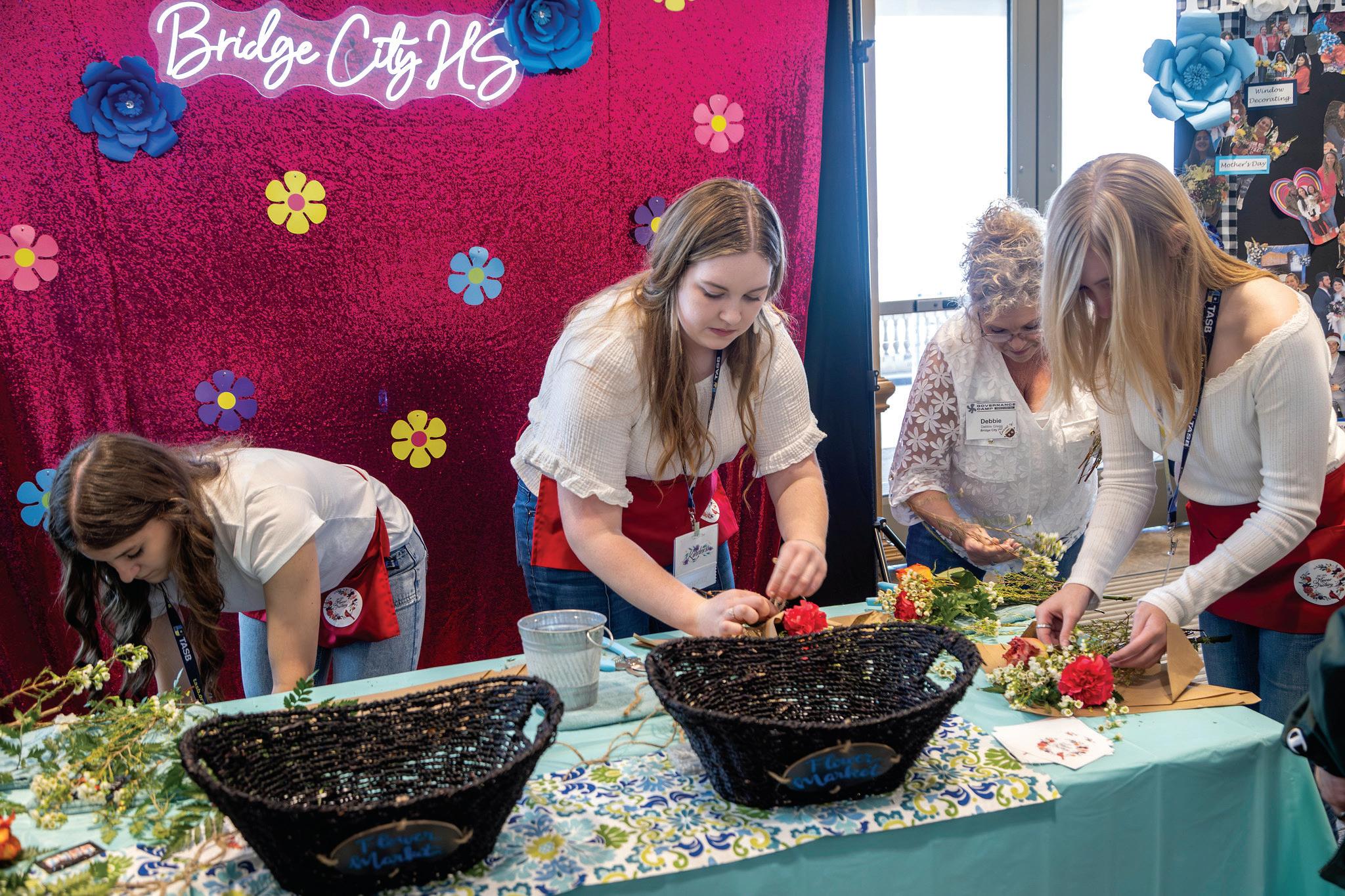
Educators and trustees from Bridge City ISD beamed as students worked in a flurry of petals, stems, and ribbons to provide hundreds of little bouquets to attendees of TASB’s Governance Camp in March. The Bridge City High School Flower Factory demonstration was a hit.
The floral design career and technical education program has been a big hit in the 3,000-student district east of Beaumont, too. Over the last eight years, it has grown from four classes with a part-time teacher to a 150-student program with two dedicated instructors. It includes a monthly flower market that gives students a real-world setting to test a variety of skills.
“The monthly flower market gives our students the opportunity to create a market where they learn the whole process of purchasing, pricing, and marketing to the school and the public,” said Debbie Gregg, who came out of retirement after 30 years of teaching art to start the high school program in Bridge City.
Students are assigned different jobs like cashier, bouquet wrappers, and cleanup crews, said Gregg. Students can earn two levels of certification through the Texas State Floral Association, which gives them an opportunity to get a job in the floral industry.
“This year, we also added Flower of the Month arrangements that are created and sent out the same week as our market,” said Kayla Worthington, Gregg’s counterpart in the CTE program. “We have teachers and staff on our campus and our neighboring middle school campus who subscribe to these each month.”
Beyond the monthly markets, the floral design program engages in meaningful projects, such as creating arrangements with encouraging notes for Mental

Health Awareness Month. The hands-on program cultivates not only professional skills but also community engagement for the students.
"The flower design program is a perfect example of how Bridge City ISD is preparing students for success beyond the classroom,” said Superintendent Mike Kelly. “Through this program,
our students are developing real-world skills, earning industry certifications, and learning the value of hard work, creativity, and community service. We are incredibly proud of the impact our students and teachers are making.”H
Beth Griesmer is a staff writer for Texas Lone Star.
Texarkana ISD students are leveraging cutting-edge technology to make a real-world difference for those in need.
The East Texas district this spring announced an innovative and impactful project led by Nicole Ayers, Technology and Robotics teacher at Martha and Josh Morriss Mathematics & Engineering Elementary.
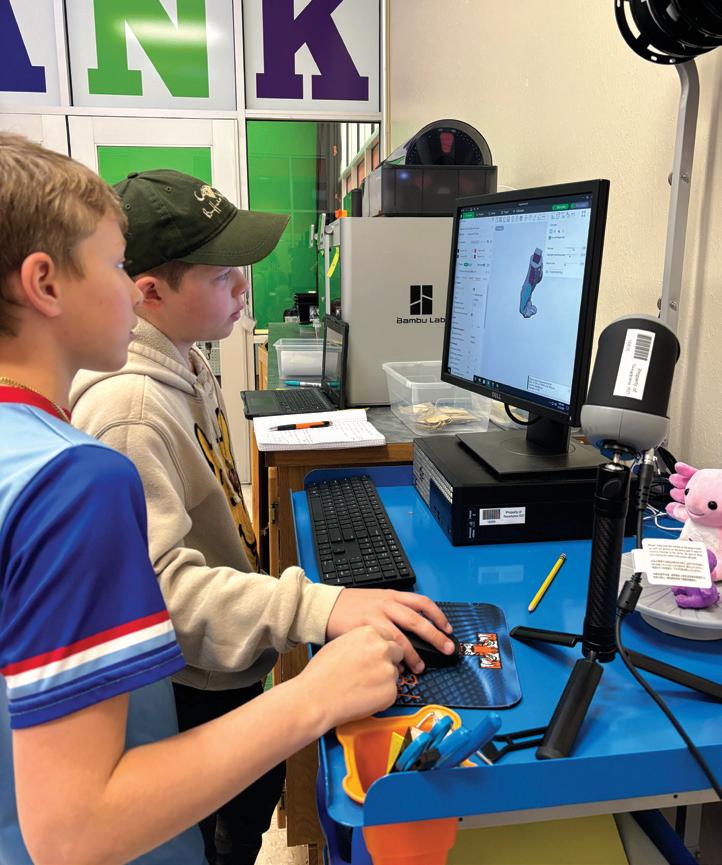
Ayers was awarded a Tiger Grant from the Texarkana ISD Education Foundation that funded the purchase of two 3Dprinters, a 3D-scanner, and a desktop PC for her students. With these new tools, she became a part of Enabling the Future, a global network of volunteers using 3Dprinting to create and donate prosthetic hands and arms to individuals in need.
Recently, it was also announced that her program will receive an additional $2,500 from the Sparklight grant, which will help cover the costs of materials and shipping, as well as improve production efficiency. Through this initiative, Texarkana ISD students are not only expanding their STEM knowledge but also learning the value of service, innovation, and making a meaningful impact on others.
Recently, Ayers and her students connected with the Uganda e-NABLE
Coalition via the e-NABLE forum, setting the stage for incredible learning and giving opportunities. Her fourth- and fifth-grade STEM teams completed their first prosthetic device, which is being used as a training tool for third-grade students.
In collaboration with third-grade teachers Tara Droske, Taylor Peavey, and Mindy Spigner, the program will be integrated into biomedical and manufacturing engineering units, allowing students to print and assemble a total of 16 prosthetic limbs.
“This project is more than just a learning experience; it’s a way for our students to contribute to a global cause and see firsthand how technology can change lives,” said Ayers. “Watching them take ownership of the process and understand the impact of their work is inspiring.”
The 3D-printing process can be viewed live via a dedicated link, allowing
A Student mentors train third-grade students on assembling a prosthetic hand.
B Fifth-grade students at Texarkana ISD’s Martha and Josh Morriss Mathematics & Engineering Elementary prepare a silicone mixture to coat a prosthetic thumb.
C Fifth-grade students work in Bambu Studio to prepare a CAD file for 3D-printing.

the community to witness students’ hard work and innovation in action and follow the remarkable journey from classroom concept to real-world application.
Texarkana ISD, which serves more than 7,000 students, is committed to providing students with opportunities to lead, innovate, and engage in meaningful, hands-on learning experiences. This project exemplifies the district’s mission to empower students with the skills and knowledge needed to shape the future.H
This story is courtesy of Texarkana ISD.

Tyler ISD has partnered with the East Texas Youth Orchestra (ETYO) to introduce the Afterschool Strings Club, an initiative designed to provide elementary students with early exposure to stringed instruments.
The Afterschool Strings Club provides a structured learning experience for fifthgrade students, a pivotal time before middle school elective choices are made. Each session begins with a snack, followed by 30 minutes of music reading instruction and 45 minutes of violin training.
The program launched at Jack Elementary School in September 2024 and expanded to Bell Elementary in January 2025, with plans for further growth in the district — located in Tyler — of more than 18,000 students.
“Research and data clearly demonstrate the overwhelming impact learning an instrument has on a student’s development,” said Phil Ketcham, ETYO executive director. “We have expanded our mission with a program to come alongside schools in our area to help students see the possibility of their playing a stringed instrument. Our goal for this program is to increase the number of students enrolled in middle school orchestra programs.”
A key element of the program’s success is parental involvement. Parents are required to attend the final 15 minutes of each session to receive guidance on how to support their child’s progress at home.
While the primary goal is to introduce students to the violin, the program also emphasizes performance opportunities. Jack Elementary’s Strings Club showcased its progress at the ETYO concert and performed for their peers during a school lunch period. It also performed in February at the ETYO concert at Tyler Junior College.
The program is entirely free for participating families, thanks to the generous contributions of The Rea Charitable Trust, Women’s Symphony League of

Tyler, and the East Texas Communities Foundation’s Evans-Merrick Music Grants Fund. These organizations share ETYO’s vision of expanding access to musical education in East Texas.
Tyler ISD’s Bell Elementary club is under the direction of violin instructor Andrew Striley, orchestra director at Moore Middle School. The Jack Elementary club is led by Sam Pasqualetto, ETYO coordinator of the Afterschool Clubs program and orchestra director at Three Lakes and Hubbard middle schools.
With the successful implementation of these first two clubs, ETYO is actively working toward establishing a third location, further expanding opportunities for young musicians in East Texas.H
This story is courtesy of Tyler ISD.


Tyler ISD’s Afterschool Strings Club provides elementary students with a structured learning experience and early exposure to stringed instruments. Partnering with the East Texas Youth Orchestra, Tyler ISD launched the program at one elementary school in September 2024 and expanded it to another earlier this year. There are plans for further growth.
Photos courtesy of Tyler ISD
by Sylvia Wood
TASB selected the top three winners of its biennial Student Video Contest, designed to showcase the strength and success of Texas public schools through promotional videos with students as the stars.
A prize of $5,000 has been awarded to the following school districts, which each placed first in their category based on creativity, message, and technical quality:
• Tyler ISD: Large district or 5,001 or more students
• Robinson ISD: Medium district or 501-5,000 students
• Santa Maria ISD: Small district or no greater than 500 students
A total of 41 videos from districts across the state were submitted for consideration by a panel of six judges. TASB Executive Director Dan Troxell applauded
all of the districts that submitted entries and congratulated the three winners.
“These videos focus on what makes public schools the best choice while highlighting the achievements of individual school districts,” Troxell said. “We are incredibly proud of all the students who participated in this year’s contest.”
Each of the three winning videos offers a different message of inspiration. Tyler ISD’s video showcases students of all ages talking about their school district. Robinson ISD’s video focuses on character and the traits that embody a Robinson student. Santa Maria ISD’s winning entry illustrates how a small district can feel like a large family.
TASB President Rolinda Schmidt said the videos help illustrate the important role that Texas public schools have in their communities.
“No matter a district’s size, every


school has a story to tell,” she said. “It’s through sharing those successes and stories that we connect, inspire, and create a positive impact for the 5.5 million schoolchildren in our state.”
Watch Tyler ISD’s inspiring video, find out what being a Robinson ISD Rocket means, and learn about Santa Maria ISD by scanning the QR code.H
Sylvia Wood is a staff writer for Texas Lone Star.

Scan the QR code to view winners' videos.
A TASB Director Keri Roberts, a Goldthwaite CISD trustee (middle), presents a check to Robinson ISD for winning the medium district category of TASB’s Student Video Contest.
Photo courtesy of Robinson ISD
B TASB Director Tony Raymond, a Sabine ISD trustee (in tan jacket), presents a check to Tyler ISD for winning the large district category of TASB’s Student Video Contest.
Photo courtesy of Tyler ISD
C TASB Secretary-Treasurer Sylvia Sánchez Garza, a South Texas ISD trustee (in pink jacket), presents a check to Santa Maria ISD for winning TASB’s Student Video Contest in the small district category.
Photo courtesy of South Texas ISD

by Mary Ann Lopez
Grant Walling’s experience at Bellville ISD was so amazing he wanted to ensure other students would have the same great experience. That’s why, as a junior at Bellville High School, he applied for the student representative position on the Bellville ISD school board. Now a graduate of the district, Walling was selected and served during his senior year in 2024-25.
The addition of the student rep in Bellville ISD, located about an hour west of Houston, came about after the board and the district’s leadership felt something was missing from the board’s process: student perspective and voice. Walling is the third student to have served on the board.
Walling was also active as a student participant on the Bellville ISD advisory committee. He said he plans to study engineering with hopes of becoming a U.S. Navy fighter pilot. He was also involved in other activities, including FFA, and he held a part-time job as a shift manager at a sport facility in Bellville.
Walling shared more about his role and what he learned during his time as a student representative on the Bellville ISD school board.
Q: How did you learn about the student representative program at the district?
One of my good friends was one of the representatives the year before. Even before that, I was told by my mom that I should sign up for it. I didn’t because it was my first year at the school. Finally, at the end of junior year, I thought, “I’m good at talking. I think I have great ideas that I can bring forth to the board.”
Q: Why did you want to participate on the board as its student representative?
When I met everyone on the board, I realized they really want what’s better for students in Bellville, and that’s exactly

what I want. I want every student in Bellville to have the same [great] experience I’ve had in my four years.
Q: What did you hope to achieve in the role?
A big thing to me was making sure that the people on the board had the right idea about what’s happening [in the schools]. I’m in a high school getting the information, and you know, with my friends all in different sports and different aspects of high school, [I’m] getting that information and being able to relay that information.
Q: What do you do in your role as a student rep on the board?
I’ll go to all the board meetings, all the workshops, just really every meeting possible, I try to go. I voice my opinion.
Q: From a student perspective, how does your role as the student rep benefit the district and students?
I think it makes sure that any policy
or rule created doesn’t impact students in a negative way. I’m trying to make sure everything is positive — helping students, not hurting them — so the student perspective gets heard.
Q: How has your view of the district and your education changed since you started participating on the board?
It’s made me appreciate the process of learning. Because when you’re not in this position, you don’t really know. It’s just, “Oh, this teacher just decides to do this.” No, it’s all the way from the federal down to the state, down to the district. And it just amazes me, all the people in that process. Everyone has to work together.
Q: Are there any ideas or projects that you’ve championed as a student rep on the board?
I haven’t really changed anything as much as I’ve given my input on everything. You know a big thing for me is the phone policy. That’s a big worry that’s been voiced


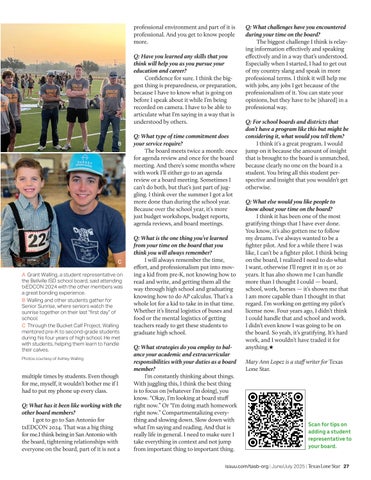
A Grant Walling, a student representative on the Bellville ISD school board, said attending txEDCON 2024 with the other members was a great bonding experience.
B Walling and other students gather for Senior Sunrise, where seniors watch the sunrise together on their last “first day” of school.
C Through the Bucket Calf Project, Walling mentored pre-K to second-grade students during his four years of high school. He met with students, helping them learn to handle their calves.
professional environment and part of it is professional. And you get to know people more.
Q: Have you learned any skills that you think will help you as you pursue your education and career?
Confidence for sure. I think the biggest thing is preparedness, or preparation, because I have to know what is going on before I speak about it while I’m being recorded on camera. I have to be able to articulate what I’m saying in a way that is understood by others.
Q: What type of time commitment does your service require?
The board meets twice a month: once for agenda review and once for the board meeting. And there’s some months where with work I’ll either go to an agenda review or a board meeting. Sometimes I can’t do both, but that’s just part of juggling. I think over the summer I got a lot more done than during the school year. Because over the school year, it’s more just budget workshops, budget reports, agenda reviews, and board meetings.
Q: What is the one thing you’ve learned from your time on the board that you think you will always remember?
I will always remember the time, effort, and professionalism put into moving a kid from pre-K, not knowing how to read and write, and getting them all the way through high school and graduating knowing how to do AP calculus. That’s a whole lot for a kid to take in in that time. Whether it’s literal logistics of buses and food or the mental logistics of getting teachers ready to get these students to graduate high school.
Q: What strategies do you employ to balance your academic and extracurricular responsibilities with your duties as a board member?
Q: What challenges have you encountered during your time on the board?
The biggest challenge I think is relaying information effectively and speaking effectively and in a way that’s understood. Especially when I started, I had to get out of my country slang and speak in more professional terms. I think it will help me with jobs, any jobs I get because of the professionalism of it. You can state your opinions, but they have to be [shared] in a professional way.
Q: For school boards and districts that don’t have a program like this but might be considering it, what would you tell them?
I think it’s a great program. I would jump on it because the amount of insight that is brought to the board is unmatched, because clearly no one on the board is a student. You bring all this student perspective and insight that you wouldn’t get otherwise.
Q: What else would you like people to know about your time on the board?
I think it has been one of the most gratifying things that I have ever done. You know, it’s also gotten me to follow my dreams. I’ve always wanted to be a fighter pilot. And for a while there I was like, I can’t be a fighter pilot. I think being on the board, I realized I need to do what I want, otherwise I’ll regret it in 15 or 20 years. It has also shown me I can handle more than I thought I could — board, school, work, horses — it’s shown me that I am more capable than I thought in that regard. I’m working on getting my pilot’s license now. Four years ago, I didn’t think I could handle that and school and work. I didn’t even know I was going to be on the board. So yeah, it’s gratifying. It’s hard work, and I wouldn’t have traded it for anything.H
Mary Ann Lopez is a staff writer for Texas Lone Star
multiple times by students. Even though for me, myself, it wouldn’t bother me if I had to put my phone up every class.
Q: What has it been like working with the other board members?
I got to go to San Antonio for txEDCON 2024. That was a big thing for me.I think being in San Antonio with the board, tightening relationships with everyone on the board, part of it is not a
I’m constantly thinking about things. With juggling this, I think the best thing is to focus on [whatever I’m doing], you know. “Okay, I’m looking at board stuff right now.” Or “I’m doing math homework right now.” Compartmentalizing everything and slowing down. Slow down with what I’m saying and reading. And that is really life in general. I need to make sure I take everything in context and not jump from important thing to important thing.

Scan for tips on adding a student representative to your board.
by Sylvia Wood
On a spring field trip to the Texas Capitol, Oluwanifemi Ibukun had no reservations about talking to state lawmakers about the importance of special education funding for Fort Bend ISD students.
As a junior at Hightower High School, the 16-year-old believes no student should be sidelined from reaching their potential. “I talked about how people tend to treat special education kids like they’re different,” Ibukun said. “But they’re just like every other kid and deserve the same opportunity even though they might need more resources and more help. We just need more funding.”
If being able to advocate on a complicated school finance issue seems like a tough assignment for a teenager, Ibukun said she’s learned a lot over the past year in the district’s Student Leadership program.
“It’s made me realize that I do have a voice, and people do care what I say,” she said.
Designed to develop proficiency in all the core aspects of leadership, including public speaking and presentation skills, the two-year program was established in partnership with the Fort Bend ISD
school board, which works with students both in district and community settings. The goal is to offer participants a unique opportunity to learn through observation, hands-on experiences, and a summative capstone project and presentation in their senior spring semester.
“The program gives students a glimpse into the complex operations and challenges of the district and other businesses, while allowing them to learn from trustees and other community leaders,” said Fort Bend ISD Board President Kristin Tassin. “It gets students out of the classroom and into the community, allowing for hands-on experiences, student-led education, and projects that build collaboration, communication, and critical thinking skills. These are the skills we want students to have when they leave FBISD.”
Students are also increasingly seeing the value of taking their learning beyond the classroom. Nearly 300 sophomores applied during the most recent application period for the leadership program. The number of participants is limited to 36 students, with three spots allocated from each of the district’s 12 high schools.
Located southwest of Houston, Fort Bend ISD is the sixth-largest district in Texas, with more than 79,000 enrolled

students in one of the fastest-growing and diverse counties in the nation. The district is also the largest employer in Fort Bend County, with more than 12,000 employees.
Participants are selected based on an application detailing their interest in developing their personal leadership skills. Parents must also give their permission and commit to supporting the program’s attendance and participation expectations.
Throughout the leadership program, trustees rotate visits, talking with both the first- and second-year students on different topics — from policy and public education advocacy to why community involvement is a powerful catalyst for change.
Aleena Qadri, 16, a junior at Crawford High School, had little awareness about the school board’s role in both governance and advocacy before participating in the program.
“I think many people don’t have a good understanding of who the school board is and what they do,” Qadri said. “I feel very grateful because I’ve been able to inform so many about who actually makes the decisions and policies to help our education. It’s been eye opening.”

Raising awareness among students about the role of the school board is just one benefit of the program. Trustees also find value in hearing what student participants tell them about their school experience.
“In Fort Bend ISD, we strive to offer a variety of educational opportunities for our students, particularly programs that allow for student experience and leadership growth,” Tassin said. “The leadership program specifically targets the ‘servant leadership’ attribute of our Profile of a Graduate, and it is a way for trustees to engage directly with students.”
She noted that students often email their feedback on upcoming board agenda items. “This speaks to their level of engagement in the program and development of advocacy skills that will serve them well into their future,” she said.
For Nicholas Briones, 17, a junior at Kempner High School, his initial goal in applying for the program was to develop his speaking and presentations skills. But over the past year, Briones said he’s learned so much more. In Student Leadership 101, he had the opportunity to be one of the main presenters and organizers of the Elementary School Leadership Conference, working with the district’s youngest students on leadership topics.
“I basically got to teach them about PAC, or professionalism, accountability, and communications, using lessons that I had organized,” he said. “It was a really cool opportunity.”
Building confidence and competence in key leadership areas is one of the goals in the first year, while year two gets students out into the community, where they work on specific projects for participating organizations, including Memorial Hermann
Hospital, Shared Dreams, GiGi’s Playhouse, Fort Bend Education Foundation, and the Fort Bend County Commissioners Office.
“The Student Leadership Program provides students with relevant experiences to apply their learning in our community,” said Fort Bend ISD Superintendent Marc Smith. “Community partners offer our students the opportunity to take the next step from learning to doing. Students roll up their sleeves and get their hands dirty. Working alongside these mentors, they understand and solve problems, give and receive feedback, and ultimately make things better in their own community.”
The second-year capstone projects give students the opportunity to put their leadership skills to the test. They combine monthly community visits with regular meetings with peers and Leadership Development Coordinator Geordie Daniel to dive deeper into leadership competencies and specifics of their projects.
The goal was to be prepared for an April capstone presentation in front of peers, community partners, and district leaders, including school board trustees who were there to support and encourage them.
Whether any in the current cohort decides to ever run for a school board seat remains to be seen. But close collaboration with their elected school board trustees has inspired them in other ways.
“I like how the system works.” Briones said. “They work together as a body corporate and not just [as] an individual person. That’s really told me a lot about the place of teamwork in leadership because being on a school board requires a lot of teamwork.”H
Sylvia Wood is a staff writer for Texas Lone Star.

A Fort Bend ISD Trustee and TASB Director Angie Hanan collaborates with students in the leadership program during a trip to Austin to advocate at the state Capitol.
B Fort Bend ISD Board President Kristin Tassin, center, poses with students participating in the leadership program’s capstone presentations.
C A student in the Fort Bend ISD leadership program works with a table of elementary school students.
Photos courtesy of Fort Bend ISD
Interested in starting a student leadership program in your district? Here are a few tips from recent graduates Gabrielle Chandler and Austin Elam, who both participated in the Fort Bend ISD program, and Geordie Daniel, the district’s Leadership Development Coordinator:
1. Hire great program leaders who enjoy working with high school students. “You want to find someone who is engaged, can interact with people, and gets everyone excited and eager to learn new things,” said Chandler.
2. Leverage district experiences to develop buy-in, both from staff and students. Elam recalled touring all the different departments and meeting staff members who all play a critical role in the district’s mission to educate students even if they aren’t in the classroom.
3. Find great community partners who want to provide meaningful experiences for students. “They should be broad enough and unique enough where you learn something new with each visit that you go to because that will allow students to actually learn the most,” Elam said.
4. Encourage school board members to participate in the program meetings and to share aspects of their personal stories. “There’s been a board member at every meeting,” Chandler said. “And it really just shows that they care about us, and they’re taking time out of their day to come and talk to us and help us learn.”
5. Align the program with the vision of the school board and superintendent. “Everyone has been united in making sure the program meets the mission, vision, and goals of our district,” Daniel said.
Family game night just got a Klein, Texas, twist! The Career & Technical Education Game Development Club at Klein ISD’s Cain High School is proud to debut KLEIN-OPOLY — a Monopoly-inspired board game celebrating the vibrant history of the Klein community.
Under the mentorship of D.J. Gillory, Video Game Programming and Design Pathway instructor, students from the Advanced Video Game Programming and Practicum presented the game to Klein ISD Superintendent Jenny McGown earlier this year before the communitywide rollout. The district, based in Klein north of Houston, serves about 53,000 students.
“KLEIN-OPOLY is a shining example of what happens when creativity, collaboration, and love for our community come together,” McGown said. “Our students have not only designed a game — they’ve built a bridge between our past and present, innovatively celebrating the rich history of our Klein community. I am beyond proud of our brilliant students and the work of our outstanding CTE teachers in contributing to learning experiences that leave a lasting impact. I can’t wait for families across Klein, Texas, to enjoy KLEIN-OPOLOY together.”
What started as a simple classroom project soon became a collaborative effort. The students envisioned a board game that blends Monopoly’s strategic fun with the Klein community’s rich heritage. Inspired by stories from Steve Baird, director of the Klein Historical Foundation, the students included local landmarks, Klein founding families, and historical facts into the game. From the board design to property cards and unique “Risk” and “Country” cards, KLEIN-OPOLY encourages players to learn about the community while having fun. Even the game’s “Klein Bucks” currency features portraits of prominent Klein founding families.
This unique creation is the product of team effort across multiple CTE pathways. The Architectural Design Pathway students, led by instructor Ashley Thompson, used 3D printing to prototype mascots, hotels, and other game pieces representing Klein High, Klein Forest, Klein Oak, Klein Collins, and Klein Cain. Meanwhile, Animation Pathway students, under instructor Stacy Alexander’s guidance, designed the visually stunning box and game card art.
“I couldn’t be prouder of Mr. Gillory for fostering such incredible innovation within his pathway and encouraging collaboration across multiple career and technical education programs,” said Deborah Bronner-Westerduin, Klein ISD’s CTE director. “The level of professionalism and creativity demonstrated by the students is truly inspiring, and KLEIN-OPOLY is a testament to their hard work and talent. I’ve already preordered my copy and can’t wait to sit with my family to play it!”
KLEIN-OPOLY was available for preorder online, and there were options for home delivery or pickup at Klein Cain High School. All proceeds go toward scholarships for students in the Video Game Programming and Design Pathway. McGown was proud to be the first KLEIN-OPOLY owner to provide a $500 scholarship to these innovative, dedicated students.H
This story is courtesy of Klein ISD.


of what happens when creativity, collaboration, and love for our community come together,” McGown said.
In Tomball ISD where the arts continue to thrive, two programs have elevated themselves over the years, earning top honors in competition, growing in size and skill, and building a culture that defines hard work and high achievement.
Through strong leadership, passionate and talented students, and unwavering community support, Tomball High School and Tomball Memorial High School have transformed their Color Guard teams into models of success.
Color Guard is a creative extension of a school’s award-winning band program where both technical skills and artistic expression meet. It’s a year-round commitment for both programs and is divided into two main competitive seasons: fall for marching band season and winter guard season for indoor competitions. In addition to competition season, students in the programs spend three weeks in the summer learning fundamentals and dance training.
Tomball High School is led by instructor Conner Adams and Tomball Memorial High School by instructor Brittany Shepherd. Both programs have seen significant growth over the last few years. The district, located in Tomball, serves more than 23,000 students.
Marching on
“Since I began directing the program, it has grown significantly in both size and competitive stature,” Shepherd said. “We’ve proudly advanced in classification three times — a reflection of our team’s dedication and elevated performance level.”
The Tomball High School program also has grown from eight members to over 60 in four years. “Every year since starting the program, we have been promoted to the next competitive class after winning the championship of that class,” Adams said.
The synchronized flag work and dance routines tell a compelling story. Both Adams and Shepherd collaborate


with students throughout the creative process, which often begins with brainstorming sessions.
“The design process for every show is really different every season and with every group,” Adams said.
For Shepherd, her inspiration comes from a wide array of sources. “Each concept is crafted to challenge the students artistically and technically while captivating the audiences.”
Both color guards have consistently performed at high levels, earning numerous awards over the years, including this past year.

band program where both technical skills and artistic expression meet. Tomball High School and Tomball Memorial High School have transformed their Color Guard teams into models of success in recent years. Hard work and a commitment to excellence have helped these teams in Tomball ISD grow and earn top honors in competitions.
“The success of our program is rooted in the extraordinary dedication of our students and the unwavering support of their parents,” Shepherd said. Adams said she wants the high schoolers to be better teammates, students, and community members. “Every season our goal is to always be moving forward as a better version of ourselves than the last year, and I am proud to say we have been successful at that thus far.”H
This story is courtesy of Tomball ISD.
At China Spring ISD Elementary School, one big idea sparked another, and now, more students are turning the page on a new chapter in learning.
It began when reading interventionist Keima Zapata attended a literacy conference, where she expected to leave with a few new strategies. What she did not expect was to walk away with a big idea.
“At the conference, they talked about reconnecting with your own passion for reading as a way to inspire students,” Zapata said. “It reignited an idea my partner interventionist and I had been tossing around. In the middle of the conference, I started typing an email to my principal.”
The idea? A book club. But not just any book club — a read-along experience open to students of all reading levels in the district that serves about 3,000 students in the community of China Spring, which is near Waco. Instead of assigning pages to read at home, Zapata reads the story aloud while students follow along and engage in discussion. The first book selected for the club was a nod to Zapata’s own love for reading: Harry Potter and the Sorcerer’s Stone
To her surprise, nearly 90 second-, third-, and fourth-graders signed up. The response was so overwhelming, a waitlist had to be created. Students are volunteering their time before school and during lunch to participate — not for a grade, but for the joy of getting lost in a good story.
But the most magical part of all? Zapata’s passion did not just inspire students to read. It inspired one to lead.
Third-grader Jayden Davis, who admits he is not the biggest Harry Potter fan, had been watching from the sidelines. “I saw how cool the club was,” Davis said. “And I thought, maybe I could start my own club. But with Dog Man. That’s my favorite.”
Dog Man is a children’s graphic novel
series that centers around the adventures of a half-man, half-dog character who works as a police officer. They are written by American author and illustrator Dav Pilkey.
Davis brought the idea to Zapata, who encouraged him to think it through just like an adult would: What’s your goal? What’s your plan? What’s your questions?
Over the next two weeks, the pair worked alongside the other reading interventionist on campus to outline the vision for a Dog Man book club for students who are eager to read and discuss stories they love. Central Texas
Davis developed a slide show, proposed a sign-up system, outlined behavior expectations, and even made plans for requesting book donations.
When the big day arrived, Davis stood in front of the principal and presented his idea. “I am proposing a Dog Man book club,” he began confidently. And just like that, he delivered his pitch, complete with logistics, goals, and a timeline.
The principal said yes, and a spring 2025 launch date was set.H
This story is courtesy of China Spring ISD.
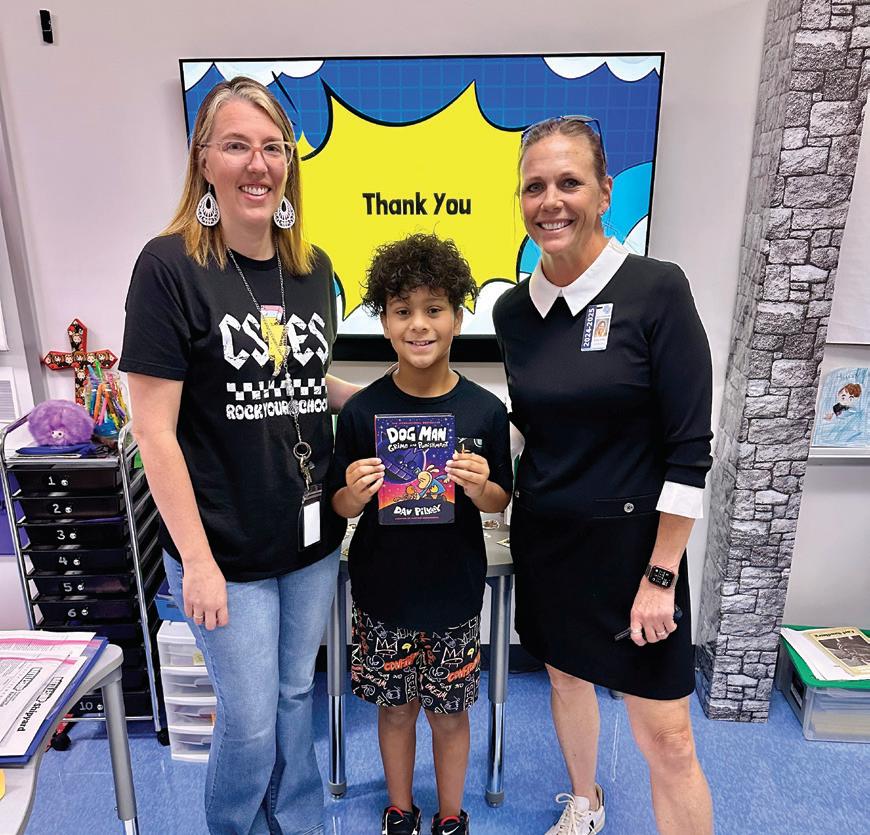
At China Spring ISD Elementary School, reading interventionists launched a read-along book club this year open to all students of all reading levels. The response was so overwhelming that a waitlist had to be created. The joy of getting lost in a good story even inspired one student (top photo, middle) to create another book club for his favorite book series, Dog Man
Photos courtesy of China Spring ISD

Waco native Wesley McDaniels has had Waco ISD students prepare his taxes for a decade.
“I’ve been coming here for about 10 years in all, and I have had no problems with it,” McDaniels said. “I have been happy and satisfied.”
McDaniels is one of thousands of Waco-area citizens who have benefitted from the district’s University High School Volunteer Tax Prep Program, which is now in its 10th year of serving the community.
Students volunteering with the program are certified IRS tax preparers and work alongside Baylor University’s Accounting Department to prepare tax returns for low- to moderate-income taxpayers. To ensure accuracy and quality, all tax returns are reviewed by experienced preparers who double-check the students’ work.
“We practice doing returns, and then there’s a test we have to take to get our certification to be able to help people with their tax returns,” said University High student Joshua Vaquero. “It makes me feel good to help out others.”
Site coordinator and economics teacher Andrew Pierce said the program has helped Waco residents secure more than $45 million in tax refunds over the years, bolstering the local economy and community businesses.
“When you consider all of the fees that people have saved because we do this totally for free, we have saved them a lot of money,” Pierce said. “There are people who have come many, many years in a row to have our students prepare their returns.”
Most refunds, when filed with direct deposit, are processed and returned within approximately one week.
“Our program not only provides essential services to the community, but it also equips students with real-world skills in customer service, accounting, and technology,” Pierce said. “This service is offered at no charge to help individuals

University High School students who have earned their certifications in tax preparation through Waco ISD have helped residents collect more than $45 million in tax refunds over the past 10 years. The district’s University High School Volunteer Tax Prep Program consists of students who are certified IRS tax preparers. They work alongside Baylor University’s Accounting Department to prepare tax returns for low- to moderate-income taxpayers.
Photos courtesy of Waco ISD
avoid high-cost tax preparation fees or refund loans.”
The students open the tax program to serve the community starting in late January and continue preparing returns through the last Thursday prior to April 15. The district, based in Waco, serves about 13,500 students.
“What this does for the students is provide a lot of customer interaction and the development of soft skills such as how you interact with an angry customer, active listening skills, how to do research … they learn skills they can use in many industries. And, they are learning tax returns, which is a skill they will use their whole lives,” Pierce said.H
This story is courtesy of Waco ISD.


During the past school year, Troy High School launched an inspiring theme: “Finding Our Greatness.” The message was simple but powerful: greatness isn’t reserved for a select few; it’s something every student can achieve.
Inspired by Nike’s iconic “Find Your Greatness” campaign, the theme reflected Troy High’s commitment to building an inclusive environment where all students feel valued and celebrated. Just like the commercial that spotlighted ordinary people doing extraordinary things, Troy High brought that same energy into classrooms and across campus.
At the heart of the initiative was a student recognition program that highlighted acts of greatness. Teachers and staff nominated students who went above and
beyond in behavior, kindness, or achievement. Nominations were then shared with campus administrators, who recognized the students during lunch periods.
The fun didn’t stop there. Each student had the chance to spin a prize wheel with rewards ranging from Taco Bell gift cards to the coveted “Huber Uber” — a ride to class with high school counselor Mollie Huber pedaling them on a bicycle.
“Our main focus for this program was to include students who aren’t normally recognized,” said Scott Uptmore, the school’s assistant principal. “We already have the honors banquet at the end of the year, but that celebrates students with high grades and perfect attendance. We wanted to create something that recognizes and celebrates every student’s greatness.”


HR Services offers web-based confidential surveys tailored to your needs:
• Employee engagement and opinion surveys
• Employee exit surveys
• Customer satisfaction surveys for HR and other departments

This year, Troy High School launched a “Finding Our Greatness” campaign that included a student recognition program. Teachers and staff nominated students who went above and beyond in behavior, kindness, or achievement. There were several prizes awarded, including the coveted “Huber Uber,” which involved being pedaled to class by school counselor Mollie Huber. Junior Joey Garza (pictured in photos with a dressed-up Huber) won that special prize.
Photos courtesy of Troy ISD
In total, the program honored more than 120 students throughout the school year. Troy ISD, located between Temple and Waco, serves about 1,700 students.
“The first thing I did was throw my hands up and scream, ‘I GOT IT!’ It feels really good to know that I am seen,” junior Joey Garza said after winning the Huber Uber prize. “My coach, Coach [John] Bohlin, recognized me.” Garza has been involved in multiple organizations at school, including band, football, and theatre.
Reflecting on the school atmosphere, Garza added, “You’ve got people who know they can do good — and then the people who do good. When those people share what they’ve earned, it motivates others to go out and do great things.”
Through this fun, meaningful program, Troy High School fostered a strong sense of belonging. Reminding students that greatness isn’t a title; it’s a mindset and it starts with one act of kindness, achievement, or effort at a time.H
This story is courtesy of Troy ISD.


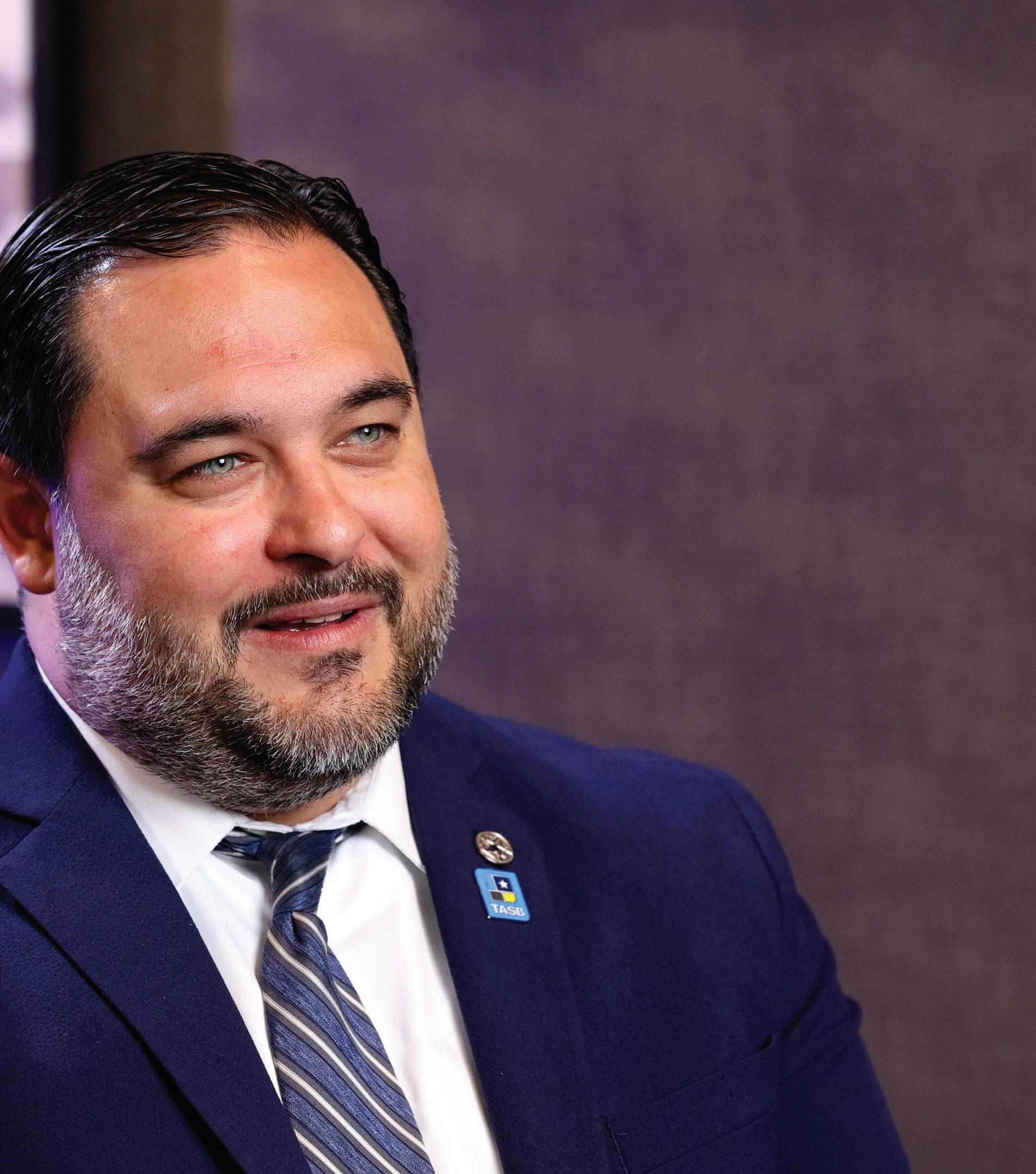
If
you’re looking for
a group that’s got a lot of experience with diverse communities, that’s cost effective, that’s willing to listen and to work with trustees, TASB ESS is a good choice for you.
In its more than 30-year history, ESS has conducted over 800 searches on behalf of districts across Texas.
With a team of search consultants who know Texas and its diverse school districts, ESS has proven itself to be the go-to search firm for leadership recruiting.
ESS brings experience to the table and a guarantee, so trustees can feel confident they’ve found the best leader for the job.
• tasb.org/ess
• executive.search@tasb.org
• 800-580-8272
by Savanna Polasek
What happens when you combine five determined Aransas Pass High School students, a scrappy makeshift studio, and a microphone? The Panthers’ Perspective podcast. With 11 episodes, more than 7,000 listeners in its first year, and a feature on the local news, the student-led podcast has made a big splash broadcasting authentic district voices to the greater community.
Launched last fall, the Panthers’ Perspective has already helped recruit a new athletic director, shared important federal student aid information for seniors, boosted attendance at the last football game of the season, and celebrated special education students on their recent regionals win at Special Olympics.
Students share episodes on the Panthers’ Perspective Instagram and Facebook pages, where episodes reach fellow students, parents, and the greater community. Aransas Pass ISD, which serves about 1,700 students, is located in the coastal town of the same name.
In under a year, the team has received great feedback, with people eager to participate and share their story.
“We’re trying to change our school’s culture, make it even more positive and have students be more involved,” said Audisey Sanchez, a podcast staff member and the 2024-25 valedictorian for Aransas Pass High School.
In what was originally an old home economics kitchen, Aransas Pass High School podcast staff created a studio from scratch using a shower curtain for a backdrop, two chairs, and black butcher paper for the floor.
The episodes vary in length, from 15 minutes on average to the 45-minute TASB Governance Camp special, where students recorded an episode while sharing their podcast with districts across the state.


“The example these students have set has made others want to join and be a part of it,” said Liz Worley, the advisor for the podcast and the high school yearbook.
Half the team graduated this spring, but they felt good knowing they are leaving a new opportunity for the next generation of students to further improve and develop. Next year, there will be 15 more students to help with the enterprise, and with a shot at greater funding from the Aransas Pass ISD Education Foundation and communitysponsored ad time, they may be able to take their show on the road.
The best part? Students are not only learning life skills like teamwork, budgeting, and marketing, but also how to have a voice in a digital-first world.
“This podcast gave our students a voice. It’s really helped them explain who they are and what kind of district we are,”
B Podcast producer Jesus Rodriguez at work.
C Lights, camera, action! The Panthers’ Perspective Podcast takes student voice to the next level with their 100% student-led podcast.
Photos courtesy of Aransas Pass ISD
Worley said. “They have the power to speak, to share their voice, within reason, and we do not get involved,” Worley added. “They choose the topics. It’s complete autonomy and trust. I know I can trust these five with anything.”H
Savanna Polasek is a staff writer for Texas
As Corpus Christi becomes a designated “Coast Guard City,” some students have stepped into leadership roles in a program that’s already making waves.
Corpus Christi ISD’s Veterans Memorial High School has officially launched the first — and only — Coast Guard Junior Reserve Officer Training Corps (JROTC) program in Texas. And in its first year, the program has already exceeded expectations.
More than 1,200 community service hours have been logged by cadets through events like Wreaths for Heroes, Trail of Treats, and the Wall of Healing. The cadets have proudly represented their school and branch at community and campus events, including Color Guard appearances at all home football games, Veterans Day celebrations, Corpus Christi ISD showcases, and high school graduations.
Coast Guard’s positive impact
“As the ‘Sparkling City by the Sea,’ we see the Coast Guard positively impacting our community daily.” said Roland Hernandez, the district’s superintendent. “It is our mission to serve those who serve, and this new JROTC unit is a significant milestone in our well-established support for military students and families.”
The unit has also visited military and educational sites, including the USCG Air Station, the 9/11 Memorial Stadium Climb, and the NAS Corpus Christi Air Show — experiences that have strengthened their connection to service and purpose. In competitions, the cadets have excelled in physical training, drills, drone operations, Raider challenges, and academic events.
From their first uniform fittings to what U.S. Coast Guard leaders called the “best establishment ceremony” they’ve seen, the cadets’ transformation has been both mental and physical.
Senior Robert Ponce, executive officer of the unit, said the program has taught him the value of leadership and the power of small details.
“Being part of the Coast Guard JROTC has given me an opportunity to learn leadership,” he said. “I get to teach cadets simple things, like how to tuck in their belts properly. It’s about building pride through discipline.
“I think it’s cool that Corpus Christi is now a Coast Guard City. It gives us another name, another way to stand out,” Ponce added.
Corpus Christi’s designation as an of-
This year, Corpus Christi ISD’s Veterans Memorial High School launched the first Coast Guard Junior Reserve Officer Training Corps program in Texas. Cadets have logged more than 1,200 community service hours through a range of events where they proudly represent their school and branch.
Photos courtesy of Corpus Christi ISD

ficial “Coast Guard City” reflects a 45-year relationship with the U.S. Coast Guard that is built on consistent community support, dedicated memorials, and a lasting commitment to service members and their families. Veterans Memorial’s new JROTC program is a proud continuation of that legacy.H
This story is courtesy of Corpus Christi ISD.


When 11th-grade student Gabriel Gonzales walked through the doors of the school he once roamed as a first grader, he never imagined he’d be walking out with a barbering certification in hand.
Faced with the difficult decision to repurpose Carroll Bell Elementary as part of its Rightsizing Plan in spring 2023, Harlandale ISD transformed the campus into something that would directly benefit students and the community. The result? A state-of-the-art career and technical education center offering hands-on experience in high-demand fields.
The campus offers hands-on training in eight high-demand programs: electrical, welding, cybersecurity, dental assisting, networking, barbering, HVAC, and plumbing. Each program offers industry-standard labs, including a fully equipped dental operatory, a professional barber shop, a cutting-edge cybersecurity and networking lab, and dedicated spaces for welding, plumbing, electrical, and HVAC. These certifications, which can cost between $2,910 and $18,420 if pursued independently, are provided at no cost to students, removing financial barriers to entry.
“Our goal was simple: Give students a head start,” said Harlandale ISD Superintendent Gerardo Soto. “We took an impossible situation and turned it into a unique opportunity for our students. This program helps students build real-world skills and earn certifications that will serve them well beyond high school.”
Through these eight pathways, students can graduate prepared to enter high-demand, high-wage careers right out of high school, with strong earning potential across each field. Cybersecurity professionals in Texas average $117,000 annually, HVAC technicians earn about $56,500, plumbers $60,500, and welders between $39,000 and $48,000, based on recent labor statistics and job market data.
For Gonzales, barbering has helped in more ways than one, giving him a job he


can rely on during college, and inspiring him to think like an entrepreneur.
“I chose this program knowing it’s a solid way to earn money after graduation, especially while I’m in college,” he said. “A lot of students will need haircuts, so I want to keep cutting hair to help pay for school and maybe start my own business. I really enjoy it and it’s a skill I can always fall back on.”
Gonzales’ story reflects the broader goal of Harlandale’s CTE programs: To equip students with life-changing opportunities. Beyond the classroom, students participate in hands-on learning with local business partners, ensuring they understand not only industry-specific skills, but also the mindset and work ethic needed to succeed in professional settings.
It’s this blend of hands-on training
A Harlandale ISD students and school leaders celebrate the opening of a new state-of-the-art career and technical education center that offers hands-on experience in high-demand fields for high school students.
B Gabriel Gonzales, a junior at Harlandale ISD, works on his barbering skills at the district’s new career and technical education center. Gonzales earned his barbering certification this year.
Photos courtesy of Harlandale ISD
and real-world experience that defines the CTE center’s mission in the district, which serves about 11,500 students.. Through these industry-aligned programs, Harlandale ISD empowers students to graduate ready to thrive in the workforce. This campus stands as proof that thoughtful repurposing can lead to meaningful, lasting benefits for students and the community.
“It’s great for students,” Gonzales said. “Students here have more opportunities than ever. Whether it’s to be barbers, dentists, HVAC techs, or cybersecurity professionals. It gives us a chance to graduate with a certification that will help us get a good-paying job. It’s exciting knowing we have options.”H
This story is courtesy of Harlandale ISD.
At Ingleside High School, excellence isn’t limited to the classroom or the athletic field — it’s also fired up on the barbecue pit. The Mustang Smoke Show, the high school’s competitive BBQ team, is proving that hard work, dedication, and a love for the craft can take students all the way to the top.
Established two years ago, the team earned back-to-back qualifications this year for the High School BBQ Inc. State Championship, cementing their reputation as returning state champions in one of the most unique and flavorful competitions across high schools in Texas.
Under the guidance of coaches R.J. Alvarado and Bo Daniel, team members Brodie Daniel, Kiah Heyward, Logan McGrath, Marcos Reyes, and Bella Winn have spent their weekends perfecting every aspect of their entries — from juicy chicken and fall-off-the-bone ribs to brisket, beans, and even dessert. Ingleside ISD, located in the town of the same name along Corpus Christi Bay, serves about 2,000 students.
Their commitment runs deep. On Saturdays, the crew is often up by 3 a.m. to fire up the pits for the team’s practices. Each weekend becomes a culinary lab as they test new recipes, refine techniques, and fine-tune their timing in search of that perfect plate.
Their efforts paid off in a big way — again — at the San Antonio Stock Show and Rodeo, where the Mustang Smoke Show claimed the Grand Champion title at the Junior Pitmasters Challenge for the second consecutive year. Along with top honors, team members earned $20,000 in scholarships, making their victories all the more impactful.
In another milestone moment, Ingleside High School proudly hosted its first-ever High School BBQ Inc. regional event, bringing the smoke and flavor of competition right to Mustang-land. The team is also known to share their story and passion on local news media outlets,
radio stations, and the district’s Mustangs on the Mic podcast, giving listeners a behind-the-scenes look at the heart and hustle it takes to be a state champion.
The Mustang Smoke Show isn’t just cooking — they’re creating futures, building skills, and serving up Mustang pride with every bite. With a defending state championship in their sights and fire in their hearts, this team is proving that success is always on the menu at Ingleside ISD.H
This story is courtesy of Ingleside ISD.


The Mustang Smoke Show, Ingleside High School’s competitive BBQ team, earned back-to-back qualifications this year at the High School BBQ Inc. State Championship. Team members have spent long hours and many weekends perfecting every aspect of their entries, which included juicy chicken and tender brisket. At the San Antonio Stock Show and Rodeo, the team also claimed the Grand Champion title at the Junior Pitmasters Challenge for the second consecutive year. Along with top honors, team members earned $20,000 in scholarships.
Photos courtesy of Ingleside ISD
The high school mentors entered United ISD’s San Isidro Elementary library, where their 50 mentees erupted in cheers and applause. To the fifth graders, these well-rounded United High School students were rock stars.
And the mentors felt the same way about them.
“They’re the rock stars. They are awesome,” said senior Danica Vela-Cuellar. “You can tell that they are very determined. We want to get them on the right path so they can be pillars in high school.”
The 16 United High School students from the superintendent’s Advisory Student Council kicked off a new United in Mentoring program this year with the goal of preparing students to be future leaders in high school and beyond. They launched the program in March at San Isidro Elementary School, home of the Raptors. United ISD, based in Laredo, has more than 40,000 students.
The students immediately got down to business. The fifth graders split off into various groups led by the high school students. The themes ranged from sports to dance to ROTC to government.
Danica De La Perez and Camila Molina, both fifth graders, stretched and danced to music coming from a cell phone in the gymnasium under the guidance of their mentor Ximena Salazar. They giggled as they waved their hands and did the splits, showing off for Salazar,
who applauded the girls’ efforts.
“I am learning about leadership and dance. The mentors are cool,” said De La Perez. Molina adding, “(Salazar) is fun and she’s good at dance.”
Salazar said her role is to lead the way for these excited students, who are eager to gain valuable insights from their mentors.
“I just want to help out from my experience of being in dance. I want to make sure they’re on the right track,” Salazar said.
Another group in the gym worked on scholarship and adaptability. The young students played Jenga, holding their breath as each one removed one part to place somewhere else.
One young girl exclaimed that she would probably make the tower fall. Athena Aguilera, a senior at UHS and one of the mentors of the group, wouldn’t allow that to happen.
“You have to believe in yourselves. You guys are doing great,” Aguilera told the students.
“Our goal is to make them confident in themselves. I want them to be open and trust in themselves as they grow up,” added Aguilera, who is also the National Honor Society president.
Another group focused on government and analyzed law as it pertained to a certain case — Goldilocks and the Three

Bears fairytale. They discussed whether Goldilocks trespassed, destroyed property, or stole while she went through the house trying out chairs and beds. The young students thoughtfully discussed the case and whether to charge Goldilocks with anything. Students questioned whether Goldilocks’ parents should be charged.
United ISD Superintendent Gerardo Cruz, Associate Superintendent for District Administration and Student Services
Rebecca Morales, Executive Director of Elementary Education Cynthia Rodriguez, and San Isidro Principal Adamina Meza observed the group activities and were impressed with all of the participants.
Each mentor is in a position of leadership in various extracurricular activities such as NHS, FFA, robotics, student government, band, sports teams, cheer, and dance. The semester-long mentorship program involved the high school students guiding the mentees by focusing on areas of personal and academic growth.H
This story is courtesy of United ISD.
This school year, United ISD kicked off a new United in Mentoring Program to help prepare students to be future leaders in high school and beyond. Sixteen students from the superintendent’s Advisory Student Council mentored students from San Isidro Elementary School on such subjects as sports, ROTC, government, and dance.
Photos courtesy of United ISD

TASB supports trustees at every point along the board leadership journey, offering training and programs to excel at board governance.
TTI offers a comprehensive program to build skills, dive into governance, and develop a leadership network.
Key offerings: Texas Open Meetings Act, Board Governance, Consensus Building.
Sessions coming to SLI! Register now. tasb.org/training-events/sli
For experienced trustees, meet with innovative districts and leaders, while learning what makes them successful. LTASB’s one-of-a-kind experience will expand your view of education leadership.
Learn more! leadershiptasb@tasb.org
Need support with your superintendent evaluation process? Board Development Services’ consultants are here to help! Get training tailored to your district’s needs.
board.dev@tasb.org
Find on-demand courses for new trustees, including the Top 10 Things to Know bundle of essential courses, in the Online Learning Center.
onlinelearning.tasb.org
For veteran trustees and board officers, BOI imparts knowledge and tools for effective and efficient meetings.
Key offerings: Important Tools for Meeting Preparation, Effective Meetings, Focused and Productive Board Discussions.
Upcoming Session at SLI! Register now. tasb.org/training-events/sli
With the Online Learning Center, you can find courses to support your board service, including: Preparing for Superintendent Evaluation, Board Officers Forum, and Advocacy 101 and 201.
onlinelearning.tasb.org
For additional information on any of these offerings: 800-580-8272, ext. 2453 • board.dev@tasb.org
onlinelearning.tasb.org
by Sylvia Wood
George McShan, a former Harlingen CISD school board member, TASB Past President, and lifelong educator, has been named the 2025 recipient of TASB’s James B. Crow Innovation in Governance Award.
The James B. Crow Innovation in Governance Award was established in 2022 in honor of its namesake, who retired as TASB executive director in August 2021, after 40 years of service to the Association. Those eligible for the award include individuals who have significantly influenced effective school district governance practices at the state or local level.
McShan, a Harlingen resident for more than four decades, served continuously on the Harlingen CISD Board of Trustees from 1988 until his retirement in 2018. In selecting McShan for the James B. Crow Award, the TASB Member Services Committee cited his lifelong commitment to public education, community service, and his dedication to creating opportunities for every child to succeed in Harlingen and beyond.
“George McShan sets the standard for what it means to be a lifelong leader and advocate for students,” said Wichita Falls ISD Trustee Mark Lukert, who chairs the TASB Member Services Committee and serves on the TASB Board of Directors.
During his long tenure on the TASB Board, McShan earned many accolades, including being elected in 1998 to serve as TASB President. Among his many accomplishments on his local board, McShan is known for his work in prioritizing the hiring of excellent superintendents and pushing for transformation with new schools, dual-language initiatives, and other programs to benefit students.
“I am deeply honored to receive this award, which is especially meaningful
with its connection to Jim, whose leadership and dedication to strong school governance have inspired so many of us,” McShan said.
TASB Executive Director Dan Troxell applauded this year’s recipient of the James B. Crow Award, noting his decades of public service and community leadership.
“George is a wonderful example of exactly the type of leader that the Crow award is designed to recognize,” Troxell said.
The award includes a $10,000 contribution to the district of the recipient’s choice. McShan has selected Harlingen CISD.H