www.ms-uk.org News | Views | Features | Real life stories
Due-Gundersen How I live my life with MS in Norway Mar/Apr 2023 Issue 138
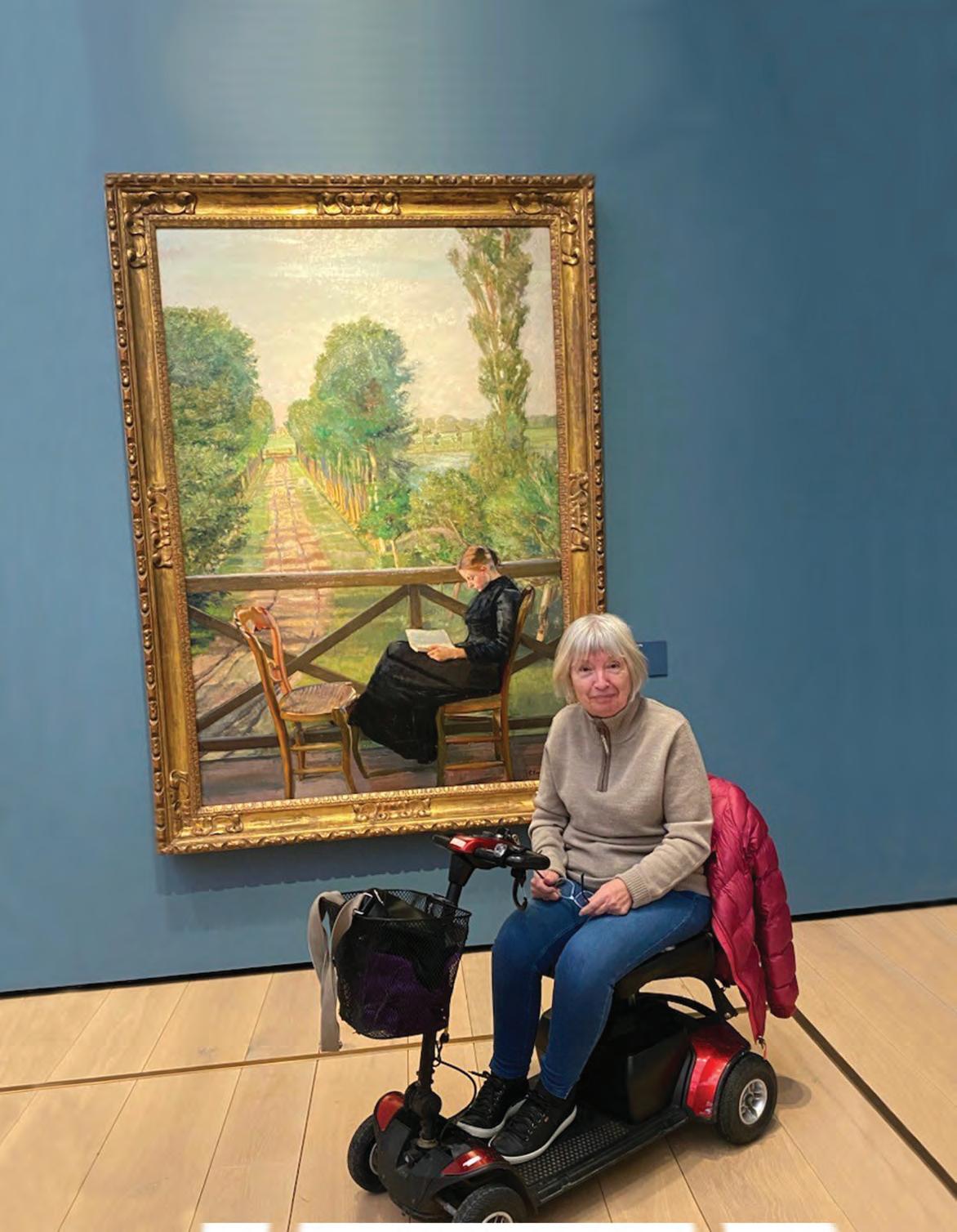
Joan
Keep moving, your way
At TGA, we believe that when it’s hard to move, you needn’t stop living. We provide scooters and wheelchairs tailored to suit all kinds of people with all kinds of needs. Which is why we are supporting MS-UK so that MS Pathway readers can receive a 10% discount on mobility scooters, powerchairs and wheelchairs. As an extra thank you, we will make a donation to MS-UK for every product purchased.
To ensure you find the ideal product, TGA offers a free home demonstration appointment with a qualified regional advisor so you can try our products with no pressure or obligation in the comfort of your own home and surroundings – making sure you get the right product for you.
tgamobility.co.uk | info@tgamobility.co.uk | 0800 368 9983 FEEL MOVED MS-UK 10% off all TGA Mobility scooters, powerchairs and wheelchairs* *T&Cs apply. See website for details.
I hope by the time this lands on
the sun is finally out and warmer weather is on the way. It’s no secret that the sunshine cheers us up, but it seems to do so much more than that, too. In this issue, Ian Cook looks at the link between sunlight and MS and asks if vitamin D is the only piece in the puzzle. Having to leave a job you love due to your diagnosis can have a huge impact, but two MSers in this issue tell us how they found new passions in life when they changed career paths.

You’ll find all the usual news and views, plus real-life stories. Also, we’ve launched a podcast! Find out more on page 17.
Enjoy!
New Pathways
Oakwood Industrial Estate, Clacton-on-Sea CO15 4TR
Call 01727 893 994 F 01727 893895
Email hello@thedsgroup.co.uk
ADVERTISING SALES Lee Morris
Call 0203 9000 102
Email ms-uk@syonmedia.com
ART EDITOR & DESIGNER Ami Williams

All images are used for illustrative purposes only.
Registered Company Name
Multiple Sclerosis-UK Limited, trading as MS-UK
Company Number 2842023
Registered Charity Number 1033731
VAT Number 632 2812 64
Registered Office: D3 Knowledge Gateway, Nesfield Road, Colchester, Essex, CO4 3ZL
All rights reserved. No part of New Pathways may be reproduced or restored in a retrieval system or transmitted in any way without prior permission of the Editor.
New Pathways and its publishers do not guarantee accuracy of statements made by contributors or advertisers, or accept responsibility for any statement which they express in this publication. Articles are considered on the basis that they are the author’s original work.
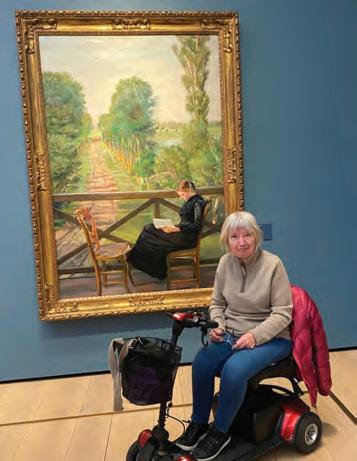
Contents Regulars 04 Top stories The latest MS news 32 Your letters Over to you 39 Recipes Cook up a storm 42 Q&A We answer your questions Support 14 The sunshine puzzle Ian Cook on the poorly understood link between MS and the sun 22 Inflammation Diet and lifestyle advice to help reduce it 24 Exercise at home Lower limb strength 29 Bladder support Natural helpers 36 MS and work Occupational health 46 MS Awareness Week How to get involved People 18 New wheels Abbie ventures out on her new mobility bike 30 Scandi style Joan on living with MS in Norway 34 When life gives you MS Two readers on changing career paths Hello,
your doormat
EDITOR
SUBSCRIPTIONS 01206 226500, or visit www.ms-uk.org/newpathways PUBLISHED BY The DS Group 7 Faraday Close,
Allison Jacobs
March/April 2023
30 www.ms-uk.org 18 39 34
In the News
All the latest must-read MS research and stories
High-dose vitamin D does not reduce MS disease activity
High-dose vitamin D does not lessen the risk of disease activity for people with multiple sclerosis (MS), data from a new clinical trial indicates.
Patients aged 18 to 50 with relapsing remitting MS were enrolled at US neurology clinics between 2012 and 2019. They had to have an Expanded Disability Status Scale of less than four and have had no more than 1,000 IU of supplemental vitamin D on average daily for the previous 90 days. All were being treated with glatiramer acetate (Copaxone).
They also had to have blood levels of vitamin D of 15 ng/ mL or more, because it is unethical to enrol people who have a deficiency in a clinical trial in which they may be given a low dose.
Patients were randomly assigned low (600 IU) or high (5,000 IU) doses a day for approximately two years.
Researchers said the low dose was effectively a
Top Story
placebo as they didn’t expect to see any kind of change in MS activity with this amount.
In the patients receiving the high dose, average blood vitamin D levels rose substantially, and in the lowdose group, levels were generally stable.
Researchers made comparisons between the rates of radiologically-measured change in MS, such as active inflammatory lesions, new and emerging lesions, and rates of brain shrinkage.
There were no statistically
to [glatiramer acetate] therapy, does not reduce imaging measures of disease activity in established RRMS.”
Although this trial tested vitamin D alongside glatiramer acetate specifically, the researchers said they’d expect the results to be similar with any disease-modifying therapy.

Researchers compared rates of active inflammatory lesions, new and emerging lesions and brain shrinkage
significant differences in any of these measures between the two groups, leading the researchers to conclude that “high dose vitamin D3 supplementation, as add-on
The results were presented at the Americas Committee for Treatment and Research in Multiple Sclerosis (ACTRIMS) Forum, Feb. 23-25 in San Diego.
4 Call 01206 226500 News
Baclofen is one of the drugs licenced to treat spasticity in people with MS, but a new Swedish population-based study showed half of patients discontinued it in the first month, and 90 per cent stopped within two years.

When accounting for people with incident MS and prevalent MS, 65 per cent stopped baclofen within a year.
Patients who were more disabled, scoring higher on the expanded disability status
scale (EDSS), kept on the treatment longer.
Two other treatments commonly used to treat spasticity, diazepam and gabapentin, also showed high discontinuation rates among MS patients – with those in the study almost all discontinuing after six

months and 75 per cent stopping gabapentin after a year.
The researchers said that the results highlighted “the importance of informed treatment options and better understanding of spasticity in general among patients with MS.”
www.ms-uk.org 5 News
65% of MS patients discontinue Baclofen within a year
Smokers with MS now have another reason kick the habit
Smoking is linked to higher prevalence of anxiety and depression in people MS, a new systematic review has found.
Across all of the studies analysed, smoking was associated with a 1.3-2.3 times higher depression prevalence,

and around a 1.2 times higher rate of anxiety.
The results indicated that stopping smoking seemed to help anxiety levels, but not depression.
Researchers said more studies were needed to investigate the links because of the different

ways the studies in the review were reported made interpreting the results challenging.

It’s well established that smoking is linked with MS development, plus worse disability progression and higher risk of relapsing remitting MS converting to secondary progressive.
Overall, smoking was linked with a 20 per cent increase in risk of anxiety. One study found depression in current smokers was found to be 2.3 times higher than in non-smokers, and another found depression increased at a faster rate in current smokers than in those who had never smoked.
The researchers suggested the link could be due to tobacco’s inflammatory and immunomodulatory effects and noted this might negate the immune-modulating effects of disease-modifying therapies.
If you want to quit smoking, call MS-UK’s Helpline on 0800 783 0518 and download our MS and Smoking Choices booklet at ms-uk.org/choices-smokingand-ms-content/

6 Call 01206 226500 News Download New Pathways from the App Store & Google play, just search My MS-UK. www.ms-uk.org News | Views | Features | Real life stories Joan Due-Gundersen HowIlivemylife withMSinNorway Mar/Apr 2023 Issue 138 138.indd 17/03/2023 15:34
Read me on the go!
SPMS gut bacteria clue
Scientists have identified a certain species of bacteria which may drive disability progression in people with secondary progressive multiple sclerosis (SPMS) they announced in a recent presentation at the Americas Committee for Treatment and Research in Multiple
Sclerosis (ACTRIMS) Forum 2023, held Feb. 23-25 in San Diego.
Due to patient protection, the team couldn’t release the name of the bacteria, instead naming it ‘bacteria X’. But when taken from SPMS patients and given to mice with MS, the rodents developed more neurological disability and more immune cells that are implicated in the inflammation behind MS.
Scientists think this species of bacteria’s flagella, which are hair-like parts it uses to move around and invade cells, are what promote the inflammation.
The research team had analysed stool samples
Blood marker can identify risk of silent disability progression

The levels of a protein called glial fibrillary acidic protein (GFAP) in the blood of people with MS can help to predict disability that happens in the absence of relapses – often called silent progression, according to a new study.
Relapses are often the main driver of MS disability, but for those who experience worsening disability without them, there are no clinical biomarkers that can predict it.
Researchers found that levels of neurofilament light chain protein (NfL), a protein from nerve cells that’s a well-established marker of a relapse, went up by 53.2 per
cent during relapses, but GFAP levels changed less than 5 per cent. But in those with silent progression, GFAP were 57.5 per cent higher and NfL only 28 per cent higher.
NfL levels also were significantly associated with silent progression in people who were being treated with Ocrevus.
The researchers said the results
previously from people with both relapsing remitting MS and SPMS and had found a distinct gut bacteria profile that was associated with each type.
Two different subtypes were identi ied within bacteria X, with one signiicantly more abundant in SPMS patients compared with RRMS patients and healthy people.
Whether there is a “causal relationship between gut dysbiosis and MS progression remains elusive,” said the researchers, adding that if a relationship should be confirmed, the specific “diseaseenhancing causative bacteria” remain to be identified.

support GFAP being a useful biomarker for predicting progression independent of relapse activity risk, and back up previous research identifying NfL as a marker of relapse activity.
They said more research is needed, in particular a need to assess whether GFAP can predict PIRA in MS patients on other therapies.
7 News www.ms-uk.org
Teenagers who sleep poorly – less than seven hours a night – are between 40 and 50 per cent more likely to go on to develop MS later on than those who have good sleep, a recent populationbased study from Sweden has found.
Research has investigated the affect of shift work, and particularly at a young age, and found it raises the risk of MS. It’s also known that poor sleep quality stimulates proinflammatory pathways and it’s thought this can increase the risk of inflammatory diseases.
Poor sleep quality and duration had, however, not been thoroughly examined.
To investigate, Swedish researchers used data from the Epidemiological Investigation of
Multiple Sclerosis which was launched in 2004 and features people aged 16-70 from the general population of Sweden. Overall the results showed that people who slept less than seven hours a night in adolescence were 40 per cent more likely to get MS in later life, compared to people who slept for seven to nine hours. Those who slept longer at weekends but still less than seven on a weekday (or work day) still had a 30 per cent increased likelihood. The association remained after researchers adjusted for other risk factors like smoking, body fat and Epstein-Barr virus
infection. Other conditions at the age of 20 and at the onset of MS did not affect the findings, neither did the mean weekly sleep duration.
The study then looked at sleep quality. Those with low quality in adolescence were 50 per cent more likely to develop MS than people who reported good to very good sleep. This association was still significant whether people slept for more or less than seven hours.

The researchers said that the findings should be interpreted with cautious because it’s not known if reverse causation was at play.
You can donate a one-off gift of £5, £10 or £20
Text MSUK5 to 70456 to donate £5
Text MSUK10 to 70456 to donate £10
Text MSUK20 to 70456 to donate £20
You will be charged £5, £10 or £20 by your network provider plus one message at your standard network rate. MS-UK will receive 100% of the donation.
By texting your gift e.g. “MSUK10” to 70456 you are agreeing to us contacting you by phone and SMS to tell you more about our work and how you can support it. To give without receiving further contact by phone and SMS, add the word ‘NO’ e.g. ‘MSUK10 NO’ to 70456. 100% of your text donation will be received by us. You must be 16 years old or over to send a text donation. For full terms and conditions www.ms-uk.org/files/mobile-giving-terms-and-conditionsdocx
Call 01206 226500 News 8
Poor sleep may increase teens’ risk of MS by 50%
Molecule triggers remyelination in MS in new study
A signalling protein called fractalkine promoted myelin repair in a new study in a mouse model of MS.
Fractalkine triggered new growth of myelin-producing cells, oligodendrocytes, and also reduced pro-inflammatory immune cells in the brain.
The protein has been shown
in previous studies to help stimulate oligodendrocyte precursor cells to turn into mature oligodendrocytes more quickly.
For the study, mice were fed cuprizone for six weeks, which causes loss of myelin. Fractalkine was then infused directly into their brains for three
promote remyelination
In a mouse model of MS, combining Mayzent (Siponimod) and vitamin D was found to improve motor function and help restore damaged myelin sheath.
Researchers in Saudi Arabia divided mice with MS into four groups. Untreated control, oral vitamin D3 treatment, Mayzent, and a combination of vitamin D3 and Mayzent. Each group was then examined during the early remyelination phase (week 5 to week 7.5), and late remyelination phase (week 7.5 to week 9).
The mice who were treated with the combination, or just vitamin D alone, performed better on speed tests, in the earlier phase but not in the later one. Mayzent on its own didn’t seem to affect their walking speed. The mice given the D3/ Mayzent showed an increase in the distance they could travel, but the other groups didn’t.
Myelin basic protein, which experts believe plays a big role in remyelination, was significantly increased in the mice given the vitamin D/Mayzent combination

days. The mice were then given a normal diet to allow myelin formation to begin.
Oligodendrocyte precursor cells and mature oligodendrocytes increased up to double the amount in the treated mice. The molecule also reduced the number of immune cells that travel round the brain and spinal cord and are thought to contribute to MS – proinflammatory microglia. Fractalkine also increased myelin density.
Testing found that fractalkine acts on the microglia and the oligodendrocyte precursor cells to increase oligodendrocyte formation. The study’s authors said fractalkine ‘represents a novel candidate for remyelination strategies.’ It will be tested in other disease mouse models.
compared with untreated mice, but not in the mice given either the single vitamin D or Mayzent.
The research team said that the vitamin D3 plus Mayzent combination shows promise as a future treatment for human patients.

9 News www.ms-uk.org
DMT combined with vitamin D may
Possible new biomarker for MS diagnosis discovered
Researchers have discovered a new possible biomarker for the diagnosis and prognosis of MS.
Myelin basic protein, a key myelin protein in the sacs of cellular content that are released by oligodendrocytes – which are the myelin-producing cells of the brain and spinal cord – was found at significantly higher levels in people with MS than in healthy people. Additionally, primary progressive patients had higher levels than those with relapsing remitting MS.
A diagnosis is currently made based on imaging, clinical and laboratory information, but a
non-invasive, quick and easy test for biomarkers isn’t available. Oligodendrocytes release tiny membrane-coated sacs called extracellular vesicles. These contain proteins, fats and material from the original cell. Researchers examined whether the amount of myelin proteins in them could help diagnose MS and help with prognosis.
The results showed that myelin basic protein levels in the extracellular vesicles from the
healthy control group in the study were significantly lower than in people with MS, and the concentration found allowed the researchers to discriminate between people with MS and healthy people with a 96.3 per cent accuracy.
The results indicate that ‘a minimally invasive blood test measuring the concentration of MBP in ODEVs is a promising tool that could facilitate MS diagnosis,’ the researchers said.

people with MS who did intermittent fasting for eight weeks had cognition and manual dexterity improvements, and also had less fatigue and pain scores. The criteria of the fasting programme was that participants had to eat their meals within an eight-hour window only, with the other 16 hours of the day spent fasting.

The participants had a mean age of 46 and 83 per cent were women. One person dropped out of the trial.
Positive reports included two people noticing they slept better, and others said they lost weight,
had more energy, less acid reflux and feeling better overall. Negative reports included headaches, constipation and having to schedule their social lives around the eating times. After eight weeks, clinical outcomes were assessed. Fasting was found to have improved hand and finger dexterity and cognition. Pain and fatigue scores had lowered, although they were not deemed to be statistically significant, the researchers called them ‘clinically significant’.
The study’s authors said this study only focused on timings of food rather than food type.
Call 01206 226500 News 10
A small study found that
Intermittent fasting shows benefits for MS
Anxiety, depression and MS
The rate of psychiatric symptoms such as anxiety and depression is higher in people during the five-year lead up to diagnosis with MS than it is in healthy people, a new analysis has found.

Mental health problems are common among the MS population. But before diagnosis many patients notice health changes which aren’t suggestive of MS, including sleep disorders. This study set out to see if psychiatric symptoms were implicated.
Researchers analysed the data from 6,863 Patients with MS, matched for sex, age and location with up to five healthy people from the general population who were the control group.
They found depression, bipolar disorder, anxiety, and
New study on omega 3 and MS

A new study has shown that consuming omega 3 fatty acid may be beneficial to people with MS after it reduced inflammation and disease severity in a mouse model. Researchers investigated the effects of DHEA, a molecule in omega 3 fatty acid. Mice with experimental autoimmune encephalitis, a mouse model of MS, had DHEA injected into their abdomens.
schizophrenia had a significantly higher prevalence in the MS group than the control for the five years before disease onset. The prevalence seemed to get higher as the onset date approached.
A total of 28 per cent of the MS participants and 15 per cent of the control group had psychiatric issues during the five-year period. This is an 88 per cent greater risk for the MS group.
Depression was the most common symptom, anxiety was the second.
The team also noted mental health-related doctor visits were 125 per cent more frequent in MS patients than the controls and visits to psychiatrists were 150 per cent more common in the year before diagnosis. Hospital admissions were also up for MS patients by 130 per cent five years prior to onset, rising to almost 200 per cent by one year to onset. Psychiatric medication prescriptions were up by 75 per cent five years prior and 100 per cent at one year to onset.
The rodents treated with DHEA developed MS symptoms more slowly than mice given an inactive solution.
The study found that some mice didn’t respond to the DHEA treatment. In some of the DHEA-treated mice, there were longer remission periods between the beginning of their disease and another relapse, while some developed MS at the same time as the mice who weren’t treated.
When analysed, tissue from the nervous system of the mice had a reduced number of inflammatory T-cells – something
the researchers had shown DHEA to be capable of doing with cells in dishes in the lab.
They concluded that DHEA can affect T-cell polarisation and affect T-cell effector function, which gives a positive outcome in MS and autoimmune disease.
www.ms-uk.org
11 News
Salt implicated in MS development in study
Salt disrupts the ability of certain cells whose job it is to control inflammation and combat autoimmunity, a new study has found.

Salt rendered regulatory T-cells (Tregs) less effective at controlling a mouse model disease of MS. Tregs dampen parts of the immune system and help control activity that could damage the body’s tissue. Scientists think when Tregs are unable to suppress other immune activity this might contribute to autoimmune conditions such as MS.
Plant compound decreased MS severity
Mice treated with a plant compound called berberine had decreased disease severity in a mouse-model of MS, a new study has found. Berberine is a compound found in plants such as tree turmeric, European barberry and goldenseal. Previous research has found berberine to have
A high-salt diet, which is common in the Western world, has been shown to make Tregs more pro-inflammatory. Tregs exposed to salt look similar to autoimmune Tregs found in conditions such as MS.
In cell cultures, the gene activity of cells exposed to salt was also changed. Similarly altered genes were observed in MS patients.
Researchers then injected Tregs from healthy mice, which were then cultured in salt, into
anti-inflammatory and neuroprotective properties. In this study, Iranian scientists treated mice with experimental autoimmune encephalomyelitis, a mouse model of MS, with either berberine or a salt water inactive treatment.
Mice treated with the plant compound retained greater body weight, which is generally an indicator of better health.
Disease severity measures were also significantly lower in the group given berberine, and a greater effect was seen with higher doses, with disability and paralysis severity decreased.
Analysis of tissues showed the brains of the mice who received berberine had fewer inflammatory cells and there was less evidence of demyelination.
a mouse model of MS. Normal Tregs could stop MS developing in the mice, but the ones exposed to salt could not.
Inhibiting a molecule called NCLX, which allowed the Tregs’ mitochondria to take up salt, restored the ability of the Tregs to control disease again. Researchers said this could show promise for the treatment of salt-sensitive diseases, more work is required to properly understand the molecular mechanisms.
There were also less proinflammatory signalling molecules, and a higher level of anti-inflammatory molecules.
“These results confirmed that treatment with berberine improved the disease in the animal model of MS,” said the researchers, noting the study’s results suggest the compound may be a promising therapeutic approach for people with MS.
Please note this study was done on mice and not humans with MS. Always speak with your doctor before taking a supplement. Although berberine is available to buy as an overthe-counter supplement it is likely unsafe for some people to take and more research is needed to establish exactly for whom it is safe.

Call 01206 226500
News 12


















TILT FUNCTION Laybrook com motion furniture Turning Bed 5 YEAR - GUARANTEE FREE - UK INSTALLATION & DELIVERY FREE HOME ASSESSMENT WITH ‘TILT’ MECHANISM NEW! Pathways20-1 See demonstration videos at www.laybrook.com Call for a FREE 60 page brochure or visit www.laybrook.com for more information *FREE TRIAL ON STANDARD BEDS ONLY 0808 274 7738
The sunshine puzzle
With the days getting longer and the sun a little higher in the sky I have found myself reflecting more and more on the complicated and unresolved puzzle of sunshine and multiple sclerosis (MS).

Since my diagnosis, 30 years ago in 1993, I have seen many theories about the causes of MS come and go. The lack of sunshine/vitamin D theory is one of them. In fact, the theory never goes away or gets disproved or proved. One might say the sun never sets on this theory.

In 2003, 10 years after I was diagnosed, I heard a Canadian neurologist, Prof. George Ebers, talk at a conference about a “latitude gradient” in MS. Basically, he was saying that the further away from the equator you go and the less sunshine you get, the more cases of MS you find. This is accepted as being as true today as it was in 2003, although no one really knows the reason why.
Sunshine mystery
It was clear to Ebers that something in sunlight either
stopped MS developing or perhaps eased its symptoms. The question was, what was this thing? There were two possibilities. The first was vitamin D which is produced when the sun hits your skin. The other was sunlight itself, or to be more exact ultraviolet (UV) light, perhaps strong sunlight in the UVB band. It was argued this might be doing something to your body in addition to darkening or tanning your skin.
For the past 20 years there has been an ongoing debate about which of these is responsible for the latitude
Call 01206 226500
14 Research
Sunshine and MS are definitely linked but, says Ian Cook, that’s the only thing we can know for certain
gradient in MS. Those who support lack of vitamin D as a cause of MS point to research including that carried out in Northern Manitoba, Canada. This showed that native Americans living close to polar regions who had little exposure to strong sunshine but ate a lot of oily fish full of vitamin D had far less incidences of MS than you would expect for those living at this latitude. So, did vitamin D, in their fish-rich diet, account for their low levels of MS? And does this mean a lack of vitamin D causes MS?
Inconclusive evidence
The debate is still going on and you can find academic papers which support and deny the link between vitamin D and MS. You’ll have probably read the news story earlier in the magazine which found highdose vitamin D doesn’t have an effect on MS symptoms.
Interestingly, the 2022 NICE guidelines on MS say the following: “Do not offer vitamin D solely for the purpose of treating MS”. This suggests that vitamin D or its lack isn’t generally regarded as the answer to the question of what
causes MS or how you can treat it.
Something in sunlight?
In view of this, attention naturally turns to sunlight itself. Sunlight also has other effects on the body as well as helping create vitamin D. One research study published in the journal Nutrients in 2018 concluded that the protective effect of sun exposure in MS is most likely brought about through “immunomodulatory mechanisms independent of vitamin D”.
What are these

www.ms-uk.org
Research 15
immunomodulatory
mechanisms? This too remains the subject of much debate. It is possible that when the sun hits the retina in the back of the eye it influences how much melatonin your body produces, which affects circadian rhythms. This could affect immune regulation.
Cholesterol question
Another possibility is that UVB radiation in sunlight hitting the skin may lower levels of bad (LDL) cholesterol which is generally higher in the blood of MSers and may be involved in the disease process itself. One study looking into cholesterol and MS is the current MS-STAT 2 trial, where MSers take high doses of a cholesterol-lowering statin (simvastatin) which is believed, may be antiinflammatory and protect nerves from damage.
It is thought that higher levels of bad (LDL) cholesterol are linked to more severe MS and research into statins in an earlier study (MS-STAT1) found that the rate of brain atrophy (loss of neurons or “brain shrinkage”) was reduced in patients taking simvastatin compared to those taking a placebo. Researchers in the MS-STAT 2 trial are also looking at simvastatin’s effect on brain cell abnormalities as well as changes in blood flow in the brain.
So, is it the case that simvastatin lowers levels of
bad (LDL) cholesterol and that levels of LDL cholesterol have also been shown to be reduced when you sit out in the sun? In other words, is sunshine more important because it leads to lower levels of bad cholesterol which lessens disease activity and that, although Vitamin D is produced as well, it doesn’t really have much of an effect on your MS, hence the NICE guidelines?
Pregnancy exposure
One final possibility is that it’s not your exposure to sunlight but your mother’s exposure to sunlight in pregnancy that counts. Those supporting this theory point to a study carried out in 2016 also by George Ebers involving more than 21,000 people with MS which found that people diagnosed

with MS in northern latitudes are more likely to have been born in May, and less likely than average to have been born in November. What this study suggests is that low sunlight exposure during winter pregnancies, leads to low maternal vitamin D levels which in some way increase the risk of you developing MS later in your life.
The role of sunlight in MS is certainly far more complex than originally thought. Sadly, like everything with MS, the answer to the question of what causes it or contributes to its cause remains as elusive as it was when George Ebers looked at it all those years ago. Time, sadly, doesn’t appear to answer questions where MS is concerned, only generate new ones.
16
Call 01206 226500 Research
Let's Talk MS podcast with MS-UK
Our new podcast is packed with conversations, interviews and insights from experts and people living with MS - listen today!
MS-UK has launched a new podcast, Let’s Talk MS. It is hosted by seasoned journalist Ian Cook, who you’ll recognise as one of the writers in New Pathways, and who lives with secondary progressive multiple sclerosis (MS).

Our first episode features TV’s ice man Wim Hof. Wim says his method of special breathing, commitment and cold exposure can help people take control of their MS.
Ian also speaks with Sally Darby about motherhood when you have a disability.
Helping you live better with MS – listen today! Visit ms-uk.org/lets-talk-ms-podcast-with-ms-uk Or search for ‘Let’s Talk MS’ anywhere you usually get your podcasts.

www.ms-uk.org 17 Support
Real Life New wheels
Abbie Cragg on the trials and tribulations of buying a mobility bike to help her get about
Anyone who’s lived with multiple sclerosis (MS) for a while will know that there are moments in your postdiagnosis life that stand out as being emotionally and mentally significant, and although not for reasons you’d ever choose, they have to happen if you’re going to move forwards.
I was diagnosed with in March 2016 having recently turned 35 and after 10 or more years of dismissed symptoms (I’ve managed to bury the anger now… largely, I think). I left the appointment, had a short, sharp cry in the hospital toilets, and then called my mum to break the news. “It is what it is, it doesn’t change anything,” I nonchalantly told her. That response was genuinely how I felt at the time and for a long time after that, to be honest. Probably helped by being pre-occupied for the first year with MS nurse appointments, physio sessions, physio classes and appointments with a neuropsychologist, I felt I was handling my diagnosis pretty well. And then the reality began to sink in. My diagnosis did
change everything. It was already changing everything. This was my first ‘moment’.
Cycle of life
Following this, was the moment I accepted that I needed a walking stick to stop me worrying that people thought I was drunk, and then again when I realised that I did actually need it for its intended purpose. The moment I accepted that I could no longer take on the workload I used to if I was going to give my health a fighting chance of at least staying stable. The moment I accepted that I was going to have to get a blue badge if I wanted to have anything resembling a life outside the house. The moment I accepted that I needed to switch to an automatic if I wanted to drive without fear of what my left foot may (or may not) do. And, the latest for me, the moment in October last year that I accepted, after three years of attempted persuasion from my partner, that I would benefit from investing in a mobility aid called an Alinker.
As with all my prior ‘moments’, this one had needed to occur in

my own time. It came with the same feelings of deep sadness that I was once again having to admit defeat. Once again having to say goodbye to another part of me. It did, however, also come with the same acknowledgment that this moment needed to happen if I was going to move forwards with this wretched disease… and quite literally, in this case.
Wheels in motion
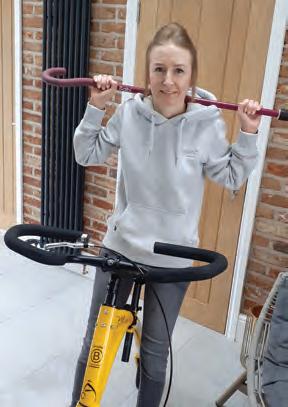
So, what is an Alinker, I hear you ask? Well, the company describe it as ‘a non-motorised walkingbike without pedals.’ It has two wheels at the front and one at the back, which was definitely the selling point for me. I’d hired a trike at a well-known woodland holiday park the year before thinking it would give me the freedom of cycling that I loved but was no longer able to do due to balance issues.
My word, I was wrong. It had the more conventional threewheeler set-up – one wheel at the front and two at the back, and just the mere act of sitting on it and only seeing one wheel
Call 01206 226500 18 Real life
ahead of me, filled me with such intense anxiety that I couldn’t even lift my feet off the floor to put them on the pedals. My go-to mobility method therefore had to remain – linking someone on my left, my walking stick on my right. And so one of my hopes for the Alinker (or ‘Ab-linker’ as I refer to mine, just to give it a more personal feel) was that I could largely replace my reliance on linking when out and about. I desperately wanted some long-lost independence back. My partner is my absolute rock. Since my diagnosis she has been supportive but not smothering –the perfect mix for my needs. But I have one criticism. Her linking skills are pathetic, to say the least. I’m barely provided with a kink, never mind a link. If she was part of the Alinker brand she would definitely be in their budget range, with wobbly wheels and no padding on the seat. Their ‘Zlinker’, perhaps.
Pedal to the pub
I also hoped my Ab-linker would allow me to not just go on ‘a walk’ but actually enjoy ‘a walk’. In a park, around a lake, anywhere that involved fresh air and natural light – two things I knew I didn’t get enough of. Such a simple desire but one that’s felt like a pipe dream for a long time given how gruelling I now find walking. Now, you may wonder if this next one is a joke. It’s not. I hoped I’d be able to use my Ab-linker to safely get me to and from my local pub. It’s only about a quarter of a mile down the road, but that
quarter of a mile, after a pint or three, can go one of two ways. Occasionally, to my delight, my muscles are lovely and relaxed and I’m able to speed (for me) home. More often, though, it is the longest, most taxing walk of my life, not helped by an almost guaranteed urge for the loo, despite going just before leaving the pub. So why do I continue to take the gamble? Because I live in hope that the former scenario will be the case. And I love beer. My final hope was that my Ablinker would help build up some strength in my legs, which have admittedly been sparrow-like since birth but now have the loss of muscle mass to go with them. Which leads me to the first challenge that my Ab-linker presented, which was taking delivery of it. It’s really heavy.
Getting started
The Alinker folds up nicely and with ease to neatly fit in a boot, but getting it into a boot is not a job that someone who needs an Alinker is going to manage without help! I didn’t have the confidence to take it out on my own around the neighbourhood, and so for that reason my Ablinker was limited to just being played with in the house for the first week or so.
To my surprise, it felt incredibly lightweight and nifty to manoeuvre, with an unexpected ‘sporty’ feel as well as look. Crikey, I’m really good at this, I thought, as I whizzed around with relative ease. But the following weeks presented


www.ms-uk.org Real life 19
further challenges to my desired venture (aside from miserable Manchester weather) that admittedly just hadn’t crossed my mind before taking the plunge and investing in my Ab-linker. Where am I actually going to use this bloomin’ thing?
As soon as you set foot off my driveway you are met with a pavement that is a massive trip hazard for someone like me, followed by a network of pavements that are equally uneven and potentially dangerous. I was well aware of this fact as I swear at them every time I have to use them… but I just didn’t think. My bad.
Difficult logistics
If removing the need for the pavements by using the car, parked on what is now a nice and Abbie-friendly new driveway, where are we actually going to go? I need somewhere that is not too busy, not too bumpy, not too muddy, is largely flat, has suitable parking, has toilets, has a bench part way round (not a deal breaker, more an ideal), isn’t too far away – the consideration list is extensive.
On realising this I can’t deny that I felt beyond disheartened, and not because I had parted with just under £2,000 for my Ab-linker (£1,990 including delivery, to be exact). It was the emotion that I had invested in coming to accept that I needed one in the first place and then the subsequent excitement I felt when I started to think just how big a lifeline it could actually throw me. I felt well and truly
deflated. I’m in no doubt that this feeling will have played a part in why I have so far only managed one trip out on it. That experience began with quite a bit of frustration as I struggled with navigating even the slightest dip or tilt in surface (check out the picture for proof of concentration required).
Picking up pace
Then, out of nowhere, I suddenly found my flow and was away… with speed! I don’t know if I was using it as intended at this point but I don’t care; I felt free… elated… almost child-like. And for that reason I am willing to give it another go as soon as I can muster up more motivation and positivity (I’m getting there). Obviously, I’m also hopeful that spring will bring about some much-needed good, or at least dry and calm, weather. I find my mobility issues frustrating enough as it is, so getting to grips with my Ab-linker is going to have to be at my own pace, when the weather suits, and when I physically/ mentally feel on good form.
I do have many other symptoms bar mobility issues as a result of my MS. In fact, I think I have them all to varying degrees (though I’ve never had optic neuritis, interestingly). However, the mobility-related ones are what I currently find most frustrating. Probably because they can be so debilitating and do seem to have got noticeably worse over the last couple of years, and definitely because they’re the ones I find hardest to control. I used to be a perfectionist but have learnt
over several painful years that such a trait is far from congruent with MS; or mobility issues, more specifically. I am, however, going to hold on to one trait that must be so deep-rooted in me that I don’t think it’s going to be one I can shake off, and that’s that I’m not very good at doing things I’m not very good at. I get it from my dad, I think. So, although I am determined to persevere with my Ab-linker in the hope of forming a much stronger relationship with it, I cannot, and will not rush the relationship. Fingers crossed, I will be able to report back with a more positive review in a few months’ time. Until then, I will be continuing to focus on learning sign language, because so far, I’m proving to be quite good at that… thank chuff.
Walking frames (rollators) can be really helpful for anyone who has trouble with their mobility, such as this Glider Plus Adjustable which is available from Uniscan Walkers for £260. Visit www.uniscan-walkers.co.uk

20 Call 01206 226500
Real life

Lower inflammation naturally
Try-at-home diet and lifestyle tweaks to help give inflammation the heave-ho
Inflammation is vital for the body – our immune system kicks into action to protect us from outside invaders on a daily basis. But too much inflammation is the enemy of autoimmune conditions such as multiple sclerosis (MS). Here, experts offer advice on how to reduce it naturally.
Diet
“The starting point of targeting inflammation would be with an anti-inflammatory diet,” says Libby Linford, nutritional therapy practitioner, registered nutritionist and functional medicine practitioner (surreycentrefornutrition.com).
“There are varying degrees of restriction when it comes to anti-inflammatory dietary protocols which may be helpful for someone with MS, the most

basic of which would be the removal of key inflammatory triggers including sugar, refined carbohydrates, alcohol, processed foods, trans fats and some seed oils.
“However, when you suffer with autoimmunity you could take this one step further with the removal of both gluten and dairy. These diets also require the addition of antiinflammatory foods such as healthy fats and oils, quality protein, a wide variety of vegetables, fruit, berries, nuts, seeds, herbs and spices. It’s as much about what you put in as what you take out.
“Other diets which can be considered in addressing autoimmunity such as MS include the autoimmune paleo diet which aims to remove all potential inflammatory foods, including the above, but also all
grains, eggs, nightshade vegetables, legumes, and caffeine. You would follow a period of restriction before a re-introductory phase.
“This is the most restrictive approach, and it is not without its risks in that it can lead to a loss of tolerance, which is your body’s ability to tolerate the foods you eat, and so is not a long-term approach, but can help to identify trigger foods.
“The Wahls protocol is another option for those with MS and although very similar to the AIP diet it has a greater focus on the inclusion of therapeutic foods and three degrees of restriction.
“There is no one-size-fits-all approach to the best antiinflammatory diet for MS, and the best approach should be personalised and decided upon with a functional
Call 01206 226500
22 Support
medicine practitioner. They may decide to run food reactivity screening to pinpoint any specific foods which are exacerbating inflammatory processes ”
Exercise
Exercise offers a host of benefits, and is beneficial however mobile you are.
“A recent review suggests exercise is a therapeutic tool to counteract inflammation for the management of MS,” says Eleonora Sansoni, a cranial osteopath, nutritional therapist and Pilates instructor and co-founder of the Wellthy Clinic (wellthyclinic.com). “Exercise was shown to increase muscle strength, function and mobility, aerobic capacity and it also improved self-reported quality of life and fatigue scores. The
study suggested exercise could also have indirect effects with other organs (the liver, intestines and pancreas). Skeletal muscle communicates with other organs by secreting proteins called myokines, which are thought to induce antiinflammatory responses with each bout of exercise. Therefore, contrary to past fears that physical activity might aggravate inflammatory pathways, exercise is now believed to be a potential treatment for patients with rheumatic diseases.”
Finding what’s right for you is key. “The most important factor to consider is finding an exercise regime that works for the person that is safe and that allows consistent training over a long period of time,” says Eleonora. “Low-impact, overall strengthening and stretching
and balance are all key components for a functional exercise and are also the main fundamentals of Pilates. One study suggested Pilates improved walking performance and functional ability with patients with MS.”
If you’re able to, a daily walk outside can do wonders to boost the mood, and one study found a 20 minute walk helps stimulate the cells that lower inflammation.

Manage stress
Chronic stress leads to inflammation in the body, so whatever you can do to avoid it will help – not just in terms of MS, but other health issues such as cardiovascular disease.
Certain stresses cannot be avoided, but our response to them can be better managed. This is where activities such as yoga can be particularly beneficial. Yoga incorporates the anti-inflammatory benefits of exercise with relaxation techniques to beat stress.
Practices such as meditation and mindfulness are evidencebacked stress busters, too. Mindfulness has been shown to reduce activity in the brain’s amygdala, which effectively switches off your stress response.
Did you know at MS-UK we have online activities for you to join in with, such as mindfulness courses, exercise and chair yoga sessions which are bound to help you find your zen? Visit ms-uk.org/online-activities
www.ms-uk.org
Support 23
Keep active at home
The aim of these exercises is to improve strength in the lower limbs that will help promote better balance and general mobility
Knee raises
• In a sitting position, flex at the hip to raise one knee off the floor, using your opposite hand as a target. Lower the leg before repeating on the other side
• Aim for 10-20 repetitions of 2-3 sets
Bridges
• Lying on your back with knees bent, feet flat on the floor, slowly push your hips off the floor, driving through your heels. Squeeze the buttock muscles and aim to get a straight line between knees and upper body. Hold briefly and slower lower to the starting position
• Aim for 5-10 repetitions of 2-3 sets
This exercise improves strength in the buttocks (gluteal muscles) and can be performed in a lying position on the floor or bed
Call 01206 226500 Exercise 24
This exercise strengthens the hip flexes and improves strength to for leg lifting when walking
Seated leg curls
• Starting with your knee extended, slowly flex the knee to 90 degrees or as far as comfy before returning to the starting position
• Aim for 5-10 repetitions each side of 2-3 sets
For this exercise you can use a coaster, carrier bag or exercise slider
This exercise strengthens the ankle flexor muscles helping the foot clear the ground during walking
Toe lifts
• Starting with your foot pointed, slowly raise the toes towards your shin bone, being sure to keep your heel on the floor.
If you find this difficult, you can use a towel under the foot to help move through the movement
• Aim for 10-15 repetitions
each side for 2-3 sets
Advanced option You can add resistance with the use of an ankle weight or stick
Exercise 25 www.ms-uk.org
You can perform this exercise in either a standing or seated position
Calf raises
• Slowly bring your weight forward until you come up onto your toes, pause momentarily and slowly lower down returning your heels to the ground
• Aim for 10-15 repetitions for 2-3 sets
Get moving
Why not check out MSUK’s online activities? We offer a range of movement classes to suit all abilities and preferences. We’ve got everything from specialist, targeted classes to help lessen the effects of MS, through to chair yoga. Visit ms-uk.org/online-activities
Call 01206 226500
26
Exercise
Wear your pin badge with pride
Sign up to MS-UK’s Supporters’ Club today and we’ll send you this free, limited edition pin badge for you to wear with pride in time for MS Awareness Week this April
Our Supporters’ Club members are a special community of people who really want to make a difference to MS-UK by making small donations every month. These donations really do add up and create a reliable income stream which helps us plan our services more effectively and reach even more people affected by multiple sclerosis (MS).
Claim your free MS-UK pin badge today by joining our Supporters’ Club

control of how much you give every month, so you can flex your donations up or down to suit you every time.
With your help, we can be here to support anyone affected by MS through every step of their journey now and in the
Wear your MS-UK pin badge with pride, help raise awareness of our work and show you care for the MS community.
Sign up to Supporters’ Club today ms-uk.org/msuksupporters-club
www.ms-uk.org Terms and conditions • MS-UK pin badges will be sent to the first 200 people who sign up to MS-UK’s Supporters Club between 24 March 2023 and 23 April 2023. • Please allow 28 days for delivery • We’ll get notification once you’ve signed up to make your monthly donation and will then be in touch to confirm your membership and say thank you • You can manage your donations through your Supporters’ Club account • You can cancel your donation at any time 27 Fundraising
happier lives.







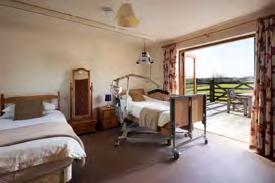
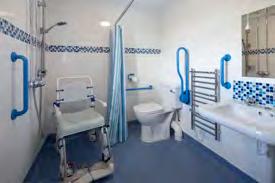


Denis Duncan House Leuchie’s fully accessible, self-catering holiday home in Dirleton, East Lothian. To find out more and book, visit denisduncanhouse.co.uk Speak to Jo or Katy to book on 01620 892864 leuchiehouse.org.uk Tailored short breaks with 24 hr nursing care Leuchie is a charity registered in Scotland no SC042249 Call 01206 226500 135 Ads Layup.indd 34 22/09/2022 16:41 Give monthly, help build our future Join MS-UK’s Supporters’ Club Together, we can support people affected by MS live healthier and happier lives. To find out more, visit www.ms-uk.org/msuk-supporters-club Registered charity number 1033731 Services Leaflet A5.indd 14 16/11/2021 12:32 Twowheelchairaccessiblecottagesin Cornwalloffering •Ensuitewetrooms •Electricprofilingbeds •Air/pressure mattresses •Ceiling&portable hoists •Showerchairs •Riser/reclinerchairs •Localcareavailable •Adaptedkitchens Treworgans ACCESSIBLEHOLIDAYCOTTAGES INCORNWALL Treworgansiscentrallylocatedwitheasyaccessto attractionsmakingittheidealplacetoenjoyCornwall. WearealsoveryclosetoTheMerlinMSCentre. 01726883240/07762173860 www.treworgans.co.uk
Natural bladder boosters
Try these tips to help bolster your bladder
Having an overactive bladder is a common symptom of multiple sclerosis (MS), and, as well as medication, there are natural ways to help soothe your bladder that can help.
Diet
Certain food and drink can make things worse. Every person is different, and what one person finds irritating to the bladder, another will have no issue with, and so it’s often a process of elimination.
The following foods are known to be irritants so it may be worth keeping a food and drink diary, eliminating certain ones for a few days at a time, and noting down any change in symptoms.
• alcohol
• artificial sweeteners
• caffeine
• chocolate
• citrus fruits and juices
• cranberry juice
• dairy
• fizzy drinks
• spicy foods
• sugar and honey
• tomatoes
• vinegar
Liquid intake
It’s tempting to limit your drinks when you have bladder issues, but this can lead to more problems. Plus, if your bladder is overly sensitive, concentrated urine will only irritate it more.
To avoid multiple trips to the loo in the night, avoid liquid for two or three hours before bed, and during the day aim to have six glasses of water.
Bladder training
There are ways to slowly train your bladder to reduce urgency which can be done easily at home. For example one method is to try and delay going to the toilet by five minutes every time the urge to urinate happens. Try to increase your ‘holding’ time up to three hours if you can.
Kegel exercises
These involve squeezing your pelvic floor muscles to strengthen them. To find the muscle, stop urinating mid-stream. This is your pelvic floor.
To exercise them, squeeze them for 10 seconds, and then relax them for three seconds. Repeat this 10 times. Try doing three sets of 10 of these exercises daily – they can be done anywhere, even while watching TV.
www.ms-uk.org 29 Support
Download our Bladder and Bowel Choices booklet from ms-uk.org/bladder-andbowel-choices-leaflet
Real Life Scandi style
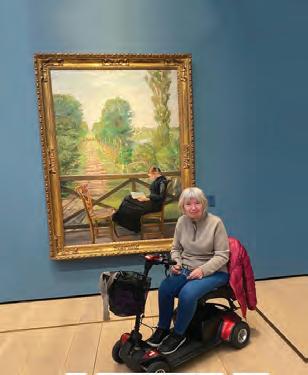
Before I developed multiple sclerosis (MS) I was living in Scotland, where I was born in 1950. I married a Norwegian, had two children and then we moved to Norway in 1984.
Joan Due-Gundersen reports on living her life with MS in Norway

I live in the capital Oslo, which has a population of around 5.5 million people.
Six years later, I found myself struggling through the shock of a divorce and having to live in
another country as a single mum. I believe the stress of all of this contributed to the development of my condition, the symptoms of which I started to experience about 10 years later.
My first signs were heavy legs, foot drop and general physical weakness. I put it down to a lack of strength and signed up with a personal trainer at the local gym. Two years later I felt worse and I went on to get a primary progressive multiple sclerosis (PPMS) diagnosis in 2007. Three or four years Iater I had to leave my job as a training and development manager and started receiving a pension you get here for leaving work because of accidents or chronic illness.
MS in Norway
Because I have PPMS, there aren’t any drugs available for my condition (although this is different if you’re younger and have active MS), but I take Fampyra which speeds up the nerve signals and slightly enhances walking speed – I walk with a rollator. I see my neurologist twice a year and she prescribes Fampyra.
Call 01206 226500 30 Real life
Living here, I get free physiotherapy as often as I like. This also includes treatment when I’m holidaying abroad as long as the physio is Norwegian.
Any transport necessitated by my illness, such as to the GP, neurologist, for physiotherapy, and so on, is free.

I get 150 low-priced trips in a taxi or adapted van with a ramp. I can take another person with me. This helps stop isolation. On Monday, for example, we’re going to IKEA (30 mins away) for the day. This also serves as an airport taxi.
We have three over/ underground transport systems here – buses, trams and a metro. I have to pay for these but they’re all well adapted for disabled people so I drive right on.

I have a carer who visits me for eight hours a week. I do pay for this, but at a reduced price. She does housework for four hours a week and is a social companion for the other four.

Any health services (such as consultations, transport to appointments, and prescription medicines) are free after an initial
£350. This includes consultations like ear, nose and throat and eye specialists, but not dentistry.
The state provides us with mobility aids, cars or vans, and house improvements like staircase lifts free, but there are strict eligibility rules.
Neurologists also aren’t too difficult to get hold of providing you live a populated area.
It seems like there are many similarities between the UK and Norway as far as MS care goes. One important difference is that we have no monthly disability payments. Everything is provided for us instead but we can’t choose what to spend the money on.
So I get out and about a lot here, and I have a friend the same age as me who also has PPMS – she’s in west Norway in Alesund, and is the same age as me. I know some members of the Oslo MS Society to say hello to – it’s quite an active society here, but I don’t attend. Through MS-UK’s online activities, I met a friend in the UK who I meet fortnightly on Zoom for a chat.
Plus many more…
Did you know MS-UK’s online activities include a Peer Support Service? Meet new friends online by joining one of our Peer Pods and connect with others living with MS. Visit ms-uk.org/peer-support-service-2/


www.ms-uk.org Real life 31
Over to you
Whether it’s gripes or groans, a pat on the back, or hints and tips, we want to hear from you
Listen up
Dear New Pathways, I’ve just listened to my first ever podcast, and it was from MS-UK!
I love Ian Cook’s investigative articles in New Pathways so it was great to hear him speaking on your new podcast and interviewing people in audio format.

I hadn’t heard of Wim Hof before but after looking him up on
YouTube I can see he has quite the following, and although I’m not sure I’m ready to be submerged in ice-cold water yet, I find the science behind it fascinating. It’s always good to hear ways to help our condition naturally, so thank you!
Peter Goodyear, Northampton
Dear New Pathways, I enjoyed reading the piece last issue by Regina Beach, Finding Purr-pose, in which she described the joys of fostering cats and kittens. I lost my cat Sammy just over a year ago, she lived to the grand old age of 20 but as I’m 75 myself now it doesn’t seem right to get a kitten again.

I’ve been inspired by the article to contact my local cat rescue place and am going to meet some cats in need of a new home very soon. There’s nothing like the love of a pet.
Many thanks, Jane Onsworth, Tiptree
Call 01206 226500 Letters 32 Write to “FREEPOST MS-UK” (no stamp is required) Call 01206 226500 Email newpathways@ms-uk.org Contact us
Finding purr-pose
Hot topic


Over on Facebook, we posted an article from New Pathways about a man called Patrick who was using medical cannabis.

Mum’s the word
Dear New Pathways, I listened to MS-UK’s new podcast recently and having been a New Pathways reader for a number of years but having never before written a letter, I thought it was time I did!
I wanted to say that the interview with Sally Darby struck a chord with me. Sally spoke about motherhood with a disability. I don’t have any children myself but I remember my own mother, who also has MS, telling me that when I was little a neighbour had


said to her how selfish she was to have a baby. This made my mother feel awful – she was a brilliant mum and I never missed out on anything. But I now have two friends with MS who both have kids and things couldn’t be more different – Sally is right, thankfully, society is catching up and things are becoming better for mothers with disabilities.
Many thanks, Laura Holder, Manchester
Andy Clarke
Sadly the UK has dragged its feet where the benefit of cannabis is concerned and only my opinion, but I think national charities backing and support of a pharmaceutical equivalent in Sativex has put us decades behind. The cannabis plant and its use is well over 3,000 years old, why then must we try and reinvent the wheel? It should be legalised and regulated and is less harmful than alcohol.

Clive Truman
I have, on prescription here in Germany, been using medical cannabis for the past six years and I can only say that I have a much better quality of life
Mary Pearson
Think I’m going to talk to the MS nurse about this despite a cocktail of drugs sleep is still a huge problem.

Letters 33
www.ms-uk.org
When life gives you MS
officer in a busy inner London Borough, but as more symptoms appeared, this became increasingly difficult to manage. The commute into London, the stressful nature of the job and coping as a newly single parent had a huge impact on the symptoms of my condition.
When Caroline Gray had to take medical retirement, she carved out a career in a new direction.

My first symptoms of multiple sclerosis (MS), which started just after I had my
son, were nausea, dizziness and numbness. Three years later, in 1991, I was diagnosed, told there was no treatment, and advised to “go and live your life.”
At the time I was a housing
Ten years later, however, I was still working as an area manager but, feeling unable to cope, I took six months’ sick leave and a year later, after a long fight, I was given ill health retirement. Financially, it was a relief, but it was a very sad end to a 21year career.
However, just because that chapter had ended, I was not able or ready to retire for good. I decided to retrain, went back to college part time and in 2006 qualified
Call 01206 226500
34 Real life
Two readers explain how they took a totally different career path after MS meant they couldn’t continue at work
as a psychotherapist.
Why psychotherapy? Well, I had been a Samaritan in my 20s, and although that’s very different to counselling, there is a link. It’s similar in that you work with people in distress and trying to find their way through trauma.
I had come through many traumatic events in my own life – loss of my mother, who lived with MS, when I was seven, being diagnosed with MS in my early 30s, my husband leaving me in the same year and then in 2001 my partner of 10 years leaving, and the subsequent
loss of my house. So, I felt well placed to understand trauma and the resilience it takes to carry on. I was also keen to get back into education and stretch my mind.
On a practical note, psychotherapy was something I could do from home and sitting down.
In 2007 I set up my own counselling practice at home. This was not as common as it is now and was a bit slow to start, but within a year it was thriving. I could choose my hours, how many clients to see in a day or week, and
of course, sit down to work. I was worried how people would cope with my fluctuating appearance, as I sometimes use a crutch or a wheelchair, but it has never been an issue. People accept me as I am and if they ask, I am honest but reassure them it will not affect our work together. Since 2020 with more sessions having to be online this has not been an issue at all and has made it much easier for me.

I will be retiring next year but am so glad I was able to make a second career that fitted in well around my MS.
Kyle Walker lost his job as a mechanic but now he helps to save lives.
Last year I lost my £40,000-a-year job as a mechanic for BMW due to my recent diagnosis of MS. My work tried to help but unfortunately there wasn’t anything we could do.
I was then working for an agency for minimum wage, packing candles in boxes. It was five days a week for little monetary reward, but it built up my employee confidence. This year I applied to get a job as a 999 emergency call handler for East of England Ambulance Service. I have finally found a job I’m passionate about.
My MS affects my walking immensely and I travel to and
from work on my road-legal mobility scooter. I have broken down some boundaries with that thing. I use a walking stick almost every day. When I have a bad call at work, I can barely walk away from my desk but management are really helpful, as are my co-workers who even offer to carry my mug of coffee through, or move desks for me so I can sit closer to the toilet. I started this job through an agency, but I’m now proud to have been taken on full time by the ambulance service.
This has been a kind of ragsto-riches story as I genuinely thought I was on the scrap heap after my diagnosis.
There will always be challenges and days where you just break down and your eyes are welling up because you
can’t do simple things like change your son’s trousers because it’s exhausting. But I’ve learnt to focus not on wondering what is next, but on what I have now which is two healthy kids and a supportive partner.
www.ms-uk.org
Real life 35
Occupational health
Rebecca Armstrong looks at what it means if you’ve been asked to go to occupational health

Over the past few months I have noticed an increase in the amount of times I have been asked about occupational health (OH) and what it’s all about. It’s fair to say that when your employer requests that you attend a medical-based appointment, the results of which they will see, it can be anxiety-inducing and for many it raises a fear that this might be the start of the process to being ‘managed out’.
The feeling that you are no longer wanted or that there is a perception that you are no longer valued in your role feels like a punch to the stomach for most people and it can bring up lots of fear and anxiety.
Call 01206 226500 36 Column
The term ‘managing out’ also feels like you are no longer in control of anything at work and this, too, can be destabilising for many people.
What it means
The first thing to say is that the invitation to OH, in the majority of cases, is not a bad thing. The core purpose of it is
to build understanding of your condition and needs with a view that, through adjustments, these can be met. OH are there to support you and can advocate to get you the support that you need.
It’s worth remembering that unless you have MS it is very hard to imagine what it is like having it. OH can help bridge that gap and to help the employer understand the condition and what you need. In my experience this is particularly useful when we consider the variable nature of MS for some which can be challenging to understand and make sense of.
Adjustments to work
It is however true that an OH report can also be the start of exploring your capability to continue in your role. In this context an employer might be considering whether adjustments can be made to support you to be at work and to achieve a reasonable level of performance. On the back of OH, there can be conversations about adjustments, redeployment and even capability moving forward, which can lead to medical retirement.
I am not going to sugar coat it – it can be a hard place to be particularly when you believe you can continue.
The number one piece of advice I can give anyone in this situation is to be active in the discussion. Whilst you might feel like you want to hide and hope it goes away, if there is an elephant in the room, name it, try to engage in discussion to help your employer see your perspective and to try and find a way forward. Taking back control shifts it from being ‘managed out’ to your voice being a key part of the conversation.
Ask for what you need
Reflect on what you think you need to enable you to continue to be at work and write it down, so you are clear first and foremost. Use that to articulate this to your employer using the various channels available to you, which are informal one-toone meetings, the grievance process, and flexible working requests. Putting it in writing can help to dissipate some of the anxiety. Make sure you have support around you from friends and family as well as some outside support. The MS-UK Helpline can provide you with support and information – call 0800 783 0518. You can also find support at my MS & Work Facebook group – just search Facebook for ‘MS & Work’.
News 27 www.ms-uk.org Column 37 www.ms-uk.org
Call the MS-UK Helpline
You’re not alone in your journey. the MS-UK Helpline can support you emotionally every step of the way. You can contact us about anything, whether it is about managing your multiple sclerosis symptoms, accessing benefits or simply just to chat.
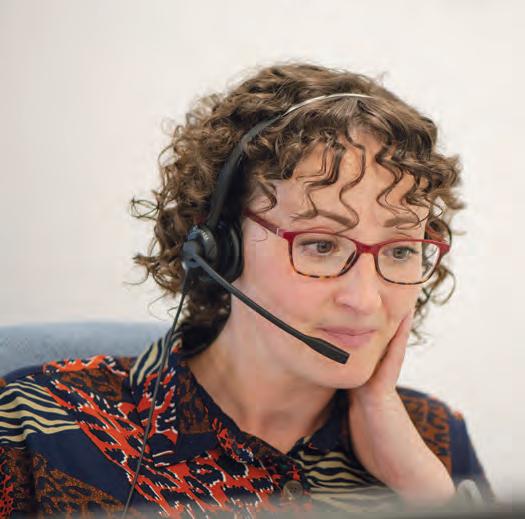
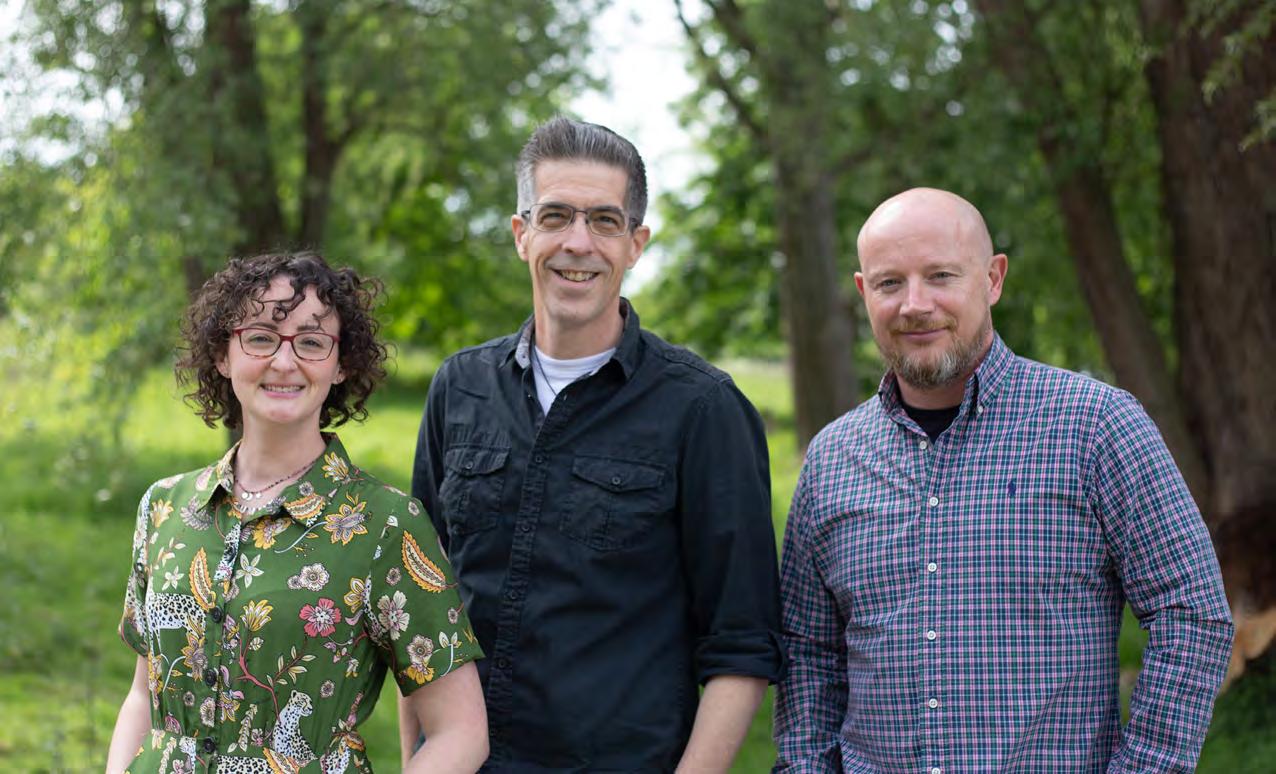
Laura, Ryan and Shaun are here to take your call
Registered Charity Number 1033731
We’re here to help Call free on 0800 783 0518 weekdays 10am to 4pm
The cook book
Tuck into these healthy and speedy meals
Serves 2
Salmon poke bowl

Ingredients
● 150g sushi (sticky) or jasmine rice, rinsed under cold water in a sieve until the water runs clear
● 1 tbsp rice/rice wine vinegar
● 75g frozen edamame beans
● 150g sushi-grade salmon fillet, skinned and cut into 1.5cm cubes (must have been frozen)
● 1 small carrot, peeled and shredded or grated
● Pickled cucumber or pickled red cabbage
● 1 ripe avocado, halved, stoned and thinly sliced within its skin
● 2 spring onions, trimmed and thinly sliced diagonally
● Mixed black and white sesame seeds, toasted
For the marinade
● 1 tbsp dark soy sauce
● ½ tbsp rice/rice wine vinegar
● ½ tbsp toasted sesame oil
● small pinch of dried chilli flakes
For the sauce
● 2 tbs thick mayonnaise
● ½ tsp dark soy sauce
● ¼ tsp sesame oil sriracha sauce, to taste
Method
1 Put the rice into a small pan with 180ml of cold water, put the lid on and bring to the boil. Lower the heat, simmer gently for 13 minutes. Remove from heat, leave to steam for 10 minutes with the lid on.
Remove the lid and stir in the rice/rice wine vinegar. Divide between two bowls.
2 Meanwhile, cook the edamame beans in a separate small pan of boiling well-salted water for 3 minutes, then drain and cool.
3 Mix the marinade ingredients together in a small mixing bowl and stir in the salmon. Set aside. Mix the sauce ingredients together in a separate small bowl and set aside.
4 Arrange the carrot, edamame
beans and pickled cucumber (or other pickles), with a little of its juice, in groups over the rice around the edge of the bowls. Then add the salmon, with its marinade, in the same way. Remove the avocado halves from their skin with a large spoon, fan out the slices and arrange on the rice.
5 Drizzle the sauce in lines over the top of the bowls, or spoon it into the bowls. Scatter with the spring onions and some toasted sesame seeds. Serve.
www.ms-uk.org Recipes 39
Serves 4
Tomato and coconut dhal

Ingredients
● 250g dried red split lentils
● 1 onion, thinly sliced
● 1 tsp ground turmeric
● 1½ tsp medium curry powder
● ¼ tsp ground cinnamon
● tsp medium chilli powder
● a small handful of dried curry leaves, roughly crushed
● 1 x 28g vegetable stock pot or 1 vegetable stock cube
● 1 x 400g tin coconut milk
● 400g tomatoes, half of one reserved for garnish, the remainder chunkily chopped
● salt and freshly ground black pepper
To serve (optional)
● soft-boiled eggs (lowered into boiling water for 6½ minutes, then into cold water and peeled when just cool enough to handle)
● nigella or onion seeds
● roughly chopped coriander
● natural yoghurt (dairy-free, such as coconut yoghurt, for a vegan dhal)
Method
1 Put all the dhal ingredients, except the tomatoes and salt and pepper, into a large pan. Fill the empty coconut milk tin with water and add that, then bring the mixture to the boil, stirring from time to time. Simmer on a low heat, stirring occasionally, for 10 minutes.
2 Add the tomatoes and simmer gently for a further 15 minutes, stirring occasionally. If necessary, thin with a
The recipe can be completed to the end of step 2 up to 3 days in advance, then cooled, covered and chilled, or it can be frozen (defrost before reheating). For both options, reheat gently in a pan until hot and bubbling.
little more water to your preferred consistency (bearing in mind the dhal will thicken up if not eating it immediately). Season with salt and pepper.
3 Divide the dhal between four bowls, thinly slice the reserved tomato and arrange on top with any, or all, of the serving suggestions (if using), and serve
Call 01206 226500
40
Recipes
Serves 4
Pearl Barley
Ratatouille ‘Risotto’

Ingredients
● good glug of olive oil, plus extra to serve
● 1 onion, finely chopped
● 1 medium aubergine, sliced lengthways and cut into roughly 1cm dice
● salt and freshly ground black pepper
● 2 garlic cloves, crushed
● ½ tsp dried oregano
● 1 red pepper, halved, de-seeded and cut into roughly 1cm dice
● 150g pearl barley
● 1 x 400g tin chopped or plum tomatoes
● 400ml vegetable stock
● 1 medium courgette, cut into roughly 1cm dice
● 12 pitted black olives, halved
● 4 knobs of butter
To serve (optional)
● Basil leaves
● a small bowl of grated Italian-style hard cheese
Method
1 Heat the olive oil in a lidded sauté pan (around 24 x 6cm), add the onion, aubergine and some seasoning and cook on a low heat for 10 minutes, stirring occasionally, until softened. Add a little more olive oil if necessary as they cook, but the aubergine will soak up as much as you give it, so don’t be tempted to add too much. Add the garlic, oregano, red pepper and pearl barley and stir over the heat for a minute or two.
2 Add the tomatoes and stock, or, if using a cube, fill the empty tomato tin with water, add it to the pan and crumble over the stock cube. Bring
Step 1 can be completed up to a day in advance. Cool, cover and chill. Reheat gently in the pan until hot throughout, then continue the recipe.
to the boil, while stirring, then add generous seasoning. Cover and simmer very gently for 30 minutes, giving it the odd stir and adding a little more water if all the liquid has been absorbed.
3 Stir in the courgette and black olives, bring back to a simmer, and simmer, uncovered, for a further 10 minutes, until the barley is plumped and tender but still chewy and the courgette retains a little bite. You may need to loosen the mixture with a little water – it should be just on the sloppy side, rather than dry or runny. Check the seasoning.
4 Serve in bowls with a knob of butter nestled into the middle of each serving, a scattering of basil leaves (if using) and an extra swirl of olive oil. Hand around the cheese separately (if using).
Extracted from Deliciously
Simple by Jane Lovett (Headline Home, £26)

Recipes 41 www.ms-uk.org
QI have an overactive bladder for which treatment using the drug Oxybutynin and general bladder training therapies have had limited success. My MS nurse has suggested percutaneous posterior tibial nerve stimulation (PTNS) could be a possible solution. Can you tell me more about this treatment, its safety and effectiveness?


APTNS is a therapy that is relatively new to the NHS and is used to counteract the symptoms of an overactive bladder. The procedure involves inserting a needle close to a
nerve which is situated just above the ankle, with an electrode being placed on the foot. Once these are in place a mild electric current is passed through the needle and is then directed to the nerves that are responsible for controlling bladder function. These nerves are situated in the lower back. This treatment is administered via 12 outpatient sessions, once per week, with each session lasting approximately 30 minutes.
The National Institute for Clinical Excellence’s (NICE) patient guide for PTNS confirms that is a reasonably safe and effective way to treat an overactive bladder, particularly if first line treatments such as medication, bladder training and pelvic muscle training have not had the desired effect. Moreover, studies have shown that PTNS treatment is effective in treating people with MS who are affected by overactive bladder issues.
Given that this treatment is relatively new, more evidence is being gathered regarding its effectiveness in the long-term. It may follow that one day, PTNS treatment becomes part of the
first line solutions offered to counter bladder symptoms. What we do know so far is that for many, it has provided a welcome relief from the discomfort that accompanies an overactive bladder.

To find out more about the PTNS procedure, including evidence of its efficacy and safety, go to the NICE website – nice.org.uk/guidance/ipg362

Q&A 42 Call 01206 226500
Laura, Ryan and Shaun want to hear from you
Your questions answered
Shaun
Ryan
Laura
Our helpline team
QMy condition has affected my speech and ability to communicate confidently. I’m OK with my family and people that I know well, but communicating with others can be challenging at times and it’s started to make me anxious. Sometimes I type things out on my tablet or phone for people, but it takes so long! Is there any help I can get or anything that you can suggest?
ASome people with advanced multiple sclerosis (MS) may find that their speech becomes difficult, and you may need to find new and creative ways to communicate with confidence. This may be to either clarify what you’re saying, or as a whole alternative to speech. Finding the most suitable communication support depends on your overall situation and solutions really need to be tailored to you. When it comes to communicating, it is not just down to how speech is affected, but there may be other issues involved too. Cognition, memory, reading and visual symptoms should also be taken into account.
There is support with a number of communication aids available. This can range from simple but effective communication boards (with symbols and words) through to more technologically advanced voice output communication aids.
When getting support from professionals, this would be managed by a multi-disciplinary approach, meaning that professional from a range of backgrounds can help. It would be a good idea to contact your MS nurse. The MS nurse and their neuro-rehabilitation colleagues (speech and language therapists and

occupational therapists) are normally involved in assessing and supporting you.

You may also want to connect with the Ace Centre. This is a charity providing support with assistive technology and augmentative and alternative communication services for people with complex communication needs. They offer assessment, training and information services. They have a freephone helpline and a range of online information as well as provide services from their regional offices. Visit www.acecentre.org.uk/contact
You can also get in touch by emailing info@ms-uk.org or visiting ms-uk.org/helpline
Q&A 43 Contact us
If you’ve got questions about multiple sclerosis, you can call and speak to Laura, Ryan or Shaun for free by calling 0800 783 0518, Monday-Friday, 10am-4pm.
www.ms-uk.org









For further information: 01268 419 288 sales@uniscan-walkers.co.uk www.uniscan-walkers.co.uk Here to Help All Uniscan Walkers: Moderate exercise such as walking, with or without a mobility aid, has been found to have many benefits. • Can help you keep fit • Can help you maintain your social life with family and friends • Can help you stay independent • Can help you take a rest when you’re tired • Are lightweight • Stay locked together when folded • Are handmade and sturdy for indoor and outdoor use • Have a built in rest seat - not the sling style Whilst a walker from Uniscan can’t help with your condition or symptoms, it can help keep you mobile, whether that’s around your home or out and about. Call 01206 226500 Accessible online exercise classes Chair yoga classes Mindfulness courses Interactive workshops Information sessions Peer Support Service Don’t miss out – sign up for our new online activities today! Visit www.ms-uk.org or contact us at register@ms-uk.org Check out MS-UK’s online activities Registered charity number 1033731 Live a happier and healthier life with MS MS-UK Online Advert A4 NP.indd 1 20/02/2023 12:25

How does MS make you feel?
Join in our new campaign this MS Awareness week!
Here at MS-UK we are really excited to share with you that for the first time ever, we have been working on a joint MS Awareness Week campaign with all the multiple sclerosis (MS) charities - Shift.MS, MS Trust, MS Society, Overcoming MS, MS Together and the Multiple Sclerosis National Therapy Centers.

The theme for this year’s MS Awareness Week, taking place 24-30 April, is mental health, because of the huge impact a diagnosis of MS can have.
Use the hashtag
So we decided to create a social media campaign called #MSMakesMe and we are inviting all of the MS community to share the #MSMakesMe hashtag with a description of how MS makes you feel on social media all throughout MS Awareness Week. This could be #MSMakesMe sad, #MSMakesMe laugh, or #MSMakesMe brave, for example. I can be anything. We would like you to share a different word each day with a
picture of yourself to show just how differently MS affects everyone. And it doesn’t stop at you – why not invite your partner, friends and family members to do the same, highlighting how MS doesn’t just affect you, but everyone around you, too?
We are also working with a celebrity MSer who has kindly given up some of her time to help promote the campaign UK-wide for us during MS Awareness Week - watch this space!
How you can help
We are collecting #MSMakesMe stories to share throughout MS Awareness Week on our blog and social media to raise awareness of MS. So, if you would like to write a short 300-500 word piece about how MS makes you feel, we would love to hear from you. Please email your story and a picture or two of yourself to NewPathways@ms-uk.org. We look forward to hearing from you!
Call 01206 226500 Awareness 46


www.motomed.com
Curan intermittent catheters

As every person is different, your choice of ISC (intermittent self-catheterisation) catheter will depend on your lifestyle, dexterity and what works best for you. Finding the right intermittent catheter is a very important and personal choice, which is why our Curan range of ISC catheters includes both single use gel catheters and hydrophilic coated catheters to suit all needs.
Discreet and compact gel catheters. Easy to use and mess-free.

Comfort-coat hydrophilic catheter, available in female, standard and unisex lengths.
To order your sample scan the QR Code or speak to our friendly customer care team on 0800 036 0100

For more information visit: clinimed.co.uk/curan-range
We also offer a free home delivery service via our sister company, SecuriCare (Medical) Ltd and can deliver your Curan ISC directly to your door alongside any of your other continence requirements. We provide our home delivery users with a range of complimentary items with your monthly order to help support your needs.
 Curan Advantage
Curan Man
Curan Lady
Curan Advantage
Curan Man
Curan Lady
CliniMed Ltd, a company registered in England number 01646927. Registered office: Cavell House, Knaves Beech Way, Loudwater, High Wycombe, Bucks HP10 9QY. Tel: 01628 850 100 Fax: 01628 527 312 Email: enquiries@clinimed.co.uk or
www.clinimed.co.uk. Curan® is a registered trademark of Curan Medical BV, 7007 C J Doetinchem, The Netherlands. CliniMed® and SecuriCare® are registered trademarks of CliniMed (Holdings) Ltd. ©CliniMed Ltd. 2022. PID 10401
visit
