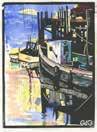
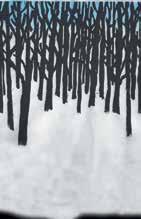
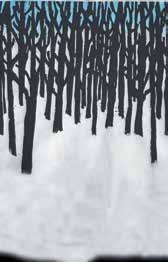
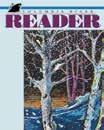
Snowy Path by Gregory Gorham


reetings! And welcome to the holiday issue -- packed, we hope, with cheerful inspiration, humor, gift ideas, good food and suggestions for enjoying the good life! I am deeply grateful to our advertisers, sponsors, readers, writers, colleagues, distribution teammates, proofreaders, and even Miss Manners, who I’m sure will (as usual) politely decline the invitation to our Holiday Open House on Dec. 5. But I hope everyone else will drop by!
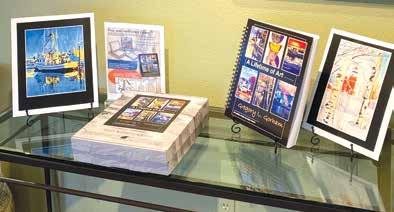
It’s a chance to socialize and celebrate the season. And if you have any book lovers on your Christmas list, you can peruse CRRPress’s offerings. We’re also celebrating CRRPress’s fifth published book, A Lifetime of Art, which joins the other four, all detailed in the CRRP Catalog at the center of this issue. Pull it out and save for future reference. All the CRRPress books celebrate the Columbia River region’s history, scenic beauty, lifestyle and art.
Please come share some holiday cheer and allow me to personally thank everyone for continuing to make CRR possible. This publication is alive because of all of you. Happy Holidays!


Publisher/Editor: Susan P. Piper
Columnists and contributors:
Hal Calbom
Nancy Chennault
Alice Dietz
Joe Fischer
Joseph Govednik
Neil Martello
Bruce McCredie
Dayle Olson
Kathryn Patton
Michael Perry
Ned Piper
Robert Michael Pyle
Marc Roland
Alan Rose
Greg Smith
Andre Stepankowsky
Debra Tweedy
Judy VanderMaten
Editorial/Proofreading Assistants:
Merrilee Bauman, Michael Perry, Marilyn Perry, Tiffany Dickinson, Debra Tweedy, Ned Piper
Advertising Manager: Ned Piper, 360-749-2632
Columbia River Reader, llc 1333 14th Ave, Longview, WA 98632
P.O. Box 1643 • Rainier, OR 97048
Office Hours: M-W-F
E-mail: publisher@crreader.com

Columbia River Reader is published monthly, with 14,000 copies distributed in the Lower Columbia region. Entire contents copyrighted; No reproduction of any kind allowed without express written permission of Columbia River Reader, LLC. Opinions expressed herein, whether in editorial content or paid ad space, belong to the writers and advertisers and are not necessarily shared or endorsed by the Reader.
Submission guidelines: page 36.
General Ad info: page 6.
Ad Manager: Ned Piper 360-749-2632.

past issues from 2013.
Thursday, Dec 5 3:00 – 6:30pm Drop in!
HOLIDAY SHOPPING -Browse our 5 books
FREE CRR Press mug with $100 book purchase
FREE gift wrap
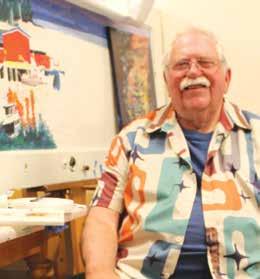
A Lifetime of Art Book Launch/Signing Meet the artist Greg Gorham


by Joe fiScher









By Michael O. Perry
n October 31, 1804, Captain Lewis wrote, “The river being very low and the season so far advanced that it frequently shuts up with ice in this climate we determined to spend the Winter in this neighbourhood.”
After six months of travel up the Missouri River, the Corps of Discovery found themselves in the ideal location to make camp. If their progress had been better, they might have kept going past the five Mandan and Hidatsu Indian villages near the mouth of the Knife River, 60 miles north of present-day Bismarck, North Dakota. Doing so might well have been disastrous.
Since other potential sites lacked an adequate supply of wood, the Corps decided to build their winter quarters downstream from the first Mandan village. Winter arrived in full force, just two weeks after the Corps decided to stop. Ice began to form on the Missouri River, and temperatures as low as 45 degrees below zero soon became a serious problem.
About 1,000 Mandan Indians were living in two villages in 1804, but an estimated 10,000 Mandans had lived in nine villages just 50 years earlier. Smallpox, introduced by white traders, had decimated their numbers, and the powerful Teton Sioux had forced them
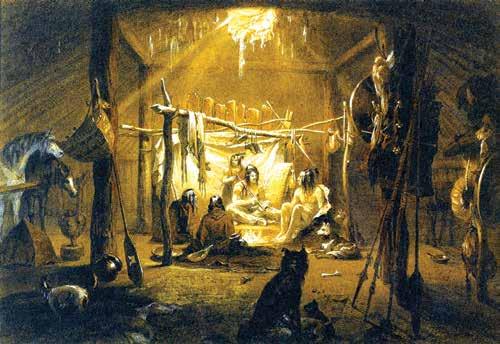
feet in height, with beams resting in the notch at the top of each post. At the center of the lodge was a small circular fire pit.
to abandon their settlements and move upriver where they merged with the Hidatsu (Minnetaree) tribe for security.
... how cold is it? ...
They talk about how cold it was there and I think the coldest you get is 45 degrees below zero. You think, ‘How would they get that?’ Well, they had five thermometers, five glass thermometers that they left with, and I don’t know when they broke the last one, but they stopped recording temperatures somewhere out in Montana, because they broke the thermometers. They’d only go down to 45 below and that’s as cold as they could measure. And I still don’t know if I’ve ever seen a thermometer you buy in a store that goes that low.”
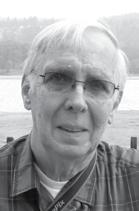
Michael Perry enjoys local history and travel. His popular 33-installment Lewis & Clark series appeared in Columbia River Reader’s early years and helped shape its identity and zeitgeist. After two encores, the series was expanded and published in a book. Details, page 21, 43.

Other Indian tribes living on the Great Plains were nomadic and lived off the land. The Mandans lived in permanent houses and grew more corn, beans, and squash than they needed. The Mandan and Hidatsu villages had become a major trading center that was visited by fur traders from Canada and St. Louis, along with several tribes from across the northern plains. Because of this, Lewis and Clark would learn a lot about what lay ahead on their journey to the Pacific Ocean as they gathered information while waiting for winter to pass.
Nobody was prepared for the winter ahead. Most of the men were from Virginia where snow is not unusual, but they had never seen weather like they were going to experience the next three months. By midNovember, they had abandoned their thin canvas tents and moved into the wood structures under construction. On December 8th, Clark wrote, “a verry Cold morning, the Thermometer Stood at 12 d.
below 0 which is 44 d. below the freesing point.” Four days later it was 38 degrees below zero, but by December 14th it had warmed up to where “the Murckerey Stood at 0.” Then, at sunrise on December 17th, it was 45 degrees below zero and at “about 8 oClock PM the thermometer fell to 74 d. below the freesing pointe.”
Fort Mandan consisted of eight cabins inside an 18-foot tall stockade. The cabins were 14 feet square and each had a stone fireplace. The cracks in the walls were filled with mud to keep drafts out. A loft in each cabin was raised 7 feet off the floor and covered with grass and clay to provide warm sleeping quarters. Temperatures were below zero on 16 mornings in December, with just one day where temperatures were above freezing when the men awoke! It was so cold the men could only work an hour at a time and Fort Mandan was not completed until Christmas Day.
The Indians had learned how to cope with the extremely cold temperatures by building dome-shaped earth lodges with a vent at the top. A fire in the center kept the room quite warm. Their lodges were large enough for several families (10 to 15 people), and during extremely cold periods the Indians brought their horses inside.
four years ago, we introDuceD a reviseD version of Michael Perry’s popular series which began with CRR’s April 15, 2004 inaugural issue and was reprised three times and then expanded In the new book, Dispatches from the Discovery Trail, edited by Hal Calbom and published by CRRPress. It includes an in-depth author interview and new illustrations and commentary.
Besides shelter, food was a critical need. Meat was reasonably plentiful, and the Indians had dried fruits and vegetables. But was there enough corn to supply their own needs plus the needs of the Expedition members? Big White, the chief of the lower Mandan village, had told Lewis and Clark, “if we eat you shall eat, if we Starve you must Starve also.” Here again, we see proof Indians played a major role in the success of the Expedition.
While the fort was being built, half the men went hunting. Several hunters injured their hips by slipping in the snow while packing the meat back to the fort. Others suffered serious frostbite. Despite snow a foot deep, they succeeded in killing more than 30 buffalo, enough to last until February.
It must have been a lonely Christmas at Fort Mandan, so far from home and family. Each member of the party fired off three volleys of gunshots on Christmas morning.
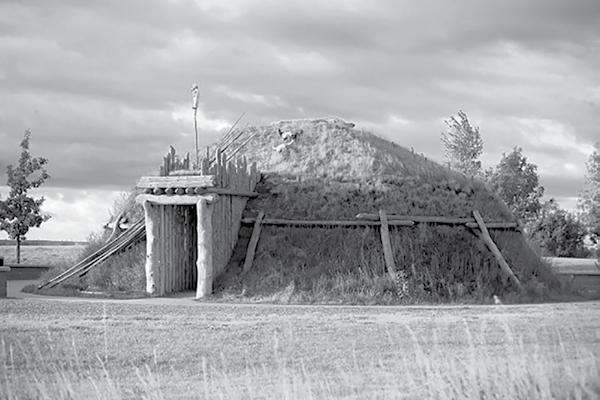
A reconstructed 40-foot diameter Mandan earthen lodge. The lodge was created by laying a matting, fabricated from willow sticks and bark, over a framework of posts and beams. A layer of dried prairie grass was spread over the matting, with an outer covering of thick sod.

...“welcome the New year”...
While hibernating and celebrating, Lewis and Clark were also anticipating the challenges that lay ahead. Trappers, traders, and Indians all convinced them they’d need horses, not canoes and a keelboat, to continue their journey. Hence, the value of the otherwise-dispensable Charbonneau and his two Snake Indian wives.
Clark issued two glasses of brandy to each man and allowed the cannon to be fired when the flag was raised. A third glass was issued later that morning, followed by a Christmas dinner that was “the Best to eat that could be had,” according to John Ordway. Joseph Whitehorse wrote “The men then prepared one of the Rooms, and commenced dancing, we having with us Two Violins & plenty of Musicans in our party.” Clark said the celebration “Continued until 9 oClock P,M, when the frolick ended &c.”
A week later, Patrick Gass wrote, “Two shot were fired from this swivel [cannon], followed by a round of small arms, to welcome the New year. Captain Lewis then gave each a glass of good old whiskey, and a short time after another was given by Captain Clarke.”
The men were allowed to go to one of the Mandan villages to dance. Clark wrote, “I ordered my black Servent to Dance which amused the Croud verry much, and Some what astonished them, that So large a man Should be active &c. &.” John Ordway wrote that “a frenchman danced on his head.” A third round of whiskey was issued later that day.
Ned Piper 360-749-2632 All areas nedpiper@gmail.com Sue Lane 360-261-0658 Downtown Longview Cam Wilson 360-431-6626 ctwilson57@gmail.com



While the men wore several layers of clothing and stuffed fur into their clothing and buckskin moccasins, some still suffered from mild frostbite. Several men suffered more severe frostbite and were treated by Captain Lewis. Several Indians also received treatment. Typically, Lewis placed the frostbitten foot or
hand into a bowl of cold water (this was the wrong thing to do, but was standard practice of the day).
Nobody from the Expedition lost so much as a toe, but some Indians were not so fortunate. On January 10th Clark wrote, “last night was excessively Cold – the murkery this morning Stood at 40 d. below 0 which is 72 d. below the freesing point… Indians of the lower Villages turned out to hunt for a man & a boy who had not returned from the hunt yesterday, and borrowed a Slay to bring them in expecting to find them frosed to death…” the 13 year old boy was found and brought “to the fort with his feet frozed, having Stayed out all night without fire, with no other Covering than a Small Robe, goat skin leagens & a pr. Buffalow Skin mockersons.” Lewis attempted to save his toes, but on January 27th he “took of the Toes of one foot” and four days later he “Sawed off the boys toes” on his other foot. Patrick Gass wrote of men who “had their faces so badly frost bitten that that the skin came off.”
It would be a long, tough winter. In the next episode, we’ll learn about Sacajawea.
Next episode we will learn more about the Mandan-Hidatsa villages. They were a major trade center and, during the winter months, Lewis and Clark would learn a lot about what to expect west of there as they talked to visitors.



By Judith Martin, Nicholas Ivor Martin and Jacobina Martin
DEAR MISS MANNERS: A “friend” who gossips knows my husband and I are having difficulties, and yesterday she asked me if he is “chasing after other women.” What should I have said?
GENTLE READER: The response Miss Manners suggests is, “Not that I know of. But if he is chasing after you, do you want me to tell him to stop?”
DEAR MISS MANNERS: Those of us who keep things tidy are often accused of being “neat freaks” for some reason. My best friend and roommate has labeled me such, although she very much enjoys the end result of a neat and tidy environment.
What is the proper response when someone accuses me of being a “neat freak,” even if it is said lightheartedly?
And is there a word for the opposite type of person, besides the obvious rude retorts?
GENTLE READER: “Well, it beats being a dirty freak.”
Oh, is that one of the obvious rude responses? Sorry, but this method of dumbing-down standards in order to justify one’s own shortcomings annoys Miss Manners.
Yet perhaps you are right that a light tone does not soften that quite enough. How about a jolly, “It sure beats being a messy freak”? Is that better?
DEAR MISS MANNERS: Is it appropriate to serve alcohol at a baby shower where only women will be attending?
GENTLE READER: Because ladies don’t drink?
Well, Miss Manners trusts that the expectant mother does not, so there should be something nonalcoholic for her. But that should not be a factor in whether the shower is a tea party or a cocktail party.
thinking I must be making a mess. I checked my mirror and as far as I could tell, everything was fine, but I still felt embarrassed.
Sometimes I do need extra napkins, but I prefer to ask for them myself. On the other hand, I appreciate when a waiter refills my water without waiting to be asked, so I wouldn’t want to discourage their being alert and helpful.
What is your take?
GENTLE READER: That you embarrass much too easily.
DEAR MISS MANNERS: I was traveling with my granddaughter and a group of other grandparents and kids. The trip included some pretty intense amusement park rides, and my grandchild skipped most of them. At lunch, one of the little boys kept asking my granddaughter why she didn’t ride the big coasters. After repeated questions, she yelled back, “Why do you care?”
I was surprised and called her by all three of her names.


DEAR MISS MANNERS: I was in a restaurant and the waiter, unasked, brought extra napkins.
I became very self-conscious,
I screwed up. I could have supported her and modeled better ways to deal with invasive questions. Do you have any suggestions on better ways to handle such a situation?
GENTLE READER: All three of her names? That is serious.


Miss Manners from 7
But, Miss Manners believes, unnecessary. Your grandchild proved that she can take care of herself. You need only tell her not to yell.
DEAR MISS MANNERS: My father, my three siblings and I are having a surprise 80th birthday party for my mother. One
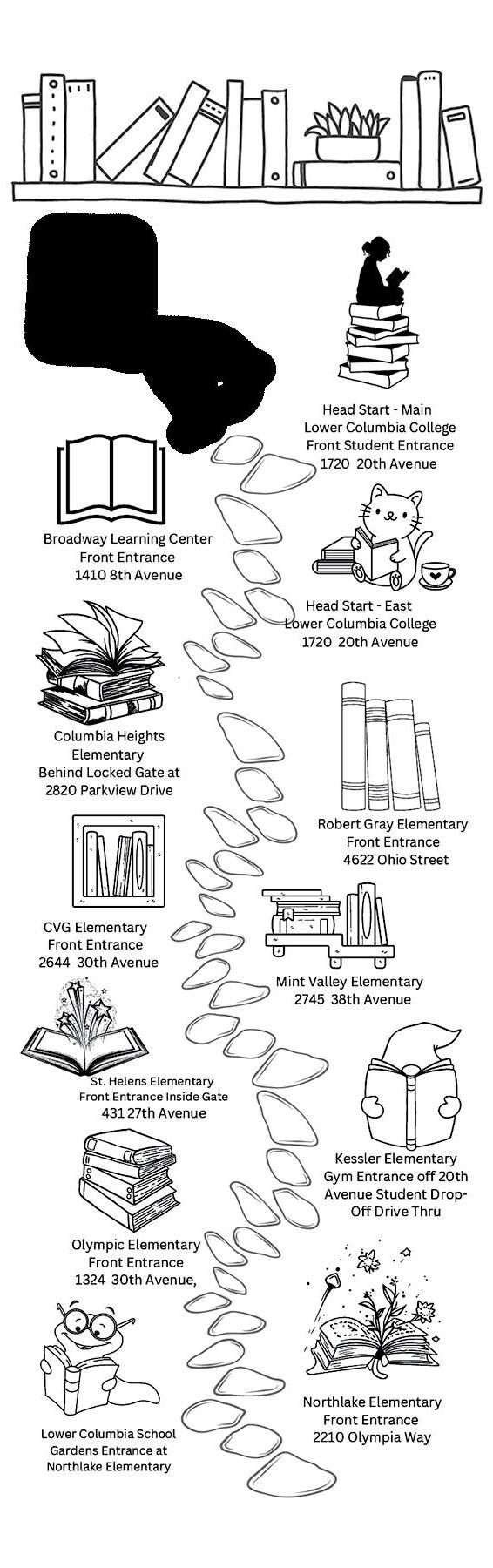
Come visit the 12 Little Free Libraries provided and maintained by the Rotary Club of Longview. Rotarians want you to Read, Read, Read to become better students and citizens. Come Take a book and Leave a book. Happy Reading!
of her cousins responded that they were coming, but also asked what restaurant my mom likes, because she wants to bring a gift card for her.
My parents don’t need anything and I know my mom would prefer not to receive gifts. I politely responded that it was a very nice thought, but no gifts were necessary. She said that I should tell her the name of a restaurant, because she was going to bring a gift card regardless.

Is it rude on my part to ask people not to bring gifts? Or should she back down?
GENTLE READER: No. Yes. But isn’t your real question: How do I get this cousin to stop pestering me?
Miss Manners has an answer for that one, too, which is, “You know, I’m not sure she would actually use it.”

(Please send your questions to Miss Manners at her website, www. missmanners.com; to her email, dearmissmanners@gmail.com; or through postal mail to Miss Manners, Andrews McMeel Syndication, 1130 Walnut St., Kansas City, MO 64106.)
Library card holders can now borrow various “things” from the Longview Public Library’s newest collection. We are joining a growing number of libraries in providing community access to a “Library of Things” collection: an array of non-standard but useful items available for checkout, ranging from bike repair kits to button-making machines to digital converters.
Adult and youth materials inspire life-long learning, encourage human connection, and promote sustainable communities. All you need is a library card to borrow from the collection. Don’t have one? Just call or visit the Library for details!
Examples of “Library of Things” items: •musical instruments •recreational equipment •electronic devices •early learning toys •media equipment… and so much more!





Items check out for three weeks with a regular adult card, except the Library’s Kids’ collection which can be checked out with kids’ and teens’ cards. Visit our catalog to see the current Library of Things collection, and watch for more items to be added soon!
For more information about the library of things and all the fall happenings at the Longview Public Library, please call 360.442.5300, visit longviewlibrary.org, “like” on Facebook at Facebook.com/ LongviewPublicLibraryWA or follow on Instagram at Instagram. com/longviewlibrarywa

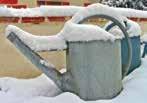
Fall clean-up projects are not as much fun as gardening in the spring. However, what you accomplish this fall will make your March days less labor intensive and your plants more likely to survive winter weather.
Pacific Northwest gardeners often approach autumn gardening projects with a sense of urgency. We want to “clean up” decaying annual flowers, untidy shrubs and thickets of perennials before the cold rains of winter dampen our enthusiasm. Before you clear out everything in sight, pause long enough to identify the different types of plants. A moderate approach to projects that address particular needs will ensure a successful winter slumber.
LAWNS appreciate an application of dolomite lime in the fall to raise the soil pH. Add a well balanced lawn fertilizer that releases a low level of nitrogen throughout the winter and you slow down the development of moss. Be sure to keep all leaves raked off the lawn as they can kill the grass over winter.
WEEDS
Pulling young weeds while the ground is soft and warm is a much easier task. Many, such as chick weed, will bloom and set seed even in the winter and will spread rapidly next spring. Eliminating them now will cut down on your chores later.
SLUGS are preparing to go into hiding and they also love the moist weather. Find them under rocks, fallen leaves, boards and pots. Destroy them before they lay their eggs.
Some attention should be given to certain plants at specific times of the year and, of course, fall/winter is no exception. Take a look at your garden using the following list as a guide: Deciduous trees and shrubs (those that lose their leaves in the fall) are basically in two groups: those that bloom in the spring and those that bloom summer through fall.
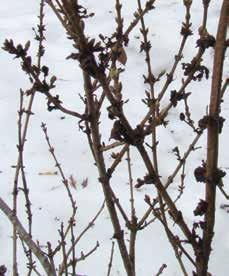
Spring blooming shrubs such as forsythia (photo, top right), lilacs, flowering cherries and plums form
their buds for spring blossoms the previous summer. Therefore, if you prune them heavily now, you are sacrificing part of the spectacular display for early spring. Prune these varieties at bloom time to enjoy them as cut flowers indoors. Or prune to shape immediately after blossoms fade.
Summer blooming shrubs would include hydrangeas, roses, butterfly bush and hardy fuchsias. These plants bloom on new wood. You will be cutting them back severely in mid-March, therefore they should be cut back only a little bit in the fall. Prune just enough to prevent winter winds from tearing them apart and to keep snow from breaking branches. Roses, for instance, should be cut back to about 24 inches. Hardy fuchsias appreciate a network of stems to shield the crown of the plant from pounding winter rains. Add some leaves or mulch to roses and fuchsias to protect from the severest of winter cold.
Broadleaf evergreen shrubs such as rhododendrons, evergreen magnolias and azaleas that bloom in the spring have also already formed flower buds for next spring. These plants should not be pruned in the fall.
CONIFERS (those trees and shrubs with needles) can be selectively pruned and used for holiday greenery. Intensive maintenance pruning should be delayed until new growth begins in the spring.
VINES often present a dilemma for the gardener in Autumn because of the wide range of types and growth habits. Older (2-3 years) clematis that blossom only on new wood in the summer should be pruned back to 1824 inches. As a general rule, most other vines should be pruned just enough to maintain a tidy appearance and to keep them from being damaged by winter winds and snow.
PERENNIALS are similar to shrubs as they can be both evergreen, (Candy Tuft and Dianthus), and deciduous, (Asters, Delphinium and Shasta Daisies). When we see frosted perennial foliage (see photo at right) we are tempted to grab the pruners and shear them off at the ground. Keep your pruners in your pocket! And use discretion. Asters and

Shasta Daisies develop new growth at the crown over the winter and can be pruned back to the ground after the foliage has died back. However, plants such as delphinium that disappear totally in the winter are similar to the hardy fuchsias. Stems should be left to at least 12 inches high to act as deflectors for the pounding winter rains. Without these stems, the crown of the plant may become saturated and rot easily. Evergreen perennials should be left as they are until after they bloom.
ORNAMENTAL GRASSES are often incorrectly pruned in the fall to conform to a misguided conception of neatness. Tight knots of sheared “muffin-like” mounds are not the
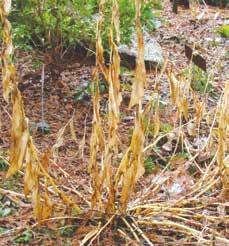

way to showcase evergreen grasses. (pictured, above). The late blooming inflorescence captures frost magnificently. Even after the grasses freeze and the blades turn to tan, they move gracefully with the wind until they are pruned to the ground mid-March. If snow load breaks larger masses, go ahead and cut them back after they thaw. Deciduous grasses, as pictured here show outstanding fall colors before they freeze to the ground. A simple raking will clean up the dried stems easily.
To make your fall clean-up days a satisfactory experience and beneficial for your garden, be sure to identify plants, set priorities for projects and practice pruning in moderation. You will have a sense of accomplishment when you have finished and your garden will awake from its long winter’s nap refreshed and renewed.
Nancy Chennaul and her husband, Jim, operated a landscaping business and independent nursery/garden center for 20+ years. She wrote CRR’s Northwest Gardener in CRR’s early years. After a seven-year hiatus she came out of “retirement” to reconnect us with some of her favorite gardening topics. Nancy is founder of “Castle Rock Blooms”community of volunteers.
Not a real king, not very wise, not religious. Dismayed by injustice and suffering, he still embarked on the journey with hope, taking along what gifts he could offer.
The legend called us kings, but we were really just rich. We had enough wealth to enjoy leisure, to study, to learn of other lands and to pay careful attention to the natural world. The legend called us magi – wise ones. Well, that might apply to Balthazar and Melchior, but me — I’m just, shall we say, curious.
Bored and restless
I used to have a passion for work, but after I built up my business so that it was running itself, and my sons were well trained, and I was making more money that I could spend, it all became a bore to me. Everything, in fact, seemed boring. My town, my family, my whole life. I lost interest in it all. I felt useless, and restless. I began to spend my days wandering in the bazaar, listening for news from beyond the walls of my city.
I met Balthazar and Melchior in the tea house. They were poring over charts and arguing passionately. When my curiosity became obvious, they invited me into their conversation. It was way over my head – literally. They were talking about the stars.
The stars: orderly and mysterious
Balthazar is in love with the sky. He has devoted a lifetime of study to plotting and studying the stars. A spice merchant, he has traveled widely, collecting many books and learning from master astronomers.
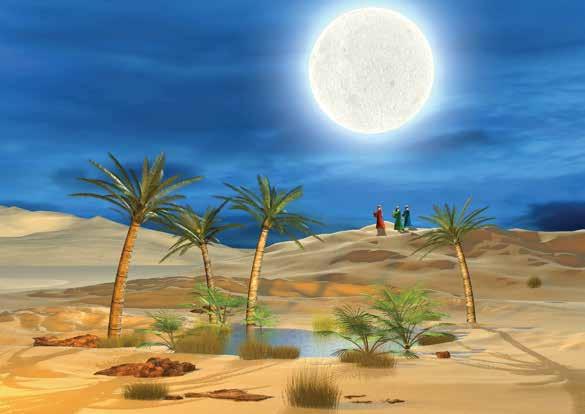
He uses them to navigate, so that his interest is practical, but it goes far beyond that. He is obsessed with their wildness, their order, their beauty and their mystery.
Melchior sees something else entirely in the stars. He’s a little crazy, I think. Some sort of mystic. He studies religions, collects holy books wherever he goes on his travels. He speaks half a dozen languages,

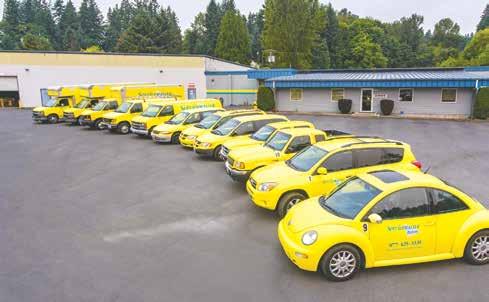

and reads even more. From all this study of religion, he has come to believe that all things are connected by some magical web. He thinks that even human beings and stars are connected, so that our stories are reflected in the sky, and he is always trying to crack the code, so that he can read the meaning of the heavens.
cont page 20



Pacific Northwest Culture
By Bruce McCredie
When was the last time you gazed into the evening sky? It’s said there are at least 100 billion stars in our galaxy, the Milky Way. Experts estimate there are between 100 billion and 200 billion galaxies in the universe. With the advent of the James Webb Space Telescope, we can see back 13 billion light-years to the birth of the first galaxies where space and time is said to have originated.
This, to me, is beyond comprehension and makes our home, Mother Earth, seem rather insignificant.
But imagine, if you will, another perspective – simply that of a single tree. Lets say you’re hiking on a wilderness trail deep inside the forest, dark and somber, when suddenly rays of sunlight penetrate through the crown high above illuminating a single old growth Douglas Fir, tall and majestic. You stop in your tracks and gaze up at this forest giant towering 300’ above, its large platelets of bark shining brightly in the morning sunshine. You remember what 19th century Scottish botanist David Douglas once said, that this is “one of the most striking and truly graceful objects in nature.”
For a brief moment you can almost hear this tree say “Hey down there – look at me. I’ve survived fires, wind storms, the logger’s axe and have been here providing sustenance and shelter for more than 600 years. You need to be impressed by my magnificence.” And then the sunlight slowly fades away as this one tree takes its place among its brethren inside the wilderness.
Now these words may seem whimsical to you, but how many times have people gone on hikes or other outings seemingly with a mission to cover as many miles as possible in as short of time as possible? Do we sometimes miss the point as to why we spend time in the natural world? Do we “miss the trees for the forest,” as the saying goes?
So the next time you look up at the night sky, remember what also awaits you right here in your own backyard. We all have the innate ability to enjoy a sense of wonderment, to be awed every time we hike, either by snow-capped mountains, alpine lakes and meadows, or in this case, simply a tree. I realize our home in the universe is merely a speck in the grand scheme of things, but what a magnificent speck it is.

RBy Joseph Govednik, Director, Cowlitz County Historical Museum
ecently our family visited the San Francisco East Bay Area for my father’s 90th birthday.
In addition to celebrating a major milestone and reconnecting with family, the trip provided an opportunity to visit a unique and special museum to me, the Lindsay Wildlife Experience. Many times, as a youngster I would go on school field trips to the Lindsay, and later on, this museum was one of two internship sites while I was in graduate school .
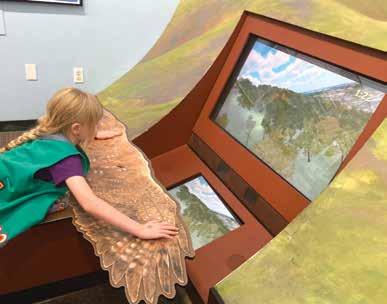
The Lindsay is a natural history museum which focuses on community education about the East Bay environment, ecology, and given the densely populated area, the relationship between human settlement and the natural world it encroaches upon. Like most museums, the Lindsay has static exhibits, dioramas, and informational panels to inform youth and adults about our shared environment; however, there is an added element that brings this museum to the next level.
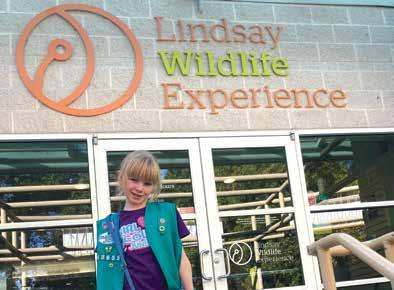
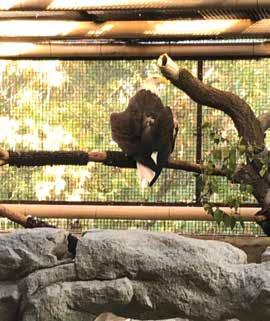
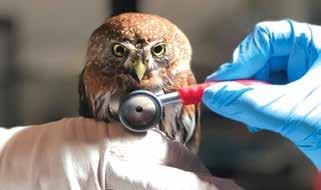
The Lindsay houses a wildlife animal hospital and has what we refer to as “living collections” in the museum field, that is, live animals at various stages of rehabilitation. The wildlife animal hospital cares for injured wildlife found by the public.
When possible, the animals are treated and released back into the wild. Unfortunately, there are cases where the animals are injured to the point where they would not survive in the wild, but can live in captivity under the care of professionals. If suitable, these animals may be seen at the museum on a rotational basis (they get vacations from the public) and serve a role as “animal ambassadors.” Occasionally, exotic animals that were illegally kept as pets are brought to the museum. The Lindsay performs a much-needed benefit to the community and wildlife through its education programs, wildlife rehabilitation, and providing a place where animals injured through various means of human interaction receive a second chance at life. For more information please visit lindsaywildlife.org,
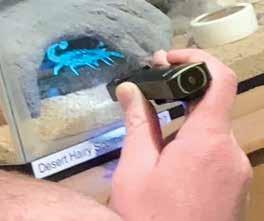
Some organizations in the Pacific Northwest that have similar missions to the Lindsay Wildlife Experience include:
Central Washington Wildlife Hospital: centralwildlife.org
Puget Sound Wildcare: pugetsoundwildcare.org
Bird Alliance of Oregon: birdallianceoregon.org









In 2001, Friends of Galileo Astronomy Club designed and presented — with financial help from Gibbs & Olson engineering firm and other generous donors — a gift to the City of Longview: The model solar system includes10 granite markers along 1.64 miles on the west side of Lake Sacajawea.
The markers show the relative sizes and distances of the Sun and planets. It’s a great way for residents and visitors to enjoy Lake Sacajawea Park while experiencing the astonishing scale of our solar system ... they can
begin to grasp (and gasp at) its magnitude, walking along and realizing how far apart the planets are, even if our solar system is scaled to the length of the Lake.
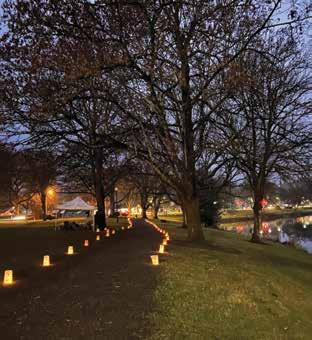
Help light up the longest night of the
the whole


Center Hwy 101, South Bend, WA 360-875-5224
• Long Beach Peninsula Visitors Bureau 3914 Pacific Way (corner Hwy 101/Hwy 103) Long Beach, WA. 360-642-2400 • 800-451-2542
• South Columbia County Chamber Columbia Blvd/Hwy 30, St. Helens, OR • 503-397-0685
• Seaside, OR 989 Broadway, 503-738-3097; 888-306-2326
• Astoria-Warrenton Chamber/Ore Welcome Ctr 111 W. Marine Dr., Astoria 503-325-6311 or 800-875-6807
(E) - Easier: Usually on relatively flat ground (up to 5 miles and/or less than 500 ft. e.g.)
(M) - Moderate: Longer and more elevation gain (over 5 miles and/or over 500 ft. e.g.) (S) - Strenuous: Long hikes and/or elevation gain (over 8 miles and/or over 1200 ft. e.g.)
Call leader to join outing or for more info. Non-members welcome. Driving distances are from Longview, Wash.
Nov 27 - Wed Castle Rock River Trail (E)
Drive 30 miles RT. Hike 4.5–5 miles up and back. Walk a level paved river trail along the Cowlitz River. Optional hike up the “Rock.” Leader Art M. 360-270-9991
Nov 29 - Fri Angels Rest / Devils Rest (S)
Drive 136 miles RT. Hike 4.4 miles RT with 1800’ e.g. through forest and rock bluffs to scenic Angels Rest. Option to continue for another 3 mile loop with an additional 600’ e.g. to Devils Rest. Great views of Columbia River Gorge and chance to hike on remote trail spared by the Eagle Creek fire.
Leaders: Jackie 360-430-1111 & Bruce 360-425-0256.
Dec 4 - Wed Lake Sacajawea (E)
Walk a 4-mile loop around the lake or walk half the lake for approximately 2 miles.
Leaders: Art M. 360-270-9991.
Dec 7 - Sat Lake Sacajawea (E)
Walk 4 miles on flat ground around the whole lake or any portion for a shorter walk. **This walk is designed for super seniors and/or people with physical limitations at a slow pace.**
Leader: Susan S. 360-430-9914.
Dec 11 - Wed Lewis & Clark National Park in Astoria (E/M) Drive 110 miles RT. Hike 5.4 miles with 440’ e.g. I’ve created a wiggly loop that incorporates a portion of most of the park trails. We will go along a slough, over creeks, and through the coastal forest. The trails are up and down and there is one short challenging hill.
Leaders: Kim S. 360-431-5530 or Art M. 360-270- 9991.
Dec 13 - Fri Vancouver Waterfront Walk (M)
Drive 82 miles RT. Hike 6 miles RT with little e.g. from the Interstate Bridge east, then returning west for a loop through Vancouver’s Historic Waterfront. Lunch afterward downtown for those interested. Limited to 8 participants. Leader: Bill D. 503-260-6712.
Dec 18 - Wed Pacific Way Dike (E)
Hike 5 miles up and back on level gravel path. No e.g. Leader: Art M. 360-270-9991.
Dec 28 - Sat Tryon Creek (M)
Drive 107 miles RT to Portland’s Tryon Creek State Park Nature Center. Hike a 4-mile loop with 440’ e.g. through a forested area with many creeks and meadows. Leader: Bruce M. 360-425-0256.
Jan 3 - Fri Willapa Hills Trail (B) (E)
Drive 82 miles RT to Chehalis trailhead. Walk 3+ miles out and back through countryside on paved, former railroad grade with little e.g. Distance will depend on weather and participants’ interests. If dry enough, bikes are an option. A good way to ease into the new hiking year.
Leader: Mary H. 360-577-6676 or 360-200-3174 cell
Jan 4 - Sat Lake Sacajawea (E)
Walk 4 miles on flat ground around the whole lake or any portion for a shorter walk. **This walk is designed for super seniors and/or people with physical limitations at a slow pace.** Leader: Susan S. 360-430-9914
Jan 8 - Wed Lake Sacajawea (E)
Walk a 4 mile loop around the lake or walk half the lake for approximately 2 miles. Leaders: Art M. 360-270-9991.
Jan 18 - Sat Hummocks Trail Loop (SS) (M)
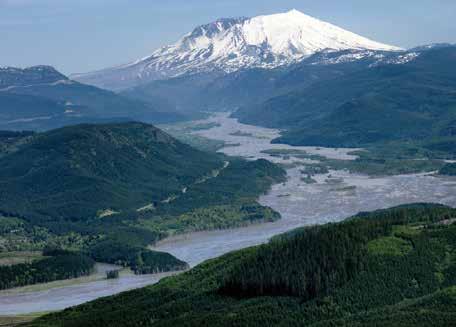
Drive 120 miles RT. Snow shoe 5 miles with 300’ e.g. through canopy and open terrain with great views of Mt St Helens and the Toutle River drainage. Leaders: Mary Jane R. 360-355-5220.
By Greg Smith
The Evening Sky
A clear sky is needed.
Jupiter comes to opposition December 19th as it sits opposite the sun from Earth. Jupiter will rise around 7:30pm and is visible all night long. At midnight on the 19th it is high in the southern sky, right above the Orion constellation. Saturn is in the south southwest sky with Venus low in the southwest sky.
The Morning Sky
A cloudless eastern horizon sky is required. The Corona Borealis is rising in the Northeast sky at 7:00am and there is still no sign of the Super Nova that is supposed to show up any time soon.
Night Sky Spectacle
A clear sky is a must. Many lovely celestial objects to see. For specifics, see “Looking ot the Holidays” column (below).
MOON PHASES:
Last Quarter: Fri, Nov 22nd
New Moon: Sat, Nov 30th
First Quarter: Sun, Dec 8th
Full: Sun, Dec 15th
Last Quarter: Sun, Dec 22nd
New Moon: Mon, Dec 30th
First Quarter: Mon, Jan 6th
Full: Mon, Jan 13th
END OF TWILIGHT: When the brightest stars start to come out. Allow about an hour more o see a lot of stars. After passing the winter solstice the days will be getting longer.
Sun, Nov. 24 • 5:04pm Sun, Nov 30th • 5:01pm Sun, Dec 8th • 5:00pm Sun, Dec 15th • 5:01pm Sun, Dec 22nd • 5:04pm Sun, Dec 29th • 5:08pm Sun, Jan 5th • 5:15pm
SUNSET
Nov 24, 4:33pm; Dec 1st, 4:29pm; Dec 15th, 4:28pm; Dec 22nd 4:31pm
Longview resident Greg Smith is past president of Friends of Galileo. Meet him and other club members at monthly meetings in Longview. For more info about FOG, visit friendsofgalileo.com.
By Greg Smith
Astro nerd gift ideas; see sparkling Pleiades and the seven-starred Winter Hexagon

If you are wondering what to get that astronomy or science fan, there is a new, small-sized automated digital telescope out now. You can see the telescope’s sky objects you have selected as color pictures on your phone or tablet. There is no eye piece. The reviews on YouTube seem to be very impressive. It’s called ZWO Seestar S30. It is priced at a remarkably low price of $350. It is an automatic telescope that runs from your phone or tablet by way of an app that you download. There is another small digital telescope available at a similar price and quality. It’s called the DWARF III. Check out the YouTube video reviews to see if either one of these are something your astronomy fan or science nerd would be interested in.
The winter sky is full of great objects to see Many of them (if you try to look at them through a traditional telescope) will look like faint white clouds. These new digital scopes do everything in color almost as well as the Hubble and James Webb pictures.
I’ve been able to put a picture of the Andromeda Galaxy from my digital scope on my watch and phone.
Talk about great objects to see in the winter, there’s the Constellation Orion and it’s infamous star Betelgeuse. Also in Orion is the Horse Head Nebula, and the Orion Nebula in the line of stars that make the “sword” hanging down from the middle of the “belt” of Orion. With binoculars; you can see the Orion Nebula (a place where stars are being made). The Horse Head Nebula takes a telescope and a long exposure on a photograph. Orion is not the only place to look for great stuff. In the constellation Taurus, to the right of Orion, you will find the small star cluster, the Pleiades. It is beautiful in binoculars. You can see at least a dozen stars in this group. A long exposure photo of it will bring out the blue-colored clouds of interstellar dust that are crossing among them. Binoculars will also bring out the star cluster known as the Hyades.
I’m lucky to be living in the great Pacific Northwest with some of the finest candies, cookies, pies, cakes and nuts. Many people have a taste for something sweet some of the time. Sugar can give a person a “feel good” feeling due to a neuro-chemical called dopamine. Sweets can be good for a person’s mental health. To savor something sweet now and then can be a good treat. Ever since the discovery of sugar cane in New Guinea around 6,000 B.C. peoples of the world have acknowledged their craving for sugar.
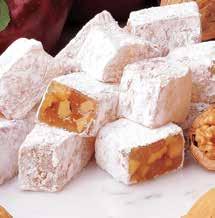
I have traveled all 50 states and had my share of sweets from Washington State. I’ve loved Aplets and Cotlets (pictured at right) from Cashmere, Washington, but they are hard to find outside of the West Coast. Almond Roca has been around for more than 100 years. What a wonderful treat! Tacoma became the “candy capitol” of America during the early 1900s due to the railroad.
The great galaxy of Andromeda is now featured high in the south in the constellation of Pegasus. In a dark clear sky it can be seen by the naked eye as a small dim fuzzy cloud (which is only the very center of the galaxy). Either of the previously-mentioned digital scopes will bring out the full glory of the galaxy, like the ones you’ve seen in books and magazines.
Above all, just get outside and see the beauty of the winter sky and try to follow the seven bright stars of the Winter hexagon that encircle Orion. Yes, seven stars do make a six-sided circle around Orion.
By Neil Martello
See’s Candies from Vancouver, Fran’s chocolates from Seattle, and also Jon Boy caramels, Brights from Walla Walla, Baum’s in Kennewick, and Sheri’s in Winthrop. From Portland, Oregon, the wonderful fudge from Brigithine Monks. Some other treats from Oregon are the chocolate covered hazelnuts, marionberry pie, Ken’s artisan bakery, French macarons at the Farina Bakery.
A real treat is the bacon maple bar (at right) from Voodoo Doughnuts. From Idaho is the candy bar Idaho Spud — dark chocolate coated with coconut and a marshmallow center — and it’s been around for 95 years. Some of my favorite sweets from around the U.S. are Boston cream pie from Massachusetts, Alabama’s lane
cake, bourbon-laced with coconut pecan icing; Baked Alaska, and key lime pie from Florida.
The best-selling cookie ever is the Oreo and no one remembers how it got its name. Oreo means “hill” in Greek. “Baby Ruth” was not named after the famous baseball player, Babe Ruth, but after President Grover Cleveland’s daughter, Ruth, the first child born in the White House and known to the public as, “Baby Ruth,” into her late twenties.
A candy shop owner in Chicago was trying to come up with a name for a new candy bar, but was having a difficult time. He had recently hired a young man to do odd jobs around the shop and everyone seemed to like him and his name was Henry. One day the owner overheard some worker yell out, “Oh Henry! I need some help!” After that a new candy bar was born, the Oh Henry!
The famous, “King Cake,” of Mardi Gras from New Orleans is wonderful cake iced with yellow, green and purple frosting. Beginning January 6, also known as Epiphany in the Christian tradition, a plastic doll is placed in the cake. If you receive it, it means good luck.
Louisiana has its beignets, Mississippi with its mud treat, New York cheesecake, Texas has famous pecan pie, West Virginia has shoofly pie, Wyoming has every thing uckleberry and North Dakota, its chocolatecovered potato chips. Heavenly chefs at Our Lady of Guadalope Abbey in Carlton, Oregon, make the super-rich gourmet dark fruit cake. Traditional old-world fruitcakes were made for stocking stuffers. Fruit cakes often bring back forgotten wonderful traditions of the past.


Henry Rodriguez, a professional baseball player who played for the Montreal Expos, in 1996 had a great year, making the National League All Star Team. He hit 36 home runs that year, and when he would hit a homer at Montreal’s home field, the fans would throw Oh Henry! candy bars on the field. The Seattle Mariners baseball team named a candy bar in 1989 for their all- star player Ken Griffey Jr.
In a large bowl mix: ½ cup candied cherries, ¼ cup each green candied cherries, candied pineapple, dried apples, cranberries, dates, dried apricots, dark raisins; ½ cup pecans, ½ cup crushed walnuts, 1 cup spiced dark rum (optional). Stir all together for 2 minutes, then place in a tightly-sealed jar and refrigerate overnight. The next day, again in a large bowl mix a spice cake mix with 3 eggs, 1/3 cup vegetable oil and 1 cup water. Combine and stir for 2 minutes, then pour in a greased 9x13 baking pan with parchment paper also greased, or a greased bundt pan. Preheat oven to 325º and bake for about 1-½ hrs. You can use a toothpick or just put your hand over it and if its solid, it’s done. Let cool completely. Pour 4-6 oz of spiced dark rum over the cake (optional). Wrap tight in a sealed container overnight in a cool place. When ready to serve, cut with a serrated knife.
Historians suggest ancient Egyptians came up with the first fruit cake. I know some people love it — and some not so much — but I love it.
It can be stored over six months in a cool place. A treat for the holidays that I make, using mostly fruit and nuts from the Pacific Northwest, follows (below):
Some holidays I would bake four or five fruit cakes and give them to friends and family. Writing about it now, I can’t wait for the holidays!
Editor’s note: Neil promises to provide his special fruit cake to sample at CRR’s Holiday Open House Dec. 5. See page 3.
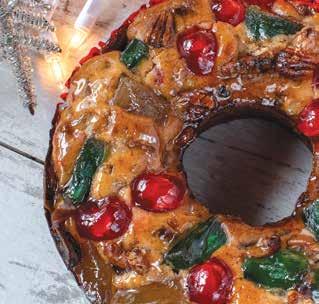
Note: Leftovers, toasted and topped with cream cheese, are my favorite! – Neil Martello

Biz Buzz notes news in local business and professional circles. As space allows, we include news of innovations, improvements, new ventures and significant employee milestones of interest to readers. Please email to publisher@crreader.com
by Beto Yarce
According to various surveys, more than 80 percent of Americans trust small businesses and believe it’s important to support them, an approval rating higher than every other American institution.
Americans understand that small businesses contribute to the vibrancy of their communities, support local non-profits, employ more than half of our workforce and are a significant economic engine both locally and nationally. And 80 percent of small businesses say that the end of the year is important for their bottom line.
Those are just some of the reasons why we encourage people who love their communities to actively participate in Small Business Saturday and the Season of Small Business. Besides all the sparkle the season brings, this is when many small businesses shine!
The Saturday after Thanksgiving and the entire holiday season is the perfect time to drop by unique retail shops, scrumptious eateries and businesses offering memorable experiences.
Small Business Saturday was launched by American Express in 2010 with the U.S. Small Business Administration joining as a cosponsor in 2011. Since then, the popularity of Small Business Saturday
has grown exponentially. In fact, according to the National Retail Foundation, 2023’s Small Business Saturday was an incredibly popular shopping day, second only to Black Friday. To build on this holiday tradition, the SBA launched the Season of Small Business last year to encourage local spending throughout this festive time of year.
Beto Yarce is Pacific Northwest Regional Administrator, U.S. Small Business Administration
Your columbia river reaDer Read it • Enjoy it Share it • Recycle it
Columbia River Reader is printed with environmentally-sensitive soybased inks on paper manufactured in the Pacific Northwest utilizing the highest percentage of “post-consumer waste” recycled content available on the market.

The Port of Kalama celebrated the award of a $26.3 million grant in November from the U.S. Department of Transportation’s Federal Rail Administration Consolidated Rail Infrastructure and Safety Improvements (CRISI) program.
The grant was supported by U.S. Senators Patty Murray and Maria Cantwell (pictured above with Port Commissioners Randy Sweet and Patrick Harbison), and Washington 3rd District Representative Marie Gluesenkamp Perez.
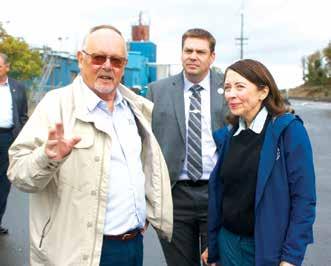
When complete, the TEMCO project will add more than 25,000 linear feet of tracks to the Port’s rail system, increasing TEMCO’s loading efficiency by up to 30 percent, while relieving congestion on the nation’s rail system.
Last July, the Port of Kalama purchased the site of the former OYO HOTEL (known for decades as the Columbia Inn Motel) at a trustee’s sale at the Cowlitz County courthouse for $1.395 million, after the previous owner defaulted on their loan.

The hotel had also been the site of frequent law enforcement activity. Hotel operations ceased 20 days after the purchase and, upon thorough inspection, was deemed to be in a serious state of disrepair.
“With just a week’s notice of the trustee’s sale, the Port reacted quickly to buy the hotel,” said Port Commissioner Troy Stariha. “While we did not have a plan or vision when we purchased it, we see a great opportunity to work with the City to improve this part of downtown for the community.”
With the demolition now complete, the Port will begin evaluating business opportunities with local developers. In the short term, the site will be improved for backup parking to support nearby businesses and community events.

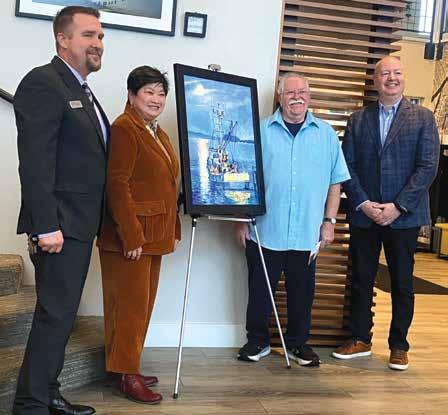
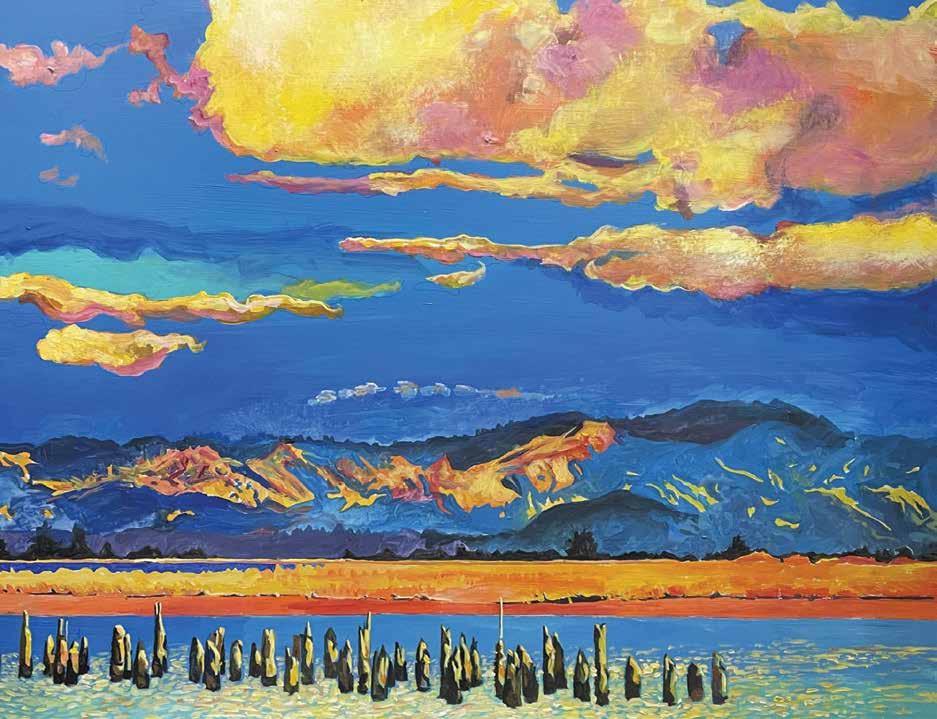
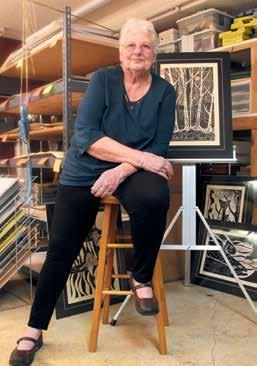
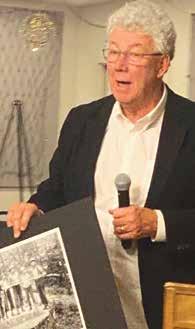
‘Lifetime of Art’ artist-author Gregory Gorham honored at Astoria’ Cannery Pier Hotel
Billy Moore , general manager, Cannery Pier Hotel & Spa; and Linh DePledge and Erick Trachsel with Vesta Hospitality, honor artist Greg Gorham at the unveiling of his painting, “Moonlight Departure,” purchased by the Cannery Pier Hotel to be spotlighted in its lobby for the next year before becoming part of the Hotel’s permanent collection.
Astoria Visual Arts collaborated with the Hotel in the third annual contest which this year drew 150 entries from regional artists and was themed “Coastal Colors.” Not pictured but also in attendance were Cindy Price, president, AVA, and other board members..
Founded in 1989, the member-based organization’s creates opportunities for people of all ages and walks of life to engage with the arts, with a purpose: “The arts enrich our lives by fostering fellowship, strengthening connections, and sparking creativity and innovation. As a member-based organization, we work together to support the arts and the artists in our community.”
AVA is a grant- and donor-funded 501(c)3 and a qualified Oregon Cultural Trust arts organization. AVA’s gallery, at 1000 Duane Street, Astoria, Oregon, is open Fri-Sat-Sun, 11–3. The current exhibit, “Madder Reds,” runs through Dec. 8. See related story, page 40.









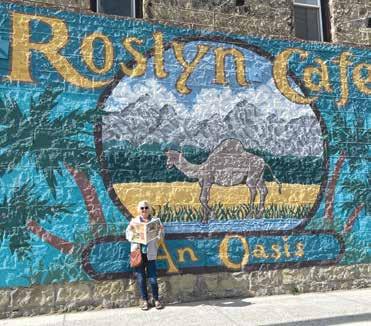
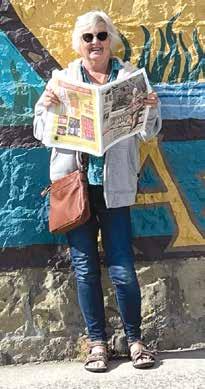
Quiet on the set
Longview resident Karla Dudley reading the Reader in Roslyn, Wash, which she described as “a great visit for this fan of “Northern Exposure.”
Can’t fish ALL the time! Kelso resident and retired Cowlitz County Superior Court Judge Steve Warning. sitting on the beach at Khaz Bay Lodge, a charter fishing and adventure lodge on a 32acre island about 45 miles north of Sitka, Alaska.
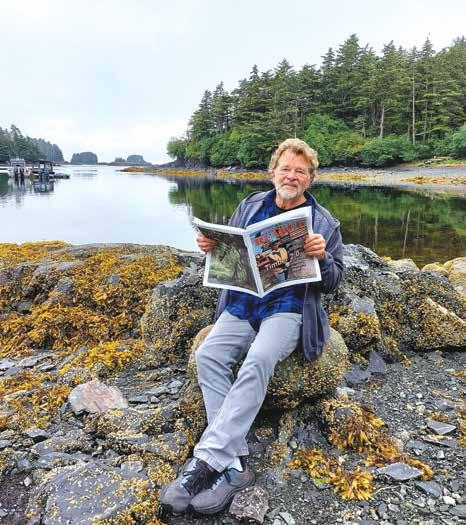

Send your photo reading the Reader (high-resolution JPEG) to publisher@ crreader.com. For cell phone photos, choose the largest file size up to 2 MB. Include names and cities of residence. Expect an acknowledgment within 5 days of submission; otherwise, please re-send. Thank you for your participation and patience, as we usually have a small backlog!
Irene, Melissa, & Jessica upon arrival in Taipei, Taiwan, following their visit to Longview last summer, hosted by Jeff Cooke, who taught English in Taiwan’s public schools for two years. He and his wife, Carol, made friends with these women and they make personal visits every couple of years. Carol tutored Irene in English in Taiwan. The Cookes live in Longview; Jeff subbed in the Longview Schools for about six years before retiring, he said, “for the last time.”
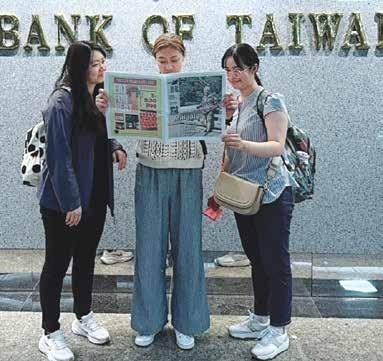
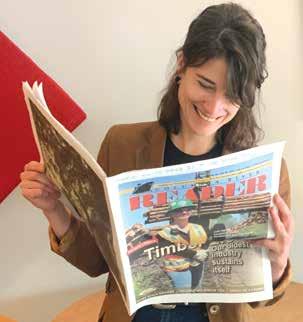
On the campaign trail
U.S. Representative Marie Gluesenkamp Perez (DemWA) reads the Reader following a meeting of the Jolly Boys at Longview Country Club. She represents Congressional District 3 and was just elected to another term.

out to the
by Marc Roland

Would Santa like some cookies with his wine?
t’s time to lighten it up after a highly stressful election and a volatile year for the wine industry. But not to worry. You who love wine and the good life in the Pacific Northwest have a lot to be thankful for. The wine is better than ever, and plentiful! We still have many celebrations ahead of us. So reach out to your friends and neighbors and remember our common humanity. Forgive the cheesy rewrite of this holiday staple. I just don’t have anything interesting or informative to say. Happy Holidays!
‘Twas the Night Before Christmas (wine version)
‘Twas the night before Christmas, when all through the house Not a corkscrew was turning, not even a mouse. The glasses were polished and hung up with care, In hopes that Santa soon would be there. The family nestled all snug in their beds, While visions of pinot danced in their heads. And I in my PJs, with wine stains galore, Had just settled in after wiping the floor. When out by the cellar there rose such a clatter, I sprang from my bed to see what was the matter.
Away to the racks I flew like a flash, Dodging stray wine glasses and a bottle that crashed. The glow of the lights twinkled just right, empty bottles, their labels so bright.
When what to my tiring eyes should divine, But a jolly old soul with eight bottles of wine. His cheeks were like roses, his nose looked quite blue, I knew in a moment he’d sampled a few.
More rapid than glass pours his praises they came, He whistled and shouted and called them by name:
“On, Merlot! On, Riesling! On, Malbec and Syrah! On, Chardonnay! On, Cabernet! On, Sangio and more!
He walked to the bar! To the edge of the rack!
Told me to swirl it and sip it then put it right back!”
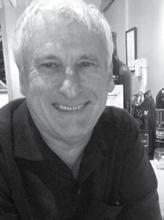
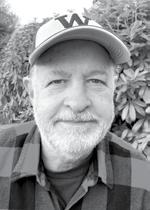
Longview resident and former Kelso teacher Marc Roland started making wine in 2008 in his garage. He and his wife, Nancy, now operate Roland Wines at 1106 Florida Street in Longview’s new “barrel district.” For wine tasting hours, call 360-846-7304.
As bottles were opened under well-trained command, He poured and he tasted with a sommelier’s hand.
Then he turned, and out the door he flew, With a bottle in hand—and a magnum or two.
And then, in a twinkling, I heard by the door,
The popping and fizz of a chilled sparkling pour.
As I turned in surprise and was spinning around,
In walked the old fellow with one final round.
He was dressed in a coat that smelled strongly of oak,
And he laughed as he offered a witty wine joke.
A bundle of vintages he had in his pack,
And he looked like a peddler with reds in a sack.
His eyes—how they twinkled! His grin was so merry!
His breath smelled of blackberry and cherry.
His smirky little mouth was drawn up in delight,
As he sipped from his goblet and savored the night.
He sprang to his sleigh, to his team gave a whistle, And away they all flew like the fizz in Prosecco.
But I heard him exclaim, as he drove out of sight, “May your glasses be full and your tannins just right!”
Aby Andre Stepankowsky
Mirror, mirror, on the wall Bookcase of memorabilia is a looking glass to the past, present — and even the future
nytime I sit down to write, my eyes are drawn to the upper left, to a shelf built into the wall of my home office. It’s stuffed with memorabilia.
From the years leading up to World War I, there’s an old wooden spindle, still rigged with light blue thread. It’s from a textile factory that once lined the Merrimack River in Manchester, New Hampshire. My maternal grandmother, a Polish peasant born in the poorest part of Europe, went to work there when she was 16. Airborne lint made her so sick she nearly died.
There’s an old wooden match box that hung above her gas stove in the Manhattan brownstone where she lived for more than 60 years and where she raised three children on her own, partly by making prohibition-era whiskey with the still that rests in front of my fireplace.
A new addition to this collection is my grandmother’s small black leather purse. We recently found it during a fall cleaning. It contained a few coins and one old New York City subway token. In her 95 years, my grandmother never owned a credit card or had a checking account. She lived life simply and never aspired to get too much from it.
There are other memorabilia in this bookcase.
There is a steel pinion gear and wooden roller from the The Daily News press that Lee Enterprises shut down last decade, a catastrophically bad decision for the newspaper I so loved.
Mixed in with photos of my young children is my father’s oil painting on wood of a pianist’s fingers at the keyboard. He worked so hard and so badly wished that I should become a touring concert pianist. When I look at that painting I wonder if it was a way to salve or cope with his disappointment when I finally had to admit that the goal was more his than my own. How different my life would have been had I felt otherwise.
There’s a 1890s black-and-white wedding picture of my great grandparents on my father’s side. Through my great grandfather I am related to Antonine Santerre, a French revolutionary who presided over the execution of King Louis XVI in 1793.
Just beneath that old photo lies the manuscript of my grandfather’s account of his adventures and intrigues as a journalist and Ukrainian revolutionary in the early 20th century. It’s amazing he died of sickness as an old man and not in front of a firing squad.
So, perhaps I am a bundle of contradictions. I have a rabble-rouser’s pedigree but a peasant’s stoicism, a fatalistic acceptance of what life brings my way.
The bookcase is like a magic “mirror, mirror on the wall” of which I can ask: Who am I? Where am I going? Am I following my best, most productive destiny?
And, if nothing else, the bookcase and all it contains are reminders of the immense, long-shot odds that I would be here, at this moment, writing this column imploring all of us to honestly ask those same questions. We all have our own stories from which to draw lessons, inspiration and guidance — and histories that make us all special.
Award-winning journalist Andre Stepankowsky is a former reporter and editor for The Daily News in Longview. His Columbia River Reader columns spring from his many interests, including hiking, rose gardening, music, and woodworking. More of his writing can be found under “Lower Columbia Currents,” on substack.com.
Something new rising in the West
This day Melchior was trying to demonstrate a pattern he had discovered. He was excited to show Balthazar an omen in the stars, a sign that a new and auspicious kingdom was to arise in the West. Strangest of all, this new kingdom was to emerge from the pitiful little state of Palestine, the land of Israel, of all places.
Balthazar insisted there was nothing new in the sky, but Melchior could not be persuaded. He was sure he had at last found the key to the meaning of the heavens. It was a crazy argument, but not boring. Before I knew it, I had proposed a foolish expedition to Jerusalem, to that distant backwater of the Roman Empire, to test Melchior’s theory.
Not that I believed a word of it, even of the little I understood. Nor do I have any use for kings and kingdoms. Our king has done me no good. He just collects more and more of my income for taxes. But I was hungry for a real adventure. I thought if I could see other lands in the company of such wise men, I might find the joy in life again.
But I was quickly disappointed. I had no idea how tedious and difficult such travel can be. Try as I might to learn from my companions, my mind quickly glazed over every time they tried to explain their charts or their philosophies.
Injustice and poverty
Far from being stimulating, most of our travel was exhausting, and our encounters with the many peoples we met along the way filled me with confusion and sadness. I had never seen poverty so closely, so vividly. In the countryside I saw so many people barely able to survive on their lands for the tribute and taxes required of them by their lords and kings. I saw families unable to harvest their crops because the fathers and sons were forced into the king’s armies, or killed outright in the king’s wars. And for those who resisted, or even complained, brutal punishment was their reward. My small regard for kings and kingdoms was turned to contempt. I had no interest in meeting a new king.
I asked Melchior, the philosopher, the mystic, “If we are all connected, as you say, why do some of us become wealthy while others barely survive?


Prescription pain medication is highly addictive. Talk with your doctor about other ways to manage pain. Lock up your medications.
Safely dispose of unused medications at a take-back location near you.
Why do the powerful use their might to do such great harm?” If he had an answer, it was not one I could grasp. When we got to Jerusalem, Herod was a perfect example. So greedy, so vain, so transparent in his hunger for power and control. His silly religious scribes talked about a Messiah — some son of David who was going to take over and deal with the Romans — who was to be born in David’s city of Bethlehem. I could tell the idea of a Messiah made old Herod nervous, though he pretended he was interested. He claimed to want to find the prince himself, so he could “worship.” I could see through that. But since Melchior was eager to return to Jerusalem to study with the scholars, Balthazar promised to bring news on our way home.
A new regime?
On the journey to Bethlehem my spirits were at their lowest. By now Balthazar had been infected with Melchior’s weird enthusiasm. He had come to hope that all the clues in the sky and in the Jewish scriptures added up to an important birth, a powerful new king, the advent of a new regime to rival or even end the Roman Empire.
I didn’t see the point in that. Bigger empires, bigger taxes, bigger wars. So? And even when a comet appeared in the sky over Bethlehem, I felt no great joy following a star that led to another so-called king.
But I was surprised. The star led us to the home of a humble carpenter. And his wife, the mother, amazed me. She welcomed us into her shack like royalty, as surprised and full of wonder at our arrival as Melchior had been by the star above us. She plied us with questions about their little son. They claimed to have received messages from angels, and strange dreams. They were in a state of shock, and joy, all at once. It was as though they had suddenly found themselves at the very center of Melchior’s great invisible web, as though heaven and earth had been joined in their simple home.
She had the grace and peace of one who has given herself over to something much larger than herself. I recognized in her something I hungered for. I asked her, “How can this baby be a king? What good is it to build empires and make war, to cause so much suffering? How can that be God’s plan?”
“But Mary,” I said, “he’s only one, and even if he is good, even if he is great, he will die.”
“Yes, he will die,” she answered sadly. “I don’t know how it is, but his death is part of it, part of the healing, part of why his kingdom will be so different.” Then she asked me, “Can you hope in a king like that, Gaspar?”
“I don’t believe in much, my lady,” I stammered. “I’m not at all good at believing.”
Choosing to hope
“Yes, I see,” she said. “But I did not ask you to believe. Some of us find it easy and natural to believe. I suppose I always have. Others, like you, must choose to hope. And if you choose to hope, that will take you far, as far on this journey as you need to go.”
When we parted she took my hand, and blessed me. She said, “I have a feeling that you are almost in the kingdom already, Gaspar, though the king is yet a baby. You have come so very close to it, with your compassion and hunger for justice and peace. Maybe the kingdom has been born in you. Your journey is well begun. Keep choosing hope, and God will bless you.”
So you, dear reader — if you follow this king — where has your journey brought you? Are you like Mary, easily believing, easily offering your heart? Or are you one who must choose each day to hope, to continue the journey?
As long as I’ve traveled this road, the kingdom’s sweetness calls me forward, and I go on choosing the path. Though I’ve never seen the king since that day in Bethlehem, I choose to follow him, and I do think that Mary is right, that the kingdom has grown inside me, though I am still restless.
I am no king, and I am not very wise. But I gave my gift that day to the little king, and I will give what gift I have for his kingdom, as long as I have power to do it.
•••

Not “that kind” of king
She shook her head. “Not that kind of king, Gaspar,” she said. “A king of hearts; a prince of peace; one who lifts up the lowly and brings down the proud; one who unites us in love and humility.”
Kathleen Patton served as Rector at St. Stephen’s Episcopal Church in Longview. She since has retired and moved , with her husband Richard Green to Hood River,Oregon. This piece was first published in CRR in Jan 2007, and again in Dec. 2011. It remains a favorite in the CRR archives, and one worth re-visiting.








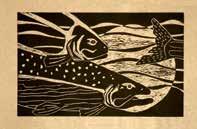
Pacific Northwest Woodcuts and Haiku
by Debby Neely
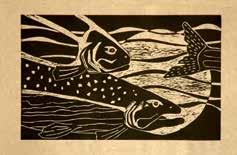
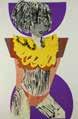
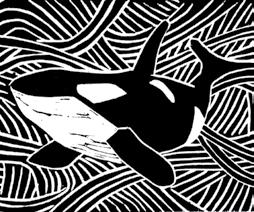
An astonishing book debut. The variety of moods and nuances Debby evokes in simple black and white — delicacy writ with a knife and gouge — testifies to her craftsmanship and to her love for her subjects. Adding haiku to these dramatic images pins them in moments and memories and heightens our attention and interest.
• 70 original woodcuts and haiku
• Author foreword and commentary
• Gift-boxed with tasseled bookmark $35


America’s Planned City and the Last Frontier
by Hal Calbom
However isolated Longview was, thanks to its huge ambitions and aggressive promotion the whole world would watch its birth and development.
• 220 historic photographs
• Then and Now Format
• Author interview
• Gift-boxed and signed: $50

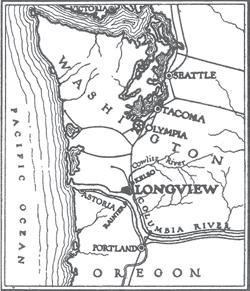
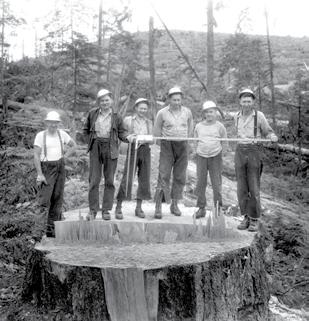
From a reclaimed swamp on the Columbia River, Long-Bell produced a million board feet a day, shipped their lumber around the world, and built a model city called Longview. This is history not just of a region, but of a daring spirit, relentless idealism, and colossal ambition. By the mid-thirties, the Depression had crumbled their empire. But the model city they built still stood, and stands today.
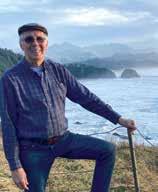
by Gregory L. Gorham
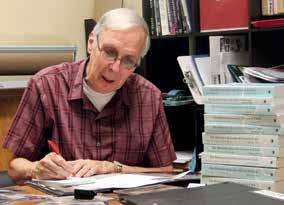
by Michael O. Perry
Lewis and Clark for the rest of us. Author Michael Perry takes a fresh look at the Expedition from the layman’s point of view, adding new notes and commentary to this third edition of the popular book based on the 33-part series debuted — and still featured — in Columbia River Reader.
Dispatches adds to the Expedition lore the insights and observations of a gifted amateur historian.

• Month-by-month following the Expedition
• Author commentary and illustrations
• BW Edition $35
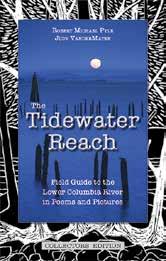
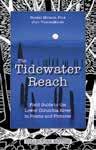
Field Guide to the Lower Columbia River in Poems and Pictures
by Robert Michael Pyle and Judy VanderMaten

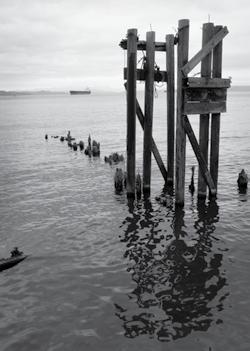
• Original photographs by Judy VanderMaten
• Author interview
• Field notes and commentary
• Signature edition $50
• Collector’s edition $35
• Standard edition $25
The Northwest’s premier naturalist and writer turns his eyes and art to verse, picturing the tidewater reach — where the salt water and fresh water meet in the Columbia — in beautifully crafted, whimsical and profound stanzas. More than your conventional field guide — a different way of seeing.

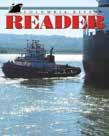


By Robert Michael Pyle and Judy VanderMaten.
11 issues $55
In three editions:
• Boxed Signature Edition, with color $50
• Collectors Edition, with color $35
• Trade paperback B/W $25
Rex Ziak • $29.95 EYEWITNESS TO
Gabriel Franchére $21.95
Rex Ziak’s edited and annotated edition of Franchére’s 1820 journal, The First American Settlement on the Pacific.
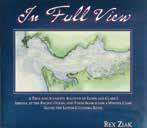
Southwest Washington author and explorer Rex Ziak revolutionized historical scholarship by documenting minute-by-minute the Corps’ dangerous days at the mouth of the Columbia.


WORDS AND WOOD
Pacific Northwest Woodcuts and Haiku by Debby Neely •Boxed, Gift Edition with tasseled bookmark $35



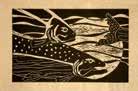

A Layman’s Lewis & Clark by Michael O. Perry. •BW Edition $35
•Signature Edition. Boxed, tasseled bookmark, Color and B/W $50

•220 historic photos •Boxed, signed. $50.

Whentraveling to interesting places, we often bring home new ideas that enrich our lives. I find myself wanting to recreate special recipes from my dining experiences afar.
On my visit to Paris with the Piper family a few years ago, we met Marthe Brohan through a Market Tour/French Cooking Class, in which we prepared our dinner in her kitchen. The group met at her apartment and were soon walking the paths of the amazing, expansive local fresh outdoor market, looking for dinner ingredients. A former restaurateur, Marthe was acquainted with many of the vendors, raising our expectations that she knew her craft, as well. Soon we were back in her kitchen, washing, peeling and slicing veggies while she cut up the guinea hens, small, young chickens about 2 lbs. each. Most whole chickens in our markets weigh 4 to 5 lbs. Together, we also prepared a surprisingly good salad featuring zucchini, a vegetable that’s never been near the top of my “desire to eat” list.
After cutting the ends off the small zucchini, we peeled them in broad stripes, leaving about half the peel behind. Using a mandolin, we sliced the zucchini into nickel-size thicknesses, ready for the additional ingredients.
This “French Zucchini” is a tasty dish we’ve since prepared more than once. It would be a colorful addition to holiday tables. Joyeuses fêtes, mes amis.
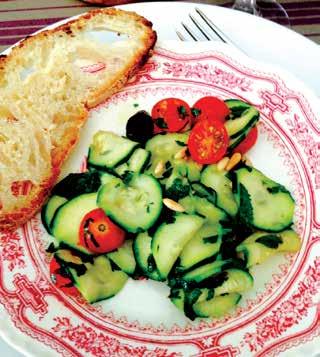
Zucchini with Lemon
Serves 6–8
2 lbs. small zucchini
20 cherry tomatoes, halved
4 oz. pine nuts
2 Tbl fresh basil, chopped
2 Tbl fresh mint, chopped
7 Tbl extra virgin olive oil
2 Tbl. lemon juice
15 whole black olives
Sea salt
Freshly ground black pepper
Wash and peel the zucchini, leaving on strips of peel for “striped” effect. Slice very thin (about 1/8-inch) with a “mandoline.” In a large bowl, combine lemon juice and olive oil with salt, pepper and all the herbs. Add zucchini and let stand in a cool place for 2 hours, mixing every 30 min. Heat pine nuts in a frying pan until golden brown. Add toasted pine nuts to the zucchini (after the 2 hours), toss gently and serve with French bread and cheese on the side for a complete meal. Don’t forget the French wine!
Paul Thompson wrote his popular “Man in the Kitchen” column and other features since CRR’s first issue. After a decline in health, he passed away in July 2021. We re-run some of his classic recipes and column excerpts from from time to time, in fond remembrance and appreciation for his friendship and role in CRR.

TERRY BARNES GRAMBO
Investment Adviser Representative
Making
1339 Commerce Ave • Suite 207
Longview WA 98632
Direct:
Fax:
grambot@financialnetwork.com
www.terrybarnesgrambo.com
Services
•
•
•
•
•

For information about becoming a sponsor, please contact publisher@crreader.com or call 360-749-1021.

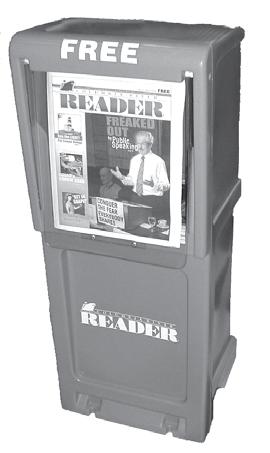
It’s delivered all around the River by the 15th of each month. Here’s the handy, regularly-refilled sidewalk box and rack locations, where you can pick up a copy any time of day and even in your bathrobe:
LONGVIEW
U.S. Bank
Post Office
Bob’s (rack, main check-out)
In front of 1232 Commerce Ave
In front of 1323 Commerce Ave
In front of Elam’s 1413 Commerce
In front of Freddy’s 1110 Commerce
YMCA
Fred Meyer (rack, service desk)
Grocery Outlet, OB Hwy
Fibre Fed’l CU - Commerce Ave
Monticello Hotel (front entrance)
Kaiser Permanente
St. John Medical Center (rack, Park Lake Café)
LCC Student Center
Indy Way Diner
Columbia River Reader Office
1333 14th Ave. (box at door)
Omelettes & More (entry rack)
Stuffy’s II (entry rack)
KELSO
Visitors’ Center / Kelso-Longview Chamber of Commerce
KALAMA
Etc Mercantile
Fibre Fed’l CU
Kalama Shopping Center corner of First & Fir
Columbia Inn
McMenamin’s Harbor Lodge (rack)
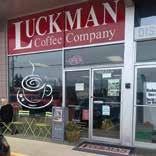
Luckmans Coffee, Mountain Timber Market, Port of Kalama
WOODLAND
The Oak Tree
Visitors’ Center
Grocery Outlet
Luckman Coffee
CASTLE
ROCK
In front of CR Blooms Center
Cowlitz St. W., near Vault Books & Brew
Visitors’ Ctr 890 Huntington Ave. N., Exit 49, west side of I-5
Cascade Select Market
Amaro’s Table (former location of Parker’s) inside rack
VADER
Little Crane Café
RYDERWOOD
Café porch
TOUTLE
Drew’s Grocery & Service
CLATSKANIE
Post Office
Mobil / Mini-Mart
Fultano’s Pizza
WESTPORT
Berry Patch (entry rack)
RAINIER
Post Office
Cornerstone Café
Rainier Hardware (rack, entry)
Earth ‘n’ Sun (on Hwy 30)
El Tapatio (entry rack)
Grocery Outlet
Senior Center (rack at front door)
DEER ISLAND
Deer Island Store
COLUMBIA CITY
Post Office
WARREN
Warren Country Inn
ST HELENS
Chamber of Commerce
Sunshine Pizza
St. Helens Market Fresh
Big River Tap Room
Safeway
SCAPPOOSE
Post Office
Road Runner
Fultano’s Ace Hardware
WARRENTON
Fred Meyer
CATHLAMET
Cathlamet Pharmacy
Tsuga Gallery
Realty West/Computer Link NW
Puget Island Ferry Landing
Little Island Creamery
SKAMOKAWA
Skamokawa General Store
NASELLE
Appelo Archives & Café
Johnson’s One-Stop
ILWACO
Time Enough Books (entry table)
Marie Powell’s Gallery
Among the mAny AftermAths of Covid, our sense of where we are has been dramatically altered.
This month’s People+Place focuses on big city /small town dynamics, through the eyes of a brother and sister who’ve returned to Longview.
Space, Mobility and Elbow Room
During Covid, extra space became a good thing. We isolated in place, worked from home, gave each other elbow room, sought out nature and valued privacy.
Meanwhile our big cities had been relentlessly headed in the opposite direction.
Density’s Dilemma
Urban planners were finally realizing their decades-long vision — packing us together in walkable, friendly, high-energy urban pockets, elbow to elbow. The dream of density — high rise apartments and condos, mass transit, ubiquitous eateries and shops, prohibitive parking to keep out the dreaded automobile — had seemed like such a good idea…at the time.
Downtown Deserts
Then came Covid, economic uncertainty, and angry demonstrations in the wake of the George Floyd killing. Urbanites began voting with their feet, heading in droves out of our central cities.. Downtowns hollowed out with sickening speed — except, it seems, for the unfortunates, the addicted, mentally ill, criminal. Today large sections of urban downtowns are depressed and derelict, occupancies plummeting. Density is losing, remote is winning.
Community as the Organizing Principle
What Covid also prompted was a retrograde move back to small town life. We reverted to organizing our activities — school groups, work groups, social lives — around communities of the like-minded. We became neighbors again. This happened all over the country — in big-city enclaves and small towns alike.
Whether for survival or for special projects, people sorted into pods, zoom groups, cadres, bonding mainly through their own affinities and initiatives. Neighborhoods energized. These powerful binding forces not only helped shelter us from the pandemic, but also offered us better quality of life and advantages smaller cities and towns have known and enjoyed all along.

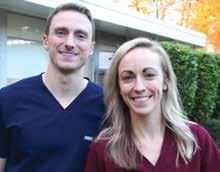
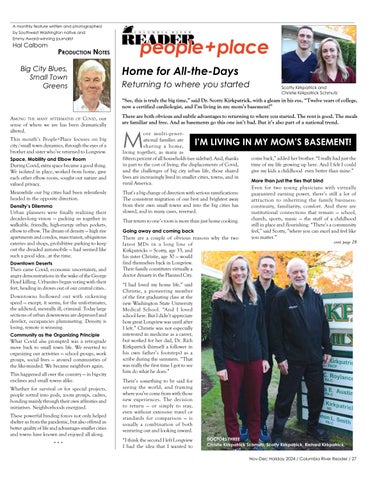
“See, this is truly the big time,” said Dr. Scotty Kirkpatrick, with a gleam in his eye, “Twelve years of college, now a certified cardiologist, and I’m living in my mom’s basement!”
There are both obvious and subtle advantages to returning to where you started. The rent is good. The meals are familiar and free. And as basements go this one isn’t bad. But it’s also part of a national trend.
More multi-generational families are sharing a home, living together, as many as fifteen percent of all households (see sidebar). And, thanks in part to the cost of living, the displacements of Covid, and the challenges of big city urban life, those shared lives are increasingly lived in smaller cities, towns, and in rural America.
I’M LIVING IN MY MOM’S BASEMENT!
come back,” added her brother. “I really had just the time of my life growing up here. And I felt I could give my kids a childhood even better than mine.”
More than just the ties that bind
That’s a big change of direction with serious ramifications: The consistent migration of our best and brightest away from their own small towns and into the big cities has slowed, and in many cases, reversed.
That return to one’s roots is more than just home cooking. Going away and coming back
There are a couple of obvious reasons why the two latest MDs in a long line of Kirkpatricks — Scotty, age 33, and his sister Christie, age 30 — would find themselves back in Longview. Their family constitutes virtually a doctor dynasty in the Planned City.
“I had loved my home life,” said Christie, a pioneering member of the first graduating class at the new Washington State University Medical School. “And I loved school here. But I didn’t appreciate how great Longview was until after I left.” Christie was not especially interested in medicine as a career, but worked for her dad, Dr. Rich Kirkpatrick (himself a follower in his own father’s footsteps) as a scribe during the summers. “That was really the first time I got to see him do what he does.”
There’s something to be said for seeing the world, and framing where you’ve come from with those new experiences. The decision to return — or simply to stay, even without extensive travel or standards for comparison — is usually a combination of both venturing out and looking inward.
“I think the second I left Longview I had the idea that I wanted to
Even for two young physicians with virtually guaranteed earning power, there’s still a lot of attraction to inheriting the family business: continuity, familiarity, comfort. And there are institutional connections that remain — school, church, sports, music — the stuff of a childhood still in place and flourishing. “There’s a community feel,” said Scotty, “where you can excel and feel like you matter.”
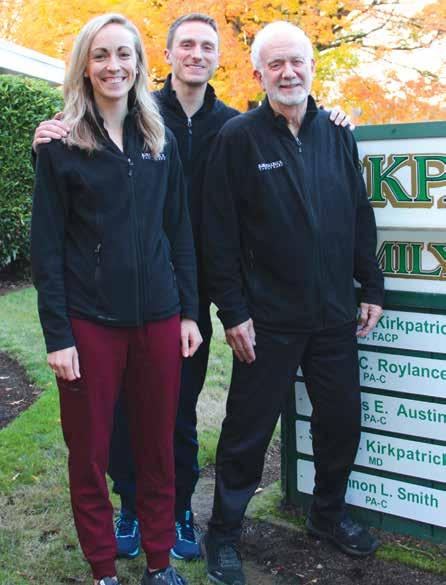
We chose to spend time with the next generation of Kirkpatricks because they demonstrate more than mere continuity and a homing instinct. Scotty and Christie seem to share a passion for their home town and a desire not only to inhabit it, but also to build it and celebrate it.
What generates and sustains this? Are we doing enough to keep our future generations interested and engaged with their roots? Should we?
And, ultimately, Is there really no place like home?
The best version of me
It helps to have the best of both worlds. “It’s so cool that we got the big city education, and we’re on the cutting
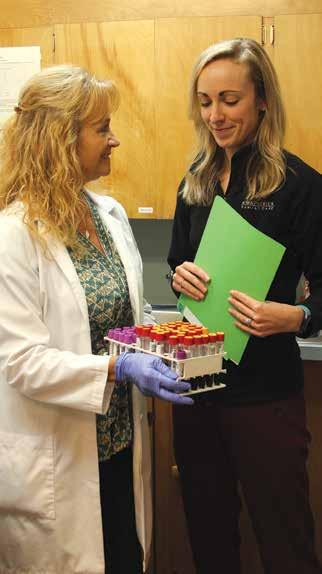
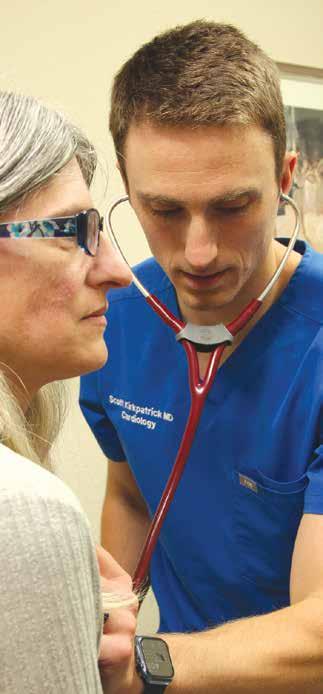
edge of what treatments can be,” said Christie, “and then we get to come home to this smaller system and continue improving it.”
Her brother agrees, citing his own educational journey: “Even though I’ve lived in amazing places like Seattle and Denver and Tucson, I always knew that I wanted to come back to Longview.”
The siblings’ sentiments are pragmatic: They admit there is some ego involved in this empowerment, that they’re not unaware of the big fish / small pond
syndrome. “I had a great time growing up here,” said Scotty, who played varsity sports and clearly enjoyed his success and visibility. “I just thought I could be the best version of me in Longview.”
He hopes to share the same opportunities he had with his own children, opportunities that might not exist in the big city. “I love sports.” he told me. “I love playing sports. This is a community that values sports. You don’t have to be a Division One athlete, but you can feel like you make a difference. That it’s a big deal that you play sports — whereas if you’re in Portland or Seattle you might not even make the team.”
The end of our exploring
Many people and whole cultures encourage exploration and choice: leaving home as a necessary

prelude to returning to it. Besides learning about the rest of the world, and seeing if the grass really is greener someplace else, travel and new experiences foster appreciation, even wisdom.
“We feel kinship with the people we grew up with and who contributed to our upbringing,” said Christie, who also married a Longview guy, Christian Schmutz, and thus has double the ties. “I don’t think we necessarily owe it to anybody,
but it’s great to give something back to people you know and care about. To me that’s really desirable.”
Christie and Scotty also feel their return to private practice in their home town will ultimately make them better doctors. Big systems offer research and resources, but they tend to encourage specialization and team medicine that can spread a single patient’s care over half a dozen practitioners, paramedics, nurses and technical specialists.
“I’m a better doctor when I have more interaction with the patient,” said Scotty, “One of the biggest
An organization of volunteers dedicated to providing free food and clothing to those in need, year-round.

Please join us in supporting this humanitarian work
IF YOU NEED HELP: FOOD & CLOTHING BANK 1222 Baltimore St., Longview. OPEN M-W-F. 8–11am.
To make a donation of food or clothing, visit the Food & Clothing Bank, M-W-F. 8–11am. Monetary donations may be made there, or online at svdplongview.com, or by mail: St. Vincent dePaul, PO Box 2957, Longview WA 98632
The Evans Kelly Family
One Of LOngview’s piOneer famiLies
Proud Sponsor of People+Place
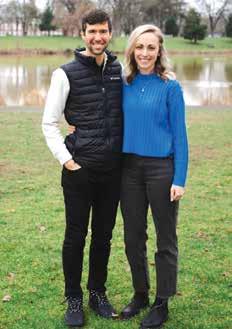
The U.S. Census Bureau, demographic research, and our common sense all agree: the lure of the big city is less than it used to be.
The result is a greater number of people concentrated closer to where they grew up:
• 60 percent of all young adults live in, or within ten miles, of where they were raised
• 80 percent of all young adults live with 100 miles

• One in five adults now lives in a multi-generational home: kids, parents, grandparents
This flies in the face of the familiar notion that young people dream only of when and how they can get out of town. A well-publicized Atlantic article put it this way:
I thought of home as a waiting room, the place I had to be until I could go somewhere else. I imagined that my life would really begin once I was somewhere else.
But the writer, Ramesford Stauffer, experienced a surprise: Then I left and missed it terribly.
The Internet has done away with much of the stereotypical disparity between the “sophisticated” big city and small town “hicksville.” Young people especially (for better or worse, sigh their parents) are networked into the same media and global village worldwide.
And even smaller town moms and dads experience — and spend their money on — Amazon online shopping competing with their Walmart down the street.
advantages of a small clinic is that there are fewer barriers between the patient and the doctors, less of a system intervening.”
There also can be more room for innovation. Half of Christie’s practice involves weight management, now not only a national crisis (three quarters of our population is now obese, according to a recent report), but also a certified medical specialty. “It’s a lot easier to implement change than it would be in a bigger system.” Smaller organizations have access to the best and latest techniques and research, but can be more nimble and flexible than big bureaucracies.
Today many of these same developments are influencing all kinds of enterprises. We found in researching this story the same desire for empowerment and efficiency among many vocations and professions. Big city expertise and small town intimacy can be a great combination. And productivity — the magic word in so many enterprises these days — often requires right-sizing.
It seems half of the great novels ever written involve this ritual of displaced place — chafing at home, leaving home, missing home, resenting home, returning home — and its still one of life’s most familiar rites of passage.
Now there’s data to support this reverse in migration. According to a study by Harvard University and the U.S. Census Bureau, young adults cite three primary reasons to head back home:
Money Cost of living disparity between big urban and small town has increased
Kids Child care and housing costs are out of sight and prohibitive in large cities
Mobility Working online and at home has become practical and popular
And of course these trends overlap. Three out of four of today’s young parents report getting both financial and child care help from their parents and relatives. And the money median works both ways: If people can find a compatible job with less cost of living, what’s not to like?
If you are lucky enough to be in a place that has a kind of growing and expanding economy, then staying at home isn’t a financial burden.
--Nathan Hendren,
Harvard University


Research confirms there are dozens of factors encouraging the homing instinct, many of them subjective and most of them very personal. But several common themes emerge. Given even a reasonably good economic base (and remote work can help mitigate this) here are three cited over and over:
Not only are young adults prospecting for good schools for their soon-to-be or burgeoning families, but they also have strong remembrances of their own school experiences. Attachments to a good K-12 education are lifelong.
The belief that housing is “easier” in small towns is misleading. A viable stock of housing opportunities at various income levels is a great attraction; the lack of it can be a deal-breaker, even in a picture-perfect small town.
Smaller towns often have little or no public image management, and fall victim to the negatives. Virtually every study we looked at cited a failure to capitalize on positives in smaller towns and cities.
Hence the difficulty competing with those “bright lights” down the Interstate.

Northwest hydropower produces no carbon emissions, thereby significantly reducing the total carbon footprint of the region’s energy production.
A smaller city such as Longview can offer great efficiencies in transportation, communication, and family dynamics that can be lost amid skyscrapers, freeways and the metropolitan mess. There is an optimum size for a team, an organization, and an enterprise. With access to modern networks, the increase in remote work, and Covid’s arbitrary re-defining of workplaces, smaller cities and towns can truly aspire to be the best of best worlds — zoomtowns, as some were called during the pandemic — if they can capture that magic and spread the word.
New trends, old habits
Smaller cities and towns often lag behind in expressing their sense of themselves, and developing forward-looking, positive narratives.
Over the last several years of regional reporting we’ve heard it all too often: People citing this area’s failure to promote itself and, as a consequence, living with a tired and somewhat negative image.
“I think Longview gets kind of a bad rap when you step outside of it,” said Scotty Kirkpatrick.
IT’S GREAT TO GIVE SOMETHING BACK TO PEOPLE YOU KNOW AND CARE ABOUT
“I was surprised at people turning up their noses at us, when I was in college for instance, people who didn’t really know much about the place at all.”
Besides its familiar branding as simply a mill town, Longview also bears the burden of providing much of the health and social services support for the
region. “It seems like there’s a lot of visibility around substance abuse and homelessness here,” said Christie, “just because we’re a big enough community to provide care and attention to those things.”
Both young MDs hope to contribute not just better health to Longview, but better hopes
and dreams, as well. “We want to help attract people here,” said Scotty, “not just with health care but really to get quality of everything.”
And by the way, the new cardiologist, father of two young sons, will be leaving his mother’s basement once remodeling is complete on the house he grew up in, keeping it all in the family.
Hal Calbom, a third-generation Longview native and author of Empire of Trees: America’s Planned City and the Last Frontier, produces CRR’s People+Place monthly feature, and is CRRPress associate publisher. Interviews are edited for clarity and length.
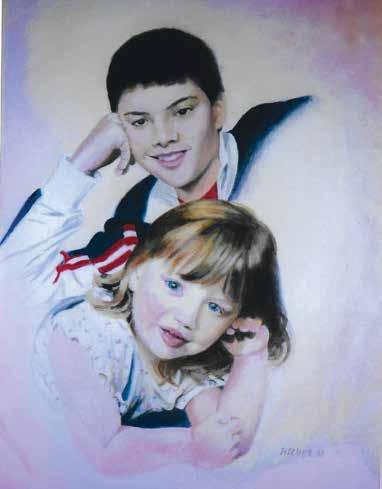
Poem
by
Robert Michael Pyle
Photograph by Judy VanderMaten
Field Note by Hal Calbom
Most of the Lower Columbia and tidewater reach enjoy a classic maritime climate, with the occasional interruption of severe Pacific storms. Average annual high temperatures are in the high 50s, lows in the low 40s, and averages a comfortable 50 degrees. Precipitation, which tends to fall as drizzle as much as downpour, is another story: an average of some 50-plus inches of rain a year, climbing to 80-plus inches in Astoria, and as much as 120 inches annually in Grays River. As for the relatively low probability phenomenon known as snow: about 1-2 inches a year.
Christmas on the Columbia
Anyone who doesn’t know the river might think it’s lit up for the holidays year round, all those red and green directional buoys flashing “go here, not there,” up and down the reach. Colors of holly leaf and berry borrowed from solstices in Druid days, representing Yuletide in these forgetful times. But sometime after Thanksgiving (that other pagan holdover) other brilliants appear — red and green, yes, bus also blue and gold and white — all along the river’s shores. Line doorways and window frames, parade through marinas and backwaters on festive boats, their lit-up lines reflecting shapes of Christmas trees.
Elk and deer are brought home from the hunt, turkeys from Freddies’s for feasts ashore or adrift. Children visit Santas at Grange Hall and mall. Carols lap at pilings, old chestnuts sung in voices muted by waves and rain.
Such are the midwinter rites and revels on the river, where a long wet night will take whatever it can get to hold back the dark — even if it’s only “go here, not there,” blinking red and green, all up and down the reach
by Debby Neely
PACIFIC NORTHWEST WOODCUTS AND HAIKU
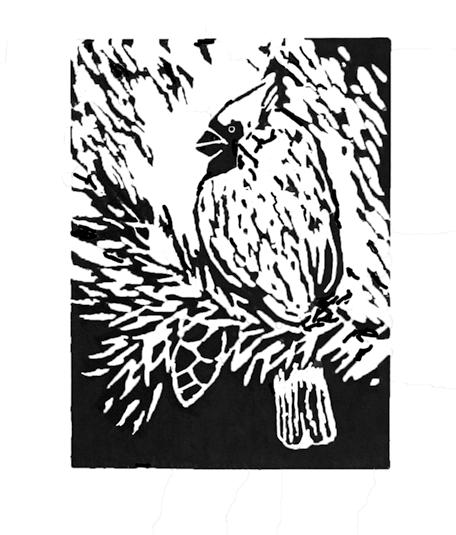


Flash of red on snow Cardinal at the feeder Needs refilled AGAIN!
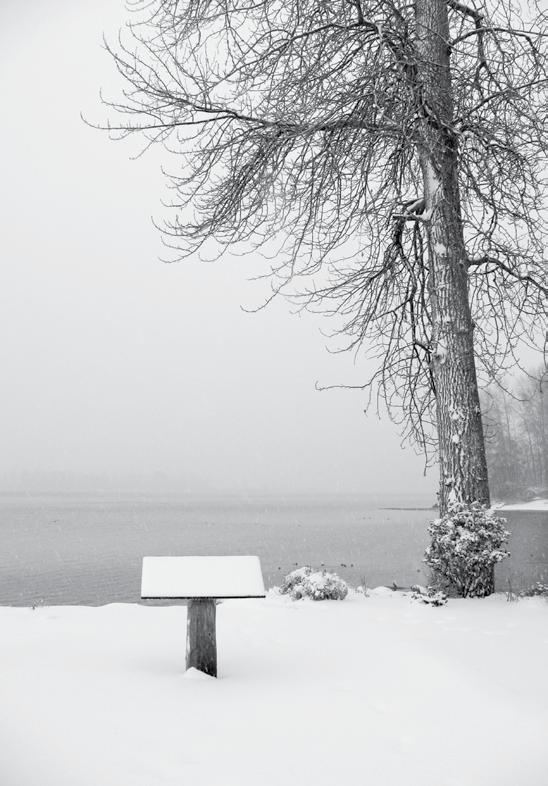
by Hal Calbom
AMERICA’S PLANNED CITY AND THE LAST FRONTIER
The Good Life
For Longview a vision of the good life has endured. More than most towns. As John McClelland, Jr. and other historians have pointed out, Longview was bequeathed optimism, hopefulness and high expectations. It’s been more than lucky to count R.A. Long as its benefactor and developer. It’s inherited a strain of that good man’s idealism and vision, too.
Until Longview gives ever man, woman and child within its limits an opportunity to live happily, to improve mind, soul and body…Longview has an unfinished task.
– Robert Alexander Long, 1925
This page and page 5 feature excerpts from
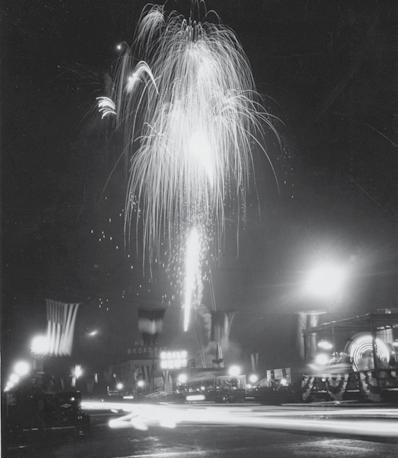
CRRPRESS was founded in 2020, with the first printing of Tidewater Reach, followed by Dispatches from the Discovery Trail (see current episode, page 5), Empire of Trees, Words and Wood, and A Lifetime of Art. For purchase info, see page 21-24, 43..
Selected by Debra Tweedy
Nothing ever seems too bad, too hard, or too sad when you’ve got a Christmas tree in the living room. --Nora Roberts, American author, 1950–
Summer is the time of squabbles. In winter, we must protect one another, keep each other warm, share our strengths. --George R.R. Martin, American author and television writer, 1948–
A library is a good place to go when you feel unhappy, for there, in a book, you may find encouragement and comfort. A library is a good place to go when you feel bewildered or undecided, for there, in a book, you may have your question answered. Books are good company, in sad times and happy times, for books are people — people who have managed to stay alive by hiding between the covers of a book. --E. B. White, American writer, 1899-1985
If you know someone who’s depressed, please resolve to never ask them why. Depression isn’t a straightforward response to a bad situation; depression just is, like the weather...It’s hard to be a friend to someone who’s depressed, but it is one of the kindest, noblest, and best things you will ever do. –Stephen Fry, English actor, comedian, writer, 1957-
The best use of imagination is creativity. The worst use of imagination is anxiety.
--Deepak Chopra, Indian-American author and new age guru, 1946-
Do not spoil what you have by desiring what you have not; remember that what you now have was once among the things you only hoped for. --Epicurus, ancient Greek philosopher, 341 BC-270 BC
The illiterate of the 21st century will not be those who cannot read and write, but those who cannot learn, unlearn, and relearn. --Alvin Toffler, American writer and futurist, 1928-2016

by Dayle Olson
Iam not usually drawn to detective novels set in Victorian London, but I made an exception for this artfully crafted story by Irish novelist Jess Kidd. Her first book, Himself, was shortlisted for the Irish Book Awards in 2016.
Kidd’s cast of characters typically includes ghosts with personality and protagonists with the deck stacked against them. Mrs. Bridget (“Bridie”) Devine, an unlikely private investigator, is hired to find a kidnapped child. Having negotiated an unconventional childhood as an orphan schooled in the finer points of sourcing bodies for anatomists, as well as a surgeon’s apprentice of sorts, and finally ward of a chemist, Bridie has a unique skill set when it comes to solving crimes.
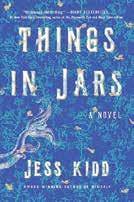
Dayle Olson has been a Northwest Voices guest writer at Lower Columbia College and occasionally reads at WordFest. Her work has appeared in Cathexis Northwest Press, North Coast Squid, The Salal Review, and a prose poem won first prize in the 2024 Oregon Poetry Association contest. She hosts a quarterly poetry open mic in Cathlamet at RiverMile 38 brew pub.
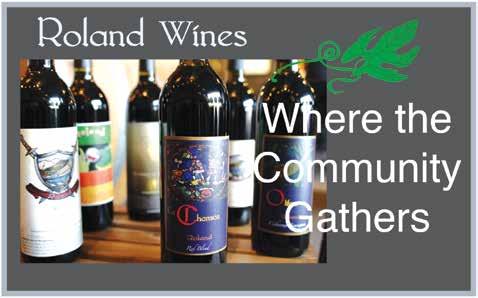
The kidnapped child in question is also unconventional, regarded as an oddity of nature. The child’s ethereal looks, affinity for the sea, and unusual appetite for snails and newts puts her in a category all her own. There are plenty of unsavory characters who would like to add the child to their private collection. Bridie closes in on the abductee through methodical detective work, aided by her seven-foot-tall housemaid and a handsome ghost.
I was sad to turn the last page and say goodbye to Bridie and her friends, but the rollicking good ride of this satisfying novel was worth a tear or two shed at the end.

Located in the historic Castle Rock Bank Building 20 Cowlitz Street West Mon-Sat 8:30–5 • Sun 10–4 360-916-1377
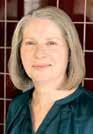
Longview native Debra Tweedy has lived on four continents. She and her husband decided to return to her hometown and bought a house facing Lake Sacajawea.“We came back because of the Lake and the Longview Public Library,” she says.



1. Demon Copperhead
Barbara Kingsolver, Harper Perennial, $21.99
2. North Woods
Daniel Mason, Random House Trade Paperbacks, $18
3. Fourth Wing
Rebecca Yarros, Entangled: Red Tower Books, $20.99
4. A Court of Thorns and Roses
Sarah J. Maas, Bloomsbury Publishing, $19
5. Never Whistle at Night
Shane Hawk (Ed.), Theodore C. Van Alst Jr. (Ed.), Vintage, $17
6. The Berry Pickers
Amanda Peters, Catapult, $17.95
7. The Frozen River Ariel Lawhon, Vintage, $18
8. Project Hail Mary
Andy Weir, Ballantine, $20
9. The Nightingale
Kristin Hannah, St. Martin’s Griffin, $17.99
10. The Teller of Small Fortunes
Julie Leong, Ace, $19
Brought to you by Book Sense and Pacific Northwest Booksellers Association, for week ending Nov. 10, 2024, based on reporting from the independent bookstores of Alaska, Washington, Oregon, Idaho and Montana. For the Book Sense store nearest you, visit www.booksense.com
PAPERBACK NON-FICTION
1. The Backyard Bird Chronicles
Amy Tan, Knopf, $35
2. Braiding Sweetgrass
Robin Wall Kimmerer, Milkweed Editions, $20
3. On Tyranny
Timothy Snyder, Crown, $12
4. The Body Keeps the Score
Bessel van der Kolk, M.D., Penguin, $19
5. Trail of the Lost
Andrea Lankford, Hachette Books, $19.99
6. A Fever in the Heartland
Timothy Egan, Penguin, $18
7. The Art Thief
Michael Finkel, Vintage, $18
8. Doppelganger
Naomi Klein, Picador, $20
9. All That the Rain Promises and More
David Arora, Ten Speed Press, $17.99
10. How to Listen
Thich Nhat Hanh, Jason DeAntonis (Illus.), Parallax Press, $9.95
1. The Grey Wolf
Louise Penny, Minotaur Books, $30,
2. Somewhere Beyond the Sea
TJ Klune, Tor Books, $28.99, 3. Intermezzo
Sally Rooney, Farrar, Straus and Giroux, $29.
4. The Women Kristin Hannah, St. Martin’s Press, $30
5. Playground
Richard Powers, W. W. Norton & Company, $29.99
6. James
Percival Everett, Doubleday, $28
7. Tell Me Everything
Elizabeth Strout, Random House, $30, 8. The Mighty Red Louise Erdrich, Harper, $32
9. Absolution
Jeff VanderMeer, MCD, $30
10. We Solve Murders
Richard Osman, Pamela Dorman Books, $30
By Alan Rose

Imminent: Inside the Pentagon’s Hunt for UFOs
Luis Elizondo
William Morrow
$29.99
We here at the Pentagon would like to clarify our denials of the past seventy years regarding Unidentified Flying Objects. We staunchly maintain that UFOs do not exist, but, ahem, well, Unidentified Anomalous Phenomena (UAP) do. We apologize for any confusion.
For more than a half century, UFOs have been the Pentagon’s best kept non-secret. The government has debunked and dismissed hundreds of credible sightings and discredited witnesses as kooks or frauds or crazy. What’s surprising is that it was done so brazenly. Over two
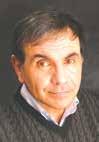
1. The Message
Ta-Nehisi Coates, One World, $30
2. Patriot
Alexei Navalny, Knopf, $35
3. Revenge of the Tipping Point
Malcolm Gladwell, Little, Brown and Company, $32
4. Nexus
Yuval Noah Harari, Random House, $35
5. On Freedom
Timothy Snyder, Crown, $32
6. Meditations for Mortals
Oliver Burkeman, Farrar, Straus and Giroux, $27
7. What the Chicken Knows
Sy Montgomery, Atria Books, $22.99
8. War
Bob Woodward, Simon & Schuster, $32
9. The Creative Act
Rick Rubin, Penguin Press, $32
10. Be Ready When the Luck Happens
Ina Garten, Crown, $34
1. How Does Santa Go Down the Chimney? Mac Barnett, Jon Klassen (Illus.), Candlewick, $18.99
2. Knight Owl and Early Bird Christopher Denise, Christy Ottaviano Books, $18.99
3. Construction Site: Garbage Crew to the Rescue! Sherri Duskey Rinker, AG Ford (Illus.), Chronicle Books, $18.99
4. Santa’s First Christmas Mac Barnett, Sydney Smith (Illus.), Viking Books for Young Readers, $18.99
5. Where the Wild Things Are Maurice Sendak, Harper, $21.99
6. The Bakery Dragon Devin Elle Kurtz, Knopf Books for Young Readers,$18.99
7. Construction Site: A Thankful Night Sherri Duskey Rinker, Helen Morgan (Illus.), Chronicle Books, $12.99
8. The Crayons Give Thanks Drew Daywalt (Illus.), Oliver Jeffers (Illus.), Philomel Books, $9.99
9. The Very Hungry Caterpillar Eric Carle, World of Eric Carle, $10.99
10. Buffalo Fluffalo Bess Kalb, Erin Kraan (Illus.), Random House Studio, $18.99
“kooks” were right
weekends in 1952, multiple UAP were seen in Washington DC, including over the White House. They were viewed by hundreds of eyewitnesses and appeared on the front pages of major newspapers. Air Force pilots pursued and even fired at them. A thorough investigation found that it was “flocks of birds.”
In March 1966, Michigan neighborhoods saw multiple strange craft over several days that “dove, hovered, climbed, and disappeared — only to reappear.” Government investigators announced it was “swamp gas.”
Oh, and that Roswell incident in 1947? Turns out there was a crash, and bodies were recovered. So, it wasn’t “weather balloons” as the Army reported (Our bad!) Even during World War II, Allied and Axis pilots reported mysterious “orbs
Alan’s haunting novel of the AIDS epidemic, As If Death Summoned, won the Foreword INDIES Book of the Year Award (LGBT category.) He can be reached at www.alan-rose.com.
At the dawn of the nuclear age, UAP started appearing in greater numbers—and sometimes they crashed. Roswell was one of those incidents. A UAP fell that day in the vicinity of a government test facility in New Mexico and broke into two crash sites. At first, government investigators assumed that the Roswell craft were from another nation, possibly some sort of reconnaissance mission gone awry. But within hours, the US Army realized the truth, that these craft were not made by humans.
From Imminent
of light” around and in their craft so regularly that they were nicknamed “foo fighters.”
1. Impossible Creatures
Katherine Rundell, Ashley Mackenzie (Illus.), Knopf Books for Young Readers, $19.99
2. Leonard Carlie Sorosiak, Walker Books US, $8.99
3. Warriors Graphic Novel: The Prophecies Begin
Erin Hunter, Natalie Riess (Illus.), Sara Goetter (Illus.), HarperAlley, $15.99
4. J.D. and the Great Barber Battle
J. Dillard, Akeem S. Roberts (Illus.), Kokila, $7.99
5. Marshmallow & Jordan
Alina Chau, First Second, $17.99
6. Frizzy Claribel A. Ortega, Rose Bousamra (Illus.), First Second, $14.99
7. Circus Mirandus
Cassie Beasley, Puffin, $9.99
8. Twins
Varian Johnson, Shannon Wright (Illus.), Graphix,$12.99
9. Before the Ever After Jacqueline Woodson, Nancy Paulsen Books, $8.99
10. The Mystwick School of Musicraft
Jessica Khoury, Clarion Books, $9.99

in 2010. Prior to this position, he had overseen counterespionage and counterterrorism investigations for the Department of Defense and worked for the Office of the Director of National Intelligence. You’d think someone would have told him.
Imminent recounts Elizondo’s efforts to uncover and then reveal the extent of UAP encounters, not so he could finally get on “Oprah,” but from his concern for national security. He fears we may be “playing checkers against an enemy who (has) already mastered three-dimensional chess.” The technology—and the physics behind such extraordinary technology—is far beyond anything we possess or even fully comprehend.
And his concern seems legitimate: There are multiple reports of UAP hovering over US nuclear missile silos. And not just hovering. In March 1967, at Malmstrom Air Force Base in Montana, its intercontinental ballistic missiles “went offline, one after another.” Even more disturbing, similar UAP appeared over a Soviet
You mean they’re real? was Luis Elizondo’s first reaction when he became head of the government’s Advanced Aerospace Threat Identification Program (AATIP) cont page 35











missile base in Ukraine in 1982, where the launch sequence switched on (!) without any humans entering the launch codes.
He notes that each time a nuclear reactor has melted down (Three Mile Island, Chernobyl, Fukushima) UAP have been witnessed in the areas for days or months afterward, even calling nuclear reactors “UAP magnets.”
In the 21st century, it has become harder to deny UAP. In November 2004, the US Navy’s Nimitz Carrier Strike Group encountered a number of objects descending from high altitudes, hovering, then zipping away at theoretically impossible speeds. Over several days, these egg-shaped, noiseless vehicles were “seen by six naval aviators, tracked by multiple radars on multiple platforms, and videotaped by an advanced military infrared targeting system.” Swamp gas did not seem likely. (You can watch the government’s declassified UFO videos on YouTube.)
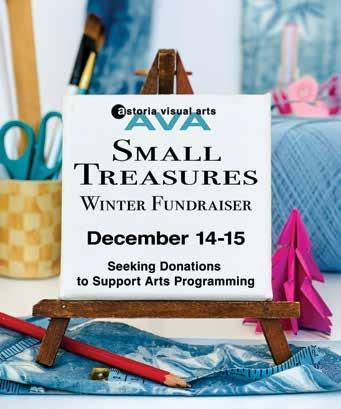
Other nations have been more forthcoming in investigating and publicly acknowledging these encounters. For example, between 1977-1978, the Brazilian military compiled more than 3500 case files on UAP in their northern Colares region.
Largely by the efforts of Elizondo and courageous colleagues, the truth about the frequency and
nature of these encounters has become public. He openly admits, “You might be thinking this all sounds crazy. I’m not saying it doesn’t sound crazy. I’m saying that it’s real.”
We are left with the puzzling mystery that first prompted his concerns: We know that they are. We just don’t know what they are. Are they extraterrestrial? Extradimensional? Intelligent beings from the future?
The implications are immense and profound. In a foreword to the book, Christopher Mellon, former U.S. Deputy Assistant Secretary of Defense for Intelligence, writes that these revelations “may soon cause humanity to reframe its view of itself and our place in the cosmos.”
We may be on the cusp of a paradigm shift unlike any other in human history. And it may be imminent.
Stay tuned.
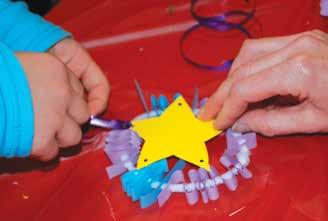




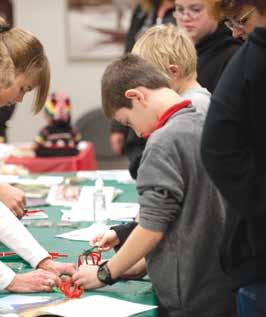
t’s a world tour of Christmas traditions at the Cowlitz County Historical Musem’s Winter Festival on Sunday, December 8th, from noon to 4pm. There are so many wonderful Christmas traditions to discover all around the world — through crafts, games, and fun showing how the holidays are observed in different countries. For example, shoes in France, candles in Colombia, stickball in Ethiopia, cedars in Lebanon, and stars in the Philippines. Members of the Storytellers Network will be on hand with holiday tales, and the Lower Columbia Woodcarvers will share carvings with visitors. Join the fun at the Museum’s Open House!
The Museum is at 405 Allen Street, Kelso, Wash. The event is free; children must be accompanied by an adult.



Letters to the Editor (up to 200 words) relevant to the publication’s purpose — helping readers discover and enjoy the good life in the Columbia River region, at home and on the road — are welcome. Longer pieces, or excerpts thereof, in response to previously-published articles, may be printed at the discretion of the publisher and subject to editing and space limitations.
Items sent to CRR will be considered for publication unless the writer specifies otherwise. Writer’s name and phone number must be included; anonymous submissions will not be considered.
Political Endorsements CRR is a monthly publication serving readers in several towns, three counties, two states and beyond, and does not publish Letters to the Editor that are endorsements or criticisms of political candidates or controversial issues. (Paid ad space is available.)
Unsolicited submissions may be considered, provided they are consistent with the publication’s purpose. Advance contact with the editor is recommended. Information of general interest submitted by readers may be used as background or incorporated in future articles.
Outings & Events calendar (free listing): Events must be open to the public. Non-profit organizations and the arts, entertainment, educational and recreational opportunities and community cultural events will receive listing priority. Fundraisers must be sanctioned/sponsored by the benefiting non-profit organization. Commercial projects, businesses and organizations wishing to promote their particular products or services are invited to purchase advertising.

Send your non-commercial community event info (incl name of event, beneficiary, sponsor, date & time, location, brief description and contact info) to publisher@crreader.com
Or mail or hand-deliver (in person or via mail slot) to: Columbia River Reader 1333-14th, Longview, WA 9863
Submission Deadlines
Events occurring: Jan 15 – Feb 20 by Dec. 26 for Jan 15 issue. Feb 15 – March 15 by Jan, 25 fir Feb 15 issue
Calendar submissions are considered for inclusion, subject to lead time, relevance to readers, and space limitations. See Submission Guidelines above.

Dec. 7th, 7:30pm
Tickets: Adult $25; Senior/Student $23, Child $20
CLATSKANIE ARTS COMMISSION
Performance at Berkenfeld Theatre, Clatskanie Cultural Center, Clatskanie, Ore.
Tickets / Info: www.clatskaniearts.org

A gift from Dr. and Mrs. H. Minthorn to the community via Lower Columbia College Foundation, The Minthorn Collection of Chinese Art encompasses a wide range of styles and is displayed in the upper level of the art gallery in LCC’s Rose Center, open M-Th 10–3 during current Forsberg Exhibition only. Free.
CRR Holiday Open House & Book
Extravaganza 3–6:30pm. Thurs., Dec 5th. 1333 14th Ave., Longview, Wash. Bubbly, sweat treats, live music, holiday cheer. Free gift wrap, free CRRPress mug with $100 book purchase.
Fourth Annual Winter Ale Fest Dec. 7, 9-9, Kalama. See info, bottom, opposite page.
Court House Records in Colonial Virginia Steven W. Morrison, genealogist and lecturer, speaker, Dec. 12 Lower Columbia Genealogical Society’s Zoom meeting. Virtual meeting doors open at 6:30 pm and program will begin at 7:00pm. Public is invited to attend. For a link to join the meetin,g contact lcgsgen@yahoo.com
1418 Commerce Avenue, Longview Tues thru Sat, 11–4. Visit the Gallery to see new work. For event updates check our website: the-broadwaygallery.com, at Broadway Gallery on Facebook, and broadway gallery longview on Instagram.
FEATURED ARTISTS
Nov Rosemary Powelson (ceramics), Arlys Clark (painting & fabric art)
Dec Holiday Show by 30 BWG Co-op Artists Jan Alan Brunk (paintings)
A Living Christmas Carol Dec 19, Cowlitz County Expo Center, 1900 7th Ave., Longview, Wash. 6:30pm (doors open 6pm). Free community event showcasing K-12 students. Fundraising offering, dessert service, silent auction. Joy-filled family friendly evening. RSVP 360-4234510 x309 or rcoffee@3riversschool. net.
Winter Festival Dec 8, 12–4pm, Cowlitz County Historical Museum, 405 Allen St., Kelso. See details, page 35.
Winter Solstice Walk at the Lake Sat, Dec. 21, details page 13.
FIRST THURSDAYS
Dec 5 • 5:30–7pm
Join us for New Art, & Nibbles. Music by Del Biolostosky Jan 2 • 5:30–7pm
Join is for music & refreshments
Artisan ornaments, cards & gifts just for the
OPEN

Tues - Sat 11–4
Free Gift Wrap on request.
Find a unique gift! We have beautiful artisan cards, jewelry, books by local authors, wearable art, original paintings, pottery, sculpture, photographs and so much more.

A Beethoven Christmas Concert
Columbia River Chamber Music Festival Dec 15, 3pm. St Stephen’s Church, 1428 22nd Ave., Longview, Wash. Info: columbiarivermusic.org
Small Treasurers Fundraiser/ Astoria Open Studios Dec 14-15. Call to artists, business contributions. More info, page 39.
Dementia Support Group to assist affected people in Cowlitz County and nearby areas meets on Fridays from 1–3 pm at Catlin Center (Kelso Senior Center), 106 NE 8th Avenue, Kelso, Wash. The group is sponsored by HOPE, a regional organization that serves Oregon and southwest Washington. HOPE Dementia Support offers hope for the care partner and the individual living with dementia; its mission is to provide Support, Education, and Advocacy for the care partner and the individual living with dementia. (PLWD)
For more info and details on resources, visit the HOPE website: hopedementiasupport.org.
Or contact Debbie Docksteader: 360353-8253.
Volunteers needed at Kelso-Longview train depot
• 4 hour shifts: day / mid- day / night
• Pick up applications at train depot, call Ron Johnson, 360-751-2562 or call train depot for info.
see page 14

by Hal Calbom
World-renowned masters of movement take the stage Jan. 18
Take away the actor’s most important asset, her voice. Cover up the actor’s emotional animator, his face. Shroud them head to toe in brilliant, preposterous costuming. Make them masters of movement and mime. Add music. Tour the world. Enthrall audiences. And join us IN THE SPOTLIGHT.
It’s bad enough sharing your bed with a hippopotamus.
If that includes snorting, tossing, and colossal grunts and groans from that side of that bed all night then you really are in tons of trouble. You’re also privy to the magical, hilarious, captivating world of Imago, the brainchildren of company co-founders Carol Triffle and Jerry Mouawad
“We’re kind of a cross between a circus and a zoo,” Mouawad told me in a recent phone conversation. “People come to see these shows over and over. Parents tell me their kids go home and immediately try to imitate their favorite characters.”
What can appear freewheeling, antic and improvised on stage is in fact an exacting discipline based on relentless tweaking and rooted in classical training. “My wife and cofounder Carol and I both studied in France under our master and mentor, Jacques Lecoq.”

and in motion. It’s a labor of love and a lot of sweat.” An Imago show will feature original music driving the choreography, imaginative costumes (one of Imago’s prize creations is a15foot-tall anthropomorphic paper bag) and all-too-human animal hi-jinks.
I suspect simply watching an insomniac hippopotamus finally falling out of bed will be worth the price of admission.
IMAGO Theatre, ZooZoo Saturday Jan. 18 • 7:30pm Columbia Theatre for the Performing Arts 1231 Vandercook Way, Longview
Parisian LeCoq (1921-1999) was an internationally renowned innovator known for putting form and design, not voices and faces, at the forefront of theatrical creation. Imago, founded in Portland by Triffle and Mouawad over forty years ago, has realized LeCoq’s vision and extended it, creating wordless, wondrous worlds of their own.
“We don’t so much write these pieces — we call them pieces, not skits or improvs,” said Mouawad. “We shape them aloud
Tickets: $40 /$35 /$20 columbiatheatre.com Box Office 360-575-8499
Christmas Spirit comes to life the first weekend in December in Kalama, with the Fourth Annual Winter Ale Fest, Music and Market on Friday Dec 6th, 3–9pm and Saturday Dec 7th, 9am–9pm. The event is held at one55elm, a vintage building and event space. Willie D’s Tap House provides the food, T-shirts and ale expertise. Amalak, the Women’s Club of Kalama, coordinates a raffle, and identification checks.
Come enjoy local musicians, food, ale and cider from local breweries. Highlyskilled artists and musicians work to make spirits bright!
Proceeds help ongoing projects such as Kalama Christmas families and high school scholarships. Music and Market are free. $25 entry gets a complimentary glass and 4 samples. For more information: events@one55elm.com
The Fair Board is hosting their Annual Holiday Bazaar at Kalama Elementary School on Saturday, December 7th, 9am to 4pm. Biscuit and gravy breakfast, a soup lunch, and a bake sale. After the Bazaar, the Fair Board hosts “family fun” Bingo with 21 Bingo baskets for game winners! For more information, email kalamafair@gmail.com.
“We get a lot of actors studying with us just to raise their awareness of motion and movement,” said Mouawad. “The teaching and creativity are inspiring, but of course it’s the audiences that complete the effect. We look forward to 2025.” Imago Theatre’s “ZooZoo” will play the Columbia Theatre January 18th, featuring 11 of their perfected pieces, including “Bugeyes,” “Frogs,” “Paper Bag,” “Cats,” “Penguins,” and, of course, “Hippos.”
Hal Calbom is associate publisher with CRRPress, and produces CRR’s monthly “People+Place” feature, see page 27.
Saturday evening the Chamber of Commerce hosts Pictures with Santa and then the Lighted Parade on 1st Street at 5pm. Finish at 6:30 with the classic movie “Polar Express,” hosted by the Port of Kalama.
Downtown Kalama has it all! Gifts and music and a parade the first weekend of December. – submitted by Marjorie Geiger

Fultano’s Pizza
770 E. Columbia River Hwy
Family style with unique pizza offerings, hot grill items & more!
Dine-in,Take-out and Home Delivery. Visit Fultanos.com for streamlined menu. 503-728-2922

Ixtapa Fine Mexican Restaurant
640 E. Columbia River Hwy
Fine Mexican cuisine. Daily specials. The best margarita in town. Daily drink specials. Dine-in, curbside pickup. M-Th 11am–9:30pm; Fri & Sat 11am–10:30pm; Sun 11am–9pm. 503-728-3344

102 East “A” Street Microbrews, wines & spirits 7am–8pm Daily. Inside dining.
Interstate Tavern

119 E. “B” St., (Hwy 30) Crab Louie/Crab cocktails, crab-stuffed avocados. 17 hot and cold sandwiches. Amazing crab sandwiches. Full bar service. Catering for groups. 503-556-9950. interstatetavern@yahoo.com

El Tapatio
117 W. ‘A’ Street
Mexican Family Restaurant. Open Fri-Sat 11am-11pm, rest of week 11am-10pm. Full bar. 8-11pm. Patio seating. 503-556-8323.

1335 14th Avenue
18 rotating craft brews, pub fare. M-Th 11am–9pm. Fri-Sat 11am–10pm; . Local music coming soon. 360-232-8283. Wine Wednesdays: $5 pours.

Bruno’s Pizza 1108 Washington Way. Pizza, breadsticks, wings, salads, fish & chips. WE DELIVER. Four beers on tap. 360-636-4970 or 360-425-5220.
Formerly The Carriage Restaurant & Lounge located on 14th Ave. 3353 Washington Way.
Chinese & American cuisine. Full bar, banquet room stage room with balcony; available for groups, special events. Restaurant: 11am–9pm, Lounge 11am–1:00am. 360-425-8680.
The Corner Cafe
796 Commerce Ave. Breakfast & Lunch. Daily Soup & Sandwich, breakfast specials. Tues-Sat 7am-3pm. Closed Sun-Mon. 360353-5420. Email: sndcoffeeshop@comcast.net


Eclipse Coffee & Tea In the Merk (1339 Commerce Ave., #113)
360-998-2139. Mon-Fri 8am–4pm. Specialty coffees, teas, bubble teas and pastries....drinks with a smile. Takeout and on-site.

Freddy’s Just for the Halibut 1110 Commerce Ave. Cod, Alaskan halibut fish and chips, award-winning clam chowder. Burgers, steaks, pasta. Beer and wine. M-Wed 10am–8pm, Th-Sat 10am–9pm, Sunday 11am–8pm. Inside dining, Drive-thru, outdoor seating. 360-414-3288. See ad, page 10.

Hop N Grape 924 15th Ave., Longview Tues–Thurs 11am–8pm; Fri & Sat 11am–9pm. BBQ meat slowcooked on site. Pulled pork, chicken, brisket, ribs, turkey, salmon. World-famous mac & cheese. 360-577-1541.

Kyoto Sushi Steakhouse 760 Ocean Beach Hwy, Suite J 360-425-9696.
Japanese food, i.e. hibachi, Bento boxes, Teppanyaki; Sushi (half-price Wednesdays); Kids Meal 50% Off Sundays. Mon-Th 11-2:30, 4:30-9:30. Fri-Sat 11am10pm. Sun 11am-9pm. 360-425-9696.
Lynn’s Deli & Catering 1133 14th Ave.

Soups & sandwiches, specializing in paninis, box lunches, deli sandwiches and party platters. Mon-Fri 8-3, Saturday 10-2. 360-577-5656
Roland Wines

1106 Florida St., Longview. Authentic Italian wood-fired pizza, wine, beer, specialty cocktails. Casual ambience. 5–9pm Wed-Sat, 360-846-7304 See ad, page 32.

Scythe Brewing Company 1217 3rd Avenue #150 360-353-3851
Mon-Thurs 11:30am -8pm; FriSat 11:30am -10pm. Sun 12-8pm. Family-friendly brewery/ restaurant with upscale, casual dining, lunch and dinner.
Stuffy’s 804 Ocean Beach Hwy 360-423-6356

8am–8pm. Breakfast, lunch, dinner. American style food. Free giant cinnamon roll with meal purchase on your birthday with proof of ID. Facebook: Stuffy’s II Restaurant, or Instagram @ stuffys2.
Teri’s
1133 Broadway. Lunch and Dinner, full bar. Mon12–8pm. Tues-Thurs 11am–8pm, Fri 11am–9pm; Sat 12–9pm. 360577-0717



Luckman’s Coffee Company 239 Huntington Ave. North, Drive-thru. Pastries, sandwiches, salads, quiche. See ad, pg 8
Vault Books & Brew 20 Cowlitz Street West, Castle Rock. Coffee and specialty drinks, quick eats & sweet

(Parker’s former location), 1300 Mt. St. Helens Way. 360--967-2333. Open daily, 11am–10pm. Steaks, pasta, calamari, salads, sandwiches, fondue, desserts. Happy Hour, full bar. See ad, menu QR code, page 13.
LUCKMAN’S COFFEE Mountain Timber Market, Port of Kalama. Open 8am–7pm. 360-673-4586.See ad, pg 8.

215 N. Hendrickson Dr., Port of Kalama. A Northwest pub and unique bars serving breakfast, lunch & dinner daily. Info & reservations, bar hours at mcmenamins.com. 8am–midnight daily. 360673-9210. Indoor dining, covered outdoor seating.
Antique Deli 413N. First. M-F, 10–3. Call for daily sandwich special. 360-6733310.

FIRESIDE CAFE 5055 Meeker Dr., Kalama. Open Wed-Sun, 9–4. 360-673-3473.

Sunshine Pizza & Catering 2124 Columbia Blvd. Hot pizza, cool salad bar. Beer & wine. Limited inside seating, curbside pickup and delivery. 503-397-3211 See ad, page 26.
Big River Tap Room 313 Strand Street on the Riverfront.

Lunch/Dinner Tue-Thurs 12–8pm; Fri-Sat 12–9pm. Chicago-style hot dogs, Italian beef, pastrami. Weekend Burrito Breakfast, Sat 8-11, Sun 8am-3pm.

Fultano’s Pizza 51511 SE 2nd. Family style with unique pizza offerings, hot grill items & more! “Best pizza around!” Sun–Th 11:30am–9pm; Fri-Sat 11:30am–10pm. Full bar service ‘til 10pm Fri & Sat. Deliveries in Scappoose. 503-543-5100. Inside Dining.
Ixtapa Fine Mexican Restaurant 33452 Havlik Rd. Fine Mexican cuisine. Daily specials. The best margarita in town. Daily drink specials. M-Th 11am–9:30pm; Fri & Sat 11am–11:30pm; Sun 11am–9pm. 503-543-3017

Warren Country Inn 56575 Columbia River Hwy. Fine family dining. Breakfast, lunch & dinner. Full bar. Call for hours. 503-410-5479. Check Facebook for updates. Dine-in. M-Th










Columbia River Reader BOOK
Gift Books Lewis & Clark, Longview’s Centennial, Columbia River poetry, art, history, see pg 21-24 Gift Subscriptions for yourself or a friend! Mon-Wed-Fri • 11am–3pm Other times by chance or 1333 14th Ave, Longview Free local delivery of books 360-749-1021


Nice crinkly paper
Hold it in your hands Never needs re-charging Doesn’t break if you drop it And it’s all local
Made with love
Thanks for reading


ASTORIA – Astoria Visual Arts invites artists and community members to support on-going and expanded programming including the AVA Gallery, youth arts education, artist residencies and the Astoria Open Studios Tour.
Small Treasures event will begin Dec. 14, 11am–8pm during Astoria’s Artwalk, and run through Dec. 15, 11am–5pm, and will include an exhibit, a silent auction, and a festive closing party on Sunday from 3–5pm.
Artists and community members are invited to contribute by donating up to six pieces of original artwork or fine craft up to 10 inches in width. Artwork contributions can be original artwork in all media, 2D and 3D, ceramics, jewelry, fiber arts, wearable, ornaments, etc.
Deliver your contribution on Tuesday Dec. 10, 4–6pm; Wednesday, Dec. 11, 10am–noon, and 4–6pm; Thursday, Dec. 12, 10am–12noon, or by appointment.

Business partners donations may include experiences, products, food items, gift baskets, gift cards, and seasonal festive items for auction!
Contact AVA for pick-up!
Astoria Visual Arts (AVA) is a 501(c)(3) nonprofit organization founded in 1989 that serves our extended communities by providing free programming that empowers artists and enriches our lives. Donations are tax-deductible. Artists have the option to request a percentage of the sale of their artwork, up to 30%. Learn more at astoriavisualarts.org.
See ad, page 35.
“Above all, do not lose your desire to walk. Everyday, I walk myself into a state of well-being and walk away from every illness. I have walked myself into my best thoughts, and I know of no thought so burdensome that one cannot walk away from it. But by sitting still, and the more one sits still, the closer one comes to feeling ill. Thus if one just keeps on walking, everything will be all right.”
– Søren Kierkegaard, Danish theologian and philosopher


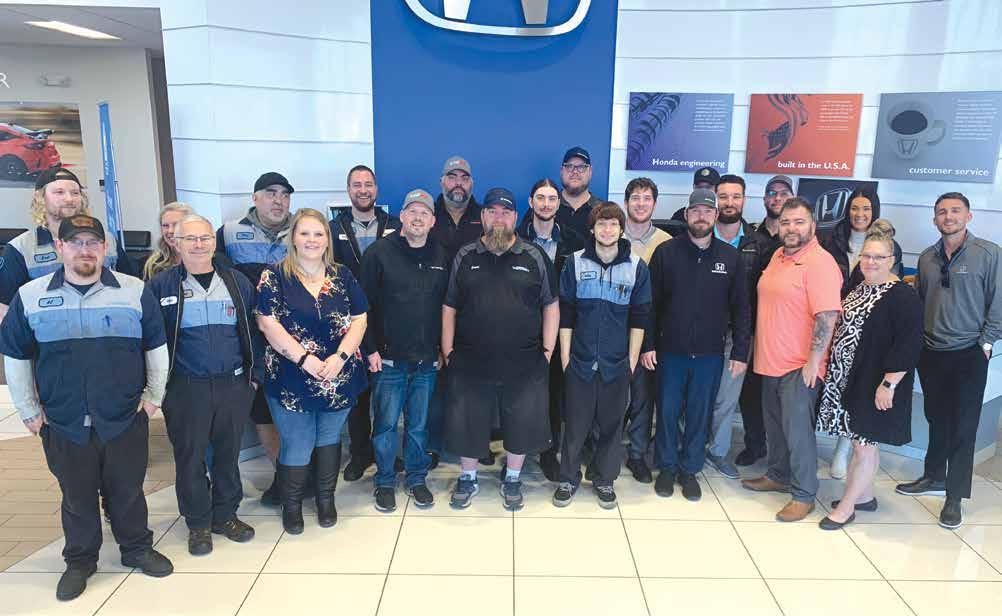


Driving to Portland-Vancouver during the winter can be both nerve-wracking and time-consuming. But if you need MRI services, you can skip the traffic because Pacific Imaging Center in Longview has just what you need.
PIC features state-of-the-art equipment and experienced technicians. Also, while wait-times at many imaging clinics are often several weeks, the average wait-time at Pacific Imaging is only a few days because PIC offers extended hours for your convenience.
PIC partners with the nationally-renowned radiologists at National Orthopedic Imaging Associates (NOIA). This means that a radiologist with subspecialty training will read each MRI. For example, if you have an MRI of your shoulder, it will be assessed by a radiologist who works primarily with shoulder scans. Additionally, NOIA has a reputation for rapidly returning results to the patient’s primary care physician.
Call today for information about scheduling an appointment.



ue and I were recently invited by our friends, Tom and Joann Lee, to Roland’s for wine and pizza. Tom’s parents, Susie and Vince Lee were also at the table. The younger Lees had news to share: They would be moving to Texas, to be near Joanna’s family. And, of course, they were taking along their two spirited Golden Retrievers, Wilbur and Winston.




Wilbur and Winston had been featured in several “Out-and-About with Pets” stories, showing dog-friendly adventures, and in “People+Place Then and Now”sponsorship spots, the dogs posed in different historic Longview settings during the Centennial, We are sad that Joanna and Tom are moving so far away, and will miss seeing them and Wilbur and Winston in “real life,” and on the pages of Columbia River Reader.
My experience with pets, namely dogs and cats, goes back to my childhood in the house that Dad built on Pacific Way. We had a couple of cocker spaniels early on. Both of them were run over by cars speeding down Pacific Way. Our cat, “Pancake,” who also met her demise crossing the road, got her name because she liked to eat pancakes.
The dog I best remember was King Coal, so named because he was black as a lump of coal, and who we renamed after the birth of his/her litter of pups. Mrs. Coal was a loyal dog. Every time we opened the car door to drive into town, she bounded into the car, expecting to go for a ride. On occasion, we let her ride along, but often, we had to muscle her out.
Mrs. Coal didn’t escape the perils of Pacific Way, but she survived with two broken legs after being struck by a car. In my archives, there’s a photo of Dad,
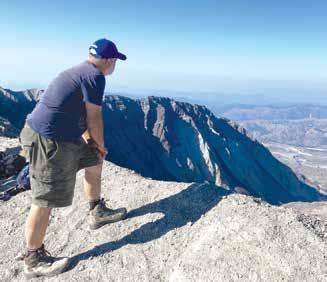
Mrs. Coal, and me — the dog with casts on her front legs, Dad with a cast on his broken leg and me with a cast on my right arm.
Sue and I don’t have a dog. I saw a cute one in a TV commercial and commented that if we had a dog, that’s the one I’d like. Ever since, she’s been telling everyone that Ned wants a dog. We shall see.
One thing is for sure: We will miss Tom and Joanna, who moved to Longview in 2020 shortly after their wedding in Cathedral Park (Portland) — held outdoors due to the pandemic — and we will miss their beautiful, beloved dogs. They all contributed much to our community, to Columbia River Reader, and to Sue and me as charming, dear friends. We hate to see them go, but count on seeing them again.. They will visit often, we hope. And we know where they live.
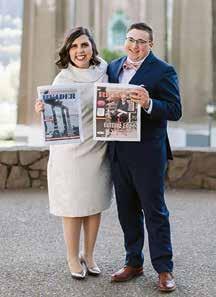



By Alice Dietz, Cowlitz PUD Communications / Public Relations Manager
ollowing a handful of fairly mild winters, this winter has a number of challenges that may not work in our high-heating season’s favor. So why are electric bills higher in the winter?
1. Cold weather tends to mean staying home more. By staying home, the use of electronics, televisions, lights, and heat is at an all-time high — especially during the increase in working from home and remote learning.
2.The coldest days of the year are around mid-December to late January, which results in more work for heating systems. The larger the gap between the outside

temperatures and the inside temperatures, the harder your system has to work to keep the temperature inside warm, even if you keep your thermostat at the same setting.
3. Keep in mind the extra consumption that can result from holiday décor. The extra lighting and decorations can take a toll on your electricity usage.
There are many no-cost options to lower your energy use and reduce your energy bill. Here are a few ideas to give you a jump start on saving energy now (for a full list visit https://www.cowlitzpud.org/ efficiency/energy-saving-tips/):
Energy-saving Tips
•Lower your thermostat when you go to bed or when you’re not home. Use a programmable thermostat, so it’s automatic. Every degree lowered can decrease the heating portion of your energy bill by 2 percent.
•Make it a habit to shut off lights, computers and other devices when you’re not using them.
•Close your fireplace damper when there’s no fire. Leaving it open is like having a 48-inch-square hole in your house.
Alice Dietz is Cowlitz PUD’s Communications /Public Relations Manager. Reach her at adietz@cowlitzpud.org, or 360-501-9146.
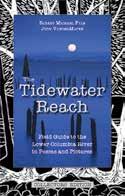


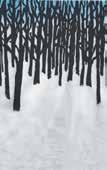
Field Guide to the Lower Columbia in Poems and Pictures
THREE EDITIONS • $25, $35, $50
By Robert Michael Pyle and Judy VanderMaten
“Tidewater Reach is a pleasure to hold; it provokes delights, both intellectual and emotional. I commend all who were involved in bringing us this treasure. It deserves a place on your bookshelf and in your heart.” -- Cate Gable, “Coast Chronicles,” Chinook Observer, Long Beach, Wash.
DISPATCHES FROM THE DISCOVERY
A Layman’s Lewis & Clark $35
by Michael O. Perry


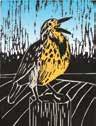

Mail Order Form CRRPress center pull-out section, this issue, pg 24. FREE local delivery
Books also available at:
• Columbia Gorge Interpretive Museum Stevenson
• Broadway Gallery Longview
• Cowlitz County Historical Museum Shop Kelso
• Kelso-Longview Visitor Center
• Vault Books & Brew Castle Rock
• Morgan Arts Center Toledo
• Tsuga Gallery Cathlamet
• Redmen Hall Skamokawa
• Skamokawa Store Skamokawa
• Appelo Archives Naselle
• Time Enough Books Ilwaco
• Marie Powell Gallery Ilwaco
• Godfathers Books Astoria, Ore.
• RiverSea Gallery Astoria,Ore.
• Columbia Gorge Discovery Center & Museum The Dalles, Ore.
Please support our local booksellers & galleries