Jennifer Williams PH: 714-486-2735 jwilliams@526mediagroup.com
David Koenig, DIRECTOR OF EDITORIAL
Sara Graves, SENIOR EDITOR
GUEST COLUMNISTS & CONTRIBUTORS
Rachelle Barios
Kate Bernyk
Keith Christman
Christelle Locat-Rainville
Taylor Rachko
Lon Riley
Natasha Shtapauk
Claudia St. John
Michael Wilbur
SALES
Nick Kosan
PH: 714-486-2735 nkosan@526mediagroup.com
Chuck Casey
PH: 714-486-2735 ccasey@526mediagroup.com
John Haugh
PH: 714-486-2735 jhaugh@526mediagroup.com
GRAPHIC DESIGN
Greg Lane
DIGITAL SUPPORT
Katherine Williams kwilliams@526mediagroup.com
CIRCULATION/SUPPORT
PH: 714-486-2735 info@526mediagroup.com
526 MEDIA GROUP
151 Kalmus Drive, Ste. J3 Costa Mesa, CA 92626
PH: 714-486-2735
Closet Manufacturing Trends How CNC, Software, Automation and Smarter Workflows are Reshaping Custom Storage 16 Lighting the Surface How Integrated Illumination is Transforming Cabinetry, Closets, and Compact Interiors
Design-Forward Storage Solutions for Closets, Garages & Beyond 30 Sustainability Through Efficiency Rethinking Surface Production in Small Spaces
Asking Better Questions
Sustainability Beyond the Surface 40 NBMDA Asks, ITR Answers A Sneak Peek at What the Experts Anticipate Going into the Second Half of 2026 42 Hardwood Plywood Trade Case Bringing Triple-Digit Duties into Focus
From the President
You Busy or Are You Building?
Human Resources The Case for Strategic Workforce Planning
@ The Show
from Recent Shows and Upcoming Events
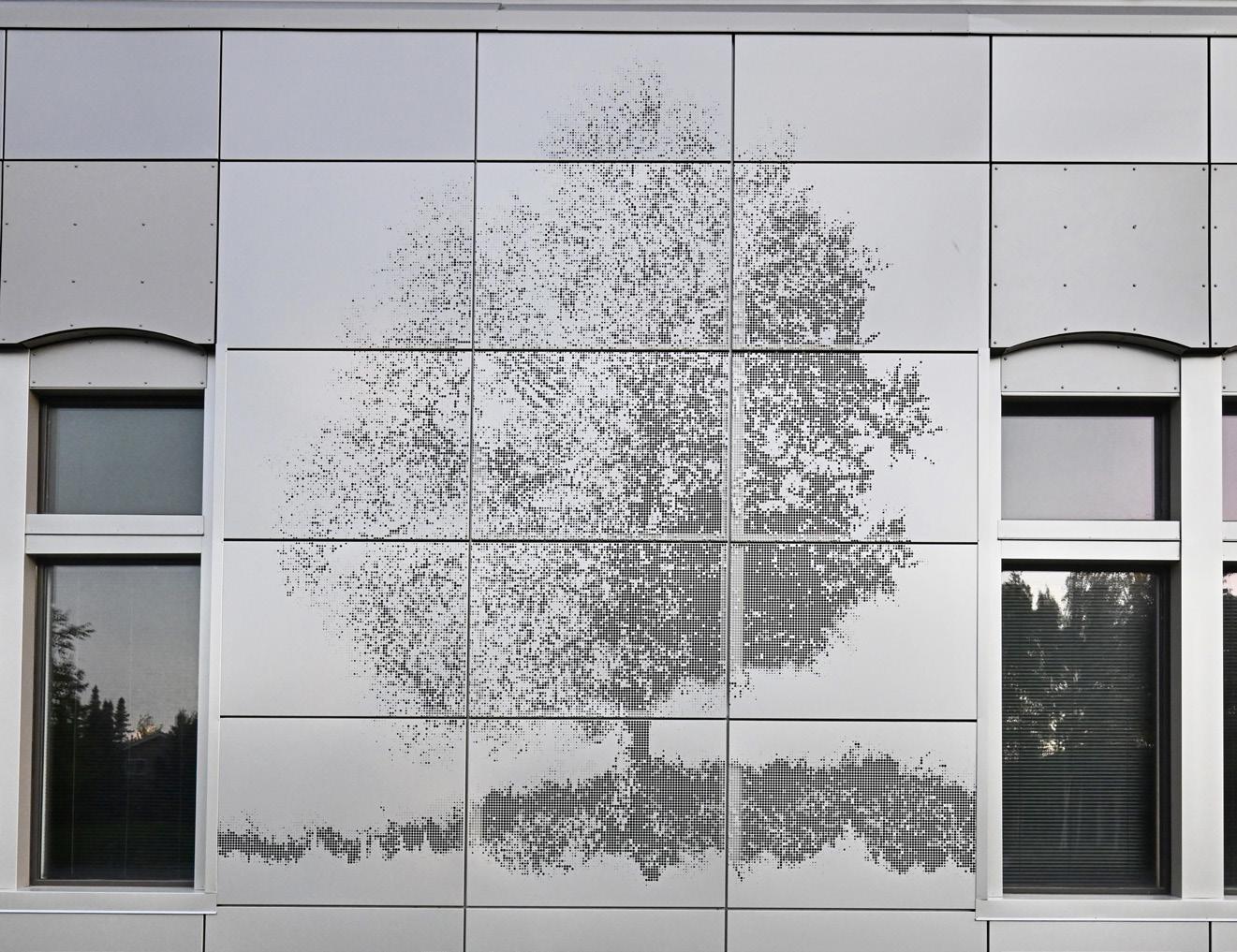
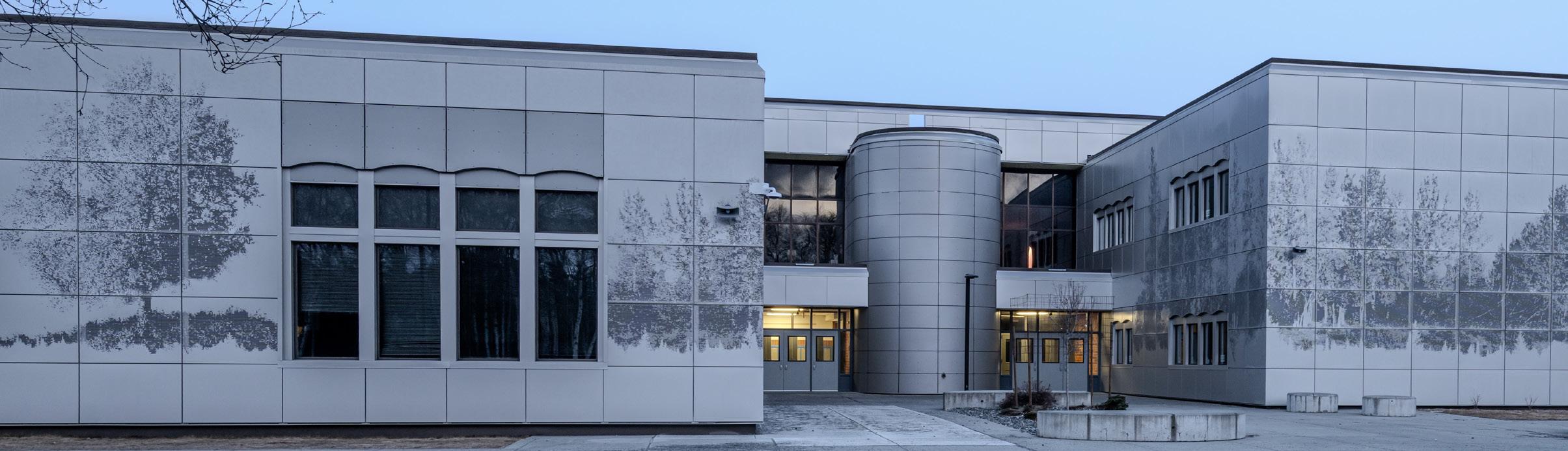
S&P By Design A Forest in the Facade
RICHELIEU
Are You Busy or Are You Building?
I’ve always believed being busy is a blessing. It means you’re in the game — pursuing something that matters. I’ve also long believed in being the person who says, “send me,” and in leading from the front. That has always been my standard.
So when a recent industry event gave me the chance to step away from the day-to-day, I almost didn’t go. Stepping back has never felt like leadership to me. But I came home with something I didn’t expect: clarity. And more questions than answers — which, in this case, felt like progress.
Something closer to home was already on my mind before leaving. My daughter had just rolled her ankle at volleyball — not serious, thankfully, but significant enough. I’ve watched plenty of young athletes get pushed to “fight through it,” the moment winning out over the long term. I’ve held myself to that same standard my whole life. Push through. Outwork it. Never slow down. “Pain is weakness leaving the body” is the old adage.
But this time, I found myself thinking differently. She’s 15. If the goal is a lifetime of health and opportunity, maybe the right call isn’t to push through — it’s to step back, recover properly, and trust that doing the right thing now matters more than proving something in the moment. That’s stewardship. And it applies well beyond sports.
I read something recently that hit home: “I’m at the age where my mind is 29, my humor suggests I’m 12, and my body possibly died in the Civil War.” It has been a long, hard road of abuse and neglect that I pay for every minute.
Back at the event, someone introduced me to what they called the “96 percent rule.” The idea: empower your people to make decisions confidently, knowing that the vast majority — 96 percent — will align with your thinking. Move quickly. Be decisive. Trust your instincts. And for the small percentage that miss the mark, address them calmly, learn and move on.
It reinforces something I’ve always believed but perhaps never said plainly: leadership isn’t about controlling every decision. It’s about building an environment where people can think, act and grow — where mistakes are part of the process, not something to be feared.
One more moment from that trip hasn’t left me. I was sharing some high-stakes plans with a trusted industry leader who has become a true friend — the kind of decisions that can change everything. What he said was simple. But it landed hard.
“You can’t buy more time. Make sure you’re doing this for the right reasons. Mount Everest is covered in bodies who once were the most driven and successful people.” That honest challenge has stayed with me ever since and left me considering: am I busy, or am I building?
Drive alone is not enough. I’ve spent most of my life taking pride in outworking the room — pushing through, adapting, persevering. But I’ve started to wonder whether that mindset alone is still sufficient. Maybe the next phase of leadership requires something different. Not less effort, but more intention. Not just perseverance, but perspective.
So if you can, find time to think. Step away, even briefly — and better yet, do it alongside people you trust. People who’ve been in your shoes, who understand the weight of what you carry, and who will tell you the truth. The best leaders I know aren’t just those who have achieved success. They’re the ones who took the time to understand it — and were generous enough to share what they learned.
As always, it is a privilege to serve you and this great industry. Thank you for the example you set every day.
Patrick Adams, Publisher, Surface & Panel, 526 Media Group
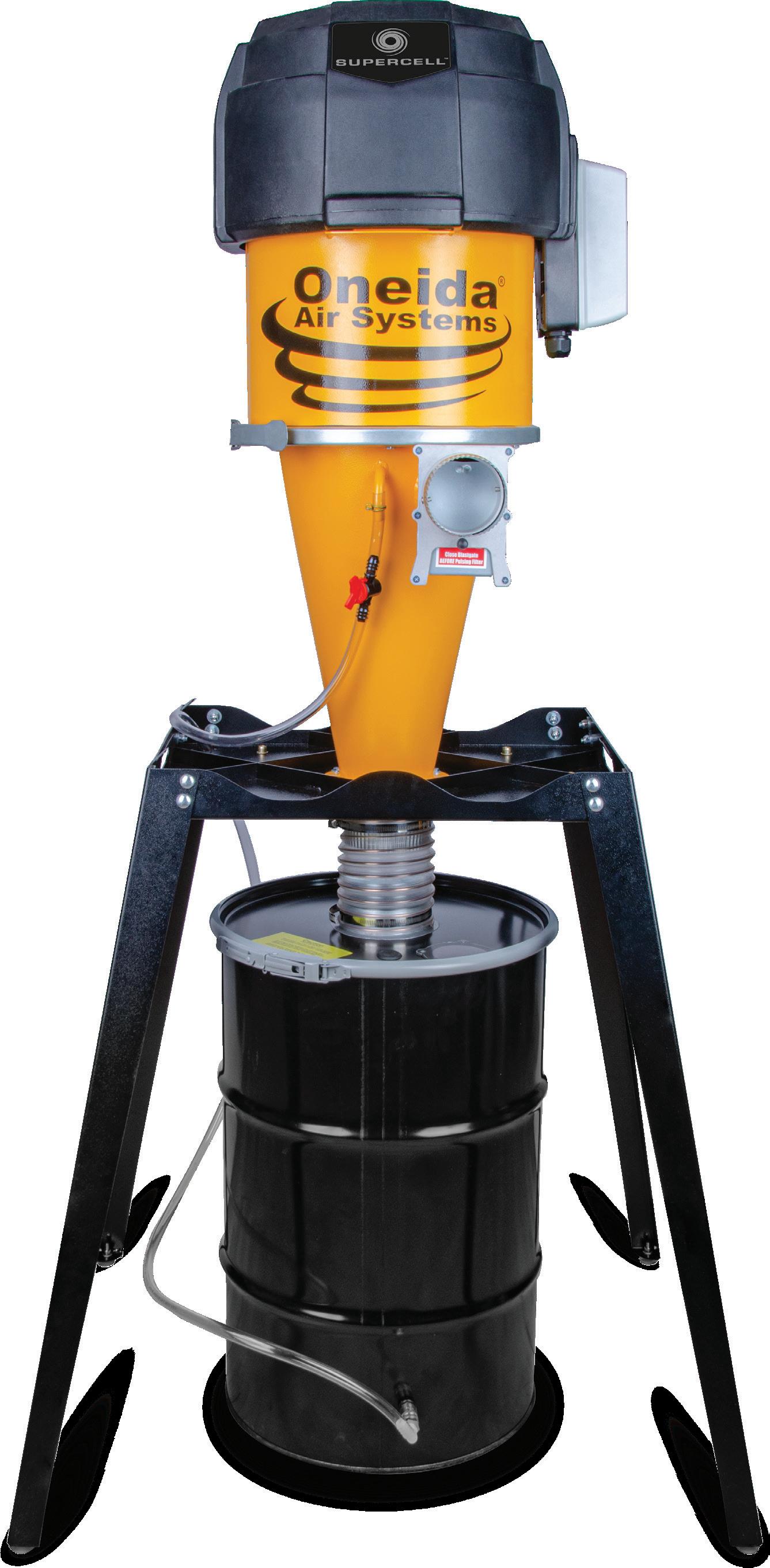
SUPERCELL
The Supercell exceeded my expectations! Every aspect of this machine is well designed. From the very high pressure, to high CFM, to the ease of chip disposal and filter cleaning. An exceptional value.
Adam D.
Urban Functionality –Surface Solutions for Small Spaces
BY JENNIFER G. WILLIAMS
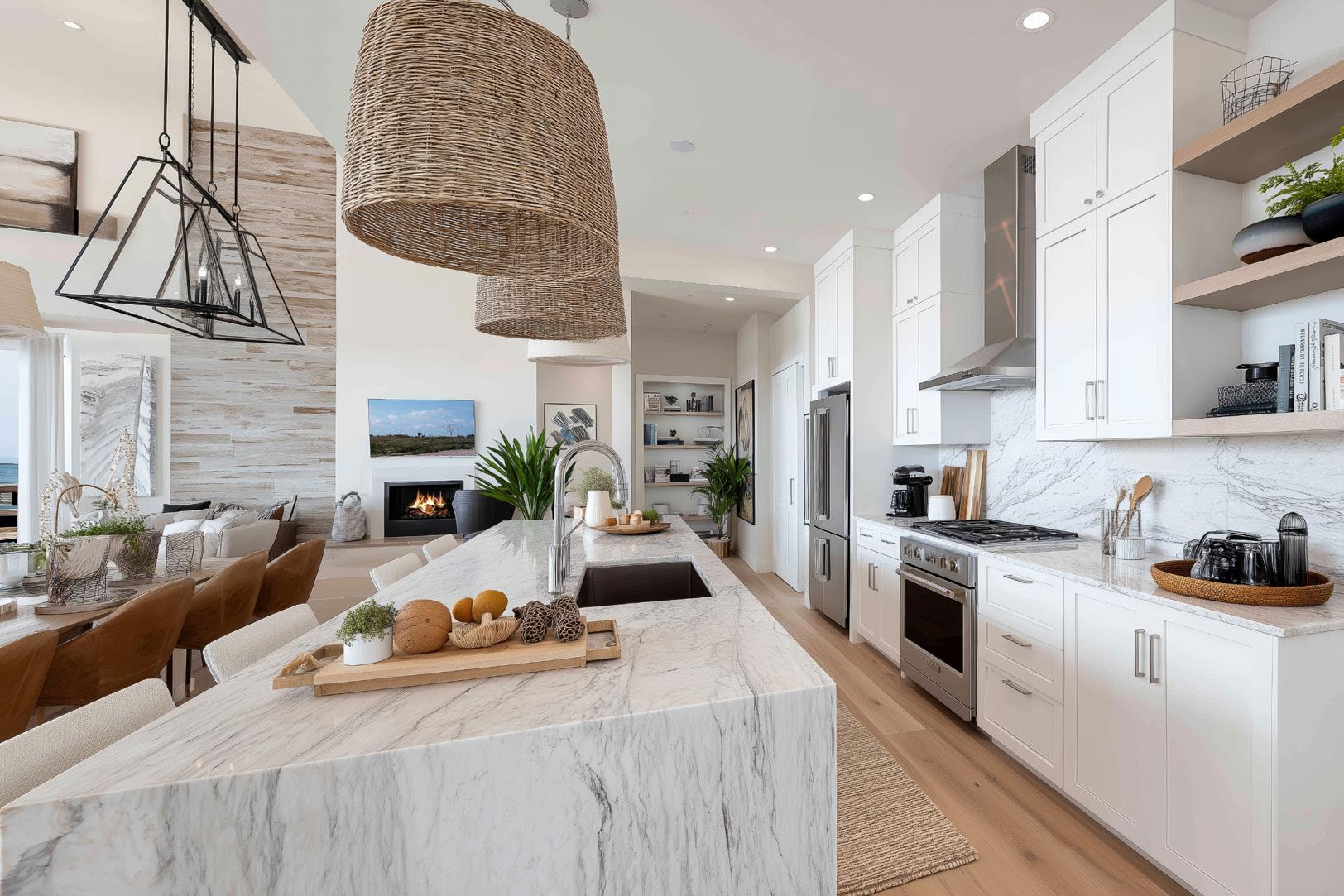
As living spaces contract and expectations grow, the industry is finding smarter ways to make every inch count. This issue of Surface & Panel highlights how materials, manufacturing and design are coming together to create more efficient, adaptable storage solutions — where doing more with less is no longer a challenge, but a design imperative.
Advancements in panel technology are playing a central role in that shift. As Judy Schwark, architectural specification manager for the furniture solutions division of REHAU in the Midwestern United States, explains, “as urban living spaces shrink, panel manufacturers and fabricators are designing smarter storage systems, flexible cabinetry, and multifunctional panels that transform how space is used.”
Materials are becoming thinner, more durable, and more versatile — allowing designers to maintain performance while reducing bulk and maximizing usable space.
From evolving manufacturing trends to the growing role of integrated lighting and high-performance hardware, this issue explores the systems driving modern storage forward. We also spotlight a range of innovative closet designs from across the country, offering a look at how designers are rethinking organization for today’s living environments both large and small.
At the same time, designers and developers are being pushed to rethink specifications. “They are being tasked to do more with less,” Schwark notes, leading to a greater emphasis on surface solutions that offer flexibility, durability, and strong performance across multiple applications — from residential kitchens and closets to commercial and multifamily spaces.
Together, these stories reflect a broader shift toward more intentional, integrated solutions, where surfaces, systems, and spaces are designed to work smarter, delivering both efficiency and elevated design in even the most compact environments. S P
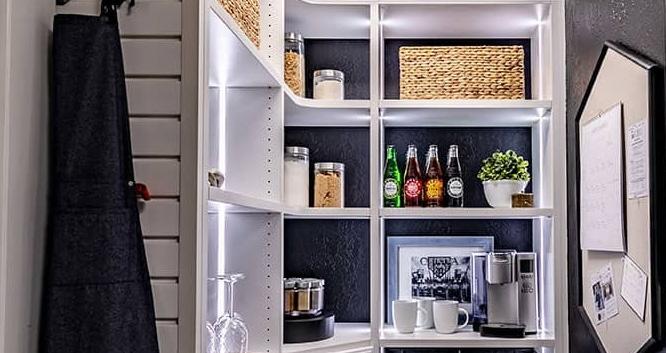
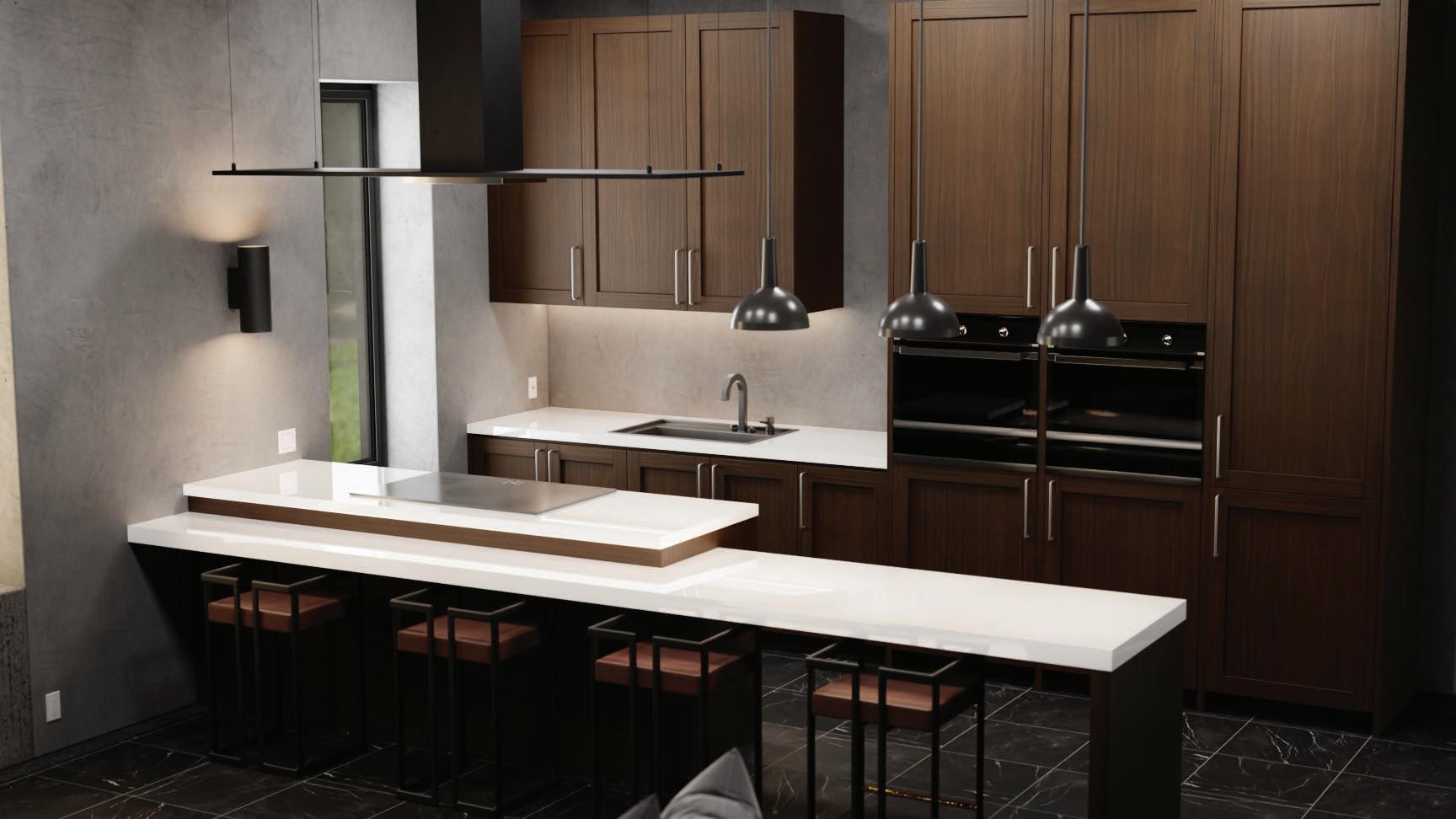
RAUVISIO NOIR LINE PHOTOS COURTESY OF REHAU
the
QuickSnap™ connectors make it easy to assemble closets in less time and without tools
Quick installation—screw right into studs, no additional hanging system needed
Choose from pre-designed modular solutions or build a personalized solution mixing and matching sizes, styles, and storage types (rods, shelves, drawers)
Design with Cyncly/2020 design software or use the 17squares design software on our website*
https://delivr.com/2cszr
*Must
Closet Manufacturing Trends: Efficiency in Production
BY JENNIFER G. WILLIAMS
How CNC, software, automation and smarter workflows are reshaping custom storage
Closet manufacturing has become one of the clearest examples of how customization and production efficiency can coexist. What once required manual layout, multiple machines and significant installer adjustment is increasingly moving through connected digital workflows — where design software, CNC machining, labeling, drilling, edgebanding and installation planning work as a more unified system.
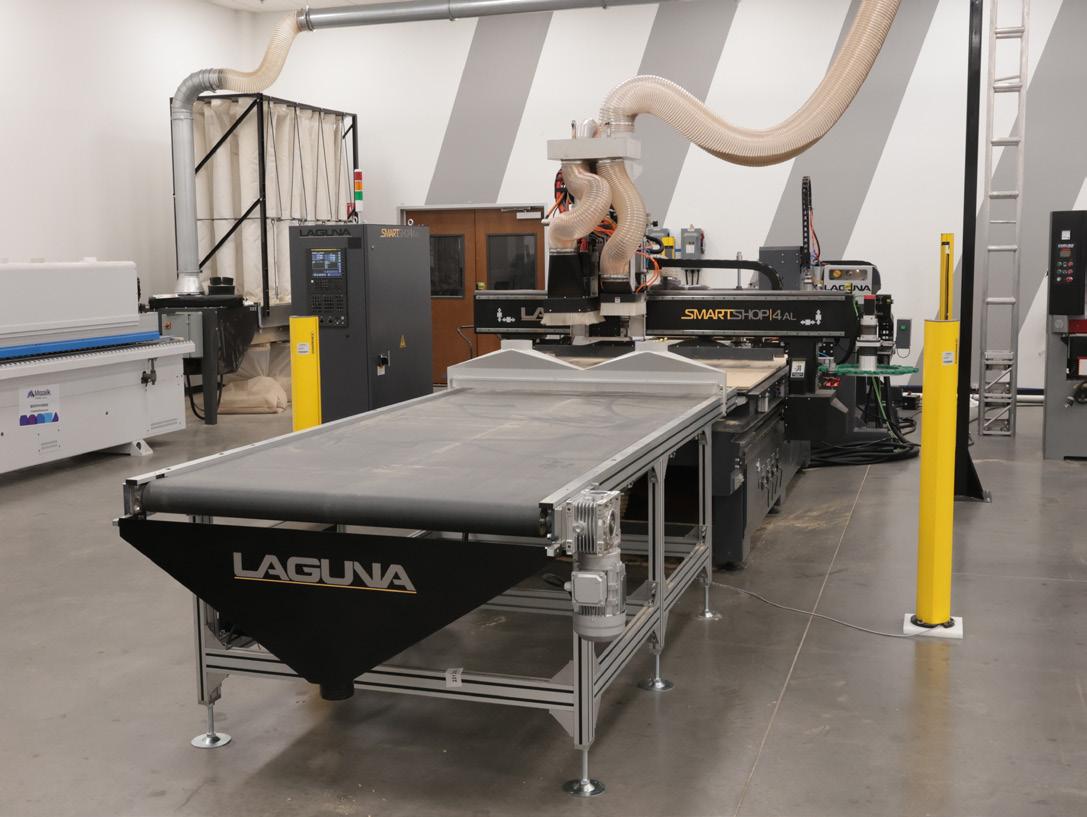
“Modern CNC technology has fundamentally transformed closet production by consolidating what used to be multi-machine workflows into a single, seamless process,” says John Carrasco, Sales Manager with Laguna Tools. “Fabricators can cut, drill and shape panels in sequence on one machine — eliminating material transfers, reducing setup time and enabling automated drilling patterns that execute with repeatable precision.”
That shift from manual interpretation to machine-driven consistency is changing the economics of closet production. Chip Martin, Senior Product Manager at Hexagon’s Production Software Division, says closet manufacturing has moved “from drawing-led processes to rule-based production,” where design systems automatically generate drill -
ing patterns, machining operations and hardware placement.
“This removes interpretation on the shop floor and ensures consistency across every job,” Martin says. “As a result, fully customized layouts can move through CNC with the same speed and reliability as standard products.”
For shops in the field, that speed has become difficult to imagine living without. Connor Gast with Beyond Storage in
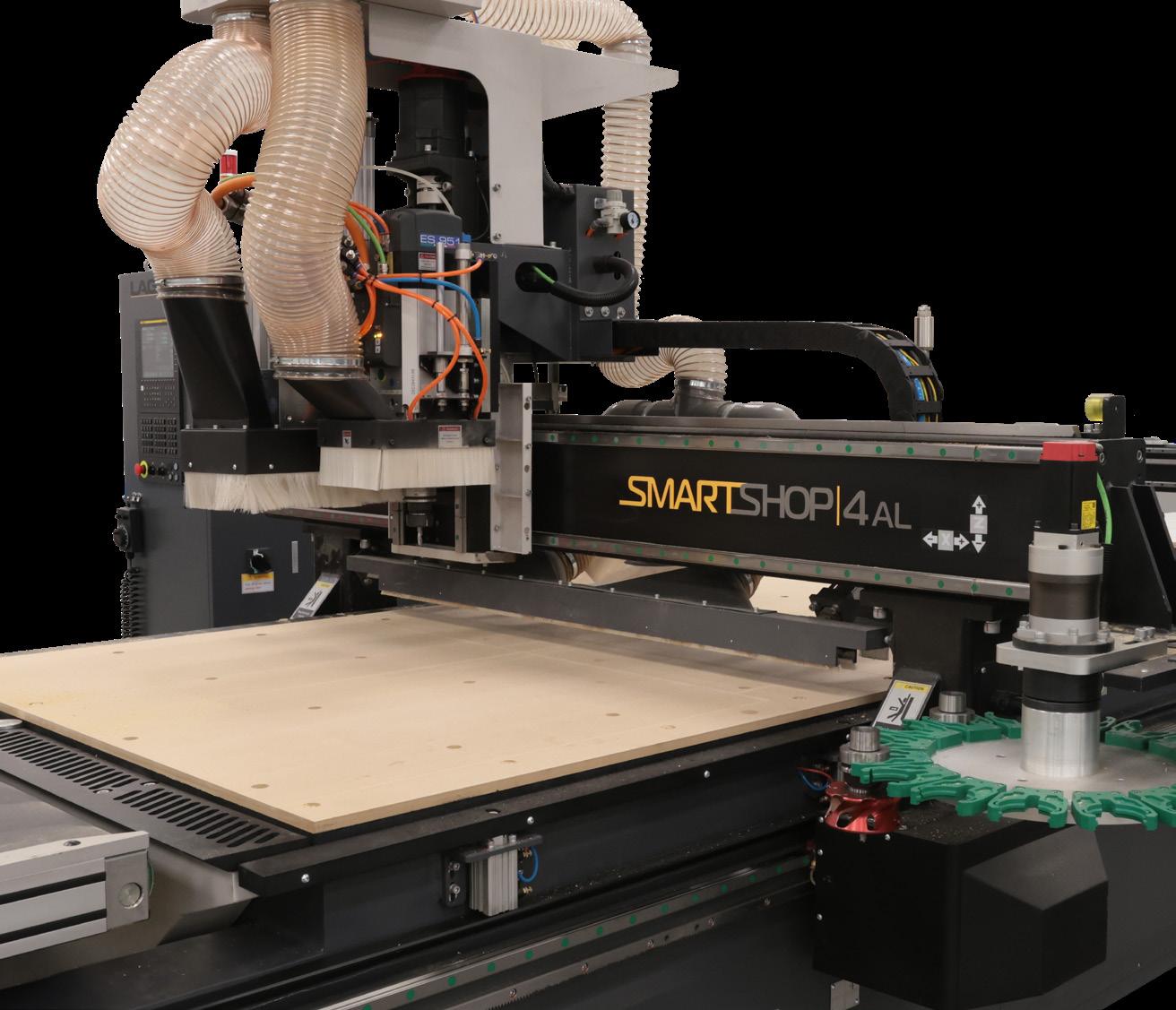
Hexagon's Chip Martin Laguna's SmartShop 4 Auto Loader, engineered to dramatically enhance speed and efficiency in cabinet making
St. Louis, Missouri, a customer of Mid American Woodworking Machinery, says, “Programming jobs for our CNC is a cakewalk, and with the speed in which they operate, it is hard to imagine another production method.”
Customization Through Standardization
One of the biggest production shifts is the use of standardized components behind highly customized finished designs. Standard panel sizes, modular parts libraries and pre-drilled systems allow fabricators to move quickly from job to job while still delivering tailored storage solutions.
“Manufacturers are standardizing what sits behind the product, including panel sizes, hardware references and modular carcass structures, while allowing flexibility in the final configuration,” Martin says.
Dylan Bayliss, Owner of Mid American Woodworking Machinery, says many closet manufacturers are still evaluating the best balance between traditional cell-based manufacturing — such as saw, band and drill workflows — and nested-based CNC production. “Advancements in design software and part optimization have resulted in a shift to nest-based manufacturing in some facilities,” Bayliss says, “but there continues to be an argument for the traditional cell-based over the nested-based CNC cell.”
Material utilization remains a key part of the equation. Roy Valentine of Techno CNC notes that standardized modular
widths and pre-drilled patterns help manufacturers mass-produce interchangeable components while still fitting custom floor plans. “Software-driven panel optimization ensures maximum material yield, allowing shops to scale volume without a proportional increase in waste or labor costs,” Valentine says.
26_002728_Surface_and_Panel_Summer
Uline
Uline’s cushioning gives you the best seat in the house. And with tons of products always in stock, you’ll love our variety. Order by 6 PM for same day shipping. Best service, products and selection – experience the difference! Please call 1-800-295-5510 or visit uline.com
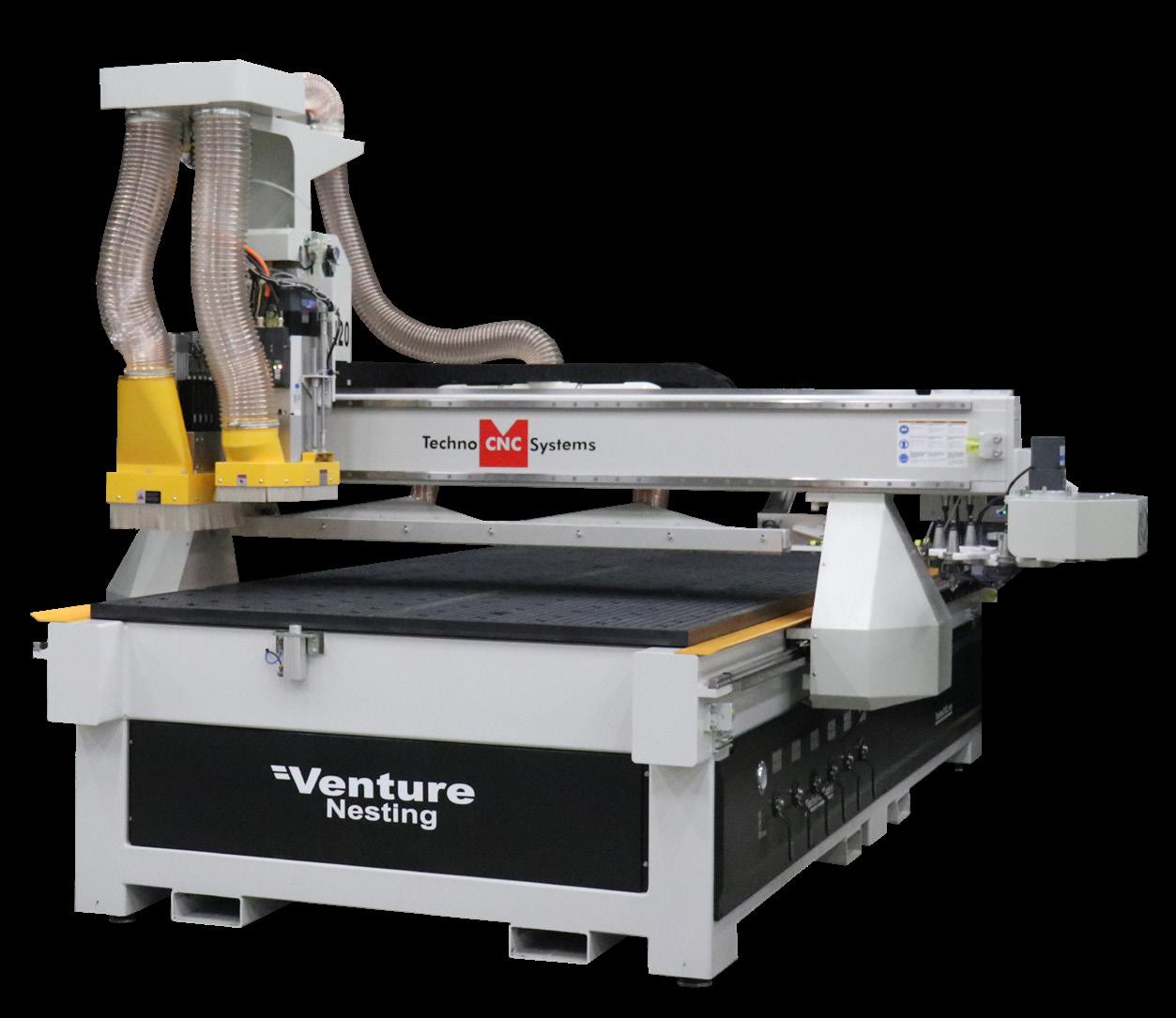
Techno CNC Systems Venture Nesting CNC Router, designed for highproduction shops to cut laminated plywood, melamine and MDF
Finished Panels, Faster Throughput
Closet systems depend heavily on engineered panels such as TFL, HPL, MDF and other decorative surfaces that deliver consistency, durability and design flexibility.
“TFL has become a preferred material because it delivers a consistent, finished surface straight off the CNC, eliminating additional finishing steps and supporting faster throughput,” Martin says.
Carrasco adds that CNC technology is helping fabricators process these decorative panels with greater confidence. “Fabricators can confidently run high-finish decorative panels without secondary sanding or edge cleanup, keeping aesthetic quality high while keeping production throughput equally high,” he says.
For Gast, engineered boards have transformed both production and customer choice. “Engineered boards are a blessing on our industry,” he says. “They are far less prone to being damaged both in shipping and manufacturing compared to hardwoods and veneers, and the seemingly limitless options to choose from are great for our customers as well.”
Connecting Design to the Machine
As software improves, closet production is moving closer to true screen-to-machine manufacturing. Duane Marrett, Vice President of Marketing at Thermwood Corporation, says digital design tools now allow teams to create 3D closet models for customer approval before sending instructions directly to the CNC router.
“This allows designers to be more creative and the customer can see exactly what they’re getting,” Marrett says. “Once the design is approved, the software sends the instructions directly to the Thermwood CNC router. This eliminates the errors that can happen when transferring information manually.”
Jason Howell, CEO of Lockdowel, sees similar gains when connector systems are integrated into industry software. “By having systems like Lockdowel fully integrated in industry-wide software packages, closet manufacturers can quickly design and build closet systems and send the machining data straight to their machines for cutting,” Howell says.
That software-to-machine connection also supports flatpack production, which continues to gain momentum in closet manufacturing. Howell says connector systems can make flatpack workflows more efficient because components do not require
Laguna Tools' John Carrasco
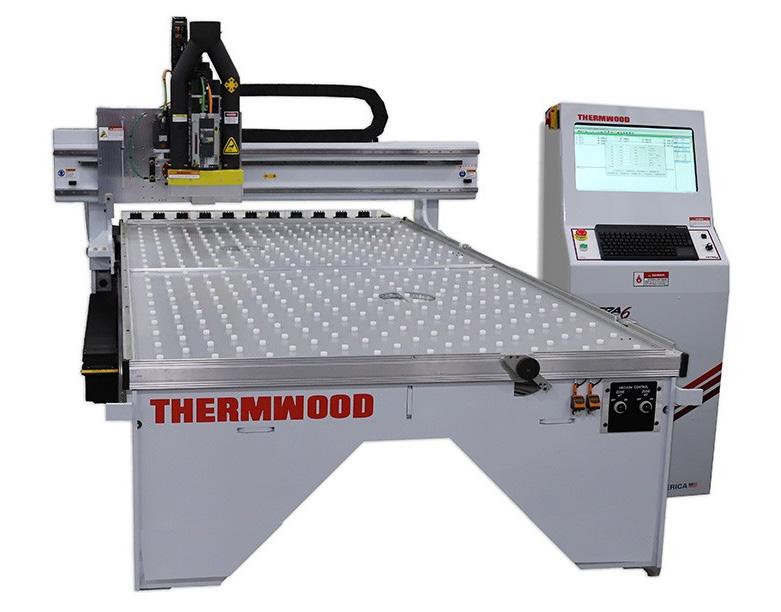
The Thermwood Model 43 3-axis CNC Router with a 5'x10' table is designed for nesting-based production of custom cabinets and is operated using the Thermwood SuperControl
traditional case clamps. “The components can be flat-packed and carted to anywhere in the shop for assembly—or straight onto a truck for assembly on-site,” he says.
The High-Volume Challenge
As production scales, the challenge becomes less about whether shops can machine parts quickly and more about whether they can maintain flow, accuracy and organization.
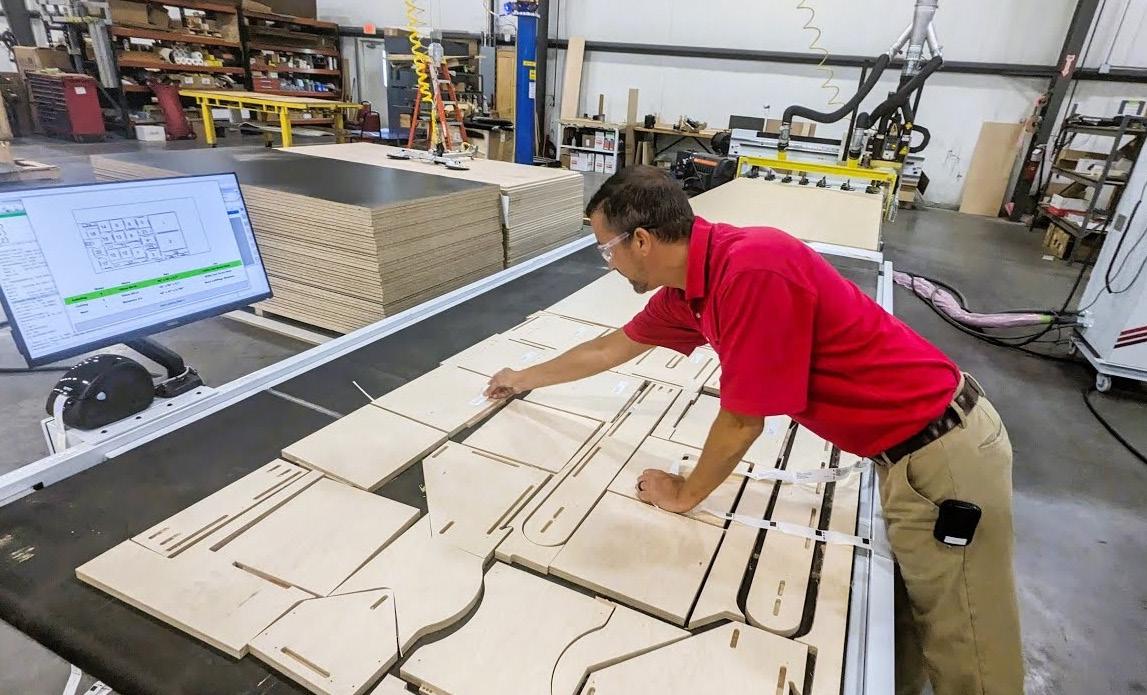
“The primary challenge in high-volume production is managing the ‘parts sorting’ chaos and secondary operations like edgebanding,” Valentine says. “Innovations like automated labeling at the CNC stage and integrated CAD/CAM software streamline the workflow, ensuring every shelf and partition is tracked and ready for rapid assembly.”
Carrasco points to consistency as the central issue. “The biggest challenge in high-volume closet production is maintaining accuracy and consistency across hundreds of nearly identical but not identical parts,” he says.
Labor remains another major constraint. “Labor shortages are certainly our biggest issue when it comes to manufacturing at high volume,” Gast says. “Our shop can manufacture easily twice as much as our installation crew can handle in one day.”
That reality is pushing shops to think beyond cutting speed and focus on the entire production-to-installation chain. Gast says even a small amount of additional programming can save significant time in the field. “When we spend an extra five minutes programming more specific patterns to a job’s needs, it often saves our installers 20-plus minutes on their installation,” he says.
What Comes Next
The future of closet production is moving toward more automation, more integrated data and more features machined into panels before assembly.
Valentine says the industry is shifting toward “smart closets” with integrated LED lighting channels and automated hardware insertion directly on the CNC. Howell sees flat-pack systems as one of the hottest trends, noting that Lockdowel is “integrated with multiple machinery providers for automated hardware insertion.”
Bayliss expects the next wave to be driven by AI, ERP, MES and Industry 4.0 communication tools. “The industry is still in the early stages of the automation revolution,” he says. “Factory 2.0 is quickly being surpassed as companies are looking to migrate to Industry 4.0 and using the power of AI to facilitate this change.”
For closet manufacturers, the direction is clear: efficiency is no longer just about faster machines. It is about connected systems, cleaner data, smarter materials, fewer manual touchpoints and workflows designed to help both the shop and the installer succeed. S P
Five Efficiency Drivers in Closet Manufacturing
1. Screen-to-Machine Workflows
Digital designs can now generate CNC-ready cut lists, drilling patterns and machining instructions, reducing manual programming and shop-floor interpretation.
2. Standardized Components
Modular panel sizes, pre-drilled systems and parametric part libraries allow shops to scale production while still offering custom layouts.
3. Automated Labeling
Modular panel sizes, pre-drilled systems and parametric part libraries allow shops to scale production while still offering custom layouts.
4. Flat-Pack Connector Systems
Invisible connectors and automated hardware insertion support faster assembly, reduced freight volume and more flexible installation options.
5. Integrated Feature Machining
Lighting channels, cable management, drawer patterns and specialty boring can be machined directly into panels, reducing installer labor and improving consistency.
Techno CNC's Roy Valentine
Lighting the Surface
How Integrated Illumination Is Transforming Cabinetry, Closets, and Compact Interiors
BY JENNIFER G. WILLIAMS
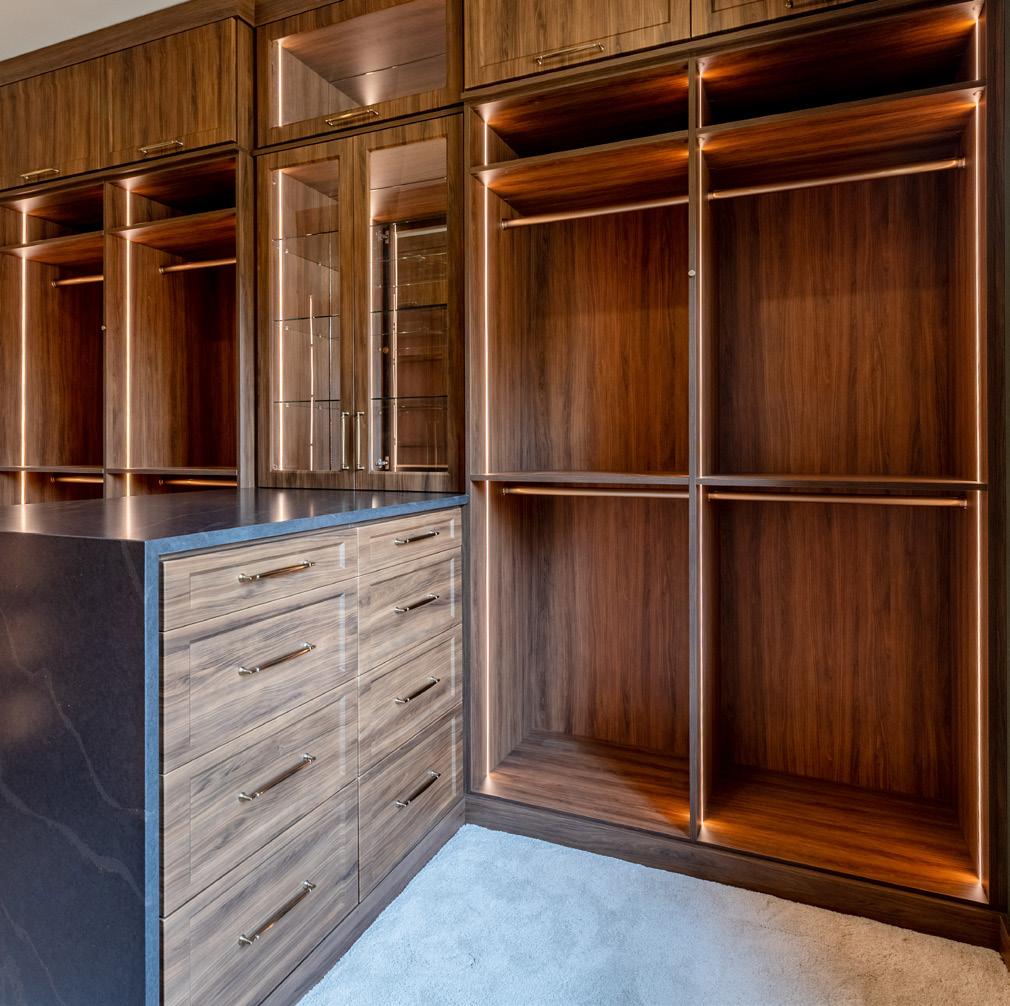
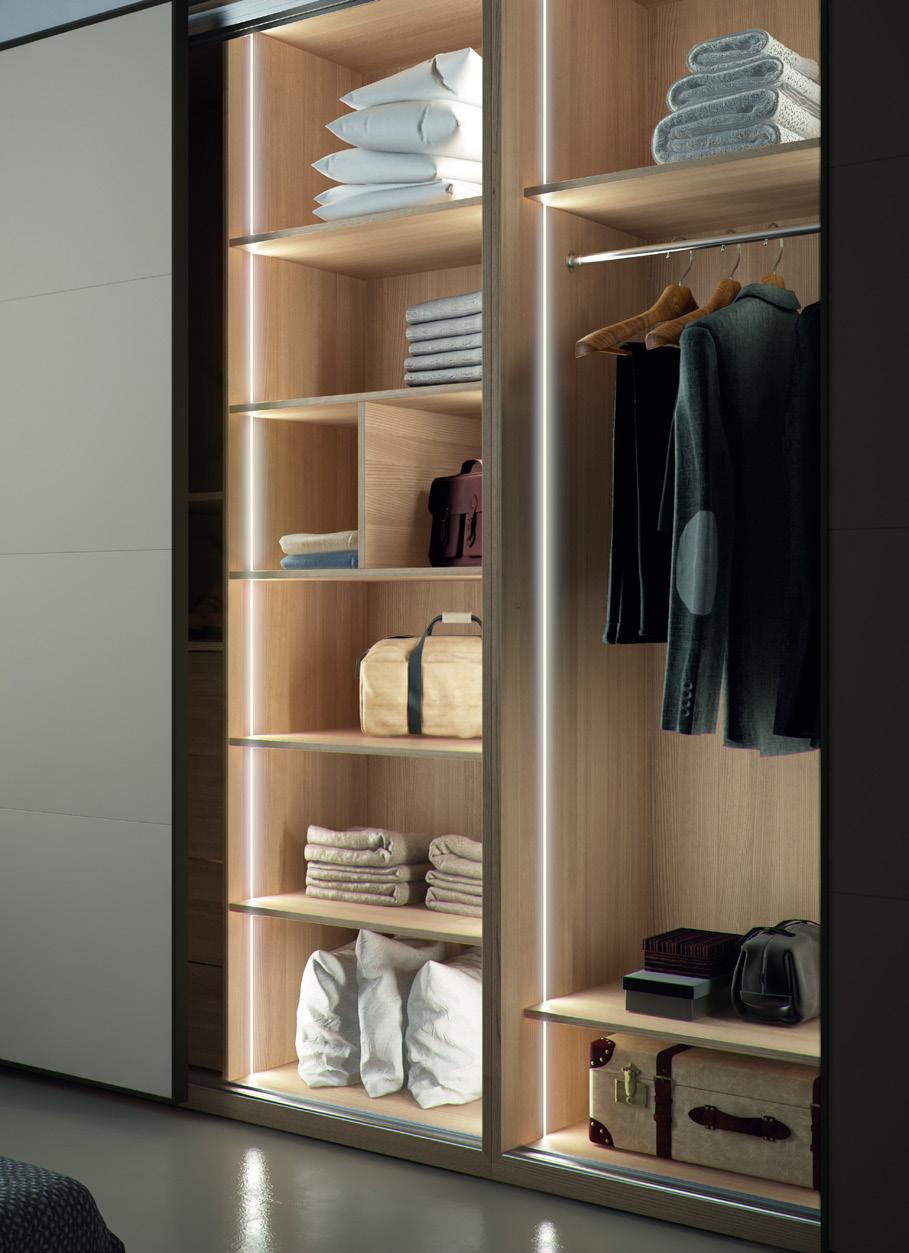
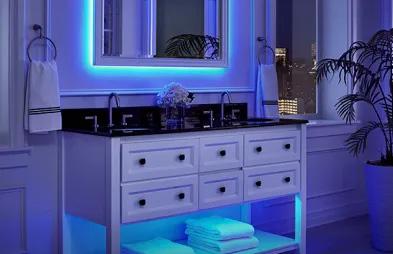
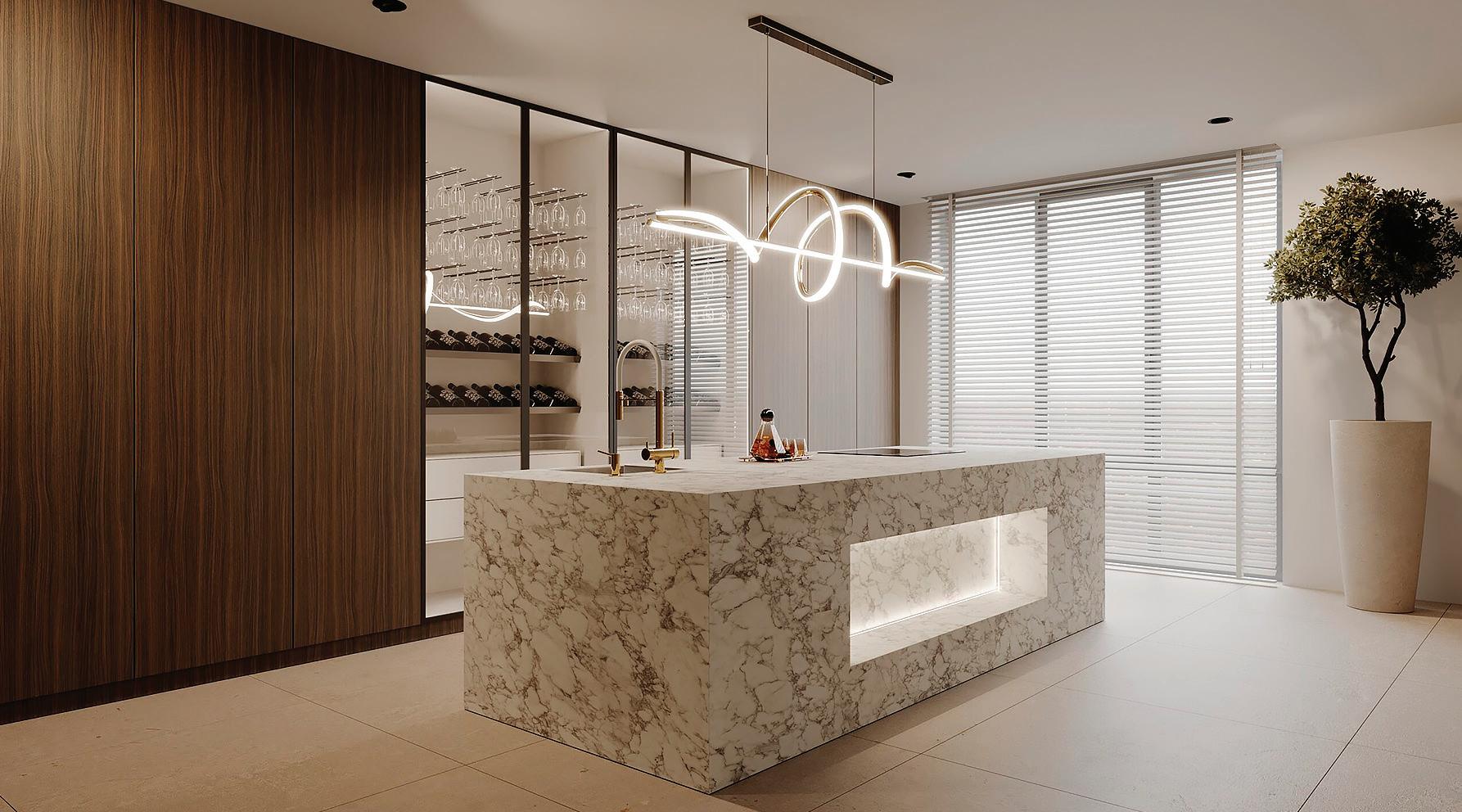
Lighting is no longer an afterthought in cabinetry and panel design — it’s becoming a defining layer of both function and experience. Across closets, kitchens, and architectural millwork, integrated lighting is evolving from simple accent features into fully embedded systems that enhance usability, elevate design, and connect to broader smart environments.
Driven by advancements in LED technology, low-voltage systems, and fabrication-friendly components, lighting is now being designed into panel systems from the start; reshaping how fabricators, designers, and manufacturers approach storage and surface applications.
From Accent to Expectation
The role of lighting in cabinetry has shifted dramatically over the past decade. What was once considered a premium addition is now quickly becoming standard.
“Five years ago, integrated cabinet and closet lighting was just starting to shake off the negative image of being seen as a nuisance,” says Keith Clark, National Sales Specialist at Hardware Resources. “As time has progressed, there has been a real awak-
ening to both the functional and aesthetic benefits of lighting that goes beyond the typical top-down ceiling approach.”
That shift is echoed across the industry. “What was once considered an upgrade is now viewed as a standard feature in mid to high-end cabinetry and closet systems,” says Rafael Anuel, Director of Products for Richelieu. “Consumers expect better visibility, improved aesthetics, and a more premium experience.”
Lighting is also becoming more central to the overall design story. “Integrated lighting has evolved from a decorative accent
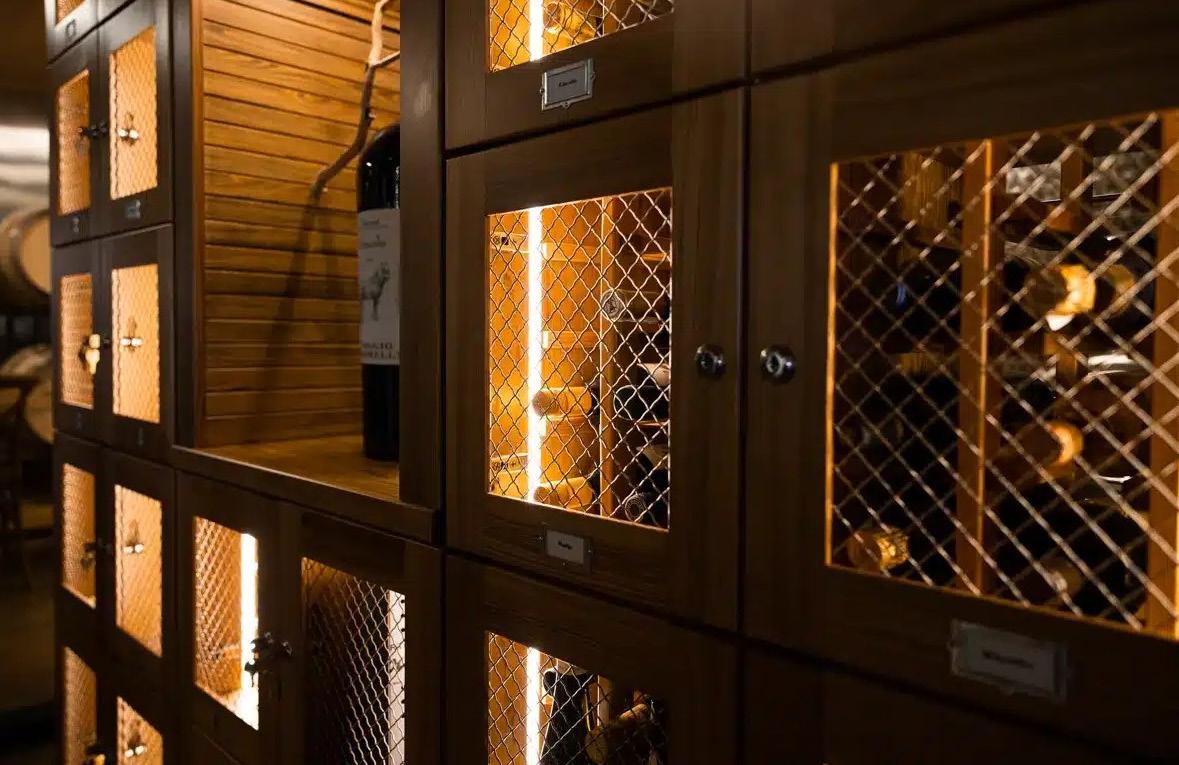
Kessick Wine Cellars used Häfele LOOX to create these lighted wine lockers used by patrons to store their own wine at Trappe Door in Greenville, South Carolina. Kessick designs and manufactures custom wine cabinetry and contemporary wine storage systems and wholesales exclusively to the design and build community
to an essential layer of overall room lighting,” says Kristen Crowell, Lighting Program Manager at Häfele. “Clients now expect lighting to enhance both function and atmosphere… once customers experience the difference, illuminated cabinetry feels less like an option and more like a standard.”
This evolution has blurred traditional boundaries. Cabinet lighting is no longer separate from room lighting — it is now part of a layered, integrated lighting strategy.
Designing Light into the Panel
As demand grows, innovations are making lighting easier — and more seamless — for fabricators to integrate directly into panel systems.
times have gone down, making the process fast and reliable.”
One of the biggest shifts is the move toward simplified, low-profile lighting solutions. “Modular plug-and-play wiring and low-profile systems have reduced installation time and improved consistency,” Anuel explains.
Flexible lighting technologies are playing a key role. “Siliconeencased lighting has been a new driving force,” Clark says. “Recessed lighting that comes on a reel and can be cut to size… fits cleanly into a groove, often with a smaller profile.”
Crowell points to advancements that are improving both performance and usability. “Advancements like COB LED technology, 24V systems, and simplified component designs have made lighting more seamless, efficient, and easier to integrate into cabinetry and panels,” she says. “These solutions eliminate visible hotspots, reduce heat and materials, and allow lighting in places that were previously impractical.”
These innovations are enabling lighting to move beyond simple under-cabinet applications into more integrated uses:
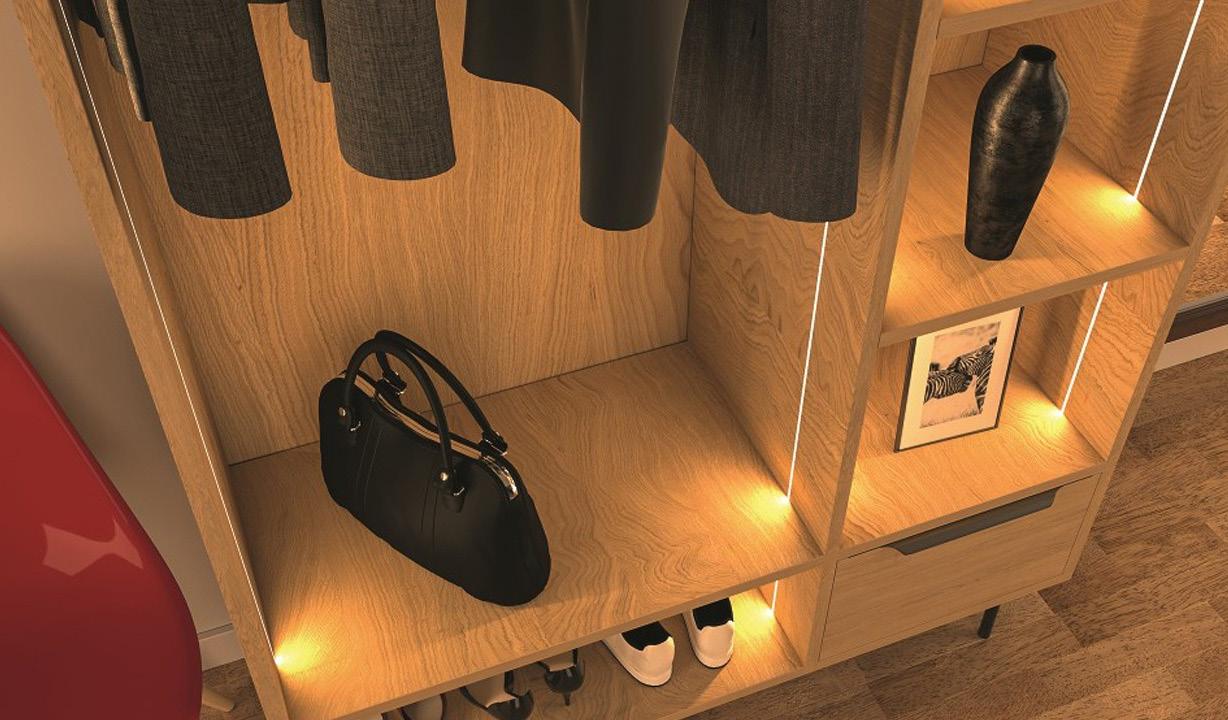
• Vertical panel lighting
• Edge-lit shelving
• Interior cabinet illumination
• Backlit surfaces
• Integrated wardrobe components
The result is cleaner aesthetics and greater flexibility for designers and fabricators alike.
The Power of Low Voltage
Low-voltage lighting systems (typically 12V or 24V) have proven to be a major catalyst for integration.
“Low-voltage systems have expanded what designers and fabricators can achieve by making installation safer and far less dependent on licensed electrical work,” Anuel says. “Installation
Clark emphasizes the design benefits: “The greatest impact of low-voltage lighting systems comes in the form of minimalism. They fit into smaller, less invasive housings and require smaller wiring that hides much easier.”
Crowell adds that low-voltage systems are opening up entirely new applications. “Low-voltage systems allow lighting to be integrated almost anywhere — inside drawers, under cabinets, in toe kicks, niches, and shelving — dramatically enhancing both function and emotional impact,” she says.
This smaller footprint is particularly valuable in compact living environments, where every inch matters.
From an energy standpoint, the benefits are significant. “There is not an industry in the world that has done more for energy conservation than the lighting industry,” says Tom Butters, Executive Director of the National Lighting Bureau. “We’ve gone from incandescent at 17 lumens per watt to LEDs often exceeding 100 lumens per watt.”
“Heat dissipation has always, and remains, the biggest issue with integrated LEDs,” Butters explains. “Improper dissipation causes LEDs to lose output, shorten life, and trigger color shift.”
Even as LED lifespans improve, system performance depends on the entire assembly, not just the light source. “An LED may claim 100,000 hours,” Butters notes, “but the driver may only be rated for 12,000 to 25,000 hours.”
This underscores the importance of designing lighting systems holistically, ensuring that heat management, drivers, and accessibility are all considered early in the design process.
HAFELE
Lighting Meets Smart Living
As lighting becomes more integrated physically, it is also becoming more connected digitally.
“Smart home integration is becoming a major influence in how lighting is designed for storage and millwork,” Anuel says. Homeowners increasingly expect:
• App-based control
• Voice activation
• Automated lighting scenes
• Motion-triggered illumination
Clark adds that designers are now thinking beyond aesthetics: “Lighting manufacturers who provide smart-home compatible solutions open up entirely new possibilities … lighting that is as intelligent as it is pretty to look at.”
Crowell highlights the experiential shift. “Smart-home integration allows users to interact with lighting intuitively, adjusting it based on time of day, activity, or mood,” she says. “Cabinet and furniture lighting is increasingly connected to whole-home systems, creating a seamless and personalized experience.”
Even broader technological shifts are accelerating adoption. “Smart-home integration is moving from early adopters into the early majority,” Butters notes, adding that AI-driven lighting control is advancing rapidly.
The Future: Invisible, Intelligent, and Expected
Looking ahead, integrated lighting is approaching a tipping
point — one where it becomes an expected feature rather than a differentiator.
Crowell sees that shift clearly. “Integrated lighting is nearing a tipping point where illuminated cabinets and drawers will be the expectation, not the exception — much like lighting inside a refrigerator today,” she says.
Anuel sees continued growth in automation and human-centric lighting. “We’ll see greater adoption of tunable white and circadianfriendly lighting, along with more sensors and automation,” he says.
Clark emphasizes usability: “The industry will be seeking ways to make lighting integration even easier and more approachable.” < CONTINUED FROM PAGE 17
“The future of lighting is expecting to never open a drawer or cabinet without illumination.”
— KRISTEN CROWELL, HÄFELE
RICHELIEU
And at the technical frontier, lighting may become even more personalized. Butters predicts future systems that allow users to fine-tune spectral output. “A homeowner could have a 2700K appearance but adjust specific wavelengths that impact circadian rhythms,” he says.
Across all perspectives, one theme is clear: lighting is becoming inseparable from the surfaces it inhabits.
Light as a Core Design Layer
As panel systems evolve, lighting is no longer a separate discipline—it is a core component of design, fabrication, and the enduser experience.
“Those who embrace the aesthetic and functional benefits that integrated lighting creates will be well-positioned as the inevitable trend continues,” says Crowell.
For fabricators, designers, and manufacturers, the message is straightforward: treat lighting as an integral part of surface design, and you’ll be ready to deliver the performance, polish, and person
Top 5 Lighting Trends in Cabinetry & Closets
1. Lighting as Standard, Not Upgrade
Integrated lighting is quickly becoming expected in mid- to high-end cabinetry and storage systems.
2. Flexible Silicone & COB LEDs
New strip technologies enable seamless, dot-free illumination in tighter, shallower spaces.
3. Low-Voltage Simplicity
12V and 24V systems reduce installation complexity while enabling sensors, dimming, and automation.
4. Smart & Connected Lighting
Voice control, motion sensors, and circadian lighting are becoming key features in modern homes.
5. Hidden, Minimal Design
Lighting systems are shrinking in size while increasing in impact—delivering clean, invisible integration.
Functional Hardware:
Designing Smarter Storage for Urban Living
BY JENNIFER G. WILLIAMS
As cabinetry design evolves to meet the demands of modern living, performance is being measured in new ways.
It’s no longer just about storage capacity, but rather how smoothly systems operate, how long materials last, and how efficiently components come together behind the scenes. From concealed slides to precision connectors, functional hardware is playing a central role in shaping storage solutions that are streamlined, durable and adaptable to a wide range of applications.
Maximizing Access in Minimal Space
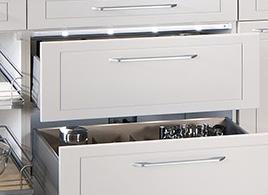
In high-density cabinetry, maximizing usable space is essential. Full-extension drawer systems and concealed hardware are increasingly becoming the standard, allowing fabricators to deliver both performance and clean aesthetics.
“Full-extension undermount slides maximize drawer depth and width while hiding hardware for sleek, handleless looks,” said Benjamin Bainter, Director of Functional Hardware Management at Hardware Resources. “Even in smaller footprints, starting full-extension slides at shorter lengths allows easy access to the back of the drawer.”
This ability to maintain accessibility — even in tighter dimensions — is key to improving usability in compact kitchens and closets. Soft-close
functionality, once considered a premium feature, is now expected, contributing to both longevity and a more refined user experience.
At the same time, hardware is playing a growing role in supporting modern design preferences. Handleless cabinetry, driven by both aesthetics and space-saving needs, is gaining traction, supported by innovations including push-to-open systems that eliminate protruding elements and streamline front surfaces.
Durability Meets Daily Use
While hardware enables movement and access, surface materials must stand up to the realities of everyday life, especially in high-turnover environments like multi-family housing.
High-performance materials such as high-pressure laminate (HPL) and compact laminates are increasingly replacing traditional options, offering improved resistance to scratches, moisture and wear.
“These materials outperform traditional melamine or unfinished wood in high-traffic or humid environments,” Bainter explained. “They reduce long-term maintenance and increase the lifespan of surfaces, allowing kitchens and closets to match the durability of the hardware itself.”
This alignment between surface durability and hardware longevity is a critical shift. In urban living environments, where spaces see frequent use and turnover, consistency in performance across all components ensures a better long-term return on investment for both fabricators and property owners.
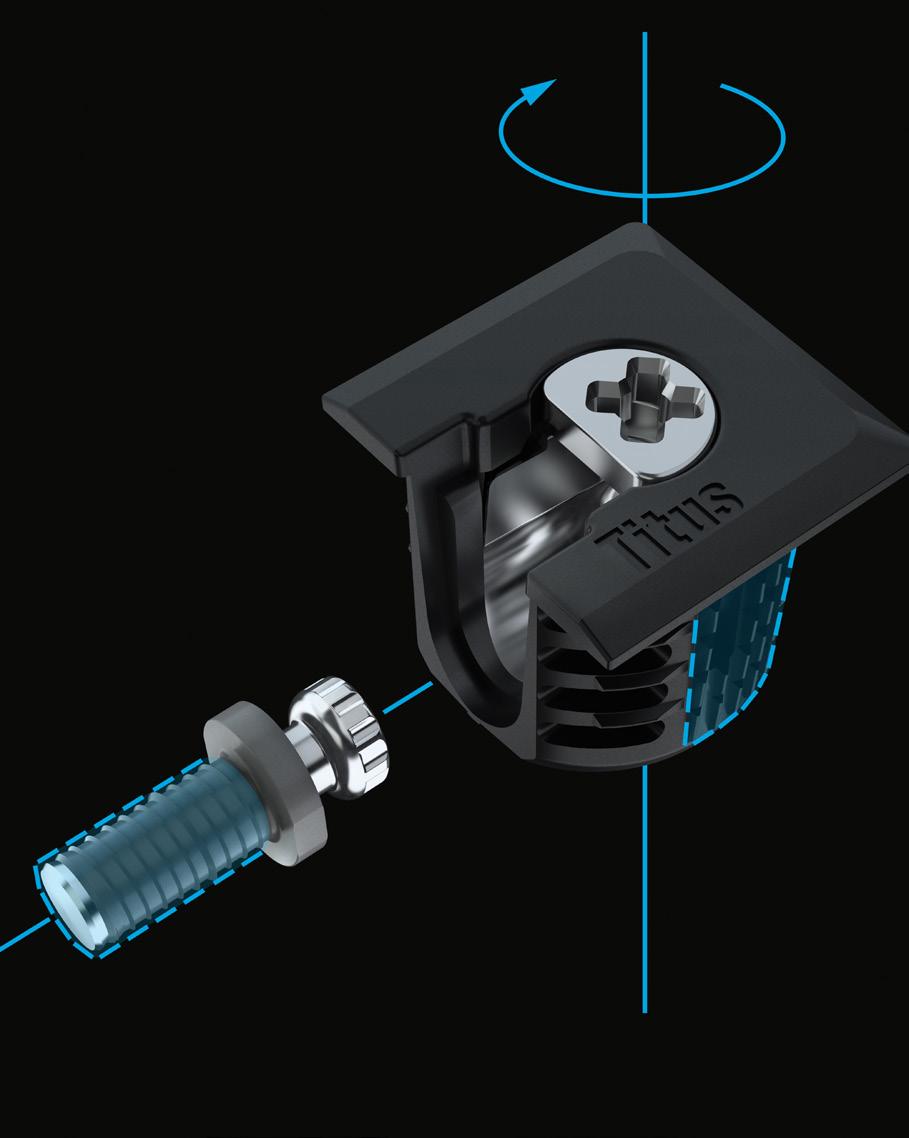
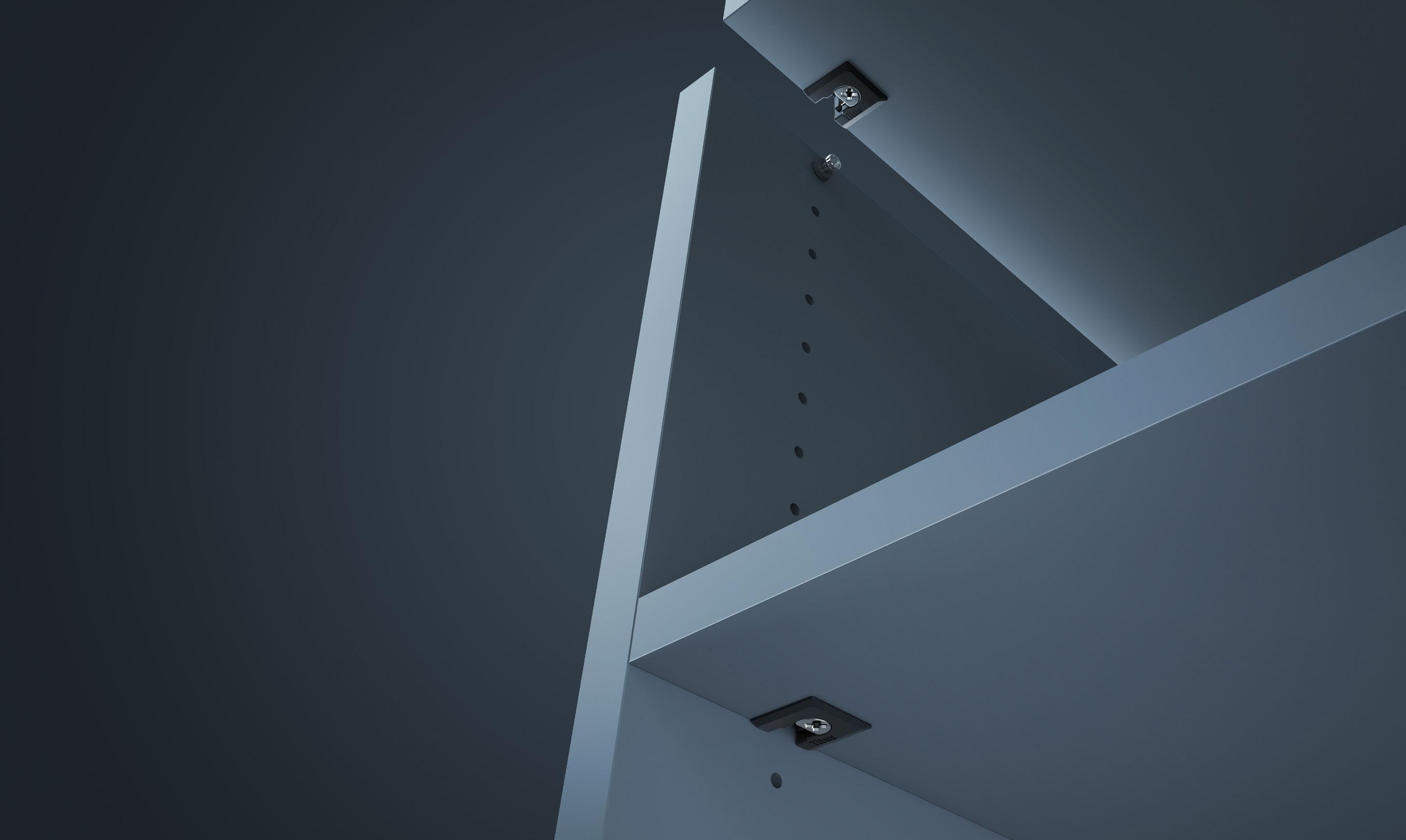
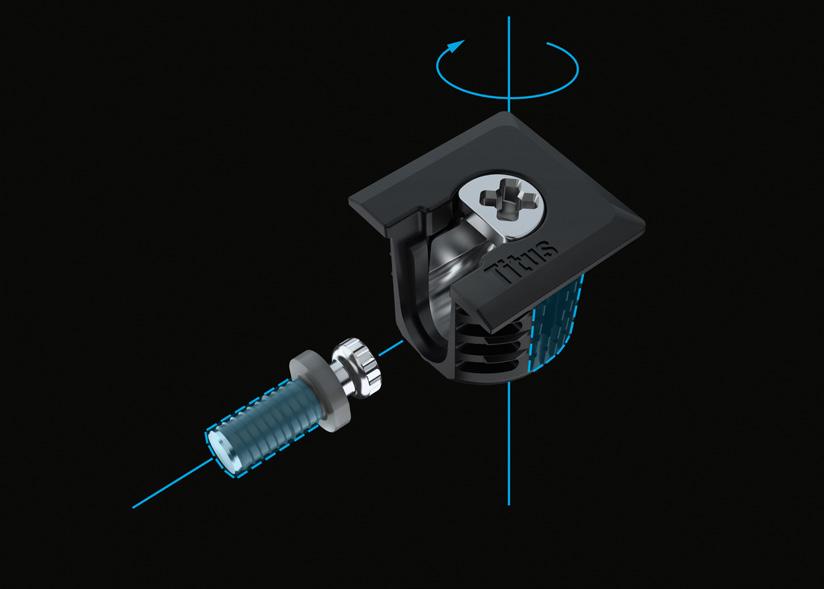
Titus System 6 represents the second generation of face-boring connectors for fast and flexible cabinet assembly
Precision at Smaller Scales
As cabinetry becomes more compact and customized, fabrication challenges become more pronounced. Smaller components leave less room for error, and even minor inconsistencies can affect alignment, performance and overall fit.
“The biggest challenge is maintaining consistent precision and alignment at smaller scales,” noted Frank Fahnenschmidt, Product & Marketing Director at Titus. “Even small deviations can impact hardware performance and assembly.”
To address this, fabricators are increasingly turning to pre-engineered systems that simplify installation while improving repeatability. Precision drilling patterns, dowel-based components and tool-less connectors are helping shops streamline production and reduce variability.
Hardware Resources, for example, supports this approach with hinges, plates and slide brackets designed for CNC predrilling and pressin installation — improving both accuracy and efficiency on the shop floor.
Similarly, Titus emphasizes connector systems that ensure consistent joint strength regardless of operator or equipment variability. These solutions help maintain structural integrity while enabling faster assembly — an important advantage in both custom and high-volume production environments.
The Role of CNC and Edgebanding
Advancements in CNC machining and edgebanding technologies have been instrumental in enabling this level of precision. With exact, repeatable placement of hardware interfaces, fabricators can achieve tighter tolerances and more reliable assembly across modular systems.
“CNC machining allows for exact placement of hardware interfaces, which is essential for connectors and hinge systems to perform optimally,” Fahnenschmidt said. “Combined with advanced edgebanding, manufacturers can deliver clean, precise components that assemble quickly and perform reliably over time.”
These technologies not only improve accuracy but also support the growing demand for modularity. As storage systems become more adaptable — designed to be reconfigured, expanded or relocated — precision manufacturing ensures that components fit seamlessly, even across multiple iterations.
Smarter Hardware Integration
Beyond individual components, the industry is seeing a clear shift toward integrated hardware systems that combine multiple functions into a single solution. This trend is particularly important in smaller spaces, where reducing part counts and simplifying installation can significantly improve both performance and efficiency.
“The trend is toward integrated, multi-functional hardware that reduces installation steps while maximizing performance in limited space,” Fahnenschmidt said.
For example, connector systems that incorporate alignment, fastening and adjustment capabilities into one compact unit allow fabricators to achieve stronger, more precise assemblies with fewer components. Likewise, compact hinges, restrictor clips and spacesaving slide systems enable greater functionality within tighter cabinetry footprints.
Bainter points to innovations such as 90-degree restrictor clips and reduced side-spacing slides as practical solutions for navigating tight cabinet-to-door clearances while maintaining usability. These seemingly small adjustments can make a significant difference in how a space functions day to day.
Flexibility for Evolving Spaces
Perhaps one of the most defining characteristics of modern urban storage is flexibility. As living needs change, storage systems must be able to adapt — whether through reconfiguration, expansion or simple upgrades.
Modular hardware systems are playing a central role in enabling this adaptability. Connector technologies, in particular, allow for fast assembly and disassembly, making it easier to modify layouts without compromising structural integrity.
“High-density storage systems are inherently modular, allowing for easy relocation and expansion,” Fahnenschmidt said. “Pre-engineered connectors enable fast, precise assembly while maintaining longterm reliability.”
This adaptability aligns with broader trends in urban living, where residents expect spaces to evolve with their needs. For fabricators, it presents an opportunity to deliver solutions that go beyond static cabinetry, offering systems that can grow and change over time.
Designing for Urban Functionality
As the demands of urban living continue to shape the built environment, functional hardware is emerging as a key driver of innovation in storage design. From maximizing access in tight spaces to enabling precision fabrication and long-term durability, today’s hardware solutions are helping fabricators deliver smarter, more efficient systems.
The result is a new generation of cabinetry and storage where performance, flexibility and design work together seamlessly.
In this landscape, urban functionality is no longer just about fitting more into less space. It’s about creating environments that feel intuitive, efficient and enduring; where every detail, from the smallest connector to the largest surface, contributes to a better everyday experience. S P
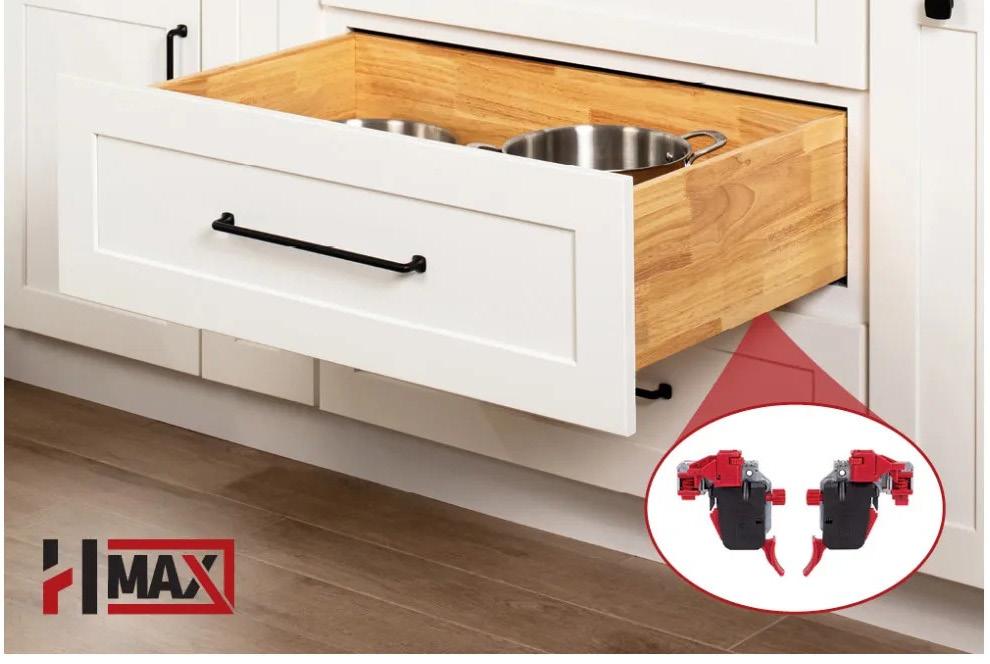
Hardware Resources' H-Max Slide Clips for USMAX2 and USMAX2S Slides
Elevating Organization
Today’s storage spaces are doing more than simply holding belongings — they are being thoughtfully designed to support how we live each day. From walk-in closets to reimagined utility rooms, the focus has shifted toward systems that balance efficiency, accessibility and aesthetics. Through precise layouts, integrated lighting and tailored components, four of today's top designers share how they are transforming storage into highly organized environments where every detail has purpose, and every space works smarter.
Natasha Shtapauk, Red Dot Awardwinning designer, Managing Director & Brand Ambassador for BauTeam out of
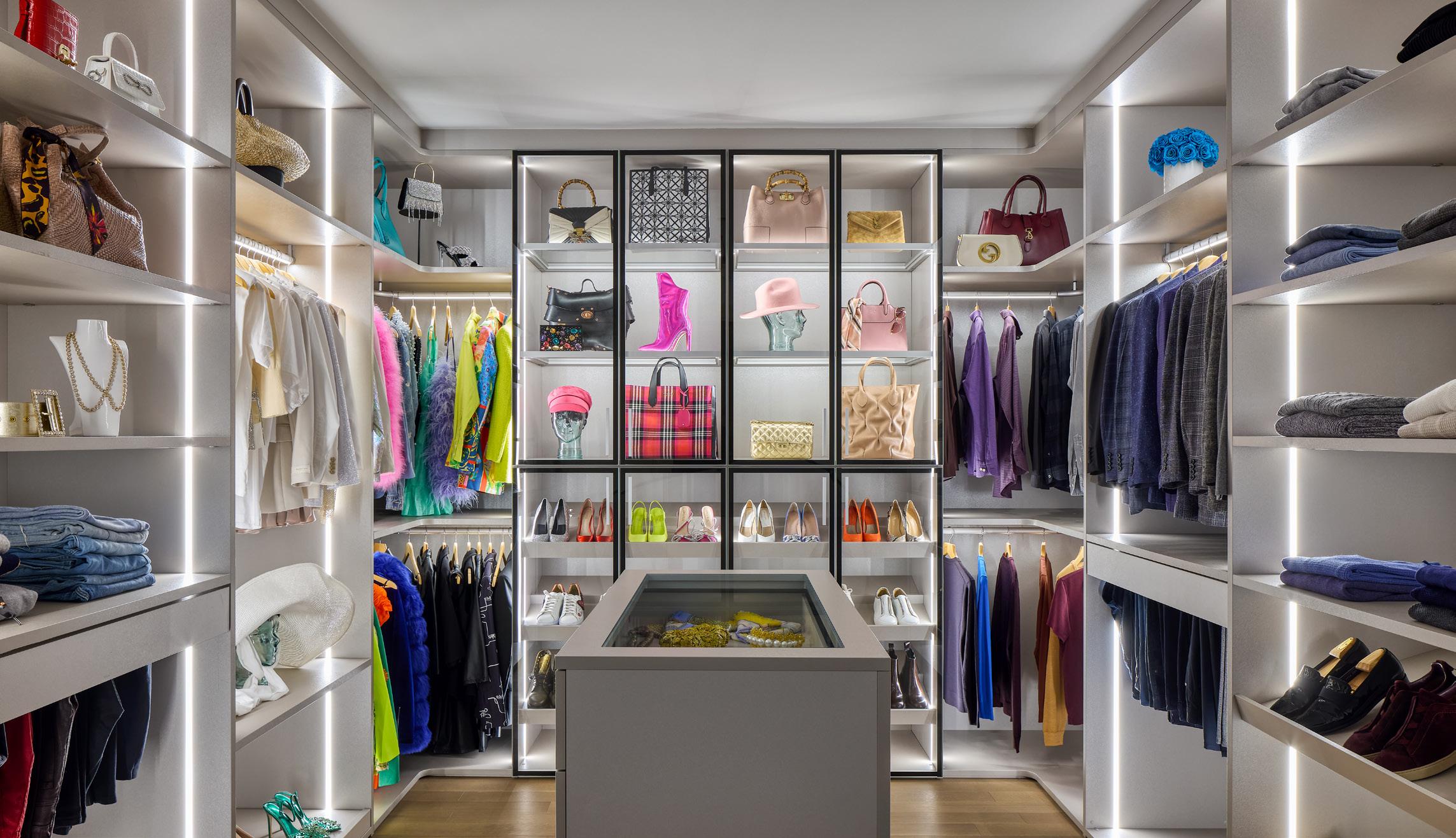
This bespoke walk-in closet transforms storage into a gallery-like experience, where symmetry, precision and lighting work together to elevate everyday organization. Glass-front cabinetry and softly illuminated shelving frame a central display wall, presenting handbags and accessories with boutique-level refinement. Integrated LED lighting, seamlessly embedded within vertical panels, enhances both visibility and ambiance, while a carefully balanced layout of hanging sections, shelving and compartments ensures intuitive functionality. The result is a highly curated environment that merges practical storage with a sense of quiet luxury.
Germany with locations across the U.S.
Courtesy Photos
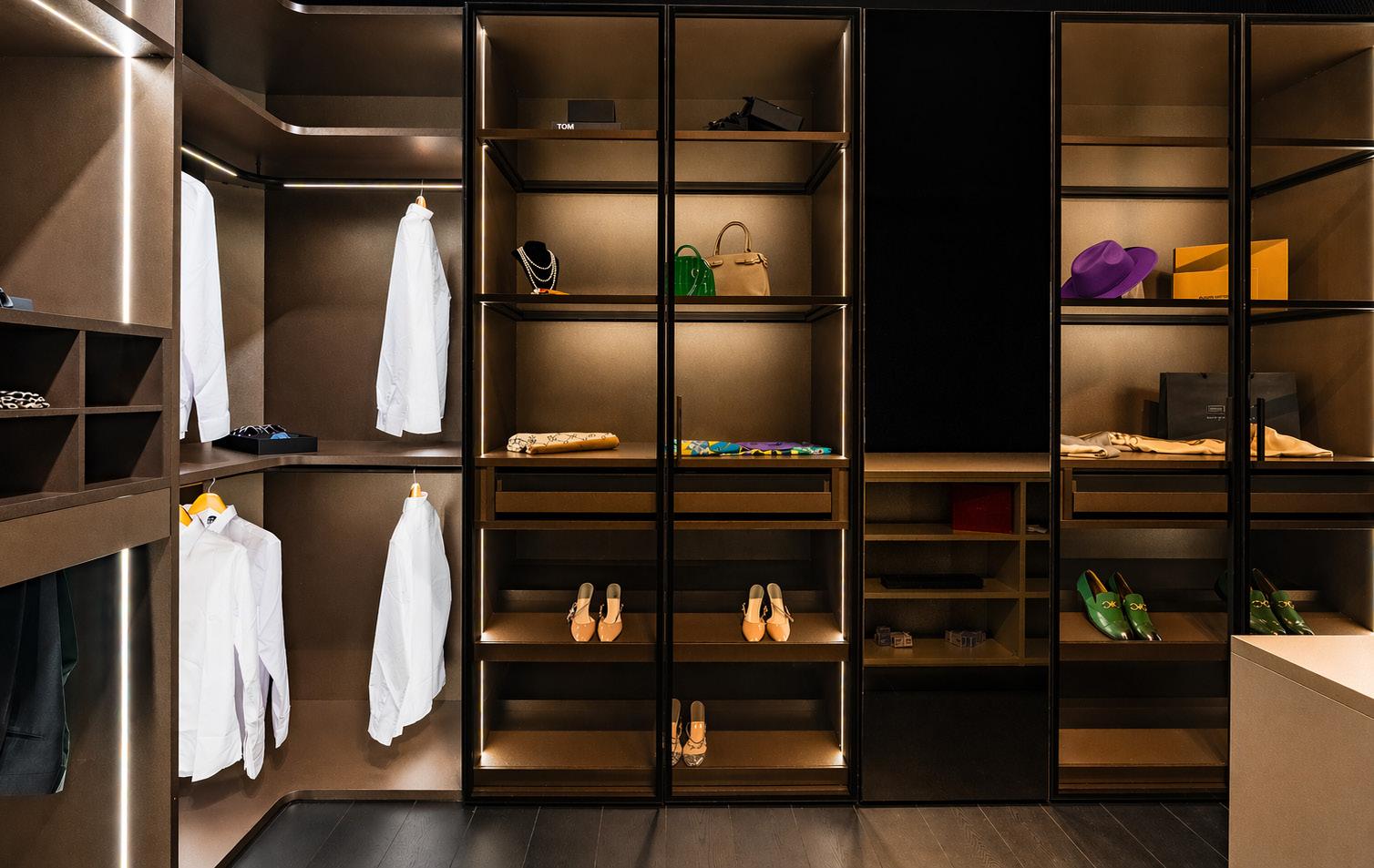
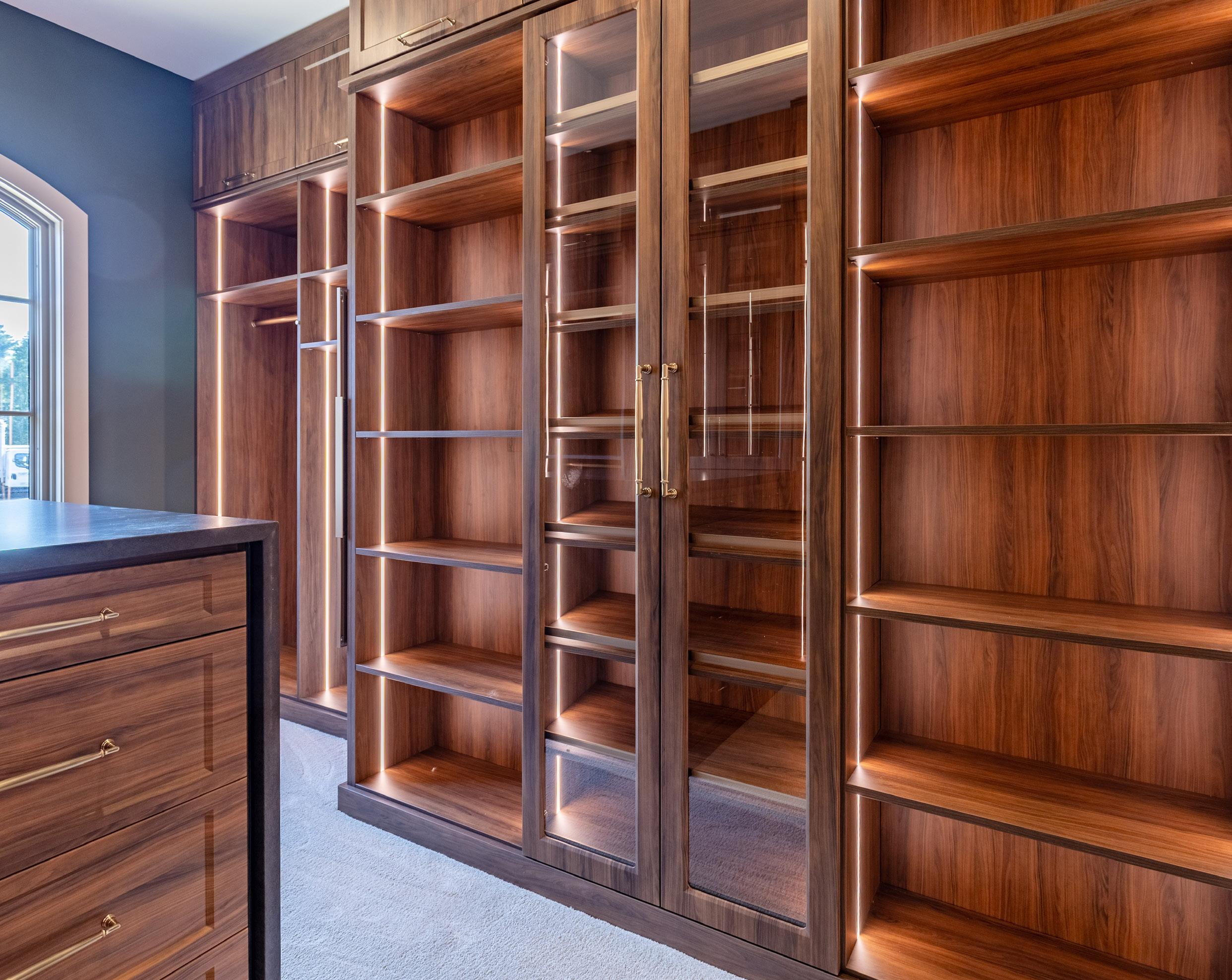
Dark Walk-in Closet
White Walk-in Closet
This walk-in closet balances modern minimalism with material richness through a carefully considered architectural layout. Open shelving and glass-door cabinetry, framed in slim black profiles, create structure and visual contrast, while warm matte finishes in taupe and bronze tones add depth. Continuous LED lighting, recessed along vertical and horizontal lines, provides a consistent, ambient glow that enhances both usability and presentation. Precision craftsmanship and material consistency define the space, resulting in a streamlined, high-performance storage environment with a refined, contemporary aesthetic.
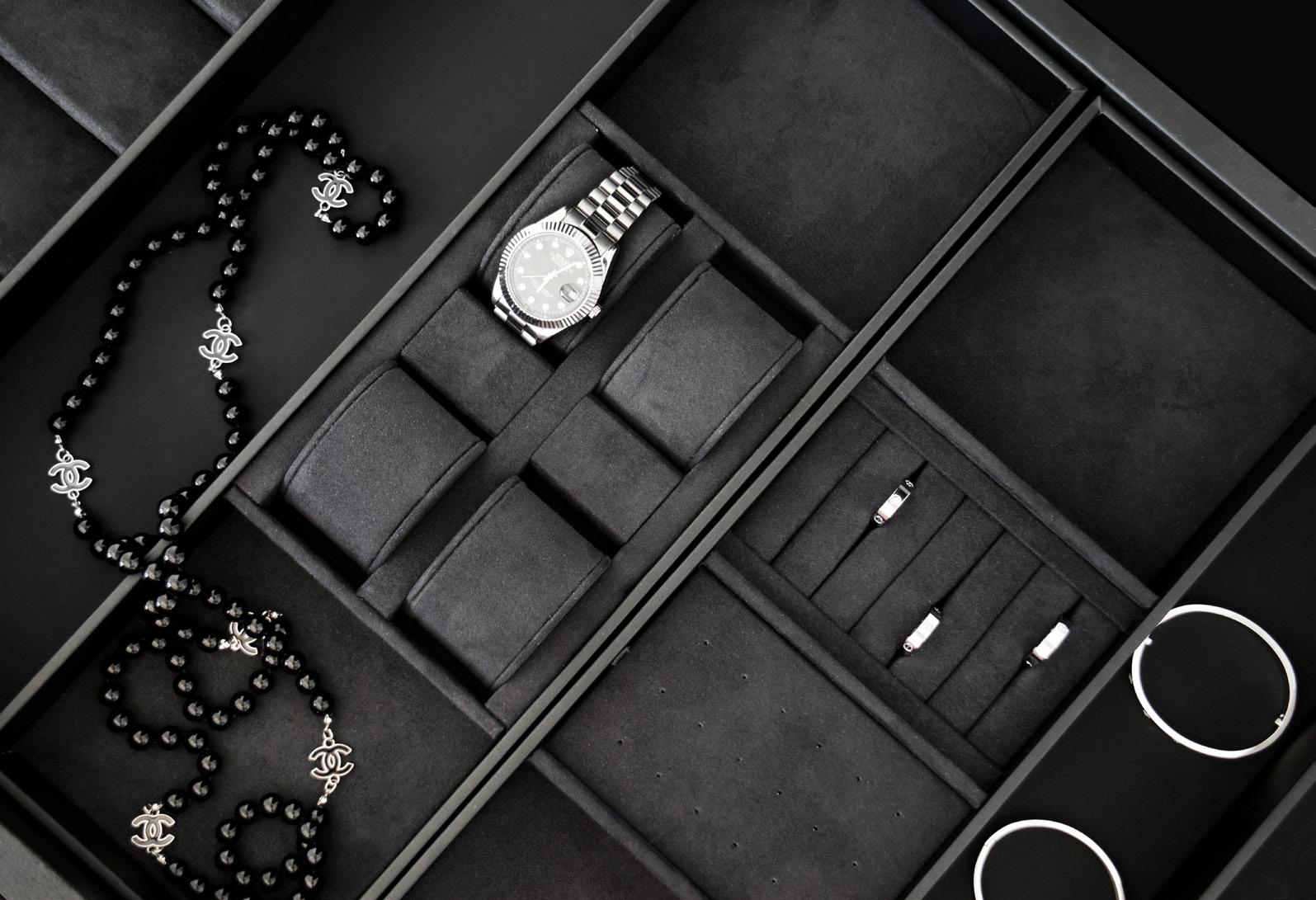
FiNatti Drawer Organization
This tailored drawer organization system demonstrates how precision detailing can elevate even the most compact storage spaces. Finished in deep charcoal tones, the FiNatti system features meticulously divided compartments designed to house watches, jewelry and accessories with clarity and care. Clean lines and a structured grid layout bring a sense of order and visual consistency, transforming the drawer interior into a refined extension of the overall design. Both functional and aesthetic, the system reinforces the importance of thoughtful organization at every scale.
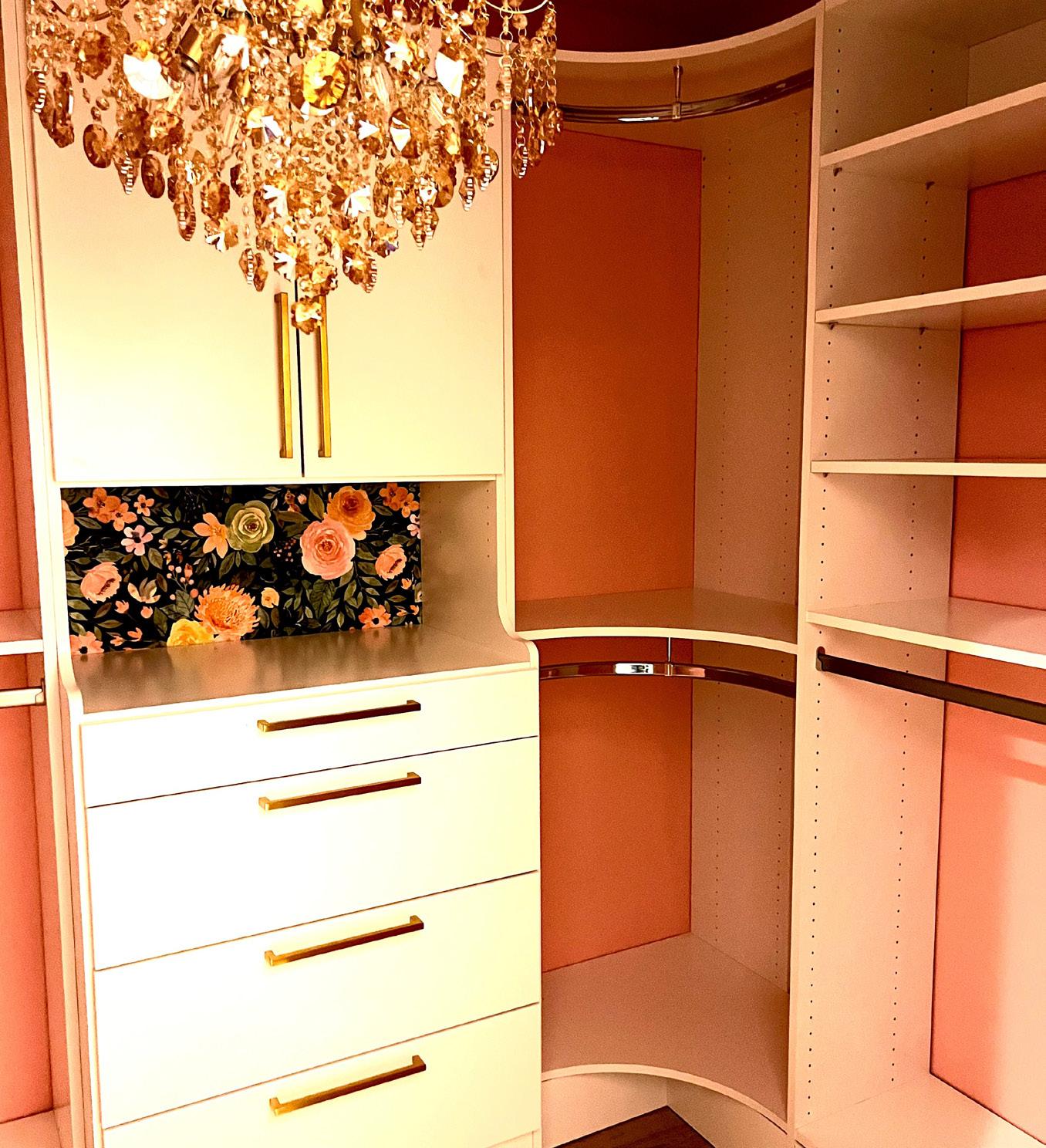
Petite Custom Closet
Barios of Barrios Prestige Brands and Kitchen Wise & Closet Wise out of Denver, Colorado
Courtesy Photos
This custom closet demonstrates how thoughtful design can maximize both function and comfort within a smaller footprint. Tailored specifically to the client’s proportions, the layout features carefully positioned shelving, hanging systems and lighting to support ease of use and accessibility. A custom-set chandelier adds a decorative focal point while reinforcing scale and proportion within the space. The result is a highly personalized environment that combines efficiency with elevated design, proving that compact spaces can deliver both luxury and livability.
Rachelle
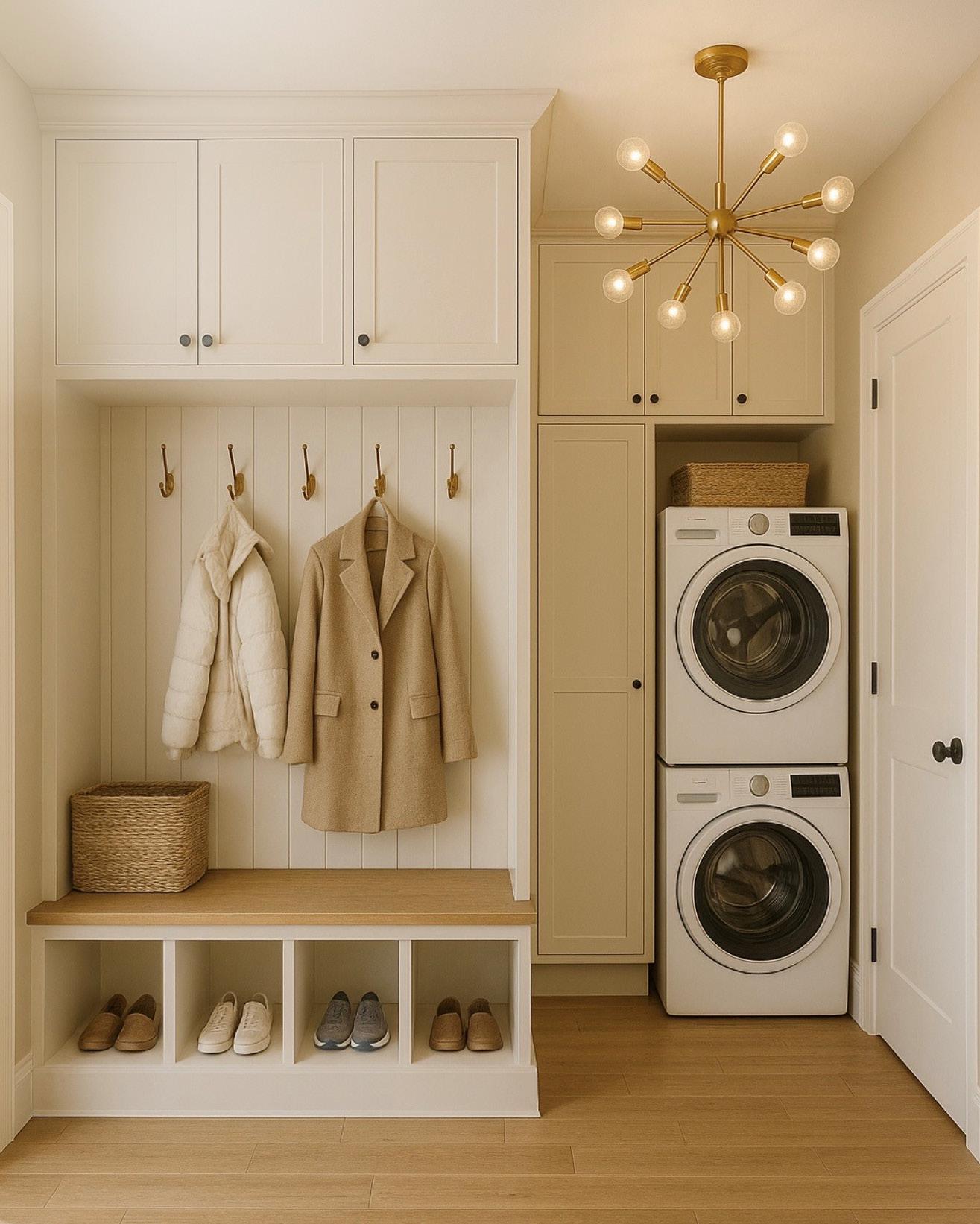
Laundry Room Storage
This reimagined laundry room highlights the impact of intentional design in transitional spaces. A refined stacking layout optimizes workflow and floor space, while custom cabinetry introduces organized, accessible storage. Layered lighting enhances both functionality and atmosphere, bringing warmth and clarity to the environment. Once underutilized, the space now serves as a cohesive extension of the home—balancing practicality with a clean, design-forward aesthetic.
River Hills Lane Closet
Designed by Taylor Rachko
Blending efficiency with elevated materiality, the River Hills Lane Closet demonstrates how strategic design can transform storage into a refined, highly functional environment. A layered palette of finishes—including Rogue Valley Pear surfaces and a quartz waterfall countertop — anchors the space with warmth and visual continuity.
Precision-fabricated components from JB Cutting are paired with integrated Häfele LOOX lighting and Emtekhardware to enhance both usability and visual clarity. The result is a well-balanced system where high-end details and practical storage solutions work together to support everyday organization with a sense of quiet sophistication.
Taylor Rachko and Kate Bernyk from Distinctive Design out of Toledo, Ohio
Courtesy Photos by Dorey Fox Photography
Belmont Garage
Designed by Kate Bernyk
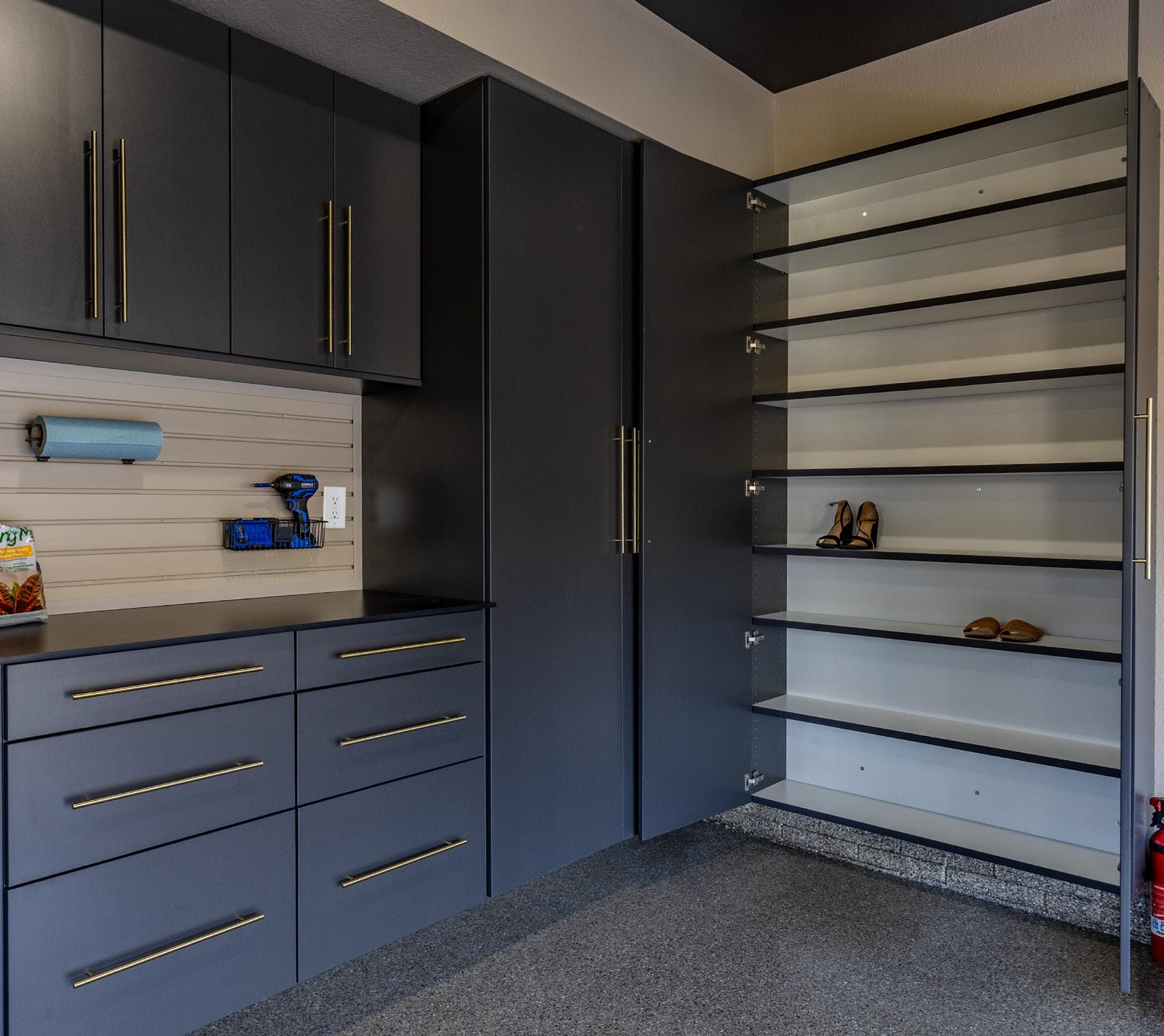
As garages increasingly function as primary entry points to the home, storage design is evolving to meet the demands of everyday life. This Belmont Garage project reimagines the space as an organized, high-performance transition zone — where clutter is concealed and daily routines are streamlined. Custom cabinetry and integrated storage systems create dedicated zones for gear, outerwear and accessories, while maintaining a clean, cohesive aesthetic.
Material selections — including Taupe Handsolutions slatwall and trim, Richelieu Hardware components and metal drawers, and a WilsonArt Thinscape countertop — enhance durability while reinforcing the project’s refined, utility-driven design approach.
< CONTINUED FROM PAGE 27
Home Giveaway Closet
Designed by Taylor Rachko and Kate Bernyk
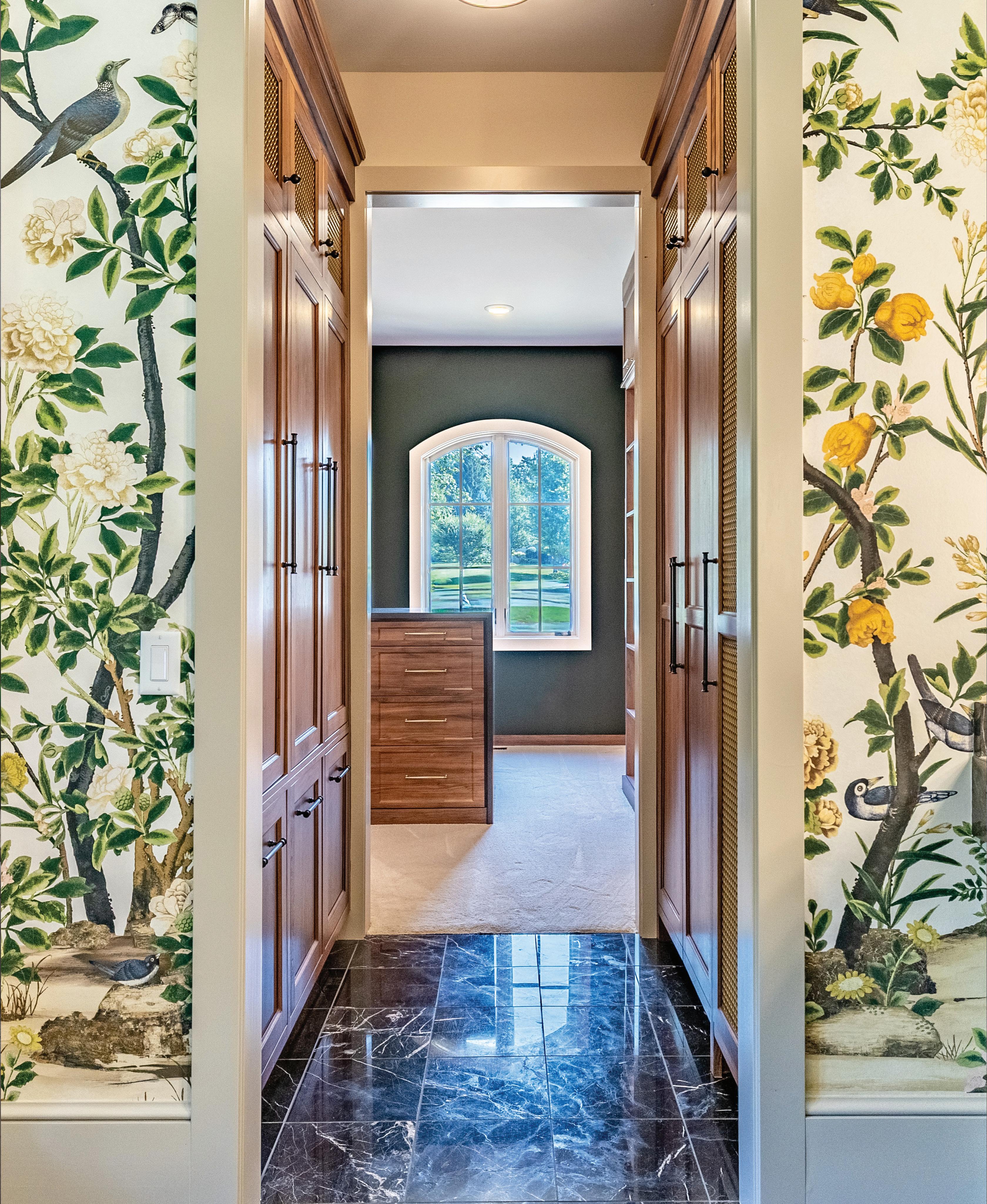
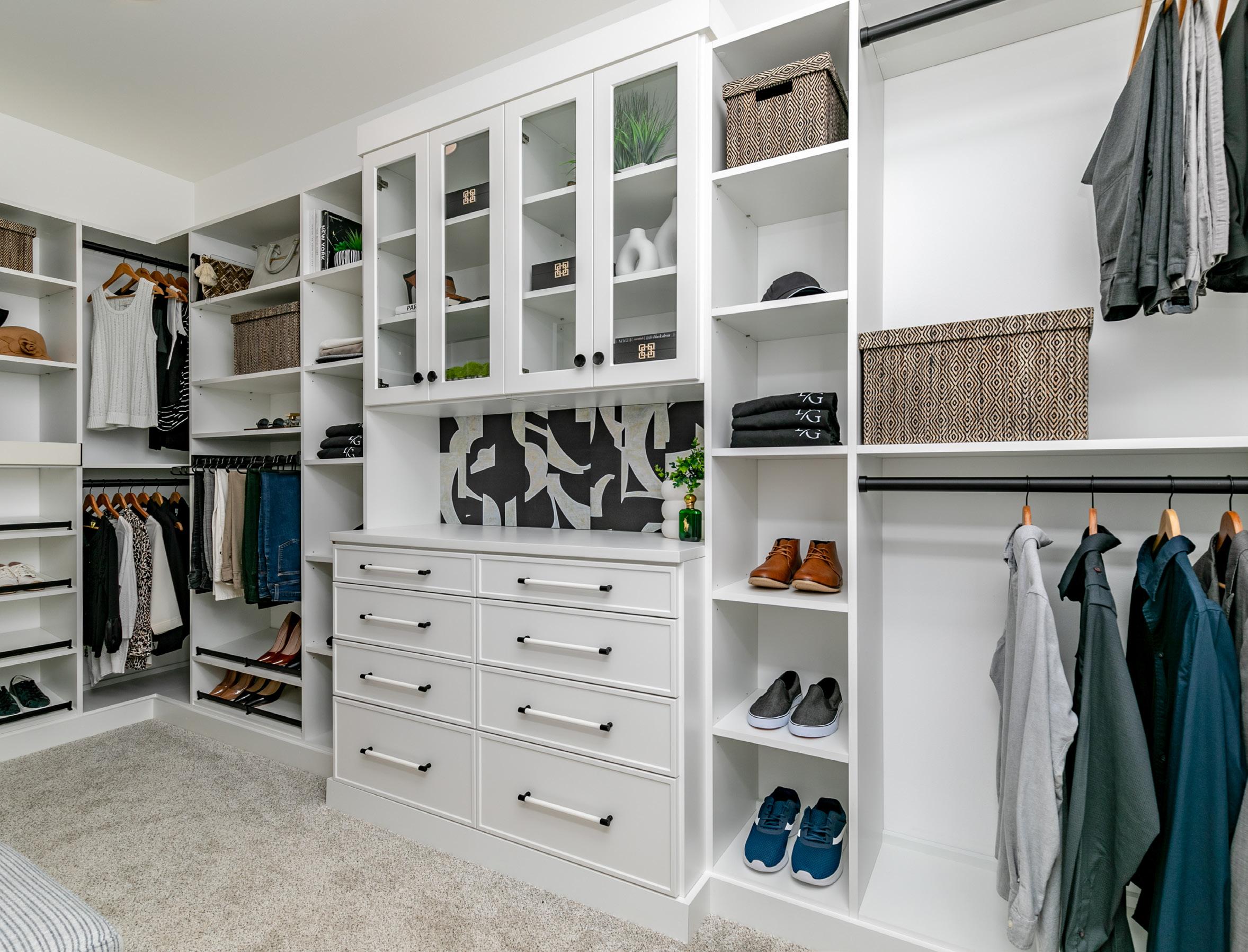
Created as part of a charitable home giveaway benefiting a local children’s hospital, this walk-in closet pairs thoughtful organization with elevated detailing. The design maximizes storage through a combination of tailored shelving, hanging systems and built-in drawers, ensuring efficient use of space while supporting a streamlined daily routine.
Decorative elements — including wallpaper back panels, integrated lighting and curated accessories — introduce a layer of softness and personalization. Functional upgrades such as TAG Hardware accessories, leather handles and Jewelry Tray Factory inserts further enhance usability, resulting in a space that balances practicality with a polished, boutique-inspired aesthetic.
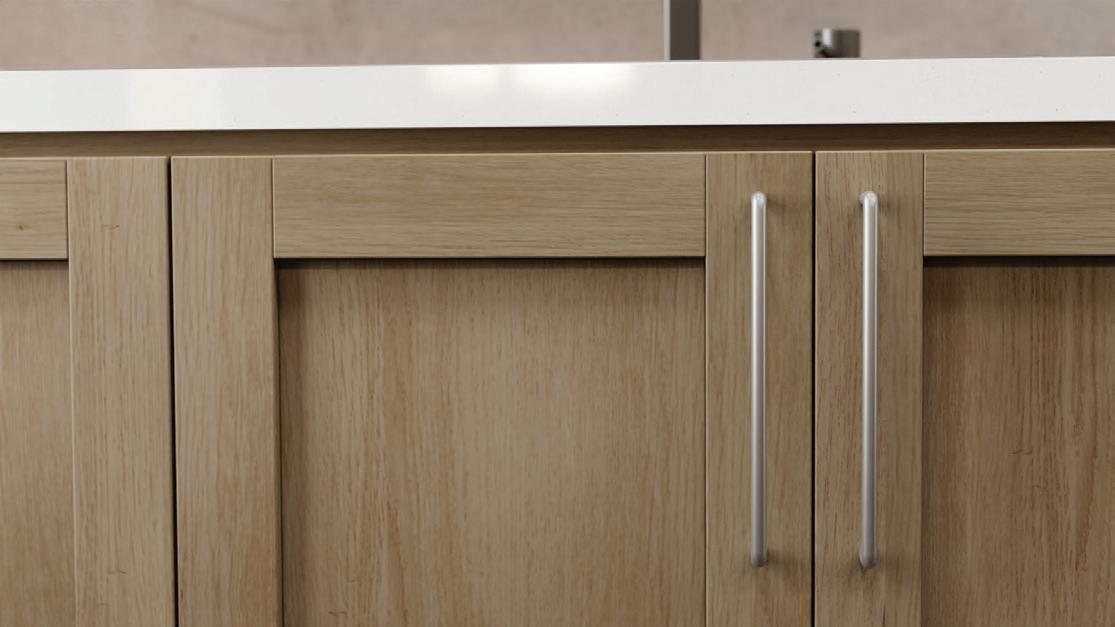
WOOD GRAIN LINE
LA PACIFICA
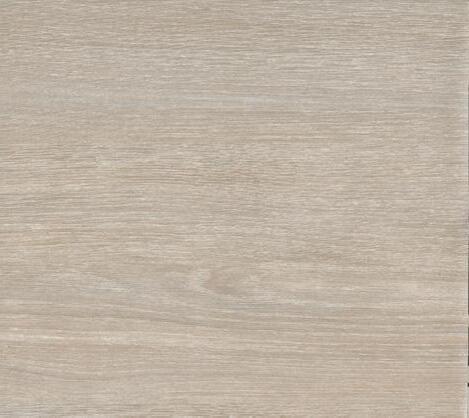
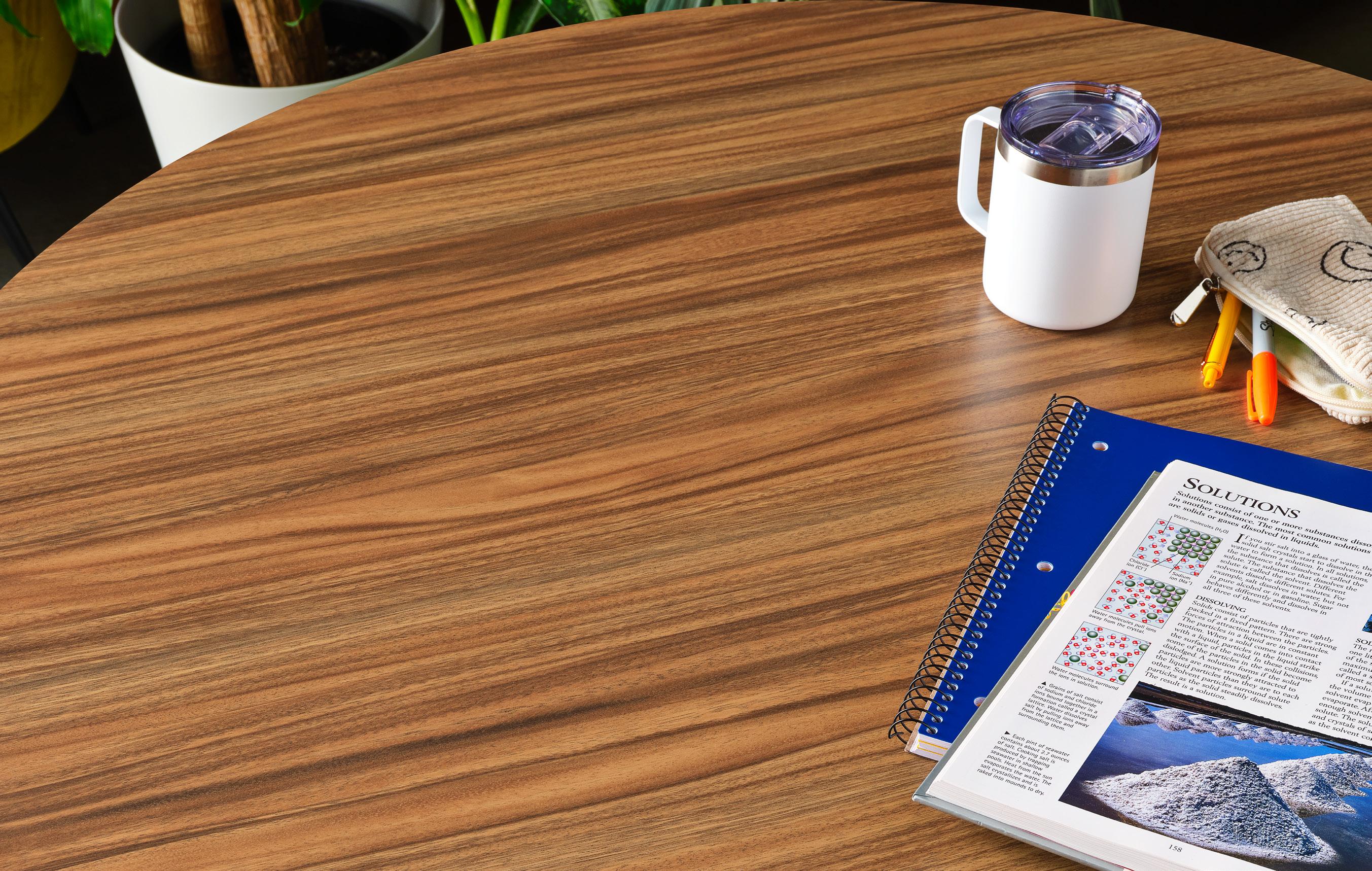
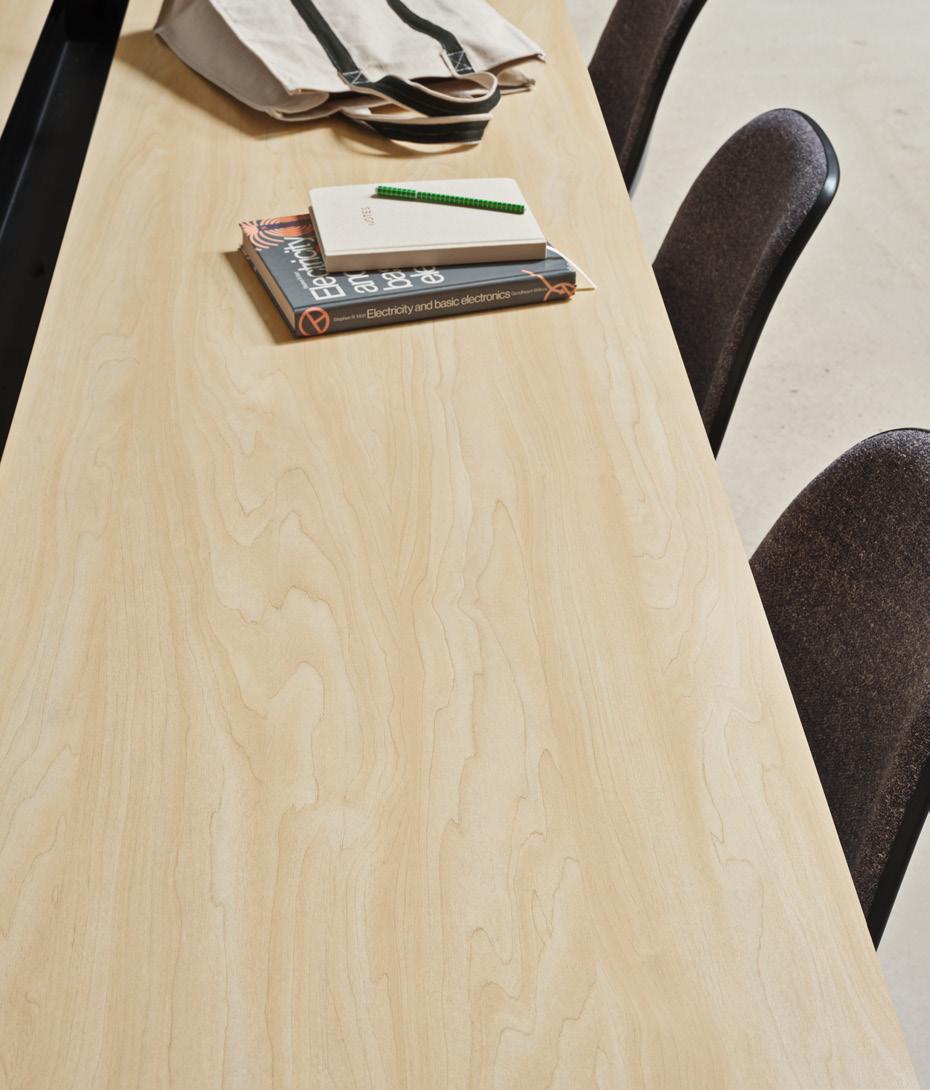
La Pacifica , from our wood grain collection, brings the essence of natural oak into a refined, modern space. With its soft, linear grain and balanced warmth, this finish exudes an organic sophistication that pairs effortlessly with both contemporary and classic designs. The subtle texture enhances its natural depth, offering a tactile experience that complements its visual appeal.
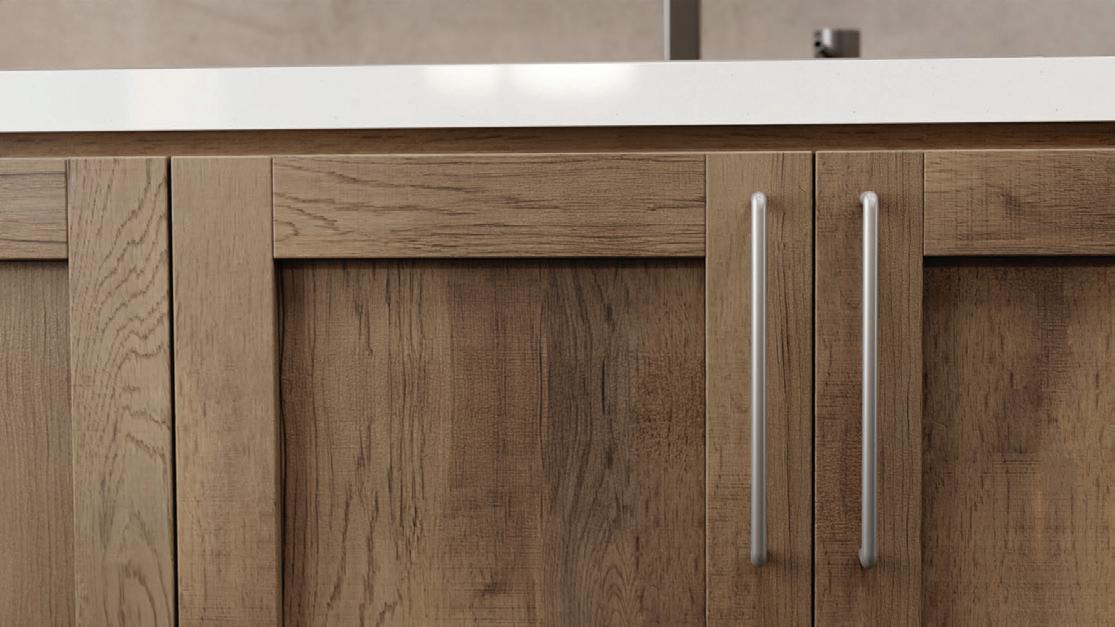
TIMBERLINE
Timberline captures the raw beauty of natural wood with an elevated, modern sensibility. Its bold grain patterns and textured surface add dimension and authenticity, creating a finish that feels both grounded and sophisticated. The interplay of linear and organic grain details brings a dynamic yet balanced aesthetic, making it a versatile choice for spaces that embrace warmth and character.
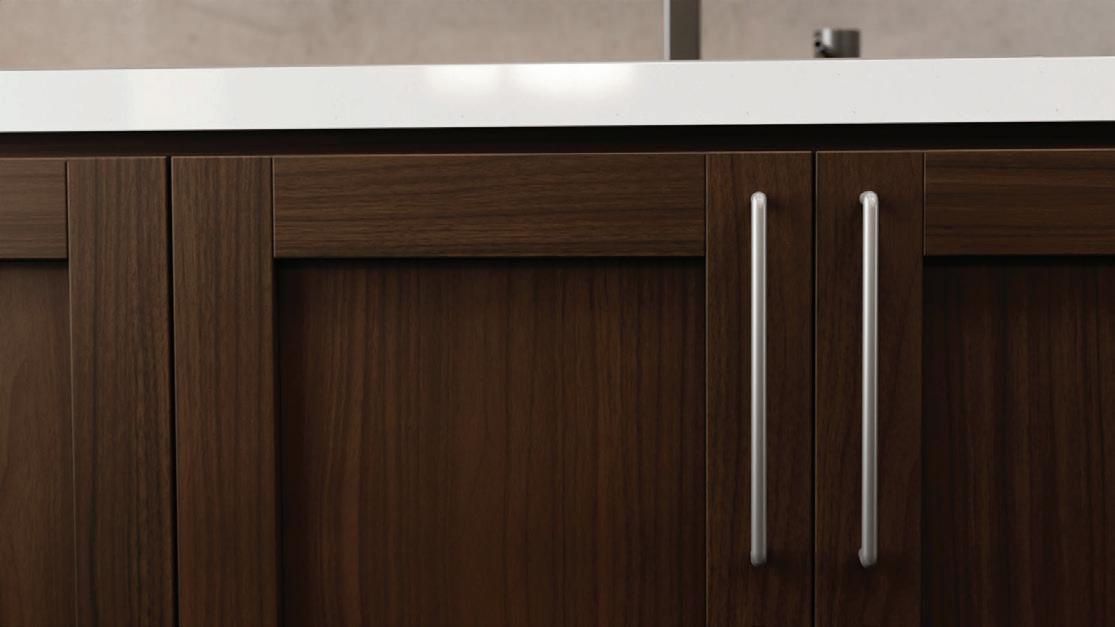
WALNUT - WOOD GRAIN
M.C. WALNUT
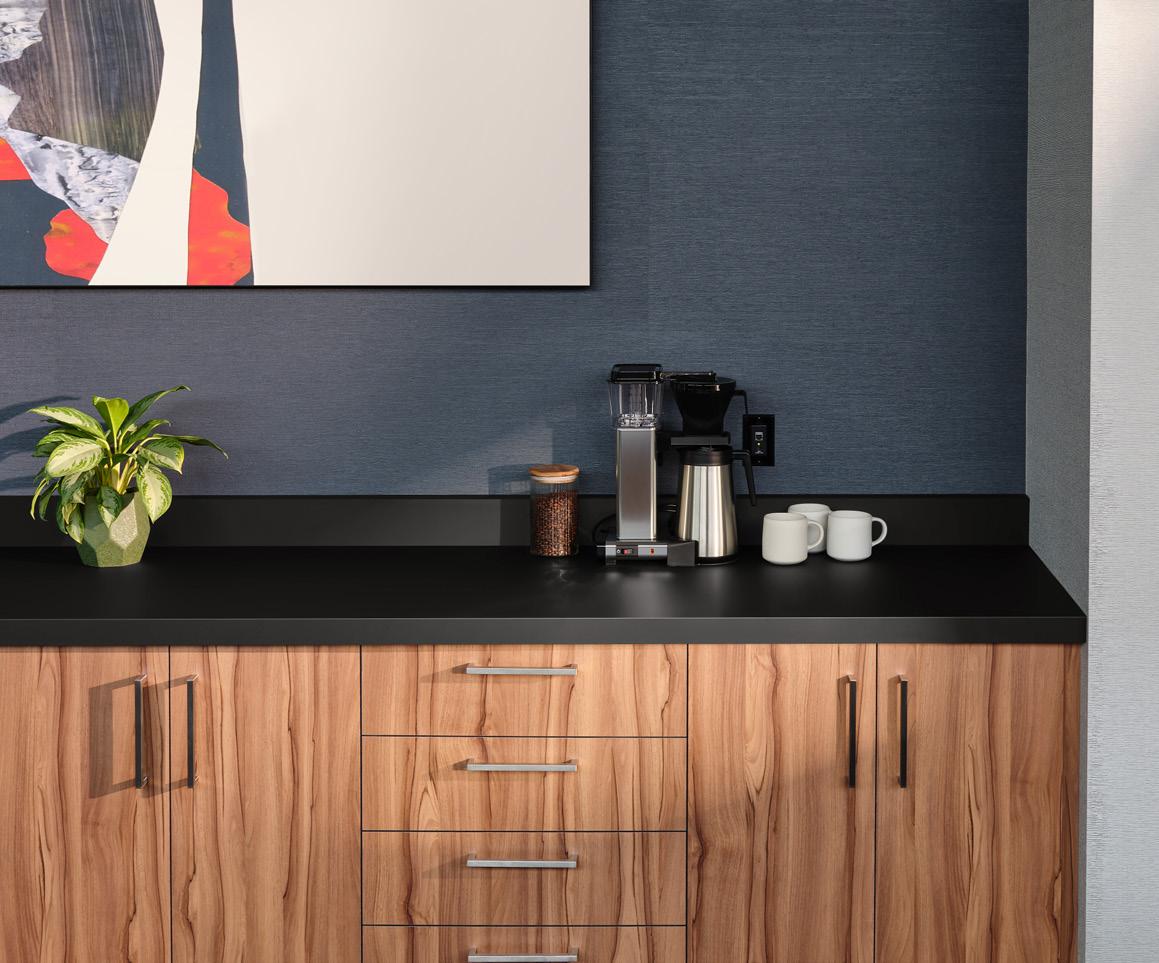
Mid-Century Walnut brings the perfect balance of warmth and refinement, offering a smooth wood grain with an understated elegance. Its clean, linear pattern enhances the depth of the finish, creating a sophisticated look that seamlessly integrates into both modern and timeless interiors. With a nod to mid-century design, this finish pairs beautifully with sleek hardware, minimalist forms, and bold contrasts.
OAK - WOOD GRAIN
OAK - WOOD GRAIN
Sustainability Through Efficiency
Rethinking Surface Production in Small Spaces
BY LON RILEY
As urban environments continue to densify, expectations for interior surfaces are changing. Panels, cabinetry, and architectural components are no longer evaluated solely on durability or appearance. They are expected to improve functionality, reduce material use, and move efficiently through production and installation. In high-density environments, surfaces need to do more with less.
Sustainability is often framed around materials, certifications, and sourcing. Those factors matter, but they are only part of the picture. In many operations, waste is driven less by material choice and more by how production is structured. Rework, excess inventory, multi-step finishing, and unnecessary handling all contribute to environmental impact in ways that are easy to overlook.
A shift is underway toward evaluating sustainability through throughput and process efficiency. The question is no longer just what materials are used, but how efficiently those materials move through production and become finished products.
Surfaces as Functional Systems
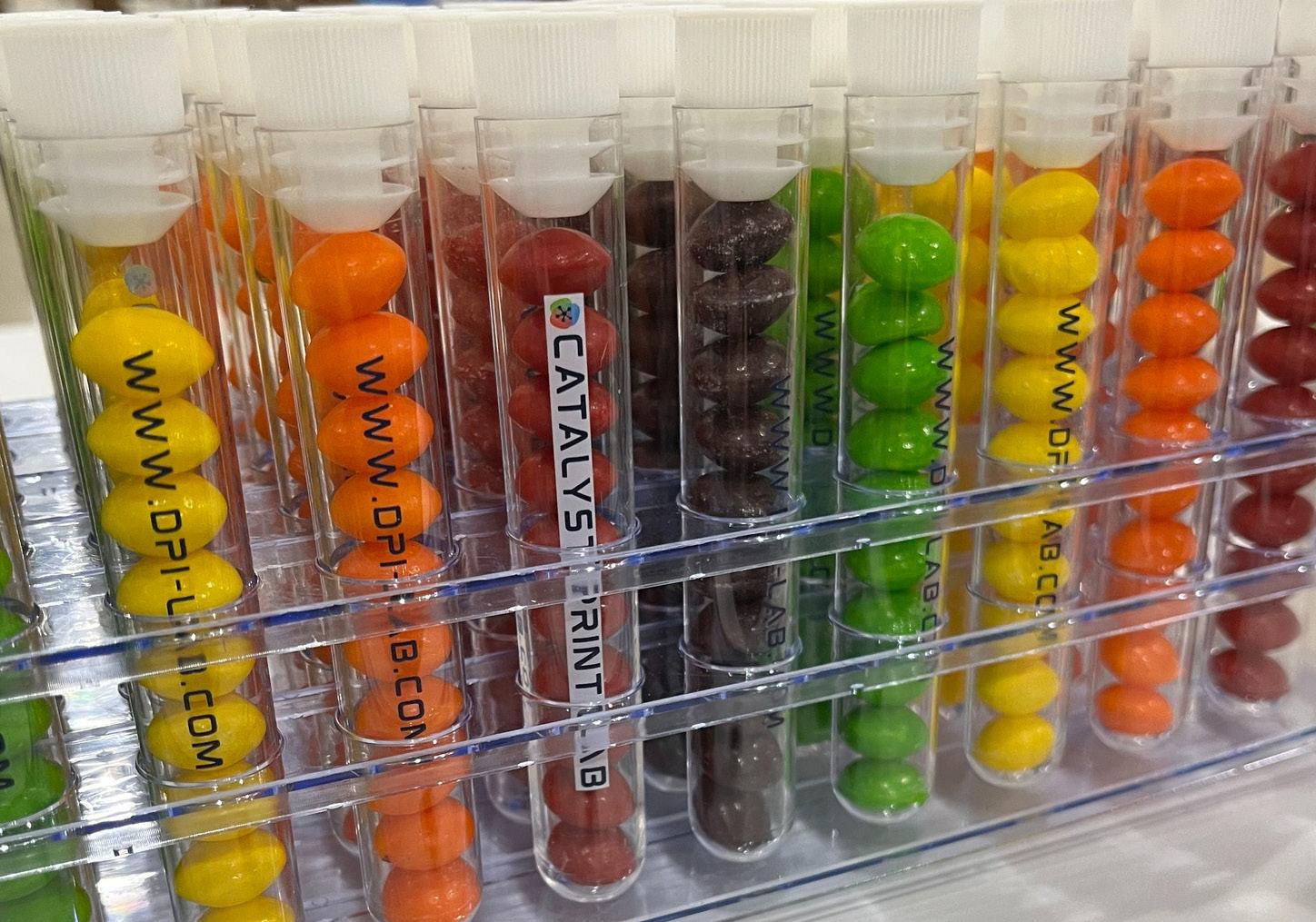
In small-space environments, surfaces are expected to serve multiple roles. Closet systems, storage panels, and compact cabinetry often include labeling, wayfinding, branding, or instructional elements directly on the surface. This reduces the need for applied labels, overlays, or additional components.
When function is built into the surface, the number of parts required to complete a system decreases. Fewer components
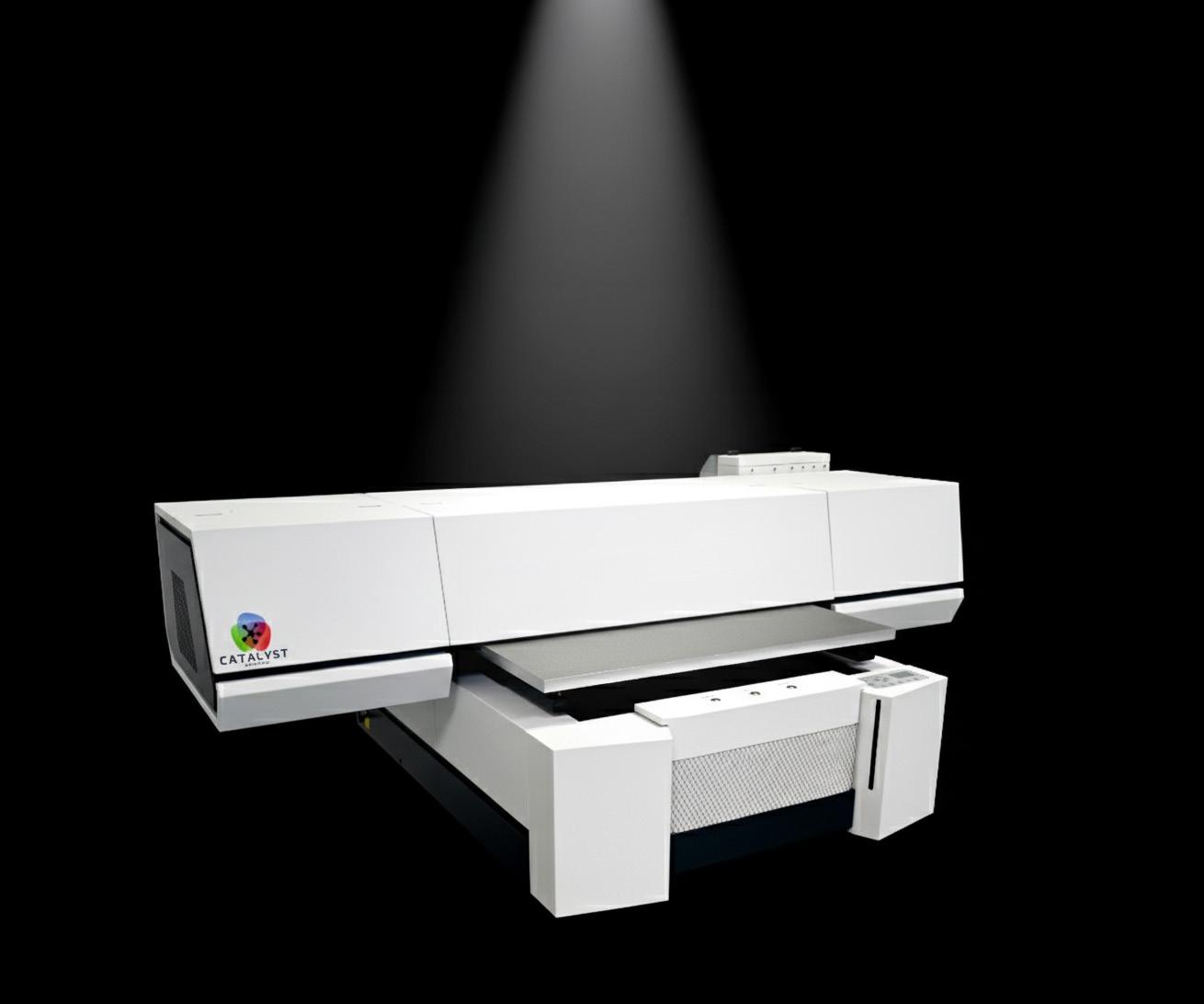
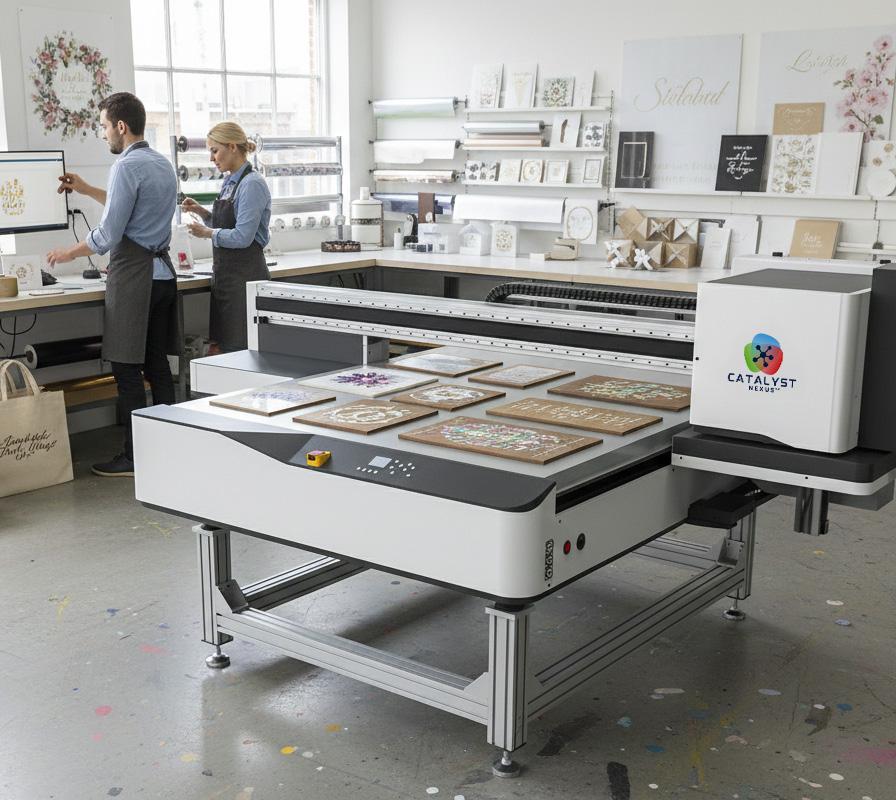
The Catalyst Printing Platform from DPI Laboratory marks a move away from standalone equipment and towards a more structured manufacturing environment
simplify assembly, reduce inventory, and limit material consumption. In modular environments, where repetition and variation must coexist, this approach supports both efficiency and flexibility.
Surface decoration is no longer a separate finishing step; it is becoming part of how the product functions. Surfaces are no longer passive elements. They actively contribute to usability, organization, and communication within a space while supporting more efficient production and installation.
Reducing Steps, Reducing Waste
Traditional finishing methods rely on multiple stages such as printing, drying, handling, and secondary application. Each step adds time, labor, and potential for error.
Digital direct-to-surface processes simplify this by applying graphics, textures, and markings directly to the substrate and curing them immediately. Components can move straight into assembly or packaging without delay.
Fewer steps reduce opportunities for damage and limit defects caused by handling or environmental conditions. Shorter production cycles also reduce excess inventory and work in progress.
Sustainability improves not only because less material is used, but also because less material is moved, stored and lost in the process.
Throughput as a Sustainability Metric
Throughput is usually discussed in terms of productivity and cost, but it also plays a direct role in environmental performance. Systems that move material efficiently reduce energy use, floor space requirements, and labor intensity.
UV-based digital processes support this by enabling immediate curing and eliminating extended drying time. Parts can be handled and processed without delay, reducing staging requirements and simplifying material flow. When production moves efficiently without adding complexity, sustainability becomes a natural outcome of better operations.
High-end craftsmanship by world-renowned designers that level up any space. Our unique cabinet hardware blends innovation with tradition, creating a wide selection of finishes, materials, and design combinations.
Supporting Variation Without Excess Inventory
High-density housing and modular environments require variation within otherwise standardized systems. A closet structure may remain consistent, while surface finishes shift by project, region, or client specification.
Maintaining large inventories of pre-finished components to support that variation consumes space and introduces risk. When designs change, materials are often reworked or discarded, increasing both cost and waste.
File-driven surface processes allow variation to be introduced later in production. Instead of committing to large batches, manufacturers can produce smaller runs based on current demand, with design updates made without retooling or scrapping inventory.
This approach reduces waste, improves flexibility, and aligns production more closely with real demand.
Texture, Tactility, and Functional Design
Surface functionality is not limited to visual elements. Texture and tactile features are becoming more important, especially in environments where usability and accessibility matter. Layered surface techniques can introduce raised elements, grip patterns, or tactile indicators directly into panels and components.
In closet systems, this can support more intuitive use without additional hardware. In architectural environments, it can assist with wayfinding or accessibility. These features extend the role of surfaces beyond appearance, becoming an active part of how a space is used and experienced.
Integration Within the Manufacturing Workflow
As manufacturing systems become more connected, surface processes need to align with the rest of the workflow. CNC routing, scheduling, and material handling are increasingly data-driven. When surface decoration operates separately from that structure, inefficiencies appear.
Digital surface processes respond to file-based inputs, allowing them to integrate more naturally with upstream systems. Design changes occur at the data level instead of through mechanical adjustment. Job information can move directly from planning to production.
This alignment reduces manual intervention and supports consistent output, especially in environments where labor and space are limited.
Rethinking Sustainability in Surface Production
Sustainability in surface manufacturing is often associated with material selection, but that is only part of the equation. Process efficiency plays an equally critical role, and in many cases, it is where the greatest gains are made.
Reducing steps, limiting handling, and aligning workflows directly
reduces waste and energy use. When surfaces are designed to integrate function, minimize components, and support flexible production, sustainability becomes embedded in the process rather than added to it. In small-space design, where efficiency is essential, this approach offers a practical and scalable path forward.
Where Efficiency Becomes Sustainability
As spaces become smaller and more functional, surfaces are expected to carry more responsibility. They must support usability, adapt to variation, and move efficiently through production.
Evaluating surface systems through throughput and workflow alignment provides a more complete view of sustainability. Efficiency is not only about speed. It reflects how effectively materials, time, and energy are used across production.
In this context, sustainability is no longer defined only by what materials are used, but by how the entire system performs. When surfaces are designed to integrate function and move efficiently through production, sustainability becomes a result of how the system performs. S P
Lon Riley is the Founder of DPI Laboratory and the architect behind the Catalyst Printing Platform, an integrated UV printing ecosystem engineered for speed, uptime, and scalable production. With more than 30 years in digital printing, engineering, and workflow optimization, Lon applies systems thinking and design thinking to modern UV manufacturing. Lon contributes to industry discussions on UV system architecture and workflow design, drawing from hands-on experience in building and optimizing production environments.
BY CHRISTELLE LOCAT-RAINVILLE PHOTOS COURTESY FORMICA CORPORATION
In the surfacing industry, sustainability conversations have evolved, but meaningful progress begins by asking better questions. Too often, the dialogue centers on individual products, their certifications, their materials and their labels.
While these are important, they only tell part of the story. Real impact comes from looking beyond the product to how companies operate, manufacture, and improve.
A single sustainable product can represent only a small fraction of a manufacturer’s portfolio. Without understanding the larger operational picture such as energy use, emissions reduction and process improvements, it becomes difficult to assess true impact without clear, accessible data to validate performance and track improvement over time. Shifting the focus from isolated products to company-wide practices is essential to driving meaningful change.
Measuring improvement depends on transparent, reliable data. Measurable information that can be verified and compared is essential to ensure sustainability claims reflect real progress. Data prevents “greenwashing” by grounding claims with facts.
The Questions That Drive Change
Designers and architects play a pivotal role in shaping the industry, yet the questions posed during specification often remain product- specific. Standard evaluation tools rarely address manu -
facturing practices or broader environmental commitments, nor do they always require the actual data needed to substantiate sustainability claims.
A product can be carbon neutral, bio-based and responsibly sourced, but if it represents just a fraction of the company’s total output, the positive net impact becomes relatively small. Manufacturers and specifiers should be asking “what impact does the rest of the portfolio have?” To make a true positive impact, sustainability should not be a spotlight on a single “hero” product; it should be a lens applied across the entire organization.
Openly sharing verified data allows manufacturers and specifiers to evaluate progress objectively, moving the conversation beyond who claims to be “the best” and toward understanding the real and meaningful impacts each company is making.
Asking more holistic questions about manufacturing processes, energy use, supply chain decisions and long-term commitments creates a ripple effect. It encourages companies to think beyond incremental improvement and instead embed sustainability across operations.
Durability Is Sustainability
Today, durability is not optional, and longevity must be part of the equation. A product that performs well over decades often has a
lower environmental impact over its lifecycle than one that requires frequent replacement. The latter requires new raw materials resulting in more emissions overall.
This perspective also reshapes how materials are valued. Today’s laminates can replicate the look of rare or endangered wood species without requiring those natural resources to be harvested. By delivering the same aesthetic through engineered design, it helps alleviate the pressure on finite materials while maintaining performance standards expected in commercial and residential spaces.
Additionally, high pressure laminate has long been recognized for its resilience and lifecycle performance, reducing the need for replacement and minimizing waste over time. And remember, high pressure laminate is made mostly from paper – which comes from trees that, in addition to being a renewable resource, also absorb carbon dioxide. The benefit is compounded even further when resources are certified as coming from well managed forests through FSC certification.
Innovation Behind the Scenes
Some of the most significant sustainability gains occur within manufacturing rather than in the finished product. Efforts such as capturing and reusing heat, improving energy efficiency and reducing emissions at scale can dramatically lower environmental impact.
These changes may not always be visible, but they are essential. A company’s operational investments — including equipment upgrades or process optimization — play a central role in reducing overall carbon footprint while maintaining product performance. Tracking and
sharing data on improvements is crucial, as it provides the evidence needed to demonstrate progress and build real credibility around sustainability claims.
Collaboration and Continuous Progress
Sustainability in surfacing is not achieved in isolation. Strong relationships between manufacturers, suppliers, designers and the end consumer allow us to anticipate needs, align on goals and stay ahead of the evolving standards.
At the same time, flexibility is key. Some firms are beginning to pre-screen materials based on sustainability criteria, a promising step toward broader
"… the future of sustainable design won’t be defined by the answers we have today but by the questions we choose to ask tomorrow. "
change. Standards and technologies are evolving rapidly and rigid requirements risk limiting innovation if they fail to adapt.
Looking Forward
Meaningful progress over the next decade will depend on broader engagement. Today, there are two distinct groups: those deeply committed to sustainability and those just beginning. Real change will happen when expectations of the first group become the standard for the majority. When more specifiers consistently ask the right questions, the industry will respond.
Sustainability has already moved from behind-the-scenes effort to a more visible presence in showrooms, trade shows and in client
conversations. That visibility is a sign of progress, but it also raises the bar.
Ultimately, sustainability in surfacing is not a single achievement but a continuous process. It requires transparency, adaptability and a willingness to look beyond the obvious. By shifting the conversation from “what is this product?” to “what is this company doing?”, the industry can move toward solutions that are not only innovative, but truly impactful.
Because the future of sustainable design won’t be defined by the answers we have today but by the questions we choose to ask tomorrow. S P
After completing a degree in marketing, Christelle Locat-Rainville embarked on a career in the consumer goods manufacturing industry before gaining experience working for a goods and services company. In 2016, she joined Formica Corporation and is now Marketing Director for Canada and Commercial Sustainability Leader for North America, where she develops B2B and B2C communication strategies and works closely with the national sales team to support designers, fabricators, and distributors. She brings nearly twenty years of experience in consumer goods and manufacturing, reinforced by her PMP certification and her recent ESG Certification in Environmental, Social and Governance Management from HEC Montréal. In her sustainability role, she leads Formica Group’s North American Green Team, advancing plant-level initiatives and translating corporate environmental commitments into meaningful innovations for the architecture and design community.
DAUBOND PUR: ALL ANGLES COVERED.
MADE TO FIT THE MOLD
No matter what kind of lamination you need, Daubond® PUR adhesives are made to fit the mold. We’re committed to finding the best solution for you, offering guidance and support every step of the way. When you work with Daubert®, you get a team dedicated to meeting your needs and helping you achieve success that sticks.
The Case for Strategic Workforce Planning
BY CLAUDIA ST. JOHN
When I travel to conferences and work with clients, I often get asked some variation of the same question: “Where did all the workers go?” To this, I usually answer, “You know where they went? They went to work… for someone else.”
And the data suggests I’m right. The U.S. unemployment rate at the time of this writing is 4.3 percent. It has been at this level or lower for much of the past decade. For context, most economists consider full employment to be 4.2 percent which means that everyone that wants a job is currently working. Employers can anticipate this “tight labor market” to continue for the foreseeable future, driven largely by a declining birth rate, the “grey tsunami” of baby boomer retirements, smaller Gen Z and upcoming Alpha generations, and reductions in legal immigration. According to the Congressional Budget Office in 2025, by 2033 we will have more deaths than live births for the first time in our nation’s history.
If businesses are hoping to grow, or just survive, and aren’t strategically planning for the workforce challenges ahead, they will lose to those businesses who do.
In my opinion, this is the strongest business case for establishing a strategic workforce plan.
How to Build a Strategic Workforce Plan
Strategic workforce planning connects business strategy to the reality of people, skills, and cost. Done well, it helps a company ensure it has the right workforce to grow and thrive, both today and in the future. Done poorly, companies turn to reactive hiring, uneven compensation, underused training, and constant “fire drills” that erode trust and exhaust an already-strapped workforce.
At its core, workforce planning is a four-step process answering the following questions:
Step 1
– Where are you going?
Every workforce decision should be tied back to where the business is going. Yet one of the most common issues we see is a lack of clarity or alignment of workforce planning around that long-term, strategic goal.
Are you planning to expand into new markets? Launch new services? Increase revenue by a certain percentage? Improve operational efficiency? What workforce needs will this require? Will you need more salespeople? Stronger customer support? More operational capacity? All of the above?
For example, through this process, you may identify a need to grow your workforce by 20 percent, but with a declining population, how will you do that?
Because the answers to these questions span the organization, it’s important to include all key stakeholders, including the president/ CEO, your C-Suite, HR, finance, IT, operations, customer service, sales and others. Each stakeholder will have a different perspective on both the internal and external landscapes that will influence, positively and negatively, those growth goals.
Step 2
– What will it take to achieve these goals?
Once your goals are clear, the next step is figuring out what it will take to achieve them. This is where you move from strategy to execution.
Instead of thinking immediately about headcount, it’s more useful to think in terms of work. What work needs to get done, and what skills are required to do it?
Breaking work into measurable components — whether that’s sales activity, production volume, or customer response times — can
help bring clarity to what might otherwise feel like guesswork.
It’s also worth considering whether hiring is the only answer. In many cases, organizations can meet their needs by developing existing employees, improving processes, or leveraging technology and outsourcing. And given the tight labor market, is hiring even feasible?
This is one of the biggest mindset shifts in workforce planning: it’s not just about adding people, it’s about imagining the most effective way to get work done, both today and tomorrow.
Step 3 – What are the gaps between where you are today and where you need to be?
With a clear understanding of your goals and needs, the next step is to look honestly at where you are today.
This is where many organizations uncover surprises. On paper, they may feel adequately staffed, but a deeper look reveals skill gaps, uneven workloads, or roles that have evolved without being formally redefined.
A true gap analysis goes beyond simple headcount. It looks at whether your team has the right mix of skills, whether people have the capacity to take on additional work, and whether your systems and processes are helping or hindering productivity.
It’s also important to consider risk. Are there critical roles where losing one person would significantly disrupt operations? Are there areas with high turnover or burnout? Are there critical skills that the workforce of tomorrow lacks?
Too often, companies assume that any gap can be solved by hiring. But in reality, the issue might be something else entirely — inefficient processes, unclear roles, or a lack of training and development. And solving gaps by hoping to hire the perfect person in the current labor environment may be unrealistic. Instead, a longerterm commitment to growing and developing the talent you need is a better strategic and realistic solution, such as hiring someone with high potential and then training them with the specific skills and knowledge you need.
Step 4 – Build the plan,
turning insights into action.
Once you understand your goals, needs, and gaps, you’re ready to build a plan. This is where everything comes together — and where many organizations either gain momentum or stall out.
A strong workforce plan is both practical and flexible. It outlines what changes need to happen, when they should happen, and who is responsible for making them happen.
That might include a variety of action plans such as:
• hiring for key roles;
• investing in training and development and growing talent from within;
• upgrading technology, workflows and processes; or
• prioritizing retention by reevaluating compensation, investing in culture, creatively redesigning benefits.
And don’t just create one action plan. Consider multiple scenarios that imagine what happens if growth accelerates, slows down, or changes direction. Most importantly, make workforce planning an ongoing process, not a one-time exercise. This ensures that your plan will stay relevant and actionable and that your current leaders are part of the process.
Moving from Reactive to Proactive
At the end of the day, strategic workforce planning is about shifting from reactive decision making to intentional design. Instead of constantly responding to hiring needs, turnover, or operational challenges as they arise, businesses that take this approach are better able to anticipate what’s coming and prepare for it.
In today’s environment, planning is what will separate organizations that struggle from those that grow. Remember, the talent you need is already working… just not necessarily for you. The question is whether you’ll build a strategy strong enough to change that. S P
Claudia St. John, SPHR, SHRM-SCP, is founder and CEO of The Workplace Advisors. Reach her at (877) 660-6400 or claudia@theworkplaceadvisors.com.
MICHAEL WILBUR NBMDA EXECUTIVE VICE PRESIDENT
NBMDA Asks, ITR Answers
A Sneak Peek at What the Experts Anticipate Going into the Second Half of 2026
Distribution was caught up in the rollercoaster ride last year as the White House hurtled at breakneck speed toward a tough new stance on imports only to hit a bend in the track and temporarily apply the brakes, then lurch forward again before careening to a bumpy stop back at the station. The twists and turns and hills and valleys created whiplash (i.e., uncertainty) for distributors, which thrive on their ability to amass and manage a broad inventory of products — many of them sourced from outside of the country. With the first quarter of 2026 already in the rearview and the second half of the year just over the horizon, NBMDA Executive Vice President Michael Wilbur sat down with ITR Economics’ Connor Lokar to get a sense of what’s in store for the channel going forward.
MW: What is your overarching view — is the uncertainty from 2025 mostly settling out at this point, or can we expect more drama in ’26?
CL: I would say that from a tariff-derives-uncertainty standpoint, and from a consumer standpoint, the worst of it unfolded last
year. But the Supreme Court decision earlier this year [denying the president’s authority to impose tariffs under the International Emergency Economic Powers Act (IEEPA)] did create additional uncertainty — like distributors and suppliers navigating the refund question — and there’s likely to be even more. Now we have the Iran situation, the timing of which recalls last year: not ideal seasonally, with a huge cloud of uncertainty coming in the form of geopolitical conflict and energy price shock. So, uncertainty is actually still here; it’s just for different reasons than maybe it was last year.
MW: You mentioned the Supreme Court ruling. Obviously, much remains to be seen; but do you foresee any implications for the distribution channel coming out of that decision?
CL: I think that’s going to be playing out over the next 12 to 24 months. In terms of the tariff rates disappearing, that’s improbable. The administration just might keep jumping through different hoops, more durable legal statutes, to keep them in place. So, again, it might be more of a distributor-supplier conversation rather than a total market disruption per se.
CONNOR LOKAR ITR ECONOMICS
MW: With the understanding that the IEEPA tariffs are in flux, can we talk about the other big one that impacts the NBMDA community in particular? Section 232 duties weren’t affected by the Supreme Court, but I’m curious if you’ve noticed signals that there could be change of any kind on that front?
CL: Our sense is that the 232 tariffs are just going to stay. There’s really not any motivation to change them, particularly to the downside. They’re pretty stable at this point.
MW: Geopolitical instability and energy prices may be the ‘soup du jour,’ but it’s worth mentioning that an important trade agreement — the USMCA — is back up for review this year. Do you suspect there’ll be any movement there and, if so, what kind of impact could we expect in this channel?
CL: Long answer, short: I don't know. Maybe because the administration has so many other irons in the fire right now, we just haven't heard about it. Last year, they indicated a desire to look at the USMCA and perhaps try to make changes there; and I assume that intention remains.
MW: Are there other indicators right now that are giving you hope that the market might be turning a little bit or, by the same token, underscoring that we're still in the thick of uncertainty?
CL: Unfortunately, it’s the latter. The bulk of our concern for ‘26 is to the downside for the building material-housing-flooring side of things. There aren’t a lot of positive narrative threads to pull out for this year. If we want to argue positively, multifamily looks better. Remodeling activity looks stable; but the new-build market on the single-family side, which is a key one, is struggling.
When we look at wholesale channel activity for lumber and other building materials, it's rolling back off into decline; and we think that'll be the state of the market through this year. That’s a change from where we were early last year, when we didn't think it was going to be a great run but did think we'd be getting our heads above water by the end of 2025 and then building on that momentum in ‘26. We did not get that, and now we feel we're going to be stuck below year-ago levels through the balance of this year, then stabilizing in 2027 and building on that in 2028.
What growth is available in ’26, you’re going to have to go out and find it — put your hands on the steering wheel and drive to it — because it’s not going to come walking in the door.
MW: In a year like the one you’re predicting, what’s your best advice for NBMDA? How can our distributors stay viable through this year but also prepare for that recovery and potential growth in the next two years?
CL: At ITR, we find that the softer years provide an opportunity to work ‘inside the house,’ if you will: maybe on a dreaded ERP transition or a new CRM. That can be migraine-inducing and disruptive, but it's actually better to address it in the down cycles when you're not as busy because that operational disruption won’t cost as much. So maybe it’s a good time to bite the bullet on some of these things and try to make lemonade out of what ITR is saying about some of the economic lemons rolling down the hill for 2026. Also, make inroads with key customers and new markets to try to find growth. If you’re just relying on your legacy core business, that timeline’s going to be working against you this year.
MW: Obviously, there’s a lot in flux still; but based on what you’re seeing and projecting, what can folks look forward to hearing more about in June when ITR presents its official Mid-Year Economic Trend Update to our members?
CL: I think the overarching message is that it’s going to be a challenging year ahead for ’26. By June, we’re certainly going to have more to work with in terms of macroeconomic data pricing and the more recent geopolitical chaos and how problematic those factors are or are not going to be to our outlook. What the folks in the building materials industry can expect for this year and next, and whether that’s going to change or not, I would think we’re going to know by then. S P
SAVE THE DATE
WHAT: NBMDA Mid-Year Economic Trend Update
• Impact of geopolitical conflict
• Energy and commodity pricing
• Outlook for 2027
• And more!
WHEN: June 16, 2026; 1:00 pm – 2:30 pm CT
WHERE: Live-streaming from the ITR Economics Studio in Manchester, NH
WHY: Want data-driven insights on how to navigate today’s rocky market terrain? NBMDA members won’t want to miss this exclusive presentation by ITR economist Connor Lokar, nor the opportunity to ask questions in the ensuing Q&A.
To sign up to save the date for this session, scan the QR code:
Hardwood Plywood Trade Case
Brings Triple-Digit Duties into Focus
Preliminary Commerce rulings on imports from China, Indonesia and Vietnam mark a major turning point for the U.S. hardwood and decorative plywood industry.
BY KEITH CHRISTMAN
After years of pressure from low-priced imports, the U.S. hardwood and decorative plywood industry is seeing one of its strongest trade enforcement wins in recent memory. Preliminary Commerce Department rulings in early 2026 found dumping and subsidies on hardwood and decorative plywood from China, Indonesia and Vietnam, exposing some imports to combined duty rates topping 200 percent and signaling a potentially major reset for the domestic panel market.
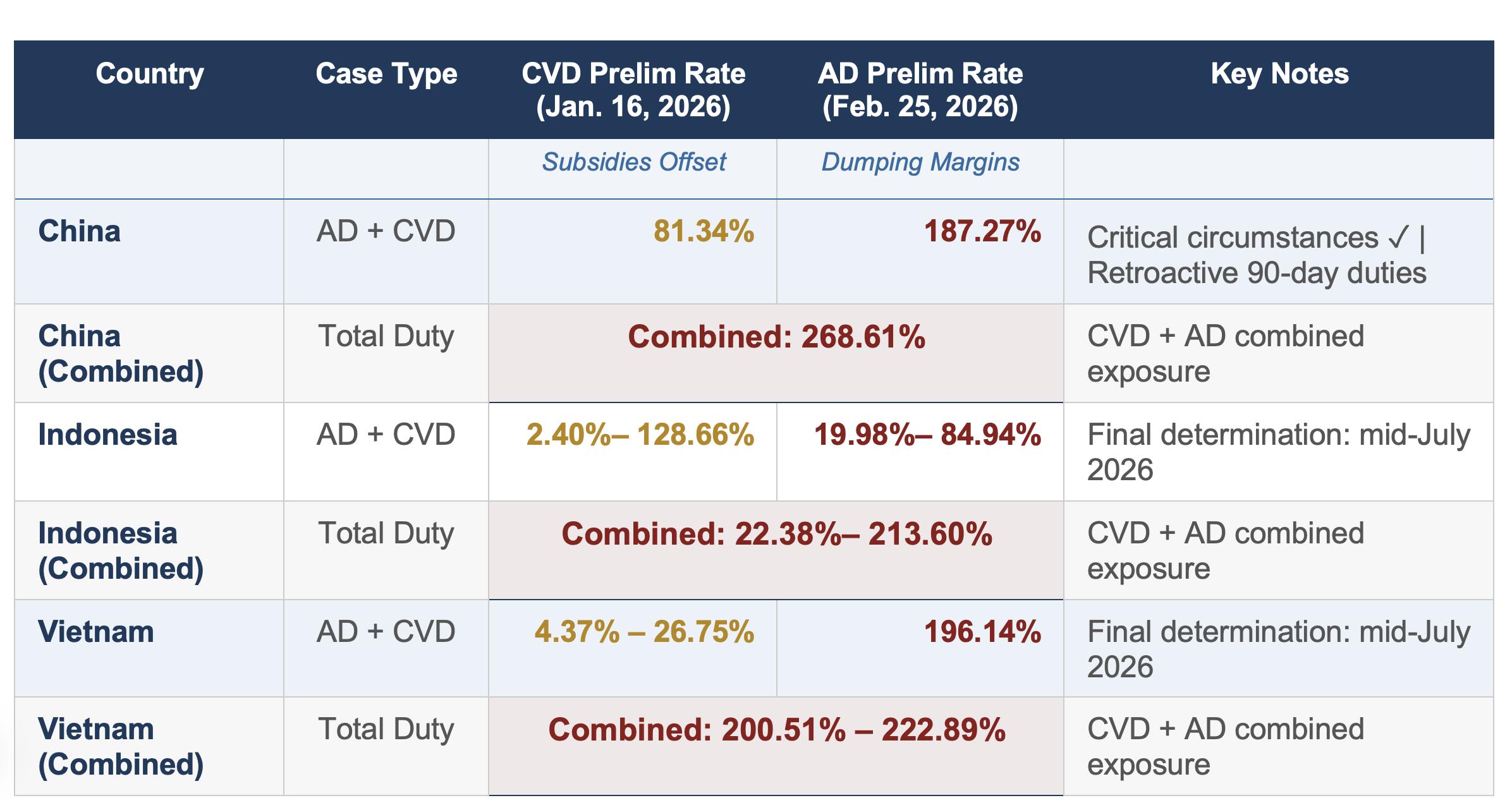
On January 16, 2026, the U.S. Department of Commerce issued affirmative preliminary countervailing duty (CVD) determinations against China, Indonesia, and Vietnam, finding that all three governments had been illegally subsidizing their plywood industries. Then, on February 25, Commerce followed with affirmative preliminary antidumping (AD) determinations against the same three countries, confirming that producers in each nation have been selling hardwood and decorative plywood in the U.S. market at prices below the cost of fair production. Together,
these rulings — initiated at the request of the Coalition for Fair Trade in Hardwood Plywood (CFTHP) — represent the most consequential trade enforcement action in the hardwood panel industry in years.
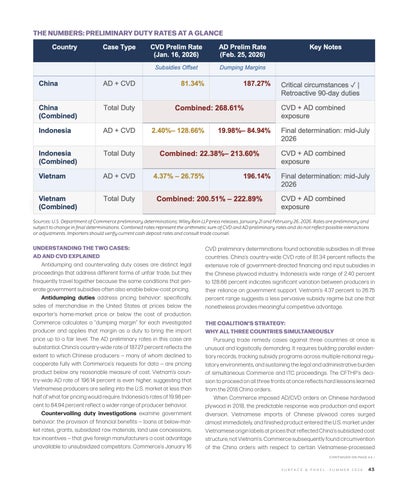
The combined preliminary duty exposure is substantial. Chinese imports now face a country-wide CVD rate of 81.34 percent stacked on top of a 187.27 percent AD rate — a combined preliminary exposure of 268.61 percent. Vietnamese imports face CVD rates of 4.37 percent to 26.75 percent and a country-wide AD rate of 196.14 percent, for a combined preliminary exposure as high as 222.89 percent. Indonesian imports carry CVD rates of 2.40 percent to 128.66 percent and AD rates of 19.98 percent to 84.94 percent, with combined exposure ranging from 22.38 percent to 213.60 percent depending on the producer. These are not marginal adjustments. They are transformative with respect to these countries. However, transshipment by Chinese companies through other Asian countries is likely to grow and we see high import growth rates from Malaysia and Cambodia.
Sources: U.S. Department of Commerce preliminary determinations; Wiley Rein LLP press releases, January 21 and February 26, 2026. Rates are preliminary and subject to change in final determinations. Combined rates represent the arithmetic sum of CVD and AD preliminary rates and do not reflect possible interactions or adjustments. Importers should verify current cash deposit rates and consult trade counsel.
UNDERSTANDING THE TWO CASES: AD AND CVD EXPLAINED
Antidumping and countervailing duty cases are distinct legal proceedings that address different forms of unfair trade, but they frequently travel together because the same conditions that generate government subsidies often also enable below-cost pricing.
Antidumping duties address pricing behavior: specifically, sales of merchandise in the United States at prices below the exporter’s home-market price or below the cost of production. Commerce calculates a “dumping margin” for each investigated producer and applies that margin as a duty to bring the import price up to a fair level. The AD preliminary rates in this case are substantial. China’s country-wide rate of 187.27 percent reflects the extent to which Chinese producers — many of whom declined to cooperate fully with Commerce’s requests for data — are pricing product below any reasonable measure of cost. Vietnam’s country-wide AD rate of 196.14 percent is even higher, suggesting that Vietnamese producers are selling into the U.S. market at less than half of what fair pricing would require. Indonesia’s rates of 19.98 percent to 84.94 percent reflect a wider range of producer behavior.
Countervailing duty investigations examine government behavior: the provision of financial benefits — loans at below-market rates, grants, subsidized raw materials, land use concessions, tax incentives — that give foreign manufacturers a cost advantage unavailable to unsubsidized competitors. Commerce’s January 16
CVD preliminary determinations found actionable subsidies in all three countries. China’s country-wide CVD rate of 81.34 percent reflects the extensive role of government-directed financing and input subsidies in the Chinese plywood industry. Indonesia’s wide range of 2.40 percent to 128.66 percent indicates significant variation between producers in their reliance on government support. Vietnam’s 4.37 percent to 26.75 percent range suggests a less pervasive subsidy regime but one that nonetheless provides meaningful competitive advantage.
THE COALITION’S STRATEGY: WHY ALL THREE COUNTRIES SIMULTANEOUSLY
Pursuing trade remedy cases against three countries at once is unusual and logistically demanding. It requires building parallel evidentiary records, tracking subsidy programs across multiple national regulatory environments, and sustaining the legal and administrative burden of simultaneous Commerce and ITC proceedings. The CFTHP’s decision to proceed on all three fronts at once reflects hard lessons learned from the 2018 China orders.
When Commerce imposed AD/CVD orders on Chinese hardwood plywood in 2018, the predictable response was production and export diversion. Vietnamese imports of Chinese plywood cores surged almost immediately, and finished product entered the U.S. market under Vietnamese origin labels at prices that reflected China’s subsidized cost structure, not Vietnam’s. Commerce subsequently found circumvention of the China orders with respect to certain Vietnamese-processed
product, but circumvention findings are narrow in scope and slow to implement. They address what has already happened, not what is happening now.
By filing independent petitions against Vietnam and Indonesia — grounded in direct evidence of those countries’ own dumping and subsidization, not merely in circumvention of China orders — the Coalition created a legal framework that is harder to evade.
WHAT HAPPENS NEXT: THE ROAD TO FINAL DETERMINATIONS
Preliminary determinations are not the end of the process. Commerce will continue its investigations over the coming months, examining additional subsidy programs including newly alleged programs identified during the investigation, verifying respondent data, and considering arguments raised in case briefs.
• final AD/CVD Determinations: Commerce’s Final determinations for China, Indonesia, and Vietnam are scheduled for mid-July 2026. These timelines align with the statutory framework for AD/CVD investigations and allow Commerce adequate time to complete verification and briefing.
• ITC Final Injury Determination: The International Trade Commission must make a final determination that the domestic hardwood and decorative plywood industry has been materially injured or threatened with material injury by reason of the subject imports. If both Commerce’s and the ITC’s final determinations are affirmative, Commerce will issue AD and CVD orders — the legal mechanism that makes the duties permanent and subject to annual administrative review.
• Cash Deposit Requirements: Effective immediately upon Federal Register publication of each preliminary determination, U.S. Customs and Border Protection began collecting cash deposits from importers of subject merchandise at the applicable preliminary rates. These deposits are held pending final determination; if final rates differ from preliminary rates, adjustments are made accordingly.
• Duty Evasion Enforcement: The Coalition’s counsel is actively working with CBP to share evidence of duty evasion, absorption, and circumvention. CBP has stated that imports of hardwood and decorative plywood are receiving heightened scrutiny. Importers and their customs brokers should ensure that country-of-origin declarations and entry documentation are accurate and supportable.
A DOMESTIC INDUSTRY THAT HAS WAITED LONG ENOUGH
It would be easy to read the headline rates — 187 percent here, 196 percent there — as abstractions, numbers on a Commerce Department spreadsheet with no human dimension. They are not abstractions. Behind each percentage point is a production decision made or deferred at a domestic mill, a shift worker whose hours were cut, a capital investment that was shelved because the math no longer worked against import competition that was priced below the cost of making the product.
The Coalition for Fair Trade in Hardwood Plywood represents a substantial majority of the American hardwood and decorative plywood
industry — companies that have been competing against unfairly priced imports from China for the better part of a decade and against Vietnamese and Indonesian product that benefited from the same underlying cost distortions. These companies did not file trade remedy petitions as a first resort. They invested in efficiency, reduced costs, and adjusted their product mix. They pursued circumvention findings when the evidence supported them. The current petitions represent the conclusion that the distortions are systemic, the harm is ongoing, and the only adequate remedy is the one that U.S. trade law provides.
Timothy Brightbill, lead counsel to the Coalition and co-chair of the International Trade Practice at Wiley Rein, has been direct in his assessment: the domestic industry has been harmed for decades, and these determinations represent a critical step toward the level playing field that the law is designed to guarantee. The preliminary determinations are a significant milestone. The final determinations, and the ITC’s injury findings, will determine whether that playing field is actually leveled. S P
Keith Christman is president of the Decorative Hardwoods Association, formerly known as Hardwood Plywood and Veneer Association. He welcomes your thoughts and questions at kchristman@decorativehardwoods.org. Visit the DHA at www.decorativehardwoods.org
POWDER COATED
more about
the most complete lumber-specific credit and business information in the world. Manage your business with insights from 250,000 credit references and business profiles
Manage your business with insights from 250,000 credit references and business pro les
Limit your nancial risk with $25 billion of A/R captured
Limit your financial risk with $25 billion of A/R captured Accelerate your growth with access to over 20,000 industry contacts and key decision makers
Accelerate your growth with access to over 20,000 industry contacts and key decision makers
SPRING 2026 HighPoint Market
A Market Defined by Warmth, Functionality, and Forward Momentum
The Spring 2026 High Point Market once again reinforced its position as the largest and most influential furnishings event in North America, drawing tens of thousands of industry professionals across more than 11.5 million square feet of showroom space April 25-29.
But beyond the scale, this season’s market reflected a deeper shift in the industry — one centered on functionality, personalization, and resilience in the face of evolving economic and design pressures.
Design Trends: Warm, Layered, and Intentional
Across showrooms, designers leaned into a palette of warm neutrals, earthy greens, and layered textures, signaling a move away from stark minimalism toward spaces that feel more lived-in and personal. Materials played a major role in that shift, with:
• Rich wood tones and tactile finishes
• Mixed materials emphasizing depth and contrast
• Upholstery and surfaces that prioritize comfort and longevity
Rather than bold statements, the prevailing aesthetic was one of quiet sophistication and adaptability, a trend that aligns closely with the needs of today’s multifunctional living environments.
Function Meets Flexibility
Functionality was a defining theme, particularly in furniture and storage solutions. Exhibitors showcased:
• Modular and reconfigurable furniture
• Hidden storage integration
• Compact, multi-use designs
These innovations reflect broader shifts toward smaller living spaces and hybrid lifestyles, where furniture and surfaces must work harder without sacrificing design integrity.
Business Climate: Adapting to Change
Behind the scenes, conversations revealed an industry focused on operational efficiency and digital transformation. Discussions around pricing pressures, AI adoption, and workflow optimization underscored the reality that High Point is no longer just about product — it’s about strategy and adaptability.
Even with some reports of softer attendance, the tone remained forward-looking, with manufacturers and suppliers emphasizing innovation and long-term positioning.
Spring 2026 High Point Market highlighted an industry balancing design inspiration with operational realities, where success increasingly depends on the ability to merge aesthetics, efficiency, and adaptability.
The Fall show is scheduled for October 17-21, 2026.
guangzhou 2026
March 28–31
Held
in Guangzhou, China, interzum guangzhou once again demonstrated its status as Asia’s leading platform for furniture production and woodworking innovation.
With the show co-located alongside the China International Furniture Fair (CIFF), the event covered the full manufacturing ecosystem—from materials and components to machinery and digital production technologies.
Key themes included:
• Smart manufacturing and automation
• Integrated production workflows
• Advanced materials and surface technologies
• Growing global collaboration across supply chains
With more than 1,600 exhibitors and a global visitor base, the show continues to serve as a critical hub for companies looking to connect with Asia’s rapidly evolving manufacturing landscape.
Built around the theme “Where Design Connects,” the 2026 show places a strong emphasis on how technology, human experience, and material innovation intersect, with programming designed to bridge bigpicture concepts and real-world application.
Lighting Moves to the Forefront
One of the most notable shifts this year is the increased focus on lighting as a core design driver, rather than a supporting element. NeoCon’s expanded programming includes dedicated sessions and “Illuminate Spotlight” tracks that explore how lighting influences everything from workplace productivity to wellness and spatial perception.
Lighting is being positioned not just as an aesthetic layer, but as a functional and experiential tool, integrated with:
• Smart building systems
• Human-centric and circadian design strategies
• Adaptive workplace environments
• Sensor-driven and AI-informed controls
This aligns with broader industry trends where lighting is increasingly embedded into surfaces, furniture, and architectural systems — blurring the lines between fixtures, materials, and digital infrastructure.
Technology, AI, and the Built Environment
NeoCon 2026 also places a strong emphasis on AI and emerging technologies, with sessions examining how digital tools are reshaping both the design process and the built environment itself.
Expect discussions and exhibits focused on:
• AI-enabled workplace design
• Smart environments and responsive systems
• Data-driven space planning
• Integration of digital and physical design workflows
A Broader Design Conversation
The show continues to reflect a shift toward human-centered and multidisciplinary design, with programming that explores collaboration across architecture, technology, and manufacturing. Topics such as generational workplace change, material innovation, and sustainability
Next year’s show is scheduled for March 28-31, 2027.
NeoCon continues to evolve as a central hub for commercial interiors, workplace innovation, and cross-disciplinary design thinking.
remain central to the conversation.
For our industry, NeoCon offers increasing relevance, not only through materials and finishes, but through the growing integration of lighting, technology, and modular systems into commercial interiors.
For manufacturers, fabricators, and designers, the show provides insight into how lighting, surfaces, and technology are converging — pointing toward a future where materials are not just passive elements, but active contributors to the built environment.
2026
June 30 - July 2 Palm Beach County Convention Center, West Palm Beach, Florida
The Closets Conference & Expo continues to establish itself as a must-attend event for professionals in the closet and home organization sector.
More than a traditional trade show, the event blends education, networking, and product discovery, bringing together closet manufacturers, designers, fabricators, and suppliers in a highly targeted environment.
This year’s conference is expected to highlight:
• Efficient manufacturing strategies for custom and semi-custom closet systems
• Growth in modular and flat-pack storage solutions
• Expanding demand for integrated lighting and technology
• Business insights on scaling operations and improving profitability
With a strong emphasis on practical, shop-floor takeaways, the educational sessions are designed to help attendees refine workflows,
improve installation efficiency, and better align design with production capabilities.
As demand for customized storage continues to rise — driven by smaller living spaces and evolving consumer expectations — the Closets Conference & Expo offers a timely look at one of the fastestgrowing segments within the panel and cabinetry industry. S P
NOTE :
imm india 2026 Update
Inaugural Edition Rescheduled for September
The inaugural edition of imm india, originally planned for earlier this year in New Delhi, has been officially rescheduled to September 1–3, 2026
Organizers Koelnmesse India and the Jodhpur Handicrafts Exporters Association made the decision just before the show was scheduled in March, following discussions with exhibitors and industry stakeholders. Ongoing geopolitical conditions — resulting in airspace restrictions and flight cancellations — prompted many international participants to request a later date to ensure stronger global attendance.
The revised timing reflects the organizers’ commitment to delivering a fully international, high-quality platform for the furniture, interiors, and handicrafts industries — one that maximizes participation and business opportunities across regions.
With new dates now set, imm india is positioned to debut as a key connector between global design trends and India’s rapidly expanding manufacturing and consumer markets.
BY DESIGNS P
We at Surface & Panel are constantly amazed by the new products and their applications in our industry. S&P By Design is an opportunity to share some of those innovations used in real projects around the world.
A FOREST IN THE FAÇADE:
Mears Middle School, Anchorage, Alaska
At Mears Middle School in Anchorage, a necessary façade renovation became an opportunity to rethink both performance and identity. After decades of moisture infiltration and structural stress from seismic activity, the school required a durable, highperformance exterior system capable of withstanding Alaska’s demanding climate.
Rather than simply replace the aging envelope, the design team at Nvision Architecture reimagined the building as a reflection of its surroundings. The result is a striking façade composed of customperforated panels that interpret the region’s dense forest landscape — transforming the exterior into a large-scale, site-specific graphic.
To achieve this, the project utilized ALUCOLUX, a pre-coated solid aluminum panel from 3A Composites selected for its ability to balance structural performance with high-level customization. The material’s rigidity allowed thousands of precisely engineered perforations — derived from landscape imagery — to be cut into the panels while maintaining flatness and resisting oil-canning over time.
Beyond aesthetics, the system functions as a modern rainscreen, addressing long-standing moisture issues while delivering a lowmaintenance, weather-resistant envelope. The aluminum panels also accommodate thermal movement and wind loads typical of the region, ensuring long-term durability across the building’s
approximately 60,000-square-foot façade.
Equally important, the design resonated with the community it serves. The forest concept — translating local identity directly into the building skin — earned strong support from school leadership, students, and neighbors alike, creating a renewed sense of pride in the campus.
The project demonstrates how advanced panel materials like ALUCOLUX can go beyond performance requirements to deliver highly customized, meaningful architectural expression — proving that even functional upgrades can become defining design moments. S P
If you have an interesting and innovative project to consider for S&P By Design, submit 1-3 images and a brief explanation of the project, including materials used, along with your company name and URL to jwilliams@526mediagroup.com. You will be contacted if your project is selected for publication in an upcoming issue.