
BLUERIDGEOUTDOORS.COM MARCH 2023 FREE! + HOW TO BUY A CAMPER + FLY GEAR: FISHING FAVORITES + NEW JAMS FROM DAVE MATTHEWS MOBILE HOME MAKERS: LOCAL COMPANIES CREATE ULTIMATE ADVENTURE RIGS VAN LIFE TIPS: Advice from a Road Warrior GO WILD Stream-Born Trout Streams in the South

LEARN MORE
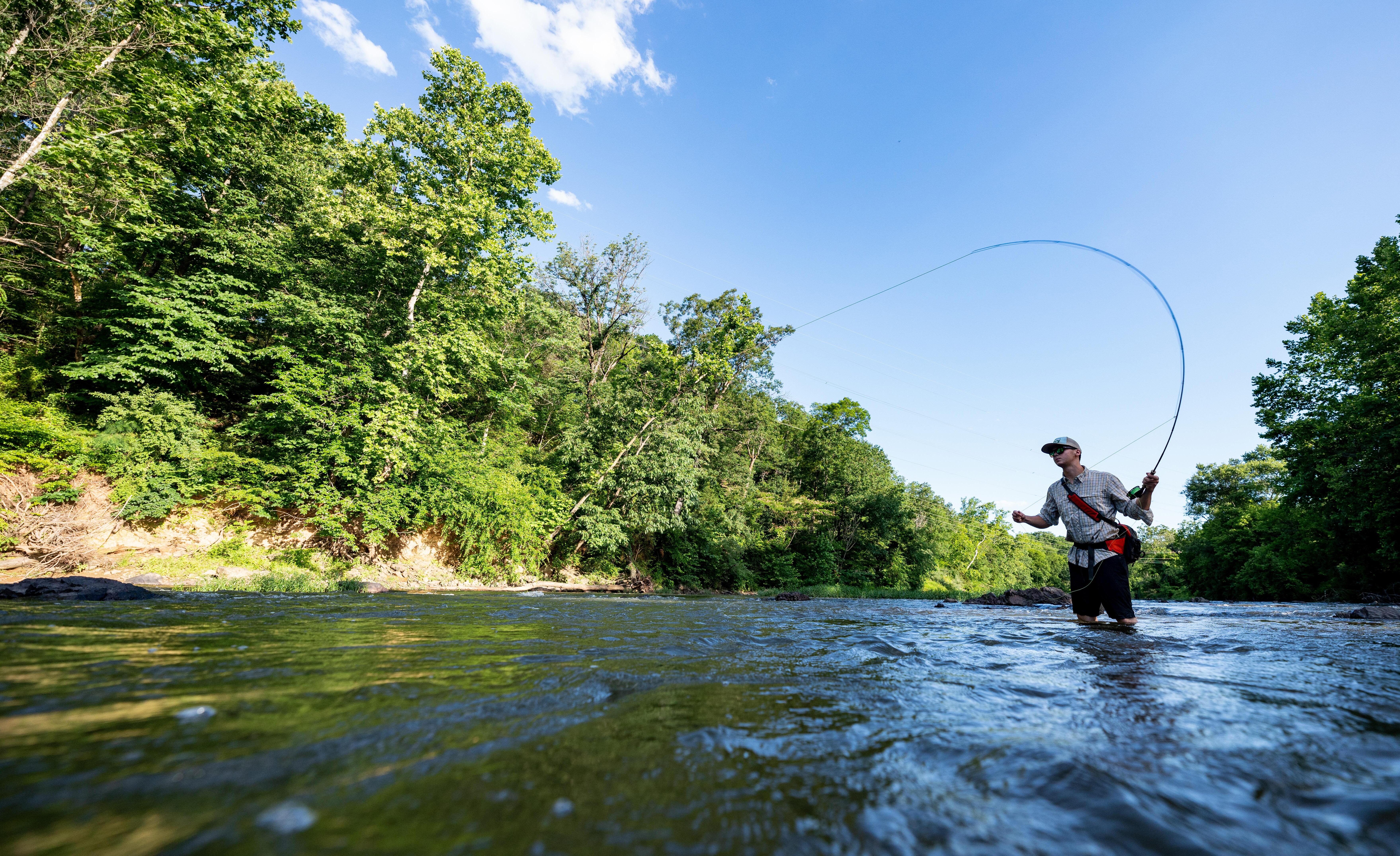
PLAN YOUR FISHING ADVENTURE TODAY.
VISITCHARLOTTESVILLE.ORG/FISH
Cast your line in Charlottesville & Albemarle County! With pristine rivers, streams, and bodies of water, the Charlottesville area is the perfect place to find your next big catch. Combine it with more than 40 wineries, craft breweries, delicious eats, and comfy places to stay, for an ultimate fishing excursion.

PRESIDENT BLAKE DEMASO blake@blueridgeoutdoors.com
EDITOR IN CHIEF JEDD FERRIS jedd@blueridgeoutdoors.com
PUBLISHER LEAH WOODY leah@blueridgeoutdoors.com
ASSOCIATE PUBLISHER KATIE HARTWELL katie@blueridgeoutdoors.com
CREATIVE DIRECTOR MELISSA KENNELLY m.kennelly@blueridgeoutdoors.com
EDITORIAL & PRODUCTION
SENIOR EDITOR WILL HARLAN will@blueridgeoutdoors.com
GEAR EDITOR DOUG SCHNITZSPAHN doug@elevationoutdoors.com
DESIGNER/ART MANAGER REBECCA CENCEWIZKI art@blueridgeoutdoors.com
EDITORIAL INTERN JENNY HELLWIG intern@blueridgeoutdoors.com
CONTRIBUTORS
DAVE STALLARD
GRAHAM AVERILL
ELLEN KANZINGER
LAUREN STEPP
MARY BETH SKYLIS
MIKE BEZEMEK
COPY EDITORS
JULIA GREEN, ROBERT MCGEE
ADVERTISING & BUSINESS
ACCOUNT EXECUTIVE BUCK BRICE buck@blueridgeoutdoors.com
ACCOUNT EXECUTIVE HANNAH COOPER hannah@blueridgeoutdoors.com
ADVERTISING CONTENT COORDINATOR AMANDA LIVERETTE amanda@blueridgeoutdoors.com
BUSINESS MANAGER MELISSA GESSLER melissa@blueridgeoutdoors.com
DIGITAL MEDIA
ONLINE DIRECTOR CRAIG SNODGRASS webdir@blueridgeoutdoors.com
CREATIVE CONTENT MANAGER SHANNON MCGOWAN shannon@blueridgeoutdoors.com
CIRCULATION INQUIRIES circulation@blueridgeoutdoors.com
FEATURES
10 | GO WILD
Five great stream-born trout fisheries in the Blue Ridge.
19 |
These companies will
MARCH 2023 | BLUERIDGEOUTDOORS.COM 5
GOT A STORY IDEA OR COMMENT? submit@blueridgeoutdoors.com BLUERIDGEOUTDOORS.COM SUMMIT PUBLISHING 977 SEMINOLE TR PMB294 CHARLOTTESVILLE, VIRGINIA 22901 ASHEVILLE, NORTH CAROLINA BLUERIDGEOUTDOORS.COM ©2022 Summit Publishing, LLC. ALL RIGHTS RESERVED
MOBILE HOME MAKERS
build the adventure van of your dreams. 42 | EVERYTHING IS FOR SALE The privatization of public lands. March 2023 CONTENTS DEPARTMENTS 7 | FIELD NOTES The best apps for van life. 8 | FIELD REPORT With environmental and spiritual benefits, green burial is gaining favor in the Blue Ridge and beyond. 52 | ESSAY After sustaining an injury, an adventurer becomes mindful about drinking. PHOTO COURTESY OF GETTY IMAGES 27 | WE BOUGHT A CAMPER For an adventurous couple, the road to a dream purchase gets a little rocky. 58 | TRAIL MIX New tunes from Dave Matthews Band and Mac DeMarco. 42 30 | OPTIMIZE RV SPACE A road warrior offers key tips to make highway life easier. 10
ON THE COVER ADVERTISING INQUIRIES advertise@blueridgeoutdoors.com 56 | THE GOODS Fishing favorites and gear for the road. 54 | THE OUT AND BACK Gravel biking and getting older.
PHOTO BY JENNIFER SHEFFIELD
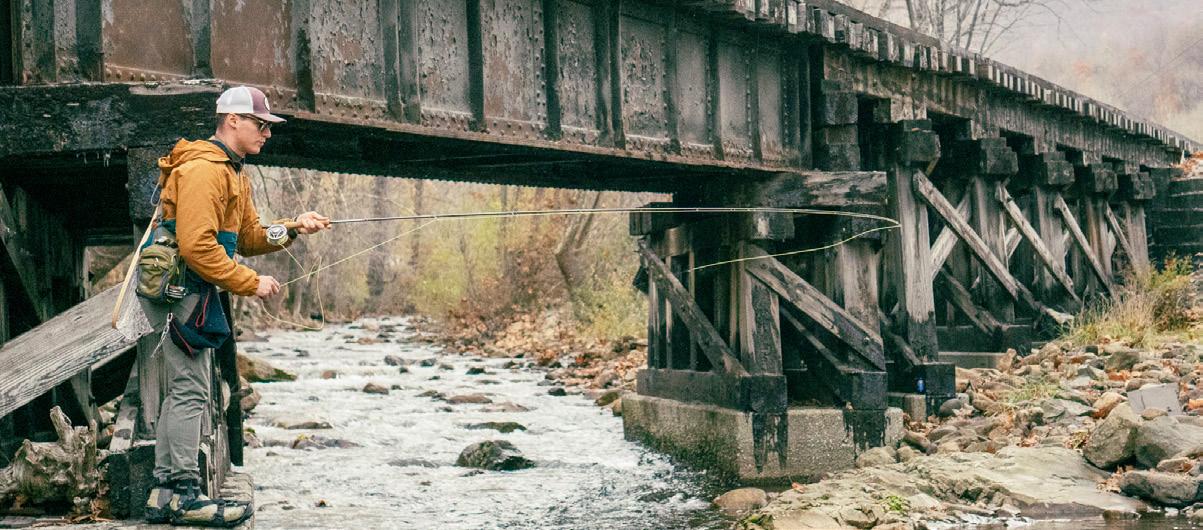
ALLIE VANNOY FLY FISHING ON THE FRENCH BROAD RIVER NEAR ASHEVILLE, NORTH CAROLINA.
PHOTO BY ANDREW KORNYLAK
BEST VAN LIFE APPS
 BY MARY BETH SKYLIS
VAN LIFE OFFERS ULTIMATE freedom on the open highways, but there can also be plenty of bumps in the road during extended journeys. That’s when technology can help. Apps are available that can point full-time travelers to fast, cheap gas, accessible cell signals, and open campsites. BRO ’s correspondent, who spent about half of last year on the road, shares her must-download favorites.
iOverlander
The iOverlander app is a database full of communitycollected information about free camping, boondocking, water fill-ups, mechanics, and laundry locations. It’s a one-stop shop for van lifers who need to access specific services while they’re traveling through unfamiliar territory. The free app allows users to submit and correct information, which means that it’s continuously being improved by fellow travelers.


Maps.Me
Google Maps is a great resource for travelers when they have a solid cell phone connection. But van lifers often end up off the grid, where it can be impossible to find a signal. Maps.Me can help. The app provides maps that can be downloaded and used offline. While the flow of this one is a little clunky, it still provides a great resource to anyone who doesn’t want to get lost when the signal drops.
Opensignal


Opensignal makes it easy to find camp locations that are likely to have a cell phone signal, which is great for those who work remotely. A drop-down menu allows you to highlight cell phone connections from specific providers, showing you potential areas with stable connections. This app can also be used to test the speed of your connection and the quality of your videos, which is great when you have a Zoom meeting scheduled. It’s also free to use.
Libby
Long drives require engaging entertainment. Music and podcasts are
great, but if you’re looking for another option to help pass the hours, check out Libby. This app allows you to connect to your local library and download audiobooks. Users can adjust the speed of the narration to help cruise through books.

Gas Buddy
The price of gas has been a big bummer in recent years, and van lifers have certainly been feeling the burn. But GasBuddy can help drivers reduce the amount they pay at the pump. The app searches nearby areas for each gas station’s prices. When you’ve selected the cheapest option, GPS will take you there easily. Before
you know it, you’ll be on your way to the cheapest gas station in town.
BlueDriver
If you spend a lot of time on the road, sooner or later your adventure rig will have a mechanical hiccup. BlueDriver is commonly used by mechanics, car enthusiasts, and those who just want to keep tabs on their vehicle. If your dashboard lights up with a code, BlueDriver determines what the code is, allowing you to decide whether you should keep driving. As a free app, this is one of the best resources for car and van maintenance, since it alerts you to the general health of your vehicle as you travel.

MARCH 2023 | BLUERIDGEOUTDOORS.COM 7 FIELD NOTES TRAVEL
Before extended time on the road, load your phone with these highway-ready favorites
PHOTO BY MEGAN FERRIS
BACK TO THE EARTH
might sound morbid, his work environment is quite pleasant.
BY WILL BAHR
AS A STUDENT AT WARREN
Wilson College in western North Carolina, Ben Gordon planted, tended, and harvested crops for the college cafeteria until he graduated in 2019. But for the past few years, his job has entailed the planting of an entirely different sort: human corpses.
Gordon is a gravedigger at the Carolina Memorial Sanctuary, a conservation burial ground just south of Asheville. The Sanctuary buries bodies in accordance with green burial practices—no embalming, no vaults, and only biodegradable caskets, if one opts for a casket at all. There is also a conservation easement over its 11 acres, assuring that the Sanctuary abides by stringent ecological stipulations to preserve native biodiversity, and soil and water quality.
Gordon was tipped off to the job by one of his Warren Wilson professors and, though the work
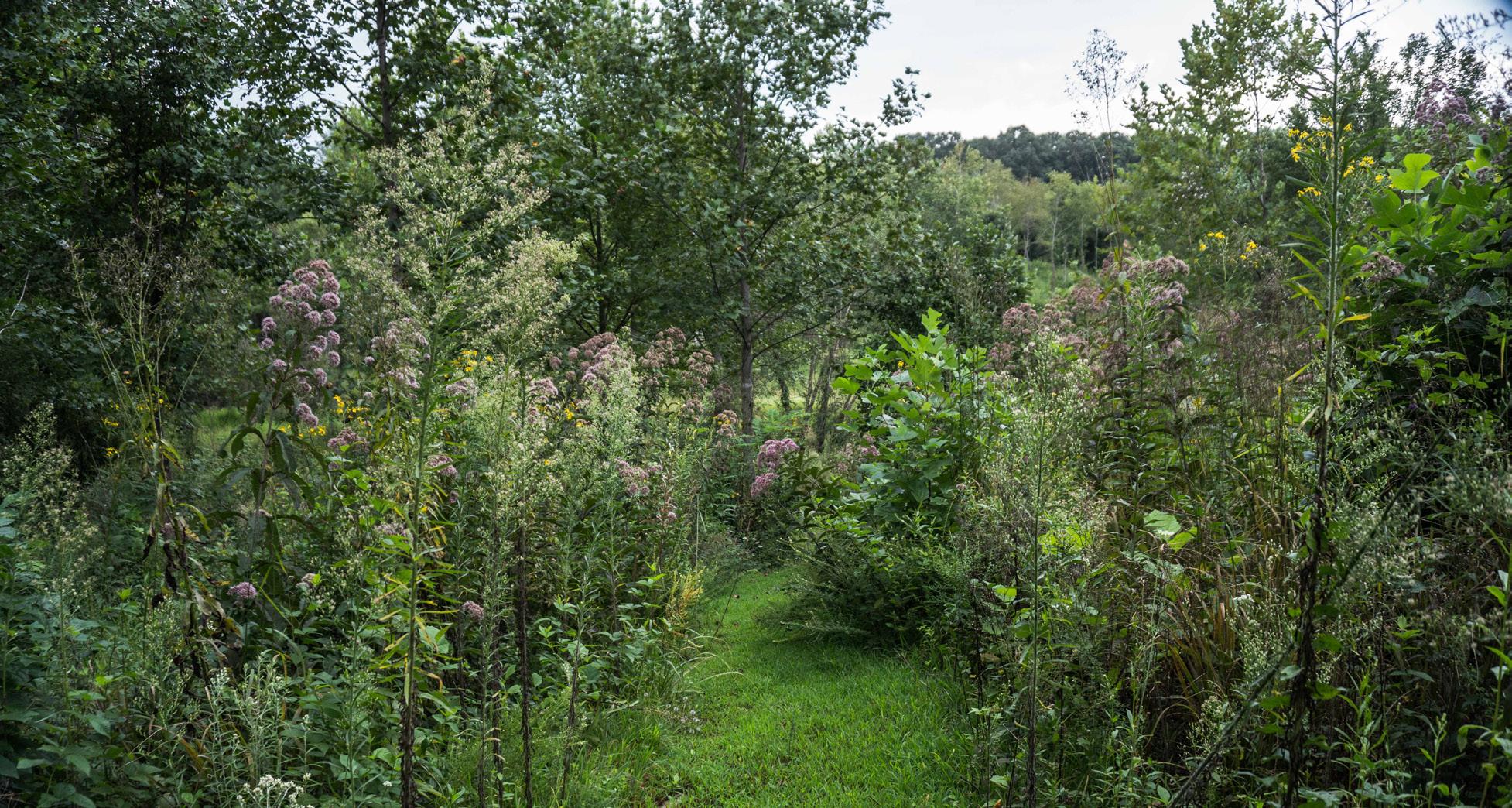
To stroll through the Sanctuary, you’d be hard-pressed to realize that you’re in a graveyard. It feels more like a municipal park. Paths weave through the large wooded acreage, with the occasional meadow and babbling creek cleaving through its center. There’s even a restored wetland. And graves are subtly marked, often by rebar strung with dog tags. Occasional mounds in the earth serve as the only real reminder that humans lie beneath.
Beyond the peaceful setting, green burial plots reduce environmental impact and help restore habitats. The sterilized look of conventional cemeteries requires steady maintenance, including the use of chemicals to scrub headstones, and gasoline for the near-constant lawn mowing. Embalming fluids used in postmortem preparation have proven to be carcinogenic and harmful to funeral workers—not to mention our planet.
In the green burial treatise "Our Last Best Act," author Mallory McDuff—the professor who helped Gordon find his job—writes: “Conventional burial containers, from caskets to urns, have a higher carbon footprint than biodegradable ones and can often leach toxic chemicals—such as from stains or varnishes—into the soil and water.”
Cremations are even worse,
as they “produce 250,000 tons of carbon dioxide emissions each year, the equivalent of burning 30 million gallons of gas.” Still, cremation remains the style of the day. According to McDuff, over 50% of our population chooses flame cremation, and that number is projected to increase to 80% by 2040.
And then there are the vaults. Although, McDuff says, “no state law requires embalming,” most cemeteries do. They also require vaults: concrete liners for graves, which help keep the ground level for the purpose of maintenance and lawnmowing ease.
With the ongoing effects of climate change established, many people have scrutinized their personal rates of consumption and attempted to reduce their individual impact. Now, some are even ranking their post-mortem carbon footprints.
According to the Green Burial Council, the reviewing body for the Sanctuary and similar establishments, there are approximately 350 green burial cemeteries in the U.S. and Canada. There are a growing number in the Blue Ridge region, including a handful in Virginia and Tennessee. Human composting is also gaining traction in the West, with a bill pending in California. If passed, that state would be the fourth to legalize the practice, joining Colorado, Oregon, and Washington.
“The numbers have gone up,
the number of people who say they would consider a green burial,” McDuff says.
McDuff and Gordon are some of these people. McDuff intends to be interred at the Warren Wilson College Cemetery, a tiny graveyard abutting one of the college’s many cow pastures. She negotiated to be buried sans vault and un-embalmed, after convincing the Warren Wilson Cemetery board to waive the stipulation entirely.
Gordon plans for an even simpler sendoff. “I wanna be buried in a shroud,” he says, referring to the option of going into the ground wrapped in nothing but cloth. “That’s my present inclination.”
There’s also a spiritual reason to opt for green burial. Occasionally, the bereaved join Gordon during his daylong digs at the Sanctuary. When they do, the effect is palpable.
“The physicality of it, I think, aids in the grief process,” Gordon says. “The sweating and the exerting and relating of earth and dirt in this service of this person you love. You can tell it benefits people. It’s cathartic.”
Cassie Barrett, director of operations at the Sanctuary, concurs. “When you watch a grave come to a full close, it really helps to integrate ‘this is real.’ You can literally feel the atmosphere shift, no exaggeration. Even if you understand [a green burial] conceptually...you do not understand it until you experience it. A lot of burials we do, the person’s in a shroud, and in that case you see the form of their body.”
This removal of barriers is just as much a shot in the arm against death phobia—sort of an existential immersion therapy—as it is an ecological practice. Gordon, McDuff, and Barrett comprise a portion of a growing community. Each are hopeful that more people will be called to practice green burial—first as facilitators and, eventually, as clientele. To hear them tell it, no work may be more important.
“How we relate with [death] is foundational to how we relate with truth on a personal and a cultural level,” Gordon says. “Death is the truest thing about us.”
FIELD REPORT INTERMENT
With environmental and spiritual benefits, green burial is gaining favor in the region and beyond.
PHOTO COURTESY OF CAROLINA MEMORIAL SANCTUARY
DAVIDSON RIVER OUTFITTERS
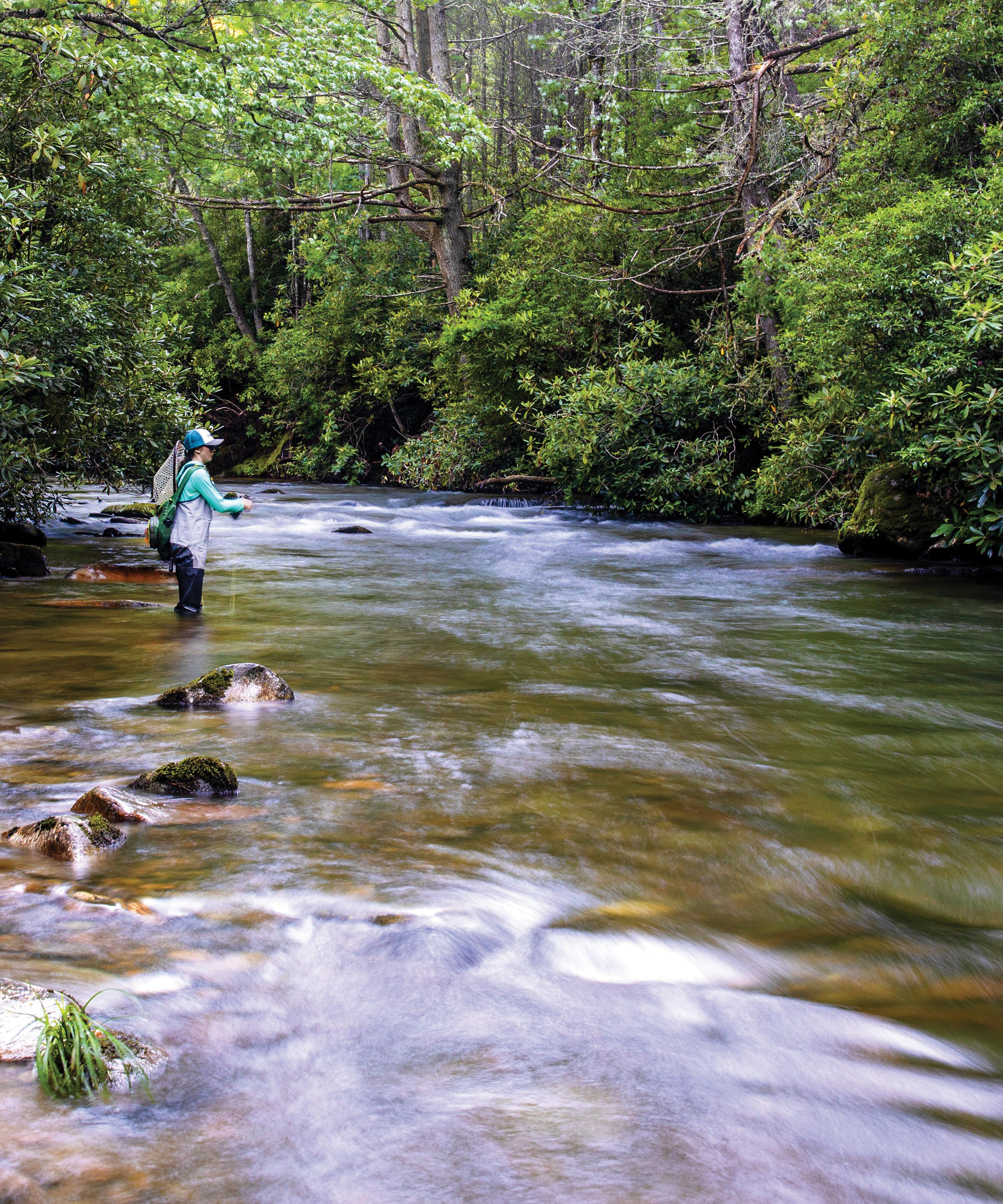
The area’s oldest and largest Fly Fishing Outfitter, offering a full guide service, instruction, tying lessons and all of the supplies to make your next trip a success.
DAVIDSONFLYFISHING.COM
(828) 877-4181
MERAKI
ESCAPE
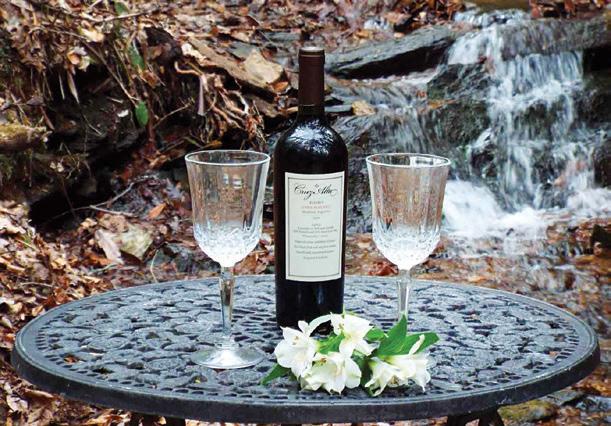
Romantic Mountain Cabins w/Hot Tubs + Pet Friendly. Exceptional amenities: walk-in stone side-by-side showers, fireplaces, covered porches, waterfalls, hiking trail, dog/bike washing station and more.
MERAKIESCAPE.COM

(828) 463-7440
PISGAH CLIMBING SCHOOL

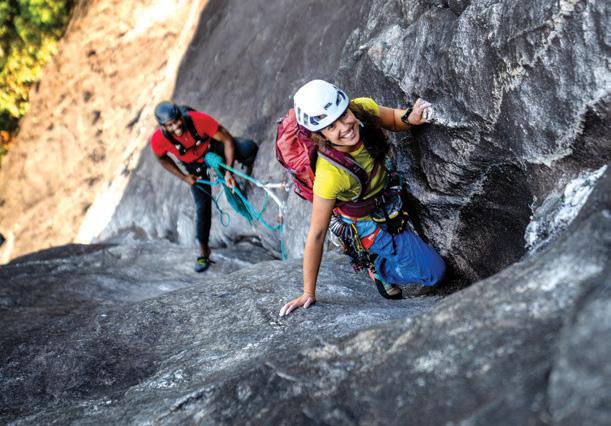
Experience Pisgah National Forest’s premier rock climbing. With a variety of climbing options suitable for all skill levels, we can personalize your family’s next adventure. PISGAHCLIMBINGSCHOOL.COM
is the right time to gear up for great outdoor adventures in the Land of Waterfalls. explorebrevard.com | 800.648.4523
Springtime
222-ROPE
(828)
GO WILD
Stream-Born Trout Fisheries in the Blue Ridge
 BY NICK CARTER
PHOTO BY NICK CARTER
BY NICK CARTER
PHOTO BY NICK CARTER
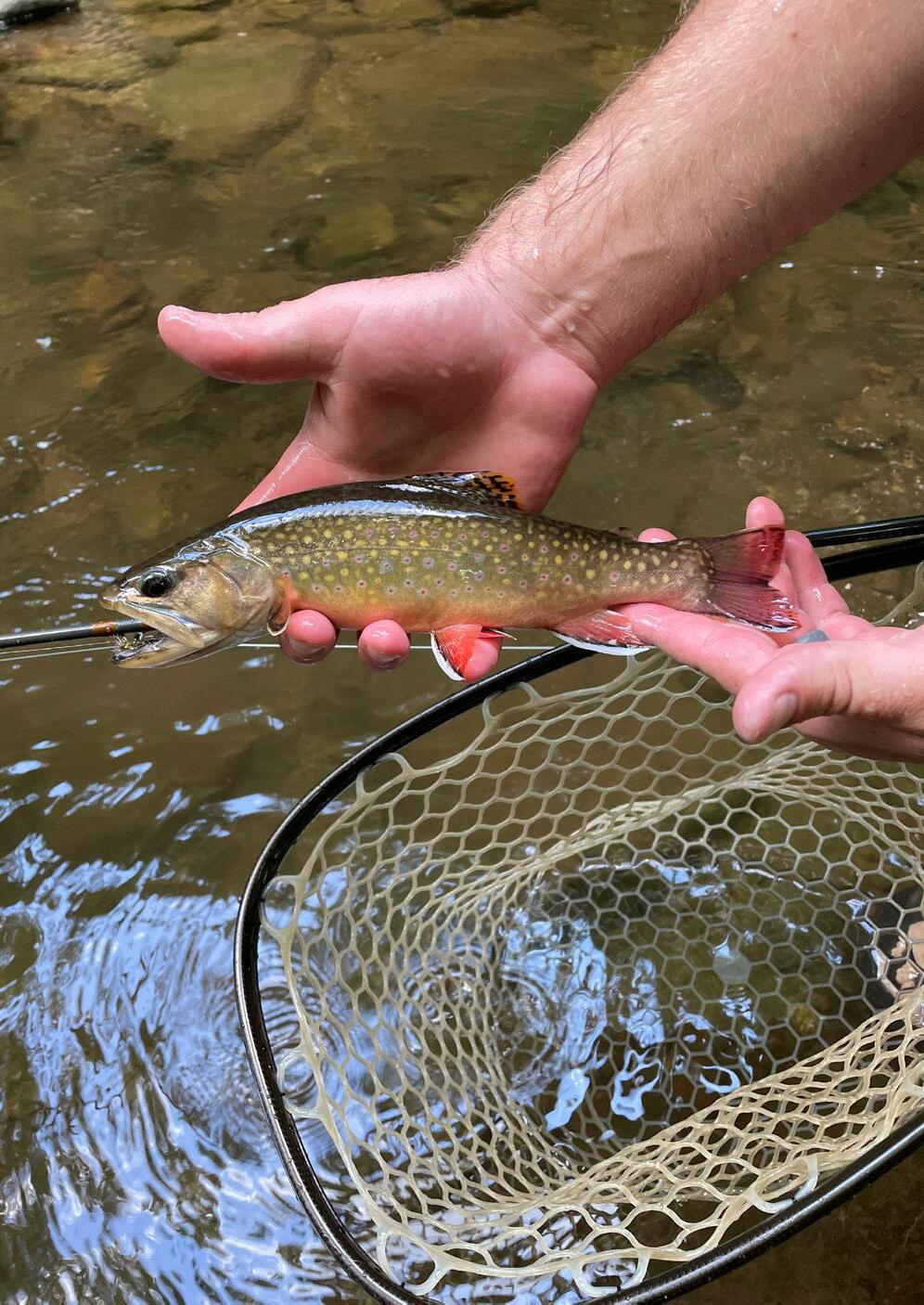
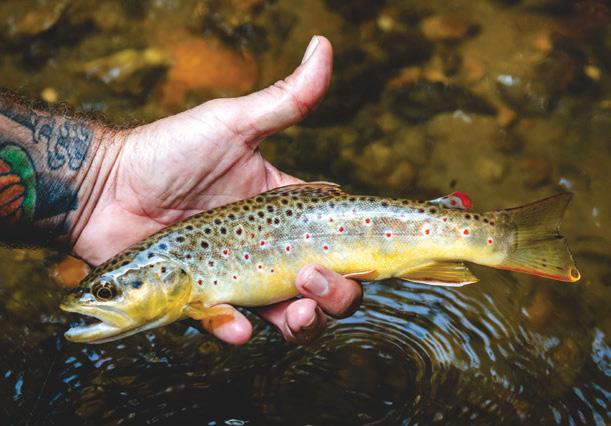
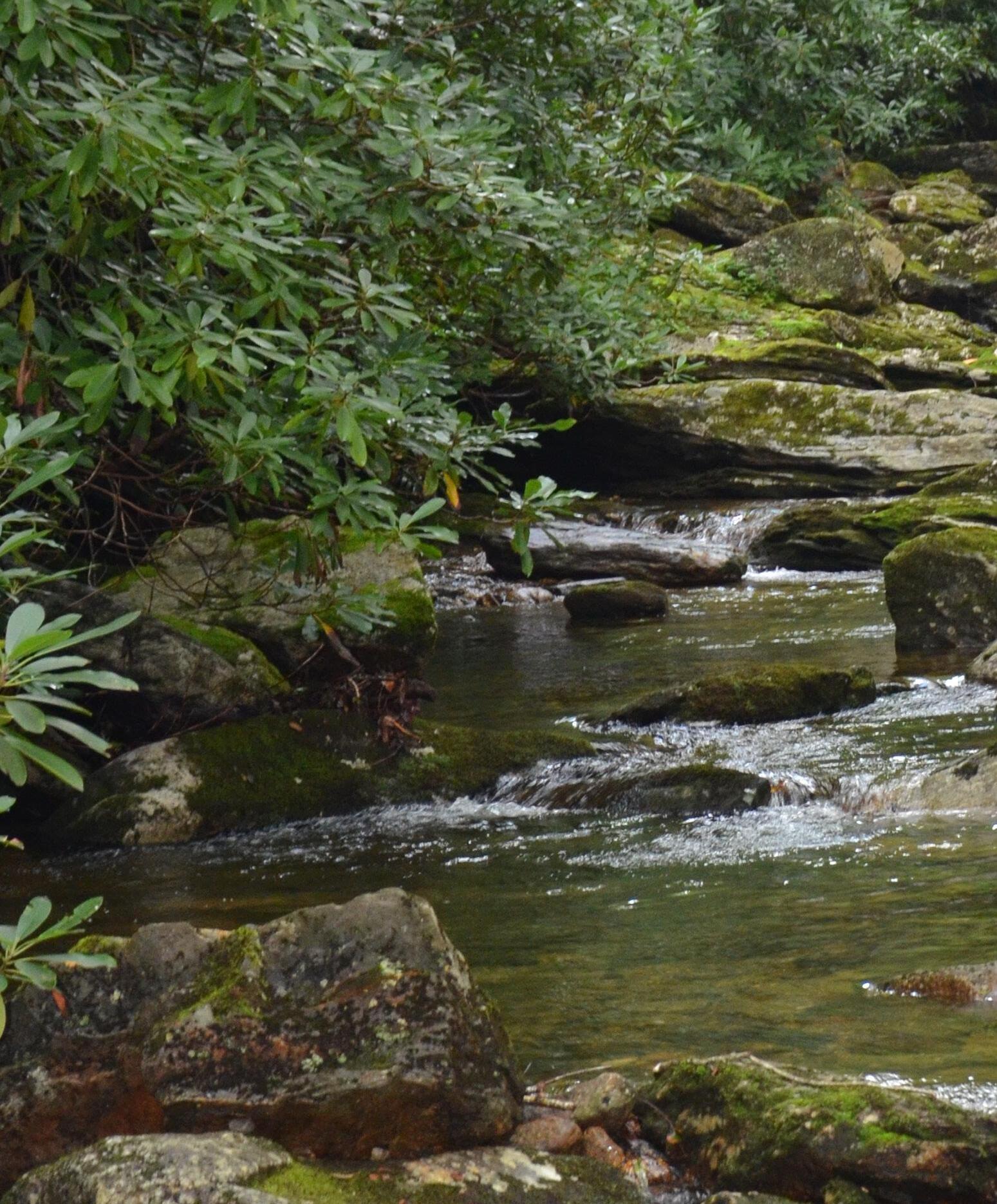
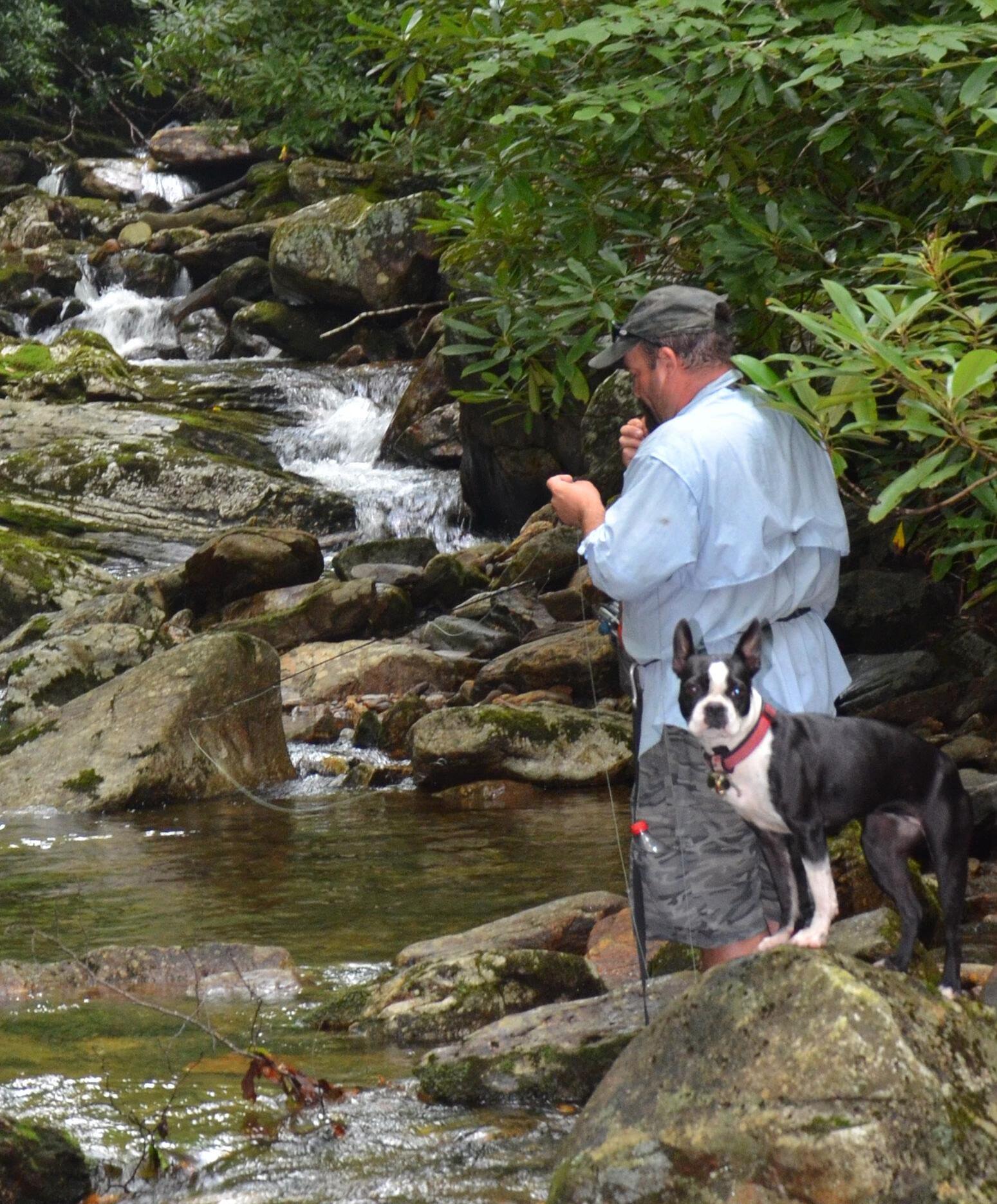
CATCHING STOCKED TROUT IS FUN, BUT THERE’S NO denying the added allure of casting for stream-born fish. They’re prettier than hatchery-raised trout, they fight harder, and they’re fully in tune to the fisheries where they live out their life cycles.
To some, it might come as a surprise that the only native species of salmonid in the Blue Ridge is the gorgeous species of char we call brook trout. Brown trout were imported from Europe beginning in the late 1800s to give people something to fish for. Rainbow trout, native to the
western slope of the Rocky Mountains, were introduced to our waters a little later for the same reason.
Competition with introduced rainbows and browns is partly responsible for the limited cold-water habitat remaining for our true-native brookies…but it is what it is. Over decades, the non-natives have taken hold and are thriving. All three species are endearing to anglers for different reasons, and most of the places they live and spawn are as beautiful and wild as the fish themselves. So grab your rod and explore these five wild trout streams.
Letort Spring Run Carlisle, Pennsylvania
Pennsylvania has no shortage of trout streams where little wild fish experience light pressure and feed aggressively. Letort Spring Run is not one of them.
The Letort has a long history of humbling anglers, and that’s part of its appeal. It is an important stream to the history of Pennsylvania fly fishing, one of those places where anglers pay homage to and walk in the bootsteps of legends. The fish are there, and they can grow quite large feeding on the abundance of critters that thrive in watercress beds. But there’s a list of reasons why Letort trout are so tough to catch.
“It’s a blessing and a curse,” said Jacob Gilliland, of TCO Fly Shop in nearby Boiling Springs, Penn. “Because there’s a lot of vegetation, there are a lot of cress bugs that support a healthy wild brown trout fishery. And
because there’s a lot of vegetation, it’s very hard to get a drift with your flies.”
Achieving a good drift falls in at the middle of a sequence of actions that must be perfect in order to bring the Letort’s wily browns to net. “The whole thing is technical,” Gilliland said.
It’s a small spring creek, averaging 20 feet in width, with clear water. Silt buildup and cress beds make it difficult to wade, and Gilliland said most anglers walk and fish from the bank. This exacerbates already tight casting conditions.
Also, the fish are cagey because of heavy angling pressure from folks who want to test themselves. Long, light leaders are a requirement, and Gilliland said it helps to be creative with presentations and patterns because these fish have seen everything.
In spring, Gilliland said the river sees hatches of small blue winged olives, midges, and a few little black stoneflies. Tricos show up in summer, and terrestrials like grasshoppers are important in summer, especially in the
meadow stretches.
Dry flies are easier to fish over the cress beds, but Gilliland said if he had to choose one fly it would be a cress bug imitation. Other good subsurface options are sculpinimitating streamers like Woolly Buggers and Slumpbusters, both in olive, or other baitfish imitators like a Shenk’s Minnow or a Bugger in white.
If you choose to take on the challenge of the Letort, rest assured you can also retreat to other very good waters in the area. The Letort flows through Carlisle, in southern Pennsylvania’s Cumberland County. Other good nearby options are Big Spring Creek—which is known for big, wild rainbows, browns, and brookies— and Yellow Breeches Creek, which is heavily stocked with rainbows, brookies, and browns.
More Info: TCO Fly Shop Boiling Springs, tcoflyfishing.com
12 BLUE RIDGE OUTDOORS
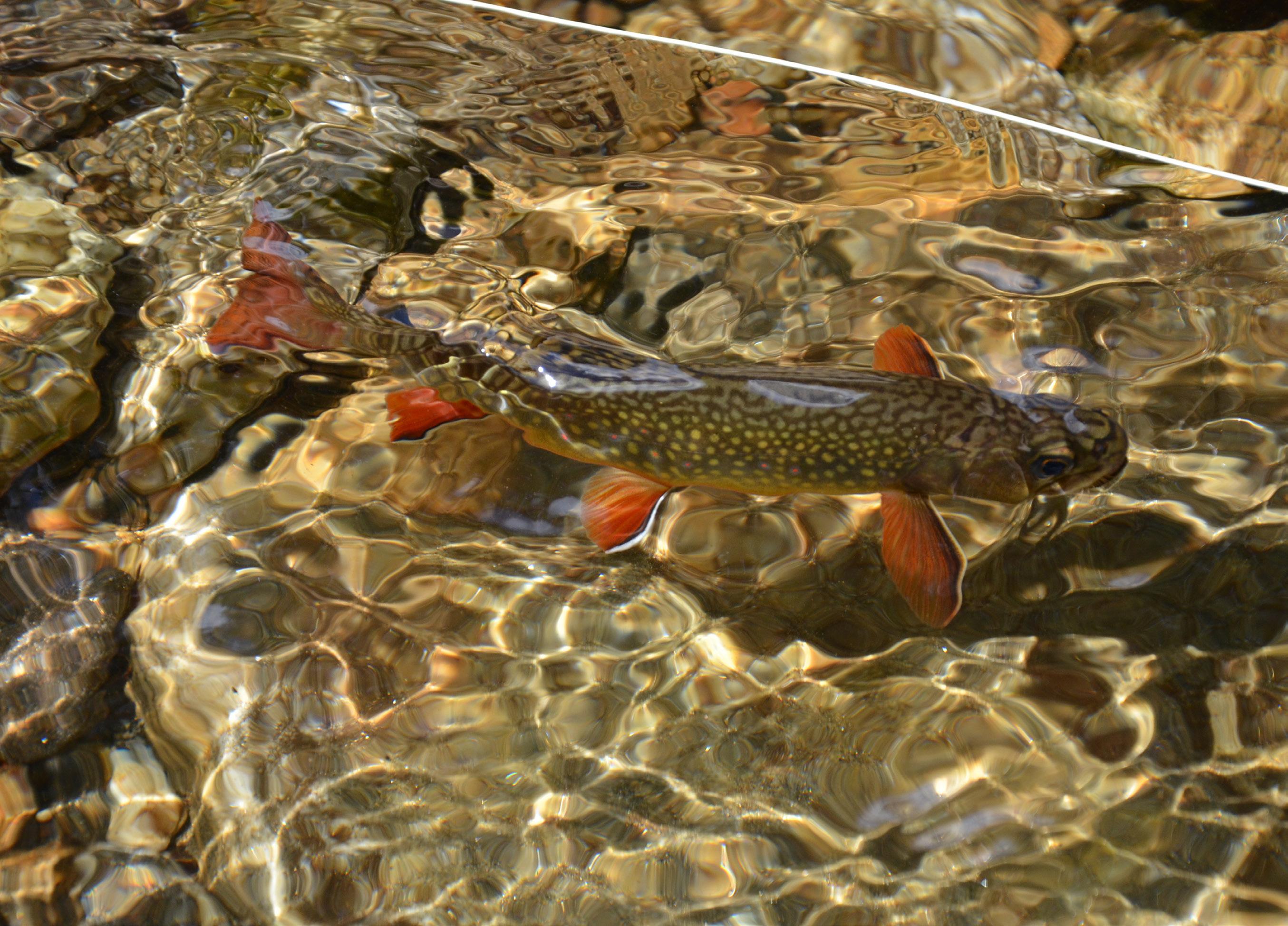
BROOK TROUT, THE REGION’S ONLY NATIVE SALMONID, ARE AS GORGEOUS AS THE HIGH-ELEVATION STREAMS WHERE THEY LIVE. PHOTOS BY NICK CARTER
Savage River Savage River State Forest, Maryland
It might not have been the intended purpose, but one of the region’s best wild trout fisheries was created when they dammed northwest Maryland’s Savage River back in 1952. The tailwater stretch of the Savage in Garrett County hasn’t been stocked since 1991, and it is home to thriving populations of native brook trout and wild brown trout.
There are about five river miles between the Savage River Reservoir Dam and its mouth at the North Branch of the Potomac, and they are some of the best fly fishing miles in the state thanks to special regulations designed to produce trophy trout.
The entire run from the dam to the North Branch is managed under trophy trout regulations. Only artificial lures and flies are allowed, and treble hooks are restricted. It’s open year-round with a two-trout daily creel limit, a 12-inch minimum length on brookies and an 18-inch minimum on browns. There’s also a special fly fishing-only stretch that extends 1.25 miles from the dam to the Allegany Suspension Bridge.
“It’s pretty much catch-and-release, artificialonly,” said James Harris, owner of Beaver Creek Fly Shop. “There are some big ones in there, but I don’t ever see people keeping them.”
Despite being dam controlled, the Savage tailrace looks and fishes like a free-flowing mountain stream. It runs over a steep, cobbled streambed through a deep forested valley. Harris said there’s a lot of holding water featuring deep holes as well as tons of riffles and pocket water spaced between long boulder-strewn flats.
Big brown trout from 18 to 20 inches are a definite possibility on the Savage tailrace, and outsized brookies longer than 14 inches appear occasionally. The norm, however, is a good number of gorgeous stream-bred browns from 12 to 16 inches and native brook trout 12 inches and shorter. Migrant rainbows sometimes show up in the river.
If you’re hunting a trophy brown, sinking line and a big sculpin or other baitfish pattern will sometimes produce, but it might cut down on the action. The river also sees heavy blue-winged olive hatches in the cooler months, and other mayflies like March browns, Light Cahills, and sulphurs will show up through summer, along with brown and yellow stoneflies. The green-sedge, a caddisfly, is an important food source in all its stages on the Savage. Tightlining or indicator nymphing with subsurface patterns for any of these species can be very effective.
Savage River Road parallels the entire stretch. Although there are some pockets of private property, roadside pull-outs and parking areas make it clear where you’re allowed to fish.
More Info: Beaver Creek Fly Shop, beavercreekflyshop.com
MARCH 2023 | BLUERIDGEOUTDOORS.COM 13
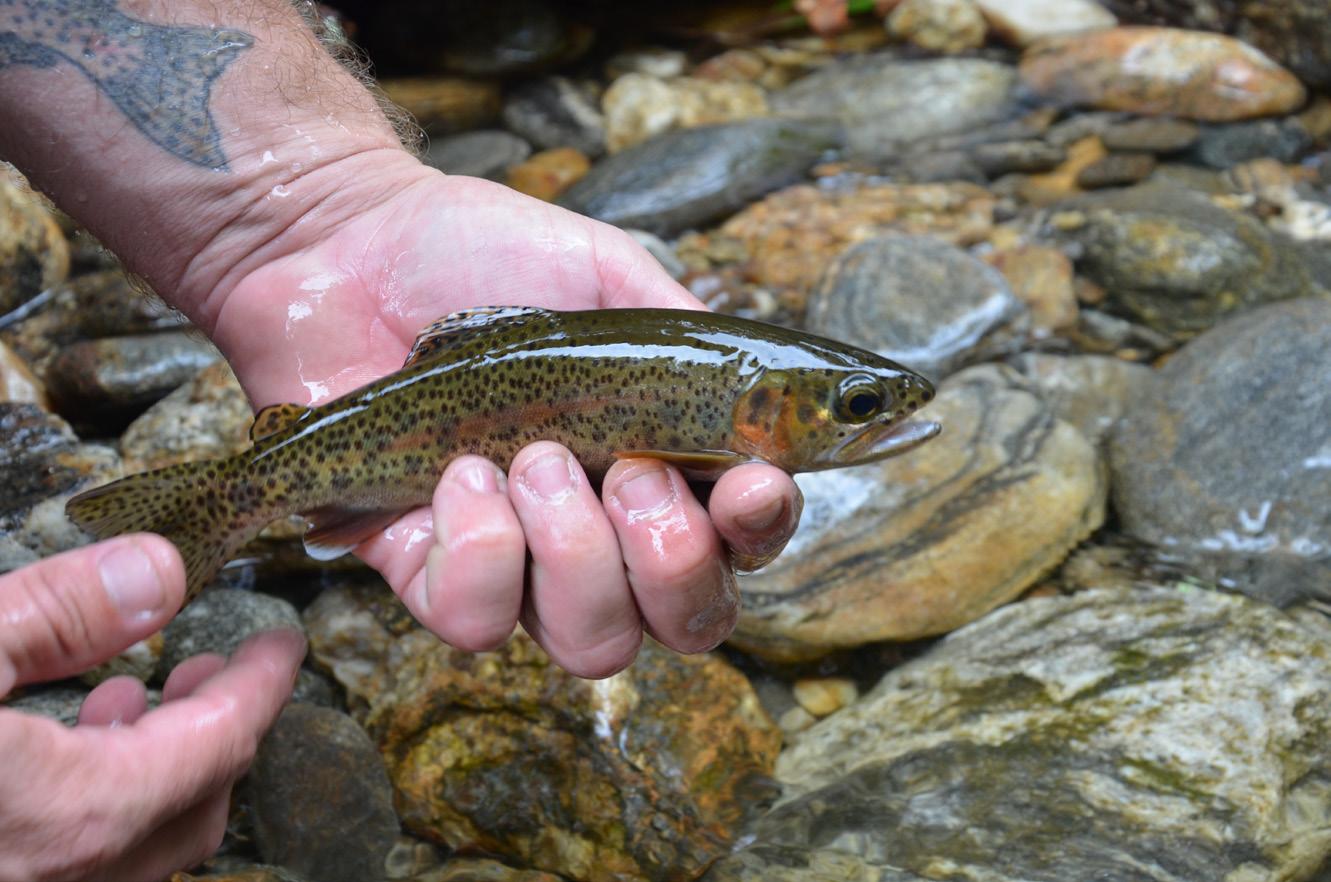
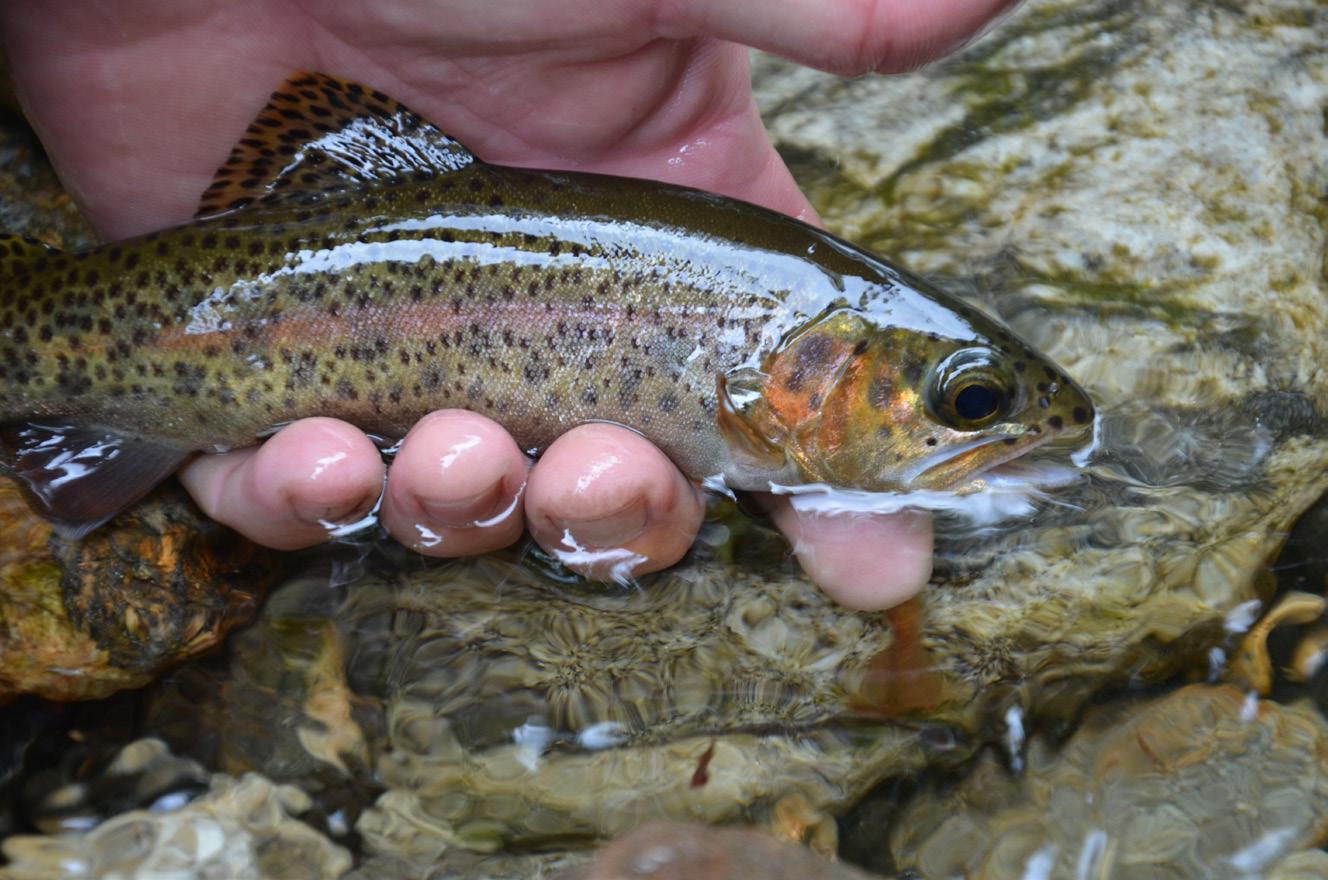
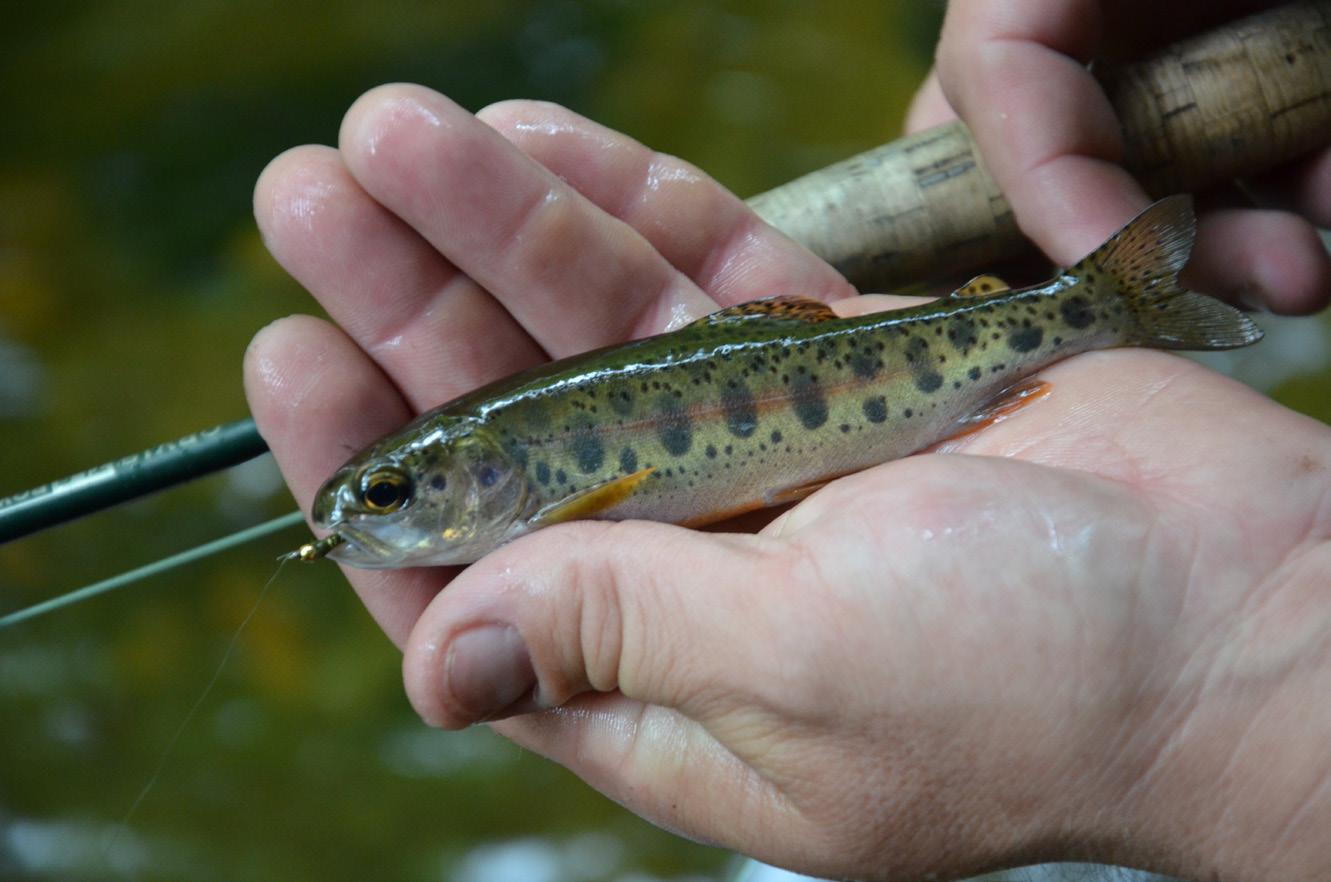
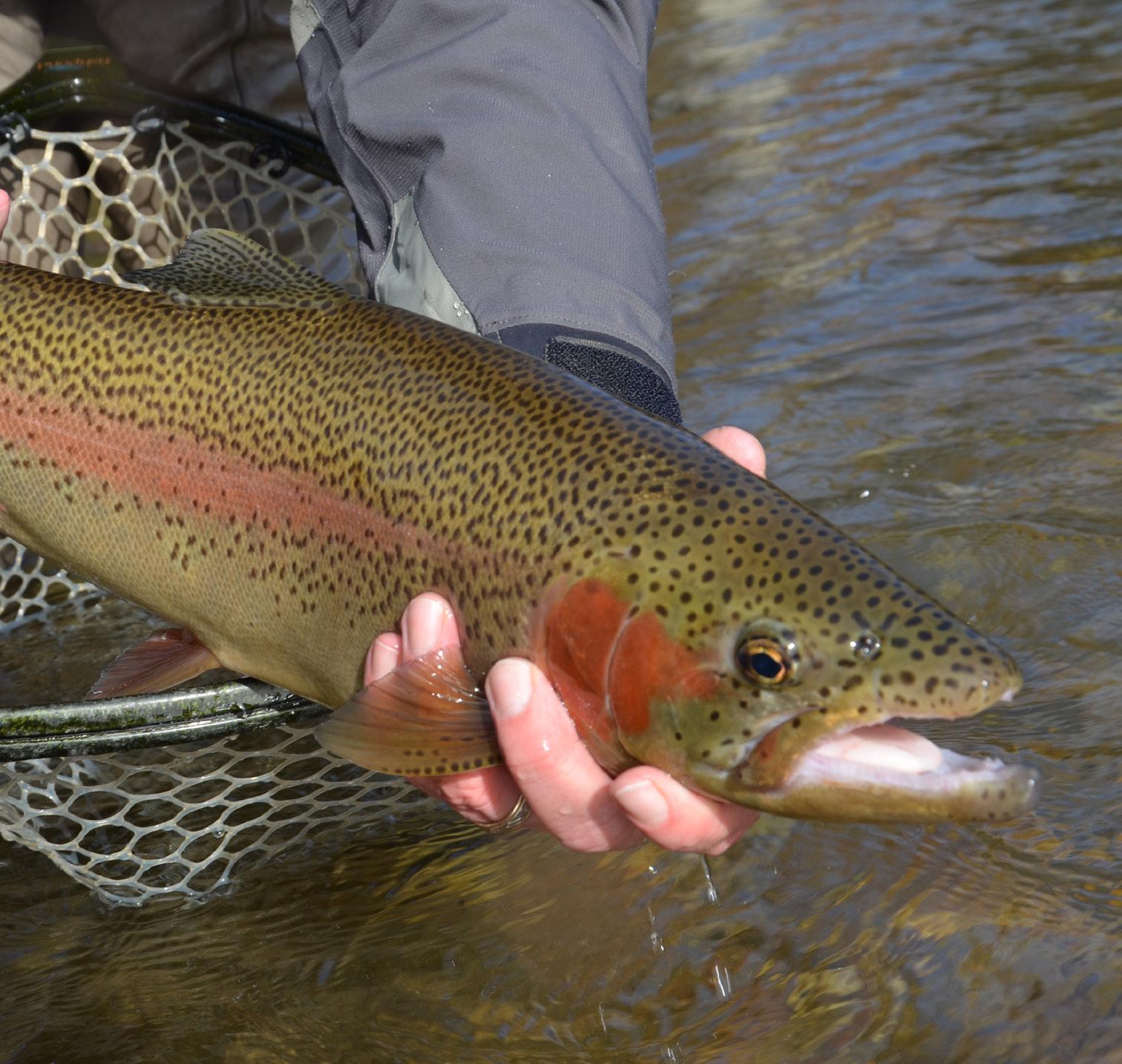
WILD RAINBOW TROUT ARE A TON OF FUN FOR SMALL-STREAM ANGLERS. THEY RISE EAGERLY TO DRY FLIES AND NOW THRIVE IN COLD BLUE RIDGE STREAMS WHERE THEY WERE INTRODUCED FROM THE WEST IN THE EARLY 20TH CENTURY. PHOTOS BY NICK CARTER
Rapidan River Shenandoah National Park, Virginia
Within the borders of Shenandoah National Park run some of the best native brook trout streams in the country. The venerable Rapidan River just might be the best.
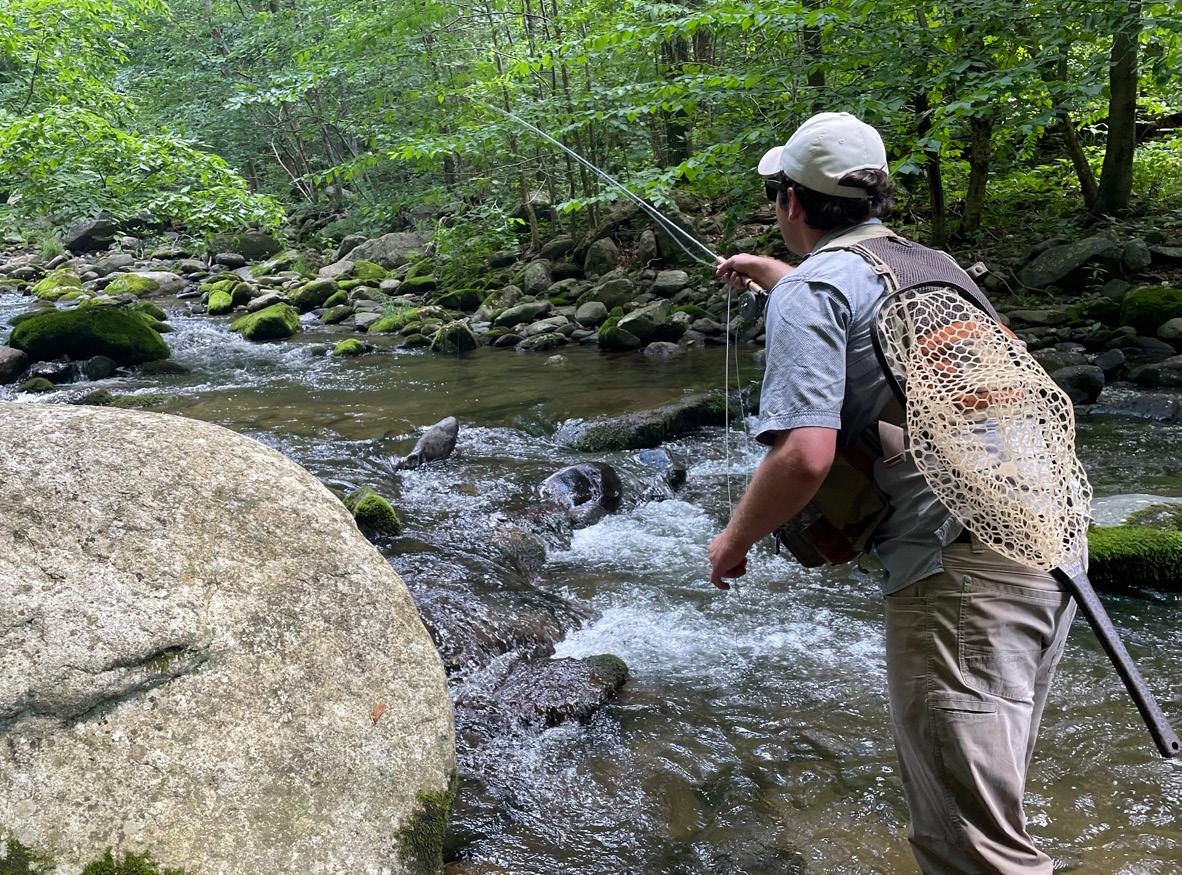
“The Rapidan River is arguably the most iconic native brook trout stream in the MidAtlantic,” said Alex McCrickard, Aquatic Education Coordinator for the Virginia Department of Wildlife Resources (DWR). “Anglers from far and wide have traveled to land a wild native brook trout from the same stream that President Herbert Hoover once frequented to escape the political heat of the nation’s capital.”
Hoover’s Rapidan Camp was the Camp David of the turbulent 1930s, and some of the buildings, trails, and bridges where the Rapidan forms at the confluence of two headwater streams are still maintained by the National Park Service.
Downstream of the presidential retreat, the Rapidan runs through the national park as well as DWR’s Rapidan Wildlife Management Area,
offering plentiful access to gorgeous stream mileage dotted with the pocket water and large plunge pools brookies love.
“Anglers can utilize miles of dirt road that parallels the Rapidan River through DWR’s Rapidan Wildlife Management Area,” McCrickard said. “Accessing the river through Shenandoah National Park also provides a wealth of opportunity for the exploring angler.”
With its fame and proximity to the nation’s capital, the Rapidan does see some fishing pressure. However, the fish remain in the creek under catch-and-release, single-point-hook,
artificial-only regulations, and anglers who hike will find more lightly pressured stretches of river. McCrickard said most of the fish caught will be in the 7- to 9-inch range, with some 10- to 13-inch brutes showing up on occasion.
Spring is generally the best time to fish the Rapidan. With higher flows, numerous overlapping hatches, and a brook trout’s proclivity for feeding with wild abandon, bright and bushy attractor dry flies work well. In late summer, terrestrial patterns like ants and hoppers become important.
Any discussion of flies and the Rapidan must include mention of Harry Murray’s Mr. Rapidan series. Murray opened Murray’s Fly Shop in Edinburg, Va., back in 1962, and his Mr. Rapidan flies are a dozen or so patterns designed specifically for the streams of Shenandoah National Park.
As one of the largest brookie streams flowing from the east slope of the Shenandoah’s Blue Ridge, the Rapidan offers plenty of casting room and it’s loaded with fish.
More Info: Murray’s Fly Shop, murraysflyshop.com
14 BLUE RIDGE OUTDOORS
ALEX MCCRICKARD FISHES FOR BROOKIES IN VIRGINIA’S VENERABLE RAPIDAN RIVER.
304.264.8801 travelwv.com LIVE Your ADVENTURE
PHOTO BY JENNIFER SHEFFIELD
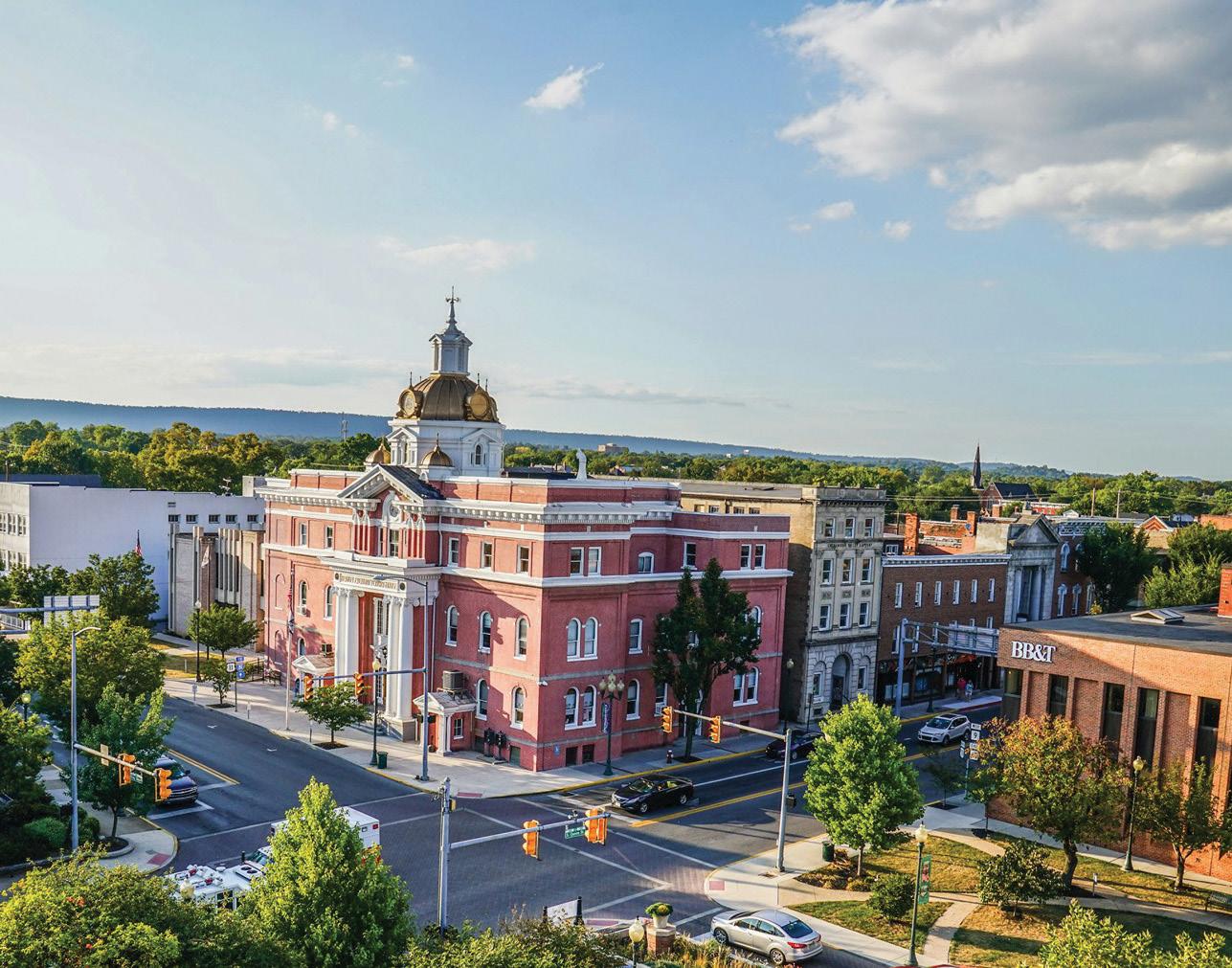
Beacon Trail Downtown Martinsburg Back Creek
East Fork Pigeon River Shining Rock Wilderness, North Carolina

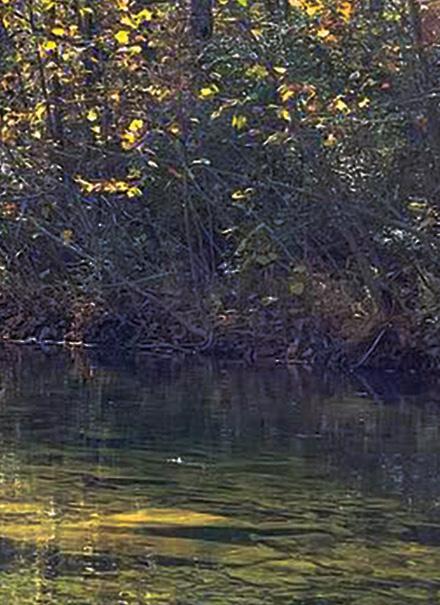
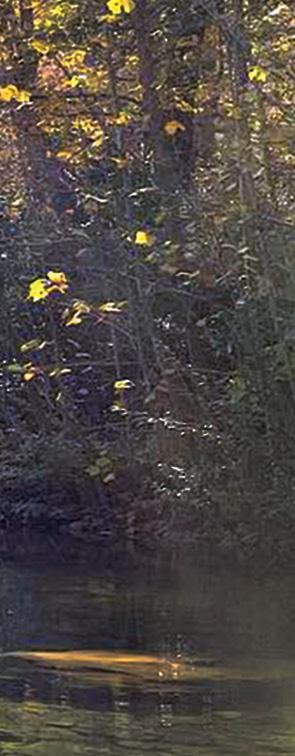
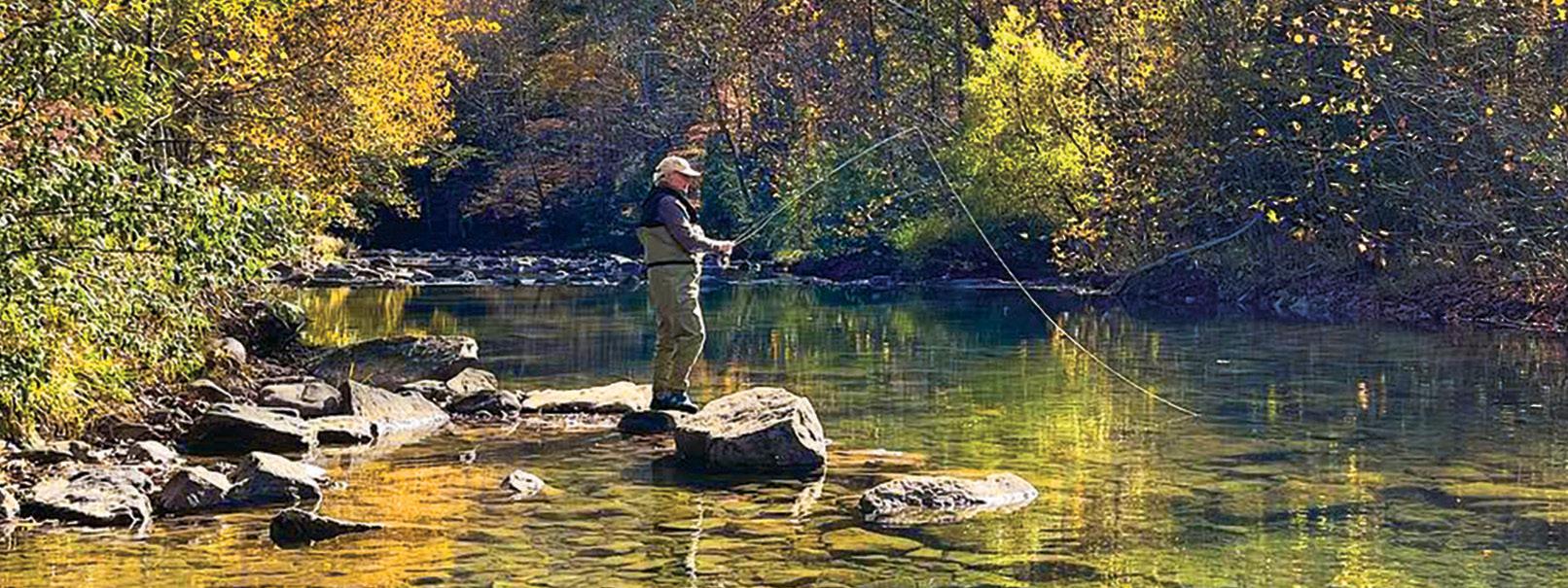
I’m not sure if I’ve ever seen a prettier place than the top end of the East Fork of the Pigeon River in North Carolina’s Shining Rock Wilderness Area. This creek begins as a small rill known as Yellowstone Prong and tumbles from more than 5,500 feet of elevation off Black Balsam Knob into a winding river valley.
There are dozens of miles of ultra-clear brook trout water to explore up the East Fork and its tributaries. The East Fork proper is large and open by high-elevation native brook trout standards. It is the result of a steep streambed scoured of silt and vegetation by flooding with each significant rainfall. In normal flows, this natural process leaves a medium-sized creek that bounces around in a river-sized bed of cobblestone. The water is so clear that it’s possible to see individual pieces of pea gravel in 10-foot-deep holes. Stare deep enough, and you can see the fish. They will also see you.


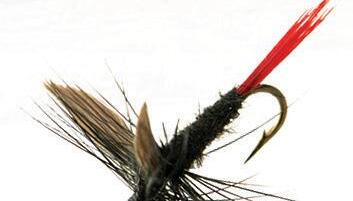
In relatively sterile waters with scant insect life, brookies—known locally as specks—must feed opportunistically and are not picky. In late spring, summer, or early fall, one brightly colored dry fly is as good as any other for fish that rarely grow longer than 10 inches. It’s a good time to make use of the outlandish patterns rusting for lack of use in a corner of your fly box.
When the dry fly bite is on, it’s on, and there’s nothing more fun than moving from pocket to pocket drawing splashy rises from pretty little specks. But it’s not always so easy. Resorting to small nymphs or very small streamers



MARCH 2023 | BLUERIDGEOUTDOORS.COM 15
ALTHOUGH MANY OF OUR WILD TROUT STREAMS ARE KNOWN FOR SMALL BUT BEAUTIFUL TROUT, ANGLERS WHO SPECIFICALLY TARGET BIG FISH ARE SOMETIMES HANDSOMELY REWARDED.
BY NICK CARTER 540-962-2178 · 888-430-5786 · #UniquelyAlleghany Plan your Uniquely Alleghany getaway at VisitAlleghanyHighlands.com Experience #UniquelyAlleghany fishing on the rivers & lakes of the Alleghany Highlands Blueway. #FlyFishing #DunlapCreek COVINGTON · CLIFTON FORGE · IRON GATE · ALLEGHANY COUNTY
PHOTO
might save a slow day.
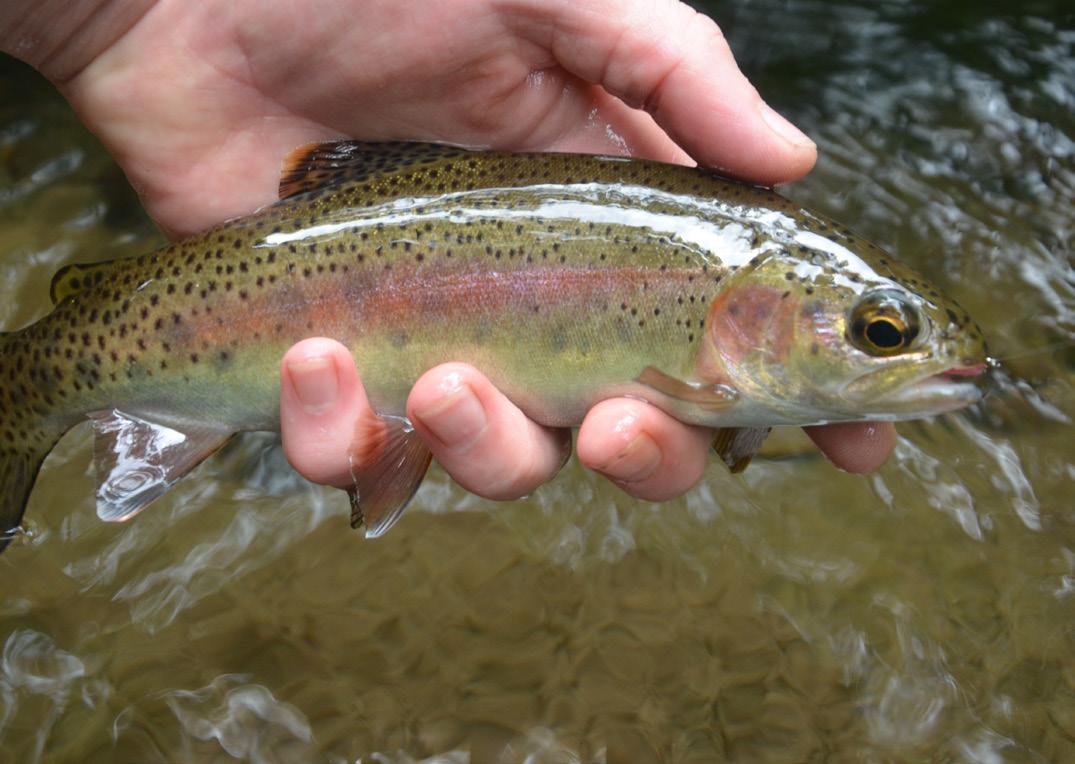
The creek changes character in its roughly five-mile run through the wilderness area. Stream-born rainbows and browns begin to dominate the fishery below falls upstream of the U.S. 276 bridge. From spring through early fall, these fish can be caught with your standard western North Carolina fly box. March browns, sulphurs, Light Cahills, and yellow stoneflies are important. Stimulators, Adams, Yellow Humpies, and Thunderheads are good attractors, and it’s a good idea to drop a small Pheasant Tail, Copper John or Hare’s Ear beneath your dry fly. Most fish you’ll catch in this stretch will be less than 10 inches and gorgeous. There are, however, some larger fish in the deeper holes. Slowing down to dredge out likely lies with deep nymph rigs or twitching heavy streamers might produce a brown trout in the 16- to 18-inch range.
This stretch of the East Fork of the Pigeon River is in the middle of nowhere between Brevard and Waynesville, N.C. It is paralleled by the scenic Blue Ridge Parkway, which runs the ridge high above the river valley and closes in winter. There is parking at a popular hiking destination called Graveyard Fields. A second official access point is adjacent to the U.S. 276 bridge. The Big East Fork Trail runs riverside and
getting to the best water requires a hike.
It’s a great place to spend a weekend camping and fishing, despite a prohibition on campfires and a requirement for bear-proof food containers.
More Info: Davidson River Outfitters, davidsonflyfishing.com
Jacks River
Cohutta Wilderness Area, Georgia
With about 15 miles of river between vehicular access points, the trout in north Georgia’s Jacks River are about as wild as trout get in this part of the world. The Jacks is a medium-sized stream
that runs a valley between 3,000 to 4,000-foot peaks of the Cohutta Mountains. With strenuous hikes required to reach the best trout water, it is a fantastic place to pack-in and fish through a long weekend.
The river is almost fully contained within the Cohutta Wilderness Area and Cohutta Wildlife Management Area. It flows north into Tennessee’s Big Frog Wilderness in a block of undeveloped forest that totals about 95,000 acres. Getting to the Jacks requires a long ride on rutted out and poorly marked gravel roads, followed by a hike of at least a couple miles to reach fishable water.
For this reason, there aren’t too many anglers who pursue the wild rainbows and browns in Jacks River. To the east, nearby Blue Ridge, Ga., is an epicenter for trout fishing in the state, and there’s a lot of easily accessible trout water that draws the fishing pressure. In all the times I’ve dropped into the river, I’ve seen less than a handful of anglers who were not a part of our group. You’ll run into plenty of hikers and backpackers making the more than 40 river crossings on the Jacks River Trail, but the walk is more than most anglers are willing to undertake.
Now, one might think unpressured fish would be easy pickings, but the Jacks can be fickle. On
16 BLUE RIDGE OUTDOORS
BRIGHT AND CHUNKY, THIS WILD TROUT SEEMS WELL-FED BY THE INSECT LIFE IN NORTH CAROLINA’S EAST FORK OF THE PIGEON RIVER.
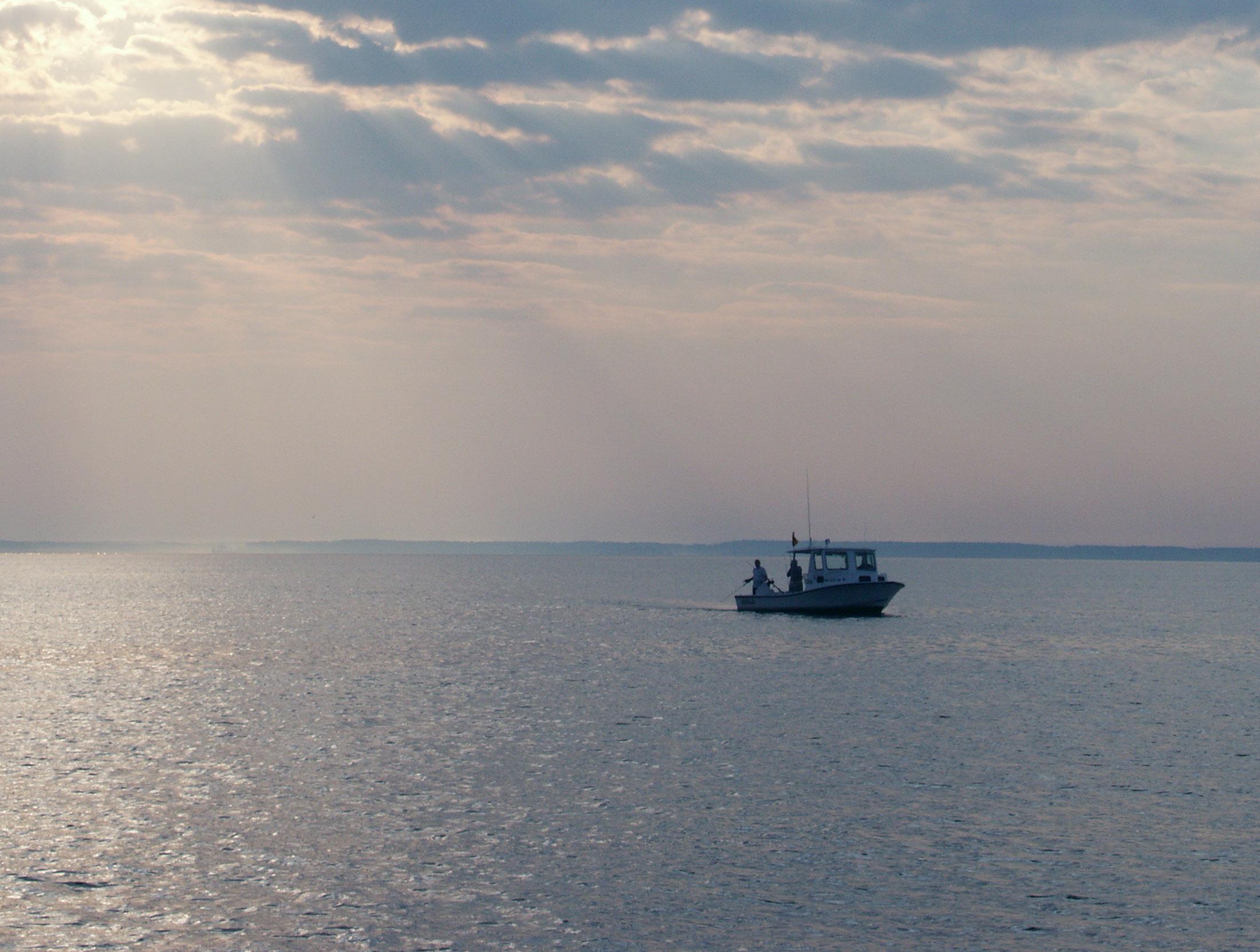
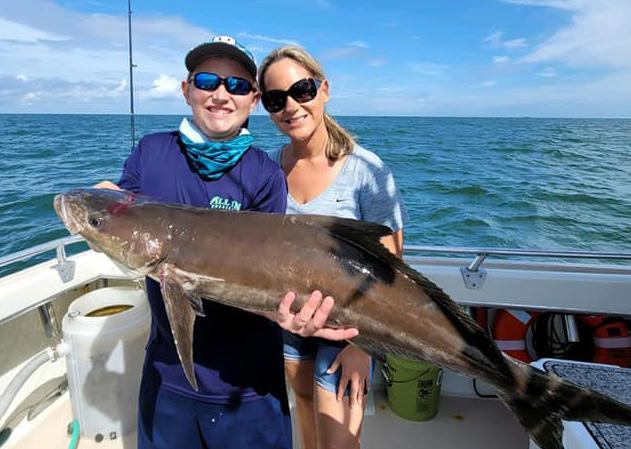
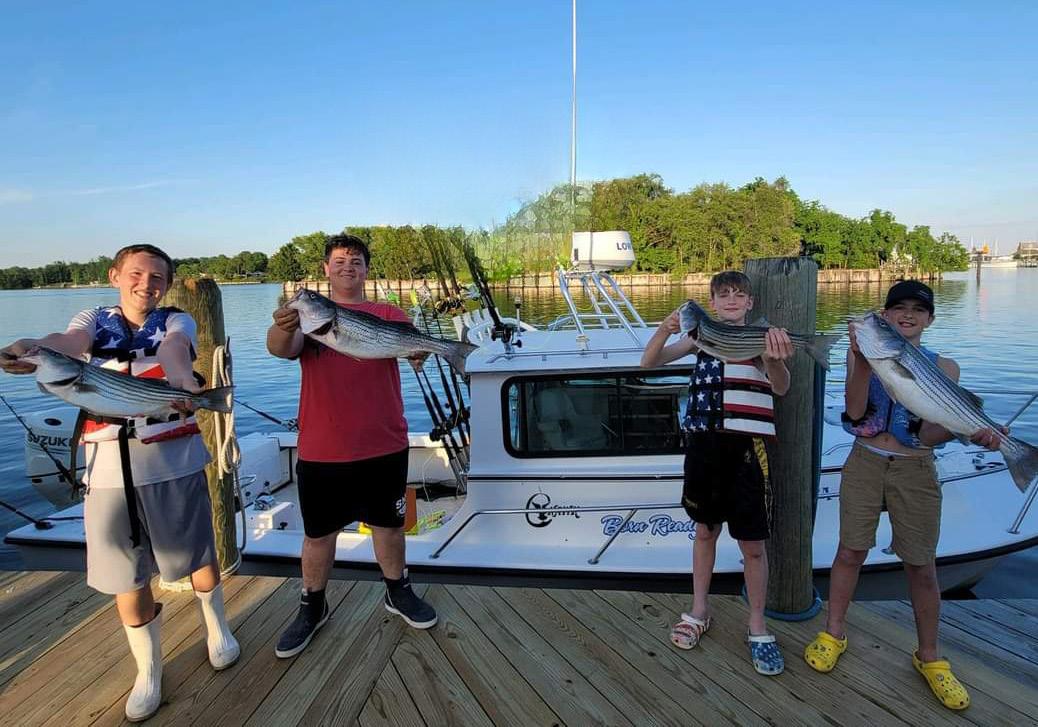
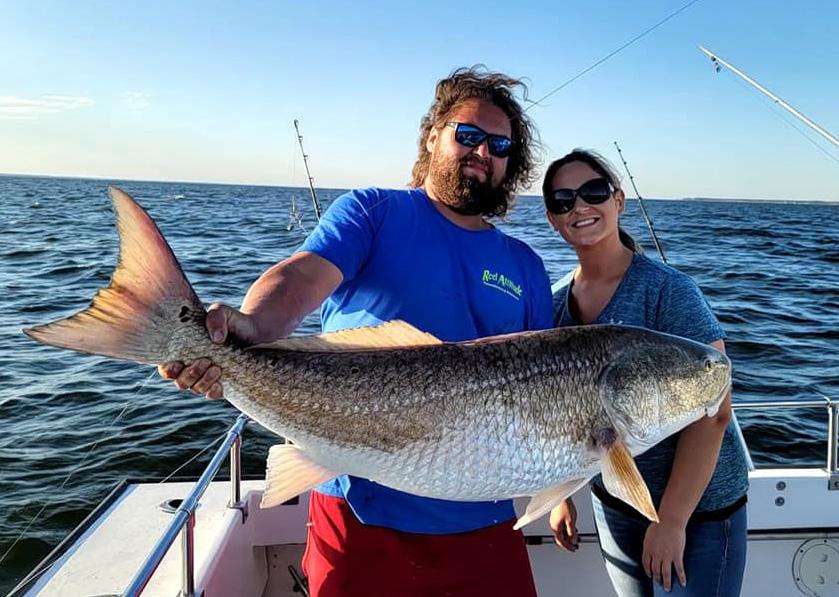
Cast your line in Maryland’s charter boat capital. Bounded by the Chesapeake Bay to the east and Patuxent River to the west, Calvert County offers plenty of opportunities to cast a line in open water. Plan your trip today at www.VisitCalvert.com/Charter
PHOTO BY NICK CARTER
the smaller upper end of the river, clear water and low flows call for stealthy wading. The fish aren’t particularly selective when they’re feeding, and they aren’t leader shy, but you might as well move on if you spook a hole. There are plenty of holes to hit. The river’s meandering course through a steep, boulder-strewn valley, along with huge logjams created by a 2016 wildfire, makes for some very interesting fishing water.
Insect life on the river is typical for small streams on the southern end of the Southern Appalachians, meaning there’s a spattering of different mayflies, stones, and caddisflies with few well-defined hatches. A dry-dropper rig with attractors like a Stimulator or an Adams fished above a Pheasant Tail or a Hare’s Ear nymph is usually productive, and it’s worth tying on a bright sulphur, a Yellow Sally, or an Elk Hair Caddis to match what you might see on the water.
Most of the fish you’ll catch on the Jacks measure less than 12 inches, although the occasional 14- or 16-incher does show up and there are some 20-plus-inch browns lurking in the deeper holes. Nymphing methodically is the best way to hook up with the river’s larger fish, and anchoring a multinymph rig with a heavy giant stonefly imitation like a Pat’s Rubber Legs or a Kauffman’s Stone is always a good idea.






On the north end, access is via the Beech Bottom trailhead in Tennessee’s Big Frog Wilderness. The river flows south to north, and access to the upper end of the river is via the Dally Gap parking area on Georgia’s Cohutta Wilderness.
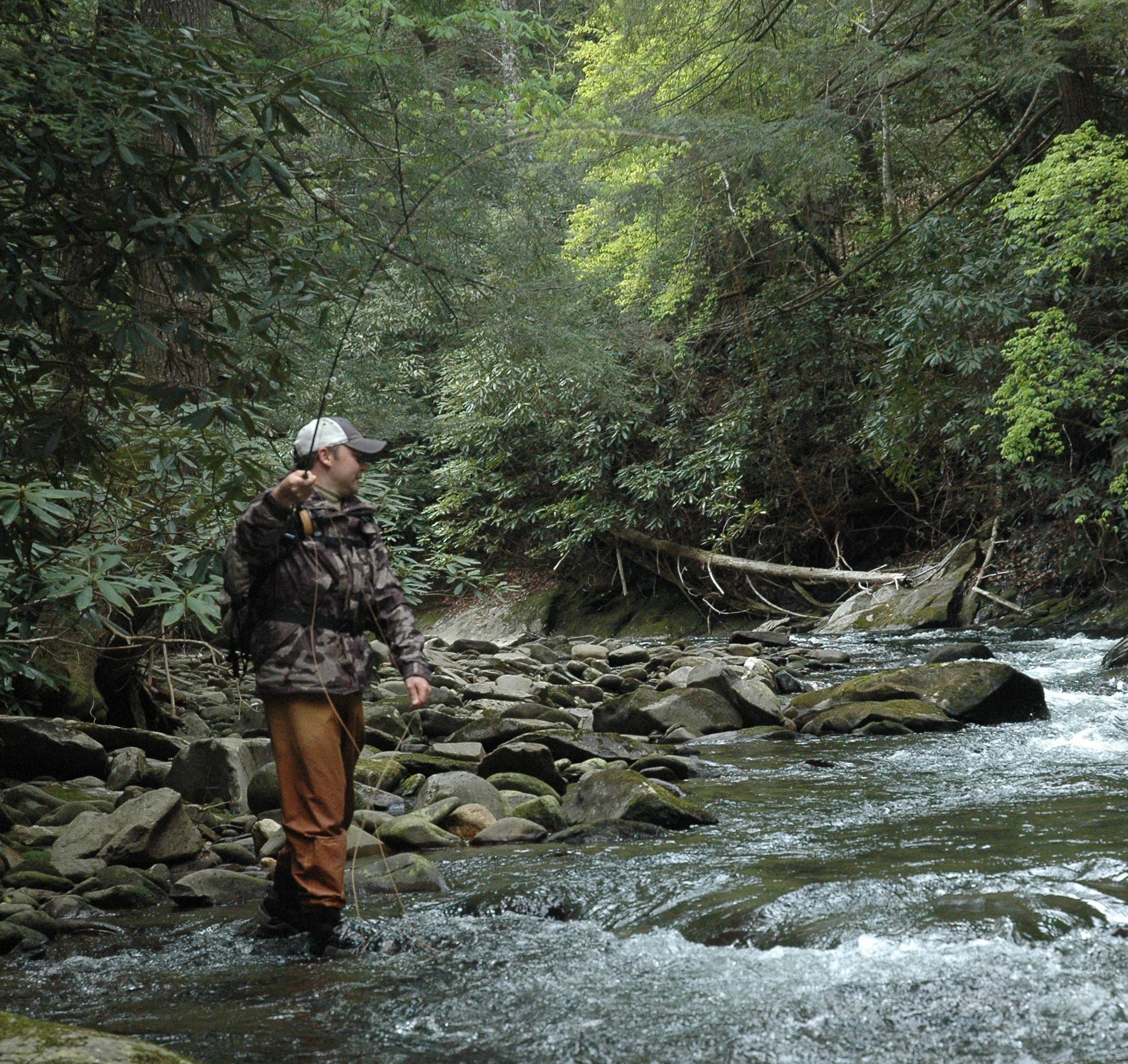
More Info: Cohutta Fishing Company, cohuttafishingco.com



















MARCH 2023 | BLUERIDGEOUTDOORS.COM 17
SIGN UP Scan the QR code to sign up for your passport. WIN PRIZES The more you play, the better your chances of winning. CHECK IN Check-in at any participating location with your phone. Get on the trail today! RIDGELINE CRAFT BEVERAGE TRAIL Experience some fine craft beverages while also getting the opportunity to win some awesome prizes.* There is no cost to enter. Hop on the trail today. *All prize winners will be selected by random drawing. GoGastonNC.org/ridgeline
GREG BAUGUS COMES TIGHT ON A NICE FISH FROM THE JACKS RIVER IN GEORGIA’S COHUTTA WILDERNESS AREA. PHOTO BY NICK CARTER
Fish
LYNCHBURGVIRGINIA.ORG
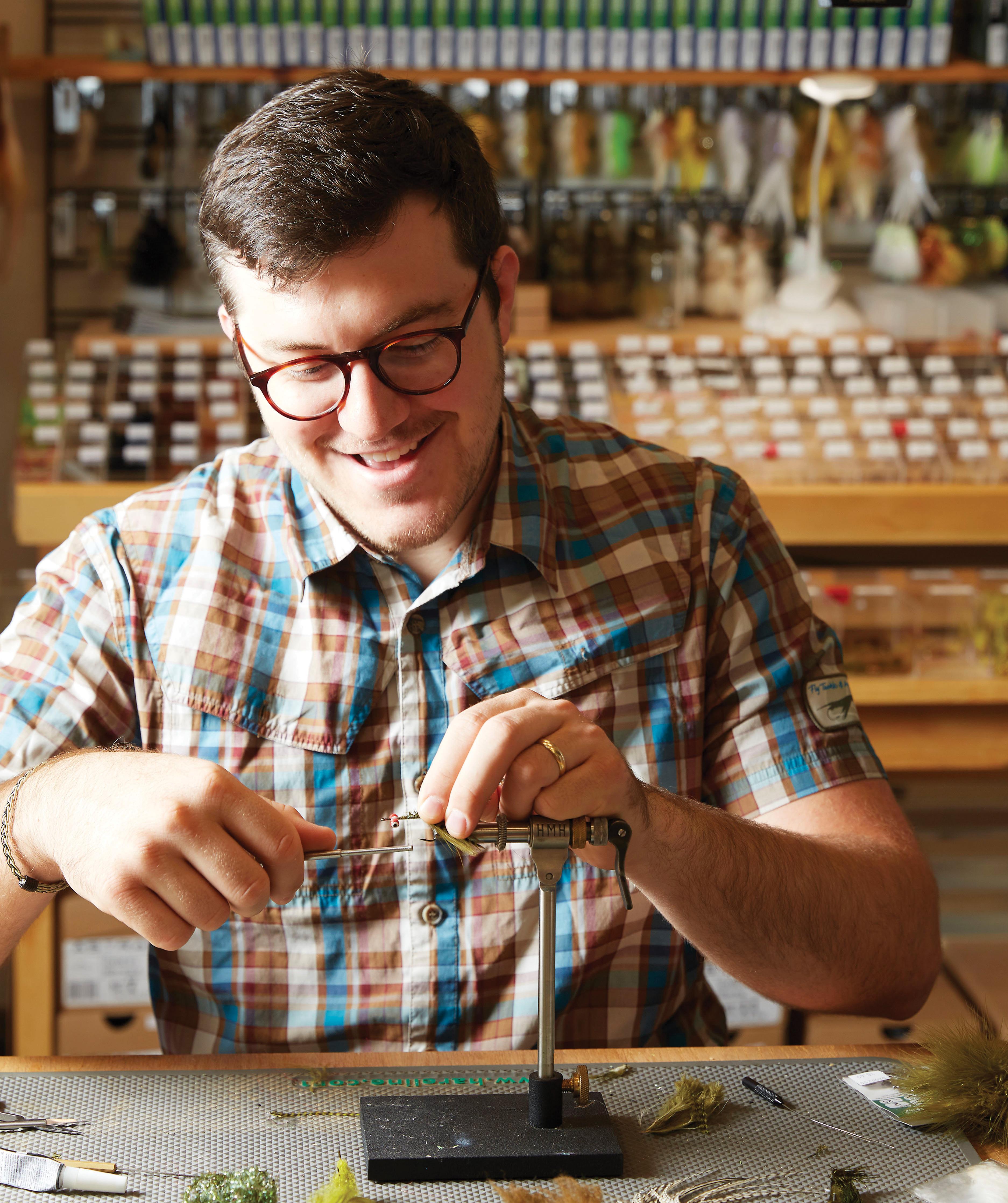
Ethan Martin, owner of Tale Tellers Fly Shop
section
the James River in LYH.
by Tale Tellers Fly Shop to stock up on supplies, book a local guide, and learn fishing tips. Stay a while and experience our riverfront downtown by popping into our locally owned eateries and breweries.
our
of
Stop
Mobile Home Makers
These Blue Ridge Companies Will Build the Adventure Van of Your Dreams
 BY LAUREN STEPP
PEOPLE FIND THEIR CALLINGS IN UNLIKELY PLACES. Mike Williams found his while shivering in the desert. It happened 20 years ago. After graduating from Brevard College’s Wilderness Leadership and Experiential Education program, Williams constructed a truck camper using $100 of lumber and hit the road with hopes of rock climbing year-round.
“I was living the dream—traveling and seeing all these cool places,” Williams remembers, a nostalgic grin slapped across his face. But when he arrived at Hueco Tanks State Park in Texas, the high-altitude desert was “absolutely freezing,” he says.
As temperatures plummeted that evening, he watched longingly as a fellow camper cozied up in their warm, insulated van. That’s when it clicked. “I remember thinking, ‘Wow. I need one of those,’” he says.
Williams soon moved into a 1986 Volkswagen
MARCH 2023 | BLUERIDGEOUTDOORS.COM 19
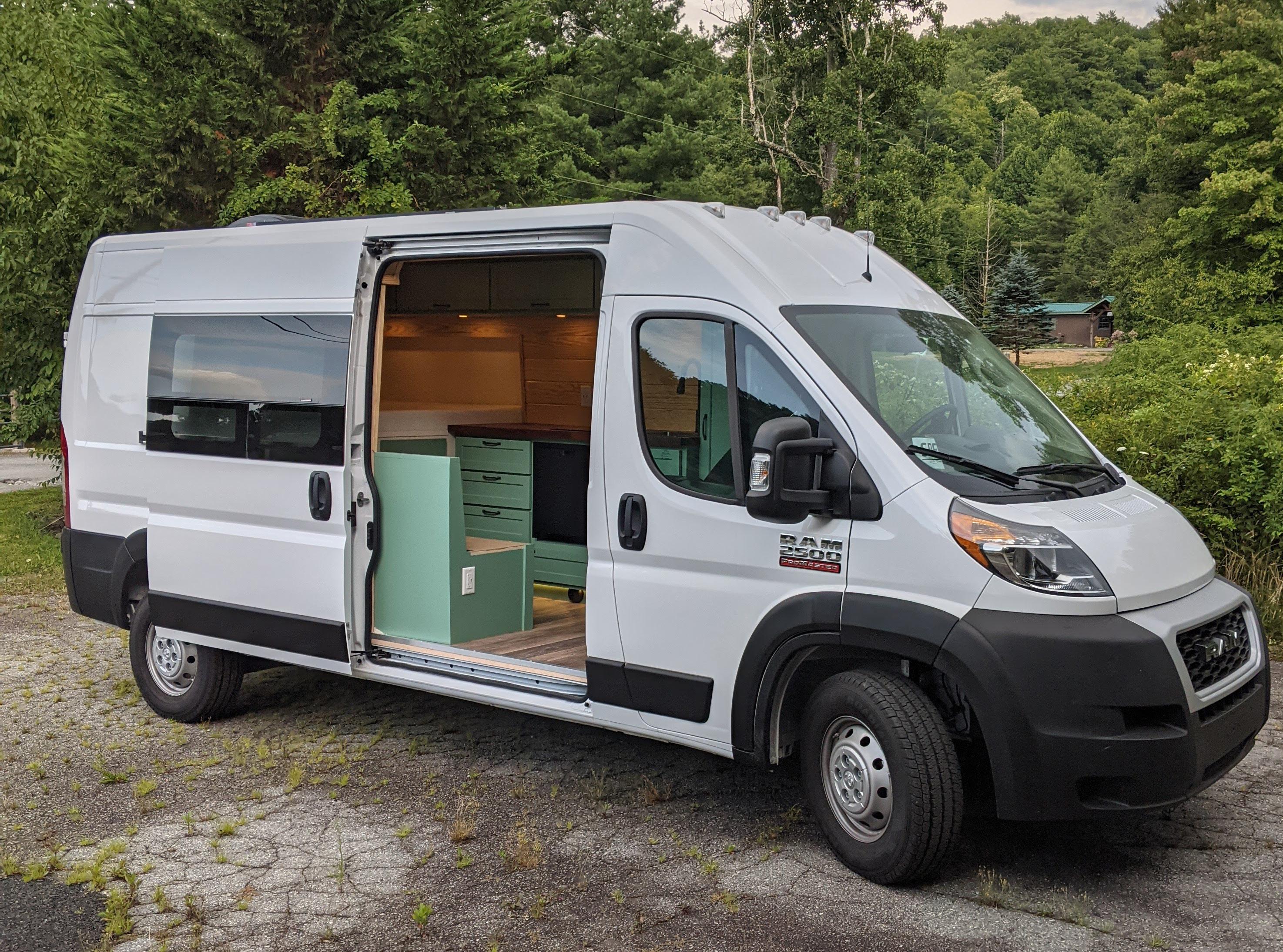
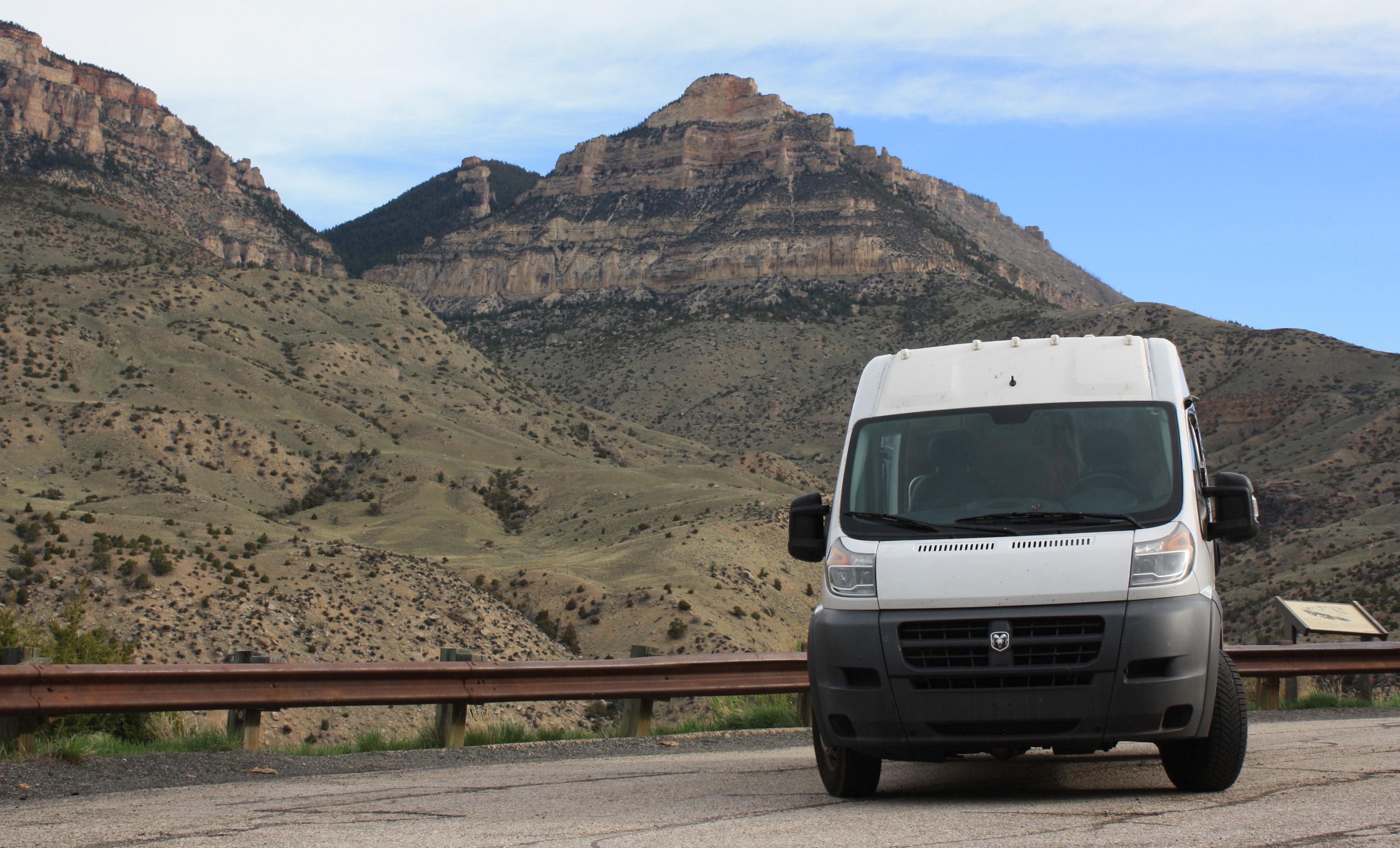
A RAM PROMASTER CONVERSION BY ALEX GAEBE. PHOTO COURTESY OF CAROLINA VAN BUILDERS
Westy. When that rig died in 2004, he bought a Mercedes Benz Sprinter and built it out himself. Today, a little shy of a decade later, he’s the owner of Bridge Bound Campers.
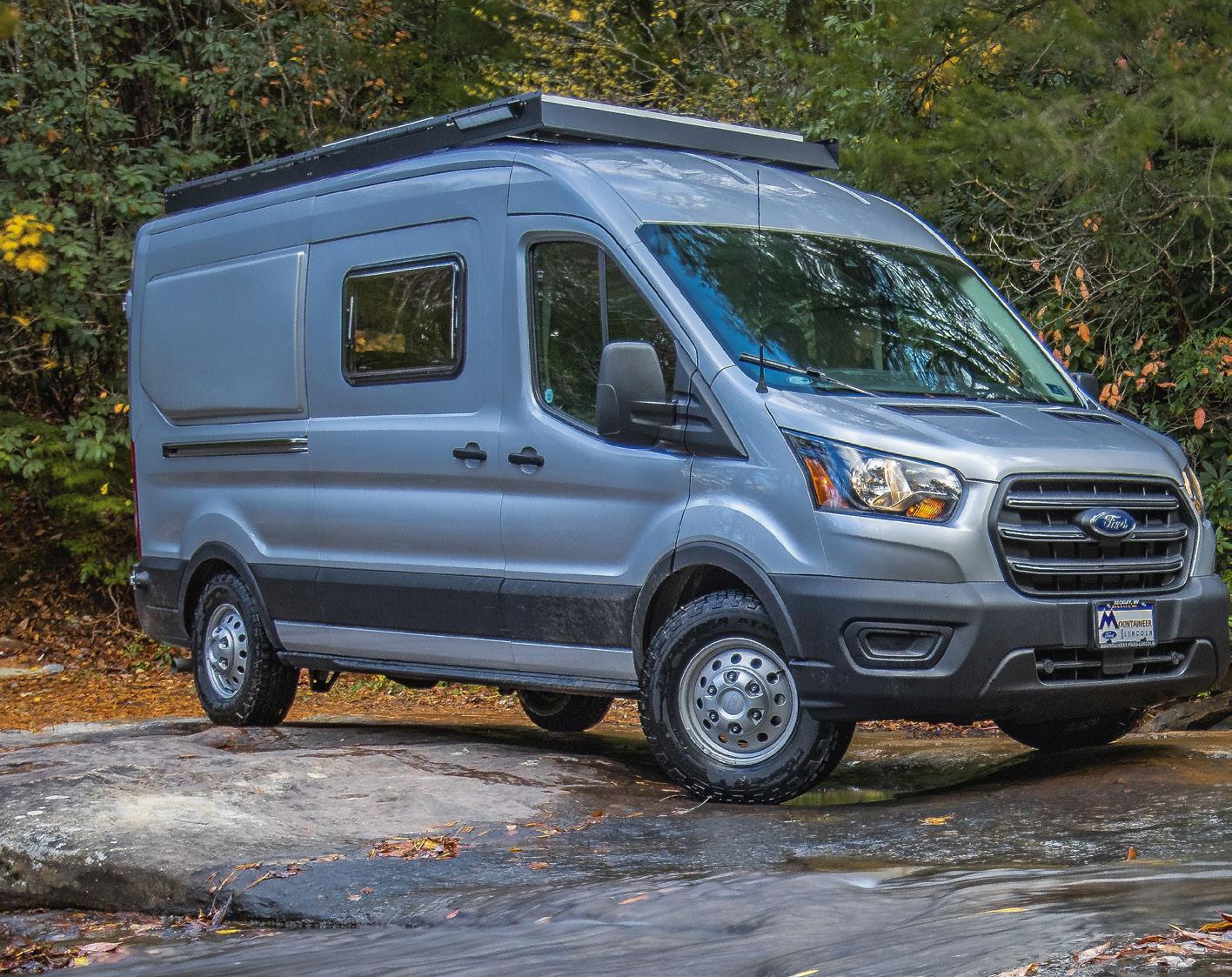
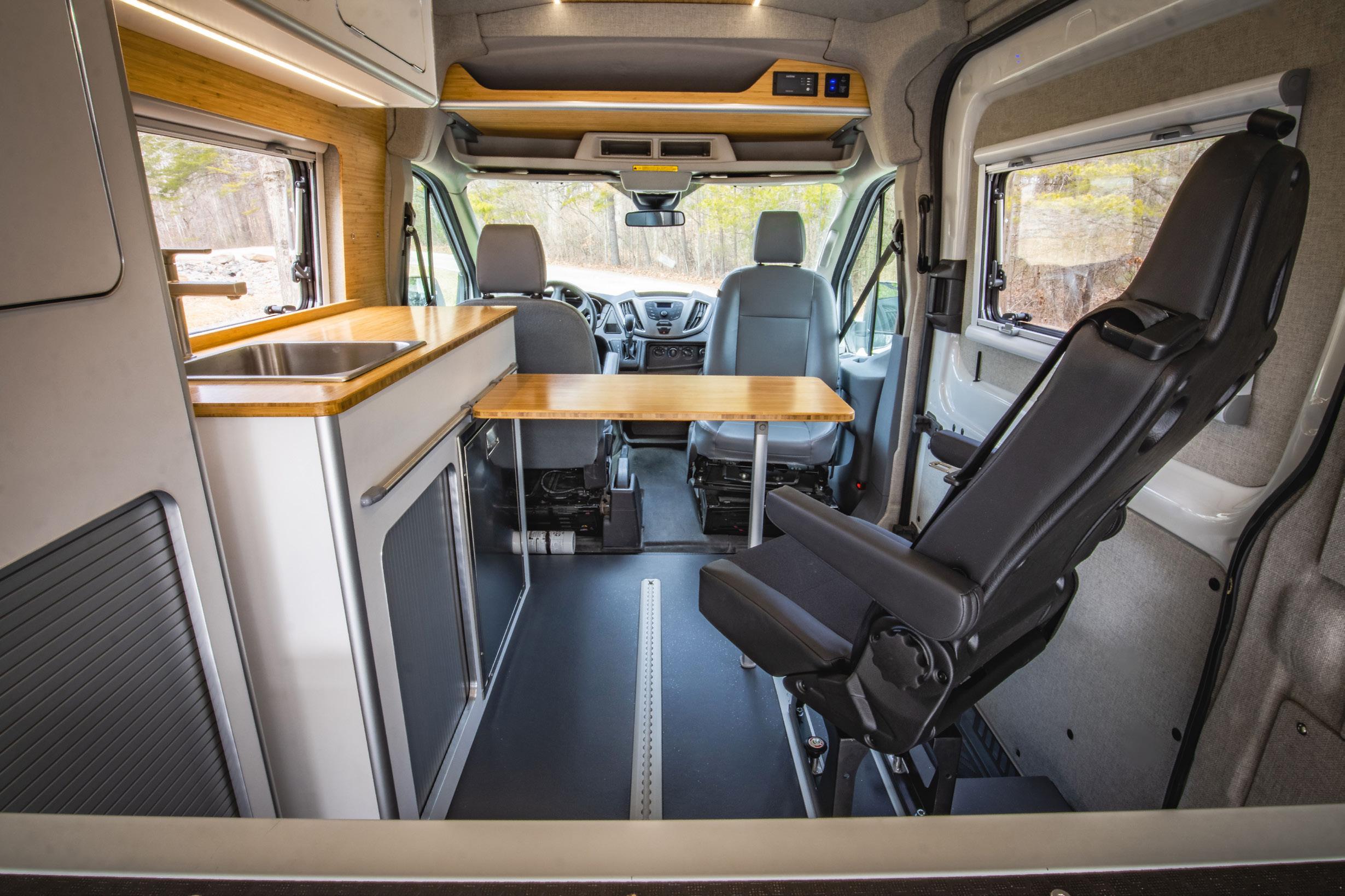
Rooted in Fayetteville, W.Va., Bridge Bound is a van conversion company that specializes in Ford Transits. Though the builds aren’t custom per se, clients do have the option of adding cabinets, seats, beds, and other features that clip into a nifty L-track system. This configurable design allows Williams and his team to cater to all walks of life—from outdoorsy families to roving retirees.
“The last build we did was for a guy in his 60s who wanted to fish and camp,” Williams explains. “But we also get a lot of remote workers and people who want to escape the crazy expensive housing market.”
Needless to say, the nomadic lifestyle isn’t just for dirtbags anymore. Thanks to the pandemic, more and more people are ditching the suburbs and taking to the road. In response, social media has been flooded with DIY camper van conversions— some stunning, others not so much.
“I think almost anyone can build out a van, but it’s probably going to suck,” Williams says matter-of-factly. The whole process is way more complicated and time-consuming than people expect, he explains. Plus, there’s the very real threat of botching your electrical system and turning your rig into a tinderbox on wheels.
20 BLUE RIDGE OUTDOORS
MIKE WILLIAMS FOUNDED BRIDGE BOUND CAMPERS AFTER SPENDING SEVERAL YEARS AS A SELFDESCRIBED “DIRTBAG.” THE VANS DESIGNED BY WILLIAMS RELY ON AN INVENTIVE L-TRACK SYSTEM.
PHOTOS COURTESY OF BRIDGE BOUND CAMPERS




/ ENGINEERED IN TH E D O L OMIT E S
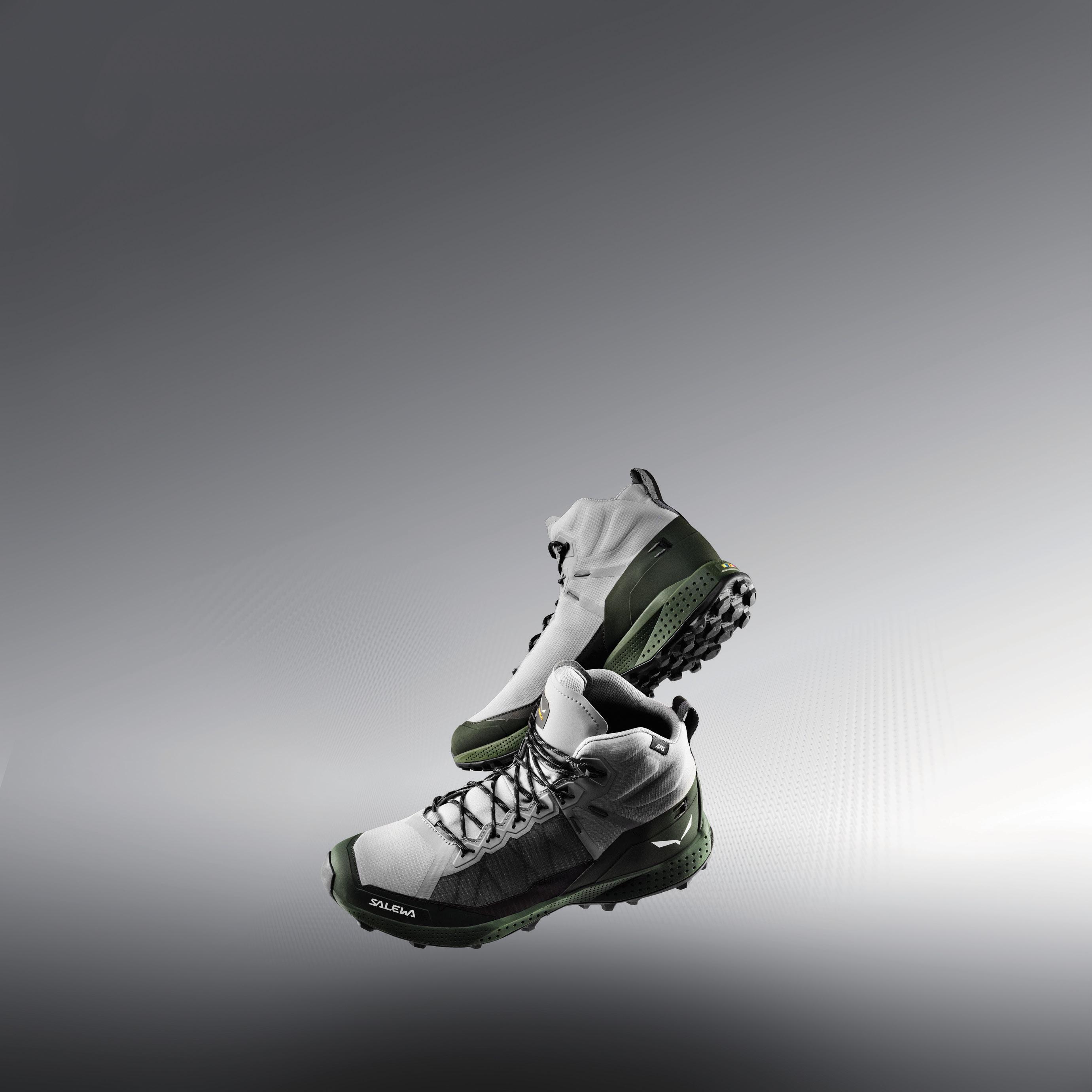
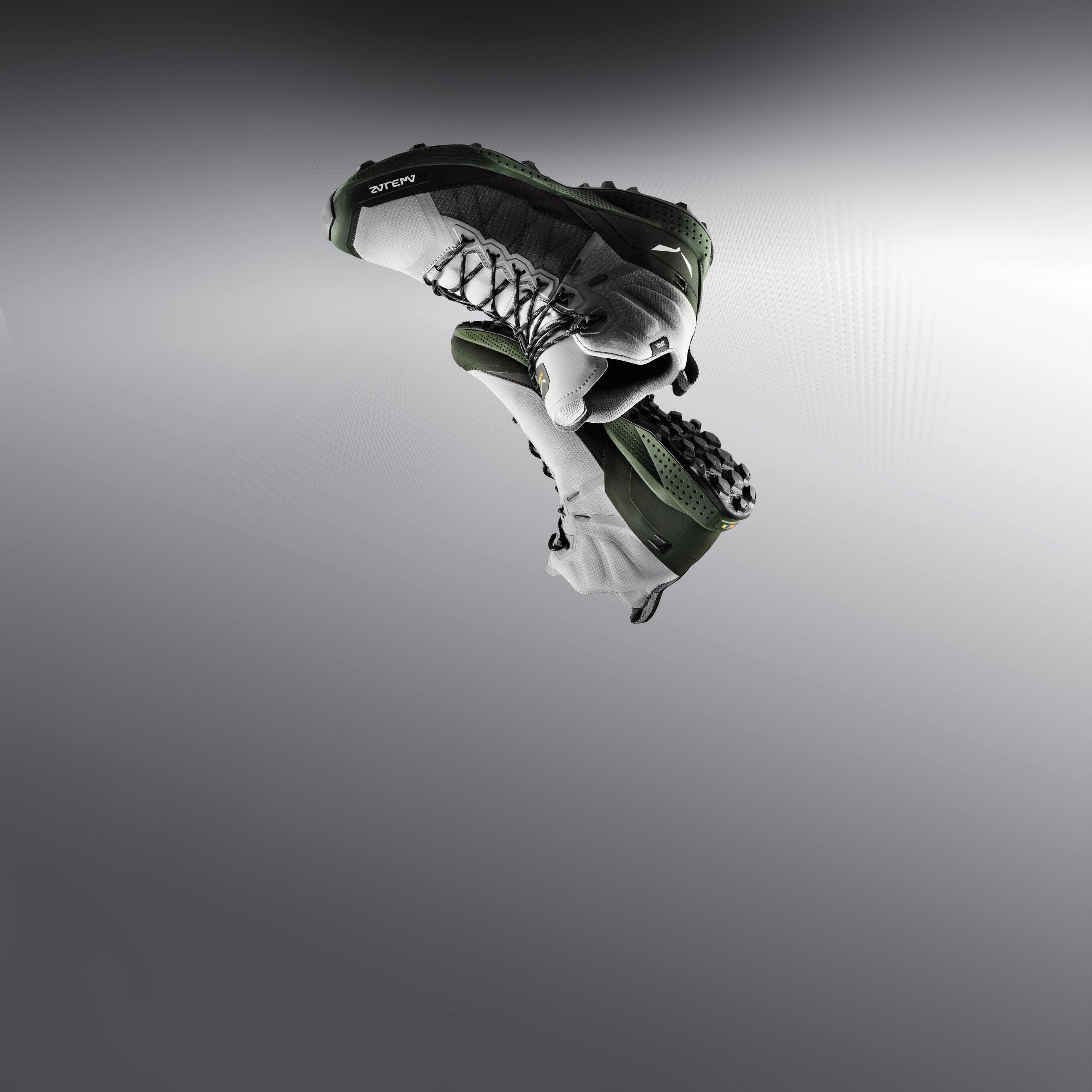
PEDROC PRO MID POWERTEX BOOT
Alas, if you want a safe van that’s built to last, Williams suggests hiring a professional. To help you do just that, we’ve rounded up some of the highest-rated conversion companies in the South.
Carolina Van Builders
Boone, N.C.
For most of us, retail therapy means buying a pair of jeans or an overpriced latte. But when North Carolina native Alex Gaebe found himself in a funk at age 24, he bought a 1978 Thomas school bus instead.
“I was in a weird spot in life,” he says, shrugging nonchalantly.
After purchasing the yellow behemoth, Gaebe spent the following year adding custom trimmings. When the conversion was finally complete, he posted photos online. “It absolutely blew up—it went viral,” he says. “That’s when I thought, ‘Man, I could make a living doing this.’”
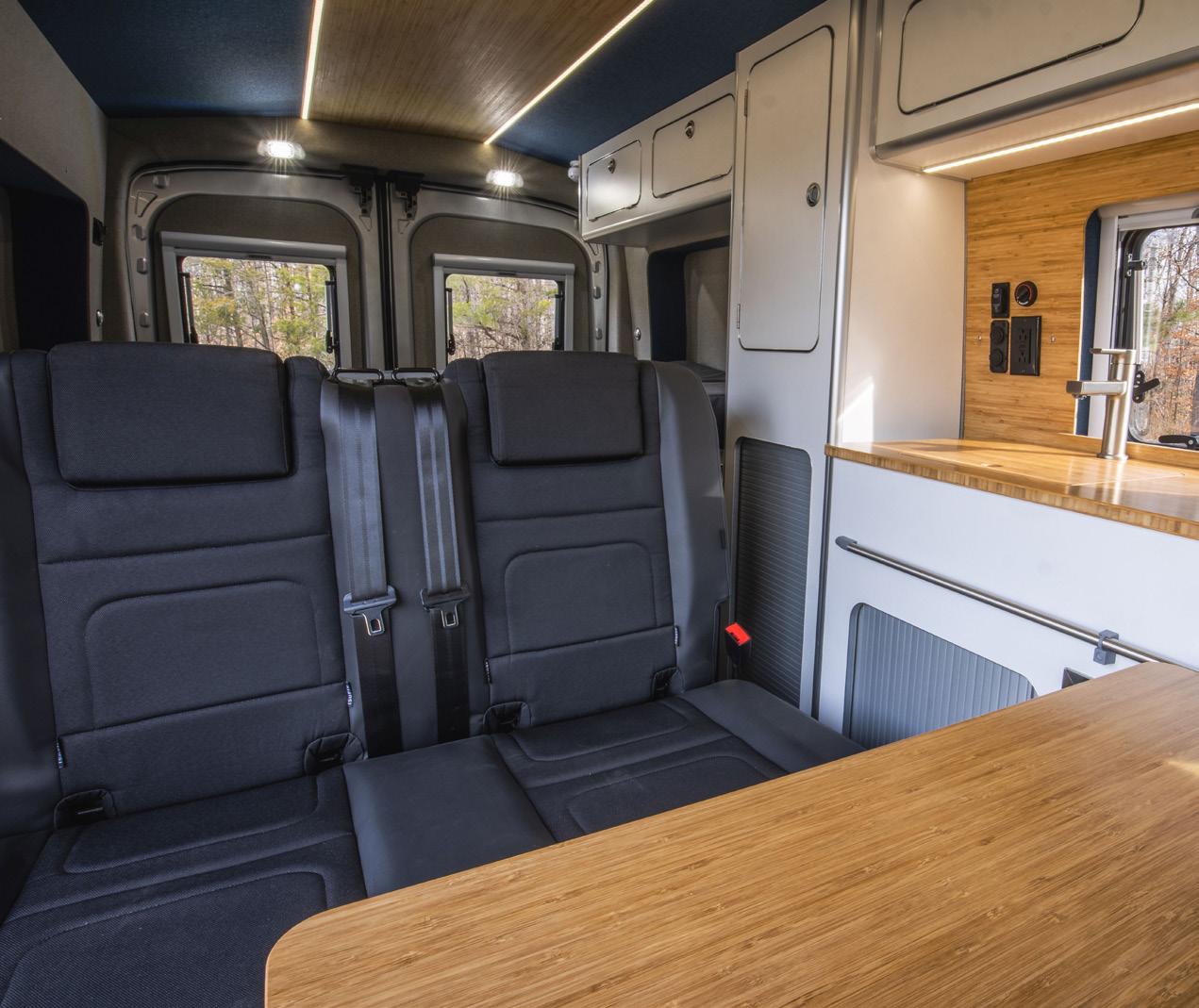
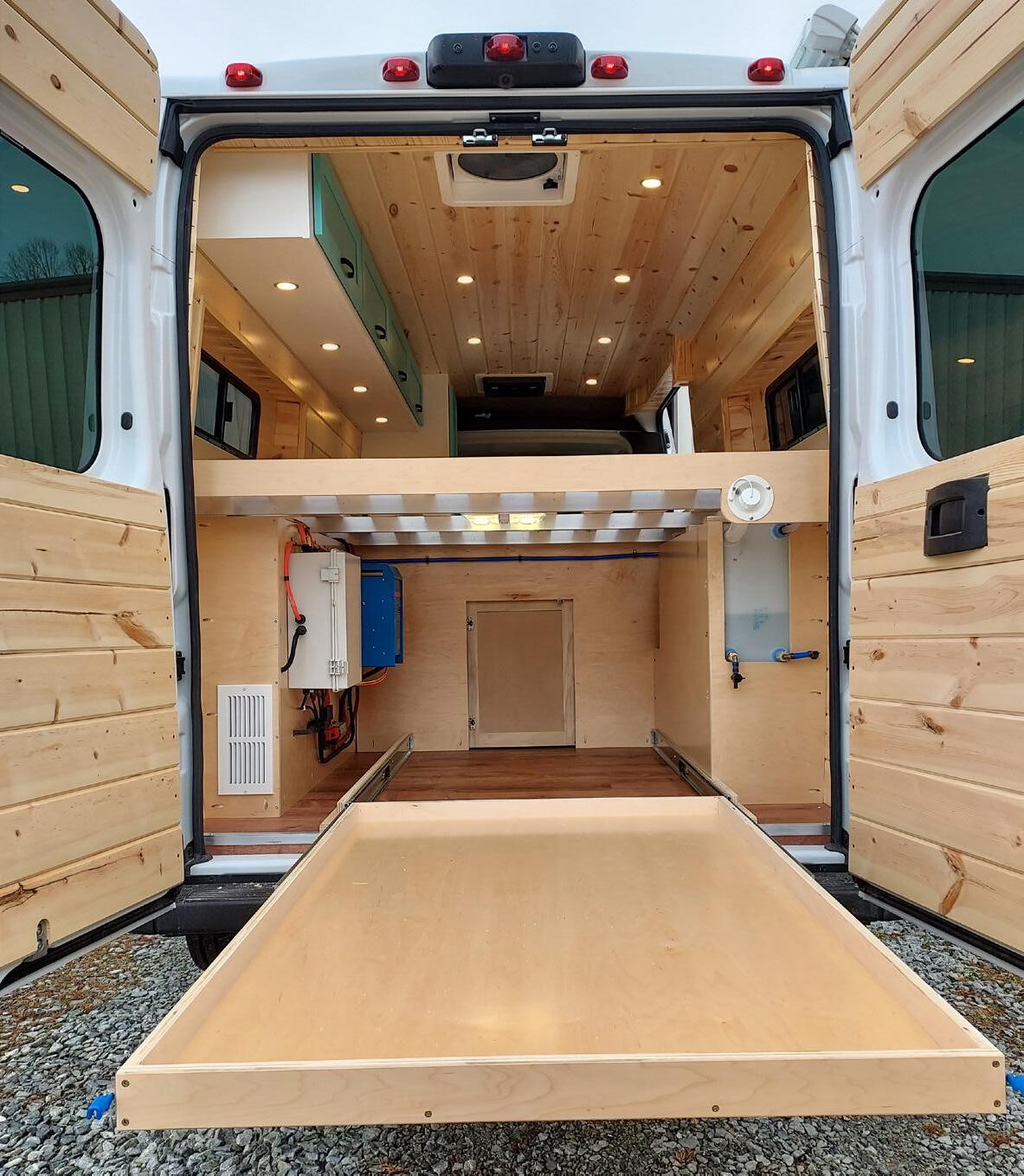
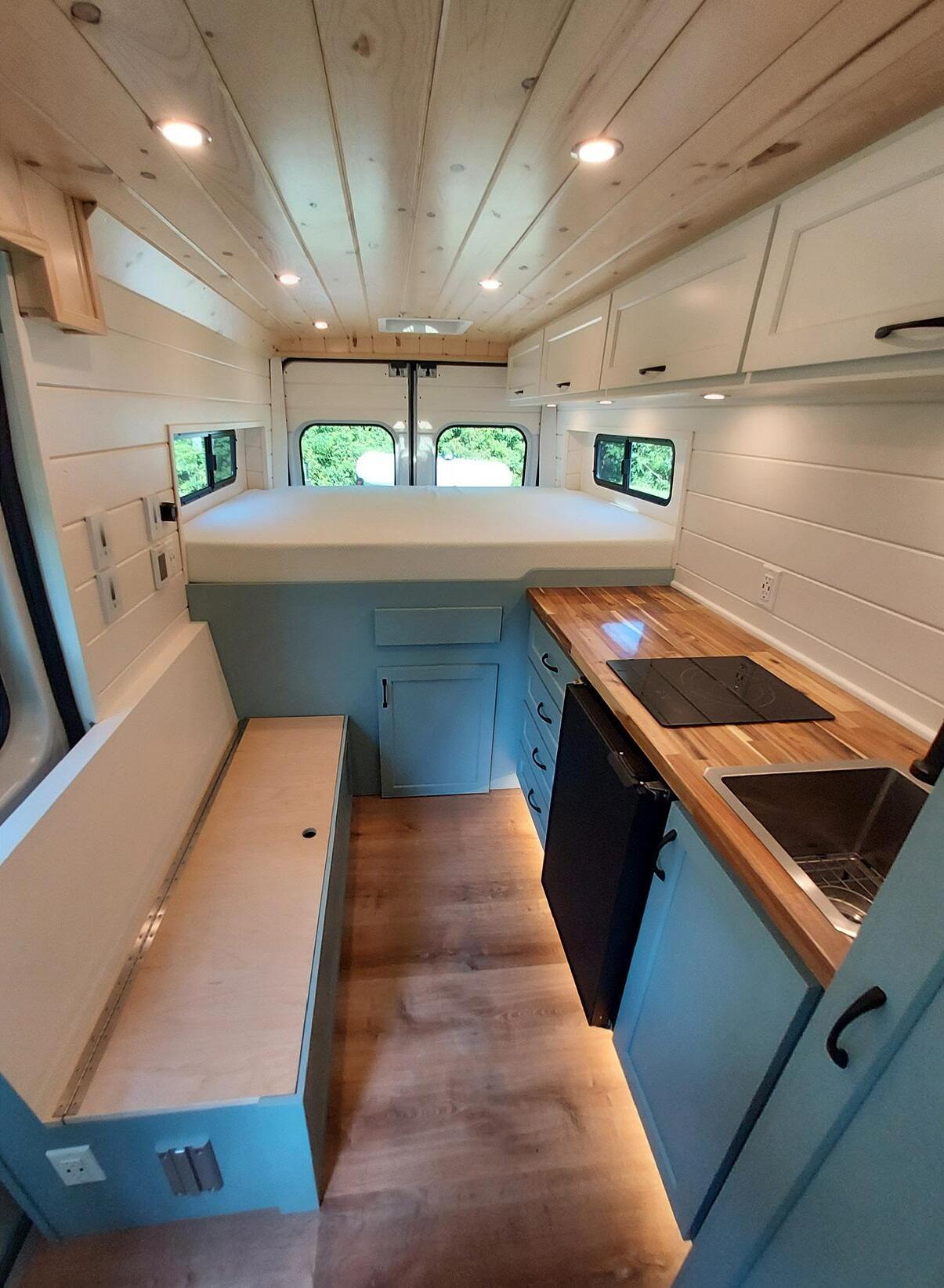
Five years ago, in response to increased demand for camper vans, Gaebe founded his Boone-based business, Carolina Van Builders. The company specializes in Ram ProMaster conversions, offering two thoughtfully designed layouts: The Basecamp and The Carolina. “The main difference is that The Carolina has a shower,” says Gaebe. Gaebe is also refining a van conversion kit for folks who want to save some cash without scrimping on quality.
22 BLUE RIDGE OUTDOORS
PHOTOS COURTESY OF MOXIE VAN CO.
“The kits will be ready to roll by summer at the latest,” he promises.
Pro Tip: Another North Carolina builder to check out is Blue Ridge Adventure Vehicles. Based in Fairview, this van conversion company can soup up your Ram, Mercedes, or Ford vehicle.
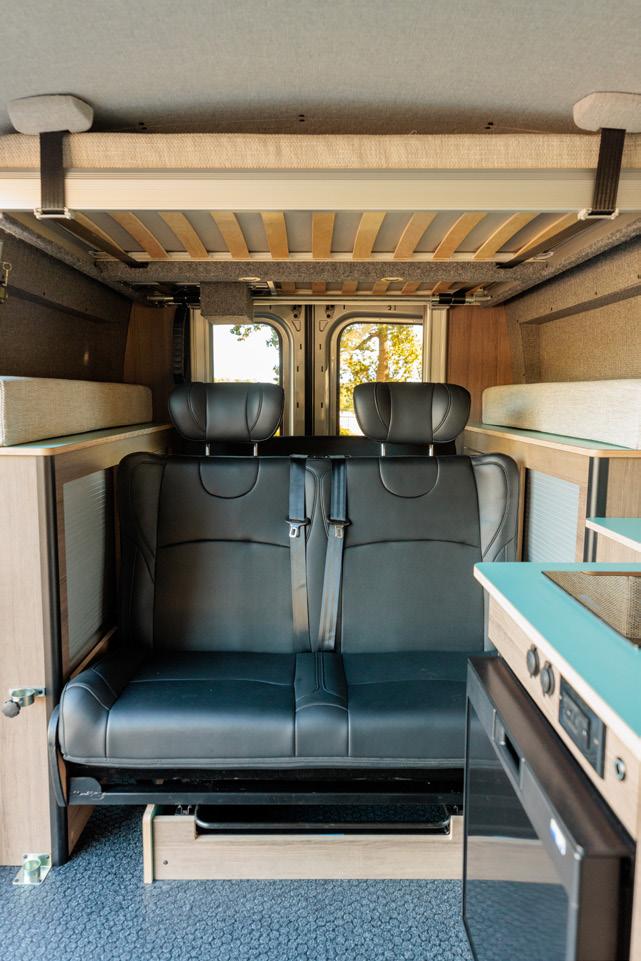
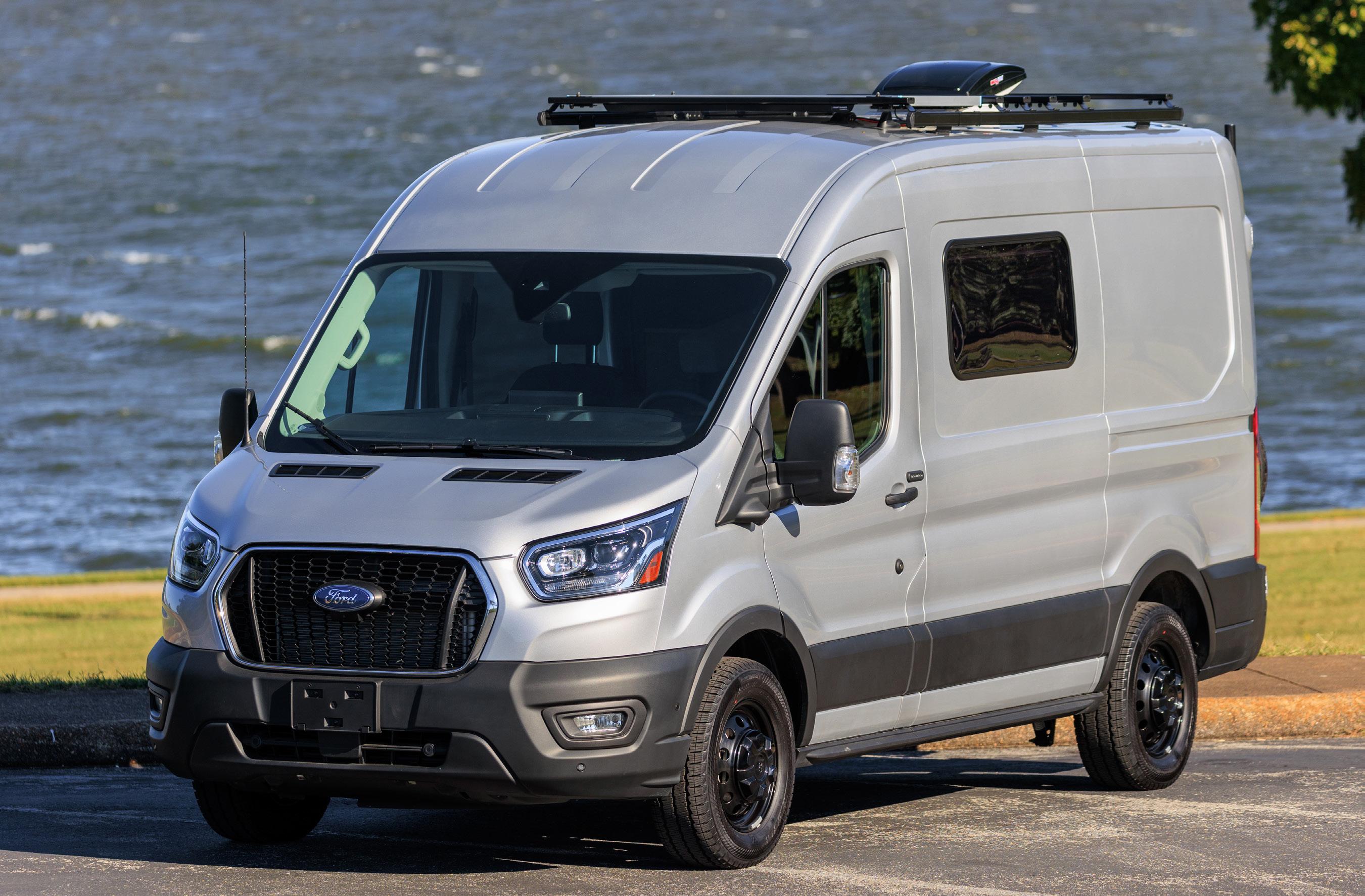
Moxie Van Co.
Chattanooga, Tenn.
If you’re looking to buy a yacht on wheels, look no further than Moxie Van Co.
“We build our vans more like boats than RVs,” says founder Justin Mace. “Boats are meant to last for years and years while RVs have cheaper components that shake around and loosen up over time.”
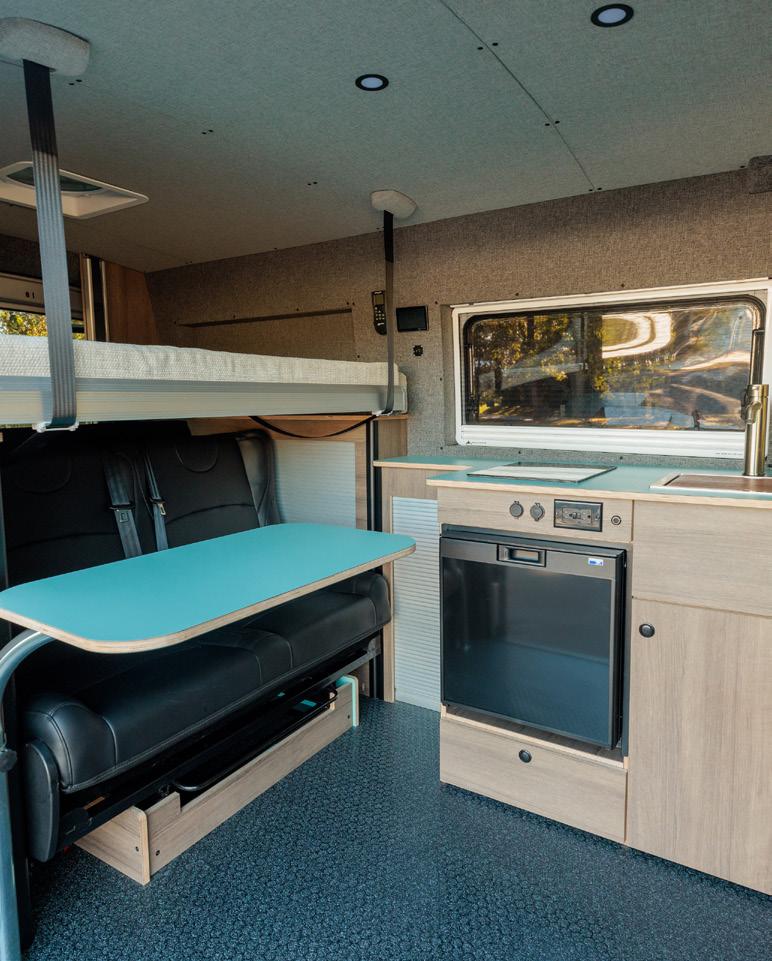
Of course, you can’t raft down the Colorado River or sail to the Cayman Islands in a Ford Transit converted by the Moxie team. But you can bump down potholed forest service roads and stealth camp in Walmart parking lots. “That’s what I love about vans,” Mace quips. “There’s so much freedom.”
Mace’s clients also have the freedom to design custom floorplans, select from dozens of tweed fabric colors and cabinet finishings, and even opt for quirky add-ons like reading lights and batwing awnings.
“Our big emphasis is quality,” says Mace. “We never cut corners.”
MARCH 2023 | BLUERIDGEOUTDOORS.COM 23
(TOP) PHOTOS COURTESY OF CAROLINA VAN BUILDERS (BOTTOM) PHOTO COURTESY OF BRIDGE BOUND CAMPERS






24 BLUE RIDGE OUTDOORS
Crescent Moon Van Conversions Columbia, S.C.
A strait-laced accountant who can probably create a Gantt chart with his eyes closed, Matt Alburn is a stark contrast to the long-haired free spirits who once defined vanlife. But that doesn’t mean he can’t build a sick camper.
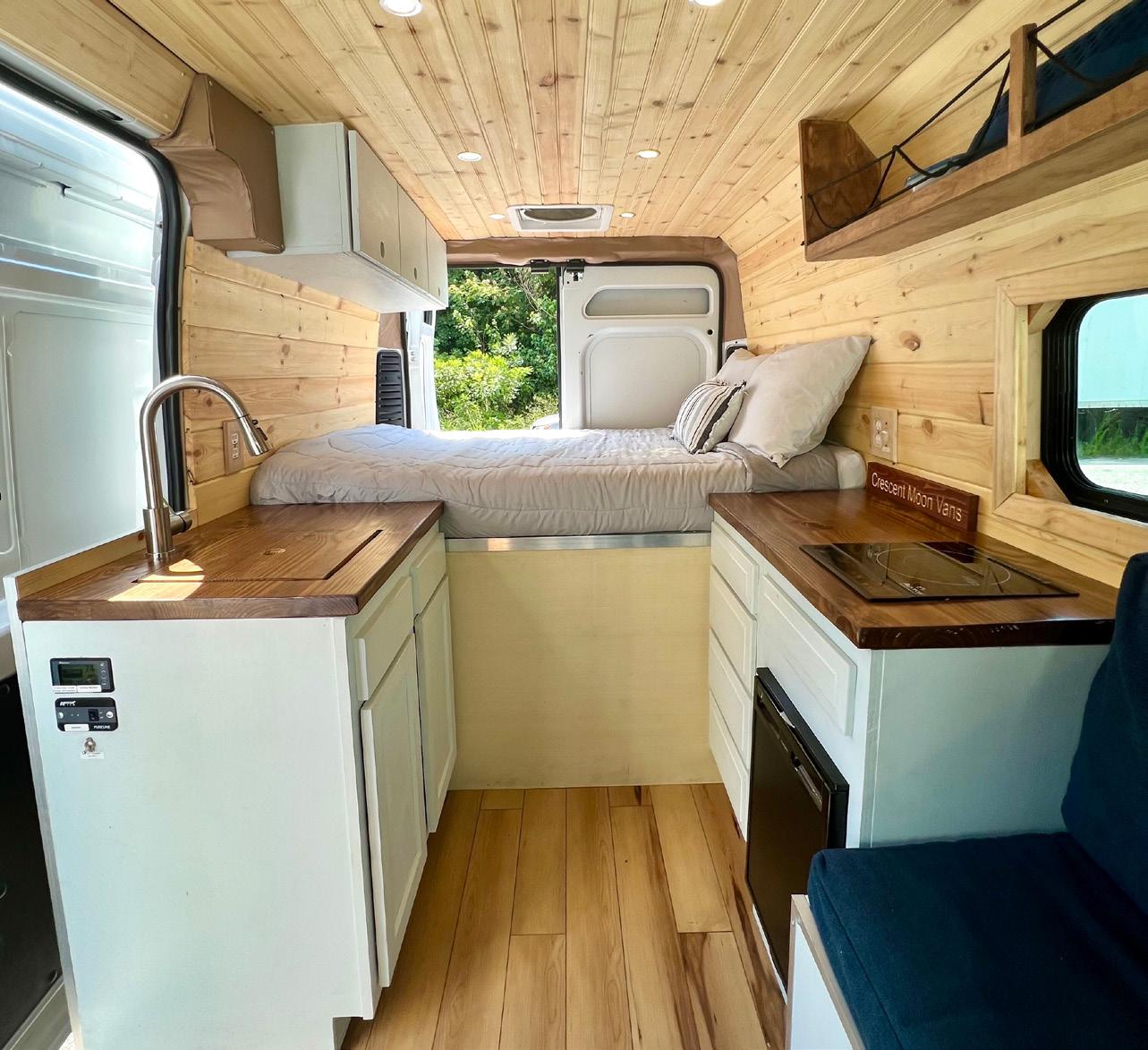
As the founder of Crescent Moon Van Conversions in Columbia, S.C., Alburn is all about creating high-quality conversions that cater to the client’s needs. Efficiency matters too.
“I’m very focused on the business side of things,” says Alburn, a University of South Carolina grad. “Because of that, our lead time is only four to five weeks—not four to five months.”
Alburn and his team—which includes his dad, a long-time handyman and licensed electrician— also do way more than your run-of-the-mill van conversions. In the past, they’ve reimagined a skoolie into a roving art studio and a cargo van into a mobile doctor’s office.
“Right now, we’re seeing an uptick in box truck conversions,” says Alburn. “They’re about $20,000 cheaper than a cargo van and offer more headroom.”
Regardless of your rig, Crescent Moon Van Conversions will walk you through the building process step-by-step. They’ll even help you find a vehicle, if that’s something you need a hand with.
MARCH 2023 | BLUERIDGEOUTDOORS.COM 25
PHOTOS COURTESY OF CRESCENT MOON VAN CONVERSIONS
April 29
Rock n Roller - Old Fort Edition
The 2nd annual back country road cycle ride begins and ends in Old Fort, NC.
www.mcdowelltrails.org
April 29
Pioneer Day Festival
Celebrating western North Carolina’s pioneer heritage on the grounds of Mountain Gateway Museum, in Old Fort, NC.
www.mgmnc.org
May 12
Hellbender 100 Miler
Annual trail foot race staged at Old Fort’s Camp Grier.
www.hellbender100.com

May 20
WNC Bigfoot Festival
This popular celebration of all things Bigfoot takes place in downtown Marion, NC.
www.marionbigfootfestival.com
June 3
Old Fort Trails & Trains Festival
Inaugural year of celebrating Old Fort’s railway history, leading into a rich future with trails.
www.ofttf.org
Details about event registration, and schedules are online.
26 BLUE RIDGE OUTDOORS
| 828.668.4282
www.blueridgetraveler.com
McDowell County Tourism Development Authority
Photo Credit:EJStern
WE BOUGHT A CAMPER
BY MIKE BEZEMEK
THE WHITE, EGG-SHAPED CAMPER was hitched to my truck on a residential street near downtown Asheville. After only two hectic weeks from idea to purchase, I tentatively handed a cashier’s check to Kenny, the friendly private seller. My wife clutched the title to a 2021 Casita Spirit Deluxe, a 17-foot fiberglass travel trailer. The only thing left was to retract the tongue jack and drive away—no small feat given my limited experience towing occasional raft and kayak trailers.
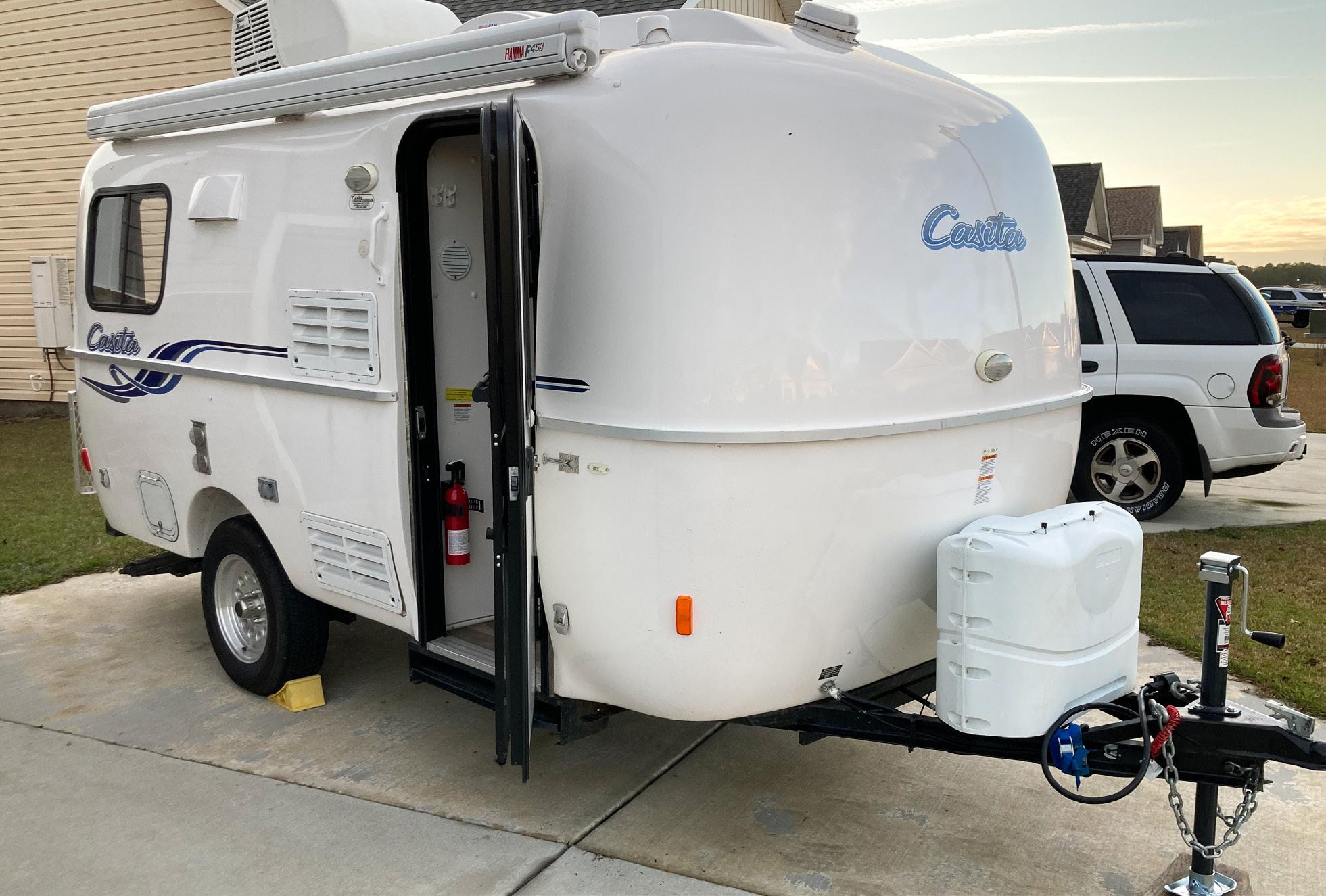
Kenny was raising the electric jack when we heard a nasty clunk. The inner steel leg and foot plummeted to the ground. Three pairs of eyes suddenly widened.
“It can’t be broken,” muttered Kenny. “It’s only a year old.”
Kenny seemed genuinely shocked and embarrassed. But after confirming the jack was definitely broken, it was hard to shake the feeling that we had been ripped off. Frankly, it didn’t add up. We were standing outside Kenny’s nice home, where we’d spent the past 20 minutes in his kitchen, doing paperwork and chatting about traveling across the country. Kenny had repeatedly insisted everything was in working order. This being our first camper, I hadn’t considered testing the jack during our inspection.
“I’ll pay for it,” said Kenny, also apologizing several times. “Repair or replacement. Just let me know.”
Now we apparently owned a lightly used camper that couldn’t be taken off the truck. Nor could we drive the five hours home with a jack foot dragging down the highway like a sparkler. A quick phone search showed an RV superstore about 20 miles south. I
used cam straps to retract the jack, at best a risky short-term fix.
And we were off! Very slowly, that is, with wide turns through the narrow downtown streets. The transmission was in S4, with the power button on, to prevent early upshifting and the low torque of overdrive gears. I carefully accelerated onto the interstate, trying to get a feel for pulling a 3,000-pound egg— hopefully not a rotten one.
***
“Maybe it’s time to get a camper?” I had said to my wife two weeks earlier, after stumbling across a chunk of freelancing cash in one of those digital wallet apps. Suddenly, I realized what some would call financial disorganization could be conveniently recast as financial discipline. Perhaps I could use this tow-able office to offer backcountry seminars about socking away money in easily forgotten icons on one’s phone.
I figured it might take a leisurely year or two from idea to purchase. It was early November 2022. The rush of early pandemic impulsive camper buying was over. Now seemed like the right time to watch for the selloff. Fortunately, I’d already spent years narrowing in on the target— and not just with online research.
Whenever I saw a Casita in the wild, I basically stalked it like a private detective. I examined the
two-piece fiberglass construction, essentially a top bowl placed over a bottom bowl, which helps reduce leaks. I peered inside and crawled under parked Casitas. Yes, I usually asked the owners first. Some of them later regretted inviting me inside, where I performed crimescene-level investigations. I even followed a few Casitas on the open road, chasing them over mountains and across rough deserts. Based upon the nimble maneuvering by the tow-vehicle drivers, perhaps to shake the tail, I knew the lightweight Casita was the one.
Within a few hours of searching on sites like Fiberglass RVs for Sale and RV Trader, a perfect match miraculously appeared—a Casita Spirit Deluxe, only five hours away, with the exact features desired. High-lift axle and alloy wheels that could handle all-terrain tires for backcountry boondocking. Space for a full bed. A/C and furnace. Mini kitchen with fridge and dinette. A bathroom with shower that—if a six-foot person like me ducks while bending at the knees—practically has vaulted ceilings.
“I’m an old hippie from California,” explained Kenny during our calls. The camper was available but with a catch. He and his wife were semi-retired, splitting time between the California coast, Asheville, and Quebec. The camper
was with them in Canada, and they would sell it in two weeks, upon return to North Carolina. Waiting for them were a dozen local parties foaming at the mouth, ready to pounce. After hitting it off with Kenny on the phone, and verifying things with photos and internet sleuthing, I settled on a risky course of action: a deposit to snatch the camper away from the closer locals. Once the date was set, I spent every spare moment researching anything relevant. I interrogated friends with campers and trailers. I read countless online articles. I even rode my bike around the neighborhood, talking to anyone with a camper who didn’t run me off their lawn. In the span of 10 days, I connected a ScanGauge II to monitor transmission temps. I opened up my truck’s dashboard, and sifted through wires, to install a Redarc brake controller. That way, the Casita’s electronic brakes would work on our long drive back to the coast. I picked up an adjustable hitch mount to level the trailer. While my wife drove us to Asheville, I hurriedly reviewed YouTube videos about towing the thing. ***
Flash forward five hours. My wife was in the passenger seat, and I was behind the wheel, towing our very first camper. My primary goals were mostly about avoiding things:
MARCH 2023 | BLUERIDGEOUTDOORS.COM 27
For an adventurous couple, the road to a dream purchase gets a little rocky.
PHOTOS COURTESY OF THE AUTHOR
curbs, jackknifing, divorce. As I pulled into Camping World, an RV rookie with a busted tongue jack, I was flooded by familiar memories. When I learned to whitewater kayak over 20 years ago, I probably flipped and swam roughly 12 million times. When I began mountain biking over 15 years ago, I went over the handlebars on my very first ride. When I started backcountry skiing over a decade ago, I ended up sliding down a mountain on my butt. New things are tough and rarely go as planned.
“It’s done for,” diagnosed the service technician. The electric jack had been left uncovered for 18 months, which allowed rainwater and ice to infiltrate the mechanism. Suddenly, I recalled seeing RVers turn a bucket upside down to protect their electric jacks from the elements. A replacement
electric jack cost several hundred bucks in-store, plus installation, given my limited knowledge and tools on-hand. But did I even want another dinky electric jack? What I really wanted was a solid manual jack that I could crank on for five minutes while listening to “young people” music—just like when handpumping my paddleboard.
In the parking lot, my wife and I stared curiously at the broken tongue jack. My plan had been to get the camper home and take the time to learn how to do our own maintenance. I’m neither the handiest nor the least, but somewhere in the middle. Thus, my first quick-fix idea was an abject failure. I had two wooden blocks and tire chocks. I figured if I drove the rear truck wheels up onto the blocks, this would lift the tongue enough that I could slide the sheared-off
jack leg out of the tube and be done with it. This, I quickly learned was a terrible idea. One tire rolled perfectly up onto the block, while the other tire rolled too far and kicked the wooden block backwards— dangerously close to the fiberglass shell. Phew, no damage.
So, I unbolted the jack from the A-frame, which I should have done in the first place. After opening up the motor case and discovering there was no way to disconnect the wires, I nervously had to cut them. We made it home by 11 pm and parked on the street. The next morning, I drove the camper to a nearby church parking lot and practiced backing it up repeatedly while road construction workers watched me, dumbfounded.
For 10 days, the camper was marooned in our driveway, hitched to my truck. I waited through
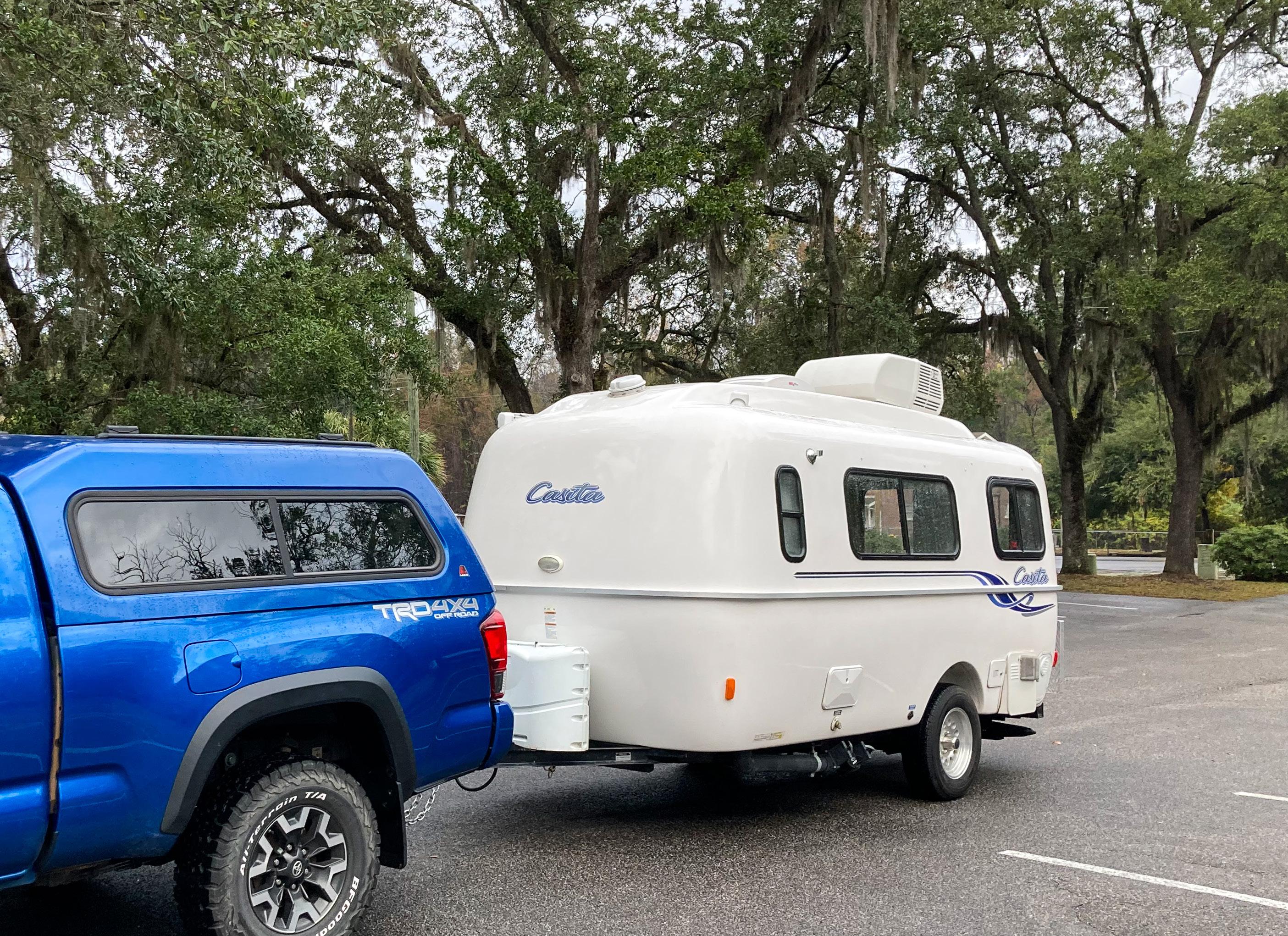
the Thanksgiving holiday for the delayed shipment of a Bulldog manual jack. Kenny proved true to his word, sending back $500, for the jack, our troubles, and what he called “embarrassment reduction.”
By mid-December, after a busy month, we were another step closer to a working camper. There was plenty left to do and learn about, like safely connecting to shore power and installing a permanent bed. But all of that would have to wait. A quick glance at the weather forecast showed an arctic blast was coming, with nighttime lows dipping into the teens. That would give me about a week to figure out the latest challenge: Emptying the water lines and tanks and adding antifreeze to prevent ruptures. An ominous process that sounded like a fantasy film invasion of the icy undead: WINTERIZATION.
28 BLUE RIDGE OUTDOORS


MARCH 2023 | BLUERIDGEOUTDOORS.COM 29
Road Ready
Six Easy Ways to Optimize RV Space
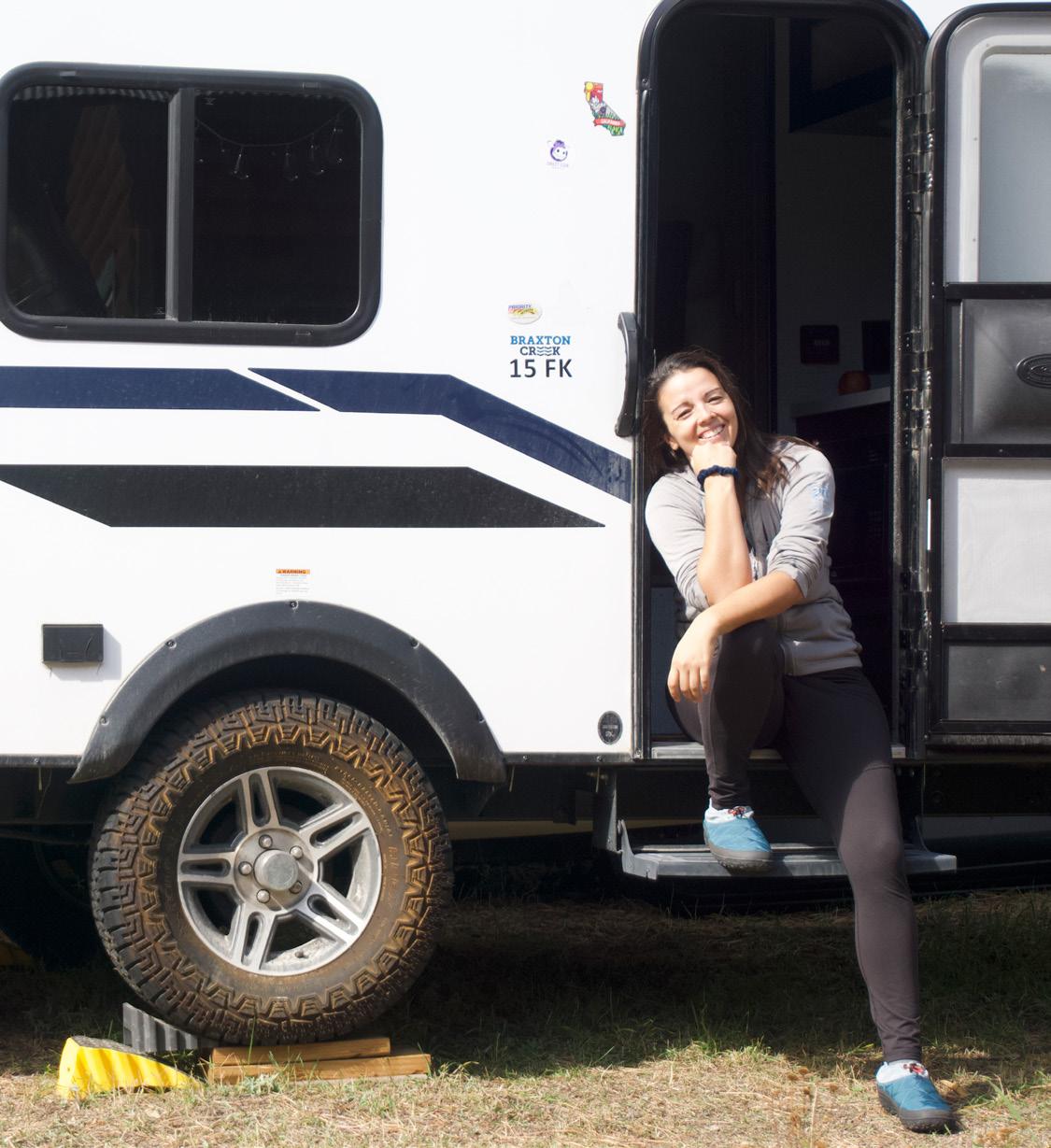
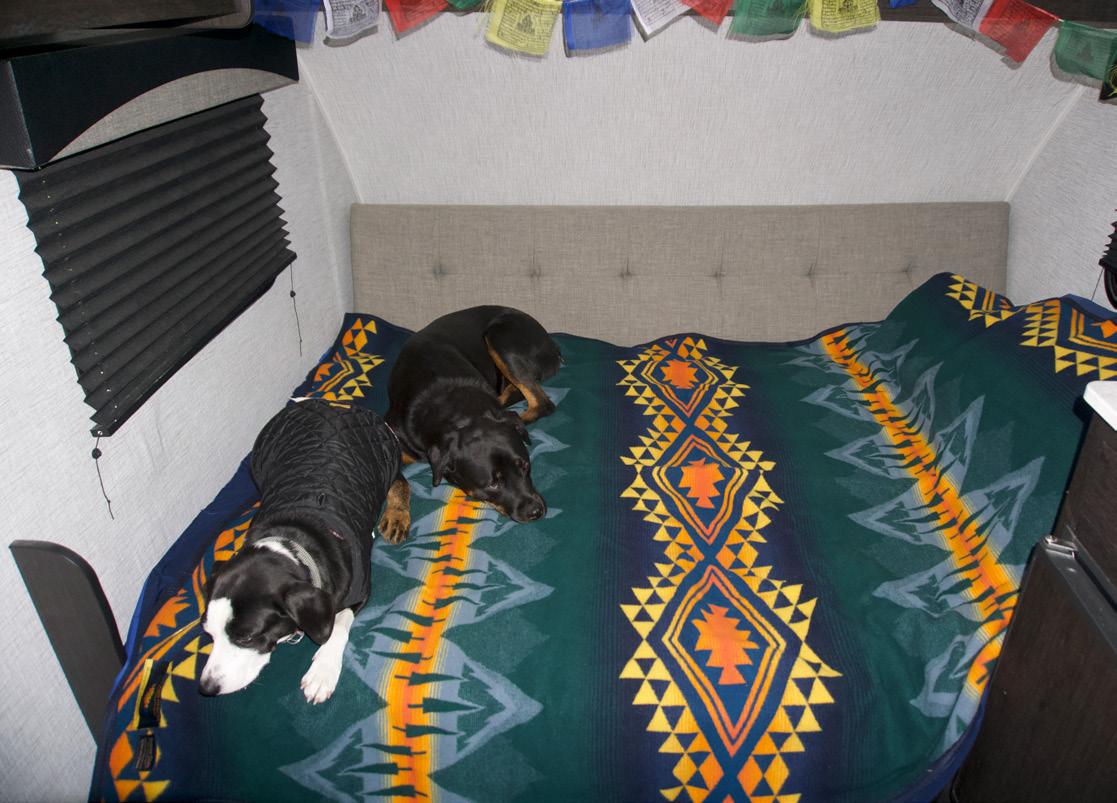 BY MARY BETH SKYLIS
OPTIMIZING STORAGE SPACE can be a common struggle for RV owners. Living in a tiny space means you need to dial in your setup or you’re likely to misplace essential items while you’re cruising from state to state. A key to staying organized is increasing storage capacity without adding a bunch of weight to your rig. More weight translates into worse gas mileage, and, ultimately more money in the tank at a time when fuel isn’t cheap. Here are six tips for RV owners interested in making the best use of space without adding bulk.
1. Remove Extra Furniture
One of the most underrated steps you can take to optimize RV space is to remove anything you don’t need on a regular basis. Some RV units come with multiple benches and beds, which is great if you need them. But if they’re going unused, consider removing this type of furniture. Doing so will give you extra space to add shelving units and other customized storage options.
2. Focus on Wall Space
Most campers have plenty of wall space that can be used for storage. In the kitchen, for example, you can install a magnetic strip beneath the cupboards to secure utensils. Some RV owners use the bottom side of cupboards to install an organizational system. Screw the lid of a canning jar to the bottom of the cupboard, and then suspend the jar from beneath the cupboard. You can also hang fruit nets and similar systems to preserve food while keeping it in a consolidated area.
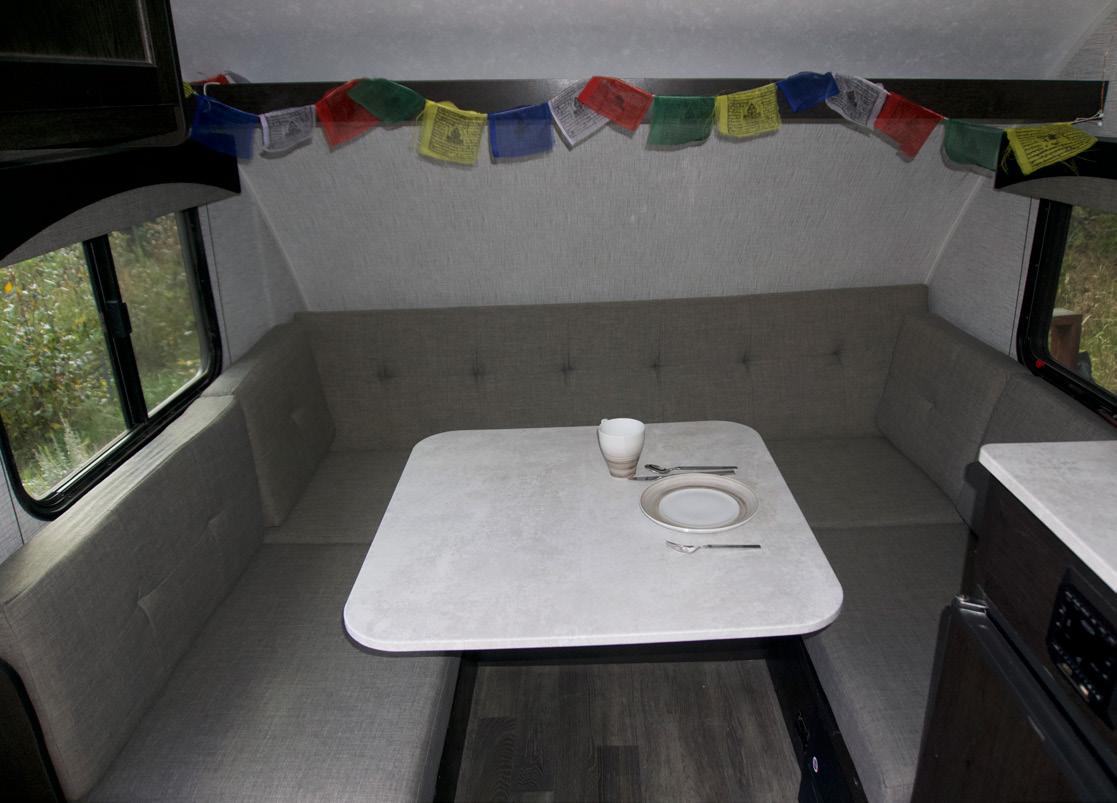
Commando strips also help optimize empty space to keep you organized. Use commando hangers to conveniently hang hats and clothing, as well as pocket storage on the wall
to keep your shoes and other essential belongings out of the way.
3. Evaluate Your Shower
Trailer showers present plenty of organizational opportunities. Consider installing built-in soap or shampoo holders to maximize space. Additionally, hardware stores often carry shower-specific commando strips and suction cup hangers that can be used to hang items like loofah and washcloths. Also, towels take up a fair amount of space. Install a towel rack, hang a shoe holder, or rig up a similar system to keep them organized.
4. Invest in Stackable Storage Bins
Utilizing stackable storage bins makes it easier to tuck items away when you want them out of sight. Storage bins come in a lot of different shapes and sizes, perfect for everything from silverware to clothing. Also of note is that flat storage containers can often be lodged beneath furniture, which makes using them a good option for RV campers.
5. Use the Inside of Cabinet Doors
Making use of the inside of cabinet doors is essential for organization. Some RV owners install spice racks to keep these messy items from flopping around during transit. Others use this space to install a paper towel holder or even a secondary towel rack.
6. Find the Right Gear
Most outdoor stores and outfitters offer essential RV items like collapsible dishes and travel-friendly utensils. One of the best ways to optimize cupboard space is by looking for items that can be stored in collapsed form. Even certain cups and water bottles can be collapsed, making it easy to cut down on kitchenware bulk.
30 BLUE RIDGE OUTDOORS
PHOTOS COURTESY OF THE AUTHOR
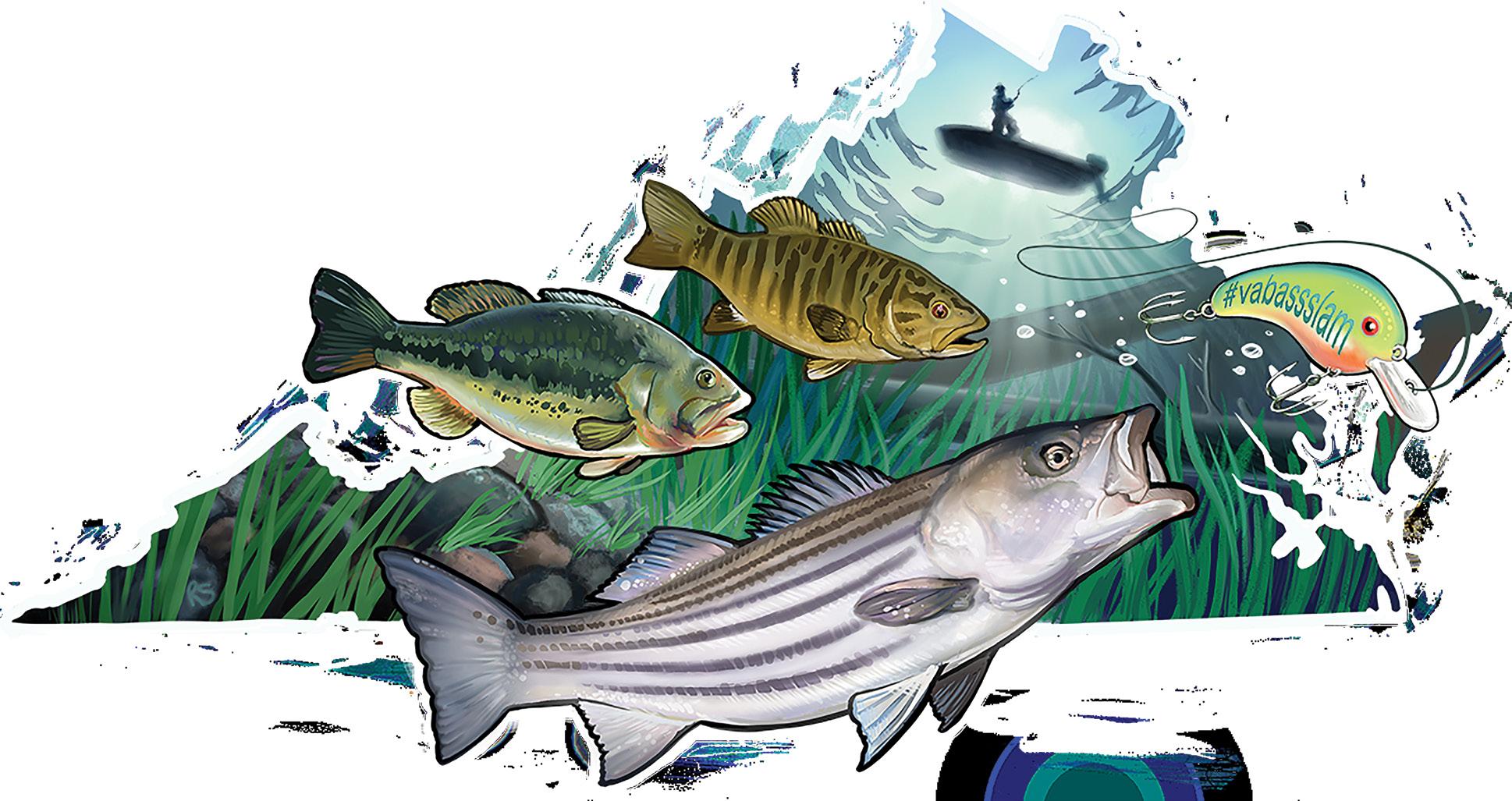





MARCH 2023 | BLUERIDGEOUTDOORS.COM 31 THREE BASS. ONE YEAR. Are You Up For e CHALLENGE? For more information: virginiawildlife.gov/fishing/virginia-bass-slam-challenge/ Illustration by Ron Shearer VIRGINIA STATE PARKS 800-933-PARK (7275) | www.virginiastateparks.gov | Know Before You Go — Recreate Responsibly FAIRY STONE STATE PARK
FISHING ADVENTURE GUIDE
From the cool mountain streams to the salty sea waters, the fish are always biting in the Southeast! Use this adventure guide to discover the best rivers, streams, and lakes to reel in your next catch, plus local outfitters and guides to help you along the way. Please remember to check with locations prior to travel for fishing and boating regulations!
A
Variety of Fishing Options in VIRGINIA STATE PARKS
No matter the type of fishing you enjoy— trout, big lake, small lake, downriver, tidal river, even Chesapeake Bay and ocean fishing—you’ll find something that suits you at a Virginia State Park.
Virginia’s Rivers and Lakes
Head to the western tail of Virginia to Clinch River State Park. The park lies along the Clinch River, which contains more fish species than any other river in the state such as smallmouth bass, spotted bass, rock bass, sunfish, crappie, walleye, musky, freshwater drum, longnose gar, channel catfish, and more. Experience the ‘seven bends’ section of the North Fork of the Shenandoah River at Seven Bends State Park, which features unique geology and landscapes that promote productive fishing, and pleasant scenery. The River is relatively small and shallow making it accessible for wade angling with the most sought after fish being the smallmouth bass. At the convergence of two of Virginia’s mighty rivers sits Staunton River State Park
From the north, The Staunton River flows almost due south while the Dan River flows in from the west. They converge into Buggs Island/Kerr Lake, providing an excellent environment for fishing. These waters are famous for the number and size of fish, with
bass, bluegill, crappie, and perch being just some of the species you can expect to catch.
If you’re looking for excellent largemouth bass fishing, Holliday Lake is for you. Here at this lake, in the depths of AppomattoxBuckingham State Forest, you will also find chain pickerel, crappie, catfish and yellow perch. While you’re there, swim with the fish or tackle some of the hiking trails at Holliday Lake State Park!
Shore Fishing on the Virginia Coast
Head east to the coast for excellent beachcombing and surf fishing at Kiptopeke State Park. The Park offers recreational access to the Chesapeake Bay, a habitat full of striped bass, red drum, spotted sea trout, white perch, and summer flounder (fluke). While you’re exploring the Atlantic coast, check out historical First Landing State Park in Virginia Beach, where Native American canoes, Colonial settlers, and modern cargo ships have all navigated its waters!
With 41 parks dotting the landscape from the Appalachian Mountains to the Atlantic Ocean, there are endless opportunities in between to fish a Virginia State Park.
VirginiaStateParks.gov
For easier access and less hassle, the “Buggs Island Special” pass covers parking and boat launching at Staunton River State Park!
FISH TIP
Still and Tumbling Waters in DAWSONVILLE,
Pack up your fishing gear and head down to the southernmost terminus of the foothills of Northern Georgia to discover luscious streams and bountiful lakes. Dawson County has everything an angler needs for the fishing trip of a lifetime!
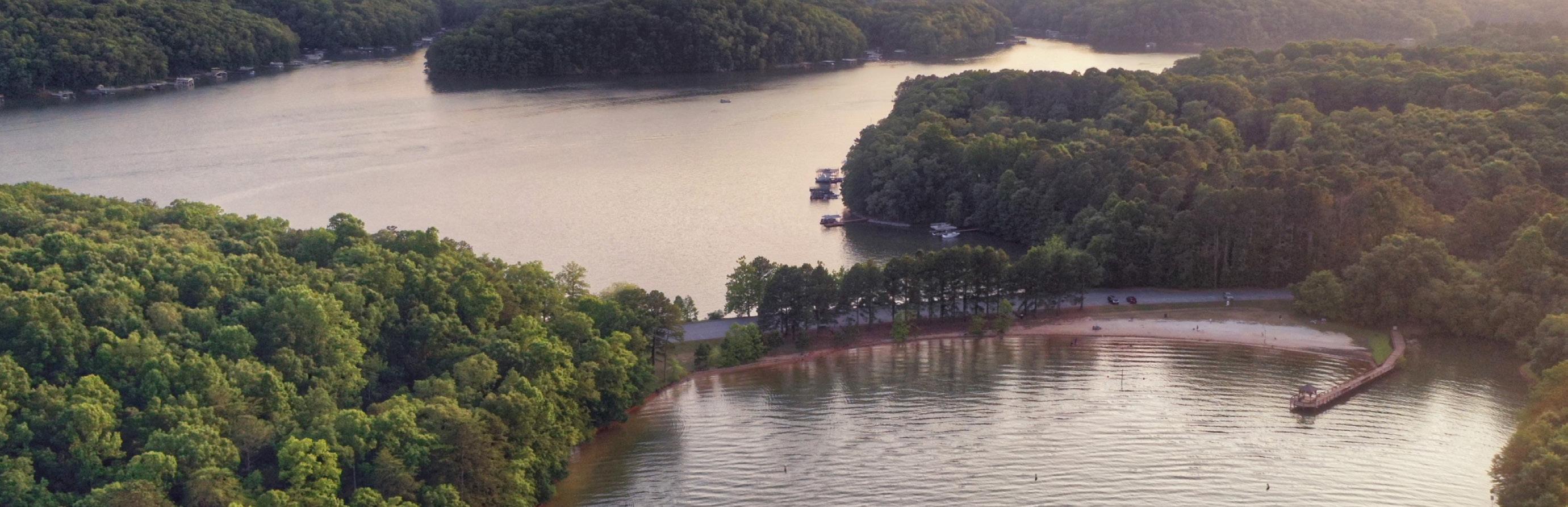
Lake Lanier
Whether you prefer your bass spotted or striped, you’ll never have to worry about catching one on Lake Sidney Lanier. Referred to by locals and anglers as simply “Lake Lanier”, it shares around 50 miles-worth of shoreline with the southeastern border of Dawson County. This 38,000-acre lake is great for fishing, boating, and camping, and is home to 16 species of game fish like largemouth bass, rainbow trout, and striped bass. The lake has also gained a reputation for its intense spotted bass fishing!
Over 76 recreational areas have been developed around the lake which include public parks, boat launches, hiking and biking trails, and access to activities like horseback riding and watersports.
Toto Creek Park, in Dawsonville, offers a serene fishing and rustic camping adventure for all family members to enjoy. If you prefer to stay close to town, Thompson Creek Park is just a short fiveminute drive from Dawsonville and provides plenty of boat ramps, and
quiet fishing and picnicking spots along the banks.
Amicalola Creek, Etowah River, and Chestatee River
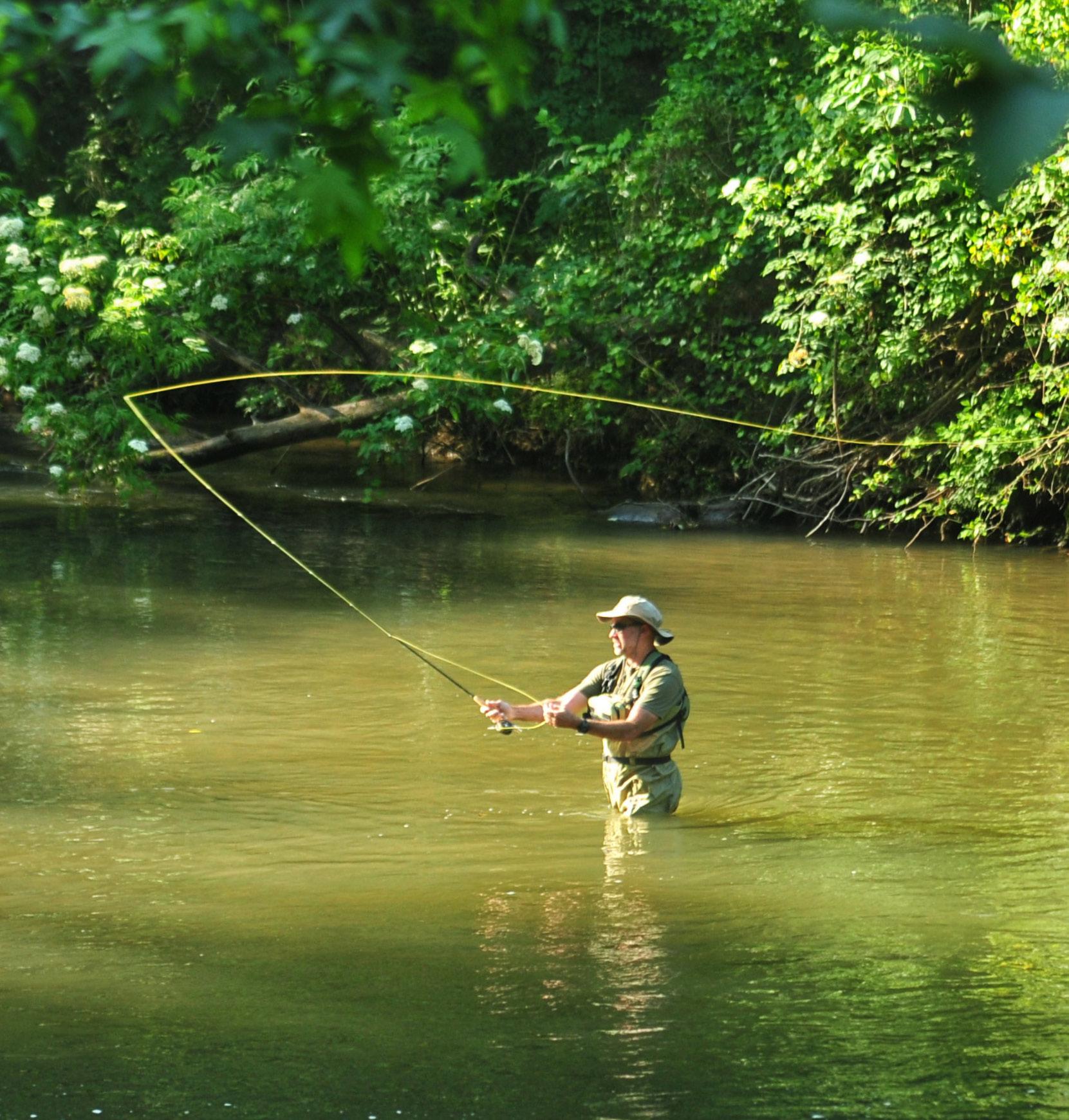
Journey to the northern corner of the county to catch some trout and experience roaring waters. Derived from the Cherokee word for “tumbling water,” Amicalola Creek is a large, river-like body of water that flows southward from the Blue Ridge Mountains into the Etowah River. Thanks to its miles of long pools, deep pockets, fast riffles, and wadable waters, you will never run out of excellent fly fishing spots. From nymphs to midges, any fly you choose will get the trout biting!
Swap out your fly fishing gear with heavier rods and larger flies on the Etowah River. With over 75 native fish species like redeye bass, spotted bass, and bream, there is something for every angler. Be sure to stop by Georgia’s tallest cascading waterfall in nearby Amicalola Falls State Park for a thrilling encounter of the region’s tumbling water, or take the approach trail to the southernmost end of the Appalachian Trail!
The Chestatee River is a 32.76-mile-long river that feeds into Lake Lanier and offers access to several tributaries and small creeks. This means that striped bass often swim out of Lake Lanier into the River, which presents unique opportunities to reel in large fish in relatively small waters! Fly fishing the small tributaries and creeks in the upper Chestatee is also popular, but be cautious of rules and fishing regulations, as some areas are privately owned.
Après-Fish
Home to the North Georgia Premium Outlets, outdoor-focused shopping is easy in Dawsonville. Stores like Orvis, Columbia, Eddie Bauer, and The North Face are sure to satisfy your spending needs. Five miles from Downtown Dawsonville, you can test your skills at the world’s most unique kart racing track, Atlanta Motorsports Park, with karts reaching speeds of 55+ miles per hour! If you prefer to stay outside, check out Dawsonville’s
premier sport shooting facility, Etowah Valley Sporting Clays, which offers clays, skeet, trap, and five-stand, and provides onsite rentals and lessons. From fishing to shooting, Dawson County is a true Sportsman’s playground.
DestinationDawsonville.com
Hop on a boat and relax. Due to their vastness, both Amicalola Creek and Etowah River are also spectacular spots for kayaking and canoeing.
GA
FISH TIP
Diverse Fishing in CHARLOTTESVILLE AND ALBEMARLE COUNTY,
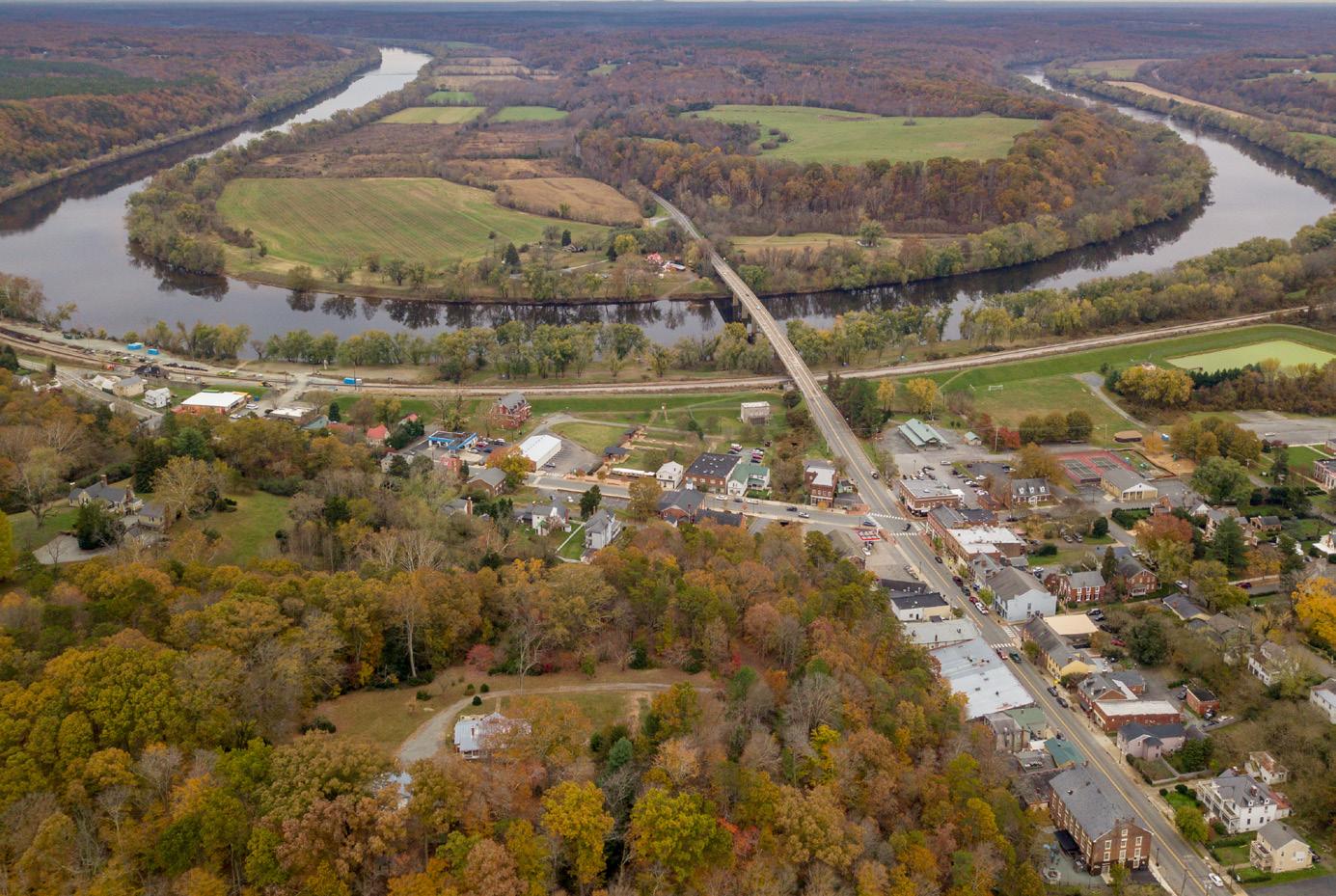
Catch native brook trout in the small streams flowing in Shenandoah National Park, or wrangle in sizable smallmouth bass on the largest river in Virginia, the mighty James. Charlottesville and Albemarle County offer diverse fishing environments for everyone to enjoy!
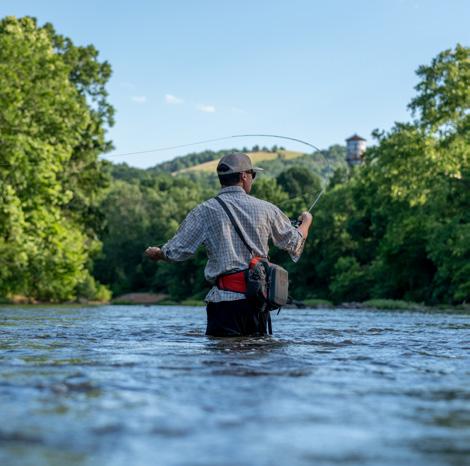
The Rivanna and The James Flowing throughout Charlottesville and Albemarle County, The Rivanna River holds many warm water fish species such as smallmouth bass, sunfish, and crappie. Thanks to the Rivanna Conservation Alliance, visitors are safe to swim, float, or wade in these waters as they fish. If you are looking for a bit of guidance, or need a few flies, stop by Albemarle Angler, where they provide classes for beginners and fly-tying clinics, as well as guided fishing trips to waters across Virginia. Bordering southern Albemarle, and just a 30-minute drive from the city center, is the James River. This historic river commonly yields large smallmouth bass, catfish, and even muskies. The town of Scottsville offers a public boat ramp and even more adventures for the family to enjoy! Complement your fishing experience at Scottsville Museum by learning how the town used the James River to transport Virginia’s agricultural riches, or get hands-on
Year-round Fishing in FRANKLIN COUNTY, VA
experience by taking a batteau ride down the river with James River Batteau Company
Shenandoah National Park, Local Lakes, and Reservoirs
Containing over 90 mountain streams and tributaries, fly-fishing enthusiasts come from all over the nation to toss a fly in the plunge pools of the Blue Ridge. Multiple species of trout can be found here, including native brook trout, rainbow trout, and brown trout. Enter Shenandoah National Park from Sugar Hollow Reservoir, hiking along the Moormans River. Or, for another option, take a boat out on one of the many lakes and reservoirs found in the area such as Lake Albemarle or South Fork
Rivanna River Reservoir
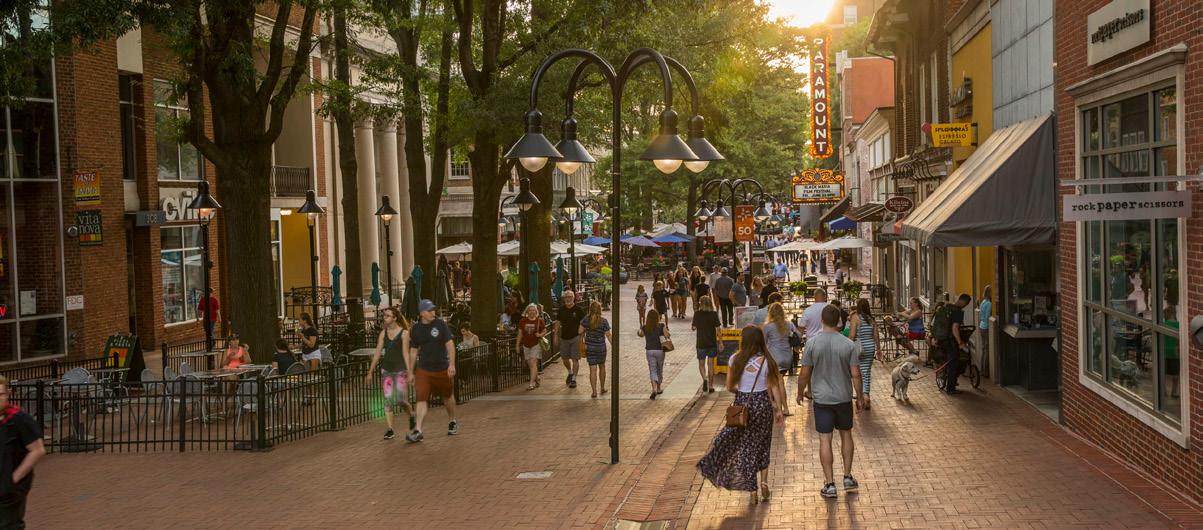
Soak in the outdoor experience while still being located within close proximity to wineries on the Monticello Wine Trail, breweries, and eateries. Charlottesville and Albemarle County offer a wide variety of lodging options, from luxurious resorts to your favorite chain hotels, cozy inns and B&Bs, plus a selection of vacation rentals, cabins, and cottages. Take a stroll on Charlottesville’s Downtown Mall to grab a bite or a brew after a long day of angling!
VisitCharlottesville.org/fish
Every season is fishing season in Franklin County! Whether it’s to catch fish or watch one of the many exciting fishing tournaments, this “Fish Virginia First” destination is perfect to visit any time of year.
Smith Mountain Lake
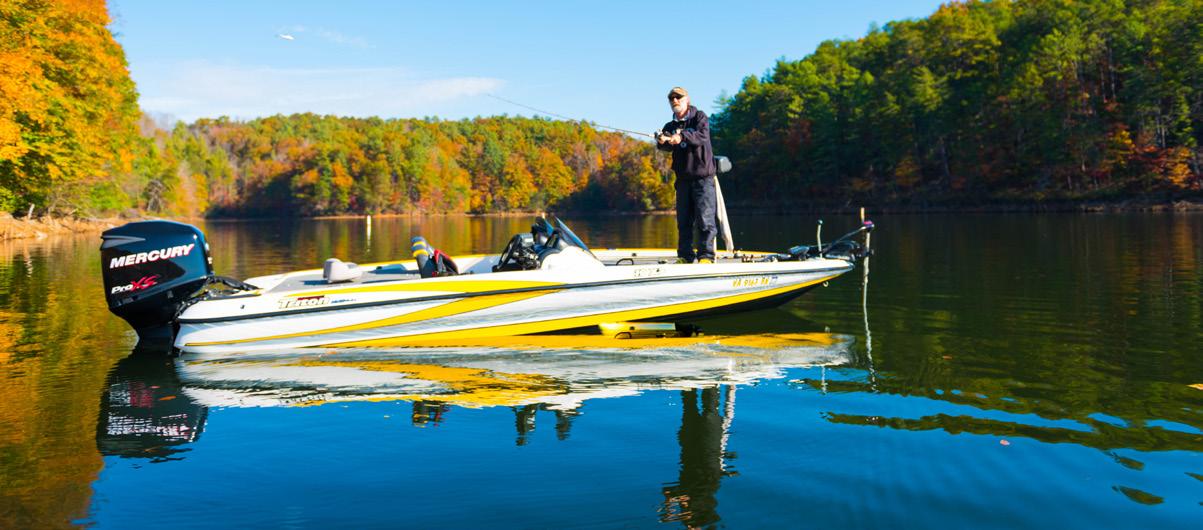
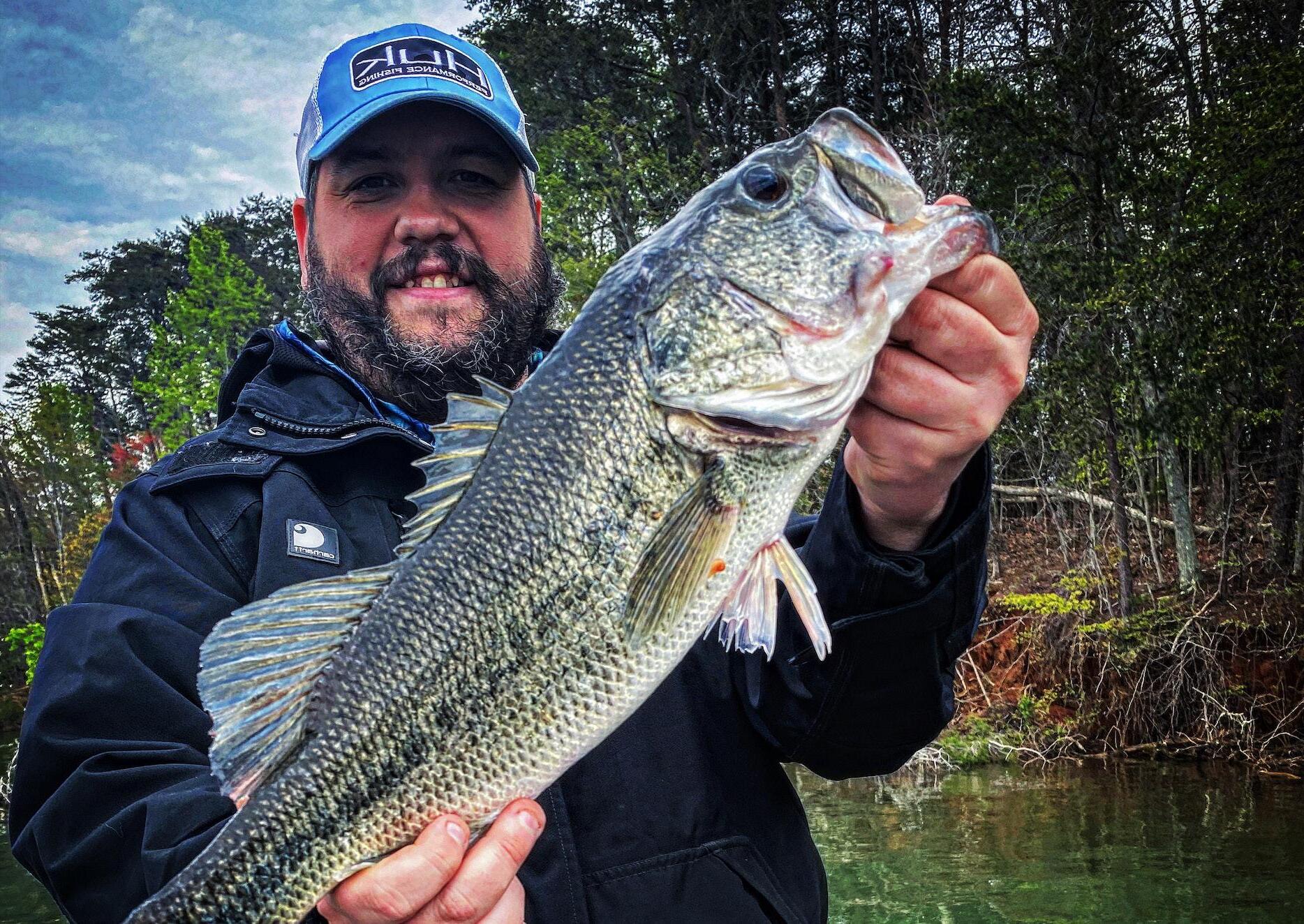
Named the Second Best Fishery to Catch Trophy Largemouth Bass by the Virginia Department of Wildlife Resources, Smith Mountain Lake is a must-visit for bass fishing enthusiasts. This 20,000-acre reservoir is one of the largest lakes in the Commonwealth, offering plenty of activities like swimming, sailing, and waterskiing. Largemouth bass is not all you will find in these waters. The deep water habitat of the lake makes it ideal for other species like smallmouth bass, crappie, catfish, and striped bass reaching trophy sizes!
As a host of several professional fishing tournaments, Smith Mountain Lake is proven to not only be a summer family vacation hotspot, but also a year round fishing and travel destination. Bass Pro Shop’s Big Bass Tour is held at Crazy Horse Marina from May 5 to May 7, and again in the Fall from September 29 to October 1. Come and compete for the grand prize of $52,000, or watch anglers battle it out. The Striper Mafia Tournament Series is another popular event that occurs in both the Spring and the Winter. Head down on March
VA
18, April 15, November 4, or December 2 to compete or watch anglers catch, photograph, and release some impressively sized stripers. No matter the season, the fish are always biting!
Franklin County’s Philpott Lake
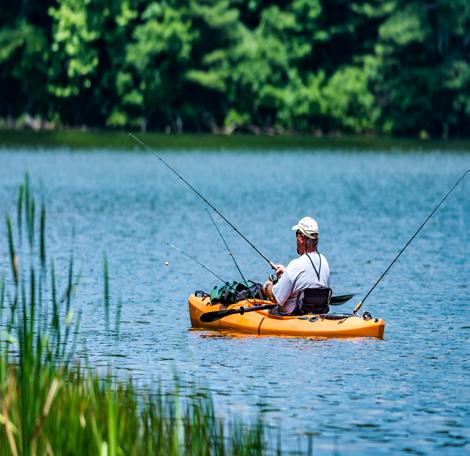
Hop in a kayak and reel one in on Philpott Lake, a 2,880-acre impoundment that offers excellent bass fishing, and is a premier destination for walleye. Although shared by three counties, there are tons of activities to enjoy within the boundaries of Franklin. Salthouse Branch Park offers various options for camping, swimming and fishing. Launch from the park to explore Deer Island, only accessible by boat. Other areas to check out are Horseshoe Point, Twin Ridge, Ryan’s Branch and Jamison Mill Parks.
Apres Fish
Get some gear at Captain’s Quarters at Halesford Bridge, SML Tackleshack at Westlake Corners, or Rock Outdoors, coming in 2023! Dubbed as the “Moonshine Capital of the World’’, head to Roosters Rise and Shine Distillery for a taste of the Blue Ridge. Afterward, hit the hay at Bernard’s Landing, featuring the best views of Smith Mountain Lake.
VisitFranklinCountyVa.com
Looking to learn more? The Thomas Jefferson Chapter of Trout Unlimited provides educational programs in cold water conservation, and provides access for anglers with physical disabilities.
TIP
Term Rentals are plentiful around Smith Mountain Lake but be sure to book early, as availability goes fast!
FISH
Short
FISH TIP
PHOTO CREDIT: MATT ROSS HISTORIC PEDESTRIAN
DOWNTOWN MALL
JAMES RIVER AT SCOTTSVILLE
PHOTO CREDIT: JEAN SKIPPER
Bass Fishing and More in LAKE HARTWELL COUNTRY,
Countless fishing and outdoor adventures await you in Lake Hartwell Country. Encompassing the surrounding area of Lake Hartwell including the counties of Anderson, Oconee, and Pickens, the fun never stops in the foothills of southern Appalachia!
Lake Hartwell
On the South Carolina/Georgia border sits a man-made reservoir with some of the best bass fishing in the world. Comprising over 56,000 acres, and one of the largest recreation lakes in the Southeast, Lake Hartwell is an angler’s paradise. Expect to reel in some striped and hybrid bass, largemouth bass, spotted bass, crappie, bream, and catfish as you relax on the water. One of sportfishing’s most iconic events, The Bassmaster Classic, has been held at this lake four times. Often referred to as the “Super Bowl’’ of fishing, this electrifying event is a testament to the sensational fishing opportunities Lake Hartwell has to offer.
For your boating and fishing needs, Lake Hartwell State Park boasts two boat ramps, a courtesy dock, and a 140-foot fishing pier. Camping in the park is easy as well! Take a load off in one of two camper cabins, at one of the 115 paved campsites along the shore, or at one of the 13 walk-in tent sites. Shoot some hoops at the
SC
basketball court or take a hike through the surrounding wilderness on a beginner-friendly nature trail. Sadlers Creek State Park, sitting on a 395-acre peninsula, also offers boat ramps, campsites, hiking trails, and a lakeside pavilion.
Chattooga and Chauga Rivers
Nourished by springs and rainfall, the Chattooga river descends from the Appalachians of North Carolina down to the South Carolina/ Georgia state line in Oconee County. Offering some of the best whitewater boating and trout fishing in the region, you can expect to find rainbow, brooke, and brown trout, as well as redeye bass, and redbreast. Fly fishing is also popular on the Chauga River of Oconee County, which offers cold water runs, riffles, pools and flat water. Both rivers are well stocked by the Walhalla State Fish Hatchery. Not quite confident enough to fish these rivers? Chattooga River Fly Shop offers fishing guide services and classes, as well as all the gear needed for a variety of river conditions. If you’re looking to float down the
river, Chattooga Whitewater Shop is the place to visit. The shop provides shuttle services, boat rentals, gear, and area information. Whether you are fishing, floating, or both, the rivers in Oconee County are a true adventure oasis.
Après Fish
If you can’t get enough of Lake Hartwell Country, there are plenty of hiking trails, waterfalls, rivers, lakes, and sweeping
mountain views to discover. Check out Stumphouse Park where you can explore the historic Stumphouse Tunnel, take in views of Issaqueena Falls, or shred the trails at Stumphouse Mountain Bike Park.
Need a breather from all your fishing and outdoor adventures? Breweries in Anderson City, near Lake Hartwell, like Carolina Bauernhaus and Magnetic South, offer a welcoming environment with local brew on tap. If you are
near the rivers, Keowee Brewing Co. is there to fill your cup. From Anderson to the city of Walhalla, plenty of shops and restaurants are available to keep you fueled and stocked for your next Lake Hartwell Country adventure!
LakeHartwellCountry.com
Striped bass are prominent in the area during the winter months/off-season, as they are getting ready to spawn. This is a great time to bring the little ones out on the lake and teach them how to fish!
TIP
FISH
Cool Waters in GILES COUNTY,
From the world-renowned New River to smaller waterways and tributaries, Giles County, Va., is a “Fish Virginia First” destination for anglers of all types.
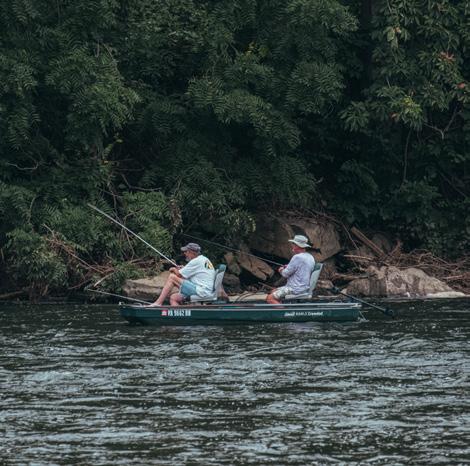
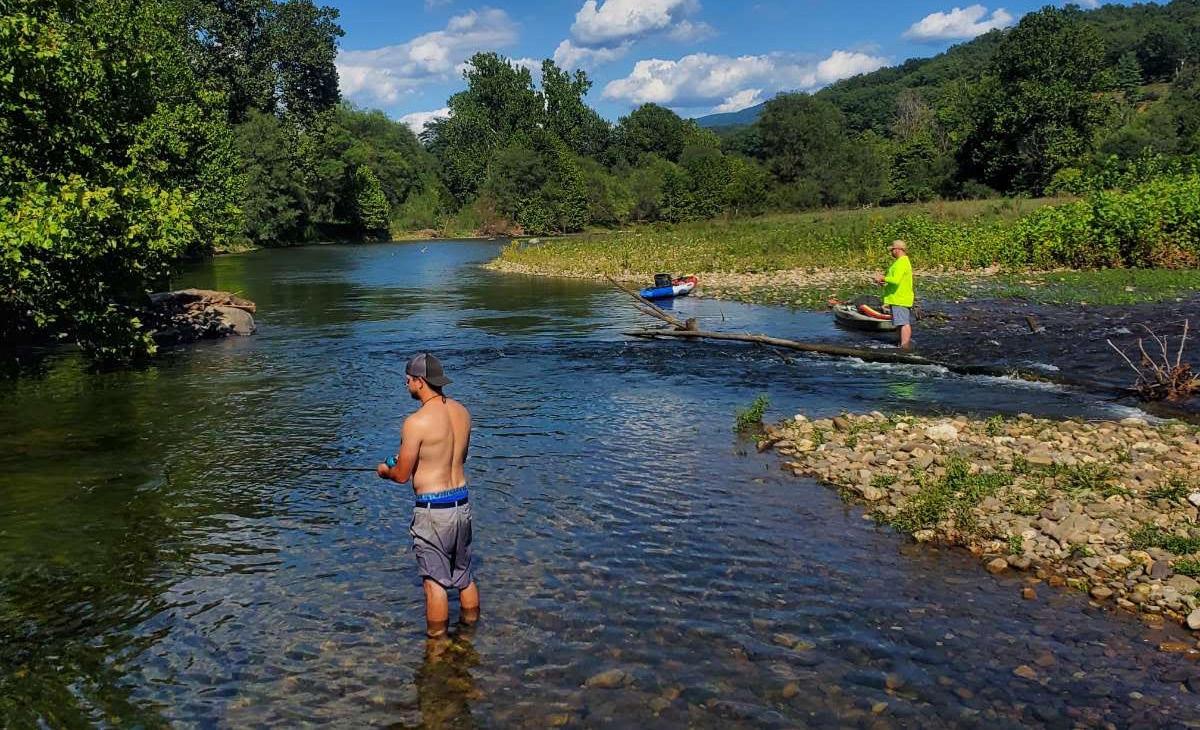
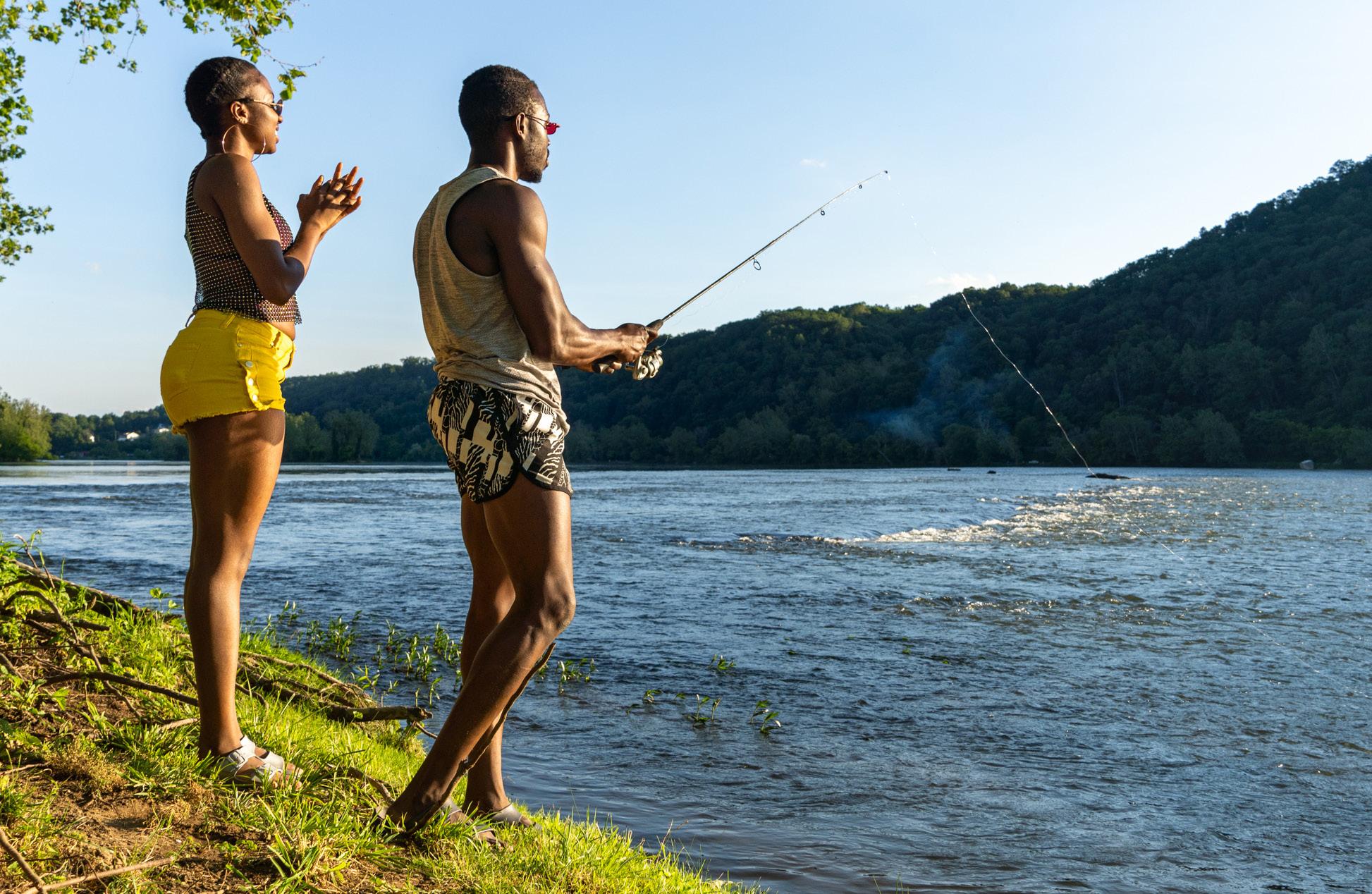
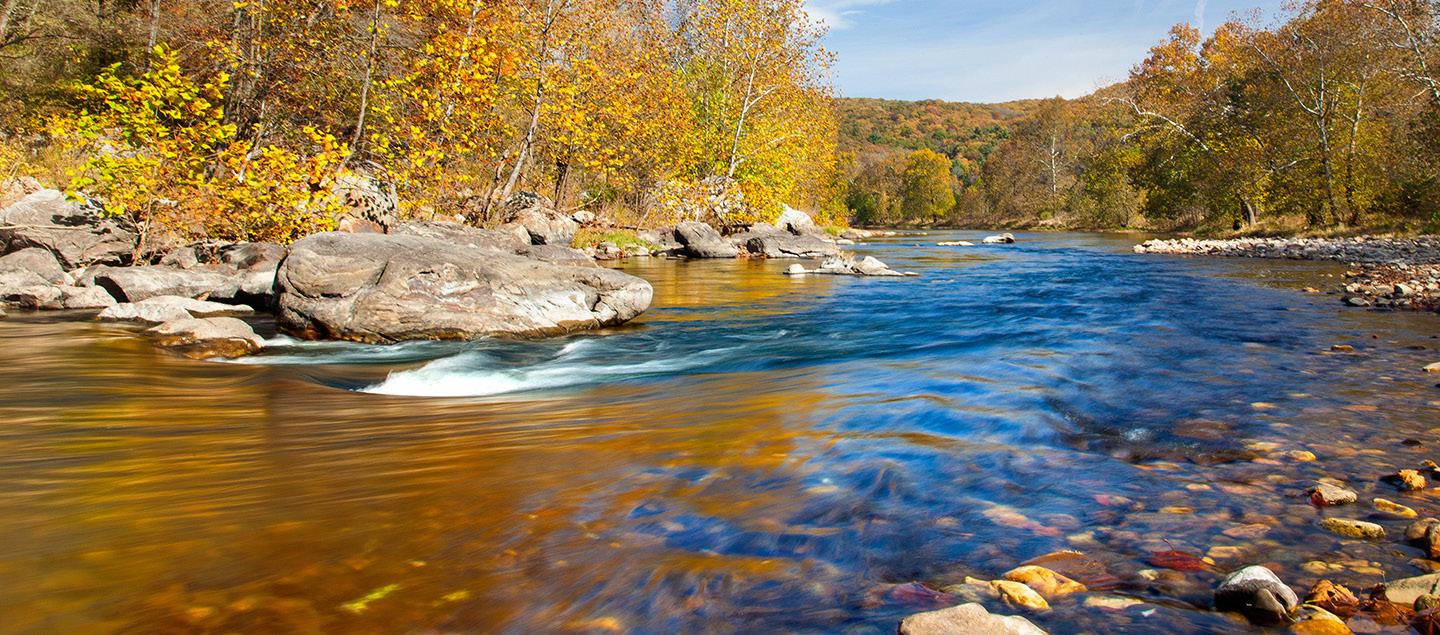
HARDY COUNTY, VA
Paddle and Fish the Rivers, Runs and Lakes of
New River
Considered one of the top smallmouth bass rivers in the country, the 37 miles of the New River that run through the county are a premier freshwater fishing cache. With 17 public and private access points along the New River Water Trail, you can stay on the water all day as you look for bass, muskellunge, walleye, and more. The Water Trail offers access to activities like swimming, rafting, and SUP, and also connects with hiking trails, wildlife viewing, and local lodging and dining options.
Big and Little Stony Creek
Perfect your fly fishing skills on some of the most well-stocked streams in Virginia. Originating in Jefferson National Forest, Big Stony Creek is a six mile long, freestone stream that hosts an excellent environment for trout to thrive. Cherokee Flats is a popular fishing spot on the creek, and is accessible for wheelchairbound anglers with a paved trail and metal ramp. Little Stony Creek is a small
but notable tributary of Big Stony Creek that yields a great population of wild brook trout. Connect with New River Outdoor Co . and Tangent Outfitters for locally guided fishing trip options and expert advice, so you can make the most out of your visit!
Après Fish
Fill up on local delights at the end of a long day, like beef brisket and hush puppies from Bluegrass BBQ , fresh baked sweets and delicious coffee drinks at Sugar + Flour , a rotating menu and specialty drinks from The Bad Apple , or stone-oven pizza from The Palisades Restaurant . The Inn at Riverbend is a lodging option just off the New River with scenic mountain and river views, delicious gourmet breakfasts, and easy access to your outdoor adventures. New River Outdoor Co. can offer up their well appointed cabins for your fishing group or next family vacation based along Walker Creek, a tributary of the New River. Soak up the waters and scenery of Virginia’s Mountain Playground, Giles County, when you plan your next fishing getaway.
VirginiasMtnPlayground.com
Head to the New River to break some records! Current Virginia state records that have been caught in the New River include muskellunge (45 lbs. 8 oz.), smallmouth bass (8 lbs. 1 oz.), and walleye (15 lbs. 15 oz.).
WV
Kayaking, canoeing, or floating? Spinning or fly fishing? Hardy County, WV offers seasonally gentle or whitewater rivers, as well as lakes and mountain runs waiting to be fished. Tributaries wind down the mountain slopes feeding Hardy County’s rivers, offering some of the best paddling and fishing in West Virginia.
Fed by the North Fork and South Fork , the South Branch of the Potomac River is a favorite for fishing or floating. You can rent kayaks and canoes for paddling or fishing the South Branch from Breezewood Adventures. They also offer a variety of river trips with shuttle service and host private camping trips featuring water-front sites. When paddling the South Branch, the Trough should definitely be a destination. This historic six-mile gorge features towering rock walls that can only be accessed by water. Known for its great bass fishing and abundance of rainbow, brown, and brook trout, you can also watch bald eagles soar overhead.
Hanging Rock is a favorite casting spot on the 30-mile Lost River . Disappearing underground at Lost River Sinks, the river emerges as the Cacapon River . Flowing north through two more counties to the Potomac River, the Cacapon is a great distance paddling river. The Cacapon and its tributaries are known for their brook trout habitats and nearby Warden Lake offers easily accessible fishing. The longest grass carp on record
(53.1”) was landed at Warden Lake in 2021. North River flows east from its headwaters at 3000 feet and skirts the northern boundary of Hardy County before turning north and joining the confluence of the Cacapon. Like so many of the mountain runs and man-made lakes, the North is stocked throughout the season. Upper Cove, Kimsey Run, and Parker Hollow Lakes are well known fishing spots with Parker Hollow’s submerged, standing trees creating great fish habitat.
Trout Pond Recreation Area is also home to excellent fishing. At times not more than a large puddle, Trout Pond is the only natural lake in West Virginia. The nearby 17acre Rockcliff Lake offers a tranquil setting for canoeing, a beach area for swimming, and incredible fishing from the river’s tree-lined shore or by boat. Channel catfish, largemouth bass, and trout are regularly caught at Rockcliff but, while night fishing is permitted, there are special boating and fishing limit regulations. Come for the day but plan to stay the night at one of Hardy County’s inns, B&Bs, and vacation cabins, or at a traditional hotel or motel. Find a complete list of accommodations, restaurants, and shopping, plus river access points and trail maps at VisitHardyWV com.
FISH TIP
Listen to what the experts are saying.
According to Curtis Fleming, host of Fly Rod Chronicles, “Hardy County is the area which encompasses the most condensed number of fishable streams—it is absolutely one of my favorites!” (Southern Trout, J/J, 2017)
FISH TIP
PHOTO CREDIT: JONATHAN ROBERTS
Fish are Always Biting in NEWPORT NEWS,
Who would have thought that the fourth largest city in Virginia land-wise is a top destination for fishing? Anglers from across the Commonwealth head to Newport News to take advantage of an abundance of fresh and saltwater fishing opportunities. The city’s prime location on the James River near the mouth of the Chesapeake Bay, as well as its miles of Saltwater coast and acres of Freshwater lakes and reservoirs, offers some of the best fishing spots in Coastal Virginia. Whether you’re looking to get out on a boat in the thick of things or reel one in from the shores, the salty waters of the Chesapeake Bay and its tributaries hold untold wonders and plenty of space for you to find a quiet spot. Common saltwater fish include croaker, spot, striped bass, red drum, speckled trout, and flounder. With a Saltwater Fishing License, you’ll find free fishing at the Hilton Pier, Wave Screen Pier at KingLincoln Park, and the MonitorMerrimac Overlook Park
For more saltwater action, head to the James River to catch croaker and spot in late spring to early fall, or reel in striped bass, red drum, speckled trout and other species. In February 2023, an extremely rare golden largemouth bass was caught in the James River just upstream from Newport News! Test your luck and catch your very own
“one-in-a-million” fish for a small fee at the James River Bridge Fishing Pier at Huntington Park. No license is required and it is one of the longest fishing piers on the East Coast!
Two public reservoirs round out the freshwater fishing in the area, with common catches including largemouth bass, crappie, bluegill, and chain pickerel. From sunrise to sunset, the Lee Hall and Harwood’s Mill reservoirs offer scenic spots to cast a line as you enjoy some time outside. At Harwood’s Mill, anglers can also enjoy access to hiking trails, picnic shelters, and a fivemile mountain bike trail. Shoreline fishing requires a Parks Division Shoreline Fishing Permit as well as a Virginia Freshwater Fishing License for those aged 16 years and older.
Don’t worry if you forget something at home. The Campsite Office at Newport News Park , as well as Wilcox Bait and Tackle and Dick’s Sporting Goods , are onestop-shops for all things fishing while you’re in town. Additional resources are available from the Bass Pro Shop just down the
road in Hampton. Whatever your fishing needs, Newport News has you covered.
When the fishing is done for the day, there are dozens of quick stops, cozy cafes, and fine dining establishments to choose from when it comes to finding a good meal. Sample the local catch of the day, get
adventurous, or try out a unique restaurant with fun local flair —there’s something delicious to satisfy every taste bud. Then it’s time to settle in for the night at one of the area’s relaxing accommodations. From easily accessible hotels to 188 modern campsites at Newport News Park , find a comfy spot to spend
the night. Visit Virginia’s coast and discover a whole world of fishing opportunities to explore in Newport News.
Newport-News.org
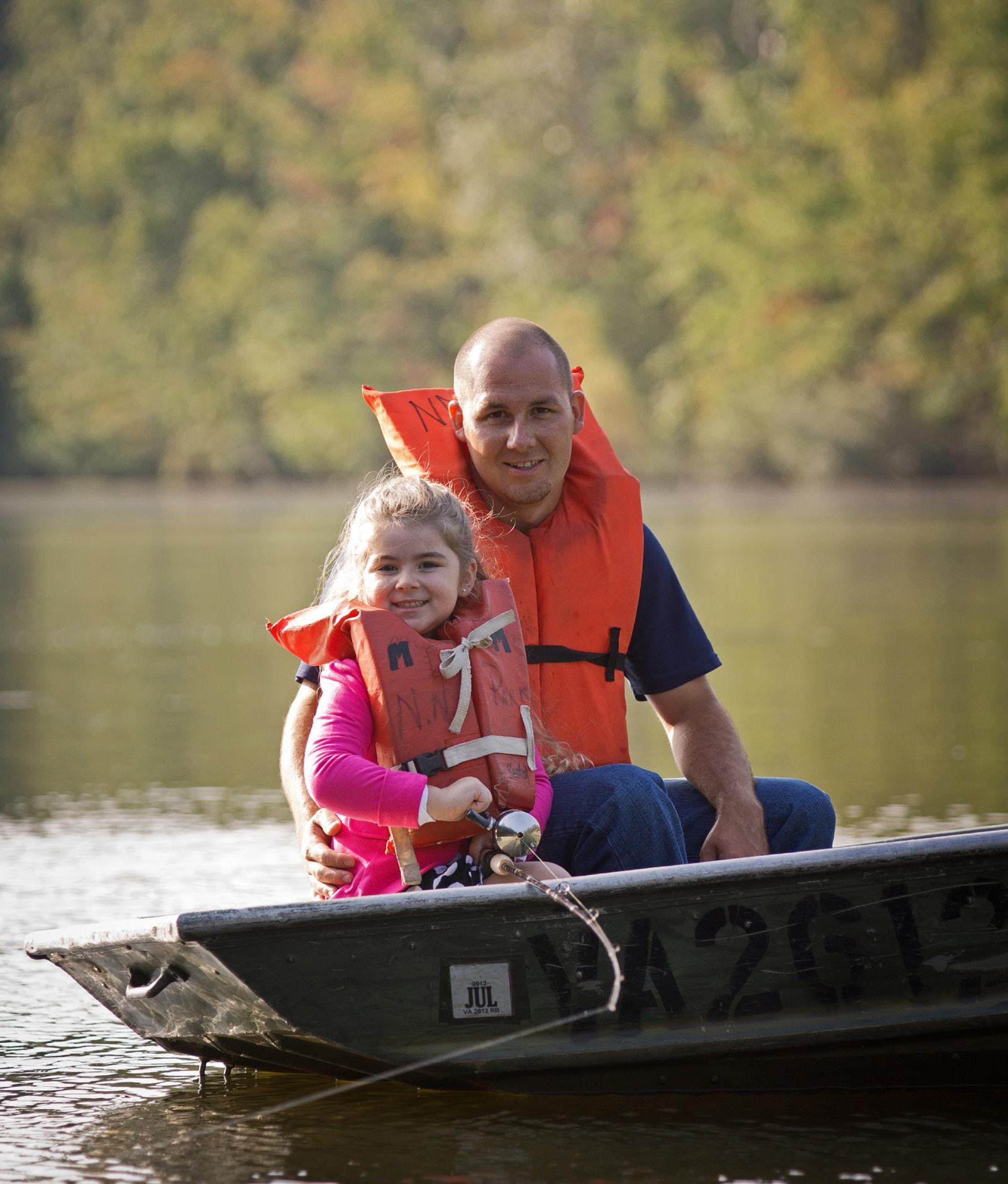
Jon boats are available for rental year-round at the Newport News Park Campsite Office, and on weekends and holidays during the summer months at Lee Hall Fishing Area and Harwood’s Mill. For information call (757) 888-3333 or head to nnparksandrec.org!
VA
FISH TIP
Cast a Line in CALVERT COUNTY, MD
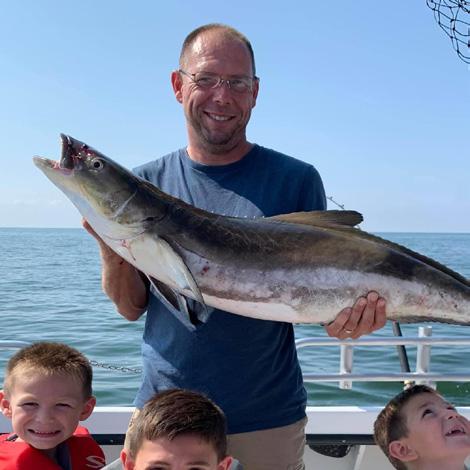
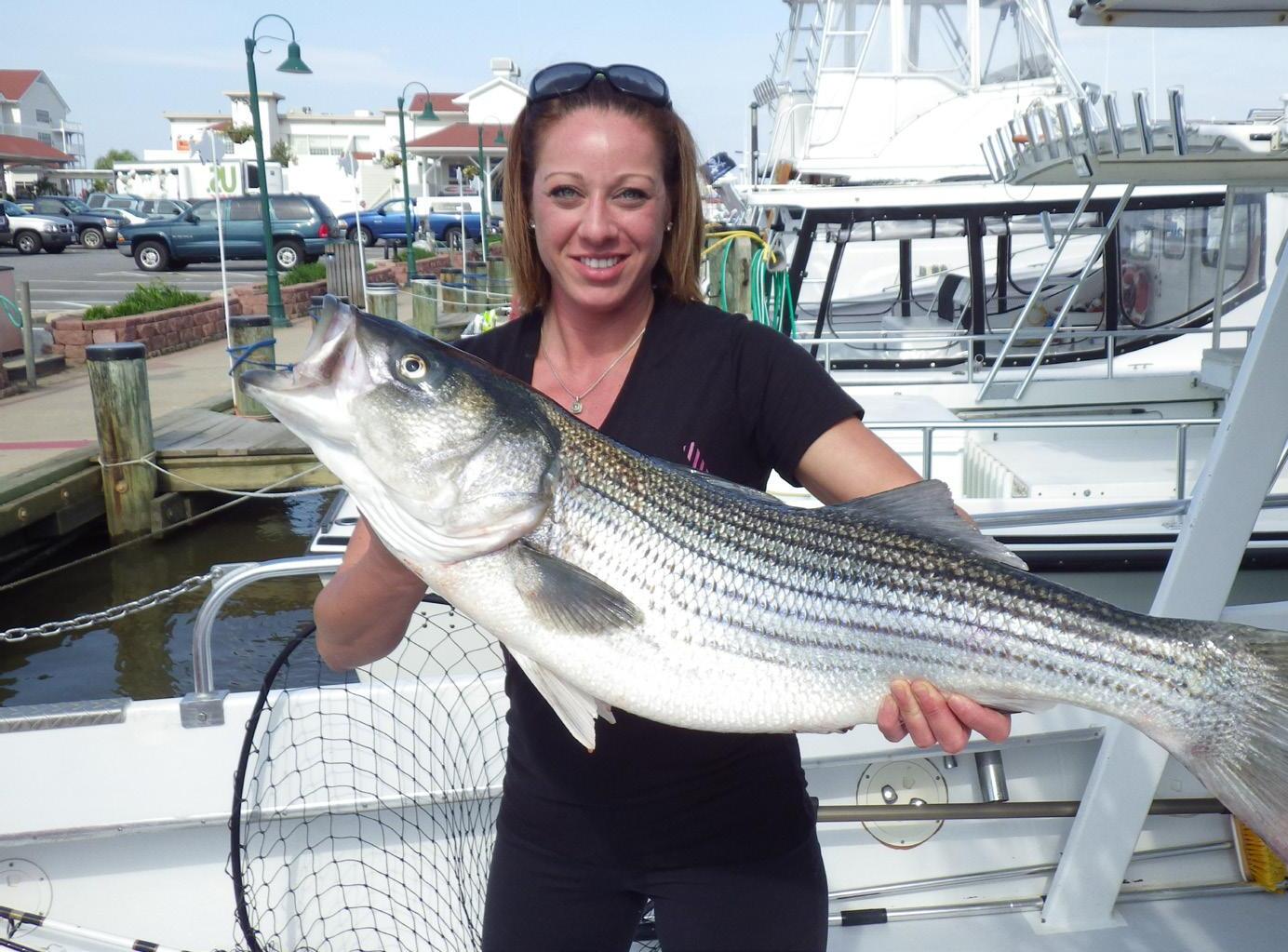
Located 35 miles southeast of Washington, D.C., and 55 miles south of Baltimore, Calvert County is the perfect fishing getaway for city-goers and country-dwellers alike. With over 143 miles of shoreline along the Chesapeake Bay and the Patuxent River, you’ll never run out of fish to catch!
The Chesapeake Bay
It’s no surprise that Calvert County is one of the best spots for fishing when you remember the entire east side is along the Chesapeake Bay. Head to the North Beach Pier, Breezy Point Beach or Flag Ponds Nature Park for spectacular views and the best fishing access points on the bay, or get out the water to do some trolling, chumming, live-lining or jigging to reel in a striped bass, or rockfish - one of the most popular sportfish in the MidAtlantic region! Throughout the summer, spend time on the bay to catch white perch, spot, croaker, blue fish and, if the water is warm enough, Spanish mackerel.
The Patuxent River
Continue your search for white perch, spot, croaker and blue fish along the
Trophy Fishing in CAMPBELL COUNTY,
western boundary of Calvert County on the Patuxent River. Cast from piers and docks or paddle boats to the river marshes from Hallowing Point Waterfront Park, Solomons Boat Ramp and Lower Marlboro Wharf . The 260-acre Kings Landing Park offers a wetland boardwalk, kayak launch and fishing pier. It is also excellent for environmental education, picnicking, and canoeing if the fish aren’t biting.
Accompanying Adventures
Come for the fishing and stay for the trails! Calvert County has five “driving trails” that encompass many of the local “to-dos.” For wine and beer enthusiasts, the Calvert County Wine & Ale Trail offers some of the best local beverages at a variety of wineries and breweries. If you have a sweet tooth, the Sweet Treats Trail has creameries, bakeries and specialty shops to satisfy that sugar craving. The Arts & Antiquities Trail, Birding Trail and Barn Quilt Trail also offer unique experiences of Calvert County.
VisitCalvert.com
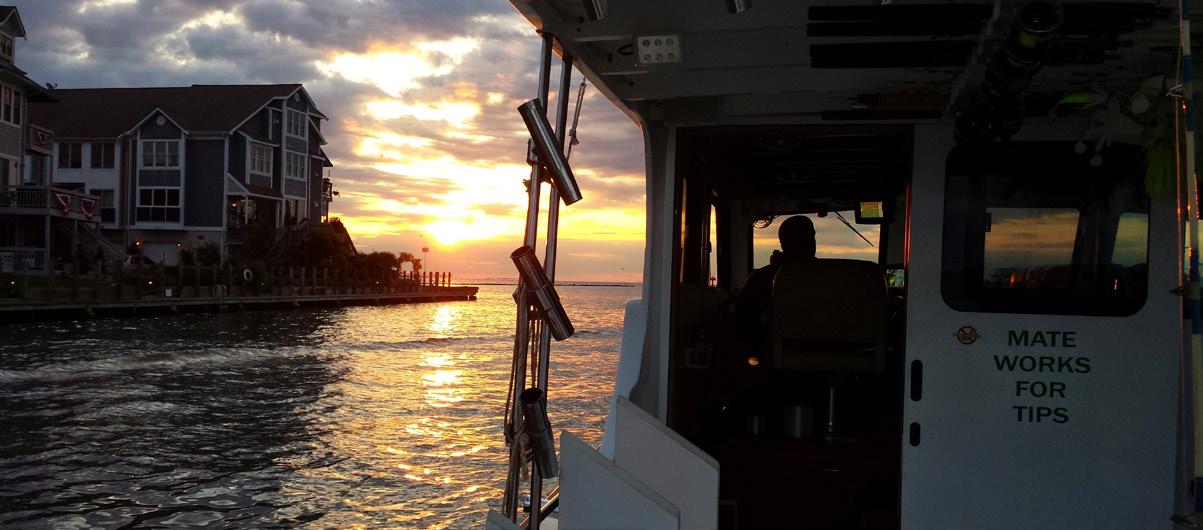
Calvert County is the “Charter Boat Capital of Maryland” for a reason! When you hire a charter fishing boat, crews provide all necessary equipment, rig the bait and navigate the boat – all you need to think about is relaxing and catching fish!
Grab your rod and get ready to reel in a big one in Campbell County, Virginia. Home of many varieties of large fish, cast one out and relax or compete in one of the spring fishing tournaments the County has to offer.
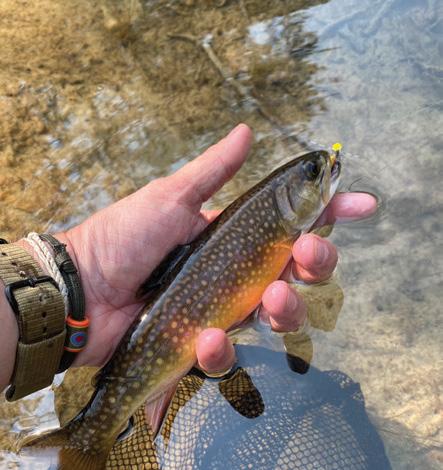
The Staunton River
Stretching 42 miles from the base of the Leesville Lake Dam to the Town of Brookneal, the upper Staunton River spans almost the entire southern border of the County, where the fish are plump and ready to bite! The Virginia Department of Wildlife Resources credits the high ratio of riffles, runs, and pools in this area of the River for providing an excellent habitat for smallmouth bass, saugeye, and walleye. Fishing here in the springtime is ideal, as the striped bass make their way upstream to the Leesville Dam. The Dam tailrace offers some of the best walleye fishing in Virginia, and the commonly targeted smallmouth bass can get up to trophy sizes. Channel catfish also collect in greater abundances in the Staunton River than any other river in the state, and flathead catfish up to 60 inches have been sampled in these waters!
Cast Out and Cash Out
Reel in a big one and win a prize! On
VA
the weekend of April 21 to 23, both the Brookneal Dixie Youth Baseball’s 36th Annuall Striped Bass Tournament and the Staunton River Masonic Lodge’s 12th Annual Catfish Tournament will take place. Fishermen ages 12 and up are eligible to enter one, or both, of these popular tournaments, and win up to $2,000 for the heaviest fish caught. The winning fish from previous tournaments are true head-turners with some weighing as much as 41.23 pounds! Entry fees are $40 for each tournament. Head to BrooknealFishingTournament.com to complete online registration for the catfish tournament. Registration for the striped bass tournament will be same-day and in-person.
Après Fish
When you’re ready to reel it in, riverfront primitive campsites provided by the Campbell County Parks and Recreation Department await you at Long Island Park. Larger groups may enjoy a stay at Camp Hat Creek’s Hammersley Center, a modern two-story conference center and lodge with accommodations for up to 45 guests, or a rustic Airbnb cabin.
CampbellVirginia.com
FISH TIP
PHOTO CREDITS: CALVERT COUNTY GOVERNMENT
PHOTO CREDIT: RICK STOWE
PHOTO CREDIT: RICK STOWE
Check out the local fishing guides for spin or fly fishing full-day or half-day trips. Canoe and kayak rentals are also seasonally available from Carter’s Store and Outpost in Lynch Station near Altavista!
FISH TIP
A Fishing Mecca in WORCESTER COUNTY,
From sea to stream and from flounders to sharks, experience some of the world’s best fishing in Worcester County. Located on the coastline of the Atlantic Ocean, as well as the Chesapeake Bay, fishing is always in season here! From the “White Marlin Capital” of the world, Ocean City, down to the smallest of creeks, use this guide to explore endless angling possibilities.
Saltwater Fishing on the Atlantic
Located on the Atlantic Coast, Ocean City is a sport fishing mecca with plenty of activities to enjoy.
Bottom fish the nearshore Atlantic for flounder, rockfish or sea bass, or go crabbing in the back bays for a fun and exciting experience! From surf to deep sea fishing, Ocean City has it all. Be prepared to reel in all types of large fish including: white and blue marlin, mako, tiger and thresher sharks, skate, sea bass, trout, blue fish, tautog, yellowfin, bluefin and bigeye tuna, wahoo, mahi-mahi and rockfish. Launch your boat from one of nine free public boat ramps located in Worcester County. Whether you charter a boat from one of many marinas, rent one from a full service outfitter, or bring your own vessel, you are sure to have a blast!
More of a fishing spectator?
Ocean City is home to some of the most highly regarded tournaments in the entire world including the largest tuna tournament in the U.S., The
Ocean City Tuna Tournament, and the world’s largest billfish tournament, The White Marlin Open. Take in the electrifying atmosphere at the marinas as fortunes hang in the balance of the scales!
Shoreline Fishing
Fish and relax without ever leaving the shore! Plenty of piers, beaches and docks, are available to fish off of, with hot spots including Ocean City
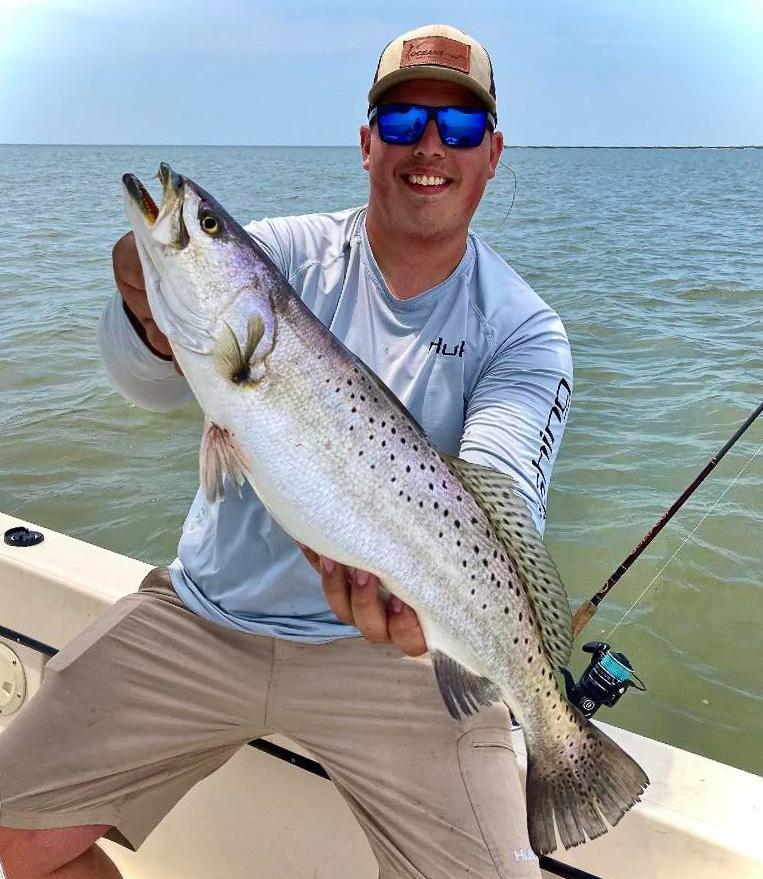
Inlet, Taylors Landing and George Island Landing
The surf fishing here, especially at Assateague Island, is excellent because of the low tide and full moon periods, allowing you to catch drum, bass and sharks. Stop into Pocomoke City or the town of Snow Hill for license free fishing areas! Be sure to review the current licensing and fishing regulations with the Maryland Department of Natural Resources, Fisheries Services before your visit.
Freshwater Fishing on the Pocomoke River
In between the sea and the bay is the Pocomoke River, and its many creeks and tributaries. The
river and tidal creeks offer great fishing spots where you can expect to catch shad, channel catfish, chain pickerel, largemouth bass, yellow perch, crappie and longnose gar. Check out the river’s largest tributary, Nassawango Creek, where you can set out on your canoe or kayak and cast a line, or simply enjoy the 18 miles worth of scenery. Need some gear? Stop by one of the many local bait and
tackle shops to purchase or rent equipment, and trade stories about the big one that got away!
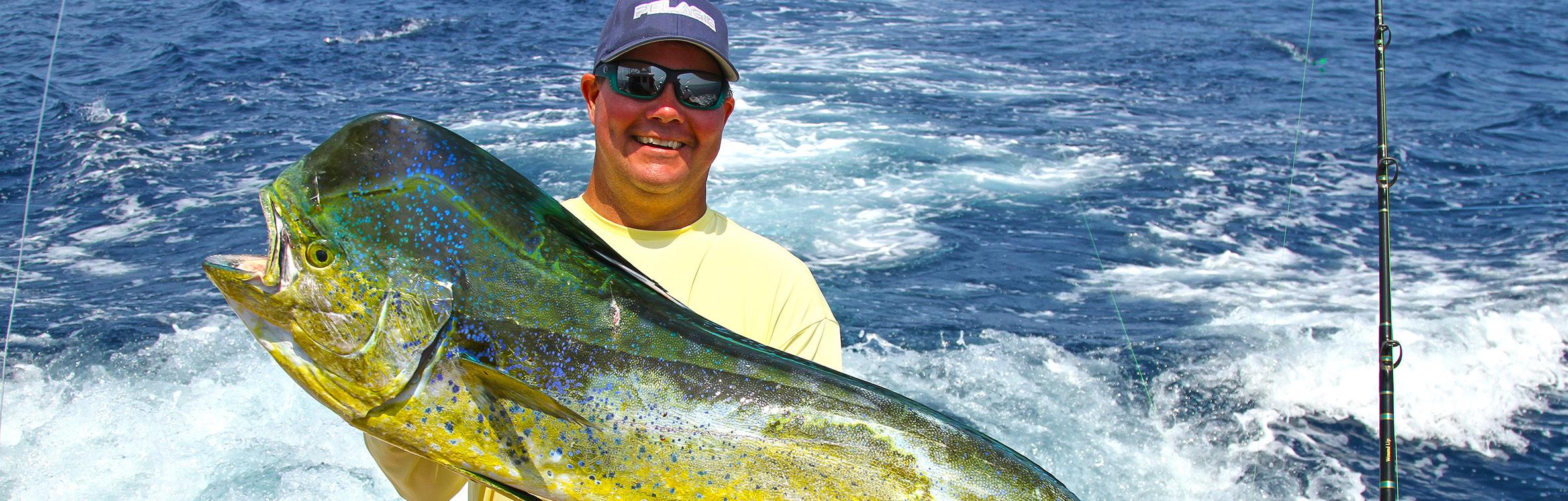
Après-Fish

After a long day of fishing, visit Sinepuxent Brewing Company, outside of Assateague Island, or grab some ice cream at Worcester County’s only working dairy farm, Chesapeake Bay Farms. Enjoy scenic views of the Pocomoke River
and wildlife as you shop or dine in Pocomoke City and the town of Snow Hill.
VisitMarylandsCoast.org
Fish conservatively! Know the current legal-size limits of game fish, use circle hooks or non-stainless hooks, do not hold fish by the gills, use a net, unhook fish while in the water and catch what you can, but keep only what `you need.
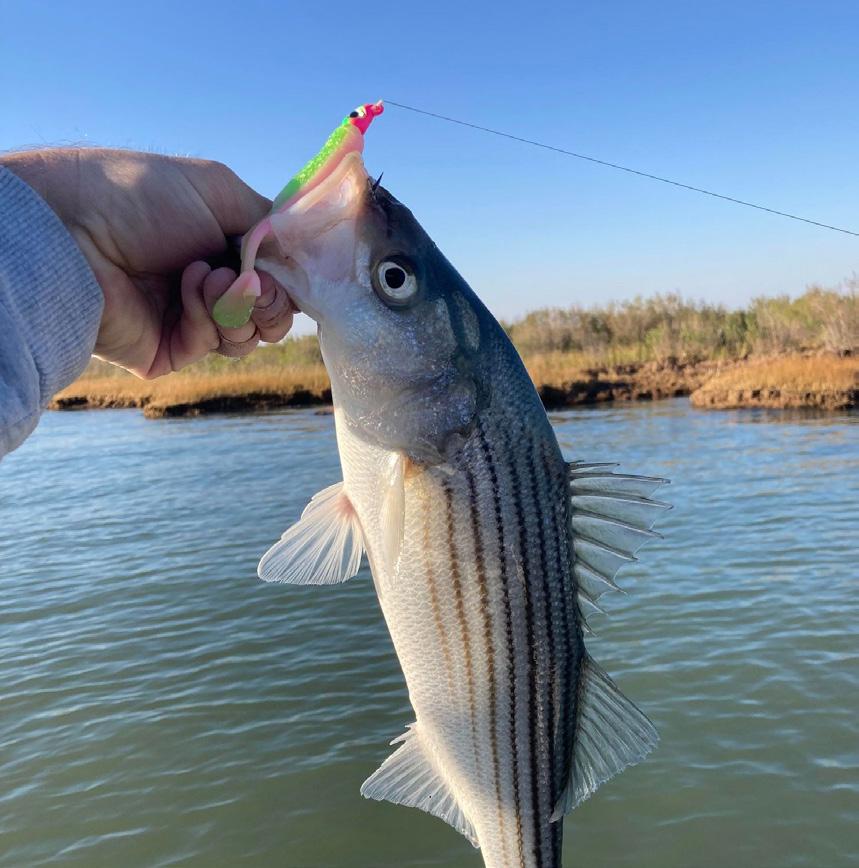
MD
FISH TIP
The Rivers Call to You in HALIFAX COUNTY,
Learn about what you catch. Stop by the Fly Fishing Museum of the Southern Appalachians, and the Appalachian Rivers A quarium in Bryson City!
As the “Outdoor Adventure Capital of The Great Smoky Mountains”, Bryson City is the perfect destination to drop your line. Whether soaking in the scenic ambiance and quiet blue-green waters of Fontana Lake, or casting into one of the many rushing rivers or creeks, nothing beats Swain County’s fishing experiences.
The Tuckasegee River, or the “Tuck”, has a delayed harvest section for catch and release trout fishing, and has many deep pools, rocky sections, riffles and runs. Catch rainbow and brown trout all year long, or enjoy the spring runs of walleye, steelhead, and white bass. The river is also home to the biggest smallmouth bass in the region!
Unique Waters in BRYSON CITY AND SWAIN COUNTY, The Rivers Run Through PATRICK COUNTY,
Five rivers rise out from Patrick County, Va., flowing into two major watersheds. Every river or stream in the county originates from within its borders. This dynamic creates wading opportunities for anglers that can’t be found everywhere.
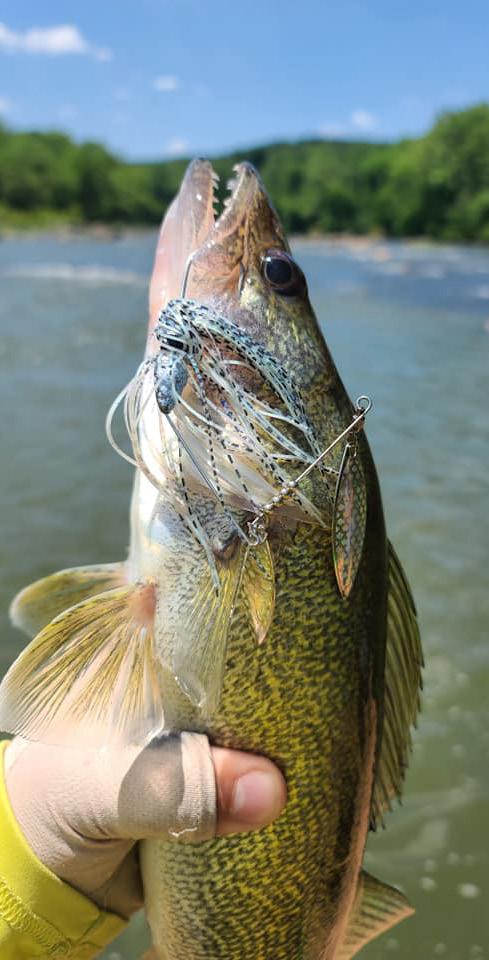
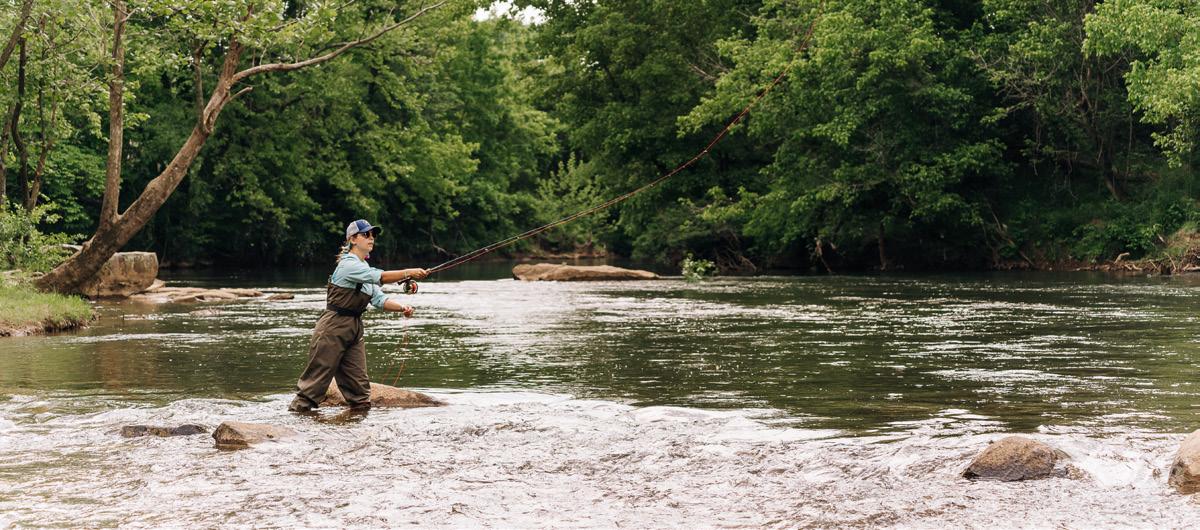
The Dan River begins on the crest of the Blue Ridge Mountains with first-class rainbow, brook, and brown trout. The North and South Mayo River are frequently stocked with brown and rainbow trout. The Smith River can be accessed at Historic Jack’s Creek Covered Bridge. Nearby is Rock Castle Creek with pickerel and sunfish. The Ararat River rises up near
Catch some trophy-size brown and rainbow trout in Deep Creek, or a 50-pound catfish in Fontana Lake. Due to its cold water, Fontana Lake is uniquely home to fish associated with northern lakes like walleye, white bass, and steelhead. Spring also brings fantastic fishing for crappie, bluegill, and yellow perch!
A short distance from all of the lakes, rivers, and streams is the charming historic downtown that has multiple breweries, restaurants, and shops. Several outfitters offer guided trips and top tier advice for a perfect DIY day on the river.
ExploreBrysonCity.com
Amazing scenery, world-class fishing, and miles and miles of pure paddling adventure await you in southern Virginia. The height of sporting delight, Halifax County’s Southern Virginia Wild Blueway has statewide recognition as a premier fishing destination. The rivers—the Dan, the Staunton, and the Banister—combine for more than 100 miles of navigable water. Of that, more than 80 miles have been designated as Virginia Scenic Rivers. These waterways create an anglers’ paradise as you will find largemouth bass, white bass, crappie, sunfish, and striper fishing year-round.
Once off the water, venture on land for drinks, food, and exciting local culture. Celebrate the day’s catch with dinner at Molasses Grill in the historic town of Halifax. Tell reel stories over brews at Factory Street Brewing Company or high balls at Springfield Distillery. Want to explore the area? Experience world-class motorsports, public art, walking tours, museums, historical sites, state parks,
In the spring, prepare to meet large blue flathead and channel catfish, making the area a favorite of locals and tournament fishermen.
and dark skies. From running rapids to trackside thrills, discover what makes your heart race in Halifax County, Va.
GoHalifaxVA.com
Talbott Dam and Townes Reservoir offer many angling possibilities from shore, as well as from hand-carried boats and canoes.
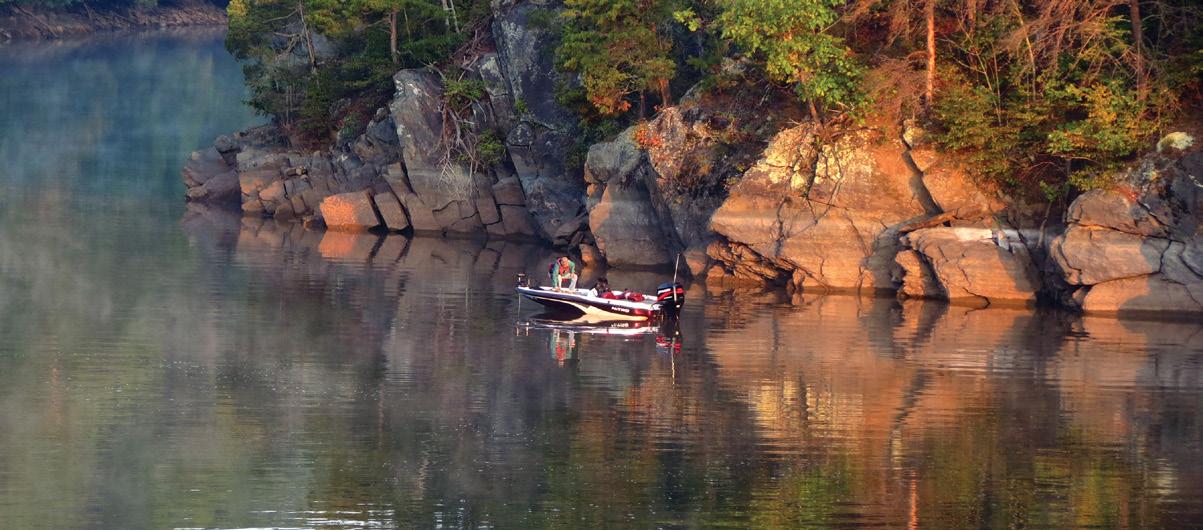
historic Laurel Hill and contains native and rainbow trout. Fairy Stone Lake at Fairy Stone State Park offers largemouth bass, crappie, sunfish, and bluegill. Neighboring Philpott Lake offers excellent bass, walleye, crappie, and catfish opportunities.
While you’re here, experience the flavors of Patrick County with a local farm-to-table dining experience at Pickle & Ash. Enjoy Blue Ridge wines at Stanburn and Villa Appalaccia wineries. Immerse yourself in 5-star luxury at Primland Resort. There’s so much to discover. Find yourself here in Patrick County, Va.
VisitPatrickCounty.org
Fishing and History in MARTINSVILLE AND HENRY COUNTY,
Take a look around. On the Smith River, you can explore some magnificent rock outcrops, and Native American fish weirs dating back to the 1300s!
At the foothills of Virginia’s Blue Ridge Mountains sits Martinsville and Henry County, a historic region with endless fishing possibilities.
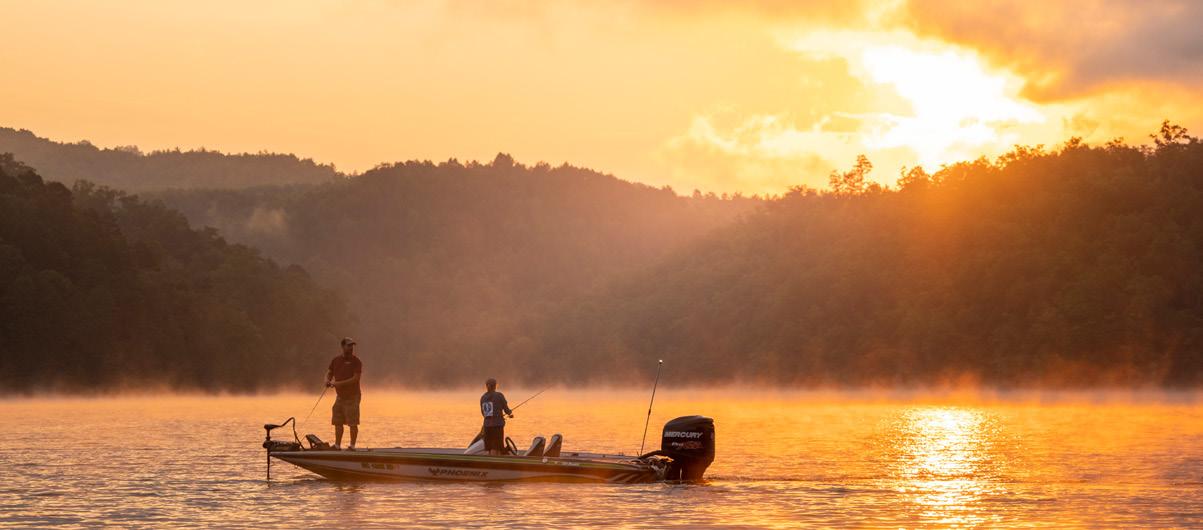
Traveling 44.5 miles across Henry County, the Smith River has 11 public access points and rapids, offering plentiful outdoor recreation for anglers, paddlers, and nature lovers. The River is among the highest catch rates for brown trout in Virginia, of trophy potential, and is among the top two tailwater trout fisheries in the state. Sections are also stocked with rainbow trout by the Virginia Department of Game and Inland Fisheries. Rafting and fishing are possible for most of the year, and the Smith River Trail System
offers a variety of paved and natural hiking and biking trails!
Perched at the top of Henry County, the 3,000-acre Philpott Lake is accessible via the Philpott Marina and Bowens Creek Park. Try out some new tackle from Angler’s Choice, located in Martinsville, as you fish for walleye and a variety of bass. Rent a canoe at Beaver Creek Reservoir and fish for pike. Novices can even book a guided, fly-fishing trip on the river with Smith River Outfitters
The Virginia Museum of Natural History and the historic Martinsville Speedway await you once your fishing is finished for the day!
VisitMartinsville.com
40 BLUE RIDGE OUTDOORS
FISH TIP
FISH TIP
FISH TIP
VA NC
PHILPOTT LAKE
FISH TIP
VA VA
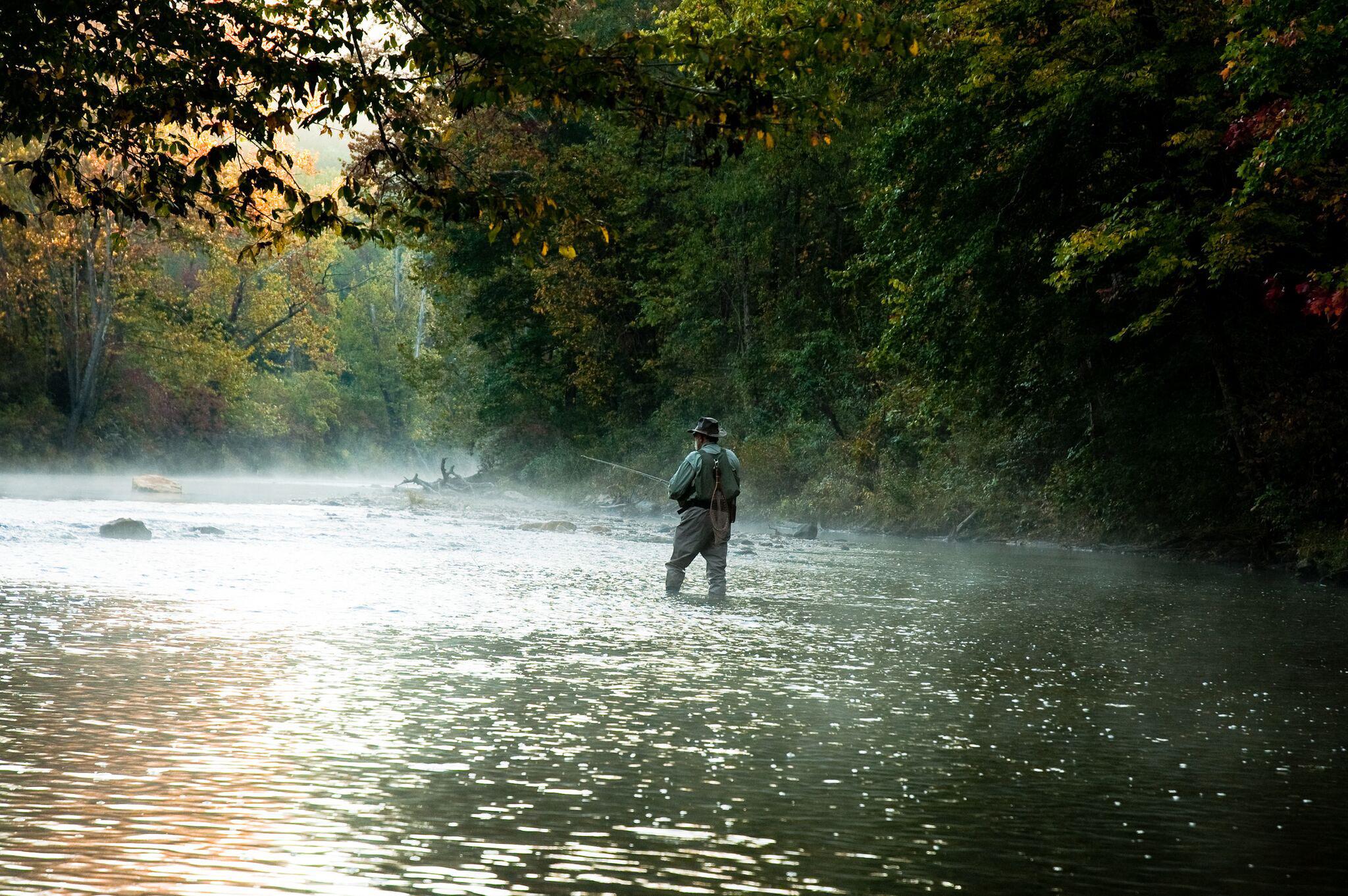










MARCH 2023 | BLUERIDGEOUTDOORS.COM 41 LAKE HAR TWELL COUNTR Y Lake Har t well Countr y.com Visit LHC to find your next big catch.
Everything Is for Sale
The Privatization of Your Public Lands
BY WILL HARLAN
I LOVE MAPS. I CAN SPEND HOURS STARING at a topo and studying its contours. Maps provide perspective: they show how everything fits together and help me find my place within the big picture.
I used to think that all the green-shaded areas of maps were protected. The green parts of a map are usually public lands—national parks, national forests, national wildlife refuges—and I assumed that they were all basically managed the same.
I was completely wrong.
Most public lands—especially national forests—aren’t really protected at all: industrial logging, commercial clearcutting, mining, oil and gas drilling, private cattle grazing, and pipeline construction all occur on our public lands.
The United States is home to 640 million acres of federally owned public lands—around 27 percent of the country. No country on Earth has this much property that belongs to the people. You are a co-owner of these public lands, and your taxes pay for them to be managed. Public lands are intended to be managed by the government for the benefit of everyone.
But that’s not how it actually works. Nearly three-quarters of public lands today prioritize private extraction over protection of natural resources. Most of our public lands are being intensively and industrially plundered by private entities.
Your Property Managers
Of course, all U.S. lands are stolen lands. Indigenous communities inhabited these lands for millenia. Only in the last few hundred years did the landscape get pillaged and parceled. Today, U.S. public lands are primarily managed by four federal agencies: the National Park Service (parks), U.S. Fish and Wildlife Service (national wildlife refuges), the Bureau of Land Management (BLM land), and U.S. Forest Service (national forests).
1. The National Park Service aligns most closely with the majority of Americans on how public lands should be managed. The National Park Service protects natural resources and
provides sustainable recreation. No logging or mining is allowed in national parks. Most Americans assume that all public lands operate like national parks.
2. The U.S. Fish and Wildlife Service is a close second. National Wildlife Refuges are protected from most extractive uses like logging, mining, and drilling.
3. The U.S. Forest Service has five multipleuse areas of focus: water, wildlife, recreation, range, and timber harvest. The Forest Service chooses to prioritize timber harvest over all other priorities. Most of the Forest Service’s budget and personnel are focused on logging.
Unlike the other three agencies, the Forest Service is managed by the Department of Agriculture rather than the Department of Interior. As a result, it tends to view forests as agricultural commodities to be harvested rather than ecosystems to be protected.
4. The Bureau of Land Management (BLM), like the Forest Service, prioritizes extraction over
42 BLUE RIDGE OUTDOORS
GREAT SMOKY MOUNTAINS NATIONAL PARK. PHOTO COURTESY OF GETTY IMAGES
protection. Cattle grazing, logging, coal mining, and oil and gas drilling by private industries occur on a vast majority of BLM lands, which are primarily out West.
Bottom line: Instead of managing public lands for public uses, the U.S. Forest Service and BLM prioritize private extraction.
Public good or private
profit?

The Forest Service and BLM want to sell off our public lands to fossil fuel and timber industries. But these lands are worth far more than any timber sale or drilling lease can ever provide.
In the Eastern United States, fewer than 4% of all lands are publicly owned, which makes them even more precious and important. More than two-thirds of public lands in the East are national forests—the least protected and most vulnerable public lands.
According to the Forest Service’s own visitor data, nearly all national forest visitors prioritize water, wildlife, and recreation—three pillars of the Forest Service’s multiple-use mandate. Yet
the Forest Service continues to devote most of its energy, staff, budget, and resources to timber harvests.
National forest timber sales lose money. The Forest Service spends billions of federal tax dollars and sacrifices our national forest resources to subsidize the timber industry. Private timber companies cut down national forests for big profits at the taxpayers’ expense. We get nothing but dead, denuded landscapes, pesticide runoff, invasive species, highly flammable slash, and sediment-choked streams.
We don’t need national forests for timber anyway. More than 90% of furniture, paper, and
other wood products come from private forests.

However, unlike private forests, publicly owned national forests are where most of the country’s old growth forests, scenic vistas, biological diversity, recreational opportunities, and drinking water are found. National forests are the largest provider of drinking water in the country.
National forest recreation is the backbone of rural economies. Recreation generates 30 times more income and creates 38 times more jobs than logging.
National forests also provide a vital source of carbon storage and clean our water and air. Especially in the 21st century, our publicly owned national forests are far more valuable standing than cut down.
Perhaps it’s time to cut our losses and stop—or at least reduce—industrial logging and drilling on public lands. Biden promised to end fossil fuel extraction on federal lands but then backtracked; in his first two years, he has approved more oil and gas leases than Trump. Logging on public lands is also accelerating. North Carolina’s Pisgah-Nantahala National
LOOKING GLASS FALLS IN NORTH CAROLINA'S PISGAH NATIONAL FOREST.
will
and
will
GET READY MARCH 20, 2023 ADVENTURE TOP 20 23
PHOTO COURTESY OF GETTY IMAGES
32 Schools
compete
only ONE
be the 2023 Top Adventure College Winner!
BROUGHT TO YOU BY
Forest—the country’s most popular recreational forest—is planning to quadruple timber harvests for the next three decades. They plan to cut even more timber by allowing private groups and hunting organizations to log our forests.
The Forest Service is also partnering with private equity groups and big banks to fund even more logging on national forests and recoup investments at the public's expense. Our national forests are for sale. Our public lands are being privatized.



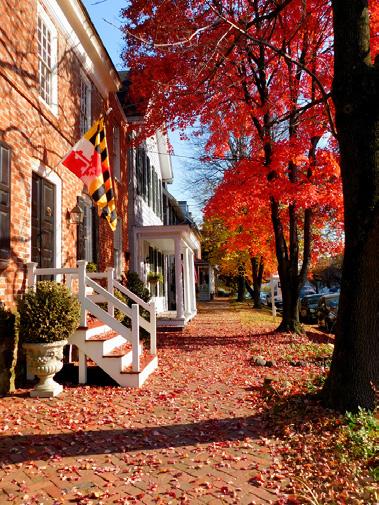
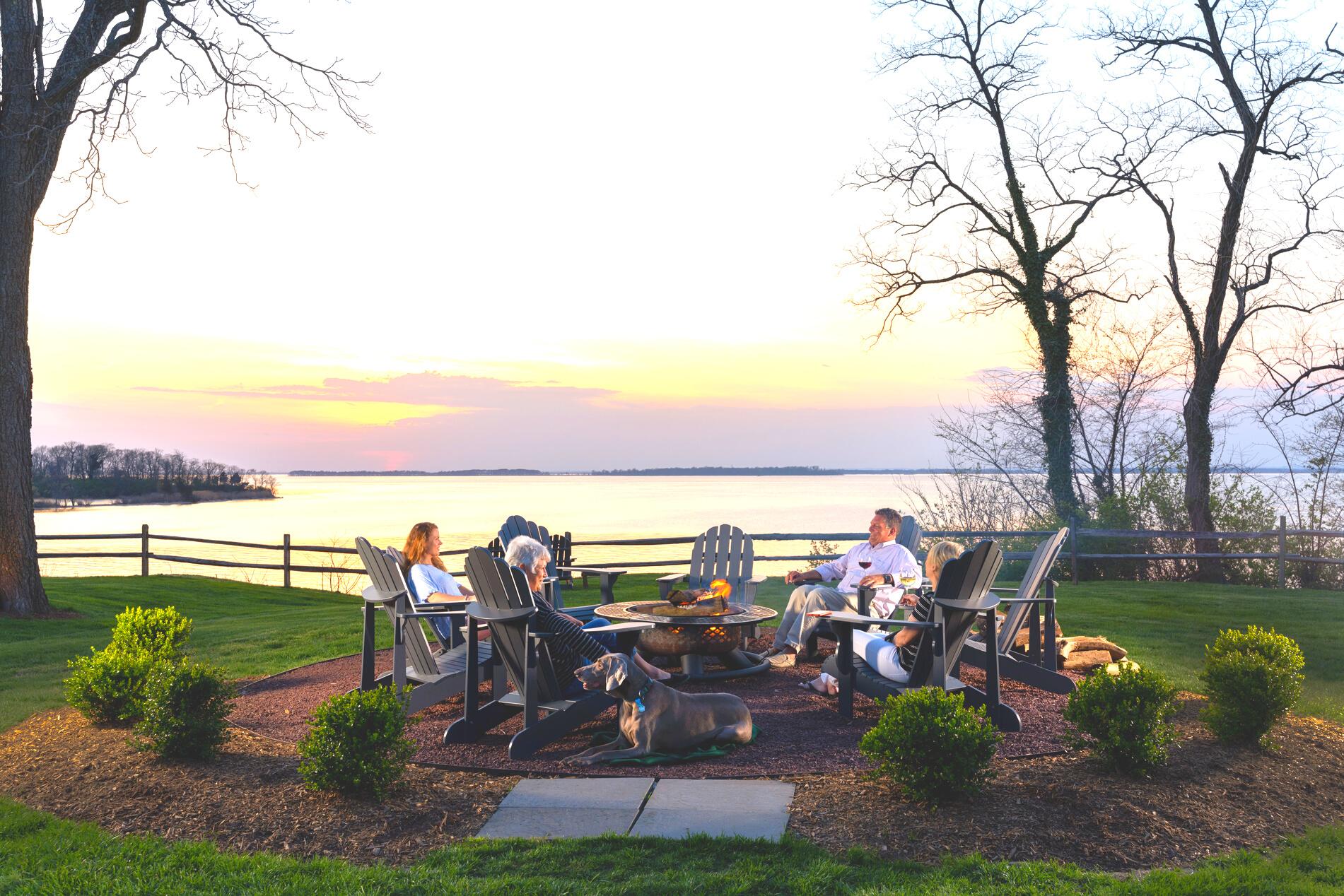
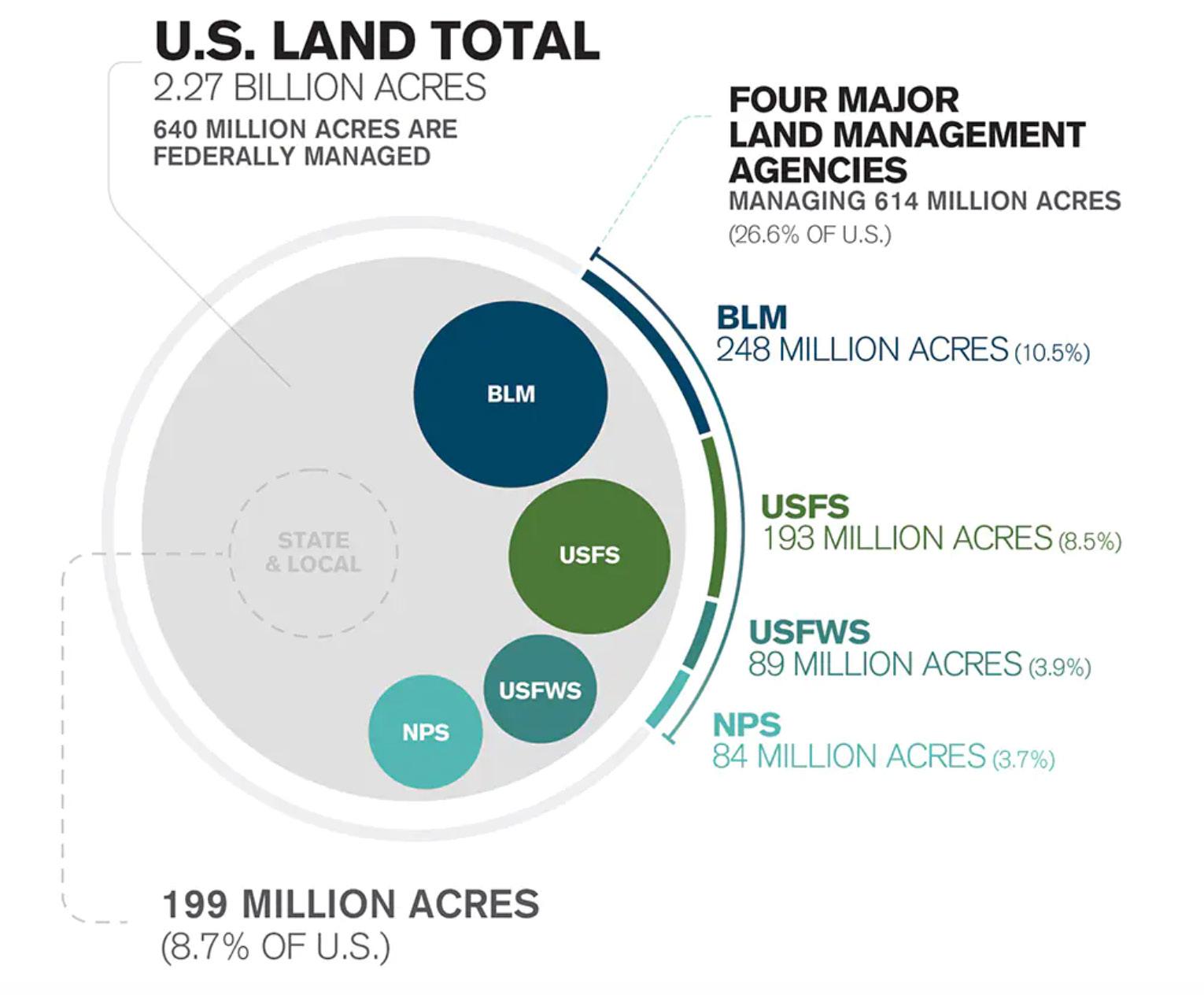
Some lawmakers want to completely privatize our public lands system. The House of Representatives passed new rules that make it easier to transfer public lands out of federal ownership. The Inflation Reduction Act requires two million acres of public lands—an area the size of Yellowstone National Park—to be offered for oil and gas drilling each year.
Our public lands are under assault. But here’s one way we can fight back. Last year, the Biden administration ordered an inventory of all mature and old-growth forests on federal lands. Now we need an executive rule protecting all of these
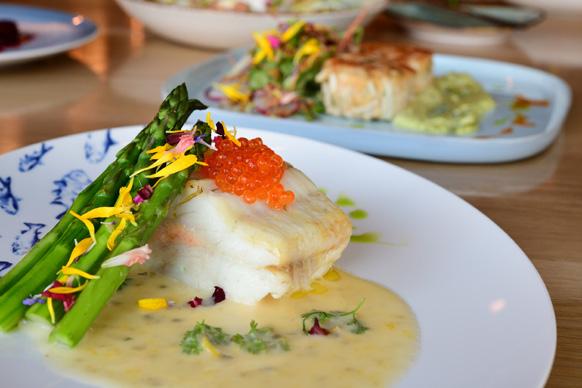
44 BLUE RIDGE OUTDOORS
P L A N Y O U R A D V E N T U R E KENTCOUNTY.COM/VISITORS P h o n e : 4 1 0 - 7 7 8 - 0 4 1 6 Discover quaint waterfront towns. Explore museums, live theater, and art galleries. Relax at the county's wineries or distillery. Savor mouthwatering cuisine amid breathtaking views. Meander the shops of historic Main Streets.
Kent County Maryland
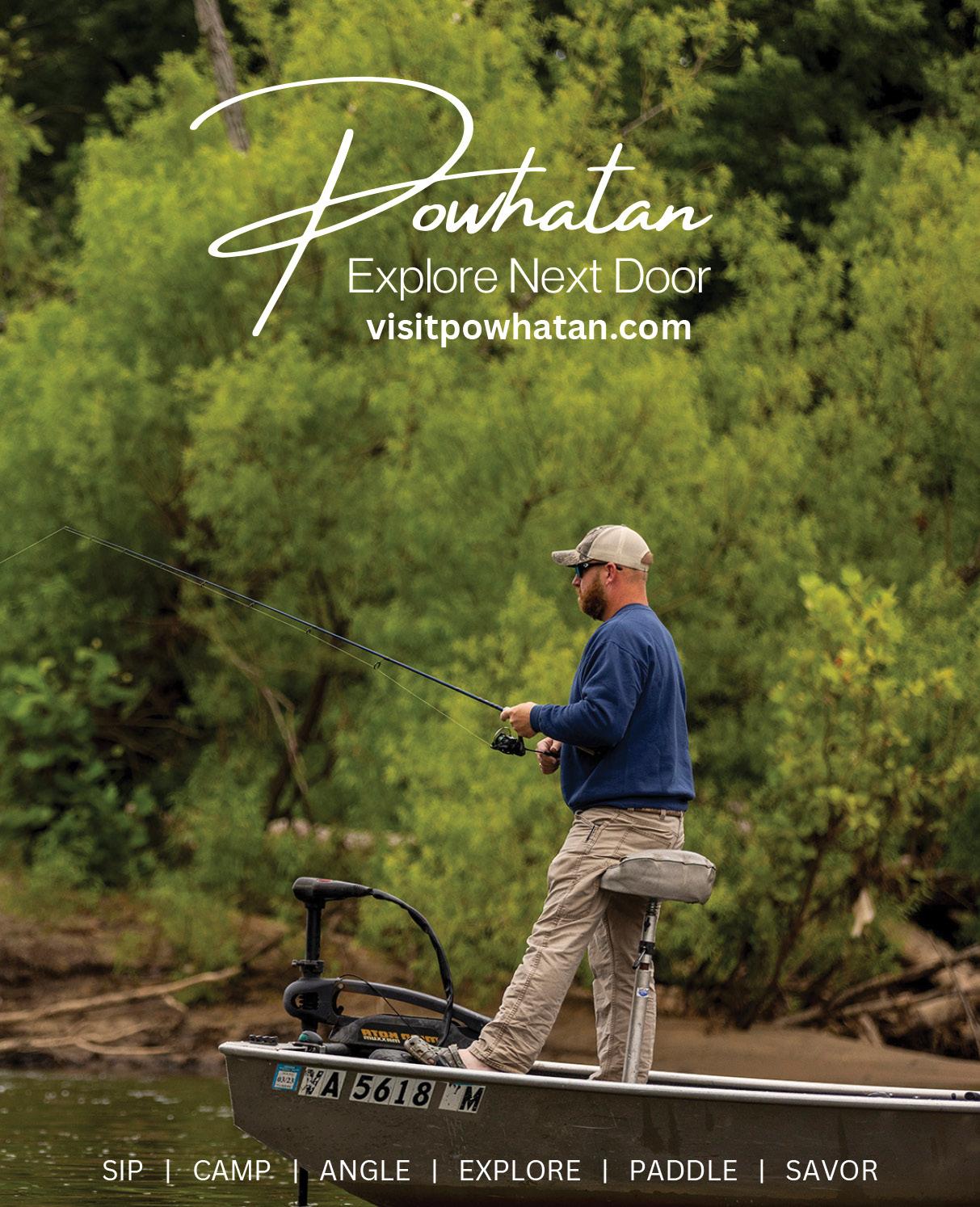


MARCH 2023 | BLUERIDGEOUTDOORS.COM 45
OUTDOOR HAPPENINGS
The top outdoor races, festivals, events and experiences in the Blue Ridge and Beyond. Check out some of our top picks here and online at blueridgeoutdoors.com
MARCH Frozen Foot Adventure Races at Sky
Meadows State Park
March 11, 2023
Delaplane, VA
This adventure race is a combination of gravel bicycle ride and trek, navigating sky meadows state park, local wineries and beyond. You can participate in a 4 or 8 hour race while navigating the beautiful park trail.
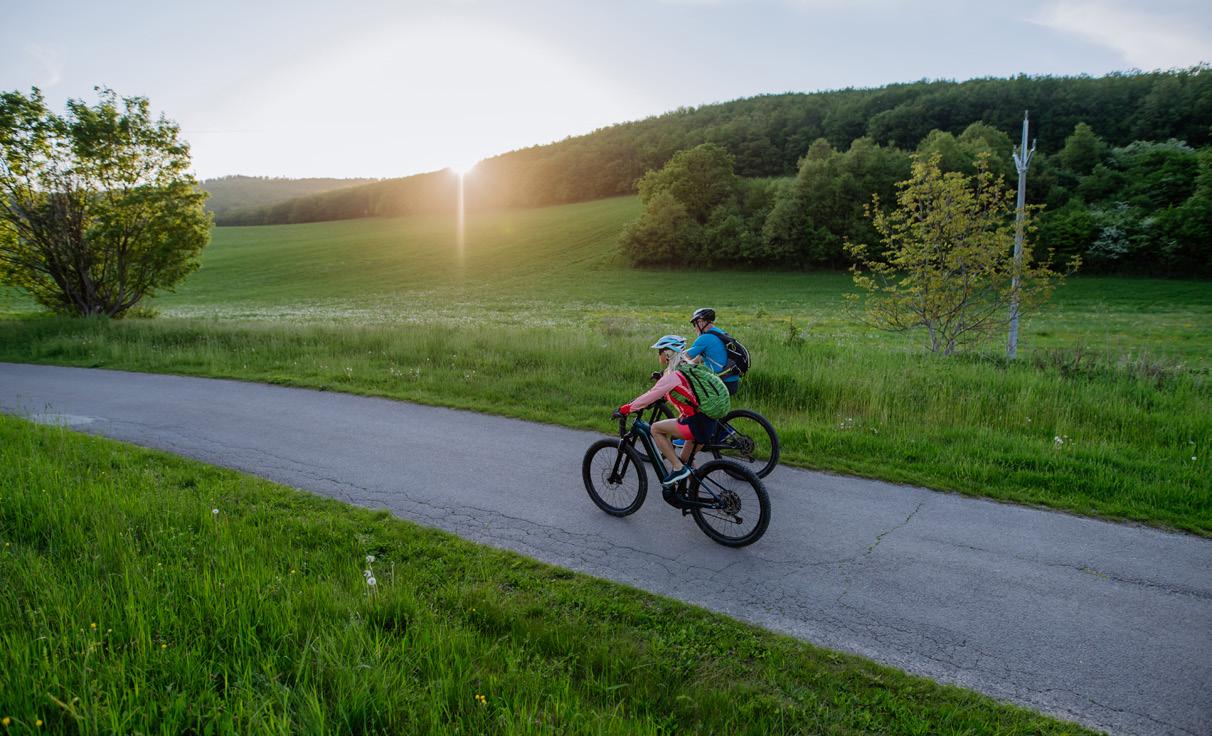

REV3ENDURANCE.COM/SKYMEADOWS- ADVENTURE-RACE
MEDIC SOLO Wilderness
First Aid Certification Course
March 18-19, 2023 & more dates Carolina Beach, NC & more locations
March 25-26 Blacksburg, Chapel
Hill & Charleston. April 15-16
Baltimore & Charlottesville. April 22-23 Charlotte. April 29-30
Richmond. May 20-21 Philadelphia & Raleigh. June 3-4 DC. June 10-11
Charlottesville & Norfolk. June 2425 Chattanooga (and more) FOR REGISTRATION AND MORE DATES/LOCATIONS: SOLOWFA.COM

Dogwood Ultra Marathon at Twin Lakes State Park
March 25, 2023
Green Bay, VA
This race features a 3.4 mile loop and a 10 mile option is available for those who don’t want to run the entire 12 or 24 hours. This year there’s a 36 hour solo and 36 hour relay option.
VIRGINIAADVENTURES.NET/ DOGWOOD-ULTRA-MARATHONS/
APRIL
The Appalachian Journey
April 1, 2023
Floyd, VA
Prepare for a tremendous weekend of Appalachian hospitality and culture paired up with some of the best riding riders will do all year. Floyd County has tremendous dirt, primitive, and gravel road resources, perfect for fostering a unique cycling experience.
THEAPPALACHIANJOURNEY.COM
James River Trail Runs at James Rive State Park
April 15, 2023
Gladstone, VA
This race is built to encourage new trail runners to attempt something difficult as well as offering experienced runners a challenging course. The course is a 10 mile loop that features a variety of trails.
ULTRASIGNUP.COM/REGISTER. ASPX?DID=92415
Blue Ridge Outdoors’ Go Outside and Play Day
April 21, 2023
Celebrate all things outdoors for BRO’s first ever Go Outside and Play Day. Plan a day outside, and stay tuned for giveaways and other activities in the week leading up to our new holiday.
BLUERIDGEOUTDOORS.COM/GOOUTSIDE/GO-OUTSIDE-AND-PLAY-DAY/
Floyd County Kite
Festival and Earth Day
Celebration
April 22, 2023
Floyd, VA
Celebrate Earth Day with this familyfun event for all ages. We’ll celebrate the holiday by having kites take to the air along with various activities, music, demonstrations, and more. Free kites will be available while supplies last.
VISITFLOYDVA.COM/KITES
Foot Levelers Blue Ridge Marathon
April 22, 2023
Roanoke, VA
America’s Toughest Road Races are a celebration of the human spirit. You will find more elevation change here than in any other road race in America. You will also find legendary course support, a music festival at the finish line, and an epic recovery day.
BLUERIDGEMARATHON.COM
46 BLUE RIDGE OUTDOORS SPECIAL ADVERTISING SECTION
Let the Good Times Roll! June 23-28, 2023 Staunton & Harrisonburg E-bikes welcome! You can see it here. bikevirginia.org/2023-tour/
Dominion Energy Riverrock combines Richmond charm with three super-charged days! The festival includes everything from music to trail running, bikes to beer, SUPs to pups, climbing to kayaks, fishing and more! This isn’t your typical festival, but Richmond isn’t your typical town. Come discover what makes us a top destination!



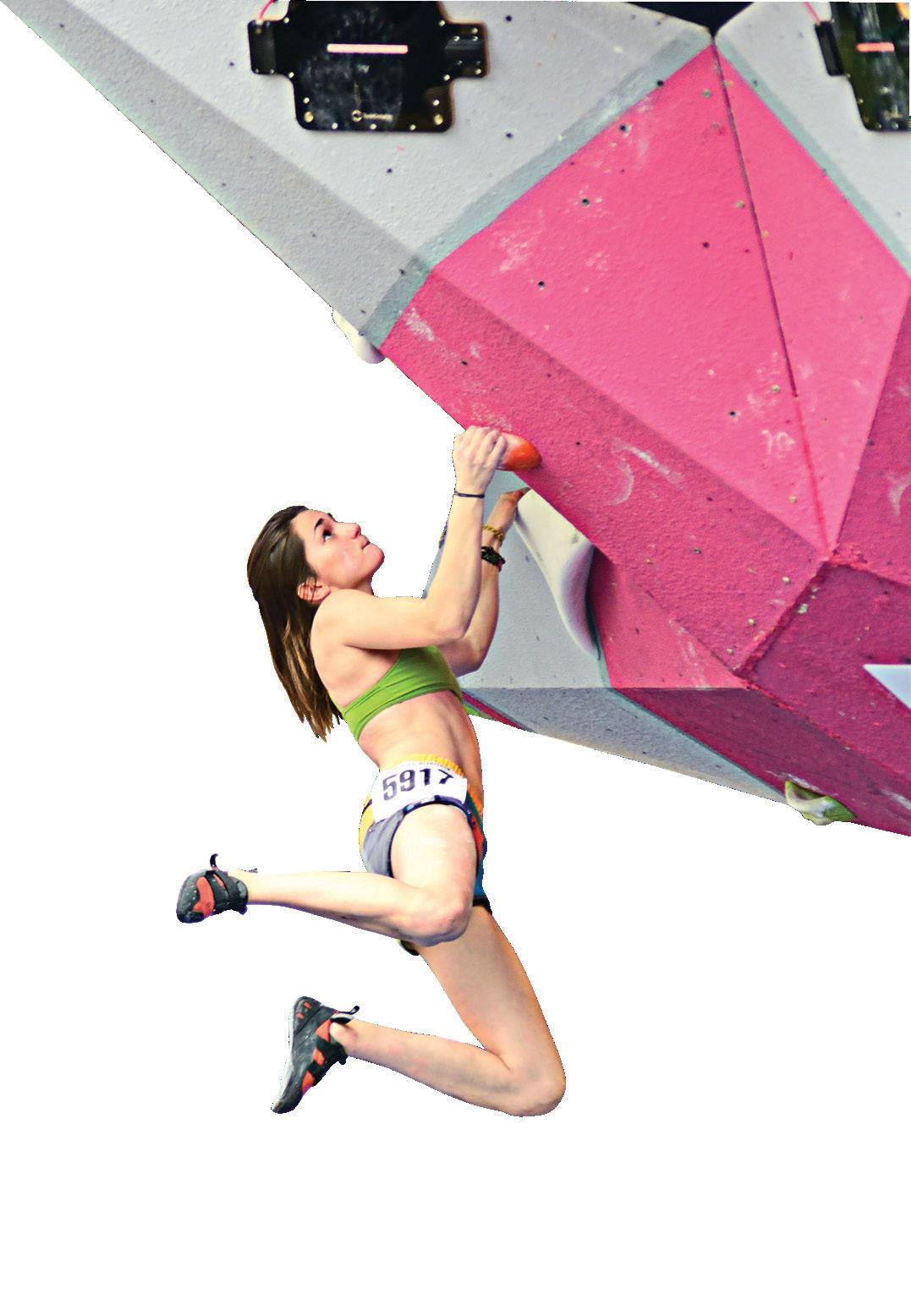
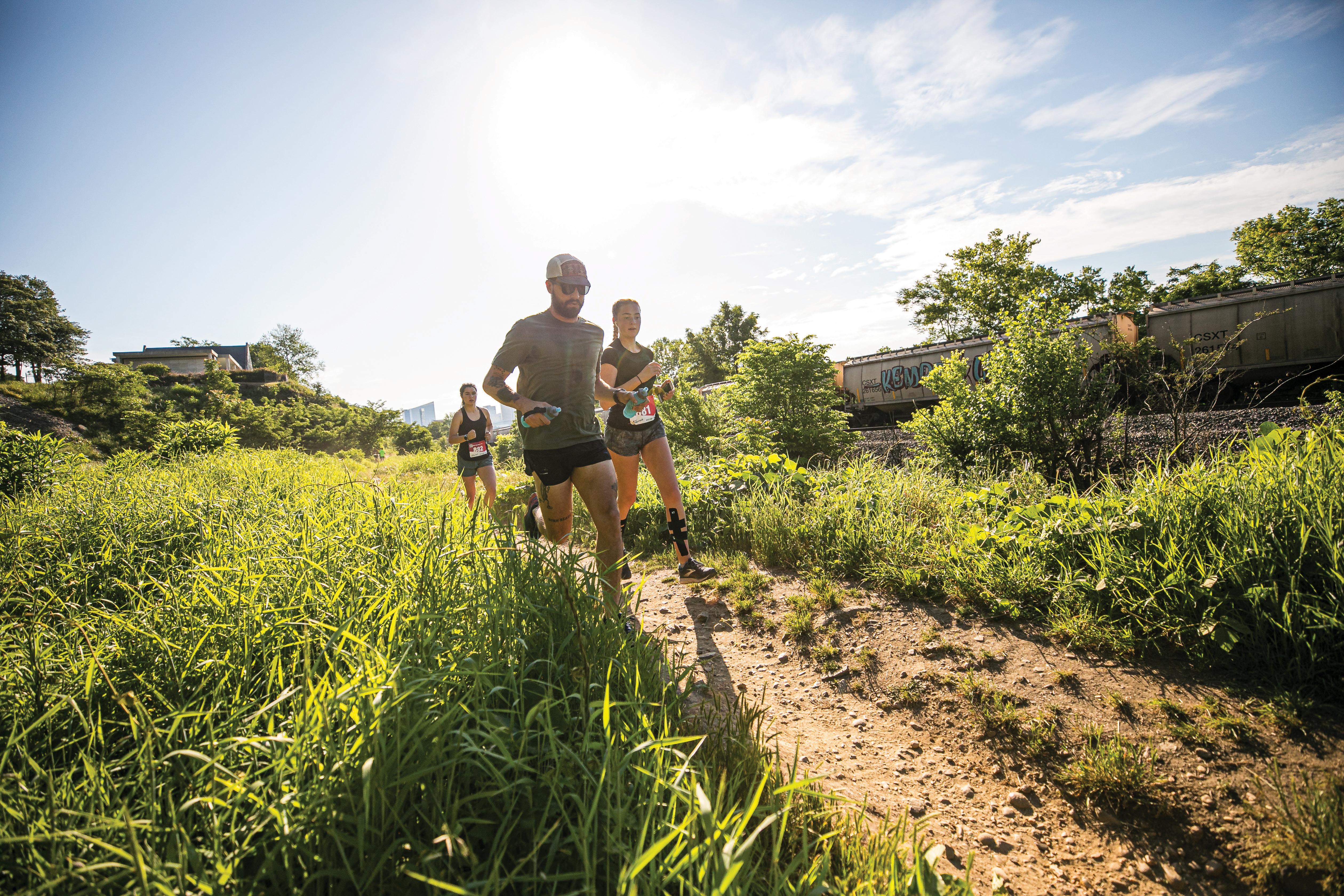

MAY 19-21 | RICHMOND, VA
WINCHESTER
SIERRA HULL FEATURING NEAL FRANCIS · KITCHEN
RIVERROCKRVA.COM 49
·
DWELLERS

48 BLUE RIDGE OUTDOORS 800-933-PARK (7275) | www.virginiastateparks.gov Are you up for the challenge? Middle Mountain Momma Douthat State Park May 7 Poca Go! Pocahontas State Park ................................... June 17 New River Trail Challenge New River Trail State Park Sept. 16 Powhatan 10th Anniversary 10 Miler Powhatan State Park .................................... Sept. 23 High Bridge 5k and 1/2 Marathon High Bridge Trail State Park ............................... Oct. 7 An innovative race series spanning multiple sports and state parks. Visit virginiastateparks.gov for the comprehensive list of events. PRESENTED BY VIRGINIA STATE PARKS
Ukrop’s Monument
Avenue 10k presented by Kroger
April 22, 2023
Richmond, VA
The Ukrop’s Monument Avenue 10k presented by Kroger is celebrating its 24th year on April 22! Whether you’re in pursuit of a 6.2-mile PR or prefer a casual stroll, we guarantee costumed runners, live bands, porch parties, tree-lined streets, historic homes, stunning architecture, and more!
SPORTSBACKERS.ORG
Pioneer Day & the Rock
n Roller-Old Fort Edition
Bike Ride
April 29, 2023
Old Fort, NC
Pack your weekend with family fun! Pioneer Day, mgmnc.org & the Rock n Roller-Old Fort Edition Bike Ride, mcdowelltrails.org, both happening April 29 in Old Fort.

BLUERIDGETRAVELER.COM
Spring Bloom Race
Adventure Race at Lake
Anna State Park
April 29, 2023
Spotsylvania, VA
If you love being outdoors: paddling, hiking and/or biking trails, getting off the sidewalks, then this is the event for you. There is a 4 hour race or a 10-hour race option.
BROADRUNOFFROAD.ORG/SPRINGBLOOM-ADVENTURE-RACE.
MAY
Smith Mountain Lake Triathlon
May 6, 2023
Huddleston, VA
Staged out of Smith Mountain Lake State Park this triathlon has clear water, mountain views and fun courses. The swim features a sandy beach start and a crisp, clear lake. Biking and running courses are rolling, but not too challenging.
KINETICMULTISPORTS.COM/RACES/ SMITHMOUNTAINLAKESPRINT/
Middle Mountain Momma Bike Race at Douthat State Park
May 7, 2023
Milboro, VA
Douthat offers a challenging Civilian Conservation Corps built single-track unlike anything you’ve ever ridden. There are classes for the whole family including 41, 21, 11, and 5.5 mile races for all ages and skill levels.
BIKEVA.COM/MOMMA/INDEX.HTML
Gravista
May 13th, 2023
Glen Maury Park, Buena Vista, VA
Gravista is a gravel bike race all about the views, the gravel, and having a good time! We have a weekend full of fun festivities. Race day is Saturday, May 13th.
RIDEGRAVISTA.COM

Dominion Energy Riverrock
May 19-21, 2023
Richmond, VA
From music to trail runs, bikes to beer, SUPs to pups, and climbing to kayaks, Dominion Energy Riverrock draws thousands of visitors and outdoor enthusiasts to the downtown riverfront in Richmond, Virginia every May. Don’t miss the Nation’s Premier Sports and Music Festival!
RIVERROCKRVA.COM


Dawson Pediatric Peach Kids Triathlon –Championship
May 21, 2023, 7:30 am - 2:00 pm
Wills Park in Alpharetta, GA
Sign up to compete in the Dawson Pediatrics Peach Kids Triathlon. This high-quality youth triathlon experience is focused on fitness, fun, and safety. In keeping with this mission, all finishers will receive commemorative medals.
AWESOMEALPHARETTA.COM/EVENT/ PEACH-KIDS-TRIATHLON/
"I fell! The bleeding won't stop! My head and ankle hurt too, we're 5 miles in..." are you trained in Wilderness First Aid?

Hands-on learn how to save lives & limbs in areas inaccessible to an ambulance, during the critical minutes or hours it takes to stabilize and evacuate your patient Blend of classroom instruction and experiential problem-solving rescue scenario practice.
MEDIC 5 bonus hours: much more hands-on practice & intellectual stimulation than standard 16-hour courses
Online learning with selfguided practice sessions also available. Course fee:$115-$245
SOLO 2-year WFA certification, internationally renowned No prerequisites. Gain skills & confidence. Top-rated classes in AK, DC, FL, MD, NC, PA, SC, VA, WV, or online.
MARCH 2023 | BLUERIDGEOUTDOORS.COM 49
C O U R S E D A T E S , L O C A T I O N S
HELP!!! l f
Roanoke Boutique Hotel is hosting its annual BambooCycles DIY Workshop event, June 2-4 Book at www.bamboocycles.com/diy, only 7 spots hello@roanokeboutiquehotel.com | 539 Day Ave. Roanoke, VA 24016 | 540.420.4455
Rooster Walk 13 Music & Arts Festival
May 25-28, 2023
Martinsville, VA
The annual Rooster Walk Music & Arts Festival is held each Memorial Day weekend in the beautiful rolling foothills of Virginia with 50+ bands across 6 stages, plus top-notch food, family fun, craft beer, and numerous outdoor adventures. On-site camping is included with all tickets.
ROOSTERWALK.COM

BambooCycles DIY Workshop
May 26-28, 2023
Roanoke Boutique Hotel, Roanoke, VA
This 3-day workshop includes all materials and hands-on instruction to build-your-own bamboo bike frame. Featured on Shark Tank and by Popular Mechanics, the BambooCycles workshop is a unique experience giving bike enthusiasts a one-of-a-kind vehicle.
BAMBOOCYCLES.COM OR ROANOKEBOUTIQUEHOTEL.COM
JUNE AND BEYOND
NC Trail Days
June 2-4, 2023
Base Camp Downtown Elkin, NC
A multi-day festival celebrating all things trail! Hike, Bike, Run, Paddle or just explore – guided or self-guided hikes, paddling events, MTB and road cycling, an evening music trail with tons of live music, food trucks, a beer garden, and so much more. There is something for everyone!
NCTRAILDAYS.COM
2023 Bike Virginia Tour
June 23-28, 2023
Staunton, VA & Harrisonburg, VA
Bike Virginia is back! Now 100% GPS-based, this scenic bike tour will take you through beautiful pastoral landscapes that offer views only found in the Shenandoah region. The route choice will remain the same with 3-4 routes of varying distances offered each day.
BIKEVIRGINIA.ORG
Red Wing Roots Music Festival
June 23-25, 2023
Natural Chimneys Park in Mt. Solon, VA
The Steel Wheels present great music in the great outdoors at the 10th annual Red Wing Roots Music Festival. Nestled in the heart of the Shenandoah Valley, 50+ bands will perform across five stages, June 2325, 2023, at Natural Chimneys Park in Mt Solon, VA.
REDWINGROOTS.COM
Springmaid Splash
August 5, 2023
Springmaid Mountain, Spruce Pine, NC
Run, camp and jam at Springmaid Mountain! The 5K and 10K trail races will amble through Springmaid Mountain’s 400-acre property with splashes through the North Toe River. After the race, stick around for bluegrass mountain music and optional overnight stays at the campground or cabins.
BIT.LY/3XB4OHE
Allianz Partners Richmond Marathon

November 11, 2023
Whether you take part in the marathon, CarMax Richmond Half Marathon, or 8k, Richmond provides phenomenal course support, great fall scenery, and awesome finisher swag. The marathon is a top 25 Boston Qualifier, and the course is mostly flat with some rolling hills—perfect for first-timers.
RICHMONDMARATHON.ORG
50 BLUE RIDGE OUTDOORS
Maryland Coast Bike Festival


us on one of the three amazing routes exploring Maryland’s scenic coastal region. The event also offers the opportunity to benefit the Ulman Foundation.
and
at the waterfront festival
West Ocean City’s famous
enhanced
year
Assateague Island vistas!
rest
MAY 6TH, 2023
Join
Start, finish
celebrate
in
harbor. Three
routes this
with
Robust beach-themed
stops. SATURDAY,
marylandcoastbikefestival.com
BOOZE BOUNDARY
BY MASON ADAMS
I DIDN’T TRULY APPRECIATE the close ties between outdoor recreation and alcohol until I tried to quit drinking for a while.
Whether it’s a post-adventure round at the brewery or a riverside campfire party, alcohol permeates outdoor culture in a deep way. And I certainly understand the connection. I love having a cold beer after a long, hot trail run or riding 12 sweaty miles of singletrack. It’s not just that a drink helps take the edge off the adrenaline rush that comes with an outdoor adventure— it’s the ritual of the thing, the shared camaraderie that comes with mythologizing those experiences with friends over a beverage afterward.
They’ve become tied on a larger scale, too. Craft alcohol is embedded into the playbook for the South’s aging cities reinventing themselves. In recent years Asheville, N.C., and Richmond, Va., have seen a seemingly endless stream of new breweries open on their ways to becoming well-known destinations for beer tourism.
Near where I live in southwest Virginia, Roanoke has undergone a transformation from an aging railroad hub into a vibrant outdoor town. I identify its tipping point as 2014, the year it was chosen to be the East Coast headquarters for Oregon’s Deschutes Brewery and California’s Ballast Point Brewing Company. Neither one of those deals came to lasting fruition—but their announcements signaled a vibe shift, when Roanoke reversed decades of population decline and
became a destination because of its proximity to world-class hiking, biking, and beer.
I’ve connected outdoor rec and alcohol since Y2K, when I worked on a hard-drinking wildlife crew in Big Sur, California. For years, I told people I “went crazy” when I was in Big Sur. In the years since, I’ve come to realize that’s not quite accurate. To be more precise, that’s one of the few times in my life when I drank a lot of liquor. I returned to Appalachia in 2001, cut out liquor, and drank much more moderately. I became a trail runner, even joking to runhating friends that I ran so I could justify having a beer afterward.
Researchers found that active, physically fit people who work out regularly are more than twice as likely to be moderate or heavy drinkers as people who don’t.
Yet a recent study indicated that’s not just a joke. Researchers found that active, physically fit people who work out regularly are more than twice as likely to be moderate or heavy drinkers as people who don’t. Even in college, athletes consumed significantly more booze than non-athletes.
The pandemic only intensified our tendency to drink. Alcohol consumption rose by 14 percent for those over age 30. And more people flocked to outdoor destinations over that time. I don’t have the numbers, but I suspect
there’s some overlap in the Venn diagram between those two trends.
My pandemic experience included getting back into mountain biking. In my part of Virginia, we’re blessed with an abundance of singletrack trails and gravel routes— most spectacularly exemplified in Carvins Cove Natural Reserve, which features more than 60 miles of trail just outside Roanoke.
Any given afternoon, you can find the Bennett Springs parking lot clogged with mountain bikers. It’s not uncommon to find riders sharing beers in the lot post-ride. I routinely threw back IPAs with a riding pal after we emerged mud-flecked and exhilarated from an intense romp through the cove’s ridges and hollows.
Then I fractured my clavicle last June. It happened on an otherwise low-key ride in Patrick County’s I.C. DeHart Park. Nothing spectacular or glorious: my Hardrock slipped down a gully, the front wheel twisted, and I went over the handlebars.
Suddenly I faced a summer with no trail running or bike riding. My routine was thoroughly disrupted. I rely on runs and rides not just for cardio conditioning, but as times to process my thoughts and clear my head. Now they weren’t an option.
If I couldn’t run or ride, though, I could still enjoy a drink. I want to say I drank in pursuit of that postadventure feeling. The camaraderie, the thrill, and fellowship with friends. Yet, I must admit I also drank to fill the void left by the absence of the adventures themselves. I walked my
neighborhood streets but couldn’t replace the exhilaration that came with riding miles of hollers and ridges.
Middle age is when all the habits we sowed in our 20s and 30s begin to show consequences, and as a couch-bound 45-year-old, I finally had time to think and worry about my nagging IPA habit.
Observationally, I can tell I’m not alone. Mindfulness around alcohol consumption is becoming a trend of its own, and breweries in Blue Ridge are starting to offer creatively crafted NA brews, as well as locally made kombucha.
A wise woman of Floyd told me she stopped drinking when she found she couldn’t open a bottle of wine without finishing it. I reached a similar point during my shoulder recovery, where I couldn’t bring home a six-pack without drinking two, three, sometimes four beers in an evening.
So while I am not ready to completely abstain, I decided to set a boundary for myself: I will not buy beer to bring home. Now that my shoulder has healed, I’ve been cleared to run and ride again. But for now, at least, I’m continuing to hold that boundary.
A drink just goes down better with friends after an epic adventure than it does trying to replicate that feeling on the couch.
52 BLUE RIDGE OUTDOORS ESSAY MODERATION
After sustaining an injury, an avid adventurer becomes mindful about his drinking.
So while I am not ready to completely abstain, I decided to set a boundary for myself.
PHOTO BY JEDD FERRIS
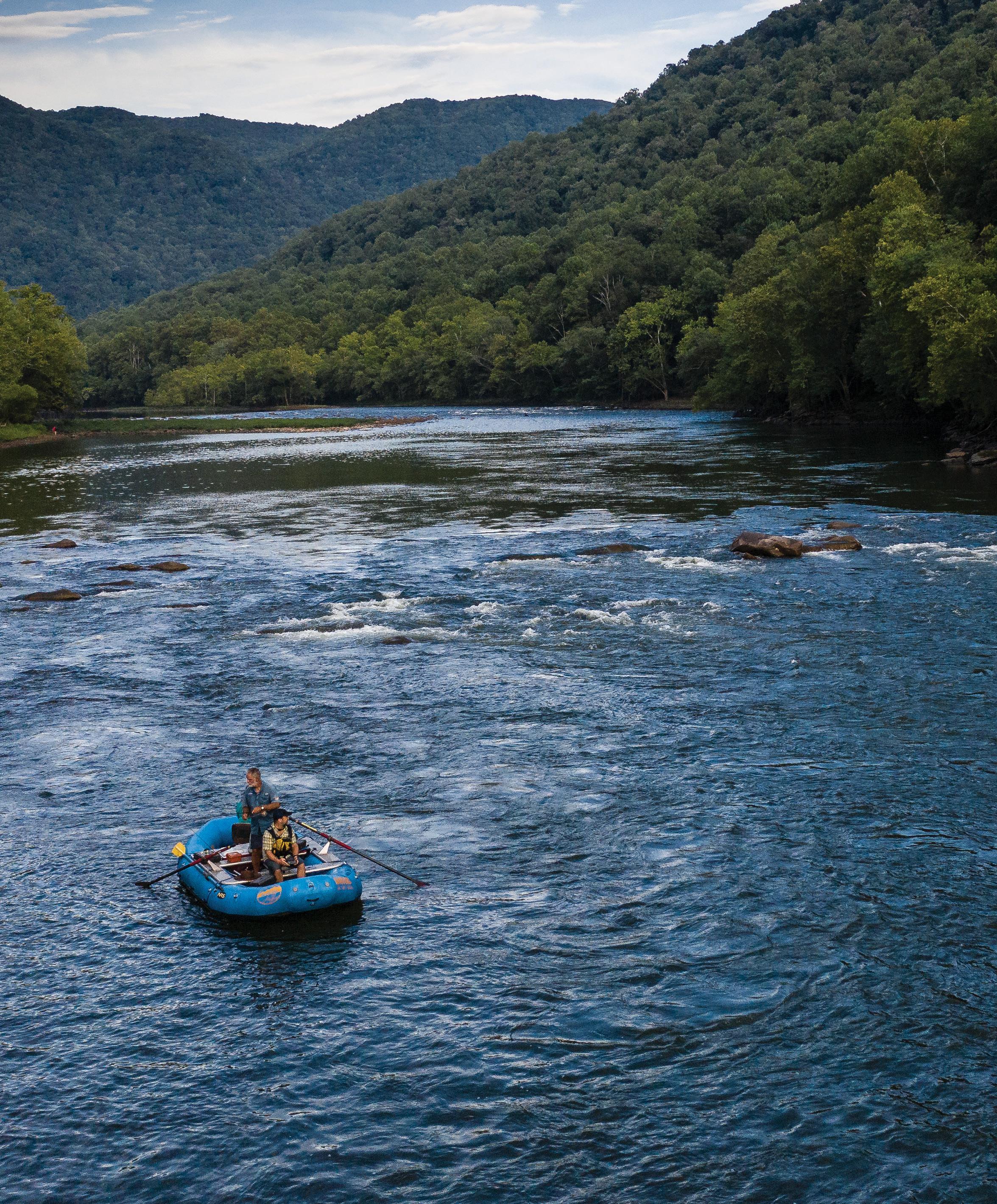
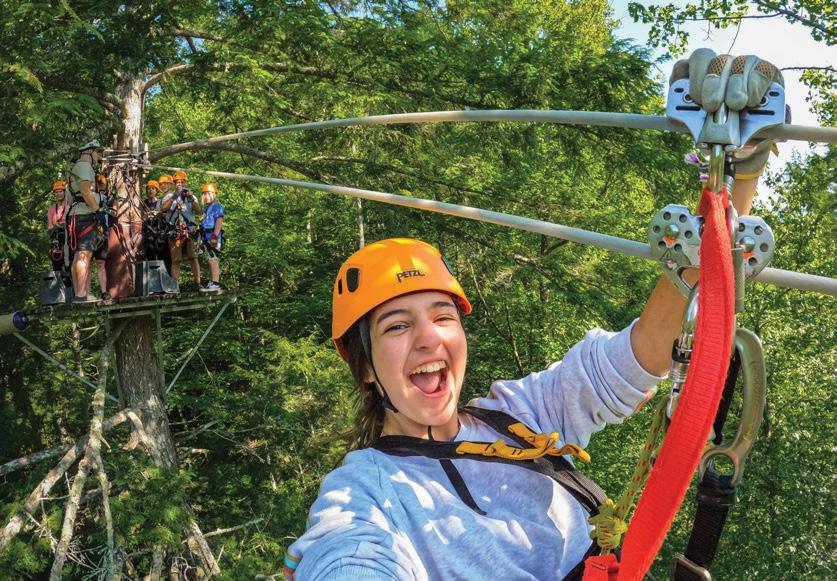
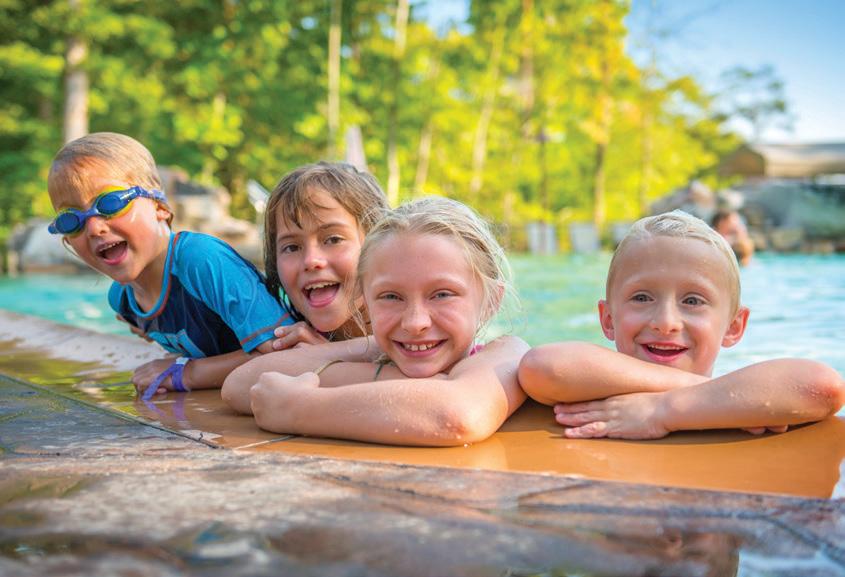
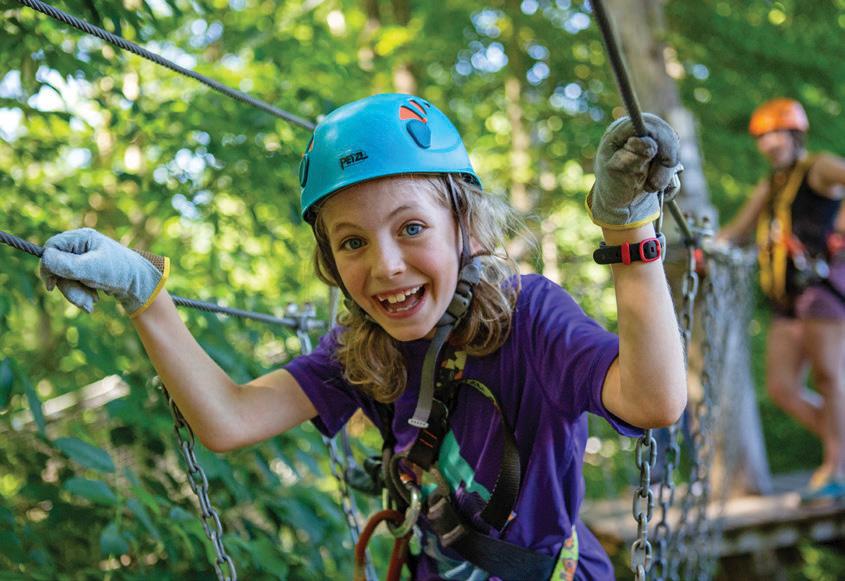
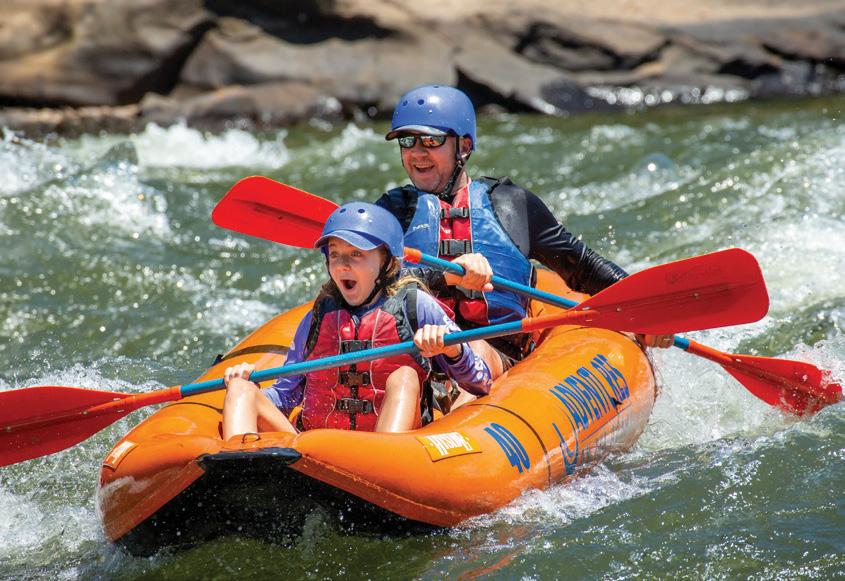
AdventuresOnTheGorge.com 888.383.9933 FISH, RAFT , AND STAY; but most of all, PLAY !
THE OUT AND BACK GOING THROUGH CHANGES IDENTITY CRISIS
BY GRAHAM AVERILL
GRAVEL ISN’T SEXY. AT LEAST, not at first glance. You’re just riding bikes on dirt roads. People have been doing that since 1817, which is when some German dude invented the bicycle. And yet, the entire world seems to be obsessed with riding gravel. There are bike shops dedicated almost entirely to the niche. Some of the most exciting advancements in bike tech are happening with gravel rigs. Gravel races have lottery systems where you must win an entry because demand is so high. And I’m right there in the thick of this cultural obsession. I love gravel. I don’t know why I love gravel, but I do, which is causing a bit of an identity crisis, because I’ve always considered myself a mountain biker.
Am I still a mountain biker if I choose to ride gravel all the time? What do I tell people when I meet them at parties? “Hi, my name’s Graham, I enjoy long, arduous climbs in the middle of the woods on wide, dirt roads. I would have previously described these rides as pointless because there’s no promise of a fun singletrack downhill at the end, but now I love them and am confused by that love.”
Is that how my conversations should go from now on? Won’t people think I’m weird?
To the casual observer, preferring to ride gravel over singletrack probably doesn’t seem like an issue. But I’ve identified as a mountain biker for the last 20 years. Mountain biking is what I do. Or did
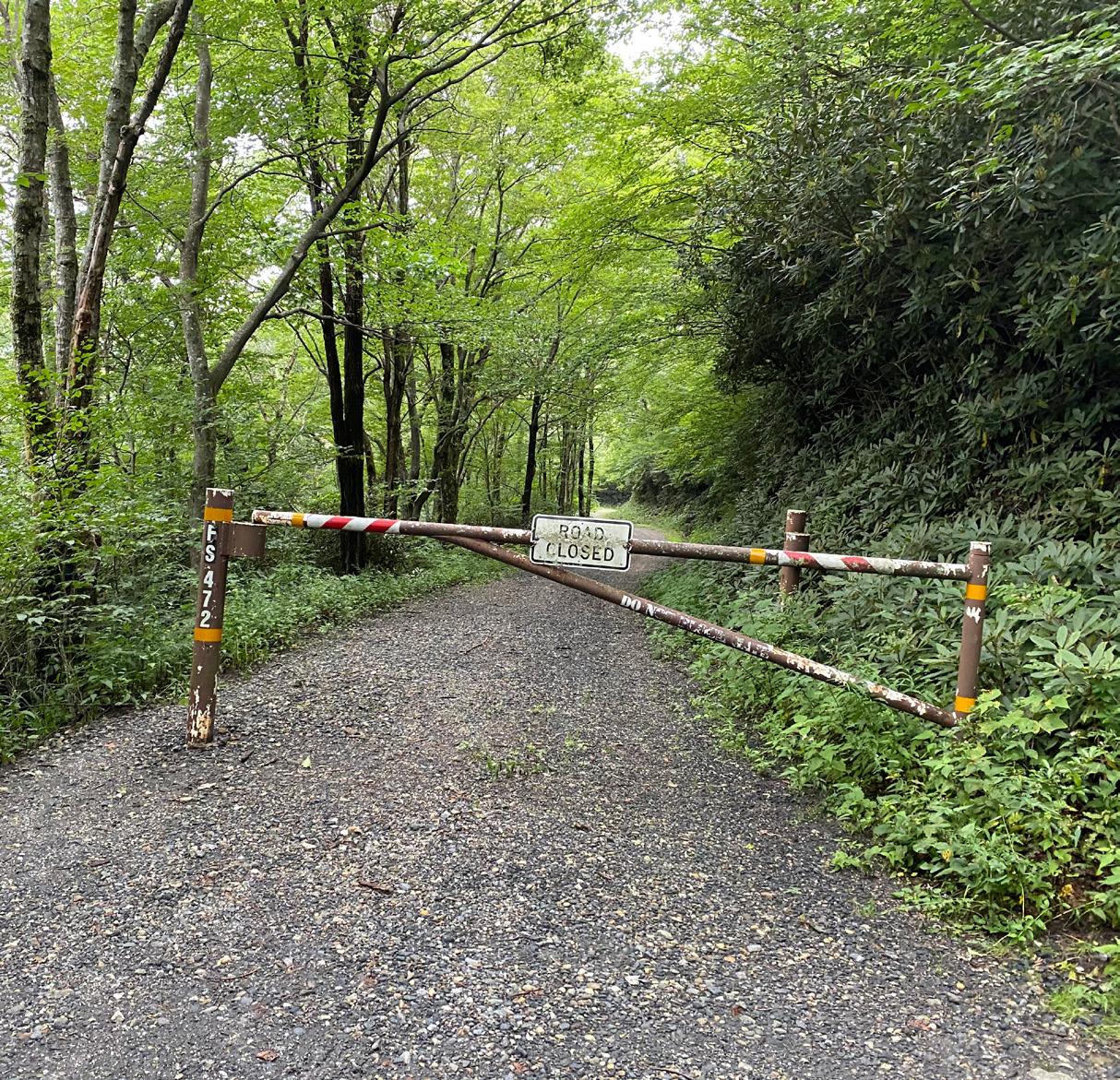
Riding bikes on singletrack helped me establish my career and has been a defining character trait of my adult persona. Imagine if you’ve been a vegan for two decades and then, suddenly, you just start ordering fried chicken all the time.
The situation I’m in is like that, but with bikes. Just as that friedchicken eater can’t identify as a vegan anymore, I can’t identify as a mountain biker anymore. If I’m being
honest with myself, I have to say I ride gravel. But the truly weird thing is I can’t figure out why I’m choosing gravel over singletrack.
The easy answer is that idly pedaling country roads with no traffic and no trail obstacles is a lovely way to spend the afternoon, but I have a suspicion that there’s more to my decision at play here. I think I like gravel because of my age. My kids are teenagers now, and when they do something confusing like ask if they can get a perm (true story), my wife is quick to point out that their awkward decisions are likely just part of the developmental process. They’ll outgrow them and will stop wanting perms. Is it possible that the gravitational pull of gravel is part of my own developmental process? Is my choice to ditch singletrack for safer surfaces just part of some second puberty I’m experiencing? And if so, will I grow out of it?
There’s other evidence to support this theory. Exhibit A: I find myself listening to a lot of Lionel Richie recently, singing along with “Say You, Say Me” when I’m alone in the car. I mean really belting it out, without even a hint of hipster irony. The lyrics speak to me in a way they never have before, which is troubling because I’ve survived almost entirely on a musical diet of grunge, hip-hop,
and jam bands up to this point. Easy listening never factored into the equation. And “Say You, Say Me” isn’t even fun, danceable Lionel Richie. It’s pensive, love song Lionel Richie. Nothing says I’m an old man like tearing up while singing “as we go down life’s lonesome highway, seems the hardest thing to do is find a friend or two…” while waiting in the car line to pick up my kids.
Now that I really examine the situation, I see that gravel riding is a lot like Lionel Richie’s music: It’s safe and lovely. I’m not saying gravel riding is easy like Sunday morning. Some dirt roads are ridiculously steep, but compared to gnarly singletrack and aggressive drivers, gravel is the safest choice a cyclist could make. It’s “Three Times a Lady” safe, and the exact kind of riding that someone of my distinguished age should choose.
Jesus, I like soft rock and cruising gravel, am I going to start watching three-hour-long documentaries about WWII warships now? And wearing slippers to the grocery store?
I spent the first half of my life actively trying to kill myself through diet and questionable hobbies. Now that I’m in the second half, the downward slide if you will, I must be in some sort of default preservation mode where I avoid dangerous
situations.
I used to avoid gravel like the plague. I would plan massive rides through Pisgah National Forest where a few friends and I would ride for days, camping along the way, pedaling from Asheville to Brevard, and I would painstakingly plot the route to avoid dirt roads as much as possible. To set tires on gravel for more than a couple of miles was considered a failure. But little by little I started adding more gravel into my regular rides, taking singletrack out in the process.
It’s gotten to the point now that many of my rides are exclusively gravel. Maybe I’ll use a piece of singletrack to link two long roads together, if I have to, but the focus of the ride is dirt roads. Do you know how sick that is? To actively avoid singletrack? That’s like saying I’m actively avoiding fun. I’ve actually done versions of my original Pisgah thru-biking route that avoid the singletrack altogether. And God help me, I loved those all-gravel rides. I loved them so much.
I don’t know who I am anymore. Now that I’m a gravel biker, do I have to get a whole new wardrobe? Do I have to start wearing spandex and those little Italian cycling caps? To quote the great Lionel, “I’ve been through so many changes in my life, it’s a wonder I ain’t lose my mind.”
And if this newfound love of gravel is just a developmental phase, what’s the next phase in my second puberty? eBikes? Spin class? Dear God, am I headed towards 6am spin class with a septuagenarian instructor named Phyllis who sets the whole workout to a soft rock soundtrack? Is that where this all ends? And more troubling, why does that 6am spin class with Phyllis sound so appealing to me? People have been telling me for years that I’m going to get older, but they never said I’d actually like it. That I’d welcome the change.
I guess the important thing is I’m still riding bikes, right? Doesn’t matter what kind of bikes. Mountain, gravel, stationary while listening to Lionel Richie sing “Dancing on the Ceiling”…doesn’t matter. The important thing is to keep pedaling. Because I know, I’ve found in biking “my endless love.”
54 BLUE RIDGE OUTDOORS
PHOTO COURTESY OF THE AUTHOR



Wholesale Blanks, Custom Design & Print, Made to Order 100% Recycled Since 2010 Tell your sustainability story with Recover. Save The Date: Go Outside and Play Day! April 21, 2023 Plan a day of play outside in the Blue Ridge, and stay tuned for giveaways and more information! #BROgooutsideandplayday
INSIDE LINES
BY DOUG SCHNITZSPAHN
Orvis
Helios 3F 5# 8'6" rod and Mirage LT II Reel
Meet the perfect setup for stalking the cold mountain streams of the Blue Ridge this spring. The top-performing Helios 3F rod simply casts like butter in tough spots—giving you perfect presentations with small dries as well as the ability to place nymphs just where you need them in fast currents. The light, trusty reel offers the drag you need to catch big fish on minimal gear without overpowering your setup and makes it fun to land small fish on tight streams. $998 rod, $429 reel; orvis.com
Redington X Topo Designs
Fly Fishing Kit 590-6
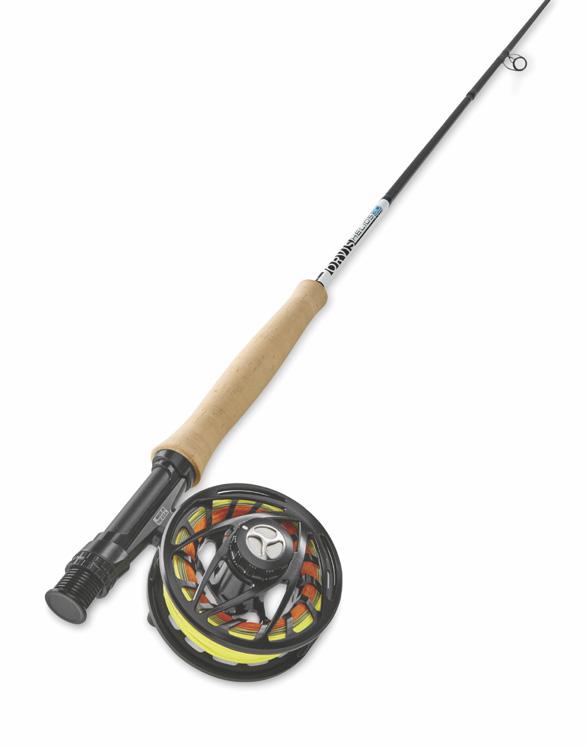
We are always fans of the fly fishing combo kit as a practical way of getting into the game. It makes sense: You get a rod and reel (plus a few extra goodies) in one package. This kit—a collab between core fishing brand Redington and outdoor apparel hotshots Topo Designs— really delivers with a 9-foot, six-piece, 5-weight rod and reel that’s easy to stash and ideal for backpacking. Top that off with a leader, line, a loaded fly box, hemostat, and tippet and you have everything you need to catch fish. But the real winner is the Topo Designs hip pack made to carry all that gear. $450; farbank.com
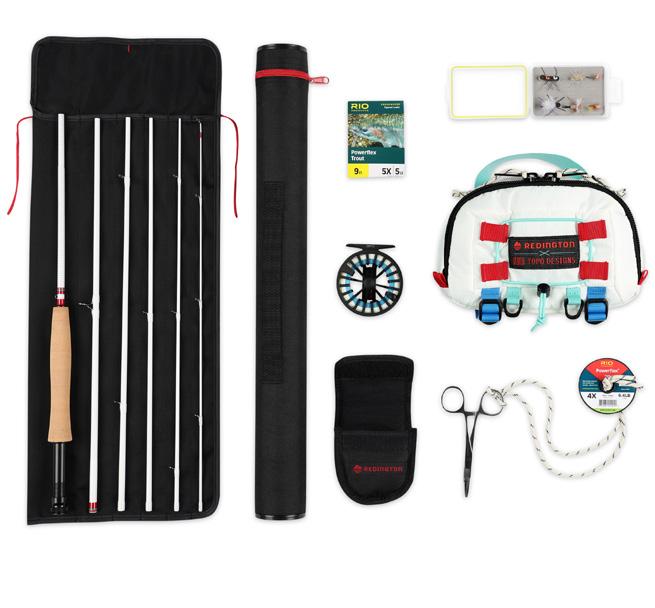
Patagonia
Swiftcurrent Wet Wade Wading Pants
All too often, waders are too hot and just too much during a balmy day of fly fishing, but wet wading in shorts can be chilly. The answer is these fast drying, fair-trade-certified recycled nylon pants that give you a bit of protection in the water without all the bulk. $99; patagonia.com
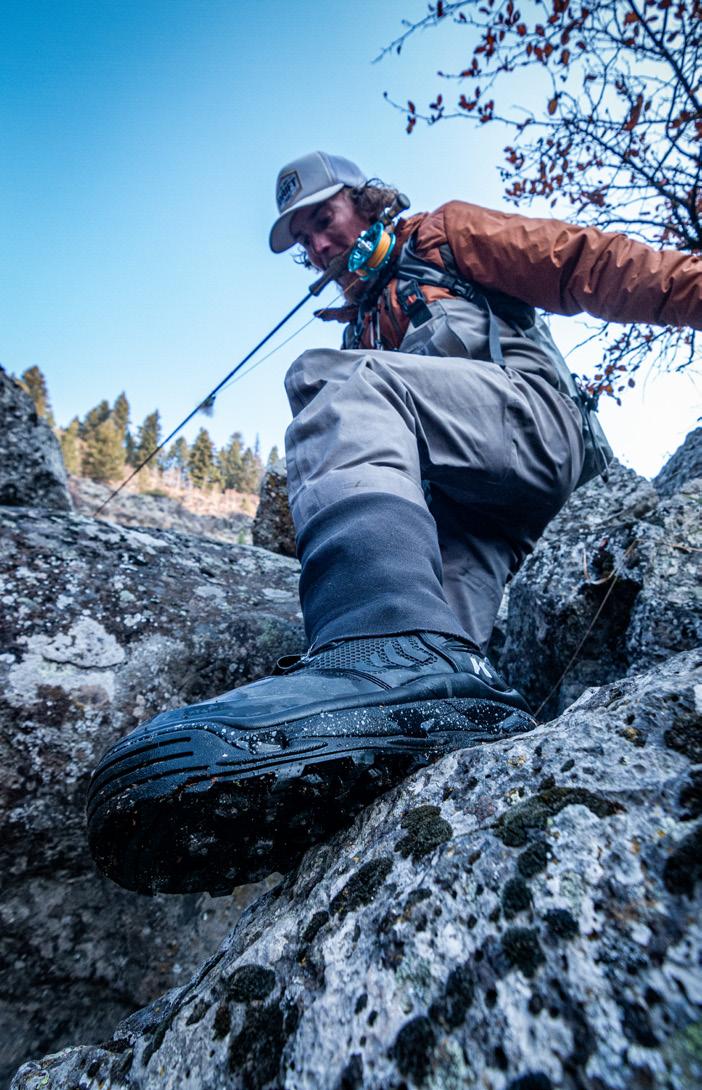
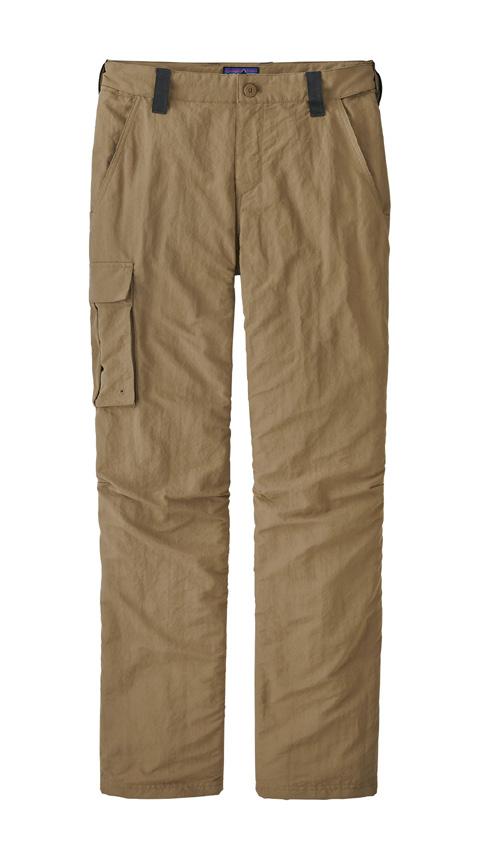
Korkers
River Ops
These burly wading boots are easy to batten down and don’t get waterlogged during a full day of casting, but what we like best is how they can take on a stiff scramble down to the stream. Credit that performance to the OmniTrax sole that grips both wet rocks and the trail. Want something more refined for the stream? Just switch it out to one of Korkers’ specialized felt or sticky soles. A new Boa version secures even faster and easier without the trouble of lacing. $260 ($300 with Boa); korkers.com
Zeal
Sable
Eyewear is the all-too-often forgotten essential when it comes to fly fishing—for both protecting your peepers and to better see the water (and fish). The sleek Sable provides a wrap fit to better protect from errant flies and offers up polarization
to cut through water glare. Better still, the plant-based plastic in the frames is easy on the environment. $159; zealoptics.com
Orvis
Women’s PRO Fishing Jacket
Designed with the rigors of casting and rowing in mind, this shell is a godsend when the weather gets rough out on the water. With fully taped seams and built from waterproof/breathable material, it keeps out the wet but it never feels too claustrophobic. Cut for the female form, it’s also a breath of fresh air in a sport where women, who are getting on the water more than ever, are finding more gear made specifically for them instead of having to settle for men’s stuff.
$449; orvis.com
Riversmith/Küat
Quick Release Mounts
Innovative bike rack brand Küat worked with fly rod rack masters Riversmith to make quickrelease flip mounts that make it easy to take that rod carrier on and off when you need it in between other adventures that require rack space. We combine them with the 10-foot, fourinch Riversmith River Quiver ($480) to have our best rod at the ready and protected when we head to the stream. $100; riversmith.com
56 BLUE RIDGE OUTDOORS THE GOODS FLY FISHING
It’s time to get out to streams across the Blue Ridge and haul in trout with gear that makes fishing an art. These are our favorite tools for the job.
ORVIS ORVIS
REDINGTON X TOPO DESIGNS
PATAGONIA
ZEAL
RIVERSMITH/KÜAT
KORKERS
HOME AWAY FROM HOME
Roam
Vagabond Lite
A rooftop tent is easier to haul and maintain than a full camper or RV—and it gives you the flexibility to set up camp wherever you please. Simple to set up, this lightweight two-person tent provides a reliable shelter all year long, and the highdensity foam mattress provides a plush sleeping surface from which you can open up the skylights and nod off under the stars. Bonus, boot bags help you keep your dirty shoes out of the tent. $1,749; roamadventrueco.com
Solo Stove

Pi
More compact than other portable pizza ovens, this cooker runs on both propane and wood for those pie connoisseurs who love the taste of smoke. The oven comes complete with a woodburning assembly and a stone, but the best thing about it for the car-camping foodies among us is that the circular design allows for perfect cooking. Keep a careful eye on your pizza and rotate it via a built-in turning device. $625; solostove.com
Wagan Tech
Lithium Cube 1200

Sure, you want to get away from work and all those devices, but often it’s not possible to go on a road trip without powering up, checking in,
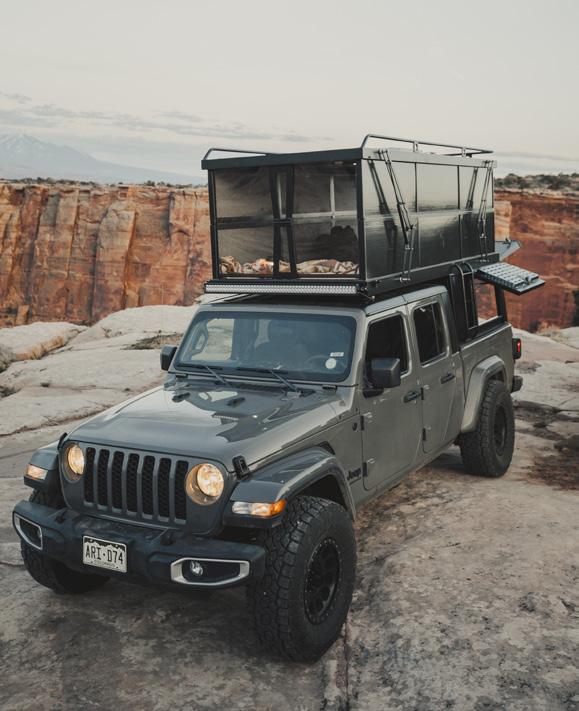
and perhaps slipping in a Zoom meeting in the wild. Or maybe those power-needy devices are essential parts of your camp setup. Either way, this sturdy, powerful charging unit with a 1000W inverter and 1166Wh lithium-ion battery can run your laptop or a small fridge, and you can charge it via a solar panel. $1,099, $1,349 with 100W solar panel; wagan.com
Exped
Megamat Auto
Want to make the back of your vehicle your bed for the night? This monstrous mat is here to help. Designed to fit the back of most mid-size trucks and SUVs, this self-inflating cushion transforms that utility space into a bed for the night with four inches of foam and plenty of insulation. $400; expedusa.com
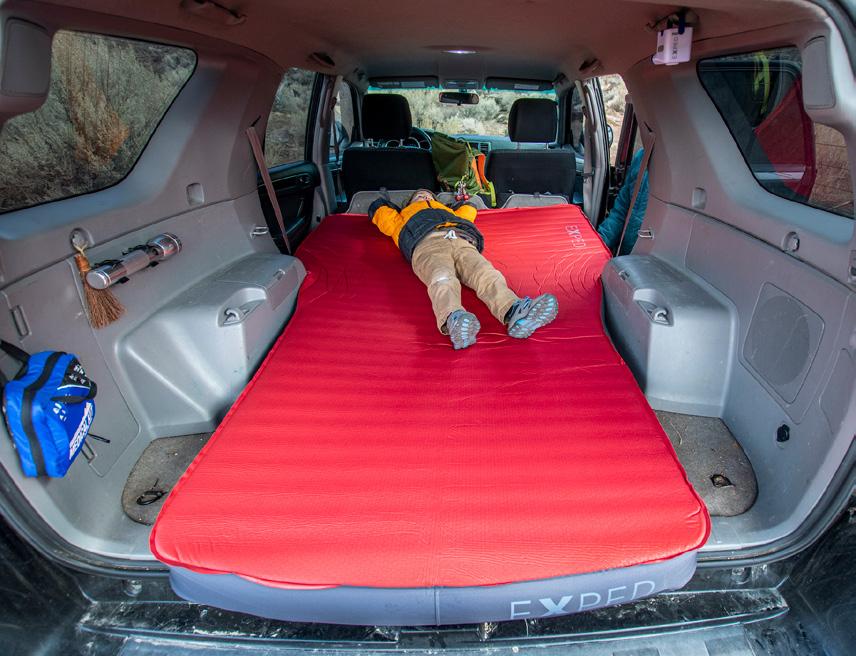
Flylow
Remnant Tote
Stuff all that gear you need for camp into this roomy bag that apparel company Flylow fashions from leftover fabric. $50; flylowgear.com
RovR
RollR 80
Even when you are based in a big rig, you often need to move your cooler. RovR RollR series
has you covered. This massive unit on big burly wheels transports your food and beer to the perfect spot in the woods or on the beach. But the thing that really seals the deal is the extra storage container on top—fill it up with all the other extras you need to bring from your vehicle to that ideal location. $550; rovrproduts.com
Primus
Kamoto
This fire pit on the go is the solution for spots where there are no established fire rings and for helping to prevent wildfires, since it ensures your campfire is contained. The grill on top makes for easy cooking—you can burn wood or charcoal in the stainless steel, portable pit. $150; primus.us
Rossmönster Lagom Series
Ready to make a serious commitment to your camping lifestyle without buying a full rig? This beautifully designed truck topper not only provides sleeping space with 360-degree views, it also allows for access to your truck bed. That’s a huge advantage for those of us who like to haul a lot of gear on road trips and don’t appreciate the limited storage space of the usual camper top. Inside, it’s a dream, with the option to add dimmable LED lighting and Goal Zero power. $14,000 base package; rossmonsteroverland.com
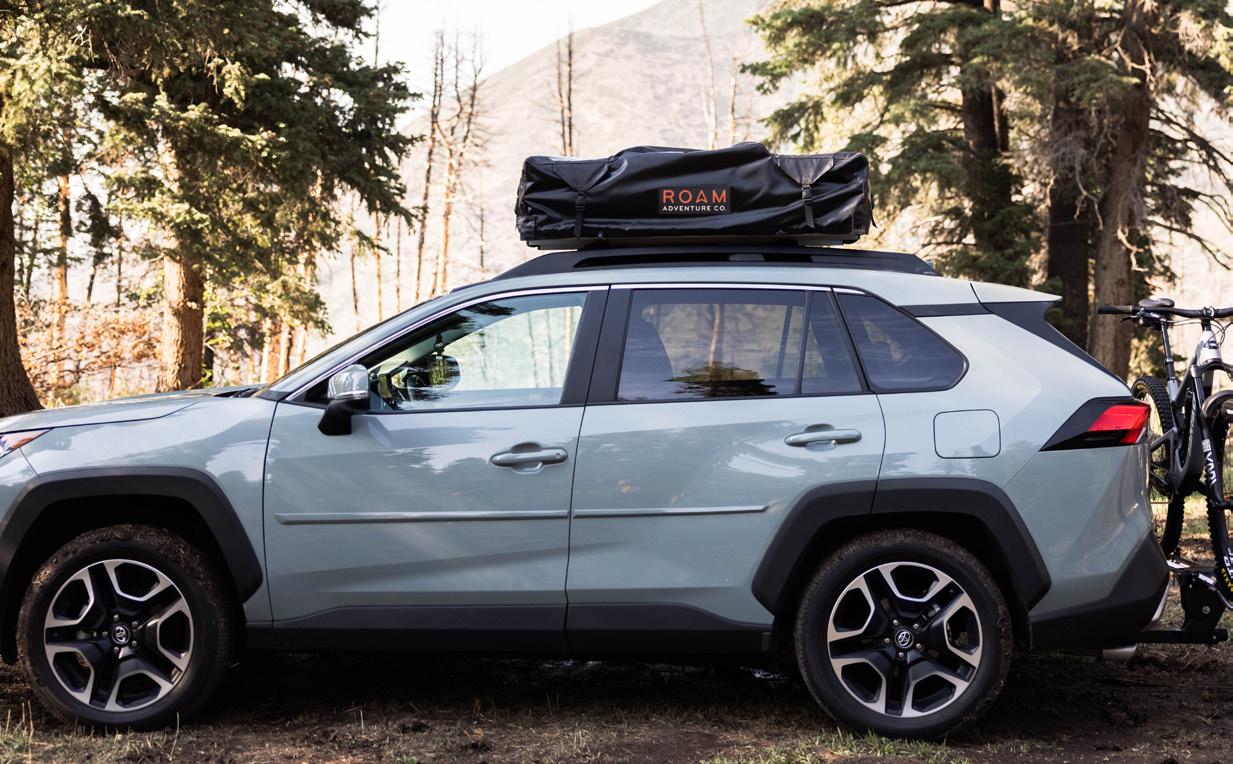
MARCH 2023 | BLUERIDGEOUTDOORS.COM 57
THE GOODS CAR CAMPING
SOLO STOVE
Hit the road and create a mobile camp that makes life in the wild feel a bit like life on your back deck. The following gear will help you make it happen.
BY DOUG SCHNITZSPAHN
ROAM
WAGAN TECH
FLYLOW
ROVR
PRIMUS
ROSSMÖNSTER LAGOM SERIES
SPRING SONGS
Our Favorite New Music from the Blue Ridge and Beyond
BY JEDD FERRIS AND DAVE STALLARD
EVERY MONTH OUR EDITORS
curate a playlist of new music, mainly focusing on independent artists from the South. In March we’re highlighting new tunes from Dave Matthews Band, Nickel Creek, and Mac Demarco.
MAC DEMARCO
“Edmonton”
The title of indie tunesmith Mac Demarco’s new album is pretty funny, but “Five Easy Hot Dogs” doesn’t contain any of his usual wry, humorous lyrics. Instead, it’s an instrumental effort recorded with portable gear during an extended road trip, featuring tracks named after the locations where the songs were made. “Edmonton” meanders in a hypnotic zone with a rolling guitar line and a pleasant repetitive synth melody. It’s a short two minutes, and much like the entire album, sounds like a spontaneous, albeit enjoyable, tide over until a proper DeMarco album is ready. –J.F.
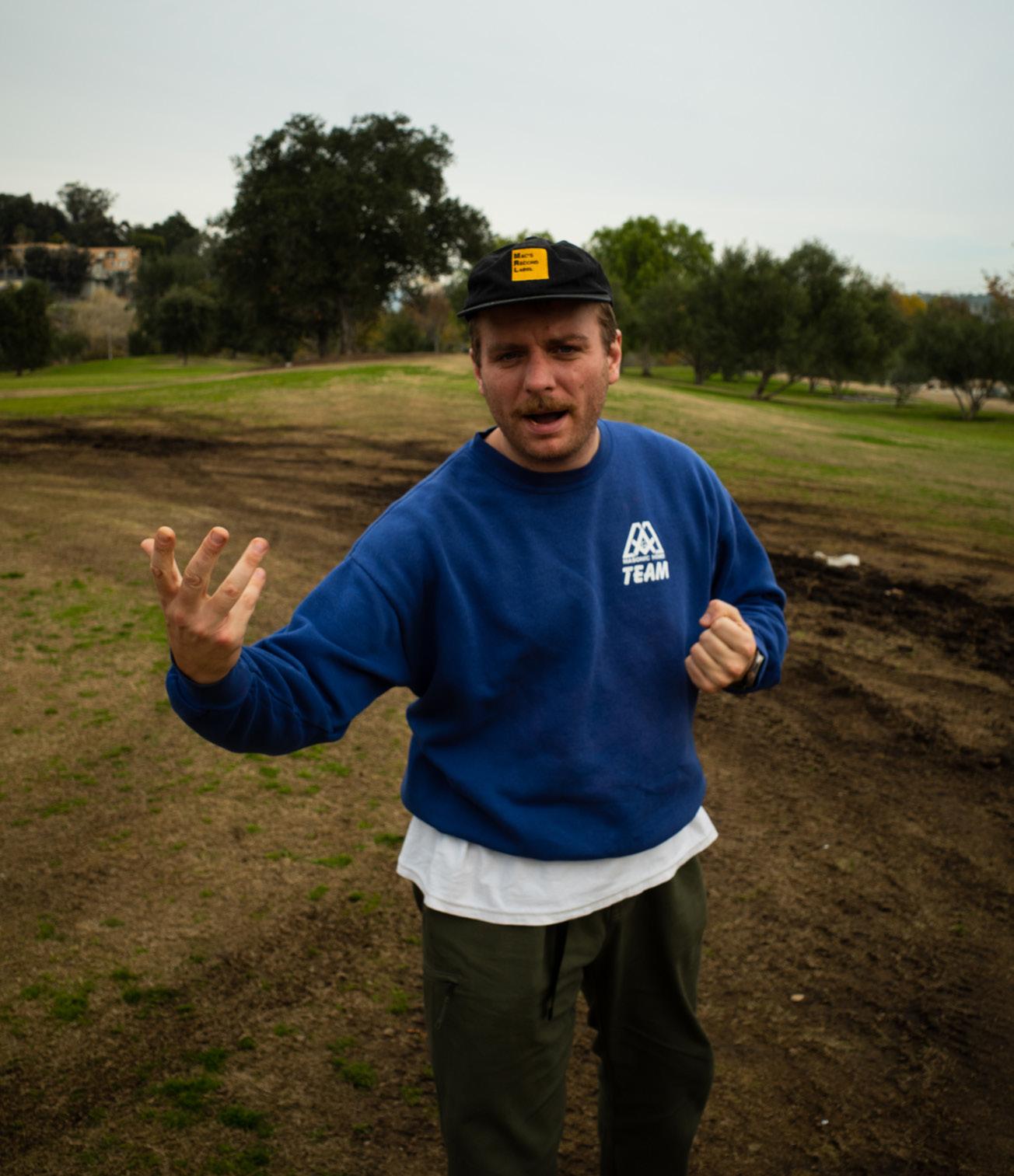
DAVE MATTHEWS BAND
“Madman’s
Eyes”
Jam juggernaut Dave Matthews Band is returning with the band’s first new album in five years. “Walk Around the Moon” won’t be released until May but lead single “Madman’s Eyes” was unveiled earlier this year. It’s a heavy hitter with invigorating time signature shifts led by electric guitar, saxophone, and orchestral strings, while Matthews sings about searching for relief among societal chaos. The song wouldn’t sound out of place on the band’s landmark album “Before These Crowded Streets,” which came out 25 years ago. – J.F.
NICKEL CREEK “Strangers”
Time passes and relationships
ebb and flow. The chance for reconnection with once dear friends, when time and distance has potentially eroded the friendship, can be trepidatious. Nickel Creek, featuring Chris Thile, and siblings Sean and Sara Watkins, ponder this notion on “Strangers,” an acoustic delight from their upcoming release “Celebrants.” Recording together for the first time in nine years, the iconic trio prove, without any doubt, that wondrous music is the reward for taking that step to reconnect. – D.S.
MIGHTY POPLAR “Up On The Divide”
When some of the best bluegrass players of a generation get together to pick, you’d best take heed. Andrew Marlin (Watchouse), Chris Eldridge and Noam Pikelny (Punch Brothers), Greg Garrison (Leftover Salmon), and Alex Hargreaves (Billy Strings) have joined forces to form Mighty Poplar. Featured this month is their take on Martha Scanlon’s “Up on the Divide.” Recorded in a converted tractor shed outside of Nashville, this song sounds like it evolved almost effortlessly; voices and instruments blend seamlessly in a way only true masters can create. – D.S.
SCOTT MCKINNEN AND THE EVER-EXPANDING
“What About Now”
It was a big bummer when indie folk-heroes Dr. Dog decided to stop touring indefinitely. But one of the band’s lead voices is launching a solo project this month. “What About Now” strolls with the vintage haze of Scott McKinnen’s old band. It’s a searcher’s anthem with a bouncy, soulful groove that will please fans of The Band and a welcome move forward for an artist starting a new chapter. The track comes from the new album, “Shabang,” which comes out on March 31. – J.F
DOM FLEMONS “Slow Dance With You”
Dom Flemons exploded into the Americana consciousness as one third of the Carolina Chocolate Drops over 15 years ago. Long considered a preeminent voice in the world of Piedmont blues, Flemons pivots hard to classic country on “Slow Dance With You.” This one will have you holding your baby close as you two step across the floor, awash in harmonica, pedal steel, and Flemons’ wistful vocals, which emote the absolute longing he feels for his absent dance partner. – D.S.
EL DORODO “Whiskey, Women, and Wine”
Rod Elkins, Craig Burletic, and James Barker spend most of their time as half of Americana troubadour Tyler Childers’ backing band, The Food Stamps. Apparently, that hasn’t kept them busy enough.
The trio recently joined singer/ guitarist Doug Woodard to record and release a surprise country album under the name El Dorodo. This out of nowhere record hits all the right notes, and “Whiskey, Women, and Wine” is time-travelin’ vintage country, so good it should have been released straight to eight track. – D.S.
ZACH BRYAN “Dawns”
Uber-prolific Americana singersongwriter Zach Bryan released the 34-track album “American Heartbreak” last year, and he keeps cranking out the tunes. “Dawns,” a standalone single released earlier this year, is a heartfelt duet with Maggie Rogers about feeling helpless when a loved one dies. The emotional track is scrappy and pensive, simmering in a dark mood before building with swelling strings and joined voices. – J.F.
To hear these songs and more, follow the Blue Ridge Outdoors’ Trail Mix playlist on Spotify.
58 BLUE RIDGE OUTDOORS TRAIL MIX FRESH TRACKS
MAC DEMARCO MADE HIS NEW ALBUM, "FIVE EASY HOT DOGS," ON A ROAD TRIP. PHOTO BY KIERA MCNALLY
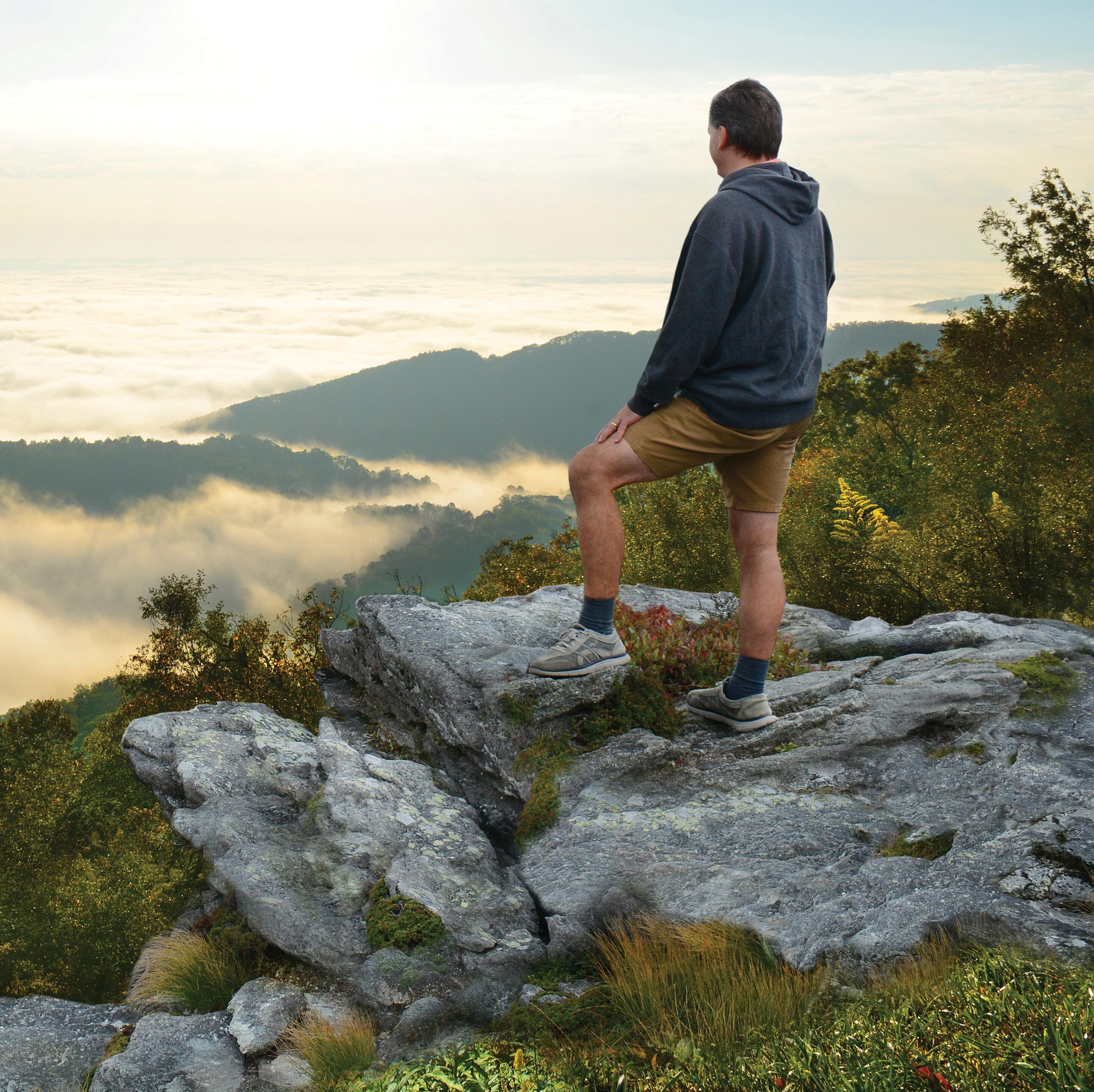

albemarlecannabiscompany.com TRY OUR 25 MG CBD FULL SPECTRUM GUMMIES SHOP NOW NOW AVAILABLE IN 10 & 25 COUNT CHILD PROOF CONTAINERS
GUMMIES
A park for every passion


Whether you’re looking to rev up or wind down, we’ve got a place just for you. Nestled in some of the state’s most beautiful settings, Kentucky State Parks offer a wide range of activities – from outdoor adventures to nature escapes – and accommodations from rustic campsites and cozy cabins to resort park lodges. Plus, 13 nationally recognized state park golf courses get you out on the links to soak up incredible views.
Book your spring getaway at parks.ky.gov!
















































































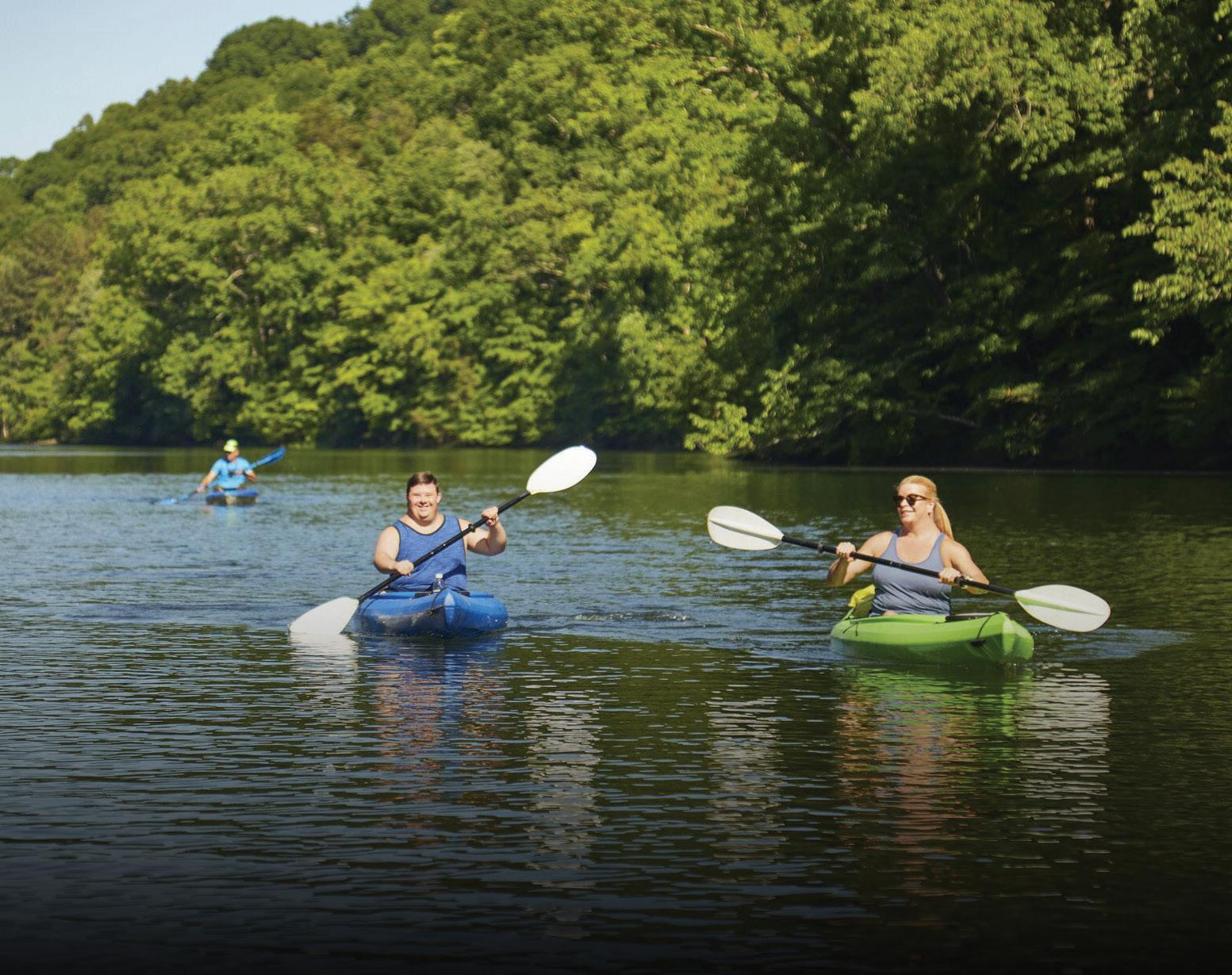
60 BLUE RIDGE OUTDOORS
