


Ecoservices performs novel converter repair PAGE 7 T O D A Y www.H 2 S0 4 Today.com Fall/Winter 2022 COVERING BEST PRACTICES FOR THE INDUSTRY IN THIS ISSUE > > > > Market Outlook: Uncertainty overhangs 2022 PAGE 10 Elekeiroz’s continuous improvement yields significant capacity increase PAGE 19 Extension of the converter’s operational run time PAGE 30 Sulfuric Acid
NEW NAME. NEW LOOK. Bringing even better clean technologies to our world.


Look for MECS® Technologies in Booth 46 at the 2022 CRU Sulfur + Sulfuric Acid Conference on October 24-26.
Sulfuric Acid and Environmental

MECS®
Technologies
THE EXPERTS YOU TRUST AND THE CUSTOMER SERVICE YOU COUNT ON.
GLOBAL LEADER IN PROCESS TECHNOLOGIES THAT DRIVE SUSTAINABILITY AND CARBON NEUTRALITY
MECS.ElessentCT.com
Sulfuric
Sulfuric
T O D A Y
28 No. 2 Covering Best Practices for the Industry Fall/Winter 2022
FROM THE PUBLISHER
Dear Friends,
Welcome to the Fall/Winter 2022 issue of Sulfuric Acid Today magazine. We have dedicated ourselves to cover ing the latest products and technology for those in the indus try, and hope you find this issue both helpful and informative.

In this issue, we have several informative articles regard ing state-of-the-art technology and projects. Our cover story, on page 7, focuses on Ecoservices’ innovative internal heat ex changer replacement for their converter. Very few internal ex changer replacements have been performed in the industry and the team involved completed the complicated maneuver safely and ahead of schedule. Since Acuity Commodities’ last article in the Spring/Summer 2022 issue, many commodity prices surged after the onset of the Russia-Ukraine conflict due to reduced exports of goods from the region, resulting in a disruption to many trade flows. Scarcity of raw materials also applied to products related to sulfuric acid includ ing sulfur, copper, and phosphate fertilizers (page 10).
VIP International shares experience with confined spaces and the key elements of safety success (page 12). INTEREP explains how piping supports are caus ing expansion joint failures and some solutions for how to rectify it (page 14). Elessent MECS® Technolo gies shares some lessons learned for storage tank vent control (page 16). Elekeiroz’s sulfuric acid plant has undergone a series of upgrades and improvements that have yielded significant capacity increase (page 19).
Blasch Precision Ceramics shares their knowledge of sulfur burning furnace optimization (page 22).


NORAM Engineering & Constructors explain the im portance of sulfuric acid plant training for managers, engineers, and operators (page 24). Knight Material


Technologies recently combined three companies into one offering complementary technologies to supply the broadest selection of products and core competencies for corrosion pro tection during the production, storage, and use of sulfuric acid and other corrosive substances (page 26). CMW provides criti cal feedback from a contractor perspective that may help you reduce the risks of outage/turnaround delays, over-runs or over budget costs, and overall downtime (page 28). Savino Barbera acid-resistant plastic chemical pumps and industrial mixers solve an age-old problem of corrosion (page 29). UBE Corpo ration Europe’s process for detecting the source of the rise in pressure drop, along with Sulphurnet’s liquid sulfur polishing filter, has helped extend the plant’s catalytic converter opera tion time (page 30).

I would like to welcome our new and returning Sulfuric Acid Today advertisers and contributors, including: Acid Piping Technology Inc., Acuity Commodities, Alphatherm, BASF, Bel tran Technologies, Blasch Percision Ceramics, Central Mainte nance & Welding, CG Thermal, Chemetics, Clark Solutions, El essent MECS® Technologies, Haldor Topsoe, INTEREP, Knight Material Technologies, NORAM Engineering & Constructors, Optimus, Southwest Refractory of Texas, Savino Barbera, Spraying Systems Co., STEULER-KCH GmbH, Sulphurnet, VIP International, and Weir Minerals Lewis Pumps.

We are currently compiling information for our Spring/ Summer 2023 issue. If you have any suggestions for articles or other information you would like included, please feel free to contact me via email at kathy@h2so4today.com. I look for ward to hearing from you.
Sincerely, Kathy Hayward
Ecoservices performs novel converter repair PAGE 7 T O D A Y www.H S0 Today.com Fall/Winter 2022 COVERING BEST PRACTICES FOR THE INDUSTRY Market Outlook: Uncertainty overhangs 2022
Acid Vol.
On the Cover… 7 Ecoservices’ Dominguez California plant shares innovative internal heat exchanger replacement for their converter Departments 4 Industry Insights News items about the sulfuric acid and related industries 12 Safety Sector Sharing common safety concerns 16 Lessons Learned Case histories from the sulfuric acid industry 28 Contractors’ Corner Perspectives for fabrication, planning & scheduling 36 Faces & Places 5 Absent friends—In memoriam 10 Uncertainty overhangs 2022 14 Your pipe supports are causing expansion joint failures 19 Elekeiroz’s continuous improvement yields significant capacity increase 22 Sulfur burning furnace optimization 24 Sulfuric acid plant training for managers, engineers, and operators 26 Knight Material Technologies leverages power of three companies for sulfuric acid protection 29 Less metal, less corrosion: Savino Barbera chemical pumps & industrial mixers solve an age-old problem 30 Extending a converter’s operational run time 34 Sulfuric Acid Roundtable returns to Texas 38 Sulfuric acid professionals gather in Florida for annual conference PUBLISHED BY Keystone Publishing L.L.C. PUBLISHER Kathy Hayward EDITOR April Kabbash EDITOR April Smith MARKETING ASSISTANT Tim Bowers DESIGN & LAYOUT 281-545-8053 Mailing Address: P.O. Box 3502 Covington, LA 70434 Phone: (985) 807-3868 E-Mail: kathy@h2so4today.com www.h2so4today.com SUBSCRIPTIONS U.S. Plant Personnel — Complimentary U.S. Subscription — $39 per year (2 issues) Internat’l Subscription — $59 per year (2 issues) Subscribe Online: www.h2so4today.com FEATURES & GUEST COLUMNS 22 34 30
Acid
Chemtrade joint venture to build new electronic grade sulfuric acid plant
TORONTO—Chemtrade Logistics In come Fund recently announced a joint venture with privately held Kanto Group for the greenfield construction of a high purity sulfuric acid plant. The joint ven ture, KPCT Advanced Chemicals LLC will build a plant in Casa Grande, Ariz. with an expected start-up in 2024. The high purity production process will be based on Kanto Group technology, which is currently in use in Taiwan and Japan supplying the leading semiconductor producers in Asia. The plant will have a total annual capacity of approxi mately 100,000MT of electronic grade acid.
The project is expected to cost between $175 and $250 million; however, detailed engineering plans and cost estimates are expected to be complete in Q4 2022. Kanto Group and Chemtrade own 51% and 49%, respectively, of this joint venture.
Scott Rook, president and CEO of Chemtrade said, “We are excited to partner with Kanto Group, a global technology lead er in high purity chemicals for electronic manufacturing. For years, Chemtrade has been the primary manufacturer of ultrapure sulfuric acid in the North American mar ket. This joint venture allows us to expand our North American position and meet the growing needs of the semiconductor manu facturers.”
KPPC Advanced Chemicals Inc. CEO, Jerry Lu commented, “Kanto Group is pleased to partner with Chemtrade and to leverage both parties’ strengths to bring new high-quality sulfuric acid capacity to serve the growing North American electronic chemicals market.”
Chemtrade operates a diversified busi ness providing industrial chemicals and ser vices to customers in North America and around the world. Chemtrade is one of North America’s largest suppliers of sulfuric acid, spent acid processing services, inorganic co agulants for water treatment, sodium chlo rate, sodium nitrite, sodium hydrosulphite, and phosphorus pentasulphide. A leading re gional supplier of sulfur, chlor-alkali prod ucts, liquid sulfur dioxide, and zinc oxide, Chemtrade also provides industrial services such as processing by-products and waste streams.
For more information, please visit www.chemtradelogistics.com.
Southern States Chemical announces acquisition of manufacturing plant in Augusta, Ga.

SAVANNAH, Ga.—Southern States Chemi cal, a Dulany Industries, Inc. company, has acquired an idled sulfuric acid plant in Au gusta, Ga. from Chemtrade Logistics. The industrial plant, located at 1580 Columbia Nitrogen Dr., will be renovated and reopened
as a Southern States Chemical domestic pro duction facility, bringing 30 new jobs and significant investment to the region.
“In order to provide better security of supply, we decided to open a plant in Augusta, which is strategically located near many of our existing customers,” said Key Compton, president of Southern States Chemical. “In addition, this site offers an inland production location that will continue to operate in the event of weather disruptions at our coastal production sites.”
Southern States Chemical is return ing to its roots in Augusta, where the com pany was originally established in 1897 as Southern States Phosphate and Fertilizer Company.
Today, the company maintains stellar safety and operational records at three plant locations in Savannah, Ga. and Wilmington, N.C. The company has earned the elite CSX Chemical Safety Excellence Award for five consecutive years and has a strong commit ment to sustainability.
The Southern States Chemical pur chase will provide opportunities for other industrial companies to bring back highwage jobs to the Augusta area. In addition, the company’s basic building block chemi cal plant will create excess steam, which can help future co-located industries reduce car bon emissions.
Headquartered in Savannah, Ga., Southern States Chemical is owned by Du lany Industries, Inc. and employs approxi mately 100 team members at three locations in Savannah, Ga. and Wilmington, N.C. The company has earned the CSX Chemical Safety Excellence Award for five consecu tive years and has a strong commitment to sustainability.
More information, please visit www.ss chemical.com.
well as carrier materials. BASF’s sulfuric acid catalysts O4-111 X3D and O4-115 X3D are the first catalysts produced with the new technology and are used in industrial plants.
“With this technology, we are able to provide catalysts that are tailored to our customers’ needs to help significantly boost their plant performance while reducing en ergy consumption and increasing sustain ability at the customer level,” said Detlef Ruff, Senior Vice President, Process Cata lysts at BASF. “BASF’s technical service team will work with customers to identify the best catalytic technology for their indi vidual projects,” said Chris Wai, Vice Presi dent, Global Chemical Market Catalysts at BASF.
For more information, please visit www.basf.com.
OCP records turnover of $5.29 billion in first half of 2022
CASABLANCA, Morocco — Morocco’s OCP Group, the world’s largest phosphate mining and leading fertilizer company, has reported that it had a turnover of nearly $5.29 billion at the end of June 2022.
The number represents an increase of 72% compared to the same period in 2021, the company said in a press statement re leased earlier this year. Such largely positive returns indicate that the Moroccan company has remained resilient in the face of the on going worldwide market disruptions induced by the COVID crisis and the Ukraine war.
OCP said its turnover reached MAD 30.69 billion in the second quarter of 2022 against MAD 18.19 billion in the same pe riod a year earlier, meaning that the compa ny’s turnover witnessed an increase of 69%.
OCP attributed the company’s perfor mance to good market conditions, includ ing a notable increase in fertilizer prices. Previous statistics from Morocco’s Foreign Exchange office support OCP’s analysis of the world market.
FLORHAM PARK, NJ—BASF introduces the novel X3D™ technology, a new addi tive manufacturing technology for catalysts based on 3D printing. Catalysts produced with this technology feature an open struc ture, resulting in a reduction of pressure drop across the reactor and a high surface area, significantly improving the catalysts’ performance. BASF has capabilities to sup ply commercial quantities.
The technology offers a greater free dom of catalyst design compared to conven tional production technologies. It brings cat alyst performance to the next level and helps to customize catalysts to customers’ specific conditions and needs by designing infill pat tern, fiber diameter, and orientation. Cus tomers can benefit from an increased reac tor output, higher product quality, and lower energy consumption. The novel catalysts are mechanically robust and proven in commer cial plant operation externally and for sev eral years in BASF.


BASF can apply the technology to a wide variety of existing catalytic materials, including base or precious metal catalysts as
Morocco is home to 75% of the global phosphate rock reserves, a key ingredient for the production of fertilizers.
As a global leader in the production of fertilizers, OCP Group frequently renews its determination to play a vital role in helping farmers around the world—especially in Af rica—ensure food security in their respec tive communities.
In July, the group announced its larg est-ever fertilizer program, mixing dona tions and decreased prices to bring over 500 kilotons of fertilizer to African farmers.
For more information, please visit www.ocpgroup.ma.
BOULDER, Colorado—Travertine Tech nologies, Inc., a tech start-up that came out of research from the University of Califor nia, Berkeley is looking to commercialize a
INDUSTRY INSIGHTS
BASF introduces X3D™, a revolutionary technology for shaping catalyst for optimal performance
Travertine looks to revolutionize metal extraction tech, sulfuric acid production
580 Broadway | Albany, NY 12204 | 518-436-1263 | www.blaschceramics.com What does this mean for SRU Operators? More complete Ammonia Destruction/ increased capacity to process NH3 if desired Better BTEX Destruction Better protection for tubesheet refractory/ cooler temperatures going into WHB More efficient use of furnace volume means increased capacity Better mixing and longer distance together mean more complete reactions Lower energy costs when co-firing or in tail gas incinerators Bulk of radiant trapped in front zone Hotter here Tight residence time distribution Cooler here Spiral creates much longer “contact pathway”, or overall distance in close contact to react, even with lower temperatures here Solid perimeter for backmixing - same as choke ring Increased velocity and temperature carried to tubesheet Broad residence time distribution means insufficient RT for some of the reactions What does this mean for sulfur burning acid plants? No more fireflies at furnace exit Increased capacity Lower Pressure drop compared to baffles To learn more about the Blasch VectorWallTM and its benefits, contact Tim Connors, Senior Market Manager-Energy & Chemicals at tconnors@blaschceramics.com or by phone at 518-436-1263 ext 105. PAGE 4 Sulfuric Acid Today • Fall/Winter 2022 Department
novel, cost-effective process to capture am bient carbon dioxide while producing sulfu ric acid. The process should, the company says, enable carbon-negative critical element extraction and fertilizer production.
In June Travertine announced a $3 mil lion seed financing jointly led by Grantham Environmental Trust and Clean Energy Ventures to enable the company to scale up its team in Colorado and accelerate pilot implementation in 2023.
Carbon dioxide removal has widely been acknowledged as a key piece in the climate change puzzle, with the IPCC be lieving it must be scaled concurrently with decarbonisation to achieve the goals from the Paris Climate Accord.
Travertine’s electrochemical process mineralizes CO2 from the air and co-pro duces sulfuric acid used for extracting raw materials such as lithium, nickel and cobalt. It accelerates the Earth’s natural carbon cycle to precipitate carbonate minerals from carbon dioxide in the air – producing sulfu ric acid, green hydrogen for renewable en ergy and oxygen as a by-product – and per manently storing carbon in the solid phase, according to Travertine.
Travertine Founder and CEO, a former University of California, Berkeley Professor, Laura Lammers, said, “For every tonne of sulfuric acid produced, half a tonne of CO2
is saved and sequestered.”
Lammers, one of the leading scientists in carbonate mineralization, says Traver tine is engaging with companies looking to expand or bring online new production of energy minerals such as lithium that would typically go down the normal sulfuric acid plant route, telling them Travertine can pro vide another option.

“In addition to that, there are many tonnes of sulphate waste out there that come with recycling options using the technology,” she said. If the technology proves success ful in these applications, it could prevent the accumulation of millions of tonnes of waste annually that contaminate water and are deemed as liabilities for mining companies.
And there are also options to bolt-on the technology for retrofits/upgrades in ex isting sulfuric acid processes, she added. To this point, the company is working with mining companies to trial this technology, with Lammers hoping to say more about these partnerships next year.
She concluded: “There are a number of companies looking at the carbon-to-value landscape, but we are focused on redressing the needs of the industry and the environ mental balance.”
For more information, please visit www.travertinetech.com. q
Absent friends — In memoriam
Dr. Alfred Alexander Guenkel
Dr. Guenkel was a 33-veteran of NORAM and renowned for his role in the development of the adiabatic nitra tion technology used in mononitroben zene production. Dr. Guenkel also led capstone projects in sulfuric acid and wastewater during the growth of the NORAM Group.

At a recent gathering, colleagues and friends remembered Dr. Guenkel as a man who left an indelible mark on technology, on the engineering commu nity, and on the many young technolo gists he mentored over three decades at the company. Colleagues past and pres ent expressed how deeply Dr. Guenkel’s absence is felt in the NORAM family and the sulfuric acid technology com munity as a whole.
Nitzan Moshe & Anat Tal-Ktalav Anat Tal-Ktalav and Nitzan Moshe, both
members of ICL’s leadership team, died unexpectedly in a car accident earlier this year.
Nitzan Moshe was Executive Vice President of ICL Operations and known for his deep connection to ICL produc tion sites’ continuous improvement and leadership in sustainability strategy. He is remembered for inspiring others with his sensitivity and dedication.

Anat Tal-Ktalav was ICL’s Presi dent Industrial Products Division and known for her dedication to the compa ny and its future growth. She was ICL’s first-ever female division head and is remembered as a model and inspiring leader.

With over two decades at ICL, Tal-Ktalav and Moshe are recognized as top performers who made enormous contributions to the company’s success. Their presence will always be a part of the company’s legacy. q
WASTE HEAT RECOVERY BOILERS SUPERHEATERS ECONOMIZERS


Chanute Manufacturing
workmanship
standing
dence in our quality control and comprehensive project execu
on.
918
mus tulsa.com Email: info@op�mus tulsa.com
www.op
INDUSTRY INSIGHTS
50 years of manufacturing experience 99% life�me on‐�me delivery performance 20 years experience in Sulfuric Acid waste heat recovery equipment Op�mus delivered its rst sulfuric acid plant waste heat recovery system in 1996. Across the power and process industries, we’ve produced more heat recovery boilers, HRSGs, superheaters, and economizers than any ac�ve company in the USA. Op�mus and its
plant have a long
rep uta�on for high quality
and on‐�me performance. Cus tomers trust our unique manufacturing exper�se and have con
�
Ph:
491 9191
�
Sulfuric Acid Today • Fall/Winter 2022 PAGE 5 Department
Dr Alfred Guenkel 1943-2022
Nitzan Moshe 1968-2022
Anat Tal-Ktalav 1969-2022
We are everything sulphur and much more
Comprimo and Chemetics – delivering sulphur and sulphuric acid solutions for a more sustainable world.

Through everything we do, we provide maximum long-term profits for our customers while meeting the most stringent environmental requirements. Helping our customers to be better neighbours is always good business for them and us.
Learn more with one of our experts
email: sulphursolutions@worley.com
Decrease OPEX Reduce emissions Energy efficiency worley.com/chemeticsworley.com/comprimo SO 2
Ecoservices performs novel converter repair
By: April Smith, Editor, Sulfuric Acid Today
Ecoservices’ Dominguez plant in Carson, CA, recently replaced its convert er’s internal heat exchanger in a meticu lously choreographed shutdown spanning 22 days in April 2022. Like many large construction projects, the replacement involved numerous moving parts. But a unique circumstance raised the complexity for the Dominguez plant—lack of prece dent. Very few internal exchanger replace ments have been performed in the industry.
For thirty years, the Dominguez plant has relied on its internal heat exchanger for its spent acid regeneration operation. Designed and built from 304 H stain less steel by long-time supplier Chemetics, the exchanger withstood three decades of highly destructive conditions: corrosive gases and extremely high temperatures.


However, in 2020 when SO2 to SO3 conversion began to decrease, high-tem perature sulfidation, a type of corrosion, was suspected. In February 2021 VIP International was called in for inspec tion and repairs. The visual inspection revealed the critical damage. “We found over 200 complete failures of tubes and severe delamination of many other tubes,” said Gavin Floyd, Engineering Manager at Ecoservices. “This is the typical fail ure scenario when 304 H stainless steel is subjected to temperatures above 1,000 degrees F.” While temporary repairs pro duced minor improvement it was deemed the exchanger had seen its useful life.
High temperature sulfidation is a largely diffusion controlled, high tem perature, chemical corrosion process that gradually converts the stainless steel tube metal into various sulfides, sulfates, and oxides that crumble away. “The process is very slow for most industrial applications,” said Jesse Huebsch, Acid Technology Service Engineer at Chemetics. “But high er temperatures and more oxidizing gases, including NOx, intensify and accelerate the deterioration, as do multiple thermal cycles, which cause the scale to flake off.” These were the conditions at Dominguez.
Soon after the inspection, Ecoservices and Chemetics personnel, along with a contingent of varied-skilled contractors, began testing their mettle being among the first to reoutfit a converter’s innards with a brand new heat exchanger.
About Ecoservices
Headquartered in The Woodlands, TX, Ecoservices recycles spent sulfuric acid for use by fuel refiners in the produc tion of alkylate. Alkylate is a fuel blending component that helps increase fuel effi ciency and reduce emissions. Each year, the company generates approximately 3.2 million tons of sulfuric acid. The com pany also produces specialty-grade high-
purity virgin sulfuric acid for a number of uses including copper mining for elec tronics applications, production of lead acid batteries for all types of vehicles, water treatment, and agricultural products. Ecoservices operates seven sulfuric acid regeneration units in California, Indiana, Louisiana and on the Gulf Coast in Texas.
Ecoservices is owned by Ecovyst Inc., a global provider of specialty catalysts and services. Ecovyst’s other business, Catalyst Technologies, provides finished silica cata
lysts and catalyst supports necessary to produce high strength plastics. A joint venture, Zeolyst, supplies zeolites used for catalysts that remove nitric oxide from die sel engine emissions as well as sulfur from fuels during the refining process.

Robust design just coming due
The reason so few internal exchanger replacements have been made so far is in
part because they have served decades in the field already and are only just starting to wear.
Internal exchangers were conceived in large part to avoid disruptions caused by leaky bed one outlet ducts found in exter nal exchangers. “This always problematic duct and the exchanger nozzle are the num ber one gas leak point in any acid plant and the cause of unplanned stops, scaffolding, and repairs. To eliminate that duct was a key reason why internal hot exchangers were invented,” explained Grant Harding, Technical Services Manager at Chemetics.
“External hot exchangers have sig nificant mechanical stresses on them from ducting and differential thermal expansion between the shell and the tubes, along with the same corrosion effects as internal exchangers. Well designed, radial flow internal hot exchangers have been shown to last substantially longer than non-radial flow external hot exchangers, and to have lifespans identical to radial flow external hot exchangers,” Harding said.
The design and 304 SS material com monly used in internal heat exchangers are well suited for most applications, with typical corrosion rates of 0.001 inches per year or less, so 30-year-old installations in the harshest applications, such as with the Ecoservices plant, are just beginning to age-out. Chemetics has replaced only one other internal exchanger in its 40 plus year history, and it was also in high temperature sulfidation environment. “Most internal exchangers in the field are subjected to far less severe conditions,” said Huebsch. “In fact, some Chemetics internal hot exchang ers are on track for a service life of 50 years or more.”
Repair, not replace
A recent industry shift in how to handle corroded converter equipment also explains why internal exchanger replace ments have only recently begun.
“In the past, the exchanger was con sidered integral to the converter itself and would corrode somewhat uniformly with the converter passes. Converter perfor mance as a whole, exchanger included, was considered the metric of overall converter health. But after several of these convert ers were replaced, it was reported that the converter passes were in relatively good condition, and the damage was mainly within the exchanger itself,” said Ron Eickelman, Lead Project Manager, Select Plant Services.
So began a shift in thinking to regard the internal exchanger as having its own separate life span and therefore independently replaceable. In the case of the Dominguez plant, the new philosophy made good economic sense too.
Ecoservices’ Dominguez sulfuric acid plant recently replaced its converter’s internal heat exchanger.
A new 55,000 lbs. heat exchanger made of 310SS is lowered into converter.
Lifting the new heat exchanger.
Sulfuric Acid Today • Fall/Winter 2022 PAGE 7 Cover Story
“A new convertor would have cost us $15M, whereas the exchanger was much lower, $3.1M,” said Floyd. “The rest of the convertor, the sections that see lower tem peratures in the range of 800-900 F, is still in good shape.”

So Ecoservices’ converter was retro fitted with a new Chemetics radial flow internal exchanger constructed from more resistant 310 SS. To help offset the cost of the metals upgrade, the shell section of the new exchanger was modified and the internal connections simplified to reduce the amount of material needed.


An inside job
With limited past experiences to draw on, many of the contractors were unfamil iar with working on internal exchangers. This elevated overall project difficulty to some extent, but the internal exchang er’s defining feature—integration inside the converter vessel—created the greatest challenges.
With no view to the inside of the converter, just evaluating the condition of the existing exchanger required an extra step. Initial testing had to be performed by simulations using process data. Visual inspection was performed later, but only after the results of the simulations justified shutting down and opening the vessel.


Additionally, without visibility, a lot of
planning relied on drawings and required more detailed communication between project leads and contract workers.
“The virtual reality program provided by Select Plant Services was a tremendous planning tool,” said Jack Harris, President/ CEO for VIP International. “It’s one thing to look at the drawing and calculate the work and crawl space in such an intricate confined area. This program allowed our planning team to virtually move through out the converter and exchanger after sim ulated sections were removed.”
Because exchanger and converter are so well integrated, disentangling the two also increased the project’s complexity.
“Each task affected the next, so each had to be evaluated, planned, and cost together; and then executed in proper sequence,” said Eickelman. The required tasks includ ed:
• Remove the top of converter and dis connect four gas passes from the old exchanger. Ensure connection points remain in place for proper realignment when new exchanger is fitted.


• Remove baffles while preserving required parts of the converter.
• Lift the old exchanger out without the tubes breaking apart.
Because baffles are tightly fitted and not designed for replacing, removing them involved some imagination. “We used VR to model the space to make sure a person could maneuver where cuts were required,” said Eickelman. “We also took the time to come up with “Plan B” in case the real world didn’t agree with the VR world,” he said.
Regarding lifting the old exchanger, there was no external case to contain the load. Knowing the center tube was too weak to reliably handle the weight, the team designed a separate carrying system and installed it in time to keep the overall job on schedule.

Weighing prominently on the minds of team members was welding inside a con fined space. “One of the biggest challenges was determining acceptable weld methods for tight, sometimes inaccessible spaces,” said Kyle Steinpress, Ecoservices’ Lead West Coast Project Engineer. Because of
 Top view of the newly installed exchanger.
Bottom of original heat exchanger with tubes breaking above baffle at top of picture.
Corrosion in old exchanger created holes in 50-75 tubes at tubesheet joint.
Top view of the newly installed exchanger.
Bottom of original heat exchanger with tubes breaking above baffle at top of picture.
Corrosion in old exchanger created holes in 50-75 tubes at tubesheet joint.
PAGE 8
Sulfuric
Acid Today • Fall/Winter 2022
Cover
Story
A
virtual reality program furnished by Select Plant Services was used in the planning stage of the exchanger replacement. The planning team could don 3D goggles and virtually move throughout the converter/ exchanger sections.
A section of duct is removed.
Baffle was removed
Top of converter is lifted out. The facility’s old exchanger is lifted out after 30 years of service.
The new exchanger, designed and built by Chemetics, is lifted in.
New exchanger in place.
Baffles reinstalled.
The top of the converter reinstalled.
Top of baffle and ducts reinstalled.
new OSHA regulations regarding chro mium welding vapors and elevated NOx readings, all internal welding had to be done on supplied air.
“The confined space entry was Immediately Dangerous to Life and Health (IDLH) due to high nitrogen dioxide NOx levels, as well as welding and cutting fumes” said Darwin Passman, Safety Director for VIP International. Each con fined-space entry location presented its own unique challenges. Within each initial entry into the vessel, there were multiple secondary entry points to allow access to various areas and levels within the space.
The intricacy of the confined space entry coupled with very limited ventilation created some unique hazards. Breathing air compressor systems were connected in unison with breathing air bottle racks in the case of a power failure to the compres sor system. According to Passman, who headed up the safety team responsible for the rescue, “this provided a second ary source of supplied air to the confined space entrants. All confined space entrants always wore full-face supplied air respira tors with 5-minute escape air bottles on their person. An elaborate rescue plan was developed that involved things such as, the placement and installation of retrieval systems at the various entry points within the confined space. Safety entrants were strategically positioned at each entry point and with each work group inside the con fined space.”
The safety entrant’s responsibility was to observe the workers, monitor the internal atmospheric conditions, and assist with rescue if needed. All confined space attendants, safety entrants, and supervisors carried radios for immediate communica tion purposes in the event of a rescue. A rescue box containing everything required to perform a rescue was located outside of the initial entry points. Each level of the vessel where the initial entry points were
located were accessible by barrel ladder only. Therefore, a dedicated manlift was on standby at all times for lowering an incapacitated worker to ground level.
VIP performed all the confined space entry for internal cutting and welding; and had four crews working at eight different elevations. “The sequence of work was critical so that no one was working directly above anyone else,” Harris said. “We had to stagger the crews at different points around the circumference to make sure areas below remained clear.”
Difficult access also meant extra attention to weld preparation because it had to be done correctly the first time. “Cleaning and surface prep had to be emphasized because the weld quality was paramount, and inspection was complex because the entire job was done in a fresh air environment,” said Eickelman.
Other challenges
Common to any turnaround project was the pressure to stay on schedule. Plus the team was juggling three other major projects during the same shutdown period: a Chemetics (CIL) acid cooler replacement, a new quench tower roof, and an overhaul of the main gas blower turbine.

The turbine rebuild was located about 35 feet away from the converter. Both proj ects required crane lifts but there wasn’t enough room to operate two cranes. So, 90 percent of the turbine work was done offsite, then on-site crane lifts were strategi cally planned and communicated between the two projects.
There was contention for the single access road that was shared between the converter project and a railroad loading rack that remained in service during the
outage. The solution was “planning, plan ning, and more planning,” said Eickelman. The plant rescheduled rail movements to minimize impacts, and the project was included in all communication. Two daily meetings ensured all parties were coordi nated and any problems worked out before workers got to the field.
Planning, people & communication
To help manage all the activity, the team employed the principles of SMED, a project management tool used to reduce the amount of time it takes to change from running one process in an operation to running another. “We split the facility into two pieces for the SMED, the HHX side and QT side. Then optimized each schedule before stacking them to search for logistical interferences and person nel synergies,” said Steinpress. “We have been involved in SMED meetings before, but the planning this time was invaluable. Everyone was included in these meetings, from operators to plant management, so decisions were made on the spot,” said Harris. “Every contractor along with plant operators discussed in detail every task to be performed on each shift. We ironed out plan B in case we snagged on plan A and management was present to approve each step. The result was no down time discuss ing a plan or wait on a decision during the outage,” he said.
Despite the challenges, the project was successfully completed four days ahead of schedule. The project team cred its the combination of meticulous plan ning, dedicated personnel, and frequent communication.
“A team of committed people, internal and external to Ecoservices, worked on planning this job in various capacities for over five months. In my opinion, this is what made it possible. Nothing was “dis covered” during the job that we had not already discussed to some extent before the project started. We had no contractors waiting on stand-by for decisions to be made,” said Eickelman.
“Managing safety, schedules and bud get are the key ingredients to a successful turnaround and this is a great example
Ahead of schedule
After five months of planning the turnaround projects at Ecoservice’s Dominguez plant, a 26-day schedule was created. Work began on April 18, 2022 but finished in only 22 days. Here’s how the team shaved four days off their schedule:

• Shutdown optimized: The plant was brought down in a way that allowed the team to get a head start on several tasks sooner than antici pated.
• Demolition streamlined: Once the converter was opened, contractor VIP devised a way to remove old baffles in larger sections and remove the old exchanger with its surrounding shell in one lift instead of two.
• Concurrent welding & screening: The project team assumed screen ing catalyst during the outage would contaminate the atmosphere making welding impossible. That was not the case, due to VIP’s dust-free catalyst handling system, so screening and loading were completed while the welding continued.

• Other schedule allowances not needed: The schedule allowed for contingencies that did not materialize.
• Added Bonus: Unscheduled dis covery repairs were made to the con verter once in the confined space.
of what can come of excellent planning and execution. The overall turnaround on this project was planned and executed extremely well from start to completion,” added Daniel Tate, Turnaround Program Manager, Ecoservices.
Ecoservices’ Steinpress and Floyd noted workforce talent. “Top quality con tractors enabled ahead of time completion,” Steinpress said, citing Bragg Crane, Brand Scaffold, Chemetics, Select Plant Services, Southwest Refractories, Thermopower, Total Western, and VIP International.
Huebsch of Chemetics noted how col laboration with the client contributed to their own project’s success. “Ecoservices was excellent to work with in all areas,” Huebsch said. “They made informed, prac tical decisions throughout the project.”
Moving forward
Repairs were able to be made to the converter catalyst support plates during the project, while remaining within schedule and budget.
With its new internal heat exchang er fashioned from upgraded stainless, it will take another three decades, at least, before an encore replacement is needed. Chemetics estimates 30-50 plus years of service life. In that much time, it’s likely the converter would age out and it would be the exchanger that is reused. q
Top of the converter (left) with new exchanger awaiting installation.
Converter top along with sections of center core are removed from converter. Since this equipment was reused, a stand was built to keep this section in a vertical position to reduce the chance of deflection. This also allowed for welding prep to be performed on the ground.
Sulfuric Acid Today • Fall/Winter 2022 PAGE 9 Cover
Story
Uncertainty overhangs 2022
By: Fiona Boyd and Freda Gordon, Directors, Acuity Commodities


At the time of our last writing, the con flict in Russia-Ukraine was just beginning with the outlook uncertain. Now about six months later, the conflict is ongoing with no end in sight while impacts from political to economic continue. What is important to point out is as the conflict escalates, con cerns over higher inflation, lower econom ic growth, and greater uncertainty prevail.
Many commodity prices surged after the onset of the conflict due to reduced ex ports of goods from the region, resulting in a disruption to many trade flows. Scarcity of raw materials also applied to products related to sulfuric acid including sulfur, copper, and phosphate fertilizers.
In March amid firm market prices, spot availability of sulfuric acid from base metal smelter acid producers remained constrained. Japanese, South Korean, and European smelters had little to offer at this stage, as had been the case for many months. This was in part due to smelter maintenance turnarounds in Asia and Eu rope occurring in 2Q as well as some un planned issues in Asia.
At the same time, however, it was clear China was exporting more sulfuric acid than before, reflecting its growing impact on the globally traded market. A lull was developing for April and May, however, due to smelter maintenance in China tak ing place.
On the demand side, healthy copper economics were supporting higher con sumption of acid along with unplanned operational issues in the key import mar ket of Chile resulting in spot buying at higher prices.
Meanwhile, sulfur prices continued to firm in 2Q, which resulted in a wider gap between sulfur and sulfuric acid prices. This kept interest for smelter acid high across the globe. Ammonia prices were also increasing due to ongoing tighter availability, in part caused by a looming energy crisis.
Amid the tight supply backdrop and increasing input costs, signs of weaker demand were widely expected and begin ning to emerge, tied to weaker demand for phosphate fertilizer production. This was in part due to high ammonia costs.
While supply tightness prevailed and concerns over downstream demand mount ed, high sulfuric acid freight rates were an ongoing issue. This was particularly of
note from Asia, where demand for stain less steel ships continues to outstrip supply. Ship owners’ price targets were bullish on the back of strong demand for long haul journeys from non-sulfuric acid sectors, such as chemicals and palm oils.
The influence of China’s sulfuric acid availability also remained topical as it is hard to predict because producers there ul timately weigh between the netbacks of do mestic sales— which can be influenced by China’s dynamic zero-Covid policy— and export sales. This was reflected through weaker domestic demand for some in dustrial applications and delayed smelter maintenance shutdowns resulting in more availability for the offshore market. The market was also seeing unexpected sulfu ric acid exports from Mexico and Turkey related to downstream issues with phos phate fertilizer production.
Along with the increased availability, buyers were also putting downward pres sure on acid prices, citing much weaker sulfur and copper pricing, as well as still uncertain outlook for phosphates. Out of the three components, it was clear freight is the least likely to move down.
As 3Q progressed, freight continued to firm and spot demand relatively slow, pressure began to mount on FOB pricing. Then a sudden and sharp slide in sulfur prices occurred, largely due to sustained reduced buying to support phosphate fer tilizer production.

For European smelters, a knock-on
effect was created as Morocco’s demand for sulfuric acid also waned, putting pres sure on certain supplies from the region. At the same time, industrial demand in Europe began to pull back as surging en ergy costs made operations uncompetitive in some downstream markets. Both fac tors are crucial in keeping the European market balanced.
Heading toward 4Q, market senti ment was eroding fast, largely due to weak demand with activity in typical spot im port markets such as Chile, India, Moroc co, southeast Asia and the US slow. This left suppliers with few options, resulting in CFR numbers all lower than last con cluded business.
With no signs of freight easing, this is putting a lot of pressure on FOB num bers, proving a hard pill to swallow for some smelters. There remains a lag be tween some FOB values and netbacks as a result, but the gap will continue to narrow assuming there will be relatively more spot liquidity as prices drop.
In 4Q, key to watch will be the im pact of the energy crisis in Europe on both supply and demand as well as direction of the phosphate market. Sulfur prices are re bounding with some believing the floor has been reached while others remain cautious on the phosphate market outlook.
Meanwhile, sulfuric acid freight rates for 2023 will remain a heavily discussed topic. For now, a lack of new stainless steel builds in the line up until 2025 will
keep availability tight if demand for tank ers does not slow in the coming year. The so-called IMO 2023 measures will also result in longer voyages as they represents a series of regulations, targeting vessel ef ficiency and carbon intensity.
All of the above could result in changes to trade flows in 2023 due to fac tors such as current cheaper freight from Europe to Chile than from Asia to Chile. Therefore, even though China supplied 37% of Chile’s acid import needs in the first seven months of 2022, the freight differential begs the question of whether traders will move more European acid to Chile (and to the US) in 2023. The knockon questions, to name a few, are where will be the outlets for Chinese acid, how this will compete with markets that Japan/ South Korea traditionally serve, and what happens if importation of sulfuric acid in Morocco resumes from 4Q22.
Acuity Commodities provides insight into the sulfur and sulfuric acid markets through price assessments, data and supporting analysis. Offerings include weekly reports on the global sulfur and sulfuric acid markets . For North America, we offer a bi-weekly report on sulfur and sulfuric acid as well as a monthly report on industrial chemicals, including caustic soda and hydrochloric acid. In addition, Acuity does bespoke consulting work. For more information, please visit www. acuitycommodities.com. q
Freda Gordon, Acuity Commodities
Fiona Boyd, Acuity Commodities
MARKET OUTLOOK PAGE 10 Sulfuric Acid Today • Fall/Winter 2022 Feature


Obvious Tower Problems But when it comes to proper lasting repairs or evaluating potential problems that could cause unscheduled downtime, call the experts on sulfuric acid towers … VIP International has been inspecting and repairing towers for over 30 years – with specialized equipment and trained personnel, VIP’s focus is on safety and reduced From mist eliminators, to the outlet nozzle, and everything in between, VIP International can shave days off your next outage, and perhaps, pre-empt the one after that. Call for our complete line of acid plant The Tower Maintenance Legends 6638 PECUE LANE • BATON ROUGE, LA 70817-4400 +1.225.753.8575 www.vipinc.com Worldwide Service Can your towers stand the test of time? The Tower Maintenance Legends
Confined spaces: key elements of safety success

“Appearances are a glimpse of the unseen.” Though the notion hails from an cient Greek philosophy, it could easily de scribe confined spaces in today’s sulfuric acid plants. Confined spaces present unique hazards that can be relatively deceptive and unpredictable. The hazards are not always evident to the naked eye and may develop unexpectedly as a result of the work being performed.
OSHA developed its confined space safety standard to protect workers from in jury or fatality when working in confined spaces. OSHA defines a confined space as “large enough that a person can bodily enter, has limited means of entry or exit, and is not designed for continuous occupancy.” OSHA requires spaces be classified and marked “Permit Required” when the space contains one or more of the following:
• potential for a hazardous atmosphere;
• potential for engulfment;
• internal configuration that could result in entrapment or asphyxiation;
• any other recognized serious hazard.
Performing this kind of work comes with great risk, but accidents and fatalities are preventable if a safe work system is es tablished and procedures are followed. Com panies should promote a safety culture that gives employees the knowledge and tools necessary to carry out their jobs with con fidence. OSHA federal regulations require companies to develop, implement, and en force a confined space safety program. The program must comply with all applicable standards and be enforced among employ ees. All employees performing or involved in confined space work should be trained on their responsibilities. They should under stand all aspects of the confined space(s) they will be working in, be aware of the hazards, understand why the hazards exist as well as the associated risk, and have knowledge of the safety precautions in place for them to safely execute their assigned duties.
All hazards found in a normal work area, both physical and atmospheric, can exist in a confined space. Physical hazards may include falls from height, chemical burns, slips and trips, noise, and engulfment. Atmospheric hazards are the number one cause of confined space fatalities; and more than 60 percent of these occur among wouldbe rescuers. Atmospheric hazards (asphyxia, fire and explosion, and toxic air) are not al ways easy to identify and are often invisible to the naked eye. The work performed can adversely affect the conditions. A common example is hazardous atmosphere that can displace breathable air. OSHA states that “Before an employee enters the space, the internal atmosphere shall be tested, with a calibrated direct-reading instrument, for oxygen content, for flammable gases and
By: Alan Williamson, CSP, VIP International
vapors (LEL), and for potential toxic air contaminants, in that order.” Testing should be conducted at a set time interval and re corded while work is being performed. De pending on the facility, its specific process, and what the confined space is used for, the specific toxic air contaminants may vary. For example, they can include H2S, Cl2, NO2, and CO. It is imperative the space is monitored adequately to ensure everything stays within a safe range and no permissible exposure limits (PELs) are exceeded.
Ventilating a confined space serves many important roles. Its purpose is to help control fumes, dust, and other toxic materi als to a concentration below the permissible exposure limit (PEL). Ventilating is the method of mechanically introducing con tinuous fresh air into a space to maintain an acceptable atmospheric level. In addition to helping maintain a safe oxygen level, venti lation helps remove contaminants produced from work in the space and can help cool down the space. There are two main meth ods of ventilation used for confined space applications: forced-air ventilation and ex haust ventilation. Forced-air ventilation uses fresh air forced into the space to displace and dilute the air. Exhaust ventilation is used to continuously remove contaminants from the space. Elimination of atmospheric hazards by means of continuous ventilation is preferred over the use of personal respira tory devices.
After all known hazards are identified, the hierarchy of controls should be used to assess and mitigate the identified hazards or lower the risk to an acceptable level, if elimi nation is not possible. Once control methods are agreed on, select the PPE and respiratory protection required to safely perform work inside confined space. PPE selection for confined spaces can be tricky. You have to consider the possibilities of changing condi tions and hazards created by the work being performed. Confined space entrants should always wear a full body harness when mak ing entry. The harness serves several purpos es, the primary being for rescue. It can also be used for fall protection when access and egress via ladder is required or when 100% tie-off is required while working.
Some type of respiratory protection is typically required. Depending on the inter nal conditions, respiratory protection can include air-purifying respirators (APRs) or atmosphere-supplying respirators (ASRs). The type of cartridges worn for the APR should be chosen to protect against the par ticular hazard that is present. Other PPE may also be needed, such as special eye pro tection, hearing protection, chemical protec tive clothing, and special gloves. Remember that PPE should always be the last line of defense against hazards.
Confined space permits are a critical tool required for entry into any permit-re quired space. Entry permits are the docu ment provided by the equipment owner that allows access and controls the entry into a confined space. Some of the key items in cluded in a confined space permit are: De tails of the space, purpose of the entry, the personnel who will serve as the entrants/ confined space attendant/entry supervi sor, hazards present in the space, isolation procedures, acceptable entry conditions, at mospheric testing requirements, rescue and emergency services, and required PPE.
The ability to maintain effective com munication between the confined space entrants, the attendant, and the entry super visor is imperative. There are many ways to achieve this, but the methods used will hinge on the particular characteristics of the space. Line of sight is ideal but not always possible. Non-electric communication can be used, although it is not always effective or the most efficient. When workers are inside a complex confined space where direct line of sight is not possible and verbal interac tion unreliable, radio becomes your primary and most reliable communication method. If communication is lost at any point, all entrants should exit the space until the issue can be resolved. The confined space atten dant as well as the entry supervisor should have a thorough understanding of the meth od of calling for a rescue and the radio chan nel used to summon emergency services. Performing this task in a timely manner can be the difference between life and death.
Preparing and planning for a confined space rescue is equal to, if not more important than, the rescue itself. Before entry is made into any permit confined space, it should be analyzed thoroughly inside and out. A rescue plan should then be developed and commu nicated to all employees involved. When you begin to analyze the space, the first thing to look at is its characteristics including: type of space, function, configuration, construction, size, and entry points (size, number, loca tion). Non-entry rescue is often the preferred method, although, for many confined space rescue situations, rescue by entry is the only option. Analyzing the characteristics of the space will help determine the safest method for everyone involved in a rescue.
In a perfect world, all confined space entries would be performed in a clean haz ard free environment where the attendant has direct line of sight and constant commu nication with entrants. These types of en tries still require planning to be performed safely but are much lower risk. To perform specialty work and inspections in certain types of confined spaces, what some people would consider a “Complex Confined Space Entry” must be performed.
There are many attributes that could make a confined space entry complex. One characteristic is having multiple secondary entry points within the space to allow access to various areas and levels where work must be performed. Once the worker enters the initial confined space and progresses into a secondary space, the attendant will lose line of sight of the worker. Atmospheric condi tions become a concern as well; the second ary space may have considerably different conditions than the area where the attendant will be performing atmospheric tests. These types of spaces can also be notoriously dif ficult to ventilate.
Safety entrants can be placed at all sec ondary entry points inside the vessel. The role of the safety entrant is similar in some ways to a confined space attendant, but they are actually positioned inside the confined space. The safety entrants must maintain commu nication and line of sight with the entrants performing the work and the confined space attendant outside of the space. Their primary responsibility is to monitor the workers inside and perform atmospheric monitoring of the secondary space(s) where the work is taking place. Lastly, the safety entrant can play an important role in a rescue, if they are trained to do so, like assisting in the removal of an in jured worker from the space. Another charac teristic that makes a confined space complex is internal conditions that are Immediately Dangerous to Life and Health (IDLH).
The first step to safely perform work in these types of confined spaces is having complete understanding of the internal lay out. In addition, the internal hazards need to be examined. Once you understand the haz ards that are inherently present, you must next consider the hazards that are created by the work performed. A safe work plan and a rescue plan need to be created and must at least include: PPE and respiratory protec tion to be worn, internal and external rescue device placement, details of the confined space, methods of incapacitated worker re moval, ventilation procedures, placement of internal safety entrants (if needed), and method(s) of communication.
In many cases, confined space work cannot be avoided yet its hazards can be very deceptive and unpredictable. If you run into trouble in a confined space, the consequences can be fatal. The key to success is prepara tion. Setting your employees up for success is an integral part to completing confined space work safely. It is the employer’s responsibil ity to provide employees with the knowledge, equipment, and training they need to do their jobs safely and effectively.
For more information, contact Alan Williamson, Safety Coordinator, VIP International, Inc., at (225) 753-8575 or alan@vipinc.com. q
SAFETY SECTOR PAGE 12 Sulfuric Acid Today • Fall/Winter 2022 Department


Tower & Converter Internals - MONDI™ Distribution Systems - MEEHANITE Converter Internals - Ceramic Packing Saddles - Ceramic Packing Support - Quartz Rock Flow Control - Engineered Dampers & Valves for S02/S03 Applications - PTFE/PFA Lined Valves - 316SS, Alloy 20, 310SS Valves - MONDI™ Thermowells - PTFE Spargers - Orifice Plates - Pressure & Temperature Gauges MONDI™ Pipe and fittings - MONDI™ - Teflon Lined Piping - Pipe Hangers - Bolts - Gaskets Acid Piping Technology — The world leader in reliable and cost effective products for the sulfuric acid industry since 1991 Acid Piping Technology • 2890 Arnold Tenbrook Road • Arnold, Missouri 63010 USA Telephone: (636) 296-4668 • Fax: (636) 296-1824 • Email: info@acidpiping.com • Website: www.acidpiping.com
Your pipe supports are causing expansion joint failures
Plant maintenance personnel frequently come to INTEREP asking if we can “quote a new expansion joint, like this one, ASAP.” I like the challenge of a 72-hour turnaround on engineered equipment just as much as the next guy, but most of the time a “new expansion joint, like this one” isn’t going to last a whole lot lon ger than the previous one did. Ours might have better weld procedures or thicker materials, but if it’s designed to handle the same movements as the last one did, and the movements in your system have changed, it’s also going to prema turely bite the dust. Often, your expansion joint is failing due to your pipe supports. Keep read ing, perhaps you’ll consider adding one simple annual inspection to your plant’s routine to have a consistent read on the overall health of your piping and ducting system.
Here’s one you can probably walk out and find in your plant today: pipe or duct slide plates
10-foot post will. Add to that a cantilever (arm) coming off the post to support a run of pipe or duct, and it adds up to a critical situation. Even sliding supports can cause deflection or torsion on the cantilevered post beneath them. Once that occurs, you have a low point in your pip ing, or new angular movements being exerted by the bent or torqued support. This travels down the line and eventually ends up in your expan sion joints as either angular or lateral move ment. If your expansion joints were designed for axial-only, and you’ve added angular or lateral movements to them, you now have concurrent movements and may have just decimated their lifespan.
Slide plates aren’t the only candidate for routine annual inspection. Their equal-and-op posite counterparts, piping restraint hardware, can cause some real damage as well. For similar reasons to those already stated, restraining hard ware is designed to control movements in a pre dictable fashion. When not properly maintained, they will often introduce new movements into a system, and ultimately the expansion joints.
Tall ductwork supports combined with expansion joints in a sulfuric acid plant.


that are no longer functioning as originally in tended. It’s a common issue—the slide plate that has slowly built-up corrosion, debris, or even successive layers of paint, until the drag coef ficient on the two interfacing surfaces became so high that the piping began to look elsewhere for a softer spot to move.
If not that scenario, perhaps you’re the proud owner of some PTFE-lined slide plates. This is an excellent technology. PTFE is ef fectively acid-proof, it’s somewhat abrasionresistant, and should last years between re placements. But how do you know when that replacement time has come? A quick visual inspection of these, like that of the brake pads on your car, should show you how thick the remaining PTFE is, whether it’s still anchored tightly into the support (not loose, angled, miss ing, etc.) and what sort of path it’s been travel ing (based on abrasion marks on the sole plate). If they aren’t properly maintained, your slide plates become anchors, which usually results in significant increases in axial movement experi enced by your expansion joints down the line, and thus fail prematurely.
Another often-overlooked issue that causes supports and anchors to act in ways never in tended by their designers stems from tall posts or structures beneath the support in question. You’ve frequently seen piping systems elevated above process areas for a handful of reasons related to process, safety, or traffic-flow. This introduces a new challenge: leverage. A tall post (say, 15 feet or greater) beneath a support or saddle will bend or deflect far easier (in fact, 50% easier, leverage is a linear formula) than a
I promise to stop mentioning slide plates after this, but just let me beat one last, unex plored area of this horse: slide plate guides. Guides are restraining hardware; they keep any sliding supports moving in an axial-only or lat eral-only direction. They are usually welded to the sole plate in the form of two strips of steel. Check annually to ensure these are present and accounted for. (There should never be just one guide; they always come in pairs.) If the welds on these guides corrode or break, or the guides that were once present are no longer, you’ve got movements in your system that it wasn’t de signed to take—and you’ve likely compromised an expansion joint somewhere down the line.
More readily recognizable as restraints are large, cross-vessel or cross-duct braces. These often appear in the form of turnbuckles, tie-rods, huge pieces of angle, flat bar, or other metals in tension between two points on a sys tem. These exist primarily to counterbalance pressure-thrust forces between pipes, ducts, or vessels. If you’ve established an annual main tenance routine for these braces complete with photo documentation, consider yourself way ahead of the game. These restraints will fre quently experience turbulence from system vi bration, wind-chatter across them (think rachet straps on a tied-down truck load), and general thermal growth and shrinkage. There is a proper schedule for torquing them, but I’m guessing it was either never delivered by the EPC, or it’s been lost to history. So, the next best thing? De
By: CJ Horecky, Executive Director, INTEREP Inc.

velop a spreadsheet of the critical cross-vessel restraints to keep an eye on, perform an annual photo inspection, and make sure these restraints are pulling on the two vessels, ducts, or pipes that they are designed to keep in tension. In case you need a little extra motivation, this one isn’t just about your expansion joints, it’s about the entire vessel. If you have two towers tied togeth er with an expansion joint between them, and the cross-vessel restraints slacken over time, an unrestrained expansion joint that was formerly putting kips of pressure-thrust into the vessel nozzle only is now putting that force into the en tire vessel. Now imagine the expansion joint is 75 feet off the ground. (Remember that bit about leverage we looked at earlier?) You may be inch ing toward a tower collapse.
You can’t talk about pipe supports without talking about spring hangers, cans, supports, etc. We’ll just call them devices that are designed to allow a specific amount of movement in a sys tem without any friction, via the use of springs. You probably know a lot about these already. They’re simple. Unfortunately, you likely have several hundred of these in your plant and you might have several thousand. Here’s where you’re probably going to want to hire an in spections intern who will do nothing but walk around an inspect spring supports; or you’re go ing to want a third party like INTEREP to take over the task.
supports. These parts fall into a bit of a no-man’s land: an inspector finds something funny on a spring can, tells the maintenance person, and then maintenance doesn’t want to mess with it without checking with operations. Operations then asks if anything is leaking, maintenance says “no,” and the group decides to leave it wellenough alone. Spring supports appear to have a lot going on. There are dials, gauges, different colored markers, some kind of bars sticking out from the spring, and tiny notes and diagrams on the side. In reality, they’re just like all of your other equipment, and there are experts out there who will have no problem giving your field crews a quick run-down on the dos and don’ts of inspection and adjustment. Just hang onto this one little inspection tip: if you’re seeing high spots in your piping, chattering in lines at startup, cracks in piping, or premature expansion joint failures, try checking the spring supports.
Less often noticed, and harder to correct, is the important issue of spring support spac ing. You’d be safe to assume that your system was designed for the number of spring supports it currently has, and you probably don’t want to mess with it by adding more. In a perfect world, that would be entirely correct, but we just went over a whole bunch of reasons that new movements are added to piping systems unin tentionally. With these new movements come new variables for your existing spring support system to cope with. INTEREP customers have sometimes found themselves in the unfortunate position of needing more spring support archi tecture in their system, but not wanting to screw things up any worse by adding them. A good way to know if you have too few spring supports is to watch for pooling in your piping system (low spots, sagging) which will usually result in condensate buildup, mineral chokepoints, or corrosion on the bottom of piping or ductwork. This, like everything else, can also result in ac celerated degradation of your expansion joints.
Do you have more questions than you started with? I can offer a little more important advice. Consider implementing an annual in spection plan that documents your slide plates, restraint hardware, and spring supports. Keep a running spreadsheet with tag numbers for each component, hot and cold measurements, and pictures. This will save you more headaches than it causes you. There you have it. That’s our secret inspection plan. Now either do it yourself or engage someone like INTEREP to come do it for you.
Spring supports often experience problems due to corrosion, especially when acid is pres ent. The problem is it’s hard to see the corrosion due to the shielded nature of the spring assem bly. When a spring corrodes, either locking up or letting loose, it causes the movements in the piping attached to it to deviate from design. In a straight run of pipe going into an expansion joint, this will result in angular or lateral move ment being introduced and can significantly de crease the lifespan of the joint (as if I haven’t mentioned that enough already).
Even more common than corrosion is im proper adjustment and maintenance of spring
Stop buying new expansion joints like-inkind. If they’re failing every two years, you’ve got issues elsewhere. I’d wager that it has some thing to do with new movements introduced by your slide plates, anchors, guides, restraints, or spring supports. And it can be fixed. By per forming a three-day annual inspection, you will reveal critical unknowns that give you a clear picture of what is causing your problems and where it is, you’ll be able to catch issues before they become failures, and ultimately, you’ll in crease your plant’s uptime and your own peace of mind.
For more information, please visit www. interepinc.com or email CJ Horecky at cjh@ interepinc.com. q
An example of large, cross-vessel restraints tying into a process vessel at an oil refinery.
The basic components of a variable spring can “hanger” support.
PAGE 14 Sulfuric Acid Today • Fall/Winter 2022 Feature
Run better than ever.


NORAM is a world leader in extending the life of existing facilities, improving operating economics and cost effectively meeting stringent emission standards. NORAM OFFERS ● Stainless Steel Converters ● Acid Towers (SX Alloy or Brick lined) ● Low Pressure Drop HP Packing ● Sulfur Furnaces ● SX Alloy Acid Distributors ● Pump Tanks (SX Alloy or Brick-lined) ● Radial Flow Gas Heat Exchangers ● Acid Coolers (SX Alloy or Anodically Protected) ● SX Alloy Acid Piping ● Ducting, Expansion Joints, Dampers ● Tail Gas SO2 Scrubbing ● Engineering Studies 1800 200 Granville Street | Vancouver British Columbia | V6C 1S4 Canada +1 604 681 2030 | acid@noram eng.com | www.noram eng.com sulfuric acid product s & services
histories
Storage tank vent control
By: W. M. Weiss, MECS® Technologies, subsidiary of Elessent Clean Technologies
Storage tanks are often overlooked pieces of process equipment – assumed to be little more than wide spots in the line. The storage tank is an operating piece of equip ment with level indication and often some kind of vent control. The storage tank vents may contain hazardous compounds and often need to be contained and directed to recovery/abatement equipment. In this ar ticle, we will discuss vent containment needs for fresh and alkylation spent sulfuric acid tanks.
Fresh acid storage tank vents
Fresh acid stor age tanks or product acid tanks normally range in concentration from 93.0 wt% to 99.2 wt%. Balance is water with minor amounts of impurities. The stored liquid is by and large colorless and odorless.
Temperature is near ambient or slightly above, normally coming directly from pro duction at 104oF (40oC) or less.
Tank material of construction is nor mally carbon steel with some higher alloys in specific areas of the tank nozzles and inter nal pipes. Corrosion rates are low and tank life of 30 years or more is common. But to the extent that corrosion does occur, hydro gen generation is occurring simultaneously. Top vented storage tanks allow the hydrogen to escape as needed and allow the tank to breathe. Tanks operate at atmospheric pres sure and will “inhale” when the vapor space is cooled with changes in weather or when tank levels are reduced. Tanks will “exhale” during tank filling or heating of the vapor space.
Rate of level increase or decrease is most dramatically affected by pump-in rates from production or pump-out rates to load ing or other processes. It is common for the level of the storage tank to change signifi cantly over time with changes in production needs.
A gooseneck style vent is usually used atop the tank to allow this breathing. It is mounted high on the tank dome and is open to atmosphere. A bird screen is advised to pre vent animals or debris from entering the vent and causing flow restriction. A free-flowing vent will allow for hydrogen dispersion and
prevent over-pressure or vacuum that can damage the tank. Sizing of the gooseneck is based on the anticipated maximum fill rate and extraction rate from the tank.
An option to using an open vent is to provide air inlet dryers. Air contains atmo spheric humidity. The acid on the tank walls and top layer of the stored liquid will readily absorb this moisture. The dryer assembly is often a static piece of equipment that uses a desiccant to remove the majority of the mois ture from the air prior to entering the storage tank. In time, the desiccant becomes satu rated and must be changed out. The dryer may also pose a flow restriction – especially when it is dirty. Any flow restriction may not adequately disperse the hydrogen and may allow vacuum or pressure build-up beyond the tank design specifications. These dryers are not common in the US but are more com monly observed in Africa and Europe.
Alkylation spent acid storage tank vents
Spent sulfuric acid comes in many forms. Alkylation spent acid is quite well de fined. Other spent acids from chemical pro cesses can vary a great deal in their make-up, so there may be a great variation in what may be present in the tank vents. This section fo cuses on spent acid from refinery alkylation processes.
Typical alkylation spent acid is quite consistent from site to site and in simple form is described as follows:
Sulfuric acid: 89 – 91 wt%

Hydrocarbon: 3 – 6 wt%
SO2: trace
Water: balance
Temperature: ambient or slightly below
The acid is opaque and black in color due to the hydrocarbon content. It is odorif erous – containing some SO2 gas as well as hydrocarbons.

Hydrocarbon description is generic and in practice is made up of many different cy clic hydrocarbons and some organic sulfates. Reaction may continue within the storage tank, and this makes for heavier molecular weight organic compounds over time and may release SO2 gas on a continuous basis. Long term polymerization of these com pounds may result in a fluid that is difficult to handle. It becomes gooey. Long term storage is not preferred. Removal of the hydrocarbon layer from time to time is also preferred.
As in fresh acid storage, tank material of construction is normally carbon steel with some higher alloys in specific areas of the
tank nozzles and internal pipes. Corrosion rates are low and tank life of 30 years or more is common. But to the extent that corrosion does occur, hydrogen generation is occurring simultaneously. Top-vented storage tanks al low the hydrogen to escape as needed and allow the tank to breathe. Tanks left to their own control operate at atmospheric pressure and will “inhale” when the vapor space is cooled with changes in weather or levels are reduced. Tanks will “exhale” during filling or heating of the vapor space. Different from the fresh acid storage tanks is that the breath ing is controlled with blanket gas and one or more vent destinations. Rarely do these stor age tanks vent directly to atmosphere for an extended period.
The density of the hydrocarbon layer is about one third that of the acid layer. Sepa rating into distinct layers is common, and the top inventory of the tank is an organic rich layer. Storage tanks in this service are often equipped with skimmers or taps along the side wall of the tank for hydrocarbon layer removal. Lighter organics will be present in the vapor phase. This is a combustible envi ronment if exposed to air. Fires in spent acid storage tanks have occurred. Complete loss of the storage tank can be the result. Hence, an inert gas blanket is used to keep the tank somewhat above atmospheric pressure and relatively free of oxygen.
Tank pressure is controlled at a set point ranging between atmospheric pressure and the tank design pressure (which is impor tant to know). As the pressure falls below set point, inert gas flow (normally this is nitro gen) is automatically opened to the tank to maintain the pressure. As the pressure rises above set point, the nitrogen flow is stopped. As it continues to rise, a second (higher) pressure set point allows the tank vent to open. An example:
• Tank design pressure: 10 in wc (255 mm wc)

• Tank vent valve opens: 6 in wc (150 mm wc) - form of a conservation vent
• Nitrogen addition valve opens: 3 in wc (75 mm wc) – form of a control valve

In this example, between 3 and 6 in wc, the tank pressure is allowed to float. Process control action only occurs when the mea sured pressure deviates between the two pressure set points. With lower pressure than this specified range, the nitrogen is added. Higher pressure than this range, venting oc curs.
The tank is protected from loss of pres sure control in that the conservation vent will allow air ingress at vacuum conditions and an emergency door is provided in case of overheating (i.e. external fire in the tank farm). API provides guidance as to sizing of this opening. The emergency door is of
ten a weighted hatch which swings open upon high pressure but will not reseat au tomatically – it needs to be returned to the closed position manually. Set point will be somewhat below the design pressure of the storage tank. The pressure indicator/control ler is provided with alarms at high and low pressure which need to be investigated by the field operators. Maybe the emergency door is not fully closed.
During normal operation, the vent gas is often fed to the spent acid decomposition furnace – directly through a shell opening. There is normally inadequate gas pressure to feed this through the burner assembly. Flash back in the vent piping is prevented at the combustion chamber with the use of a flame arrestor. If this is moved upstream in the piping for improved maintenance access, then the use of a detonation flame arrestor is preferred.
During shutdown of the acid plant, the tank continues to vent. If allowed by local authorities, the plant may vent to atmosphere for a short period of time. If short term at mospheric venting is not allowed, a second ary means of abatement is required. This secondary means could be a flare or ground flare or could be a caustic scrubber with carbon canisters for hydrocarbon removal. Some use the scrubber and carbon canisters as primary abatement and avoid the connec tion to the furnace altogether.
Tank farm operation
Most operating spent acid regeneration plants, and maybe the refinery alkylation unit as well, will employ three storage tanks or more. Tanks can be manifolded together in different fashions to allow operating flex ibility:
• Fresh acid storage of 98 – 99 wt%
• Option for alternate fresh acid storage of weaker acids – either for additional acid products or for off-spec acid (may be from startup) that can be worked off with normal production acid over time
• Spent acid storage
• Swing tank that can store fresh acid or spent acid depending on inventory needs
The swing tank is designed and treated as a spent acid tank with inert gas capabil ity and venting to an abatement system. This vent control need not be used if always in fresh acid service. But normal plant protocol dictates that once this storage tank is placed in spent acid service, the tank is viewed as a spent acid storage tank from that point for ward.
For more information, please visit www. MECS.ElessentCT.com or email Walter Weiss at Walter.Weiss@ElessentCT.com q
LESSONS LEARNED: Case
from the sulfuric acid industry PAGE 16 Sulfuric Acid Today • Fall/Winter 2022 Department
Fresh sulfuric acid sample.
Typical gooseneck tank vent.
Samples of spent sulfuric acid.
A schematic of the spent acid tank pressure control.

CONVERTING C U S T O M E R S INTO BELIEVERS ASME - S and U STAMP Authorized Manufacturer Fabrication: Brad Varnum bvarnum@cmw.cc 813-650-2271 Field Services: Ian Legg ilegg@cmw.com 813-365-2085 For more info go to: www.cmw.cc

Elekeiroz’s continuous improvement yields significant capacity increase
By: Allison Belgard, BASF; Vitor Sturm, Clark Solutions; and Dimitrios Pereira Tsiaprakas, Elekeiroz
For the past seven years, Elekeiroz, BASF, and Clark have collaborated to incre mentally upgrade Elekeiroz’s sulfuric acid plant in Várzea Paulista, Brazil. These up grades have included equipment replacement and, notably, a bed four catalyst replacement to BASF’s O4-115 Quattro, which enabled a significant capacity increase and emissions decrease.
In 1909, Elekeiroz established the first sulfuric acid plant in Latin America, which was part of Elekeiroz’s chemical manufac turing complex that rotated its production to include vegetal extracts, organic acids and anhydrides, formaldehyde and alcohols, and plasticizers. Sulfuric acid has always been a key product for the company, along with the energy the acid plant provided to the other unit operations. The sulfuric acid plant was replaced periodically as technologies and demands evolved. Over time, the company became surrounded by residential neighbor hoods, necessitating strict emission control.
BASF has produced sulfuric acid since 1868 at its headquarters in Ludwigshafen, Germany, where four sulfuric acid units are operated to this day. In 1913, BASF was granted the sulfuric acid catalyst (V2O5/K2O/ SiO2) patent, upon which today’s catalyst technologies are based market-wide. In re cent years, BASF has made breakthroughs in catalyst shape, leading to a step change in the available catalyst performance and potential for plant upgrades.
Clark Solutions was the first manufac turer of numerous sulfuric acid plant devices in the southern hemisphere and has since adapted new products and technologies to a wide range of markets, from oil platforms and refineries to petrochemicals, fertilizers, and biofuels. Its wide-ranging presence and diversified experience fostered proficiency in cross-market solutions by bringing per spectives from one industry to another.
This article presents the series of ac tivities undertaken by these companies from 2015 to 2022 to enable a considerable capac ity revamp on an outmoded plant.
A series of upgrades
Between 2014 and 2015, Elekeiroz be gan a series of plant updates to achieve max imum attainable capacity and availability. As a 40-year-old facility, the plant required technology modifications and equipment replacements that its team of engineers and operators were ready to tackle.
Heat exchanger limitations, bottlenecks on sulfur burning and conversion, and ab sorption constraints were the major issues to be resolved. For example, Elekeiroz is one of the few plants in Latin America to use Venturi towers in all stages of absorption. A disciplined and timely approach was taken to control capital costs.

To understand the attainable capacity, BASF, Clark, and Elekeiroz had to determine how much each unit operation was hinder ing “cruise” capacity. They studied the best technologies that would fit the investment budget, considering that some costly equip ment upgrades would be required. The initial 2015 studies indicated a maximum expected capacity increase of 14.0%.
For the purpose of this article, capaci ties are referenced relative to the 2014 Base Capacity, which is assigned an index of 100. Other capacities, for example, the 2015 ca pacity index of 114, indicates a capacity 14% higher than the 2014 Base Capacity of 100. Expected capacity is differentiated from re alized capacity. Expected capacity indicates the capacity the plant should be able to reach while maintaining the Base Emission level. Often, Elekeiroz has chosen to run at a lower emission or with a lower production rate than their expected capacity.
The first debottlenecking, during the 2015 plant maintenance shutdown, included major upgrades. Clark proposed, designed, and delivered a project for repositioning the drying tower and the blower relative to one another. A former vacuum tower then became a pressurized tower. Previously frequent blower stops were considerably re duced, boosting plant availability, and more air mass was admitted to the furnace, in creasing sulfur burning and capacity. Side adjustments were necessary, such as acid flow, acid cooling and tower sealing.
During this 2015 maintenance stop, the previously installed catalyst was completely replaced with BASF catalyst after a thorough analysis of conversion. The new catalyst configuration consisted of Dust Protection catalyst and a combination of vanadium and cesium Star Ring catalysts.
After the 2015 startup, BASF performed a BOSS100 gas analysis test of converter performance. The purpose was to evaluate the performance of the installed BASF Star Ring catalyst as well as identify any areas of potential improvement or concern. An avail able capacity (maximum capacity x plant availability) increase of 7.0% was realized


Table 1: Expected maximum capacity indices for the series of upgrades.
during the 2015 upgrade by eliminating the discussed plant inefficiencies and replacing the catalyst with BASF Star Ring, with other advances expected for the next maintenance shutdowns.
Observed results of 2020 catalyst & equipment change
Initial performance
During the 2020 shutdown, Elekeiroz’s engineering and procurement teams re placed the cold gas-gas heat exchanger and upgraded the catalyst in bed four to BASF’s O4-115 Quattro catalyst, a cesium-promoted formula in a unique shape. These changes re sulted in another significant improvement of the seven-year upgrade campaign.
From the 2015 startup with Star Ring catalyst to the 2020 startup with Quattro in bed four, Elekeiroz stated an effective capac ity increase of 13.5% along with an emission decrease of 38.5%, achieved by planned co ordinated adjustments, activities, and train ing.

Quattro catalyst performance over time
In early 2022, Elekeiroz’s operators and lab technicians assisted BASF and Clark in performing the BOSS100 test on its site. At the time of this measurement, the Star Ring catalyst had been in service for some time. Performance was expected to be slightly
Fig. 2: Converter comparison before re vamp, after revamp, after 4th bed upgrade, and a future possibility.
lower than the simulated values displayed below, which represent initial installation conditions.
Some known and persisting issues re garding SO3 slip indicate room for improve ment in the Interpass Venturi absorption effi ciency between beds two and three, resulting in low cumulative conversion after bed three (93.95% measured vs. 99.62% expected). Notably, despite this lower-than-expected conversion, the O4-115 Quattro catalyst in bed four was able to compensate for the de creased performance of the previous beds and equipment, resulting in a measured fi nal emission level of nearly 50% of the 2015 fresh Star Ring catalyst emission level on the day of the BOSS100 measurement.
According to BASF’s simulations, based on the results of a 2022 follow up BOSS100 test performed by Clark and BASF, the ex pected overall capacity increase at 100% availability and full production could now be 18% of the 2015 value, or 26% of the 2014 value, due to the 2020 4th bed catalyst re placement to Quat tro. Elekeiroz’s choice of a current lower production rate and emission level is evidence of its care for its
Continued on page 20 Sulfuric Acid Today • Fall/Winter 2022 PAGE 19 Feature
Year Expected Maximum Capacity Index Remarks 2014 100 Base Capacity at Base Emission Level 2015 114 Fresh catalyst and new setup 2020 126 O4-115 installed in Bed 4 and cold GasGas replacement 2022+ 126+ 50% below Base Emission
Fig. 1: Relative repositioning of drying tower and blower.
Fig. 3. Simulated and measured conversion comparison.
nearby residents and stewardship of its envi ronment. The benefits of all these upgrades are manifestly shared by all.
Available capacity (expected maximum capacity x plant availability) increased from 7.0% to 14.0% from 2016 to 2020 and from 14.0% to 26.0% since 2020, with room for further improvement. The plant achieved 98% availability in 2015 and 96% in 2020, the years in which the revamps were made and catalyst replaced. Beside these gains, Elekeiroz stated a reduction of 11% on spe cific energy consumption.

Catalyst change
Elekeiroz’s case provides a direct com parison of catalyst performance by con trasting the production and emissions data reported directly after the Star Ring fresh replacement in 2015 and the Quattro Bed 4
replacement in 2020. Immediately after the two initial startups, Elekeiroz reported it was producing 13.5% more acid with Quattro than with the Star Ring catalyst, while simul taneously achieving an emission level 38.5% lower.
The advantage of BASF’s Quattro cata lyst lies in its increased geometric surface area as compared to a Star Ring shape ex truded with the same mixture. A 30% higher surface area yields 30% higher catalyst ac tivity in beds in which the reaction is mass transfer limited, with a more pronounced effect on overall conversion when used in downstream beds.


In Elekeiroz’s case, the increased con version was further compounded by taking advantage of Quattro’s higher activity at lower temperatures compared to Star Ring, despite the mixture and metal content be ing identical. Elekeiroz’s change from 415°C to 410°C in 2020 allowed bed four to approach a point on the equilibrium curve that is more favorable for conversion.

The resulting emission decrease allows the potential for more sulfur to be fed to the process after the required
equipment upgrades are performed, thus re turning the SO2 emission back to its previous level for a final capacity increase.
What comes next?
Several upgrade options remain for Ele keiroz.
During the 2022 shutdown, Clark will
install a new main acid heat exchanger, one of the final pieces of equipment slated for re placement. A further capacity increase may be observed in the following months.
Currently unplanned upgrades that could be implemented when Elekeiroz re quire further improvements include replac ing the Venturi towers, adding acid heat recovery units, and additional catalyst up grades.
In the future, Elekeiroz has the option to fully transition the catalyst in its other beds to the Quattro shape or to further upgrade bed four to the even more reactive O4-116 Quattro, specifically designed for use in the final bed of acid plants that require ultrahigh overall conversion. At the time of the 2020 installation of O4-115 Quattro, O4-116 Quattro was not yet available.
BASF, Clark, Elekeiroz and other plant engineers and operators with insight, motivation and care can bring chang es to enable improvements in oper ating plants and upgrades for future projects. Keeping up with techno logical advances is less arduous than one might think. When approached properly, dated technologies can be modernized with a cost-conscious ap proach. q

THE ACID PROOF BRICK NOW AVAILABLE IN US-SIZES Protection against extremes is what our bricks stand for more than 111 years – worldwide. No breakage on pallets to be calculated - just order the amount you need for a direct, safe and binding delivery! What other challenges can we solve for you? Please reach out to us and we will find the right lining system for any kind of specification. Directly from our warehouse in Houston, Texas - Just call us - We deliver! STEULER-KCH GmbH Phone: (713) 405-3545 | theacidproofbrick@steuler.com www.theacidproofbrick.com Anzeigen stills SulphuricAcidToday.indd 1 24.01.2022 13:42:09 Continued from page 19 PAGE 20 Sulfuric Acid Today • Fall/Winter 2022 Feature
Fig. 5. BASF’s Quattro catalyst.
Fig. 4.
Comparison of available capacity (expected maximum capacity x plant availability).
Fig. 6. Operating temperature’s effect on maximum conversion.
OPTIMIZED SOLUTIONS FOR SULFURIC ACID PRODUCTION
DRAMATICALLY REDUCE PLUGGING
Maximize uptime in combustion furnaces by minimizing downtime caused by clogged sulfur guns. Our new CBA WhirlJet® sulfur gun is recessed into the steam jacket to ensure temperature uniformity even when sulfur flow is decreased or turned off and greatly reduces the risk of pluggage. Upgrade without disruption – the performance of the CBA guns is the same as our BA WhirlJet sulfur guns.
MAXIMIZE EFFICIENCY, MINIMIZE CARRYOVER
Spent acid producers are changing to high-efficiency air atomizing sulfur guns for better decomposition without carryover. Using less air than other guns, our FloMax® sulfur guns produce small, uniformly-sized droplets that evaporate quickly and maximize process efficiency.

VALIDATE PERFORMANCE
WITH MODELING
Optimize performance based on the operating conditions in your furnace prior to purchase. Using Computational Fluid Dynamics, we can determine the ideal drop size and gun placement to eliminate post-installation problems like wall wetting, carryover and damage to downstream equipment.
For unmatched service and support, visit spray.com or call 1.800.95.SPRAY

Sulfur burning furnace optimization
By: Timothy Connors, Senior Market Manager, Blasch Precision Ceramics
New products, technologies, and de sign tools are changing the way sulfuric acid plant furnaces are designed, operated, and maintained. Modern technologies are now combining experience with sophisti cated design tools. The result is a holistic view of the furnace’s operation and the opportunity to craft highly customized de signs, targeted at solving specific problems for owners and operators.
Capturing this opportunity requires analysing furnace designs with a combi nation of detailed sulfuric acid process knowledge as well as modern tools, like CFD modelling, to obtain an in-depth un derstanding of the challenges, the process environment, and the key variables that can be manipulated. Once an analysis is complete, technology providers must make
critical design choices. In doing so, it is advantageous to have access to highly cus tomizable and adaptable technologies to take full advantage of the analysis that was performed.
For example, it is useful to run a CFD model to identify improvement opportuni ties for a furnace with three baffle walls. However, if the analysis reveals the exis tence of “dead zones” in the furnace, the analysis is of very little value without the existence of a tool that can solve this prob lem. VectorWall™ Ceramic Furnace In ternals are a highly customizable furnace technology capable of being configured to align its performance with both the needs of owners and operators and the results of a thorough analysis.
VectorWall™ Ceramic Furnace Inter nals are constructed from a series of hex agonal blocks that stack together without mortar and remain fully supported on all six surfaces, as shown in Fig. 1.


Each individual block can be fitted with a Vector Tile to create custom flow patterns inside the furnace, as shown in Fig. 1. Thus, flow fields can be manipulated using this technology to create the desired combustion environment and to ultimately help facility owners meet their various ob jectives.
Reduced pressure drop
CFD analysis shows that furnace pres sure drops can be reduced by using a single VectorWall™ in place of a conventional baffle wall design while maintaining suffi cient levels of mixing to allow for complete combustion.


Fig. 2 shows the typical pressure drop improvement associated with the Vector Wall™ design, as compared to a furnace with a baffle wall design.
In 2015, a sulfuric acid plant owner sought a replacement for their existing furnace, and selected an MECS® furnace
design, utilizing a single VectorWall™ in place of conventional baffle walls. In this particular case, the use of VectorWall™ Ceramic Furnace Internals proved to be even more advantageous than analysis in dicated.

Increased capacity
A sulfur furnace can be thought of as a plug flow reactor. Such a reactor is designed for a certain target average resi dence time. Thus, if one can identify the to tal gas flowrate, the size of the furnace can then be selected to match the target average residence time. If done properly, the actual average residence time of the furnace will be equal to the target average residence time.
However, the average residence time is an average of the many different residence times that individual particles will have as they pass through the furnace. In a conven tional baffle design, (Fig. 3), some particles will miss the baffles and have residence times that are less than the average; but other particles will hit the baffles and have residence times that are larger than the av erage.
In optimizing the performance of a furnace, it is useful to be able to analyse the distribution of these various residence times to see what portion of the particles in the furnace are exiting the furnace too quickly and what portion of the particles are in the furnace for longer than they need to be.
One other characteristic of the rotation al flow is the fact that this tighter residence time distribution occurs overs a much longer path (contact pathway) than flows that go from Point A to Point B. This longer con tact pathway does not add residence time, but it does add real estate to the transaction, and that ensures that complete combustion occurs prior to furnace exit. This not only improves the efficiency of the furnace, it
protects the refractory downstream from combustion on the surface and resulting hot spots. These uncombusted particles are of ten referred to as “Fireflies,” and they are frequently seen exiting the furnace. That has not been the case in the VectorWall™ ret rofits. All fireflies have been extinguished well before the furnace exit.
Fig. 4 compares the residence time distribution associated with a typical brick baffle design to the residence time distri bution associated with a VectorWall™ de sign. Note that the narrower residence time distribution associated with VectorWall™ design causes an increase in the overall furnace efficiency.
In one such case, in 2015, the owner of a sulfuric acid plant sought to replace a fur nace with a larger furnace that would allow future capacity increases at the site. How ever, a larger furnace is more expensive, particularly for retrofits where plot space is limited and the window of time for instal lation is tight. In this case, a VectorWall™ design was used to narrow the residence time distribution and use the overall fur nace volume more efficiently; the installa tion is currently in operation and is shown in the first photo in Fig. 5.
 Fig. 1: VectorWall™ Ceramic Furnace Internals with Vector Tiles.
Fig. 3: Residence time distribution for 3 baffle walls vs. 1 VectorWall™
Fig. 2: Pressure drop for 3 baffle walls vs. 1 VectorWall™
Fig. 4: Residence time distribution for 3 baffle walls vs. 1 VectorWall™
Fig. 1: VectorWall™ Ceramic Furnace Internals with Vector Tiles.
Fig. 3: Residence time distribution for 3 baffle walls vs. 1 VectorWall™
Fig. 2: Pressure drop for 3 baffle walls vs. 1 VectorWall™
Fig. 4: Residence time distribution for 3 baffle walls vs. 1 VectorWall™
PAGE 22
Sulfuric
Acid Today • Fall/Winter 2022 Feature
Temperature differential/ control


One other effect that the VectorWall™ provides is resistance to radiant heat trans fer. The Vector Tiles, while not restricting flow through the openings in the wall, do shade varying degrees of radiant line of sight. The standard Gen 1 tiles block 50% of the radiant heat, and Gen 3 blocks 100%, while not interfering with the flow through the blocks themselves.
As Fig. 6 shows, Zone 1 temperatures increased by about 100 degrees C, while temperatures on the backside of the Vec torWall™ decreased by about 200 degrees C. This data is from a Claus furnace, but the exothermic nature of the combustion

and the kinetic activity are similar for both, and in fact we’ve seen similar results – we just do not have data handy. On a related note, in staged combustion configurations in spent acid regeneration furnaces, we’ve seen decreases in NOx of up to 75% due to the much lower temperatures downstream of the wall, where air is being injected to create an oxidizing atmosphere.
Conclusion
The need for next generation furnace technology is great. It is driven by tight ening budgets, environmental regulations, and tighter operating windows as well as broadening production aspirations, turn around scopes, and technology availability.

Fig. 6: Zone 1 vs. Zone 2 temperatures in a Claus furnace installation.
In this environment, unique process knowl edge can be combined with cutting edge analysis tools and product technology in a way that meets the growing needs of own ers and operators.


VectorWall™ Ceramic Furnace In ternals can be used to meet a variety of challenges that many owners and operators face, including reducing pressure drop, de bottlenecking, and capital and maintenance expense optimization.


Proper furnace design is not a trivial matter. However, owners and operators can


benefit from technology providers with deep knowledge of the process, command of cutting-edge analysis tools, and the abili ty to integrate analytical results with robust equipment designs. Thus, when analysed by the right industry experts, facility own ers can realize improvements that meet and even exceed their goals.
For more information, please contact Timothy Connors at (518) 436-1263 ext 105 or tconnors@blaschceramics.com; or visit the company’s website www. blaschceramics.com. q



 Fig. 5: Recent VectorWall™ installations for narrower residence time distribution.
www.sulphurnet.com info@sulphurnet.com +31 345 476 627 Pascalweg 5 - 14, NL - 4104 BE Culemborg E&P Phase Construction & commissioning Start-up & plant operation Plant Audit Sulphurnet successfully installed the first fully automatic Self Cleaning Liquid Sulphur Filter. Sulfuric Acid Today • Fall/Winter 2022 PAGE 23 Feature
Sulfuric acid plant training for managers, engineers, and operators

Operating, maintaining, and upgrad ing a sulfuric acid plant is a challenging task. It requires knowledge about many disciplines that is difficult to convey to newcomers to the industry. Moreover, ex perience from senior engineers and op erators is difficult to transfer within the organization. NORAM offers a system atic training course that utilizes knowledge management techniques to train managers, engineers, and operators based on the core knowledge already found within the plant personnel and enhanced by state-of-the-art know how of sulfuric acid manufacturing. A site meeting is held prior to preparing the course material so that the training seminar is customized to the plant’s specific flow sheet and equipment.
Benefits of NORAM acid plant training
A big part of the core insight about the key disciplines associated with sulfu ric acid manufacture in a particular plant is often buried in plant manuals, operating procedures, and standards. It is often chal lenging for people in the industry to learn about sulfuric acid by reading manuals and documents. For this reason, a significant part of the learning occurs through many years of operating experience and discus sions with senior personnel. NORAM’s acid plant training can improve and speedup this process. And as a side benefit, the training discussions can foster in-company discussion on specific areas of interest.
Understanding fundamentals
It is important to understand a num ber of fundamental concepts associated with process engineering, mechanical engineering, materials engineering, and
instrumentation and control. These impor tant concepts are key to understanding unit operations, equipment, and procedures. For this reason, unlike other training programs, a significant part of the course is dedicated to presenting the principles required to ap preciate adequate operating practices. Key segments of the training course include:
• Explain the process chemistry.
• Provide gas cleaning and acid plant operating theories.


• Explain designs and the subsequent operating basis.
• Explain how the overall plant works.
Retaining knowledge of retiring personnel
It is important to ensure that an indi vidual’s knowledge developed over decades of work does not leave the company when the person retires. The training program is designed to capture existing know-how and to transfer it to a wide range of people.
Training new personnel
Newcomers to the acid plant may not appreciate the complexity of the plant’s
operation and the severity of the conse quences of a possible error in operation. The training program allows newcomers to learn important aspects of sulfuric acid to become productive faster. Key segments of the training course include:


• Explain what happens if there are pro cess deviations.
• Explain importance of taking mea surements.
• Describe consequences of not running a unit operation correctly.
Training project people
Project managers and engineers often make important decisions that can affect plant performance. The training program ensures that people dedicated to projects benefit from the experience of others to en sure the best outcome for future plant proj ects. Key segments of the training course include:

• Explaining different equipment avail able in the market.
• Discussing equipment replacement strategies.
Standardizing know-how
Each person typically has different opinions about certain aspects of the plant
operation. In some cases, this can be prob lematic since the plant may be operated dif ferently from shift to shift. Moreover, some erroneous opinions can lead to problems in the plant. The acid plant training is useful to standardize the know-how across the fa cility.
The course also gives the opportunity to brainstorm about the possible causes and solutions to specific plant issues.
Acid plant training groups
NORAM’s specialists focus on devel oping the training material for a specific plant by taking inputs from senior plant people. Open discussions are essential to ensure the best possible learning outcome.
Typical training lasts about 20 hours, and classroom size can be customized to fit a particular scheduling need by the client.
NORAM’s instructors specialize in acid plant design, project execution, and uni versity teaching. A typical NORAM class consists of 20 to 30 people from all back grounds and seniority levels.
NORAM Engineering and Construc tors Limited supplies engineering studies, training, and improved equipment at at tractive prices for sulfuric acid plants. For more information, please contact sulfuric@ noram-eng.com or (604) 681-2030.
q
A training course slide focused on the main process steps in a sulfuric acid plant.
Typical slide about the importance of pres sure surveys to prevent plant problems.
Training can help make sure all plant personnel have the correct information to solve a problem.
A training slide about the importance of stick tests to prevent plant problems.
Equipment types and considerations are also discussed.
A
NORAM training class
can include
employees from all backgrounds and seniority levels.
PAGE 24 Sulfuric Acid Today • Fall/Winter 2022 Feature
By: Andrés Mahecha-Botero, Ph.D., P.Eng. and C. Guy Cooper, P.Eng., NORAM Engineering and Constructors Ltd.
HIT YOUR EMISSION TARGETS WITH UNMATCHED REDUCTION
Tougher SO 2 regulations are raising the bar for sulfuric acid producers, but it’s not just a production challenge. It’s a business opportunity.
With Topsoe’s advanced catalyst technologies, you can meet or exceed the most demanding targets. Achieve significant SO 2 reductions, lower your energy costs, and increase your turnaround cycles – all at once. Visit topsoe.com to learn more.

Knight Material Technologies leverages power of three companies for sulfuric acid protection
Three companies specializing in advanced corrosion con trol technologies are now affiliated, enabling Knight Material Technologies (KMT) to offer more comprehensive protection and engineered solutions to the sulfuric acid processing indus try and end users. This provides processors the 3 in 1 leverage in global sulfuric acid protection by working with three compa nies, each with it’s own specialty, under one corporate umbrella. Within the past year, KMT added Electro Chemical (EC) as a new division, at the same time gaining the fluoropolymer ex pertise of its subsidiary, Superior Dual Laminates, Inc. (SDL). As a result, these companies’ complementary technologies now supply the broadest selection of products and core competencies for corrosion protection during the production, storage and use of sulfuric acid and other corrosive substances.
Layered protection creates absorption tower efficiencies
KMT’s capabilities, including engineering, design, installa tion, manufacturing, and service support provide start-to-finish solutions for sulfuric acid processing absorption towers. A vari ety of proven media can increase capacities, improve gas-liquid distribution, and help operators realize a longer service life by lowering pressure drop. This yields energy efficiencies that last the life of new towers or a tower upgrade.
Tower construction begins with KMT’s extensive experi ence with and vast knowledge of ceramics, alloys, thermoplastics, and fluoropolymers and their application for corrosion resistance. KMT has prepared and lined hundreds of sulfuric acid towers of varying heights, beginning with one of the most effective pro tective lining systems for absorption towers, its proprietary PY ROFLEX® Acid-Resistant Membrane System. This flexible, uni formly thick sheet membrane acts as an acid-resistant barrier and expansion joint between acid-resistant brick and the absorption tower shell, whether steel, alloy, or concrete. The membrane is a non-porous, non-aging thermoplastic that supplies a continuous, uniform lining. Tower preparation begins with:
• Sandblasting the outer steel shell to SA-3 specifications;
• Applying black PYROFLEX® 1080 Primer as a binding layer;
• Adding the PYROFLEX Acid resistant sheet lining in sections;
• Conducting spark testing to assure barrier protection.
As a secondary layer of protection in sulfuric acid applica tions, KMT overlays the PYROFLEX with a PTFE film sheet or DUPLY lining. This supplies acid resistance through a continu ous, uniform lining without joints. This lining is:
• Highly resistance to thermal decomposition;
• Simple and easy to apply without steam, curing or aging;
• Unaffected by climatic conditions.
DURO™ Acid Brick courses add an extra layer of protec tion, maintaining corrosion resistance in high-temperature en vironments. KMT acid bricks conform to ASTM 279 specifica tions and are either pressed or extruded, with different degrees of
Unique dome configuration provides uniform gas flow
In a sulfuric acid absorption tower, the KNIGHT-WARE® self-supporting dome configuration offers a uniquely designed open area for gas flow to reduce pressure drop. It also provides a more uniform gas flow from the gas inlet up the tower lead ing out through the gas outlet. The dome requires little to no maintenance and is suited for retrofit applications or new con struction projects.
Open ceramic rings of different heights are installed above each dome level to provide the flat area required to place the FLEXERAMIC® ceramic structure packing.
KMT structured media with proprietary designs supply greater resistance to fouling than random or monolithic media. Its geometric-waved cross-channel design helps reduce bed depth by offering a greater surface area per volume unit. As a result, it provides more efficient mass transfer than an equivalent amount of random saddle packing. At the same time, it effective ly minimizes channeling and radially distributes gas and liquid uniformly over the tower cross-section. The structured media:
• Minimizes channeling and radially distributes gas uni formly;
• Offers more efficiency per unit volume;
• Improves film formation and enhances mass transfer efficiency;
• Increases flow and lowers pressure drop.
The lower pressure drop enables a higher flow capacity through the packing, leading to a reduced tower diameter design. The lower pressure drop also translates into lower energy con sumption and reduced utility costs.

PFA-expertise ends costly company shutdowns
Outside of sulfuric acid absorbers, when a different chemi cal mixture calls for a high-end fluoropolymer lining, KMT can offer a broad range of protection after adding EC as a new company division. The fluoropolymers, such as PVDF, ECTFE or PFA, can provide a robust barrier membrane behind brick, or without it, in applications when the protection of brick is not needed or when the weight-bearing load is a significant factor.
For example, a company in the copper refining and pre cious metals processing industry had to shut down a production line every two to three months to repair the lining in an elbow pipe that was venting sulfuric acid steam from an evaporator unit. This process raises the strength of the sulfuric acid solution to 70%, creating highly corrosive steam at 300° F that requires venting. Contributing factors to its previously installed lining failures included high temperatures, temperature fluctuations, and vacuum pressures, causing pinholes, cracks, and leaks.

These frequent shutdowns caused costly repairs and lost revenue due to interrupted or halted production schedules. As a result, the company called on EC to install a new bonded PFA lining using recently developed technology. Other alter natives were either too heavy for the weight load of the duct
Independent lab testing of ECTFE.

work, too expensive, or too time-consuming.
EC lined the steel ductwork with an advanced PFA fluo ropolymer to maintain an acceptable weight while protecting the elbow joint from sulfuric acid steam. The key to the proj ect’s success was a new, high-temperature epoxy. It offered the right degree of elasticity while tolerating elevated tempera tures without cracking or becoming brittle. After the relining, the company could maintain its production schedule without the devastating impact of unplanned shutdowns or unexpected maintenance and repairs.
Fluoropolymer linings fill the gaps
Fluoropolymer lining systems supply a sweet spot option for operators looking for a solution with a lower life-cycle cost than some alternatives. Fluoropolymer linings work best at temperatures below 250° F for strong acids, alkalis, oxidiz ers, or solvents. Fluoropolymer linings can supply a protective barrier in corrosive conditions typically in the range of 500° F if used in combination with chemical-resistant masonry, such as KMT DURO bricks for absorption tower builds. Some of the fluoropolymers where KMT can offer material expertise include PVDF, ECTFE, ETFE, FEP and PFA for new builds, relining work, or repairs.
Another spared shutdown included a multinational chem ical company operating a specialty silicone production facil ity looking for field repair options for a spent sulfuric acid storage tank. EC was able to perform a cost-effective in-situ relining with a swift turnaround. First, the vessel was stripped, repaired, and grit blasted. EC then installed a 90-mil thick, fabric-backed polyvinylidene fluoride (PVDF) sheet lining system. EC utilized a proprietary adhesive to form a bond between the fluoropolymer and the substrate. The adhesive, which is tested in accordance with ASTM D-903 for secure adhesion, helps extend the lining surface life and reduces the risk of a bulk storage tank failure. The tank was restored to trouble-free service after a short time period.
Other fluoropolymer linings, such as ECTFE, have a long history of serviceability in sulfuric acid with many dating back to the initial introduction of these systems. Many systems have outlasted the chemical process industry plants where they were installed or are still in service today.
Bonded linings virtually eliminate failure from expansion differential
As part of the business acquisition, the specialty services of Superior Dual Laminates, Inc. are also available in conjunction with KMT sulfuric acid expertise, specifically dual laminate and FRP materials for custom-designed manufacturing of corrosionresistant process piping and equipment. The bonded SDL dual laminate system prevents the concentration of stresses, thereby eliminating the potential of mechanical damage due to expan sion differential and providing excellent corrosion resistance.
Trust the trifecta of companies within Knight Material Technologies for global leadership in the sulfuric acid indus try, from complex projects to reline installations, from flange to flange, for companies located anywhere around the globe.
For more information on Knight Material Technologies, Electro Chemical, or Superior Dual Laminate, Inc. products, please visit www.knightmaterials.com/our-companies. q
water absorption, acid solubility, and compressive strength. This is a true acid-resistant brick, secured with acid-resistant mortar.
The layers in a sulfuric acid vessel allow for flexibility and acid resistance.
Copper processing requires materials resistant to highly corrosive steam.
PAGE 26 Sulfuric Acid Today • Fall/Winter 2022 Feature
No


Alphatherm Inc. | www.alphatherm.com | Tel: (905) 948-9949 | Email: alphatherm@ilap.com A-103 Mastic® is Still Available and in Stock in warehouses in USA and Canada. Made from the original recipe. When your plant has a product that has proven successful for over forty years, why change? With this in mind, Alphatherm Inc. purchased the recipe of Pecora A-103 Mastic® to keep this integral piece of the Sulphuric Acid Tower lining system intact. Made from the same ingredients with A DECADES OLD RECIPE, A-103 continues to be the workhorse membrane in Acid Plants worldwide. Accept
Imitations! This is THE ONLY A-103 Mastic® made with the original Pecora recipe. A-103 MASTIC is a registered trademark of Alphatherm Inc. AvAilAble in the USA todAy From our strategic location in Houston, TX, we are able to supply a variety of brick shapes (straights, arches, wedges, keys) and sizes from stock for immediate purchase. Please reach out to us for technical data and pricing. Samples available upon request. A-103 MASTIC® ALPHA-CORR TYPE III ACID BRICK Industrial Linings for Sulphuric Acid Plants. Absorption Towers, Pump Tanks, Sulphur Pits, Secondary Containment, Acid Resistant Linings. Acid Brick, Acid Resistant Mortar, Membranes, Carbon Brick, Polymer Concrete, Refractories, Teflon, Ceramic Paper and Blanket, Ceramic Rope, Borosilicate Block Meeting ASTM C279 standards for use in new construction and refurbishment of existing structures in sulphuric acid plants including towers, process vessels, floors, sumps, pits, etc.
The status quo of stressful outages
 By: Ian Legg, Chemical Area Manager, CMW
In this article, I aim to provide critical feedback from a contractor perspective that may help you reduce the risks of outage/turnaround delays, over-runs or over budget costs, and overall downtime. In a business environment marked with labor shortages and supply chain issues, it is imperative for outage planning teams to understand the importance of time and reduce the risks of a stressful outage.
When I mention time, I’m not only referring to the time it takes to perform the outage. I’m talking about the pre-time, or some would call it lead time, to put everything together before an outage start date. This is a critical step that seems to be shrinking or almost non-existent in some cases. This puts a strain on everyone involved, including vendors, con tractors, owners, and in some cases, the end user of product you manufacture. Of course, this is not about emergency or unplanned outages—that’s a separate topic for another ar ticle. This is about the routine annual, bi-annual, and in some cases tri-annual planned turnaround.
For many years it was an industry standard to spend 12 months or more planning a turnaround. During this time your team would build worklists and create scopes, have ample time to identify and select contractors, procure all materials and long lead items from vendors, and identify and procure fabrications and equipment needed. As a contractor in sever al major industries, I have seen this amount of planning time decline dramatically. Some producers report 6, 3, or even 1 month of time to prepare. There are also any number of rea sons producers move these outage dates and get off schedule. But do they really understand the effects? Most companies have a team that evaluates the risks, but do they capture all of
the risks that impact the outage as a whole? This usually ends up with the producer having to answer questions or explain why an outage went too long or where all the money went.
Here is a brief list of the risks when moving an outage or turnaround up or forward:
• Planning not finished or complete
• Schedule not complete or inaccurate
• No time for meetings
• Preferred contractors/vendors not available
• All materials must be expedited
• Additional costs associated

• Premium time required by producer side and contractors
• Availability of equipment and cranes
• Critical scope cancelled due to long lead items
• Overall stress on the outage team, contractors, and suppliers

Here is a brief list of pros and cons for delaying an outage start:
Pros:
• Planning is done but may shorten time needed for other projects
• Availability of contractors

• May help supply chain issues
Cons:
• Additional costs for cancellation fees or multiple mobilizations
• Equipment and cranes are no longer available

Does your facility’s site look like this during an outage?
As you can see, the risks of pushing out an outage will likely be fewer than moving one up sooner. But it really depends on the amount of pre-work that can get done ahead of time. These are just a few risks we have seen and I’m sure each of you could add many more. I believe that outages and turnarounds that are planned well are executed better, less stressful for everyone involved, and are typically safe, on time, and on budget.
For more information, please contact Ian Legg at Central Maintenance and Welding Inc. at iLegg@cmw.cc or 813-365-2085. q
CONTRACTORS’ CORNER
PAGE 28 Sulfuric Acid Today • Fall/Winter 2022 Department
Less metal, less corrosion: Savino Barbera chemical pumps & industrial mixers solve an age-old problem
If you have to pump aggressive liquids, mix industrial water, transfer hazardous acids, or handle corrosive chemicals, then Savino Barbera pumps and mixers may be the perfect solution.


Savino Barbera equipment is made of acid-resistant plastic. As a result, there are no metal parts in direct contact with ag gressive liquids. When handling hazardous fluids or industrial liquids, the main hazard is usually corrosion. This is why Savino Barbera has replaced most of the metal with plastic and protected the few com ponents that have to be made of metal for mechanical support with chemically inert material. All the wetted parts of pumps and mixers (those that come in contact with liq uid) are made of thermoplastics or coated with technical polymers, making them im pervious to aggressive chemicals.
The main corrosion-resistant plastics used to manufacture this industrial equip ment are PP, PVC, and PVDF. Further, the modular concept of these custom-made products enables us to supply machinery suited to numerous non-standard systems
All pump parts that come in contact with liquids are made of plastic, preventing corrosion.
or applications.
The construction materials used on non-metallic products are selected based on the characteristics of the corrosive liq uids treated. Savino Barbera takes great pride in its ability to choose the most ap propriate thermoplastic material for each job. To determine which plastic is chemi cally compatible with the liquid to be pumped, it is necessary to understand the chemical and physical characteristics of the liquid to be handled. Every plastic ma
Savino Barbera pumps can handle the most aggressive liquids.
terial has a different chemical compatibil ity with the various corrosive liquids. The fundamental liquid data for selecting the material for wetted parts of the pump and mixers are: chemical nature, concentration, temperature, specific weight, and the pos sible presence of solids.
Of course, Savino Barbera plastic pumps and industrial mixers are compat ible with countless corrosive chemicals (fer ric chloride, hydrochloric acid, sodium hy droxide, chromic acid, sodium hypochlorite, phosphoric acid, brine, nitric acid, and hy
Savino Barbera’s focus on plastic or polymer-coated parts makes their mixers impervious to acidic corrosion.

drofluoric acid). But one of the most typical corrosive substances you can handle with these pumps and mixers is sulfuric acid.
Savino Barbera thermoplastic equip ment is available in a range of different construction variants, allowing successful installations in widely varied industrial processes. And normal maintenance re quires no special skills or abilities, simpli fying daily work and turnarounds.
For more information, please visit www.savinobarbera.com. q
Sulfuric Acid Today • Fall/Winter 2022 PAGE 29 Feature
Extending a converter’s operational run time
By: Victoria Arauz Garcia, UBE Corporation Europe S.A.U. and Mathijs Sijpkes, Sulphurnet
One of the major causes of a sulfuric acid plant shutdown is a relatively rapid increase in pressure drop across the cata lytic converter over time, which prevents the blower from feeding enough air to keep the plant running at full capacity. The ole um production plant at UBE Corporation Europe in Castellon, Spain, recently dealt with this issue.
This article describes UBE Corpo ration Europe’s process for detecting the source of the rise in pressure drop and how Sulphurnet’s liquid sulfur polishing filter has helped extend the plant’s catalytic con verter operation time. Sulphurnet explains how the liquid sulfur polishing filter and the process that surrounds it function, as well as how it can be used in both new and existing facilities.

During the operation of the sulfuric acid plant, the UBE facilities team had been monitoring the pressure buildup in the converter. The pressure drop across the converter increased linearly for the first 11-13 months, but afterwards, it started to increase exponentially, forcing the plant to shut down to replace and screen catalyst, and remove the powder accumulated in the catalyst bed. According to the analysis of the catalyst during the screening process, some of the dust was created from catalyst degradation, but most was due to carryover from the gas coming from the sulfur burn er. Based on this information, a liquid sul fur polishing filter was installed to reduce the contamination in the liquid sulfur go ing to the liquid sulfur burner. The polish ing filter is the last purification step before liquid sulfur is stored or transported to the sulfuric acid plant. The filter removes fine particles that can pass through the primary pressure leaf filter, such as ashes and filter aid. These fine solids are reduced to under 5 ppm using porous ceramic cartridges as a filtration medium. After installation, the converter was able to operate for 22.5
months before it had to be shut down due to a previously scheduled general turnaround; although based on past data, it was expect ed to be able to operate for up to another year. This means that the run time of the converter has almost doubled since using the polishing filter.
Implementing the liquid sulfur polish ing filter required only minor alterations to the liquid sulfur melting facility. Further more, it can be cleaned concurrently with the pressure leaf filter, reducing lead time. The filtration process consists of only a few steps: filling, filtration, and cleaning.
Background
Sulfuric acid plants often have to shutdown because of operational trouble shooting in the catalytic converter, which is used to convert the SO2 from the sulfur burner into SO3. Inside the UBE converter, the pressure drop across the catalyst bed slowly increased in all the converter beds over time, but the pressure drop across the first bed increased faster compared to the other beds. As can be seen in Fig. 1, the pressure drop inside of the first bed increased linearly for approximately 11-13 months. Then the pressure drop started to increase exponentially, which, after a total operational period of 15-18 months, forced UBE to shut down and remove the powder that accumulated inside of the converter.
During the shutdown, the catalyst in side of the converter was screened to sepa rate the catalyst and powder. An analysis of the catalyst in Fig. 2 and powder in Fig. 3 showed that the powder contained two ma jor parts: The first part is due to the degra dation of the catalyst, while the other more significant part consists of contaminations that came from an external source.
To increase the run time of the con verter while maximizing plant capacity, and minimizing production and mainte nance costs, UBE started to research the
Fig. 2. Catalyst screened from 1st bed.
source of these contaminants in the con verter bed and the commercially available solutions to reduce them.
The cause
UBE performed a chemical analysis of the powder samples using X-ray fluo rescence to find the cause of the increas ing pressure drop. Prior to the analysis, the sample was dried at 105°C. The results of this analysis are reported as oxides as shown in Table 1.
Table 1: Dust composition first converter bed.
Compound (*) Weight Percentage
Silicon (SiO2) 31 wt%
Sulfur (SO3) 28 wt%
Calcium (CaO) 9 wt%

Potassium (K 2O) 6 wt%
Venadium (V2O5) 3 wt%
Iron (Fe2O3) 2 wt%
Aluminium (Al2O3) 1 wt%
Sodium (Na 2O) 1 wt%
Total from XRF 81 wt%
Total from XRF + lost at 925°C 100 wt%
(*) Elements not detected or found below the reporting limit of 0.5 wt%: Sb, As, Ba, Bi, Br, Cd, Ce, Cs, Cl, Cr, Co, Cu, Dy, Er, Eu, Gd, Ga, Ge, Au, Hf, Ho, In, I, Ir, La, Pb, Mg, Mn, Hg, Mo, Nd, Ni, Nb, Pd, P, Pt, Pr, Re, Rb, Sc, Sm, Se, Ag, Sr, Ta, Te, Tb, Sn, Ti, W, Th, U, Yb, Y, Zn and Zr.
Fig. 3. Powder from 1st bed.

sample contains components that resemble the catalyst (V2O5) with SO3 adsorbed onto its surface, but also show the presence of unexpected components such as silicon (SiO2) and calcium (CaO). The presence of these components led the UBE team to sus pect that the majority of the contaminants enter the system from the upstream sulfur melting and purification process. In this process, lime (calcium hydroxide) is used to neutralize the acid present in the sulfur, and diatomaceous earth, which contains large quantities of silicon, is used in the sulfur melting process’ pressure leaf filter to form a precoat layer.
Table 2: Lime Composition
Compound Weight Percentage
Ca(OH)2 92.81 wt%
CO2 2,1 wt%
MgO 1,1 wt%
SiO2 0,5 wt%
Al2O3 0,1 wt%
Fe2O3 0,2 wt%
Humidity 0,5 wt%
Others <0,1 wt% 2,69 wt%
Table 3: Typical Composition of Diatomaceous earth.
Compound Weight Percentage
Silicon (SiO2) 85,8 wt%
Al2CO3 3,8 wt%
Fe2CO3 1,2 wt%
Na 2O + K 2O 1,1 wt%
CaO 0,5 wt%
MgO 0,6 wt%
Fig. 1: Pressure drop increase during last campaigns.
By studying Table 1, it is plausible to assume that components found in the powder analysis, such as iron (Fe2O3) and aluminium (A l2O3), are a result of corrosion and metallizing coating peel-off in the con verter’s construction materials. Further more, the results confirm that the powder
P2O5 0,2 wt%
TiO2 0,2 wt%
Others 6,6 wt%
Based on these findings, UBE started technical discussions with experts in the
PAGE 30 Sulfuric Acid Today • Fall/Winter 2022 Feature
field and other users to learn more about the state-of-the-art technologies and pro cesses available to solve the problem. The presence of these components in the sulfur was probably caused by an issue with the sulfur filtration process. In or der to verify this, UBE checked the liquid sulfur filter’s performance and observed that while the filtration was effective dur ing normal operation, at the beginning of the process and immediately follow ing the precoating step, some impurities were not filtered, and thus, bypassed the filter together with the liquid sulfur. This resulted in the temporary production of liquid sulfur containing between 100 and 900 ppm of contaminants.
Concluding analysis of cause
The conclusion of the research con ducted by the team at UBE is that the main cause of the increase in pressure drop at the first bed of the converter was contamination from particles carried over by the sulfur due to poor filtration. The pressure leaf filter inside the sulfur melting and filtration section was not op erating properly 100% of the time. Thus, to guarantee the quality of the sulfur be ing fed to the burner, it was decided to add a liquid sulfur polishing filter down stream of the pressure leaf filter.

The team also determined that com ponents originating from the converter’s materials of construction such as CS, iron (Fe2 O3) and aluminum (A l2 O3) were found in the powder analysis because of corro sion and peel-off of metallizing coating.
Implementation of the liquid sulfur polishing filter
To prevent particles such as lime and precoat material that managed to pass the pressure leaf filter from ending up in the sulfur burner, a liquid sulfur polishing filter was installed (Fig. 4). This filter consists of a housing containing porous ceramic filtration elements that have a nominal filtration retention of 5 microns and are thus perfectly suitable to capture particles that pass through the pressure leaf filter. Because the liquid sulfur pol ishing filter is using the ceramic filter el ements with a very small pore size, it is not necessary to precoat the filter prior to using it.
The polishing filter was implement ed into the existing factory in between the pressure leaf filter’s outlet and the liquid sulfur storage tank as shown in the Fig. 5.
fully evaluate the ability of the exist ing liquid sulfur pump to overcome the additional pressure drop caused by the polishing filter. Just like with a pressure leaf filter, over time a cake will build on top of the candles of the polishing filter which causes higher pressure drop across the filter. In many cases, it is possible to overcome this problem by replacing the impeller of the pump with one that is sized for the new situation.
2. Plot space / plant layout
Even though the footprint of a pol ishing filter is much smaller compared to a pressure leaf filter, the location in the plant should be carefully selected to prevent unnecessary long piping runs and problems with draining the vessel.
3. Stability of filtration process from the pressure leaf filter.
is precoated and recirculated back to the dirty sulfur tank until a clear filtrate is achieved. Then the polishing filter’s vent and inlet are fully opened to slowly fill the polishing filter with sulfur from the pressure leaf filter (Fig. 6, step A). Once the polishing filter is completely filled, the outlet towards the storage tank is opened and the vent is closed (Fig. 6, step B), allowing the sulfur to be filtered through the polishing filter.


During the planned plant shutdown in September 2022 a sample was taken of the catalysts 1st bed and the results showed that no traces of silicon were found due to the removal by the polishing filter.
The implementation of a liquid sul fur polishing filter into an existing pro cess is relatively simple since it operates mostly standalone from the already exist ing equipment.
It is important to consider the fol lowing points prior to implementing a liquid sulfur polishing filter:
1. Pump capacity
The most important thing is to care
The polishing filter can remove small particles with high reliability but its cake-holding capacity is much lower than pressure leaf filters or self-cleaning candle filters used in sulfur filtration. Because of this, it is important to proper ly optimize the filtration process prior to implementing the polishing filter to pre vent unnecessary short filtration cycles due to high solid loads inside the polish ing filter.

The polishing filter in general is put into operation together with the pressure leaf filter. First, the pressure leaf filter
During filtration the pressure drop across the pressure leaf filter and polish ing filter must be carefully monitored. In general, the maximum differential pres sure across the pressure leaf filter will be reached well ahead of the maximum pressure differential across the polish ing filter. If this is not the case, it might suggest a problem such as cake break in side the pressure leaf filter. To save time, clean the polishing filter concurrently with the pressure leaf filter, despite not reaching its maximum differential pres sure.
For this cleaning procedure, the first step is to recover the liquid sulfur inside the vessel. This is done by slowly drain ing the vessels towards the dirty sulfur tank. After removing the liquid sulfur, open the cake discharge and pulse steam through the candles of the polishing fil ter in the reverse direction of the liquid sulfur. This pushes the particles that
Fig. 5: Sulfur melting and filtration process.
Fig. 6: Polishing filter filling.
Fig. 7: Pressure drop 1st bed after polishing filter installation.
Fig. 4: Polishing filter installed at UBE.
Sulfuric Acid Today • Fall/Winter 2022 PAGE 31 Feature
“ ”
managed to penetrate inside the candle toward the outside and releases the cake from the candles. After a few cleaning pulses, the cake discharge is closed, and the polishing filter is ready for the next filtration cycle.
Evaluating polishing filter








In the months after the installation of the polishing filter and the implemen tation of a dust protective catalyst, UBE monitored the pressure drop across the first catalyst bed once again. During the





first run, the converter had a total run time of 22.5 months and had to be stopped at a final pressure drop of 220 mmwc, which is almost 4 times less than the maximum pressure drop that was measured before (800-900 mmwc), as can be seen in Fig. 7. In contrast to previous campaigns, the run time was not limited by the pressure drop but by a previously scheduled gen eral turnaround. Currently, UBE does not know the exact limit of a new campaign, but the converter is expected to be able to run for at least 3 years, which is double past run-time durations.

The polishing filter operation has helped UBE to improve sulfur quality with a 99% removal of particles > 5 mi cron, which in turn has helped to reduce the pressure drop increase inside the converter. During the planned plant shut down in September 2022 a sample was taken of the catalysts 1st bed and the re sults showed that no traces of silicon were found due to the removal by the polishing filter. As a side effect, the polishing filter has also helped UBE to know when the leaf filter is not filtering properly, acting as a “guardian” or “police” filter.
Fig. 8 shows different operation cas es within a few months after the pressure leaf and polishing filter are both in use. Some of these cases include:
• If the polishing filter’s pressure drop does not increase, it is because the leaf filter is working correctly and filtering all the dirty sulfur.


• If the polishing filter’s pressure drop increases at the same velocity as the leaf filter, it is because the leaf filter is not working properly but is filtering most of the sulfur dirt. The impurities that are not filtered escape and are fil tered in the polishing filter.

• If the polishing filter’s pressure drop increases very quickly, even after cleaning, it is because the leaf filter is not filtering or filtering poorly. Then, a check on the leaf filter must be made until its performance is corrected.


Conclusion





By implementing the liquid sulfur polishing filter, UBE has reached its ob jective to increase the run time of the Oleum plant while also reducing produc tion and maintenance costs. Cleaning the filter is easy and its installation has cre ated no operating troubles.


For more information, please visit www.sulphurnet.com. q

Fig.
8: Pressure leaf filter and polishing filter in operation.
PAGE 32 Sulfuric Acid Today • Fall/Winter 2022 Feature

Hello, world! We’re proud to introduce our new child: O4-116 Quattro! To find out more, please scan the QR code. Proudly, The BASF Quattro Family Birth date: October 1, 2021 Distinguishing features: ¡ Specifically designed for the final converter bed in sulfuric acid plants ¡ Ultra-low ignition temperature ¡ Brings emission reduction to the next level Our family of four Quattro Catalysts maximizes the output of your sulfuric acid catalysts plant: ¡ Increased plant capacity by up to 10% ¡ Increased catalyst lifetime ¡ Significantly reduced emissions ¡ Higher conversion achieved in sulfuric acid plants
Sulfuric Acid Roundtable returns to Texas


After a three-year hiatus due to the COVID-19 pandemic, Sulfuric Acid Today was thrilled to host the 2022 Sulfuric Acid Roundtable in April. Some 175 participants from throughout the United States as well as Canada, Denmark, Finland, Germany, Spain, The Netherlands, and the UK gath ered at The Woodlands Resort & Confer ence Center in The Woodlands, Texas, to discuss the state of the industry.

Attendees got an overview of the mar ket from the keynote address, “Changing Sulfuric Acid Market Dynamics,” present ed by Fiona Boyd, Acuity Commodities. Beyond the keynote speech, industry pro fessionals were able to choose from a wide range of topics of interest, including:
—“Investing Wisely for Maximum Return–Take advantage of every equipment re placement project to make your SAP per form better!” presented by Robert Maciel of Chemetics.
“Simplot’s Major Upgrade of the Rock Springs Wyoming Acid Plant During a 2019 Shutdown,” presented by Guy Coo per, NORAM Engineering & Construc tors and Rob Young, J.R. Simplot Co.
—“Sulfuric Acid Operations Troubleshoot ing Clinic,” presented by Walter Weiss and Chris Salgado, Elessent MECS® Technologies.
“How an Acid Plant Works from a Main tenance Perspective,” presented by Pat rick Ferguson, VIP International.
“Records from Mist Elimination Trou
bleshooting,” presented by Martyn Dean, Begg Cousland Envirotec Ltd.
—“Advances in Acid Dew Point Measure ment Technology and Its Application in the Sulfuric Acid Industry,” presented by Daniel Menniti, Mississippi Lime Com pany (Breen); Stuart Hinze, J.R. Simplot; Mike Milaszewski, Ecoservices; and Theo Warner, J.R. Simplot.
—“Sulfuric Acid Concentration Measure ment,” presented by Harald Schroth, Sen soTech Inc.
—“Increasing a Plant’s Efficiency, Flexibil ity, and Productivity with High Activity
Vanadium Catalyst,” presented by Bill Goodell, Haldor Topsoe.
—“How Catalyst Shape Affects Perfor mance,” presented by Allison Belgard, BASF.
—“Common Pitfalls of Sulfuric Acid Pip ing & Ducting Systems,” presented by CJ Horecky, INTEREP.
—“Basic Catalyst Handling and Best Prac tices,” presented by Jack Harris, VIP In ternational.
—“Upcoming Challenges in Sulfur Melting & Purification Process for the Sulfuric Acid Industry,” Jan Hermans, Sulphurnet.
—“Sulfuric Acid Mist Precipitator Design, Material Selection and Safety Aspects,” presented by Avi Nadkarni, Beltran Technologies.
In addition to the informative talks,
panel discussions provided a chance to share best practices, issues, and lessons learned. This knowledge sharing between facilities is always one of the highlights of the Roundtable. This year, the topics included:
• Acid Towers
• Process Gas Monitoring/Analyzers & NOx Formation and Abatement
• Converters
• Sulfur & Furnace
• Heat Exchangers & Boilers
• Hydrogen Safety–Formation and Risk Mitigation
The conference also included dis play booths from Roundtable co-sponsors, which allowed participants to peruse the lat est technology and solutions available. Cosponsors of the 2022 Roundtable included: Acid Piping Technology, BASF Corp., Begg Cousland Envirotec Ltd., Beltran Technolo gies, Central Maintenance & Welding, CG Thermal LLC, Chemetics, Clark Solu tions, Elessent MECS Technologies, Haldor Topsoe, Integrated Turbomachinery Inc., INTEREP, Kimre Inc., Knight Material Technologies, Metso Outotec, Mississippi Lime Co. (Breen), NORAM Engineering & Constructors, SensoTech Inc., Southwest Refractory, Spraying Systems Co., STEUL ER-KCH, Sulphurnet, Team Industries, VIP International, Weir Minerals Lewis Pumps, and W.L. Gore.
It wasn’t all talks and workshops, though. Attendees participated in tourna ments on both the golf course and the shoot ing range where winners walked away with not only bragging rights, but great prizes. Everyone also enjoyed some downtime each night with themed Cajun and Texas BBQ dinners, as well as post-meal whiskey tast ing and hand-rolled cigars. The conference ended with an acid plant tour at Ecoservices’ Houston facility—a highlight of the event.
Sulfuric Acid Today’s next conference, the 2023 Australasia Sulfuric Acid Workshop, will be held April 2-5 at the Hilton in Brisbane, Queensland, Australia. For more information, please email Kathy Hayward at kathy@h2so4today. com, or visit the event’s website: www.acidworkshop.com. q
 Hoss Maddry of VIP International, right, serves his delicious jambalaya to Feryl Masters, of Feryl Inc. during the Cajun Night Dinner sponsored by VIP International.Fiona Boyd, Acuity Commodities presented the Roundtable’s keynote speech, discussing the changing sulfuric acid market.
Over 175 industry leaders came together to discuss the state of the industry at the 2022 Sulfuric Acid Roundtable in The Woodlands, Texas.
On the final day of the Roundtable, participants enjoyed a tour of the nearby Ecoservices’ Houston facility.
Attendees tried their hands at games of chance, including craps and roulette, during Casino Night.
Clay Ducote, Ecoservices, tees off during the golf tournament sponsored by Knight Material Technologies. Nine foursomes enjoyed a beautiful day on the course and some friendly competition.
Robert Brandt, Freeport McMoRan–Miami, was one of several competitors that split the card he was aiming for during the Sharpshooter Tournament sponsored by Elessent and Tenney & Co.
Hoss Maddry of VIP International, right, serves his delicious jambalaya to Feryl Masters, of Feryl Inc. during the Cajun Night Dinner sponsored by VIP International.Fiona Boyd, Acuity Commodities presented the Roundtable’s keynote speech, discussing the changing sulfuric acid market.
Over 175 industry leaders came together to discuss the state of the industry at the 2022 Sulfuric Acid Roundtable in The Woodlands, Texas.
On the final day of the Roundtable, participants enjoyed a tour of the nearby Ecoservices’ Houston facility.
Attendees tried their hands at games of chance, including craps and roulette, during Casino Night.
Clay Ducote, Ecoservices, tees off during the golf tournament sponsored by Knight Material Technologies. Nine foursomes enjoyed a beautiful day on the course and some friendly competition.
Robert Brandt, Freeport McMoRan–Miami, was one of several competitors that split the card he was aiming for during the Sharpshooter Tournament sponsored by Elessent and Tenney & Co.
CONFERENCE REVIEW PAGE 34
Sulfuric
Acid Today • Fall/Winter 2022 Department


Solutions www.clarksolutions.com.br Follow US | For problems in your Acid Plant We have the Solutions The RIGHT pieces for your needs Reduce Costs Optimize Design Handle Fluctuations Prevent Pollution Protect Equipment Achive Quality Mitigate Losses Reduce Energy Use Boost Capacity Enhance Purity Clark Solutions offers a wide range of innovative products and complete solutions for Sulfuric Acid processes. Always aiming to help our customers around the world to keep their operations running with high level of efficiency and a reliability. Designed to allow more points of gas flow, increasing the efficiency, and reducing the pressure drop. Their area is highly effective and the low resistance to gas flow. Widely used on the chemistry industry, to allow the mass transfer between highly corrosive substances, when it’s not possible to use random packing of plastic or metal.
MaxiSaddle BPC
®
MaxiSaddle
® Fiberbed® MaxiMesh® MaxiFlow® 310S Materials Of Construction Brick Lined Systems Widely used in the sulfuric acid industry, to capture smaller particles without affecting capacity and increasing the service life of the equipment in extremely corrosive media. Promote high irrigation densities, reaching hundreds of points per square meter and allowing design for wide ranges of liquid flow. Fiberbed has a highest removal efficiency of sub micron mists, reducing visible stack gas plumes. To protect your plant, process vessels and storage tanks against chemical attack and corrosion. High grade stainless steel Or CSX
Faces & Places
Casino Night at the Sulfuric Acid Roundtable gave conference-goers a shot at winning prizes by playing games of chance. Alex Knoll of Acid Piping Technology, right, presents his company’s prize to the lucky Brandon Davis of PVS Chemical Solutions during the festivities held at The Woodlands, TX.

Weir Minerals hosted a dinner at Crabby Bill’s in conjunction with the AIChE Clearwater conference in Florida. From left are Kurt Olandt, Jessica Allendes, Ricky Jaswal, Marwan Karaki, Khalid Rochd, and Jordan Quante.

Members from Dow Chemical’s Deer Park Texas facility attended the Sulfuric Acid Roundtable. Pictured from left are Alex Papastrat, Sarah Spengler, Bailee Yarbrough, Dean Raucstadt, Andy Buss, Kadeem Bernard, Rene Ramirez, Javier Escobedo, Sagar Patel, and Brett Rostron.


Enjoying the welcome reception at the Sulfuric Acid Roundtable are Rob Coffee of Proco Products, left, Barrett Willford of J.R. Simplot, Bobby Banner, and CJ Horecky of INTEREP.

Tenney & Co, Elessent, Weir Lewis Pumps, and Acid Piping Technology recently had a ball hosting their annual customer appreciation day at an Astros game in Houston.

Enjoying Elessent MECS® Technologies’ hospitality suite at the AIChE Clearwater conference in Florida are, from left, Juan Diaz of Nutrien, Kevin Bryan of Lithium Nevada, Mickey Jones of Lithium Americas, and John Horne of Elessent MECS® Technologies.
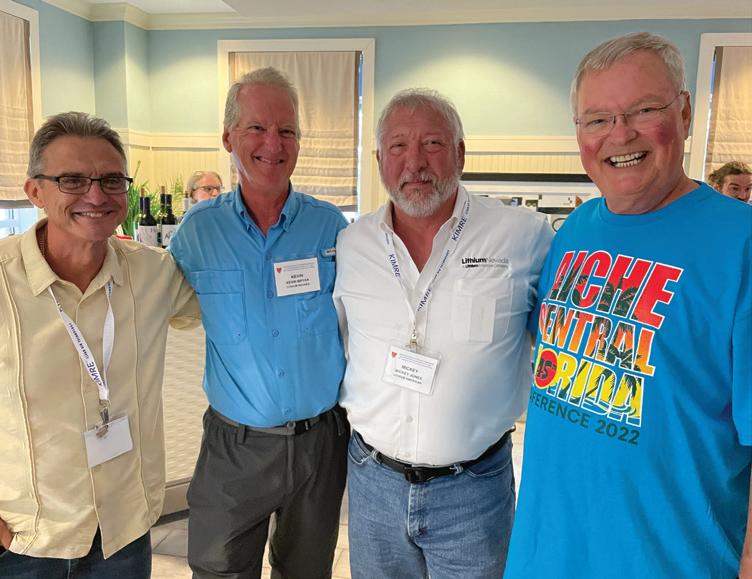
Joan Bova of CGThermal, left, discusses her company’s technology with Kevin Jayasinghe and Xuan Pham of Chemours during a hospitality function at the Sulfuric Acid Roundtable in Texas.

Pictured in their booth at the AIChE Clearwater conference in Florida are, from left, Mike Davis, Brad Varnum, and Shawn McConnell of Central Maintenance & Welding.


Catching some downtime during evening hospitality at the AIChE Clearwater conference in Florida are, from left, Frans Kodeda of Metso Outotec Sweden, Mhairi Murphy of Begg Cousland Envirotec, Hannes Storch of Metso Outotec, Graeme Cousland of Begg Cousland Envirotec, and Collin Bartlett of Metso Outotec.
Networking during a hospitality event at the Sulfuric Acid Roundtable in Texas are, from left, Andy Weyand and Francis Boaten of Nutrien; Feryl Masters of Feryl Inc.; Laura Nalos of Chemetics; and Mike Kuhlmeier, Bill Goodell, and Patrick Polk of Haldor Topsoe.


 Participants from Ecoservices enjoyed catching up at the Sulfuric Acid Roundtable in The Woodlands. From left are Meredith Cook, Patric Staner, Matias Juarez, Albert Madura, George Wang, Aldo Benavides, Nick Ritchey, and Daniel Tate.
Catching up at the Sulfuric Acid Roundtable in Texas from left, are Chris Salgado and Marcelo Kascheres of Elessent MECS® Technologies; Howard Tenney of Tenney & Co.; Allison Balling of PVS Chemical Solutions; Gavin Floyd and Brian Webster of Ecoservices; and Hunter Jones of PVS Chemical Solutions.
Participants from Ecoservices enjoyed catching up at the Sulfuric Acid Roundtable in The Woodlands. From left are Meredith Cook, Patric Staner, Matias Juarez, Albert Madura, George Wang, Aldo Benavides, Nick Ritchey, and Daniel Tate.
Catching up at the Sulfuric Acid Roundtable in Texas from left, are Chris Salgado and Marcelo Kascheres of Elessent MECS® Technologies; Howard Tenney of Tenney & Co.; Allison Balling of PVS Chemical Solutions; Gavin Floyd and Brian Webster of Ecoservices; and Hunter Jones of PVS Chemical Solutions.
After
wrapping up the day’s meetings at the Sulfuric Acid Roundtable conference in The Woodlands, TX, members from Ecoservices enjoyed the Lonestar state’s famous BBQ dinner. From left, are Kurt Bitting, Clay Ducote, Rob Schlegel, Meredith Cook, Elyse Schrader, Abby Besselman, Ross DeNicola, David Garcia, and Nick Snodgrass.

SOUTHWEST REFRACTORY DELIVERS THE HIGHEST QUALITY ACID PROOFING, REFRACTORY, INDUSTRIAL MASONRY AND FIREPROOFING WORK. With in-depth engineering support, meticulous craftsmanship and extensive planning down to the finest details, we’re turning industry into artistry. VIEW OUR GALLERY OF ACID PROOFING AND OTHER REFRACTORY PROJECTS AT SWRREFRACTORY.COM. THE ART OF ACID PROOFING (281) 824 9342 INFO@SWR-US.COM
Sulfuric

gather in
for annual conference
Last spring, the 23rd annual Sulfuric Acid Workshop convened in Clearwater, Fla., bringing industry technology suppli ers together to exchange information about producing the industrial chemical. The workshop is an integral part of the broader International Phosphate Fertilizer & Sulfuric Acid Technology Conference, in its 45th year. Hosted by the Central Florida Section of the AIChE, the conference was held June 10-11 at the Sheraton Sand Key Resort.
The Sulfuric Acid Workshop was mod erated by Rick Davis of Davis & Associates Consulting Inc. This year’s topic, “Changing Emissions Requirements,” focused on the particle motion and elimination of emis sions from sulfuric acid plants. The session included presentations that were geared towards practicing engineers with various degrees of exposure to the sulfuric acid process, plant operation, and plant mainte nance. Presentations spanned the two days of the convention. The first day’s presenta tions included:
—”Reducing SO2 Emissions,” by Patrick Polk, Haldor Topsoe.
—“New MECS® Catalysts Reduce Acid Plant Emissions,” by Carmo Pereira, Elessent MECS® Technologies.
—“Catalyst 101,” by Jack Harris, VIP International.
—“Mist Elimination Troubleshooting,” by Graeme Cousland, Begg Cousland Envirotec.

—“So, Just How Low Can You Go?” by Doug Azwell, Elessent MECS® Technologies.
Sulfuric acid presentations on day two of the conference included:


—“Achieving Process Improvements Through Selection of Catalyst Geometric Shape,” by Allison Belgard, BASF.
—”Designing Gas-to-Gas Heat Exchangers in the Sulfuric Acid Operations to Mitigate Cold-End Corrosion,” by Jim Shook, CG Thermal.
—“Pathway to Larger, Lower Cost and Sustainable Sulfuric Acid Plants,” by Herbert Lee and Dominika Kidon, Chemetics.

—”Mitigating Corrosion in Boiler and Condensate Systems,” by Dale Stuart Chemtreat.
—”Improving Safety and Reducing Costs on Acid Cooling Systems,” by Nelson Clark, Clark Solutions.
—“Sulfuric Acid Troubleshooting,” by Walter Weiss, Elessent MECS ® Technologies.
—“Catalytic Converter Replacement: Design and Project Execution Considerations,” by Randal Sarrazin,

NORAM Engineering & Constructors. —“Commissioning Experience and Redesign of Vortex Breakers,” Joseph Kelly, SNC-Lavalin.
After each day’s meeting concluded, guests and their families enjoyed evening hospitality suites, dinners, and activities including musicians, magic, face painting, and karaoke.

Next year’s convention is slated for June 9-10, 2023, also in Clearwater at the Sheraton Sand Key Resort. For more information, please visit the event’s website: www. aiche-cf.org. q
 Allison Belgard of BASF explained how catalyst shape can achieve process improvements during the sulfuric acid technology session.
Jack Harris of VIP International shared his 30-plus years of experience in “Catalyst 101” during the sulfuric acid workshop.
Rick Davis of Davis & Associates Consulting Inc. moderated this year’s sulfuric acid workshop which delved into changing emissions requirements.
Allison Belgard of BASF explained how catalyst shape can achieve process improvements during the sulfuric acid technology session.
Jack Harris of VIP International shared his 30-plus years of experience in “Catalyst 101” during the sulfuric acid workshop.
Rick Davis of Davis & Associates Consulting Inc. moderated this year’s sulfuric acid workshop which delved into changing emissions requirements.
acid professionals
Florida
CONFERENCE REVIEW Industry’s Premier Event for Networking & Sharing Best Practices™ Sponsored By: Save the Date April 2 - 5, 2023 Hilton Brisbane Brisbane, Queensland • Australia T O D A Y Sulfuric Acid Australasia H 2 SO 4 WORKSHOP SULFURIC ACID TODAY 2023 Register On-Line Today! www.acidworkshop.com 2023 Australasia Sulfuric AcidWorkshop will offer:— Keynote Address on the Global SulfuricAcid Market — Informative Co-Sponsor presentations— Insightful producing plant presentations— Maintenance panel discussions— Safety panel and incident reviews— Co-Sponsor exhibits— Networking opportunities PAGE 38 Sulfuric Acid Today • Fall/Winter 2022 Feature
A NEW DAY FOR KNIGHT
You’ve known us for over 100 years.
You’ve relied on our technology and services for several generations.
And through it all, even though we’ve been known by different names, our acid- and corrosion-resistant bricks, linings and services have always been your go-to solution for even the most demanding jobs.
And now, it’s a new day for Knight, as we are now Knight Material Technologies. With newly-expanded access to resources for growth and innovation, we’re positioned to bring our customers an even greater vision and foundation for industry leading products and services.
Knight has acquired Electro Chemical Engineering and Manufacturing Co., a leading supplier in high-performance fluoropolymer-lined vessels. Together, we will work together to expand services and technology in the corrosion-resistant materials industry.

MORE AT
5385 Orchard View Dr. SE | East Canton, OH 44730 | +1.330.488.1651
ACID-RESISANT CONSTRUCTION
TOWER INTERNALS
HEAT TRANSFER MEDIA
MASS TRANSFER PACKING
ENGINEERING SERVICES
INSTALLATION SYSTEMS
LEARN
KNIGHTMATERIALS.COM
KMT-Sulfuric-Acid-Today-full-page-ad-v02.indd 1 9/9/22 8:50 AM

