ANALYTICS
BY REBECCA SPENCE
W
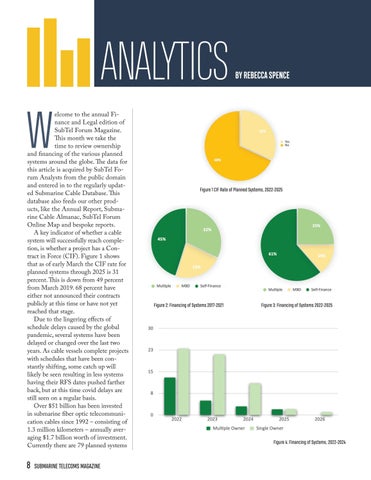
elcome to the annual Finance and Legal edition of SubTel Forum Magazine. This month we take the time to review ownership and financing of the various planned systems around the globe. The data for this article is acquired by SubTel Forum Analysts from the public domain and entered in to the regularly updated Submarine Cable Database. This database also feeds our other products, like the Annual Report, Submarine Cable Almanac, SubTel Forum Online Map and bespoke reports. A key indicator of whether a cable system will successfully reach completion, is whether a project has a Contract in Force (CIF). Figure 1 shows that as of early March the CIF rate for planned systems through 2025 is 31 percent. This is down from 49 percent from March 2019. 68 percent have either not announced their contracts publicly at this time or have not yet reached that stage. Due to the lingering effects of schedule delays caused by the global pandemic, several systems have been delayed or changed over the last two years. As cable vessels complete projects with schedules that have been constantly shifting, some catch up will likely be seen resulting in less systems having their RFS dates pushed farther back, but at this time covid delays are still seen on a regular basis. Over $51 billion has been invested in submarine fiber optic telecommunication cables since 1992 – consisting of 1.3 million kilometers – annually averaging $1.7 billion worth of investment. Currently there are 79 planned systems
8
SUBMARINE TELECOMS MAGAZINE
Figure 1 CIF Rate of Planned Systems, 2022-2025
Figure 2: Financing of Systems 2017-2021
Figure 3: Financing of Systems 2022-2025
Figure 4: Financing of Systems, 2022-2024