• An Opportunity to Turn Point-to-Point Links into More Global Networks
• Challenges & Successes: Upgrading
Trans-Pacific Cables with 100 Gb/s
10,167,063
ISSN No. 1948-3031
PUBLISHER: Wayne Nielsen
MANAGING EDITOR: Kevin G. Summers
CONTRIBUTING WRITERS: Colin Anderson, Stewart Ash, Anup Changaroth, Bertrand Clesca, Olivier Courtois, Jas Dhooper, Dr. Herve Fevrier, Peter Liu (Liu Bo), Clive McNamara, Stephen Nielsen, Elaine Stafford, Paul Treglia
Submarine Telecoms Forum magazine is published bimonthly by Submarine Telecoms Forum, Inc., and is an independent commercial publication, serving as a freely accessible forum for professionals in industries connected with submarine optical fiber technologies and techniques. Submarine Telecoms Forum may not be reproduced or transmitted in any form, in whole or in part, without the permission of the publishers.
Liability: while every care is taken in preparation of this publication, the publishers cannot be held responsible for the accuracy of the information herein, or any errors which may occur in advertising or editorial content, or any consequence arising from any errors or omissions, and the editor reserves the right to edit any advertising or editorial material submitted for publication.
Contributions are welcomed. Please forward to the Managing Editor at editor@subtelforum.com.
Submarine Telecoms Forum, Inc. 21495 Ridgetop Circle, Suite 201 Sterling, Virginia 20166, USA subtelforum.com
A dozen (common abbreviated doz or dz) is a grouping of twelve. The dozen may be one of the earliest primitive groupings, perhaps because there are approximately a dozen cycles of the moon or months in a cycle of the sun or year. Twelve is convenient because its multiples and divisors are convenient: 12 = 2 × 2 × 3, 3 × 4 = 12, 2 × 6 = 12, 60 = 12 × 5, 360 = 12 × 30. The use of twelve as a base number, known as the duodecimal system (also as dozenal), probably originated in Mesopotamia. (Wikipedia)
To me, a dozen can be a pretty big number.
This November issue marks our 12th anniversary of publishing Submarine Telecoms Forum Magazine. We have appreciated literally hundreds of articles from as many international authors from our industry on significant far-reaching topics. Some have merely informed; others have incited reaction; all have enhanced the discussion within our community. Through good times and terrible times, we have attempted to keep the vantage clear and concise. Hopefully, we have succeeded more times than not.
When Ted and I established our little magazine in 2001, our hope was to get enough interest to keep it going for a while. With his premature departure and the eventual addition of Kevin, Kristian and a boatload of others years later, we took the original idea and expanded it in a number of different and complimentary ways.
In this our 12th year, an average of 50K unique monthly visitors have downloaded the magazine more than 500K times, and downloaded the Almanac more than 1.8M
times. Year to date, STF’s website has experienced 10.1M hits.
In 2014, we will add additional enhancements to the SubTel Forum brand including new live event video-streaming, which we believe will further enhance your utility and enjoyment. As always, such services will be provided at no cost, and we will do so with two key founding principles always in mind, which annually I reaffirm to you, our readers:
»» That we will provide a wide range of ideas and issues;
»» That we will seek to incite, entertain and provoke in a positive manner.
So here’s to you, our readers and supporters. Thank you as always for honoring us with your interest.
And on to next year when we can celebrate a baker’s dozen.
In This Issue...
Alcatel-Lucent to Eliminate 10,000 Positions as Losses Mount
news now
Cyprus: The Home of British/ American Internet Surveillance in the Middle East
Angola Cables Capitalises On Location To Link Brazil And Asia
APTelecom Brings Together Engaging Content, Interactive Forums And Thought Leaders From Subsea Industry To Kick-Off ‘State Of Subsea’ Event Series
District Court Affirms Presidential Discretion In CFIUS Process
Internet Working Again After Cut In Suriname Submarine Cable
Arctic Fibre Completes Canadian Licence Application
Are The Brits Tapping Undersea Cables Off Cyprus?
Centurylink Traces San Juan Islands Outage To Severed Submarine Cable
Endesa Says Submarine Cable Solution Not On The Table For Hidroays First Cross-Strait Submarine Cable To Start Commercial Operations
Gateway Cable Repair Could Affect Internet Speed
German Environment Ministers Visit Nkt Cables Global Submarine Optical Fiber Cables Industry
iiNet Acquires Added Hawaiki Submarine Cable System Capacity
LS Cable & System To Undergo Spin-Off
MainOne Begins Work On West Africa Manufacturing Plant Tipped For Marsden
Marco Polo New World Works with New Parent Perseus to Enhance Electronic Trading Platform
Now Available: Submarine Cable Almanac Issue 8
Pacnet First to Provide 100G Wave Services Between Asia-Pacific and the United States
PCCW Global Provides First Direct Submarine Cable Access To The Democratic Republic Of The Congo Via The West Africa Cable System
Reliance Jio Gets A Telecom Service Licence In Singapore
Seaborn Networks Receives Coface Guarantee For Brazil-US Cable Project
Seacom Completes African Ring
SubOptic 2013 Archive Now Available Online!
news now
SubTel Forum Expands STF Today With Live Streaming
Sunesys to Provide Fiber Backhaul Infrastructure to Seaborn Networks For Brazil-US Submarine Cable Project
Tata Communications Hits 52Week High After Turnaround Results
Uninett Contracts With Global Marine Systems For Arctic Circle Subsea Cable System Installation
Voyager Chooses Hawaiki For Trans-Pacific Cable
SubPartners Tackles Indonesian Permits For APX-West Cable
Telecom NZ Data Use Up And The Case For Trans-Tasman Cable
WIOCC & Dalkom Somalia To Deliver First International FibreOptic Connectivity Direct To Mogadishu
TIM Brasil and Xtera Deploy the First 100G Optical Network over 2,400 km in the Amazon Region
Undersea `Highway’ To Speed Up Regional Links
The Undersea Cable Report 2013
From Terabit Consulting
The most diligent quantitative and qualitative analysis of the undersea cable market - 1,600 pages of data, intelligence, and forecasts that can be found nowhere else.
Terabit Consulting analysts led by Director of International Research Michael Ruddy tell you what’s real and what’s not, where we’ve been and where we’re headed.
The Undersea Cable Report capitalizes on Terabit Consulting’s global on-site experience working with carriers, cable operators, financiers, and governments in over 70 countries on dozens of leading projects (e.g. AJC, BRICS, EASSy, Hibernia, SEAS, TBI)a world of experience, at your fingertips in a single resource!
YOUR KEY TO UNDERSTANDING AND HARNESSING THE $20 BILLION UNDERSEA MARKET OPPORTUNITY
Exploring The need for System Upgrades
Farice ltd., a system owner based out of Iceland, recently experienced a problem that is common in the submarine telecoms industry: ever increasing demand. As technology has improved there has been an exponential increase in demand for bandwidth. For companies like Farice, this meant an effort to find the best and most cost effective way to increase their systems’ capacity.
“We needed to upgrade our capacity because there has been quite a lot of increase lately in bandwidth demand to Iceland…” explained Orn Jonsson, Chief Technology Officer of Farice. “Of course, we both looked into the original supplier of the system, what they could do, and at the same time we checked on pricing from the other vendors... There’s a huge difference in what the original suppliers are offering and what you can get on the, so to speak, open market.”
For their most recent upgrade, the price difference was close to a factor of four, according to Jonsson.
“We looked quite extensively at that market, what’s available and so on,” Jonsson said. “Of course there’s a big fight in that market, price wise. Everybody claimed they had the best product, like always.” After comprehensive research, Farice eventually settled on Ciena, a company that specializes in cable upgrades. Using this company, Farice
Number
of
Systems
Upgraded
ltd. upgraded both of their systems: FARICE and DANICE.
According to Jonsson, the use of a third party company like Ciena was a good decision. Aside from the lower cost than if they had used the original system provider, the product has been worth the money.
“We did not see any problems,” Jonsson said. “What Ciena did, they did extensive modeling of our systems before they came and started installing. So they knew what they were up against.”
Shortly, Farice will be receiving a report from Ciena on the performance of the upgrades and the possible improvements to the system that could
still be done. “It looks like we’ll be able squeeze even more into the cables than originally expected.”
According to Michael Guess, VP of Network Architecture for Infinera, the use of third party upgrade companies like Ciena or Infinera itself instead of complete system providers is the more common practice and for good reason.
“The general direction of the business since 2009 has been not to go to the incumbent turnkey provider for upgrades,” Guess explained. “That’s been triggered by economics mostly, but also entry of new people into the business.” Prior to that time, system owners didn’t have an alternative. Since then, there have been a number of new compa-
nies that compete specifically in the upgrades market, complicating business for less specialized companies.
In the last year, there have been fifteen systems upgraded. With increasing demand, the reason for this is obvious.
“The cable owner has two choices: he can upgrade or he can build a new cable,” said Guess.
“Upgrades are by far the most important element of putting new capacity on,” Guess said He explained that because of the new 100 gig technologies, the need for replacing cables has been delayed for longer than could have been expected.
Along with preventing the greater expense of replacing a cable, upgrading has a fairly simple process that takes relatively little time.
According to Guess, from the initial order for an upgrade to when it’s greenlit, the process takes as little as ten to twelve weeks. This begins with the collection of data to customize the upgrade.
“Assuming the system was new to us, and since we don’t construct cable ourselves, we always rely on a cable owner to provide us technical data,” Guess said. “We would ask the owner for a set of data that would help us model the performance of the system. In the ideal case we would get the straight line
diagrams for the system: so fiber type, distances, amplifiers, amplifier noise figures, amplifier spacing.”
Using that data, the company would then model the upgrade.
“It’s a computer model and actually it’s very time and processor intensive.” Guess explained that this is because the model has to account for signal degradation issues. “Those accumulate over time and distance. When you have a large system with a wide amplifier band, modeling out how that light propagates down the fiber is a complex calculation that can take hours to days to run on a high end system.” The completed model would show the optimal way to upgrade the system, including the maximum capacity that can be achieved.
What follows is the installation of the upgrades. Guess explained that there are many nuances of technology used to model an upgrade to the system’s specific qualities, however “really, one kind of overarching technology serves all upgrades.” This is in the case that the upgrades are for the same bandwidth. The technology can varies more between upgrades for 10 or 100 gigs.
According to Jonsson, Farice’s installation was done in no time. “It (installation) was very simple on the DANICE system as we had unlit fiber-pairs
Upgrade
Technology
there”, Jonsson said. “So you could say it was almost less than a week to build up, turn everything on, and do some testing. For the FARICE system it was much more difficult as we had traffic running and we were fitting this on the same fiber-pair.” Despite that, the process still only took a couple of weeks.
With the upgrades completed, there has been a substantial increase in the systems’ capabilities, according to Jonsson. “The FARICE system was originally designed as 360 gigs per fiber-pair and we can probably at least go ten times that now.”
The addition of the technology has also had additional benefits. “One of the bonuses you could say is that instead of having our transponders and the termi-
nal equipment at the cable stations like before we are now extending our network to our POPs (Points of Presence) in Iceland. That means for DANICE systems we are extending kilometers along our Farice system ters along terrestrial any regeneration
Despite these benefits, climate of the economy drop-off of buyers ket. Companies the cost of installing newest technology the boom in upgrades.
regardless. “It probably varies a bit by geography,” said Guess. “There are some areas in the world that are pretty substantially built, like the Atlantic quarter. There is a massive amount of untapped capacity in the already existing cable.” Other areas, where there’s less untapped capacity or older cables, possibly with less extensive systems, it would still be more cost effective to replace the cable outright.
“I see upgrades taking 80-plus percent of the market in terms of bandwidth,” said Guess about the coming years of the industry. “There’s just a lot of cables out there with a lot of capacity still on them and it’s always, always less capital-intensive and faster.
Guess, however, thinks that there will continue to be a market for upgrades
Stephen Nielsen is a freelance writer in the Washington D.C. area. He has published articles and done editorial work with several publications including Submarine Telecoms Forum. Also, he has been a speaker for the Popular Culture Association / American Culture Association National Conference.
The road to Upgrades
olivier courtois
Despite strong capacity growth over the past decade, many existing cable systems are still less than 20% utilized. The is due to the technological jump from 10Gb/s to 100Gb/s dense wavelength division multiplexing (DWDM) technology delivering growth of potential capacity of installed systems. While improvements in DWDM technology can greatly increase a system’s design capacity, a limiting factor is that the fiber type and repeater bandwidth of the legacy long haul systems are not optimized for today’s leading DWDM design capabilities. Despite this, older systems can still benefit greatly from the adoption of current terminal technology, to both dramatically increase ultimate capacity per fiber pair and to allow the delivery of new services enabling systems to keep pace with market demands. Optimization of dry plant is thus a costeffective way to extract maximum value from the wet plant assets.
The Drivers
A submarine system consists of fiber pairs which are typically not fully loaded with traffic on day one. The unused spectrum on each fiber pair enables capacity to be added as and when needed until the available spectrum is filled. In fact, the submarine line terminal equipment (SLTE) in the landing stations provides easy accessibility for progressively
adding new traffic channels to the unused spectrum, taking advantage of newer technologies when they become available throughout system life. Submarine system design evolves over the years: repeater design, spacing and bandwidth have varied since the introduction of long haul DWDM systems in the late 1990s, and system design capacity has rapidly increased from the initial designs supporting 8 x 2.5Gb/s or 16 x 2.5Gb/s per fiber pair. In recent years, with a reduction of channel spacing from 50GHz down to 30GHz or 25GHz and transition to new modulation formats, the design capacity of the long haul systems increased significantly allowing more value to be extracted from the wet plant.
Another factor to be taken into account when looking at capacity upgrades is the already installed SLTE technology. The marginal cost of adding capacity may well be affected by the need to replace existing SLTE technology in addition to the cost of adding new transmission capacity for additional sales. Therefore the ability to have the next generation of DWDM technology operate alongside the older versions of transmission equipment is an important factor in upgrade planning. For example, it is often important to be able to deploy new 40Gb/s and 100Gb/s technology alongside the existing 10Gb/s channels. This leads to a strong requirement for a
non-disruptive and cost-effective path to expand capacity.
The manyfold meanings of “Upgrade” and Enabling Technology
There are different ways to perform an upgrade:
• Straight addition of waves
• Elaborate traffic operations to optimize the system capacity
• Network configuration changes.
Any WDM amplified system is originally designed to be upgradable from its first installed capacity to a so-called design capacity, by adding channels. This design capacity assumes the use of technology which is existing or foreseeable when the system is implemented. However, over years, the availability of new technologies has allowed the possible maximum capacity on the installed cable to be progressively increased, made possible by using higher bit rates and closer spacing between waves. In short, better spectral efficiency, which corresponds to the capacity transported in a given spectral slot.
Since the system bandwidth is fixed by the repeater amplifiers, the improvement of the achievable capacity is obtained by the combination of the bit rate transported by each carrier and by the spectral spacing between these carriers.
The spectral efficiency has increased over time as shown in Table 1 with some combinations of bit rate and channel spacing.
The main enablers for increasing the bit rate per channel and packing them closer are listed below:
100
100 50 2
Table 1: Spectral Efficiency of several transmission solutions
However, the quest for better spectral efficiency has been quite greedy in terms of optical performance margin. Indeed, increasing the bit rate increases the Optical Signal to Noise Ratio (OSNR) requirement in a linear way. Similarly, packing the channels closer means larger non-linearity which has to be compensated by some margin. Closer spacing may also mean the use of modulation formats with closer modulation states (Quadrature Phase Shift Keying (PSK) vs Binary PSK for example), which also has a performance cost. Let us briefly review the drivers to obtain these better performances out of an existing cable.
• New modulation formats have evolved over time to be able to mitigate the impairments. Phase modulation formats (with constant amplitude) and smart polarization multiplexing are now commonly used to minimize the non-linearity occurring within the optical fiber.
• The advent of coherent detection, combined with advanced digital processing, introduced with 40Gbit/s channels, has been a tremendous revolution in the recent years. This technology provides high performance and high robustness against transmission impairments. In particular, the tolerance to Polarization Mode Dispersion is quite beneficial for an installed system to be used for very high bit rate.
• New generation of Forward Error Correction (FEC), beyond the turbo-code which brought large improvements in the last decade for 10Gb/s systems. The electronics is now able to feed FEC with digitally sampled detection, which allows for a soft decision involving probabilistic algorithms for high bit rate transmission.
With a constant technology, the cable system margin which would be necessary to upgrade to a larger bit rate would linearly grow vs. the targeted bit rate. However, due to numerous technology improvements, the actual requested margin is actually lower and, therefore, the extra margin observed after the original implementation can translate into a significant increase of the design capacity. This is illustrated below.
Figure 1: Upgradability of installed systems thanks to technology improvement
Topology Upgrade towards PoP to PoP
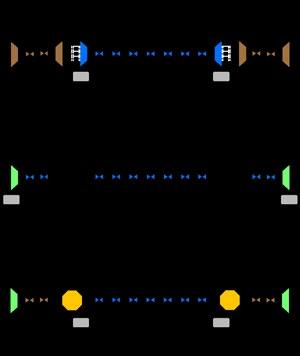
Another way to implement additional optical pass-through is to remove the electrical regeneration in the cable landing stations so that a PoP (Point of Presence) to PoP transmission is achieved, as shown in Figure 2. Again, that requires optical margin to allow for the additional terrestrial transmission.
Figure 2: Moving to a PoP to PoP configuration
This modification of topology would require opening the whole WDM line when the terminal of the cable station is replaced by an optically transparent scheme. To make it practically acceptable for the traffic availability, this is usually performed on one fiber pair at a time and protection mechanisms between the fiber pairs are used to restore traffic during the operation. In short, elaborate planning is required.
What’s next?
As operators cope with increasing demand on their networks for data capacity and higher-speeds of transmission, researchers are intensifying their efforts to develop new technology to transform global data networks. An example is a recent test carried out at Alcatel-Lucent’s Innovation City campus in Villarceaux near Paris: researchers from Bell Labs successfully sent data at 38Tb/s over
6600km – a capacity exceeding that of the most advanced commercial undersea cables today by a factor close to four. This was achieved with a span - the distance between amplifiers over the entire length - of 100km. The researchers were able to achieve the highest-ever capacity for undersea data transmission on a single fiber. The experiment leveraged Bell Labs’ pioneering work in 400Gb/s data channels. At such speeds and distances signal distortions and noise make data recovery very challenging. To counter this problem, in this new test Bell Labs researchers made use of innovative detection techniques and harnessed an array of technologies in modulation, transmission, and signal processing twinned with advanced error correcting coding. The experiment used 155 lasers over a 50GHz frequency grid to dramatically enhance the performance of current DWDM systems, which are today being deployed with channel capacities up to 100Gb/s.
Looking at the “upgrade” of the network in a broad manner, this should also encompass the evolution of the services. The asset of installed cables is quite valuable and the advent of new technologies often allows them to be used far beyond their original design, both in terms of capacity and in terms of topology. That may however require stringent modification of their existing
configuration or traffic loading. Since these systems may be heavily loaded with traffic, this again underlines the importance of a tight collaboration between the upgrade vendor and the system owner to prepare smooth and efficient operational procedures.
The Atlantic Route
If we consider the Atlantic route, only 15% of capacity in the Atlantic is lit and there is plenty of bandwidth remaining, it is not surprising that the cost per “10Gb/s equivalent” remains the main driver. In an environment such as the Atlantic, where capacity has for some time been priced based upon terminal equipment costs only, upgrades have the ability to increase the capacity available purely through addition of terminal equipment. Offering the potential of further increasing the design capacity through higher channel rate technology is important. This was one of the factors evaluated by Apollo in their upgrade strategy that is leveraging AlcatelLucent’s technology to scale to 100Gb/s. The system consists of two highly advanced transatlantic fiber optic cables - Apollo North connecting the United Kingdom to the US and Apollo South directly connecting France to the US.
The Transpacific Route
Regional and international operators are moving to the most advanced ultra-
long reach technology with the highest spectral efficiency ever offered over a trans-Pacific distance.
Increasing demand for access to ultrabroadband services and technology enhancements are leading the operators who are part of the Asia America Gateway (AAG) consortium to increase the capacity of their system to multiterabit capacity. When it was launched in 2009, the Asia-America Gateway represented a breakthrough in delivering the first terabit submarine cable network between south-east Asia and the US, being designed for an ultimate capacity of 1.92Tb/s. The Alcatel-Lucent 1620 Light Manager SLTE currently installed in the AAG system will be upgraded by adding new channels on some of the fiber pairs. When fully equipped, the achievable system capacity with the new advanced coherent technology will be over 8Tb/s, more than 4 times the original design capacity.
Over the trans-Pacific route, AlcatelLucent is also carrying out a major upgrade of a 9,600km trans-Pacific digital submarine cable system using advanced coherent technology. The cable, owned by 5 major carriers, provides direct connectivity from the Japanese east coast to California. The upgrade will deliver multi-terabit capability to cope with the explosion of data traffic driven by
ownership of smartphones and tablets, as well as the increase in video applications and the shift of enterprise activities to the cloud. The first phase of the upgrade will increase the system capacity by 1Tb/s. This upgrade, using state-of-the-art and field proven submarine technology from Alcatel-Lucent, is a strategic move to expand the overall capabilities of transPacific communication infrastructures to benefit from a time-to-market advantage, improved performance and better scalability.
Olivier Courtois is the Director - Product strategy and management, AlcatelLucent Submarine Networks He has been in charge of product strategy for submarine networks for 5 years now with the introduction of coherent technologies and R-OADM branching unit.
Previously, he has covered several roles in system design activities for WDM product development on 10/40/100Gb/s & repeater/ ROADM technologies during almost 10 years. He has published ~10 patents in Europe and US on WDM system and authored different papers for international conferences. He is Distinguished Member of Alcatel-Lucent Technical Academy.
Sources: SubOptic 2013 papers - “The Evolution of a Long Haul Submarine System”, M. Summers (Apollo SCS), P. Crochet (Alcatel-Lucent Submarine Networks), G. Charlet (Alcatel-Lucent, Bell Labs); “Upgrade of submarine systems: new operational aspects and opportunities of network evolutions” – JP. Blondel, AlcatelLucent Submarine Networks.
Call for Papers
ICPC Plenary Meeting:
18-20 March 2014 inclusive
The next Plenary of the International Cable Protection Committee (ICPC) will be held in Dubai and its theme will be:
Managing Critical Infrastructure in a Changing Natural and Socio-Economic Environment
The ICPC therefore seeks presentations from interested parties that help address the commercial, legal, technical and operational challenges of protecting submarine cables. Topics could include, but are not limited to:
• Government & Industry working together
• Power cables: overcoming the challenges of depth and distance
• Science and Submarine Cables
• Choke points, route diversity and network resilience
• Legal & regulatory challenges & solutions
• Social, strategic and economic reliance on submarine cables
• New technologies and best practices for cable protection and maintenance
• Helping new players to understand the basics of cable protection
• Cables in new and extreme environments, e.g. Arctic, Rivers
• Avoiding intentional damage, e.g. Terrorism, Vandalism, Theft, Piracy
Presentations should be 25 minutes long including time for questions and, to ensure clarity when presented, should be formatted in accordance with the guidance that will be provided.
Prospective presenters are respectfully advised that papers that are overtly marketing a product or service will not be accepted, however two marketing slides can be included at the beginning or end of the presentation.
NB: Commercial exhibits may be displayed adjacent to the ICPC meeting room by special arrangement. Please contact the Secretary for further details.
Abstracts must be submitted via email to plenary@iscpc.org no later than 31 January 2014.
The ICPC will evaluate all submissions based on content and quality.
Upgrading cables Systems: an opportunity to turn Point-to-Point links into More Global networks
bertrand clesca & Dr. herve fevrier
With CapEx constraints being experienced in most parts of the world and the continuous decline in capacity pricing, upgrading existing submarine optical assets to maximize their capacity and extend their lifetime has been more crucial than ever to cable operators. Because of the predominance of subsea cable systems for international connectivity, there is an persistent need to increase the transport capacity of the submarine backbone networks so that cable system operators can effectively address the skyrocketing need for bandwidth. In parallel to this need for increased capacity, there is also a need to increase the availability and resiliency of subsea cable networks.
In 2001, Xtera introduced the concept of upgrading an existing system and went on to pioneer the upgrade market, later followed by other equipment vendors. In the past decade, upgrading a subsea cable system corresponded to upgrading the transmission equipment in the Cable Landing Stations (CLS) to enable higher capacity inside the cable at a lower unitary cost. In the last few years, subsea cable system upgrades have introduced more variety, including the opportunity to change the architecture of the submarine network itself. This allows the evolution of a system from a simple point-to-point configuration to a more complex one.
This article explores the different upgrade approaches that have already been applied
in the field and can be considered in the future.
Different Upgrade Approaches Inside the Cable Landing Stations
Dry upgrades consist of replacing the old Submarine Line Terminal Equipment (SLTE) inside the cable landing station with a new one. The Power Feeding Equipment (PFE) can also be upgraded in order to benefit from more reliable and more compact equipment.
Where only the SLTE and the PFE are involved, the benefits of upgrading existing subsea cable infrastructures are presently well known and accepted by the community. When compared to new builds, upgrades offer a lower cost because no CapEx is required for laying new subsea cables, a shorter lead time that is mostly driven by the supply of the new Submarine Line Terminal Equipment (SLTE) to be connected to the cable, and no permitting issues making the availability date for the new capacity more predictable.
Historically, this has not always been the case. Initially, the original suppliers of the existing systems happily supported the notion that connecting an SLTE from another vendor would not work – or at least was not a good idea technically, or it could impact the system warranty, or it could even cause some intellectual property concerns for the cable operator. Currently, the situation is quite different – with subsea cable system operators
assessing upgrade possibilities not only before the end of the warranty period but sometimes even before the RFS date of the system! In fact, it seems like the only existing reason why customers do not purchase the wet plant completely separate from the dry equipment is that they have not found a way (yet) for the wet plant supplier to guarantee performance and system capacity.
Xtera has been working on the upgrade of submarine cable systems since 2001 and carried out its first commercial upgrade project in Q1 2006. The major benefits for cable operators from this relatively recently created upgrade market are more competition, more advanced technology at the terminal level and lower incremental price for new capacity. Upgrading SLTE in the cable landing stations typically requires a procurement and installation cycle of less than 8 months, compared with an average of 3 years for building a brand new long-haul cable system (depending on the size).
When the equipment in the cable landing station is upgraded, there is the possibility to either keep the original Line Monitoring Equipment (LME) or to switch to the LME equipment from the vendor supplying the new SLTE (provided of course that this vendor has the capabilities to monitor the submerged equipment from the original cable system supplier).
The older the cable system is, the more
impressive the capacity increase enabled by upgrade is. For subsea cable systems that were originally designed in the 90s with a single 2.5 or 5G channel, the capacity increase can reach, in some cases a factor, of 100! The new system design capacity is typically governed by the characteristics of the line which largely consists of the optical fiber cable and repeaters. The key characteristics that may limit the maximal system capacity include: optical attenuation (not only the original figure
but also the increase due to multiple cable cuts/repairs if any) for unrepeatered systems, and the noise generated along the system as well as the fiber’s chromatic dispersion map and reaction to increased optical powers (nonlinear performance) for repeatered systems.
Moving to the Point of Presence
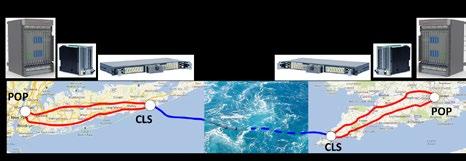
Very often, the Point of Presence (PoP), which is the access point of capacity for customers such as data centers, is not located inside the cable landing station but further inland. SLTE in the cable landing station therefore imposes a physical demarcation with back-to-back connection to Terrestrial Line Terminal Equipment (TLTE) without such a demarcation need existing from connectivity or the end user’s perspective. The installation of SLTE in the cable landing station leads to optical, mechanical and electrical discontinuities in the PoPto-PoP connectivity: optical signals are terminated before being fed to the terrestrial network, the subsea cable is mechanically terminated at the beach manhole level before joints to a land cable going from the beach to the
cable landing station, and the subsea cable is electrically terminated at the PFE level.
When the line capacity that can be supported by the subsea cable is increased, higher capacity needs to be offered on the terrestrial backhaul network that connects the cable landing station to the PoP. This can be achieved in different ways:
• The traditional approach is to upgrade separately the terrestrial backhaul with the deployment of higher-capacity TLTE; this approach keeps the backto-back connection inside the cable landing station and requires a total of 6 line card interfaces for each new wavelength to be added to the subsea cable system (assuming one terrestrial backhaul at each end of the system);
• A more disruptive approach has been attempted on some occasions with the subsea cable (and its associated repeaters) traveling on land directly to the PoP; this tactic raises several technical challenges (like the temperature control of the repeaters that are designed to operate at the sea bottom with a narrow and low temperature range) and operational issues (the subsea cable supports high voltage for remotely power feeding the repeaters all along the path and is therefore very sensitive to any physical aggressions);
• A third approach has become more popular in recent years: it consists of terminating the electrical system with PFE still in the cable landing station
Figure 1:
Evolution to PoP-to-PoP connectivity.
Figure 2:
Terrestrial backhaul
networks with protection routes.
and bypassing the wavelengths in the optical domain to reach the PoP with no more optical-electrical-optical conversion inside the cable landing station; the optical bypass is enabled by simple Optical Distribution Frames (ODFs), or Fixed or Reconfigurable Optical Add Drop Multiplexers (FOADMs or ROADMs).
These three approaches are depicted in Figure 1.
Moving to Interconnected Cable Systems
ROADMs obviously bring flexibility in the optical connectivity between the cable landing stations and the PoP or other Network Elements (NEs).
One example of flexible connectivity enabled by ROADMs in the cable landing stations is the switching in the optical domain from working to protect route when two physically-diverted routes are available in the backhaul network as illustrated in Figure 2.
When two long subsea legs are available, i.e. two transoceanic cables, more robust and fault-tolerant configurations can be
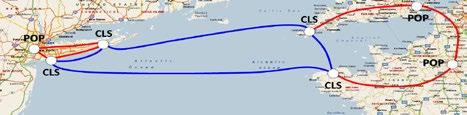
built with the addition of short subsea legs connecting a pair of cable landing stations on each side of the ocean. In the example depicted below, ROADMs route the optical wavelengths onto the subsea or terrestrial links depending on their availability to reach the nearest PoP. Access to the traffic is offered typically only in the inland PoPs. If access to part of the traffic is also required in the cable landing stations, ROADMs can locally drop the needed wavelengths that will be terminated and connected to terminal equipment. Figure 3 illustrates a simple example where physically-diverse routes are available on both subsea and land parts of the PoP-to-PoP network, enabling multiple protection and restoration scenarios for higher global resiliency with respect to multiple faults in the network.
Of course, to be in a position to move the terminal equipment inland and optically bypass the wavelengths through the cable landing stations during the upgrade of existing cable systems, high-performance transmission technologies must be used in order to extend the reach from the original CLS-to-CLS distance to PoP-toPoP distance.
Compared to 2.5, 5 or 10G technologies, 100G channel rate with PM-QPSK modulation format (PM: Polarization Multiplexing; QPSK: Quadrature Phase Shift Keying) with digital coherent detection offers the transmission performance boost that can enable new PoP-to-PoP configurations on existing cable systems. Because optical transport along an optical fiber is essentially a highly analog process with much potential degradation that can impair the optical signals, thorough simulations and tests are required on a case-by-case basis to check the actual feasibility of PoP-to-PoP configurations. With further incremental improvements to come on today’s 100G technology, it is expected that more and more existing cable systems will be candidates for PoP-to-PoP configuration during their upgrade.
Moving from SIE in Cable Landing Stations to OTN Switch in PoPs
Traditionally, SONET/SDH Interconnection Equipment (SIE) was connected to SLTE inside the cable landing stations. SIE is based on standard SONET/
Figure 3: Terrestrial backhaul and subsea networks multiple protection routes for more restoration possibilities.
SDH transmission protocol and allows interconnection to terrestrial networks, system protection and grooming of capacity to optimize system usage. With the terminal equipment moving inland to PoP, the natural location of SIE is now inside of the PoP.
In parallel to this “geographical” evolution, there are also evolutions of standards and products with the advent of the Optical Transport Network (OTN) concept. OTN is designed and standardized to provide support for high-capacity optical networking using Wavelength Division Multiplexing (WDM) unlike its predecessor SONET/SDH that was standardized to support lower-capacity, single-channel signals (practically up to 10 Gbit/s, corresponding to OC-192/STM64 standards) and lower granularity (e.g. OC-3/STM-1 at 155 Mbit/s). Electrical switch handling OTN signals presently offer more efficient and resilient utilization of the capacity resources throughout the optical network and the possibility to handle any type of service at any rate.
OTN switching equipment is the preferred way to deliver and manage new services and enable more meshed network architectures with enhanced protection/ restoration functionalities.
Bringing together ROADMs, 100G and OTN switching technologies leads to the following implementation that enables an efficient and resilient PoP-toPoP connectivity. This implementation minimizes the number of interface cards to be added to the network for new PoP-toPoP capacity, allows protection/switching routing at the optical wavelength levels in the cable landing stations and offers capacity efficiency, resiliency and flexibility to handle any type of service inside the PoPs. Figure 4 symbolizes the implementations of these recent technologies in the case of a simple PoPto-PoP connectivity.
For configurations based on different subsea routes, like the one depicted in Figure 3, or more complex configurations involving multiple cable landing stations and multiple subsea routes, the same basic equipment will be used: multi-degree
ROADMs in cable landing stations, OTN switches in PoPs and 100G interface cards for the optical wavelengths supporting OTN frames and traveling throughout the network. Whatever the complexity of the network configuration and the diversity of physical routes, both terrestrial and submarine, the objective is the same: ensure end-to-end connectivity within a unified network with the smallest number of demarcation points or at least with no impact on the transmission distance. The higher the number of routes available in the network, the higher the resiliency with respect to multiple cable cuts or equipment failures. In order to enable fast and reliable protection/restoration, different options for the control plane are proposed by the equipment vendor. Meshing multiple terrestrial and subsea routes to offer resilient unified PoP-to-PoP connectivity is key for capacity consumers, especially in areas that are sensitive to earthquakes (like south east Asia) or that forms some kind of geographical bottlenecks (like Egypt).
Wet upgrades
Only dry upgrades, leaving untouched the wet plant, have been considered so far in this article. Upgrading the wet plant, however, and not just the equipment in the cable landing stations or PoPs, can be very effective in improving cable systems from capacity and connectivity perspectives.
Figure 4:
Combining ROADMs, 100G and OTN switching technologies to build efficient and resilient PoP-to-PoP connectivity.
The simplest wet plant reconfiguration is the insertion of a Remote Optically Pumped Amplifier (ROPA) into an existing unrepeatered cable system. While carefully assessing the commercial and operational consequences, more complex wet plant reconfigurations including: replacement of faulty/underspecified units, insertion of branching units, addition of spurs, or redeployment of decommissioned cable systems, can be carried out. Some of these wet upgrades will increase the cable capacity while the insertion of branching units and addition of spurs will impact the network configuration and enhance its connectivity. Wet upgrades require not only a strong experience in building and managing projects that can be more complex than the deployment of a new cable system, but also the capabilities of a full supplier for offering all the products and services that are necessary. With its innovative repeater that successfully completed two sea trials (in deep and shallow waters), Xtera can offer multiple wet upgrade options
Conclusion
In conclusion, upgrading existing subsea cable systems can be achieved at different levels and applied to virtually all the cable types and generations. The advent of highperformance transmission technologies, like coherent 100G, enables relocation of the optical wavelength termination point from the cable landing stations to further inland PoPs. This offers the possibility to unify terrestrial and submarine links in order to build end-to-end, PoP-toPoP connectivity. ROADMs and OTN switches, implemented inside cable landing stations and PoPs respectively, in addition to the associated control plane, become the crucial equipment to build a global network with high resiliency against multiple faults.
Bertrand Clesca is Head of Global Marketing for Xtera and is based in Paris, France. Bertrand has over twenty years’ experience in the optical telecommunications industry, having held a number of research, engineering, marketing and Sales positions in both small and large organizations. Bertrand joined Xtera in 2004 where his responsibilities included marketing, customer interactions, and business development for both submarine and terrestrial high-capacity networks in EMEA area before moving to his current Global Marketing position. Bertrand Clesca holds an MSC in Physics and Optical Engineering from Ecole Superieure d’Optique, Orsay (France), an MSC in Telecommunications from Ecole Nationale Superieure des Telecommunications, Paris (France), and an MBA from Sciences Politiques, Paris (France).
Dr Herve Fevrier joined Xtera in 2000 and serves as the Executive Vice President and Chief Strategy Officer. He provides the strategic leadership that leads to the acquisition of new customers, development of new products, partnerships with vendors, and developers of complementary technologies. Prior to Xtera, Dr Fevrier spent more than 17 years with Alcatel in a wide variety of responsibilities including Director of the Photonic Networks research unit, Sr Director for DWDM Product Development Worldwide, VP & GM Optical Networks Alcatel USA and VP Network and Product Strategy Alcatel Optics. Dr Fevrier received his doctoral degree in Physics from the University of Paris and he holds a Physics engineering degree from the Ecole Centrale de Paris.
The Power of Submarine Information Transmission
There’s a new power under ocean uniting the world in a whole new way. With unparalleled development expertise and outstanding technology, Huawei Marine is revolutionizing trans-ocean communications with a new generation of repeaters and highly reliable submarine cable systems that offer greater transmission capacity, longer transmission distances and faster response to customer needs. Huawei Marine: connecting the world one ocean at a time.
The boracay and Palawan
Submarine cable System: Extending the Super highway in the Philippines
Peter liu (liu bo) & Jas Dhooper
The Boracay and Palawan
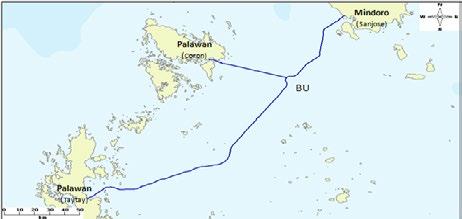
Submarine Cable System (BPSCS) connects the islands of Mindoro and Palawan, Boracay and Panay was deployed for Globe Telecom. The total length of the submarine cable spans 322 kilometers, connecting some of the most beautiful islands in the Philippines.
The successful completion of the system represents a critical milestone for the Philippines’ National Broadband Network construction and IT development. It provides outlying districts with multigigabit communication capacity, as well as national and international broadband access. The project aimed to positively impact the growth and development of the islands, and consequently support economic expansion and social wellbeing within the region.
BPSCS project connects Mindoro and Palawan, Boracay and Panay
PROJECT SETTING
Palawan (Taytay and Coron): An idyllic tropical paradise, Palawan’s glorious scenery provides endless fun-filled outdoor opportunities for residents and visitors. Previously undiscovered by tourists, the islands are now gaining worldwide recognition for their beauty.
800,000 visitors and will exceed the one million mark in 2014. This will increase demand for communication services and in turn drive network construction and expansion in the region.
The BPSCS turn-key project was deployed for Globe Telecom (Globe) by Huawei Marine Networks (HMN) connecting Mindoro and Palawan, Boracay and Panay
In a recent “World’s Best Islands” survey, Palawan and Boracay were nominated as the top two best island destinations to visit in 2013. (www. travelandleisure.com/articles/worldsbest-islands-2013/1)
The tourist industry in Palawan is expected to grow by 25% in 2013 to around
Palawan Island
Coron Island, Palawan, is a popular diving destination and well known for its clear lakes, numerous coral reefs, and underwater shipwrecks. These natural resources attract tourists from all over the world, boosting the local economy year by year.
Mindoro(San Jose): Mindoro is the seventh largest island in the
Philippines, located off the coast of Luzon. The southern coast of Mindoro forms the northeastern extremum of the Sulu Sea. The economy of Mindoro is largely reliant on fishing, agriculture and tourism.
Like other regions in the Philippines, the economic development in Mindoro is expected to expand quickly in the years ahead and drive government investments.
Boracay: The island of Boracay is located off the northwest corner of Panay Island, and belongs to the western Visayas island-group of the Philippines. The dogbone shaped island is approximately seven kilometers long with the narrowest spot less than one kilometer wide, and covers a total land area of approximately 10 square kilometers.
PROJECT BACKGROUND
Network demand
It is well documented within various studies that telecommunication infrastructure plays a critical part in a country’s gross domestic product or GDP. The rollout of network infrastructure coupled with local national connectivity, provides a platform for telecom revenue growth. This offers inhabitants a great deal more than simple internet and basic telephony services. However, these
remain important given the regional demand for mobile services including demand from tourism. The real value for Globe Telecom (Globe) is in creating more advanced services such as the activation of LTE, internet based services and servicing the demand for bandwidth in an expanding region. The demand for small networks together with the wider rollout in this region, makes clear how critical this submarine network platform becomes, particularly when integrated with Globe’s wider strategic programs.
The BPSCS project is an extension of the existing superhighway built by Globe that will further enhance connectivity in the region. The cable system will also ensure that the platform in this region is future-proofed and able to serve the heavy demand of mobile traffic, internet services and bandwidthhungry applications.
Submarine cable systems are often at risk from potential threats such as anchor damage, fishing and seismic activities. For the customer, utilizing the latest marine technology and expertise to minimize such risks played a key part in the success of the project.
A great place for diving in this region
The BPSCS system consists of three segments, five shore ends and one branching unit to utilize 10G technology with 40G capability.
THE BPSCS DESIGN
With the support of Globe Telecom, and under turnkey supply, the project objective was to provide a total solution that included:
• System design
• Full permits
• Survey
• System cable
• Installation (including CLS installation)
• NMS integration
• System testing
• PAC
• Hand over
PROJECT CHALLENGES
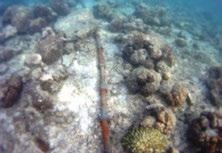
One of the biggest challenges of the project was the cable route design and installation. Characterized by coral outcrops, especially at the inshore sites, cable burial installation required careful consideration. The team used their expertise to provide a solution which included the use of articulated
piping together with driver support, to make good use of the challenging conditions and protect the picturesque coral reefs.
PROJECT INSTALLATION
The DTS and Survey Operation
In an area renowned for its beaches, selecting the landing sites for BPSCS was challenging. With the exception of an existing cable landing at Mindoro, most of the vessels had to meander between rock outcrops and tourist dive sites in order to minimize environmental and social damage on approach.
Due to prevailing conditions, it was necessary to augment the standard high-quality marine geophysical and geotechnical survey with a special Doppler sonar current survey, between Panay and Boracay.
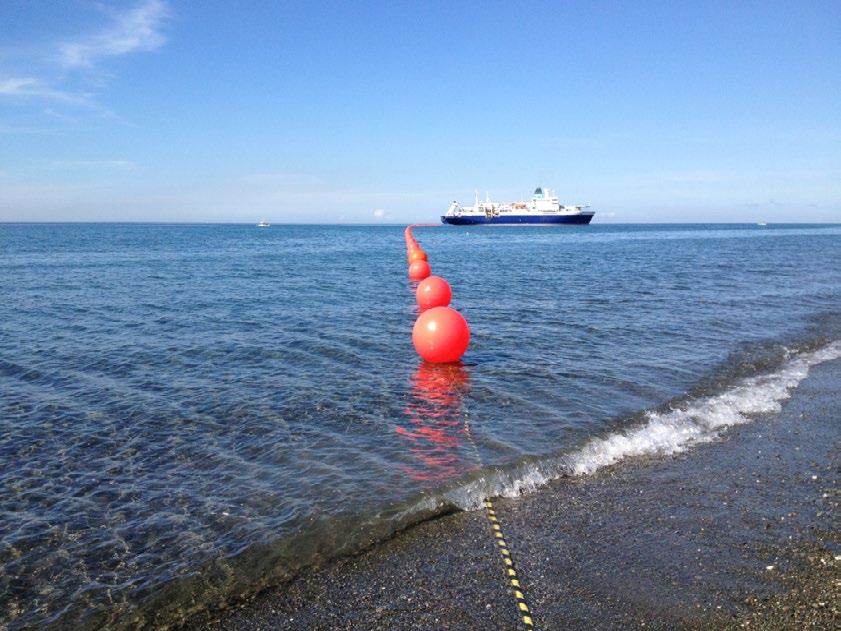
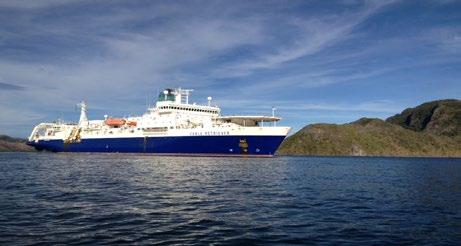
CS Retriever en route to Coron Island’s landing site
Cable protected at Boracay shore end
Cable Manufacturing and Loading
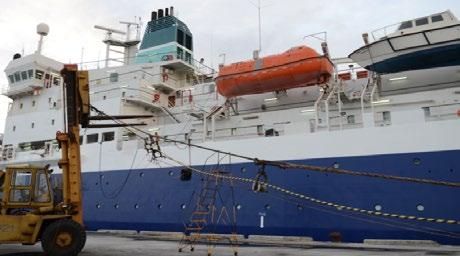
Cable manufacturing started in May 2012, and following factory acceptance testing, the completed cable was transported to Batangas by freighter. As part of this operation, many quality assurance checks were implemented. Each stage of the cable transfer process was accompanied by technical cable measurements. The final process involved loading the cable onto the CS Retriever, shown above.
This took place under the watchful eyes of the skilled team responsible for this critical operation. A key consideration throughout the delivery was migrating risks, so continuous cable testing took place to ensure the established transfer process met strict requirements as defined within the technical delivery procedures.
System Installation
The Huawei Marine installation was implemented in four phases:
• Boracay to Panay
• Taytay pre-lay shore end
• Taytay to San Jose (with branching unit streamed end to Coron)
• Branching unit to Coron
Cable loading onto the CS Retriever
A key part of the program was associated with pre-lay grapnel runs (PLGR)
and route clearance (RC) operations. The aim of this was to clear the route ahead for cable installation. With minimal problems observed during this activity, the seabed appeared to be free from surface debris. Clearing the route enabled a smoother operation and avoided placing expensive marine assets at risk. One regional-specific aspect consideration found during installation relates to fishing, which remains an important source of income in the region and a major source of food and employment. While this is of great importance, the fishing vessels
posed a potential threat to the cable. With careful design, the application of cable armoring helped reduce such external threats.
In this region, 20% of cable faults are due to fishing, compared with 7% caused by anchorage faults. Education thus formed an important part of the engagement process in order to communicate with local communities and fishery agents to help protect the system.
System Shore Ends
With adverse environmental conditions in this region and the need to protect the cable system, particularly those near the shoreline, advanced installation methods were used to run the cable under the beach to a beach manhole. Horizontal directional drilling (HDD) was the preferred installation method and a leading organization was employed to carry out the operation as shown below. As the survey advised, drilling began from the shore end. The pre-lay shore end (PLSE) at the Taytay site was implemented using a barge in November 2012. In order to reach the beach manhole, a HDD solution was used to cross an existing seawall thus maximizing environmental protection as required by the local government. The main cable installation from Taytay to San Jose took place in January 2013 and was completed one month later.
Operations began with the PLSE pick up, and cable testing. A heavier cable was often used within the shore end and near the shore regions with articulated piping to add further
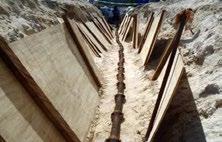
protection. An iron two-piece pipe was assembled around the shore end cable, creating an outer iron jacket and provided additional cable protection. As shown above, this method was extended from the beach out into the sea water, providing near shore cable protection against external threats.
HDD operation at Taytay
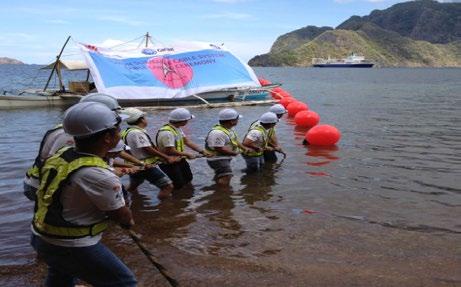
Cable landing at Coron, Palawan
Below is a photo of the installation, showing the application of the beach articulated pipe and the depth of the burial.
Once the pipe was applied to the cable, further cable testing was carried out to ensure all quality aspects were maintained ahead of the sand back fill. The technical cable performance testing required assistance from multiple parties including the vessel and beach teams.
As the teams progressed with the main lay a plough was used to bury the system cable. While such a process is normally considered routine, many factors were considered when deployment took place including the current sea conditions. It is quite common for the vessel captain to stop operations if the weather deteriorates, as to ensure the safety of the system and crew. While such a process is normally considered routine, many factors were considered when deployment took place
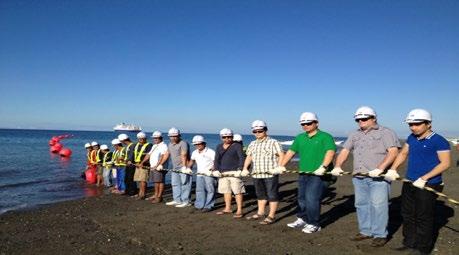
The landing celebration required team work
including the current sea conditions. It is quite common for the vessel captain to stop operations if the weather deteriorates. The shore end works also took place under the supervision of a skilled team who were responsible for maintaining the vessel position after the shore end cable was laid and cable testing was conducted.
BU Installation
As the team progressed towards San Jose island and into the region of Coron, it was time for the branching unit to be deployed.
Such operations, along with detailed handling and deployment instructions, formed part of the pre-operations review
meeting to ensure nothing was left to chance.
In this deployment, a passive branching unit was deployed to a water depth of around 345 meters.
Cable protected by articulated pipe in Boracay
For Globe, the completion of the Submarine Cable System enabled HMN to support the Nemesis roll out for the Boracay and Palawan areas.
Equipment Installation
With the marine segments complete, the team ran parallel operations to install and commission the Submarine Line Terminall Equipments. Limited space and the need to reduce operating expenses, were some of the challenges related to such landing stations. The industry has witnessed a reduction of capacity or footprint so once again the 1,600 Submarine Line Terminall Equipments was ideal to service this requirement and provide a system that could be upgraded from a 10G to a 40G capacity. From a service delivery view point, employing local staff to work as customer touch points during such installation, was essential to help roleplay and provide explanations when the system was handed over.
manage all aspects for maintenance and future growth.
With today’s combination of wet and terrestrial networks, there are clear advantages of an integrated management system to simplify the process of provisioning services and reduce operational overheads. Having a single platform solution can make a real difference in the cost of ownership associated with running state-of-theart networks, like this one for Globe.
Closing Remark
The BPSCS project was successfully completed in Q2 2013. It brought together a great team, who demonstrated the ability to manage and deliver turnkey submarine cable systems, despite the challenges of the project.
This significant project marks another successful delivery for Huawei Marine Networks and Globe Telecom in the region, and we look forward to strengthening the partnership in the future.
Once installed, the whole network was integrated to the U2000 NMS, a single platform that enabled the Globe NOC to not only provision end-to-end but
Jas Dhooper has over 20 years experiences in the Submarine and Submarine & Telecom Sectors and currently serves as Vice President of the Service Delivery Office for Huawei Marine Networks in China.
He has gained significant management experience in setting up global capabilities to deliver large-scale multi-million dollar telecommunications projects and building multi-cultural teams within Asia, the Middle East and European regions. He gained early expertise whilst employed by STC Submarine systems in the late 1980s (consolidated into Alcatel Submarine Systems in the 1990s) and delivered many projects, including transatlantic cable systems. Mr Dhooper has also held a number of senior management and technical positions in operations, working for Cable & Wireless (now Vodafone), Global Marine Systems and Interoute Communications since the mid-1990s.
Mr. Dhooper holds a Masters of Business Administration (MBA), an Engineering Honour’s degree from London University and has published several papers in the field of telecommunications. Mr Dhooper is a Chartered Engineer, fellow of the IET and member of the Institute of Directors in the UK.
challenges & Successes
Upgrading Trans-Pacific cables with 100 Gb/s
colin anderson & anup changaroth
What’s the Big Deal ?
What is the difference between upgrading a trans-Pacific submarine cable with 100 Gb/s technology, and upgrading any other submarine cable in the world?
It’s not a trick question - after all, most submarine cables utilise much the same technology - don’t they?
It’s a bit like the difference between a gentle sail around San Francisco harbour on a sunny day, and what Norwegian ethnographer and adventurer Thor Heyerdahl and a crew of 5 others did in 1947. They sailed for 101 days in their balsa-wood raft “Kon-Tiki” (named after the Inca sun god) to travel 8,000 km across the Pacific from Peru to the Raroia reef in Polynesia. And that was only half-way across the Pacific.
100 Gb/s coherent transmission is a leading-edge technology, and transmission across trans-Pacific distances of 10,000 km or more, on submerged plant deployed more than 10 years ago is challenging. Just a few years ago few in the industry would have considered it possible.
For years the Atlantic Ocean was the focus of submarine cable activity, but in recent years the emerging Asian economies with their tremendous growth in both fixed and mobile Internet access and the need for high-speed Internet connectivity to the USA has driven strong bandwidth
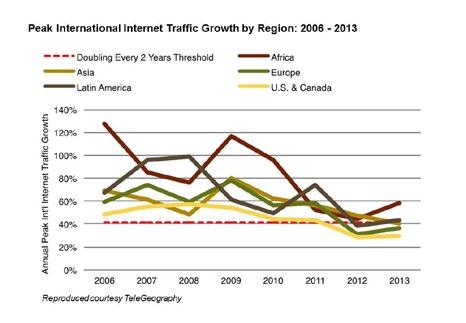
demand across the Pacific. Even as additional local content has softened the demand for Internet connectivity between Asia and USA the growth rate in the region 40%, according to recent data from TeleGeography.
Two Categories of Existing Trans-Pacific Submarine Cable
Based on publicly available data and estimates, there are around 10 active submarine cables in the Pacific Ocean, with a total of 15 cable segments crossing the Pacific. They have a total length of
205,000 km, which is about 20% of the total length of all in-service submarine cables worldwide, were deployed at an initial cost of approximately US$ 8.7 billion, which represents about 23% of the total invested in submarine cables worldwide in that period.
The cables were deployed between 1996 and 2010, so their ages range from 3 to 17 years. However, because of the hiatus in cable production after the dot-com bubble burst they can be categorised into two main age groups:
• 5 cable systems with average age of 12 years - so about halfway through their original design lifetime. The technology used in these systems was initially 8 or 16 x 2.5 Gb/s or 16 x 10 Gb/s per fp, and the cable used conventional “NZ-DSF” (non-zero dispersion shifted fibre) dispersion compensation techniques.
• 4 cable systems with average age of 4 years - so about 15% through their design lifetime. They were typically designed for an ultimate capacity of around 96 x 10 Gb/s
per fp, and some used “+D/-D” (dispersion slope managed fibre) for dispersion compensation.
Why Upgrade?
Capacity growth worldwide has slowed in recent years, but a compound growth rate of around 40% still means a doubling every two years. Carriers need more capacity on their cables - while at the same time international bandwidth prices are declining. Of course, this trend is affecting other geographical areas as well, but the length and cost of Pacific cables makes
the economics of these routes particularly complex.
Those built in the 2000-2001 period are only halfway through the design lifetime of their wet plant, but using the SLTE (submarine line terminal equipment) technology of their original design these cables would have been upgraded to their full capacity long ago.
It is the ‘connected everywhere’ society that we live in, with smartphones, tablets, smart TV’s and social media, driving bandwidth demand. Many of the hardware devices used for these services are only possible due to advances in semiconductor technology over the past decade - Moore’s Law continues. Fortunately the same semiconductor technology is an important part of what makes new SLTE functionality technically and economically possible. It allows us to implement digital signal processing of the signals at both the transmitter and the receiver, to implement sophisticated modulation and demodulation schemes, as well as compensate for dispersion and non-linear impairments.
New SLTE Technologies
This year marks 25 years since the introduction of the first optical fibre transoceanic submarine cable system, TAT-8. The introduction of Erbium Doped Fibre Amplifier (EDFA) amplifier technology
to the submerged plant in the mid 1990’s revolutionised wet plant design. On the other hand, the introduction of coherent 40 Gb/s and 100 Gb/s technologies to have revolutionised the terminal equipment design, and hence the capacity that we can equip on legacy wet plant, even halfway through its design life. There are many differences between networks across the Pacific: the types of fibre & dispersion compensating fibre map, types of repeater, wet plant monitoring techniques, etc, but essentially they can all be upgraded with coherent technology.
Critical Technologies
Among the many technologies involved in coherent optical transmission, there are a few very key technologies for ultra-longhaul trans-Pacific Systems, these include:
Modulation Schemes
QPSK modulation used on some transAtlantic cables cannot be used on longer
trans-Pacific distances of legacy wet plant. BPSK (binary phase-shift key) modulation is essential to travel these spans.
Forward Error Correction
FEC (forward error correction) has advanced significantly over the past decade, but the introduction of SoftDecision FEC for 100 Gb/s coherent systems in 2013 has been a breakthrough for ultra-long systems. In simple terms, Soft-Decision-FEC can be thought of as a kind of ‘fuzzy logic’ version of FEC, where the demodulator decides upon “0” or “1” based on probabilities of error, rather than a fixed threshold.
Dispersion Compensation & PMD Compensation
Advanced silicon chip processing now makes compensation of CD (chromatic dispersion) and PMD (polarisation mode dispersion) possible by digital signal processing (DSP), which also allows compensation for many of the non-linear impairments that occur in an optical transmission system.
Optical Power Management
The repeaters in a submarine cable system operate in ‘constant output power’ mode, and the power level of 100 Gb/s coherent transmission is critical to error-free performance and ultimate capacity over long spans. The design and implementation of optical idler technology within the SLTE is of critical importance.
The limiting factors will be different for each cable, and will depend upon the specifications and technical parameters of the wet plant. Typically the repeater bandwidth and non-linear impairments due to the type of fibre used are the key limiting factors.
Legacy Traffic
For most submarine cable networks, upgrade to 40 Gb/s or 100 Gb/s is possible while retaining some or all of the legacy traffic waves (for example N x 10 Gb/s). However if such legacy waves use ASK (amplitude modulation) technology rather than PSK (phase modulation) they usually interfere with and impair the performance of the coherent transmission to some extent. So for optimum upgrade of transPacific upgrades it is strongly advisable to remove legacy traffic from a fibre pair which is being upgraded to 100 Gb/s.
What has Been Successfully Achieved?
Within 2012-2013 we have successfully upgraded trans-Pacific cables with N x 100 Gb/s coherent technology. The longest segment was over 10,000 km long, and typical increases in ultimate capacity of between 7 and 15 times the original design capacity could be achieved when using the latest coherent 100 Gb/s SLTE with transmit & receive DSP and powerful SoftDecision FEC.
Future Trans-Pacific Cables
While the successful upgrade of legacy trans-Pacific cables has significantly extended their lifetime, there is still growing demand and a need for further geographical redundancy. At least two new cable systems for the Pacific are in the planning for RFS in 2015 or later. They will certainly cost much less than the approximately US$ 1 billion that some of the 1999 ~ 2001 trans-Pacific systems cost. However, they will still represent an investment of several hundreds of millions of dollars in new wet plant.
It is likely that new cables will utilise latest Large Effective Area optical fibre, without dispersion compensation built into the submerged plant. The “large effective area” of the new fibres helps to minimise non-linear impairments to the optical signal. These impairments are currently difficult to compensate for using terminal equipment technologies.
The “uncompensated” fibre map for the submerged plant minimises SelfPhase Modulation (SPM) and CrossPhase Modulation (XPM) impairments within the submerged segment and the resulting chromatic dispersion can now be compensated for in the SLTE using sophisticated DSP techniques, made possible by advances in semiconductor technology.
But the extreme length of trans-Pacific segments means that the SLTE will need to compensate for dispersion of more than double the amount expected on future trans-Atlantic segments, so the DSP for trans-Pacific SLTE will need to be of a higher specification than conventional SLTE.
Conclusion
100 Gb/s upgrades of legacy trans-Pacific cables with 10,000 km segments, originally designed for N x 2.5 Gb/s or N x 10 Gb/s technology was unimaginable just a few years ago, but is now a successful reality.
There are many technical challenges and each cable has its own unique issues to overcome. With significant technical differences between individual cables, it is critical to have an SLTE solution with the most intelligent and flexible 100 Gb/s coherent transmission technologies to allow successful upgrade of all cables while still taking advantage of commonalities
of hardware and software and mass production.
The upgrade of existing trans-Pacific cables with coherent 100 Gb/s WDM has increased the life of these cables, and has allowed carriers to provide higher capacities at lower cost per bit. The timescale for introduction of new transPacific cables has been slowed by a year or two, but as capacity continues to grow, we will see new cables across the Pacific and these will undoubtedly be designed for 100 Gb/s technology from the beginning of their lifetime.
Colin Anderson is Business Development Director, Global Submarine Systems for Ciena.
Anup Changaroth is Director - Portfolio Marketing, Asia Pacific for Ciena.
PACIFIC
Submarine Cable Workshop: The Naked Truth about Submarine Cables
Moderated by Paul McCann, Managing Director, McCann Consulting International, Australia & Elaine Stafford, VP, The David Ross Group (DRG), USA
Executive Insight Roundtable 4: What Submarine Cables Can Do For You
Moderated by Julian Rawle, Managing Partner, Pioneer Consulting, Australia
19–22 January 2014
Hilton Hawaiian Village® Waikiki Beach Resort
Honolulu, Hawaii
TeleGeography Workshop
Moderated by Stephan Beckert, VP, Strategy, TeleGeography, USA
Presenters: Paul Brodsky, Robert Schult, Tim Stronge
Topical Session 5: Submarine Cable
Moderated by John Hibbard, CEO, Hibbard Consulting Pty Ltd, Australia
Presenters: Jerry Brown, Brian Lavallee, Anuj Malik
RegisteR foR PtC’14 at PtC.oRg
John Hibbard Board Member & Former President Pacific Telecommunications Council
The 36th annual PTC conference is getting close. PTC’14 will be held in the usual place, Hawaii in January, and again we have a very significant submarine cable segment. With SubOptic having been held last April, there has been time to reflect on what emerged from there, and now is the time to further discuss those issues along with any new developments that have occurred.
From conference registrations so far, there is going to be a significant segment of the submarine cable fraternity there, ready to debate issues either in the conference rooms, at the various functions, or in the Tapa Bar with mai tai in hand as the palm trees gently sway overhead. What a great way to do business.
PTC’14 will again feature the popular Submarine Cable Workshop on Sunday morning (19 January). Paul McCann from McCann Consulting will be the overall coordinator and, in conjunction with Elaine Stafford from the David Ross Group, has put together an exciting package titled “The Naked Truth about Submarine Cables,” which will really fire you up for the rest of the week, whether in conference sessions or in your business meetings.
The first half, themed as the “The Bare Facts,” will have a number of executives review developments over the past year and outline what is coming up around the regions and in the different facets of cable initiatives, regulatory, and O&M.
The second half, prepared by Elaine for SubOptic and titled “For Real? Buying and Building New Undersea Systems Naked!,” will engage an august panel of buyers and suppliers with the audience in a vigorous discussion about the emerging ways to buy submarine cable systems as well as merits and issues associated with those approaches such as buying the marine plant separately to the terminal plant.
On Monday, following the success of last year, we will have another Executive Insight Roundtable (EIR), which is being coordinated and moderated by Julian Rawle from Pioneer Consulting. The theme of this session will be “What Submarine Cables Can Do for You.” The EIR sessions are designed as a roundtable for active involvement by the audience. We saw a lot of that in the pilot at PTC’13 and I expect the Q&A aspects to be similarly active and stimulating. Julian has selected a number of participants
from the supplier, owner, and user segments to ensure a broad cross-section of dialogue.
Tuesday’s session, which I will moderate, will include a number of presentations on sub cable issues not hitherto addressed in the PTC’14 program. The intent of the program is to provide comprehensive coverage of our business across the conference while at the same time leaving adequate time for those all-important business meetings.
It is all making for a very exciting few days. Where better to enjoy interesting topics and do business than in Hawaii in January? Once again, PTC’14 will be a great opportunity to catch up with Wayne, Kristian and the Sub Tel Forum team. Those of us from the PTC team look forward to seeing you there.
The diversity of our PTC membership across the many facets of our industry has ensured the continued attraction of the conference. Of course, being located in the beautiful setting of Hawaii has certainly helped contribute to annual attendance. There is surely no better place to hear challenging presentations, renew acquaintances, negotiate business deals and make a toast than in the hub of global telecom networking for this special week in January at the Hilton Hawaiian Village.
PTc Submarine cable workshop
Elaine Stafford
1.
PTC’14 is around the corner. When SubOptic, who is sponsoring a portion of PTC’s annual Sunday morning Submarine Cable panel, asked me to support it, I enthusiastically agreed. They suggested that the panel focus on a topic not only interesting and timely, but also on something that would be a followup to discussion at SubOptic’13. It didn’t take me long to pick the topic- “Really?
Buying (or Building) Networks Naked” (i.e. without SLTE1 and having all fibers dark). Yes, I know it has been touched upon before in public forums, with analogies to either ‘buying a car with 3rd-party tires’ or ‘buying a car with a 3rd-party engine’ (depending on your viewpoint). However, as I’ve recently heard increasing levels of purchaser interest, combined with disparate views on the matter, I believe it is now an even more interesting and worthwhile topic than when it was introduced earlier. I’m hopeful attendees will find that they’re glad they chose to attend, rather than enjoy the scenic alternatives on a beautiful Sunday morning in Hawaii. Please come January 19, at the Hilton Hawaiian Village in Honolulu.
To get prepared for PTC, I embarked on some research by speaking to many respected submarine-cable industry executives across the globe, with the goal of understanding their views on this concept. My ad hoc research included discussions with representatives from a cross section of service providers (incumbent carriers,
global ISPs, entrepreneurial project developers), suppliers (traditional and new system suppliers, upgrade suppliers), and consultants. Not surprisingly, their opinions were diverse, across the board, and to a degree, even within a specific market segment. Five of them will participate in the PTC’14 panel. What follows is a consolidation of the input I heard. I thought it would be worthwhile to share this perspective with you prior to PTC. I hope it will whet your appetite to attend, and encourage you to ask insightful questions of the panel in Hawaii. Note, I’ve promised those with whom I spoke that all information and opinions shared would remain anonymous; therefore, no individuals or company names are identified herein.
Before looking at the practicality of naked networks, let’s step back a bit in time. Conceptually, provisioning SLTE from a 3rdparty supplier on a new undersea segment is not a new idea. In the past (e.g. early optical
TAT & TPC networks), this usually was accomplished with some degree of supplier technical cooperation. The suppliers jointly developed integration specifications and executed a broad integration test program before the network was built. Technical cooperation was considered a prerequisite to any mixed-supplier network solution. In recent years, projects employing such integration have been scarce. Instead, turnkey solutions, with the end-to-end system design responsibility assigned to a single supplier (perhaps with a subcontractor for a portion of cable or repeaters) have been more the norm. Market dynamics have limited supplier technical integration and cooperation, which was more usual 20 years ago. However, it is noteworthy that today, it is quite common to upgrade existing, in-service undersea networks with 3rd-party SLTE. Most often in such a circumstance, the upgrade supplier and cable owner agree to demonstrate the upgrade solution on the network prior to any purchase commitment or production. Some people feel these 3rd-party upgrades are very much like the ‘naked network’ concept- in some ways, this is true. However, the requirement of (and commitment to) technical ‘proof of capability’ before installation, defines a distinct difference between upgrading an existing network with 3rd-party SLTE and buying naked. With a naked network, the purchase commitments to independent suppliers (wet and SLTE) are presumably made before the parts are built and tested together; hence there’s no opportunity to gain confidence in the end-toend solution (unless there is R&D cooperation in a system test lab).
Nonetheless, purchaser confidence in mixed-supplier solutions is increasing. This confidence has come, in part, through their successful experience of upgrading with 3rd party SLTE. Confidence has also grown as purchasers gain familiarity with ways to accept a new network with a fraction of the total number of fiber pairs dark. Nearly all of the large, global-network owners with whom I spoke expressed interest in the possibility of buying SLTE of the same product family as deployed in their company’s terrestrial network. Some stated quite clearly that their intention is to never again buy a new undersea network which is lit at initial service by an undersea-system supplier’s SLTE. Rather, they intend to light their undersea networks, new or otherwise, only with their company’s preferred DWDM supplier’s equipment. Others were more skeptical that they’d ever go naked, despite the conceptual attractiveness of the idea. Thus, what varied amongst cable owners was not whether the idea of naked networks had virtue, but whether the hoped-for benefits were worth the risks.
What Attracts Cable Purchasers to Naked Solutions (and 3rd-party SLTE)?
So, why are some purchasers intrigued by and attracted to this concept? Anticipated cost savings, shorter delivery intervals, network homogeneity, product features, OA&M simplicity and efficiency are frequent answers. Which of these items is most important varies by cable owner, but each of these motivations was expressed by several individuals as a potential reason for buying a naked network. The most-frequent first answer I heard was saving money. Sometimes this meant first cost; sometimes it meant lifetime cost. The second mostfrequent answer was, essentially, network homogeneity, and all the advantages that go along with that.
Let’s further examine the “why’s” motivating some prospective cable owners to consider naked networks.
1. Cost-Savings: As indicated above, low-cost was the #1 reason which I heard from purchaser representatives explaining why they would contemplate (or are contemplating) naked networks. Others (both purchasers and suppliers) challenged the notion that naked systems will save purchasers money - at least initially. Possible savings will be determined by several factors, including:
a. Initial Equipment Savings: SLTE from a system supplier can often be more expensive than 3rd-party SLTE. Lower prices are a natural consequence of the larger market volumes which
some 3rd-party (terrestrial) suppliers enjoy, compared to the smaller undersea SLTE market volume. To some, this SLTE price delta is inconsequential in the context of the price-tag of a new undersea network - especially when buying a very large network. Some purchasers believe that any potential equipment savings accrued by buying 3rd-party SLTE may be offset by the cost of additional wet-system design margin (i.e. extra repeaters), which may become necessary as risk-mitigation in a mixedsupplier solution. Others feel that the separation of wet and dry will stimulate even more supply competition, and drive prices down. Thus, there are numerous opinions on whether the net price of a naked network’s two separate contracts (wet and dry) will be lower than that for a single, turnkey system supply contract. Even if the naked solution yields a lower cost, several purchasers with whom I spoke who are planning a new, very long point-to-point undersea network, commented that such savings are insufficient justification to buy naked, given the risks they see. But when a cable has many cable landings, or is relatively short, this SLTE price differential can be more meaningful in the overall purchase decision.
b. Duplicate Contracting Costs:
Presuming the 3rd-party SLTE is procured and contracted separately from the naked undersea network, there will be additional purchaser overhead associated with managing two procurement efforts
and implementation programs - one for the wet segments, and one for the SLTE. Such added costs would offset some of the initial equipment savings accrued by purchasing lower-cost SLTE from someone other than the undersea system supplier.
c. Cost Avoidance associated with Potential Future Change of SLTE Supplier When Upgrading: Every time
a new SLTE supplier is introduced into a network, there are some new “common” costs. Typically, this includes things like duplicate spares, inefficient use of floor space and power, a second suite of “common” equipment, etc. If a cable owner anticipates they will be upgrading later with a 3rd-party SLTE, they can avoid this duplication of cost if they provision their network at RFPA with the same equipment they are likely to use for those future upgrades.
d. Cost Avoidance of
Duplicate
Recurring OA&M Service Fees: Postwarranty service fees, for services like technical support and circuit-pack return and repair, add up over time. Often a network owner secures better unit-pricing for these services when the agreement covers large volumes of equipment. Bundling service of undersea SLTE within their service contract for terrestrial DWDM may be advantageous. In other words, as with (c) above, there may be cost-efficiency post-warranty, of having just one provider of OA&M services for a composite undersea/ terrestrial network.
Each of the items above looks at cost from the perspective of ‘How much money am I spending to buy, operate, and maintain the SLTE?’ More than one cable-owner I spoke with looked at the ‘cost’ question quite differently. To them, the absolute cost meant nothing without the context of capacity. That is, they measure the cost-effectiveness of the SLTE solution by the answer to the following: “What unit cost of capacity am I achieving with this new network and SLTE?” If a wet system provider promises more spectral efficiency per dollar using their own SLTE, than can be achieved with a 3rd-
party SLTE, either on a first-cost basis or on a life-time cost basis, some purchasers may prefer to purchase somewhat more expensive, but more capable, underseasupplier’s SLTE. I do not mean to imply here that all wet-system suppliers’ SLTE is more capable than 3rd-party SLTE. That may, or may not, be true, depending on the cable and supplier. Rather, I simply want to state that some purchasers look at the SLTE cost in terms of the unit cost of capacity when deployed on the network.
Thus, the ‘cost equation” is not at all black and white. Nor is the definition
of “lowest cost” the same for everyone. Which is better depends upon how a company defines and measures their financial and cost reduction priorities.
2. Network Homogeneity: Many purchasers indicated that homogeneity of equipment solutions across their network (wet and dry) is a goal for their companies. Those who did generally inferred that a wet-provider’s SLTE uniqueness precludes it from naturally meshing into their broader global-network equipment platform. As discussed above, there’s a cost-aspect to the homogeneity issue, but equally-important for some, homogeneity is also an issue of operational simplicity, efficiency, and response/delivery interval for services which they provide to their customers.
Equipment homogeneity across terrestrial and undersea segments also facilitates an operator’s ability to sell PoP to PoP services with straight-forward service-level agreements (SLAs). Some of the staunchest advocates of naked networks expressed this as an important motivator. However, a small number of indicated that homogeneity is not a major issue for them; rather, they’ve developed methods and procedures which enable them to effectively manage a diversity of equipment platforms in their large, expansive networks.
3. Product Features: Some of the purchasers indicated that the reason they might prefer SLTE from a 3rd party was rooted in the SLTE feature set. Usually, this had to do with either the OA&M features
provided by the product (integration to management platforms) or the networking features. When this was mentioned, it was often, in fact, a network homogeneity issue.
4. SLTE Flexibility for Fiber Pair and/ or Spectrum Purchasers: It is increasingly common for cable developers, especially private cable developers, to construct their new undersea network with the intent of selling dark (unlit) fiber pairs and/or spectrum to customers, who have unique preferences for SLTE. This, by itself, does not mean that the system must be purchased naked. However, some people equate this model with naked networks, as both share some similar technical and commercial challenges and possible solutions.
5. Latest Technology: Network owners often have a preference for “the latest and greatest” technology (i.e. moving to 40G, 100G, etc. from 10G). In my experience, it is rare that an undersea network purchaser is willing to accept a dated generation SLTE, unless the option of upgrading with newer SLTE is impractical, as this new SLTE cannot perform efficiently on their existing network. Thus, I found it interesting and insightful when one purchaser remarked, “If I separately purchase the undersea equipment from the SLTE, I can purchase the SLTE at a later date and be assured that I’ll get the most-current product.” This view stems from the fact that for large undersea networks, the construction interval (from contract signing to service date) can be quite lengthy - often on the order of 2 years. This is largely driven by the wet plant timeline - marine survey, permits, wet plant
manufacture, marine installation, etc. When one looks at an overall project schedule of a network inclusive of SLTE, the SLTE production often starts many months after a turnkey-network contract is signed. (The SLTE production/delivery interval is short, compared to the wet-plant production/ delivery interval. Moreover, if a 3rd party SLTE were to have been contracted, its production/delivery interval may be even shorter.)
It is generally true that the pace of SLTE product evolution is quicker than the pace for wet-plant product evolution, and new SLTE may become available during an undersea network’s construction interval. Therefore, it is possible that a turnkey network might go into service with SLTE that is not the latest and greatest. In my experience, though, this is a bit unusualand it may be a result of unanticipated construction delays which postponed RFPA beyond the originally forecast. Usually, wetsystem providers will have a technology roadmap that extends beyond the planned service date of any newly-contracted network, and cable-system purchasers will negotiate to get the best SLTE planned to be available at the time their network goes into service, even if qualification of that SLTE is not complete until after the supply contract is signed.
6. Ease of Pre-RFPA Network
Upgrades: The majority of upgrades to undersea networks occur after RFPA. But, some cable owners find themselves needing to unexpectedly order an upgrade for their new undersea network before it reaches
RFPA. The most straightforward thing to do then is buy the upgrade from the same supplier who is providing SLTE to initially light the network. However, some cable owners I know who found themselves in this situation were unhappy with the price-point and delivery intervals offered by their turnkey wet-system supplier. (In recent years, prices for upgrades have been declining rapidly, and original contract prices for upgrades were no longer competitive when the upgrade needed to be ordered.)
Therefore, if these cable-purchasers had had a choice, they’d rather have purchased the upgrade from a 3rd party.
This predicament is a variant of the ‘naked network’ dilemma - ordering SLTE without a network in place on which the SLTE provider can test/demonstrate their solution. In
essence, if an owner has figured out how to confidently buy their new network naked, there will be little difference between this and buying an upgrade before RFPA. Restating this point differently, if a cable owner is not comfortable buying a network naked, and they instead prefer to first light their new network with their wet-system provider’s SLTE (even if they plan to move to a 3rdparty SLTE provider later), they should be prepared to buy their first upgrade from that same wet system provider, especially so if the implementation interval is large (18 to 24 months) or somewhat complex from a networking standpoint.
Will all these reasons to buy naked be with us forever? No supplier is sitting still. 3rdparty SLTE providers continue to enhance their product portfolios to better serve both their primary terrestrial and their new undersea markets. For the undersea market, this means ultra-long reach optics, new modulation schemes, soft-FEC and digital signal processing to compensate for dispersion and other impairments. Wet system providers also continue to make dramatic strides in closing price, delivery, and feature gaps between their SLTEs and those of the 3rd-party alternatives. Even if the price, delivery and feature gaps between various suppliers’ SLTEs are closed, for those purchasers who value product homogeneity across their global mesh networks, which may be dominated by terrestrial segments, the simple desire for compatible DWDM/ SLTE product throughout the network may give 3rd-party SLTE suppliers an edge in any undersea-lighting purchase decision.
Why Buy “Not Naked”? Or, What Attracts Cable Purchasers to Turnkey Solutions?
These questions must also be answered. Clearly, naked networks have not yet gained practical popularity; there must be some reason (or reasons) why. What advantages do the wet-system supplier’s SLTE have over the terrestrial supplier’s SLTE? And, why would a purchaser not want to buy a network naked?
The most frequent answers to these questions start with: (1) risk avoidance, (2) possible lower unit cost of capacity, and (3) efficiency of procurement and project implementation. Items (2) and (3) have already been discussed briefly earlier. I’m not sure there’s much more to say about either.
The “risk” issue is the reason most worthy of further discourse, and is consistently the #1 reason why many cable purchasers still prefer turnkey solutions. Please note, the discussion of risk below will make one important assumption. That is, a “naked” network includes neither a network built:
(a) by a system supplier, who takes responsibility to assure and warrants that a purchaser-prescribed 3rd-party SLTE delivers the required end-to-end performance, nor
(b) according to a joint and several system supply contract, entered into by the purchaser(s) and both that wet-system supplier and a 3rd-party SLTE supplier.
That is because, at this point in time, not only do I think these scenarios are relatively
unlikely to become commonplace, but also I believe such commercial arrangements essentially make the supply arrangements turnkey, as the supplier(s) have an end-toend performance obligation to the cable purchaser. Thus, I view who owns the “risk” of end-to-end performance as the critical differentiator between “turnkey” and “naked”.
Some purchasers believe that through a combination of their buying power, their negotiating skill, and competitive supply pressures, they can succeed in securing contract arrangements defined by either (a) or (b). If so, they succeed in avoiding the risk, and instead keep it with the system supplier(s). In the near term, I’m not so sure. It would require a very significant technical and commercial commitment by the system supplier (and the 3rd –party SLTE provider), not to mention some serious sharing of intellectual property, for the suppliers to enter into such a contract arrangement with comparable levels of risk to what they current undertake.
• From a commercial perspective, imagine if (as part of case (a) above), the 3rd –party SLTE provider had a problem which delayed network RFPA, and as a result, the system supplier was liable for liquidated damages. These damages are linked the system’s total contract value and therefore could exceed the value of the SLTE. Who would pay these LDs?
• From a technical perspective, it is one thing for a system provider to provide a
customer with design specifications on their wet plant, such as OSNR, repeater output power and gain, spacing, dispersion, etc. and allow the customer to share these specifications with a 3rd-party SLTE/upgrade provider. It is another matter for the system provider to take responsibility for assuring the performance of 3rd-party SLTE, both on a stand-alone and endto-end performance basis. Providing guarantees of this sort would probably require the system supplier to invest in a significant qualification program with the 3rd-party provider. Additionally, 3rdparty SLTE providers may prefer not
to have the system suppliers scrutinize their equipment so completely, given that the system suppliers also make their own SLTEs. I can envision the possibility that a system supplier allows a 3rd -party SLTE provider to test their SLTE in the system-supplier’s lab, but I find it harder to envision the possibility of the system supplier taking commercial and technical responsibility for a 3rd party SLTE, without some unique arrangements. I’ll talk more about this later.
With those assumptions, let’s look at the various aspects of risk to the cable owner of two entirely separate contracts - one for the wet segments (presumably inclusive of power, and possibly also supervisory equipment2), and one for the SLTE. The most-cited naked-network technical risk is transmission performance; a less-significant technical concern is the supervisory system performance. This discussion will concentrate on achieving requisite transmission performance. Will the channels work as promised end-to-end? Will as many channels work as were promised? (i.e., will the full capacity potential be delivered?) And, how will this be proven at acceptance? From a commercial standpoint, the corollary worry is that if the network performance doesn’t meet expectations, how does a cable owner discern, prove, and assign commercial liability?
In my discussions, most frequently it was the technologists who were most concerned about achieving the requisite transmission performance. Individuals with a more commercial bent tended to have confidence - “We always get more margin than we’re promised. Even if we buy a naked network, we’ll still end up with extra margin.” When I discussed this concern in a bit more detail with the technologists, usually their concern did not come down to an “all or nothing” situation, i.e. all channels work or no channels work. Rather, the concern seemed mostly to be one of “will all the channels work?”. At least, this seemed to be the
2. The undersea supervisory system is conceptually most closely linked to the wet plant, and thus the presumption is that the wet-plant supplier provides the undersea management system in the terminal. The difficulty, however, is that the access to the undersea plant is via the optical path, managed by the SLTE. For this reason, the best solution for a naked network’s undersea management system supply is somewhat debatable, and too lengthy a debate to document in this white paper. It is, however, something very important to examine closely when contemplating buying a naked network.
answer for relatively short, simple networks. For longer networks (e.g. Transpacific), or complex networks (e.g. one with multiple OADM BUs), the concerns were somewhat broader. Not surprisingly, 3rd-party SLTE providers were generally quite confident their solutions would perform as promised over the entire spectrum, if they were contracted to light simple naked networks, so long as they had adequate system design information. The problem is, right now, there are no comprehensive standard specifications which unequivocally assure the two will work together.
At least for the simpler systems, the risk seems to be confined to a small portion of the transmission band. In real terms, if there is a performance shortfall which is not overly severe, depending on your viewpoint, the commercial value of this shortfall may similarly not be terribly severe. Take the case where perhaps 10% of the band does not perform consistent with purchaser’s expectations on an end-to-end basis. This portion of the band may, in fact, not need to be provisioned for service for many years to come. History has shown that technology evolution often makes what was previously impossible (in terms of capacity), possible. Thus, it is not unrealistic to think that even in such cases, there may well be a technical solution to the problem in the timeframe when that solution is needed (from a network capacity standpoint).
However, if there is a technical shortfall, it is usually not an easy issue to solve commercially, and such a problem could readily get in the way of system acceptance
and service turn-up. To be specific, even if some of the channels work, resolving these problems could readily delay a cableowner’s ability to earn on their investment. Not a pretty picture. One very experienced and savvy purchaser was very clear in stating, “Even though I’d like to use the same terminals as my terrestrial counterpart, it is simply not worth the risk of a problem occurring and delaying RFPA. I need to get that network into service ASAP.” This same cable-investor astutely remarked that a consortium, with all of its inherent management complexity, tries its best to push risk onto the supplier - which is quite the opposite of what a naked network might
entail. For that reason, privately-owned networks may be able to better deal with such risk.
If a performance shortfall does occur, my guess is that it will be very difficult to discern and prove which supplier, if either, is responsible. The suppliers who compete in this industry are all very capable, and most often, deliver equipment that meets or exceeds specifications. It is possible that both the network and SLTE suppliers deliver product which meet their respective contractual technical specifications, yet the end-to-end performance is not what was expected, as the specifications themselves
3.
were incomplete or inadequate. There is currently no standard set of wet-dry interface specifications. In the undersea industry, where purchasers invariably require their networks to transport the ultimate capacity which is technical achievable, any such interface specification would likely be unique to the network for which it was devised, and thus such specifications would need to be developed on a case-by-case basis3.
This leads back to the question “who assumes end-to-end responsibility?” Did
the purchaser assume this responsibility when they chose to enter into separate contracts? Did they find a way to write separate contracts with specifications that were foolproof? Are they willing to commercially accept naked wet segments, based on proof that they’ve met their standalone contractual specifications, and accept SLTE based on proof that it has met its stand-alone contractual specifications, even if the combined performance is not all that was hoped for? I don’t know the answer to these questions, and I’m not sure anyone does, until faced with such a real dilemma. At SubOptic’13 in Paris, there were public expressions of concern about the decline
of technical expertise in the purchaser community. I think many people agree that some of the technical expertise that purchasers had years ago has been lost and not replenished. Thus, purchasers may not uniformly be in a good position to manage this situation alone. It is the suppliers who typically have the best end-to-end system design expertise. That puts us back to purchasers depending on suppliers to support the naked-network purchase model. Will they?
What’s in it for System Suppliers, and What Mechanisms Might Help Naked Networks?
To make this concept work, wet system suppliers will need to first accept the paradigm. Some people who’ve thought about this imagine that it will be tough for the system suppliers to accommodate. What’s in it for them? Why should they be supportive of this arrangement, and if they are, how might they go about it? What new tools or methods would make the end result palatable for purchasers and suppliers alike? I hope to hear the system suppliers speak to this at the PTC Panel, but as a prelude, here are some thoughts on the matter.
I’ve heard more than one person comment, “If system suppliers didn’t have to develop SLTE, they could invest their limited R&D funds better towards improving the wet plant.” I must confess I’ve had this same thought myself. Old friends of mine in the system-supplier community frown at me when I ask them, “Why would you want to
invest the R&D in SLTE, anyway?” Especially now, it is hard for me to imagine that system suppliers accrue any significant profit from this part of their product portfolio. Construction of the wet plant is where their technical and financial interest lies. Superficially, I think that system suppliers might be better off if they were not obliged to develop feature-rich SLTEs that compete with terrestrial 3rd-party alternatives. However, that view is overly simplistic. To sell the wet plant profitably, and especially to sell the longest, big-revenue systems, system suppliers understandably believe that they
need to be able to provide the terminal optics. After all, the capacity is determined by the combination of the amplifiers, fiber, and terminal optics - not just one of these alone. In recent transpacific procurements which I’ve supported for cable owners, achieving the huge amounts of desired capacity over 10,000 or more kilometers was clearly a challenge for the system suppliers. They’ve invested substantial R&D in recent years in both wet and dry technologies to make it possible. Personally, I’d not recommend to a client today that they buy a transpacific system with 100 x 100G via two separate contracts - the technology is simply too new and the challenges are far too great. I don’t think I’m at all alone in this view.
Thus, system suppliers feel that SLTE products are a “must have” in their product portfolio. Even if they can imagine that very short, simple naked networks are practicable, if they’re developing SLTE for the longest, complex systems- they’ve got it for the shorter ones, too. And, once they’ve invested in SLTE, they want to sell as much of it as they can. It is understandable that system suppliers may lack total confidence that 3rd-party SLTE suppliers will develop the SLTE technologies which allow undersea network solutions to evolve at the pace they expect to deliver. Terrestrial suppliers may believe that now that they’ve captured a large share of the upgrade market, they’re in the undersea market for good, and can be counted on for future generations. That makes sense, but, if you were a system supplier, would you count on it?
Let’s take a step back, though. You may have noticed that my words above were carefully chosen. I did not say that the system suppliers needed to develop the SLTE to make the endto-end system work. Rather, I said they need to manage the transmission path. To me, it is conceivable that a win-win solution for both owners and system-suppliers is to have the system design managed by the system supplier, who develops the “optics” of the SLTE, but not necessarily the whole SLTE. Could this work? Are the transmitters, receivers, DSPs, etc. all somewhat separable from the SLTE as a whole? Could the undersea terminal equipment simply be a 100G transceiver, as opposed to a full terminal? If they were, would this accomplish the purchasers end goal? Alternately, could components be developed by the undersea suppliers (with the help of their component suppliers) and licensed to 3rd-party SLTE providers? Could these same transceivers become standard test sets that are used to accept the naked undersea networks? Again, it would take the terminal technologists to answer this question. Over the last many years, SLTEs have evolved back and forth from basically undersea transmission interfaces, to multiplexers with the undersea optics, to more sophisticated terminals supporting a variety of transmission interfaces. All of this was in response to purchaser demand for more sophistication. Might we be at the point in time where simpler is better? If so, would everyone (system suppliers, purchasers, and 3rd party providers) all think so? Another approach would be a long-term cooperative strategic relationship between a system supplier and one or more terrestrial terminal suppliers.
Changing a paradigm in a manner like any of the hypothesized solutions described above is tricky. If it is good for everyone, the first supplier to figure out how to do it, and support the concept, might benefit most. If the ideas (or others) are not so good, suppliers may be playing a game of chicken, betting on who will cave first to purchaser demand.
What Might Naked Network Mean for the Future?
Most people I asked this question of were unsure where this might lead. Most felt that if naked networks started to become an option, the pace of undersea network
technology evolution would slow down. Not everyone felt this was necessarily a bad thing. There were some suggestions that refocusing development efforts on costreduction, reliability, and undersea OA&M features, rather than winning a capacity race, might not be a bad thing. Some worried that naked networks would encourage further erosion of system design expertise in the industry and create a somewhat precarious situation for the market as a whole. Others expressed concern that this might accelerate commoditization of the supply market and this would further erode suppliers’ ability to make profit- eventually threatening undersea system reliability. Each of these
possibilities would affect purchasers and suppliers somewhat differently, so how one views the specific possible impact depends a bit on where one sits.
One purchaser remarked that even if there are some potential long-term downsides, the short term gain, in their view, is well worth the long-term risk. In his view, inevitably, smart people figure out how to solve whatever problems they face down the road. This may be true. But, getting through performance problems (both technically and commercially), if and when they occur, can prove painful. Some cable owners and suppliers know this all too well. The essence of this whole debate is, “who carries the system design responsibility?” Even system suppliers cannot guarantee perfection, and as we all know, they (and 3rd-party SLTE providers) have each experienced some problems. But, when one company is responsible for turnkey supply, and has the end-to-end expertise, most often if something goes wrong, the turnkey supplier will find a way to fix it, and make it right.
Summary and January 19th’s PTC’14 Panel
Until a year or so ago, when David Ross Group’s clients (prospective cable owners) asked me whether I thought it was a good idea to buy a system naked, my answer was, “One wavelength on one fiber pair is a good, reasonably-inexpensive insurance policy, even if you want a different terminal provider over the long term.” Now, I answer their question with another set of questions,
starting with “What do you want longer term, and how complex is your network?” In other words, in my view, the answer is somewhat less black and white than before. I’m not a huge fan of naked networks. Yet I believe someone will take the first step, and find a way to make this work. Whether it is 2014, 2015 or later, I’m not sure. But, I think it will happen, one step at a time. My guess is it will first happen on a short system, where the risk/reward ratio works in the purchaser’s favor. This probably means a network without OADM BUs that is only a few thousand kilometers long, or less, which doesn’t demand huge amounts of capacity. But, the first time this is done, and the second, third and fourth time (i.e.
until some standards evolve or suppliercooperation increases substantially), the owner will need to take some risk, and the chosen suppliers will need to cooperate more than today’s norm.
Only time will tell whether or not system suppliers develop new, creative means to enable naked networks to be deployed without major risk to their customers. I am not hopeful that common specifications (or standards), in any foreseeable timeframe, will become the answer. Our undersea community has not excelled, in recent years, at cooperating to develop industry-wide standards.
On Sunday, January 19th, the PTC’14 panelists will include a combination of service providers and suppliers. I’ll be asking the cable purchasers to comment on why they might want naked networks, and what risks they’re willing to take to achieve that end goal. I’ll be asking the suppliers to comment on what risks they see, and whether they might support naked networks, and if so, how? I hope they’ll all comment on what naked networks might mean to the future of the industry. If you’ve got questions you’d like to hear discussed, please send them to me at estafford@davidrossgroup.com. Or, ask them there!
Elaine Stafford, Vice President at The David Ross Group (DRG), has been involved in the development, planning, engineering and implementation of undersea cable system projects worldwide since the early 1980s. Elaine has served DRG clients with feasibility studies, business plans, duediligence support, partnership development and agreements, procurement and project implementation support, most recently PCCS, SEACOM and TEN. Prior to joining DRG, Elaine held executive positions within Tyco Telecom, AT&T Submarine Systems and at Bell Laboratories with responsibilities spanning business development, sales, network engineering, and R&D (system design and test, and terminal equipment development). Ms. Stafford holds a BSEE from Union College and an MSEE from Stanford University.
Submarine Cables
The Handbook of Law and Policy
Submarine Cables The Handbook of Law and Policy
Edited by Douglas R. Burnett, Robert C. Beckman, and Tara M. Davenport
Submarine fiber optic cables are critical communications infrastructure for States around the world. They are laid on the seabed, are often no bigger than a garden hose, and transmit immense amounts of data across oceans. These cables are the backbone of the internet and phone services and underpin core State interests, such as the finance sector, shipping, commerce and banking industries. Without the capacity to transmit and receive data via submarine cables, the economic security of States would be severely compromised. Despite the fact that 95 per cent of all data and telecommunications between States are transmitted via submarine cables, there is little understanding of how these cables operate. As a result some States have developed policies and laws that undermine the integrity of international
Cables
Edited by Douglas R. Burnett , Robert C. Beckman, and Tara M. Davenport
telecommunications systems. Submarine Cables: The Handbook of Law and Policy provides a one-stop-shop of essential information relating to the international governance of submarine cables. The Handbook is a unique collaboration between international lawyers and experts from the submarine cable industry. It provides a practical insight into the law and policy issues that affect the protection of submarine cables, as well as the laying, maintenance and operation of such cables. In addition, the law and policy issues in relation to other special purpose cables, such as power cables, marine scientific research cables, military cables, and offshore energy cables, are also addressed.
More information and details at www.brill.com/submarine-cables
Discount code: 50601 (please mention this code for discount)
Discount applies to individual orders only and no additional discounts apply.
TaBle of ConTenTs
ntroduction - Why Submarine Cables? Douglas Burnett, Tara Davenport, Robert Beckman
PART I: BACKGROUND
Chapter 1 - The Development of Submarine Cables. Stewart Ash
Chapter 2 - The Submarine Cable Industry: How Does it Work? Mick Green
PART II: INTERNATIONAL LAW ON SUBMARINE CABLES
Chapter 3 – Overview of the International Legal Regime Governing Submarine Cables. Douglas Burnett, Tara Davenport, Robert Beckman
PART III: CABLE OPERATIONS - LAW AND PRACTICE
Chapter 4 – The Planning and Surveying of Submarine Cable Routes. Graham Evans, Monique
Page
Chapter 5 – The Manufacture and Laying of Submarine Cables. Keith Ford-Ramsden, Tara Davenport
Chapter 6 – Submarine Cable Repair and Maintenance. Keith Ford-Ramsden, Douglas Burnett
Chapter 7 – The Relationship between Submarine Cables and the Marine Environment. Lionel Carter
Chapter 8 – Out-of-Service Submarine Cables. Douglas Burnett
PART IV: PROTECTING CABLESHIPS AND SUBMARINE CABLES
Chapter 9 – Protecting Cableships Engaged in Cable Operations. Mick Green, Douglas Burnett
Chapter 10 – Submarine Cables and Natural Hazards. Lionel Carter
Chapter 11 – Protecting Submarine Cables from Competing Uses. Bob Wargo, Tara Davenport
Chapter 12 – Protecting Submarine Cables from Intentional Damage: The Security Gap. Robert Beckman
PART V: SPECIAL PURPOSE SUBMARINE CABLES
Chapter 13 – Power Cables. Malcolm Eccles, Joska Ferencz, Douglas Burnett
Chapter 14 – Marine Scientific Research Cables. Lionel Carter, Alfred H.A. Soons
Chapter 15 – Military Cables. J. Ashley Roach
Chapter 16 - Submarine Cables and Offshore Energy. Wayne Nielsen, Tara Davenport
PART VI: APPENDICES AND KEYWORD INDEX
Appendix 1 - Timeline of the Submarine Cable Industry
Appendix 2 - Overview of the Major Submarine
System Suppliers (1850 –2012)
Submarine fiber optic cables are critical communications infrastructure for States around the world. They are laid on the seabed, are often no bigger than a garden hose, and transmit immense amounts of data across oceans. These cables are the backbone of the internet and phone services and underpin core State interests, such as the finance sector, shipping, commerce and banking industries. Without the capacity to transmit and receive data via submarine cables, the economic security of States would be severely compromised. Despite the fact that 95 per cent of all data and telecommunications between States are transmitted via submarine cables, there is little understanding of how these cables operate. As a result some States have developed policies and laws that undermine the integrity of international
Appendix 3 - Excerpts of Most Relevant Treaty
Provisions
Keyword Index
telecommunications systems. Submarine Cables: The Handbook of Law and Policy provides a one-stop-shop of essential information relating to the international governance of submarine cables. The Handbook is a unique collaboration between international lawyers and experts from the submarine cable industry. It provides a practical insight into the law and policy issues that affect the protection of submarine cables, as well as the laying, maintenance and operation of such cables. In addition, the law and policy issues in relation to other special purpose cables, such as power cables, marine scientific research cables, military cables, and offshore energy cables, are also addressed.
information and details at www.brill.com/submarine-cables
next Generation in Power feed Equipment (PfE)
Paul Treglia & clive Mcnamara
Photo Courtesy of Global Marine Systems, Ltd.
Background
A submarine cable system is fed power from Power Feed Equipment (PFE). The PFE supplies constant current to the fiber optic repeaters. There are longstanding, historical requirements for PFE including; stable output (constant current), high reliability (even through an earthquake), safety, and high levels of control/diagnostics provided. In the years of “recovery” after 2002, there were other requirements added; low-cost, and less complexity (smaller footprint). Fast forward to 2006 where the first Spellmandesigned, Single-Bay complete PFE (Gen3) started shipping out to sites.
The need for more
The Gen3 system is rated for 5kV, which limits the length of cable that can be powered. It is not suitable for longer cable runs (>2000km). Increasing needs for long cable runs drives the voltage requirement higher, and advancements in repeater design drive the current higher. The higher current for the repeaters then increases the PFE voltage requirement even further because this increases the cable losses (voltage drop). Based on those needs, the next generation of PFE, Gen4, was designed to provide higher voltage, higher current and higher power for long-haul systems.
The Gen4 PFE has a nominal rating of 15kV, 1.5A. This is a substantial increase in voltage (3x), current (1.5x) and power (4.5x) as compared to Gen3. The Gen4 PFE is a 3-cabinet design.
The 3 cabinets (from left to right) are as follows:
PFE Output/Control Bay– Contains the Local Control Unit (LCU) and Network Switch Unit (NSU) which work together
to unify the Ethernet communications amongst all the internal elements of the PFE, as well as externally, to a Network Management System for remote diagnostics and monitoring. Also within this bay are the sophisticated PFEspecific functions for output monitoring, protection, configuration, and polarity setting.
Figure 2 – Output Monitor Unit (OMU). Part of PFE Output/Control Bay
Converter Bay - Contains 6 identical High Voltage Power Converters in an n+1 configuration. Only 5 Converters are needed for full voltage/current. If less than that is required, less converters are needed to satisfy the requirements.
Test Load Bay – Contains a mixture of 1 Active Test Load (ATL) module and 4 Passive Test Load (PTL) modules.
Figure1 – Gen4 PFE
The ATL is a variable electronic load utilizing an array of MOSFET transistors operated in their active region. The PTL is comprised of fixed resistors, combined with high voltage relays. The ATL provides the fine control and the PTL provides the coarse control. These modules work together to provide a variable load capable of dissipating 22.5kW continuously.
Similar to the Gen3 PFE, most of the Field Replaceable Units (FRU) within the PFE are blind-mating which allows quick replacement in case of failure.
Additional features
During the design process, it is often the time to consider additional features based on customer requests in previous versions. Below are some features added during the Gen4 PFE design. These features are not available in the Gen3 PFE:
• Data Acquisition – The Gen4 PFE is constantly recording critical parameters; PFE Voltage, PFE Current, Ocean Ground Voltage, Station Ground Current, every 10ms. The LCU integrated within the PFE has the ability to plot this data locally or it can be sent upstream (externally) to the Network Management system. The internal memory within the PFE allows a rolling queue of about 1 week of data.
• Redundant Ocean Ground connectionsMore and more customers are requesting this option. It allows redundancy in the
critical connection to Ocean Ground (OG). The current is monitored in both OG connections. Normally, those currents should be equal. If they aren’t, it likely indicates a connection issue on one of them, which alerts the user that service is required before it affects operation of the PFE.
• Configurable for multiple voltage ranges- The Gen4 PFE has a maximum voltage of 15kV, but it can be configured (at the factory) for lower voltage, while keeping the same current rating (1.5A). Options of 6kV, 9kV, 12kV, in addition to 15kV are available. This is accommodated simply by installing less Converter and Passive Test Load (PTL) modules
Figure 3 – Passive Test Load (PTL)
Figure 4 – Active Test Load (ATL)
(1 converter and 1 PTL less for each 3kV reduction). The system always contains 3 cabinets. Covering from 6-15kV picks up nicely from where the Gen3 PFE leaves off (at 5kV)
Gen3 Gen4
# of cabinets 1 3
Converter Redundancy 2n n +1
Voltage 5kV 15kV
Current 1.0A 1.5A
Power 5kW 22.5kW
Data Acquisition No Yes
Gen3 PFE
The Gen3 PFE was designed to accommodate shorter cable runs at a lower price, while still achieving high levels of safety, diagnostics, reliability and availability. To date, over 65 Gen3 PFE systems are in service, providing reliable power to fiber optic repeaters all over the globe. The Gen3 PFE has nominal ratings of 5kV and 1A. This is adequate for +1000km cable installations and many times is used to power cables that hop across several landing sites across the shores of neighboring countries.
Starting at the top, we have:
• Test Load – Variable Electronic Load, capable of dissipating 5kW continuously.
• Converters (2) – 2n configuration, where each converter can run at 5kV, 1A in case the other one fails. During normal operation, the converters are in series and share the total PFE voltage.
• Local Control Unit (LCU) – PC, Keyboard, Monitor, Mouse, Ethernet switch.
• PFE Output Module - The output of the Converters power the submarine cable via sophisticated monitoring and protection devices. Cable access and termination (shorting or opening) is also being provided at the PFE output point. This access point can be used to insert other ancillary cable testing devices into the cable path. Due to the dangers of High Voltage being present, significant safety features need to be incorporated at this point, and throughout the PFE.
PFE for Cable Laying Ships
In addition to advancements in landbased PFE, there also have been some advances in ship-based PFE. The cablelaying by ships is a costly and time consuming process in the deployment of a new or repaired cable and as such it is important that the ship’s cable engineers know that the cable they are laying is operating correctly. This could be powered from the land base PFE at the landing station, but this would be a very hazardous for the crew on the ship for the repair as the control of when the HV is on or off is not on the ship where the cable engineers and handlers could be exposed to the HV on the cable being deployed.
Ship board PFE is used to power the cable during these operations whilst keeping the control of the HV at the ship so the
Table1 – Gen3 to Gen4 PFE Comparison
Figure 6 – Gen3 PFE
safety of the crew can be maintained. Due to the fact cable laying ships can work on many difference cables the Ship Board PFE is typically capable of around 12kV at around 2A.
These shipboard PFE systems are functionally very similar to standard land based PFE, only with reduced functionality and requirements, (and a substantially lower price).
Part of the similarity is the control for powering the cable up and down. The cable is an enormous inductor and capacitor it needs to have the current changes controlled very slowly so as not to cause any transients or oscillations that could damage the repeaters.
The Ship Board PFE has a new System Management Terminal (SMT) that allows the parameters needed to be set and the alarms and ramp rates for powering up and down to be controlled safely. The SMT replaces the original System Control Unit (SCU) which is now obsolete.
The Ship Board PFE can operate from the AC supplied from ship generators, and generally can use more “Off the Shelf” High Voltage power supply units. (No need to carry all those batteries on board and hopefully no seismic events while out at sea). But reliability is still paramount for the shipboard PFE, as a PFE failure out at sea would stop cable deployment until help arrives.
Conclusion
Highly advanced PFE solutions have been designed and deployed and have proved to meet and even exceed customer requirements and expectations. With the Gen3 and Gen4 PFE systems, most, if not all, land-based needs are met for powering Subsea Fiber Optic communications around the globe. Future advancements and solutions are in the works, which have the possibility of providing significantly smaller systems with higher voltage capabilities, as well as low-cost, lower-voltage units (e.g. for branching power requirements).
Paul Treglia is Director of Product Development, Spellman High Voltage Electronics Corporation
Clive McNamara is UK Regional Sales Manager, Spellman High Voltage Electronics, Ltd.
Figure 7 – Ship Board PFE
Figure 8 – Workers prepare for Cable laying
Figure 9 – Ship Board SMT
Figure 8 – Photo Courtesy of Global Marine Systems, Ltd.
now
back reflection by Stewart ash
The Father of Submarine Telegraphy?
The 3rd December will be the 150th Anniversary of the death of a man that many (including the Times in 1855) have described as “the Father of Submarine Telegraphy”, John Watkins Brett (1805 – 1863). John and his younger brother Jacob (1808-1893) are synonymous with the first cross channel cable laid by the Goliath on 28th August 1850 and the more commercially successful cable of 1851, but little else has been written about his life and untimely death. This is surprising give his contribution to the birth of the Submarine Cable Industry.
John was the son of William and Elizabeth née Watkins. William ran a cabinet making and upholstery business, “William Brett & Sons”, in Bristol, in the South West of England. It appears that John was somewhat of a child prodigy, with an aptitude for drawing and painting. After leaving school at the age of 12, John was apprenticed, until the age of 21, to a Bristol man, John Mintorn (1773-1870), who ran a “revolving library and bookshop”, also dealing in art and prints. John became a drawing tutor, but by 1830 he was able to set up his own house and studio where he became
an artist and painter of miniatures. In 1831, a fire destroyed his studio, all his works and a small collection of objets d’art. This fire was almost certainly part of the destruction reeked in the city of Bristol by the “Reform Riots” that took place from 29th October to 2nd November. Although John continued to paint for pleasure, from 1832 onwards, his profession was always stated as “picture dealer” and he appears to have developed a substantial upper class clientele.
In late 1832, John embarked on a five year tour of the USA with an exhibition of “Old Maters”. These pictures were shown with great success in major galleries in New York and Boston. Back in England, on 24th June 1833, another fire destroyed the premises of William Brett & Sons. The following year, the “Old Masters” were on display in Washington DC for six months, during which time Senator George Poindexter (1779-1853) proposed that the United States Government should purchase them for US$40,000. It appears from articles in the American papers that John Brett was holding out for US$60,000 but ultimately Poindexter’s proposition was defeated in the Senate, by 22 votes to 20. Having failed to
make the sale, John took the pictures away to exhibitions in Baltimore and Charleston. During 1835, John’s father wound up his cabinet making business and established himself as an art dealer in London’s Covent Garden; he then travelled to join his son in the USA.
One of Brett’s major friends and allies in the USA was the artist John Turnbull (1750-1843). Turnbull was, from 1817, president of the American Academy for fine arts and, in 1833, had single handily averted a merger with the then newly formed National Academy of Design. This earned him the perpetual enmity of its president, one Samuel Finlay Breese Morse (1791-1872)1. Whether Brett, in Morse’s mind, was tarred with the same brush as Turnbull is uncertain, but when their paths crossed cross again, in the submarine cable arena, the relationship appears to have been less than cordial. At the time, John hinted that he had first met “his friend” in New York, in 1837. The Academy of Fine Arts, in New York, where Brett’s Old Masters were stored was destroyed by yet another fire, on 23rd March 1837. Although many of the gallery’s own
works were saved, John Turnbull’s private collection and Brett’s Old Masters are said to have been destroyed at a cost to the city of $50,000. Following this disaster John sailed for England from New York on 30th October 1837.
Neither John nor his father operated their art businesses from shops. John initially took up residence in a house on Primrose Hill in London, but in March 1841, he took a lease on a mansion house at 2 Hanover Square, where
he displayed his pictures, drawings, coins and curios in private viewings for the well to do. John discretely conducted his dealership in pictures and other works of art from 2 Hanover Square for the rest of his life.
John Watkins Brett’s interest in submarine telegraph began in 1845, the same year that ‘Railway Mania’ took Britain by storm. This was a twelve month period of massive investment in joint-stock companies that dragged the moneyed classes (and many others less wealthy) into a spiral of speculation. The Brett brothers were not immune to this hysteria, and invested in the abortive Cork & Waterford Railway Company, John subscribing £6,250, and brother Jacob subscribing £3,750; Jacob subscribed a further £1,250 to the Goole & Doncaster Railway, and John £200 to the Newcastle-upon-Tyne & North Shields Extension Railway, he also purchased shares in the equally short-lived Lincoln & Grantham Direct Railway in 1845 and 1846. These investments were in addition to some discrete interests that both brothers made in speculative continental railways.
Brother Jacob lived in John’s house for well over twenty years and had acted as manager of their art subscription scheme, during 1841. By 1845, he had discovered an interest in things mechanical. How this came about is unknown; but early in that year Jacob invested in a patent with William Prosser Jnr, a mechanical engineer, for a form of ‘atmospheric’ railway. This never came to anything, but, despite this set-back Jacob persevered and, during 1845, took out two more expensive patents for improved ‘atmospheric’ railways without Mr Prosser’s assistance.
Then Jacob discovered telegraphy! It is clear from correspondence from the period between July 1845 and July 1846 that Jacob was the member of the family that introduced and carried on the initial telegraphic business in Hanover Square.
Jacob had become interested in the work of New Yorker Royal Earl House (1814-1895) the inventor of the first printing telegraph and, through agents, bought the European rights to sell the device. However, to exploit this license he needed money that he did not have and that meant involving his elder brother John. A formal loan agreement was drawn up between the two brothers and the English Patent No 10,939 was secured on 13th November 1845. The inventor’s name was left off the patent as was then allowed by English law, but House did secure an agreement for 50% of any profits that may accrue from the sale of his instrument.
In addition to the description of the House telegraph, Jacob inserted a final clause in Patent 10,939: “An ‘Oceanic line’ may be used in connection with the printing apparatus, in which the wires are varnished, bound with waxed or sere cloth, platted with waxed or greased twine, and around the whole a platted cable saturated in tar is formed; metal weights coated with bitumen and ballasted are attached to the cable at intervals of a mile or more; tubes coated with bituminous substances (having openings fitted with water-tight coverings) are used to protect the cable on or near the shore. The wires may be coated with various colours to distinguish them.” As this method of insulating copper wire was never used, the Bretts’ claims linked to this clause were to prove worthless when they were challenged
in the courts of law, although they were both to maintain on numerous occasions that it demonstrated, at least, their moral priority in introducing submarine telegraphy to the world.
On 20th March 1857, John Watkins Brett gave “a Discourse” to the members of the Royal Institution, during which he explained how, “ over a cup of tea”, early in 1845, he and his brother first discussed the possibility of an electric telegraph connection across the English Channel, and then in July, in the same
year, they drew up a plan for not only uniting England and France, but Ireland, and the most distant colonies in India. At this point in his discourse he said; “It has been stated by some that I had sought, or attempted to appropriate to myself, the honour of the invention, of the submarine telegraph. I will here state, that my first idea of submarine telegraphs arose out of a conversation with my brother early in 1845, when discussing the system of electric telegraphs, as then recently established between London and Slough2; and, in considering the practicability of an entire underground communication, the question arose between us, “If possible underground, why not under water?” and “If under water, why not along the bed of the ocean?” The possibility of a submarine telegraph then seized upon my mind with a positive conviction; and I was ignorant until three or four years since that a line across the Channel had been previously projected by that talented philosopher, Professor Wheatstone, (who, it will be remembered, with Mr Cooke, first introduced the electric telegraph into this country,) and also of the experiments by frictional electricity during the last century3 and to send a current across rivers.” 4
In addition to acquiring the patent, the fraternal loan permitted Jacob Brett, engineer, of 2 Hanover Square, London, and Alexander Prince, patent agent, of 14 Lincoln’s Inn Fields, London, as the promoters, to provisionally register the General Ocean Telegraphic Company
on 16th June 1845 “to form a connecting mode of communication by telegraphic means from the British Islands and across the Atlantic Ocean to Nova Scotia, the Canadas, the Colonies and Continental Kingdoms”. This, as the Bretts frequently reminded people, was the first electric submarine telegraph company provisionally registered in Britain. It got no farther than recording its grand objectives with the registrar; although periodically reregistered, not even a prospectus explaining how it was to achieve these ambitions objectives was ever published.
On 14th November 1846, the Bretts’ re-registered their company with the even more grandiose title of the General Oceanic & Subterranean Electric Printing Telegraph Company, combining their geographic ambitions with their patent for the type printing telegraph. Once again this got no further than provisional registration and was never an active concern.
To get their submarine telegraph projects off the ground, John Watkins Brett sold a large number of his paintings at Christie’s auction house in King Street, St James’s, on 23-24th April 1847. These raised £6,788 towards their new enterprise.
2. This is a reference to Cooke & Wheatstone’ telegraphic service between Paddington and Slough open in 1843
3. This probably refers to the work of Stephen Grey (1666-1736) in 1720 followed shortly afterwards by Benjamin Franklin (1706-1788), although the first successful electrostatic telegraph was not demonstrated until 1816 by Francis Ronalds (17881873)
4. This is a reference to the work of Dr. Samuel Thomas Soemmerring (1755-1830 ) and Baron Pavel L’Vovitsch Schilling (1786-1837)
In London, the same year, the Electric Telegraph Company had come to an agreement with Charles Samuel West who, in 1846, had laid an experimental India rubber insulated cable in Portsmouth Harbour, to construct an underwater circuit to join England with France. However, the Electric Telegraph Company, incorporated in 1846, was in financial difficulty, its capital had been consumed in completing its extensive national network from London to Edinburgh and from Liverpool to Norwich, and it had not enjoyed
the revenues that they had forecast, because telegraphy had yet to catch the public’s imagination. Crucially the only telegraph line that the Electric Telegraph Company did not control was the one installed alongside the London and Dover railway in 1846; this route had been licensed by Cooke & Wheatstone, the patentees, to the South Eastern Railway Company. The railway refused to surrender its rights and, what was worse for the Electric’s plans; it was investigating the possibility of laying its own cable to France. This opened the door for the Bretts.
In the mid nineteenth century there was a significant difference between the “permission” of the British Government to land cables in the UK and the “concession” of a monopoly by the French authorities to land cables in France. The British parliament had no desire to intervene in private business, and certainly would not grant any form of monopoly, an anathema to the politics of the time. However, in France the matter was very different; King Louis-Philippe (1773-1850) the last of the Bourbon monarchs was happy to grant monopoly concessions. Through the influence of Antoine François Passy (1792-1873), the first concession to land and operate an electric telegraph was obtained by Jacob Brett. The concession stated that, if the telegraph was built without cost to the French state, then the concessionaires could have a total monopoly of rights and revenues between the two countries for a period of 10 years.
However, the Bretts were to be disappointed, because in 1848 Louis-Philippe was deposed by Citizen Louis-Napoleon Bonaparte (18081873), who rapidly escalated his role from prime minister to Prince-President and finally
to Emperor Napoleon III of France. In the political turmoil that followed, the Bretts could not find the money or the will to further the project and were obliged to surrender the concession. However, the connection had been made with the French Government and Jacob Brett was able to negotiate a second 10 year concession for the cross-channel monopoly, which was signed by Napoleon III, in Paris on 10th August 1849. A significant clause within this concession required that a cable be laid between England and France, and messages successfully transmitted within twelve months of its grant, otherwise it too would become void.
The concessionaires were Jacob Brett, John Watkins Brett and Frederic Toché. These men did not intend to risk their own money on constructing and working the cable; such capital as they had available had been sunk in procuring the rights. So, on 31st December 1849, la Compagnie du télégraphe sous-marin entre la France et l’Angleterre, was established in Paris under government charter. The company was known in England as the “Electric Telegraph Company between France and England”, and was set up to make and lay the telegraph cables, but in addition to purchase Jacob Brett’s patent for the typeprinting telegraph apparatus. Despite its joint-stock structure it attracted very few investors and struggled to find finance in either London or Paris. . Only £2,000 was subscribed by the public and the project had to be rescued at the last moment by Thomas Russell Crampton (1816-1888), a railway and locomotive engineer, who provided virtually all of the necessary start-up money5.
Eventually, £25,000 was subscribed, but with the dead-line looming for the loss of the concession a quick solution was required, and so the famous Goliath expedition, of 28th August 1850, was hurriedly implemented6.
With regard to the 28th August expedition, F C Webb, who later became an eminent telegraph cable engineer, wrote a memoir of his experiences during that first cable-laying voyage. In it he noted, with reference to Jacob Brett, that; “Little Mr Brett came fussing about our men with such impracticable orders that at last they deliberately entangled him in the loose slack, so that he did not come there again.” Finally Webb wrote; “When we got off Cape Grisnez we anchored, and a type printing instrument was put in circuit in the cabin. The instrument began to print off a jumble of letters, and Mr Brett tore the slip up, although it was a record of the first signals across the Straits.”
Before the cable failed the concessionaires were able to convince the French Government that they had actually met the requirements of the concession. The concession was confirmed on 19th December 1850, by an agreement between
Alphonse Foy, the director of telegraphs, and Jacob Brett, on behalf of the concessionaires. With the short lived success and the attendant publicity in England and France investors were much easier to attract. The 1851 cable was to be based on Crampton’s cable design but the project ran into patent infringement problems with Robert Sterling Newall (181289)7. The armoured cable was finally laid by Red Rover on 25th September 1851 for the Submarine Telegraph Company.
John Watkins Brett had severely overextended his capital in securing the concession and in establishing the Submarine Telegraph Company. To complete the project he had to allow others into the concession with the French, diluting his stake and that of his brother. However, the risk had been worth it. With the assistance of his new partners and by mobilising his allies in the daily and financial press the investing public were convinced of the viability and value of the submarine cable and gradually bought shares in the joint-stock company. This investment enabled him to liquidate part of his holding, thus recovering his initial losses.
In order to install the 1851 cable, a further concession was required from Napoleon III and this was granted on 23rd October 1851 for ten years. It was granted to a new partnership under French law called Wollaston et Compagnie, in which John Watkins Brett was just a junior participant. The partners to the concession for the cable, Wollaston et Cie., were, in contrast to some of John’s previous, more dubious, sources of finance, all titled gentlemen of good character. They were William Ponsonby, Lord de Mauley (1787-1855), Sir James Carmichael
Baronet and the Hon Frederick Cadogan (18211904), as well as the civil engineer Charlton James Wollaston (1820-1915). Together these men personally owned the French concession for the cross-channel cable. Alphonse Foy once again signed the document for the French administration. It is notable that Jacob Brett was entirely eliminated from this, the working concession. However, its representative agents in London were still the firm of J Brett, Toché & Company.
The Submarine Telegraph Company opened for business from London though Dover and Calais to Paris, on 13th November 1851 with a revised nominal capital of 2,500,000 francs or £100,000 in 5,000 shares. Its route was by the submarine cable from Calais to Dover. From Dover messages were passed to the South Eastern Railway for telegraphing to its London Bridge Terminus, and then by messenger to the telegraph company’s office. There is no evidence that Jacob Brett’s typeprinting telegraph was ever used on this successful cable. The company, after trying Foy’s apparatus resorted to using Cooke & Wheatstone’s instruments, which were by then out-of-patent.
the Société Carmichael et Compagnie, when Sir James Carmichael became the figurehead of this concern, and managing director of the Submarine Telegraph Company. In 1890, the Submarine Telegraph Company came under the control of the British General Post Office, by virtue of Benjamin Disraeli (1804-1881)’s 1868 Telegraph Act.
While the risky works of 1851 were in progress the Société de Mauley et Cie. did not rest idle, they approached the King of the Belgians for a monopoly of electric telegraph cable landing rights in his country. This was granted to the Submarine Telegraph Company between Great Britain and the Continent of Europe. This was yet another elaborate title, so common to the Brett enterprises, and was formed to acquire public capital for the construction and operation of the submarine cable. This was a British company, incorporated in London and secured limited liability protection for its share-holders by means of a Royal Charter on 14th April 1851. The Belgian decree for the concession was finalised on 21st February 1852. This cable, which copied the construction of the French cable, was successfully laid between South Foreland, Dover in England and Middle Kirk, Ostend in Belgium in May and went into service on 20th June, 1853.
This concessionary partnership was to change its membership and title over the succeeding years. First, Charlton Wollaston withdrew and it became known as de Mauley et Cie; then the elderly Lord de Mauley died in 1855 and for the rest of its existence it was known as
There were then three “Brett” companies existing in parallel; the Submarine Telegraph Company between France and England of 1849, Submarine Telegraph Company between Great Britain and the Continent of Europe of April 1851 and European & American Electric Type-printing Telegraph Company of August 1851. These three companies came to a working agreement for mutual cooperation on 19th August 1852, an agreement that was to last for two years.
There followed a series of amalgamations with the companies competing with the dominant Electric Telegraph Company. The European company was bought in 1854 by the British Telegraph Company, which had circuits in the north of England and Scotland, as well as its own cable to Ireland. This in turn merged with the Magnetic Telegraph Company to form, in 1857, the British & Irish Magnetic Telegraph Company. The Submarine Telegraph Company and the British and Irish Magnetic Telegraph Company came to a monopoly agreement on 12th April 1859 by which they would only use each other’s circuits for foreign and domestic messages. In each of these alliances and mergers John Watkins Brett passed seamlessly from board to board, acquiring larger and larger stakes in these domestic companies.
When the British company absorbed the European concern the ‘French’ and ‘Belgian’ cable firms henceforth traded simply as the Submarine Telegraph Company, trading from its original office at 30 Cornhill, City of London. The Company was to greatly expand its cable network in the later 1850s. It laid a long circuit from Cromer to Emden in Hanover, in Germany, in November 1858, and an even longer one from Cromer to the island of Heligoland and to Denmark in July 1859. Neither of these two lines lasted very long; war between Prussia and Denmark in 1863 disrupted both cables and they were abandoned. The Submarine Telegraph Company from then on relied on its connections with Belgium and France for its subsequent revenues.
By 22nd April 1857 John Watkins Brett was a director of the second largest domestic telegraph company in Britain, with circuits throughout England, Wales, Scotland and Ireland, as well as the company managing all
of its connections with the entire Continent of Europe; even then it was a multi-million pound enterprise. It was a far cry from his “showman” days in America in the 1830s, but now he was surrounded by professional company directors, hard-nosed merchants from London, Liverpool, Manchester and Glasgow who understood the stock markets and keenly watched the value of their investment. His influence in the telegraph industry was being diluted as his wealth increased.
At a banquet given in 1852, to celebrate the opening of the submarine telegraph between England and France, John W Brett stated that “not only Paris and Vienna, but Constantinople, Calcutta, Peking, and America, will in a few years be next-door neighbours”. True to this promise the circuits of the European Telegraph Company between London and Dover and of the cable from Dover to Calais had allowed for two extra cores to accommodate communication with the Mediterranean.
Due to the success of the Submarine Telegraph Company, the Imperial French authorities were encouraged to grant John W Brett and his partners a huge new concession to run for fifty years from 2nd July 1853 – connecting
metropolitan France with their colony of Algeria, across the Mediterranean. It was to be undertaken in co-operation with the Kingdom of Sardinia, whose realm then included Piedmont, with its capital in Turin. The company that was formed for this enterprise was La Société du télégraphe électrique sous-marin de la Méditerranée, pour la correspondance avec l’Algérie et les Indes. In London, it was known as the Mediterranean Telegraph Company. The full capital of the company was 7,500,000 francs (£300,000); the Government of France was to guarantee interest of 4% on 4,500,000 francs, the Government of Sardinia 5% on 3,000,000 francs.
There were five elements to this complicated project: [1] a cable of six cores from Capo Santa Croces, near Spezzia in Piedmont, to Cap Corse on Corsica, [2] land lines across the island of Corsica from Cap Corse to Bonifacio; [3] a cable of six cores from Bonifacio, Corsica, to Santa Theresa, Sardinia, [4] land lines from Santa Theresa across the island of Sardinia to Cagliari and to Capo Spartivento (Capo Teulada), and finally [5] a 125 mile long deep sea cable of six cores from Spartivento to the coast of Algeria, and along to the frontier of Tunisia at Bone. The Sardinians were to pay interest on the costs of parts 1, 3 and 4 once they were completed, the
French to pay interest similarly on the rest of the lines. The six cores were divided: two for France, two for Sardinia and two for public use by the company for projected circuits between Britain and the Indies.
Profits were to be divided, according to the provisions of the concession, 5% to a reserve or insurance fund not to exceed 500,000 francs in total, 19% to the managers of the concession, and 76% to the shareholders. The sole responsible manager or gérant was John Watkins Brett, the conseil de surveillance consisted of le Comte de Morny, John Masterman, Samuel Laing, William Chaplin, Sir James Carmichael Bt and Ernest Bunsen. With the exception of the Comte de Morny, the
half-brother and fixer-in-chief of the Emperor, Napoleon III, these were all members of the board of the original Submarine Telegraph Company. Interestingly, de Morny had a large and remarkably fine collection of paintings.
Jacob Brett and Gaetano Bonelli, the director of telegraphs in Sardinia, were appointed joint engineers. Glass, Elliot & Company was commissioned to manufacture heavy duty cables for the submarine sections and the Mediterranean company took on the laying of the cables itself.
Initially all went well: the first two six-core cables were laid in July 1854, and the land lines completed with little difficulty, opening
the telegraph from Spezzia to Cagliari, a distance of 600 miles on 15th April 1855. This was a great achievement in more ways than one, given that Britain, France and Sardinia were at war with Russia, and, quite literally, all steam shipping was taken up with military transports to the Crimea.
After this success John convinced the French Government to increase its guarantee of interest to 5% on 17th July 1855, to attract further capital for the riskiest element of the project. The initial attempt to lay the 125 mile long cable from Sardinia to Algeria was started on 25th September 1855. The six core cable weighed 7½ tons per mile, in air, and was manufactured at Glass, Elliot & Company’s factory in Greenwich (now Alcatel-Lucent). It was coiled on board a sailing ship, the Result, which was towed by a steamer and escorted by the Imperial Navy’s Aviso and the steam yacht Tartare. The waters turned out to be far deeper than any that had previously been encountered when attempting to lay cable; this resulted in the cable parting and it proved impossible to recover.
The Emperor of France was pleased to appoint Jacob Brett chevalier du Légion d’honneur during November 1855 on the recommendation of the panel of judges of the Universal Exposition for his work on the Channel cable. There appears to have been some confusion as John Watkins Brett was present in Paris at the time and Jacob was not. It was John not Jacob who was initially summoned to receive the award. Only at the last moment was the error discovered and the “right” Brett found. It was subsequently rumoured in France that it was the failure of the Algerian cable that prevented John Watkins Brett receiving a similar honour.
The second attempt to connect Cagliari with Africa, with a new cable, was commenced on 7th August 1856 using the ship Dutchman, once again escorted by the armed yacht Tartare. Money was now short and so Glass, Elliot & Company were commissioned to make a much lighter cable, weighing 4½ tons per mile and containing just three cores. This number of cores was the bare minimum under the concession: two for the French government and one for the Mediterranean company’s commercial traffic.
The mechanical arrangements of this, and the first attempt, were in the hands of Jacob Brett and proved totally inadequate. In addition, no proper survey of the sea bed between Sardinia and Algeria had been undertaken for either attempt. Without the benefit of a survey, the water depth proved to be far greater than had been anticipated, leading to serious problems with the cable-laying operations. The laying operation for both cables had to be restarted after commencing from Capo Spartivento. The first attempt failed after 30 miles were laid, the second after 17 miles. The first cable was allowed to abrade on the laying vessel’s bulwark and broke. The braking mechanism which controlled the pay-out speed was an
eight-foot diameter drum and had insufficient holdback capability, leading to “runaways”.
On one occasion, two miles of cable ran out in five minutes. During the second attempt the towing vessel, was driven of course by adverse currents which led to more cable being paid out than was planned. The Dutchman ran out of cable five miles short of the Algerian shore. She hung on to the end of the cable, in 500 fathoms of water, whilst a desperate message was sent, by telegraph, to Glass, Elliot in London for thirty miles of additional cable. However, after five days, the cable broke in heavy seas and, once again, could not be recovered.
There was a third and final attempt by the Mediterranean company to lay a cable from Cagliari to Bone on 7th September 1857. In some desperation the Company turned to R S Newall & Company. In return for a promise of £50,000 Newall agreed to make and lay a smaller four-core, 3½ ton per mile cable of his own specification and at his own risk. The cable was laid from the steamer Elba with Gaetano Bonelli of the Sardinian telegraphs and William Siemens (1823-1883), representing Siemens, Halske & Company, acting as electrical advisor to Newall, on board.
The operation was, once again, hopelessly mismanaged; by Newall’s own account his engineers confused kilograms and pounds weight of pressure, leading to the braking on the cable for the first half of the lay being inadequate and resulted in a massive loss of cable, as it ran away in a water depth of 1,500 fathoms. Once again the cable ran out short of the shore, this time at the Sardinian end. It was not until 30th October 1857, two months later, that Newall obtained the additional ten miles of cable and completed the connection to Sardinia.
However, only two of the four cores (or just one according to J W Brett) proved workable, these were taken by the French to fulfil the concession and Newall was forbidden by the authorities from interfering further with the cable. The Mediterranean company was left with no revenue earning circuits. Newall, was subsequently severely critical of John W Brett; oddly blaming the cable’s subsequent failures on the lack of land line connections at Capo Spartivento in Sardinia and at Bone in Africa, rather than his materials and management. According to Newall there was, originally, only one telegraphic connection at Capo Spartivento and none at Bone, so temporary land lines had to be rigged to complete the system. When Brett presented to the Royal Institution this third attempt had yet to take place, but he later claimed that the cable insulation was inadequate and Newall did not allow sufficient mileage for contingencies; that Newall made “a very poor cable”.
In 1858, Newall was commissioned by the Company to restore the Africa cable. The Elba under-ran it from Sardinia for over 30 miles into 700 fathoms water depth and made repairs.
Two wires in the Sardinia to Algeria cable were still working for the French Government in February 1860, and for a period of ten days in July 1860 the company contrived to get all four cores working. They used Siemens & Halske’s keys, receivers and relays and twenty to thirty Daniell cells to work the long submarine circuits. Under Newall’s control, the Elba managed to recover a hundred miles of the 1855 and 1856 cables, including an enormous number of kinks and one major mass of tangled cable, from the shore end at Capo Spartivento. Newall wittily termed this a ‘Gordian knot’; during the authors days at sea these tangles were more colourfully described as a “Bunch of Buggers”. The Africa cable finally expired at the end of 1860.
To cover their outstanding costs the company was compelled to launch an obligation or loan of 1,250,000 francs (£50,000) in 100 franc notes redeemable at 125 francs through a sinking fund over twenty-five years between 1858 and 1882, and on which they were to pay a fierce 7½ % interest per annum, indicating the risk the company was taking on. By 1860, in an unusual turn of events, the registered office of the Mediterranean Telegraph Company was moved out of the City of London to J W Brett’s mansion at 2 Hanover Square. By the following year, he had been eliminated from its management and its board of directors, which was then repatriated entirely to France.
From 1845 onwards, John Watkins Brett’s telegraphic ambition had included the Atlantic; he had the knowledge and connections with America, especially in New York. It was his forte to identify such opportunities and from there to gather and influence investors, often with subtle and discrete tactics. It is certain that Brett was set on a submarine cable
between Europe and America from the very beginning of his interest in telegraphy.
Some might say that the title “Father of Submarine Telegraphy” should go to Cyrus W Field (1819-1892). However, it was ten years after Brett developed an interest in telegraphy that Cyrus Field changed the course of his life and acquired an interest in the New York, Newfoundland & London Telegraph Company. This change occurred in the spring of 1854, when he was introduced, by his brother, to Frederick Newton Gisborne (1824-1892)8.
Field was a man of great dynamism and enthusiasm and this often led to expensive diversions. Like Brett, he had no technical knowledge and to correct this weakness he engaged the services of Samuel Finley Breese Morse (1791-1972), as his electrical advisor.
In September 1859, a John Molesworth wrote to the Times describing in considerable detail John Watkins Brett’s long-held interest in the Atlantic cable, quoting from Brett’s correspondence. Brett had written to Frederick Gisborne, on 12th July 1852, acknowledging receipt of his initial plans for a telegraph company. In a letter to Gisborne, dated 20th May 1853, Brett insisted that, rather than relying on steamers for the connection between Canada and London, an epic cable between Newfoundland and Ireland was the proper option. On 8th July 1853, Brett advised Gisborne to secure a monopoly for landing rights from the colonial authorities. This all came together on 21st April
1854, with a letter endorsing a provisional agreement on what was described as “Brett & Gisborne’s Atlantic Cable” in which Brett wrote reassuringly, “I neither wish to absorb all the fame, or other than divide the profits”. Brett was then appointed sole London director of the New York, Newfoundland & London Telegraph Company. Molesworth went on to describe how Field was to eliminate Gisborne from the company on buying-out the previous shareholders.
In early 1855, while Field was progressing his ideas in New York, Brett was developing his plan with Gisborne and had launched a provisional or draft prospectus for the European & American Submarine Telegraph Company for uniting Europe and America with a capital of £750,000 in shares of £5. This company was declared to be the legal successor to Brett’s original ‘General Ocean Telegraphic Company’ of 1845. The provisional board in London was drawn from Brett’s allies in the successful Submarine Telegraph Company; the New York board was left blank. The office of ‘Consulting Electrician’ was pencilledin as “Professor Michael Faraday FRS” – an appointment that history has shown should definitely have been confirmed.
Around this time there seems to have been a breakdown of trust between the Brett brothers. From 1855, Jacob Brett, the nominal “engineer” to the Channel cable and for the Mediterranean lines, scarcely features in any role. Even the last patent for the type-printing telegraph was taken out in the name of J W Brett, not his brother. It is probable that the expensive failure of the Sardinia to Africa cable was the primary cause of this estrangement. Whatever the case, by 1855 Jacob Brett had
taken independent offices, and possibly even residence, at 12 Pall Mall East, near Trafalgar Square, London, as a “submarine telegraph patentee”.
Cyrus Field took a steamer to Liverpool late in 1854 and finally met with John W Brett in London. On 22nd January 1855, the New York, Newfoundland & London Telegraph Company, formed by F N Gisborne and now controlled by Cyrus Field, having a monopoly concession for landing cables on Newfoundland and Labrador in North America, transferred its rights to John Watkins Brett for £2,190 (10,000 dollars). This effectively gave John W Brett the exclusive privileges for establishing the Atlantic cable in London.
Over the next few months, Field was busying himself recruiting allies and technical endorsement for the Atlantic cable in Britain. John W Brett introduced him to the youthful and supremely ambitious Charles Tilston Bright (1832-88), engineer to the English & Irish Magnetic Telegraph Company and the creator of their successful cables between Scotland and Ireland. Bright’s precise contribution to the Atlantic Cable has been obscured by subsequent events; few of the engineering specifications that survive bear his name and his influence in the crucial laying operations of the cable was insignificant. However, he was knighted by Queen Victoria in August 1858, on the completion of the successful Agamemnon & Nigeria lay, for his contribution to the project.
The prospectus for the Atlantic Telegraph Company was launched in London and New York on November 1, 1856. It had a massive board of directors, comprising twenty-nine people, they were a mix of American and British, under the management of Cyrus
Field. This prospectus effectively combined the boards of the Newfoundland Company and Brett’s provisional American Submarine Company.
Despite the massive superstructure the Atlantic Telegraph Company was and remained, for several years, effectively in the hands of four promoters; Cyrus Field, John Watkins Brett, Charles Tilston Bright and Dr Edward Orange Wildman Whitehouse (1816-90). This quartet had it written into the company’s deed of settlement that they were to receive one-half of all profits above 10% for their efforts up to 1856. Subsequently, in 1858, this was altered to a sum of £75,000 in new shares in proportion that clearly illustrates their relationship, Field receiving 37½%, Brett 37½%, Bright 16⅔% and Whitehouse 8⅓%.
It was John Watkins Brett who introduced Whitehouse to the Atlantic Telegraph Company. Whether this was due to some residual enmity with Morse (Field’s consultant) or because Brett’s felt he needed to have his own technical man in the project remains unclear. Whitehouse was a medical practitioner and scientific investigator in many fields and had developed his own views on telegraphic apparatus. On meeting John W Brett in 1854, Whitehouse demonstrated a five-wire chemical telegraph system that he had developed; proposing that it be used to communicate verbatim passages of the House of Commons proceedings to the press. Brett dismissed this idea, but was so impressed by the man’s enthusiasm, that he challenged him to solve the problem of sending electric signals through long underwater cables, overcoming the effect known as ‘retardation’. Brett provided him with instruments and the
assistance of the Submarine Telegraph Company’s instrument maker, James Blunt. He also gave Whitehouse access to the long subterranean and submarine lines, which his companies controlled, for two years of experiments.
Whilst physicists such as Michael Faraday (1791-1867) and George Airy (1801-92), as well as the engineers and electricians of the telegraph companies, were studying the problem of retardation, Dr Whitehouse quickly proposed his own empirical solution. He discovered, he said, that high-voltages created by large galvanic batteries and induction coils could be used with a smalldiameter, and therefore much cheaper, copper conductor for the proposed intercontinental cable. Whitehouse’s work was not particularly original; he was deeply influenced by the work of Professor Nicholas Callan (1799-1864) of Maynooth College in Ireland, inventor of the induction coil that was later commercialised by Heinrich Ruhmkorff (1803-77). Whitehouse carefully patented his own new apparatus before demonstrating it to the promoters of the Atlantic Cable over ever-longer lines of wire, including 1,125 miles of underground circuits on the Magnetic Telegraph Company in England, gaining the enthusiastic public endorsement of the visiting “electrician” S F B Morse. According to Morse, the problem of ‘retardation’ was solved.
In September 1858, John W Brett was to claim that he had been dubious of Whitehouse’s claims, even hinting that he felt the doctor was demanding too much money for the patent rights to his induction machines. Brett also claimed that it was Cyrus Field, who, having met with and been taken-in by their apparent technical brilliance, insisted that both Whitehouse and the young Charles Bright be brought in as co-promoters of the Atlantic Telegraph Company.
John W Brett’s track-record in technical matters was not good; Cyrus Field’s even less so. Dr Whitehouse was very plausible in the new scientific field of electricity, especially as his claims were accompanied by what appeared to be good empirical evidence. When the cable was completed in 1858 the Whitehouse
induction machines that generating the equivalent of 2,000 volts were introduced and, in most opinions, contributed significantly to the destruction of the already-damaged insulation of the small-diameter cable
Brett’s connection with Whitehouse may well have irreparably damaged his relationship with the Atlantic Telegraph Company. The history and final success of the Anglo-American Telegraph Company was to proceed without much assistance from John Watkins Brett. In the final few years of his life he was beset with a series of problems that distracted him from this great work.
His directorship of the British & Irish Magnetic Telegraph Company led John W Brett into another set of crises. In 1859, the Magnetic company promoted the London District Telegraph Company to provide 100 stations in the metropolis, intending to delivery telegrams anywhere in the city within a half hour of receipt. It was not a major operation but it was, it seems, cursed from the outset. The decision was taken, based on cost, to build overhead wiring above the streets of the city. This approach was attacked by the public as all previous urban circuits had been laid invisibly underground. In addition, the company contracted for the installation works failed in the first year. There was also no great rush for shares. Its company publicity promised a lot, but in fact it delivered a slow and unreliable service. In 1861, John Watkins Brett was tasked by the Magnetic Company to re-organise its management and find efficiencies.
By 1863, the spectre of financial disaster was looming. An anonymous ‘Shareholder’ in the Submarine Telegraph Company wrote to the Times newspaper on 23rd April 1861, cataloguing
a series of questions allegedly unanswered by the company’s board of directors. It was claimed that of the £75,000 raised for the Calais to Dover cable in 1851 only £15,000 had been spent on the works; of the £80,000 capital of the Ostend cable, just £33,000 had gone on its construction – the balance, ‘Shareholder’ claimed, had been spent by John W Brett on unexplained “concessions and preliminary expenses”. ‘Shareholder’ also stated that the roles of sole gérant or manager, concessionholder and contractor for the works of the Mediterranean Electric Telegraph Company had been combined in Brett to the detriment of the French and British shareholders.
This outburst compelled the Submarine Company to reveal to the public its fragile early finances, how the promoters had surrendered much of their interest to attract the minimum capital needed for the very first cable and that the board, including John W Brett, had provided the entire capital for the Belgian cable from their own resources as the public would not subscribe. The August 1861 general meeting of the shareholders of the British & Irish Magnetic Telegraph Company was another blow to Brett. His re-election as director, until then a formality, was rejected by a majority of thirty-three to three votes.
In 1861, the French shareholders of the Mediterranean Telegraph Company sued Carmichael et Cie., the concession holders, and John Watkins Brett, the sole gérant (manager), for the equivalent of £80,000, claiming negligence after the repeated failures to complete the cable to Algiers. This massive law suit extended not just to the civil courts in France but to criminal liability in the person of Brett himself as gérant. This was on top of
Charles Tilston Bright
the continuing problems with the failure of the 1858 Atlantic Cable9. In addition, none of Brett’s speculations in the Mediterranean Sea had done well; the long strategic circuits to Ottoman Turkey and Egypt were never started; only the abbreviated Extension lines to the small, but politically-important islands of Malta and Corfu were completed, and these were not huge revenue earners.
Apart from picture dealing Brett was left for real income with his original, but still valuable, interest in the Submarine Telegraph Company and a less valuable participation in the newly combined British & Irish Magnetic Telegraph Company. He was also, at that time, a director of the Atlantic, Submarine and Mediterranean Extension Telegraph companies.
On 3rd December 1863, John Watkins Brett died at the Coton Hill Institution for the Insane in Stafford. This Institution, established in 1851, was close to the house of his sister, Caroline Jane Wileman, which was at Longton Hall, Fenton, Staffordshire. Whether or not John succumbed to the pressure of all his business worries is unclear. The cause of his death was not made public; it was however described as an “illness” rather than, for example, an accident. He was interred in the family vault in the churchyard of Westbury-on-Trym, Bristol.
Although the criminal suit ended with his death, the series of existing, civil law suits against the estate of J W Brett as the gérant of the Mediterranean Submarine Electric Telegraph, in France, for mismanagement continued for several years, delaying the settlement of his will.
In early 1864, a small number of moving obituaries were given by the Royal Geographic Society, the Journal of the Society of Arts and the Telegraphic Journal, but curiously none of the principle newspapers or the other major technical journals of the time included his obituary. At the half-yearly meeting of the shareholders of the Submarine Telegraph Company on Friday, 4th March 1864, the chairman Sir James Carmichael Bt, the then Chairman, made the announcement of his death in which he stated that Professor Morse had called John W Brett “the father of submarine telegraphy”. With an all too typical demonstration of bad manners, Morse publically denied giving this accolade to Brett; choosing rather to appropriate this title to himself, as he tended to do with all matters relating to telegraphy. The meetings of the Mediterranean Extension and Atlantic Telegraph companies on 22nd January, and 15th March, respectively, merely noted the need to replace Brett on their boards.
John Watkins Brett had been a member of the British Association for the Advancement of Science (from 1854), of the Royal Horticultural Society (1860), of the Royal Society of Arts & Sciences (1861), as well as the Art Union of London and the British Meteorological Society. None of these fine institutions chose to mark his passing.
Through a colourful and relatively short life
John Watkins Brett was undoubtedly a major contributor to the genesis of our industry. Of the early pioneering entrepreneurs, there are probably only three men with the vision, courage and tenacity to be in the running for the accolade “Father of Submarine Telegraphy”; John Watkins Brett, Cyrus W Field and Sir John
Pender (1816-1896). Field was undoubtedly the driving force behind the Atlantic Telegraph that pushed the project forward through its many trials and tribulations to a successful conclusion. Pender was a significant but less heralded figure in the success of the Atlantic Cable, establishing The Telegraph Construction and Maintenance Company, before building the greatest submarine telegraph operating company of the age, The Eastern & Associate Telegraph Companies10. He was dubbed the “Cable King”, during his own life time. Despite the great achievements of these two exceptional men, I can’t help but think that they stood on the shoulders of the Bristolian. Brett began living their common dream a full decade before the other two entered the arena and he was, clearly, the real trail blazer. Whether this warrants bestowing the accolade “Father of Submarine Telegraphy” on John Watkins Brett I will leave it to the readers to decide.
In preparing this edition of Back Reflection, the author is greatly indebted to the research and writings of the late Steven Roberts.
Telecoms consulting of submarine cable systems for regional and trans-oceanic applications
January: Global Outlook
March: Finance & Legal
May: Subsea Capacity
July: Regional Systems
September: Offshore Energy
Conferences
PTC’14
19-22 January 2014
Honolulu, USA Website
ICPC Planery Meeting 18-20 March 2014
Dubai, UAE Website
November: System Upgrades
by Kevin G. Summers
Ihave friends all over the world and that wouldn't be possible without submarine cables and unreliable 3G coverage from my cell phone provider.
My best friend from middle school lives in Boston, but we are able to talk about our kids or the new iPhone just as if we still lived in the same neighborhood.
I exchanged numerous emails with a friend in Italy who helped with some of the content of this issue.
I met a new friend the other day, a fellow author who lives on a farm in Texas. We talked about raising hogs and writing over morning coffee from over a thousand miles away.
I have another friend with whom I'd lost touch after high school that has moved to South Korea to teach English as a second language. We had a nice conversation the other day about old times.
My uncle in New Hampshire sent me pictures of a 10 point buck that my aunt shot up in the Great North Woods. It was almost like I was there, except I didn't have to help with the butchering.
A young lady that I mentored is now touring all over the United States in a professional production of Mama Mia. I'm able to keep up with her if she's in Florida or Ohio or even the people's state of Michigan.
It's amazing to think of how we can communicate with people across town or across the world now and we think so little of it. From my office in Virginia, I can reach out and exchange ideas with someone on the other side of the world.
I just did. I sent an email to somone in China. China! I couldn't do that when I was growing up. We wrote letters and hoped they wouldn't get lost in the mail as we waited and waited for a reply. Not
to say that I don't enjoy the occasional piece of real mail, but having the ability to communicate so easily, so quickly, has changed the world.
So, gentle readers, I'm challenging you to use this amazing technology for good. Reach out to someone that you haven't talked to in years, someone that might need a friend, and tell them that you care. Tell them that someone in Amissville or Paris or Honolulu or Cape Town is thinking of them. Do it now.