SubTel Forum Issue #6 - International Infrastructure Developments
ORGANISING A CONFERENCE?
Submarine Telecoms Forum is published quarterly by WFN Strategies, L.L.C. The publication may not be reproduced or transmitted in any form, in whole or in part, without the permission of the publishers. Liability: while every care is taken in preparation of this publication, the publishers cannot be held responsible for the accuracy of the information herein, or any errors which may occur in advertising or editorial content, or any consequence arising from any errors or omissions.
Contributions are welcomed. Please forward to the Managing Editor: Wayne F. Nielsen, WFN Strategies, 19471 Youngs Cliff Road, Suite 100, Potomac Falls, Virginia 20165, USA.
Advertising - Asia Pacific - Carole Marsh McCormick
Tel: +[61] 2 48 611993
Email: CMcCormick@SubTelForum.com
Designed and produced by Ted Breeze
BJ Marketing Communications, Colchester, UK..
Welcome to the 6th issue of Submarine Telecoms Forum, and indeed a new year of hope for renewed prosperity, as well as renewed determination for survival.
A very bright guy once said, “Only when you have stood in the deepest valley, can you know how wonderful it is to stand on the highest mountain.” And I suppose many of us are indeed standing in that valley right now, and in some cases have for some time. Yet there are also a few sprigs of hope growing through the ice, and the question is, are these enough to change the general condition, or merely tease a raging appetite?
But I can rarely be called a doomsayer; instead I tend towards blind optimism; and so I view these sprigs as a start to the general thaw of seemingly persistent and unyielding permafrost, the duration of which is highly speculative!
This issue continues in that vein by probing the question of when do things get better; by providing insight into a noted economist’s view of our future; an overview of the potentially “growing” Asian market; new hardware and software technologies impacting ship communications; the drive for lean OPEX and CAPEX structures; a primer on burial assessment; as well as the significant insights of Jean Devos. Of course, our ever popular “where in the world are all those cableships” is included as well.
The ACMA (Atlantic Cable Systems Repair and Maintenance Agreement) signed the ACMA 2004 Agreement and placed long-term service contracts with Alcatel Submarine Networks Marine A/S and Tyco’s Transoceanic Cable Ship Company. Under the terms of the contracts, Tyco and ASN will each provide two (2) cable ships, equipped with a remotely operated vehicle (ROV) beginning 01 January, 2004. The ACMA is a cooperative non-profit arrangement consisting of more than fifty telecommunications companies on all continents (North, Central and South America, Europe and Africa) that border the Atlantic Ocean.
It provides for the repair and maintenance of submarine cable systems (that is cable systems that lie on or are buried in the ocean floor), and because it is a non-profit cooperative, it provides this service to its members at cost, making it economically very attractive.
The ACMA traces its origin back over thirty years and is considered by many to be the premier provider of submarine cable system repair services in the world today.
AT&T recently announced that it will take a $240 million restructuring charge as it cuts about 3,500 jobs. AT&T said more than half of the terminated positions will come from management. Most of those employees will leave the company in the first half of 2003.
Alcatel , the world leader in optical networking, announced recently the sale of its 74% shareholding in the British-based undersea cable installation specialist, CTC Marine Projects, in order to adapt its marine resources to the persistent downturn in the submarine cable networking market.
www.portguide.com2
The shares will be acquired by two existing shareholders, Managing Director Charles Tompkins and Finance Director John Johnson.
Gaining full control of the company will allow CTC’s directors to implement a diversification plan to enter the oil field and energy cable sectors, where the company has a wealth of past experience. Alcatel, Hitachi, and NEL have signed a multi-source agreement on thermally stabilized Arrayed Waveguide Grating modules.
C2C Private Limited, a private submarine cable operator, and a subsidiary of Singapore Telecommunications Limited, and TIME dotCom Berhad (TIME), Malaysia’s integrated communications solutions provider, announced in November that they have signed a bilateral service agreement to jointly provide one-stop telecommunications services to targeted local and international customers via both companies’ networks. Through this agreement, C2C and TIME will provide city-to-city connectivity to carriers and service providers both locally and internationally using the two companies’ existing networks. The agreement will provide customers with connection to key Asian cities in China, Hong Kong, Japan, Korea, Singapore, Taiwan and the Philippines with onward connectivity to the United States.
After a landmark year of innovation, growth and business development, The Engineering Business Ltd (EB) was named the NOF Company of the year at the NOF Federation dinner. At the prestigious event, Brian Wilson MP, Minister for Energy and Construction presented EB’s Managing Director, Dr Tony Trapp, with the coveted award.
US regulators are preparing to stop making local phone companies rent their networks to rivals at cheap rates, the Wall Street Journal reported recently. The expected change by the Federal Communications Commission would be a huge win for the four regional Bell companies, which are trying to continue their domination of the profitable local market, the report said. It could be a significant setback for their biggest competitors, which have struggled to make inroads into local phone service. The move would essentially undo the FCC’s key rules intended to make it easier for new providers of local service, including long-distance companies, to compete with the Bells: Verizon Communications, BellSouth Corp., SBC Communications Inc., and Qwest Communications International Inc. Instead, the plan would force them to pay higher prices to rent network access or buy more of their own equipment, the article said. The FCC commissioners could vote the plan, now a draft, early next month, the Journal said. It would then have to overcome likely legal challenges from the long-distance companies and state regulators, who have been trying to foster competition and win lower rates in local service.
The board of bankrupt Global Crossing Ltd. said recently that it expects independent directors Jeremiah Lambert and Myron Ullman to be elected co-chairmen, replacing founder Gary Winnick, who resigned.
Yoshio Utsumi, Secretary-General of the International Telecommunication Union (ITU), will participate in the plenary session during PTC2003, this year’s annual Pacific Telecommunications Conference.
Utsumi has played a very active role in the negotiations leading to the historic WTO agreement on basic telecommunications and is credited with having introduced the competition and liberalization policy in Japan at a time when such ideas were not widely accepted. His initiative led to Japan’s first reform of its telecoms market. He was also a major driving force in many of Japan’s most important projects to develop multimedia industries.
Under the terms of the agreement, Interoute has re-acquired all the assets taken into receivership by Alcatel and is re-launching the company’s full network and range of services. Interoute’s strategy is to focus on its state-of-the-art pan-European backbone and city networks providing services for carriers, service providers, enterprise and mobility customers.
News page sponsored by:
Interoute and Alcatel have reached a full and final settlement of all outstanding issues between them, with Interoute emerging from receivership after only two weeks, the company announced.
Tyco International recently reported that it has recorded pre-tax charges of $382 million in its fiscal 2002 results. This reflects audit adjustments for the 2002 fiscal year as well as corrections of errors in prior years. Of these charges, $186 million is attributable to the recent modification the Company made to the connection fee recognized for the ADT dealer program at the time a customer’s system is installed. This amount covers the impact during the fiscal years 1999-2001. As a result of the pre-tax charges, the Company’s net loss after taxes for fiscal 2002 increased to $9.4 billion from the $9.1 billion reported on October 24th. Tyco Telecommunications has completed the 18,000-km Pacific Ring of its Tyco Global Network, connecting North America and the Pacific Rim.
Emails to the Editor
Thank you for presenting once again a most interesting and informative review.
My only concern is that of CableAwareness.Com which aims to present RPL’s to the world at large, with the ever present danger of terrorist action, it does not take a genius to observe that a coaster fitted with a 10 ton winch and DTG could cause havoc with the precise details of a cable route.
Maybe better to hold back the exact details and bury the cables deeper and avoid the damage.
Chris Ashdown
You publish a great e-zine.
Just a question on behalf of my exemployer, why don’t you include Tyco on your web list of suppliers and installers?
Howard Kidorf Kidorf Innovative
Methods
TeleGeography, Inc.
International Bandwidth Supply and Demand
The Submarine Bandwidth series takes a close look at the factors affecting the turbulent undersea cable industry. Updated annually, Submarine Bandwidth 2003 provides the latest statistics and analytical insights on supply, demand, and pricing. Detailed provider profiles and network maps round out the valuable datasets and in-depth essays.
Bandwidth Pricing Database Service
lfontaine@wfnstrategies.com3
TeleGeography's Bandwidth Pricing Database Service is the first market-based source for long-haul capacity pricing information. Updated monthly, the service contains neutral, unbiased pricing information collected directly from carriers by TeleGeography analysts. Accessed via your Web browser, the database provides critical data for benchmarking, modeling, network planning, and market analysis. Available as a 12-month subscription, the Bandwidth Pricing Database Service includes:
• Capacity prices for over 80 routes worldwide
• Quotes for E-1 and STM-1 leases on non-U.S. routes; OC-3s and OC-48s for North American routes
• Over 500 bandwidth price quotes added per month
• Monthly market reports summarizing key trends
• Ten hours of on-demand TeleGeography analyst inquiry time to provide data on routes not covered in the database.
Mention Subtel when you place your order for Submarine Bandwidth 2003 or the Bandwidth Pricing Database Service to receive a complimentary poster-sized wall map of the world’s submarine cables.
fiber optic systems included, is a type of industry which has, historically, had severe financial problems.
By John Kasdan
I was asked by Kurt Ruderman to give the keynote speech at the KMI 2002 Fiberoptic Submarine Systems Symposium. Dr. Ruderman asked me to address the following topic: “Global Crossing, 360 networks and other new companies have failed to meet their revenue targets and are bankrupt. ... Relate what went wrong in telecom to the history of other industries.” This is an expansion of the talk that I gave on that subject.
The first thing to realize is that the fate of the telecoms, submarine and land-line, was tied to the incredible economic conditions of the late 1990’s. A speculative bubble, it is now clear, was underway, largely driven by the mantra, “the internet changes everything.” The unexamined belief that internet usage was doubling every few months seemed to imply exponentially increasing revenues, and that, in turn, justified astronomical market valuations for companies that had little, if any, current revenue. Then, as a second stage of the cycle, those market valuations encouraged hordes of doctors and
dentists to seek out start-ups for venture funding, producing yet more inflated IPOs and more telecommunications capacity.
It is important to remember just how powerful a bubble can be. At the height of the canonical bubble, Dutch tulips, a single tulip bulb, albeit an especially rare one, sold for the value of one or two Amsterdam canal houses. Yet in the first few months of 1637 the value of the bulbs had dropped by 99%. Such a collapse would have seemed incredible a few years ago, yet since then we have seen statistically similar declines in many telecommunication and telecom equipment stocks. So the first thing to understand is that stock prices and revenue estimates were unreasonable during the 90’s and that we will probably never see anything like a return to those levels. Depressing though it may be to realize that the value of most telecom stocks in the 90’s was irrationally high, that is not the end of the bad news. I want to suggest that telecoms, submarine
The telecommunications industry is characterized by requiring a complicated and expensive infrastructure. Cables, especially submarine cables, are expensive and even more expensive to deploy. In addition, switches, routers, management and billing systems all are costly. Furthermore, much of this infrastructure represents what economists call sunk costs. Sunk costs are costs of entering a market which cannot be recovered when, and if, the entrant decides to leave. For example, although cable may be reusable, the cost of laying it is not recoverable. Thus, in the economic sense, there are sunk costs in submarine fiber optic systems. Moreover, the marginal cost of the product being sold, the transportation of bits, is usually extremely low; close to zero. In fact that is the case except when there is a capacity shortage. And with the build out of the new communications companies during the 90’s, it would seem that there are not going to be capacity shortages in the near future. That structure, high sunk costs and a product with low marginal cost, has been found in the past in several other industries. In the 19th century railroads had to undertake the building of their lines and the purchase of rolling stock. Although the rolling stock might be recoverable by using it on other routes, the cost of laying tracks was sunk. But once the road was
built, the cost of transporting a few more board feet of lumber was very small. Similarly, in the airline industry airplanes are expensive to buy. It is true that, since planes can be used on other routes, they do not constitute a sunk cost. But acquiring gate capacity is also expensive, and that is a sunk cost. And, of course, once a route is established, it costs very little to transport one more passenger.
Both railroads and airlines have undergone a history of price-cutting, discounting and rebating which cut heavily into their profitability. In fact the problems with price cutting and surreptitious rebates in the railroad industry was only controlled by the formation of the United States’ first regulatory commission, the Interstate Commerce Commission, in 1887. And the spate of bankruptcies among the airlines really started with deregulation.
Until the late 70’s, telecommunications consisted of govenmental PTT’s and the regulated AT&T monopoly which effectively constituted a cartel which enforced prices based on the concept of a “reasonable rate of return.” It is easy to see the results of new competition in telecommunication after deregulation. Voice has fallen to 5 or 6 cents per minute domestically and not much more internationally. And rates for data are far lower. At those rates, although the marginal cost of running the network may be covered, it is hard to extract a reasonable return on the cost of the network.
Similar problems arise in any industry based on intellectual property protection such as patents and copyright. Think of publishing a book. All of the research and writing has to be done before the first copy is printed. This may involve travel, the production of illustrations and will certainly involve the opportunity costs (other activities forgone) on the part of the author. Once the book is published, however, each additional copy requires only the cost of running a printing press. So, in the absence of copyright law, another party could simply copy the book and sell it for little more than the cost of printing it, thus making it impossible for the author to recover his investment in creating the book. Similarly, it might be impossible to recoup the costs of the research which led to a patentable invention if others could sell the invention for just the cost of manufacturing it.
In the first two examples, railroads and airlines, price stability was maintained over many decades by regulation. In fact regulation was the way that stability was achieved in telecommunications for most of its history. But if anything is clear, it is that re-regulation is not the way the industry is going to go now. Certainly the current political climate does not favor any such action but, more importantly, it is necessary for effective regulation to be allpervasive. It is not enough to impose price tariffs if the regulation does not also specify the exact quality of the service to be provided. And since the recent history of telecommunications has been one of rapid technological innovation and the deployment of new services it is almost impossible to conceive of an agency that could stabilize prices without throttling innovation. Using the example of copyrights, let us try to see how the structure of an industry with high sunk costs and low marginal costs might develop without a regulatory agency. Consider a map of the Missouri territories in the 19th century. The primary value of such a map would not be aesthetic. Rather it would have been valued for the guidance it would have given to people moving west. Moving to the western territories was a dangerous undertaking and a good map was essential to the endeavour. Thus the first person to make such a map would have been able to sell it for a large sum. The profits made on such a map would eventually have been obvious,
and others would want to get into such a lucrative market. The easiest way of entering the map market might seem to be simply to copy the original map and sell it at a lower cost. But, in fact, the first United States copyright act, passed in 1789, protected maps. Let us assume that the enforcement of that act was sufficiently strict to prohibit outright piracy of the map. In that case, a competent surveyor might decide that it would be worth while to ride out to the Missouri territories, do his own surveying and come back and make his own map to be sold in competition with the original map.
Before deciding to do that he would have to ask himself two questions: how much would it cost to make his own map and how much could he expect to make by selling such a map if he made it. The first question could be answered by considering the expenses involved in the surveying trip and the income he could otherwise have made if he didn’t go. To estimate his potential profits he would have to figure out how much he would be able to sell his map for when there were two maps, his and the original, on the market. In other words, he would have to figure out what the price of a map would be in a duopoly (2 seller) market. Unfortunately, economics has good theories of what happens when there is one seller in a market (a monopoly) and when there is a very large number of sellers (perfect competiton.) But there is no generally accepted theory of what happens in the case of a
small number of sellers (oligopoly.) In fact the price in such a market can be anything between the monopoly price, which would be the case in a perfect cartel, and the competitive price which would happen if the market participants engaged in constant price wars. So our hypothetical map maker would have to guess what price he could charge in a duopoly, estimate his profit at that price and, if his estimate of his profits was greater
John Kasdan,
Senior Research Fellow Columbia Institute
for
Tele-Information
New York than his estimate of his costs, go ahead and make the competing map.
Suppose that, even with two map makers, the price of a map of the Missouri territories was still high. A third competent surveyor might go thorough similar calculations, this time trying to estimate costs and profits in a 3-seller market, and perhaps decide to produce yet another map. If the price remained high, further competitors might enter the map market until, eventually, a potential entrant would decide that the remaining profits in the market did not justify the expense of entering it.
It might be objected that this story of the map makers depended on copyright law and that copyright does not apply to submarine fiber optic
systems. However all that copyright did in my story was to provide a reason why potential competitors could not use the resources of the incumbent firms. In the case of physical assets, like cables, traditional property law serves the same function. Therefore it is not unreasonable that, in a time more conducive to rational estimation of market opportunities than the recent past, calculations similar to those of my hypothetical map makers may be made by potential entrants into telecom.
Although telecommunications, even submarine systems, does not appear to have the barriers to entry required to produce monopolies, the only industry structure with really high profits, it might have slightly higher than normal profits because it might be the case that, for example, eight firms might each be able to make super-normal profits, but a ninth entrant would not be able to break even. This is called an “integer effect,” and is sometimes seen in industries which require large capital investment. Finally, there is one aspect of the submarine fiber optic industry that was technically very interesting to me as an economist.
Of course real life is more complicated than a simple sequence of decisions about committing resources to enter an industry. In my story of the map makers it seems that there is a tremendous inefficiency in that the duplicative work of surveying the territory is done by each of the entrants. It might seem possible that the
first map maker, faced with a credible threat that another competent surveyor was going to go into competition with him might offer to licence his map to the potential competitor. If the license fee was less than the cost of doing the surveying, this offer would be advantagous to the competitior and would bring in extra income for the incumbent.
Despite the attractiveness of this story, there seem to be few examples of this sort of licensing in maps or, indeed, in other areas of intellectual property. However it appears that Global Crossing built extra capacity into its links with the intention of not only running its own network but also of leasing bandwidth to its competitors. This is a business plan equivalent to the proposed licensing activities of my map makers.
Unfortunately, the accounting shenanigans associated with Global Crossing and several other firms in the industry make it difficult to determine precisely what function their licensing activities actually served.
In conclusion, then, the entire telecommunication industry, lacking the ability to sustain monopolies, is unlikely to see the type of market valuations it saw in the 90s but can reasonably expect to develop a structure similar to the airlines: subject to excess capacity leading to price wars, marginal firms on the edge of bankruptcy but with a reasonable number of firms making modest profits.
Call for Papers
The next Plenary meeting of the International Cable Protection Committee (ICPC) will take place in Bahrain during the period 12 – 14 May 2003 inclusive.
All of the World’s major telecommunications companies are represented within this prestigious organisation whose principal purpose is to promote the safeguarding of submarine cables against man-made and natural hazards. The ICPC also serves as a forum for the exchange of technical and legal information pertaining to submarine cable protection methods and programmes.
More information about the ICPC can be found at http://www.iscpc.org
The Executive Committee (EC) seeks presentations by interested parties that would primarily address the following topics:
1. Environmental Programmes
2. Offshore Hydrocarbon and Submarine Cable Industries – Common Goals
3. Marine Technology
4. Fishing Liaison / Cable Awareness
Topic Sessions 1 & 2 may be followed by a panel discussion in which the relevant presenters are expected take an active part.
Papers with content that is relevant to the Middle East region will be particularly welcome. Papers covering other relevant areas of submarine cable business may also be considered.
Prospective presenters are respectfully advised that papers that are overtly marketing a product or service will not be accepted.
Presentations should be 25 minues long including time for questions. The EC will evaluate all submissions based on content and quality.
NB: Commercial exhibits may be displayed near the ICPC meeting room by special arrangement. Please contact the Secretary for further details.
Abstracts (300-500 words) must be submitted via email to secretary@iscpc.org no later than 28 February 2003.
Submarine Cable Installation and Repair for the Telecommunications and Offshore Industries
By Paul Budde
Demand for telecommunications services has been slowing in Asia. After avoiding the worst of the global downturn in the telecom sector, Asia is finally feeling its impact on expansion plans. Infrastructure projects have started being reviewed and deferred. Consequently, equipment orders have begun to shrink. I see these actions as a temporary redirection of effort.
BuddeComm estimates that US$1 trillion still needs to be invested in new infrastructure in the region over the next decade to meet the predicted demand for telecommunications services. networks.
By late 2001, the projected demand for telecommunications services in Asia was indicating a slowdown. After four years of robust activity, the global downturn had finally impacted on expansion plans. Infrastructure projects started being reviewed and deferred, and equipment orders began to shrink. Once there is a level of recovery in the global economy, attention will once again be devoted to the investment strategies for the Asian telecom market, as it remains the largest growth market in the world.
Regional governments in Asia have recognised for some time that they needed to encourage private sector investment to help meet
the shortfall in investment capital. This involvement by the private sector is now even more vital, with an increasing interest in foreign capital becoming obvious.
With the recovery from the Asian economic crisis of 1997/98 having been inconsistent across the region, there has been an obvious lack of confidence on the part of foreign investors. As the investment strategies in many countries had been based on attracting overseas funds, a serious lack of investment followed.
Just as investors were starting to come back into the region, the world was hit by a major economic slowdown. At the same time, the telecom sector worldwide has been experiencing an incredible upheaval and some
major players have been experiencing serious financial trouble.
In Asia, it is not just the operators who need to adapt to the dramatically changed market. Governments and regulators, who still have considerable unfinished business in reshaping the national telecom sectors, must also address the impact of the global telecommunications upheaval.
Although infrastructure development has slowed with the Asian economic crisis, demand for wholesale services has risen. Driven in the short term by voice services, but in the longer term by data services, (namely the Internet) demand for wholesale services is expected to grow strongly.
Fibre network build-outs in the region are expected by us to continue as the underlying demand for bandwidth is met.
But more important is that the massive future demand for bandwidth between the major Asian centres and between Asia and the rest of the world will only be satisfied by undersea cable.
The region has been the recipient of about one third of the worldwide investment in submarine cabling.
Paul Budde is the managing director of Paul Budde Communication a global independent telecoms research and consultancy company.
Since 1978 he has been involved in writing strategic plans and market reports for many leading companies involved in the new media.
Jasuraus at a glance Partners
•
•
Length2,800km
CoverageInitially links to 9 Asian countries
Capacity60,000 simultaneous calls
Transmission speed5Gb/s
Cost$120 million
CommissionedApril 1997
(Source: Paul Budde Communication, Telecommunications in Asia Report 2002 – www.budde.com.au).
We have estimated that by 2005 some 90% of new connections will be made through optical fibre to the home or kerb, and that less than 10% of new local access lines will be through copper wire.
Whilst operators re-write their business plans as a consequence of changing telco markets throughout the world, it is clear that optical fibre submarine cabling will continue to be the focus for telecom infrastructure development in the Asia-Pacific region. This is logical, considering the number of islands to be joined.
He advised organisations and government authorities on the implementation of e-commerce and information services. He was involved in Europe’s first broadband cable TV services in 1982 and many public and private online services.
At Now 2000 he received the Australian industry award for services to the industry. He was also voted “Industry Advocate of the year 2000’ by the readers of Communications Day.
Major submarine cables in the Asia-Pacific region
AANAsia-America
AJCAustralia, Japan, USA
APCN-1 (AOFSCN)Japan, Korea, Taiwan, Hong Kong, the Philippines, Indonesia, Singapore, Malaysia, Thailand
APCN –2China, Hong Kong, Japan, South Korea, Malaysia, the Philippines, Singapore and Taiwan
BMPBrunei-Malaysia-Philippines
B-S (part of AOFSCN)
China-USA
Brunei-Singapore
Japan, USA, China, Korea, Taiwan
CANPAC (proposed) Canada-Asia
CJChina-Japan
CKCChina-Korea
EAC (East Asia Crossing)Japan, China, Singapore, Hong Kong, Taiwan, South Korea, Malaysia, and the Philippines
FLAGUK-Korea-Singapore-Hong Kong-Indonesia-Japan
FLAG Pacific 1USA -Asia
G-P-T/HONTAI-2/H-J-K
Guam-Philippines-Taiwan, Hong Kong-Taiwan, Hong Kong-Japan-Korea
HAW-5USA-Hawaii, has no Asian connection, routes to Australia via PacRim E/W and TASMAN-2
HJKHong Kong-Japan-Korea
Honphil 2Hong Kong-Philippines
Hontai 2Hong Kong-Taiwan
Indonesia-USA (planned)
J-US
Jasuraus (APCN-A)
Indonesia-Guam
Japan, Hawaii, US
Australia-Indonesia
J-CChina-Japan
KJCN
Korea – Japan (two links)
KN-KKMalaysian Peninsula (Kuantan)-Sabah (on Borneo)
M-S (part of AOFSCN) - planned Malaysia-Singapore
M-T (part of AOFSCN)
Malaysia-Thailand
Nava-1 - plannedAustralia, Singapore, Indonesia
Project Oxygen
Regional data communications network
PacRim EastNew Zealand-Hawaii
PacRim WestAustralia-Guam
Pacific Crossing (PC-1)USA- Asia via Japan
PTC (proposed)South America (Chile)-Australasia and Far East (including South Pacific)
R-J-KRussia-Japan-Korea
SAFE
SEA-ME-WE-2
SEA-ME-WE-3
South Africa-Far East
South East Asia-Middle East-Western Europe
South East Asia-Middle East-Western Europe
China South East Asia(CSC) China-Vietnam-Laos-Thailand-Malaysia-Singapore
South Pacific NetworkEncompasses PacRim East/West and TASMAN-2
The general perception of a glut in bandwidth capacity on Asia Pacific routes has been causing some confusion in the market. It is true that investment in submarine cables is no longer bringing the rapid returns of the recent past.
Companies are therefore finding it increasingly difficult to raise capital for undersea cable ventures. At the same time, customers of undersea cable operators were unable to get enough capacity on Asia-Pacific undersea routes. Consequently operators built the largest possible cables to meet demand and gain a cost advantage over competitors.
A combination of the poor economic conditions, the perception of overcapacity on some routes, and questions about the level of return on investment are contributing to a slowdown in the construction of undersea cables in the region.
Demand for international capacity is the fundamental engine driving submarine cable system deployment in the Asia-Pacific region. The vast majority of that demand will result from internet-related usage.
The second ranked segment in terms of demand is corporate, but that only accounts for less than 10% of overall demand. Voice represents only a tiny fraction of total demand.
Despite all the talk about a bandwidth glut, I believe that broadband access is poised to be a big market in Asia-Pacific.
By Marsha Spalding
Over the past two years a paradigm shift has occurred in the telecom industry; many companies whose generous spending created expansive, technologically advanced networks now lay nearly in ruins, staggering under the immense weight of operating costs. The buildout of the late 1990s resulted in the
construction of massive networks with cutting edge WDM equipment and the latest in high volume switching fabrics.
The theory behind this construction boom was that the insatiable demand of the late 1990’s would continue ad infinitum , and that the company with the largest infrastructure base
would be able to spread the cost of that construction over the largest number of circuits, thus resulting in a low per-unit cost. Today, with almost daily announcements of bankruptcies and reorganizations, it is essential to re-examine the issue of costs – both operational and capital – as a company’s survival may indeed depend on its ability to achieve “lean” Operating Expense (OPEX) and Capital Expenditure (CAPEX) structures. The responsibility for this reexamination must be shared by both network operators and system suppliers.
One of the most immediate ways a system supplier can reduce the costs of system ownership is by reducing the cost of undersea equipment. This can be achieved in three ways: redesigning equipment to reduce cost (a long lead time solution); using low-cost inventory to satisfy demand (a temporary solution); and/or restructuring manufacturing capabilities to regain lost economies of scale (new relationships among industry players).
The redesign of equipment is a long-term process in which the system supplier examines not only the technical capabilities of a component, but also the effects of that component on other components, system designs, and on-going operating expenses. Today’s market requires cost effective solutions based on near term capacity requirements, rather than on long term potential capacity requirements.
The operating cost benefits of a dense, low-power, low-heat SLTE may be more important to purchasers than an SLTE capable of incrementally more capacity. Having constructed the Tyco Global Network (TGN), Tyco Telecommunications has found several areas that impact both CAPEX and OPEX: space consumption; heat production; and power consumption from SLTE, SDH, WDM, and PFE equipment.
In addition, many suppliers are now implementing custom 10Gb/s solutions on systems originally designed for 2.5Gb/s transmission in order to provide additional lowcost capacity.
System suppliers cannot ignore these issues in the pursuit of higher capacity capabilities; they must couple the desire to push the performance envelope with the need to create networks with lower operating costs.
System suppliers have extra inventory onhand as a result of customer bankruptcies and the re-configuaration of planned network builds. This inventory has two major benefits to customers.
The most direct benefit is to reduce system cost. In addition, because the inventory can be installed almost immediately, the customer is able to improve their cash flow profile by reducing the time from contract signature (when CAPEX begins) to RFPA (when Return on Investment begins).
System suppliers must also re-align assets, within their own operating units and/or within a larger parent company, and also leverage the inherent strengths of the various industry players to gain benefit from economies of scale. In today’s market, the limited demand for system upgrades or new system construction has resulted in substantially decreased production. Without taking advantage of other production capabilities, suppliers will find it difficult to achieve a cost structure that will meet customers’ limited budgets.
Tyco Telecommunications has begun this re-alignment of assets in earnest. SLTE manufacturing is being consolidated with another Tyco Electronics company, M/A-COM, a long-time industry leader in semiconductor, device and component manufacturing. Additionally, Tyco Telecommunications is taking advantage of the reduction in needed cable manufacturing throughput to integrate repeater manufacturing with its cable manufacturing facility in New Hampshire.
This integration will reduce costs in the near term and will ensure that Tyco is well positioned for efficient steady-state manufacturing going forward.
A major cost element for which inventory and economies of scale is not the answer is marine installation. Cost effective performance here will be a result of choosing marine assets that are best suited to meet requirements going
Marsha Spalding joined Bell Laboratories in the early 1980s after receiving her Bachelor’s and Master’s of Science degrees in Mechanical Engineering. Her engineering team was responsible for the design, development and introduction to manufacture of undersea fiber optic cables for commercial applications. In the early 1990’s she joined the Sales and Marketing division, initiating the Application Engineering organization responsible for designing systemspecific undersea architectures to meet customers’ project requirements. In the late 1990’s she moved to Paris, France where she served as the technical sales director for the Europe, Middle East and Africa regions. Since returning to the US, Marsha has been a key customer account manager and has held positions in both project and product management.
forward, and of fleet sizing. This requires some crystal ball vision, and visceral “feel”, to make some tough decisions. Tyco Telecommunications is redeploying marine assets to size the fleet for focus on cost effective installation and marine maintenance, retaining more modern, costeffective vessels and installation tools (plows, ROVs, etc.). A common theme that holds true for marine as well as system supply, is establishing the right partner relationships within the industry to satisfy the inevitable gaps, both anticipated and unanticipated.
In addition to the changes which can be directly affected by system suppliers, there are several network design changes which can reduce initial construction and long term operating costs.
Typically, a submarine system requires that a cable station be located within approximately ten kilometers of the beach landing; because of this, most systems require a terrestrial backhaul route with WDM equipment to interconnect with a customer’s Point of Presence (PoP) location located in a metropolitan area. The cost of the terrestrial route can be substantial, both from an initial build-out perspective and as an ongoing operations expense.
Tyco Telecommunications experienced this while constructing TGN and has implemented an alternative solution (Extended Digital Line Section, EDLS).
Tyco’s approach places Power Feed Equipment and some amplification equipment in a small facility near the landing, while moving all other SLTE and SDH equipment to a PoP, carrier hotel facility, or a cable station which is in a more desirable location.
To get the maximum reach for an EDLS, undersea fiber can be installed, but standard terrestrial fiber may also be used, providing flexibility and lower up-front costs through lease arrangements rather than new build CAPEX.
Because WDM equipment between the cable station and PoP is no longer required and the EDLS is equipped with limited active components, operating and maintenance costs for the terrestrial route are significantly reduced.
The development of Optical Cross Connects and more advanced “intelligent” protection switching equipment allows for the use of mesh network architectures to reduce costs. Traditionally, networks have been designed in standard ring architectures which have total capacities that are two times the service capacity level.
Thus, when network utilization approached 30-50%, operators considered increasing their network capacities through upgrades or new builds.
Capacity utilization efficiency can be significantly increased by using mesh protection technology. Operators can link their networks with mesh protection switching equipment to
provide more available paths, and thus more protection options, so that a smaller proportion of the linked network’s total capacity needs to be reserved for protection.
The mesh protection approach can profoundly increase utilization efficiency and allow for the deferral of CAPEX for upgrades or new builds. When new construction is warranted, the use of mesh can minimize the cost because a single path, rather than a ring, can be constructed to protect existing capacity and convert it from protection capacity to revenuegenerating service capacity.
Economic changes have led to a willingness among competitive network operators to work together to reduce costs. System suppliers must be cognizant of this change and be willing to offer complex solutions that consist not only of new builds and upgrades, but also of capacity as well as interconnection and integration with other networks.
These solutions can vary from interconnection to other systems for protection or mesh purposes, to inter-working with networks offering extended reach. Tyco Telecommunications can offer comprehensive, integrated global solutions with TGN and system supply. A few other system suppliers have followed suit and are offering similar, regionally focused solutions. System suppliers must work with customers to determine appropriate solutions based on needs and capital constraints.
In addition to linking existing networks as a means to expand a network operator’s footprint or for protection purposes, network operators today are presented with a unique opportunity for cost reductions resulting from the sizable network capacities available –consolidation of capacity. Systems such as TAT8, TAT-9 and NPC all operate at a maximum capacity that is less than 1/10 th of the initial capacity of systems that were installed in the past two years.
These systems are capable of continued operation, however the operations and maintenance costs on a pro-rated capacity basis are quite high.
For example, an Atlantic system installed in the early 1990s might cost as much $20-25M per year in O&M expense, for a system with a maximum capacity of less than 10Gb/s.
Consolidation of this capacity onto newer systems can result in dramatic reductions in operating expense.
Since an average 10Gb/s wavelength is now selling for a few million dollars with annual O&M of around one-hundred thousand dollars, a network operator could decommission an older network, migrate the traffic from that network onto a new system, and save an average >99% per year in OPEX.
Those network operators who are able to take advantage of this opportunity may realize marked improvements in their operations costs. The trade-off is against the revenues of legacy priced backhaul circuits which are inflated to a point which the present industry conditions are unlikely able to maintain.
In a market where revenues are becoming more and more scarce, network operators must
maintain financial stability by reducing operating expenses. The telecom industry is littered with the remains of companies who realized too late that the industry paradigm was shifting, or who were simply trapped by earlier decisions with no effective response.
Companies that are surviving this downturn have recognized the shift and focused resources on the critical priorities of cost cutting. No longer will the company with the largest network footprint, or the most cutting edge technology, necessarily be the dominant force.
We have gone from an era of “super sizing” to one of “counting calories”, and those that are the leanest will survive. Network operators and system suppliers must work together to ensure their survival in this new era.
President of China T President of China T President of China T President of China T President of China
USA participates at PTC2003 USA participates at PTC2003 USA participates at PTC2003 USA participates at PTC2003 USA participates at PTC2003
by Puja Borries
Zhang Weihua, President of China Telecom USA, is a newly featured speaker at PTC2003, this year’s annual Pacific Telecommunications Conference. Zhang has been working on the front lines of launching China’s pioneer efforts to establish telecommunications operations in the United States. Zhang will speak in a session titled “Broadband in East Asia - A View from the Top” on 21 January 2003 from 3:30 p.m. to 5:00 p.m. Hawaii Standard Time.
“China Telecom USA has its own submarine cable circuit connecting the US and China, as well as its transport backbone in the United States. The aim of the new company is to bring its US customers closer to China,” says Hoyt Zia, PTC’s executive director.
In early November, China’s largest fixedline telecommunications service provider, China Telecom, became the first Chinese telecoms company to establish operations in the United States. The debut of China Telecom USA kicked off with the release of a suite of products called
ChinaDirect that offers end-to-end telecom services to American Corporations doing business in China.
“We are building out a cutting edge network from coast to coast,” Mr. Zhang commented on the company’s mission. “We have points of presence in Los Angeles, San Francisco, New York and Washington, DC. We’re working in the same time zone as our American customers, speaking their language. We’ll provide customer service and operations support 24x7.” (telecomtv.com)
The company’s stateside move comes at a time of unparalleled growth in China’s telecommunications market. China Telecom has earned over US$11 billion in revenue with 128 million customers, including more than 25 million dial-up Internet users.
“The fact that a single company will operate the entire network, from the East Coast of the United States to the easternmost reaches of China, is a big selling point for our new company,” said Mr. Zhang. (telecomtv.com)
“Creating seamless communications links between American headquarters and Chinese subsidiaries is China Telecom USA’s only focus, so you can bet we’re going to work tirelessly to be good at it,” Mr. Zhang said. (www.chinatelecom.com.cn/usa)
The Honolulu-based Pacific Telecommunications Council is an international, non-profit organization that promotes the development of telecommunications and related industries in the Pacific, with an emphasis on developing countries.
PTC’s membership of over 600 organizations and individuals includes providers and users of communications services, policymakers, lawyers, engineers and academics. Visit www.ptc.org for information on PTC membership and events.
You can find more information on the conference, PTC2003, including the conference program, on the Internet at http://www.ptc.org/ PTC2003.
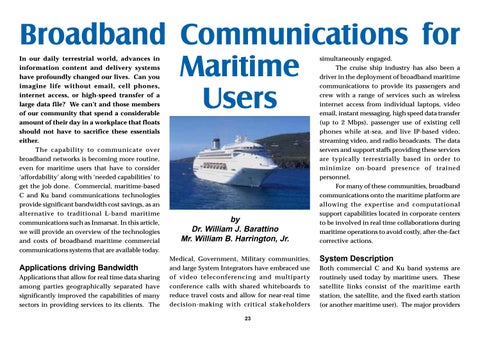
In our daily terrestrial world, advances in information content and delivery systems have profoundly changed our lives. Can you imagine life without email, cell phones, internet access, or high-speed transfer of a large data file? We can’t and those members of our community that spend a considerable amount of their day in a workplace that floats should not have to sacrifice these essentials either.
The capability to communicate over broadband networks is becoming more routine, even for maritime users that have to consider ‘affordability’ along with ‘needed capabilities’ to get the job done. Commercial, maritime-based C and Ku band communications technologies provide significant bandwidth cost savings, as an alternative to traditional L-band maritime communications such as Inmarsat. In this article, we will provide an overview of the technologies and costs of broadband maritime commercial communications systems that are available today.
Applications driving Bandwidth
Applications that allow for real time data sharing among parties geographically separated have significantly improved the capabilities of many sectors in providing services to its clients. The
by Dr. William J. Barattino
Mr. William B. Harrington, Jr.
Medical, Government, Military communities, and large System Integrators have embraced use of video teleconferencing and multiparty conference calls with shared whiteboards to reduce travel costs and allow for near-real time decision-making with critical stakeholders
simultaneously engaged.
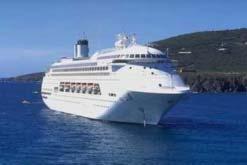
The cruise ship industry has also been a driver in the deployment of broadband maritime communications to provide its passengers and crew with a range of services such as wireless internet access from individual laptops, video email, instant messaging, high speed data transfer (up to 2 Mbps), passenger use of existing cell phones while at-sea, and live IP-based video, streaming video, and radio broadcasts. The data servers and support staffs providing these services are typically terrestrially based in order to minimize on-board presence of trained personnel.
For many of these communities, broadband communications onto the maritime platform are allowing the expertise and computational support capabilities located in corporate centers to be involved in real time collaborations during maritime operations to avoid costly, after-the-fact corrective actions.
System Description
Both commercial C and Ku band systems are routinely used today by maritime users. These satellite links consist of the maritime earth station, the satellite, and the fixed earth station (or another maritime user). The major providers
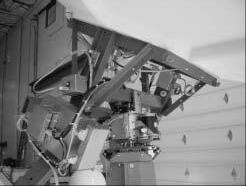
of satellite services include Intelsat, Loral, PanAmSat, and SES. Our discussion here will focus on the maritime segment of the satellite link. The above is a schematic of a typical maritime satellite earth station consisting of above-deck and below-deck equipment. The maritime satellite earth station must continuously track the satellite position during difficult sea state conditions, while simultaneously subjected to high wind loads. A radome cover is used to provide shelter against
wind loads for the above-deck equipment, which consists of the stabilized antenna assembly, high power (transmit) and low noise (receive) amplifiers, and the up and down converters. The stabilized antenna assembly provides isolation for the antenna tracking system against the platform’s movement in the maritime environment. The RF signals are converted into IF signals (70/140 MHz) in the radome, then transported over coax cables to the below deck equipment suite.
System performance for maritime users is primarily limited by the size of the antenna system that can be deployed on a platform. By definition, the maritime platform will typically be transiting transoceanic distances or through large geographic regions, which drives one towards global beam coverage from the satellite provider. The maritime platform is often linked to an established, commercial fixed satellite earth station, allowing use of a larger antenna on that end. The objective in designing the circuit is to minimize the satellite transponder lease requirements while providing sufficient transponder margins to close the links even under worst-case atmospheric conditions. Toward this end, bigger is indeed an asset for the antenna size when implementing broadband transmission onto the platform.
The sizes for commercial maritime antennas today range from 1 to 4.5 meter class systems. Figure 2 shows how the accompanying radome footprints differ dramatically, ranging from 1.6 m (diameter) x 1.8 m (height) for the 1 m dish and 5.5m (diameter) x 4.9 m (height) for the 4.5 m dish. The drive toward bigger antennas is based on two factors:
1.The push toward broadband applications for maritime users, which increases the power requirements of the satellite transponder and earth station transmitter.
2.The need to minimize the energy in the transmitting sidelobe beams of the maritime
Antenna with Stabilization/Tracking Platform
satellite earth station to allow for closer packing of satellites in geosynchronous orbits without interference to adjacent satellites.
Closing the link with the satellite requires the maritime satellite earth station to have an antenna stabilization and tracking system that can maintain pointing accuracies on the order of 0.2 degrees in three dimensions. The stabilization system must dampen the vibrations on the antenna induced by both natural (i.e. wind and waves), as well as man-made disturbances (i.e. power generation equipment) to provide a benign isolated environment for the tracking system to lock onto the satellite incoming signal. Two types of stabilization techniques are commonly used for commercial maritime systems, a balanced servo-driven system and gear-driven drive system.
The balanced system, pioneered by SeaTel, Inc., provides three-axis stabilization using servo motors, meets stringent vibration isolation
specifications from the support platform, and performs tracking using conical scanning on the receive signal. System disturbances are removed by drive motors in each axis and the vibration isolation system to maintain an equilibrium position of the antenna at all times. The sensitivity and response of the balanced system is easily seen by moving the antenna with the
push of an index finger and watching the system quickly return to its original position.
System Sizing Considerations
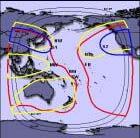
Antenna size has a dramatic effect on satellite transponder requirements to support broadband circuits onto maritime platforms…bigger is better! To demonstrate this impact, we present a scenario of a maritime platform in the Pacific Ocean communicating with its headquarters in the United States. Voice and data traffic is routed over a duplex T-1 circuit provisioned with C-band links over the Intelsat 802 satellite located in a geosynchronous orbit at 174o E longitude to Verestar’s 30-m earth station at Brewster, WA. For platforms that will always remain in a confined area of the Ocean, a hemi, zone or spot beam could be used instead of a global beam. There are cost advantages for this type of coverage but with associated geographic access constraints to remaining within the smaller beam’s coverage area. The flexibility advantage of a maritime platform most often requires use of a global beam to minimize beam coverage constraints.
For our link budget calculations, we employed modems using Turbo Product Code forward error correction coding with QPSK modulation at each earth station. When determining the size requirements for our satellite transponder lease, we must consider the potential for adverse weather conditions on the paths between both the maritime platform and the fixed earth station to the
SeaTel Balanced Antenna Stabilization System
SeaTel Vibration Dampening System
satellite. A worst case scenario would be for storms conditions to be occurring simultaneously on both paths.
The 4.5 m system requires less than 3 MHz of the satellite transponder to close the T-1 link for the worst case scenario of adverse weather conditions on both transmission paths. The 1.5 m system requires approximately 10 to 14 MHz to provide the same size circuit, with the range based on the rain fade conditions.
The difference in capital costs between the smaller and larger antennas of about $100K is quickly recovered within the first two to three months with the lower recurring cost of the satellite transponder lease. Thus, we see the advantage of a larger antenna system for implementing broadband services on the maritime platform.
Deployment Issues
Maritime Telecommunications Networks, Inc. (MTN), a subsidiary of Verestar, Inc., is the major provider of telecommunication C and Ku band services to commercial maritime customers today.
New maritime users wishing to deploy broadband services on their maritime platforms can expect delivery periods of three to six months from the time of placement of the order.
The actual time to install the antenna, radome assembly, and below deck equipment is much quicker than one might expect. The steps of removing an existing system and installing a new one typically can be completed within a 24 hour period.
MTN operates a real time global network on a 24 x 7 basis from its Network Operations Center in Miramar, Florida, USA. Typically, a crew member on the ship is trained on basic O&M procedures of the shipboard communications system and then relies on NOC experts to provide additional troubleshooting guidance, as required.
Applications requiring broadband telecommunications networks have become a commonplace necessity in our normal ‘terrestrial-based’ workplace. Communication systems have matured to the stage where the same capabilities can be provided on an affordable basis for maritime users. The deployment of 4 m class of antenna systems for commercial C and Ku band satellites on stabilized tracking platforms and efficient modulation techniques provides the foundation for extending digital broadband services to a floating work environment, as well.
Dr. William J. Barattino is the CEO of Global Broadband Solutions, LLC. Dr. Barattino’s academic credits include a Ph.D. in Nuclear Engineering from The University of New Mexico, a M.S. in Resource Management from The National Defense University, an MBA from New Mexico Highlands University, an M.S. in Energy, Resources and Environment from The George Washington University, and a B.S. from The United States Military Academy. He is a registered professional engineer in mechanical engineering with the State of Virginia.
William Harrington, a former naval officer and program manager at the National Reconnaissance Office, is a director with Global Broadband Solutions, LLC. He is currently responsible for designing satellite communication circuits for a major government program implementing maritime and terrestrial based systems. He holds a Aeronautical and Astronautical Engineer’s Degree, an M.S. in Electrical Engineering, an M.S. in Aerospace Engineering all from the Naval Postgraduate School, and a B.S. in Marine Engineering from the United States Naval Academy
Subsea Networks – Lightwaves around the World
International Submarine Convention
March 28 th to April 1 st , 2004
Grimaldi Forum, Principality of Monaco
Make sure to secure your exhibition space, hospitality room and sponsorship
Burial assessment should address a number of aspects, such as:
1.can the cable be buried and if so, to what depth?
2.what is the most appropriate burial method (e.g. ploughing, jetting, trenching, others)?
3.what is the anticipated performance of the recommended burial method (e.g. advancement speed)?
4.in case of ploughing, which is the most commonly used method, what are the expected tow forces? How are these forces affected by the ploughing speed?
5.is the burial tool stable on the seabed?
6.what is the anticipated wear of the burial equipment?
To provide the appropriate answers, burial assessment surveys of cables require specific data •water depth and seabed topography, •anomalies on and in the seabed (e.g. geohazards, existing pipelines or cables, other obstructions),
•differentiation of strata with significantly different geotechnical properties affecting burial operations, •geotechnical parameters .
Information provided by standard route selection geophysical surveys - aimed at providing the first two sets of data - is insufficient to address all burial assessment issues.
Different approaches have been proposed and implemented in the last decades ( Plough Assessment Survey, CPT only BAS) but none of them has proved to be fully satisfactory.
Burial analysis is conceptually a foundation problem. An efficient and cost effective burial assessment survey is a threefold challenge:
1.geotechnical tools shall be available to obtain the required soil data at preselected locations, operational in least 2000m depth and easy to operate;
2.burial analysis methods based on the geotechnical information obtained from these tools shall be available (or developed) and calibrated on actual burial data;
3.burial predictions shall be made continuously all along the route i.e. there is a need for a tool to interpolate geotechnical parameters and ploughing analyses in between the sampling/ testing locations.
Significant advances in the three mentioned directions have been made these last four to five years.
Use of CPT Techniques
Current practice for obtaining detailed local geotechnical information consists of a combination of in-situ cone penetration testing (CPT) and coring. Advantages of CPTs relative to sampling and laboratory testing are as follows:
•significantly faster data acquisition ,
•provision of continuous, unambiguous and detailed vertical geotechnical profiles,
•currently the most reliable method for geotechnical characterisation of sands,
•cost is generally less than a core plus suitable laboratory testing.
Most of burial assessment survey (BAS) contracts in deep waters (more than 500m wd) for the cable industry only require CPTs.
CPT equipment
The piezo-cone penetrometer provides a continuous record of tip resistance on a 10cm2 cone and friction on a 150 cm2 sleeve mounted behind the cone tip. A pore water pressure is either mounted on the cone face or between the cone and the sleeve. These three measurements are performed continuously while the penetrometer is pushed at a penetration rate of 2 cm/s.
Light-weight systems using mini-cones (cone base area <5cm2) are also available. These systems provide useful stratigraphic information. However, they do not comply with the geotechnical standards (ISSMGE, 2001).
CPT standard interpretation
CPT data are immediately processed onboard and semi-automatically interpreted to provide vertical profiles of:
•cone resistance,
•sleeve friction,
•friction ratio ( i.e. sleeve friction / cone resistance),
•pore pressure,
•pore pressure ratio Bq (a measure of pore pressure relative to cone resistance),
•soil stratification and soil type,
•undrained shear strength of cohesive sediments,
•relative density of sands.
Soil identification is obtained from the CPT measurements using soil behaviour type classification charts (e.g. Robertson, 1986).
Undrained shear strength of clays is determined from the measurement of the cone resistance by a semi-empirical approach, as follows:
c u = (qt – s vo) /Nkt
where s vo is the total overburden stress, Nkt an empirical correlation factor and qt the total cone resistance .
Relative density of sands is derived from empirical charts (e.g. Baldi et al, 1986)
Correlation between CPT and plough share penetration
Cable ploughs used for cable burial are relatively light (typically 20 - 30 Tons). The share penetration of light ploughs is sensitive to the soil strength and ride out phenomena are
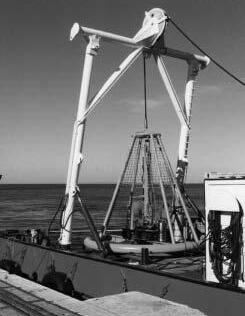
CPT (SEAROBIN) unit capable of performing 3m CPTs in 2,000m water depth
Back-analysis of installation data
Maximum Feasible Burial Depth
Back-analysis of installation data - feasible burial
observed where sharp increases in soil resistance exist at intermediate penetration.
Cable installation data (including measurements of tow tensions, share penetration and ploughing speed) in loose to very dense silica sands have been back-analysed. Very good agreement is observed between the behaviour of the ploughs and the CPT resistance profiles. An empirical correlation between the penetration of the share and the angle of internal friction of the sand below the share tip as obtained from CPT data could be derived. Theoretical models for tip share penetration based on foundation bearing capacity concepts have been also developed. The full line represents the predicted maximum burial depth of a standard light-weight
cable burial plough with a pre-set depth of 1.2m on the route where installation data were backanalysed. Data pertain to CPT locations where full burial could not be achieved and include results for three different types of cable ploughs. Fair agreement is observed between predicted and observed data.
Correlation between CPT and tow forces
The tow force on a plough of given geometry and weight is highly dependent on the share tip penetration and the soil characteristics in front of the share. In sands, plough speed, permeability of material and dilation potential may also affect the tow force.
Carbonate
Back-analysis of cable installation data: predicted versus observed
Back analysis of cable installation data measured vs predicted tow forces
As for the prediction of the burial depth, both empirical and theoretical methods have been developed for prediction of tow forces. The empirical model was developed by regression analysis through the following plough and soil data:
•plough weight & share dimensions,
•burial depth,
•soil type and strength,
•plough speed and soil permeability (sands).
Development of Geophysical Burial Assessment Techniques
Limitation of standard survey methods
Whereas the CPT technique proved to be an efficient mean to obtain soil classification data
and strength parameters relevant for burial assessment at the CPT location, interpolation of geotechnical data between adjacent CPT locations used to be difficult in the absence of continuous and reliable soil data within the very first metre(s) below seabed.
Burial assessment analyses require continuously all along the route:
1.an accurate definition of the soil stratigraphy within the first 2 - 3m below seabed: (precision of about 0.2m or better);
2.an identification of the various soil layers;
3.a characterisation of the various materials by physical and/or mechanical parameters /testing locations.
It is nowadays recognised that conventional geophysical survey techniques are unable to provide the required information.
Two geophysical methods have been developed and are commonly used for burial assessment purpose.
Continuous tow electrical resistivity measurements ( introduced in the midnineties)
Basically the method consists of measuring the apparent resistivity of the upper mass of marine sediments by continuously dragging on the sea bottom a cable equipped with series of electrodes used for injecting current and measuring the resulting electrical field. The apparent resistivity is a measure of the overall resistance of a volume of soil whose dimensions are related to the electrode spacing. Using several electrode spacing gives access to variations of electrical resistivities with depth.
The sub-bottom resistivity is mainly determined by the sediment porosity (rs) and the pore water resistivity which is assumed equal to the seawater resistivity (rw).
In practical conditions, the resolution of the system is low. For sediment porosity which may (theoretically) vary between 0% and 100%, the apparent resistivity effectively measured is limited to the range between the value of the water resistivity - r w - and twice this value ( 2r w ).
It is common practice in resistivity surveys to introduce the concept of formation factor (FF) for characterizing the electrical properties of the
various types of soils and rocks. The formation factor is defined as :
Deriving resistivity profiles (or FF profiles) with depth requires the implementation of inversion techniques. This represents a severe limitation because there are an infinite number of models which can satisfy the set of data when both actual stratigraphy and layer resistivities are unknown. In practice inversion can be successfully performed at the CPT locations where the stratigraphy is known.
To day existing systems (REDAS, RHOBAS) can acquire data in water depth of up to 2000m.
Principle of marine seismic refraction system
High resolution seismic refraction technique
Introduced on the market in 1999, new marine systems have been specifically designed to investigate the very first meters of sediments below the seabed and meet the needs of burial assessments .
Data Integration
Burial assessment analyses
Following the processing of the geophysical and geotechnical data, three types of burial assessment analyses are performed:
1.ploughing predictions - attainable burial depth, anticipated towing forces - are established at the location of the geotechnical investigations;
Integration of burial assessment survey data
Data of route segments surveyed for burial assessment purposes consist of:
•bathymetry
•side-scan sonar or multi-beam echosounder ;
•seismic reflection (boomer);
•continuous geo-BAS profiling : seismic refraction or electric resistivity
A high resolution system is composed of a sledge towed on the seafloor which carries data acquisition and transmission units and a seismic source. A 48-trace hydrophone streamer is pulled behind the sledge;
A key component of the marine high resolution seismic refraction systems is the stopand-go motion device which enables the sledge to remain stationary during shooting while the vessel continues sailing. The stop-and-go device is required for maximum system resolution.
The technique is operational in 350 m water depth (GAMBAS®) .
The system provides in real-time a continuous profiling of the stratigraphy of the soil over the target burial depth and a precise measurement of the compressive wave velocity associated to the various layers. A major advantage of the technique is that both soil layering and quantitative soil characterisation (Vp) are obtained by direct measurements i.e. without any need for complementary data/ assumptions or lengthy post-processing.
2.results are interpolated to the entire route;
3.complementary assessment of burial conditions is performed.
Ploughing predictions are performed where geotechnical information is available. At these locations, all geotechnical data - sampling, laboratory testing, CPTs - are reviewed and compared to establish the most reliable soil and design parameter profile. Subsequently, burial analyses are conducted.
Interpolation of burial analyses along the entire route is performed by comparing and cross checking the geotechnical, standard geophysical and continuous profiling geo-BAS data in accordance with well established procedures.
The third type of analysis addresses a number of particular aspects like: obstructions, cable or pipeline crossings, geohazards (slope stability, etc.), bearing capacity of seafloor, share wear etc. Here again combined exploitation of bathymetric, side scan sonar and geotechnical data is required.
•geotechnical data including groundtruthing , in-situ testing data ( CPT data) and/or high quality sampling data (push sampling, rotary coring).
The topography of the seabed over the route corridor is obtained via acoustic measurements.
Side-scan sonar or multi-beam echo sounders provide a fair description of the seabed morphology, identification and visualisation of seabed obstructions and information on the nature of the surface sediments. Whereas reflectivity interpretation is essentially qualitative with side-scan sonar, promising multi-beam signal processing techniques are being developed for analysing the back-scattering properties of surface and sub-surface sediments.
Seismic reflection data are very useful to provide a general understanding of the subbottom geology. However due to the poor resolution of the technique over the first one or two meters of penetration, the information is generally unreliable for assessing the stratigraphy over the burial depth.
Example of seismic velocity field obtained from Gambas® measurements
Side-scan sonar and seismic reflection techniques provide continuous information along the route but no access to the quantitative characterisation of the soils/rocks required for the burial assessment. On the other hand, CPTs and samples provide quantitative information relevant to burial assessment but this information is only available at discrete locations.
The seismic refraction technique is to day considered the most appropriate tool to interpolate geotechnical data between coring / in-situ testing locations because it provides both:
•continuous and relevant stratigraphic information over the burial depth and,
•quantitative characterisation of the materials through the measurement of the compressive velocity Vp which correlates with the mechanical soil properties.
Electrical resistivity measurements provide very useful information for characterising the seabed sediments, via the Formation Factor. However interpolation of the stratigraphy is much more hazardous due to the poor vertical resolution of the technique. Acceptable results can be obtained in deep waters where longitudinal evolution of soil conditions is the main concern. Its use is more controversial and risky where geological conditions are complex.
Integration of data consists in comparing the information obtained from the different
sources, check the consistency of the interpretation and propose a final model of seabed conditions compatible with the global set of survey data.
Some general principles of the integration process are:
•seismic refraction is the primary tool to derive the soil stratigraphy over the burial depth.
•soil identification is strictly based on geotechnical information gathered at the sampling/CPT locations;
•at the sampling/CPT locations, seismic velocities (Vp) or electrical resistivities (FF) are compared to the soil profiles. Correlation between geophysical and geotechnical properties is established: ranges of velocities or formation factors are assigned to the soil formations;
•where refraction data are available, interpolation between sampling/CPT locations is conducted by direct combination of velocity classes with the continuous stratigraphic information.
•where only electrical resistivity data are available, crude stratigraphic interpolation is attempted by altering the results of the inversion carried out at the sampling/CPT location according to the longitudinal evolution of the apparent resistivity profiles.
Automatic soil layering from high resolution seismic refraction data
The most discriminating GeoBAS profiling technique in use is certainly the very high resolution seismic refraction. At each shooting/ recording point, i.e. in practice every 10 to 20m, the system provides by inversion a velocity profile expressed as a file of (hi – Vpi) couples, hi being the thickness of the layer i and Vpi the associated compressive velocity.
Example of integrated Gambas® profile
For burial engineering purposes these velocity fields must be transformed into an organised representation of the subsoil stratigraphy, each layer being properly delineated and defined by a characteristic value of its compressive velocity. The process is now fully automated and hundred of kilometres can be handled in some hours.
Gambas data : Velocity field
Stratigraphic interpolation from STRATOS
Gambas data : Automatic soil layering using the STRATOS software
Correlation of geophysical and geotechnical data
The example shows the relation obtained between compression wave velocity -Vp- and average CPT cone resistance -qc- per layer in the chalks of the English Channel. Such correlations are obtained on a project basis and for each soil
Correlation of seismic compressive velocity - Vp - and cone resistance - qc - for North Sea chalks
A very large data bank resulting from thousands kilometers of continuous profiling surveys covering a wide variety of sediment types is available in the authors’ company. Compilation and screening analyses of these data is presently under way. In parallel academic research is supported with a view of developing sound basis for correlating geophysical and geotechnical data at shallow penetrations.
Alain Puech is technical manager at FugroFrance, Nanterre, France. Alain has more than 30 years experience in marine geotechnical surveys. He has been with FUGRO since 1998. He is graduated Civil Engineer from Ecole Speciale des Travaux Publics in Paris (1971) and received a PhD in Soil Mechanics from the University of Grenoble, France (1974). He is a member of the API Geotechnical Resource Group and of the ISO Standardization Committee for offshore structures.
Shear Strength Cu (kPa)
Correlation of formation factors - FF - and undrained shear strength - Cu - deduced from CPT for marine clays
formation by comparing at the CPT locations, the field of compressive velocities measured by the refraction system with the CPT logs. A similar relation is shown between the Formation Factors of deep sea cohesive sediments and the undrained shear strength of these materials derived from CPT measurements.
Jean Paul Colonna is manager of the Geobas department at Fugro France. Jean Paul has been involved for 25 years in the O&G and Cable Route surveys as party chief, Client representative and Project manager with BEICIP, INTERNATIONAL SUBSEA MAPPING and the FUGRO Group since 1995. He has a Doctorate degree in Petroleum Geology and Economy of the University of Paris-Orsay, France (1974).
This story was a dream of an Egyptian Pharaoh. He announced to his people that seven years of dearth would follow the past seven years of bounty.
The lesson of this proverb seems to have been forgotten in our western world, at least in our submarine cable community. I now suddenly realised that you Japanese, still, rightly, have kept this wisdom in your behaviour. When the good times are there you remain prepared for the times of “scraggy cow.”
You know by experience that nothing is granted, nothing is for sure or forever; the trees never grow up to the sky. Earthquake or storm can destroy your rice field, your house, and your community. This can happen to you anytime. Just be prepared.
During the recent “fat cows” years, you have not lost your sangfroid, neither your common sense. You did not over invest. You have not built new factories in Europe or in the USA! You kept your dispersed organisation, a legacy of your history. You pursued your domestic healthy competition instead of building the “Sub Japan Inc Company” that many of your friends were suggesting to you, myself included. “SCS was an attempt to organize something like this, but many of you resisted this. Small and fit is better than tall and fat!
The Telecom houses compete on Technology and Systems design. The cable house is supported by Japanese cable industry. The main carriers have a strong submarine system and marine capability. You maintained the competencies embedded in their natural environment.
I personally know for sure that the allocation of the full TAT14 came to you as a big surprise! Your legitimate ambition was limited to a portion of this project. You quite rightly thought that it was time for you to have a foot in the Atlantic, when everyone else was heavily involved in the Pacific.
I am still angry with the people who, by ignorance, put you in this mortal danger. You bravely faced the situation by working hard. Few people know what it had required from you to fulfil your commitment.
It reminds me of my very first visit in your
country in 1965. Your Yokohama cable factory was producing cable for a TPC system, under Western Electric quality control inspectors. Walking through the plant, I saw a wreath on a desk! The chief of the cable termination shop had committed suicide, being late in his program! I always remembered this “unknown soldier”.
One of your managers gave a paper in a sub cable conference recently. He reminds the audience that what we expect from our top manager is for them to be: “Honest, Frugal, and Prepared.” SubOptic 2001 in Kyoto was a good example of this behaviour.
Thanks a lot, my friend Yaka-san, for what you bring to our industry. I sincerely hope that from now on, moving forward, we are all going to be “Japanese.”
Jean Devos, Past President of SubOptic, was formerly Senior Vice President of Sales and Marketing for Tyco Submarine Systems Inc., and previously Director, Submarcom and Director Marketing and Projects for Alcatel Submarine Networks.
Specializing in providing business solutions to companies seeking to evaluate a market segment or technology application in the submarine cable markets for telecom, oil & gas, and defense industries.
Analysis and development of business strategies
Business and financial plan development and evaluation
Business environment assessment
Competition analysis
Partner screening and evaluation
QA/QC
RFP process mediation and support
Strategic alliance initiation
Technology assessment
WFN Strategies, LLC
19471 Youngs Cliff Road Suite 100
Potomac Falls, Virginia 20165 USA
Tel: +1 (703) 444-2527
Fax: +1 (703) 444-3047
Mob: +1 (703) 798-4630
wnielsen@wfnstrategies.com
www.wfnstrategies.com
www.subtelforum.com
18-19 January 2003 China Tech Conference, Honolulu, Hawaii, USA www.meetexpo.com/chinatech/index.htm
19-23 January 2003 Pacific Telecom Conference, Honolulu, Hawaii, USA, www.ptc.org
10-12 February 2003
Underwater Intervention 2003, New Orleans, Louisiana, USA, www.diveweb.com/ui/
11-13 March 2003 11th Convergence India 2003 exhibition and conference, New Delhi, India, www.exhibitionsindia.org
24-27 March 2003 U.S. Hydro 2003 Biloxi, Mississippi, USA www.thsoa.org/
4-6 June 2003
Oceanology International Americas, New Orleans, Louisiana, USA www.oceanologyinternational.com
24-27 June 2003 Third International Workshop on the Scientific Use of Submarine Cables & Related Technologies, University of Tokyo, Japan. http://seasat.iis.u-tokyo.ac.jp/SSC03/
24-27 August 2003 13th International Symposium on Unmanned Untethered Submersible Technology, University of New Hampshire, USA www.ausi.org/uust/uust.html
2-5 September 2003 Offshore Europe 2003, Aberdeen, Scotland, www.offshore-europe.co.uk/
9-12 September 2003 Defence Systems & Equipment International, London, UK, www.dsei.co.uk/
22-26 September 2003
Oceans 2003 MTS/IEEE, San Diego, California, USA, www.oceans2003.com/
12-18 October 2003 ITU Telecom World 2003, Geneva, Switzerland, www.itu.org
24-26 November 2003 Hydro 2003: 4th Australasian Hydrographic Symposium, Christchurch, New Zealand, www.hydrographicsociety.org.nz/conference.htm
16-19 March 2004
Oceanology International 2004, London, UK, www.oceanologyinternational.com/
28 March - 1 April 2004 SubOptic 2004, Principality of Monaco, www.suboptic.biz