Welcome to the 42nd issue of Submarine Telecoms Forum magazine, our Pacific Outlook edition.
2009 promises to be an exciting year…
To say it has been an interesting few months would be ludicrous; it has been far more than that. But what I find interesting is trying to discern what is happening in the markets, and where and how fast things are headed. To listen to the “experts” and politicians is equally dismaying because many are simply speculating beyond their comfort zone. So what I have learned to do is listen anew to the Depression era generation as they have lessons to share, and their words are succinct and ring true - this, too, shall pass.
With this in mind, we have some excellent articles to start this new year.
Paul Budde and Kylie Wansink provide their interesting vantage on the Asia Pacific region, while Roland Lim highlights recent industry collaborative strategies. Anne LeBoutillier introduces a new industry subsea conference, as Graham Evans shows some encouraging Pacific market signs ahead. Chris Barnes, Steve Lentz and Peter Phibbs update the NEPTUNE Canada underwater observatory, and Peter Evans spotlights developments in the Asia Pacific region. Brett O’Riley puts his own spin on times ahead, while Paula Dobbyn discusses a new Oregon cable landing station. Jean Devos returns
with his ever insightful observations, and of course, our ever popular, “where in the world are all those pesky cableships” is included as well.
To the new year, with all its new possibilities, and as always, save me a seat at the Mai Tai Bar.
A synopsis of current news items from NewsNow, the weekly news feed available on the Submarine Telecoms Forum website.
World’s first integrated satellite-terrestrial network delivering mobile video with interactive services showcased at International Consumer Electronics Show (January 7th, 2009)
ICO Global Communications (Holdings) Limited (NASDAQ: ICOG) and Alcatel-Lucent (Euronext Paris and NYSE: ALU) will be demonstrating the world’s first fully integrated satellite-terrestrial network being used to deliver mobile video and interactive two-way communications services during the International [Read more]
Alcatel-Lucent successfully deploys a 3G+ network for SRR in Réunion (January 7th, 2009)
Alcatel-Lucent (Euronext Paris and NYSE: ALU) announced today it has successfully deployed a 3G+ network for the mobile operator SRR. The first phase of this UMTS/HSPA wireless
network deployment was made in 2008 mostly in Réunion’s Saint-Denis commune and in the island’s main towns. Alcatel-Lucent’s UMTS Radio Access [Read more]
SubTel Forum To Exhibit at PTC ‘09 (January 6th, 2009)
As SubOptic 2010 Media Partner and Programme Committee Member, WFN Strategies’ SubTel Forum is pleased to announce its exhibiting at Pacific Telecommunications Conference 2009 on 18-21 January at Hilton Hawaiian Village in Honolulu, Hawaii USA. Come and hear Keith Schofield, Chairman of the [Read more]
Faroese
Telecom Is Bringing Capacity to BP’s Assets Clair and Schiehallion (December 18th, 2008)
Faroese Telecom and BP have signed a long term contract whereby Faroese Telecom
provides capacity between the Clair and Schiehallion installations West of Shetland and BP’s North Sea headquarters in Aberdeen via the SHEFA-2 and FarIce submarine cable systems. Faroese Telecom has [Read more]
AT&T
Opens First Data Centre in India (December 11th, 2008)
AT&T Inc. (NYSE:T) today announced that it has opened its first data centre in Bangalore, India. The new data centre will help meet the growing demand from multinational customers in India for online data centres with highly resilient facilities, a wide range of IT [Read more]
Global Crossing Reports GCUK’s Third Quarter 2008 Results (December 11th, 2008)
Global Crossing (NASDAQ:GLBC) , a leading global IP solutions provider, today announced third quarter financial results for its subsidiary,
Global Crossing (UK) Telecommunications Limited (GCUK). Highlights GCUK generated 82 million pounds in revenue in the third quarter, with adjusted gross margin of 68 percent or 56 million pounds [Read more]
Michael Boustridge to lead BT Asia Pacific (December 11th, 2008)
BT today announced that BT Americas CEO Michael Boustridge is to also lead BT’s Asia Pacific operations. These span 16 countries with over 4,000 direct staff. Michael succeeds Allen Ma who retires on 5 January 2009, after four years leading BT Asia Pacific’s operations. Asia Pacific and North America represent important growth [Read more]
BT works with Cabinet Office to address emergency planning (December 11th, 2008)
BT today announced that it has been awarded a contract by the UK Cabinet Office Civil Contingencies Secretariat, and Communities and Local Government to develop a national extranet to help government, local authorities and emergency services respond to civil emergencies, such as floods and outbreaks of agricultural diseases. The National Resilience Extranet (NRE) [Read more]
Chunghwa Telecom and Alcatel-Lucent to deploy Taiwan’s first femtocell network to improve mobile network coverage in homes and offices (December 11th, 2008)
Alcatel-Lucent (Euronext Paris and NYSE: ALU) today announced that it has been awarded a Femtocell bid from Chunghwa Telecom, Taiwan’s largest telecommunications provider, to deploy Taiwan’s first femtocell network, which will enhance the coverage [Read more]
LGS Software Solutions Team Designs Custom
Viewer that Improves Management of Military Digital Engineering Data (December 10th, 2008)
LGS, a subsidiary of Alcatel-Lucent (NYSE: ALU) dedicated to serving the U.S. government community, announced today that the Navy Marine Corps Intranet (NMCI) has successfully deployed a custom-designed LGS desktop application for 230,000 users. The LGS application, called the LT Viewer, [Read more]
AT&T Announces Expanded
Availability of Global Virtual Private Local Area Network Service into 14 Countries in Europe and Asia Pac (December 9th, 2008)
AT&T Inc. (NYSE: T) today announced expanded global reach for AT&T’s Ethernet portfolio with
the immediate availability of a virtual private local area network service (VPLS) in 14 countries across Europe and Asia Pac. AT&T’s VPLS service, called OPT-E-WANSM, enables businesses to link multiple locations - whether across the city or around the [Read more]
Etisalat, France Telecom Formalize Agreement (December 8th, 2008)
Following a Memorandum of Understanding (MoU) signed on 2 July 2008, Etisalat and France Telecom announced yesterday that they had signed a cooperation agreement covering Digital Home services, content, submarine cable networks and enterprise solutions. The companies said that they agree to target future projects together involving new submarine cables, in particular [Read more]
The Voyage that Changed the World (December 8th, 2008)
The International Cable Protection Committee has issued the following press release to note the upcoming 20th anniversary of the first transatlantic fiber optic cable. On December 14, 1988, the first fibre-optic cable to cross an ocean came into service. This was a momentous event because the new technology opened the door to [Read more]
GO Cable Installation Begins
(December 8th, 2008)
Work to lay a second submarine link between Malta and Sicily has started in St. Paul’s Bay, Malta, a few days behind schedule brought about by strong gale force winds last week. GO, Malta’s quad-play communications provider, which owns the submarine link, said the work commenced after the cable ship Teliri, commissioned [Read more]
The Voyage that Changed the World (December 2nd,
2008)
On December 14, 1988 the first fibre-optic cable to cross an ocean came into service. This was a momentous event because the new technology opened the door to low cost transmission of electronic data between continents. The timing was perfect: it coincided with the development of the Internet and together these [Read more]
New Deep-Sea Observatory Goes Live
(December 1st, 2008)
Off the coast of Central California, in the inky darkness of the deep sea, a bright orange metal pyramid about the size of two compact cars sits quietly on the seafloor. Nestled within the metal pyramid is the heart of the Monterey Accelerated Research System [Read more]
GO’s Malta-Italy Cable Construction to Begin
(December 1st, 2008)
Cable-laying works on the second submarine link to Sicily owned by Malta’s quad-play communications provider GO has started at St Paul’s Bay as the Italian vessel carrying out these works arrived in Malta last week. The process of laying the cable between St Paul’s Bay and Mazara Del Vallo, south [Read more]
Elster Group chooses BT for global IT and communication services (December 1st, 2008)
BT Germany and Elster Group signed a substantial, 8-year outsourcing contract for international IT and communications. Under the terms of the agreement, BT will provide data centres, the wide-area data network (WAN), desktop support, user help desk and a variety of IT services across 38 countries. The BT HP Alliance plays a [Read more]
BT
wins global Green Award (December 1st, 2008)
BT has been named winner of the ‘Green Award’ at this year’s World Communication Awards (WCA) in London. The ‘Green Award’ is a new addition to the high profile prizes awarded by the WCA, and aims to reward companies making
significant progress in tackling Corporate Social & Environmental Responsibility issues. The World Communication Awards [Read more]
Estonia’s Elion Enterprises teams with AlcatelLucent to simplify management of triple-play services (November 25th, 2008)
Alcatel-Lucent (Euronext Paris and NYSE: ALU) today announced that it is teaming with Elion Enterprises Ltd., the largest telecommunications provider in Estonia, to offer a dramatically improved triple play (voice, data and video) experience to Elion’s customers. Alcatel-Lucent will deploy its home network management solution, providing streamlined [Read more]
Alcatel-Lucent and The Ministry of Higher Education Training and Scientific Research of the Kingdom of Morocco through their partnership make collaboration platforms available to Moroccan universities (November 25th, 2008)
Rabat, Morocco and Paris, France, November 24, 2008 - The Ministry of National Education, Higher Education, Executives training and Scientific Research of Morocco (MENESFCRS) and Alcatel-Lucent (Euronext Paris et NYSE: ALU) today announce the signature of a cooperation agreement for a new educational
program entitled “Dynamic Knowledge for Education.” Promoting [Read more]
Arbinet Launches New Hong Kong IP Exchange (November
23rd, 2008)
Arbinet-thexchange, Inc. has announced that it has expanded its IP services with a new Hong Kong IP Exchange. Arbinet’s Hong Kong location is operational and ready to connect ISP sellers and buyers, the company said in a statement. Located at the MEGA-i Data Center, Arbinet’s new exchange provides customers in Asia with [Read more]
SEACOM Wins Awards
(November 23rd, 2008)
On the heels of the recently announced groundbreaking of the project’s cable landing stations sites in Mozambique and Kenya, the SEACOM undersea cable project was the recipient of three awards at Monday night’s 2008 Africa Investor Infrastructure Awards event held in Johannesburg, South Africa. SEACOM, its financier, Nedbank Capital and [Read more]
AT&T Announces First Super Internet Data Centre in Asia
(November 23rd, 2008)
AT&T Inc. (NYSE:T) today announced it is opening the first super Internet Data Centre
(IDC) in Asia, located in Singapore. The super IDC, an expansion of AT&T’s existing facilities, will act as a regional gateway to the Internet and the AT&T network to deliver AT&T Synaptic HostingSM, its next-generation [Read more]
New science and congress center in Darmstadt, Germany to use Alcatel-Lucent’s voice and data solution delivered by T-Systems (November 23rd, 2008)
Alcatel-Lucent (Euronext Paris and NYSE: ALU) and its Alliance partner, T-Systems, have equipped the science and congress center in Darmstadt, Germany, with a complete endto-end business communications solution. A complete state-of-the-art, secure, integrated communications solution, including VoIP, wireless LAN and VPN solutions will be provided to the [Read more]
Tata Communications Awarded “Best Market Strategy” at the 2008 Capacity magazine
Global Wholesale Telecommunications Awards (November 18th, 2008)
Tata Communications, a leading provider of the new world of communications, was honored with the “Best Market Strategy” award at the Annual Capacity magazine Global Wholesale Telecommunications Awards in Amsterdam.
The awards, held at Capacity Europe 2008, recognize significant key market players who, through applying innovation and [Read more]
BT launches sustainable development index for India (November 18th, 2008)
Indian companies currently perform most strongly for long-term economic growth and most poorly in their management of water resources TATA Group considered as top corporate leader in sustainable development BT announced today the launch of its “Sustainable Development Index - an assessment of business performance in India”. The SD index has been developed [Read more]
Submarine Telecoms Forum is published bimonthly by WFN Strategies. The publication may not be reproduced or transmitted in any form, in whole or in part, without the permission of the publishers.
Submarine Telecoms Forum is an independent commercial publication, serving as a freely accessible forum for professionals in industries connected with submarine optical fibre technologies and techniques.
Liability: while every care is taken in preparation of this publication, the publishers cannot be held responsible for the accuracy of the information herein, or any errors which may occur in advertising or editorial content, or any consequence arising from any errors or omissions.
The publisher cannot be held responsible for any views expressed by contributors, and the editor reserves the right to edit any advertising or editorial material submitted for publication.
Contributions are welcomed. Please forward to the Managing Editor:
Wayne Nielsen
WFN Strategies
21495 Ridgetop Circle, Suite 201 Sterling, Virginia 20166 USA
Tel: +[1] 703 444 2527
Email: wnielsen@wfnstrategies.com
General Advertising
Email: sales@wfnstrategies.com
Tel: +[1] 703 444 0845
ReadeRship
The New Submarine Paradigm
By Paul Budde and Kylie Wansink
The demand for bandwidth continues to steadily increase. Around the world, the Internet is becoming more and more important to both the economy and society. Web 2.0 services have also fuelled the demand for bandwidth as users embrace online video, music and voice.
In response, there have been more announcements of proposed submarine cable system build-outs in recent years than in any other time since the last boom of 1998-2001. This activity in
the submarine cable sector continued throughout 2008 with many cable build-out announcements coming from around the world. Network upgrades were also on the agenda for some existing systems.
The impact of the global credit crisis on the submarine cable sector in 2009 cannot yet be fully determined as many current projects are already funded. There are however many planned projects still to be funded that may well suffer as a result.
The credit crisis may well result in more collaboration, with companies working together to share building costs. The Unity Project is an example of such a model - Bharti Airtel, Global Transit, Google, KDDI Corporation, Pacnet and SingTel are sharing the cost of building an undersea cable from Tokyo to Los Angeles.
After the collapse of the previous submarine cable boom at the end of 2001, BuddeComm predicted a revival in this market before the end of the decade. The first signs began to appear in around 2004, coinciding with an increasing demand for bandwidth. We were reasonably confident in this prediction, as the submarine market is fairly predictable, due to its relatively lengthy planning and building cycles.
There was actually nothing wrong with the concept behind the dotcom era, but, as is now being demonstrated in the subprime housing market, greed can take over in the financial sector and ruin things, for a time at least.
Dotcom was all about new applications that would generate the next level of revenues for the ICT industry.
The subscription-based model for telephony and Internet services was approaching its due-by date and new models were needed. The dotcomers had the right vision at the time, but the infrastructure needed to deliver those applications was not available. And without the necessary national infrastructure the demand for international traffic declined, creating havoc in the submarine telecoms market.
But then broadband infrastructure became more available and applications such as Google, YouTube, MySpace and FaceBook
became overnight successes. Then, of course, the demand for international networks returned and by 2007 new submarine networks started to appear on the agenda. On the Pacific route, for example, traffic is doubling every two years.
However, by then the telecoms business model had changed and those involved in the new market didn’t wish to operate in the international market in the same way the cosy cartels had been doing for over one hundred and fifty (!) years. But changes are also arriving in this market. For example, in relation to the proposed Unity Cable between Japan and the US, consortium members like Pacnet are allowed to operate fibre pairs independently in the system.
Companies like Google now depend for their revenue, and therefore their financial results, on people having access to good quality broadband, and that particular Internet media company – now one of the largest companies on earth – has a great deal of clout.
They are not at all interested in the old cartels; they want competition and innovation that will result in low cost access to their applications. Australia, in particular, is – due to a lack of competition in this market - suffering from relatively high international access charges. Because the Internet is an international system the telcos and ISPs who deliver local access are faced with very high international access bills, which they naturally pass on to their customers. This makes these services more expensive in Australia than in markets where there is more competition.
With its participation in the Unity Cable, Google is set to become a strategic player in the submarine business. It certainly doesn’t want
to become a telco, but it is using its money and influence to steer the telco industry in the direction it wants. And, as well as being good for Google, this will also be good for future telco applications developments.
The company is in the same position regarding the US spectrum auctions, in relation to more competitive local access networks (eg wireless). The telcos would like to maintain the status quo, with them being the gatekeepers and toll collectors. But this is stifling competition and innovation, and we need companies the size of Google, News Limited and Microsoft to liberate us from the iron grip the incumbent telcos presently have on this market.
Pacnet is one of the other players in the Unity submarine consortium. This company is an international infrastructure operator, but it also has a thriving ISP business and, like Google, the latter requires good and affordable access to advance along the lines mentioned above.
The Pacnet combination of being involved in both international submarine networks and ISP business makes sense from that perspective. Over the last few years they moved their ISP business away from the consumer market to the business market and in that move they have also become a major provider of IPbased solutions, serving the carrier market as well as large enterprises and SMEs. However in coming years they may have to make a decision about which way to jump. Once the submarine business has become commoditised again it is in the interest of the ISP arm to seek the best possible deal, even though that may not be achieved through its own internationals infrastructure business.
The submarine telecoms industry is undergoing a transformation, and the two new
developments around Google and PacNet are only the tip of the iceberg. Many more changes will follow and these will lead to a much healthier international telecoms environment than we have seen in the past. Paul Budde is the managing director of BuddeComm, a global independent telecommunications research and consultancy company. It operates a global network of 45 researchers and consultants. The website (www.budde.com.au) has 1,700 research reports covering 170 countries, 400 companies and 200 technologies and applications. The company operates what is believed to be the largest telecommunications research service on the Internet and has over 3,000 customers in 80 different countries.
Kylie Wansink is Senior Analyst, Global at BuddeComm, and has been involved in corporate research for more than twelve years and has extensive experience in the telecommunications and IT sectors. Kylie is now applying her skills to the global portfolio of research for the BuddeComm organisation. The expansive suite of research reports provides a wide-ranging insight into the worldwide telecom market and the key trends occurring across the industry. In particular, her work focuses on the emerging developments in Digital Media and Next Generation Telecoms. Prior to joining BuddeComm, Kylie was involved in business research work for various management consulting companies and holds a degree in Information Management.
At submarine depths, Nexans goes deeper
Because so much of your performance runs through cables Erik Rynning Sales & Project Manager Offshore: “We produced the so far world’s deepest umbilical which was installed at 2350 metre in the Gulf of Mexico.”
Nexans was the first to manufacture and install a 384 fibre submarine cable. Nexans has qualified and installed their URC-1 cable family for fibre counts up to 384 fibres. For further information please contact: Nexans Norway AS P.O. Box 6450 Etterstad N-0605 Oslo Norway
Phone: +47 22 88 61 00
Fax: +47 22 88 61 01
Rolf Bøe Phone: +47 22 88 62 23
E-mail: rolf.boe@nexans.com
22 88 62 22
E-mail: jon.seip@nexans.com
Global expert in cables and cabling systems
Collaboration the Catalyst for growth
by roland lim
Fewtodaywillexpectonenetworkserviceprovider to cover the world alone. Telecommunications carriers today are tuning in to collaborative strategies in order to drive continued growth of the industry through challenges of the global economy.
A quick glance at the current telecommunications landscape will reveal that the age where one global service provider can do it all is clearly etched in history. It is evident that the new business paradigm embraced by the telecommunications industry is that of partnership and collaboration.
Collaboration for growth
David Reed, the American computer scientist and Massachusetts Institute of Technology (MIT) alumni, who has been involved in the early development of the fundamental TCP/IP networking protocol, captured this shifting business paradigm in what is now known as Reed’s allow users to form groups, the utility of large networks, can scale exponentially with the size of the network.
The benefits of Reed’s law have certainly been embraced by today’s business leaders, including those involved in telecommunications and technology.
Findings from Frost & Sullivan’s recent CEO survey show that 58 percent of respondents acknowledged that forming “strategic partnerships” is a key strategy for success. Yet beyond simply acknowledging and recognizing this strategy, 54 percent of respondents noted that it was one of their top three strategies for future growth.
These CEOs were certainly not alone in their views on collaborating for growth.
According to an article entitled “Which kind of collaboration is right for you?” in the December 2008 edition of the Harvard Business Review, the authors, Gary P. Pisano and Roberto Verganti, said “no companies innovate alone” and acknowledged how a variety of companies have worked with partners to create new technologies, products and services. For example, they cited how technology giant IBM has successfully set up a number of consortia with other companies to develop next-generation semiconductor technologies.
Against the backdrop of the current economic crisis, Manoj Menon, Managing Partner of business growth consultancy Frost & Sullivan, also stressed that “strategic partnerships are key” to a company’s growth strategy.
Subsea collaboration The idea of partnership and collaboration to roll out new infrastructure might not be an entirely new concept in the telecommunications industry as a look back to history will yield the fact that many international projects have been collaborative.
Yet, in the subsea cable industry, many of the cables built at the start of the decade were owned by standalone companies.
Bill Barney, Chief Executive Officer of Pacnet, said, “If you look back at the subsea cable investments during the heady days of telecoms from 1998 to 2001, you could easily find more than 10 cable projects that cost more than $1 billion each, which were funded by single, standalone companies.”
Having presided over Asia Global Crossing, one of Asia’s Chapter 11 casualties from the telecom fallout at the start of the decade, Mr Barney noted that there is a stark difference in today’s subsea cable investments. “Subsea cable projects today are definitely more collaborative and rational. Just look at the $7 billion or so that is being spent on new cable projects in the coming three years and you will see that almost all of them are being built by consortia with three or more partners.”
Earlier in 2008, Pacnet, together with Google, Bharti Airtel, Global Transit Ltd., KDDI, and SingTel, announced that they were partnering to build Unity, a new $300 million trans-Pacific subsea cable connecting Chikura, Japan to the west coast of US.
John Hibbard, a telecommunications industry consultant, pointed out that comparing consortia subsea cable projects back then and now, a key difference is in the constituents of the consortia.
“At the start of this decade, prompted by enormous technological developments in photonics, many entrepreneurs, leveraging the buoyancy of Wall Street, initiated submarine cable projects,” he noted. “More often than not, such cables were owned by parties who were not in the telecommunications, and frequently from the finance industry. This meant that they were not a source of traffic, and these projects were seen as a potential for profit rather than the provision of infrastructure.“
Mr Hibbard added, “Today there are very few cables owned by parties who are not carriers or service providers and who use the cable for their own traffic as well as that of others. As a consequence, there is less fragility now as the cables are effectively infrastructure investments.”
Another observation pointed out by Mr Barney was that the rise of digital content was bringing about collaboration with new parties in subsea infrastructure rollouts. “With the growing amount of digital content that we are seeing on our networks, it doesn’t come as a surprise that the digital content giants are looking for bigger, faster pipes,” he said.
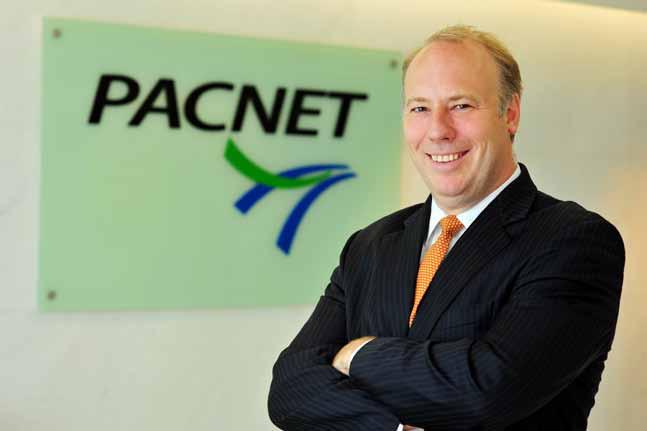
Pacnet CEO Bill Barney
Citing the example of the Unity cable project, which has Google as a partner, Mr Barney noted, “We expect to see greater interest from digital content providers, especially those which deliver a lot of digital video content, in collaborative infrastructure projects.”
Diversity and reach
In the face of recent natural disasters such as the earthquakes in January 2008 that caused damage to subsea cables that interrupted Internet connectivity in the Middle East and India, the need for network diversity and redundancy has again been highlighted.
Referring to the Taiwan earthquake at the end of 2006 which damaged most of the region’s subsea cables, Wilfred Kwan, Chief Technology Officer of Pacnet, commented that through the incident – one which the company’s EAC cable fortunately survived – the focus has shifted towards supporting other carriers in routing traffic to minimize economic impact on the region, thus the need for improving network redundancy has never been more pertinent in the industry.
“With the increasing importance of subsea infrastructure to modern-day commerce, enterprises are also realizing the huge impact that network incidents may have on their returns,” said Mr Kwan.
According to a Gartner study, it was estimated that the hourly cost of network downtime for large corporations was $42,000. With a typical business experiencing an average of 87 hours of downtime a year, this results in a total loss exceeding $3.6 million a year.
As a result, carriers have been busy carving out collaborative partnerships through Network to Network Interface (NNI) interconnections to extend the reach and reliability of their networks.
“While we own the EAC-C2C subsea cable infrastructure that provides connectivity to major cities in South-east and East Asia, we are able to connect our customers almost anywhere in the world – from Paris to South Africa to New York – by collaborating with carrier partners globally and delivering traffic through NNI interconnections,” said Mr Kwan. “Likewise, carriers from other parts of the world partner with us to leverage EAC-C2C in reaching key countries across Asia.”
Beyond infrastructure
Beyond building new subsea cable infrastructure, carriers and service providers are taking partnerships to a whole new level by rolling out new services made possible by collaboration.
“Few carriers now try to do it all on their own. They are realizing that by collaborating with technology partners, they are able to roll out new services that offer state-of-theart technology and bring them to market faster than they would be able to do alone,” said Mr Kwan.
He cited Pacnet’s Managed Application Acceleration Service as one of the examples of collaborating with best-of-breed partners to rapidly roll out industry-leading services.
“By deploying Riverbed’s application acceleration devices across our high-speed network, customers can immediately enjoy the advantages of state-of-the-art application acceleration appliances across our network, without worrying about compatibility and configuration issues. I believe we are the first service provider in Asia Pacific to partner with Riverbed to roll out this leading edge application across the region,” he said.
Security is another strategic area in Pacnet’s product development roadmap, where a collaborative strategy has been embraced. “To deliver our latest security offerings, we
collaborated with MessageLabs, a recognized leader in messaging security to provide our customers with a comprehensive approach to email, content and IM security,” said Mr Kwan. “And more recently, we partnered Arbor Networks to offer a distributed denial of service (DDoS) mitigation solution for our IP transit and Internet services customers.”
“It is important that we partner with leaders in the field so we can guarantee that our customers receive industry-leading products and solutions,” Mr Kwan added.
Looking ahead
Collaboration is certainly not a strategy that could be force fed. “Collaboration only works effectively when there is win-win outcome for the collaborators. Unless fairness and equity exist, more energy will be spent on managing relationships to the detriment of the project. Collaborators must want to join willingly rather than have them join grudgingly because they see no other alternative,” advised Mr Hibbard.
But given the frequency of announcements of new partnerships in telecommunications and technology, collaboration appears to continue unabated, regardless of the economic climate.
“The possibilities for collaboration are truly limitless and we certainly expect to see new partnerships within the carrier industry, as well as new collaborative efforts beyond this space in the coming year,” added Mr Barney.
Roland Lim is Senior Manager, Marketing and Communications at PACNET.
Introducing Subsea Communications!
By Anne LeBoutillier
Greetings
all! Many of you will have already heard from me about the new Subsea Communications Conference that I am introducing with the support of Questex and on behalf of the industry. I wanted to take a few moments to provide you some updates on the event.
First of all, I should once again express my appreciation to the industry members who have personally approached me and requested that I introduce and manage a new event that is specifically representative of industry interests and concerns. As many of you know, I have a passion for solid conference content, exciting speakers, and memorable networking/social events. It is absolutely my intention to bring
to you, the industry leaders, a high value, business generating, fun, entertaining and thoroughly insightful conference!
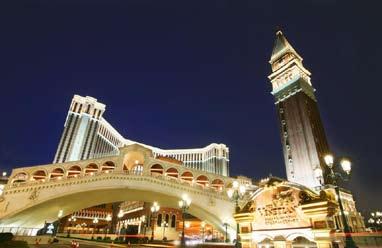
I would also like to extend my thanks to those of you who have contacted me with support for this new event. The level of enthusiasm that I have seen for the Subsea Communications Conference (and its location at The Venetian Resort & Casino in Macau, PRC) has been remarkable. I’ll provide you a few statistics below that have been indicative of the sort of interest and enthusiasm I’ve received a bit later in this article.
On the Conference Content side: We received a fantastic number of responses to an online survey that my team put together – my thanks to all of you who provided your thoughts! There is general consensus on a few key topics such as:
• Demand for capacity and drivers of global infrastructure/bandwidth usage, traffic forecasting, video/data traffic growth
• Supply and pricing of networks, capacity, bandwidth, and competitive considerations where multiple systems exist
• Backhaul, city pops and co-location, and the ability of subsea and wireless technologies to work together to maximize effect and minimize cost
• The global financial distress and its effect on subsea communications projects and the telecom market in general
• Emerging markets such as oil & gas, and the potential for subsea and satellite communications to provide key transmission solutions
• New subsea cable builds, installation and maintenance initiatives, new technologies
It is also my intention is to introduce a segment on network optimization, which has become a key issue for service providers, and I believe will become a focus for large-scale enterprises as time goes on. Is this a risk or an opportunity for the subsea infrastructure? I hope you’ll find the topic worthy of discussion.
A couple of people requested topics relating to human resources and people management, which I have felt for years is or will be a critical issue in the subsea communications industry, where we tend to have highly specialized roles with little attrition, resulting in the potential for a talent gap in just a few short years. (Not to suggest any of us is aging, but realistically, have we done a good job of training replacements for our specialized knowledge base?) I’m in the process of working with a talent management firm to pull together an enlightening and high energy session on succession planning in a highly specialized industry.
Finally, I’ve had a couple of requests for a session on the environmental impact of telecommunications, which in theory I love. Unfortunately, the only environmental steps that I’m seeing taken (other than the well established shore end installation and cable laying initiatives) is a reduction in power and cooling among some telecom service providers. If there are any slightly more exciting initiatives out there that you know of, please alert me
and I’ll do my best to fit something into the conference programme!
Finally, I promised a quick review of statistics. The introductory email about the Subsea Communications Conference was sent to 25,000 very targeted representatives of the subsea, service provider, oil & gas and investor industries. The “open rate” of the email campaign among the subsea community was the highest at well over 50% on average. (Note: The average “email open” rate for an electronic Direct Mail campaign is 11.80%, so 50% is a very solid rate of return and suggests a high degree of interest in the conference, at least conceptually.) The service provider list opened the email at a rate of 30% (this included a portion of the GTM ’08 list, so should be relatively indicative of that group, which I know is a focus point for many of you). The investor group opened the email at a rate of over 40%, which was a surprise to me, and suggests a solid level of interest in the telecom sector. (Note: This is a targeted list of investors who have at some point in the past held or considered telecom investments.)
The Oil & Gas group was the lowest – I clearly have some work to do to ensure our emerging market representatives participate in the conference, but even at 17.5% they came out above the average open rate for an email Direct Marketing campaign.
We’re very excited to be bringing this conference to the industry, and I want to point out that the Early Bird special pricing offers a significant discount at US$1359 – a price level you won’t find at other telecom events firms for a conference of this level, and another indication of Questex’ very generous support of this event. We’re also offering a subsidized
hotel rate for 2 nights at US$300, which is payable as part of your delegate fee (in recognition that some of your travel budgets have been reduced for 2009). I’m hopeful that you’ll be intrigued by both conference content and very reasonable pricing, and consider signing up early!
Thanks so much for your time. Wayne has been fantastic in offering me some space to provide you updates on the Subsea Communications Conference in following issues, and it will be my pleasure to keep you all informed. If this article has generated some ideas that you’d like to share please feel free to contact me directly at anne@questexasia.com.
I hope to see you this May in Macau!
Questex Media Group, Inc. is a global, diversified businessto-business integrated media and information provider, headquartered in Newton, MA. Questex serves multiple industries including technology, telecommunications, beauty, spa, travel, hospitality, leisure, abilities, home entertainment, landscape design, building services and natural resources through a range of well-established, market-leading publications, events, interactive media, research, information and integrated marketing services. The company’s media properties include over 100 print and digital media publications, 45 conferences, tradeshows and events, as well as a range of research, data and information products.
Questex Asia is the Asia-Pacific arm of Questex Media, and has managed some of the regions’ most established telecommunications publications and enterprise-oriented technology events. Questex Asia’s publication Telecom Asia provides key decision-makers across all sectors of the Asian telecom industry, including managers and professionals of service providers and enterprise users of telecom services, with authoritative and independent news, context and analysis in a timely and relevant manner including print and electronic delivery.
The Future’s Bright, the Future’s……. In Asia and the Pacific
By Graham Evans
When the wheels fell off the submarine cable industry in 2001, the interminable post mortems that were conducted in the press and at conferences repeatedly pointed to the massive overbuild of long haul system capacity, citing terabits of unlit capacity, dark fibers and future upgrades as reasons why we could be waiting many years before new long haul systems would be built (a fact that continues to be borne out in the Atlantic). How many of us sat through the depressing round table
discussions year after year at such august events as PTC and SubOptic amidst ever decreasing audiences as round after round of retrenchments took their toll. At the same time we were being repeatedly told that the hangover we were suffering resulted from over indulgence that had been made possible by the combination of deregulation, easy money and unsustainable or simply bad business models, not to mention the often vaunted belief that we were on the cusp of the somewhat nebulous “killer
application” that would rapidly gobble up all this capacity.
In the Pacific, much of the unlit capacity remains, although some dark fibers have been lit and some upgrades have been implemented; however, Asia and the Pacific led the way in the resurgence of the submarine telecommunications industry; in fact, as an Asia Pacific based company strongly focused on the submarine cable industry, it was with some relief that new projects continued to be built even through the worst of the slump. Of course, many of these projects were comparatively small domestic or intraregional systems measured in hundreds rather than thousands of kilometers in length, so hardly testing the production capacity of the major suppliers. During this period, some significant systems were built such as i2i and the Tata Indicom, system (TIC) both linking Singapore to India, and of course SEA ME WE 4 in 2004 which although an Asia to Europe system, had significant Asian influence driving it forward.
2006 saw the real beginning of the “boom” we are currently experiencing, and this boom was centered fairly and squarely on the Asian and Pacific Regions. The current round of activity started with the Gondwana, Australia to New Caledonia system incorporating new generation “skinny route” technology; Telstra’s Australia to Hawaii system was rolled out about the same time and not one but four trans Pacific systems were announced;
Trans Pacific Express (TPE); Asia American Gateway (AAG); FLAG’s Eagle, Next Generation Network and the Google driven Unity system. Of these four, TPE is in service, AAG is nearing completion, Unity has been surveyed and will be installed in 2009, and the FLAG Eagle system has been postponed.
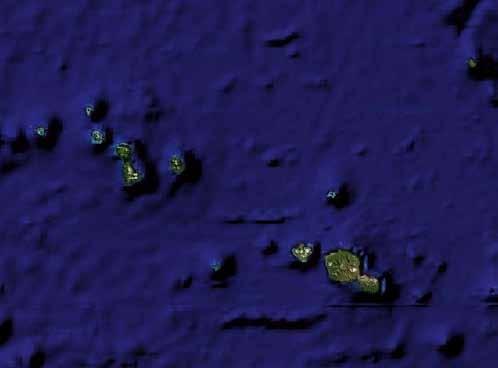
In the Central and South Pacific, the Honotua cable system currently under construction uses thin route technology and will provide domestic connections between French Polynesian islands to Papeete on the main island of Tahiti and on to Hawaii. Pipe Network’s PPC-1 Cable System is also under construction and will be installed in 2009; PPC-1 will connect Guam, Madang in PNG and Sydney, Australia. PPC-1 offers further expansion possibilities with a second Australian landing in Brisbane and second PNG landing at Popondetta. A branching unit off Sydney also provides potential expansion to New Zealand with PPC-2 and/or Optikor (see below).
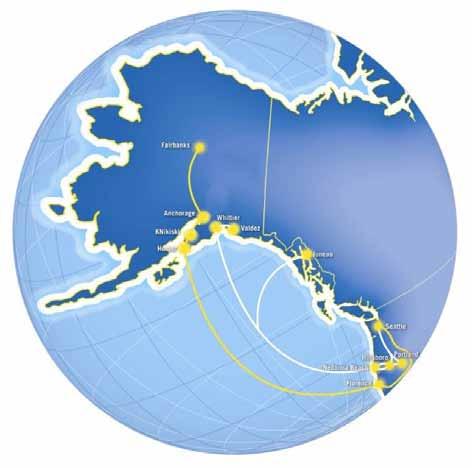
In the Western Pacific, East and South East Asia a number of intraregional systems have or are being constructed including the East Asian segments of TPE connecting the PRC with Korea and Taiwan; AAG which lands in the Philippines, Hong Kong, Vietnam, Thailand, Malaysia and Singapore. Tata Communications have linked their TGN Pacific system to the TIC Singapore landing with their Intra Asia System linking India via Singapore to Malaysia, Vietnam, Hong Kong and the Philippines, with branching unit expansion possibilities into the PRC, Taiwan and Thailand. Indonesia has seen new domestic systems built linking islands within the Indonesian archipelago, with some extending to Singapore including Matrix, Jakasusi, Jakabare and Batam Singapore. The North and Eastern Pacific has also seen new builds with the Alaskan Communications SPANDEX system, and the NEPTUNE subsea observatory.
The Pacific has also seen the innovative and cost effective re use of existing cable systems with the recovery of part of Pac Rim West and re lay into Port Moresby, PNG, thus creating APNG2 the first fiber optic connection between Australia and Papua New Guinea;
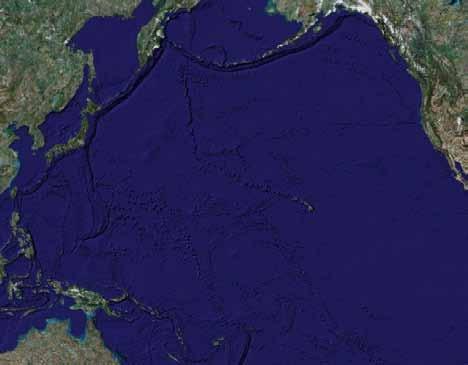
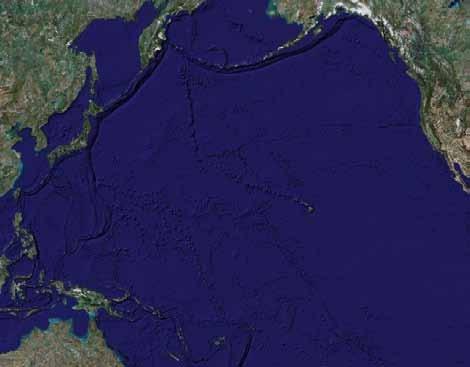
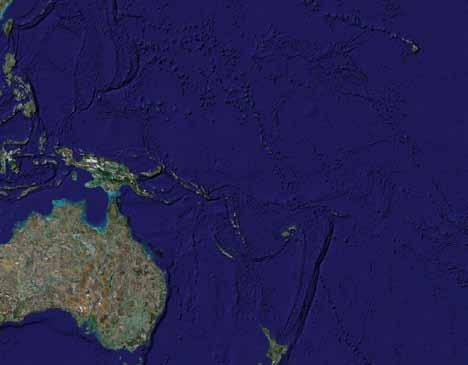
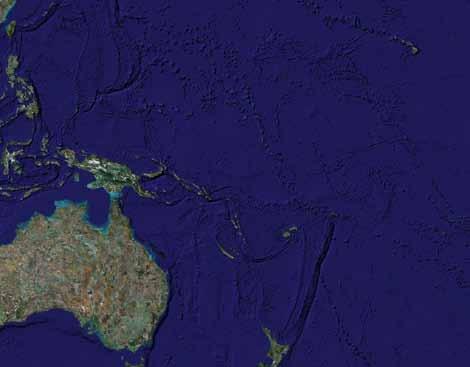
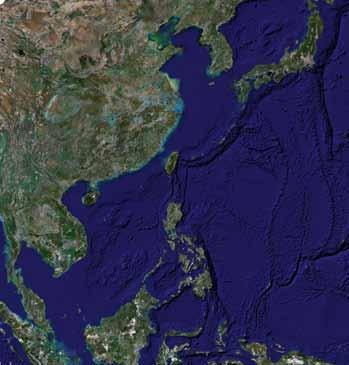
Pacific Ocean with Planned Cable Systems
Pacific Ocean with As Laid Cable Systems
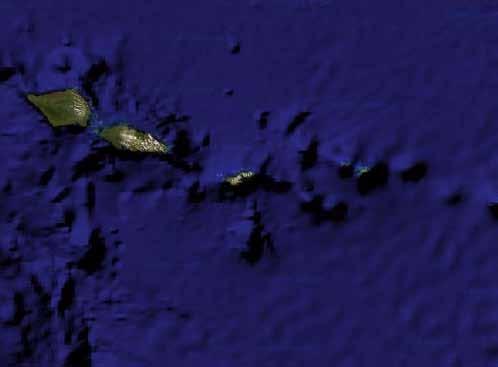
whilst further east, the recovery of a section of Pac Rim East has provided Western and US Samoa with a fiber optic connection to Hawaii, creating the ASH system. In both these cases, although the cable systems that were reused represent pre DWDM fiber optic technology, each has at least 12 to 15 years of design live left and will provide these communities with adequate capacity for the remainder of the systems life.
With the considerable investment that has already been made in the Pacific, East and South East Asia, and the current global financial mayhem that dominates the news media; what submarine cable systems are we likely to see in the region going forward? What we have seen in parallel with the investment in the Pacific is the migration of activity to and beyond the Indian subcontinent to East Africa and India Ocean, the Middle East, the Mediterranean and Europe, as well as new projects being announced for West Africa. Is the submarine telecom boom bubble therefore drifting away from Asia and the Pacific; is it simply growing to cover more of the planet; or, is it about to burst along with the world economy?
What this observer can see, albeit as a simple geoscientist, is that new systems are still being announced for the Asia and the Pacific region. Bidding activity has not noticeably declined and the initiators of requests for ROM budgets for projects in the region seem to be alive and well.
The supply contract for South East Asia Japan (SJC) seems at the time of writing about to be signed. This pan Asian system has landing sites in Singapore, Malaysia, Thailand, Philippines, Hong Kong and Japan; the system has additional optional segments to Vietnam and Guam. Installation is expected in 2010.
A so far weak echo on the radar scope is APCN-3; with ROM budget prices having been sought; however, when will the region be able to justify another pan Asian system with a footprint not dissimilar to SJC and the Tata Communications Intra Asia system, not to mention the South East Asian segments of AAG? The APCN3 configuration resembles that of its predecessors with landings in Singapore, Malaysia, Thailand, Vietnam, the Philippines, Hong
Kong, two landings in the Peoples Republic of China, Taiwan, Korea and Japan.
Elsewhere in South East Asia, Indonesian operators continue to plan additional inter island domestic links with the Palapa project being the most ambitious with the configuration comprising up to 24 submarine cable links. Matrix have been considering extending their system from Indonesia to Australia and Ochre Networks have been planning a system from Singapore to Australia which will also land in Indonesia.
An interesting project that at the time of writing is being tendered is the South Pacific Island Network or SPIN. Conceptually this system seems to fit the skinny route philosophy used on Honotua and Gondwana in that with the small populations of the island communities that the system will service, capacity is not an issue; rather, the system will offer the potential of broadband connectivity to these small populations who currently depend on satellite communications. The SPIN system if implemented is configured with a trunk connecting Noumea, New Caledonia with Papeete, Tahiti in French Polynesia with branches to Norfolk Island, Vanuatu, Fiji, Mata Utu, Western and US Samoa, Alofi and Rarotonga. Other optional segments include landing in Honiara, and Tonga. Work on this project is expected to start in 2009 with installation in 2010.
Two Trans Tasman Sea projects from Australia to New Zealand are in various stages of planning, namely the proposed Optikor cable that may connect via Pipe Networks PPC-1 BU1 into Sydney or alternatively a direct point to point cable landing directly in Australia. The second Trans Tasman system is Telstra’s Tasman 3 cable that has been under discussion for some time. 2009 is when work on either or both of these systems is currently scheduled to commence.
Although, positive comments were made by Reliance at Submarine Networks World in Singapore in August 2008 with respect to the planned implementation of the FLAG NGN system in Asia and across the Pacific; at the time of writing,
Honotua
ASH
Inset for Honotua
Inset for ASH
there appears to have been no further movement on either the Trans Pacific Eagle or Asian segments. Another Trans Pacific cable that was initially planned in 2007 is TPE Phase 2 that will offer a second “express” route to China; Phase 2A is already being implemented which will connect Chikura, Japan to a new branching unit in the Phase 1 cable off southern Japan.
In conclusion, The Asia and Pacific regions led the way during the current boom in our industry, and whilst the level of activity has extended well beyond these regions, encouraging signs are there that activity will continue at least over the next year or so; having said that; as the author is far from being an economic clairvoyant there must remain some questions on what impact the current global economic woes may have as we move into 2009.
South East Asia with Planned Cable Systems
South East Asia with As Laid Cable Systems
With more than 30 years experience as a marine geologist and applied geophysicist, Graham has the dual role of Business Development Director for the EGS Survey Group of companies worldwide (EGS), and as a Board Director and co-founder of EGS Survey in Perth, Australia.
Graham began specialising in submarine cable route planning and survey in 1990 after being
encouraged by to adapt engineering geoscience procedures that Graham had developed for dredging investigations, to the requirements of the submarine telecommunications industry, in particular in the field of burial assessment. Since that time, he has become an enthusiastic and dedicated participant in the submarine telecommunications community becoming known throughout the industry for his knowledge in the application of cross discipline geoscience techniques and procedures, and as a regular speaker on his specialist topics at international conferences worldwide.
Graham joined EGS in 1978 leaving in 1990 on what he describes as his 6 year sabbatical to join as one of the first three employees of the embryonic Fugro Survey where he played a key part in developing that company’s submarine cable business. In 1996, he rejoined EGS where he set about to build EGS into a world leader dedicated to the provision of cable route planning and survey services. Graham is currently a member of the SubOptic Executive Committee, and Vice Chair of the SubOptic 2010 Program Committee.
Graham holds a Bachelor of Science Degree in Geology from the University of Manchester, and Bachelor of Arts Degree in Earth and Environmental Sciences from the Open University.
Graham is married, and wife Linda has on occasion been heard to ruefully refer to his other marriage to EGS. Outside of the work environment, Graham is a keen but very bad golfer being consistently beaten by his wife, he is an aviation bore having been a private pilot for many years; he is a very keen power walker and recently was asked by someone less than half his age to reduce his pace; and he is a music enthusiast, having a somewhat eclectic taste but which is firmly founded in the classics.
The
Submarine telecom systems transmit data from shore to shore. They achieve their high levels of reliability by minimizing the amount and complexity of equipment in the water. How, then, to maintain high reliability in a system that transmits data from the seabed to shore? That is the challenge that faces the NEPTUNE Canada project team at the University of Victoria (UVic), British Columbia, and its contractor, AlcatelLucent Submarine Networks (ALSN).
The NEPTUNE Canada Cabled Ocean Observatory System is an underwater cable system built specifically to support scientific research. For the first time, NEPTUNE will enable collection of oceanographic, seismic, climate, and ecosystem data from deep under the ocean continuously in real time, over its planned service life of twenty five years. NEPTUNE Canada is the first part of a joint Canada - US effort to provide access to the entire Juan de Fuca tectonic plate, an area of over 200 000 km2 off the coasts of British Columbia, Washington, and Oregon. UVic leads a consortium of twelve Canadian universities responsible for implementation and operation of NEPTUNE Canada with funding provided by the Canada Foundation for Innovation and British Columbia Knowledge Development Fund. Funding for U.S. network is being sought from the US National Science Foundation.
NEPTUNE Canada represents a fundamental step forward for the science of Oceanography. Oceanographers have traditionally relied on ships, buoys, or deep water moorings to collect data. Ships can remain on station for only a limited time within a narrow weather window, while buoys and moorings have limited electrical power and data bandwidth, as well as limited reliability. Out of commission telecom and military cables have been used for scientific research, but these may not be in ideal locations and also have power or bandwidth limitations. Cabled observatories have been built off the coast of Japan to support a seismic network; however these observatories have been unable to offer users the power required for a wide range of their instruments and experiments. Several “near-shore” single site observatories located a few tens of kilometers off shore have been built and operated successfully; NEPTUNE Canada will stretch this limit to multiple sites and hundreds of kilometers.
NEPTUNE Canada’s ability to provide access to the deep ocean environment, frequent data collection,
real time data delivery, instantaneous command and control, and continuous long term observation goes far beyond the capabilities of conventional oceanography. NEPTUNE Canada will also provide an outreach function for the science of Oceanography by delivering real time video, still photographs and data to schools, universities, policy-makers, and the public throughout the world.
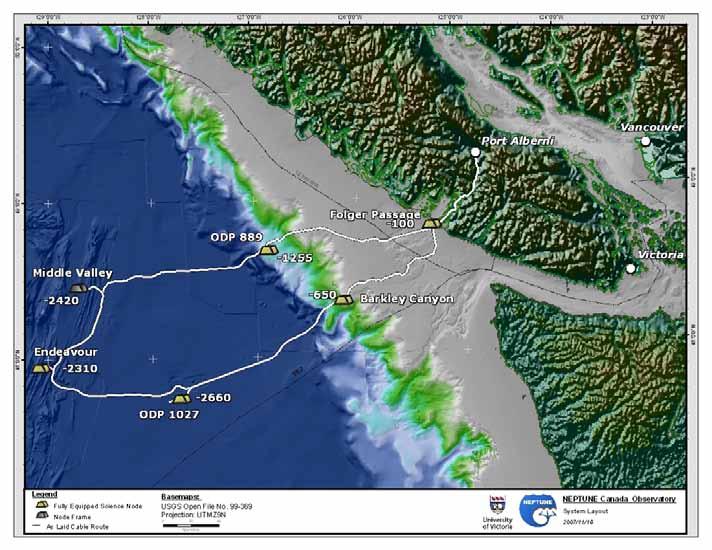
Major research themes for NEPTUNE Canada are plate tectonics, seabed fluid dynamics including gas hydrate formation, ocean climate change, marine biology, and deep sea ecosystems. Initially, two sites on the continental slope and two sites in deep water have been selected for connection to NEPTUNE Canada. The shelf slope sites are Folger Passage, Barkley Canyon, a site of upwelling that is rich in ocean life, and includes exposed layers of gas hydrates, and Ocean Drilling Program (ODP) borehole 889, where there are several existing drill holes and proximity to gas hydrate mounds. The deep water sites are ODP 1027, a drill hole site in the middle of the plate adjacent to two sea mounts; and the Endeavour Ridge, the site of numerous “black smokers” which emit seawater heated to 375°C and which support a food chain based on sulfide consuming bacteria and Archea, believed to be among the oldest forms of life on Earth. Additional nodes and sensors will be added as funding and resources permit.
To achieve these ambitious goals, a network infrastructure incorporating many novel design elements is required. The NEPTUNE network infrastructure consists of a conventional submarine cable and repeaters configured in an 800 km loop with both ends terminated in the former TPC-4 cable station at Port Alberni, which has been purchased by UVic. A series of underwater nodes are connected to the backbone cable by means of branching units.
Branching units will be deployed for all the initial sites when the backbone cable is laid. Observatory nodes can be deployed immediately or added at a later stage. The branching units provide power switching for control and fault isolation. Optical signals are directed to and from each node using a distributed DWDM scheme. The use of repeaters and DWDM allows a single fiber pair to serve all node locations. The node itself consists of a large frame with two underwater housings: one containing a power converter and the other containing the communications equipment. Two
protected Gigabit Ethernet channels are provided between each node and the shore station. NEPTUNE relies on Ethernet and TCP/IP for communications between instruments and a shore based Data Management and Archive System (DMAS). Precision timing is transmitted to the instruments using the IEEE 1588 Precision Time Protocol.
This network infrastructure represents a paradigm shift for submarine cable technology by providing communications to the seabed rather than just across it. At each subsea node location, the optical line is terminated and Ethernet switches distribute communications to the scientific instruments or to extension cables. This means that terminal equipment normally housed in an environmentally controlled cable station must be adapted for use in underwater housings. The use of a repeatered solution allows conventional 2.5 Gb/s transponders to be used while still reaching locations that may be several hundred kilometers from shore.
Designs using long spans and full regeneration at the underwater nodes were also considered and may be used in the future depending on the desired system configuration. Along with data to and from the seabed, NEPTUNE can deliver up to 100 kW of electrical power for operation of communications equipment, sensors, cameras, lights, and potentially remotely operated vehicles. This level of power delivery is made possible by increasing the line current from around 1 ampere in a typical telecom system to as much as 8 amperes while maintaining a voltage of 10kV on each shore end. At each node, a custom built DC-DC voltage converter accepts an input voltage from 5 to 10 kV and provides a 400 V, 10 kW output.
Seawater provides the return path from each node to the shore station. Since each node provides a load between the cable and seawater, the loads seen by the power feed are in parallel, rather than in series as in a conventional repeatered system. The 400V intermediate voltage is used for distribution of power to the instruments.
At each primary node, a series of up to six secondary Junction Boxes (JBs) are connected by means of underwater mateable connectors. Scientific instruments are connected in turn to the JBs. The JB adapts the communications interfaces used individual instruments to Ethernet and also allows control of the power supply to each instrument.
Instruments will be deployed on the seabed, within sea floor boreholes and buoyed up through the water column at particular locations. As might be expected, a system such as NEPTUNE with many stakeholders to satisfy and a limited budget can also be challenging to specify, design, and project manage. UVic, recognizing its lack of experience in this field, went outside academia and hired key elements of its project team from industry. Despite building on existing experience, the process of defining realistic purchaser’s requirements has stretched over several years, with the project team working iteratively between the scientific communities in Canada and potential suppliers. The supplier selection process was to first qualify potential suppliers, and then to distribute for comment a complete draft Request for Proposal package before (re)writing and issuing the final RFP. This process ensured the user’s requirements were realistic, within the suppliers’ ability to deliver, and within budget. The evaluation and selection process then took almost twelve months, culminating with an award to ALSN in October 2005. The design, prototyping, and demonstration phases will take a further twelve months. Cable laying operations are scheduled for summer of 2007, at which time a set of test instruments will be deployed. Finally, the main scientific instruments will be deployed and connected to the network during the summer of 2009.
In addition to all the usual challenges of permitting, coordination with other seabed users and supplier management, NEPTUNE has several unique concerns. The nature of the scientific sites means the seabed installation is, to say the least, complex. Deployment of the nodes and instruments will require ROV operations. Instruments have to be adapted, or designed from scratch, to work on a cabled network rather than batteries. A data management and archiving system has to be designed to handle the unprecedented amounts of oceanographic data. The operations and maintenance phase will include annual cruises to repair and replace instruments as well as on-demand cable ship repairs when failures occur in the network infrastructure.
And, because NEPTUNE has the potential to collect sensitive acoustic data, national security has become matter of some importance, requiring dialogue with the Canadian and US navies.
Reliability has been an overriding goal throughout the design process and there are many network features that address reliability. First, the network forms a ring, so every node has two paths to shore. All node components have at least 1:1 redundancy. The power converter consists of a stack of building block units which provide multiple levels of redundancy. Single points of failure, such as repeaters and branching units, are built to the levels of reliability established for commercial telecom cable systems. In spite of the reliability and redundancy, many of the node components are Commercial-off-the-Shelf (COTS) and failures are inevitable.
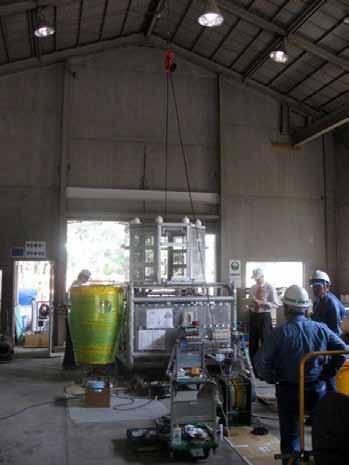
When failures occur, the node housings can be detached from the base frame and floated to the surface by an ROV. Syntactic foam ensures neutral buoyancy. The node can be immediately replaced with a spare, or refurbished and redeployed later. While it sounds counterintuitive, computer modeling shows the best maintenance strategy is to wait for a
VPS
Undergoing Testing
at NGK’s Facility, Saitama, Japan
complete failure (i.e. both redundant components have failed) before undertaking a repair. Because of the down-time involved in making a repair, proactively replacing failed units actually results in more unavailable time than waiting for a failure, even though a longer outage will be experienced when a complete failure occurs.
Overall network availability is expected to be in the range of 96% to 97%, which is surprisingly good considering that a node repair may take weeks or months. One of the exciting aspects of NEPTUNE is the potential to utilize the technology in other applications. The availability of broadband communications and generous amounts of power at locations hundreds of kilometers from shore opens up many new possibilities for both scientific research and for equipment development and qualification.
Communications systems for remote monitoring and control of well heads, continuous seismic monitoring of oil fields, and communications to high risk work areas are some of the areas in which NEPTUNE Canada technology could be used, and in which NEPTUNE Canada could be used as an equipment proving ground. Military and port security applications are also possible; use of an off-the-shelf solution which can support hydrophone arrays and other sensors would reduce or eliminate development effort for new sensor networks. Given NEPTUNE Canada’s position as a research facility, it is likely some of these new concepts and applications will be tested on NEPTUNE Canada itself before deployment elsewhere. Can UVic successfully complete this demanding project? All the key pieces are in place: an experienced project team, an industry-leading supplier, support from the academic community and funding agencies, and realistic objectives. However, it is too soon to celebrate; much work lies ahead. UVic and Alcatel are committed to delivery of a working system by 2009. If NEPTUNE Canada achieves the goals it has set for itself, it will open up both a new realm of Oceanography and new markets for the submarine cable industry. New challenges and new ways of thinking can provide a much needed boost to both morale and the bottom line.
NEPTUNE Canada Update
By Chris Barnes, Steve Lentz, and Peter Phibbs
2008 saw continuing efforts to develop and qualify the power delivery subsystem. Setbacks can be expected in the development of new underwater devices such as NEPTUNE Canada’s 10kV equipment, and the setbacks experienced in 2008, while relatively modest in nature, have resulted in a decision to defer deployment of the nodes, junction boxes and instruments until summer 2009. (The backbone cable, repeaters, and branching units were installed in 2007.) Ships are now being secured for the deployment of five primary nodes, along with fourteen junction boxes and as many as 130 instruments, during the summer of 2009. This installation program will require two vessels, a stern working cable ship and a research vessel. The ROPOS ROV, operated by the Canadian Scientific Submersible Facility, will be a vital participant in the deployment activities.
The readiness of two key components led to the decision to defer deployment to 2009. The Medium Voltage Converter (MVC), which converts backbone cable voltages of 6 to 10kV to a working level of 400V, and the connector which delivers 10kV DC to the node have required further design effort and qualification testing. Prototypes of the MVC have been tested and shown to meet all primary design requirements; however, additional testing has revealed some concerns as to the reaction of the MVC to faults elsewhere in the system. These concerns have led to some minor redesign and, of course, a repeat of most of the time consuming qualification tests. Similarly, the 10kV connector has been successfully tested, but concerns about design margin and operational life have led to some rework and a restart of the three
month long accelerated aging tests. The need to resolve these technical challenges led to a mutual decision on the part of NEPTUNE Canada and its prime contractor, Alcatel-Lucent Submarine Networks, to postpone installation.
2008 saw successful progress on a number of fronts. All the terminal equipment and power feed equipment has been delivered and installed. The Junction Boxes (JBs), which provide an intermediate connection point between up to ten individual instruments and the primary nodes, have been designed and manufactured by Oceanworks, Inc. of Vancouver, Canada. Successful integration tests between the JBs and primary nodes were completed in July of 2008 and the first JB was deployed on the VENUS observatory in December. Fabrication and assembly of the primary nodes by Alcatel-Lucent Submarine Networks with the support of its subcontractors L3 Maripro and Texel is progressing well. The Vertical Profiling System (VPS), which consists of a base platform and a float containing science instruments which can be raised and lowered through the water column, has been manufactured by NGK of Japan and delivered to Victoria BC. In addition, transitional operational funding was secured from the Natural Sciences and Engineering Council of Canada (NSERC), the Canada Foundation for Innovation (CFI), and the British Columbia Ministry of Advanced Education.
NEPTUNE Canada is an exciting and innovative project which demonstrates how commercial submarine telecom technologies can be adapted for other
uses. The science data it makes possible is going to allow us to see and hopefully understand better how the oceans systems work, and how they affect both marine and land-based life. NEPTUNE Canada offers a platform for testing future technologies in real life situations in the deep ocean – and lets developers watch and operate their new technology from their desks in Houston, Aberdeen, Perth or anywhere with an internet connection. Next year promises to be even more eventful as the nodes, junction boxes and instruments are finally installed. NEPTUNE Canada looks forward to sharing our news and seeking your participation in the program as it evolves.
Chris Barnes is Project Director for NEPTUNE Canada. After being awarded his Bachelor of Science from the University of Birmingham (1961) and his Ph.D. from the University of Ottawa (1964), he received an academic appointment at the University of Waterloo in 1965. He served as Chair of Earth Sciences at Waterloo from 1975 to 1981. In a similar position at Memorial University (1981-87), he established the Centre of Earth Resources Research. From 1987-1989, as Director General, Sedimentary and Marine Branch, Geological Survey of Canada, he was responsible for the offshore Frontier Geoscience Program. At the University of Victoria, Chris was Director of both the Centre of Earth and Ocean Research (1989-2000) and the School of Earth and Ocean Sciences (19912002, then becoming the NEPTUNE Canada Project Director in 2002.
Steve Lentz has over fifteen years experience in the construction and operation of optical communications networks including metropolitan area networks, national networks, and international submarine cable networks. He has served as VP Network Engineering and Deployment for 360networks’ submarine division where he developed the network architecture, functional requirements, and performance
specifications for international submarine cable networks and supervised testing, commissioning, and verification of compliance with contractual requirements. He was Manager of Transmission Engineering for Time Telekom, Sdn. Bhd. located in Kuala Lumpur Malaysia, and Director of Systems Engineering for Lightwave Spectrum, Inc. He joined WFN Strategies in 2005 as Project Manager, and has supported telecom projects in Oklahoma, Antarctica, West Africa and the Gulf of Mexico.
Peter Phibbs is Associate Director, Engineering and Operations for NEPTUNE Canada. An engineer with construction in the marine environment, Peter has a wide range of experience in managing the implementation of complex deepwater projects. After completing his B.Sc. in Engineering Science from
the University of Durham, UK, he practiced engineering as a designer of marine structures in the UK, the Middle East and then in Vancouver, British Columbia. He became a member of the Institution of Civil Engineers in 1978, and a member of the Professional Engineers of British Columbia in 1981. In 1986 he began specializing in underwater construction, managing construction and maintenance projects at variety of sites in North America and around the world.
Spotlight on ASiA pAcific
By peter evAnS
For some years, the area of telecommunications infrastructure most in trouble across the Asia-Pacific region has been the struggling submarine cable business. In the late 1990s, companies such as Level 3, Asia Global Crossing and FLAG Telecom constructed a massive amount of capacity with billions of dollars in investments, only to find weakening demand and declining bandwidth prices.
The market moved into crisis in 2001 and major restructuring began to occur within the
sector. The depressed market persisted even as prices continued to fall. The situation finally started to change in 2006, when a series of new submarine infrastructure projects for the Asia-Pacific region were announced. There were all the signs of recovery in the market with a significant increase in business activity occurring over the 2007/08 period.
consequence of the number of islands to be joined and seas to be crossed. But more importantly, it has anticipated a massive future demand for bandwidth between the major Asian centres and between Asia and the rest of the world. And that will only be satisfied by undersea cables. While operators were rewriting their business plans as a consequence of the earlier slowdown that had occurred, it had nevertheless been self-evident that optical fibre submarine cabling would continue to play a major role in telecom infrastructure development in the Asia-Pacific region.
The general perception of a glut in bandwidth capacity on Asia-Pacific routes also caused some confusion in the market. It was certainly true that investment in submarine cables was no longer bringing the rapid returns it once did. Companies were finding it increasingly difficult to raise capital for undersea cable ventures as a consequence. At the same time, customers of undersea cable operators were finding it difficult at times to get enough capacity on Asia-Pacific undersea routes. Consequently operators built the largest possible cables to meet demand and gain a cost advantage over competitors. A combination of sluggish global and regional economies conditions, the perception of overcapacity on some routes, and questions about the level of return on investment inevitably saw a slowdown in the construction of submarine cables in the region.
It is estimated that Asia has been the recipient of about one third of the worldwide investment in submarine cabling. This has been a natural
The oversupply of submarine cable capacity in the region has been in the intra-regional networks rather than in the large regional and trans-Pacific cables. A significant number of new intra-regional cables have come into
service over the last few years. These included FNAL (FLAG North Asian Loop), EAC (East Asia Crossing), APCN 2 and C2C, resulting in around 16Tb/s of extra capacity. Only a tiny fraction of this capacity was being used. On the other hand, the trans-Pacific routes were not seen to have this luxury of oversupply of capacity and the pressure to lay more such cables has been steadily mounting.
Despite the fact that market rationalisation was taking place in Asia, there remained a flood of capacity and regional carriers were still struggling. Cross-border capacity prices were continuing to slide throughout Asia.
The formation of Reach Ltd in 2000 saw a significant player enter the market. Comprising a 50-50 joint venture between Australia’s Telstra and Hong Kong’s PCCW, it resulted in the consolidation of a global network with a strong Asian focus. Reach gained an ownership interest in around 50 submarine cable systems. The operator signalled its intention to further consolidate its market position when, in late 2001, it acquired the Asian assets of Level 3 Communications. These included Level 3’s North Asian cable system and capacity on the Japan-US (J-US) cable system, as well as data centres in Hong Kong and Tokyo. It followed this up by signing major capacity leasing and interconnect deals with Level 3 to strengthen its global capability. However, the fragile nature of this market was highlighted when, in February 2003, Telstra and PCCW announced a dramatic write down of their Reach assets, after reduced demand and tough price competition seriously damaged revenues. The write-down totalled US$1.6 billion in value and,
in Telstra’s case, an adjustment of US$546 million meant that the value of its stake in Reach had been reduced to zero. Demand for international capacity continued to be the fundamental engine driving submarine cable system deployment in the Asia-Pacific region. The vast majority of that demand will result from data/Internetrelated usage. The second ranked segment in terms of demand was corporate, but that only accounted for less than 10% of overall demand. The strong demand for bandwidth coming from India and China has resulted in a more aggressive involvement of operators from these two countries in the submarine cable market. From India in particular we have seen VSNL, Bharti Tele-ventures and Reliance Infocomm all moving into the business of international telecoms infrastructure, with a strong focus on submarine cables.
By early 2006, following several rough years, the global bandwidth market was showing signs of improved health in the form of supply equilibrium, price stability and competitor consolidation. Persistent international bandwidth demand growth has depleted the amount of spare capacity on many submarine cables. This resulted in many network operators, including VSNL, FLAG Telecom and Asia Netcom, among others, lighting additional wavelengths and fibre pairs on an ‘as-needed’ basis. This incremental approach to managing spare circuit inventories has meant that lit bandwidth supply and bandwidth demand were coming into balance. This did not mean, however, that a network construction
MAjor SuBMArine cABleS in the ASiA-pAcific region - 2008
cables countries connected
AJC Australia-Japan (via Guam; also proposed link to US)
APCN (part of AOFSCN)
APCN 2
Japan, Korea, Taiwan, Hong Kong, the Philippines, Indonesia, Singapore, Malaysia and Thailand
China, Hong Kong, Japan, South Korea, Malaysia, the Philippines, Singapore and Taiwan
BMP Brunei-Malaysia-Philippines
B-S (part of AOFSCN) Brunei-Singapore
C2C (Northern loop)
C2C (Southern loop)
China-US Cable (CUCN)
China, Hong Kong, Taiwan, Japan, Korea, the Philippines
Hong Kong, Singapore, the Philippines
Japan, US, China, Korea, Taiwan, Hawaii, Guam
CJC China-Japan
CKC China-Korea
Dumai Melaka Cable (DMCS) Indonesia-Malaysia
EAC (East Asia Crossing)
Japan, China, Singapore, Hong Kong, Taiwan, South Korea, Malaysia, and the Philippines
FLAG
G-P-T/ HONTAI-2/HJ-K
UK-Korea-Singapore-Hong KongIndonesia-Japan
Guam-Philippines-Taiwan, Hong Kong-Taiwan, Hong Kong-JapanKorea
HJK Hong Kong-Japan-Korea
Honphil 2 Hong Kong-Philippines
Hontai 2 Hong Kong-Taiwan
i2i Network India-Singapore
JAKABARE
Indonesia – Singapore (Java –Kalimantan – Batam – Singapore)
JASURAUS Australia-Indonesia
boom was pending. Instead, operators needed to make more of what they already had. According to TeleGeography, by the end of 2006 little more than 14% of the potential capacity on major submarine cables around the world was lit.
By mid-2007, there were at least six new cable projects mooted to cross the Pacific and help meet a particular predicted shortfall in capacity between Asia and the US as Asia’s broadband usage increases. Asia Netcom CEO Bill Barney said that stocks then in existence may well be exhausted by as early as 2013 but he warned that should all six proposed cable systems come to market, competition would consign them all to failure. In September 2007, Level 3 was warning of a trans-Pacific capacity bubble by 2009, although not all carriers agreed with this view. Level 3 believed that with eight cables planned for deployment on the transPacific route over a two-year period the risk of such a bubble was high. While there were real drivers for new Asia cables – revenues remained relatively high and there was an obvious need for diversity – there was also potential for over reaction. Plans already in place would see six new east-west cables –TPE, AAG, Asia Netcom, Flag, Japan-US and Unity – rolled out in 2008/09 and another two north-south from Telstra and Pipe Networks planned over the same period. From about 2Tb/s of lit capacity in place, the proposed cables were set to release as much as 6Tb/s of initial lit capacity on the market.
more cautious approach to infrastructure investments.
Peter A. Evans is Senior Analyst, Asia, at BuddeComm. After more than thirty years of corporate and international experience in telecommunications and IT, including as an executive manager with the Australian incumbent telco, Telstra, Peter Evans is now applying his extensive background to conducting market analysis and research work for the BuddeComm organisation. Having joined this telecom market research company in 2000, his responsibilities quickly expanded until he was looking after the entire Asian market. The extensive portfolio of research reports that has been built up over time provides a comprehensive insight into the telecom markets of Asia; whilst inevitably there is a major focus on the burgeoning mobile and broadband market segments, the key regional undersea cable market is an area of particular research interest. As part of his work for BuddeComm, Peter has an office in South East Asia and continues to spend a significant amount of his time in and around the Asia region. Prior to joining BuddeComm, Peter was involved in business development work for Telstra as that company sought new markets in Asia. He also spent six years working in Saudi Arabia as the Senior Advisor to the General Manager, Strategic Planning in Saudi Telecom.
MAjor SuBMArine cABleS in the ASiA-pAcific region - 2008
cables countries connected
JUS Japan, Hawaii, US
KJCN Korea–Japan (two links)
M-T (part of AOFSCN) Malaysia-Thailand
Nava-1 Australia, Singapore, Indonesia
PacRim East New Zealand-Hawaii
PacRim West Australia-Guam
Pacific Crossing (PC1) Japan (Ajigaura; Shima), US
RJK Russia-Japan-Korea
RNAL (Reach North Asia Loop) Japan-Korea-Taiwan-Hong Kong
SAFE South Africa-Far East
SEA-ME-WE 2 South East Asia-Middle EastWestern Europe
The level of activity in the sector may be curbed somewhat in 2009 in the wake of the financial crisis. The large telcos in Asia may take a
SEA-ME-WE 3
In Asia: Pakistan, India, Sri Lanka, Myanmar, Thailand, Malaysia, Indonesia, Singapore, Australia, Malaysia, Brunei, Vietnam, Philippines, Macau, Hong Kong, China, Taiwan, South Korea, Japan.
SEA-ME-WE 4
In Asia: Pakistan, India, Sri Lanka, Bangladesh, Thailand, Malaysia, Singapore
(Source: BuddeComm - Asia - Infrastructure - Submarine Cables)
Note: AOFSCN is the ASEAN
pAcific outlook
By Brett o’riley
2009 dawns and for many of us there is a sense of déjà vu.
A period of dramatic building activity in the submarine cable industry driven by carriers and new market entrants; followed by a financial crisis that catches projects and operators in various states of completion and confidence. On the face of it the parallels with the “tech wreck” are there as the debt markets have contracted or closed to all but the best of investment propositions.
While the magnitude of the “financial crisis” facing the global economy is without doubt, I believe there is good reason to believe that 2009 will present a positive outlook for the Pacific region. I make no apologies for being an optimist in my view. After 20 years in telecommunications I think the underlying industry growth rate, coupled with our ability to continually drive down operating costs, has created an extremely resilient telecoms industry.
The other major factor is the insatiable demand by modern human societies to communicate. There are still many millions of people yet to regularly experience, enjoy, and benefit from basic on-line connectivity, fixed or wireless. Many of these people are in the Pacific region, and they are from economies that have the potential to sustain the development of modern communications infrastructure.
As that demand has continued to increase, we have seen some interesting developments that I expect to see continue.
Machine to machine communications is a major area of demand growth, and I see plenty of signs that over time the demand from these applications, be it RFID, vending machines, oil field monitoring or radio telescopes; will be as large in capacity terms as the communications requirements generated by people.
2008 was a year of significant milestones in Asia-Pacific that will continue to positively impact our industry in 2009:
• The completion of the Trans Pacific Express cable system between the People’s Republic of China and the USA, the first of the latest generation of transPacific cables.
• The completion of the Endeavour cable between Australia and Hawai’i.
• The development of the Japan to USA Unity cable system representing a different joint venture model for development, with elements of consortiums and private systems included.
• Significant upgrades of existing systems throughout Asia-Pacific.
• The continued emergence of niche regional submarine cable operators like Matrix (Indonesia), Pipe (Australia), OPT (French Polynesia), True (Thailand), Kordia (New Zealand), and Ochre (Australia); all at different stages of execution with their solutions to address specific demand/ supply imbalances in their respective markets, many of them addressing developing countries.
• The growth of Asian intra-regional traffic as internet content and sites are developed, reducing the reliance on the USA as the global internet host.
• An increasing focus by countries on national broadband initiatives as a strategic economic and social development platform, with countries including Malaysia, Singapore, Australia, New Zealand developing new broadband infrastructure, to match early regional leaders like Korea, Japan and Hong Kong.
• Growing demand for submarine cable solutions by specific industries, particularly oil and gas, which can also potentially facilitate hybrid regional solutions.
• Continued dramatic increases in bandwidth utilisation by mobile users, with the expansion of 3G and other wireless data standards, and the development of internet oriented devices under the I-Phone, Android, Windows Mobile, and Symbian standards.
So what should we see in 2009?
Underlying demand looks set to continue to grow. Many carriers I have spoken with predict traffic volumes will grow based on the experience of previous economic cycles, as their customers use telecommunications as a substitute for travel, assuming that talk of a “depression” is at the extreme of the economic downturn outcomes.
3G networks will continue to expand throughout the region; coverage is still limited in most countries to large urban areas. China’s development and implementation of their unique 3G standard is being keenly watched by the handset industry. This mobile growth will be voice and data, the latter fuelled by M2M applications.
Social networking will continue to power demand for ISPs, Generation Y should be renamed “V” for video, whether it is self generated, music clips, movies or other forms of entertainment. VOIP using Skype or other providers continues to rise, while Google continues to stimulate consumer interest with its wide range of applications. How did we manage before Google Earth?
Expectations for the development of new infrastructure does need to be tempered by the fact that debt financing for any projects will be challenging over the next 12 months, but strong balance sheets and underlying demand will enable projects to proceed. In
addition governments throughout the region from Indonesia to the USA are looking at national broadband infrastructure projects to stimulate economic growth.
Asian customers will have unprecedented access to submarine international capacity, to meet their intra-regional requirements and for onward connectivity to the USA and Europe. There will be significant new submarine capacity available intra-Asia from a number of systems including:
• The new Tata linear system from Singapore to Japan, with spur connections to underserved markets.
• Potential new links from Pacnet’s multiring network into underserved countries in Asia.
• Completion of the delayed Asia America Gateway providing South Asia and Hong Kong connectivity through to the USA.
• Completion of Indosat’s new Jakabare system from Jakarta to Singapore.
• Upgrades of existing systems including SEA-ME-WE 3 & 4.
There are also a number of proposed intra-Asia systems including SingaporeJapan Cable, APCN-4 and Intrepid to meet forecast demand.
Elsewhere in the region Pipe’s system from Australia to Guam, will also provide new connectivity for Papua New Guinea. It is great to see a developer embrace the opportunity to address Third World requirements.
Other systems have recently been built that go past Pacific Island nations that are crying out for submarine cable capacity, without any concern from the system developer for the potential positive economic and social development impact a spur could have made. As an industry we must make sure this does not happen, and it is only through a few visionaries like John Hibbard that opportunities for small countries are realised.
There is NGO development funding available to assist with spur extensions that can be utilised. It is also pleasing to see the French Government support for the Honotua cable from French Polynesia to Hawai’i.
Demand from non carriers for submarine cable solutions continues to grow, particularly in the oil & gas industry. Unfortunately planning and decision cycles in the industry can often be protracted, which has been frustrating for potential suppliers from our industry. But the underlying demand and interest in higher capacity to serve off-shore facilities is definitely there across multiple fields in multiple countries, particularly for new fields.
As automation increases and operators become more focussed on availability, submarine cables become essential. A lot of the activity in the oil & gas industry is below the radar screen. I expect 2009 to be a landmark year for submarine cable development in oil & gas, and do not be surprised to see hybrid system solutions
meeting their demand and third parties including local carriers.
There will of course continue to be challenges during 2009 beyond the financial sector issues. Permitting and licensing in the Pacific can be complicated, with countries at various stages of deregulation, and different focuses including national security being brought to bear.
Even the most powerful and experienced consortiums have run up against this issues, and the continued costs for all industry participants has been high from the consequent delays. Perhaps as an industry we need to quantify the economic costs to greater extent to bring these issues into focus for policy makers.
On the system manufacturing side the hump of demand for new systems seems to be over. New market entrants are starting to make an impression as their technology is proven in an operating environment. Cable kilometre demand is reducing for manufacturers as the long-haul systems mentioned above have been implemented, or are about to be.
suppliers, as we now face potentially less frenetic demand from the telcos in 2009. Oil & gas, off-shore wind farms and scientific projects should continue apace reducing the impact of a slowing in the long-haul system development cycle. These requirements and some of the tricky smaller systems in Asia will require experienced marine installers, and clever system design, ensuring plenty of exciting challenges for industry participants.
There remain concerns that there is a growing skill shortage in the industry, exacerbated by the smaller number of manufacturing plants and installation vessels. There has been new investment in the industry which is welcomed.
All of this should be good for lowering unit costs for developers after a period where system pricing per kilometre raised dramatically, some of it driven by increases in input commodity costs for steel and fuel.
Hopefully the 2008 high growth period will have assisted with profitability for industry
Brett O’Riley is Managing Director of Ochre Services, and has been closely involved in the Asia-Pacific telecoms infrastructure business since 1989. He was a member of the initial team that developed the Southern Cross Cable system between Australia, New Zealand, Fiji and the United States of America. Southern Cross is globally recognised as an outstanding success story in how to develop an independent wholesaler of broadband capacity. Brett also looked after the North American market and related projects for Southern Cross, and later was a founder of Nava Networks, which was established to develop broadband opportunities in the region. Most recently Brett has been in senior roles at Telecom NZ, managing ICT merger and acquisition activity, and the corporate mobile market.
Call for PaPers
The International Cable Protection Committee (ICPC) is planning its next Plenary meeting in Florida, USA during the period 21 - 23 April 2009 inclusive.
All of the World’s major telecommunications companies are represented within the ICPC whose principal purpose is to promote the safeguarding of submarine cables against man-made and natural hazards. This unique and prestigious organisation also serves as a forum for the exchange of technical, environmental and legal information concerning the marine aspects of both telecommunications and power submarine cable systems.
The theme of this Plenary meeting will be:
Submarine Cables: The Challenges of Protecting Critical Infrastructure
The Executive Committee (EC) therefore seeks presentations from interested parties that address the importance and challenges of protecting submarine cables. Topics could include, but are not limited to:
• Impact of submarine cable Failures on the Modern World
• Legal / Regulatory challenges & solutions
• Reducing the Risk from Man-Made & natural hazards
• speeding up the cable Repair Process
• Working with International Organisations to Improve cable Protection
• Emerging technologies & concepts for cable Protection
Presentations should be 25 minutes long including time for questions and, to ensure clarity when presented, should be formatted in accordance with the guidance that will be provided.
Prospective presenters are respectfully advised that papers that are overtly marketing a product or service will not be accepted, however two marketing slides can be included at the beginning or end of the presentation.
NB: Commercial exhibits may be displayed adjacent to the ICPC meeting room by special arrangement. Please contact the Secretary for further details.
Abstracts should be sent via email to plenary@iscpc.org no later than 31 January 2009.
The EC will evaluate all submissions based on content and quality.
f lorence by t he sea
A rare opportunity has emerged for owners of trans-Pacific submarine cable intent on landing on the West Coast of the United States. A new cable landing station, on the Oregon coast overlooking the Pacific Ocean, is now open for business.
Located in Florence, Oregon, and owned by Alaska Communications Systems (ACS,) the landing station is a virtual turnkey operation boasting an array of attractive features. The facility is run by highly skilled staff in a state that embraces the fiber optic cable industry; it has an offshore marine environment conducive to cable-laying; and it provides diverse and robust backhaul transport to the major telecom hubs of Portland and Seattle.
“It’s an ideal spot for landing a new undersea cable,” said Laura Dana, ACS Senior
by Paula d
Manager, Carrier Sales & Service.
In addition to the Florence facility, ACS recently acquired an existing Oregon-based cable landing station in Nedonna Beach through its purchase of Crest Communications Corp. and its subsidiary, WCI Cable. Like the Florence station, the Nedonna facility also ties in to dual path terrestrial fiber routes interconnecting with major telecommunications infrastructure in Oregon and
Washington’s largest cities.
The two landing stations are part of a strong Enterprise focus by Anchorage-based ACS, Alaska’s leading integrated telecom provider. The company is rapidly evolving from its past as an incumbent local exchange carrier into an advanced telecom firm capable of serving large commercial and government clients, as well as other telecom carriers, with rooftops in Alaska, the Lower 48 and beyond.
Over the last five years ACS has worked to transform its network to better serve the fast-growing Enterprise market and in 2007 it invested $175 million in long-haul undersea fiber optics. A key part of the investment was the $105
construction of ACS’ own submarine cable, the Alaska Oregon Network (AKORN.) With its four fiber pairs, AKORN is a new, geographically distinct fiber route between Anchorage and Oregon. It is equipped with 40 Gigabits of initial capacity and is designed to move 2.6 terabits of data per second. The new AKORN cable system is scheduled to begin moving commercial traffic in the first quarter of this year.
ACS allocated $70 million toward the purchase of WCI Cable and its existing Northstar submarine cable system interconnecting Anchorage, Valdez and Juneau, Alaska, with Nedonna Beach, Hillsboro and Portland, Oregon. With the AKORN and Northstar cable systems, ACS now owns two of the four undersea fiber cables between Alaska and the Lower 48 states. In addition to the cable systems and landing stations, ACS’ Lower 48 asset portfolio also includes a Network
Operations Control Center and remote data hosting center in Hillsboro, Oregon, as well as dual network operations centers in Anchorage and Raleigh, North Carolina.
“The company is uniquely positioned to serve the trans-Pacific fiber optic cable industry,” Dana said.
Why Florence?
In the early stages of the AKORN project, ACS hired experts to scour the coastline of California, Oregon and Washington to find the best location for a new, physically diverse landing station. Several factors led ACS to choose the seaside Oregon town of Florence.
“One of the biggest drivers was availability of backhaul. Florence had existing terrestrial cables connecting it to the big Pacific Northwest hubs – Seattle and Portland –with easy connections to Los Angeles and San Francisco,” said Steve Gebert, ACS Program Manager, who oversaw the AKORN build.
For trans-Pacific cable owners, this means they can route their traffic through the ACS landing station and on to major nodes in Portland and Seattle, or in the opposite direction – from the U.S. to Asia, and beyond. ACS’ peering points in Portland and Seattle connect to national and global telecom hubs. The Florence facility has a beach manhole and conduit back to the landing station that make it ready for another cable, in addition to AKORN. The land station also has an easement for additional horizontal directional drilling.
Another key driver for choosing Florence and why it makes a superb choice for landing a cable is ease of permitting and good relations with state government. Compared to the neighboring states of California and Washington, Oregon typically makes it less difficult to land fiber optic cables on its shores.
Since issuing its first undersea cable permit in 1990, Oregon has developed a strong track record for timely landing of new cables. In 2005, Oregon Gov. Theodore R. Kulongoski declared his state “open for business” to cable companies.
The state sponsored a booth at the Pacific Telecom Conference in Honolulu that year. Hawaii. In a welcome letter to delegates, Kulongoski noted Oregon’s established process for landing undersea cable on its coast and assured them that all permit requests are given “full and speedy consideration.” In fact, Oregon provides a streamlined permit process
with a 180-day turn-around. Some applications have been issued in less than two months, according to the state’s official web site.
“It’s clear that the state of Oregon has taken the position that undersea cable infrastructure is good for the state and is welcome here,” said Scott McMullen, chairman of the Oregon Fishermen’s Cable Committee. McMullen’s organization is an association of commercial trawl fishermen and cable owners who have negotiated cooperative agreements with the fiber optic cable companies to protect the integrity of submarine cables transiting the Oregon fishing grounds.
“Our job is to provide communication, coordination and cooperation between the fishing and the submarine cable industries so that both and co-exist,” McMullen said.
The seabed that extends into the Pacific Ocean from the Florence landing station is mostly smooth and silty, making it relatively easy to bury cable. It’s no small feat to plough undersea cable into the ocean floor. But when
the sea bed is soft and the cable-burying equipment does not have to negotiate hard bottom conditions and steep slopes, the end result is more dependable and less costly.
The AKORN cable from Alaska to Oregon is fully buried from the Florence beach manhole out to 700 fathoms of water depth – a good indication of the seabed’s softness, McMullen said.
The Backhaul
ACS engaged LS Networks to tie the Florence landing station into carrier hotels in Portland and Seattle. Based in Portland, LS Networks had an existing presence in Florence. To accommodate ACS, the company extended its existing fiber in Florence 12 miles to the ACS landing station. LS Network now provides ACS with two diverse routes to Pacific Northwest hubs on its network.
“One carries traffic from Florence to Portland and then meets up with the ACS network. Then I have another pair of wavelengths that go from Florence and bypass Portland and connect with the ACS network in Seattle. We give them fully diverse routing,” said Jim Bascom, Director of Sales and Marketing, for LS Networks.
In Portland, ACS network traffic connects into co-location facilities in the Pittock Internet Exchange, one of the largest telecommunications nodes in the United States. In Seattle, ACS moves traffic
through the Westin Building, one of premier carrier hotels in the Pacific Northwest.
Each of the terrestrial routes transports two 10Gigabit wavelengths for a total capacity of 40Gigabits with potential for capacity upgrades.
ACS’ Nedonna Beach landing station further up the Oregon coast also provides diverse, redundant backhaul transport to Portland and Seattle with connectivity to all major carriers. In addition to housing the Northstar system terminal equipment, the
From its Hillsboro facility, ACS provides equipment operations and maintenance to support existing trans-Pacific cables, as well as cable duct and dark fiber backhaul infrastructure to Portland.
Skills and Talent
It obviously takes much more than state-of-the art equipment to keep voice and data traffic moving under the ocean and between continents. A highly skilled workforce with years of industry experiences is another vital ingredient. In addition to its Anchorage workforce of some 1,000, ACS, through its purchase of WCI Cable, inherited a seasoned group of engineers and technicians with extensive background operating cable landing stations and supporting undersea cable systems.
Jack Holland is Director of ACS Cable Systems, the subsidiary that operates AKORN and Northstar and the associated infrastructure. Holland has more than 30 years of experience supporting undersea cable systems for the military and the private sector. He began his
career with the Air Force Eastern Test Range Missile Project supporting its undersea cable component. Holland later managed submarine telecommunications in Southeast Alaska for 10 years and prior to joining ACS, he oversaw operations for the Northstar cable for nearly a decade.
Most of Holland’s staff has been with him since the 1990s and they are highly skilled in operating landing stations and undersea cable networks. One of them is Anatoliy Pavlenko, an electrical engineer by training.
“Our primary mission is to take care of the landing stations. But of course we do everything from maintaining and repairing the equipment to support cable operators across multiple time zones. We also support cable ships that do repair work at sea,” Pavlenko said.
“Cable ships are very expensive to operate so you have to be able to efficiently and effectively help those people do what they do. It’s a wide range of skills you have to have, and not just technical.”
Pavlenko, who worked for WCI Cable
for 10 years prior to joining ACS in the recent acquisition, has received specialized training at Alcatel-Lucent in France on two occasions.
“I’m really happy to be with ACS. It’s a great company to work for and its new investments in fiber optics are truly exciting,” he said.
Paula Dobbyn is a former print and broadcast journalist who directs corporate communications for Alaska Communications Systems. She is a longtime Alaskan.
advertise with the experts:
Since 2001, Submarine Telecoms Forum has been the platform for discourse on submarine telecom cable and network operations. Industry professionals provide editorial content from their own niche and focus.
Each bi-monthly edition includes commentary and information on system and service provision, and issues critical to the industry.
Website Banners
$575/month
Post your web linked banner to the Submarine Telecoms Forum website, where 5000+ readers come to view the latest news feed and our bimonthly magazine.
Feature Section Sponsorship
Available at full-page advertisement rate, section sponsors are identified with a banner (link) at the beginning and end of the featured section. All advertising rates effective as of January 2008.
advertising rates
a global guide to the latest known locations of the world’s cableships*, as of January 2009. information provided by Lloyds List.
Letter to a friend from Jean Devos
My dear friend,
My Dear Friend
My friend, like most of the readers of my letter, you probably do not remember Robert Jocteur. This name does not ring a bell, but stay with me, since you most likely have “your” Jocteur in your own environment.
“Botany Bay”
Warrior event was still in everyone’s memory. It is for these reasons among others that STC (UK) rejected the Alcatel‘s suggestion to come with a joint bid, to offer a “European” solution.
One of the winning factors has been the Port-Botany cable factory. Such a factory was a strong requirement from OTC (now Telstra) and the Australian Government.
My brother in arms
Alcatel was the most motivated. Such a factory could expand its influence in the Pacific where the three other players were historically well established in this region, which represents a large part of their market. They saw this factory as a risk for their existing facilities!
It is only when I tried to send Robert Jocteur my Christmas message last month that I was stunned at discovering that he had passed away last September! And I hadn’t been made aware of it! How is that possible that such a man leaves us without any noise?
I published recently a modest novel, whose title is Botany Bay. It is the place in Australia where
Alcatel established a submarine cable factory in 1989 as part of its contract for the Tasman 2 link. In this same bay, where two centuries before the French expedition
Since we had both retired from the submarine cable activity we used to exchange a couple of emails each year, pursuing this way a 40 year old dialog and complicity. Among all the people from the Alcatel group I had worked with, he was the one I felt the closest, with which I had more affinities. He was my technical teacher, my technology adviser when I was bringing the market trend and competition status to him!
“La Pérouse” made of two ships, La Boussole
We have both served our company with dedication and loyalty during 40 years, but our top management was a bit nervous to perceive that we were “somewhere else”. Our priority, our “religion,” our belonging, was the submarine cable community. For Jocteur it was also the scientific community. He was a free man, an intellectual, a scientist, an academic, a wise man. He was “at home” in the
Laboratories, in the R&D environment. Meeting with him was for me fresh air, an opening toward the future. He had the gentleness of the strong people, the ones who have a natural authority coming from their competency, their vision, without the need to raise their voice or to remind their status or their position in the hierarchy. He was observing the highly paid “managers”, and their behavior with an amusing smile. He knew that creative people like him will always be treated like “travelling acrobats”.
and l’Astrolabe, landed in 1788 to discover that Captain Cook was already around bearing the British flag. So Botany Bay is now for me the symbol of a dream which becomes a reality!
Tasman 2 has been yet another chapter in this long Anglo-French competition! The award to Alcatel came out as a big surprise to many, including inside Alcatel. Everybody was naturally expecting the British to win that battle, and such an expectation was at that time very logical.
He was born in Lyon, the second main French town, but the second of none in his mind. When the Alcatel Cable headquarters moved from Lyon to Paris area, Jocteur decided that he would never leave Lyon! And so he did!
There were so many difficulties and misunderstanding between Australia and France, the main one being the French presence in the Pacific area, the worse being the nuclear bomb experiment in Tahiti! The sad Rainbow
Alcatel should raise a memorial to him, because it is really thanks to a handful of persons including him that Alcatel managed to participate in TAT 8, the very first long haul optical system. The decision to introduce the new technology at this occasion was taken by ATT! Quite a surprise and a challenge for Alcatel! ATT /Bell Labs were at least a year in advance in terms of technology development, and ATT was determined to build TAT 8 by itself and take advantage on the market. I’m not sure ASN would have survived with an absence in TAT 8 or a failure on this highly visible and qualifying program.
Jocteur has been the true leader in terms of fiber and cable design! He drove the development program, including two experimental links: Cannes-Juan les Pins (20km 1982), Antibes-Port Grimaud (80km 1984), and a first commercial link in 1987 between Marseilles and Ajaccio (400Km). TAT 8 came to life in 1988. It was a 2 fibers pairs system, 280 Mb, single channel per fiber, with a sophisticated BU splitting the traffic between UK and France!! 20 years ago!
SubOptic ‘87 in Versailles came at the right time. It is where the Australian teams discovered the French model, a close cooperation between Alcatel and FT, exactly what they wanted to establish in their country.
My friend, things are changed since, but one thing stays true: When you offer something, the reader can see between the lines if you are or not genuinely motivated and sincere. Then your offer becomes really attractive and this opens the route to “Botany Bay.”
I sincerely hope that the submarine players of today, among them the ones attending PTC, realize the merits of these pioneers who brought this new technology to life and then to maturity. Since then the technology has continuously evolved, and Jocteur was convinced that science and technology are fundamental to the progress of humanity. I have now lost my brother in arms. We had the same fights.