SubTel Forum Issue #41 - Defense & Non-traditional Cable Systems
Welcometo the November issue of Submarine Telecoms Forum, marking our 7th anniversary in publication. The few principles Ted and I established in the beginning, are still held dear. We promised then, and I continue to assure you, our readers:
1. That we will provide a wide range of ideas and issues;
2. That we will seek to incite, entertain and provoke in a positive manner.
This issue’s theme, Defense & Nontraditional Cable Systems, comes at a point of significant global turmoil in the financial markets. Its impact on “business as usual” and emerging hotspots is anyone’s guess. By the looks on the faces of our leaders, we are entering uncharted waters and a trillion here or there is becoming commonplace. For those seeking to bailout distressed industries, I am hereby proclaiming my plans to create a bank of limited means; my
hand is outstretched and ready for your assistance!
This edition provides as usual some excellent insight into our submarine cable market.
John Hibbard invites all to the next Pacific conference as Raul Magallanes discusses ways for telecom providers to be proactive with FCC regulations. Colin Anderson updates SubOptic 2010, while Bill Kolb examines Atlantic cable maintenance. Andy Lumsden shares key cable enabling technologies, and we profile the Comprehensive Test Ban Treaty Organization, which uses among other things, cable systems to verify compliance to nuclear non-proliferation. Keith Schofield and Michael Carter highlight SubOptic interim working group activities, and Catherine Dixon and Theresa Hyatte examine fair-value and mark-to-market accounting. We reprise an excellent article on Navy undersea cable systems by Bob Fredrickson and Catherine Creese. Jean Devos returns with his ever-insightful
observations, and of course, our ever popular “where in the world are all those pesky cableships” is included as well.
STF is not a perfect medium, and we have surely made our share of mistakes, but we continue to hope that in the long run we have helped our industry in some small way.
Keep your head down.
A synopsis of current news items from NewsNow, the weekly news feed available on the Submarine Telecoms Forum website.
AAPT selects Alcatel-Lucent to transform its premium business services network (October 30th, 2008)
Alcatel-Lucent (Euronext Paris and NYSE: ALU) today announced it has been selected by AAPT, one of Australia’s three largest telecommunications companies, as the strategic partner for a network transformation project that will expand and enhance its portfolio of premium business services offered to the Australian market. AAPT, which [Read more]
ACS Completes Acquisition of Crest Communications (November 10th, 2008)
Alaska Communications Systems Group, Inc. (ACS) has announced that it has completed the acquisition of Crest Communications Corp. This $70 million transaction brings into the ACS asset portfolio the Northstar undersea fiber optic cable and a robust backhaul network linking the cable’s landing station on the Oregon coast to both Portland [Read more]
Alaska Communications Systems Hits Milestone in Submarine Cable Project (October 6th, 2008)
Alaska Communications Systems Group, Inc. (ACS) has announced that it has successfully completed a major milestone in the installation of its new undersea fiber optic cable from Alaska to Florence, Ore. The state-of-the-art cable, called the Alaska [Read more]
Alcatel-Lucent and Thales Consortium Awarded 80 Million Euros Contract to Bring the Poland’s A2 Motorway up to EU Commercial Motorway Standards (November 14th, 2008)
Poland’s General Directorate for National Roads and Motorways has selected an AlcatelLucent (Euronext Paris and NYSE: ALU) and Thales consortium to design, integrate, install and deploy the systems that will bring the A2 motorway up to EU commercial motorway standards. The contract, valued at [Read more]
Alcatel-Lucent Announces a New Leadership Team (November 13th, 2008)
Alcatel-Lucent (Euronext Paris and NYSE: ALU) today announced a new leadership team effective January 1st, 2009. The new team formed of a nice blend of leaders coming from outside the company, new talents from inside the company and existing senior leaders, will support a new business model [Read more]
Application for the delisting of AlcatelLucent shares on the Tokyo Stock Exchange (November 13th, 2008)
Alcatel-Lucent (Euronext Paris and NYSE: ALU) today announced it has submitted an application to the Tokyo Stock Exchange (”TSE”) for delisting of the shares on the TSE. Once the delisting is decided by the TSE, the shares will be designated as “securities to be delisted” [Read more]
Alcatel-Lucent (Euronext Paris and NYSE:ALU) today announced a seven-year extension of its partnership with BT (LSE: BT.A; NYSE: BT), focused on the support of BT’s global network operations. The agreement is aimed at further enhancing the services delivered to BT Global Services’ customers and at optimising BT’s [Read more]
Alcatel-Lucent: Third Quarter 2008 Revenue in Line With Guidance Full Year 2008 Outlook Confirmed (October 30th, 2008)
Key Highlights for the Quarter
- Revenues of Euro 4.065 Billion, Down 0.9% Sequentially
- Adjusted(2) Gross Profit of Euro 1.320 Billion or 32.5% of Revenues
(33.0% excl. one time item)
- Adjusted(2) Operating Income [Read more]
Alcatel-Lucent Names Robert Vrij as Head of the Americas Region (October 29th, 2008)
Alcatel-Lucent (Euronext Paris and NYSE: ALU) today announced that Robert Vrij, an executive with over 15 years of senior management experience, will join the company as head of the Americas Region effective immediately. Vrij will report to Alcatel-Lucent CEO Ben Verwaayen and will be responsible for [Read more]
Alcatel-Lucent to design, integrate sound and image capturing system for Public Security
Secretary of Sao Paulo and the State Police to enhance emergency response capabilities (October 29th, 2008)
Alcatel-Lucent (Euronext Paris and NYSE: ALU) has won a public auction to supply the Public Security Secretary for the state of Sao Paulo with a unique solution to capture live sound and images for the Sao Paulo Fire Brigade. When deployed the integrated system will provide security [Read more]
Alcatel-Lucent innovates in metro optical transport with Zero Touch Photonics (October 24th, 2008)
Alcatel-Lucent (Euronext Paris and NYSE: ALU) today announced the worldwide commercial availability of its innovative metro wavelength division multiplexing (WDM) platform paving the way for optical network transformation. Named 1830 Photonic Service Switch (PSS), this breakthrough product meets service providers’ new requirements for controlled [Read more]
Alcatel-Lucent (Euronext Paris and NYSE: ALU) today announced the global availability of a high-speed packet access (HSPA) version of its unique OmniAccess 3500 Nonstop Laptop
Guardian (OA3500 NLG), designed to protect and recover stolen laptops and data. Previously available on CDMA-based 3G networks, this enhancement expands [Read more]
Alcatel-Lucent Collaborates With McAfee, Inc. to Deliver the Industry’s Most Secure and Compliant Endpoint Protection Solution for a Mobile Workforce (October 20th, 2008)
Alcatel-Lucent (Euronext Paris and NYSE: ALU) today announced a joint solution with McAfee, Inc. (NYSE: MFE) that integrates the AlcatelLucent OmniAccess 3500 Nonstop Laptop Guardian (NLG) with McAfee(R) Endpoint Encryption software, delivering a powerful mobile security solution for lost and stolen laptops. Alcatel-Lucent [Read more]
Alcatel-Lucent has announces that it has strengthened cooperation with the East Africa Submarine Cable System (EASSy) consortium with the signature of a contract to more than double the design capacity of the optical submarine cable network landing in East Africa. Based on Alcatel-Lucent’s [Read more]
Alcatel-Lucent’s FP2 Silicon wins IEC InfoVision award at the Broadband World Forum Europe (October 2nd, 2008)
Alcatel-Lucent (Euronext Paris and NYSE: ALU) today announced that its FP2 silicon
technology, the industry’s first 100 Gb/s IP routing network processor and traffic manager, has won an IEC InfoVision Award in the Metro Network Technologies and [Read more]
Alcatel-Lucent strengthens device testing for Mobile WiMAX customers and formally approves first group of MIMO devices (October 1st, 2008)
Alcatel-Lucent (Euronext Paris and NYSE: ALU) today announced the first group of Mobile WiMAX devices featuring MIMO technology that earned Alcatel-Lucent’s formal stamp of approval. This new approval process is designed to give operators using the company’s marketleading WiMAX infrastructure [Read more]
Club Med chooses Alcatel-Lucent to transform worldwide telephony services (September 26th, 2008)
Alcatel-Lucent (Euronext Paris and NYSE: ALU) today announced a seven-year agreement with all-inclusive resort company Club Med. Under the agreement, Alcatel?Lucent and its global business partners will install and manage the company’s telephony solution for hospitality, bringing improved communication [Read more]
Alcatel-Lucent and Neo-Sky to test WiMAX Rev-e capabilities in Spain (September 25th, 2008)
Alcatel-Lucent (Euronext Paris and NYSE: ALU) today announced that it is one of the companies
selected by Neo-Sky, a company of Iberdrola Group, to deploy a turnkey WiMAX 802.16e2005 (Rev-e) network in Madrid, enabling the Spanish broadband operator to test and accelerate the deployment of [Read more]
Alcatel-Lucent to deliver advanced communication network to the University of Concepción in Chile (September 24th, 2008)
Alcatel-Lucent (Euronext Paris and NYSE: ALU) announced today that it has been selected by Telefónica Empresas to provide the new IP network to be installed at the University of Concepción campuses at Concepción, Chillán, Los Angeles and at its office in Santiago. The project is scheduled [Read more]
Alcatel-Lucent and Thales awarded two contracts for the Northern section of Shanghai’s longest train line (September 23rd, 2008)
Alcatel-Lucent (Euronext Paris and NYSE: ALU) and Thales, today announced that they have signed two further contracts with Shanghai Shentong Metro Co, Ltd. . Shanghai Shentong Group Co. awarded the contracts valued at 50 million Euros (RMB 518 million) to a consortium involving Alcatel Shanghai Bell, [Read more]
Alcatel-Lucent Lands Challenger Submarine Cable in Bermuda
(September 22nd, 2008)
Alcatel-Lucent and Cable Co. Ltd., a Bermudian telecommunications company established by
KeyTech Limited, North Rock Communications Ltd., and Transact Limited, has announced the landing of the new Challenger submarine cable network in Bermuda. Challenger will greatly improve the robustness of Bermuda’s telecommunications infrastructure by providing system redundancy. Challenger significantly enhances Bermuda’s [Read more]
AT&T to Acquire Centennial Communications (November 17th, 2008)
AT&T Inc. and Centennial Communications Corp. have announced that AT&T plans to acquire Centennial, a regional provider of wireless and wired communications services, for $944 million in cash. The transaction will enhance AT&T’s wireless coverage for customers in largely rural areas of the Midwest and Southeast United States and in Puerto [Read more]
AT&T Expands Undersea Cable Capacity Via New Trans-Pacific Express Submarine Cable System (October
6th, 2008)
AT&T Inc. has announced the expansion of its global network capacity via participation in an industry consortium supporting a new undersea communications cable spanning the Pacific Ocean. The Trans-Pacific Express Submarine Cable Consortium today announced that the first phase of the Trans-Pacific Express (TPE) submarine cable system is ready [Read more]
Avanex
to Supply TDC Modules for Submarine System Terminals (October 24th, 2008)
Avanex Corporation, a pioneering provider of intelligent photonic solutions that enable next-generation optical networks, has announced that it has successfully validated the performance of its PowerShaper tunable dispersion compensation (TDC) modules for use in submarine network terminals. Avanex is working with submarine equipment vendors to implement a high performance [Read more]
Bold Steps to Support Hi-Speed Broadband
(November 3rd, 2008)
Southern Cross Cable Network today announced further initiatives to support hi-speed broadband in New Zealand and Australia. Director of Sales and Marketing Ross Pfeffer said “With the availability of more capacity from our latest network upgrade we have reduced prices by at least 44% and introduced a [Read more]
Bookham Amplifier Hits 10,000-Hour Life-test
Landmark (October 24th, 2008)
Bookham, Inc. has demonstrated the reliability and stability of its telecom amplifier and pump technology with the results from a 10,000-hour amplifier life-test, and a 38,000-hour discrete pump level life-test. The results demonstrate the inherent quality and performance of the Bookham amplifier design and the Mini-DIL uncooled 980nm pump laser [Read more]
BT Releases Second Quarter and Half Year Results to September 30, 2008 (November 13th, 2008)
SECOND QUARTER
* Revenue of £5,303 million, up 4 per cent
* EBITDA before specific items1 and leaver costs of £1,429 million, down 1 per cent
* BT Global Services EBITDA before leaver costs of £119 million, down 36 per [Read more]
BT Group plc board changes (November 11th, 2008)
BT announces that François Barrault resigned as Chief Executive, BT Global Services and as a BT Group plc Board director on October 30th. He has been replaced by Hanif Lalani, currently Group Finance Director. François Barrault joined BT in 2004 as head of BT International with responsibility for BT Global Services’ nonUK operations. [Read more]
BT partners with Sekunjalo to strengthen South African operations (November 11th, 2008)
BT today announced it has entered into an agreement with Sekunjalo Investments Limited, under which Sekunjalo will become a 30 per cent shareholder in BT’s South African business. The deal demonstrates BT’s commitment to the Broad-Based Black Economic Empowerment (B-BBEE) agenda and will provide opportunities for both parties to accelerate their [Read more]
BT Group plc board changes (October 31st, 2008)
BT announces that François Barrault resigned as Chief Executive, BT Global Services and as a BT Group plc Board director on October 30th. He has been replaced by Hanif Lalani, currently Group Finance Director. François Barrault joined BT in 2004 as head of BT International with responsibility for BT Global [Read more]
BT extends global media network to South Africa (October 17th, 2008)
BT Media & Broadcast, a world leader in digital media solutions, today announced it has extended the reach of its global media network (GMN) to South Africa. The network extension enables the delivery of high quality, real time video content between Johannesburg and popular media hubs worldwide, [Read more]
Alcatel-Lucent (Euronext Paris and NYSE: ALU) today announced they have signed a contract with Chunghwa Telecom (CHT), the largest telecommunications service provider in Taiwan, to provide Ethernet/MPLS solutions for its fiberto-the-building (FTTB) initiative. This network expansion project will enable CHT to provide very high-speed services to a [Read more]
Discovery Semiconductors and U.S. Air Force Research Laboratory Demonstrate 10Gb/s RZDPSK Free Space Optical Comm Link (October 13th, 2008)
Ewing, NJ - Discovery Semiconductors, Inc. (DSC), Air Force Research Laboratory, Space Vehicles Directorate (AFRL/RV), Science Applications International Corp. (SAIC), and Schafer Corp. have collaborated on a 10Gb/s free space optical (FSO) communications link. It was demonstrated that more [Read more]
Duquesne Light Deploys Open Unified Communications Solution from Siemens Enterprise Communications to Help to Streamline Infrastructure and Reduce Costs (October 8th, 2008)
Duquesne Light Company provides electric energy to more than half a million customers in southwestern Pennsylvania. With a commitment to deliver superior customer service and reliability to its customers, Duquesne Light wanted to simplify and consolidate its complex communications environment and [Read more]
EASSy more than doubles its network design capacity with Alcatel-Lucent’s submarine optical solution (October 16th, 2008)
Alcatel-Lucent (Euronext Paris and NYSE: ALU) today announces that it has strengthened cooperation with the East Africa Submarine Cable System (EASSy) [Read more]
EB Sea Stallions Ride Again September 17th, 2008)
Increased activity in the submarine telecom and offshore renewables sectors has seen a dramatic rise in the usage of Sea Stallion cable ploughs designed and built by IHC Engineering Business (EB). Sea Stallion ploughs that have been ‘resting’ since the collapse of the submarine telecoms industry in [Read more]
ECI Wins Contract for Caribbean Network (October 10th, 2008)
ECI Telecom, a global provider of networking infrastructure solutions, has announced that its 9000 Carrier Ethernet Switch Router (CESR) family and the XDM® Multi-Service Provisioning Platform (MSPP) have been selected by Triton Telecom for a multi-million dollar network project spanning the distance of Florida, [Read more]
eircom selects Alcatel-Lucent for all-IP network transformation (September 30th, 2008)
Alcatel-Lucent (Euronext Paris and NYSE: ALU) today announced that it has been selected by eircom, Ireland’s largest fixed-line service provider, to supply a seamless next generation network as part of its transformation to all-IP. Alcatel-Lucent’s end-to-end solution will enable eircom to offer innovative triple [Read more]
E-Farice And TYCO Telecom Begin Main Lay Construction of Submarine Cable System Connecting Iceland and Denmark (October 1st, 2008)
The Icelandic submarine cable operator E-Farice, together with its supplier, Tyco Telecommunications, a business unit of Tyco Electronics and an industry pioneer in undersea communications technology and marine services, today announced the start of the Iceland segment of the DANICE [Read more]
FiberLight® Standardizes on Fujitsu Optical Networking Solutions
(October 30th, 2008)
Fujitsu Network Communications, a leading supplier of innovative optical and wireless networking solutions, and FiberLight® LLC, a leading provider of metro optical networking, announced today that FiberLight has standardized on Fujitsu optical networking equipment as the backbone for its LightSource® family of managed service [Read more]
Fugro EarthData Awarded Task Order for U.S. National Guard Bureau
(October 15th, 2008)
Fugro EarthData, Inc., has been awarded over USD1.9 million in multiple task orders by the U.S. National Guard Bureau (NGB) for updated mapping over thirty-one domestic military installations through 2009. The work, which includes orthoimagery as well as planimetric and topographic mapping, is [Read more]
Global Marine Energy Provides Specialized Cable Ship for Petroleum Geo-Services’ (October 24th, 2008)
Global Marine Energy, a division of marine engineering company Global Marine Systems Ltd., announced that it has completed two projects for Petroleum Geo-Services (PGS) to deploy and recover seabed receiver cables for its Multi- Transient Electro-Magnetic (MTEM®) surveys. The first project utilized Global Marine’s specialized cable ship Wave [Read more]
Global Marine Uses New Cut and Hold Grapnel for Deep Water Repairs
(October 17th, 2008)
Recently, Global Marine Systems Ltd’s’(GMSL’s) cable ship Pacific Guardian undertook a deep water cable repair operation off the U.S. continental shelf in about 4500 meters depth of water, repairing a cable that was damaged by another cable ship that was carrying out a repair on the Gemini cable system. [Read more]
HGC and TM Sign Network Interconnection Agreement
(November 17th, 2008)
Hutchison Global Communications Limited (HGC) and Telekom Malaysia Berhad (TM) have signed a Network-to-Network Interface (NNI) agreement to interconnect the companies’ Ethernet and IP-VPN networks. With the NNI agreement implemented, HGC and TM will be well positioned to provide their corporate customers with broadened [Read more]
Huawei Honors Bookham With Excellent Core Partner Award (November 13th, 2008)
Bookham, Inc. (NASDAQ:BKHM) , a leading provider of optical components, modules and subsystems, today announced that it has received the Excellent Core Partner Award from Huawei — one of the world’s leading manufacturers of equipment for the telecommunications industry. Bookham President and CEO, [Read more]
Industry leaders make long-term strategic alliance permanent with full integration of resources and services in the offshore energy and submarine cable industries. (October 31st, 2008)
Ocean Specialists, Inc. (OSI) and T Soja & Associates, Inc. (TSA) announced today that they are merging to pursue a broad range of new business opportunities in the submarine cable telecom and offshore energy industries. The deal fully integrates and [Read more]
Japan’s WILLCOM Selects
Alcatel-Lucent IP Routers to Support Next-Generation Wireless Services (October 29th, 2008)
Alcatel-Lucent (Euronext Paris and NYSE: ALU) today announced that WILLCOM Inc., Japan’s leading mobile network operator, has selected Alcatel Lucent’s next-generation IP service router portfolio as the foundation for its wireless IP network. The Alcatel-Lucent service routers will enable WILLCOM to support [Read more]
JDSU Selected by LG Dacom to Support IPTV Deployment (November 11th, 2008)
MILPITAS, Calif. and SEOUL, South Korea, Nov. 11 /PRNewswire-FirstCall/ — JDSU today announced that its industry-leading service assurance solution platform, NetComplete(TM), has been selected by LG Dacom, a leading triple-play service provider in South Korea, to support LG Dacom’s deployment of Internet Protocol Television (IPTV) services nationwide. “LG Dacom chose the JDSU [Read more]
J. Ray McDermott Wins Vietnamese Engineering, Procurement, and Installation Contract (October 17th, 2008)
McDermott International, Inc. (NYSE:MDR) (”McDermott”) announced today that a subsidiary of J. Ray McDermott, S.A. (”J. Ray”) was recently awarded a subcontract by PTSC Mechanical & Construction Company Limited, a wholly-owned subsidiary of [Read more]
LGS Completes Video Conference Upgrade
for Pennsylvania Army National Guard (October 9th, 2008)
LGS, a subsidiary of Alcatel-Lucent (Euronext Paris and NYSE: ALU) dedicated to serving the U.S. government community, announced today it had completed a video conference upgrade project for the 28th Infantry Division Pennsylvania Army National Guard located in Harrisburg, Pa. The 28th Infantry [Read more]
LTS Fulfills Growing Need for Global NearShore and Terrestrial Build Solutions (November 17th, 2008)
LTS has announced that it is expanding its product offering and geographic footprint to include custom turnkey near-shore and terrestrial build solutions to address the growing need in the global communications market. “LTS has extensive international experience in the submarine fiber optic cable industry and offer expertise in all aspects of [Read more]
Main
One Cable System Progressing on Schedule (October 17th, 2008)
Main Street Technologies has confirmed that Phase 1 of the Main One Cable System is progressing on schedule, following the company’s acquisition of the first ever issued submarine cable system landing license in West Africa. Main Street Technologies awarded Tyco Telecommunications the turnkey supply contract for the system in [Read more]
Main One Cable System Progressing On Schedule (October 10th, 2008)
Lagos, Nigeria and Morristown, NJ - October 10, 2008- Main Street Technologies today confirmed that Phase 1 of the Main One Cable System is progressing on schedule, following the company’s acquisition of the first ever issued submarine cable system landing license in West Africa. Main Street [Read more]
NEC Group transforms ticket office with Alcatel-Lucent’s IP solutions September 18th, 2008)
Alcatel-Lucent (Euronext Paris and NYSE: ALU) today announced that The NEC Group has deployed its IP telephony and contact centre solutions at The NEC Group’s venues throughout Birmingham - including the NEC Exhibition Centre, the UK’s largest exhibition venue - to increase customer [Read more]
Orascom’s Mobilink commercially launches “Mobilink Infinity” mobile WiMAX service in Pakistan (November 13th, 2008)
Mobilink, Pakistan’s cellular market leader, and Alcatel-Lucent (Euronext Paris and NYSE: ALU) today announced the commercial launch of Mobilink Infinity, a wireless broadband and telephony service for residential and enterprise consumers based on the mobile WiMAX standard, 802.16e-2005 (Rev-e). Mobilink Infinity went live on [Read more]
With one of the most aggressive submarine cable builds in the world now complete, the first phase of the Trans-Pacific Express submarine cable system directly connecting Mainland China, the United States, South Korea and Taiwan is ready for service. The 18,000 kilometer (more than 11,000 mile) fiber-optic undersea [Read more]
ODIM wins NOK 95 million deepwater contract from China (October 20th, 2008)
An order worth about NOK 95 million for two advanced deepwater cranes has been awarded to ODIM by China’s Zhejiang Shipyard, a subsidiary of Sinopacific Shipbuilding Group. The contract relates to two 150-tonne ODIM ABAS deepwater cranes, featuring active heave compensation which makes it possible to use the equipment [Read more]
Pacnet Expands Footprint in China
(September 26th, 2008)
Pacnet has expanded its footprint in China with the launch of new connectivity solutions through its China equity joint venture (EJV) Pacnet Business Solutions Ltd, boosting connectivity between Japan and China. “We are delighted to be the first foreign-owned telecommunications EJV in China to obtain a license [Read more]
PPC-1 FCC License Application Approved
September 22nd, 2008)
The U.S. Federal Communications Commission (FCC) has granted a Cable Landing License to PPC-1 Limited and PPC-1 (US) Inc. for the purpose of landing and operating a non-common carrier fiber-optic submarine cable system, the PPC-1 System, connecting Sydney, Australia, Piti, Guam and Mandag, [Read more]
Pelephone’s “Content Worlds” become reality with Alcatel-Lucent technology (October 7th, 2008)
Alcatel-Lucent (Euronext Paris and NYSE: ALU) today announced that in collaboration with Pelephone Communications, an innovative mobile operator in Israel, it has completed the deployment of the Alcatel-Lucent 5920 Multimedia Content Manager (MCM), the platform that will support Pelephone’s next generation multimedia service delivery. The operator will [Read more]
Royal Brompton & Harefield NHS Trust undertakes wireless network transformation with Alcatel-Lucent to deliver dynamic patient services (October 3rd, 2008)
Alcatel-Lucent (Euronext Paris and NYSE: ALU) today announced that Royal Brompton & Harefield NHS Trust, the internationallyrenowned heart and lung centre, has deployed an Alcatel-Lucent Wireless Local Area Network (WLAN) to form the core component of its IT strategy, which aims to transform clinical care and enable [Read more]
Royal DSM selects Alcatel-Lucent’s managed IP solution to transform global voice network (October 22nd, 2008)
Alcatel-Lucent (Euronext Paris and NYSE: ALU) today announced it has signed a fouryear contract with Royal DSM N.V., based in
the Netherlands, to overhaul the Life Sciences and Materials Sciences company’s global voice communications infrastructure. Alcatel-Lucent will enable DSM to create [Read more]
Santec, a leading design and manufacturer of fiber-optic components, sub-systems and optical instruments, announces the release of a tunable notch filter that allows both wavelength tuning and bandwidth varied simultaneously and independently. A unique mirror design and accurate tuning mechanism [Read more]
The construction of SEACOM’s 15,000 km fiber optic undersea cable, linking South Africa, Mozambique, Madagascar, Tanzania, Kenya and Ethiopia to India and Europe, remains firmly on schedule to become the first cable to link east Africa to the rest of the world. In a statement released by the company, it was reported [Read more]
Siemens Enterprise Communications has significantly enhanced its OpenScale Services and solutions portfolio through the introduction of four key offerings to help businesses improve
the security of their Unified Communications (UC) solutions. Offering security-focused professional and managed [Read more]
Update: Siemens Delivers Mobile Unified Communications with OpenScape® Mobility Solution (October 16th, 2008)
Siemens Enterprise Communications today announced the availability of OpenScape Mobility, delivering mobility to a wide variety of UC users regardless of their location. OpenScape Mobility brings together, for the first time, from a single vendor, enterprise telephony, video, unified communications, [Read more]
James O’Neill Appointed CEO of Siemens Enterprise Communications (October 1st, 2008)
Munich, Germany, Siemens Enterprise Communications, a newly-created joint venture between The Gores Group, a U.S.-based private equity firm, and Siemens AG, announced today the appointment of James R. O’Neill, a 30-year technology industry veteran, as its new chief executive officer. A native of [Read more]
Stratos is First Inmarsat Distribution Partner to Reach 10,000 BGAN Activations
(October 9th, 2008)
Milestone marks Stratos commitment to meeting global demand for high- speed mobile satellite communications–Bethesda, MD, Oct. 9 /PRNewswire/ — Stratos Global Corporation,
the leading global provider of advanced mobile and fixed-site remote communications solutions, today announced it has reached a milestone of 10,000 BGAN activations. Stratos is the first Inmarsat Distribution [Read more]
Stratus Technologies Names Susan Deeney
Vice President of Avance Sales (October 27th, 2008)
Stratus Technologies has named 28-year sales and business development professional Susan Deeney vice president of sales for the company’s new Avance software-based high availability (HA) product with embedded virtualization, Stratus announced today. Deeney will be responsible for building global sales and distribution channels for Avance, [Read more]
SubOptic
2010 Program Committee is Established (November 17th, 2008)
The Program Committee for the next SubOptic Conference & Convention to be held in Yokohama in May 2010 has been formed, and the first of the formal Program Committee Meetings took place in September 2008. The Program Committee is responsible for formulating the overall conference [Read more]
SubOptic Sponsors PTC 2009
(October 1st, 2008)
For the second year running SubOptic is becoming a Bronze Sponsor for PTC’s annual conference held in the January of each year in
Hawaii. We have again chosen to sponsor the Developing Assistance Fund, which amongst other things helps to fund attendance to PTC2009 for registrants from organisations who would not otherwise [Read more]
Tata Communications Strengthens MPLS
Footprint in South East Asia (November 10th, 2008)
Tata Communications has announced the expansion of its global MPLS (Multi-Protocol Label Switching) services into key South - East Asian destinations, including the Philippines, Malaysia, Taiwan, and Thailand - providing rest of the world connectivity to the customers conducting business in these key markets. The MPLS expansion to these key [Read more]
Telstra
Launches Naming Contest for New Cable (October 10th, 2008)
Telstra has announced a contest to name their new submarine cable linking Sydney and Hawaii. Telstra said there is no prize for calling it the “Big Cable” (a reference to Australia’s other bigs — “Big Pineapple” on the Sunshine Coast, the “Big Banana” at Coffs Harbour [Read more]
Tiscali Picks Hibernia Atlantic for Transatlantic Wavelengths (October 10th, 2008)
Tiscali International Network (TINet), a carrier dedicated exclusively to the wholesale IPMPLS market, has chosen Hibernia Atlantic’s Transatlantic submarine and terrestrial cable
network to deliver numerous 10-Gbit/sec wavelengths of capacity to and from Montreal, Dublin, London, Frankfurt, [Read more]
Telefónica selects Alcatel-Lucent’s home network management solution for their customers worldwide (September 30th, 2008)
Alcatel-Lucent (Euronext Paris and NYSE: ALU) announced today that it has signed a frame agreement with Telefónica to supply its home network management solution. The first deliveries are already underway in Czech Republic, Argentina, Peru and Spain. Concretely, the solution facilitates [Read more]
TeliaSonera
Expands Its IP Network to Singapore (September 26th, 2008)
TeliaSonera International Carrier (TIC) expands its extensive global backbone further into Asia and sets up its second point of presence in Singapore. Customers will benefit from the availability of high quality IP services and the ability to connect locally to one of the largest and fastest growing global IP-backbone. “Our further expansion [Read more]
Trent College doubles pupils’ IT use with innovative wireless technology from Khipu and Alcatel-Lucent September 17th, 2008)
Alcatel-Lucent (Euronext Paris and NYSE: ALU) and networking and security integrator Khipu Networks today announced that Trent College,
a leading UK independent day and boarding school, has seen pupils’ use of its IT facilities double since the deployment of an AlcatelLucent wired and wireless local area network [Read more]
Universidad Politécnica de Madrid and Alcatel-Lucent create a chair on broadband multimedia technologies (October 10th, 2008)
Universidad Politécnica de Madrid (UPM) andAlcatel-Lucent (Euronext Paris et NYSE: ALU) have launched the new “Alcatel-Lucent Chair”, enabling the students of the last courses of UPM’s Telecommunication Engineering Technical School to select a subject on the most relevant technologies the new broadband multimedia services and [Read more]
US Geological Survey Relocates to New Spectrum with LGS and Alcatel-Lucent Advanced Wireless Solution (October 23rd, 2008)
LGS, the subsidiary of Alcatel-Lucent (Euronext Paris and NYSE: ALU) dedicated to serving the U.S. government community, announced today that it worked with the United States Geological Survey (USGS) to provide a turnkey solution that allowed the agency to officially turn over the 1.710 to [Read more]
Verizon, Nokia Siemens Set New Record for 100 Gbps Optical Transmission (September 26th, 2008)
Verizon and Nokia Siemens Networks have taken a step closer to being able to transmit commercial traffic at a speed of 100 Gbps. The two companies carried out a successful 100 Gbps transmission on a single wavelength for more than 1,040 kilometers over field fiber, setting a new distance record and [Read more]
Verizon First to Offer Multinational Customers TPE Cable Capacity (September 22nd, 2008)
Verizon Business has announced that it is first to market with the Trans-Pacific Express (TPE) submarine cable network connecting the United States with Mainland China, South Korea and Taiwan. Verizon Business multinational customers with IP, data and voice communications traffic moving onto this cable system, which is now active, will [Read more]
Vodacom South Africa selects Alcatel-Lucent’s next-generation UMTS/HSPA technology for 3G network modernization and upgrade (October 15th, 2008)
Alcatel-Lucent (Euronext Paris and NYSE: ALU) today announced that it has reached agreement on a Euro 22 million deal with Vodacom SA, the South African mobile operator equally owned by Telkom SA and Vodafone Group, to design, build and deploy an upgrade of its [Read more]
WFN Strategies to Participate in OCC 2008 (October 31st, 2008)
WFN Strategies (www.wfnstrategies.com) is pleased to announce its exhibiting at Offshore Communications Conference 2008 on 5-6 November at Grand Plaza Hotel in Houston, Texas USA. Highlighting projects in Australia, Caspian, Gulf of Mexico, North Sea and West Africa, WFN Strategies accomplishes telecoms engineering involving submarine and terrestrial optical cable, microwave, mobile, broadband wireless/WiMAX, satellite and [Read more]
Wholesale Internet Prices Decline Globally; Vary Sharply Among Regions (October 7th, 2008)
While the world is growing ever more interconnected, new data from TeleGeography’s IP Transit Pricing Service reveal that the price of wholesale Internet access (IP transit) continues to vary dramatically around the world. Median monthly IP transit prices for 1,000 Mbps Gigabit Ethernet (GigE) ports in major U.S. and European cities ranged from [Read more]
Submarine Telecoms Forum is published bi-monthly by WFN Strategies, L.L.C. The publication may not be reproduced or transmitted in any form, in whole or in part, without the permission of the publishers.
Submarine Telecoms Forum is an independent commercial publication, serving as a freely accessible forum for professionals in industries connected with submarine optical fibre technologies and techniques.
Liability: while every care is taken in preparation of this publication, the publishers cannot be held responsible for the accuracy of the information herein, or any errors which may occur in advertising or editorial content, or any consequence arising from any errors or omissions.
The publisher cannot be held responsible for any views expressed by contributors, and the editor reserves the right to edit any advertising or editorial material submitted for publication.
Contributions are welcomed. Please forward to the Managing Editor:
Wayne Nielsen
WFN Strategies
21495 Ridgetop Circle, Suite 201
Sterling, Virginia 20166 USA
Tel: +[1] 703 444 2527
Email: wnielsen@wfnstrategies.com
General Advertising
Email: sales@wfnstrategies.com
Tel: +[1] 703 444 0845
ReadeRship
Will the Excitement Wane?
By John Hibbard
The submarine cable industry has been booming. New cables and upgrades are being rolled out with such frequency that production lines and cableships are booked solid for the next two years. Countries that previously could never have dreamed of a cable are now achieving that goal. Everything seems very rosy.
The financial world has been imploding. Credit markets have stopped operating. Cash for development is apparently non-existent. The current crisis is stated as taking years to resolve. In the short-term everything is predicted to contract.
So what happens at the intersection of these two trends? Will the excitement for cables wane, or will the insatiable demand for the internet continue to fuel the need for cables such that the cable industry will power its way through the potential financial roadblock?
These are questions that challenge us all. They will be the centerpiece of discussion at the upcoming PTC conference. Once again the traditional PTC conference will be held in Hawaii in January. This year it runs from Sunday 18th to 21st. Sub cables will be one of the major streams.
Sunday morning will see the perennial cable seminar where the developments in the industry in the past year will be espoused and opened for discussion. New techniques for servicing smaller communities, new challenges presented by the US authorities and the tactics to overcome them, the steps being taken by Sub-Optic to create a more level playing field are just some of the topics on the program.
The Sunday seminar/workshop will also provide a taste of what’s in store for the afternoon. Telegeography will provide a snapshot of industry trends which it will elaborate in the afternoon with intimate detail. Capacity demand is our great driver and we need to understand whether it will drive us through this financial recession,
Submarine cable capacity is the food of the international wholesale industry.
or whether it too will stall in line with Wall Street.
A featured session on Tuesday of the PTC’09 conference will be on Submarine Cables: Rational Initiatives or a New Bubble? With access to the global Internet is the key driver of telecom’s business and submarine cables are key planks in enabling this access. Demand for capacity abounds and no recession will reduce the need for connectivity. More countries are aspiring to benefit from cables and the interest in new developments is intense. Rationality has returned since the hubris of 2000, but this has not stopped competitive builds and the suggestions of excesses akin to a few years. Senior- level executives including, Omar Altaji, EVP, Worldwide Carrier Services, Global Crossing; Colin Anderson, Senior Consultant, NEC Submarine Networks, Australia (invited); and Bjarni Thorvardarson, CEO, Hibernia Atlantic, will discuss current initiatives, lessons learned and provide insights into these intense developments.
Submarine cable capacity is the food of the international wholesale industry. So how are the wholesalers consuming the product? There’s a great debate going on. There are those who wish to stay pure, selling only wholesale and religiously following the dictum of “Don’t eat your customers’ lunch”. And then there is the new breed, those who see the need to service their retail customers because they
are the ones that pay real money. This is a clash of ideologies, a submarine cable jihad. See the encounter first hand at PTC 2009.
But my heart goes out to the practitioners, the engineers, the network planners, the visionaries that apply to the technologies. These are the unsung heroes who deliver the goods. Whether it is developing plans, installing the systems, exploiting the capacity or managing the repairs, without them, all the money in the world would not yield cohesive global communications. January will provide the chance to applaud their achievements.
Our industry has the chance to push through the current financial barrier. In fact the current financial problems should heighten the potential for international communications to be the green, cost effective means to address many of the world’s problems. Since part of the effectiveness comes from low latency, submarine cables are the probable future facilitator of the global economy. Am I getting carried away, well may be, but maybe not – this might just be it and are we going deny this evolution. Oh what an exciting industry we are currently in! And what a wonderful experience it will be at PTC to hear all about it. I really look forward to seeing you all there in January 2009.
John Hibbard has worked in the telecommunications industry for over 40 years, and for more than 30 has been associated with submarine cables. An Engineer by qualification, John worked for much of his career at Telstra with his final 7 years as Managing Director of Global Wholesale. John was the inaugural Chairman of Australia Japan Cable which he guided to a successful implementation.
Since 2001, John has been an independent consultant in his own company, Hibbard Consulting, involved in strategic and commercial aspects associated with the development and implementation of international telecom projects such as the recovery and re-lay of A-PNG2 cable.
John is currently Senior Vice-President on the Board of Governors of PTC.
At submarine depths, Nexans goes deeper
Because so much of your performance runs through cables Erik Rynning Sales & Project Manager Offshore: “We produced the so far world’s deepest umbilical which was installed at 2350 metre in the Gulf of Mexico.”
Nexans was the first to manufacture and install a 384 fibre submarine cable. Nexans has qualified and installed their URC-1 cable family for fibre counts up to 384 fibres. For further information please contact: Nexans Norway AS P.O. Box 6450 Etterstad N-0605 Oslo Norway
Phone: +47 22 88 61 00
Fax: +47 22 88 61 01
Rolf Bøe Phone: +47 22 88 62 23
E-mail: rolf.boe@nexans.com
22 88 62 22
E-mail: jon.seip@nexans.com
Global expert in cables and cabling systems
SIX WAYS FOR TELECOMMUNICATIONS PROVIDERS TO BE PROACTIVE WITH FCC REGULATIONS
by Raul Magallanes
Telecommunications service providers should be concerned with complying with the regulations of the U.S. Federal Communications Commission (FCC). This article will discuss six major areas where telecommunications carriers can be proactive to keep their regulatory compliance in check. Namely: (1) Obtain and maintain an international 214 authorization; (2) Comply with provisions of the Universal Service Fund; (3) Comply with Customer Proprietary Network Information regulations; (4) Respond timely and accurately to FCC inquiries; (5) Comply with 911 emergency regulations; and (6) Comply with the Communications Assistance for Law Enforcement Act.
1. OBTAIN AND MAINTAIN AN INTERNATIONAL 214 AUTHORIZATION
Telecommunications providers wishing to offer services to or from the United States are required to obtain an International 214 authorization from the FCC. This authorization is derived from Section 214 of the U.S. Communications Act and is commonly referred to as a 214 License.
Classification of 214 Holders
There are two broad classifications of 214 holders. One, the carriers that resale the telecommunications services of other carriers (the resellers), and two, the carriers that provide
telecommunications services using their own facilities (the facilities-base providers). Both of these entities are required to have their own 214 authorizations. It is important to emphasize that a reseller cannot “ride” or use another carrier’s 214. The reseller must apply and obtain its own 214 license.
After obtaining a 214 authorization, carriers must remember two ongoing requirements:
Keep Information Updated. The 214 holder remains responsible for the continuing accuracy of the certifications made in its original application and must notify the FCC of any alteration such as changes in business address, ownership structure and affiliations with dominant carriers.
File Annual Disclosures. The 214 holder must file annual reports of overseas telecommunications traffic as well as revenue.
The Application Process
The application process and the time it takes for an application to be granted depend on several factors, which include the applicant’s relationship with other carriers, intended service destinations and foreign ownership. Applications with foreign ownership are reviewed by the Executive Branch as well as the FCC. Generally, applications involving any one of the following scenarios are reviewed with greater scrutiny and consequently take longer to grant:
The applicant is affiliated with a nonU.S. dominant carrier in the market it seeks to serve.
The applicant is affiliated with a U.S. dominant carrier whose international services it seeks to resell.
The applicant seeks to provide services to a country the FCC has not authorized.
The applicant has more than 10 percent non-U.S. ownership.
A 214 authorization is always a first solid regulatory step for any providers that offer or plan to offer international services.
2. COMPLY WITH PROVISIONS OF THE UNIVERSAL SERVICE FUND
The Universal Service Fund (USF) is a mechanism by which providers of telecommunications services subsidize the cost of communications for rural communities, schools, libraries, and health facilities.
Universal Service Fund obligations apply to interstate and international telecommunications services provided to endusers. The term “telecommunications” has legal significance and it is defined as the transmission of information between points specified by the user without changing the form or content of the information. Based on this definition, the FCC has made declaratory rulings dictating what services do or do not constitute “telecommunications.”
Where and How to Contribute to USF
Universal Service Fund contributions are made quarterly and range from 9 to 12 percent of interstate and international telecommunications revenues. Contributors can either factor any USF fees into their cost of business or pass them on to end-users.
(USAC). This agency requires that companies subject to the USF mandate make annual and quarterly financial disclosures. USAC does not require monies to be sent with these filings. Instead, contributors receive an invoice from USAC once USF obligations are calculated based on declared revenues.
Exemptions from USF Contributions
Telecommunications providers that are exempt from making USF contributions to USAC, but are still required to make the annual filings are:
De Minimus. Telecommunications service providers with an annual USF liability less than $10,000.
International Only. Service providers with no domestic telecommunications revenues, where 100% of the telecommunications revenue is derived from international services.
Other telecommunications providers are exempt from making USF contributions to USAC, but are not required to make the annual filings:
Government Services. Providers that offer services exclusively to the government or to public safety entities.
System Integrators. System integrators that derive less than 5% of their systems integration revenues from the resale of telecommunications services.
Mixed Revenues and the 88 Percent Rule
Telecommunications service providers who offer a mix of interstate and international services are required to make the annual and quarterly filings. The specific mix of revenues will determine the amount of USF fees to be paid.
telecommunications revenue pay USF only on the interstate portion. Conversely, providers with international revenue less than 88% of total telecommunications revenue pay USF on both the interstate and international revenues.
In recent years, the FCC has placed a renewed effort to ensure that telecommunications providers have are filing their USF reports accurately and on time.
3. COMPLY WITH CUSTOMER PROPRIETARY NETOWRK
INFORMATION REGULATIONS
Customer Proprietary Network Information (CPNI) is the data that telecommunications companies collect about customer’s telephone calls. This information includes the date, time, duration, origination, and destination of calls. The FCC has the authority to regulate how CPNI is used to enforce customer information privacy.
Telecommunications carriers are required to make annual certifications to the FCC explaining any actions that were taken against data brokers and summarizing all consumer complaints received during the previous year regarding the unauthorized release of CPNI. These certifications must be signed by an officer of the company under penalty of perjury.
The USF program is administered by the Universal Service Administration Company
Providers whose international revenue is equal or greater than 88 percent of total
Telecommunications carriers are prohibited from releasing call detail information to customers during customer-initiated telephone contact, except when the customer provides a password. In addition, carriers are limited to the amount of information they can provide to telemarketers without customer consent. The FCC may impose fines of up to $130,000 per day for each CPNI violation up to $1.3 million for each continuing violation.
4. RESPOND ACCURATELY AND TIMELY TO AN FCC INQUIRY
Candor and due diligence are of critical importance when responding to an FCC inquiry. Any person that receives an inquiry from the FCC or is otherwise subject to an investigation must follow regulations that state that that in any FCC investigation, no person shall provide statements, or omit statements, without a reasonable basis for believing that such statements are correct; neither shall any person intentionally make misleading statements or intentionally omit information.
Upon receiving an FCC inquiry it is important to gather any pertinent factual information and also to contact regulatory counsel. If is critical to respond accurately and timely. These factors alone will play an important role in minimizing any potential penalties for alleged violations. Conversely, the FCC can impose a maximum fine of $130,000 per day for lack of candor in an investigation.
5. COMPLY WITH EMERGENCY ENHANCED 911REGULATIONS
The North American Enhanced 9-1-1 (E911) service is a telecommunications-based system that automatically associates a physical address with the telephone number of the party that called 9-1-1. The call is routed to the most appropriate Public Safety Answering Point (PSAP) for that address, where the call will be direct to the police, fire department, etc.
E911 regulations require that service providers furnish to the PSAPs the telephone number and location of the callers. Specifically, and address and sometimes latitude
and longitude (within 50 to 300 meters depending on the technology used) are required.
Since 2005, Voice over IP (VoIP) service providers, have also been subjected to E911 regulations. A VoIP service provider is one who provides twoway voice communications over broadband to end-users that connect to the public telephone network via IP-enabled phones.
It is important that any service providers of voice services ensure that their networks are E911 compliant.
6. COMPLY WITH THE COMMUNICATIONS ASSISTANCE FOR LAW ENFORCEMENT ACT
Raul Magallanes runs a Houston-based law firm that focuses on telecommunications law. Before his legal career, Mr. Magallanes was a design electrical engineer working for several telecommunications service providers.
Mr. Magallanes also holds an MBA and advices corporate clients on legal issues that inherently require a strong understanding of the technology behind them.
Telecommunications carriers must comply with the Communications Assistance for Law Enforcement Act (CALEA). CALEA serves as a “back door” for law enforcement agencies to intercept communications of suspected criminals. Intercepts cover both voice and data communications (such as emails).
Telecommunications carriers may develop their own compliance solution for their unique networks. Alternatively, carriers may purchase a compliance solution from vendors (also called “trusted third parties”) to assist in meeting CALEA obligations to provide law enforcement with electronic surveillance.
Service providers subject to CALEA regulations must file certain monitoring reports with the FCC. It is vital to ensure the CLEA readiness of telecommunications networks whether via proprietary methods or the use of trusted third parties.
Submarine Cable Supply Contract Awards in 2008
(Reprinted with permission from Submarine Cable NewsFeed published by T Soja & Associates, Inc.)
(Orkney-Scotland)
Challenger (US-Bermuda)
Europe-India Gateway (EIG)
(Equatorial Guinea)
PPC-1 (Australia-Guam)
Note: The “Month Awarded” is based on when either the cable owner/developer or the supply officially announced that contract award.
The ‘Olympics’ of the Subsea Networks Industry: The SubOptic 2010 Conference & Convention
By Colin Anderson
The SubOptic conference & convention is very much the “Olympics” of the subsea networks industry. It is a must-attend event every 3 years for between 600 & 1,000 of the industry’s key players. There are lot of conferences every year, but SubOptic is the only non-profit making conference organised by the industry and for the industry, within the undersea cable community.
Hosted by NEC & Fujitsu
SubOptic 2010, the seventh in a series of such conventions since the first SubOptic in 1986, will be hosted by NEC Corporation and Fujitsu Limited. Though competitors in the marketplace, the two host companies have adopted a cooperative team approach for SubOptic 2010 organisation with a secretariat team dedicated to SubOptic 2010 comprising more than 10 staff from the two companies. More details about the sponsorship and exhibition opportunities available and the registration packages will be published early next year.
When I was appointed as Program Chair in January 2008, the first comment that I made to the Executive Committee is that I expected that the program for SubOptic 2010 would be ‘evolutionary’, not ‘revolutionary’. And after the work that the Program Committee has done so far this year, that is still my view.
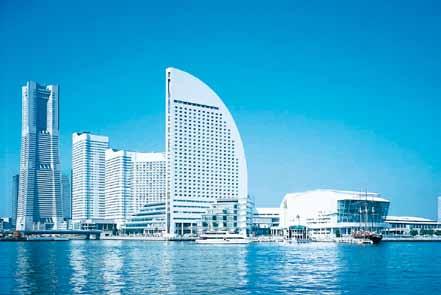
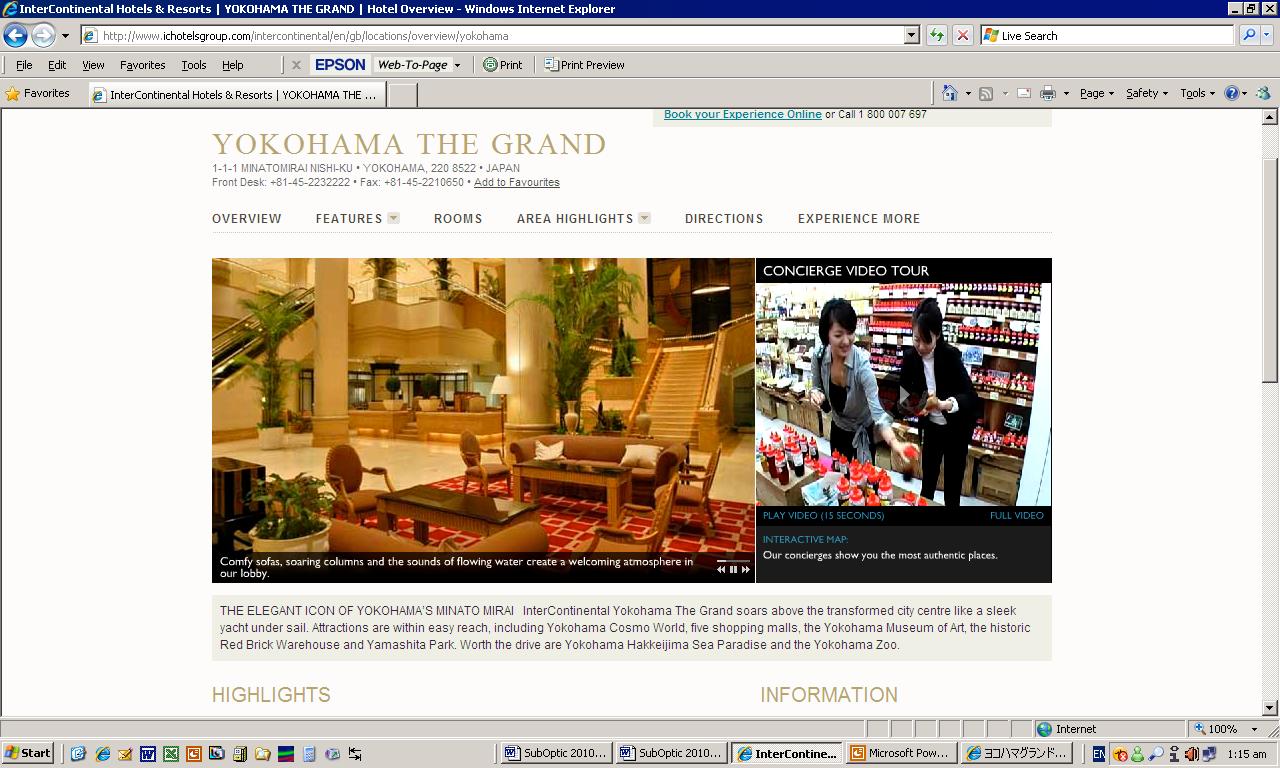
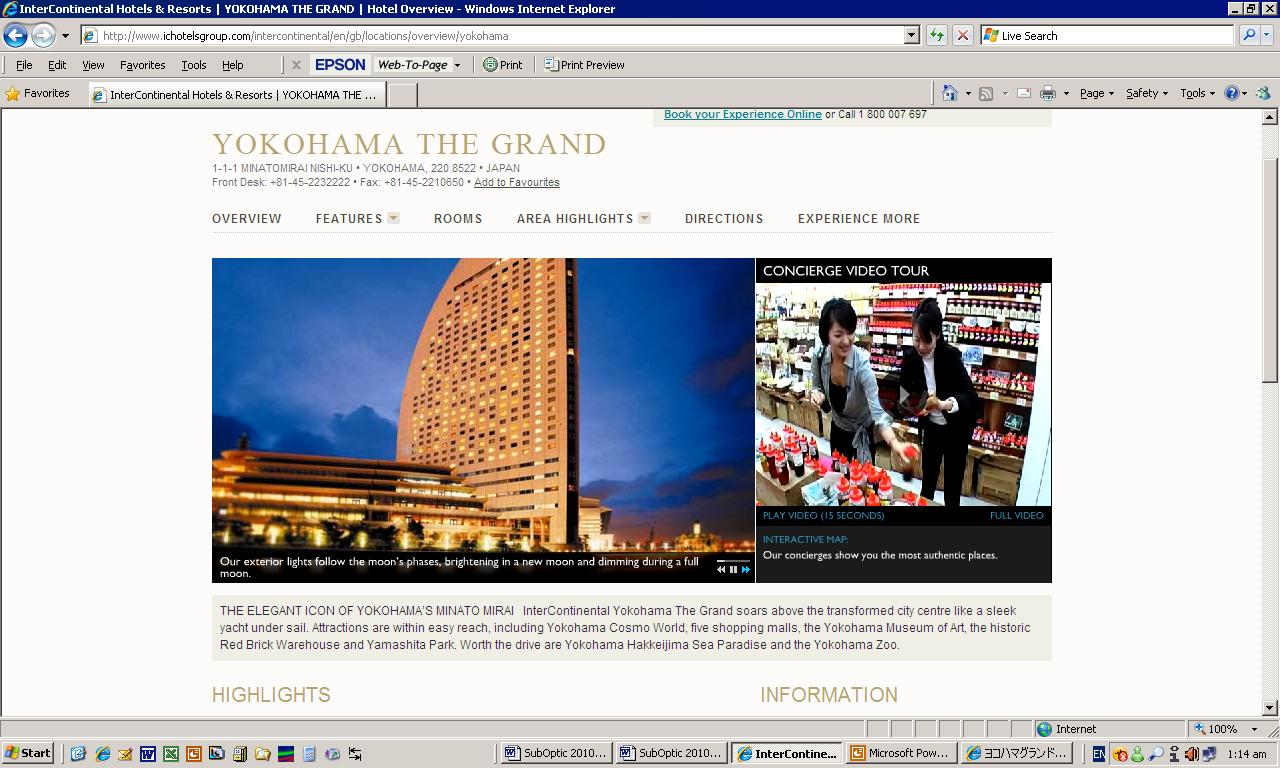
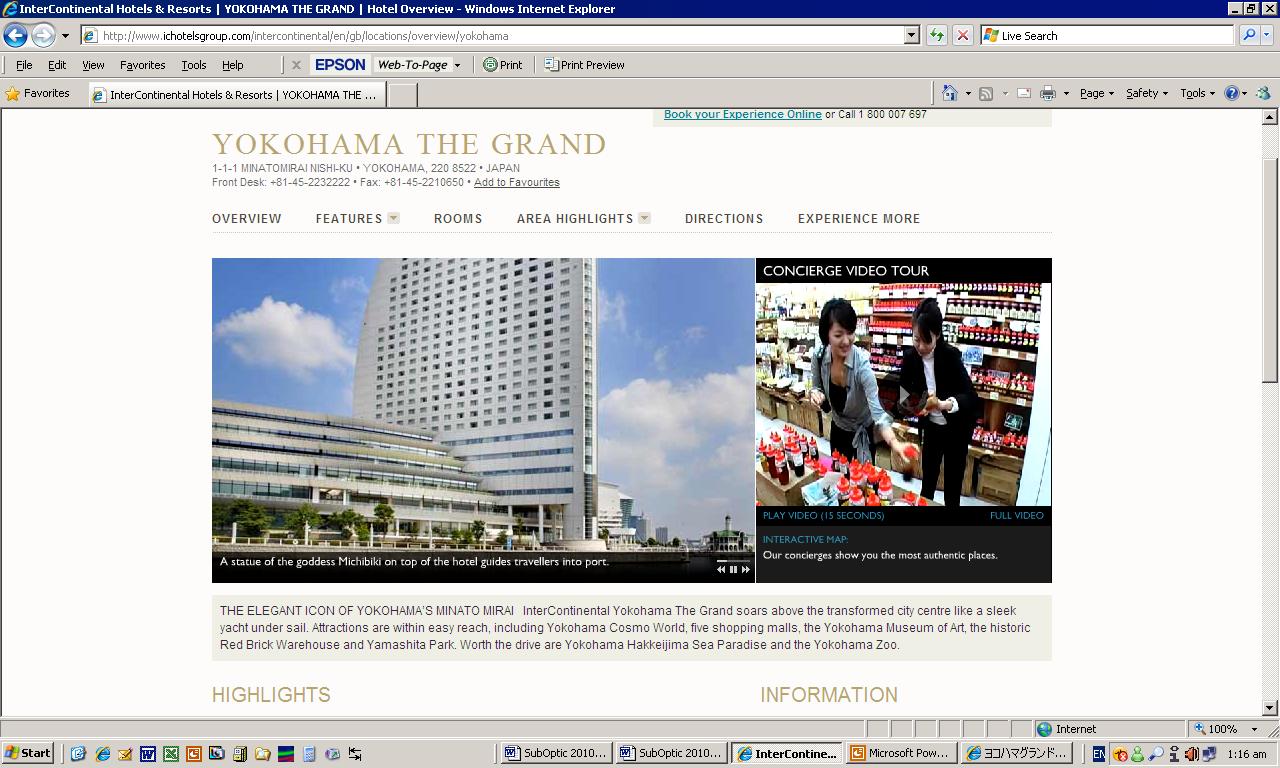
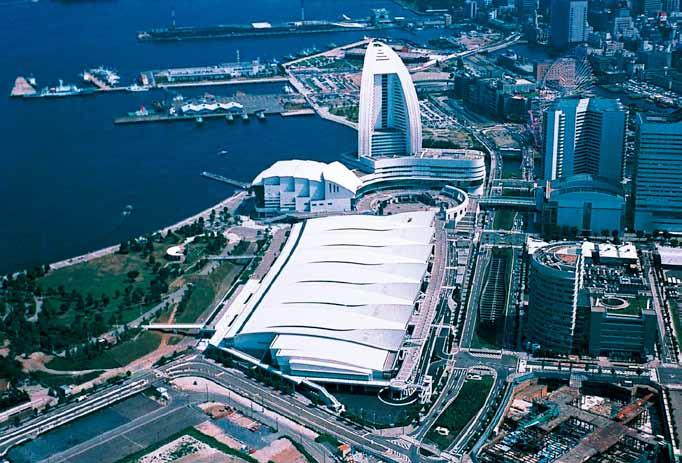
SubOptic 2010 will take place at the Pacifico Yokohama Conference Center, in Yokohama Japan, from 11 to 14 May 2010. The Pacifico conference facility has an integrated 600-room hotel, Intercontinental The Grand Yokohama which will act as the base hotel for the conference. This will combine the intimacy of SubOptic 2007 in Baltimore, with all of the advantages of a purpose-built conference center. There are several other international hotels with total of over 2,000 rooms, and a shopping mall nearby the conference center as well.
The Same - But Different
It is a privilege and an honour to have been selected as the Program Chair for SubOptic 2010. The submarine industry has been good to me - I have been involved in many interesting projects and met many wonderful people - so this is an ideal chance for me to try to give something back in return.
SubOptic 2001 in Kyoto, SubOptic 2004 in Monaco, and SubOptic 2007 in Baltimore, were each great conferences, despite the very difficult period through which the industry was going in that 6-year period. And each event gained from the experience of the past events. So what are we going to do different for 2010, and what are we going to do the same? Well, read on to find out...
Executive Committee
The Program Committee is formally responsible to the SubOptic Executive Committee, and the EC interacts formally with the PC at our regular EC meetings. The Executive Committee currently comprises 16 diverse companies from within our industry (in alphabetical order): Alcatel-Lucent; Australia Japan Cable; Apollo Submarine Cable System Ltd; British Telecom; Cable & Wireless; Deutsche Telecom AG; EGS Survey
Group; France Telecom; Fujitsu Limited; Global Marine Systems Ltd; Google Inc; NEC Corporation; Reliance Globalcom; Southern Cross Cable Network; TATA Communications International Pte Ltd; and Tyco Telecommunications
The EC is chaired by a President elected from one of its member organisations, and this role is currently undertaken by Fiona Beck, President and CEO of Southern Cross Cable Network.
Program Committee
We have formally appointed seven Program Vice Chairs, who will take responsibility for the broad topic areas of the program.
The first formal Program Committee Meeting was held in New Jersey USA in September, and we will meet again just before PTC ’09 in January 2009.
The PC Vice Chairs are, in alphabetical order:
• Guy Arnos (WFN Strategies)
• Graham Evans (EGS Survey Group)
• Leigh Frame (ASN / Alcatel-Lucent)
• Dan Hughes (Apollo Cable System)
• Marsha Spalding (Tyco Telecommunications)
• Elaine Stafford (David Ross Group)
• Masuo Suyama (Fujitsu Limited)
John Horne, the secretary of the SubOptic Executive Committee, also sits on the Program Committee. In addition to John’s role as secretary he provides an even more important contribution with his in-depth experience of organising many of the past SubOptic conferences.
The Program Committee for 2010 is as experienced as I could have ever hoped for. The members together
feedback) after SubOptic 2007, in an attempt to learn from this how we can further improve SubOptic 2010.
The seven topics into which we have broadly broken the program are not radically different form the past SubOptic conferences, but we are trying as far as possible to flesh them out and fine-tune them to be as upto-date and relevant as we can make them. In particular we have added more focus on the special applications within our community, such as Oil & Gas, Scientific, Tsunami Warning, Defense, etc. The topic areas are:
• Geographical Markets & Global Markets (Elaine Stafford)
• Oil & Gas, Scientific, Defense, Special Markets (Guy Arnos)
• Project Development & Implementation (Leigh Frame)
Strategic Advisers Group
One new aspect which I think adds real strength to the Program Committee is the formation of a “Strategic Advisers” group. The Program Committee is formally responsible to the SubOptic Executive Committee, and the EC interacts formally with the PC at our regular EC meetings. But 16 diverse companies is too large a group to contact on a day-to-day basis. So in-between times, it is very valuable to have a small group of advisers chosen for their special experience, interest and skills in conference organisation or participation.
It is an honorary position, without formal powers, but they advise or comment on an as requested basis, and give the PC Chair a valuable sounding-board, and brainstorming committee - especially when the Program Chair or the Program Committee is considering some detailed aspect of the conference and has several alternatives, or wishes to have more alternatives than we have considered in the past.
Telecommunications Council)
• David Robles (Tyco Telecommunications; Program Committee Chair for SubOptic 2007)
• Jose Chesnoy (ASN; Program Committee Chair for SubOptic 2004)
Conference Theme
The conference theme for 2010 is “enabling the next generation of networks & services”. So we will try to have a special focus on the future of the industry this time; but of course we will still encourage and welcome papers and posters which look back at the enormous hive of activity in the industry in three years since SubOptic 2007 in Baltimore.
to two instead of three as at Baltimore. This should be possible as we have a full 4-day conference in 2010, compared to the 3 or 3.5 days for 2007.
Call for Papers & Abstract / Paper Schedule
The formal call for papers will be issued in late March 2009, with abstracts due by late September. For abstract proposals which are accepted for the conference, full paper or full poster submission will be required by late January 2010.
As in the past, there will be Masterclass Tutorials woven Selection of keynote speaks has not been finalised, but we already have a very interesting list of possibilities.
We are putting a lot of effort into the design of the round table sessions, which it is acknowledged have not been as successful in the past as many hoped. Already we have some good ideas in the melting pot, and the future Program Meetings in 2009 will firm these up into the
the most work, and that is those hard-working and keen individuals who write the papers, create the posters, and prepare the Master-Class Tutorials. So it is your conference, and if it is as successful as we hope, then it will be largely due to your effort. And the other attendees who are not presenting a paper or poster - it’s your conference too.
That’s what SubOptic is about... it’s for the whole community. The SubOptic constitution attempts to be as inclusive as possible. It broadly defines our industry community as including but not limited to: purchasers of systems & system capacity; suppliers of systems; suppliers of system components & services; suppliers of network management services; maintainers of systems; suppliers of cable protection; non-carrier investors; academic, professional & research institutions in the field; and relevant international standards & regulatory bodies.
So if you belong to one of the above groups, at any time the Program Committee welcomes your input and involvement. Any suggestions and ideas will be accepted and positively considered, whether they are able to be incorporated into the final program or not. (And if we are too busy to respond in a timely manner to your input, I apologise in advance, but go ahead and suggest ideas anyway).
The International Port City of Yokohama Japan
The city of Yokohama, one of the major port cities of Japan, is adjacent to Tokyo, and is part of the wider ‘Tokyo Megalopolis’. It’s the world’s largest metropolis, with a combined population of some 33 million people, and is an exciting, attractive, cultural group of cities with a history spanning over 400 years.
Due to it’s status as a major port for Japan, Yokohama has a long history of interaction with foreigners, even in those periods in the past when Japan was sometimes a closed country.
Early May is a good time for weather in Japan - not too hot, too cold, or too rainy... and the conference is scheduled to
take place just after the so-called “Golden Week” national holidays.
Welcome Reception & Closing Gala Dinner
Of course there will be a welcome reception on 11 May, and a closing gala dinner on 14 May 2010, both arranged by the hosts, NEC and Fujitsu.
Interested and Want to Know More?
If you are interested in SubOptic 2010 - and we hope that you are then please participate. Write a paper or prepare a poster. Or simply give us your constructive ideas and suggestions, then come along to the event, and meet with the most experienced and influential people in our industry!
The latest information about SubOptic 2010 can be obtained from our website: www.suboptic.org
Further information about SubOptic can be obtained from John Horne, Secretary to the SubOptic Executive Committee, Email: johnhorne@btconnect.com
Any suggestions and ideas for the Program Committee may be forwarded to Colin Anderson, Program Committee Chair, Email: colinwanderson@optusnet. com.au
Colin Anderson has been involved in the international telecommunications networks industry for over 20 years, and has held a range of marketing and engineering roles in the areas of terrestrial optical networks and digital radio networks, before entering the submarine networks industry, where he has played a significant role in the design, bidding, award, and implementation of many international submarine cable projects - among them SEA-ME-WE 3, Southern Cross, Japan-US, FNAL, SEAME-WE 4, FLAG FEA, AJC, AAG, & Unity.
Prior to consulting for NEC Submarine Networks Division, Colin held positions with Fujitsu Limited in Tokyo and in New Zealand, and earlier he worked for Philips Electronics in both engineering and marketing roles.
Colin received his BSc and MBA degrees from Victoria University of Wellington in New Zealand. He is a senior member of The Institute of Electrical and Electronic Engineers Communications Society (SM IEEE), and also a member of the Audio Engineering Society (AES).
He is a New Zealander, and lived in Tokyo for 13 years before moving to Sydney Australia in 2005. His hobbies include a lifelong passion for classical music, restoration of grand pianos, home & car hi-fi audio, electronics, and house renovation.
Trenchers
Ploughs
ROVs
Atlantic Cable Repair and Maintenance Agreement
by Bill Kolb
Since 1965, the Atlantic Cable Repair and Maintenance Agreement (ACMA) has been providing exceptional repair and maintenance services for the submarine cable systems of its member companies. The ACMA is able to offer such extraordinary service at a reasonable price because it operates as a not-for-profit arrangement. On 01 January, 2009, the latest of the ACMA Agreements (ACMA 2009) will come into being.
Once again, the member companies have decided on a four cable-ship arrangement for service. France Telecom Marine’s CS Leon Thevenin is the grande dame of the fleet, having served the ACMA community the longest of any of the vessels. Based in Brest, France, the Leon Thevenin is well situated
to respond immediately to any cable fault on the eastern side of the Atlantic, and because of her experience, is often the first choice when a repair in that part of the world is needed.
Also on the eastern side, Global Marine’s CS Wave Venture joins the ACMA this year, after several years servicing Global’s Guardian cable systems. From its base port in Portland, UK, the Wave Venture will respond, primarily to sites on the European side of the ocean. On the western side, in Willemstad, Curacao, will be Global Marine’s Pacific Guardian. The Guardian would most likely be the first choice when there is a fault in the Caribbean. Rounding out this “group of four“ is Tyco Telecommunication’s CS Tyco Dependable. From its port in Baltimore,
MD, USA, the Dependable is seen as providing coverage for the western portions of many of the transatlantic routes.
Of course, while these four ports have been selected for their strategic location and coverage of the majority of the systems in the ACMA, the member companies are not limited to the services of any one ship. Each Maintenance Authority has the right to call upon any ship to undertake a repair. Which ship is ultimately selected is dependent on a number of variables that the MA analyzes before ultimately requesting one of the ships.
Each of the ships is always under the control of the ship’s Master, but each ACMA member has the right to direct repair operations on their systems, if they desire. The flexibility that has been written into the ACMA Agreement sometimes comes as a surprise to those who are not familiar with the latest innovations that have become part and parcel of the ACMA. For example, if an MA wants to be completely involved in the repair, that is possible. The other extreme, where the MA leaves the entire repair in the hands of the Service Provider, is also possible. It is entirely up to the ACMA member to decide their level of involvement.
This same flexibility exists regarding assisting in the administration of the Agreement as well. For those who want to be actively involved, there is the possibility to volunteer for any number of functions. For those who do not have the time or inclination to be actively involved, there is no coercion to participate. Indeed, a look at the various ACMA parties shows that there are some companies that are actively involved in many activities and some that are not involved at all. Some companies prefer to simply consider the payment of their quarterly invoice to be the total involvement they have in the ACMA. The choice is the members to make. Both are totally acceptable.
Each of the four cable ships that will service the ACMA 2009 cable systems is capable of repairing cables in any part of the ACMA area. As oceangoing vessels, they operate in all kinds of weather and in various sea states. Because of their large size and robust capability, some people wonder if
the ACMA is strictly for “Deep water repairs“ only. Absolutely not. ACMA provides “the complete requirements” for submarine telecommunications cable repair and maintenance from Beach Joint to Beach Joint (but excluding the Beach Joint itself). If there is a fault close to shore or even on the beach (on the seaward-side of the Beach Joint), the ACMA is responsible. Each of the ACMA service providers is very experienced in shallow water repairs and knows exactly the type of platform that is required, and where to get that at the lowest price and with the quickest turnaround. In extreme cases, the service provider has the ability to call upon divers to do the work. The important point to remember is that the ACMA handles everything that is considered “wet” maintenance, whether in 3 feet of water, or at depths exceeding 3,000 feet.
One of the questions often asked is whether there is any priority arrangements within the ACMA and if so, how priority is handled. Actually, the fact that the ACMA provides its members the use of four (4) cable ships means that there is usually no need to ask for priority. In addition, the cooperative approach of the ACMA normally avoids the need to ask for priority. Should the need arise, however, where two members request the services of the same ship at the same time, priority is given in the fairest way possible, according to the cable system’s financial contribution.
All decisions concerning the ACMA are made by the Management Committee, which consists of a Nominated Representative from each member company. In every case, the Management Committee (MC) strives for consensus. Where consensus is not possible, then voting on a weighted cost-share basis is done. The MC meets generally once a year, and more often, if required. Although attendance is encouraged, there is not requirement to attend. Most discussions during the year take place via e-mail. Knowing the importance of timely decisions, the MC takes great pride in its ability to review and understand any matter brought before it and to respond without delay.
One of the groups within the ACMA is the nine member Contract Management Group. This group is selected annually from volunteers and is
responsible for the management, implementation and operation of the service contracts. Membership is restricted to nine members to facilitate operational effectiveness. Normally seven positions are filled by the largest financial contributors but to ensure adequate representation among all ACMA members, two positions are reserved for those companies whose financial contributions are relatively low.
The cost of the ACMA is shared among all members according to an agreed cost allocation formula. Because the ACMA is a not-for-profit association, as more cables enter the Agreement, every existing cable system’s cost is lowered. And when a cable system is retired, its cost is prorated among all the other existing cable systems. Cable retirements are known long in advance of the actual retirement so that each member can budget accordingly.
One of the great benefits of ACMA membership is the unofficial, but very real, knowledge and experience sharing that takes place among the members. Although the companies may compete vigorously in the marketplace, there is extraordinary cooperation among the member companies as regards repairs and maintenance.
Another benefit is the absolute transparency with which the Agreement operates and also with regards to the invoicing and bill paying. All costs incurred during operations are billed on an asincurred basis, and the Contract Management Group, with the assistance of the Central Billing Bureau, conducts several audits annually with the service providers.
It is important to recognize that the ACMA is run by its member companies; that it is run by cable owners for the benefit of the cable owners; its interests are those of the cable owner. The goal of the ACMA is to provide the highest quality repair and maintenance service available at the lowest possible price, and to achieve exceptional value for money spent.
You are cordially invited to visit the www.acmaweb. net website and, of course, to revisit it later in the year when all of the ACMA 2009 information will
be available. Any ACMA member will be happy to speak with you about what the ACMA means to them.
Should you have any questions about how to join the ACMA please do not hesitate to contact Bill Kolb, ACMA Chairman, at wkolb@att.com
William F. Kolb, Chairman of the ACMA, has held a number of very interesting positions in his almost 30 year career in AT&T. After several highly successful years in AT&T’s National Sales Force, during which Bill was awarded the AT&T Spirit of Service Award, for his outstanding results, he was promoted to AT&T’s prestigious National Sales Training Center where he was lead instructor, responsible for the training of AT&T’s Sales Executives. Following that assignment, Bill was again promoted and made Marketing Director of AT&T Germany, in Frankfurt. It was during this time that the Berlin Wall was torn down and East & West Germany became unified. (Bill says he cannot take all the credit for that!) Upon his return to the US, Bill became involved in the maintenance and repair of submarine cable systems and since that time has worked with all the zone maintenance arrangements around the world.
Bill is the Chairman of the ACMA, the Chairman of the North America Zone and the Chairman of PIOCMA (Pacific and Indian Ocean Mutual Assistance). He is the recipient of many awards and distinctions. He is a member of several Who’s Who organizations, including the International Who’s Who of Professionals, where he serves as a member of the Advisory Board. Having undertaken University studies in both Germany and the US, Bill speaks English and German with native fluency and, in addition, is an accomplished musician. He has recently been made a member of the National Zither Orchester. He has played in Austria and Germany and has given concerts in several US states.
He considers his greatest achievement to be his two sons, William III and Christian, and credits his loving wife, Rosemarie, for any success he has achieved.
Navy Undersea Cable Systems
by Bob Fredrickson & Catherine Creese
Introduction
The U.S. Navy uses underwater cables in a wide variety of systems, not only for subsea communication and power transmission, but also for precise placement and orientation of acoustic sensors suspended high above the seafloor. Every situation has different design parameters determined by project purpose, location and materials. Each of these unique projects presents its own challenge to the Naval Facilities Engineering Service Center (NAVFAC ESC), the Navy’s shore and ocean facility technical center. In this article we describe a sample of the design issues considered in Navy cable projects, and some solutions that the Ocean Facilities Department of NAVFAC ESC devised to resolve them. The views expressed here are solely the authors’ and do not necessarily reflect the policy of the U.S. Department of Defense (DoD), the U.S. Navy, or its components.
Naval Facilities Engineering Service Center
Because of the importance of these underwater cable systems and the cost to install, maintain and repair them, the Navy’s planning and engineering efforts are significant. The NAVFAC ESC, headquartered in Port Hueneme, California, is tasked to provide worldwide support for the Navy’s shore, ocean and waterfront facilities. Within NAVFAC ESC, the Ocean Facilities Department provides a wide range of marine services. It is responsible for developing the Navy’s capabilities in the design, construction, maintenance, and repair of fixed ocean facilities, focusing on:
* Seafloor Engineering
* Anchor Systems
* Ocean Structures
* Ocean Construction
* Underwater Cable Facilities
* Mooring Facilities
* Magnetic Silencing Facilities
* Underwater Inspection
* Shore Based Hyperbaric Facilities
Examples of Navy Cable Systems and their Challenges
Design and Installation of a Complex Suspended Array System1
The Intermediate Scale Measurement System (ISMS), situated in Lake Pend Oreille, Idaho, is a major test facility that provides high quality measurements of the structural acoustic response of submarine models. The data guides the Navy’s development of the next generation of submarines to make them more stealthy and affordable. ISMS (Figure 1) is comprised of a complex system of acoustic arrays suspended in 1200 feet of water. A network of underwater electrical and fiber optic cables connect these arrays to shore approximately 2.5 miles away. One quarterscale buoyant submarine models are hauled down into the center of the array to conduct testing and to collect data. The cable support structures that make up the array
1 R. Zueck, R. Brackett, A. Smith, D. Shields, Construction of a Large Underwater Acoustic Array, Offshore Technology Conference, 1996
system encompass an area the size of a football stadium.
Installation of the ISMS proved to be extremely challenging and ultimately drove the design of the structure. Numerical modeling and simulation played a vital role in verifying and optimizing the installation procedures. The relative placement of more than 150 sensors within the array required precise positioning in order to meet system performance criteria. To achieve this precise positioning, the array was assembled underwater, one component at a time, without the use of deepwater divers. The installation effort required a technically advanced positioning system, a speciallybuilt project barge and unique deployment methods, including the simultaneous use of a pair of ROVs. In addition, the installation and replacement procedures were designed to be similar to allow for reliable maintenance of the system components.
This incredibly complex cable structure was installed by NAVFAC ESC in the fall of 1993 and spring of 1994. The installation work was completed on schedule and significantly under budget. Although this project was completed over a decade ago, it is still operating successfully. It is an excellent example of how careful planning and the use of numerical modeling and simulation can be used to reduce risk and to successfully construct highly complicated underwater cable systems.
Figure 1 ISMS array configuration
Pulling Three Armored Cables through a Single 4,000 Foot Bore2
San Nicolas Island is owned and operated by the Navy as a major element of the Point Mugu Sea Range. Located approximately 65 miles southwest of Point Mugu, California, the island is extensively instrumented with tracking radars, electro-optical devices, telemetry, and communications equipment necessary to support U.S. fleet training and weapons testing.
Two sub-sea fiber optic cables known as the Fiber Optic Communication Underwater System (FOCUS) cables transmit communications and test data between the island and Point Mugu on the mainland. Due to a history of cable failures in the near shore environment, NAVFAC ESC implemented repairs to the existing FOCUS cables on the island in June 2004. The much needed repairs included the horizontal directional drilling of 4000 feet of new seashore interface conduit and the installation of three new fiber-optic cable segments. Two of the new shore ends were spliced into the existing FOCUS cables offshore while the third cable was reserved as a spare.
2 S. Black, B. Cable, R. Fredrickson, D. Warren; Horizontal Directional Drilling of a Cable Shore Landing at San Nicolas Island, California; Oceans 2004 Conference.
A unique aspect of the project was a decision to drill a single sub-sea conduit and to install all three single armor cables within it. This decision was driven by a combination of logistical, environmental and financial factors. First, the horizontal drilling process requires a significant volume of fresh water and San Nicolas Island has a very limited water supply (in fact, NAVFAC barged an additional 100,000 gallons of water to the island in order to complete the drill). In addition, San Nicolas is a very ecologically sensitive island and is home to several endangered plant and animal species. Drilling only one bore reduced the environmental footprint of the project and also the amount of time spent on the island performing the construction. Lastly, the cost of drilling only one horizontal bore and having only one cable pull operation is significantly less expensive than drilling three separate bores and pulling three cables independently. Based on these factors, it was decided to accept
the increased risk of pulling all three cables simultaneously.
The challenge was to accurately predict the cable pulling tensions involved with the installation of three SL21 single armor cables (each approximately 3.5 cm in diameter) into a single 14.6 cm inside diameter conduit. This calculation was critical to ensure that the cables could be pulled through the sub-sea bore/ conduit without becoming stuck or damaged. A failure would have been catastrophic to the project and would have jeopardized operation of the strategically important San Nicolas Island range activities. The cables were simultaneously deployed from the installation vessel offshore then carefully pulled through the sub-sea conduit to the beach. Throughout the pull, measured tensions were very close to those calculated and the cable installation was completed as planned.
Design and Installation of a Deep Water Suspended Array System3
The South Tongue of the Ocean Acoustic Measurement Facility (STAFAC) is currently under development and will be the U.S. Navy’s first east coast subsurface moored acoustic signature measurement facility. STAFAC will measure and characterize the acoustic signatures of subsea moving targets. The challenge for STAFAC is to moor the the dual acoustic array system in 4500 feet of water at a remote site approximately 70 miles from shore.
Development of a Standardized Undersea Distributed Network System4
3 W. Bartel, M. Greise, Design of a Subsurface Moored Acoustic Array in Deep Water, Oceans 2007 Conference
As shown in Figure 2, the “goal post” array configuration will be buoyed above a subsurface mooring system and must provide the stability required for safe navigation, accurate tracking, sensor orientation and stability to meet measurement accuracy requirements. A unique feature of the mooring is to allow periodic servicing of the array sensors by use of a sliding counterweight cable mechanism which alleviates the need to recover the main mooring legs. Relative positioning of the dual arrays bottom mooring components at this depth requires a very unique mooring configuration design and a well- designed deployment plan. As with ISMS, numerical modeling and simulation played a vital role in the design and installation planning of the system. The STAFAC system is currently scheduled to be installed in April and May 2008.
NAVFAC ESC recently awarded Phase II of a three phase contract to Ocean Design, Inc. (ODI) to develop a standardized undersea module known as the Gateway system. The design goal of Gateway is to use existing commercial offtheshelf parts in an innovative way to make a basic set of standardized undersea modules. Gateway is capable of being assembled into an infrastructure that will support a variety of oceanographic sensors and allow them to be deployed over a wide variety of ocean floor characteristics. The system is designed to handle at least 95% of the sensors available today including those for oceanographic and climatological monitoring, power transmission, communication, port security and defense purposes.
Gateway uses a standard 10 kV DC power supply to power undersea telecommunications cables. This allows those who are deploying sensors to either install new cable or to retrofit decommissioned communications cables. The three subsystem modules are a hub Node, a sensor node and a shore station, and their key components are the cables, connectors and sensors. The deployment topology is trunk and branch, with trunk lengths of more than 2000 km. This type of configuration will be capable of providing power and
4 R. Bennett, S. Evangelides, J. Morreale, D. Symonds, J. Henson, J. Wilson, Undersea Distributed Networked System: An Enabling Power and Communications Infrastructure Technology, Oceans 2007 Conference
Figure 2 STAFAC array configuration
communications infrastructure for as many as 121 individual sensors. Another unique feature is that the modules will be designed to support conventional interfaces needed to connect to sensors using standard telecom protocols. In this way we hope to have an ‘open architecture’ that will be easily accessible to all end users.
Phase I funded the development of operational requirements, the basic design of the system, and the design of the test components. Thus far in Phase II, the hub and node have both been successfully benchtop tested. At the end of Phase II in late 2008 the components will be tested again under pressure in a test tank. Phase III in 2009 will culminate with an ocean prototype test for a typical application.
Cable System Protection
We describe here just a few of the many unique and complex Navy cable projects. In order to protect them from other seabed activities, NAVFAC ESC works with the Navy Seafloor Cable Protection Office (NSCPO) before, during and after installation. NSCPO, another office of the Naval Facilities Engineering Command, strives to deliver sufficient positioning information to mariners and the commercial cable industry so that they can avoid the project locations. NSCPO is the official point of contact for all U.S. Navy (and other Department of Defense) ocean cables5. Its mission includes protection of the Navy’s interests with respect to ocean cables
by representing these interests to industry. By providing a single point of contact and management of a comprehensive database of cable systems, the NSCPO is uniquely positioned to answer queries from commercial cable installation planners, surveyors and installation contractors in order to minimize possible damage to Navy cable systems.
In order to ensure that new commercial cable projects are routed clear of any U.S. Navy cable systems, NSCPO requests system planners and installation contractors to contact them early in the planning process. All data provided to NSCPO will be treated as commercially proprietary. For more information on these projects or NAVFAC ESC capabilities please contact the NSCPO.
Bob Fredrickson is the Director of the Ocean Engineering Division at the Naval Facilities Engineering Service Center in Port Hueneme, CA. He is responsible for management and oversight of a wide variety of unique Navy ocean facilities projects such as those featured in this article.
5 C. Creese, The U.S. Naval Seafloor Cable Protection Office “Call Before You Dig!”, Submarine Telecoms Forum, issue 29, November 2006.
Prior to his current position, Bob was the manager for environmental quality technology transfer for the Naval Facilities Engineering Service Center. He has 22 years engineering and management experience with the U.S. Navy. Bob is a graduate of the University of California at Santa Barbara where he earned a Bachelor of Science Degree in Mechanical Engineering. Catherine Creese has worked for NAVFAC as the Assistant Director of the Naval Seafloor Cable Protection Office since May, 2006. Prior to working at NSCPO, she held positions in cable system route engineering, permitting and sales at Tyco Telecommunications (US) Inc. She was a delegate on the Executive Committee of the International Cable Protection Committee for four years and was a Director of the North American Submarine Cable Association. A former Coast Guard officer, Catherine is a US Coast Guard Academy graduate with a bachelor’s degree in Marine Engineering. Catherine also holds a master’s degree in Technology Management from Stevens Institute of Technology.
You can reach her, and the rest of the NSCPO office at (202) 433-9700 or via the web at nscpo@navy.mil.
Same Pipes, Faster Speed
by Andy Lumsden
How does the subsea cable industry keep up with the insatiable demand for bandwidth? Andy Lumsden shares key technologies that enable current subsea cables to carry more capacity.
Ever wonder how much bandwidth you are consuming every day? You need not look further than your surroundings to see the increasing volume of bandwidth being used.
From your always-on 3.5G phone to your high-definition television set top box, it is no wonder that more people are seeking
the fastest fiber-to-the-home broadband connections that pump 100 Mbps into their homes.
At its Spring Policy Summit earlier this year, the Telecommunications Industry Association (TIA), a US-based industry association and standards body, went as far as to warn of possible shortages if service providers are unable to keep pace with network upgrades to support bandwidth intensive applications demanded by both the enterprise and consumer markets.
The buck however, does not stop at the service provider’s end, for ultimately, the subsea cable carriers must produce the bandwidth required to support the industry’s growth either by laying new cables or adding new capacity to legacy systems.
The impact of this increase in end-user demand for bandwidth on the subsea cable industry will be one of the topics to be discussed at this year’s Pacific Telecommunications Council’s conference, to be held at the Hilton Hawaiian Village, in Honolulu, Hawaii on 1821 January 2009.
As it is now, bandwidth demand across most routes, including across the Pacific, is increasing at a phase never seen before, and industry analysts TeleGeography have predicted trans-Pacific demand to increase at a compounded annual growth rate of 36 per cent between 2008 and 2014.
The tall order for cable operators is to choose and deploy the right next-generation networking technologies into our new systems and existing optical fiber network to provide the bandwidth required.
Take the case of the Unity cable system that is being built by a consortium of six companies including Pacnet. The multi-terabit stateof-the-art cable can now transmit up to 96 channels of 10 Gbps bandwidth per fiber, across 10,000 km without the need for regeneration – a huge jump from the 16-32 channels per fiber capacity of cables used in the late nineties.
Additional capacity yield is also made possible by improvements in technologies, U-FEC (forward error correction) type coding and phase modulation.
Enabling coding gains
Higher FEC gain coding in transponders is part of the new technologies being added to existing cable infrastructure to add capacity beyond what they were designed for.
Transponders are the cards that generate the signals into specific wavelengths to be optically multiplexed or muxed over Dense Wavelength Division Multiplexing (DWDM) network.
When signals travel over thousands of kilometers over the subsea cable system, inherent errors are bound to occur. FEC codes are used to correct these errors at the receiving end.
Enhancements in FEC technology enable increases in error transmission thresholds as well as the capacity to add optical channels within the fiber, which mean increased capacity over the same cable.
Supporting 40G
Another advancement is also seen in the area of transmission techniques, which can now address the challenges of transmitting a 40G signal.
Because higher frequency 40G signals have a narrower pulse width, error detection of the receiver and transmitter has been an issue and innovation in Phase Modulation such as Differential Phase Shift Keying (DPSK)/ Differential Quadrature Phase Shift Keying (DPQSK) helps answers this challenge versus the On OFF Key (OOK). The pulse width of a 40G signal is a quarter of that of a 10G signal and higher optical power increases nonlinear effects, resulting in poor performance
that gets worse the further the signal is transmitted.
This technique has made long distance 40G transmission possible, potentially increasing the current 10G cable capacity four folds using the same physical cable infrastructure. While there are of course limitations in the original fiber network that may preclude 40G transmission, the possibility exists.
To make this technology attractive for operators, the cost of 40G interfaces and its deployment has to be less than the sum of 4 x 10G. But setting CAPEX aside, this is indeed a highly beneficial technology for enhancing system design.
On top of these two technologies, improvements are also seen at the very heart of the system with the latest Submarine Line Terminal Equipment (SLTE) which transmit and receive the optical signals over fiber optic subsea cables. Newest SLTEs can handle up to 16 10G wavelengths on a single rack, four times more space and energy efficient that the four 10G wavelength capacity of previous generation SLTEs.
There have also been significant improvements in physical layer interfaces, which are now able to support 10G Ethernet. Next generation LAN PHY interfaces have made network management more simple and cost effective. For instance, it is able to extend Layer 3 routing directly over the submarine DWDM network eliminating the need to for multi-protocol routing and multiplexing.
Traditionally, WAN PHY is used as extension to adapt 10GE over Synchronous Digital Hierarchy (SDH)/ Synchronous Optical Network (SONET) but it had some traffic
limitations due to bit rate adaptation. This limitation can now be overcome using LAN PHY for direct transport over the Optical Transport Network (OTN). It is also increasingly applied for IP over the DWDM OTN.
With all these technologies being deployed as part of Pacnet’s network upgrade plans, our existing pan-Asia EAC-C2C network has the potential to be able to offer capacity beyond what was initially planned. Now, more than ever, we are positioned to complement power and reliability of next generation networks as well as support the needs of an increasingly sophisticated broadband market.
Andy Lumsden is Vice President of Engineering at Pacnet. A telecommunications industry veteran of over 15 years, Mr. Lumsden is responsible for the design and deployment of Pacnet’s next-generation submarine cable network infrastructure.
coming to a wall near you
Submarine Telecoms Industry Calendar
6th Anniversary Edition
Comprehensive Test Ban Treaty Organisation
An Overview
Since its inception in the late 1990s, the verification regime of the Comprehensive Nuclear-Test-Ban Treaty (CTBT) has sparked considerable interest worldwide.
Cutting-edge technologies and scientific methods are applied to monitor the planet for nuclear explosions. The resulting data offer a wide range of civil and scientific applications with the potential to contribute significantly to sustainable development, knowledge expansion and human welfare.
First and foremost it is the vast amount of monitoring data that are collected and stored by the Preparatory Commission for the Comprehensive Nuclear-TestBan Treaty Organization (CTBTO) which attracts
Five tsunami warning centres receive data directly from 30 monitoring stations.
Disaster mitigation is a top priority when looking at potential applications of CTBT verification technologies and data in other fields. Interest in this topic increased, entering a whole new phase on 26 December 2004 when a tsunami caused by an earthquake off the coast of Sumatra, Indonesia, devastated coastal regions all around the Indian Ocean.
For the first time, the CTBTO took concrete steps to allow the use of its verification data for disaster mitigation. In March 2005, States Signatories tasked the organization with testing the provision of data to selected tsunami warning centres.
Using CTBT Verification Data for Tsunami
2004 Tsunami Devastation in Sri Lanka
The test phase lasted twenty months and proved successful. Because time is of the essence when warning populations in coastal regions of a possible tsunami, the success of the CTBTO’s test was determined by the speed of data arriving at tsunami warning centres. Verification data sent by CTBT monitoring stations took the least time in comparison with data from other monitoring networks.
Patricio Bernard, Assistant Director-General of UNESCO and Executive Secretary of the Intergovernmental Oceanographic Commission, confirmed the usefulness of CTBT monitoring data. Referring to an experiment that was carried out in 2005, Bernard said it had shown that “IMS waveform data were received with a maximum delay of 30 seconds, while those from other networks were received with an average delay of 100 to 180 seconds”.
Consequently, in November 2006, States Signatories endorsed a recommendation of the CTBTO’s technical working group to provide real-time and continuous data to relevant tsunami warning organizations. Five tsunami warning centres – one each in Japan, the United States and Australia, and two in Malaysia – now receive data directly from 30 monitoring stations worldwide, representing three of the four CTBT verification technologies –seismic, hydroacoustic and infrasound.
Contributing to Disaster
Mitigation
Augustine volcano, Alaska, United States
There are 600 active volcanoes in the world today. The use of CTBT verification data from its seismic monitoring network to provide the earliest possible tsunami warning is but one
example of how the organization can contribute to mitigating natural disasters. The seismic monitoring technology, as well as the other three monitoring technologies, offer more possibilities to preclude or alleviate the consequences of disastrous events.
The potential of CTBT infrasound technology towards making civil aviation safer has been discussed intensely over the years. Large ash plumes caused by volcanic eruptions can make jet engines malfunction or even stall completely. This has happened four times since 1982, said Hein Haak, Head of the Division of Seismology at the Royal Netherlands Meteorological Institute.
Large ash plumes caused by volcanic eruptions can make jet engines malfunction or even stall completely.
There are 600 active volcanoes in the world today, which puts this issue squarely on the disaster mitigation agenda. “Airlines are keenly aware of the danger posed by volcanic ash, and have to be informed of any volcanic activities in the world”, Haak added. CTBT infrasound technology can assist in the detection of volcanic eruptions by registering the very low frequency sound waves they emit.
Assisting in Plane Crash Investigations
A Pan Am Boeing 747, the same model as in the Lockerbie crash.
has been done in the past, as David McCormack of the Geological Survey of Canada described.
It is not immediately evident that monitoring data could be used to investigate plane crashes. Yet it
When a Pan Am Boeing 747 crashed near the Scottish town of Lockerbie in 1988, a seismic monitoring station at Eskdalemuir in Scotland, United Kingdom, registered the impact as a seismic event. “Although the location of the crash was quickly established from eyewitnesses and wreckage, seismic data provided the only accurate means of timing the crash”, explained McCormack.
The eleven hydroacoustic stations monitoring the world’s oceans can increase shipping safety by providing data on the break-up of ice shelves.
Other technologies also harbour the potential to mitigate disasters. The eleven hydroacoustic stations monitoring the world’s oceans can increase shipping safety by providing data on underwater volcanic explosions or on the break-up of ice shelves and the creation of large icebergs.
The radionuclide technology can provide critical information following nuclear accidents. Radionuclide stations can assist when radioactivity levels need to be measured rapidly or the dispersion of radioactive material needs to be mapped.
Rapid deployment mechanisms developed by the CTBTO for future on-site inspections can help with emergency response needs following disastrous events.
Cargo door and other debris recovered from Swiss Air MD11 crash near Halifax, Canada.
In a similar case ten years later, the exact timing of the crash of a Swiss Air MD11 in 1998 near Halifax, Canada, could only be accurately verified by using seismic data.
The crash of large, heavy aircraft cause seismic signals equivalent to small magnitude earthquakes, said McCormack. With more and more seismic stations being added to the CTBT (and other) monitoring networks, seismic signals emanating from plane crashes will increasingly be available to provide investigators with a useful tool in their investigative forensic work.
Using Data for Climate Change Research
“CTBT: Synergies with Science, 19962006 and Beyond” symposium in Vienna, Austria
Since the 1990s, the issue of climate change has become a prominent feature in the public domain. Thus, it comes as no surprise that monitoring data generated by the CTBT verification regime have roused the interest of scientists researching global climate change.
Helga Kromp-Kolb heads the Institute of Meteorology at the University of Natural Resources and Applied Life Sciences in Vienna, Austria. At a scientific symposium organized by the CTBTO in 2006, she advocated the use of CTBT verification data for climate change research.
Citing an example, she said that modern monitoring data, also those originating from CTBTO monitoring stations, facilitate the study of manmade impacts on the atmosphere evidenced when
comparing it with air trapped in ice cores. “Natural radionuclide data also registered by the monitoring system can be used to validate and calibrate weather prediction and climate models”, said Kromp-Kolb.
Infrasound data can also be of great interest to climate change research. While infrasound data originating from extreme meteorological events are considered as disturbances when verifying compliance with the Treaty, these data acquire a different significance when studying the atmosphere. “IMS data could become an important archive for the research of the atmosphere, severe storm systems, mountain waves, etc.”, KrombKolb maintained in the article.
Kromp-Kolb was quite adamant in saying that scientists would need to utilize all the information available to them to help mankind face the challenges associated with climate change. CTBT verification data could make a valuable contribution in this field.
Keeping Discussions Going
Peter Marshall pointed out that all potential civil and scientific applications of verification technologies depended on the availability of data.
It has long been recognized that the unique CTBT verification system offers a host of opportunities for applications in scientific research and everyday life. Representatives of States Signatories have therefore gathered at regular intervals to evaluate how best to tap into this vast potential.
Several such meetings to discuss civil and scientific applications of CTBT verification technologies have taken place. At the first of these meetings in May 2002 in London, Peter Marshall, a seismology expert from the United Kingdom and a veteran of the CTBT negotiation process, pointed out that all potential civil and scientific applications of verification technologies depended on the availability of data. As monitoring data and data analyses are made available to all States Signatories, it would be up to the States to allow access to these data for civil and scientific uses, Marshall said in the very first issue of the CTBTO Spectrum.
The symposium, “CTBT: Synergies with Science. 1996-2006 and Beyond”, examined ways and means to strengthen the mutually beneficial ties between the organization and scientific institutions worldwide.
Further meetings on this subject took place subsequently: in Vienna in October 2002; in Sopron (Hungary) in September 2006; in Berlin in May 2004; and in Budapest in September 2006.
The last of these meetings took place immediately after the first scientific symposium organized by the CTBTO, which took place in Vienna on 31 August and 1 September 2006. The symposium, “CTBT: Synergies with Science. 1996-2006 and Beyond”, examined ways and means to strengthen the mutually beneficial ties between the organization and scientific institutions worldwide, not least to identify possible uses of CTBT verification data and technologies in science.
The mutually beneficial relationship between the CTBTO and the global scientific community should be continuously developed and strengthened.
For CTBT verification data and technologies to be most effectively used for civil and scientific purposes, the exchange of ideas needs to be encouraged. Experts need to continue to identify and understand this vast potential.
The mutually beneficial relationship between the CTBTO and the global scientific community should be continuously developed and strengthened. This outreach also applies to a number of international organizations that share common interests in science and technology.
Finally, it is imperative to stay abreast of the latest developments in science and technology with a view to their potential civil and scientific applications in the context of the CTBT’s state-ofthe-art verification technologies.
Potential Civil and Scientific Applications of the Four Monitoring Technologies
Primary seismic station 47, Mina, Nevada, United States
Seismic technology can help in rapidly acquiring and disseminating data on earthquakes, in particular on potentially tsunami-generating earthquakes, to
assist disaster management and response efforts. Research on the Earth’s structure can benefit from seismic data generated by CTBTO monitoring stations. Seismic data can assist in plane crash investigation by providing precise data on time and location.
Hydroacoustic station 05, Guadeloupe, France
Hydroacoustic data can support research on ocean processes and marine life, such as whale populations and migration patterns. Climate change research can benefit from hydroacoustic data. Better weather prediction and estimates can be achieved with hydroacoustic data. Hydroacoustic data can help to mitigate disasters by rapidly acquiring and disseminating data on tsunamis. Shipping safety can be improved by monitoring underwater volcanic explosions, ice shelf break-up and the creation of large icebergs.
Infrasound station 55, Windless Bight, Antarctica, United States
Infrasound technology can help detect volcanic explosions and thus contribute to aviation safety. It can also assist in detecting a range of other man-made and natural events on the Earth’s surface, including chemical explosions, meteors entering the atmosphere, severe storm systems and aurorae. By supporting studies of
meteorological phenomena, infrasound data can contribute to climate change research.
Radionuclide station 64, Dar es Salaam, Tanzania
Radionuclide technology can contribute to the research of worldwide background radiation levels. It has the potential to assist climate change research by providing sample archives for historical studies of pollutants and micro-organisms. Meteorological models developed to track the propagation of radionuclides in the atmosphere can be used to monitor the dispersion of airborne pollutants. Data from radionuclide monitoring stations can provide critical information on nuclear accidents and assist in providing rapid measurement of radioactivity to map the dispersion of radioactive material.
call For PaPerS
The International Cable Protection Committee (ICPC) is planning its next Plenary meeting in Florida, USA during the period 21 - 23 April 2009 inclusive.
All of the World’s major telecommunications companies are represented within the ICPC whose principal purpose is to promote the safeguarding of submarine cables against man-made and natural hazards. This unique and prestigious organisation also serves as a forum for the exchange of technical, environmental and legal information concerning the marine aspects of both telecommunications and power submarine cable systems.
The theme of this Plenary meeting will be:
Submarine Cables: The Challenges of Protecting Critical Infrastructure
The Executive Committee (EC) therefore seeks presentations from interested parties that address the importance and challenges of protecting submarine cables. Topics could include, but are not limited to:
• Impact of Submarine Cable Failures on the Modern World
• Legal / Regulatory Challenges & Solutions
• Reducing the Risk from Man-Made & Natural Hazards
• Speeding up the Cable Repair Process
• Working with International Organisations to Improve Cable Protection
• Emerging Technologies & Concepts for Cable Protection
Presentations should be 25 minutes long including time for questions and, to ensure clarity when presented, should be formatted in accordance with the guidance that will be provided.
Prospective presenters are respectfully advised that papers that are overtly marketing a product or service will not be accepted, however two marketing slides can be included at the beginning or end of the presentation.
NB: Commercial exhibits may be displayed adjacent to the ICPC meeting room by special arrangement. Please contact the Secretary for further details.
Abstracts should be sent via email to plenary@iscpc.org no later than 31 January 2009.
The EC will evaluate all submissions based on content and quality.
Suboptic Heralds a new Dawn for co-operation
and
competition
interim activities working group – Questions and answers around introducing a Framework for a Standard Submarine cable network Supply contract
by Keith J. Schofield and Michael S. Carter
What’s the Problem?
For too long, purchasers and suppliers have reinvented the wheel when establishing commercial terms in a competitive environment. While no one would doubt the requirement to let them negotiate competitively, what has been preventing purchasers/suppliers of submarine cable network from establishing best-practice guidelines to make the process of buying and selling submarine cable networks more efficient?
The answer is, practically nothing! And why should new purchasers and old have to spend excessive amounts of time, energy and commitment to arrive at a set of contractual terms when, through the application of basic guidelines, the means of commercial engagement can be shared across the industry while allowing full competition?
There is no good reason for this!
Figure 1 - Companies engaged in the SubOptic Interim Activities’ Workgroup effort to create a standard contract framework – more at www.suboptic.org
Into this environment, a challenge was made at SubOptic 2007 that the industry should develop a recognized standard contractual framework that could serve as the starting point for individual negotiations. (ref.1) For purchasers and suppliers alike, use of a standard contractual framework endorsed by an independent body representing the industry itself holds out the prospect of such potential benefits as improved time to market for the purchaser, a more efficient bidding and negotiation process, a level playing field for competitive bidding, easier comparison of pricing and technical merits of competing bids, and legal certainty.
Who’s Going To Do Something About It?
During the SubOptic 2007 event, a number of the presenters/participants approached the incoming SubOptic President to explore whether progress on this issue could be made and a collaborative industry framework could be developed for moving forward. This resulted in the formation of the SubOptic Interim Activities Working Group, and a number of carriers/cable owners, industry professionals and suppliers volunteered to take part, supported by their companies. The scene was set to make progress.
How Will Progress Be Made?
The short answer is that a core group has been set up to put together an initial draft form of contract to be accompanied by draft guidelines. It is intended that this documentation go through two drafting stages and then be circulated to a peer review group for comment. At key review stages, all interested parties will have an opportunity to review the form of contract and guidelines. This will enable traction across the
1 Reference 1: A Standard Set of Terms for the Submarine Telecommunications Industry, Michael S. Carter, AlcatelLucent Submarine Networks, SubOptic 2007.
industry to be gained. In common with an IT ‘Open Source’ project, the information will not be held proprietary, neither will the draft form of contract or guidelines contain commercial confidentialities. The output is confined to establishing a common framework and best practice guidelines.
Who ’ s involved?
(A good Cross - Section of the Industry)
Doesn’t
a
Standard Contractual
Framework/ Guideline Stifle Competition?
3 - From
The purpose of the SubOptic initiative is to develop a recognized standard set of fair and balanced contractual terms for the supply of a submarine cable network that purchasers could use as a template in requests for quotations in the context of projects put out to competitive bidding or that parties could use as the starting point for direct negotiations. This standard contractual framework is not, of course, intended to be mandatory. While standards bodies may provide guidelines and recommendations, it’s up to the contracting entities themselves to determine whether adherence to recommendations or guidelines is in their mutual best interest – a feature of an international competitive marketplace. SubOptic’s intention is simply to offer the contractual framework and guidelines as a service to the industry, but it is understood that purchasers and suppliers of submarine cable systems are free to use or not to use them as a matter of choice.
What is being prepared?
Two documents are currently being prepared and reviewed by the SubOptic Interim Activities Working Group. The first is a form of supply contract that contains many typical terms and conditions that would be familiar to those in the industry. However, through a deliberate effort at logical, concise and economical drafting, much of the ‘baggage’ of 25 years of fibre optic submarine cables has either been synthesised to its minimum or eliminated. The first draft is therefore a much slimmer form of contract than is currently typical. There is nothing to stop the parties negotiating an agreement from discussing and introducing relevant terms that may be uniquely appropriate to their contracts. This is where the accompanying
Keith Schofield (Chair of Interim Activities Working group), Pio neer
Communications, Singapore Jackie McDowell, Secretary/General Counsel, Apollo Submarine Cable System Ltd, UK Sandra Hayes,
Figure 2 - A Cross-Section of the industry is engaged in the process, endorsed by their respective senior management teams, plus the SubOptic Executive Committee
Figure
Consultants to Installers, from Carriers to Suppliers, many sections of the business are collaborating to create the industry’s first standard set of commercial guidelines
guidelines come in. They contain explanatory information to serve as a commentary on the form of contract and provide pointers as to where additional effort may benefit those negotiating a deal.
Can I use it yet?
The drafts of the form of contract and guidelines will be put through a peer-review process. Contact the authors of this report to obtain details of how to become involved. Following the peer review, the drafts will be published on the website as a work in progress for wider industry comment. Therefore although there would be nothing to stop a purchaser or supplier from proposing such a draft as a framework, industry adoption is likely to be a process that is both iterative and may take some time.
What if the contract framework does not meet my needs?
Although a number of qualified lawyers have volunteered their services to progress the work of the SubOptic Interim Activities Working Group, neither the contract framework nor guidelines are intended to constitute legal advice or to substitute the internal legal and commercial review that must be undertaken by any organisation that wishes to contract with another. As a result, in common with any draft, framework or guideline, no express or implied warranty is given.
Is there a standard technical specification framework to accompany the contract draft and guidelines?
No, at this stage, the work of the SubOptic Interim Activities Working Group is confined
to the commercial terms and conditions of contract.
This is an interesting initiative. I’m an experienced player in the industry. What can I do to help?
What do we need from you?
Support
progress on this initiative, plus a roadmap of publication and implementation through to SubOptic 2010. Developments will be reported in a special area of the www.suboptic.org website – Follow the Interim Activities Working Group Links.
Keith Schofield
Although the SubOptic Interim Activities Working Group is now well established, there is a role for experienced people from system purchasers, suppliers and consultants to become involved in reviewing the drafts and suggesting amendments. Should you be interested, please contact k.schofield@ pioneerconsulting.com or contact any member of the SubOptic Executive Committee.
In the mean time, you can recommend that your senior management, commercial and legal functions become informed as to the progress of this initiative.
What are the next steps?
At PTC ’09, SubOptic will be presenting
The SubOptic Interim Activities Working Group is chaired by Keith Schofield. For over 27 years, Keith has worked internationally in the submarine communications industry, initially in cable/ process development and project management for a supplier, then for 17 years in a carrier, where he worked on both consortium and private contracts as a Director of Commercial Development, engaging in system management, due diligence, engineering and implementation consultancy. During that time Keith has worked on the commercial and engineering aspects of over 20 contracts both in repeatered and unrepeatered cables. He is a regular contributor to SubOptic, having presented papers at every event since 1997. Keith presently works in Pioneer Consulting as Director of Submarine Networks, providing expertise for carriers, suppliers and investors.
Michael S. Carter has been ASN’s general counsel since November 2003, having previously held the positions of deputy general counsel for ASN (2000-03) and international counsel for Alcatel Italia in Vimercate (1997-2000) and Alcatel in Paris (1995-97). He practiced law with Mudge Rose Guthrie Alexander & Ferdon in Paris (1989-95) and with Rogers & Wells in New York (1986-89). He was admitted to the New York Bar in 1987 and to the Paris Bar in 1991. He graduated from Bowdoin College (B.A., magna cum laude, 1983) and Columbia University School of Law (J.D. 1986).
4 - How to assist the process of developing an industrywide draft contract and guidelines
Michael S. Carter
advertise with the experts:
Since 2001, Submarine Telecoms Forum has been the platform for discourse on submarine telecom cable and network operations. Industry professionals provide editorial content from their own niche and focus.
Each bi-monthly edition includes commentary and information on system and service provision, and issues critical to the industry.
Website Banners
$500/month
Post your web linked banner to the Submarine Telecoms Forum website, where 5000+ readers come to view the latest news feed and our bimonthly magazine.
Feature Section Sponsorship
Available at full-page advertisement rate, section sponsors are identified with a banner (link) at the beginning and end of the featured section. All advertising rates effective as of January 2008.
advertising rates
recent Sec and FaSB guidance on Fair Value measurement and Disclosure
by Catherine T. Dixon and Theresa Hyatte
By the close of the third fiscal quarter, the Securities and Exchange Commission (“SEC”) and the Financial Accounting Standards Board (“FASB”) had taken positive steps to address serious concerns that application of so-called “fair-value,” or “mark-to-market,” accounting had artificially depressed corporate balance sheets due to the necessity of using steeply declining market prices to value financial assets. Although several provisions of U.S. GAAP have mandated use of fair-value measurements for some time,1 the market-oriented “exit price” valuation and disclosure requirements of FASB Statement No. 157, Fair Value Measurements (“FAS 157”), that came into effect for many companies in the first quarter of 2008, have triggered much criticism from preparers of corporate financial statements.
The SEC and FASB recently issued guidance for companies preparing financial statements and accompanying Management Discussion and Analysis (“MD&A”) section for the third quarter Form 10-Q and the upcoming Form 10-K:
The SEC and FASB Staff Guidance, issued September 30, 2008, which “clarifies” the application of FAS 157 in today’s turbulent credit environment. (http://www.sec.gov/news/press/2008/2008-234.htm)
FAS FSP 157-3, adopted by the FASB on October 10, 2008, which provides additional guidance on issues relating to the determination under FAS 157 of the fair value of financial assets in inactive markets. (available at http://www. fasb.org)
SEC Staff Guidance issued in a September 2008 “Dear CFO” Letter, which is a sample comment letter sent to Chief Financial Officers of certain public companies offering useful guidelines for analyzing difficult MD&A disclosure questions arising from the application of FAS 157 to measure the value of financial assets. (http://www.sec.gov/divisions/corpfin/guidance/ fairvalueltr0908.htm)
SEC Staff Guidance issued in a March 2008 “Dear CFO” Letter, which is another sample comment letter that discusses such potential MD&A disclosure topics as management’s determination of material unobservable inputs in assigning values to financial instruments, a description of valuation techniques or models used for determining fair value, and the classification (or change of classification) of financial assets as Level 1, 2, or 3 in the FAS 157 hierarchy. (http://www.sec.gov/divisions/corpfin/guidance/fairvalueltr0308.htm)
These SEC and the FASB guidance should help alleviate companies’ concerns that they might be forced to mark down the value of financial assets carried on their balance sheets to “fire-sale” or liquidation prices, despite management’s view that these assets eventually could be worth far more when current negative market conditions improve. The trade-off, however, is that both the SEC and the FASB expect more transparency in companies’ MD&A and financial statements with respect to management judgments and assumptions made in marking the value of financial assets to “model” rather than “market.”
Careful review of the latest SEC/FASB guidance is particularly important for the Chief Executive Officer (“CEO”) and the Chief Financial Officer (“CFO”), who are responsible for certifying the accuracy and completeness of a company’s Form 10-Q and 10-K. Given the current market conditions and heightened focus by investors and regulators on the adequacy of MD&A disclosure, CEOs, CFOs and Disclosure Committees should evaluate the effectiveness of their companies’ disclosure controls and procedures, as well as their internal control over financial reporting, to determine whether some re-calibration is needed to produce disclosure that meets the expectations of the SEC, the FASB and, last but not least, investors.
Key Topics covered in The sec and FasB Guidance and relaTed pracTice Tips
Determining Fair Value When an Active Market Does Not Exist
Companies may use management estimates that include market participants’ expectations of future cash flows from the particular financial asset, along with “appropriate risk premiums,” when an active market for that security does not exist. Discounted cash flow analysis is just one technique that can be applied in the absence of reliable “observable inputs” or market data points. FAS 157 discusses a range of information and valuation techniques that may reasonably be used to estimate fair value when relevant market data may be unavailable, including, in appropriate circumstances, expected cash flows from an asset.
The preferred method is “mark-tomarket” classification of assets under Level 1. An asset may be dropped into Level 2 – thereby enabling management to look to market prices of similar assets,
or “observable inputs,” for measurement purposes – only where “observable inputs” in the form of market prices for that asset are unavailable. Even where observable inputs under a Level 2 classification may be determinable, however, the staff acknowledges that categorizing an asset as Level 3 and using unobservable inputs may be preferable to making significant adjustments to Level 2 inputs.
Multiple inputs from a variety of sources may provide better evidence of fair value than actual market prices for a financial asset (Level 1) or comparable asset prices (Level 2); in such cases, anticipated cash flows (appropriately discounted) would be one consideration. How much weight to give each of these inputs involves “significant judgment” and depends on the extent to which they provide reliable information about the value of the asset and are otherwise relevant in arriving at a reasonable estimate. The trade-off for such flexibility is that management must outline in the MD&A those judgments and assumptions that were made in determining the classification of a financial instrument and, ultimately, its fair value, where material to the company’s financial condition and/or results of operations.
Determining whether a market is active or inactive itself requires judgment, and companies should discuss the criteria used to make this determination. If an asset that is identical to the asset being valued is traded in an active market, then the quoted market price must be used, in most cases, without adjustment. If the market for the asset is inactive, transactions in that market may be inputs, but would not be determinative. While orderly transactions should be considered
as evidence, adjustments may need to be made if the prices in the inactive market do not reflect current prices for the same or similar assets. Other indicators include the spread between the “asking” price and the “bid,” or whether the asset is thinly traded.
Practice Tip: Management should review any policies and/or procedures related to the company’s process for determining fair-value measurements and related disclosure, particularly those that are susceptible to management override. These policies/procedures may need to be revised to reflect the company’s financial condition (including its credit risk or that of counterparties) and fast-changing market conditions, and possibly disclosed in the upcoming periodic report if such changes will, or are reasonably likely to, materially affect the company’s internal control over financial reporting.
The Use of Market Quotes to Determine Fair Value Based on a Mix of Information
Broker quotes are not determinative of fair value in the absence of an active market for the security or other asset, although they may be an input to be considered along with other factors.
Practice Tip: If the asset inputs include quotes or bids, review the process used by the broker-dealer or valuation expert to gather this information, which may also constitute part of management’s review of any changes to internal control over financial reporting during the reporting period.
Fair Value and Distressed Transactions
An important concept in fair-value
determinations is the existence of orderly transactions between market participants. Distressed or forced liquidation sales are “disorderly” transactions and therefore cannot be used to determine fair value. As a consequence, the fact that a transaction was disorderly should be considered along with other relevant evidence of fair value. Management’s determination whether a given transaction was disorderly or distressed itself requires considerable judgment.
Factors to Consider in Determining When an Investment is Other-Than-Temporarily Impaired
In determining whether a financial asset’s impairment is other-thantemporary, management should use reasonable judgment based on the facts and circumstances of each investment, starting with an assessment of the nature of the underlying asset (i.e., whether the asset is debt, equity or a hybrid) and the probability of recovery.
SAB Topic 5M, Other Than Temporary Impairment of Certain Investments in Debt and Equity Securities, and AU 332, Auditing Derivative Instruments, Hedging Activities, and Investments in Securities, provide a number of factors to be considered here. These standards do not provide an exhaustive list of factors, and others may require consideration. Primary factors include:
The length of time and extent to which the market value has been less than cost;
The issuer’s financial condition and near-term prospects, including any specific events that may influence the issuer’s operations; or
Management’s intention, and the company’s ability, to hold the securities long enough for them to recover their market value. All available information must be analyzed in determining the applicable recovery period.
Practice Tip: Management should be careful when using pre-established parameters, such as a determination that an asset is other-than-temporarily impaired once an asset’s fair value has fallen below a certain percentage of its cost or has remained under a certain threshold for a specified period of time. (Recall SAB 99’s admonition against excessive reliance on quantitative or “bright-line” materiality thresholds.) While these triggers may provide a starting point, a consistently applied and documented policy regarding the determination of when an asset is otherthan-temporarily impaired is helpful and likely to be requested in any event by the independent auditor.2
FAS FSP 157-3 illustrates how FAS 157 should be applied in an inactive market and clarifies that the existence of a disorderly market does not mean that companies should automatically conclude that all transactions in that market are also disorderly or distressed. Companies need to make this determination at the transaction level, taking into account the facts and circumstances, which may require the use of significant judgment.
FAS 157-3 focuses on three primary application issues that have arisen in “markets that are not active”:
How the reporting entity’s own assumptions (that is, expected cash flows and appropriately risk-adjusted discount
rates) should be considered in the fairvalue measurement process when relevant observable (i.e., market) data do not exist;
How available observable inputs in a market that is not active should be evaluated when measuring fair value;
How the use of market quotes – such as broker quotes or pricing services for the same or similar financial assets –should be considered when assessing the relevance of observable and unobservable data available to measure fair value.
hiGhliGhTs
In mid-September 2008, the accounting staff of the SEC’s Division of Corporation Finance sent a letter to the CFOs of certain public companies discussing disclosure issues management should consider in preparing the MD&A for the upcoming Form 10-Q and Form 10-K. When reviewing the staff’s September 2008 “Dear CFO” Letter, companies should give appropriate weight to the SEC staff’s suggestion that companies include in their fairvalue disclosure the information required by FASB Statement No. 159, The Fair Value Option for Financial Assets and Financial Liabilities (“FAS 159”), regarding gains or losses on financial instruments that companies choose (but are not otherwise required) to carry on their balance sheets at fair value and that have a material impact on the company’s results of operations. The MD&A disclosure guidance set forth in this recent letter is intended to build on the staff’s previous MD&A disclosure guidance in the March 2008 “Dear CFO” Letter, which has continuing relevance to MD&A drafting and is discussed further below.
The SEC staff hopes to elicit “clearer and more transparent disclosure” in the MD&A regarding the fair-value measurements of financial assets that are not currently actively traded and that have, or are
hiGhliGhTs oF Fas Fsp 157-3
reasonably likely to have, a material effect on the company’s financial statements. In particular, the staff seeks information about the judgments and assumptions made by management in formulating those fair-value determinations, the sensitivity of such measurements to management’s assumptions, together with details about the method used for valuation purposes and the various inputs to which the method is applied. Documenting the process by which fair-value determinations are made, including the reasons for key decisions regarding the use of certain models and inputs, may provide a useful record for management and the independent auditor.
Practice Tip: Similarly expansive disclosure treatment will be expected for off-balance sheet arrangements that have the potential to become material, on-balance sheet obligations. For more detail on SEC expectations in this area, see Sample Letter Sent to Public Companies That Have Identified Investments in Structured Investment Vehicles, Conduits or Collateralized Debt Obligations (Off-balance Sheet Entities (Dec. 2007), available at http://www.sec.gov/divisions/ corpfin/guidance/cfoffbalanceltr1207.htm.
hiGhliGhTs oF sec sTaFF Guidance From The march 2008 “dear cFo” leTTer
The guidance delineated in the March 2008 “Dear CFO” Letter covers such topics as the determination of material unobservable inputs, a description of valuation techniques or models used for determining the fair value of material assets, and the classification (or change of classification) of assets as Level 1, 2, or 3 in the fair-value hierarchy. More specifically, the staff’s letter offers guidance on MD&A disclosure regarding the use of valuation models for Level 3 measurements under SFAS 157, including management’s judgment and assumptions as to how the market would price that particular asset for purposes of financial reporting (unobservable inputs). Where the use of
unobservable inputs is material to the company’s financial statements, the company should disclose in its MD&A how those inputs were determined and how the resulting fair value of those assets, and possible changes to that value, impacted or might impact the company’s results of operations, liquidity, and capital resources.
Practice Tip: For many companies, the valuation of financial instruments may be highly subjective and complex where market data are not available, and thus may qualify as a critical accounting estimate. The staff seems to favor identification of fair-value determination as a critical accounting estimate if a company has a significant amount of financial instruments that must be measured in terms of fair value. Senior SEC staff urge companies to remember the fundamental purpose of critical accounting estimates disclosure: to enable investors to get a sense that, although the financial statements are full of seemingly “hard” numbers, there are sometimes many judgments and estimates underpinning those results. A sensitivity analysis should be used where appropriate to help investors understand that a particular reported result may be the product of several estimates/judgments and therefore might well vary if those estimates and/or judgments were to be altered – meaning ultimately that where sensitivity analyses are reasonably available and would be useful to investors, they should be applied and a range of values disclosed. The idea is to let investors know that you could have ended up at several different places within a given range, not just the single data point produced by your selected estimates and assumptions.
Conclusion
With the ongoing turbulence in world markets, the valuation of assets may continue to be difficult for companies. Therefore, it is critical for management to review the latest SEC and FASB guidance and update their companies’ internal control over financial reporting and related disclosure controls and procedures to ensure that the information to be disclosed and certified in periodic reports, including the MD&A, is accurate, complete and reported in a timely manner.
Catherine T. Dixon is a partner in the Washington, DC office of Weil, Gotshal & Manges LLP and Theresa Hyatte is a consulting attorney at Weil Gotshal.
(Endnotes)
1 FASB Statement No. 133, Accounting for Derivative Instruments and Hedging Activities (“FAS 133”) is a notable example of a U.S. GAAP accounting standard that involves the use of fair-value measurements when accounting for credit derivatives.
2 See generally PricewaterhouseCoopers Dataline 2208-24: Third Quarter Considerations Given Current Market Conditions, at 2.
global guide to the latest known locations of the world’s cableships*, as of May 2008. information provided by Lloyds List.
Letter to a friend from Jean Devos
My dear friend,
My Dear Friend
Warrior event was still in everyone’s memory. It is for these reasons among others that STC (UK) rejected the Alcatel‘s suggestion to come with a joint bid, to offer a “European” solution.
One of the winning factors has been the Port-Botany cable factory. Such a factory was a strong requirement from OTC (now Telstra) and the Australian Government.
“The pear and the cheese”
Alcatel was the most motivated. Such a factory could expand its influence in the Pacific where the three other players were historically well established in this region, which represents a large part of their market. They saw this factory as a risk for their existing facilities!
Many thanks, my friend, for your kind invitation. The restaurant you picked up for our lunch the other day in the middle of the “Bois de Boulogne” was great, allowing us to quietly exchange information on our business, and our views on its evolution. We have together rebuilt the world,”between the pear and the cheese”! And congratulations for your choice of wine! You definitively are an “amateur”!
“Botany Bay”
Looking back to my personal business history I measure all the importance of business meals under their various forms. I know that not everybody will agree with me here and I run the risk of not being taken seriously. But this is a very serious matter!
“My friend” can be translated in French by “mon copain” and “copain“ stands for “co-bread; “ in other words, a friend is someone with whom you “share the bread .“ You share with him whatever you have, and you do so when you want someone to become your friend!
I published recently a modest novel, whose title is Botany Bay. It is the place in Australia where Alcatel established a submarine cable factory in 1989 as part of its contract for the Tasman 2 link. In this same bay, where two centuries before the French expedition
My very first experience of this goes back to the 1960’s. I was then working at the Calais submarine cable factory where we had quite a few visitors from all around the world. The tradition there was to pick them up at the railway station upon their arrival from Paris around 11 a.m. The visit itself was a two hour tour of the plant followed by a lunch in a good local restaurant called “Le Sauvage.” Believe me or not, but I can still remember today the menu which was served, always the same. But more importantly, I cannot count the number of people I met around the world later on who had never forgot their trip to Calais, a town with almost no attraction but an interesting factory and a warm welcome around a great “Meursault” white wine!
“La Pérouse” made of two ships, La Boussole
At that period the project review meetings were held in FCR (France Telecom) Paris office. FT counterparts were mainly people from the Mediterranean and African countries. Despite a heavy agenda, the most expected part of the meeting was the lunch break at a nearby restaurant, the “St Amour.” A ritual nobody was prepared to skip. It was often around this table that the main decisions were elaborated and, even more important, the place where people get to know each other better!
and l’Astrolabe, landed in 1788 to discover that Captain Cook was already around bearing the British flag. So Botany Bay is now for me the symbol of a dream which becomes a reality!
Tasman 2 has been yet another chapter in this long Anglo-French competition! The award to Alcatel came out as a big surprise to many, including inside Alcatel. Everybody was naturally expecting the British to win that battle, and such an expectation was at that time very logical.
The dining room of CS Vercors has seen many lunch or dinner especially after final splices. I do remember very well the final splice of a MarseillesAlgiers cable. The ship was supposed to reach the harbor around 7pm where the highest Algerian authorities were awaiting the possibility to come on board and enjoy a good dinner at the invitation of their French counterpart. The cable ship was known for its great cuisine! That very day the final splice had to be cut and redone and the cable ship could embark the guests at mid night only! The dinner took place between 1 and 3 am and I found out that the visitors were very keen to get some French cheeses, at that time impossible to buy in Algiers! Cheese as a reconciliation tool!
There were so many difficulties and misunderstanding between Australia and France, the main one being the French presence in the Pacific area, the worse being the nuclear bomb experiment in Tahiti! The sad Rainbow
In my country it is normal practice to invite visitors for lunch and quite often a long lunch! It is not perceived as a loss of time but as the peak of the visit, the moment of truth! The morning working session is usually a detailed review! The first part of the meal is an opportunity for a broader discussion and the second part of it, “between the pear and the cheese,” is the right moment to cut a deal or at least to check whether a deal is possible. It is so
much perceived as a necessary tool that most of the premises located too far from a decent restaurant, have their in house “salle à manger,” their own dining room !
I cannot describe the numerous face to face lunches I had with senior people within customer’s organizations. It became for me a sort of marketing method! It is incredible what these kind of lunches can bring; nothing to compare with face to face meeting in your office! A special relationship is automatically established, everyone unveils much more than he would normally do! I can tell you, a good meal in a properly selected restaurant, that is to say well adapted to the personality of your visitor is a good investment! It is amazing what a good bottle of Bordeaux can achieve!
SubOptic ‘87 in Versailles came at the right time. It is where the Australian teams discovered the French model, a close cooperation between Alcatel and FT, exactly what they wanted to establish in their country.
My friend, things are changed since, but one thing stays true: When you offer something, the reader can see between the lines if you are or not genuinely motivated and sincere. Then your offer becomes really attractive and this opens the route to “Botany Bay.”
One dinner I do remember very well happen in Tokyo. I had been trying for several months, by phone, faxes, letters, etc. to get a “yes” from a Japanese firm. It was becoming obvious that they had no intention to move from their “we are sorry but we cannot.” I made suddenly my mind to fly to Japan, proposing them to meet for dinner. I landed at 4pm and due to the heavy traffic I reach the restaurant just in time. The full team was attending a very formal, Japanese style, dinner. I didn’t touch the subject during the full dinner. At the very end the senior guy stood up holding a little glass of sake and made this statement, “Now we understand your request and we can agree with it. “