Submarine Telecoms Forum is published bi-monthly by WFN Strategies, L.L.C. The publication may not be reproduced or transmitted in any form, in whole or in part, without the permission of the publishers.
Submarine Telecoms Forum is an independent commercial publication, serving as a freely accessible forum for professionals in industries connected with submarine optical fibre technologies and techniques.
Liability: while every care is taken in preparation of this publication, the publishers cannot be held responsible for the accuracy of the information herein, or any errors which may occur in advertising or editorial content, or any consequence arising from any errors or omissions.
The publisher cannot be held responsible for any views expressed by contributors, and the editor reserves the right to edit any advertising or editorial material submitted for publication.
Contributions are welcomed. Please forward to the Managing Editor:
Wayne Nielsen
WFN Strategies
21495 Ridgetop Circle, Suite 201
Sterling, Virginia 20166 USA
Tel: +[1] 703 444 2527
Email: wnielsen@wfnstrategies.com
General Advertising
Email: sales@wfnstrategies.com
Tel: +[1] 703 444 0845
Designed and produced by Unity Business Solutions
Welcome to the 37th issue of Submarine Telecoms Forum magazine, our Finance and Legal edition.
Hearing from lawyers generally unnerves me; and with the general “excitement” in the worlds financial markets of late, I was really wondering what we would be talking about in this issue.
But I am pleased to report that we have some really excellent, thought-provoking articles that further push the limits of understanding as to where we are headed in our industry.
So, for your consideration:
Glenn Gerstell discusses various financings of submarine fiber optic networks, while Doug Burnett opines about repair of international cables under the UNCLOS treaty. Howard Kidorf outlines the FCC IBC Fee as Andrew Lipman, Paul Gagnier, and Brett Ferenchak detail National Security Agreements as hurdles to submarine cabling landing licenses. Ken Weiner and Seth Davis illustrate some regulatory and environmental innovative techniques in cable projects, and Philip Roche and Daniel Perera anticipate jurisdictional issues arising from cable damage claims. Robert Mazer shows the evolving financial market for subsea cables, and we reprise John Weisbruch’s excellent discussion of issues affecting system rights-of-way and permitting. April’s ENTELEC Conference is also highlighted. Jean Devos returns with his ever insightful observations, and of course, our ever popular, “where in the world are all those pesky cableships” is included as well.
Good reading,
Financings Of Submarine Fiber Optic Networks Glenn S. Gerstell
of International Cables Under UNCLOS Douglas R. Burnett 14-17
Andrew D. Lipman, Paul Gagnier, and Brett P. Ferenchak
A synopsis of current news items from NewsNow, the weekly news feed available on the Submarine Telecoms Forum website.
Akamai Selects Etisalat for Locating its Servers in the Middle East (Saturday, March 08, 2008)
Etisalat Carrier & Wholesale Services has announced that Akamai Technologies, Inc., the leading global service provider for accelerating content and applications online, has installed servers and agreed to leverage the Emirates Internet Exchange (EMIX) as part of providing services for customers reaching out to end-users in the United Arab Emirates, across the Middle East, Africa and Asia.
www.subtelforum.com/NewsNow/8_march_2008.htm
Alcatel-Lucent,
Fujitsu to Upgrade
SEA-ME-WE-4 (Saturday, March 08, 2008)
Alcatel-Lucent and Fujitsu have announced that they will be upgrading the capacity of the SEA-ME-WE-4 submarine cable system that connects numerous countries from Singapore to France.
www.subtelforum.com/NewsNow/8_march_2008.htm
Bangladesh Government Will Allow Second Cable (Sunday February 24, 2008)
The Bangladesh government has agreed to allow the private sector to build a submarine cable.
www.subtelforum.com/NewsNow/24_february_2008.htm
Bangladesh Reduces Tariffs to Boost Internet Usage (Monday, January 28, 2008)
The Bangladesh government has reduced the tariffs for submarine cable capacity by an average of 20 percent to boost usage of the multi-million dollar cable and raise Internet connectivity across the country.
www.subtelforum.com/NewsNow/28_january_2008.htm
Alcatel-Lucent Wins Tahiti-Hawaii Contract (Monday, January 28, 2008)
Alcatel-Lucent announces the signing of a turnkey contract with French Polynesian operator Office des Postes & Télécommunications (OPT).
www.subtelforum.com/NewsNow/28_january_2008.htm
AT&T to Invest $1 Billion in Global Network and Services in 2008 (Saturday, March 08, 2008)
AT&T Inc. has announced plans to invest $1 billion in 2008 to continue the expansion of AT&T’s industry-leading network and portfolio of solutions for multinational companies with operations and applications in key markets worldwide.
www.subtelforum.com/NewsNow/8_march_2008.htm
Batelco to Offer Refund to Customers Affected by Internet Disruption (Sunday February 24, 2008)
Batelco has announced that, in view of the recent undersea cable damage that caused inconvenience for Internet users from Egypt, across the Middle East to India, and its customers in Bahrain, it will credit their customers’ Internet accounts with 50% of their monthly rental broadband charge.
www.subtelforum.com/NewsNow/24_february_2008.htm
C&MA Signed for I-ME-WE (Sunday, February 10, 2008)
Nine major international carriers have signed a formal Construction and Maintenance Agreement (C&MA) in Rome to build a high-capacity fiber-optic submarine cable that stretches from India to France via the Middle East.
www.subtelforum.com/NewsNow/10_february_2008.htm
CTC’s Volantis to be used on ConocoPhillips LoFS Test Cable Project
(Wednesday, February 13, 2008)
CTC Marine Projects Ltd (a subsidiary of DeepOcean ASA) has announced that its newbuild vessel Volantis will enter into service on the ConocoPhillips Ekofisk Life of Field Seismic (LoFS) Test Cable project, mobilised with CTC’s UT-1 and PT-1 spreads.
www.subtelforum.com/NewsNow/10_february_2008.htm
Huawei Submarine Networks Appoints
Industry Veterans to Senior Management Team (Monday, January 28, 2008)
Huawei Submarine Networks Co., Ltd. has announced the appointment of four new members to its senior management team at the Pacific Telecommunications Council (PTC) annual meeting in Honolulu, Hawaii.
CTC Receives Contract Award From Cecon (Friday February, 15, 2008)
CTC Marine Projects (a DeepOcean ASA subsidiary) has recently been awarded a contract with a value of approximately GBP3 million by Cecon ASA.
www.subtelforum.com/NewsNow/17_february_2008.htm
CTC Receives Contract From COOEC (Wednesday, February 6, 2008)
CTC Marine Projects (a DeepOcean ASA subsidiary) has recently been awarded a contract with a value of over GBP3 million by the China based Offshore Oil Engineering Company (COOEC).
www.subtelforum.com/NewsNow/10_february_2008.htm
GO selects Alcatel-Lucent/Elettra Consortium for Malta-Italy Cable (Monday, January 28, 2008)
Alcatel-Lucent has announced that it has been selected, in consortium with Elettra -- a Telecom Italia Group company specialized in survey, installation and maintenance of submarine cable networks -- for a turnkey project with GO p.l.c. (GO), Malta’s leading telecom operator, to deploy a new submarine network between Malta and Italy.
Alcatel-Lucent has signed a turnkey contract with a consortium composed of nine operators to deploy a new submarine cable network linking Mumbai in India to Marseilles in France, over approximately 13,000 km.
www.subtelforum.com/NewsNow/17_february_2008.htm
Internet Service in UAE Fully Restored
(Sunday February, 17, 2008)
Etisalat has announced complete restoration of UAE Internet links and start of normal Internet traffic following confirmation from its international service providers FLAG Telecom and SEA-ME-WE-4 on completion of repairs to their damaged cables.
www.subtelforum.com/NewsNow/17_february_2008.htm
Nexans Announces JV with India’s Polycab
(Sunday February 24, 2008)
Nexans has announced it has signed a draft agreement with Polycab, the Indian leader in the cable industry, for the creation of a joint venture that will be majority-held by Nexans and managed in close cooperation with its Indian partner.
Pacific Crossing Limited (PCL) has announced the appointment of Tom Casey as its new chairman of the board.
www.subtelforum.com/NewsNow/17_february_2008.htm
Matrix Networks and Tyco Telecommunications Begin Main Lay Construction of Submarine Cable System Connecting Indonesia and Singapore (Monday, March 10, 2008)
Matrix Networks Pte Ltd and PT NAP Info Lintas Nusa, together with its supplier, Tyco Telecommunications, a business unit of Tyco Electronics and an industry pioneer in undersea communications technology and marine services, today announced the start of construction of the main lay portion of the Matrix Cable System.
www.subtelforum.com/NewsNow/8_march_2008.htm
Nexans Wins Power Cable Contract in Thailand (Sunday, February 10, 2008)
Nexans has been awarded an 8 million Euros contract by the Italian-Thai Development Public Company Limited (ITD) to supply 33 kV submarine cables for a project providing a number of new power interconnections between islands in the Krabi Province in southern Thailand, on the shore of the Andaman Sea.
www.subtelforum.com/NewsNow/10_february_2008.htm
Pacific Telecommunications Council Announces Theme for PTC’09: Collaborating for Change (Tuesday, March 04, 2008)
Collaborating for Change is the selected theme for the 31st annual conference of the Pacific Telecommunications Council (PTC) to be held 18-21 January 2009 in Honolulu.
www.subtelforum.com/NewsNow/5_march_2008.htm
PIPE Networks Reports on PPC-1 Progress (Monday, March 3, 2008)
Australia’s PIPE Networks has issued a progress report on its PPC-1 submarine cable project.
www.subtelforum.com/NewsNow/5_march_2008.htm
Project Runway Is Cleared for Take Off (Monday, January 28, 2008)
PIPE Networks Limited has announced it has now signed sufficient contracts with keystone customers for the Board to approve the construction of a 6,900-kilometer, $A200 million undersea cable system linking Sydney, Australia to the communications hub of Guam with a spur connecting Madang, Papua New Guinea, referred to as PPC-1.
www.subtelforum.com/NewsNow/28_january_2008.htm
Shetland-England
Power Cable “Possible” (Monday, January 28, 2008)
An undersea cable taking electricity from Shetland and Orkney to southeast England is viable, according to a new report by the Crown Estate, which said such a project would be economically and technically possible and may ultimately connect Scottish green energy projects to Europe.
www.subtelforum.com/NewsNow/28_january_2008.htm
VSNL Restores Internet Services within 24 Hours (Sunday, February 10, 2008)
India’s VSNL confirmed that the company restored a majority of its IP connectivity into the MENA region within 24 hours of the Egypt cable breakdown on Thursday.
www.subtelforum.com/NewsNow/10_february_2008.htm
SEA-ME-WE-4 Repaired (Sunday February 24, 2008)
Although it was not announced widely at the time, SEA-MEWE-4 was brought back into service on February 9, nine days after it and FLAG’s FEA cable were cut off Egypt, causing a major outage for Internet users in the region and fueling numerous conspiracy theories.
www.subtelforum.com/NewsNow/24_february_2008.htm
Unity Cable Announced, NEC and Tyco Telecom
Win Supply Contracts (Monday, March 3, 2008)
A consortium of six international companies has announced that they have executed agreements to build a high-bandwidth submarine fiber optic cable linking the United States and Japan.
www.subtelforum.com/NewsNow/5_march_2008.htm
WFN Strategies to Host Upcoming Oil & Gas Fiber Workshop (Wednesday, March 5, 2008)
WFN Strategies recently announced that its Director of Projects, Guy Arnos, will be hosting a design workshop for submarine cable systems at the upcoming ENTELEC Conference in Houston, Texas on Thursday, 10 April at 2:30 PM.
www.subtelforum.com/NewsNow/5_march_2008.htm
Verizon Goes to Mesh Network on Pacific Submarine Cables (Monday, March 3, 2008)
Verizon Business has deployed a technologically advanced network configuration on the transpacific portion of its global network to provide more diverse routes to benefit largebusiness and government customers.
www.subtelforum.com/NewsNow/5_march_2008.htm
WFN Strategies to Supervise ADONES Cable System Roll-out (Monday, March 10, 2008)
WFN Strategies has recently announced the contract award by Angola Telecom for the provision of supervision support of the ADONES submarine cable system.
www.subtelforum.com/NewsNow/8_march_2008.htm
The Building Boom and the Need for Financing
The importance -- and fragility -- of the subsea cable network was recently highlighted by damage to four undersea Internet cables last month -- two in the Mediterranean Sea and two in the Persian Gulf. For days, Internet service in large portions of the Middle East was disrupted, cutting 70% of Egypt’s connectivity, and leaving India’s large outsourcing industry at only half capacity.
This disaster comes at a time when the subsea industry is well into another building cycle, following several painful years of underinvestment and disinvestment. Unlike the fiber cable boom of the late 1990s when most investment was speculative, the recent surge in cable development is a result of actual demand for greater capacity – driven in part by the mainstream use of bandwidth-intensive Web sites like YouTube and Google Earth. Still, the effects of the last fiber boom linger in the form of skepticism and caution. For example, business plans must be linked directly to end-user revenues, replacing speculative systems of the last fiber boom. Demand for connectivity has become less U.S.-centric, with the result that new cable systems are connecting areas – such as within the AsiaPacific region as well as the Caribbean, the Indian Ocean, the Middle East, Africa and Latin America -- where revenue forecasts are not predicated on solid historical data and thus benefit from higher confidence levels.
This building boom in the subsea cable industry and expansions and upgrades of existing cable systems will, however, not come to fruition unless adequate funding is available. Given that much of the activity is centered in the developing world –where many operators and sponsors do not have
the financial resources to sustain the massive investments necessary – industry growth will in large part rely on the availability of debt or equity financing from outside the industry.
The Role of Debt Providers
This article focuses on capital raising in the form of debt, specifically from commercial banks. Even before the current “credit crunch” emerged, neither traditional equity markets, nor the debt capital markets, provided an easily accessible option. Once the credit markets more available, commercial banks, with their large credit staffs and, in some cases, significant experience in the sector, will be in the best position to evaluate submarine cable projects. Commercial banks are often willing to accept the construction risks associated with these projects and have the ability to provide funds for the short to medium term (typically up to ten years), by which time a project could become profitable and capable of refinancing or repaying its debt.
Several factors add to the risk profile as viewed by commercial banks, including the sheer size of the debt, uncertain revenue forecasts, alternative capacity through satellites and competing cable systems, and, of course, the continued march of technological progress that could render submarine cable systems obsolete sooner than expected. Finally, overall project risk on any particular installation is still not insignificant, given the complex and increasingly stringent environmental, permitting and other regulatory requirements, as well as capacity constraints currently affecting cable-laying ships.
By Glenn S. Gerstell
Offsetting these impediments are a number of developing trends. While commercial banks offer the best source of financing in the near term, the equity and debt markets remain in the wings. Moreover, private equity investors have begun to recognize that the submarine cable industry has the potential for significant returns. Acquisitions by private equity can spur consolidation and greater network investment, as newly acquired companies expand their business under new management, and other operators react to a now well-capitalized competitor.
Structural Options for Financing
Obviously, the financing needs of submarine cable operators will vary, and their position in the market will dictate different approaches. It is likely that the financing of submarine fiber optic networks will continue to rely heavily on project finance techniques in large part because the project finance structure affords an excellent mechanism for addressing the risks and difficulties present in start-ups and new installation projects. It should be noted, however, that owners of submarine systems that are “investment grade” will always have the option for financing network expansions on their own balance sheets.
A key advantage of the project finance route is the ability to leverage the financing to a higher degree than might be possible or desirable on an owner/ sponsor’s balance sheet. The non-recourse nature of project finance debt, in which the shareholder/ sponsor is not liable for the debt incurred by the operating entity, means that the debt does not burden the sponsor’s balance sheet.
The participants in a project financing often include equipment vendors, because they are in an excellent position to supply the “early money.” They have the sophistication and industry expertise to evaluate project risk, and no other financing source will be as knowledgeable at the pre-revenue stages of a project. Multilateral institutions (such as the World Bank and its affiliates) and export credit agencies or “ECAs” are also increasingly willing to promote communications infrastructure (as evident in their current support of Project EASSy in Africa).
Those institutions are often willing to lend in high risk circumstances where commercial banks will not, their interest rates will usually be lower than commercial financings, and they typically have a more lenient approach to waivers and default scenarios. However, social policy and development goals of those institutions often impose additional reporting and compliance costs.
Project finance also has unique costs that should be evaluated. Project financings are highly structured and have substantial transaction costs. Costs and risks are shared across and among sponsors, vendors, lenders and investors and the significant amount of debt that must be raised for large projects entails a higher amount of risk, which is often apportioned among several tranches of debt. The complexities involved contribute to longer lead times to complete the financing and to begin construction. Financing is further complicated by the problematic nature of the collateral security interests since there is no single facility that can be mortgaged; the real value is inherent in the network itself. This is exacerbated by the fact that cables that lie in international waters are not subject to any collateral scheme, landing rights are governed
by local law, which may prohibit assignment, and contractual rights are difficult to collateralize and collect on, especially if a company has declared bankruptcy.
Invariably, a creditor’s response to the challenges of obtaining (and potentially enforcing) a lien on a submarine cable company’s assets is to seek a pledge of its shares of capital stock where possible. Clearly, this will be inappropriate in the case of a public company and difficult where minority shareholders are involved. Moreover, by its very nature, a pledge of shares is effectively subordinate to creditors at the operating level, since the shares can reflect only the net worth of the company. Still, a pledge is simpler to create and affords ease of foreclosure since it carries with it not only the varied assets but also licenses, permits, contract rights and other intangible property on which it might be difficult to obtain a lien.
Another set of issues grows out of the corporate structure of the borrower. Historically, there have been two types of submarine cable owners: traditional consortia of telecom operators who use the system for their own traffic and speculative models that rely on sales to third parties. In the latter model, the sponsor generally seeks to minimize taxes by establishing the principal cable owner in Bermuda or another tax haven, with separate entities, in their own jurisdictions, owning cable assets or furnishing services. The sheer number of corporate entities presents the same challenges as in any financing, as lenders need to track cashflows and dividend streams through the corporate labyrinth and seek stock
pledges of multiple companies in many countries. The traditional model, generally structured as a consortium of telecom companies, obviously diversifies risk and affords a range of expertise but lenders may have to be reassured that there is a meaningful way to hold each sponsor accountable for its obligations.
Requirements for Financing in Today’s Debt Markets
Whatever the form of the financing, submarine fiber optic network projects will need to be structured to meet today’s realities. Business plans will need to be “fully-funded” and lenders should be expected to scrutinize both the creditworthiness of any customers that account for a significant percentage of the business plan. Commercial banks and capital market investors will typically discount a project’s revenue projections by 10% or more, to be conservative, and want to verify that even in a reasonable worst-case scenario, revenues will be sufficient to repay the debt.
Lenders may also require covenants for debt service coverage ratios and leverage ratios, restrictions on new business activities or investments beyond what is specifically contemplated in the current business plan, and limits on the payment of dividends; and they will typically insist on a debt service reserve account, which would be funded with at least six months’ (sometimes a year’s) worth of projected debt service payments. Lenders will expect strong sponsor support of the projects. Sponsors will likely need to demonstrate a debt-equity ratio in the 50-50 or perhaps 60-40 range, with the equity funded up-front.
These restrictions, the multiple layers of financing, and the significant amount of debt required, result in an effective prohibition on incurring further debt. A strong “fully-funded” business plan that will generate sufficient revenue to repay the debt financing is thus critical.
Conclusion
There is good news and bad news in the current picture for financing in the submarine cable industry. There is significant demand for capacity and the industry is confident that its worst days are behind it. Even with new supply, growth in demand will at a minimum stabilize bandwidth prices and in all probability cause prices to increase. Still, the creation, operation and maintenance of subsea cables presents a range of complex business risks. No one financing source or model is available to absorb these risks and meet the extraordinary capital requirement of the industry as it returns to an expansion mode. Rather, multi-sourced solutions to financing, with several debt providers over the life cycle of a project will be increasingly seen. By combining financing and equity ownership models in new ways, and tailoring financing precisely to particular risks and problems, the industry will be able to meet its financing needs. While the increased complexity and current “credit crunch” (hopefully of limited duration and intensity) will pose unique challenges for all project participants, the situation may have a silver lining. The complexity of financing and the current caution of lenders could help temper a repeat of the boom-bust cycle of the late 1990s and help create an environment for stable growth.
Glenn S. Gerstell is the managing partner of the Washington, DC office of Milbank, Tweed, Hadley & McCloy LLP, and heads the firm’s global communications practice. He has been especially active in the submarine cable sector, having advised lenders, vendors and system operators in project financings, acquisitions and large capacity commercial arrangements. A partner in Milbank since 1985, he has served in the firm’s New York (1976-80), Washington (1980-88) offices, and was the managing partner in the firm’s Singapore (1988-89) and Hong Kong (1989-96) offices. Mr. Gerstell is the general editor of Telecoms Project Documentation, published by Euromoney. A frequent speaker at legal and business conferences, he is also the author of numerous articles on legal topics. He served as Adjunct Professor of Law for several years at Georgetown University in Washington, DC. He is a graduate of Columbia University School of Law (JD, 1976, Harlan Fiske Stone scholar) and of New York University, University Heights College of Arts and Science (BA cum laude, 1974).
At submarine depths, Nexans goes deeper
Nexans was the first to manufacture and install a 384 fibre submarine cable. Nexans has qualified and installed their URC-1 cable family for fibre counts up to 384 fibres.
For further information please contact:
Nexans Norway AS P.O. Box 6450 Etterstad
N-0605 Oslo Norway
Phone: +47 22 88 61 00
Fax: +47 22 88 61 01
Erik Rynning Sales & Project Manager Offshore:
“We produced the so far world’s deepest umbilical which was installed at 2350 metre in the Gulf of Mexico.”
Telecom: Rolf Bøe
Phone: +47 22 88 62 23
E-mail: rolf.boe@nexans.com
Oil & Gas: Jon Seip
Phone: +47 22 88 62 22
E-mail: jon.seip@nexans.com
Repair of International Cables Under UNCLOS
By Douglas R. Burnett
In recent years there has been a disturbing trend of coastal States to impose permit requirements on the emergency repair of international cables, including repairs which take place outside of a nation’s territorial sea, normally 12 nautical miles (NM) from the coastal baseline. These are examples of coastal State encroachment on the rights and obligations of cable owners under the United Nations Convention on the Law of the Sea (1982) (“UNCLOS”).1 This
1 154 States and the EU are parties to UNCLOS. The United States has been a signatory since 1994, but the U.S. Senate has not scheduled a vote on ratification in the fourteen years that have passed since the President sent to convention to the U.S. Senate for its advice and consent. On October 31, 2007, following extensive hearings, the Senate Foreign Relations Committee voted 17-4 to send the Convention to the full Senate for its advice and consent.
trend degrades the world’s undersea communication network for several reasons.
First, because of permitting delays, emergency repairs are delayed. Cable ships stand by when they should be carrying out repairs. If during the permit delay period, the cable were to suffer another fault in another segment, communications could be lost on the cable.2 The Hengchun earthquake of December 26,
2 Modern cable systems employ ring architecture. Ring architecture allows a cable system to restore its service almost immediately upon a fault on one segment of the ring system by automatically rerouting the traffic direction through the other segment of the ring system. Ring systems are used in high-capacity fiber optic systems, because satellite restoration of an injured cable system is no longer feasible. When one segment of the ring system is no longer available pending repair, the cable is at high risk because a fault in the other ring segment will effectively shut down all communications on the cable until repairs are completed.
2006, wherein 18 faults were recorded on 19 cables and communications were not fully restored for 49 days underscores that time is always of the essence when a cable requires repair.3
Second, unnecessary costs are incurred. The costs include permit costs, requirements that cable owners hire approved “guard boats” (State owned or controlled), and other expenses. Increased hire payments to cable repair ships also result.
Third, and most important, all of these extraterritorial requirements must be recognized for what they are: infringement and unjustifiable interference of cable owners rights to maintain its cable in international waters4. UNCLOS provides for these rights. Besides monetary costs and increased risks to communication security by impeding efficient repairs, the escalating and encroaching nature of extraterritorial control is especially troubling for future cable maintenance.
The cable owner’s right to maintain international cables under UNCLOS.
Permits for repairs to international communication cables outside of territorial seas violate UNCLOS. These actions infringe upon the cable owner’s rights to maintain the cables and constitute unjustifiable interference with the same.
The relevant UNCLOS articles are 58, 78, and 795, set out and discussed below:
3 Press release of the International Cable Protection Committee Ltd, dated March 21, 2007. www.iscpc.com
4 The ability to maintain robust, reliable, and resilient communications worldwide for customers depends upon observance by all nations of international law requirements set forth in UNCLOS. When one nations fails to comply with these international norms, a negative precedent endangers universal compliance by other coastal States which compromises international communications.
5 These articles evolved in most respects from the International Convention for Protection of Submarine Cables (March 14, 1884), 24 Stat. 989, 25 Stat. 1424, T.S. 380 (entered into force for the United States on May 1, 1888. (“Cable Convention”); the Geneva Convention on the High Seas (Apr. 29, 1958), 13 U.S.T. 2312, T.I.A.S. 5200, 450 .N.T.S. 82 (entered into force for the United States on September 30, 1962( (“High Seas Convention”), and the Geneva Convention on the Continental Shelf, 15 U.S.T. 473, U.N.T.S 7302 (entered into force for the United States on 10 June 1964). (“Continental Shelf Convention”).
Article 78. Legal status of the superjacent waters and air-space and the rights and freedoms of other States
The rights of the coastal state over the 1. continental shelf do not affect the legal status of the superjacent waters or of the airspace above those waters.
The legal exercise of the rights of the 2. coastal State over the continental shelf must not infringe or result in any unjustifiable interference with navigation and other rights and freedoms of other States as provided for in this Convention.
Paragraph 2 reiterates a consistent UNCLOS principle that coastal States must recognize the rights and freedoms of other States that are provided in the Convention. It emphasizes that, in the exercise of its rights over the continental shelf, a coastal State must not infringe or cause unjustifiable interference with navigation and other rights and freedoms of other States as provided in Convention, and [t]he categoric character of this obligation is emphasized by the use of the words “must not.”6 The reference to “other rights and freedoms of other States” includes rights regarding submarine cables.7 The rights and freedoms of submarine cables are set out in Article 79.
Article 79. Submarine Cables on the Continental Shelf.
All states are entitled to lay submarine 1. cables and pipelines on the continental shelf, in accordance with the provisions of this article.
Subject to its right to take reasonable measures 2.
6 Nordquist, United Nations Convention On The Law Of The Sea
1982 A Commentary, Vol. II, (1993), at 906 [78.8(c)]
7 Id. at 907 [78.8(d)]
for the exploration of the continental shelf, the exploitation of its natural resources and the prevention, resolution and control of pollution from pipelines, the coastal State may not impede the laying or maintenance of such cables or pipelines.
The delineation of the course for the laying 3. of such pipelines [but not cables] on the continental shelf is subject to the consent of the coastal State.
Nothing in this part affects the right of the 4. coastal State to establish conditions for cables or pipelines entering its territory or territorial sea, or its jurisdiction over cables and pipelines constructed or used in connection with the exploration of its resources or the operations of artificial island, installations and structures under its jurisdiction.
When laying submarine cables or pipelines, 5. States shall have due regard to cables or pipelines already in position. In particular, possibilities of repairing existing cables or pipelines shall not be prejudiced.
The ordinary meaning of Article 79 is that repair permit actions on telecommunications cables by coastal States outside of its territorial seas as described above are not authorized under UNCLOS.8 Paragraph 1 affirms, in a form appropriate for the continental shelf, the provisions of Article 87.1(c)9
8 “A treaty shall be interpreted in good faith in accordance with the ordinary meaning to be given to terms of the treaty in their context and in the light of its object and purpose.” Article 31, Vienna Convention n the Law of Treaties (23 May 1969). The context of UNCLOS includes its Preamble which recognizes “the desirability of establishing through this Convention . . . a legal order for the seas and oceans which will facilitate international communication.” Perhaps no part of UNCLOS better carries out this object than its articles dealing with submarine cables. See Articles 21.1(c), 51.2, 58, 78, 79, 87.1(c), 112, 113, 114, 115, and 297.1(a) which fulfill the object and purpose of facilitating international communication.
9 Art. 87.1(c) “The high seas are open to all States, whether coastal or land-locked. Freedom of the high seas is exercised under the conditions
by which the freedom of the high seas enjoyed by all States includes the freedom to lay cables.10
Paragraph 2 further expands the freedom of States to carry out “maintenance” of existing cables.11 Paragraph 2 goes on to require that coastal States “may not impede the laying and maintenance of such cables.” The only qualification of this mandate is in connection with the coastal State taking reasonable measures for the exploration and exploitation of natural resources12 and the prevention of pollution. None of the cables involved are in any way involved with the exploration and exploitation of natural resources, and injury to a cable does not cause pollution.13 Therefore, a coastal State has no basis for its impeding the maintenance of the cable systems by imposing permits, delays, fees, and guard boat requirements.14
laid down by this Convention and by other rules of international law. It comprises, inter alia, both for coastal and land-locked States: (a) freedom of navigation [and] (c) freedom to lay submarine cables and pipelines, subject to Part VI [Continental Shelf] ‘[Freedom of [n]]aviation will include . . .the movement and stationing of ships to lay and maintain submarine cables.” Dupuy-Vignes, A Handbook on the New Law of the Sea, Vol. 2 (1991), Chapter 17 at 845. (This chapter was written by Judge Tulio Teves of Italy, presently a judge on the International Law of the Sea Tribunal.)
10 Nordquist, supra. at 915 [79.8(a)]
11 Id. [79.8(b)](“’laying’ refers to new cables . . while the term ‘maintenance’ relates to both new and existing cables.” Repair is an obvious part of maintenance of a submarine cable system.
12 Article 77 defines natural resources as limited to mineral and non-living resources of the seabed and subsoil and living organisms of the sedentary species.
13 Article 79 reflects the careful compromise of the parties which were involved in its negotiation. China proposed that “the delineation of the course for laying cables and pipelines in the seabed of the economic zone is subject to the consent of the coastal State.” See Report of the Committee on the Peaceful Uses of the Sea-Bed and the Ocean Floor beyond the Limits of National Jurisdiction, Vol. V, General Assembly, Official Records, Twentyeighth Session, Supplement No. 21, (A/9021) A subsequent proposal by Denmark was adopted, however, which limited the coastal State’s power to pipelines only, in recognition of the fact that a ruptured pipeline could result in pollution while a ruptured cable has no such result. See Nordquist, supra. 914 [79.7,n.8]; Dupuy-Vignes, A Handbook on the New Law of the Sea, Vol. 2 (1991), Chapter 18 at 985, n.37. ( This chapter was written by L. Dolliver M. Nelson of Grenada, the Chairman of the committee which oversaw drafting of the submarine cable provisions in UNCLOS.)
14 The official position of the United Nations on this issue, set out by its Legal Affairs of the Division for Ocean Affairs and the Law of the Sea,, is instructive. It says “beyond the outer limits of the 12 nm territorial sea, the coastal State may not (and should not) impede the laying or maintenance of cables, even though the delineation of the course for the laying of pipelines [not cables] on the continental shelf is subject to its consent.”
Paragraph 3 involves two separate considerations: (1) the right of the coastal State to establish conditions for cables or pipelines entering its territory or territorial sea; and (2) the jurisdiction over cables that are constructed or used in connection with natural resources, artificial islands, installations, and structures under its jurisdiction. The second item does not apply to telecommunication cables. With respect to the first item, this is a direct function of the coastal State’s sovereignty over its territory and territorial sea. Repairs beyond 12 NM are entirely outside these areas. Since paragraph 3 allows coastal States the right to delineate the route of pipelines and not cables15, coastal States have no authority to require permits or impose conditions that infringe and cause unjustifiable interference with a cable owner’s freedom to carry out maintenance of its cables. (Art. 79.2)
Paragraph 5 underscores this point with its express provision that the “possibilities of repairing existing cables....shall not be prejudiced.” This provision is specifically cross-referenced in Article 112., which applies this limitation on coastal States to all cables on the high seas.
Article 58. Rights and duties of other States in the exclusive economic zone.
In the exclusive economic zone all States, 1. whether coastal or land-locked, enjoy, subject to the relevant provisions of this convention, the freedoms referred to in article 87 of navigation and overflight and of the laying of submarine cables and pipelines, and other internationally lawful uses of the sea related to these freedoms, such as those associated with the operation of ships, aircraft and submarine
See response to Question #7, Frequently Asked Questions, at U.N. Website accessed at http://www.un.org/Depts/los/LEGISATIONANDTREATIES/ frequently_asked_questions.htm 15 Id.
cables and pipelines, and compatible with the other provisions of this Convention.
Article 88 to 115 and other pertinent rules 2. of international law apply to the exclusive economic zone in so far as they are not incompatible with this Part.
In exercising their rights and performing their 3. duties under this Convention in the exclusive economic zone, States shall have due regard to the rights and duties of the coastal State and shall comply with the laws and regulations adopted by the coastal State in accordance with the provisions of this Convention and other rules of international law in so far as they are not incompatible with this Part.
Paragraph 1 is explicit that the freedoms listed in Article 87 including navigation, which includes the stationing and movement of cable repair ships,16and “the laying of cables including the internationally lawful uses of the sea related to these freedoms, such as those associated with the operation of . . .submarine cables,” are recognized in the EEZ.17 Maintenance and repair are lawful operations associated with the operation of cables.18 Paragraph 2 explicitly applies Articles 112 through 115, which deal comprehensively with cables in the EEZ.
Paragraph 3 limits the ability of the coastal State to enforce laws and regulations in the EEZ to those measures that are not incompatible with Articles 58.1 and 58.2 as described above. The issue of compatibility is in essence a competition of those activities in the EEZ that are free on the high seas (i.e., cables) and those for which the coastal State enjoys sovereign rights (i.e., EEZ fishing). A reasonable interpretation is that that priority should be given
16 See, supra at n. 9.
17 See, supra at n.10, at 872.
18 In contrast, the Article 87 freedoms of fishing and marine scientific research are not included. Nordquist, supra. at 564 [58.10(a)]
to the activity explicitly recognized as free, such as cables over an activity not explicitly recognized.19 This is consistent with the objects of UNCLOS to “facilitate international communication”20 and that a coastal State may not exceed its powers in the EEZ.21
Conclusion
UNCLOS, as discussed above, does not allow coastal States to require permits for repairs of international telecommunications cables beyond territorial seas. The question then becomes, what steps can cable owners do to challenge this recent trend in coastal State encroachment on the traditional rights of cable owners to repair and maintain their cables.
One remedy is for cable owners to enlist the support of their national governments to intercede with the offending States and take diplomatic action to prevent this encroachment. If this avenue does not work, UNCLOS provides for dispute resolution between the State whose nationals are injured by the offending State. In fact, submarine cables disputes are specifically addressed in Article 297.1a. A discussion of the UNCLOS procedures for enforcement of cable owner rights is beyond this article, but they are efficient and fair.
For United States cable owners, unfortunately, this procedure does is not available, because the United States Senate has not provided its advice and consent to UNCLOS. While the overwhelming number of Senators are in favor of UNCLOS, a small group has been able to stall a vote, even though the Senate Foreign Relations Committee approved UNCLOS for
19 See, supra. at n.9 at 872-873. In this chapter, Judge Teves recognizes two caveats to this priority interpretation. The first is the protection of human life. The second is a determination that the two activities cannot co-exist. In normal submarine cable repairs protection of human life is not involved. The two activities cannot co-exist as the ability to maintain submarine cables is significantly compromised to the point that cable owners suffer damages and its communications are impeded and placed at risk.
20 See, supra. at n. 9.
21 See, Nordquist, supra. at 565 [58.10(e).
a vote by the full Senate. For U.S. cable owners, one very practical step would be to express their concern to the U.S. Senate and urge an up or down vote on UNCLOS. With the United States a party, U.S. cable owners will be able to join the rest of the cable industry in resisting attempts by coastal States to encroach upon the traditional freedoms cable owners enjoy under international law.
Douglas R. Burnett practices primarily in the areas of telecommunications (submarine cables) and international and maritime law litigation and arbitration in the New York office of Holland & Knight LLP. His clients include major telecommunication companies with international cables, major energy companies in dispute involving transportation, commodity contracts, and admiralty claims involving petroleum products, LNG, and LPG, deep water ports and ocean terminals. Mr. Burnett is the International Law Advisor to the International Cable Protection Committee (ICPC), an international organization of over 70 administrations and commercial companies from 40 countries owning or operating submarine cables. In this capacity, he advises members of their rights and responsibilities under international law and associated treaties and national legislation regarding undersea telecommunication cables. His unique experience includes litigation in numerous cases in U.S. and foreign courts concerning internationally protected submarine cables.
Happy BirtHday ENtELEC!
The Energy Telecommunications and Electrical Association (ENTELEC) will celebrate its 80th birthday April 9-11, 2008 at their annual Conference & Expo. This year’s event will take place at the George R. Brown Convention Center in Houston, Texas.
In celebration of its birthday, this year’s Conference & Expo theme will focus on “Racing to the Future”.
Terry Spalding, tire changer for NASCAR Nextel Cup #19 Dodge driven by Elliott Sadler, will be the Opening Keynote Speaker on Wednesday, April
9th at 9:00am. While demonstrating his amazing talents and speed of tire changing, Spalding will inspire attendees with a motivational discussion on teamwork, drive and mental preparation.
Building on the success of previous year’s shows, this year’s event has more exhibits and educational seminars for attendees. “ENTELEC’s 2008 Conference & Expo features more exhibitors and more extensive industry training and educational events for attendees,” says Robert Bliss, ENTELEC’s President. “We currently have over
200 exhibiting companies and over 50 hours of training seminars scheduled. We’re expanding the number of seminars on Wednesday and Thursday to offer a greater variety of topics for our attendees. In addition, we’ve added more seminars and training classes to our Friday morning schedule. ENTELEC 2008 is the premier event for professions in the oil, gas and electrical industries.”
Educational highlights
The 2008 Conference & Expo event will feature educational sessions in SCADA, Power and Telecommunications technologies. The conference tracks have been developed to help attendees determine which sessions will be the most beneficial to their field. “We wanted our attendees to easily differentiate between the session topics this year,” states Blaine Siske, ENTELEC Executive Director. “With more training seminars than ever before, our goal is to provide attendees with a conference schedule that pertains to their interest and industry.
The Technical Presentation topics include: “SCADA Protocol Analyzer and Tech-Tools at El Paso Corporation”, “FCC Licensing 102: Licensing SCADA Systems”, “Trends in Deployment and Utilization of Utility Fiber Networks”, “Designing a Pipeline Control Center for the 21st Century”, and “ Upgrading Legacy Two-Way Radio Control Systems with LAN/WAN Network Capability.” Presentations will be given by companies such as: El Paso Corporation, Sprint/Nextel, GE MDS, Shell, Telvent and Alcatel-Lucent to name a few.
The Friday Training Sessions have been developed to offer more educational and networking opportunities
for attendees. The third annual SCADA and IT Communications Roundtables will take place on Friday morning. The roundtable discussions allow attendees the opportunity to converse with industry colleagues on topics related to their fields. The SCADA Roundtable occurs from 8:00am – 10:00 am and the IT Communications Roundtable takes place from 10:00am – 12:00pm.
In addition to the roundtable discussions, several training sessions will also take place on Friday morning. Berkana Resources will follow-up their 2006 & 2007 discussions with “SCADA and Security Issues; Beyond the Hacker Threat”. A widely attended session in 2007, this year’s presentation focuses on SCADA security issues. “Grounding Practices for Communication Sites” presented by Transtector Systems is a course designed for the communications professional whose job responsibilities include working with AC and DC power systems located at but not limited to Central Office, MTSO, Cell and GPS sites. The Gas Certificate Institute will present their Gas Measurement Fundamentals class. The class gives an overview of the issues related in providing accurate gas measurement.
The annual “Washington Report’, given by Jack Richards of Keller and Heckman LLP, will take place on Thursday morning at 8:30am. Richards delivers the latest news and developments from the Federal Communications Commission (FCC), regulatory and political activities coming out of Washington DC.
Exhibit
Hall
Over 200 manufactures, dealers, and distributors will showcase their products and services at this year’s event. After successful shows at the Hilton Americas Hotel in 2006 & 2007, ENTELEC made the decision to move its exhibit hall to the George R. Brown Convention Center to provide more space to the growing number of exhibitors. “As the show has continued to grow in both size and number of exhibitors it was necessary for us to move to a larger location in Houston, “states Siske. “The George R. Brown will allow for an easier move-in for our exhibitors while also allowing us to continue adding more companies to the show floor.”
Networking Opportunities
While time in the classroom and walking the exhibit hall will keep most attendee’s schedules packed, the ENTELEC Conference & Expo also offers many opportunities for attendees and exhibitors to socialize.
On Tuesday, April 8, attendees can network with fellow industry professionals at the opening Welcome Reception, sponsored by GE MDS, being held at the Hilton Americas Hotel. The theme of the evening is “NASCAR’ and will feature racing machines that allow attendees to race each other in competition. The free event, which includes cocktails and light hors d’oeuvres, is designed to provide all show-goers with a relaxed way to share their ideas and insights with one another.
Continental breakfast and networking lunches will be held on Wednesday and Thursday at the George R. Brown Convention Center. Wednesday’s
continental breakfast, sponsored by Rockwall Automation, will allow attendees to mingle prior to the Opening Keynote address by Terry Spalding. On Thursday morning, Keller and Heckman host the attendee breakfast prior to the annual Washington Report. Both Continental breakfasts begin at 8:00am in Ballroom C.
A networking reception will be held from 4:00pm – 5:00pm in the Exhibit Hall for exhibitors and attendees. The free event features cocktails and appetizers for all participants in the hall. It’s a great opportunity for guests to discuss the day’s events and topics of upcoming sessions as well as areas of professional interest.
With all these offerings, the show will provide attendees with even more compelling reasons to return to Houston for the 80th Annual Conference & Expo. Professionals interested in more Conference & Expo information, or membership information for ENTELEC can visit their website at www. entelec.org
• A unique Conference & Exposition designed specifically for energy communications and IT professionals from petroleum, pipeline, utility, municipalities, environmental and related energy industries
• Networking with peers and colleagues throughout the event
• Exhibits featuring the latest products and services
• Original papers focusing on three core areas of the industry: SCADA, Telecommunications and Power Infrastructures. Papers are delivered by key personnel including representatives from Shell, El Paso Corp., the Department of Homeland Security, Keller and Heckman, Freewave Technologies, Sprint/Nextel, and Microwave Data Systems.
CableDamageClaims:JurisdictionIssuesandSettlement
ByPhilipRocheandDanielPerera
from a trawler’s nets snagging the cable, or whether it is severed by an anchor, the result is the same: a cable which needs repairing; loss of service; and an inevitable battle to recover costs and losses. Finding the vessel causing the damage and obtaining compensation is easier said than done. This article considers jurisdiction for cable damage claims and examines when settlement would be an attractive option, rather than pursuing claims in court.
Immediate considerations
Immediately after a break is detected it is vital that the cable owner should take steps to identify the vessel responsible. Cable owners must ensure that evidence of losses and receipts for repair costs and associated expenses are retained so that a claim may be
easily evidenced. It will also be necessary to consider where exactly a claim may be brought.
Usually, there will be no direct (contractual) relationship between the cable owner and the responsible party, but the vessel will have a duty of care not to damage property such as the cable. Claims will usually be brought in tort, a civil claim for loss and damage for an act done wilfully or negligently in breach of the duty of care.
Jurisdiction
But where may such a negligence claim be brought? It is possible that the courts of more than one country will have jurisdiction to hear claims - especially if the break was in international waters. Which courts have jurisdiction may be determined by the location of the damage; the nationality of the parties involved; where the ensuing losses were suffered; or the vessel’s flag state. Where there is more than one jurisdiction available, the benefits of bringing claims in each of those possible jurisdictions should be carefully examined. Some may allow a shipowner to limit its liability, which would be disadvantageous to a cable owner if losses are high, and some more easily allow a claimant to defeat the owner’s right to limit liability. Others do not allow for recovery
of a claimant’s costs, and all have different approaches to the conduct of a claim.
Once a comparison of the available jurisdictions is complete, the cable owner should commence proceedings in its favoured jurisdiction in order to ensure that claims will be handled there. If it fails to do so swiftly, the shipowner may win a “jurisdiction race” by commencing proceedings first, in a jurisdiction that favours the ship owner, such as seeking a declaration that its vessel was not responsible for the damage. Once that action is underway, it will be very difficult for a cable owner to bring claims elsewhere.
Security
Another early consideration must be to secure the claim. There is no point fighting an expensive legal action if, at the end of it, there is no asset against which to realise the judgement. The cable owner may take steps to arrest the responsible vessel while it is in a suitable jurisdiction. There are, broadly, two types of jurisdiction in this respect. If the vessel is arrested in the ports of certain countries then the claimant is limited to bringing his claim in the courts of that particular country. The act of arrest determines the jurisdiction of the claim proceedings. In other jurisdictions, such as South Africa, a claimant may arrest the vessel in South Africa but then fight the substantive claim elsewhere- a so called ‘security only” arrest. The need for security
and the ability to obtain it has to be balanced against the requirement for a favourable jurisdiction. It is often a tough decision and one which requires the help of experienced maritime lawyers.
Once a decision to arrest has been taken, when the ship enters a suitable port, for instance Durban, local South African lawyers are instructed to ask the local court to arrest the vessel for the damage. The lawyers will need evidence to put before the courts and, if persuaded, the court will order steps to be taken to prevent the vessel from leaving until sufficient financial security is provided. Shipowners are generally willing to provide security, such as a bank guarantee, quickly as the vessel is losing money when tied up in port. When agreeing the terms of the security, cable owners should ensure that the shipowner agrees that all claims arising out of the damage will be dealt with by the courts of the cable owner’s preferred jurisdiction.
Bringing the Claim
When it is disputed by a shipowner that its vessel caused the damage, court action, or the threat of, is often the only option. In England or the U.S., where there is a lack of evidence, Court action may allow the claimant to obtain evidence within the defendant’s possession, such as that pertaining to the location of the vessel at the time of the incident. Disclosure of documents evidencing the condition of the
vessel and, for instance, any recent repairs needed to its anchor brake, may also prove useful. In civil law jurisdictions, a court surveyor is likely to be appointed to make investigations into the cause of the damage. Until a good case can be made that the shipowner will be held liable as to the cause of the damage, such shipowner is unlikely to consider settling claims at a reasonable level.
When liability for causing the damage is either admitted or it is clear that it could be evidenced in court, defendants may consider settling the claim, but persuasive evidence must be provided proving the quantum of the claim: the amount of loss and damage suffered. A negotiated settlement saves the claimant the management time, effort and expense of conducting court proceedings. The defendant is also spared the same time, effort, expense and risk, which may be reflected in the settlement figure.
Claimants should also consider the costs of litigation. In jurisdictions such as England, the legal principle is that the losing party pays the winner’s costs. However, it is rarely the case that a claimant can achieve full recovery of such costs. Often, actual recoverable litigation costs are approximately 60%, meaning that a successful claimant will still have to bear 40% of its legal fees and expenses. In some jurisdictions, no recovery of costs at all is possible.
In addition, there is the risk that the claimant is not actually able to prove its case on the balance of probabilities. This litigation risk is often more significant than claimants appreciate as the claimant has a series of hurdles to overcome. Failing to clear any one of these hurdles may mean the claim fails. Negotiated settlement seeks to circumvent litigation risk and the costs of proceedings. A claimant would often do best to offer the defendant a small discount for early settlement (representing time and cost savings and litigation risk), bank the cash and bring a swift end to the dispute.
Settlement by mediation
If one to one settlement negotiations fail, the claimants should consider mediation as a method of reaching settlement. Mediation may be effective when liability is admitted, but quantum is disputed. In contrast, it is not as useful when a question of fact, such as liability, is disputed. That question may have to be resolved before a court if the parties cannot agree.
Mediation is a meeting, between the claimant and the defendant, assisted by a neutral third party “mediator” - a go-between - in order to bring the parties to a mutually acceptable solution. Mediation is confidential and without prejudice to parties’ legal positions, meaning that negotiations cannot be adduced before court if the mediation fails. English courts
are keen for parties to achieve their own settlements and, in some instances, courts have imposed cost penalties upon parties who rejected mediation.
The Mediation Process
A mediator will provide a candid assessment of the facts, as seen by a neutral observer, and highlight strengths and weaknesses in parties’ cases. If the claimant has strong evidence that the defendant caused the damage, and losses are easily evidenced, the mediator is likely to point that out. If weaknesses in a party’s case exist, it is often beneficial to recognise these at an early stage, rather than in a courtroom. Because of its neutrality and confidentiality (litigation is a public process), mediation may be an attractive option for both parties in dispute in order to reach an acceptable and costeffective settlement. Mediators do not have any legal power, so any agreement reached at mediation should be recorded by way of a settlement agreement which may, if necessary, be enforced before courts at a later date.
In summary
When a cable is damaged by a vessel, recovering for loss and damage suffered may be more difficult than imagined. Early and effective legal advice will be required on jurisdiction and security and the evidence gathered so that a court action can be
commenced. However, very often, if a good case is made, then settlement is achievable, avoiding the stress and costs of litigation. There are various ways in which settlement may be achieved, and options such as mediation should always be considered.
use of bills of lading and carriage of good by sea. He is also is a visiting lecturer on marine insurance on the MSc course in Shipping Trade and Finance at City of London Cass Business School.
Philip Roche is a Partner in the maritime, trade and energy dispute resolution group at our office in London. He served in the Royal Navy as a seaman officer for 11 years. On leaving the Navy, he qualified as a solicitor with us in 1995 and worked in Piraeus until 1999. Philip has a wide experience of all aspects of shipping and marine insurance, together with considerable experience of commercial arbitration and litigation. He has attended casualties worldwide and has particular expertise in pollution matters, offshore energy and cruise/ferry incidents and disputes. Philip advises ship owners and cargo owners on bill of lading issues and disputes including outturn damage, shortage claims, contamination claims, spontaneous combustion of coal cargoes and cargo insurance issues. Philip advises a number of oil and energy companies on the practical
Daniel Perera is an Associate in Norton Rose LLP’s Maritime, Trade and Energy dispute resolution group, having joined as a trainee in 2003 and qualified with the firm as a Solicitor in 2005. Daniel was also admitted as an Attorney-at-Law in the state of New York in 2006. Within the Maritime, Trade and Energy dispute resolution team to date, Daniel’s experience includes assisting with arbitration hearings, charterparty disputes, cargo claims, collisions and damage caused by vessels, speed and consumption and demurrage claims and regulatory issues. Daniel is a member of the firm’s international arbitration group and he also has experience of assisting with energy, commodities and international trade-related matters within the team.
Olympic Re-Lay
By Ken Weiner and Seth Davis
Innovative Techniques in Cable Projects with Regulatory and Environmental Dimensions
Reprinted with permission from K&L GATES-NERA GLOBAL TELECOM REVIEW (2008 Edition)
Think back to the fiber optic “Space Race” of the 1990s when competing companies raced across the globe placing cables to capture markets for broadband technology. Like the real Space Race, this spin-off technology has been as important as or perhaps more important than the original goal. New projects—from broadband to wave energy— and maintenance on existing facilities must now apply techniques that have emerged from the past decade’s installations. This article discusses the successful use of three of these techniques on a recent fiber optic submarine cable remediation project in the Pacific Northwest.
As the fiber optic market cooled down and reorganized, interest began to grow in other roles for submarine cables, such as energy and scientific uses. Two other factors also came into
play during recent years. The earlier cables needed maintenance and sometimes reinstallation because of natural causes or to achieve better protection from “external aggression,” like snagging from fishing activities. Meanwhile, global interest in security, ocean and marine conservation, fisheries, and aboriginal rights resulted in increased regulation.1
New fiber optic cable projects for telecommunications along with cables used for scientific research and conventional and renewable energy development are now being planned or already underway. However, these second-generation projects are being reviewed, approved, and installed in a different regulatory climate than for earlier cables. It is common, for example, to find that cable owners and contractors want to reduce costs by reusing existing cable rather than purchasing expensive new cable. Also,
1 See Weiner, “Ecological Considerations Affecting Offshore Facilities” in the Preston Gates Guide to Telecommunications in Asia, Pacific Telecommunications Council and Preston Gate Ellis, 2006 edition.
regulators want reliable assurances that cables that are required to be buried beneath the seabed to avoid conflict with other uses of the seabed, are in fact buried and remain buried.. Moreover, all key interests, owners, contractors, regulators, commercial fishing interests, and First Nations that have protected fishing rights in the project area, want to participate in decisions.
Recently, all three of these techniques (recovery and relay of existing cable, touchdown monitoring (TDM), and multiparty on-board decisionmaking) were applied to a single repair project in an environmentally sensitive area: the PC-1 Remediation Project in the U.S. Olympic Coast National Marine Sanctuary in Washington State. The use of all three techniques on one project would have been unusual in the past, but, for future projects, it might not be unusual for one or more to be required. Each technique was successfully employed in the PC-1 remediation project. At the same time, the participants in this precedent-setting project identified limitations of these techniques and improvements that might be employed in future projects. This article explains how each method was used and the lessons learned for those contemplating using these methods for other projects.
Project Background a.
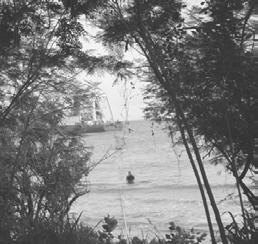
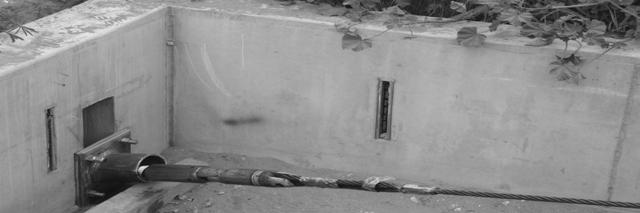
The PC-1 remediation project involved the recovery of approximately 120 kilometers of the PC-1 East and North cable systems and the re-laying of the same cable on a slightly modified route in an attempt to improve the burial method. The work was performed in the Strait of Juan de Fuca and in the Pacific Ocean in and adjacent to the Olympic Coast National Marine Sanctuary (the Sanctuary).
Operations background
1. The remediation work was performed by Tyco Telecommunications (U.S.) Inc. (Tyco) under contract to Pacific Crossing Limited (PCL), the owner of the PC-1 cable. Tyco subcontracted with Global Marine Systems for additional support vessels and equipment. The Tyco Cable Ship Dependable, a Tyco Resolution-class cable ship, used an MD3 plow. The Global Marine Wave Venture performed the TDM and PLIB operations. Each vessel used a similar ROV for its operations (ST 200 series). The Remediation Plan provided for on-board representatives of the U.S. Government, Makah Tribe, PCL, and Tyco (the parties).
2.
Regulatory background
PC-1 was originally installed in 1999–2000, after environmental review and permitting by federal, state, and local agencies. Subsequent seabed recovery monitoring performed by NOAA as part of its permit indicated that portions of the cable were at or above the seabed. At NOAA’s request, PCL performed additional surveys and submitted a revised Cable Burial Assessment Report (ERM 2002, referred to as “CBAR”). As a result, the federal permitting agencies and the Makah Tribe expressed concern about the cable burial in the vicinity of the Sanctuary. Under a comprehensive settlement agreement, dated November 4, 2005, among PCL, Tyco, the Makah Tribe, and the U.S. Government (Settlement Agreement), the parties agreed on a remediation project to recover and relay PC-1 in the vicinity of the Sanctuary.2
2 For purposes of the Settlement Agreement, the U.S. Government refers to the U.S. Department of Commerce, NOAA, U.S. Army Corps of Engineers (ACOE), and U.S. Department of Justice as counsel to Commence, NOAA, and ACOE. The U.S. Government designated NOAA as its representative for purposes of remediation project operations. NOAA with ACOE, as a cooperating agency, prepared and issued a NEPA environmental assessment and finding of no significant impact for “Remediation for the Pacific Crossing-1 North and East Submarine Fiber Optic Cables in the Olympic Coast National Marine Sanctuary” (NOAA, November 4, 2005).
The Settlement Agreement included a Remediation Protocol developed by the parties to specify the requirements for the remediation work and this burial report. The Settlement Agreement also required the parties to agree upon a final Remediation Plan with additional detail prior to the commencement of operations. The final Remediation Plan was approved on June 30, 2006. The parties agreed that the Remediation Plan would be the definitive document containing the requirements for the operations. “MOP 3” is the portion of the Remediation Plan that provides the detailed operational requirements and performance criteria. The combination of regulatory scrutiny, environmental sensitive areas, and potential fishing conflicts led to the use of these techniques. As noted above, these techniques are applicable to a range of submarine cable projects.
caBle recovery and relay B.
Prior to the PC-1 Remediation Project, few projects recovered and reused more than 100 kilometers of cable in a single project. Whether for repair, remediation, or a new installation, cable is expensive. Broadband cable typically costs upwards of $25,000 per kilometer. It is also usually manufactured to certain specifications, so the ability to recover and reuse cable can be far less expensive and faster than ordering and purchasing new cable.
The logistical planning was also complicated by other factors. As noted, a key reason for the project was to address Tribal and regulatory concern over insufficient burial and cable thought to be damaged by rocks or external aggression from fishing, which regulators in turn were concerned would then necessitate frequent repairs that would conflict with fishing or disturb sensitive environmental resources. The planning needed to
account for real-time inspection and, if necessary, prompt resplicing of recovered cable, observation of the seabed to improve the subsequent cable reburial, and initial and final bights to minimize splicing and avoid disturbance in the marine sanctuary.
Tyco and PCL agreed on a protocol for inspecting the marine cable. The procedure included assigning designated on-board representatives who were on call 24/7 to inspect any cable that exceeded a defined trigger for cable armor damage. This occurred several times during cable recovery. In each case, the representatives agreed that the damage was superficial and further testing was not necessary. The regulators agreed that this decision would be left to the owner and contractor as they had sufficient economic incentive not to reinstall defective cable. In addition, Tyco augmented its splicing team on board the cable ship to be able to respond promptly to any splicing requirements. One of the key issues in debating whether the remediation project would re-lay the entire cable through the marine sanctuary and the Tribe’s fishing area was the suitability of the substrate for cable burial. The original 1999 installation report indicated hard substrate in a number of areas that prevented burial to the target depth of one meter. As part of the remediation planning, a supplemental marine survey was performed to identify route adjustments in softer substrate to improve burial. However, the substrate at the mouth of the Strait of Juan de Fuca is variable, so additional observation during cable recovery would be helpful. During the recovery, substrate conditions were often apparent during observation of the cable condition. For example, very clean armor corresponded with buried cable, while areas with intermittent marine life (or on one short segment, numerous anemones) generally indicated areas of harder substrate precluding
burial. These were noted for later use in refining planned-route adjustments.
The recovery operation was executed without the need to splice the cable at the end of the recovery. The cable ship, which lays cable from its stern, picked up the cable from the stern (that is, the ship moved in reverse during the 50+ kilometers of recovery operations) and coiled it in the on-board storage tanks. Upon reaching the start of the remediation work (initial bight), the cable was threaded into the plow; the plow was deployed, and the ship moved forward to install the recovered cable. This method saved a day of splicing time and avoided introducing another splice into the system.
touchdown Monitoring
Historically, one of the problems with cable burial operations, especially in variable substrate or topography, is, as Joni Mitchell sings in Big Yellow Taxi: “you don’t know what you’ve got ‘til it’s gone.” It is not until weeks or months after the cablelaying operation has demobilized that the postlay inspection survey reports the as-built cable condition.
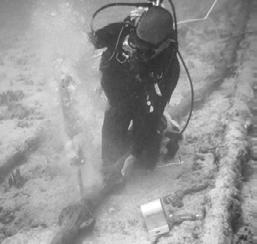
TDM refers to real-time visual and electronic confirmation of cable burial conditions. Typically, TDM is performed by an ROV launched from a ship following the cable ship. Similar to a post-lay inspection or a post-lay inspection and burial operation (PLI or PLIB), the TDM vessel’s ROV obtains video and other relevant data such as cable burial depth. The data are relayed to the engineer in charge and other decisionmakers, as appropriate, to determine whether to continue with or alter operations.
TDM is intended to provide near real-time data on cable burial conditions so that the cable laying ship can recover and re-lay cable that does not conform to burial specifications. This is intended
to meet several objectives and provide several benefits to the cable owner, the contractor, and the regulatory agencies or other interested parties. By verifying burial conditions in real time, the cable owner can be assured that the cable is properly laid and protected from external aggression (i.e., the potential for fishing gear, anchors, or other objects that could damage the cable). To the extent the cable does not meet burial requirements, it should be less expensive and more protective of the cable to recover and re-lay the cable “on the spot” than after the installation has been completed, at which time the contactor would need to remobilize, potentially splice (introducing an unwanted bight), and re-lay the cable.
Finally, verification in the field could reduce post-installation inspections or monitoring requirements. The contractor has verification from the owner or other on-board decisionmakers or observers that the installation has met burial requirements, thus minimizing the potential for post-installation claims for inadequate work. Again, the correction of any deficiencies in the field should be less expensive than after the fact and could reduce post-installation inspection or monitoring requirements. The regulator/observer can be assured that burial requirements are met before the contractor continues with cable installation.
TDM can provide verification that is not possible to obtain from a plow, for example, because the forward motion of the plow—from which standard measurements are taken—may pull the cable up from the seabed, especially on slopes or undulating seabed. By confirming compliance with requirements in real time, the regulator/observer is not put into the position of having to persuade a cable owner or contractor to remobilize and correct the deficiency or to take enforcement action. Afterthe-fact remedies are typically time consuming and resource intensive and may not be successful.
These are the theories. The PC-1 Remediation Project is one of the first substantial installations to test them in practice.
On the positive side, TDM had some notable success, including an application that was unexpected. For example, the clear and prompt transmission of TDM data was useful in identifying certain segments that needed to be recovered and re-layed again. In some cases, this enabled all parties to assess whether recovery and the re-laying of other segments would be worthwhile. In other cases, such as a surface lay at a cable crossing or on a steep slope, the TDM ROV survey results led to a substantially improved subsequent attempt to lay the cable.
One portion of the route had been altered from the original 1999 installation to avoid a boulder field, however, the modified route was still encountering a boulder area that was not apparent from the route survey. Lee Hashem, Tyco’s engineer in charge, had the ROV on the TDM vessel perform a real-time survey of the areas on several transects. The unexpected value of TDM was the ROV’s ability to find a serviceable route through the problem area. On another portion of the route, the ROV was able to test its ability to penetrate the substrate to determine whether PLIB operations would be effective, which aided decisions in the field on whether to try to plow or surface lay the cable.
However, overall, TDM did not prove to be the simple, reliable, real-time verification that had been expected.3 TDM had a number of substantial and unexpected limitations, including:
3 These challenges are inherent in the use of TDM that any owner/ operator/marine contractor would face. Given that this project provided one of the first large-scale experiences in deploying TDM on a cable laying installation, it was understandable that these items were unanticipated. The Engineer-in-Charge on the main lay vessel responded creatively and constructively as these circumstances arose.
Although a new ROV was used with up-to-
date data equipment, the sensors had difficulty producing quality real-time burial data. They were designed to read either deep burial (more than one meter) or shallower burial (less than 30 centimeters), but had difficulty reading the full range from surface to deep burial.
Sidecast material affected readings, as did the
limited ability of the ROV to obtain reliable data in areas with rocks and boulders that prevented the ROV from following the cable close to the trench.
The lack of reliability of the electronic sensors
placed a greater reliance on the TDM ROV video. While the video generally proved to be the most useful data from the TDM operation, in many instances, the video was not transmitted clearly or quickly to the cable ship, or the TDM crew wanted to analyze the video and other data before communicating conclusions to the cable ship.
Areas of strong currents, which are typical of
the Strait of Juan de Fuca, seriously affected the utility of coordinating plowing and realtime monitoring with TDM operations. The working assumption was TDM would be performed when the plow data and other operating parameters indicated consistent burial less than the target depth of one meter and that the cable ship would standby while the TDM was performed. This sounded practical and cost effective because the cable ship could not get too far ahead if recovery and re-laying were required. Unfortunately, the currents forced substantial delays while completing the TDM survey, which made a choice necessary between expensive downtime for both vessels or continuing the cable operation and taking the risk of a substantial recovery and re-lay. The
currents also stirred up sediment, obscuring the video, which was generally the most useful data.
In summary, TDM was useful when it worked well, but was costly and frustrating when it did not. The lessons learned from the TDM operations are that a good communications network, including both the video and data transmissions, between the TDM vessel and the cable vessel requires clear and prompt data transmission from the ROV to the cable vessel for timely decisionmaking. Engineers in charge and, equally important, ROV and dataanalysis technical crews on both the cable and TDM vessels from the same company who are used to working with each other are invaluable. This cannot be overestimated given the need for timely cooperation, the inherent difficulties in interpreting undersea data, and the cost of operating two vessels. All persons authorized to make field decisions based on TDM results should be on the same vessel. Finally, recognition of limitations such as currents, equipment, or data transmission delays and anticipating or making contingency plans to address these limitations is vital.
d.
MultiParty on-Board decisionMaking
A conventional cable laying operation usually involves decisions in the field by two parties: the cable owner and its contractor. The cable owner has a real stake in the quality of the installation, because the owner does not want to be in a contract dispute trying to get the contractor to fix problems after the fact that could jeopardize cable reliability. The remedy is often a monetary settlement, which leaves the problems in place and does not provide the same protection as a good installation in the first place. The cable owner will also be living with the results long after accepting the work from its contractor.
At the same time, the cable owner wants the contractor to take responsibility for the installation so that the cable owner can hold the contractor responsible. This is one reason many contacts are “turnkey” projects with the contractors ostensibly taking on all facets of the work. The contactor generally does not want interference from the cable owner, and the owner does not want the contractor to claim that that the owner’s involvement in the decisions makes the owner equally or more responsible for the results. However, this “bilateral” view of decisionmaking is simplistic, especially in an era where governmental clients, regulators, fishers, or third parties expect a more substantial role in decisionmaking and are more active in holding owners and contractors accountable to meet permit conditions and commitments to minimize conflicts with fishing, protection of natural resources, or other uses of the sea floor.
Because the PC-1 Remediation Project resulted from a multiparty settlement, the project pioneered methods of multiparty decisionmaking. The parties included the cable owner PCL, its contractor Tyco, the Makah Tribe (whose treaty rights to usual and accustomed fishing grounds were affected by the cable route), and the U.S. Government, including several different permitting agencies. Understandably, each of these parties had a substantial interest in successful cable burial. Certainly, the parties had different goals and perspectives, including network reliability and profit for the companies, protection of fishing grounds for the Tribe, protection of natural and cultural values for NOAA’s marine Sanctuary, and protection of navigation and other values for the U.S. Army Corps of Engineers, to name a few. Despite these different motivations, achieving better cable burial furthered the goal of each party. Better burial would protect other uses from conflicts or interference
with the cable, which would in turn protect the cable from external aggression and reduce repairs and related costs.4
Multiparty decisionmaking for the PC-1 project had several phases from cooperative route planning to the development of a consensus Remediation Plan. A key component of the Plan involved the recognition that cable operations necessarily require decisions in the field 5 The Plan, therefore, included the following elements in order for multiparty on-board decisionmaking to be successful:
Burial objectives, such as quantitative or • nonvague target burial depth.
Contingency criteria or protocols for defining • performance or process if target burial is not met, such as performance criteria for defining adequate attempts to achieve target burial that are explicit, are not vague, and are understood and agreed to by all parties.
Standard operational parameters and guidelines • for varying from these parameters.
The Plan set out a practical, workable method of making decisions, given the need for prompt decisions due to cost, operations, and other factors.
4 Whether recovery and reinstallation of the PC-1 cable through the Sanctuary was worth the cost is a separate subject beyond the scope of this discussion. It was discussed, in part, from the government’s perspective in the NOAA environmental assessment on the proposed remediation project and alternatives. Once the agreement to re-lay the cable through the Sanctuary was reached, however, it was carried out by these parties in an extraordinary spirit of cooperation and dedication. The purpose of this discussion is to focus on some of the innovative techniques employed in that project.
5 This discussion will talk about only a few examples. The Section 1 narrative portion of the final Burial Report for the PC-1 Remediation Project (Tyco, PCL 2006) provides an excellent insight into these decisions. Field decisions typically involve such diverse decisions as the location of the initial and final bights, when to employ a grapnel hook to recover the cable if the ROV is having difficulty locating the cable, whether to recover and re-lay cable en route (see TDM section above) or to make additional passes with a plow or ROV PLIB operation, whether to speed up or slow down laying the cable based on operational guidelines, and so on.
The agreed upon protocol was:
Each party had one on-board representative.
• The U.S. Government selected NOAA as its representative. This meant there were four representatives making on-board decisions (PCL, Tyco, NOAA, and the Makah Tribe).
The on-board representatives were to make a
• decision within 15 minutes or elevate the issue to their respective “escalation agents,” who were typically on land and available 24/7.
bottom was quite hard beneath, including scattered rocks and boulders (which is one reason there is little trawling in the area). The on-board representatives promptly decided a second pass should be made. The second pass produced a similar result. The on-board representatives concluded that a third pass should not be attempted due to the substrate. When similar conditions were encountered along the route, the on-board representatives likewise agreed that this substrate was not conducive, and additional passes would not achieve better burial.
The escalation agents were to make a final
• decision within 45 minutes of being called, with a 15-minute extension being allowed.
All decisions would be by unanimous
• consensus, with one exception. If the escalation agents could not agree, then the majority would prevail. Absent a majority, a decision that followed the recommendation of the U.S. government representative was deemed to have constituted a best effort under the Remediation Plan. Alternatively, the company and contractor could take a course of action that could be shown to meet best industry practices.
The principal routine on-board decisions involved whether to recover and re-lay a segment of cable that was not meeting the target burial depth of one meter, based on data obtained from the plow and TDM survey. A good example occurred early when placing the cable, when the burial depth below the seabed was variable, ranging mainly between 0.3 meters and 0.6 meters. The operational parameters were extremely conservative, including a heavy duty 3M plow, a slow speed of generally less than one knot, and optimum cable tension for burial. Although the substrate on the western end of the route had a thin surface layer of soft substrate, the
Somewhat more difficult decisions encountered were whether to recover and make additional passes in boulder fields, at a surface lay on an unavoidable steep slope, and at cable crossings. On the first segment of the project, the on-board representatives sometimes took an hour or more to make some of these decisions rather than triggering the escalation process in an effort to cooperate and reach consensus. A key reason was that one of the on-board representatives was on the TDM vessel rather than the cable ship with the engineer in charge and the other parties’ representatives A lesson learned was the importance of having all decisionmakers on the same vessel together reviewing identical data. This change was made for the second segment of the project, and even difficult decisions were made on a timely basis.
Remarkably, in the entire two-month cable laying operation, the escalation agents were called to make a decision only once due to a lack of consensus among the on-board representatives. An effective procedure was developed on the spot, as the Remediation Plan did not specify exactly how the process should work. First, each on-board representative briefed her or his escalation agent on the issue, and a call-in number was provided. Then a conference call was held for the escalation
agents only, and they reached consensus within 15 minutes. They directed certain additional operational measures, such as the inclusion of the disputed segment in the PLIB matrix for further burial attempt by the ROV, which subsequently resulted in improvement in the burial condition.
All of the parties, especially the contractor, were initially concerned and skeptical that multiparty on-board decisionmaking could be successful, especially with a standard of unanimous consensus and an equal number of parties. The challenges arose mainly due to the difficulties in obtaining real-time data from the TDM surveys, and, for one segment, not having all of the onboard representatives on the same vessel.
The process worked quite well due to several factors:
The clarity of the performance standards in the • Plan.
The commitment of the parties to work together • to carry out the Plan.
Compliance with operational parameters, • which tended to isolate the variable to being the substrate conditions.
as the engineer in charge and the on-board representatives.
conclusion e.
The three techniques described in this article may have an application for a wider variety of undersea cable operations. They respond to the growing need for cost-effective operations, regulatory compliance, and a reduction in conflicts with other uses (e.g., for consensus-based decisionmaking where multiple parties have a substantial stake in the operation while still respecting the necessary and traditional roles of the captain and engineer in charge).
In many ways, the PC-1 Remediation Project was a “shakedown cruise” for large-scale cable recovery, Touch Down Monitoring, and multiparty on-board decisionmaking. All three of these innovative techniques were successfully employed with uses and benefits that were not initially expected. At the same time, many lessons were learned, which should be considered when any of these techniques are employed on future projects.
Ken Weiner is a senior partner in the Environmental Land Use and Natural Resources practice group in the Seattle office of K&L Gates. He has assisted PCL and PC Landing Corp. on the PC 1 cable since 1999 on permitting, contracting, and regulatory matters. He served as one of the company’s On-Board Representatives on the PC 1 Remediation Project.
The effort by several on-board representatives
• to anticipate problem areas based on experience gained during the operation and to develop options in advance of having to make on-board decisions.
Seth Davis is Senior Vice President of PCL and is responsible for managing PC 1 operations. He was the company’s Project Manager for the PC 1 Remediation Project. He is also a principal in SRD Associates and a Senior Vice President of CXO LLC, assisting telecommunications and other companies on a wide range of issues.
A working procedure established early on by the
• parties for an objective review of the available data, such as compliance with operational parameters, analysis of substrate conditions based on all available data from multiple sources, and exploration and use of minor route modifications. This included the insights of the captain and the plow and ROV crews, as well
FCC IBC Fee: Damaging or Anachronistic?
By Howard Kidorf
The annual IBC (International Bearer Circuit) fee.
What is this, you ask? As a builder or owner of an undersea cable system, why do I care about it? Do I have to worry about this thing even if I am a bank? An Internet Service Provider? An oil company?
The short answer is yes. Yes and yes. Described as “[one of] the biggest issues facing cable owners today” by the CEO of a major transoceanic cable system, the fee is levied by the U.S. Federal Communications Commission (FCC) on international license holders. The FCC claims that the fee is simply used to recover regulatory costs.
Recouping the Commission’s costs by collecting fees on international traffic is not a new idea. For years, the FCC has been recording outbound international traffic by mandating carriers to report their IBCs (defined as an equivalent circuit of 64 kilobits per second).
So why has this become an issue now?
Put simply, the fee basis has not been flexible enough to cope with plummeting bandwidth prices and the recent increase in the types of customers purchasing capacity on the plethora of international communications facilities. (Recent, that is, in the glacial pace of regulatory reform.)
per second) per year in FY2007, carriers interviewed by Pioneer Consulting estimate that this now represents 10-25% of the annual lease revenue for a circuit. The annual IBC fee for a STM-1 (about 2400 “circuits”) from New York to London (or anywhere outside the US, for that matter) is now about US$2,500 (see the Chart “STM-1 IBC Fee”) and the fee for a STM-64 is about US$162,000. In the transatlantic market, where the lease price is only marginally above the equipment price and margins are thin, the IBC fee is enough to push profit into a loss.
Industry Perspective
Despite the fact that the FCC’s annual adjustment of the IBC fee saw a reduction to US$1.05 per “circuit” (defined as 64 kilobits
Complaints about these fees are not new. As far back as 2004, Tyco (while they still owned the TGN; VSNL has continued these objections) filed with the FCC a comprehensive objection
to the fees. Tyco argued that basing fees on the number of an international carrier’s active circuits favors older, lower-capacity systems to the detriment of newer, higher-capacity systems. Tyco also felt that the FCC’s present methodology does not take into account the reduced level of regulation associated with non-common carrier (also known as “private”) submarine cable operators who primarily sell capacity wholesale.
Furthermore, presuming that an IBC exists by imposing fees based on a company’s “active” (i.e. “lit and sold”) capacity is at odds with how non-common carrier submarine cable operators actually sell capacity. The regulatory regime requires carriers to determine if their customers are themselves common carriers (in which case the fee may not need to be charged), guess the use of the capacity, and if the capacity is to be used for protection (probably no fee required). This requires operators to play a guessing game to determine if regulatory fees are applicable.
Tyco’s complaint is wide-ranging but the bottom line is that these fees are an impediment to the sales of wholesale capacity on cables. This damages the undersea cable market and the country.
The CEO for the same cable operator quoted in the opening paragraphs points out that the IBC fee is completely unrelated to both the cost of providing a circuit and the revenue that is generated by an international “circuit.” The equipment required to provide the 150,000
voice circuits in a STM-64 and the equipment needed to provide a wholesale STM-64 represent entirely different cost bases. But, they are assessed the same fee.
Tyco has proposed that the FCC create a separate and additional category for the wholesaling activities of a non-common-carrier submarine cable operator. The current revenue requirement from the IBC fee could then be allocated between the two fee categories, based on the regulatory burden of each new category.
Tyco has suggested that the FCC should adopt a flat, per-cable-landing-license fee for noncommon carrier submarine cable operators. Many commenters to the FCC support Tyco’s position including the Satellite Industry Association (who seem to have an annual ritual of commenting on these fees) and FLAG Telecom.
Writing in Telecommunications Magazine, Jayne Stowell (now working at Google) points out that “IBC fees are essentially a tax imposed upon certain classes of capacity purchasers that equates to 100 percent doubling of the cost of capacity sold in the U.S. – a tax wholly inappropriate for a governmental policy of encouraging communications deployment and usage.”
She also notes that in “an exceptional spirit of industry cooperation, the owners of transAtlantic submarine systems are currently lobbying the FCC for a revision of or removal
of this tax which had its origins in a world where very small systems sold very small units of capacity primarily for international voice telephone calls.
Of course, all of these objections were also true and obvious 8 years ago when the STM-1 became the unit of currency in the international telecom business, private cables existed and wholesale purchasing and resale had already arrived.
FCC PERSPECTIVE
The FCC has agreed that there are problems with the IBC-based charges. They also agree that the issue is complicated and have asked interested parties for input. They also have been delaying making any changes for years; the FCC has been “studying the issue” for seven years.
No one disputes the FCC’s right to offset the cost of regulation of undersea cables (recently calculated to be more than $7.5M; wow!; this is more than 50x required than to regulate the Satellite TV industry and about the same as that required to regulate more than 4,000 radio stations and the entire AM broadcast industry) by collecting fees. See the chart “FCC View of IBC Fees”. The issue of “Who pays?” is a complex one, though.
This brings up the first complexity in the discussion. The Telecom Act of 1934 defines a thing called Common Carrier aimed at defining the companies that offer telephone
services to the public. (Yes our regulations date from before World War Two! To be fair, though, they were amended as recently as 1996. But, the regulatory structure dates from before jets and transistors.) Common carriers are heavily regulated. Those lucky enough not to be included in this category escape piles of regulatory burden. (This distinction has many more implications in other industries as ISPs, cable television companies and many others offer voice services.)
A set of rules were published by the FCC to ensure that non-common-carrier-owned cables (the FCC seems to see cables in black or white; either a cable is owned by a common carrier or it isn’t) pay their fees. That is, unless the circuit is sold to a common carrier (since the common carrier will have to pay their own IBC fee and the FCC recognized that it is unfair to collect fees twice on a circuit). However, it is unclear where the responsibility lies to determine if a given wholesale circuit is, or is going to be, sold or leased in whole or in part to a party that is responsible to pay IBC fees or even how much that circuit is even going to be used.
Given this lack of clarity, a wholesale seller is often caught between a rock and a hard place. Maybe there will be a 214 license holder at the end of the transaction chain in which case the fee can be ignored. This exposes the seller to a potential risk if the FCC decides to collect (though there is no FCC enforcement of these regulations). On the other hand, by playing it safe and paying the fee on every transaction would likely price the seller out of the market.
To add to the confusion, the FCC does not appear to be actively collecting the IBC fee. According to Pioneer Consulting’s analysis, there is well in excess of 2,800 gigabits per second of capacity leaving the shores of the US across the Atlantic, Pacific and into the Caribbean, excluding lit capacity that is reserved for redundancy purposes. These 43,750,000 64 kilobits per second equivalents should generate more than US$46M for the FCC’s coffers. This amount is more than six times greater than the FCC’s current collections target for the IBC fee.
By writing this article, Pioneer Consulting hopes to raise awareness of this issue among the submarine system community and within the FCC. The current mechanism for calculating IBC fees is inequitable and the assessment and collection mechanism leaves carriers in a quandary. We urge those affected to submit comments to the FCC in the hope that this will galvanise reform of a regulatory fee which is anachronistic in today’s marketplace.
Howard Kidorf is a recognized expert in optical transmission and telecommunications networks and an experienced manager of research and development teams. As Partner in Pioneer Consulting he leads a team of experienced professionals to deliver a comprehensive set of services for the submarine fiber optic telecommunication system industry: from system engineering to market analysis, feasibility study to RFQ, from Desk Top Study to project implementation. Before becoming a partner in Pioneer Consulting, he was a Distinguished Member of Technical Staff for Forward-Looking Technology Assessment at AT&T Bell Labs and Director of Services Engineering at Tyco Submarine Systems Ltd.
Submarine Telecoms Forum and SubOptic 2010 are producing the
2008 Submarine Cable Map
which will be complimentarily distributed to 3000 industry members in some 85 countries
The 2008 Submarine Cable Map will be printed in full color on high quality art paper, measuring 914 mm x 800 mm, and providing participating advertisers an area of approximately 133 mm x 50 mm to display their corporate image and contact information.
National Security Agreements: A New Hurdle for Submarine Cabling Landing Licenses
By Andrew D. Lipman, Paul Gagnier, and Brett P. Ferenchak
In recent years, the United States Government, reacting to real and perceived threats from cyberterrorism, the loss and theft of sensitive information, and high-profile hacking incidents (including the Pentagon’s computer systems), has become increasingly concerned with protecting the nation’s telecommunications infrastructure. Acquisitions of U.S. telecommunications carriers and network operators by non-U.S. persons have been subject to national security review for a number of years. More recently, however, “Team Telecom” -- an ad hoc task force comprising the Departments of Defense, Homeland Security and Justice that examines such deals -- has begun to review new cable landing license applications as well. Team Telecom’s new focus on this area promises to slow the FCC licensing process. Even more troubling, it has the potential to discriminate against cables with significant non-U.S. ownership.
What Is Team Telecom and Why Is It Involved In The FCC Licensing Process?
Team Telecom started as a subset of the Committee on Foreign Investment in the United States or CFIUS. CFIUS is an inter-agency committee of the U.S. Government that is chaired by the Secretary of the Treasury and is empowered to review acquisitions of U.S. companies by non-U.S. persons. Team Telecom got its name because these agencies took the lead in reviewing transactions involving telecommunications carriers on behalf of CFIUS.
Until recently, Team Telecom limited its activities to matters within the jurisdiction of CFIUS, specifically, transactions involving the acquisition of U.S. carriers and network operators by foreign persons. Beginning in 2002, Team Telecom began to expand its role, which it was able to do because of the public nature of the FCC licensing process.
Under FCC rules, most license applications are subject to public notice and comment periods. The purpose of this process is to allow members of the
public, including other governments agencies, to opine as to whether granting the license serves the public interest. Further, when the FCC liberalized its licensing rules for international carriers in the mid1990s, it agreed to seek the input of the Executive Branch regarding law enforcement, national security, and public safety issues. In practical terms, any FCC application with significant foreign ownership -- ten percent is the unofficial trigger -- is sent to the Executive Branch for review.
Until recently, the Executive Branch rarely exercised its authority to review FCC applications outside of large mergers and acquisitions. After 9/11, however, Team Telecom became more active, reviewing nearly every FCC application with foreign ownership and frequently imposing conditions intended to address national security and law enforcement issues. Team Telecom first starting reviewing applications for international service licenses issued by the FCC under Section 214. A non-U.S. applicant for a Section 214 license is now routinely required to sign, depending on the applicant’s proposed activities, a letter of assurance or a more onerous network security agreement (NSA).
Team Telecom’s review of submarine cable landing licenses is more recent. Team Telecom has long reviewed transactions involving the sale of submarine cable assets or operators. For example, the acquisition of Global Crossing by STT and the sale of the Tycom Global Network to VSNL were both reviewed extensively by Team Telecom as part of the CFIUS review process. The requirement that new cable licensees enter into NSAs dates only to January of this year when Verizon Business (Verizon) entered into an NSA for the Trans-Pacific Express Cable Network (TPE) it is building with a consortium of Chinese, Korean, and Taiwanese carriers. Two other agreements followed shortly after and another is pending. In short, it is clear that, going forward, all landing license applicants
with substantial foreign ownership will be required to enter into NSAs as a condition to obtaining their licenses.
How Does Team Telecom Review Work?
Although Team Telecom is an ad hoc group, the review process is fairly well-trod, especially in the context of Section 214 applications. As noted, the FCC sends copies of applications with foreign ownership to the Executive Branch for review. Team Telecom then typically asks applicants to answer a set of questions (referred to as the “triage questions”). The questions address the applicant’s planned services and facilities, where call data and other information will be stored, how data will be secured, and who will have access to the applicant’s network and data. In most cases, Team Telecom also will ask the FCC to defer granting the application until Team Telecom has completed its review. This typically results in the removal of the application from streamlined processing at the FCC and the withholding of FCC approval until Team Telecom’s review is complete.
Although applicants can wait for Team Telecom to receive their applications from the FCC, most applicants are proactive and contact Team Telecom immediately upon filing an FCC application (and sometimes before filing). There are several advantages to this approach. Most obviously, contacting Team Telecom can move the application closer to the top of Team Telecom’s list and thus speed review. Second, it allows the applicant to begin to characterize its application for Team Telecom. Simply put, some applications -- such as those for resold services or with non-controlling foreign ownership -- raise fewer issues and can be approved more quickly. Third, and most substantively, actively engaging Team Telecom puts the applicant in the best position to suggest and craft solutions to any law enforcement and national security issues in a more favorable manner.
Team Telecom’s review in the submarine cable context is slightly less clear, primarily because there is less precedent. In procedural terms, the process is likely to be similar to that for Section 214 applications, with Team Telecom asking the FCC to defer action pending Team Telecom’s approval. If the experience of recent applicants is any indication, however, Team Telecom’s review of submarine cable applications is likely to be substantially more time-consuming. The FCC licensing process for TPE, for example, took nearly 11 months, including the Team Telecom process. The application for the Asia-America Gateway Cable Network (AAG) was filed on July 19, 2007 and is still pending. Other recent applications by Columbus Networks and the Gemini Bermuda consortium took less time but still required upward of six months. Substantively, recent NSAs make clear that applicants for cable landing licenses are going to have to make substantially greater commitments than in the past.
What Are The Provisions Of An NSA?
Like the Team Telecom review process, the terms of NSAs have become fairly standardized. In the submarine sector, NSAs have recently been signed by Verizon for the TPE consortium, Columbus Networks (for its CFX-1 cable connecting Columbia, Jamaica, and the United States), and by Verizon for the Gemini Bermuda Cable System linking the United States and Bermuda. These NSAs have a number of standard provisions addressing issues such as physical security of the network facilities, requirements to store certain calling data in the United States, obligations to cooperate with U.S. law enforcement, and the screening of personnel who will have access to the system or calling data.
However, the NSAs, and especially the TPE NSA, also have new requirements that seem to be a result of the identities of the non-U.S. participants. For example, the TPE NSA mandates that Verizon,
the U.S. landing party, will own or obtain an indefeasible right of use in all TPE facilities located in U.S. territory. In addition, only Verizon may direct the activities of TPE’s U.S. landing vendor. The TPE agreement also has stricter personnel screening requirements than past agreements, requiring Verizon to conduct detailed background checks. In short, the obligations placed on Verizon go substantially beyond those of past NSAs. While the reasons for these requirements have not been made public, it seems likely that they were motivated by Team Telecom’s concerns regarding the participation of the mainland China’s incumbent carriers in TPE, and especially the fact that those carriers controls landing stations in China.
The TPE NSA also has more specific requirements regarding the configuration of the system than do prior agreements. For instance, Verizon must be able to cut off traffic to and from the United States at the Verizon-controlled cable terminal. Verizon must also configure the systems so that the TPE NOC (which must be located in the U.S.) can view the status of all segments of the cable. The Gemini Bermuda agreement contains a similar requirement (although it allows the NOC to be located in Bermuda). Conversely, Verizon must ensure that the non-U.S. landing parties to TPE cannot view the status of the network beyond the optical distribution frame at the U.S. termination point.
It is too early to tell whether the TPE NSA is going to become the new standard. There are hopeful signs that it will not. The Gemini Bermuda NSA, which was also signed by Verizon, and the Columbus Networks agreement do not incorporate the most onerous provisions of the TPE agreement. Rather, those provisions seem to have been driven by concerns specific to the TPE project, probably related to the significant participation by Chinesegovernment owned carriers. At the same time, recent NSAs are broader in scope than prior
generations and are indicative of closer scrutiny of landing license applicants.
Practical Effects of Team Telecom Review of Landing License Applicants
There are several lessons to be taken away from Team Telecom’s involvement in submarine cable landing license applications. First, FCC approval will take longer than in the past where there is foreign participation in the cable system. The FCC’s streamlining rules were intended to reduce the time required to obtain cable landing licenses to as little as 45 days. However, given that the FCC will not grant a landing license until Team Telecom has approved, it seems unlikely that a license will be issued in less than six months.
The second lesson is that it is critical that parties building a submarine cable system think long and hard about U.S. national security and law enforcement issues in structuring their systems. Parties should consider having a U.S.-based landing party control and operate U.S.-based facilities and non-U.S. parties should be prepared to accept limitations on their ability to control the U.S. portion of the network and to obtain access to U.S. facilities and data.
Third, parties should be prepared to engage Team Telecom immediately upon filing their FCC applications and to have comprehensive responses and practical solutions to any questions or concerns raised by the government.
Finally, foreign persons should not be dissuaded from entering the U.S. market. While the path to approval may be a bit more winding than in the past, nearly all projects can ultimately receive approval. Moreover, the government is amenable to a variety of ownership and control structures provided that their basic security concerns are addressed satisfactorily. Parties must be flexible and creative, but there is still room for foreign investment in the
U.S. submarine cable market.
Andrew Lipman has spent more than 25 years developing the firm’s Telecommunications, Media and Technology Group into one of the largest practices of its kind in the nation. He practices in virtually every aspect of communications law and related fields, including regulatory, transactional, litigation, legislative and land use. The TMT Group is international in scope, representing clients in the U.S., Central and South America, Europe, Asia and other parts of the world. Andy represents clients in both the private and public sectors, including those in the areas of local, long distance and international telephone common carriage; Internet services and technologies; conventional and emerging wireless services; satellite services; broadcasting; competitive video services; telecommunications equipment manufacturing; and other hightechnology applications. In addition, Andy has managed privatizations of telecommunications carriers in Europe, Asia and Latin America.
Brett P. Ferenchak assists common and private carriers and Internet companies on a variety of telecommunications regulatory issues. Brett advises communications carriers, banks, venture capitalists and other investment companies on the regulatory aspects of mergers, acquisitions and other corporate transactions, as well as financing and debt arrangements. He also counsels on service, equipment and licensing agreements and assists
new carriers in navigating the complex regulatory entry requirements, including certification, tariffing and right-of-way issues, as well as post-entry compliance issues such as periodic reporting, fees and assessments. Brett also assists clients on regulatory issues affecting them when emerging from bankruptcy. He is experienced in complaint and other adversarial proceedings before the Federal Communications Commission and state regulatory agencies.
Paul Gagnier’s practice focuses on advising U.S. and foreign communications and technology companies on strategic business issues and transactional, corporate, regulatory and legislative matters, with an emphasis on inbound and outbound foreign investment. Paul’s practice spans the globe, from the United States to Europe, Asia, Latin America and the Middle East. Paul represents clients in all sectors of the communications and IT market, including local, long distance and international telecommunications carriers; information and application service providers; VoIP service providers; wireless carriers; satellite providers; builders and operators of submarine cable networks; and equipment manufacturers. In addition, Paul represents foreign governments on privatization and liberalization matters. Paul also advises private equity firms, venture capital companies and investment banks in connection with investments in the TMT sector.
By Robert Mazer
The subsea cable financial debacle that occurred at the beginning of this decade has finally begun to usher in a new environment where efficiency rules and speculation has disappeared. In the last several years, we have seen the rise of the niche cables that are designed to meet extremely specific requirements. Relatedly, we have seen the emergence of creative means to introduce new cable routes in a more efficient manner. Finally, in 2007, we have seen proposals for the first time in six years to construct and operate transoceanic cables.
The Niche Cables
Many of the most remote places on the planet are islands or geographical locations in the far north latitudes. Until the late 1960s, these places’ ability to communicate with the outside world were extremely limited: shortwave radio, microwave, or an occasional cable drop. The introduction of satellite technology allowed these locations to reach the outside world on
a regular but limited basis. However, the technical limitations of satellites and the inherent technical and financial challenges of terrestrial technologies insured that these geographic locations would not have access to state-of-the-art communications technology. Concurrently, the introduction of new technologies (e.g., Internet, computer networking, etc.) significantly increased demand for high quality telecommunications technology from remote locations.
In the last year, several of these cables have been authorized by the FCC and construction has commenced. Specifically, two subsea cables have been approved to connect remote areas in Alaska. GCI Communications Corp. is building a cable to connect to the Alaska communities of Angoon, Hawk Inlet, Juneau, Ketchikan, Petersburg, Sitka, and Wrangell with the existing Alaska United West system. The Southeast Alaska Fiber-Optic (“SEAK”) will consist
of three new undersea “wet” components: (1) SEAK will use two fiber pairs that currently terminate at a branching unit on the Alaska United West system and extend to Ketchikan via a new repeater segment of undersea cable. This segment will have an initial capacity of 10 Gbps and will be upgradeable in OC-48 and OC-192 increments, up to a design capacity of 640 Gbps–320 Gbps on the fiber pair connecting Ketchikan to Seward and 320 Gbps on the fiber pair connecting Ketchikan to Warrenton; (2) SEAK will connect Ketchikan to Wrangell, Petersburg, and Juneau via new festoon-style, un-repeatered segments of undersea cable. This segment will also have an initial capacity of 10 Gbps and will be upgradeable in OC-48 and OC-192 increments, up to a design capacity of 120 Gbps; and (3) SEAK will connect the splice point at Hawk Inlet, Angoon, and Sitka via a new segment of undersea cable with a single repeater at Angoon. This segment will also have an initial capacity of 2.5 Gbps and will be upgradeable in OC-48 and OC-192 increments, up to a design capacity of 120 Gbps.
In another proposal to improve communications capability in Alaska, ACS Cable Systems, Inc. has received authority to construct a subsea cable to link Anchorage, Homer, Juneau, and Nikiski, Alaska and Florence, Oregon. The ACS system will consist of four segments: two primary submarine cable segments and two terrestrial segments. The first segment will consist of an un-repeatered eight (8) fiber pair submarine cable between Anchorage, Alaska and Nikiski, Alaska. The second segment will consist of a terrestrial cable connecting Nikiski to Homer, Alaska. The third segment will consist of a repeatered four (4) fiber pair submarine cable that extends from Homer, Alaska to Florence, Oregon. The fourth segment will
consist of a terrestrial path connecting the landing station at Florence to the Pittock Building in Portland, Oregon and then on to the Westin Building in Seattle, Washington. ACS will also add a repeatered single fiber pair submarine segment to connect Juneau, Alaska to the main segment running between Homer, Alaska and Florence, Oregon. The ACS system will have four primary landing sites, three in Alaska (Anchorage, Nikiski, and Homer) and one in Oregon (Florence). An optional fifth landing site in Juneau, Alaska, is also being considered. The design capacity of all repeatered segments will be 64x10 Gbps per fiber pair. Initial capacity will be 4x10 Gbps on one fiber pair from Homer to Florence, and an additional fiber pair equipped at 4x10 Gbps on the Juneau branch, if that option is exercised. For the submerged segments connecting Homer, Alaska to Florence, Oregon, the ultimate capacity is 64 OC-192s per fiber pair. With 4 fiber pair, the total bandwidth equals 256 OC-192s or 2.56 Terabits/sec.
Obviously, these two Alaskan cables will significantly improve communications services to some of the more remote locations in the United States.
In another remote location – Hawaii – there has also been activity to improve inter-island telecommunication services. Paniolo Cable Company, LLC (“Paniolo”) is proposing to land and operate a high capacity fiberoptic non-common carrier submarine cable system, the Paniolo Fiber-Optic Cable (“PFOC”), which will link the five major Hawaiian islands. The cable will consist of 300 miles of submarine fiber-optic cables divided into four segments: (1) Kekaha, Kauai to Makaha, Oahu; (2) Hawaii Kai, Oahu to Kaunakaki, Molokai; (3) Kaunakakai, Molokai to Lahaina, Maui; and (4) Makena, Maui to Kawaihae, Hawaii.
The system as proposed will consist of a high capacity,
digital fiber-optic submarine cable operating at an OC-48 line rate and higher. This system will provide a capacity of 2.5 gigabits, which equates to an initial configuration of approximately 48 DS-3 or 1344 DS-1 channels. Initial engineering will provide OC-3, OC-12 and Gigabit Ethernet drop capacity on all of the routes. Paniolo proposes seven landing stations for the PFOC: (1) Kekaha, Kauai; (2) Makaha, Oahu; (3) Hawaiian Kai, Oahu; (4) Kaunakakai, Molokai; (5) Lahina, Maui; (6) Makena, Maui; and (7) Kawaihae, Hawaii. Paniolo will control three of the four principal telecommunications network layers (i.e., fiber path, optical path and physical path).
There also has been renewed interest in subsea cables to service various locations in the Caribbean. Colombia Networks USA (a subsidiary of ARCOS-1 USA) is proposing to land and operate a non-common carrier fiber-optic submarine cable system, the CFX-1 Cable System, between the United States, Colombia and Jamaica. The CFX-1 cable system will be a noncommon carrier fiber-optic submarine cable system. The cable system will have landing stations in Boca Raton, Florida; Cartagena, Colombia; and Morant Bay, Jamaica, as well as a secondary landing point in Copa Club, Jamaica. The CFX-1 cable system will consist of one segment equipped with repeaters connecting Cartagena and Boca Raton. The system will also have a branch without repeaters connecting to Morant Bay. The system will contain 2 fiber pairs in each undersea segment. Each local pair from Boca Raton to Morant Bay and from Morant Bay to Cartagena will initially be equipped with 1x10 Gbps of capacity. Each express fiber pair between Boca Raton and Cartagena will initially be equipped with 10x10 Gbps of capacity. Each fiber pair is designed to support 96x10 Gbps for a total segment capacity of 1920 Gbps.
TI Wholesale Services Puerto Rico has proposed to add an additional segment to the South American- Cable Network (SAm-1) to be located between the existing cable landing station at Isla Verde, Puerto Rico and a new destination point in Barranquilla, Colombia. The SAm-1 cable is a fiber optic submarine cable system extending between: Boca Raton, Florida; Isla Verde, Puerto Rico; Fortaleza, Brazil; Salvador, Brazil; Rio de Janeiro, Brazil; Santos, Brazil; Las Toninas, Argentina; Valparaiso, Chile; Arica, Chile; Lurin, Peru; Puerto San José, Guatemala; and Puerto Barrios, Guatemala. The new digital fiber optic segment will have a minimum design capacity of 10 Gbps per fiber pair on two fiber pairs. Each fiber pair will be capable of carrying a minimum of one wavelength of traffic. The proposed extension will use the existing landing point for SAm-1 in Isla Verde, Puerto Rico. In Barranquilla, Colombia, the new segment will use the existing beach manhole and cable terminal station owned by PARAPAT, a Colombian trust containing the telecommunications infrastructure formerly owned by Empresa Nacional de Telecommunicaciones.
Finally, in one of the more creative subsea cables in many years, BP Exploration and Productions Inc. (“BP”) is constructing a cable to connect oil platforms in the Gulf of Mexico. This network is designed to improve the communication services to oil platforms in the Gulf of Mexico especially during weather related emergencies (e.g., Hurricanes). This noncommon carrier cable system, to be known as the Gulf of Mexico Fiber Optic Network (“Gulf Fiber”), will establish landing stations in the following locations: Freeport, Texas and Pascagoula, Mississippi. BP will primarily utilize this capacity to support its own oil drilling platforms in the Gulf of Mexico, but will offer capacity to selected users on an indefeasible right-
of-use (“IRU”) or leased-capacity basis, on terms tailored to those customer’s particular needs.
Gulf Fiber will be a digital fiber-optic system with a minimum design capacity of 320 Gbps per fiber pair on two fiber pairs (a total of 640 Gbps). Each of these fiber pairs will be capable of carrying a minimum of 32 wavelengths of traffic.
Whether in remote areas of Alaska, Hawaii, the Caribbean or oil platforms in the Gulf of Mexico, the last year has demonstrated that the promise of subsea cables is being extended to the far reaches of the planet. These extensions will provide consumers and businesses located in remote areas many of the economic, social and reliability benefits of modern telecommunications technology.
New Efficiencies
In one of the most innovative and efficient proposals ever for a new cable, MFS Cables U.S. (a subsidiary of Verizon), and Cable & Wireless Network Services Limited (a subsidiary of “Cable & Wireless plc”), recently proposed to construct and operate a noncommon carrier fiber-optic submarine cable system extending between Bermuda and the United States, for the Gemini Bermuda System. The Gemini Bermuda system will be established by redeploying submarine cable from the southern portion of the Gemini System to connect to existing landing stations in New Jersey and Bermuda. The original Gemini system was comprised of two segments – a southern route from New Jersey to the United Kingdom (“Gemini South”) and a northern route from Rhode Island to the United Kingdom. That system was retired and deactivated in 2004. MFS and C&W intend to use the existing plant of Gemini South, particularly the Manasquan cable landing station located in Sea Girt, New Jersey, a portion of the existing terminal equipment located
within the cable station, the terrestrial cable between the cable station and the cable landing point, and the submarine cable and associated repeaters. They will recover submarine cable from the Gemini South system located in international waters and redeploy cable to a landing station in Bermuda. The Gemini Bermuda System will have two fiber pairs and will have the capacity of 10 Gbps per pair, for a total of 20 Gbps. The use of new technology over existing submarine cable could increase the system’s capacity to 160 Gbps per fiber pair.
The redeployment of an old cable is unprecedented. It demonstrates that telecommunications companies are seeking efficient means to bring telecommunication services to remote areas in order to meet growing demand for capacity. Certainly this proposal demonstrates that the redeployment of an existing cable is technically and economically feasible.
The Reemergence of Subsea Cables in Asia
As we read in the newspaper, China is experiencing exponential economic growth on an annual basis. Concurrent with this tremendous economic growth is an increased demand for high speed, high quality telecommunications services. Given China’s growth in exports, the demand for international telecommunications services has proven to be critical in order to maintain and expand this explosive economic growth. Recently a consortium of six companies proposed to land and operate a fiber-optic submarine cable system directly linking mainland China, South Korea, Taiwan and the United States for the Trans-Pacific Express Cable Network (TPE).
The TPE Consortium is composed of six parties: (1) MCI International, Inc. (a subsidiary of Verizon); (2) China Network Communications Group Corporation (China Netcom); (3) China Telecommunications
Corporation (China Telecom); (4) China United Telecommunications Corporation (China Unicom); (5) Chunghwa Telecom Co. Ltd. (Chughwa Telecom); and (6) KT Corporation (KT). Each party will have an equal 16.66% ownership and voting interest in all international water segments of the cable network. Individual parties will own and control each landing station and the portion of the cable that connects that landing station to the portion of the cable system in international waters. Each party, except China Unicom, will also be responsible for operating the landing terminal equipment for the cable in their respective home service territories: Verizon, Nedonna Beach/Hillsboro landing station; China Netcom, Qingdao landing station; China Telecom, Chongming landing station; Chunghwa Telecom, Tanshui landing station; and KT, Keoje landing station.
MCI International, Inc. is a wholly-owned subsidiary of Verizon Communications Inc. (Verizon Communications). China Netcom, China Telecom and China Unicom are all controlled by the Administration Commission of the State Counsel, a Chinese government entity of SASAC. The Chinese government has an 80 percent ownership interest in China Unicom.
Chunghwa Telecom is a Taiwan telecommunications company and KT is a Korean company.
The proposed TPE Network will operate as a noncommon carrier fiber-optic submarine cable system, directly linking mainland China, South Korea, Taiwan and the United States. The TPE Network will be a 4-pair fiber optic cable system with initial equipped capacity of up to 1.28 terabits per second (Tbps), and a design capacity of up to 5.12 Tbps. The system will extend more than 18,000 kilometers and have a life expectancy of 25 years. The TPE Network
will provide direct access from the United States to mainland China at speeds of up to 10 gigabits per second (Gbps). The TPE Network’s configuration will combine a linear trans-Pacific route with an intraAsian ring. In Asia, the cable will land at currently operational cable landing stations in Quingdao, China; Chongming, China; Tanshui, Taiwan; and Keoje, South Korea. Cables from these four terminal points will be brought together via branching units (BU) forming the intra-Asian ring. A single, 4-fiber pair cable will terminate in these BU’s and cross the Pacific Ocean to the U.S. landing station in Nedonna Beach, Oregon. The TPE Network is another manifestation of the growing economic importance of Asia.
Almost simultaneously, the Asia American Gateway Consortium (“AAG Consortium”) has proposed to construct and operate a high capacity fiber-optic submarine cable system linking Malaysia, Singapore, Thailand, Brunei Darussalem, Vietnam, Hong Kong SAR, Philippines and the United States (the “AAG” system). The AAG Consortium includes the following: (1) AT&T Corp.; (2) Bharti Airtel Limited; (3) CAT Telecom Public Company Limited; (4) Datastream Technology Sdn Bhd, Telekom Brunei Berhad, and the Government of His Majesty the Sultan and Yang Di-Pertuan of Brunei Darussalem represented by the Ministry of Communications; (5) Philippine Long Distance Telephone Company; (6) PT Telekomunikasi Indonesia, Tbk.; (7) StarHub Ltd.; (8) Telekom Malaysia Berhad; (9) Telstra Corporation Limited; and (10) Vietnam Posts and Telecommunications Group. The main AAG trunk cable is a linear trans-Pacific cable consisting of five primary segments that will run from California to Malaysia, with intermediate landings in Hawaii, Guam, Philippines, and Hong Kong. The Hong Kong-to-Malaysia segment will have an additional four branching units that will extend
the AAG to landings in Vietnam, Brunei Darussalam, Singapore, and Thailand. The system can interconnect with existing submarine cables that serve the AsiaPacific region, and also is designed to allow future extensions to Australia, India, Indonesia, Africa, and Europe. The AAG system will be approximately 19,000 kilometers in length, with spans of 2 to 3 fiber pairs, depending upon the segment. The AAG has a design capacity of 1.92 terabits per second (“Tbps”) for 2-fiber pair segments, and a maximum of 2.88 Tbps for 3-fiber pair segments. The United States terminal points will initially operate at 540 gigabits per second (“Gbps”). The cable system will employ a Dense Wavelength Division Multiplexing Erbium Doped Fiber amplifier system, which will provide 96 wavelengths of 10 Gbps on each fiber pair. The AAG will have ten landing stations, one each in seven foreign countries (Malaysia, Singapore, Brunei Darussalam, Thailand, Vietnam, Hong Kong, and Philippines) and three locations in the United States and its territories (Guam, Hawaii, and the mainland United States).
As the above demonstrates, the subsea cable industry has gone from prudence to boom to bust to practical. Today, cables are being constructed based on very specific needs. Whether the need is to serve remote locations or booming economic areas, subsea cables have demonstrated they can offer the necessary telecommunications capacity to meet emerging and newly defined needs for capacity and reliability. Hopefully, the industry will learn from the boom-bust cycle that it experienced over the last ten years and continue to develop cables in a technologically and economically efficient manner.
Robert Mazer’s principal area of practice is international telecommunications law. Since leaving the Federal Communications Commission staff in 1983, he has represented international, wireline, wireless and satellite companies, and companies engaged in the development of emerging telecommunications technologies. For these companies he has provided a broad range of strategic, regulatory and corporate support. He currently advises several companies on U.S. and international telecommunication regulatory issues. He has assisted clients in obtaining submarine cable landing licenses in the U.S., Venezuela, and Brazil and in obtaining regulatory approvals to offer a variety of international telecommunication services in many countries throughout the world. Additionally, Bob conceived and assisted in the establishment of several emerging telecommunications companies.
System rights-Of-Way and permitting –
An exercise in patience
After a company has made the strategic decision to move forward with a telecommunications network system build, a number of factors related to the project’s specific requirements will then need to be considered. During this sequence, system design, preliminary engineering, construction planning and materials provisioning are typically given much of the attention by the technical people and their consultants, while those assessing the corporate business and financial aspects deal with issues including cost and benefit analysis, direct and indirect return on investment projections, and personnel demands for the endeavor. Once these basic areas of concern have been addressed and the project plan moves beyond the generally internal office environment, matters related to actual system field implementation become more prominent.
One of these external components, falling somewhere between the two groups of primary tasks is the acquisition of route right-of-way and any required permits, license agreements or occupancy fees for the proposed system build. Unlike the above-mentioned categories which tend to be more structured and better accommodated for the planning, budgeting and scheduling processes, right-of way and permitting is often much less predictable, both in scope of work and timeframes for completion.
exercise to a complex, arduous drain on time, resources and forward momentum. These conditions include basics like project location and geographic placement (offshore, onshore, or both; topography and terrain; rural and/or urban locales; proximity of the proposed system to existing network facilities; use of public roads, utility corridors or private property), dedicated system technology, facilities and configuration (buried fiber optic or wireless; point-to-point; hub and spoke; network ring; tower or building antenna/base station siting; physical plant, including structures and equipment sites), and system connectivity commitments (location and number of any required building, manhole or switch service entrances or other point-ofpresence tie-ins). Obviously, many of these factors will be dealt with during the early planning and engineering stages, and will be incorporated into the design.
By John Weisbruch
Depending on conditions unique to each such proposed undertaking, the process and relative ease (or difficulty) of acquiring right-of-way and the variety of installation permits could range from a very simple and streamlined
These and other particular considerations combined provide a starting point for any effective route right-of-way and permitting acquisition needs analysis. Ideally, the analysis will be conducted through a route and permitting feasibility study, a comprehensive investigation of all issues related to the legal installation of the proposed system as designed. Although the following summary deals primarily with a fiber optic cable system scenario, many of the same permitting demands may also apply for a wireless network build.
To begin with, a determination must be made about which governmental entities or subdivisons have jurisdiction over the
geographic territory to be traversed by a buried cable (or located by site presence via wireless) system. Then, each of these controlling authorities must be contacted individually in order to ascertain what activity permits, occupancy fees, licensing agreements, zoning waivers or other legal clearances may be required, if any, for both the installation phase of the project and the perpetual presence of such a system and its facilities or components in each of these jurisdictions.
These types of legal requirements may be either inclusive of, or apart from any additional installation permits required by parallel departments within a specific local entity. For instance, municipal road, sewer and water, electric utility and other public works departments or agencies may require permits and impose various fees independent of those of the central administration. Sometimes these permits are for the parallel use of street and road right-of-way (linear occupancy) for a cable system; other times the permits are only for the rights to cross or intersect these streets and roads (thus occupying only the areas under these public way crossings) when right-of-way from another provider is utilized either side of these intersections. In many cases, linear occupancy of a public roadway may be allowed under a single right-of-way installation permit, making this option the best for simplicity and permit cost. The downside tradeoffs of occupying public road right-of-way include having to contend with other utilities and the consequent exposure to associated maintenance activities of these competing
utilities within the same right-of-way, and the possibility of needing to relocate a buried system if the road authority schedules a lane widening or periodic reconstruction.
After the municipal and local concerns have been explored, county and regional seats of government should be next on the contact list. Usually, but certainly not always, a county or township defers to local political entities in matters of permitting when the work will take place within the limits of an incorporated town, borough, village or city. Exceptions may occur when a county or township road within a local entity is owned or maintained by the county or township. Other regional agencies with possible involvement may include an area council of government, planning and zoning commission, board of supervisors, or development commission.
It is important to point out that even the most thorough feasibility study will not be able to provide more than a general estimate of the total numbers of individual permits or agreements that will be required, or their total anticipated costs. Typically, each bureaucracy has its own submittal and permitting review standards, and each has considerable discretion in how regulatory codes and ordinances should be applied. In many cases, a written proposal, plan drawing or map will need to be submitted for review by engineering and administrative staff, and then forwarded to their attorney for a legal opinion before any specific permitting requirements can be outlined. As a result of this ambiguity, officials in these communities are
often unable or unwilling to provide any accurate estimate for overall permitting costs prior to an internal plan appraisal.
In conjunction with the progression to the state and federal levels of government involvement, agencies with environmental permitting and oversight authority should be next in line for inquiry. A list of these state and federal permitting authorities could include the U.S. Army Corps of Engineers, departments of environmental protection, fish and wildlife protection, soil and water resources protection, cultural and archaeological preservation, and public parks.
In many ways, this area of interest can trump all other permitting issues if project activity will be conducted in or near any sensitive and restricted area. Initial efforts of the planning group should have already taken into account any obvious impact the proposed system might have on such an area. Nevertheless, a certain amount of indepth environmental impact assessment will likely need to be conducted in order to satisfy requirements at various levels of government. Even the most innocuous of projects, perhaps one lying entirely within an established utility corridor or along a busy roadway will require some environmental permitting and review processes. An environmental consultant could be indispensable for handling these complexities and, if hired, they should be included in the planning aspects of the project as soon as possible.
Though a buried system may not require more than a minimal amount of surface and upper soil horizon disturbance during construction, preand post-construction concerns and conditions can add time and expense in the form of a more detailed installation plan mandatory for the application submittal and review. Soil conservation districts, for example, require details regarding erosion and drainage control measures for construction, as well as for postactivity surface and vegetation restoration. Waterway crossings – ranging from wetlands, rivers, streams, creeks, and even man-made canals or drainage ditches intersected by the proposed system must be identified and delineated on any application plans or maps; this will require adhering to strict standards which specify the criteria to be used for this identification activity, particularly for wetlands areas.
Permit fee amounts are usually determined by the type and number of separate applications the project will require, and these particulars are usually outlined during a pre-application meeting with the involved agencies or departments. Using an environmental specialist at this stage could be of great benefit, both in potential cost savings and overall time frame. A detailed and clearly targeted plan presentation at a preapplication meeting can work to minimize the number of agencies involved, and required permits, by narrowing the focus on the proposed activity and any anticipated environmental impact. Further, a professionally researched and accurately prepared formal application package should move through the review and approval process as quickly as possible, thereby
greatly reducing the likelihood of any plan rejection or permit disapproval. The expense in time and money required for preparing an amended application, a re-submittal, and second review could delay final acceptance and approval by many weeks or months; and project planning and construction scheduling would be delayed indefinitely as a result.
Remaining tasks for the feasibility study could include the development of one or more route alternatives, in the event that parts or maybe the entire original route proves to be unsatisfactory. Also, private property tracts lying in the path of the proposed route could be noted, and then researched at the local land records office in order to determine basic facts such as numbers of separate tracts, and the names of the individual land owners that would be involved. Negotiating with individual property owners is usually deferred until the acquisition phase of the project, though some companies may choose to pursue potentially vital sections of a route as soon as possible.
An experienced right-of-way and permitting specialist, in close cooperation with the planning and engineering staff, can certainly perform many field implementation tasks throughout the lifespan of a project. Although tangible results from these pursuits may not always translate into a fixed number on an accounting spreadsheet, the contributions of these field agents can be essential nonetheless to the overall success of these system installation activities.
John Weisbruch has been involved in the telecoms for over 20 years. He completed a BA in Geography at the University of Houston Central Campus then worked as a Marine Technician on international scientific research ship. After four years in a very intensive work environment, with many unique professional and associated international travel experiences, he transitioned into the field of telecommunications route permitting and right-of-way acquisition. He has been involved in a wide range of telecommunications projects – fiberoptic, cellular and microwave – and has performed work in a variety of project specializations. His areas of expertise include submarine & terrestrial rights of way acquisition; route/ site feasibility investigation; permitting; route development; pre-construction surveying and engineering coordination with local property owners and governmental entities; and construction and installation oversight. He joined WFN Strategies in 2006 as Rights of Way Manager based in Texas.
Since 2001, Submarine Telecoms
Forum has been the platform for discourse on submarine telecom cable and network operations. Industry professionals provide editorial content from their own niche and focus.
Each bi-monthly edition includes commentary and information on system and service provision, and issues critical to the industry.
Advertising rates
Website Banners
Post your web linked banner to the home page, as well as News-Now sections of the Submarine Telecoms Forum website, where some 5000+ readers can come as often as every week to view the latest news feed, or our bi-monthly magazine.
Feature Section Sponsorship
Available at full-page advertisement rate, section sponsors are identified with a banner (link) at the beginning and end of the featured section. All advertising rates effective as of January 2008.
Advertising enquiries Tel:
A global guide to the latest known locations of the world’s cableships*, as of March 2008. Information provided by Lloyds List.
Letter to a friend from Jean Devos
Hawaiian Huawei!
My friend,
Somebody mentioned the following to me: “Have you noticed that all the traditional suppliers were present at the Tyco party? It seems that they need each other more than they need new customers! I am glad to see HSN stepping in.”
Warrior event was still in everyone’s memory. It is for these reasons among others that STC (UK) rejected the Alcatel‘s suggestion to come with a joint bid, to offer a “European” solution.
One of the winning factors has been the Port-Botany cable factory. Such a factory was a strong requirement from OTC (now Telstra) and the Australian Government.
As a result HSN, namely Ian Douglas the CEO, was the only “supplier” at the roundtable and not a single member of the other suppliers’ teams were in the room. Ian could then develop the traditional language of any new comer: “I am coming because you need me. It is the market who requests my presence! “ God bless Huawei! They are coming to “save the world”!
Alcatel was the most motivated. Such a factory could expand its influence in the Pacific where the three other players were historically well established in this region, which represents a large part of their market. They saw this factory as a risk for their existing facilities!
Personally, I would prefer a more sincere language: “ I am coming because this will be good for me.”
My Dear Friend
the Q&A part of the Submarine cable workshop that it is only logical for any Government to take care of the “digital divide” and contemplate the possibility to fund the infrastructure connecting the remote communities.
It was a pleasure to meet you once again at PTC 08, and thanks for the Mai Tai at the Tapa bar!
“Botany Bay”
Among many other impressions I brought back home, I‘ll keep in mind the beautiful Tuesday evening and the overcrowded, gorgeous, brilliant, Tata Telecom poolside party! A changing world! I left this party, walked along the beach on such a beautiful evening and joined the Orange confidential reception on the lawn of the Royal Hawaiian hotel! At least I was able to sit there and enjoy some good local food and good Australian wine in a lovely atmosphere, ukulele local music in the background! I was able to speak my mother language, chatting with the managers of OPT Tahiti and from other “French Pacific islands.”
I published recently a modest novel, whose title is Botany Bay. It is the place in Australia where Alcatel established a submarine cable factory in 1989 as part of its contract for the Tasman 2 link. In this same bay, where two centuries before the French expedition
and l’Astrolabe, landed in 1788 to discover that Captain Cook was already around bearing the British flag. So Botany Bay is now for me the symbol of a dream which becomes a reality!
Tasman 2 has been yet another chapter in this long Anglo-French competition! The award to Alcatel came out as a big surprise to many, including inside Alcatel. Everybody was naturally expecting the British to win that battle, and such an expectation was at that time very logical.
My Friend, do not misunderstand me here: I see the HSN coming in as a very, very, important event for our industry and the consequences, if they succeed, are going to be significant! Most likely the beginning of the supply industry restructuring! It will take some time; the barrier to entry is quite high. HSN still have some way to go, but it is true that the market will welcome such a new comer!
SubOptic ‘87 in Versailles came at the right time. It is where the Australian teams discovered the French model, a close cooperation between Alcatel and FT, exactly what they wanted to establish in their country.
“La Pérouse” made of two ships, La Boussole
Sorry for my Australian friends who are showing sometimes some nervosness about this!!?. I would have liked to explained to Graham Lynch who led
My Friend, the most fascinating part, was the launching of Huawei Submarine Networks -- Let’s call it HSN. As you know, HSN is a JV between Huawei and Global Marine. HSN was all over the place, giving papers, speaking at workshops and roundtables! It seems that the incumbent suppliers had decided to let HSN occupy the floor and capture the attention of the audience. Even though present at the Hilton Hawaiian Village, they barely showed at all these sessions so well handled by John Hibbard! They are overbooked! They do not need to spend time and effort to gain new customers. They do not feel it necessary to explain how good they are; they do not need to convince how they differentiate themselves from their competitors! This is not the attitude one would expect from them. Do they realise that people are attending such an event, at a high cost, to hear from them, to learn from them?
There were so many difficulties and misunderstanding between Australia and France, the main one being the French presence in the Pacific area, the worse being the nuclear bomb experiment in Tahiti! The sad Rainbow
As you can see my friend, PTC ‘08 was once again the place to be!
My friend, things are changed since, but one thing stays true: When you offer something, the reader can see between the lines if you are or not genuinely motivated and sincere. Then your offer becomes really attractive and this opens the route to “Botany Bay.”
And not only for the Ukulele and the Mai Tai! Aloha,